
When a couple tells me they want two tiers, my first question is about flavor, not looks. Two tiers means two chances to please guests: one familiar flavor and one that says something about you. After that, the design is wide open, from vintage piping and pearls to buttercream texture, fresh flowers or a sculptural shape, and the cake is still small enough to sit on a modest table at a courthouse lunch or a garden reception. Here are thirty two-tier looks with the notes I would give you at a consultation.
One Tier Vanilla, One Tier Something Bolder
The simplest upgrade on a two tier cake is giving each tier its own flavor. My usual advice is to put the crowd-pleaser in the bottom tier, which is bigger and feeds most guests, and the more personal flavor, such as pistachio, passion fruit or espresso, in the top. If you plan to save the top tier for your first anniversary, pick a flavor that freezes well. Dense chocolate, carrot and plain vanilla sponge hold up better than anything with fresh fruit or whipped cream.
Fillings matter as much as the sponge. Here is how I sort them for a reception that runs several hours:
- Stable anywhere: buttercream, ganache, cooked fruit compote, salted caramel.
- Fine in a cool room: lemon curd and jam, as long as there is a buttercream dam around each layer.
- Needs refrigeration until serving: cream cheese, mousse, whipped cream, fresh sliced fruit.
At the tasting, try the flavors together as they will be served, sponge, filling and frosting in one bite. A filling that tastes great on a spoon can be too sweet once it meets buttercream.
1. 2 Tier White Wedding Cake
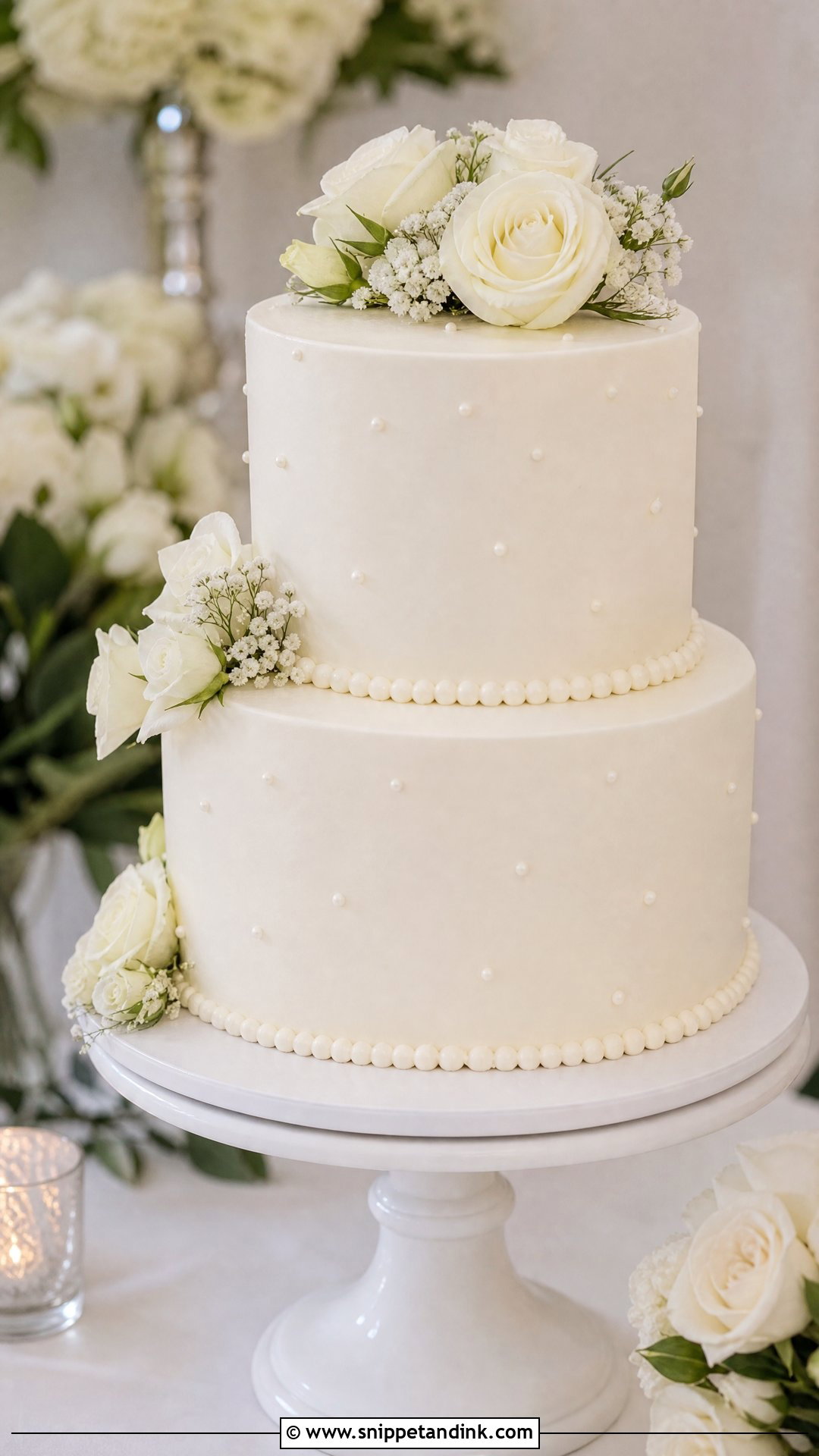
All white is harder to get right than it looks. Pure white fondant can read blue-grey in photos, so I usually tint it a fraction toward ivory, and buttercream needs whitening because butter is naturally yellow. Ask for smooth sides, sharp edges and a neat base border; with no color to distract, those are what people see. White roses, tiny pearls or light piping add detail. Chapels, hotel ballrooms and indoor receptions suit it, and it will not date in your album.
2. 2 Tier Buttercream Wedding Cake
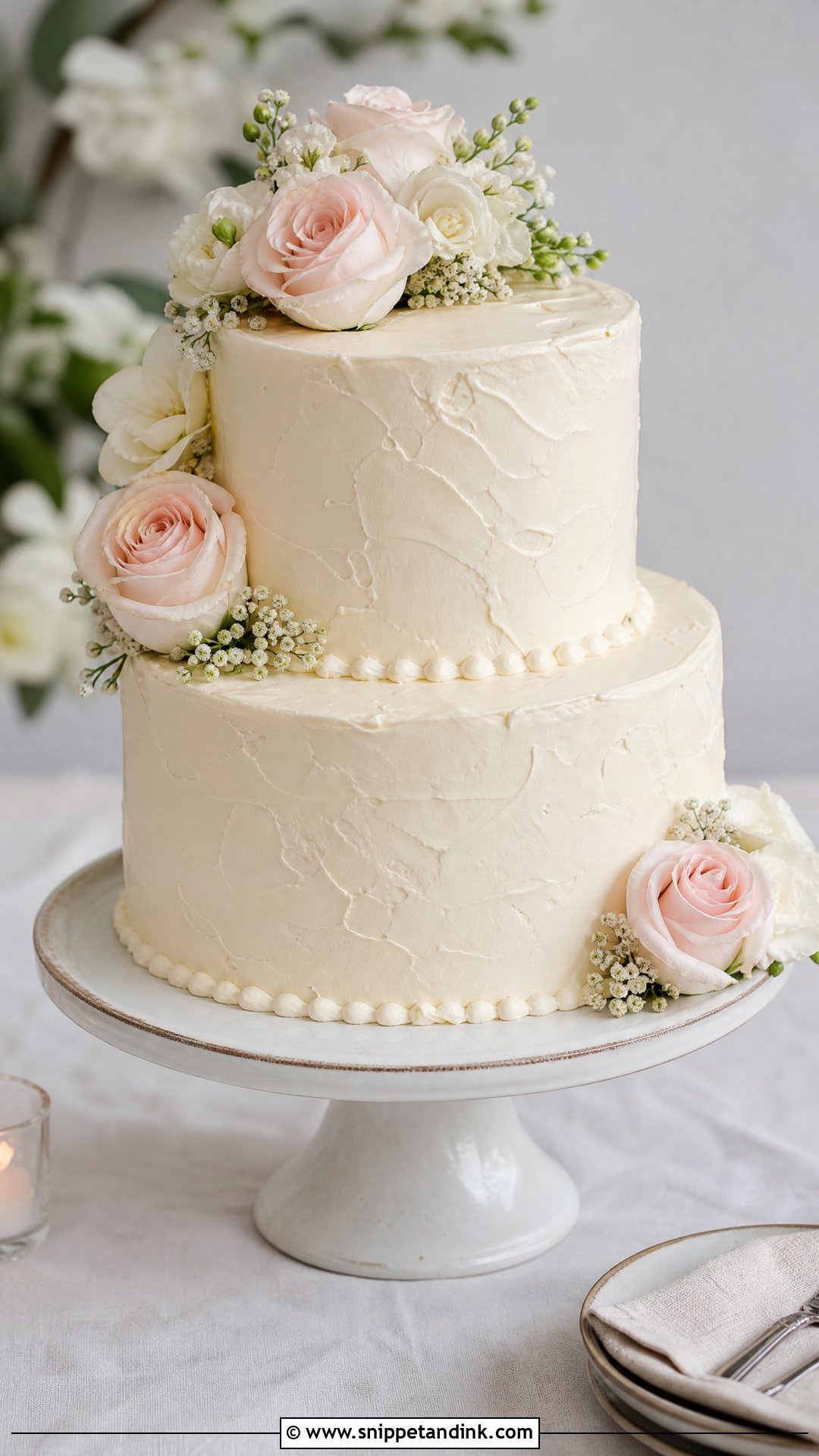
Buttercream is what most guests want to eat, and that matters more than people think. I use Swiss or Italian meringue buttercream for weddings: it is silkier and less sweet than the powdered sugar kind, though softer in heat. It can go smooth, textured or piped into borders and swags. Ivory, soft white, blush and pale beige keep it bridal. Fresh flowers, edible pearls or a simple topper finish it.
3. 2 Tier Fondant Wedding Cake
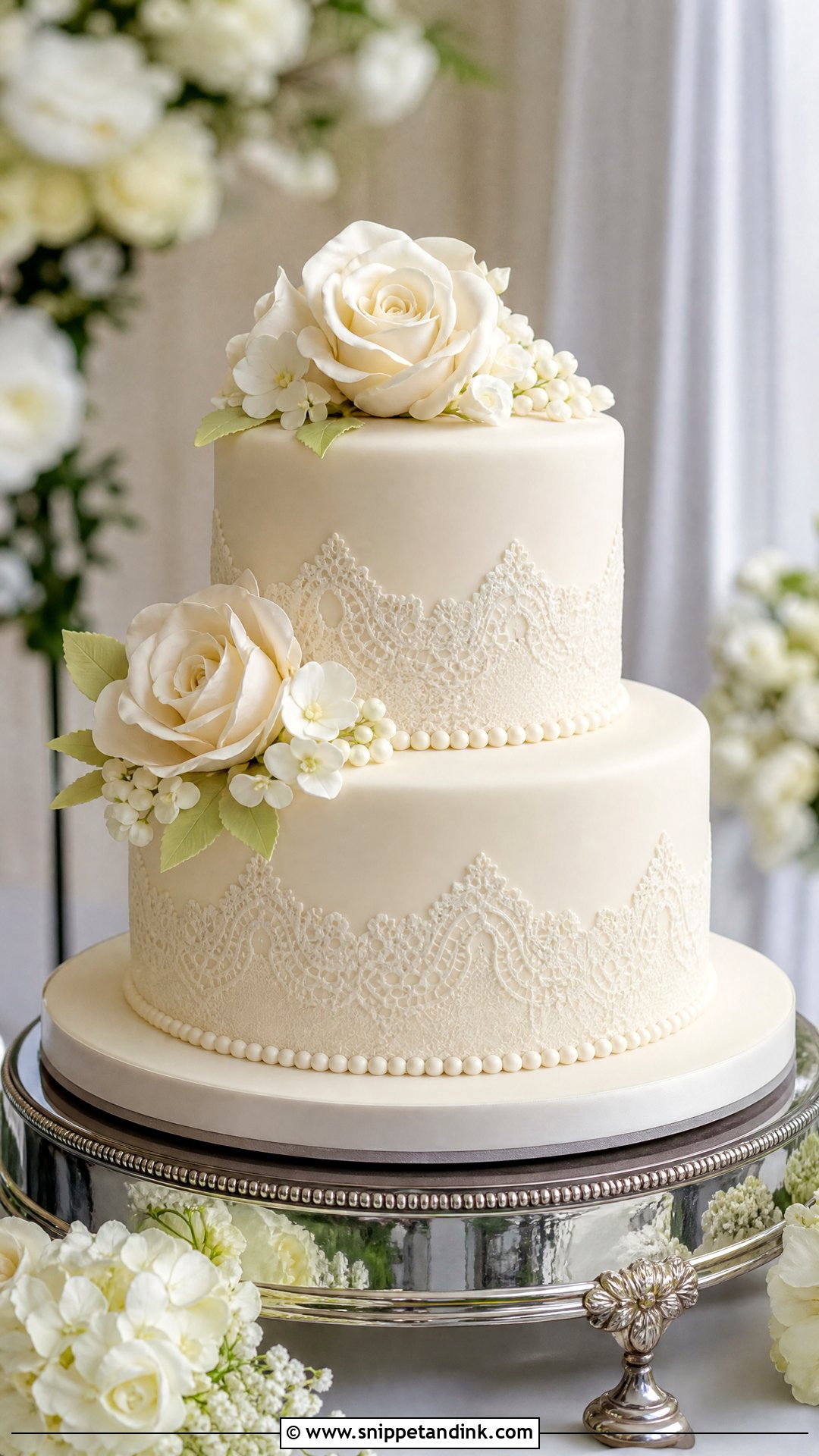
Fondant earns its place when the cake has to look perfect for five or six hours on display. It takes sharp edges, panels, drapes, embossing and hand painting, and it shields the cake from drying air. I always put ganache under it for a firm, flat surface and a better bite. Warm white or ivory is kinder in photos than bright white. Sugar flowers, pearl borders, monograms or lace texture suit a ballroom.
4. 2 Tier Floral Wedding Cake
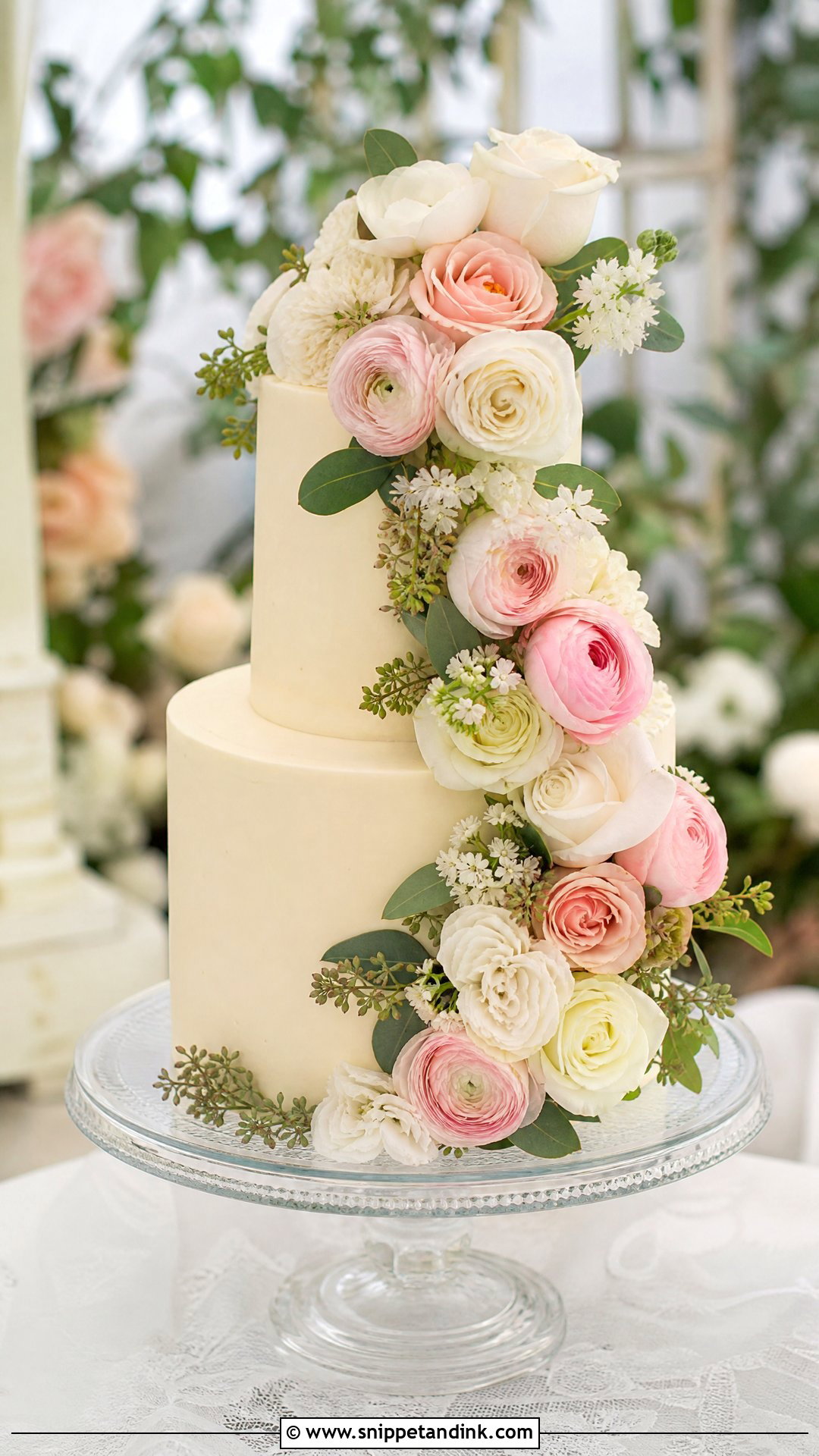
Florals tie the cake to the rest of the room when they repeat the bouquet or table arrangements. One cluster on the side looks restrained; a cascade from top tier to bottom looks dramatic. Your florist and baker need to talk before the day, so only safe, untreated flowers touch the cake and somebody is responsible for wrapping the stems. Sugar flowers avoid that question entirely. Roses, ranunculus, orchids and a little greenery are reliable choices.
5. 2 Tier Vintage Wedding Cake
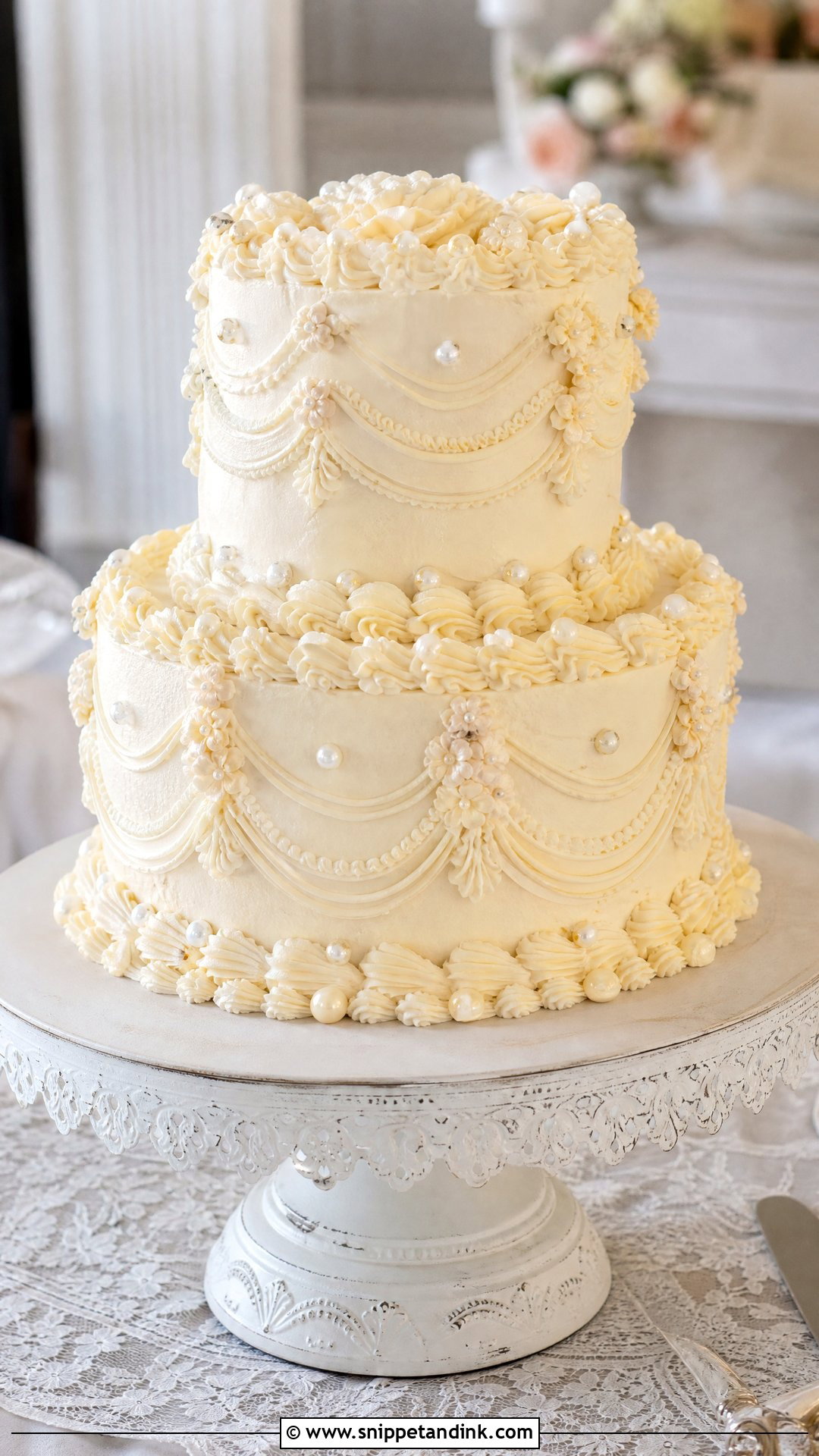
Vintage cakes are built from layers of piping: swags, shells, rosettes, bows and pearls, often over a buttercream base. Two tiers keeps it charming rather than heavy. Ivory, blush, pale blue and cream are the usual colors. Cherries give it a retro look, though for most weddings I suggest pearls or sugar flowers instead. Piped work is delicate in transport, so I deliver these chilled and touch up any scuffs at the venue.
6. 2 Tier Pearl Wedding Cake
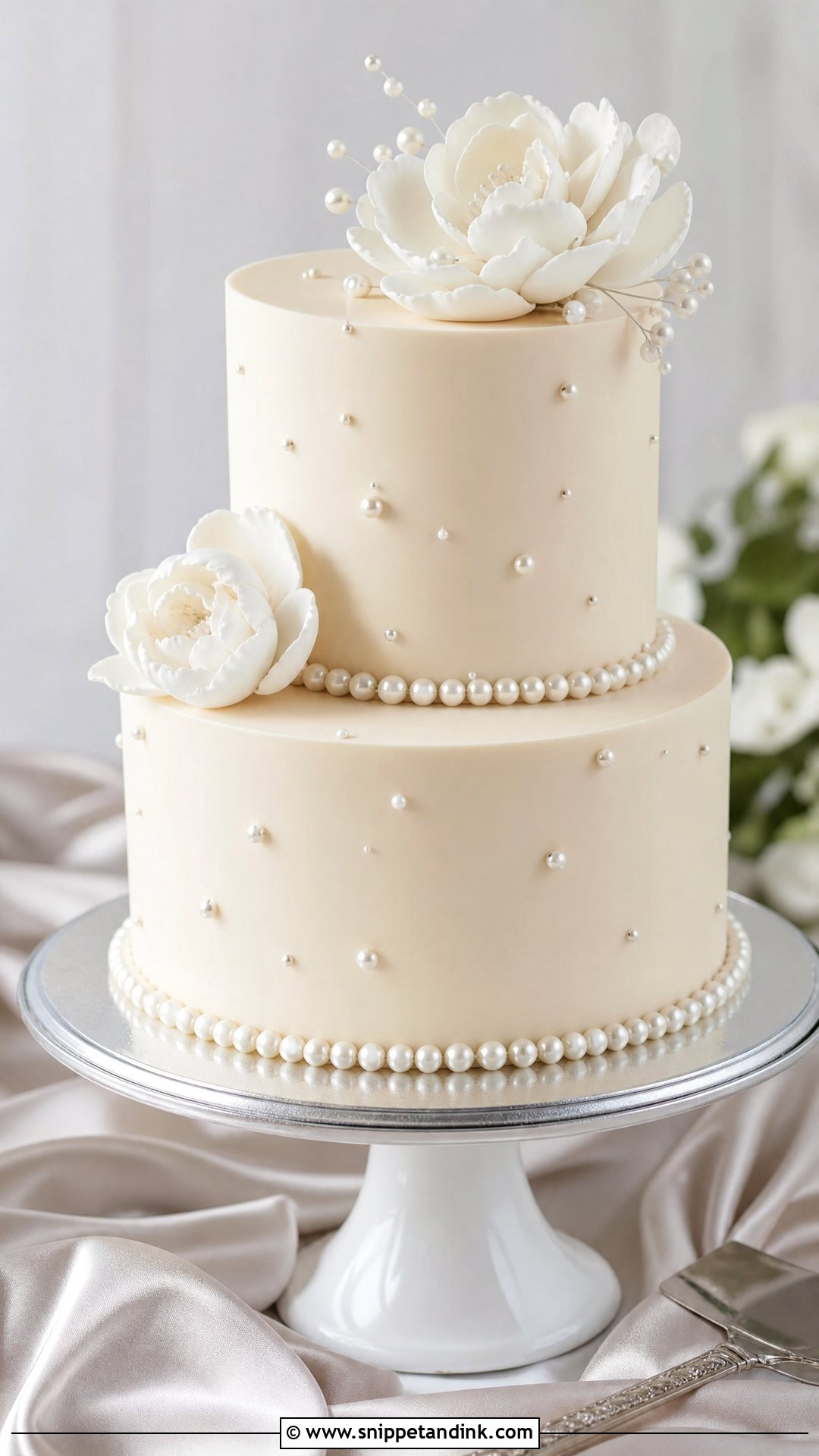
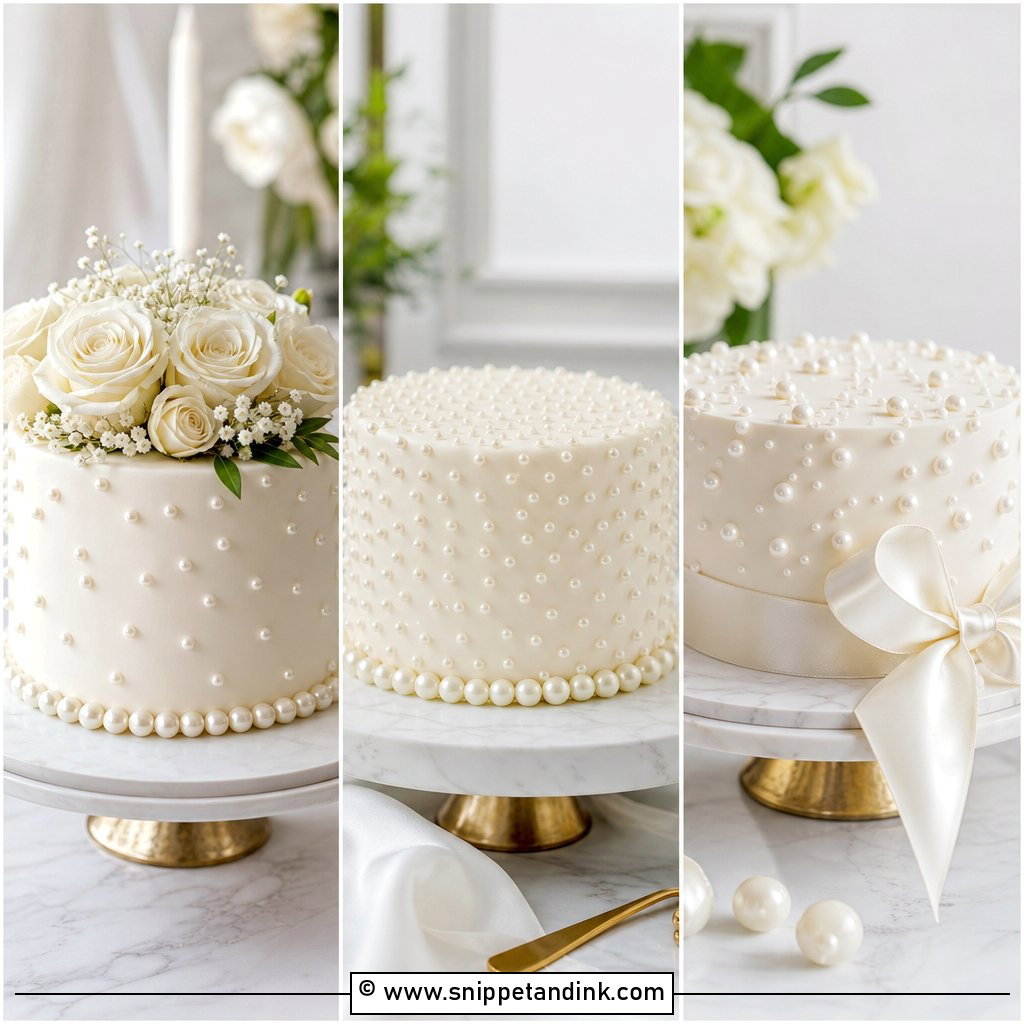
Pearls need very little else around them. I set ivory, white or soft gold edible pearls in rows at each tier base, scatter a few across smooth buttercream or run them in swags for a more formal look. They must go into frosting while it is still tacky; once it crusts they just roll away. Smooth buttercream or fondant suits them, as do a satin dress and pearl jewelry. Keep them off the top surface where someone could bite one by surprise.
7. 2 Tier Rustic Wedding Cake
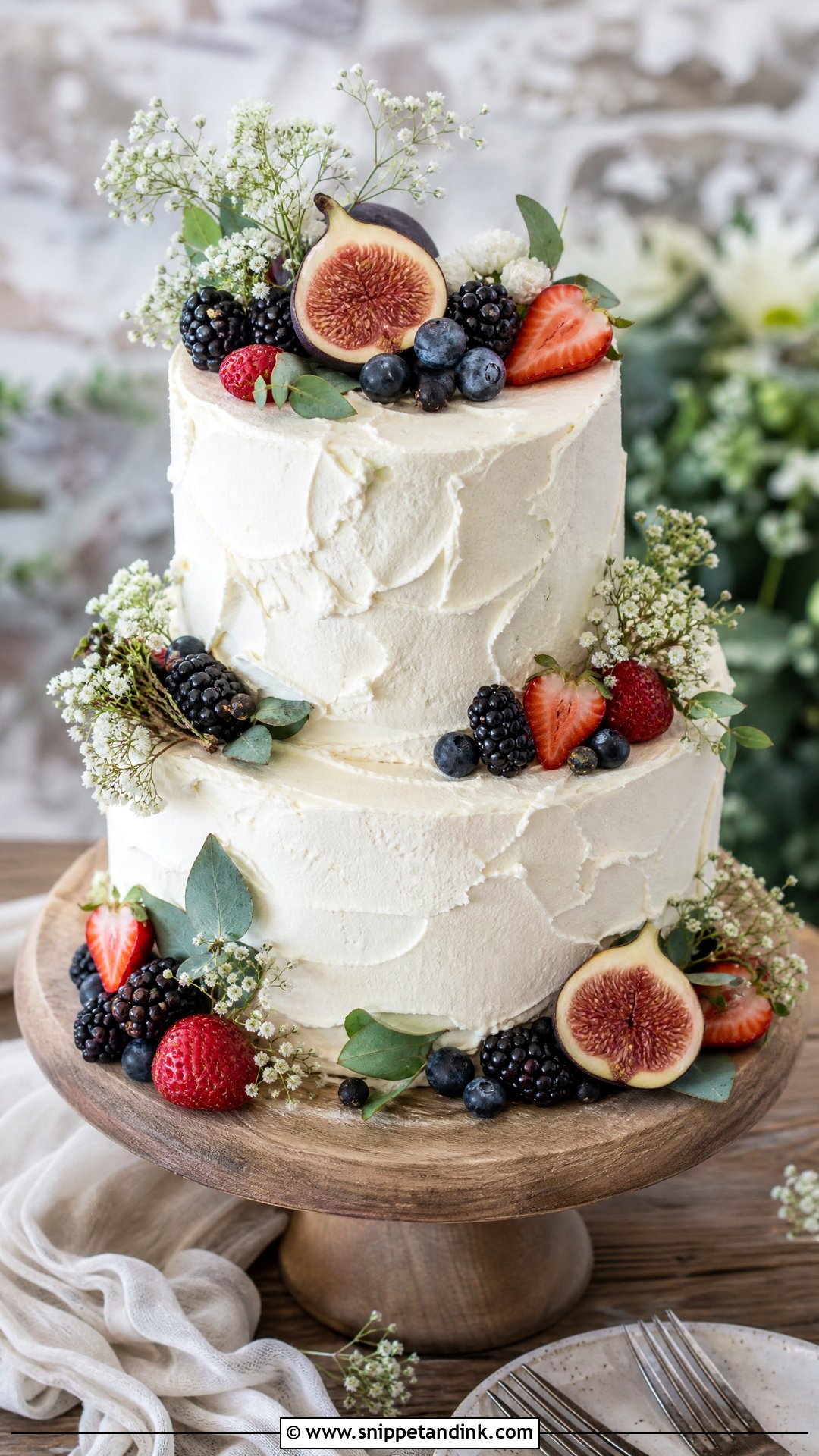
Rustic means lightly textured or semi-naked buttercream with the layers peeking through, plus berries, figs, greenery or a few small flowers. The style is forgiving, which is why I like it for barns and outdoor venues where the cake might travel down a gravel track. Vanilla bean, almond, carrot and spice sponges suit it, on a wood stand or a simple ceramic pedestal. The texture should look deliberate; even, repeated strokes keep it from looking unfinished.
8. 2 Tier Naked Wedding Cake
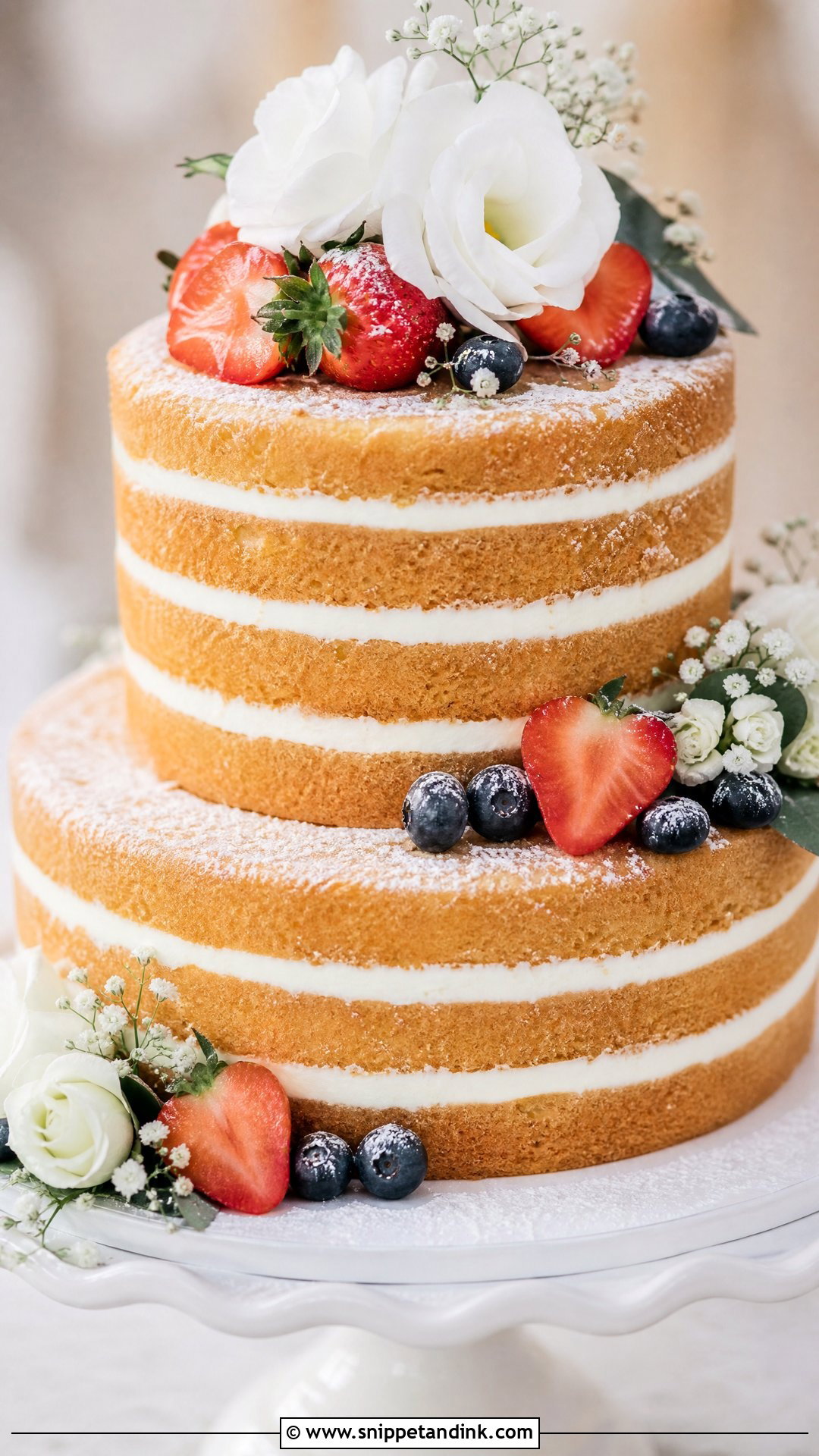
Naked cakes show their layers with almost no frosting outside, so the baking has to be neat: level layers, even filling, straight sides. Exposed sponge dries out fast. I brush each layer with syrup, wrap the tiers until the last moment and ask the venue to keep the cake out of direct air conditioning. Fresh fruit, flowers and powdered sugar finish it. It suits brunch and outdoor receptions where a less sweet slice is welcome.
9. 2 Tier Semi Naked Wedding Cake
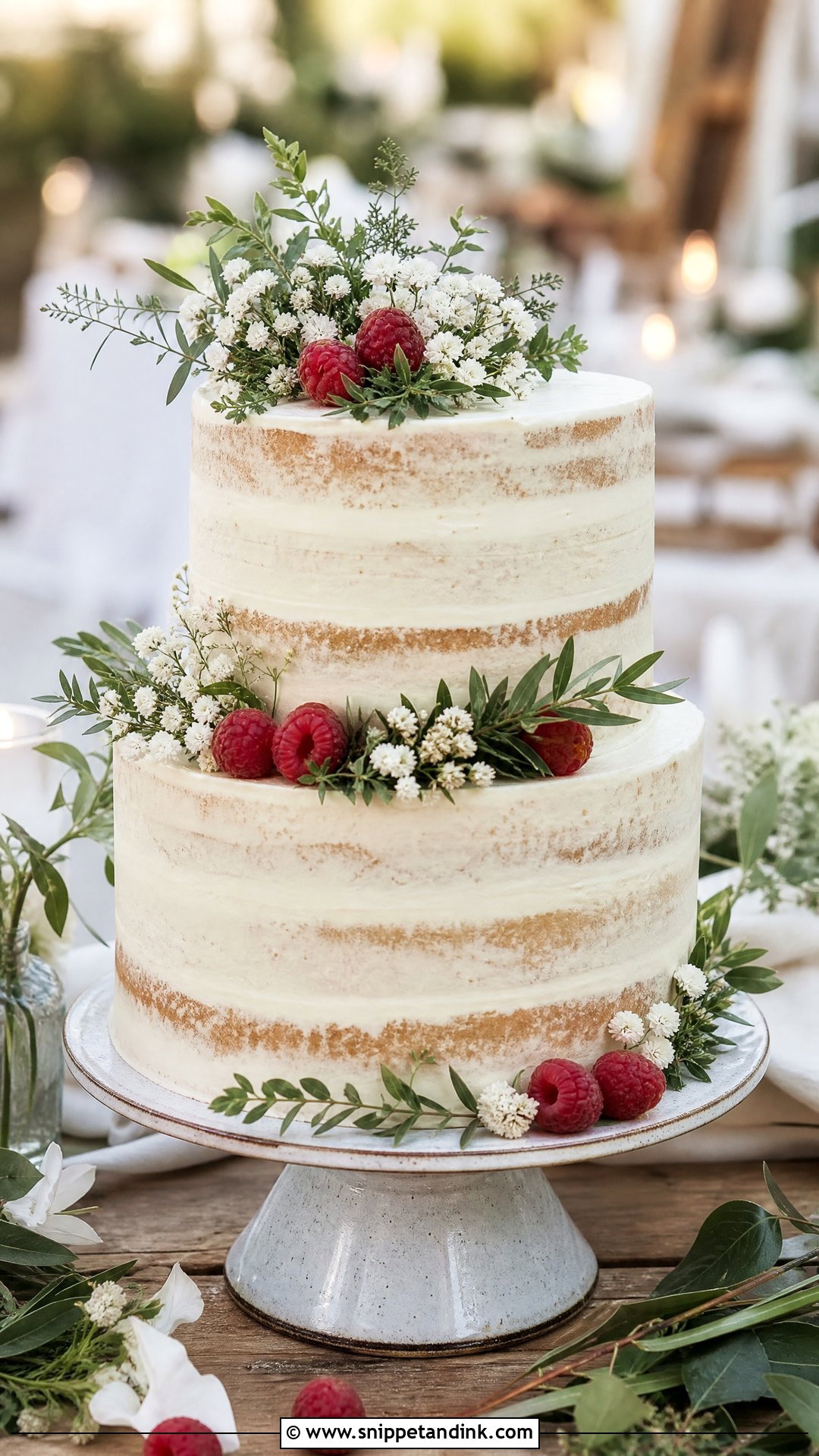
Semi naked is a thin coat of buttercream scraped back so the sponge shows through in places. It holds moisture better than a fully naked cake and looks more finished. Berries, greenery, herbs or delicate flowers suit it, over vanilla, almond, lemon or spice sponge. At consultations I show photos of different scrape levels, because one baker’s semi naked is another’s nearly naked, and that is where disappointment usually starts.
10. 2 Tier Boho Wedding Cake
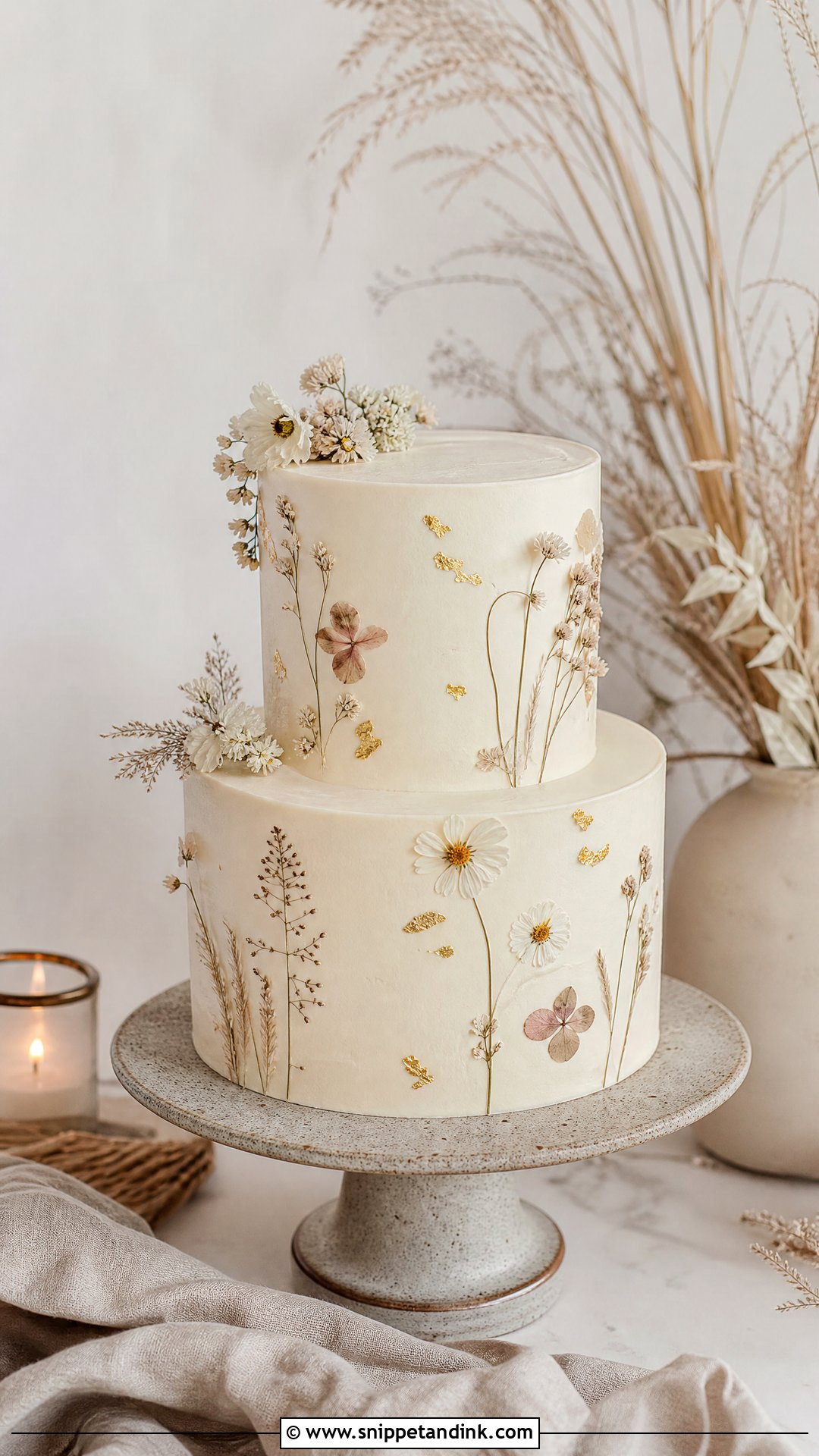
Boho cakes lean on texture and muted color: ivory buttercream, beige accents, pressed flowers and dried grasses. Most dried pampas and bunny tails are dyed or sprayed and not food-safe, so I set them on a separate pick or a small board rather than into the frosting. Small neutral blooms and a few gold touches complete it. Vanilla honey, almond, coconut or lemon keeps the flavor light, and a ceramic or stone stand suits outdoor ceremonies and desert palettes.
11. 2 Tier Beach Wedding Cake
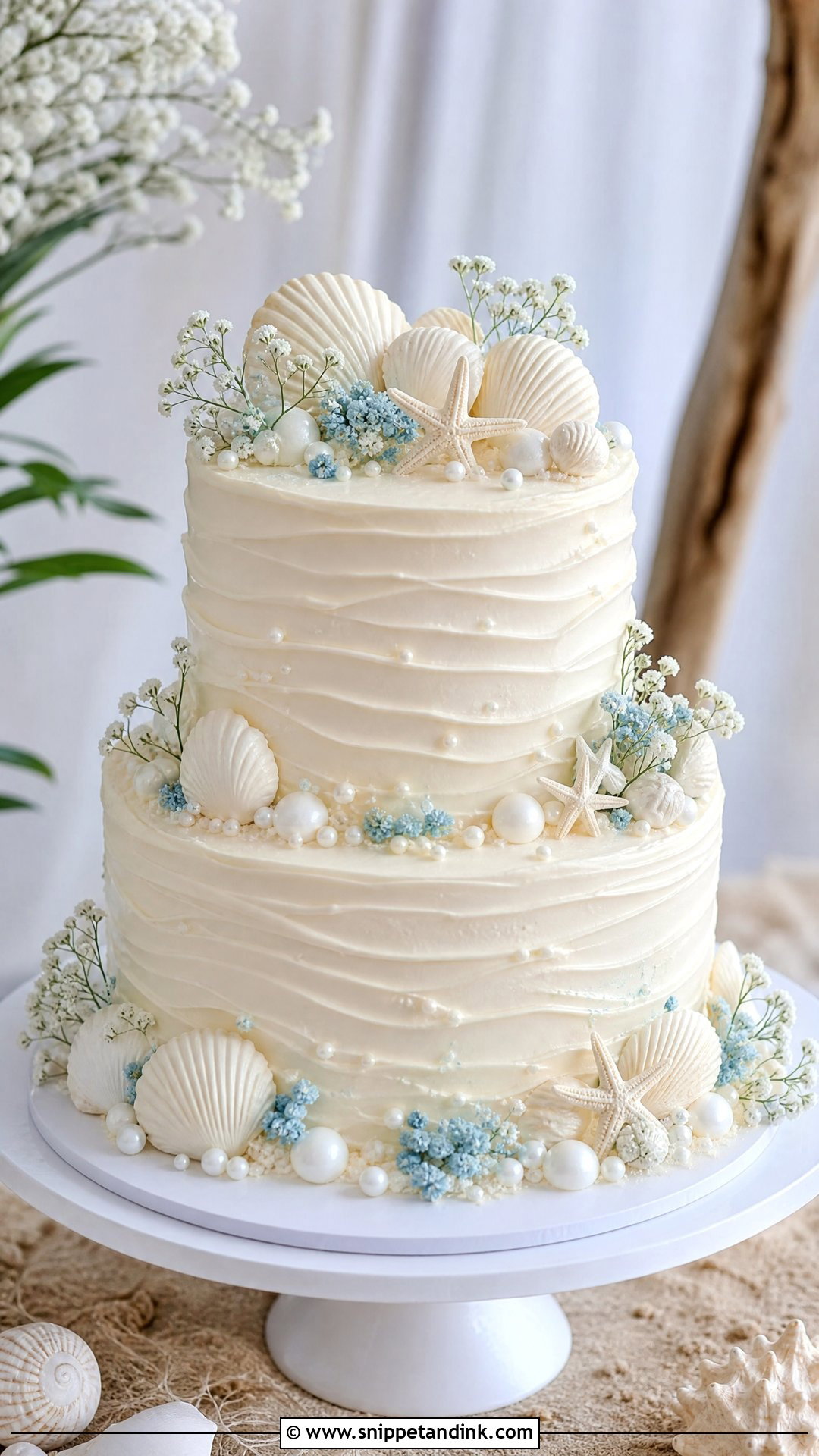
Beach cakes look best with a hint of the coast rather than a theme. Soft white, ivory, pale blue and sandy beige, with buttercream waves, edible shells, pearls or tiny sugar flowers, carry the mood. The real challenge is heat, humidity and wind. Outdoors near water, I recommend a ganache-based finish, a shaded table and decorations fixed in place. Coconut, lemon, vanilla or passion fruit suit the setting, on a white stand with tropical greenery.
12. 2 Tier Garden Wedding Cake
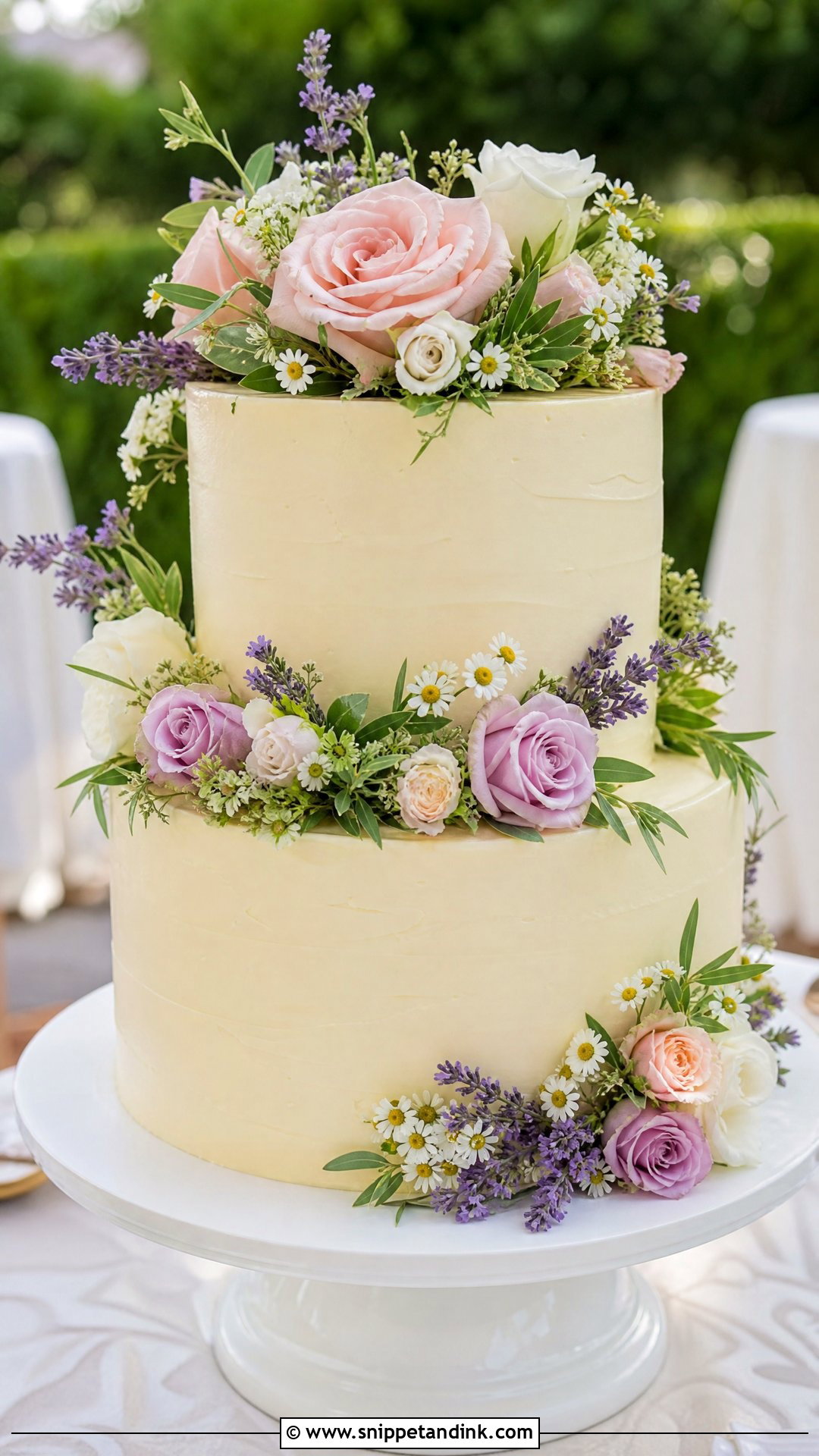
A garden cake depends on what is in season, so I plan it with the florist: roses, peonies, sweet peas or small daisies placed in clusters or a gentle cascade. Pale pink, lavender, ivory, sage and butter yellow suit the frosting. Lemon, elderflower, vanilla or berry fillings match the mood. Peonies open quickly in warmth, so I pick them closed and let them open on the cake. Keep the arrangement airy, on a white or glass stand surrounded by greenery.
13. 2 Tier Modern Wedding Cake
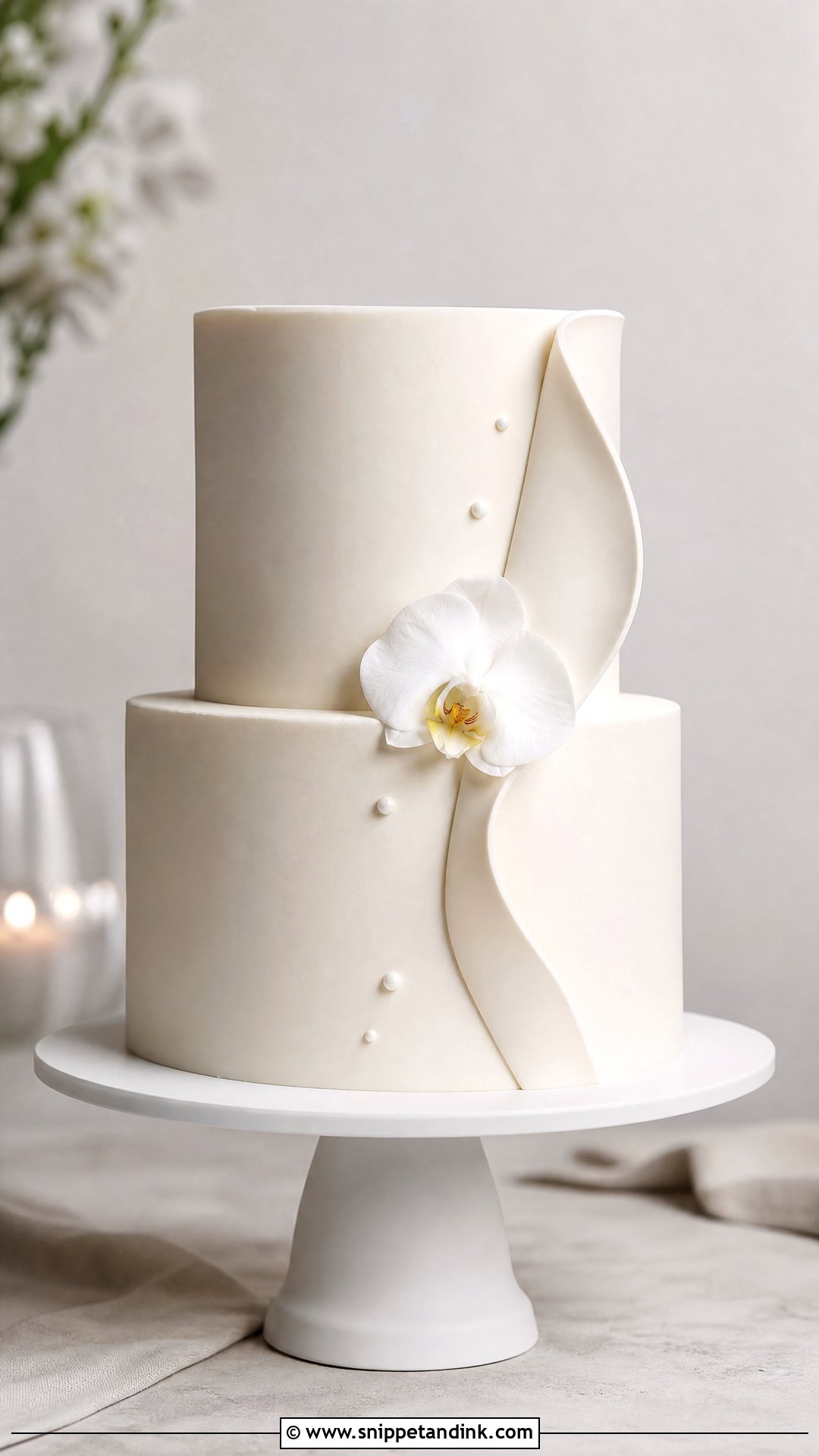
Modern cakes depend on one strong feature and a lot of discipline. I might offset the tiers, give them sharp fondant edges, add one floral accent or a single bold color detail, and leave everything else alone. White, ivory, taupe, black accents and muted pastels all look modern used sparingly. Skip the topper or keep it tiny. Vanilla bean, chocolate ganache, almond or citrus fit, depending on your menu, and the look suits rooftops and gallery spaces.
14. 2 Tier Minimalist Wedding Cake
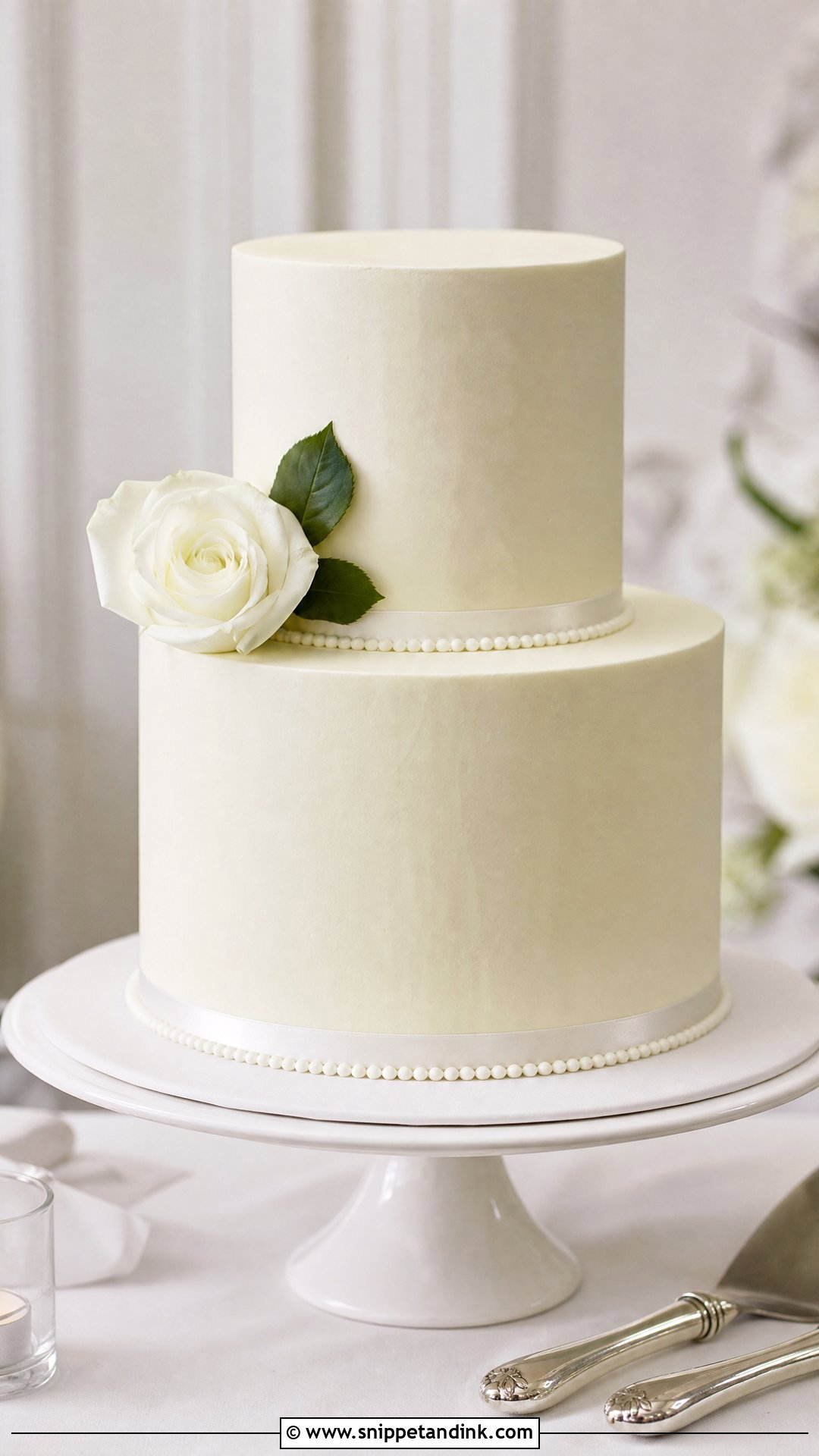
Minimal cakes show the craft rather than the decoration. Smooth buttercream or fondant, clean tier edges and one small detail, a flower, a ribbon or a line of pearls, is the whole design, so the proportions between tiers matter a lot. I usually leave a two-inch step on each side. Plain stands and soft lighting suit it, in ivory, white, beige or very pale blush. Small weddings and courthouse receptions are where I see it most.
15. 2 Tier Square Wedding Cake
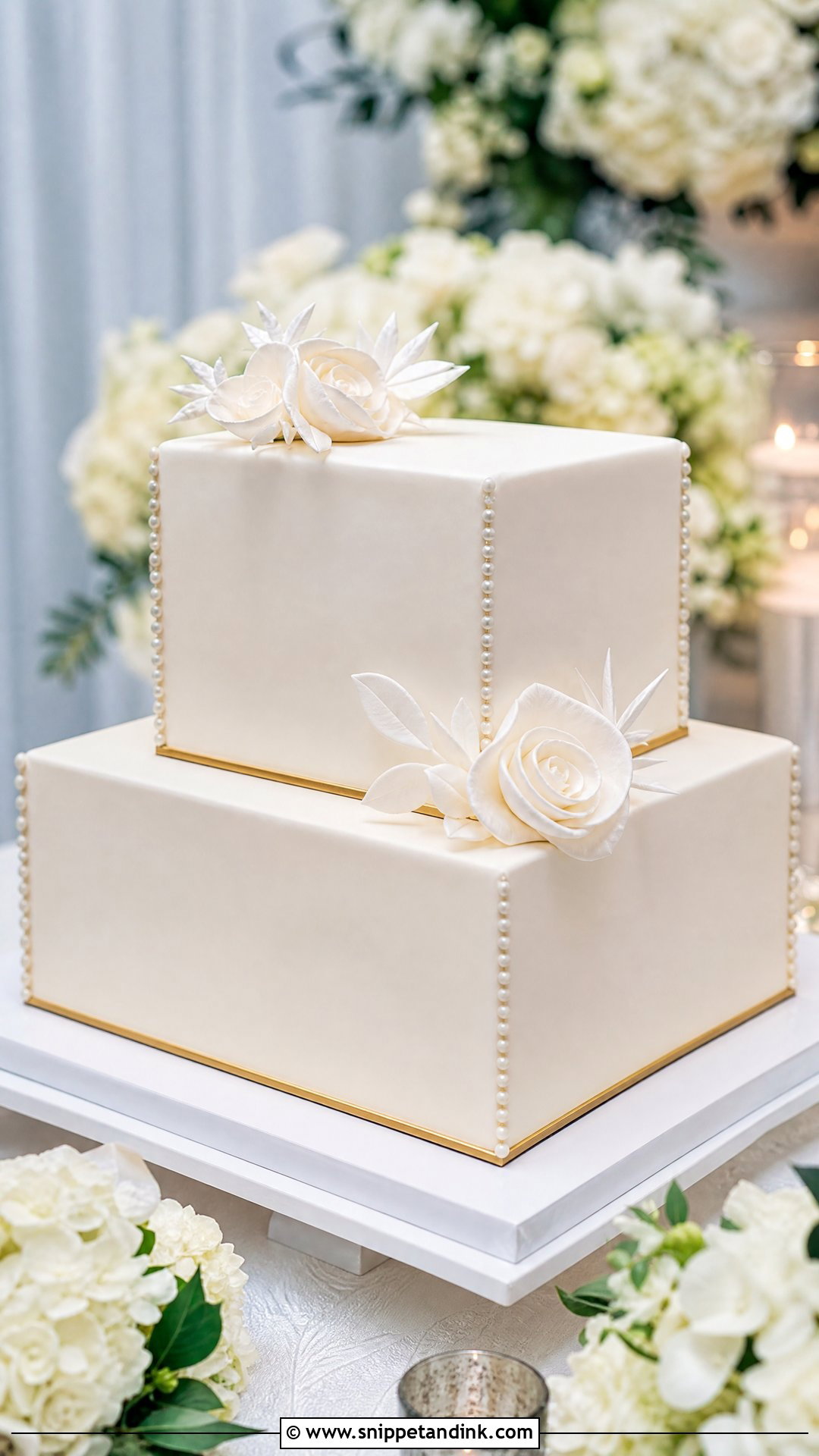
Square tiers show every corner, so I cover them in fondant over firm ganache; buttercream can hold square edges, but only in skilled hands and a cool room. The straight lines read modern, while two tiers keep it recognizably bridal. Flowers, metallic trim or a ribbon soften the shape. One practical bonus: square cakes cut into neat, even portions with no awkward curved pieces, which your caterer will appreciate.
16. 2 Tier Round Wedding Cake
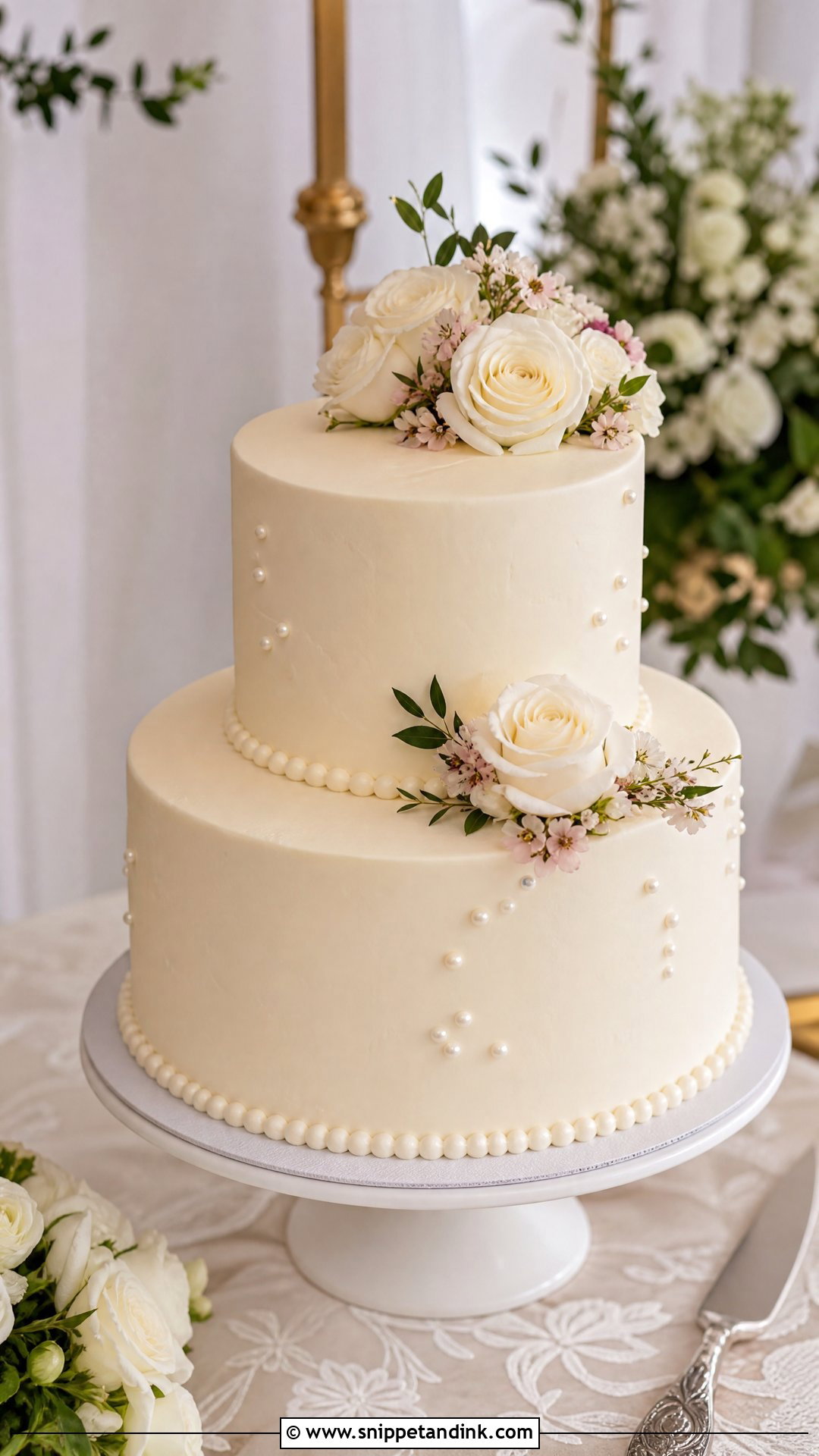
Round tiers are the shape every baker knows best, from baking to stacking to cutting, which makes them the least risky choice you can make. They take buttercream, fondant, flowers, piping, pearls, ribbon or texture equally well. Ivory with fresh flowers or delicate piping reads traditional; smooth sides with one statement detail reads modern. Nothing about the shape limits the venue.
17. 2 Tier Heart Wedding Cake
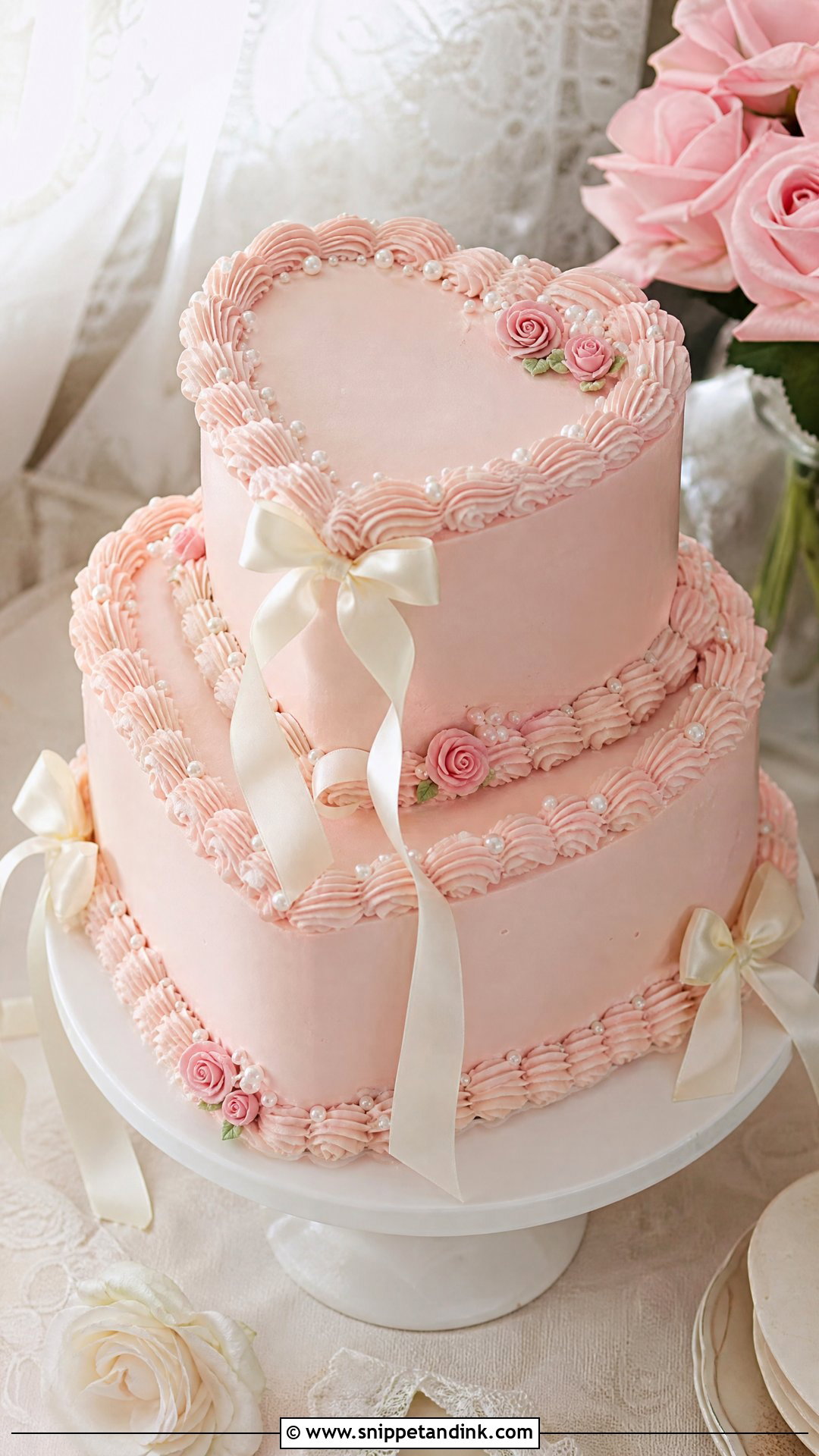
Heart tiers are tricky to stack because the point and the lobes have to line up exactly, or the cake looks twisted from the front. I mark the center line on both boards before stacking. Vintage piping and pearls suit the curves, as do smooth frosting and simple flowers. Ivory, blush, pale pink and cream keep it elegant. It suits elopements and small receptions where the nostalgia is the point.
18. 2 Tier Lambeth Wedding Cake
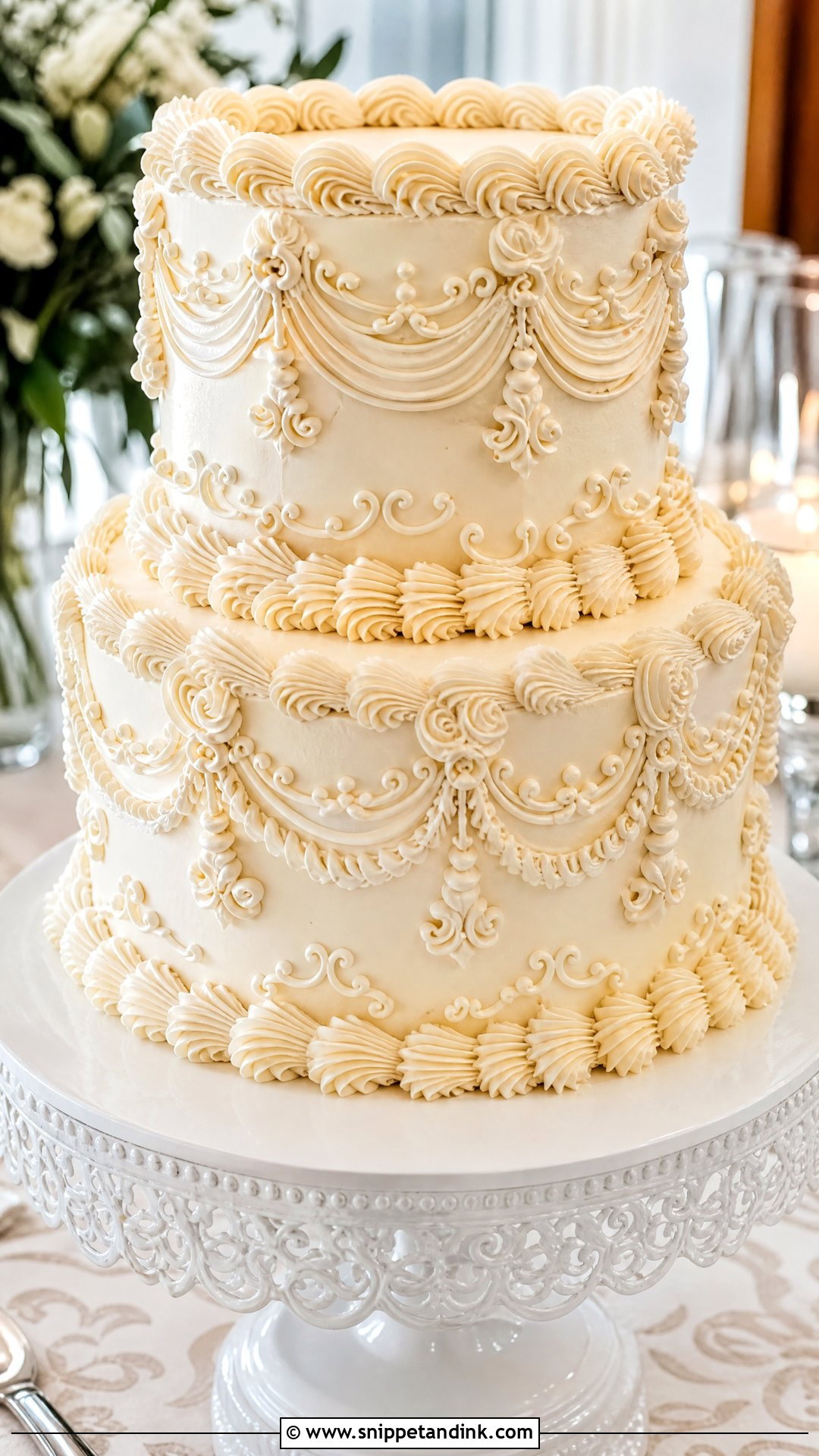
Lambeth is the heaviest piping style there is: borders built on borders, with overpiped scrolls, swags, shells and ruffles adding depth. In buttercream it needs a cool room; royal icing holds much better but is hard and sweet. Ivory and white look classic, while blush, pale blue or butter yellow make it playful. Skip the topper, since the piping is the feature. Expect a higher quote, because every border is several passes of hand work.
19. 2 Tier Lace Wedding Cake
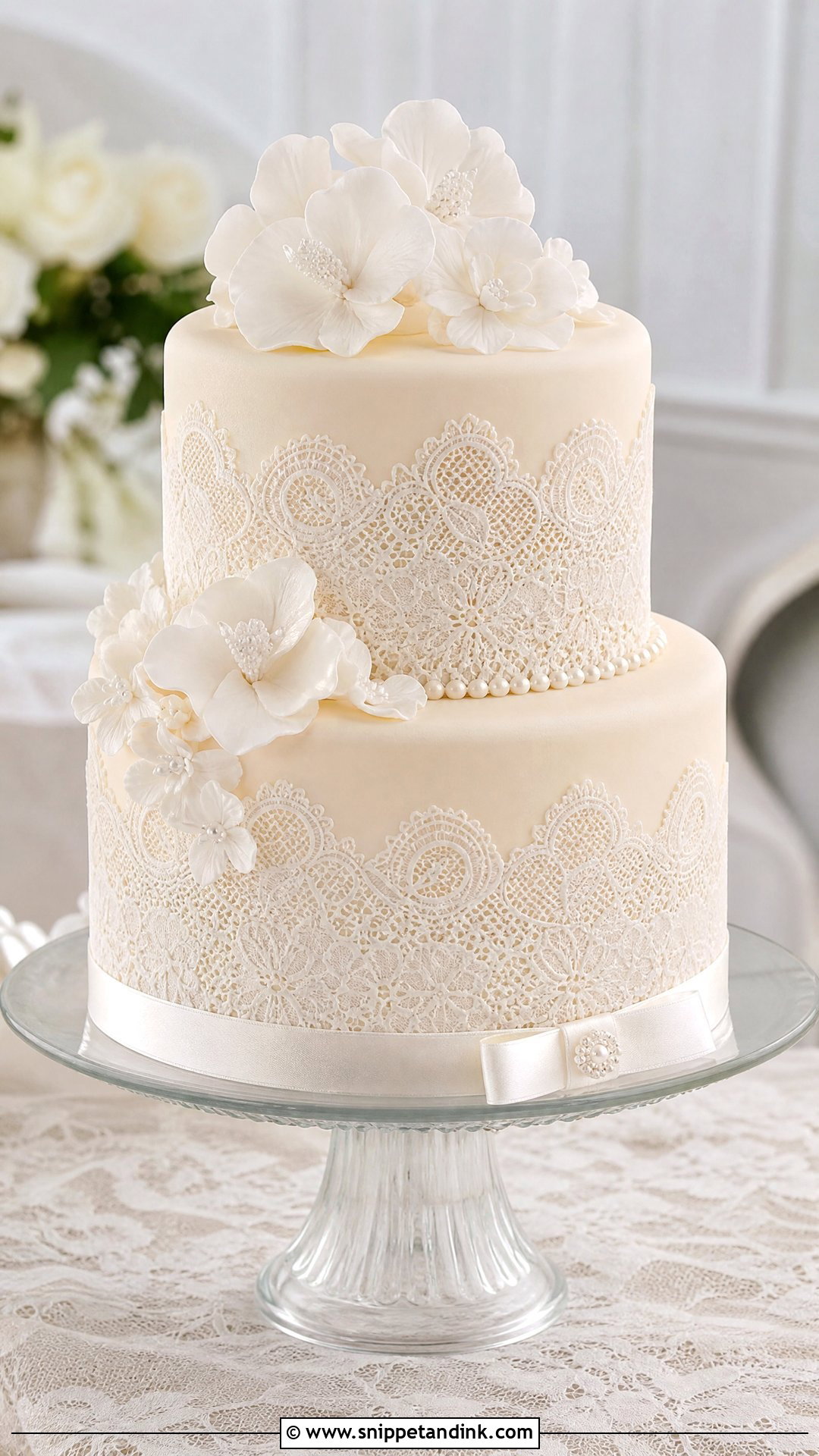
Lace can be piped, stenciled, cut as fondant appliqué or set from an edible lace mat, and I choose the method from a close-up photo of the gown. Ivory-on-ivory is my favorite version, because the pattern shows in photos while staying subtle in the room. Small sugar flowers, pearls or a satin-style ribbon add detail. Edible lace can crack if it dries too much, so I apply it on delivery day for chapel and formal receptions.


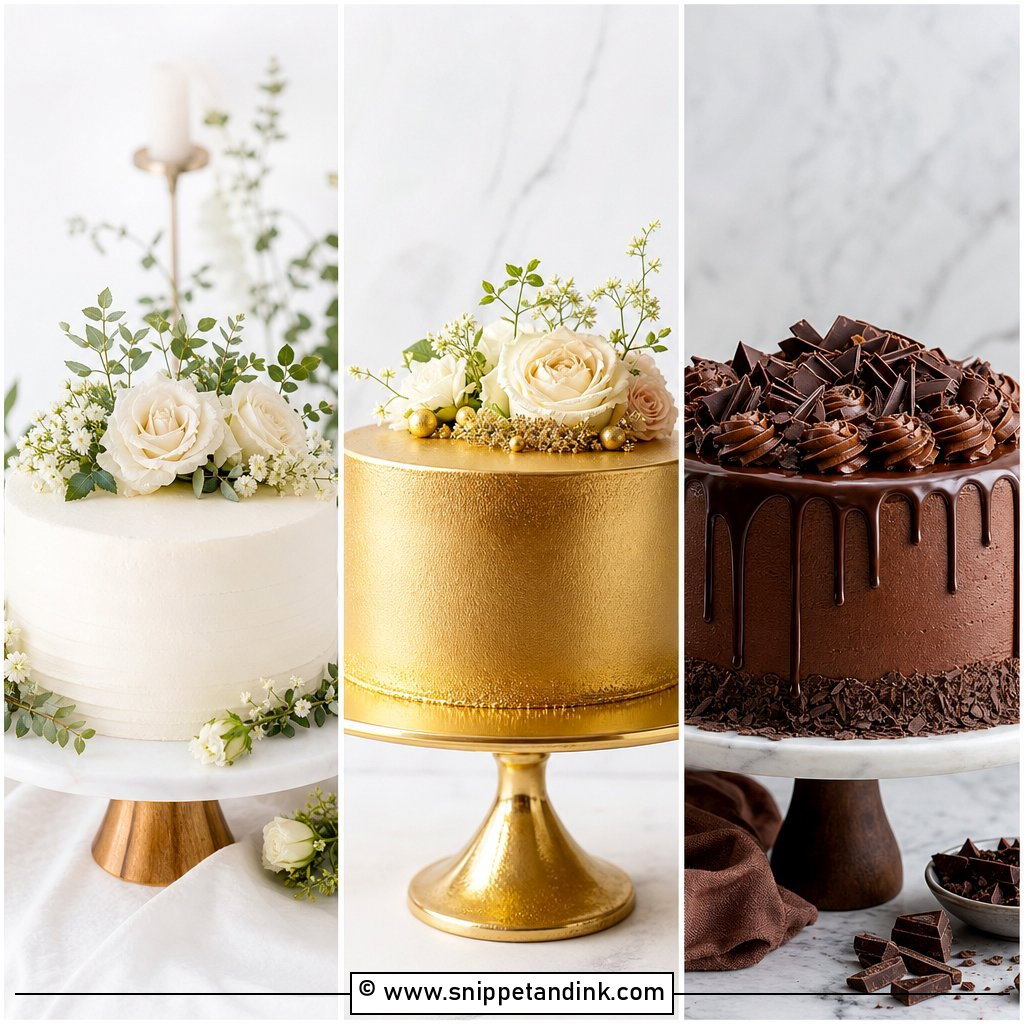
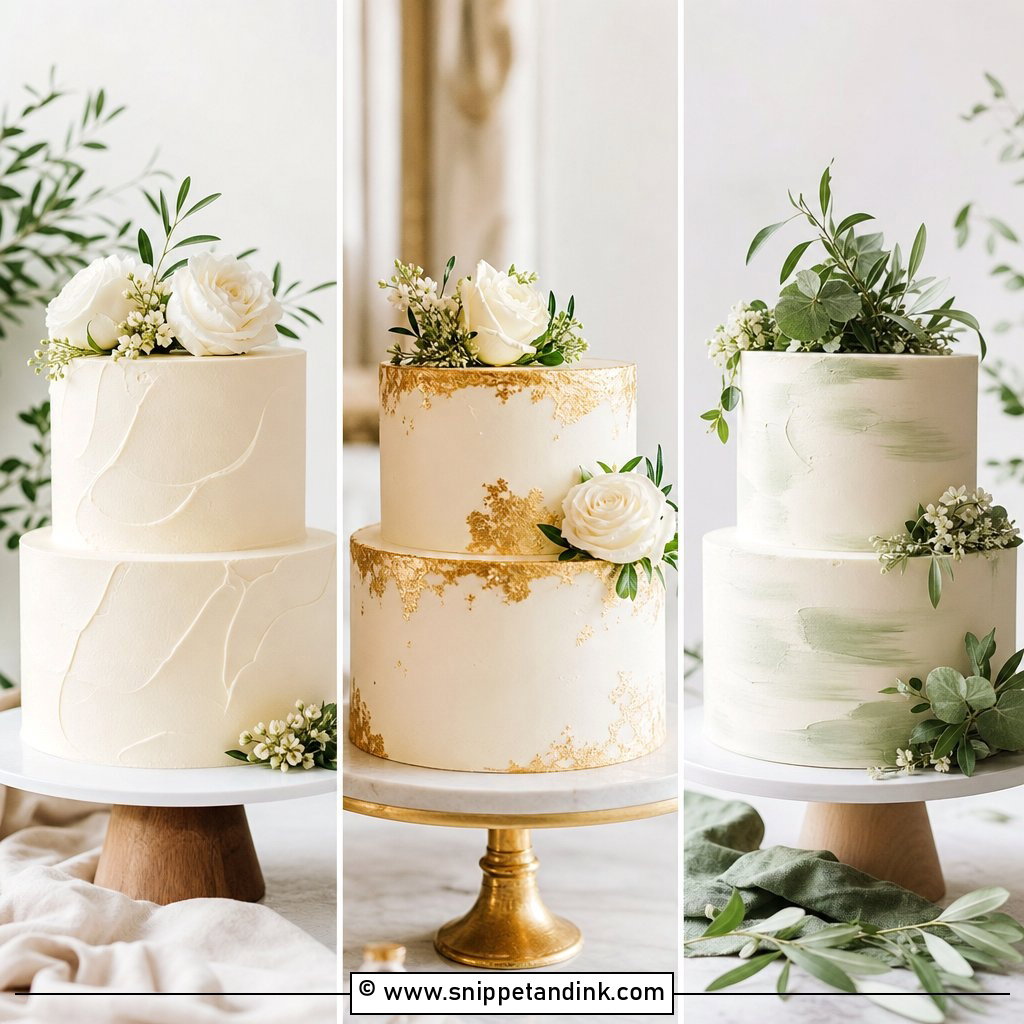
20. 2 Tier Gold Wedding Cake
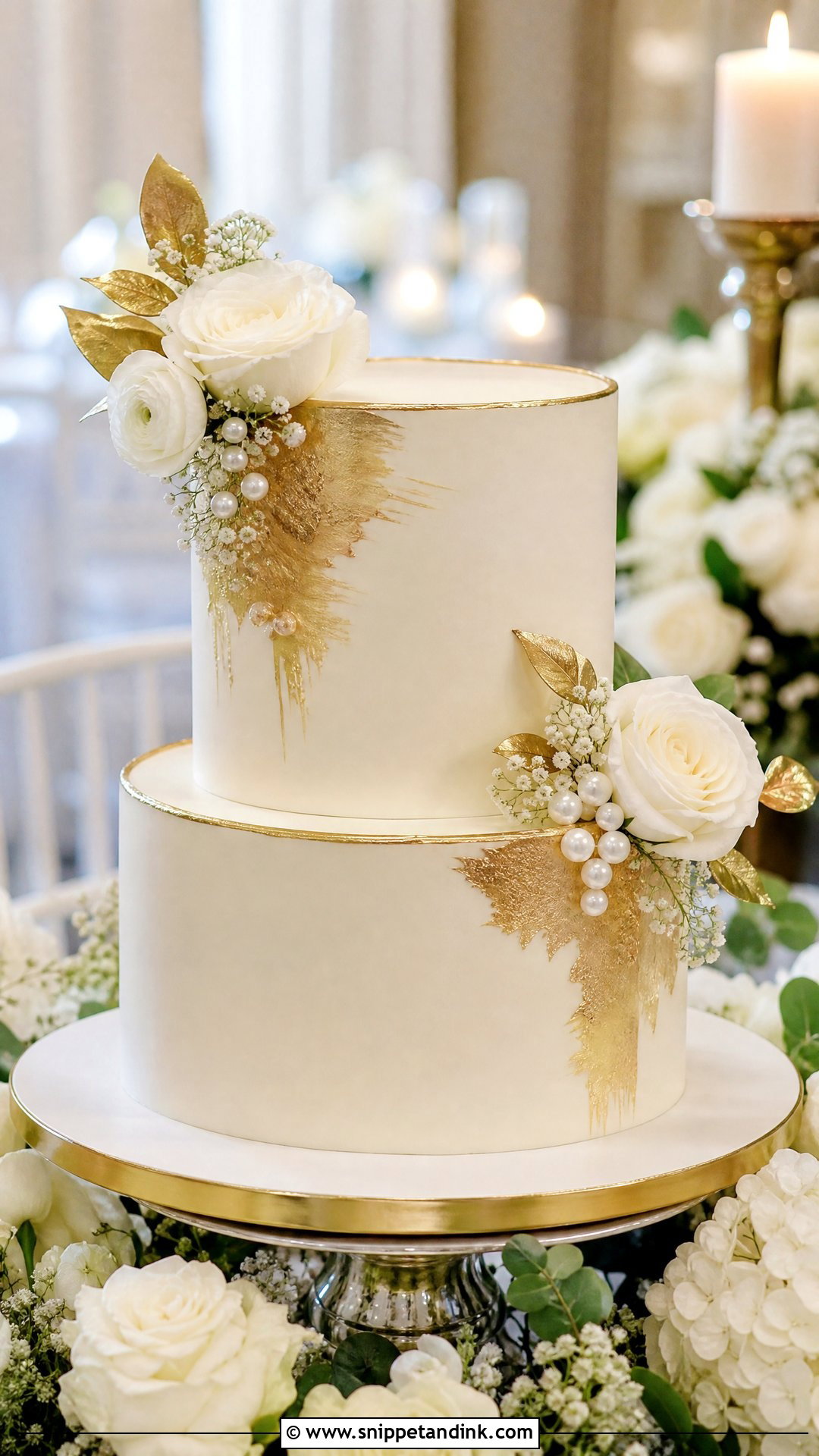
A 2 tier gold wedding cake needs restraint more than size. A painted edge, a metallic drip, brushed strokes, edible leaf or a few gold pearls each work alone; combined, they get loud. Ivory, cream, blush and soft beige make good partners. I paint gold on fondant or chilled crusted buttercream, since soft frosting smears. Use only metallics labeled edible; some glitters are sold for display and not for eating.
21. 2 Tier Blush Wedding Cake
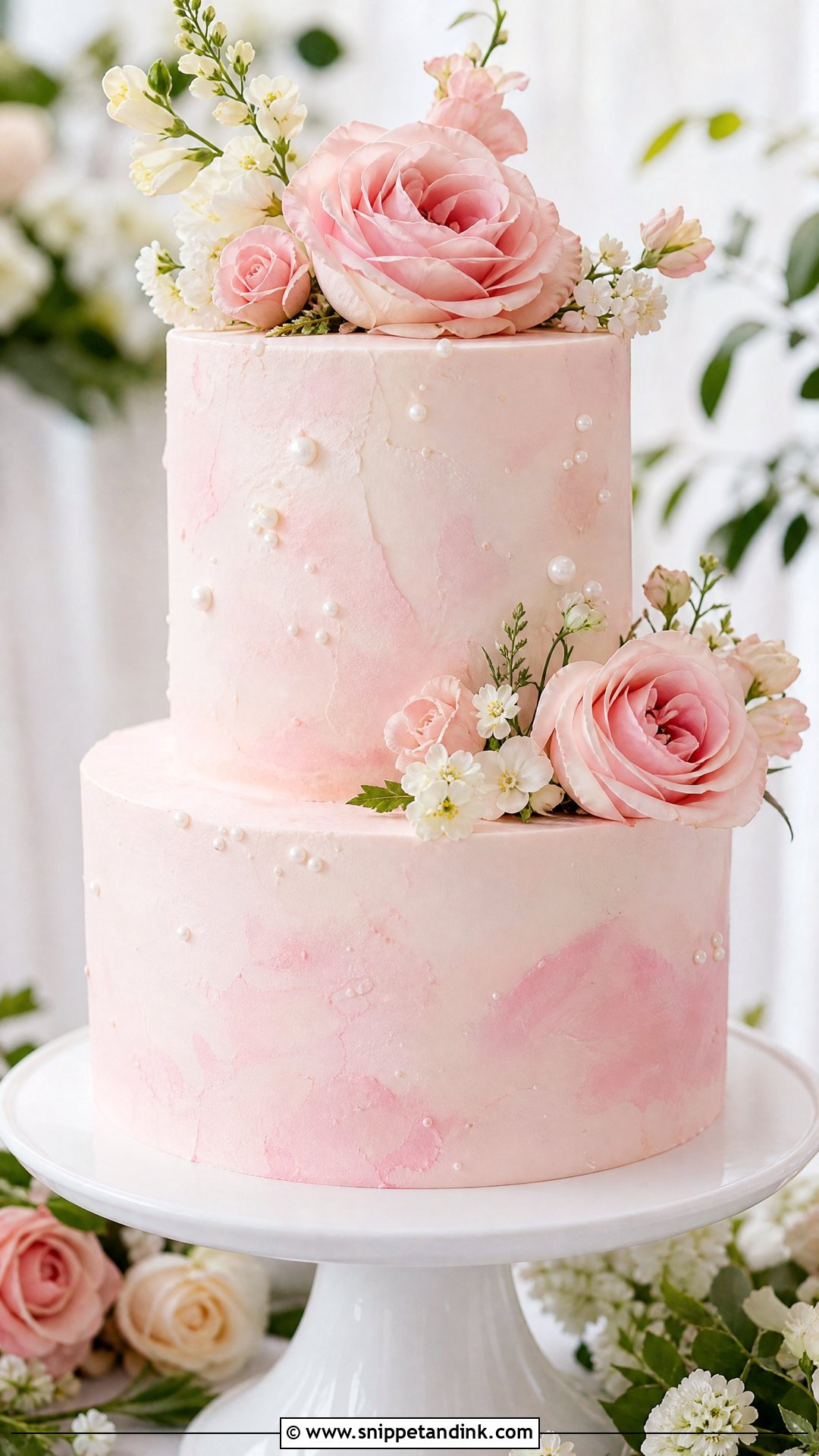
Blush can be the frosting itself or come through as flowers, ribbon, watercolor shading or piping. It changes with lighting, so I check the shade against your linen swatch in daylight and in warm light before mixing a full batch. It works with ivory, cream, sage green, champagne beige and pale gold. Smooth buttercream with roses or sugar flowers, and strawberry, vanilla bean, almond or raspberry filling, suit it.
22. 2 Tier Sage Green Wedding Cake
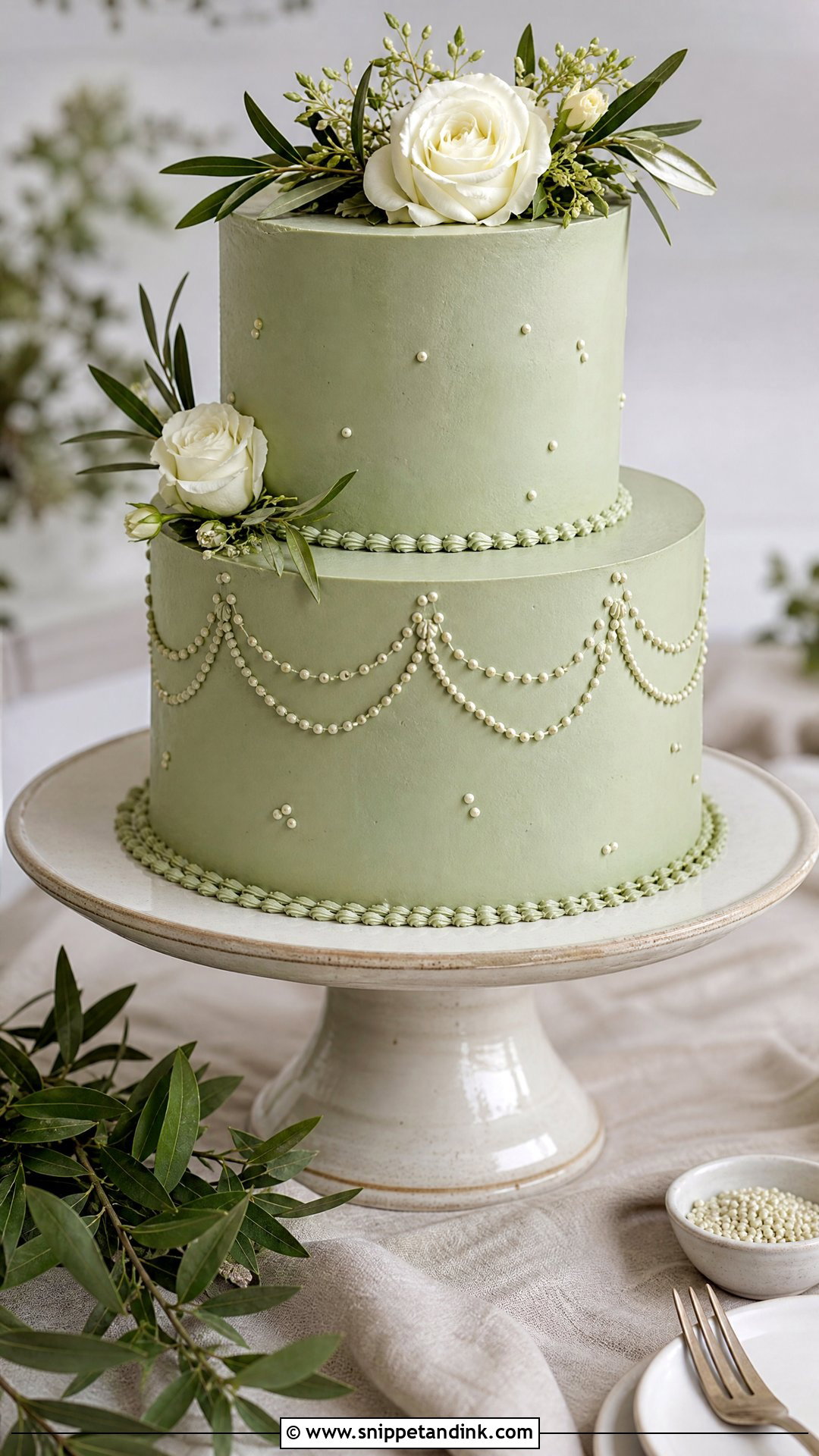
Sage drifts grey or mint depending on how it is mixed, and I make a small test swatch first. Covering both tiers in sage feels bold; one sage tier on ivory is quieter. White flowers, olive leaves and pearls suit it. Eucalyptus is common but not edible, so it stays on picks or off the cake. Pistachio, vanilla, lemon or almond flavors match the fresh look. Keep the decoration light.
23. 2 Tier Blue Wedding Cake
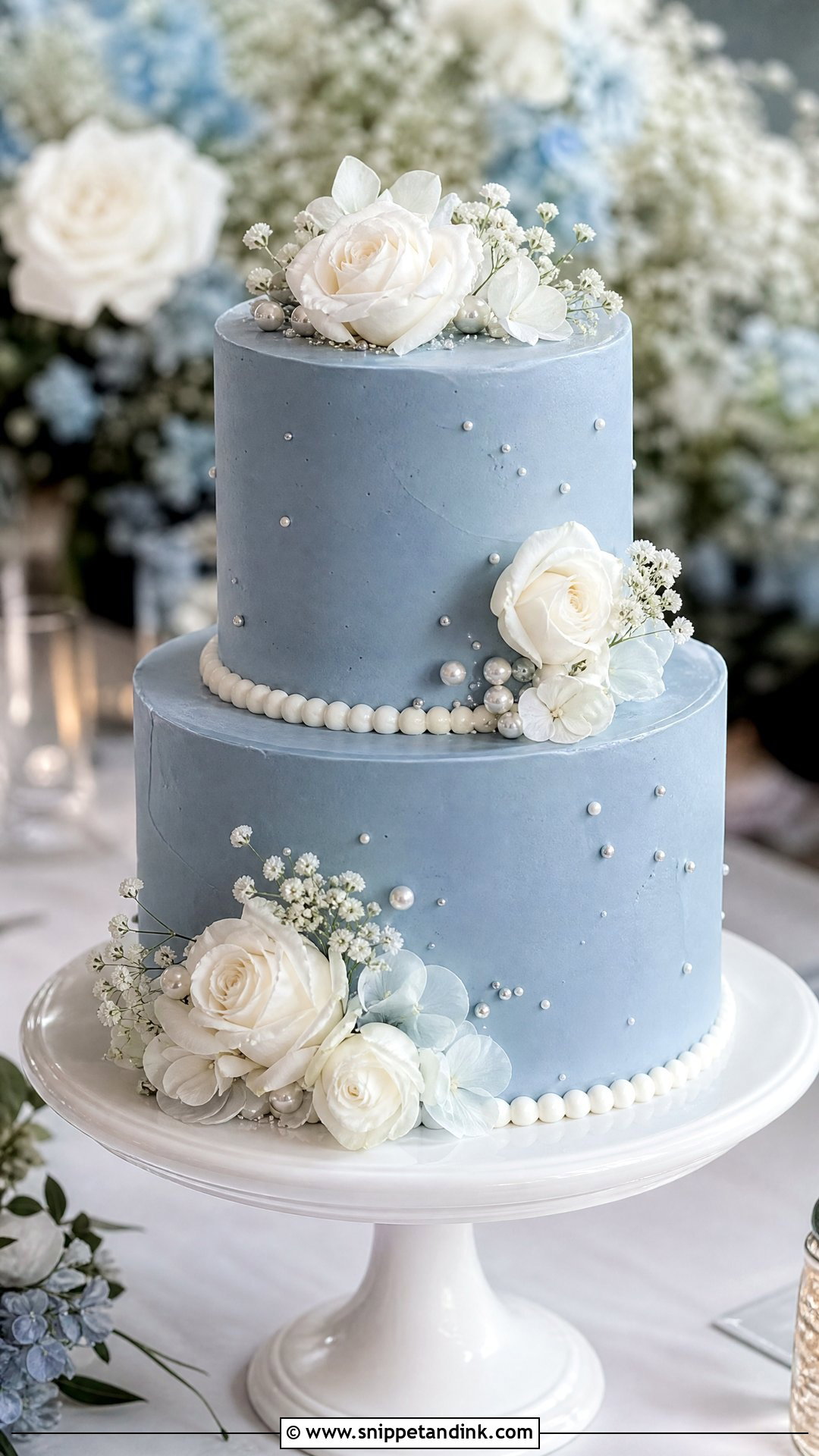
Blue covers a wide range: pale blue reads classic, dusty blue refined, navy accents dramatic. In buttercream, blue on a yellowish butter base can turn greenish, so I whiten the frosting first; fondant colors more predictably. Ivory, white flowers, pearls or silver details balance it. Vanilla, lemon, blueberry or almond flavors fit. It suits coastal weddings, winter palettes and ballroom receptions alike.
24. 2 Tier Black And White Wedding Cake
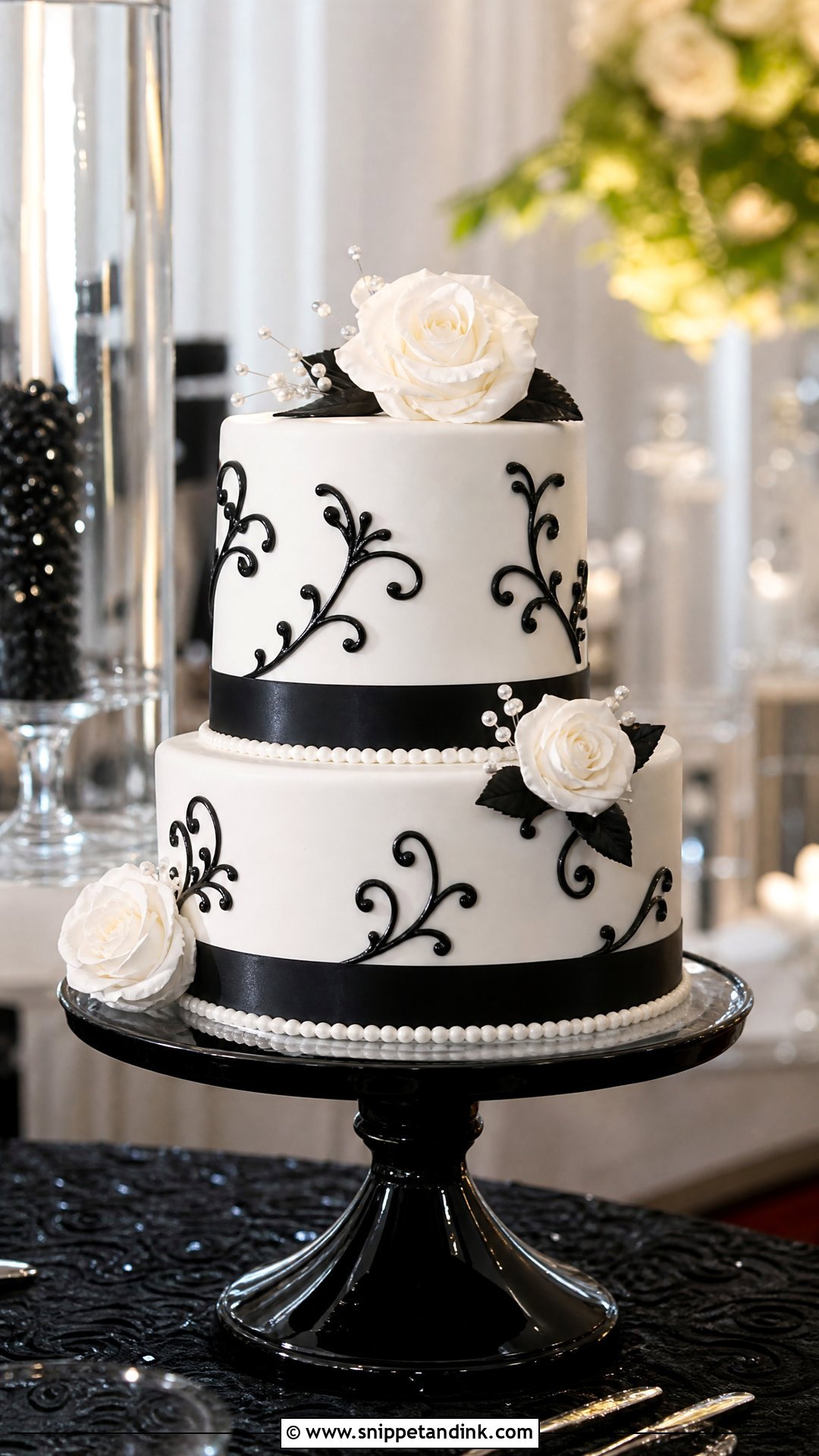
Black and white is about contrast placement: white tiers with black ribbon, piping or painted details, or one dark accent tier. Black frosting tastes bitter at full strength and stains mouths, so I use black fondant or dark chocolate ganache for large areas. White flowers, pearls and sharp edges soften the effect. Each tier can be a different flavor, classic vanilla and chocolate, which suits a sleek evening reception.
25. 2 Tier Chocolate Wedding Cake
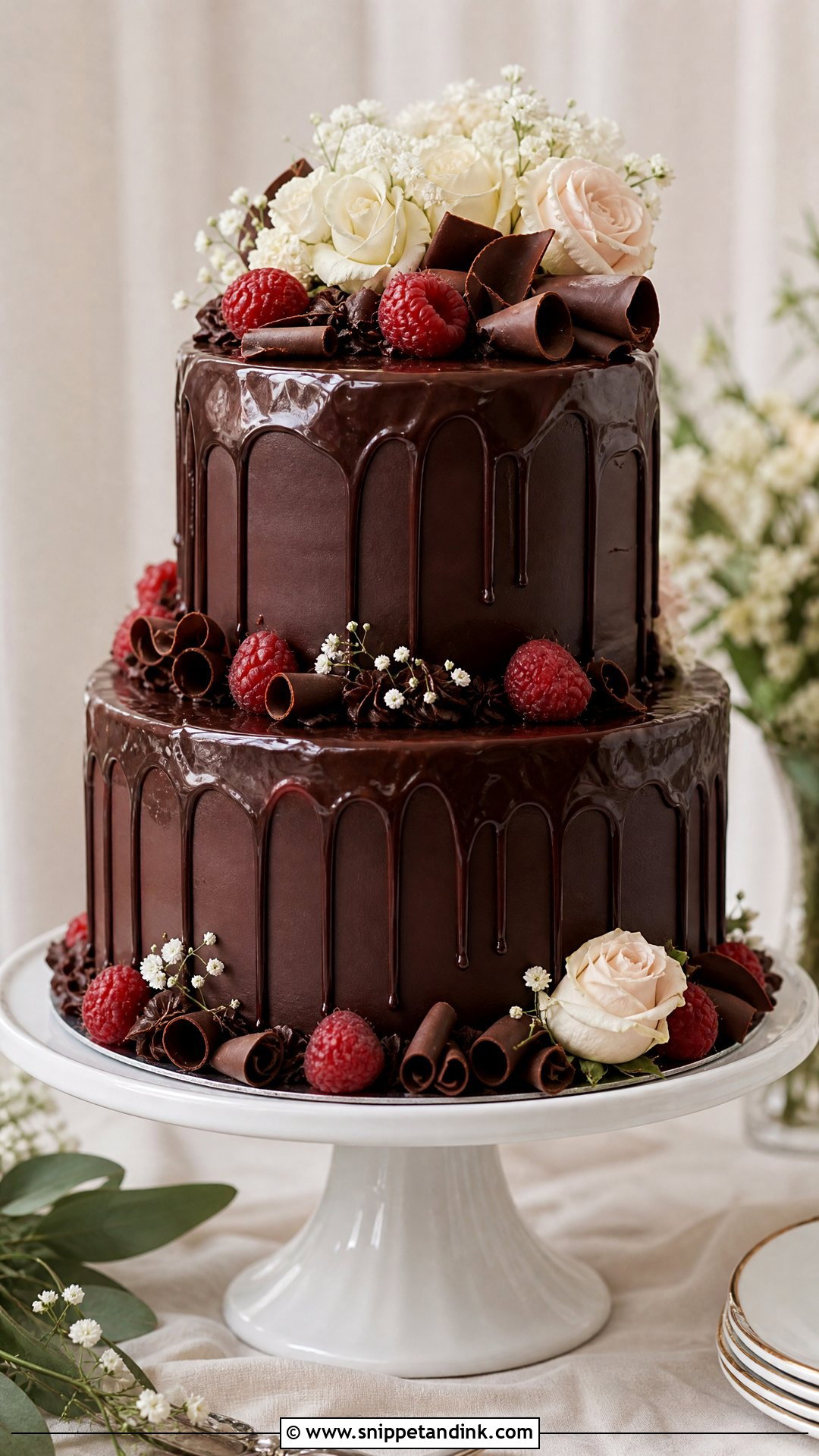
A 2 tier chocolate wedding cake is the one I suggest when the couple cares more about taste than trend. Dark ganache outside sets firm and handles warm rooms better than buttercream; ivory frosting can also hide a chocolate inside. Chocolate curls, berries, figs, gold accents or a few flowers dress it. A drip looks modern when it is controlled. Raspberry, caramel, espresso, vanilla and hazelnut fillings all pair well; check for nut allergies before hazelnut.
26. 2 Tier Red Velvet Wedding Cake
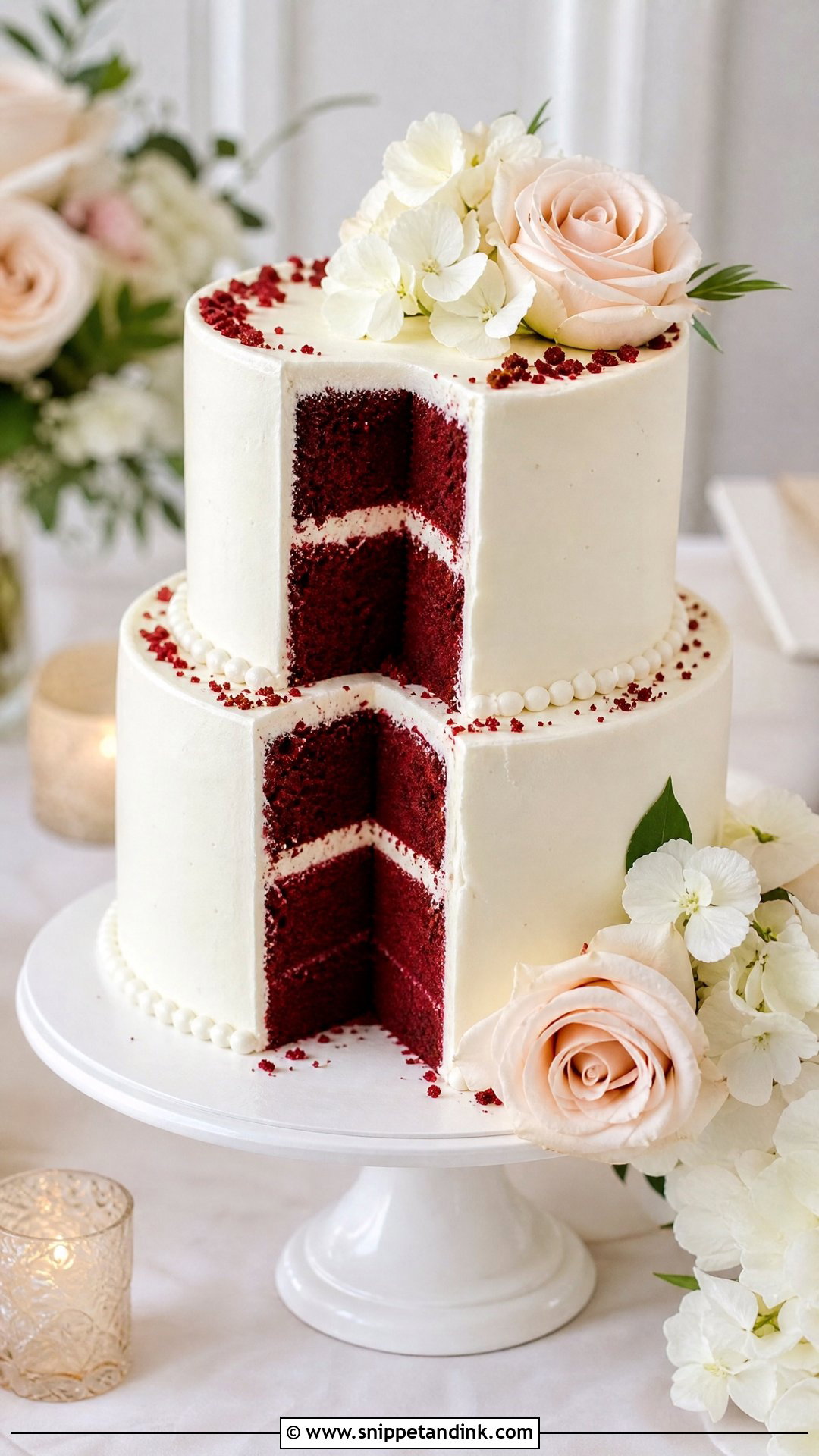
Red velvet saves its moment for the cutting, when the red crumb appears under ivory cream cheese frosting. That frosting is the practical issue: it is soft and has to stay cold, so for a long reception I sometimes suggest a cream cheese filling with a firmer buttercream outside. Smooth sides, small piped borders, fresh flowers or a few crumbs near the base are enough. Blush roses or dark berries keep it refined.
27. 2 Tier Lemon Wedding Cake
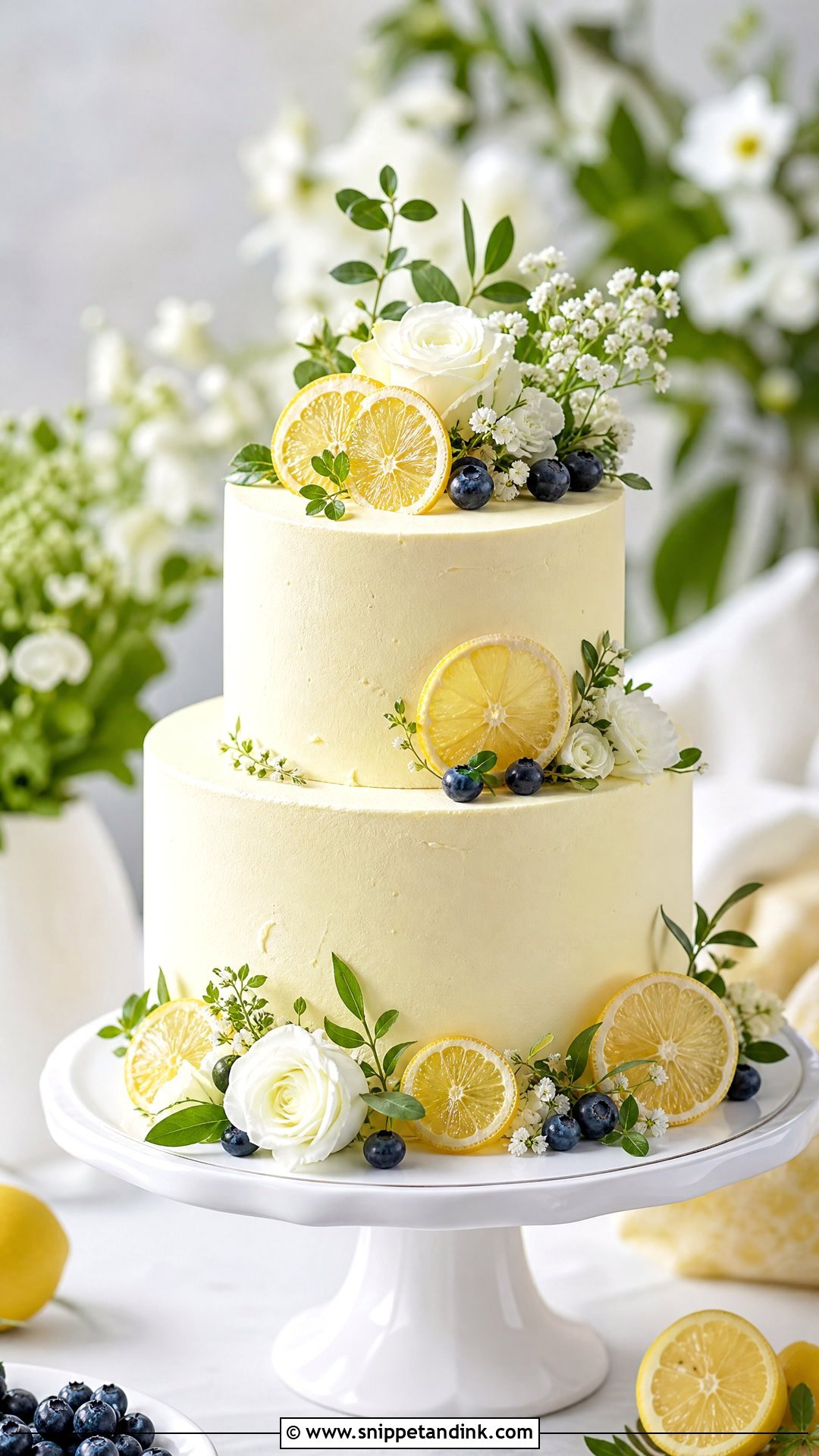
A 2 tier lemon wedding cake tastes light after a full meal, especially with lemon curd, elderflower, raspberry or blueberry filling. Curd is soft, so I pipe a buttercream dam around each layer to hold it in and keep the tiers stable. Smooth ivory frosting with pale yellow accents, fresh flowers or a few thin citrus slices looks clean; too much fruit looks like a dessert buffet. Garden and brunch receptions suit it.
28. 2 Tier Carrot Wedding Cake
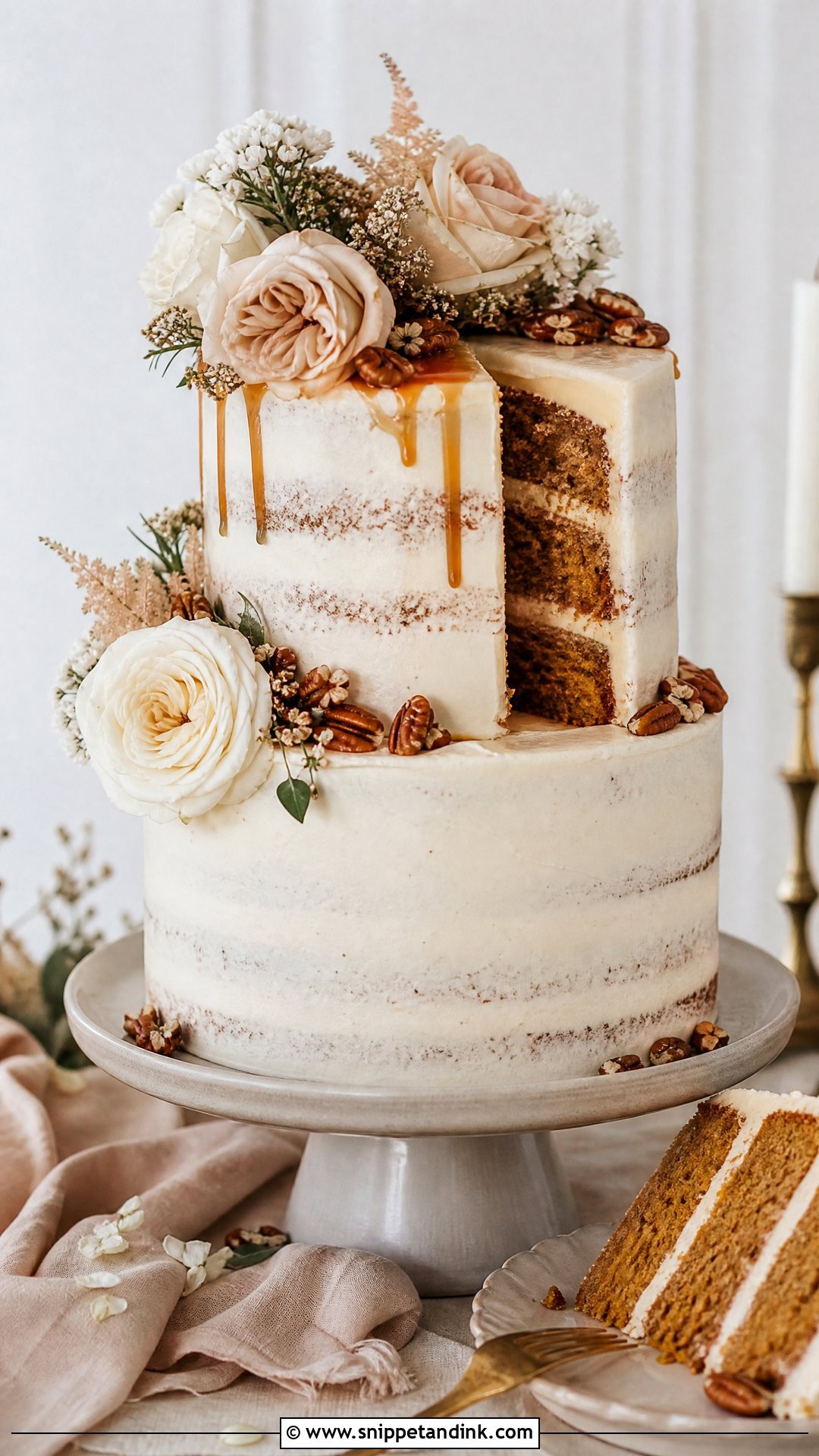
Carrot cake is dense and moist, which makes it a sturdy tier to stack and a forgiving one to transport. Cream cheese frosting is the classic pairing, with toasted nuts, caramel or small flowers. For a wedding, keep the outside smooth or lightly textured in ivory and use chopped pecans or walnuts only around the base; ask about nut allergies before you order them. Cream, peach or blush flowers soften it for a fall reception.
29. 2 Tier Fruit Wedding Cake
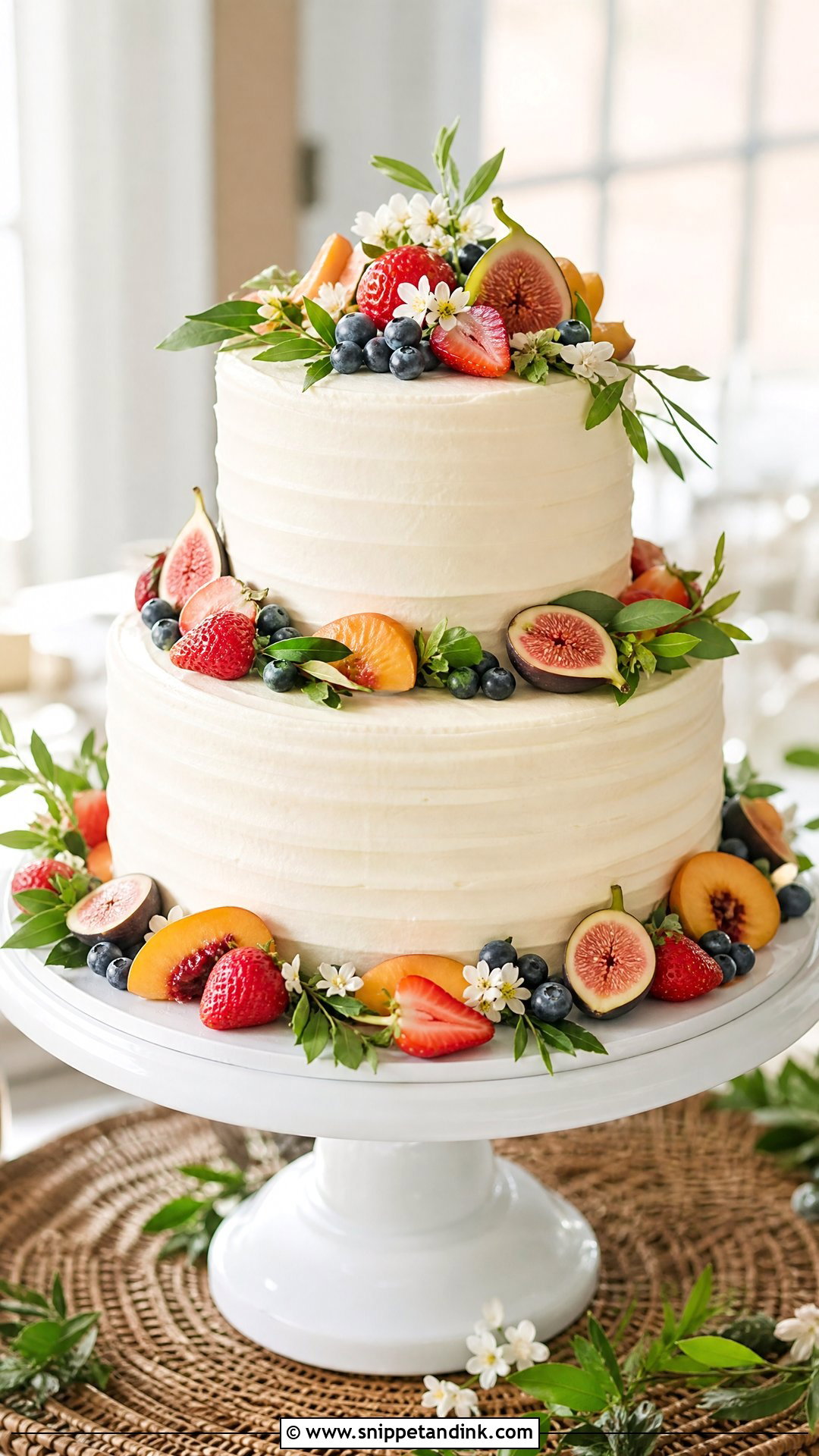
Fruit cakes, in the fresh sense, look best with larger fruit low and smaller pieces higher up, so the eye travels upward. Berries, figs, peaches, citrus or cherries can all work by season. Cut fruit leaks, so I add it at the venue and brush it with a light glaze. Smooth buttercream or a light glaze suits it better than whipped frosting, which slides in summer heat. Vanilla, almond or lemon sponge with a fruit filling ties it together.
30. 2 Tier Cupcake Wedding Cake
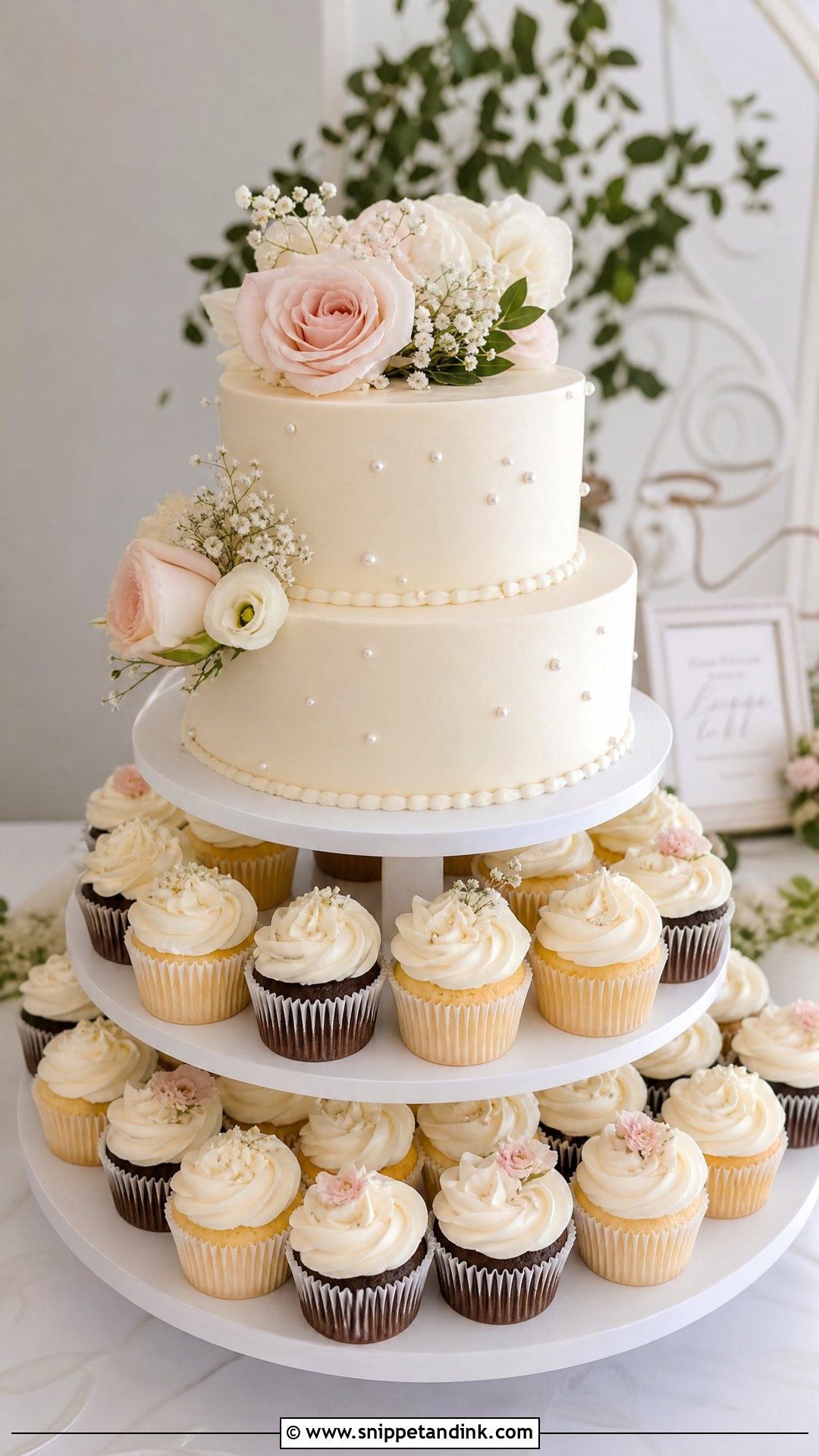
A cupcake tower with a small two tier cutting cake on top gives you the cake-cutting photo and fast serving at once. Guests choose a flavor, vanilla, chocolate, lemon or red velvet, and nobody waits for slices. Matching frosting colors, flowers, pearls or tiny toppers tie it together. Use a sturdy tiered display stand and count the cupcakes with a few extras, since some guests take two.
From Tasting Appointment to Delivery Morning
A two tier cake is quicker to make than a tall one, but good bakers book up, especially for Saturdays in peak season. This is the rough timeline I give couples; small bakeries and busy months can shift it.
- Three to six months out: shortlist bakers, book tastings and send your date, venue and a few inspiration photos.
- After the tasting: confirm the design, flavors and deposit. Sugar flowers or hand-painted work need this early, as they take time to make.
- Two to four weeks out: give your final guest count so tier sizes and any kitchen cake can be fixed.
- The week of the wedding: confirm the delivery window, the contact person at the venue and who brings and prepares any fresh flowers.
- Delivery day: the cake arrives chilled, is set on a level table out of the sun, and stays untouched until cutting.
One more thing I ask every couple to decide in advance: who cuts the cake after your ceremonial first slice. Most caterers will do it, sometimes for a fee, but it needs to be agreed. Otherwise the cake can sit uncut while guests are already heading to the dance floor.
What Makes a Small Cake Table Work
A two tier wedding cake may be small, but it should not look like an afterthought. Start with the mood, classic, floral, vintage, modern, rustic or colorful, then match frosting, decorations and stand to your venue and season. Use the second tier for a second flavor; guests appreciate the choice. Whatever you lean toward, pearls, texture, flowers, fruit or clean fondant, a well-made two tier cake can hold its place as the centerpiece of your reception.
You'll Like These Ideas:









Leave a Reply