
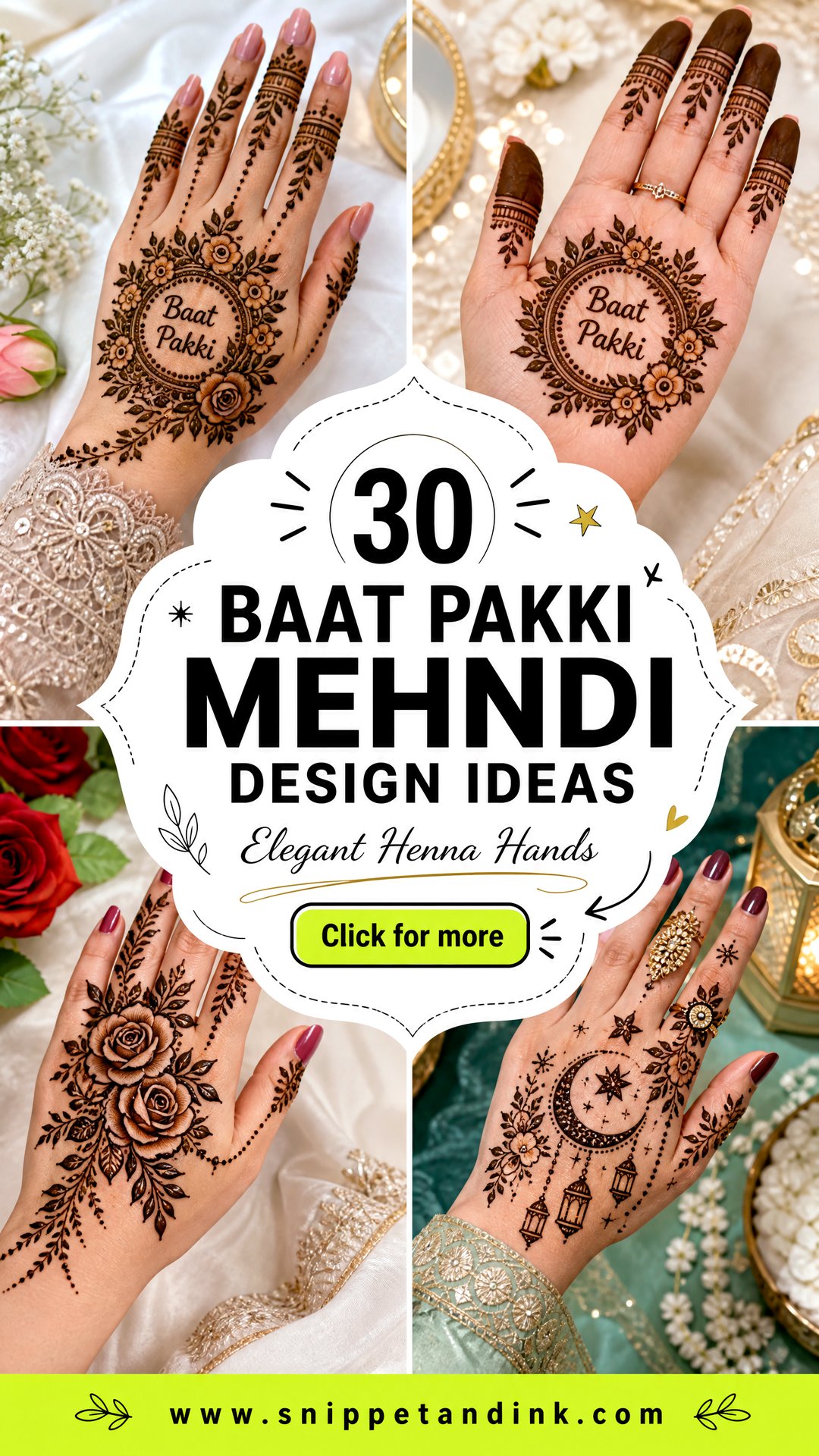
Baat pakki is the day two families make it official, and the henna for it sits in an odd spot: festive enough for photos with the ring and the sweets, but clearly lighter than what the bride will wear at her wedding. The requests I get most for it are floral trails, Arabic spacing, mandala backs, bracelet details and leafy fingers, often mixed across Indian and Arabic styles. Below are thirty layouts I’d suggest for the girl whose match is being confirmed, and for the sisters and cousins sitting beside her, with a note on each about how it wears and where it can go wrong.
Leaving Room for the Wedding Mehndi Later
The first question I ask a baat pakki client is how long until the wedding. It changes what I’d put on her hands more than her outfit does.
A henna stain doesn’t wash off. It fades as the top layer of skin naturally sheds, usually over one to three weeks, faster on the back of the hand and slower on the palms. If the wedding is only a few weeks away, a heavy baat pakki design can still be showing when the bridal mehndi goes on, and the new design ends up patchy over the old one.
- Wedding months away: wear whatever coverage you like.
- Wedding within about a month: keep it light, mostly on the back of the hand and fingers.
- Wedding within two weeks: consider skipping the palms entirely so they’re clear for the bridal design.
It also helps the wedding feel like a step up. If the baat pakki hands are already at bridal density, the mehndi night has nowhere to go in the photos.
1. Baat Pakki Back Hand Mehndi Design
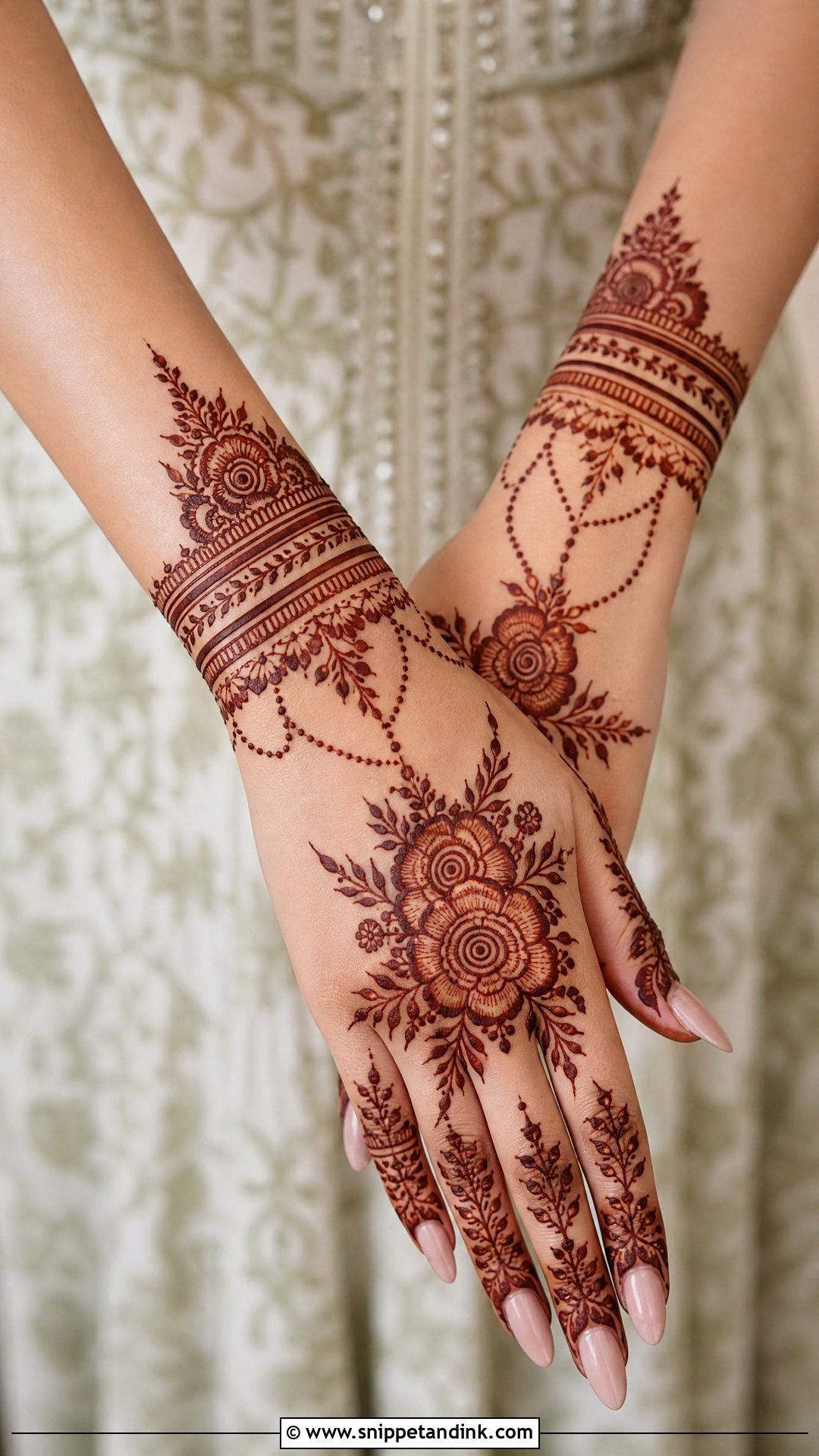
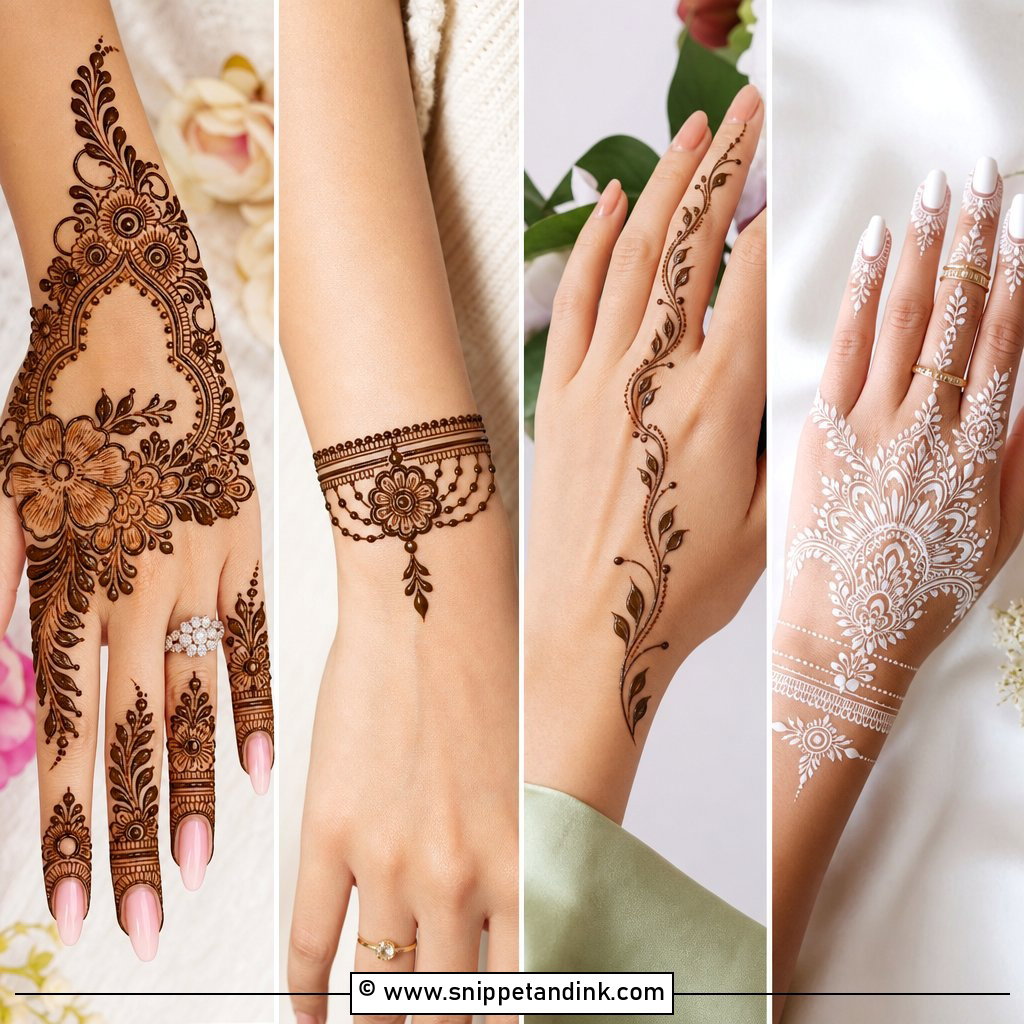
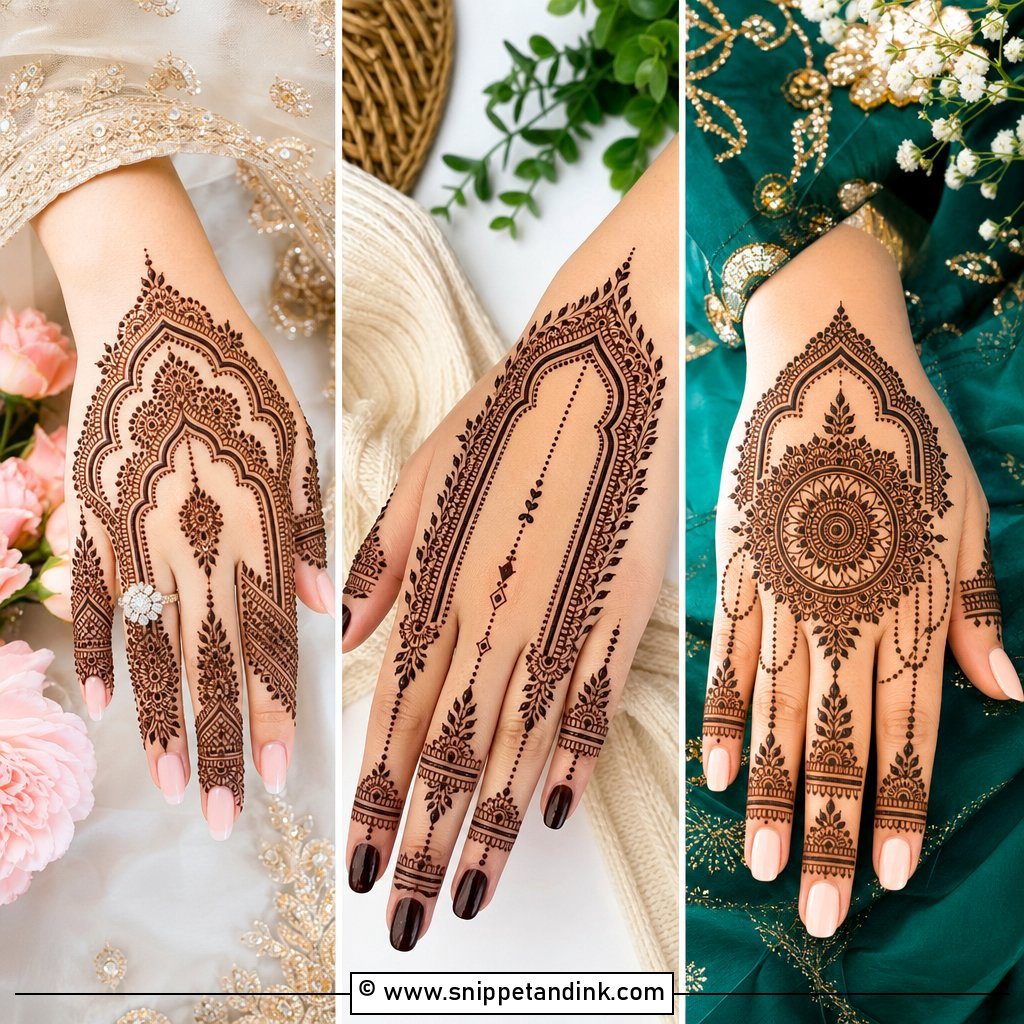
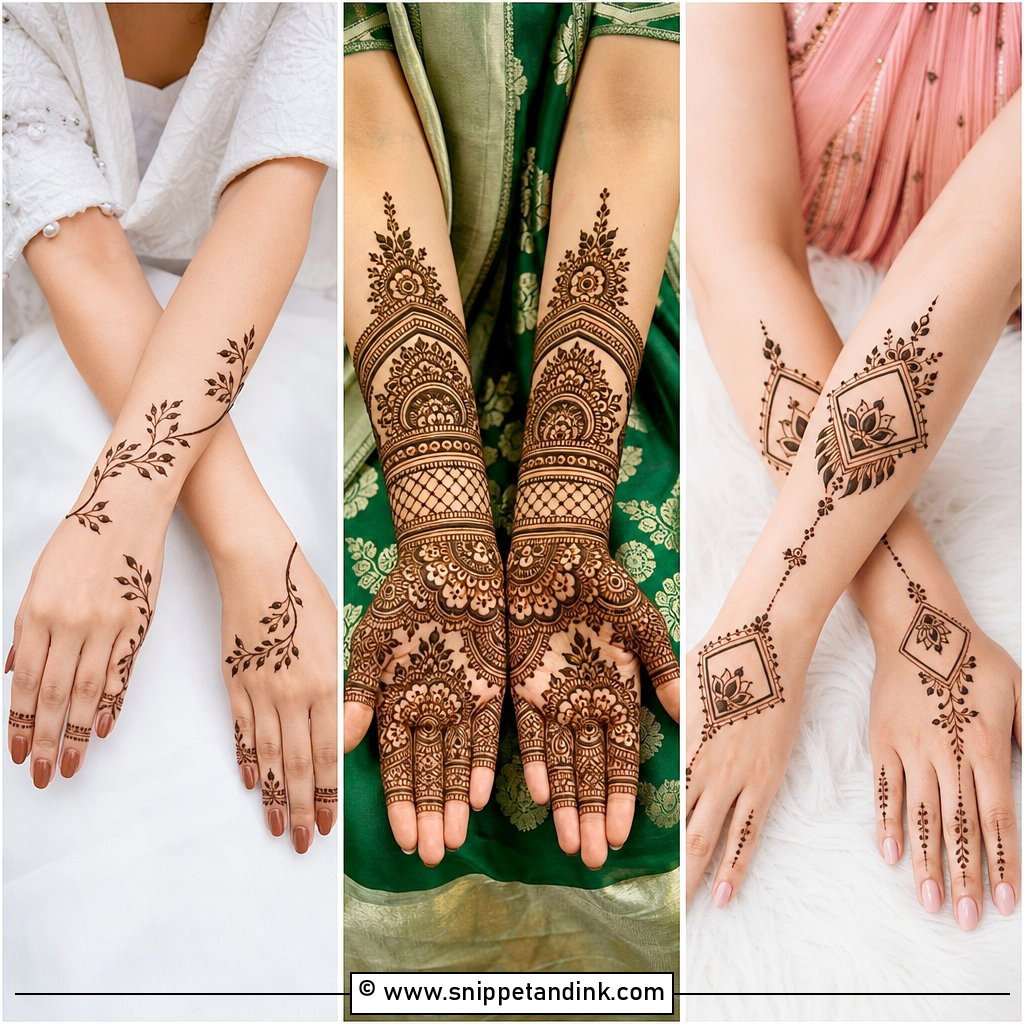
Start with the back of the hand if you’re unsure. A back hand mehndi design is what shows when the ring goes on and when you hold the tray, so it does the most work in photos. I usually build from a floral or mandala centre out to the fingers with leafy vines and dots, then close it with a bracelet band at the wrist. The back of the hand stains a shade lighter than the palm, so I keep outlines a little bolder there. It sits well with pastel, gold, green or maroon outfits.
2. Simple Baat Pakki Mehndi Design
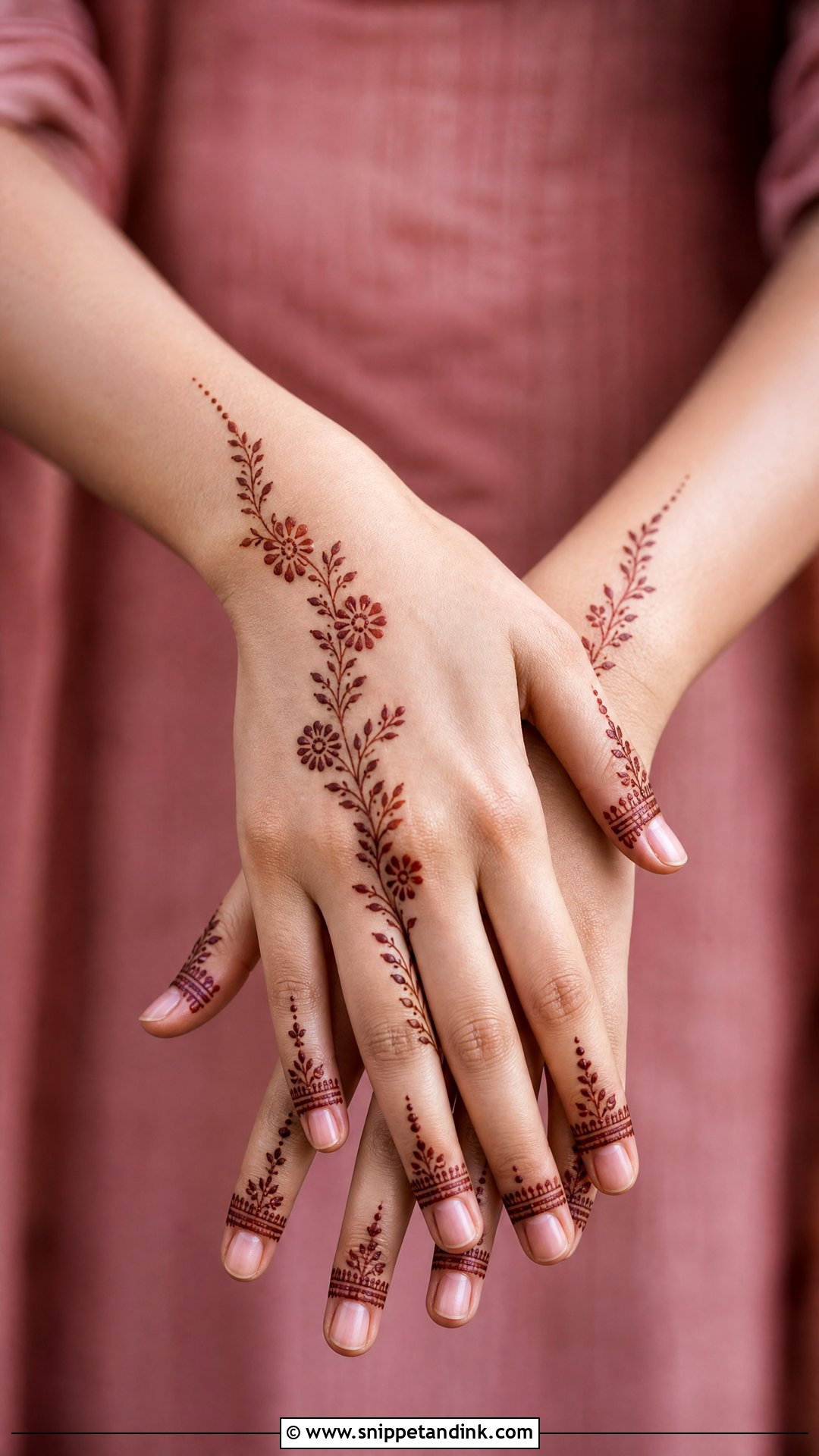
For a small ceremony at home, one complete flow is enough: a flower trail from the wrist to the index finger, or a round mandala with decorated fingertips. What makes it look finished rather than rushed is even spacing and clean line ends. A few dots, leaves and curved vines keep it festive. I often do this one for younger cousins, because it takes a fraction of the time and they won’t sit still for much longer anyway.
3. Arabic Baat Pakki Mehndi Design
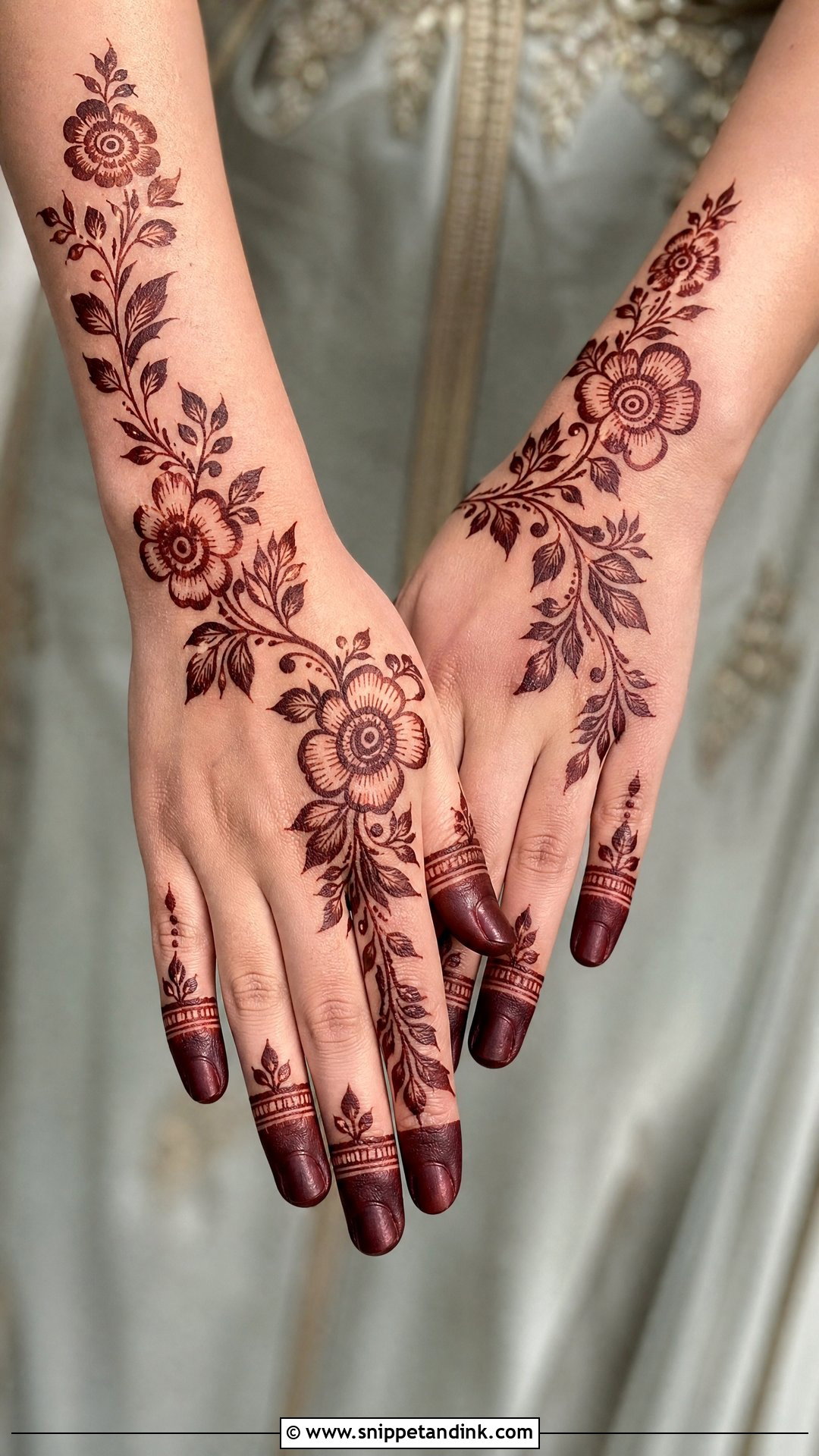
Arabic flow suits this occasion because it reads as dressed-up without reading as bridal. Bold flowers and leafy stems run diagonally across the hand with open skin between them, which makes the hand look longer. For baat pakki I scale the blooms down to medium; the oversized bridal roses can wait for the wedding. Slim leaves and half flowers on the fingers complete it. It also dries faster than dense fill, which helps when guests are arriving.
4. Indian Baat Pakki Mehndi Design
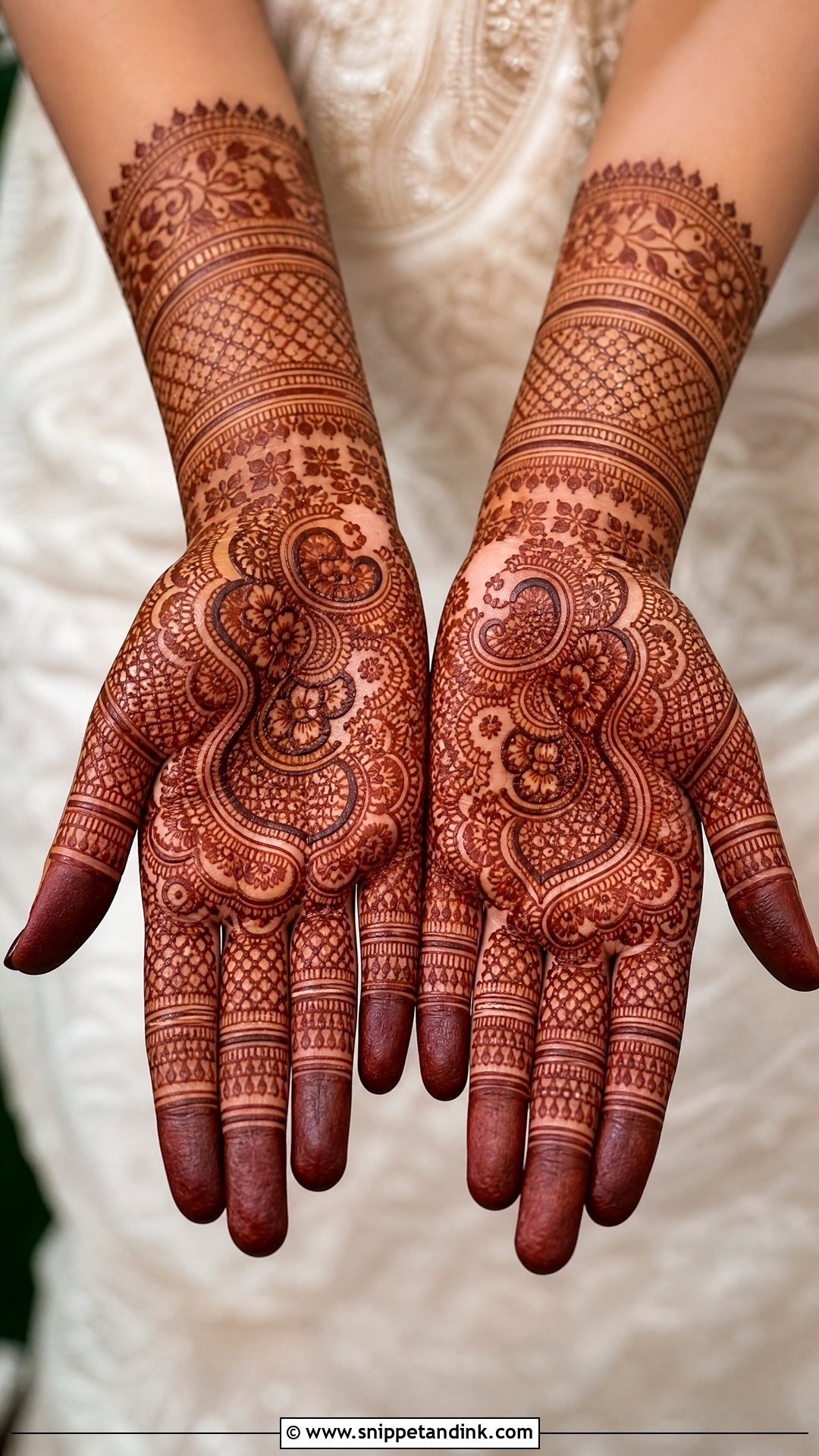
A traditional family often expects Indian detail at this ceremony, and I’m happy to give it, just at medium density. Paisleys, small flowers, jaali and fine fillers from fingers to wrist, with some breathing space kept. Little personal touches like initials or a ring motif fit well here. It suits lehengas, shararas, ghararas, anarkalis and saris in jewel tones. Keep it short of the elbow; that length belongs to the bride on her mehndi night.
5. Indo Arabic Baat Pakki Mehndi Design
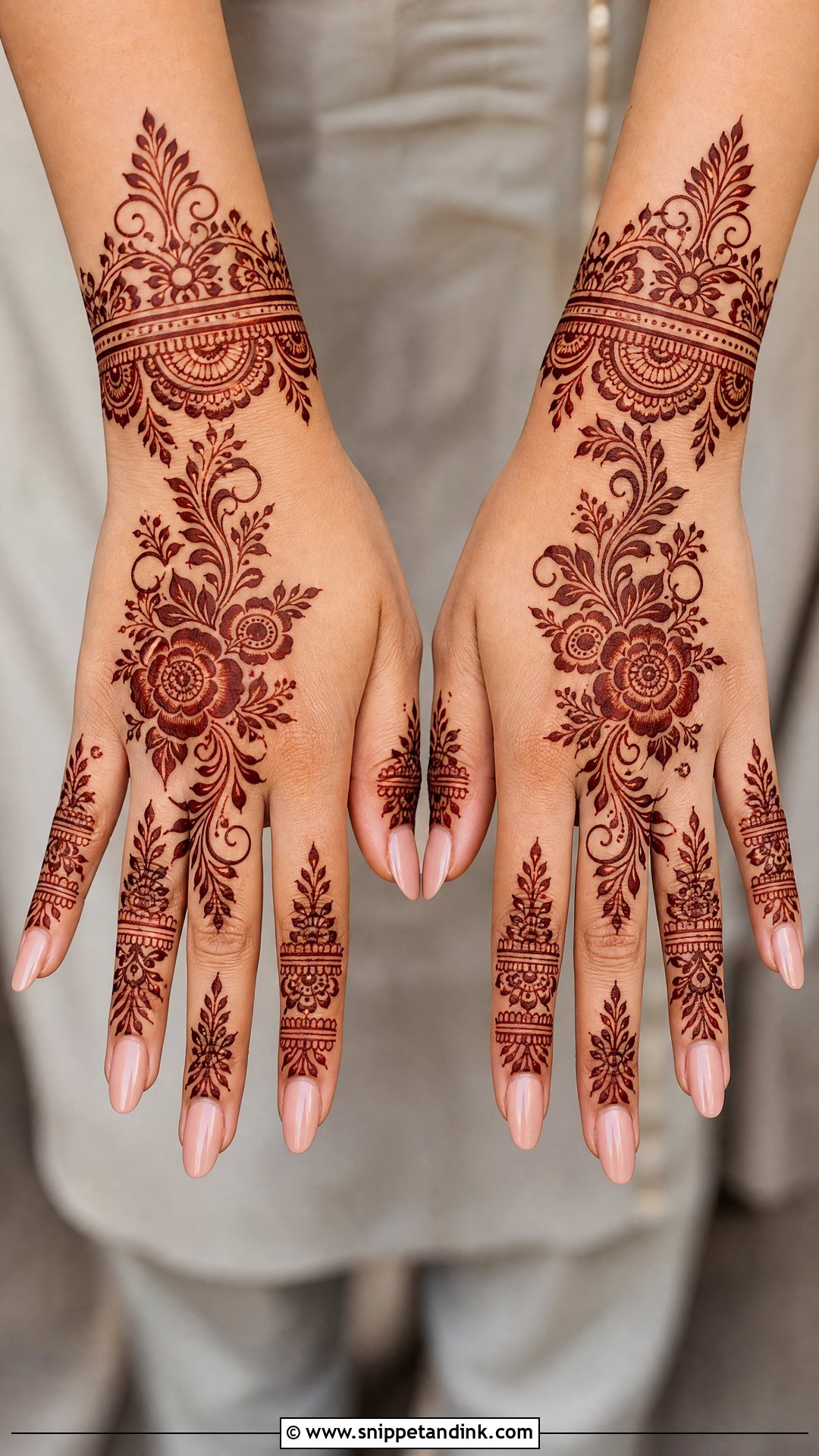
Indo-Arabic is my usual recommendation when the bride-to-be can’t decide. Indian paisleys, mandalas and fine lines are set into Arabic trails and bold florals, so it feels traditional without being packed. A layout I like starts at the wrist, curves across the back hand and ends on two or three decorated fingers, with the rest of the skin left clear. It sits comfortably with both traditional and semi-modern outfits.
6. Full Hand Baat Pakki Mehndi Design
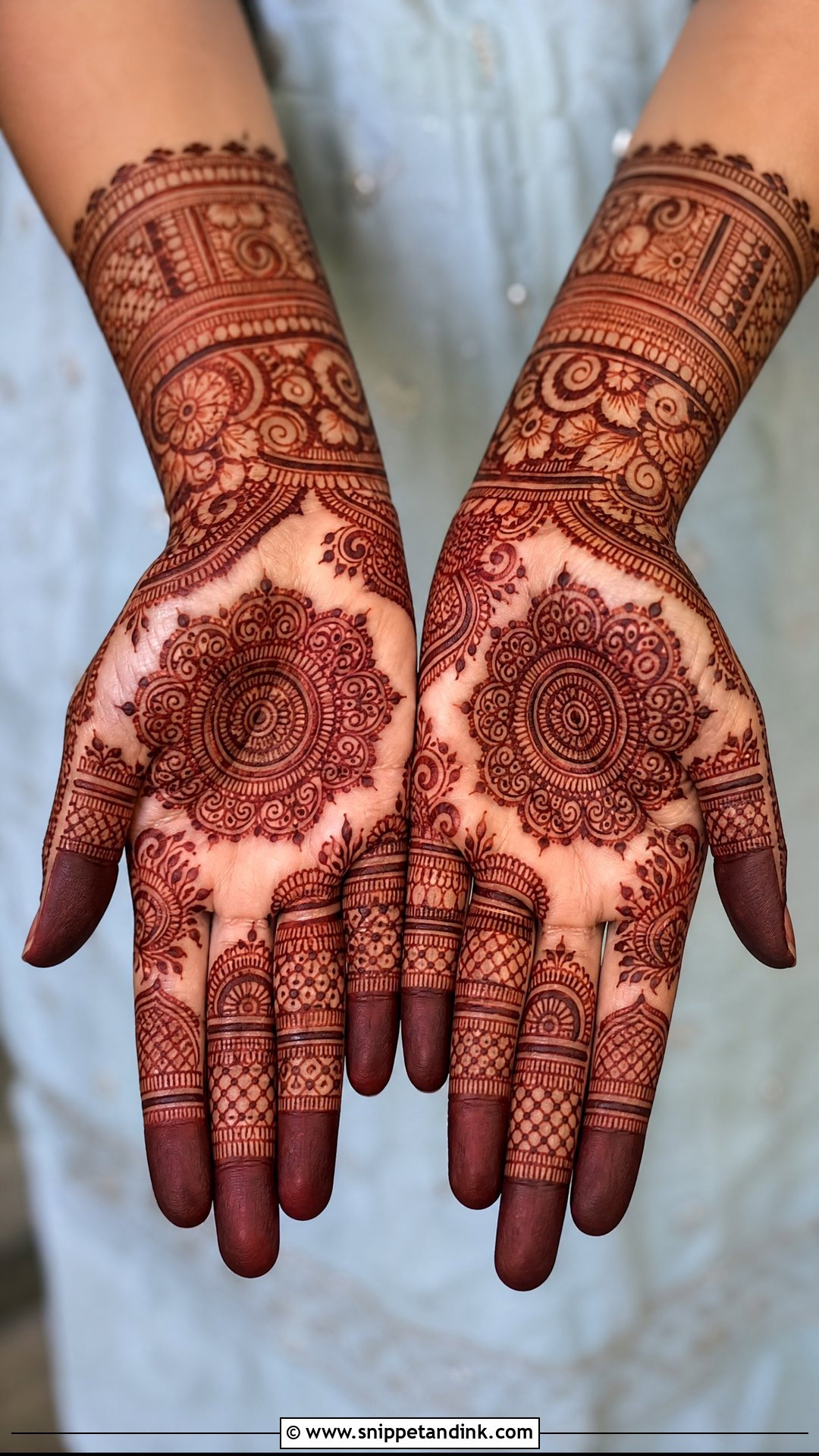
Full hand coverage at a baat pakki is fine, as long as the density stays lighter than the wedding design. Fingertips to wrist, flowers, paisleys, mesh and fillers, but with clear open sections instead of solid fill. Some girls like one hand slightly heavier than the other, which I’m happy to do. Budget time: a full pair of hands takes much longer than a back-hand design, and you’ll need to sit still afterwards while it dries before handling food or gifts.
7. Front Hand Baat Pakki Mehndi Design
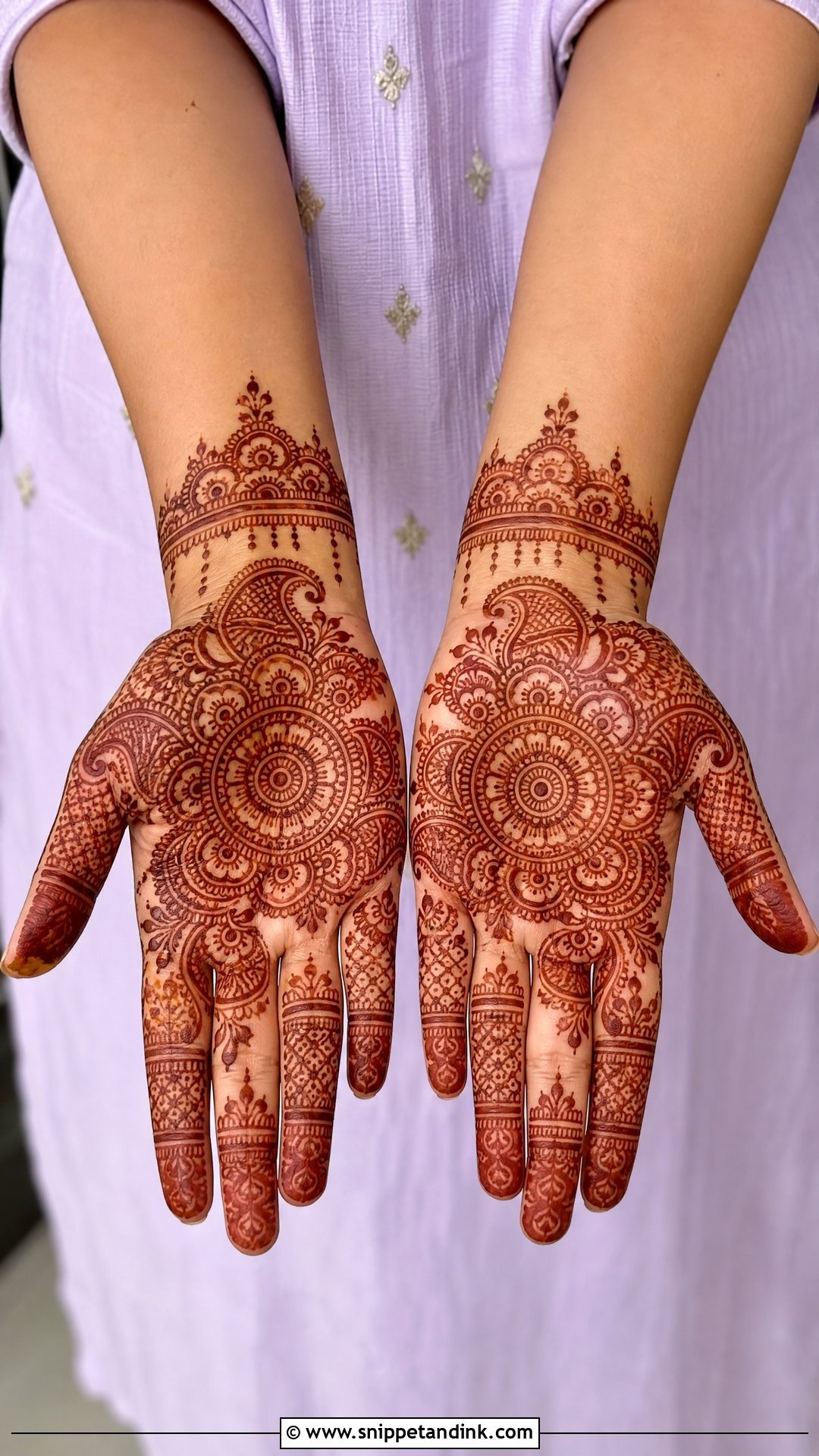
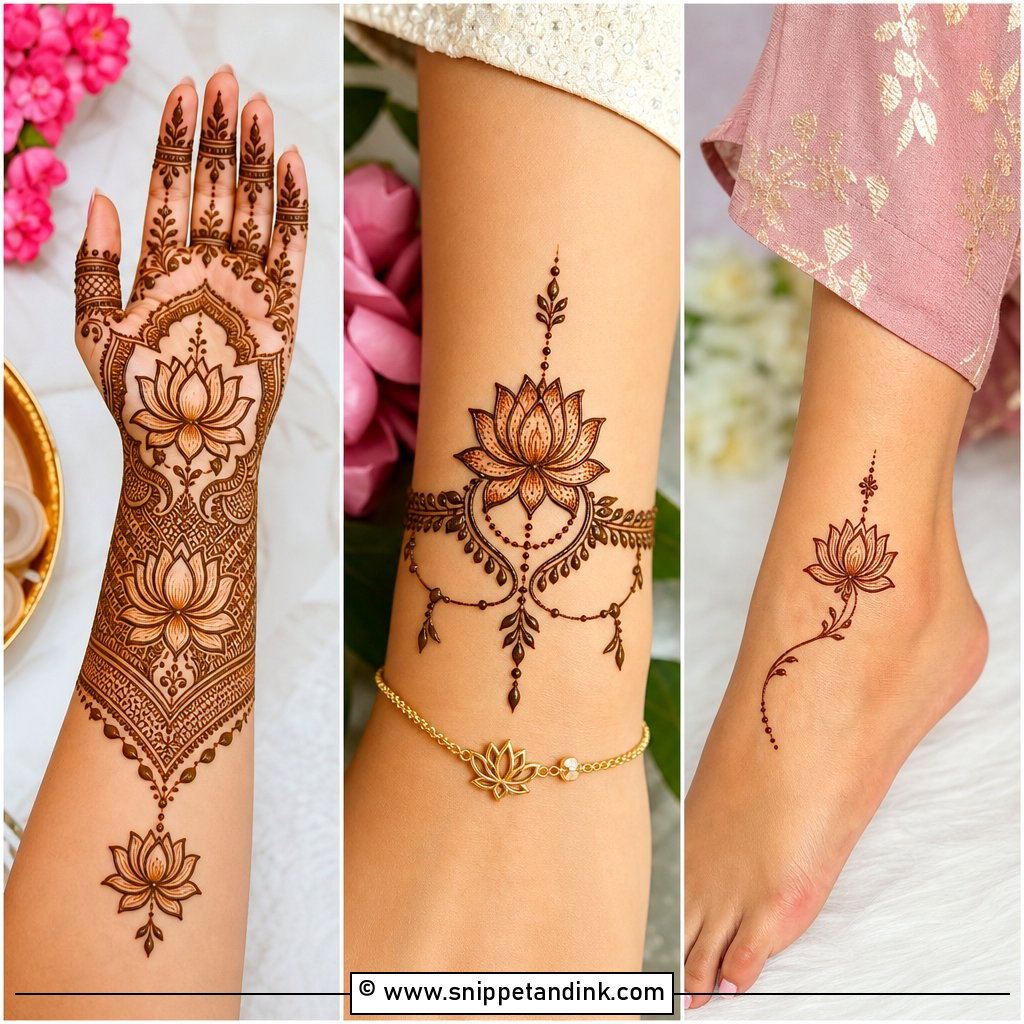
Palm designs carry the deepest stain on the body, since the skin there is thick and warm. A central mandala with flowers around it, side paisleys and decorated fingers is the classic layout. For something cleaner, keep the circle bold and the surrounding detail fine; for a fuller look, extend vines and soft jaali toward the wrist. Remember that you’ll be holding sweets, gifts and hands all day, and wet paste on the palm smudges first, so get it done early enough to dry fully.
8. Mandala Baat Pakki Mehndi Design
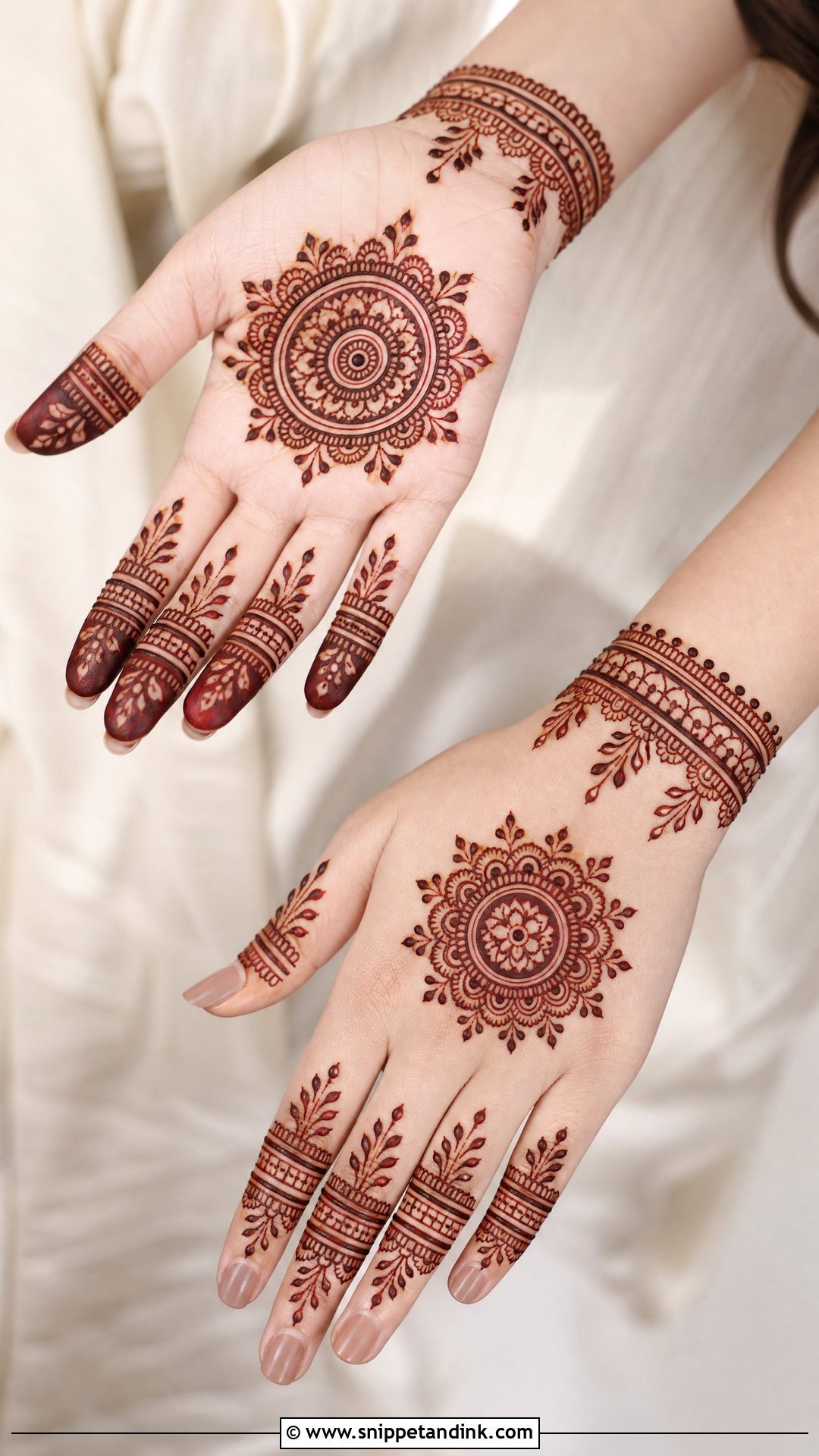
Mandalas give a neat, symmetrical result with very little coverage. The circle sits on the palm or the back of the hand, ringed with petals, dots and leaves. On the back, I pair it with bracelet bands and decorated fingers; on the palm, with small corner flowers and fingertip detail. Circles show every wobble, so this is one to leave to a steady hand rather than a cousin with a cone. It suits all ages at the ceremony.
9. Floral Baat Pakki Mehndi Design
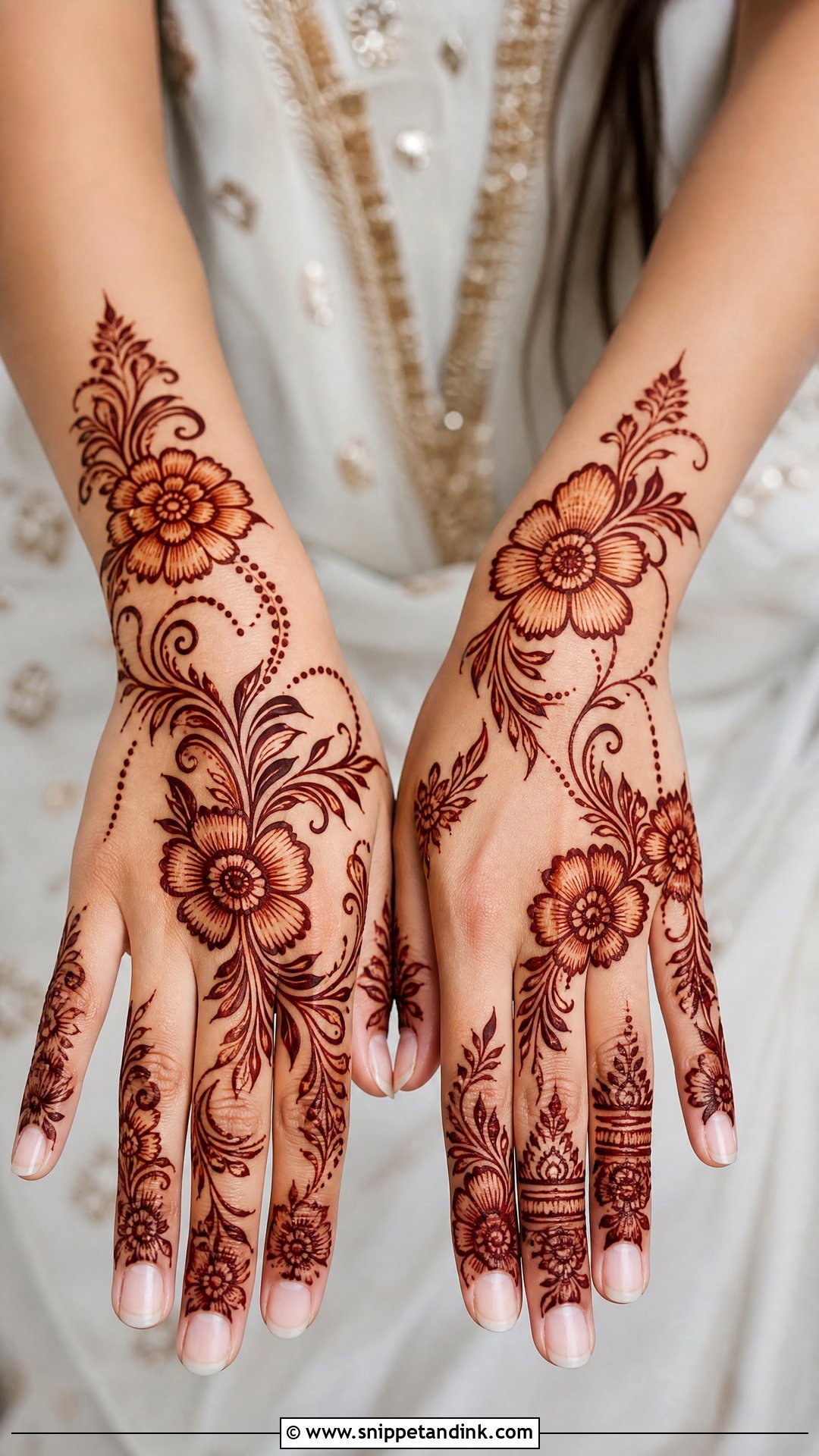
Flowers are the safe, happy choice for a family day. Blooms across the back hand, leafy trails on the fingers and a soft wrist border. Spaced out and bold, they lean Arabic; small and detailed, they lean Indian. Roses, lotuses and simple round flowers all stain cleanly. I leave clean gaps between flowers for a modern finish, because the stain spreads slightly and crowded petals merge.
10. Rose Baat Pakki Mehndi Design
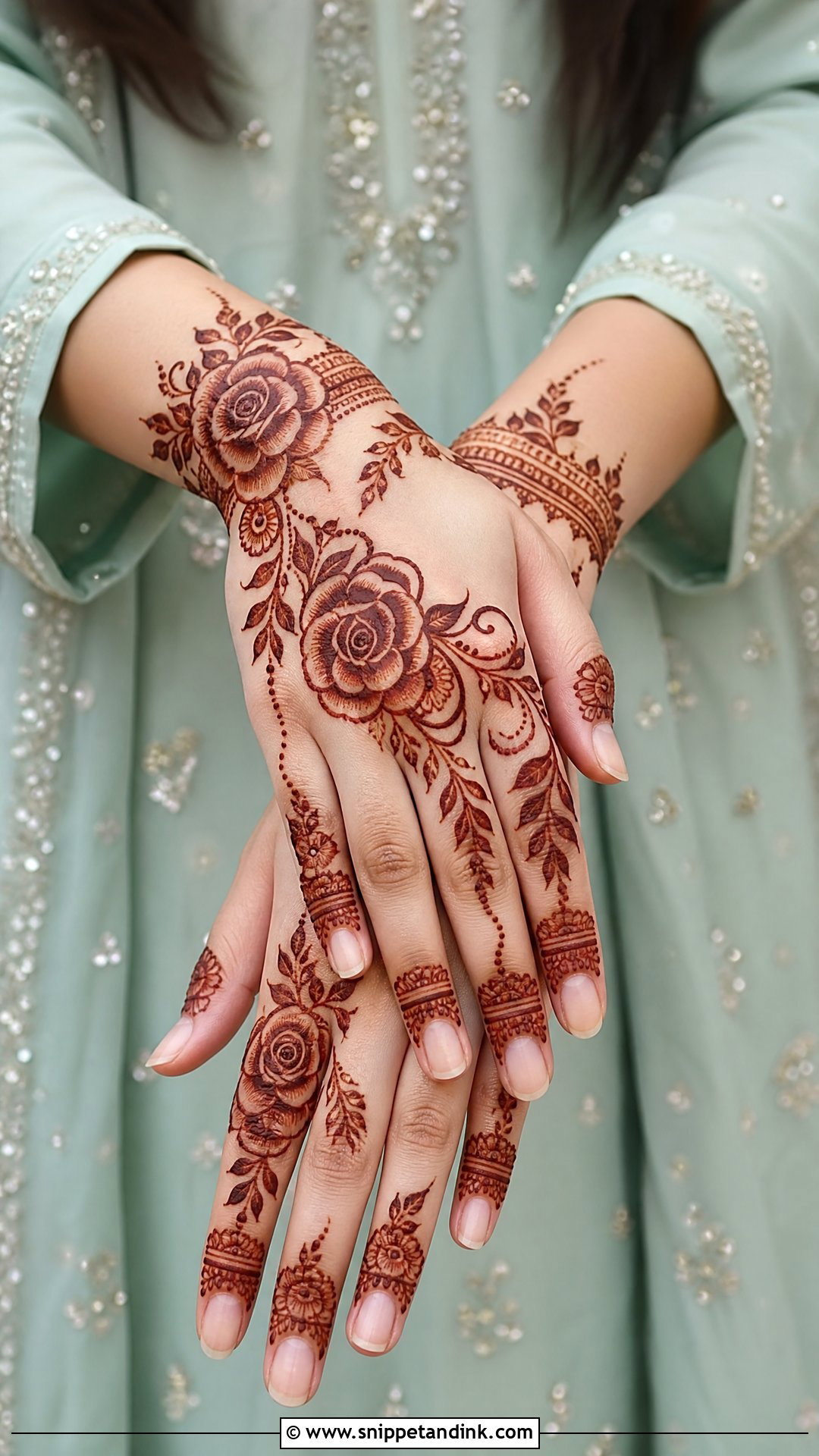
A single large rose near the wrist or at the centre of the back hand, with smaller ones moving toward the fingers, is one of my favourite layouts for ring photos. Roses are recognisable from across a room. The trick is bold outlines and light inner shading; heavy shading inside a small rose fills in as the henna darkens and the shape disappears.
11. Paisley Baat Pakki Mehndi Design
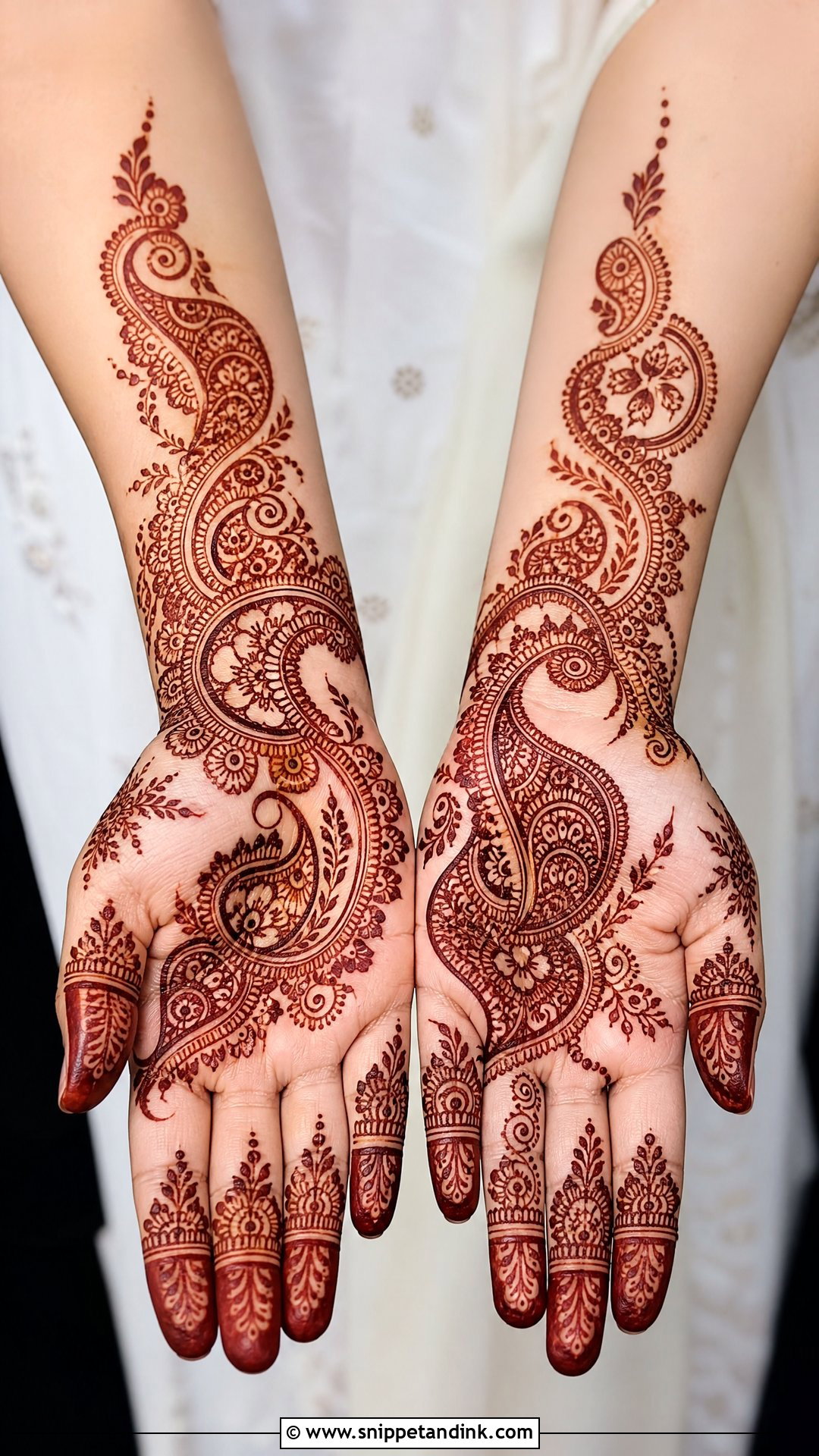
Paisley is the classic South Asian motif, and it flows nicely from wrist to fingertips. For a modern look I use fewer, larger paisleys with open space around them; for a traditional one I fill them with checks, petals and leaf strokes. The curves echo embroidery, which is why it pairs well with heavily worked outfits. It reads mature rather than girlish.
12. Peacock Baat Pakki Mehndi Design
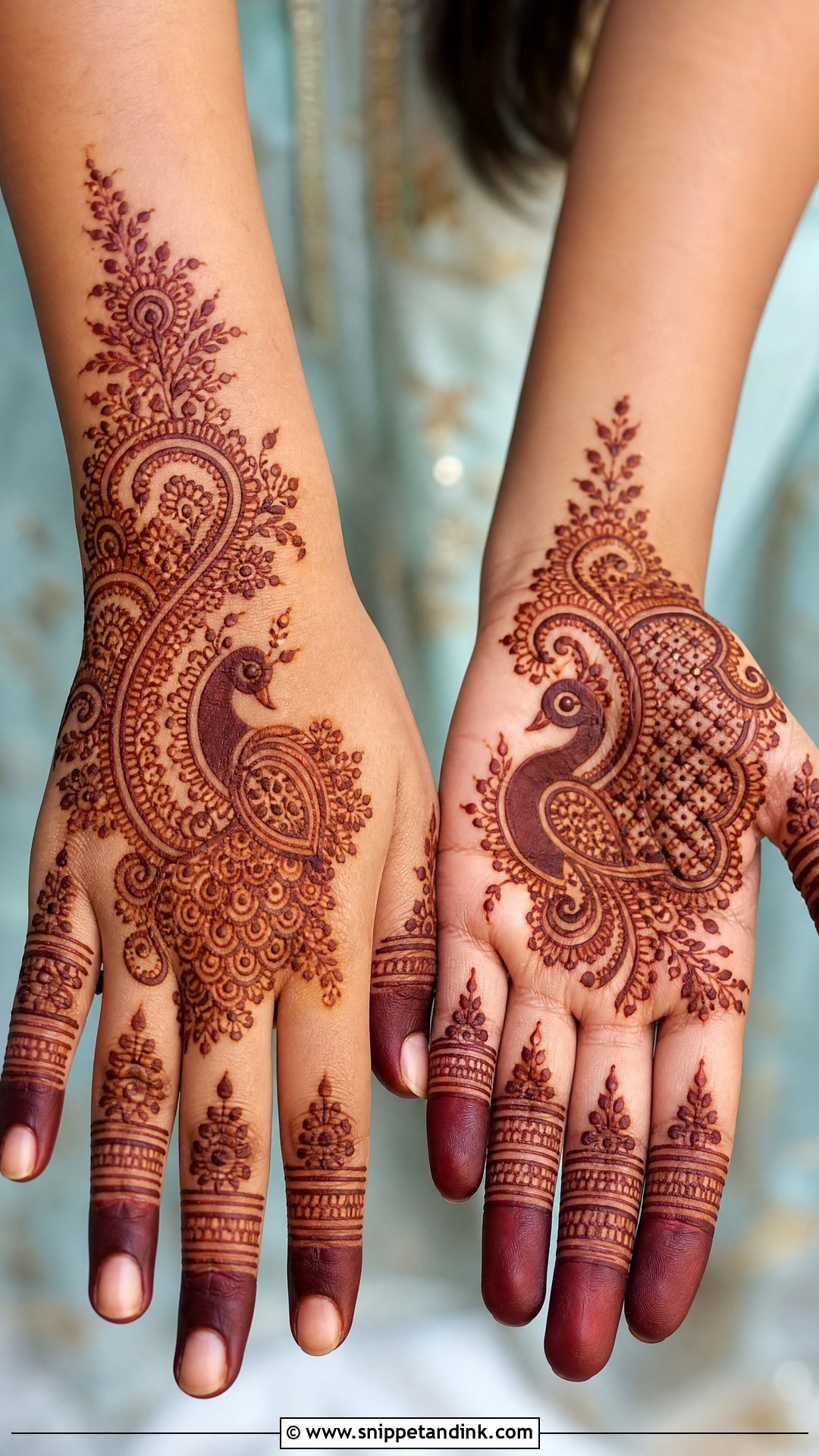
A peacock makes the hand feel special and traditional. I place it on the palm, near the wrist or along the back hand, with its feathers spreading into vines and paisleys. Keep it big enough to recognise; a tiny peacock just becomes a squiggle after staining. Jaali sections and decorated fingers complete it. With moderate coverage and neat spacing, it stays festive without tipping into bridal.
13. Jaali Baat Pakki Mehndi Design
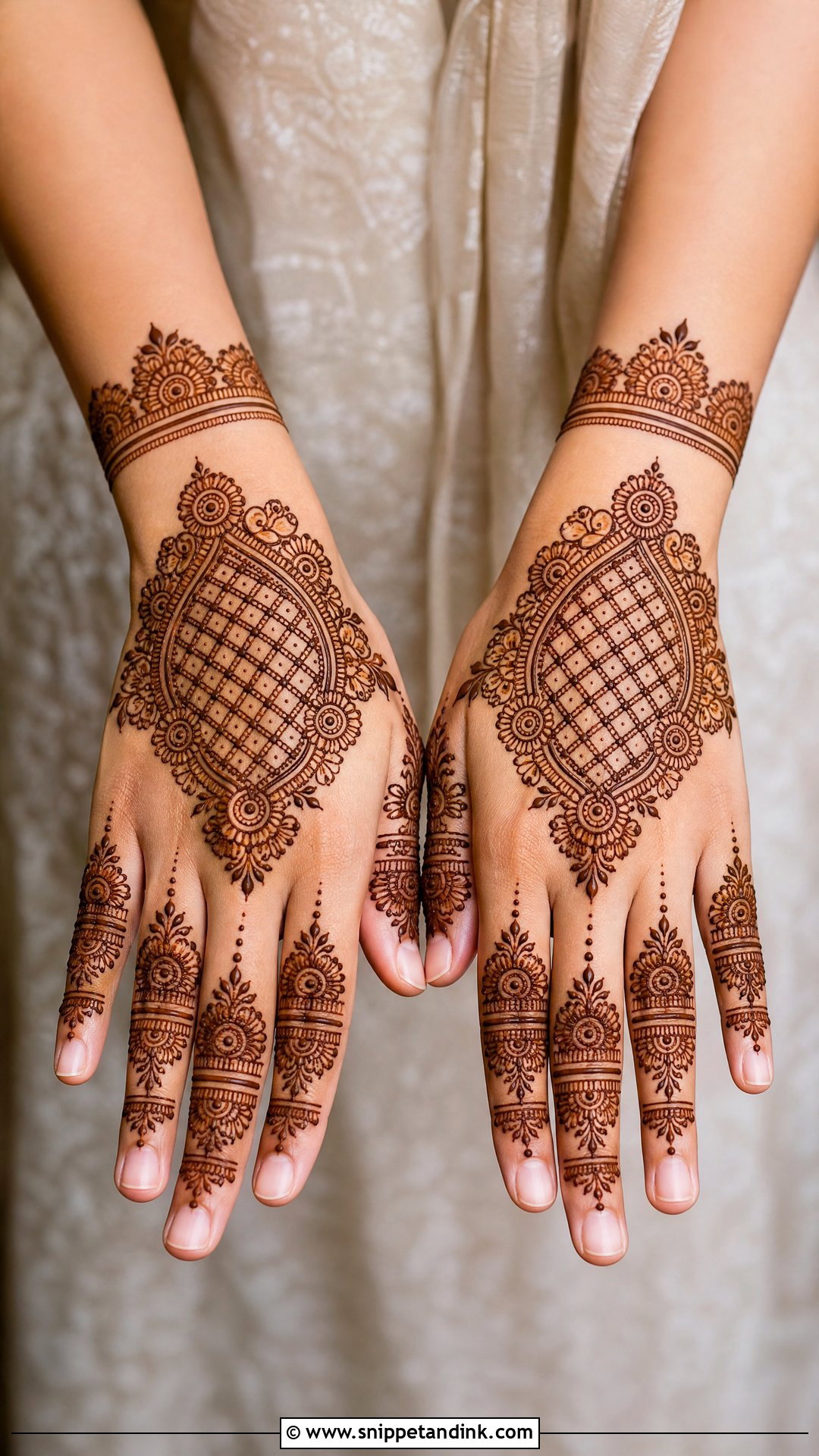
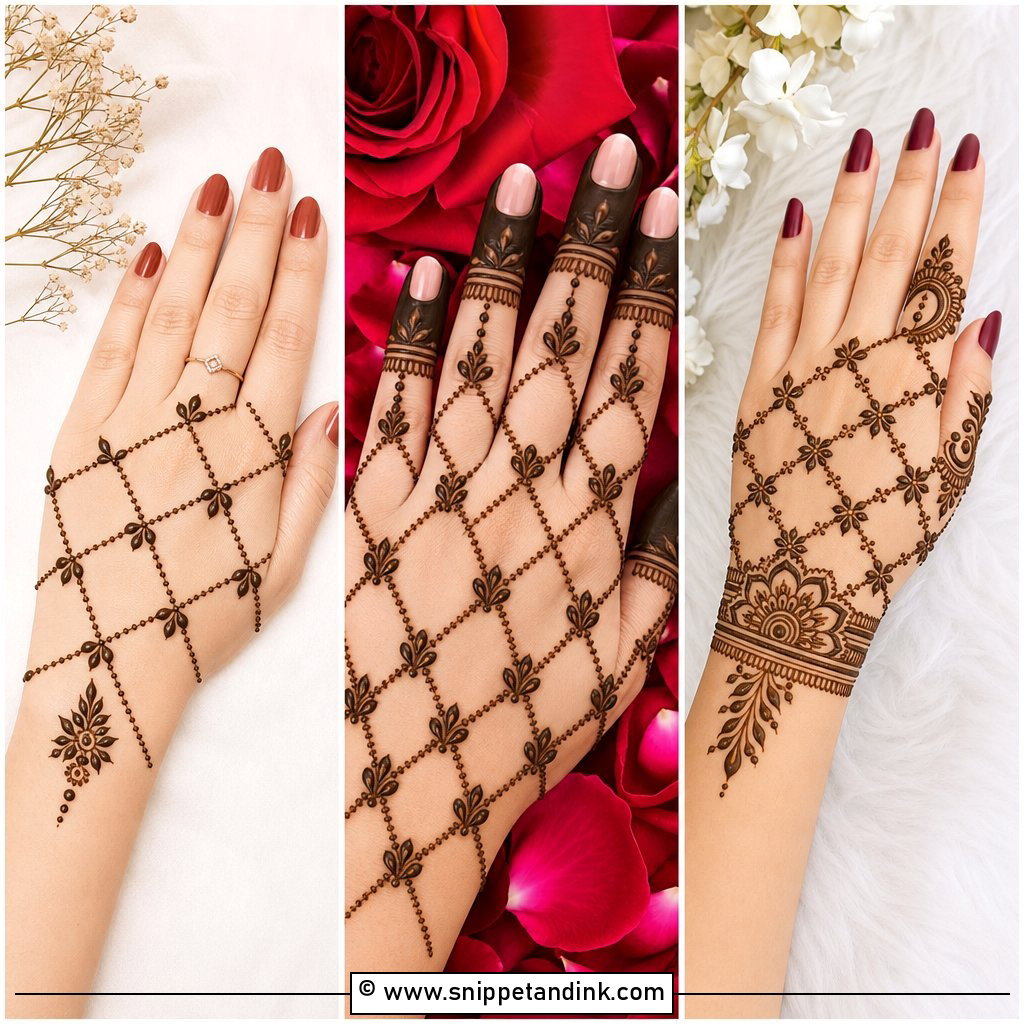
Jaali is a fine net pattern, and it gives a lacy, jewellery-like finish. I use it across part of the back hand or palm, paired with flowers, a mandala or wrist bands. Even, generous spacing between the lines is essential. Drawn too tight, the stain bleeds across the gaps and you end up with a dark blur instead of lace.
14. Bracelet Baat Pakki Mehndi Design
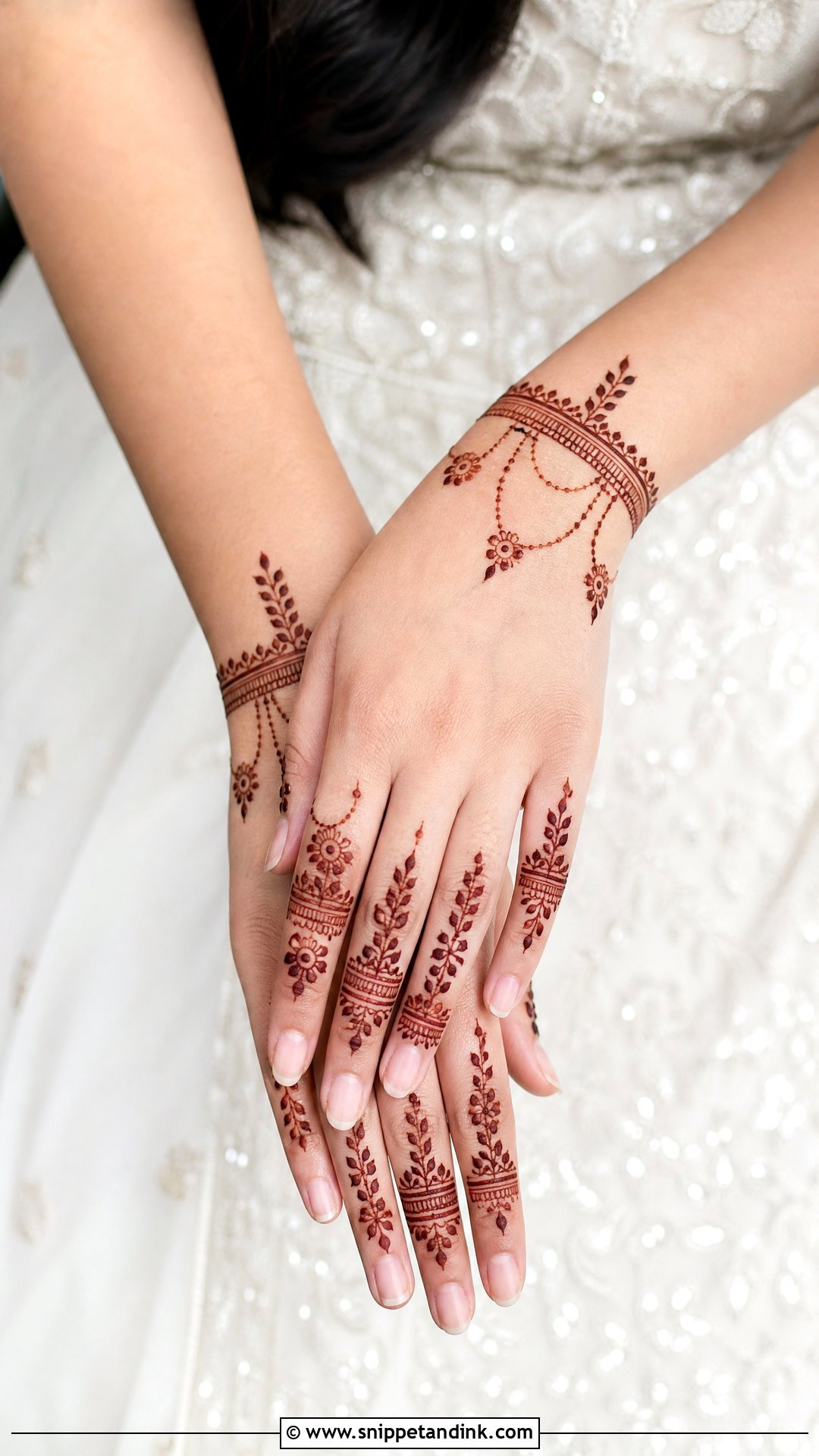
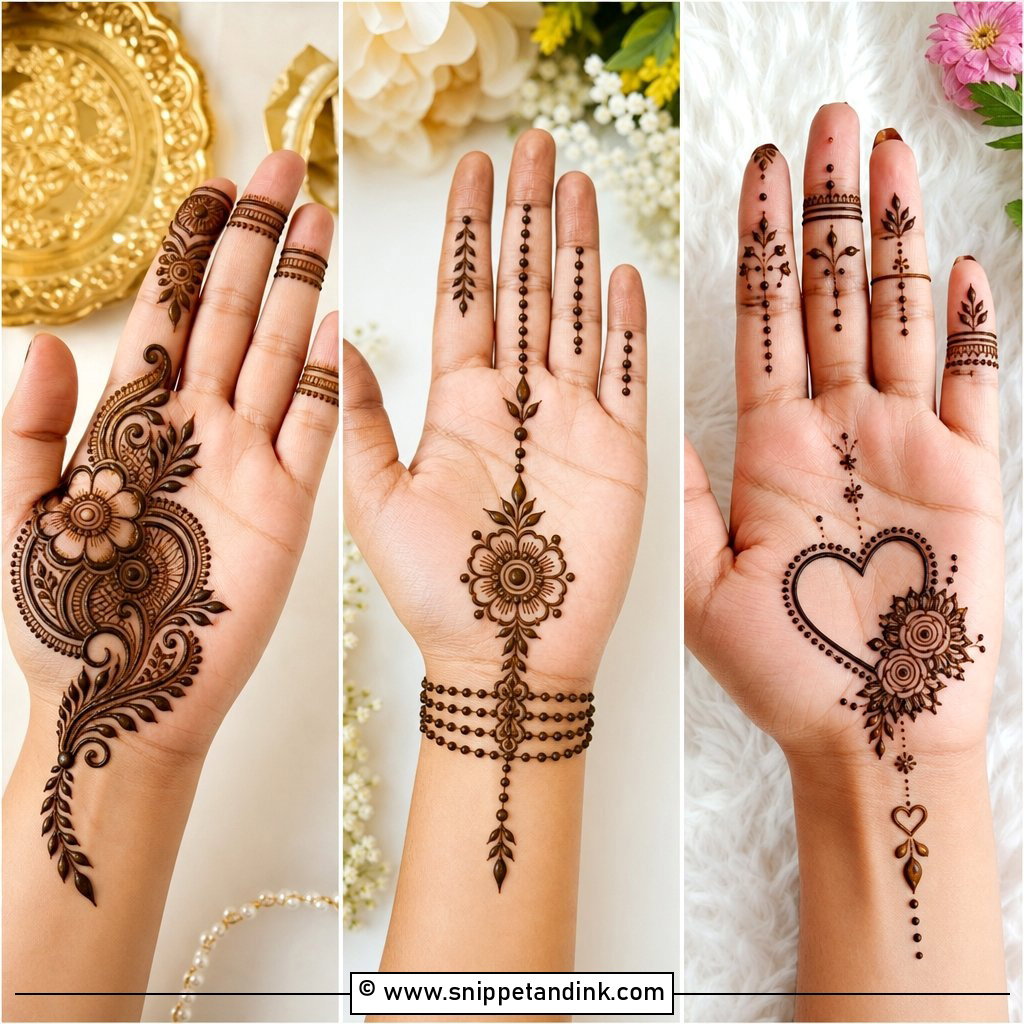
Bracelet designs look like hand jewellery: a decorative wrist band linked to the fingers by chains, dots or vines, with a mandala, rose or paisley at the centre of the back hand. Most of the hand stays clean, which suits light bangles and a ring. Thin chain lines read modern; filled bands and paisley borders read traditional. Check where your bangles will sit so they don’t cover the band.
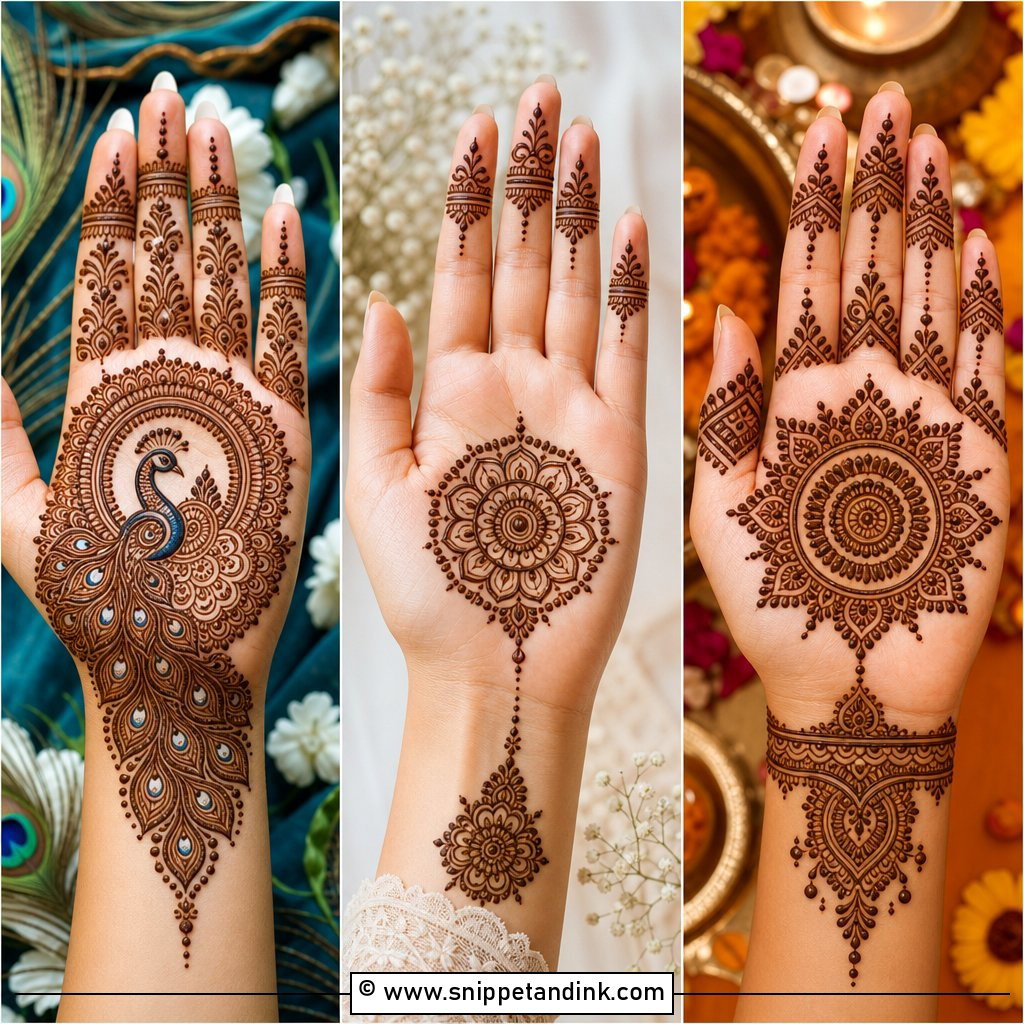
15. Ring Baat Pakki Mehndi Design
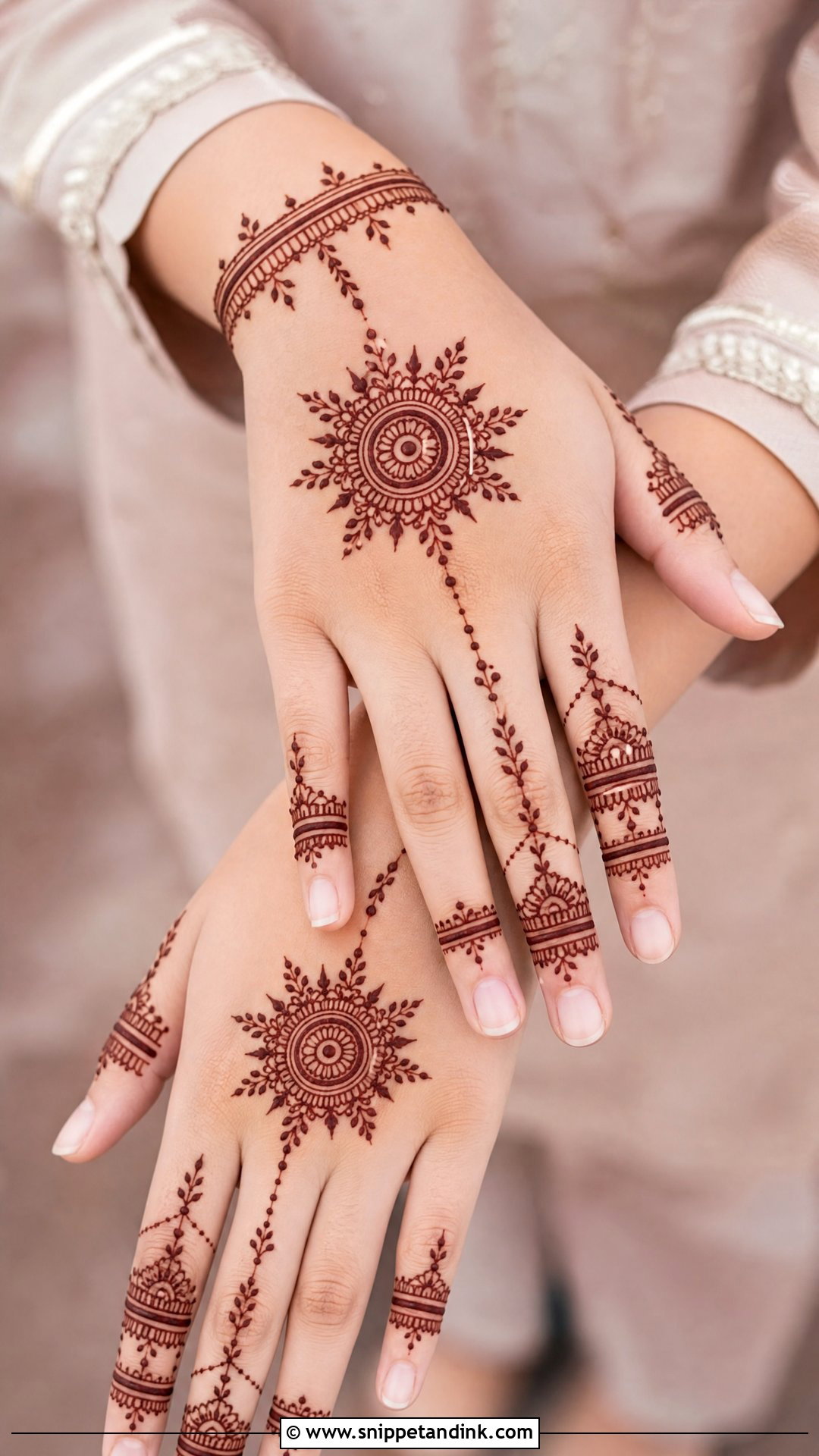
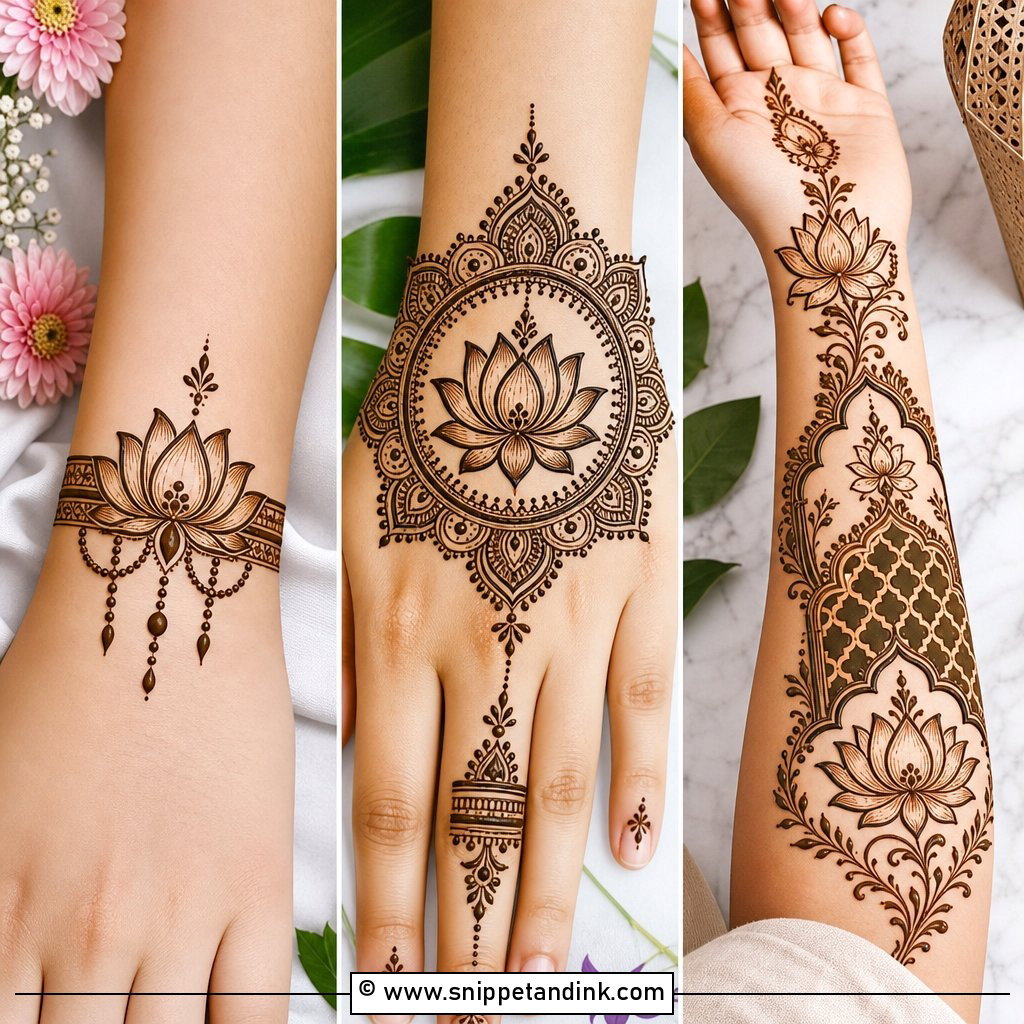
Since the ring is the centre of the ceremony, I often design around the ring finger itself. Decorated finger bases, chain lines to a bracelet band and a small floral or mandala on the back hand. The ring finger gets slightly more detail, but its base stays clear so the ring sits on clean skin. The palm is left bare, which makes this comfortable and quick.
16. Minimal Baat Pakki Mehndi Design
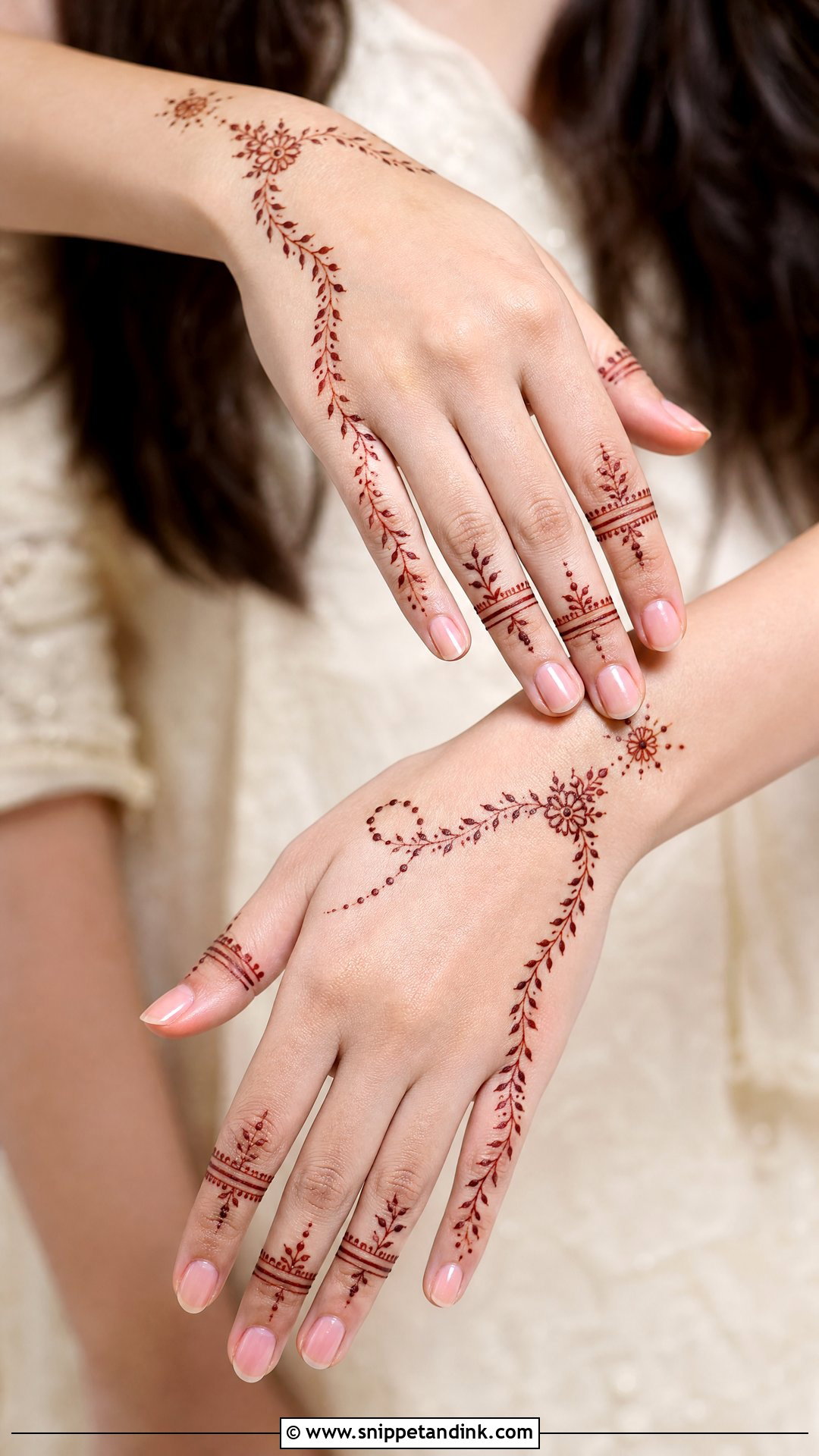
A minimal design can still look complete if every element is placed with intent: a slim vine down one side of the back hand, fine finger details and a small wrist motif. What I avoid is a half-finished look, so I always close it with a flower cluster, mini mandala or bracelet band. It dries quickly, and it suits heavily embellished outfits where busy hands would compete.
17. Modern Baat Pakki Mehndi Design
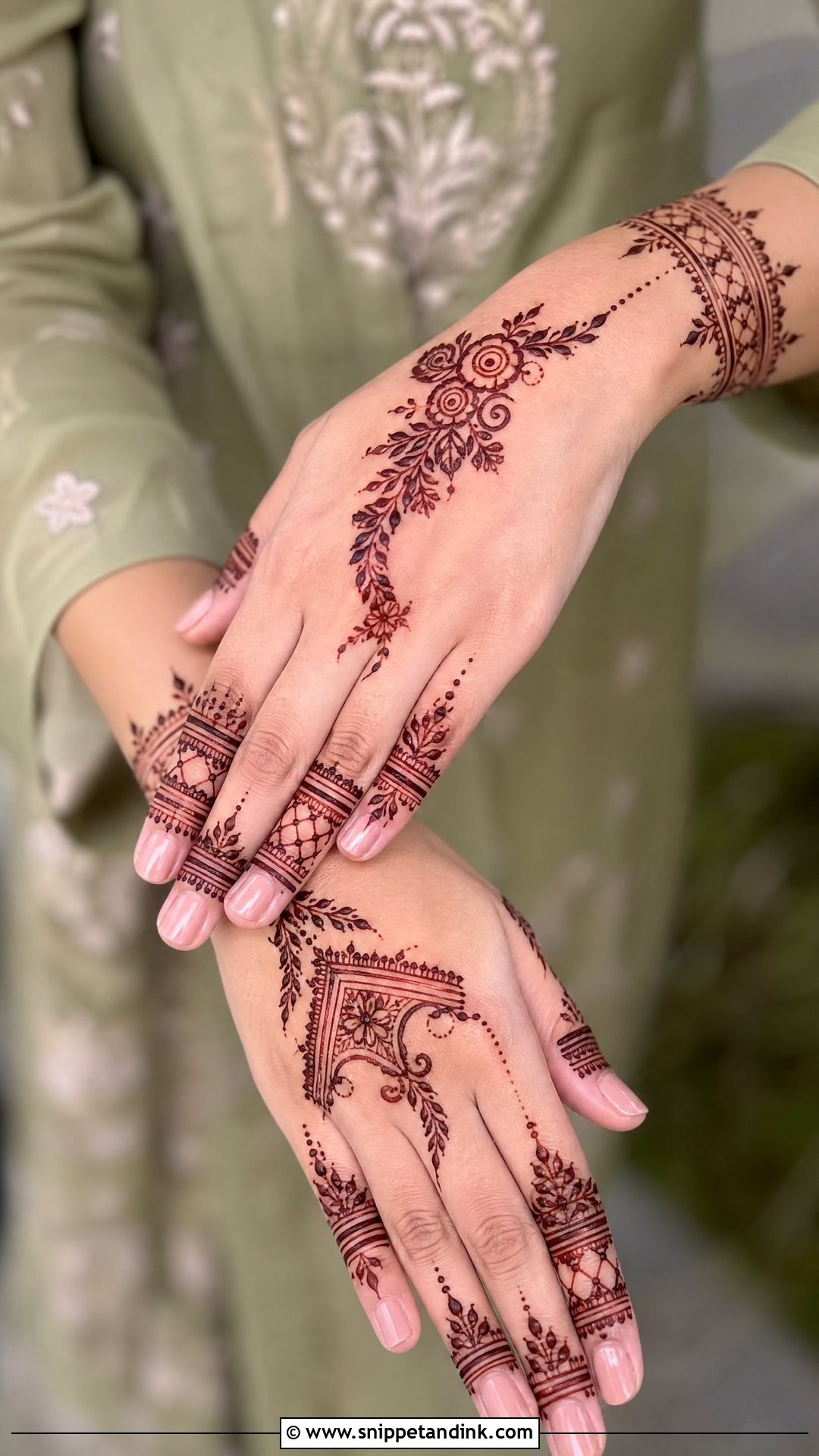
Modern layouts use open skin as part of the design. A mix of geometric lines, floral curves, finger bands and bracelet details, often asymmetrical on the back hand, or a palm motif with a sleek wrist extension. Straight lines are harder in henna than curves, so look at your artist’s geometric work before choosing this. It suits contemporary lehengas, gowns, shararas and fusion outfits.
18. Bridal Baat Pakki Mehndi Design
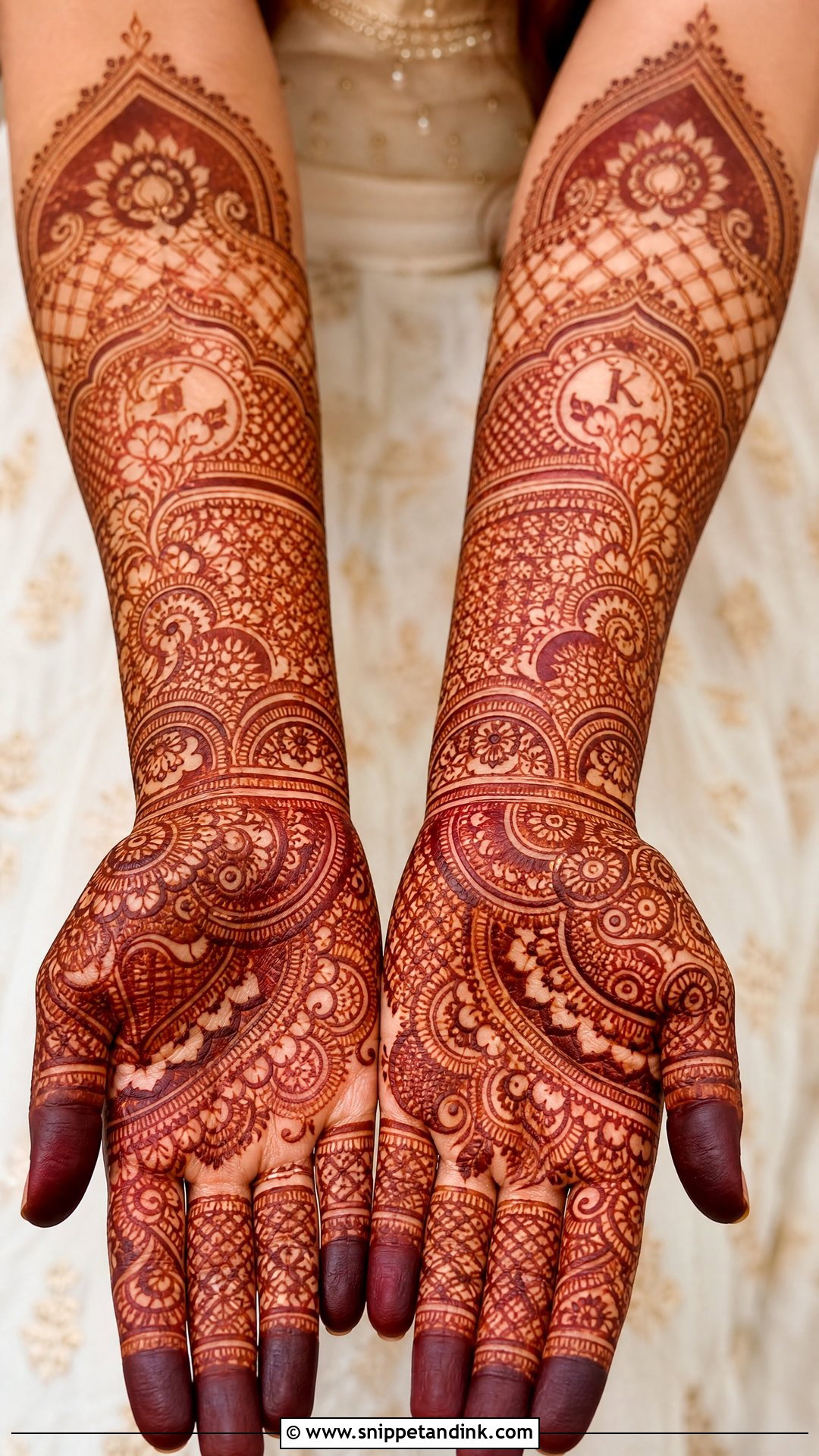
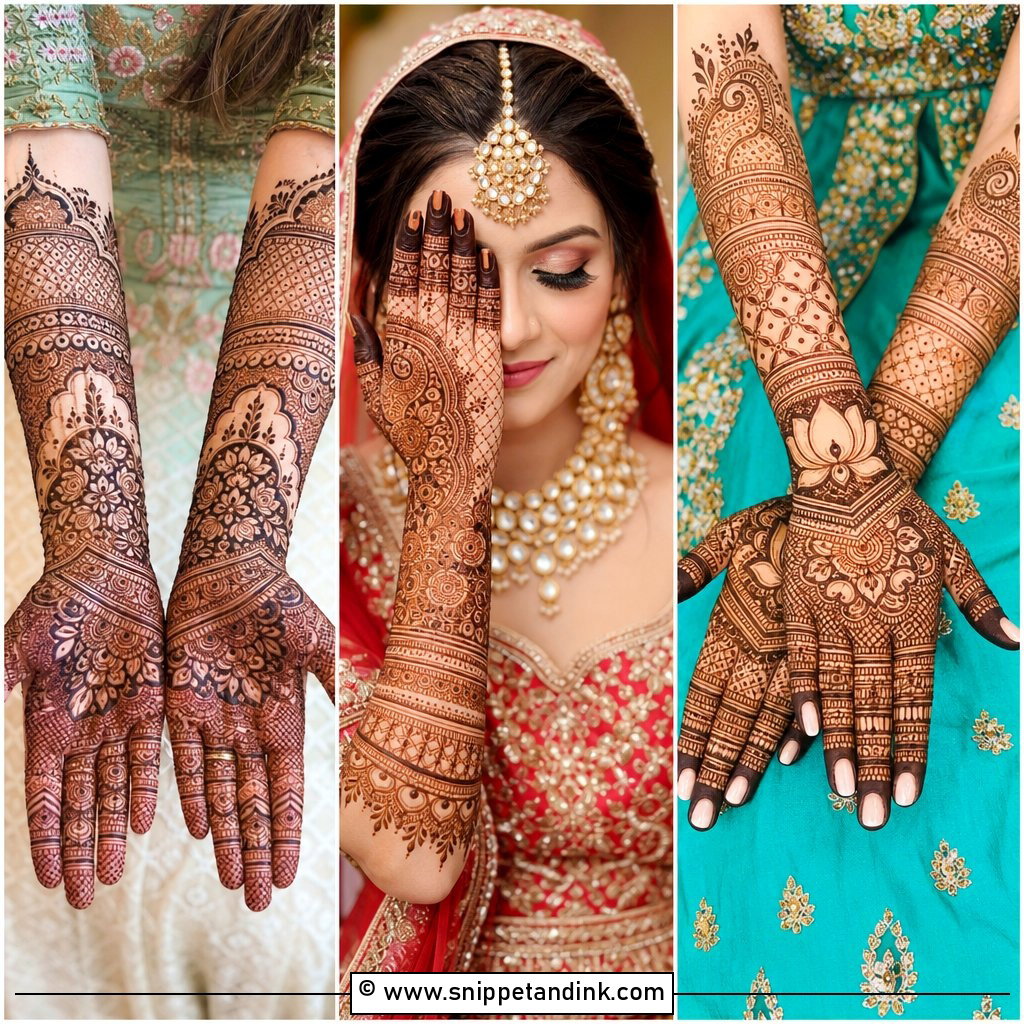
Some brides-to-be want a heavier look even now, especially at a formal baat pakki with a big guest list. Full palm, fingers, back hand and wrist with paisleys, jaali, mandalas and fine fill is fine, but I’d still stop short of arm-length coverage. Think about the gap to the wedding, though: a dark full-hand stain can take a couple of weeks to fade, and wedding henna applied over an old stain looks patchy.
19. Engagement Baat Pakki Mehndi Design
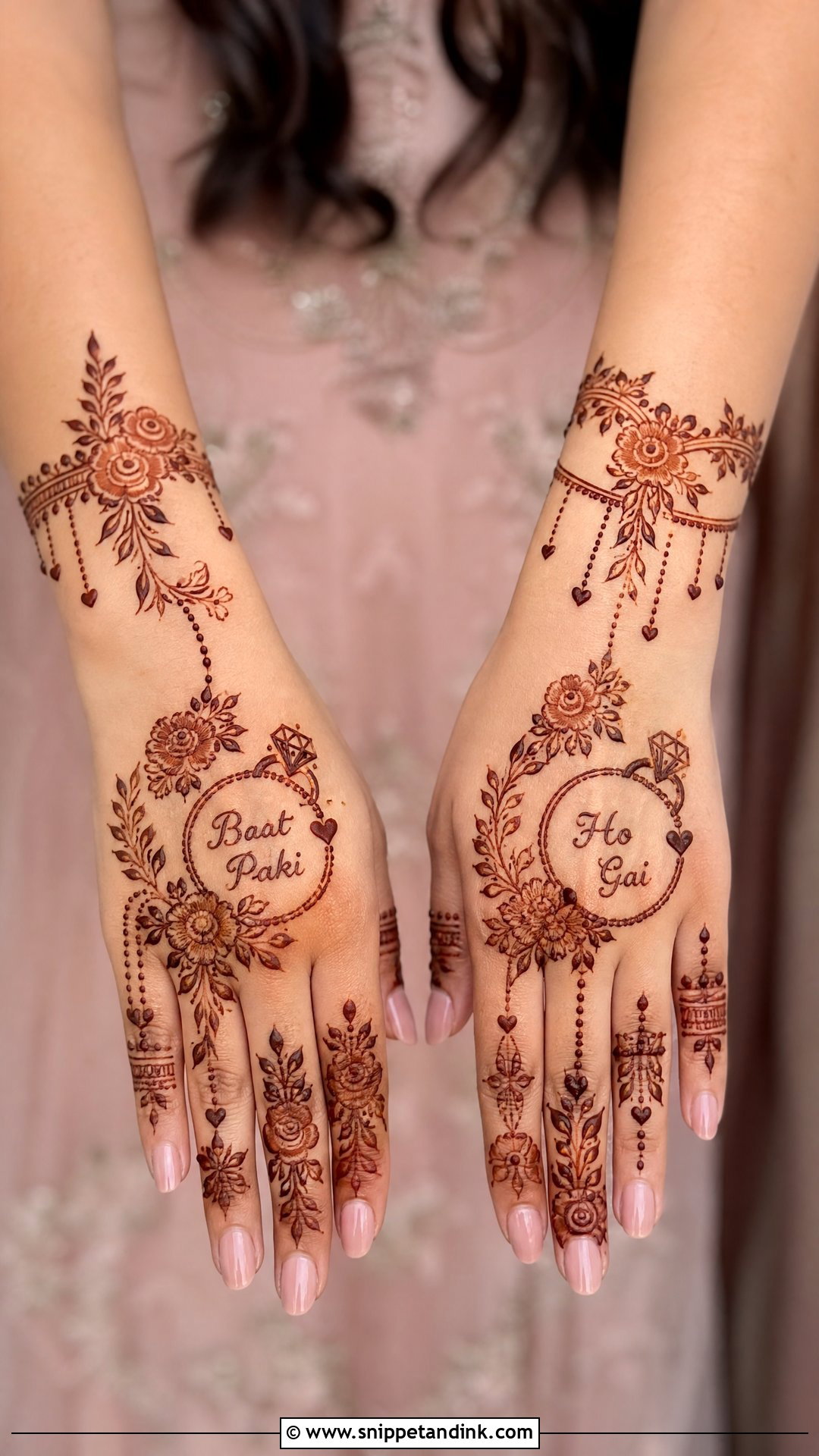
When the baat pakki and the ring ceremony happen together, I lean slightly romantic: ring motifs, small hearts, florals, bracelet chains and graceful finger patterns. The back hand is the best canvas since it’s in every ring photo, and I keep the ring finger tidy so the ring stays the focus. If you’d rather decorate the front, a palm mandala with small love-inspired details works.
20. Couple Name Baat Pakki Mehndi Design
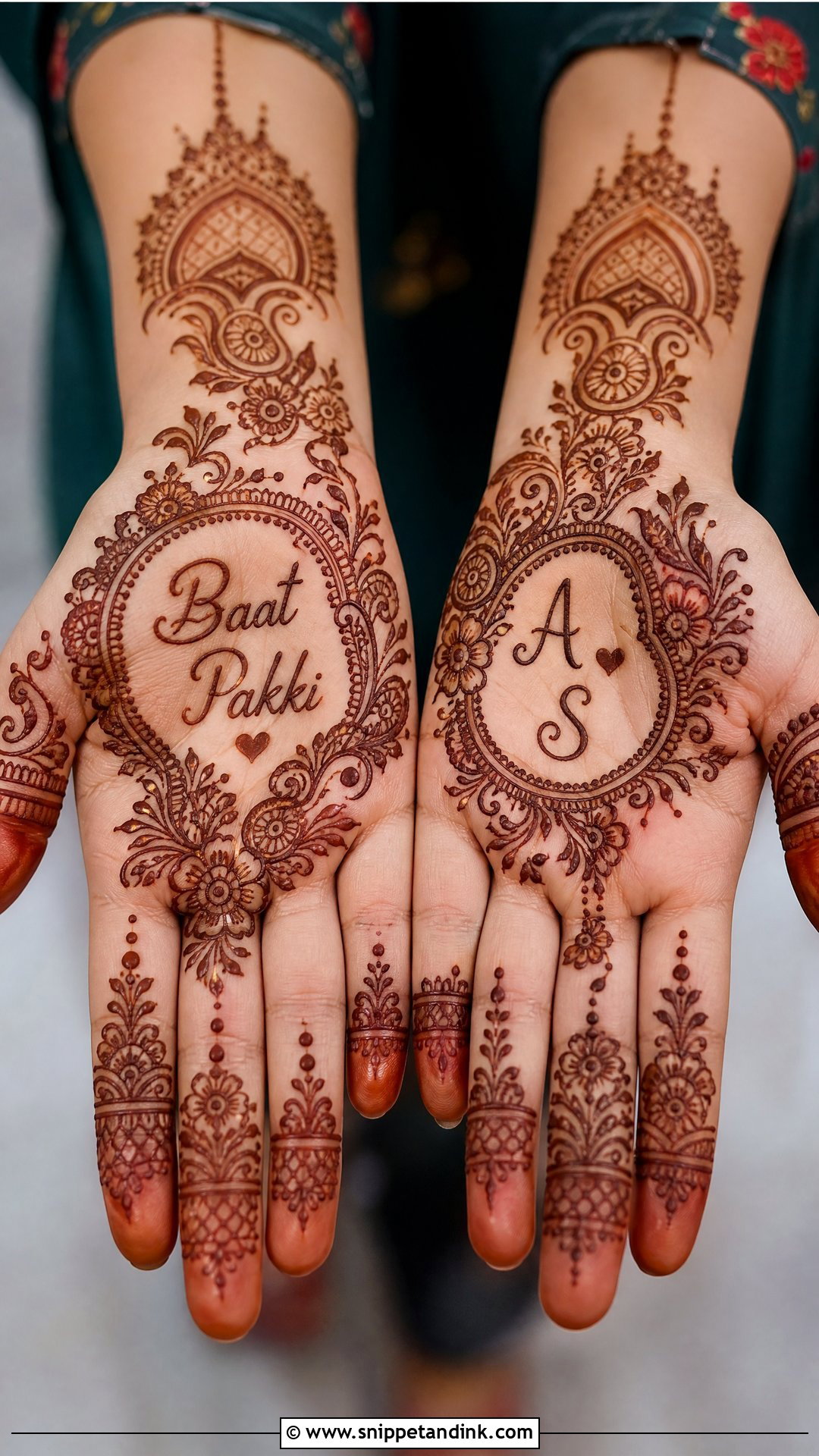
Hiding the couple’s names or initials inside a paisley, beside a mandala or along a wrist band is a sweet detail, and the family always enjoys hunting for them. Keep the lettering small but not tiny, because very small letters fill in once the stain darkens. Surround the name with flowers and leaves so it blends into the art rather than sitting on top. Give your artist the spelling written down.
21. Heart Baat Pakki Mehndi Design
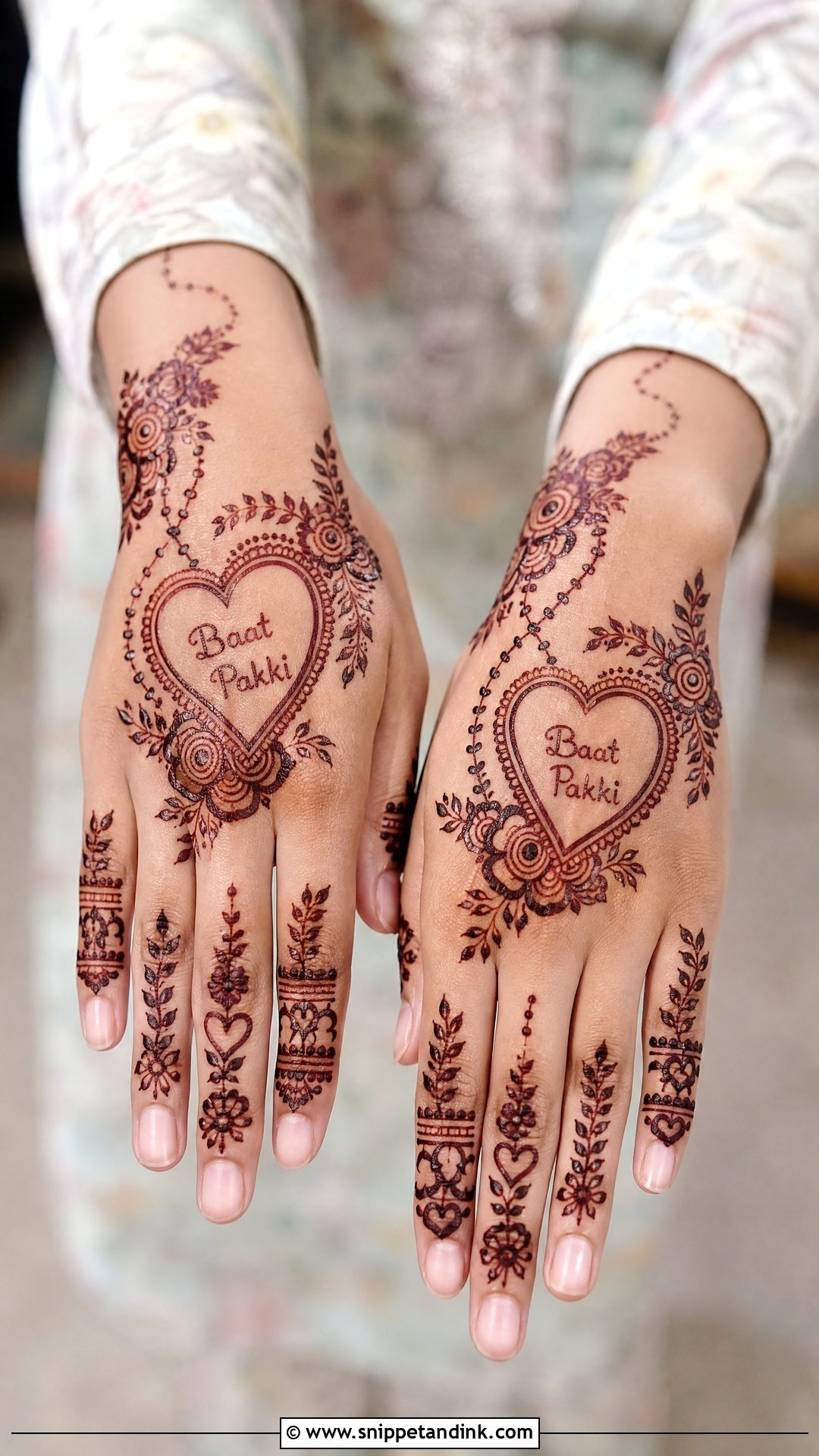
Hearts can look childish if they’re large and plain, so I work them into the pattern instead: a small heart inside a mandala, twin hearts near the wrist, heart-shaped vines around the ring finger. Flowers, dots and leaves around them keep it graceful. Keep heart details delicate with a traditional outfit.
22. Finger Baat Pakki Mehndi Design
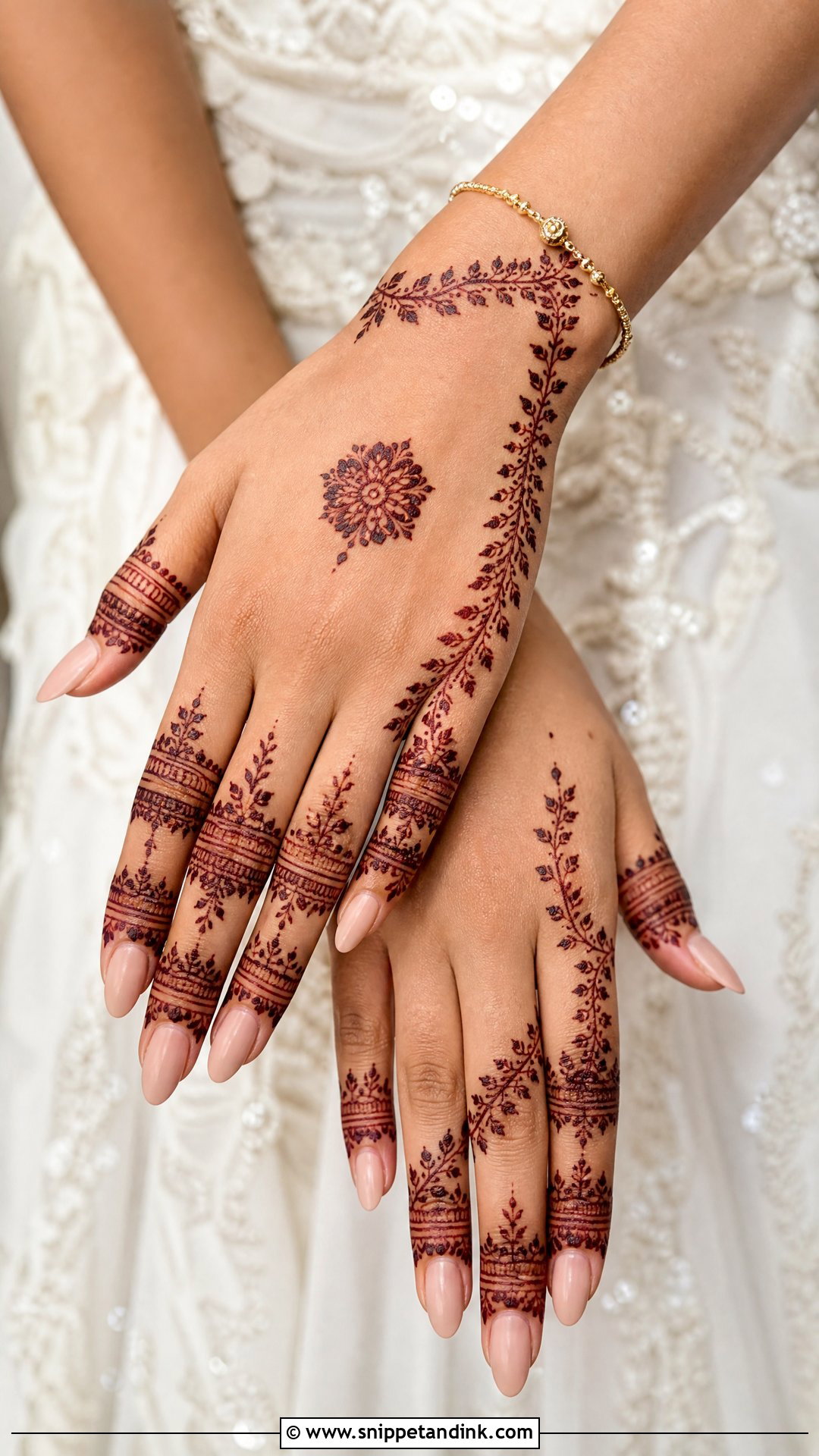
Finger-focused mehndi decorates every finger with bands, leaves, dots and tiny florals while the back hand stays mostly open, perhaps with a small centre motif. It pulls attention to the ring and the nails. A slim bracelet or small wrist detail stops it looking unfinished. It’s quick to apply and dry, and suits a girl going back to work the next week.
23. Palm Baat Pakki Mehndi Design
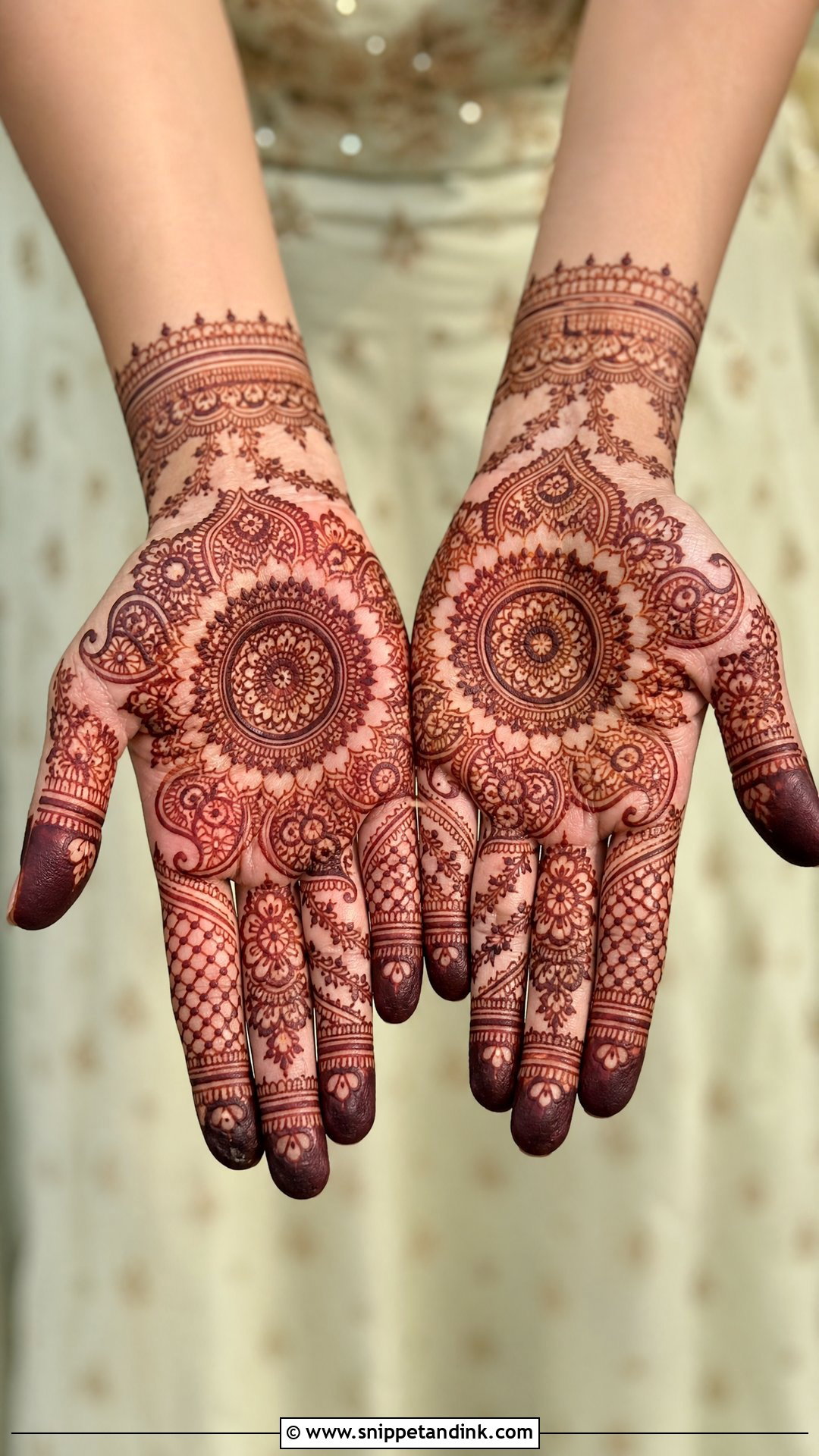
The palm is where henna stains darkest, so even a simple palm design shows up strongly. A central mandala, side paisleys, floral corners and decorated fingers, finished at the wrist with a border or small cuff. Bold centre with simple fill for a lighter look; fine jaali and tiny flowers for a fuller one. Let it dry completely before you start handing out sweets.
24. Wrist To Forearm Baat Pakki Mehndi Design
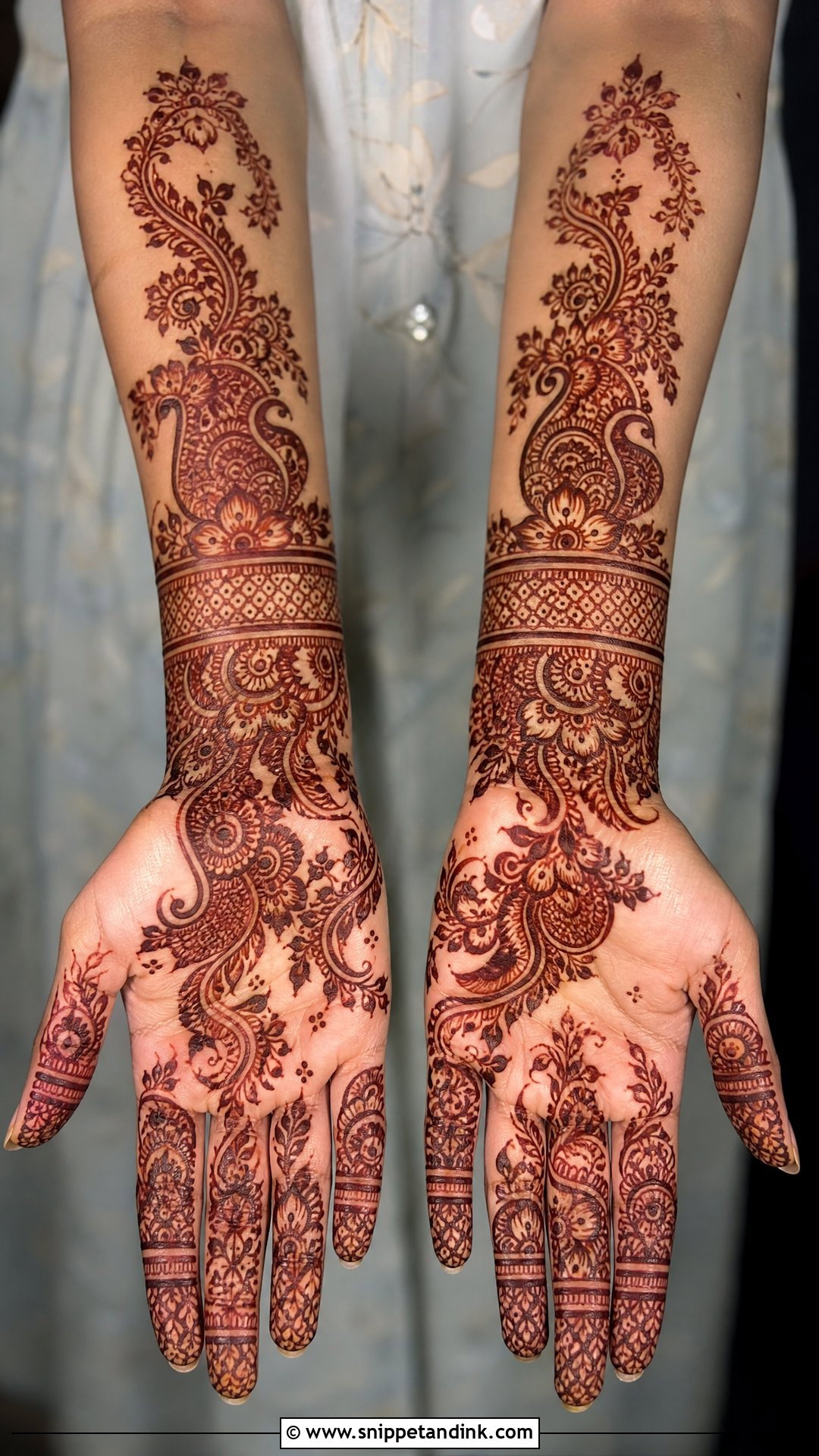
Running the design past the wrist adds length without going bridal. Decorated fingers flow across the back hand into a wrist cuff, then a little way up the forearm with flowers, vines and paisleys. It suits short, three-quarter or sheer sleeves. I keep the forearm section airy; once it fills in, it starts to look like wedding mehndi.


25. Gulf Baat Pakki Mehndi Design
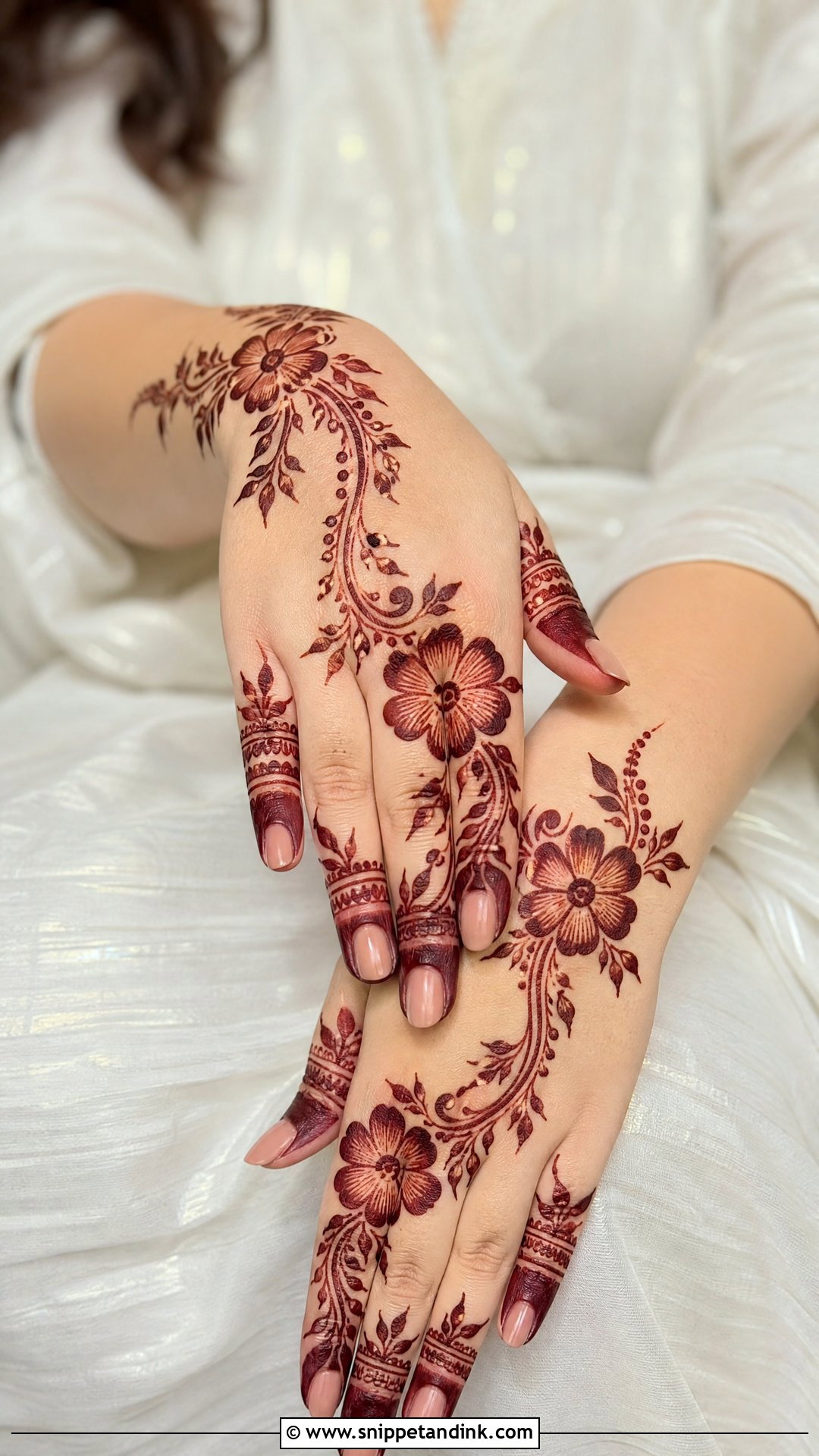
Gulf or Khaleeji-inspired mehndi uses bold florals, shaded leaves and wide open spaces, in a smooth diagonal from wrist to fingers. It’s statement henna, but quick to apply because there’s less fill. It looks best on the back hand with decorated fingertips. It sits well with abayas, kaftans, ghararas and embellished formal wear.
26. Moroccan Baat Pakki Mehndi Design
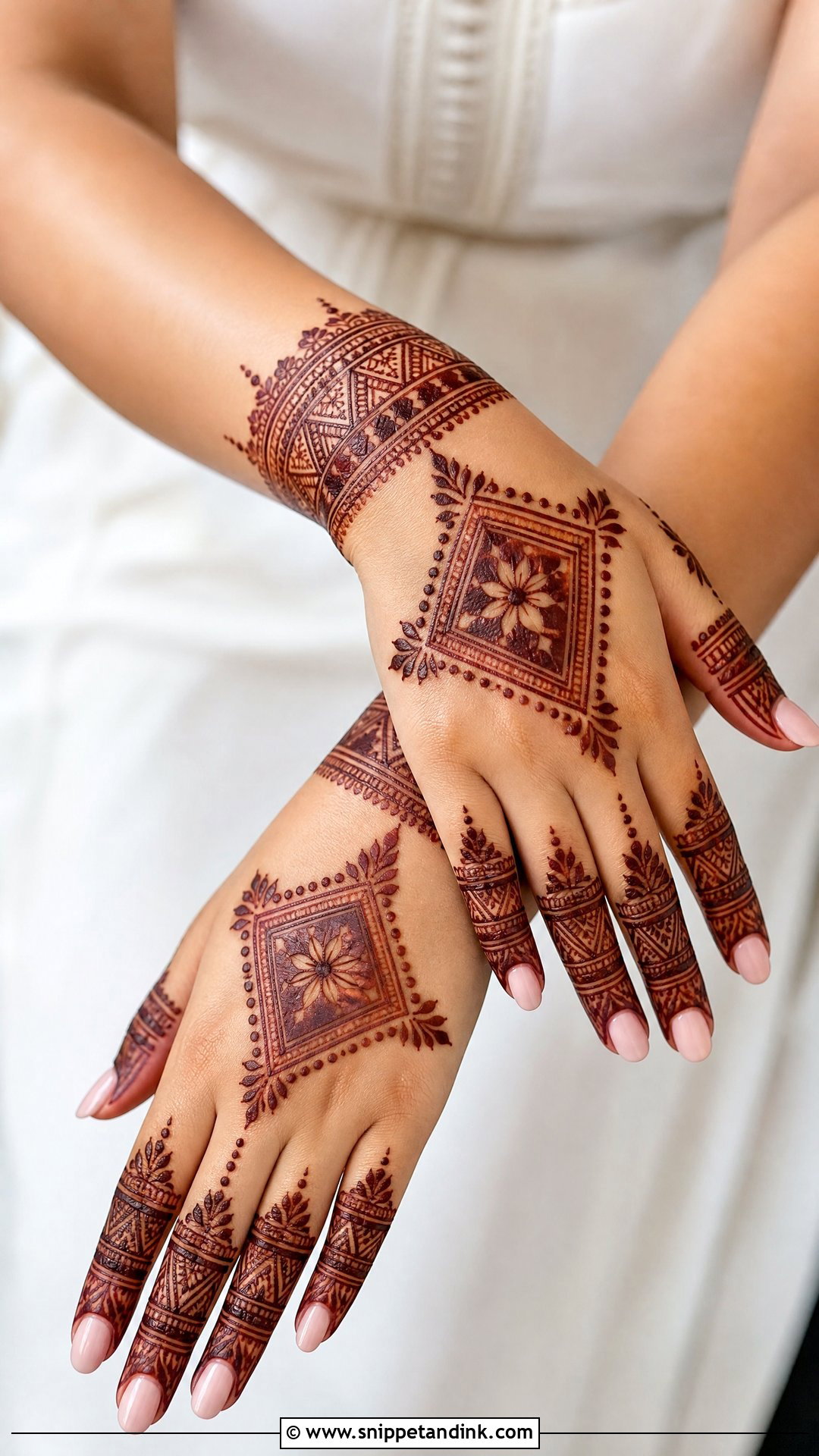
Moroccan-inspired designs swap vines for diamonds, triangles, lines and structured bands. A central geometric panel on the back hand, finger bands and a wrist cuff is a typical layout, softened with small leaves or dots for a family ceremony. The shapes stay clear even after the stain darkens, which makes them good in photos. Choose it if floral patterns feel too expected.
27. Pakistani Baat Pakki Mehndi Design
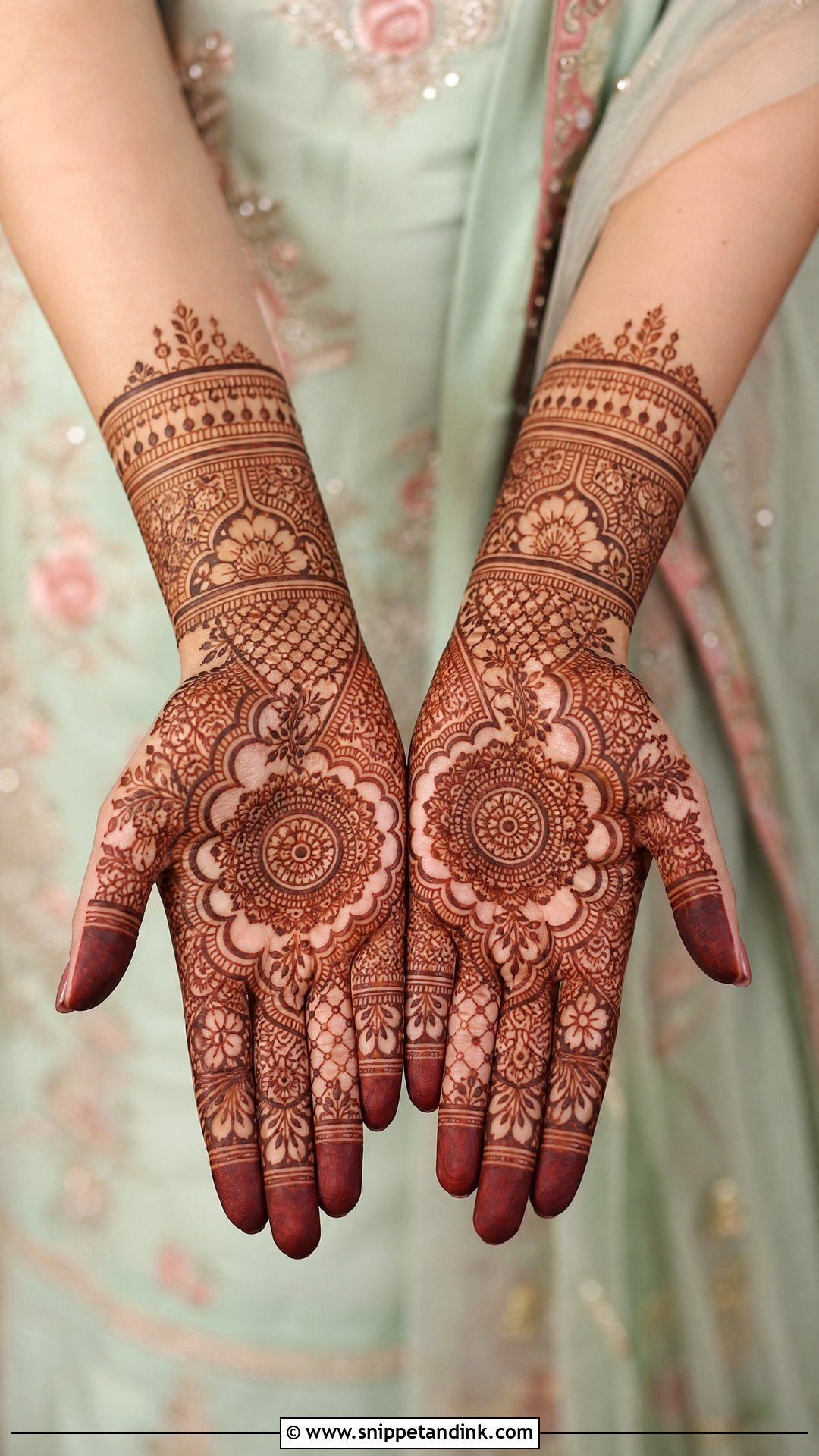
Pakistani designs balance rich detail with spacing: paisleys, florals, mandalas, mesh and finger detail, medium-full on the palm and more open on the back. A wrist cuff and fine fingertip coverage give that traditional engagement feel. It pairs with ghararas, shararas, long shirts and dupattas with gota or zari work. I take extra care to match both hands, because family photos usually show them side by side.
28. Rajasthani Baat Pakki Mehndi Design
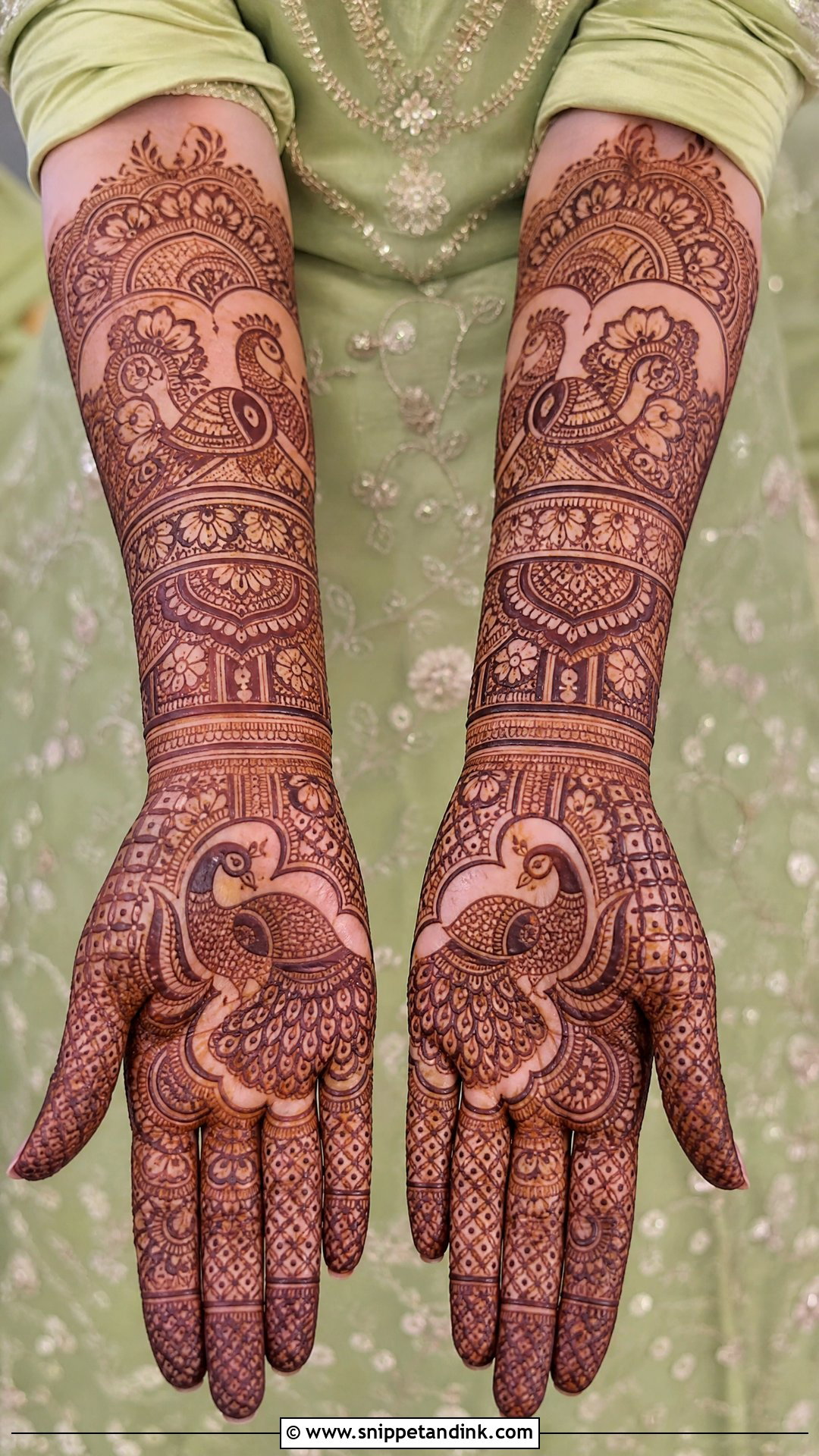
Rajasthani bridal mehndi is famously dense, so for baat pakki I take the same vocabulary, paisleys, peacocks, small flowers, checks and fine lines, and thin it out. A wrist-to-hand layout with decorated fingers and a detailed palm centre works well. It suits bright colours, mirror work, bandhani, gota and heavy jewellery. Dense fine lines take longer to dry and smudge easily, so allow for sitting time.
29. Eid Baat Pakki Mehndi Design
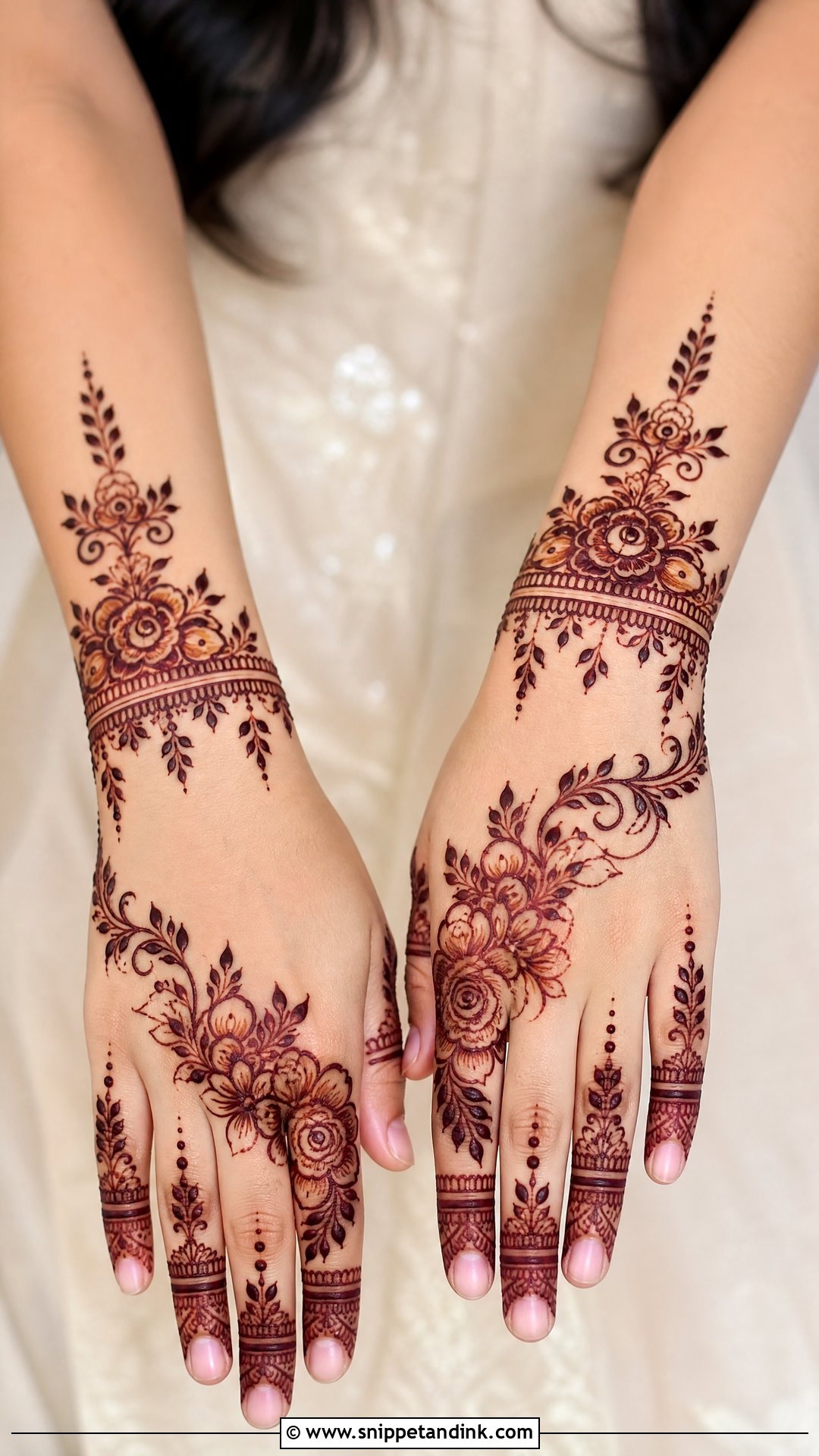
When the ceremony falls around Eid, the henna does double duty for both celebrations. Arabic florals, leafy vines, finger bands and a wrist border keep it bright without being so heavy that visiting relatives is awkward. Back-hand layouts show well with bangles and rings. If you’re getting henna for Eid anyway, a single appointment can cover both, as long as the stain will be at its darkest on the right day.
30. Short Nail Baat Pakki Mehndi Design
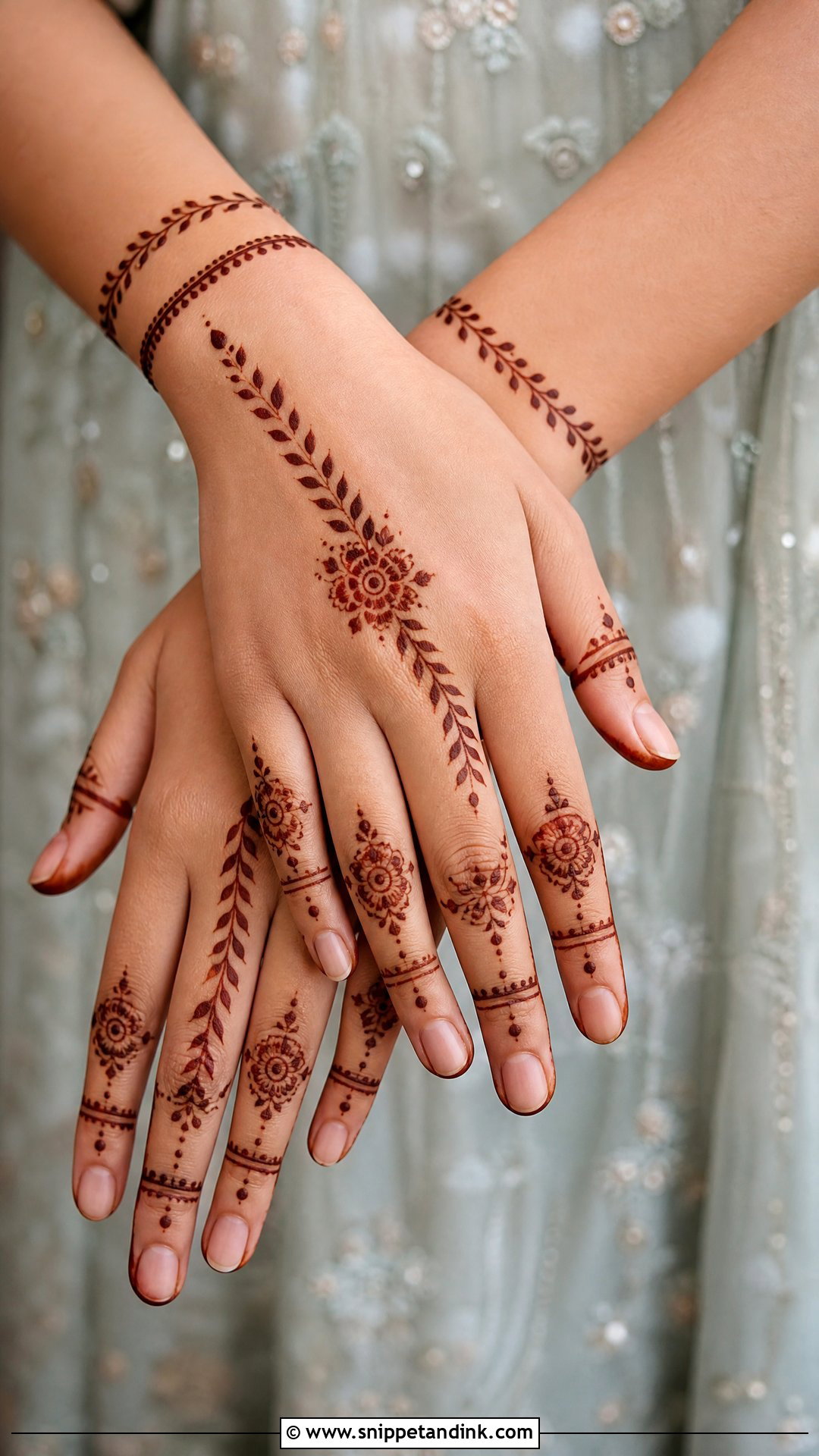
Short nails look best with slim finger bands and vertical leaf trails, which lengthen the fingers. Heavily filled tips make short fingers look shorter, so I either outline the tips or fill them lightly. A clean back-hand motif and a wrist bracelet complete it. It suits natural nails and simple manicures, and the henna on the nail plate itself grows out with the nail, so keep that in mind if you plan gel polish later.
When the Whole Family Wants Henna the Same Afternoon
At a baat pakki, it’s rarely just the girl getting henna. Sisters, cousins, aunts and the groom’s side often want a little too, and the afternoon can run away from you.
Setting it up so nobody arrives with wet hands
- Do the bride-to-be first and early, so her paste has the longest to stay on.
- Give guests simple back-hand or finger designs; a short one can be done in a few minutes, a full hand takes far longer.
- Set up in good daylight or a bright lamp, on a stable table with cushions for resting arms.
- Plan at least half an hour of drying before anyone hugs, eats with their hands or picks up a tray.
If a relative is applying it rather than a professional, buy fresh natural cones from a reputable maker, check the ingredients for chemical dyes, and have them practise the motif on paper first. Cones keep longest in the freezer and lose strength after a few days at room temperature.
Is Your Design Light Enough for the First Ceremony?
Baat pakki henna is about restraint. Back-hand florals, Arabic trails, mandalas, bracelet patterns, ring-focused designs and simple palms all suit the day, provided they leave the wedding mehndi something to build on. Match the design to your outfit, jewellery, hand shape and how formal the ceremony is. Open spacing reads modern; paisleys, peacocks and full palms read traditional. Either way, it’s a design you’ll see in the family album for years.
You'll Like These Ideas:






Leave a Reply