
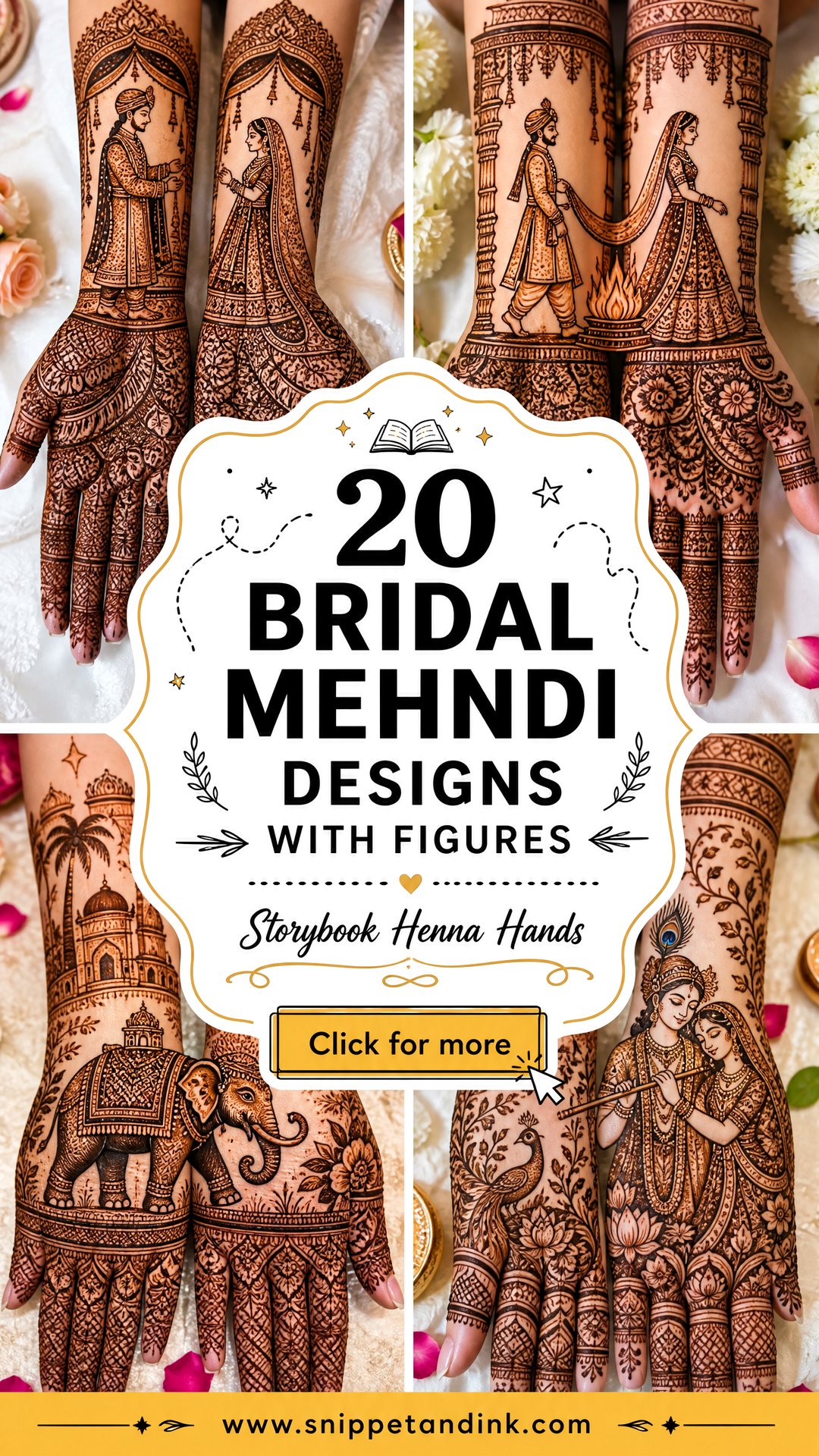
Figure work is the part of bridal mehndi I get asked about most and the part that goes wrong most often. A pattern of flowers forgives a wobble; a face doesn’t. Brides want their hands to tell the wedding story, with dulha-dulhan portraits, jaimala scenes, doli art, elephants, peacocks, temple details or something only the couple would recognise. Story designs suit Indian, Pakistani, Rajasthani, Indo-Arabic and modern layouts. Here are twenty of them, with what each scene needs in space, sitting time and drawing skill so it still reads once the stain darkens.
Briefing Your Artist on a Story Design
Figure work can’t be improvised in the chair the way florals can. Every scene takes space, and a hand only has so much. The brides whose story designs turn out best are the ones who sent me a short plan a week or two before the session.
- List the scenes you want in order of importance. I’ll tell you honestly how many fit at your chosen coverage.
- Decide which hand carries which figure. The bride and groom usually split across the palms so they meet when your hands come together.
- Send a photo of your outfit and the groom’s, so I can echo the dupatta, sehra or turban in the figures.
- Write down any names, dates or words exactly as they should appear, including spelling and script.
- Mention any figures your family would prefer to avoid, such as faces or deities, before anything is sketched.
Ask to see figures the artist drew in real henna, ideally photographed a day after removal. Fresh paste always looks crisp; the stained result shows whether her faces hold up.
1. Full Hand Bridal Mehndi With Bride And Groom Figures
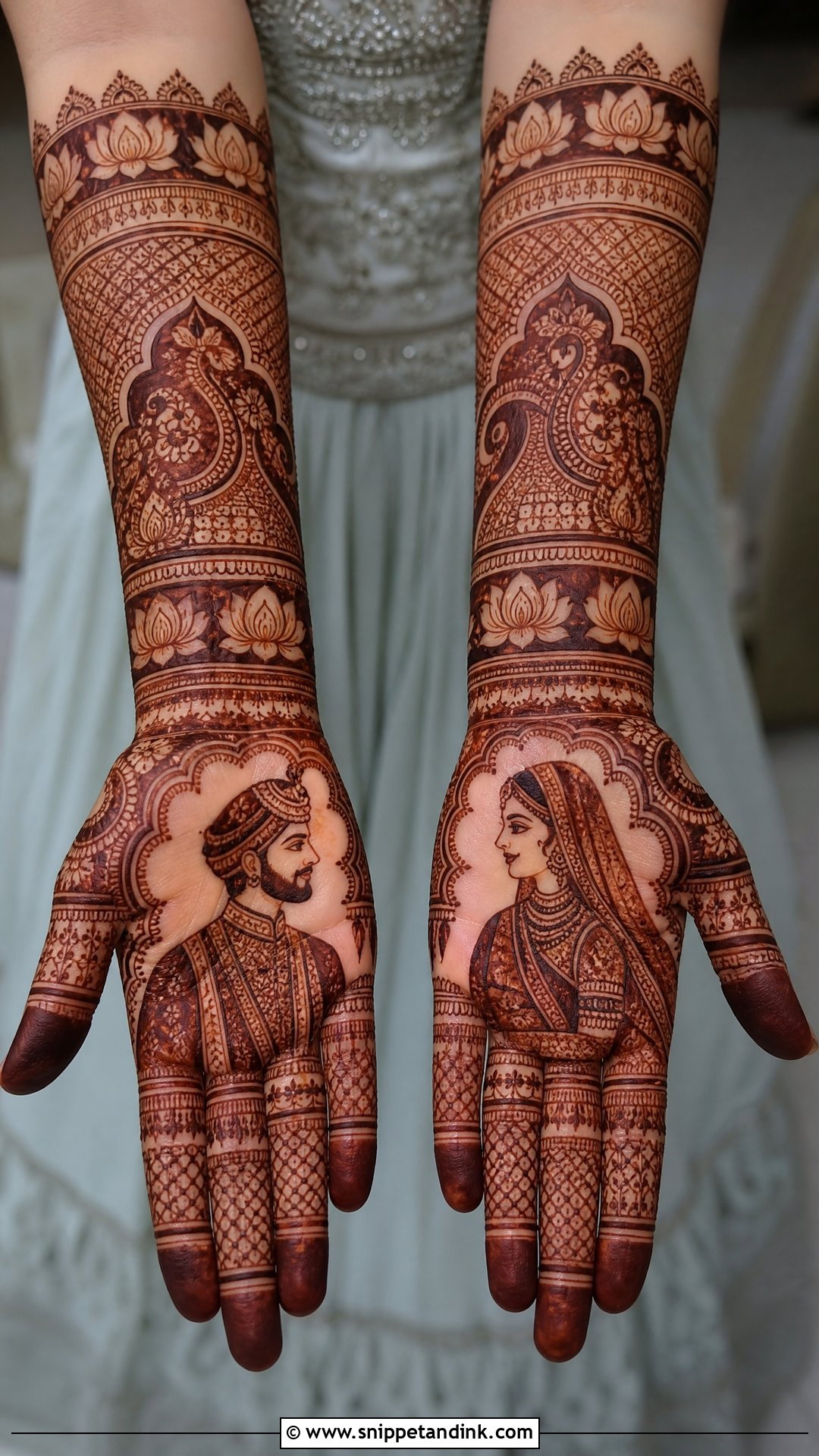
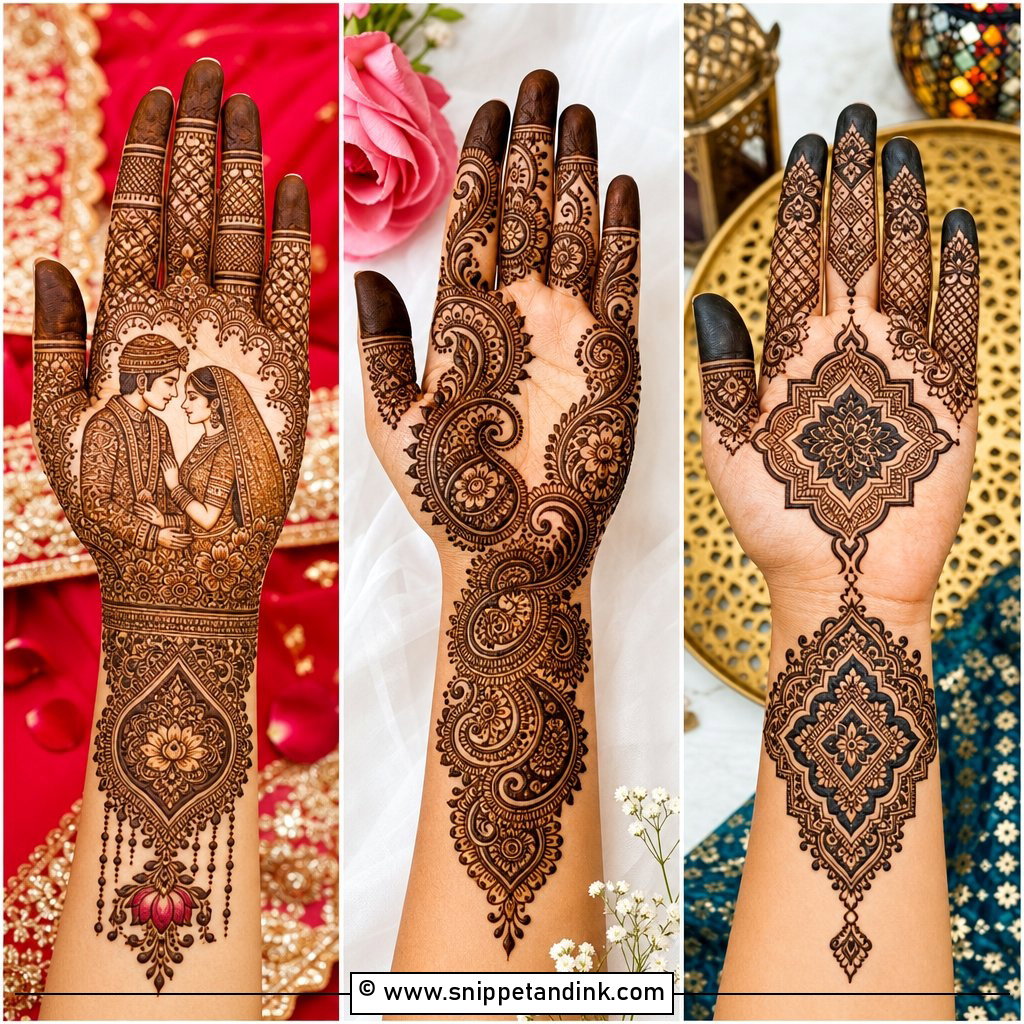
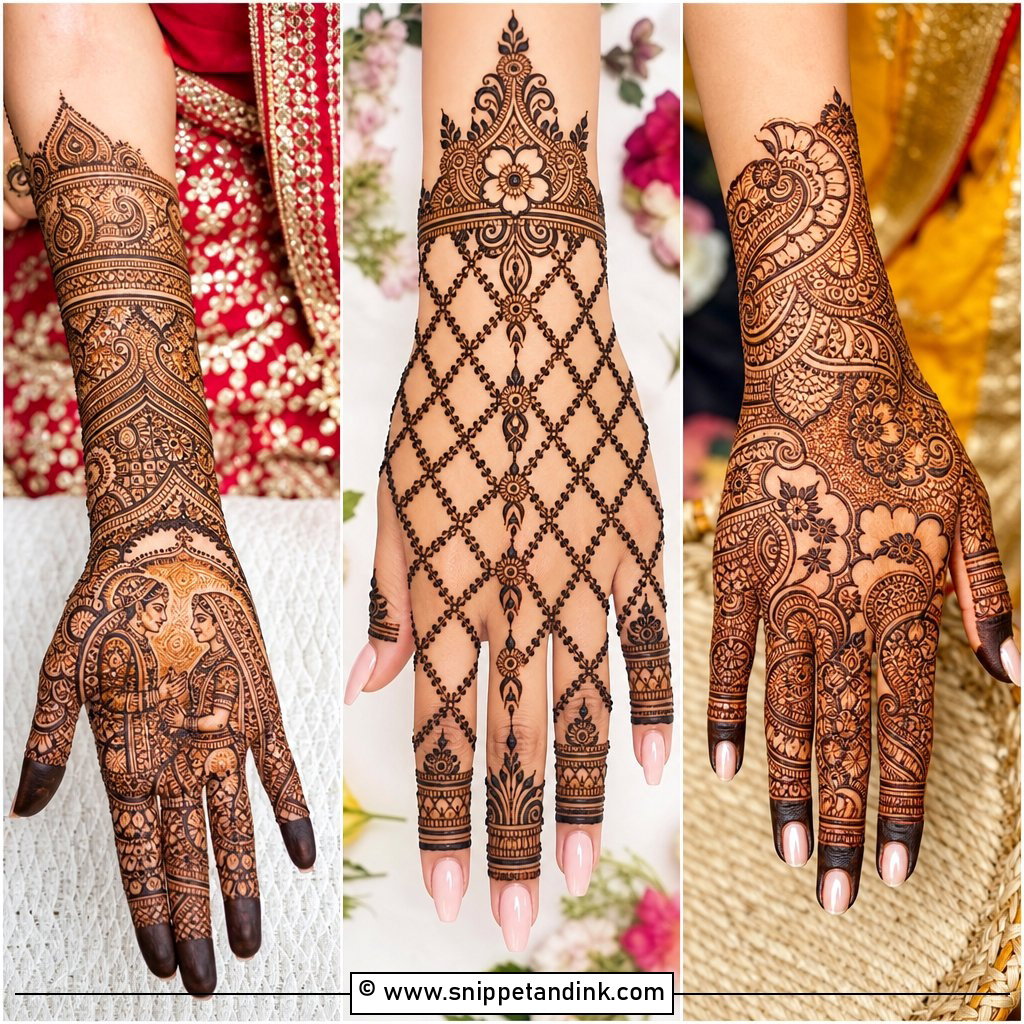
The classic layout puts the bride on one palm and the groom on the other, so the couple only meets when you hold your hands side by side. Paisleys, lotus, fine dots, jaali and bands from wrist to forearm fill everything around them. The figures can be drawn Rajasthani, Mughal or in a softer modern portrait style. I draw the faces a touch larger than looks necessary and keep the features simple, because henna lines spread as they dry and fine eyes and lips are the first details to blur.
2. Rajasthani Bridal Mehndi With Dulha Dulhan Figures
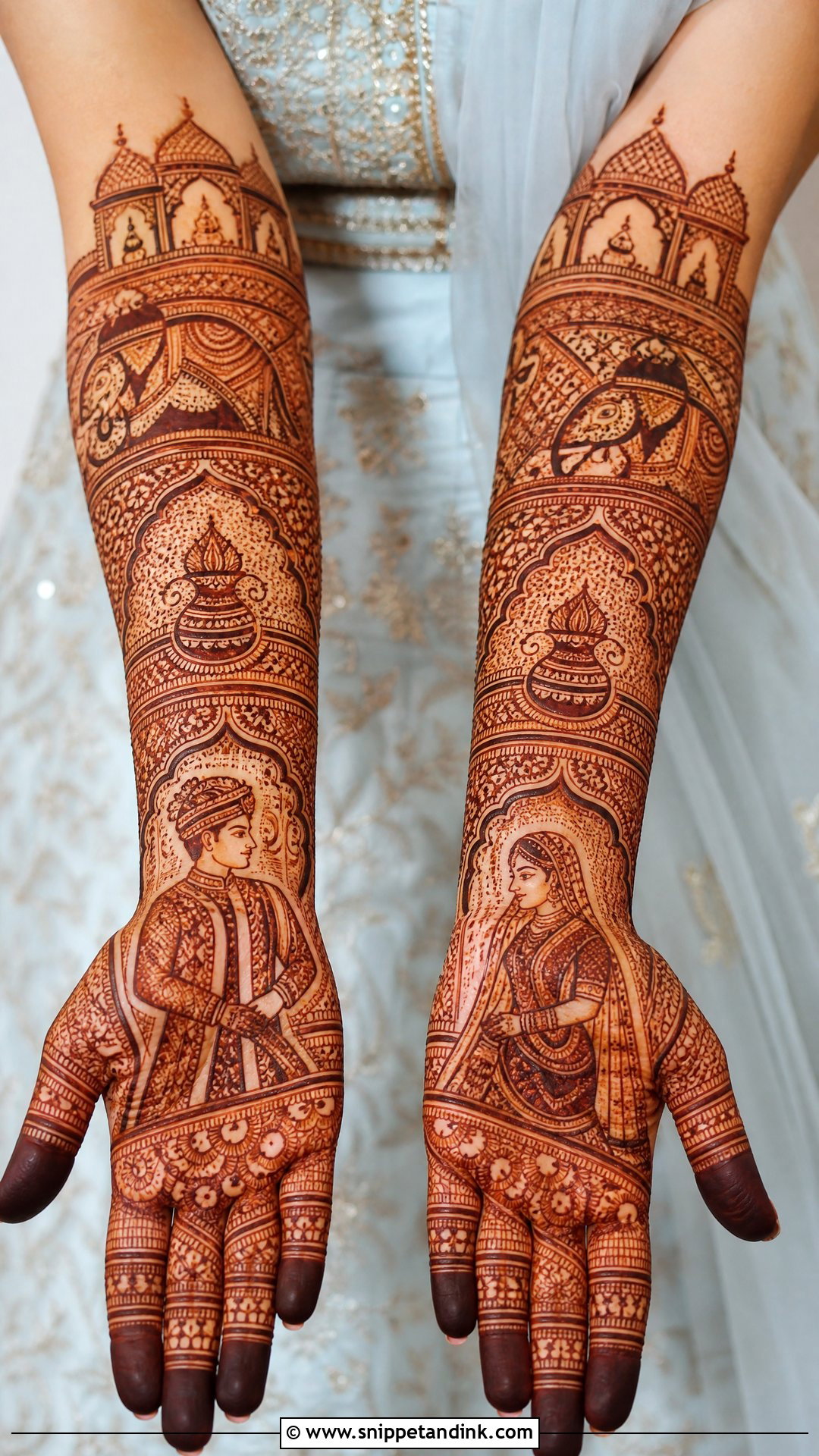
Rajasthani bridal mehndi with dulha dulhan figures reads like a miniature painting, running from fingertips to elbow with very little bare skin. The couple usually sits on the palms, with elephants, palanquins, kalash, palace arches and wedding bands up the forearms. With so much detail competing, the figures need a bold outline while the surrounding filler stays fine. Without that contrast in line weight, the bride and groom sink into the background once everything stains the same maroon.
3. Indian Bridal Mehndi With Wedding Scene Figures
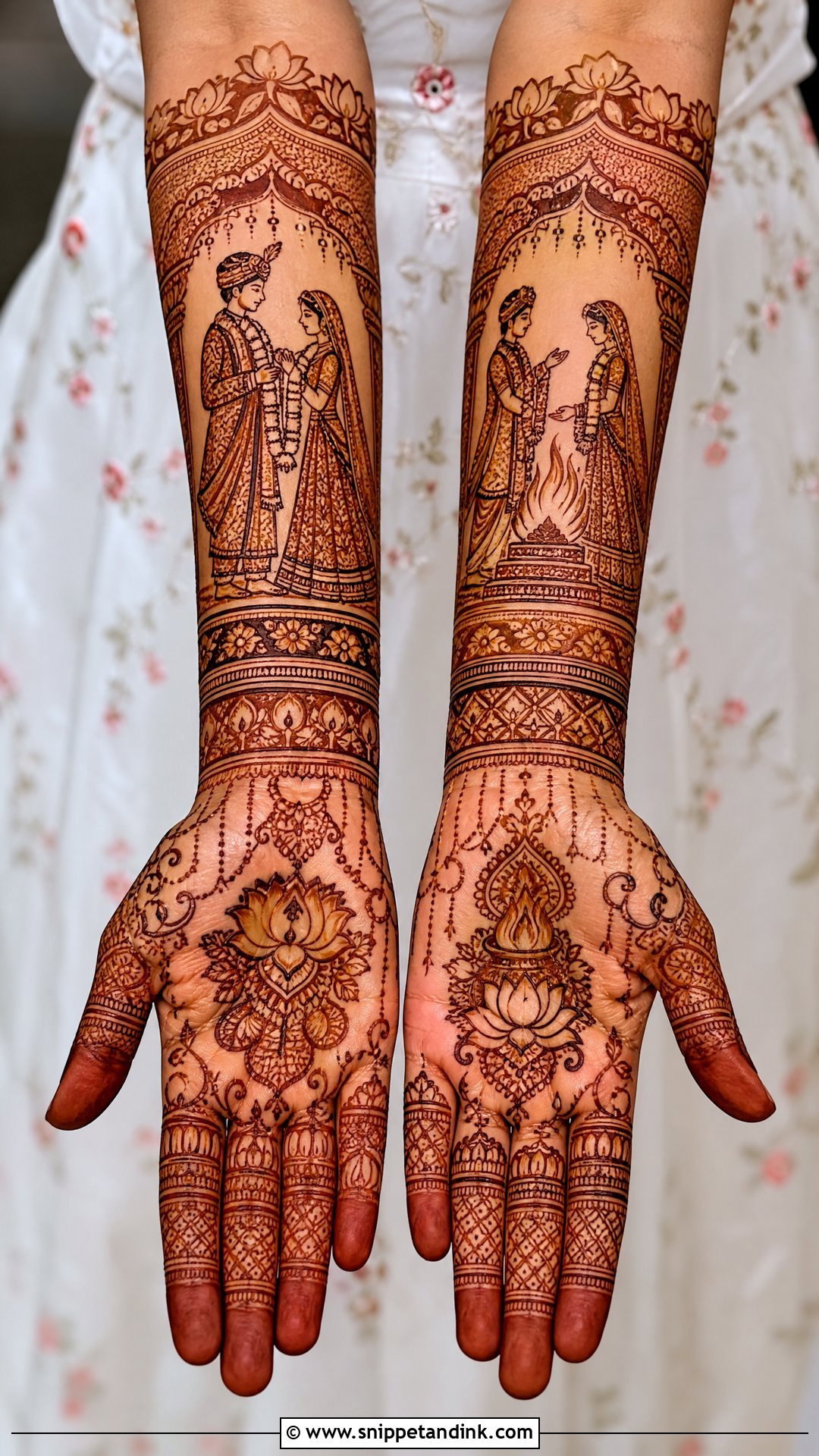
A ritual-scene design puts a whole ceremony on your hands: the jaimala on one palm, sindoor, the phere or the seated couple on the other, with mandaps, bells, lotus borders, peacocks and the sacred fire up the arms. It needs full hands and forearms, because each figure needs room to be drawn clearly. Before the appointment, tell your artist which rituals matter most to your family. I’d rather draw two scenes well than squeeze in four that nobody can make out.
4. Portrait Bridal Mehndi With Couple Figures
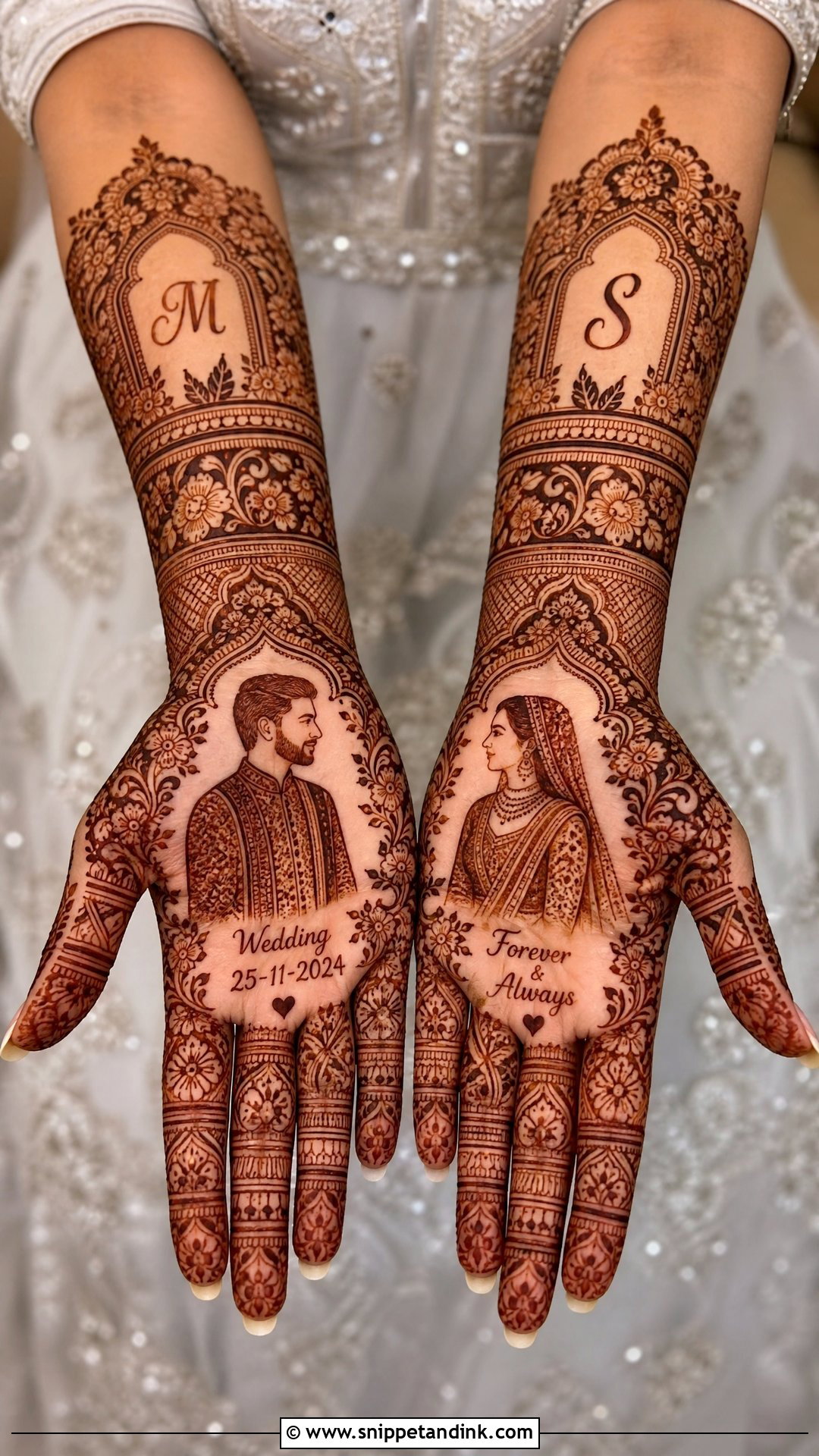
Portrait mehndi aims for a soft likeness of the actual couple, centred on the palms inside floral arches, heart borders or mandala circles, with vines, paisleys, initials, dates and bracelet patterns around them. Be realistic about likeness. Henna gives me one colour and a line that spreads, so I capture hairstyle, outfit and posture rather than exact features. A simplified face stains cleaner than an overworked one. Book an artist whose portfolio shows faces she has actually drawn in henna, not on paper.
5. Bridal Mehndi With Jaimala Figures
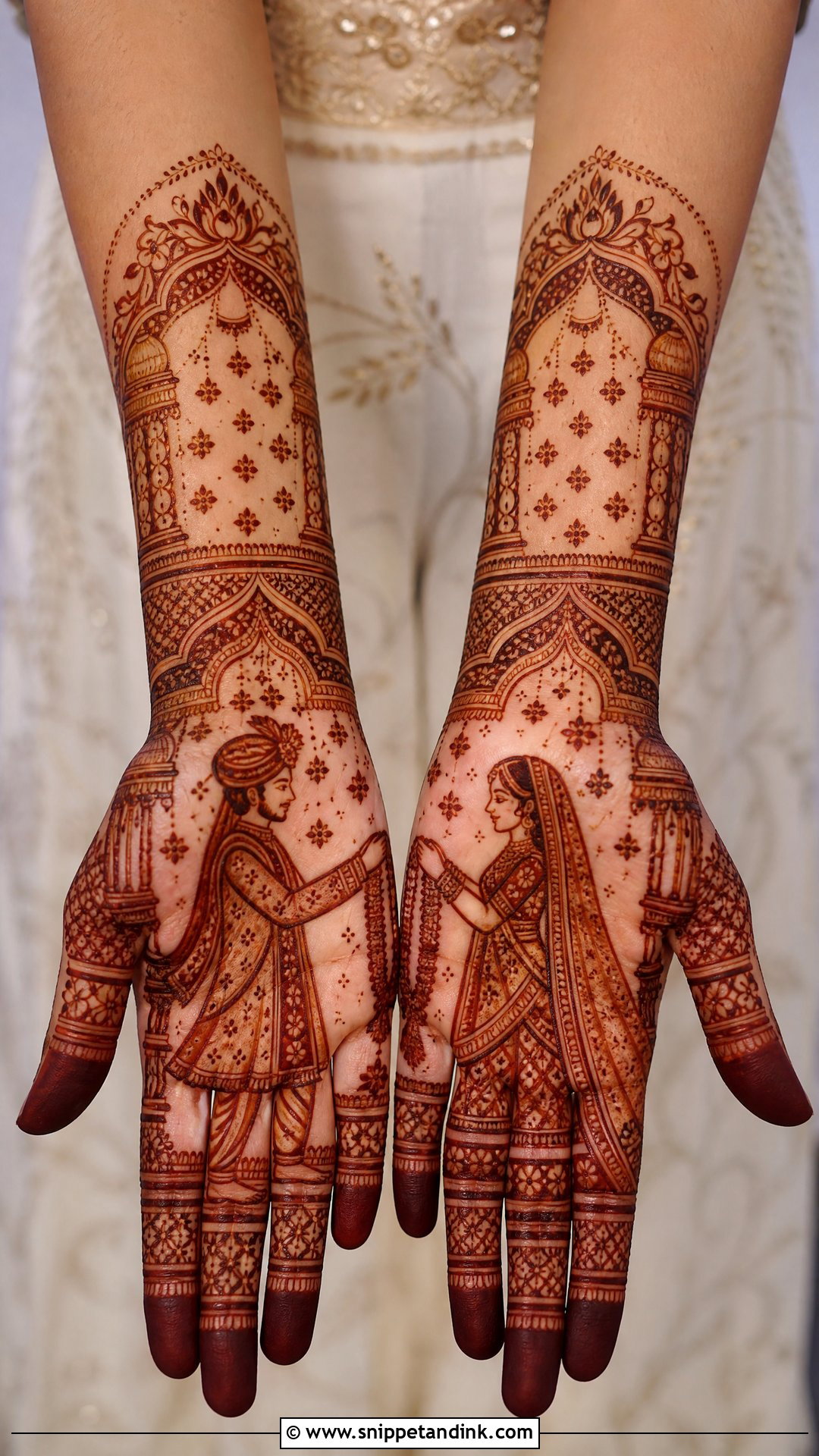
The garland exchange is one of the happiest scenes to draw: the couple facing each other across the palms or lower forearms, with flower showers, mandap pillars, leafy vines and curved borders around them. It pairs naturally with peacocks on the back hands or lotus at the wrists. The garlands themselves are where it fails. Drawn as a thin line, they vanish once the stain darkens, so I build them from bold dotted beads that stay visible.
6. Bridal Mehndi With Phere Figures
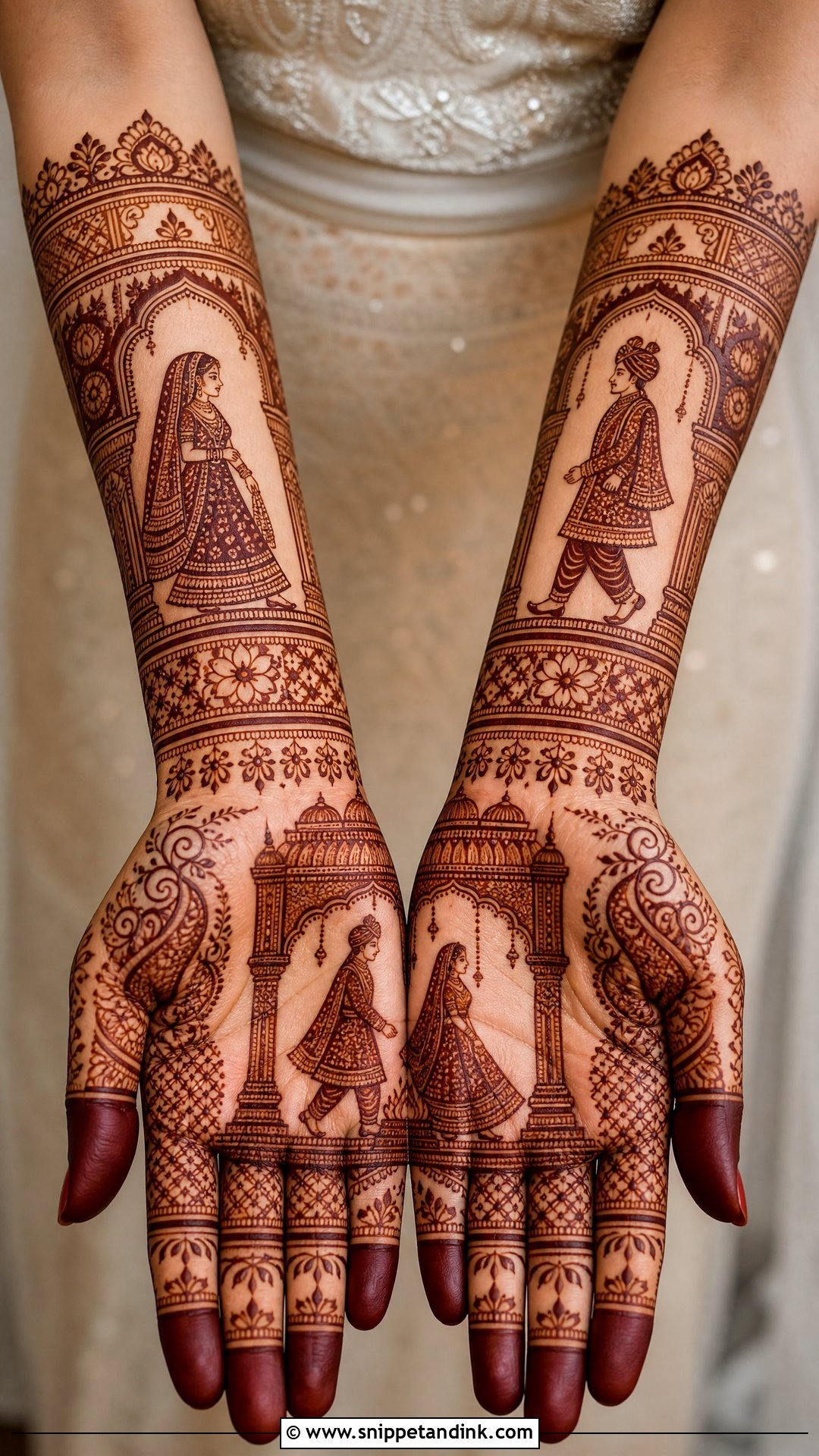
The phere scene shows the couple walking around the fire, with the bride’s veil, the groom’s outfit and the mandap drawn in fine lines. The forearm gives it room to breathe, leaving the palms for mandalas, couple symbols or matching floral circles. Keeping each element apart is the trick: the flames, the two figures and the mandap arches each get their own space. When they touch, the scene turns into one dark shape after staining.
7. Bridal Mehndi With Doli Figure
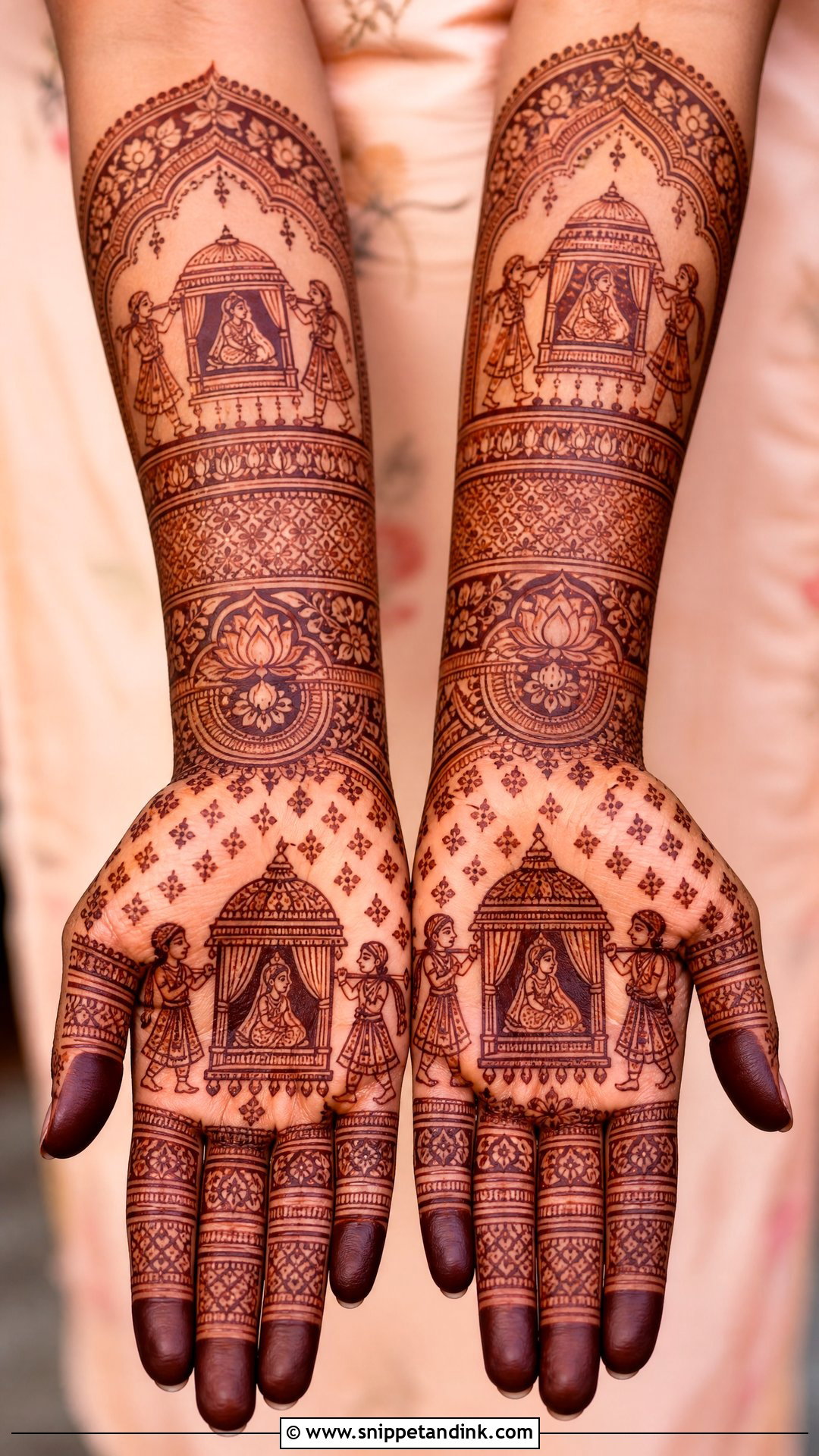
A doli figure brings in the bride’s farewell, usually on one forearm with tiny bearers, floral curtains and arched details, while the other hand carries the baraat, a bride portrait or a palace scene. It sits well within dense Indian work alongside paisleys, lotus fillers and lace patterns. A clean frame around the doli matters, so I leave a thin margin of bare skin around the doli and then draw a bold border, which separates it from the filler in photos.
8. Bridal Mehndi With Baraat Figures
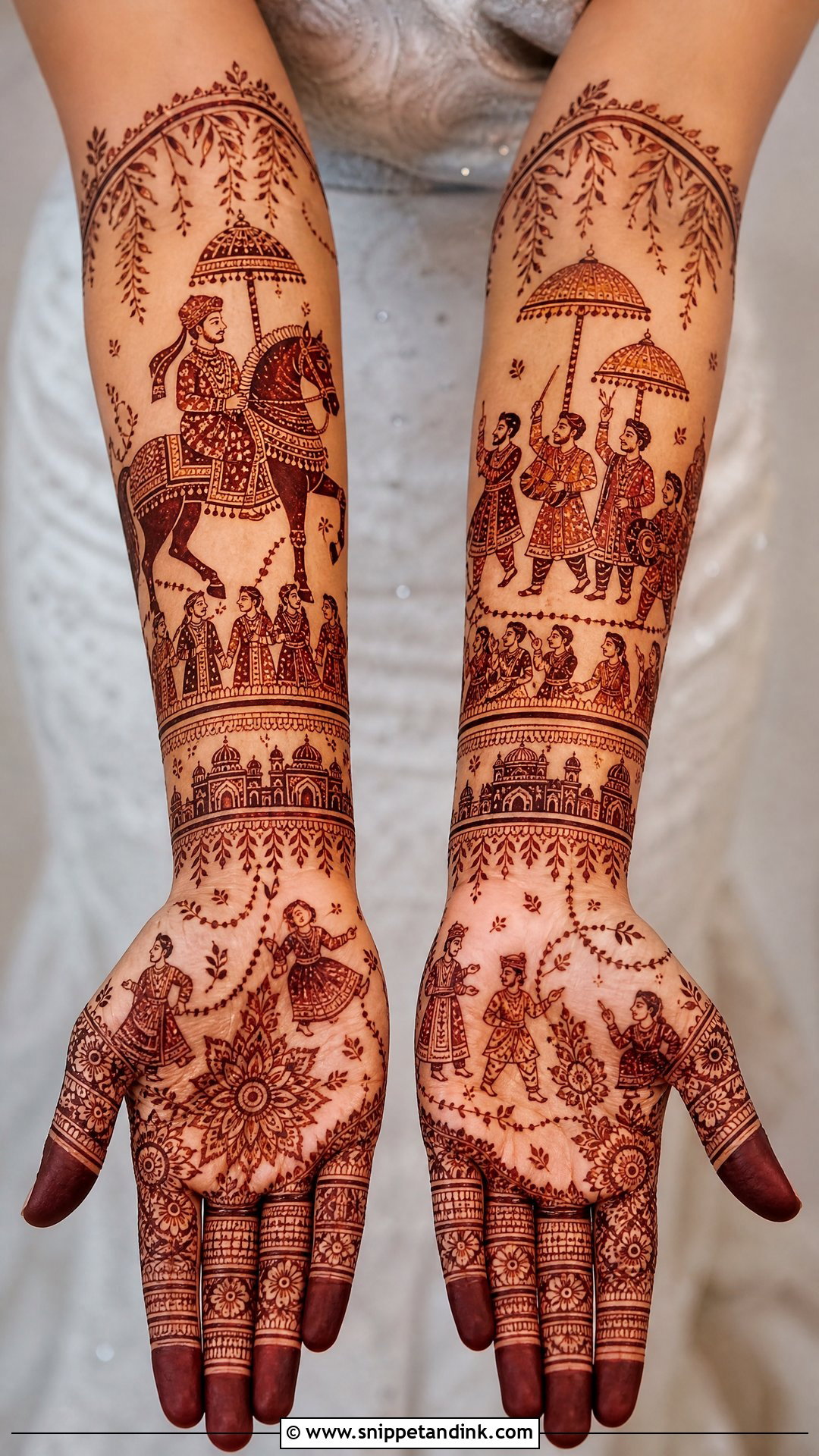
Baraat designs are lively: the groom on his horse, dancing guests, musicians, elephants, umbrellas, with drums, floral trails, dotted pathways and palace borders filling the forearm. Palms then carry the couple or a mandala centre. The danger is crowding. I keep every character small but clearly outlined and give the procession a direction, moving from wrist toward elbow, so the eye follows it like a parade instead of seeing a jumble of figures.
9. Bridal Mehndi With Peacock Figures
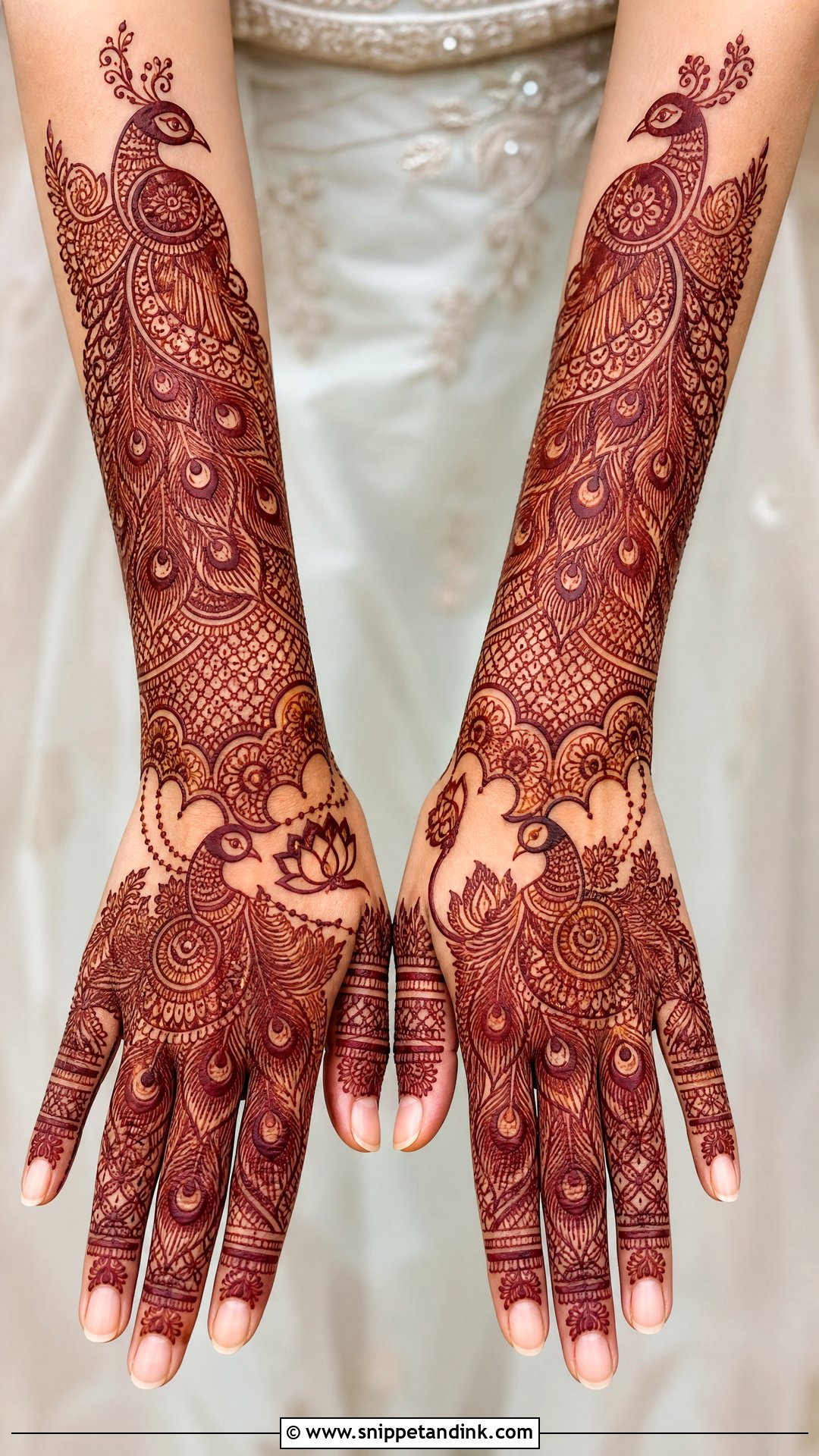
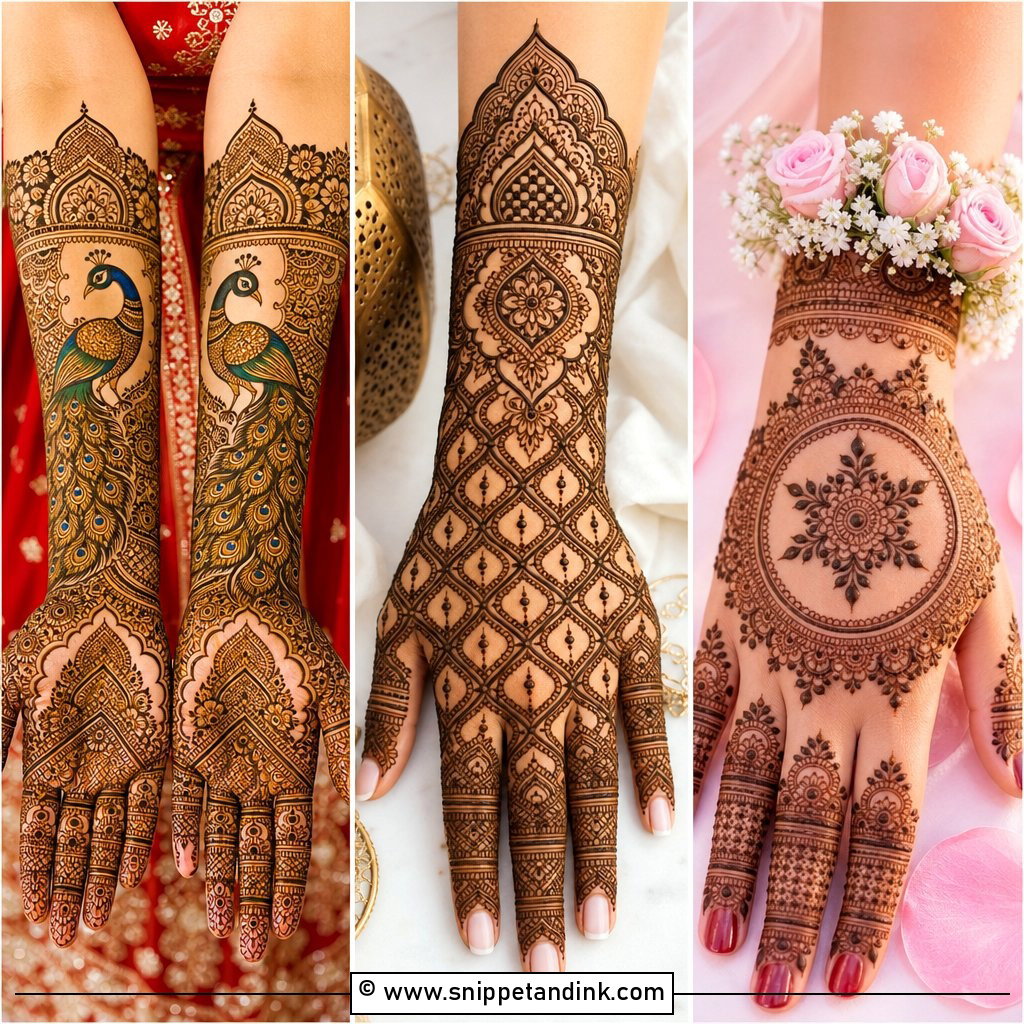
Peacocks give you figure-based mehndi without any faces, which some brides and families prefer. The bird can run across the palm, the side of the hand or the forearm, with feathers trailing into paisleys and vines. A matching pair on both hands works, and so does one peacock opposite a couple portrait. Feathers fill space gracefully, which suits full coverage. I draw the feather lines bolder than the surrounding filler so the bird stays clear once the colour deepens.
10. Bridal Mehndi With Elephant Figures
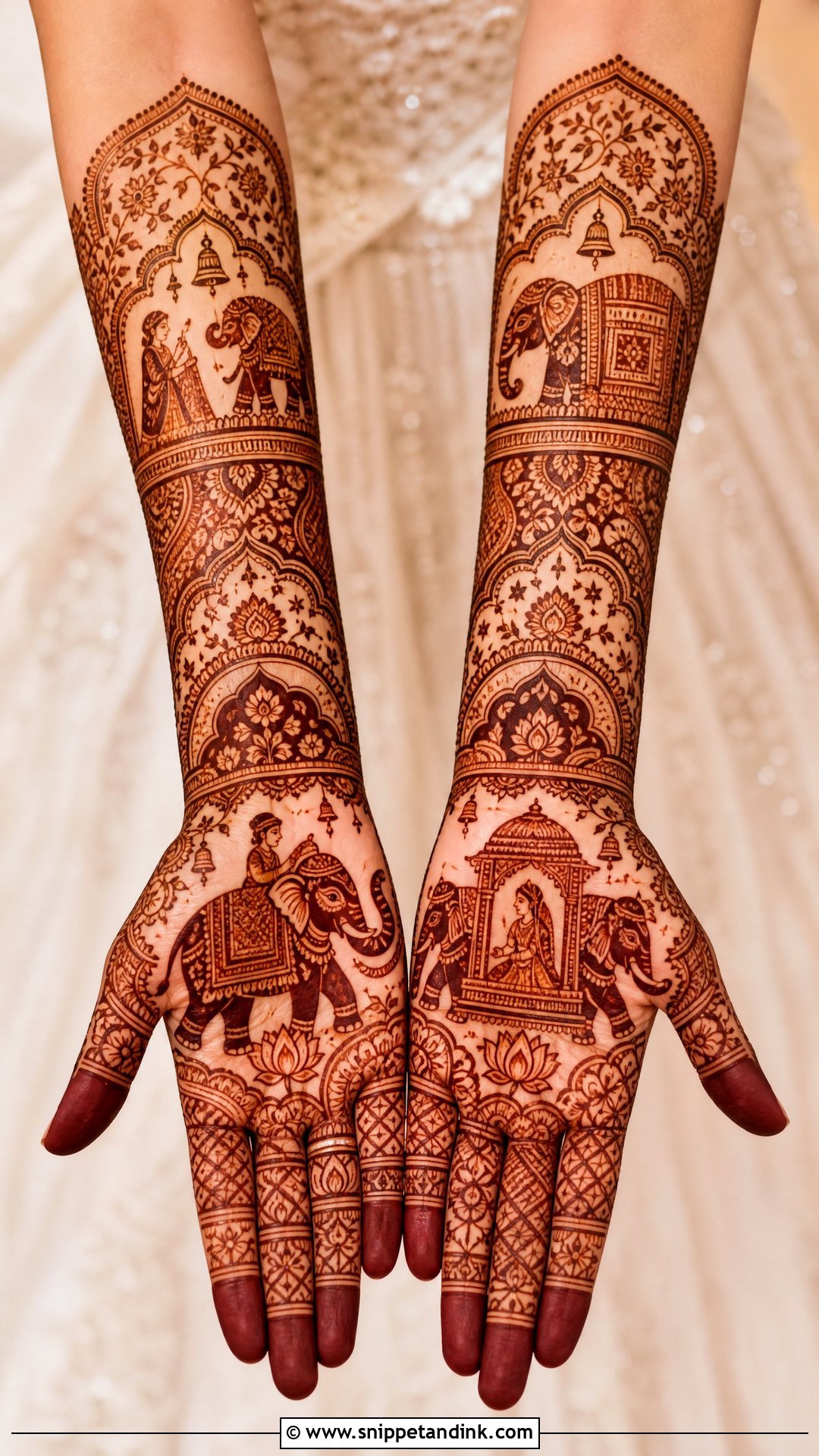
Elephants suit Rajasthani and palace themes, drawn on forearms, wrists or lower palms in tiny blankets, bells and flowers, and they sit comfortably with couple portraits, mandap scenes and arch borders. Size is everything. A medium elephant keeps its recognisable silhouette; a tiny one covered in decoration turns into an unreadable blob. Lotus, vines and fine dots around them keep the overall feel soft.
11. Bridal Mehndi With Radha Krishna Figures
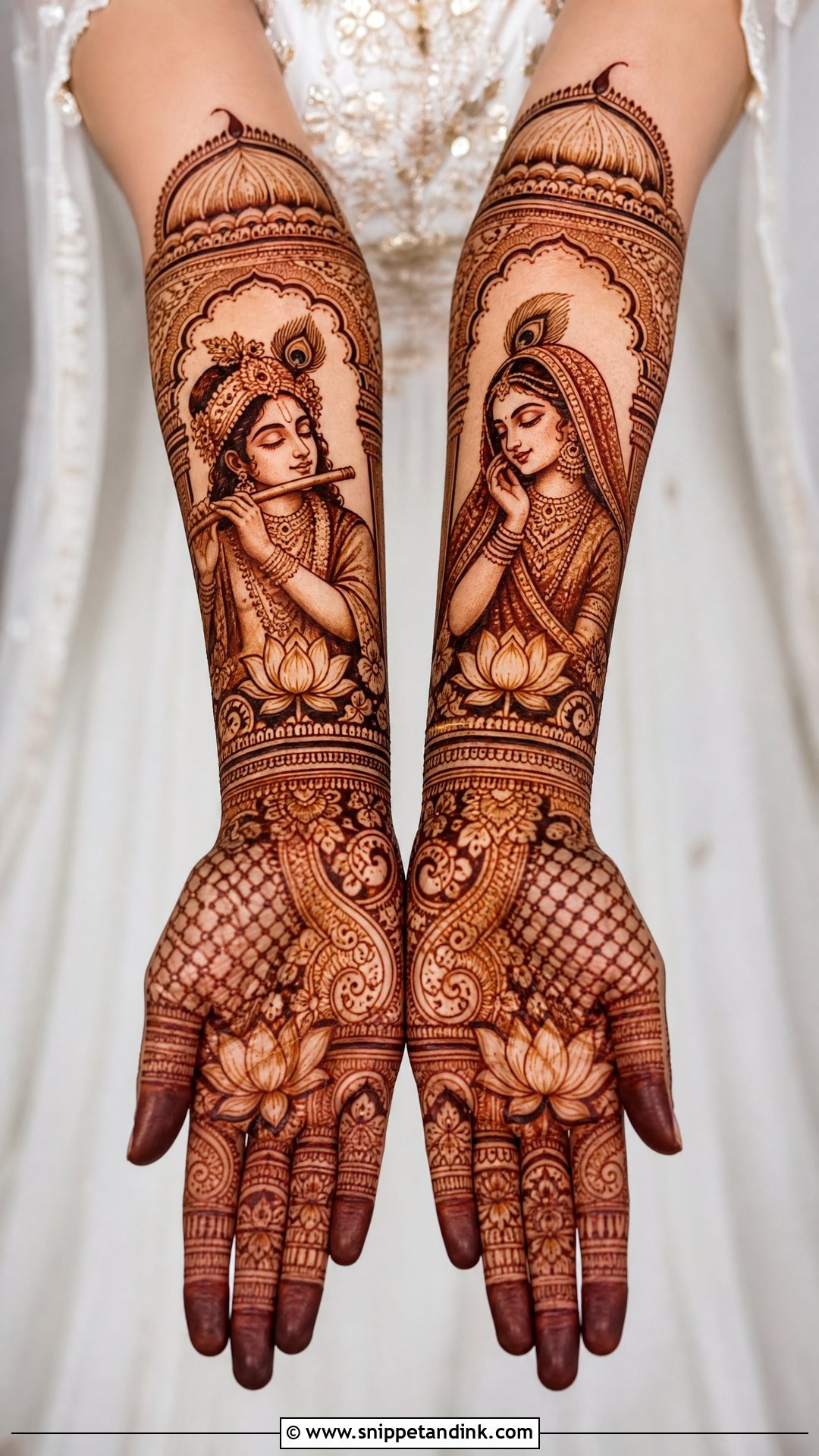
Radha Krishna figures carry devotional and romantic meaning, usually placed on the palms or forearms and surrounded by lotus, flute details, peacock feathers and temple arches. Fine Indian-style filling suits the theme, either full hand or wrist to elbow. Because these are sacred figures, many brides want them drawn with real care. Ask to see miniature faces and postures your artist has done before, and keep the surrounding pattern quiet so the figures stay at the centre.
12. Bridal Mehndi With King And Queen Figures
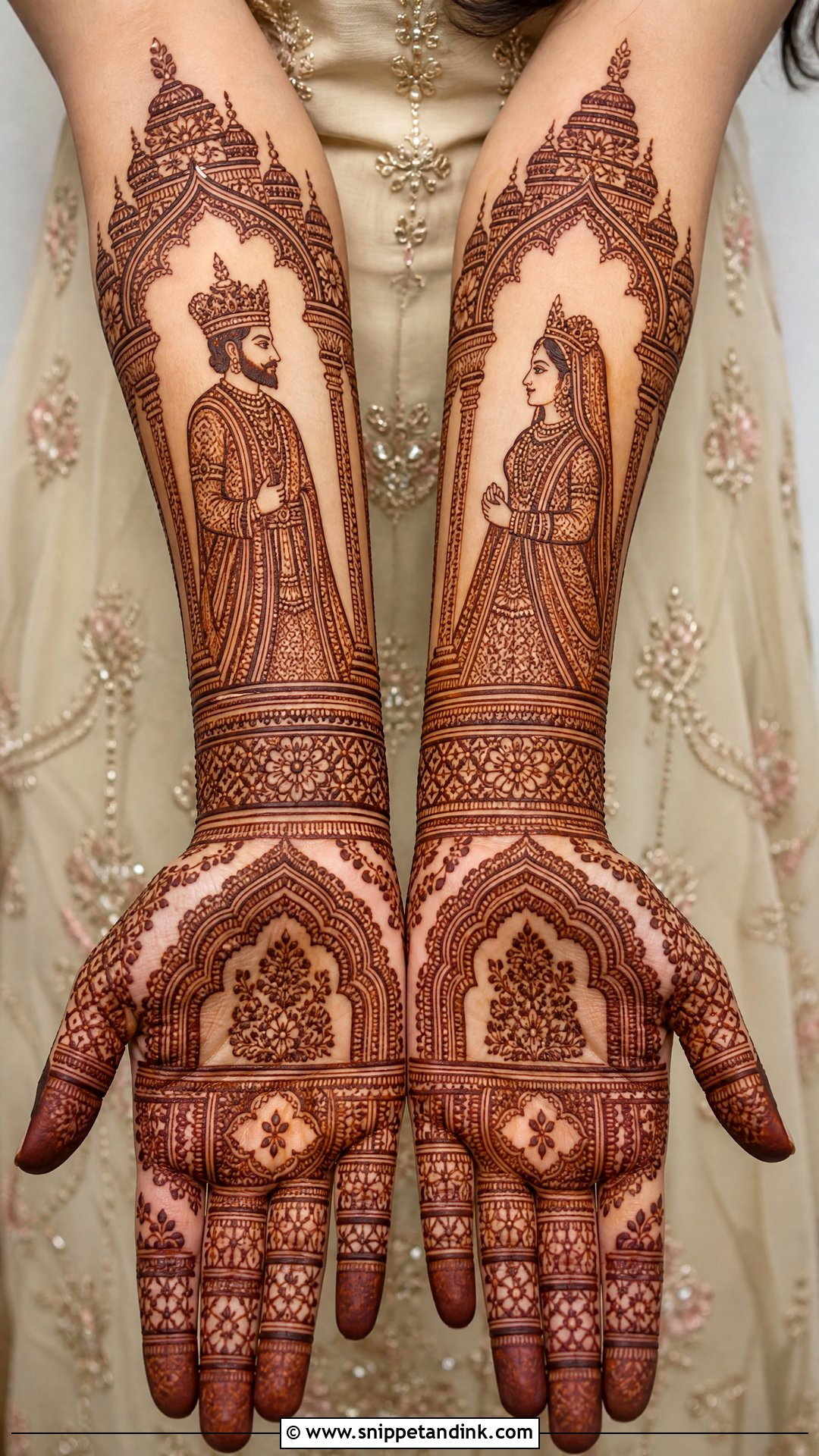
King and queen figures give a royal-couple theme without being a portrait of you. I draw them seated in a palace setting with crowns, arches, chandeliers and patterned carpets, then fill the hands with Mughal florals, paisleys, mesh and ornamental cuffs. It’s a good compromise for a bride who wants figures but is nervous about a face that doesn’t look like her. Keep both hands symmetrical, so the king and queen face each other when your palms are held together.
13. Indo Arabic Bridal Mehndi With Couple Figures
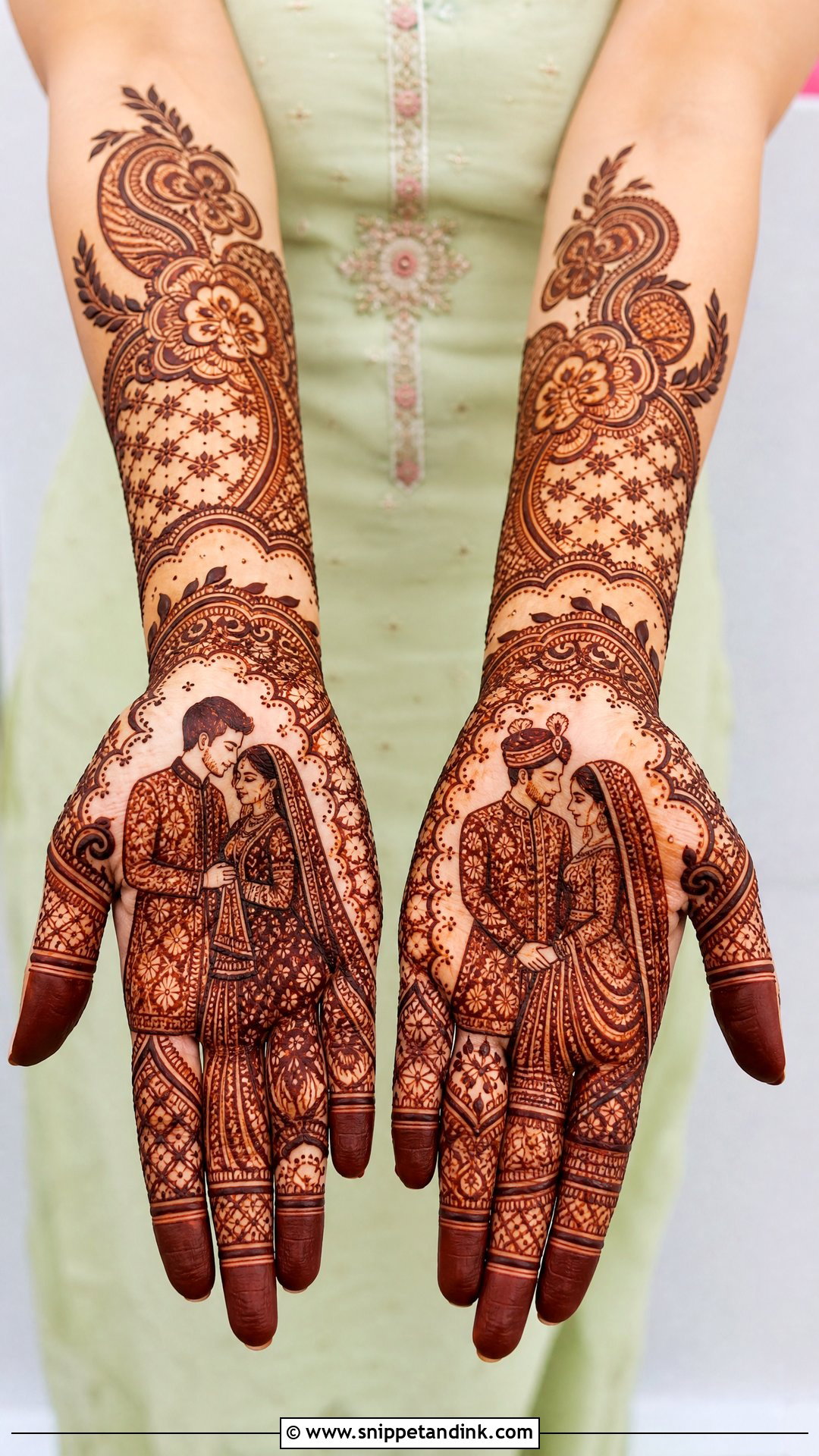
Indo-Arabic figure work sets the couple on the palms and lets bold Arabic floral trails, leafy vines and open skin carry the fingers and wrists. It’s lighter than dense Indian coverage but still reads as wedding mehndi. The open areas make the stain look crisp. I keep the figure panel detailed and the outer trails bold, and initials, the date or small heart details tuck nicely into the trail.
14. Pakistani Bridal Mehndi With Figure Work
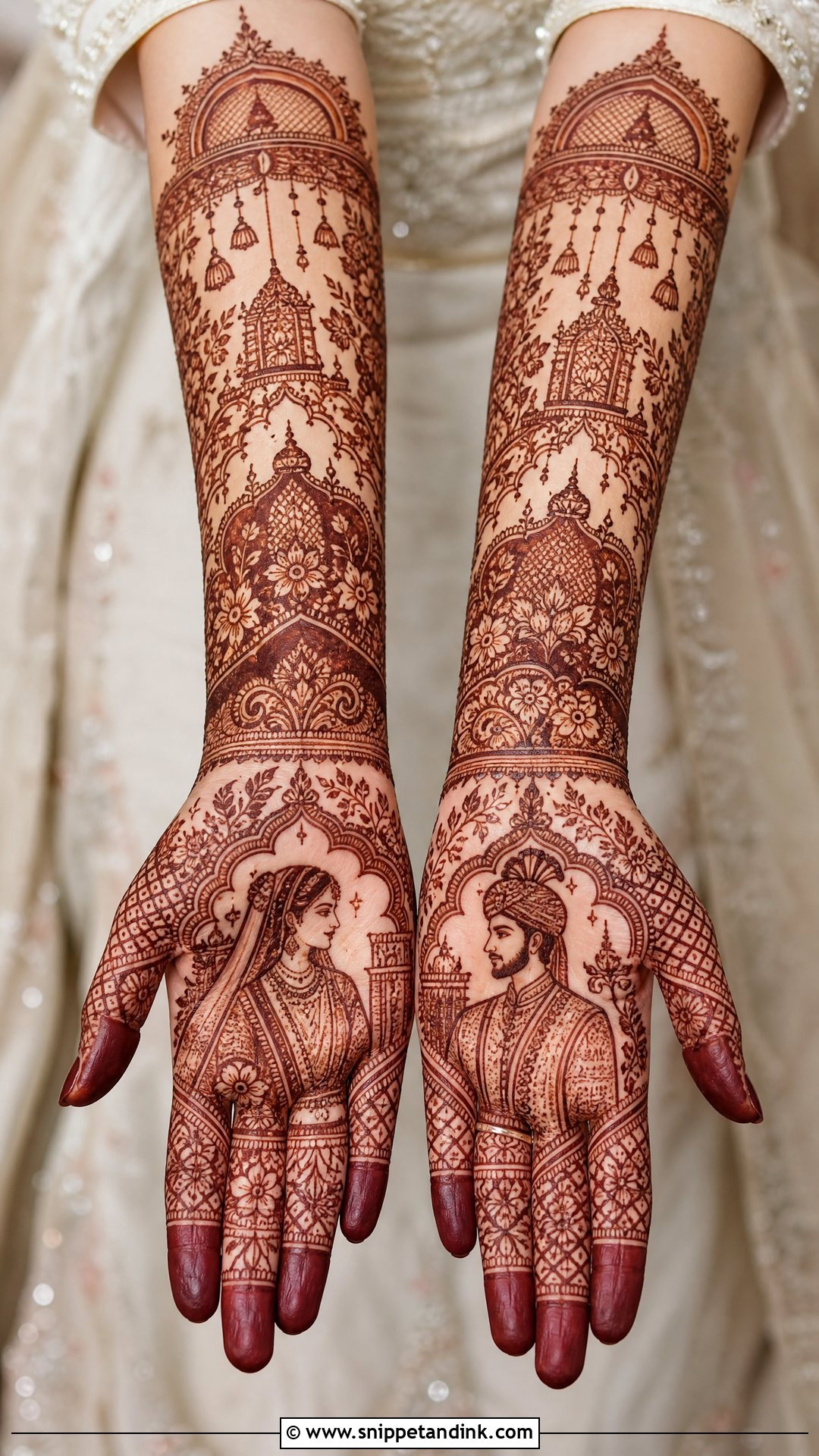
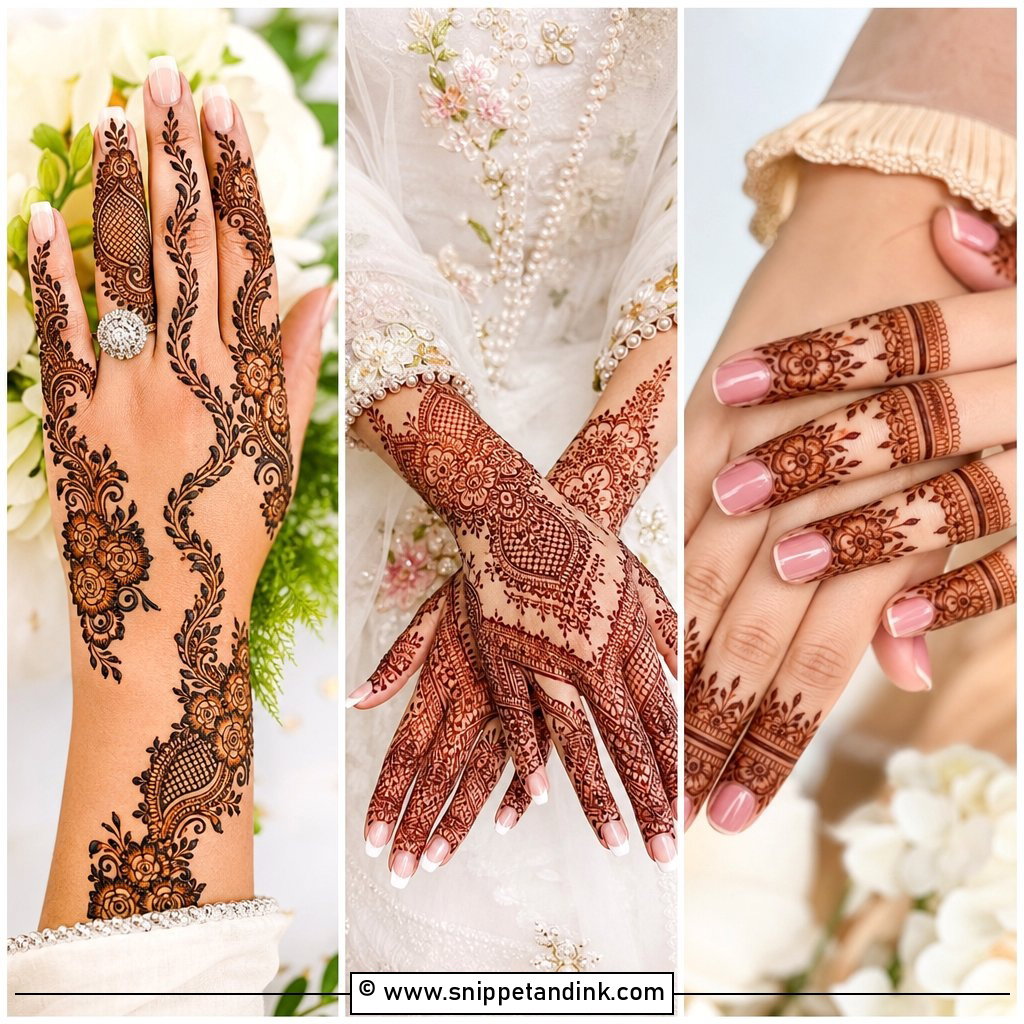
Pakistani figure work combines fine detail with Arabic flow: bride and groom figures, domes, jhumar shapes, floral vines and fine net patterns, spread evenly over palms, backs, wrists and forearms. The figures are usually modest in size and framed with ornamental borders rather than filling the palm. It carries well from mehndi night through baraat, nikah and walima. Deep maroon natural henna and shaded fingertips give the classic finish.
15. Mughal Bridal Mehndi With Royal Figures
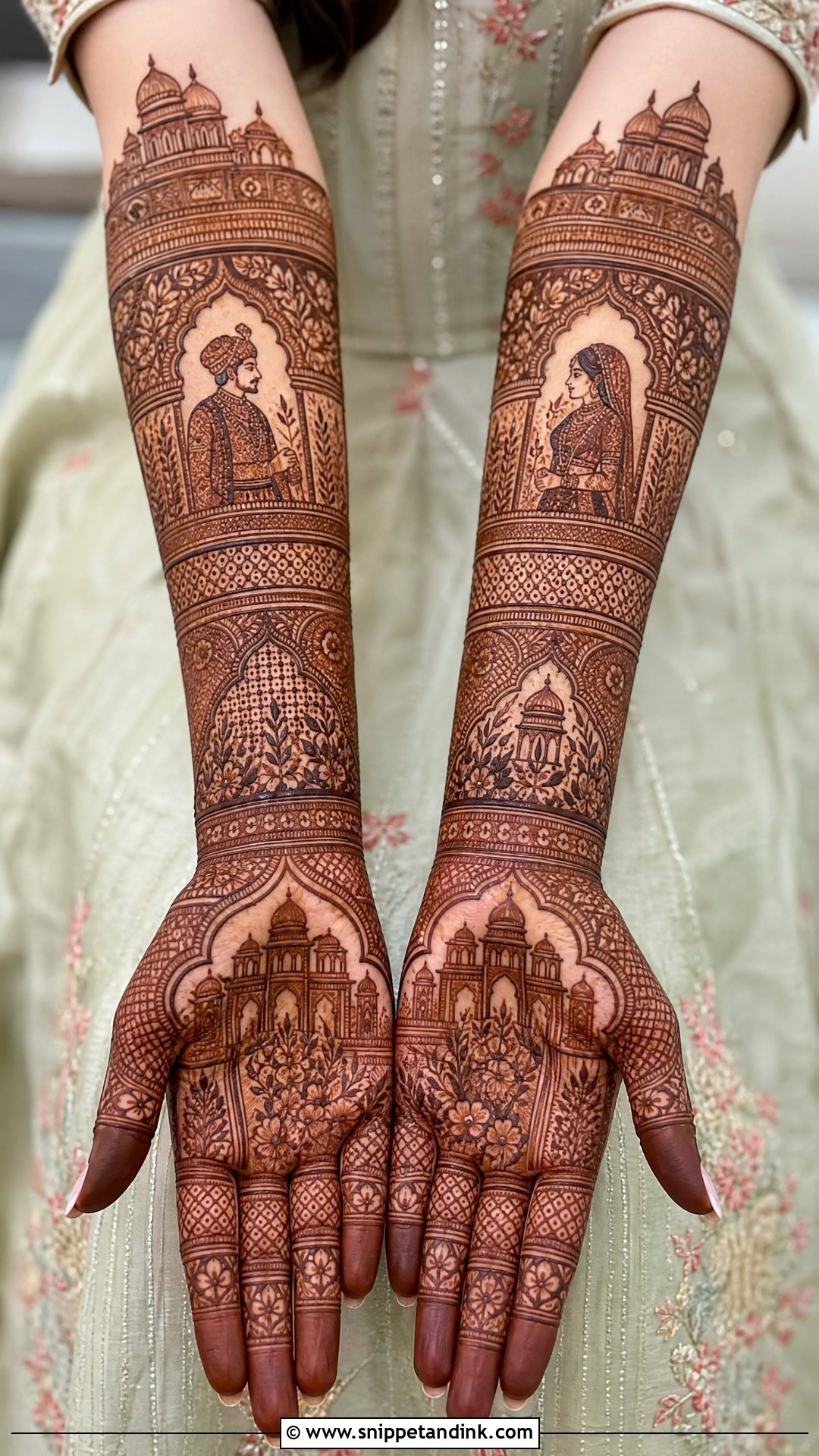
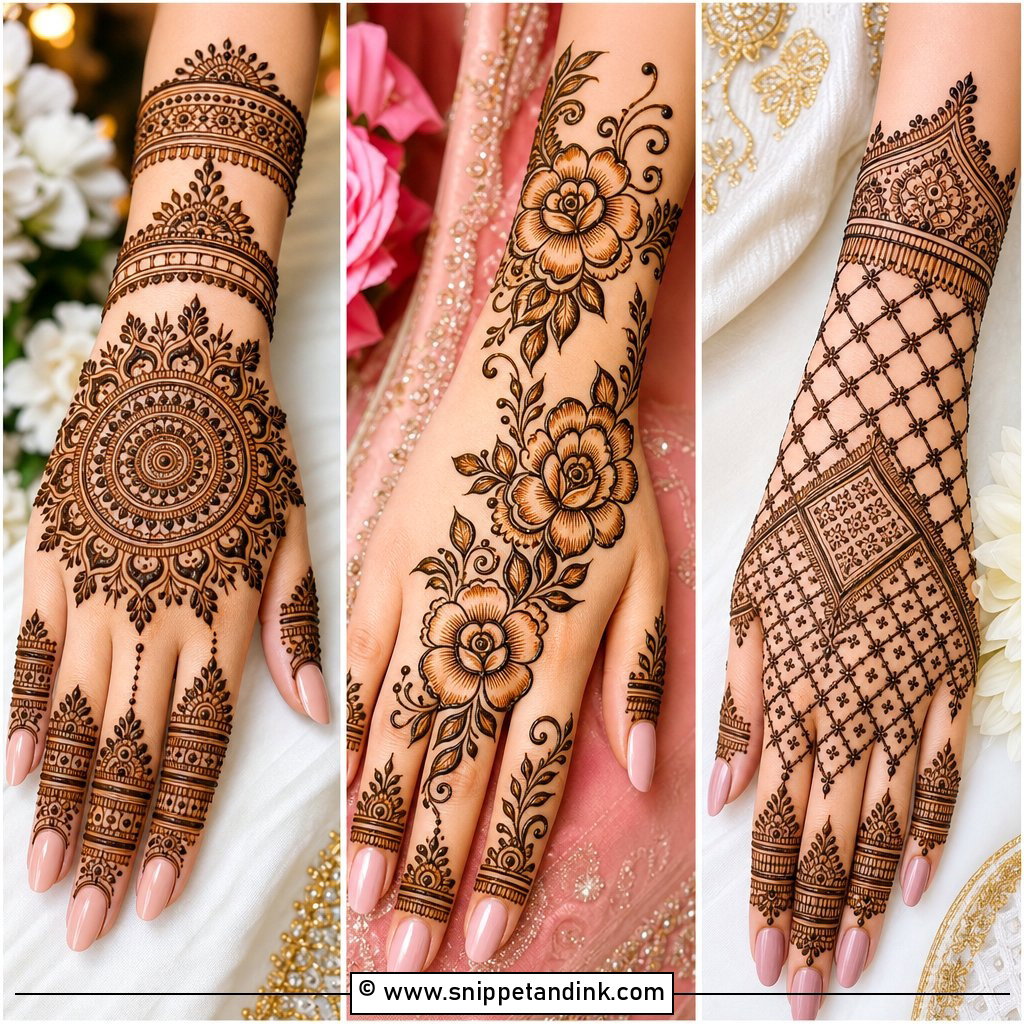
Mughal figure work borrows from miniature painting: a royal couple under arches, among garden florals, at jharokha windows or beneath palace domes, with repeated florals, fine lattice, curved borders and ornamental cuffs around them. It’s quieter and more formal than baraat designs. I frame each figure like a small painting with a clear outline and a sliver of empty skin around it, so the portraits stay readable even when the surrounding work turns deep and dense.
16. Modern Bridal Mehndi With Minimal Figures
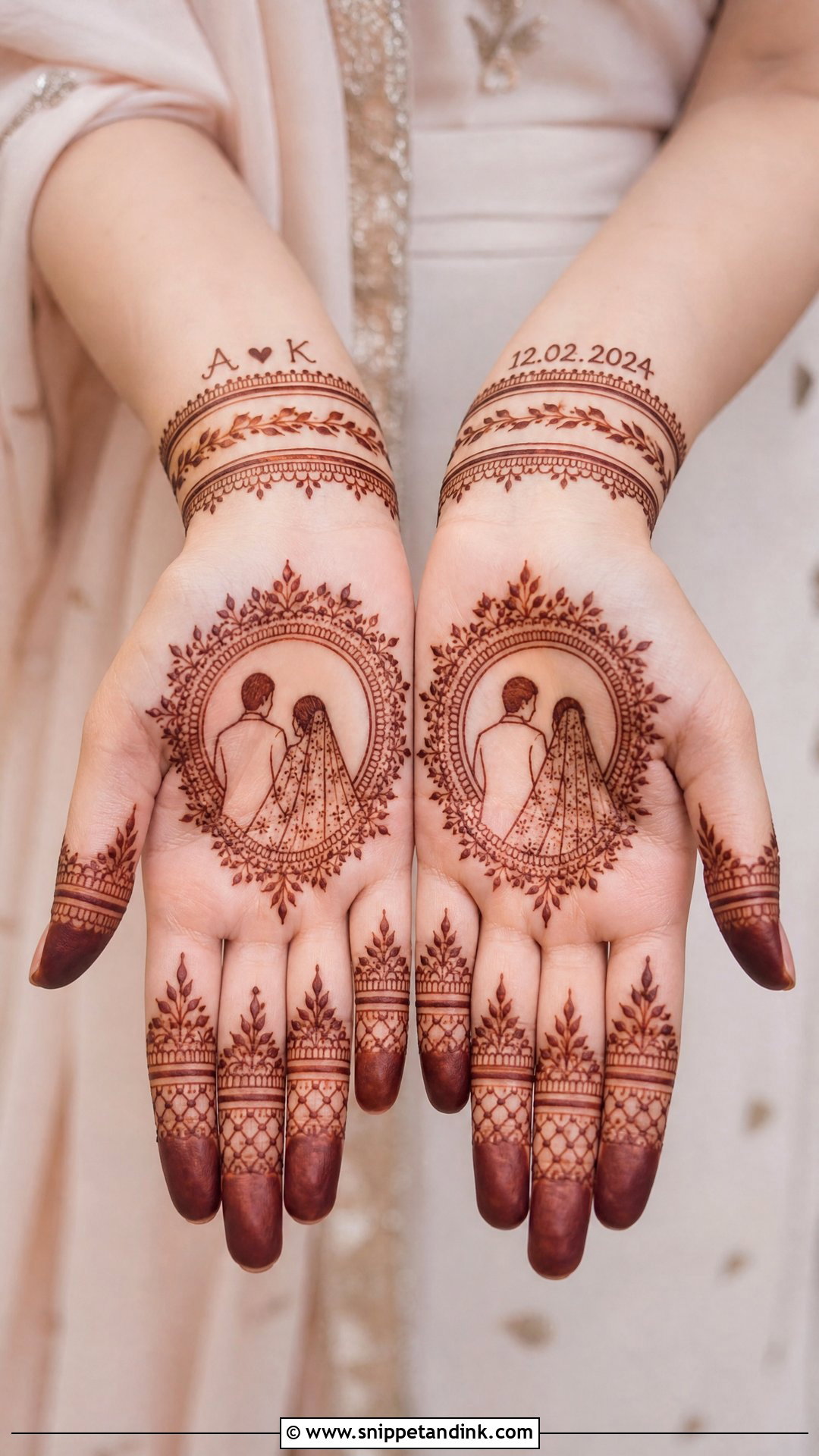
Minimal figure designs put small bride-groom outlines on the palms and keep the rest light with clean mandalas, leafy vines, finger bands and open skin. They’re quick, suit intimate and destination weddings, and the figures stand out clearly against bare skin. Initials, the date or a tiny outline of the venue can join them. I use thin lines and the simplest possible faces, sometimes just a profile, so it looks deliberate rather than unfinished.
17. Back Hand Bridal Mehndi With Figure Design
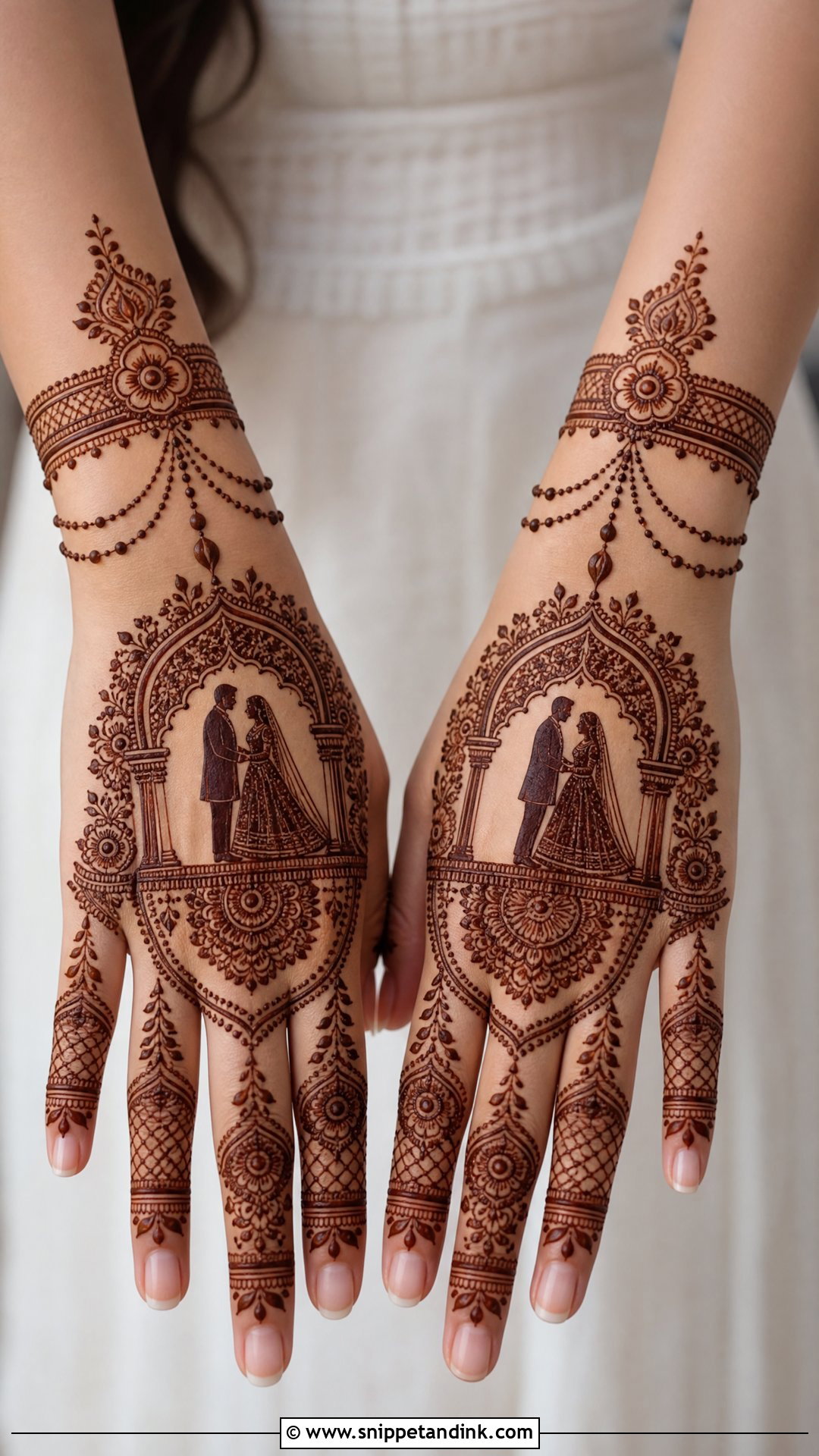
Figures on the back of the hand show up in ring photos, hand poses and entry shots, so the top of the hand deserves as much thought as the palm. A figure in the centre, framed by a mandala, floral arch or bracelet chain, works well, as do small silhouettes near the wrist with detailed fingers. The back of the hand stains lighter than the palm and the skin moves over the knuckles, so I keep figures off the knuckles and draw them slightly bolder than I would on a palm.
18. Front Hand Bridal Mehndi With Figure Art
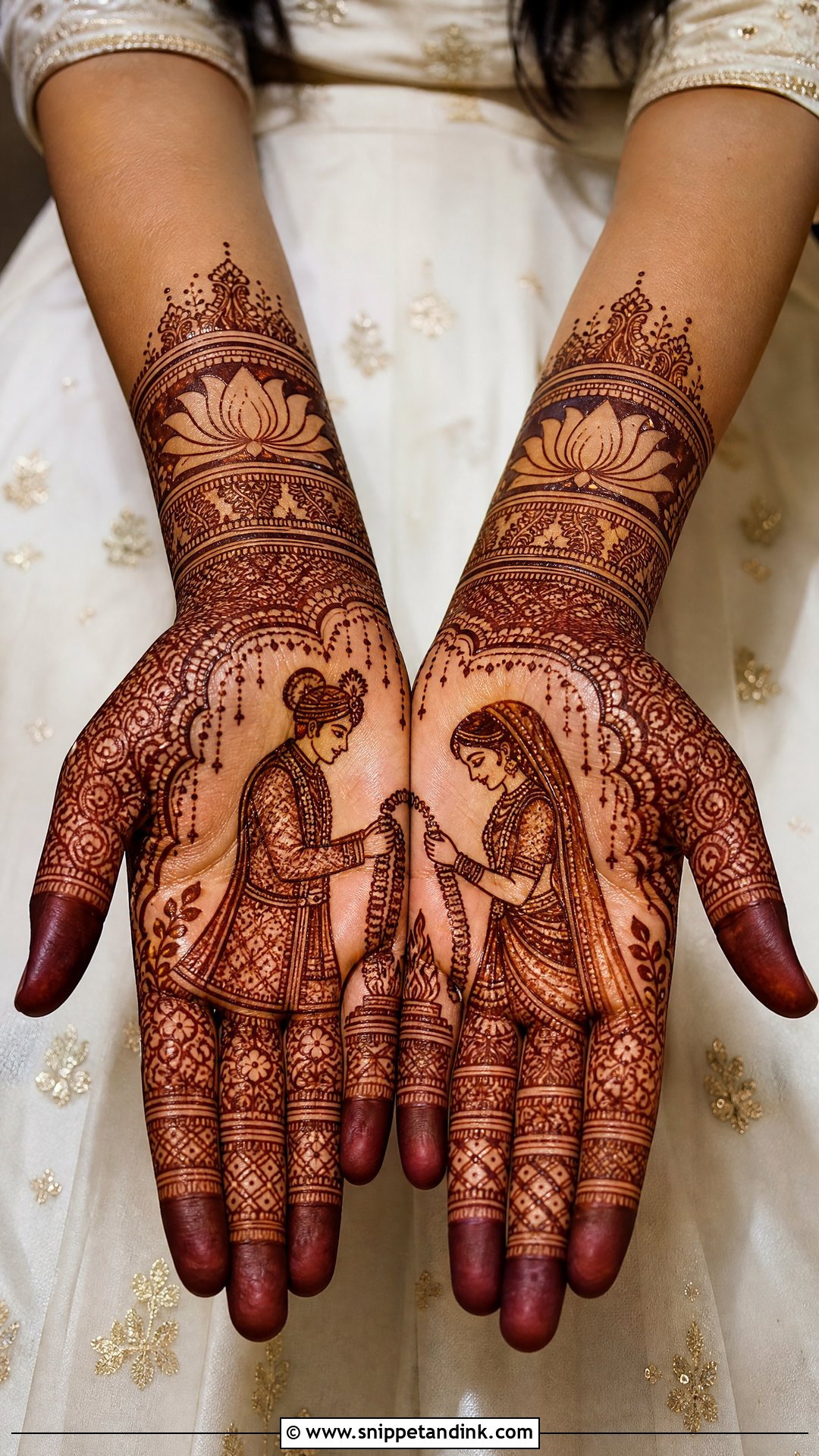
Palm figure art gives the hand a strong centre: a portrait, a ritual, a peacock pair or a doli scene, with detailed caps, leafy bands or small paisleys on the fingers and cuffs, lotus borders or arches at the wrist. The palm is the flattest, darkest-staining part of the hand, so it’s the best place for anything with a face. I centre the figure with the hand relaxed, not stretched flat, otherwise it shifts toward the thumb as soon as the bride holds anything.
19. Bridal Mehndi With Personalized Figures
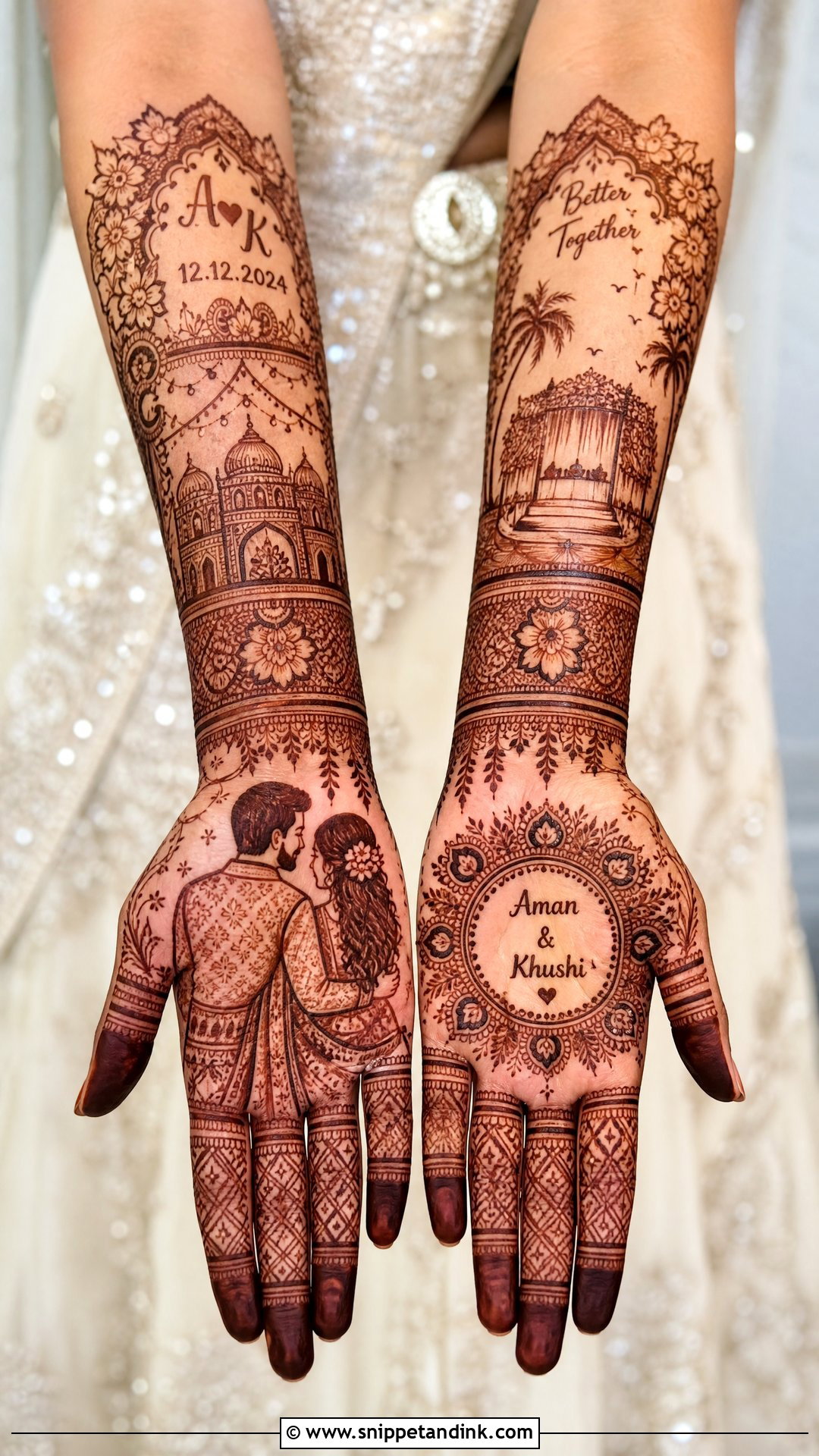
Personal figures turn the mehndi into a record of your relationship: a proposal scene, a travel spot, a pet, an instrument, a hashtag or tiny versions of your wedding outfits, set on the palms or forearms among classic fillers. My advice is to limit it to two or three clear elements. Every extra custom figure takes space from the others and makes the story harder to read. Pick the ones that matter and let the artist build around them.
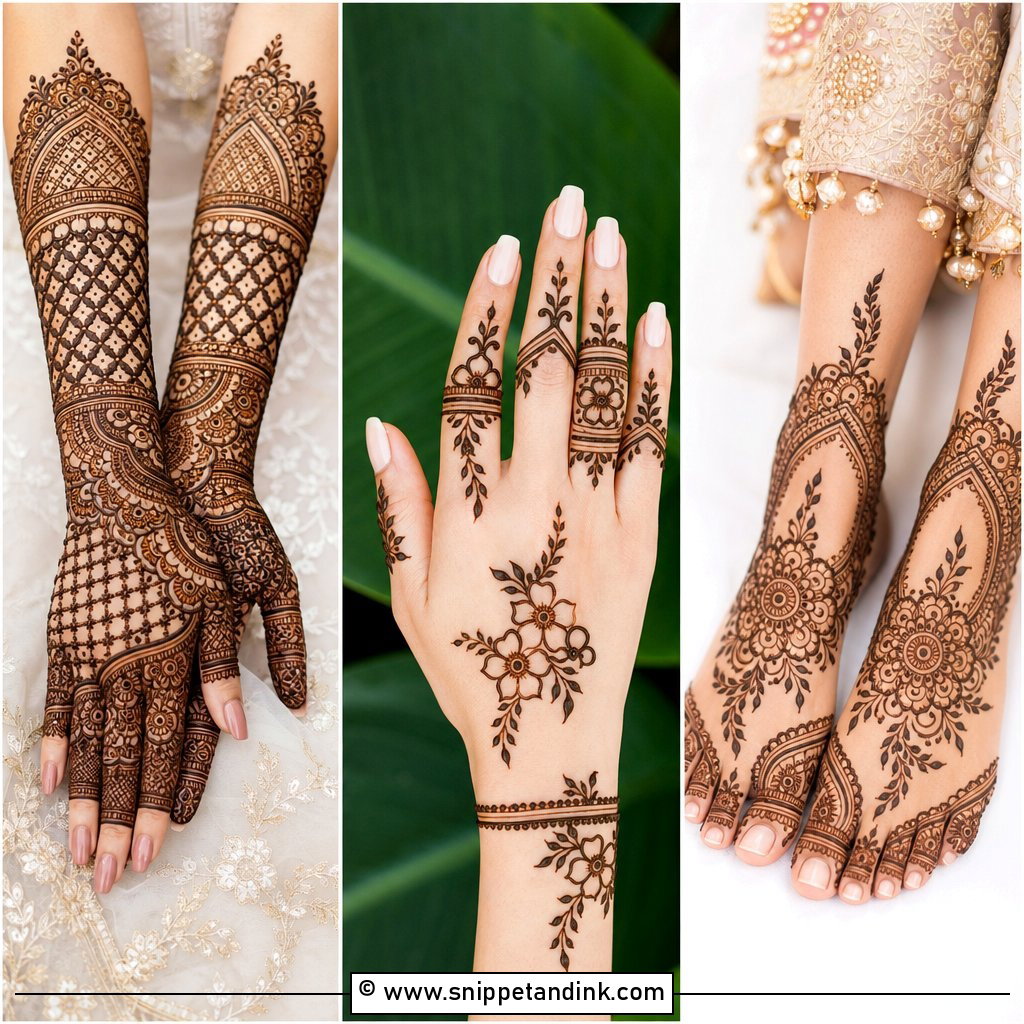
20. Full Arm Bridal Mehndi With Figure Details
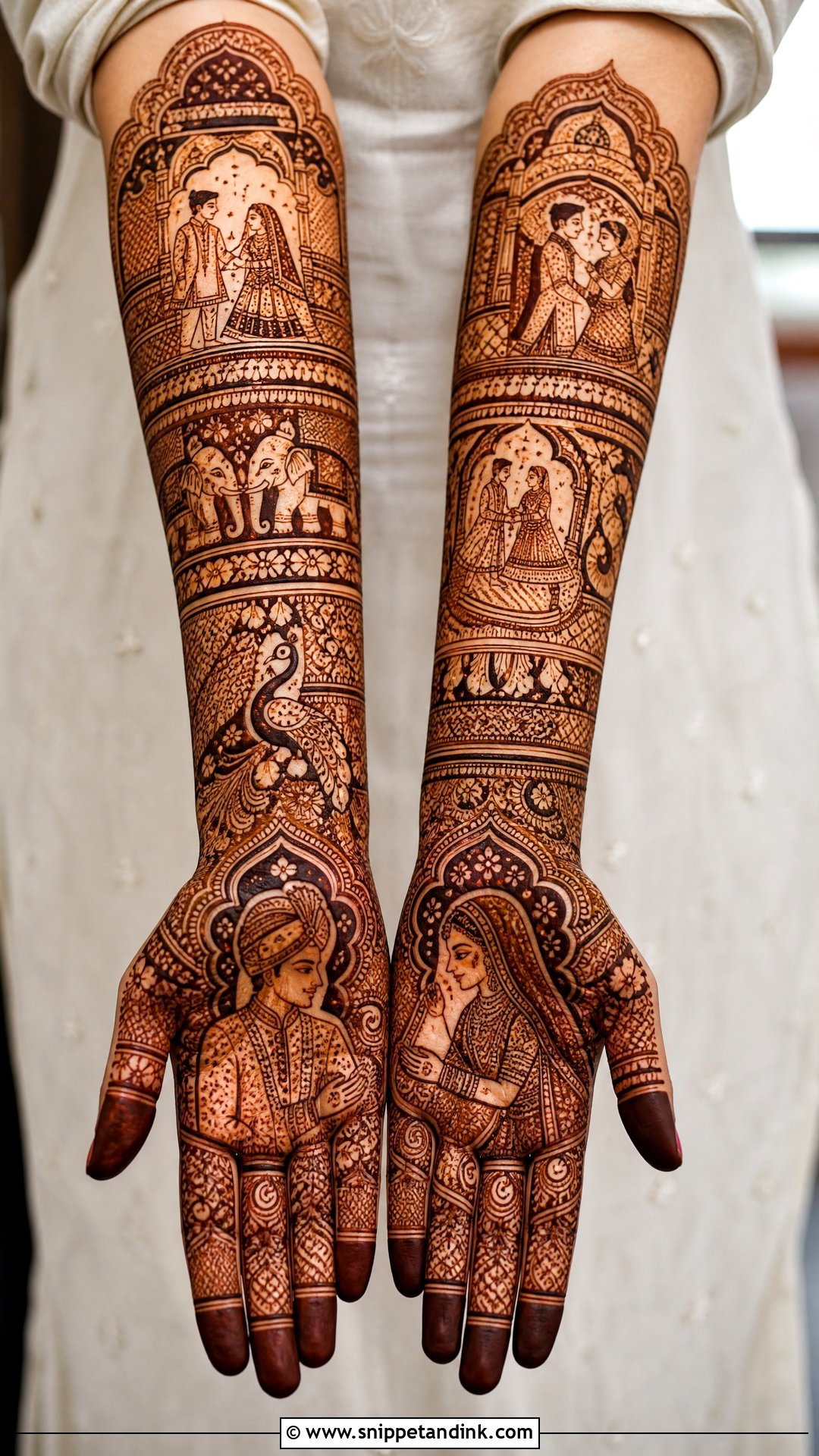
Full arm figure work runs from the fingertips past the elbow, with the story split into panels: the couple in one, the phere in another, elephants, peacocks or palace arches in the next. I keep the hands dense and give the larger scenes to the arms, where there’s room. It’s the longest sitting on this list and only makes sense if your outfit shows the arms, sleeveless or with very short sleeves. Plan the panel order in advance so each figure has space and the story reads from wrist to shoulder.
Why Tiny Faces Blur, and How I Draw Around It
Henna paste is wet when it touches the skin, and every line spreads a fraction as it settles. Over the next two days the stain darkens, which makes neighbouring lines look even closer together. On florals you never notice. On a face the size of a fingernail, two eyes and a nose can merge into one smudge.
What keeps a figure readable
- Scale: faces need enough room to leave clear gaps between features. When space is tight, I switch to a profile or a veiled head instead of a front-facing face.
- Outline weight: a firmer outline around the figure and finer lines inside it, so the shape survives even if the inner detail softens.
- Placement: palms first, then forearms. Avoid wrist creases and knuckles, where skin folds and distorts the drawing every time you move.
- Consistent paste: a smooth, lump-free cone gives an even line. Uneven paste leaves blobs that look like mistakes on a face.
Aftercare matters more for figure work than for anything else, because uneven fading shows on faces first. Keep the paste on as long as you can, scrape rather than wash it off, and keep the palms away from water and hand sanitiser for the first day.
Let One Scene Lead the Story
Story designs add meaning in a way pattern alone can’t, from dulha-dulhan portraits and baraat processions to peacocks, elephants, doli scenes and moments only the couple would recognise. Which one suits you depends on your outfit, the ceremonies you’re having, the size of your hands and how much detail you can sit through. Whatever you choose, pick one scene as the hero and let the others support it, and book an artist whose figures stay clean in finished stains, not just in fresh paste photos.
You'll Like These Ideas:








Leave a Reply