
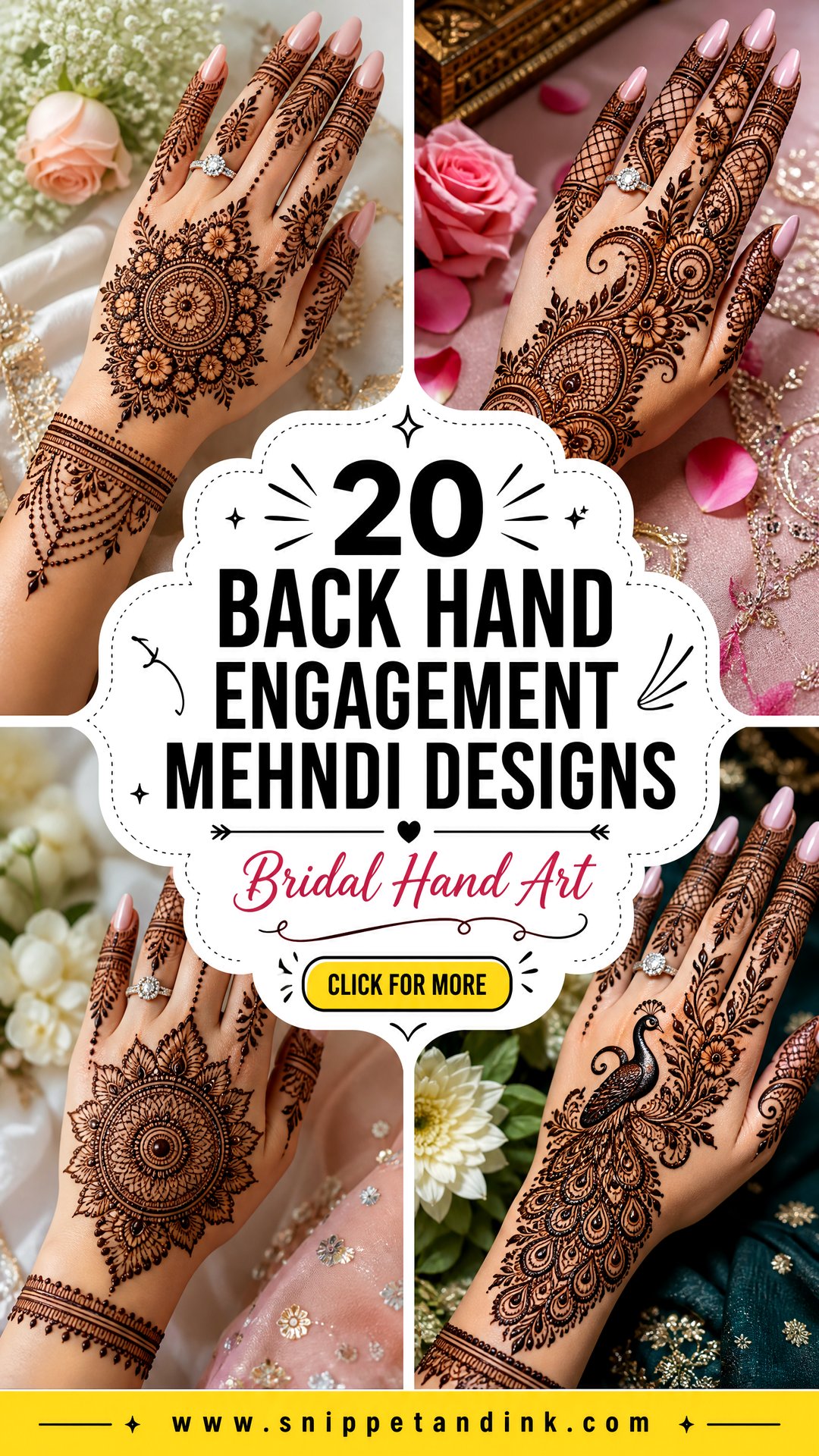
Engagement mehndi is a smaller canvas than wedding mehndi, and I think that’s its strength. The ring exchange puts the back of your hand right in front of the camera, so a few well-placed motifs do more than a fully packed hand. Good back hand mehndi can be anything from a full Indian layout to a single mandala, with Arabic, Gulf, Moroccan, jaali, bracelet and personalized options in between. What I’ll share here is how each one wears, how long it takes to apply, and who it suits, so you walk into your appointment knowing what to ask for.
How Far Up the Arm? Let the Sleeve and the Clock Decide
The first question I ask isn’t which motif you like. It’s what you’re wearing on your arms. A three-quarter sleeve or a stack of bangles covers the wrist, so any detail there disappears. A sleeveless blouse shows the forearm, and stopping the henna sharply at the wrist can look unfinished.
- Long or three-quarter sleeves: keep the design to the hand and fingers, with a neat finishing band at the wrist.
- Short sleeves or sleeveless: a short forearm extension balances the look.
- Heavy bangles: leave a gap where they sit and place detail above and below.
Time matters too. A minimal back-hand design can take well under half an hour per hand, while full bridal-level coverage on both hands can take a few hours, plus drying. Times vary with the artist and the design, so ask yours for an estimate and plan your makeup and getting-ready schedule around it. Rushing the drying is how designs get smudged.
1. Full Back Hand Engagement Mehndi Design
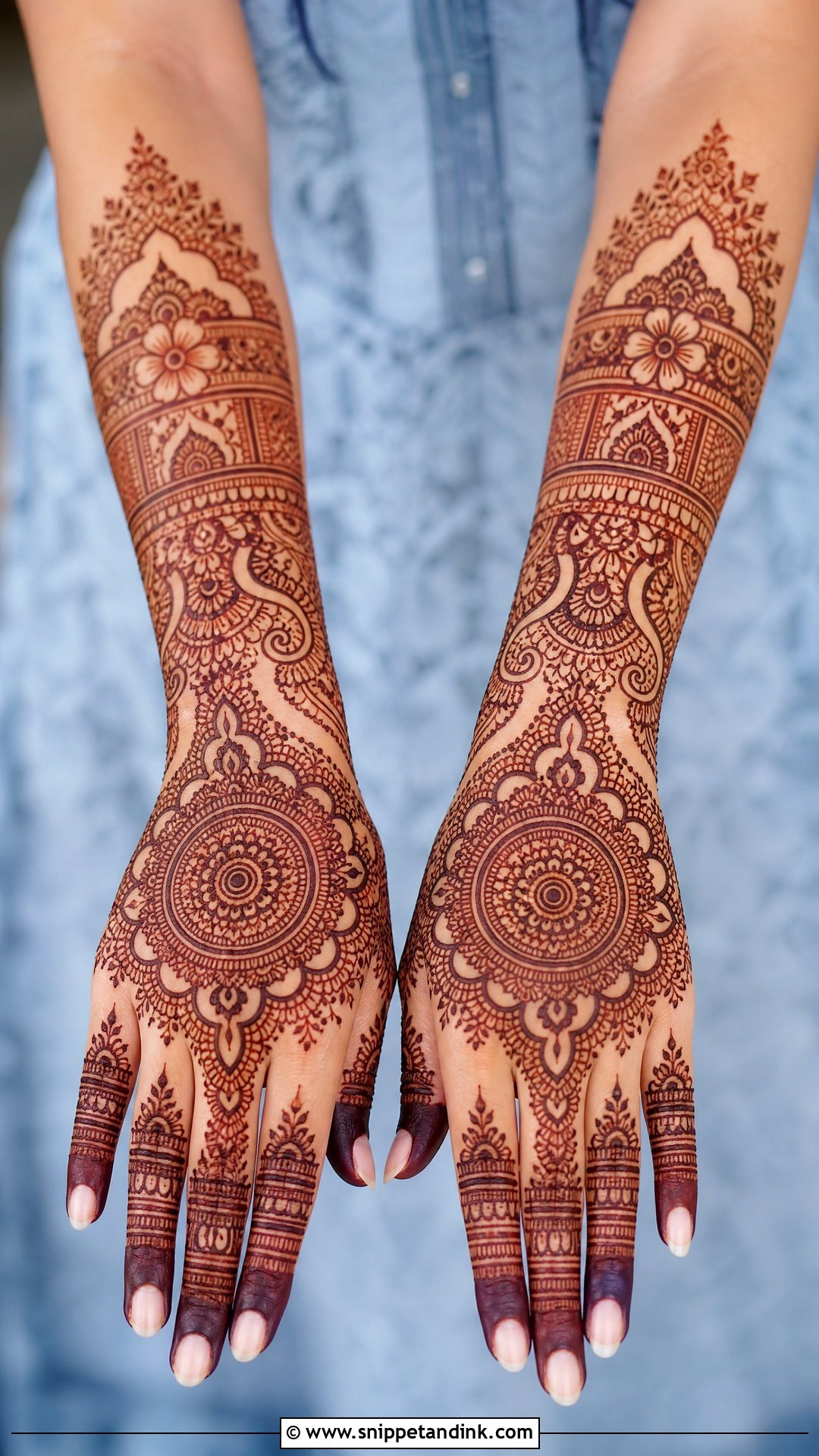
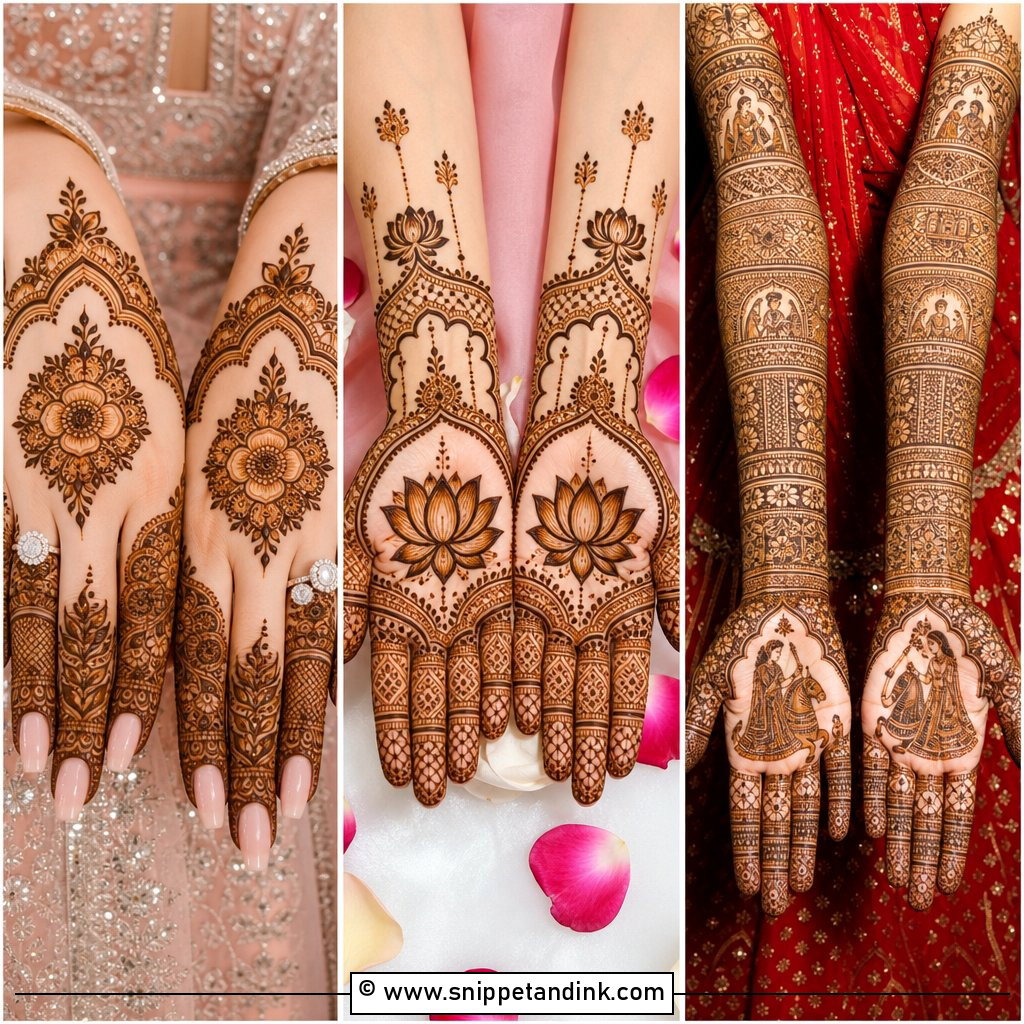
Full coverage on the back hand runs over the fingers, the back of the palm, the wrist and a short way up the forearm. It’s the design I’d match to a heavily embroidered lehenga, saree or gharara at a formal family function. I build it around one large central motif, then add floral bands, paisley curves and filled fingertips. Even full coverage needs neat negative spaces. Without them, the darker areas run together in close-ups. A detailed background also makes a statement ring look settled rather than lost.
2. Simple Back Hand Engagement Mehndi Design
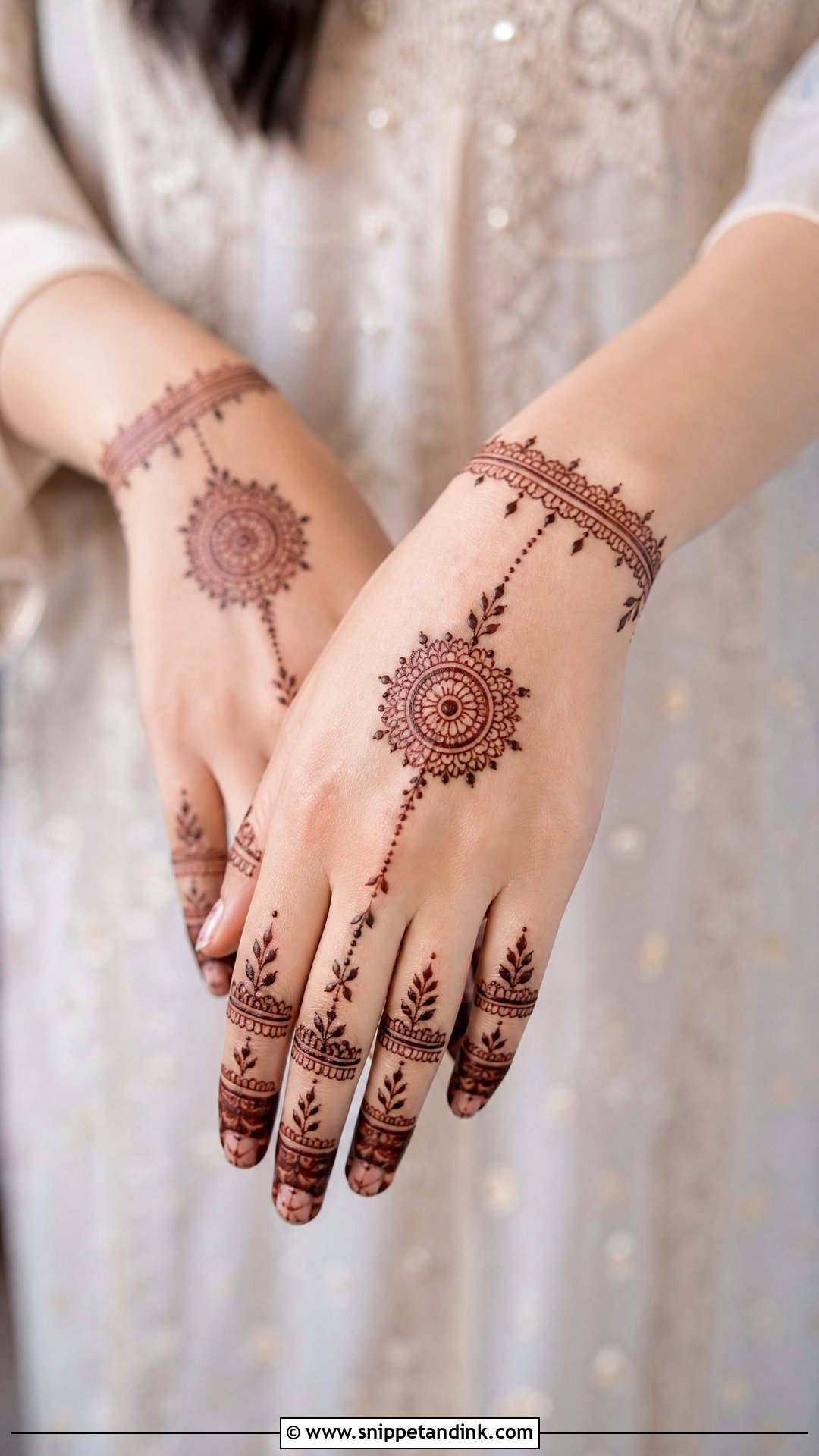
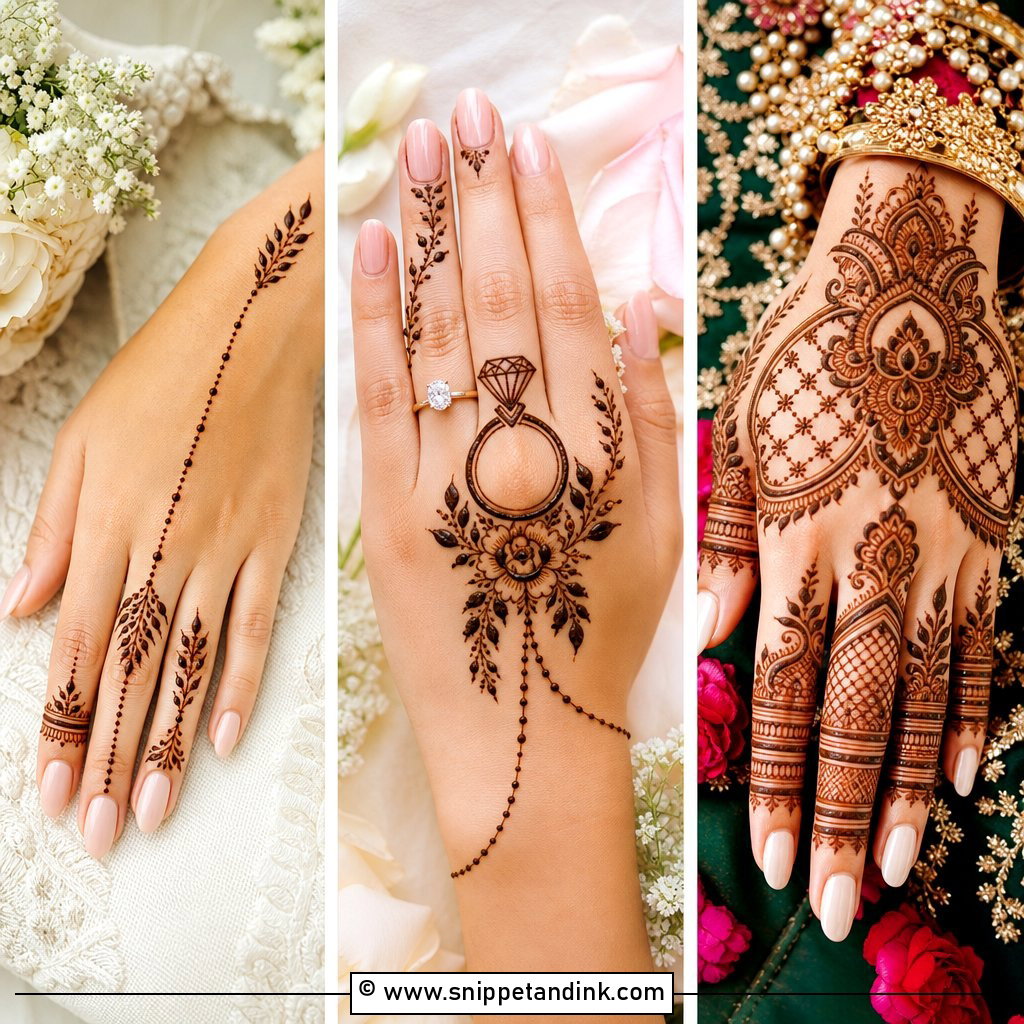
Simple work is the honest choice for a bride who doesn’t love having henna on for hours. A floral trail, a small mandala, dotted lines and lightly filled fingers, kept to the hand rather than climbing the arm. It suits a daytime or intimate ceremony and lets the nails, jewelry and outfit share attention. Because there’s so little on the skin, uneven spacing is obvious. I draw the finger details as a matched set on both hands, which is what keeps it looking bridal.
3. Arabic Back Hand Engagement Mehndi Design
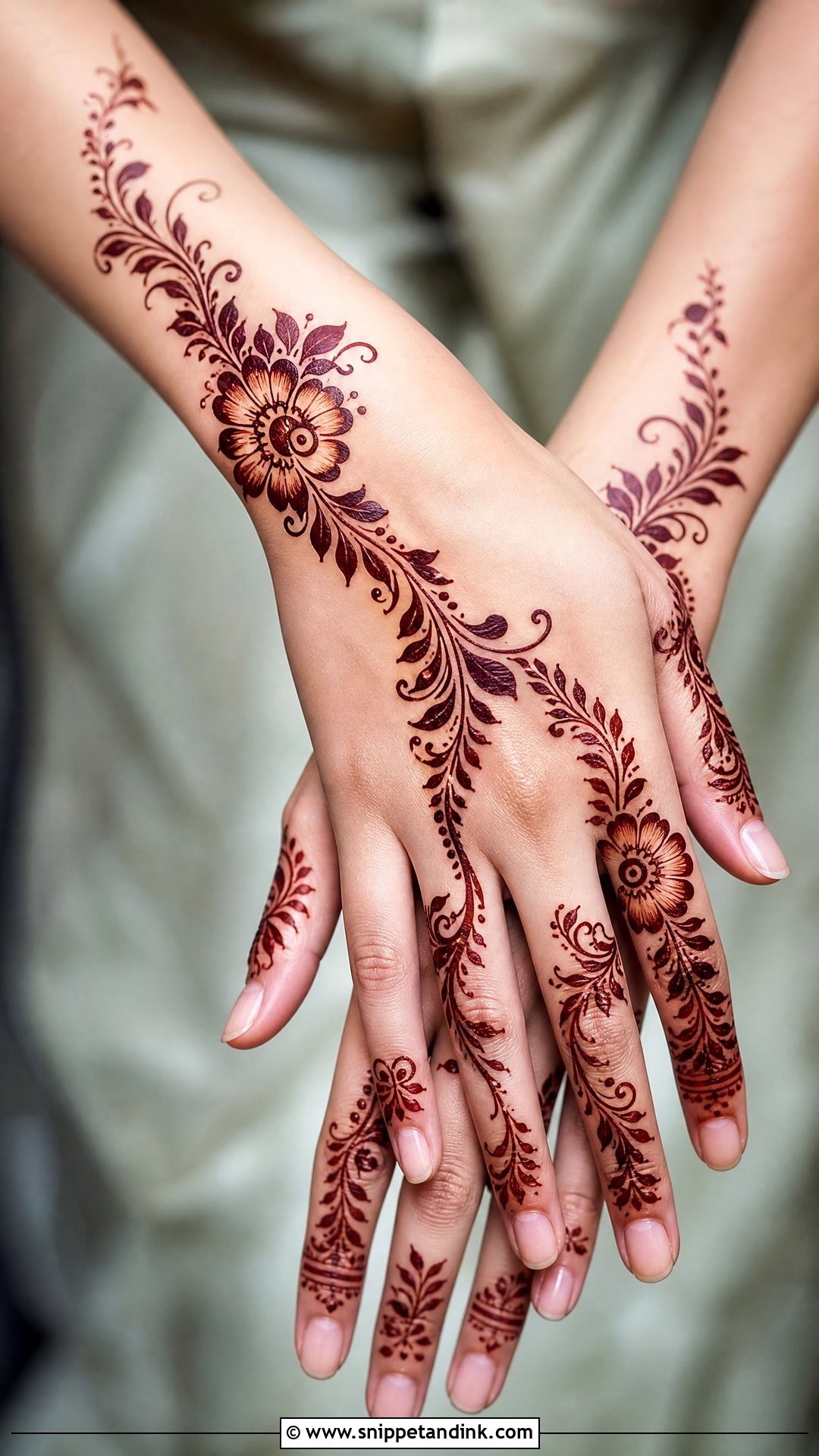
The diagonal sweep from wrist to index finger is what makes Arabic work so flattering. It visually lengthens the hand in photos. Large flowers, leafy vines, curved strokes and shaded petals fill the trail, with open skin around it. Less paste on the skin means it dries faster than a dense Indian layout, a real advantage if you’re getting ready at home with a full schedule. I decorate the fingertips but don’t pack them, so the ring stays the focus. It sits well with soft embroidery and pastel outfits.
4. Indian Back Hand Engagement Mehndi Design
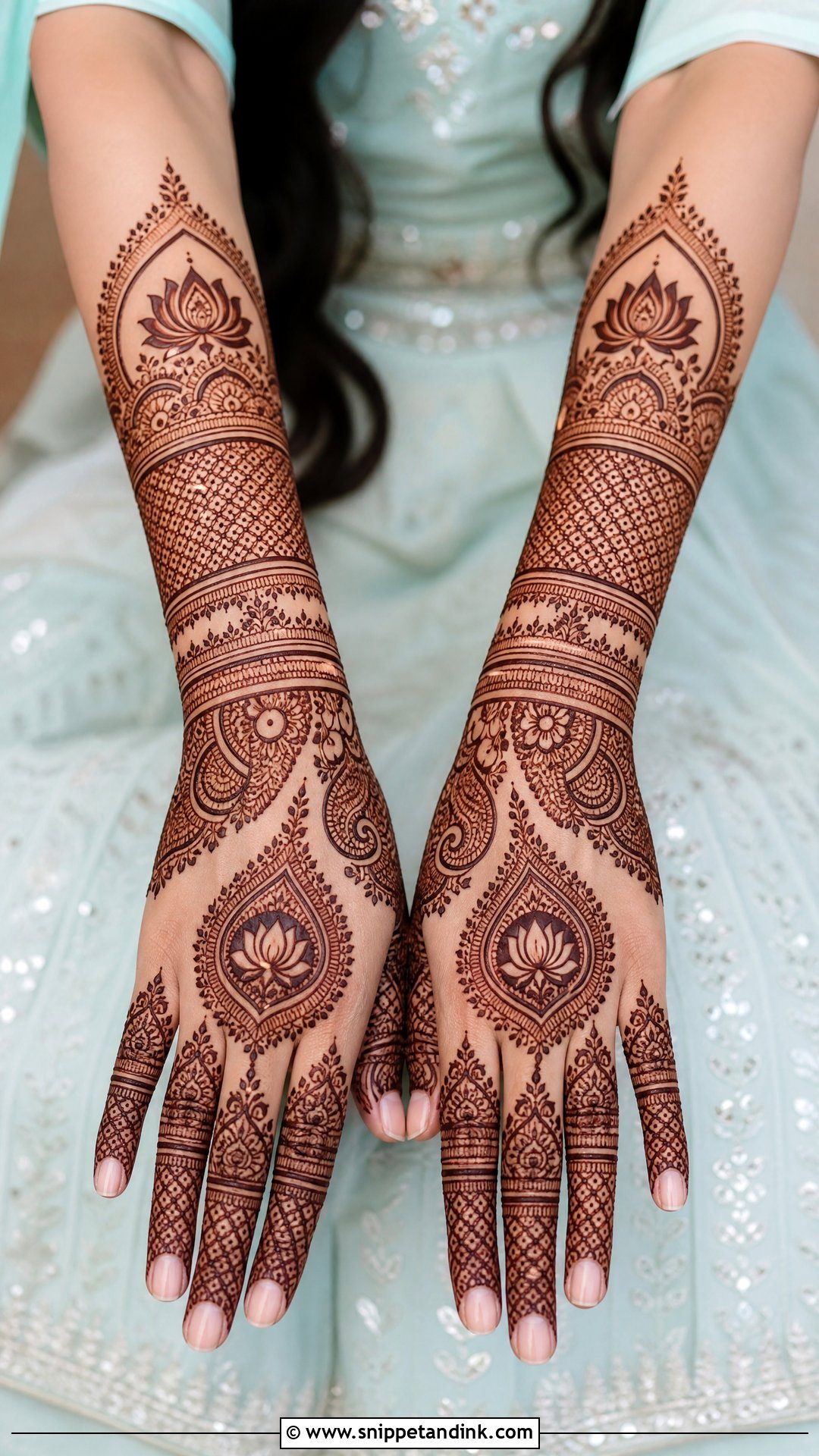
Indian layouts are dense and symmetrical, built from paisleys, lotus motifs, small florals, jaali and curved borders. For an engagement, I keep the structure but use fewer fillers than I would for the wedding, so there’s still somewhere to go on the big day. A central mandala or paisley cluster anchors the back hand, a bangle-style border finishes the wrist, and fine lines and tiny petals complete the fingers. It’s a natural match for red, maroon, gold, green or ivory outfits with traditional jewelry.
5. Indo Arabic Back Hand Engagement Mehndi Design
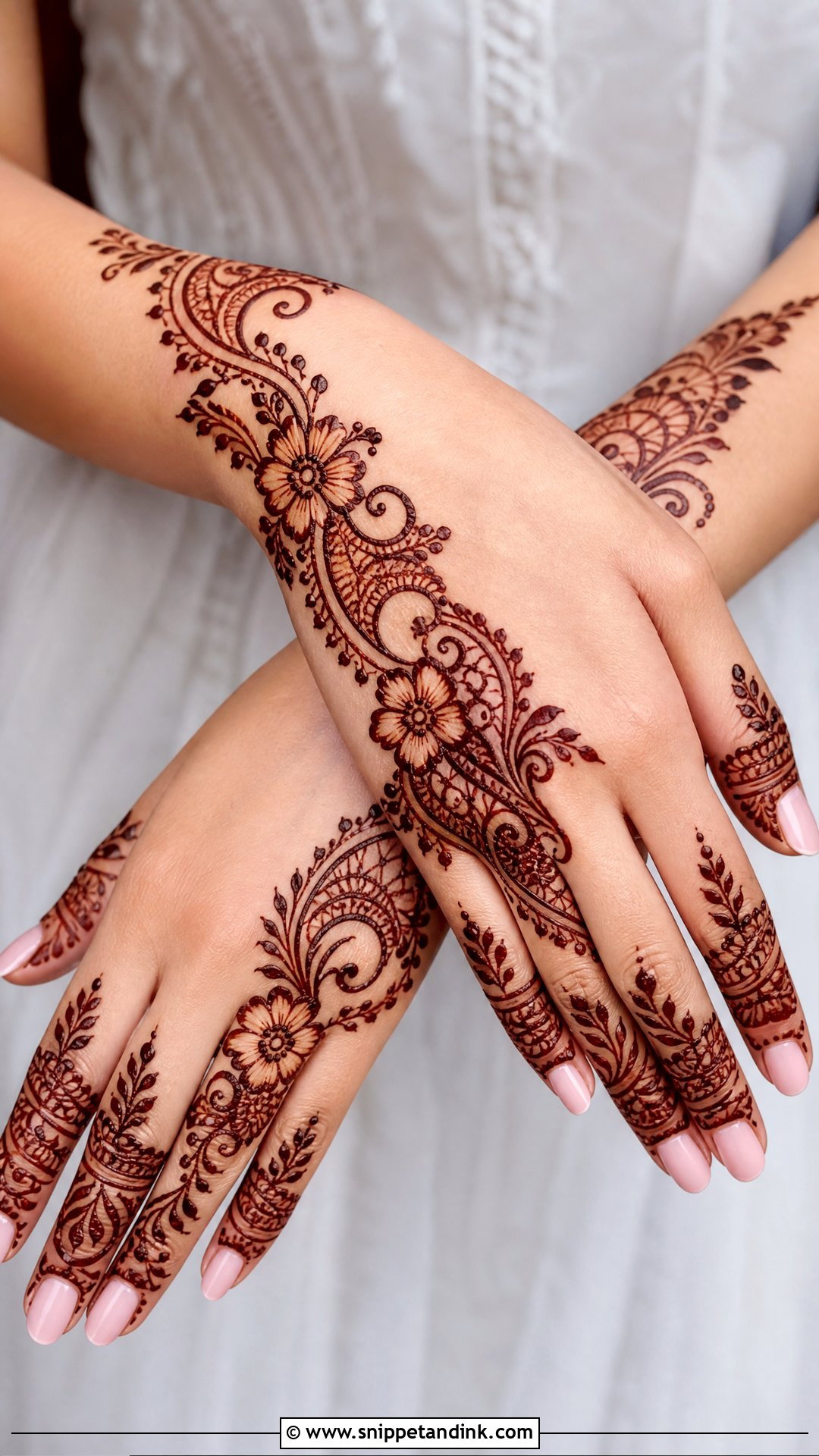
Indo-Arabic mixes the open flow of Arabic work with Indian detail: bold flowers next to fine fillers. It usually starts at the wrist and crosses the back hand diagonally or in a half-covered layout, with paisleys, vines, small mandalas and mesh sections. The tricky part is proportion. Too many Indian fillers and it loses the airy Arabic feel. For engagement photos, I keep the finger work clean and taper the wrist extension so it sits neatly under bangles.
6. Mandala Back Hand Engagement Mehndi Design
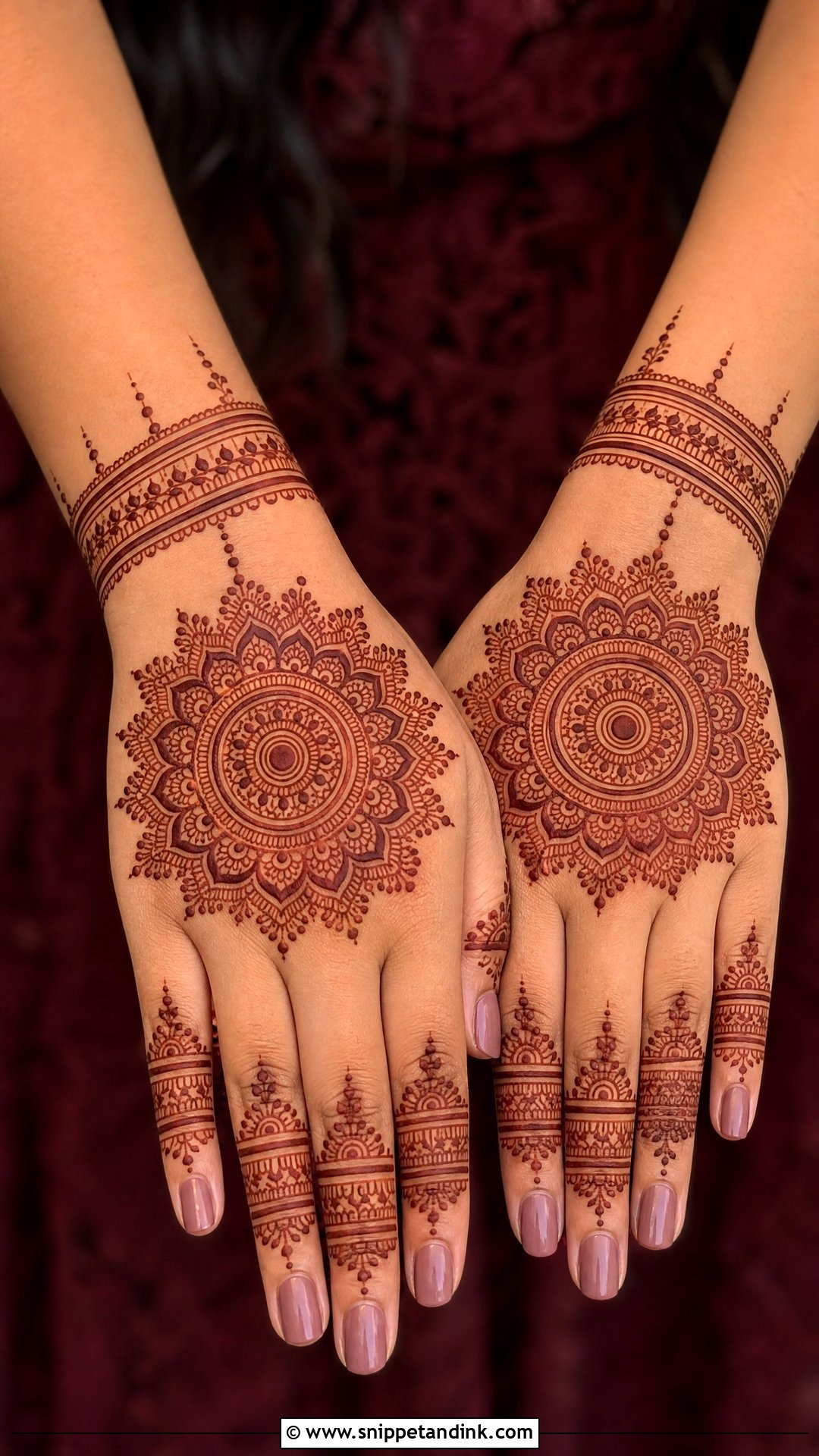
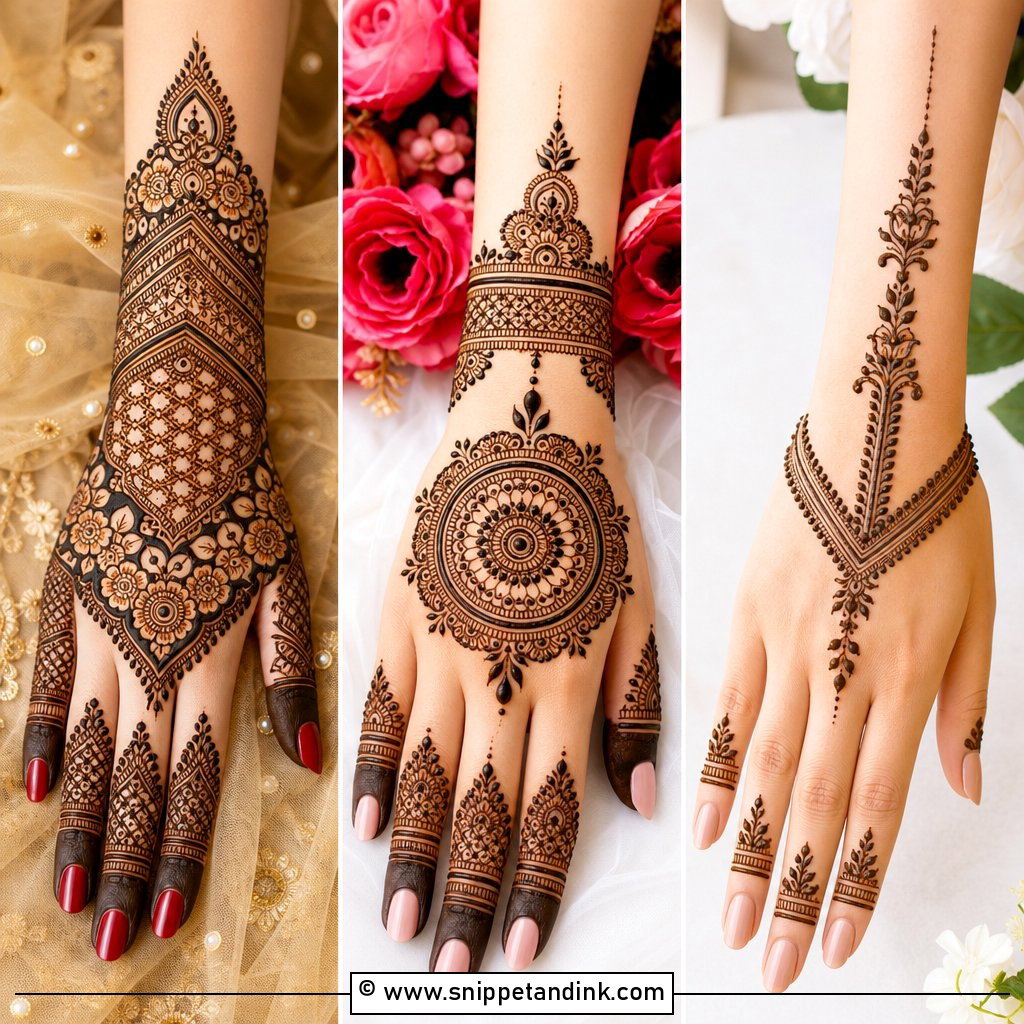
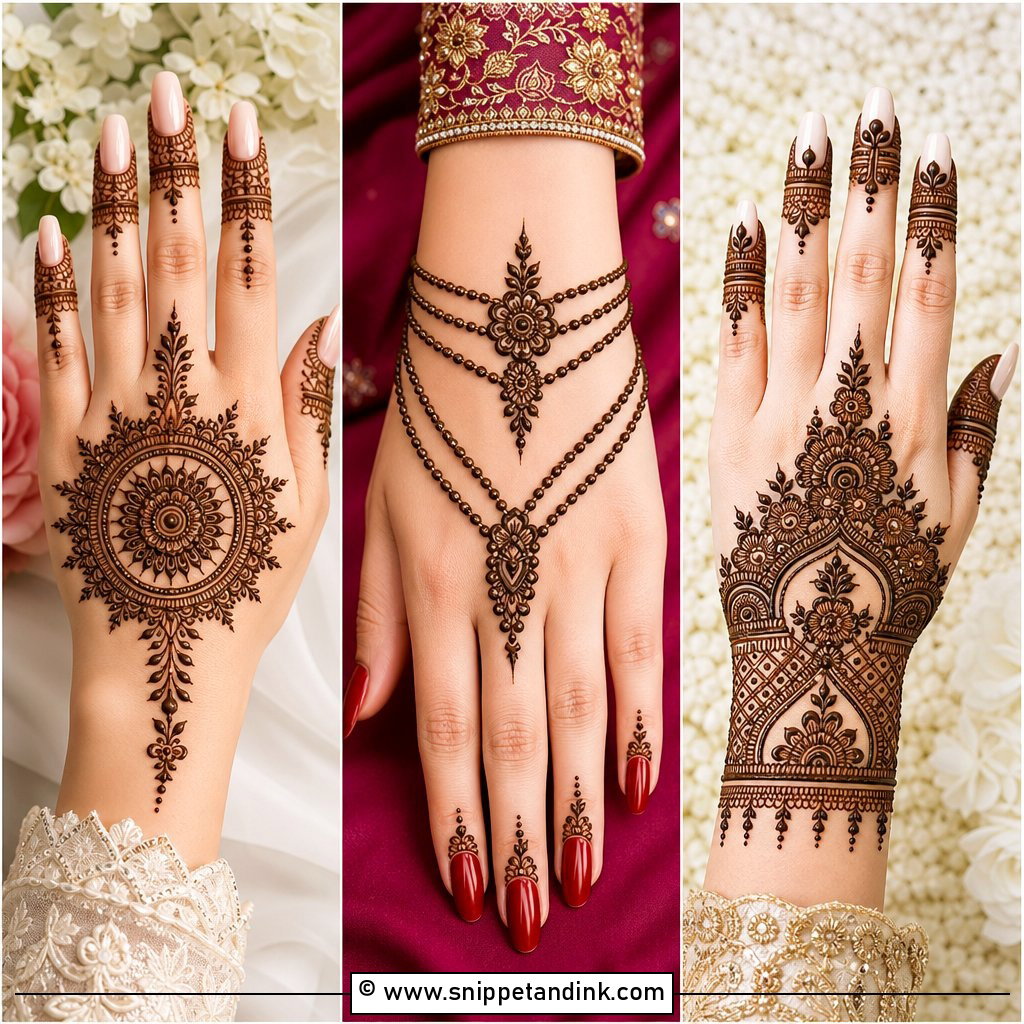
A centered mandala keeps the middle of the hand clear and symmetrical, which is why it looks so tidy at the ring exchange. It can be small and plain or large with layered petals, dots and fine borders. I start the circle from the very center and work outward ring by ring, because starting from the edge almost always leaves it lopsided. Matching details go on the fingers and wrist, and a few bracelet lines add a jewelry feel. Almost any hand shape suits it.
7. Floral Back Hand Engagement Mehndi Design
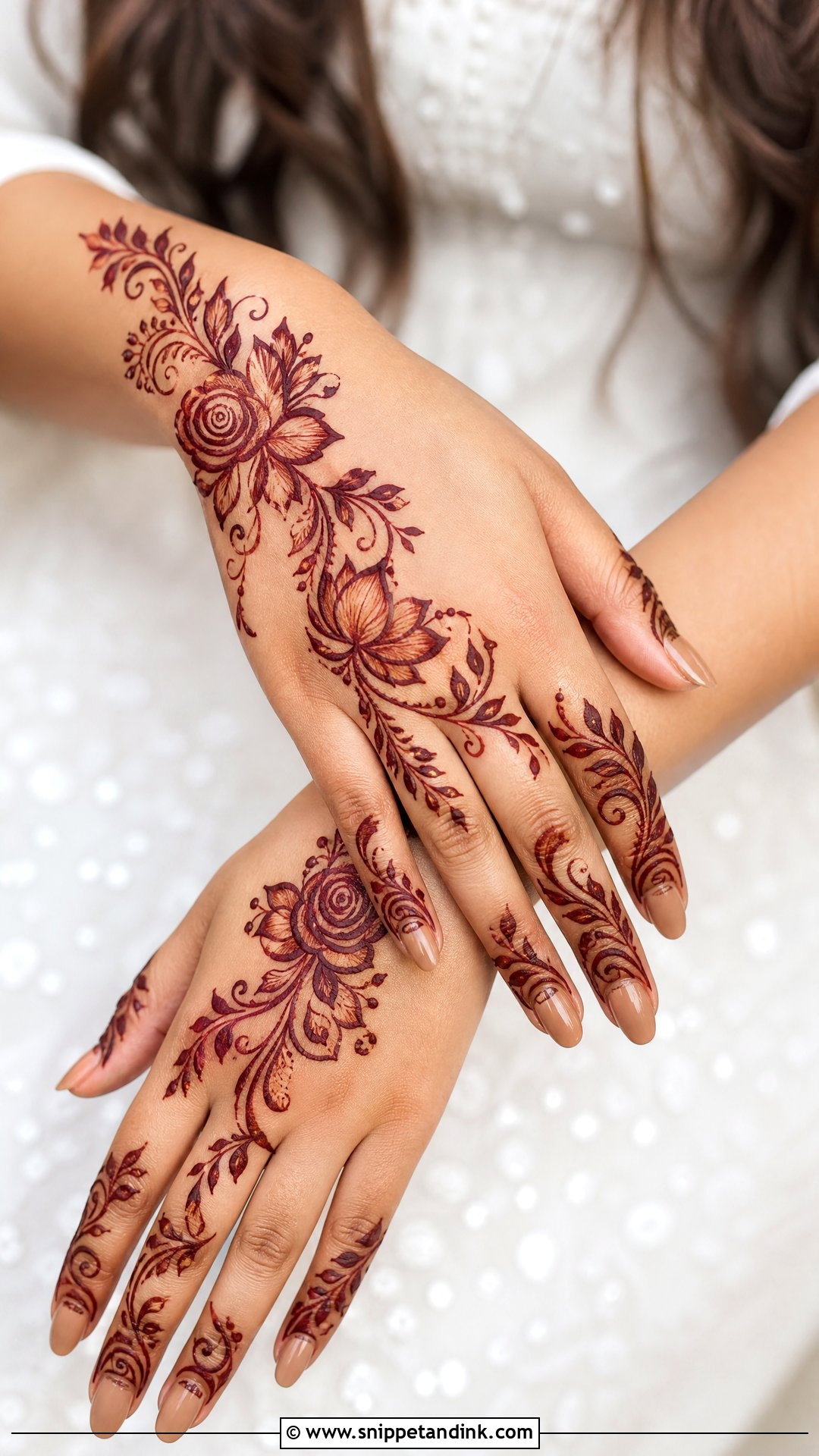
Flowers across the back hand read romantic: roses, lotus petals, small blossoms, leafy stems and shaded vines. They can run as a side trail, a circular cluster or a full-hand layout. For an engagement I keep the detail moderate, festive but not overwhelming, and finish with fine finger patterns and a light wrist band. Florals rarely date, so they still look right when you scroll back through photos years later. Pastel outfits and pearl jewelry suit them well.
8. Rose Back Hand Engagement Mehndi Design
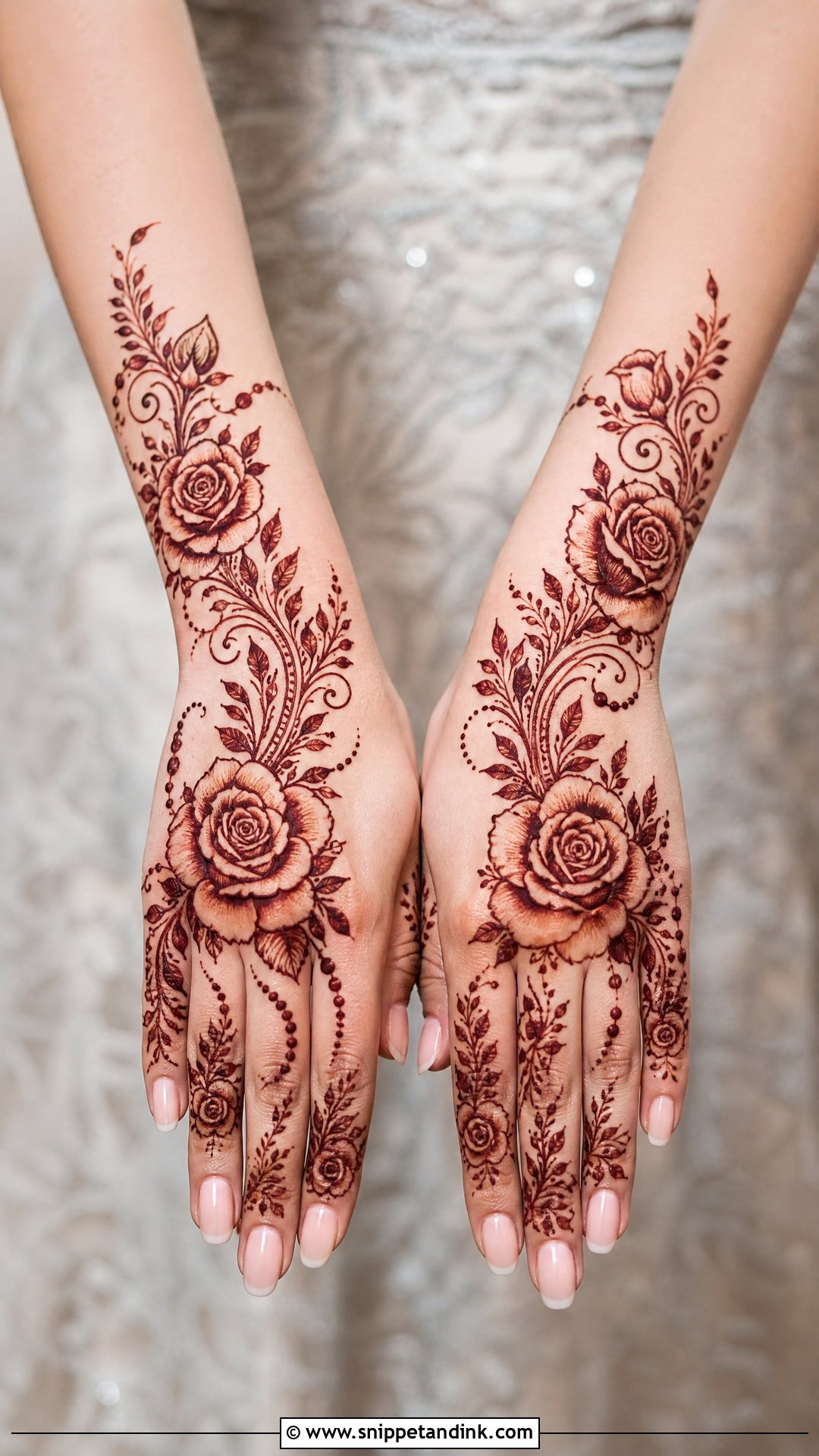
Roses fill space faster than tiny flowers, so a rose design looks rich with less coverage, which also means less time in the chair. I place one large rose near the center and let smaller ones travel toward the wrist and fingers, linked with leafy curves, dots and light shading. The outline has to be bold and the inner petal lines clean, or the rose turns into a blob when the stain deepens. Blush, peach, champagne or deep red outfits and delicate rings carry the look.
9. Jewelry Back Hand Engagement Mehndi Design
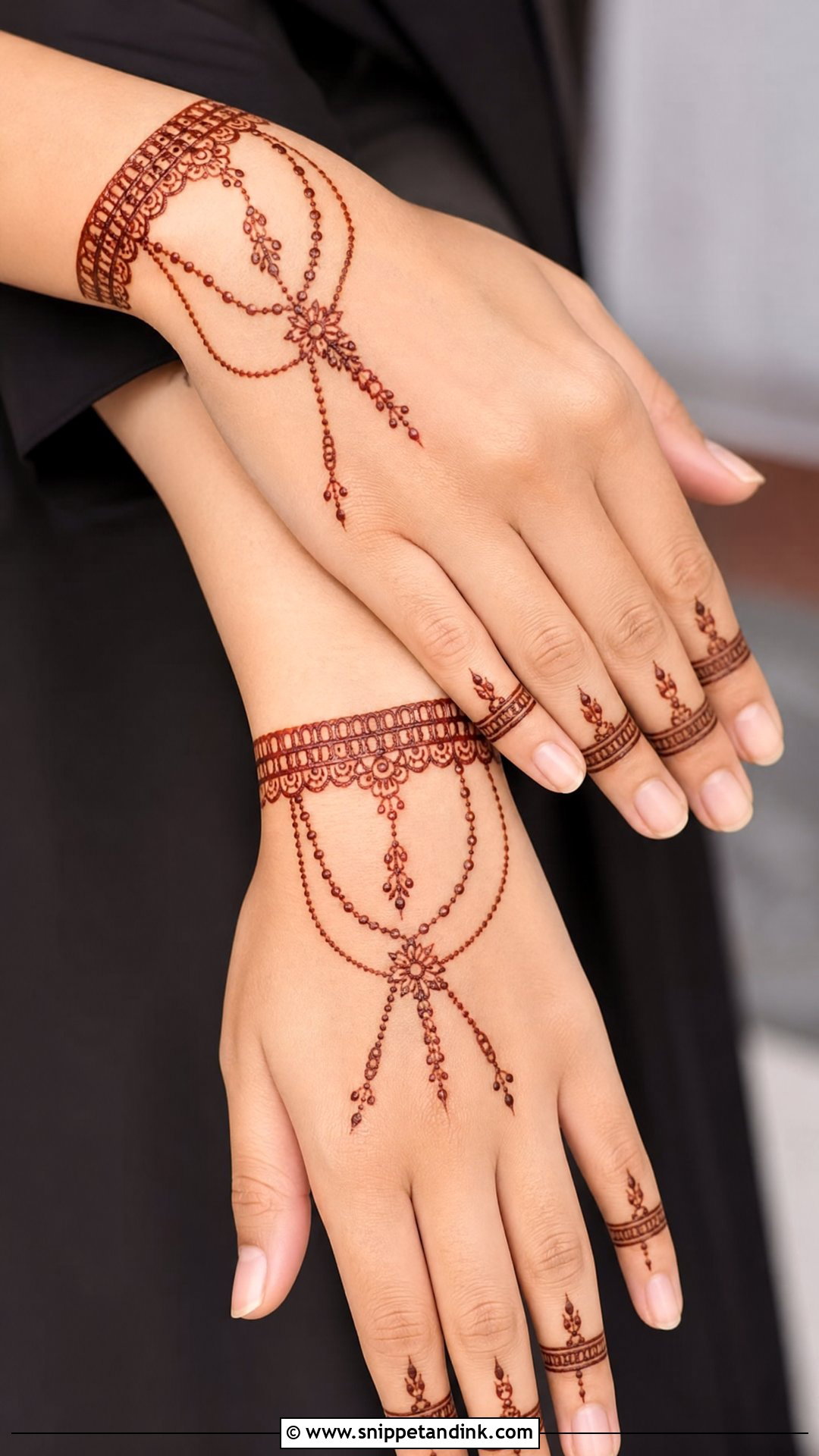
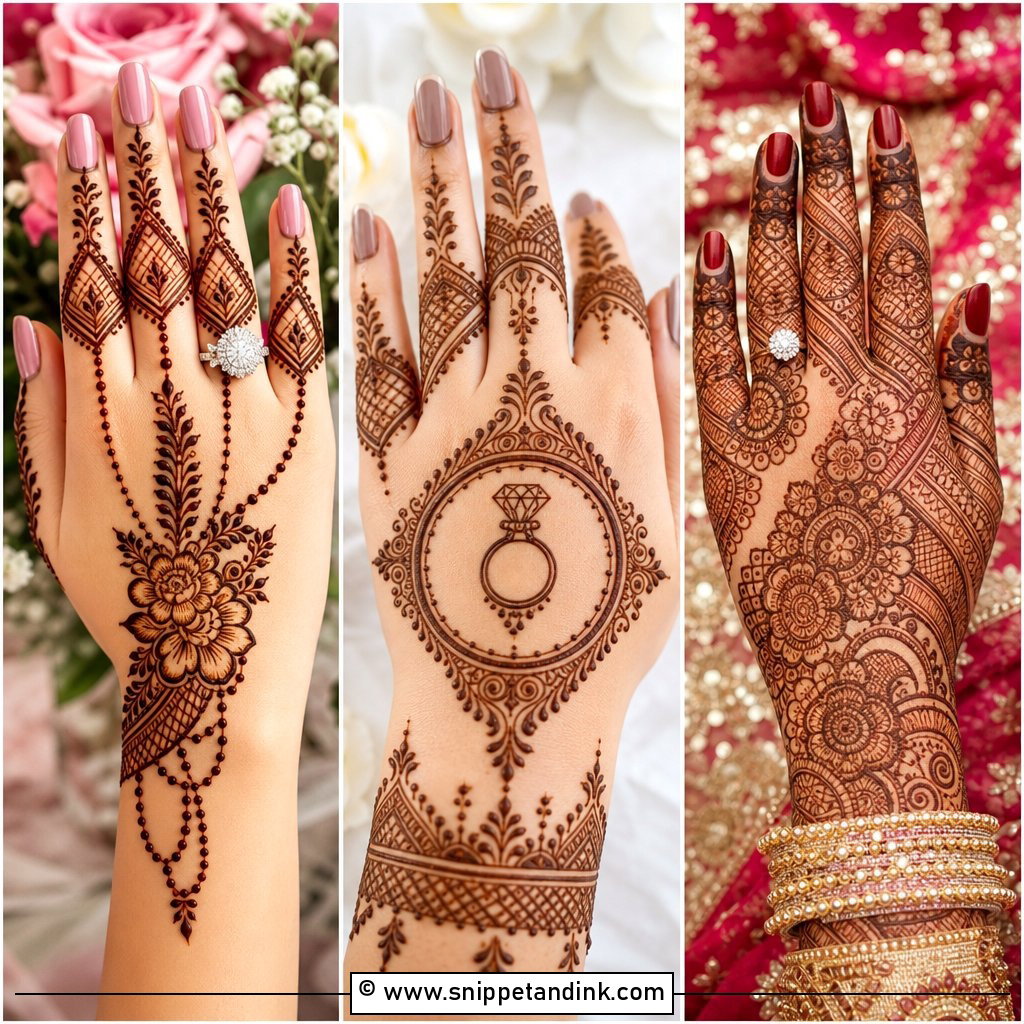
Jewelry mehndi draws accessories in henna: a bracelet band on the wrist, chain-like lines across the hand and ring loops on the fingers. It guides the eye straight to the ring finger. If you’re wearing a statement ring, I keep the henna on that finger fine and light, because a dark stain right beside a stone competes with it. Small flowers, dots and little hanging charms soften the chains. It can be minimal or detailed to match the outfit.
10. Ring Ceremony Back Hand Engagement Mehndi Design
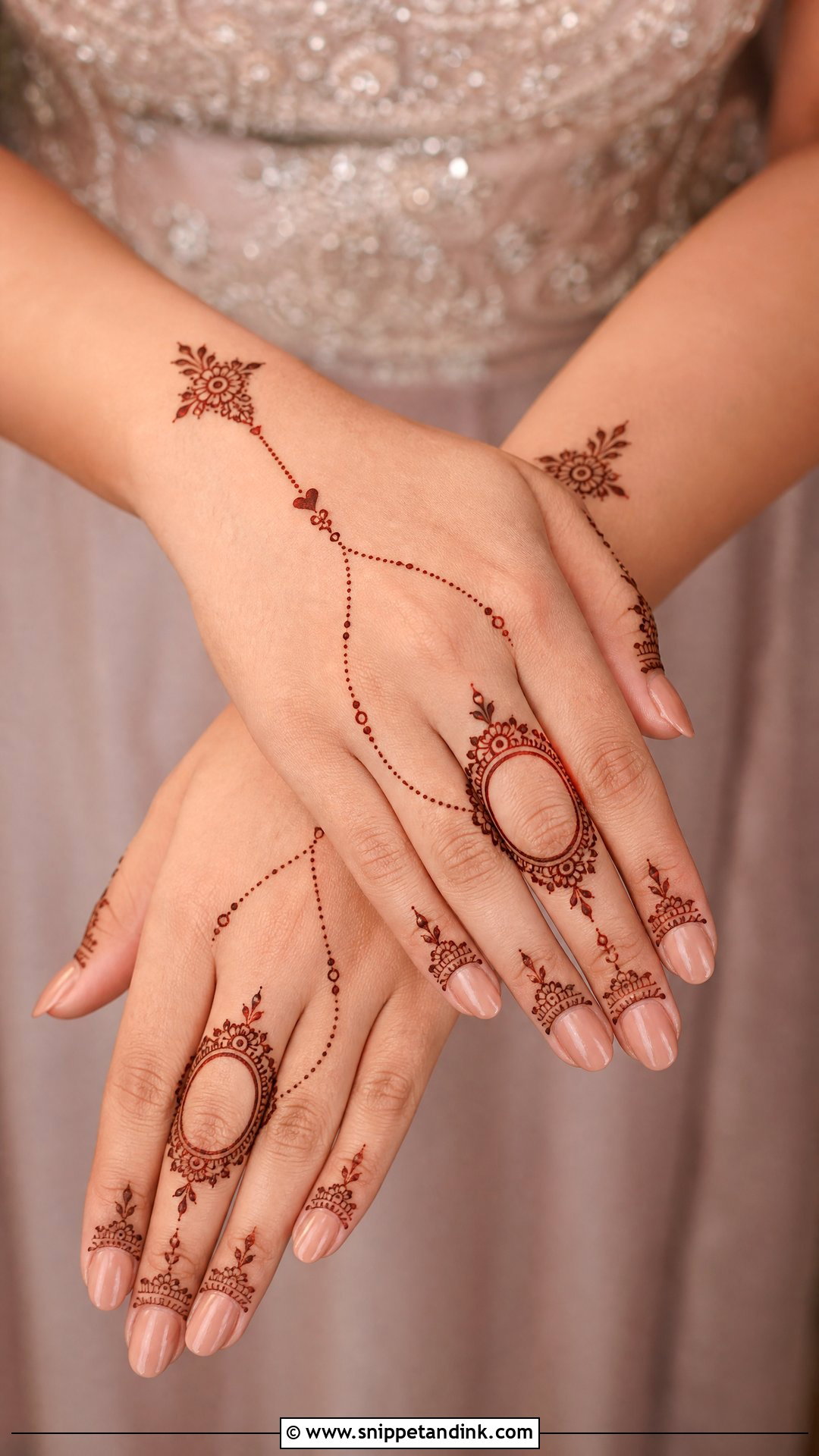
A ring ceremony design builds everything around one finger. The focus sits at the ring finger and connects to a wrist bracelet or a central motif, with tiny hearts, floral chains, initials or a delicate ring frame. I keep the rest of the back hand balanced and quieter so it doesn’t fight the actual ring. Clean lines, small dots and soft curves are all it needs. This is the layout I’d suggest when the ring exchange photos matter more to you than anything else on the day.
11. Bridal Back Hand Engagement Mehndi Design
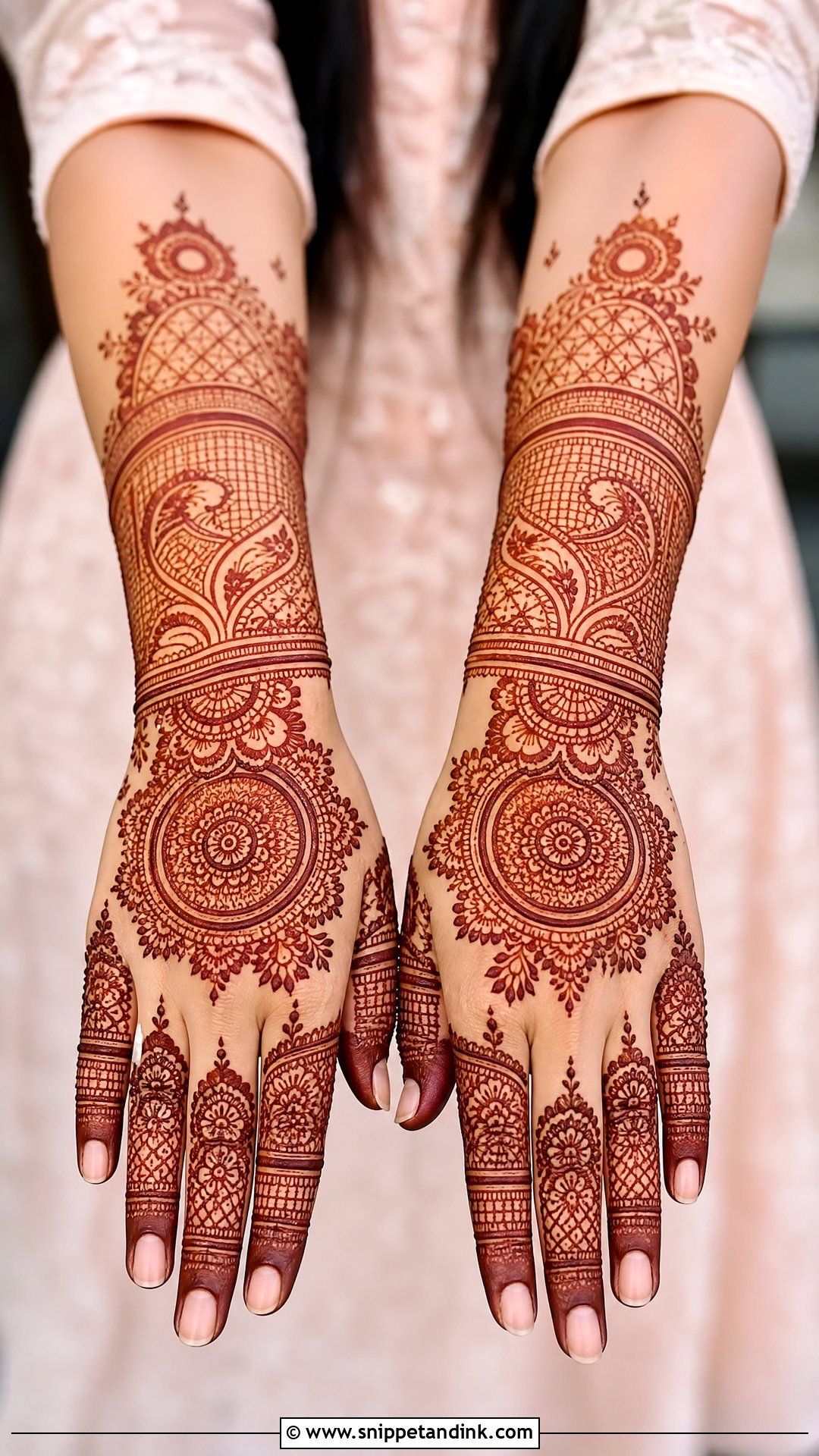
Bridal-level engagement work is for the bride who wants this function to feel grand. It’s more detailed than Arabic or simple layouts but still lighter than the wedding: paisleys, florals, jaali, mandala circles and filled fingers, often with a short forearm extension that looks complete under bangles and sleeves. Plan on a longer sitting for this one. I still leave small breathing gaps between motifs, so the design reads clearly on camera and doesn’t swallow your jewelry.
12. Modern Back Hand Engagement Mehndi Design
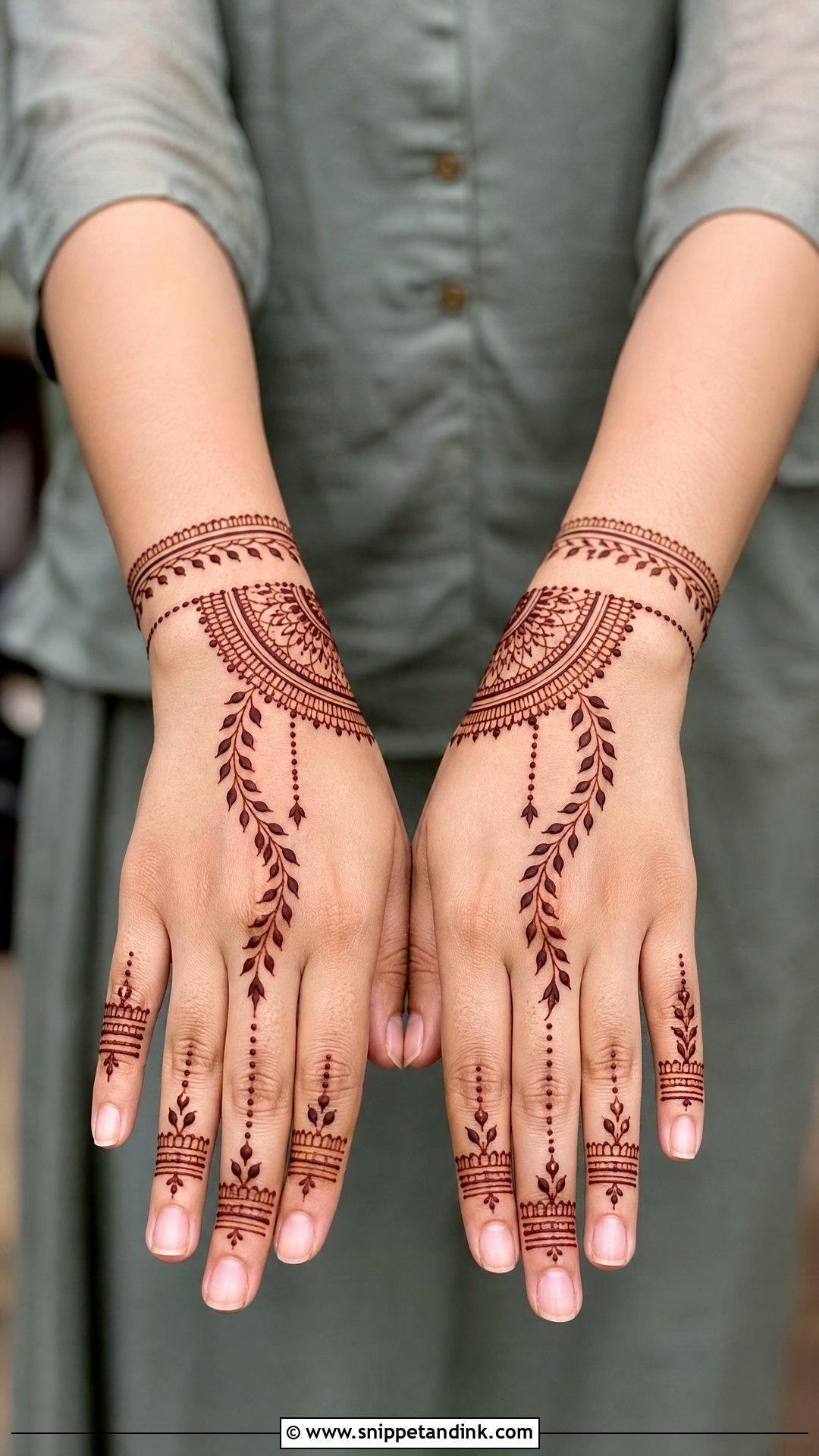
What makes a design modern is control: clean spacing, structure and less clutter. Geometric lines, half mandalas, leafy trails, negative space and sleek finger details all belong here, and asymmetry works well. It can stay on the back hand or reach just past the wrist. I tend to suggest it for gowns, fusion lehengas and modern sarees, or for a bride wearing very little jewelry. Every line has room to breathe, so it moves easily between traditional and contemporary outfits.
13. Minimal Back Hand Engagement Mehndi Design
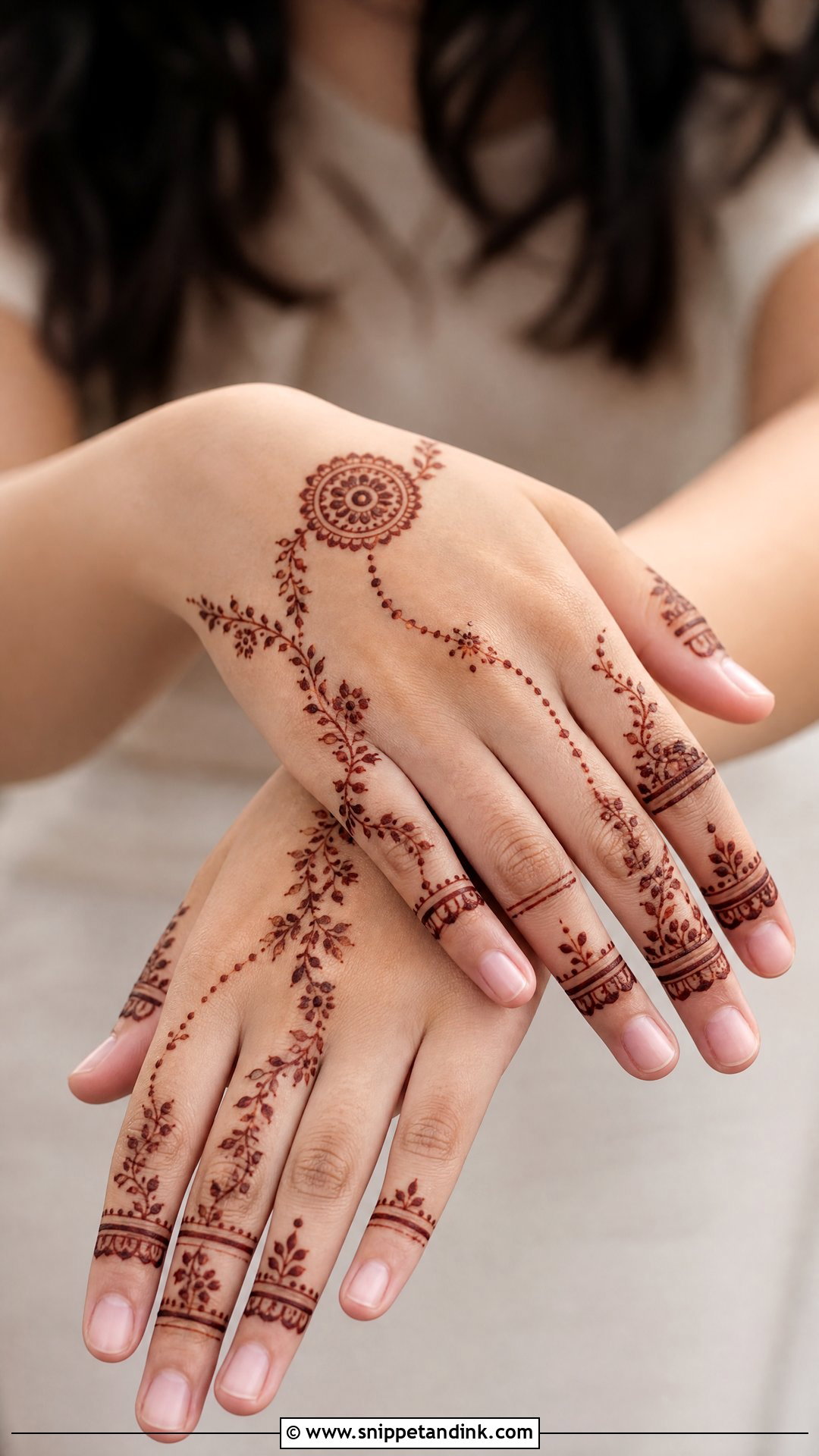
Minimal designs leave most of the skin bare: a small mandala, a fine floral vine, clean finger bands and a little wrist detail. They suit small gatherings, civil ceremonies and brides who don’t usually wear henna. Precision is everything, since there are so few elements. I use a fine-tipped cone and fresh paste for these, because a single blobbed dot is noticeable. Modern rings, pastel nails and simple bangles go well with it.
14. Jaali Back Hand Engagement Mehndi Design
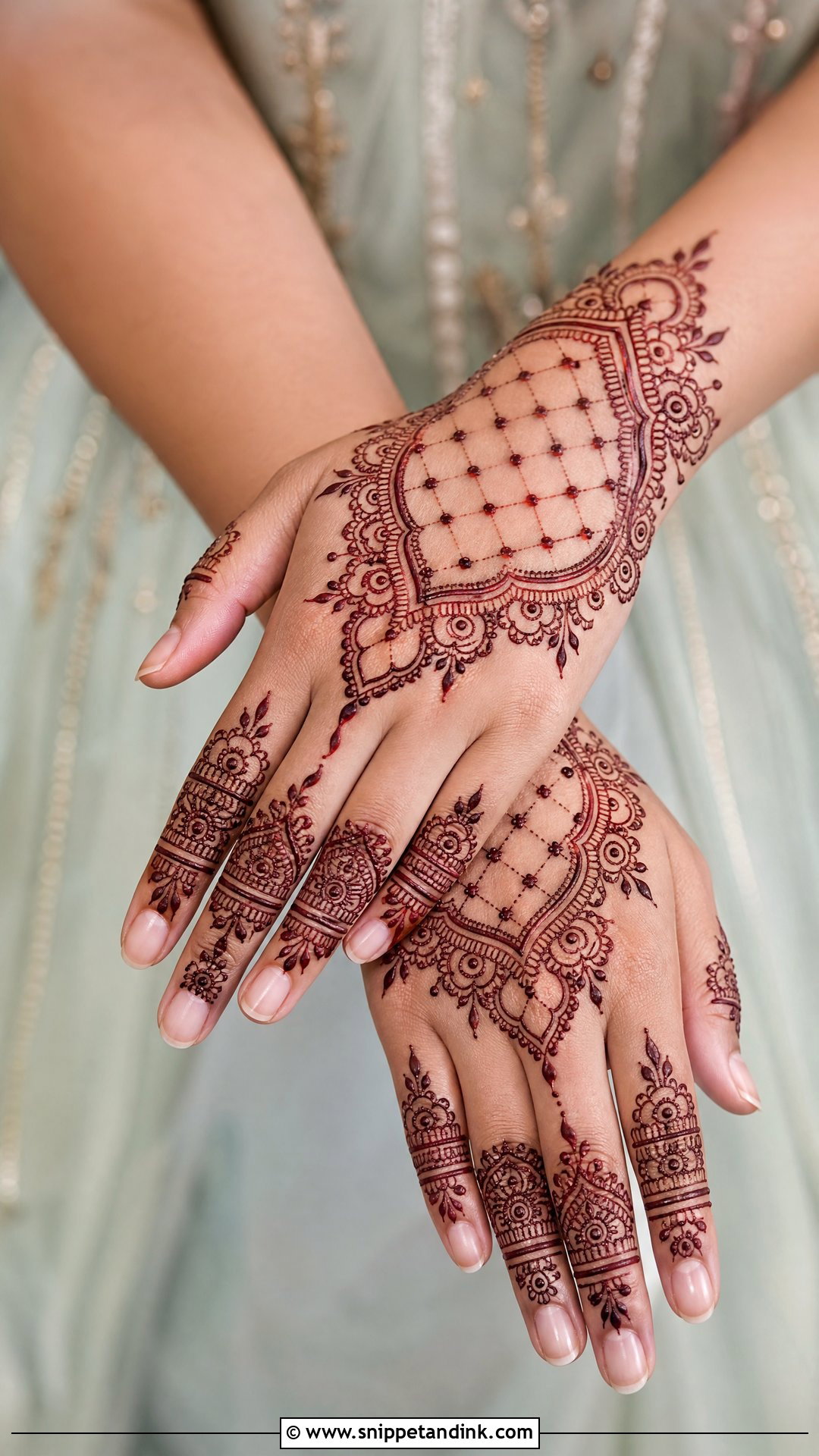
Jaali mesh adds texture without heavy motifs. It can fill the center of the back hand, sit inside a floral frame, or run as a panel from wrist to fingers. The crisscross pattern catches the eye in close-ups. Even spacing is the whole skill. I draw all the lines in one direction first, then cross them, which keeps the boxes regular. Small flowers, leafy borders or paisley edges frame it neatly.

15. Paisley Back Hand Engagement Mehndi Design
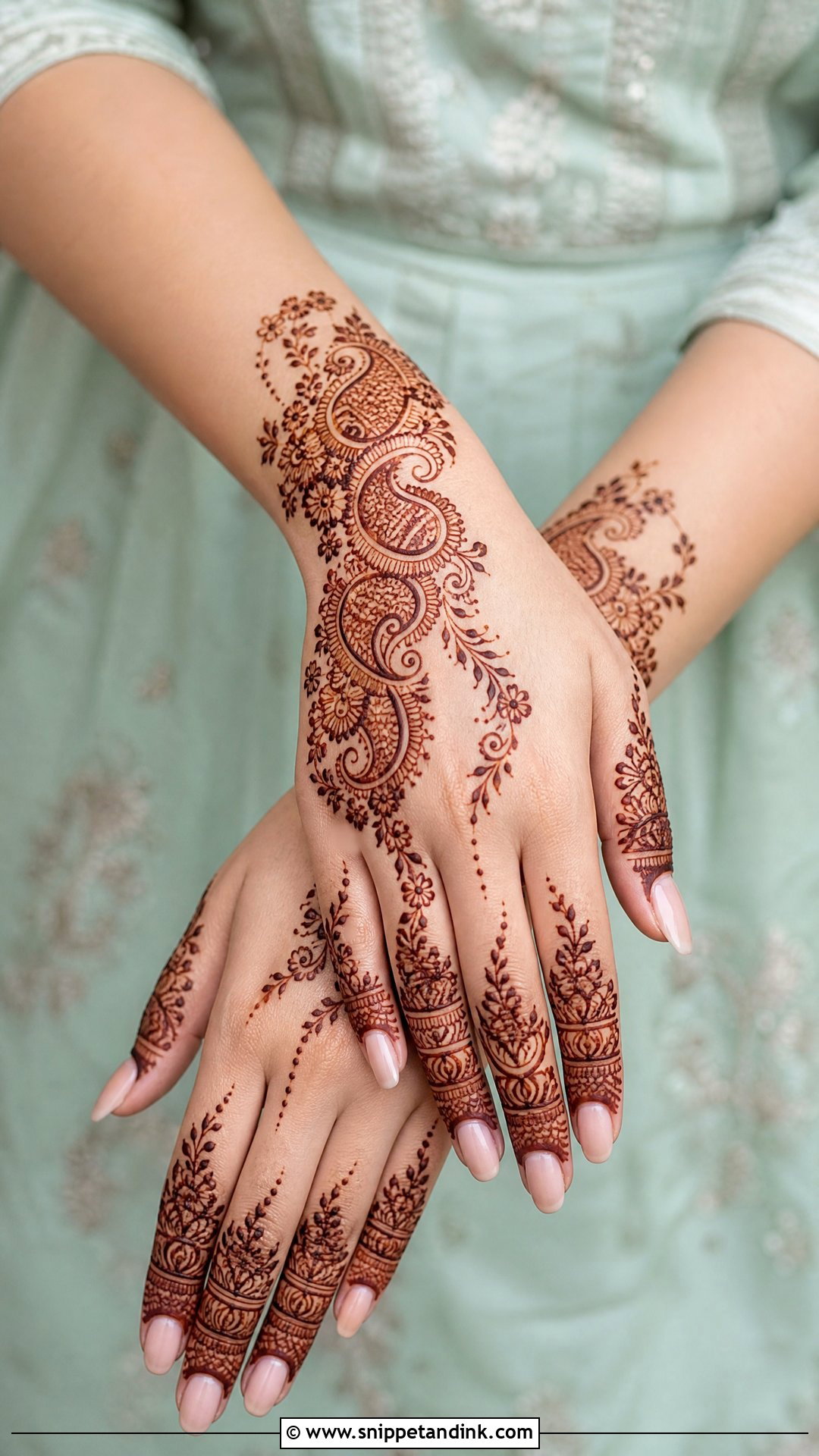
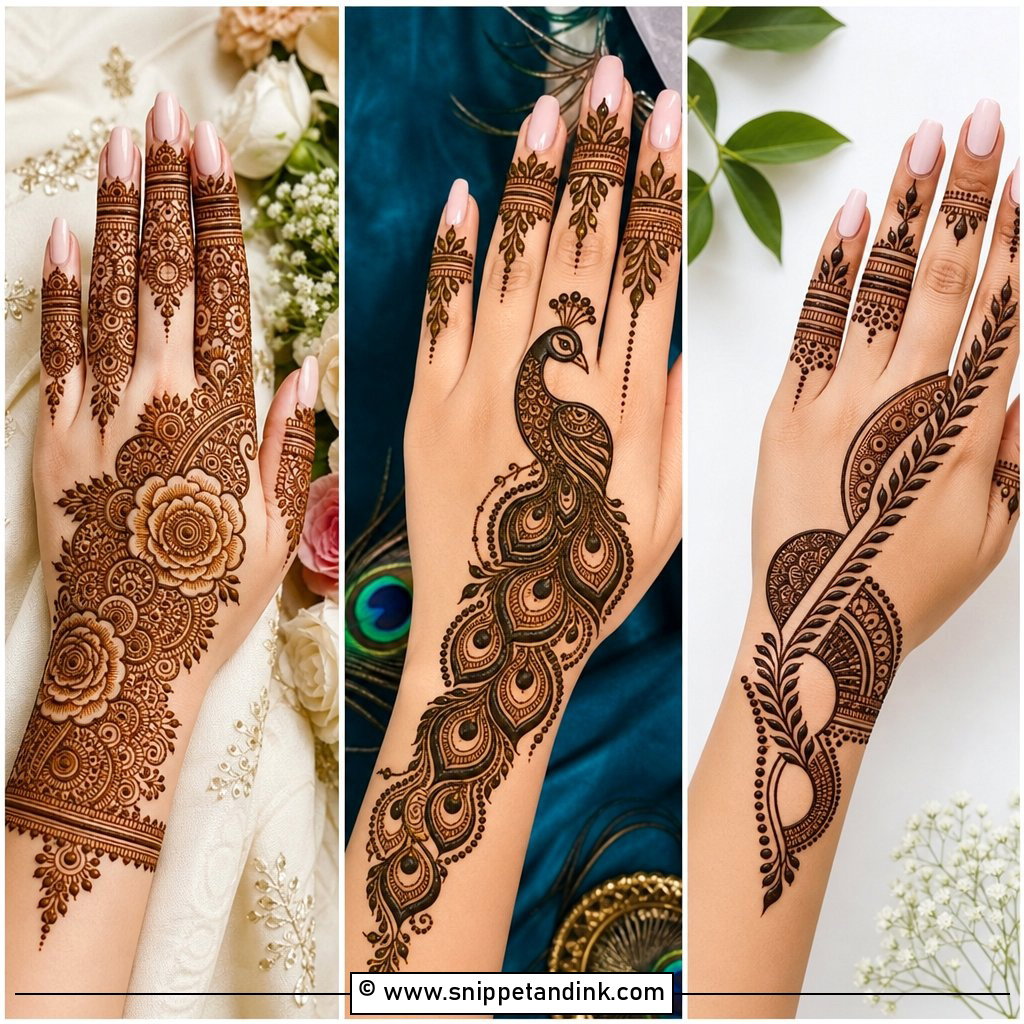
Paisleys, the curved mango shape, give a classic Indian feel. On the back hand they work as a central cluster, a diagonal trail or a wrist-to-finger design, each filled with small flowers, dots and leafy edges. The fill inside each paisley is where I take my time, because that’s what the camera picks up. I keep the fingers detailed but not packed, so the hand doesn’t look heavier than the outfit. Silk, embroidered sleeves and antique jewelry suit it.
16. Peacock Back Hand Engagement Mehndi Design
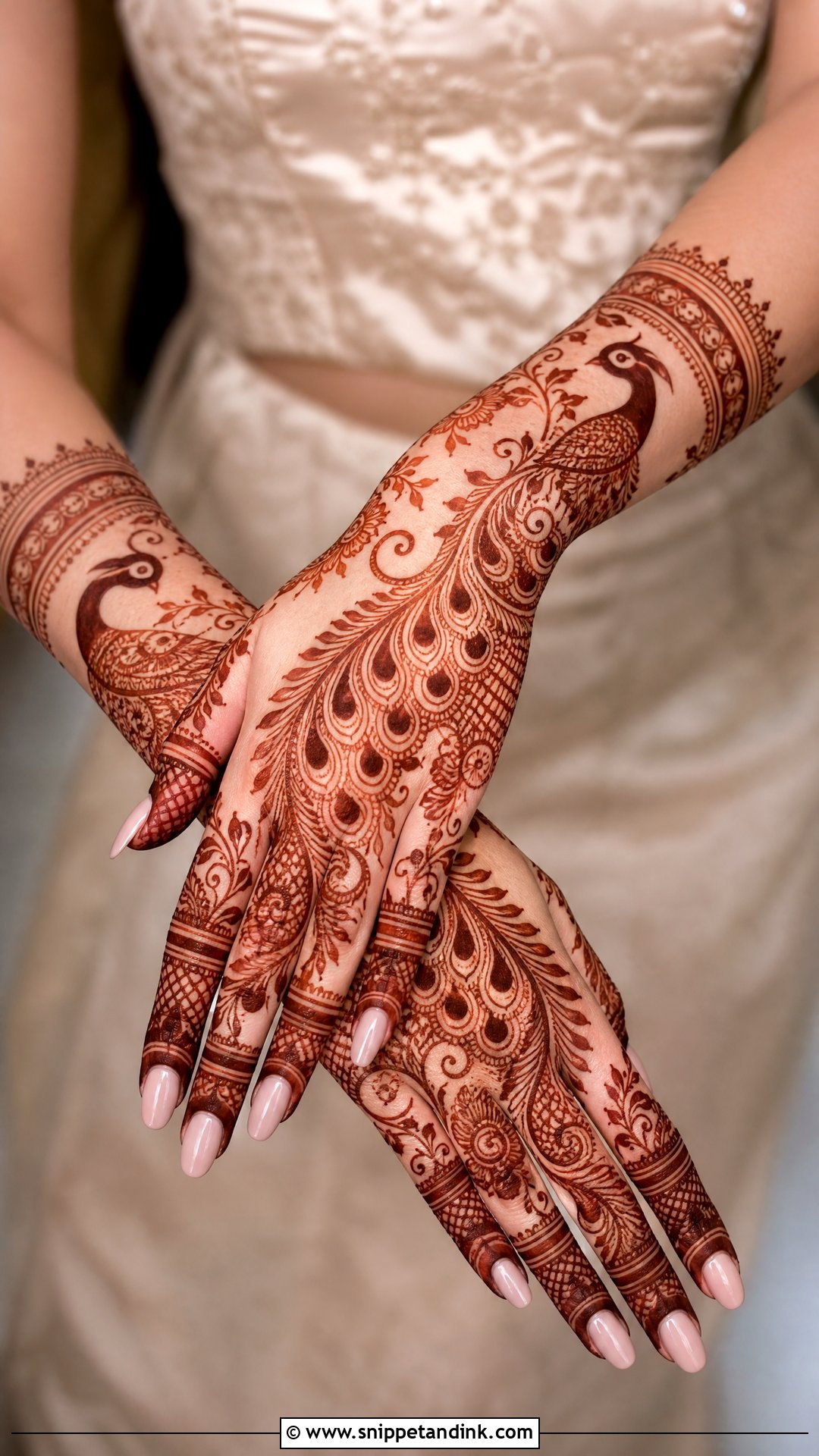
Peacocks give a royal, traditional feel. The bird can sit near the wrist, in the center, or along a curved side trail, its feathers blending into paisleys, florals and leafy lines. One clear peacock nearly always beats several small ones. Tiny peacocks lose their beak and crest detail once the stain spreads slightly, and they end up looking like birds of no particular kind. I finish the fingers with fine patterns so the hand reads as one design.
17. Bracelet Back Hand Engagement Mehndi Design
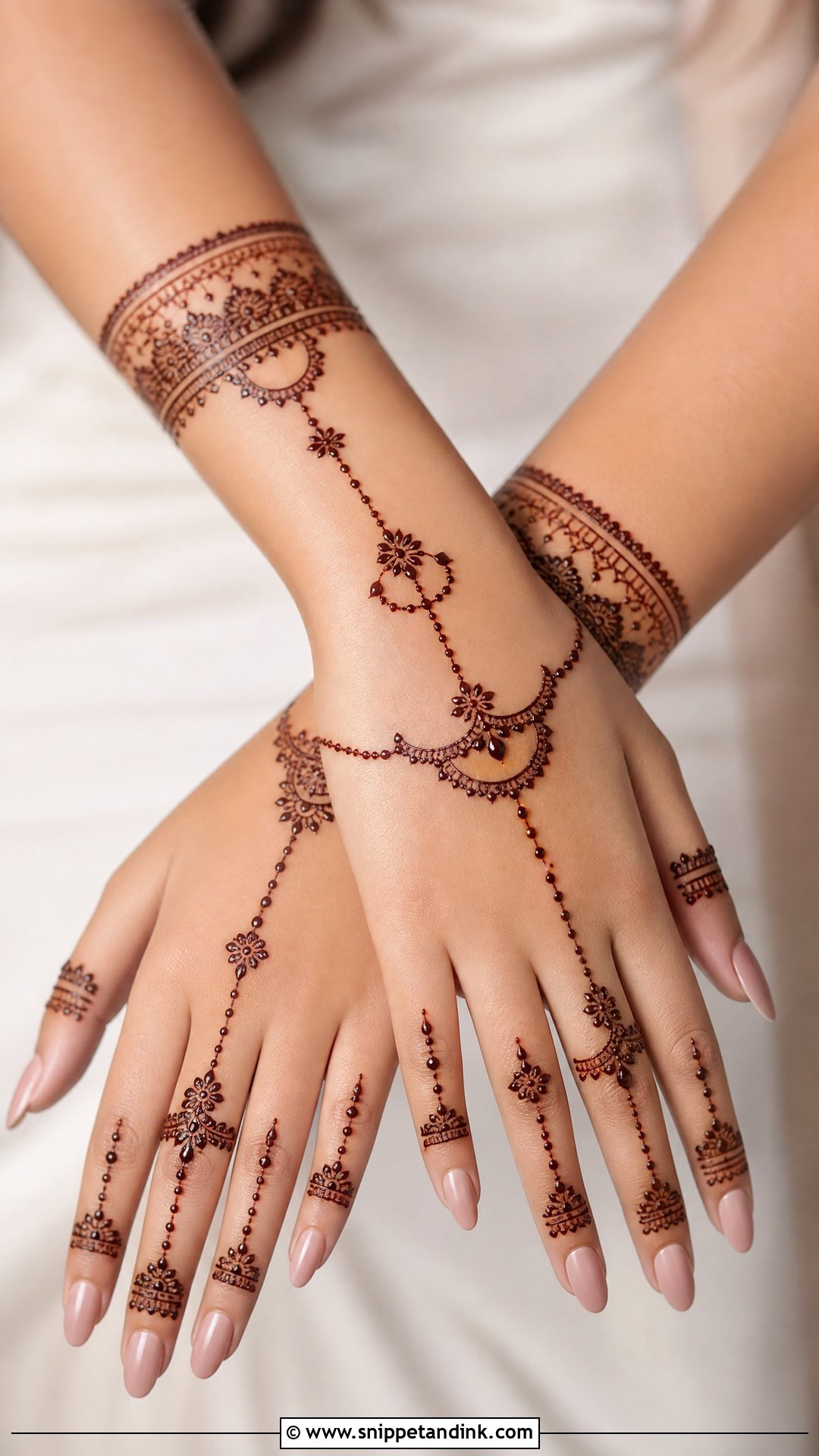
A bracelet design draws a hand chain: a wrist band, fine chains, finger rings and small hanging details, softened with flowers, dots, leafy charms or tiny mandalas. It’s much lighter than full coverage. Before I draw the band, I ask the bride to put her bangles on so I can place it just above or below them. Henna hidden under metal is wasted, and the bangles would smudge it while it’s wet. It looks neat and modern in ring photos.
18. Gulf Back Hand Engagement Mehndi Design
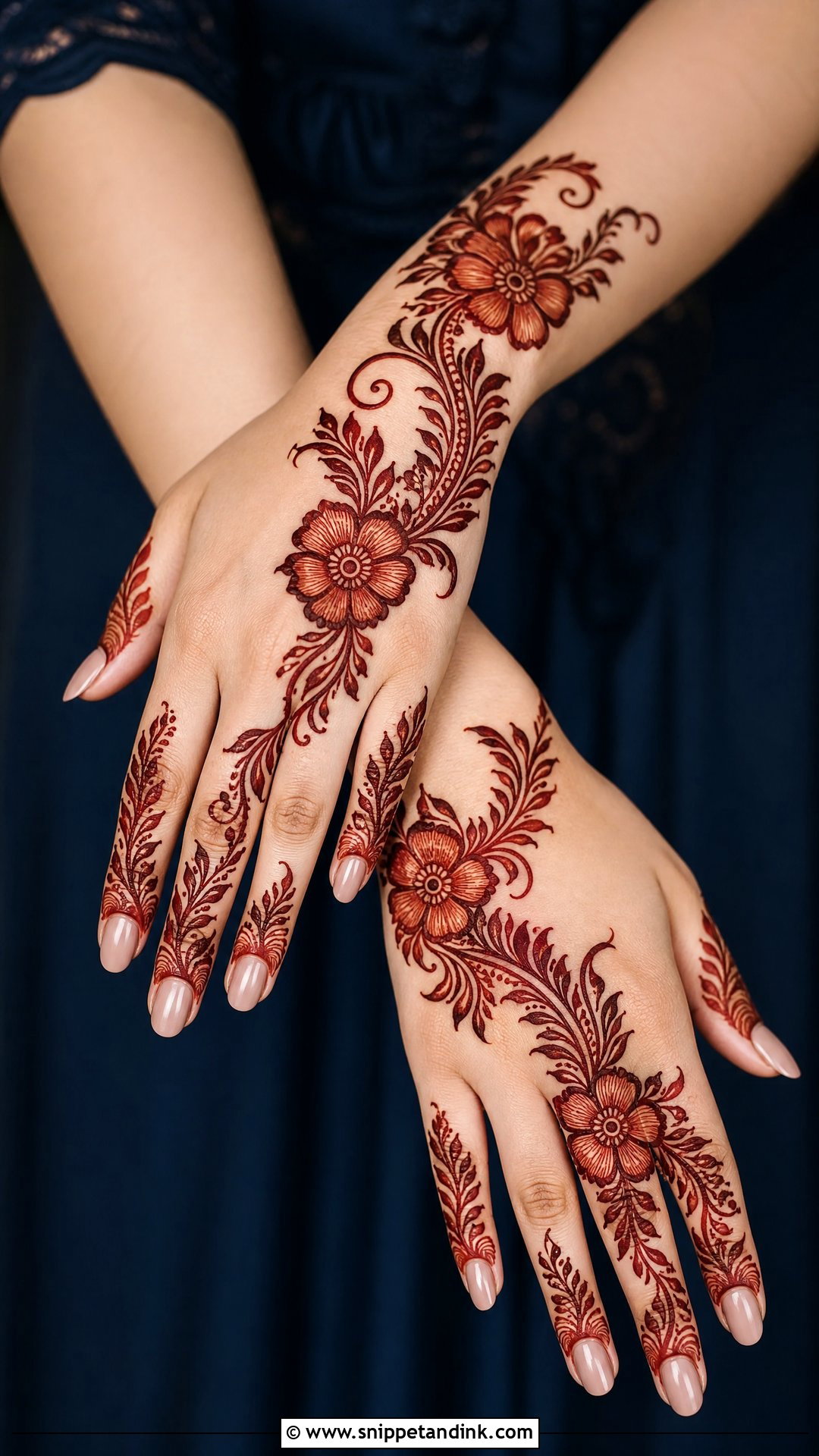
Gulf work uses big flowers, thick outlines, shaded petals and curved vines, usually flowing from the wrist to one or two fingers with clean skin around the motifs. The shading is done by dragging the cone so the paste thins out across the petal, which stains as a soft gradient. For a gentler engagement version, I size the flowers medium rather than very large. It suits modern outfits, long sleeves and statement rings, and it reads boldly on camera.
19. Moroccan Back Hand Engagement Mehndi Design
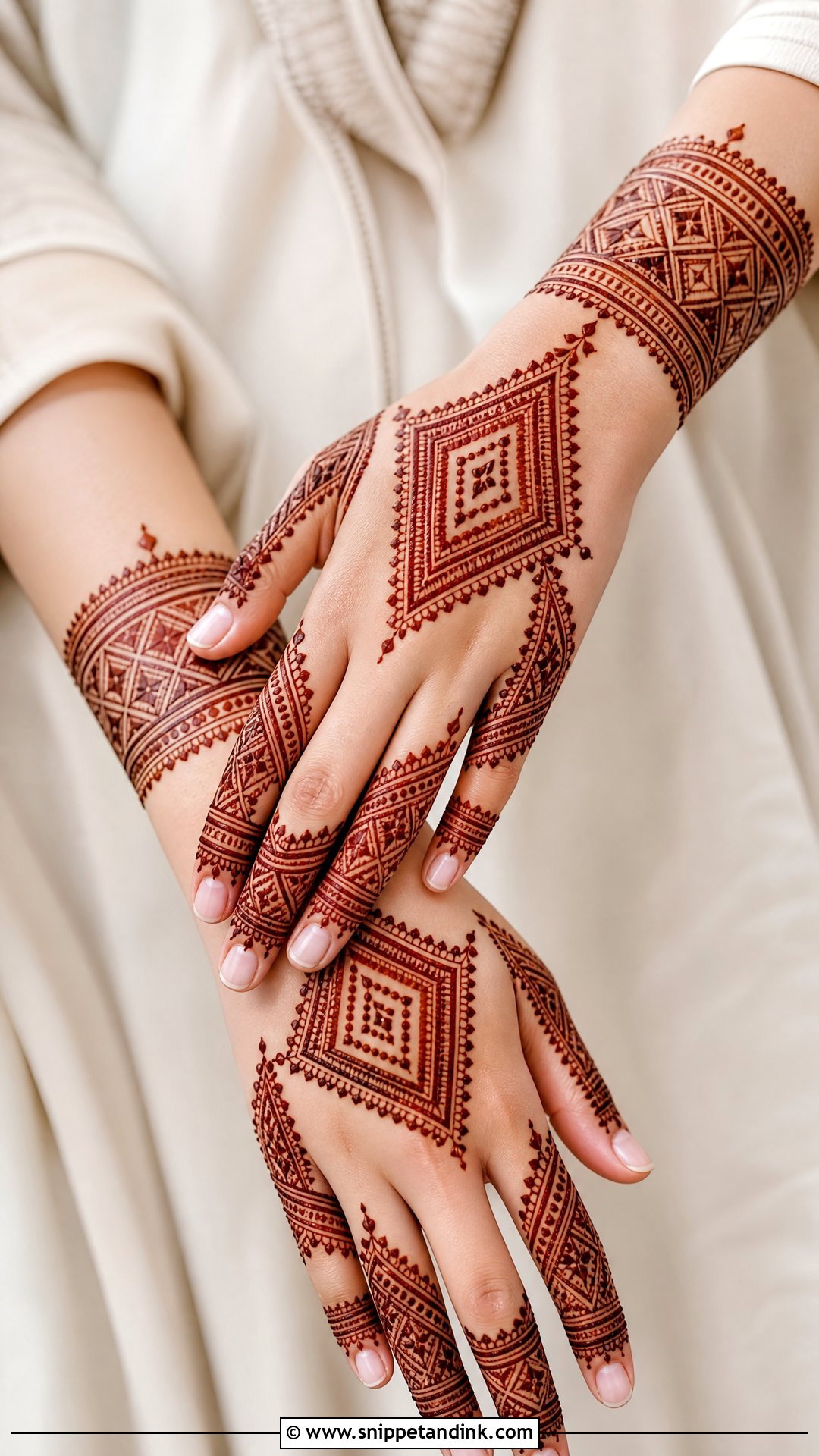
Moroccan back hand engagement mehndi swaps flowers and paisleys for diamonds, lines, dots, grids and angular shapes, usually a central geometric panel with finger bands and a wrist cuff. It’s distinct from both Indian and Arabic work. Straight lines on a curved hand are hard, so I check the grid from a few angles as I go. A few soft florals or dotted borders keep it bridal. Contemporary outfits and minimal jewelry suit it best.
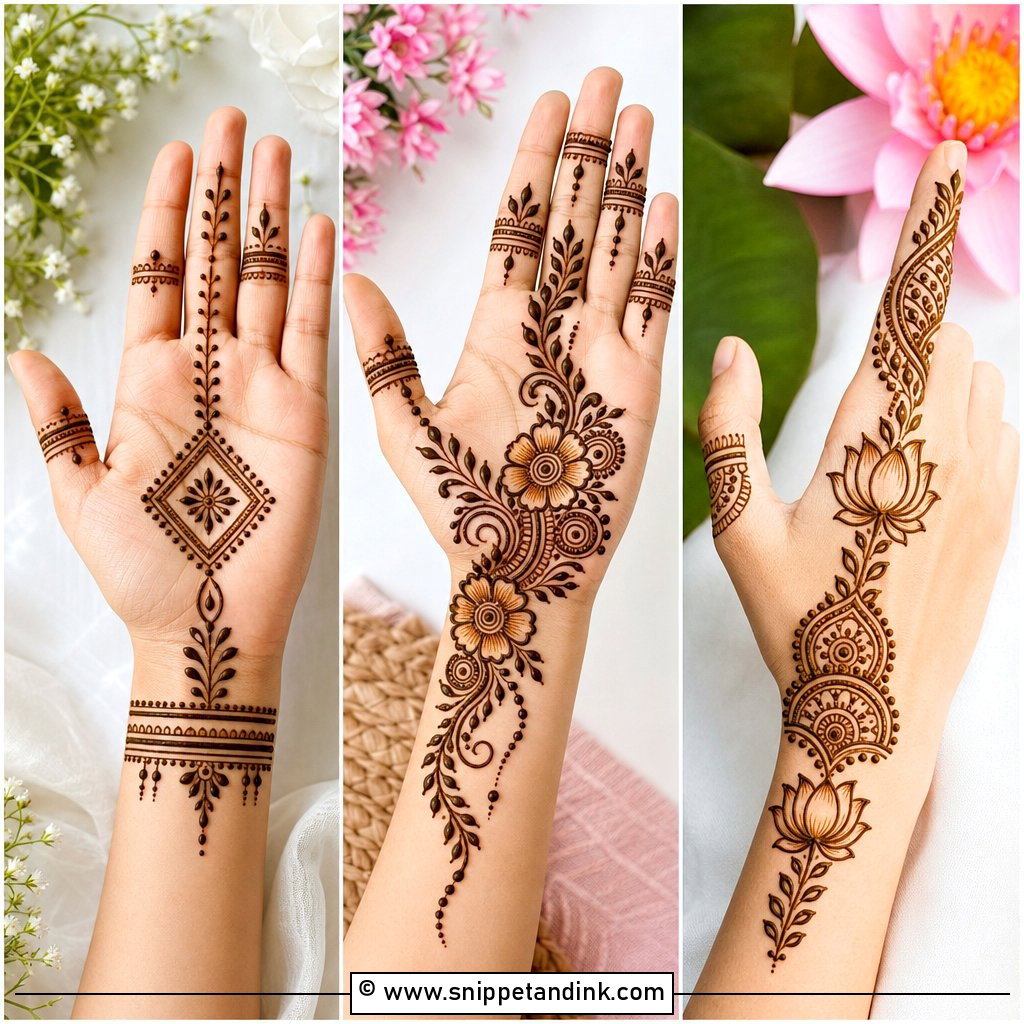


20. Personalized Back Hand Engagement Mehndi Design
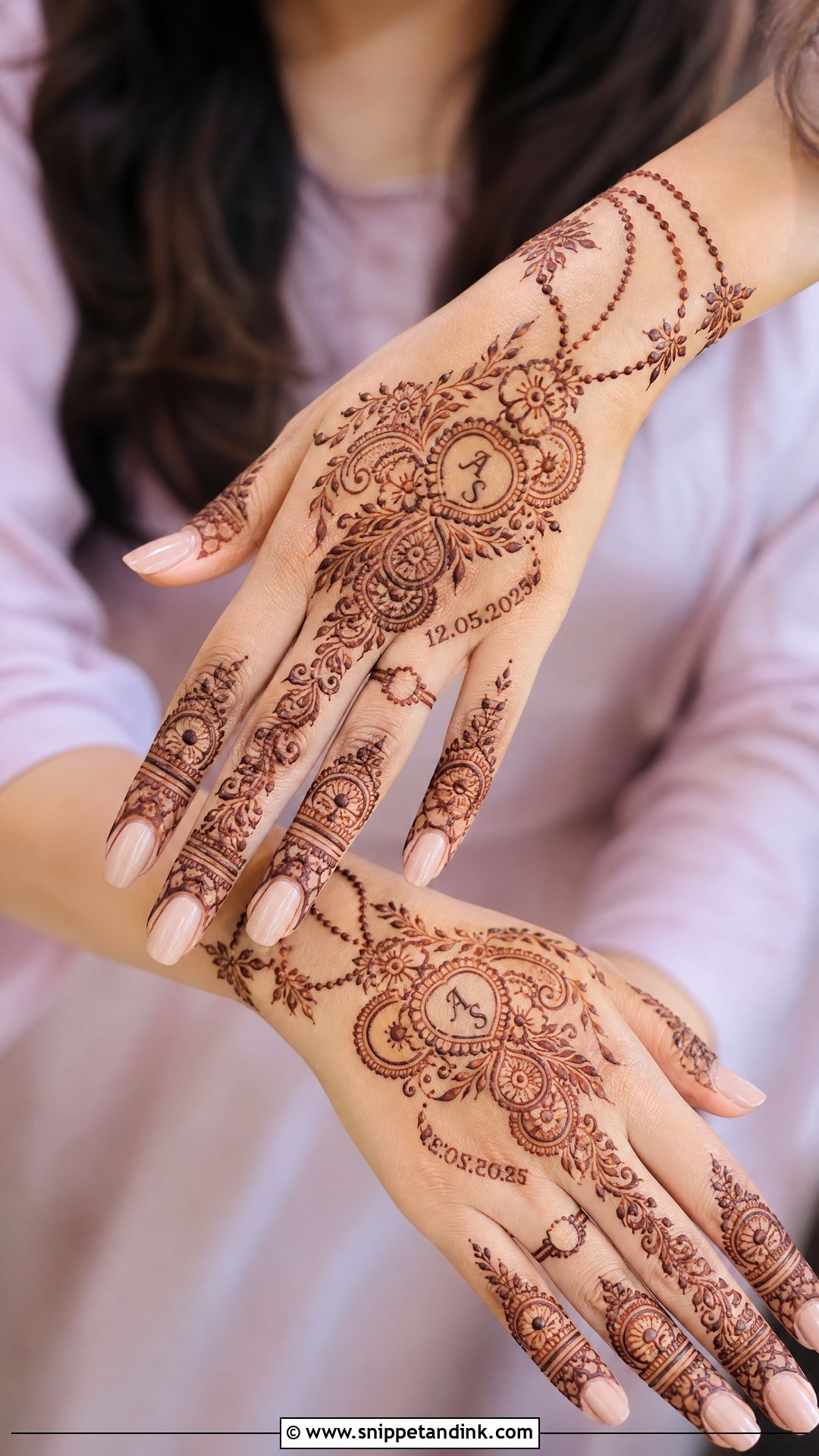
A personalized back hand engagement mehndi design can hold initials, a tiny ring motif, a date, a couple symbol or a pattern taken from your outfit. I keep personal details small and tuck them into flowers, paisleys, mandalas or bracelet chains. I also avoid placing letters over the knuckles, because the skin stretches when the hand moves and the text distorts. Done subtly, it’s a detail you’ll keep finding in the photos.
Pale Stain, Smudges or Itching: Fixing What Goes Wrong
Most henna problems have an ordinary cause, and most can be avoided.
A smudge while the paste is wet
Don’t rub it. Lift the smudged paste with the tip of a cotton bud or a toothpick and let your artist redraw that line. Rubbing spreads paste onto clean skin, and that faint shadow stains too.
A stain that comes out pale
Usually it’s one of these: the paste came off too early, the hands got wet in the first day, the skin had lotion or oil on it before application, or the room was cold. Arrive with clean, dry hands and no moisturizer. Stains on the back of the hand are naturally lighter than on the palm, so a soft brown there is normal, not a failure.
Itching or redness
Natural henna paste is often mixed with essential oils to help release the dye, and sensitive skin can react to some of them. If you’ve had reactions before, ask for a small patch test a few days ahead. A dark black stain that appears within an hour is a warning sign of an added chemical dye. Stop, wash it off and get advice.
How it looks day by day
Expect orange when the paste comes off, a deep red-brown by the second day, and gradual fading after about a week. The back of the hand fades a little faster than the palm because it gets washed and rubbed more. If your engagement and wedding are close together, tell your artist so the two designs can be planned to work around each other.
Matching the Henna to Your Ring Ceremony, Not a Trend
Start from your outfit, your jewelry and how long you’re willing to sit. Full-hand work feels traditional, while Arabic, minimal, bracelet and jewelry patterns are lighter and more modern. Mandala, floral, paisley, jaali and peacock layouts give graceful detail without going overboard. If the ring photos matter most, choose a design that keeps the fingers and back of the hand clear. Ask your artist for clean spacing and balanced motifs, then give the stain the time it needs.
Book your trial or consultation a few weeks ahead, show your artist your outfit and ring, and you’ll arrive on the day with a design that was planned for your hands.
You'll Like These Ideas:








Leave a Reply