
The palm is where henna does its best work. Its thick skin takes the deepest stain on the body, so a design that fits inside one hand can look as finished as a full arm. Indian mandalas, Arabic floral trails, Moroccan grids, bridal figures, lotus circles and modern negative-space layouts all sit well there. What makes a palm design work is placement: where the centre falls, how it meets the fingers and where it stops at the wrist. Below are the palm ideas I draw most often, bold and festive or quiet and minimal, with what I do to make each one sit right on a real hand.
Long Fingers, Wide Palms and Deep Creases: Fitting a Design to Your Hand
No two palms take a design the same way, so I look at the hand before I look at the reference photo. I ask you to rest your hand naturally, then open and close it a couple of times, because a pattern drawn on a stretched palm shifts when the hand relaxes.
- Wide or short palms: a round mandala or a centred flower draws the eye in and keeps the hand looking balanced.
- Narrow palms with long fingers: diagonal trails and vertical panels follow the length, and detailed fingers show off that length.
- Small hands: fewer, larger motifs. Tiny fillers on a small palm just merge into one dark patch.
- Deep creases: I avoid placing faces, letters or fine lattice right across the main lines, since the stain breaks where the skin folds.
If your palms sweat, tell your artist. Damp skin makes paste slide and blur. A quick wipe, cool air and a short break between hands help, and I’ll work the second hand while the first sets.
1. Simple Palm Mehndi Design
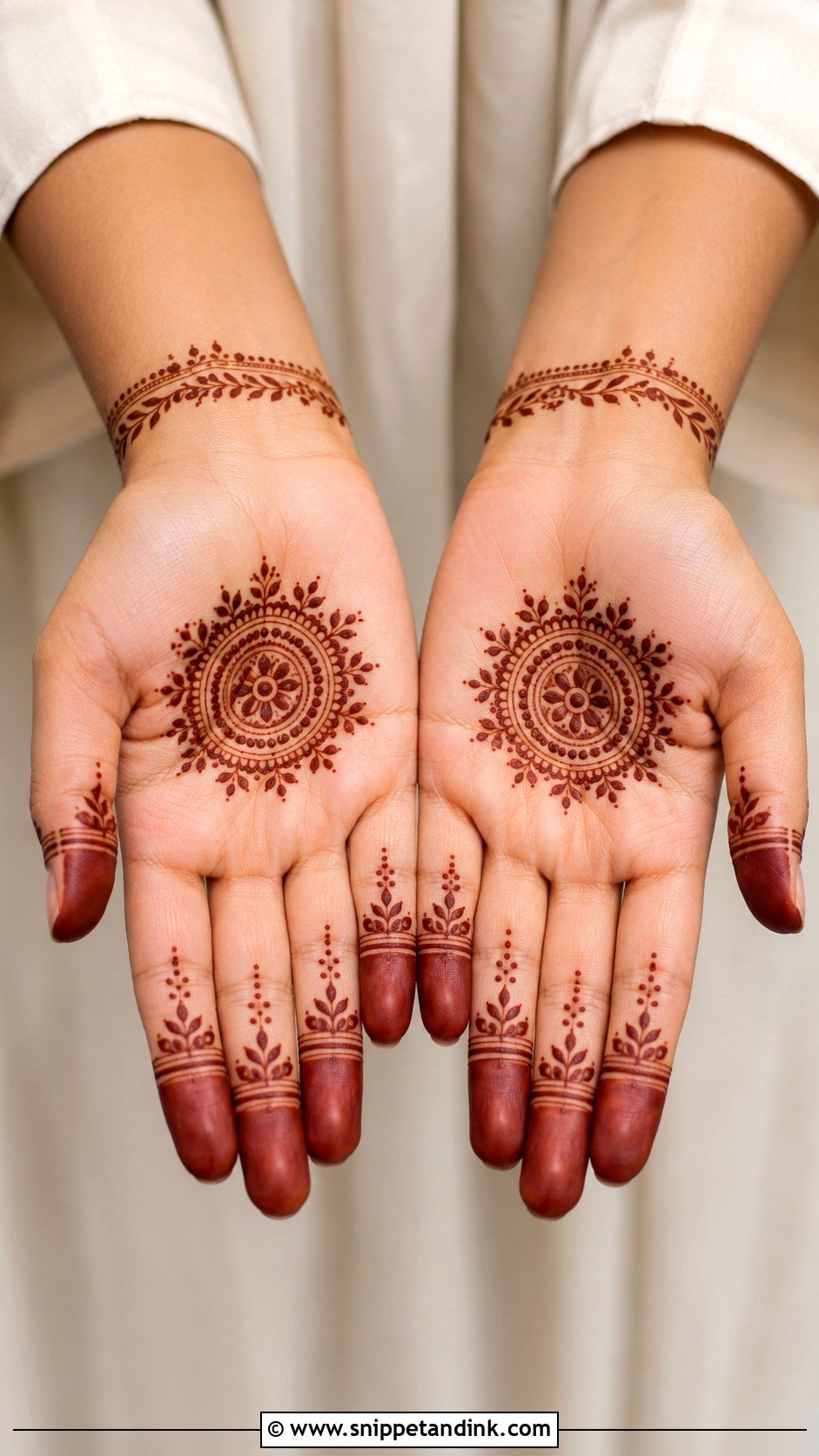
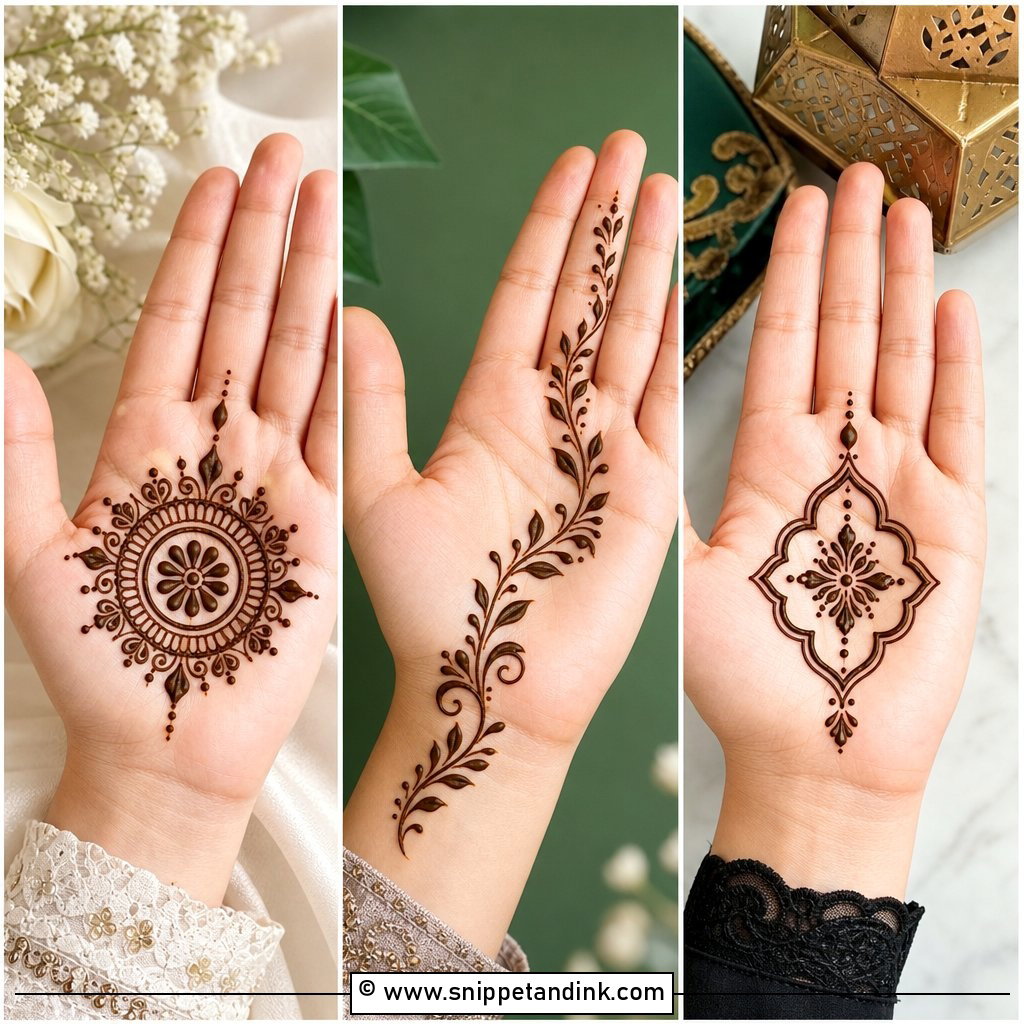
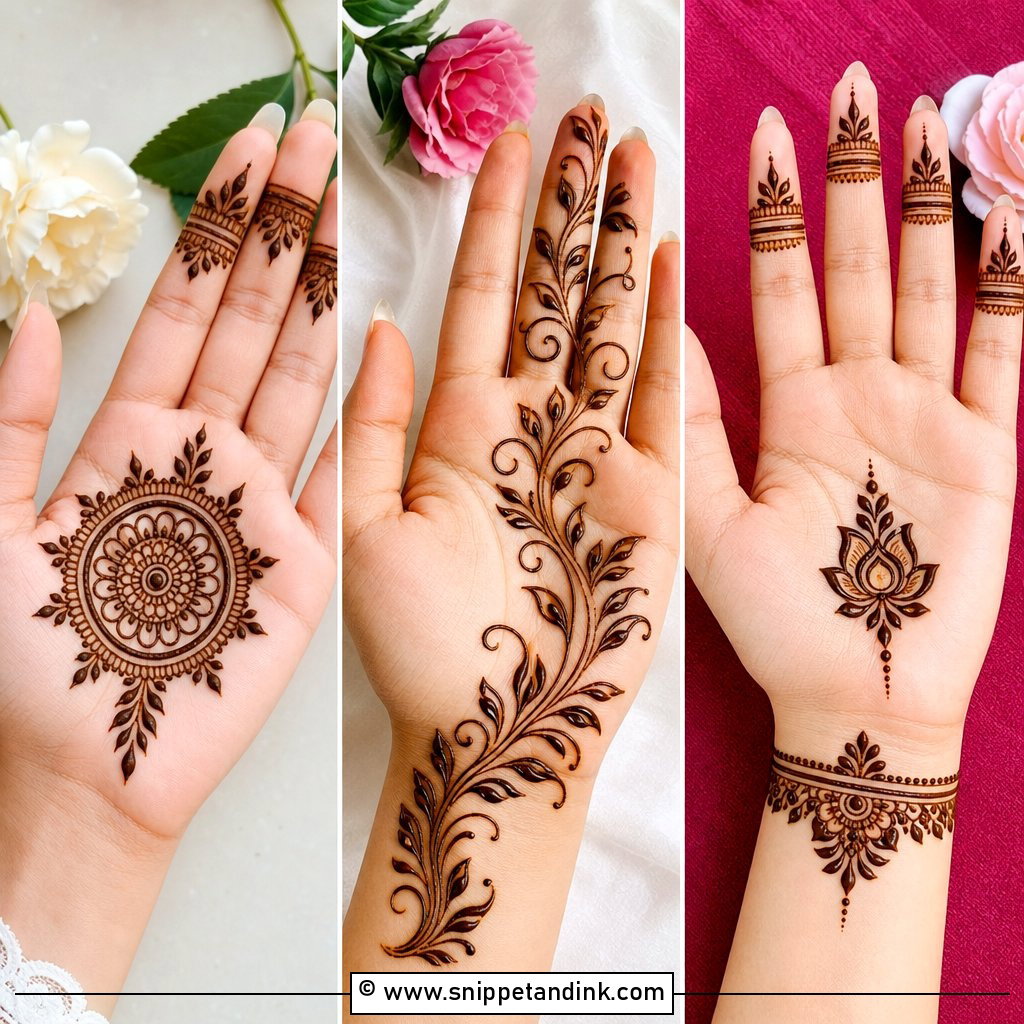
One motif, a small mandala, flower or paisley, with light finger detail and nothing else. It looks neat because of what is left out. A ring of tiny dots around the centre makes it read fuller without crowding, and matching fingertip details plus a thin wrist line finish it. Beginners, school events and family dinners suit it, and it fits any hand size. The one thing to watch is line weight: uneven thickness is very visible when there are so few lines.
2. Full Palm Mehndi Design
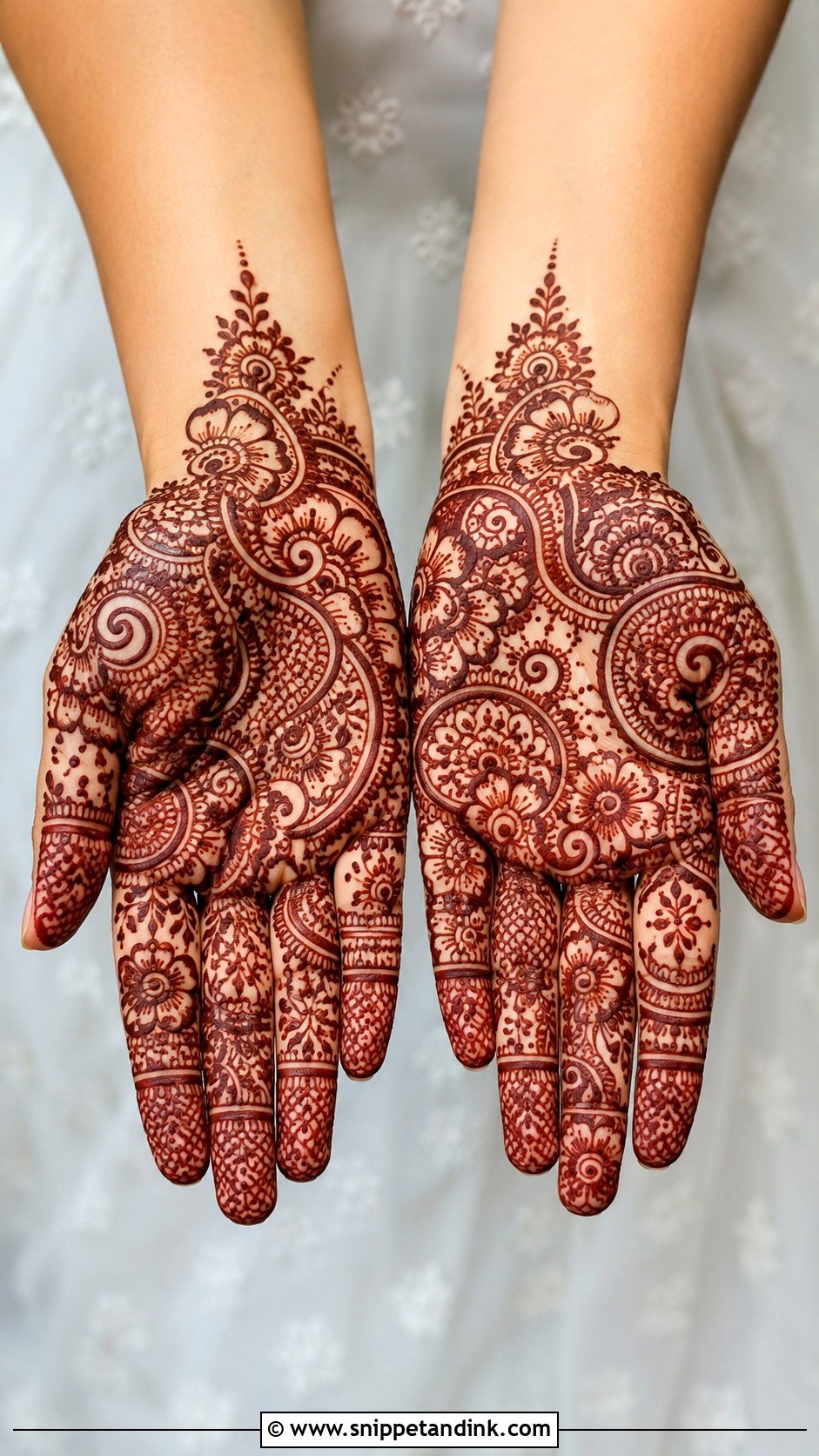
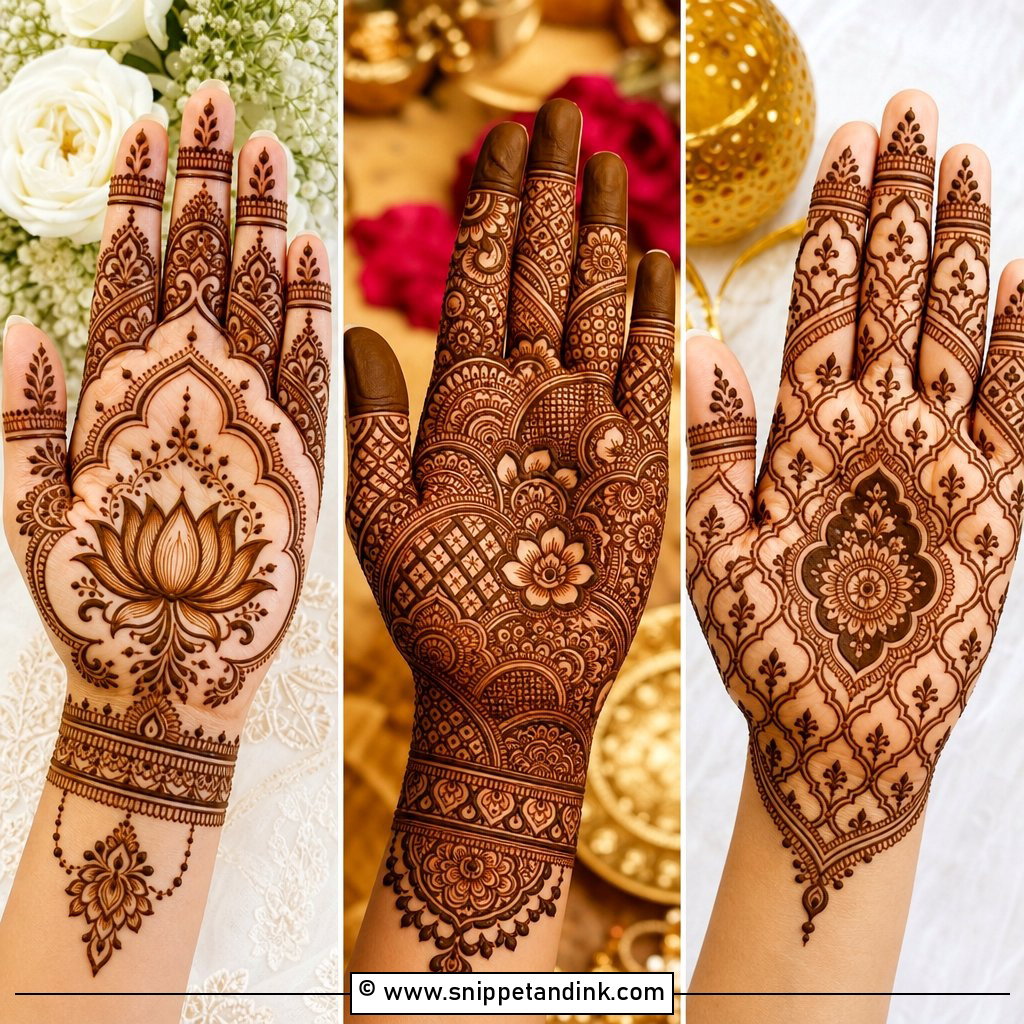
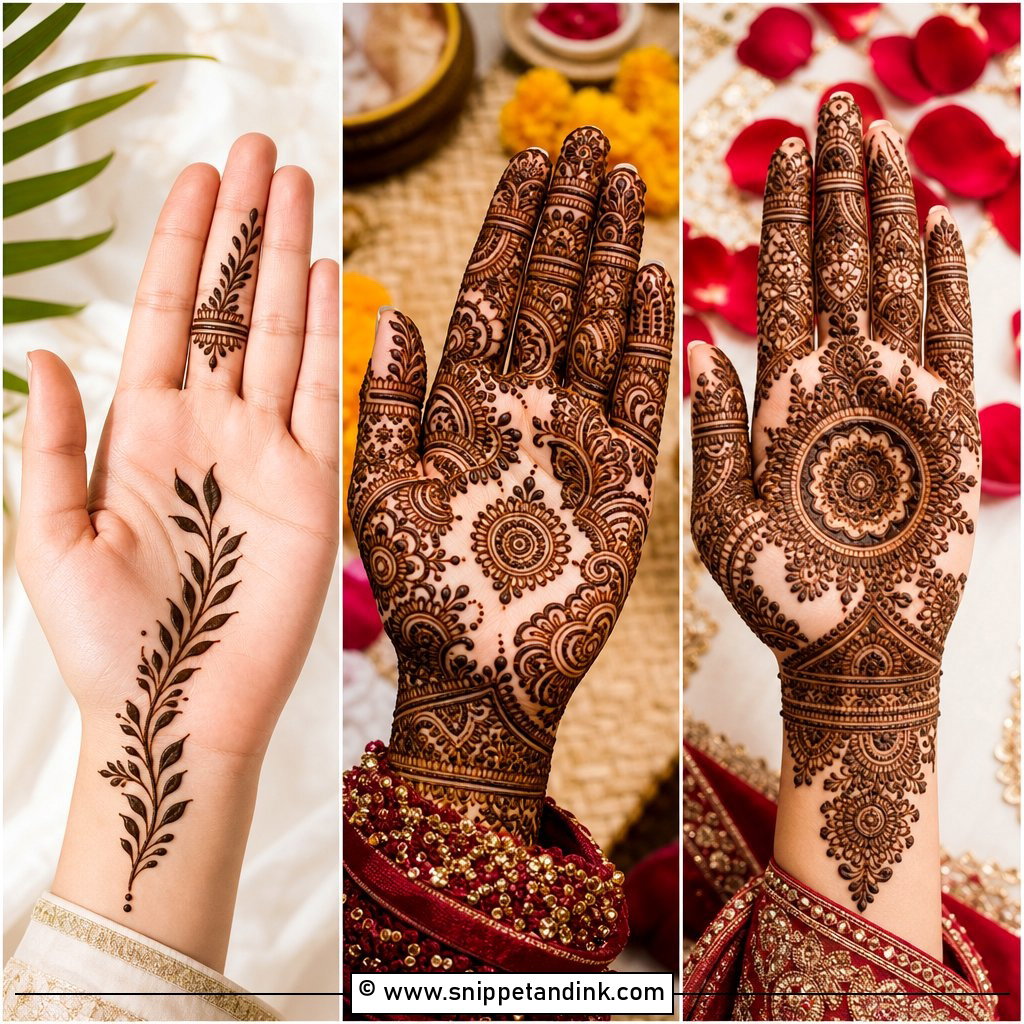
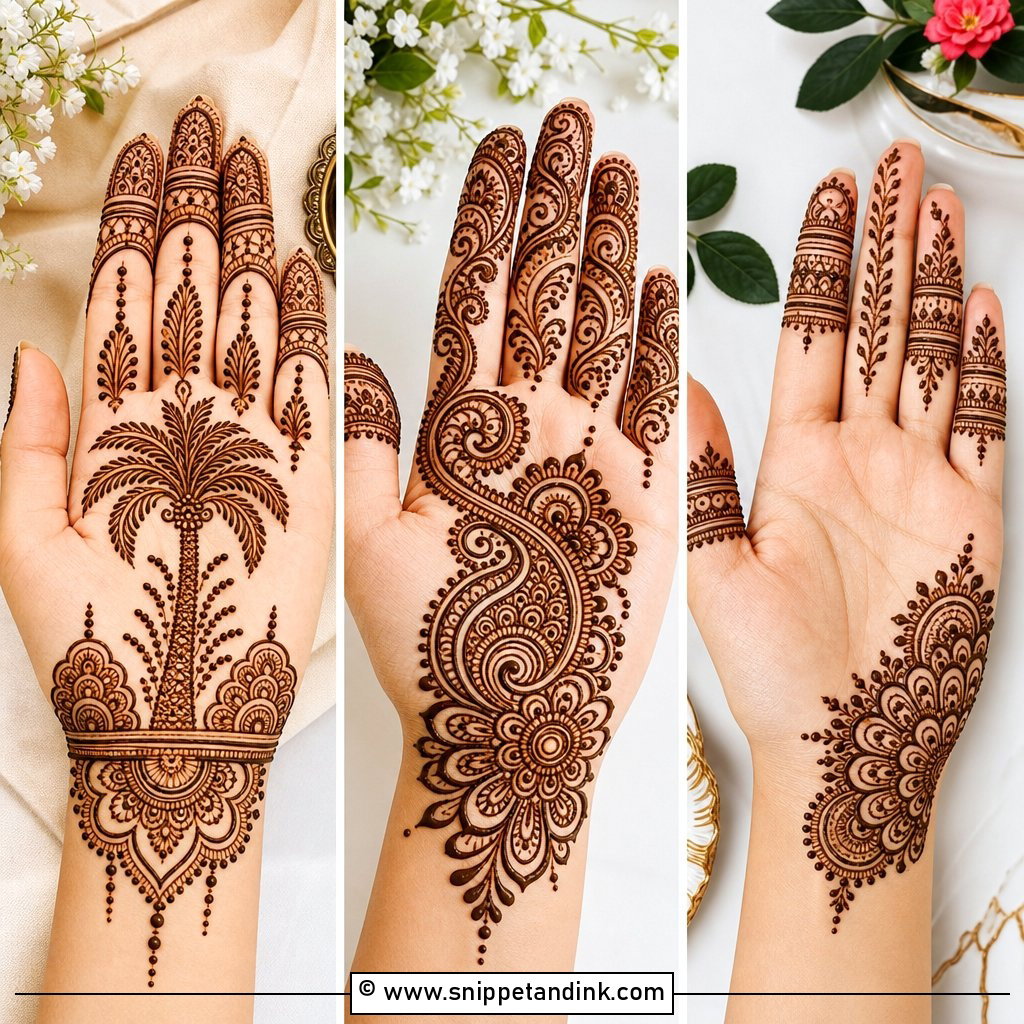
Filling the whole palm with paisleys, flowers, vines, checks and curved bands gives a traditional look while keeping the arms bare. A palm is a smaller space than people think, so I plan it in sections: centre motif first, then the area under the fingers, then the heel of the hand, and only then the fillers. Finger patterns can match the density or stay lighter. Consistent spacing is what makes it look intentional rather than busy.
3. Mandala Palm Mehndi Design
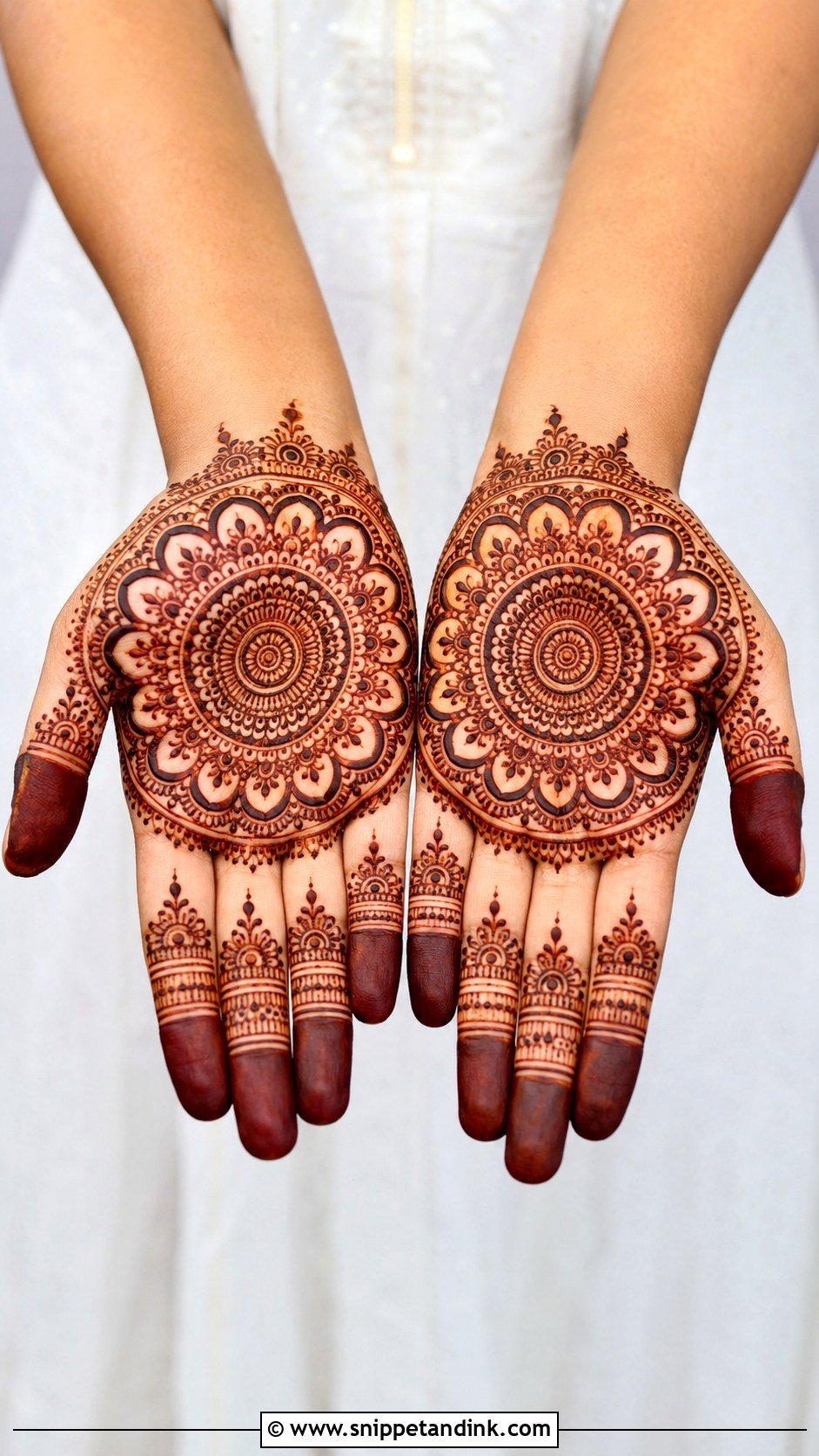
The mandala is popular for good reason: one circle in the middle of the palm creates symmetry at once. It can be a single ring with petal borders or many rings of dots, leaves, lace lines and arches. It flatters round and wide palms by pulling the eye inward. I find the centre with your hand relaxed and slightly cupped, because a mandala centred on a stretched-flat hand drifts toward the thumb when you hold it naturally. A little open skin around the outer ring keeps it modern.
4. Arabic Palm Mehndi Design
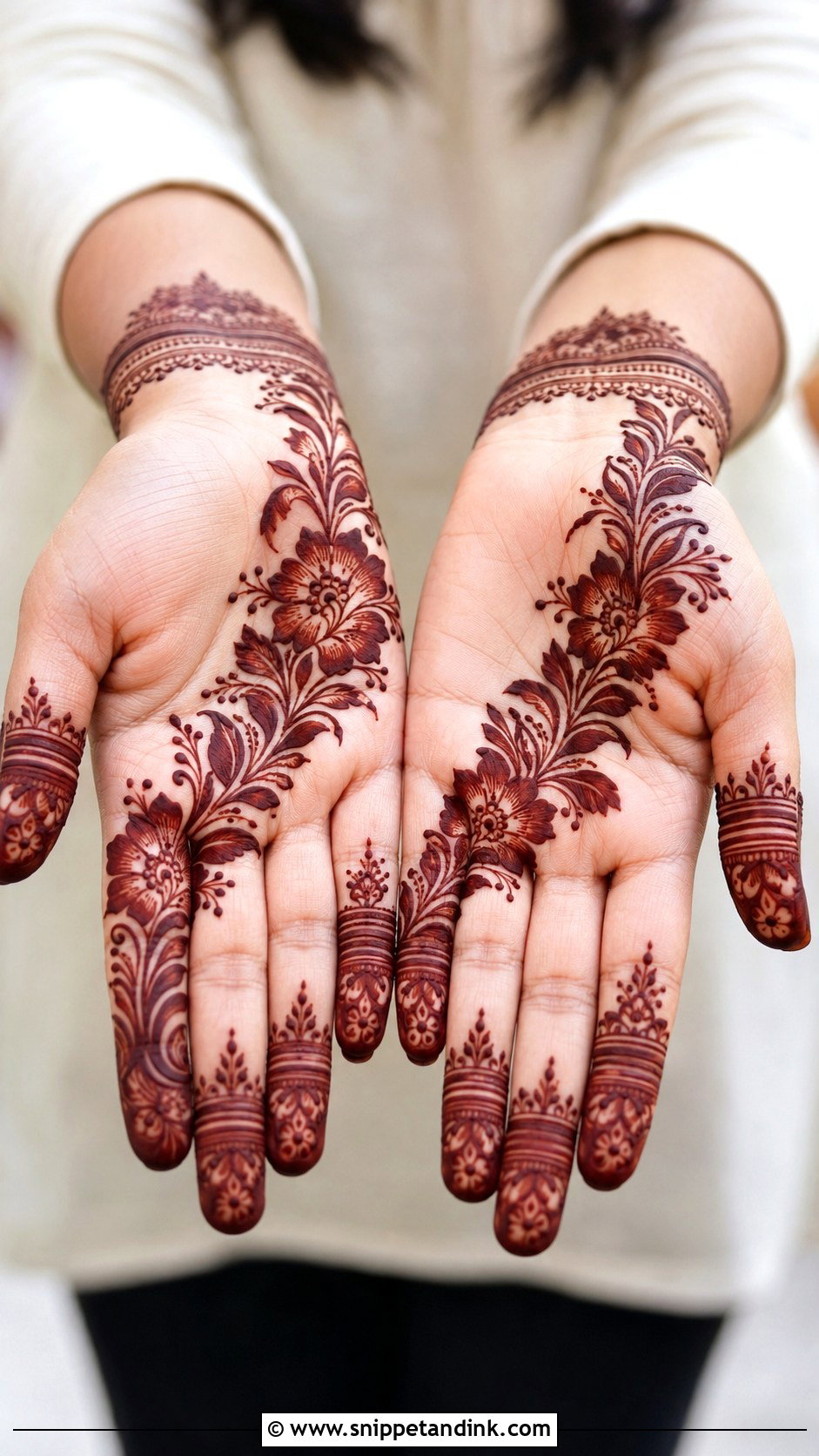
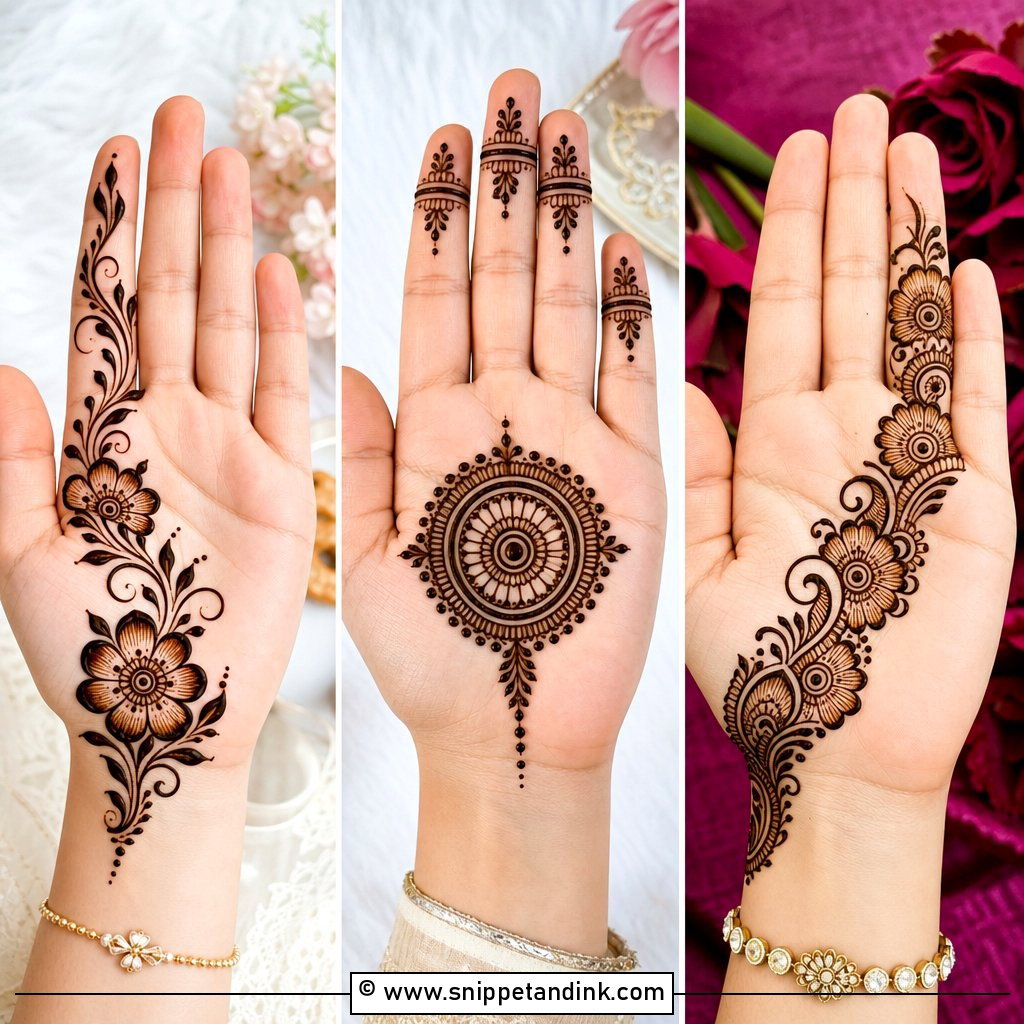
Arabic palm work moves diagonally, usually from one side of the wrist toward the fingers, with large flowers, leafy curves and shaded petals and open skin between them. It is much quicker than dense Indian work, which suits Eid and bridesmaids. Bold outlines hold the most paste and so stain the darkest; I fill only selected areas with fine strokes. On a palm the diagonal also hides the main creases nicely, so the design stays unbroken when you close your hand.
5. Indian Palm Mehndi Design
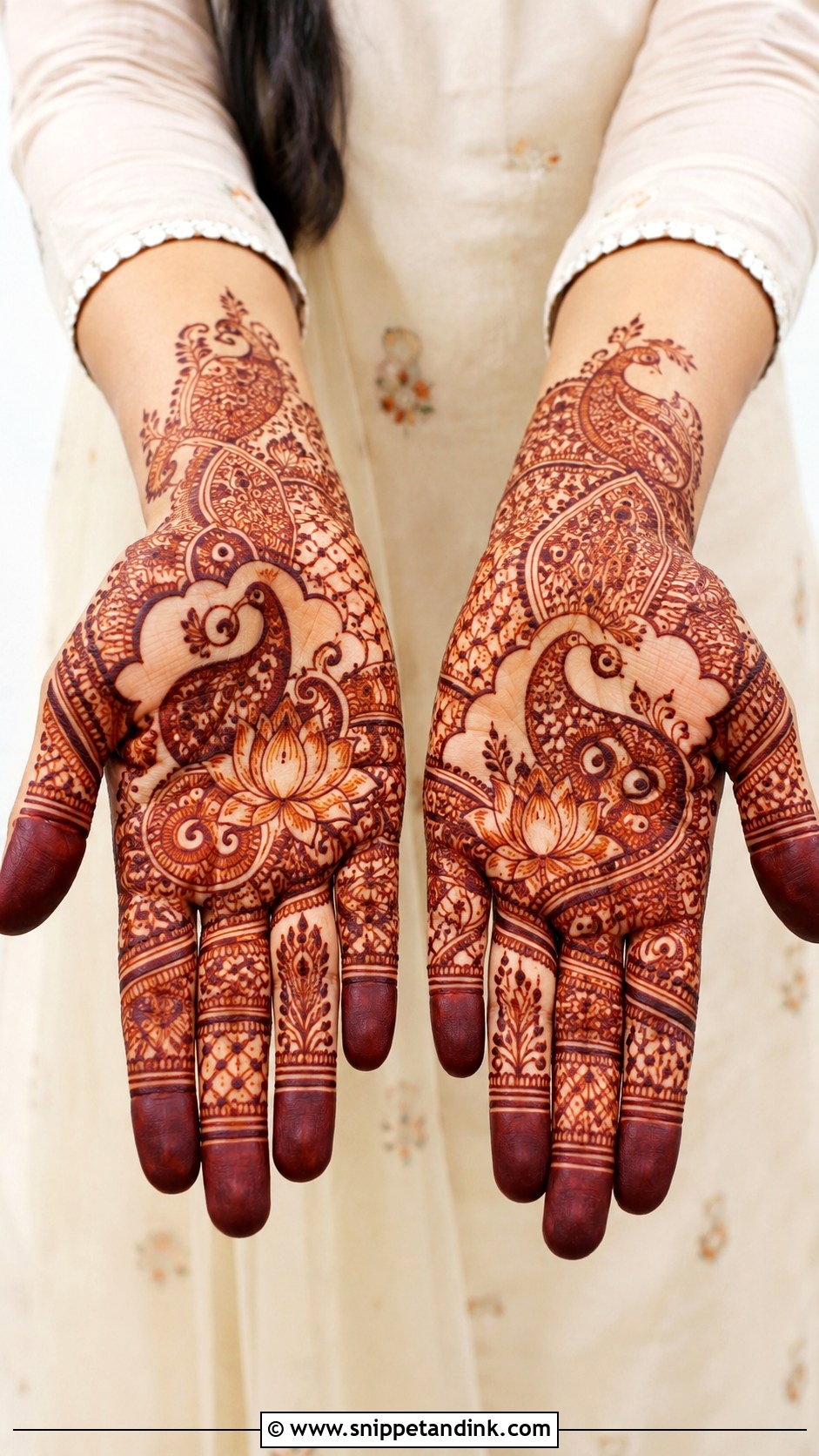
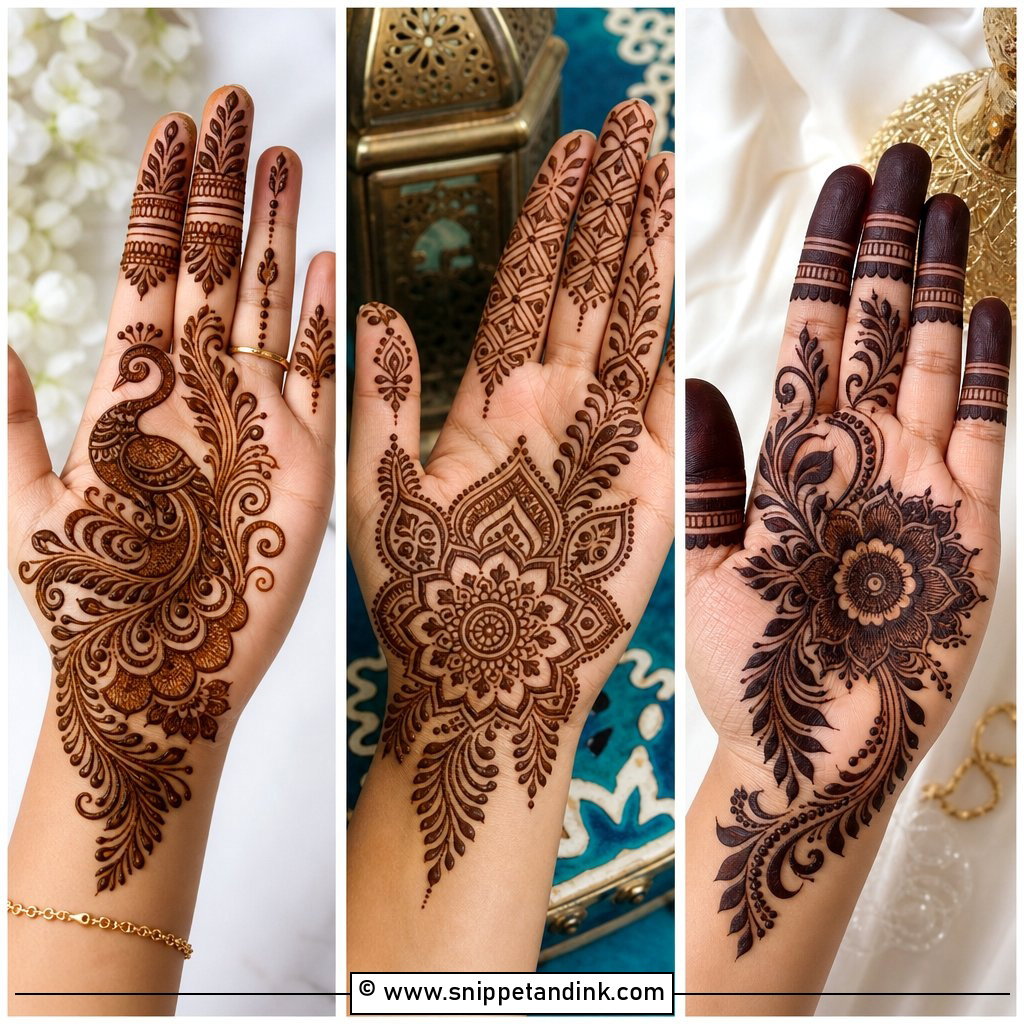
Indian palm designs are full and symbolic: paisleys, peacocks, flowers, lotus, tiny leaves, jaali and layered borders, often divided into small panels that each carry a different pattern. They fit weddings, Karwa Chauth, Diwali, Teej and Raksha Bandhan. Thicker outlines for main motifs and fine lines inside them keep it legible once the stain deepens to maroon. Panel work takes patience, so book a proper slot rather than squeezing it in.
6. Indo Arabic Palm Mehndi Design
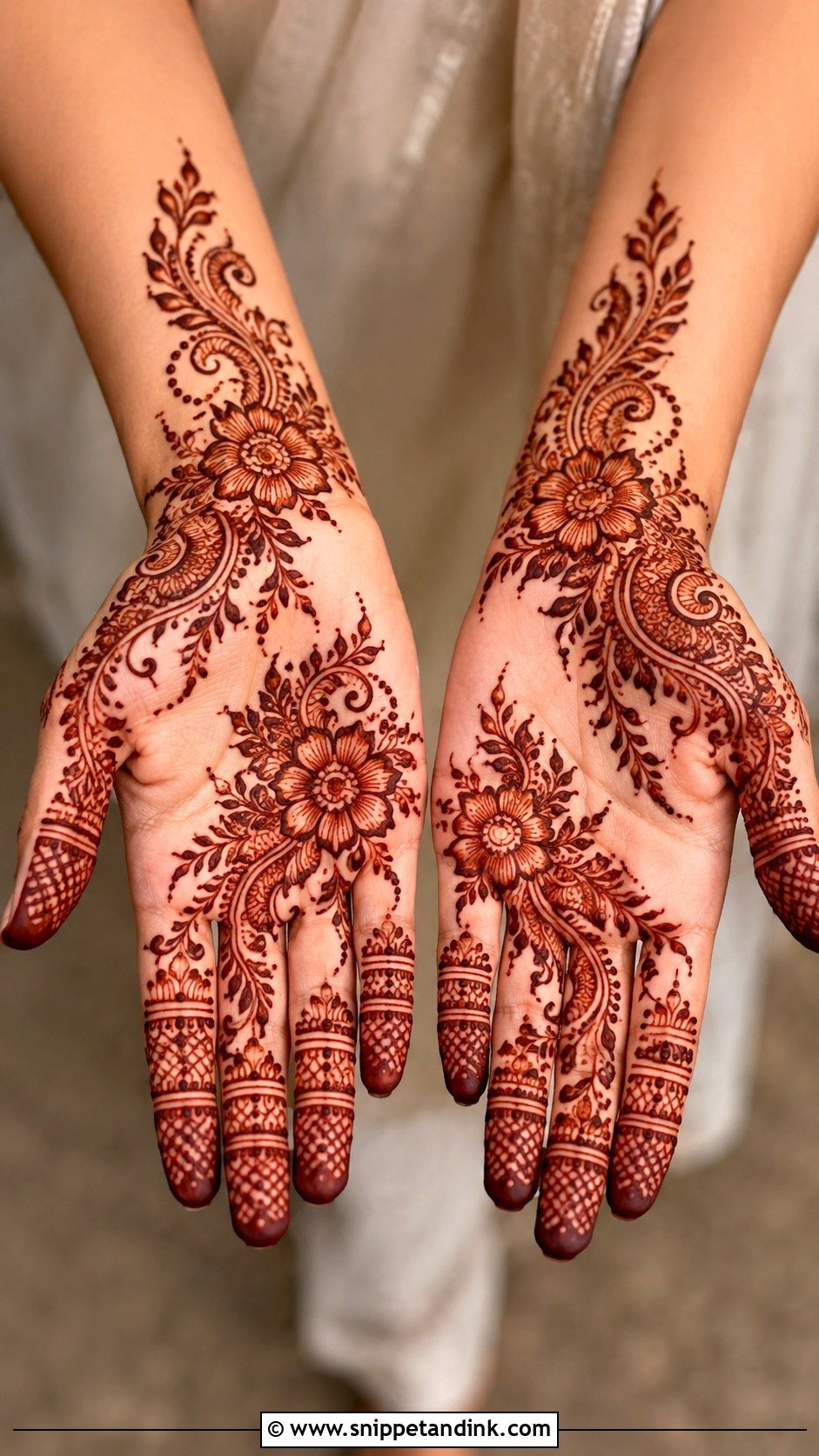
Indo-Arabic on the palm usually means a large floral trail across the hand with smaller paisleys, dots and shaded leaves gathered around it. Open space stays around the bigger Arabic motifs and Indian detail goes only into chosen patches. That balance is what keeps it readable from across a room. It suits bridesmaids, guests and brides who want lighter palms than full traditional coverage.
7. Bridal Palm Mehndi Design
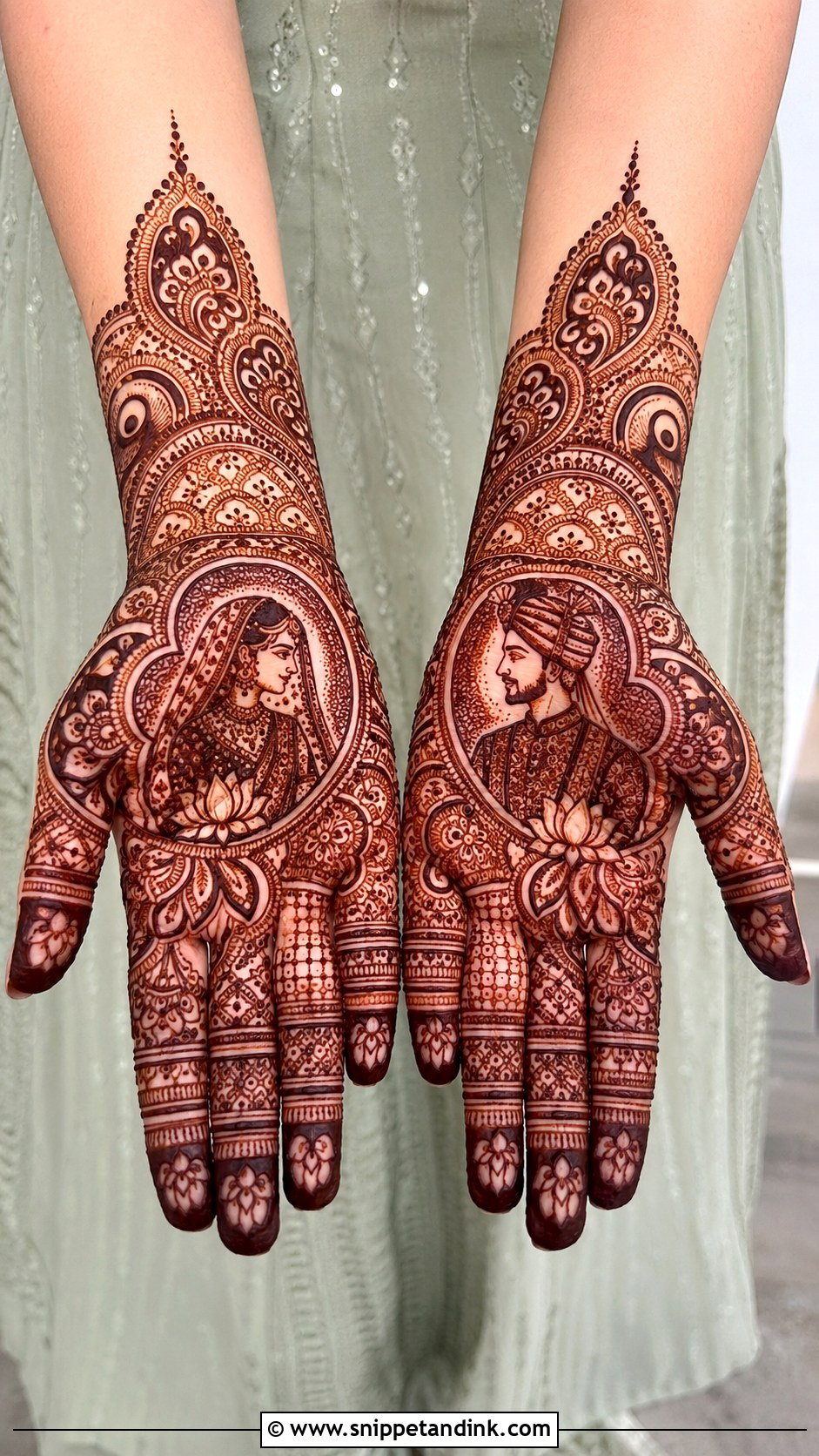
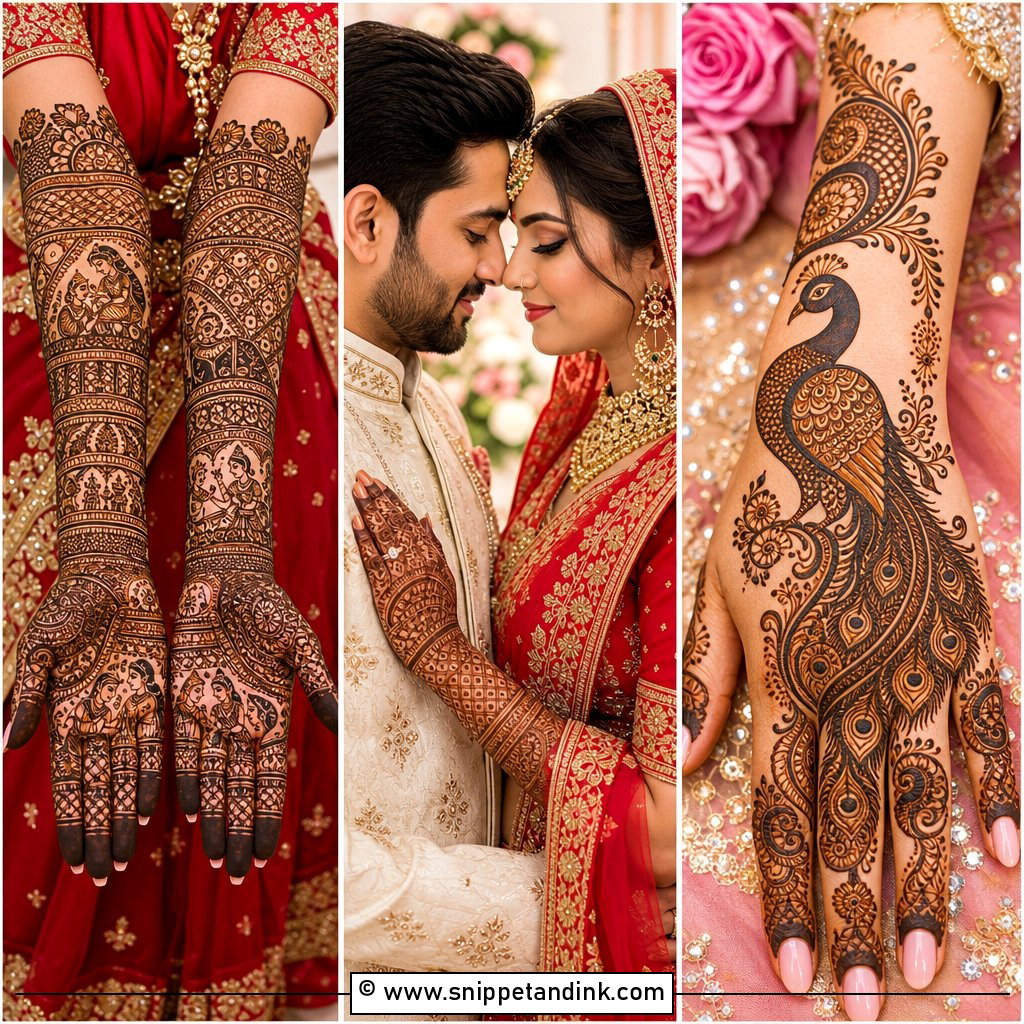
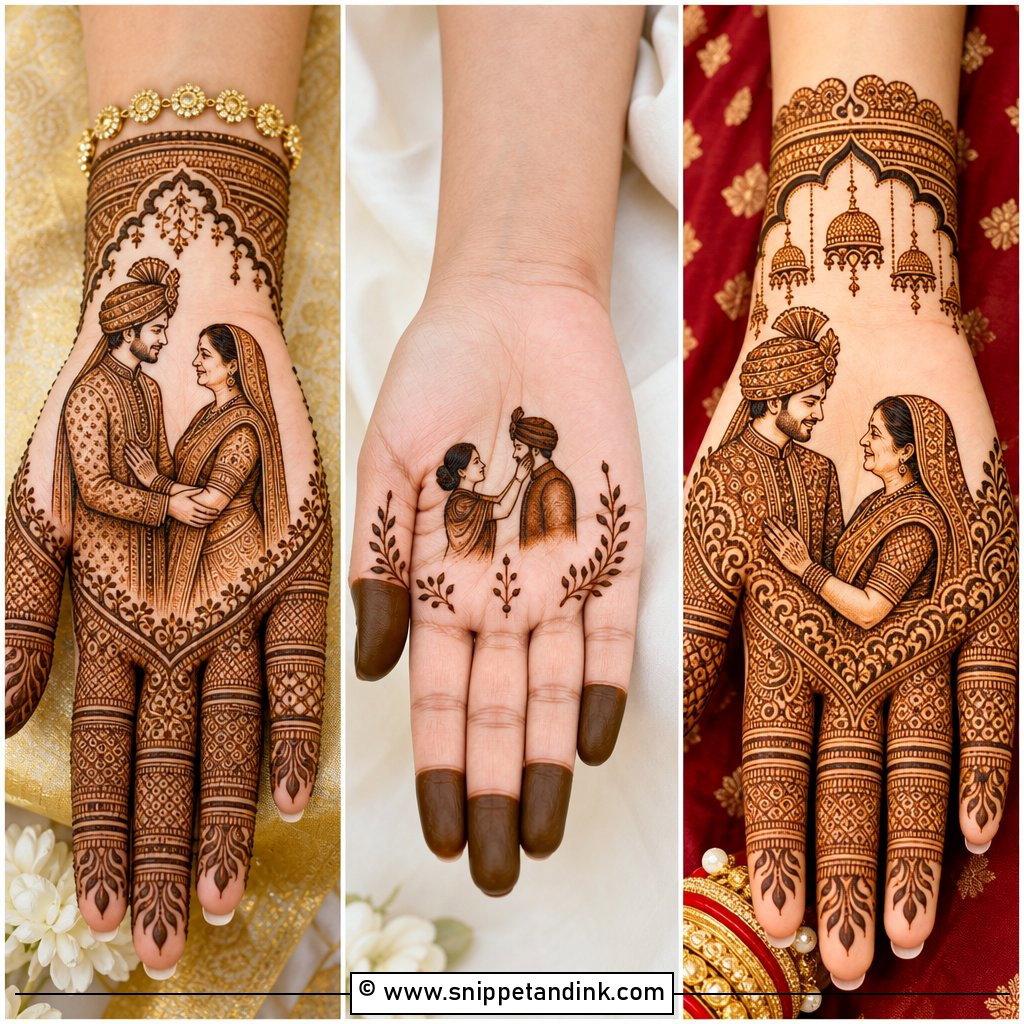
A bridal palm mehndi design is where the most personal motifs go: a bride and groom figure, initials, the date, a lotus, a peacock or a sacred symbol. Dense filling makes it rich, but it still needs clear focal points or the meaningful parts get lost. Traditional brides often mirror both palms; others put a portrait on one and a mandala on the other. I keep the main figures slightly larger than the reference photos suggest, because fine fillers darken and close up over two days.
8. Minimal Palm Mehndi Design
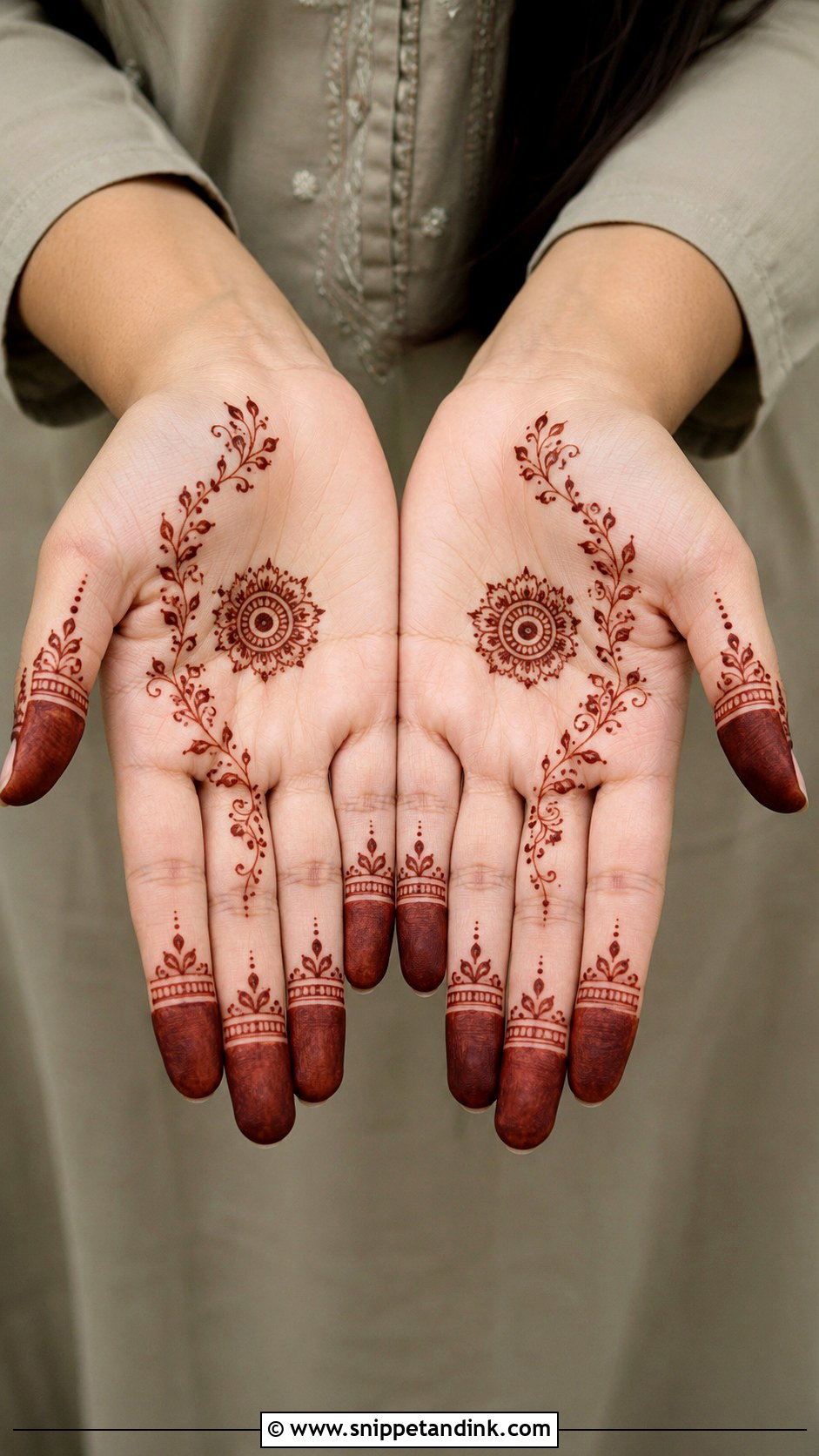
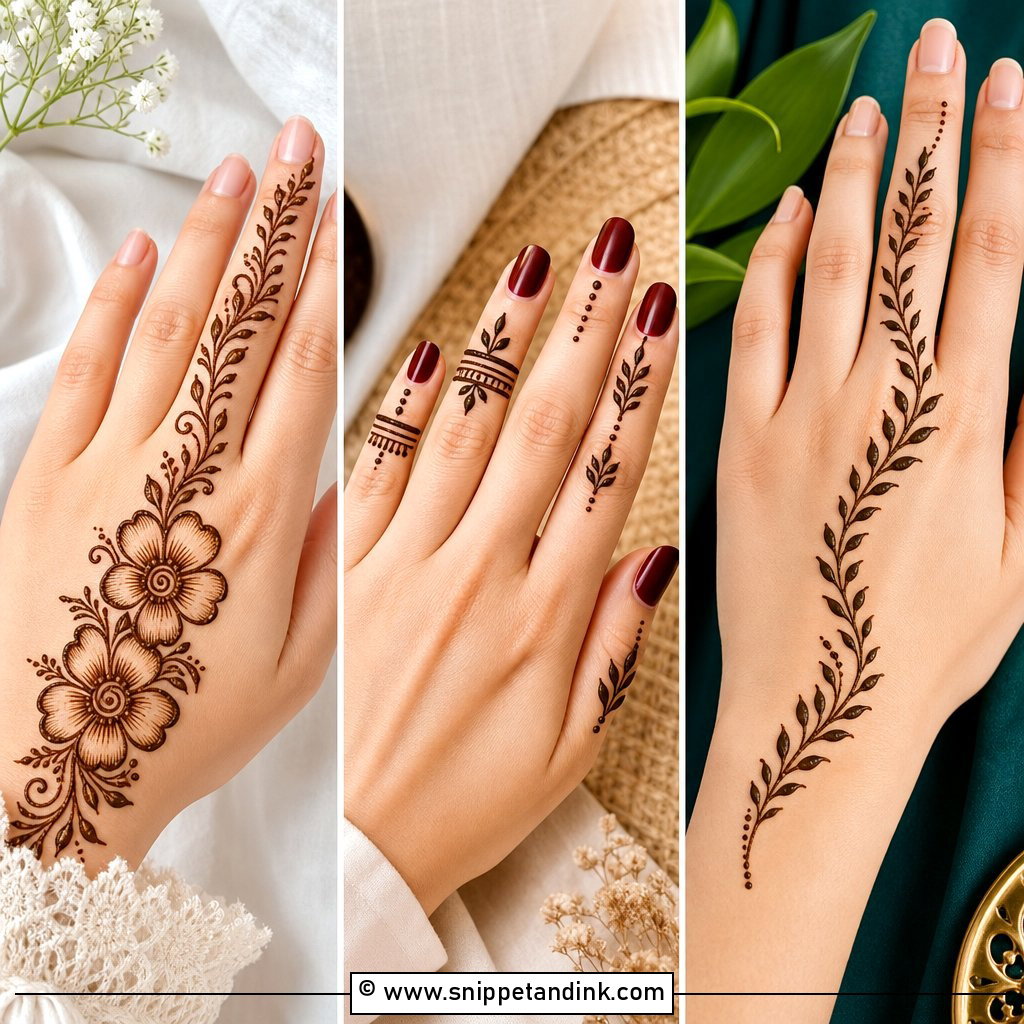
Minimal palms use one or two strong elements and lots of skin: a tiny centre mandala, a slim floral curve or a small paisley with dotted fingertips. Thin lines and few fillers are the rule. It suits working women, teens and modern brides who want henna that does not take over. The risk is looking unfinished, so the few elements need to be placed with intent, usually one in the centre and one echo near the fingers.
9. Floral Palm Mehndi Design
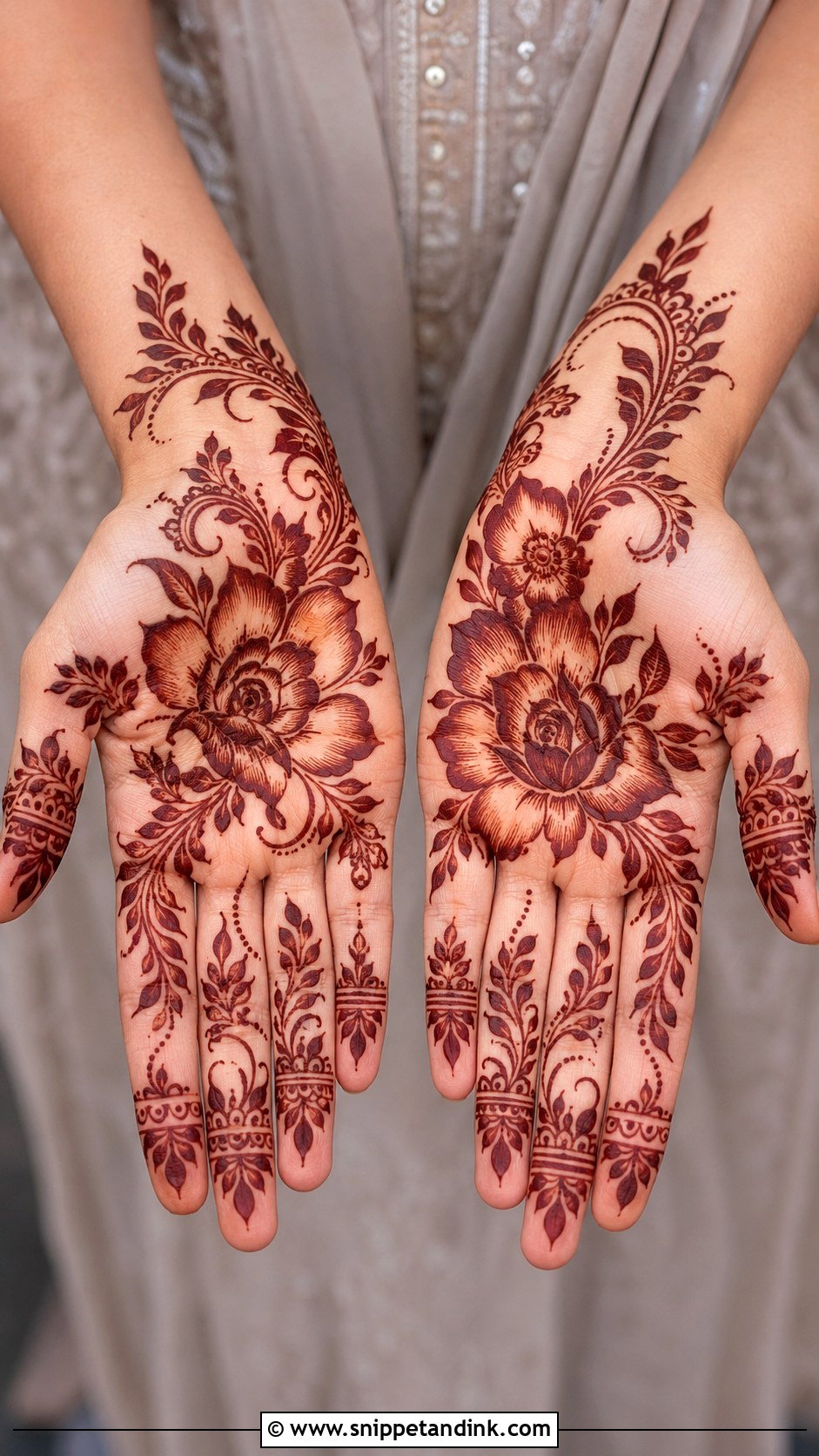
Roses, lotuses, daisies and petal clusters can sit in the centre or flow as a trail. For a fresh version, I put one large bloom mid-palm and connect it to leafy fingers. For a fuller one, smaller flowers gather around it with dots, swirls and vines in the gaps. On narrow palms the curves soften the shape of the hand. Keep shading inside the petals light, or the flower turns into a solid patch once it stains.
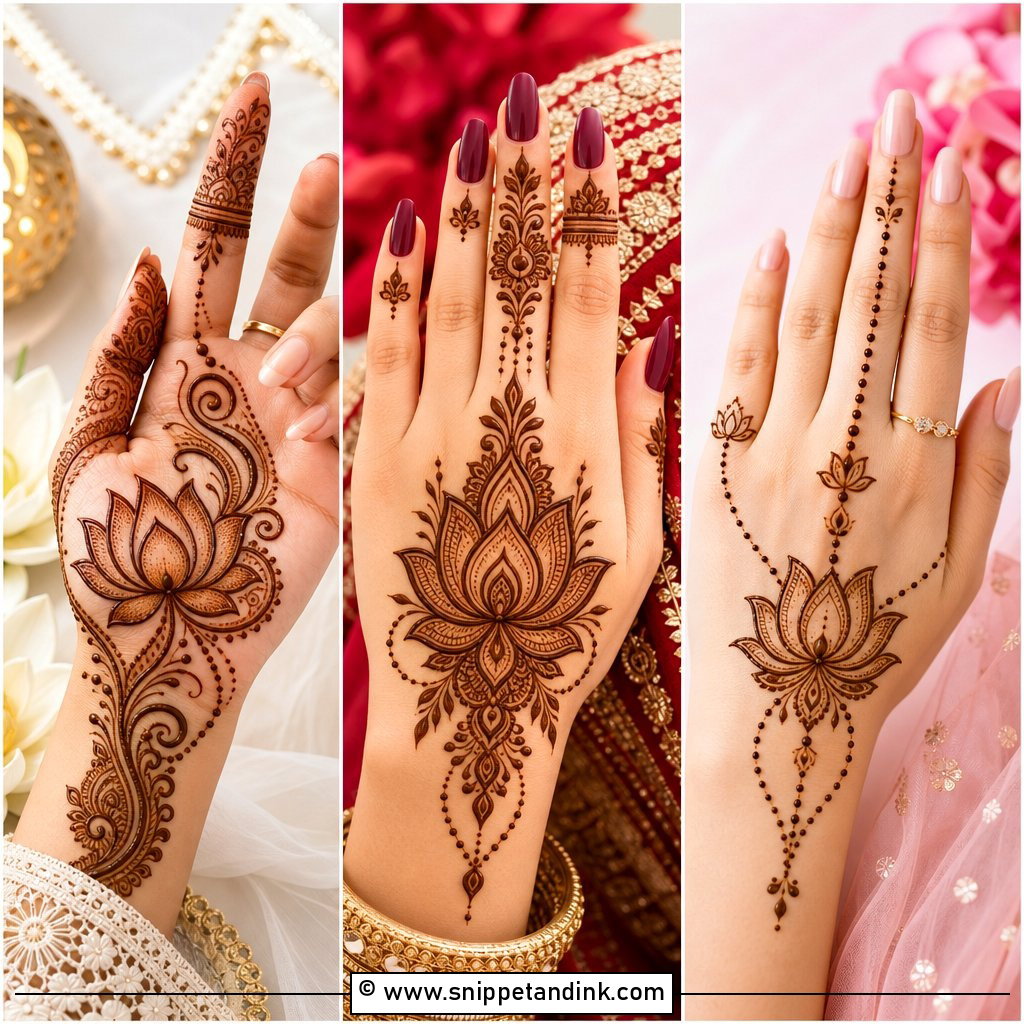
10. Lotus Palm Mehndi Design
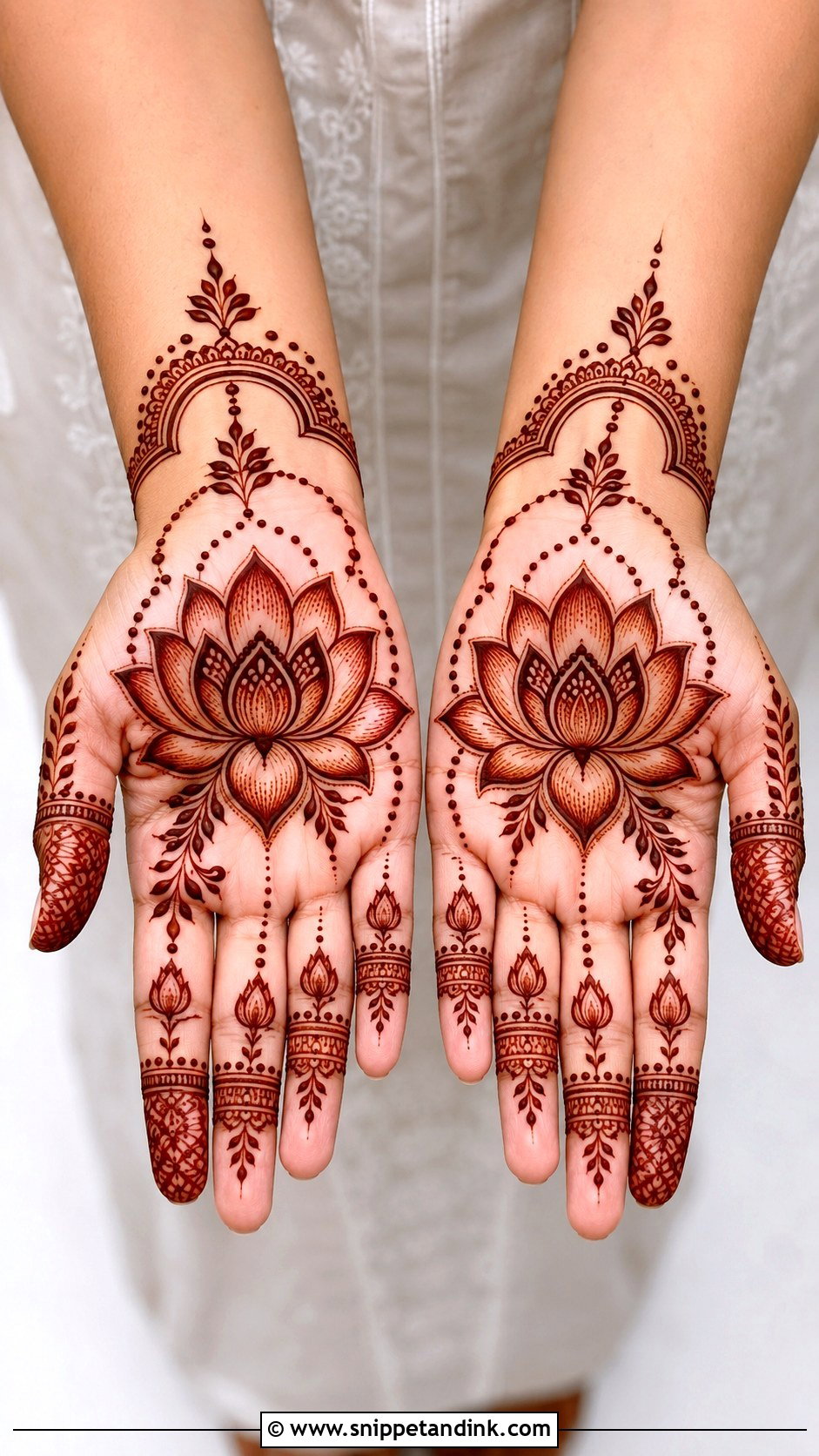
A lotus can open across the centre of the palm or rise from the wrist with petals spreading upward, and many families like it for its associations with purity and new beginnings. Layered petals give it depth; dotted borders or leafy vines frame it. Small lotus buds or fine mesh on the fingers carry the theme. Avoid filling the space around the main flower; the lotus needs room around it to read as a lotus.
11. Paisley Palm Mehndi Design
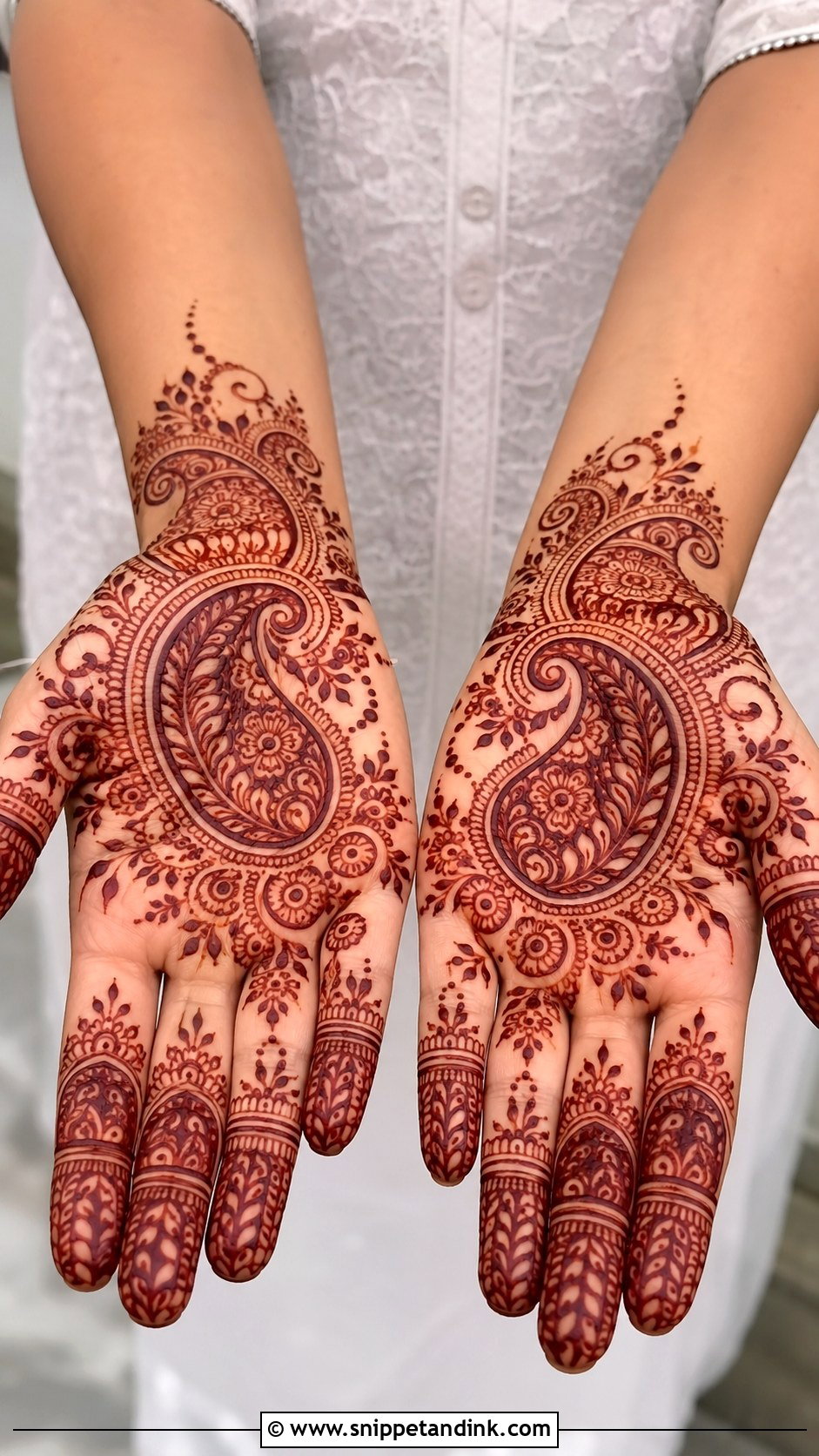
The paisley’s teardrop curve fits naturally into the hollow of the palm. One large paisley in the centre, or two smaller ones facing each other, filled with flowers, dots, lines or checks, works across Indian, Pakistani and fusion styles. It extends easily toward the wrist or fingers if you want more. I outline it boldly first and fill afterwards, because filling and outlining at the same time drags wet paste across the line.
12. Peacock Palm Mehndi Design
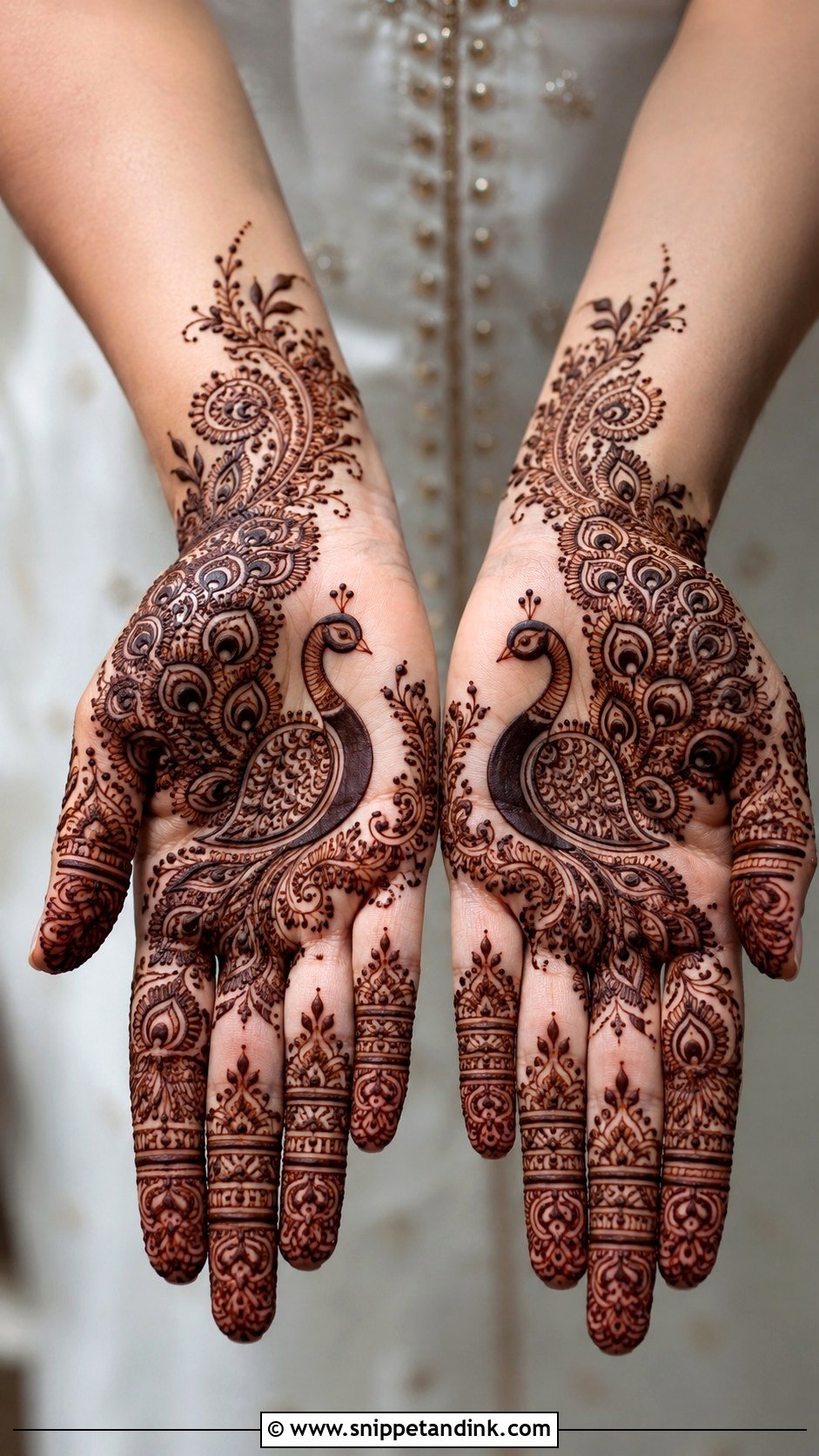
A peacock on the palm can be the whole bird with curved neck and feathers, or just the feather fan opening across the hand. The rounded palm gives the fan space to spread properly, which a narrow forearm cannot. Fine strokes inside each feather add texture, and paisleys or floral borders fill the rest. Keep the head and neck cleanly outlined; a smudged beak is the usual reason a peacock ends up looking like a duck.
13. Jaali Palm Mehndi Design
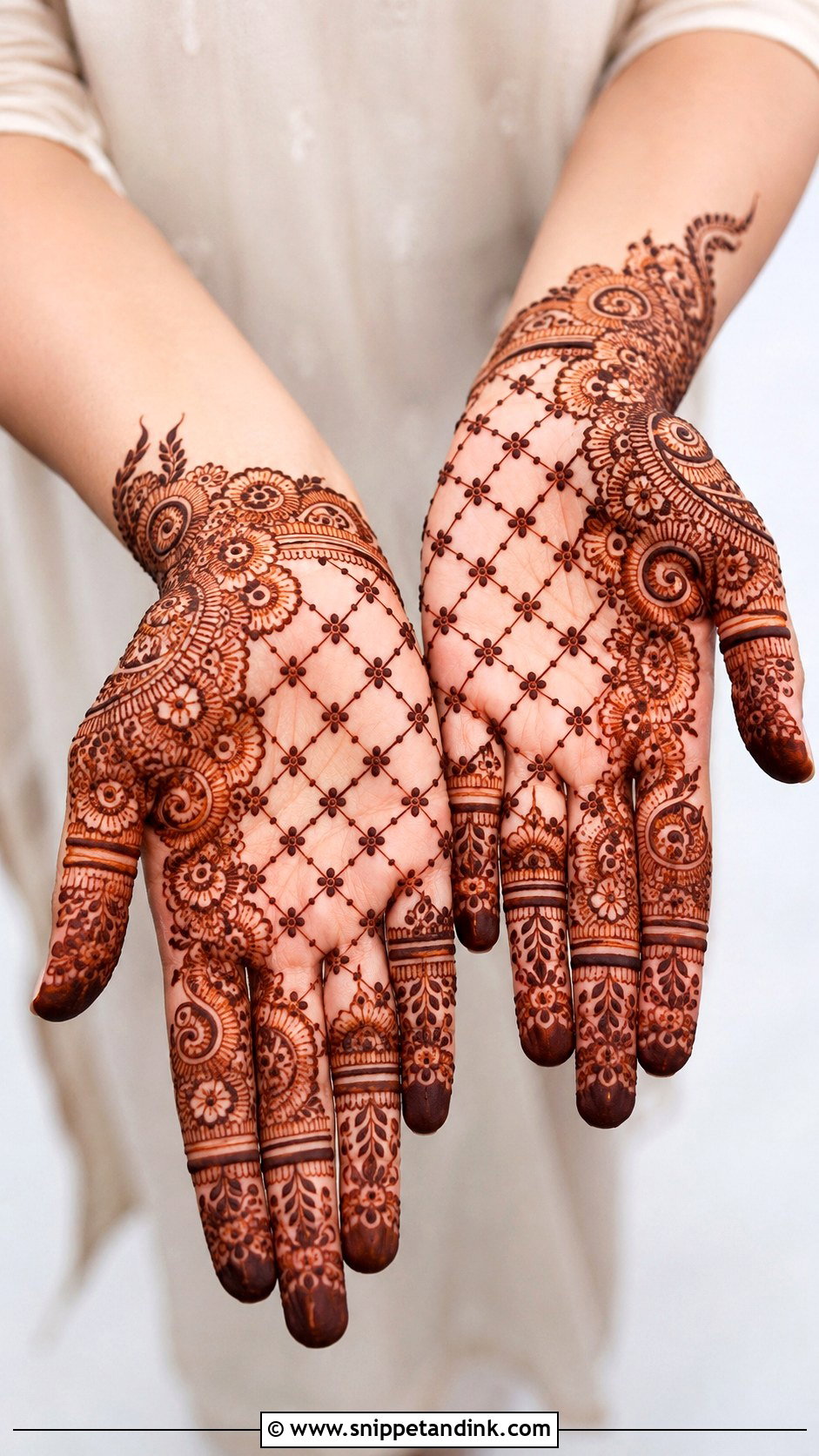
Mesh and lattice can fill the palm or sit in panels beside flowers, paisleys and mandalas. Jaali adds detail without heaviness, and a dot at each crossing makes the grid look finished. One modern layout I like is a jaali panel on one side of the palm and a floral trail on the other. Grids show every wobble, so I draw all the lines in one direction first, then cross them, keeping the spacing even.
14. Moroccan Palm Mehndi Design
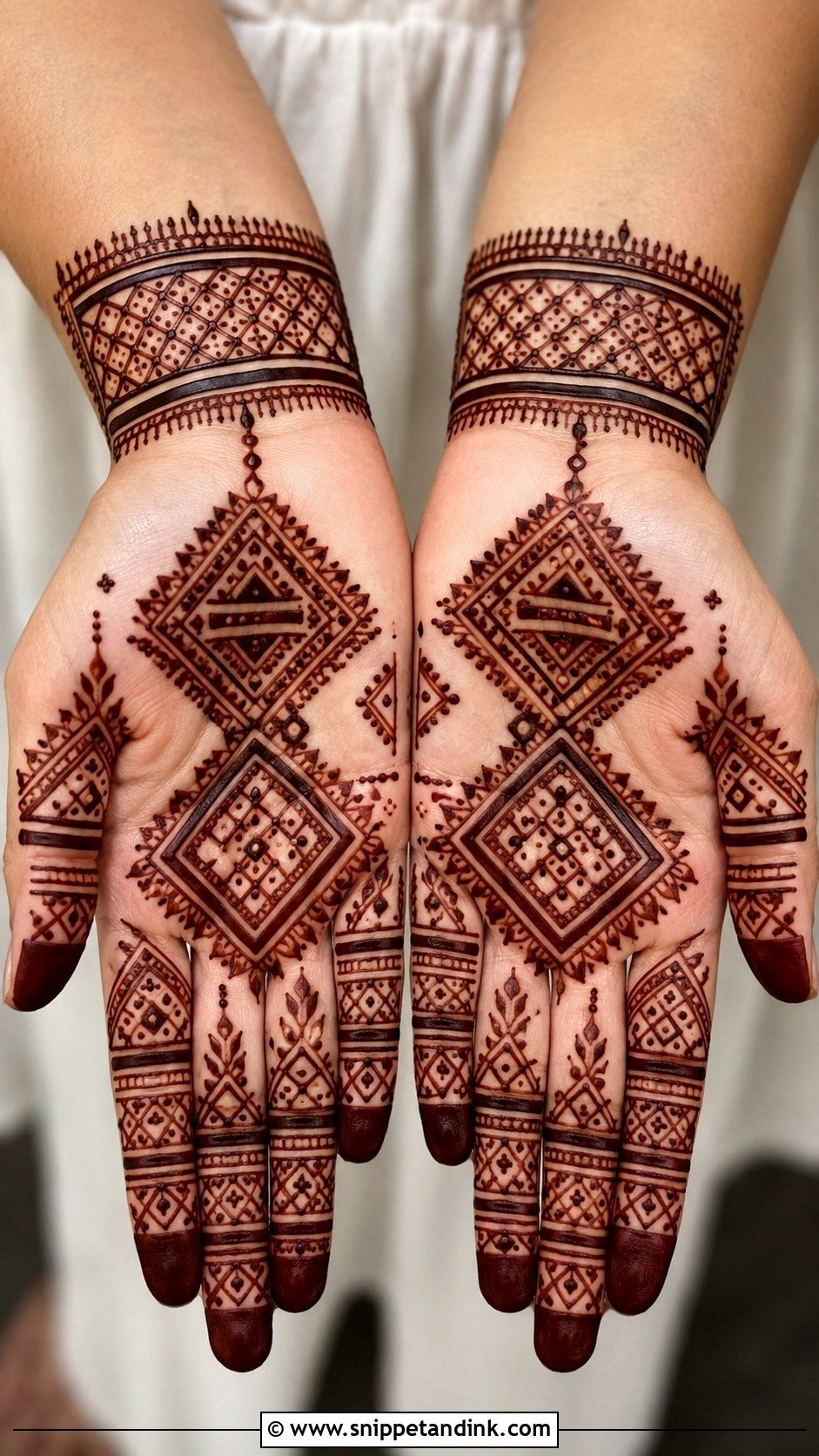
Moroccan palm work divides the hand into geometric panels of diamonds, triangles, squares and grids with bold borders, and the fingers carry matching line work. It looks sharp and different from the usual Indian or Arabic patterns, and it can be kept minimal or made full. Repeating the same shapes is what creates harmony. The deep brown stain of a well-aged palm suits it especially, because straight lines show colour very clearly.

15. Gulf Palm Mehndi Design
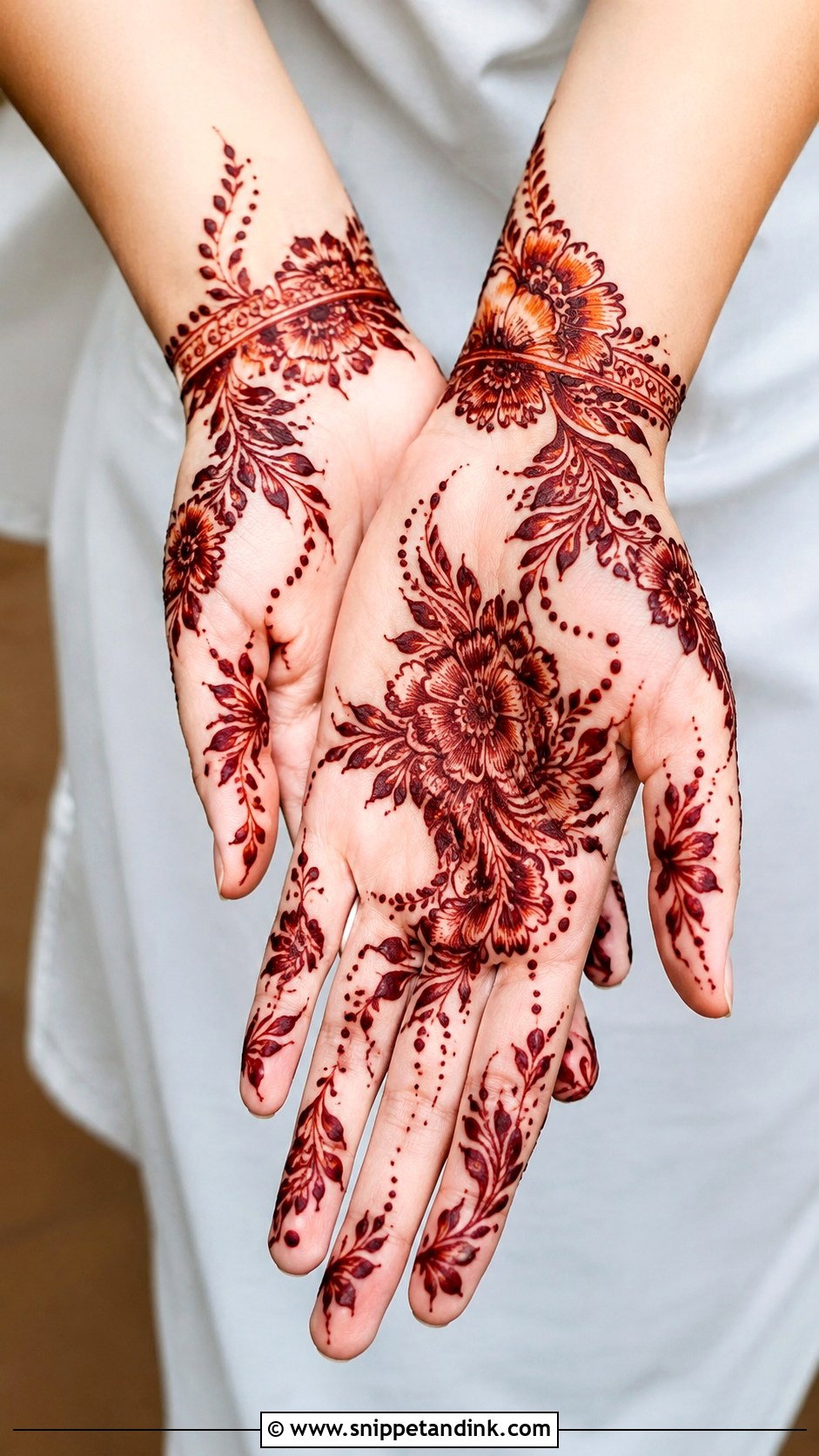
Khaleeji-inspired palms use bold flowers, leafy trails, thick outlines and generous open space. Large blossoms cross the palm with vines sweeping to the fingers. The temptation is to pack tiny fillers into the gaps; resist it, the open skin is the point. Shading inside petals and leaves gives depth. Finger bands, dotted trails and a clean wrist finish complete it for Eid, parties and weddings.
16. Modern Palm Mehndi Design
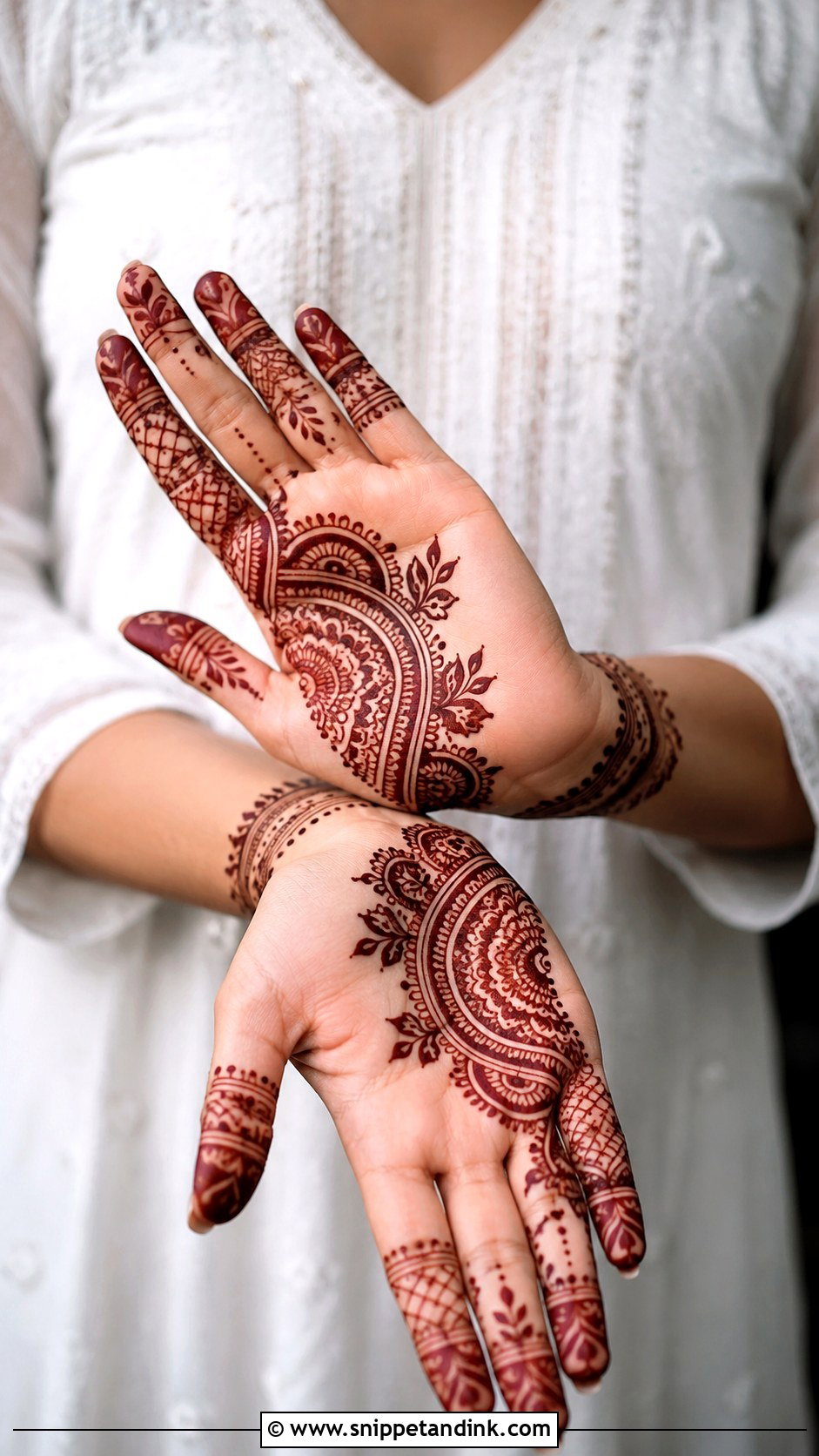
Modern palm designs play with half mandalas, abstract curves, leaf outlines, geometric borders and deliberate gaps. Choose a clear focal point and build out from it: a bold flower at the heel of the palm connected to slim finger patterns, or a split design with detail on one side only. Precise lines matter more here than in traditional work, because there are no fillers to hide a shaky stroke. Younger wearers and minimal brides tend to love it.
17. Back To Front Palm Mehndi Design
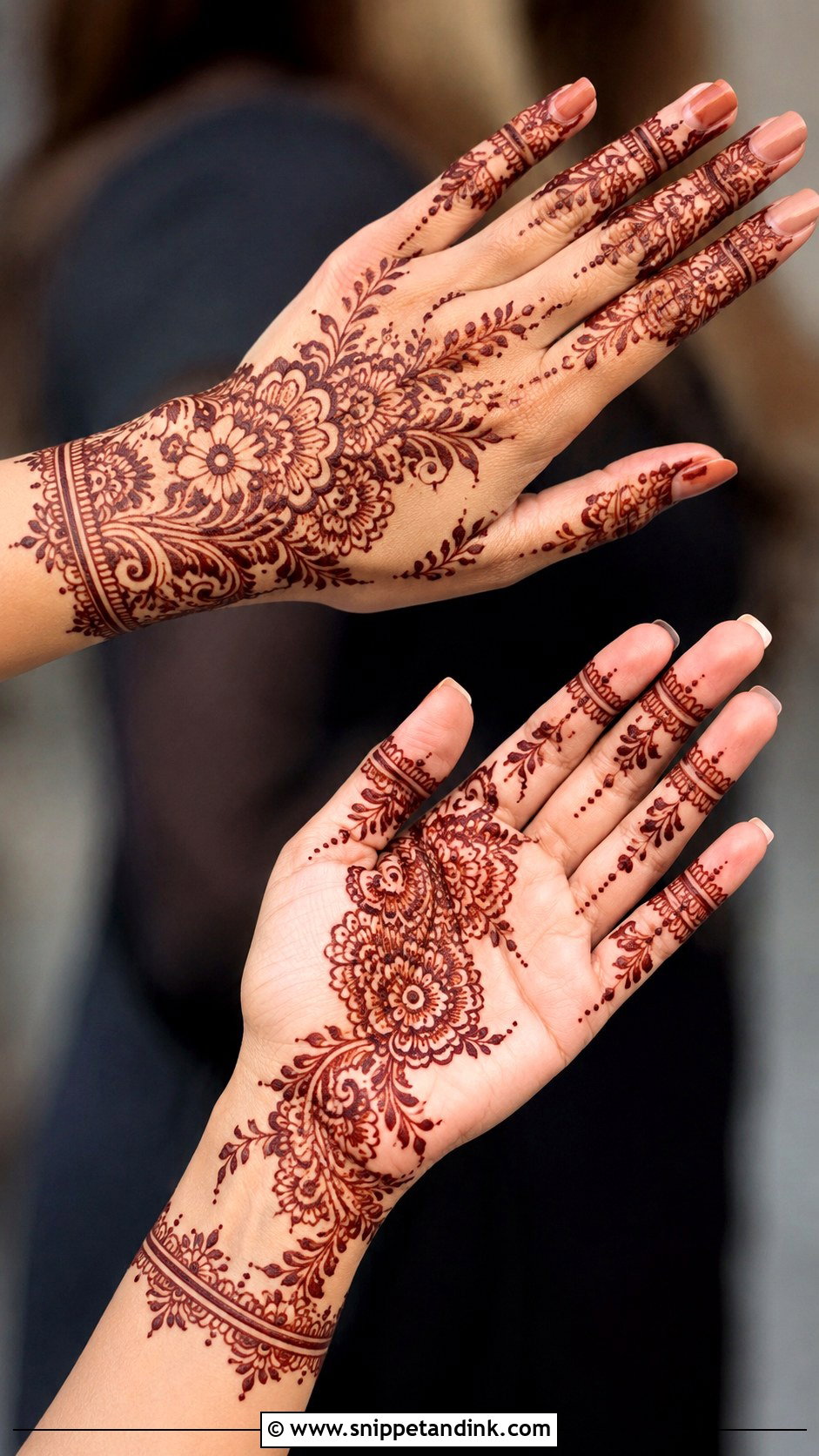
Here the palm stays the focus but the pattern wraps around the side of the hand or through the fingers onto the back, so the design looks complete from any angle. I keep the palm fuller and the side connection lighter so the edge of the hand does not look bulky. Vines, dots and thin borders make the best links. The wrap shows clearly when both hands are held together in photos.
18. Front Hand Palm Mehndi Design
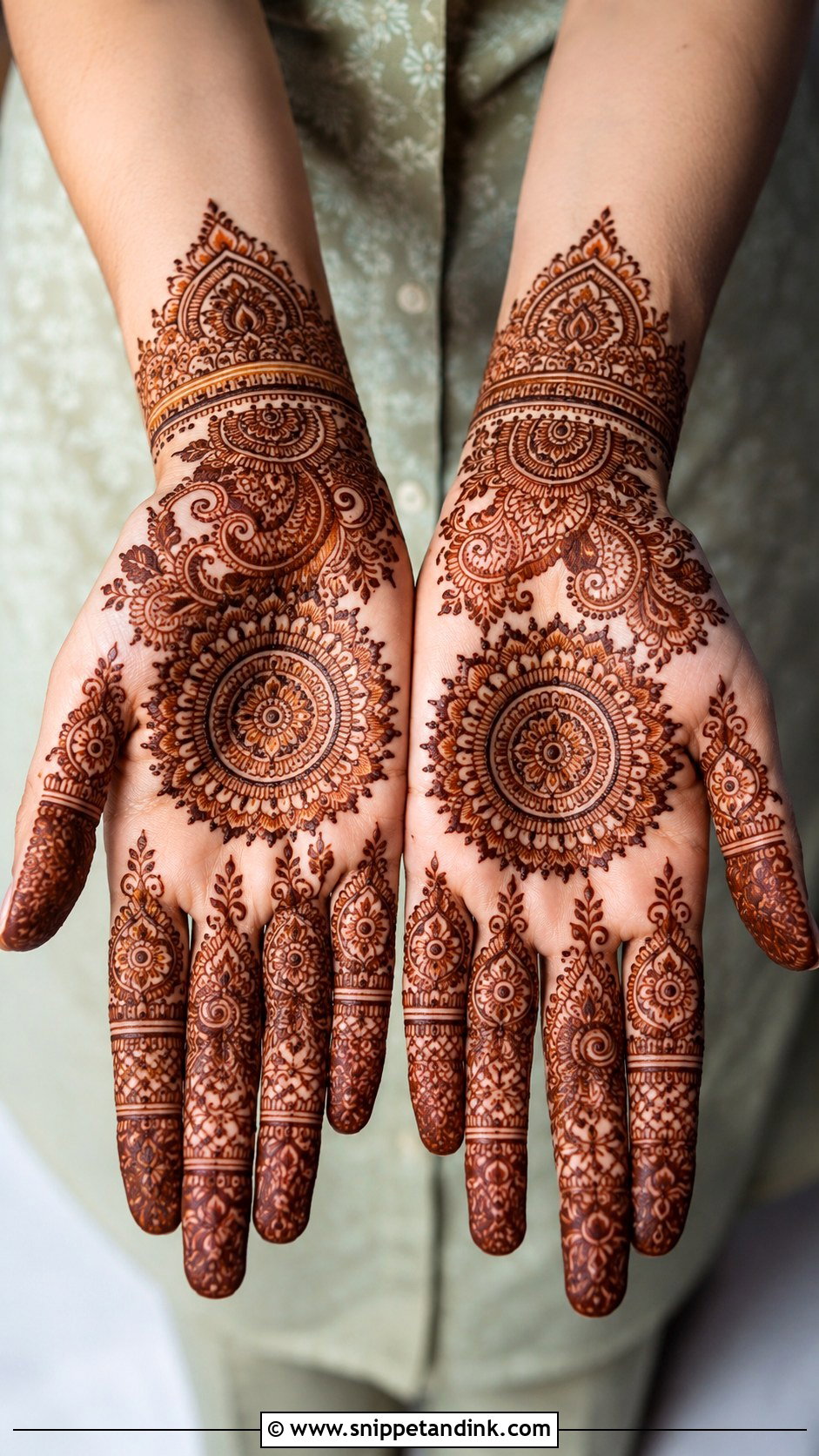
The inner hand, palm, fingers and maybe a short wrist extension, looks complete on its own without arm coverage. A centre mandala, full floral arrangement, paisley cluster or Arabic trail can anchor it, with fingers matched through bands, leafy tips or small motifs. It is quick to apply for festivals and family functions. Pick one theme and repeat its details; mixing unrelated patterns on one palm is the most common reason a front hand looks messy.
19. Easy Palm Mehndi Design
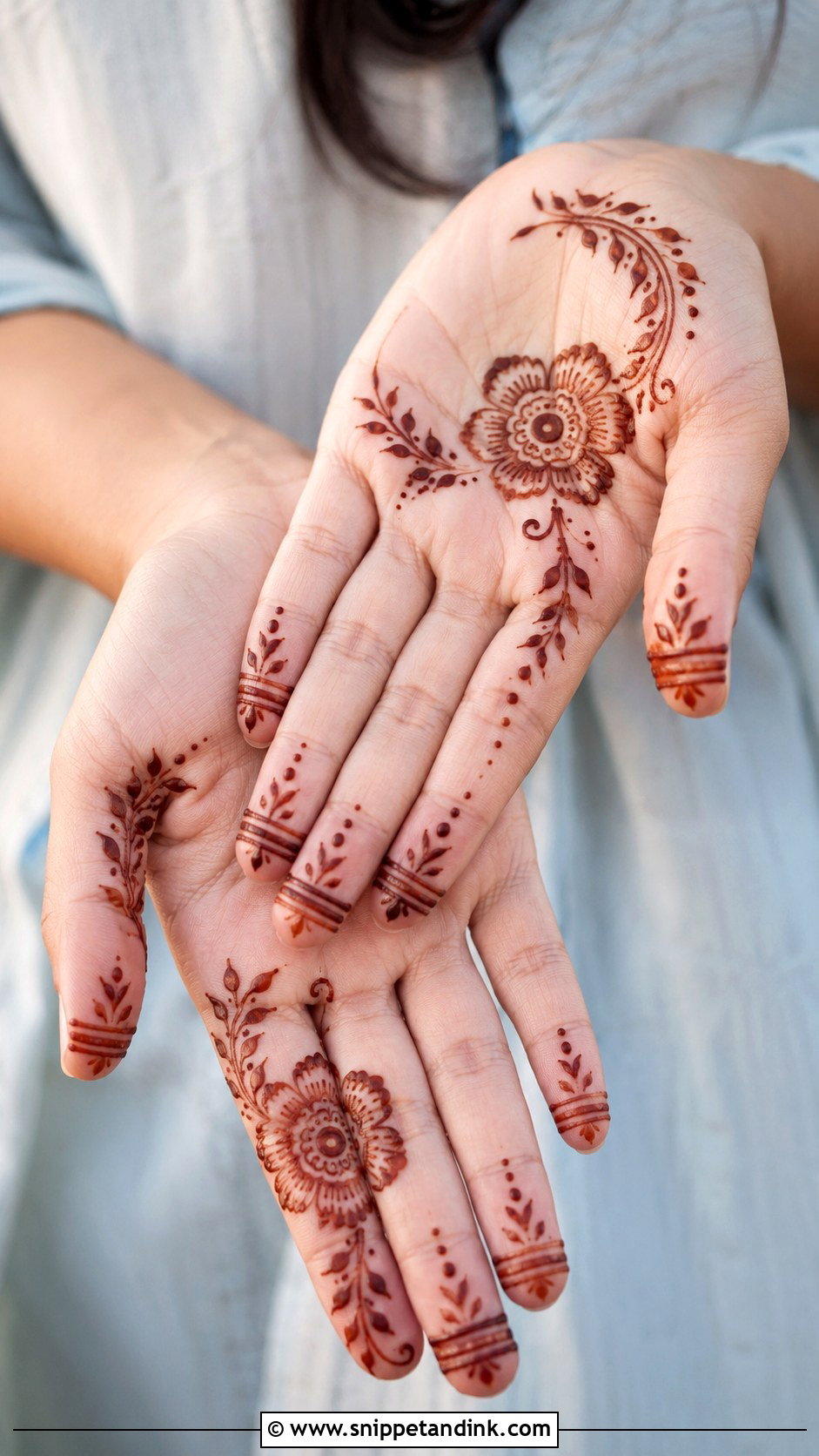
Easy designs should look good without advanced skill. Start with a basic shape, a circle, a flower, a paisley or a heart-like curve, and add dots, leaves and small lines around it. Decorate the fingertips with simple bands or small vines. If you are new to the cone, fewer motifs repeated cleanly will always look better than many attempted at once. Leave plenty of skin showing so the palm breathes.

20. Finger And Palm Mehndi Design
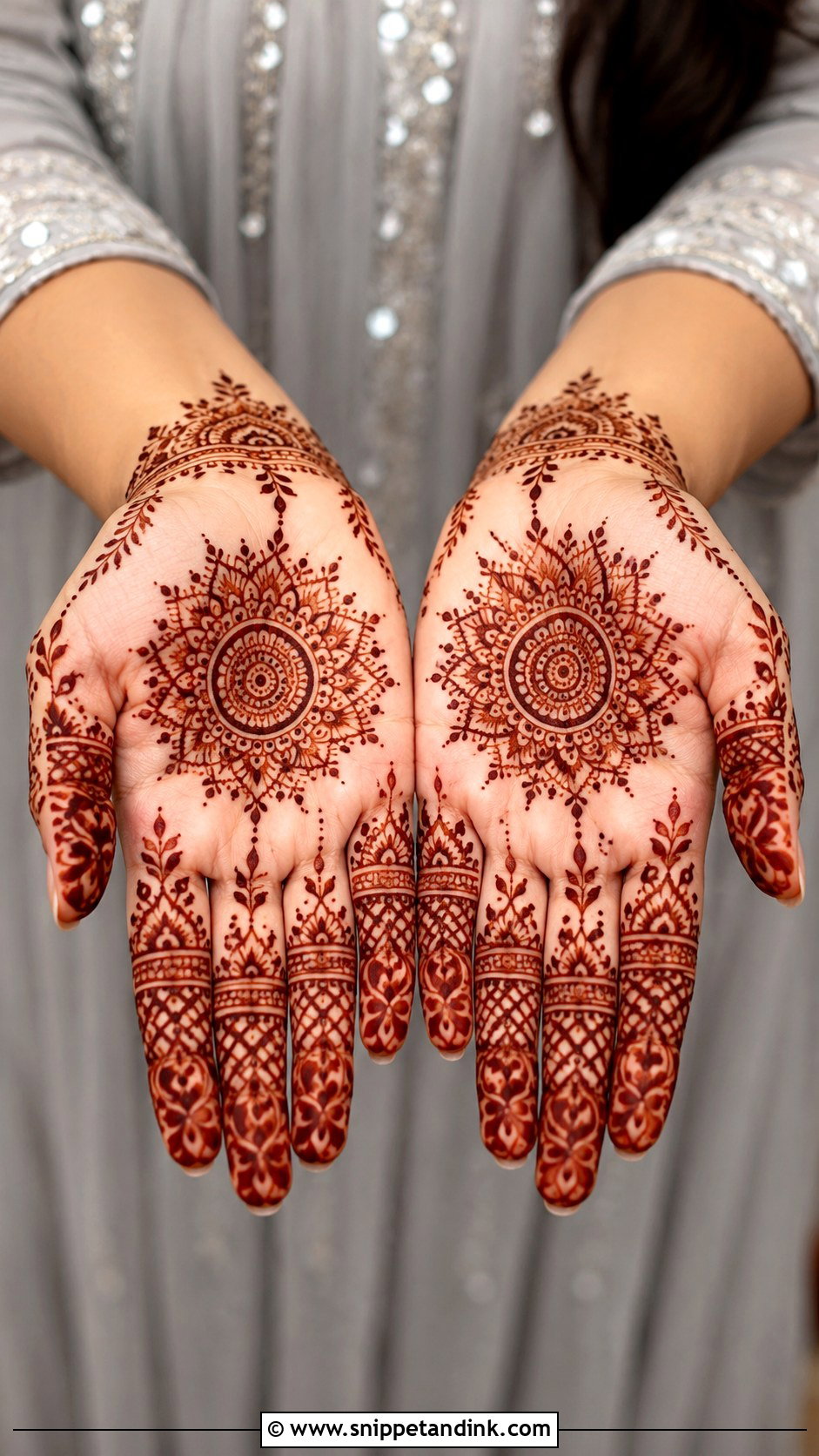
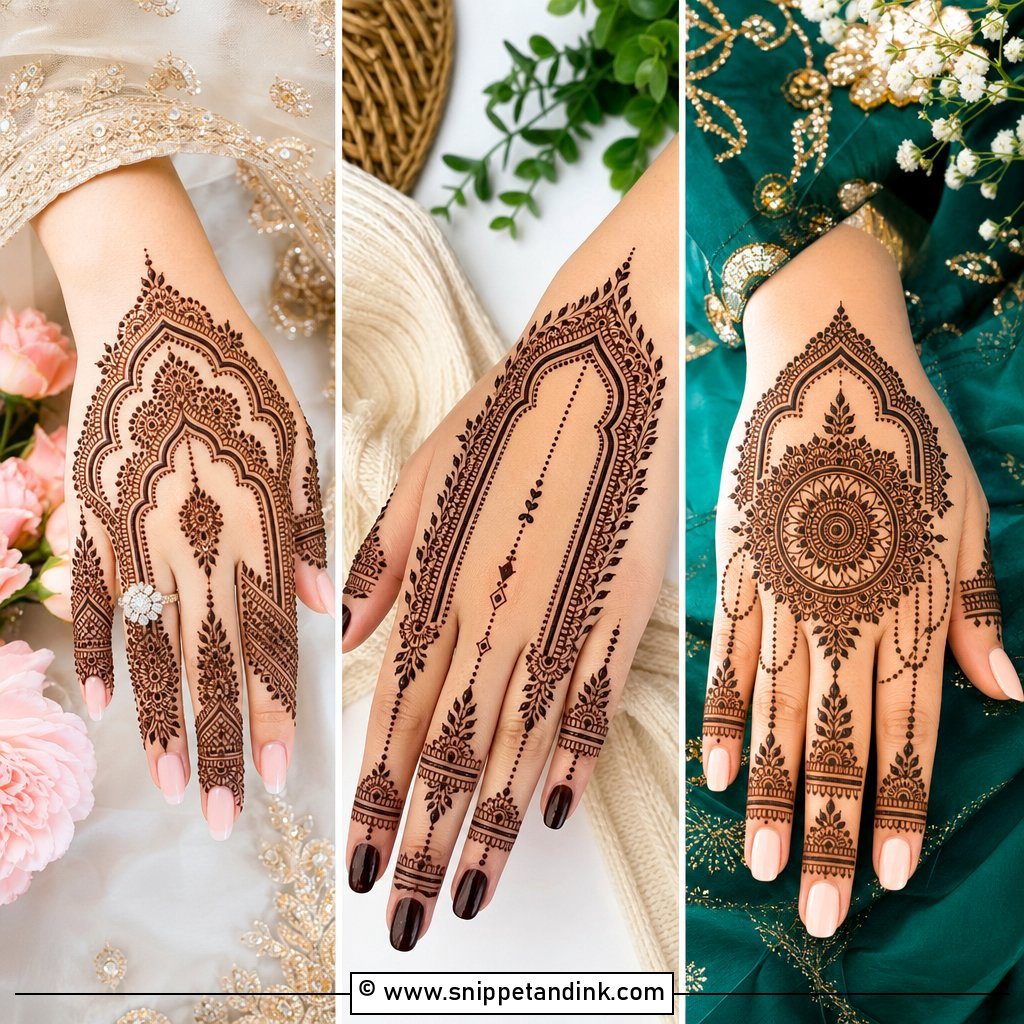
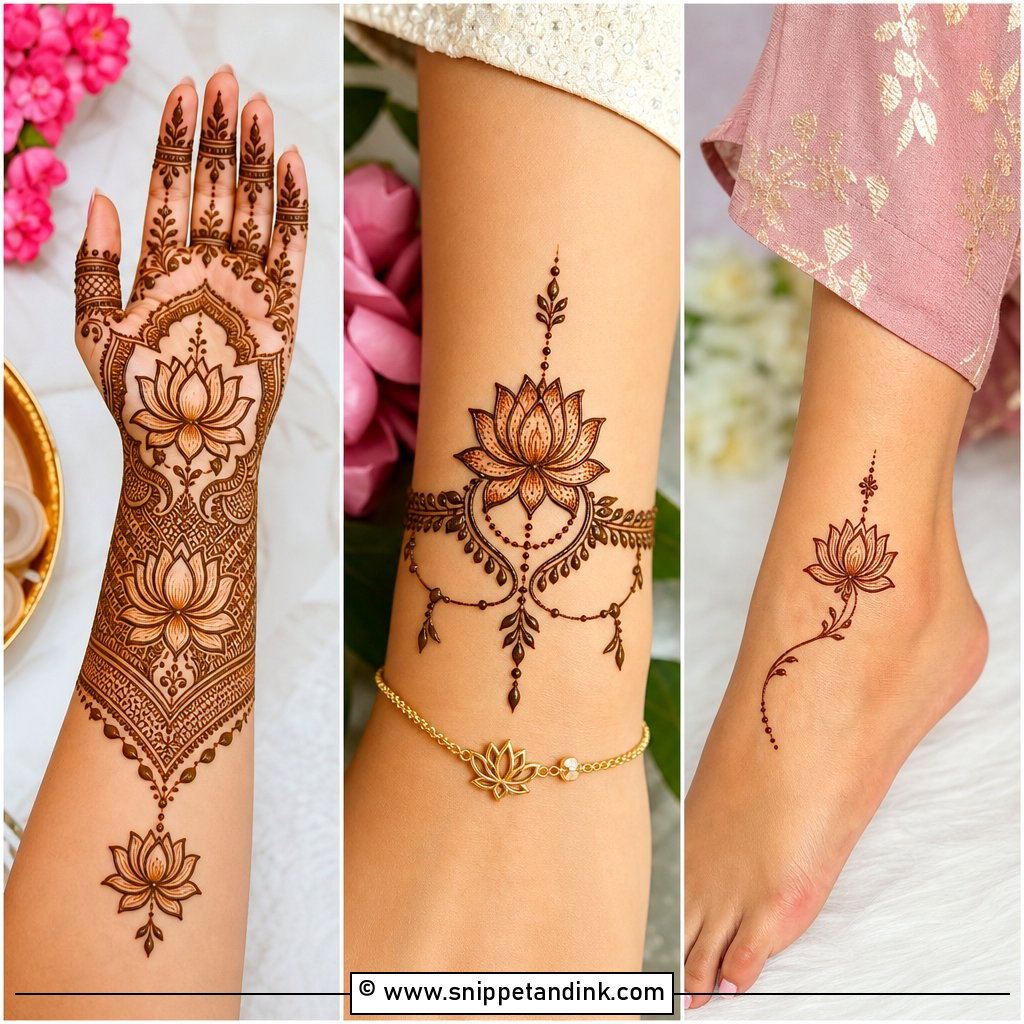
This one gives the fingers and palm equal weight. The palm holds a mandala, flower or paisley, and the fingers carry detailed bands, leaf trails or small geometric sections, without the design travelling far onto the wrist. Coordination is the skill: florals in the palm call for petal bands on the fingers; geometry calls for straight, structured finger work. With every finger finished, simple hand gestures look graceful.
21. Wrist To Palm Mehndi Design
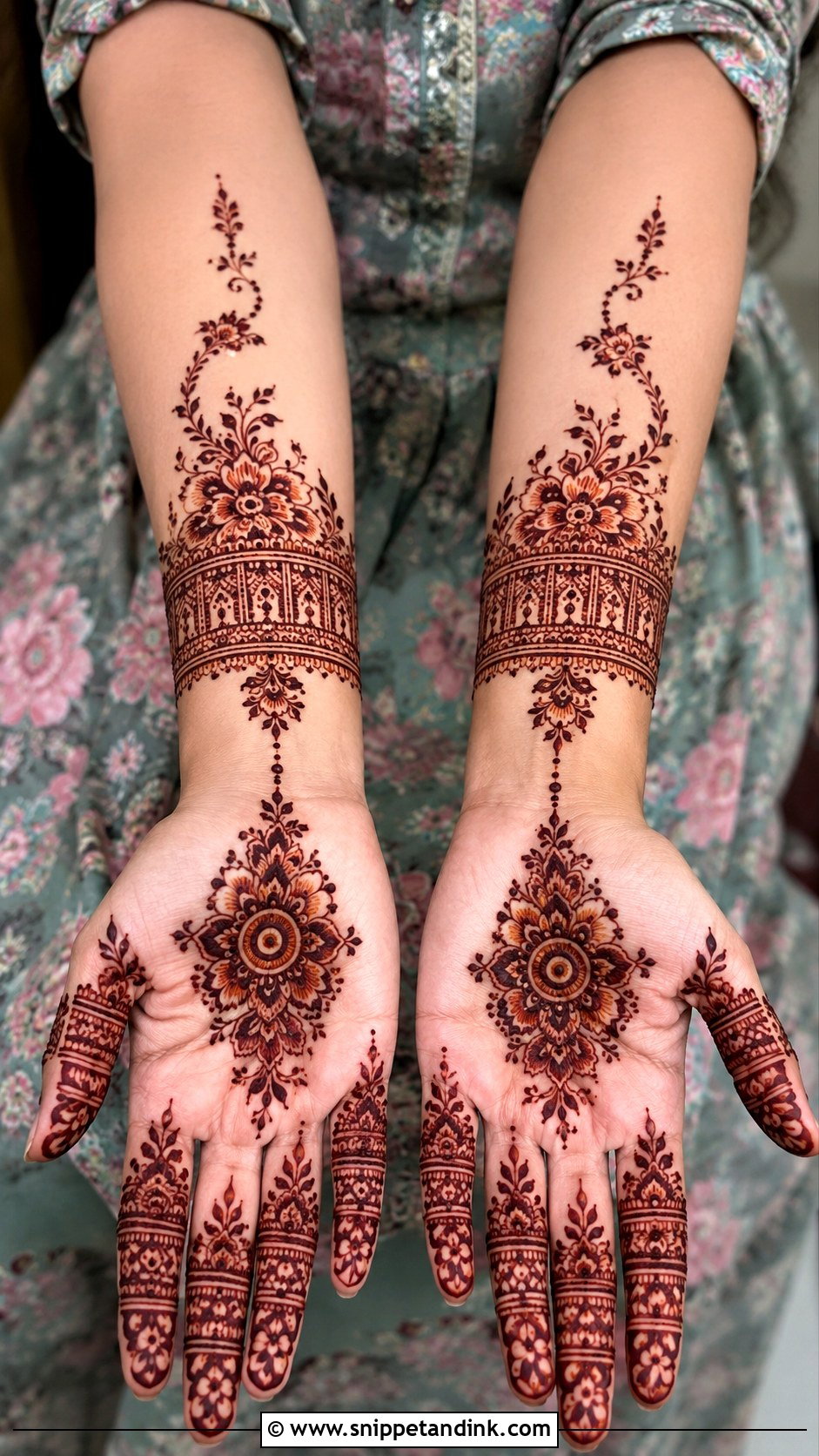
Starting at the wrist with a cuff, band, floral bracelet or jaali border and flowing upward gives a bracelet-like flow into the main palm motif. It adds a little drama over a palm-only design and blends with bangles. Vines, dots or chain lines connect the two. It can be Arabic, Indian or Indo-Arabic. I draw the wrist border with your hand bent back slightly, so it stays even when your wrist straightens.
22. Half Palm Mehndi Design
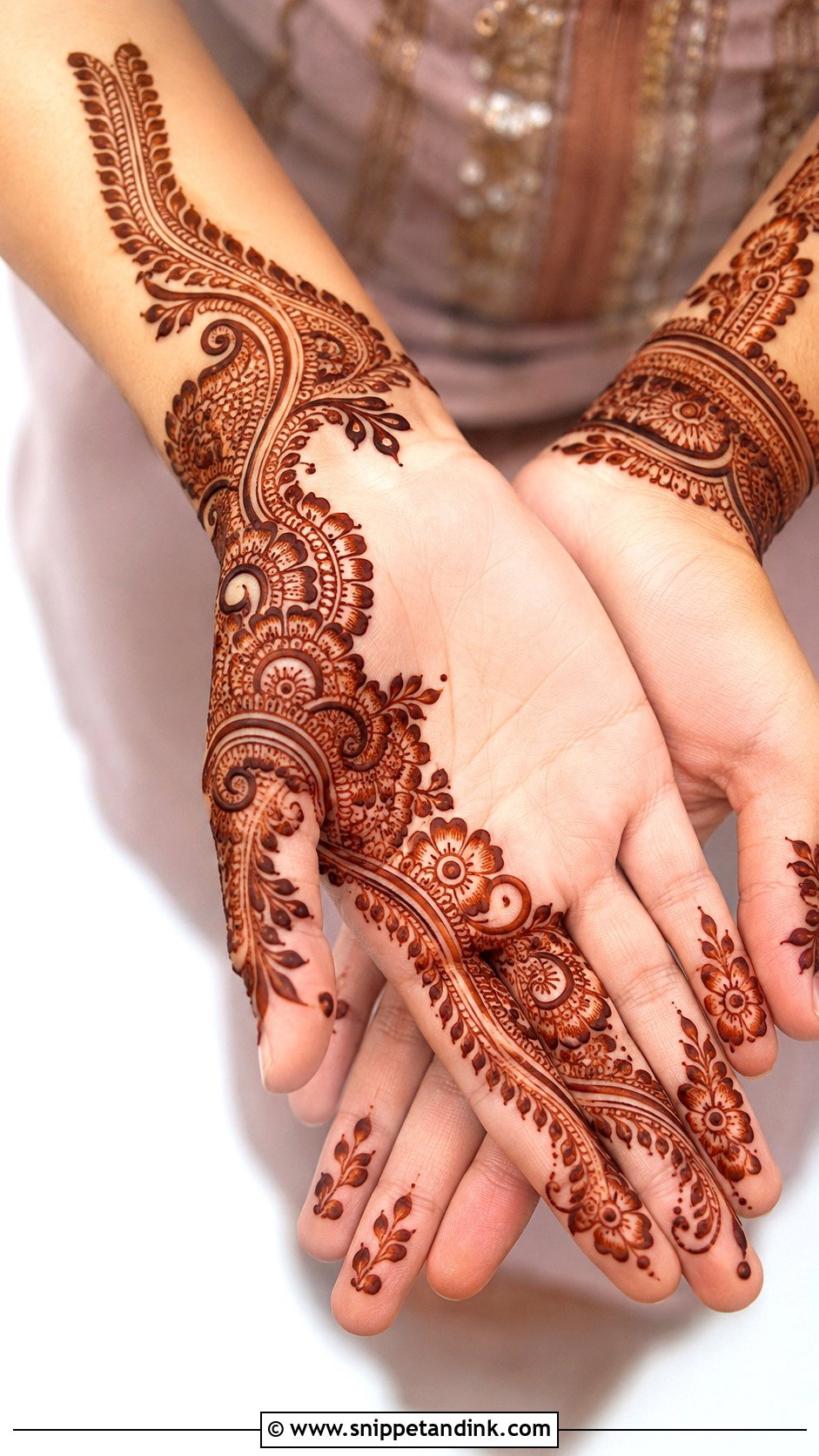
A half palm covers one side, the lower half or a diagonal half, and leaves the rest open, which looks modern and quick. Arabic flowers, a side mandala, paisley clusters or leafy vines all work. The edge where it stops needs a clear border, otherwise it looks abandoned. Fingers can be light or bold depending on the contrast you want. It suits casual events, Eid, Diwali and bridesmaids.
23. Round Palm Mehndi Design
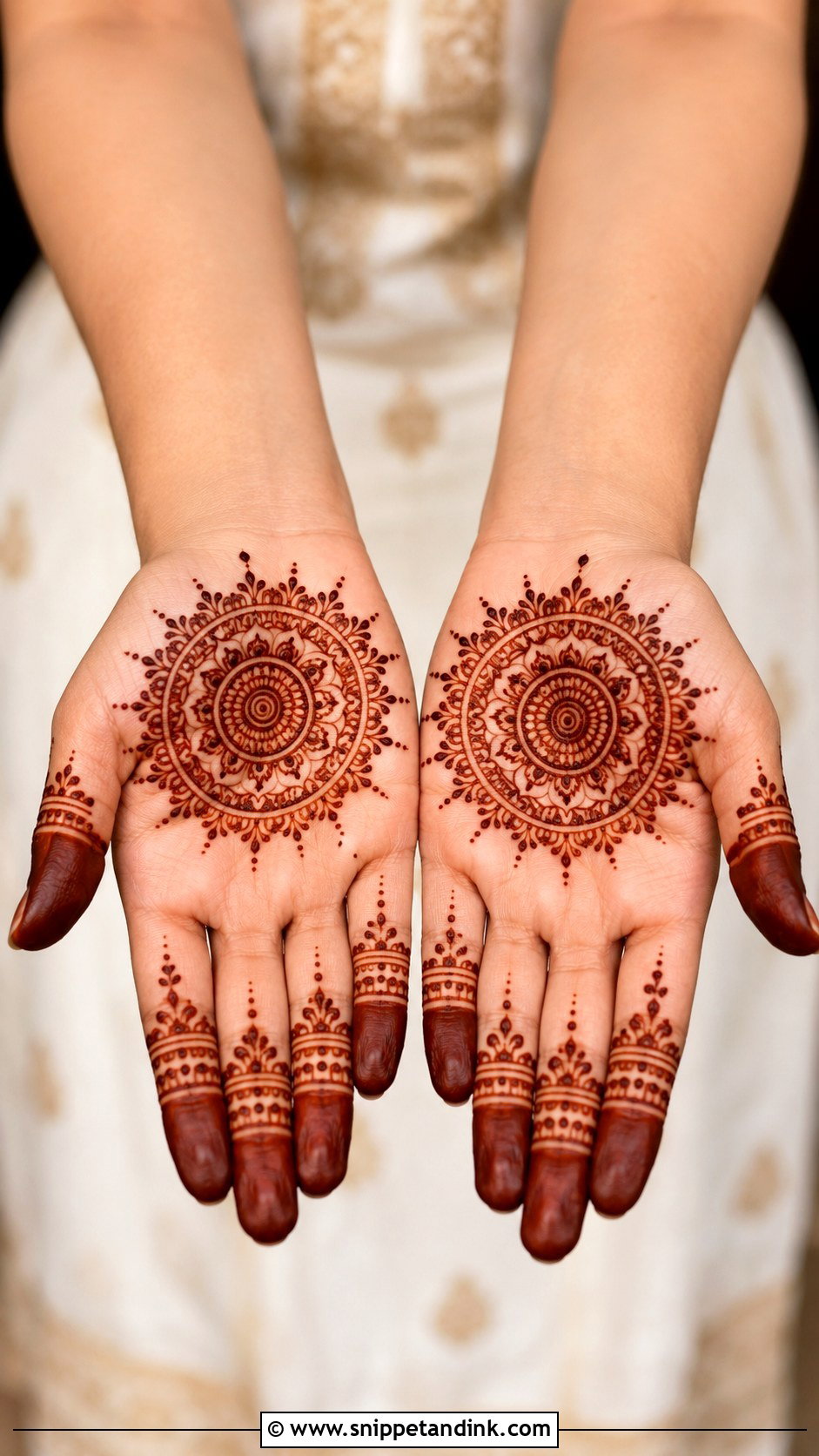
Circular designs, a chakra, a floral circle, a dotted ring, a sun or a layered mandala, suit the palm’s natural shape. A single neat circle with decorated fingers is minimal; rings of petals, leaves, dots and lace borders make it festive. It is a forgiving starting point for beginners because the centre gives you a clear reference. Even spacing between rings is what makes it look clean, so I check each ring before starting the next.
24. Square Palm Mehndi Design
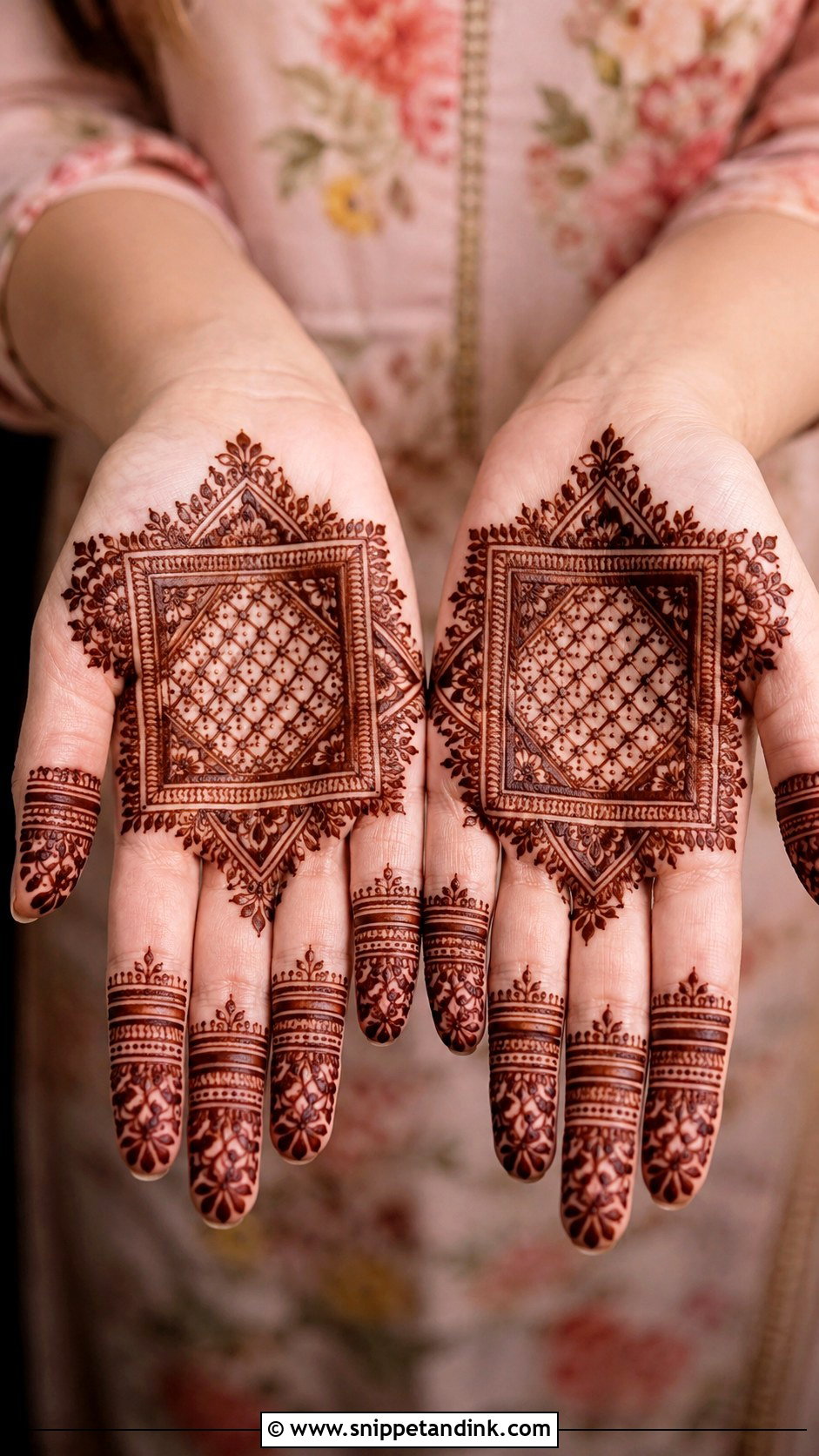
Swapping the usual circle for a square frame filled with florals, checks, jaali or geometry gives a structured, slightly unexpected look that still feels traditional. Turned on its corner, the square becomes a diamond with more movement. It suits longer palms, where it adds width. Strong borders around the square keep the shape clear after staining; thin borders tend to disappear into the fillers.

25. Bracelet Palm Mehndi Design
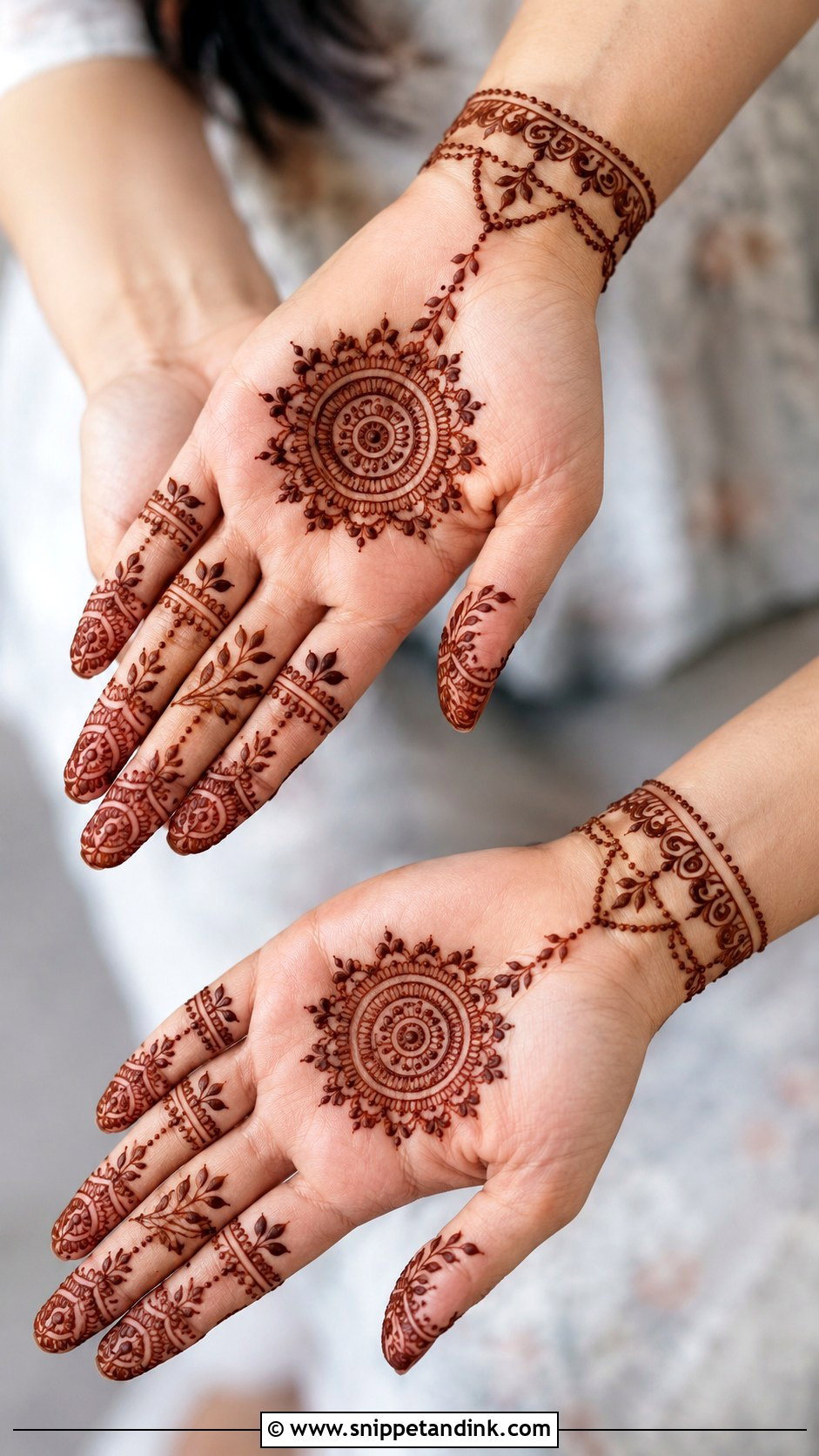
A small palm motif linked by thin chains, dots and vines to a wrist bracelet creates the look of henna jewelry. It is lighter than full bridal coverage, which suits engagements, festive outfits and bridesmaids. Keep the bracelet detailed but not thick, and the connecting chain delicate. If the chain is drawn too heavy it competes with the motif, so I use the finest tip I have for those links.
26. Rose Palm Mehndi Design
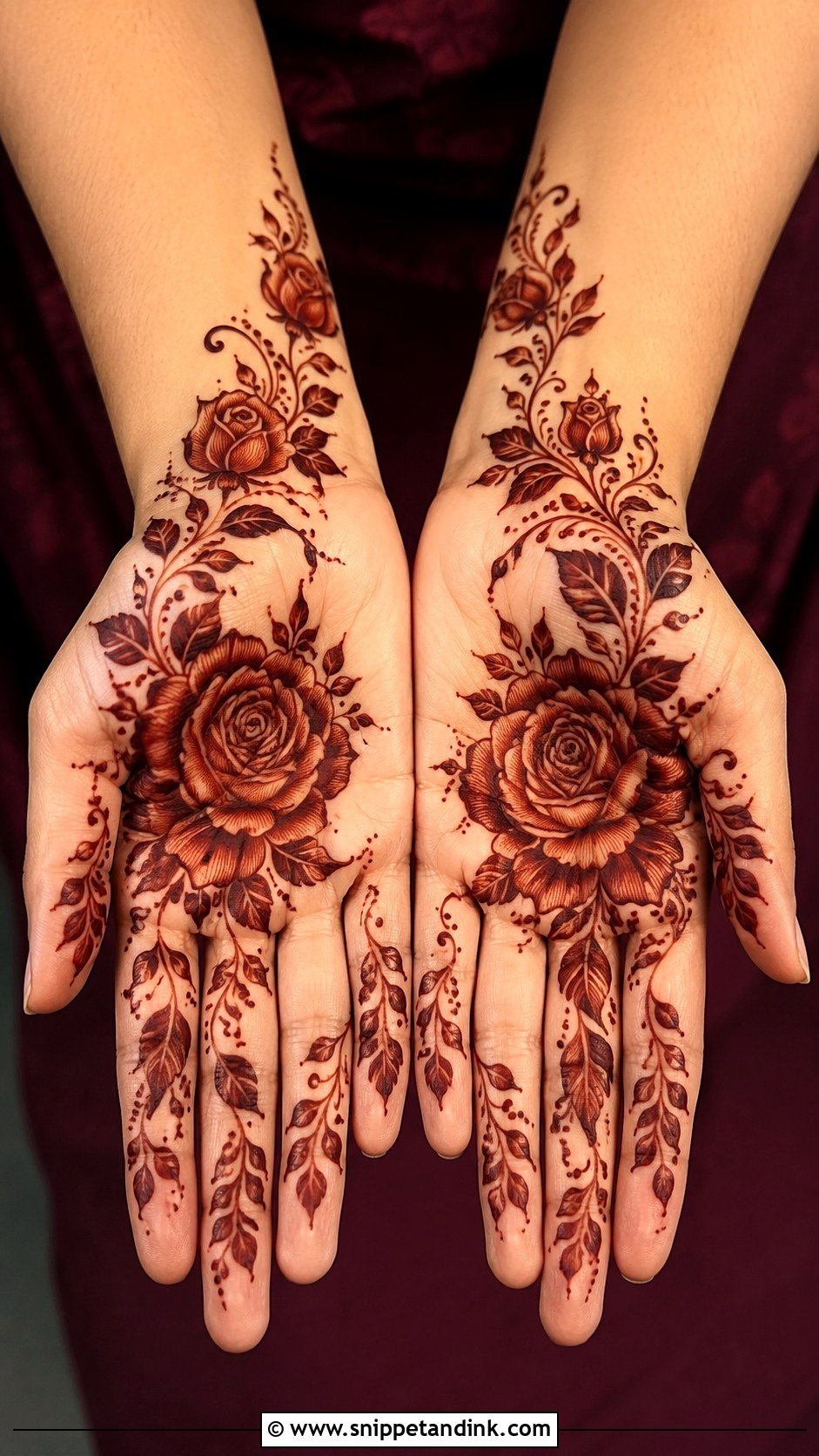
A large rose in the centre with leaves, buds and curved vines needs very little else. Smaller roses can also run diagonally for an Arabic feel. The petals must be layered with visible gaps between them, or the rose turns into a dark blob as the stain deepens. Light shading inside each petal and clean outlines prevent that. Leafy fingers complete it, and it holds up well in close-up photos.
27. Heart Palm Mehndi Design
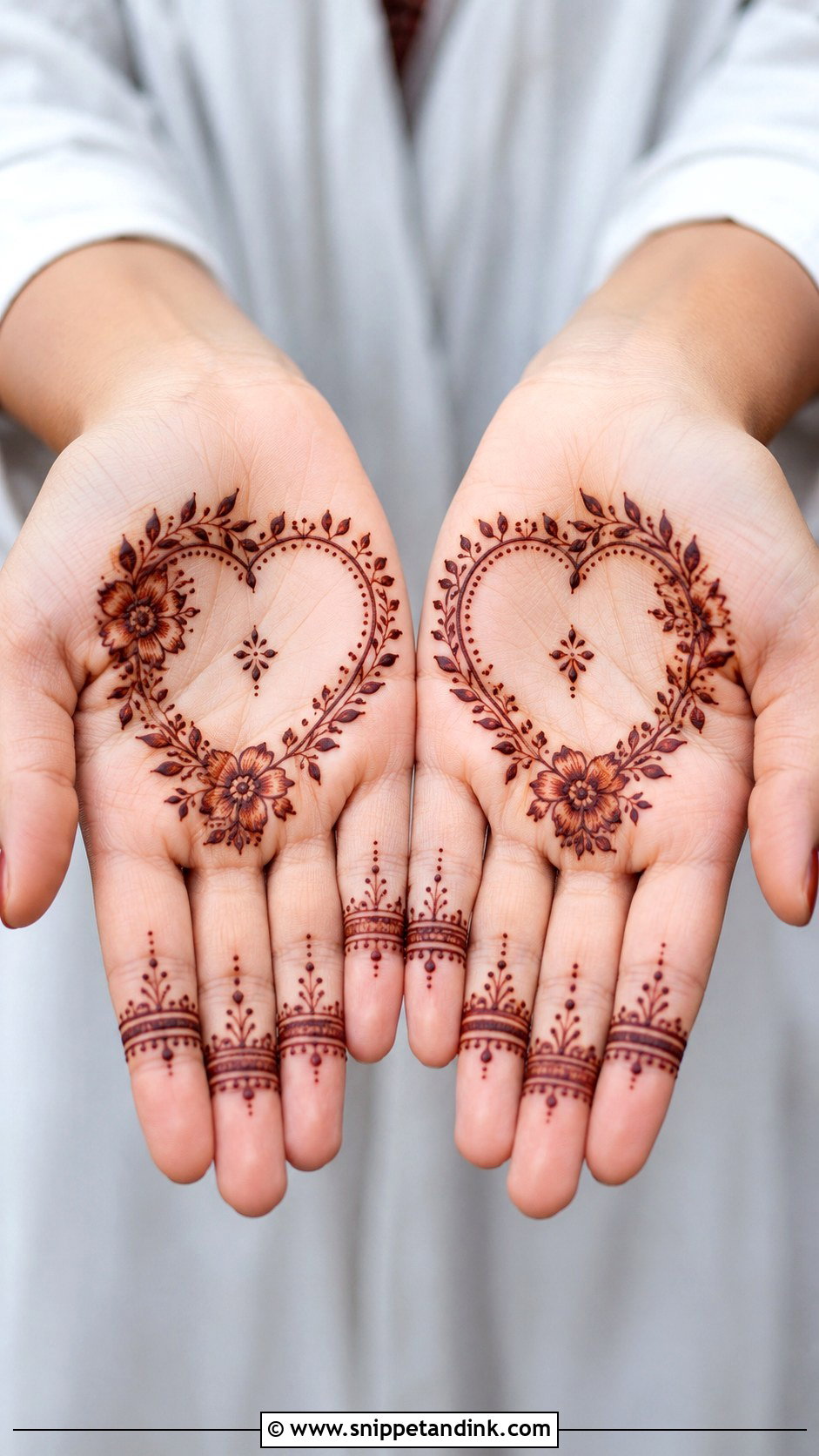
The heart can be subtle, formed from floral curves, a paisley outline or two mirrored vines meeting in the centre, so it reads as grown-up rather than childish. Tiny flowers, dots, jaali or initials inside the heart give it meaning. Blend the shape into the surrounding pattern and keep the fingers simple so it stays visible. It is a nice personal detail for a bride who does not want a full portrait.
28. Initial Palm Mehndi Design
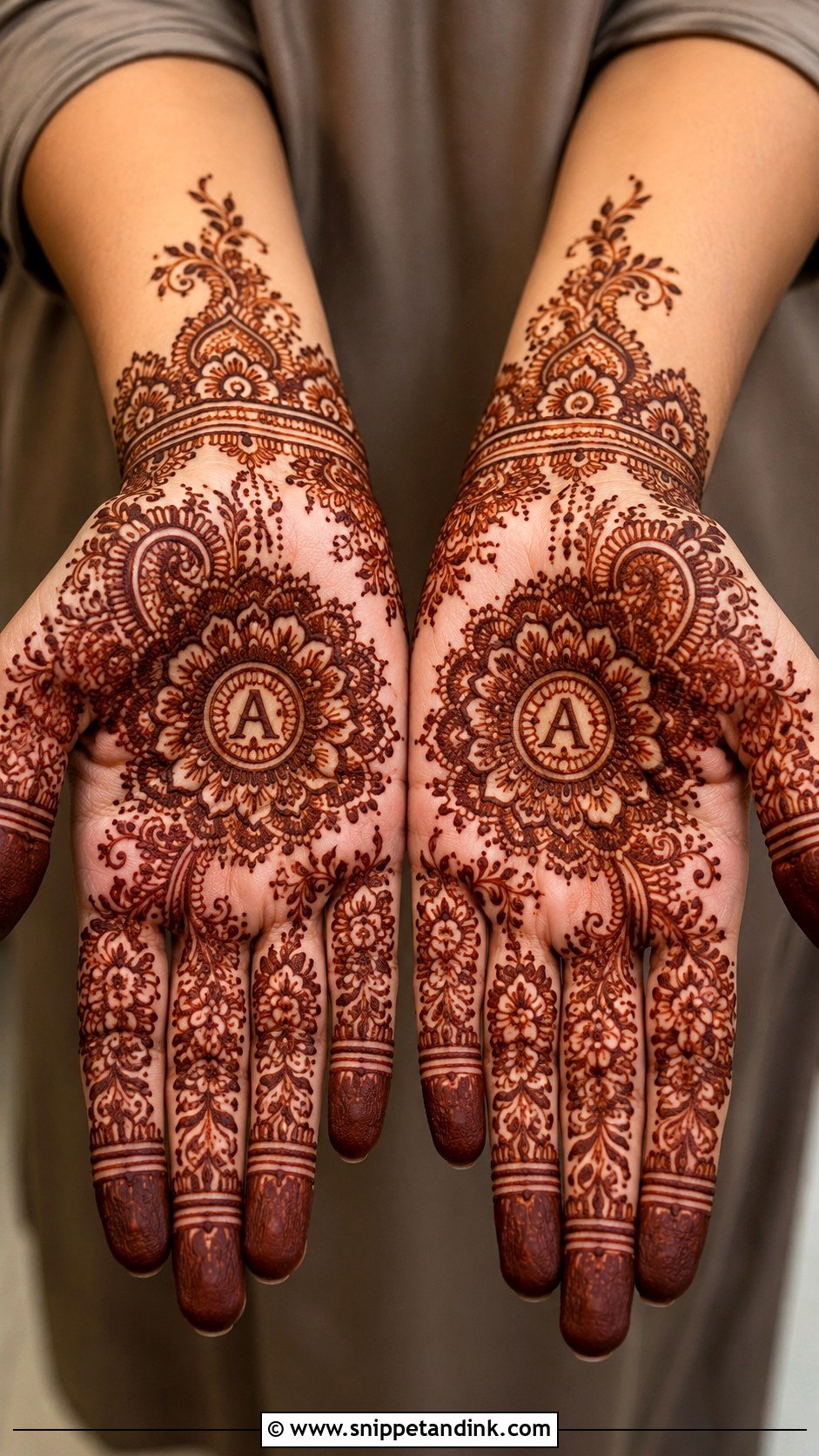
An initial can hide inside a mandala, sit within a paisley, rest in a floral frame or weave through a bridal palm. The balance is visible enough to find, small enough not to interrupt the art. I wrap it in fine dots, leaves and tiny curves so it belongs to the pattern. A small date fits beside it if there is room. Letters with closed loops, like B or R, need slightly wider spacing, since paste spreads and fills small gaps.
29. Festival Palm Mehndi Design
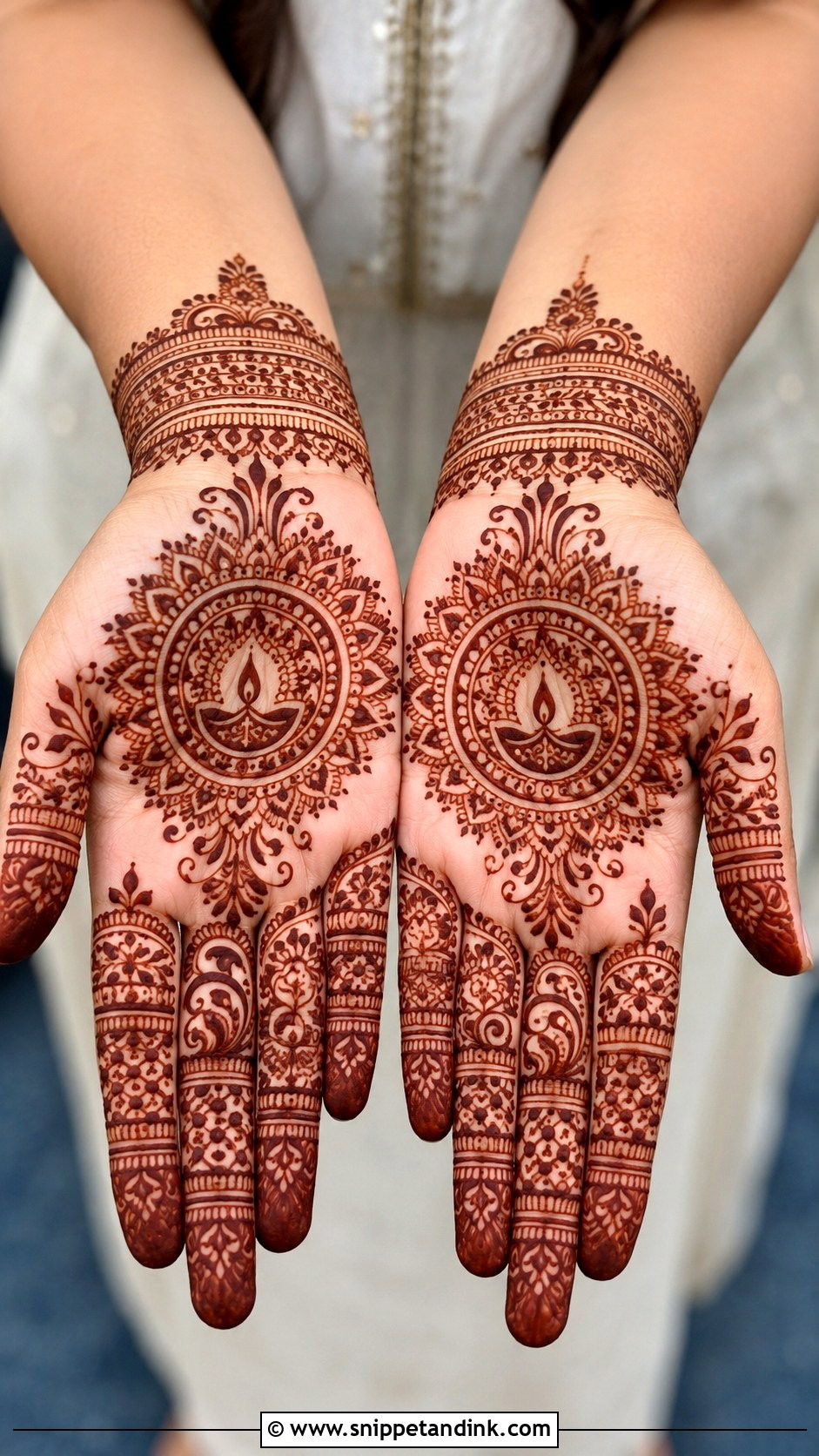
A festival palm mehndi design should feel joyful and still be comfortable through a long day: flowers, paisleys, mandalas, vines, diya shapes, dots and small borders. Detailed enough to feel festive, not so heavy it takes all afternoon. A central motif surrounded by smaller matching patterns works for Diwali, Eid, Teej, Karwa Chauth and Raksha Bandhan. For a brighter look, make the fingers slightly denser while the palm stays balanced.
30. Eid Palm Mehndi Design
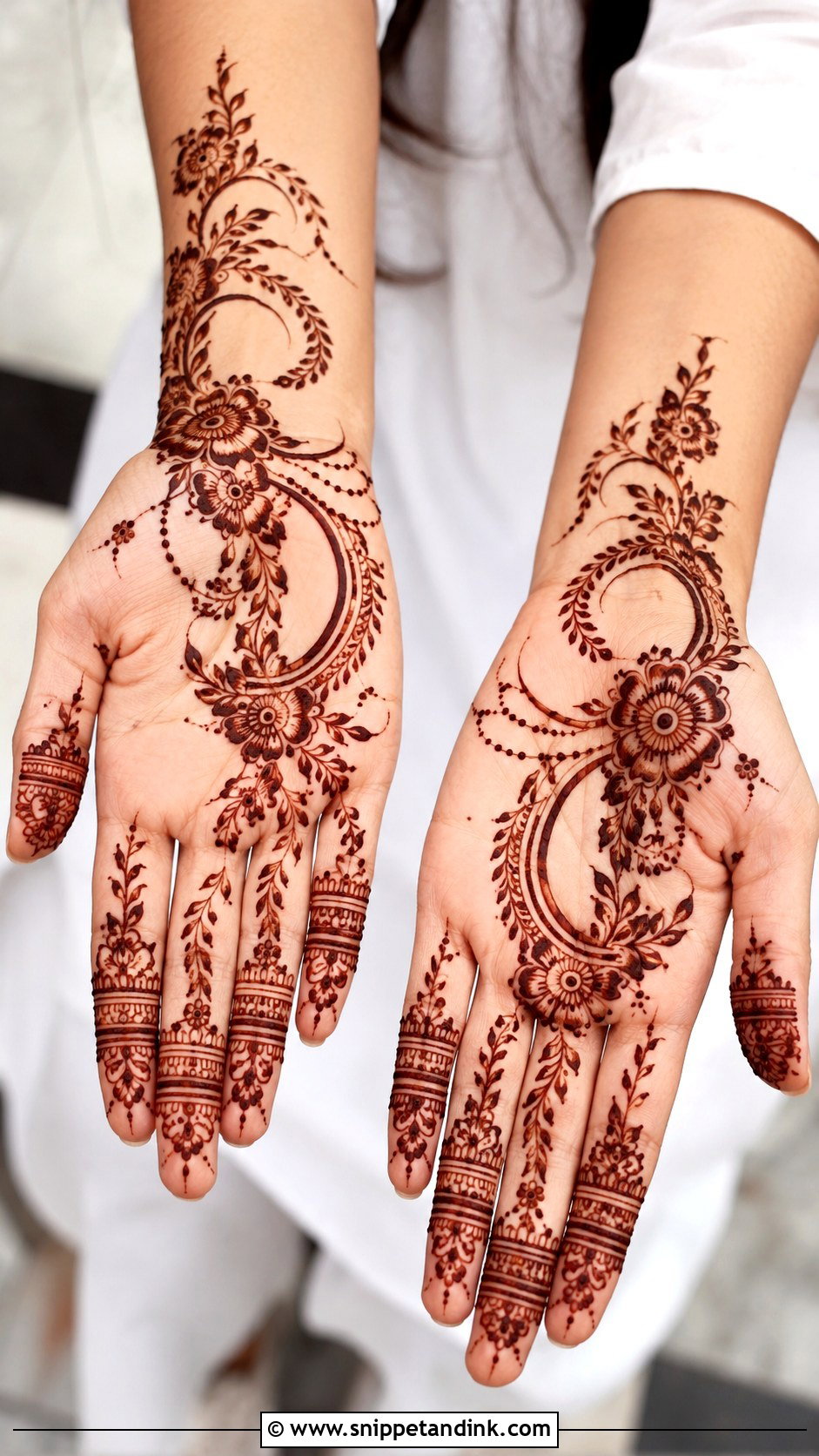
Eid palms combine elegance with speed: Arabic florals, leafy trails, crescent curves, dotted chains and open space. A bold centre flower with vines toward the fingers, or a light half-palm trail, both suit it. Smooth outlines and negative space create the contrast; fuller finger detail completes the hand. Apply it the evening before so the stain has deepened to reddish-brown by morning prayers.
31. Karwa Chauth Palm Mehndi Design
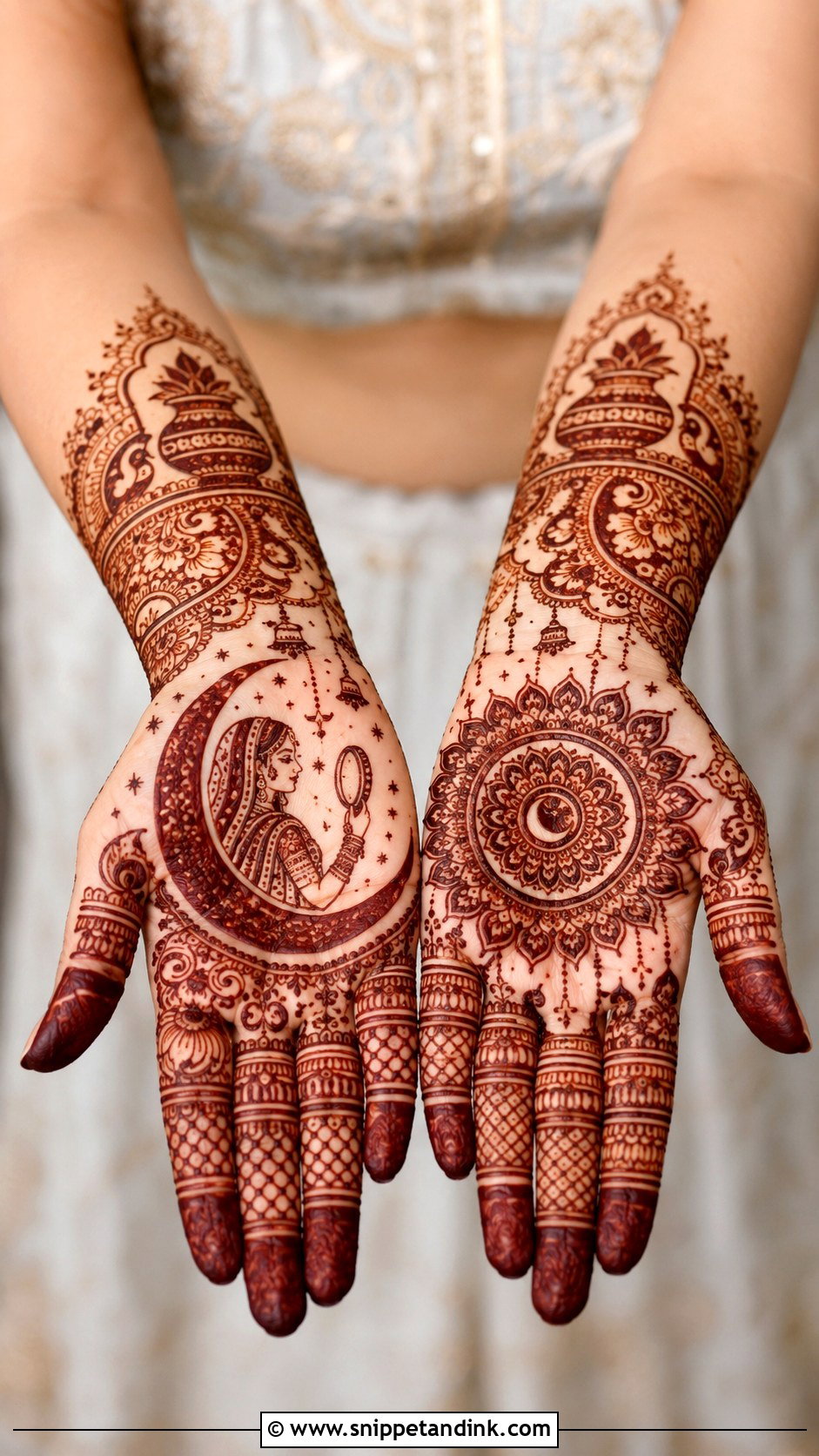
Karwa Chauth palms tend to be traditional and detailed: mandalas, a bride motif, moon curves, kalash, paisleys and fine floral fillers. A centre mandala with decorated fingers is the reliable choice; initials add a personal note. For a heavier look, fill the palm with layered panels and add a bracelet border. Since you are fasting that day, I suggest applying a day or two earlier, so the stain has peaked and you are not sitting for hours hungry.
32. Kids Palm Mehndi Design
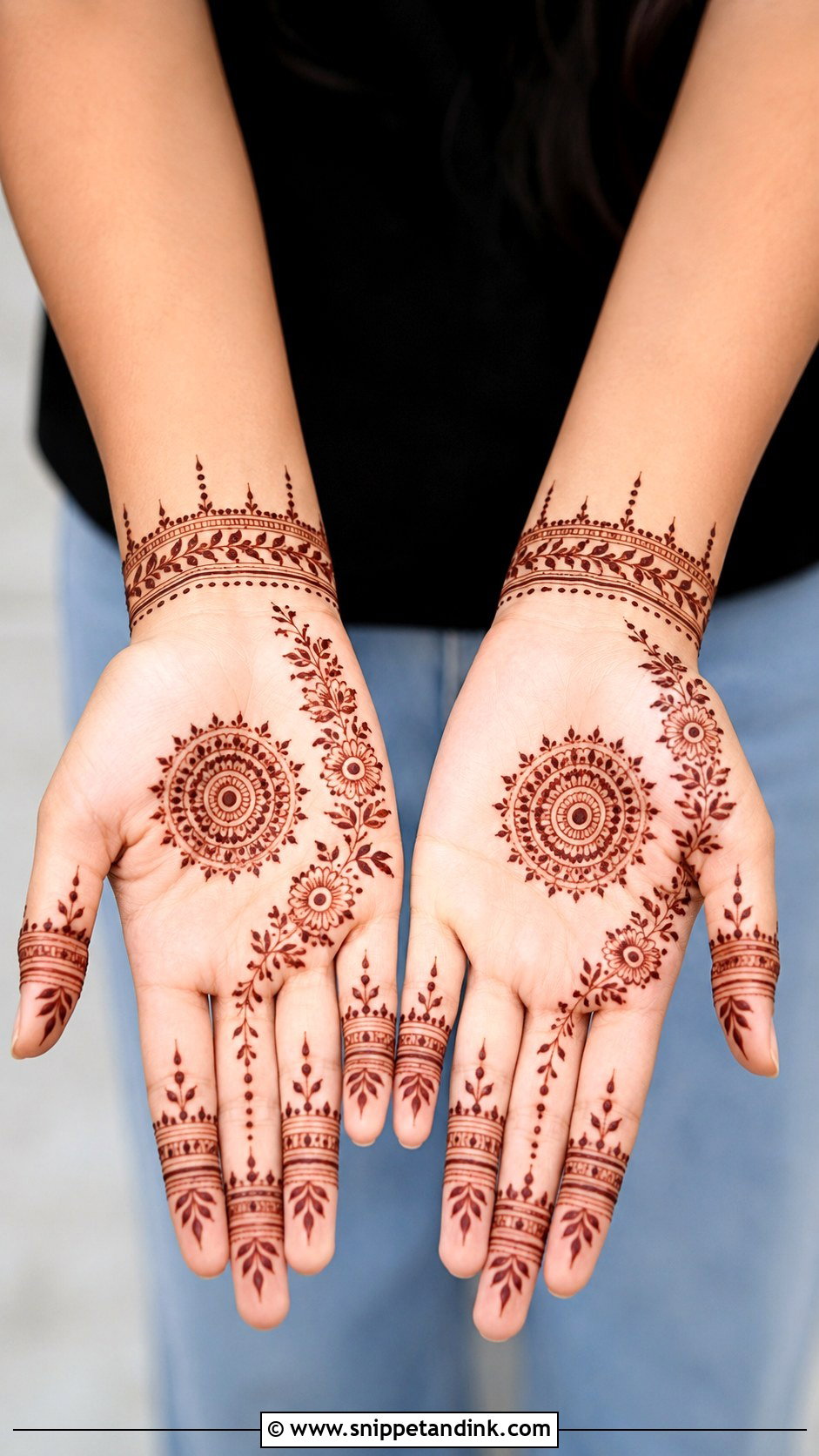
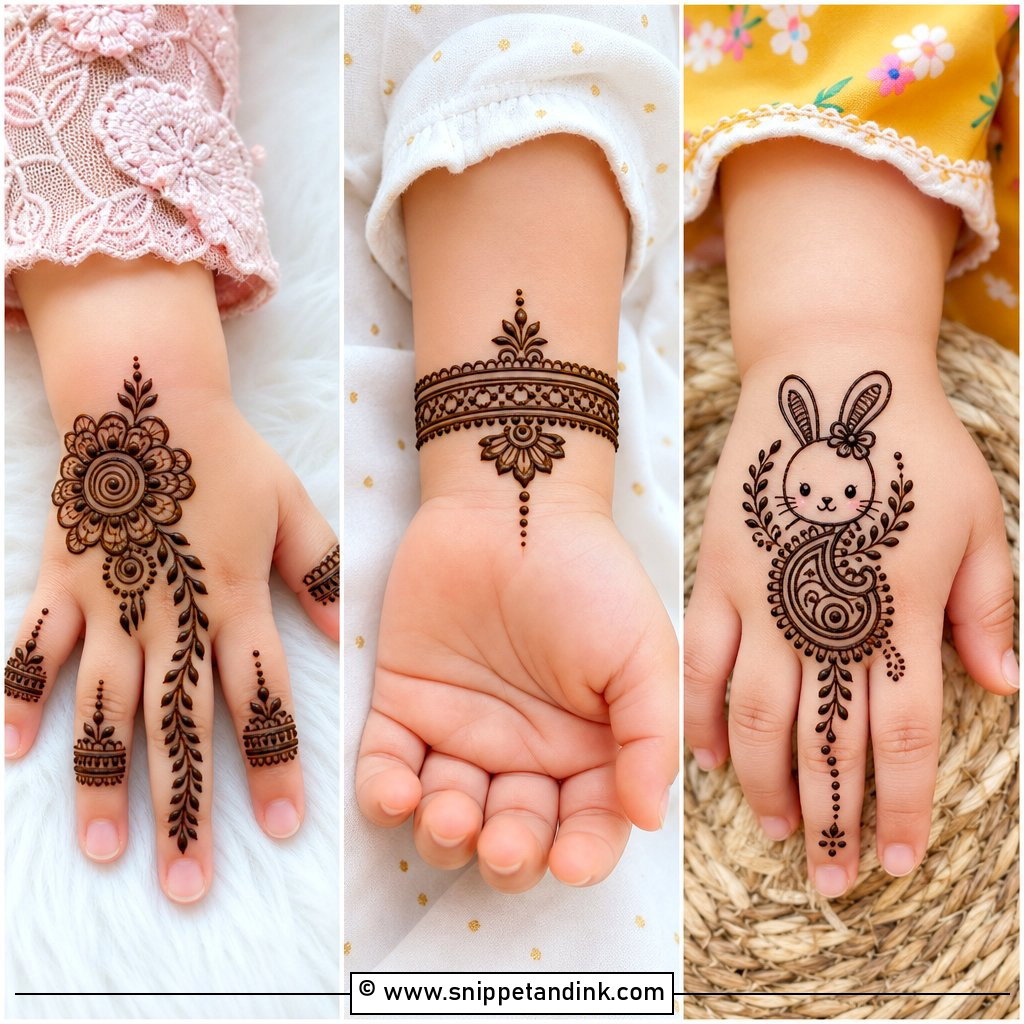
For children, small and fast: a tiny flower, a butterfly-like curve, a small mandala, a leafy vine or a simple heart, with light dots or bands on the fingers. Small patterns dry quicker, so they survive wriggling. Rounded shapes and clear outlines keep the stain tidy even after a smudge. Only natural henna on kids, never any “black henna” product, and no strong essential oils.
33. Teen Palm Mehndi Design
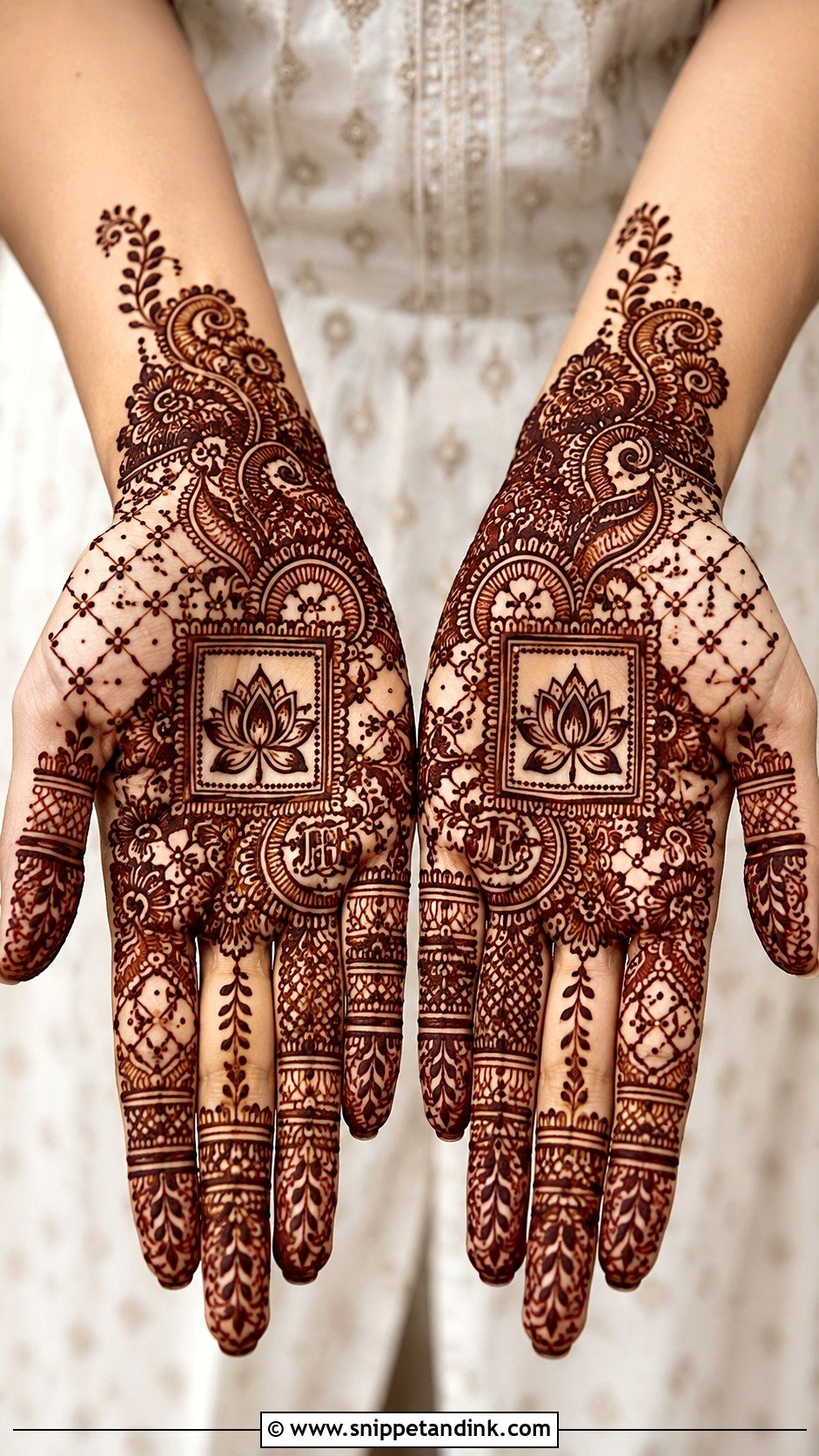
Teens usually want something that looks current in photos: mini mandalas, side floral trails, leafy half-palms, bracelet patterns and clean finger bands, sometimes with tiny stars or simple geometry. Negative space suits this age well. Keep any wrist extension short so it feels comfortable at school or a family party. A few precise elements look more stylish than a crowded palm.
34. Matching Palm Mehndi Design
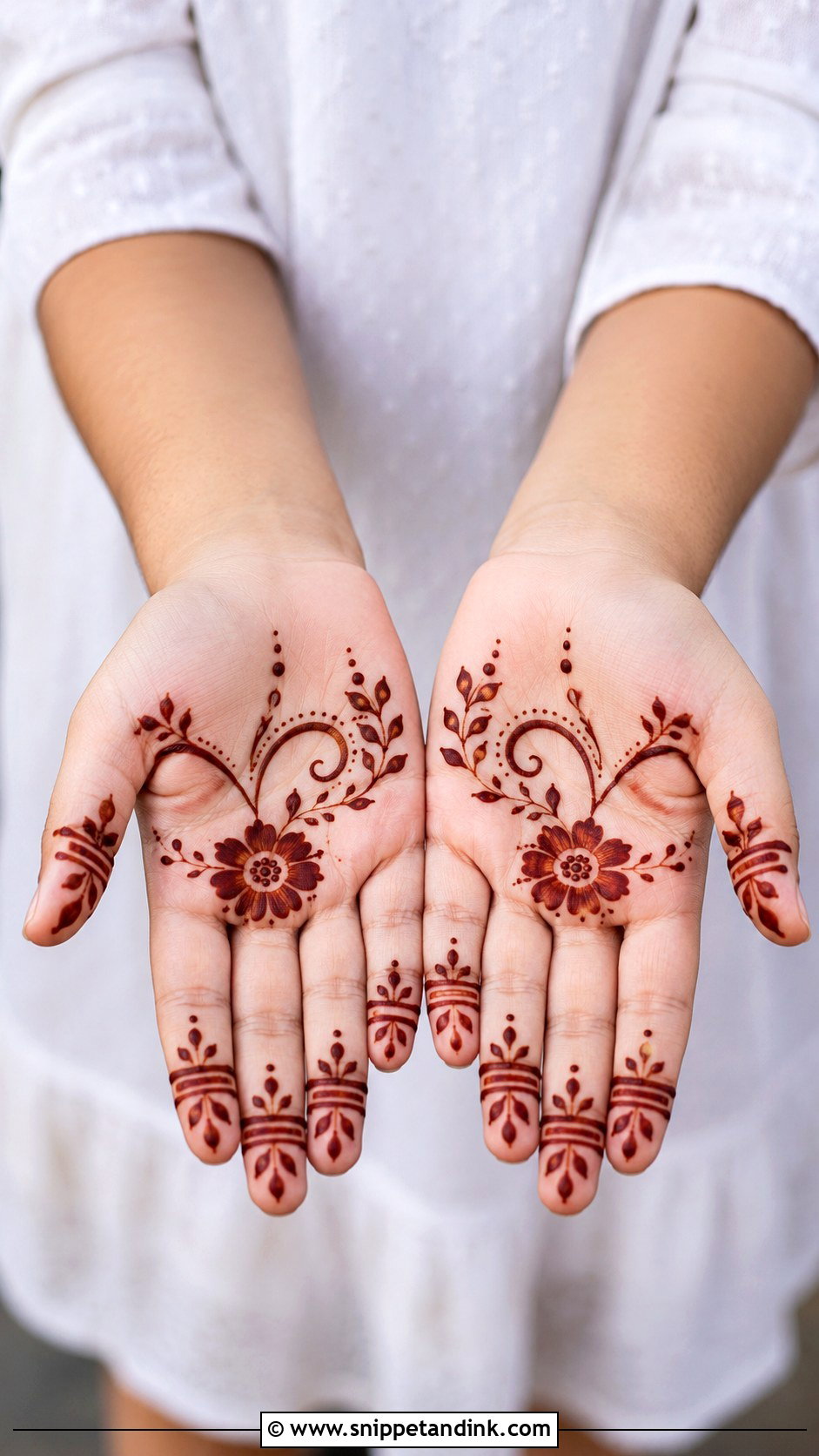
Matching palms are made to be shown together: identical mandalas, mirrored paisleys, twin floral trails or complementary halves that join into one shape when the hands meet. Brides, sisters and bridesmaids love it for group photos. Consistency in line thickness, spacing and motif size is what sells it. I alternate between hands section by section rather than finishing one hand first, which is the only reliable way to keep both the same.
35. Unique Palm Mehndi Design
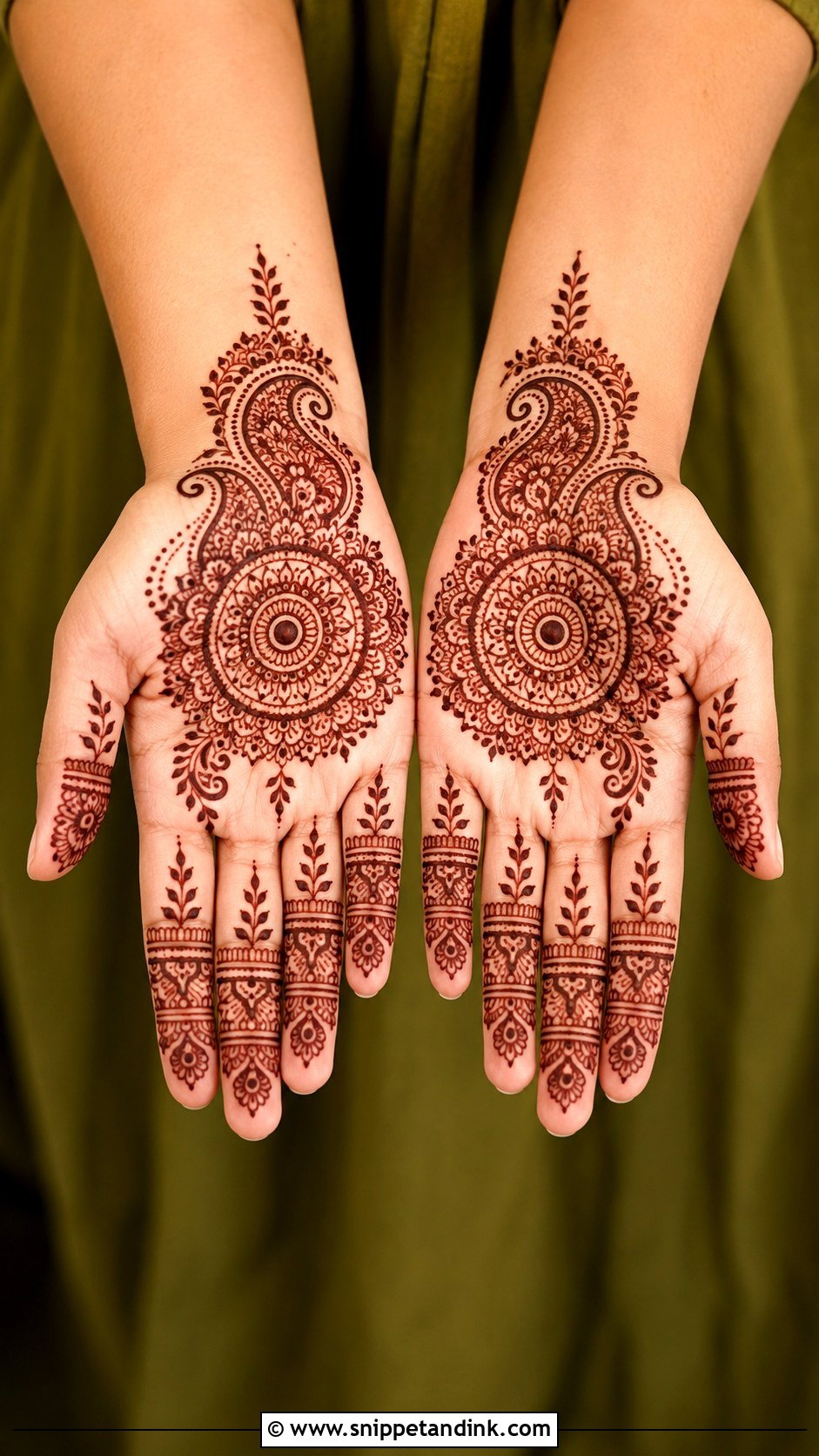
A unique palm mehndi design combines familiar motifs in an unfamiliar way: a Moroccan grid beside Indian paisleys, a lotus inside a square frame, a half-mandala with Arabic flowers, or hidden initials in a floral trail. It should not be complicated. Pick one standout feature and support it with simple details. Every extra “special” element dilutes the others, so I usually talk brides down from four ideas to one or two.
Why Palm Stains Fade Faster, and How to Make Them Last
The palm stains darkest, but it also sheds skin fastest because you use it all day. Washing, cooking, gripping and sanitiser all wear the stained layer away. Expect a palm design to look its best for roughly a week, then soften gradually over the next one or two.
My aftercare routine for palms
- Leave the paste on for several hours, overnight if you can. Wrapping loosely with tissue and medical tape helps on palms that get bumped.
- Scrape it off dry, without water, and keep the skin away from water as long as possible for the rest of the day.
- Rub a little natural oil or balm on before washing dishes or hands, and wear gloves for cleaning.
- Skip scrubs, lemon soaks after the stain has set, and alcohol sanitiser on the palm wherever you can.
One thing nobody warns you about: the stain looks pale orange for the first hours. That’s expected. Leave it alone for a day and it will darken by itself.
A Small Canvas Rewards Clean Spacing
A palm is a small space, yet it holds a surprising range: simple, bridal, Arabic, Indian, geometric, floral, minimal or full of initials and personal motifs. Let the occasion, your comfort, your hand shape and how much detail you enjoy guide you. Short on time? Minimal, half-palm and easy designs. Weddings and festivals? Full palm, bridal, jaali, peacock or paisley. Whatever you pick, clean lines and good spacing will do more for the result than any single motif.
You'll Like These Ideas:




Leave a Reply