
The groom’s mother is rarely the one sitting still at a mehndi night. She is greeting relatives, handing out favors, checking on the food and stepping into rituals, so whatever I put on her hands has to survive all of that. When I plan her design, I start from her schedule and her jewelry before I think about motifs. Some mothers want full palms that rival the bride’s in spirit, if not in density. Others want a lighter back-hand pattern that sits under bangles and rings without fuss. The designs below cover both ends, with notes on how each one wears, stains and photographs on real hands.
When the Groom’s Mother Should Sit for Her Henna
Natural henna does not show its true color the moment the paste comes off. It starts out bright orange and keeps darkening for around 24 to 48 hours as it oxidizes. So the timing of her appointment matters more than most families expect. If her henna goes on at the mehndi night two days before the wedding, her hands will be at their deepest shade for the ceremony. If she has it done the morning of the wedding, guests will see orange.
The other problem is that the groom’s mother is often a host at the very event where everyone gets mehndi. I suggest she sits first, before most guests arrive, rather than last when she is tired and needed everywhere. Paste needs to stay undisturbed while it dries, and longer on the skin is better, so she will want someone else on hospitality duty for the first hour.
- Light designs: book her slot early on the mehndi evening, or the day before it.
- Full-hand or royal designs: a separate appointment a day earlier gives her time to sit without guilt.
- Ask your artist whether she mixes her own paste. Freshly mixed natural henna stains better than many pre-made cones, and it should never be ‘black henna,’ which can contain PPD and cause serious skin reactions.
How Henna Sits on Mature Hands
Skin changes with age, and I adjust for it. Drier skin can take the stain a little less evenly, so I ask mothers to skip heavy hand cream on the day and simply wash their hands with soap before I begin, which removes oils that block the dye. Where veins or finer lines run across the back of the hand, I choose larger open motifs over very fine filling, because tiny lines over textured skin can look patchy once the paste is removed.
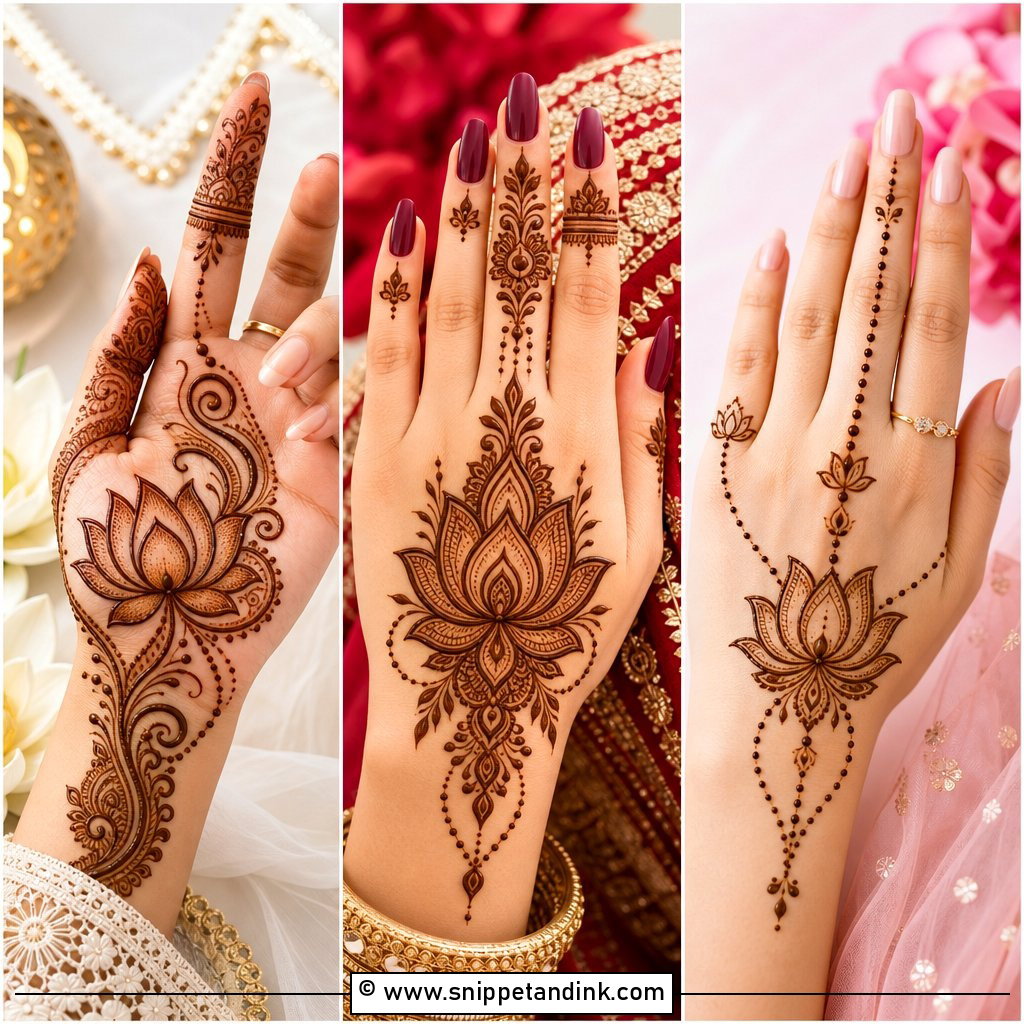
Comfort is the other issue. Holding the hand flat and still for a long design is harder with stiff joints, so I work in sections and let her rest between them. If she has arthritis in her fingers, I keep the finger work light. Nobody should be gritting her teeth through her son’s wedding preparations.
1. Simple Groom Mother Mehndi Design
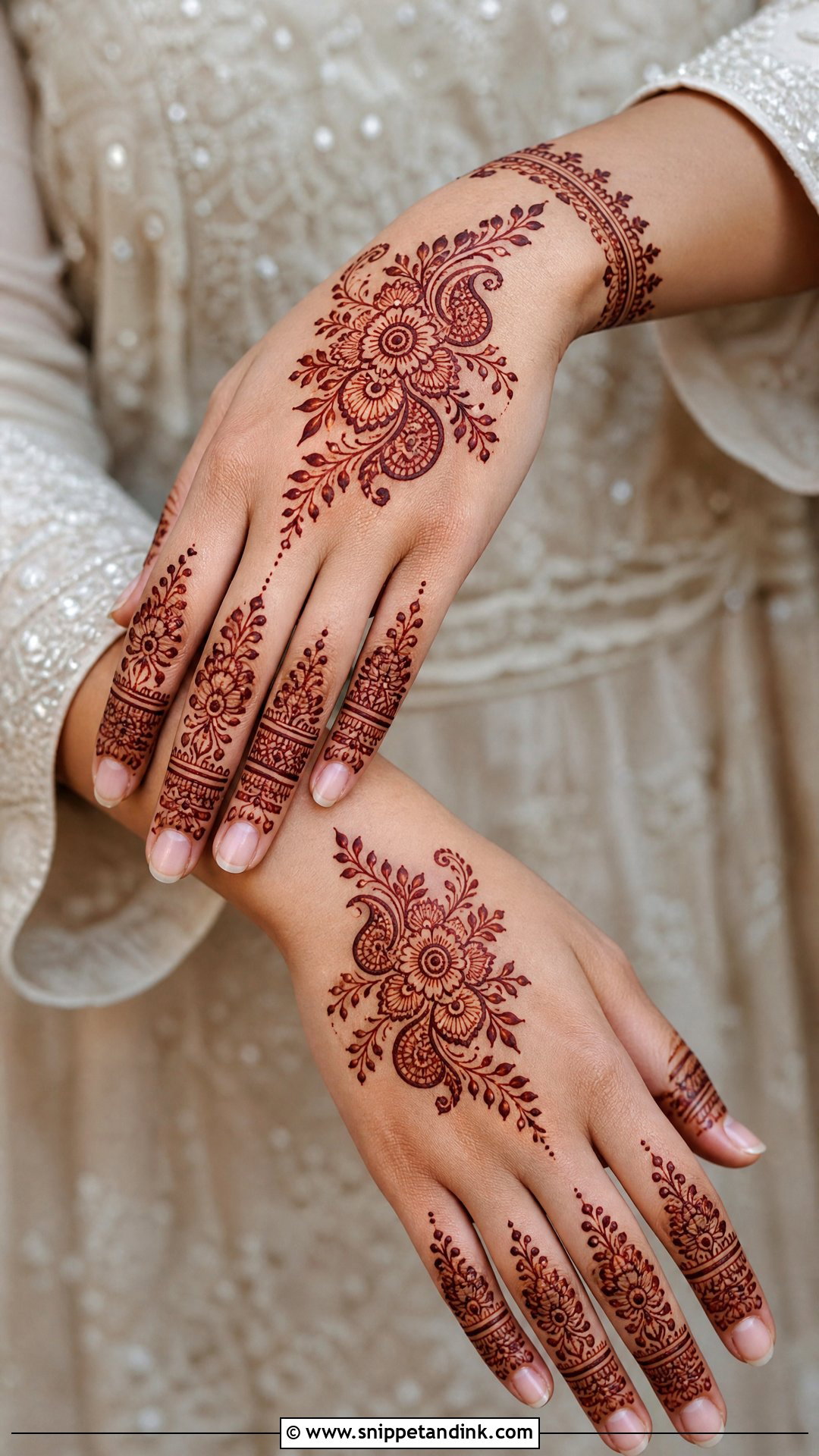
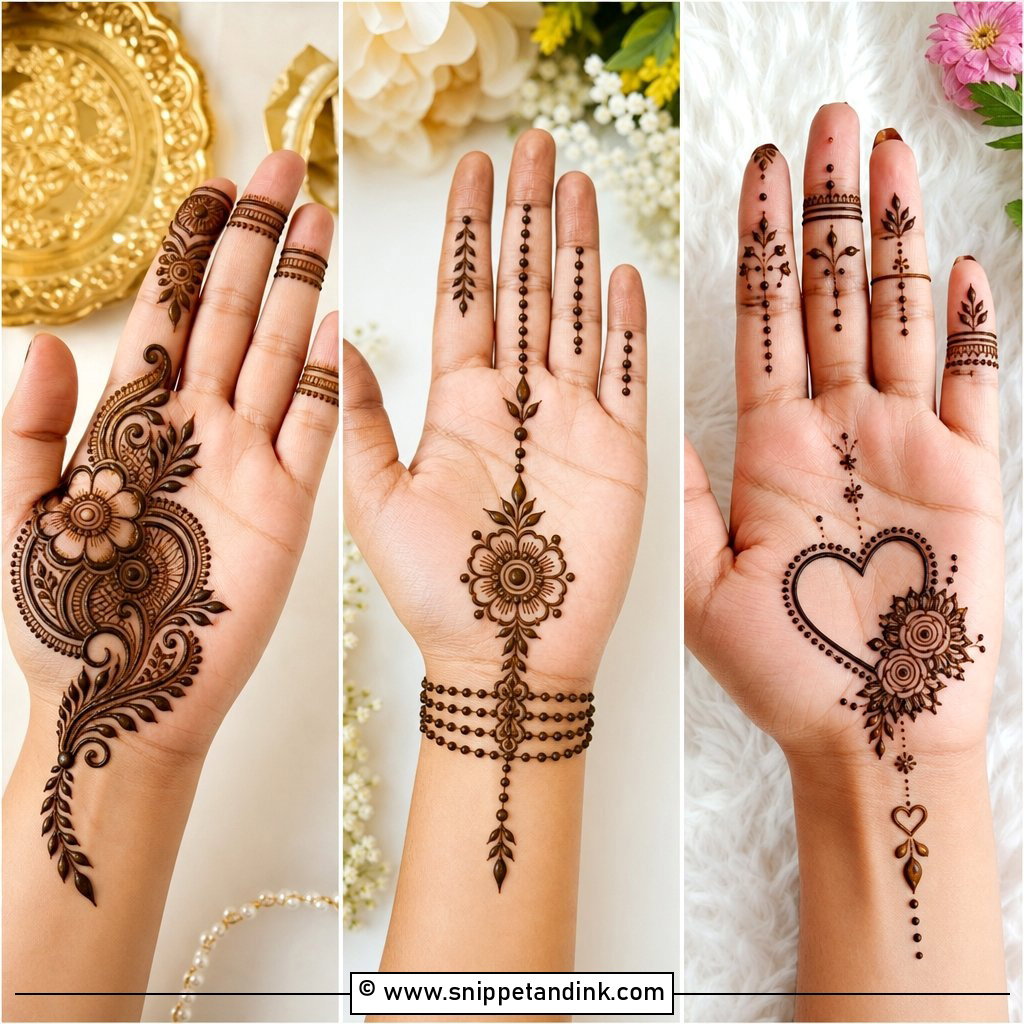
This is the design I suggest most often to a mother who tells me she has ‘no time to sit.’ A central flower, a few paisleys, leafy vines and lightly worked fingers can be finished in well under an hour for both hands. I always leave clear skin between the motifs, because simple work only looks deliberate when the gaps are even. A thin bracelet band at the wrist gives the hand a finished edge in photos. Less paste also means it dries faster and she can get back to hosting sooner, and it sits comfortably next to silk sarees, shararas and simpler suits.
2. Full Hand Groom Mother Mehndi Design
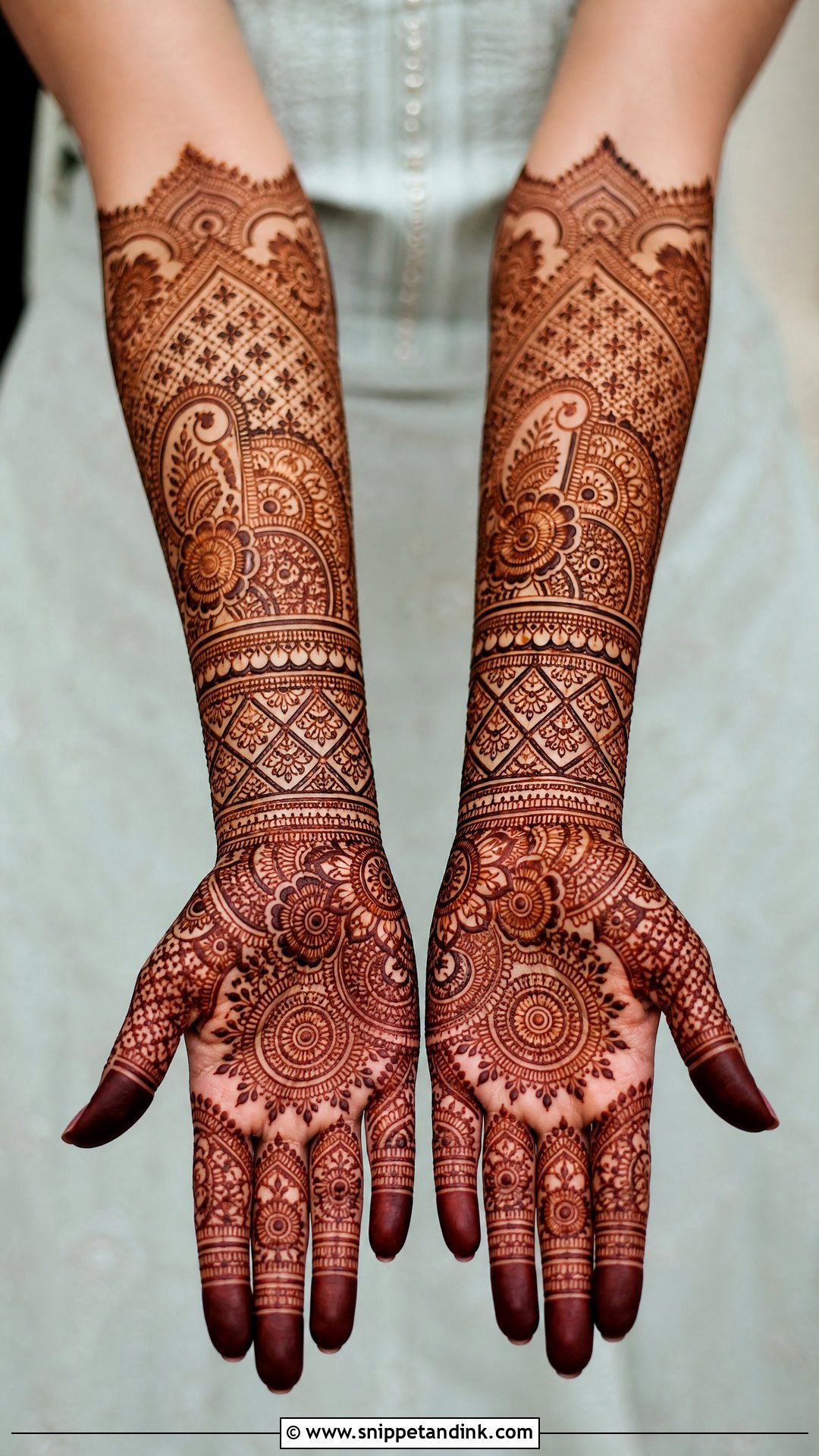
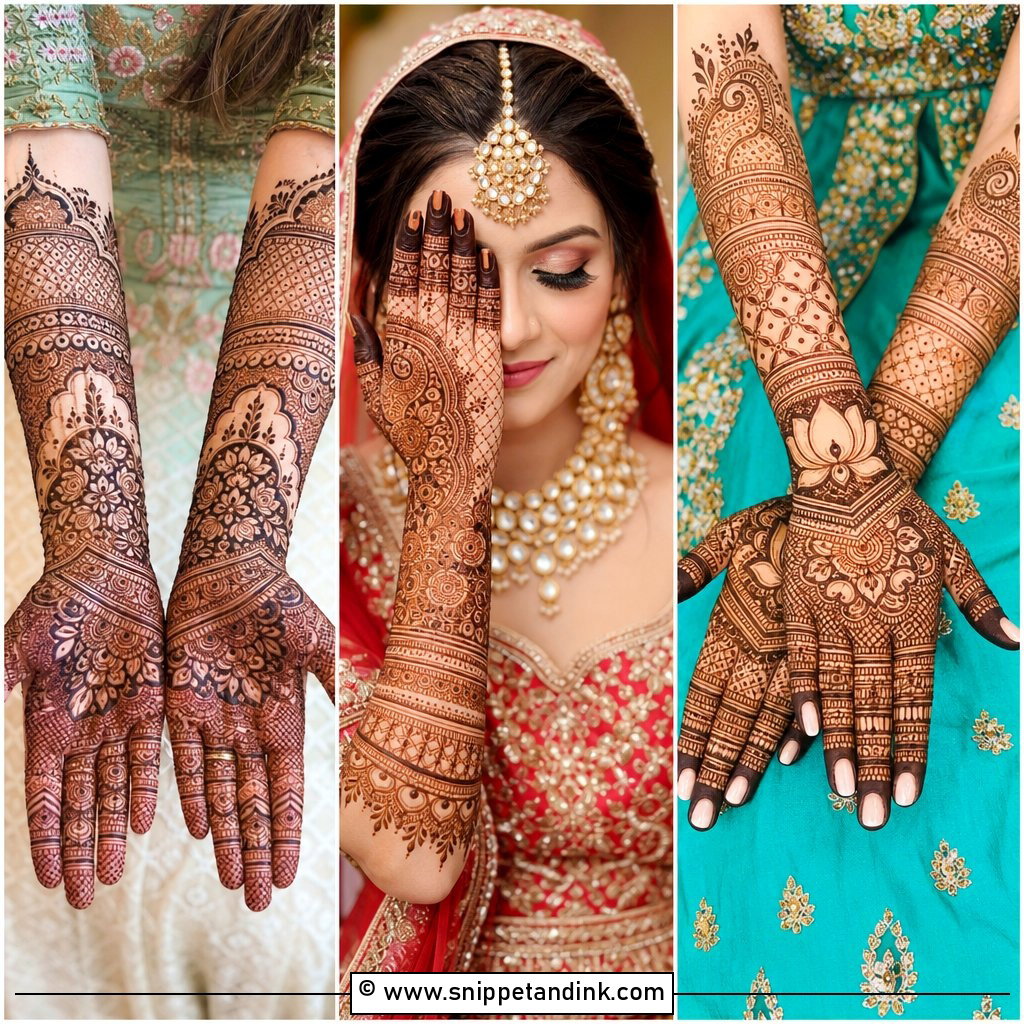
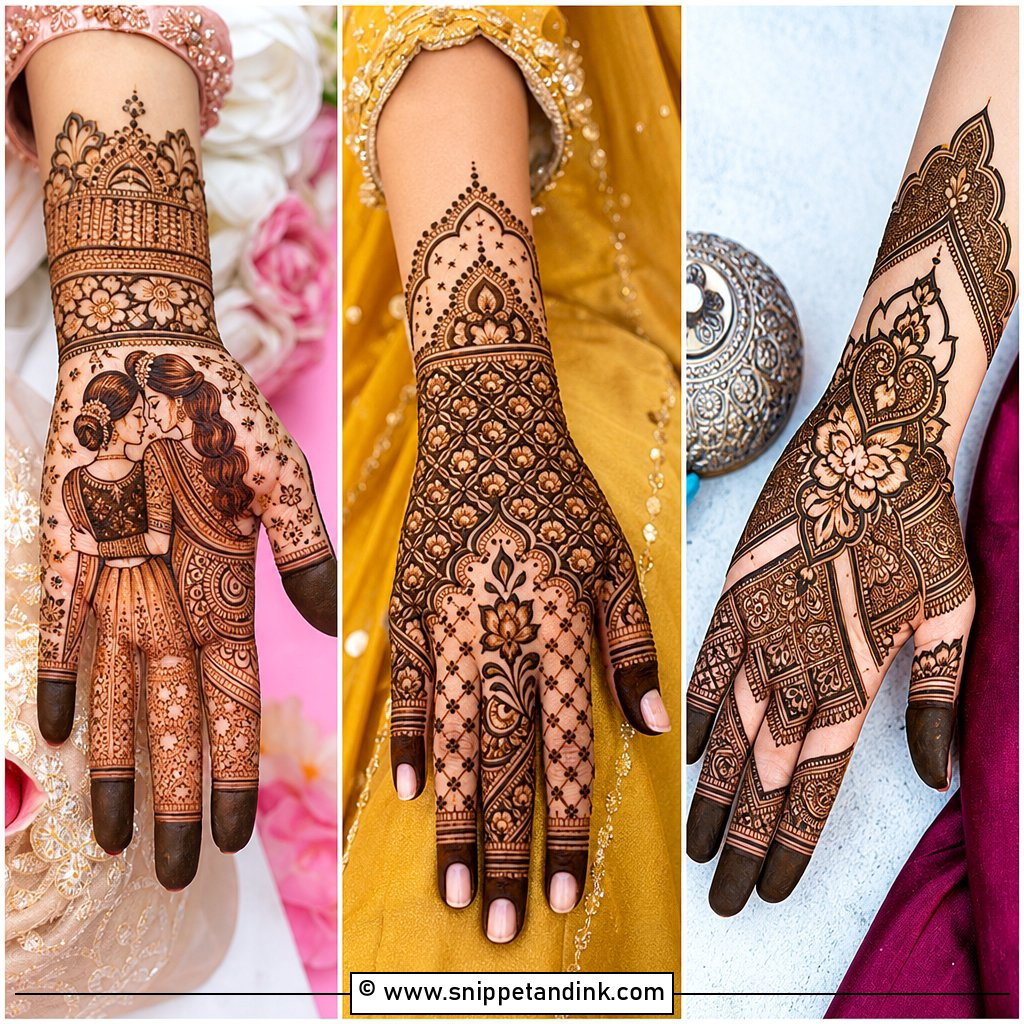
Full coverage from fingertip to lower forearm reads as properly traditional, yet it should still look different from the bride’s bridal work. My way of drawing that line is spacing. I keep the filling at a medium density, put a round mandala in the palm with open jaali around it, and give the fingers neat bands and dots instead of heavy shading. Plan on sitting for a good while for this one, so she should book her slot early in the evening rather than squeezing it in between guests. It earns its place at the main mehndi function or the sangeet.
3. Back Hand Groom Mother Mehndi Design
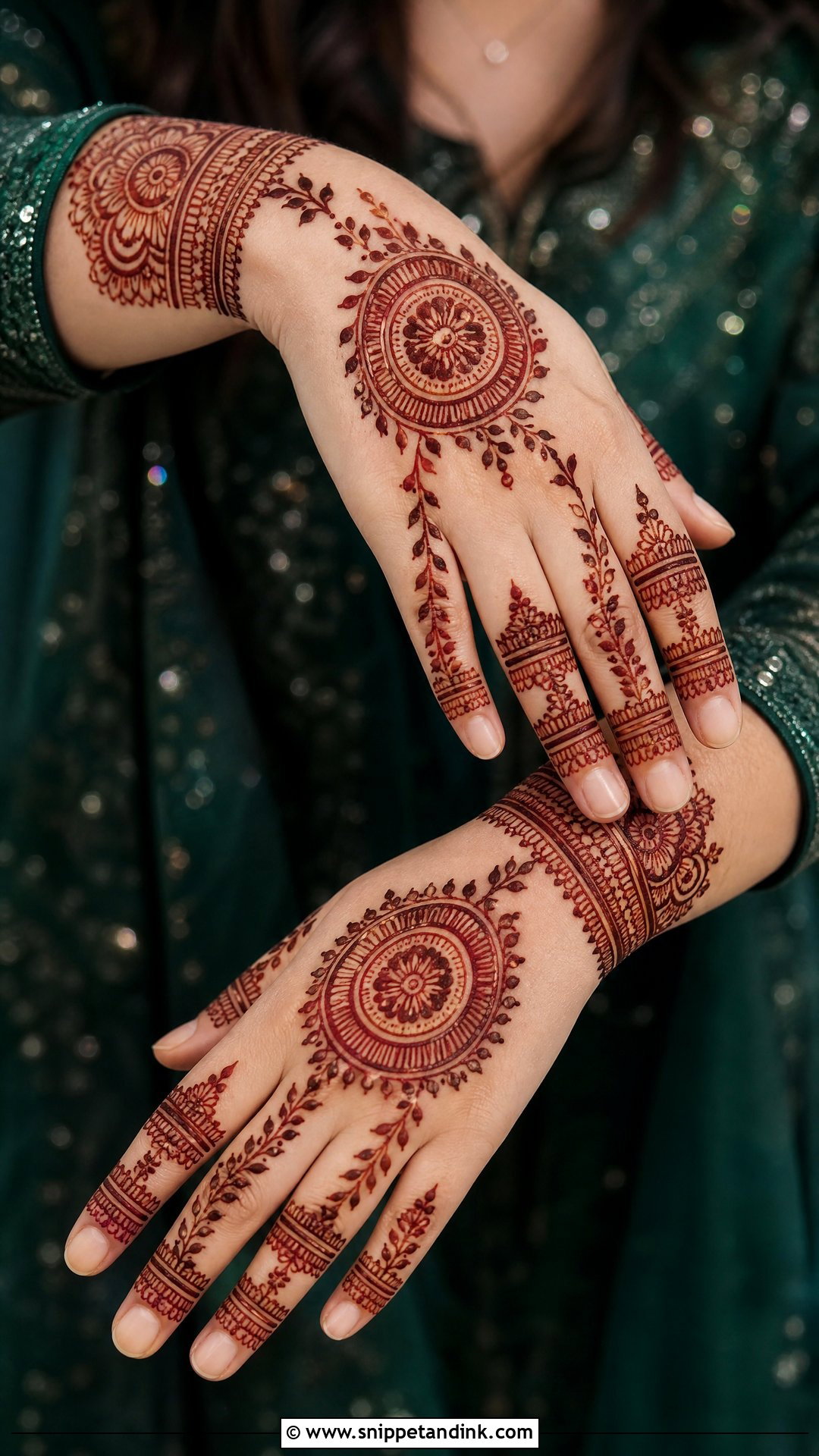
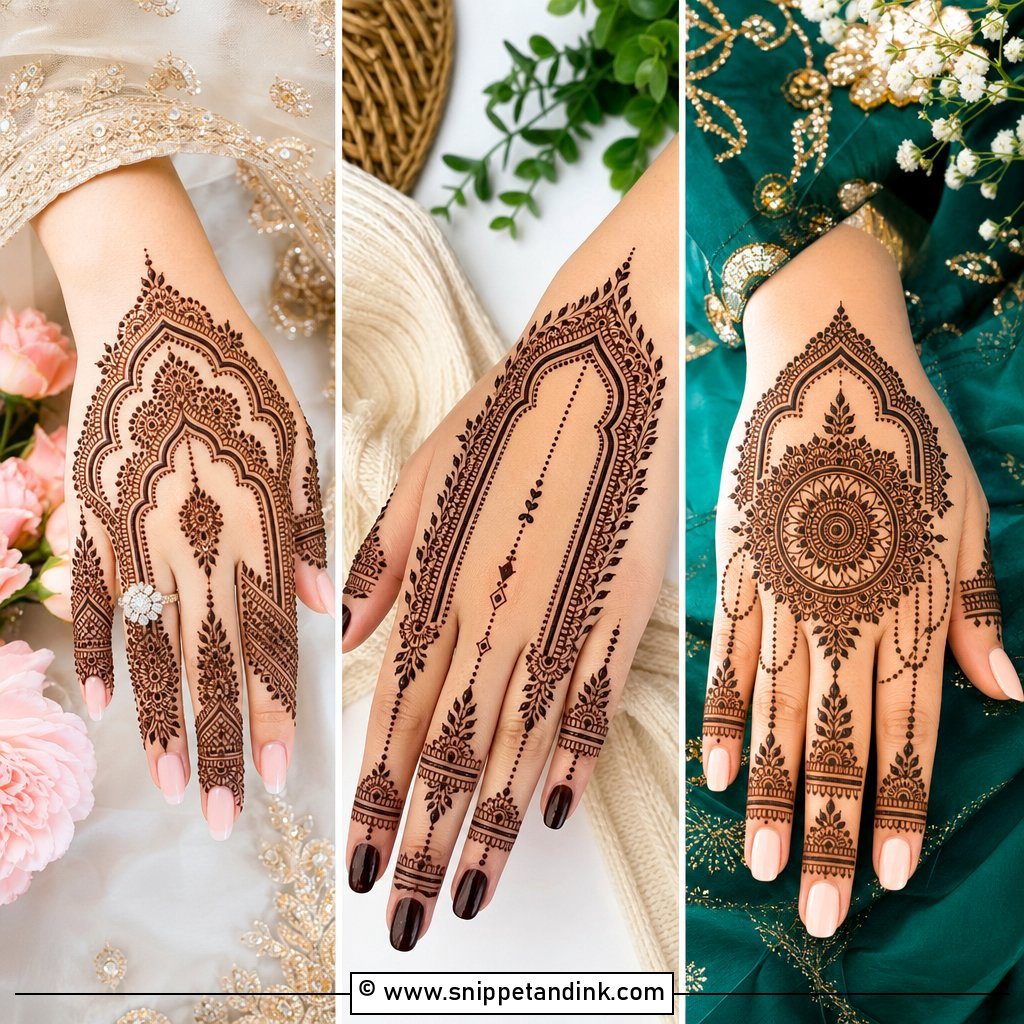
For a mother who will be handing over gifts and blessing the couple all day, I usually steer her toward a back hand groom mother mehndi design. The back of the hand is what the camera catches when she holds a tray or rests a hand on her son’s shoulder. A mandala near the center, floral trails toward the fingers and a wrist cuff make a complete look, and her palm stays free for work. One honest caveat: the back of the hand stains lighter than the palm because the skin there is thinner and drier. I leave small open spaces around the knuckles too, since paste over a bending joint cracks early and the line there breaks up.
4. Front Hand Groom Mother Mehndi Design
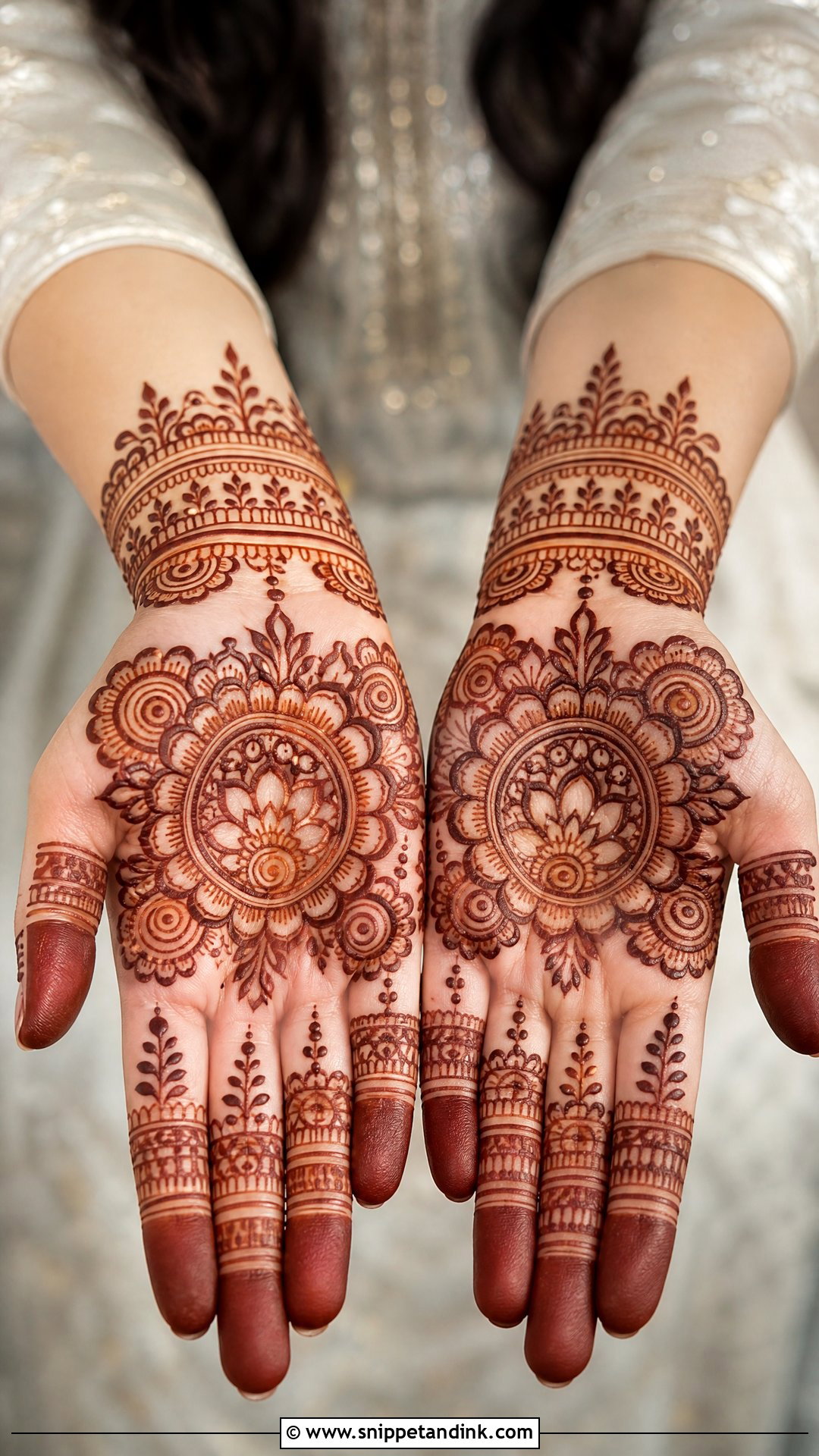
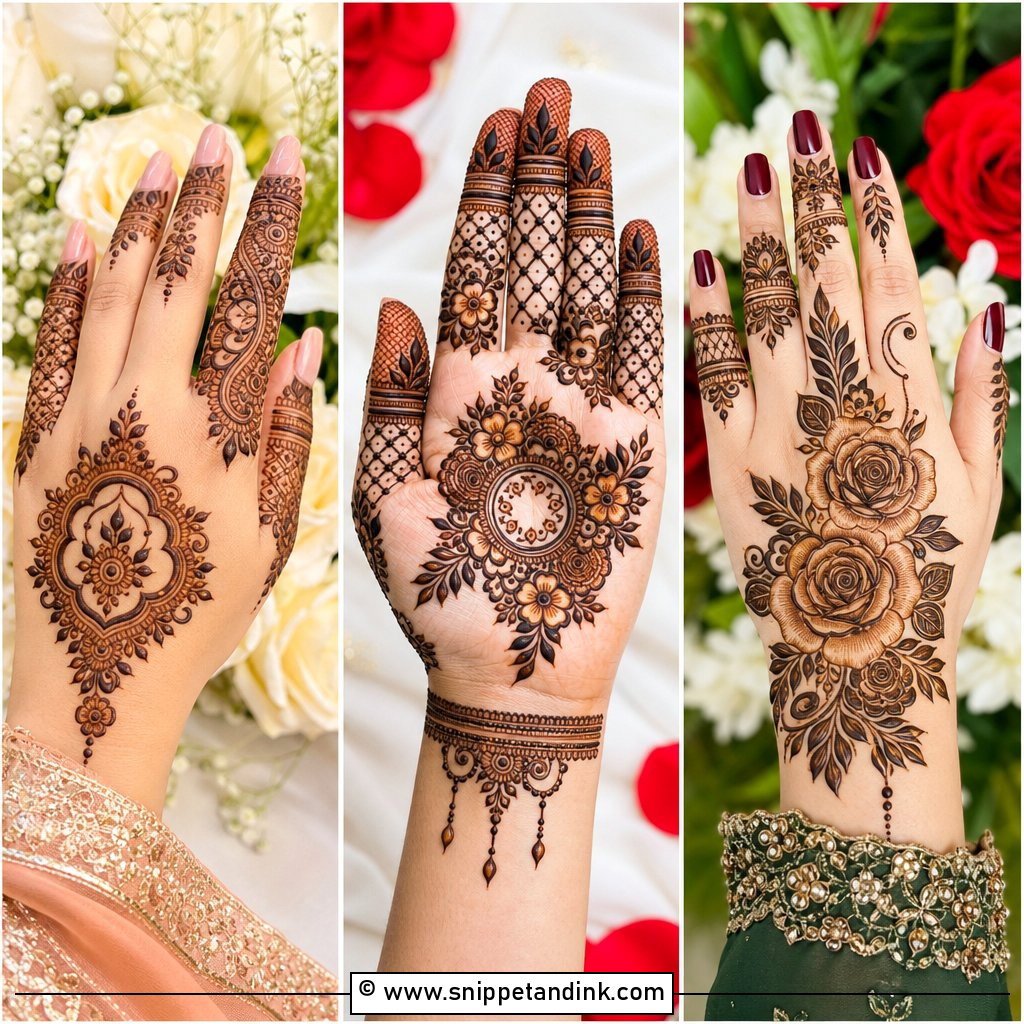
The palm is where henna takes most deeply, and it is also the part of the hand tied to blessings and ritual, which is why many mothers still want it filled. A front hand groom mother mehndi design usually starts with a round mandala in the center, paisley curves to one side and florals running toward the wrist. I keep the fingertips light or banded. The thing I watch here is symmetry: a palm mandala that sits off-center is the first thing a guest notices in a close-up family photo. A little open skin around the main motif lets that rich palm stain show properly.
5. Arabic Groom Mother Mehndi Design
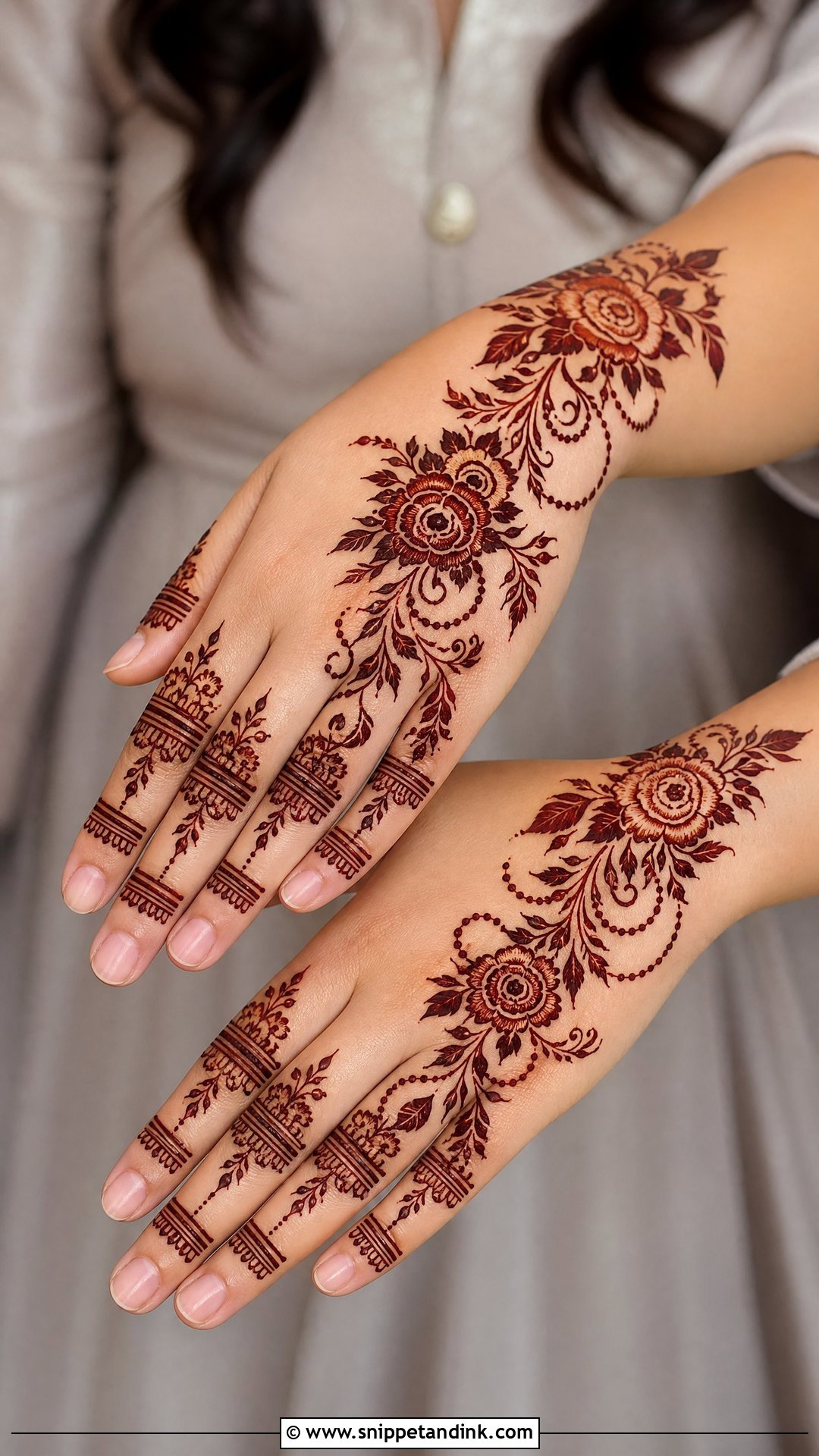
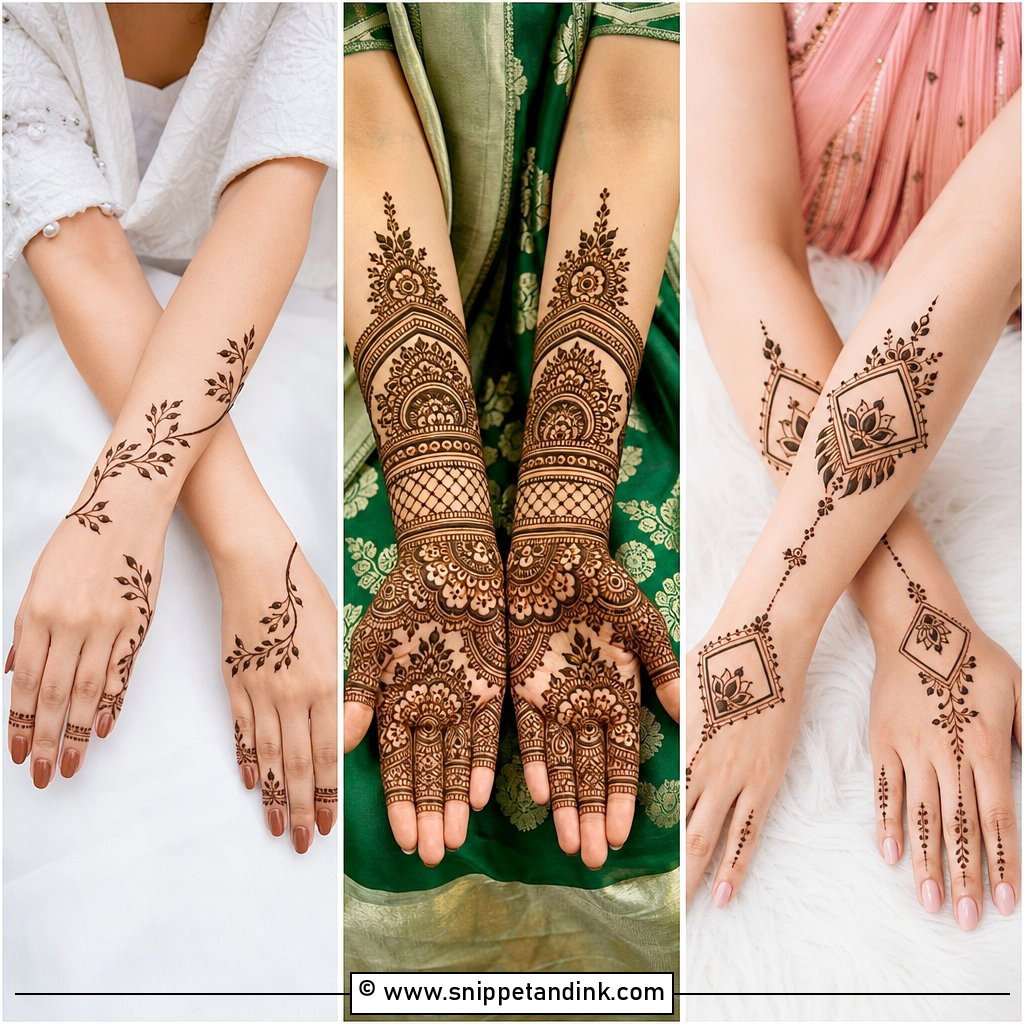
Arabic work is quick to apply and forgiving to wear. Bold flowers, curved leaves and a diagonal trail run from one side of the hand toward the opposite finger, with plenty of skin left open. On the groom’s mother I like a back-hand diagonal with a matching wrist border and simple leafy finger bands. The larger motifs also hold their shape as the stain deepens, whereas very fine lines can blur slightly on warm hands. It suits a mother who wears modern outfits but still wants her hands to look dressed for a wedding.
6. Indian Groom Mother Mehndi Design
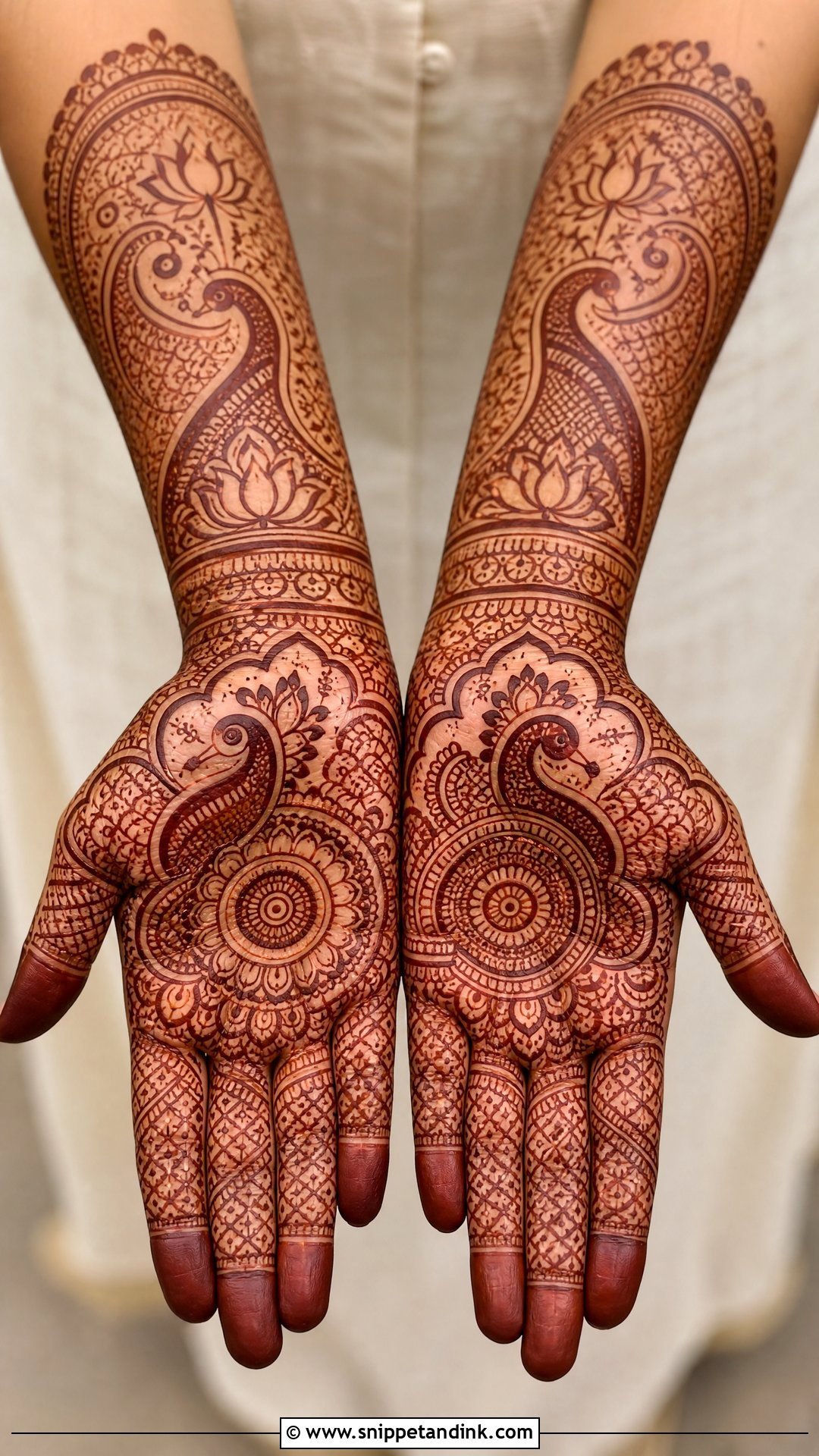
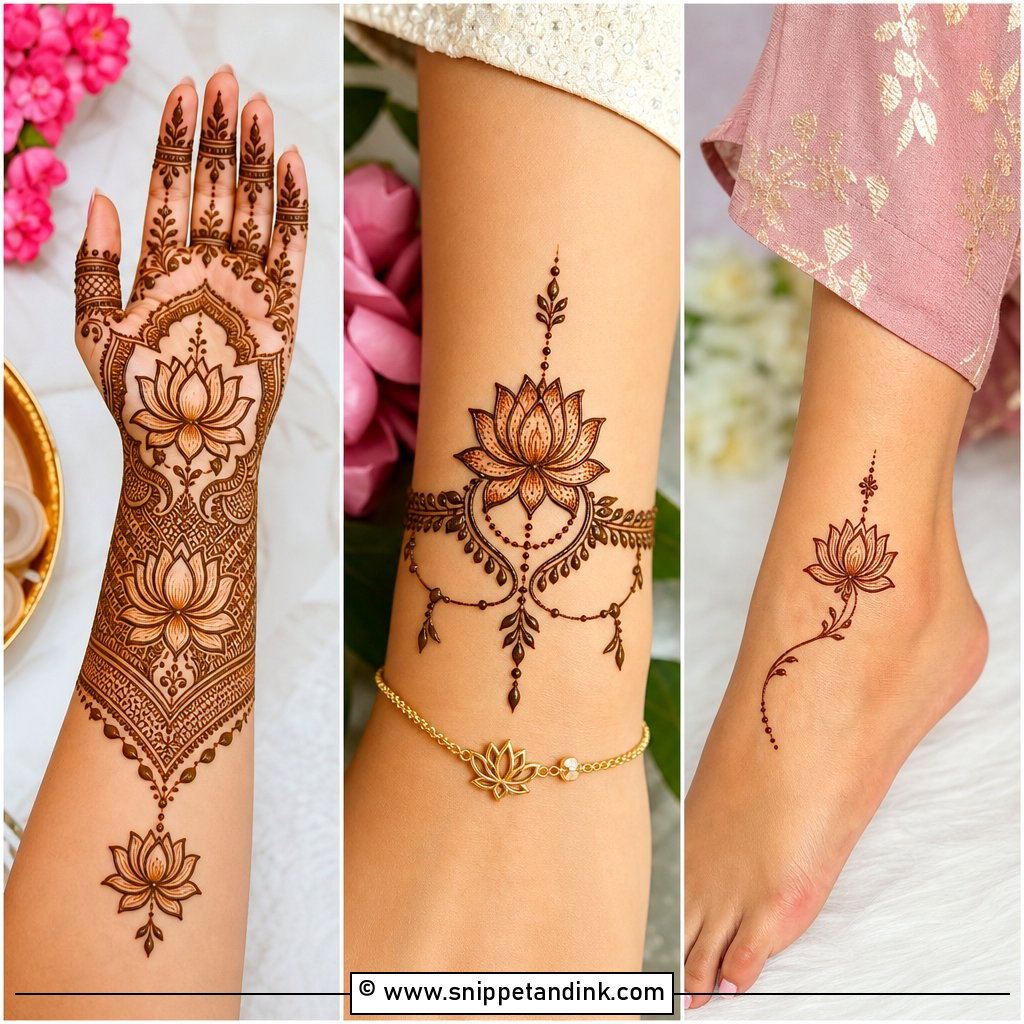
Paisleys, lotus flowers, peacock curves, mandalas and fine fillers are the classic Indian vocabulary, and on the groom’s mother I draw them with fewer hidden details and more readable shapes than a bridal set. The palm can be covered and the pattern can run just past the wrist. If she is wearing a stack of heavy bangles, I keep the wrist zone tidy and open, otherwise the jewelry slides over the busiest part of the design and both lose out. Families where elders expect a rich, ceremonial look usually land on this one.
7. Indo Arabic Groom Mother Mehndi Design
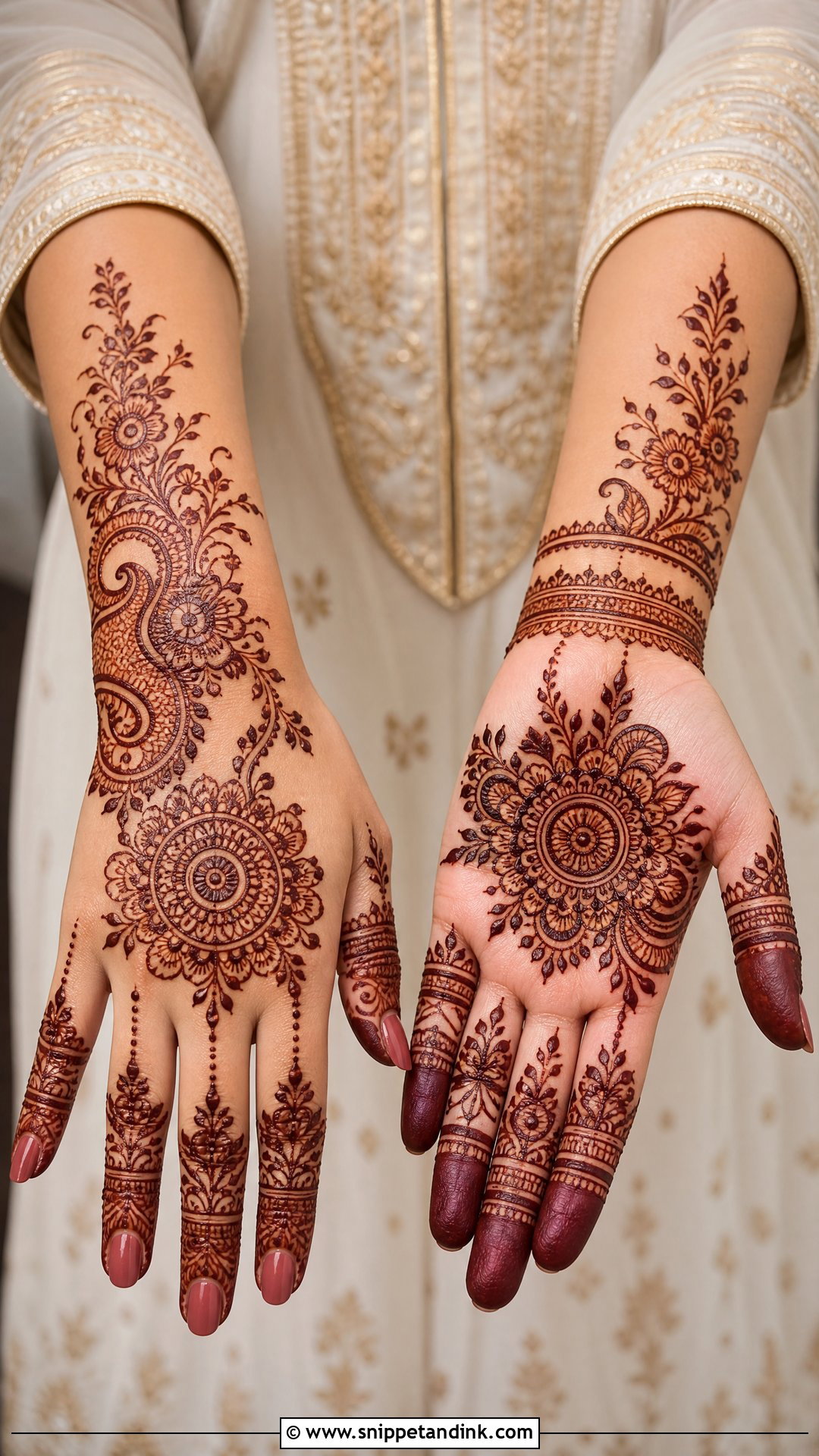
Indo Arabic gives me two languages to work with: an Indian mandala on the palm, Arabic floral trails on the back, and thin wrist bands tying them together. On the fingers I alternate filled and open sections so they do not compete with either side. It is my go-to for a mother attending several events across a weekend, since the stain will still look intentional on the wedding day after peaking a day or two earlier. The mix of bold shapes and finer detail also holds up at both phone-camera distance and in close-ups.
8. Mandala Groom Mother Mehndi Design
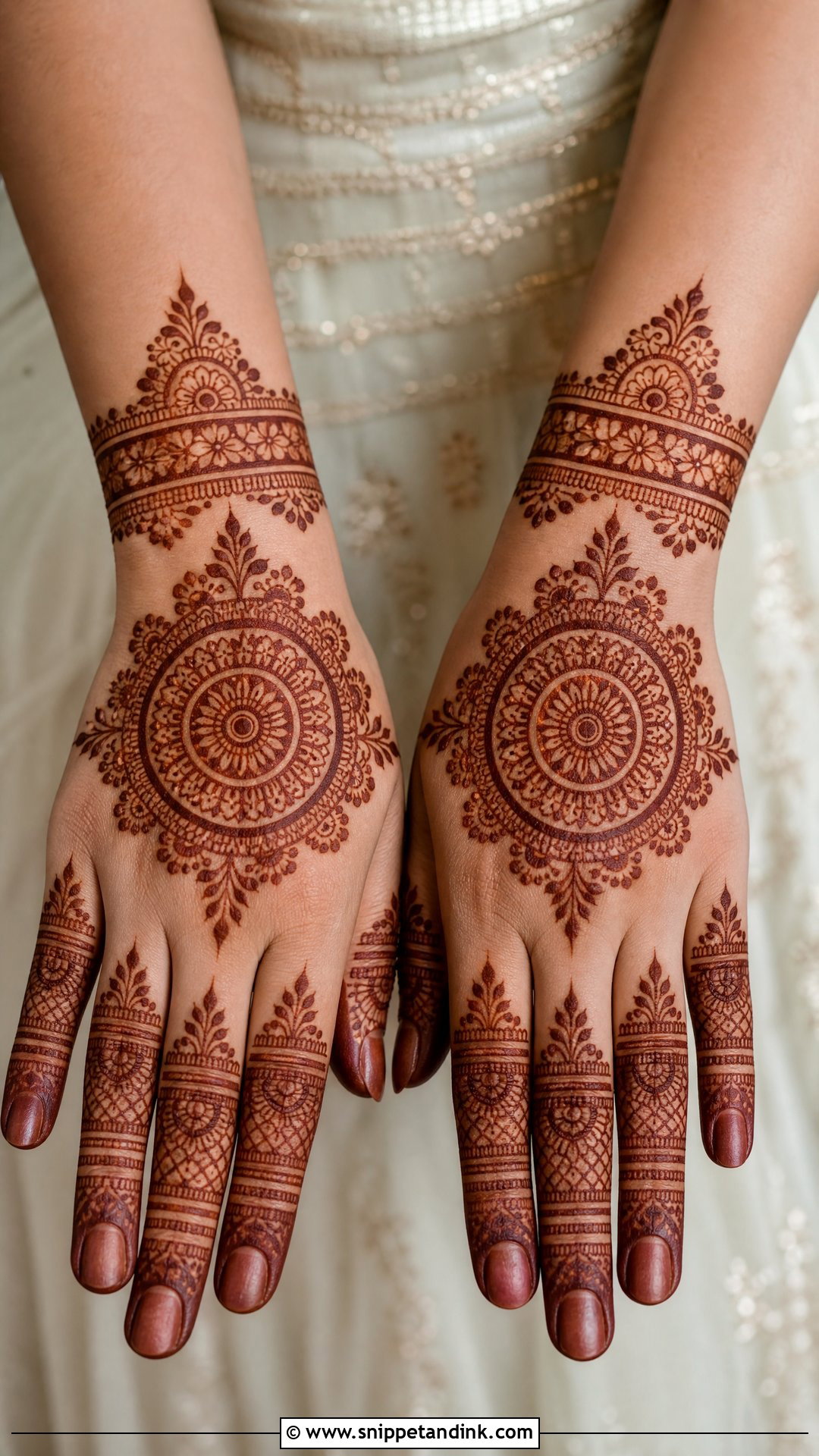
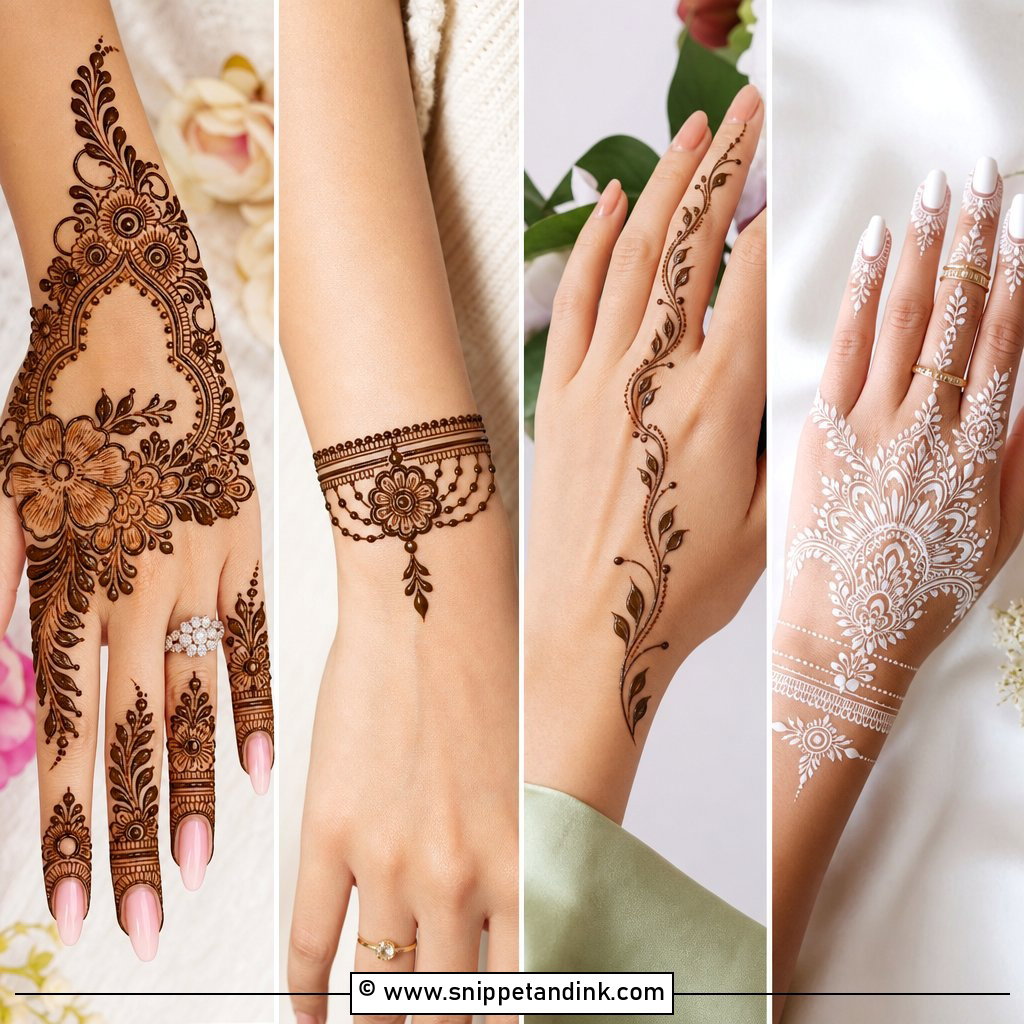
A single round mandala on the palm or back of the hand, decorated fingers and a simple wrist border is about as graceful as mehndi gets without full coverage. I build the mandala outward from a dot, ring by ring, with petals, dots and small leaves, because drawing it freehand from the outside in is how circles go oval. On a palm design I keep the wrist plain. On the back of the hand I add a ring-chain effect toward the fingers so it reads like jewelry, which sits well with classic gold.
9. Floral Groom Mother Mehndi Design
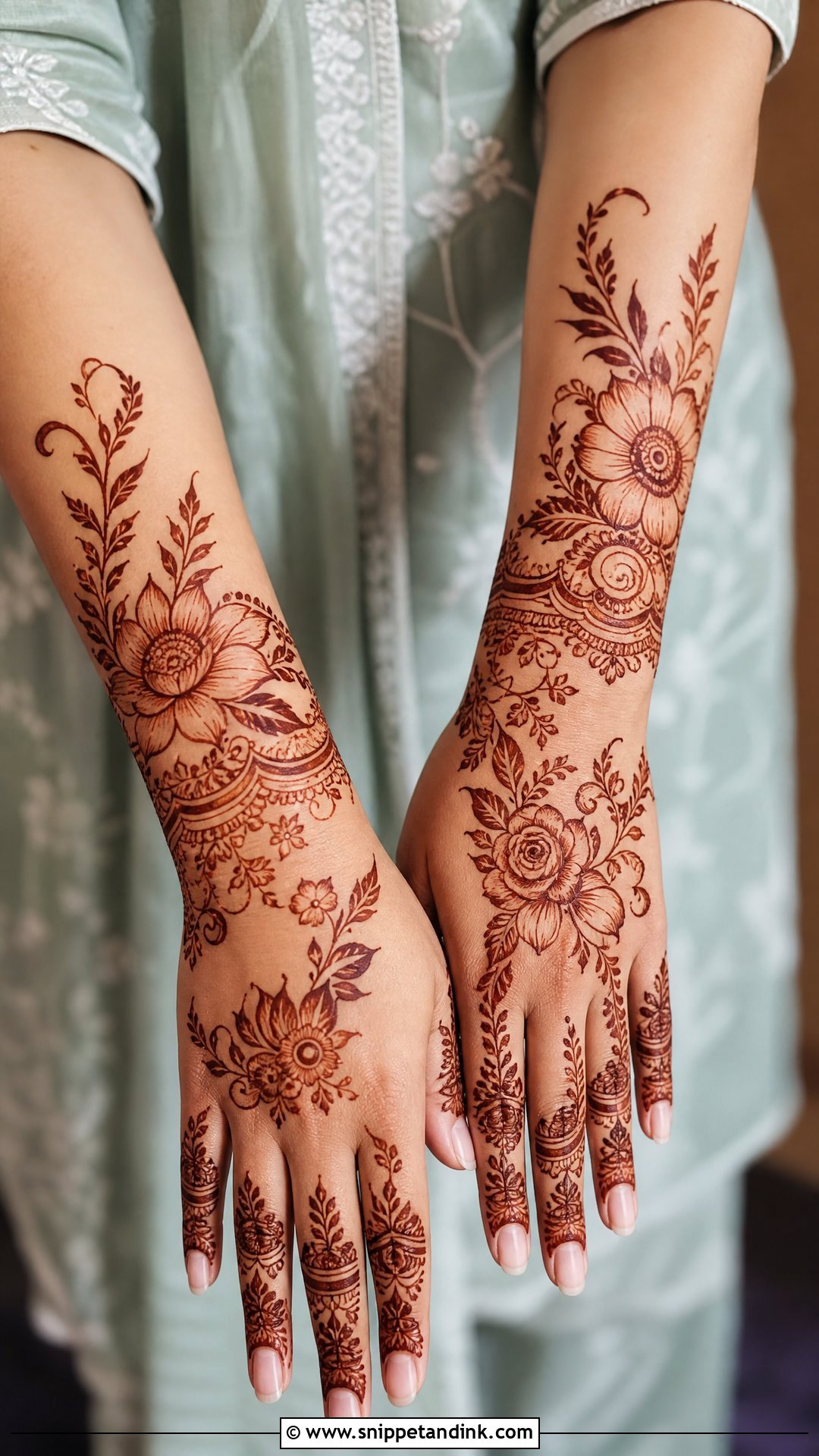
Florals give me the most freedom to scale a design to the person. On the back of the hand I start with one large flower and let vines run across the fingers to a bracelet pattern at the wrist. On the palm I switch to lotus blooms and rose-style petals around a central circle. I ask for medium-sized blooms on purpose: tiny petals with hair-thin outlines can merge into one blot once the stain darkens. Pastel outfits and embroidered sarees suit this style well, and it does not need much jewelry.
10. Paisley Groom Mother Mehndi Design
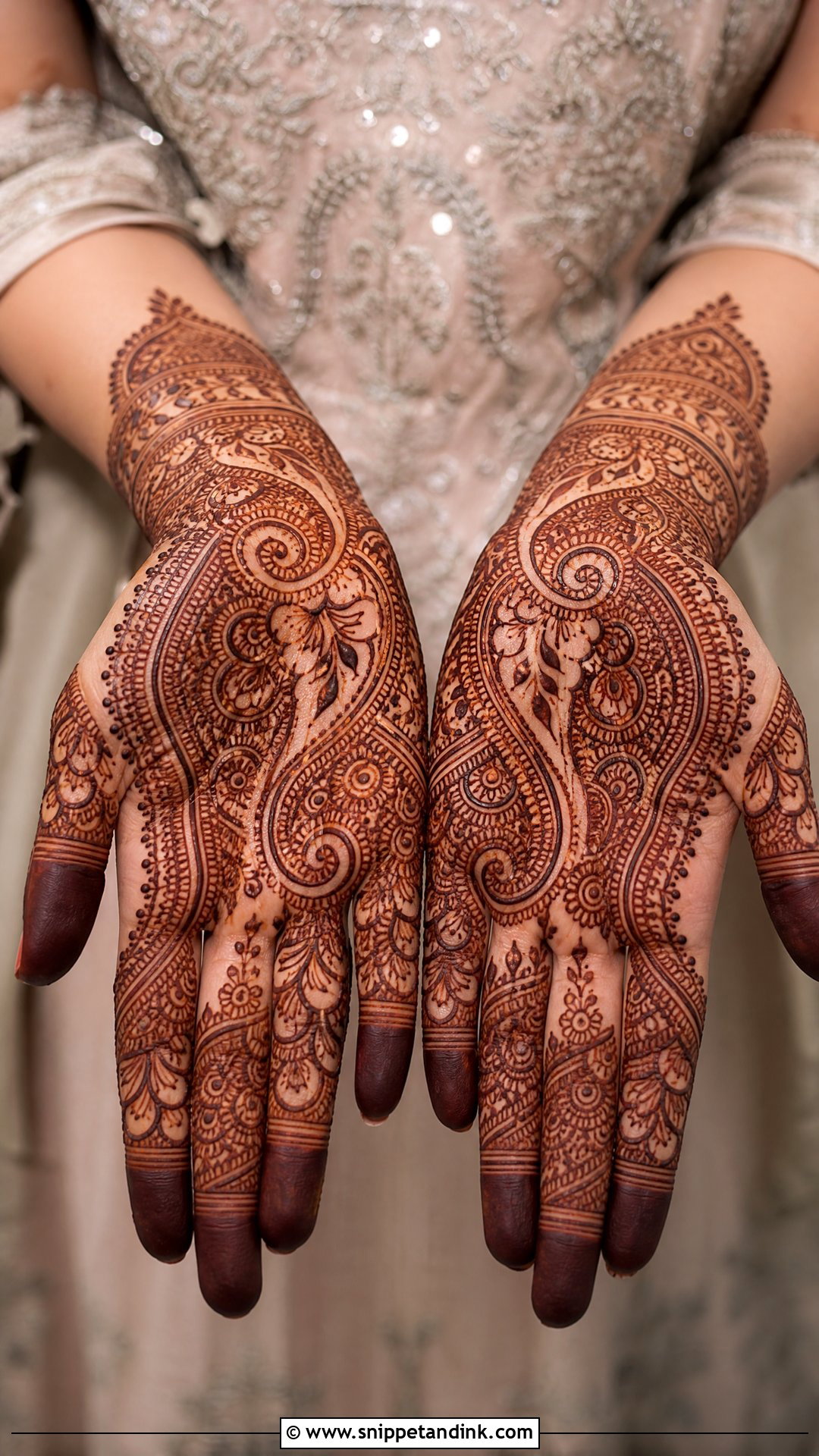
Paisleys flatter both palms and back hands because the curve follows the natural line of the hand. I usually place one large paisley near the base of the palm, smaller ones around it, and floral fillers between the curves, with a matching wrist border and dotted finger lines. The mistake I see most is packing every gap with filler. Leave a slim channel of bare skin around each paisley and the shape reads clearly once the paste comes off. Mothers who grew up with traditional Indian or Pakistani mehndi tend to feel most at home in this one.
11. Peacock Groom Mother Mehndi Design
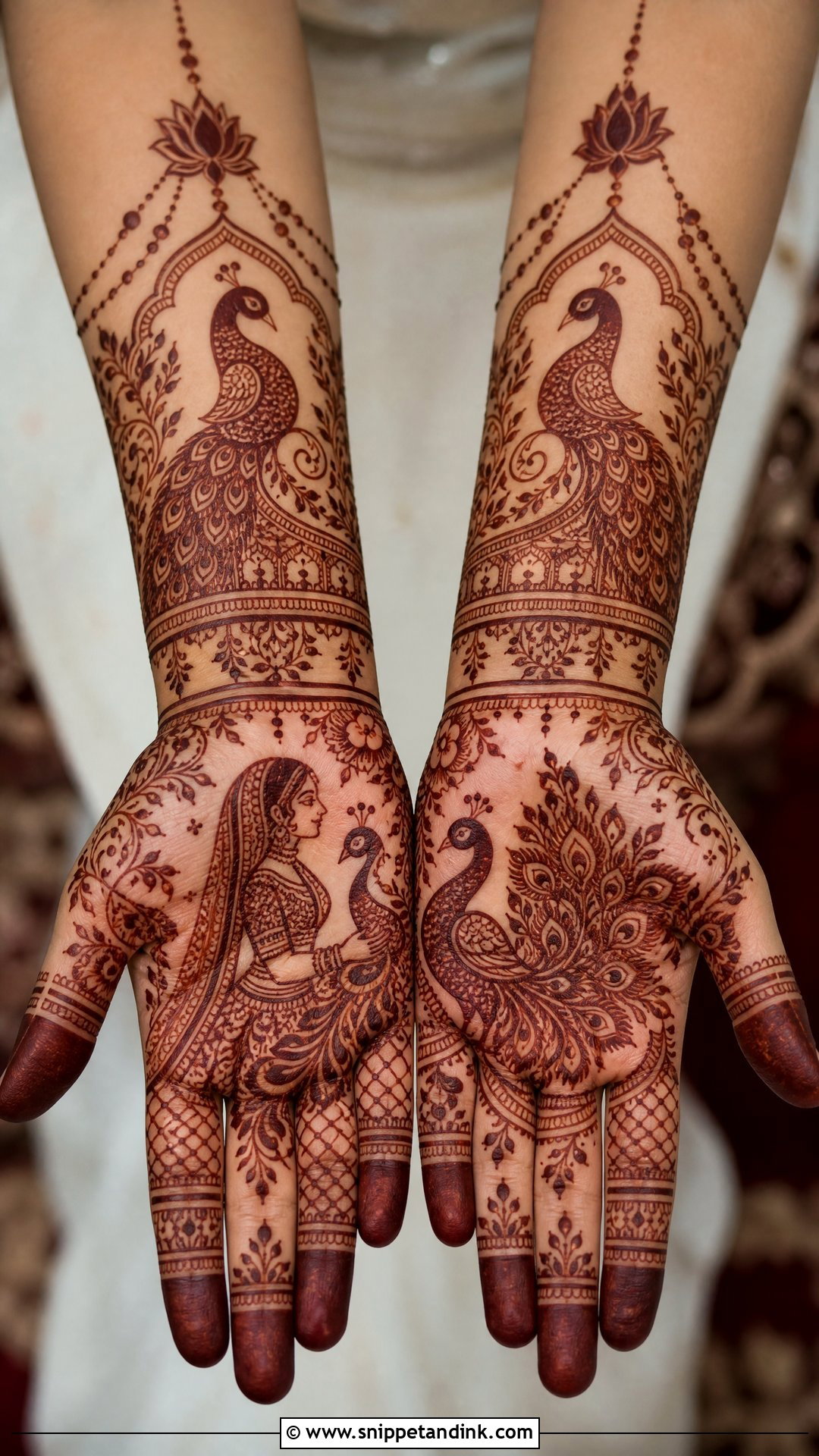
One well-drawn peacock is enough for the groom’s mother; two or three start to look like bridal storytelling. In a peacock groom mother mehndi design I place the bird on the palm or along the side of the hand and let its feathers sweep toward the wrist, then surround it with florals, paisleys and soft jaali. Feather-like strokes on the fingers echo it. The neck and beak are the details I take slowest, since a wobbly beak is what people zoom in on. Jewel-toned silks and traditional bangles pair naturally with it.
12. Bracelet Groom Mother Mehndi Design
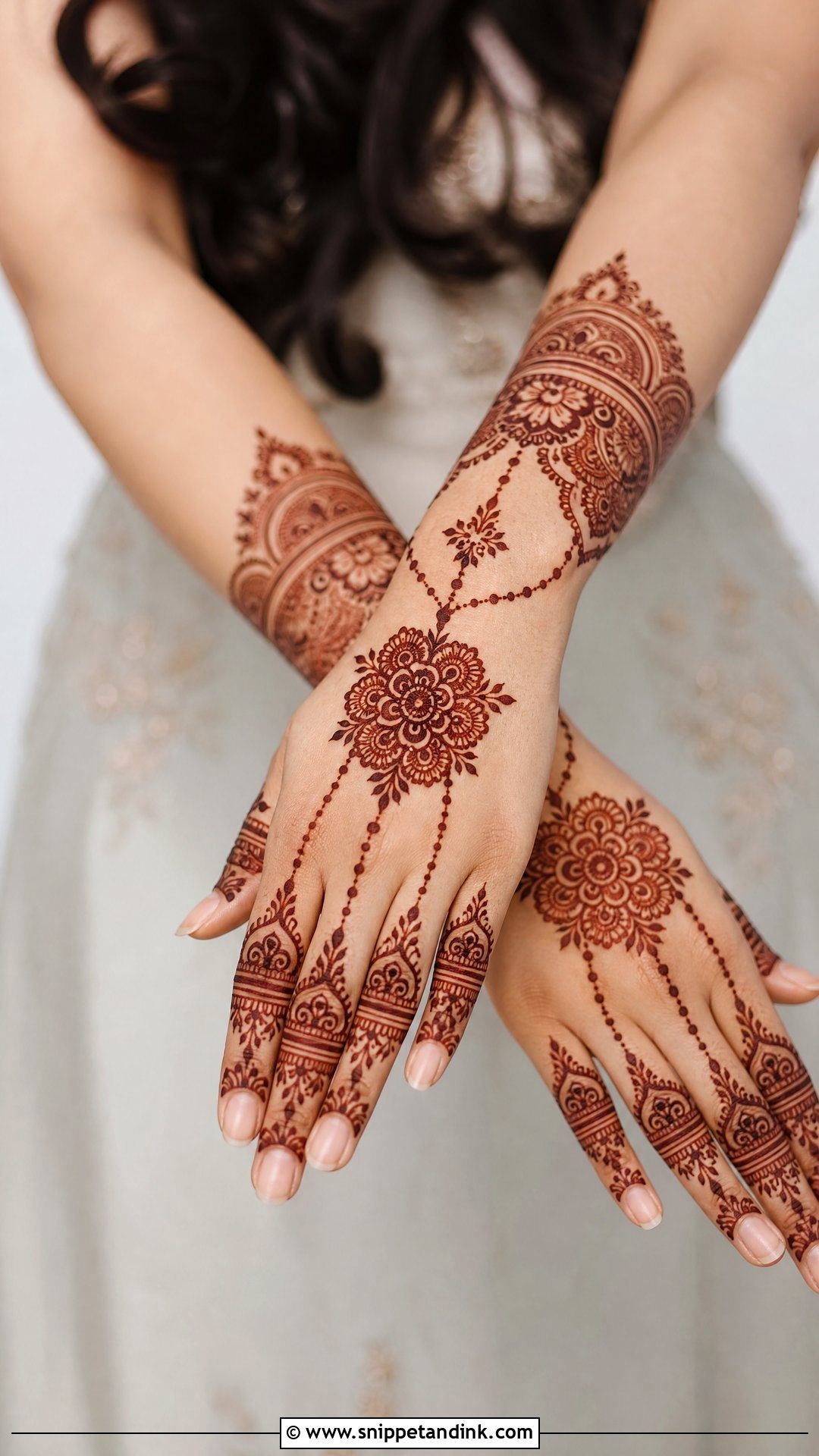
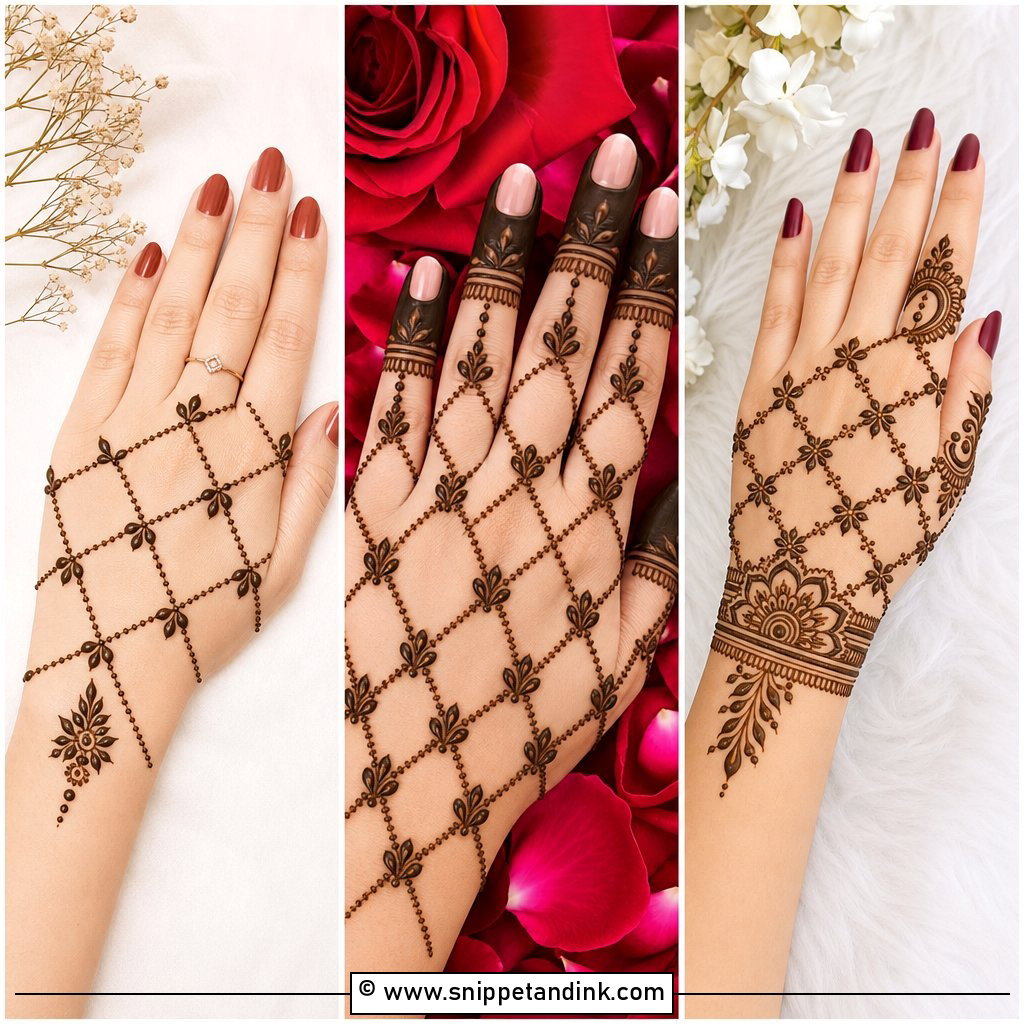
Here the design behaves like jewelry: a wrist cuff joined to a central flower or mandala by thin chains, dots and leafy lines, with ring-style bands on the fingers to finish the effect. The palm stays mostly free, which is a real help to a mother who will be pouring tea, signing cards and holding children all evening. I keep the chains simple and evenly spaced. When they wobble or vary in thickness, the illusion of a hand ornament falls apart. It works with bangles, and it also stands up on its own.
13. Finger Groom Mother Mehndi Design
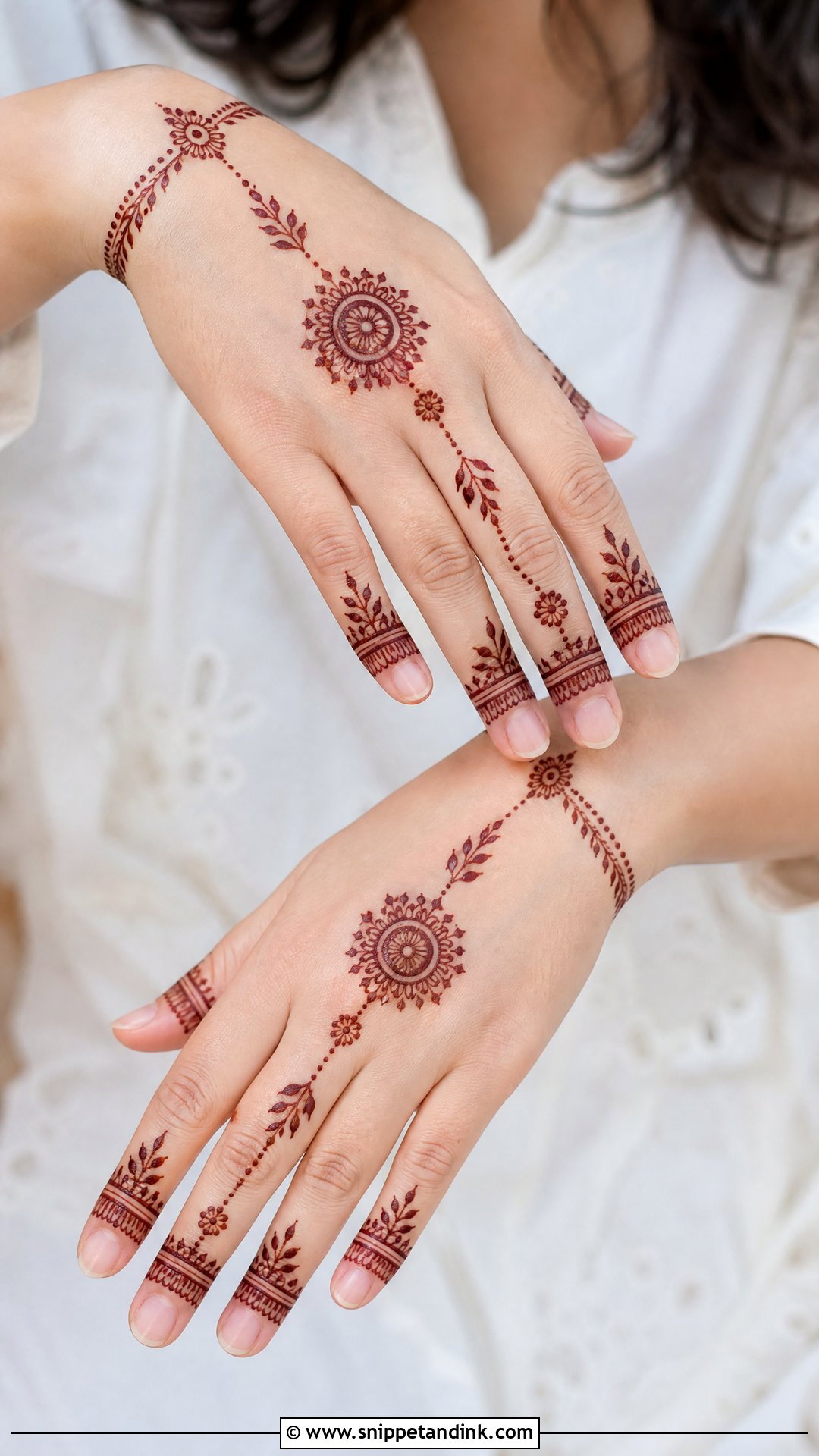
Finger-focused mehndi is the fastest complete look I do and one of the most underrated. Fine bands, leafy tips, tiny florals and ring-like patterns on each finger, tied together by a small flower on the back of the hand and a touch at the wrist. Fingers usually stain darker than the back of the hand, so even sparse work shows up well. I recommend it to mothers with a packed schedule or a formal outfit that would look crowded beside heavy henna.
14. Minimal Groom Mother Mehndi Design
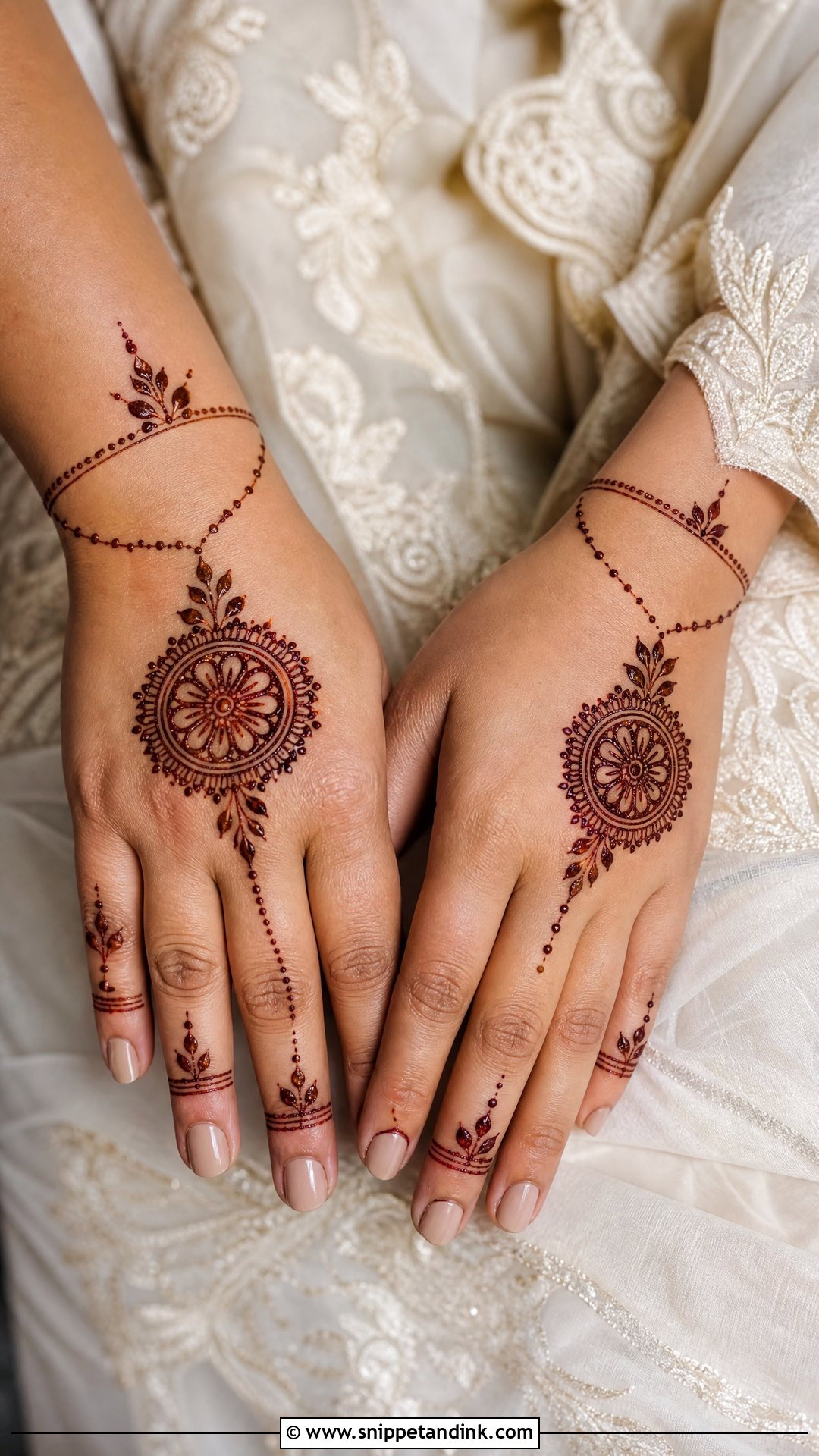
Minimal does not mean unfinished, and that is the line I watch hardest. A small mandala on the back of the hand, delicate leaves on two or three fingers and a thin wrist band need to connect to each other, even lightly, or the hand looks as if I ran out of time. On the palm, a simple floral circle with light fingertip details does the job. This is my usual suggestion for destination weddings, court ceremonies or smaller family gatherings, and it leaves room for her rings, nail color and the embroidery on her sleeve.
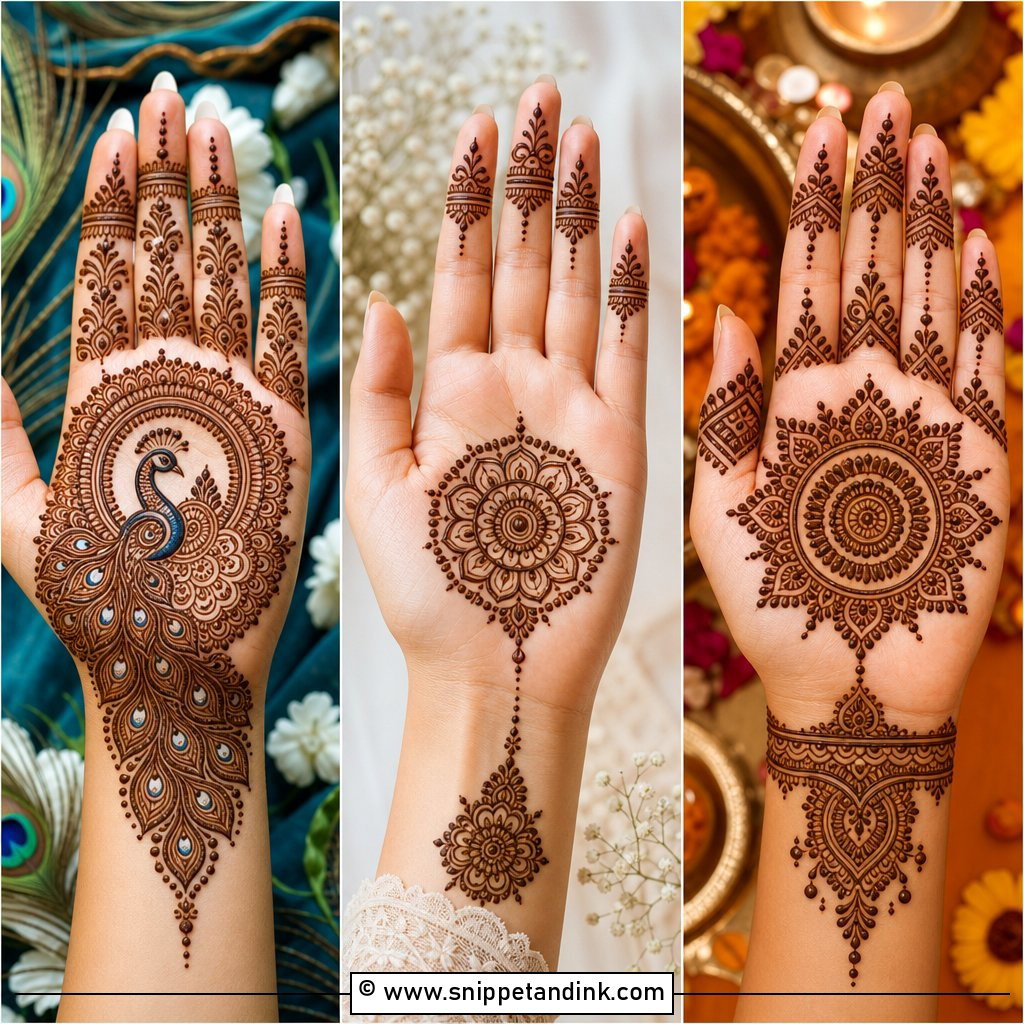

15. Heavy Groom Mother Mehndi Design
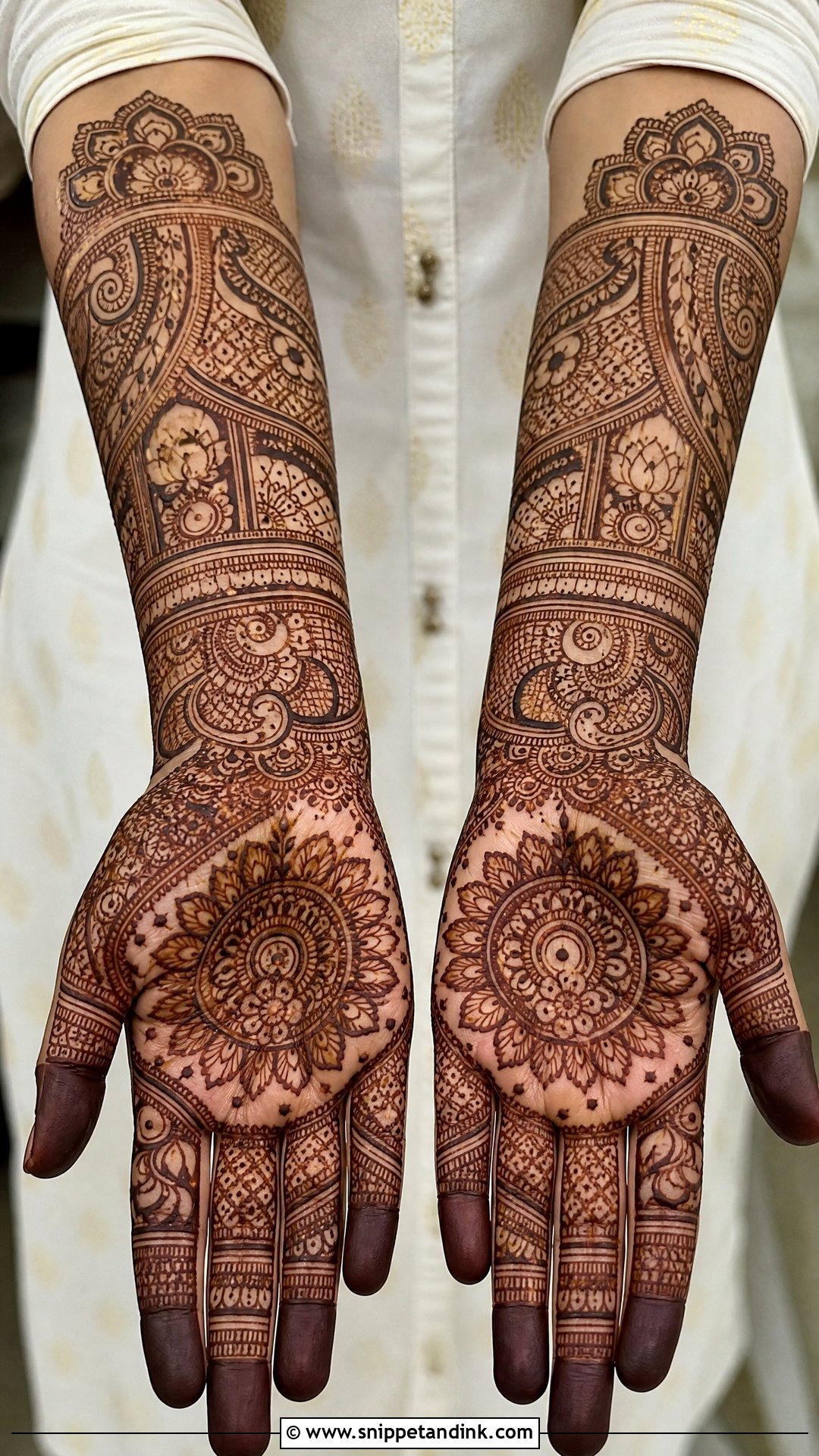
Some mothers want their hands to be noticed, and that is a fair wish for a woman who is co-hosting the whole wedding. Heavy work can cover palms, back hands, fingers, wrists and lower forearms with florals, paisleys, jaali and mandalas. What I leave out are bridal portraits and dense storytelling panels; repeated patterns read as rich without borrowing the bride’s look. I fill the palms more deeply and keep open floral sections on the back for contrast. She will need several hours of sitting and a quiet stretch afterward for the paste to set, so this belongs early in the wedding week.
16. Modern Groom Mother Mehndi Design
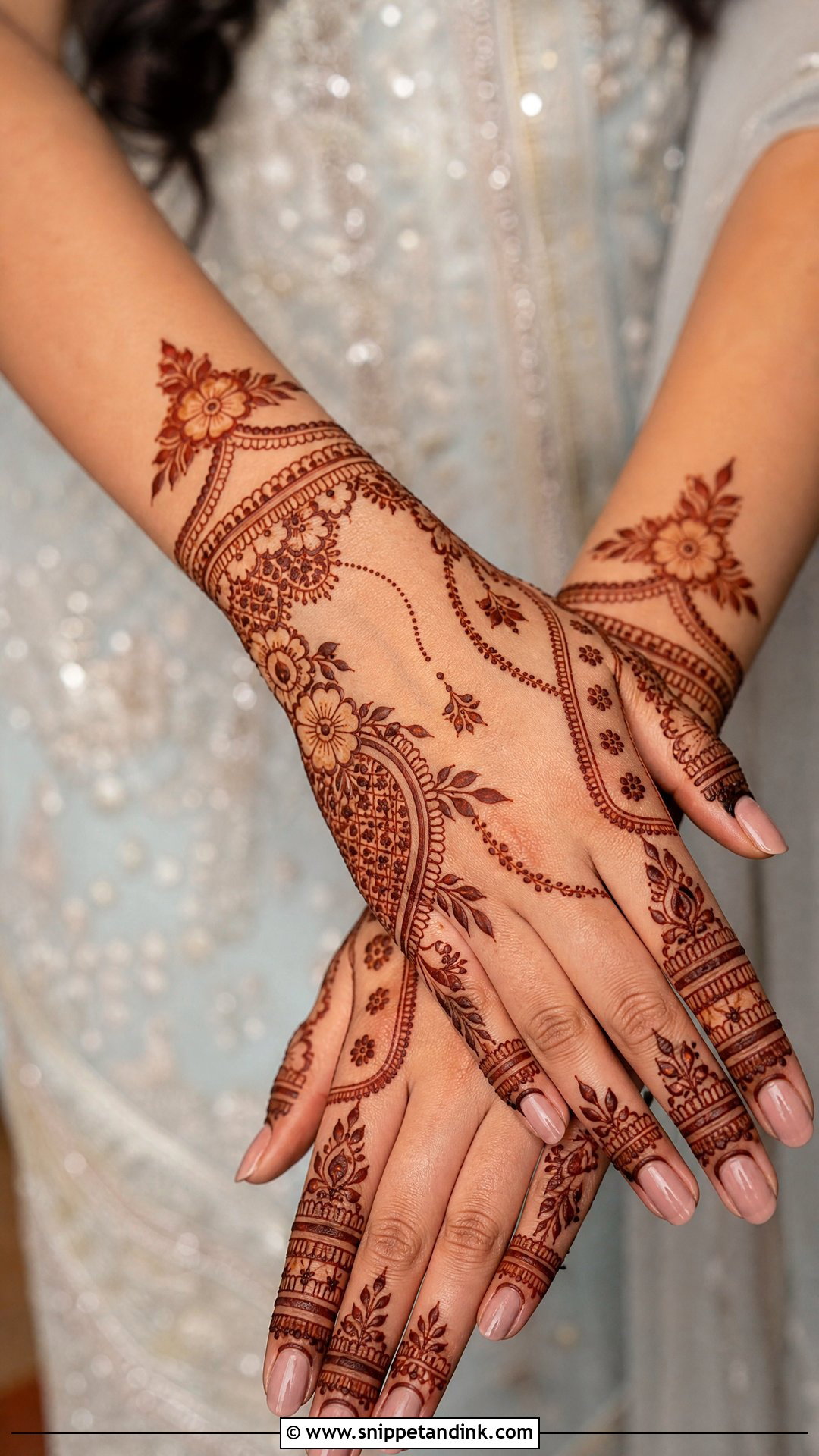
Modern designs live or die on placement. Geometric lines, open florals, half-hand coverage and bracelet details all look current, but only if the spacing is clean and the outlines are smooth. A back-hand pattern with a central flower, arcs and dotted chains is the version I draw most. Before I start, I look at her outfit: with a contemporary saree, a fusion lehenga or a gown, the neat structure of modern work matches the clean lines of the clothes far better than dense traditional filling.
17. Royal Groom Mother Mehndi Design
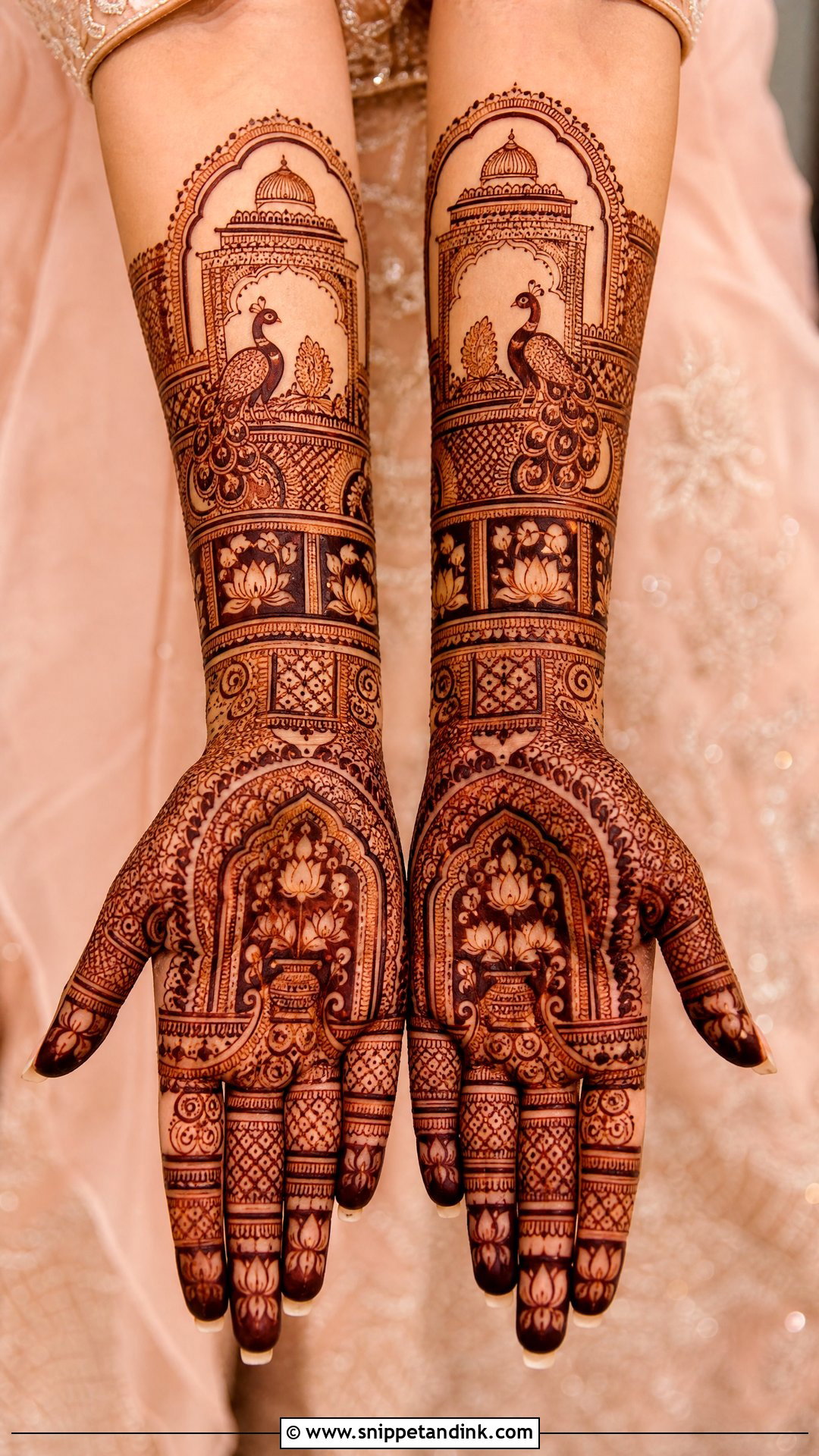
Royal designs borrow from palace architecture: arches, lotus motifs, peacock touches, paisleys and detailed wrist cuffs, often mirrored on front and back and carried to the lower forearm. Symmetry is everything here, so I sketch the arch positions with tiny dots before committing to lines. Bold outlines around the main motifs with finer filling inside give depth without mess. Brocade, velvet and heavily embroidered outfits can carry this much detail, and it reads richest once the stain has reached its deep maroon a day or two later.
18. Rajasthani Groom Mother Mehndi Design
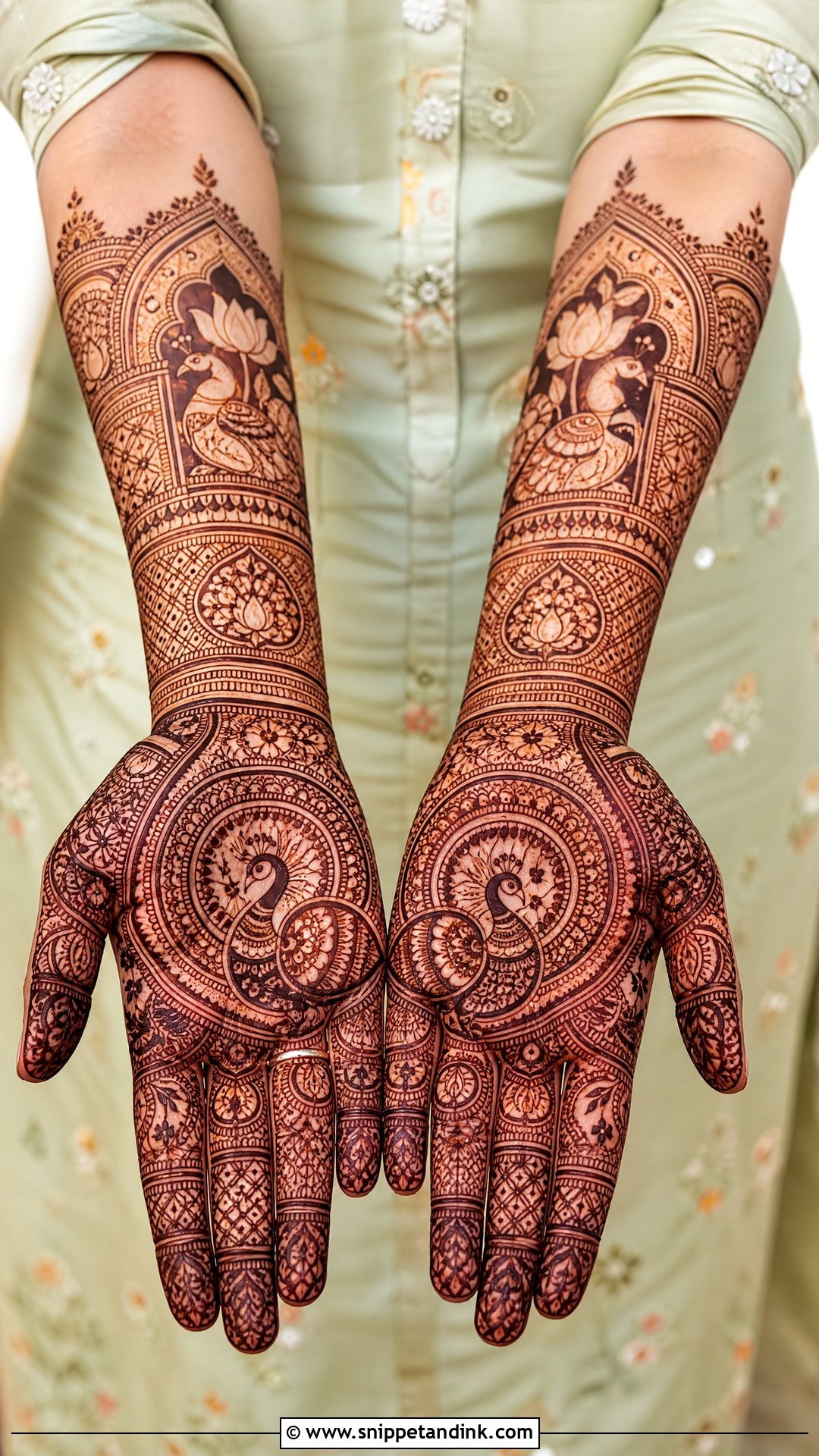
A Rajasthani groom mother mehndi design is dense by tradition: paisleys, peacocks, lotus flowers, small mirror-like shapes and fine borders on the palm and wrist, with a matching mandala or floral trail on the back. For the groom’s mother I draw it a notch lighter than a bridal set. Clean spacing is the key, because Rajasthani work can tip into heavy very quickly if every area is filled. It sits naturally with bandhani sarees, gota work and heritage jewelry.
19. Moroccan Groom Mother Mehndi Design
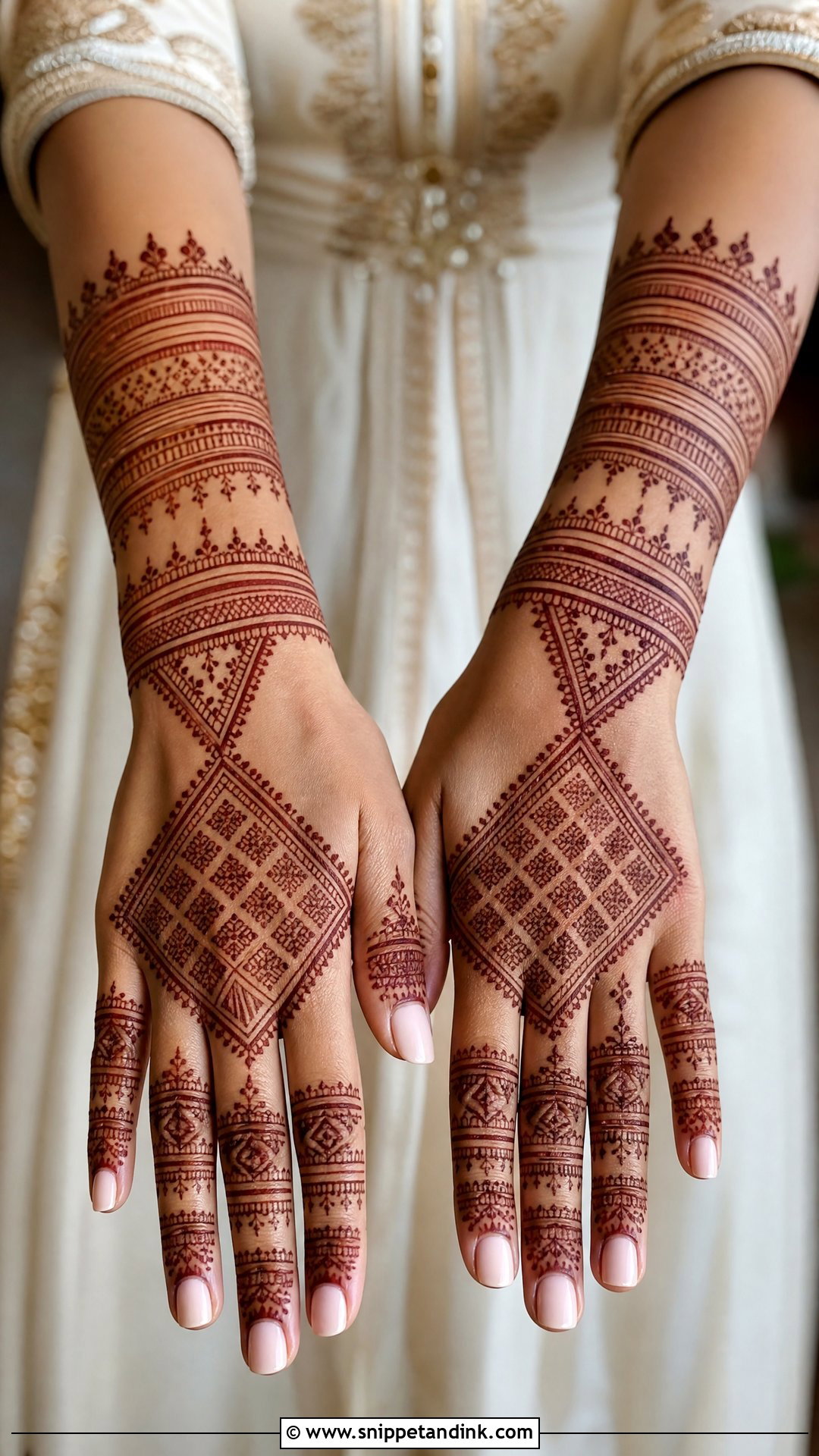
Moroccan work swaps flowers for structure: diamonds, lines, grids, triangles and neat bands across the palm or back, finished with a cuff-like wrist border and repeated details on the fingers. Because the whole effect depends on symmetry, I take a moment to mark the center line of the hand before I start. Any drift shows immediately in a grid. It pairs well with solid-color outfits and metallic jewelry, and it gives a mother something clearly different from the floral hands around her.
20. Gulf Groom Mother Mehndi Design
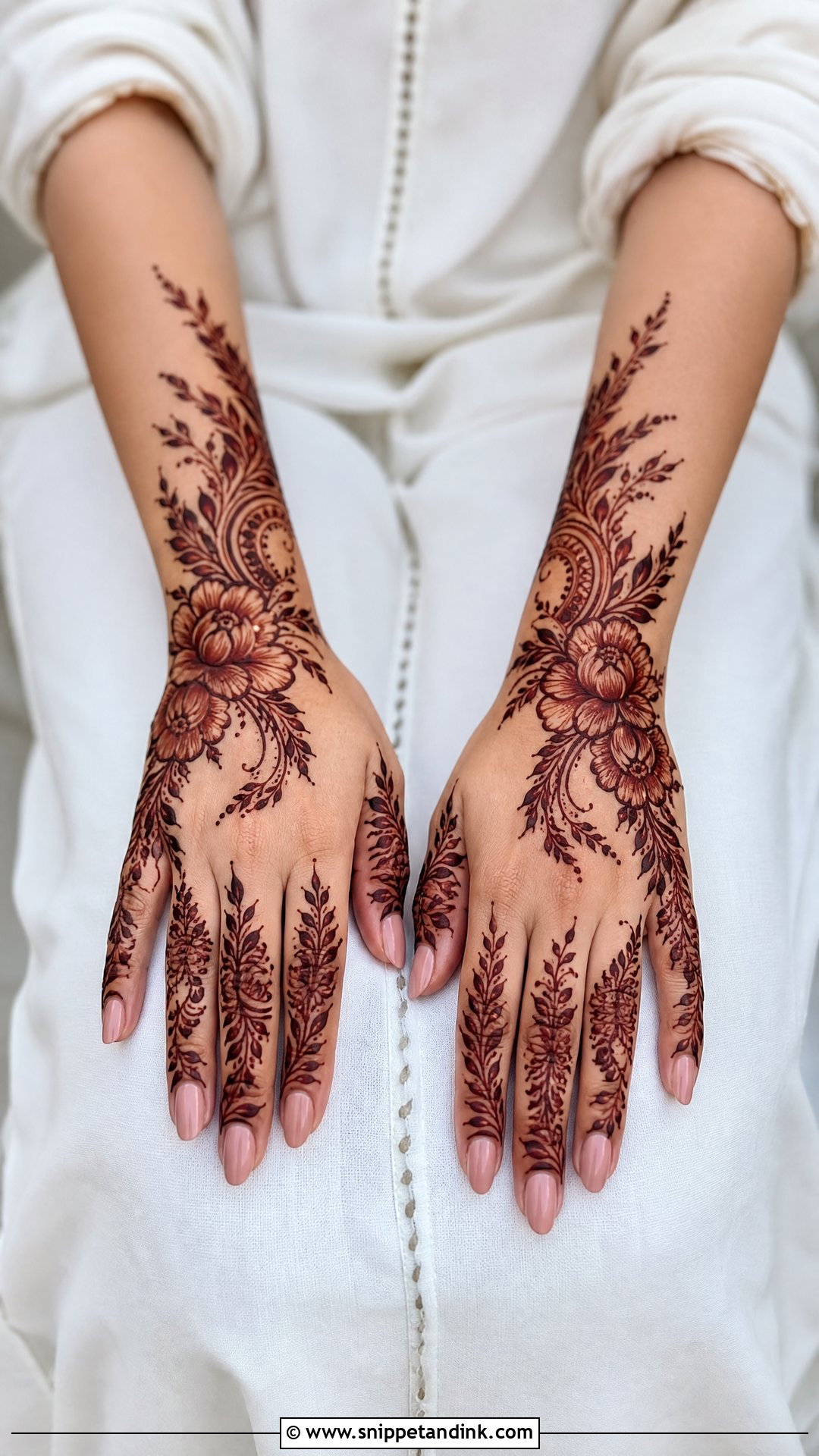
A Gulf groom mother mehndi design, also known as Gulf-Khaleeji inspired mehndi, uses bold floral clusters, leafy sprays and wide negative space. I place it mostly on the back of the hand, fingers and wrist, with large flowers near the wrist or center and vines climbing toward the fingers. The palm can stay light or carry one small matching motif. Khaleeji flowers are usually shaded with thicker paste inside the petals, which gives that bold, almost painted finish. It suits mothers who like a statement but not Indian-style density, and it looks right with kaftans as much as with sarees.
Aftercare for a Mother Who Will Keep Using Her Hands
Most of the stain is decided in the hours after I finish. The paste should stay on for as long as she can manage, ideally six hours or overnight. I dab a light lemon and sugar mix over dry paste so it sticks to the skin rather than flaking off while she moves around. When it is time to remove it, she should scrape it off with the back of a butter knife or rub it off over a sink. Washing it off with water is the quickest way to a pale result.
- Keep water off her hands for the first 12 hours or so. A family member can handle the washing up that night.
- Warmth helps the stain develop. Holding her hands near a warm stove, or tucking them into a shawl, makes a difference on a cold evening.
- Rub in a little coconut oil or lip balm before showering for the next two days to protect the color.
- Avoid bleach, harsh cleaners and constant hand sanitizer in the days that follow. They fade the stain faster than anything else.
If the stain comes out lighter than she hoped, there is nothing to do but wait a day. It nearly always darkens further by the next evening, especially on the palms.
Matching the Design to Her Day, Not Just Her Outfit
The right pattern for the groom’s mother is the one that suits her hands, her outfit and the job she has that day. Simple mandalas and bracelet work suit a mother who will be busy from morning to night. Full-hand Indian, royal, Rajasthani or peacock designs suit one who wants to sit, be pampered and wear something rich. Arabic, Gulf, Moroccan and modern styles sit in between. Before her appointment, ask her two things: how long she can realistically sit, and whether she wants the design to show more on the palm or the back of her hand. Those two answers narrow the list faster than any photo.
You'll Like These Ideas:





Leave a Reply