
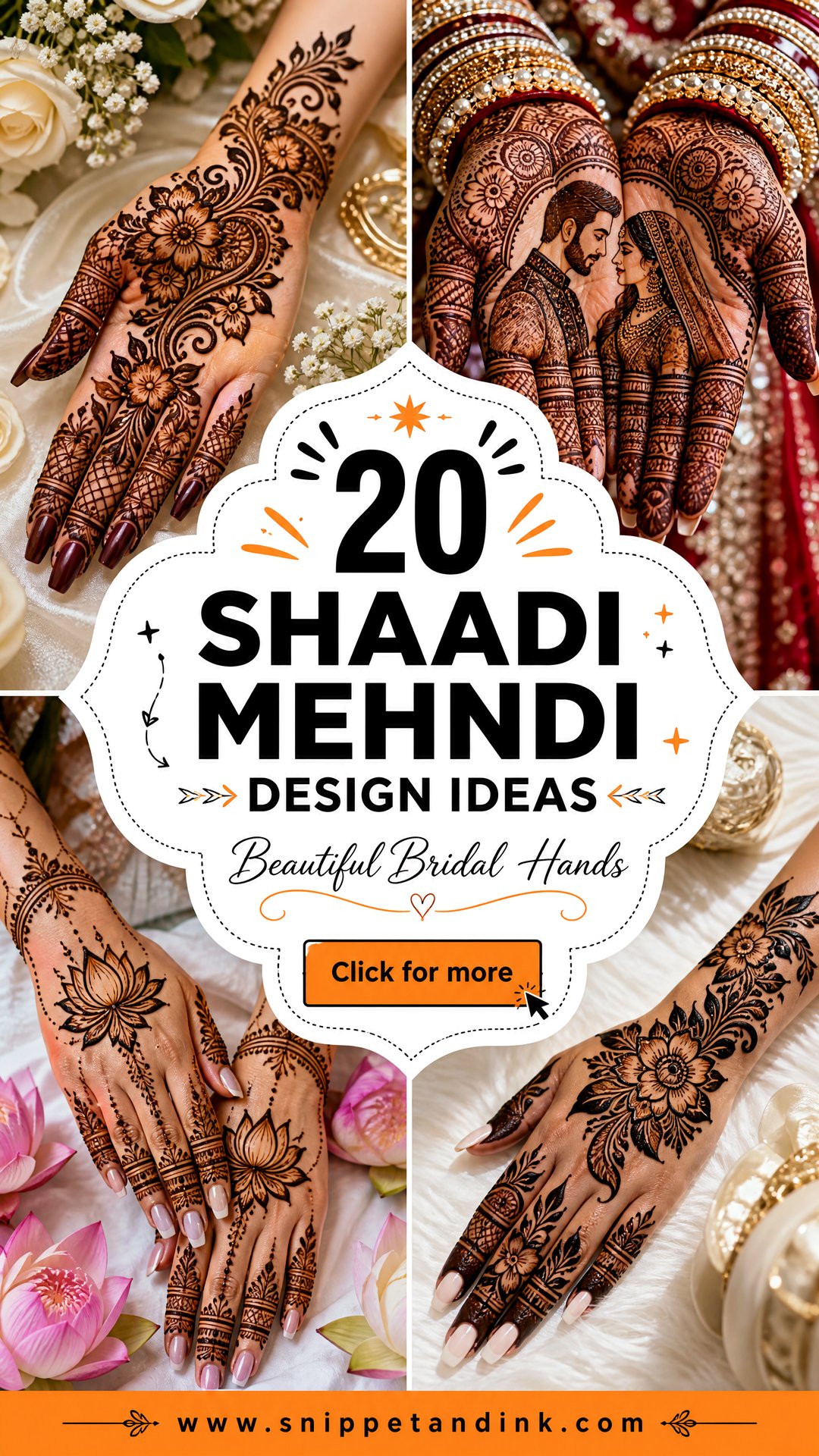
Shaadi mehndi carries more than pattern. It holds family ritual, hidden names, the groom’s teasing hunt for his initials, and the color of the stain everyone checks the next morning. I draw everything from detailed full-hand patterns to light modern motifs, and the right one depends on your outfit, your jewelry, the ceremonies you’re attending and how long you can sit still. Below are twenty styles brides ask me for, from Indian, Arabic and Rajasthani to Moroccan, mandala, peacock, jaali, portrait, finger and feet designs, with notes on how each one is actually drawn and how it wears.
A Full Bridal Application Is a Long Sit
Dense bridal hands and feet can take most of an afternoon or evening, and you’ll sit with your hands still while the paste dries. A few things make that easier.
- Eat properly first and use the bathroom right before I start. Wet paste on both hands means someone else will be feeding you.
- Arrive with clean, dry skin and no lotion or oil. Oil sits between the paste and the skin and gives a patchy, pale stain.
- Exfoliate or wax a day earlier, not on the day. Freshly scrubbed or irritated skin can sting under the paste.
- Finish manicures and pedicures before mehndi. Soaking and scrubbing afterward fades the stain early.
- Wear something loose with sleeves that stay above the elbow, so nothing brushes the design.
Mehndi is usually applied one or two days before the wedding, so the stain has time to deepen by the ceremony.
1. Full Hand Indian Shaadi Mehndi Design
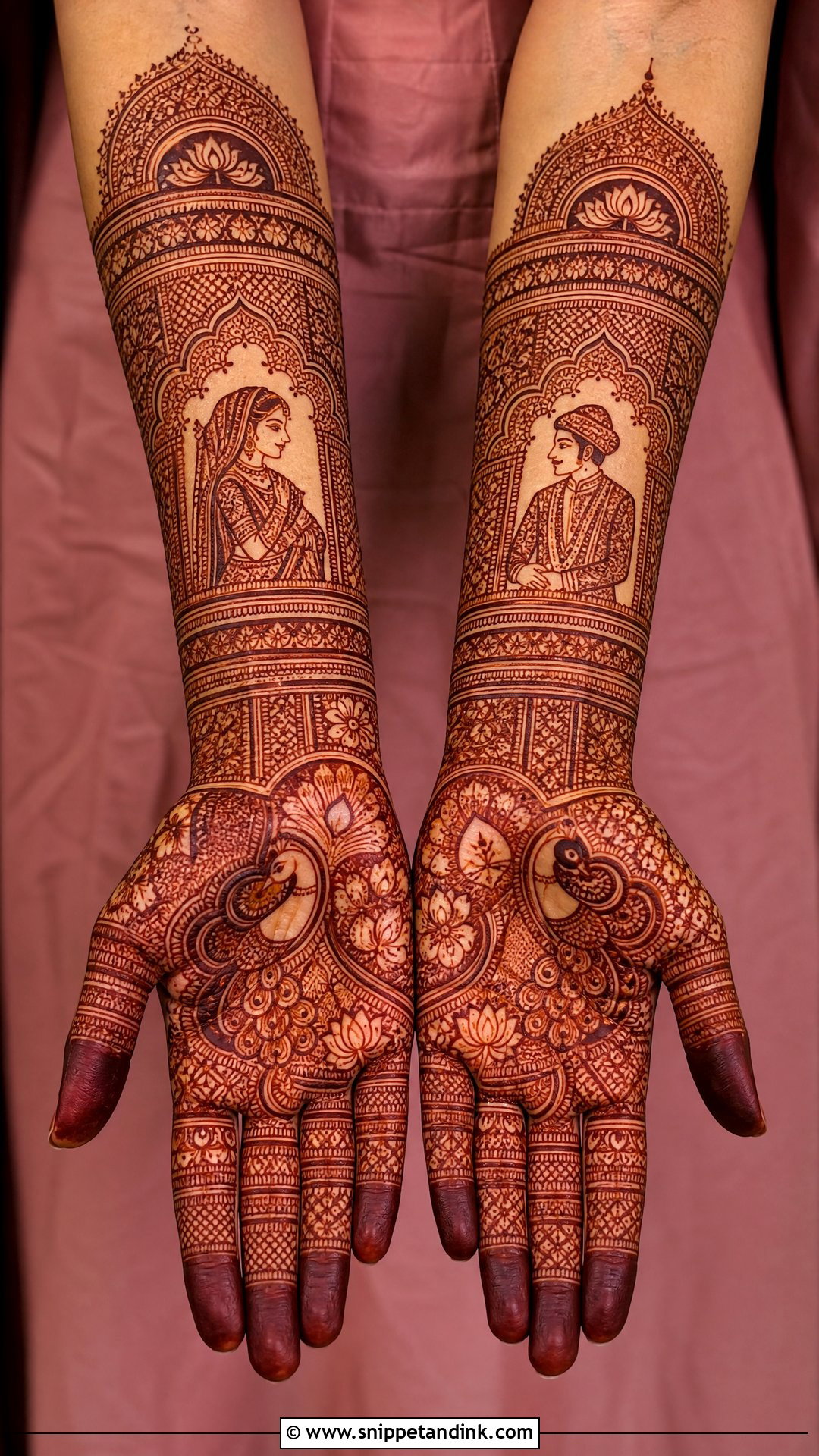
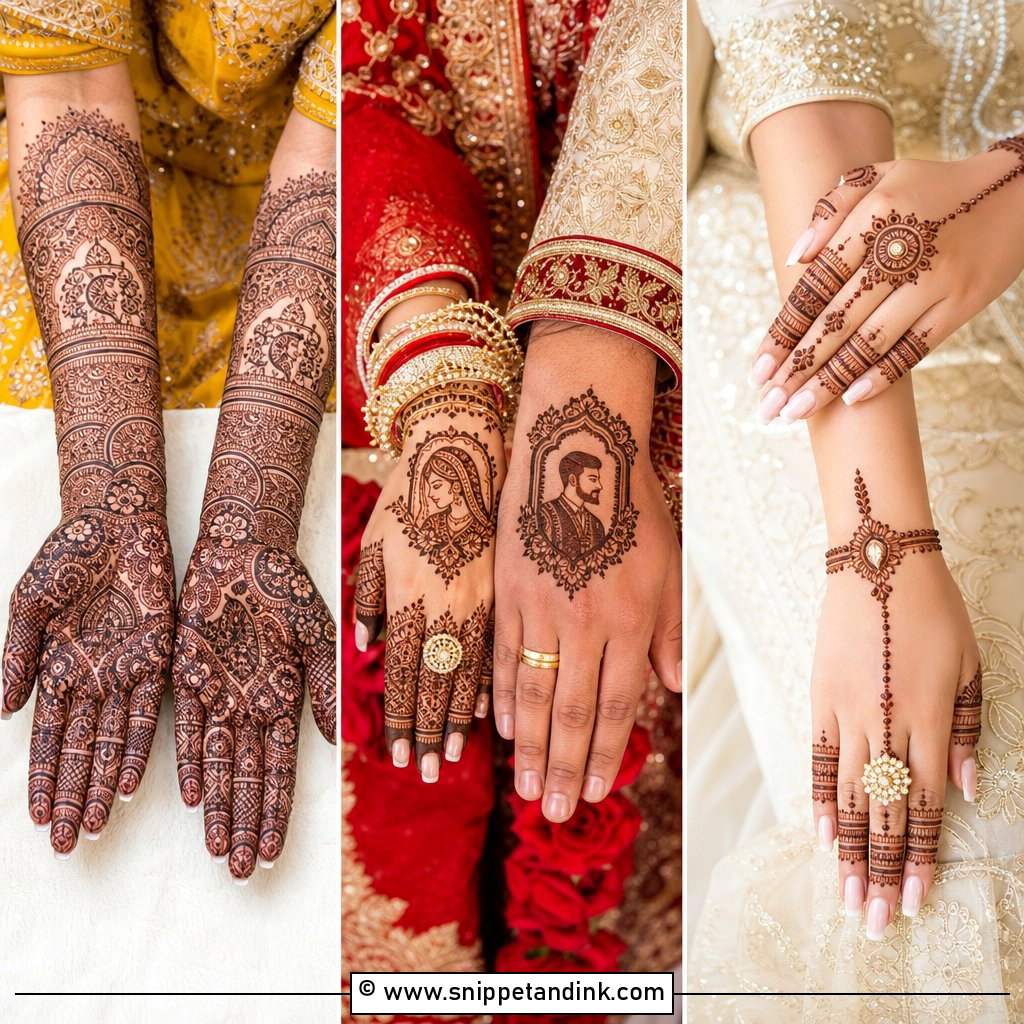
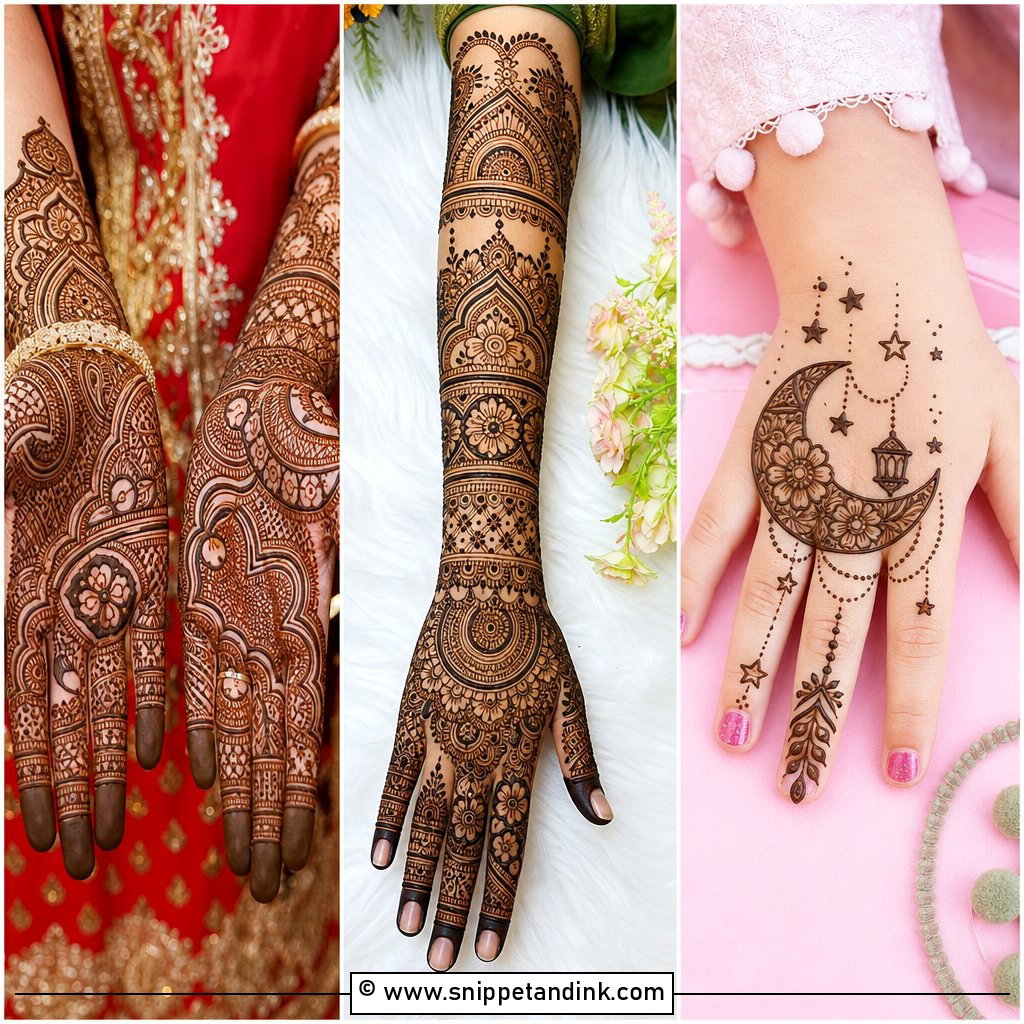
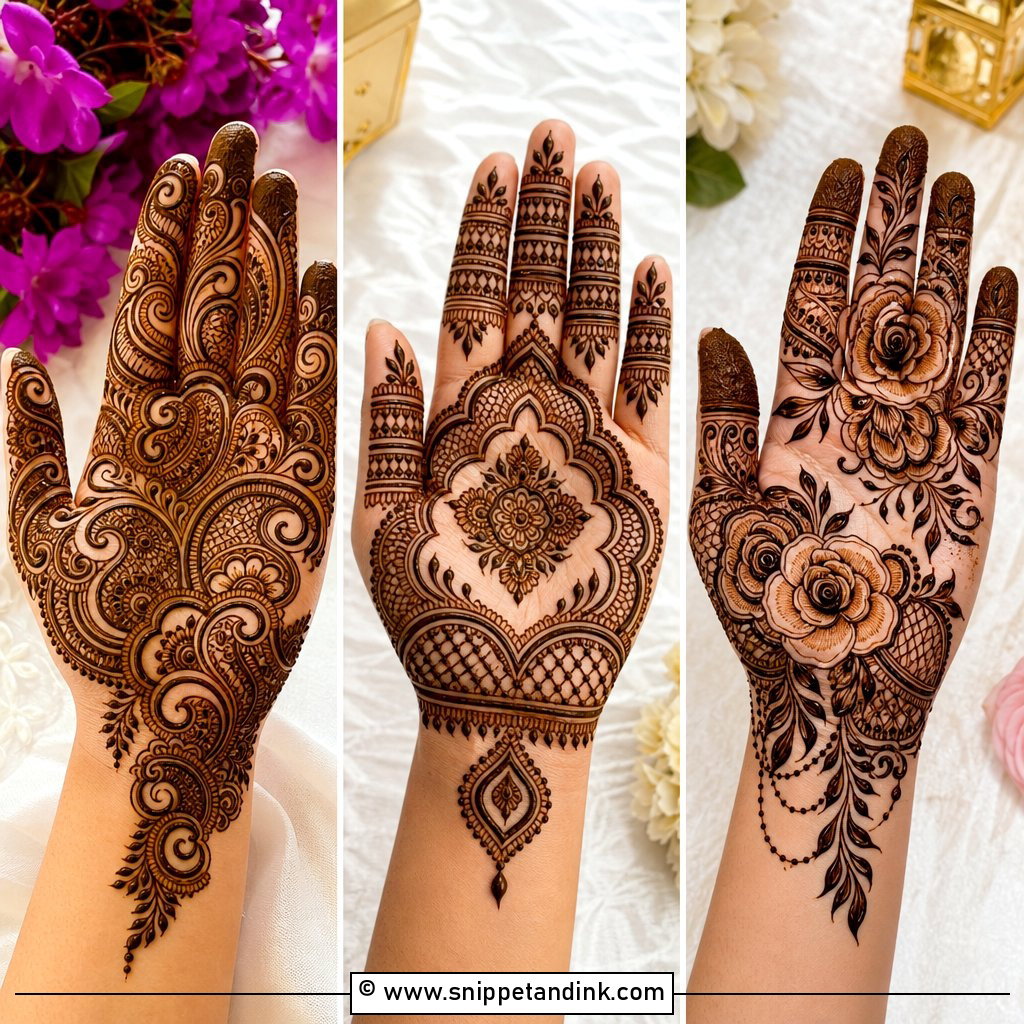
Full-hand Indian bridal mehndi covers the palms, fingers, wrists and forearms with dense work: paisleys, lotus, peacocks, bride and groom figures, kalash shapes and fine filler. I plan it in zones before the cone touches skin. The palms carry the main story, and the forearms get bands, vines and jaali so the eye has somewhere to rest. Without that planning, dense work turns into one dark blur once the stain deepens. If your lehenga has heavy embroidery, show me a photo, and I’ll echo its borders in the cuffs.
2. Arabic Shaadi Mehndi Design
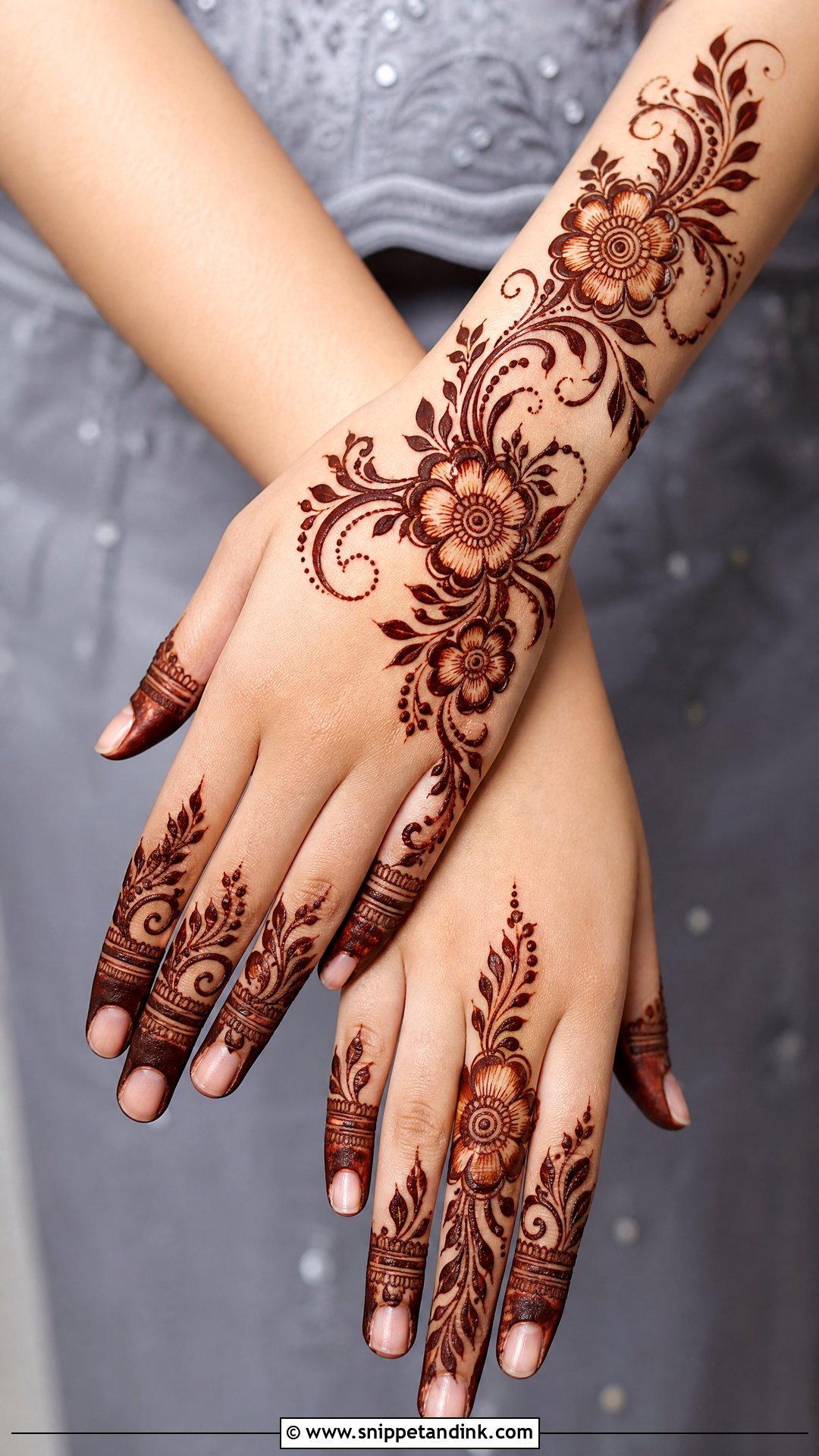
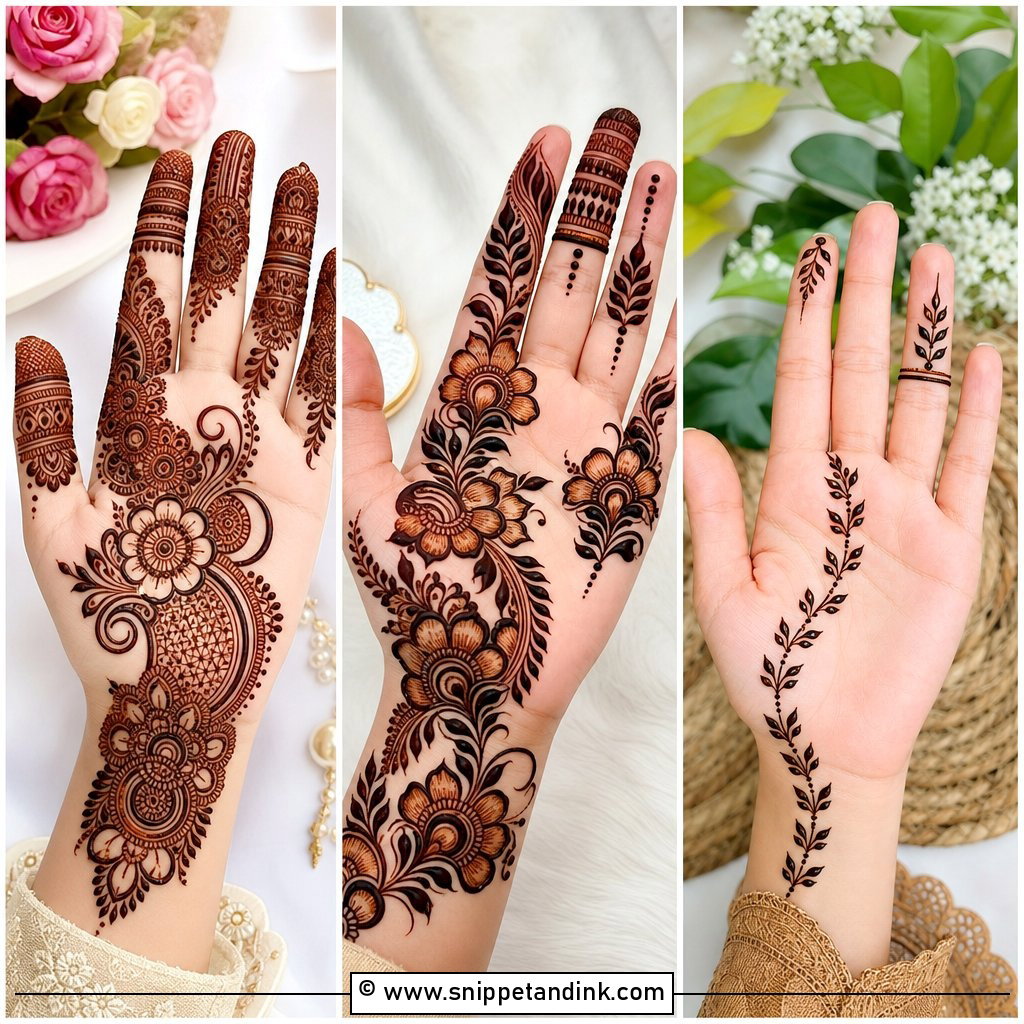
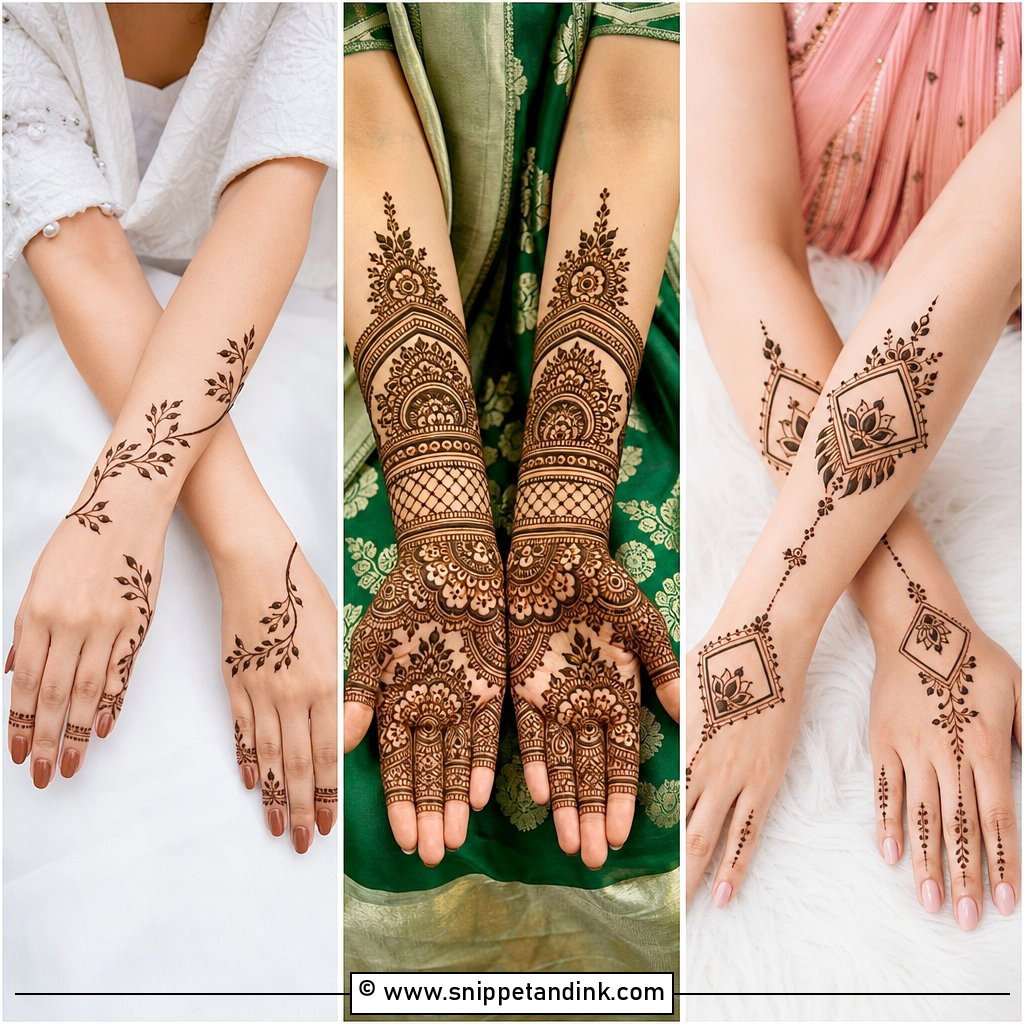
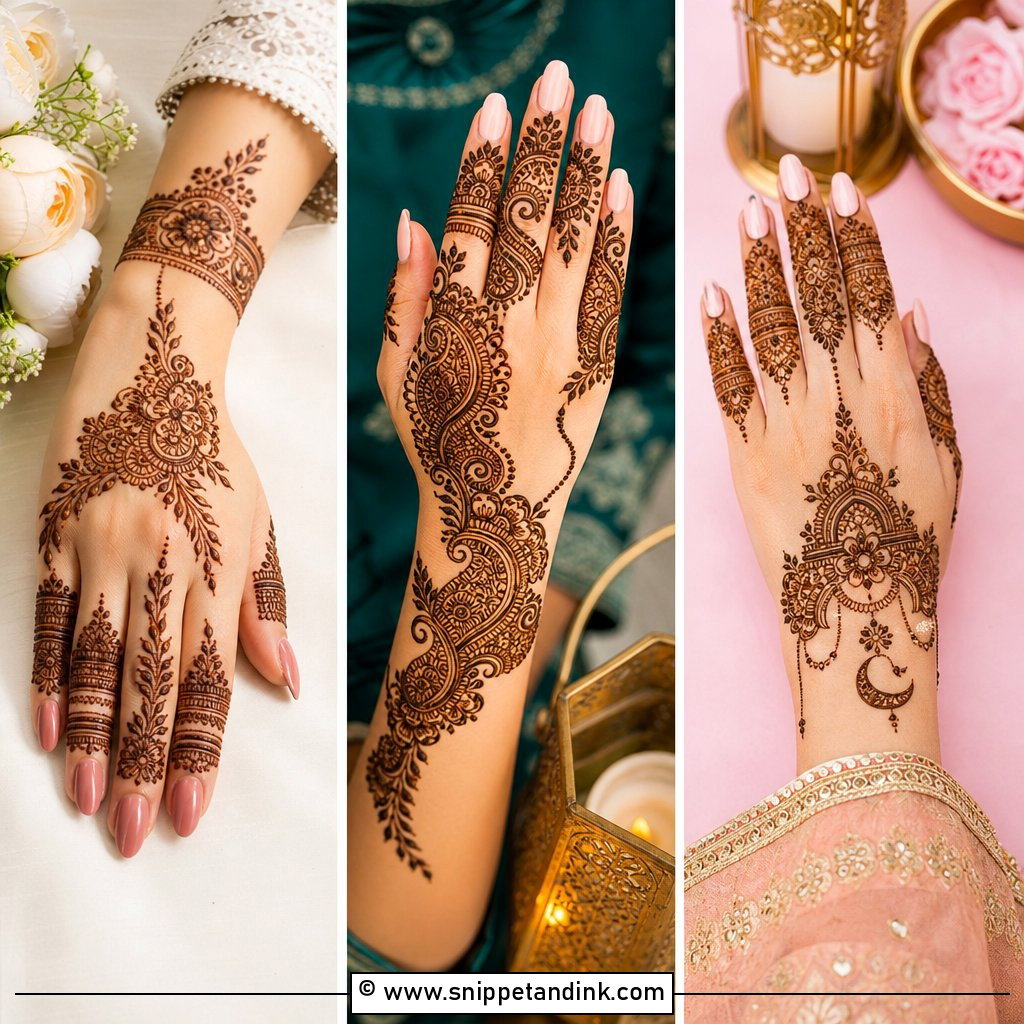
Arabic mehndi runs diagonally across the hand in bold flowers, leafy trails and open skin. That open space is what makes it legible from across a room. I draw the outlines with a slightly larger cone tip and keep the inner detail fine, because the contrast between the two is what gives it shape. It suits engagement, nikah or sangeet, and a smaller ceremony. For a bride, I carry it from the fingertips to the wrist and close it with a matching cuff. It also takes far less time than full Indian coverage.
3. Indo-Arabic Shaadi Mehndi Design
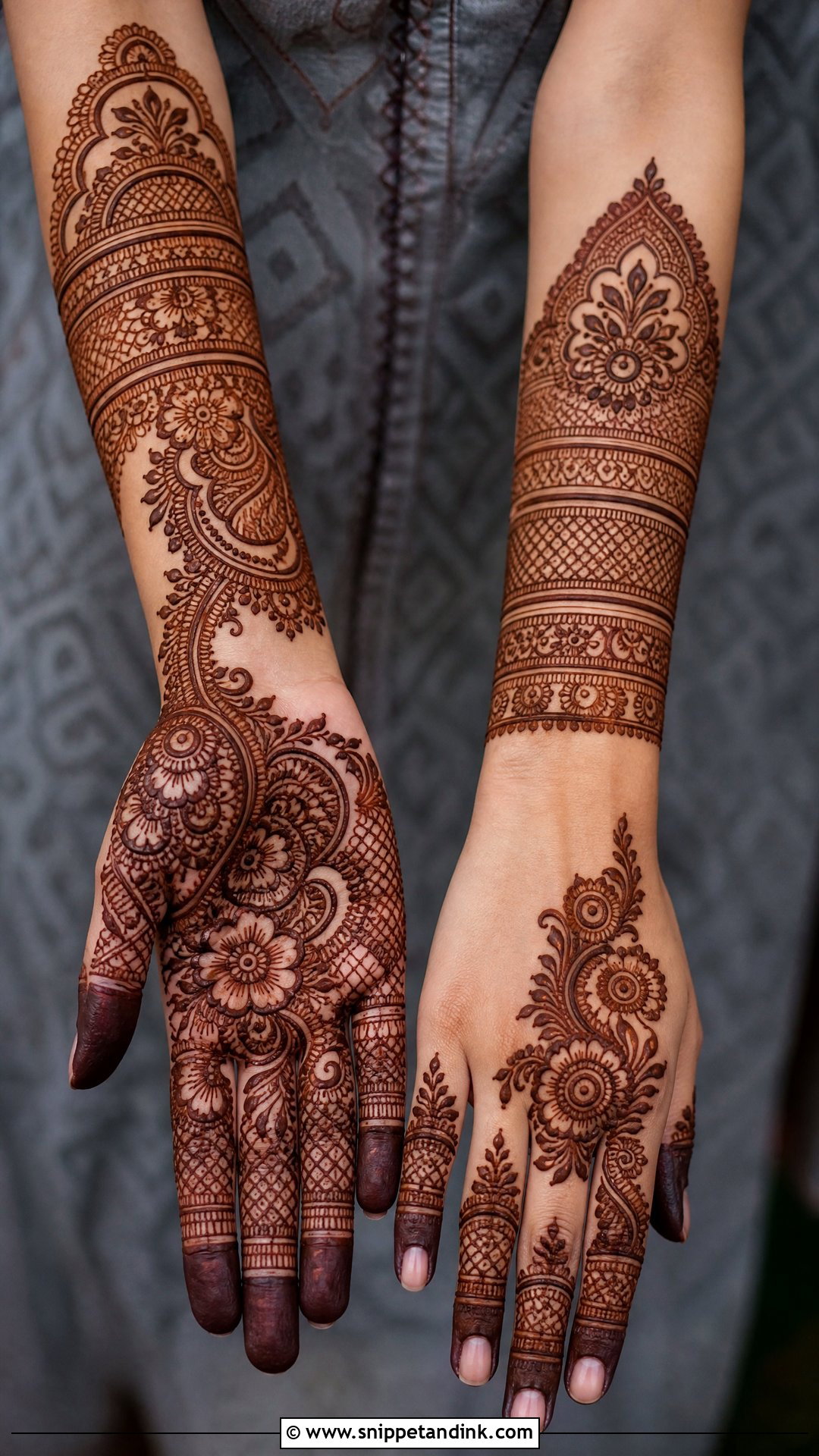
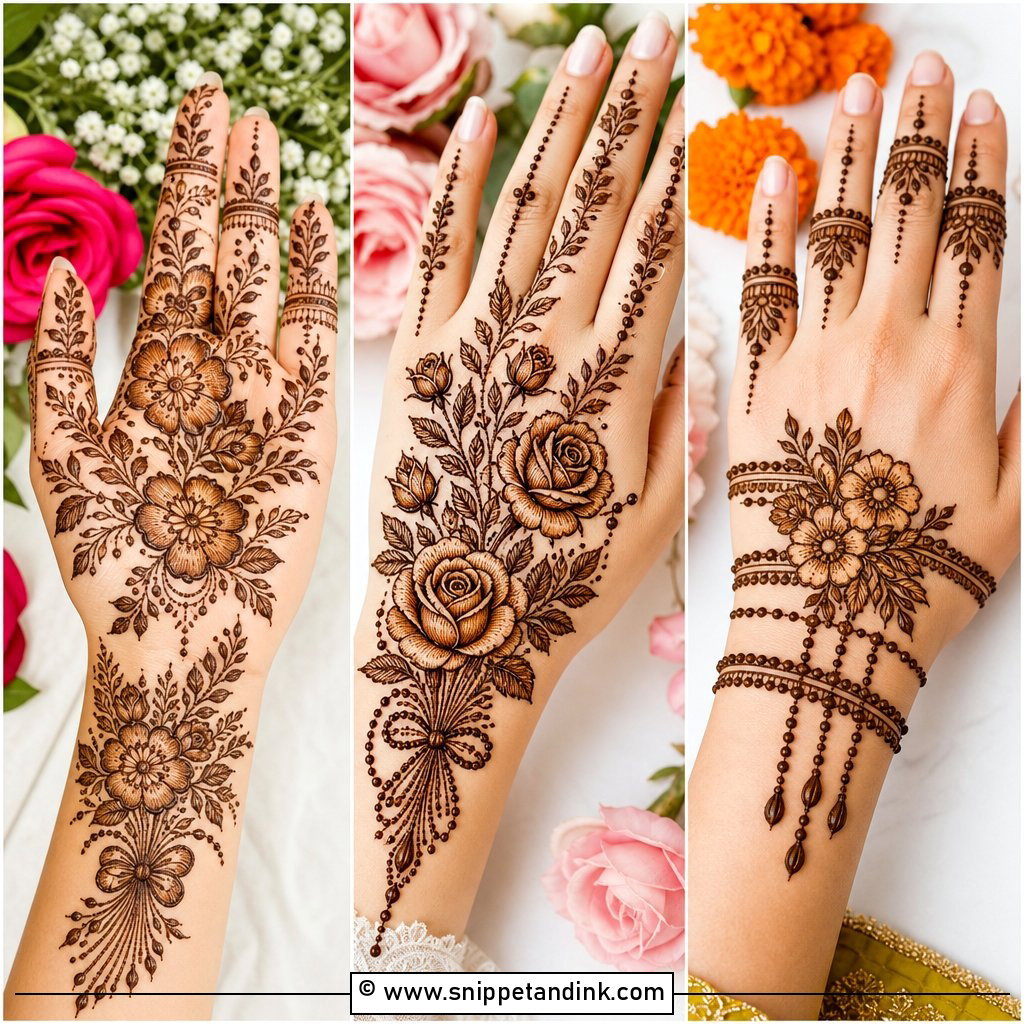
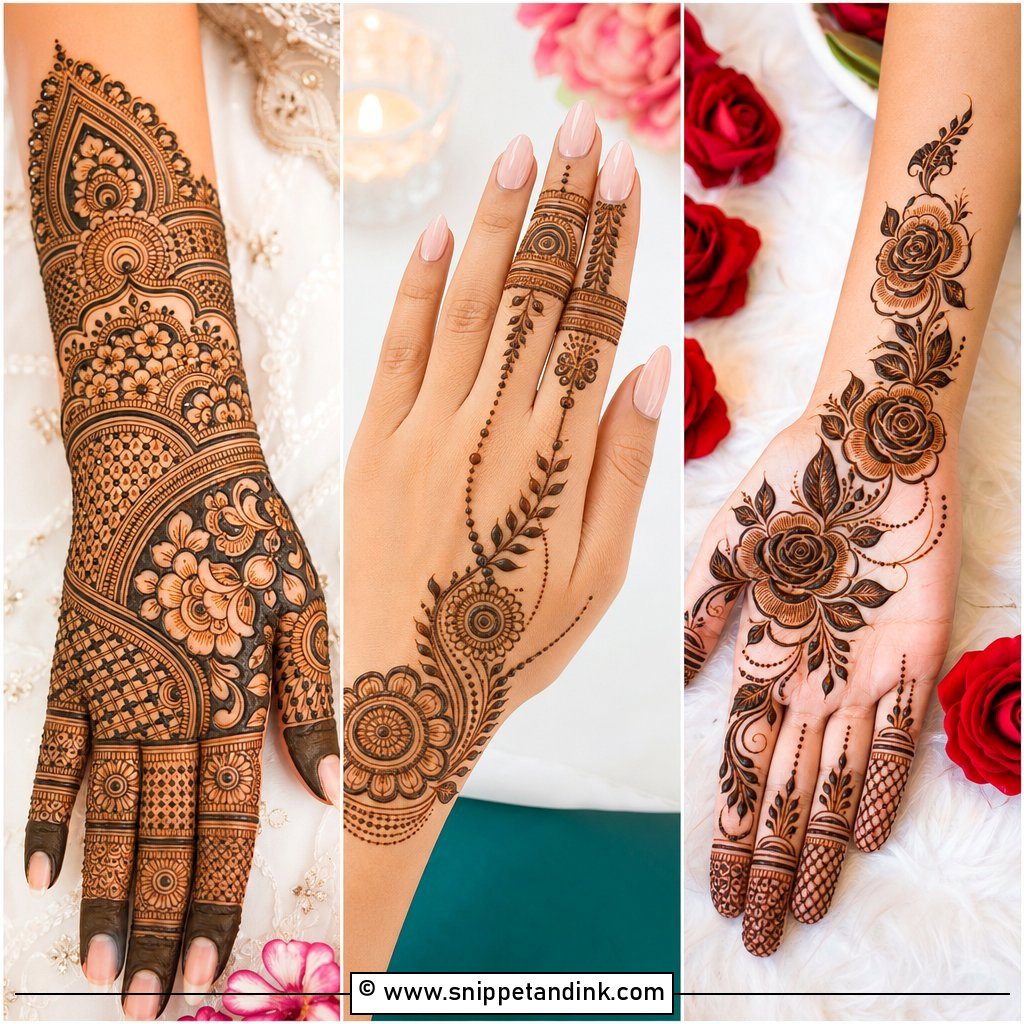
An Indo-Arabic shaadi mehndi design takes the flow of Arabic work and fills parts of it with Indian detail. Large florals sit on the back of the hand, paisley trails run across the palm, with neat finger caps and small jaali sections. It’s the style I suggest most to brides who want a strong bridal effect without every inch filled. Cut short, it also works for sisters and bridesmaids. For the bride, I extend it to the forearm.
4. Front Hand Shaadi Mehndi Design
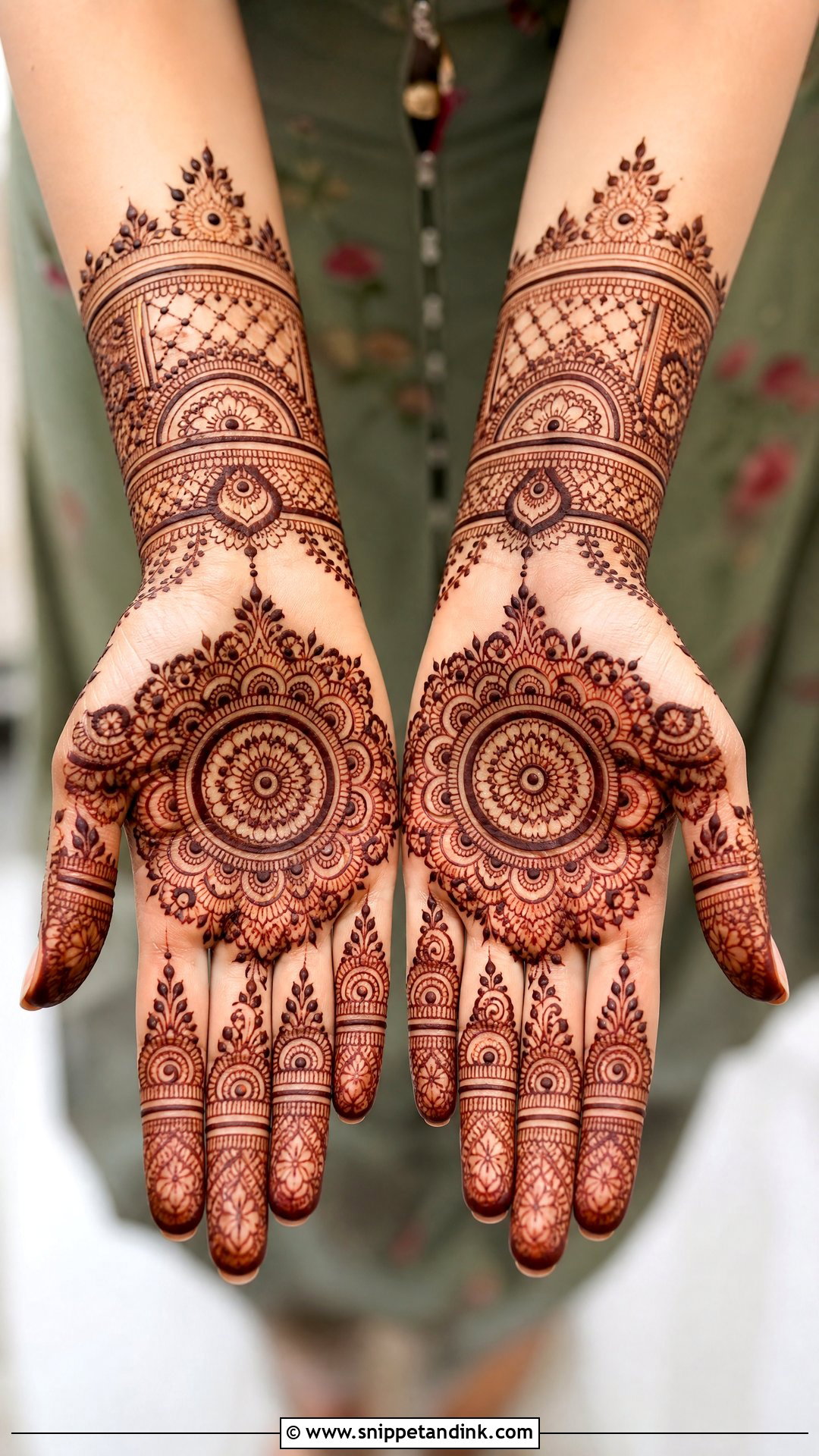
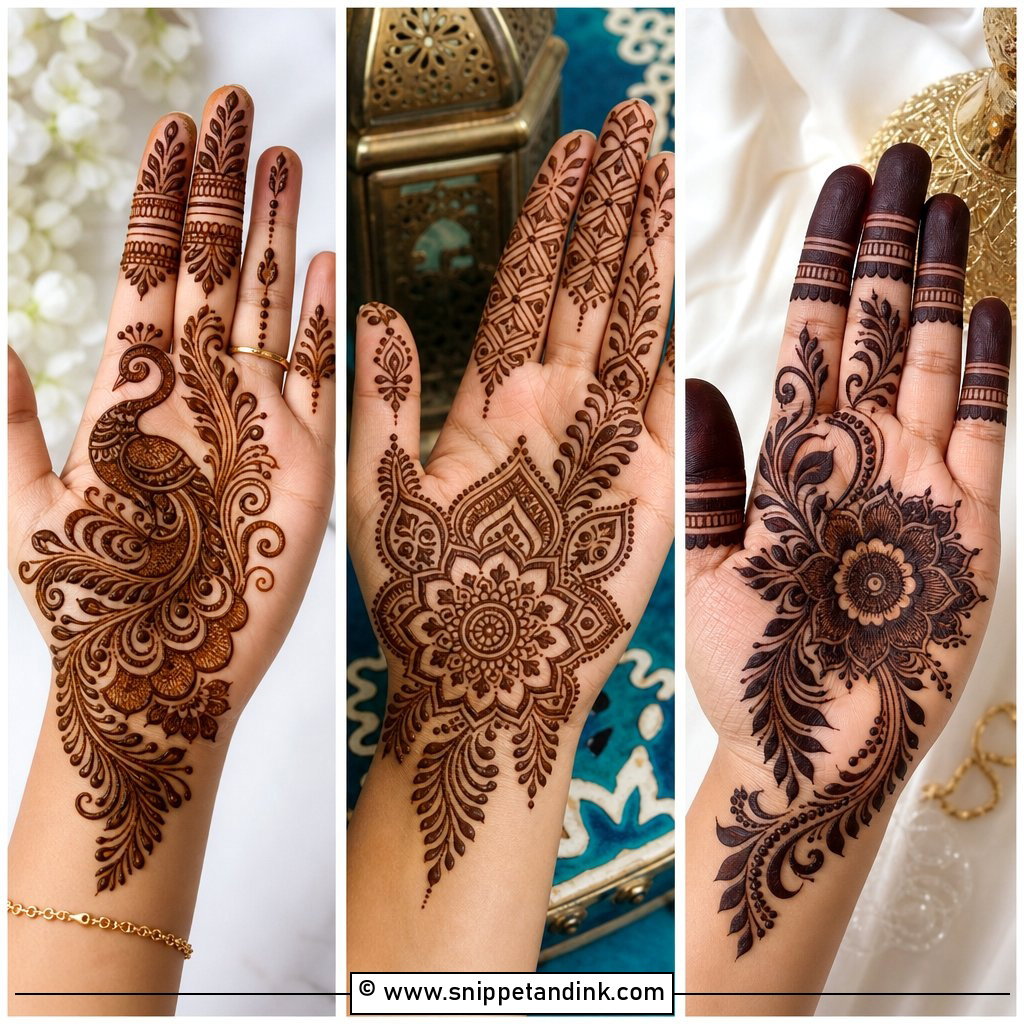
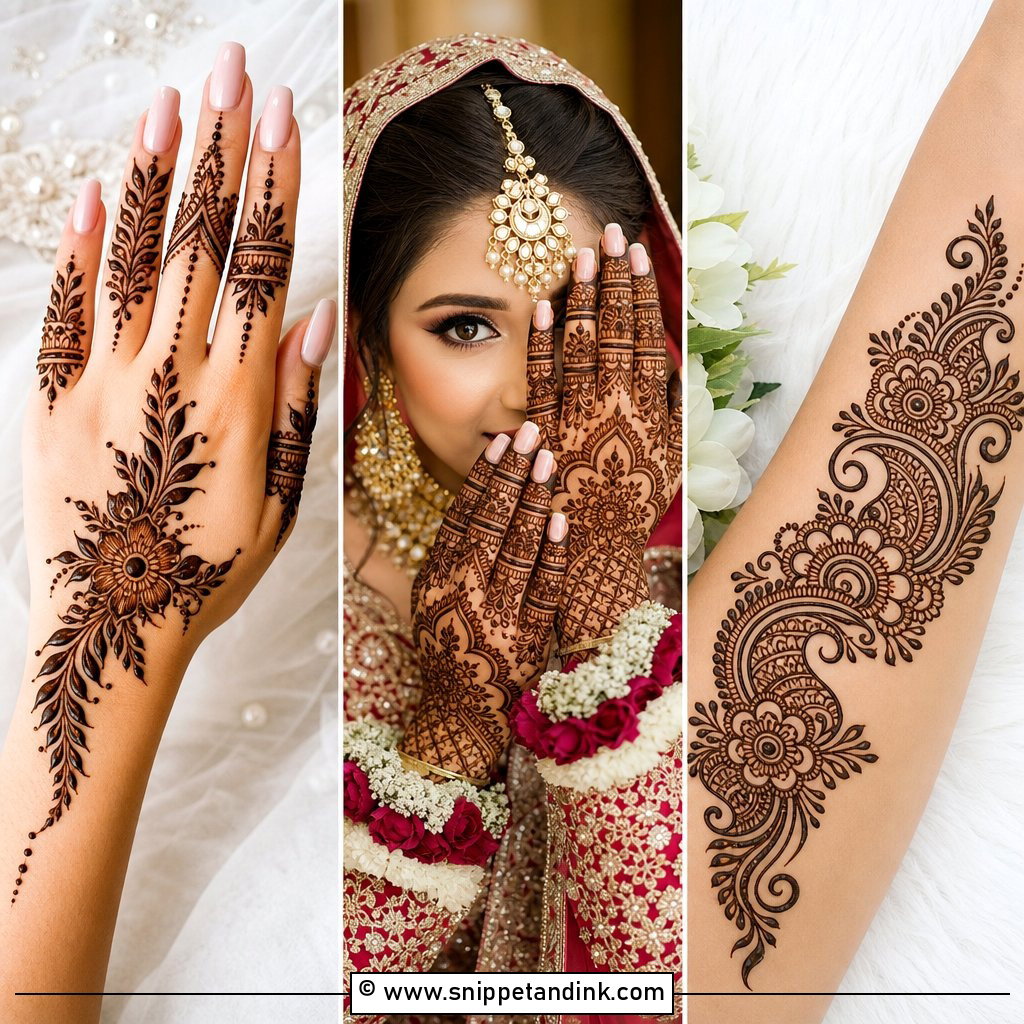
Your palms are on show all through the rituals: holding the thaal, receiving the ring, during the pheras. I usually anchor a front-hand design with a bold mandala, lotus or bride and groom motif in the center of each palm, then build paisleys, small florals and filler around it. Palms take the deepest stain on the body, so fine lines there come out dark and crisp. I keep the fingers detailed but not packed, so the hand still reads as a hand. A strong wrist band links it to the forearm. If you want meaningful palm art, this is where it goes.
5. Back Hand Shaadi Mehndi Design
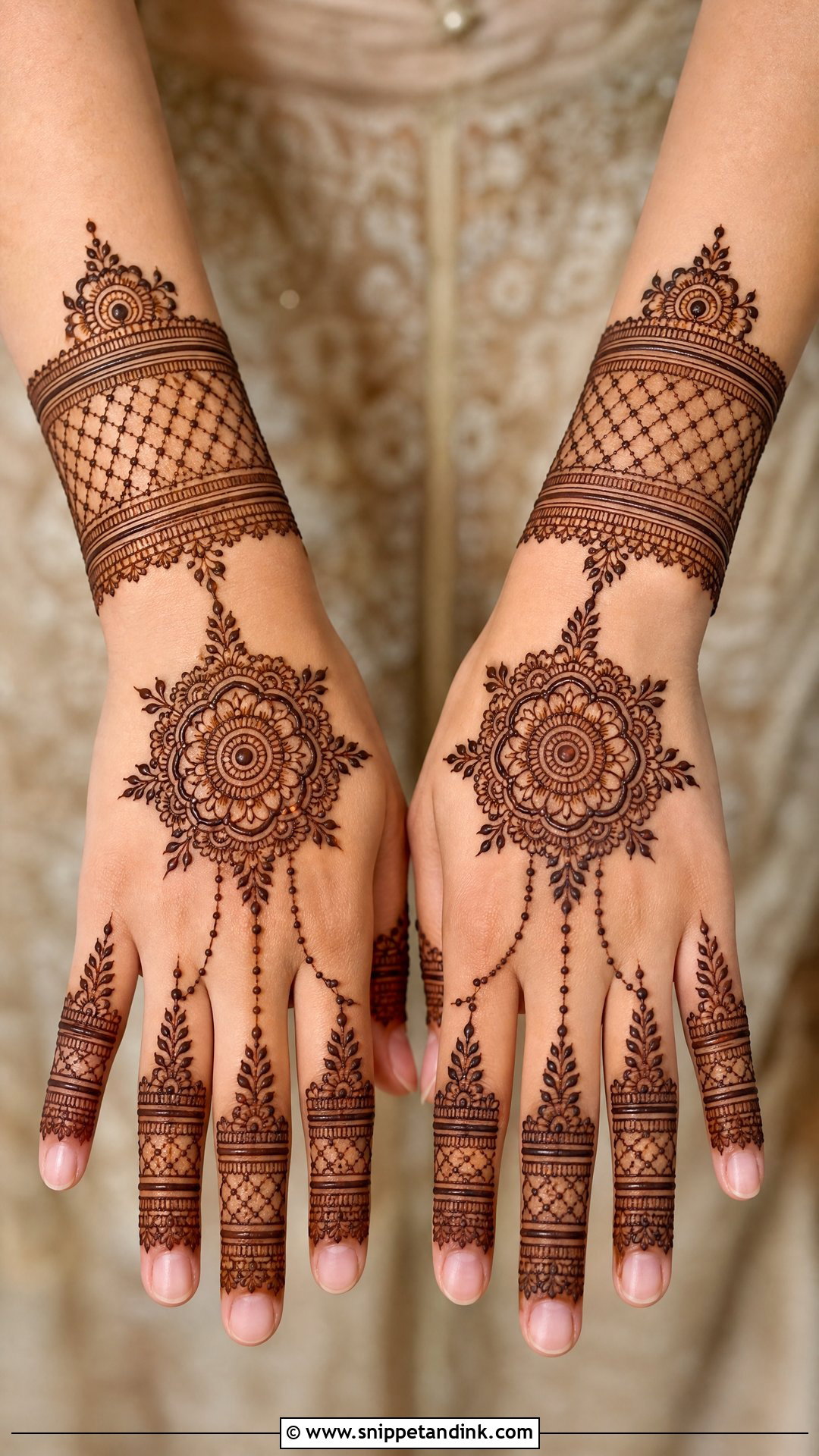
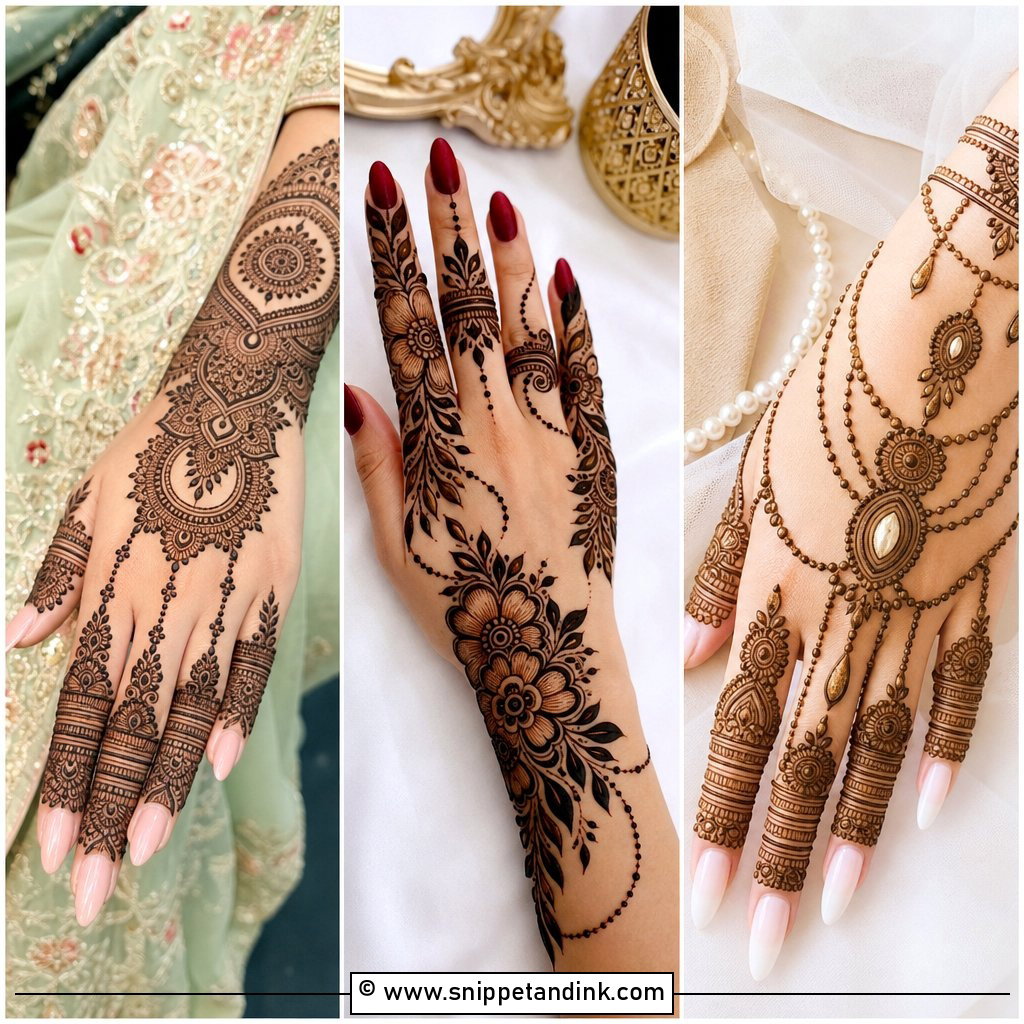
The back of the hand appears in every bangle and jewelry shot, so the layout has to be clean. A central mandala or floral circle, with chains toward the fingers and bracelet-style work at the wrist, is the classic plan. For a richer feel, a jaali pattern with floral borders works well. The back of the hand stains lighter than the palm, so I use bolder lines here than I would on the palm. If you’re wearing rings or haath phool, tell me where they sit, and I’ll leave that band of finger clear or align it.
6. Bridal Portrait Shaadi Mehndi Design
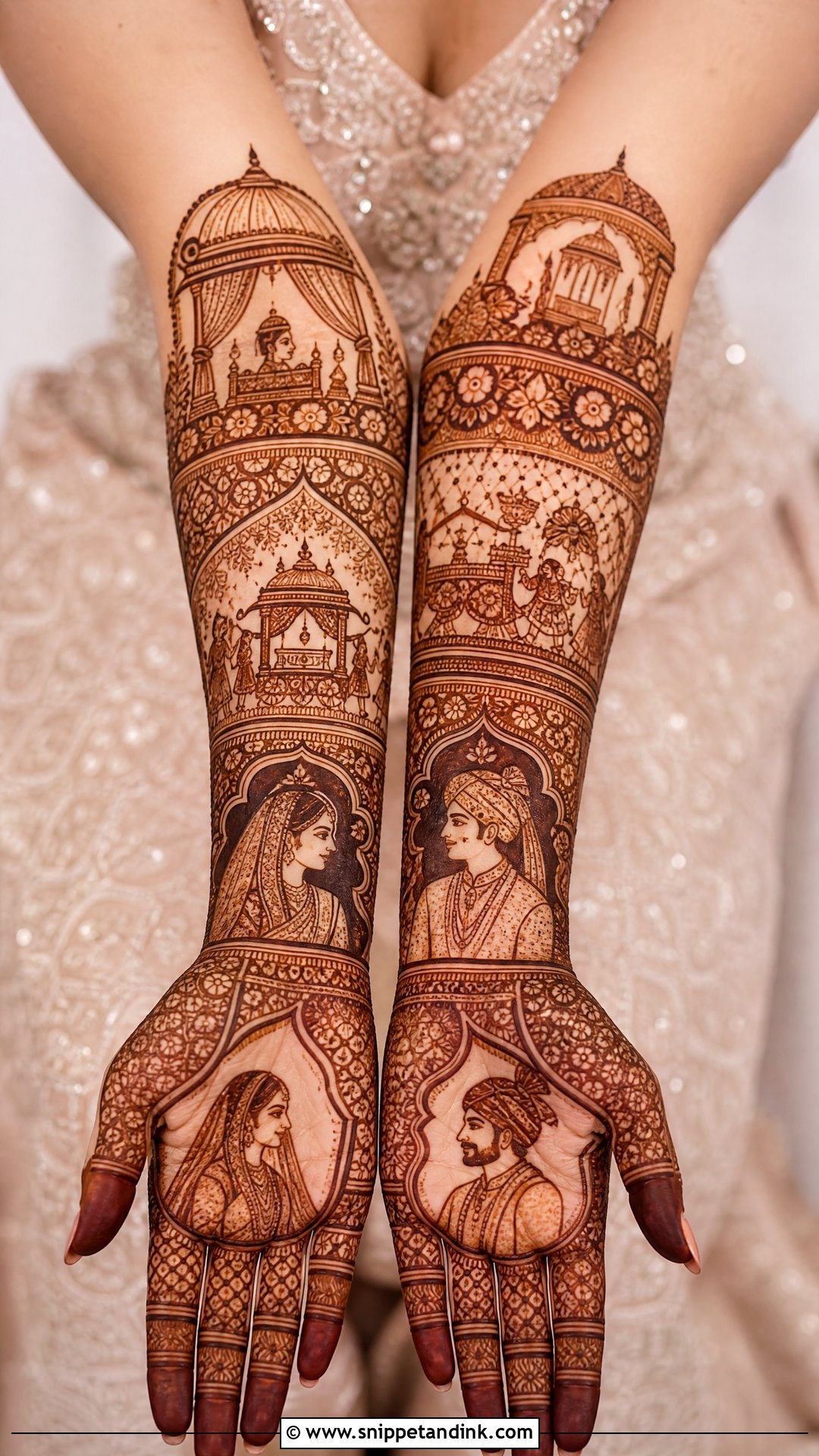
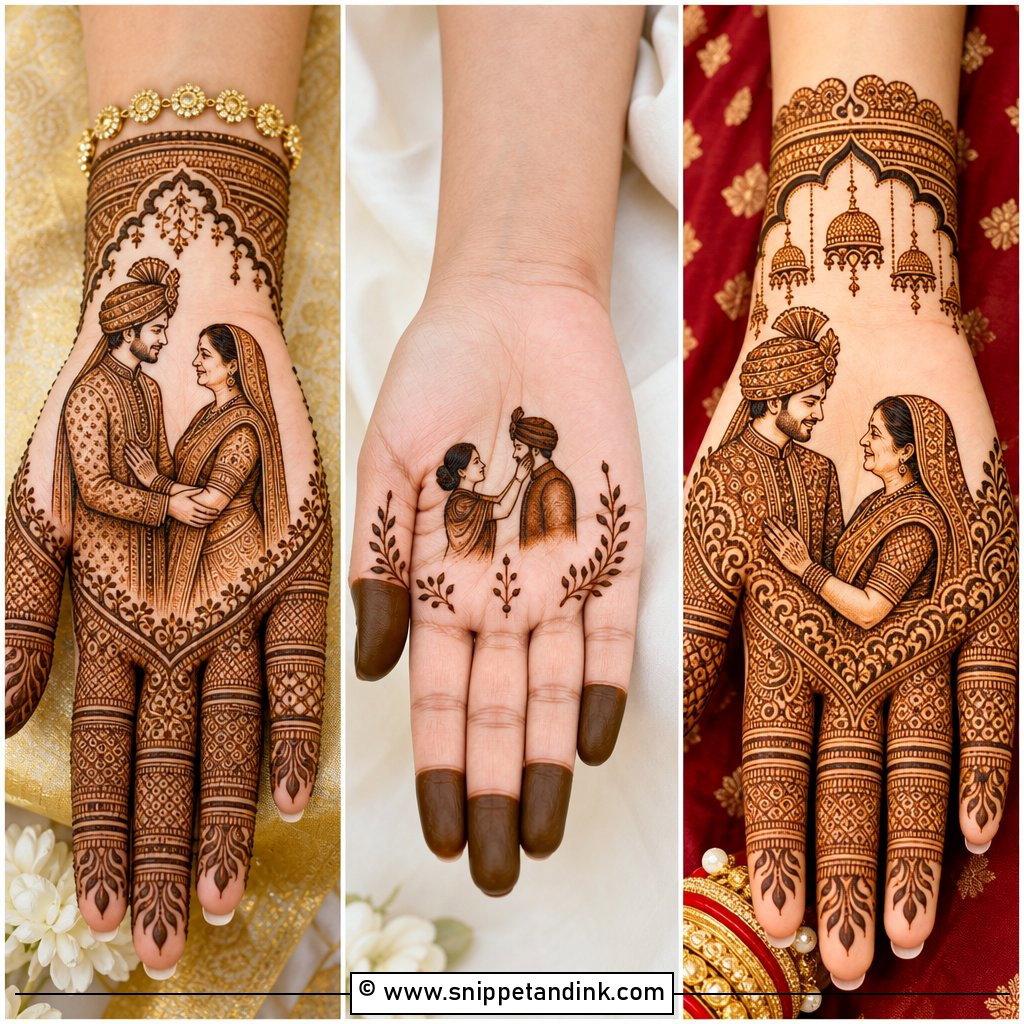
Portrait mehndi puts the bride on one palm and the groom on the other, surrounded by wedding scenes: a mandap, the varmala, a doli. It needs the whole palm, so the forearms carry the supporting florals and borders. Faces are unforgiving. A wobble at the eye or lip changes the expression, which is why I’d only book this with an artist whose portrait work you’ve seen on real hands, not a printed sketch. Done well, it’s the part of the design people still talk about years later.
7. Mandala Shaadi Mehndi Design
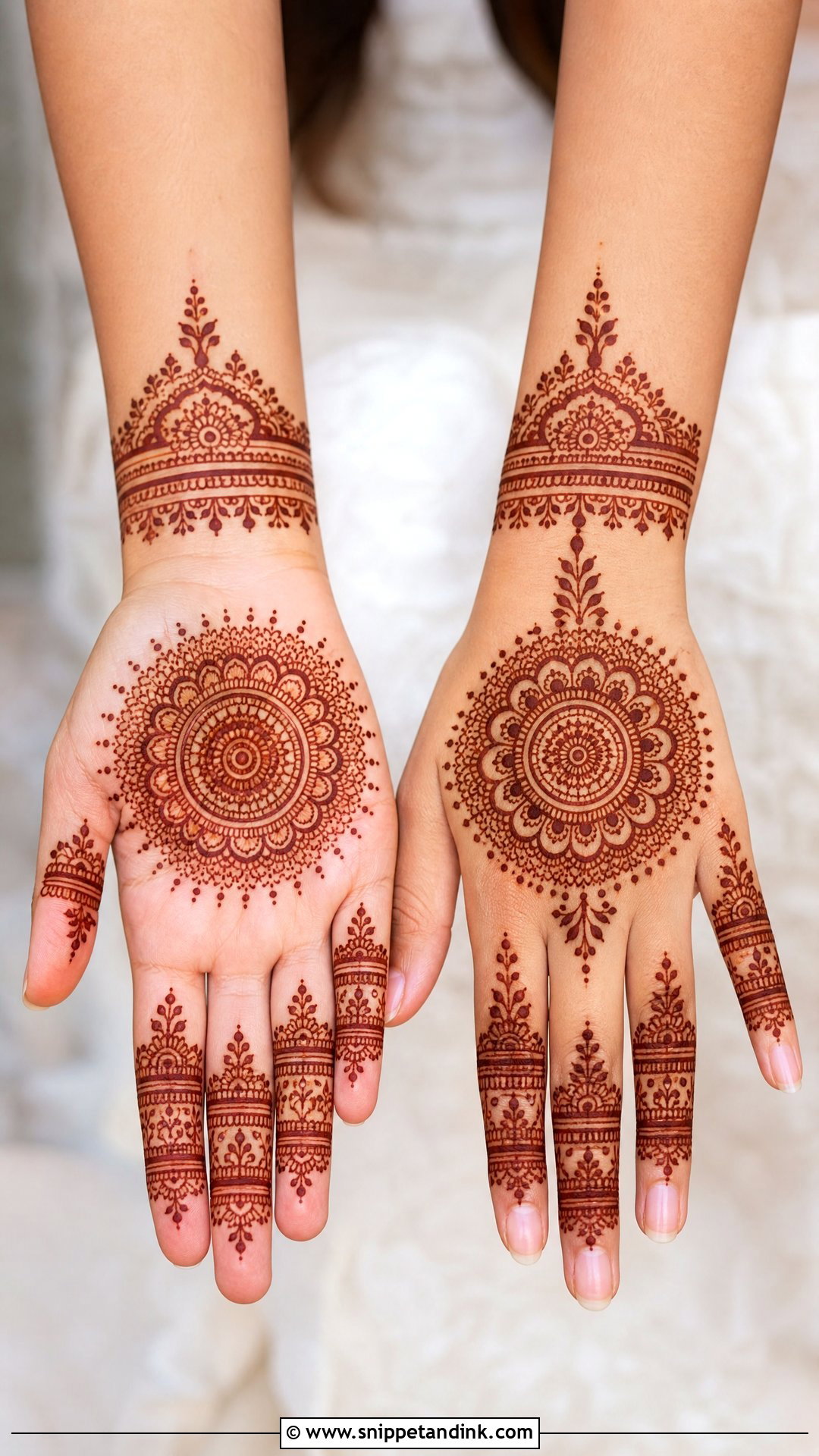
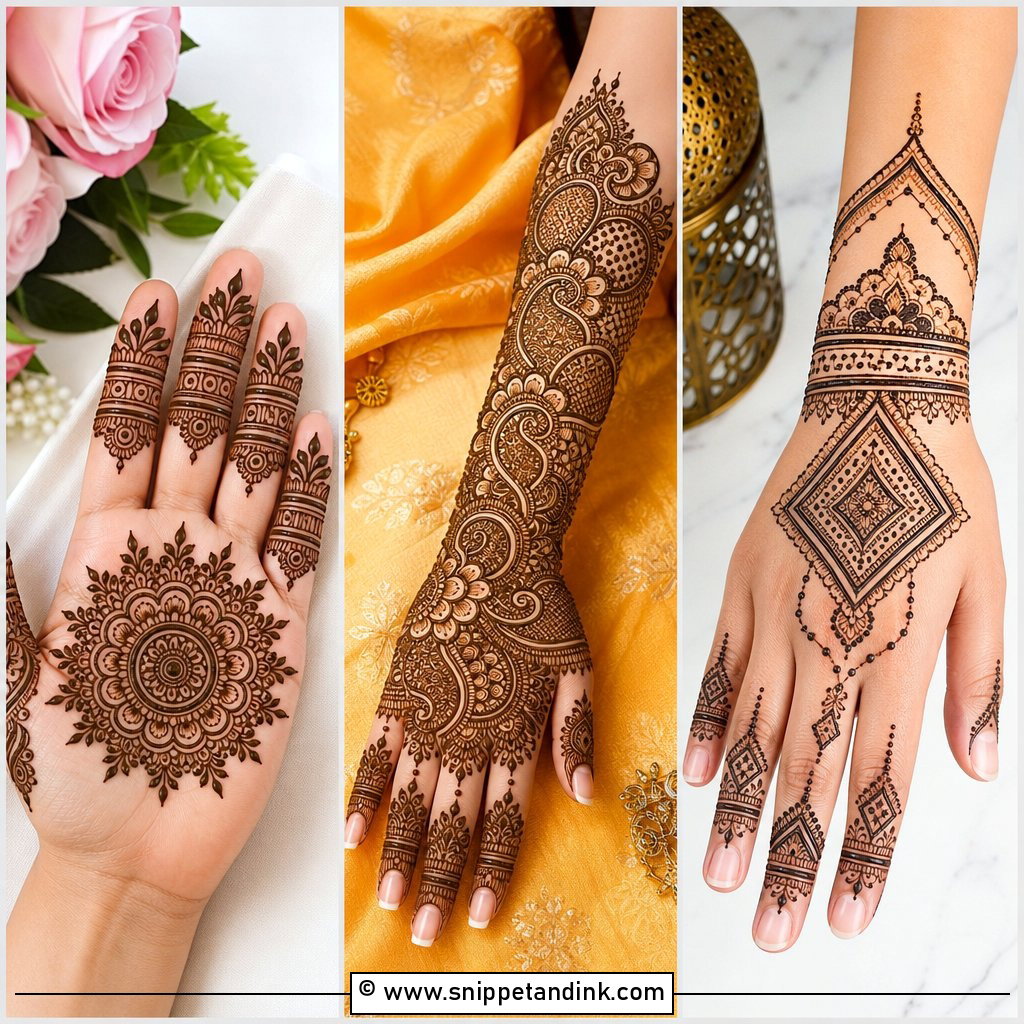
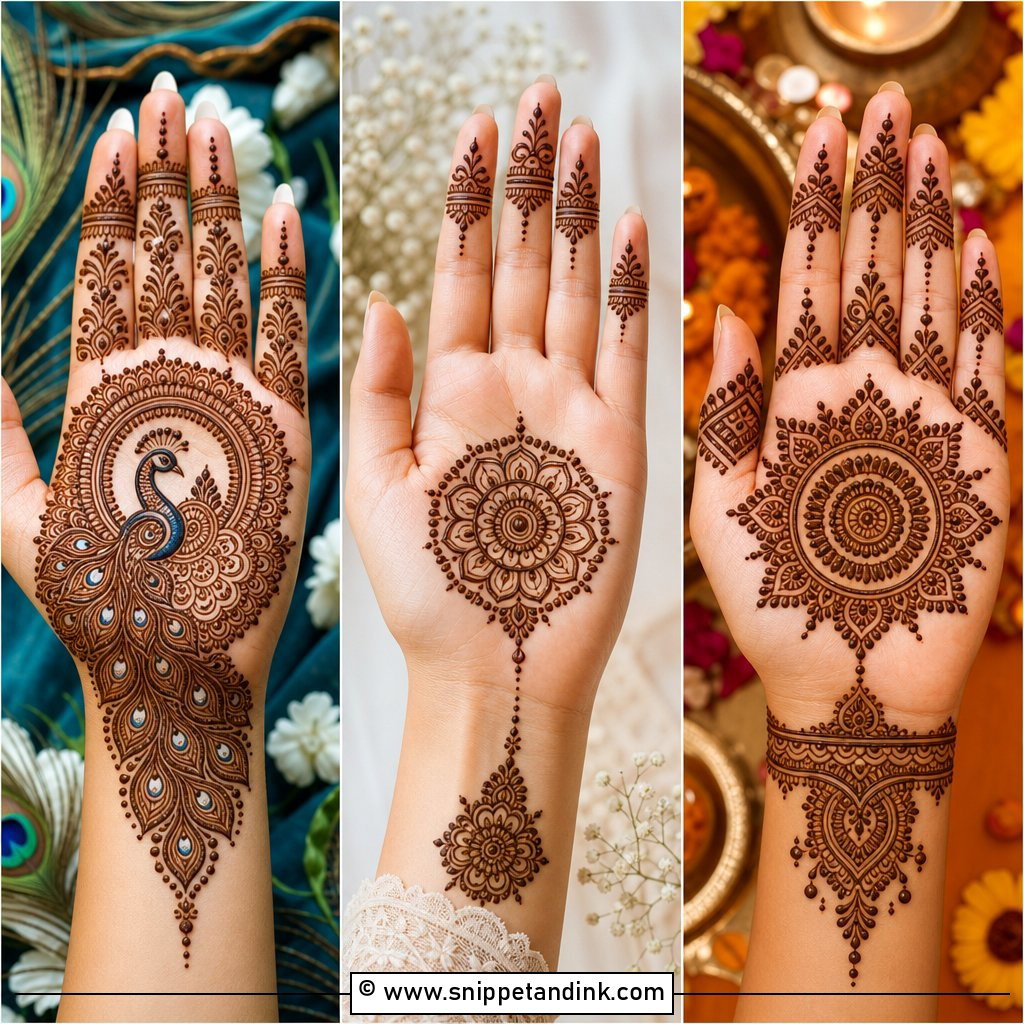
A mandala is the easiest design to scale. The central circle gives a calm focal point on the palm or back hand, and I build outward with dotted rings, petals, scalloped edges and vines. Symmetry is the hard part: I mark the center and the first ring before filling anything, since a mandala drawn off-center on a curved palm looks lopsided once you open your hand. Light for a pre-wedding function, dense for the main day. Pair it with wrist cuffs and forearm bands for a bride.
8. Peacock Shaadi Mehndi Design
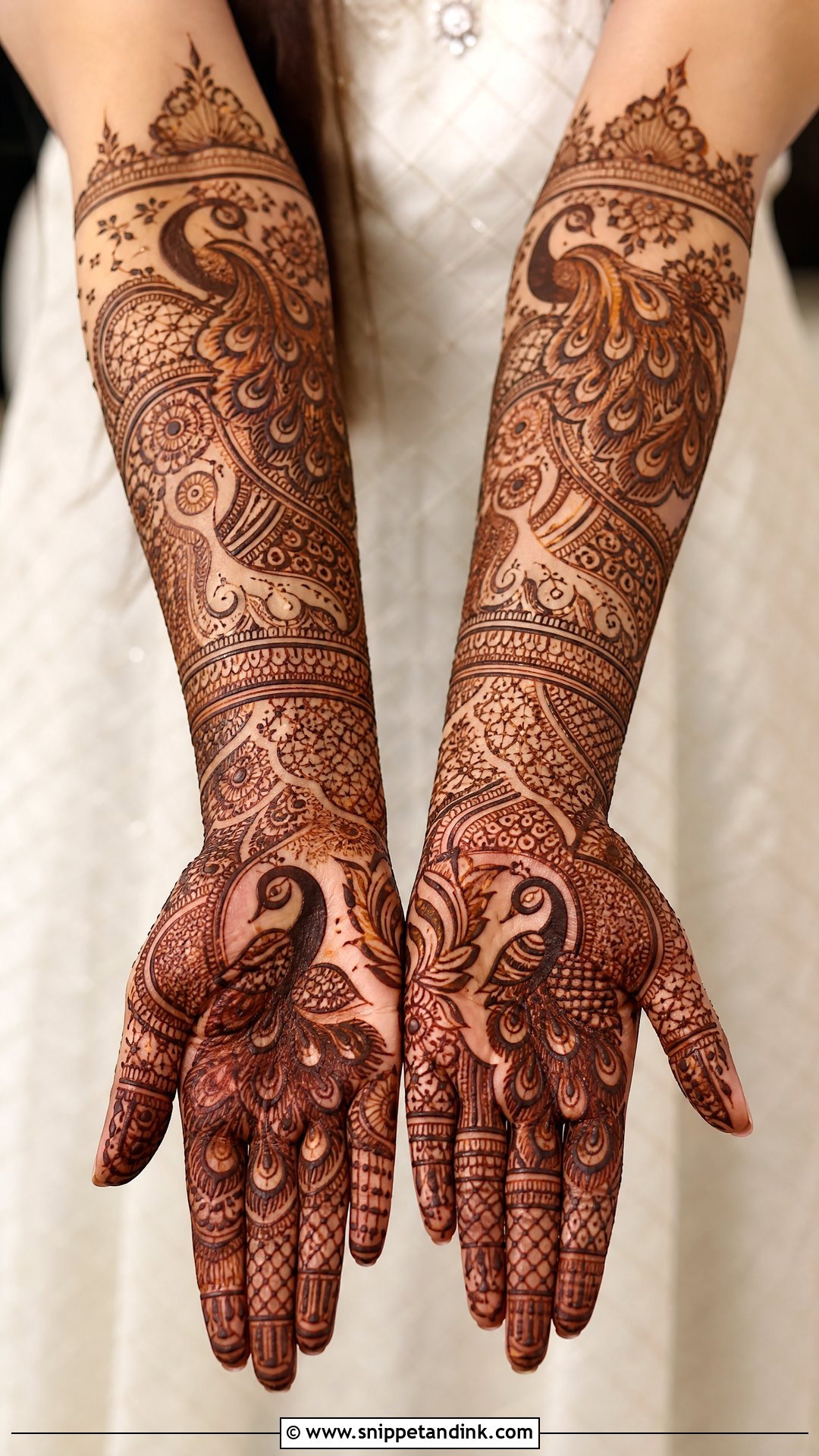
A peacock shaadi mehndi design is one of the oldest bridal motifs. The bird can sit on the palm, back hand or forearm, with its feathers trailing into paisleys, vines and fine net. Feather tips are where I add shading, so the bird reads as layered rather than flat. It suits a traditional lehenga or a richly embroidered saree. Balance the other hand with a second bird or a floral mandala, and extend both toward the forearm.
9. Lotus Shaadi Mehndi Design
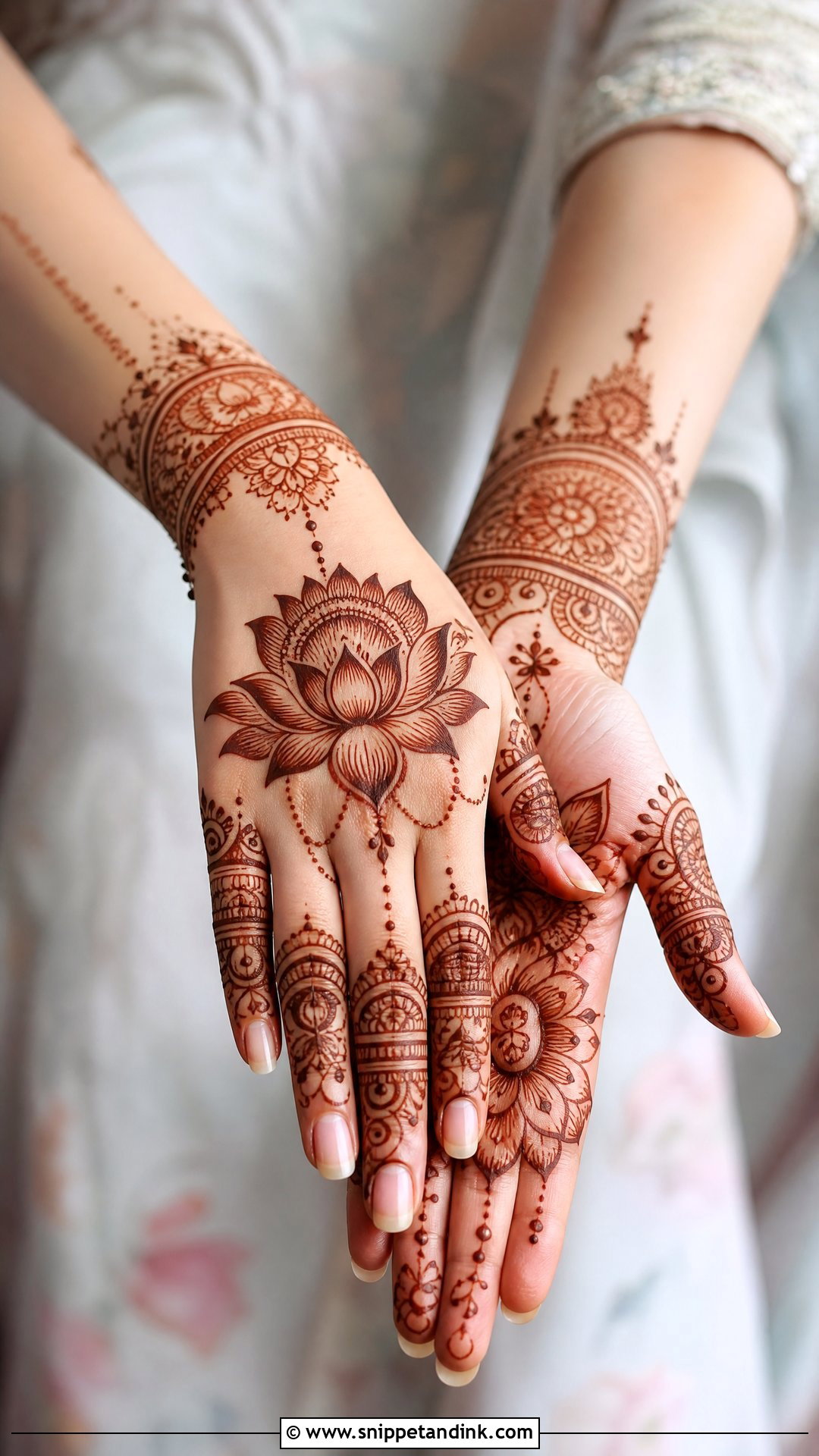
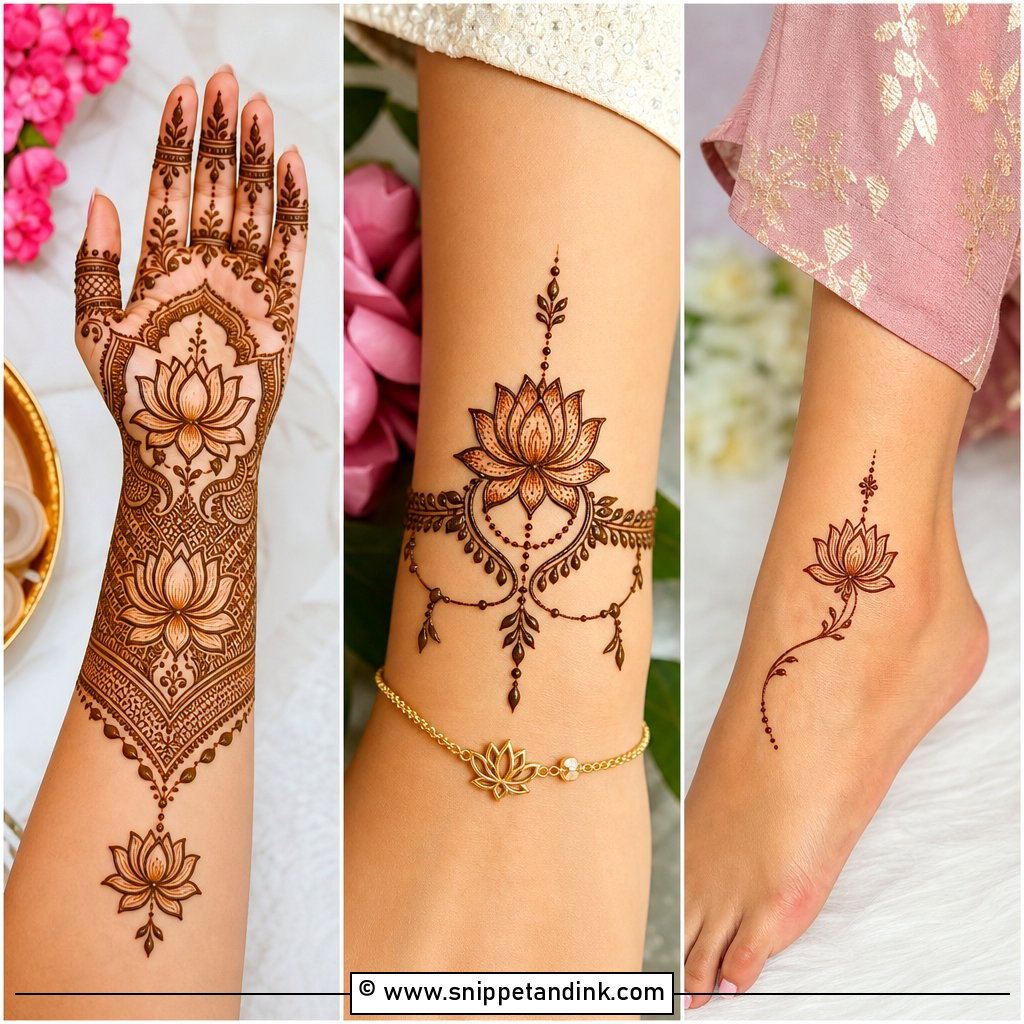
The lotus is a symbol of purity, and it’s one of the cleanest motifs to draw. It can bloom in the center of a palm, open across the wrist or repeat as a band up the forearm, beside mandalas, jaali and fine dots. For a wedding, I draw it larger with detailed petals and a shaded center, then repeat the petal shape on the fingertips. Brides who want something traditional without heavy coverage often settle here.
10. Jaali Shaadi Mehndi Design
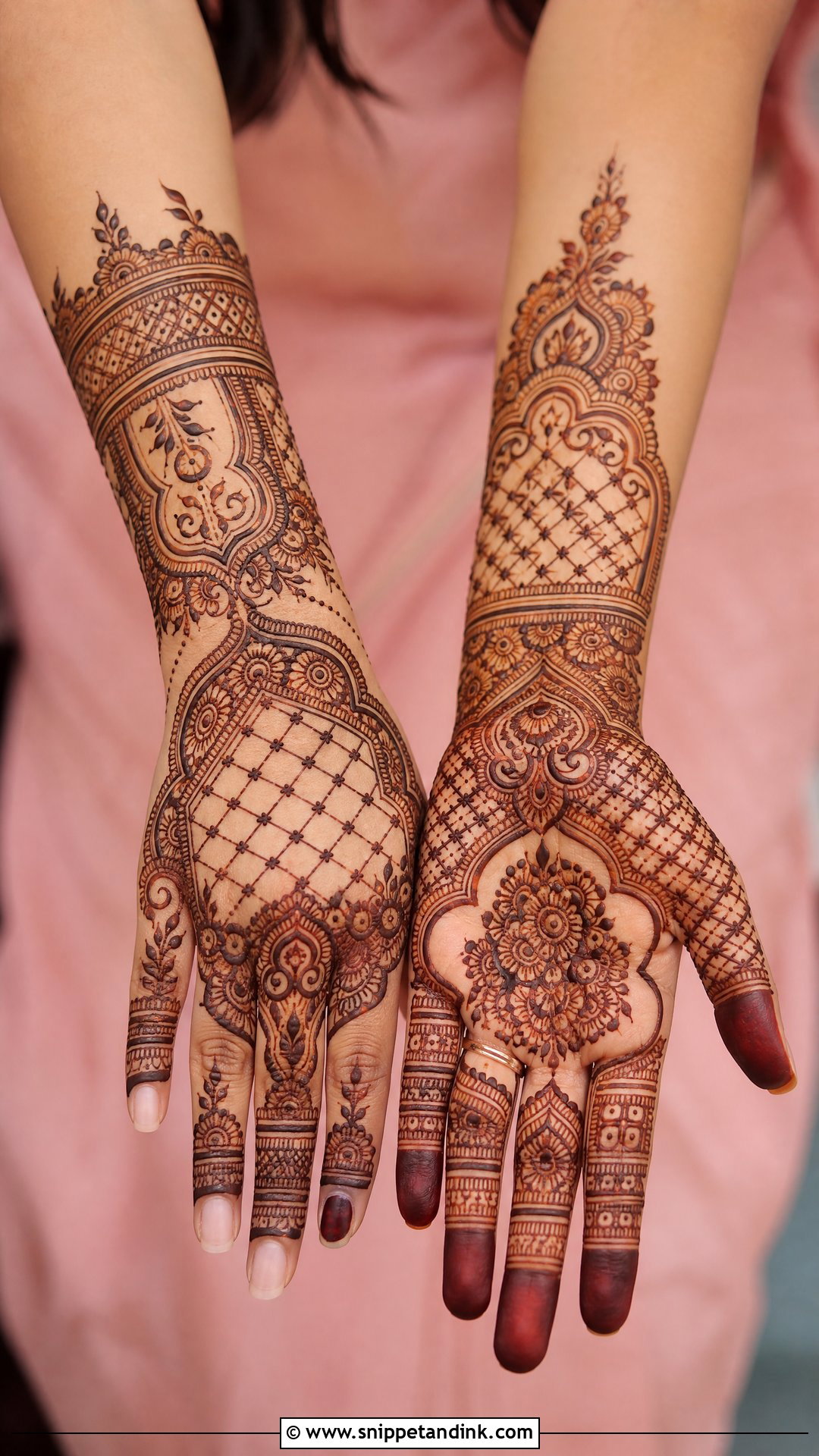
Jaali is mesh, and it looks like lace or fine jewelry on skin. I use it on the back hand, wrist or forearm, framed by florals and paisleys, and in small panels on the palm next to a mandala or lotus. Fine jaali needs a very thin cone tip and steady pressure. If the paste is too wet, the crossing lines bleed into each other and the gaps close up as it stains. Use it in chosen areas rather than everywhere. It sits well with rings, bangles and embroidered sleeves.
11. Minimal Shaadi Mehndi Design
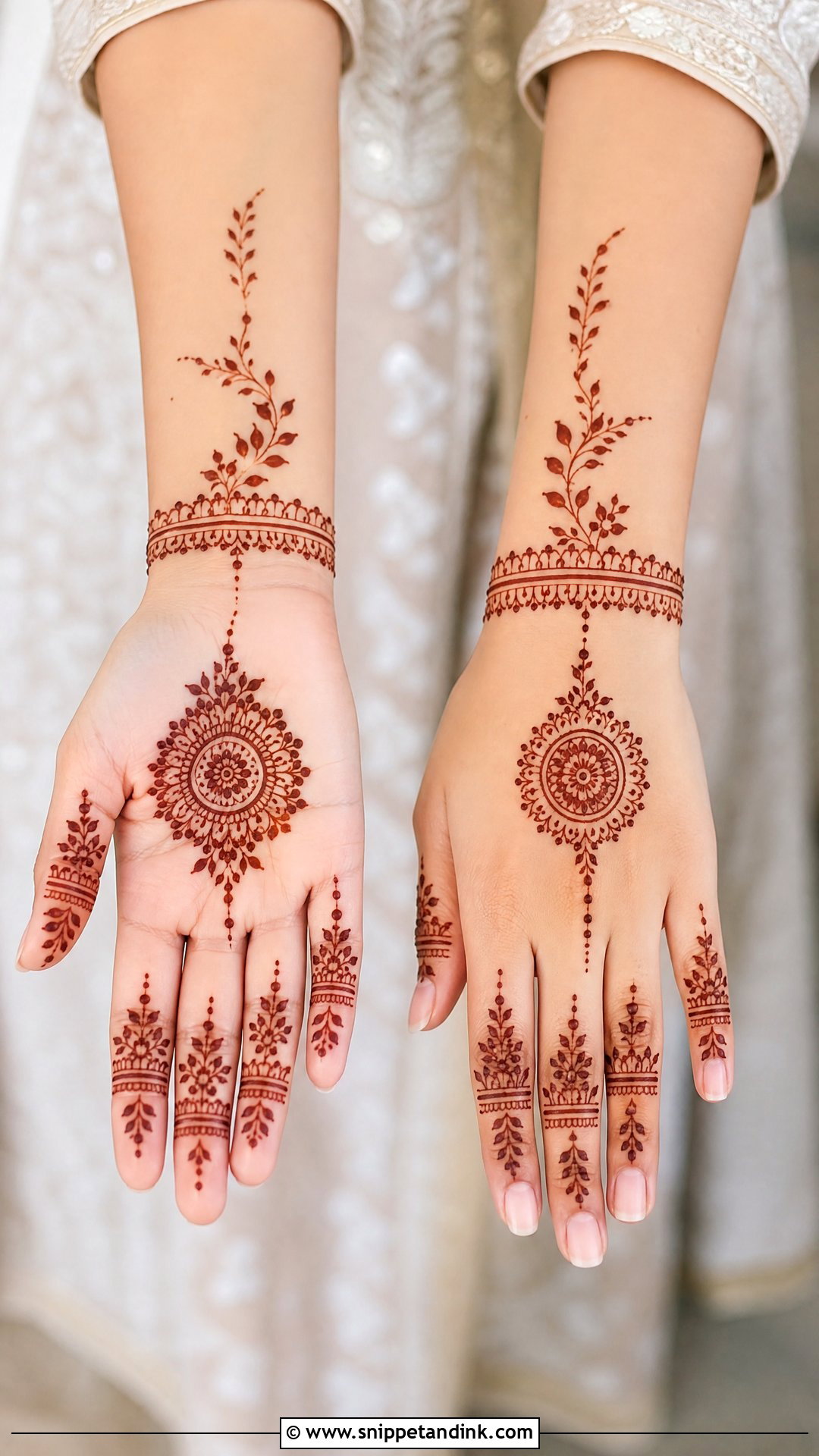
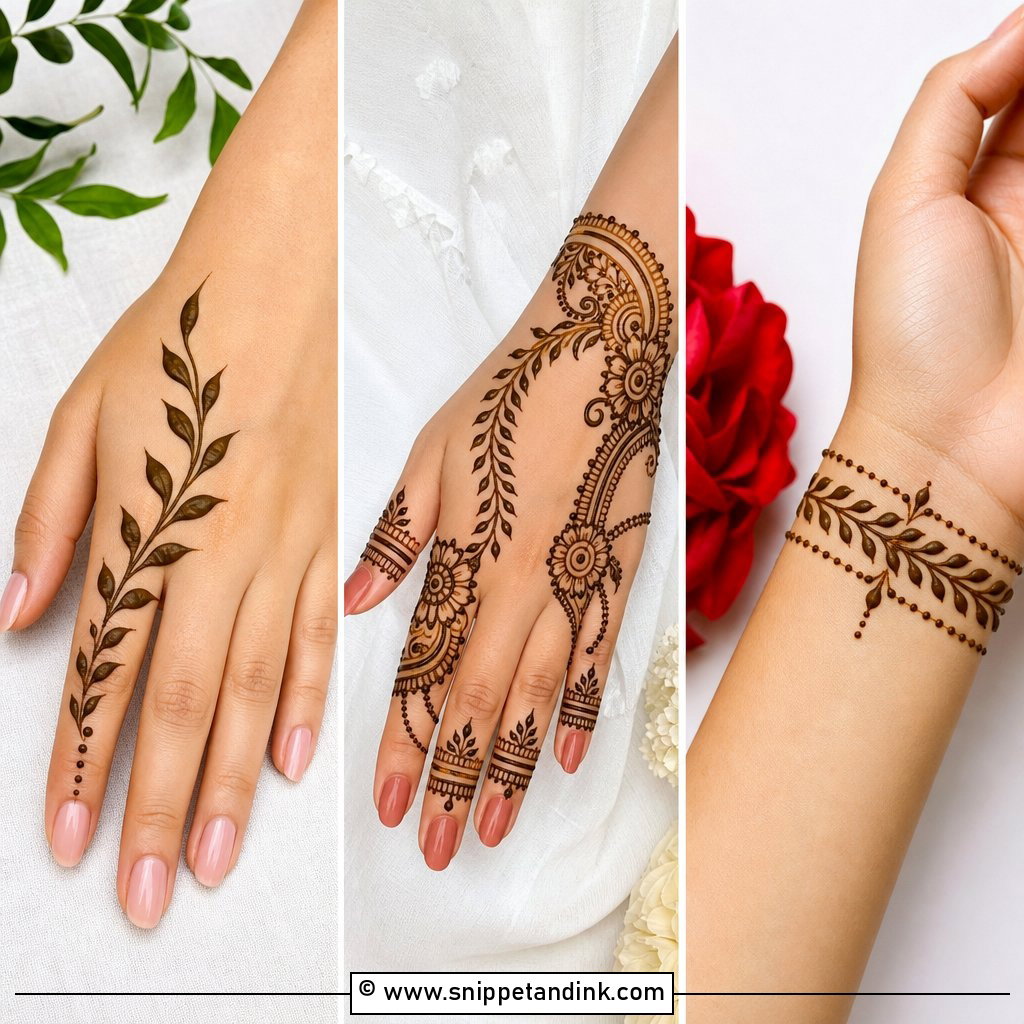
Minimal bridal mehndi uses clean florals, thin vines, a small mandala, finger detail and a lot of bare skin. It suits a courthouse wedding, an intimate ceremony or a bride who simply doesn’t want heavy hands. What keeps it bridal is a defined wrist cuff or one small personal motif near the palm. It’s also quick, often under an hour per pair of hands, so it’s the comfortable choice if sitting still for a full afternoon sounds miserable.
12. Simple Shaadi Mehndi Design
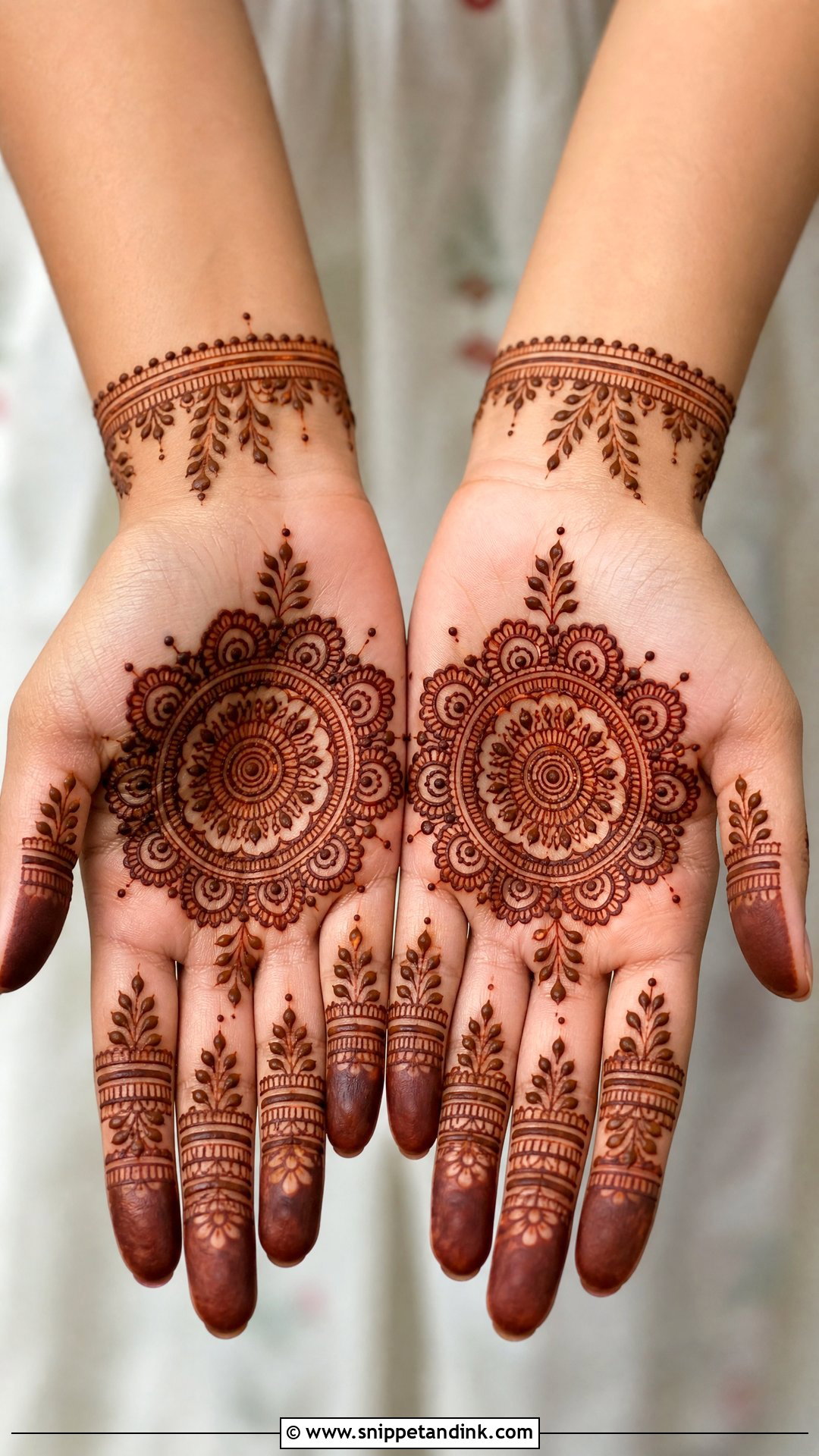
Simple doesn’t mean plain if the spacing is planned. A neat palm mandala, floral fingers, a small wrist band and a few leafy trails are enough. I make simple designs look intentional by repeating two or three elements rather than drawing many different ones. You can keep one hand slightly heavier than the other for a modern balance. This is what I usually draw for mothers, sisters and bridesmaids, and for brides at a smaller ceremony.
13. Royal Shaadi Mehndi Design
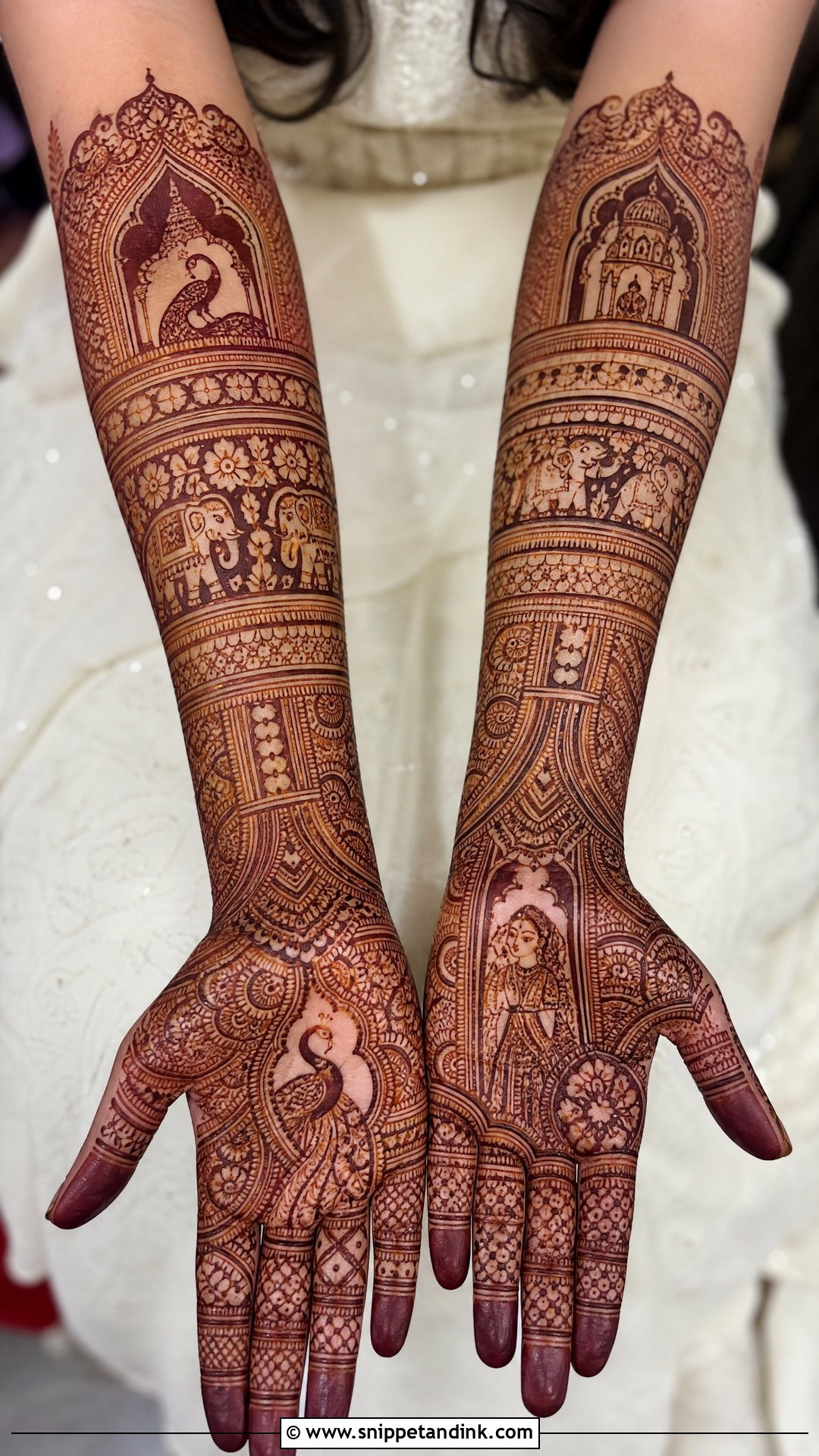
Royal mehndi is about scale: full palms, detailed forearms, wide borders, peacocks, elephants, domes, palace arches and layered paisleys. To stop it reading as busy from a distance, I build wide forearm bands as a framework first, then fill them, and I keep the main palm motifs large. It pairs with heavy kundan or polki jewelry and a heavy outfit. Plan for a long sitting, often a whole afternoon or evening for hands alone.
14. Dulhan Shaadi Mehndi Design
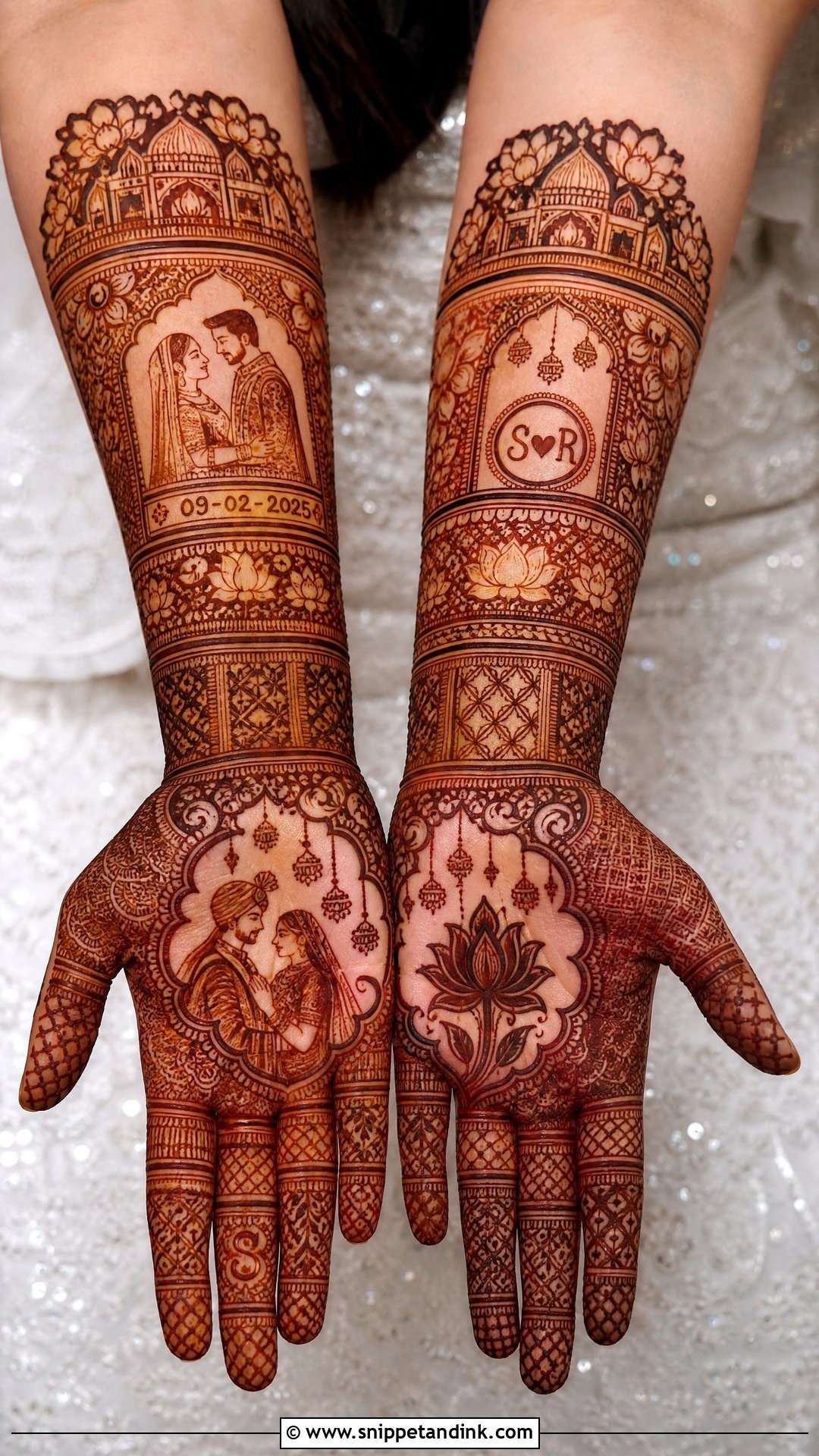
Dulhan mehndi is the most personal design of the day. It usually means full-hand coverage, hidden initials, a wedding date, bride and groom art and traditional symbols. I hide the groom’s name inside a paisley or a vine, and the search for it is a game at many weddings. Coverage should match your comfort. If elbow-length work feels like too much, wrist to mid-forearm still reads as fully bridal. Dense dulhan work also takes the longest to dry, so set aside the evening.
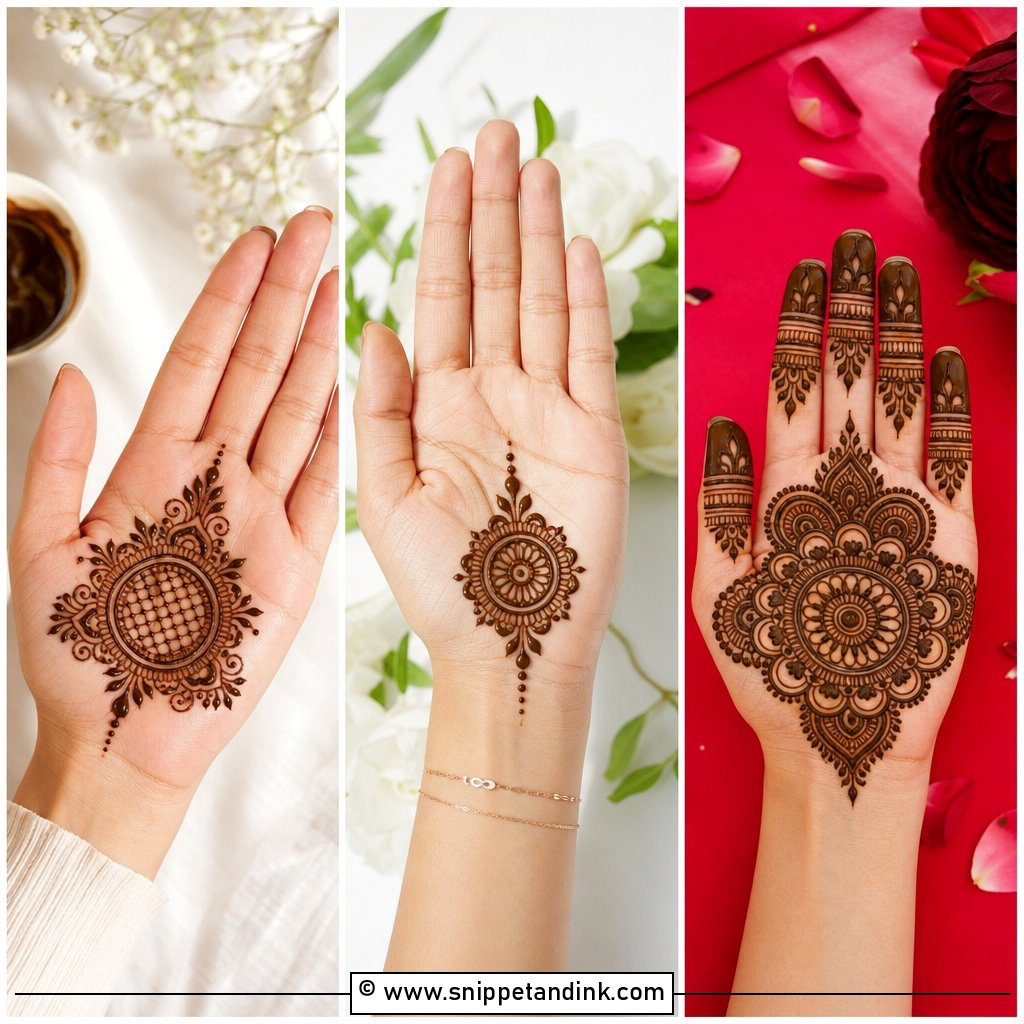
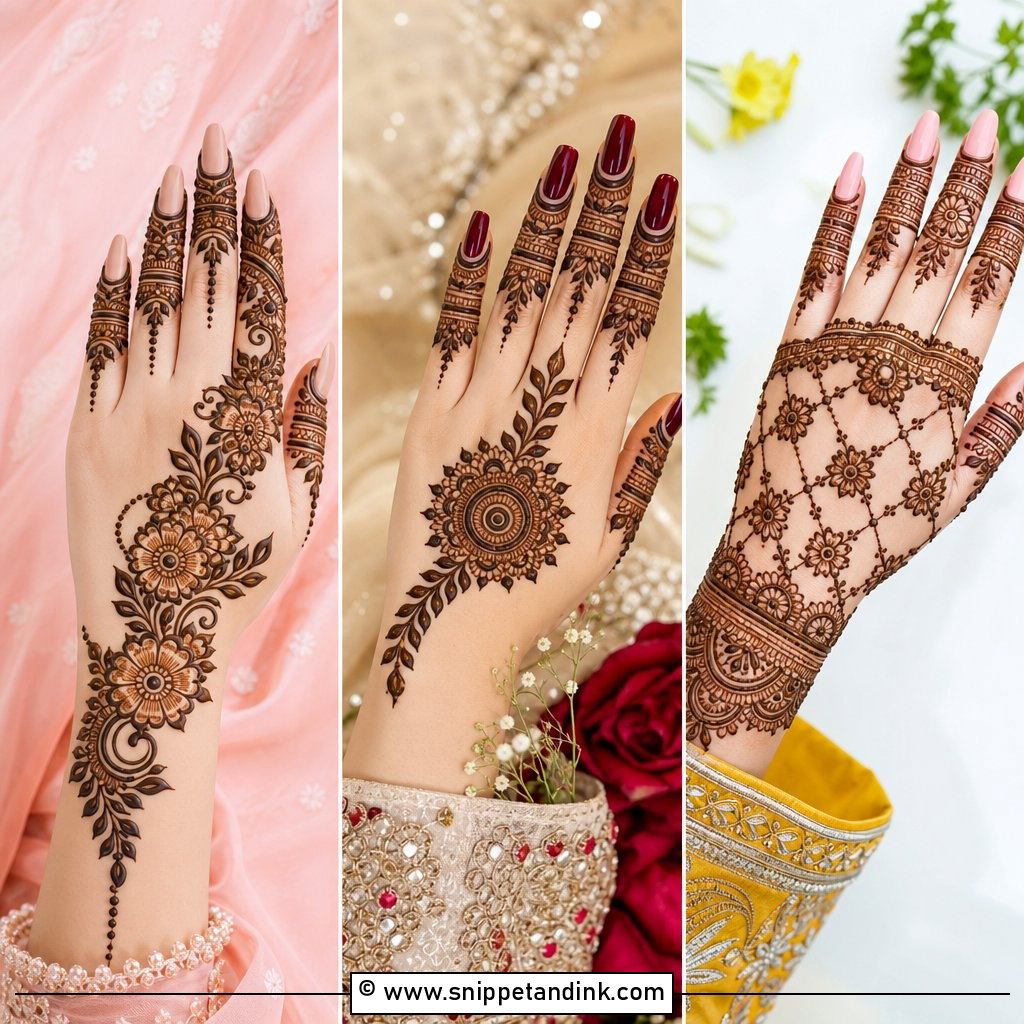
15. Rajasthani Shaadi Mehndi Design
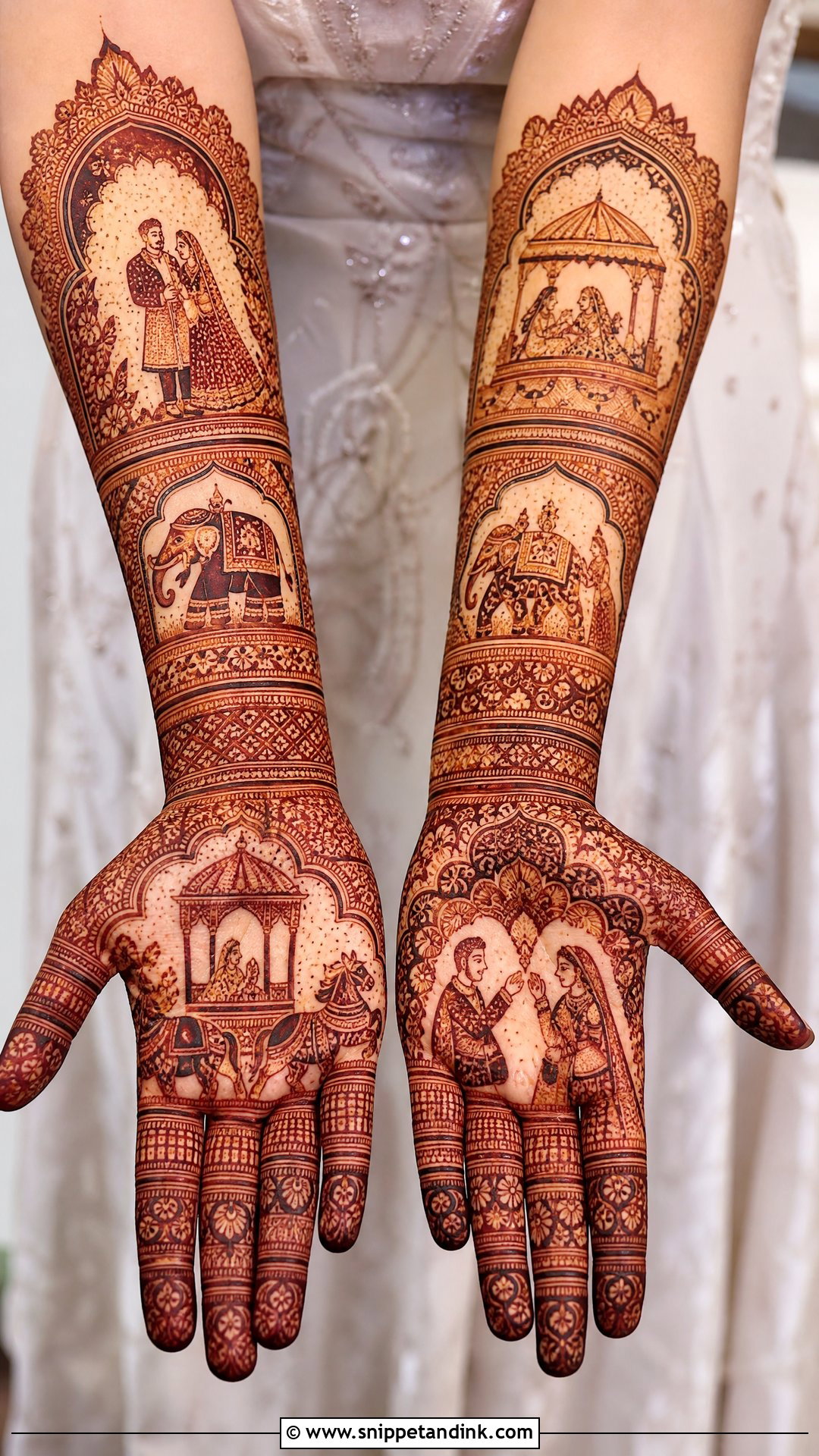
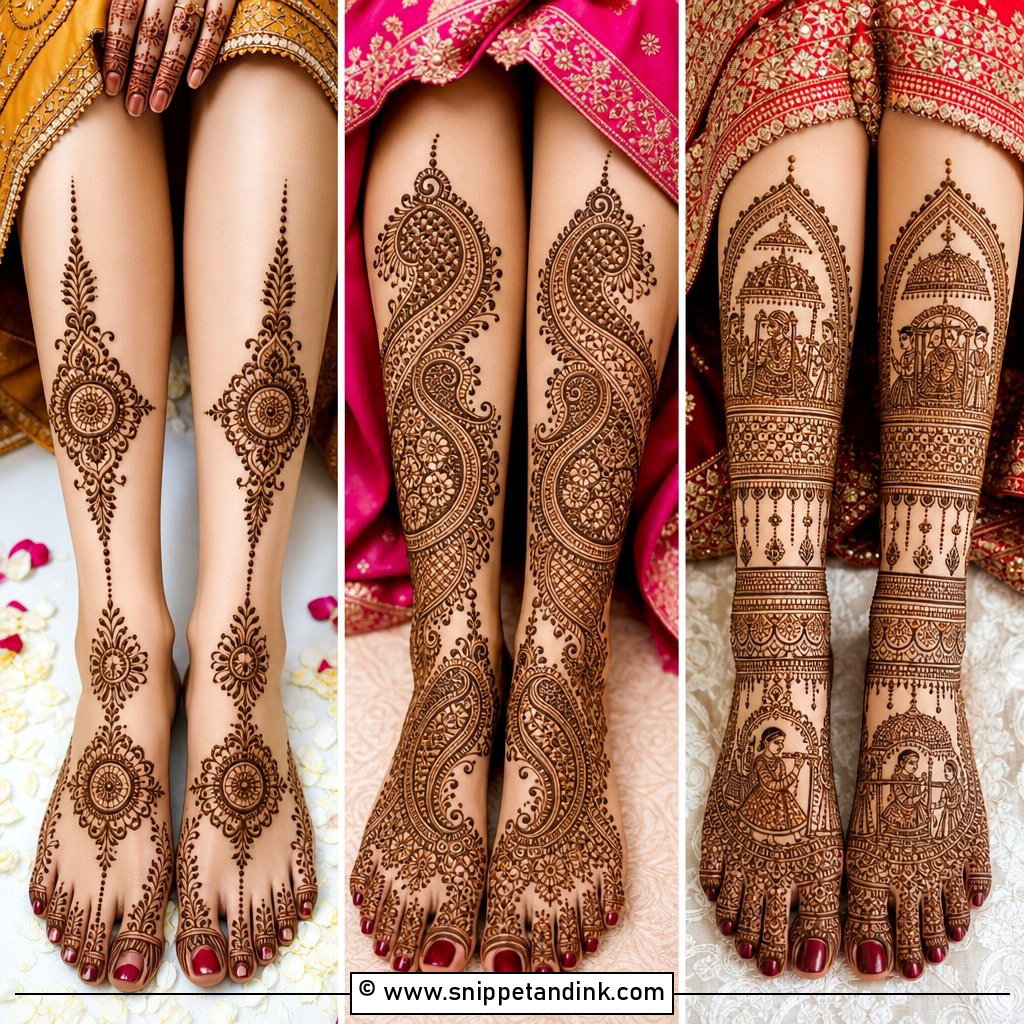
Rajasthani mehndi is storytelling in very fine line: bride and groom portraits, doli scenes, elephants, peacocks, royal arches and dense filler, often to the elbows. With that much detail, I separate every scene with a border, a band or a floral frame, or the story becomes unreadable once the stain darkens. It suits a bride who wants every part of her hand decorated and is happy to sit for it. The result looks like an heirloom textile in photos.
16. Pakistani Shaadi Mehndi Design
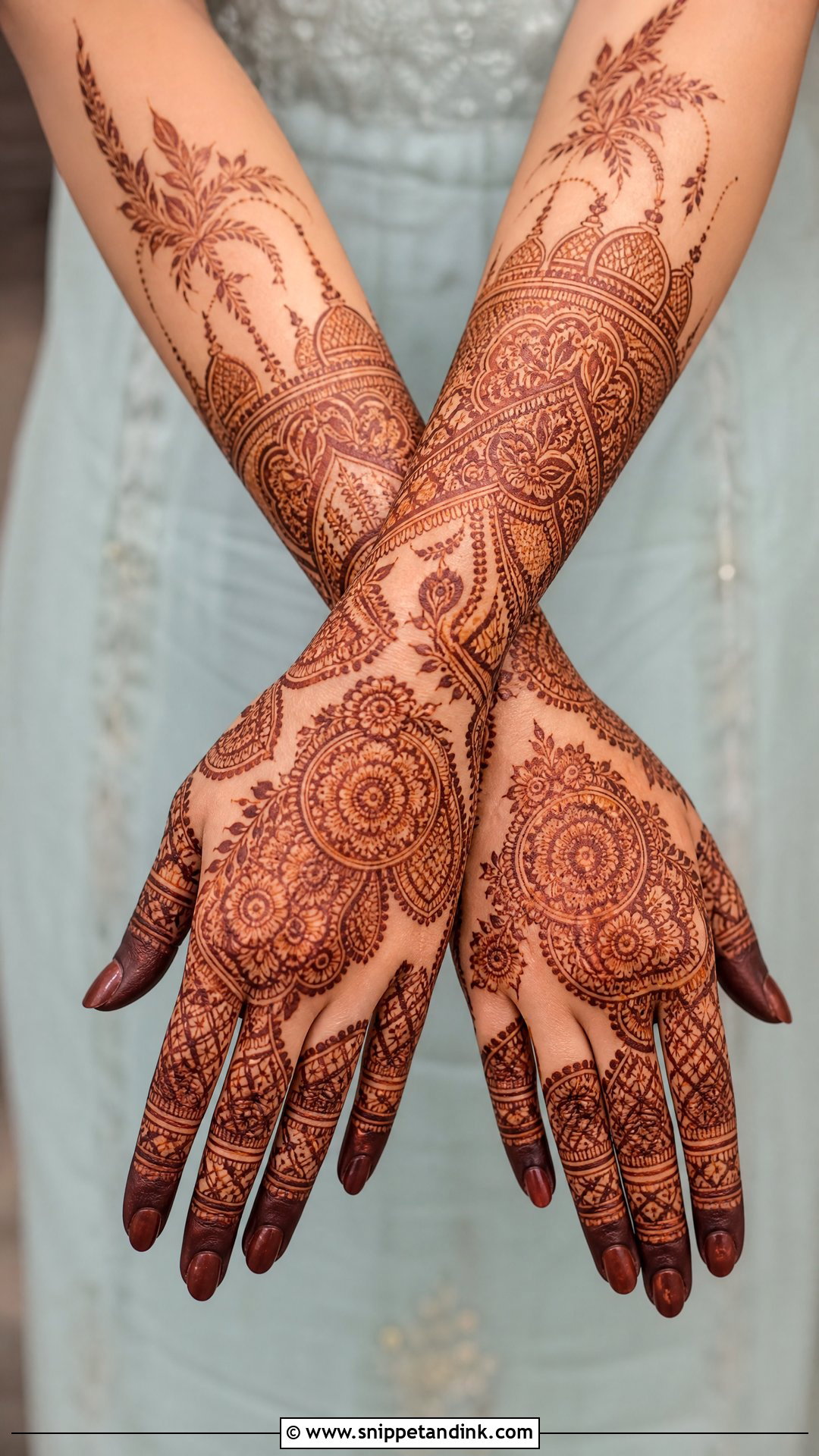
Pakistani bridal mehndi tends to mix fine detail with a softer flow: florals, mandalas, leafy vines, paisleys, domes and delicate fingers. Palms often carry traditional motifs, and the back hands get jewelry-like chains and bracelets. I sometimes borrow Arabic spacing to open it up. It works across nikkah, baraat and walima. I coordinate the two hands without mirroring them exactly, because slight differences look hand-drawn rather than stamped.
17. Gulf Arabic Shaadi Mehndi Design
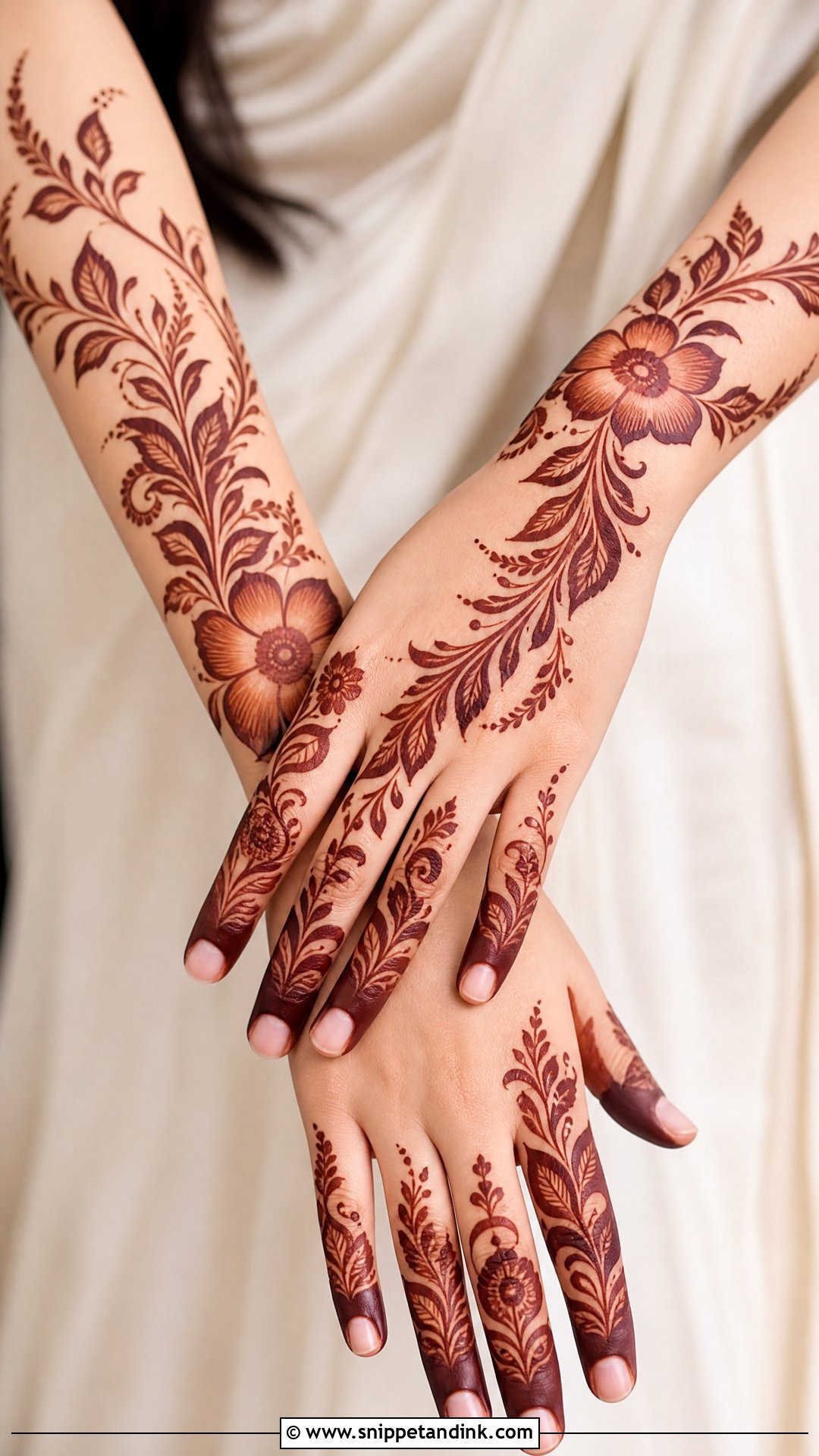
Gulf Arabic mehndi is bold and sweeping: large flowers, leafy branches, shaded petals, thick outlines and plenty of open skin. The shading is done by thinning the paste line inside each petal, so it stains in two tones. It can run from the fingers to the wrist or curve on toward the forearm. For a bride, I strengthen the wrist cuff and detail the fingertips. Because the back hand stays open, statement rings don’t fight with it.
18. Moroccan Shaadi Mehndi Design
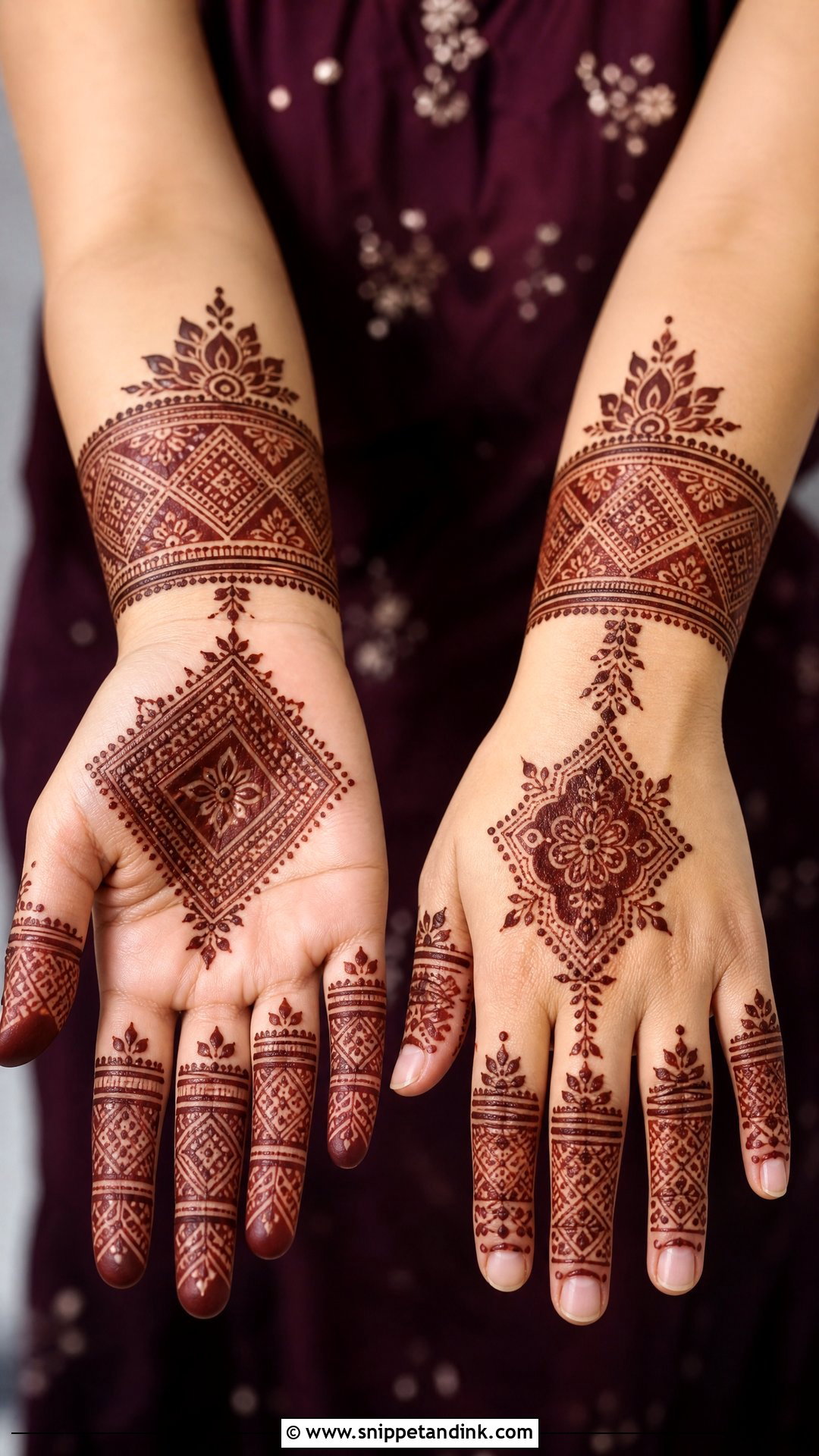
A Moroccan shaadi mehndi design swaps florals for geometry: diamonds, triangles, grids, chevrons and stacked bands. Straight lines on a curved hand are hard, so I draw them in short strokes and adjust as the hand moves. For a bridal version, I soften the geometry with a few Indian florals or Arabic vines. A central geometric panel on the back hand, matching finger lines and bracelet-like bands at the wrist make it look complete. It suits a bride who wants something different that still respects the tradition.
19. Finger Shaadi Mehndi Design
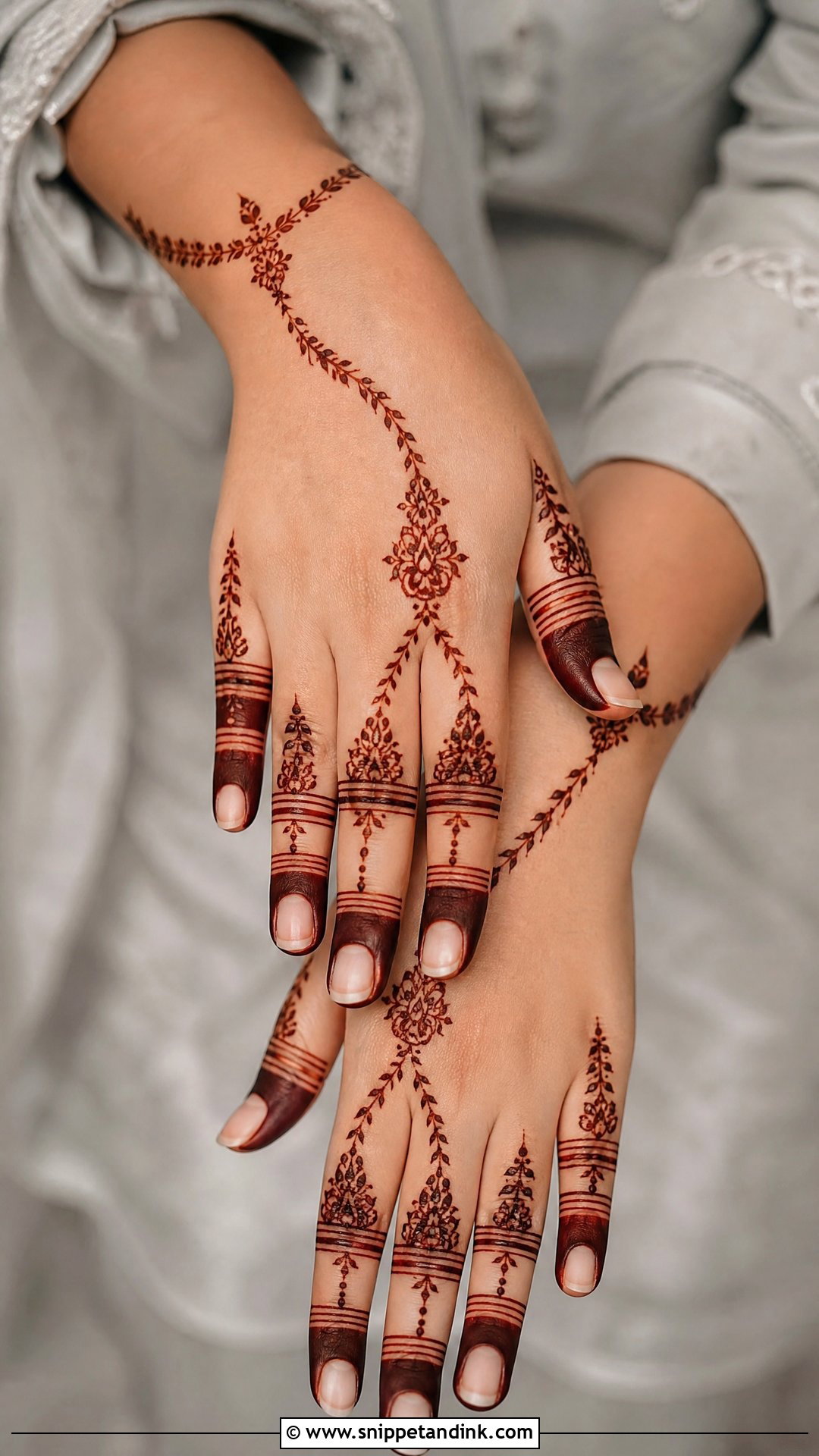
Finger-focused mehndi leaves the palm lighter and puts the work on fingertip caps, leafy lines, ring bands and small motifs at the knuckles. The risk is a scattered look, so I connect the fingers to a palm mandala, a back-hand floral or a wrist bracelet with a few chains or dots. Fingertips stain dark and fast, which is why caps look so crisp in close-ups. It’s comfortable to wear and pairs with rings, nail art and delicate jewelry.
20. Feet Shaadi Mehndi Design
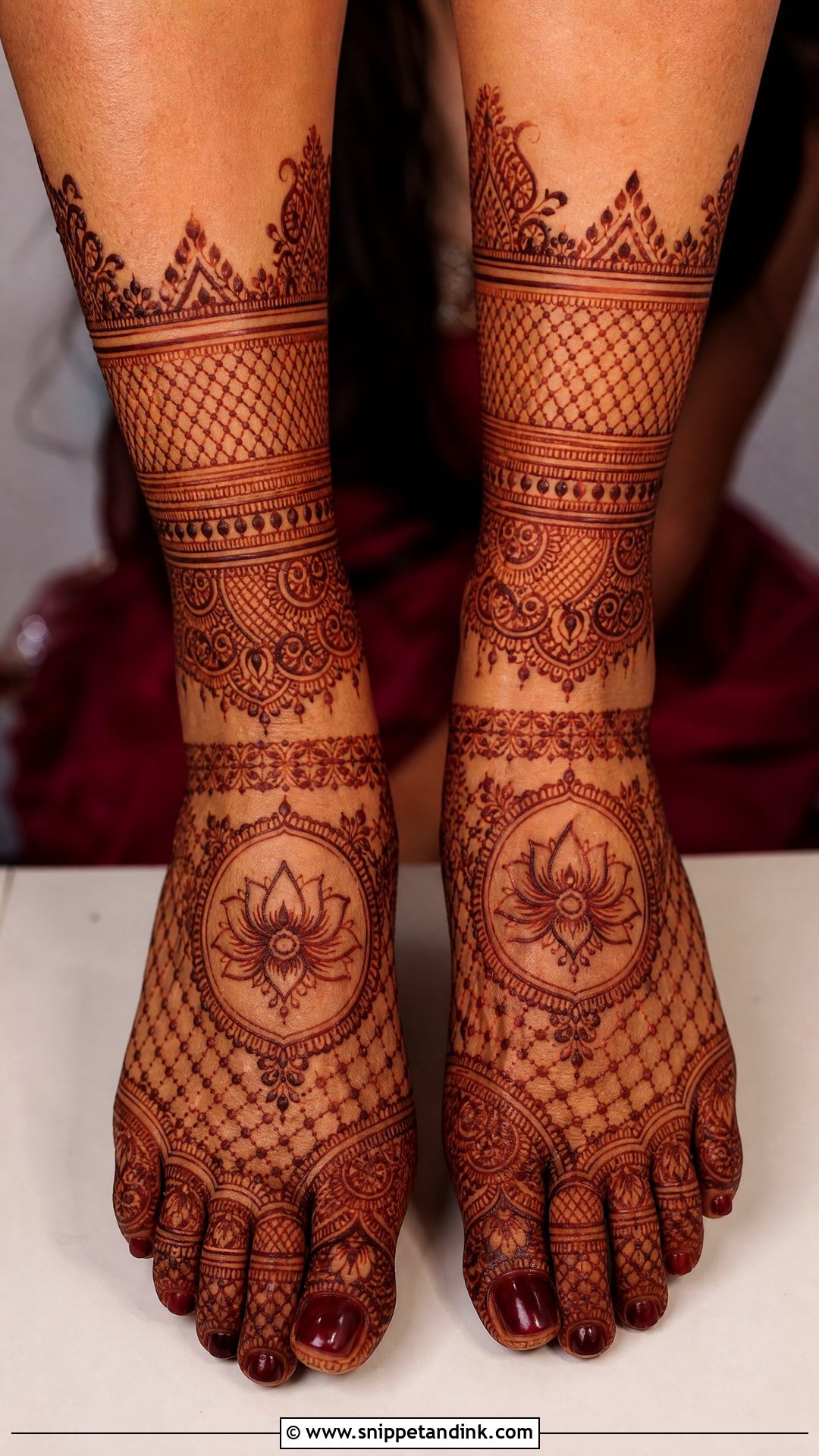
Feet mehndi finishes the bridal look when your outfit, anklets or sandals show the feet. It can cover the toes, the top of the foot, the ankle and the lower leg in mandalas, lotus, anklet bands, paisleys, jaali or floral trails. Feet stain well but are awkward to keep still and clean while drying, so I usually do them last and ask you to stay seated afterward. Coordinate with your hands: heavy hands want matching motifs on the feet, while lighter hands suit one central floral with open space.
From Wet Paste to Deepest Stain, Hour by Hour
Fresh henna comes off bright orange. That’s normal. The color oxidizes and darkens toward a reddish brown over the next day or two, and it usually looks deepest around 24 to 48 hours after removal.
Aftercare that actually changes the color
- Once the paste is dry, I dab on a little lemon and sugar mix so it stays stuck to the skin longer.
- Leave the paste on for as long as you can, ideally several hours or overnight with the hands loosely wrapped.
- Scrape it off with a blunt edge or rub it off dry. Don’t wash it off.
- Keep water off the design for the rest of that day if you can. Warmth helps, so keep your hands warm and away from cold air.
Palms and fingertips stain darkest, the back of the hand and forearm stay lighter. That difference is skin thickness, not a bad batch, so don’t judge the stain by your wrist.
Why I Won’t Use Jet-Black Cones
Natural henna never stains black. A paste or cone that promises jet black in an hour usually contains added chemical dyes, and they can cause severe skin reactions and blistering. Before booking, ask your artist what’s in her paste. Mine is made from henna powder, lemon juice, sugar and essential oils, mixed fresh. If you have sensitive skin, ask for a small patch test a few days ahead.
Bring Your Outfit Photos to the Mehndi Consultation
Your ceremonies, outfit, jewelry, hand shape and patience decide more than any single photo will. Full Indian bridal is rich and classic. Arabic and Gulf styles are open and graceful. Indo-Arabic, Moroccan, jaali, lotus and mandala sit in between. Portraits, initials and wedding symbols make it personal, and minimal or finger designs still look festive. Pick the design you’ll enjoy looking at for two weeks, because that’s how long the stain stays with you.
You'll Like These Ideas:


Leave a Reply