
Banch mehndi is built around the wrist. The band or bracelet is the anchor, and everything else (fingers, back of the hand, palm, forearm) hangs off it like a chain from a bangle. Florals, paisleys, jaali, dots, chains and bold stacked bands all fit inside that idea. It covers a wide range of occasions too: one thin bracelet for an Eid morning, or something as heavy as bridal wrist jewelry for a wedding. I draw banch designs constantly during festival weeks, and the same question decides every one of them: where will your real bangles sit? The thirty layouts below start with the easiest to wear and get fuller as they go.
Where the Band Should Sit on Your Wrist
Most banch designs that disappoint do so because the band ended up in the wrong place, not because the drawing was poor. A wrist is round, it bends and it usually gets covered by something. Before I start, I check three things.
Your Bangles or Watch
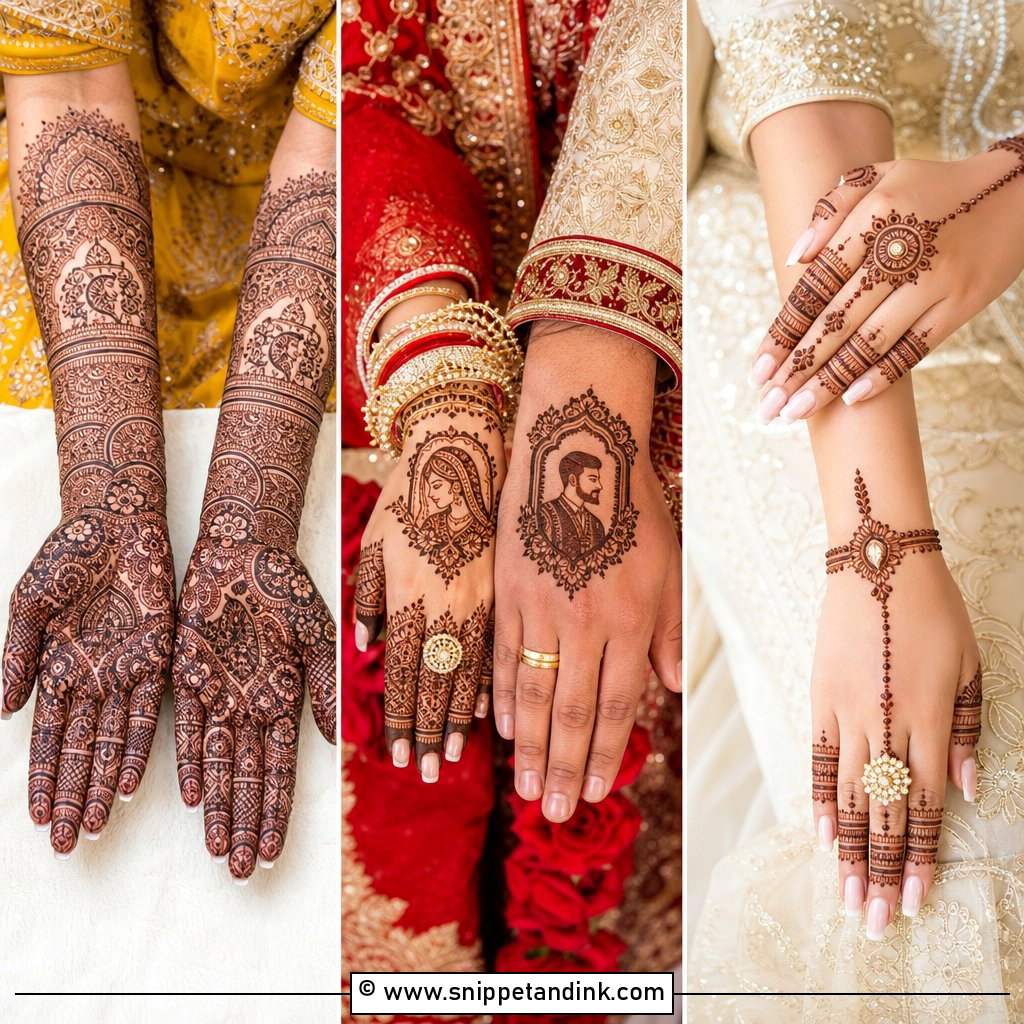
Put on whatever you plan to wear and let it settle. The drawn band should sit just below it, toward the hand, or just above it on the forearm. Drawn directly underneath, it simply vanishes, and the metal will rub the stain away within days.
The Wrist Crease
Lines drawn across the deepest crease fold when you bend your hand, so they crack while wet and look broken once stained. I either keep the band clear of the crease or place a plain gap exactly on it.
Band Width for Your Wrist
- Slim wrists look best with two or three narrow bands rather than one wide cuff.
- Broader wrists carry a wide cuff well and can make thin bands look like threads.
- Under full sleeves, keep the band low on the hand so a little of it peeks out at the cuff.
1. Simple Banch Mehndi Design
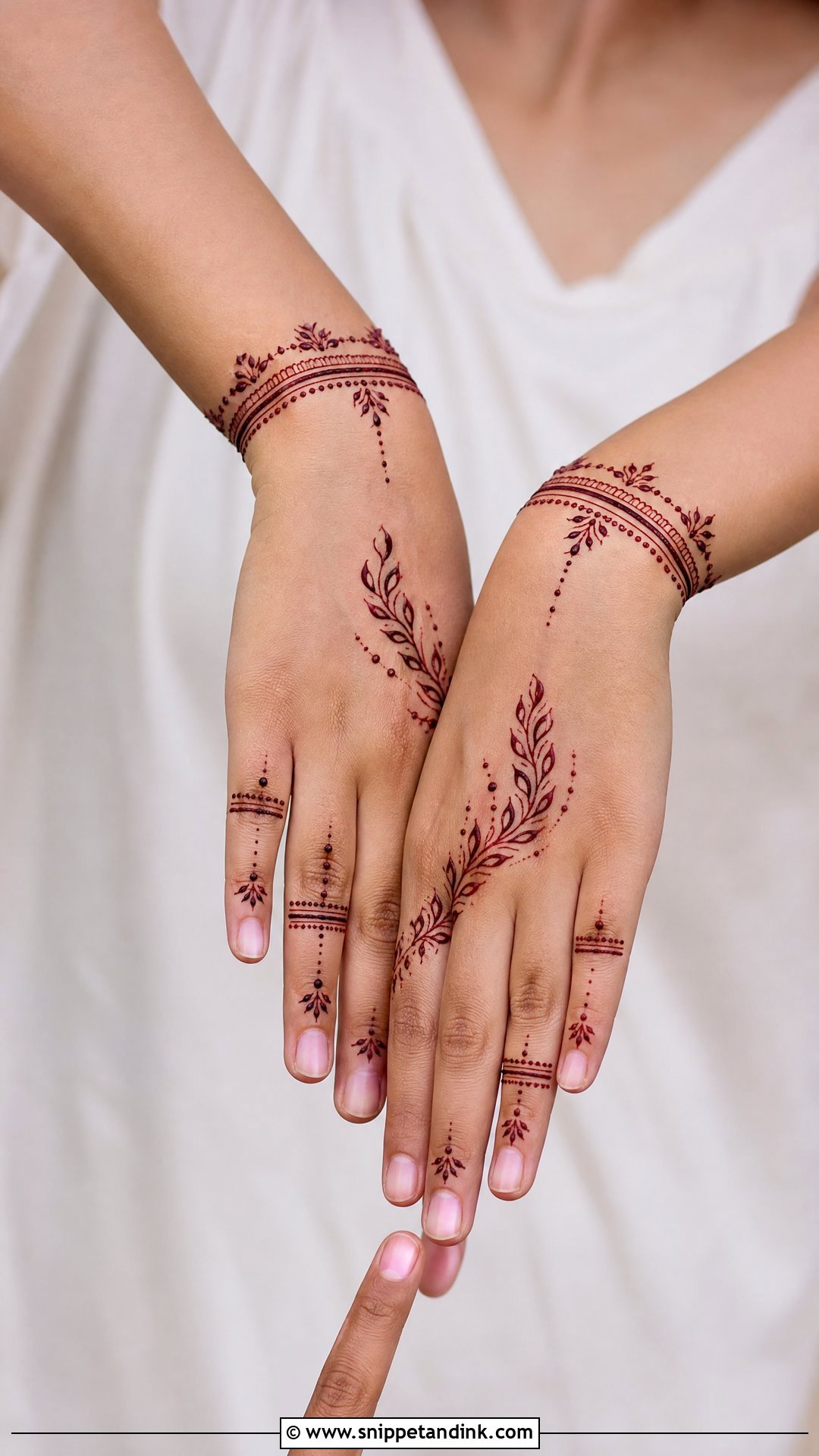
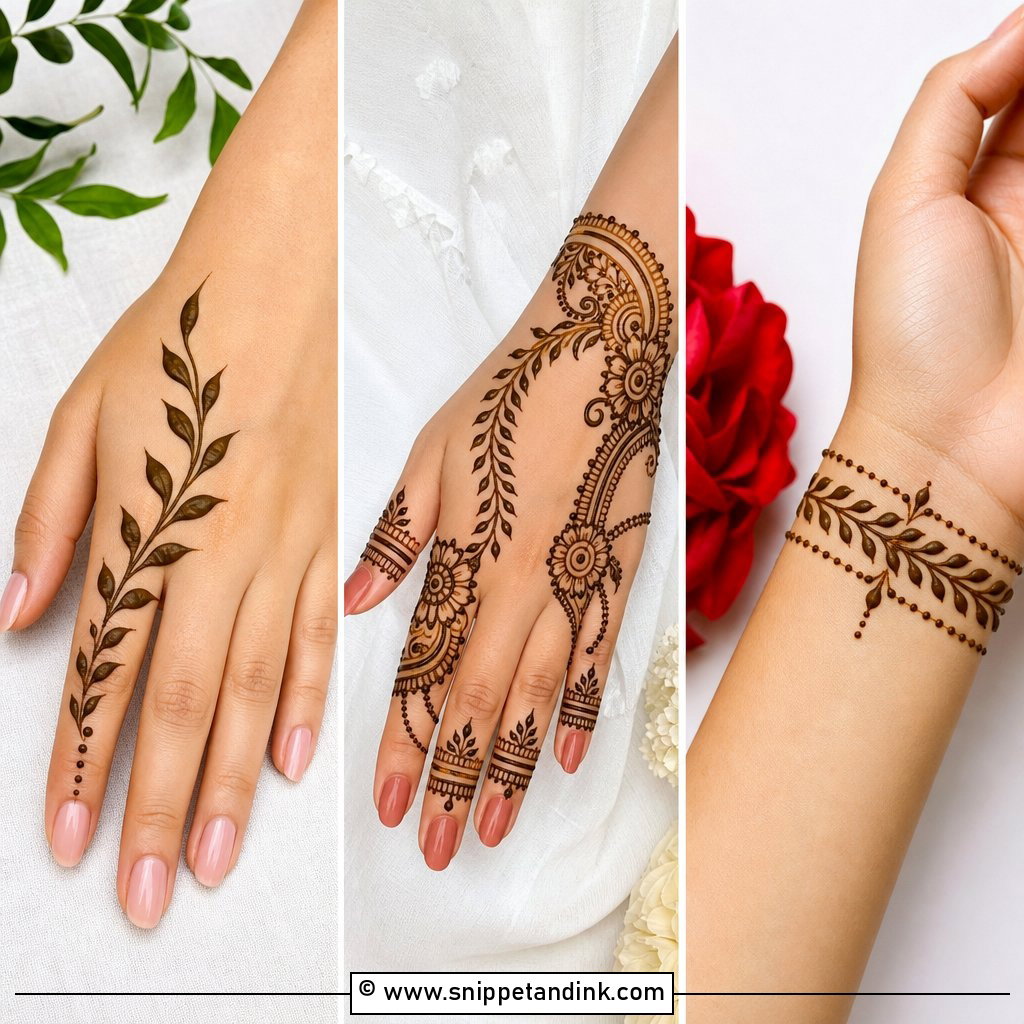
Two or three neat circular bands around the wrist, a few dots and tiny leaves, slim lines on the fingers and the centre of the hand left open. That’s the whole design, and it is enough. I put it on the back of the hand, where the bracelet shape is clearest, and repeat the same small motif on each finger so it looks planned. It suits beginners, school events, Eid mornings and anyone short on time.
2. Arabic Banch Mehndi Design
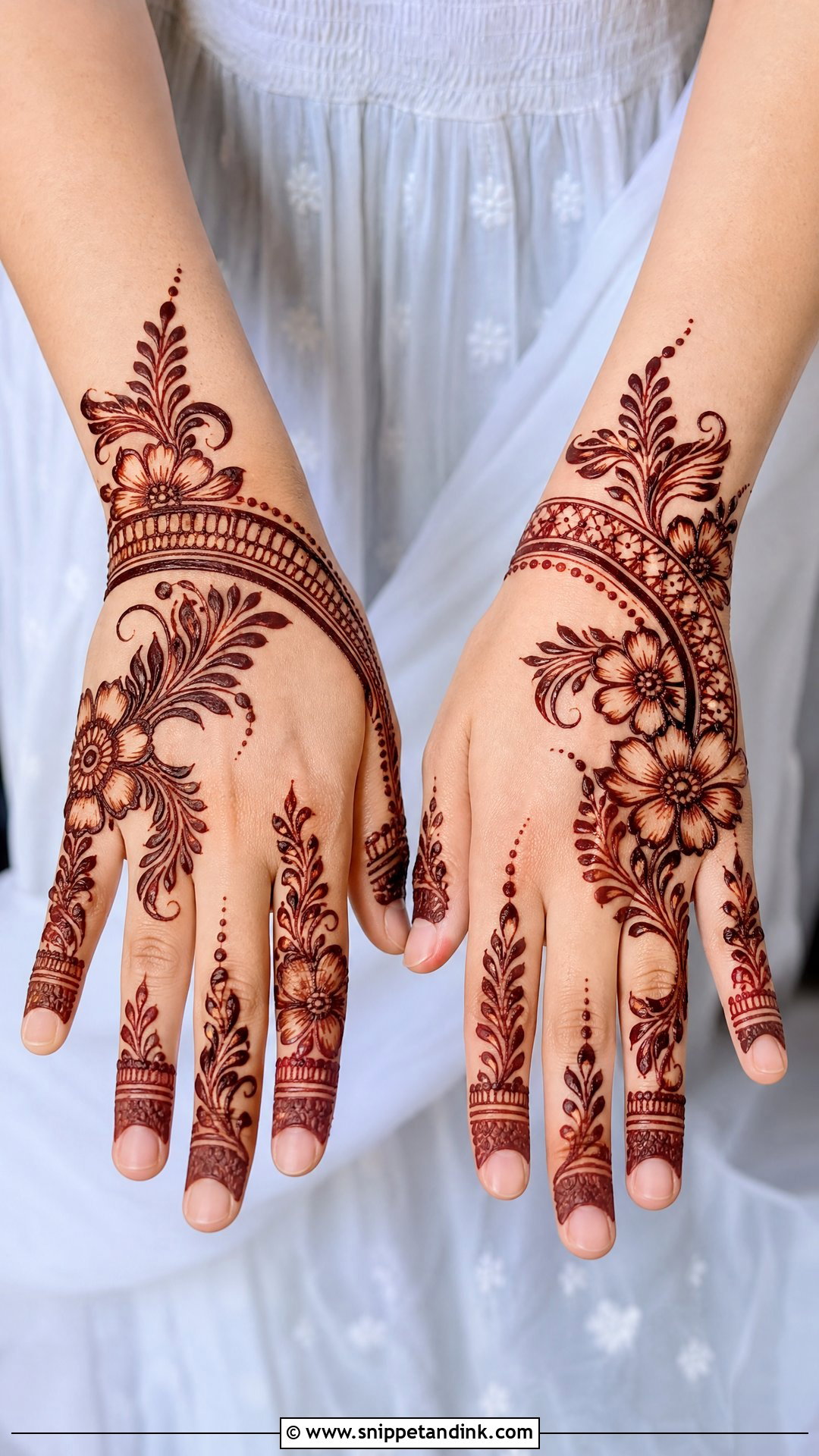
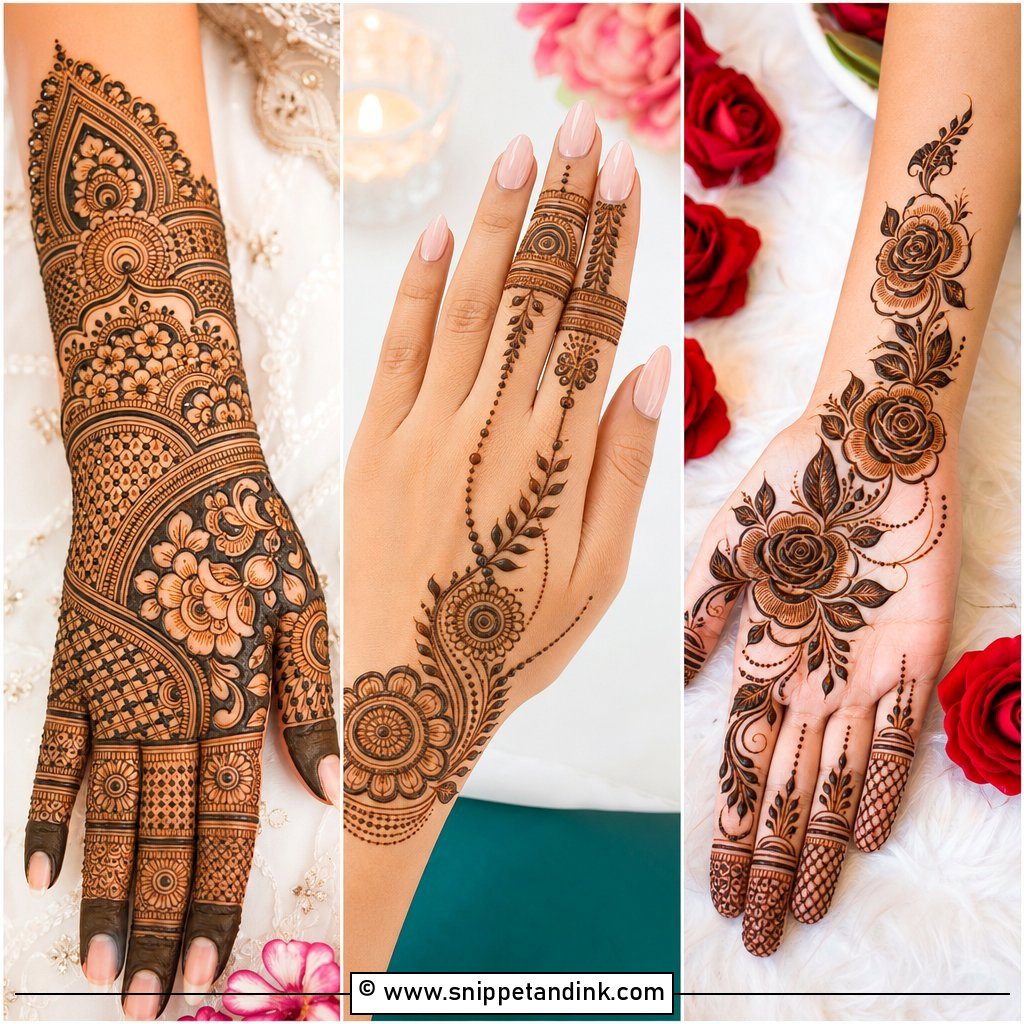
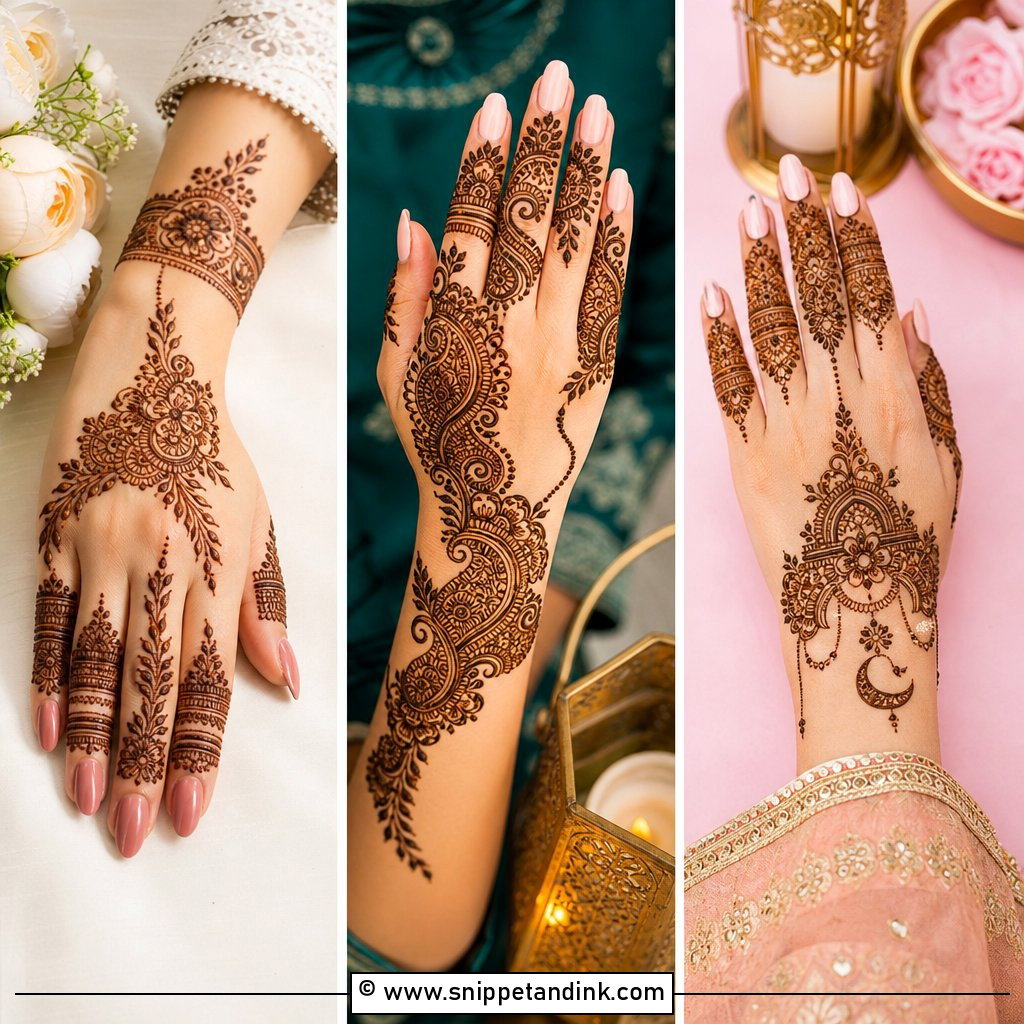
Arabic banch work swaps the stacked bands for bold flowers and leafy vines curling around the wrist, with a diagonal trail running from the wrist toward one finger like a hand chain. Lots of skin shows through, which is what makes each motif stand out. The flow is easy to stretch or shorten, so it fits small and broad hands alike. Thick outlines on the flowers and soft shading inside the petals keep it reading clearly once stained.
3. Indian Banch Mehndi Design
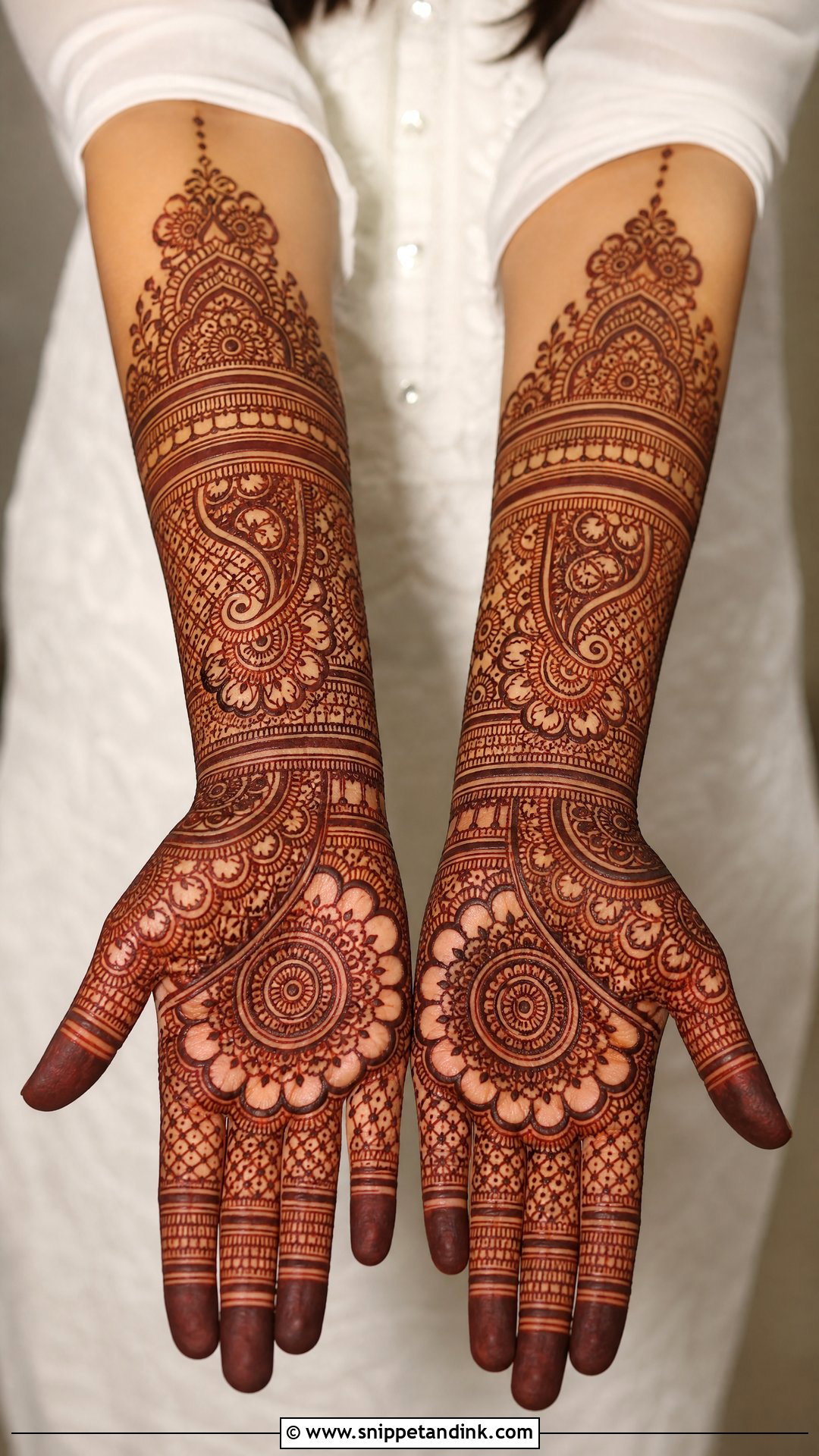
Indian banch designs stack the wrist with layered bands of paisleys, mandalas, dots and fine filler, so it looks like a set of bangles, and the hand carries a central round motif or floral trail. Small checks, scalloped edges and tiny leaf borders fill out the layers. Extend it a little above the wrist if you want a cuff. It is the version I draw most for weddings, Karwa Chauth and Teej, and it sits naturally beside silk outfits and real bangles.
4. Bridal Banch Mehndi Design
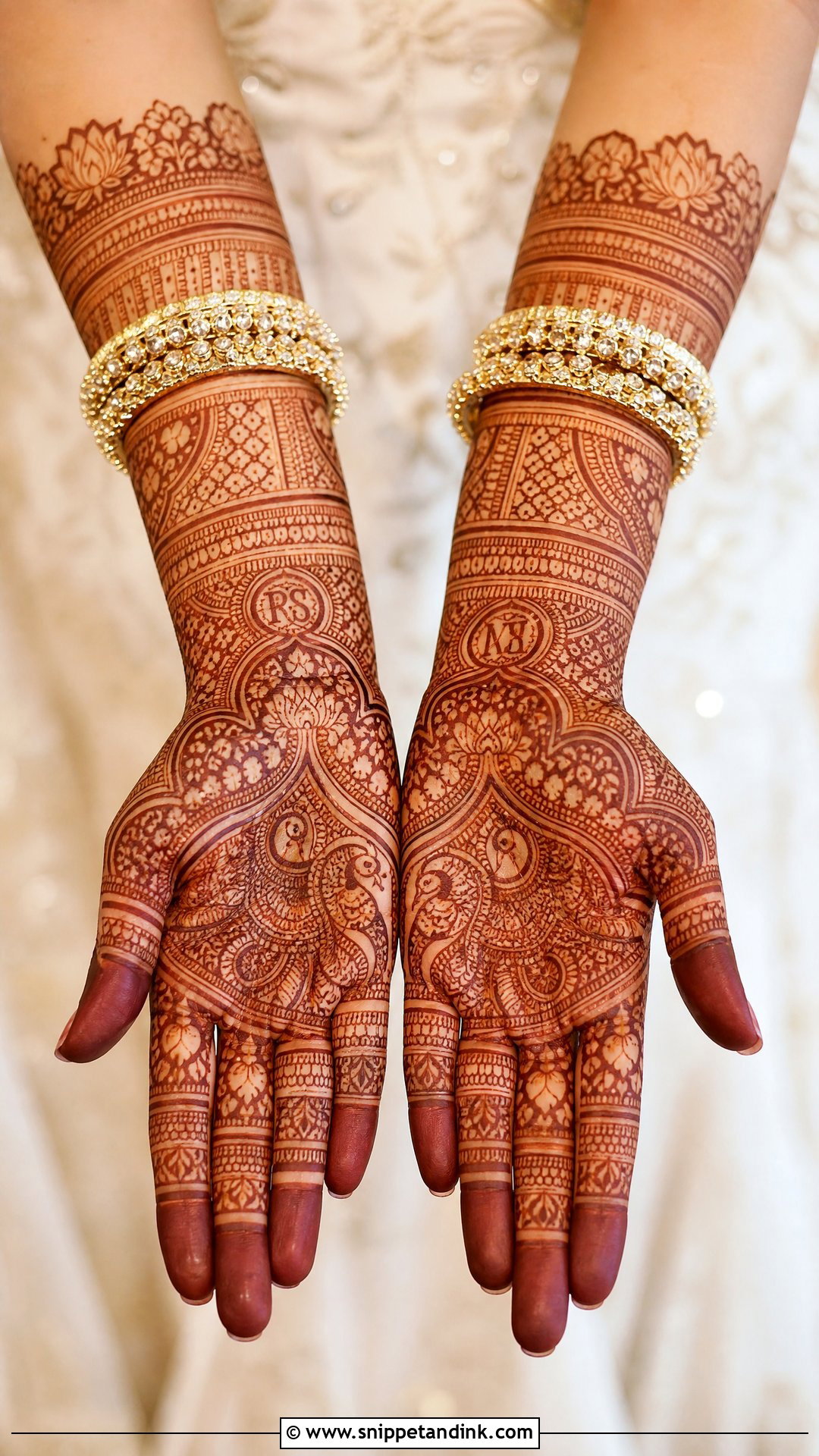
A bride’s banch should read as heavy jewellery: stacked circular bands, jaali panels, lotus borders and paisley curves forming a cuff, continuing onto the fingers and up the forearm. Initials, tiny hearts or symbolic motifs can sit inside the bands, though a purely floral version looks just as refined. I draw the band borders bold enough to look like real bridal bangles, then keep the work inside each band fine. That contrast between bold edge and fine fill is what makes it look like metalwork rather than doodling.
5. Back Hand Banch Mehndi Design
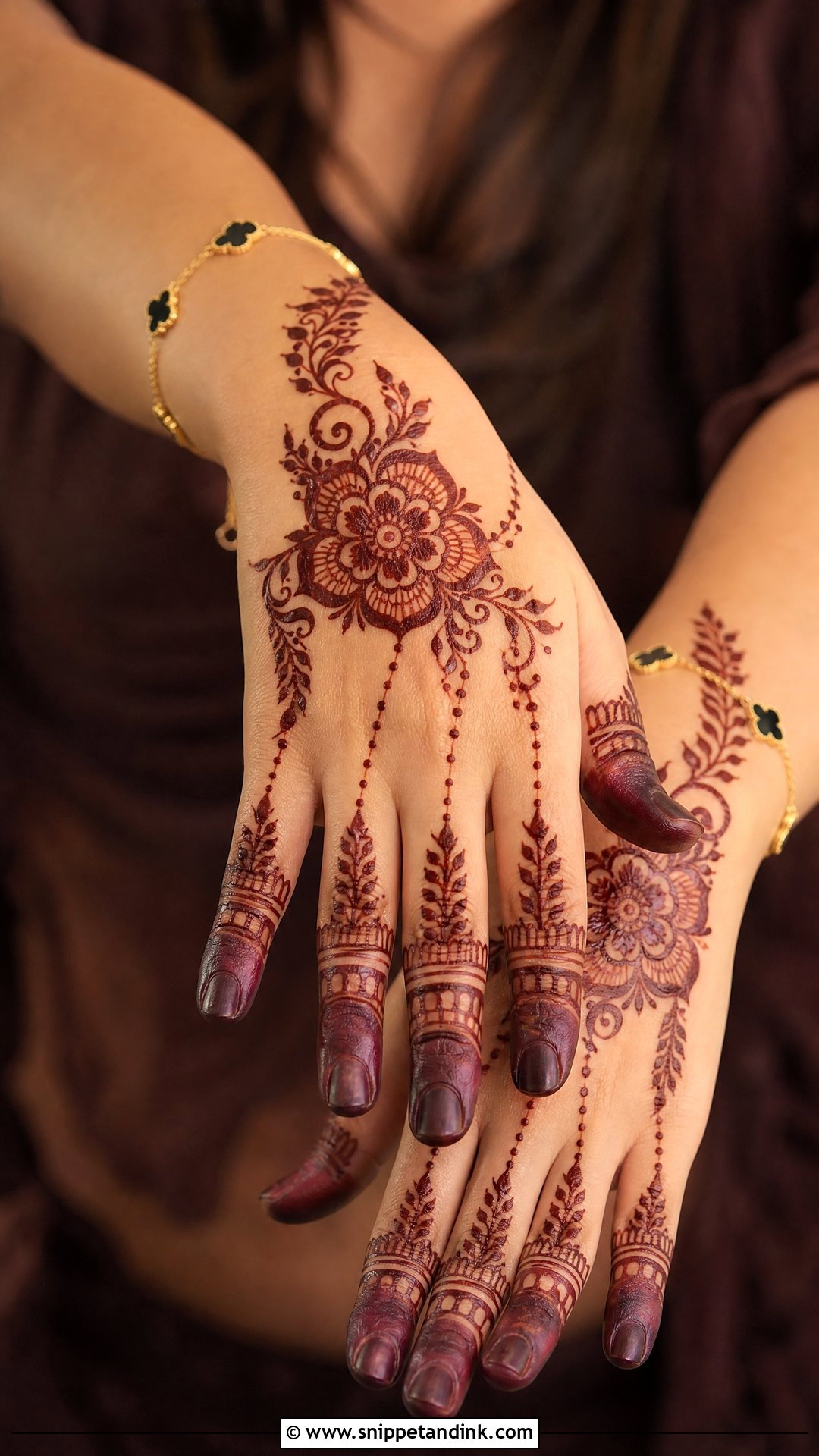
On the back of the hand, the bracelet looks like jewellery from every angle. The wrist gets a bracelet band, and the back of the hand gets chains, dots, florals or a mandala connected to one or more fingers. The hand looks dressed even without accessories. For a modern finish I leave a clear gap of skin between band and hand motif; for a fuller one I add finger caps and small leafy trails. Engagement parties, Eid, Diwali and bridesmaids all suit it.
6. Front Hand Banch Mehndi Design
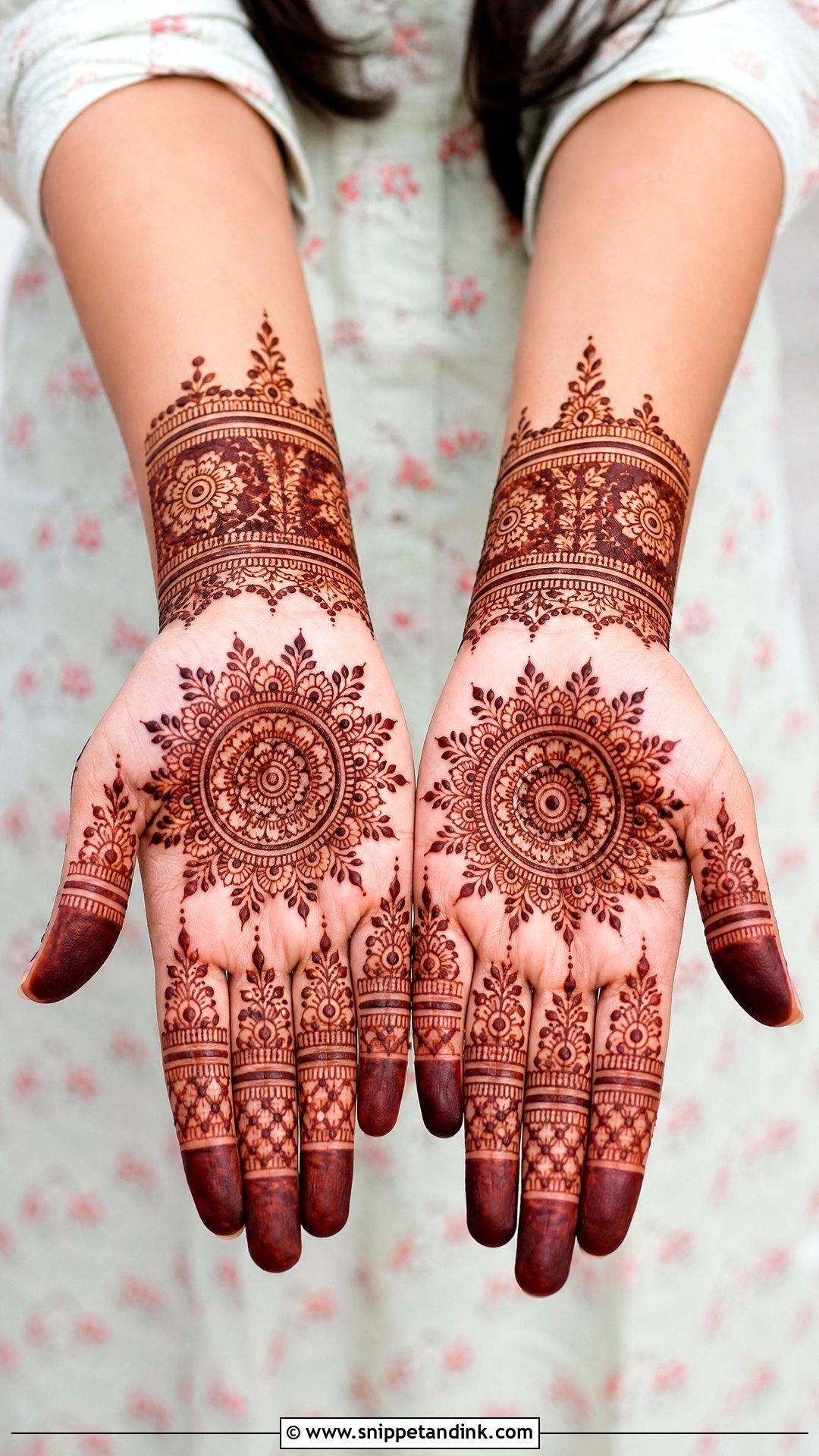
On the palm side, a wide band wraps the wrist like a bangle and the design flows into the palm with paisleys, flowers or a centred mandala, with parallel lines, dots and small leaf sections on the fingers. Palms stain darker than anywhere else, so this is the version to choose if deep colour matters to you, especially for rituals. Keep the wrist band clean and symmetrical and let the palm be the busier part. The bend at the wrist crease smudges easily, so I ask clients to keep the wrist straight until the band has set.
7. Full Hand Banch Mehndi Design
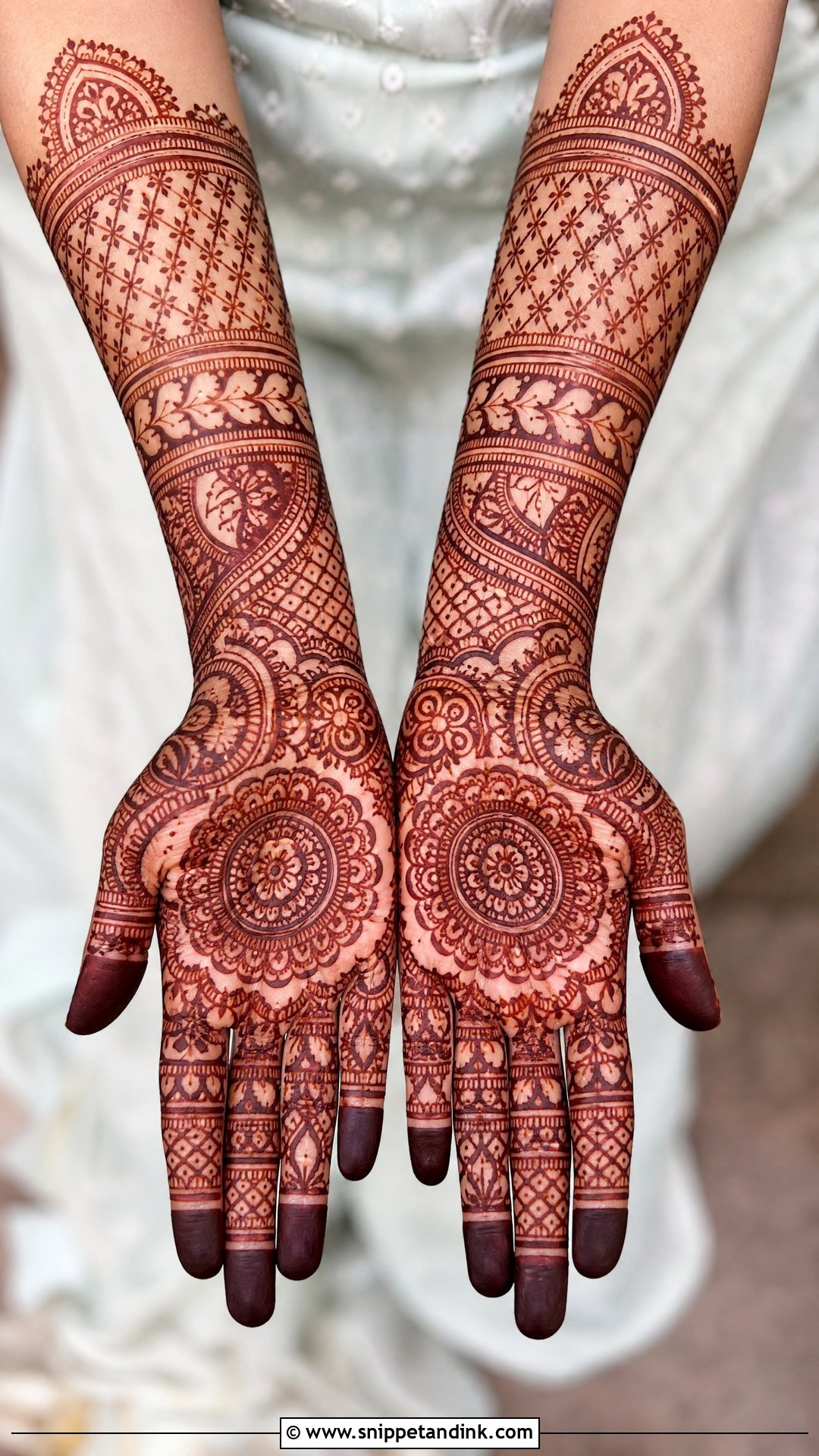
Full-hand banch combines a bracelet with complete coverage: stacked bands on the wrist and lower forearm, then florals, paisleys, jaali, mandalas and filled fingertips over the palm or back of the hand. The risk is that the banch disappears into everything else. I keep a narrow strip of bare skin between the band and the hand design, and alternate thick and thin bands, so the bracelet still reads as a bracelet. It suits brides, sisters of the bride and big celebrations.
8. Minimal Banch Mehndi Design
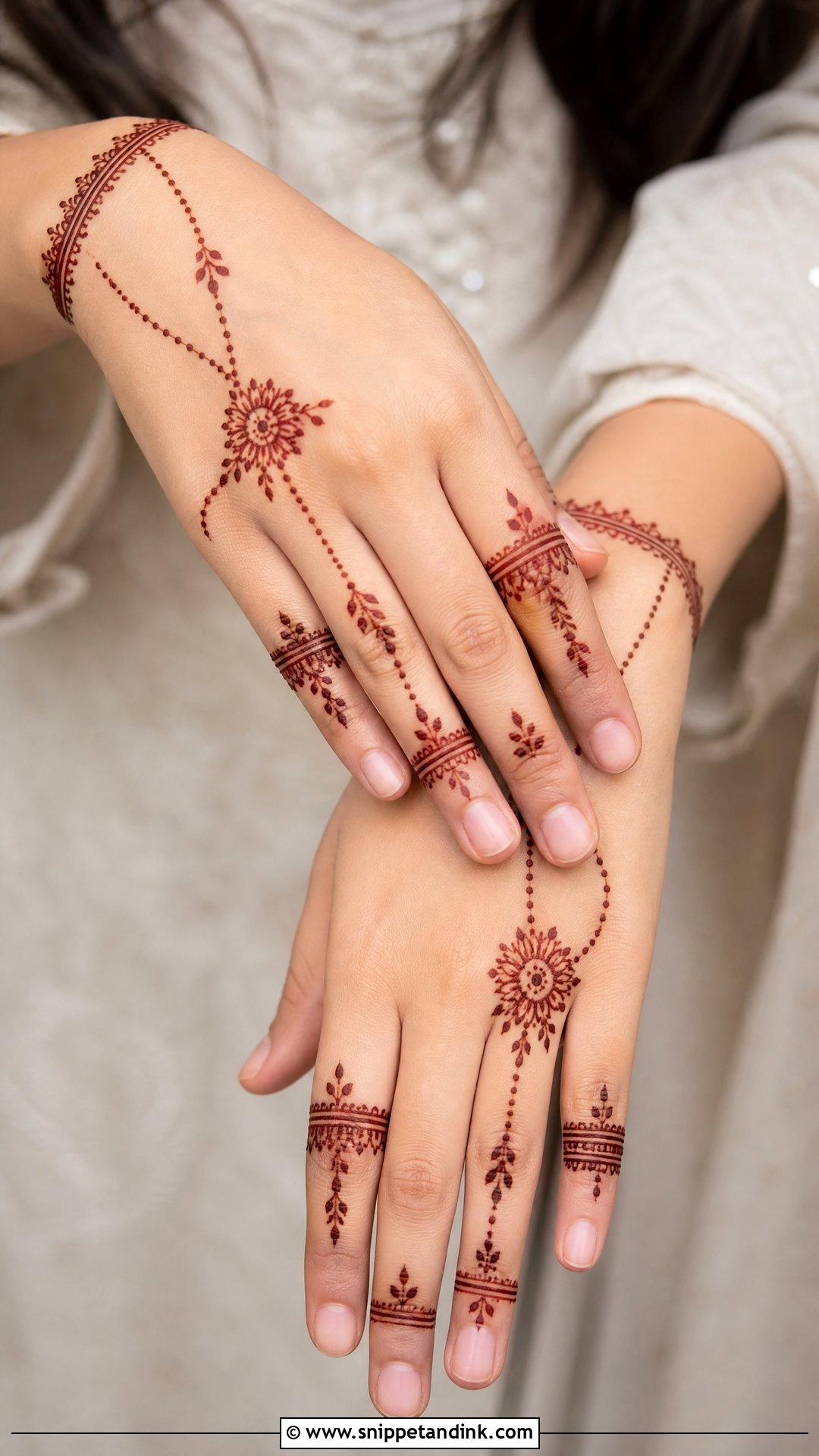
One slim wrist band, a dotted chain, a tiny flower on the back of the hand and thin rings or small leaf marks on the fingers. That’s minimal banch. It goes with modern outfits and office-friendly festive looks, and it’s kind to beginners and teenagers because there is no dense filling to get wrong. Even lines and few motifs are all it asks. With so little paste on the skin, I make the band just slightly thicker than it looks in photos so it stains clearly.
9. Modern Banch Mehndi Design
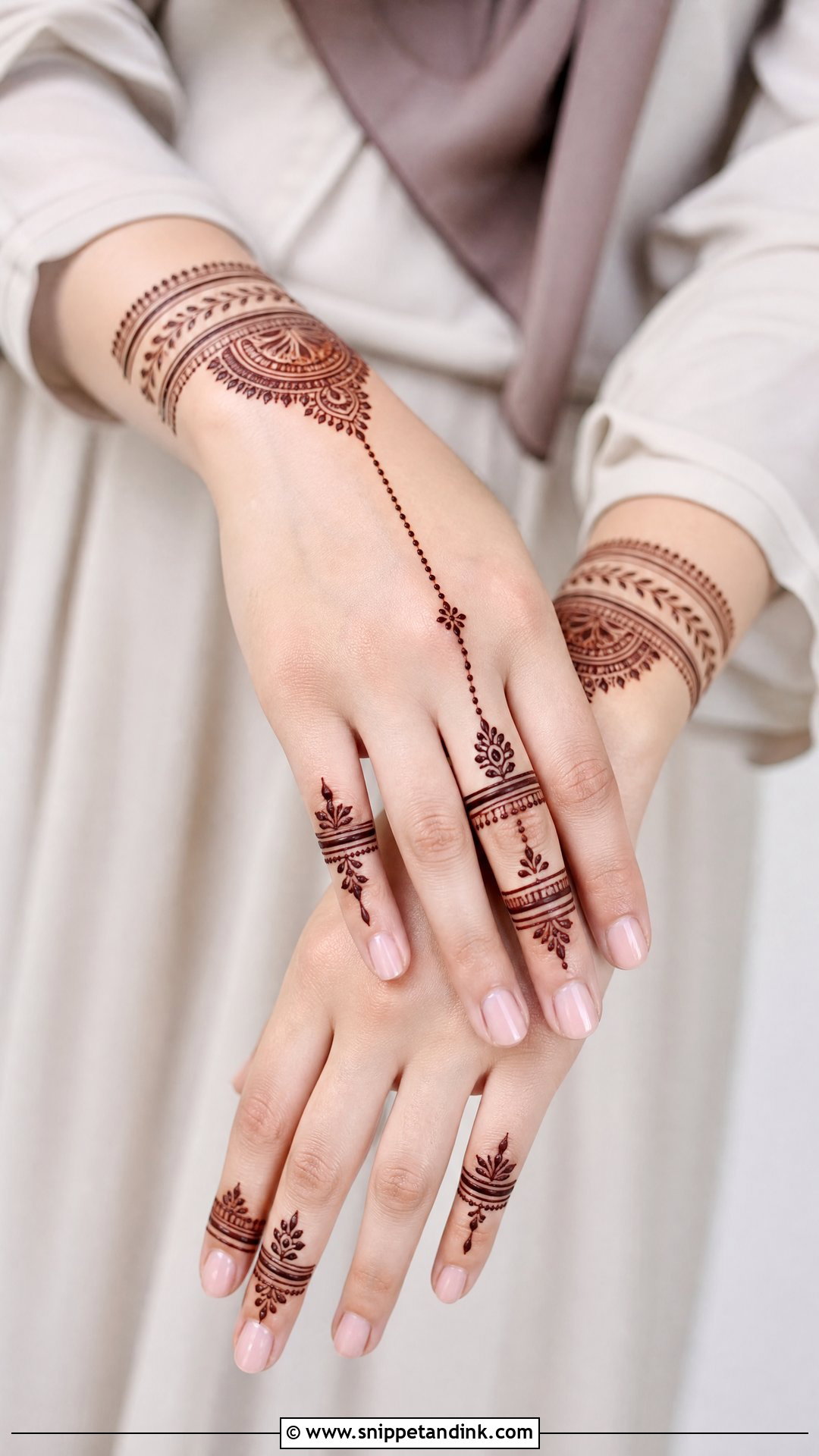
Modern banch replaces traditional paisleys with geometric bands, fine lines, negative space, half mandalas and simple finger rings. The wrist becomes a drawn cuff, often with a single chain to the middle finger. It looks stylish without tipping into bridal. Every line needs room; the moment you crowd a modern band, it starts looking traditional again. Keep the wrist shape easy to read from a distance.
10. Floral Banch Mehndi Design
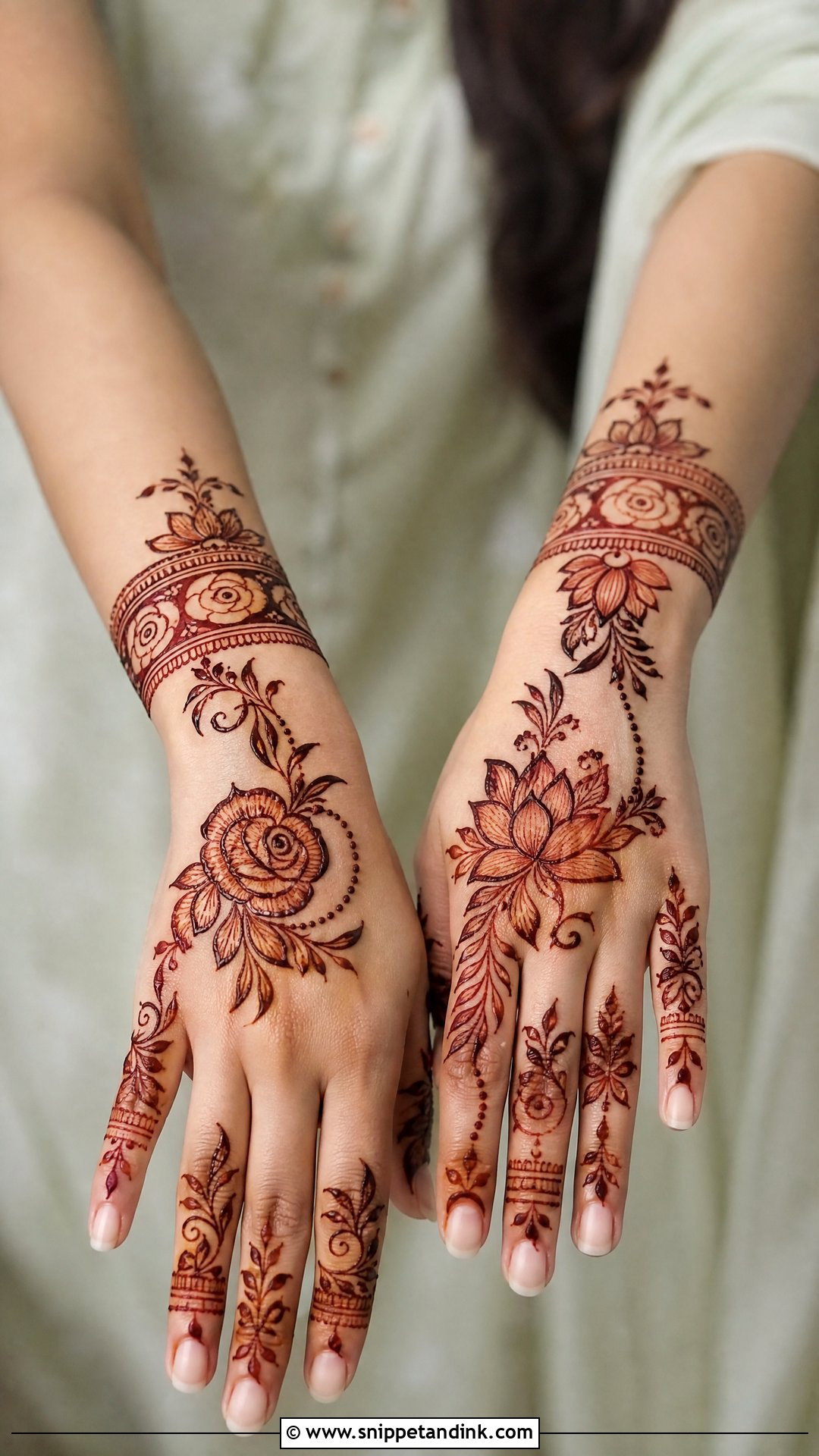
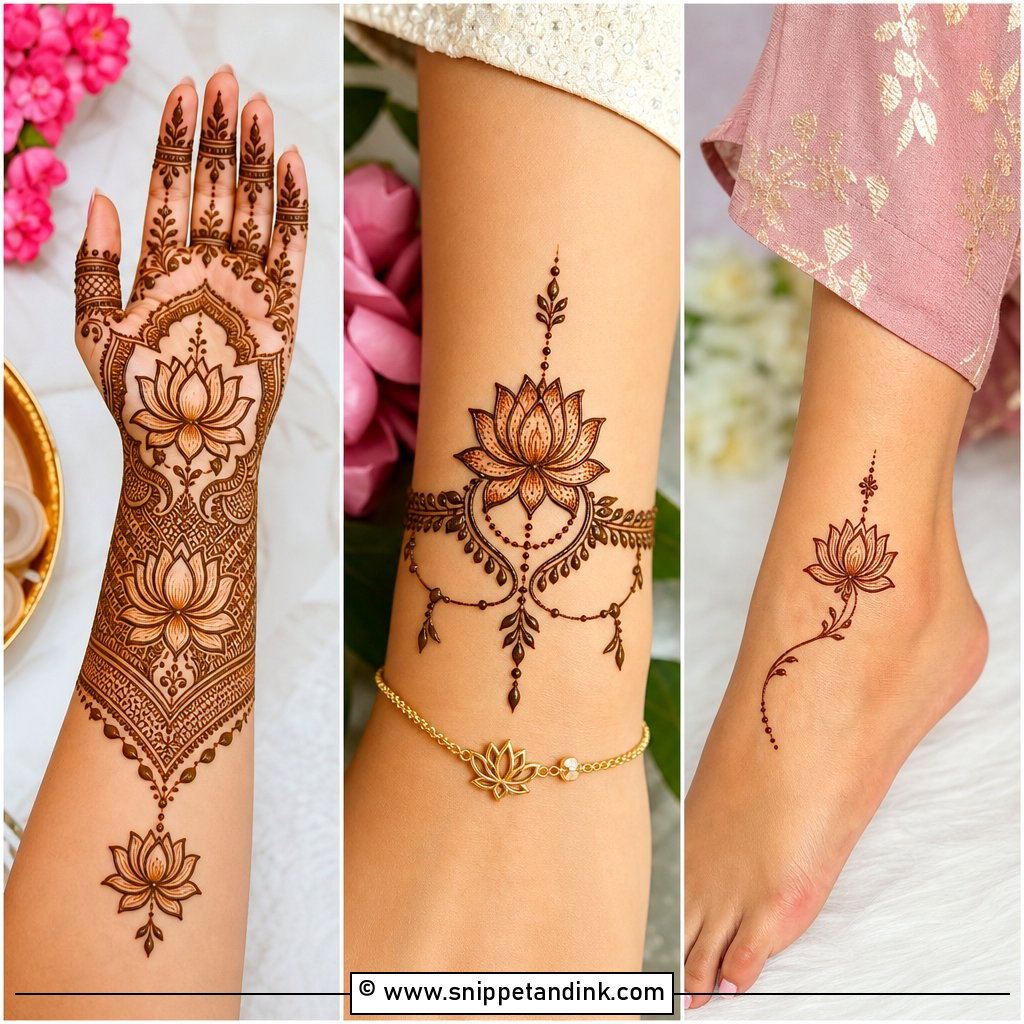
Floral banch replaces bands with a bracelet of roses, lotuses, daisies or small blossoms, and leafy trails reach toward the fingers. Space the flowers out and link them with vines for a lighter look; add shaded petals and tiny dots between the blooms for a fuller one. It sits happily on the front or back of the hand. Flowers around a round wrist distort if drawn straight on, so I turn the client’s arm as I go and draw each bloom facing me.
11. Paisley Banch Mehndi Design
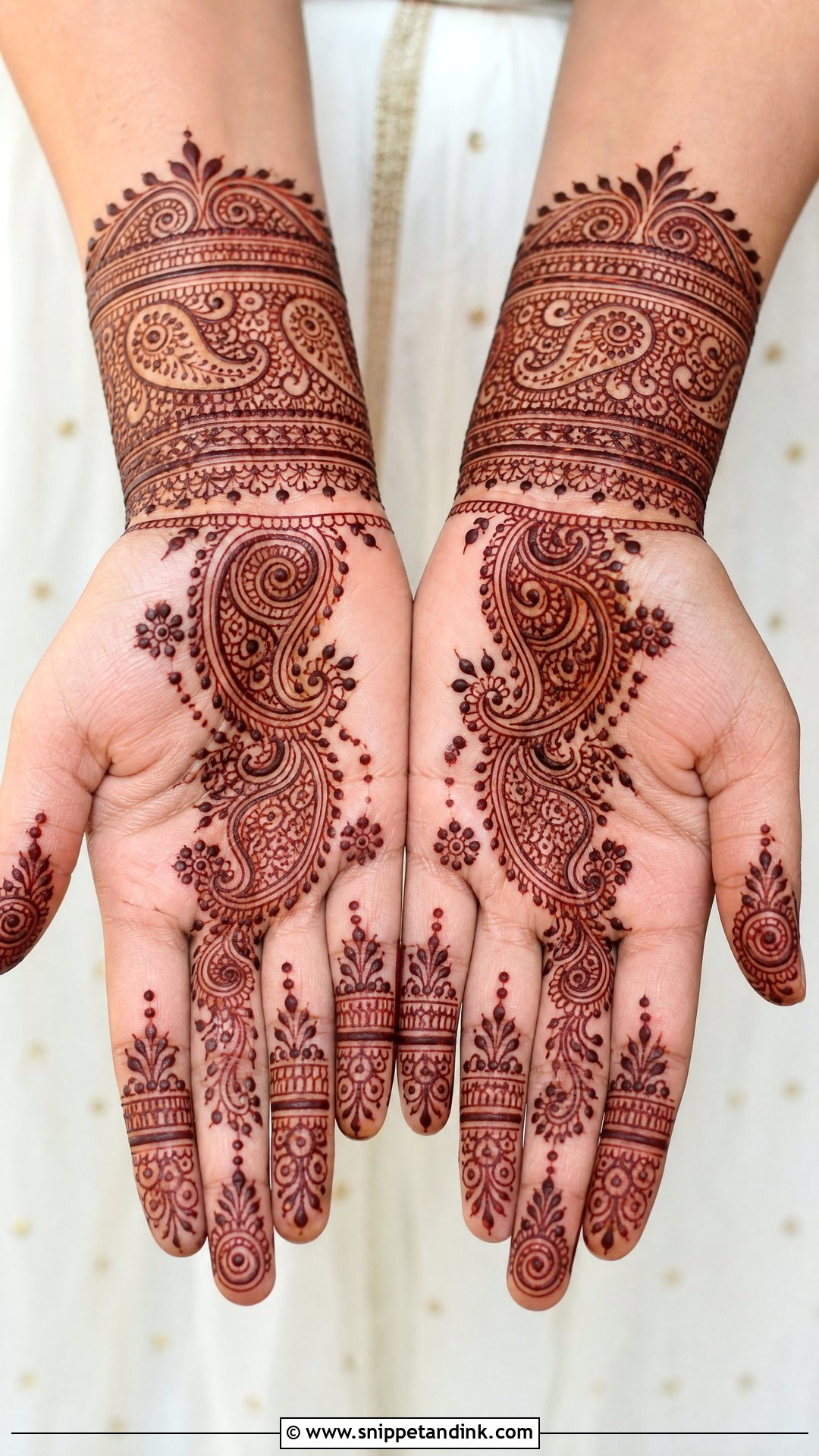
Paisleys in a row around the wrist make a classic Indian bracelet, filled with fine lines, dots, spirals and small leaves, with a matching paisley trail on the palm or back so it all connects. Scale the paisleys to the wrist. Slim paisleys with more open space suit small, narrow wrists; larger paisleys with detailed fill suit broader ones. A deep maroon stain makes this one look its richest.
12. Mandala Banch Mehndi Design
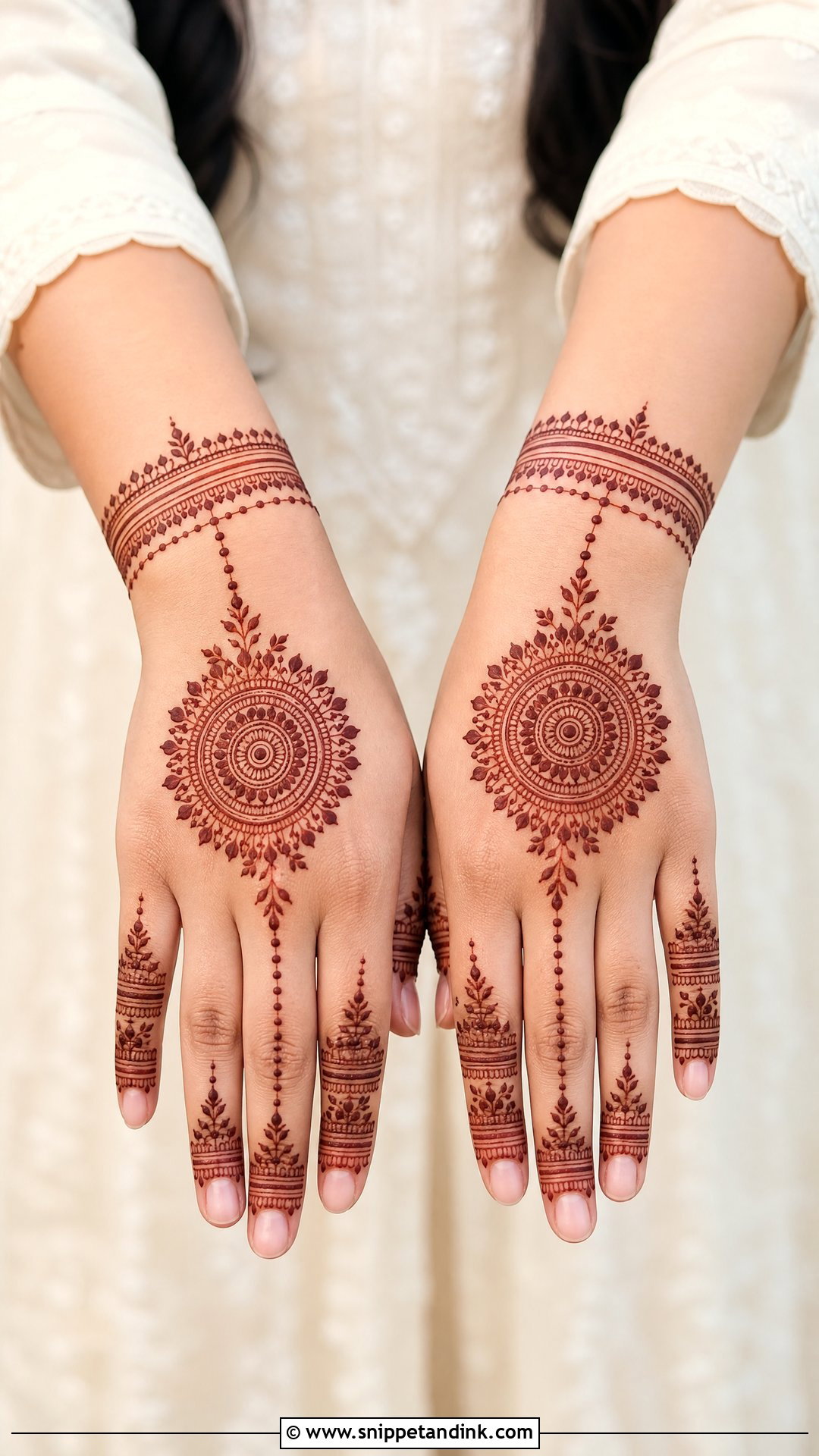
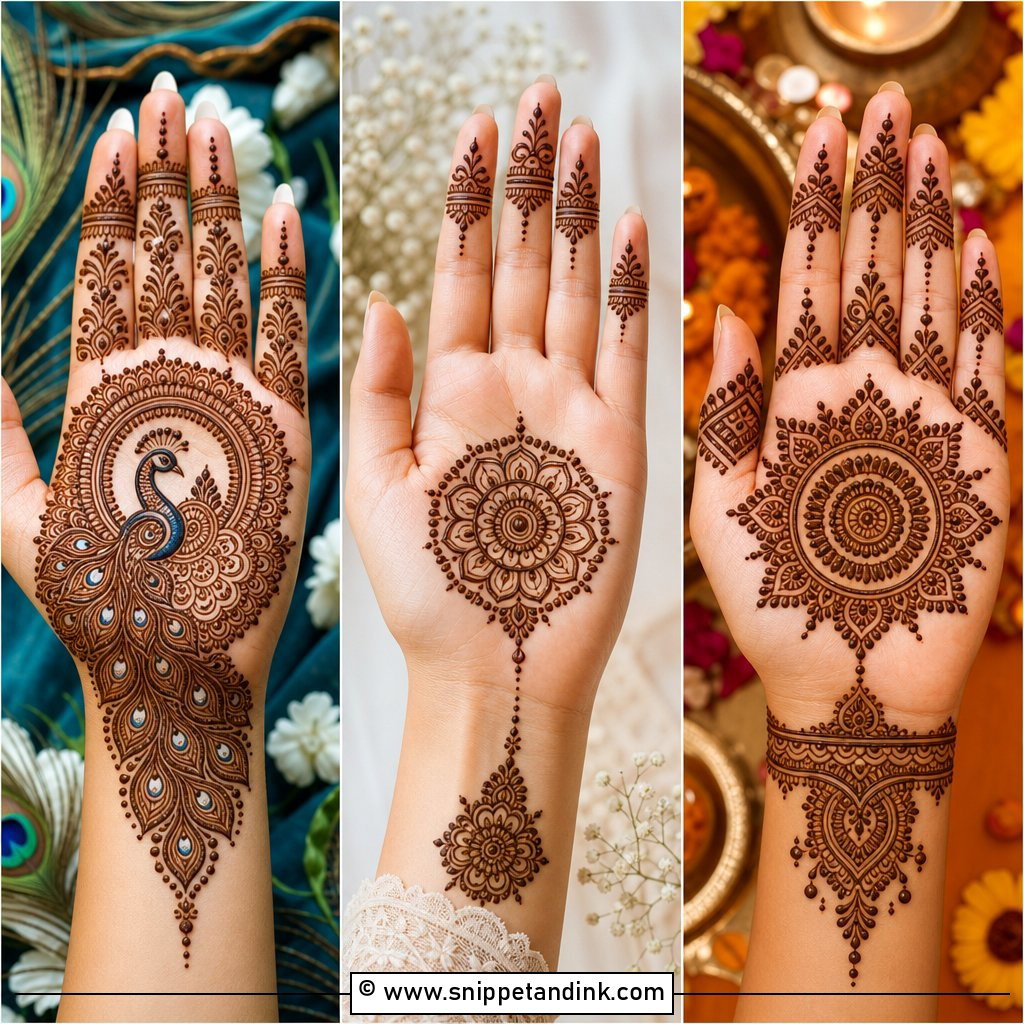
Circular bands at the wrist and a mandala on the palm or back of the hand, joined by a dotted chain or slim vine, give a centred, jewellery-like shape. Make the mandala large for impact or small for a minimal version, and finish with finger bands, tiny petals and clean dot work. It suits anyone who prefers neat, centred mehndi over scattered motifs. I line the mandala up with the middle finger rather than the centre of the wrist, since that is what the eye reads as straight.
13. Jaali Banch Mehndi Design
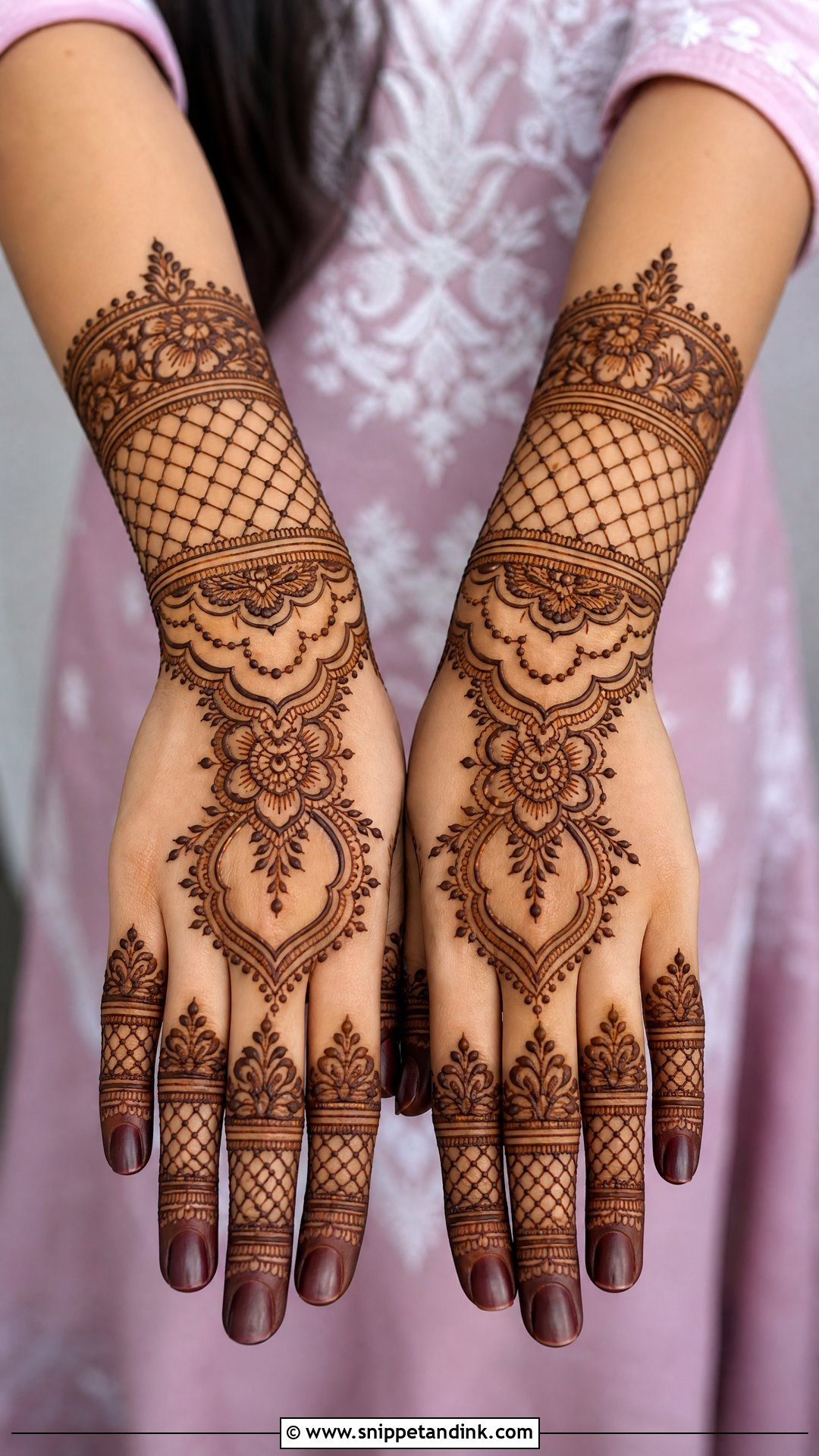
Jaali turns the wrist band into a lace cuff, with crisscross mesh panels edged by dots, scallops and floral borders. Repeat the mesh on the fingers or a small section of the back of the hand for harmony. Because the texture does the work, you need few other motifs. The lines must be fine and evenly spaced; on a round wrist that means rotating the arm as you draw, or the mesh tightens on one side and spreads on the other. Good for wedding guests and festive nights.
14. Peacock Banch Mehndi Design
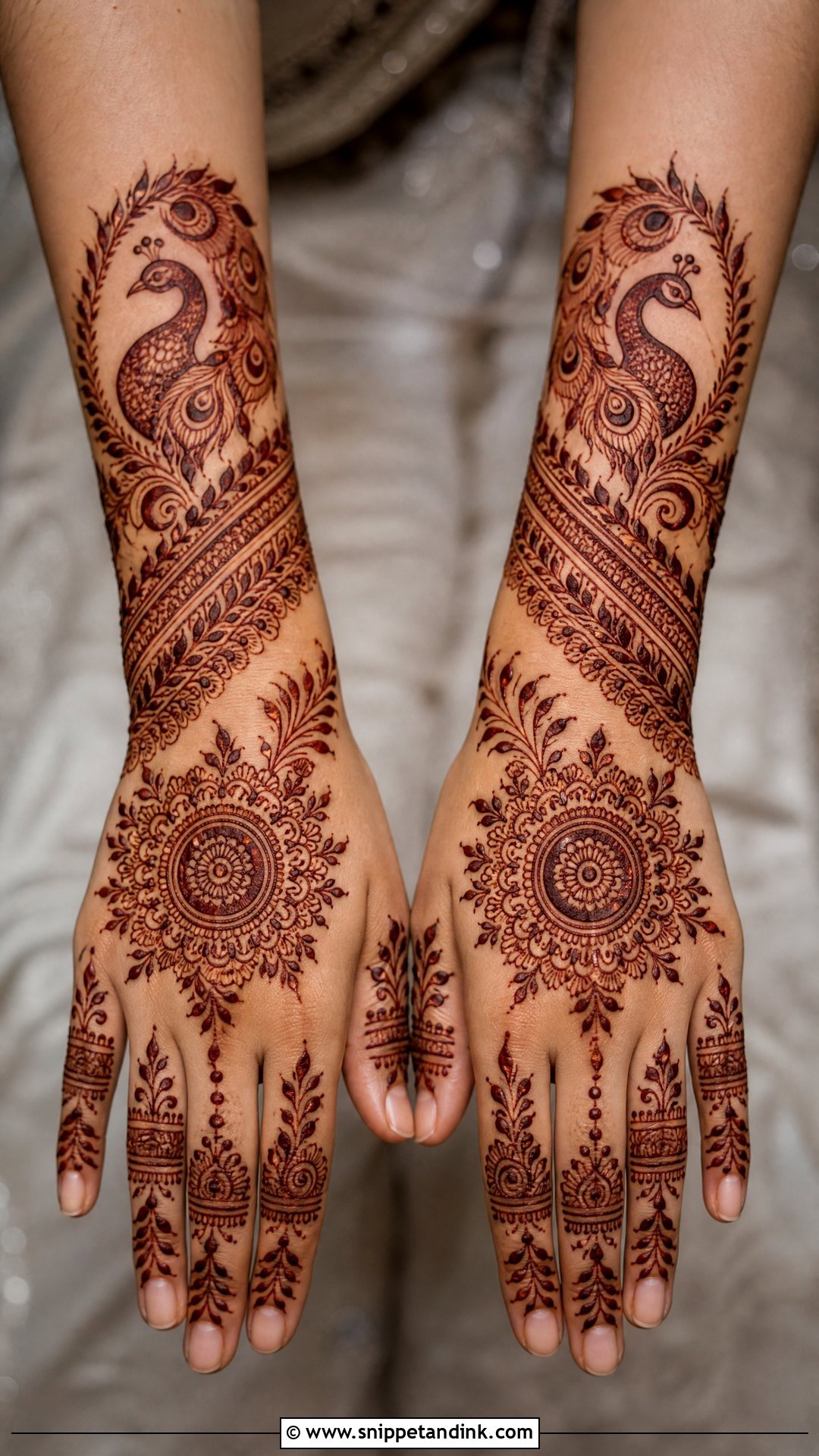
A peacock can curve around the wrist with its feathers wrapping like a bracelet, then lead into leafy trails, paisley feathers or a mandala on the back of the hand. The bird must stay readable, so I give it a bold outline, keep the feathers fine and leave open skin around it. Buried in filler, a peacock just becomes a shape. It is an eye-catching choice for sangeet and traditional celebrations.
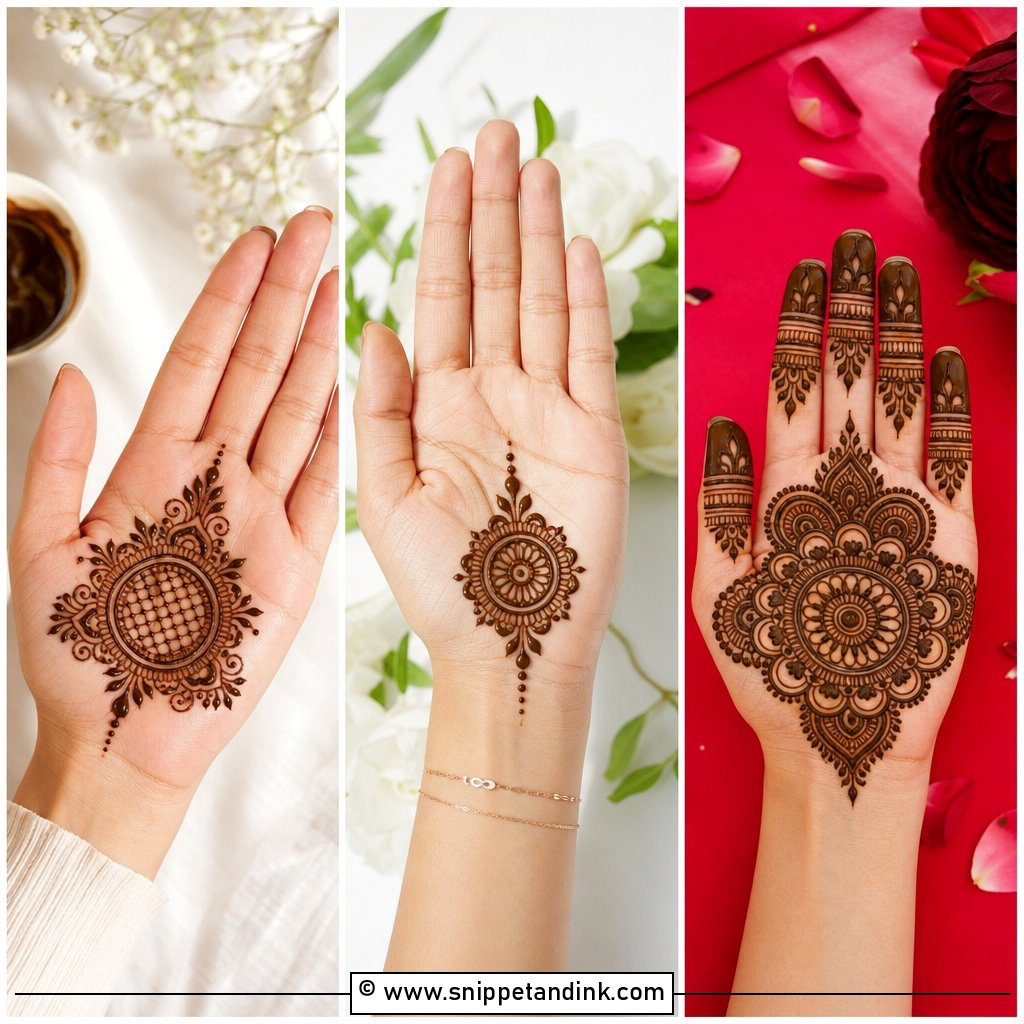
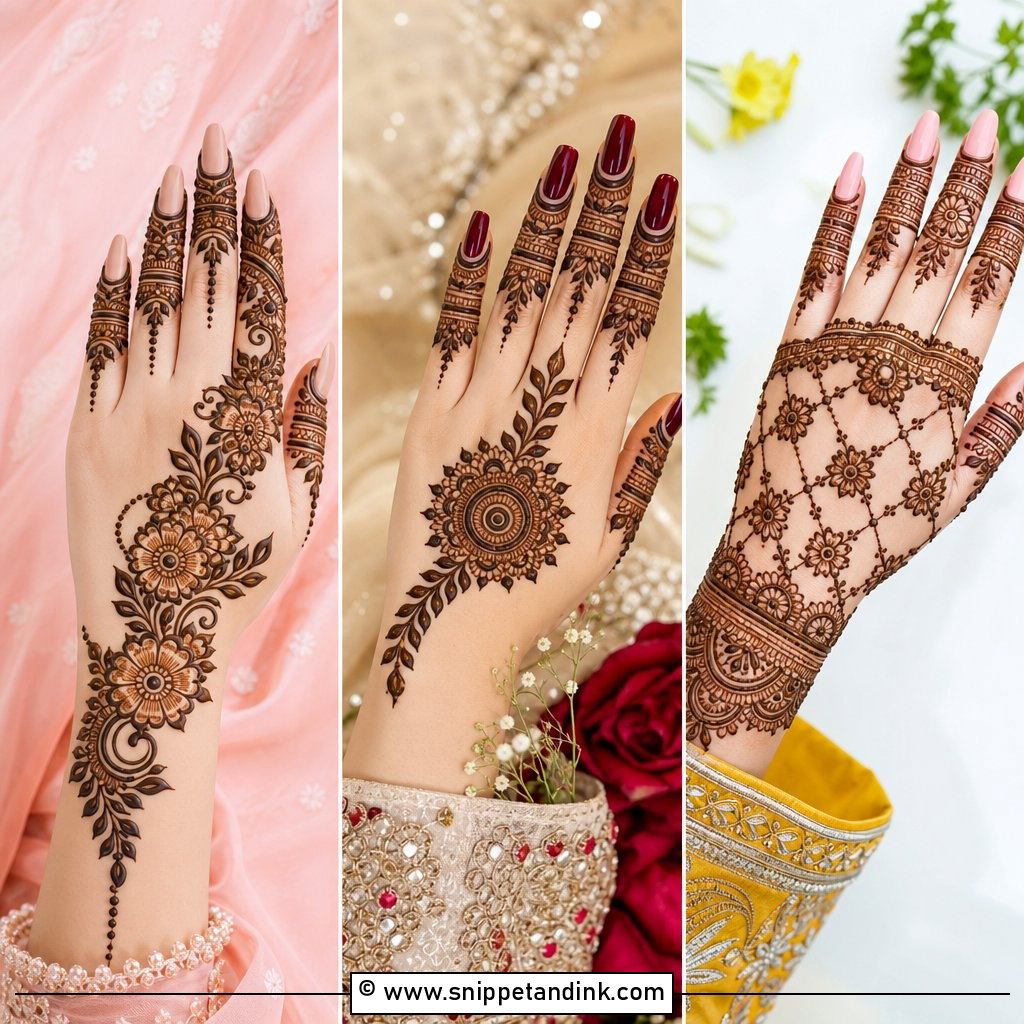
15. Bracelet Banch Mehndi Design
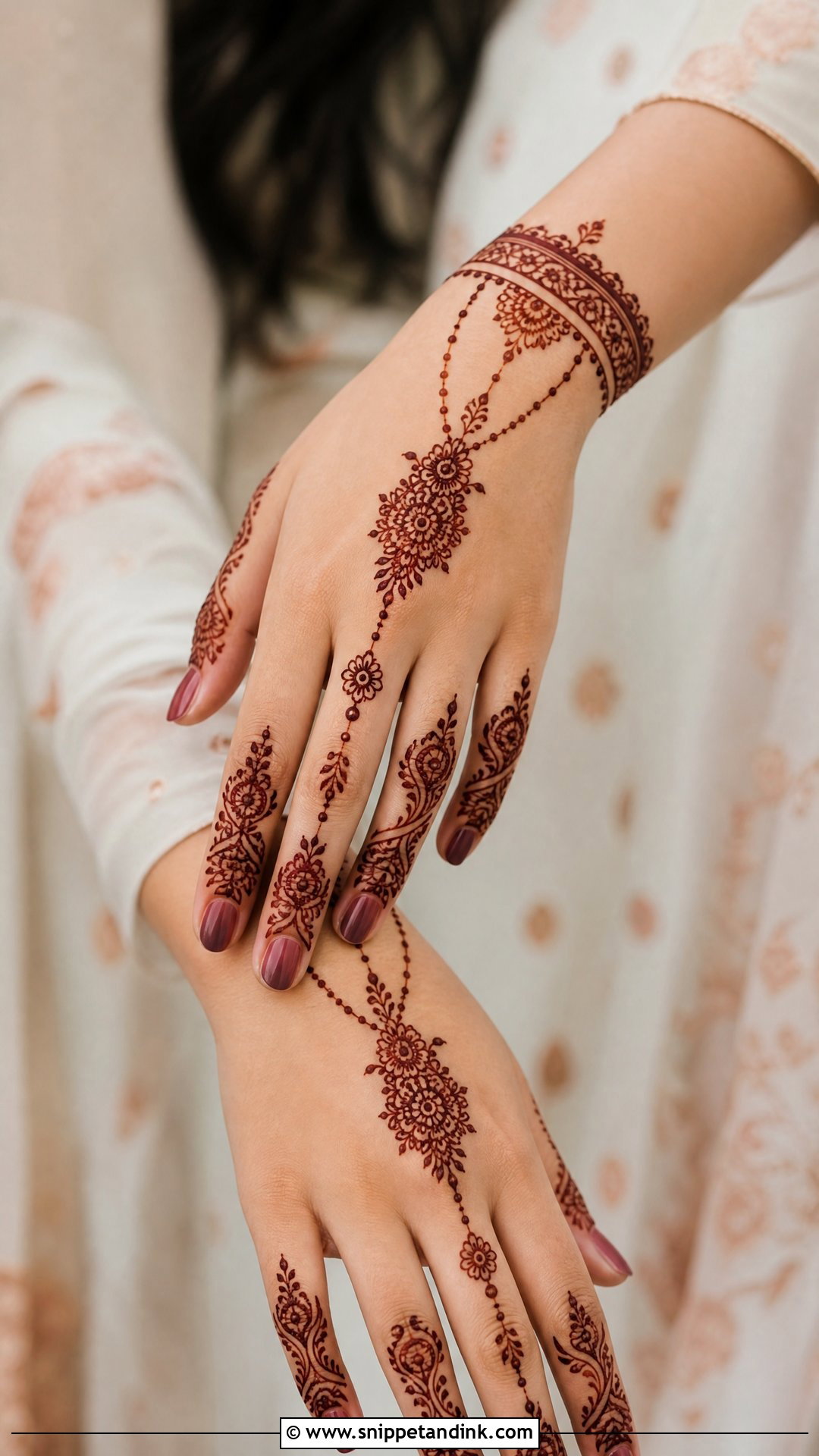
The bracelet layout is the simplest jewellery effect: one main band, a hanging chain, tiny dots and a ring-style link to a finger. Keep it thin and delicate or make it bold like a cuff. It shows best on the back of the hand. Connecting the band to the middle finger with a dotted chain or floral vine finishes it. It’s quick to draw and one of the most requested designs during Eid and engagement season.
16. Bangle Banch Mehndi Design
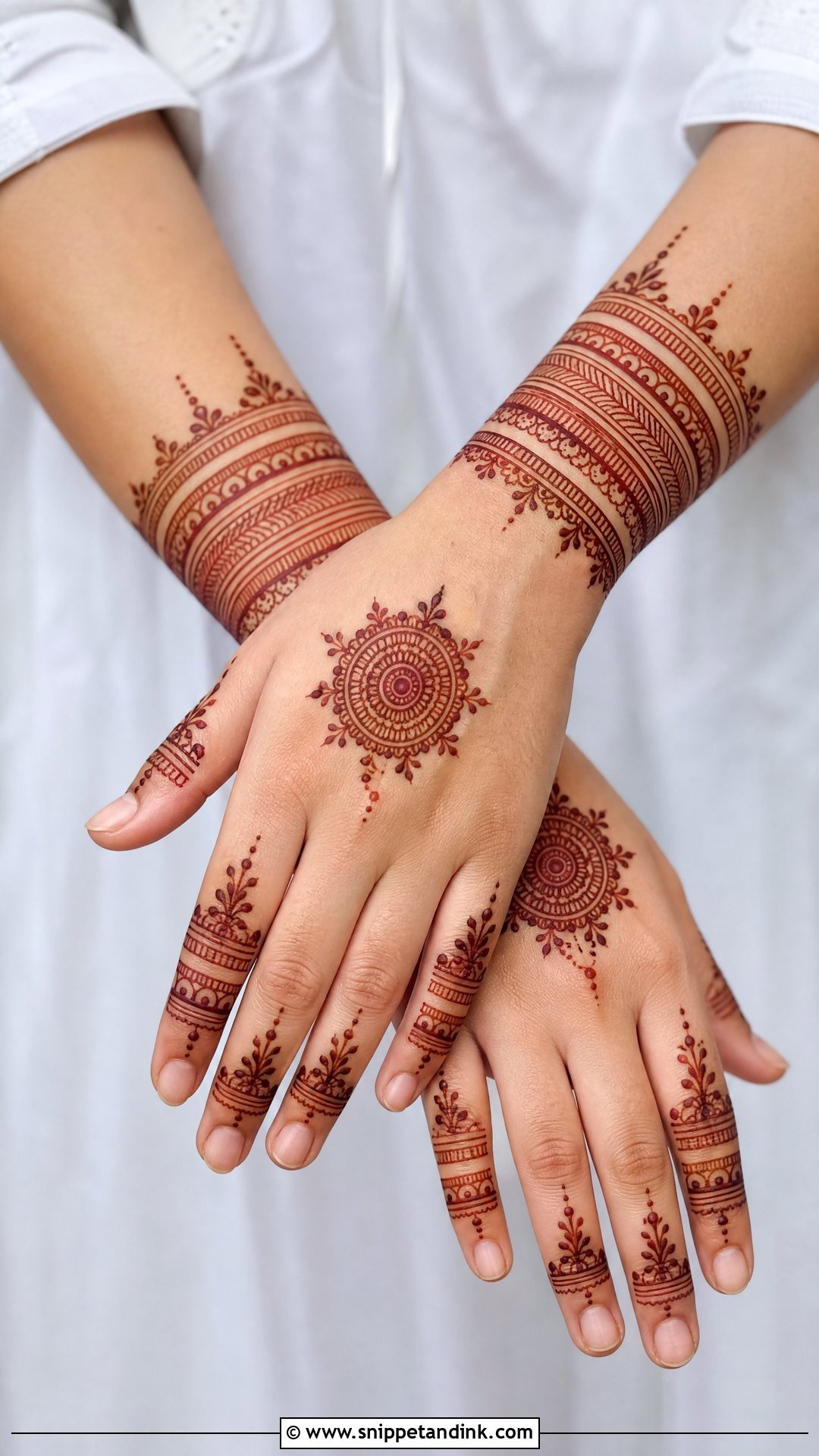
Bangle banch stacks circular bands, each with its own pattern: dots, chevrons, flowers, lines, scallops or tiny leaves. The hand can stay simple or carry a small mandala. It blends with real bangles for Karwa Chauth, Teej and weddings, but that is also the catch. If the drawn stack sits exactly where the real stack sits, you’ll never see it, so I draw it a finger’s width below where your bangles rest.
17. Cuff Banch Mehndi Design
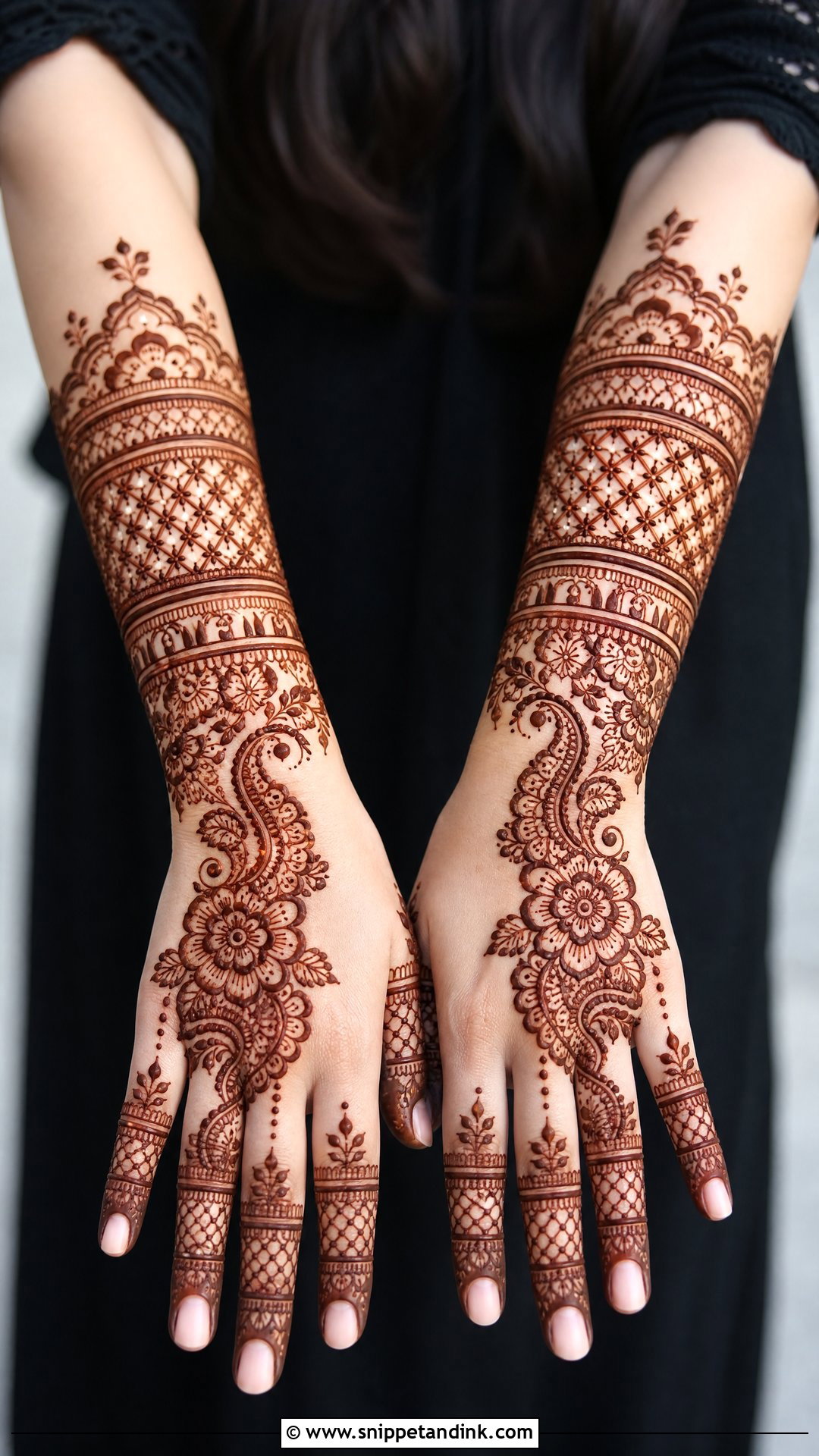
A cuff is wider and bolder than a bracelet, covering the wrist and sometimes stretching slightly up the forearm. The best ones are built in clear sections: floral border, jaali panel, paisley row, dotted edge. Short or sheer sleeves let it become part of the outfit. Bridesmaids often choose it when they want impact without bridal coverage. Getting both edges of the cuff level all the way round is the hard part; I mark the top and bottom lines lightly first.
18. Finger Chain Banch Mehndi Design
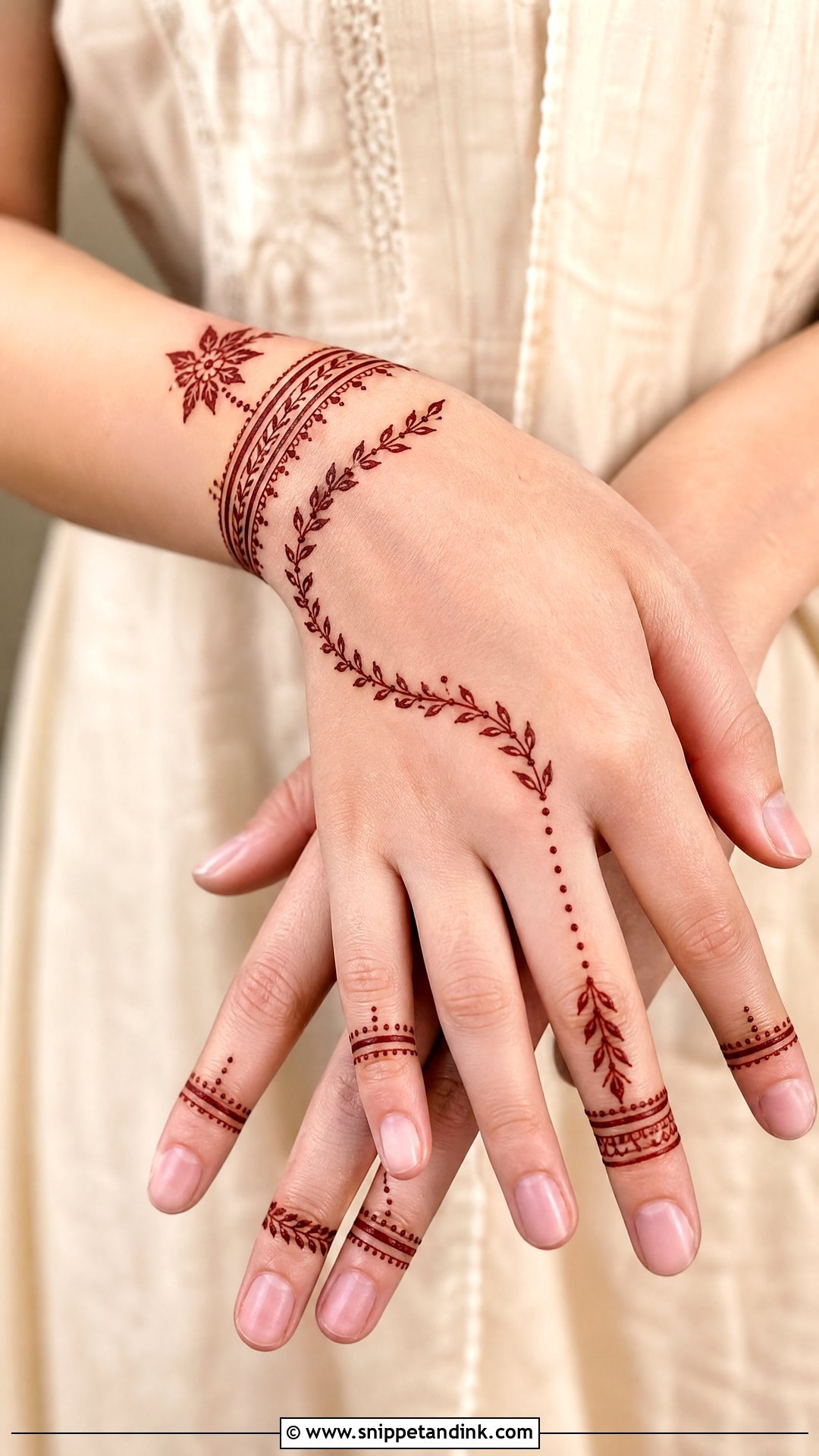
Dotted chains, leafy vines or slim lines connect the wrist band to one or more fingers, giving a haath phool effect without real jewellery. The wrist carries a simple bracelet, and the back of the hand stays open apart from the chain and finger rings. Running the chain to the middle or ring finger gives a centred flow that makes the hand look longer. It is a good fit for engagement photos and Eid outfits.
19. Ring Banch Mehndi Design
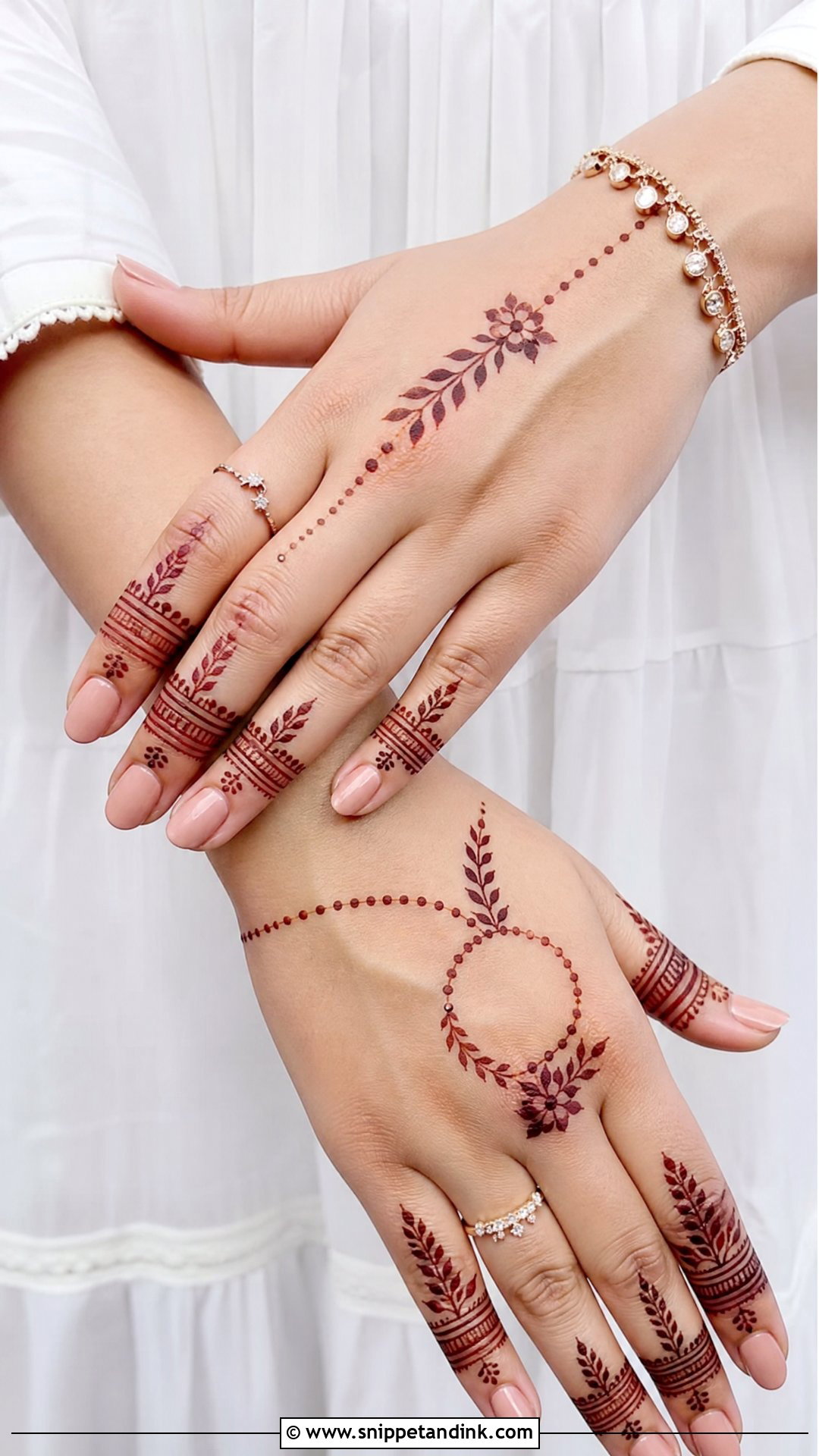
Here a wrist bracelet connects to decorated finger rings. Every finger can have a thin band, but one should carry the main ring motif or the hand looks evenly busy. Dots, tiny leaves or a fine chain link wrist and finger. The rings should stay delicate, so they read as jewellery rather than finger filling, and a small flower beside the main ring softens it. Choose this if you don’t want palm coverage.
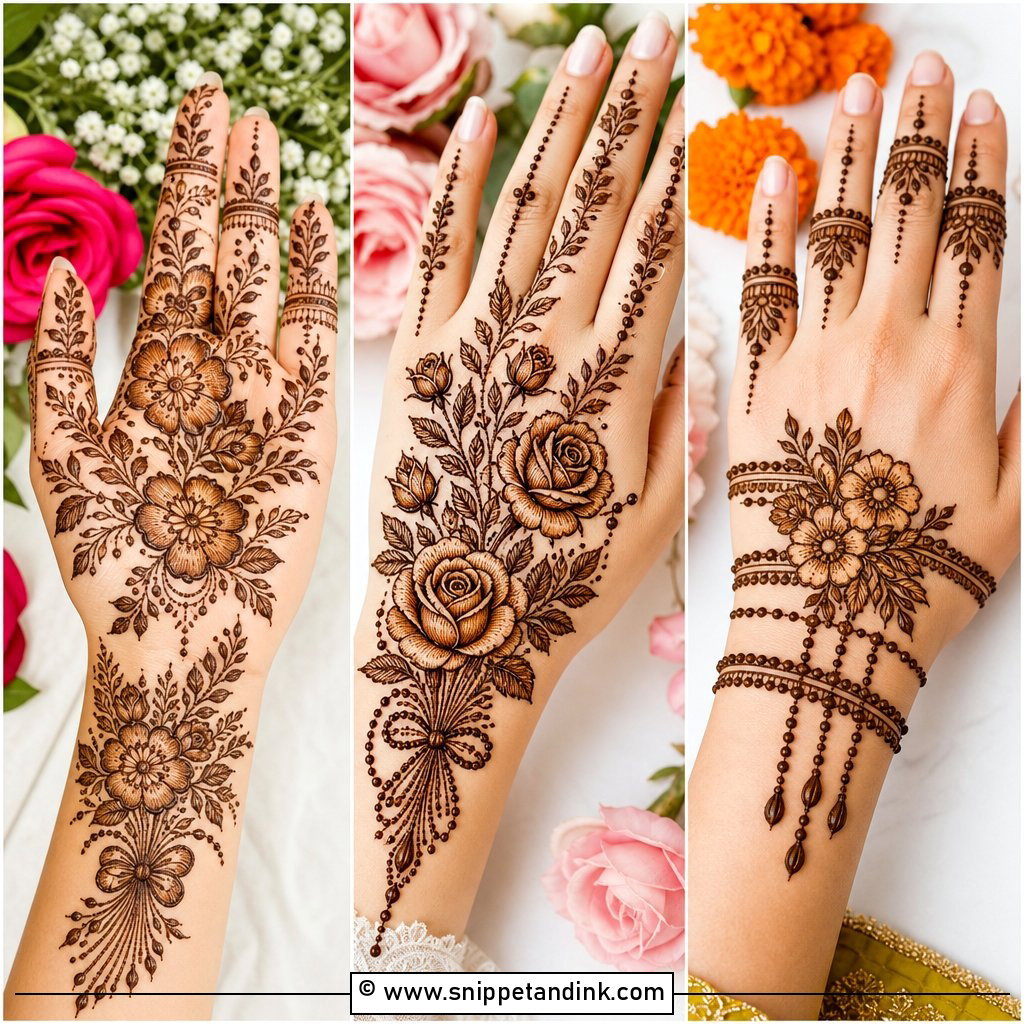
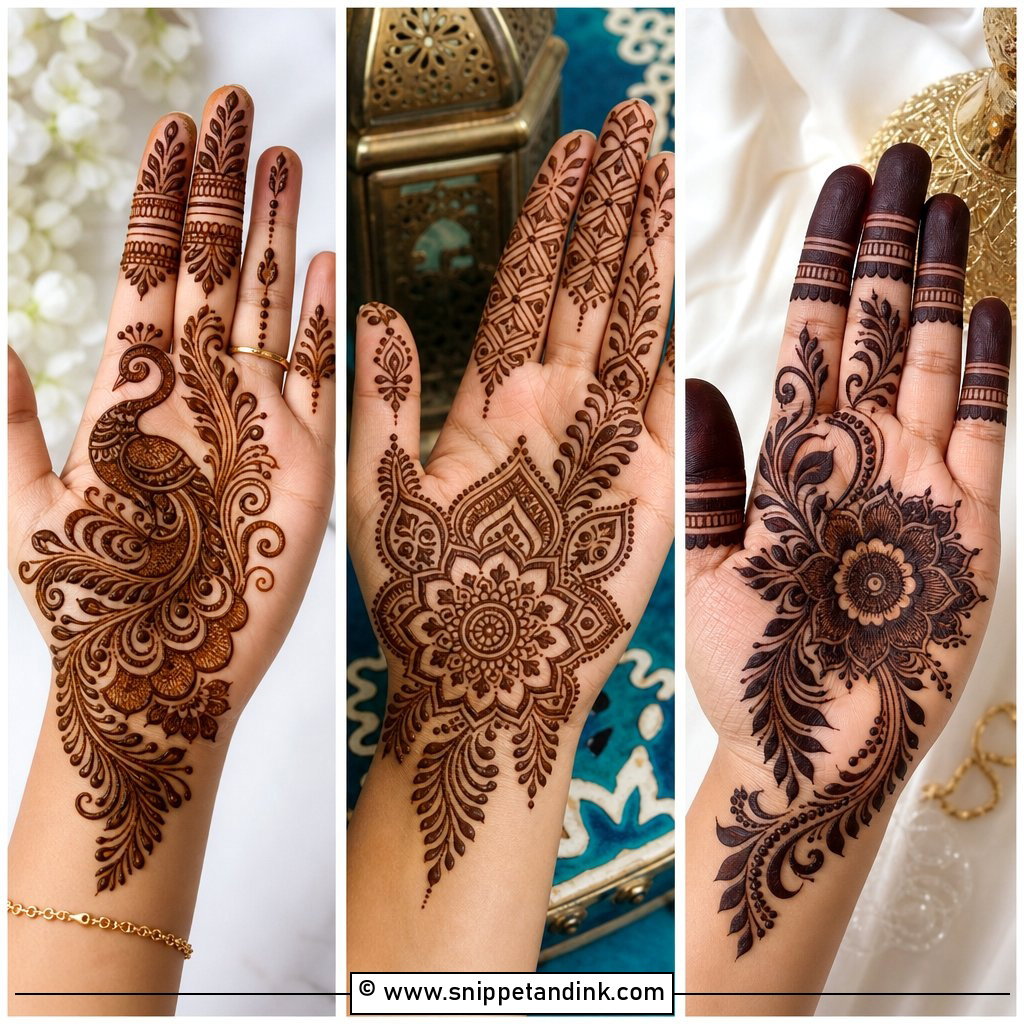
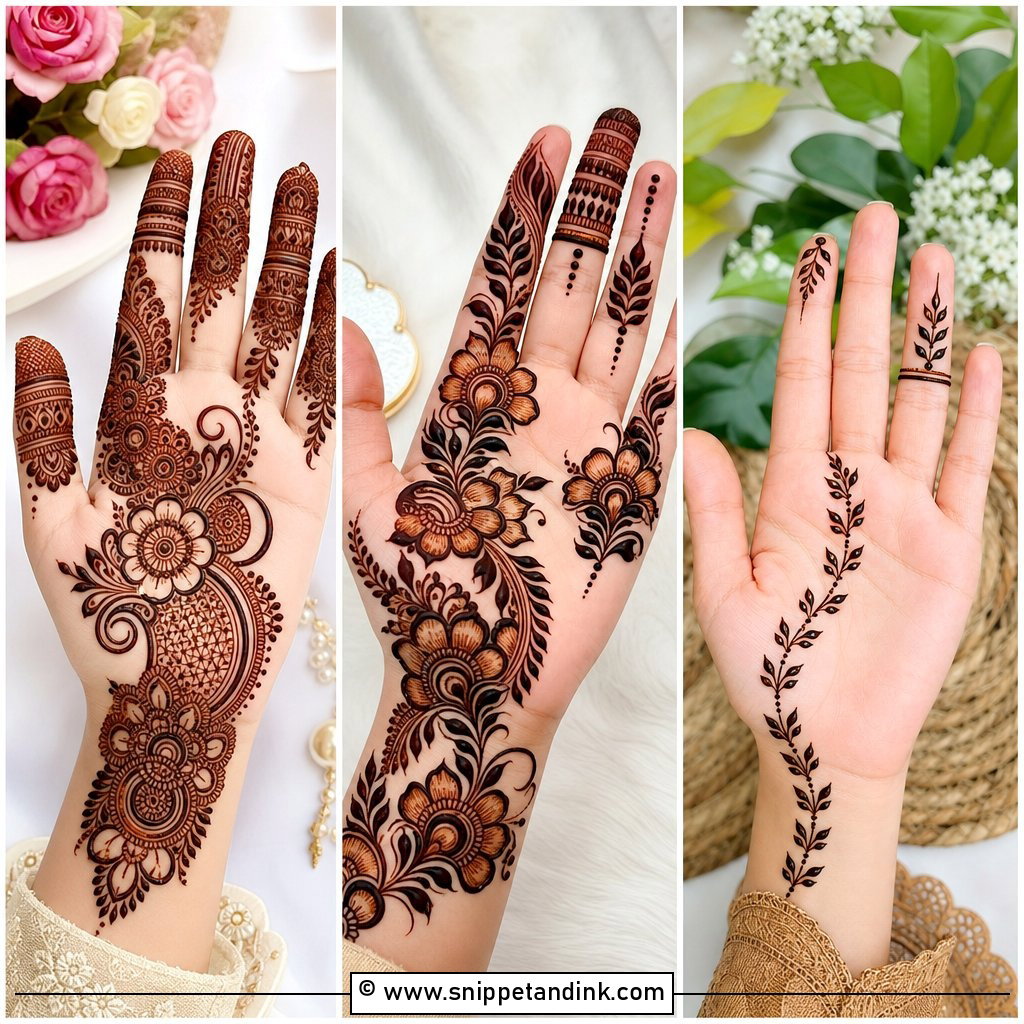
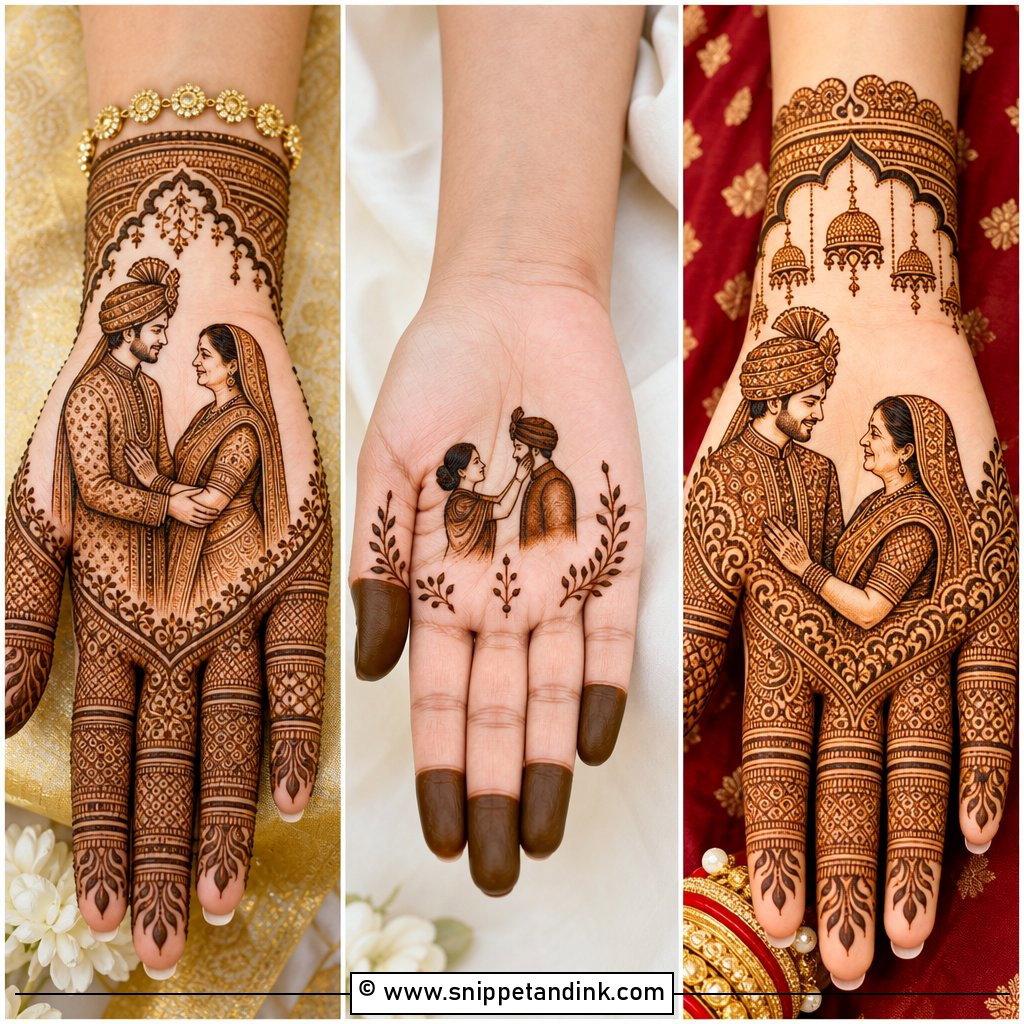

20. Eid Banch Mehndi Design
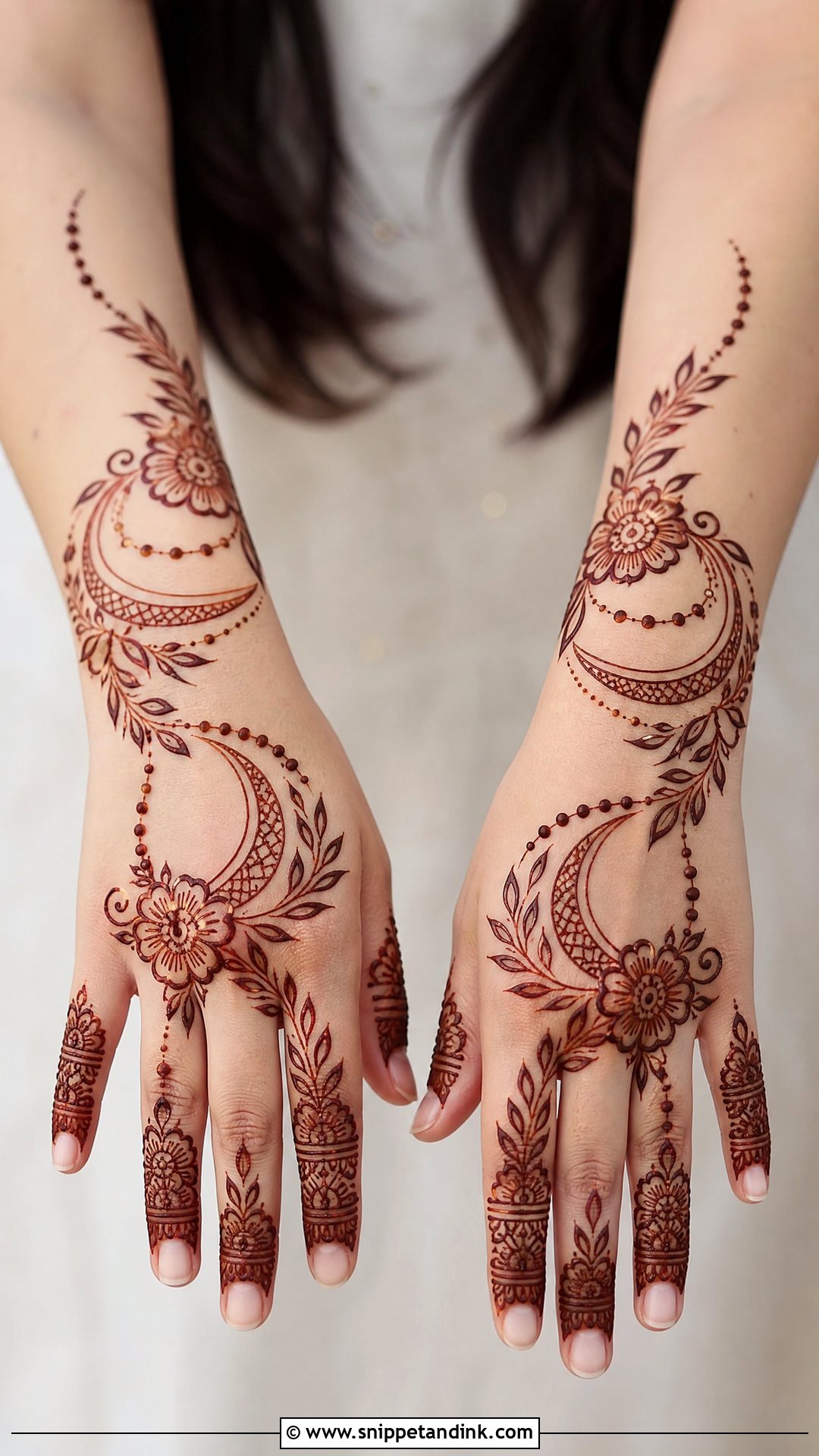
For Eid, a medium-width wrist band with florals, crescent curves and dots, plus finger detailing, is usually enough; the back of the hand can stay light. It goes on quickly, which matters on chaand raat when every artist is booked solid. Arabic flow gives a modern look, Indian detailing a richer one. Applied the night before, the stain has time to deepen to a warm reddish brown by morning prayers and visits.
21. Diwali Banch Mehndi Design
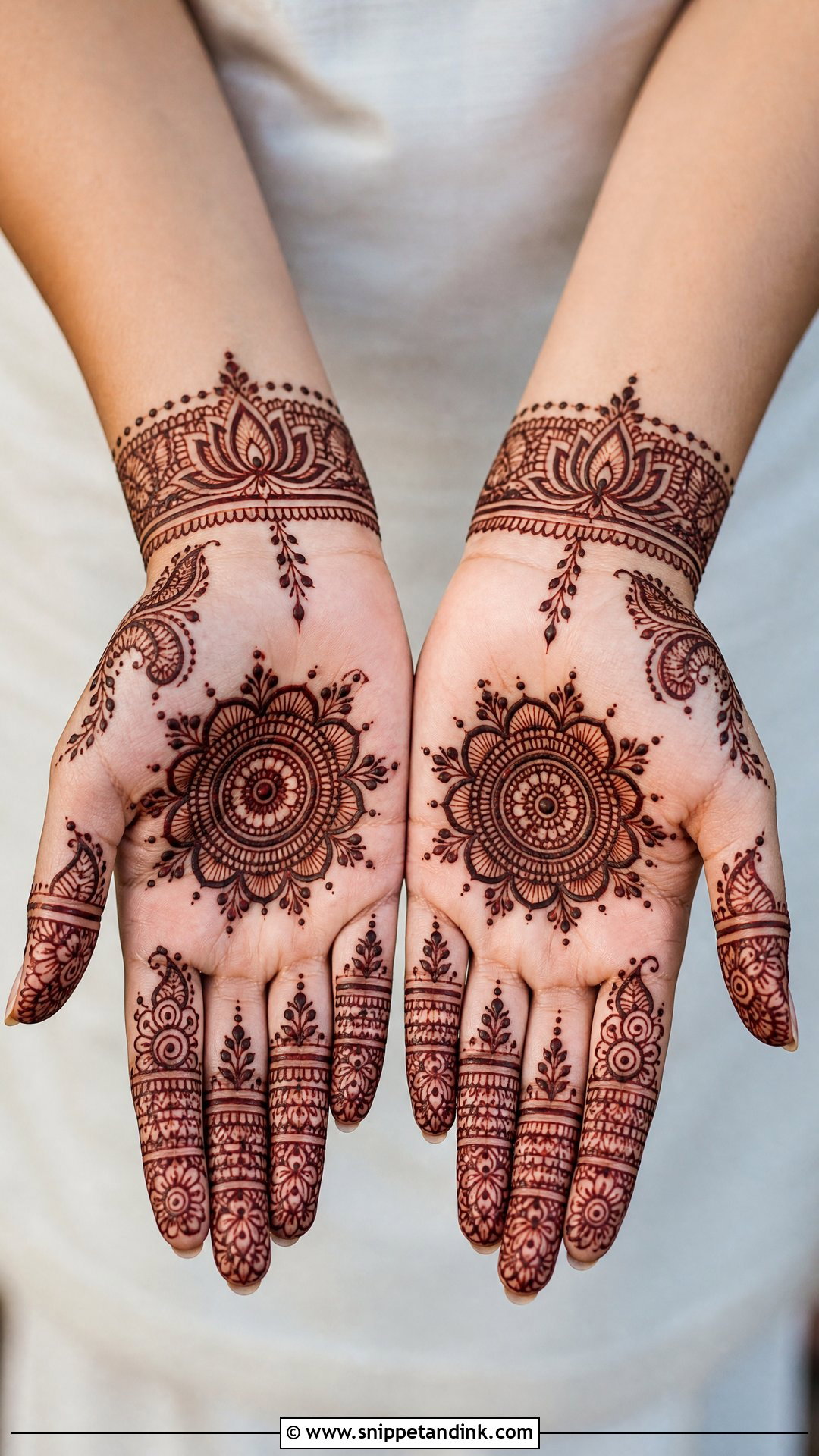
Diwali banch should look bright and balanced. I fill the wrist bands with lotus flowers, dots, leafy borders and small festive curves, with a mandala, paisley or floral trail on the palm or back of the hand. Diwali outfits often come with bangles and embroidered sleeves, so the wrist pattern needs to be sharp enough to hold its own beside them. For a lighter look, use one main band and decorate only two fingers; for more, stack the bands and add fine fillers.
22. Karwa Chauth Banch Mehndi Design
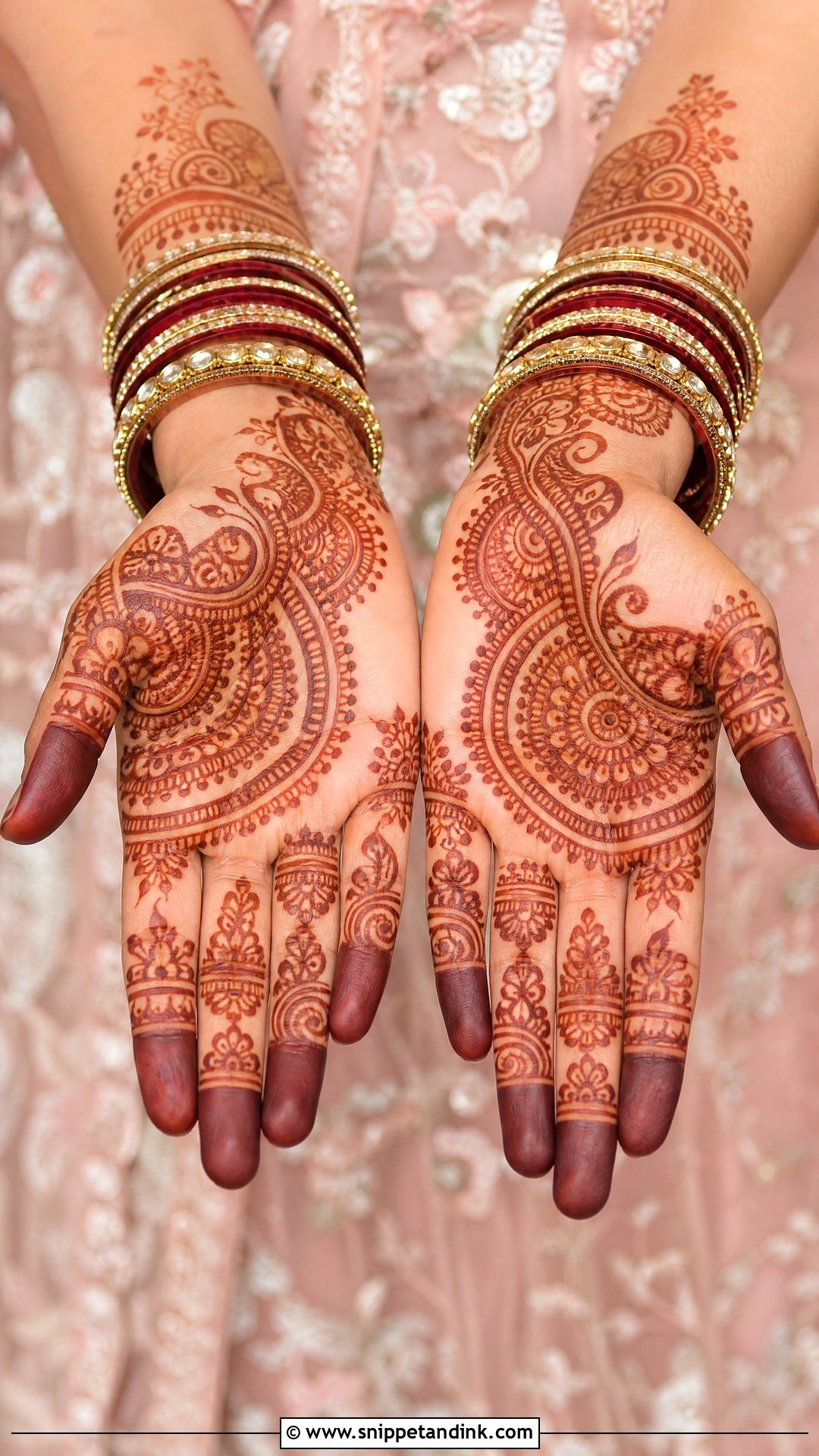
Karwa Chauth banch is usually traditional and moderately detailed, with a bangle-stack band of paisleys, mandalas, vines and fine dotted borders, and a round motif or fuller pattern on the palm. It suits red, maroon, pink and gold outfits. If you wear glass bangles, I keep the henna band slightly below the wrist bone so it stays in view. Filled fingertips give the classic finish. Because the day involves rituals with your hands in close view, the palm side deserves the cleaner line work.
23. Engagement Banch Mehndi Design
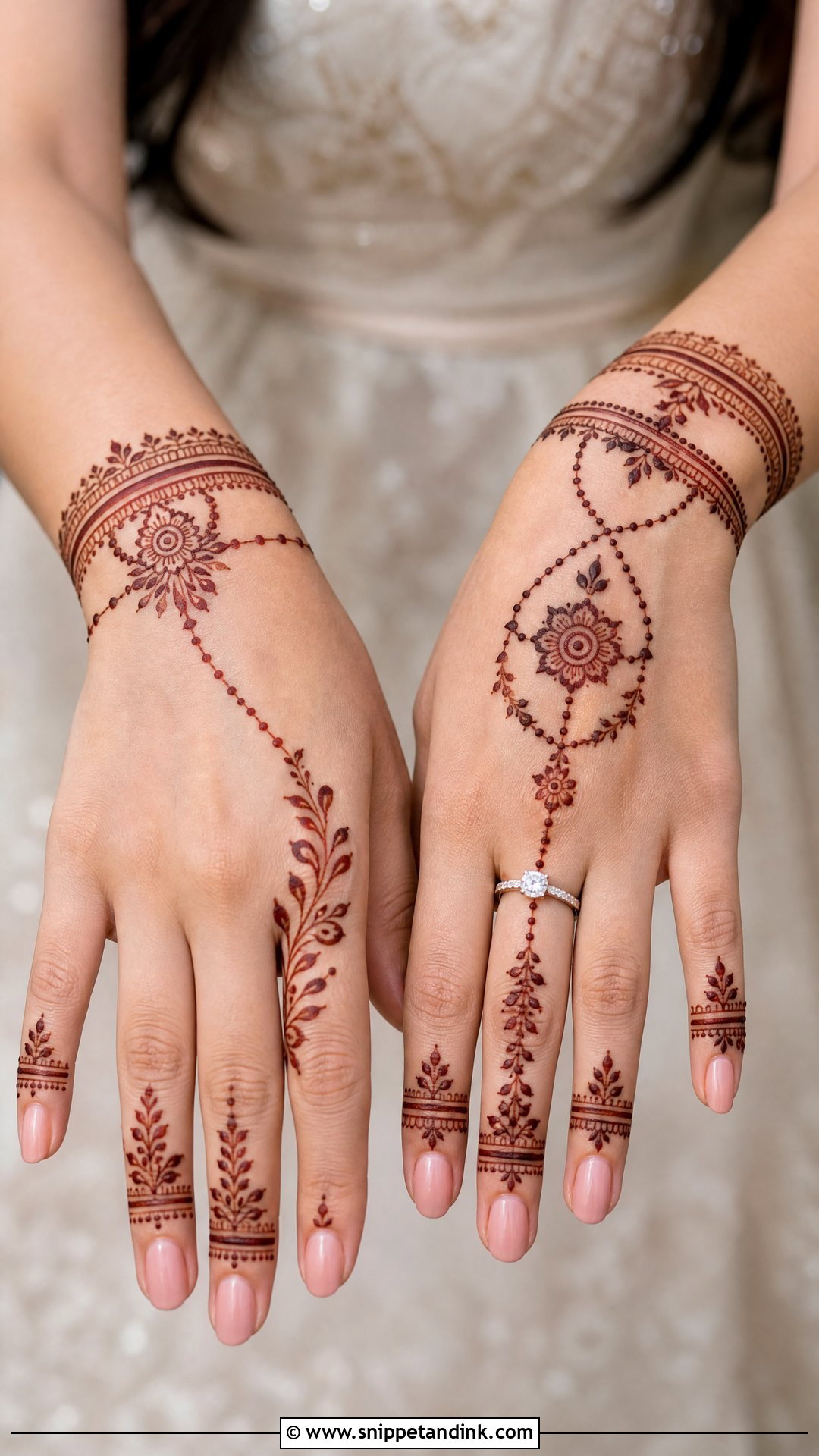
For an engagement, a bracelet on the back of the hand with a ring connection draws the eye straight to the fingers and the ring. Small florals, dotted chains and fine finger bands complete it. Leave most of the hand uncovered if you want the ring to stand out in photos, and keep the base of the ring finger bare so the ring doesn’t smear fresh lines. A symmetrical band and slim finger work frame the hand softly.
24. Wedding Guest Banch Mehndi Design
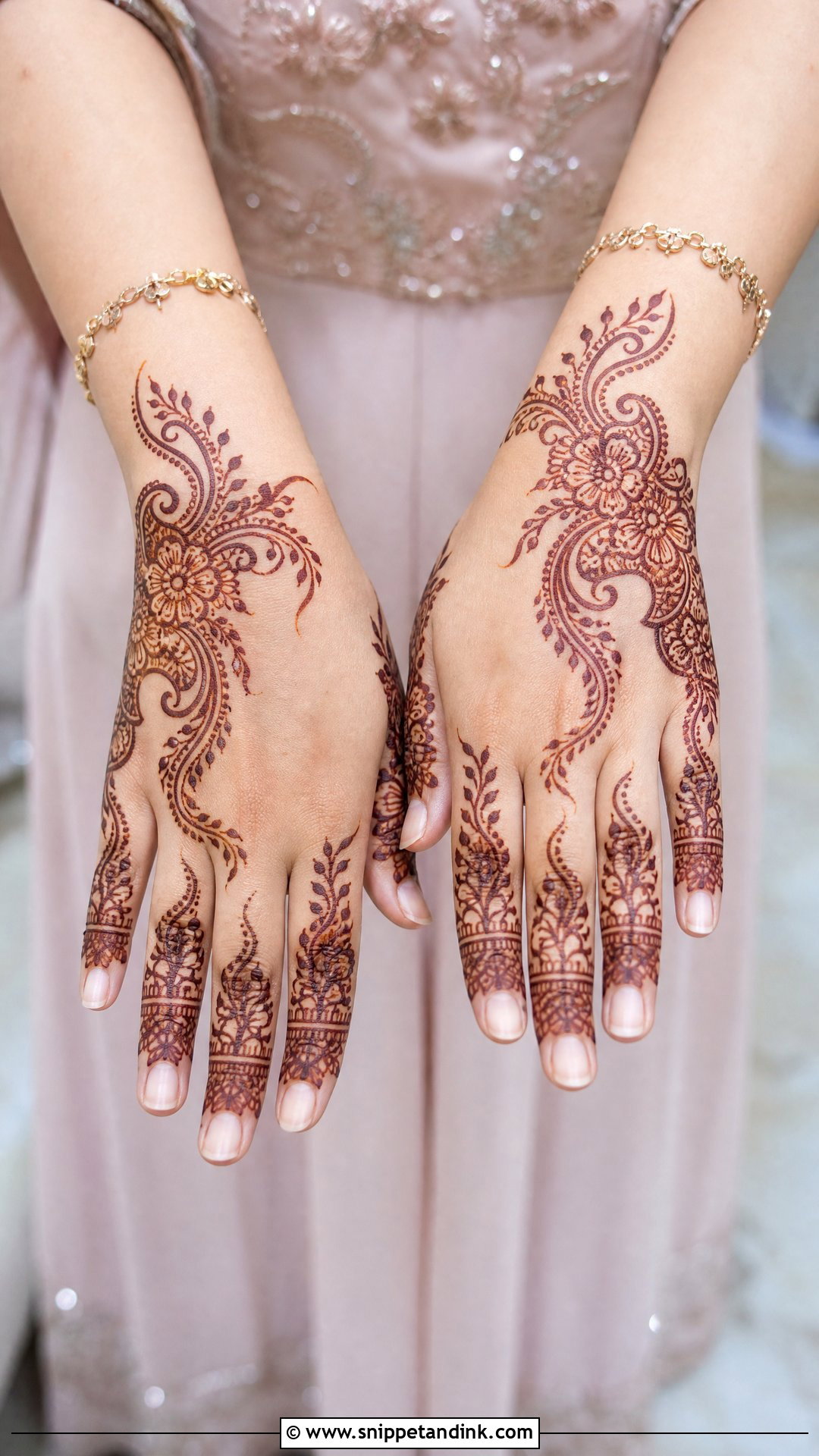
Guests need something festive that stays clearly lighter than the bride. A medium wrist band with flowers, paisleys and leafy trails and neat finger accents does it, on the back of the hand for a modern feel or the palm for a traditional one. It looks dressed up without hours in the chair, which matters at a mehndi night with a long queue. Open spaces keep it light, and it suits everything from simple kurtas to embroidered sarees.
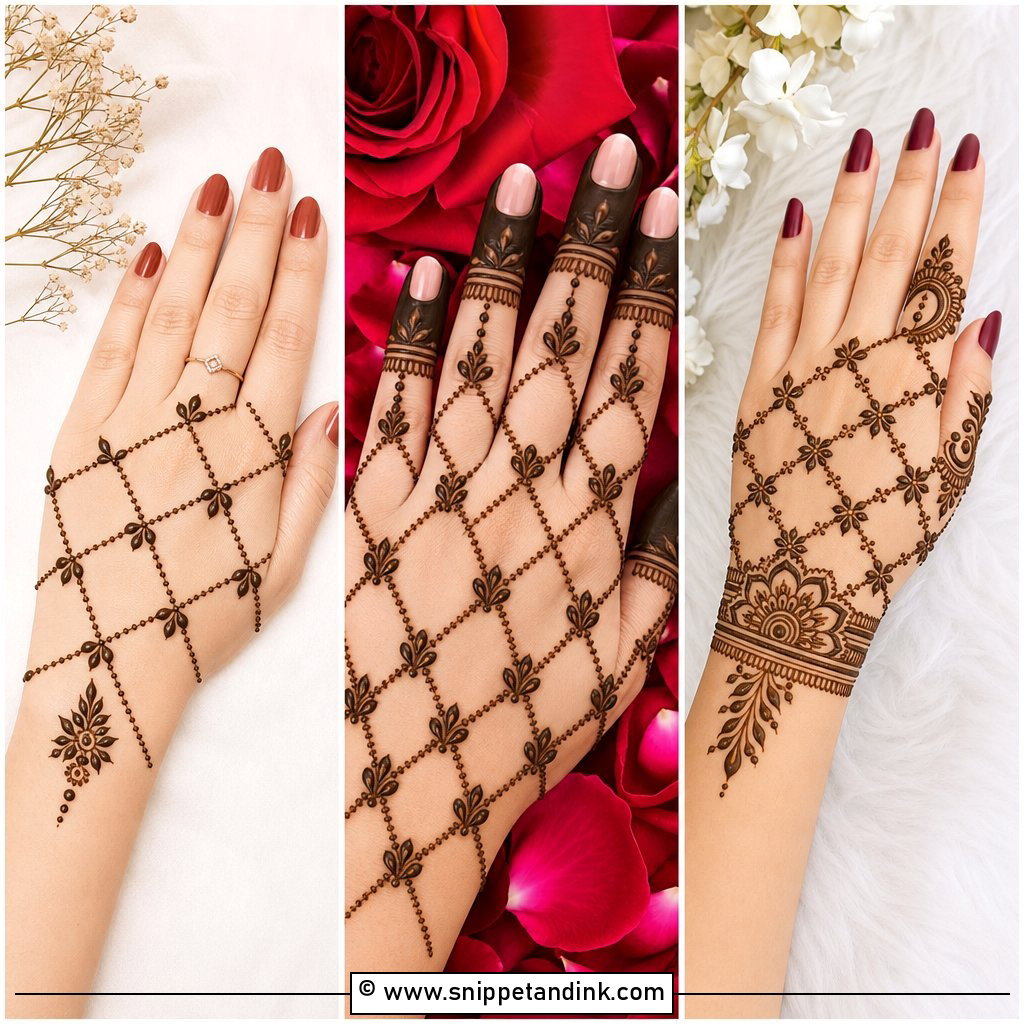


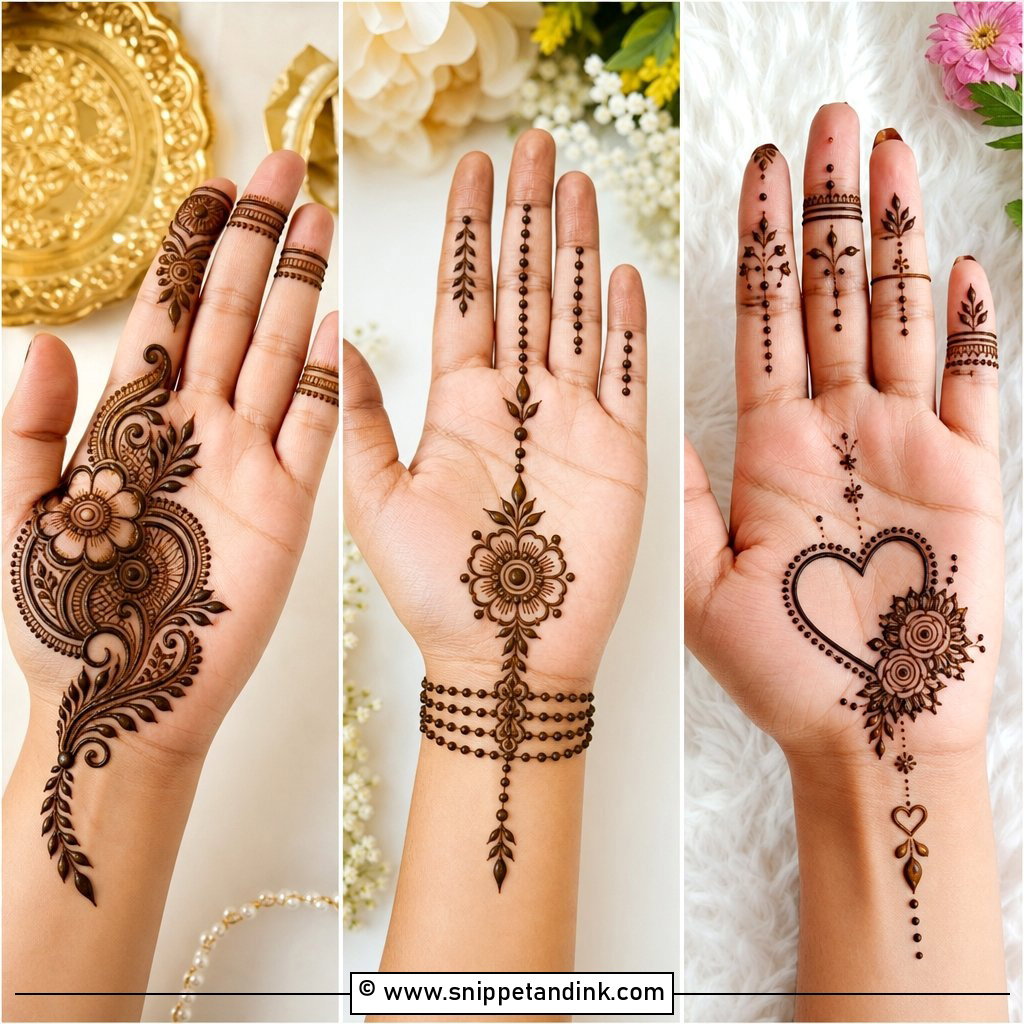
25. Indo Arabic Banch Mehndi Design
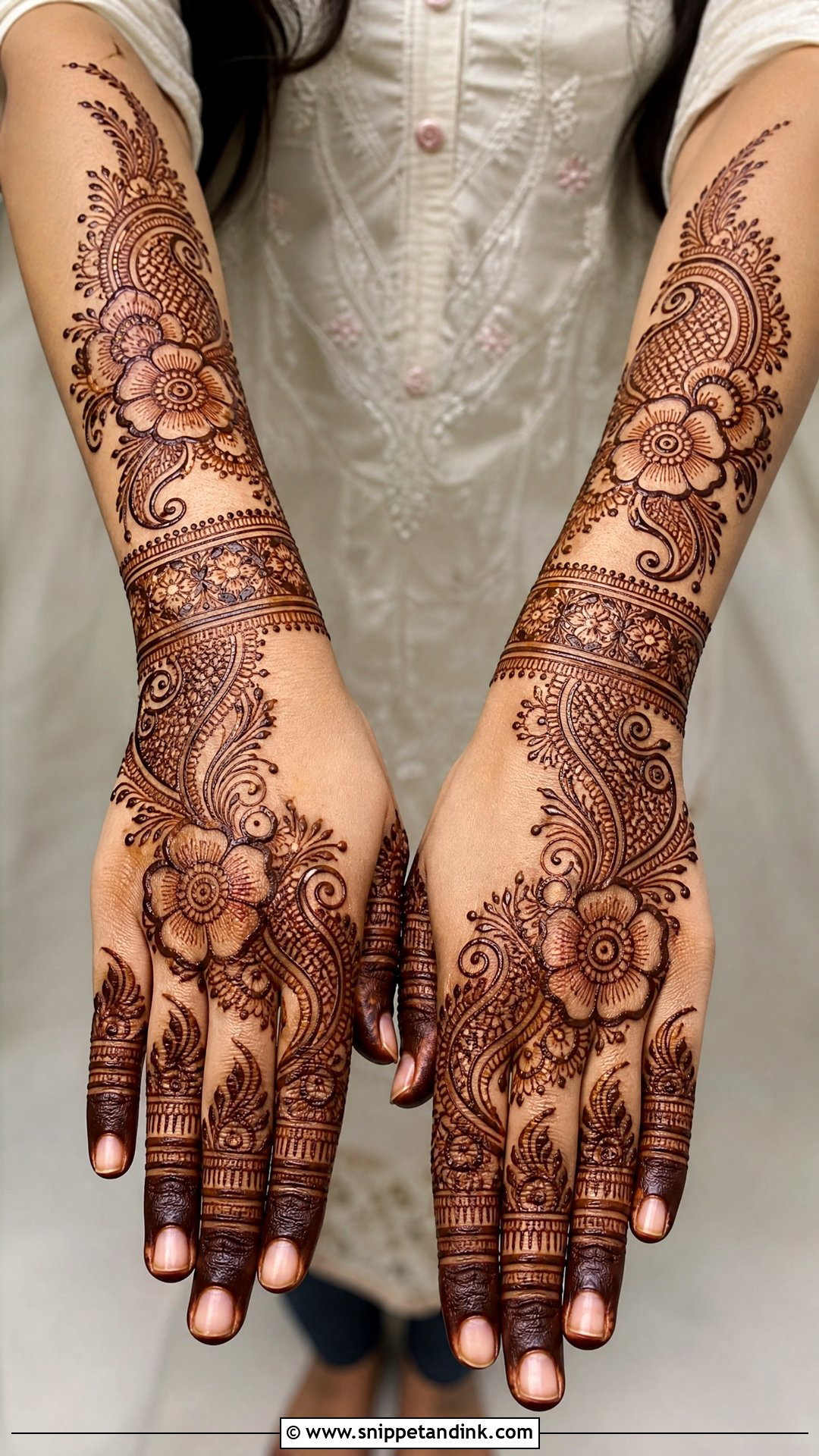
In Indo-Arabic banch the wrist holds a structured bracelet band while the hand carries large flowers, paisleys and fine fillers, so you get open space and traditional detail at once. Bold outlines on the main motifs and fine lines inside give balance. I let the flow run slightly diagonally from the band, which follows the natural line of the hand. It suits weddings, Eid, Diwali and engagements, and looks especially good on the back of the hand and forearm.
26. Moroccan Banch Mehndi Design
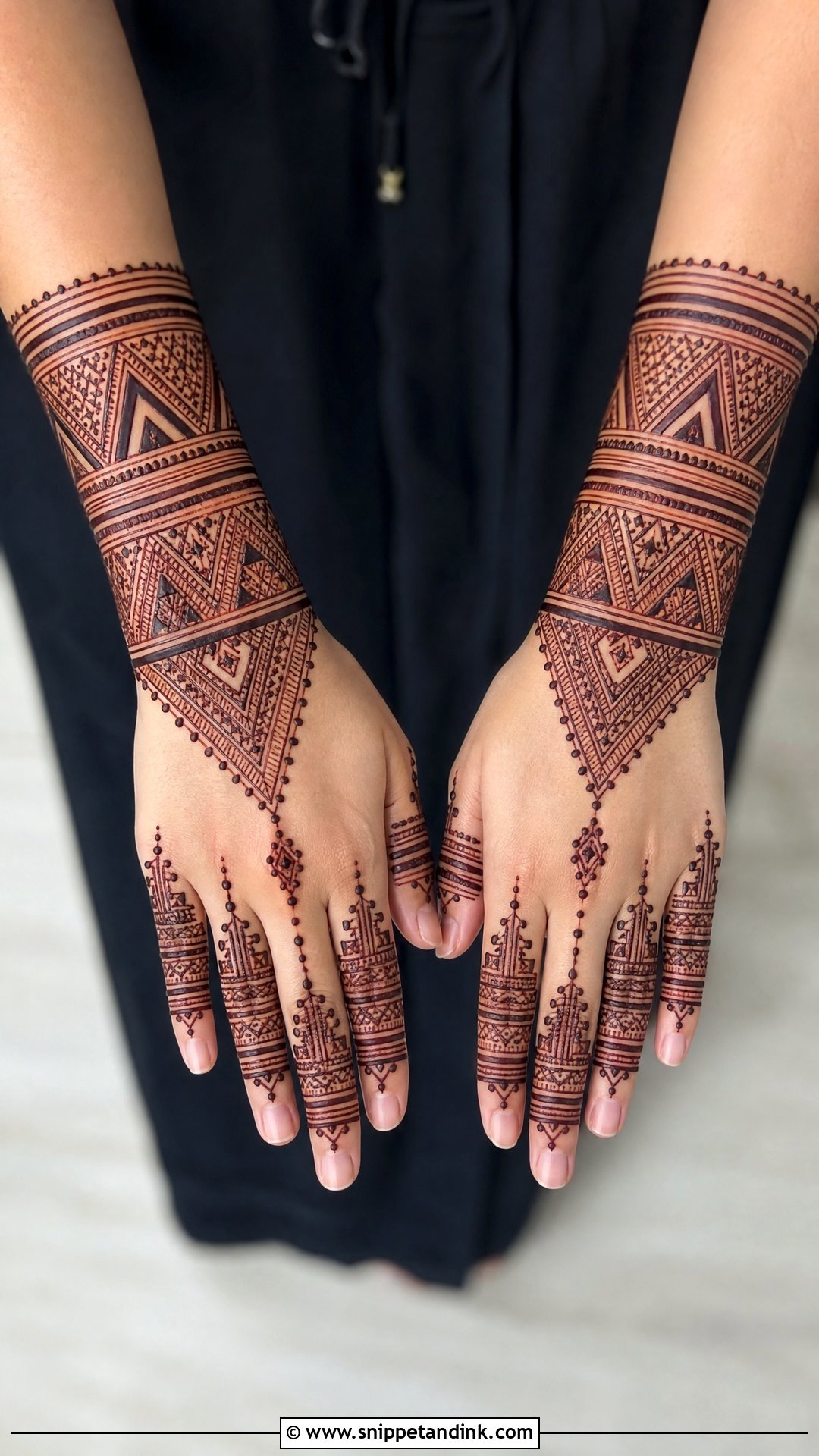
Moroccan banch is all geometry: diamonds, triangles, grids, zigzags, dots and straight lines, with a patterned cuff at the wrist and smaller geometric sections on the fingers. It suits casual events and fusion outfits. Straight lines around a curved wrist are tricky; a zigzag that looks even from the front often bunches at the sides. I count the repeats around the wrist before drawing, so the pattern meets itself cleanly at the back.
27. Gulf Banch Mehndi Design
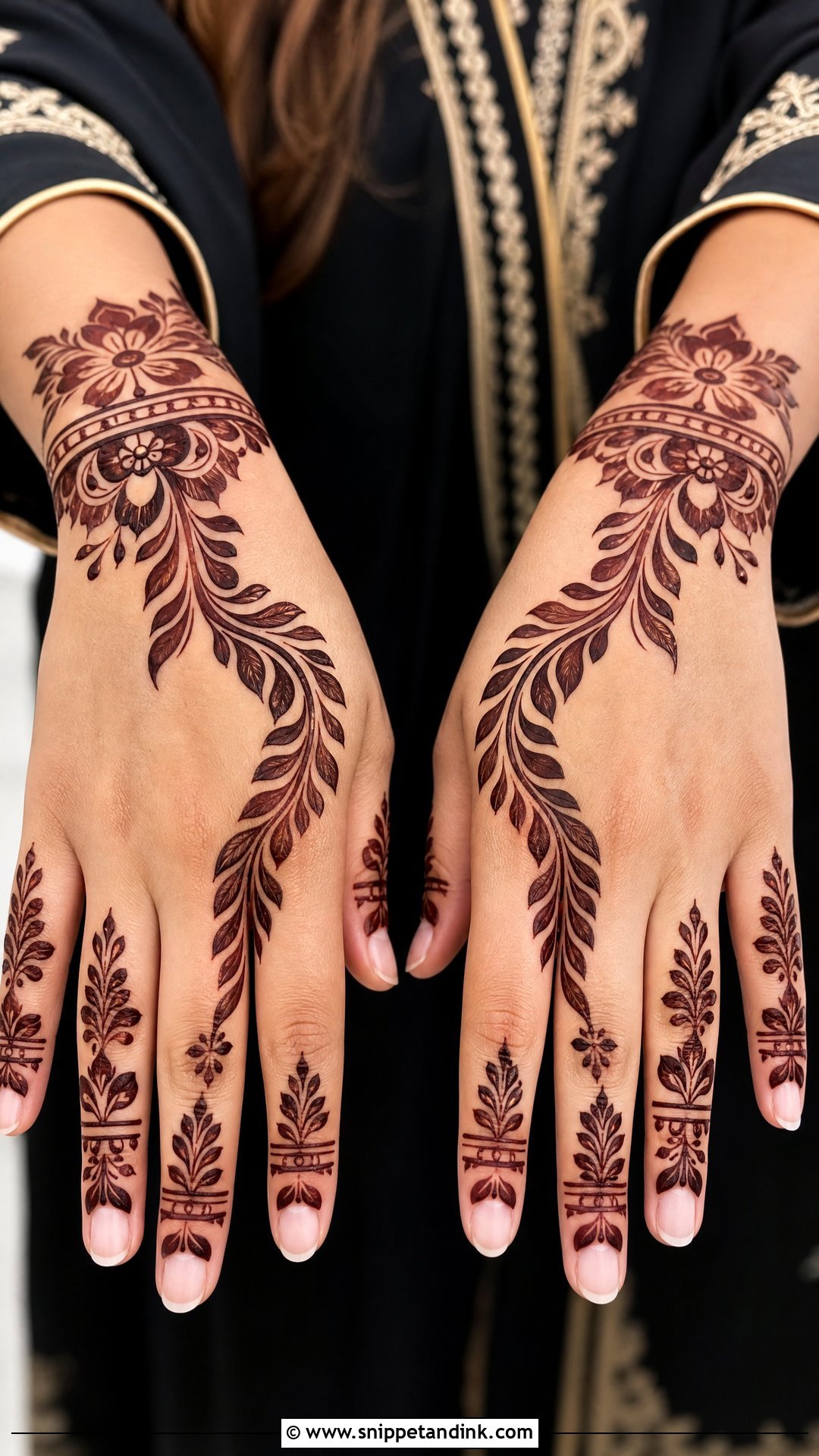
A Gulf banch mehndi design, sometimes called Khaleeji-inspired, uses bold florals, leafy curves, thick outlines and open space. The wrist band may be wide but not heavily filled, so bare skin provides the contrast, and flowing vines and large petals reach toward the fingers. Dark outlines with light shading give depth. Thick lines take a deep stain, so this style suits anyone who wants strong colour for Eid, weddings or evening events.
28. Kids Banch Mehndi Design
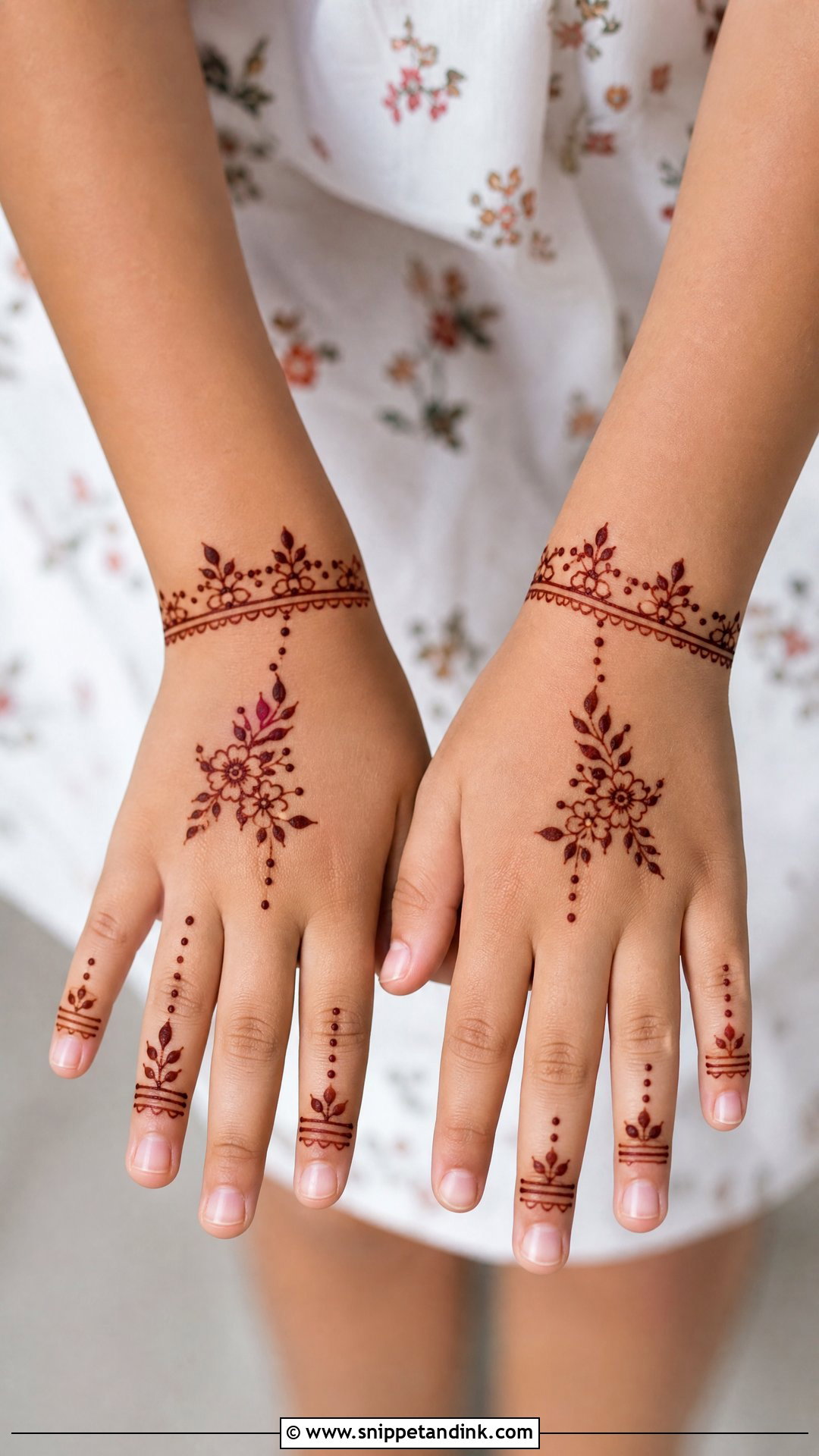
A kids banch mehndi design needs to be small, quick and comfortable: a little wrist bracelet with dots, tiny flowers and leaves, and one or two finger accents. Children rarely sit still for long, so I keep it to a few minutes and use rounded shapes that still look neat if drawn fast. The back of the hand is better than the palm because little ones grab things and smudge palms within seconds. Use only natural henna on children, never black henna.
29. Shaded Banch Mehndi Design
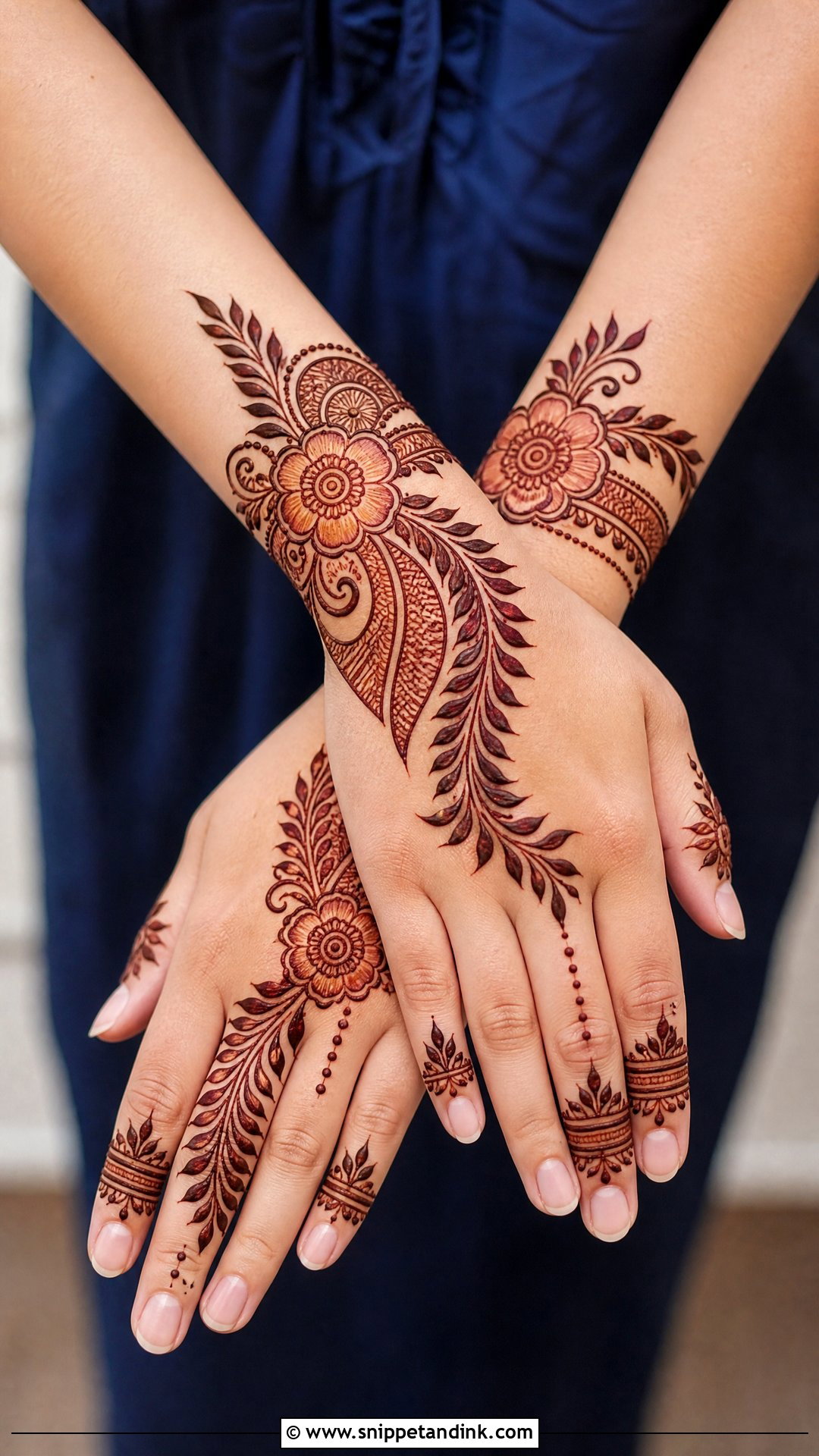
Shading adds depth to the bracelet: flowers with shaded petals, paisleys with gradient filling, leafy borders with dark tips. It suits Arabic and Indo-Arabic designs, where the larger motifs leave room to shade. I shade with a lighter touch on the cone, laying a thin even film of paste rather than lines, and hold the shape with a bold outline. The fingers can stay simple with rings or dotted trails.
30. Heavy Banch Mehndi Design
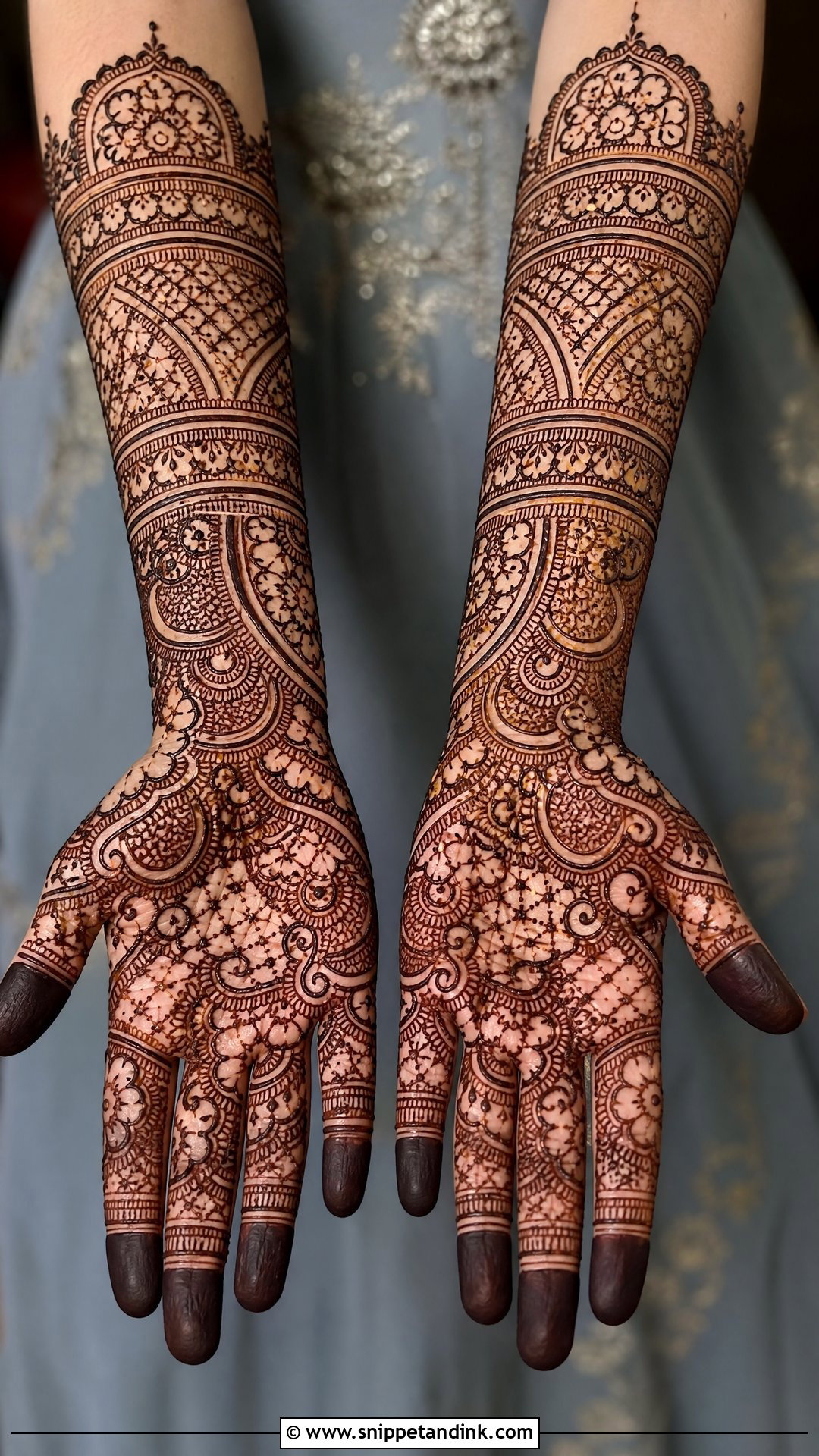
Heavy banch stacks multiple bands with jaali sections, paisleys, florals, scallops, dots and fine filler, sometimes reaching the forearm and joining a full palm or back-of-hand pattern. It suits brides, close family and major celebrations. Plan the structure before the first line: I sketch the band divisions and decide what goes in each, then keep bold borders between sections so the bracelet never gets lost. Repeated motifs make the density read as order rather than clutter.
Reading the Label on a Ready-Made Henna Cone
Around Eid, Diwali and Karwa Chauth many people draw banch designs at home with shop-bought cones. A simple wrist band is a good place to practise, but the cone matters as much as your hand.
- Natural henna paste is made from henna powder with a liquid such as lemon juice or water, sugar and essential oils. If the ingredients list is missing or vague, skip it.
- Be wary of cones promising a very dark stain within minutes, or a black colour. That usually means added chemical dyes, which can burn or cause lasting allergic reactions.
- Natural paste is perishable. Fresh cones are often kept frozen and should be used within a short time once thawed, so a cone that has sat on a warm shelf for months is unlikely to be pure henna.
- A good natural stain starts orange when the paste comes off and darkens to brown over the next day or two. If yours is dark the moment you scrape it off, question what was in it.
Try a small dot on your inner arm and wait a day before covering both wrists, especially on children or anyone with sensitive skin. If it itches, swells or burns, wash it off and don’t use that cone again.
Is the Band Still Visible Once Your Bangles Go On?
Banch mehndi decorates the wrist and lets the rest of the hand stay as light or as full as the occasion needs. A simple bracelet, a bold cuff, a bridal full hand or a modern finger chain all start from the same band. Keep that band clear, the motifs balanced and the spacing clean. Florals and dots read soft; paisleys, mandalas and jaali read traditional; geometric and jewellery layouts read modern. Before your artist starts, put your bangles on and show her where they sit, so the band she draws is one you’ll actually see.
You'll Like These Ideas:






Leave a Reply