
Festival season is my busiest time of year, and the requests have shifted. Fewer people ask for both hands packed to the elbow; more ask for placement that leaves skin showing, a back hand that looks like jewellery, or a single mandala that photographs cleanly. Heavy isn’t wrong, it just isn’t the default any more. Below are 35 designs for Eid, Diwali, engagements, weddings and smaller family functions, with notes on who each suits, how long it takes and what tends to go wrong.
One Design or Three? Spacing Henna Across a Festival Week
Festivals and weddings rarely come one at a time. Eid falls during wedding season, Diwali comes with days of family visits, and a wedding can mean a roka, a mehndi night and a reception within a week or two. Henna has its own timetable, and working with it saves a lot of disappointment.
A stain is orange when the paste comes off and reaches its darkest a day or two later. It holds well for about a week, then fades as the skin renews, with palms usually fading before the back of the hand. So one well-timed application can cover several events if they fall close together.
- Two events in one week: one design, applied one to two days before the first, will usually still look good at the second.
- Events two or three weeks apart: keep the first design light, ideally on the back of the hand only, so a fresh application later has clear skin to work on.
- A wedding plus festivals around it: save the heaviest coverage for the wedding. Anything applied over a fading old stain looks patchy.
- Last-minute plans: the night before still works, but expect a brighter, more orange colour on the day itself.
1. Modern Arabic Mehndi Design
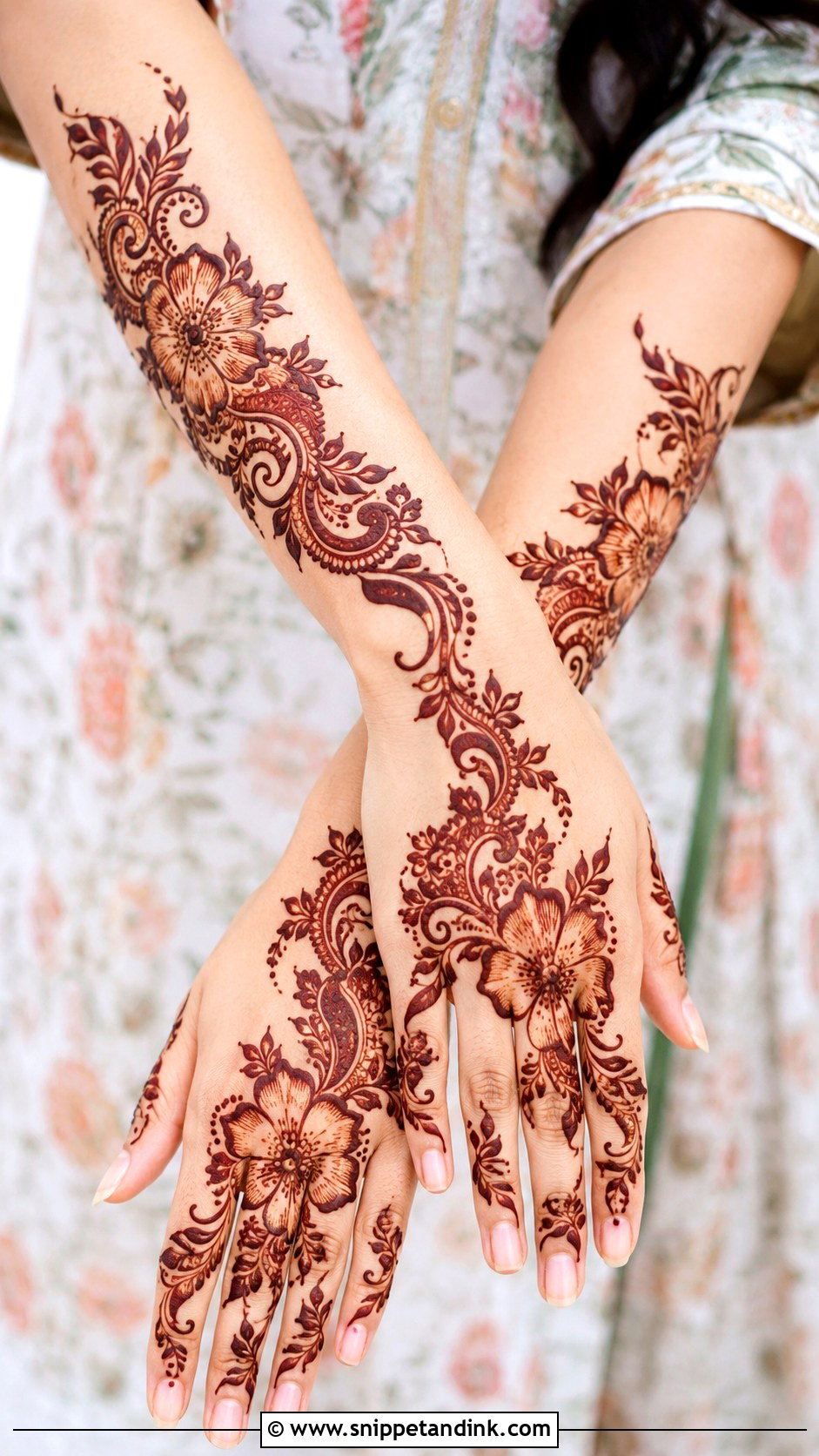
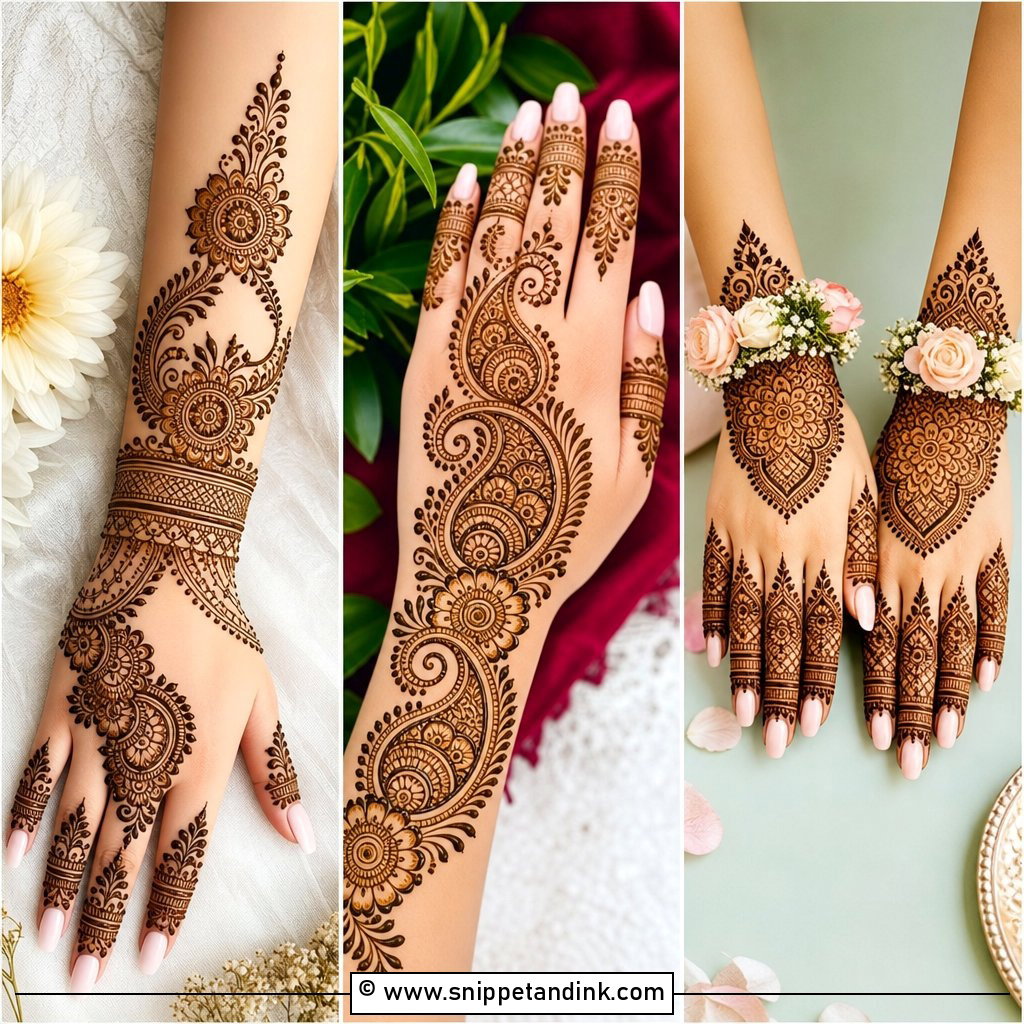
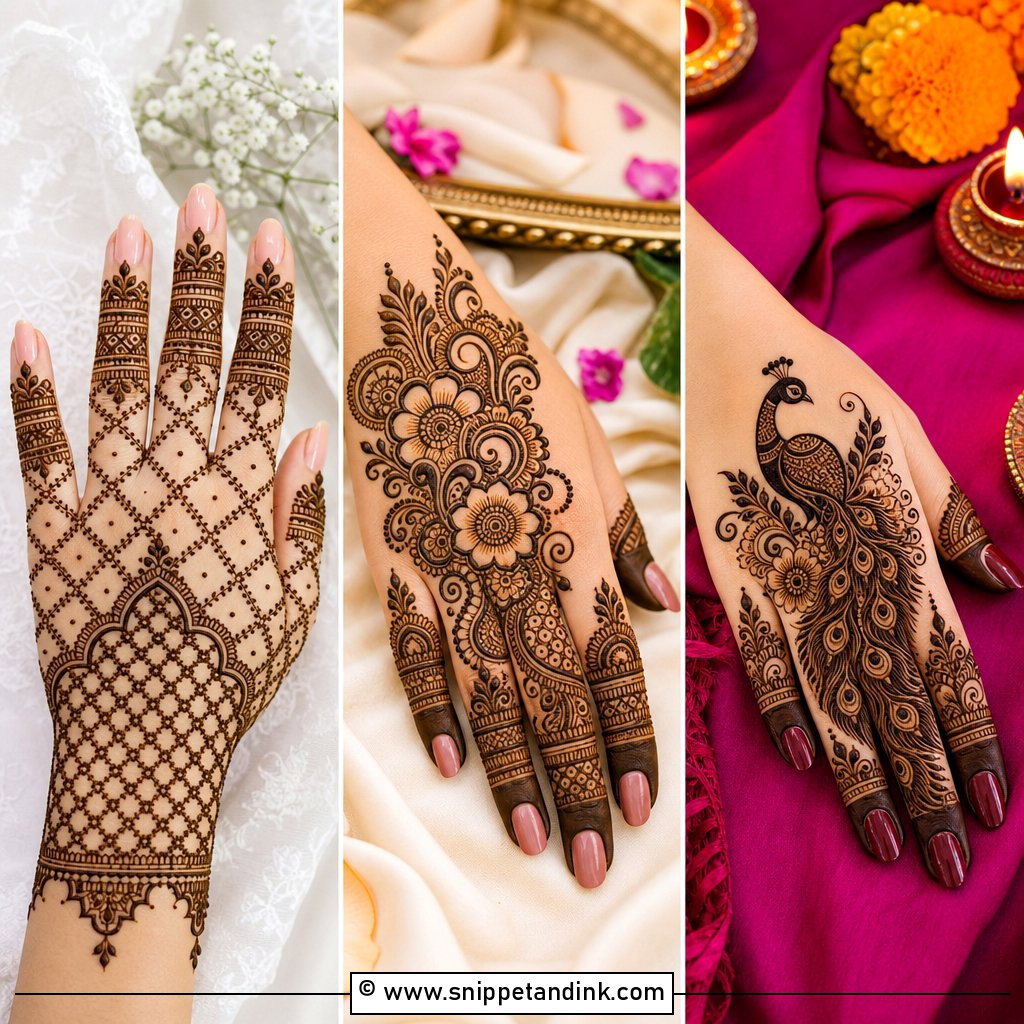
Arabic work starts on one side of the wrist and runs diagonally toward the fingers, with large flowers, leafy vines, shaded petals and curved paisleys doing the heavy lifting. Because it skips the filler, it goes on quickly, which is why I lean on it during festival rush nights. Leave a couple of fingers with only fine leafy detail. The open gaps let the stain show on any skin tone, and deeper skin in particular benefits from bold outlines over fine shading.
2. Modern Back Hand Mehndi Design
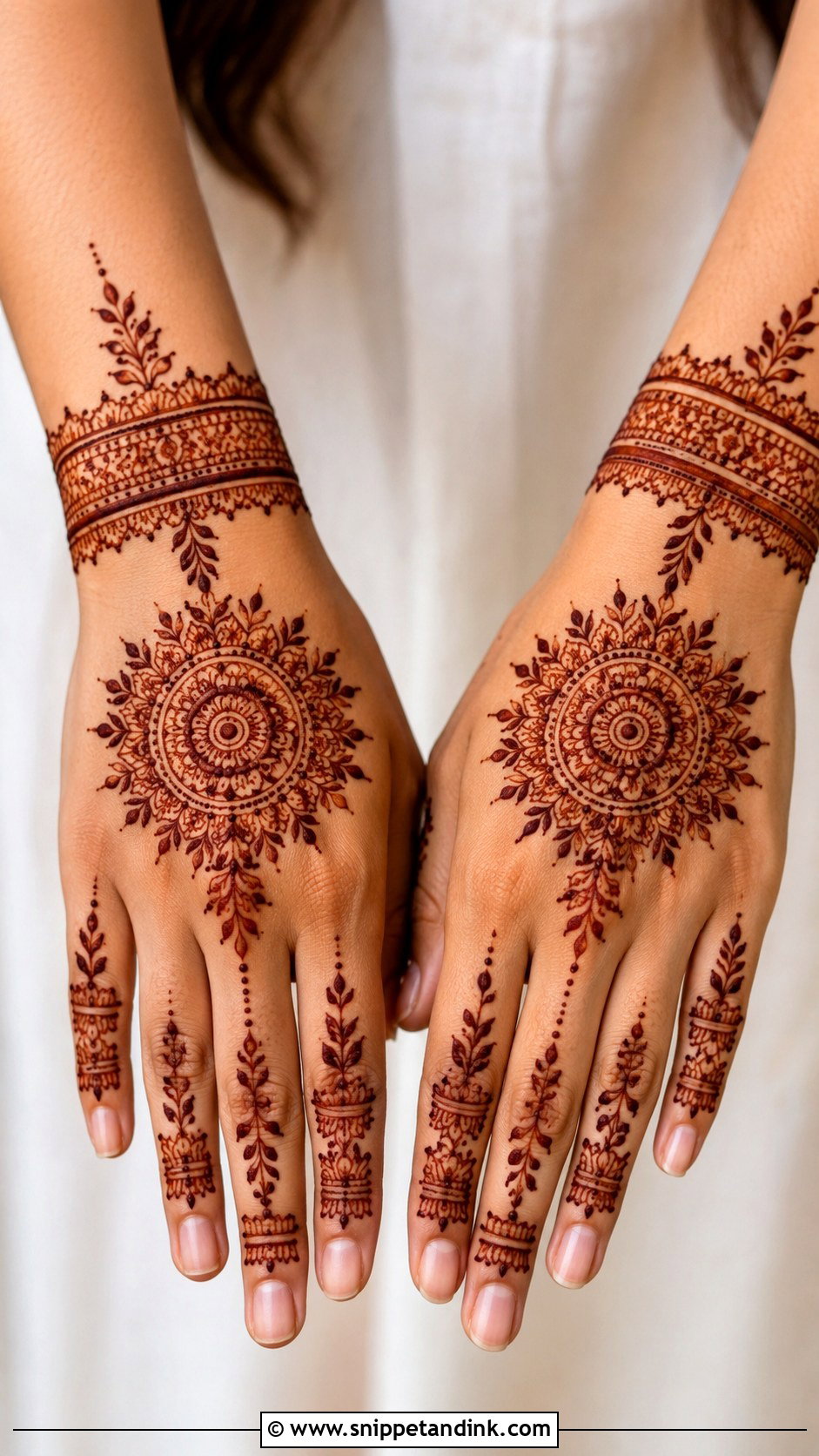
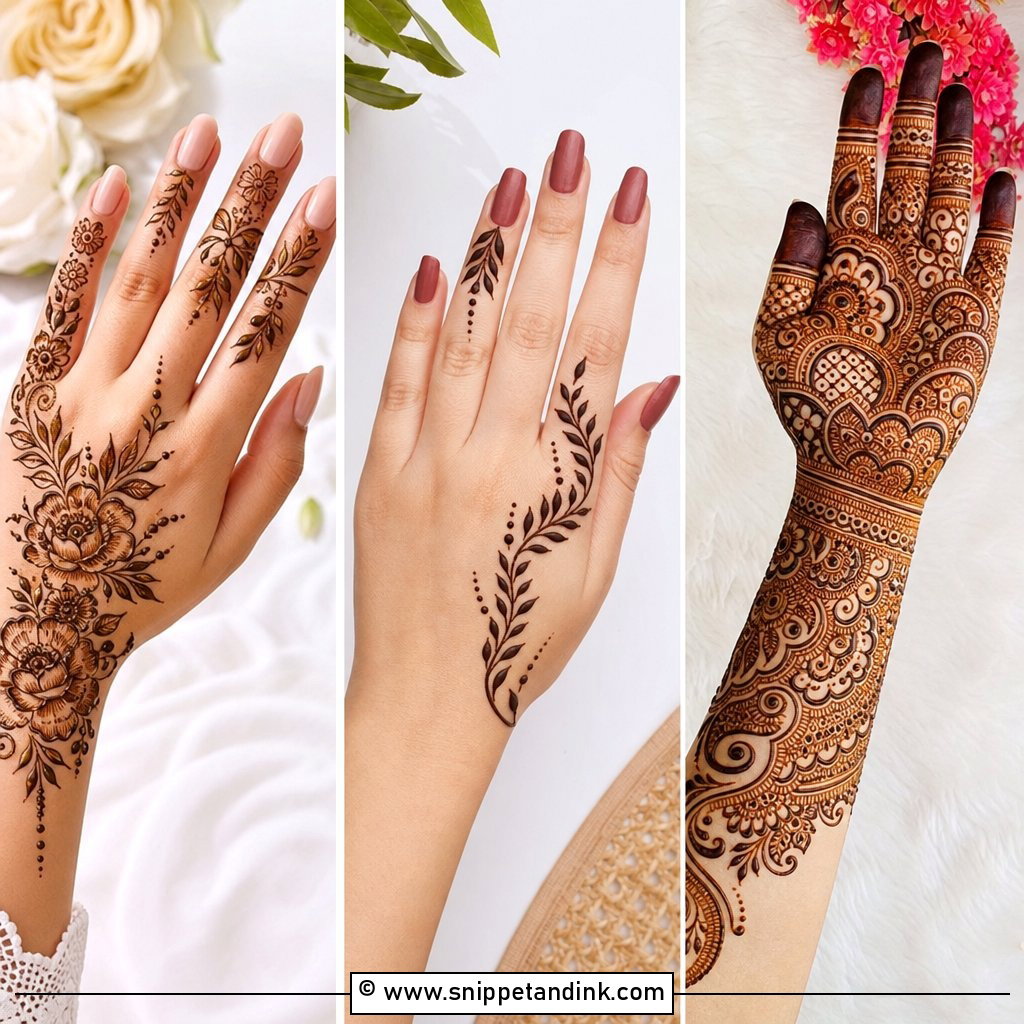
The back of the hand is the side people see when you hold a clutch, show off bangles or pose for photos, so this is where I put jewellery-style work: a central mandala, a bracelet band, finger chains or a diagonal floral trail. Let the centre motif breathe and link it to the fingers with dots or small florals. One thing to expect: the back of the hand stains a little lighter than the palm, so the bolder the outline, the better it reads.
3. Modern Front Hand Mehndi Design
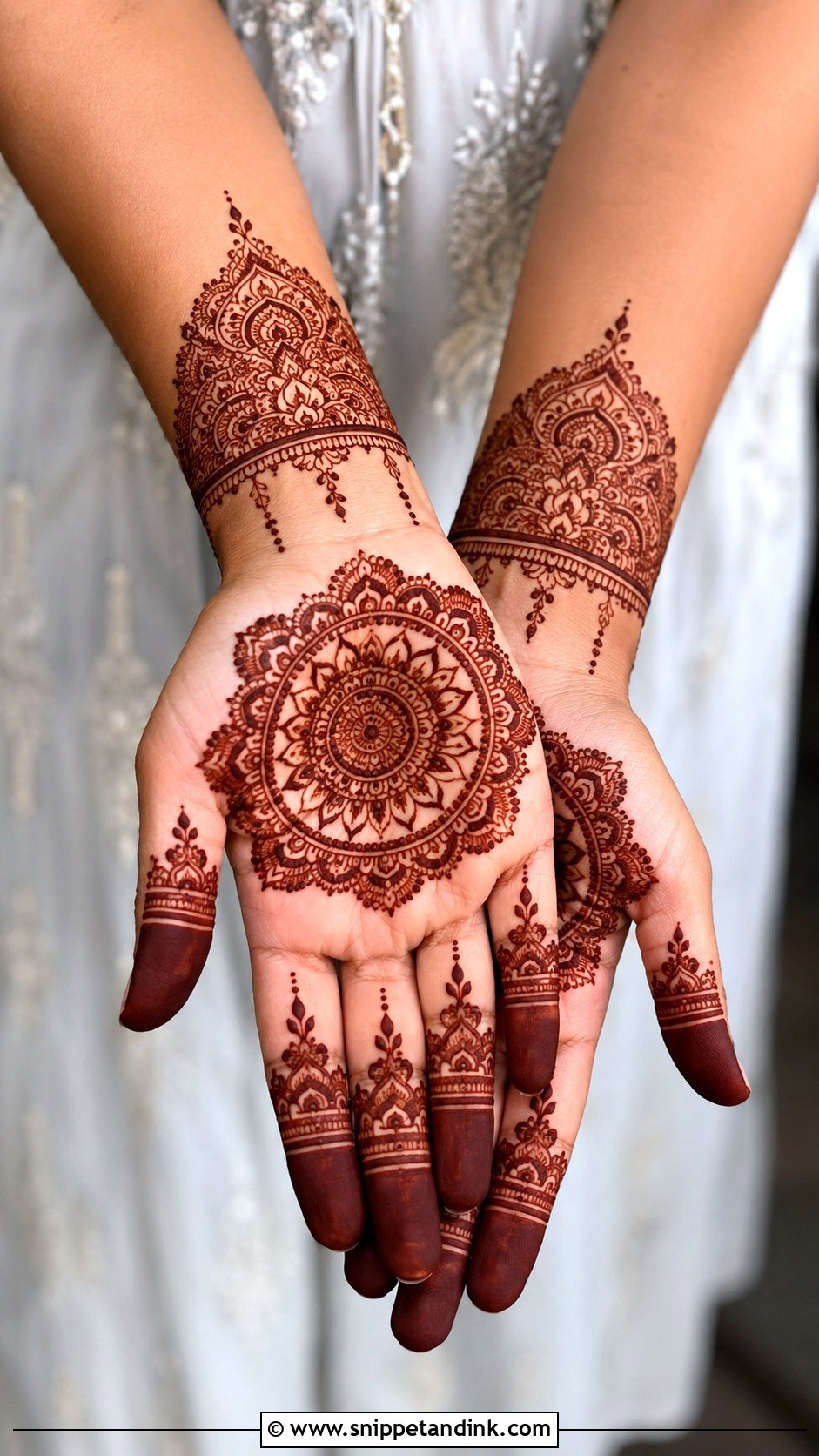
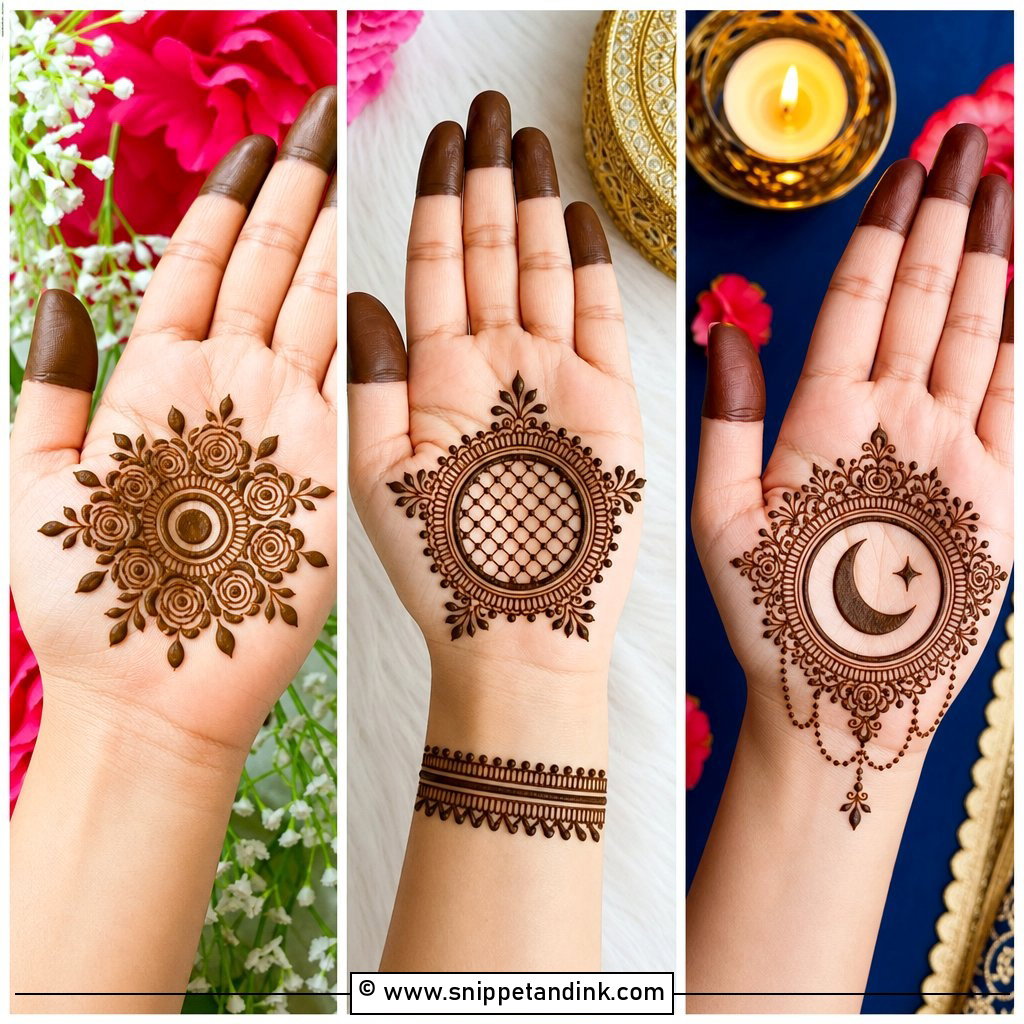
On the palm side, a mandala, lotus, paisley cluster or floral circle takes the centre while the fingers carry thin lines, dots, leaves or half-filled tips. Spacing and shading decide whether it reads as a small-function design or a wedding one. Keep the wrist to a cuff border for a lighter finish, or run it toward the forearm when you want it dressier. Palms take the deepest colour of anywhere on the hand.
4. Modern Simple Mehndi Design
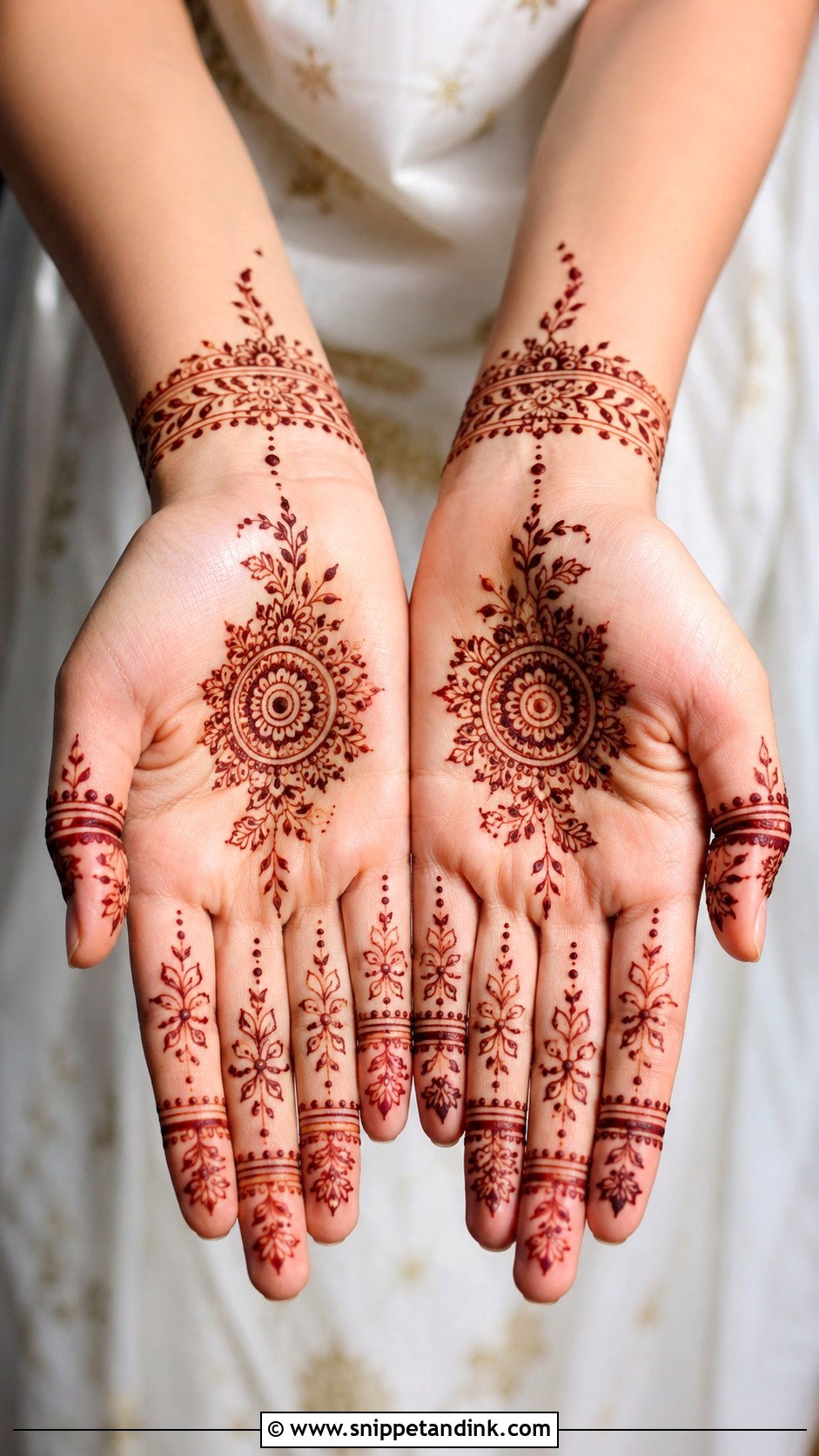
Quick and neat: a small palm mandala, slim finger lines, tiny flowers and a clean wrist border. With fewer motifs, symmetry and spacing do all the work, so I limit it to two or three motif types per hand. It dries faster than heavy work, which matters if you have somewhere to be. Good for college events, office celebrations and last-minute plans.
5. Modern Bridal Mehndi Design
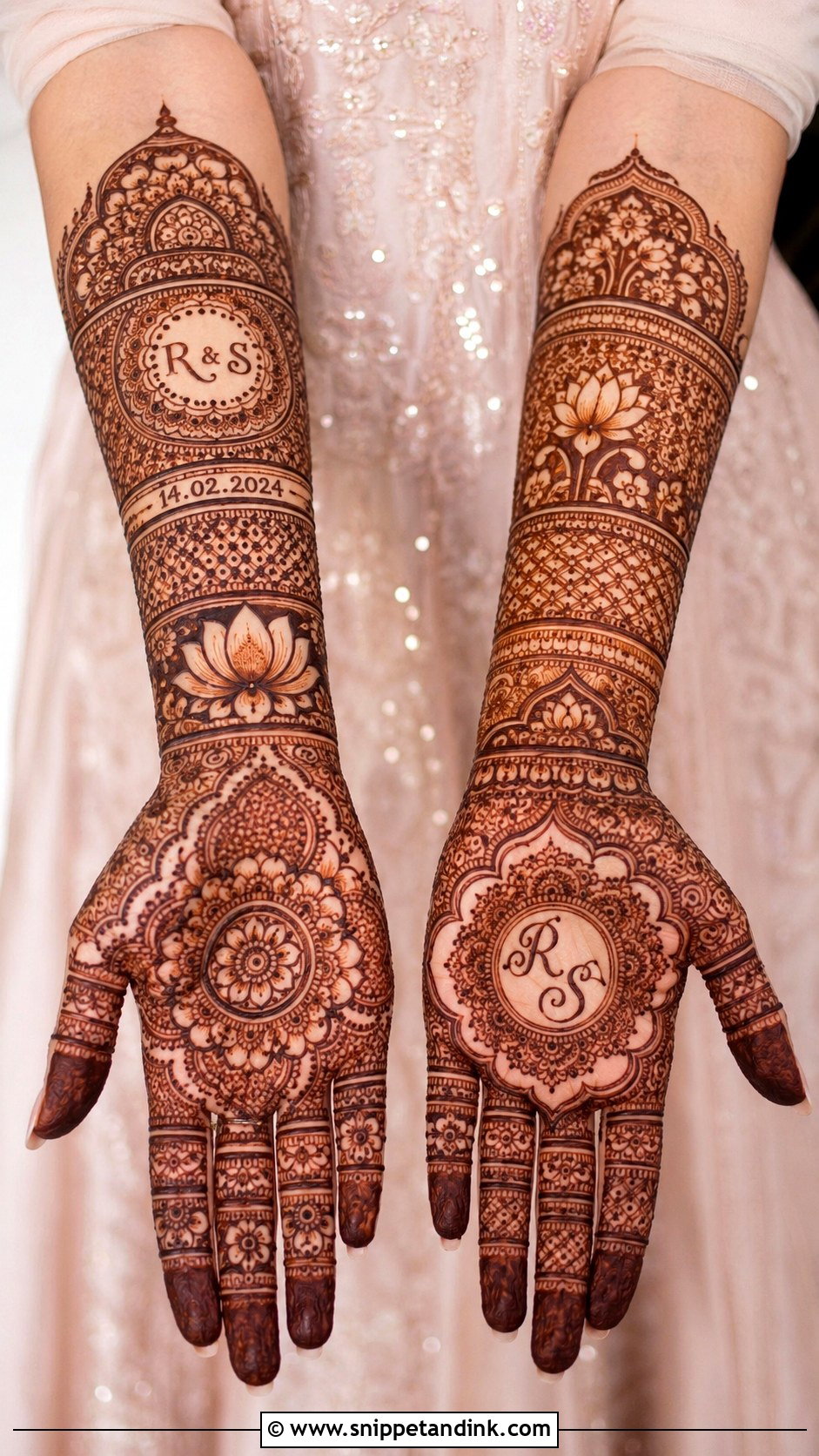
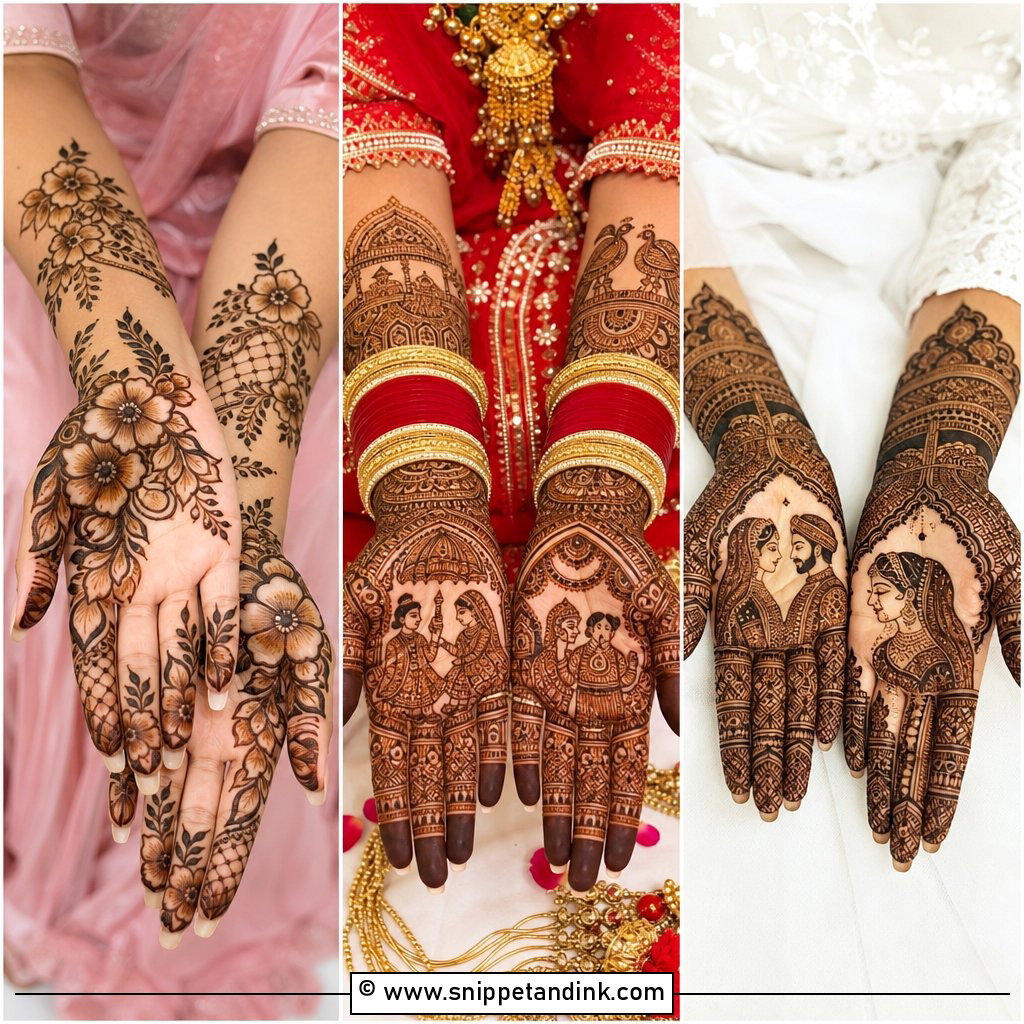
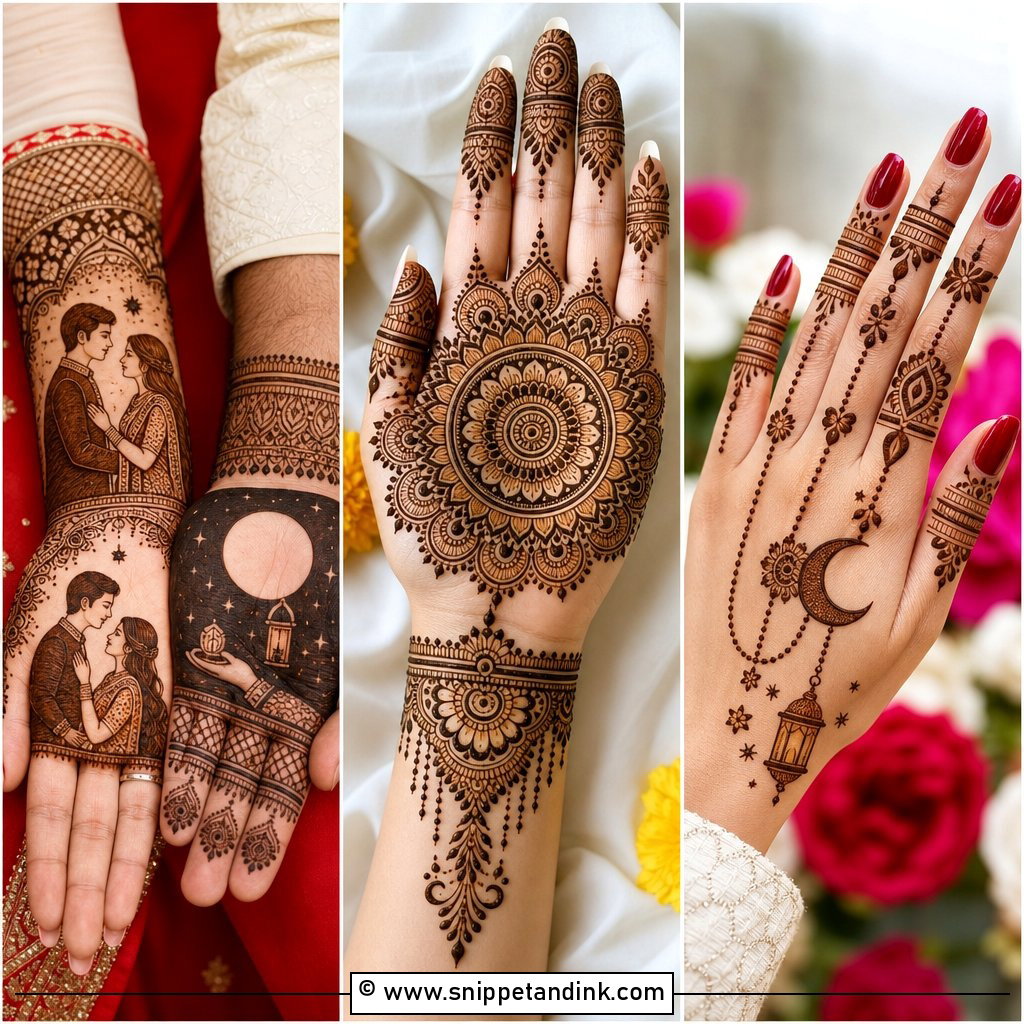
Bridal henna has become personal: portraits, initials, wedding dates, symbols, lotus motifs, jaali patterns and planned negative space, from fingers to forearms. Brides who want richness can choose Indian-style fine filling; those who want it softer go for Indo-Arabic spacing. My job is to make the story readable. Bold outlines around each key element and delicate inner detail mean the portrait or initials still show in photos once the whole design has stained.
6. Modern Minimal Mehndi Design
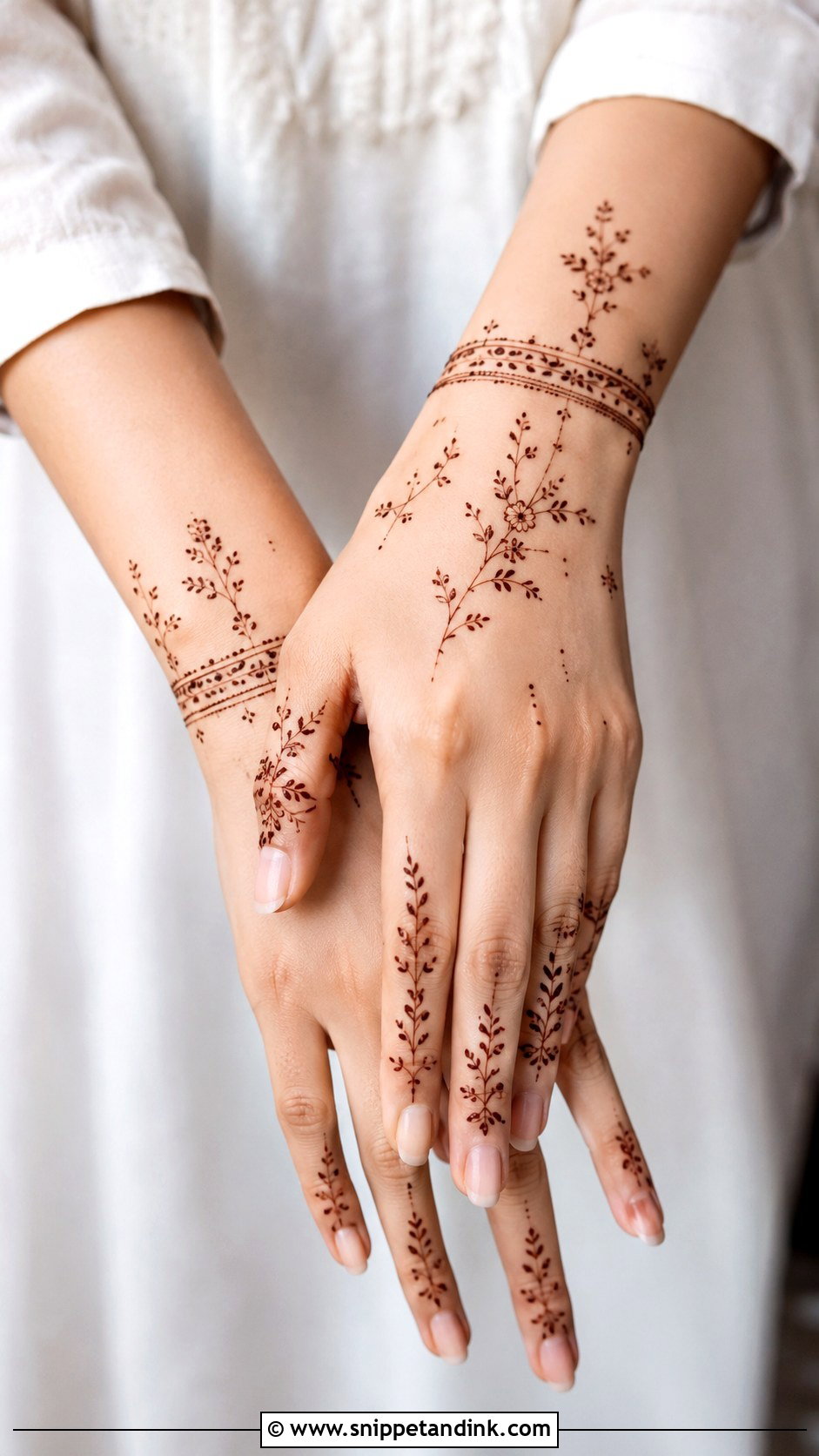
Small flowers, fine vines, finger details, tiny dots and slim bracelet lines. That’s the vocabulary. A small motif on the back of the hand, a delicate wrist band and decorated fingertips can make a complete design, and I see more brides choosing it for pre-wedding events so the big bridal henna stays special. It pairs well with pastel outfits and simple jewellery.
7. Modern Mandala Mehndi Design
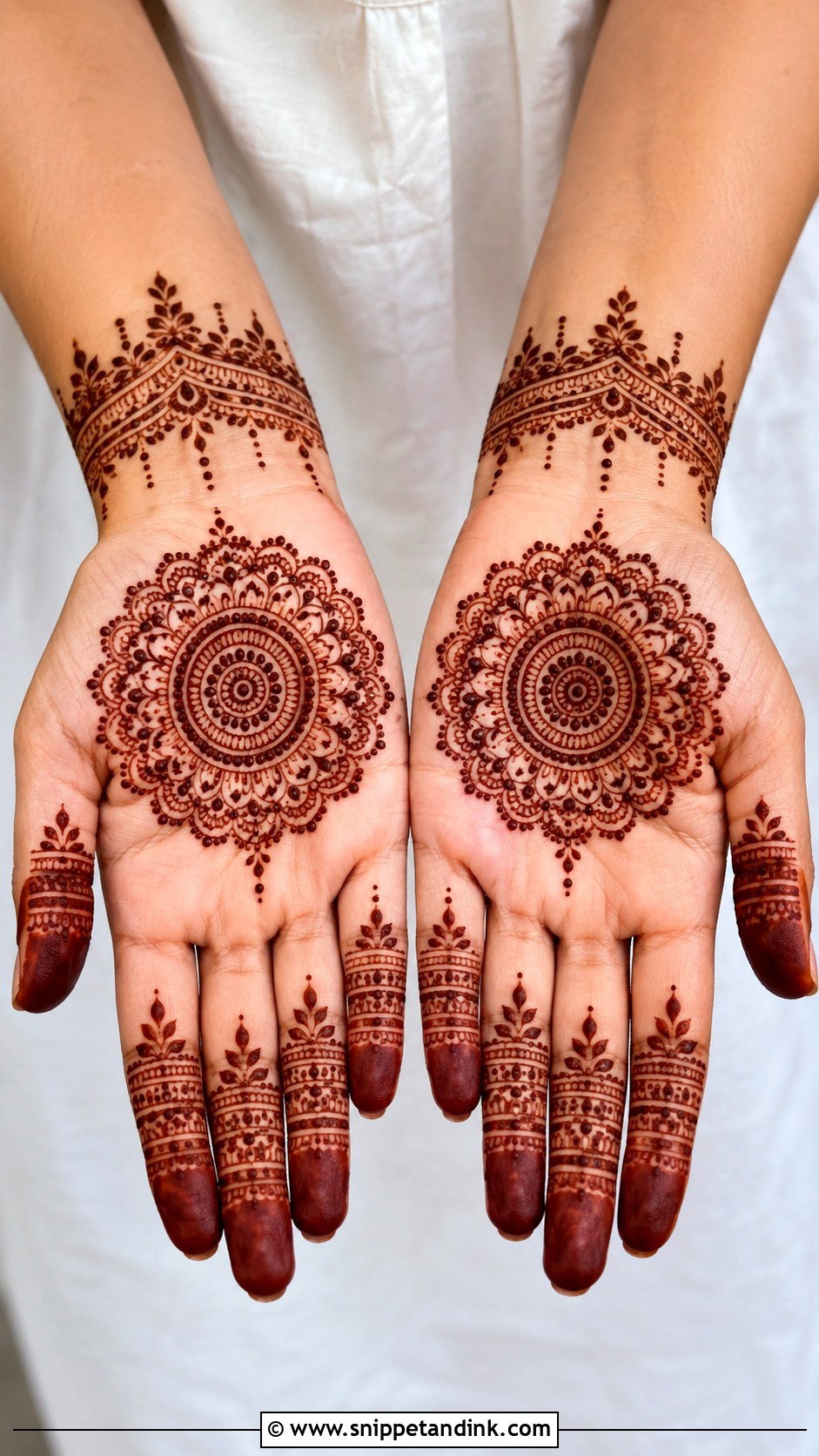
A circle on the palm or the back of the hand, ringed with petals, dots, scallops and fine lines. The mandala size can be adjusted to suit small or wide hands. I build from the centre dot outward, one ring at a time, checking each ring is even before starting the next; a wobble in the first ring multiplies by the fifth. Keep the surrounding skin open and the fingers simple so the circle holds the focus.
8. Modern Finger Mehndi Design
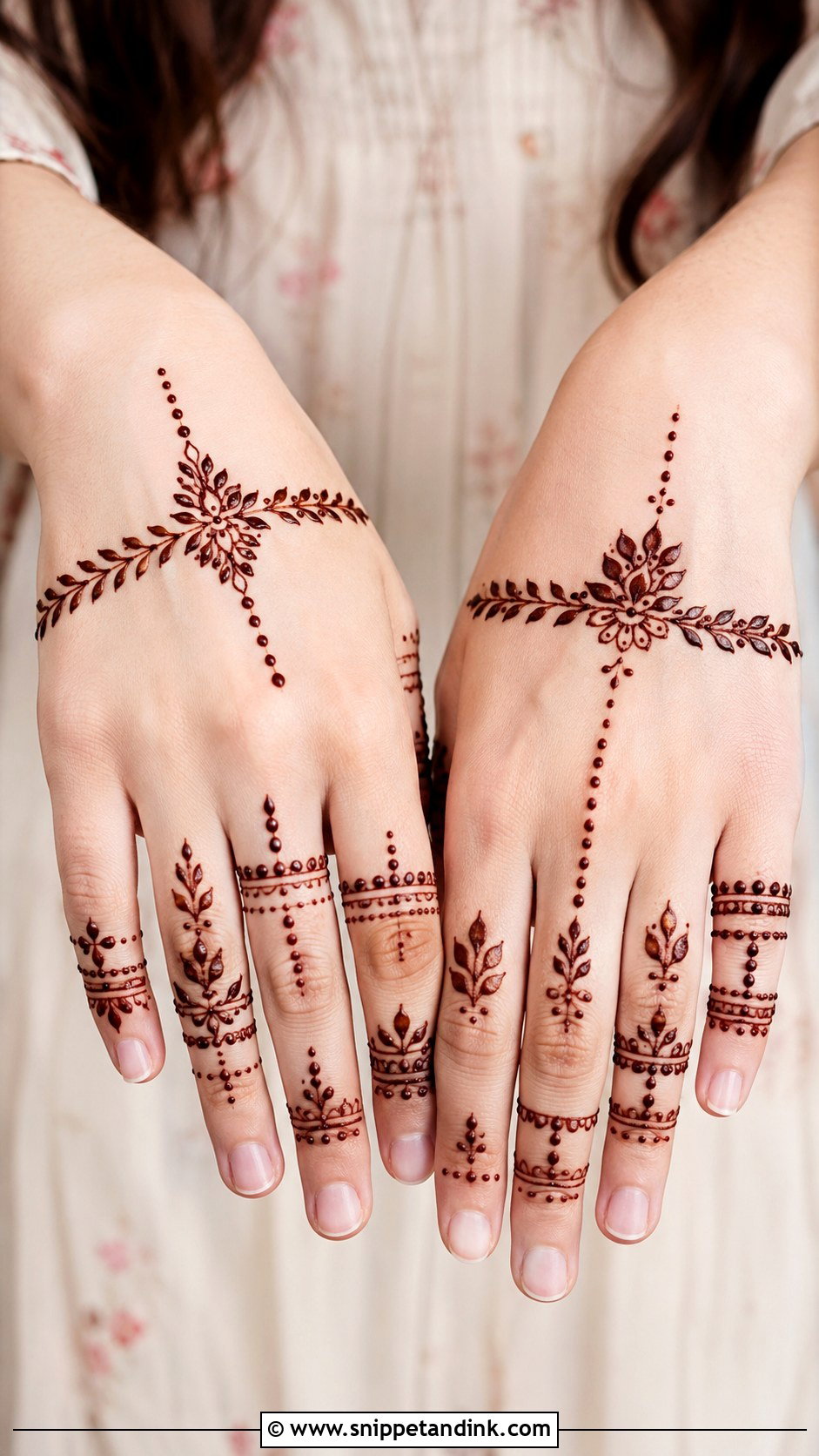
Leafy rings, dotted chains, half-finger florals, geometric bands and fine lines. Some designs cover only two or three fingers; others connect all of them to a wrist bracelet or small back-hand motif. Fingertips stain very dark, so even a light finger design shows up well. Pick one theme and repeat it across the fingers, since mixing florals on one and geometry on the next looks unplanned. It shows off rings well.
9. Modern Full Hand Mehndi Design
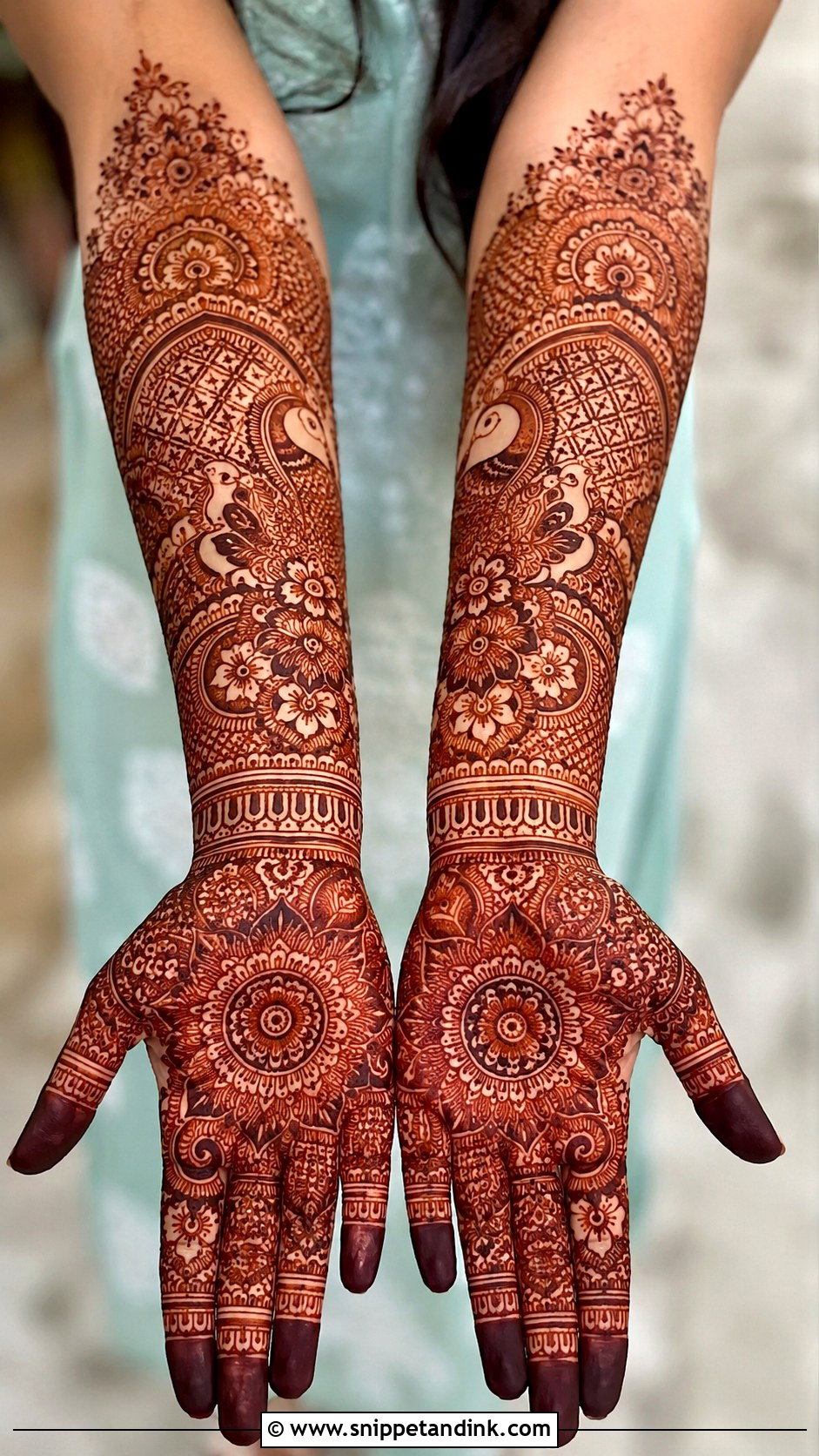
Fingertips to forearm, with bold flowers, paisleys, mandalas, peacocks, jaali and layered borders. Updated full-hand work uses large motifs as anchors with smaller patterns around them, rather than one tiny repeat everywhere, so the hand stays readable. It’s a long sitting: plan your evening around wet hands. I coordinate both hands without making them identical, which looks more considered in photos where both hands appear together.
10. Modern Half Hand Mehndi Design
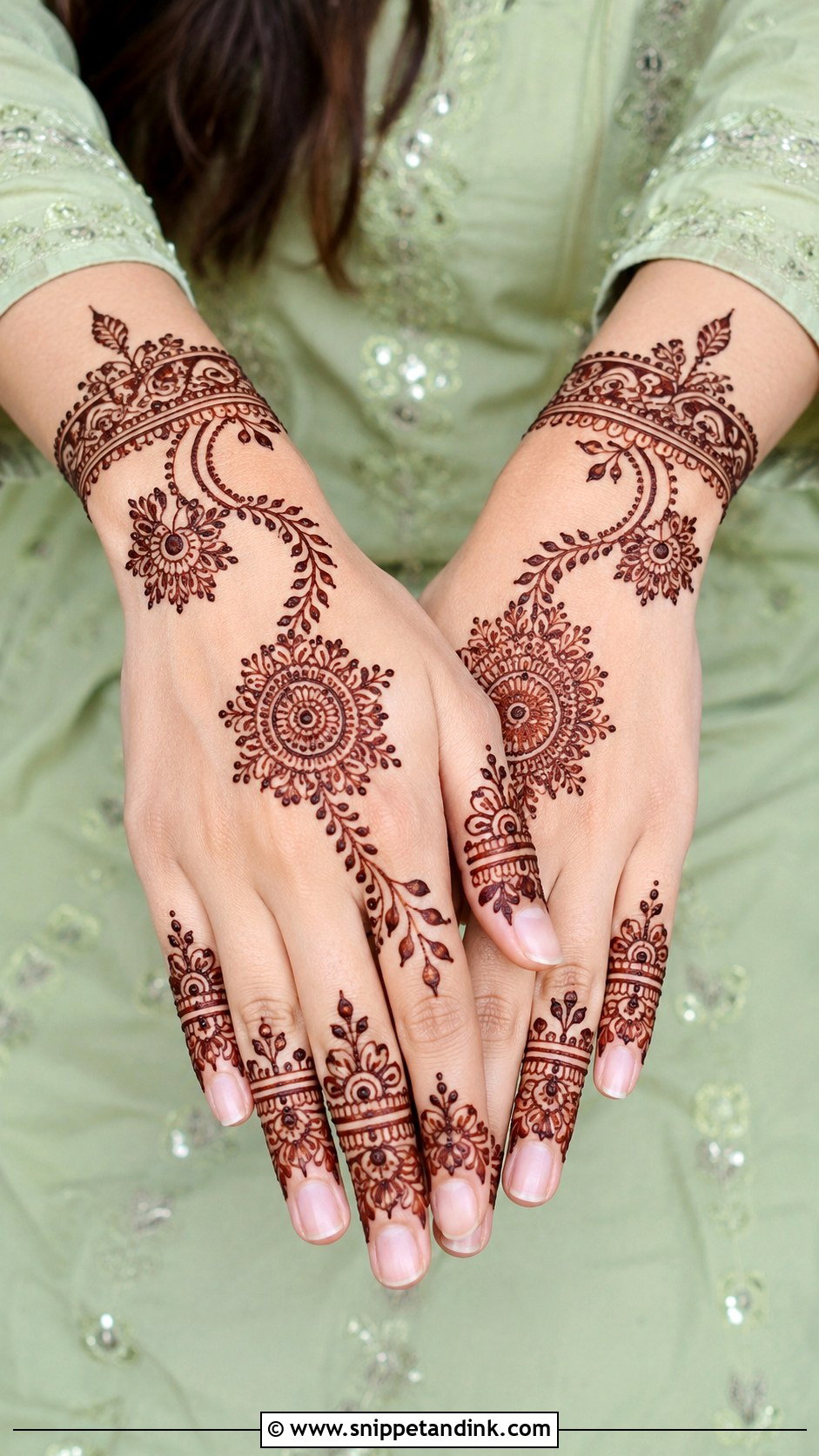
More than minimal, less than bridal. Half-hand designs run from the fingertips to the middle of the palm, or from the wrist to the centre of the back of the hand, using floral trails, mandalas, paisley bands or leafy curves. They dry faster and take far less chair time than full coverage, which is why I recommend them for Eid, Diwali, roka, baby showers and family events where you’re also hosting.
11. Modern Indo Arabic Mehndi Design
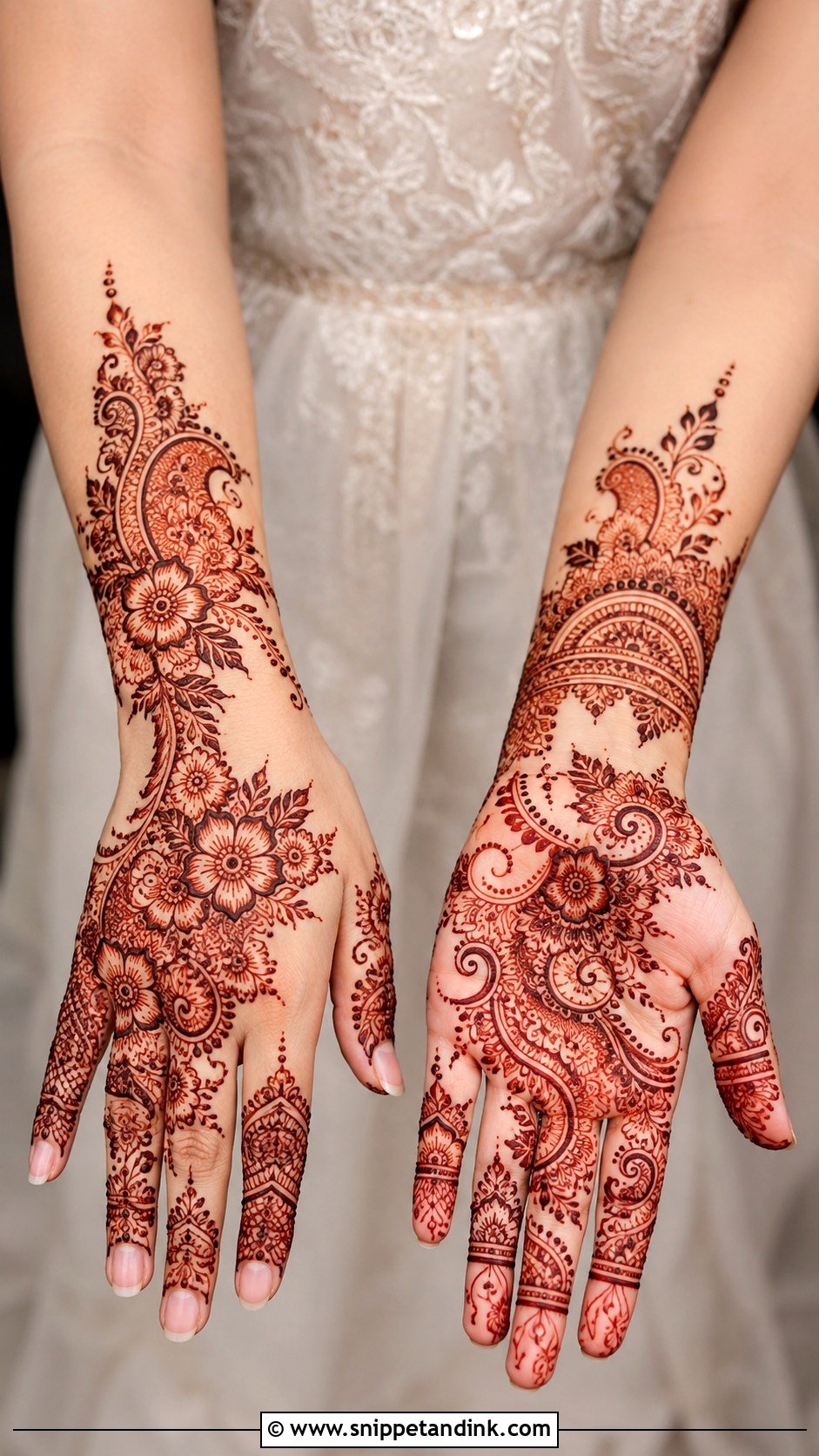
Indo-Arabic work combines Arabic flow with Indian detailing: large flowers, curved vines, paisleys, mandalas, dotted borders and shaded sections in one look, with open space left between them. It suits both sides of the hand. The usual mistake is too many focal points. I choose one main trail and make everything else support it.
12. Modern Khafif Mehndi Design
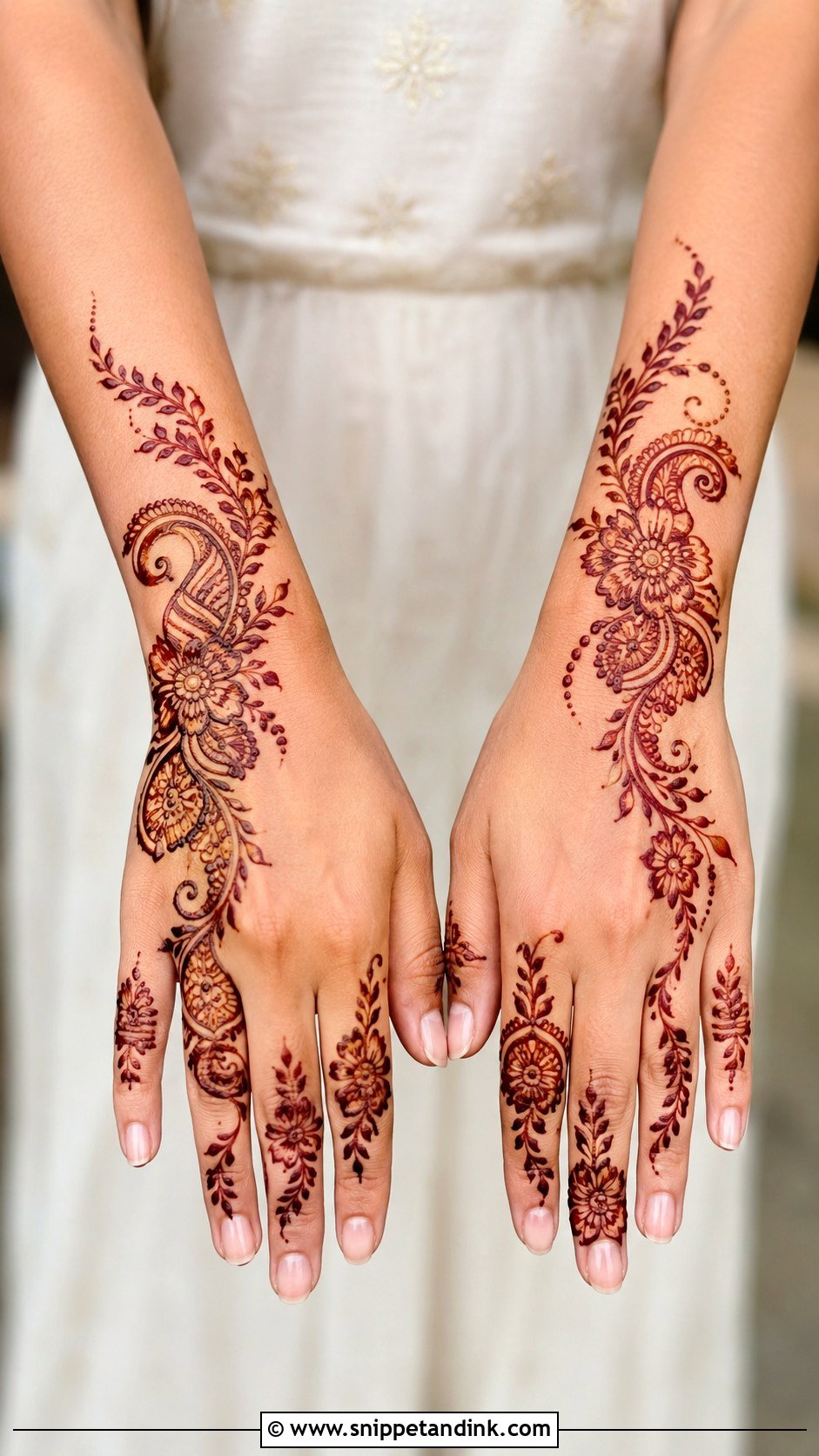
Khafif is about delicacy and spacing, with fine florals, leafy vines, small paisleys, dotted curves and lace-like work on the back of the hand and fingers. It needs slim outlines and light shading rather than filled sections. The catch is that fine lines stain paler than bold ones, so khafif suits warm skin that stains well and a paste that’s been left on long. For an engagement or formal gathering it looks intricate without weight.
13. Modern Floral Mehndi Design
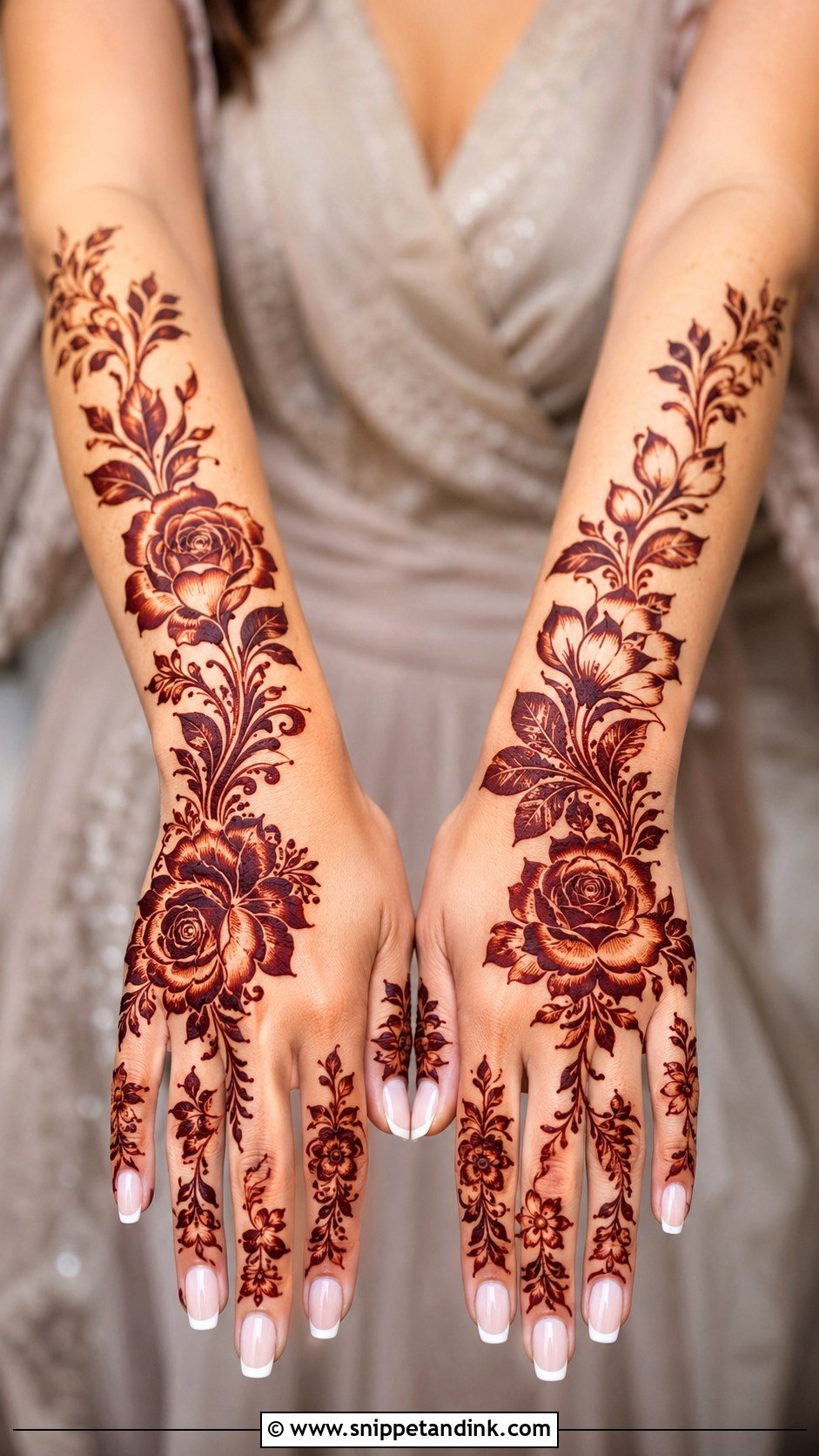
Large roses, lotus blooms, small daisies, leafy stems or clustered garden patterns, on the palm, back of the hand, wrist or forearm. Florals adapt to almost any occasion. My advice is always fewer, larger flowers. Tiny blooms with tiny petals merge as the stain develops, while a large flower with a bold outline stays crisp for its whole life on the skin.
14. Modern Lotus Mehndi Design
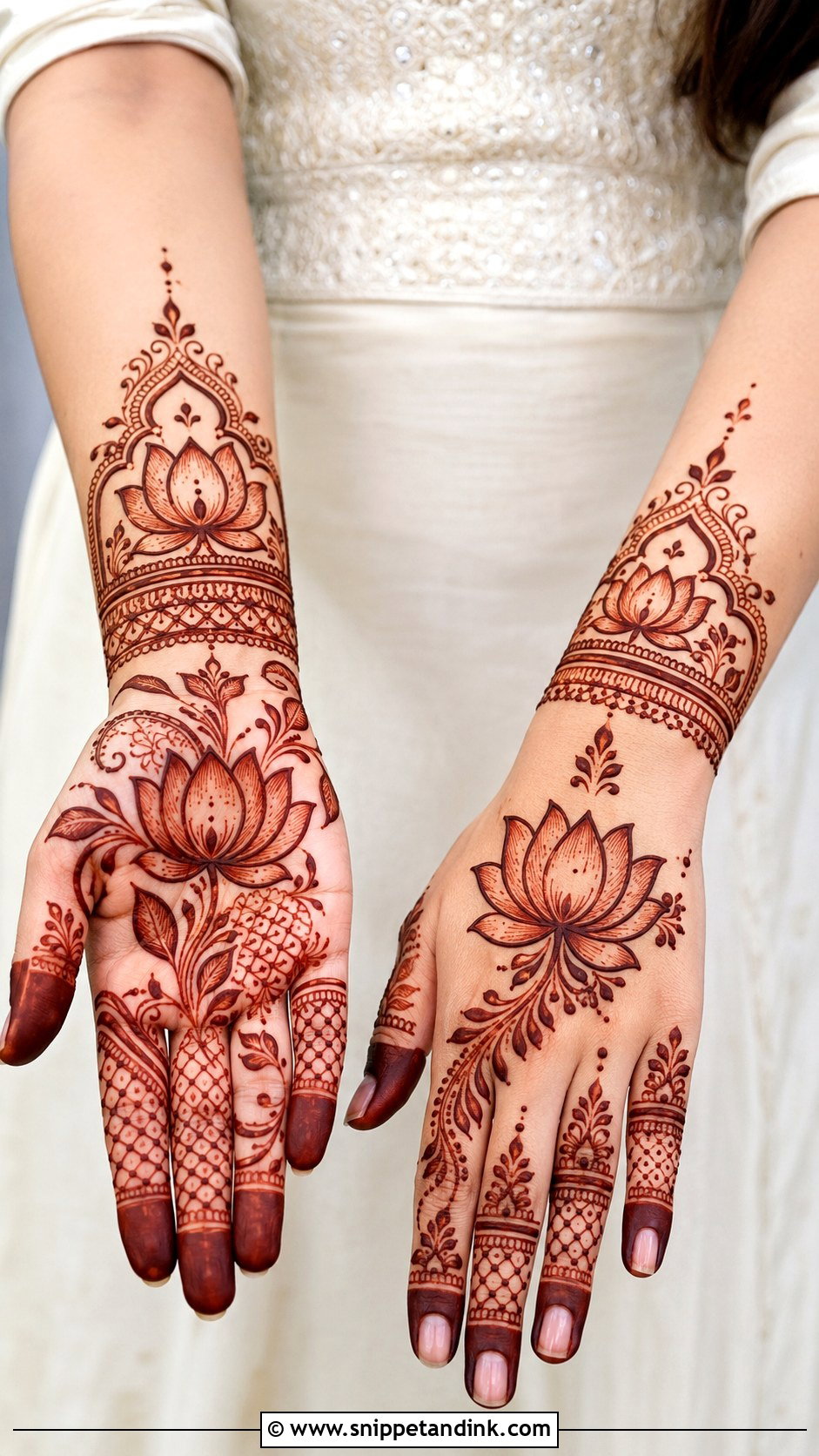
The lotus can sit in the centre of the palm, on the back of the hand or within a wrist-to-forearm trail. For a light version, one lotus with open spacing and simple fingers. For a heavier one, add jaali, paisley borders and shaded petals. Draw the petals as clean closed shapes. A lotus with gaps in its outline loses its form after staining and starts to look like a generic flower.
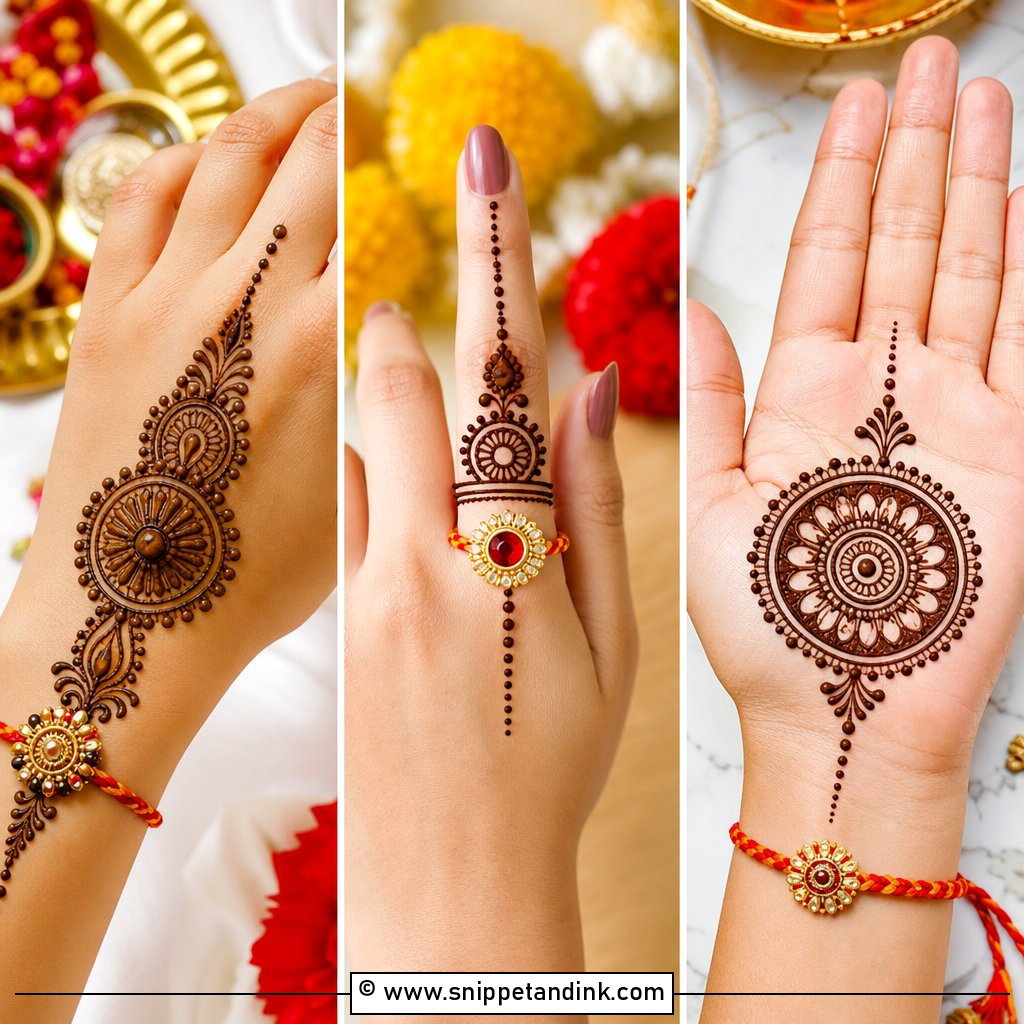
15. Modern Peacock Mehndi Design
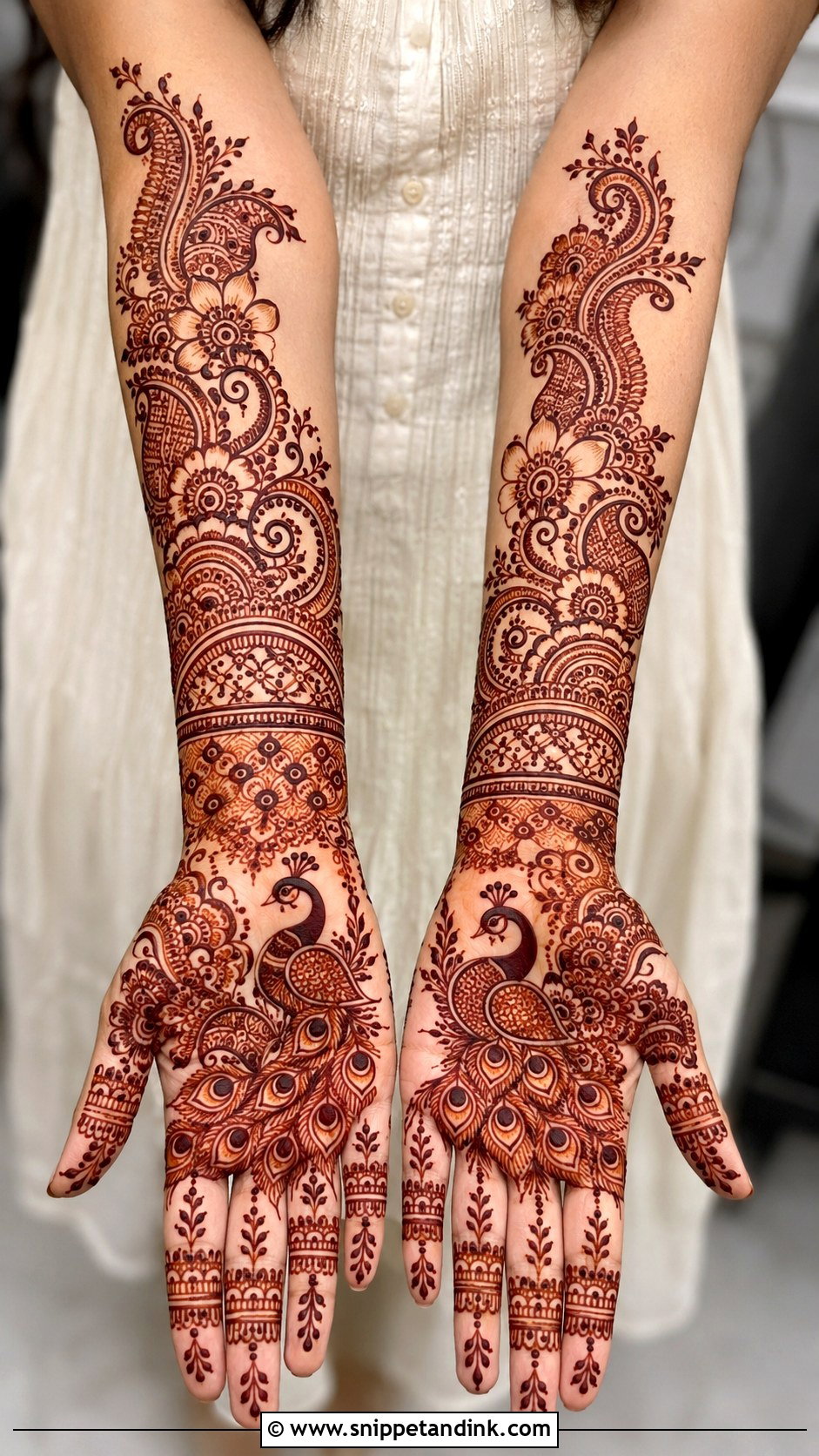
Bold peacock outline, fine inner detail only where needed, feathers flowing into florals or paisleys. It can sit on the palm, wrist or forearm and pairs naturally with Indian bridal wear and traditional jewellery for weddings and sangeet. Restraint around the bird is what keeps it current. If the body gets filled in too densely, the stain turns it into a dark shape and the feathers do all the talking.
16. Modern Paisley Mehndi Design
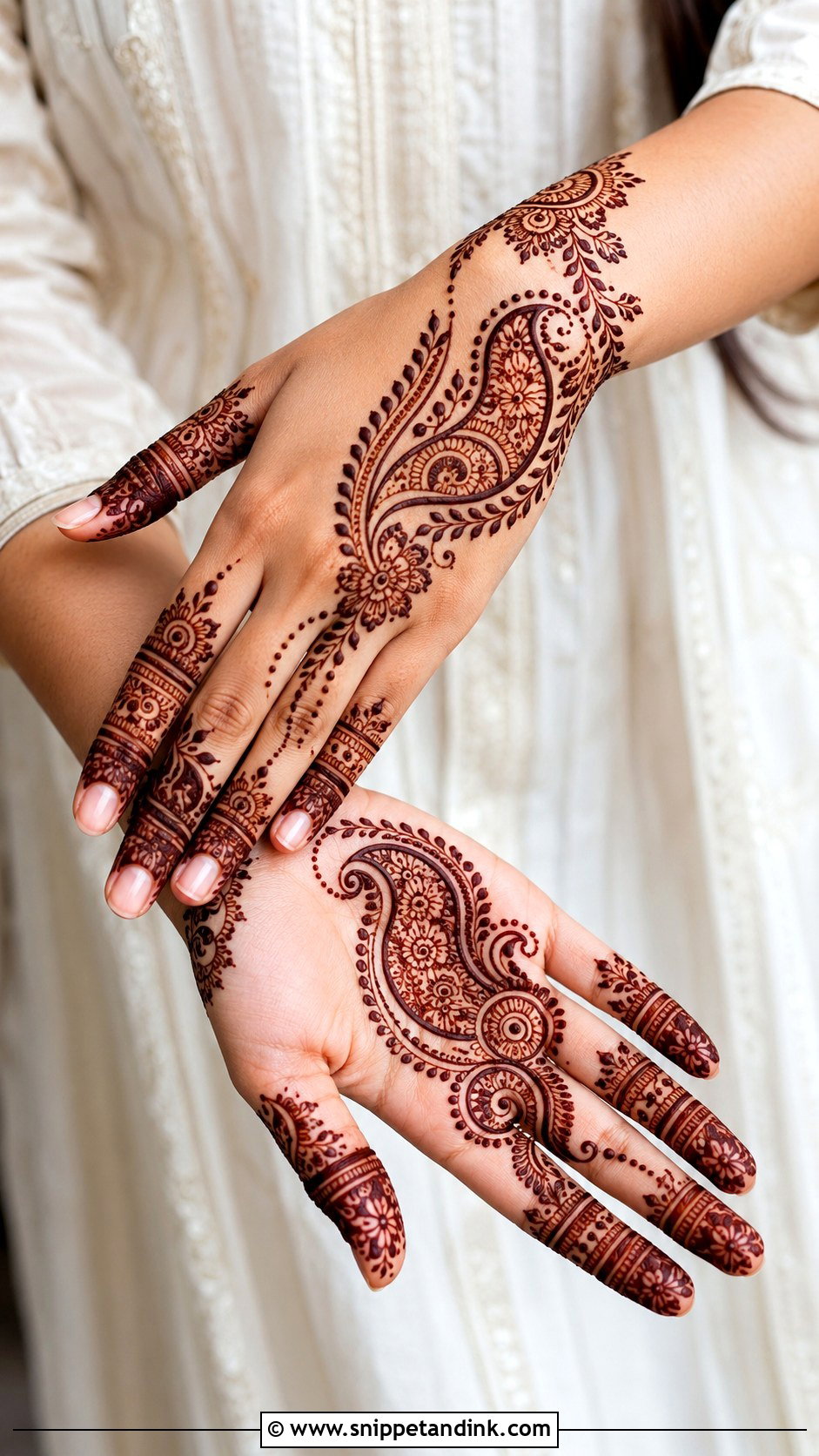
Paisleys arranged as a diagonal back-hand trail, a palm cluster, a wrist cuff or a full bridal pattern. Their curve adds movement on its own. I outline each paisley boldly and fill it with tiny leaves, dots or florals, then leave clear space between them. Paisleys touching edge to edge read as one block from a distance. Good if you want a traditional base with a cleaner finish.
17. Modern Jaali Mehndi Design
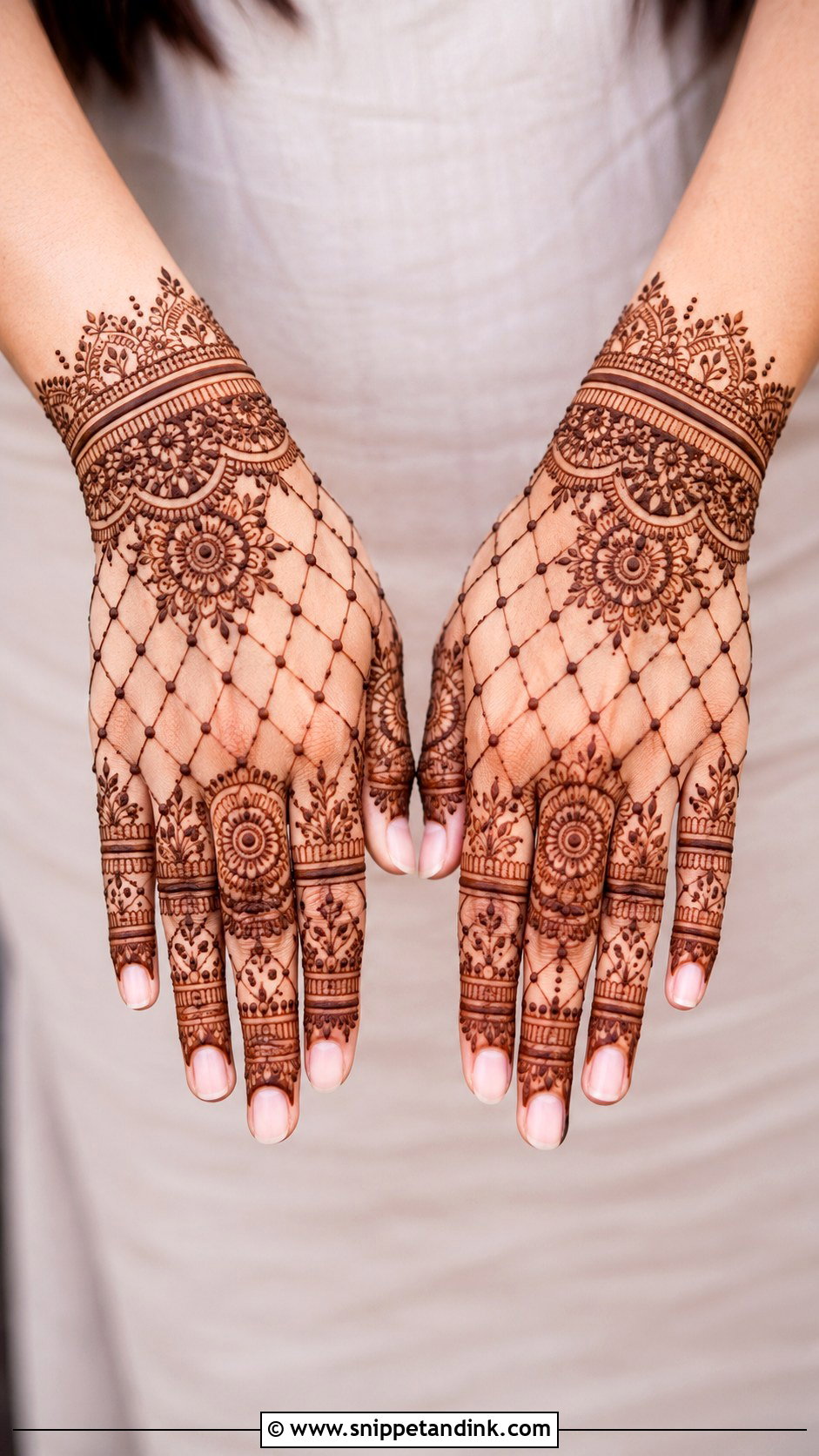
Crisscross lines, tiny dots and floral edges create the net effect on fingers, the back of the hand, palm or wrist. Current jaali sits in one section of the design rather than across the whole hand, often next to a mandala, bracelet band or Arabic trail. Even spacing is the whole skill. I pipe all the lines in one direction first, then the cross lines, so the squares come out regular.
18. Modern Geometric Mehndi Design
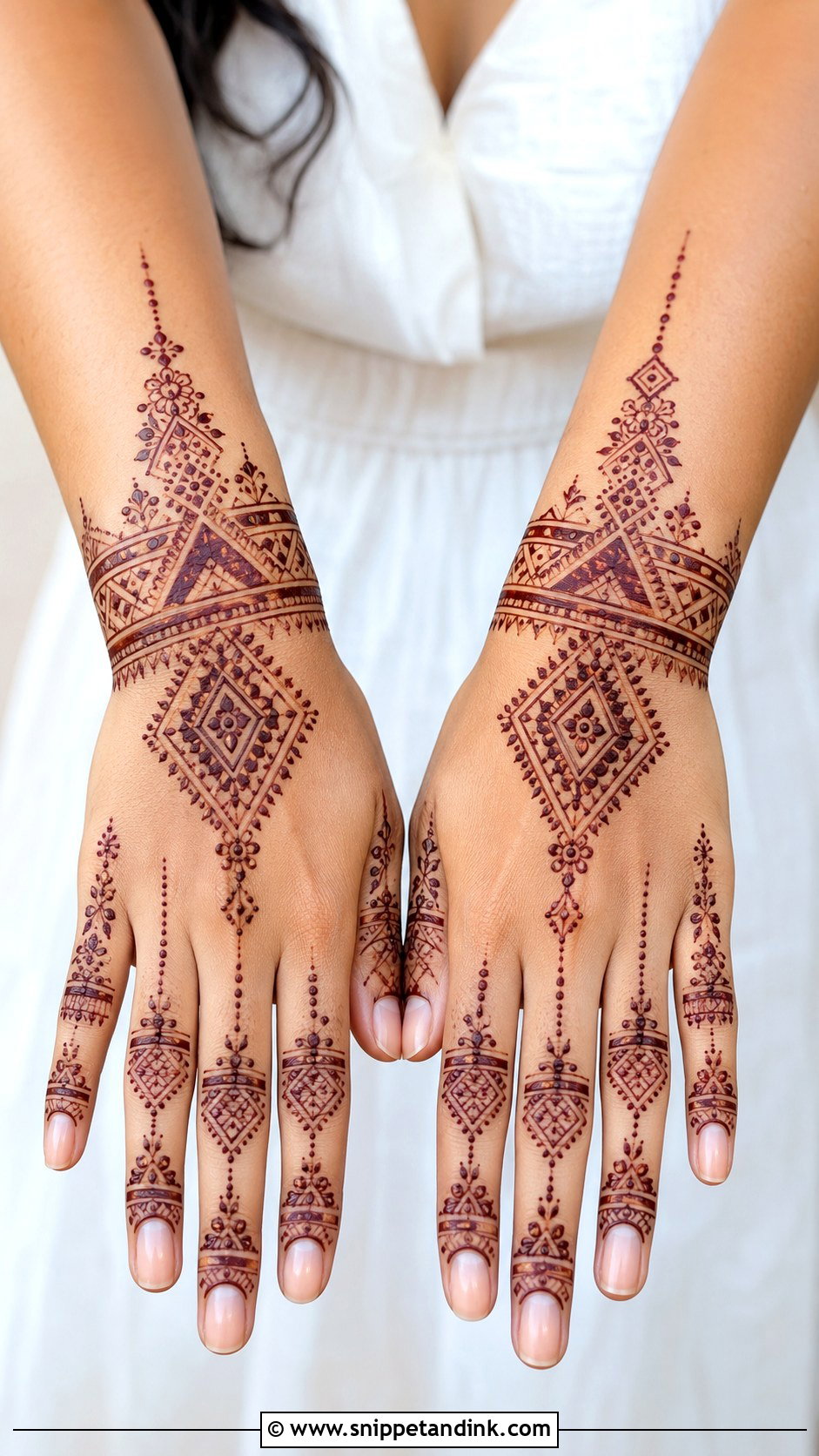
Diamonds, triangles, grids, chevrons, squares and linear bands look sharp on the back of the hand, the fingers and the wrist. Mixed with small flowers, dots or leaves, they soften. Even a few clean shapes make an impression, which is why geometric pieces suit minimal requests and fusion wear. Straight lines are hard on a curved hand, so I keep geometric sections to flatter areas and avoid running them over the knuckles.
19. Modern Bracelet Mehndi Design
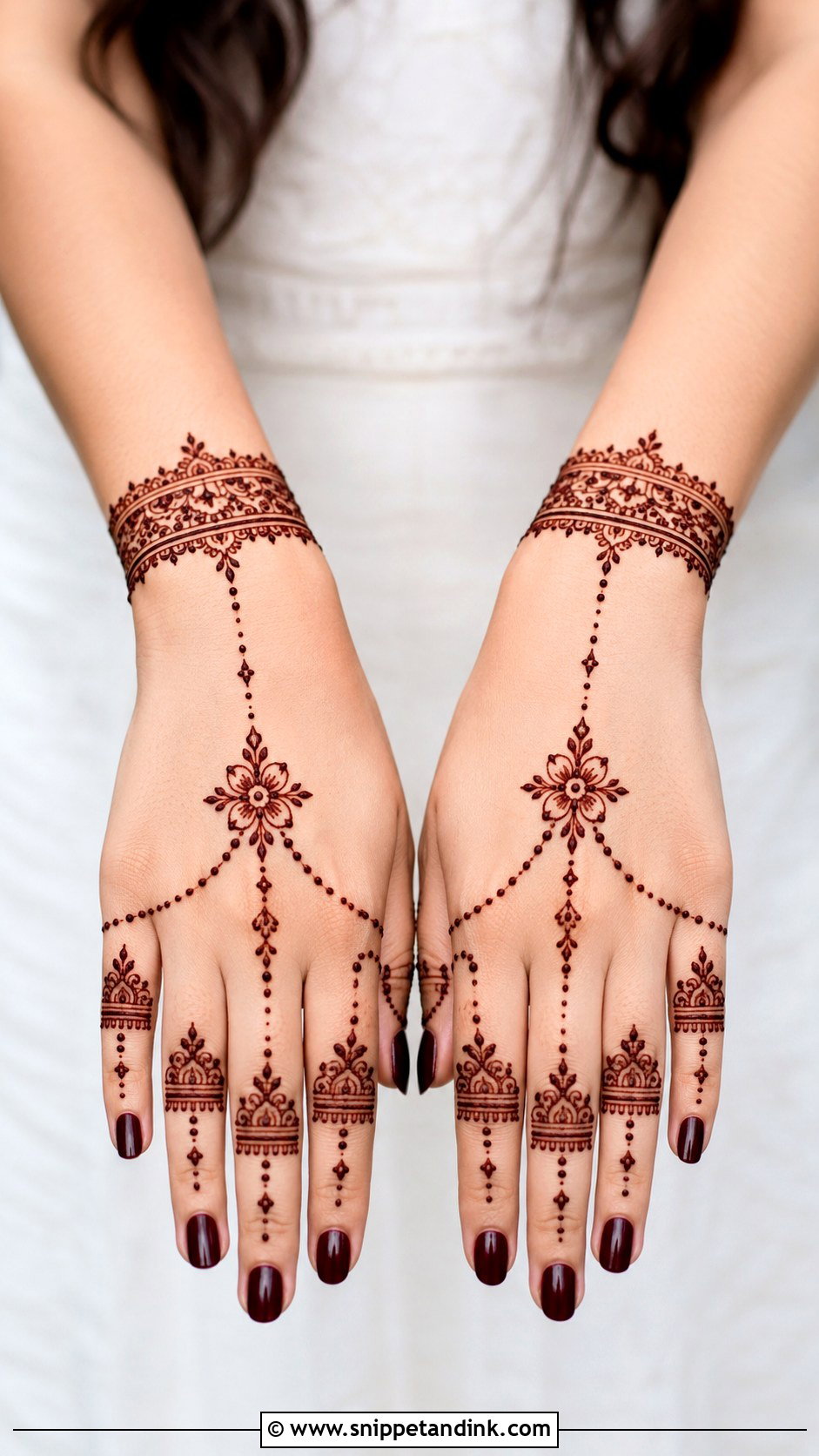
Hand jewellery drawn in henna: a wrist cuff, chain-like lines, dots, finger rings and a small motif in the centre of the back of the hand. Keep the band neat and not too thick; a heavy band looks like a smudge once real bangles slide over it. A mandala, flower or leaf cluster in the centre finishes it.

20. Modern Hathphool Mehndi Design
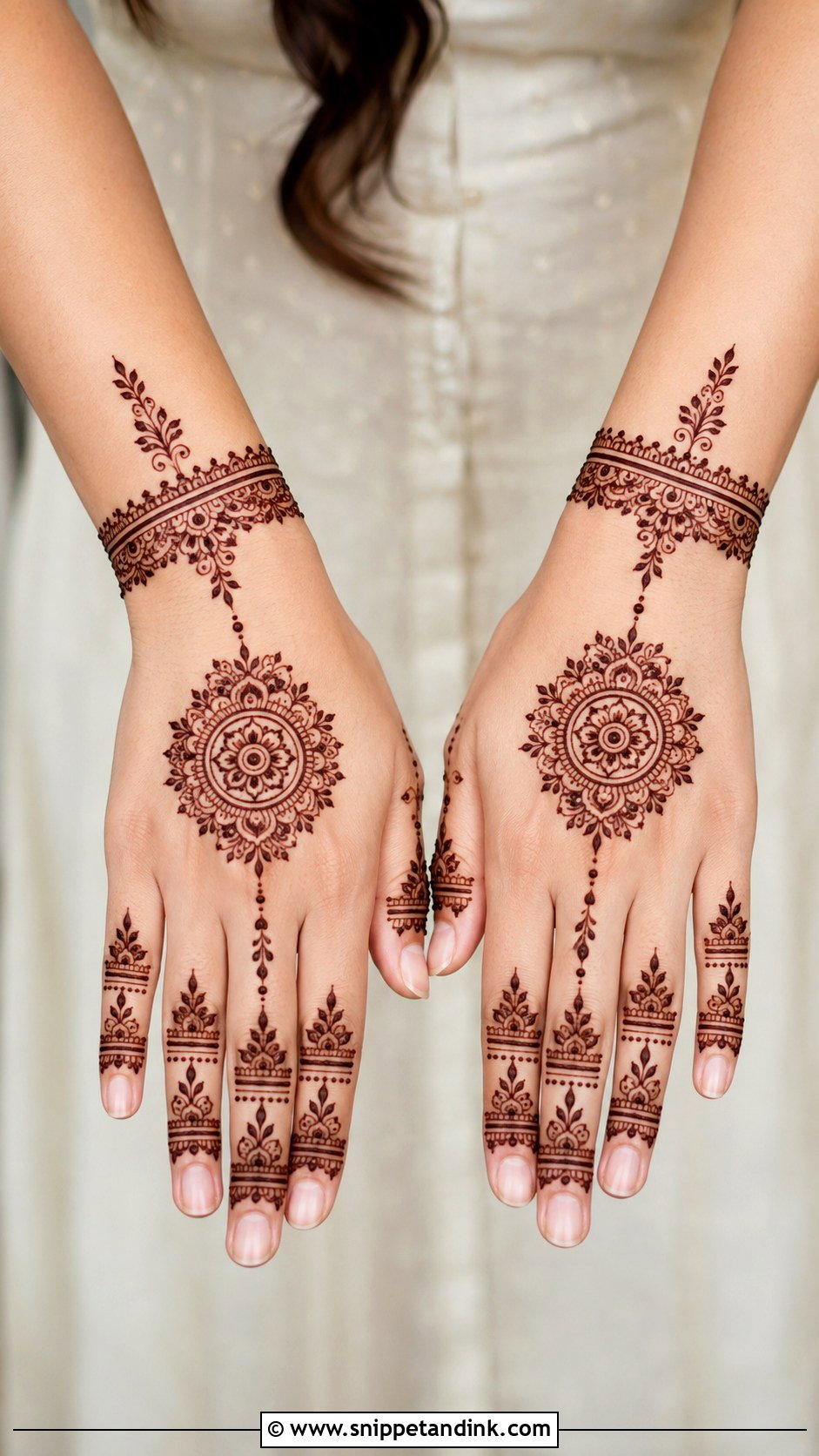
Hathphool means hand flower, the traditional jewellery that links a ring to a bracelet across the back of the hand. In henna, it’s a central back-hand motif connected to the fingers by dotted chains, thin lines or leafy links, with a bracelet-style band at the wrist. Keep the centre simple and the chains fine. Fill it too much and the jewellery shape, which is the whole point, disappears.
21. Modern Engagement Mehndi Design
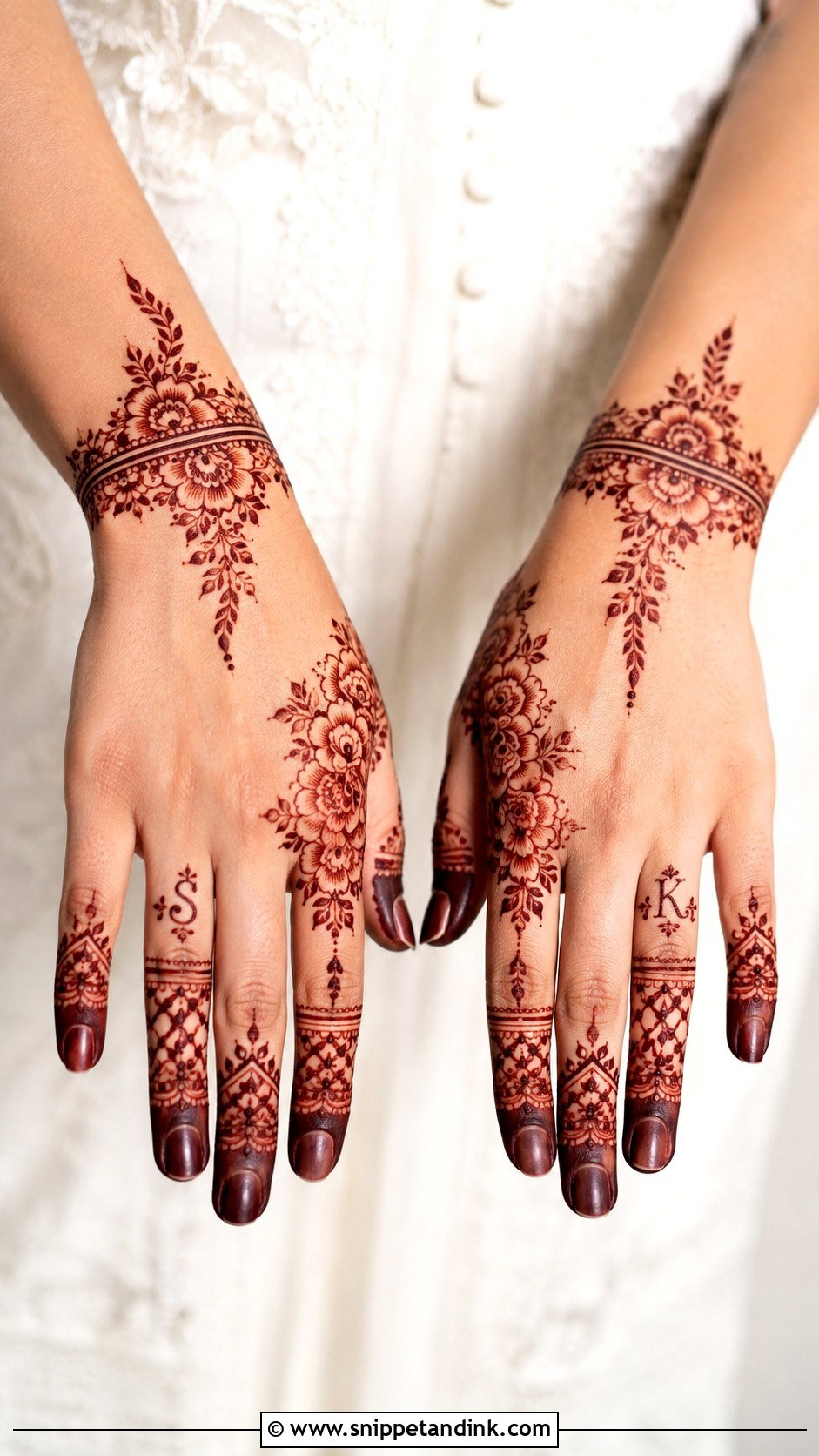
A Modern engagement mehndi design should sit below bridal weight: back-of-hand florals, ring finger highlights, bracelet cuffs, small initials, mandala palms or Indo-Arabic trails. The ring is the star of those photos. I frame the ring finger with small dots and leafy bands, keeping the base of the finger clear so the ring sits on bare skin. Medium coverage leaves the bridal mehndi something to build up to.
22. Modern Eid Mehndi Design
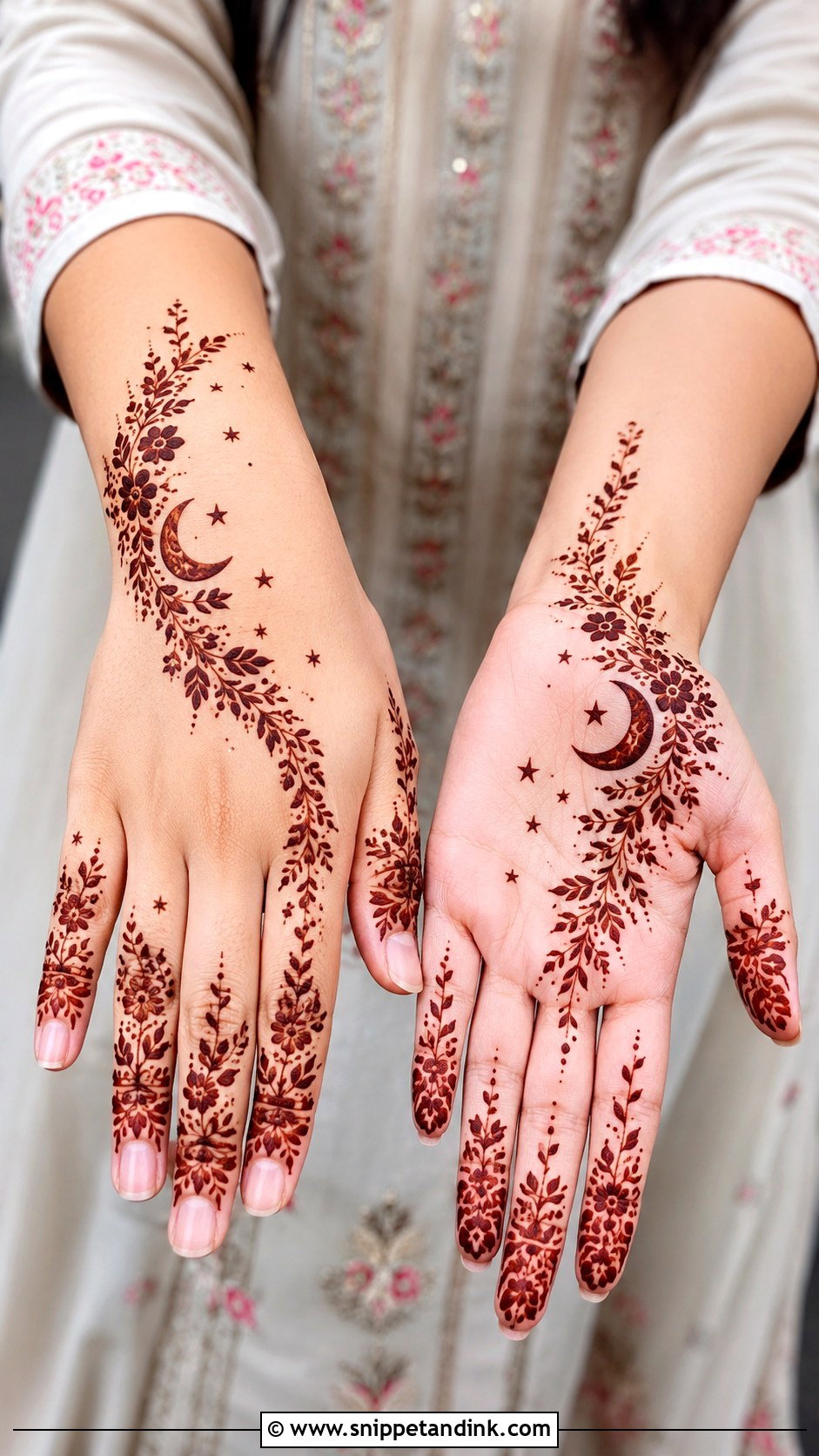
A Modern Eid mehndi design has to go on quickly, because chand raat queues are long and everyone wants theirs done that same night. Arabic trails, crescent-like curves, floral vines, leafy fingers and mandala palms all work, and a diagonal back-hand trail looks full while taking the least time. Small stars, dots or moon shapes add a festive touch for girls and adults alike. Paste applied the night before will still be deepening through Eid day itself.
23. Modern Diwali Mehndi Design
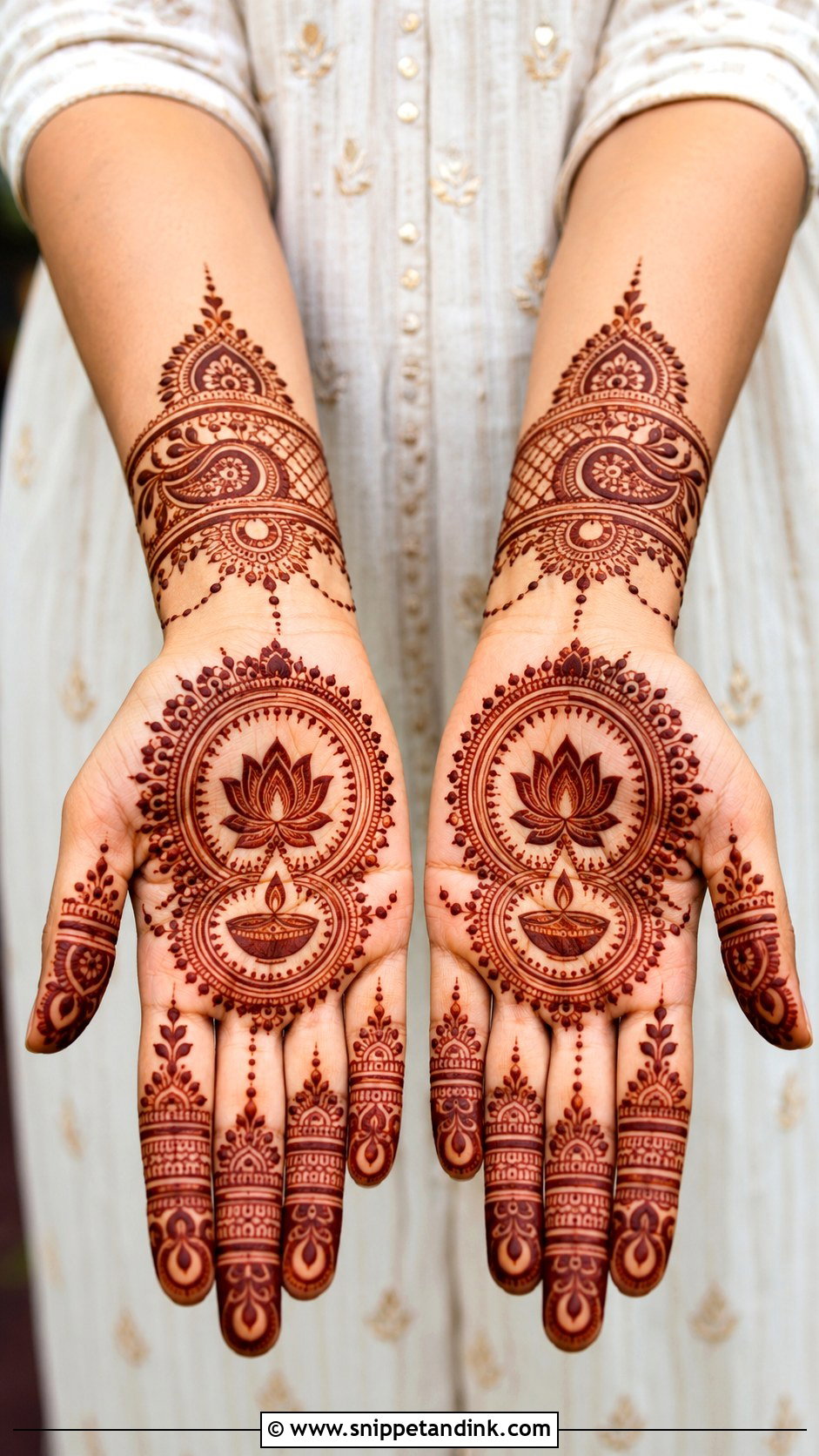
Diwali outfits are usually rich in colour and jewellery, so the henna should support them rather than compete. Palm mandalas, lotus patterns, paisley borders, back-hand florals and fine finger work all suit the occasion, and small diya shapes can be worked in subtly. A clean palm with decorated fingers is my usual suggestion for family gatherings. Keep the lines bold enough to survive staining, since fine diya details easily blur.
24. Modern Wedding Guest Mehndi Design
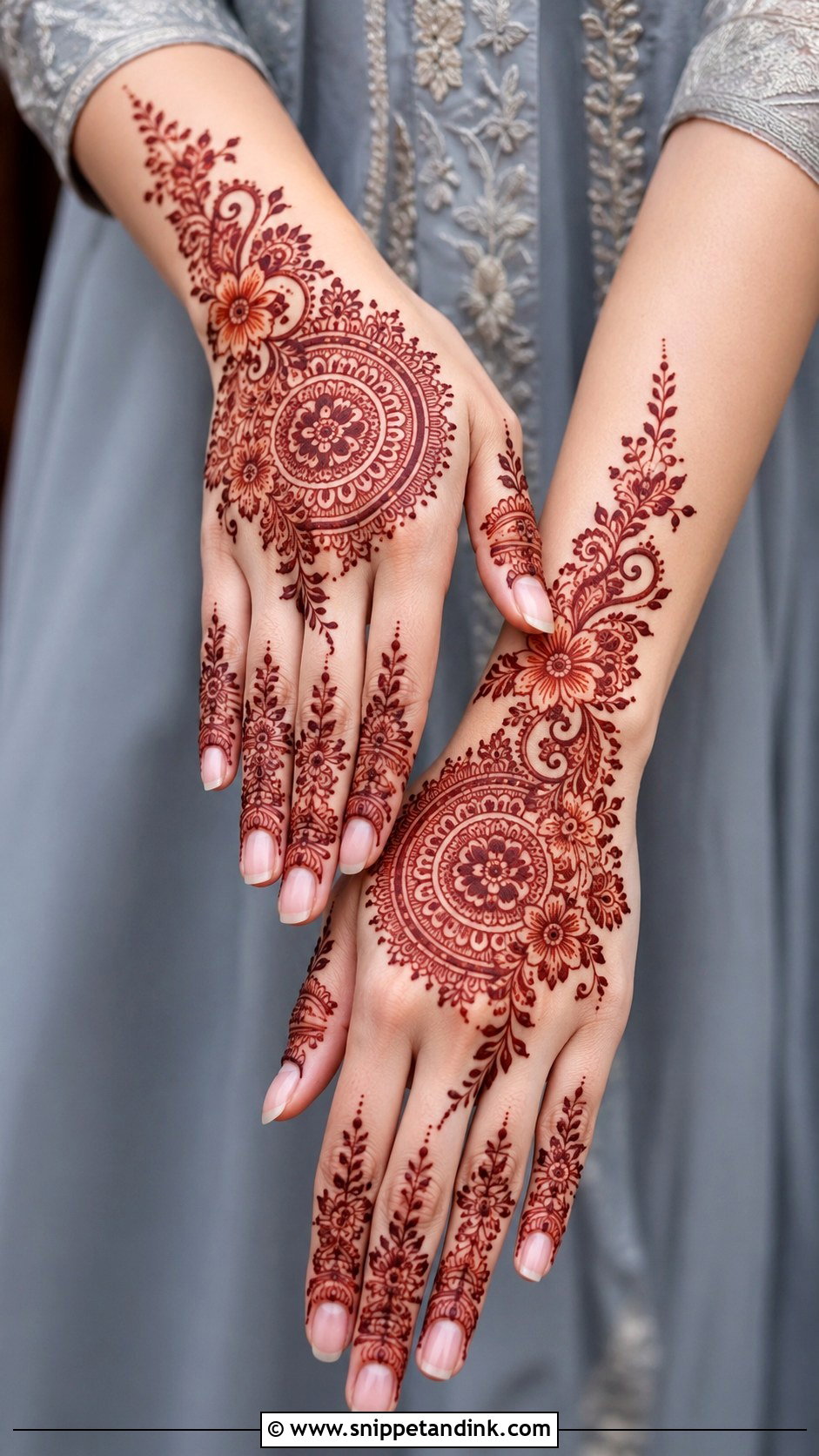
Guests should look festive without looking bridal. A back-hand floral trail, a half-palm mandala, a bracelet design or a simple Indo-Arabic pattern keeps hands comfortable for dancing, eating and greeting people. Medium coverage gives enough detail for photos without hours in the chair. Match the mood to your outfit: florals with soft fabrics, geometry with fusion wear, paisleys with traditional clothes. A clean wrist finish completes even a small design.
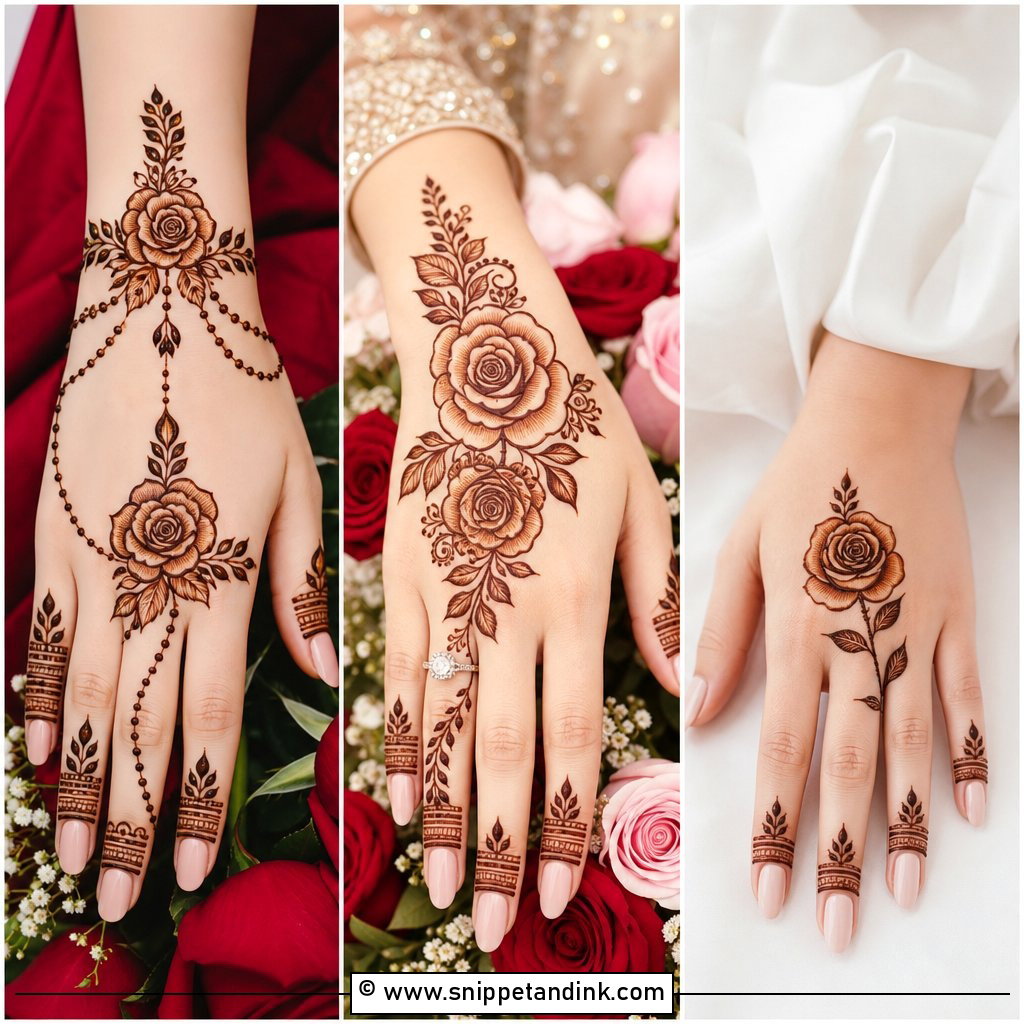
25. Modern Bridesmaid Mehndi Design
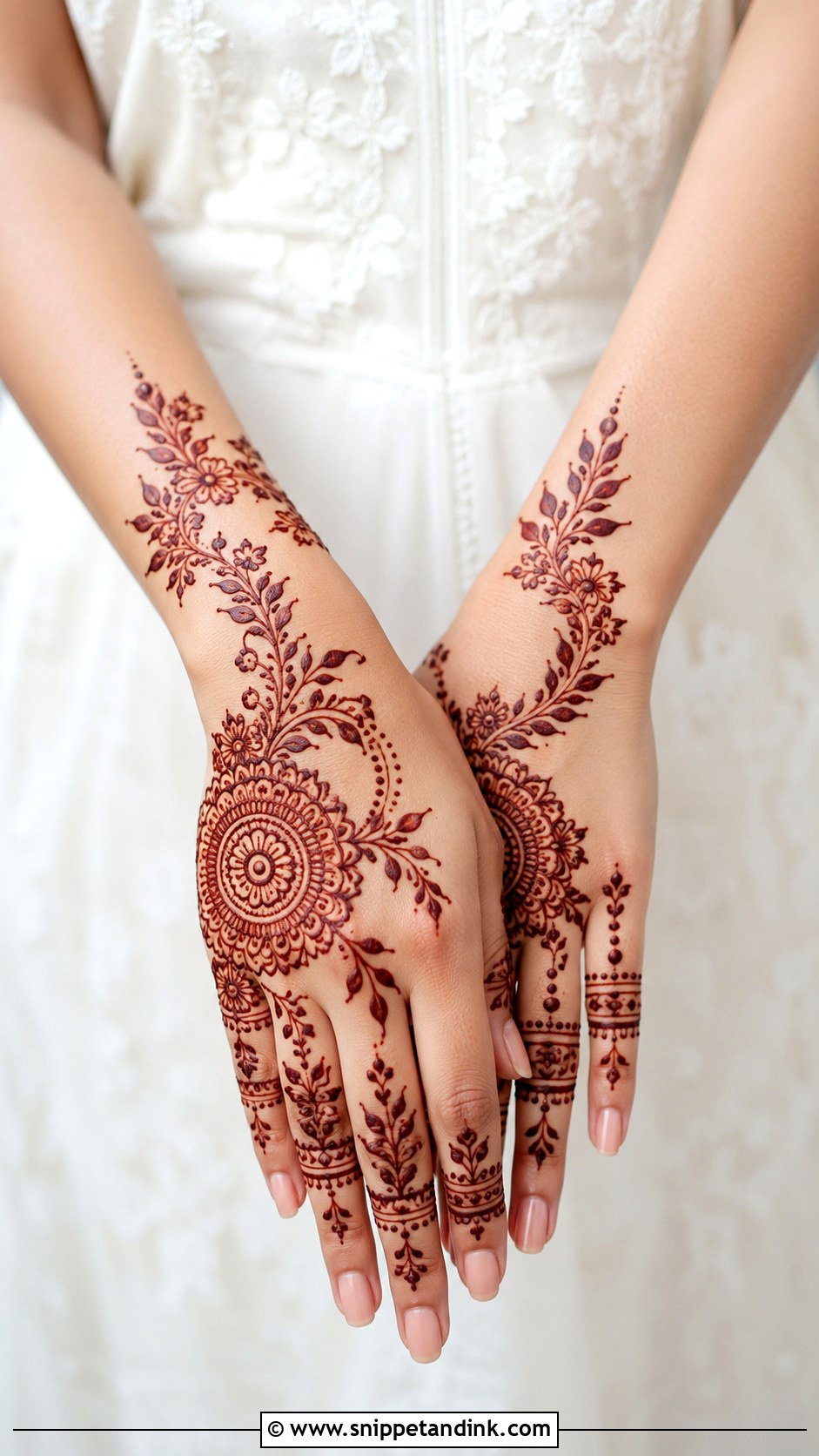
A Modern bridesmaid mehndi design should be quicker than the bride’s and coordinated with the rest of the group. Matching back-hand trails, floral wrists, finger bands, mandala palms or initials for the wedding party all work. With several bridesmaids queuing, I pick one theme and vary it slightly per person. That keeps the group photo coordinated without six identical hands, and it keeps the queue moving.
26. Modern Kids Mehndi Design
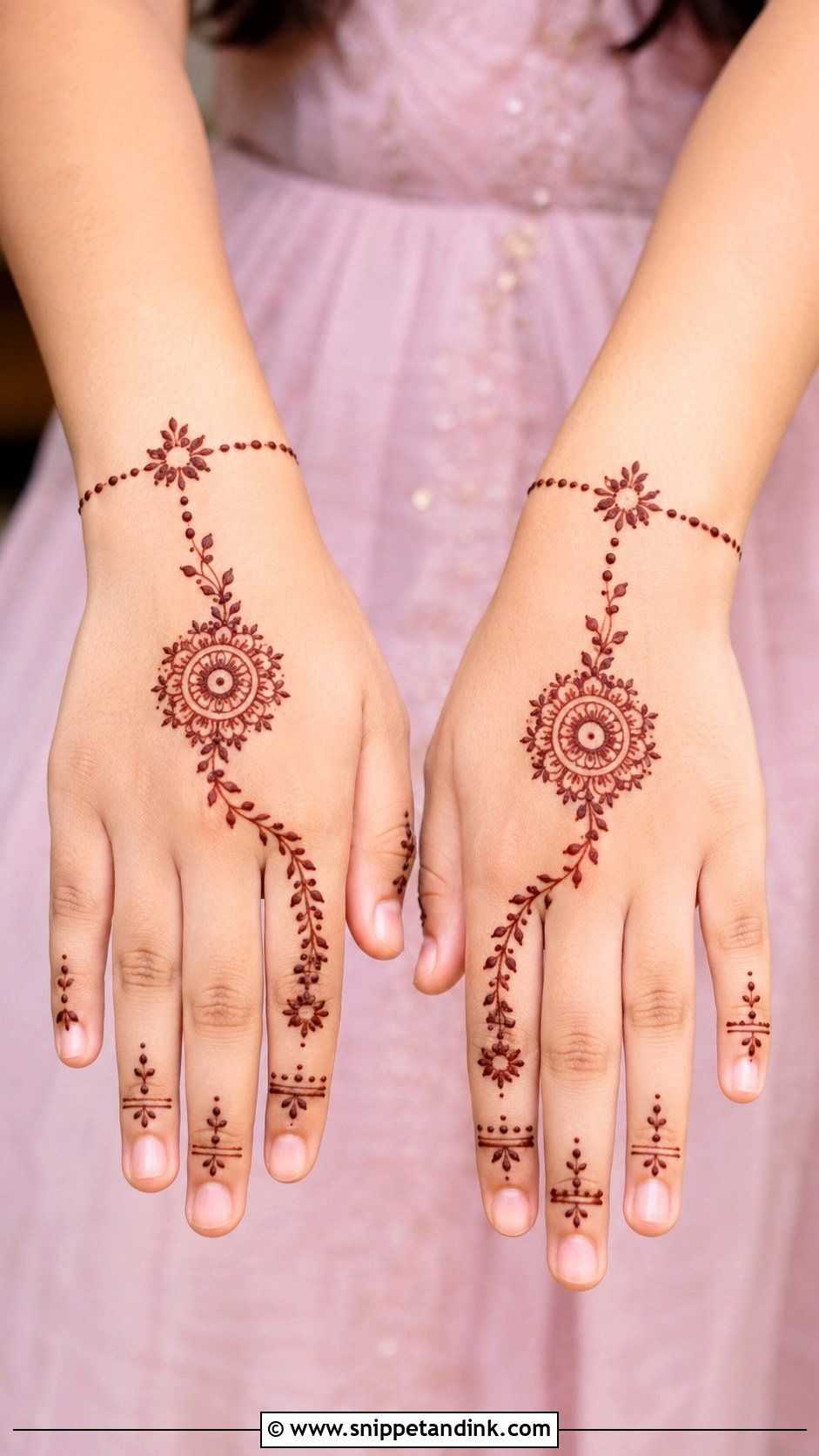
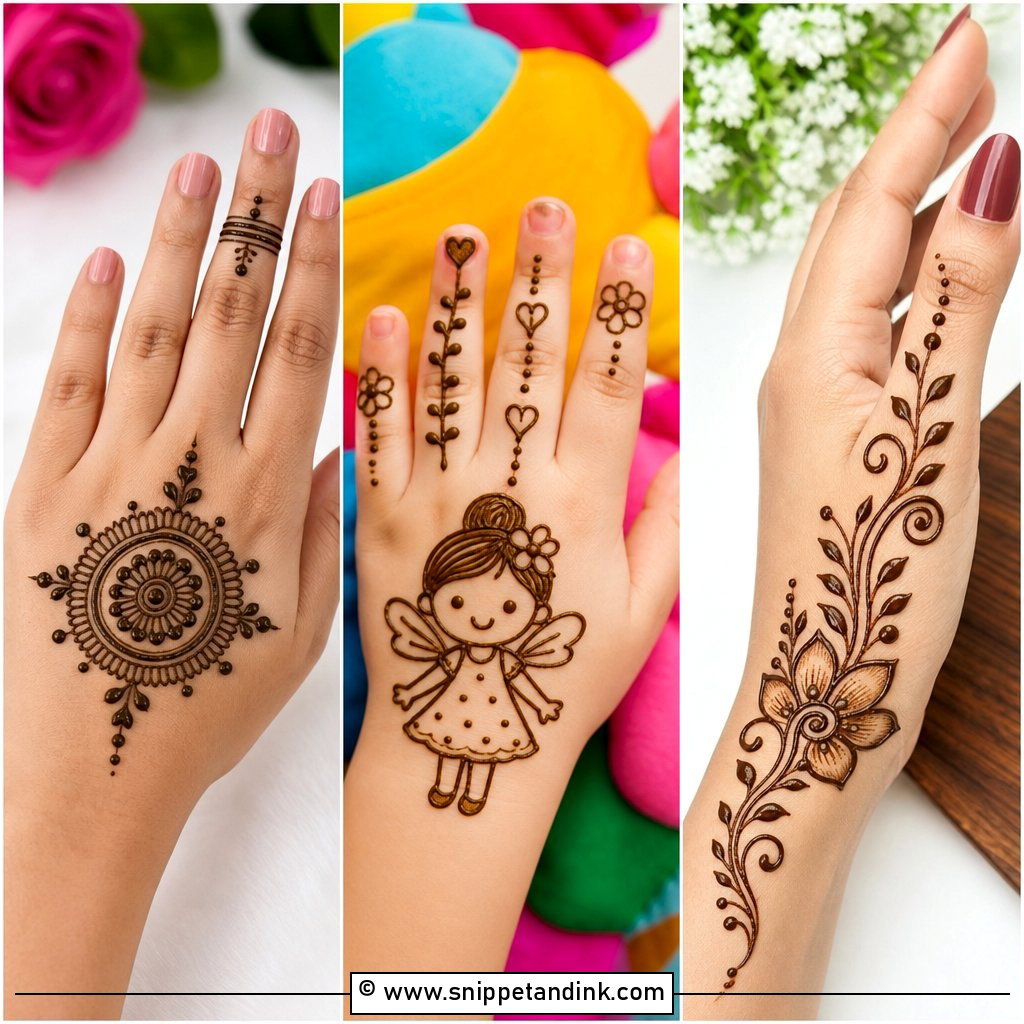
Children rarely sit still, so their designs need to be small, quick and recognisable: tiny flowers, hearts, leafy vines, dots, mini mandalas and a couple of decorated fingers. A small back-hand motif with a bracelet band feels special at festivals. I keep paste on children’s hands to a short time and use plain henna with no strong essential oils (more on that below). Clear, simple shapes suit their age.
27. Modern Teen Mehndi Design
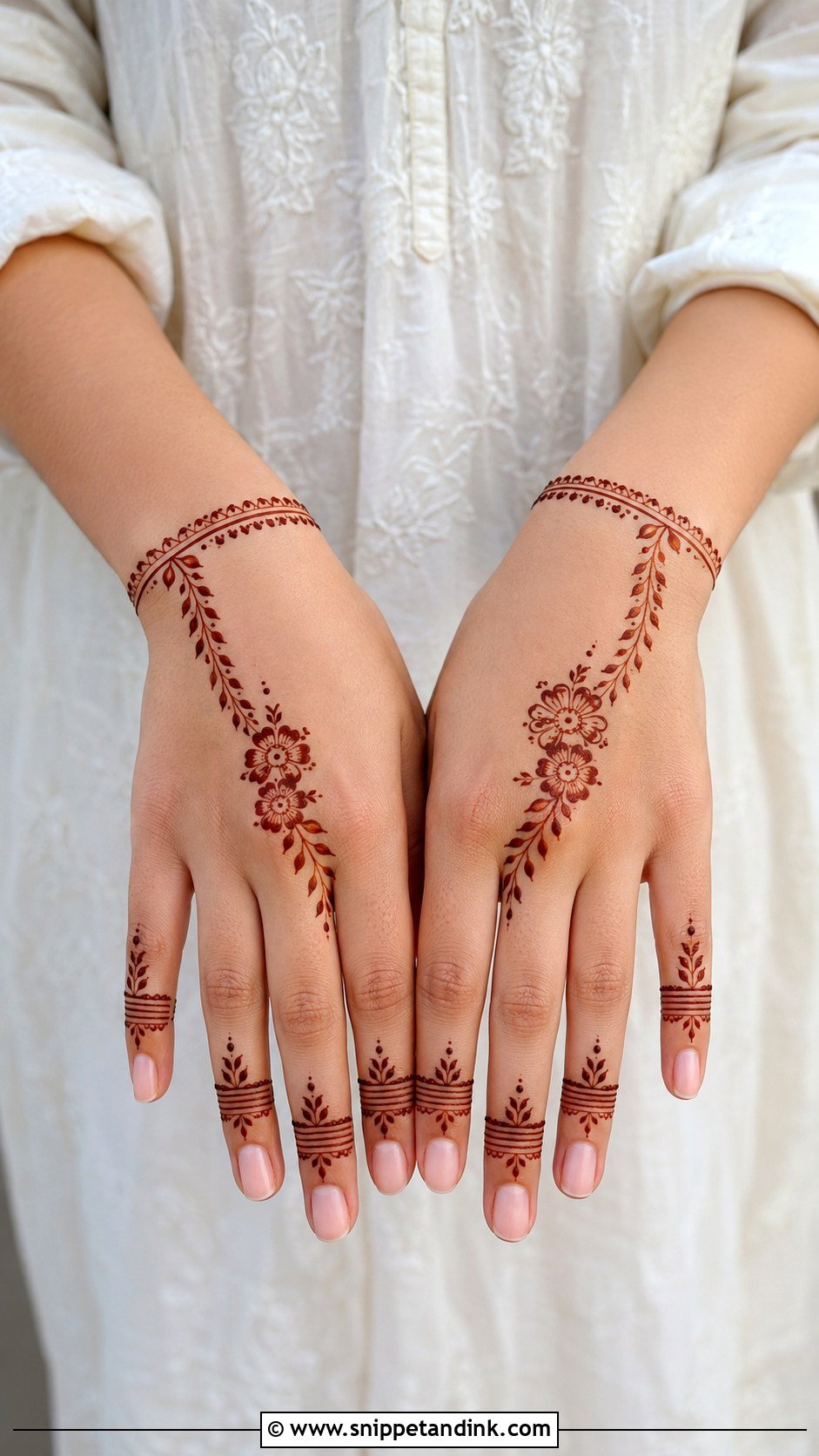
Teens usually want something that works with casual clothes as well as festive ones: finger designs, minimal back-hand florals, bracelet cuffs, small mandalas, leafy trails or geometric details. A light back-hand pattern with decorated fingers is the reliable pick. Open designs dry fast, which matters when the wearer wants to get back to her phone.
28. Modern Party Mehndi Design
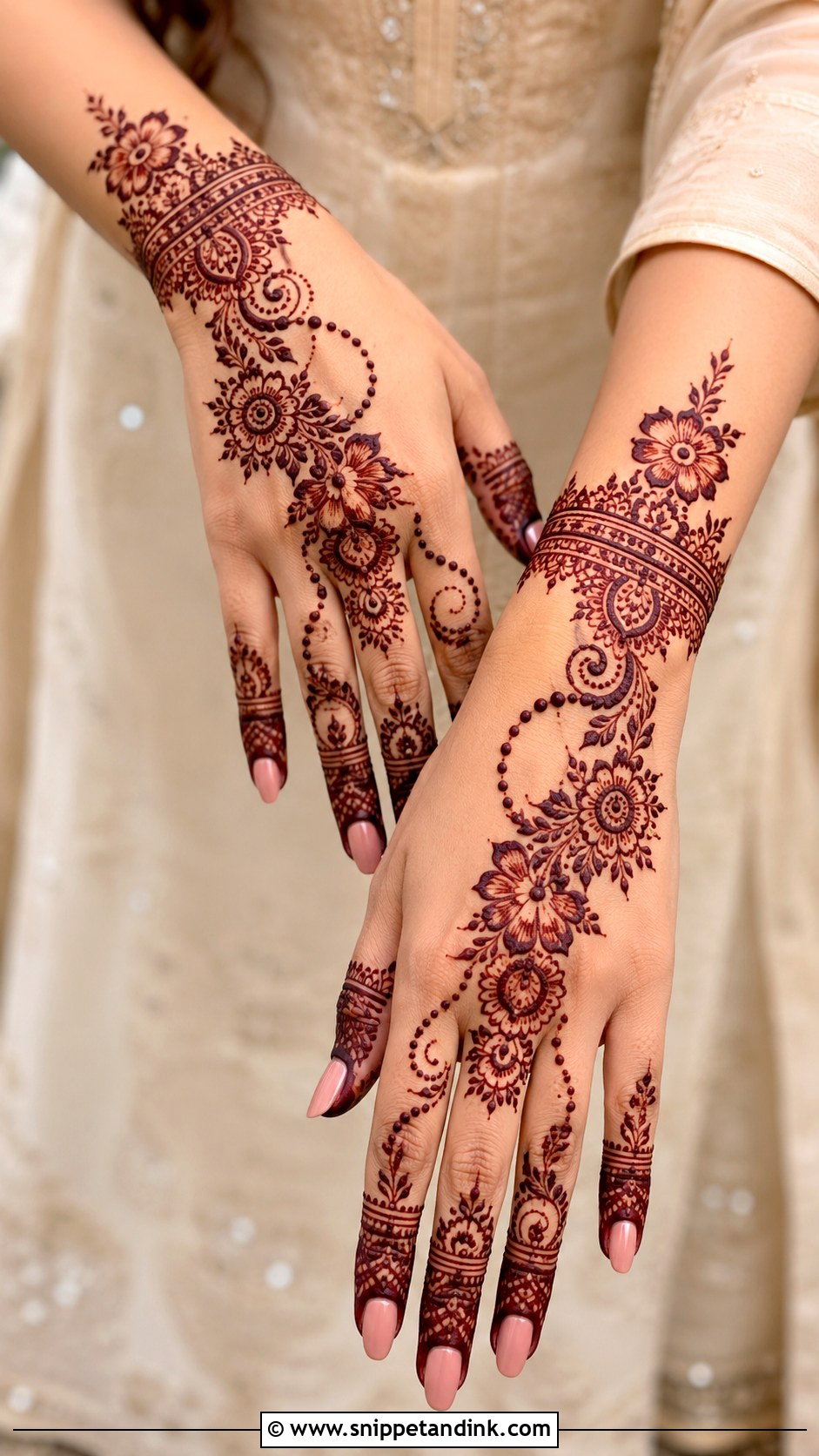
Birthdays, cultural nights, dinners. A stylish back-hand trail, finger design, wrist bracelet or small palm motif suits all of them, dressed up with fine dots, shaded flowers or delicate chains if needed. Keep it slightly bold so it reads clearly. Remember timing: paste removed a few hours before a party leaves an orange stain that evening, so for a big night, get it done the day before.
29. Modern Rajasthani Mehndi Design
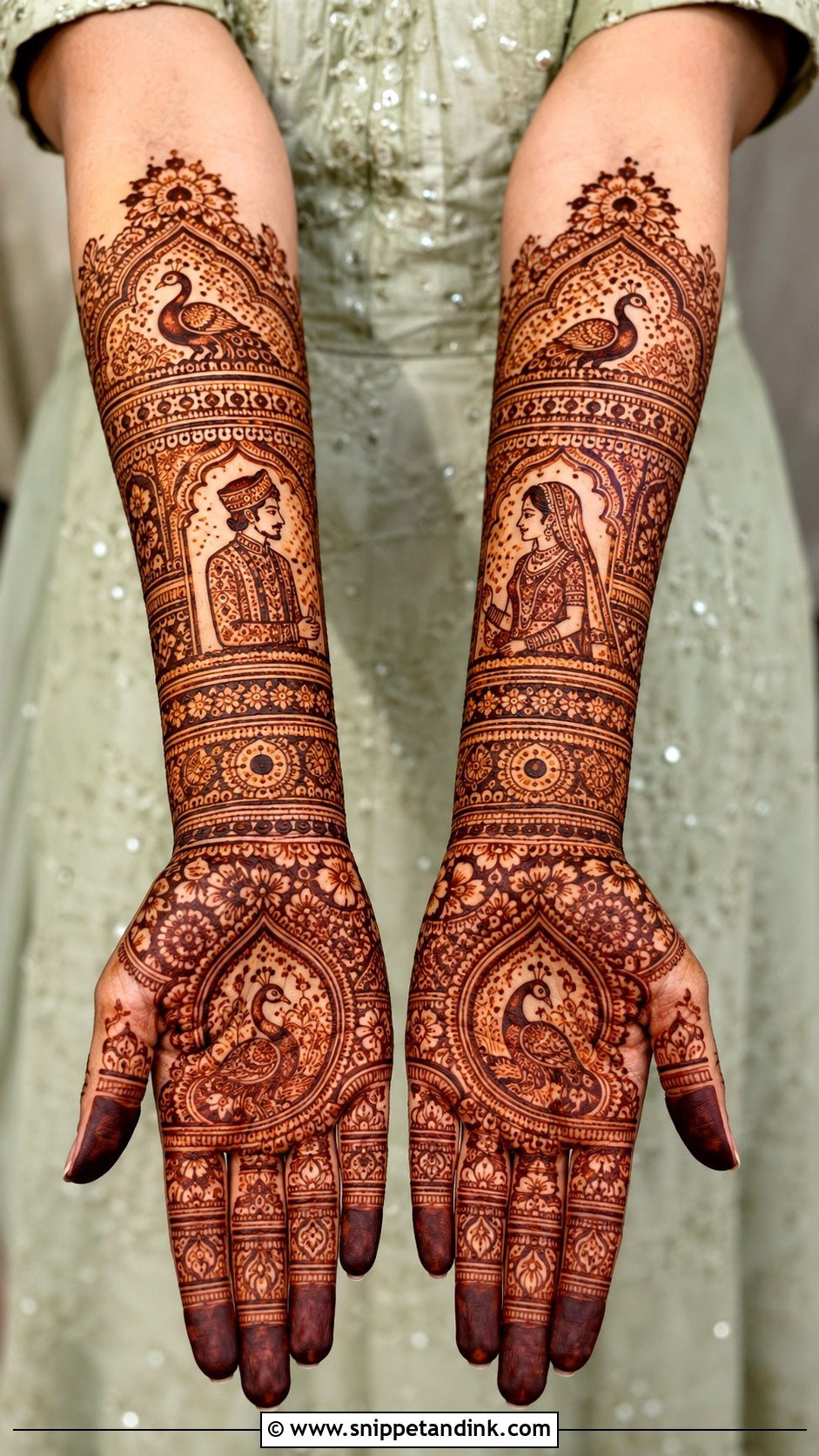
Rajasthani mehndi tells stories with peacocks, bride and groom figures, paisleys, mandalas and fine filling, usually across the full hand and up the forearm. Cleaner spacing keeps it rich without crowding. I put bold borders around each key motif and lighten the background detail so the figures stay legible. Brides who want cultural depth with a current finish often choose this.
30. Modern Moroccan Mehndi Design
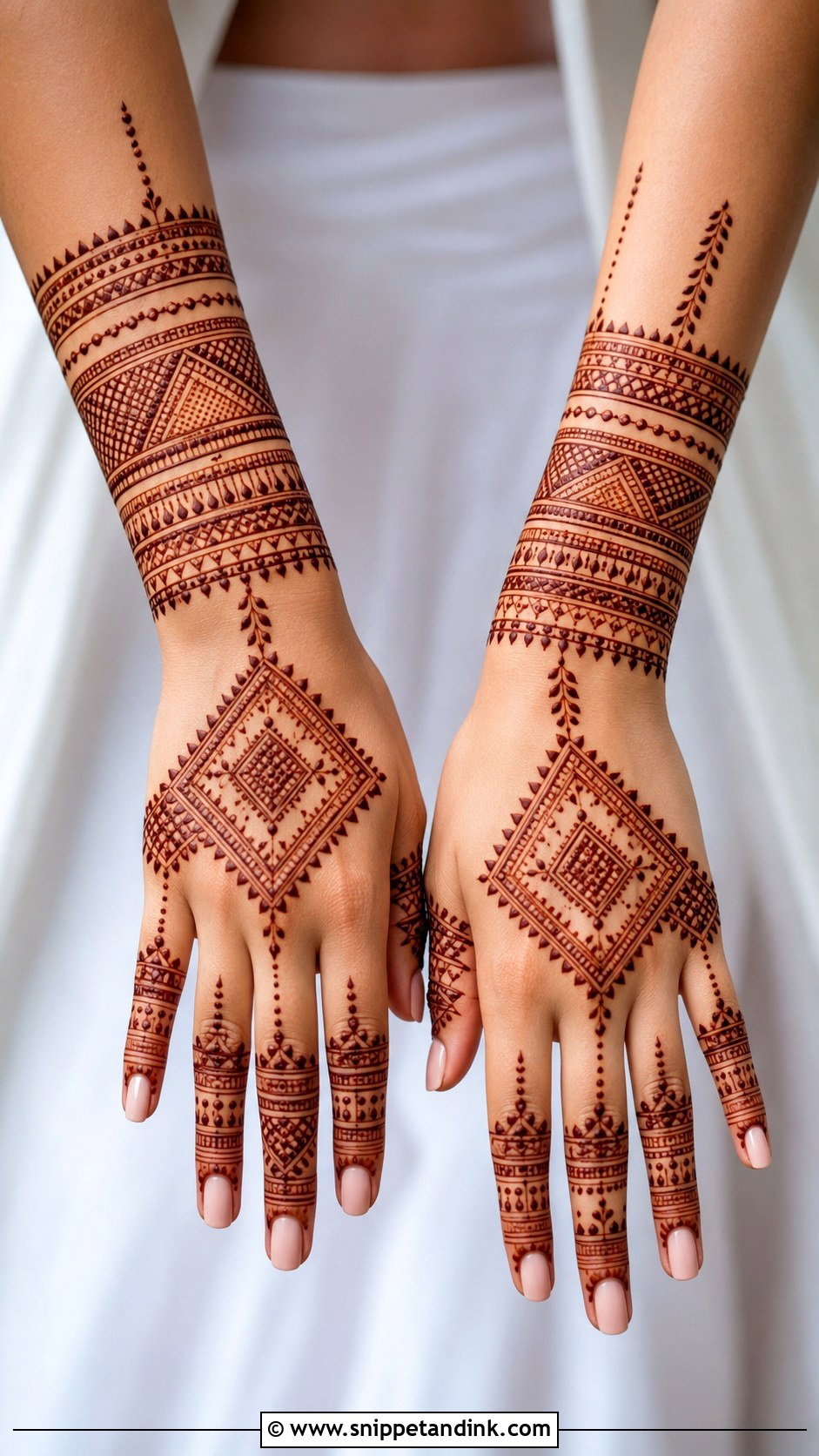
Moroccan-inspired henna relies on geometry: straight lines, diamonds, grids, dots and angular borders across the back of the hand, fingers, wrist and forearm. It looks graphic rather than floral. Combine the geometric sections with open skin so it doesn’t feel heavy. Precision is everything here; one uneven diamond throws off the whole grid, so I check each row against the knuckle line as I go.
31. Modern Gulf Mehndi Design
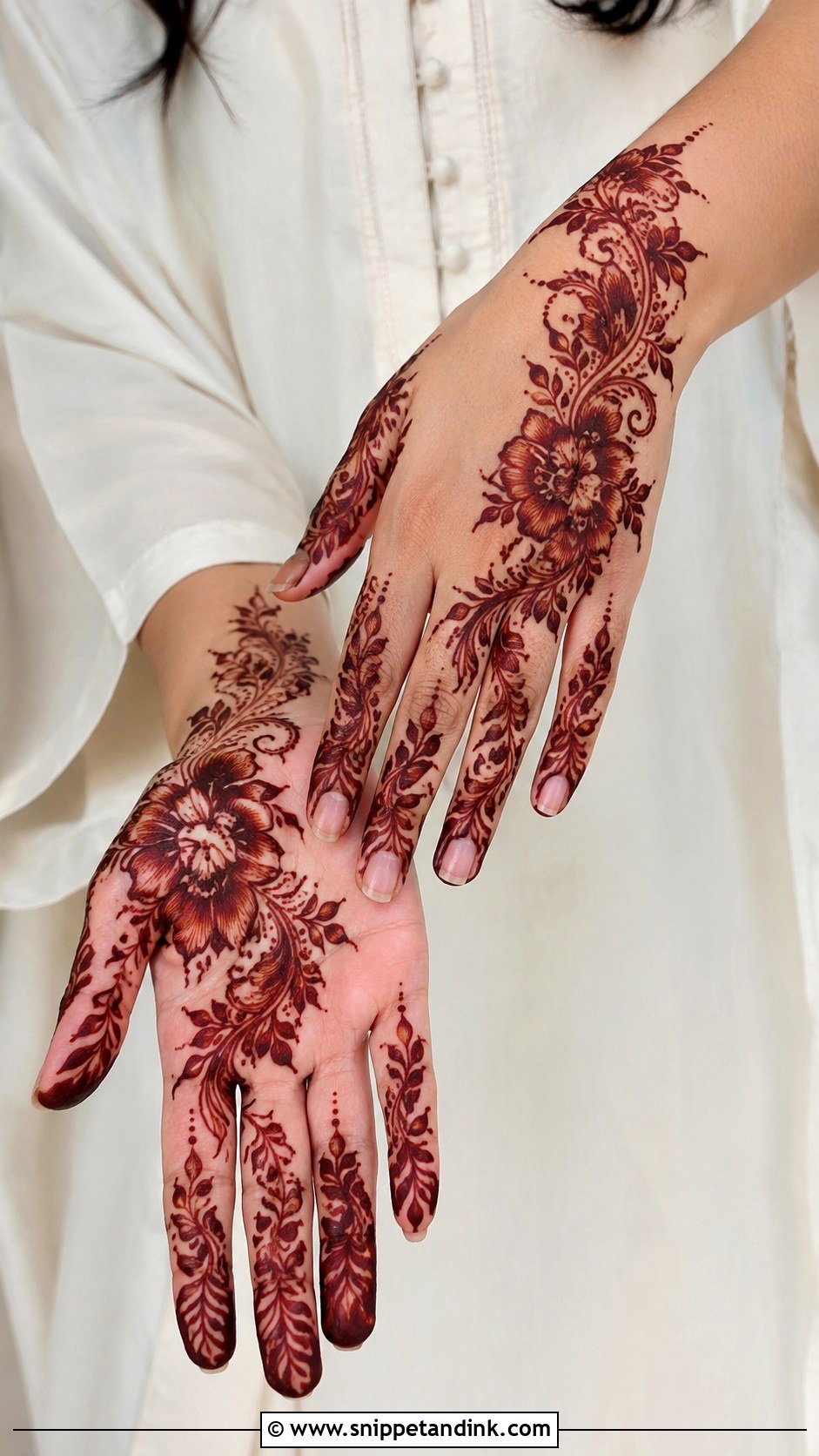
Khaleeji-inspired designs use bold florals, flowing vines, leafy clusters and generous open space, usually sweeping from the wrist across the back of the hand or the palm. The motifs are larger than Indian fine work, so the stain reads bold and stays clean as it fades. Keep the fingers lightly detailed so the main trail dominates. It suits festive evenings and formal gatherings.
32. Modern White Mehndi Design
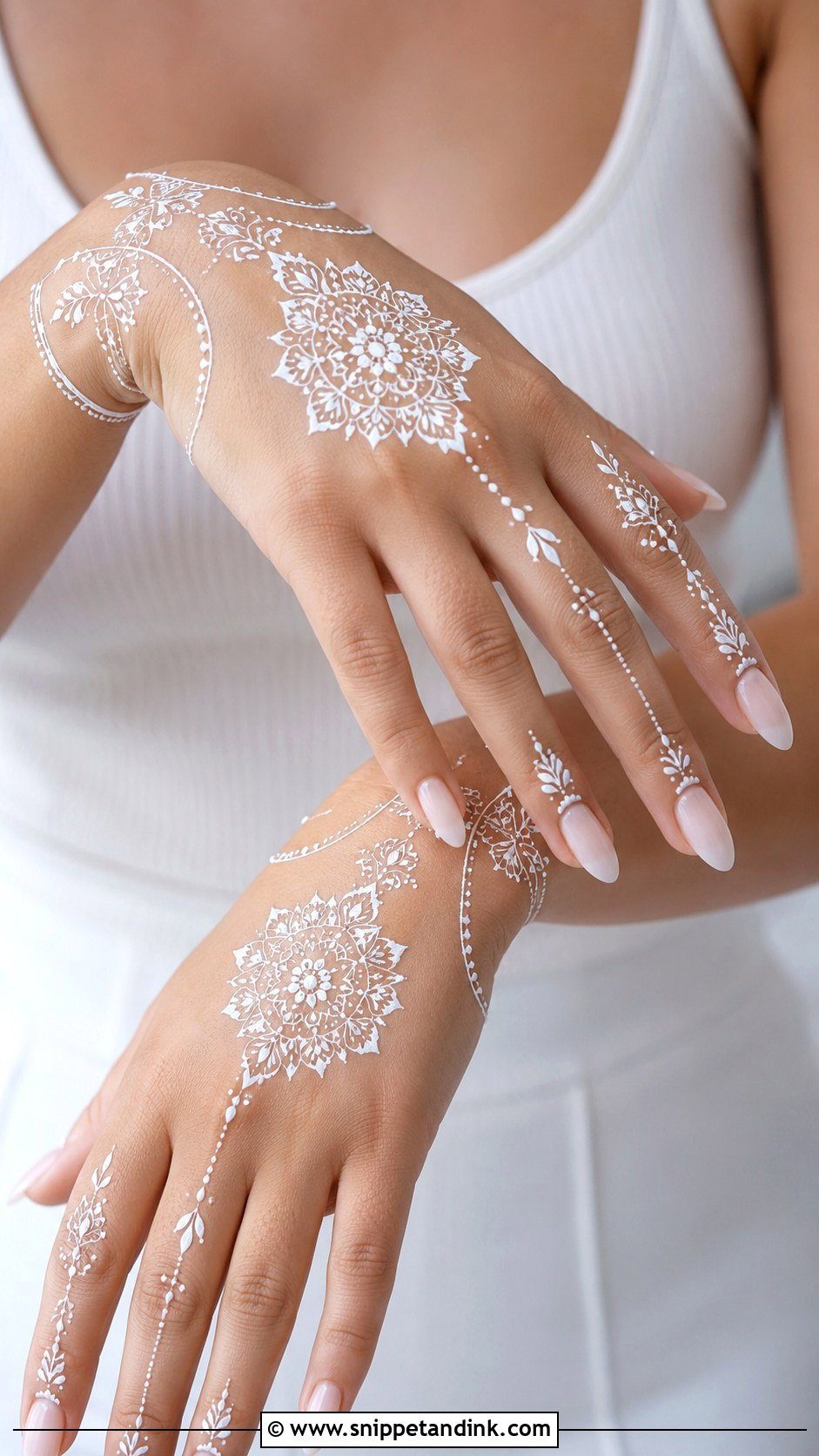
White mehndi isn’t henna at all. It’s body paint, usually applied over a skin-safe adhesive, and it leaves no stain, so it lasts only as long as the paint stays on, often a day or so. Lace-like florals, mandalas, jewellery chains and fine finger details look striking on the back of the hand, especially for photoshoots and themed parties. Keep the pattern crisp and leave skin showing. Patch test the adhesive first if your skin reacts to plasters or lash glue.
33. Modern Glitter Mehndi Design
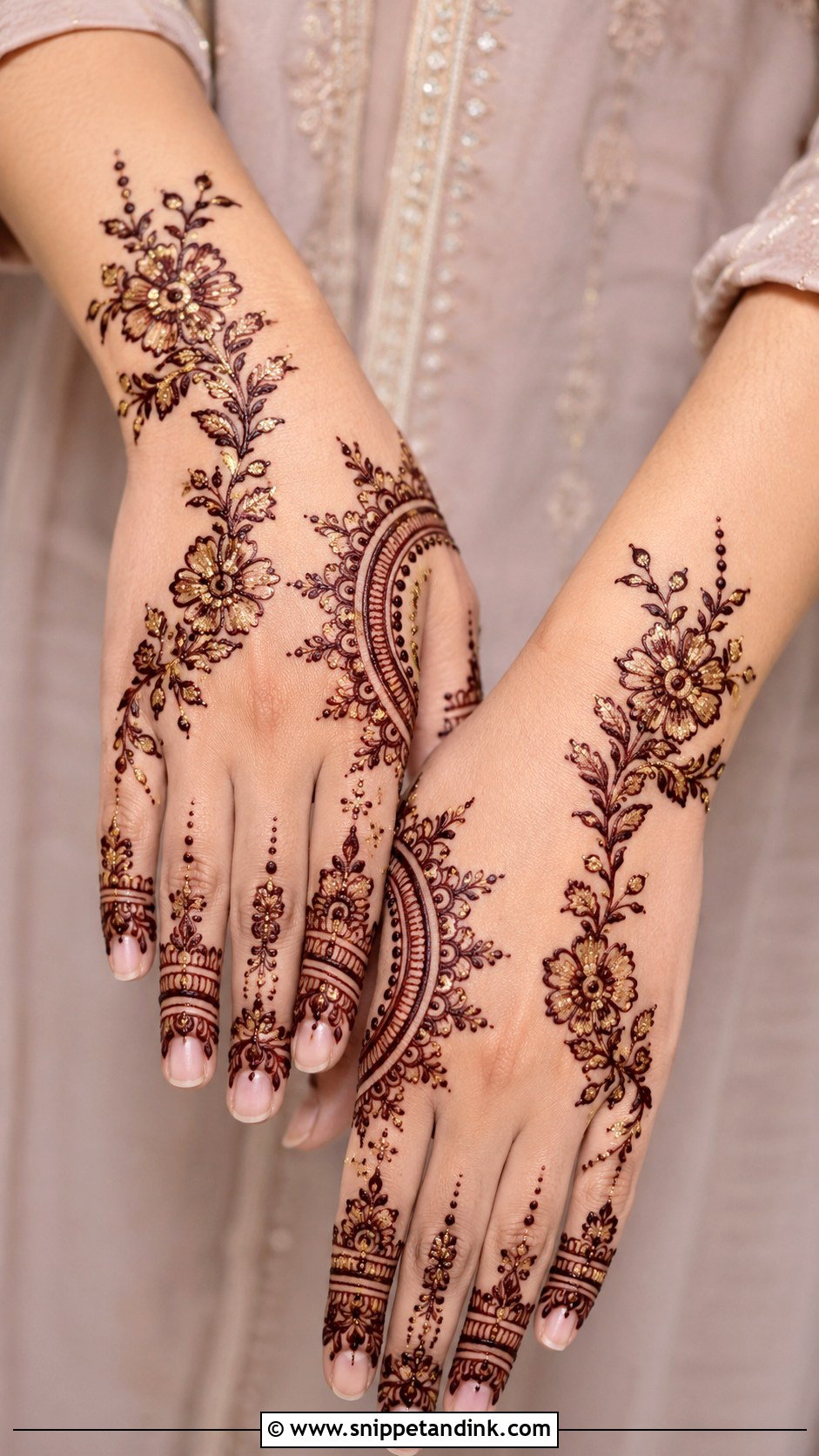
Glitter goes over a finished henna pattern, applied with cosmetic-grade adhesive to selected petals, borders, dots or wrist bands. Covering the whole design looks overwhelming and hides the work underneath. Choose a colour that matches the outfit. It’s strictly for the event itself; the glitter flakes off within a day, while the henna stain underneath carries on.
34. Modern Colored Mehndi Design
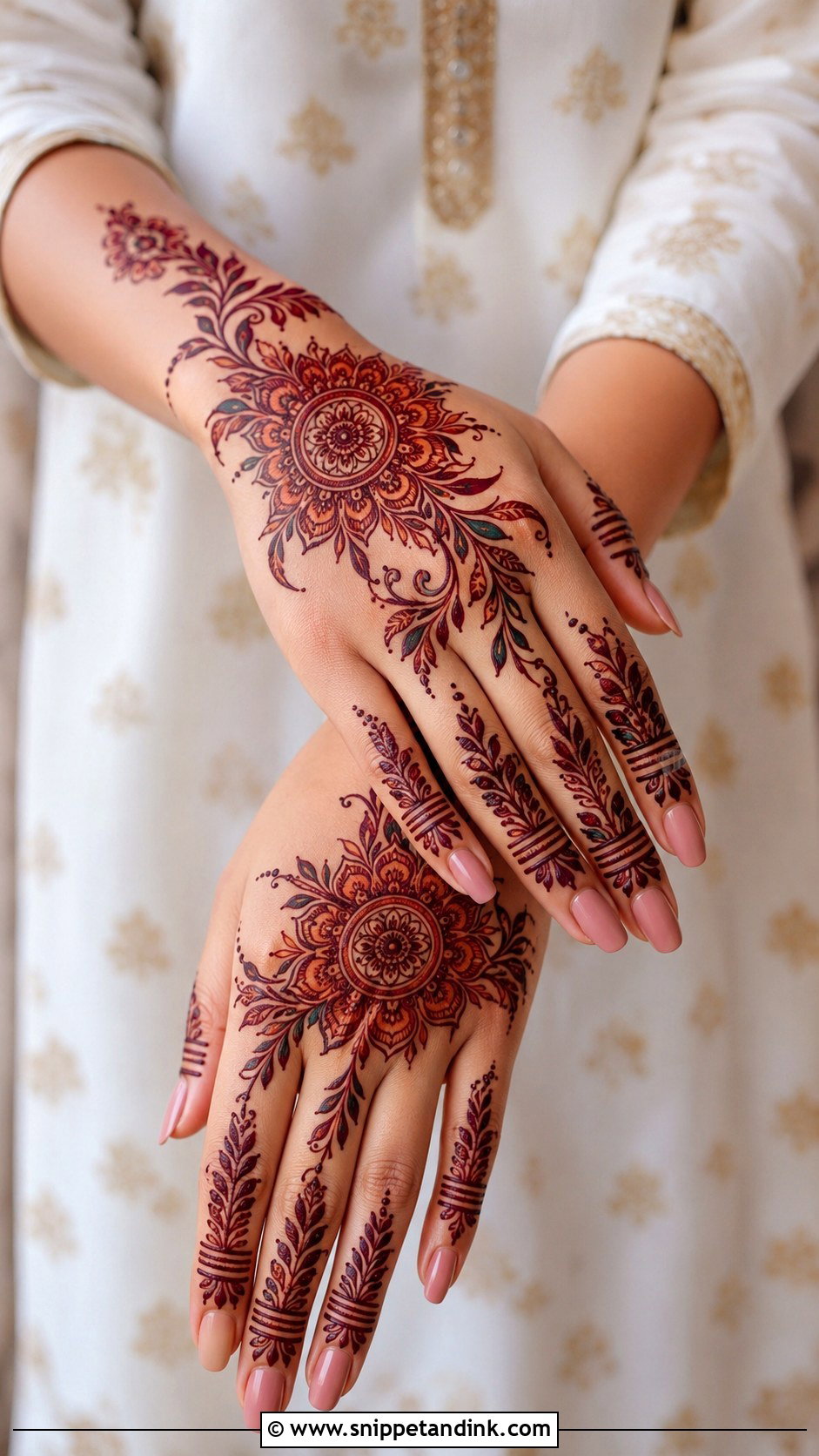
Colour comes either from natural henna outlines with coloured accents or from temporary coloured cones used for decoration. Use it sparingly on petals, dots or borders, and pick one accent shade rather than several. Coloured cones are body paint, not henna, so they wash off. Read the ingredients on any coloured cone, and don’t use a product that promises a coloured stain without telling you what’s in it.
35. Modern Foot Mehndi Design
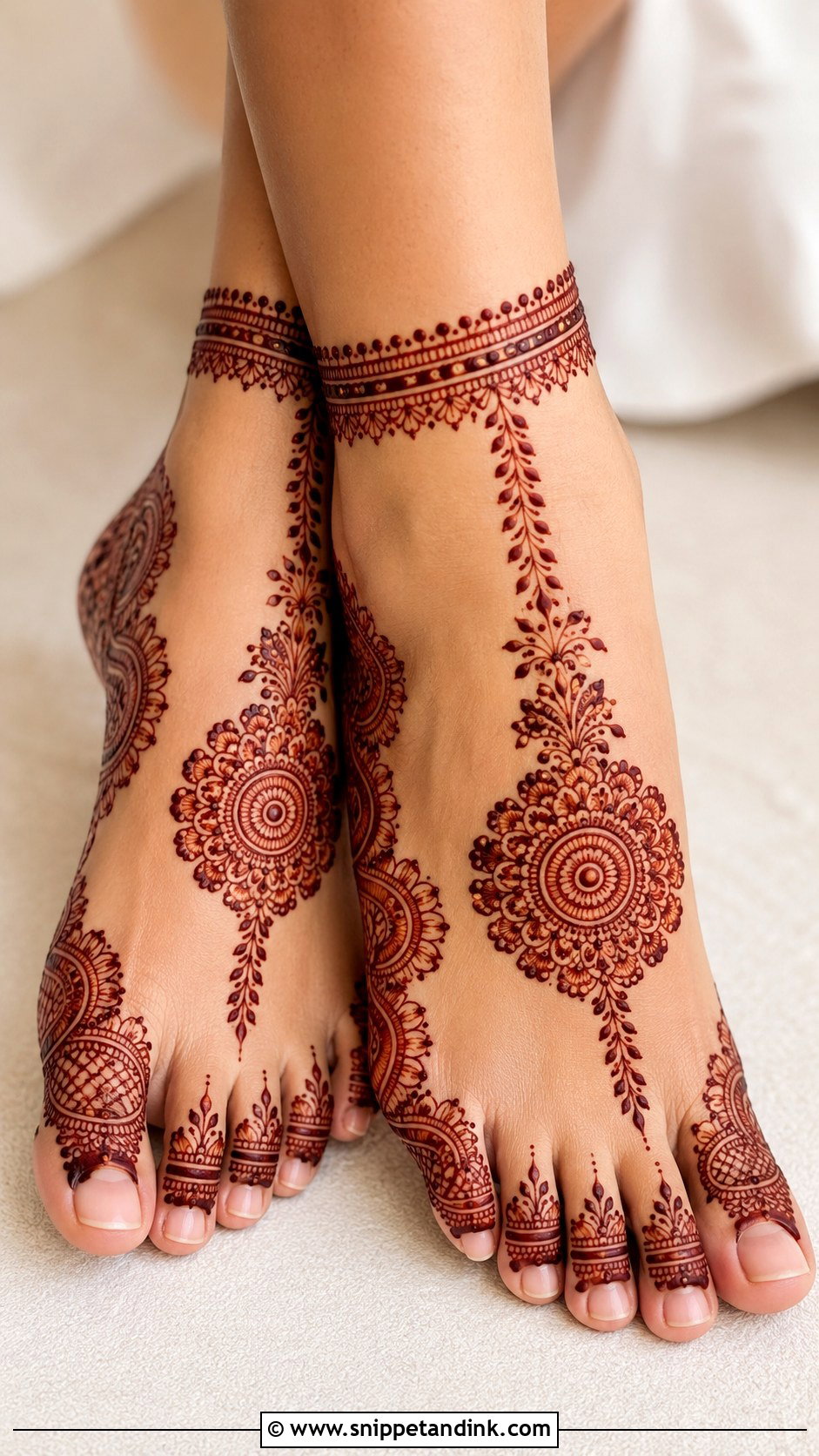
Toes, the top of the foot, the ankle and the side curves are the usual placements, with mandalas, anklet bands, floral trails, jaali or paisley borders. Bridal foot henna can run from toes to ankle or higher; for casual events an anklet-style design with toe details is enough. Feet stain beautifully, especially the soles, but you can’t walk while the paste is wet, so feet usually come last in a bridal appointment. Keep the toes uncluttered and both feet balanced.
What Goes Into the Cone, and Who Should Skip It
Natural henna paste is simple: dried henna leaf powder, a liquid such as lemon juice or water, a little sugar for stickiness, and an essential oil that helps the stain develop. Ask your artist what’s in hers. Anyone who mixes her own paste will tell you happily, and anyone who can’t is a reason to pause.
Children
For young children I use plain henna with a mild oil or none, and keep the design small with the paste on for a shorter time. Children with G6PD deficiency should not have henna at all, because it can trigger a serious reaction in them. If you aren’t sure, ask the child’s doctor before the festival, not on the night.
Sensitive skin and allergies
True henna allergies are uncommon, but the essential oils in the paste can irritate sensitive skin. A small dot on the inner arm a day or two before a big application tells you a lot. Anything sold as black henna, or a cone promising a dark stain in an hour, is a different product entirely and may contain PPD, which can cause blistering and lasting sensitivity. Natural henna only ever stains orange to deep reddish brown.
Shop-bought cones
Ready-made cones that sit on a shop shelf for months often contain preservatives or dyes. Fresh natural paste is normally kept in the fridge or freezer. If a cone doesn’t list its ingredients, I wouldn’t put it on skin.
The Same Rules Work for Every Celebration
Henna can be a bold Arabic trail, a neat mandala palm, a delicate bracelet pattern, full bridal coverage or a minimal finger design. The right one fits your hand, your outfit and the time you actually have in the chair. Open spacing, clean lines and a clear focal point make even simple henna look considered. Indian, Arabic, Indo-Arabic, Moroccan, Gulf or minimal, the same rules apply, so save the ideas that suit your occasion and bring them to your artist.
You'll Like These Ideas:









Leave a Reply