
The back of the hand is the part of your mehndi everyone else actually sees. It shows when you wave, hold a clutch, pass a plate of sweets or rest your hand on someone’s shoulder for a photo, while the palm mostly faces you. That changes how I design it. A backhand pattern has to read from a few feet away, keep the fingers looking long, and leave room for rings and bangles. Below are the layouts I’m asked for most right now, from a quick Arabic trail you can sit for in twenty minutes to full bridal coverage, with notes on how each one stains and who it suits.
Why the Back of the Hand Stains Paler Than Your Palm
Almost every client notices it the morning after: the palm is a deep maroon and the back of the hand is a shade or two lighter. That’s normal. Henna dye binds to the outer layer of skin, and the palms and fingertips have a much thicker outer layer than the back of the hand, so they take up more color. The back of the hand also has finer skin that sheds faster, which is why it fades first.
I design with that in mind rather than fighting it. On the back of the hand, I use slightly bolder outlines and fewer ultra-fine fillers, because a hairline that stains dark on the palm can stain almost invisible here. Keeping the paste on longer helps more than anything else. I ask for at least six hours, and overnight if you can manage it.
Sleeves, Rings and Bangles Decide Where the Design Stops
Before I pick up a cone, I ask three things: what sleeve you’re wearing, which rings you’ll have on, and whether you’ll stack bangles. A three-quarter sleeve hides anything above the wrist bone, so a long arm extension is wasted on it. A wide statement ring covers most of the finger, so I’d rather keep detail on the fingertips and knuckles. Heavy bangles hide a cuff completely.
- Bring the outfit or a photo of the sleeve, and wear or bring the rings you plan to use.
- If your hands will be in close-up ring shots, ask for a clean band of skin where the ring sits.
- Tell your artist if you’ll be cooking, serving or washing up soon after; I’ll keep the design lighter on the inner fingers that touch everything.
1. Simple Backhand Mehndi Design
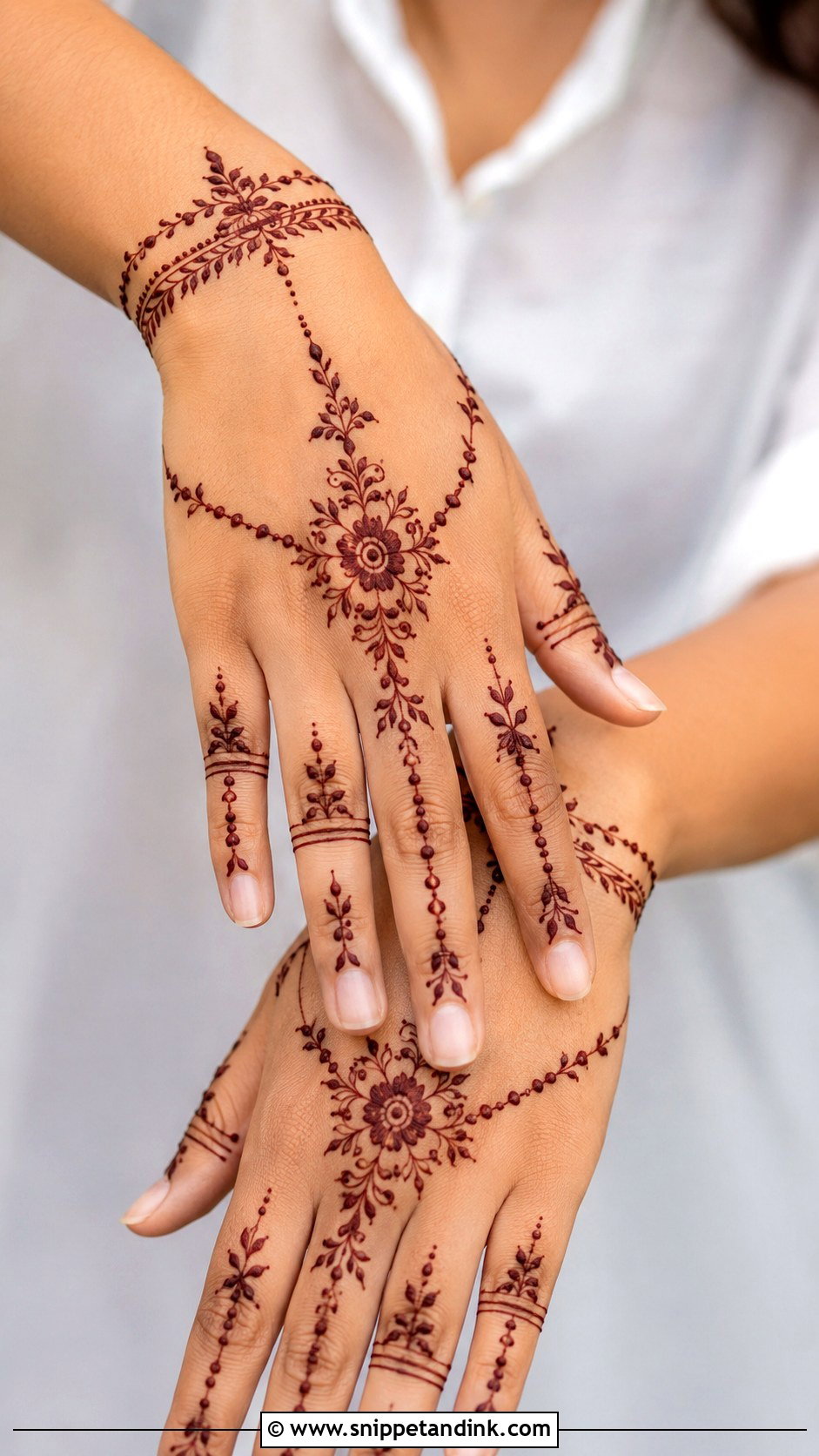
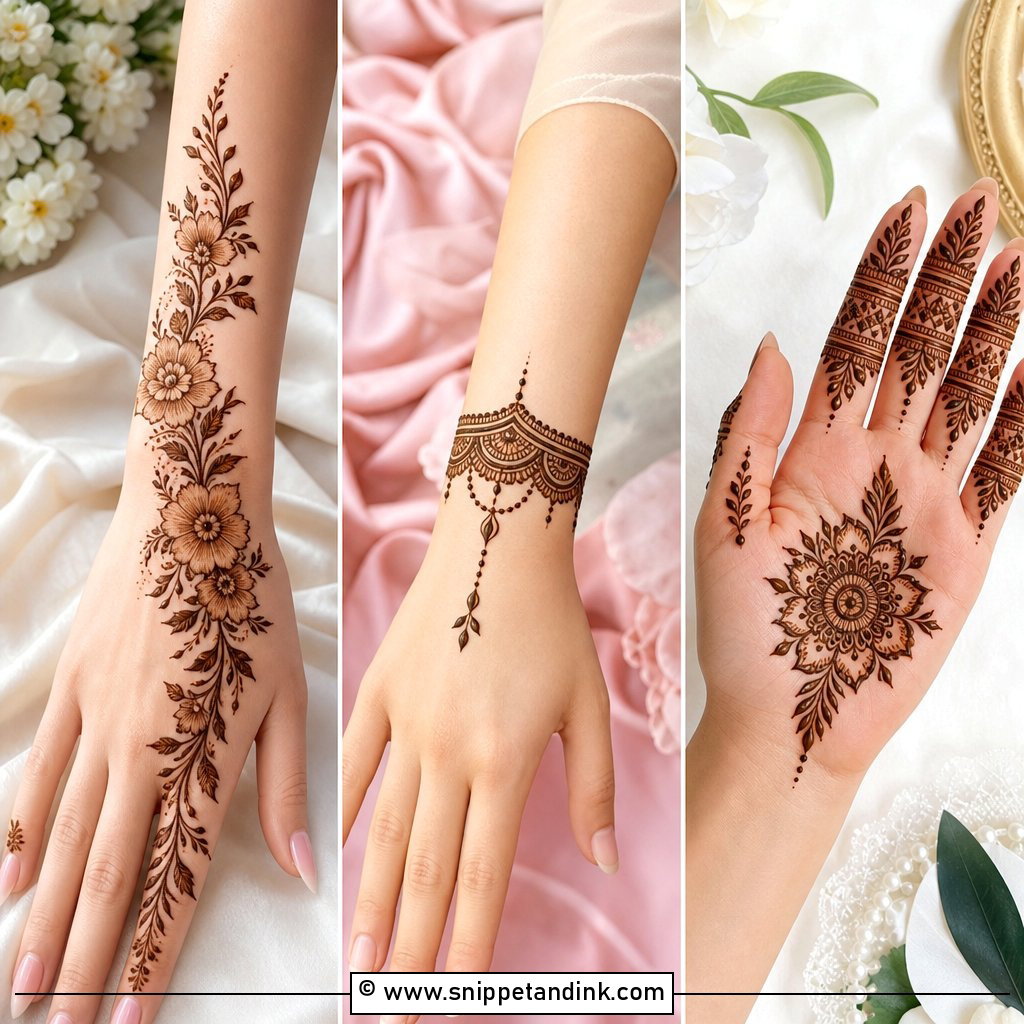
This is the design I reach for when someone has an hour or less. One small flower or mandala sits on the back of the hand, the fingers get thin lines and a few leaves, and the wrist gets a slim band. Because there’s so much bare skin around each motif, nothing blurs together when the stain darkens. The one thing I watch is line weight: on a sparse design, a shaky outline has nowhere to hide, so I keep the cone moving at a steady pace rather than slow and careful.
2. Arabic Backhand Mehndi Design
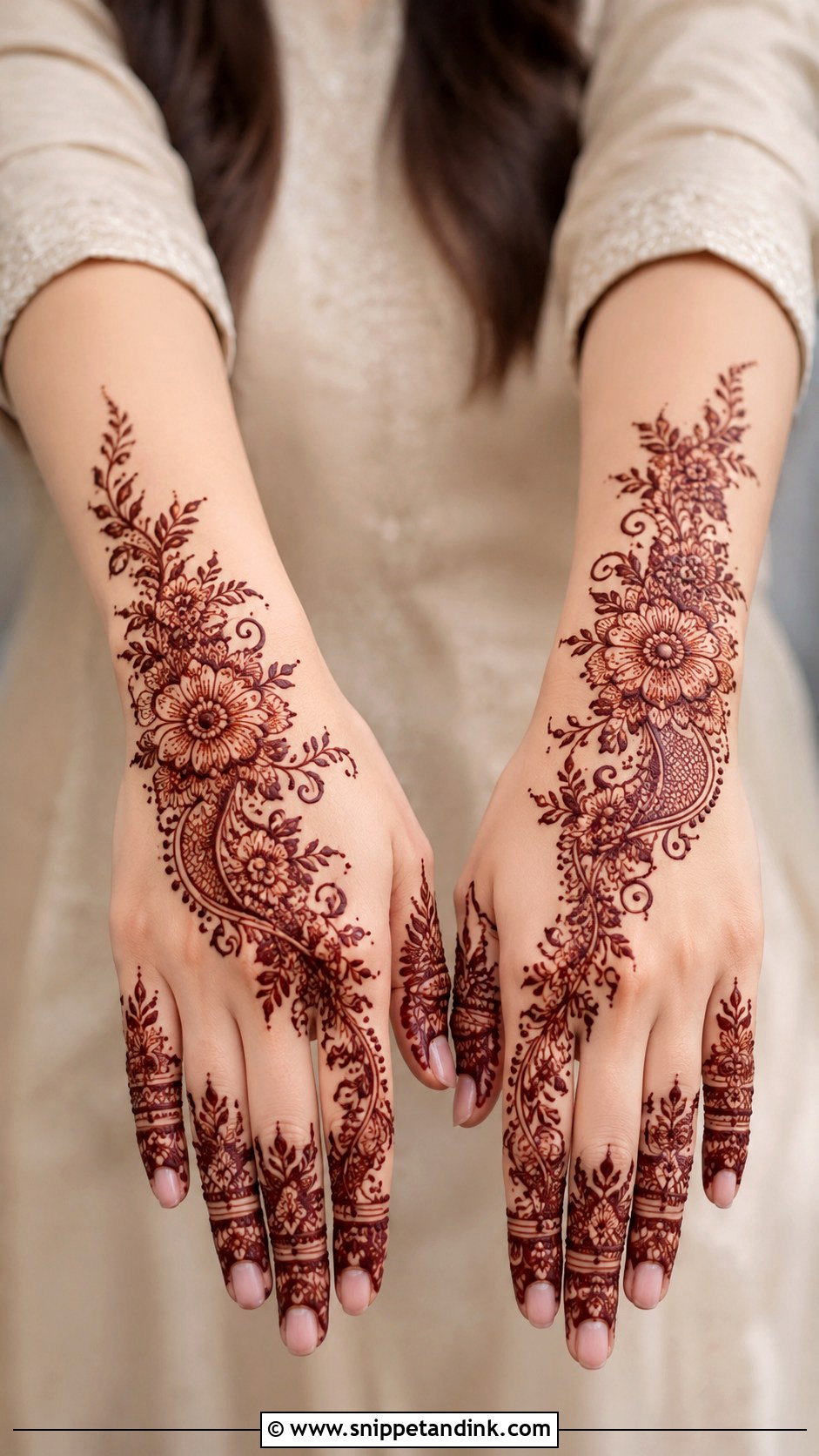
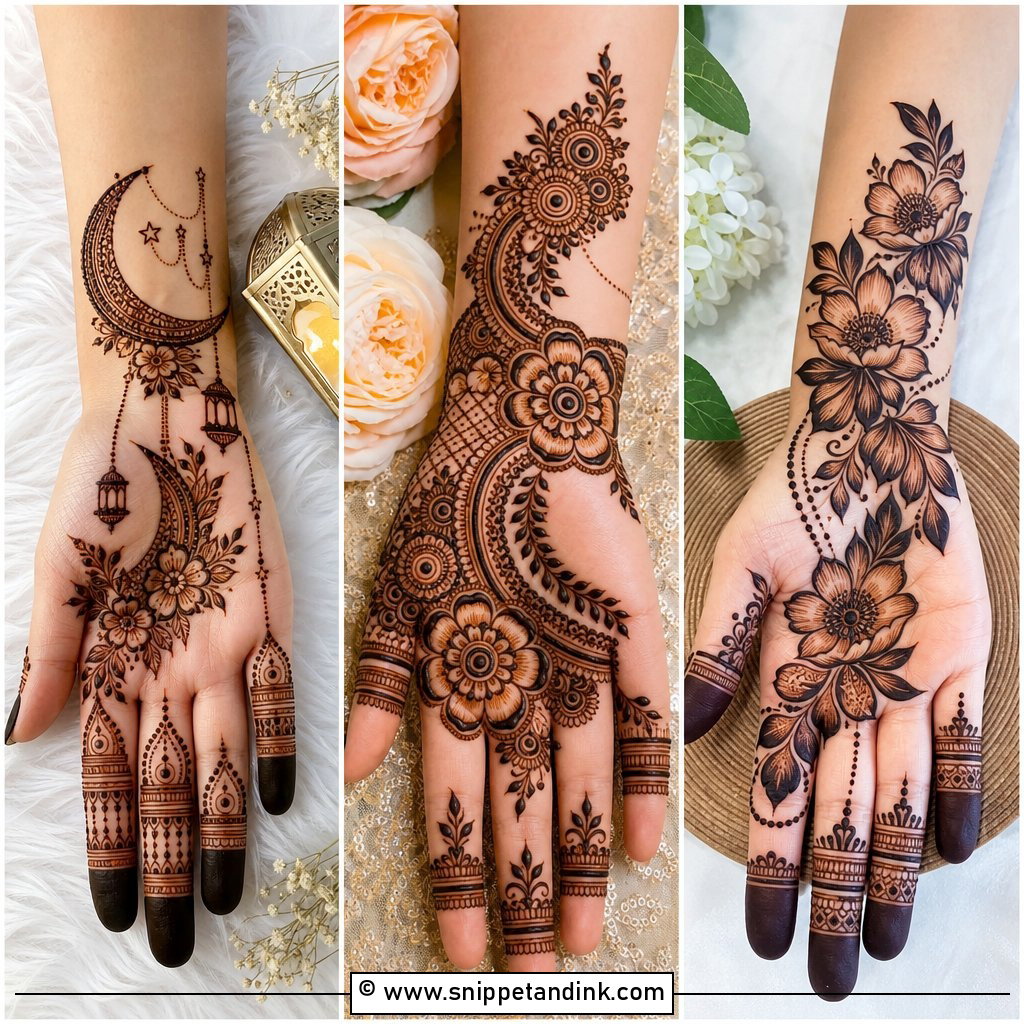
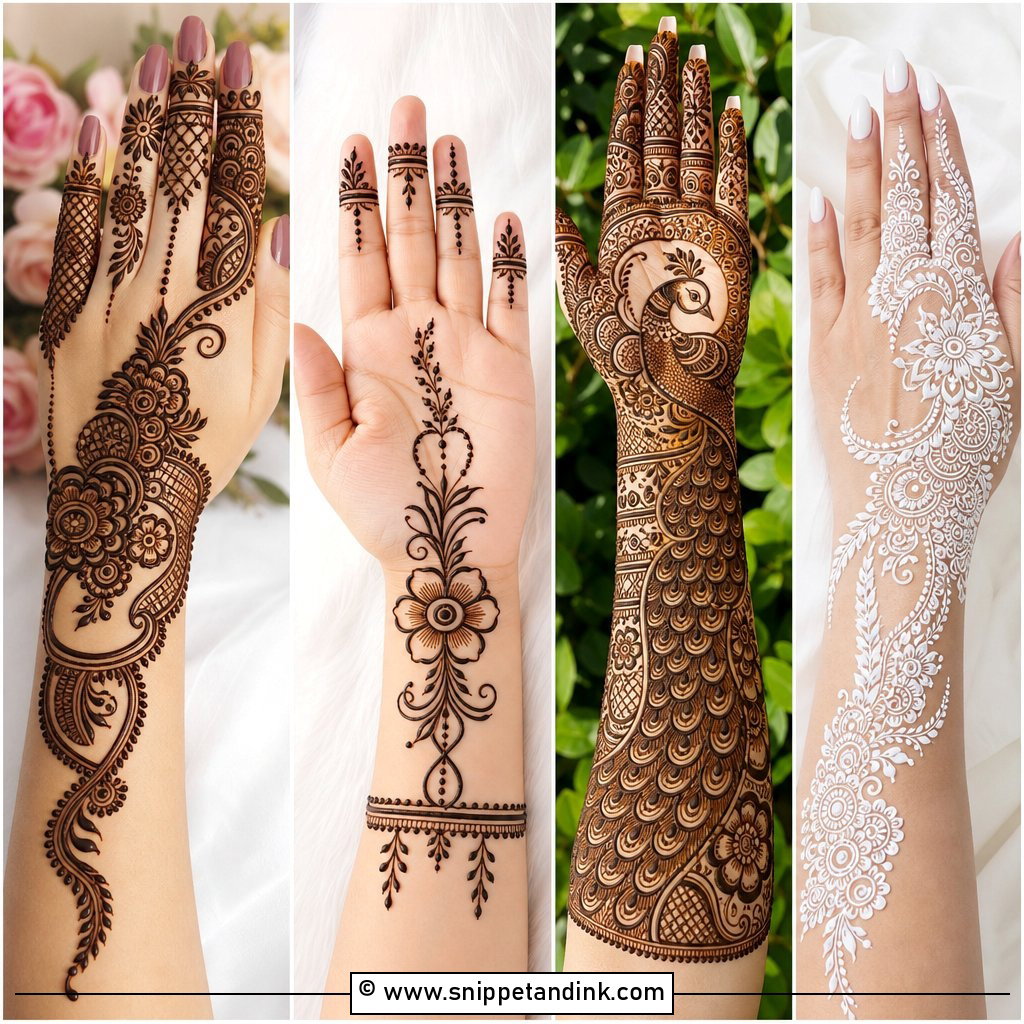
Arabic layouts usually start at one side of the wrist and travel diagonally toward the index or middle finger, with big flowers, leafy vines and paisleys pulling the eye along. The bare skin between them matters as much as the henna. I outline the petals with a thicker line and keep the inner detail fine, because that contrast is what still looks sharp at a wedding-guest distance. If your outfit is heavily embroidered at the cuff, I’ll bend the trail so it finishes before the sleeve covers it.
3. Full Backhand Mehndi Design
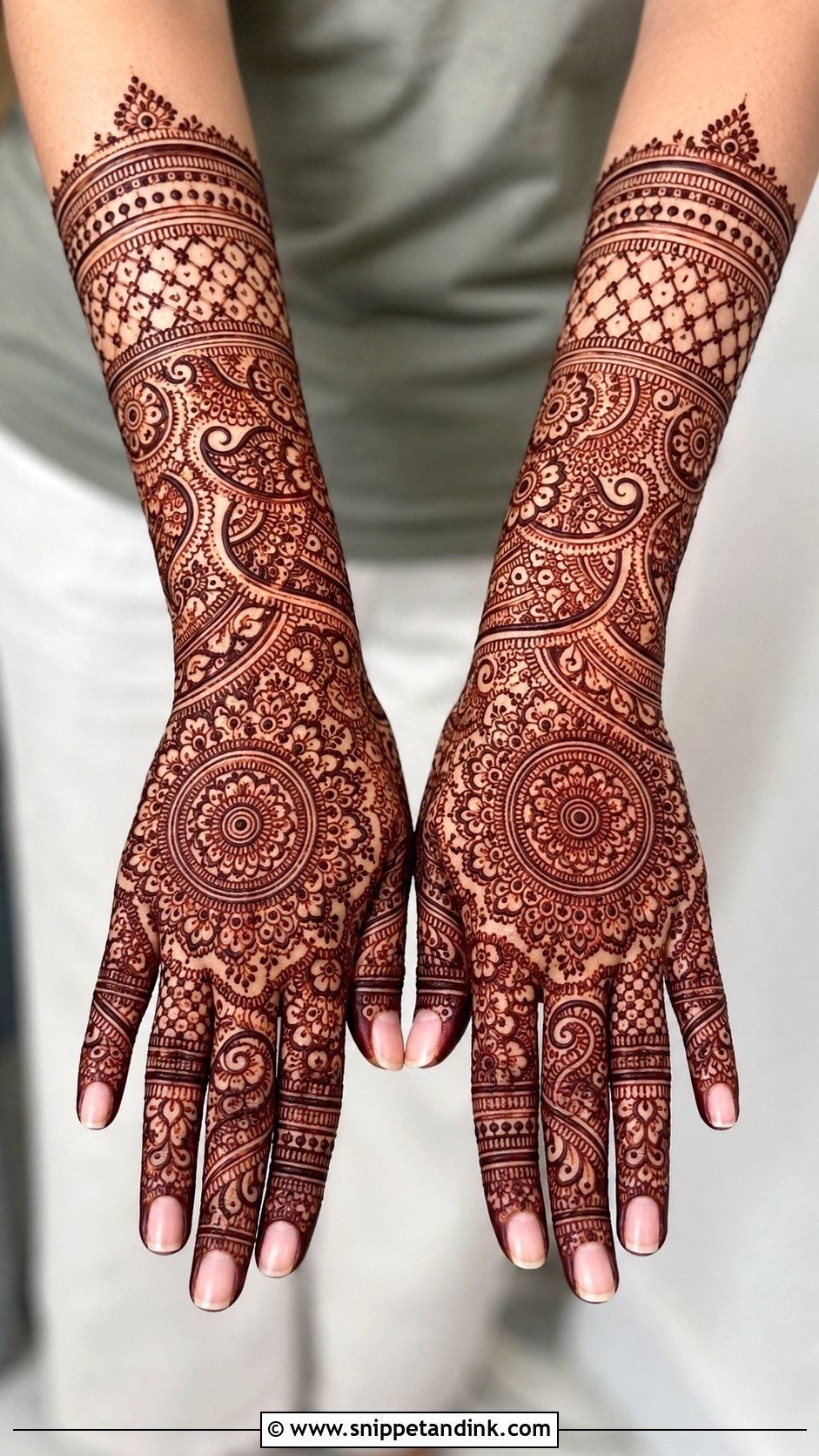
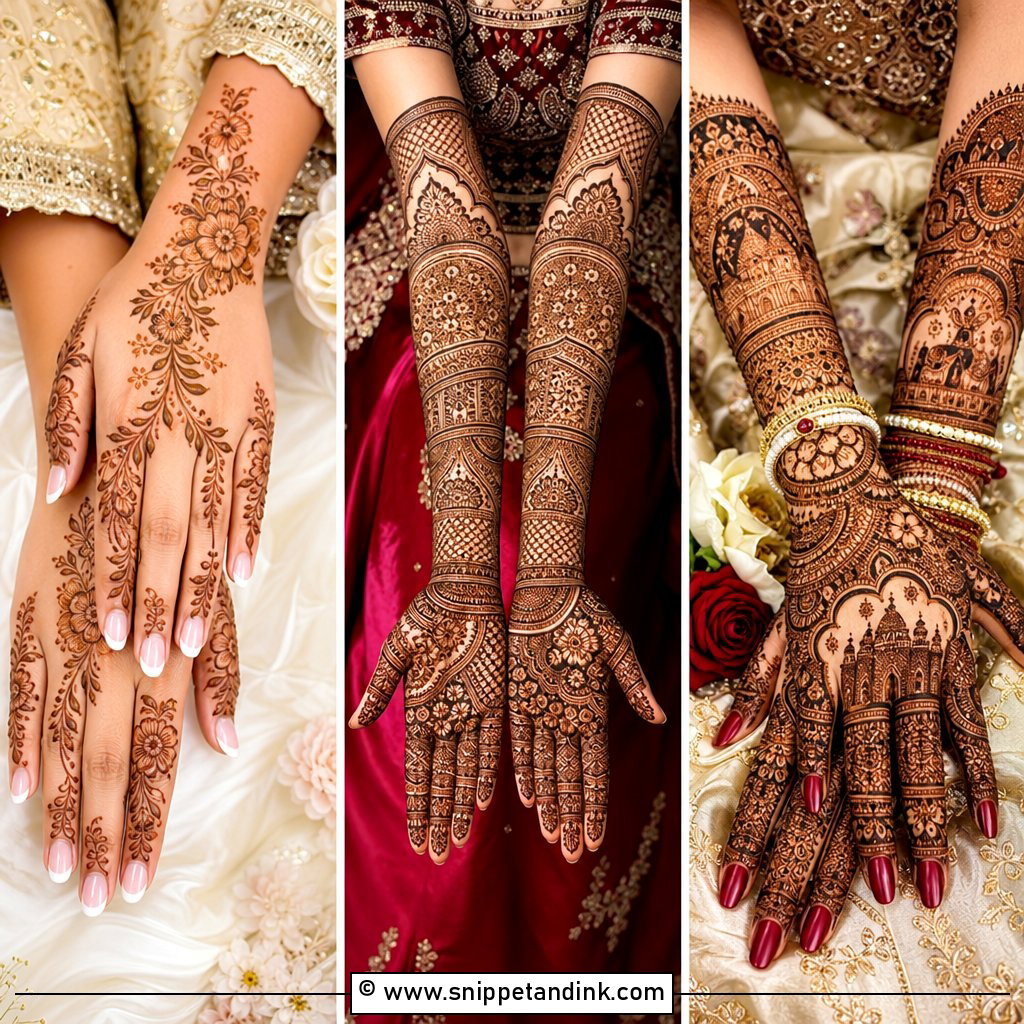
Full coverage runs from the fingertips to the wrist and sometimes a little above. It’s the usual pick for brides, sisters of the bride and traditional functions, and it can hold mandalas, paisleys, jaali, florals and detailed finger panels. The mistake I see on full hands is packing every gap. Once the stain develops, tightly packed filler turns into one flat brown patch, so I deliberately leave small open breaks between sections. Budget at least an hour per hand for the backs alone.
4. Bridal Backhand Mehndi Design
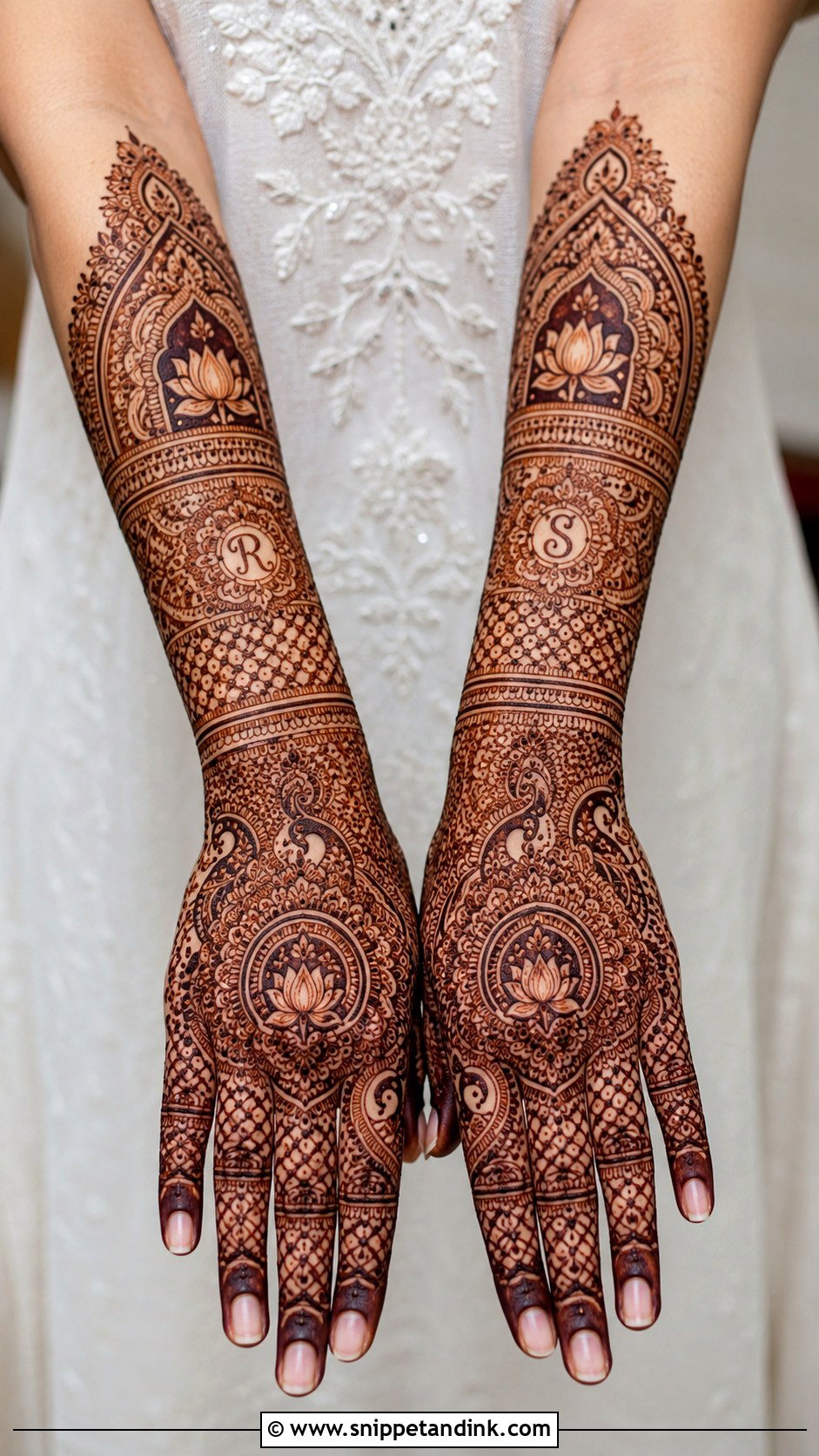
Bridal backs carry the layered work: paisleys, lotus, jaali, peacocks and fine filler, sometimes with initials or the wedding date hidden in a petal. I plan the back of the hand together with the palm and arm so the borders line up at the wrist. I also design around the ring finger. Your photographer will take close-ups of the rings, so I keep a clean channel of skin where the band sits and put the strongest motif just above the knuckles, where the camera lands first.
5. Modern Backhand Mehndi Design
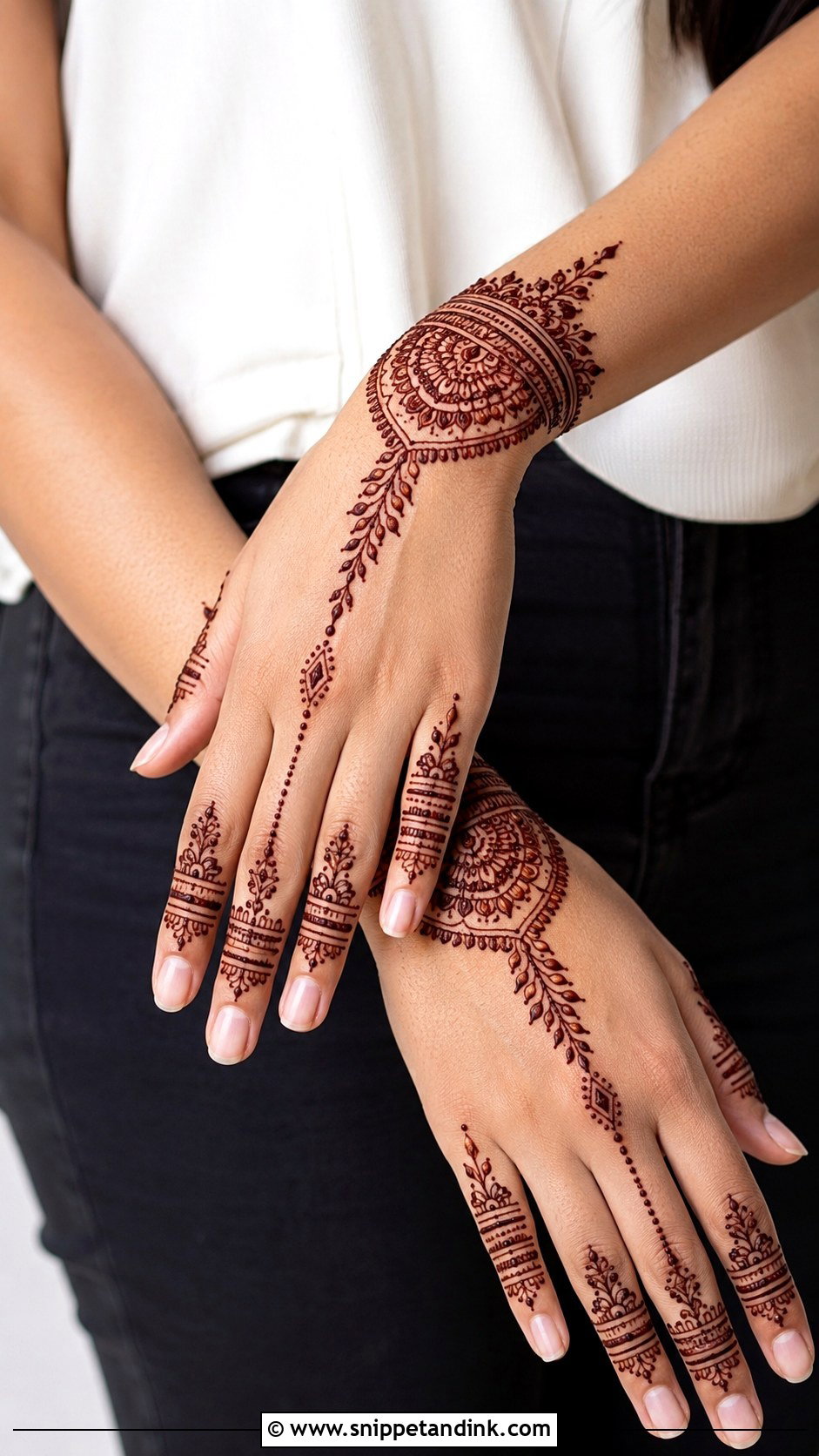
Modern backhand work is about placement rather than coverage. A leafy trail runs down one side, or a half-mandala sits near the wrist, with slim geometric lines and lots of negative space. Finger detail stays light. It sits well with pastel lehengas, sarees and shararas, and it won’t fight heavy jewelry. My rule here is one focal point only. The moment I add a second large motif, the design stops looking modern and starts looking unfinished.
6. Minimal Backhand Mehndi Design
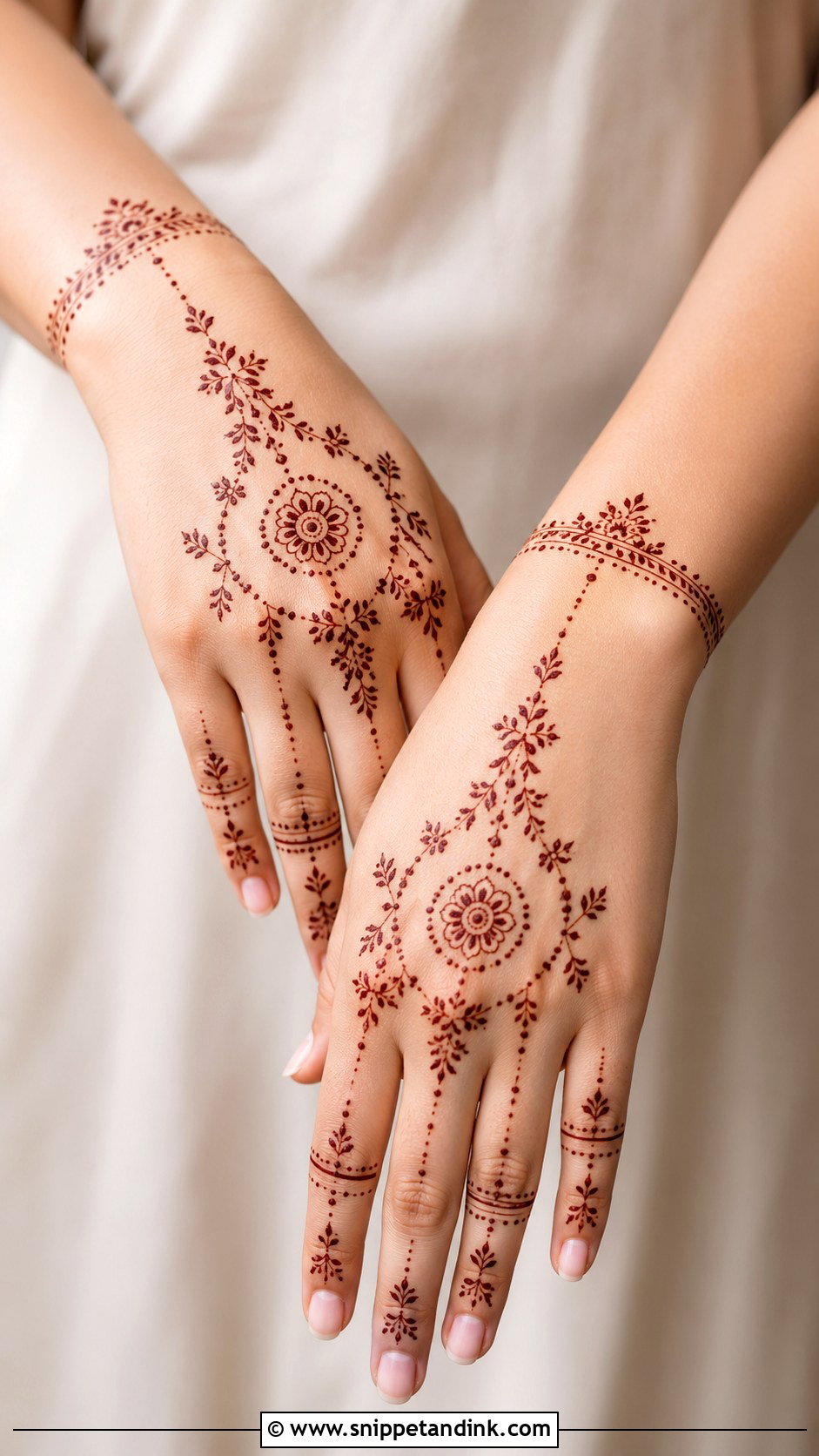
A minimal hand might be nothing more than a tiny mandala, a floral spray, fine finger lines and a small wrist detail, with most of the skin left bare. First-timers, office events and younger guests tend to ask for this. Honestly, it’s harder to do well than it looks. With so few lines, every wobble shows, and a fat line from a cone that’s been sitting in a warm room ruins the delicacy. I cut a smaller tip for minimal work and skip filler almost entirely.
7. Floral Backhand Mehndi Design
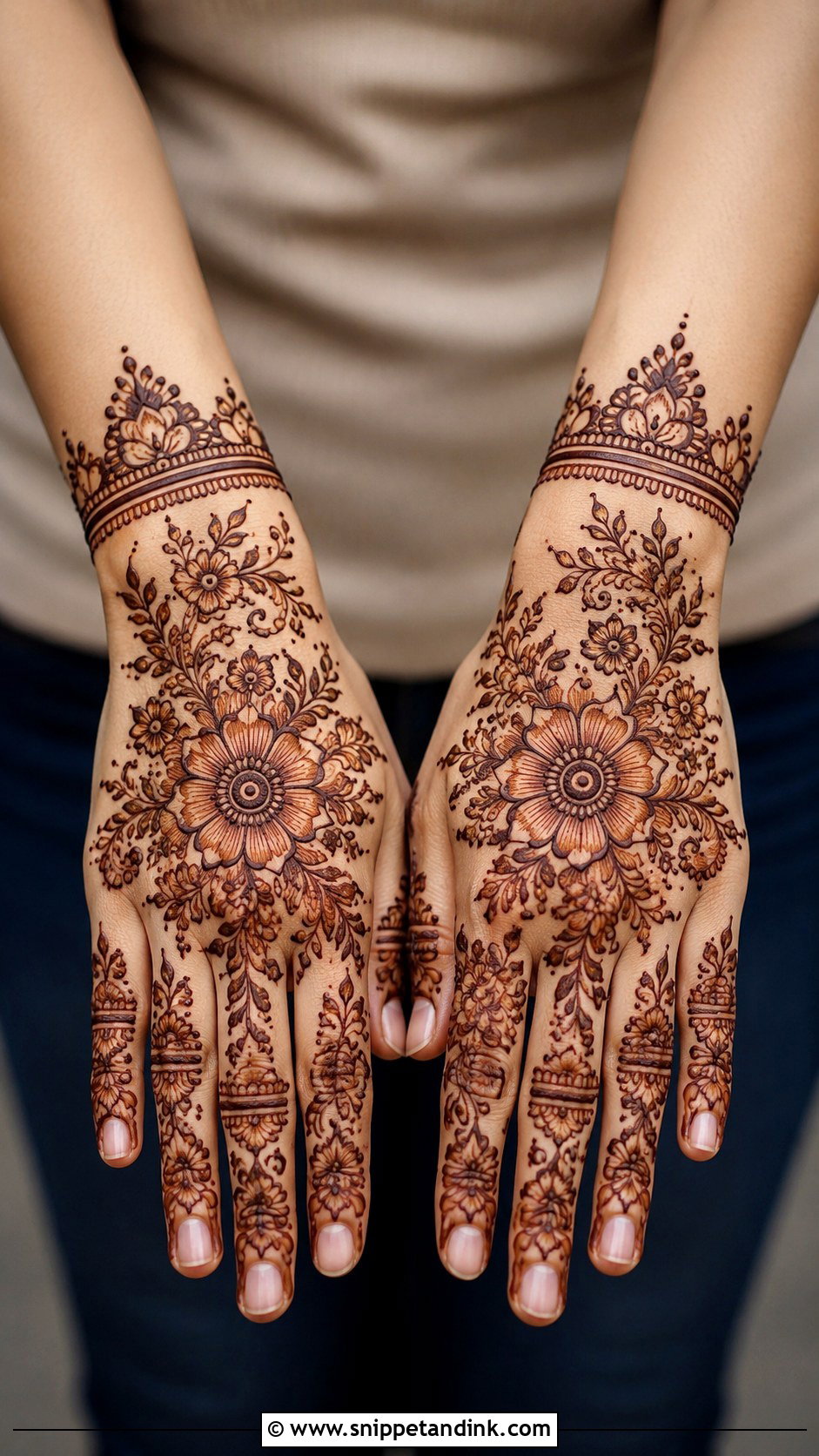
Flowers suit every hand shape, which is why florals never leave the request list. A full floral layout usually has one large bloom at the center, smaller blossoms at the sides, vines on the fingers and a soft wrist border. The flower you pick changes the mood. Bold roses push it toward Arabic, lotus reads bridal and traditional, and small daisy shapes feel younger and more casual. Whatever the flower, keep the petal outlines closed; a gap in an outline looks like a mistake once it stains.
8. Mandala Backhand Mehndi Design
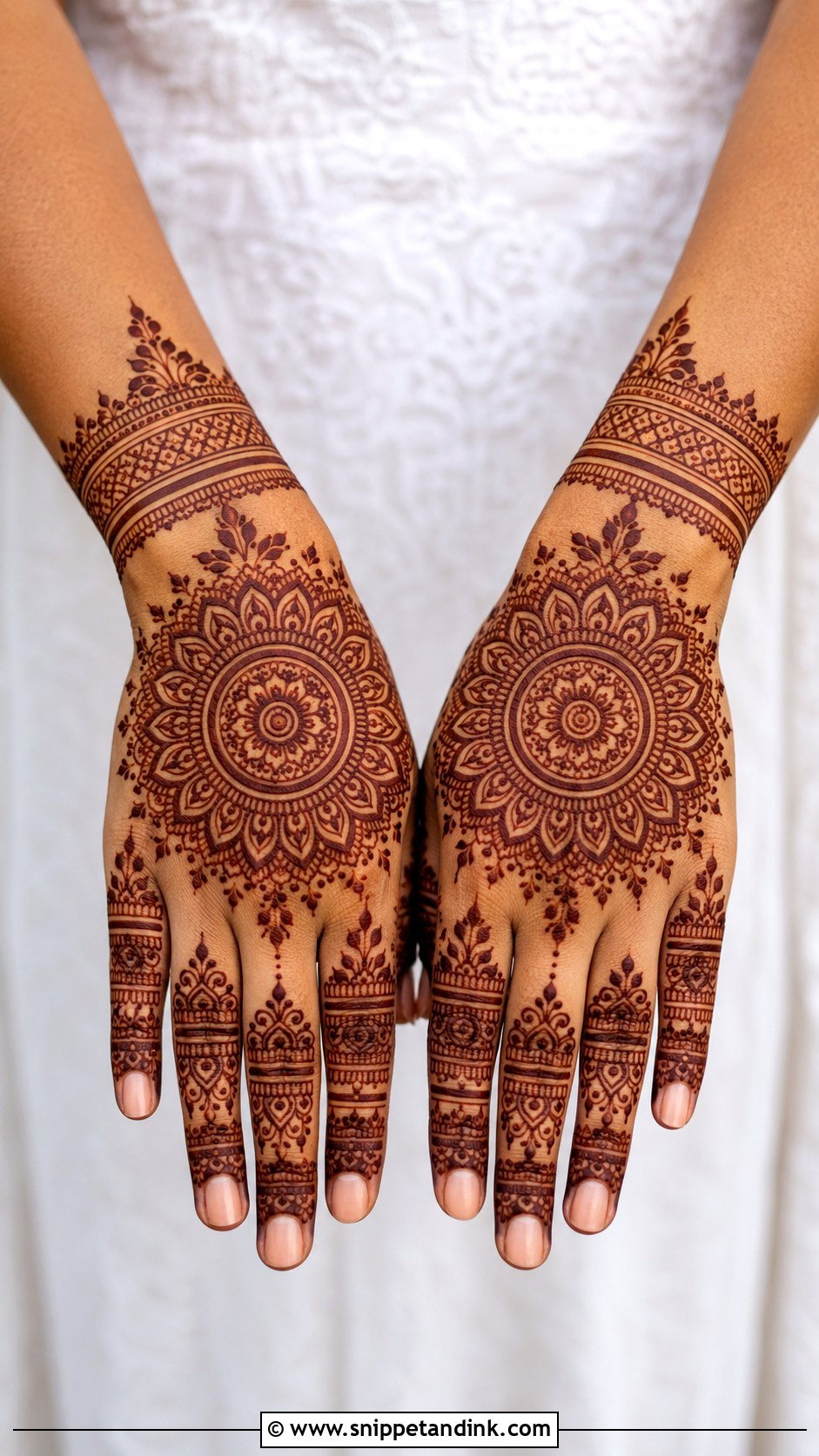
The mandala is the easiest structure for me to plan and for you to judge in a mirror. The main circle sits in the middle of the back of the hand and grows outward in petals, dots and rings, with matching bands on the fingers. It suits small hands and long ones because the circle draws the eye inward. For a modern finish, I leave a clear ring of skin around it. For a traditional one, I fill the wrist and fingers densely and let the mandala anchor the whole hand.
9. Jaali Backhand Mehndi Design
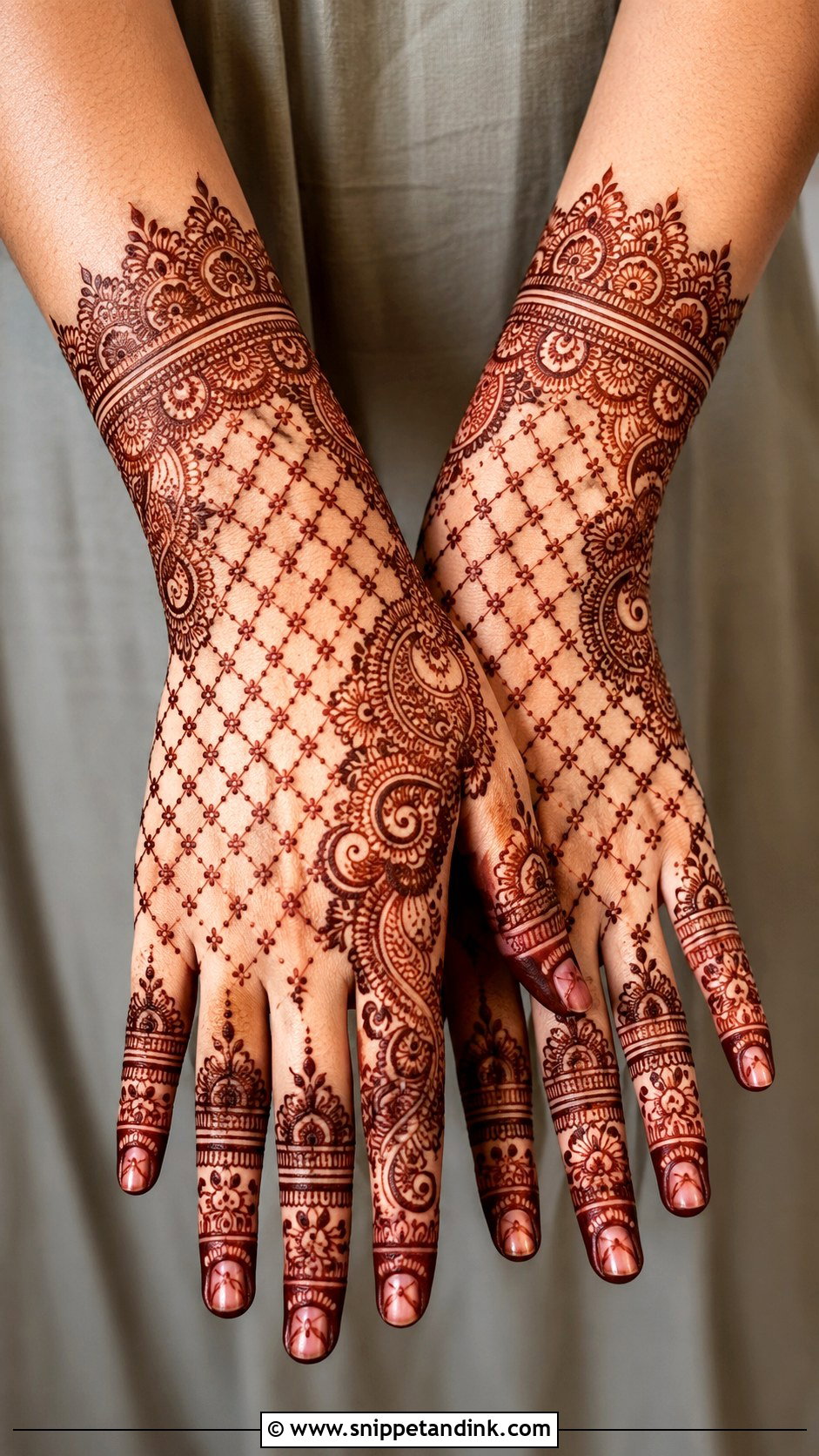
Jaali is the mesh work: crisscross lines, dots at the intersections and sometimes tiny flowers in each diamond, so it reads like lace on the skin. It usually fills the center of the hand while the wrist and fingers carry florals or cuffs. Evenness is everything. If the grid lines drift apart even slightly, the eye catches it immediately, so I lightly mark the outer boundary first and build the mesh inside it. Done well, it pairs nicely with rings and bangles on a festive night.
10. Paisley Backhand Mehndi Design
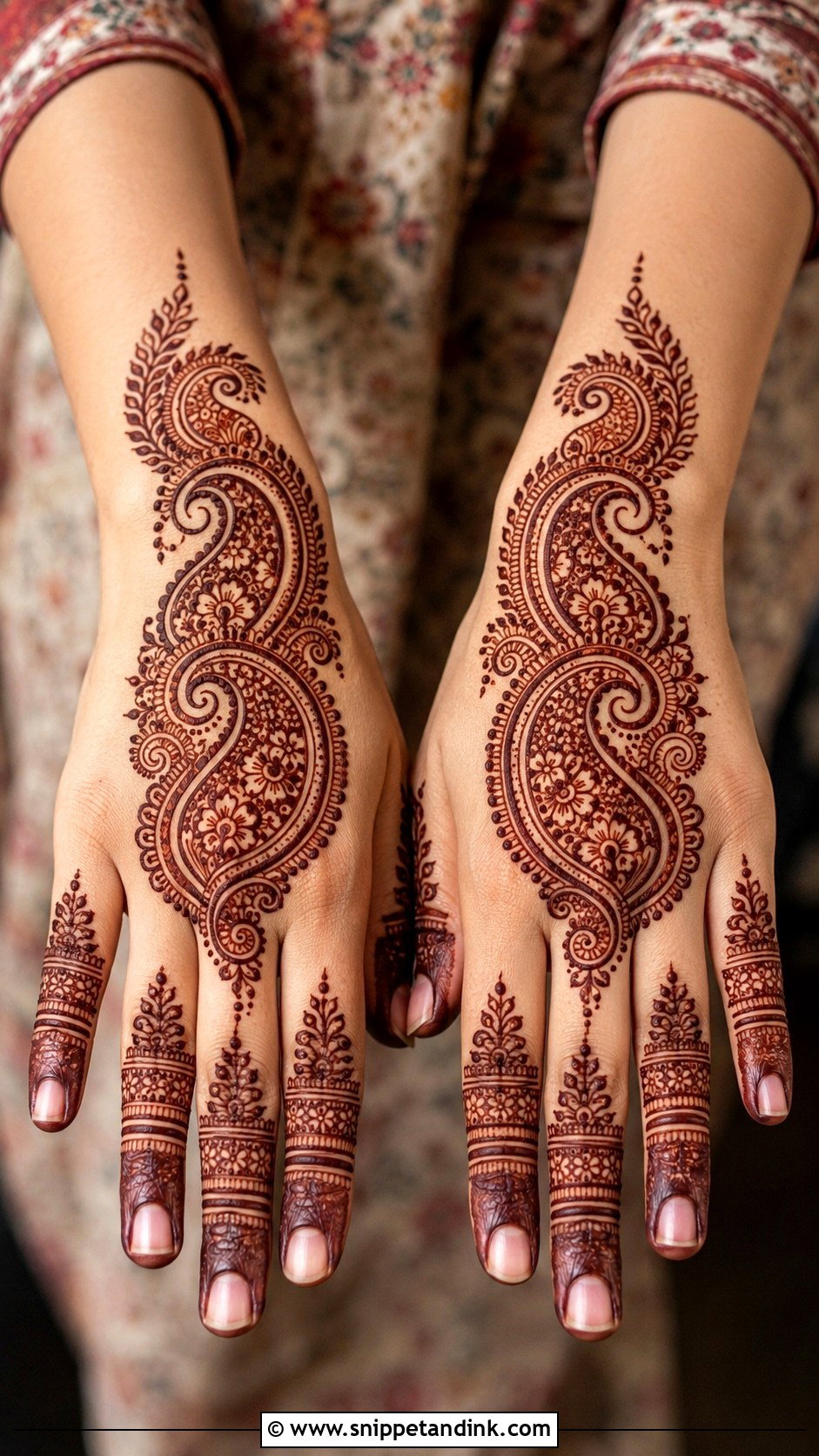
Paisleys give a backhand natural movement because of that curved teardrop shape. Placed diagonally, they make the fingers look longer; arranged around a mandala, they feel more classic. I fill them with tiny flowers, checks or fine lines depending on how busy the rest of the hand is. One large paisley with open vines keeps things light. Layering several from wrist to knuckles gives you the heavier wedding version, but it needs at least forty minutes per hand.
11. Indo-Arabic Backhand Mehndi Design
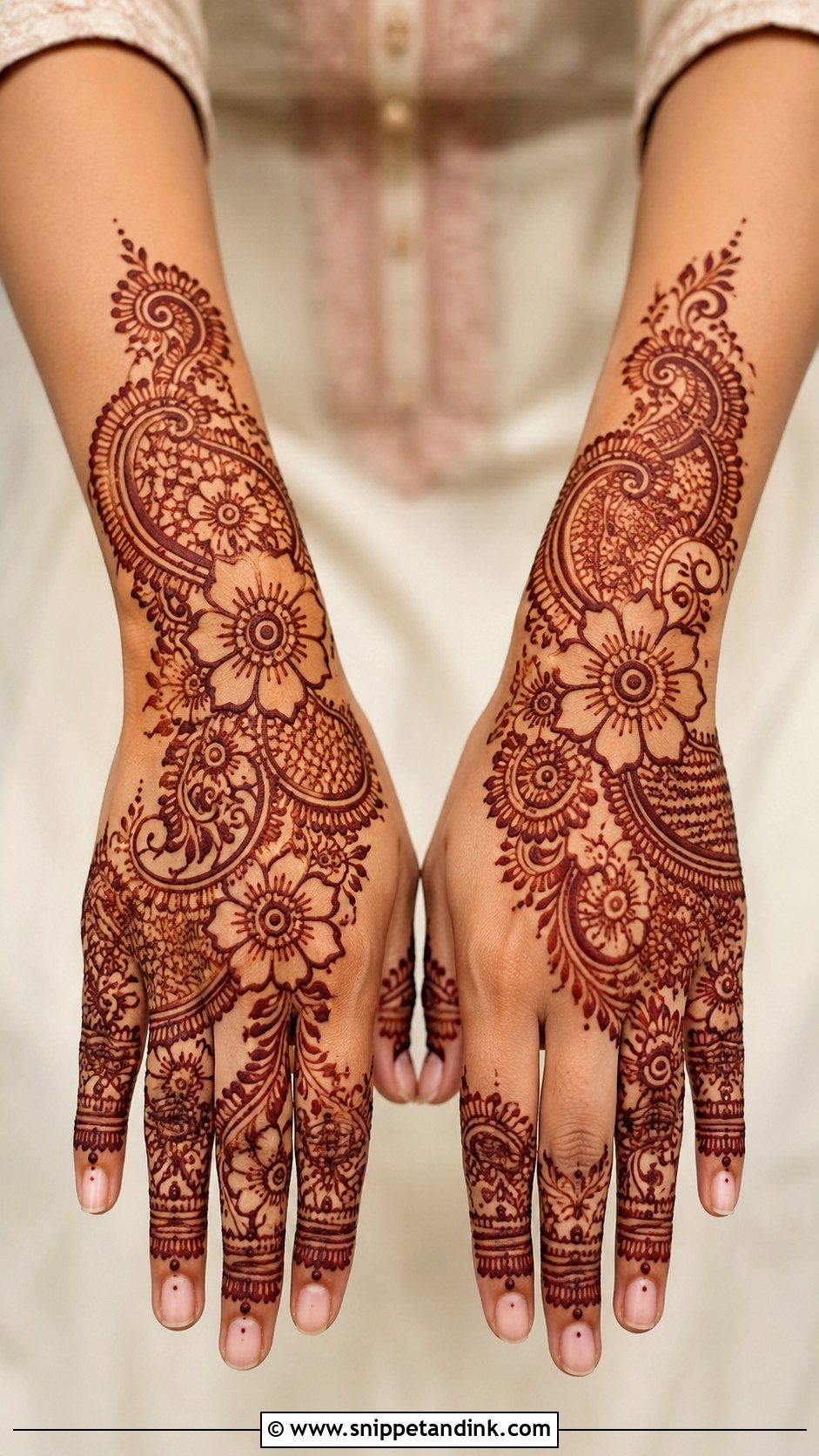
Indo-Arabic takes the bold flow of an Arabic trail and adds Indian-style detail inside it: big flowers and paisleys, leafy trails, a mandala touch and patterned finger panels. It sits between simple Arabic and full bridal. I’d suggest it for bridesmaids and engagement guests who want more than a vine but can’t spend two hours in the chair. Thick outlines with fine inner fills give you the contrast that makes it work.
12. Indian Backhand Mehndi Design
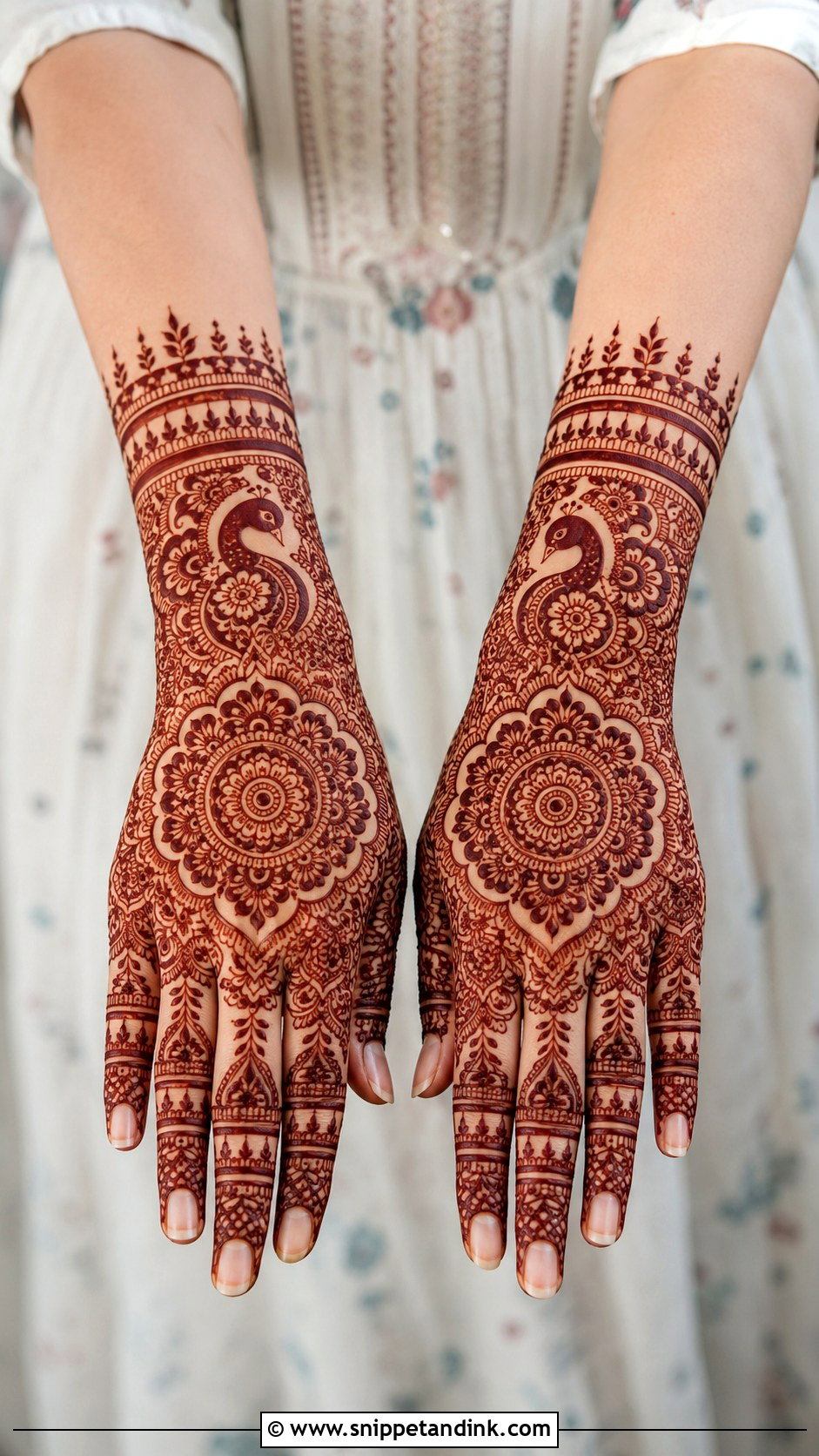
Indian backhand work uses smaller, repeated, symmetrical detail and covers more area than Arabic styles: paisleys, peacocks, mandalas, leafy bands and dense finger work, often ending in a decorated wrist cuff. It’s the traditional choice for weddings, Karva Chauth and Diwali. Because the motifs are small, paste quality matters. If the paste is lumpy or the cone tip is worn, fine lines break or bleed into each other. I keep the main motifs clearly outlined so they don’t disappear under the fill.
13. Moroccan Backhand Mehndi Design
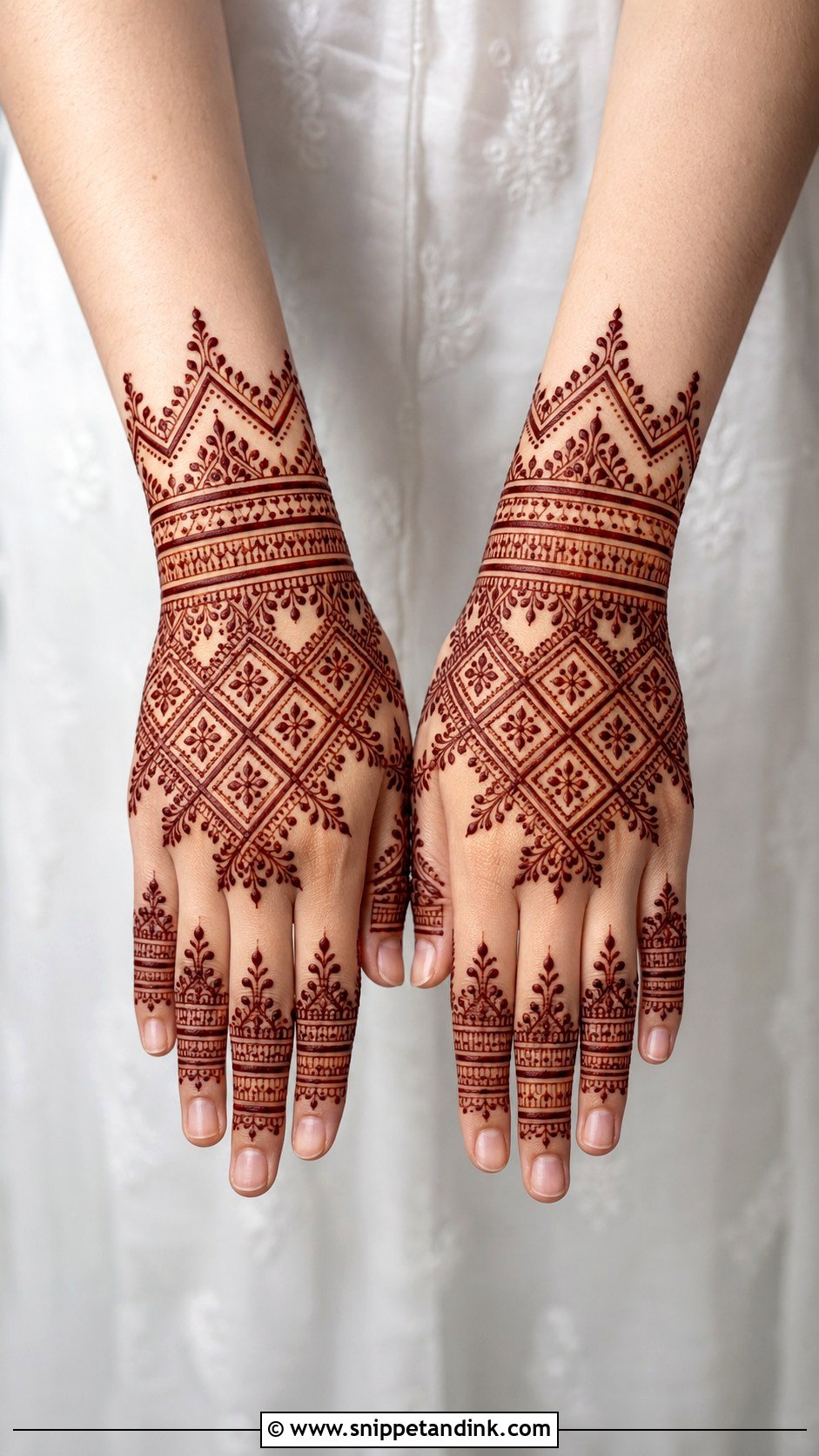
Moroccan designs swap flowers for geometry: diamonds, triangles, straight lines, dots, grids and angular bands, usually as a central panel with patterned fingers and a bracelet-like wrist. It feels a little edgy while staying traditional, and it’s good with fusion wear and minimal jewelry. This style is unforgiving of the knuckles. Skin folds when the hand bends, so a straight line drawn on a relaxed hand can look crooked when the fist closes. I draw it with your hand flat and fingers slightly spread.
14. Gulf Backhand Mehndi Design
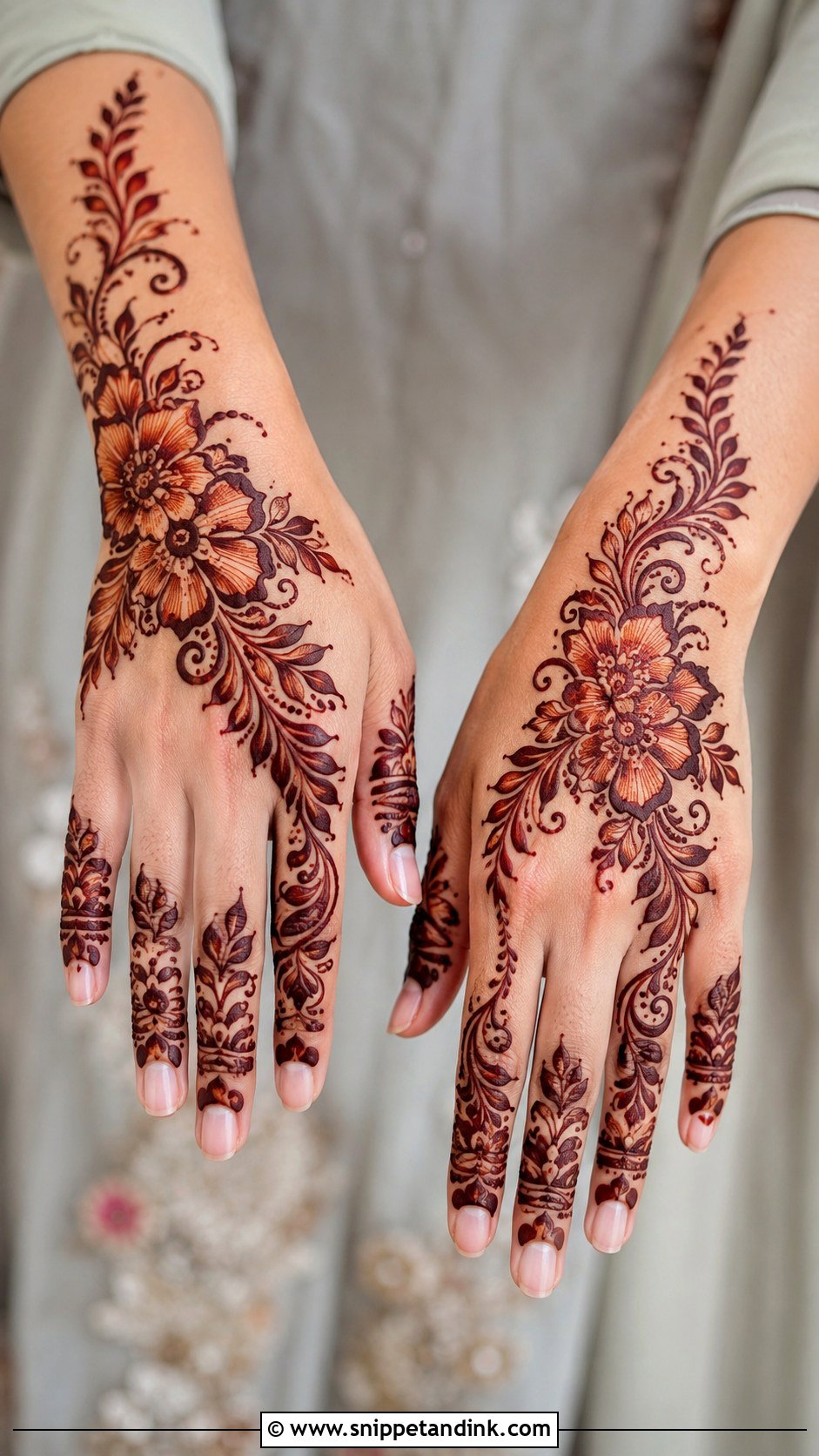
Khaleeji or Gulf-style mehndi is bold and spacious: large floral clusters, leafy sprays, shaded petals and flowing vines, often covering one side of the hand and leaving the other clean. That contrast is the whole point. The shading is done by thinning the paste stroke inside the petals, so it stains lighter than the outline. If the shading is pressed too hard, you lose the gradient and it just looks filled in, so I keep the pressure light and quick.



15. Jewelry Backhand Mehndi Design
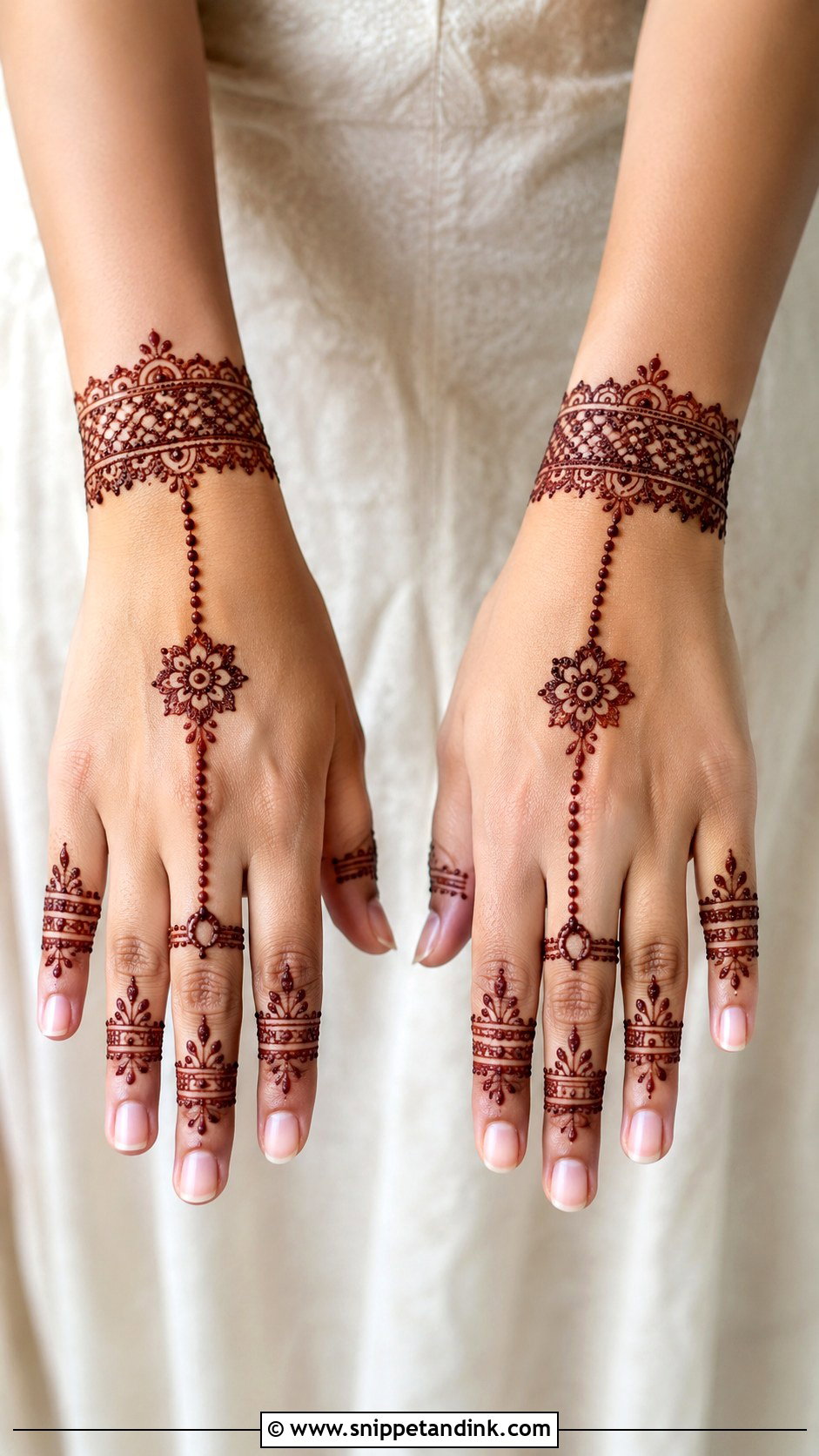
Jewelry-style mehndi draws your accessories in henna: ring chains, bracelet cuffs, hathphool-inspired links, beaded dots and delicate finger bands, with a flower or small mandala in the center joined to the wrist by thin chains. It’s a smart way to look dressed without stacking real jewelry. The chains must be thin and the dots evenly sized; if one dot is bigger than its neighbors, the illusion breaks. It works on short and long hands alike.
16. Bracelet Backhand Mehndi Design
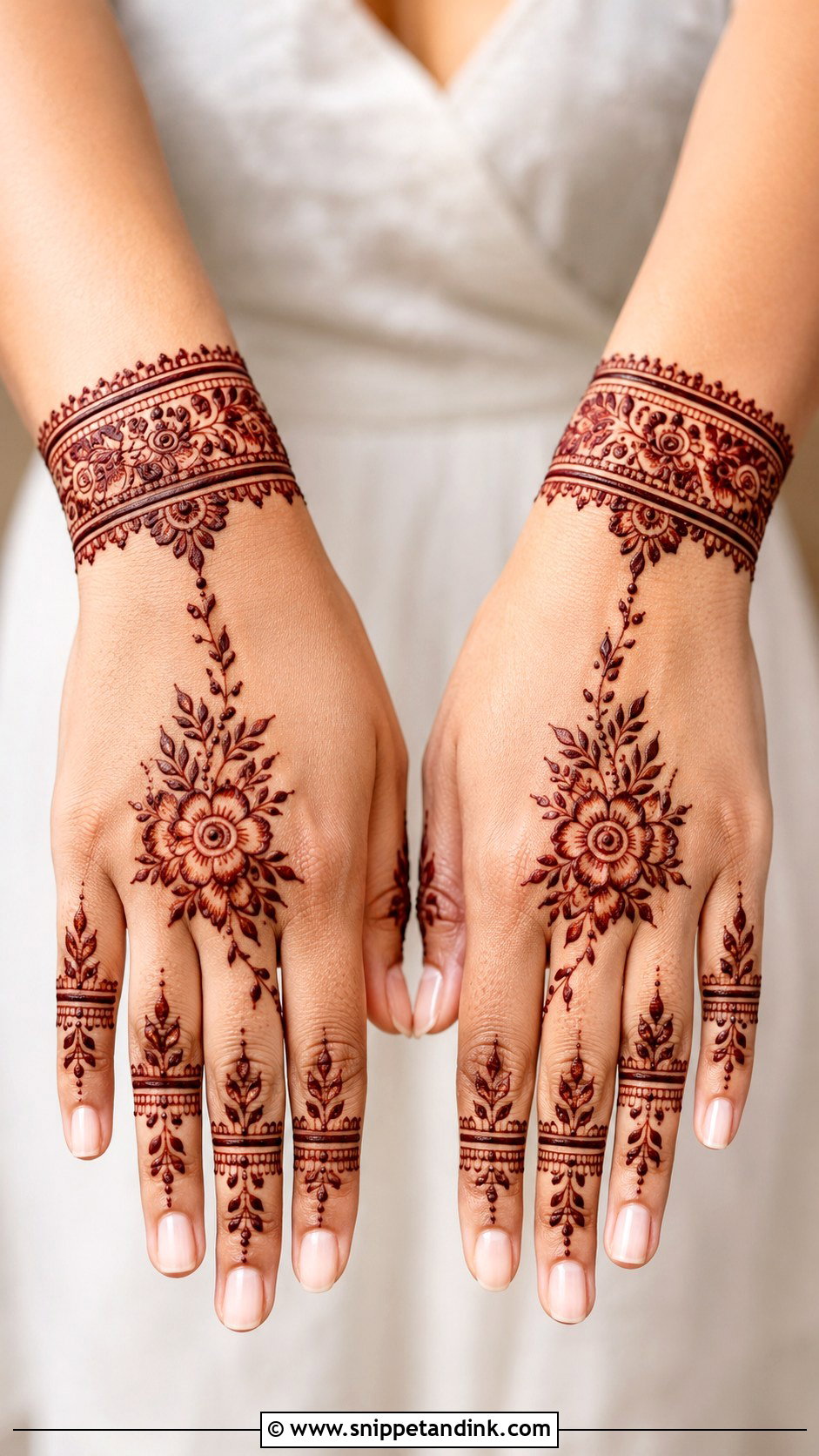
Here the wrist does most of the work. A cuff, bangle pattern or lace band sits at the wrist, and a vine, mandala or chain reaches gently toward the fingers, leaving the center of the hand light. If you’ll wear glass or metal bangles, tell your artist beforehand. Bangles rub the wrist while the paste is drying, so I either place the cuff slightly higher or ask you to leave the bangles off until the paste is scraped away.
17. Finger Backhand Mehndi Design
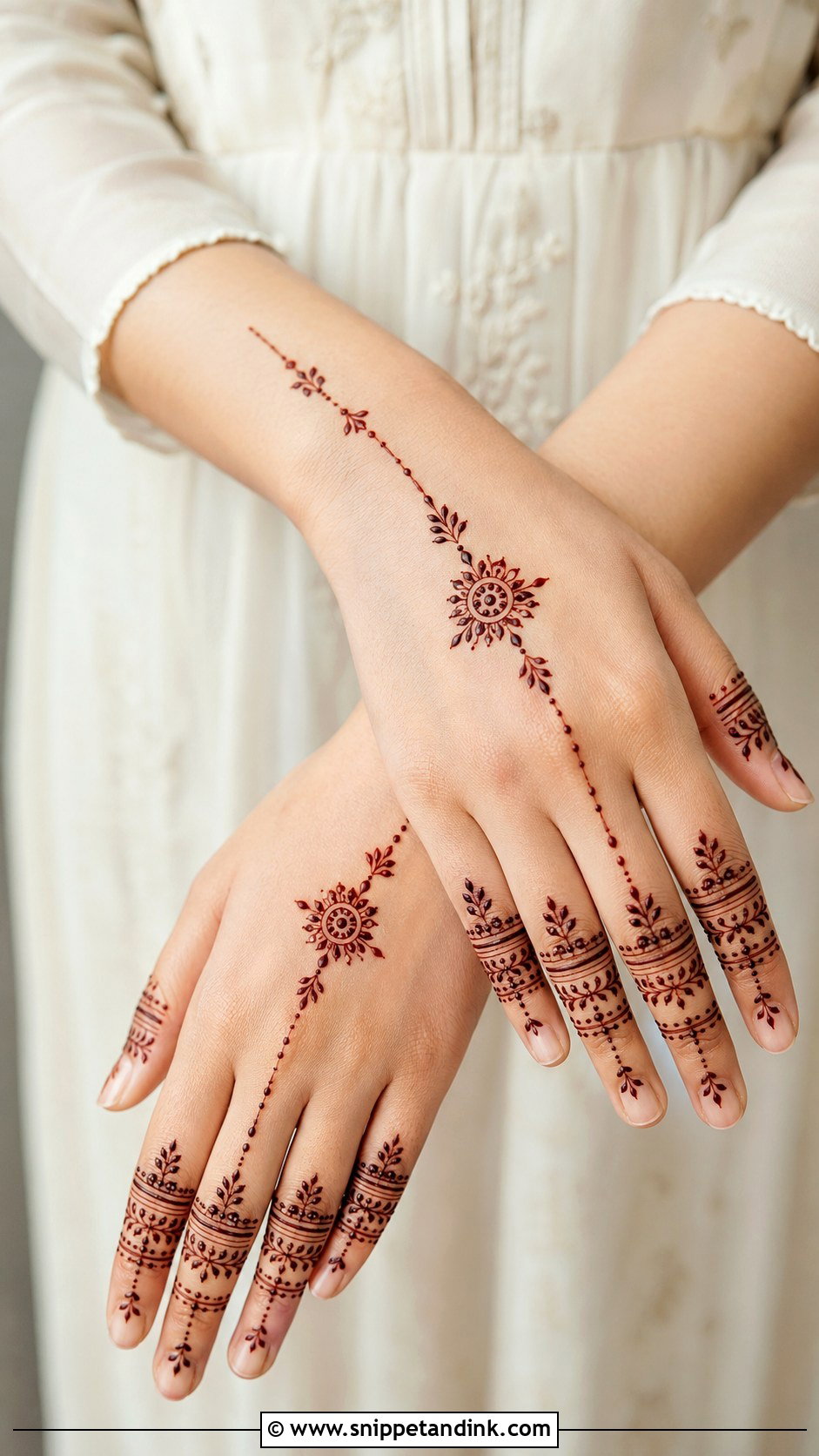
Finger backhand mehndi design puts the detail on the fingers and keeps the hand nearly bare apart from a small center motif or a thin connecting chain. It’s quick, modern and lovely with rings and nail color. I make each finger slightly different but built from the same three or four elements, so the hand looks planned. Fingertips also stain the darkest on most people, so this layout gives you strong color even if the back of your hand tends to stain pale.
18. Rose Backhand Mehndi Design
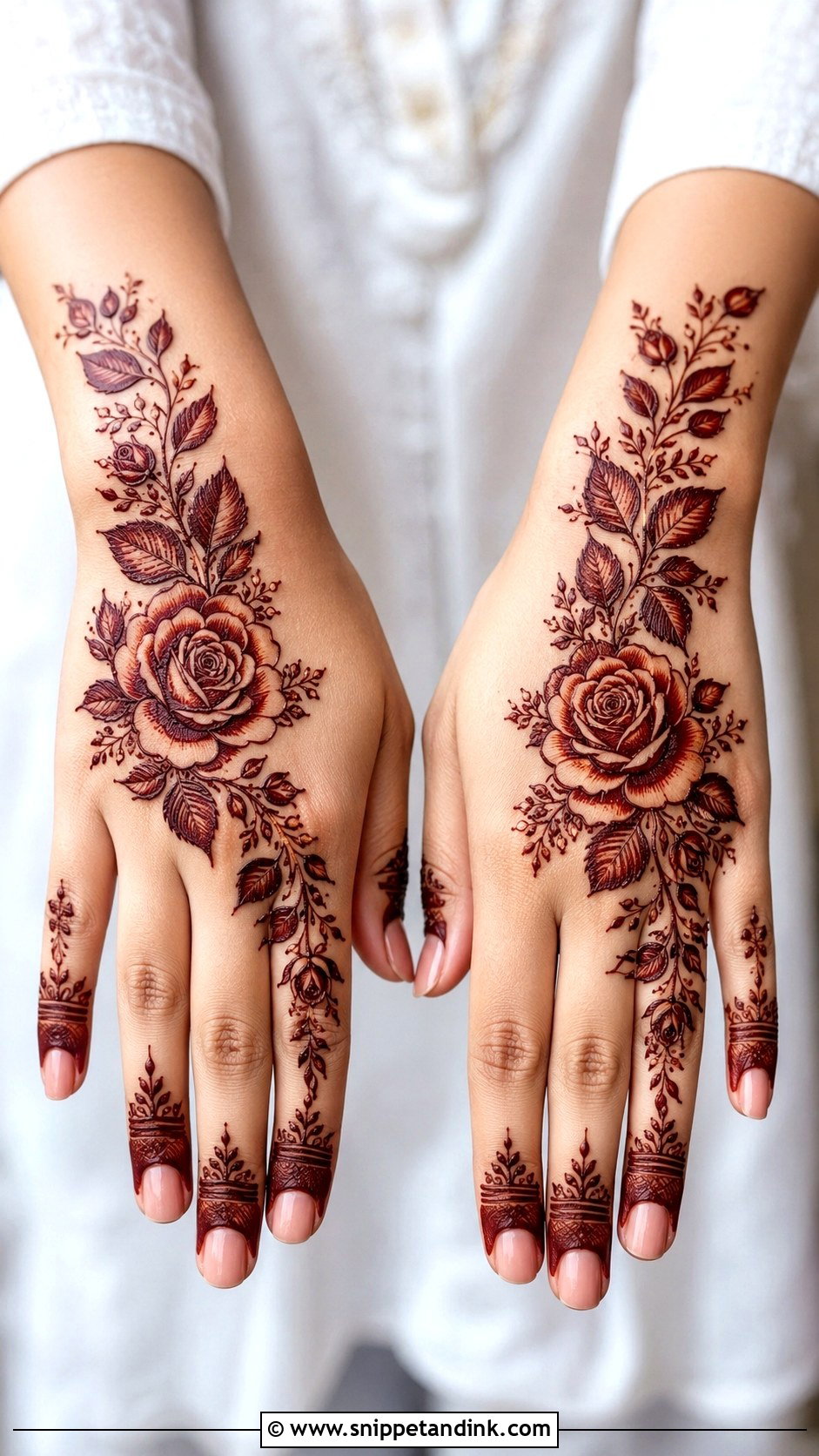
A single large rose can sit at the center, near the wrist or along a diagonal trail, with leaves and small buds connecting it to the fingers. Roses look heavy if the petals are all drawn the same weight. I outline the outer petals thickly and keep the inner curves thin, which gives the flower depth once the stain develops. Leave open skin around it for a modern version, or add shaded petals and dotted chains for a fuller one.
19. Lotus Backhand Mehndi Design
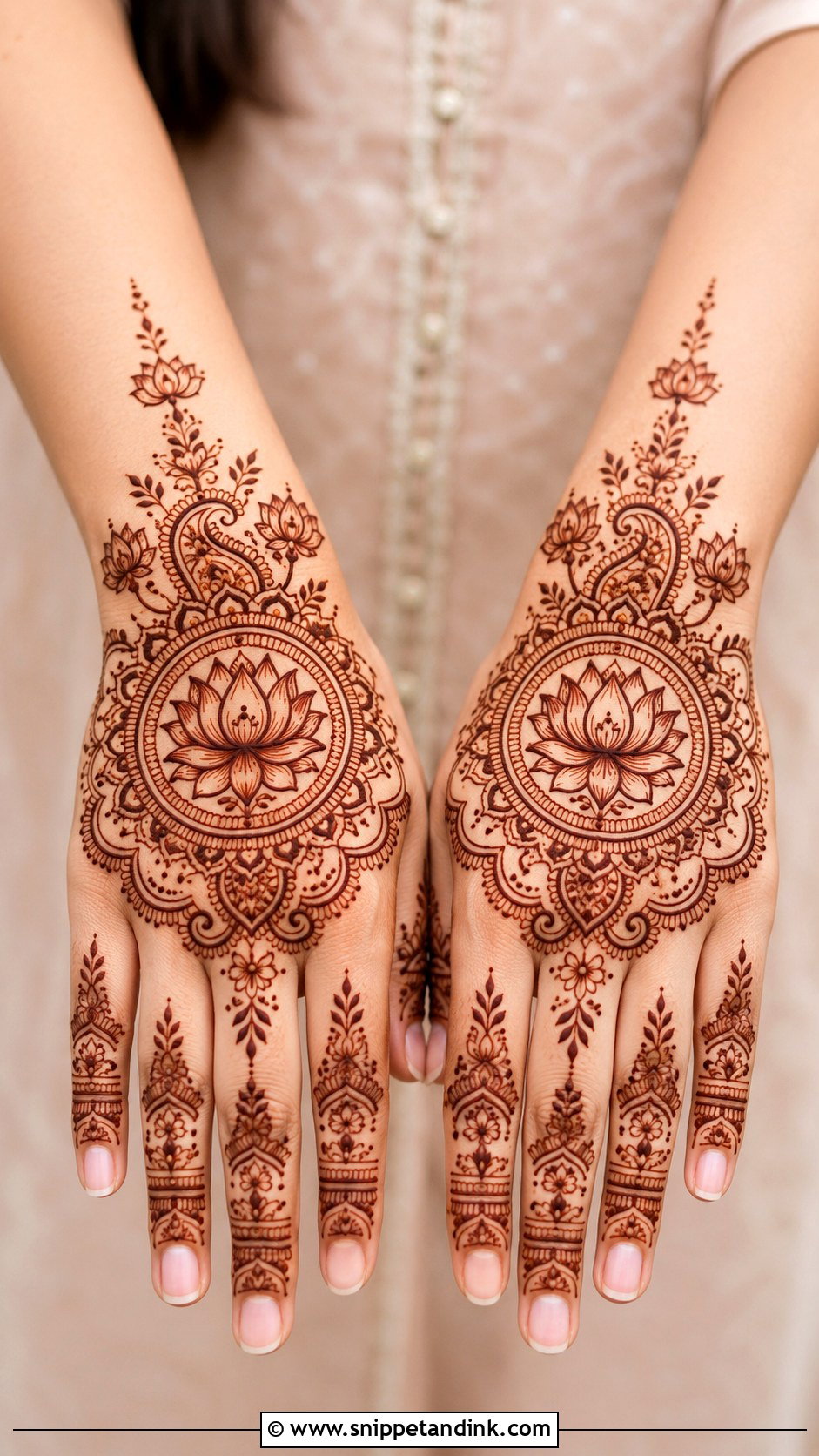
Lotus motifs carry a lot of meaning for pooja functions, Diwali and bridal mehndi, and they combine easily with mandalas, jaali and paisleys. The lotus can sit in the center, at the wrist or repeat across the hand. I leave a hairline gap between each layer of petals. Without it, the layers merge when the paste spreads slightly while drying, and the lotus turns into a blob. Small lotus buds on the fingers finish it without crowding.



20. Peacock Backhand Mehndi Design
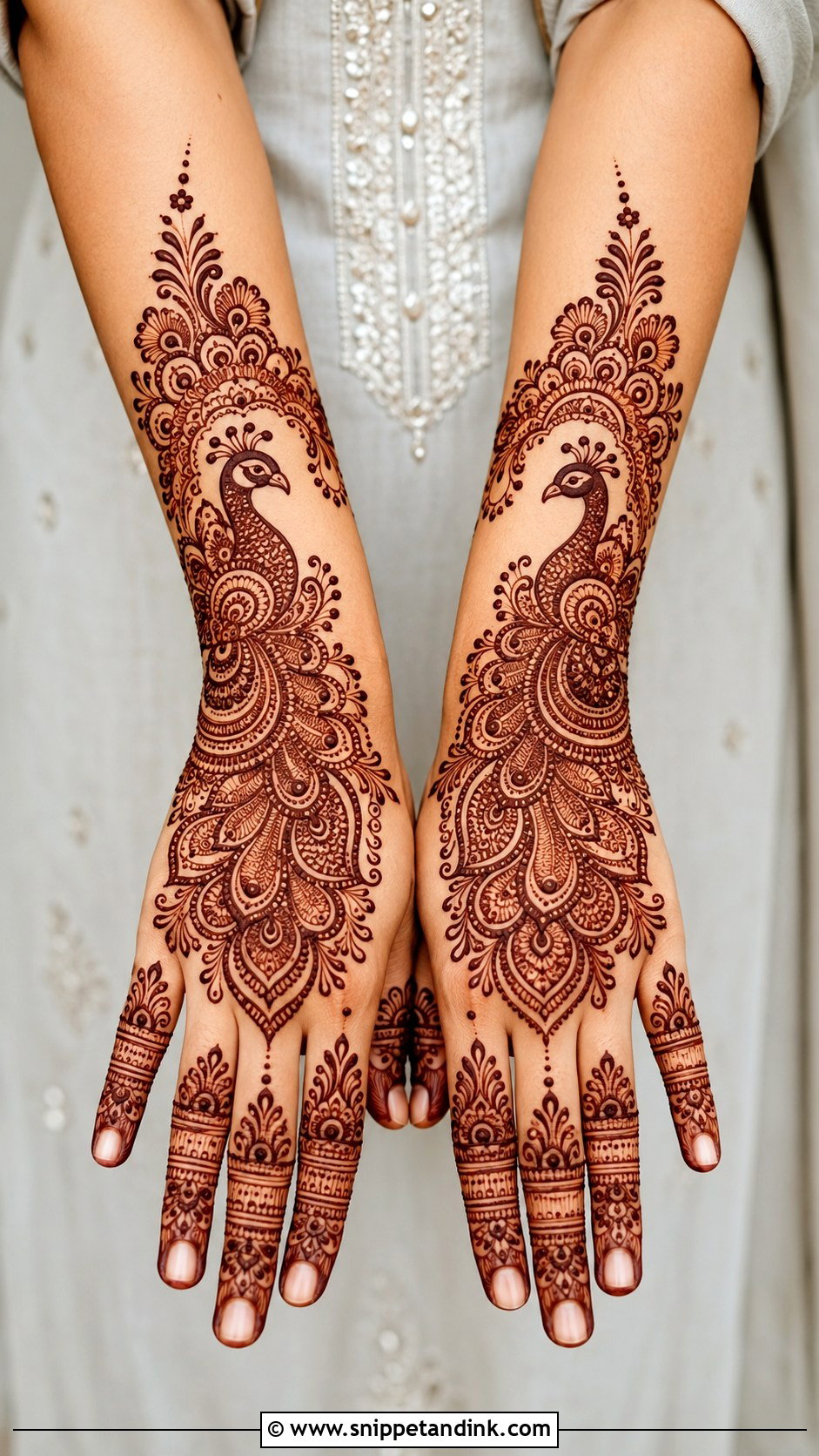
Peacocks are a big commitment. The body usually sits near the wrist with the feathers fanning across the back of the hand and up the fingers, filled with paisleys, dots and fine curves. This is where I slow down most, because peacock work gets busy fast. I draw the bird’s outline first and check the silhouette is clear before adding a single feather detail. If the shape isn’t readable from arm’s length, no amount of filler fixes it. Expect it to take well over an hour per hand.
21. Butterfly Backhand Mehndi Design
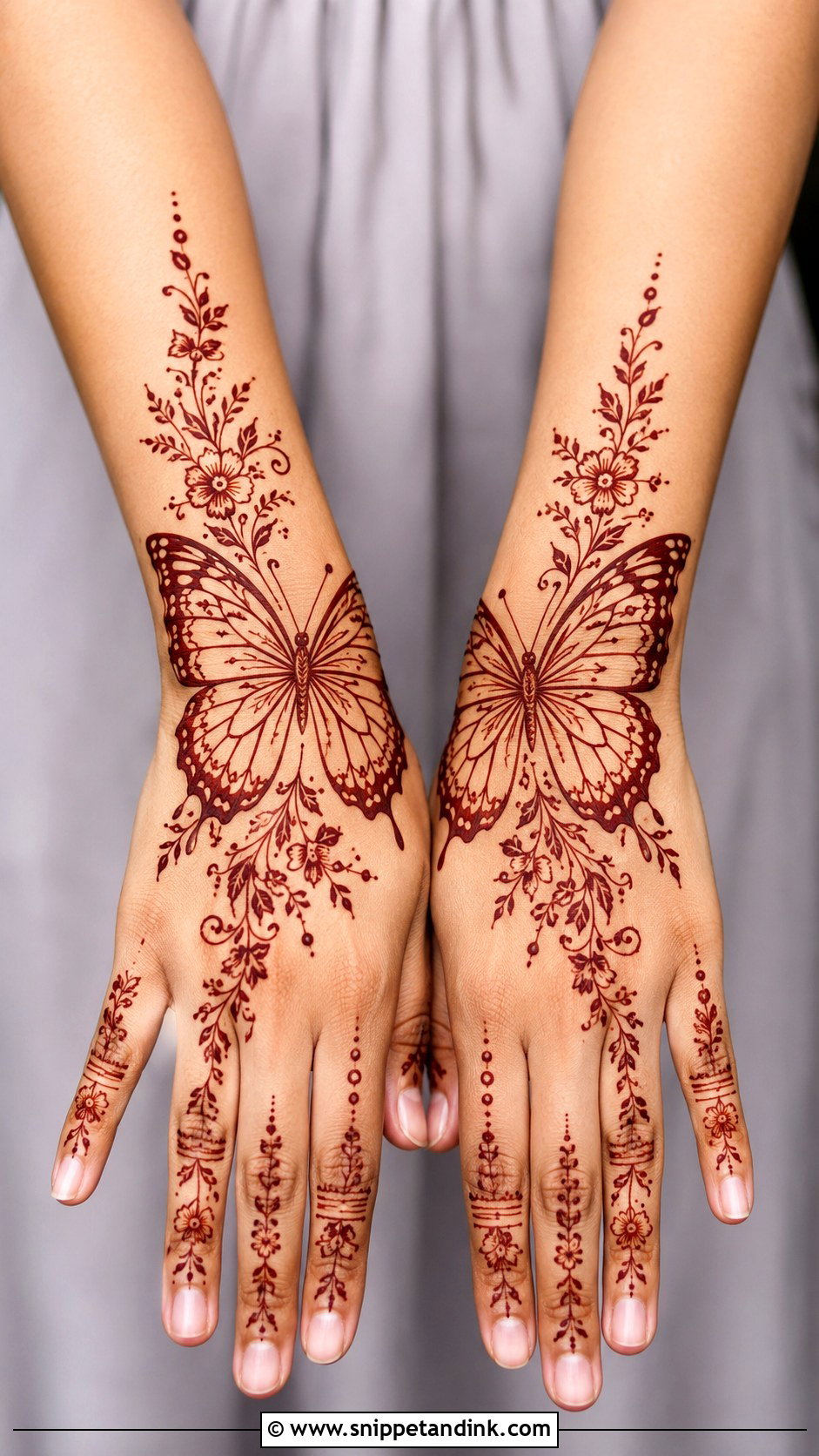
A butterfly across the center of the hand, with vines reaching toward the fingers and wrist, reads young and light. The wings take dots, swirls, tiny petals or open sections. It’s popular for teens, birthdays and family events, and with anyone who’s tired of paisleys. Symmetry is the hard part, since the back of the hand isn’t flat. I sketch both wings’ outlines before filling either one, so I can correct the balance early.
22. Heart Backhand Mehndi Design
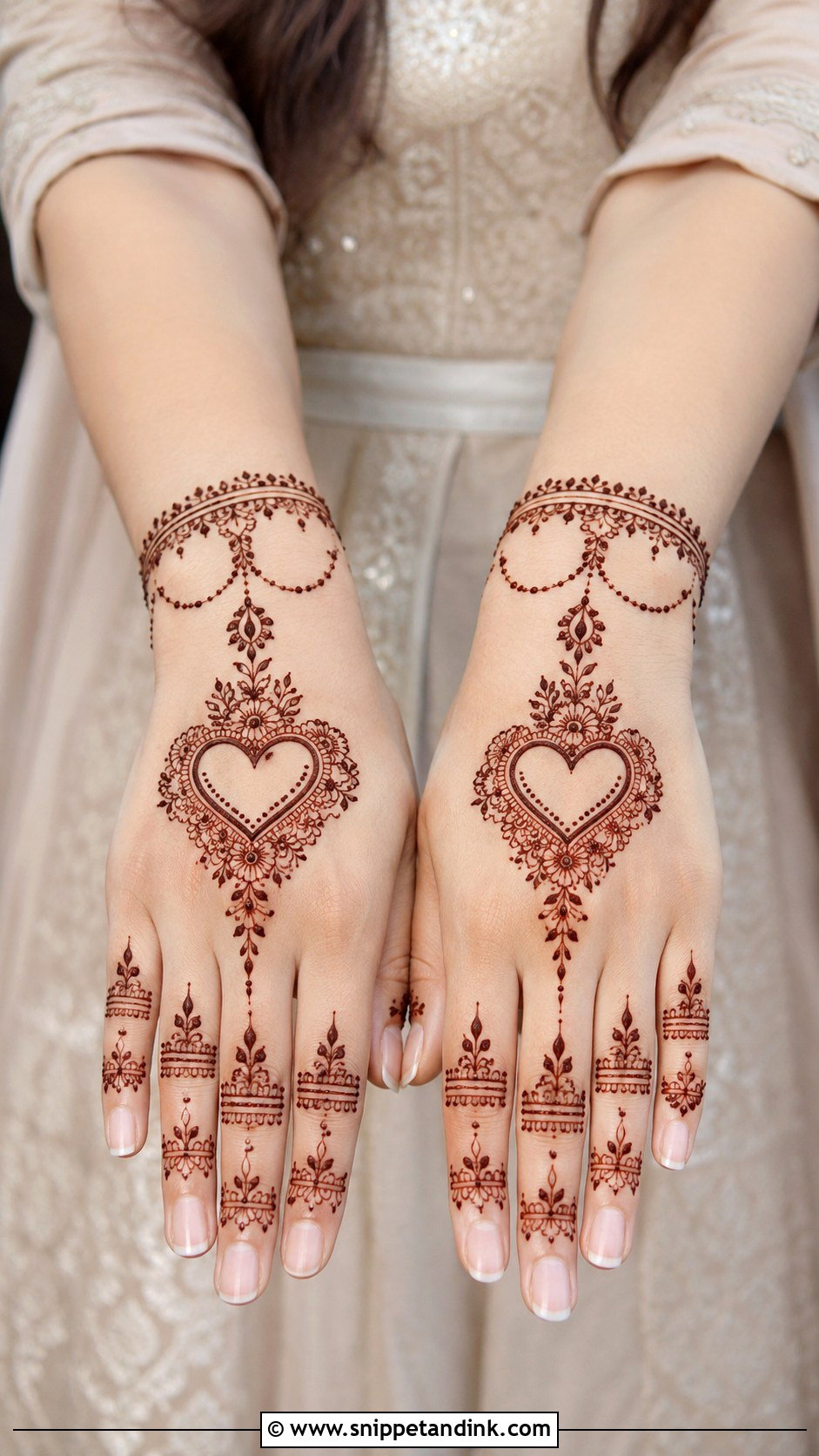
Hearts can look childish or grown-up depending on what surrounds them. A small heart with leafy trails is a soft minimal look; a large heart filled with jaali or flowers suits an engagement or anniversary. I keep hearts away from thick, cartoon-like outlines and use the same fine line weight as the rest of the design. Slim finger bands and dots keep the overall hand neat.
23. Eid Backhand Mehndi Design
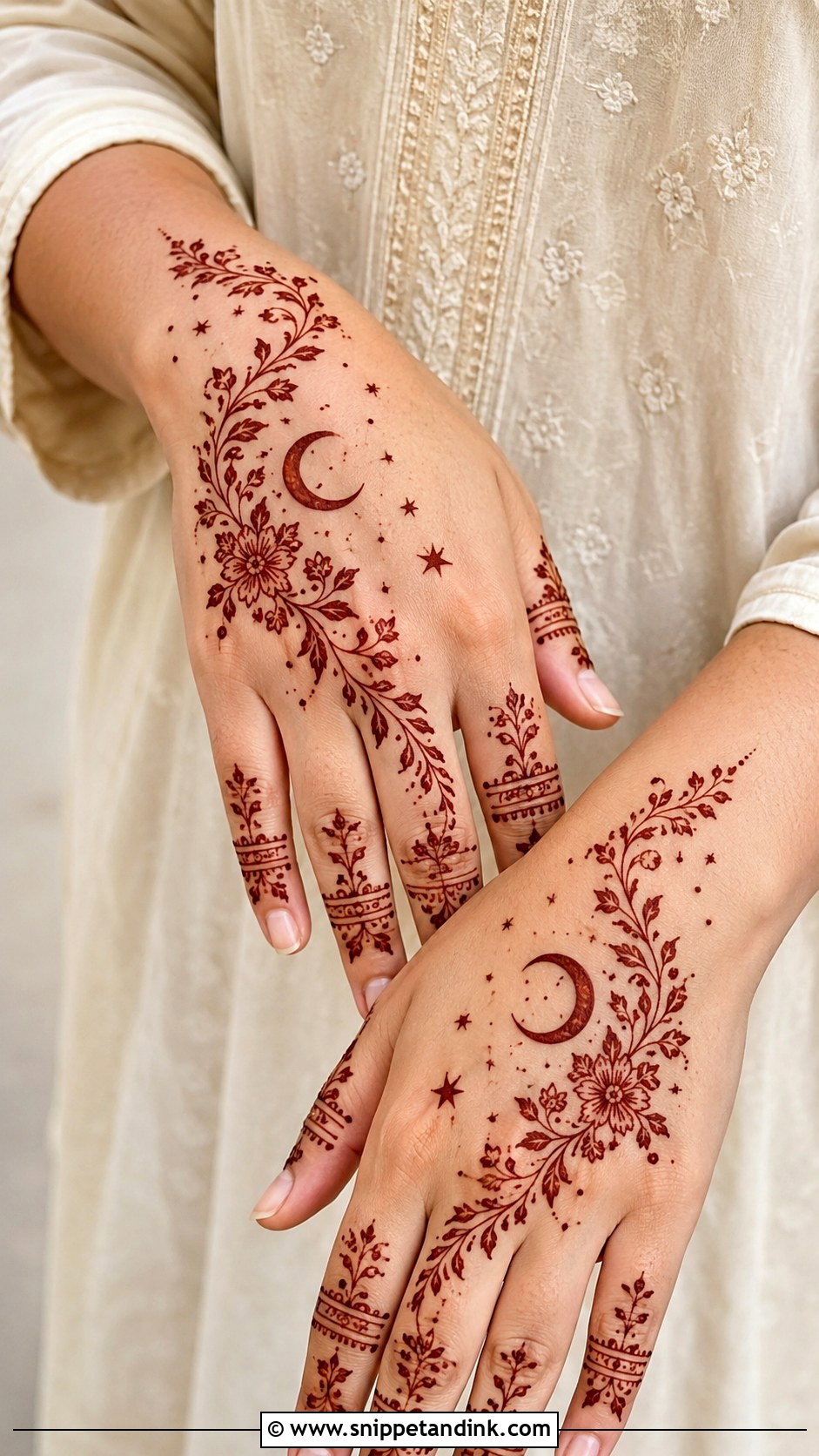
Eid backhand mehndi design requests peak on Chand Raat, when everyone wants something polished that doesn’t take long. Diagonal floral trails, crescent moons with stars, vines, bracelet patterns and neat fingers are the usual mix. Because Eid mehndi is often applied the night before, I remind people that the stain will still be orange in the morning and won’t reach its deepest shade until later that day or the next. A moon and stars near the wrist reads well with bangles.
24. Diwali Backhand Mehndi Design
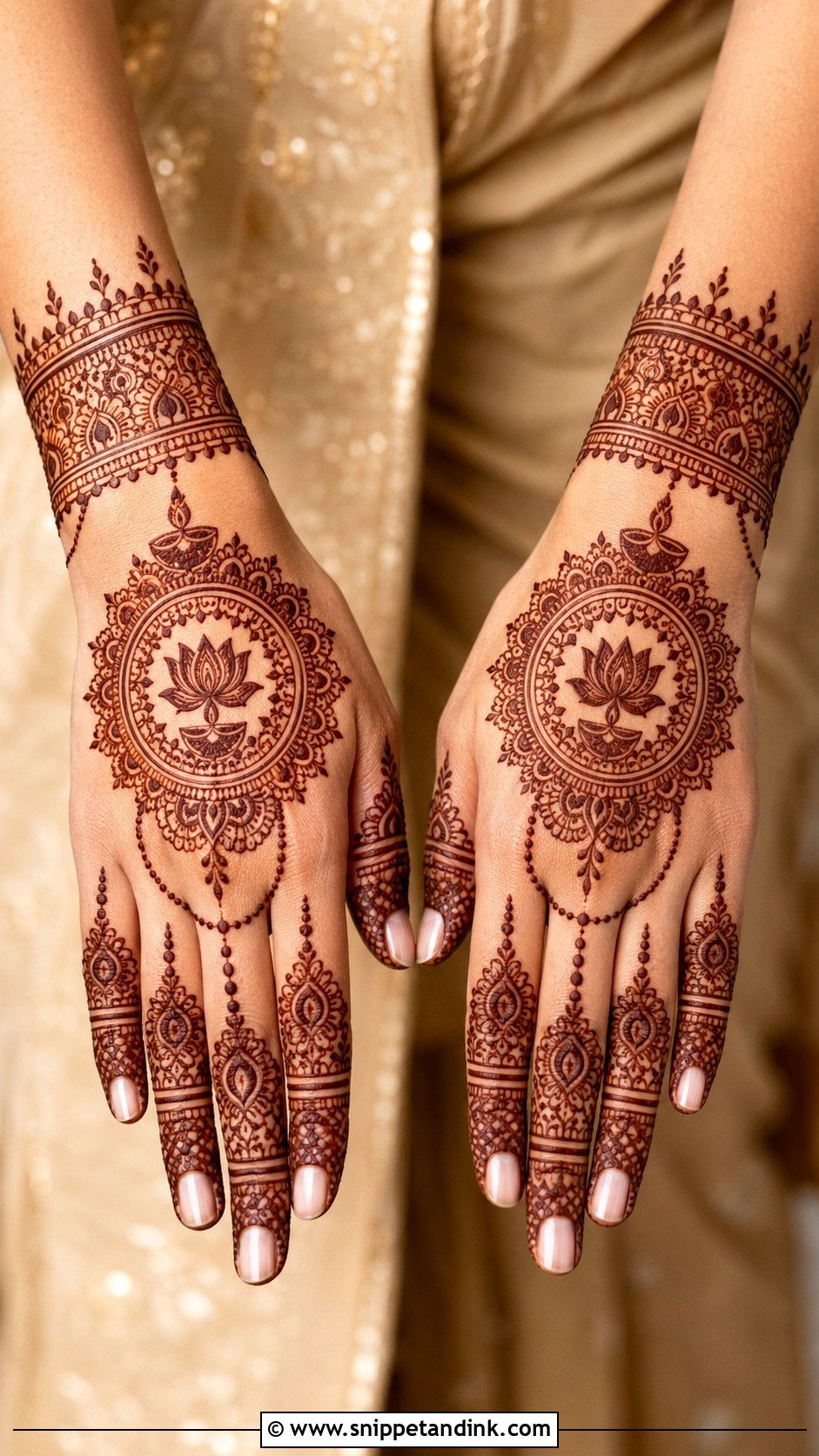
Diwali hands lean traditional: lotus flowers, mandalas, paisleys, diya shapes, dots and ornamental borders. Families often sit for mehndi together, so I keep the design comfortable to wear while cooking and lighting lamps. A central lotus or mandala with neat finger bands and a wrist cuff covers it well. If you’ll be handling oil and water through the evening, ask for the mehndi a day or two before so the stain has set.

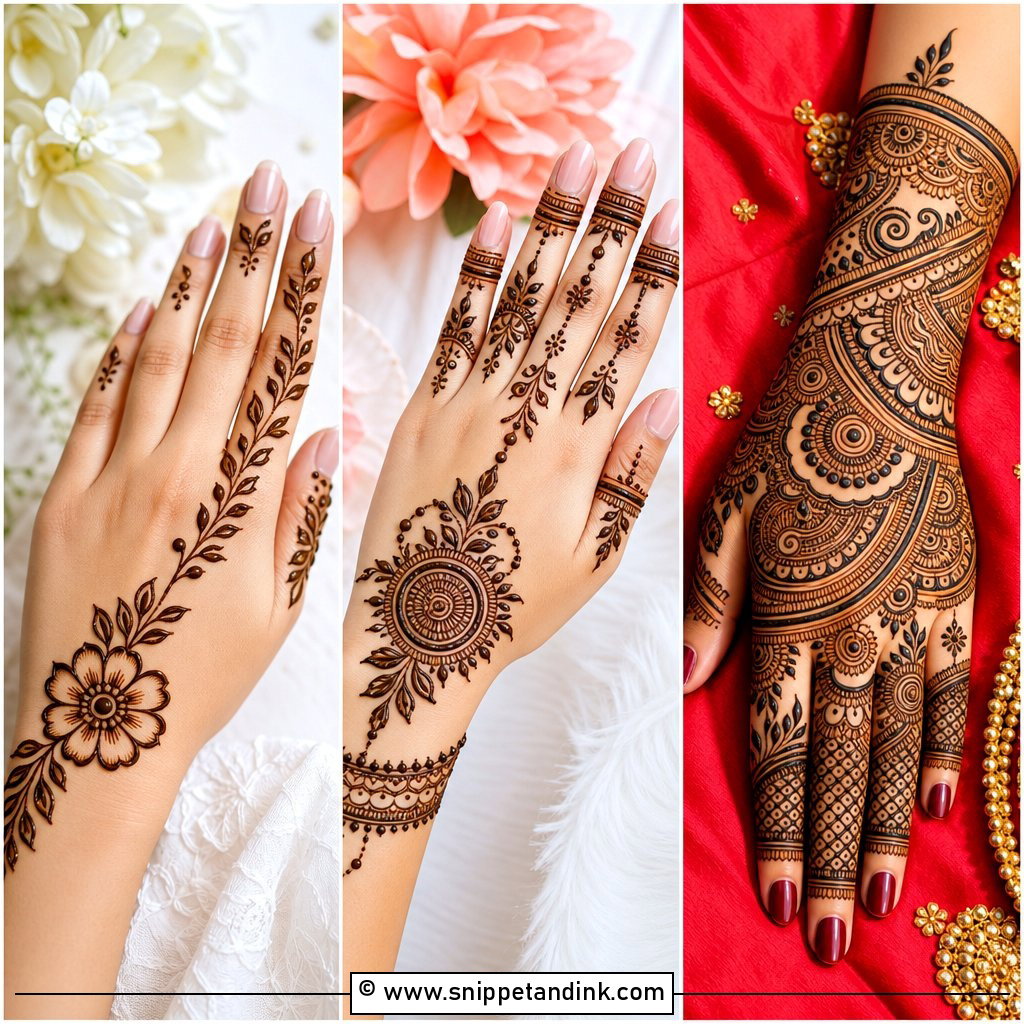
25. Engagement Backhand Mehndi Design
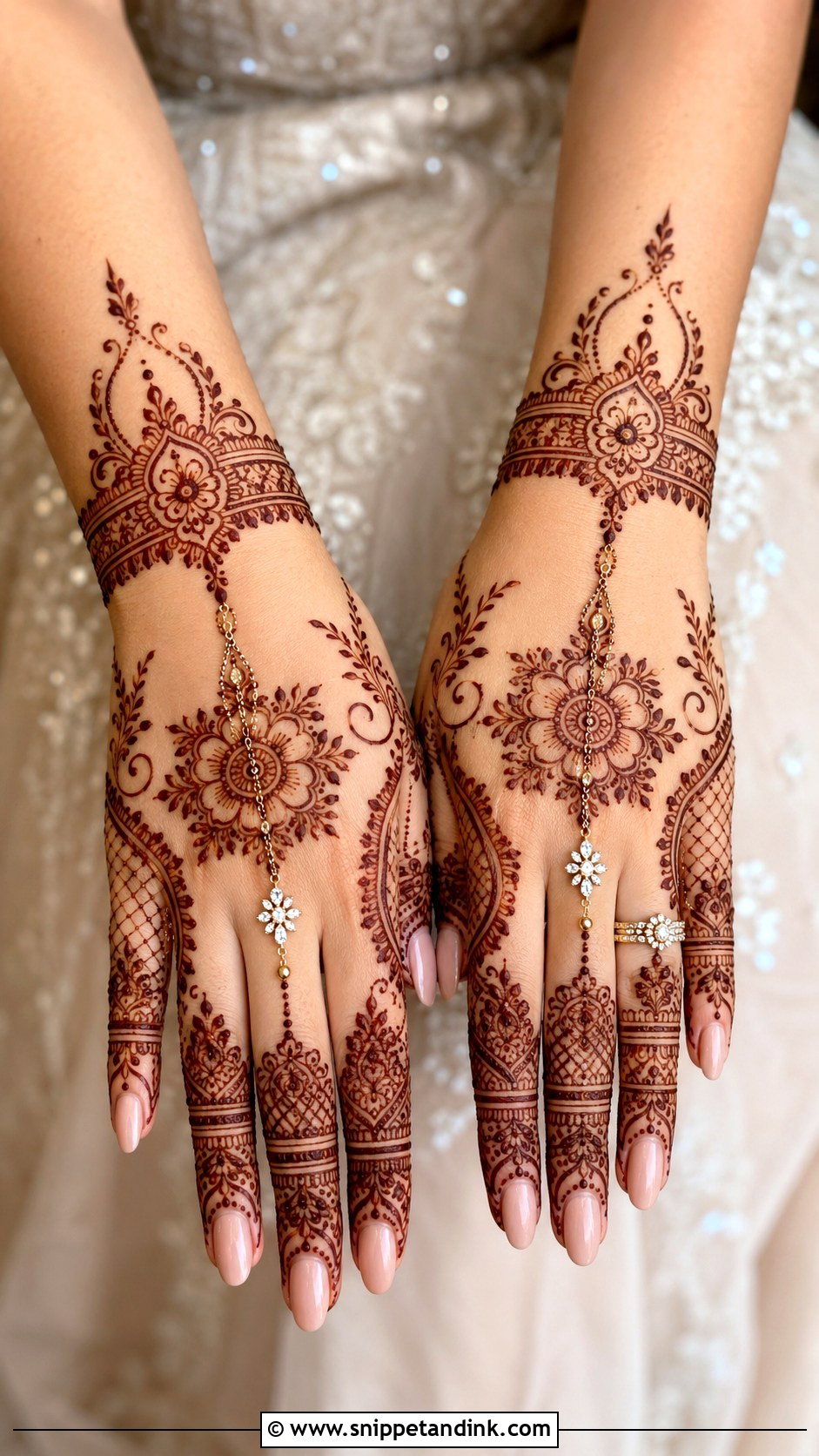
Engagement backhand mehndi design has one job above all: frame the ring. I design the ring finger first, leaving a clean band of skin where the ring will sit, then connect it to a central motif and a wrist bracelet. Jewelry chains, fine florals and light jaali suit it. Dense filler near the knuckles competes with the stone, so I keep that area airy. Fine lines and tiny dots photograph cleanly at close range.
26. Wedding Guest Backhand Mehndi Design
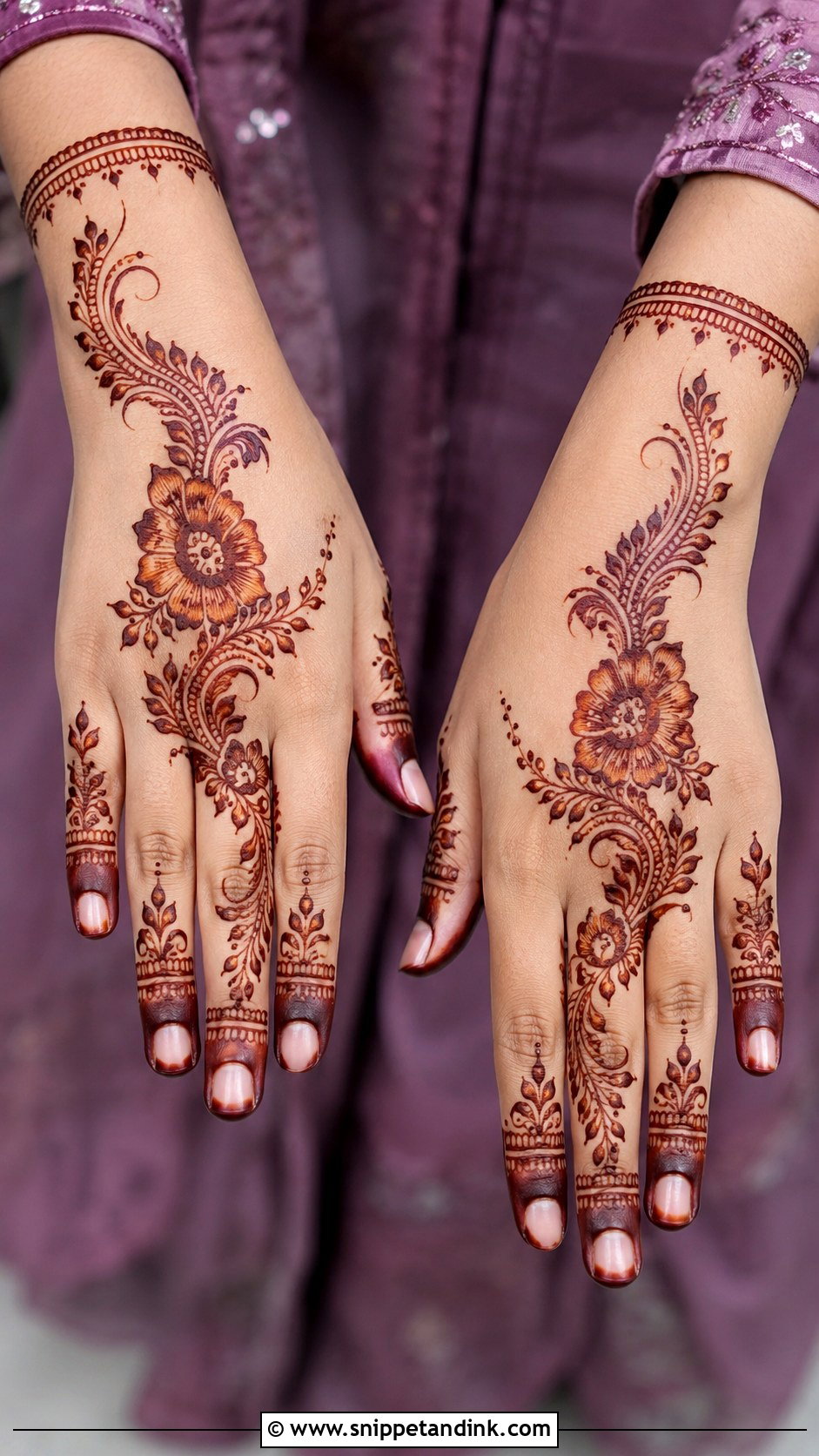
Guests should look festive without matching the bride’s coverage. Arabic florals, paisley trails, half-hand layouts, bracelet cuffs or one bold mandala all work. I usually ask what you’re wearing. A heavily embellished outfit wants a cleaner hand with open space; a plain suit or saree can take a fuller design. Keep the fingers detailed enough for photos but not packed, so you can hold a glass without smudging work you just sat for.
27. Backhand Mehndi Design For Bridesmaids
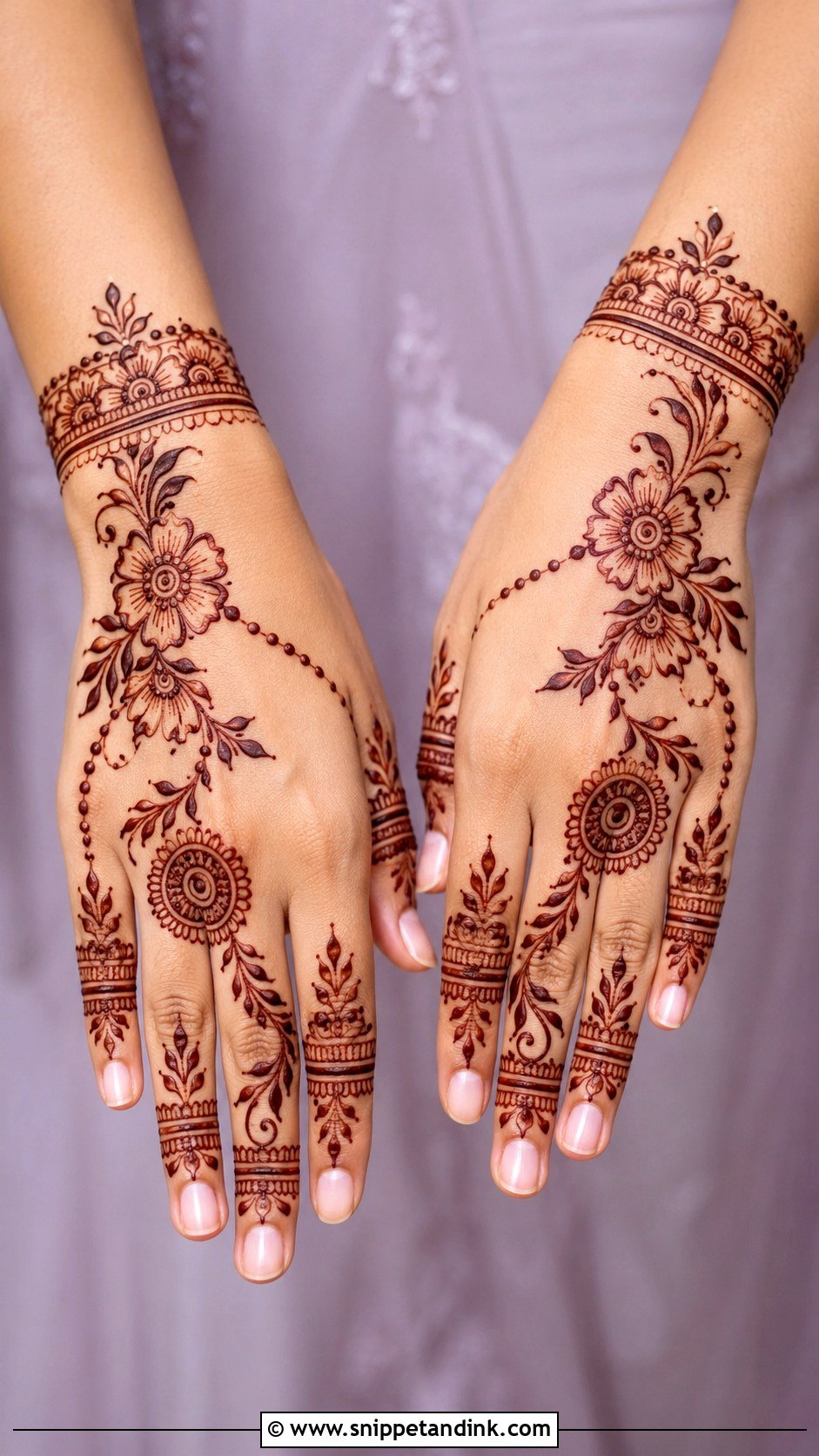
When I do a bridal party, I try to give the bridesmaids a shared element, such as the same lotus or jaali detail the bride has, inside a lighter layout. Indo-Arabic trails, floral cuffs, mandala centers and jewelry chains all work. A half-filled back with bold flowers and clean skin looks good in group shots and leaves the bride’s hands the most detailed in the frame. Plan about twenty to thirty minutes per bridesmaid, per hand, so the schedule doesn’t collapse.
28. Backhand Mehndi Design For Kids
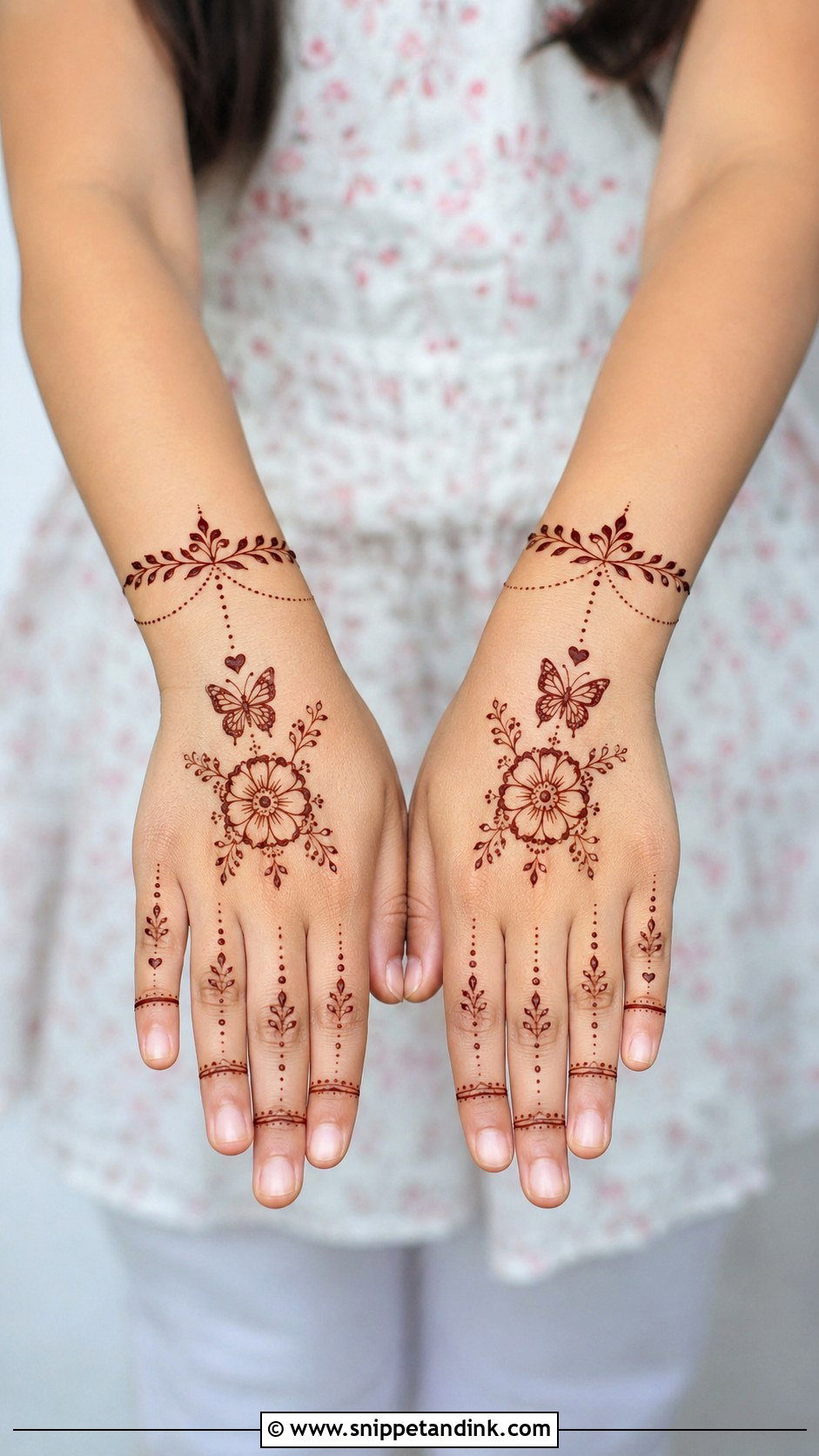
Backhand mehndi design for kids has to be finished before the child loses patience, which is usually within ten minutes. A flower, butterfly, heart, small mandala or leafy bracelet with a few finger dots is plenty. Bold, simple lines dry faster and survive a wriggling hand better than fine filler. Use only natural henna on children, and if anyone offers “black henna”, say no; the dark versions often contain chemical dyes that can cause serious skin reactions.
29. Backhand Mehndi Design For Short Hands
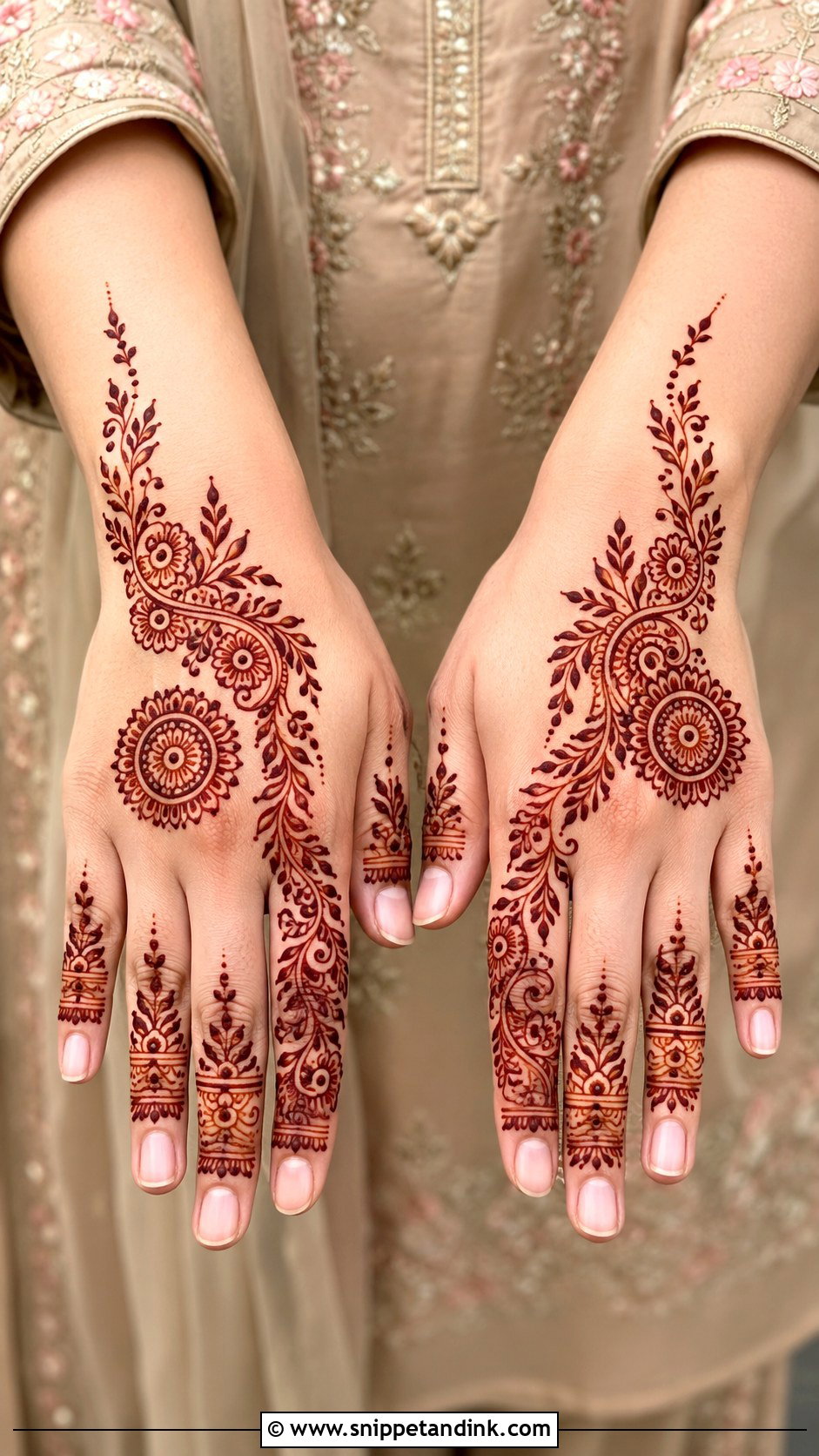
On shorter hands, I want the eye to travel. A diagonal floral trail, a long leafy vine or a vertical chain of small mandalas pulls from the wrist toward the fingertips and makes the hand look longer. Large central motifs do the opposite, so I keep them medium-sized. Finger work stays fine and runs all the way to the tip. Leaving open skin between sections helps too.
30. Backhand Mehndi Design For Long Fingers
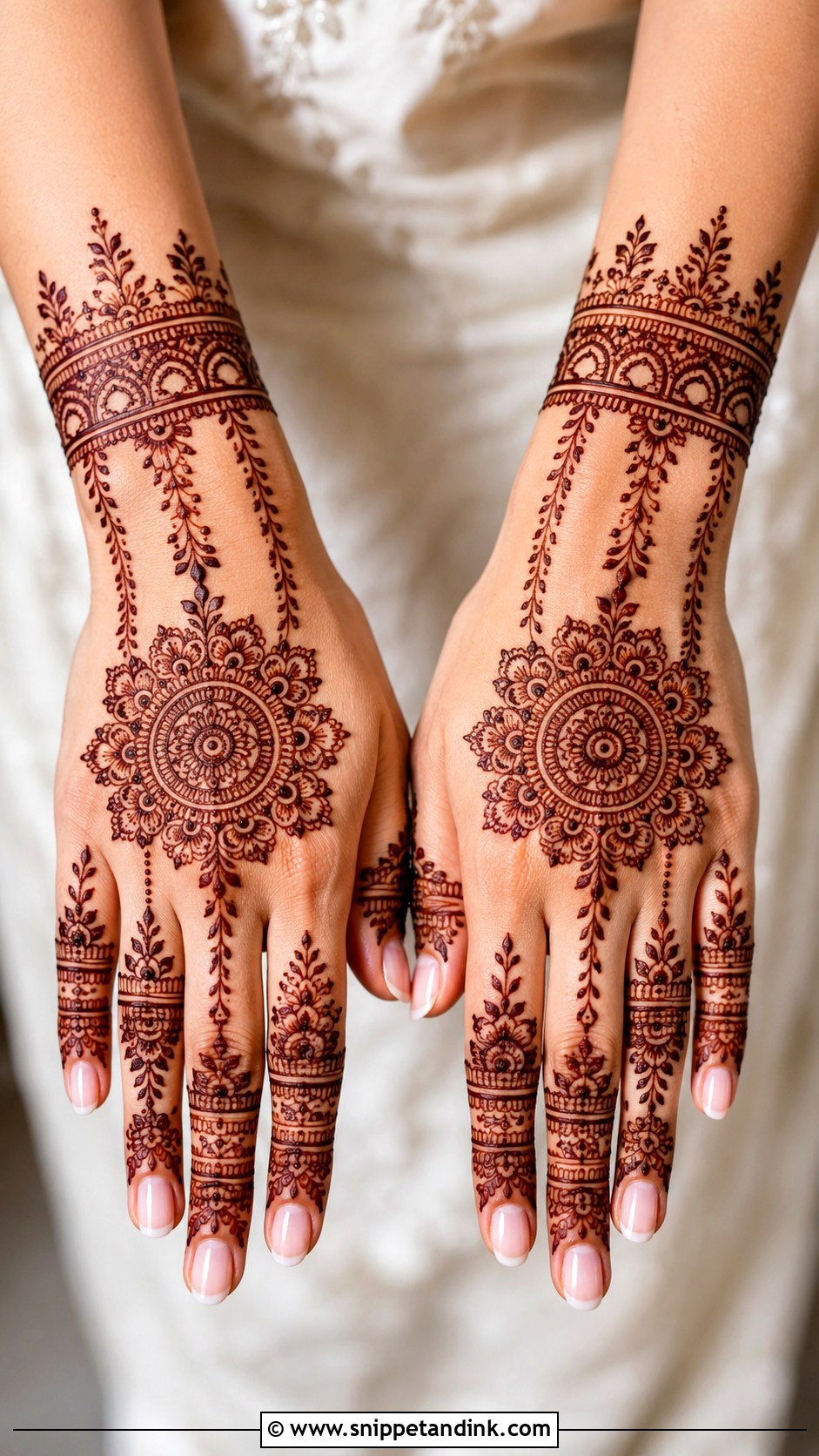
Long fingers give me room for layered bands, vines and lace strips without crowding. The back of the hand can hold a mandala, floral trail, jaali panel or bracelet link. What I avoid is leaving long fingers plain, because the hand then looks unfinished next to a detailed back. Fingertip caps with slim vertical lines balance it, and jewelry-style chains running from wrist to ring finger suit long fingers especially well.
31. Shaded Backhand Mehndi Design
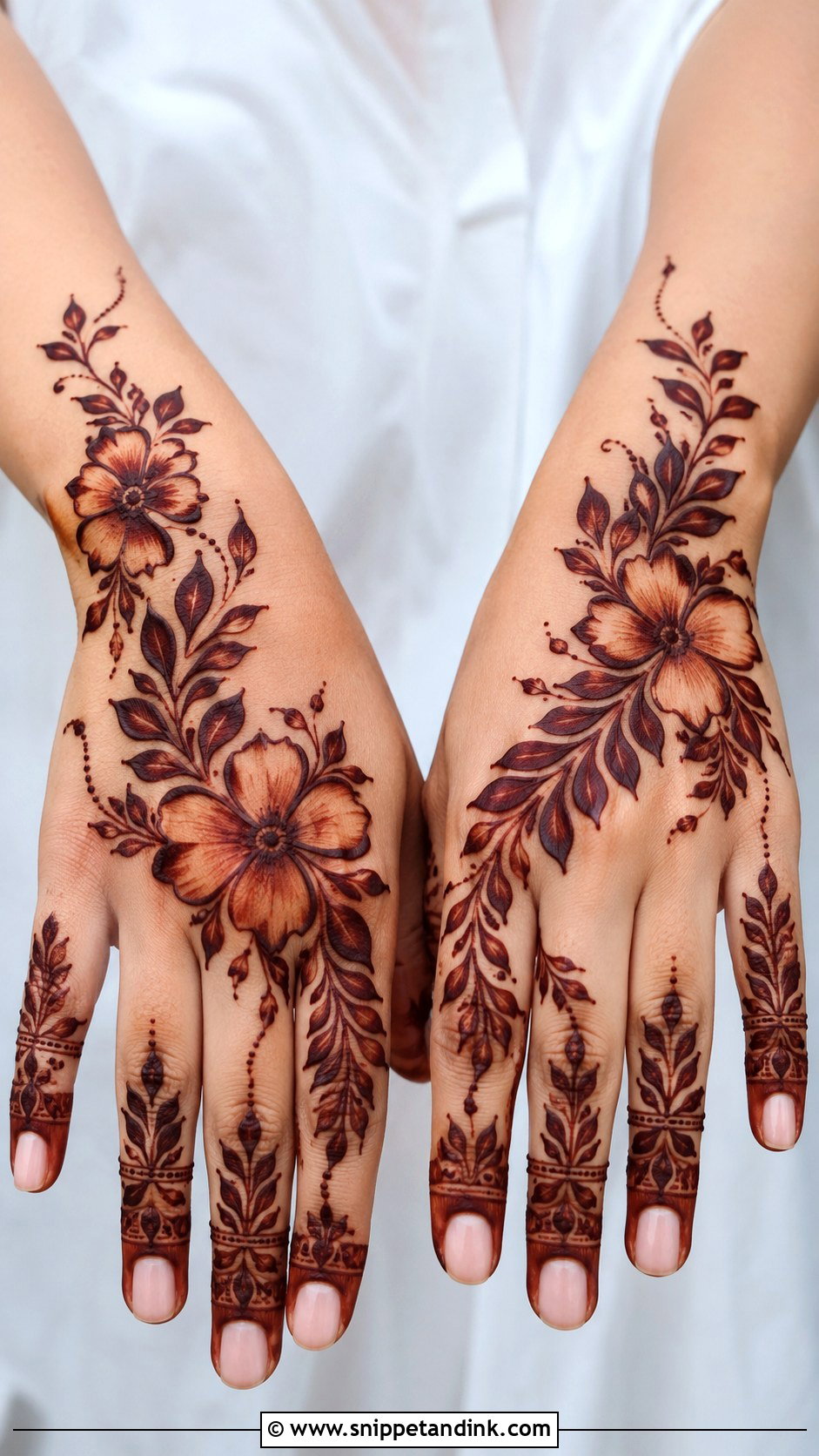
Shading is done by stroking a thin film of paste inside the outline instead of filling it solid, so the petal stains lighter than its border. That gives Arabic, Gulf and modern florals their dimension. It must be even; patchy shading stains in blotches. I limit shading to the largest flowers and leaves and keep the rest open, otherwise the hand gets heavy. It reads especially bold in evening photos.
32. Negative Space Backhand Mehndi Design
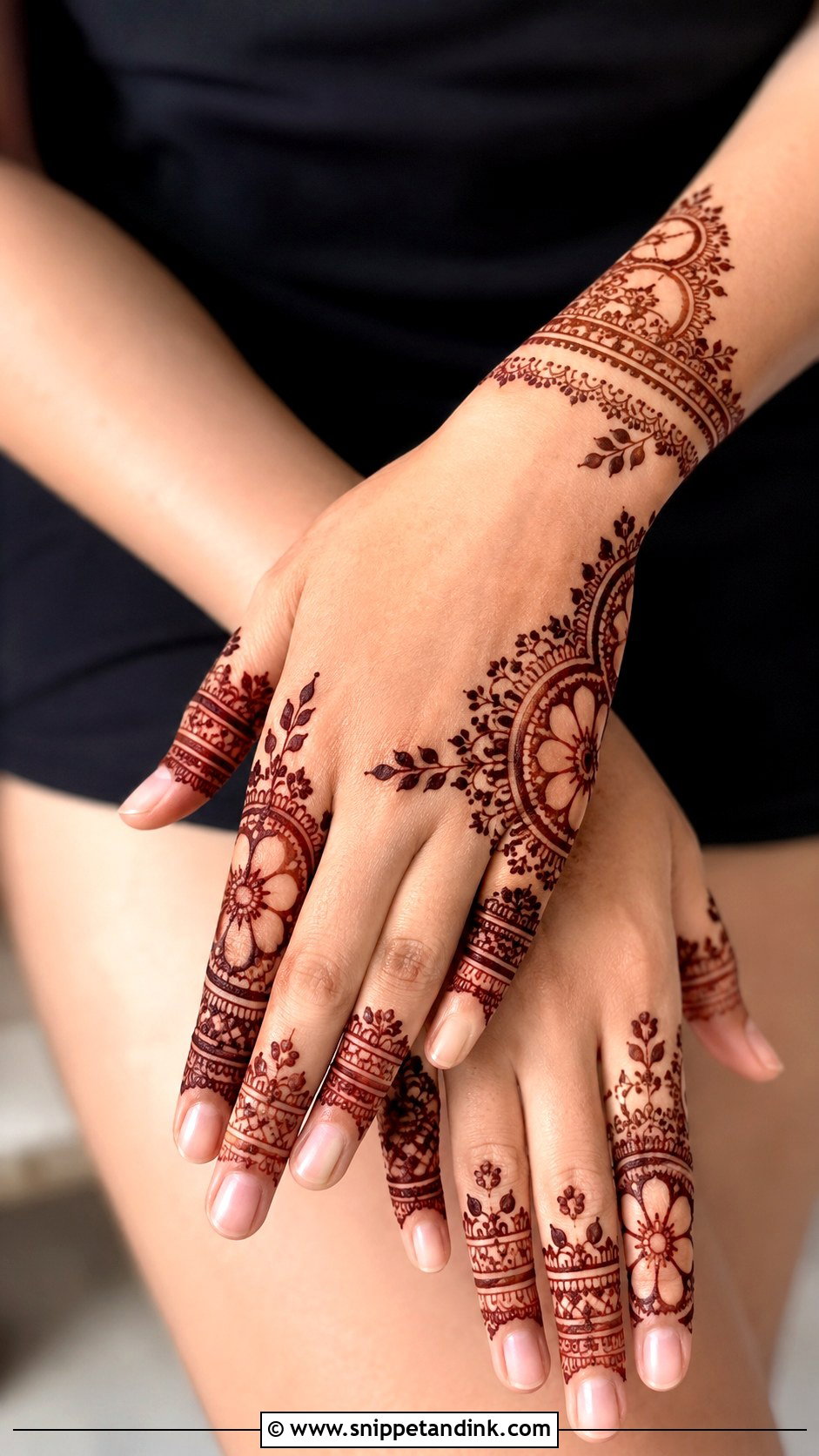
Negative space uses bare skin as part of the pattern: bold florals with deliberate gaps, mandalas ringed with clear skin, or geometric blocks that alternate filled and empty. It’s lighter than traditional full mehndi and lets each motif stand on its own after the stain develops. The back of the hand is a good place for it because it’s a flat, visible surface. My only caution is filler. One random dot in an empty area makes the space look accidental, so I keep outlines crisp and leave the gaps alone.
33. Geometric Backhand Mehndi Design
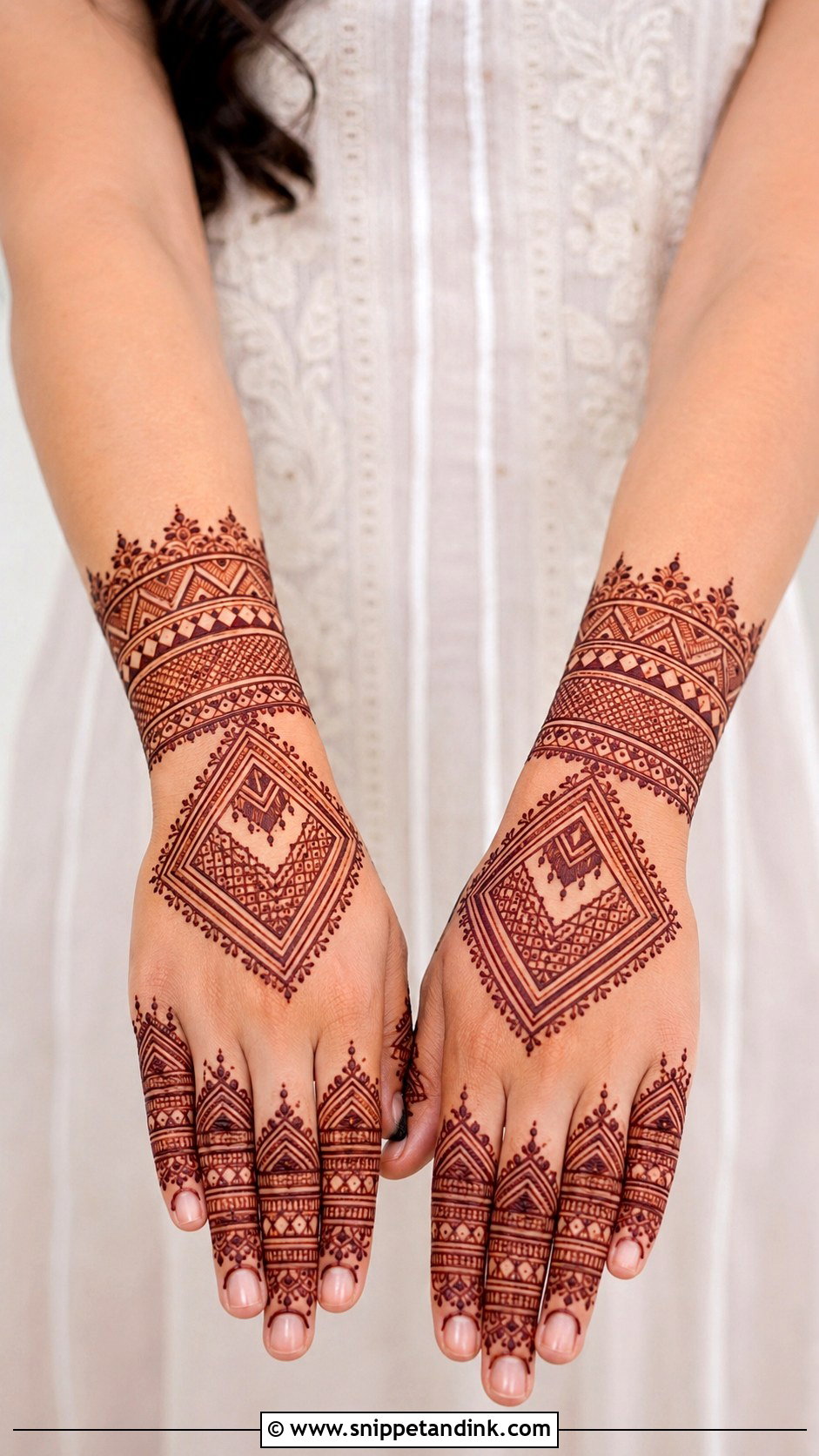
Geometric layouts use lines, diamonds, triangles, grids, squares, dots and repeated bands, often starting with a wrist cuff, moving into a central diamond panel and finishing on patterned fingers. It suits fusion outfits and people who don’t love florals. Accuracy decides whether it looks professional. I keep spacing equal by working from the center line outward, and if it feels too stark, I’ll tuck a few tiny leaves into the corners without breaking the structure.
34. Half Backhand Mehndi Design
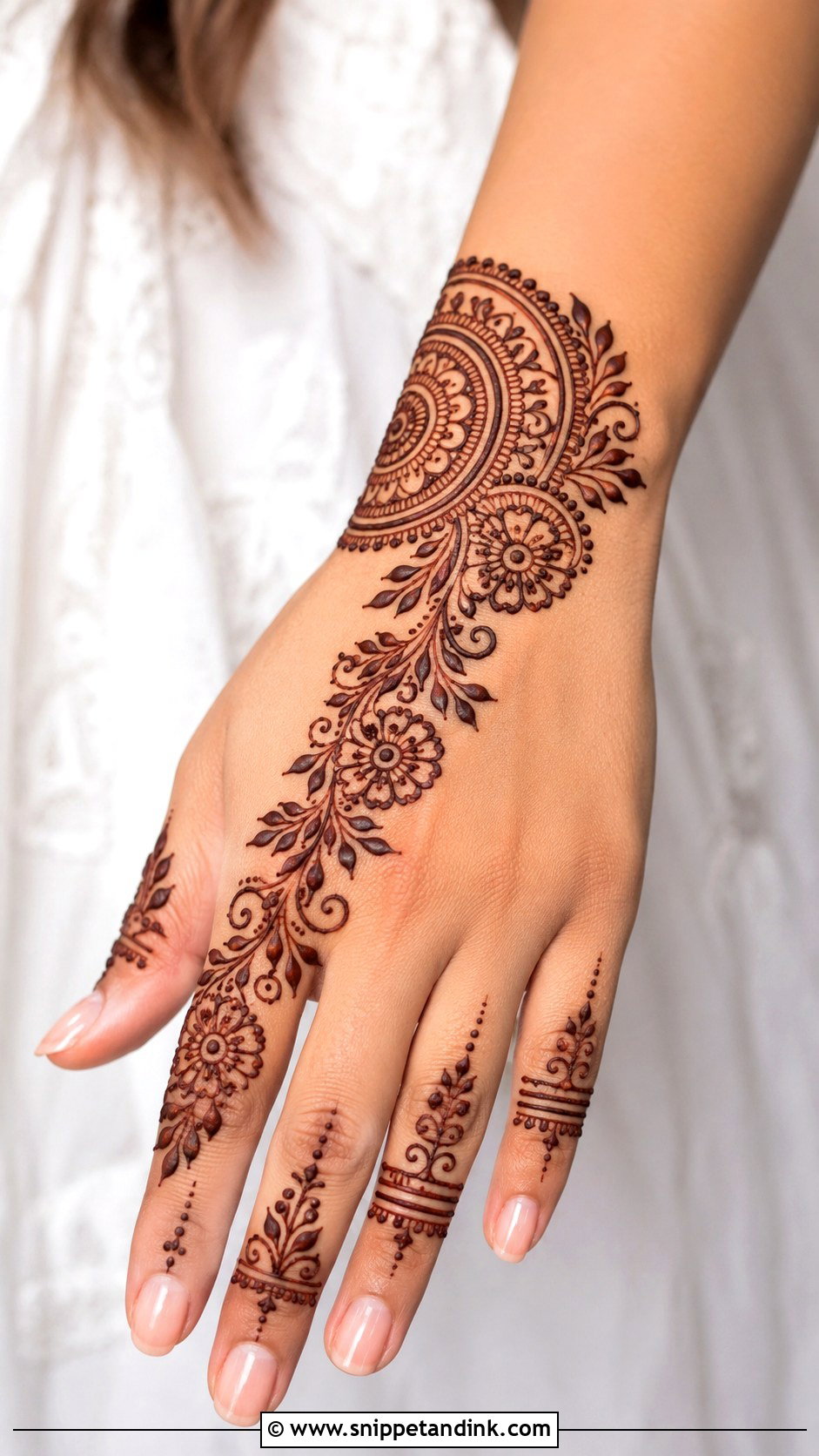
Half-hand designs cover one side, the wrist area or just the fingers. A diagonal Arabic trail is the classic version, but a half-mandala at the wrist, a side vine or a chain design work too. It’s quick, so it’s my suggestion for last-minute events. Make sure the open side looks intentional, with the edge of the design finishing in a clean curve rather than trailing off.
35. Backhand Mehndi Design With Wrist Cuff
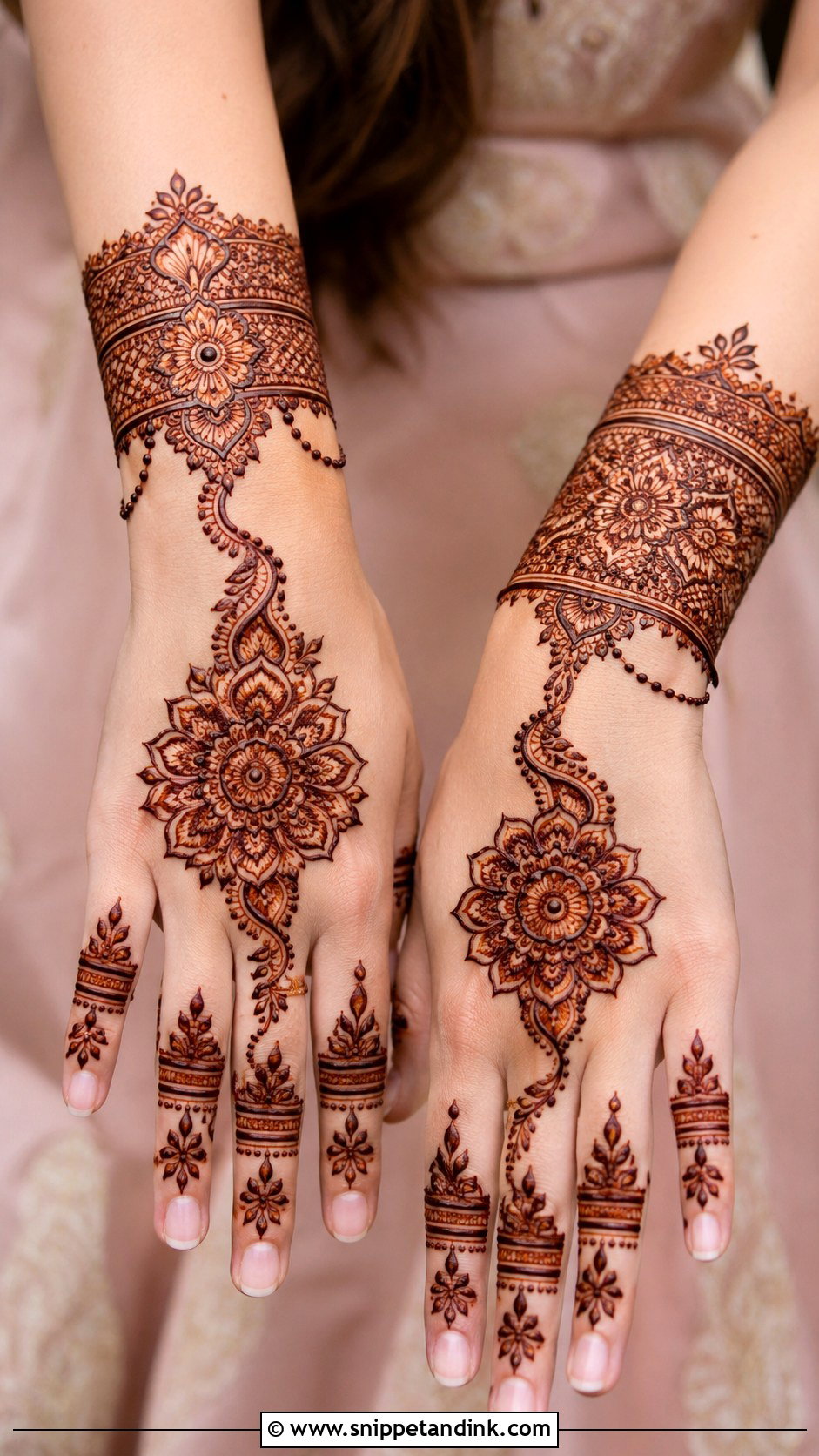
The cuff can be a bangle shape, lace band, floral bracelet or geometric border, and from it the design extends into a mandala, flower trail, paisley or finger chains. It gives a finished, accessory-like look without full coverage. I keep the cuff detailed but no wider than about two fingers, since a thick band makes the wrist look heavy. Repeat one element of the cuff on the fingers so the two ends of the design talk to each other.
The Forty-Eight Hours After Your Paste Comes Off
Most of the color you end up with is decided after you leave my chair. Natural henna comes off bright orange and darkens over the next day or two as the dye oxidizes, so don’t judge it the first evening. If it’s for a wedding or Eid, plan the appointment so that peak lands on the day itself; one to two days ahead is usually right.
- Keep the paste on as long as you can; once it’s dry, a light dab of lemon and sugar keeps it stuck to the skin.
- Scrape it off with a blunt edge or rub it away between your hands. Don’t wash it off.
- Avoid water for the rest of the day, then go easy on soap, hand sanitizer, chlorine and scrubbing for a few days.
- Keep your hands warm. Cold slows the stain; warmth helps it deepen.
- A thin layer of balm or coconut oil before you shower protects the design from hot water.
Expect the back of the hand to stay vivid for roughly a week and then fade unevenly as the skin sheds, faster on the knuckles that bend all day. If you need the design to look fresh for a second function later in the week, tell your artist; I’d rather keep the fine filler minimal so the fade looks soft instead of patchy.
Matching the Back of Your Hand to the Occasion
Start with your hand shape, your outfit and how long you can sit, then pick the layout. Simple florals and half-hand trails suit casual events; Arabic trails and jewelry cuffs feel festive without being heavy; full Indian, jaali, peacock and lotus work belong to the bride. If you lean modern, negative space, geometric panels and minimal fingers are worth a look. Whatever you choose, ask for clean lines and planned gaps across the whole hand, not one isolated motif, and give the stain its two days to deepen.
You'll Like These Ideas:







Leave a Reply