
The back of the hand is the side everyone sees. It’s on show during the ring exchange, the varmala, every jewelry close-up and half the portraits, while the palm mostly stays folded in your lap. That’s why I plan a bridal back hand as a layout first and a pattern second: where the eye lands, where the bangles will sit, and how the design reads from across a room. Below are 25 New Bridal Back Full Hand Mehndi Designs, from dense Indian work to open Arabic trails, with notes on how each one behaves on the skin once the paste comes off.
Mapping a Back Hand Around Your Bangles and Sleeve
Before I draw a single line, I ask what will be sitting on top of the design. A full chooda can cover several inches of forearm, kaleere hang over the back of the wrist, and a haath phool chain runs straight across the middle of the hand. If the best motif ends up under metal, nobody will see it. So bring your bangles, or at least a photo of them on your arm, and tell me where your blouse sleeve ends.
- Fingertip to wrist only suits brides wearing a long sleeve or a heavy chooda, since the forearm is hidden anyway.
- Fingertip to mid-forearm is the usual bridal length and works with most bangle stacks.
- Fingertip to elbow needs a short or sheer sleeve to be worth the extra sitting time.
Time is the other thing to plan honestly. Covering the backs of both hands and forearms in a detailed bridal design usually takes a few hours on its own, and more if you’re also doing palms and feet. You’ll need someone to feed you, hold your phone and fix your dupatta, because your hands are out of action from the moment the first cone touches skin.
Why the back stains lighter than the palm
Henna stains darkest where the skin is thin and warm, which is why palms and fingertips go deep maroon while the back of the hand often settles a shade or two lighter. That’s normal, not a bad batch. I allow for it by drawing slightly bolder outlines on the back and keeping the paste on longer there.
1. Full Hand Bridal Back Mehndi Design
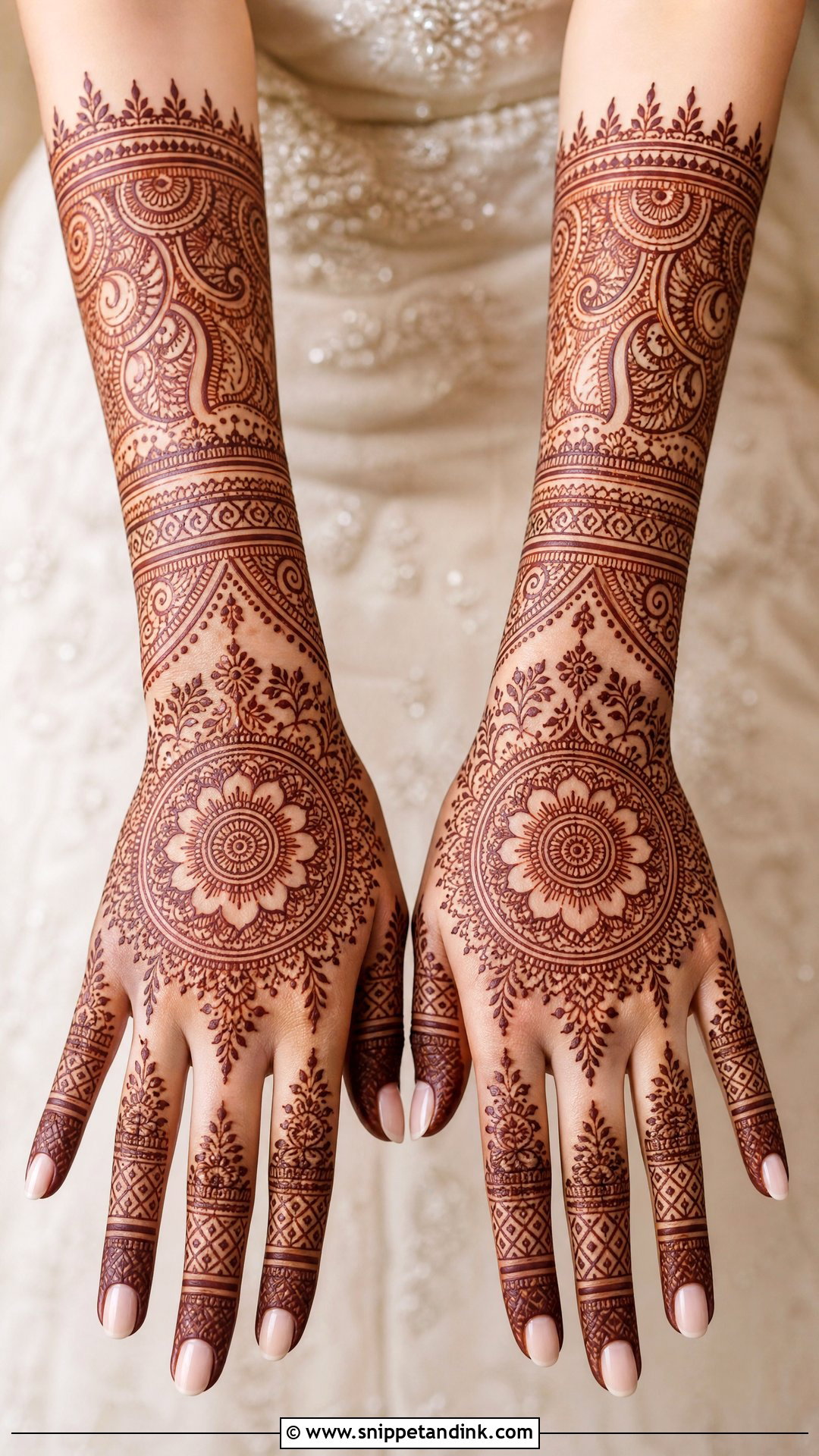
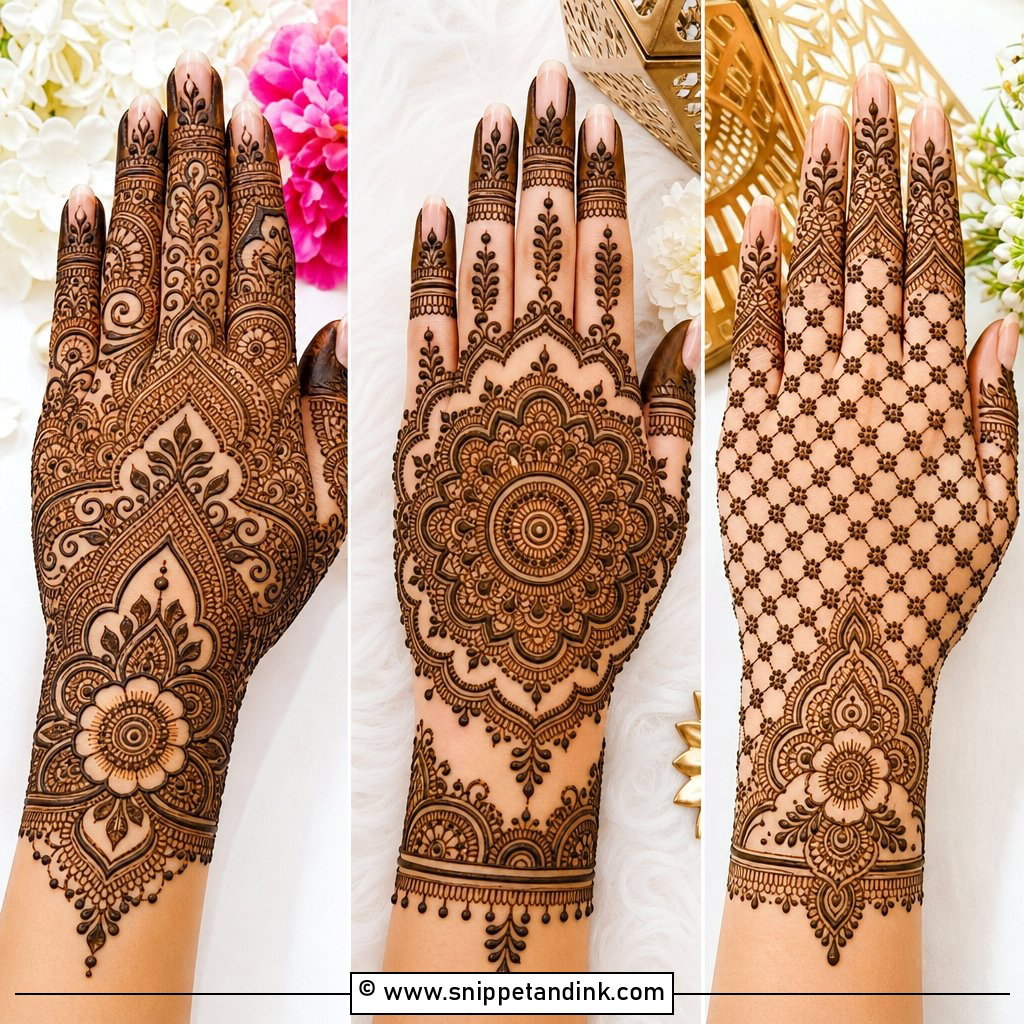
This is the classic fingertip-to-forearm layout most brides picture. I usually build it around one highlighted centre on the back of the hand, a mandala or layered lotus, and let finger bands, vines and net filler flow out from it. The centre matters more than people expect: once your bangles and haath phool go on, the wrist area is half covered, so the back of the hand carries the whole design. I outline the centre on both hands before filling anything, which is the only reliable way to keep them matched.
2. Indian Bridal Back Full Hand Mehndi Design
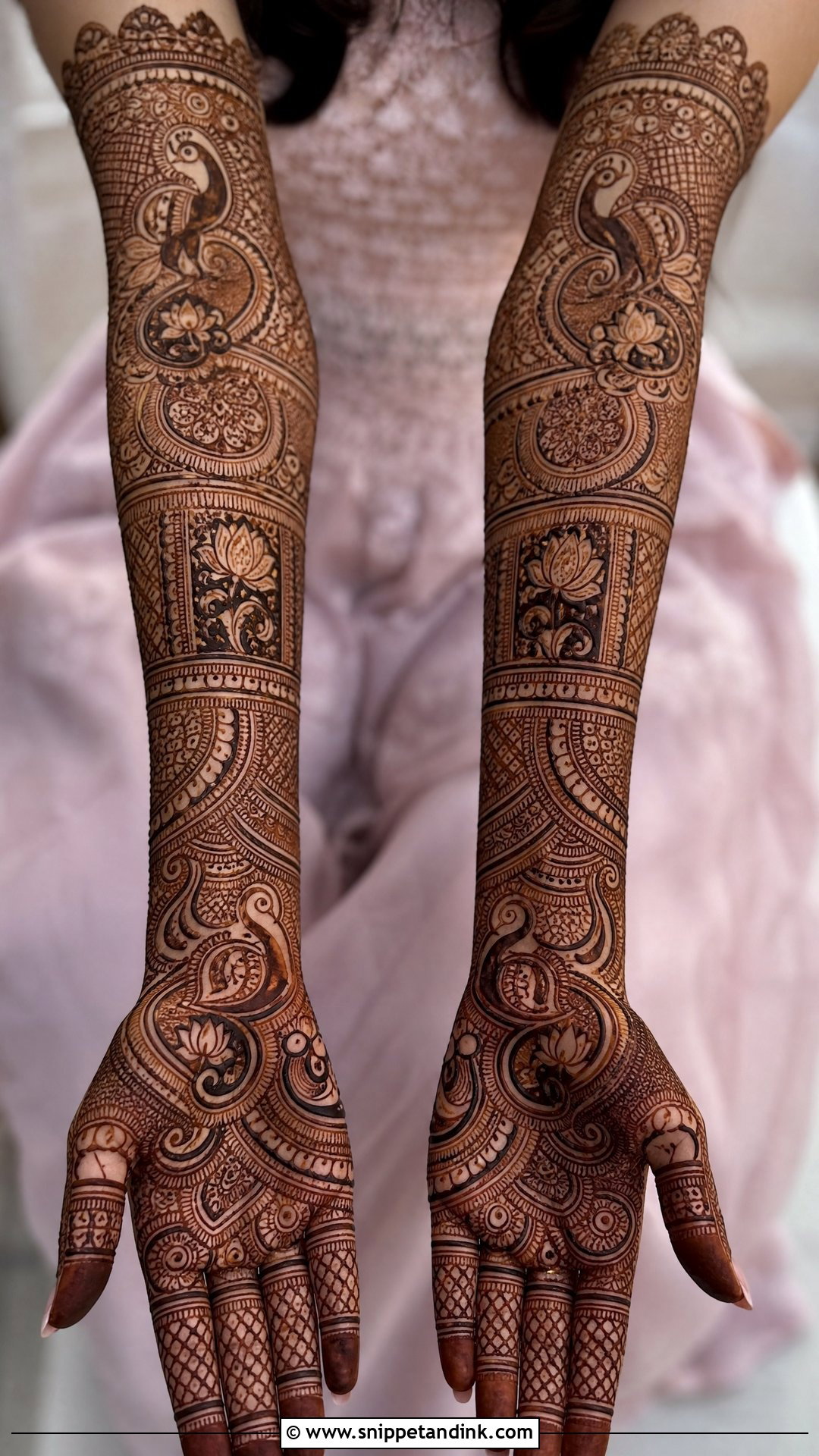
Dense Indian work tells a story through paisleys, lotus flowers, peacocks and fine mesh that runs from the fingers all the way up the forearm. The risk with this much detail on the back of the hand is that it stains a shade lighter than the palm, because the skin there is thicker and cooler. I compensate by keeping the main outlines slightly heavier than I would on a palm, so the paisleys still read clearly next to heavy lehenga embroidery and a full set of bridal jewelry.
3. Arabic Bridal Back Full Hand Mehndi Design
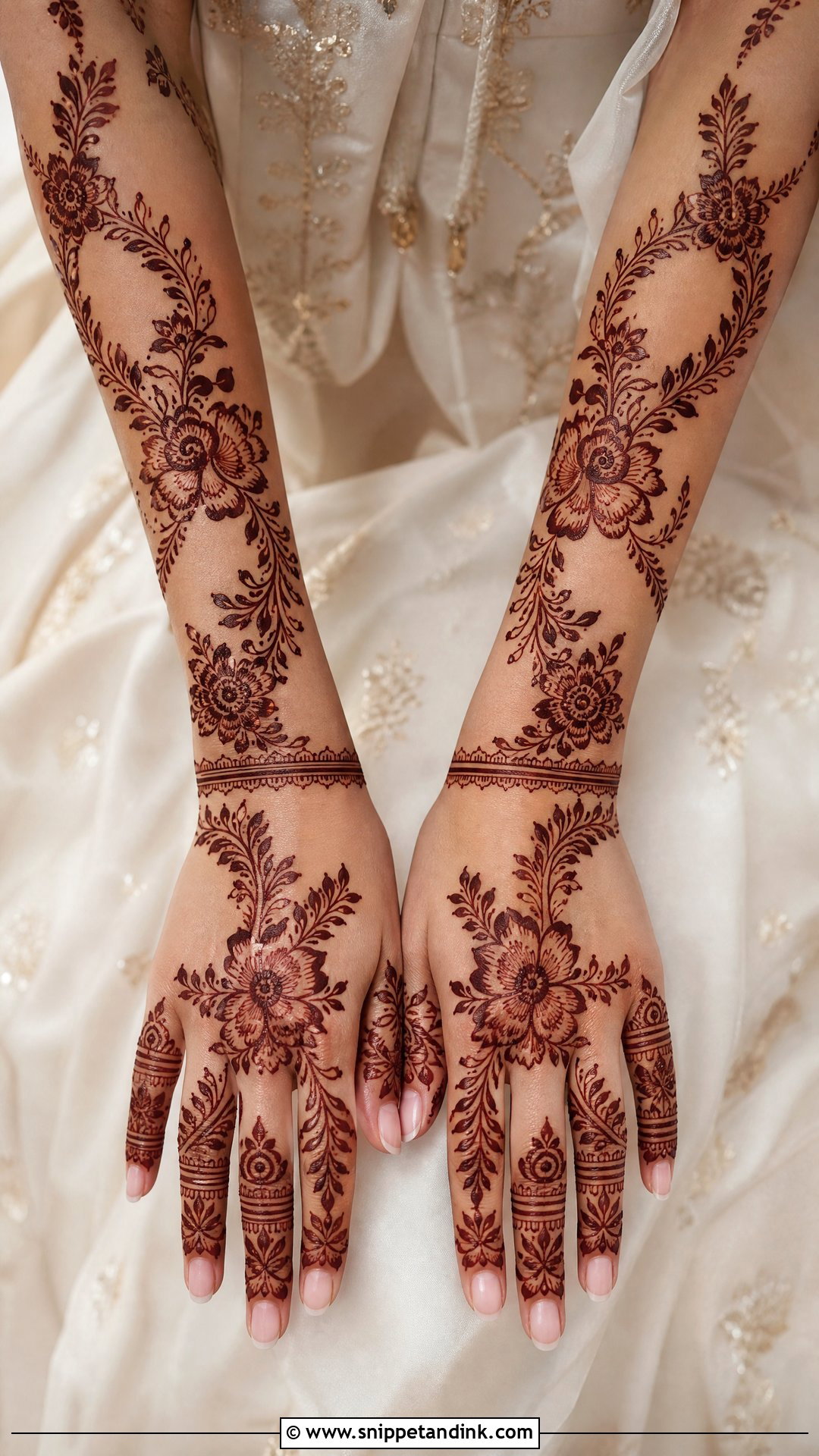
Arabic layouts use bold flowers, leafy trails and plenty of bare skin. Instead of filling every space, the design runs diagonally from the fingertips across the back of the hand and finishes in a bracelet band at the wrist, which makes the hand look longer. I like it for brides whose outfits have pastel tones or modern embroidery, since the open spacing doesn’t fight a busy fabric. One honest drawback: the bare skin shows every wobble, so an artist with a confident, steady line matters more here than with dense work.
4. Indo Arabic Bridal Back Full Hand Mehndi Design
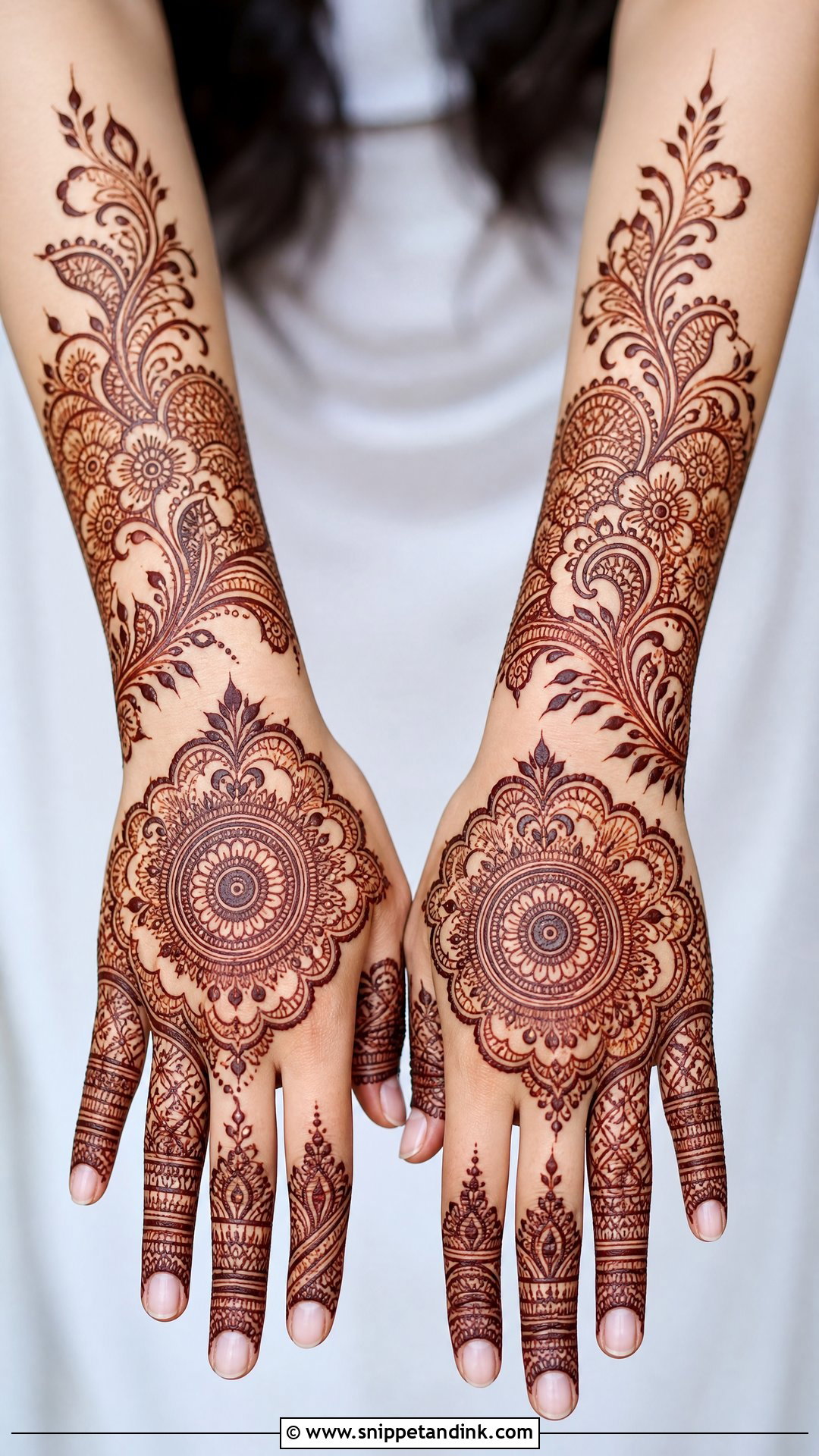
Indo Arabic mixes Indian density with Arabic flow, and it’s the request I hear most from brides who can’t decide between the two. My usual split is a mandala or paisley cluster at the centre of the back hand, Indian-style fine bands on the fingers, then bold Arabic vines on the forearm with neat negative space between them. Because it doesn’t need every millimetre filled, it’s also quicker to apply than a fully traditional hand. That makes it a practical pick when you’re having mehndi for the nikah or sangeet as well and don’t want three marathon sittings.
5. Floral Bridal Back Full Hand Mehndi Design
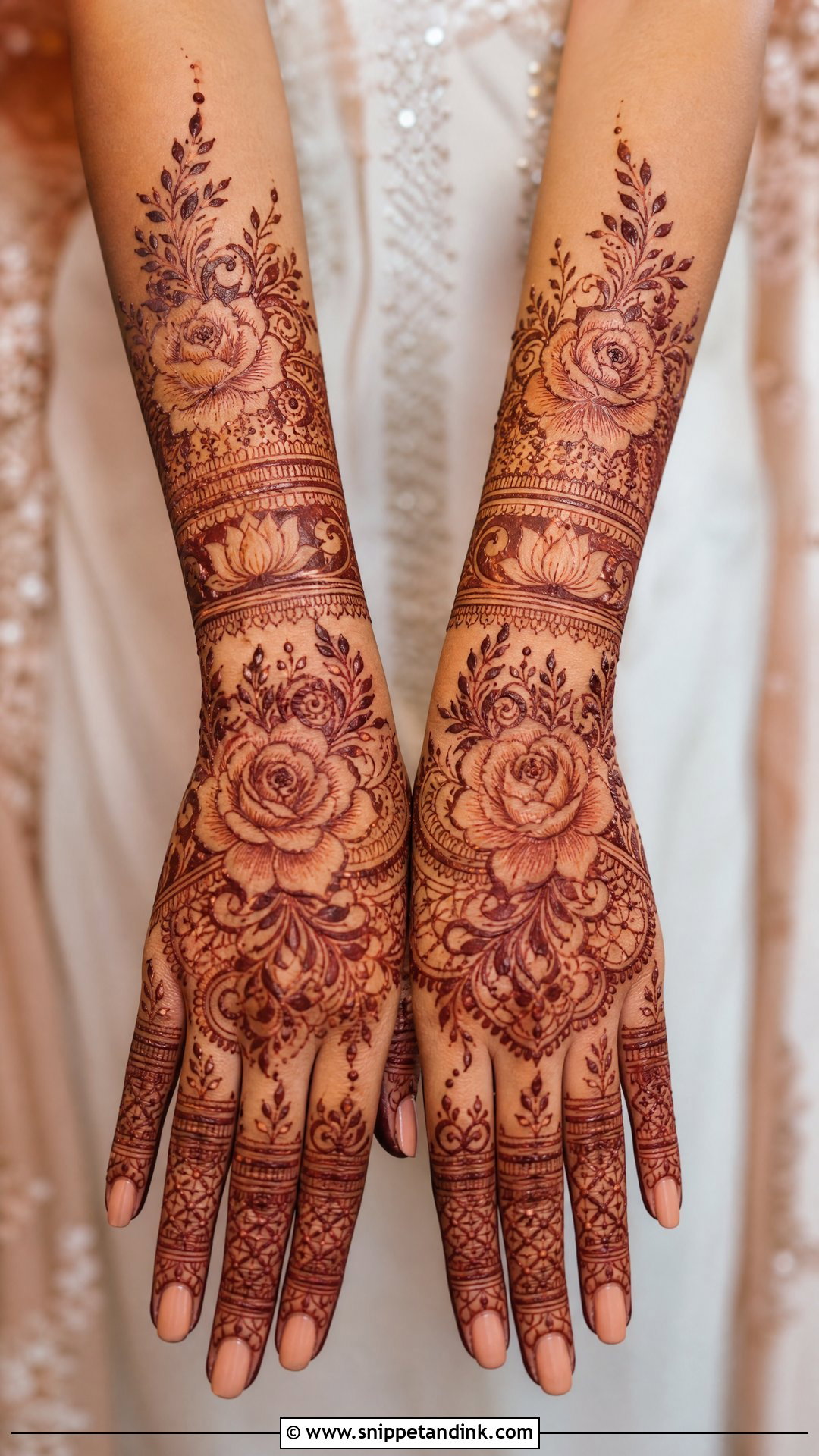
Floral work is the most forgiving style I apply. A large rose or lotus near the centre, layered petals on the fingers and vines running to the wrist can be drawn open and airy or packed with shading, and both read well on almost any skin tone. Where I see floral hands go wrong is petal veins drawn too fine; they close up as the stain darkens and the flower turns into a solid blob. I keep a hairline gap between every vein and petal edge for that reason.
6. Peacock Bridal Back Full Hand Mehndi Design
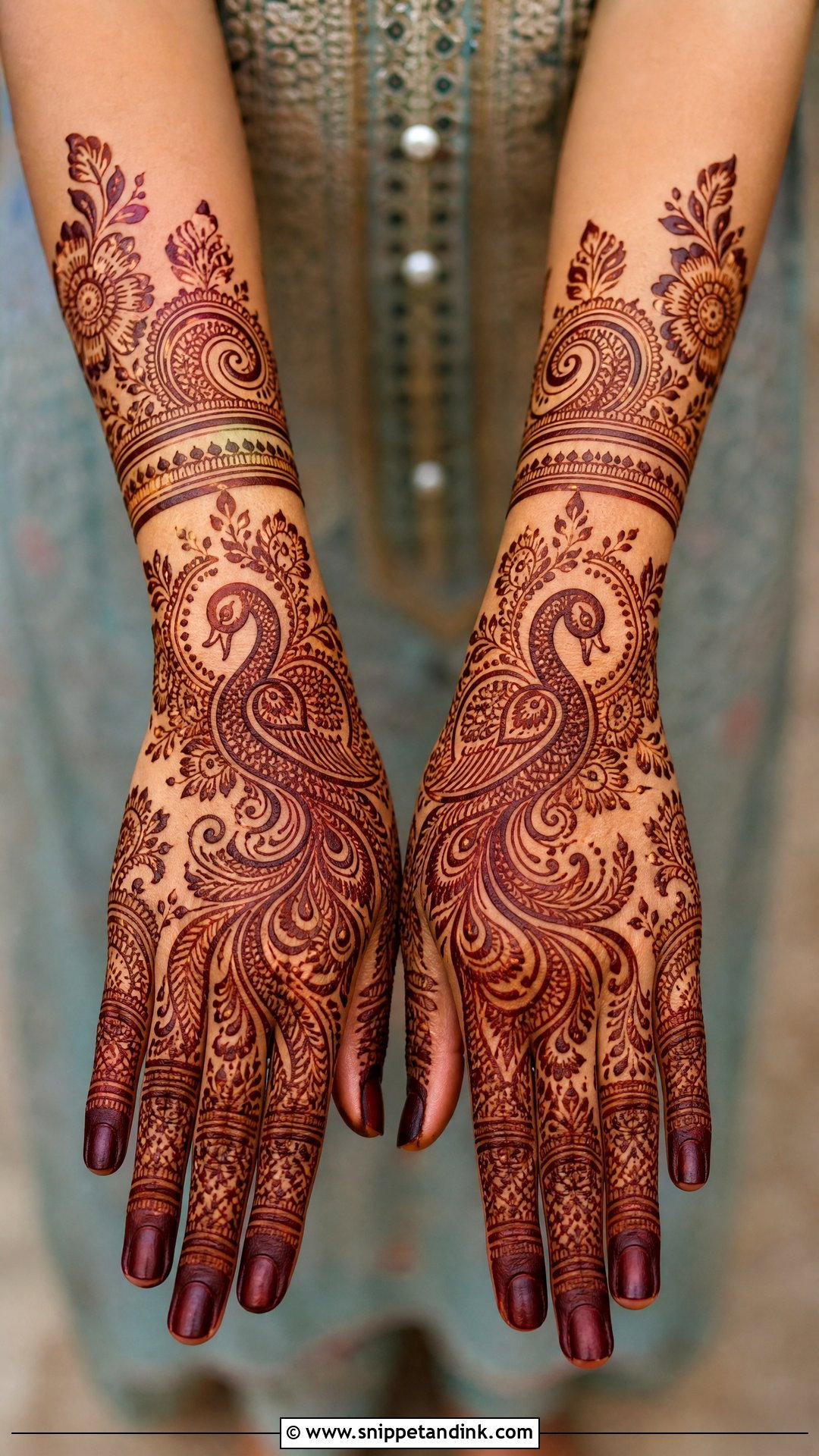
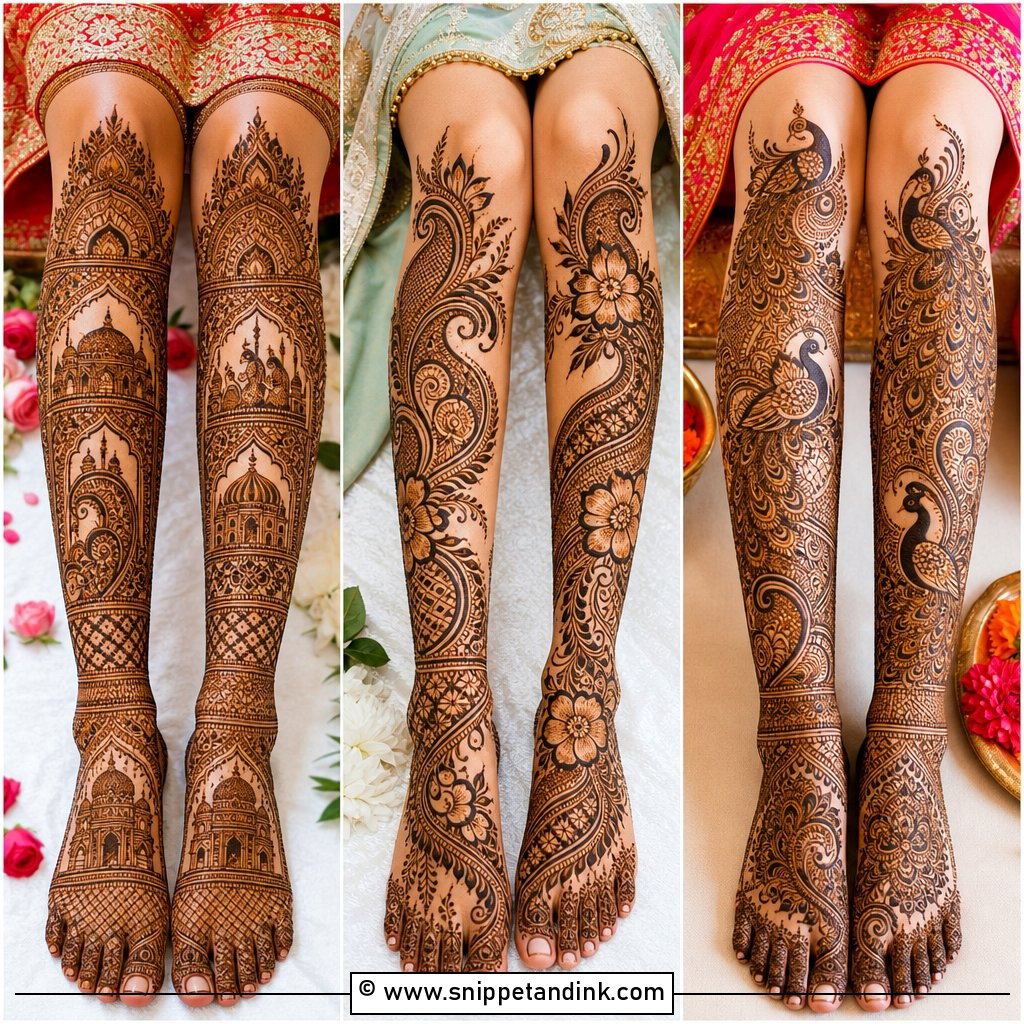
A peacock needs room. If it’s squeezed onto a finger or the side of the wrist, the feather detail collapses into a dark smudge by the second day. I place it where the skin is flattest, the centre of the back hand or the inner forearm, and let the feathers trail into paisleys and vines. The fingers then get simpler leaf chains and dots, so the bird stays the focus. It sits naturally with red, maroon or green outfits and gold jewelry.
7. Mandala Bridal Back Full Hand Mehndi Design
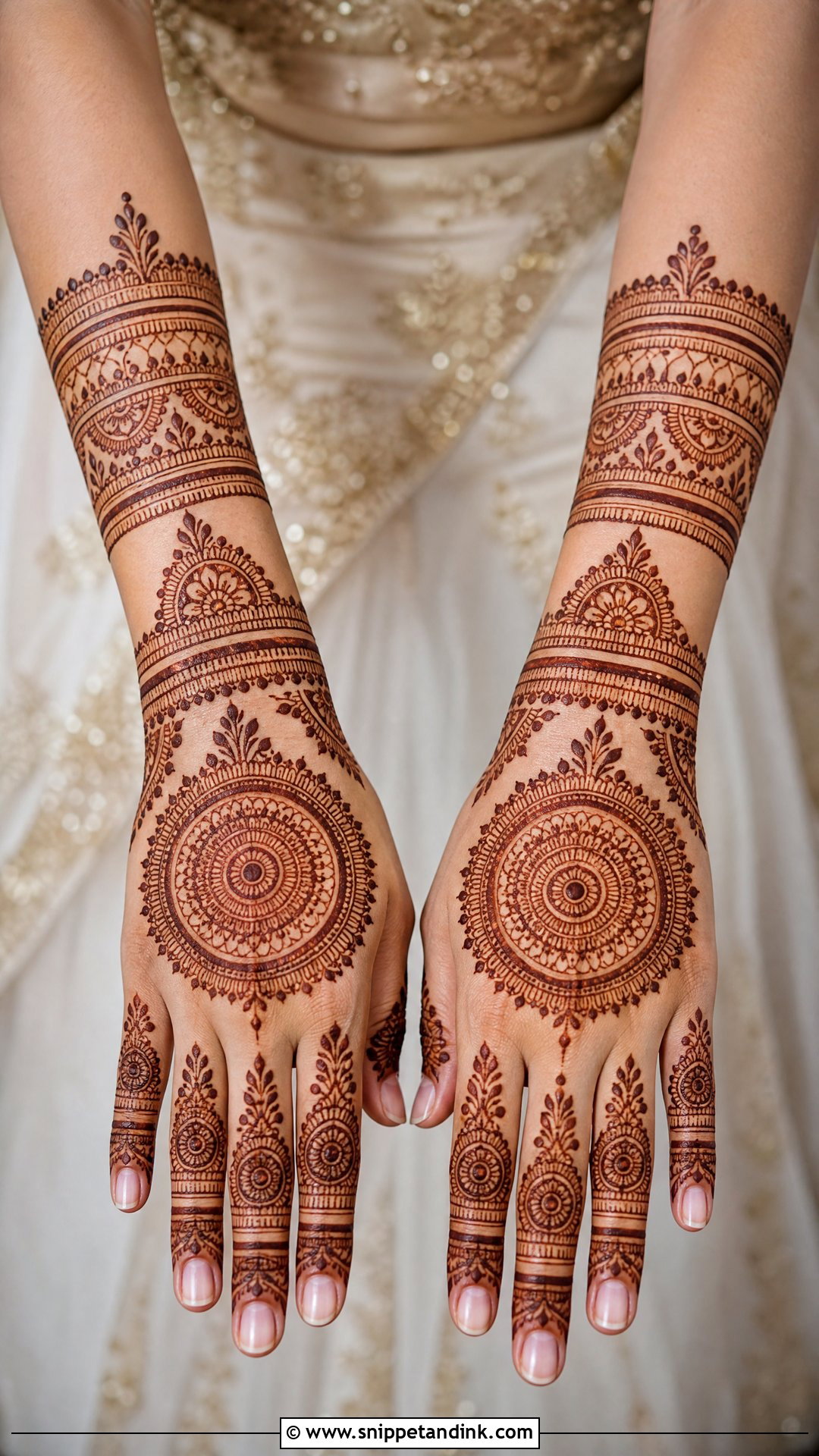
A centred mandala is the easiest design to keep balanced, which is why I recommend it to brides who want symmetry without fuss. The circle sits on the back of the hand, floral rings and dot work radiate toward the fingers, and the forearm takes stacked bands or a jaali panel. My one check before starting: I have you make a loose fist. The knuckles shift when the hand bends, and a mandala placed too high warps into an oval in every ring shot.
8. Jaali Bridal Back Full Hand Mehndi Design
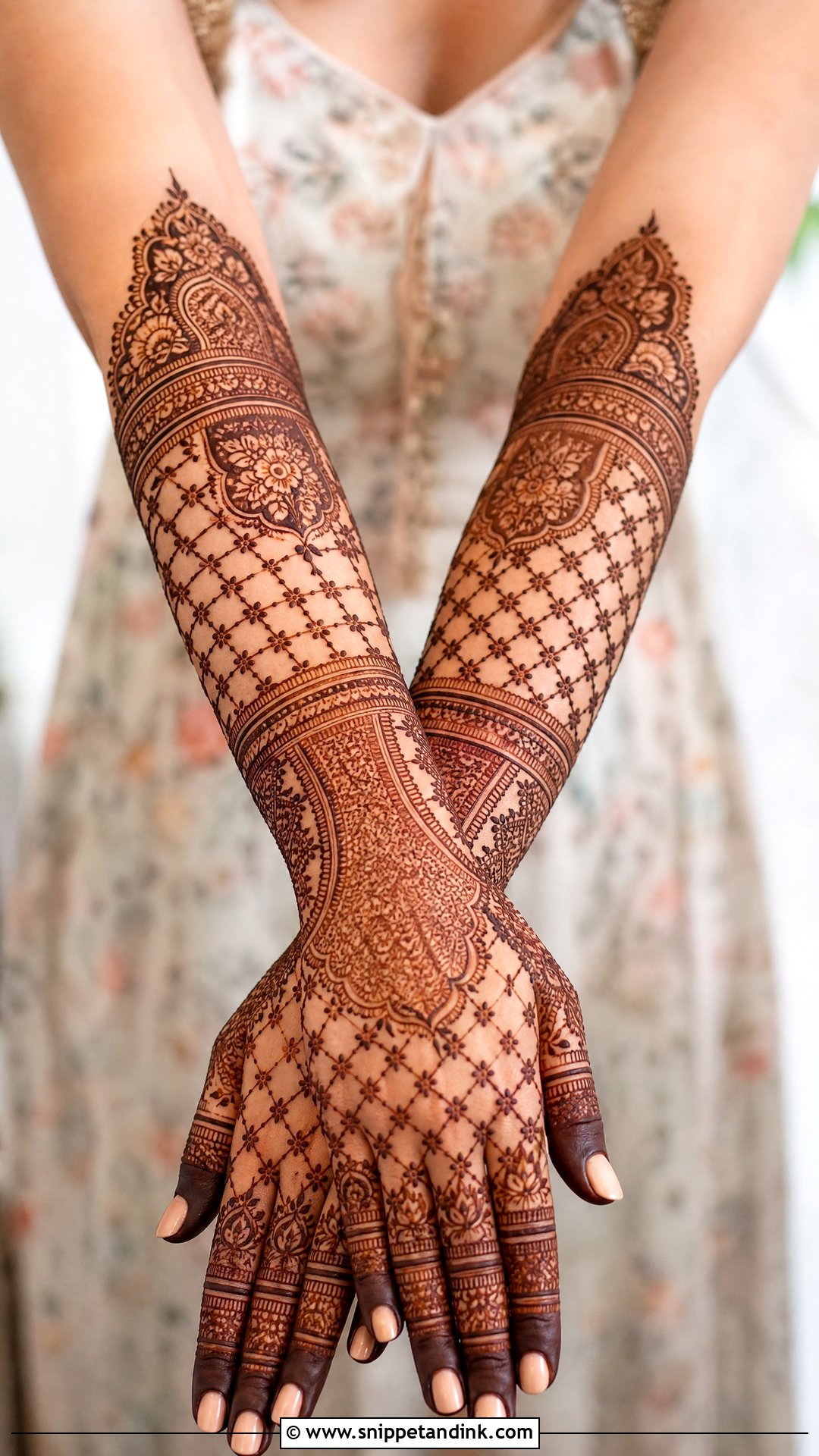
Jaali is a fine net pattern that reads like lace on the skin. The flat back of the hand is the best place for it, because the grid stays even there; across knuckles it distorts. I combine jaali panels with florals or paisleys rather than netting the whole hand, since a full net with a dark stain can look like a bruise from a distance. If your outfit has lace, sequin or zari work, a jaali panel echoes that texture nicely.
9. Paisley Bridal Back Full Hand Mehndi Design
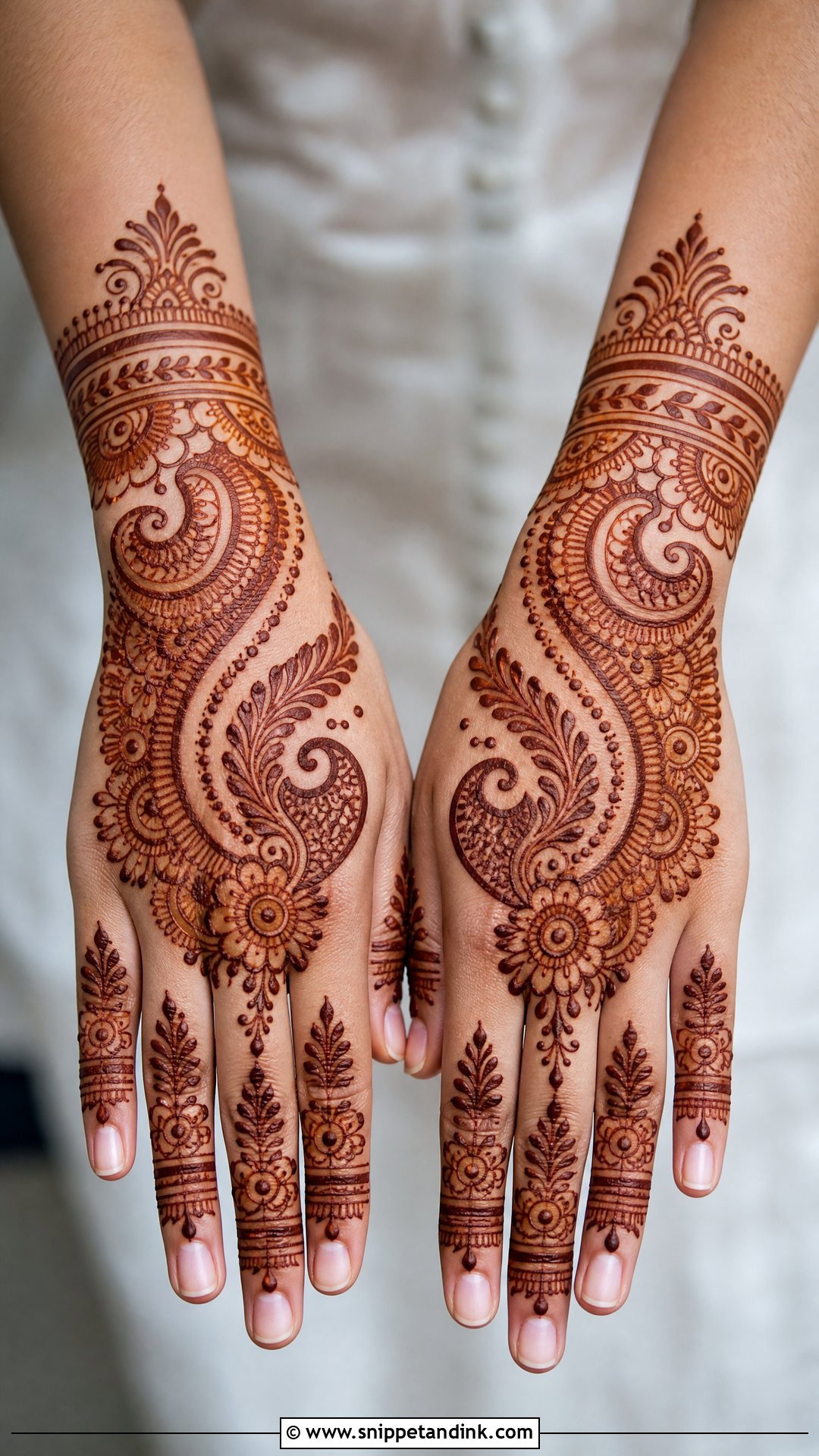
Paisleys rarely date in photos, and they scale well: large ones down the forearm, a curved trail across the back of the hand, tiny ones on the fingers. What separates a bridal paisley from a quick party one is the inside. I fill each with dots, petals, swirls or leaf veins, and that inner work is what people zoom in on later. If you have limited sitting time, ask for fewer, larger paisleys with full inner detail rather than many hollow ones.
10. Lotus Bridal Back Full Hand Mehndi Design
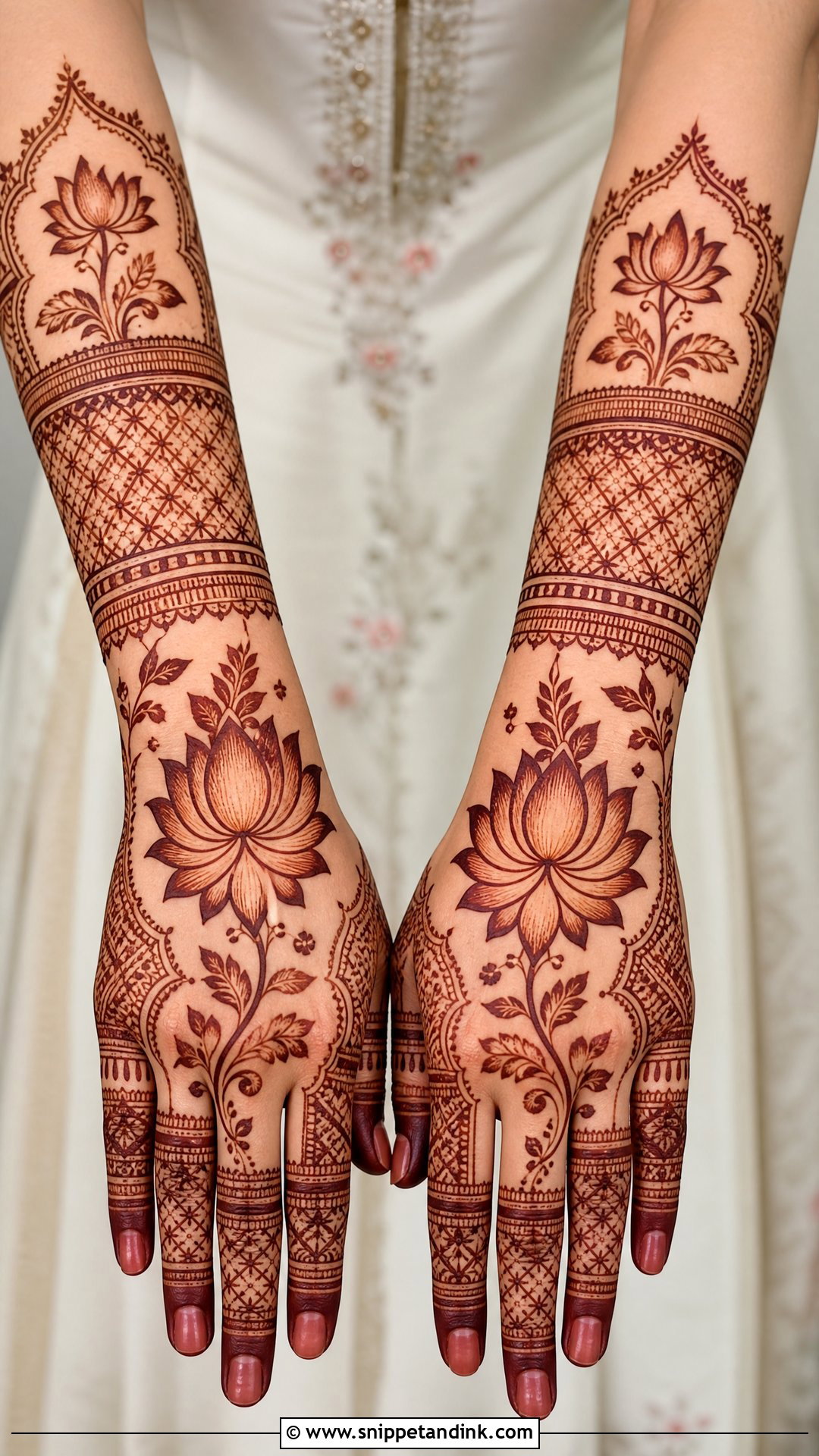
Lotus motifs carry a lot of meaning at Indian weddings, and their rounded petals sit comfortably next to bangles and rings. I use the lotus as the centre of the back hand, repeat smaller ones in the wrist band, and connect them with leafy trails and fine grids. The detail I’m careful with is the petal edge: I draw it bold and fill the inside with fine lines, so the shape survives once the stain moves from orange to deep brown.
11. Rajasthani Bridal Back Full Hand Mehndi Design
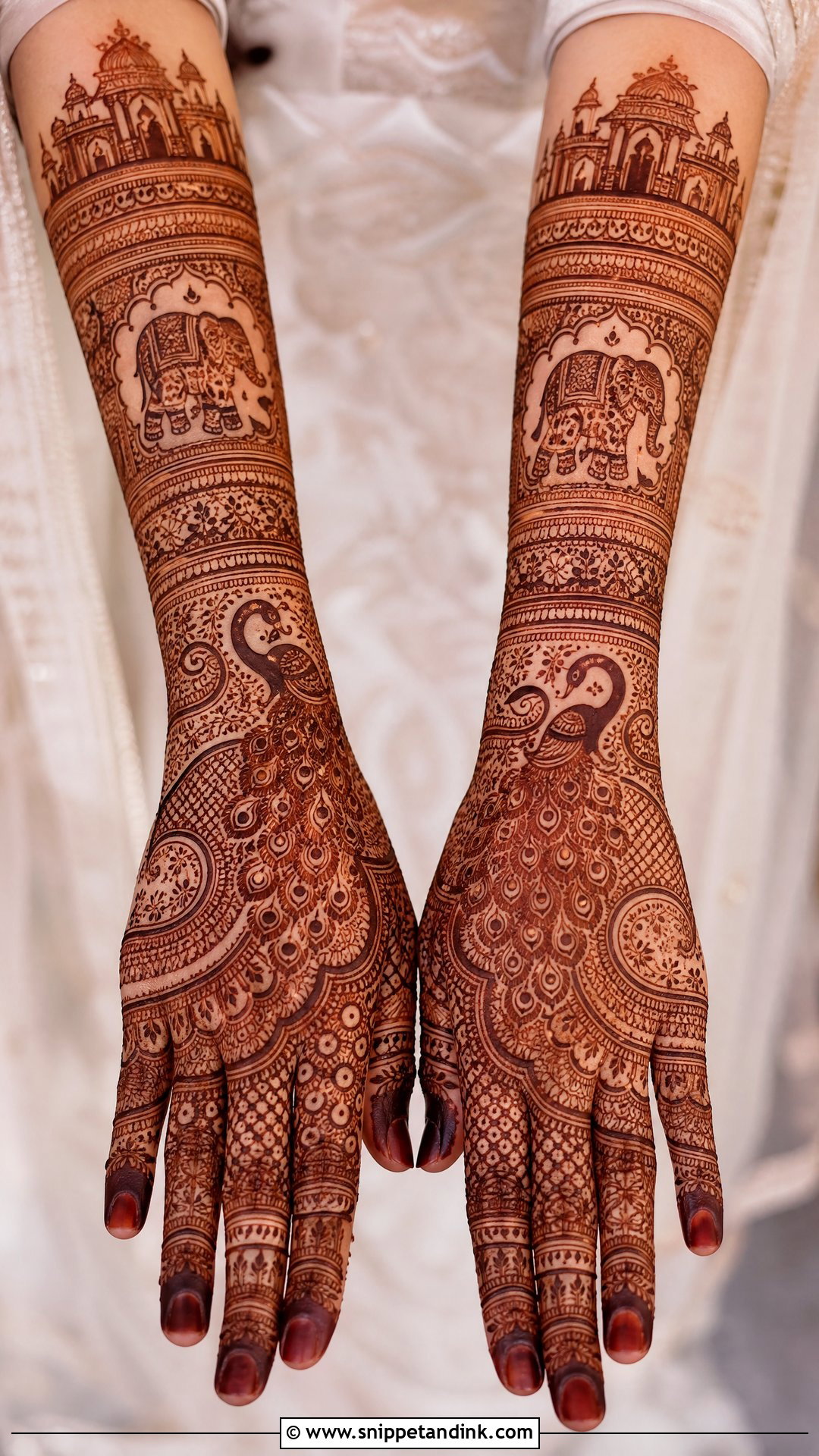
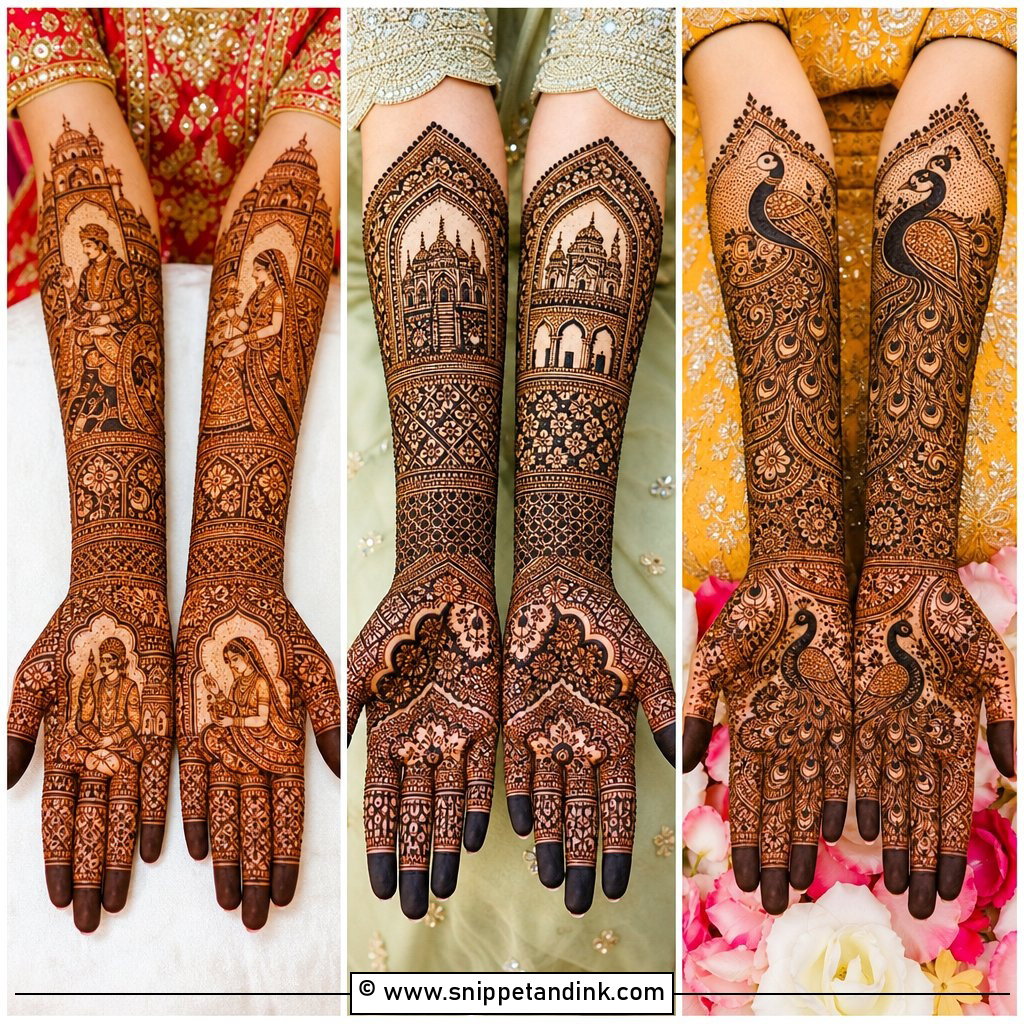
Rajasthani bridal back full hand work is about as intricate as mehndi gets: peacocks, elephants, palace arches, little bride and groom figures and heavy filler, often with wrist bands that mimic traditional jewelry. It takes real sitting time, so I’d only suggest it if you can give the full session without rushing. The danger is density. I separate each motif with a clear border or a strip of bare skin, otherwise the figures merge into one dark mass once the colour peaks.
12. Moroccan Bridal Back Full Hand Mehndi Design
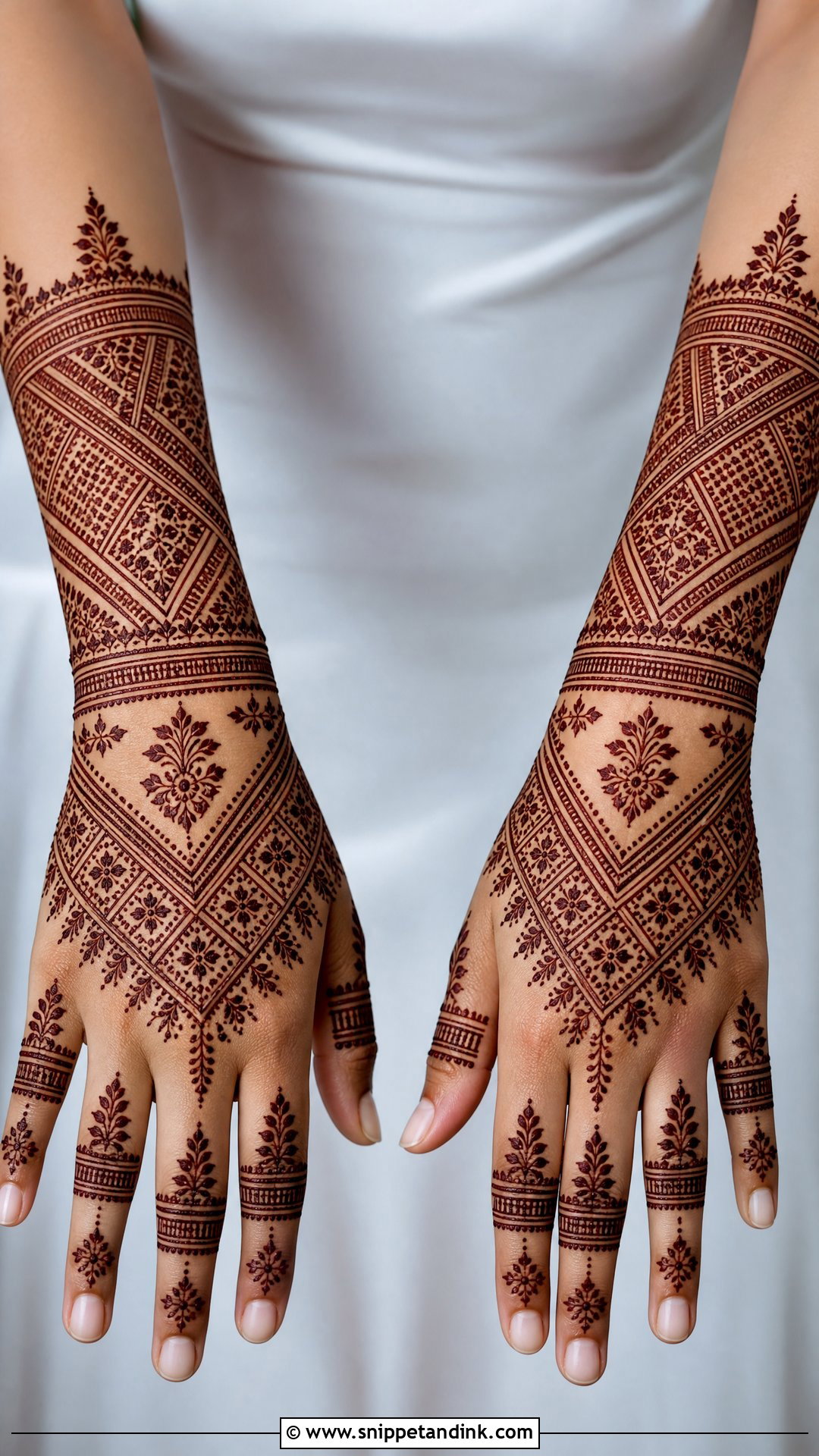
Moroccan geometry swaps curves for diamonds, triangles, grids and straight bands. On the back of the hand it gives full coverage that still looks crisp and modern, and I usually soften it with a few small flowers and dots at the wrist. Straight lines are less forgiving than vines, though. If your artist’s hand wavers, a wobbly grid is far more visible than a wobbly petal, so look at photos of their geometric work specifically before booking this one.
13. Gulf Bridal Back Full Hand Mehndi Design
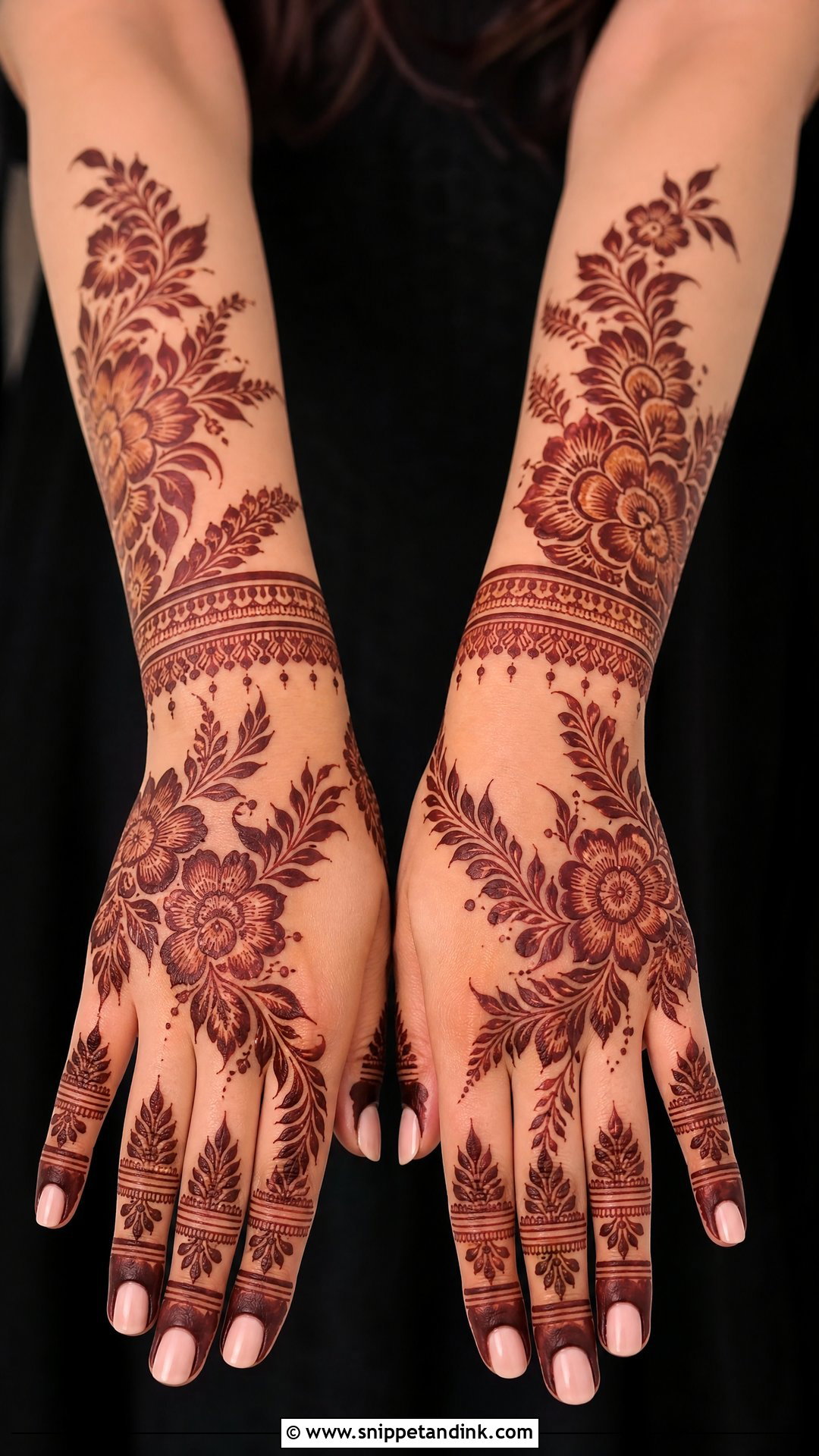
Gulf or Khaleeji-inspired mehndi uses bold flowers, leafy curves and dramatic spacing. I draw large floral clusters travelling diagonally from the fingers to the forearm, add a cuff band at the wrist and leave generous bare skin between them. Many Gulf artists shade the petals with a thinner paste wash, which gives the flowers depth. It’s quicker than dense Indian work, and the bold shapes still read clearly from the back of a hall.
14. Bracelet Bridal Back Full Hand Mehndi Design
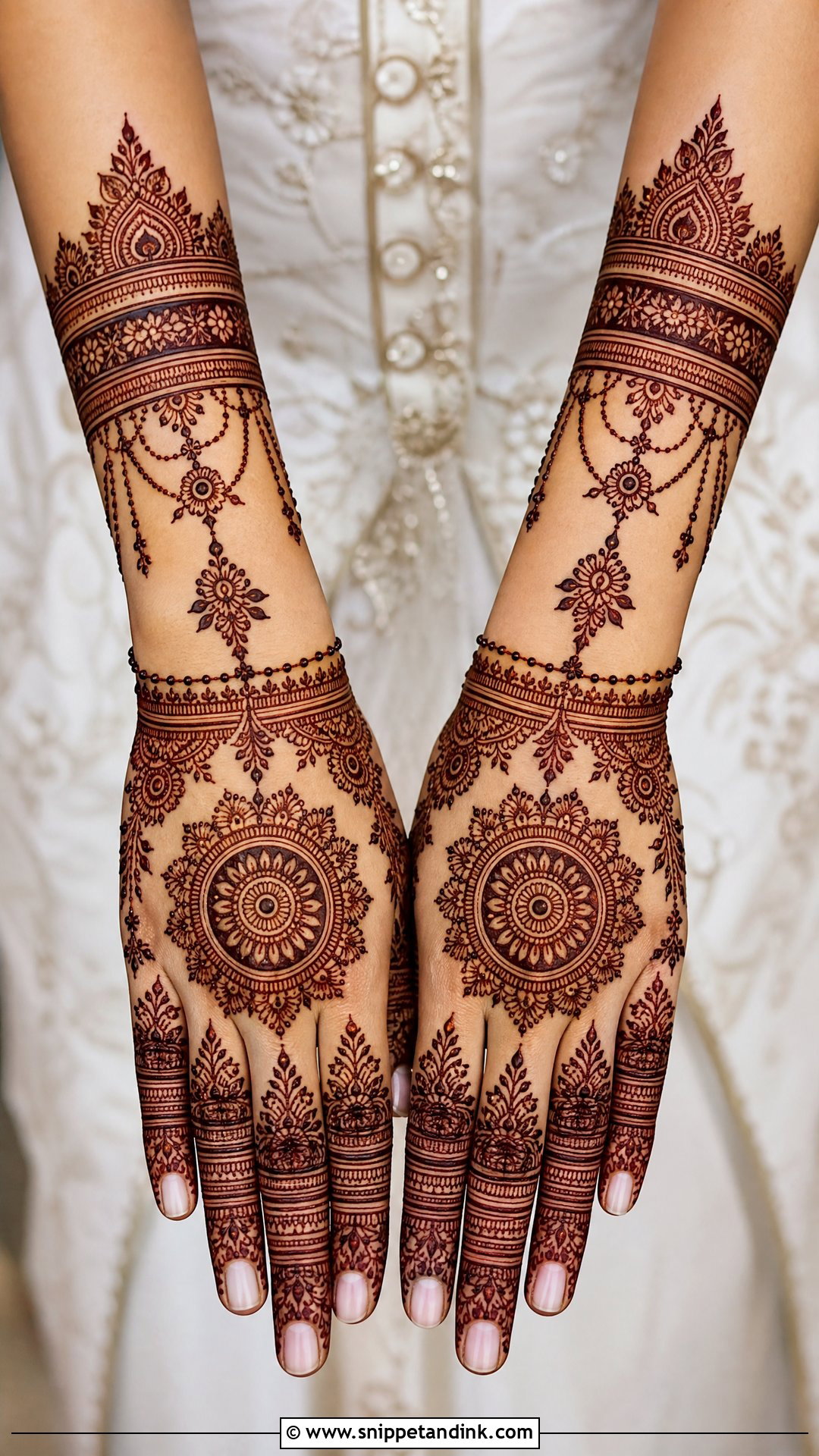
Here the wrist becomes the jewelry: layered cuff bands, chains, dots and small floral charms linked by fine lines to the fingers. I map the bands against your actual bangles or chooda before I start, because a band that sits exactly where the chooda rests will be hidden all day. Keep the gaps between bands even. Uneven spacing is the first thing that makes bracelet work look like one heavy block.
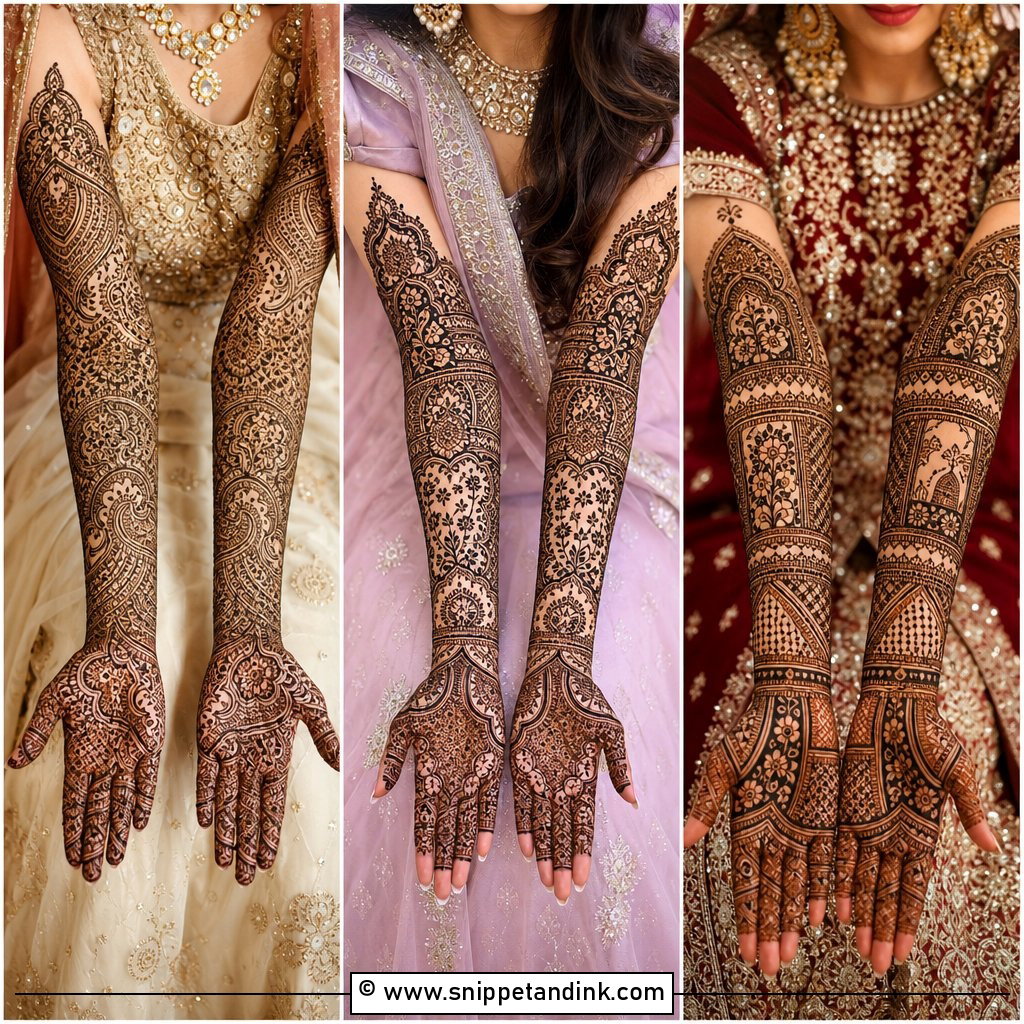


15. Finger Detail Bridal Back Full Hand Mehndi Design
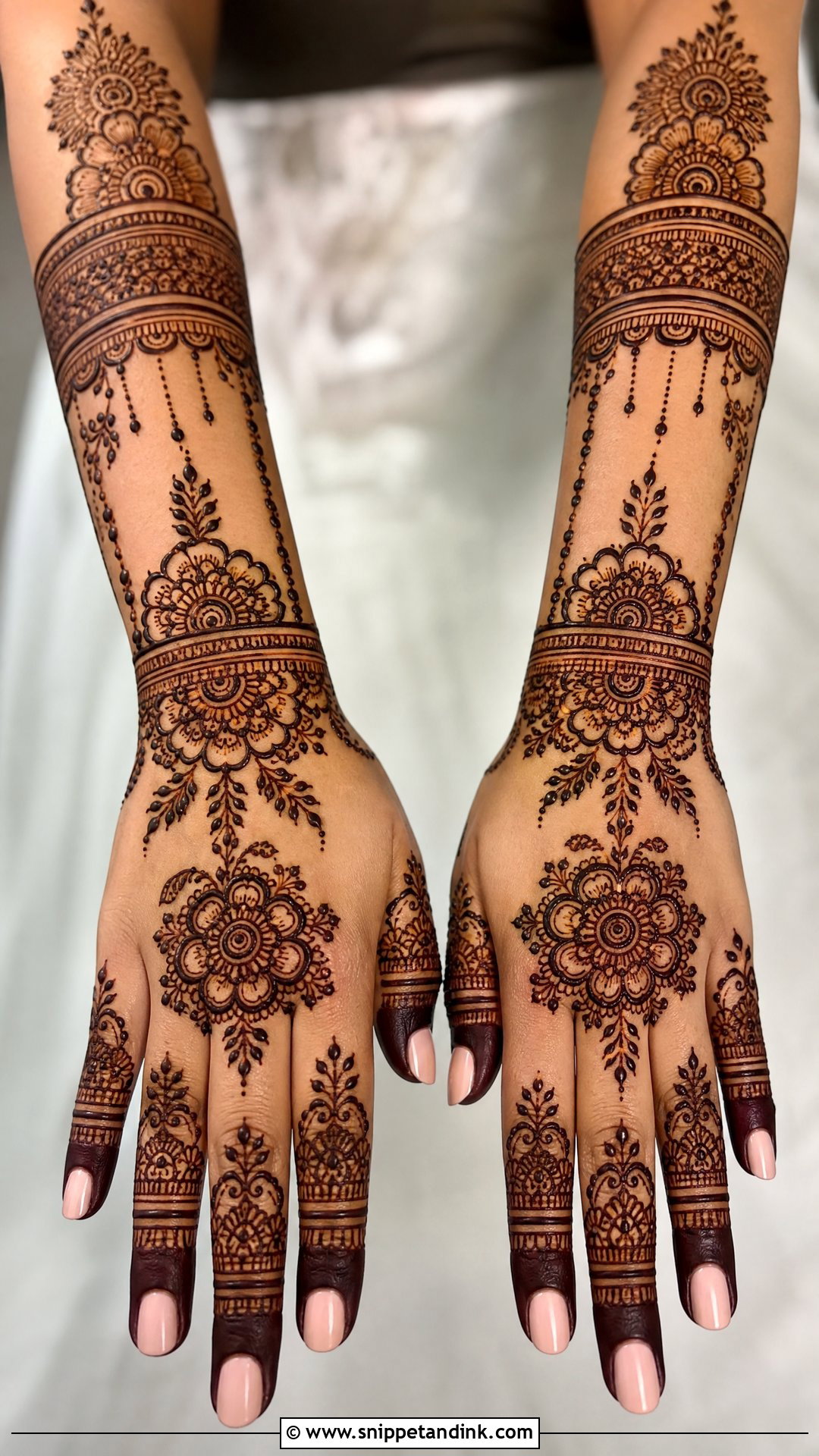
Finger detail matters most in ring shots and chooda close-ups, where the camera is inches from your knuckles. I give each finger its own band, vine or net panel and darken the tips fully, since fingertips take the deepest stain of anywhere on the hand. Varying the fingers slightly reads more modern than seven identical bands. If you’re getting nail art too, book it before mehndi; acetone and buffing near fresh stain can lighten the skin around the nail.
16. Minimal Bridal Back Full Hand Mehndi Design
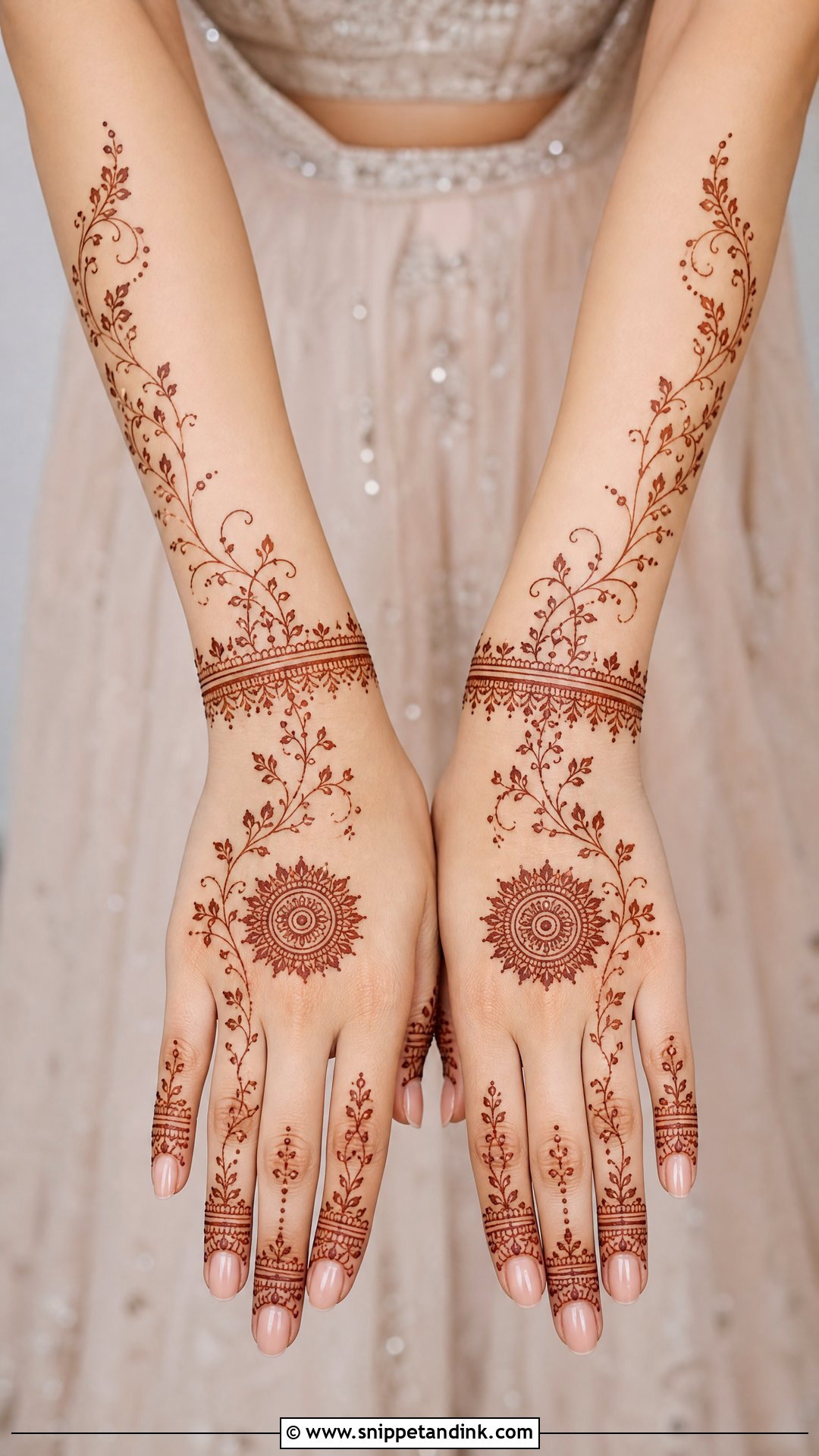
Minimal bridal mehndi still runs from fingertip to forearm, but with slim vines, small flowers and lots of open skin. I suggest it for beach weddings, small ceremonies or simple outfits. The hard part is making it look intentional rather than unfinished. My rule is that every section has to connect to the next with a line or a vine; scattered motifs with no link between them look like the session ran out of time.
17. Heavy Bridal Back Full Hand Mehndi Design
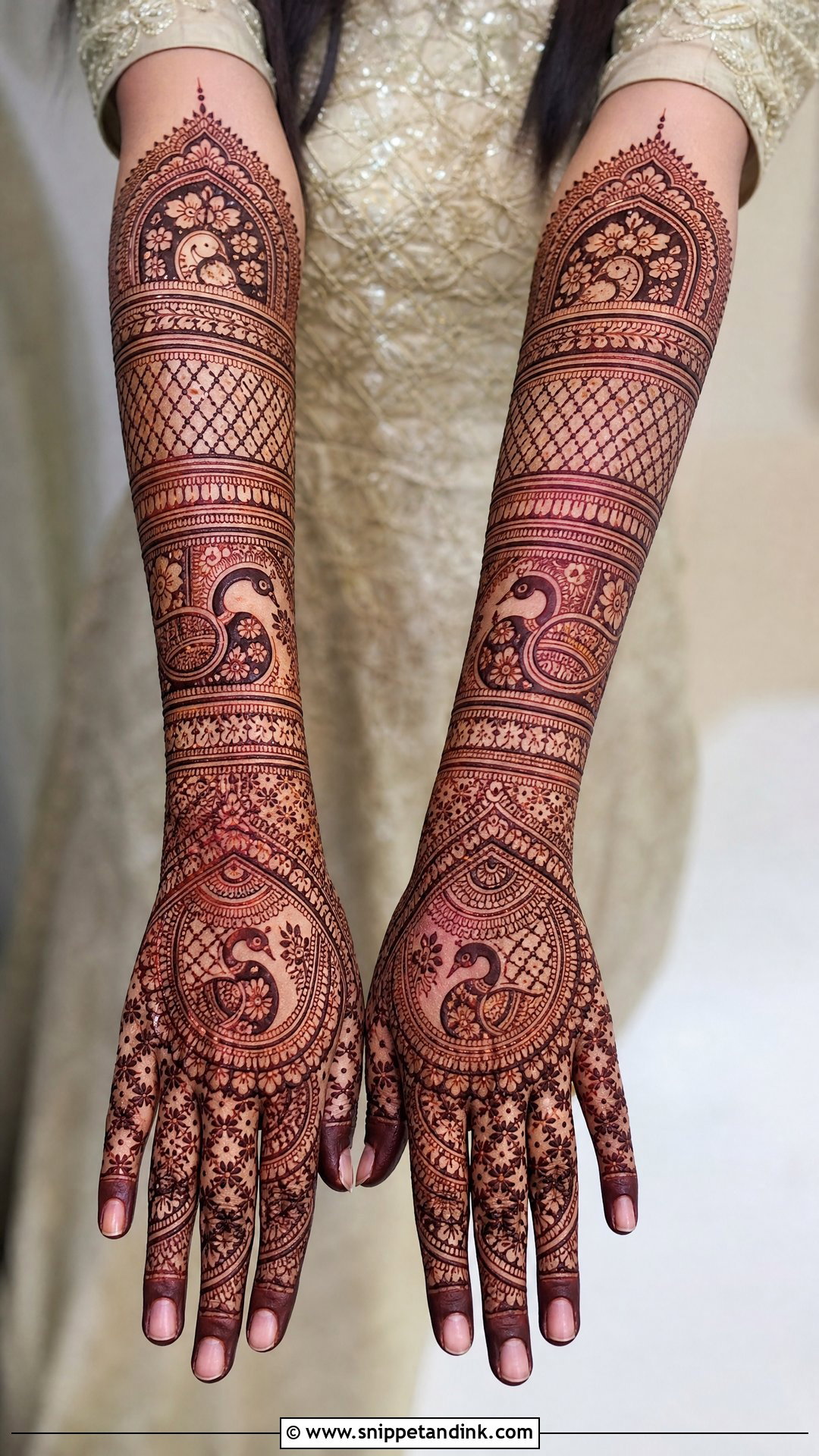
Heavy coverage fills the fingers, back of the hand, wrist and forearm with paisleys, peacocks, mandalas, jaali and fillers. Done well, it has a rich layered texture. Done badly, the main motifs vanish into the filler. I outline the key motifs with a thicker cone line before filling around them, and I’d steer you away from heavy work if your stain usually comes out very dark; very dense patterns can read as a solid patch in daylight photos.
18. Simple Bridal Back Full Hand Mehndi Design
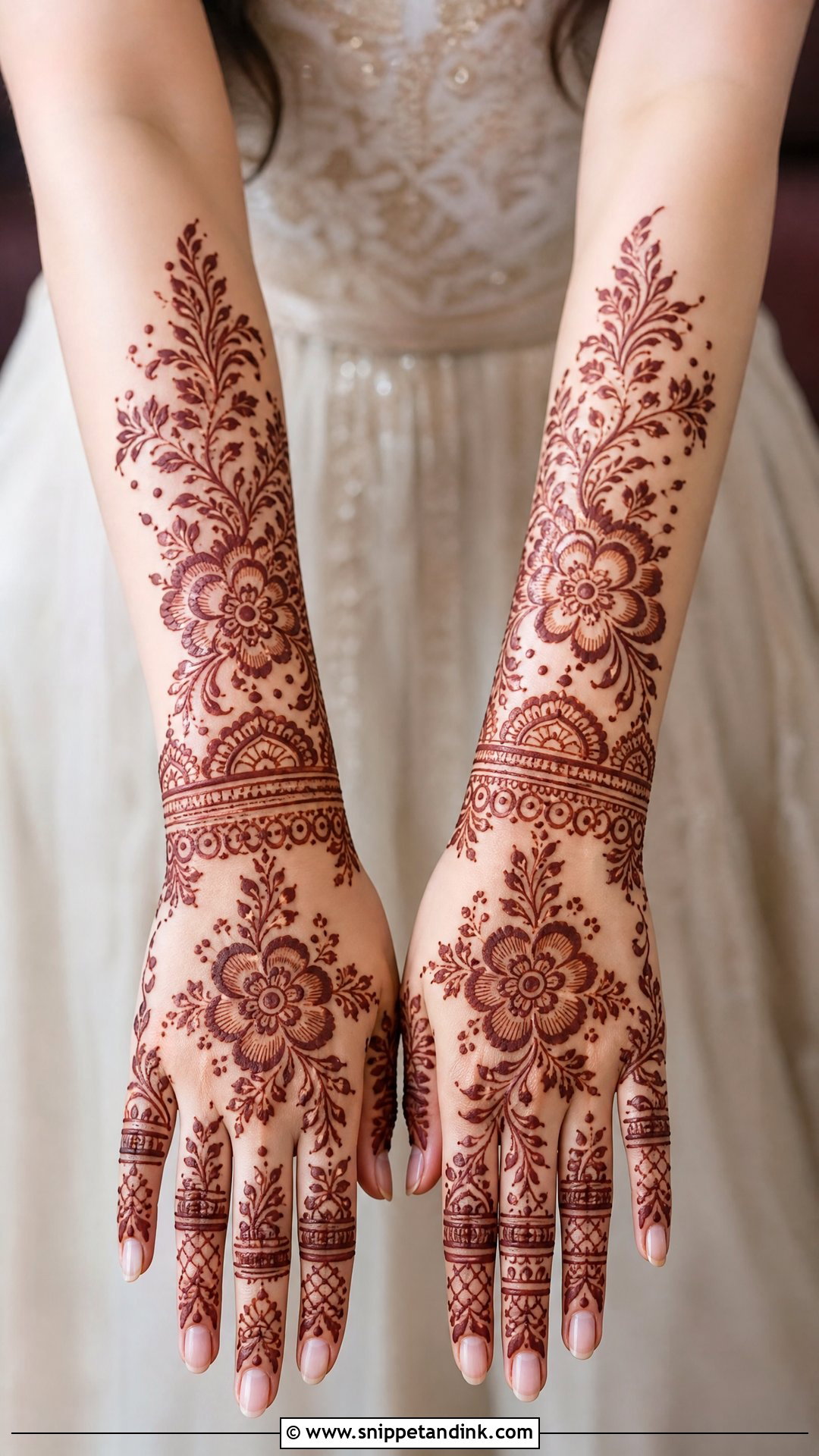
Simple doesn’t mean small. A large central flower, a vine trail, clean finger patterns and a neat wrist extension still cover the whole back of the hand, just with fewer, bigger elements that are easy to read. I recommend this layout for brides with a tight timeline or anyone who gets restless sitting still. A bold floral trail with a few fine accents often looks more finished than a crowded hand drawn in a hurry.
19. Modern Bridal Back Full Hand Mehndi Design
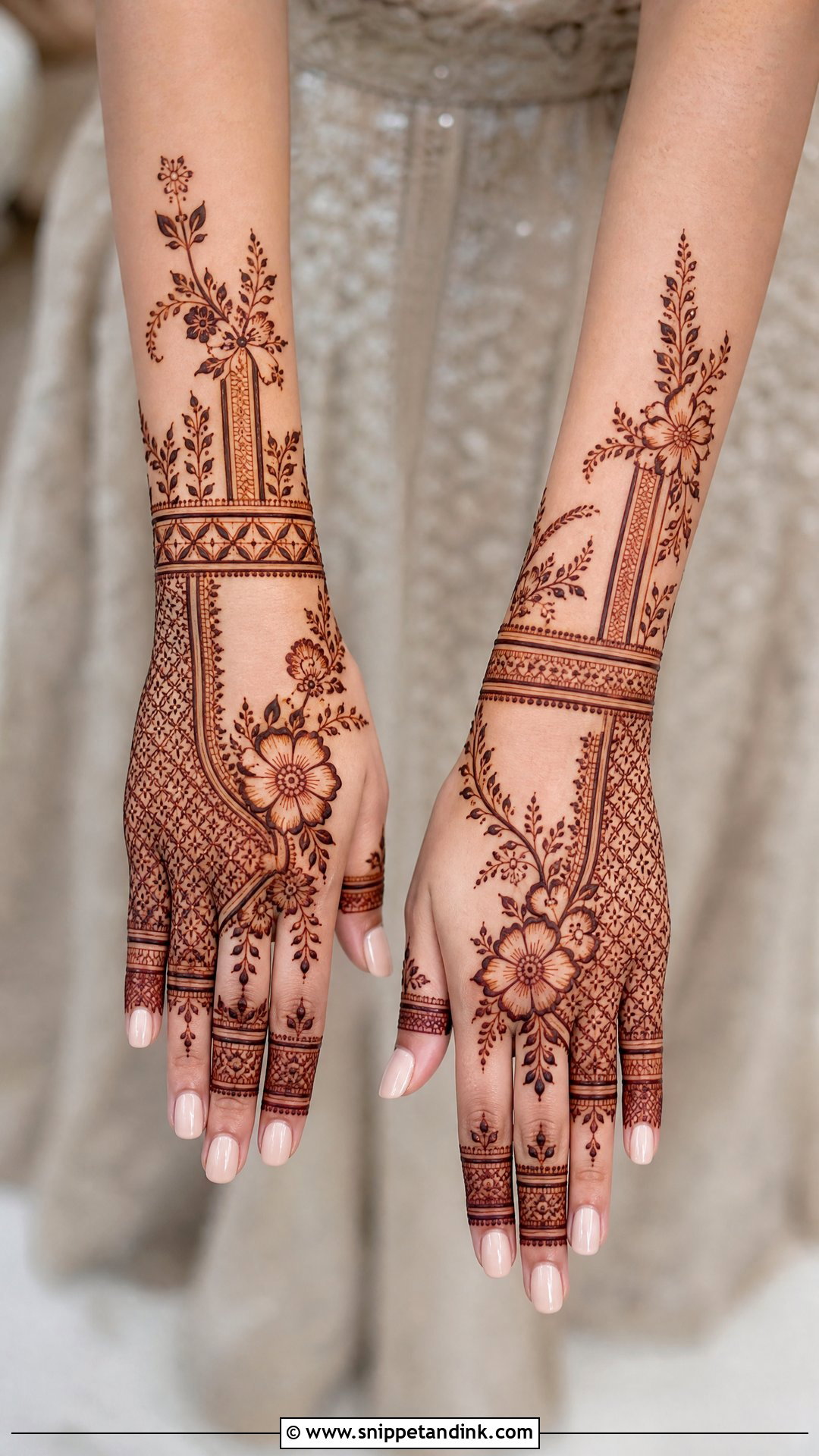
Modern layouts keep traditional motifs but arrange them with more air: negative-space flowers, geometric borders, finger rings, leafy cuffs and trails that don’t mirror each other. They pair well with contemporary lehengas, gowns and fusion outfits. I still insist on one statement motif on the back of the hand and one detailed cuff near the wrist. Without those two anchors, a modern design can look like a guest’s party mehndi rather than a bride’s.

20. Personalized Bridal Back Full Hand Mehndi Design
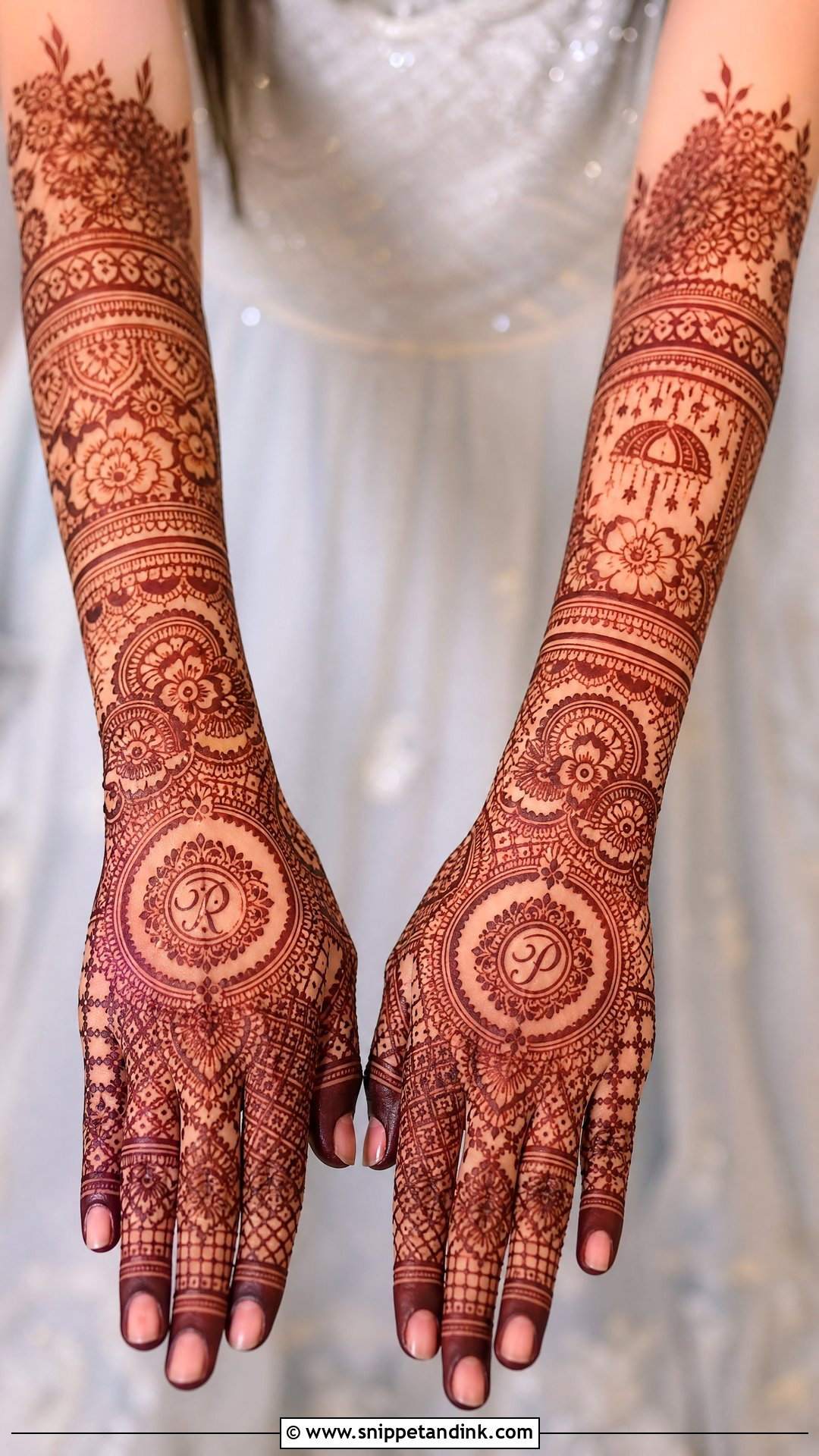
Personal details turn the design into a keepsake: initials, the wedding date, a favourite flower or a symbol from your story. On the back of the hand everything is visible, so I hide these inside existing motifs, a name curled into a paisley or a date running along a wrist band. Send me the exact spelling and date in writing before the session. Mehndi can’t be erased, and a misplaced letter is surprisingly easy when you’re writing small script backwards around a curve.
21. Symmetrical Bridal Back Full Hand Mehndi Design
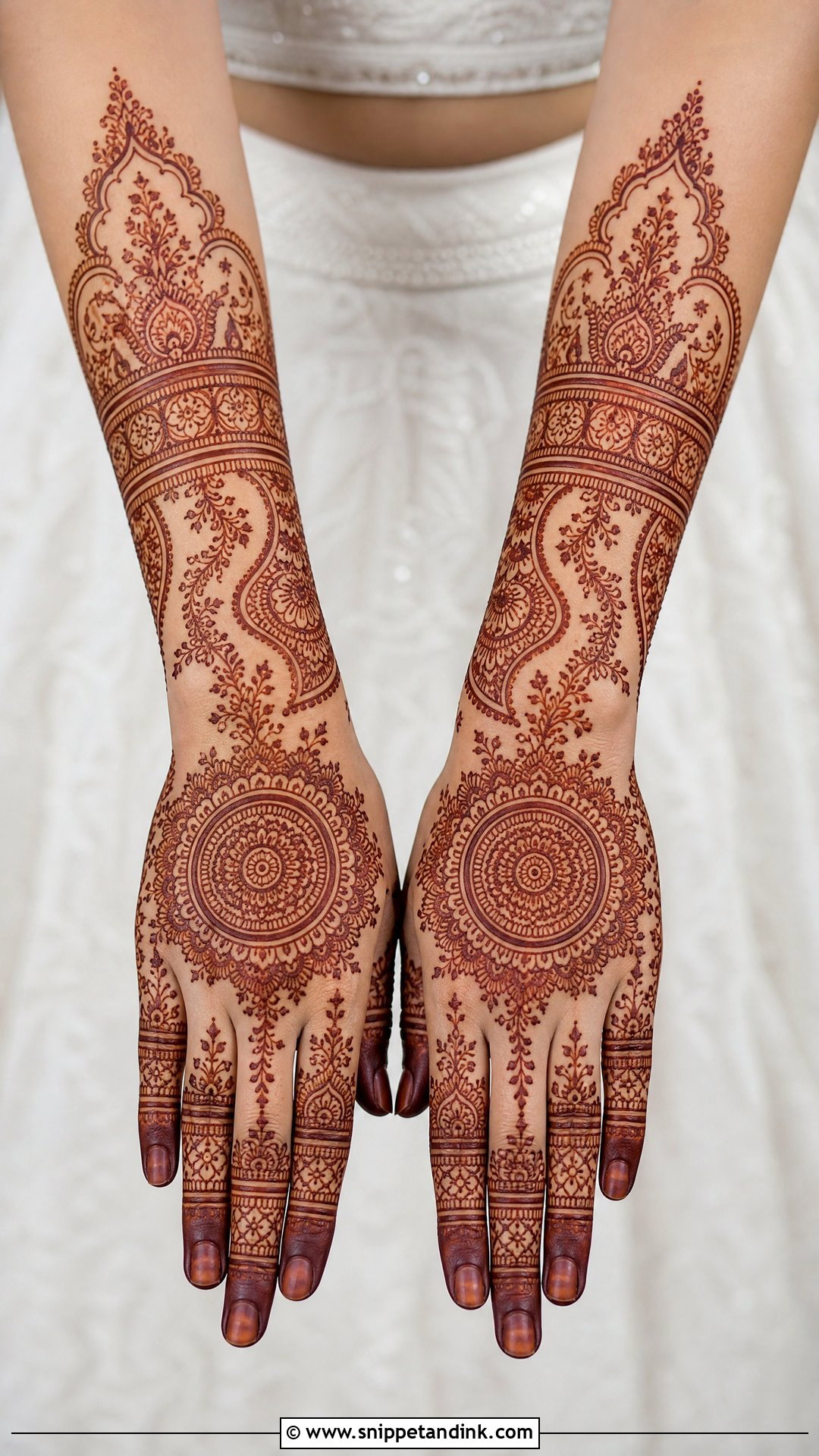
Matching hands photograph cleanly because the eye reads them as a pair: the same mandala, identical finger bands, mirrored wrist cuffs. Symmetry is harder than it looks, though, because no two hands are the same size and most artists are steadier on one side. I mark the main placement points with small dots on both hands first, then build the detail outward, checking the hands side by side every few minutes.
22. Asymmetric Bridal Back Full Hand Mehndi Design
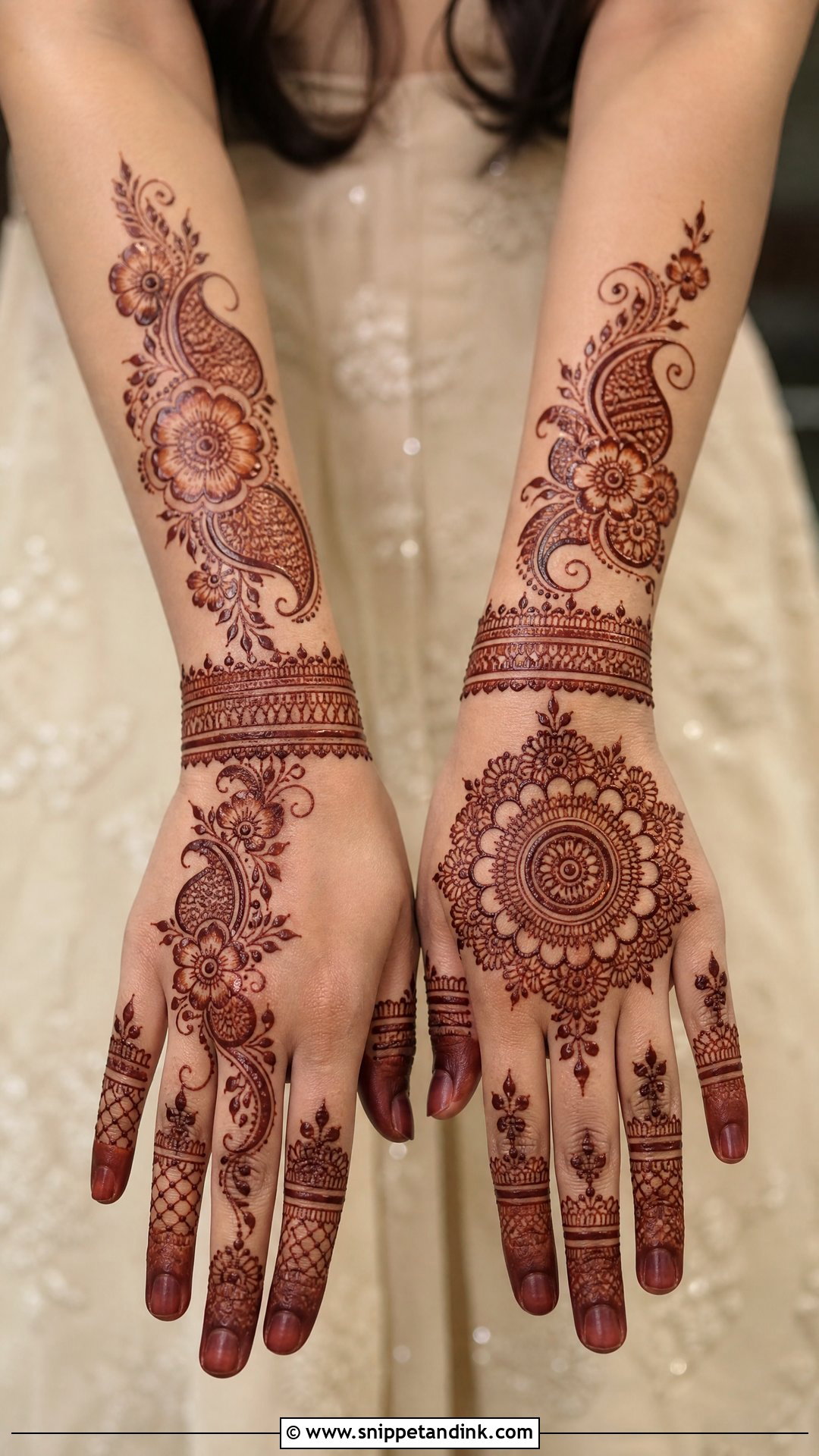
Asymmetric work gives each hand a different but related layout, perhaps a mandala with floral bands on one and a diagonal paisley trail with jaali on the other. The trick is repetition: the same flower, the same wrist border, or the same finger pattern on both, so they still look like a pair when you hold them together. I find this style suits brides who get restless with symmetry and want photos that look less predictable.
23. Bridal Back Full Hand Mehndi With Name
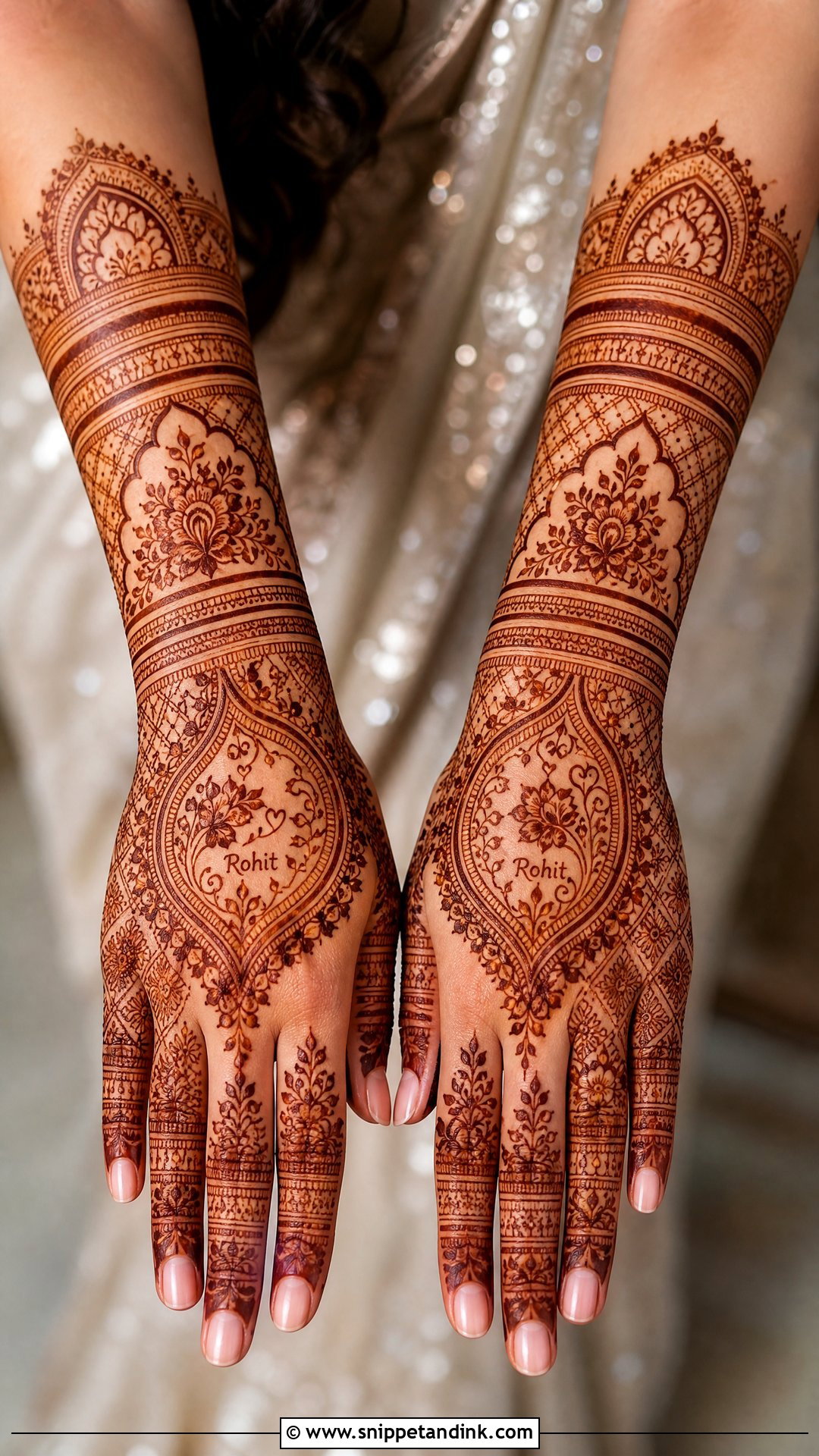
Bridal back full hand mehndi with name is a favourite because of the game that follows: at many weddings the groom has to find his name before the night is over. I hide it in a vine, a mandala ring, a wrist band or inside a paisley. How hidden is up to you. Tell me beforehand whether you want it readable in photos or genuinely tricky to find, because those are two different placements.
24. Bridal Back Full Hand Mehndi With Portrait
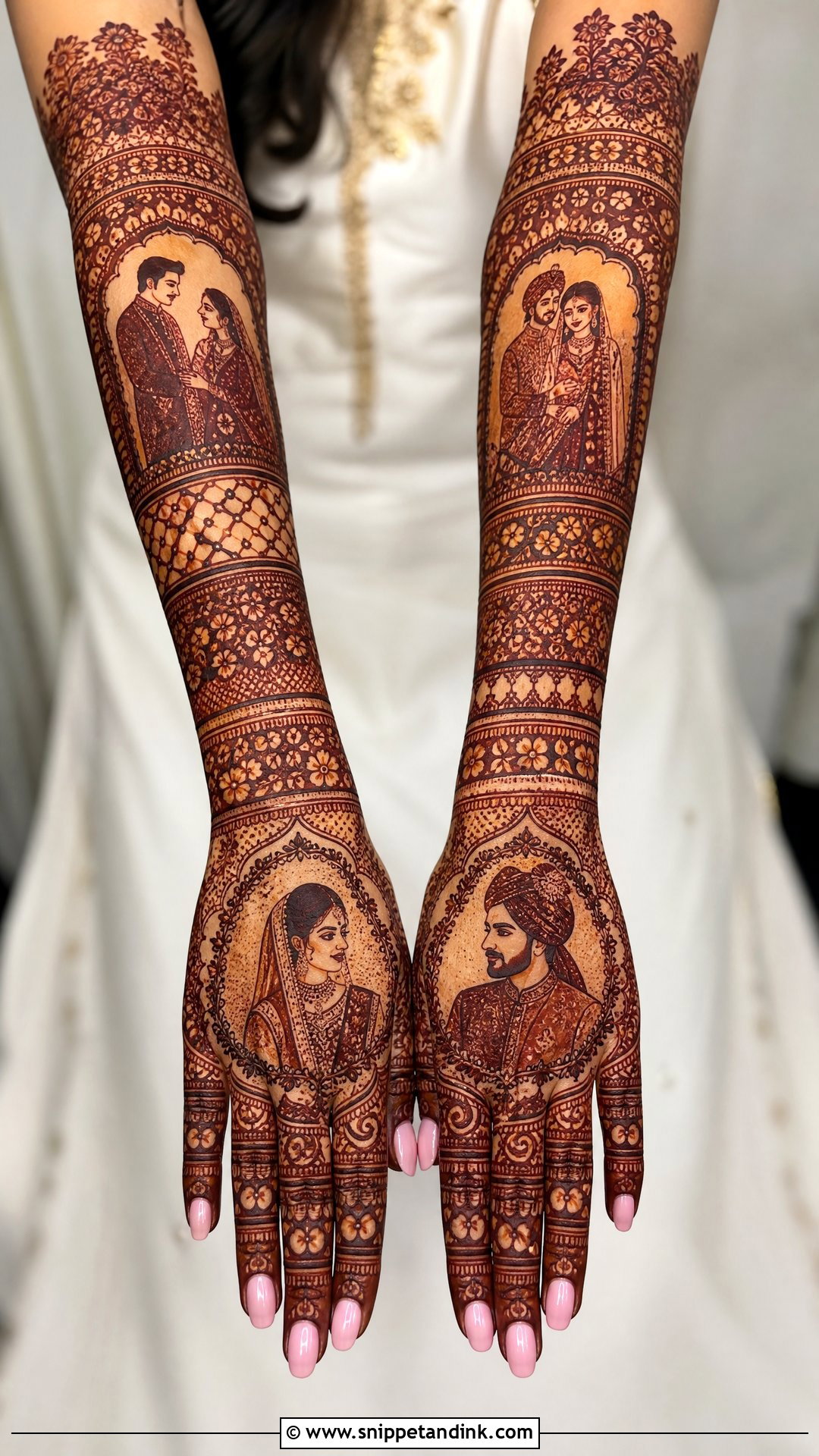
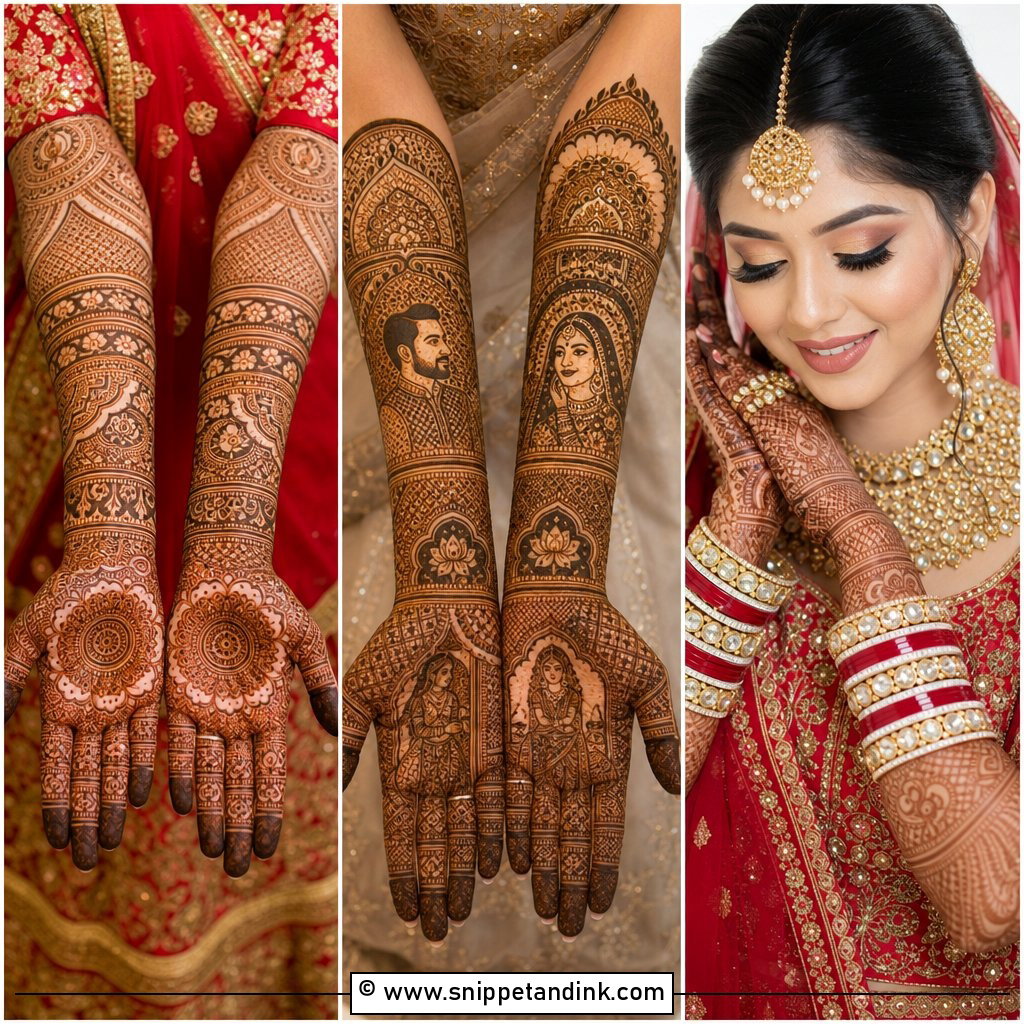
Portrait mehndi, with bride and groom faces, wedding scenes or couple silhouettes, is the most demanding work I do. Faces need a fine cone tip, a large flat surface and time, so they go on the forearm or the widest part of the back of the hand, with flowers, paisleys and jaali around them. Ask any artist for close-up photos of portraits they’ve applied before you commit. A face that’s slightly off is far more noticeable than a crooked petal.

25. Bridal Back Full Hand Mehndi For Dark Stain
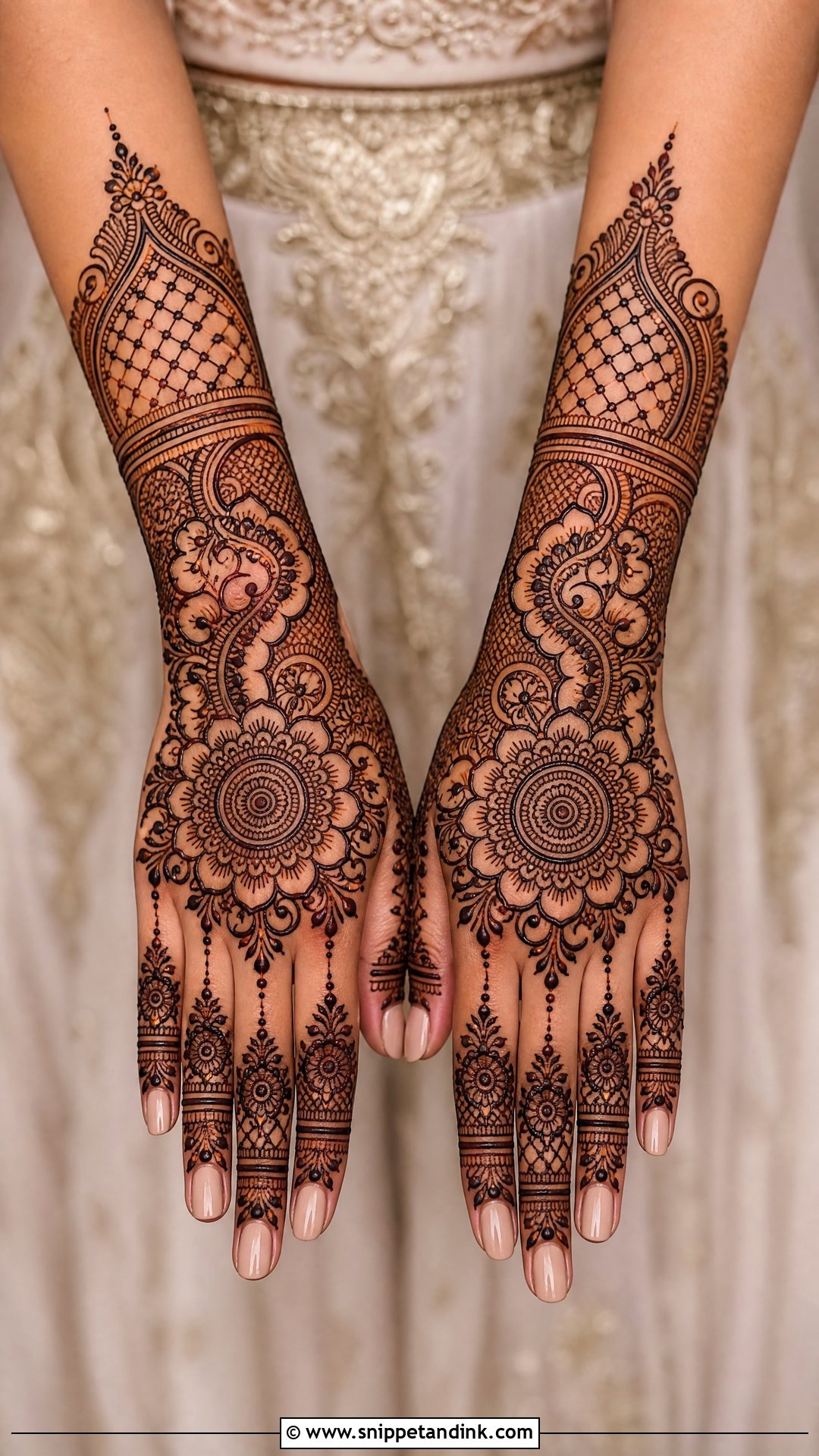
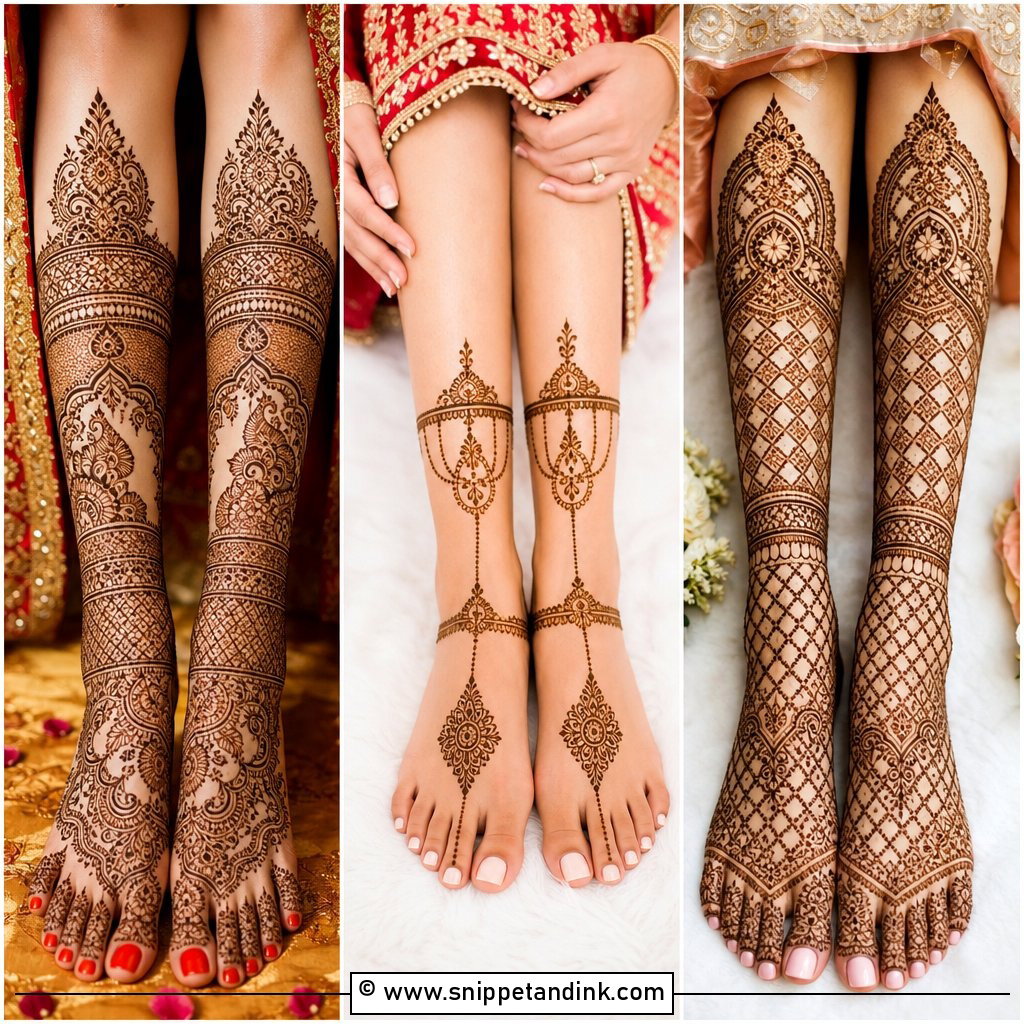
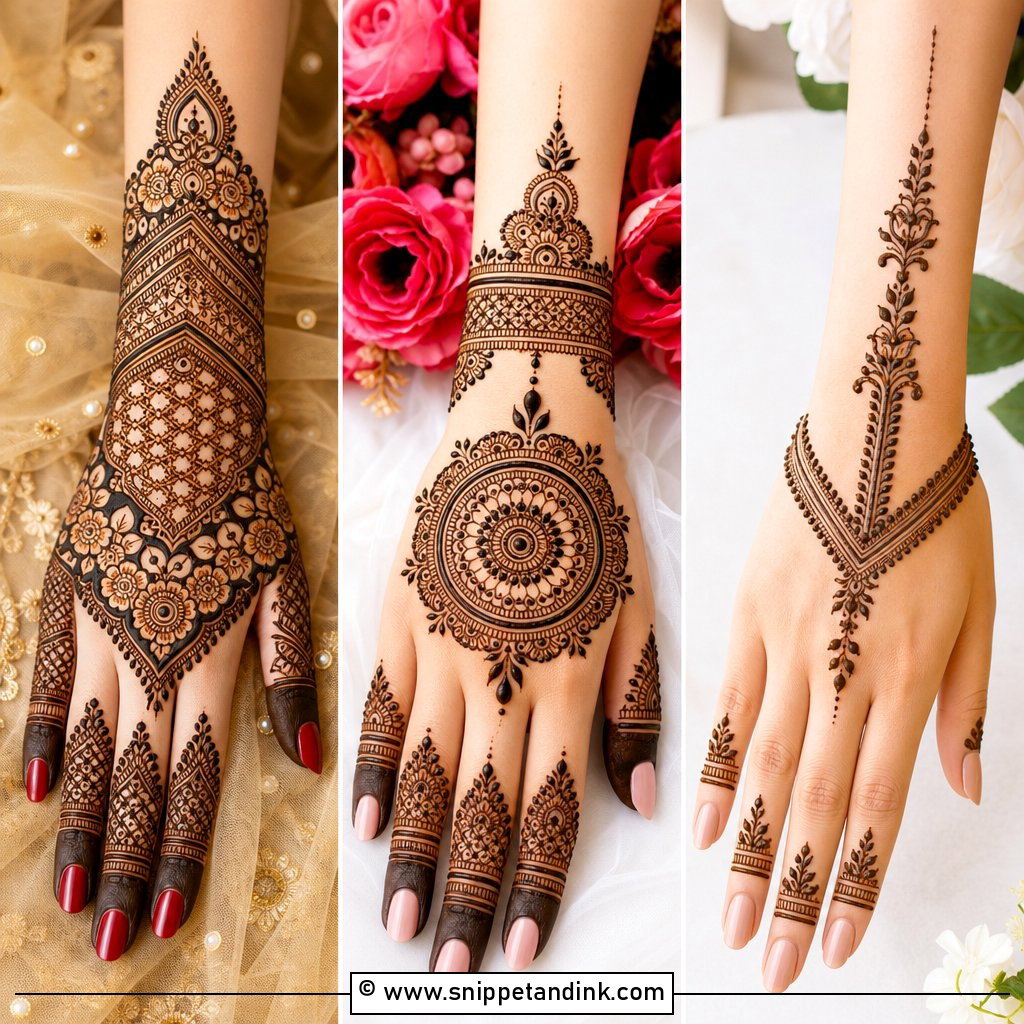
If your skin usually takes a deep stain, plan the design around it: thicker borders, clean spacing and motifs with breathing room, because the finest lines blur as the colour deepens. Natural henna is non-negotiable here. Any paste that promises a black result in an hour may contain PPD, which can cause serious skin reactions, so ask your artist what’s in the cone. Then let it dry fully, keep it on for several hours and follow the aftercare below.
From Orange Paste to Deep Maroon by the Pheras
When the dried paste comes off, the stain underneath is bright orange. That surprises a lot of brides, and it’s exactly how it should look. Henna keeps oxidising for the next day or two, moving through red to a deep brown or maroon, and it usually reaches its darkest around 48 hours after removal. That’s why I schedule bridal mehndi one to two days before the wedding, not the morning of.
My aftercare routine for the first day
- Let the paste dry until it cracks slightly, then dab on a little lemon and sugar mix so it stays stuck to the skin.
- Keep it on for at least six to eight hours. Overnight is better, wrapped loosely in tissue or a cotton glove.
- Scrape it off with a blunt edge or your fingernail. Don’t wash it off.
- Keep water away for the next 12 to 24 hours, and use a little balm or oil before a shower after that.
- Stay warm. Cold hands slow the stain, which is one reason winter mehndi sometimes comes out lighter.
A few things fade it faster: hand sanitiser, chlorine, dish soap and heavy scrubbing. If you’re having a manicure, hand massage or waxing before the wedding, do it before the mehndi session. On the day itself, a thin layer of oil makes the stain look richer in photos without leaving a shine on the camera.
If the stain still comes out lighter than you hoped, don’t panic or try to darken it with chemicals. Warm hands, patience and those last 24 hours of oxidising usually close most of the gap.
Which Hand Do You Want in the Ring Shot?
A bridal back hand is less about filling space than about how it sits with your outfit, your bangles and the moments when your hands are in front of a camera. Dense Indian work, Arabic flow, Moroccan geometry and open modern layouts all have a place; what matters is that the design reads clearly from fingertip to forearm once the stain peaks. If you lean classic, mandalas, paisleys, lotus and peacocks are safe ground. If you want something fresher, open spacing, bracelet bands or personalized details give the hand its own character. Save the two or three designs above that you keep coming back to and bring them to your trial.
You'll Like These Ideas:












Leave a Reply