
Half coverage is what I end up drawing for most guests, sisters and busy hosts, and plenty of brides at smaller functions too. It takes a fraction of the time of a full hand, dries before the food is served, and leaves room for rings and bangles. The skill is in deciding where the design stops. In the designs below, one part of the hand carries the work and the rest stays bare on purpose, whether that’s the palm, the back hand, the wrist or just the fingers. They cover Arabic, Indian, Indo-Arabic, Moroccan and minimal styles for weddings, Eid, Diwali, Karwa Chauth and engagements.
Drawing the Line Where the Design Stops
With half coverage, the edge of the design matters as much as the motifs. Before I pick up the cone, I look at the hand and decide where the work ends. A ragged or random stop looks unfinished; a planned one looks deliberate.
- Palm or back: palms stain darkest, the back reads like jewelry. Decide this first.
- Diagonal edge: runs wrist to index or ring finger and lengthens shorter hands.
- Horizontal edge: a border across the palm or wrist looks traditional and tidy.
- Finger edge: fingers fully worked, hand left bare, for a modern look.
- Bracelet edge: a cuff at the wrist with small trails climbing onto the hand.
I also look at what you’ll wear. Heavy bangles rub the wrist stain and make it fade faster, so I keep wrist cuffs a bit bolder for anyone wearing stacks. If you plan to wear a large ring, I leave clear skin around that finger so the ring stays the focus.
1. Simple Half Hand Mehndi Design
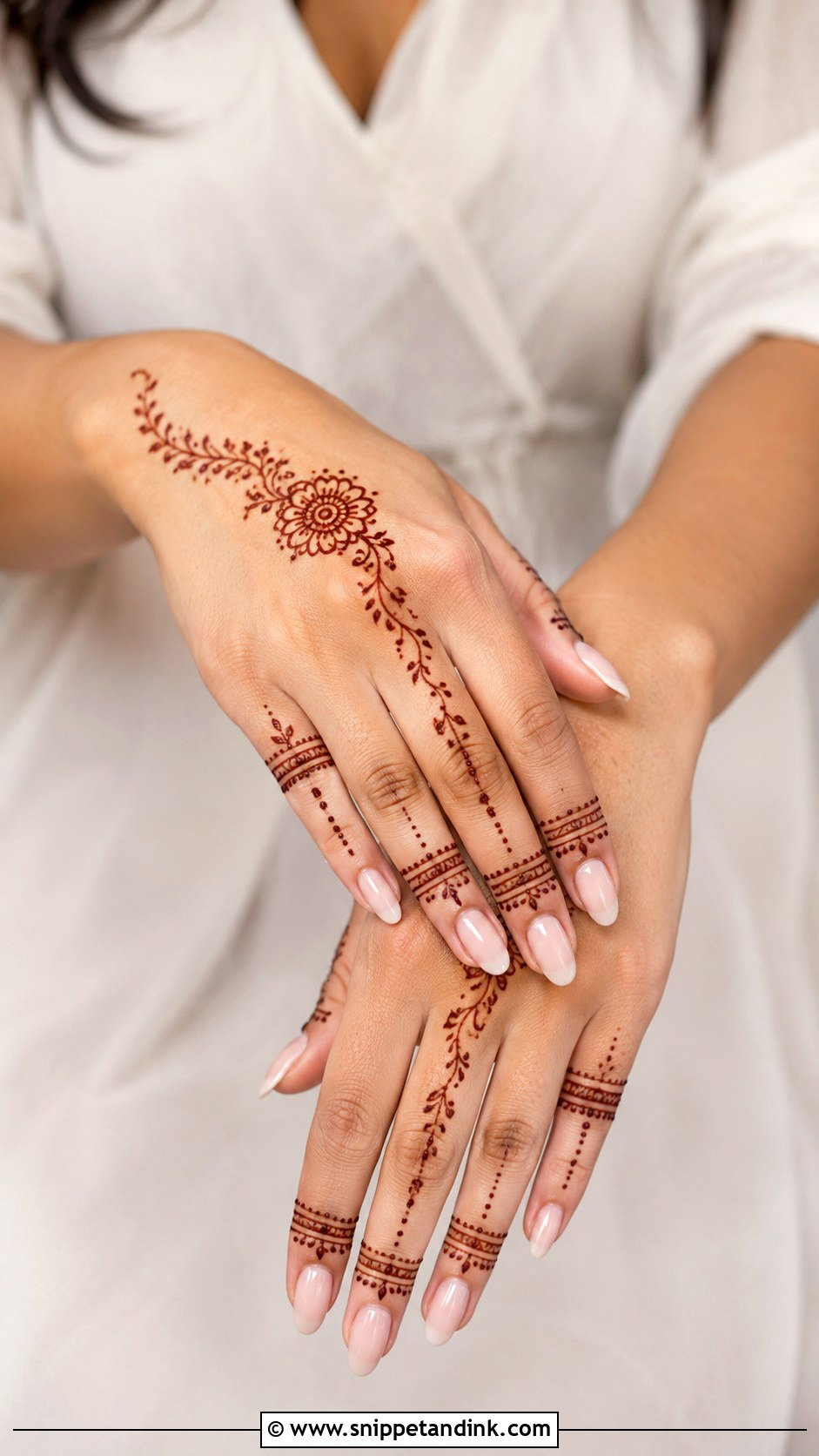
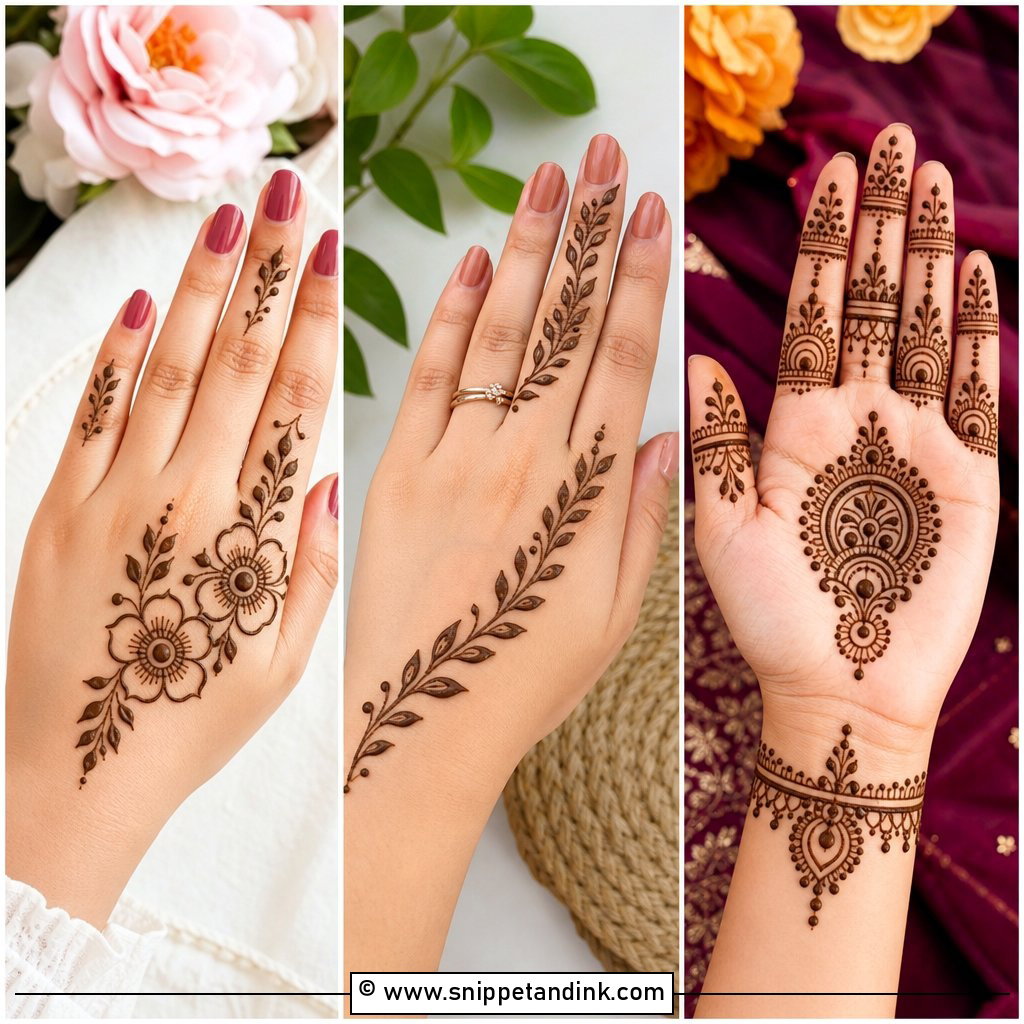
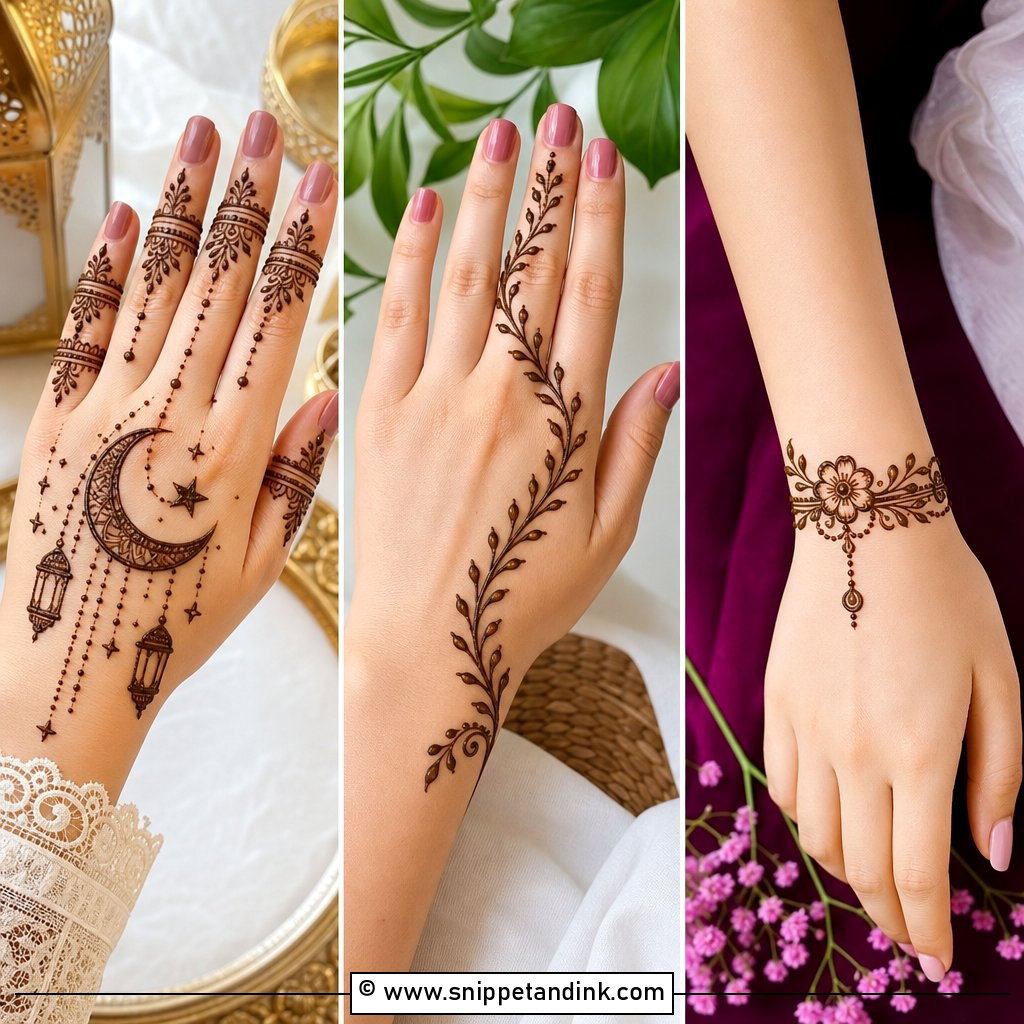
When someone sits down and says they want something simple, this is usually where I start. One small floral center, a couple of leafy trails, dotted lines and light finger work, covering either the lower palm and wrist or the fingers and upper palm. What makes it look finished rather than unfinished is that the empty skin is planned. I keep motifs medium-sized, because tiny shapes in a simple design tend to blur together as the stain darkens.
2. Arabic Half Hand Mehndi Design
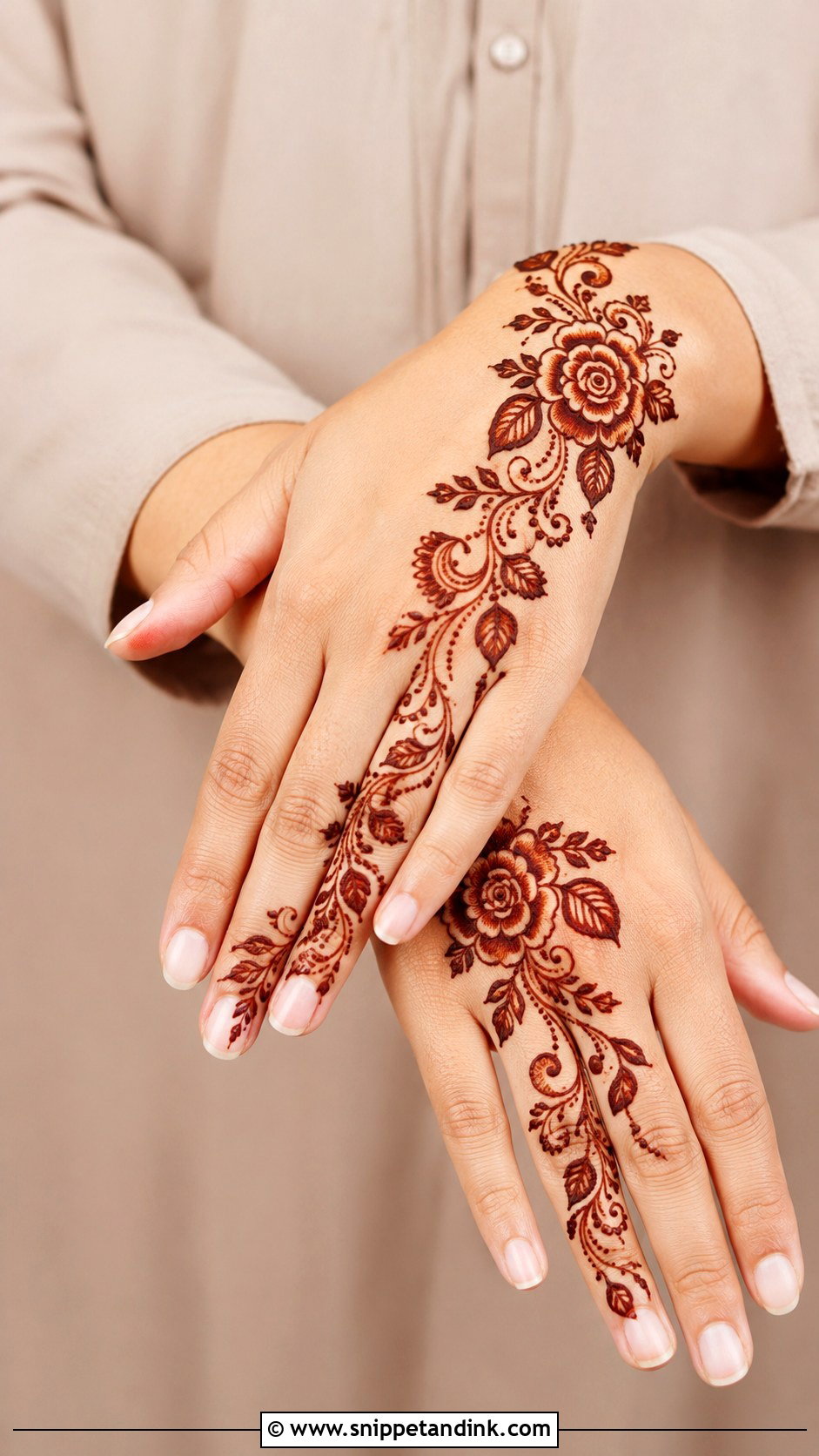
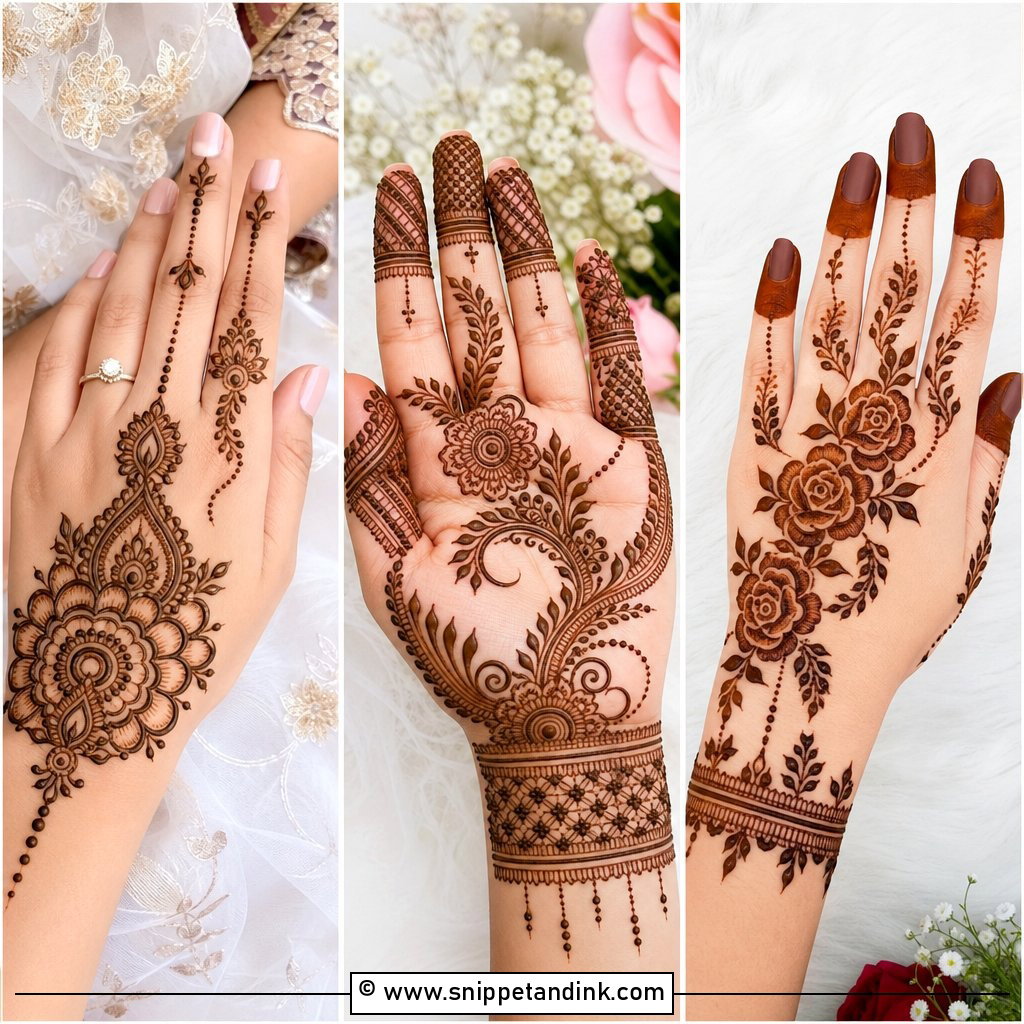
Arabic work is built on bold flowers, flowing vines and a lot of open skin, and it’s quick, which is why I lean on it at busy Eid and wedding functions. The trail usually runs diagonally from the wrist toward one finger, following the natural line of the back hand. Roses, lotus petals, shaded leaves and spiral vines fill it out. The thicker outlines also stain more visibly than fine Indian lines, so it reads clearly from across a room.
3. Front Half Hand Mehndi Design
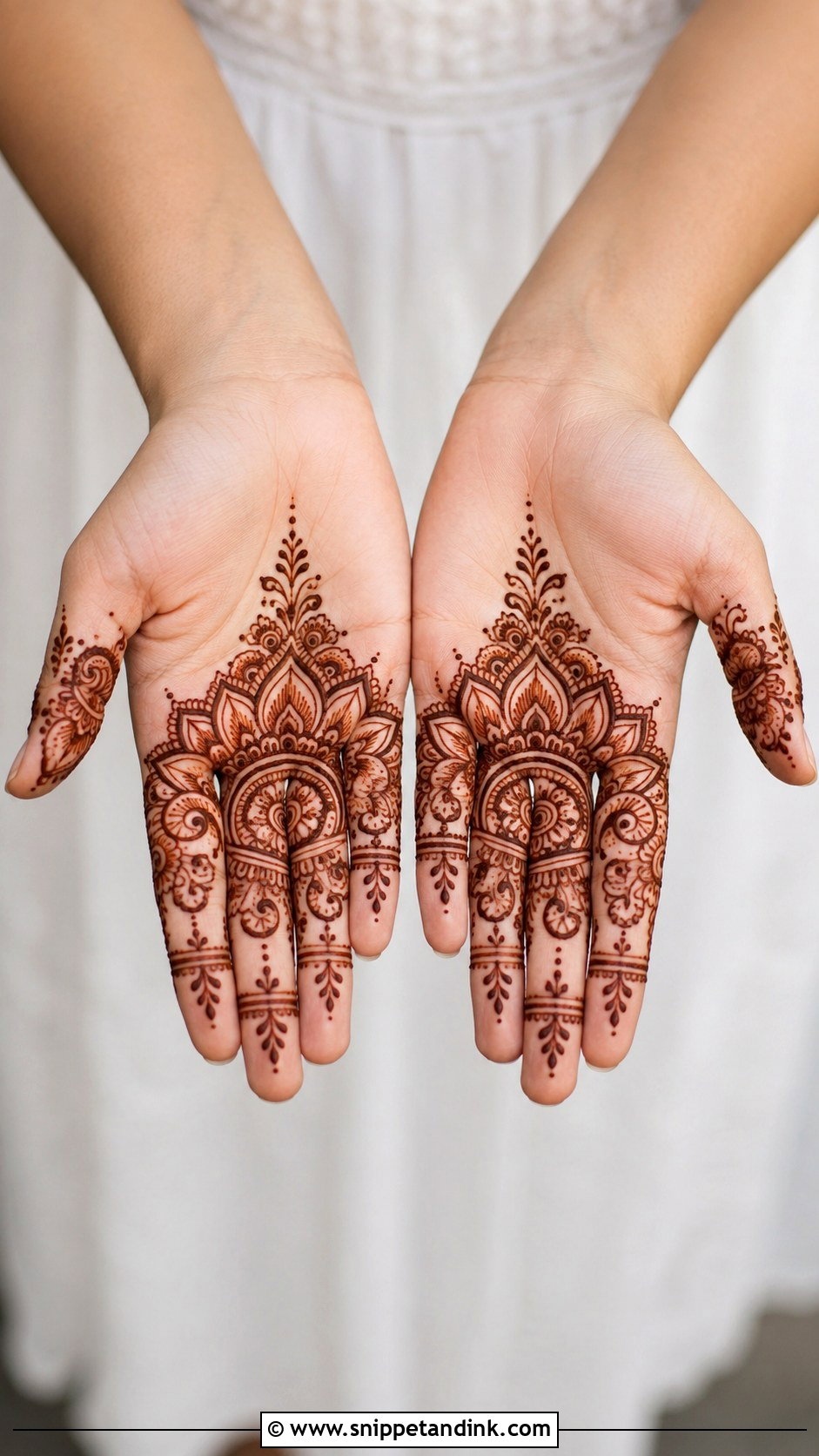
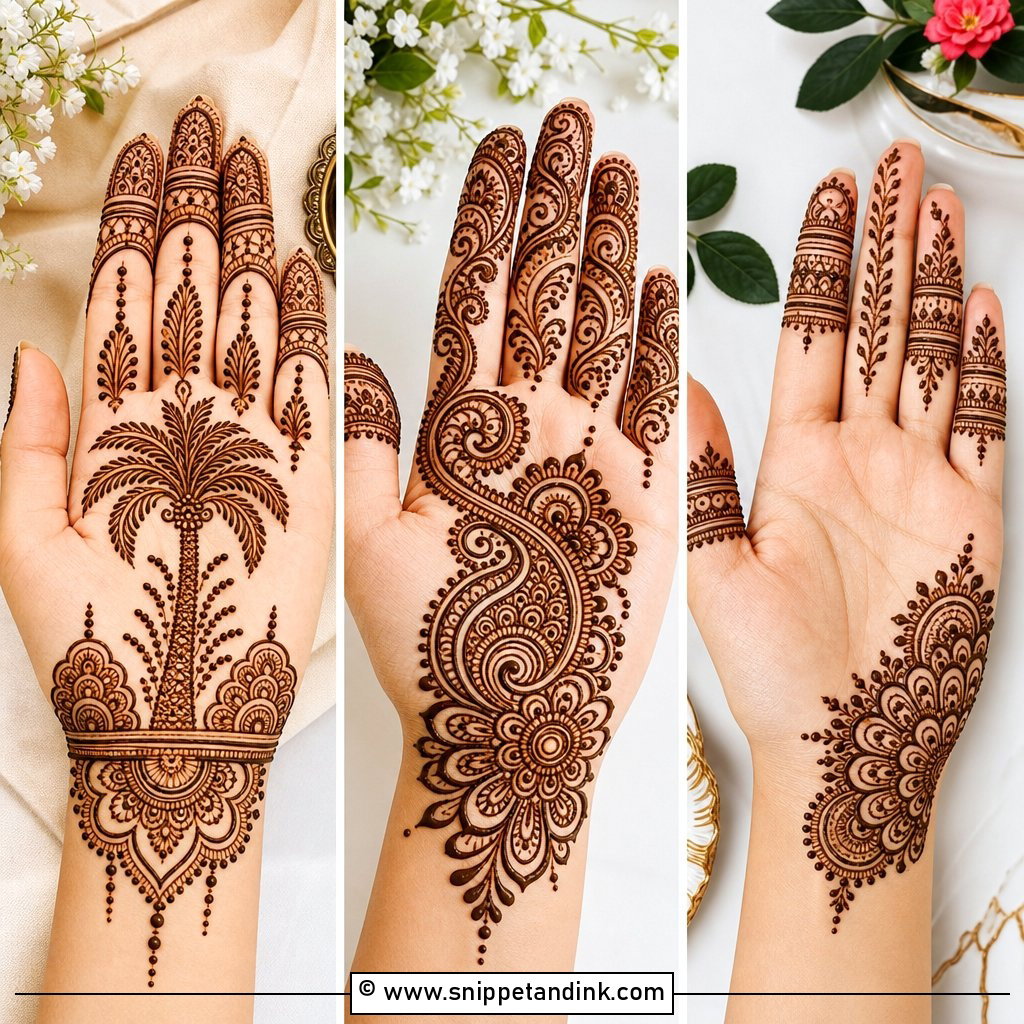
Palms take the darkest stain on the body because the skin there is thicker, so a front design gives you the richest color for the least coverage. I usually put a mandala, lotus or paisley cluster on the lower palm and let it run a little toward the wrist, keeping the fingers lighter. It’s traditional-looking but fast. One honest drawback: you can’t use your palm for an hour or two while it dries, so I’d do it after you’ve finished getting dressed.
4. Back Half Hand Mehndi Design
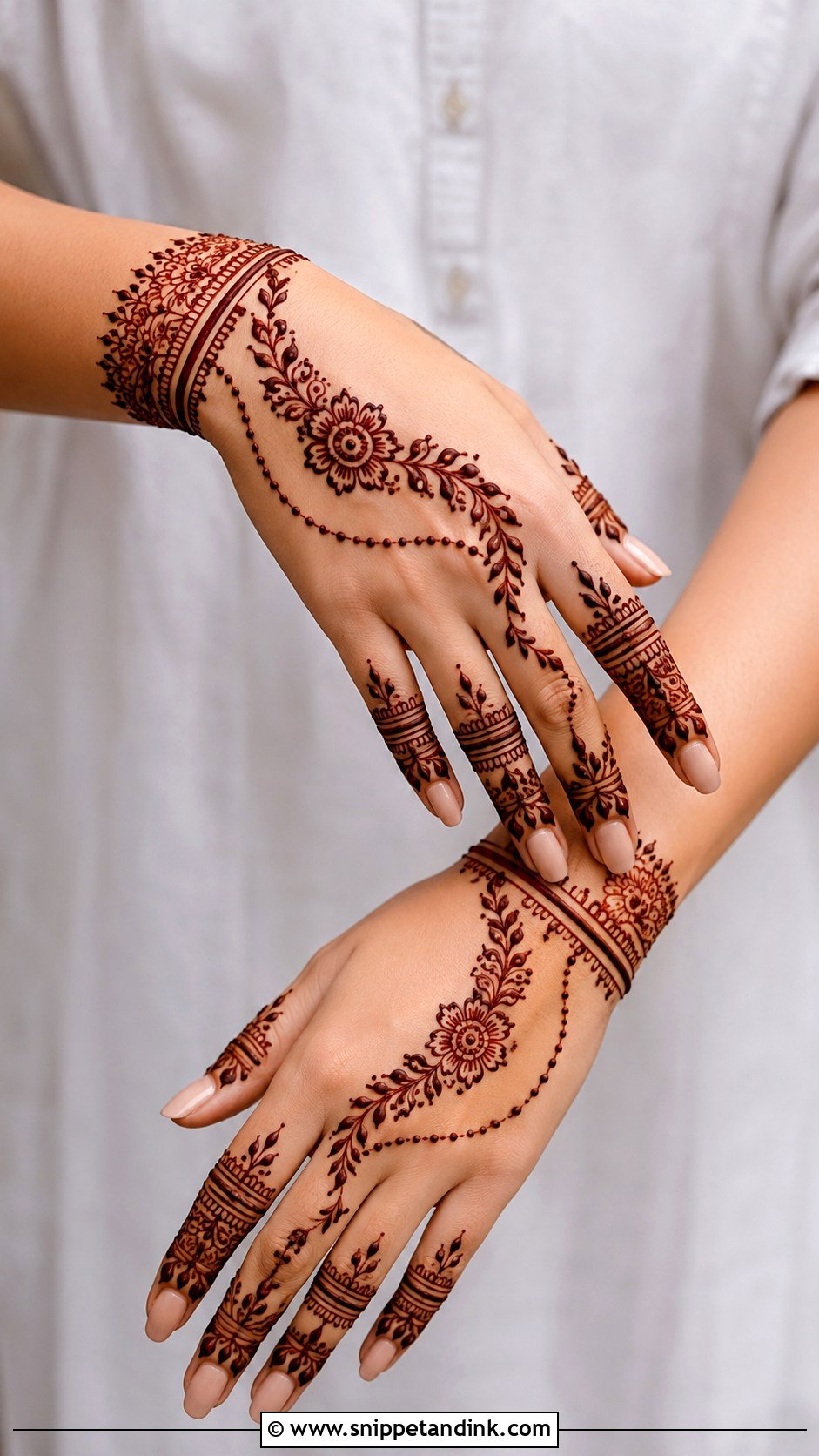
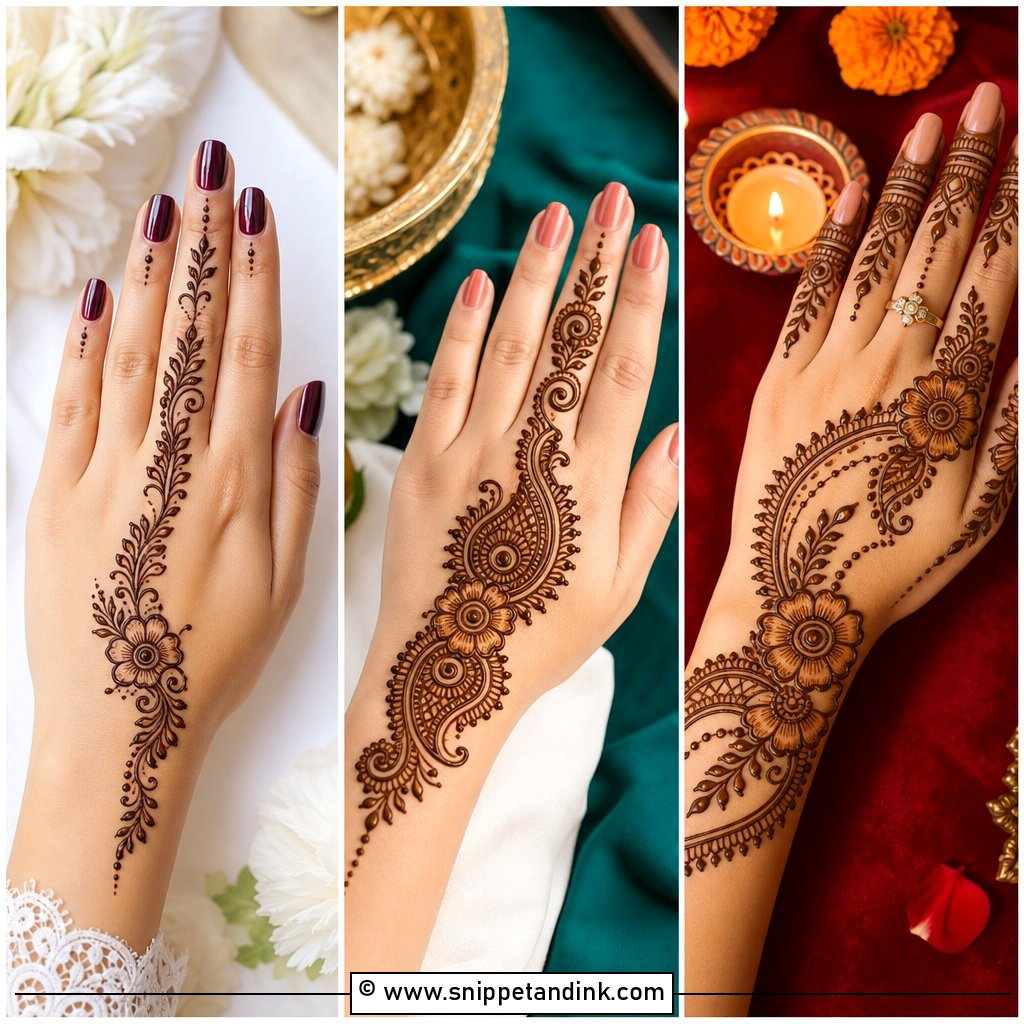
On the back of the hand, half coverage starts to look like jewelry. I decorate the fingers, knuckles and one side of the hand and leave the other side clear, often adding a diagonal vine, a bracelet band or a ring-chain. It doesn’t hide rings, bangles or nail art, which is why it’s my default for engagement parties. Back-hand skin stains lighter than the palm, so I’d use clean, slightly bolder outlines here.
5. Bridal Half Hand Mehndi Design
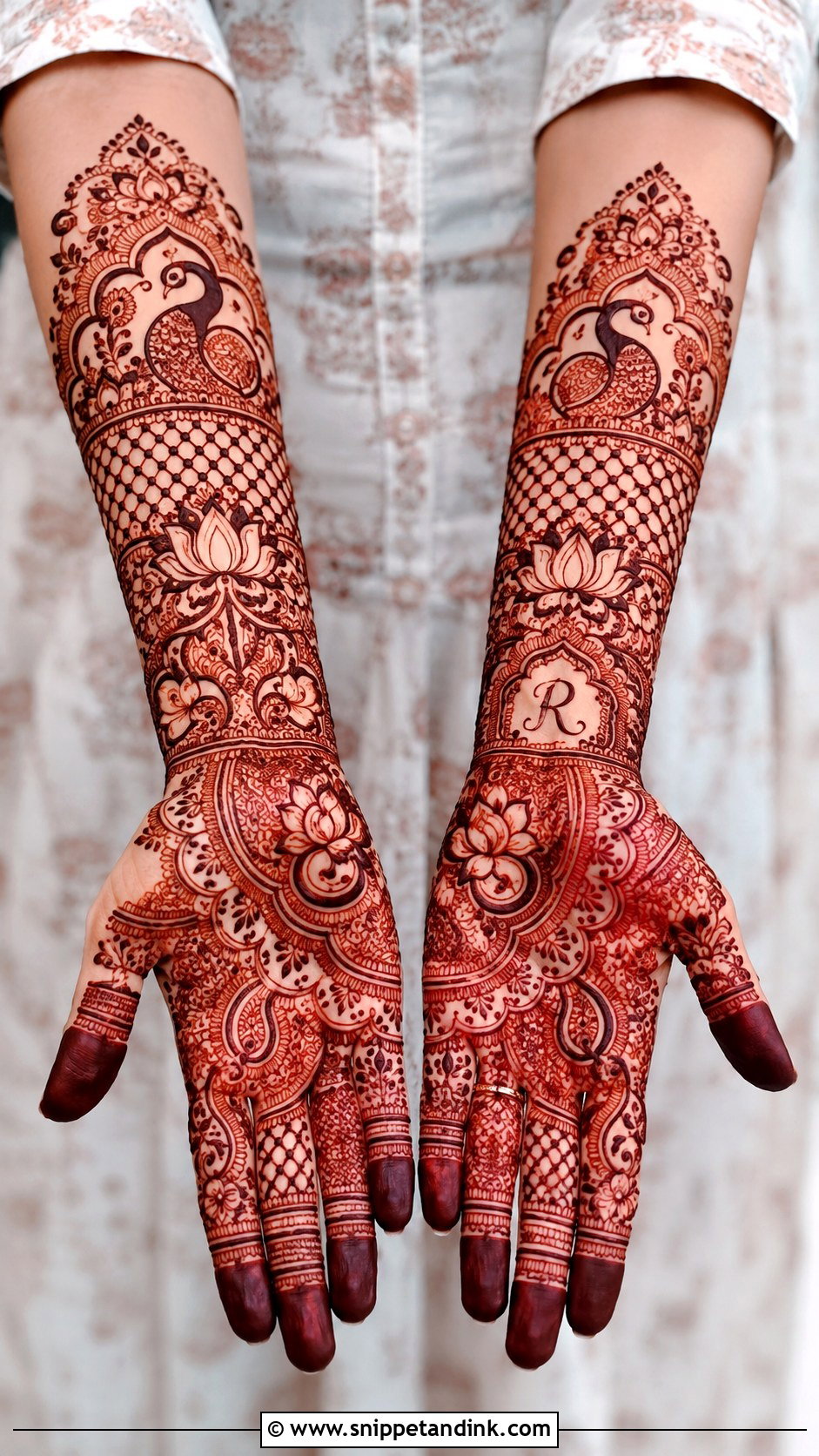
For a bride who doesn’t want henna up to the elbows, half coverage can still feel bridal if the motifs carry weight. Paisleys, lotus flowers, peacocks, jaali and tiny leaves all belong here, and initials can be hidden inside a larger motif. I’ll often start at the wrist and work toward the palm, then finish the fingers fully so the hand doesn’t look half-done in ring shots. Fine fill inside the big shapes is what makes it read as bridal rather than guest.
6. Modern Half Hand Mehndi Design
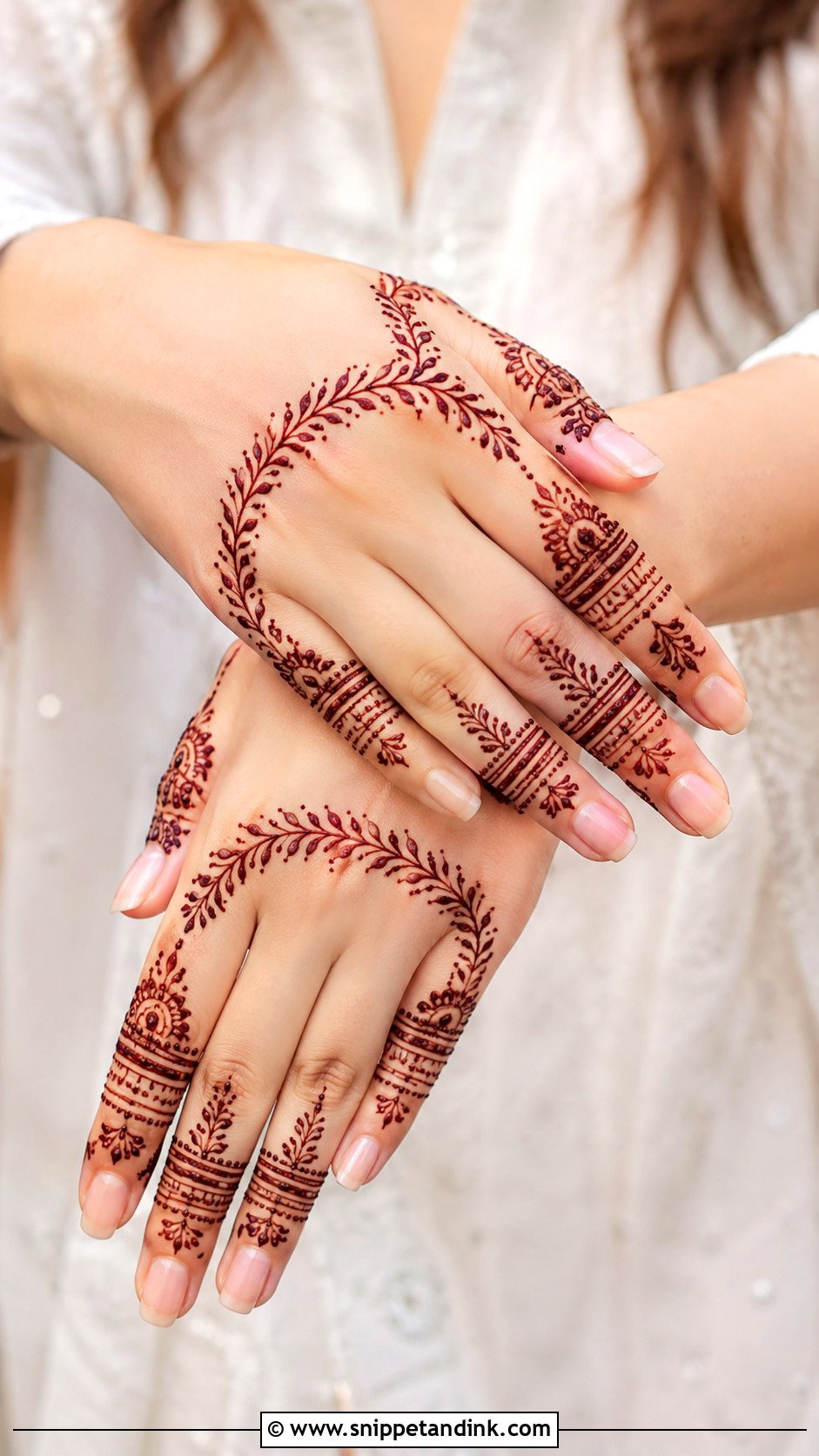
Modern layouts depend on spacing more than motifs. Instead of filling every gap, I commit to one strong shape, such as a leafy arc, a geometric border or a side trail, and leave clean skin around it. It sits well with fusion outfits and simple jewelry. The common mistake is adding a little extra here and there until the spacing is gone. If in doubt, I’d leave it out.
7. Easy Half Hand Mehndi Design
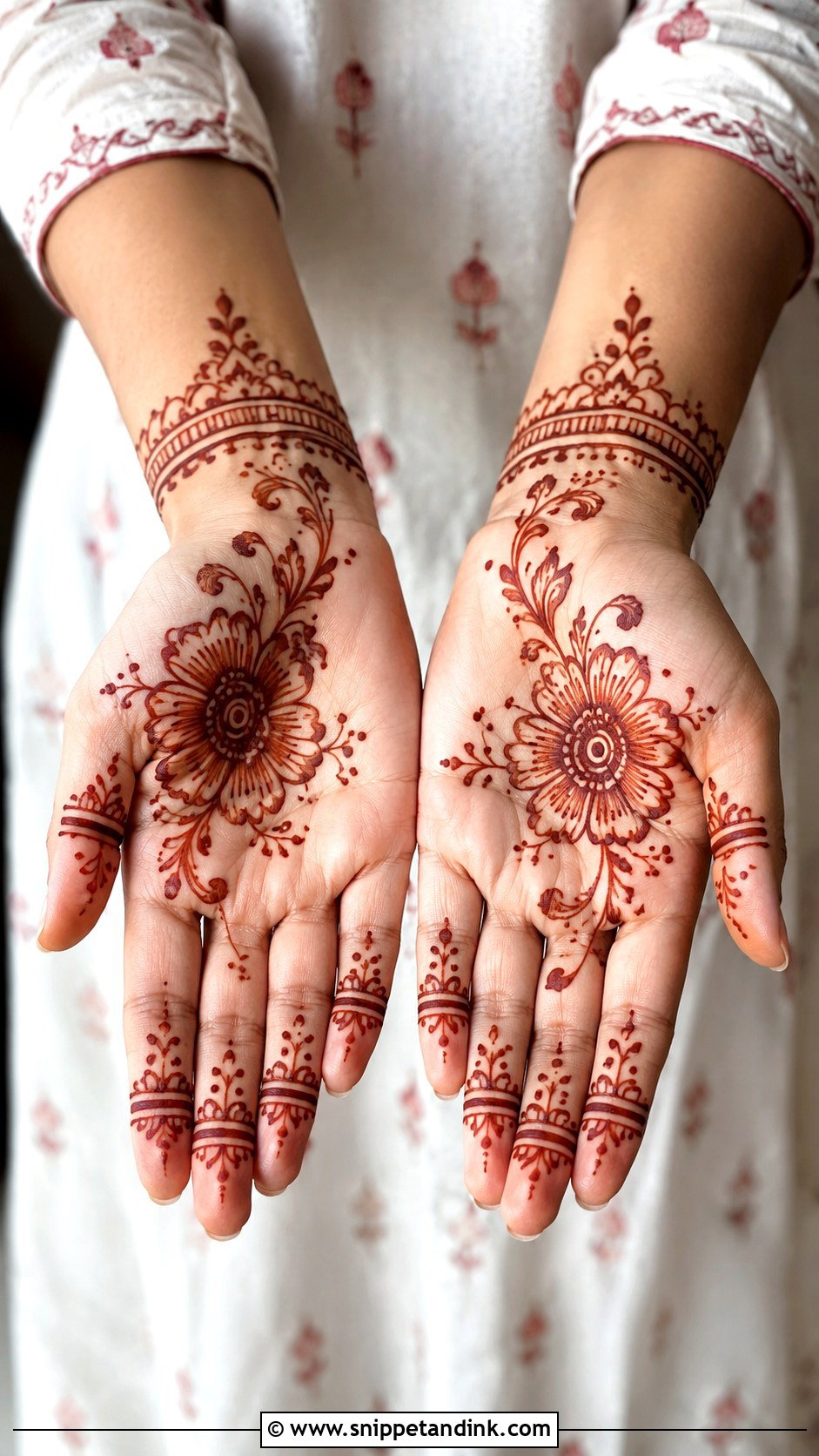
An easy design should still look complete, so I build it from one focal motif plus finger details plus a wrist border. Flowers, leaves, dots, curved vines and small mandalas are all you need. If you’re applying it yourself, use a slightly thicker line; it’s easier to control and stains bolder. Skip shading and tiny grids. With limited time or basic cone control, this layout still gives a tidy result.
8. Full Palm Half Hand Mehndi Design
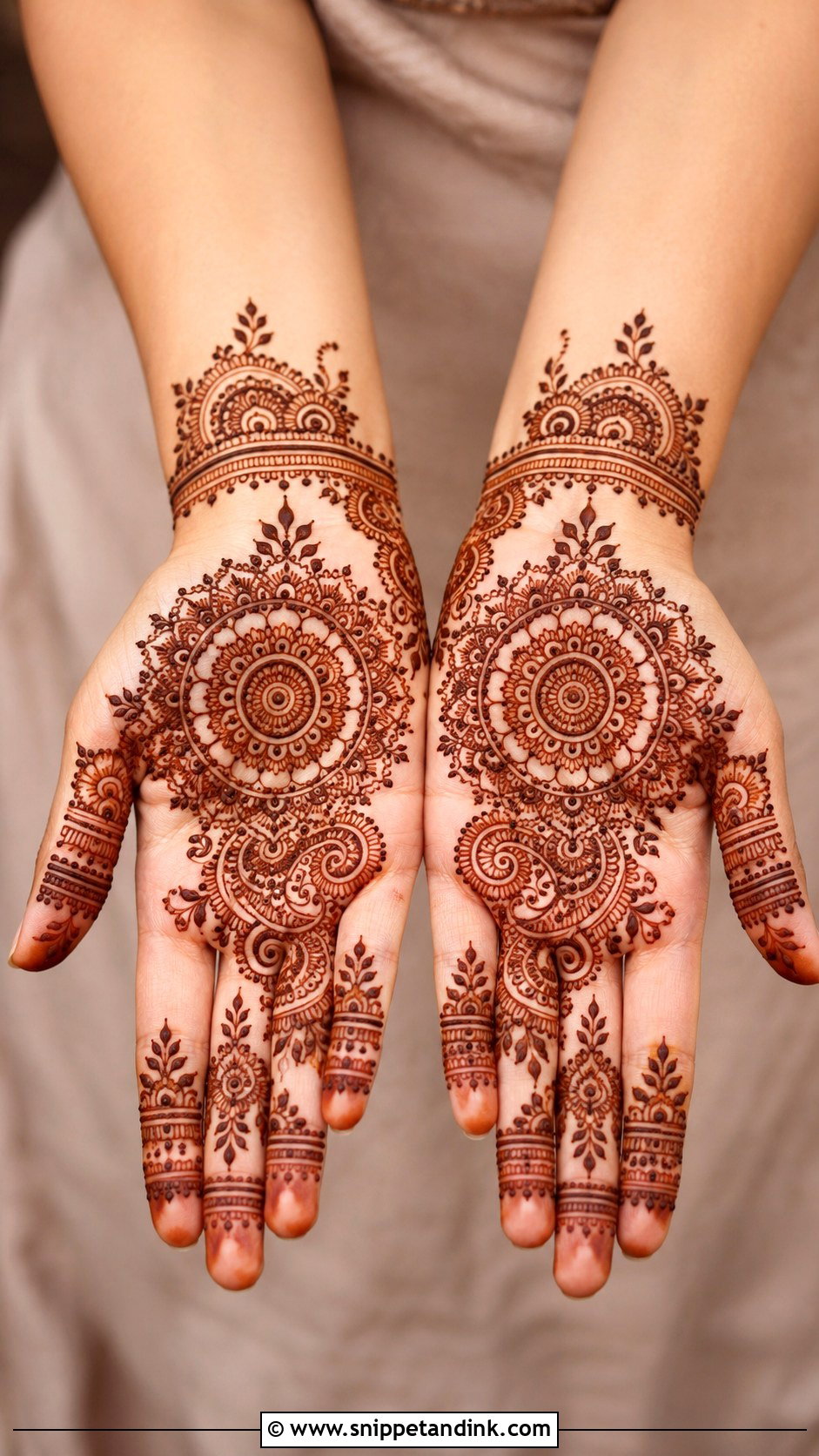
This one covers the palm fully while keeping the wrist and most of the fingers light. A central mandala or lotus arrangement anchors it, with small leaves, dots and curved borders around it for depth, and simple bands on the fingers. Because the whole palm is worked, it reads as traditional, but there’s still open skin above the palm line. The stain comes out very deep here. I’d plan it for rituals where the palm is shown, like a Karwa Chauth thali or a wedding photo with palms up.
9. Wrist Half Hand Mehndi Design
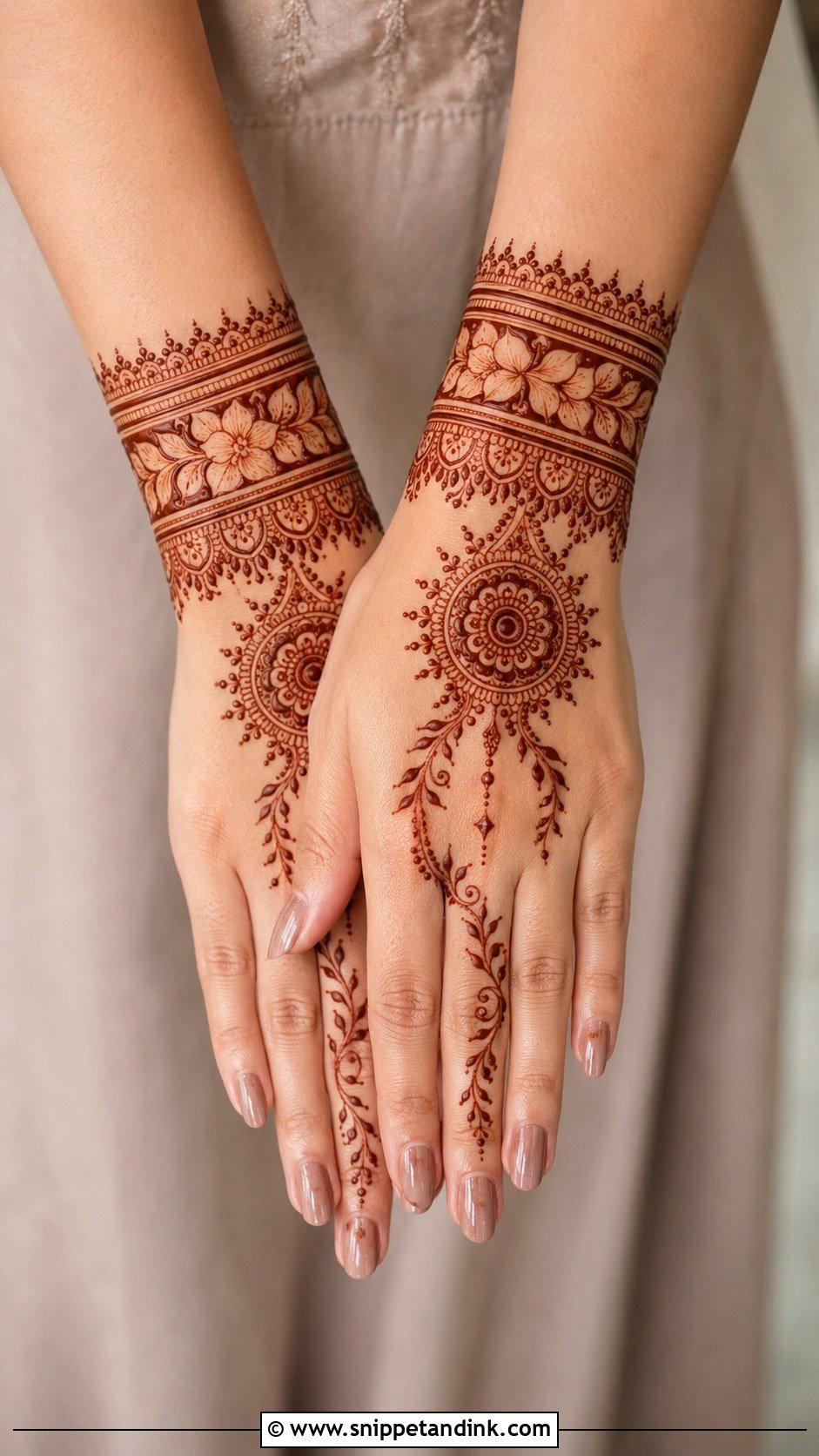
Think of a henna bracelet that drifts onto the hand. A broad cuff, a lace border or an Arabic vine wraps the wrist, with small extensions climbing toward the back hand or lower palm. It leaves the palm and fingers mostly clean, so it doesn’t clash with rings or bangles. Wrist skin stains a little lighter than the palm and fades faster if bangles rub against it, so I keep the cuff lines a bit bolder.
10. Finger Half Hand Mehndi Design
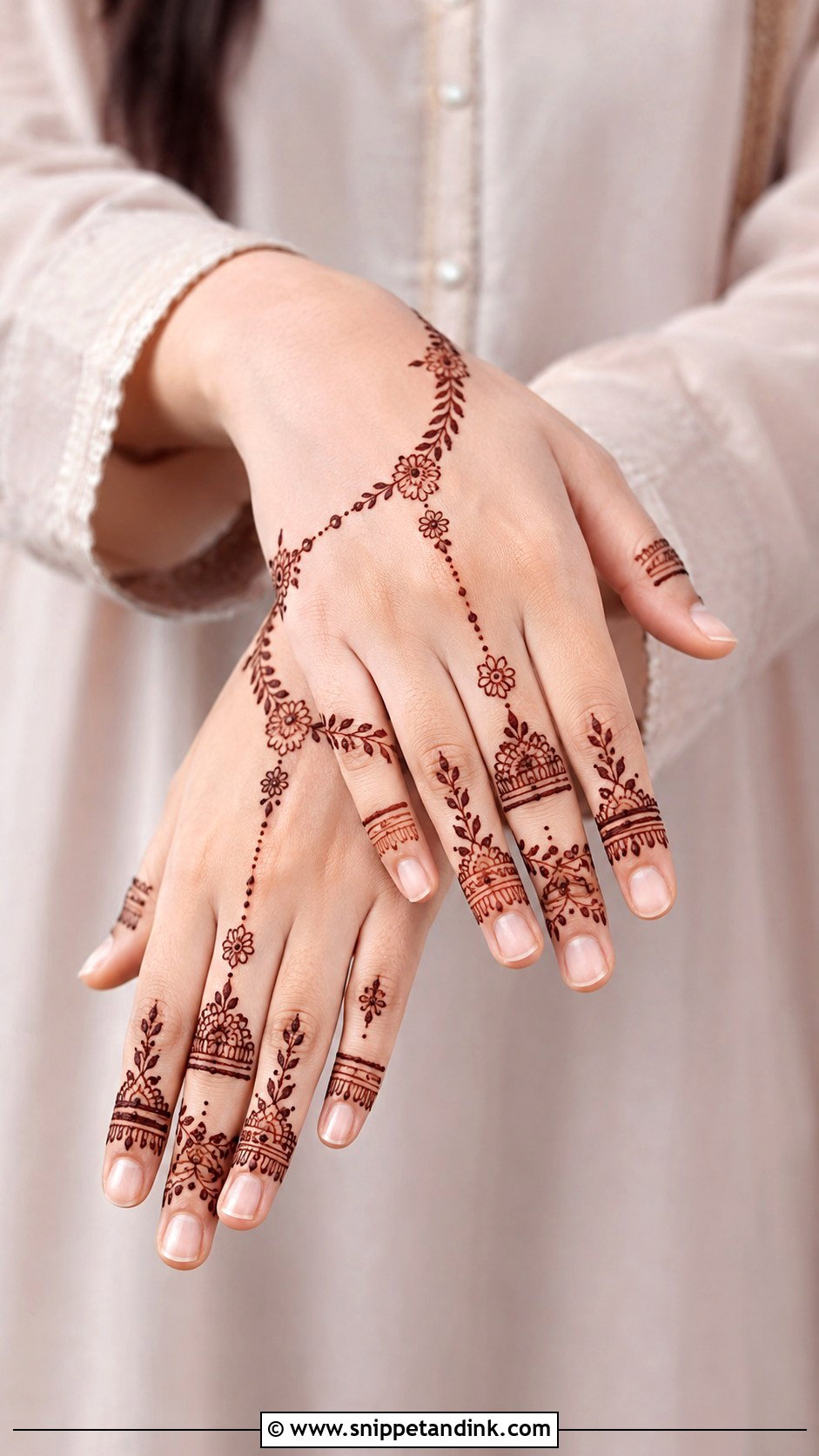
Finger-led designs keep the palm or back hand mostly open. Each finger gets ring bands, leafy trails or tiny florals, and on the back hand I sometimes connect them with a small chain or knuckle motif. It looks like hand jewelry. Fingertips stain dark, so even light finger work shows up well. I keep the patterns balanced across fingers but not identical, which looks more hand-drawn.
11. Diagonal Half Hand Mehndi Design
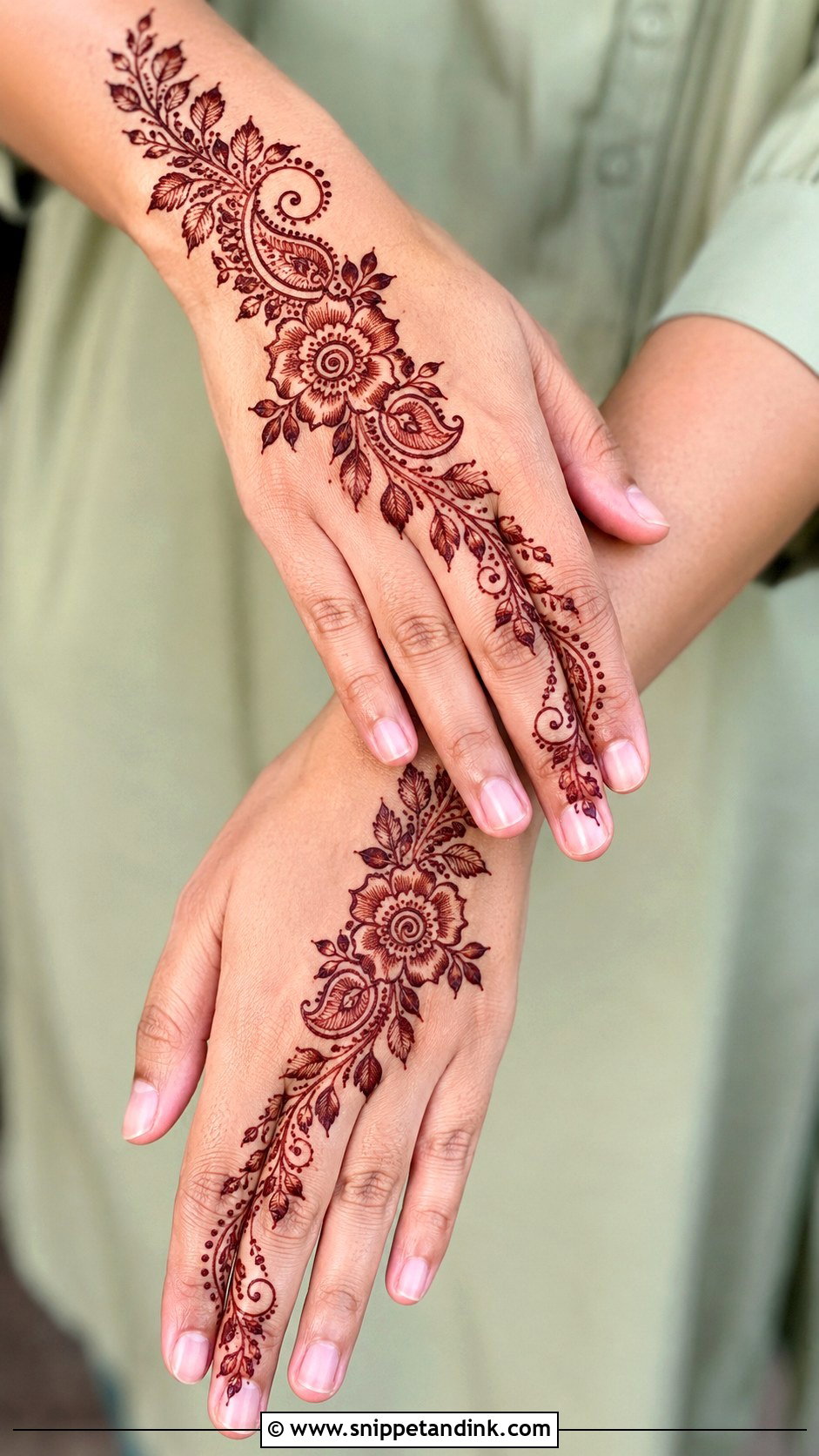
Diagonal layouts add movement. The pattern starts near the wrist and runs toward the index or ring finger, covering half the hand while looking full. Arabic flowers, shaded leaves, paisleys and dotted vines all suit it. A diagonal line makes the hand look longer, which is why I often suggest it for shorter fingers. Keep one side detailed and the other clear; that contrast is the whole point.
12. Mandala Half Hand Mehndi Design
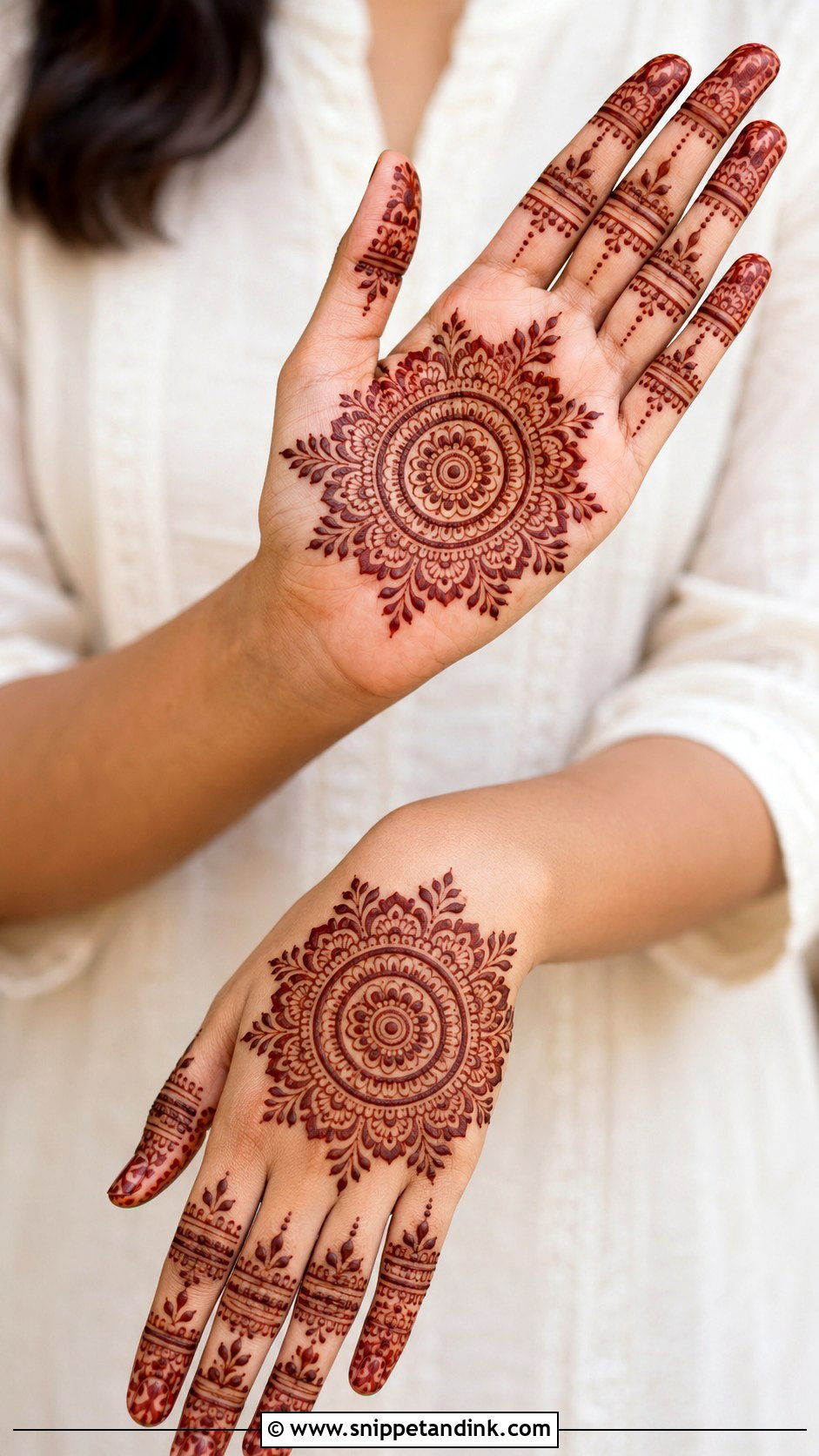
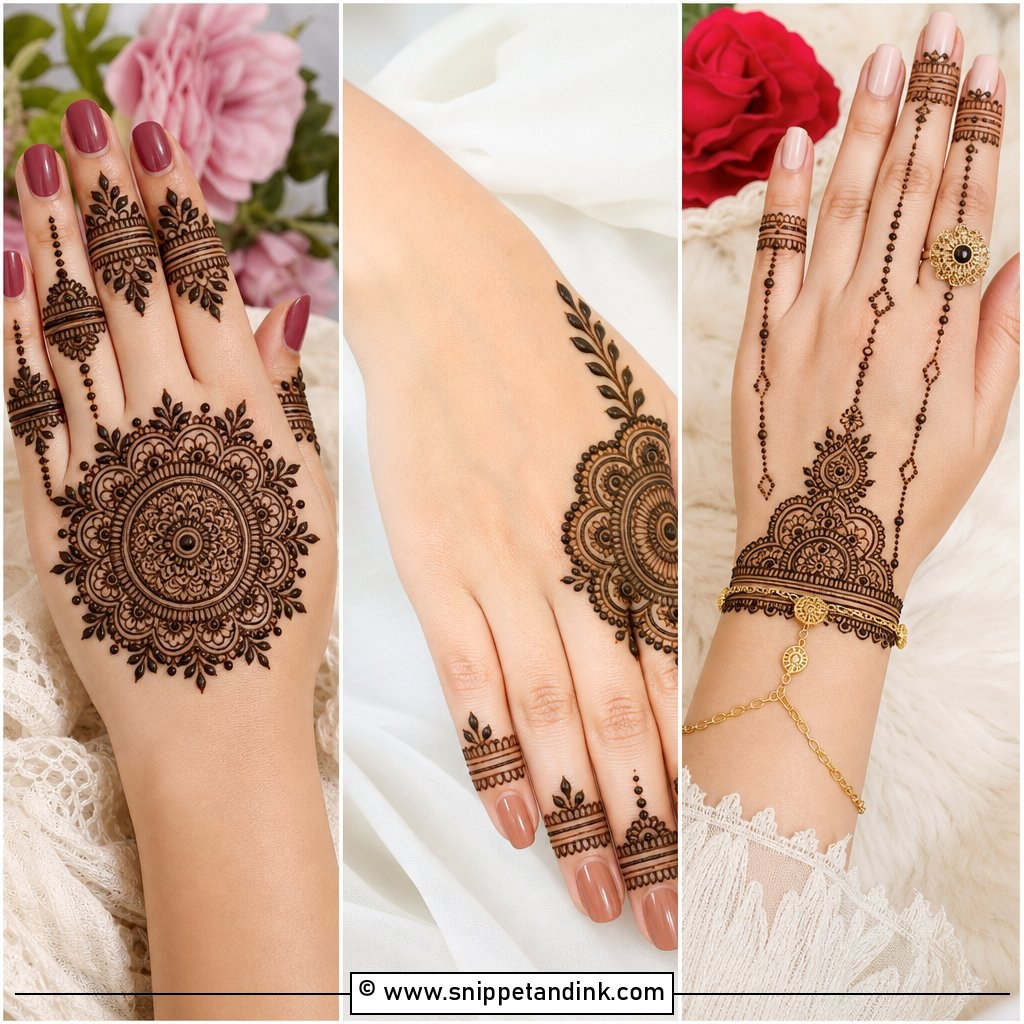
A mandala gives the hand a single, strong focal point, which is why it looks neat even with minimal coverage. I place it in the center of the palm, the lower palm or the back hand, then add finger patterns, dots or a wrist border. Layered petals with tiny inner detail feel traditional; open rings with clean spacing feel modern. Circles are less forgiving than florals, so I build them outward from the center, ring by ring, to keep them even.
13. Floral Half Hand Mehndi Design
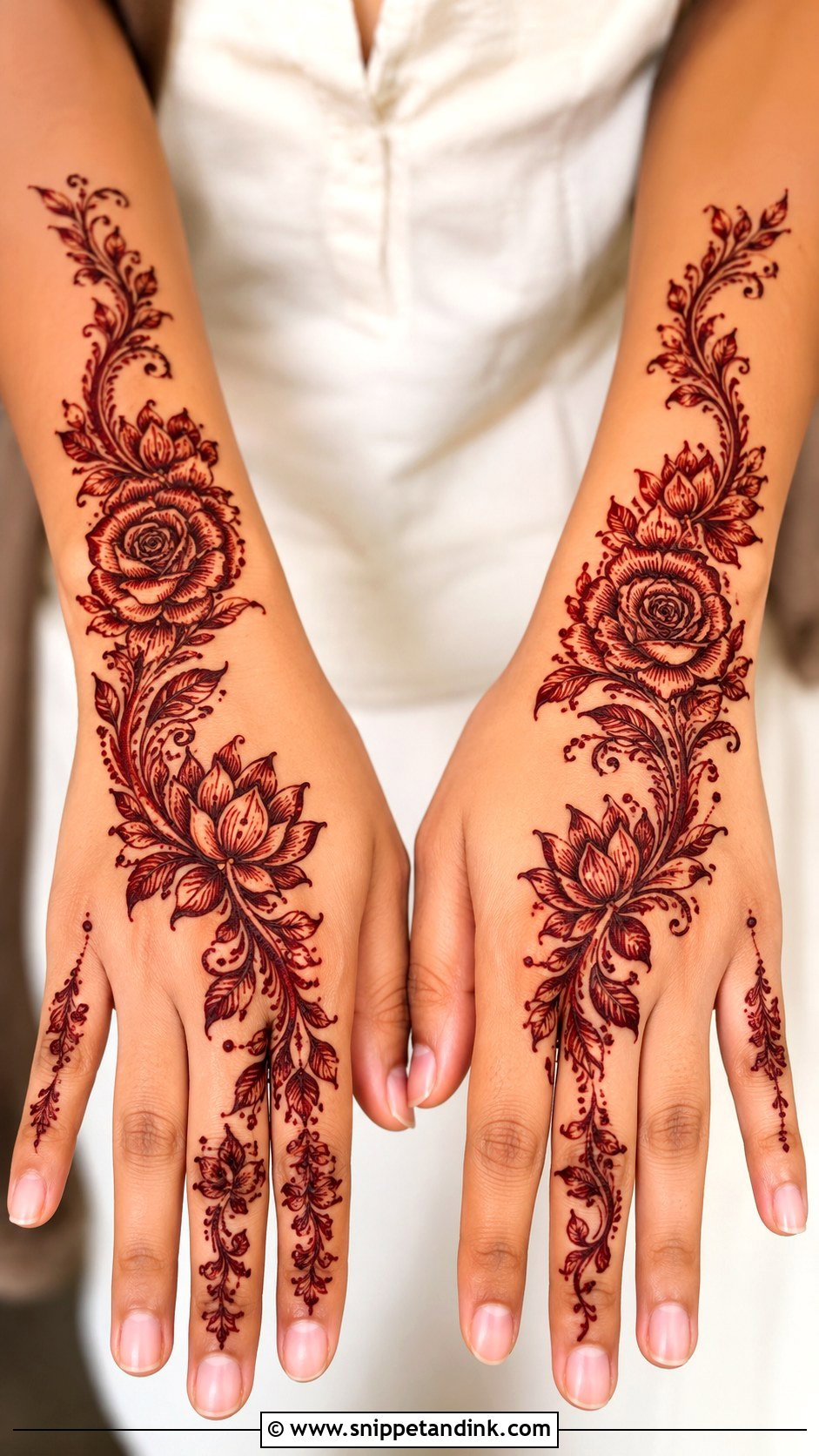
Florals are the easiest to customize. Roses, lotus petals, small blossoms and leafy vines can run along the side of the palm, the wrist or the back hand. Large flowers read Arabic; small ones read Indian. It suits bridesmaids and the bride’s sisters because it looks festive without competing with the bride. Fine dots around each flower finish it.
14. Paisley Half Hand Mehndi Design
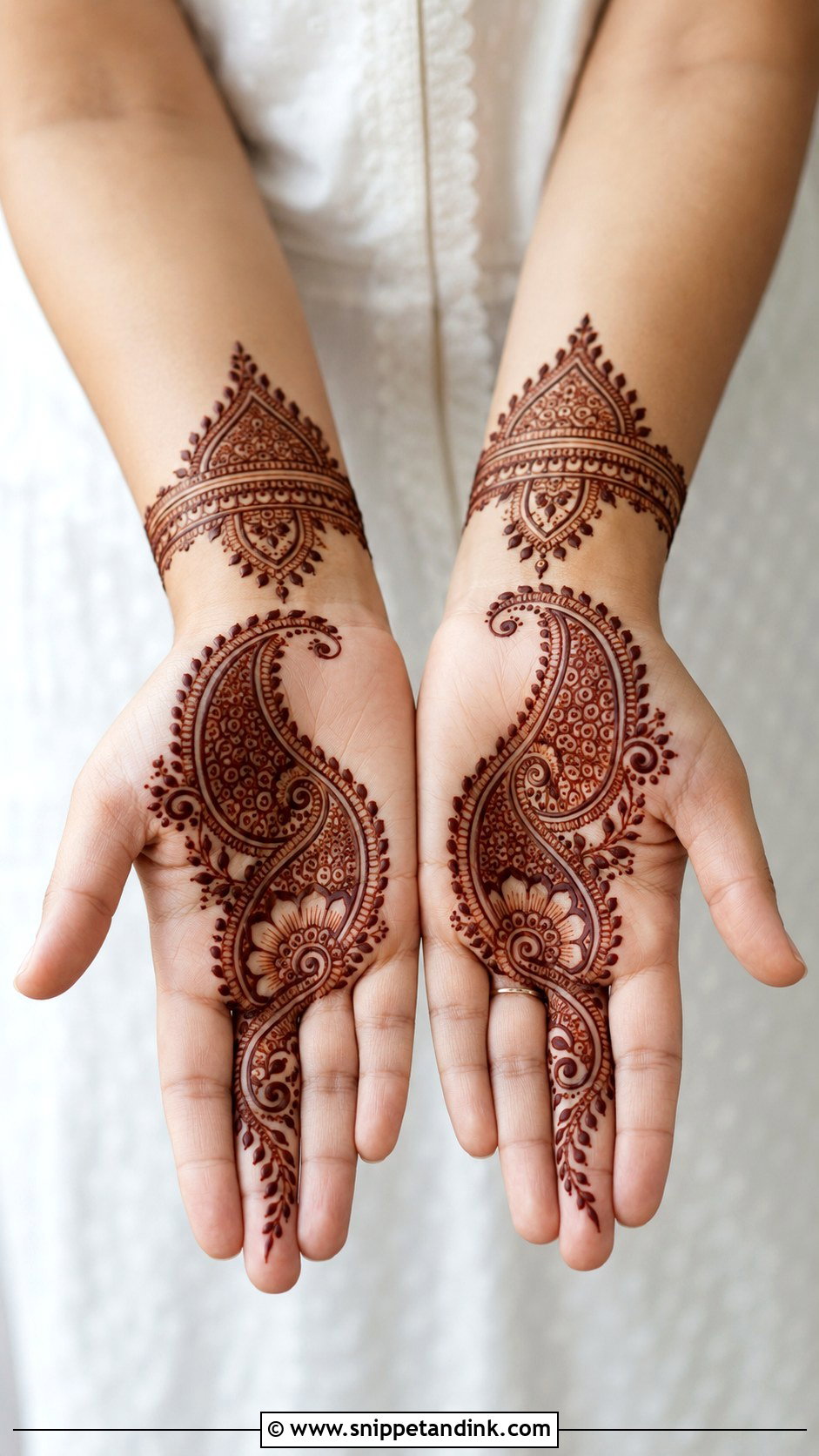
Paisleys follow the natural curve of the palm, which is why they sit so well there. I usually place one large paisley near the lower palm and smaller ones around it, filled with lines, dots, petals and tiny leaves. It can extend to a bracelet border at the wrist. To keep it half-hand, I stop before the paisleys climb the whole palm. It suits Karwa Chauth and traditional family events.
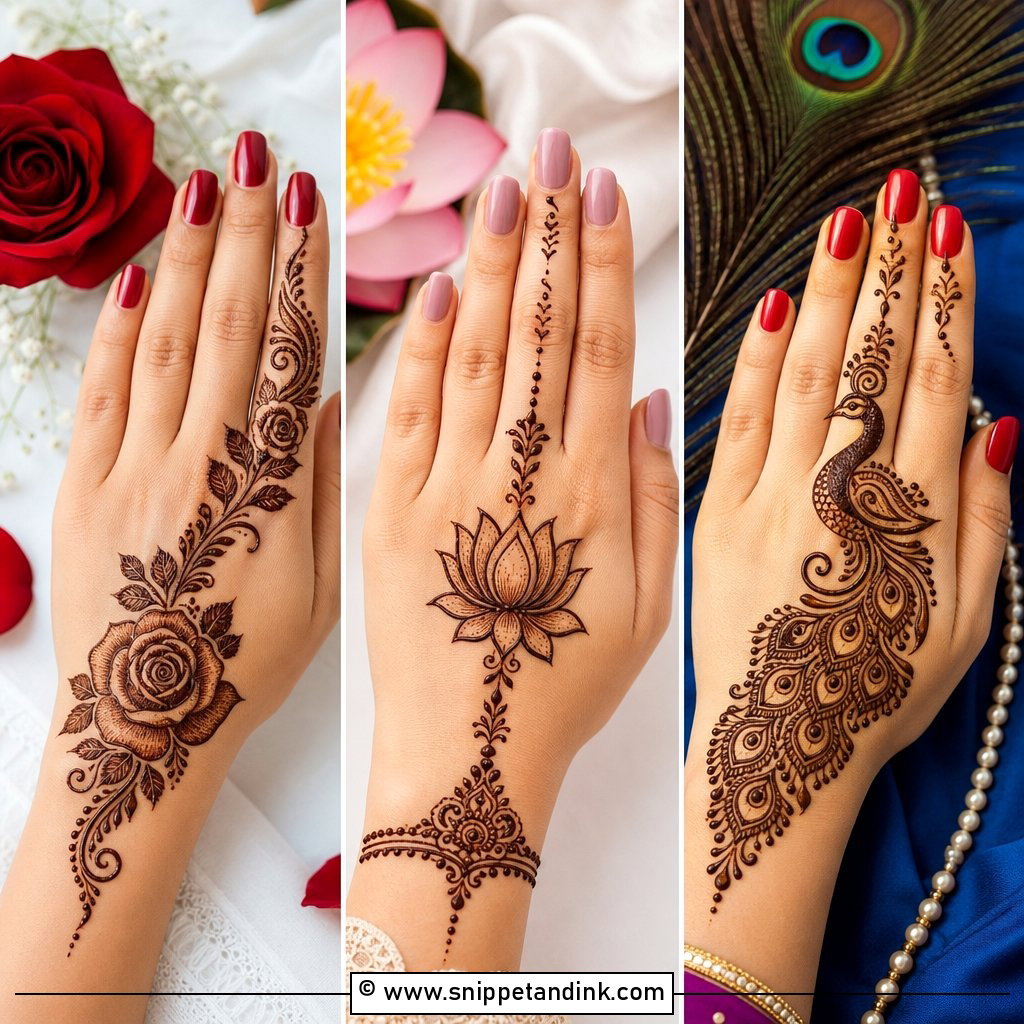

15. Peacock Half Hand Mehndi Design
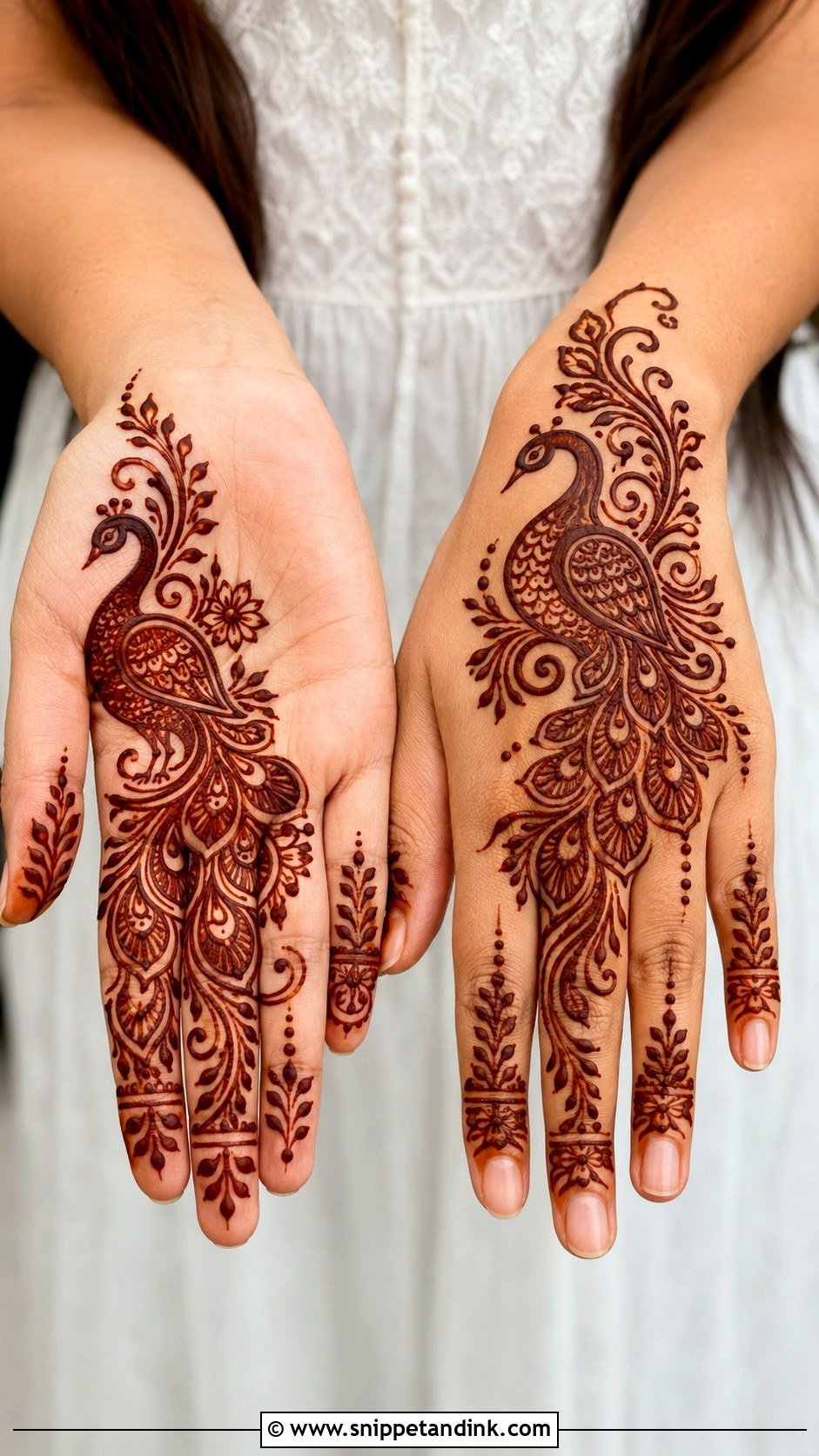
Peacocks feel festive and royal without needing a full hand. The bird can sit on the palm, wrist or back hand, with feathers sweeping across one side, plus paisleys, dots and vines. The trick I follow is keeping the body of the bird clear and the feathers fine; crowding the body makes it look like a smudge once stained. Leave the other half of the hand open for contrast.
16. Lotus Half Hand Mehndi Design
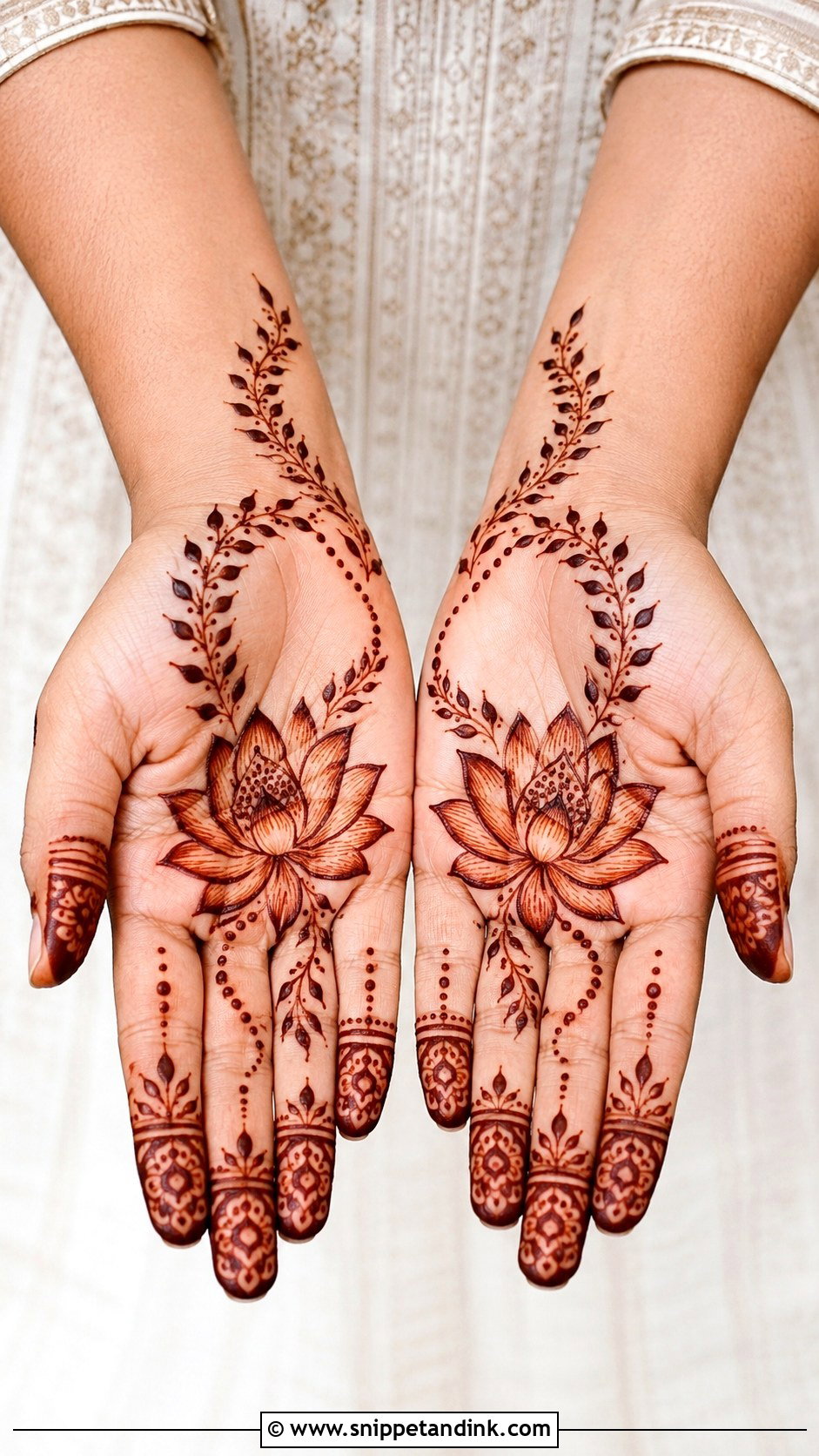
A lotus gives a clean, traditional focal point at the wrist, lower palm or center of the back hand. Its layered petals carry the design, with leafy vines and dots running toward the fingers. Thick outlines make it bold; fine petal shading makes it soft. I keep the lotus cluster on one section only, so the empty skin around it makes the petals stand out.
17. Jaali Half Hand Mehndi Design
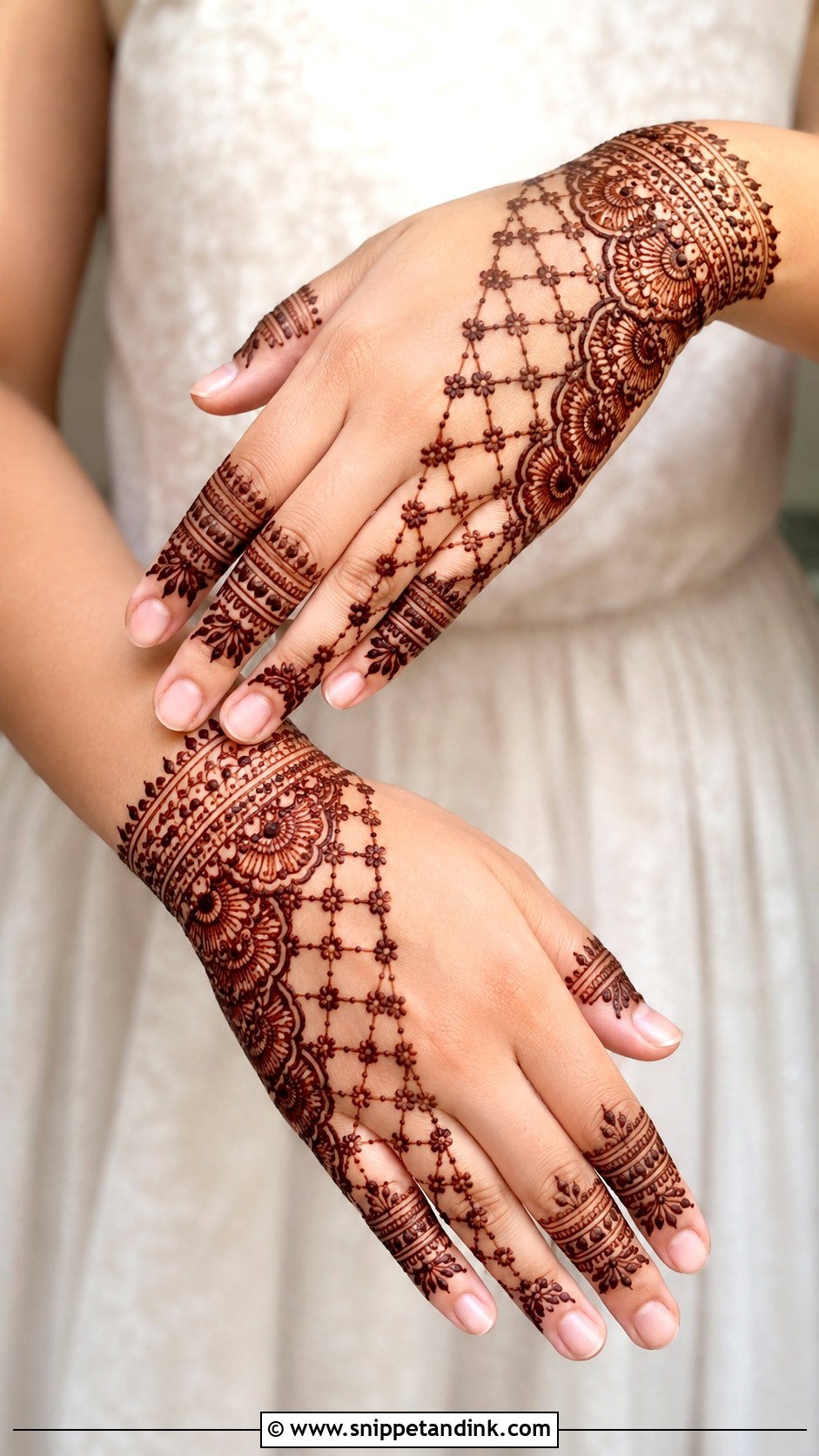
Jaali is a mesh pattern that looks like lace, and it’s the most precise work in this list. On the back hand or between the fingers and wrist, it can be made with diamonds, squares or curved net lines, with dots at each crossing. The lines must be evenly spaced; uneven mesh looks messy no matter how pretty the motifs around it are. I’d only choose this with an experienced artist and enough time to sit still.
18. Jewelry Half Hand Mehndi Design
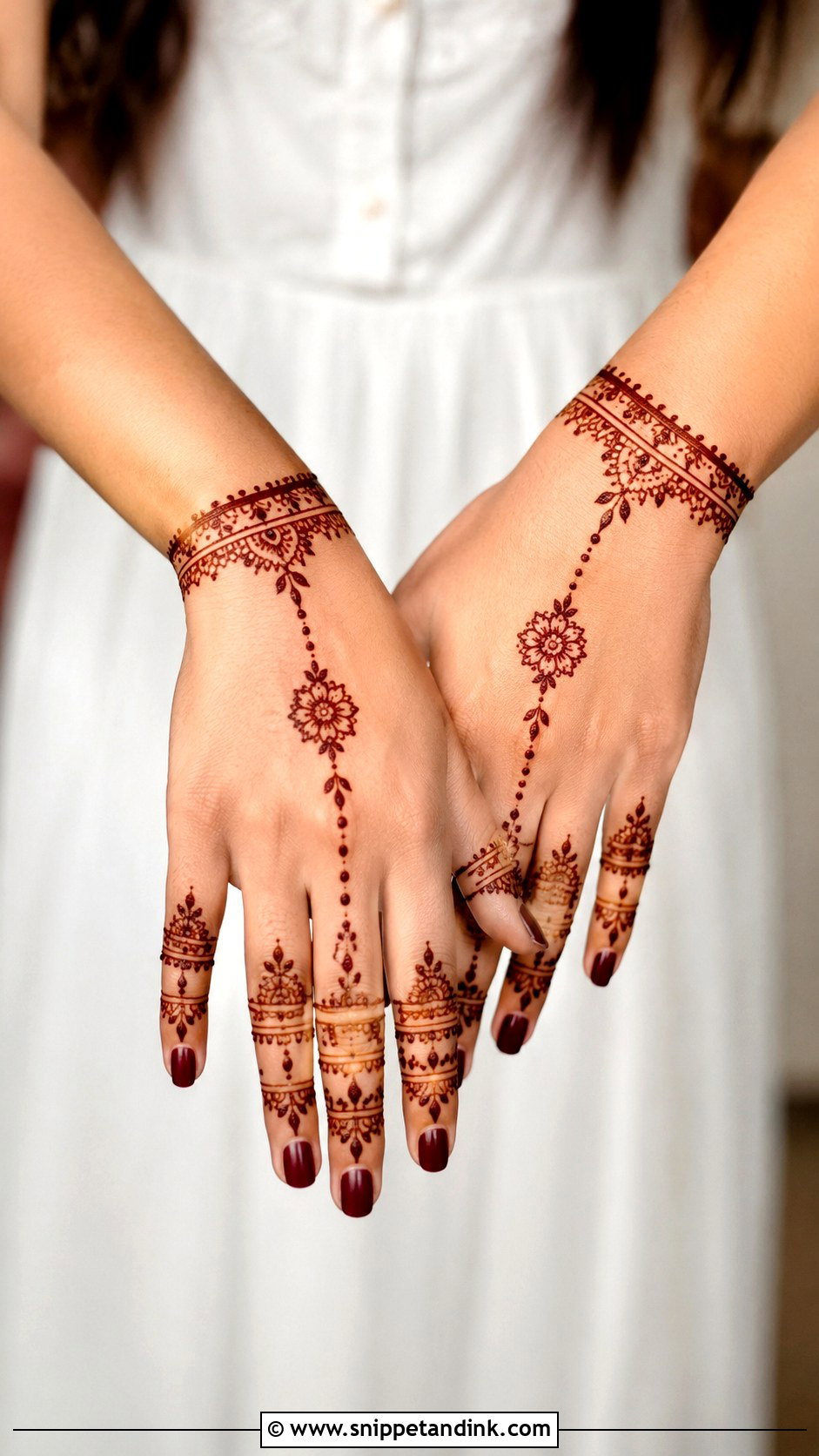
Jewelry designs mimic rings, chains, bracelets and hand harnesses in henna. They suit the back hand and work with real rings and nail art. Finger bands, a central floral charm, chain links and a bracelet at the wrist make up the design. I draw the chain lines thin and the bracelet a little bolder, which balances it and keeps it looking like jewelry rather than a pattern.
19. Indo Arabic Half Hand Mehndi Design
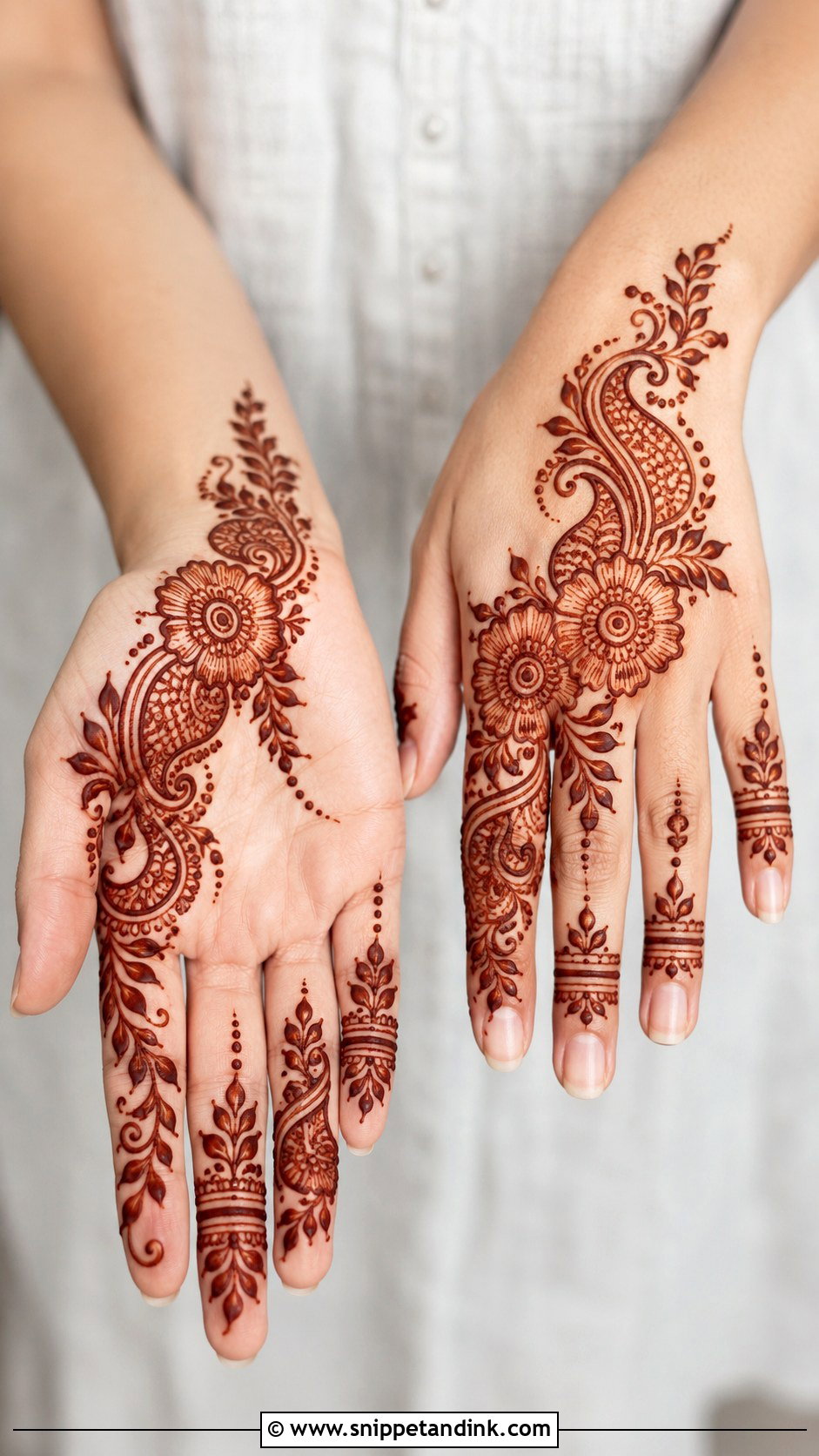
Indo-Arabic mixes Indian detail with Arabic flow, so you get bold flowers and open spaces alongside paisleys, fine fillings and traditional borders. It can run diagonally across the hand or cover the lower palm and wrist. The Arabic part gives movement, the Indian part richness. I choose one main floral or paisley cluster and build around it; mixing too many unrelated motifs is the usual mistake.
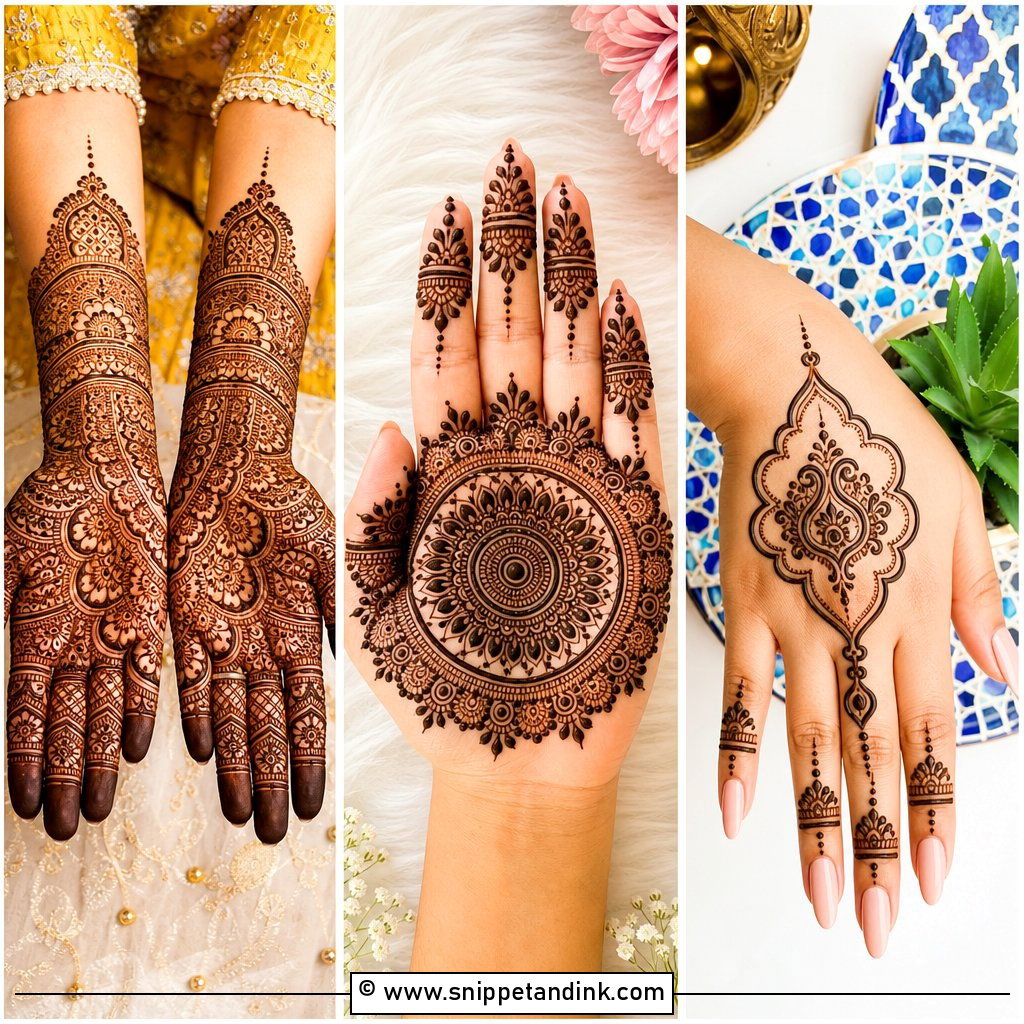
20. Indian Half Hand Mehndi Design
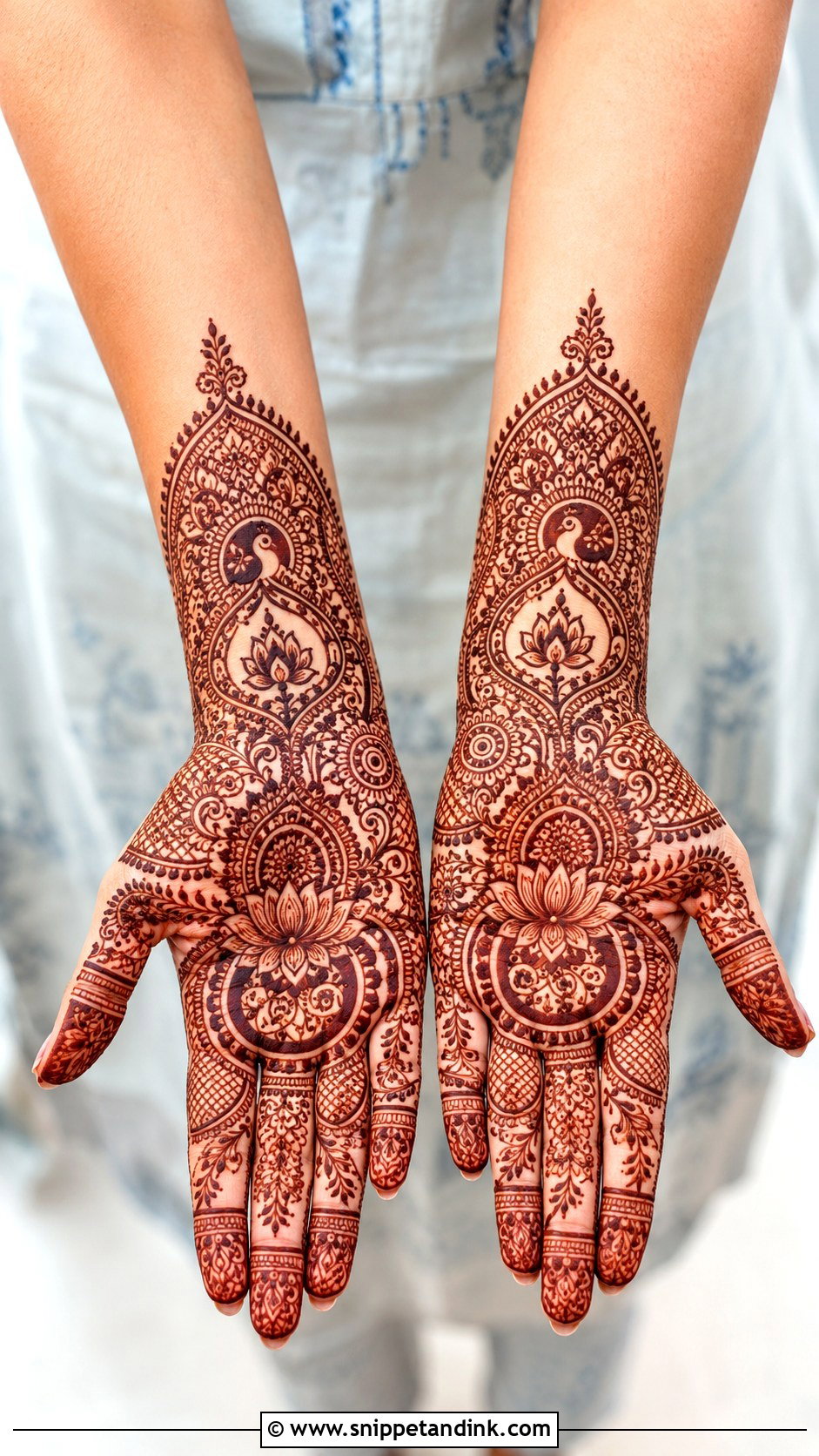
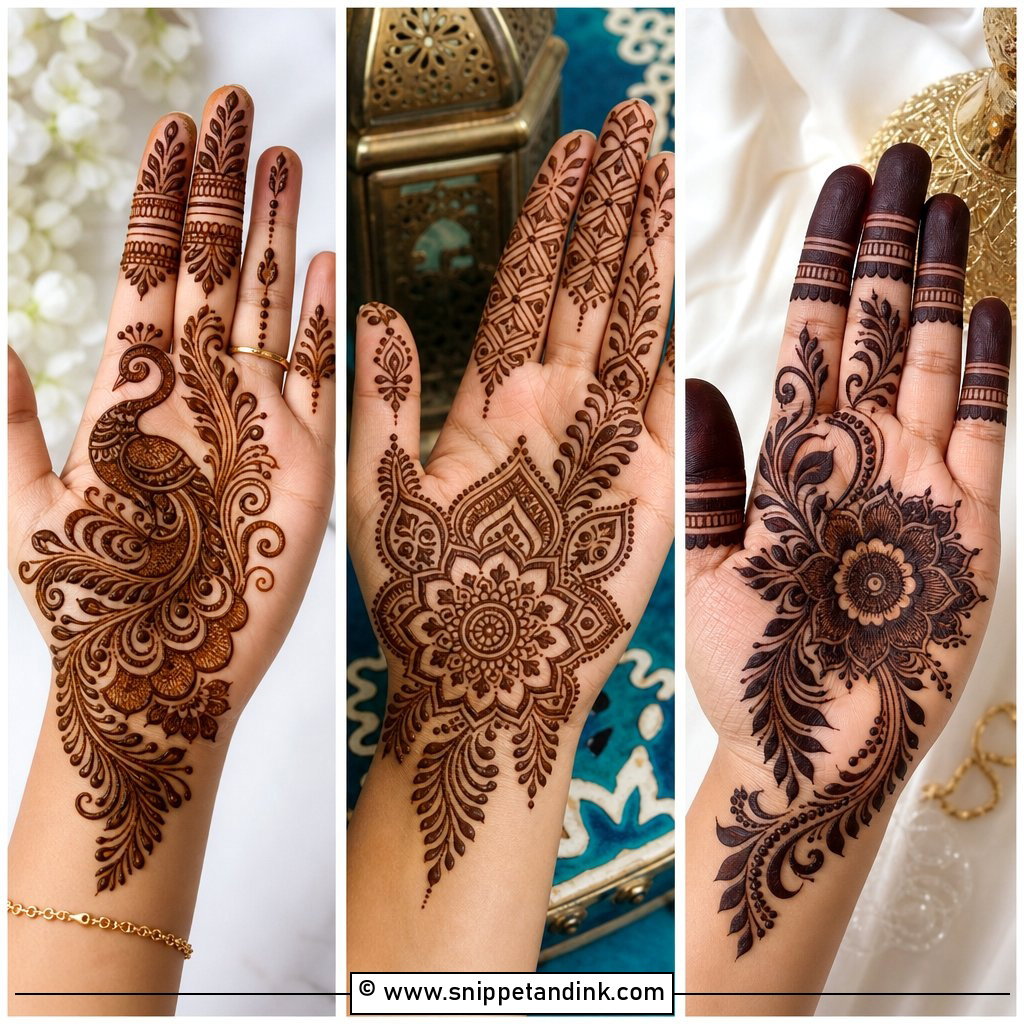
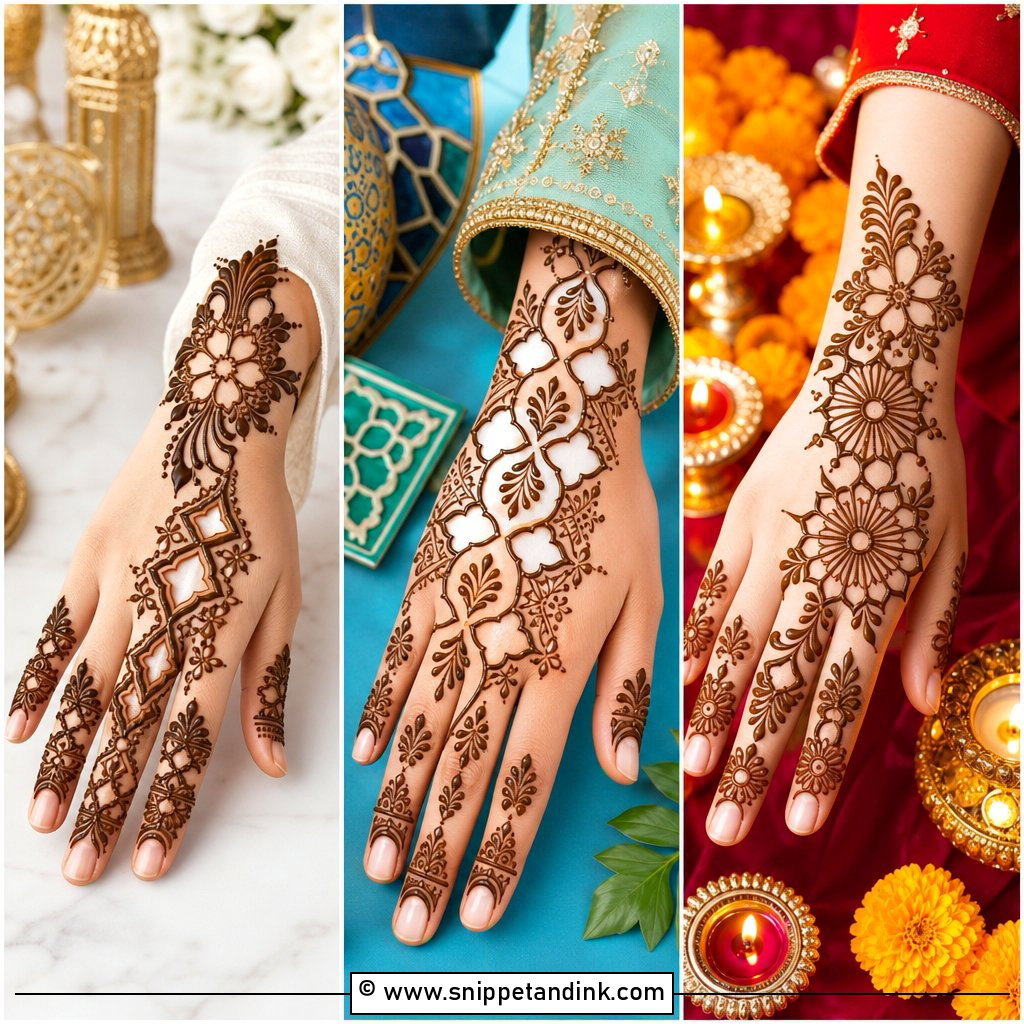
Indian designs can stay detailed even with half coverage. Paisleys, peacocks, lotus flowers, mandalas and fine line work all fit. I find the palm or the wrist-to-lower-palm area works best, because it allows rich detail while leaving space open. For a heavier look, I fill the motifs with checks, dots and curls; for a cleaner one, I use bigger motifs and fewer fillings. Both work when the layout is planned first.
21. Moroccan Half Hand Mehndi Design
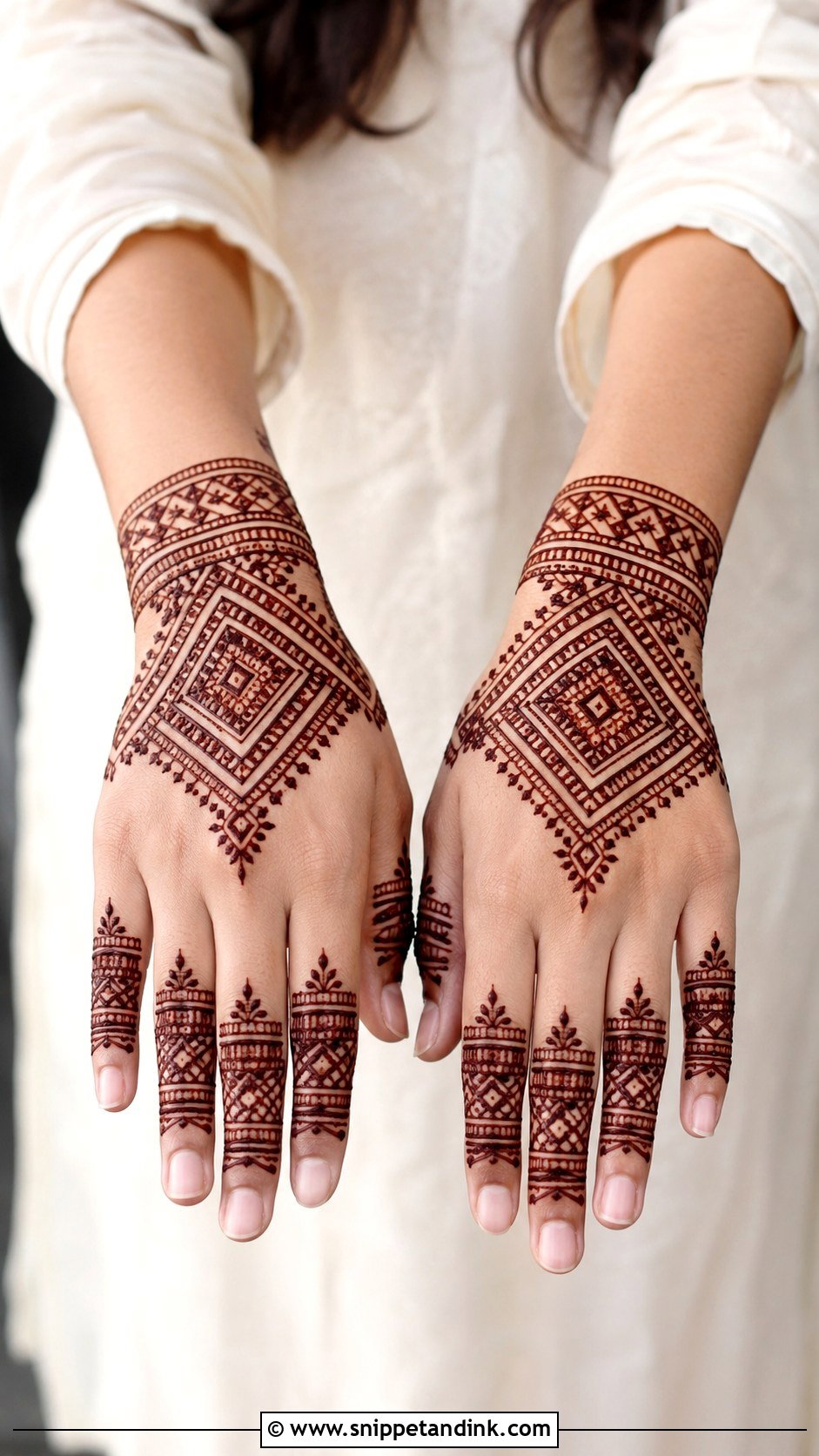
Moroccan henna swaps florals for geometry: diamonds, triangles, straight lines, grids and bold borders. It’s striking on the back hand and fingers. A half-hand version covers the wrist and one side of the hand. Straight lines show every wobble, so steady cone pressure matters more here than in any floral style. It pairs with simple outfits because the pattern is strong on its own.
22. Gulf Half Hand Mehndi Design
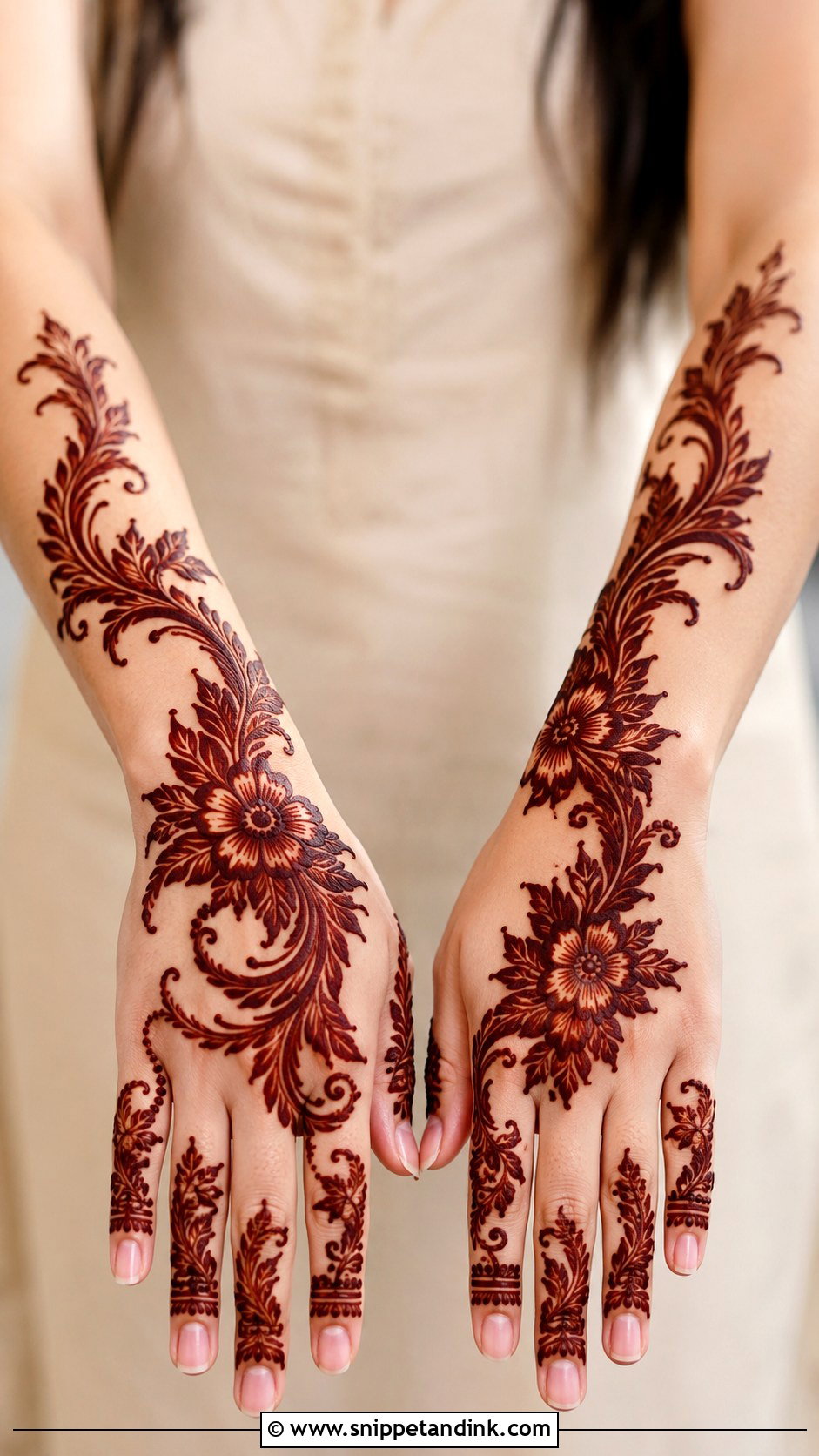
Gulf, or Khaleeji, style uses bold florals, leafy sprays and dramatic empty space. The design may start at the wrist and sweep across the back hand, or frame the fingers with large floral strokes. Outlines are thick and curves confident, so it stays visible after staining. I keep the flowers large and the leaves spaced apart; filling the gaps kills the look. It suits Eid and evening events.
23. Minimal Half Hand Mehndi Design
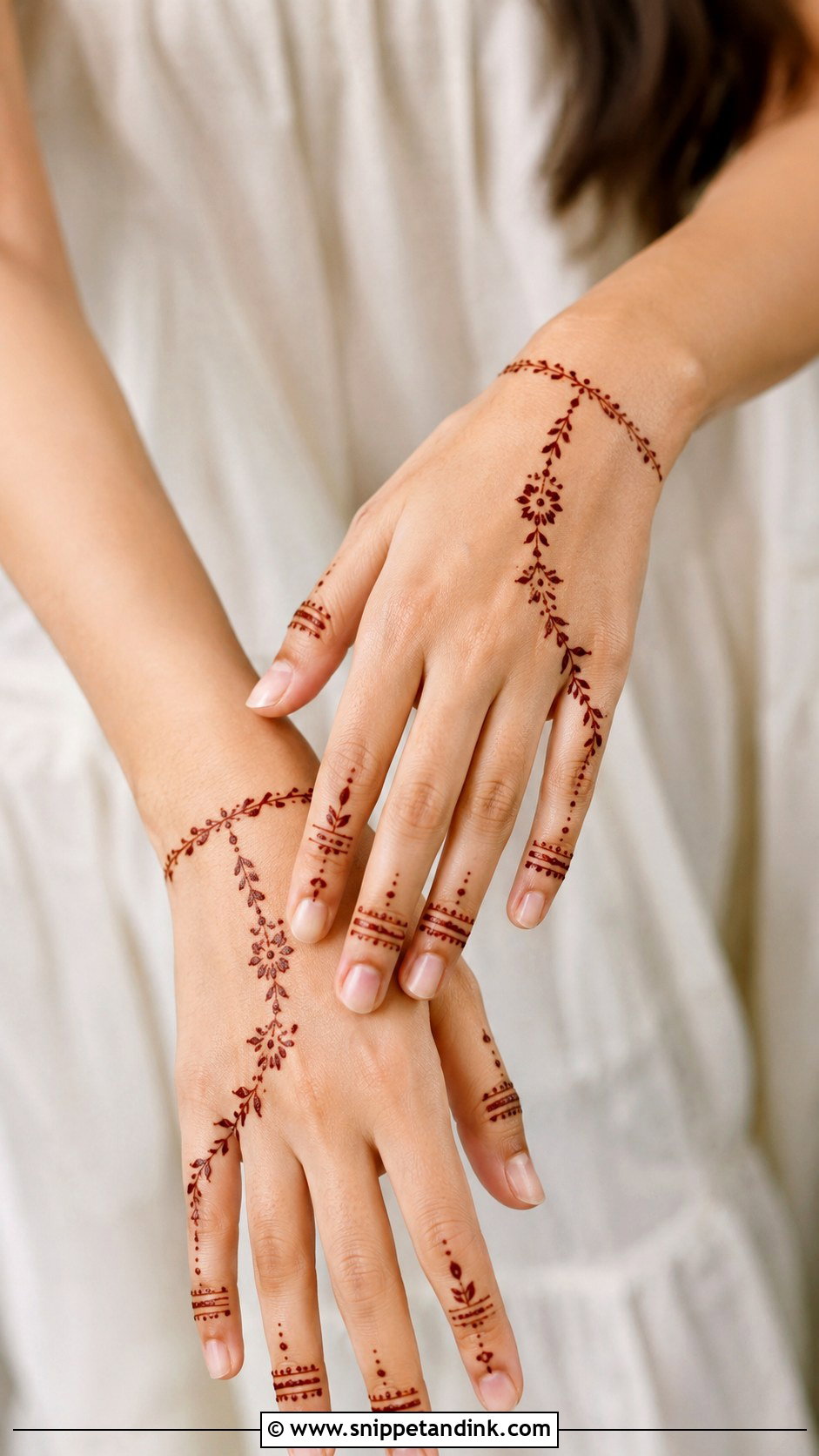
Minimal henna uses small motifs, thin lines and lots of open space. A small mandala, a tiny floral trail, finger bands or a wrist bracelet is enough. It suits people who don’t like heavy henna, and it’s discreet enough for work the next week. With fewer elements, every line must be clean. I’d give it one clear focus rather than scattering small shapes.
24. Royal Half Hand Mehndi Design
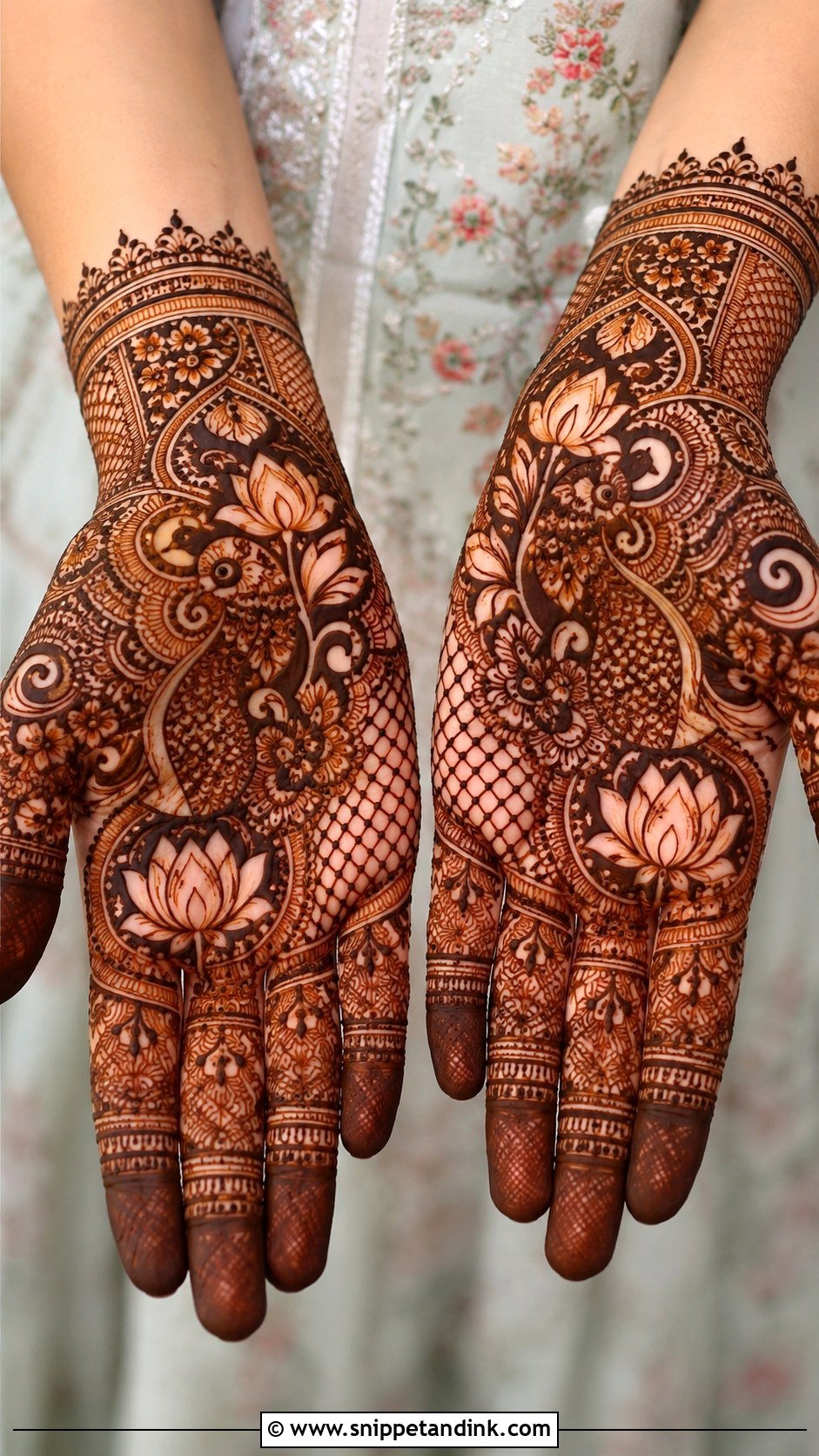
Royal designs pack paisleys, lotus motifs, peacocks, jaali and bold borders into half the hand. Despite the coverage, the detail makes it look grand. I’d suggest it for brides and close family. It can start at the wrist with a cuff and move into the palm, or decorate the back hand with a central motif and finger details. Fine fill inside large shapes gives the luxurious finish; keep the empty half clean.


25. Engagement Half Hand Mehndi Design
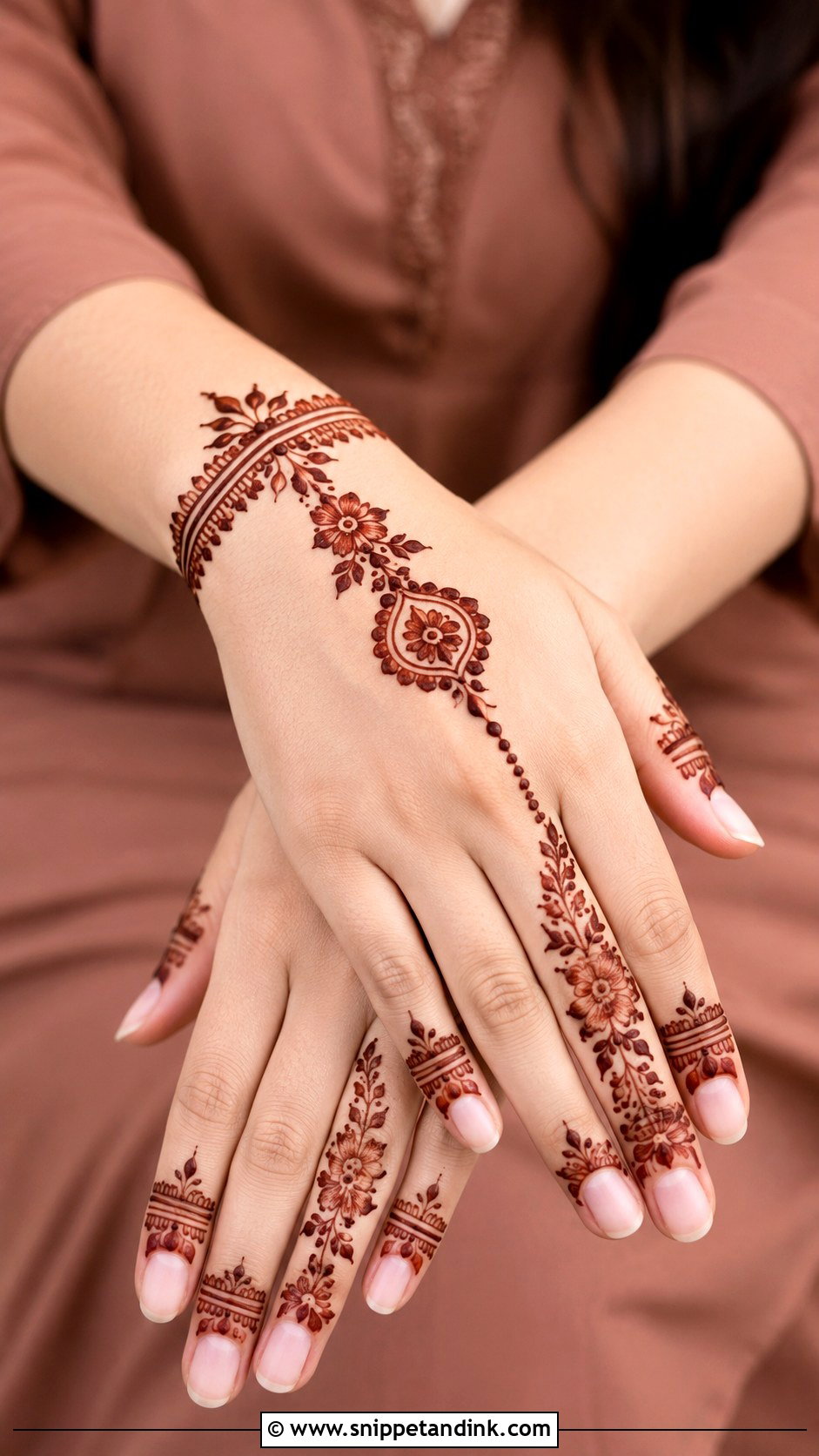
For an engagement, the ring finger is the center of attention, so I design around it. On the back hand, I’ll draw finger bands, a floral chain, a wrist bracelet and a small central motif, leaving clear skin around the ring itself. On the palm, a soft mandala or floral cluster works. Initials or a small heart can hide in a motif. I’d avoid heavy work on the ring finger, because a dark stain behind a diamond can make the ring look smaller in photos.
26. Eid Half Hand Mehndi Design
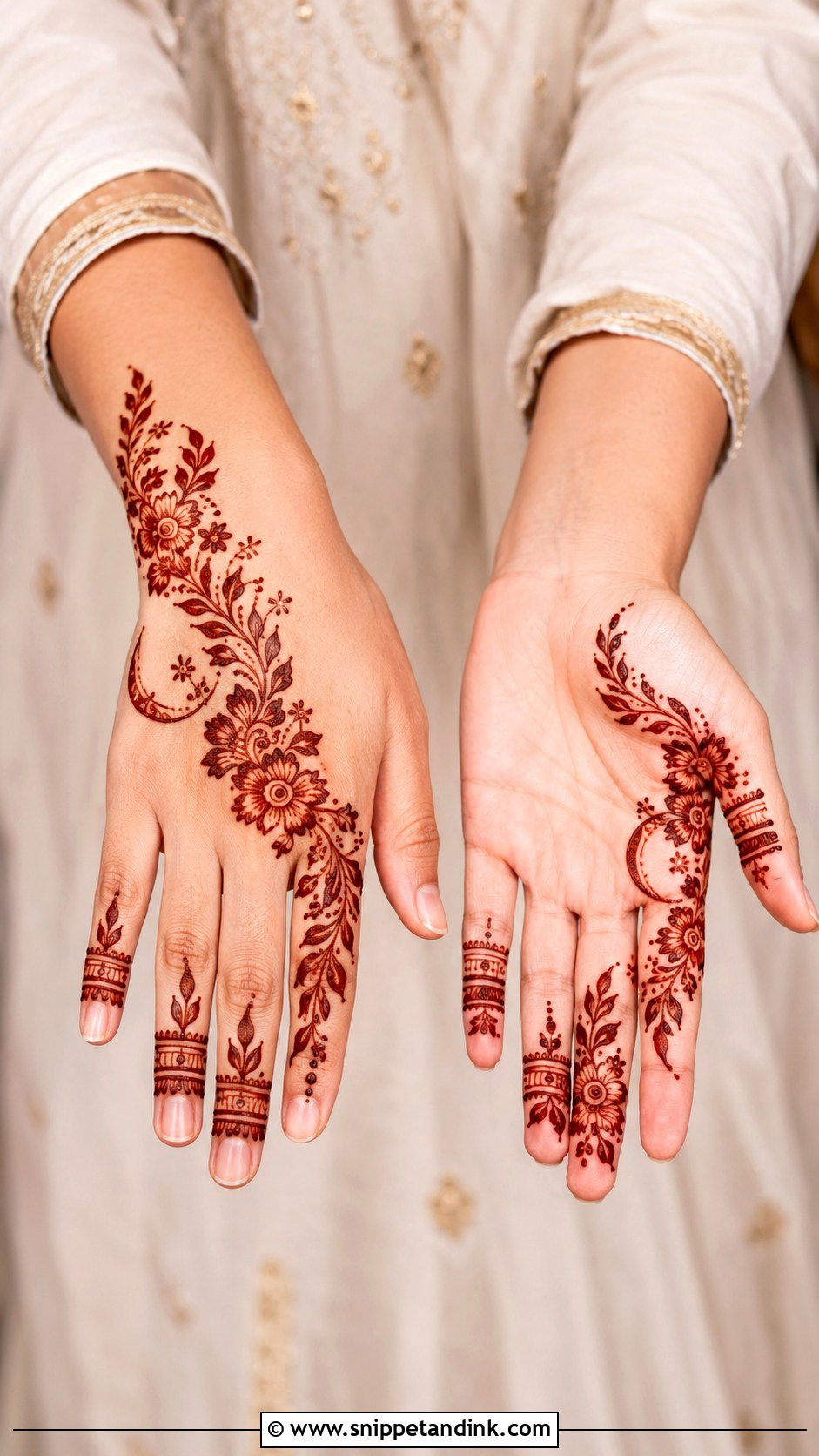
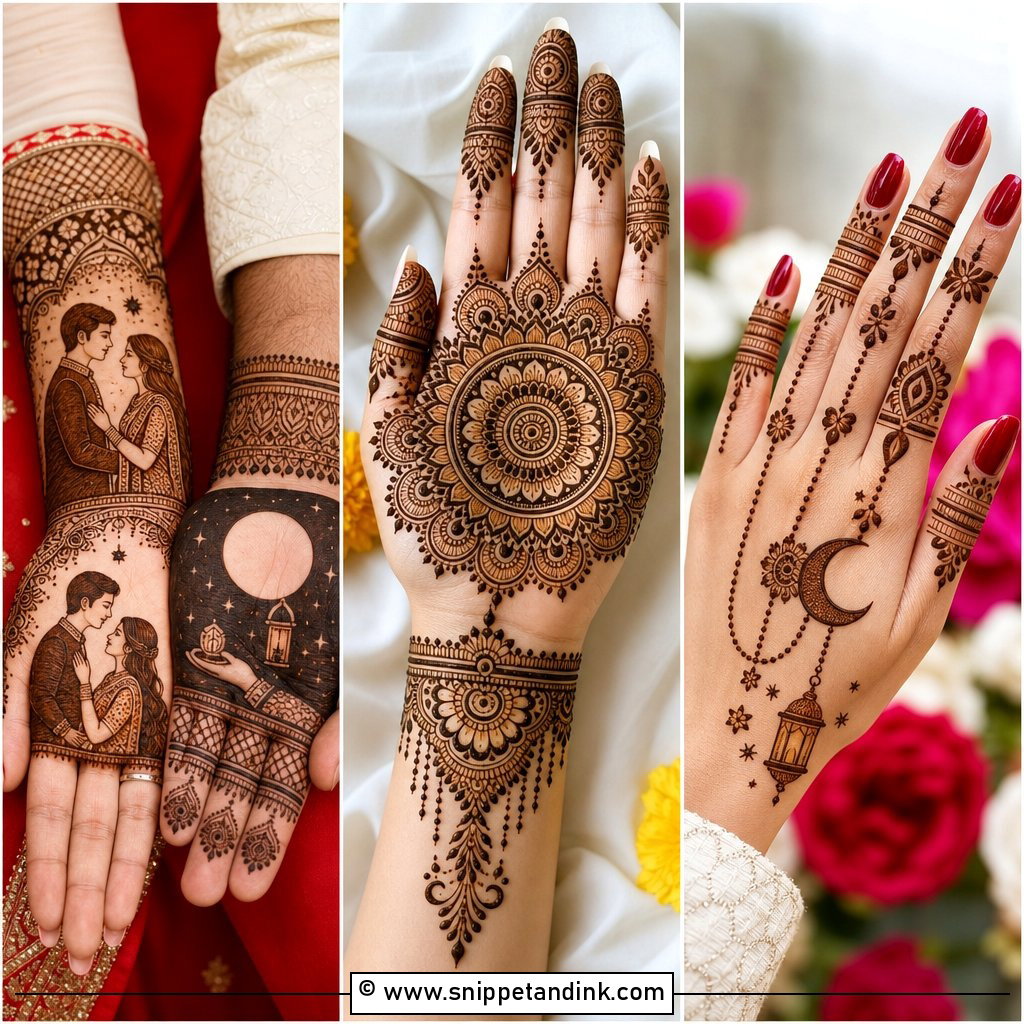
Eid mornings are busy, so most of my Eid designs are drawn the night before, quickly. Arabic florals, leafy vines, crescent curves, finger bands and wrist trails all suit it. A diagonal back-hand pattern is the most popular. For the palm, a mandala or floral cluster with fingertip accents works. Bold outlines give a darker-looking result, and enough empty skin keeps it fresh.
27. Diwali Half Hand Mehndi Design
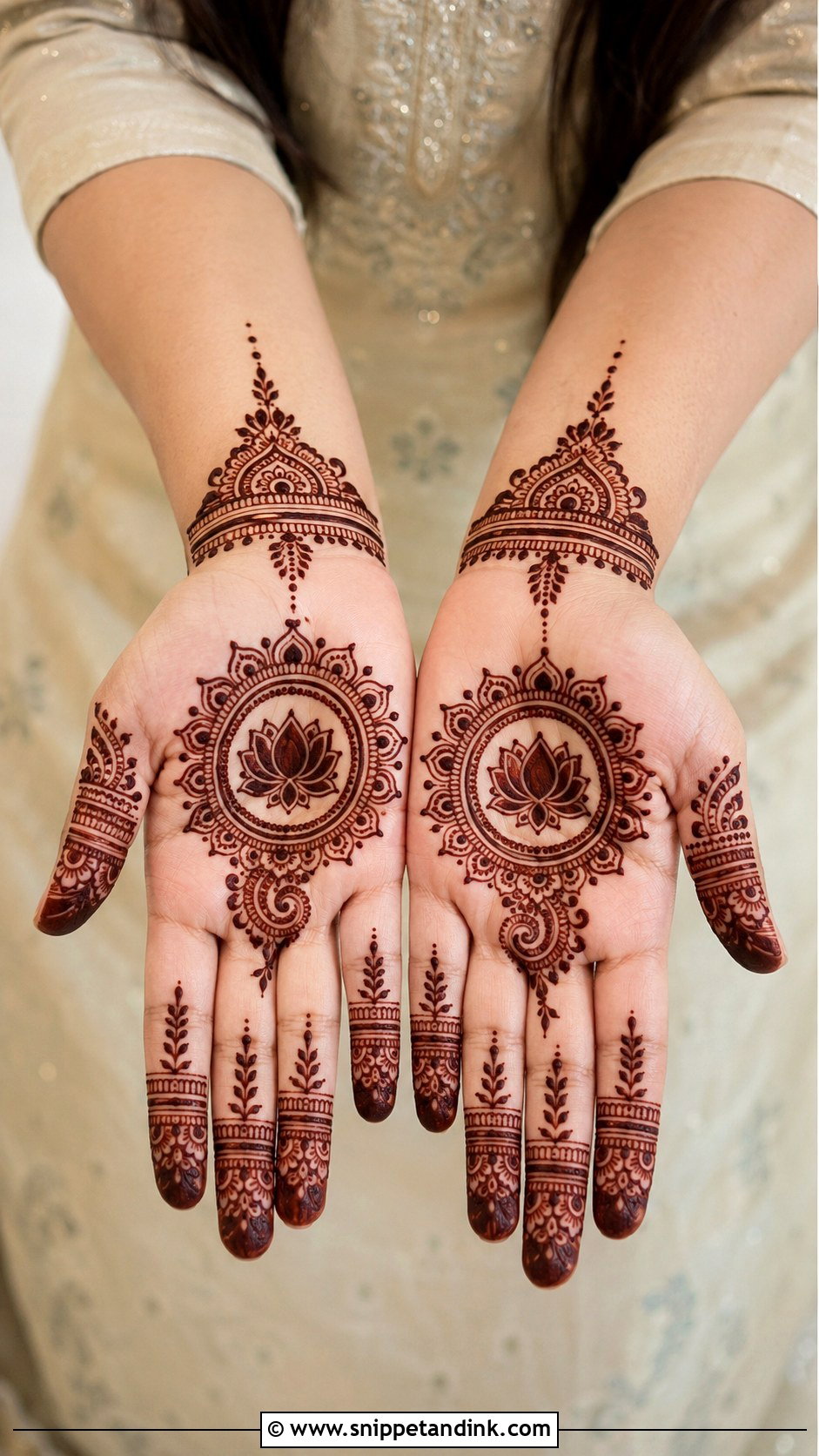
For Diwali, I like mandalas, lotus flowers, paisleys and bracelet borders. The design covers the palm center or lower half of the hand with lighter fingers. A lotus mandala on the palm suits the festival. Dotted trails around the main motif and a wrist cuff finish it. Symmetry matters more here than in Arabic work, because it sits alongside matching bangles.
28. Karwa Chauth Half Hand Mehndi Design
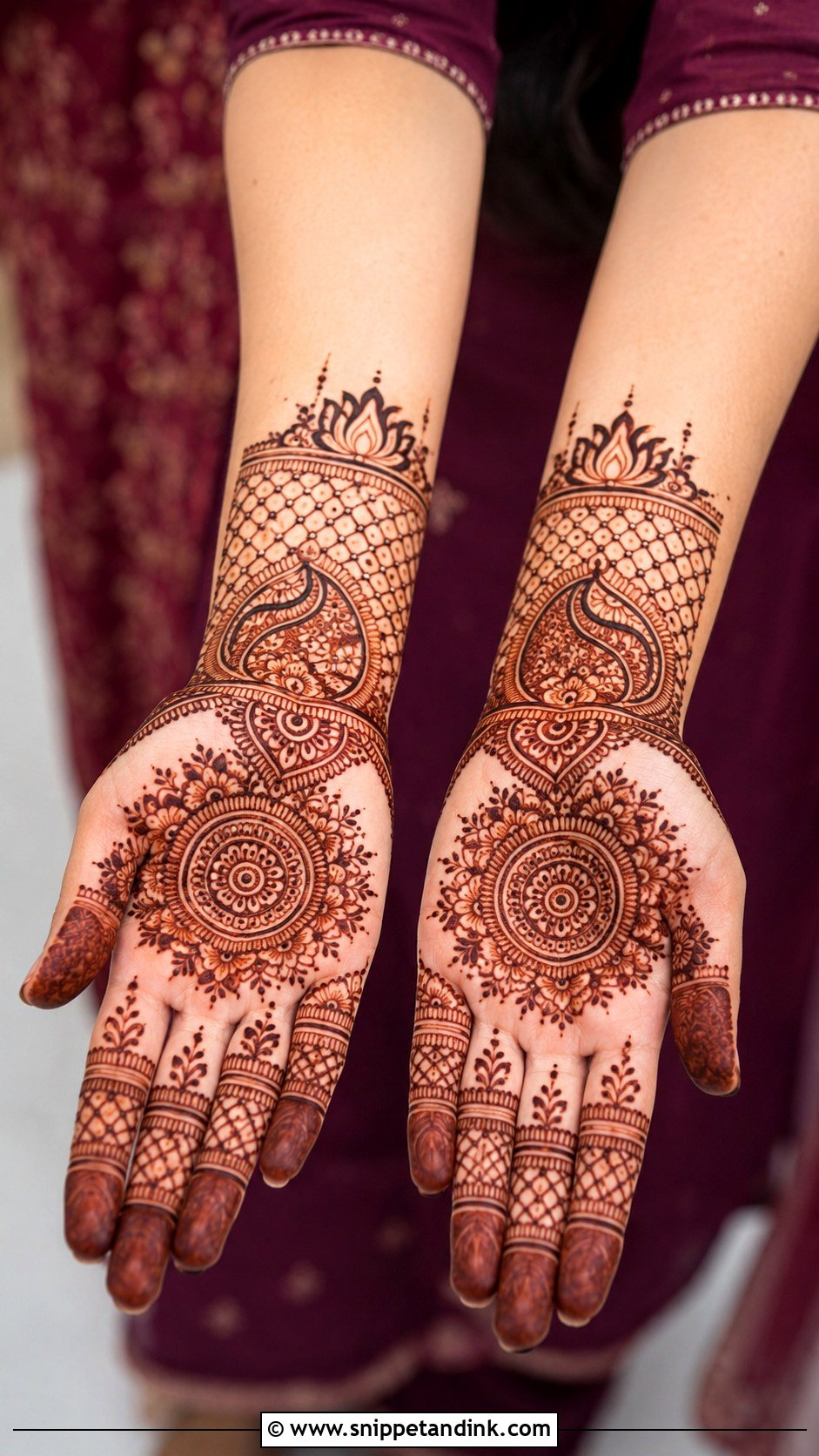
Karwa Chauth calls for something traditional, and many women prefer palm-focused designs because the palms are on show during the rituals. A mandala, paisley cluster, lotus motif or fine Indian pattern can cover the lower palm and wrist, with delicate finger details. Small jaali sections or a hidden initial add a bridal touch. Half coverage dries faster, so I’d apply it the day before so the stain has time to deepen by the evening puja.
29. Kids Half Hand Mehndi Design
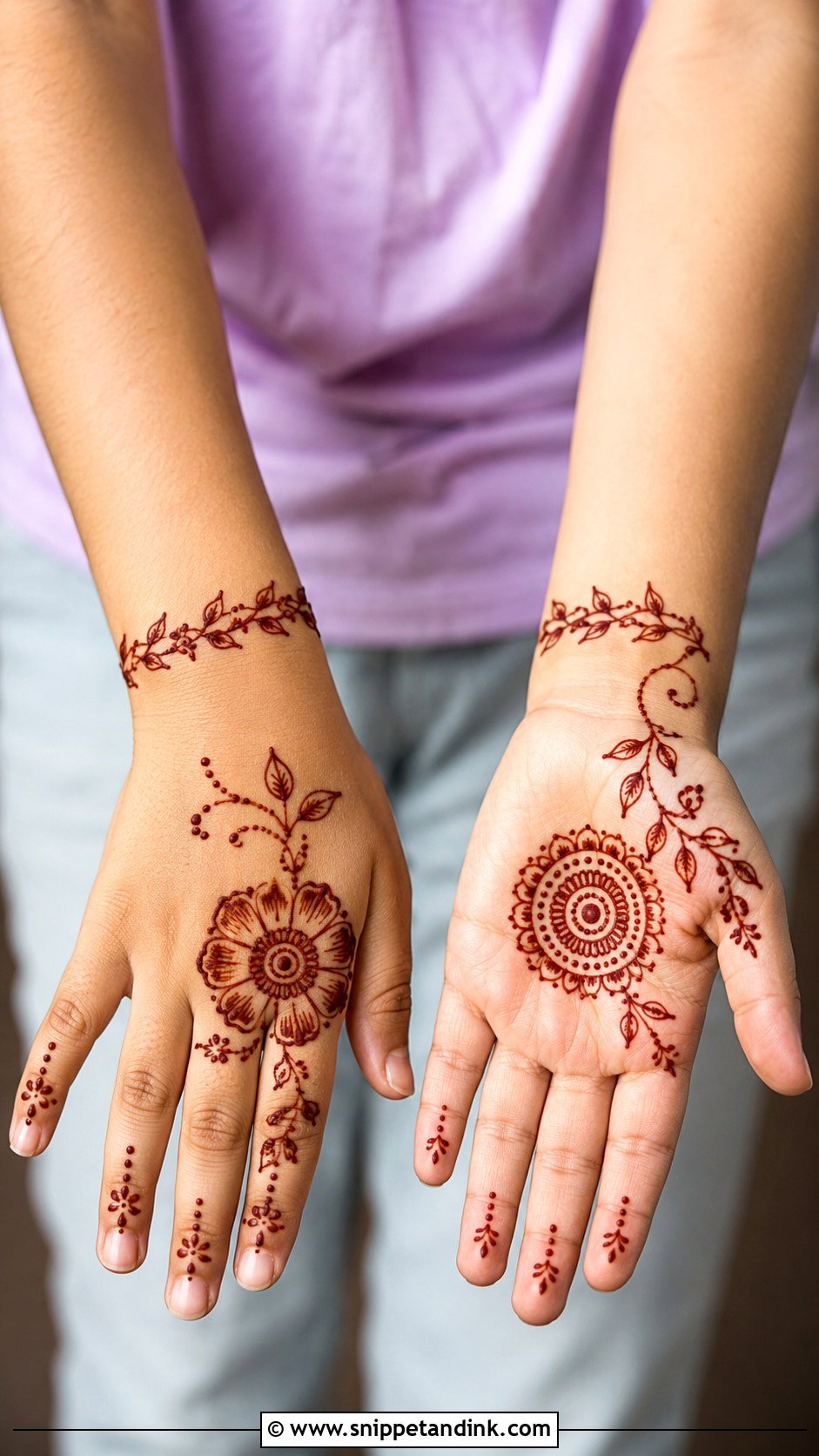
Kids half hand mehndi design work needs to be quick, because children don’t sit still. I use larger motifs: a small flower, a butterfly shape, a simple mandala, a leafy bracelet or a dotted vine. The design stays small, on the back hand or palm. Use only natural henna, and do a small patch test first on sensitive skin. Finger dots or tiny bands complete it.
30. Teen Half Hand Mehndi Design
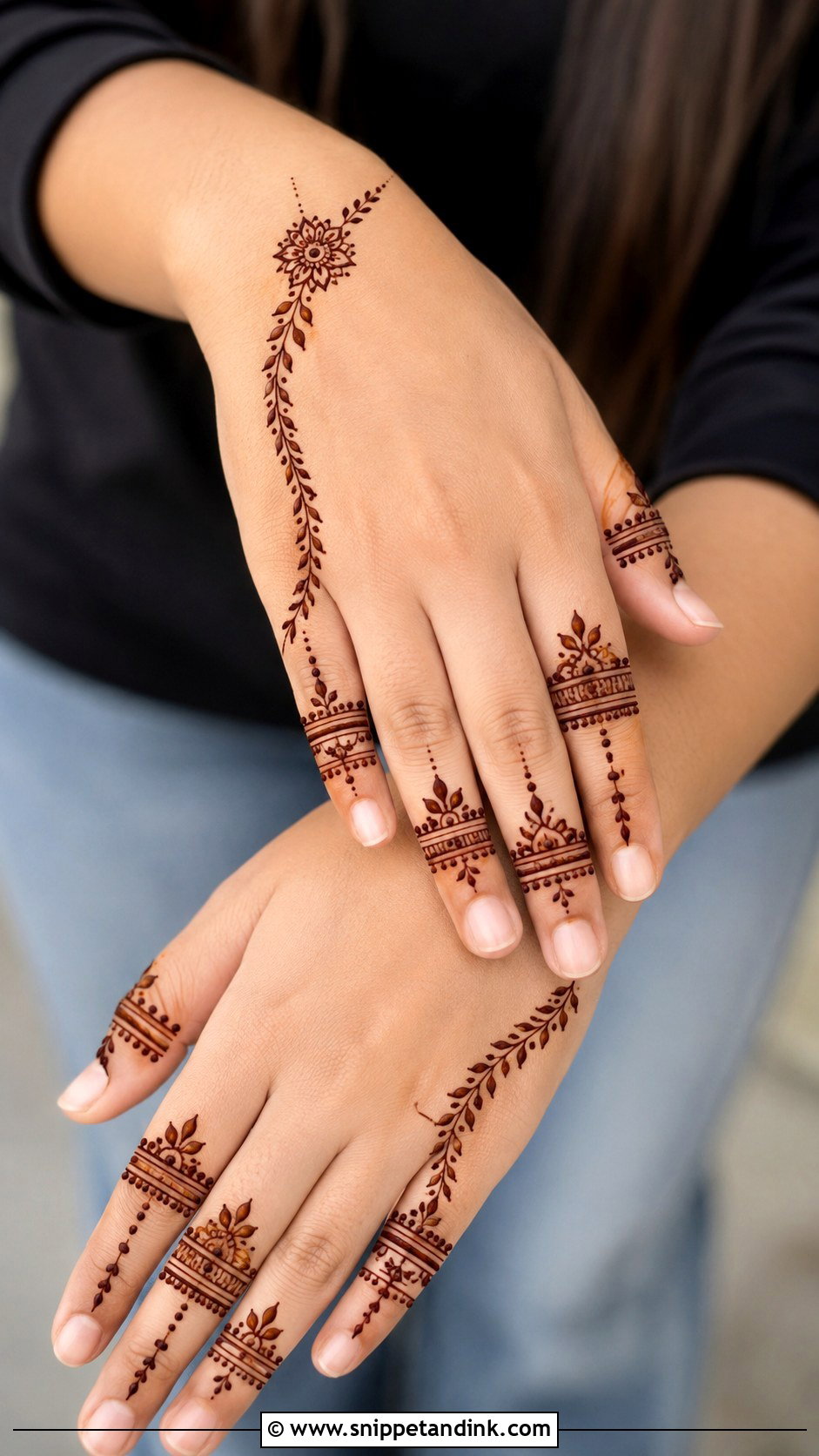
Teenagers usually want something modern rather than traditional. Minimal vines, finger rings, floral trails, geometric borders and back-hand jewelry patterns all suit. The design covers the fingers and one side of the hand, leaving the center open. Clean lines and modern spacing matter more than detail. A small floral charm connected to finger bands is a popular choice.
31. Beginner Half Hand Mehndi Design
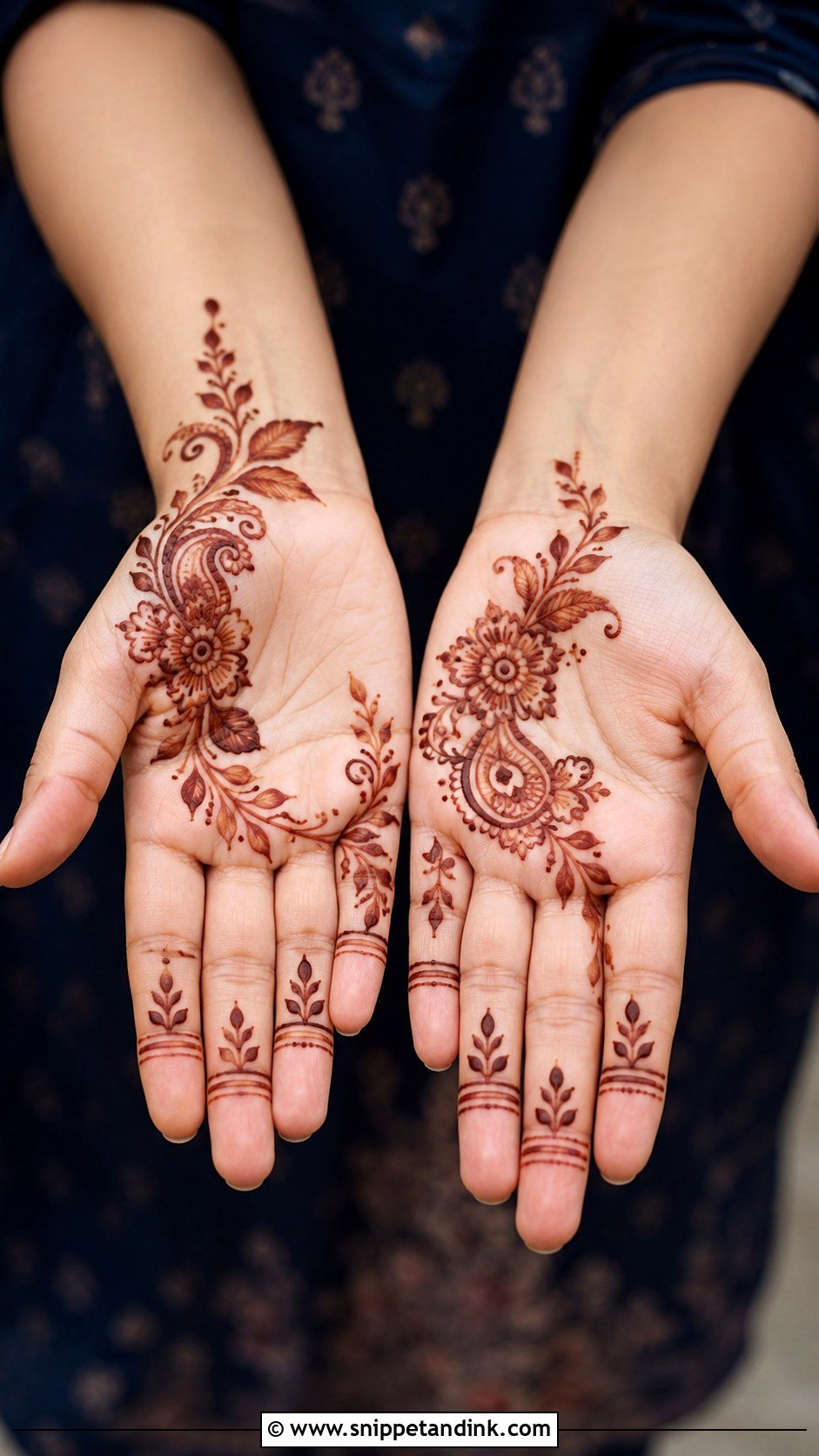
If you’re learning, start with easy shapes: a flower, a circle, a paisley or a curved vine, then add leaves, dots and simple finger bands. Skip fine jaali or heavy filling until your cone control improves. A wrist-to-palm layout is the easiest, because it follows the natural flow of the hand. Practice on paper first, holding the cone like a pen and squeezing from the top. A simple design done neatly always looks better than a complex one done unevenly.
32. Shaded Half Hand Mehndi Design
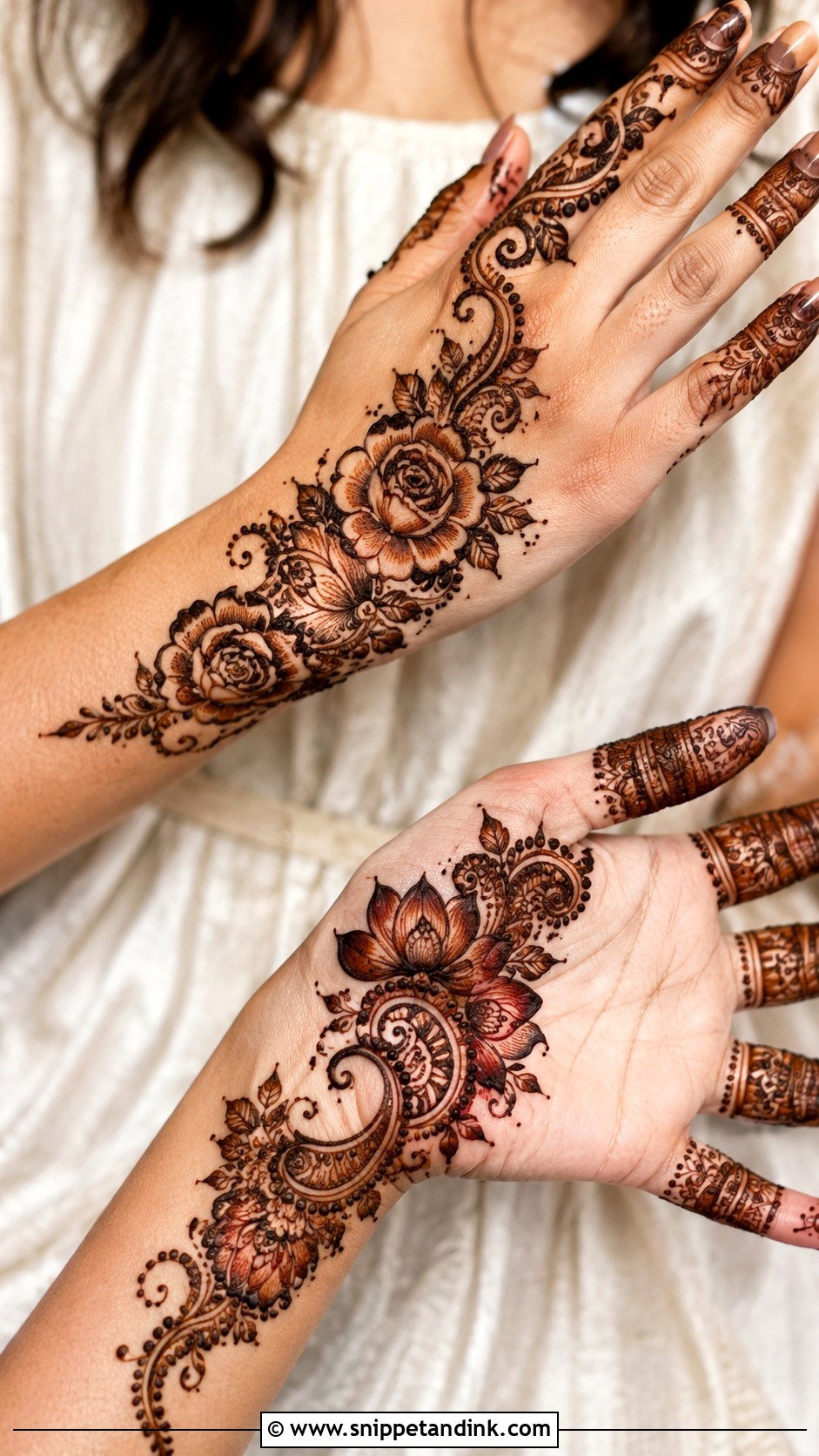
Shading adds depth without more coverage. It uses soft strokes inside flowers, leaves, paisleys and borders. Arabic and Indo-Arabic patterns work best because the large motifs give room for gradients. I shade by drawing very fine, close lines rather than pressing harder, because thick paste in a shaded area stains as a dark patch. Outlines should still stay clear.
33. Heavy Half Hand Mehndi Design
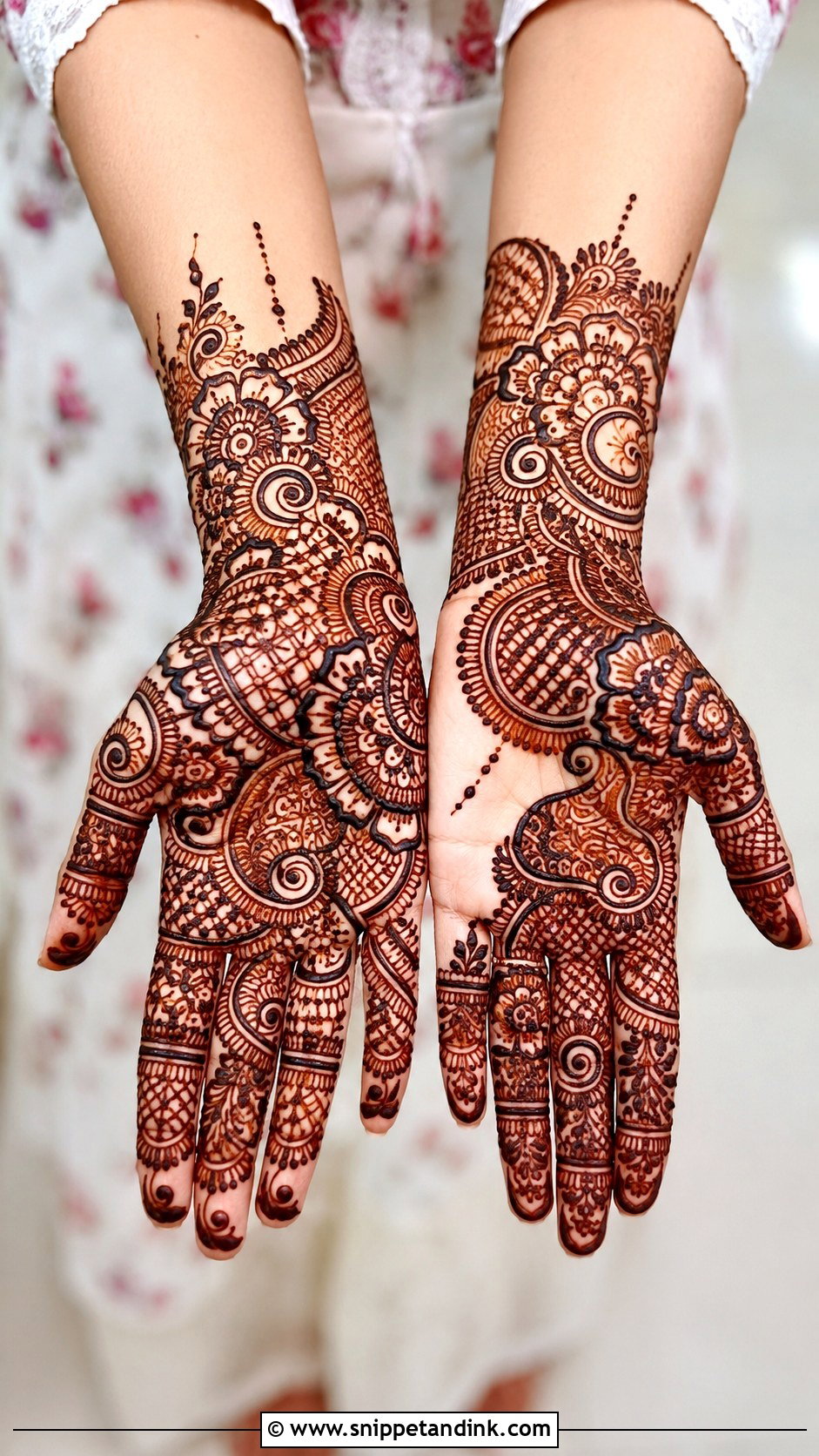
Heavy half-hand mehndi packs the decorated section with paisleys, florals, jaali, dots, curls and fine fillings. The other half stays open, which makes the heavy area stand out more. It suits bridesmaids, guests and traditional festivals. The boundary is critical; without a clean edge it looks unfinished. I pick one direction, wrist-to-palm or diagonal back hand, and keep all motifs connected.
34. Half Hand Mehndi Design For Wedding Guest
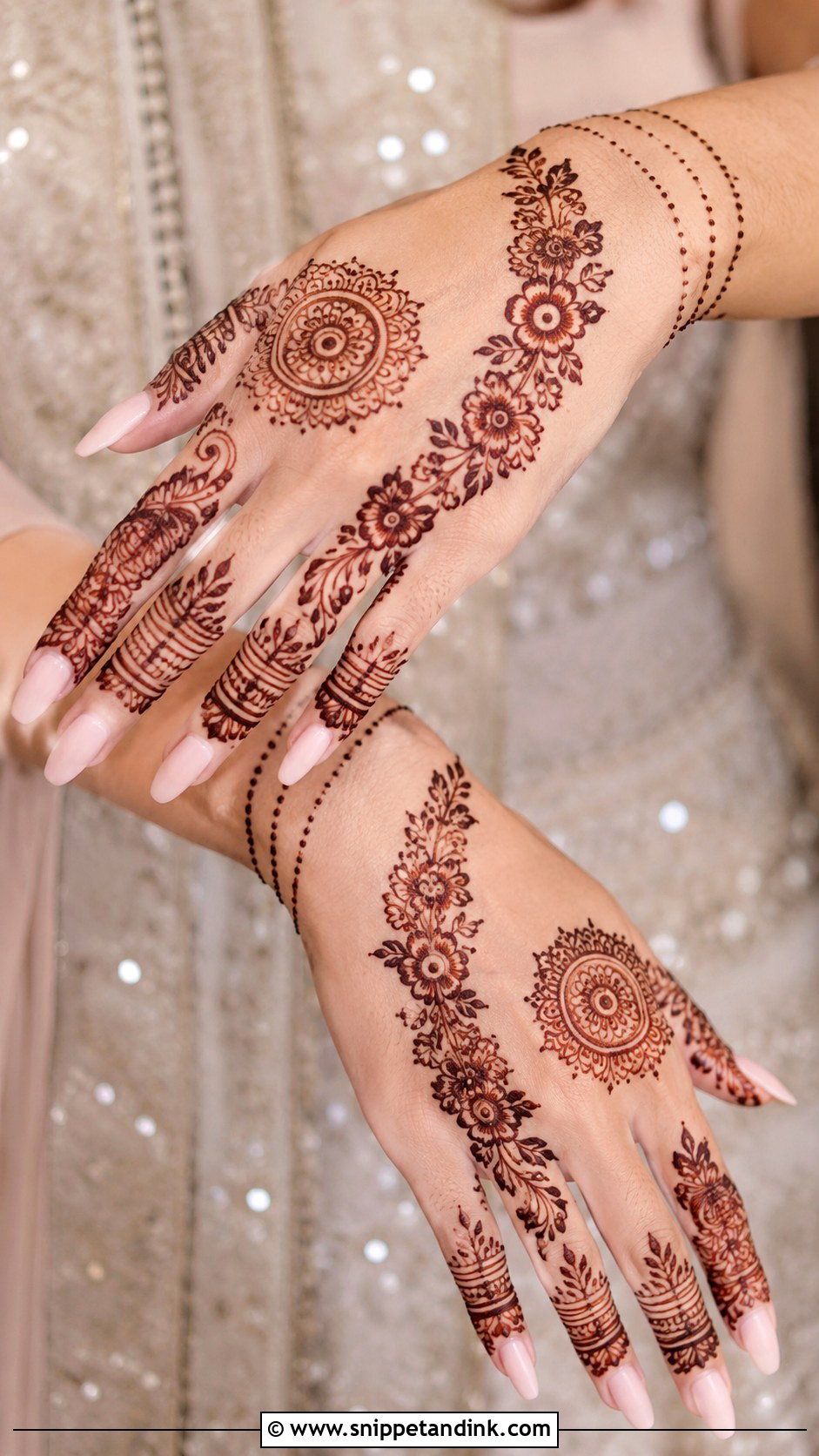
As a guest, you want enough detail for the occasion without looking bridal. A floral diagonal trail, a mandala palm design, a wrist bracelet or an Indo-Arabic back-hand pattern all suit. I always finish the fingers so it looks complete. Keeping coverage to about half the hand lets your rings, bangles or nail color show. It dries faster than a full hand, which helps at long events.
35. Half Hand Mehndi Design For Bridesmaid
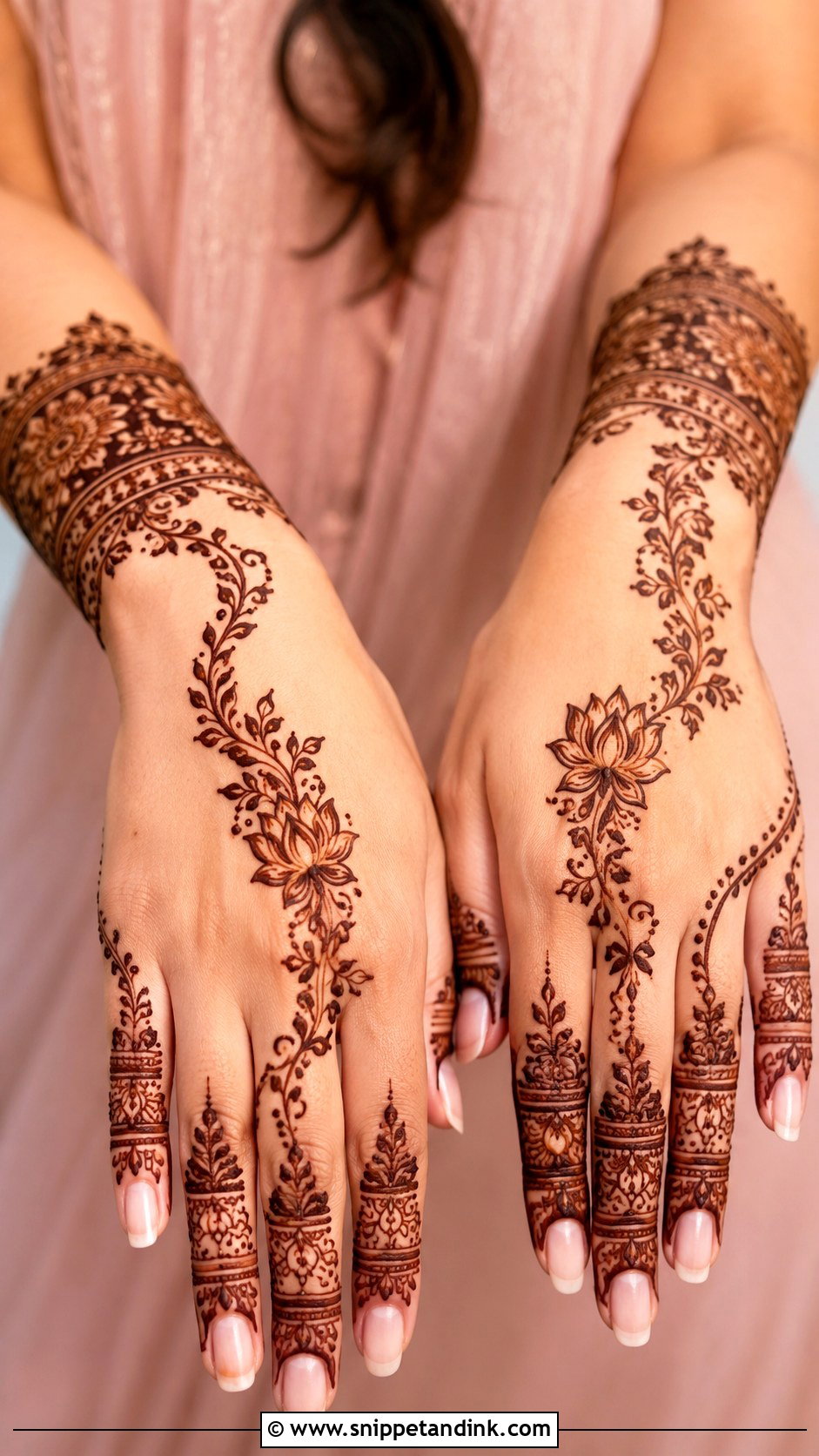
Bridesmaid mehndi can be more detailed than a guest’s but should stay lighter than the bride’s. A back-hand jewelry pattern, an Arabic floral trail, a lotus wrist cuff or a diagonal Indo-Arabic layout all work. I keep the fingers detailed and the main area balanced. If the bride has heavy full-hand mehndi, a lighter half-hand version complements her. Coordinating motifs across the bridal party looks matched without being identical.
The First 48 Hours After the Paste Comes Off
The color you see when the paste comes off is not the final stain. Natural henna starts orange and deepens to reddish brown over the next one to two days. Most of what makes a dark stain happens after I’ve finished drawing.
- Leave the paste on for as long as you can, ideally six to eight hours or overnight.
- Dab a little lemon and sugar mix on the dry paste to keep it from cracking off early.
- Scrape the paste off with a blunt edge or rub it off. Don’t wash it off.
- Avoid water on the design for the first twelve hours or so.
- Keep your hands warm. Warmth helps the stain develop, while cold air slows it.
- Wait a day or two before judging the color; the peak usually comes on the second day.
After that, the stain lasts about one to two weeks, fading first where skin rubs or gets washed most. Applying it two days before the event gives you the best color on the day.
Natural Cones Versus Black Instant Henna
Natural henna paste is made from henna powder, lemon or water, sugar and essential oil, and it always stains in shades of orange to brown, never true black. Cones or pastes that promise jet black results in an hour may contain chemical dyes that can cause serious skin reactions. I’d avoid them, especially for children. If you have sensitive skin, ask for a small patch test a day before the main application.
One Detailed Half, One Clean Half
Half coverage works because one part of the hand carries the detail and the empty skin makes it look clean. Palm designs give the darkest stain and the most traditional look; back-hand designs read more like jewelry and photograph well with rings. Decide where the design stops before choosing motifs, use natural henna, and give it time to darken. Quick or detailed, the right pattern is the one that suits the occasion and your hands.
You'll Like These Ideas:








Leave a Reply