
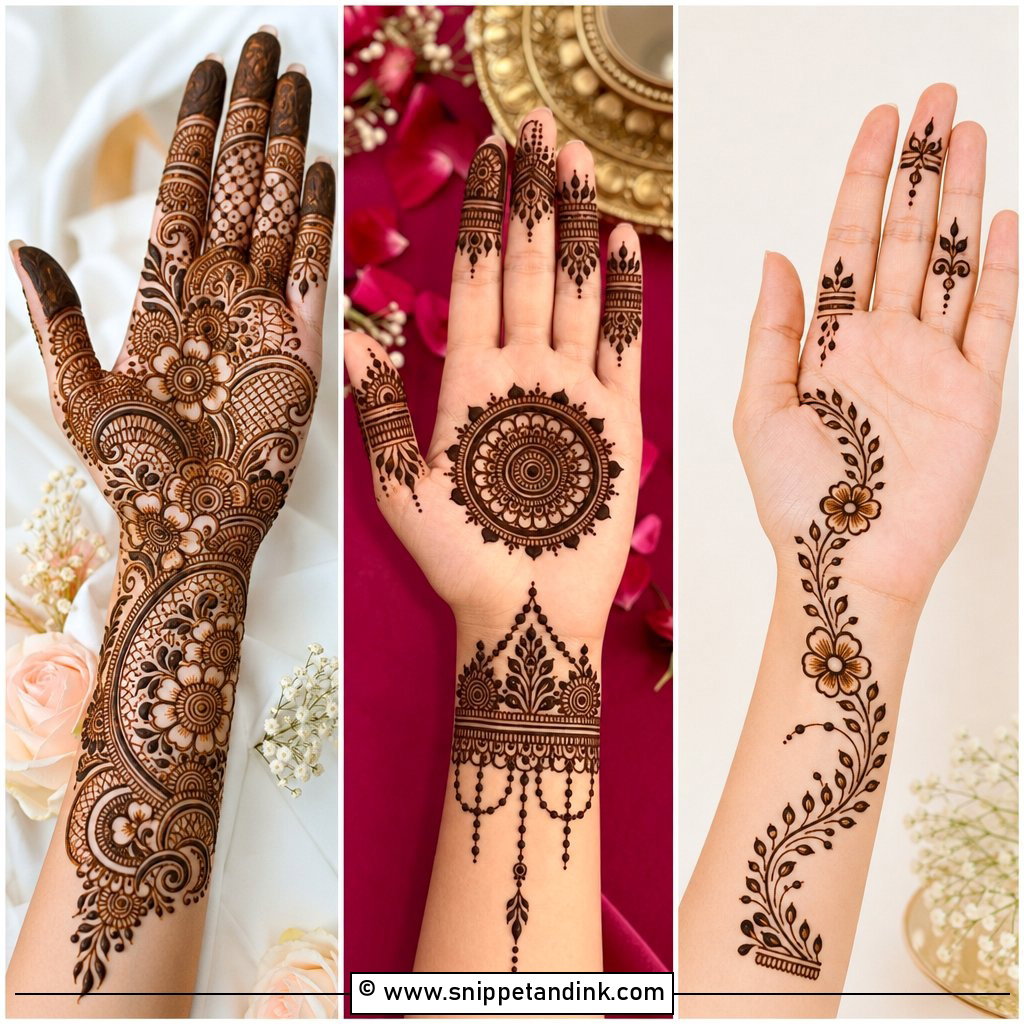
Semi bridal work on the back of the hand is the request I get most for the functions around a wedding: the engagement, nikah, sangeet, roka, Eid or Diwali, or a cousin’s wedding where you are close family but not the bride. It carries enough detail to feel dressed up, yet it leaves skin showing and takes a fraction of the time a full bridal hand needs. When I plan one, I’m balancing three things: a focal motif that reads from across a room, fingers that look finished, and a wrist that gives the whole design an edge. Below are the layouts I keep coming back to, from flowing Arabic trails to tight Moroccan geometry, with notes on how each one behaves once the paste comes off.
Mapping Your Hand Before the Cone Touches Skin
Before I draw anything I look at three things: the length of your fingers, where your bangles and rings will sit, and the sleeve of the outfit. A three-quarter sleeve hides most of a wrist cuff, so I move the weight of the design onto the hand. A sleeveless blouse or a short kurti shows the wrist, and that’s where a strong cuff earns its time.
Hand size changes the layout more than people expect. A large mandala on a small hand covers the knuckles and leaves nowhere for the fingers to breathe, while a single floral cluster on a broad hand can look lost. Show your artist one or two reference photos, then let her scale the motifs to you rather than copying the picture line for line.
- Tell her which events the henna has to last through, so she knows how dense to go.
- Say whether you want both hands mirrored or one hand heavier, before she starts.
- Mention any ring you never take off; she can design around it or leave a clean band.
- Ask how long the design will take, and plan to sit for that time plus drying.
1. Arabic Semi Bridal Mehendi Design For Back Hand
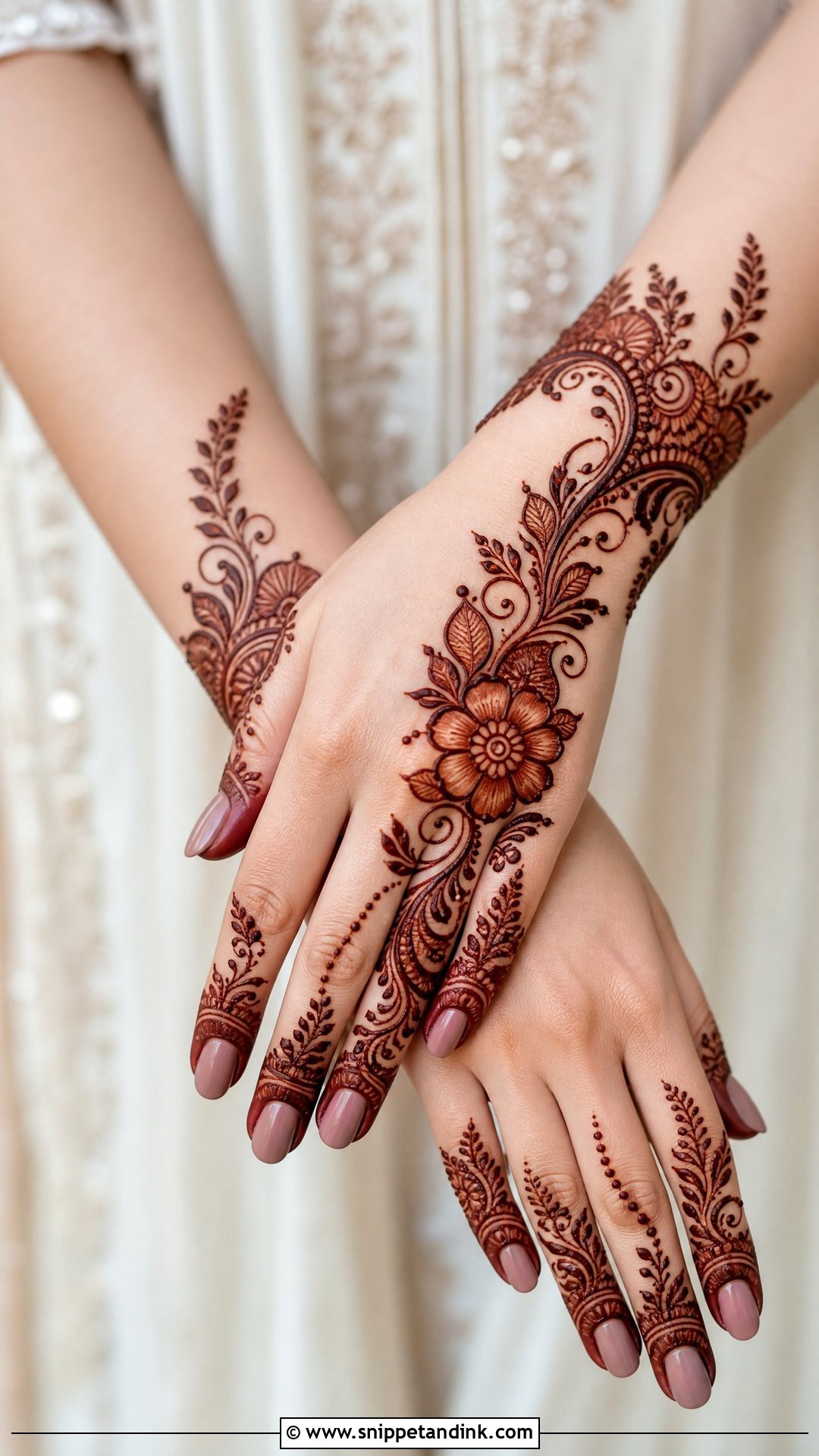
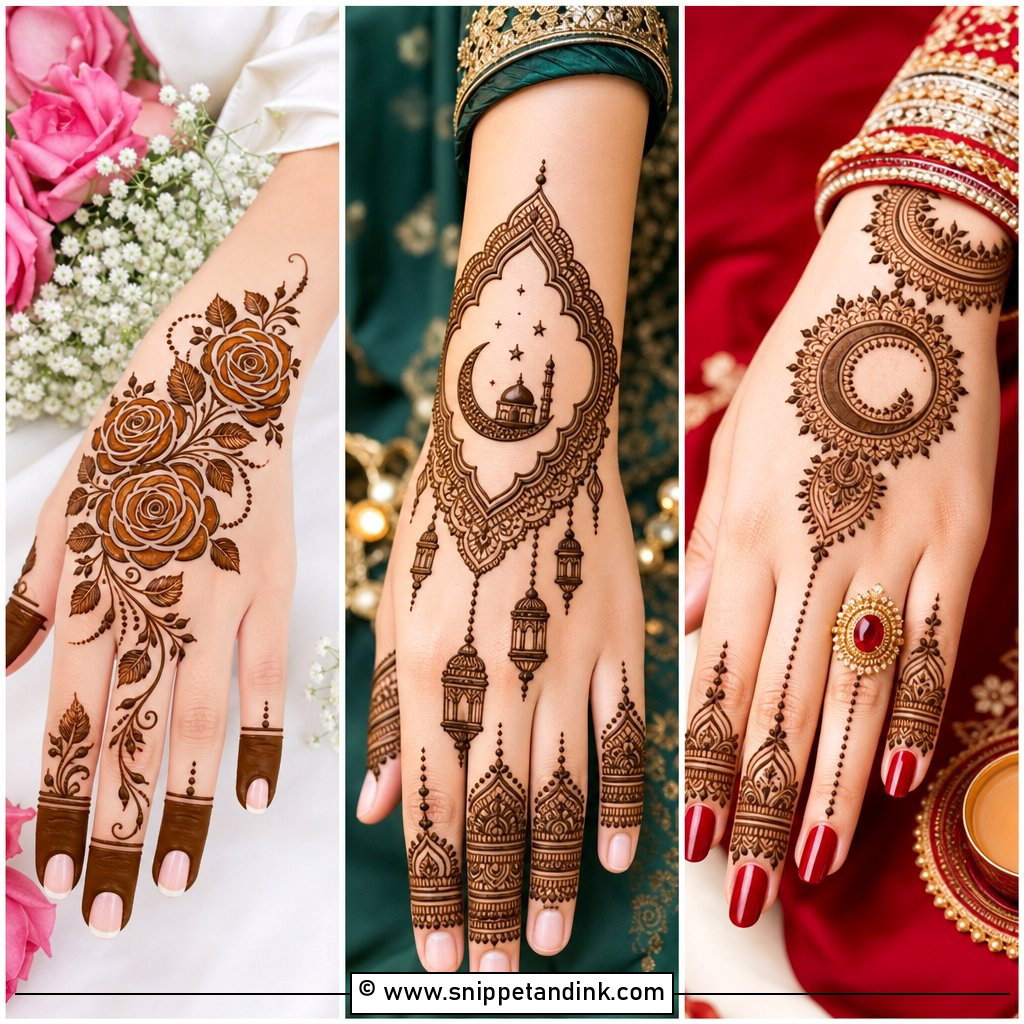
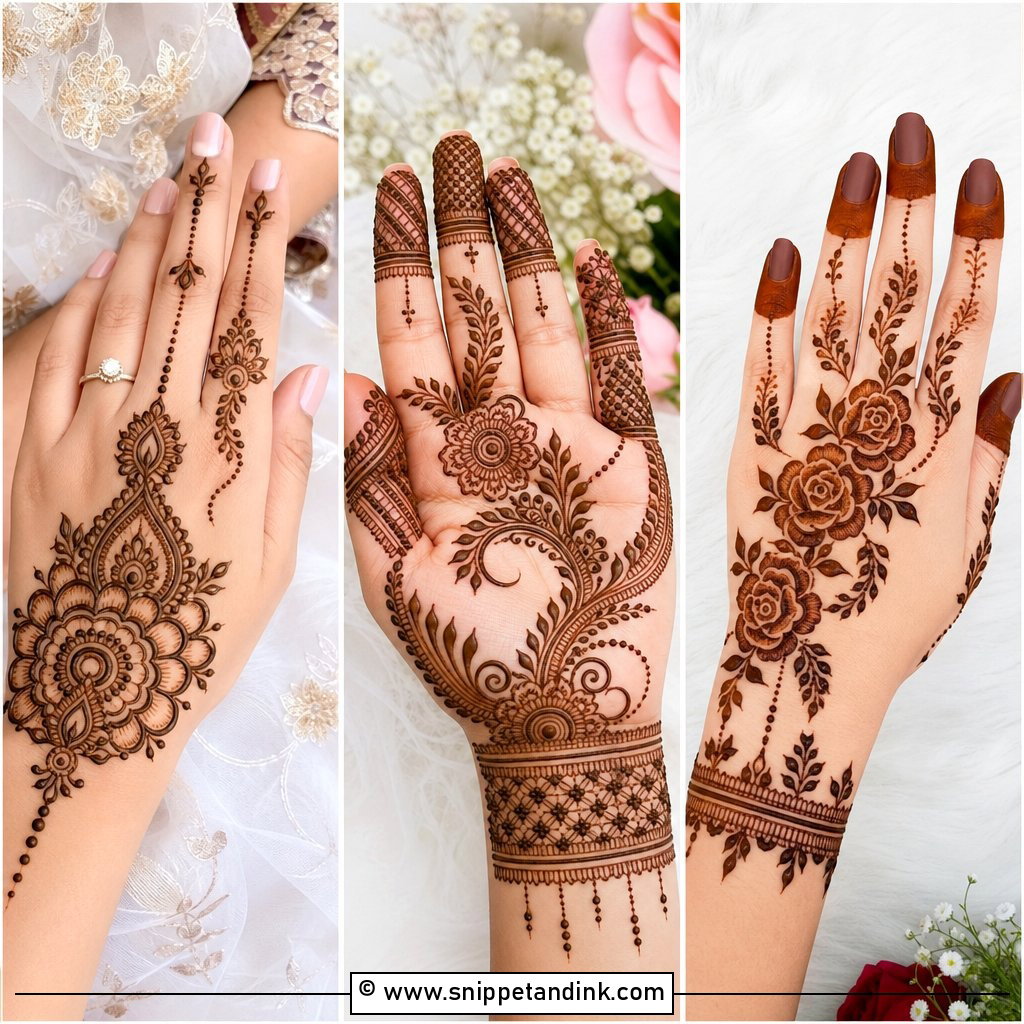
Arabic layouts run on a diagonal: a heavy floral cluster at the wrist or outer edge, then a trail that thins as it climbs toward the index finger. The open skin is the point, so I pipe these with a slightly thicker line than Indian work, otherwise the empty areas make the motifs look weak once they stain. Shaded petals and a curling vine give it body. Cap the fingertips solidly, because tips take the darkest stain on the hand, and finish with a thin band at the wrist so the trail has somewhere to start.
2. Indian Semi Bridal Mehendi Design For Back Hand
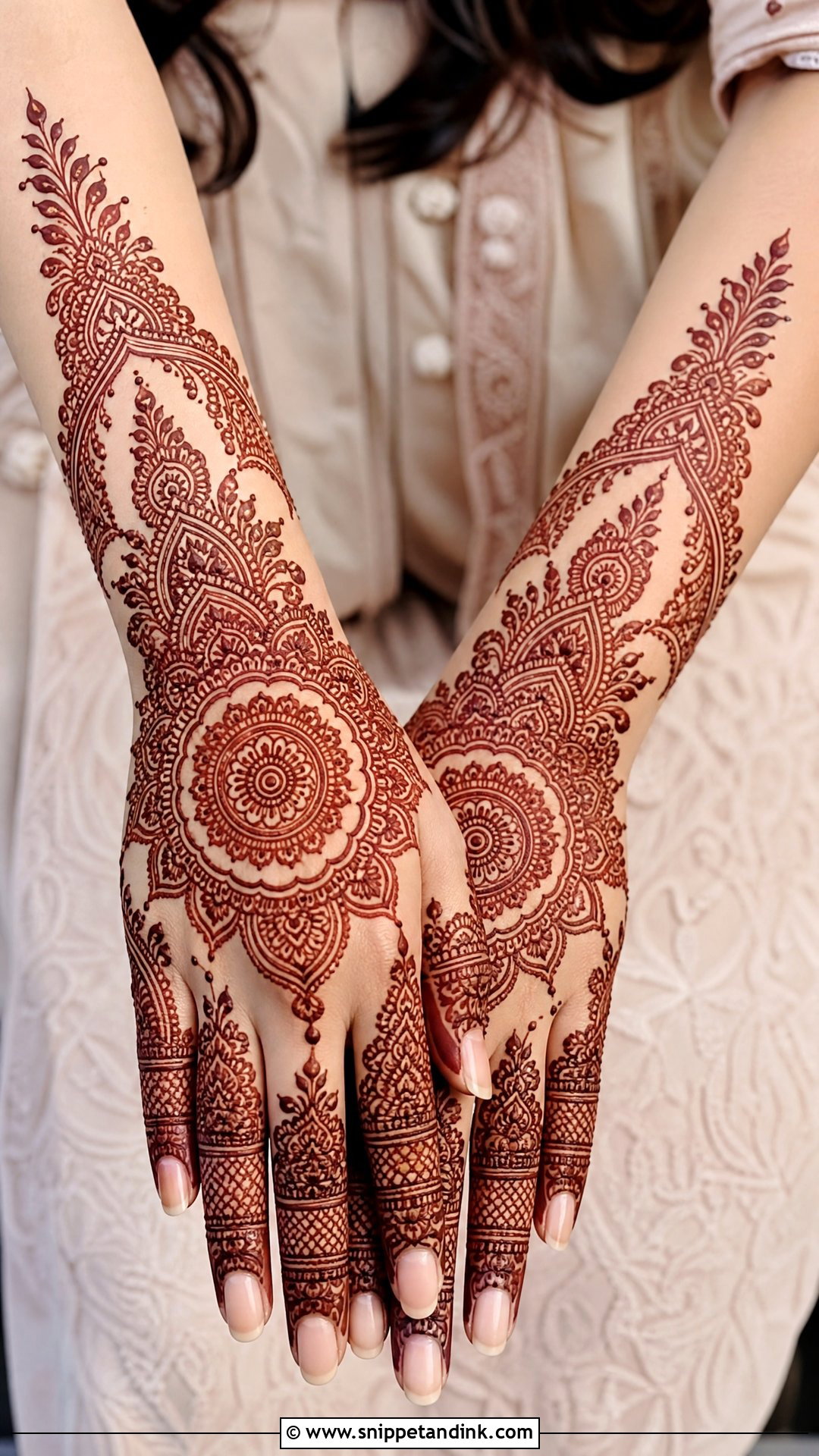
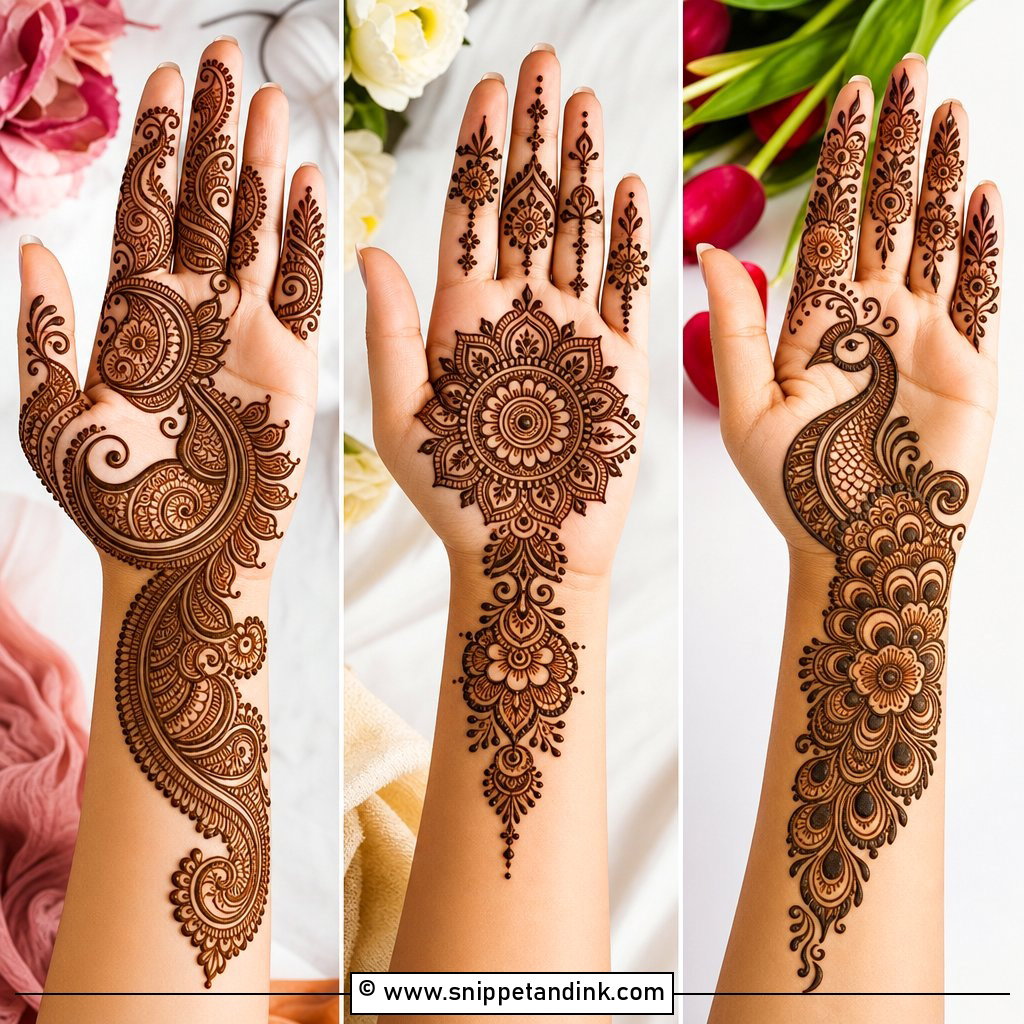
Traditional Indian back hand work is fuller: a central mandala, small paisleys, leafy borders, dotted filler and narrow finger bands. What keeps it semi bridal rather than bridal is that I divide the hand into sections and let a little skin show between each one, instead of packing every gap. Matching both hands exactly takes longer than people expect, so tell your artist early if you want mirror symmetry. With silk lehengas and heavy kundan sets I keep the wrist lighter, because a bangle stack will cover most of it anyway.
3. Indo Arabic Semi Bridal Mehendi Design For Back Hand
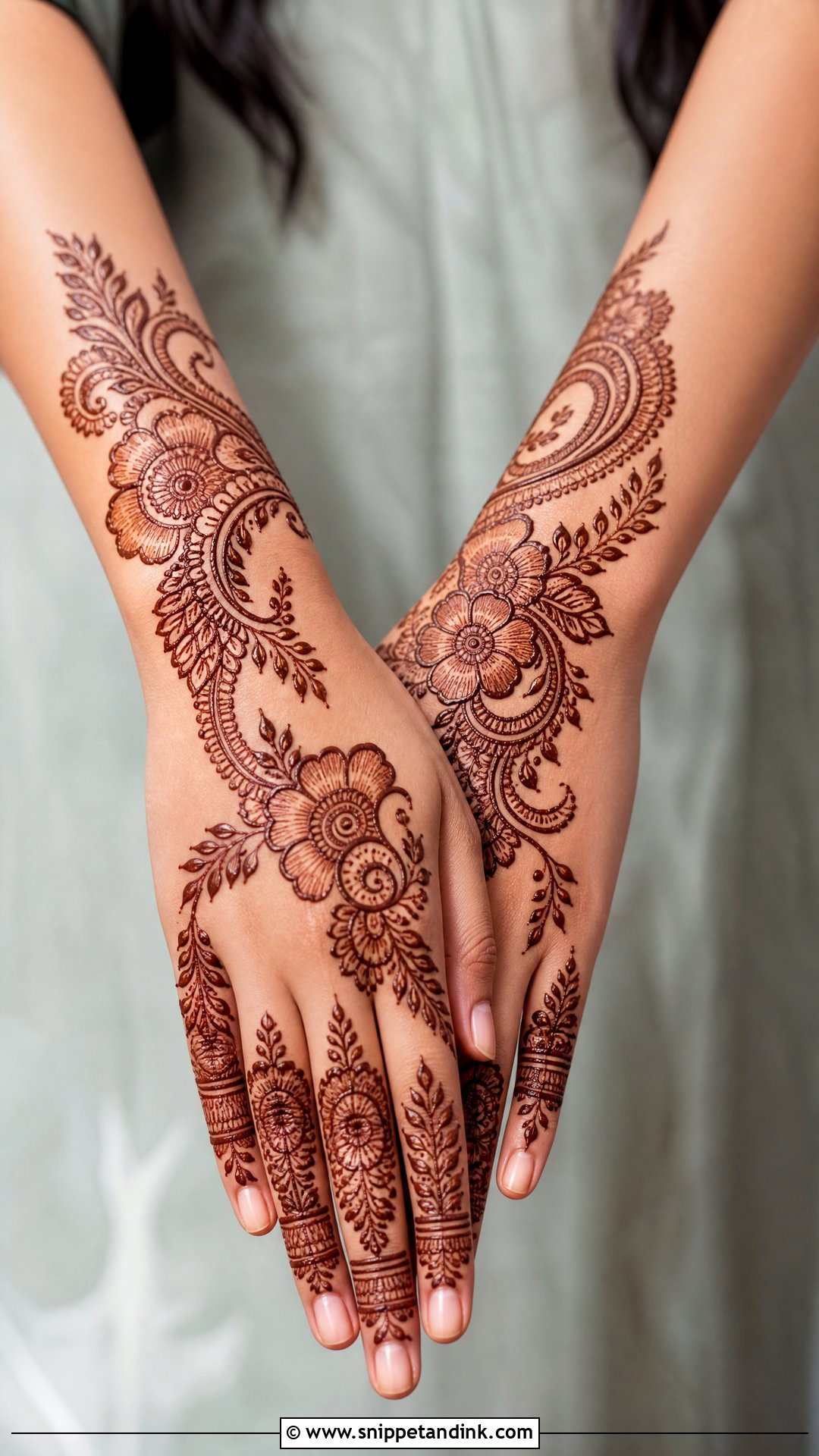
Indo Arabic is my default suggestion when someone can’t decide. You get the big Arabic flowers and paisley curves with open space around them, and inside those shapes I add the fine Indian mesh, dots and tiny vines. The fine filler is what lifts it in close-up photos. Because the bold outer shapes go on fast, it’s realistic for a busy pre-wedding day when several family members are waiting for the cone. A diagonal from wrist to middle finger flatters most hands, and a small mandala near the knuckles stops the top of the design feeling empty.
4. Floral Semi Bridal Mehendi Design For Back Hand
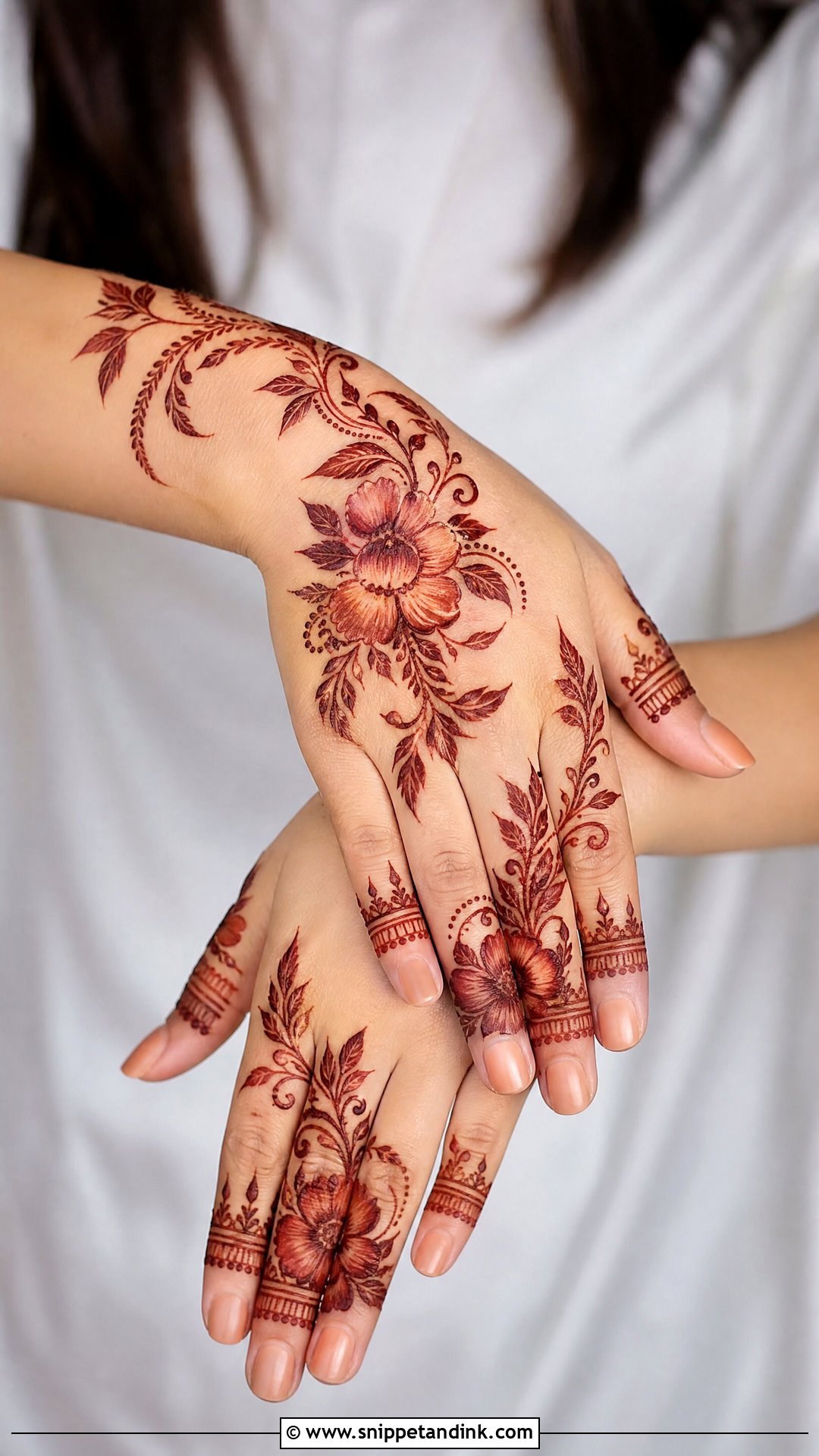
Floral back hands usually rest on one or two large blooms joined by vines and small buds, with leaf bands or tiny flower chains on the fingers. The mistake I see is spacing the flowers so far apart that the hand looks half done. Keep them close enough that the vines are short and confident. Fine shading inside each petal gives depth after the stain darkens, and a wrist cuff of mini florals ties it together. Pastel outfits and daytime functions suit this one particularly well.
5. Mandala Semi Bridal Mehendi Design For Back Hand
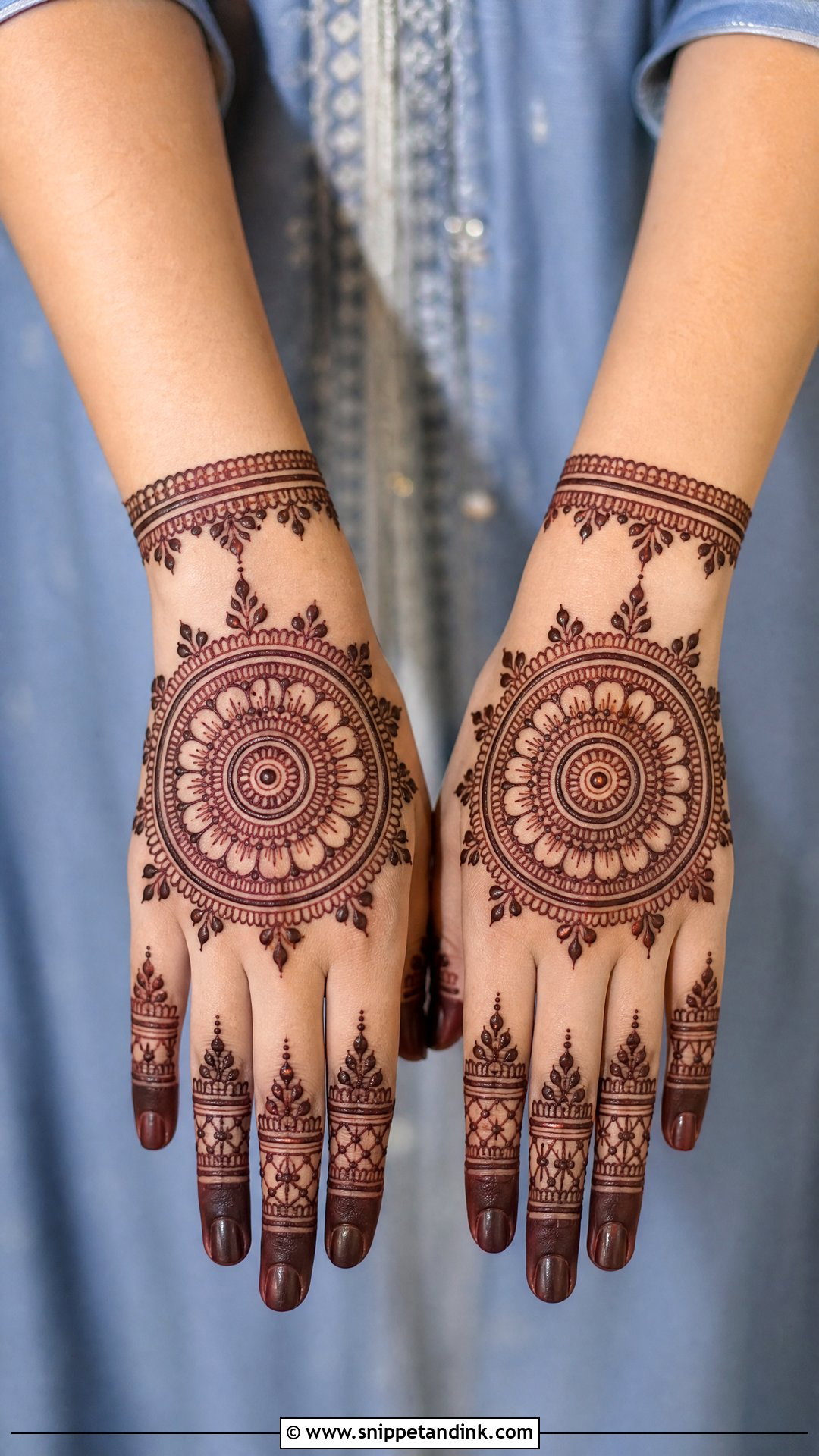
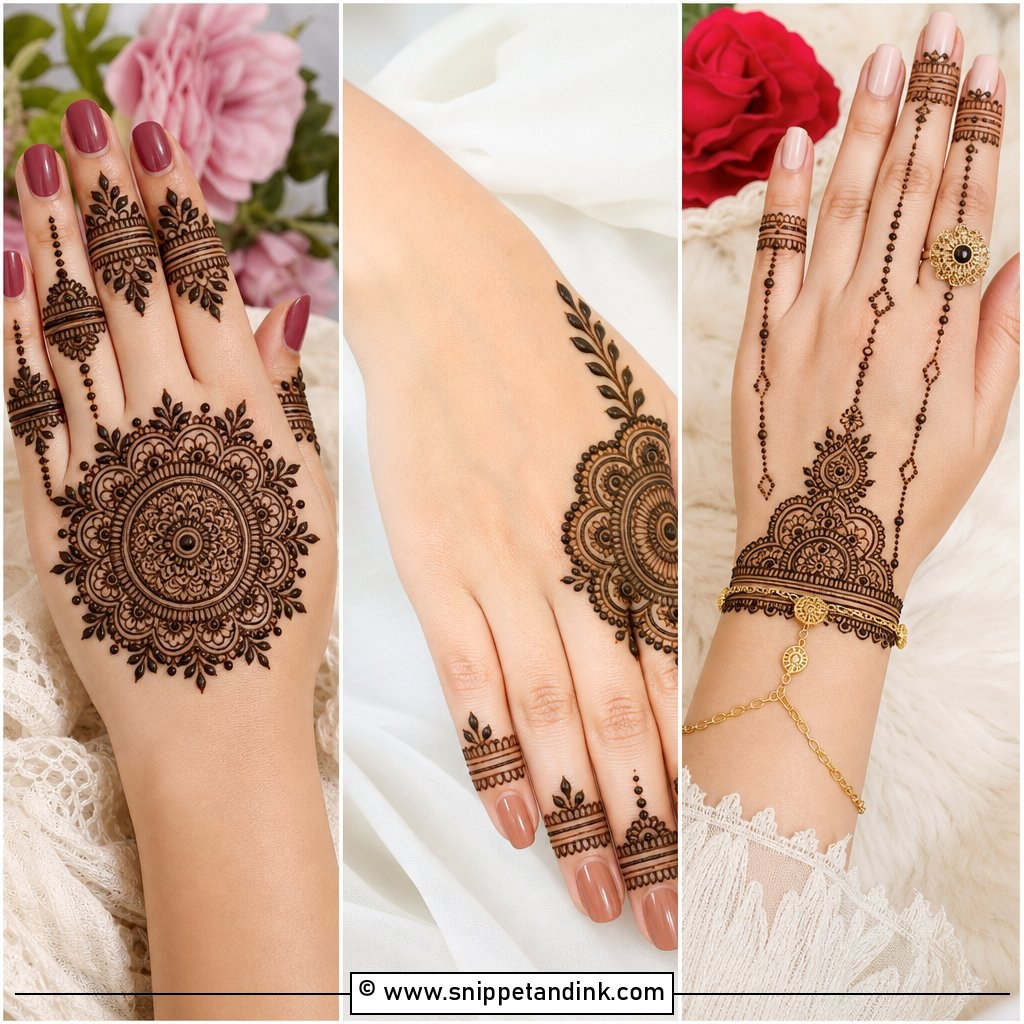
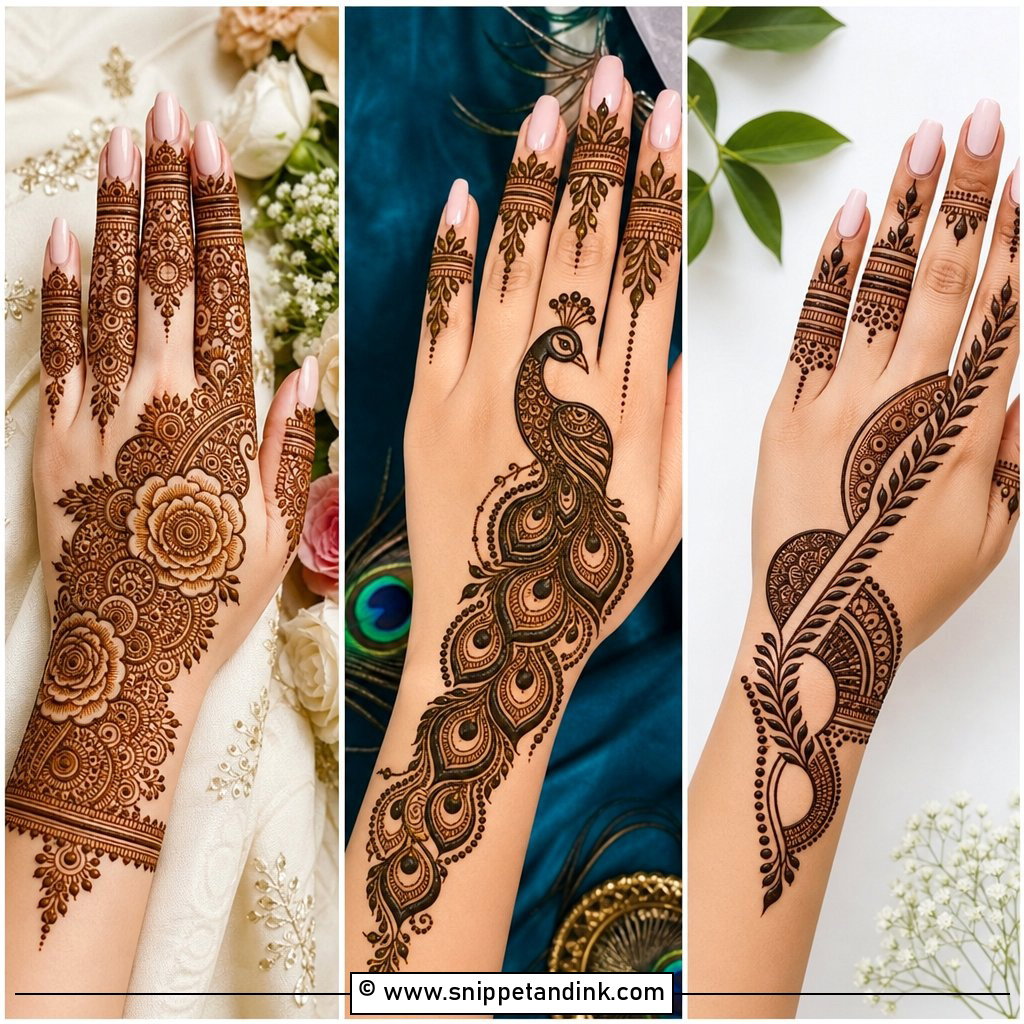
A mandala centered on the back of the hand is the easiest layout to match across both hands, which is why I suggest it to anyone who notices asymmetry. The circle reads as one clean shape from a distance, then reveals rings of petals, dots and fine lines up close. I size it to the hand: on a small hand a wide mandala swallows the knuckles, so I shrink it and let leafy chains carry the detail toward the fingers. A bracelet-style wrist band grounds it. The center motif draws the eye naturally, so it suits almost any hand shape.
6. Jaali Semi Bridal Mehendi Design For Back Hand
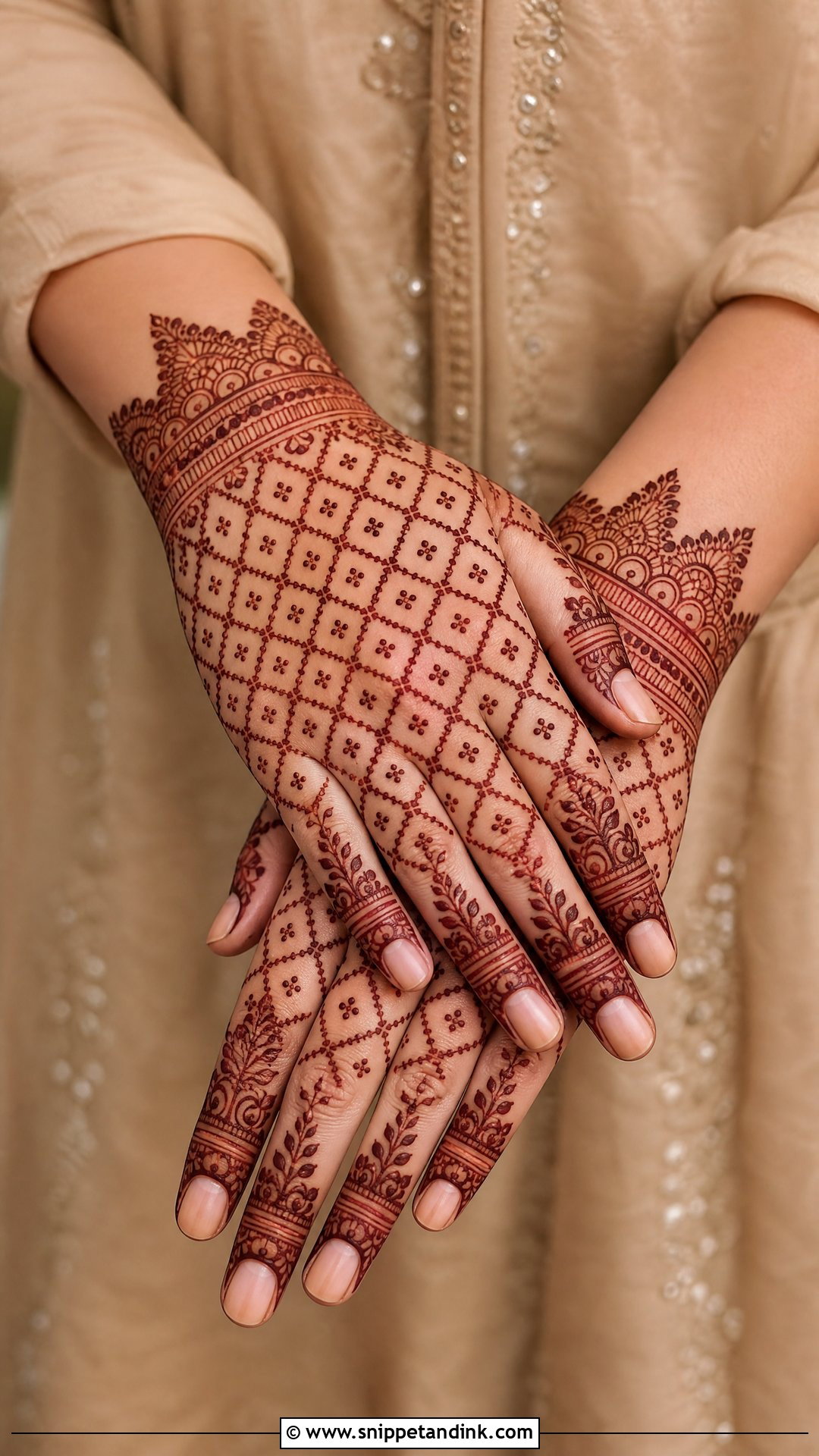
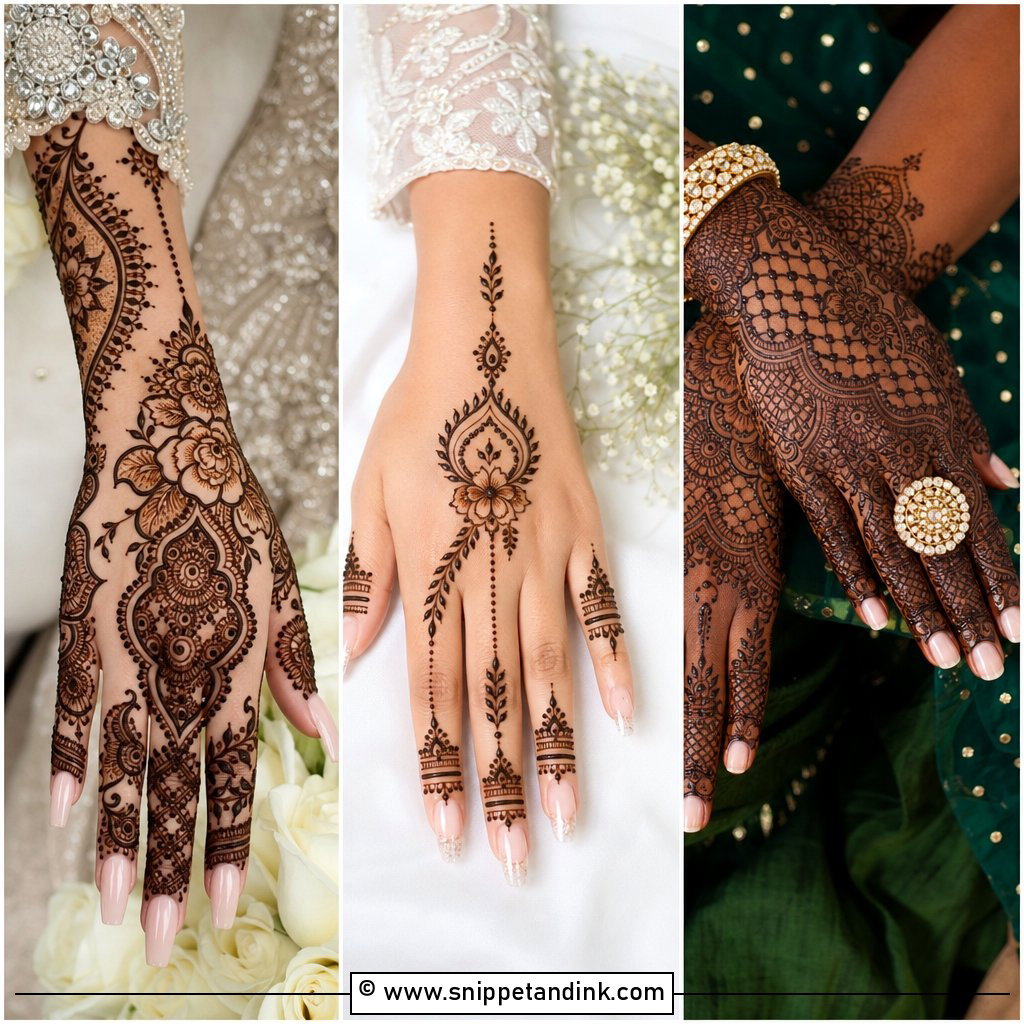
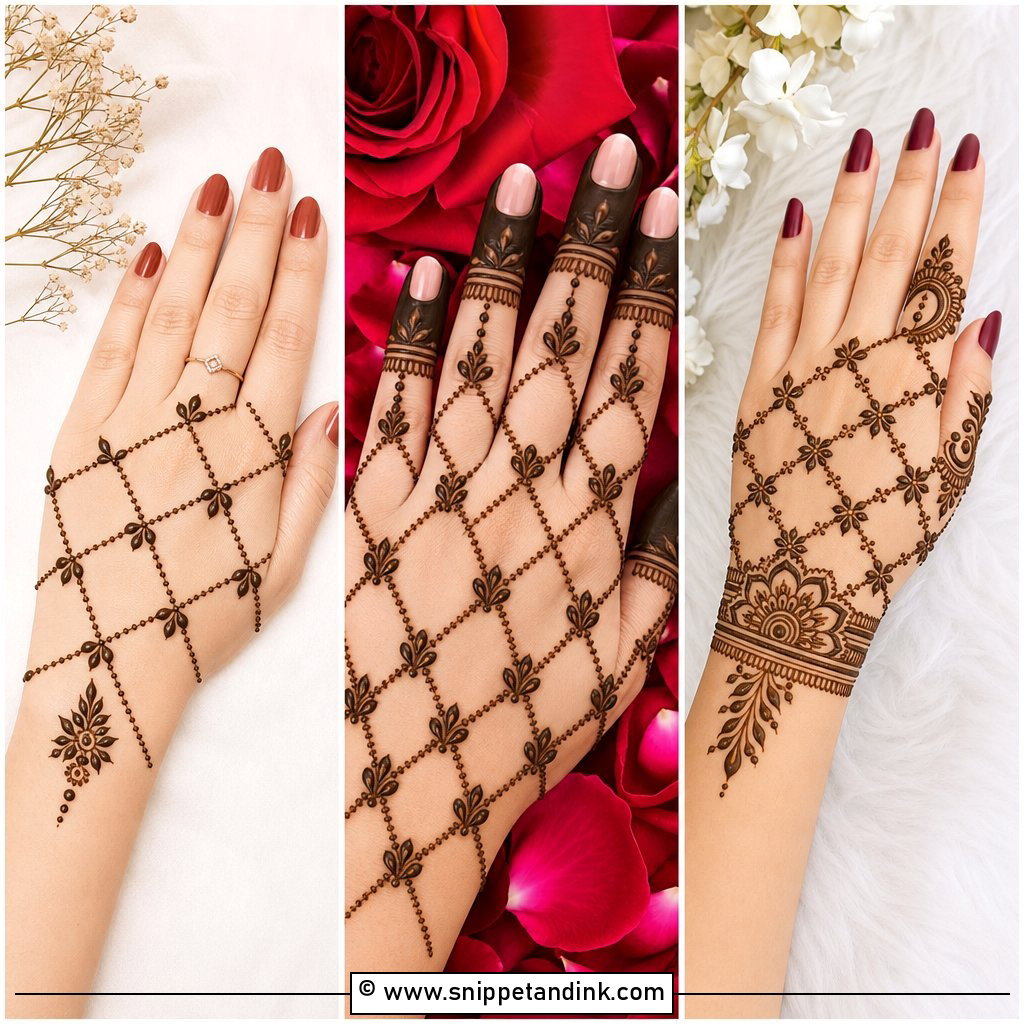
Jaali gives the hand coverage without heavy motifs everywhere. I fill the center with a net of squares or diamonds and frame the sides, fingers and wrist with floral borders. The grid is unforgiving: if the lines drift, every cell shows it, so this is a design I only pipe slowly and with a fine cone tip. Dropping a dot or tiny flower into each cell makes it read more bridal. Since it resembles lace, it sits nicely under rings and bangles without competing with them.
7. Paisley Semi Bridal Mehendi Design For Back Hand
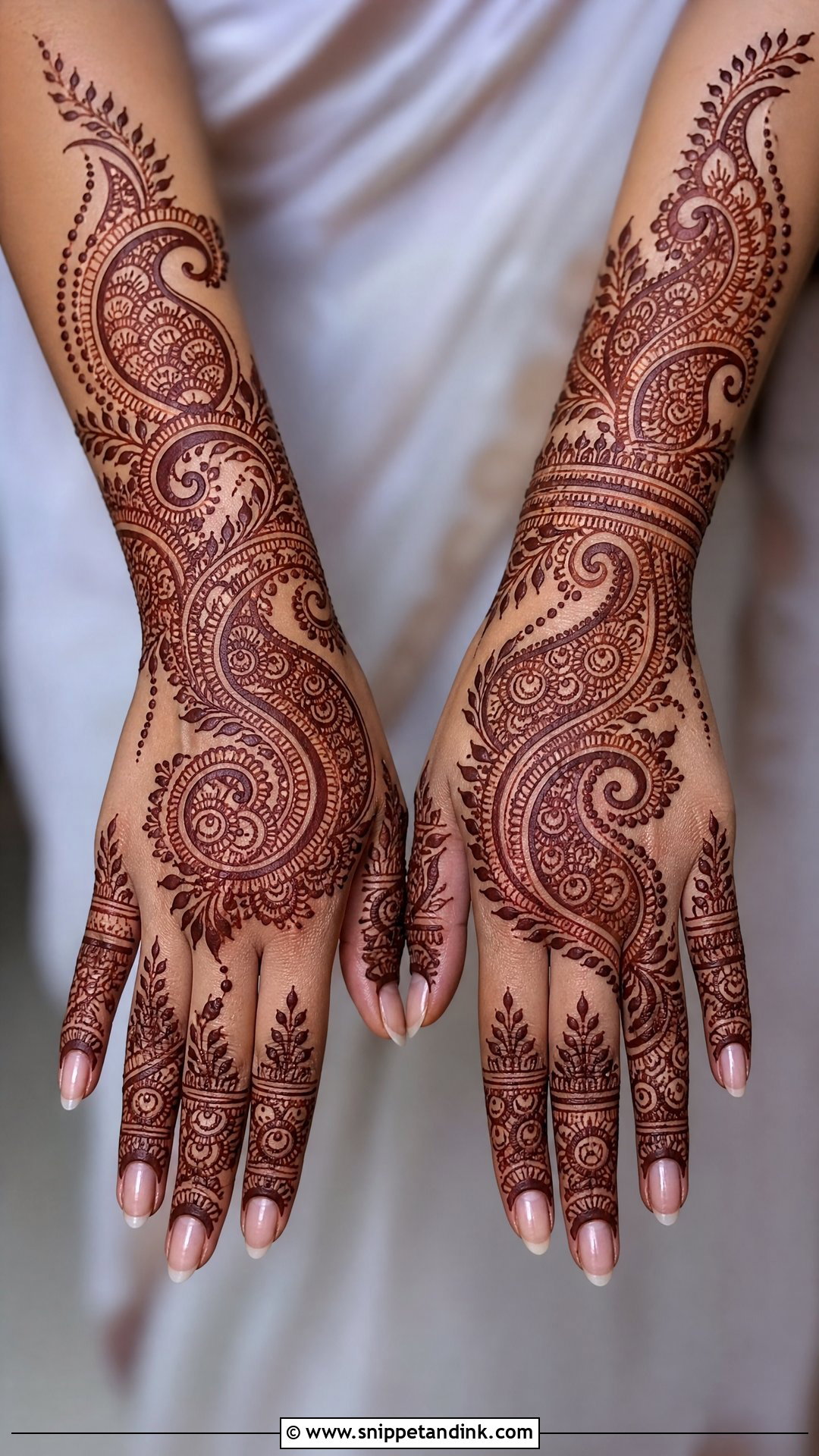
Paisley is the motif most families recognise as wedding henna, and it scales down well for semi bridal work. I usually let one large paisley start near the wrist and sweep across the hand, then tuck smaller ones into the side spaces and fingers. Leafy curls and fine inner lines keep it from looking clumsy. For a more modern version, leave a clear margin of bare skin around the main paisley. That gap makes the shape pop once the stain matures and stops the hand looking packed.
8. Peacock Semi Bridal Mehendi Design For Back Hand
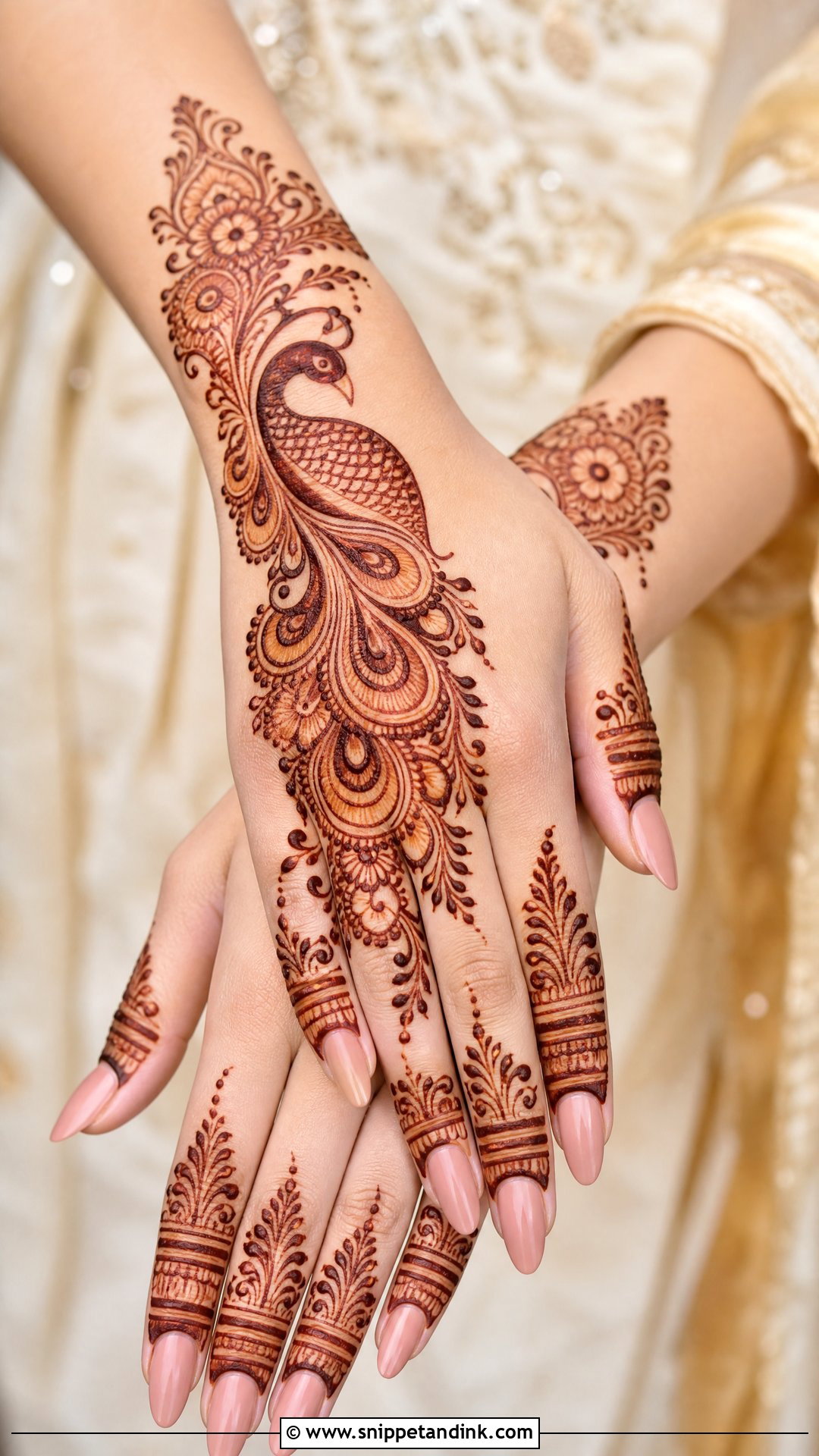
A full bridal peacock often spreads across the palm and forearm. On the back hand I shrink it: a small bird near the wrist or center, with the feathers fanning toward the fingers in thin lines, dots and shaded petals. The feather tips are where beginners overfill, so I keep them airy or they merge into one dark blob as the stain develops. Engagement brides and guests who want a cultural motif tend to pick this. Keep the fingers coordinated rather than crowded, and add a slim wrist band with a feather detail.
9. Jewelry Semi Bridal Mehendi Design For Back Hand
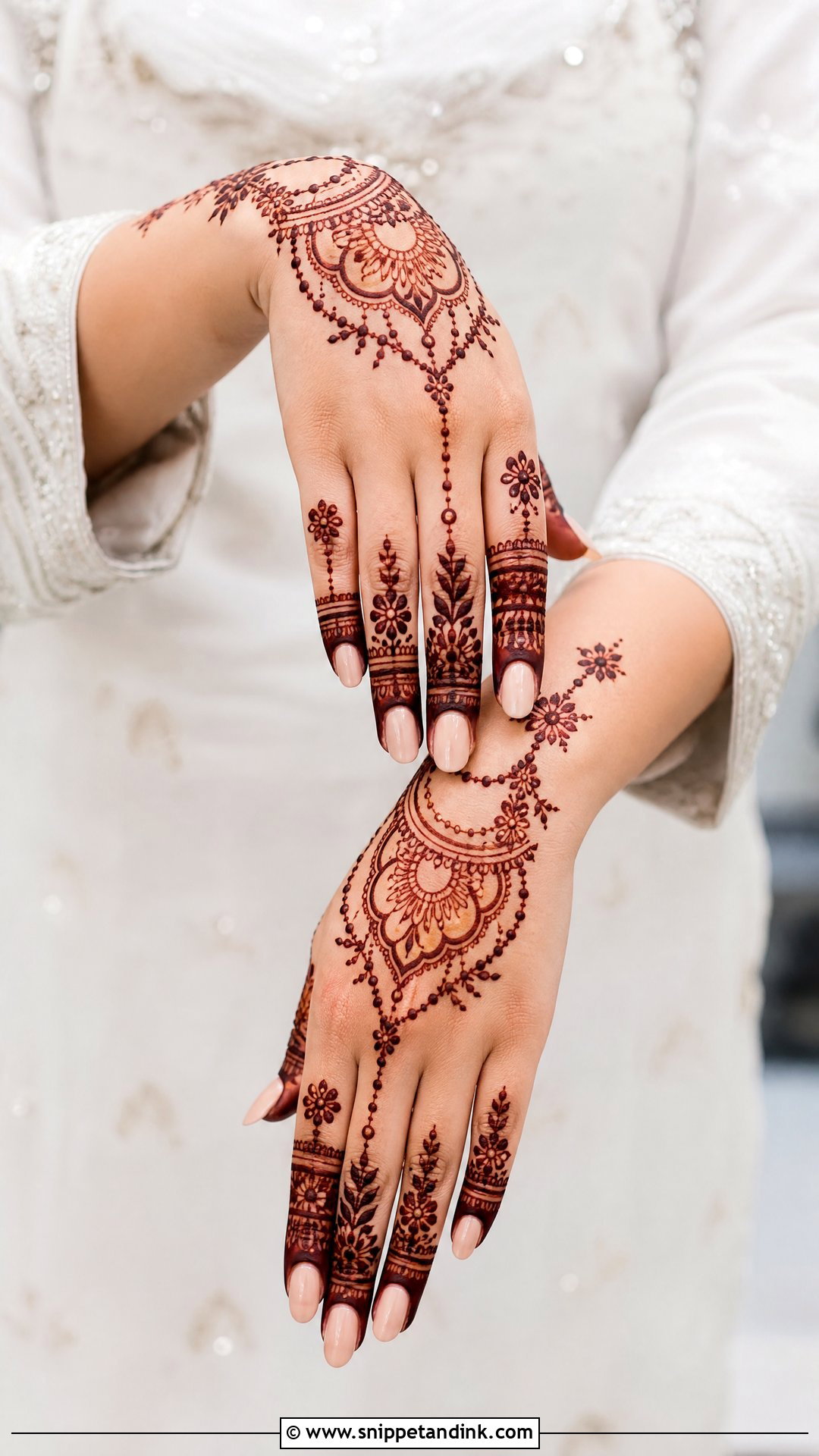
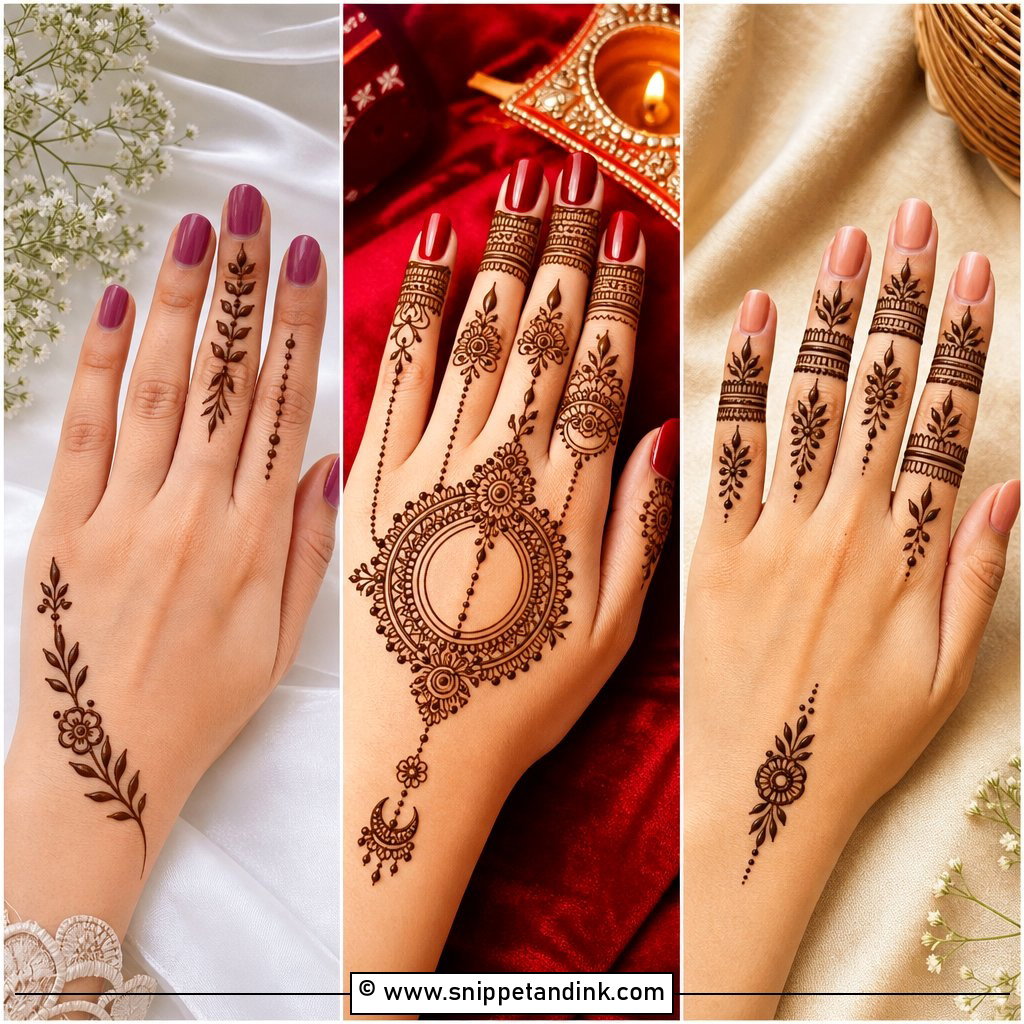
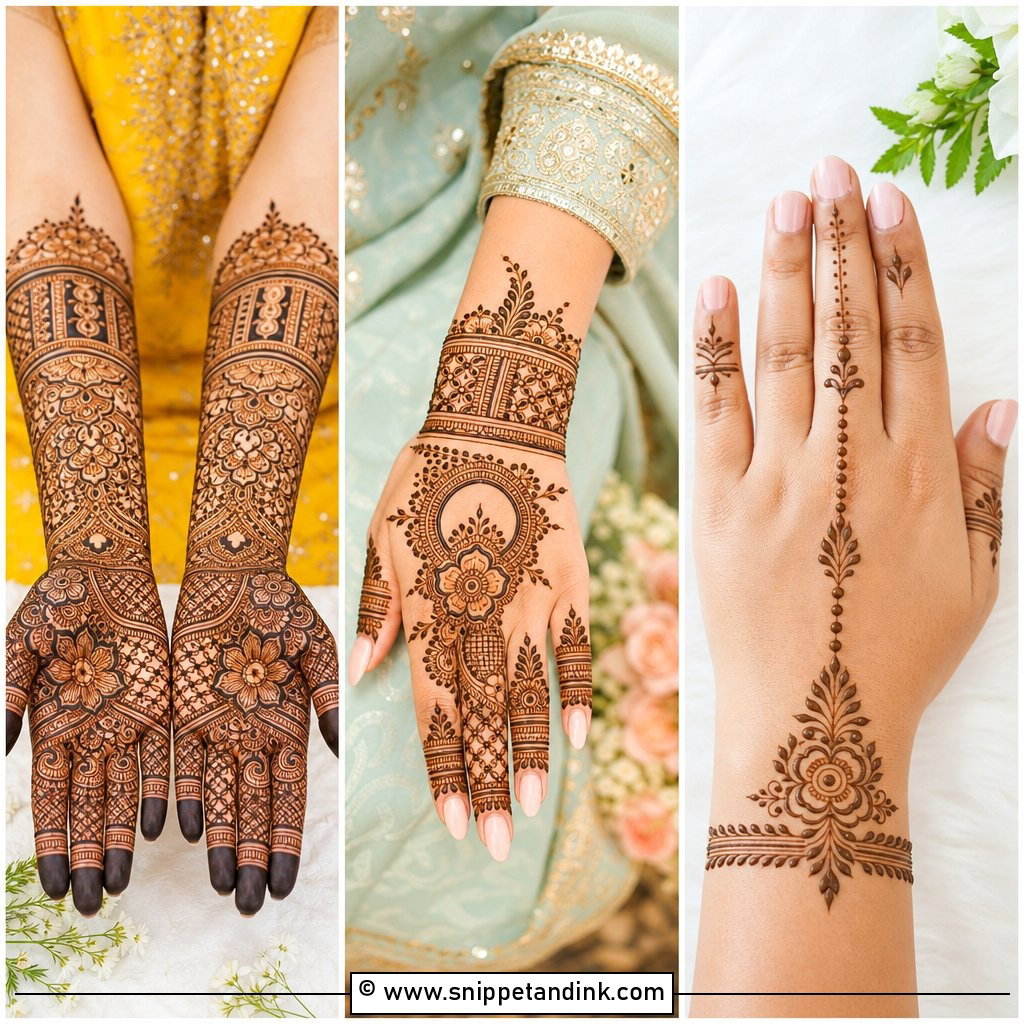
This layout copies haath phool: a cuff at the wrist, chains running up the hand and ring-style motifs around the base of each finger. I build the chains from tiny flowers, dots and leaves so they look delicate rather than drawn with a ruler. It leaves plenty of skin, which matters if you’ll wear real rings and a hand chain on top. Bridesmaids and minimal brides ask for it often. I make the cuff the richest part and keep the chains fine, otherwise the eye doesn’t know where to land.
10. Bracelet Semi Bridal Mehendi Design For Back Hand
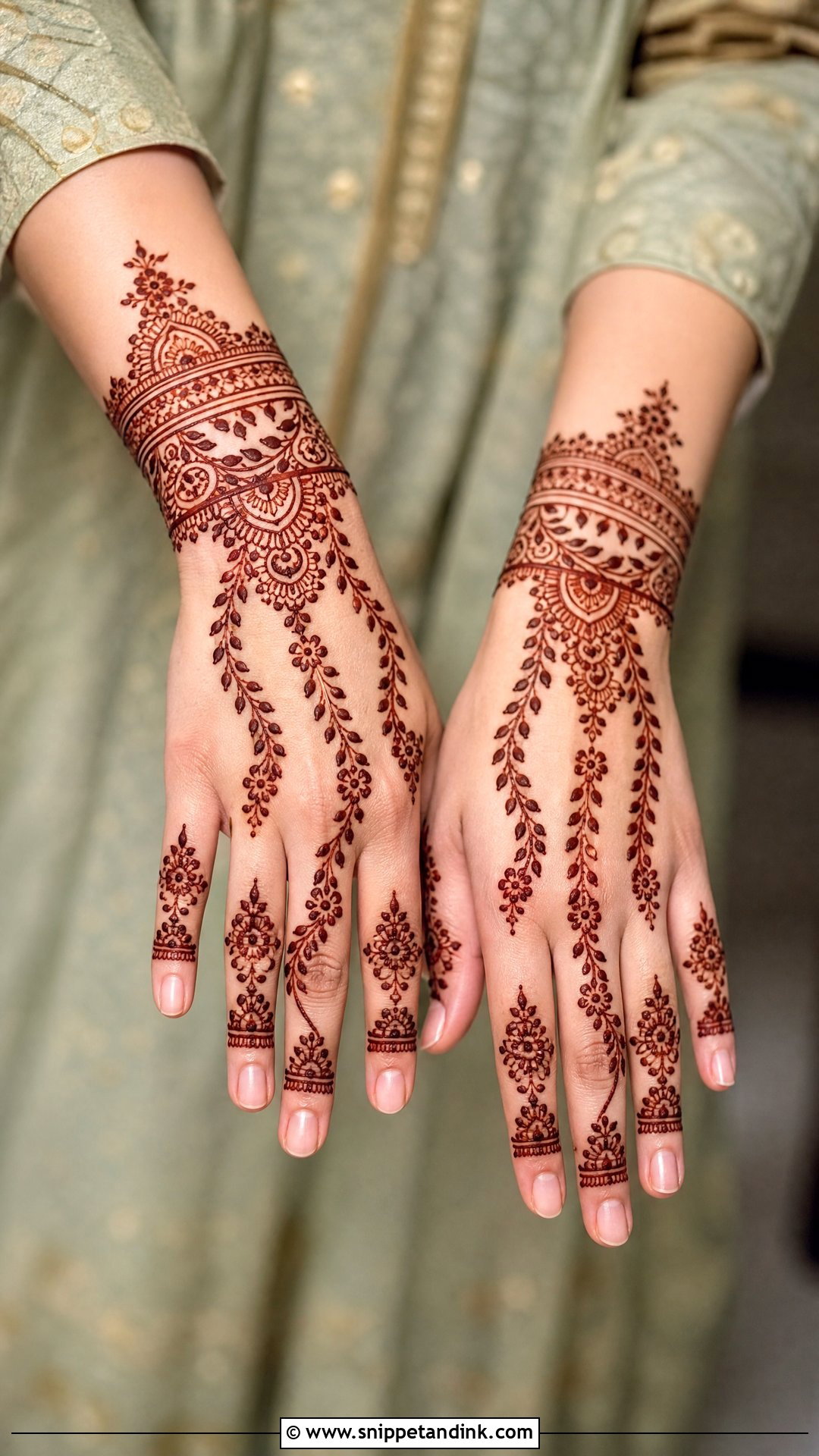
Here the wrist does the heavy lifting. The cuff can be florals, paisleys, lace borders, jaali or repeated leaves, and from it a few thin vines or chain lines reach the finger designs. I check where your bangles sit before I start, because a cuff hidden under a stack is wasted time. Bold cuff, lighter hand: that contrast is the whole design, so resist the urge to fill the back of the hand as well.
11. Rose Semi Bridal Mehendi Design For Back Hand
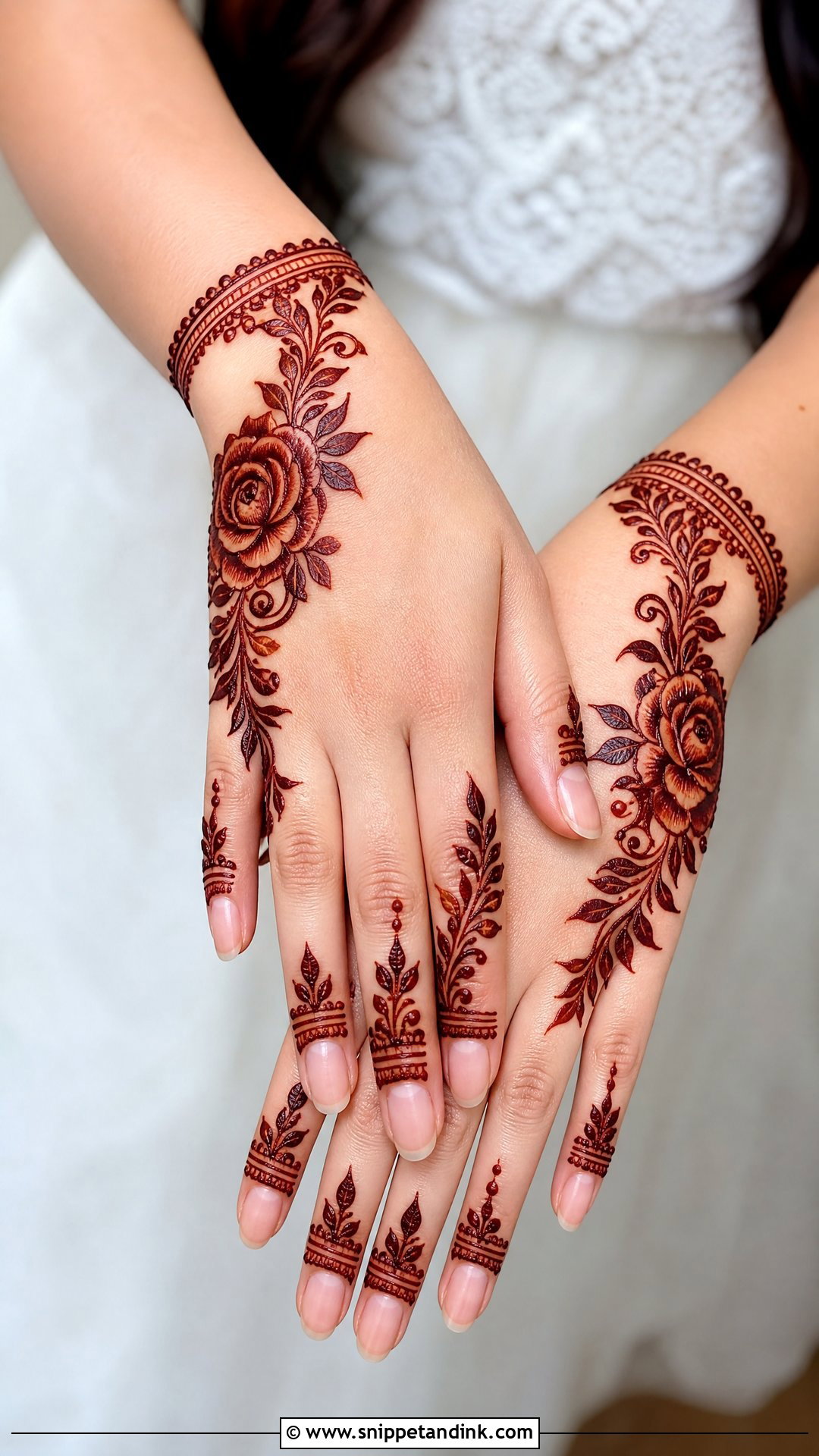
Roses need shading to work. An unshaded rose outline stains as a flat circle and loses its shape, so I build each bloom from the center out with graded petals. I place two or three diagonally and fill the gaps with leaves and curving vines. Leave enough bare skin around them that each flower can be seen as a flower. A thin wrist border and leafy finger bands make it festive enough for an engagement outfit or a pastel lehenga.
12. Lotus Semi Bridal Mehendi Design For Back Hand
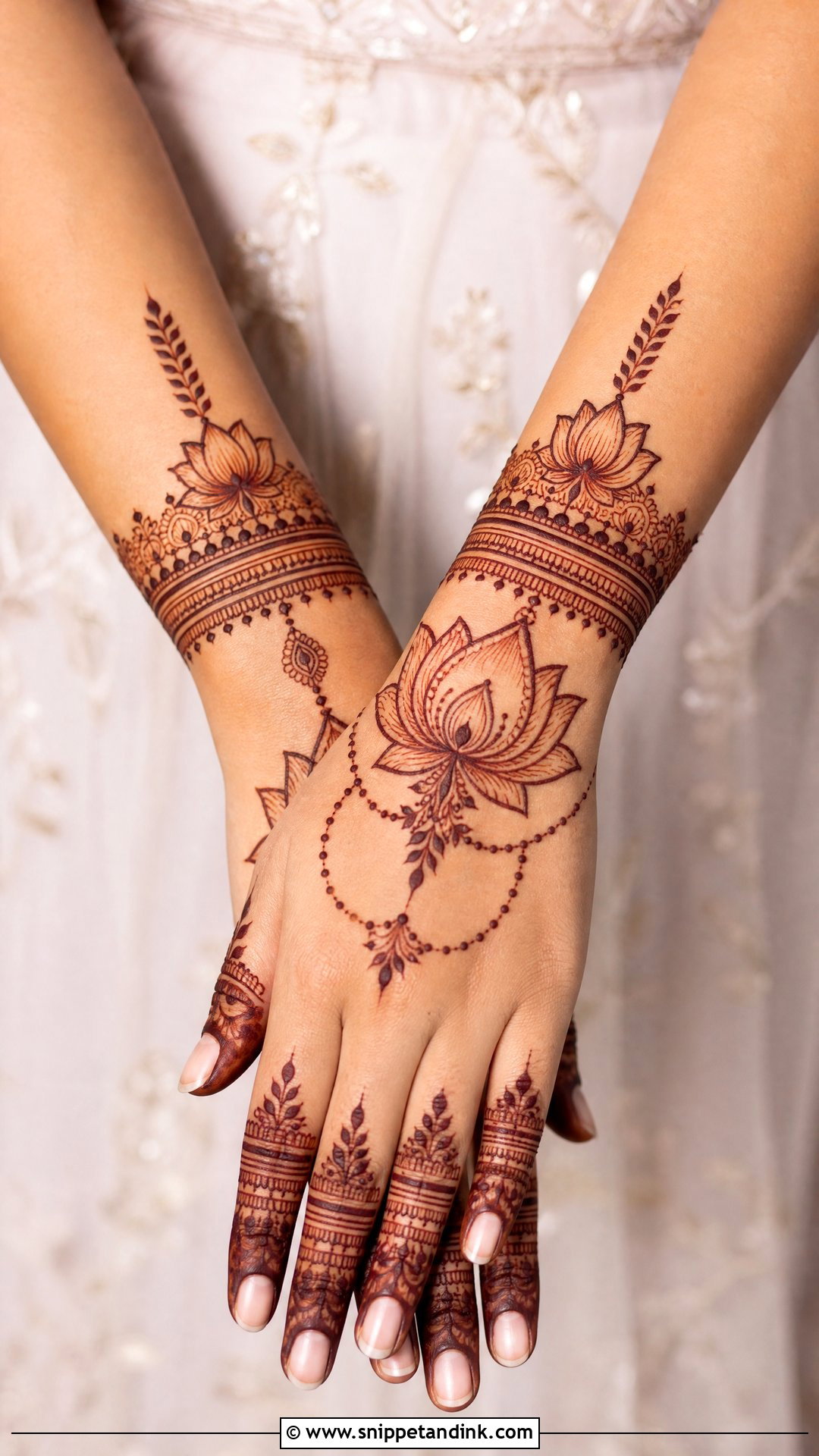
The lotus suits families who like a symbolic motif without heavy coverage. I set it at the center of the hand or near the wrist, petals opening toward the fingers, and surround it with fine lines, dots and leaf chains. The petals should be bold and the filler delicate; reverse that and the flower disappears. Join it to a wrist cuff and detailed fingertips so it looks like one design rather than a lone stamp.
13. Modern Semi Bridal Mehendi Design For Back Hand
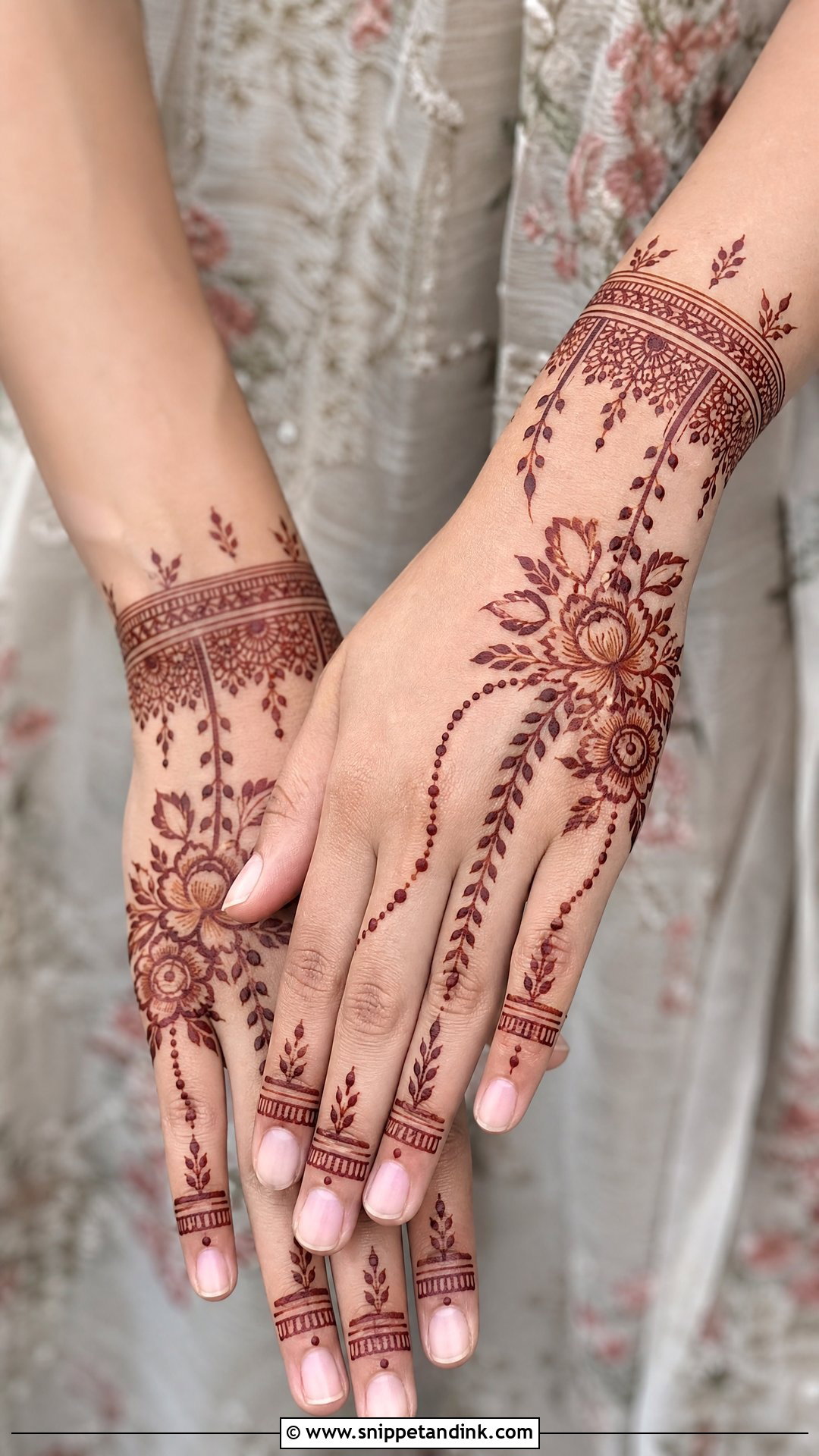
Modern layouts are about controlled emptiness: a floral cluster on one side, a band at the wrist, and fingers that echo the main motif. I’ll often add small geometric borders or dotted chains to keep it current. Crisp outlines matter more here than in any traditional design, because there is less filler to hide a shaky line. Contemporary lehengas, gowns, sarees and fusion outfits all sit comfortably with it.
14. Minimal Semi Bridal Mehendi Design For Back Hand
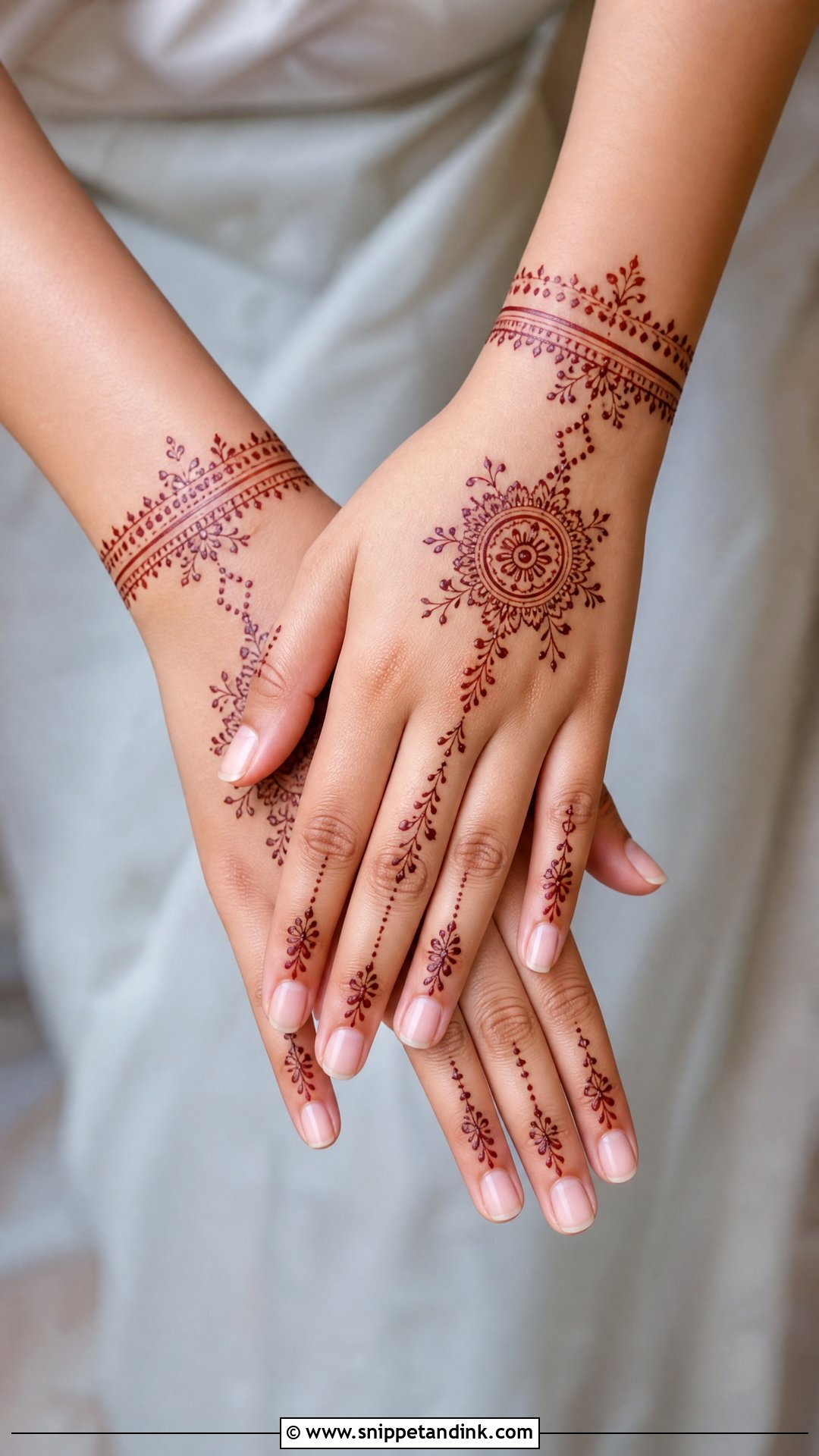
Minimal does not mean plain. A small mandala, light florals, a few vines and a bracelet detail at the wrist can still look festive if one element is clearly the focus; without that, the hand looks unfinished rather than restrained. The fingers can carry simple bands, dots and leafy tips. I suggest this for intimate ceremonies, courthouse weddings and roka functions, or for anyone with a short window before guests arrive.
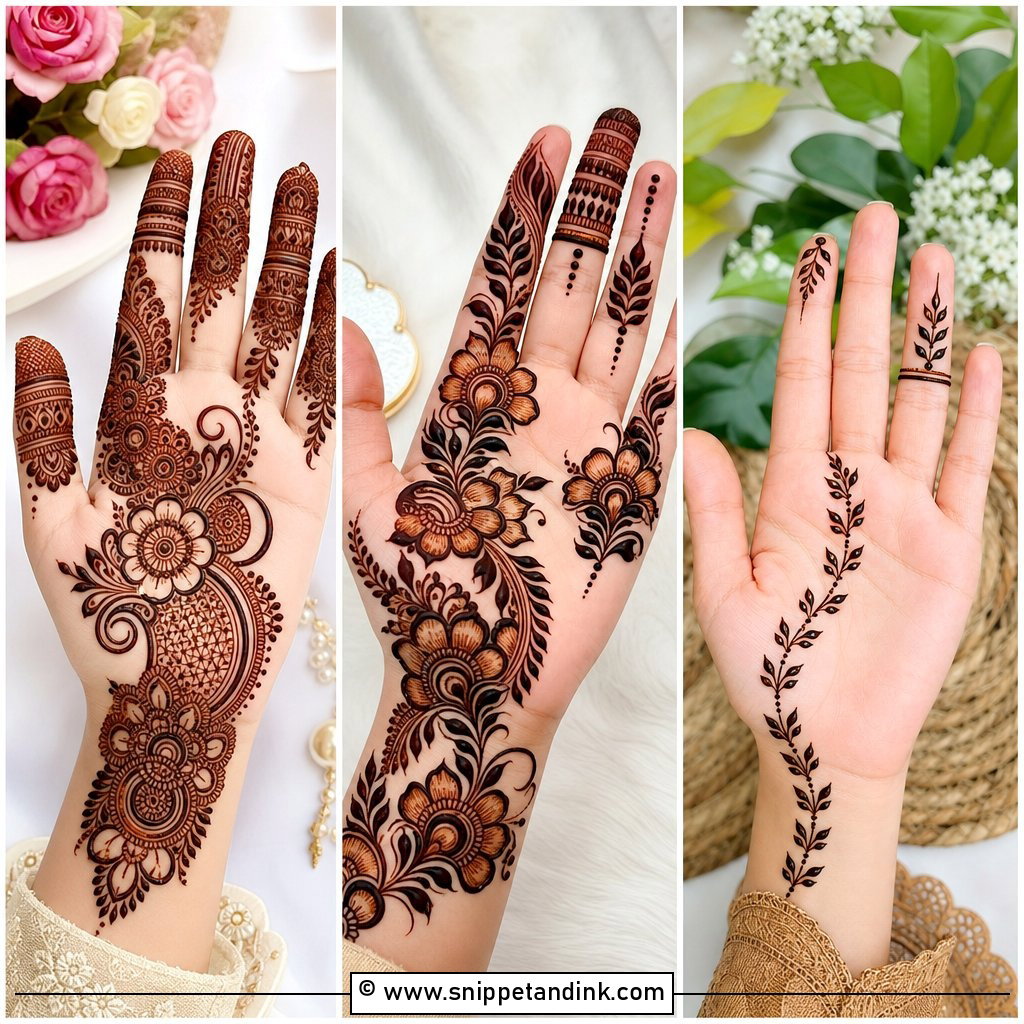
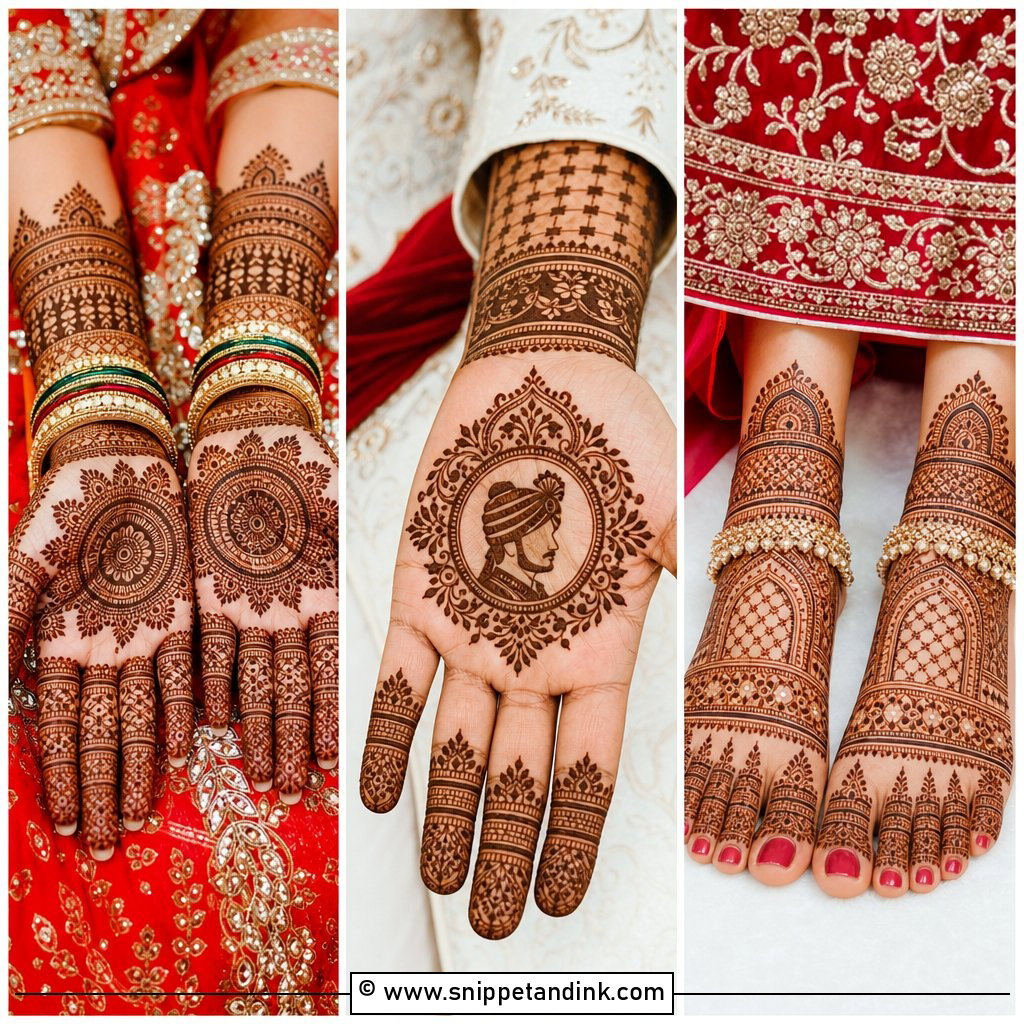
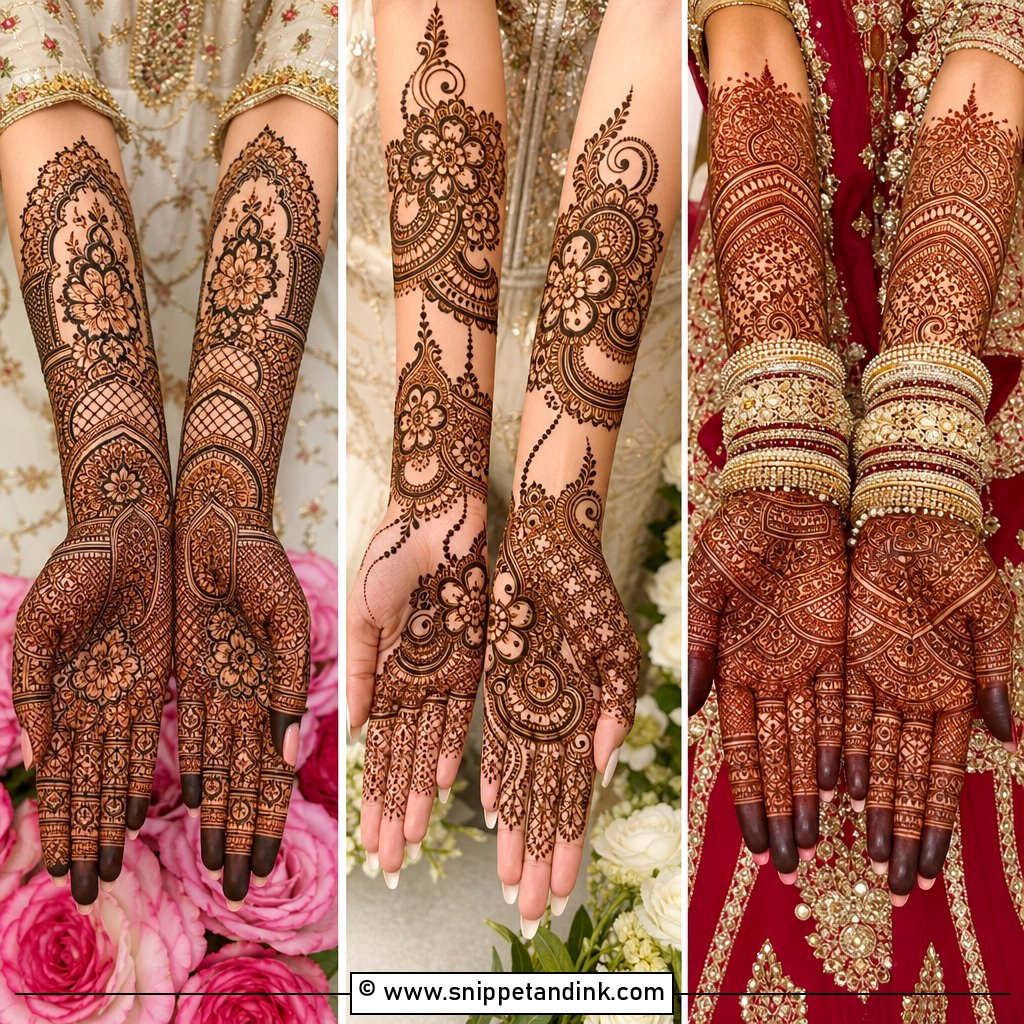
15. Full Back Hand Semi Bridal Mehendi Design
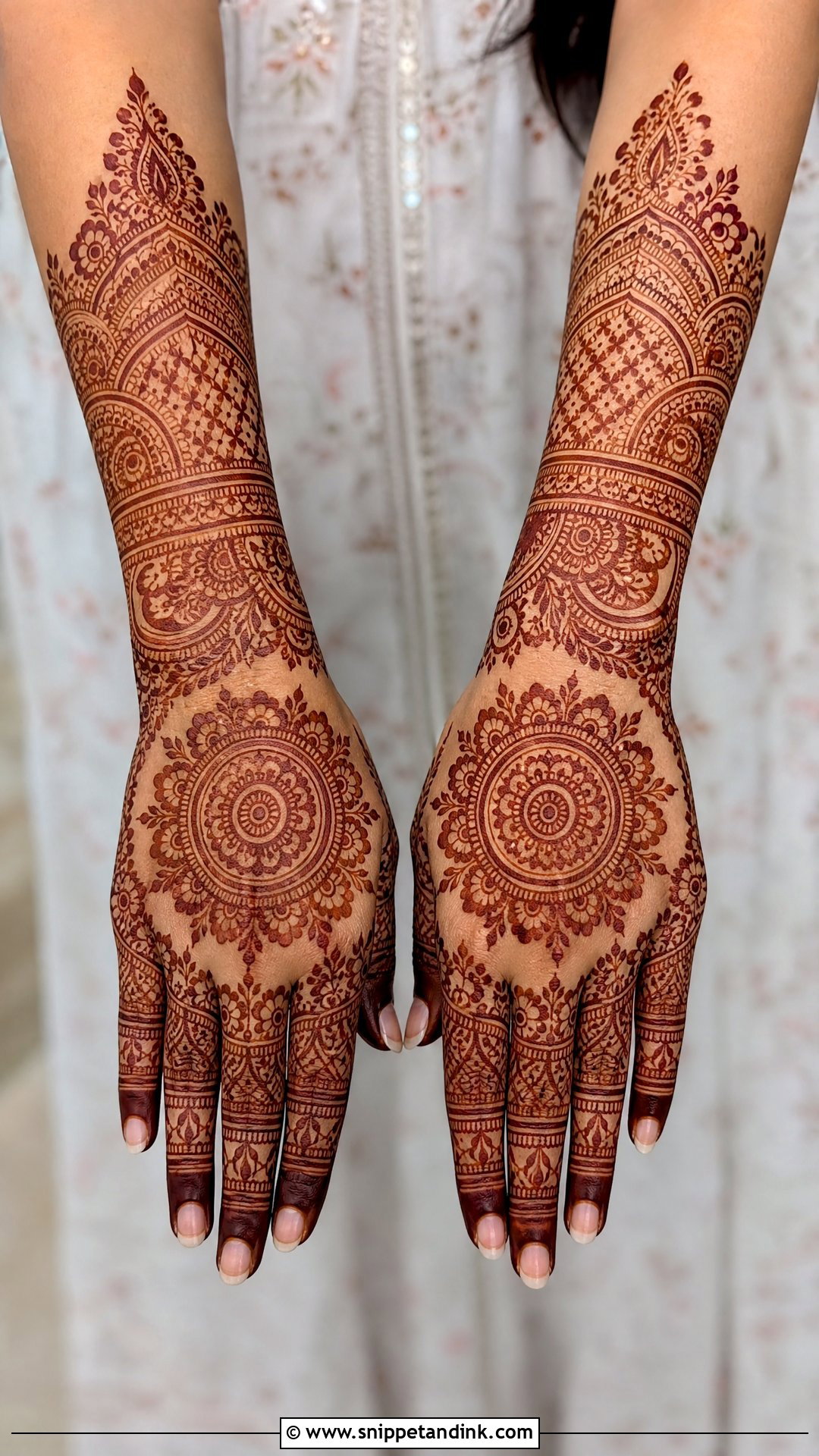
Full coverage of the back hand, fingers and wrist is as far as semi bridal goes before it becomes bridal. The trick is organisation: one central motif, detailed fingers and a clean wrist border, with mandala, jaali, florals and paisley each kept in its own zone. Mix them all in one area and the stain turns muddy. Brides choose it for engagements and receptions where they want serious mehendi without the arm work, and it shows well from every angle because there are no bare patches.
16. Finger Focus Semi Bridal Mehendi Design For Back Hand
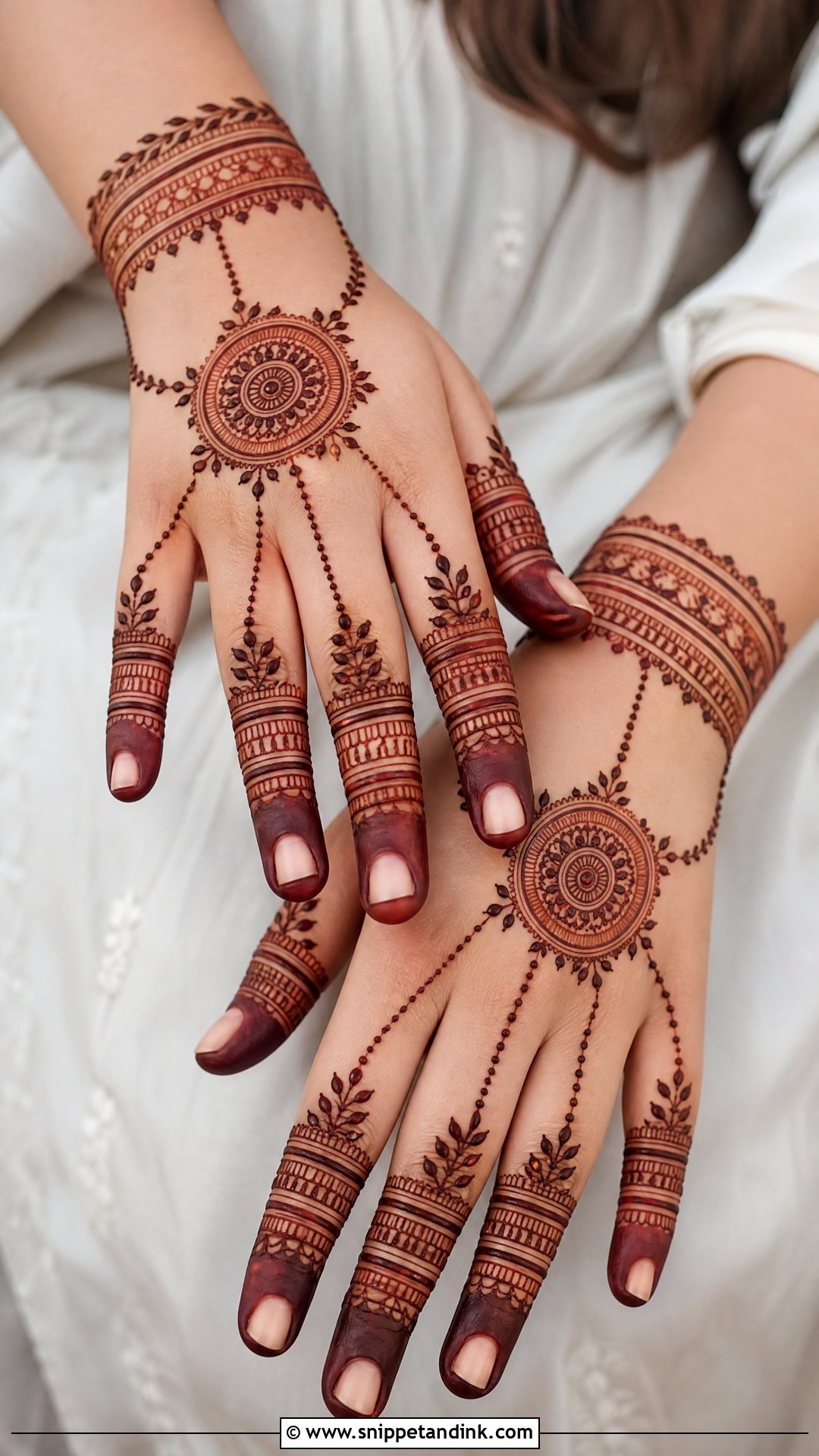
Finger focus semi bridal mehendi keeps the back of the hand light and puts the detail on the fingers: banded segments, shaded tips, leafy strips and ring motifs. A small mandala or chain links them across the hand. Long vertical finger panels make the hand look longer, which is why people with shorter fingers like it. Remember that finger henna takes the deepest stain, so dense work there will be the darkest part of your design.
17. Back Hand Mehendi Design With Shaded Flowers
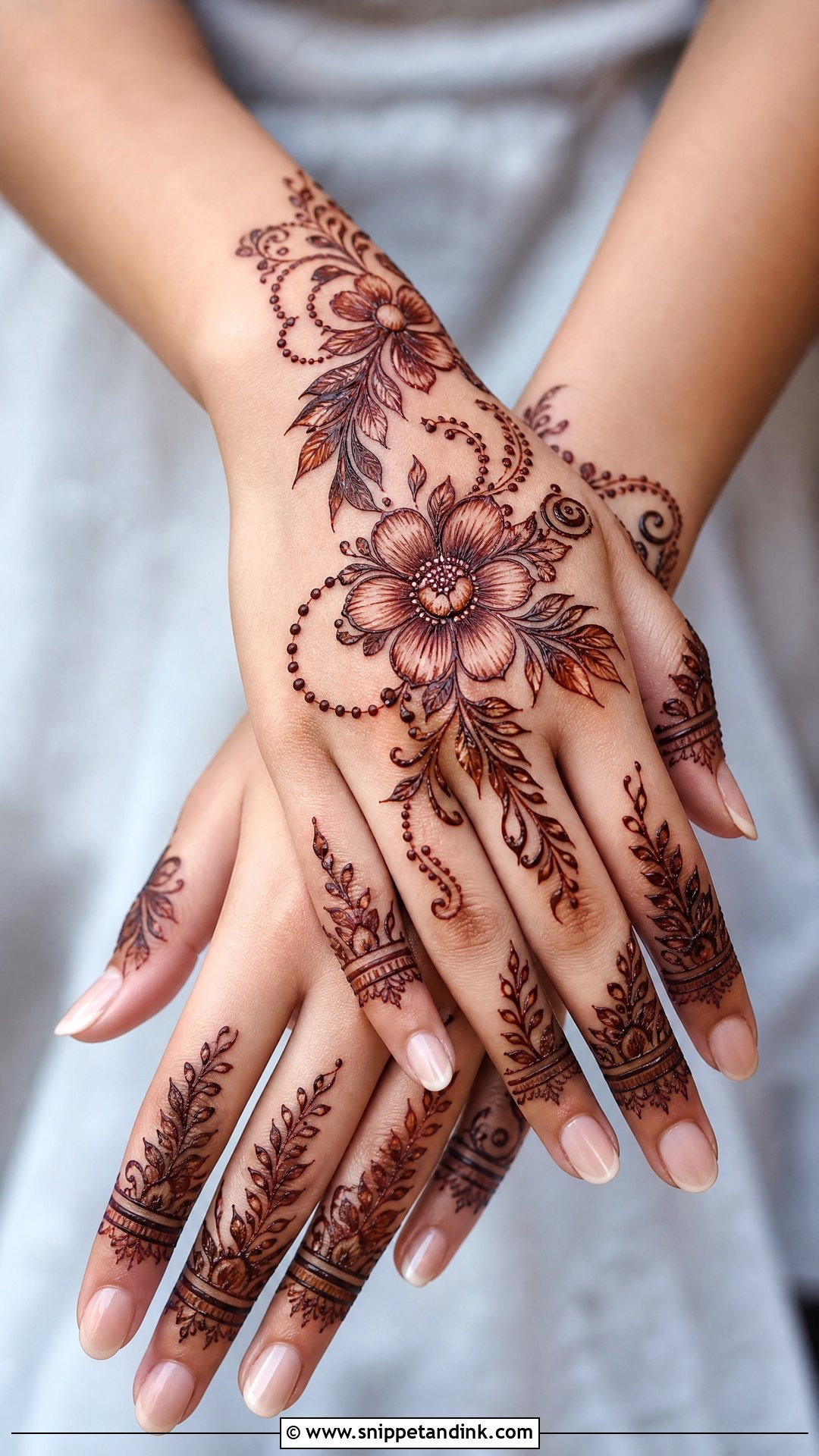
Shaded flowers give the back hand depth, and they suit both lehengas and gowns. I outline first, then shade inside the petals with a lighter flow of paste, so the stain comes out in two tones: a dark edge and a softer fill. Arrange them diagonally, around a central mandala or as a wrist-to-finger trail, with leaves and dots to finish. Keep the fingers detailed but lighter than the flowers so the shading stays the star.
18. Back Hand Mehendi Design With Chain Pattern
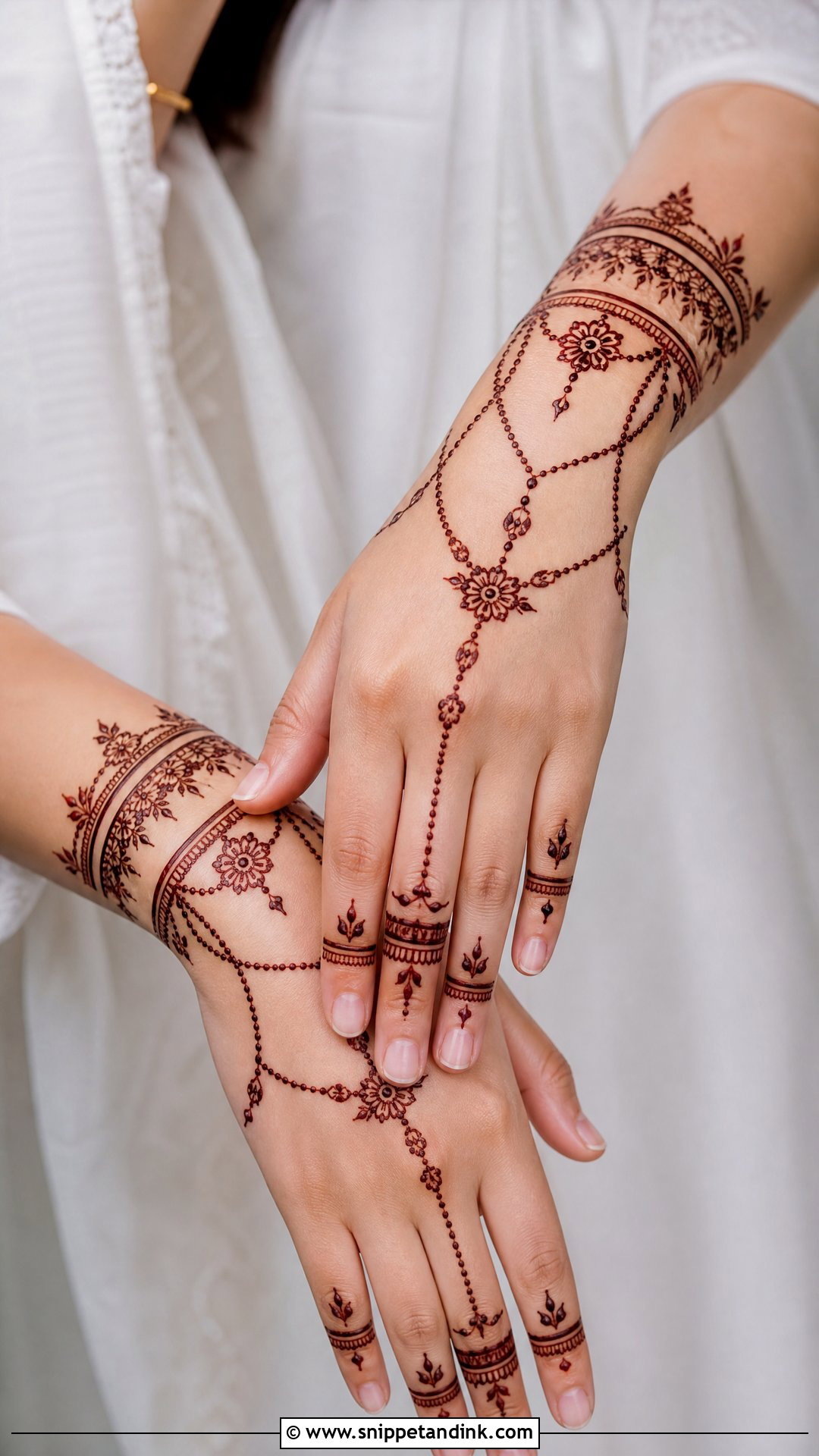
Chains are the quickest way to make a light design look connected. They can run from a wrist cuff to the fingers, or from a central flower to small ring motifs, built from dots, tiny leaves and bead shapes. I always anchor them with one solid focal point, a mandala or a floral cluster, because chains alone can look like scribbles from a distance. Plenty of skin stays open, so it reads modern while still feeling festive.
19. Back Hand Mehendi Design With Wrist Cuff
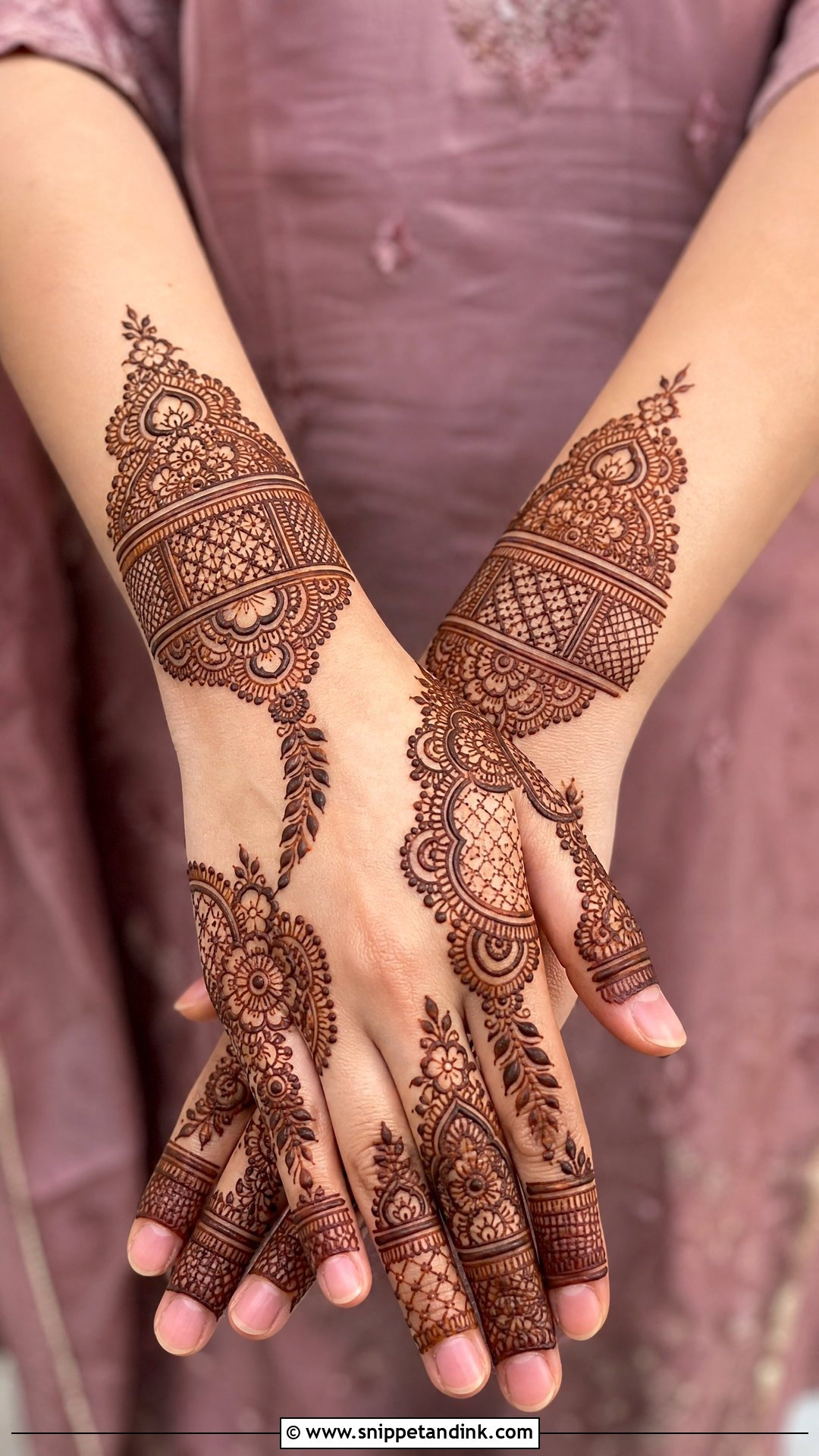
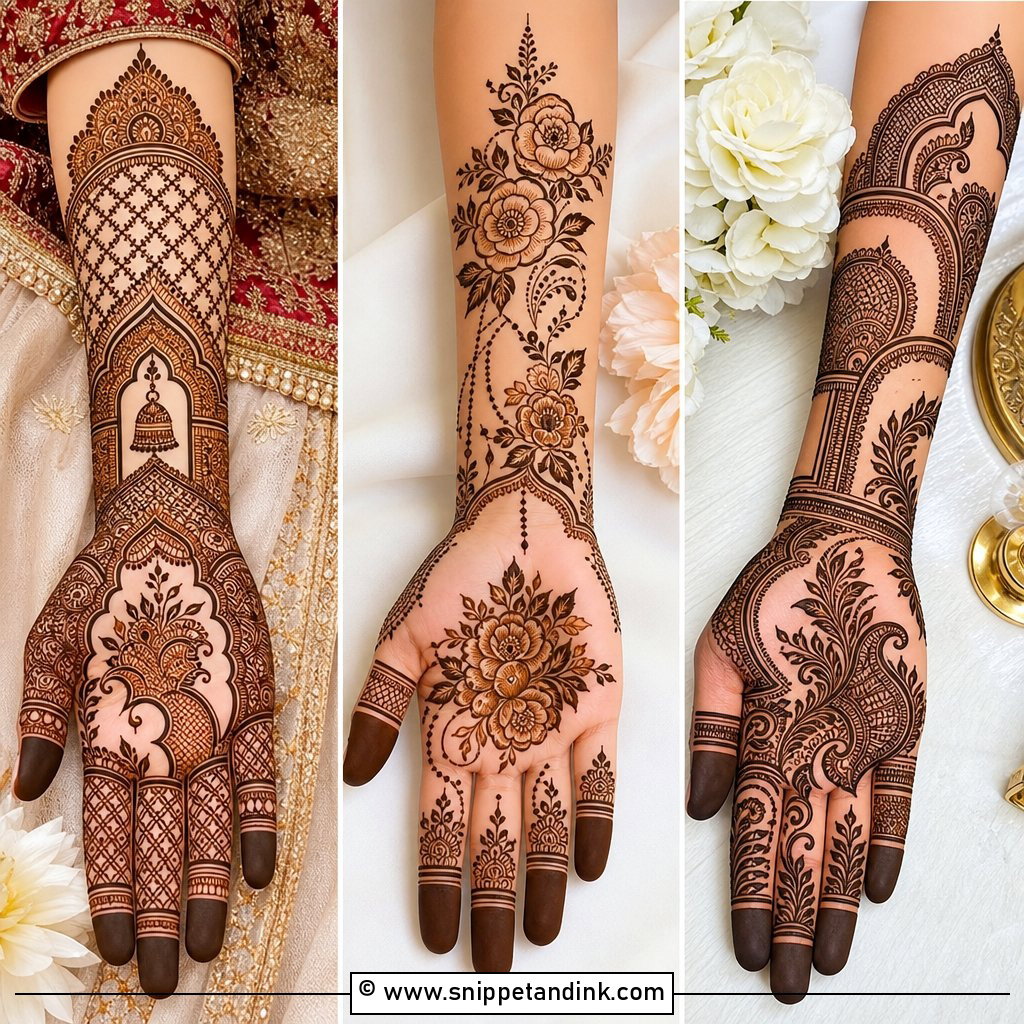
A cuff design gives a bridal impression without going up the forearm. I layer it like a bracelet, with florals, mesh, scallops and fine borders, then let a floral trail, mandala or chain extend onto the hand. Placing the cuff slightly above the wrist bone keeps it visible above bangles; right on the crease, it cracks as you bend your wrist while the paste dries. Keep the upper hand more open so the cuff stays the heaviest element.
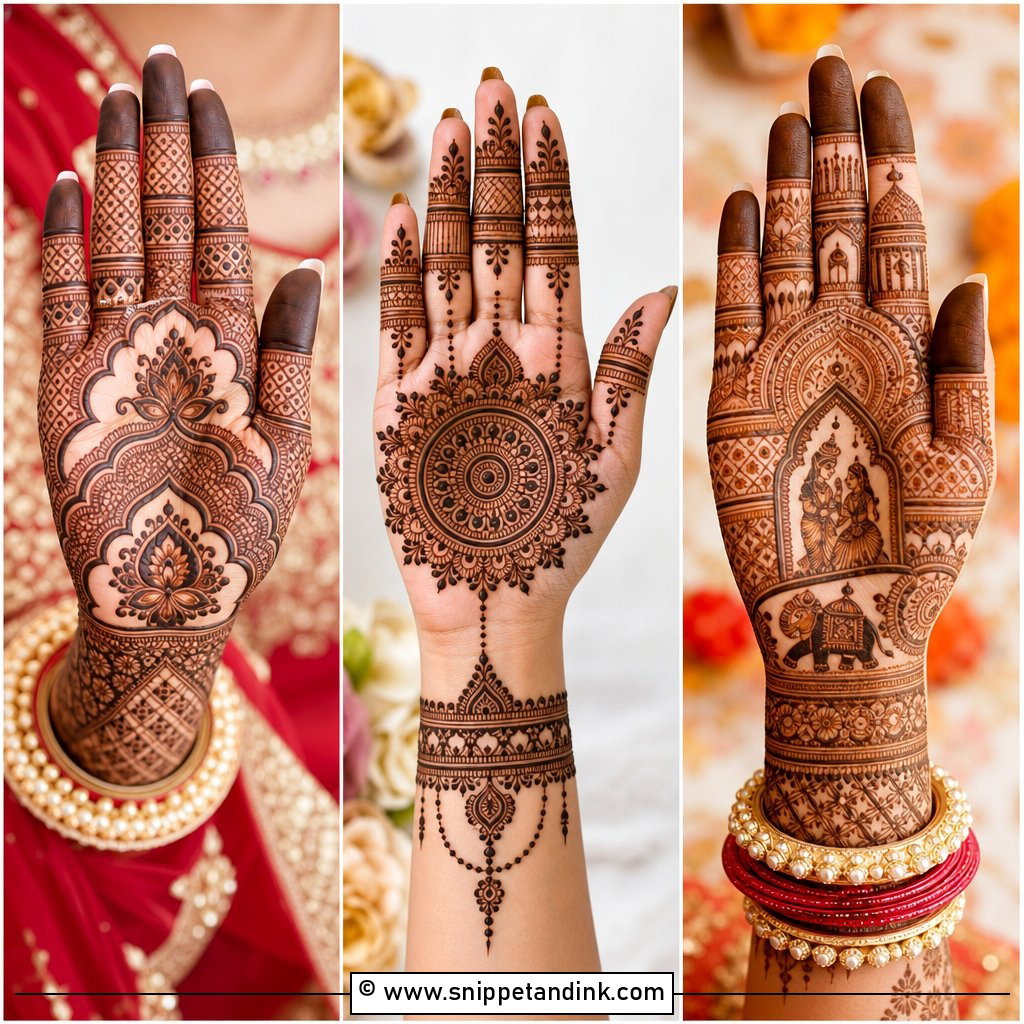
20. Back Hand Mehendi Design With Negative Space
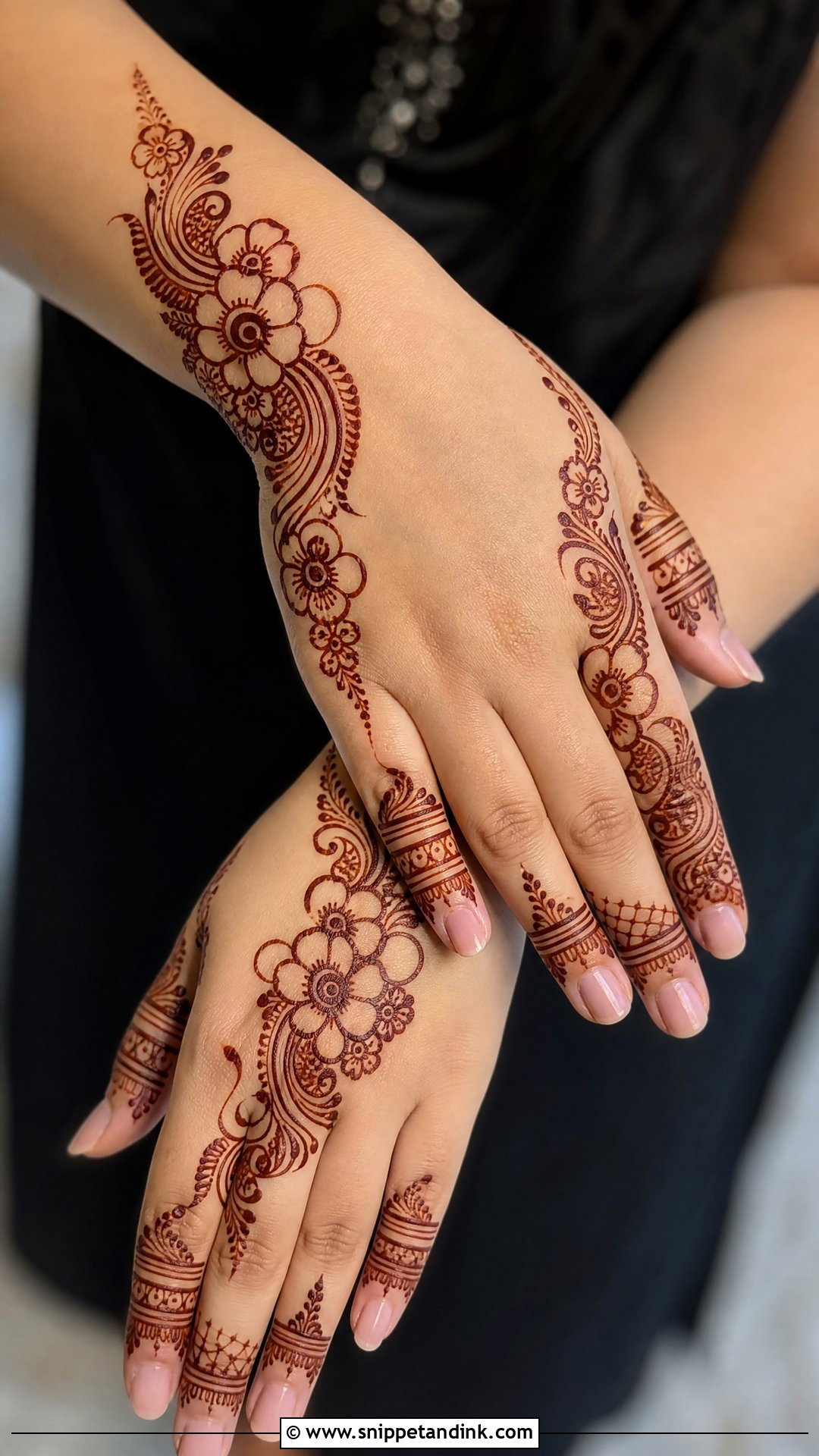
In negative space work the bare skin is part of the pattern, not a gap. Bold florals, paisleys or a mandala sit with planned open areas between them, and slim finger bands with dots keep the balance. This is the layout that exposes a rushed artist most clearly. Uneven gaps make it look abandoned halfway, so ask for clean outlines and consistent spacing. Done carefully, it’s airy and very photogenic for modern brides, bridesmaids and guests.
21. Back Hand Mehendi Design With Geometric Pattern
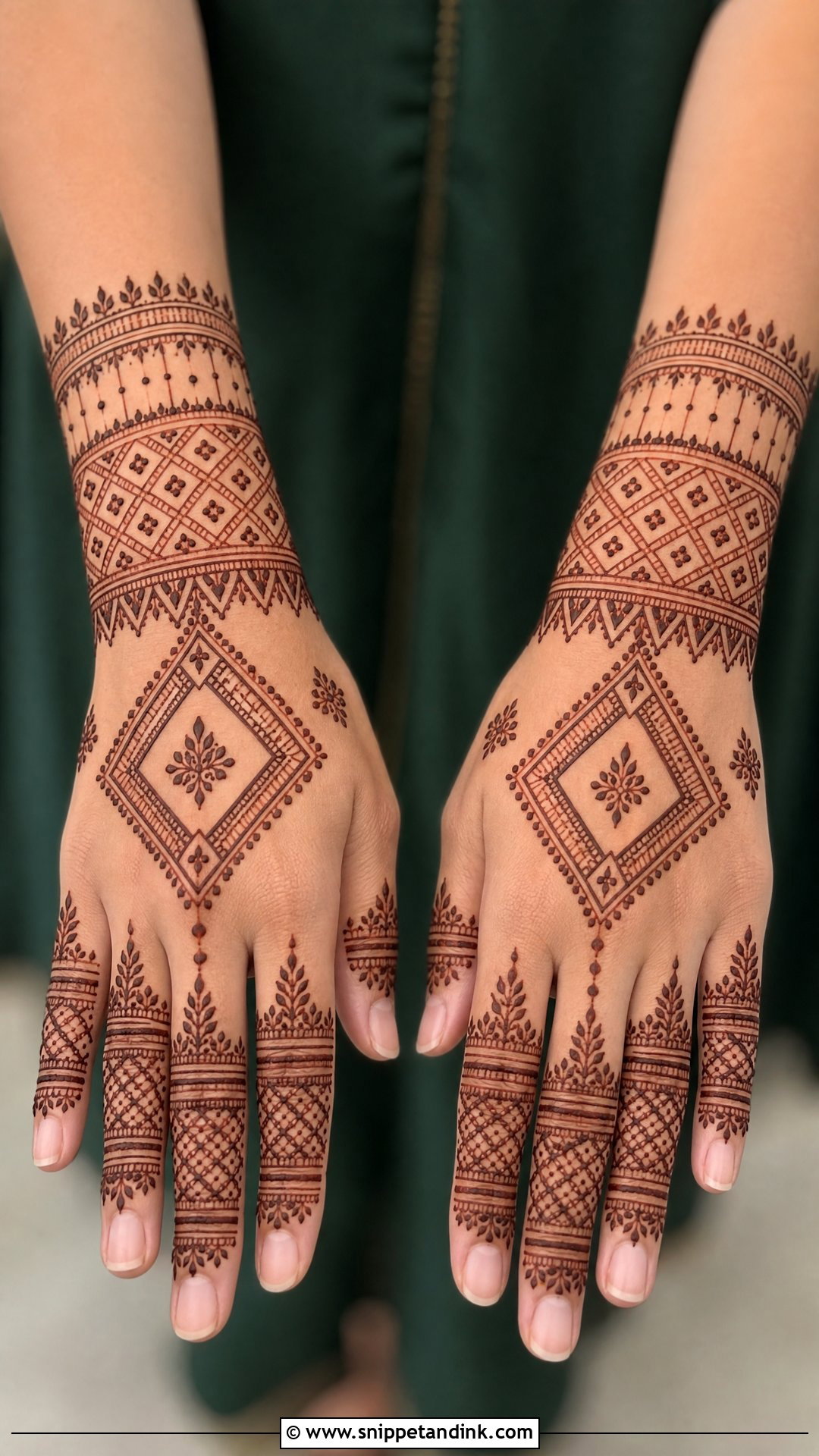
Geometric work mixes diamonds, triangles, grids and straight borders with a few softer leaves so it doesn’t look rigid. My favourite version is a geometric jaali across the center, floral fingers and a wrist cuff. Straight lines are harder to pipe than curves; a wobble that hides in a vine shows immediately in a grid, so this needs a steady hand and fresh, smooth paste. It pairs well with mirror work and embroidered outfits.
22. Moroccan Semi Bridal Mehendi Design For Back Hand
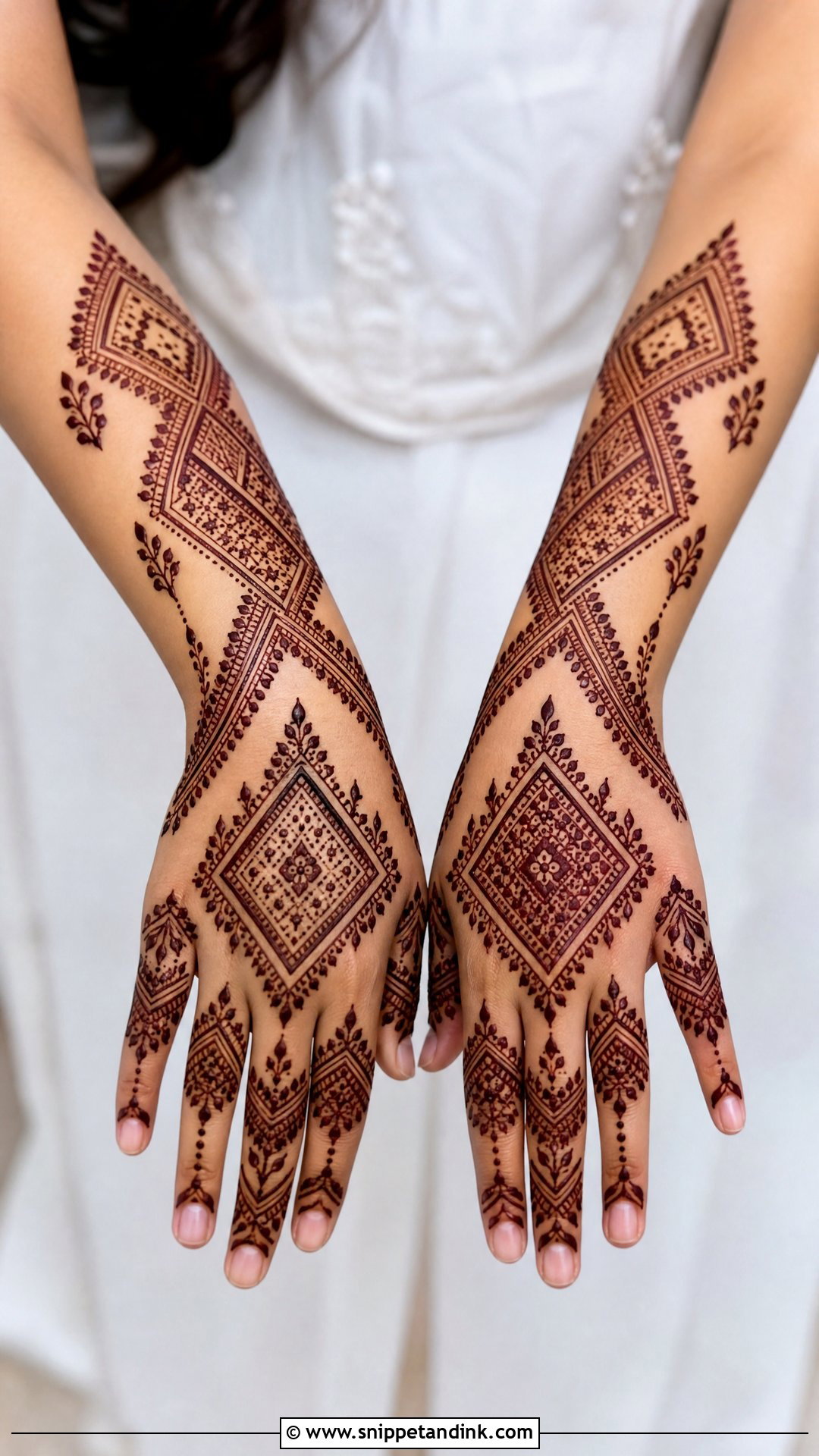
Moroccan semi bridal mehendi design relies on bold lines, symmetry and angular shapes: diamonds, zigzags, grids and dots instead of florals. For a semi bridal version I pair them with a wrist cuff and detailed finger panels. It’s still less common, so it stands out at a function where most hands carry flowers. If it feels too stark, a few small leaves or floral dots around the edges soften it, and the crisp geometry holds up well in close-ups.
23. Gulf Semi Bridal Mehendi Design For Back Hand
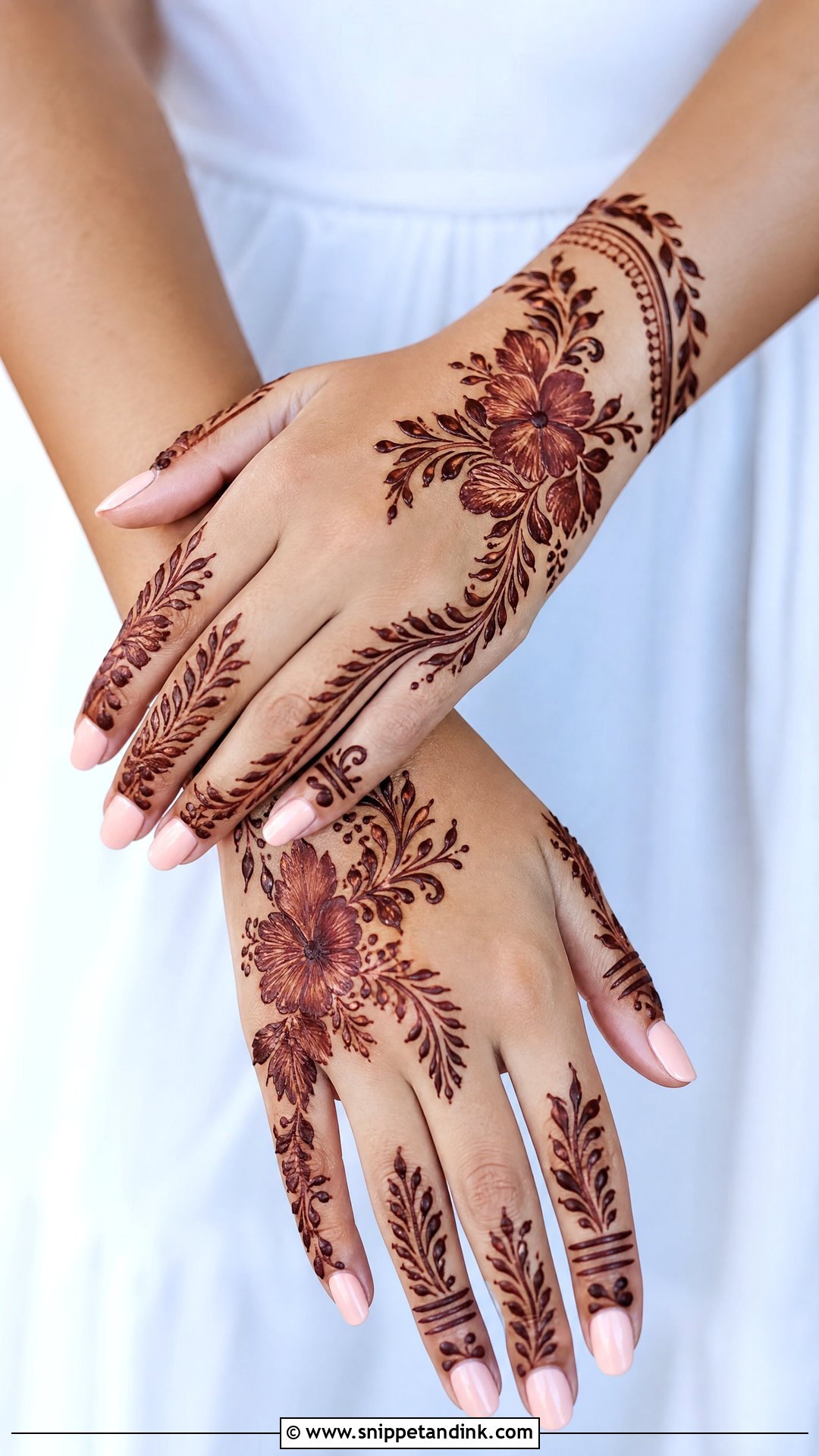
Gulf semi bridal mehendi design looks like a richer cousin of Arabic work: big flowers near the wrist and fingers, flowing leafy curves, and selected areas filled more densely. Thick outlines with shaded centers are the signature. I leave clear space around the main motifs so they don’t merge as the stain deepens. It suits Eid weddings, nikah events and evening functions where the light is low and bold lines carry better than fine filler.
24. Simple Semi Bridal Mehendi Design For Back Hand
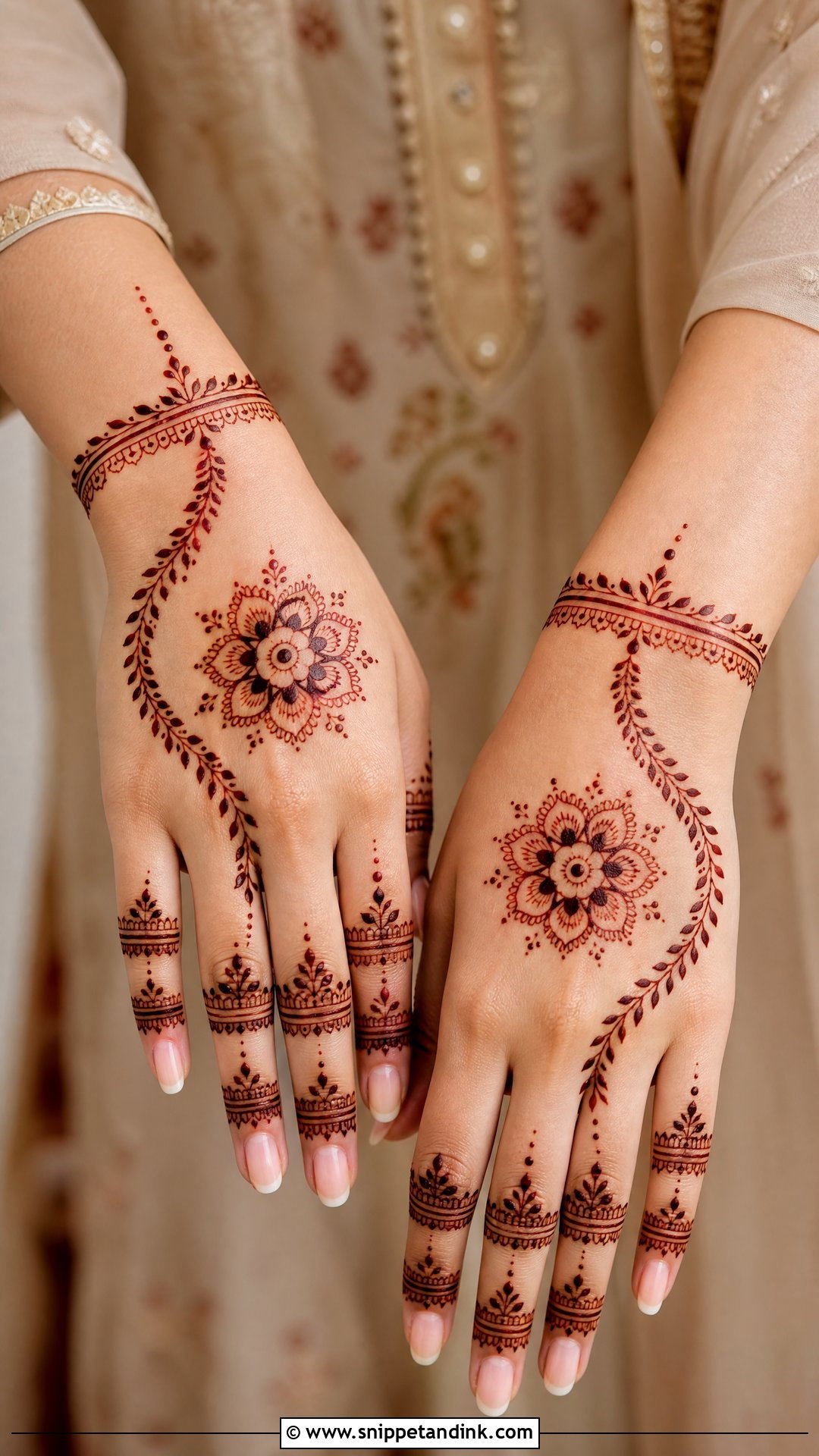
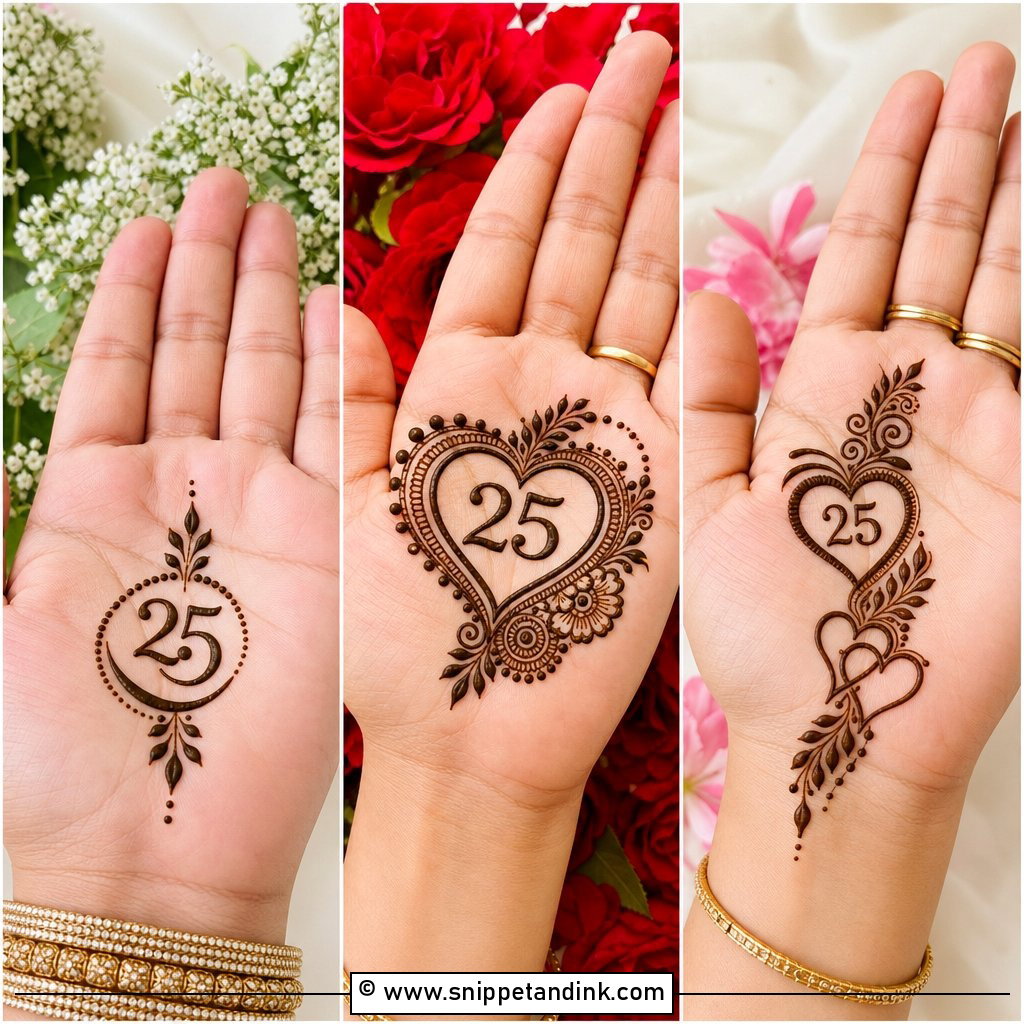
A simple design is the honest choice when application time is short. One central flower or mandala, light finger details and a clean wrist border are enough, but I add small bridal touches, dots, leaf chains and fine inner lines, so it doesn’t read as casual party henna. Balanced spacing and clear outlines decide whether it looks intentional. Small ceremonies, cousins and bridesmaids pick it often.
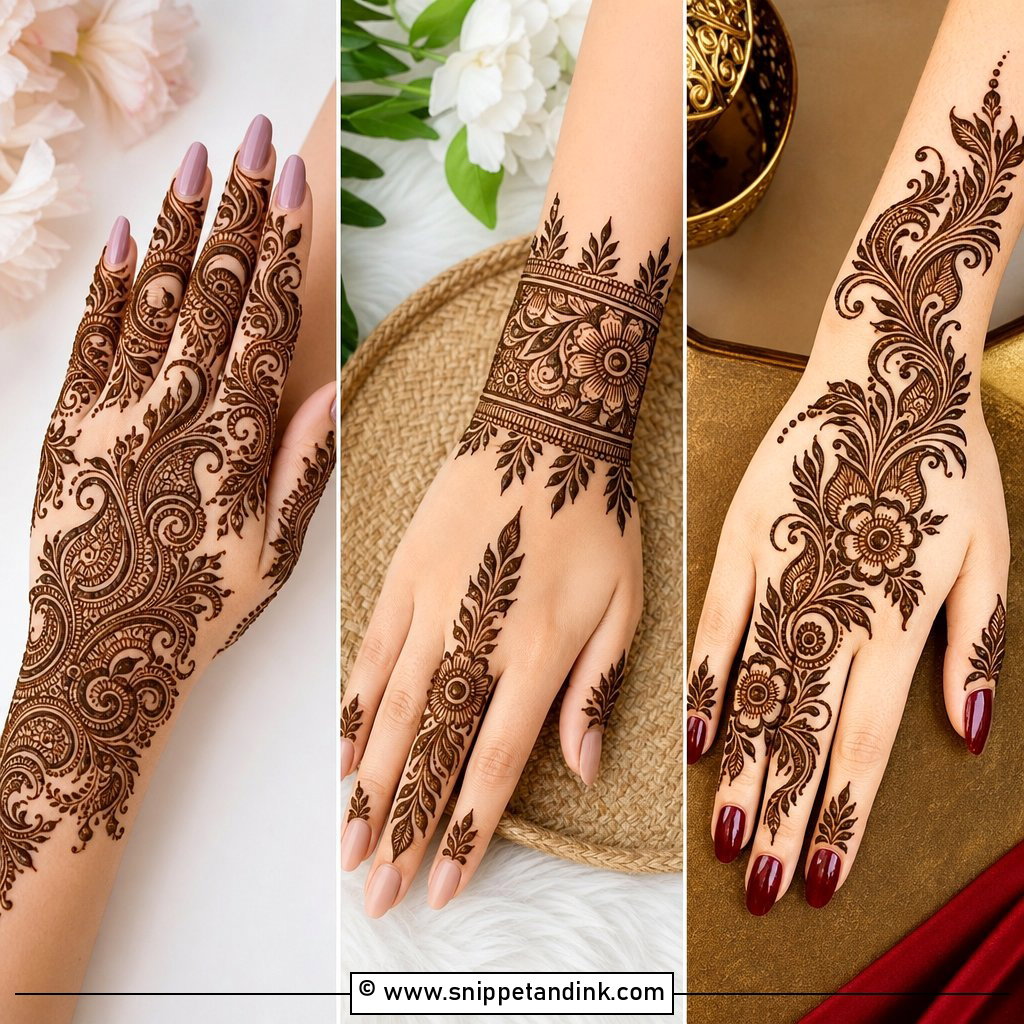
25. Heavy Semi Bridal Mehendi Design For Back Hand
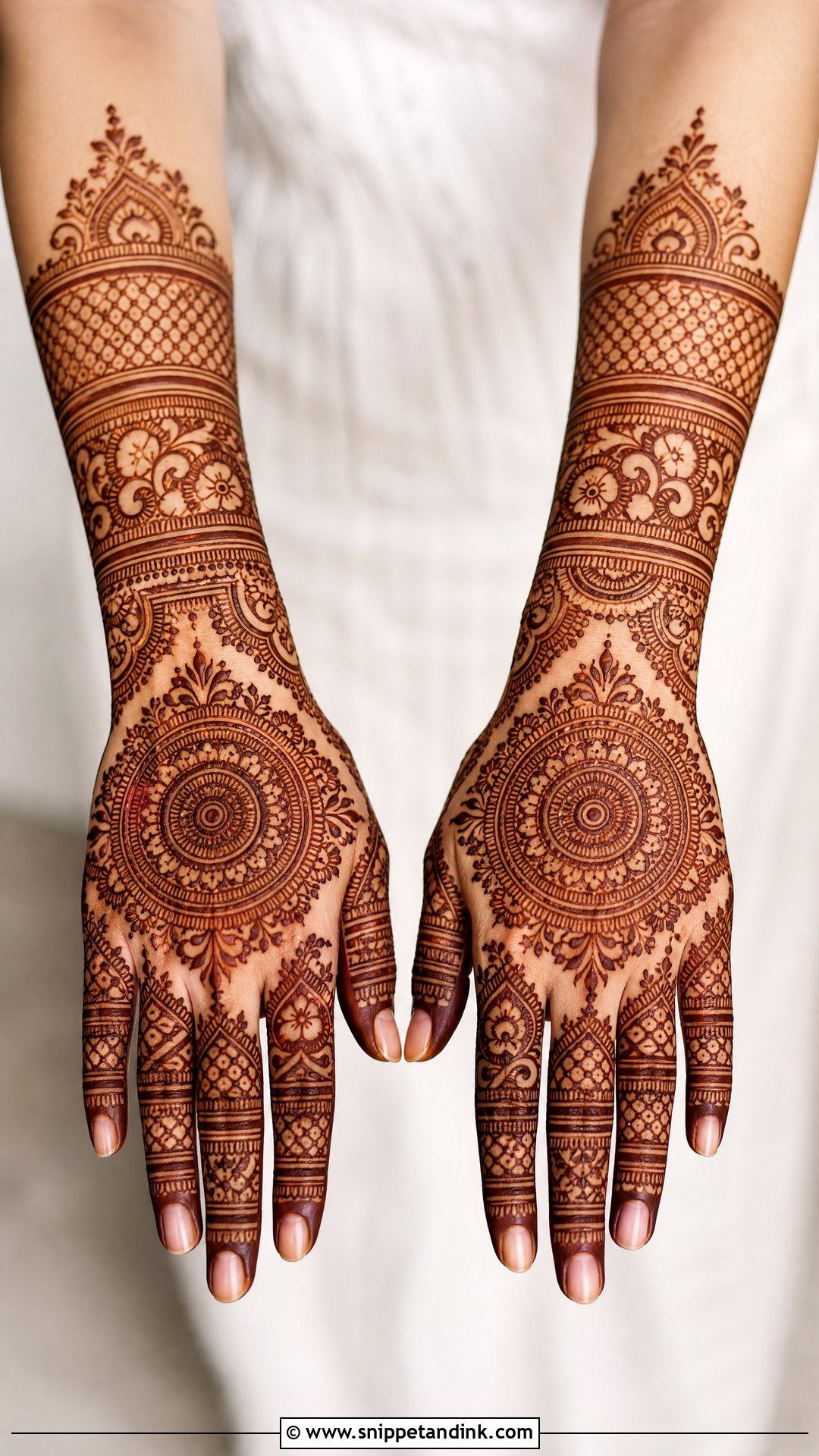
Heavy semi bridal gives you dense fingers, a detailed wrist cuff, a central mandala, floral borders and paisley filler, but stops at the wrist and keeps a few open pockets so the pattern can breathe. Engagement brides, reception looks and close relatives choose it when they love ornate henna but don’t want the arms done. Ask your artist to keep the main motifs distinct. On dense designs the biggest risk is overlap: two wet lines touching blur into one thick stain.
Why the Back of the Hand Stains Paler Than Your Palm
Henna dyes the outer layer of skin, and that layer is thicker on the palms and fingertips than on the back of the hand. So the same paste that turns your palm deep maroon will usually stain the back of the hand a shade or two lighter. That’s normal, and it’s why I lean on bold outlines and shading for back hand work instead of hairline filler that can fade into the skin tone.
The stain also develops in stages. Right after scraping it’s bright orange, and it darkens over the next day or two. For a function, I book the application one to two days ahead so the color has peaked on the day itself.
Aftercare that actually changes the color
- Leave the paste on as long as you comfortably can, ideally six hours or overnight.
- Dab a little lemon and sugar mix over dry paste to keep it stuck to the skin.
- Scrape the paste off with a blunt edge or your nail rather than washing it off.
- Keep water away for the first several hours; warmth helps, so keep your hands cosy.
- Skip scrubs, bleach and hand sanitiser on the design until after the event.
One warning I give everyone: henna that stains black within an hour is not natural henna. Natural henna never stains black. Those pastes can contain chemical dyes that cause serious skin reactions, so ask your artist what is in her cones, and do a small patch test a few days before if you have sensitive skin.
Bangles, Sleeves and Real Rings Change the Brief
Jewelry and henna compete for the same space. If you’ll wear a full bangle stack, the first few centimetres above the wrist disappear, so I either push the cuff higher or skip it. Wearing heavy rings on two fingers? I keep those fingers to a simple band so the metal and stones aren’t fighting a busy pattern underneath. Bring your bangles to the appointment; holding them against the hand for ten seconds settles most placement questions.
Matching a Back Hand Design to Each Function of the Week
Your outfit, the event, your hand shape and how long you can sit still all narrow the field. For traditional detail, look at Indian, paisley, peacock and mandala layouts. For a cleaner finish, Arabic, jewelry, minimal and negative space designs feel more modern, while Moroccan and geometric work will stand apart from everyone else at the function. Whatever you pick, judge it by three things: does it look complete from wrist to fingertip, will it stain clearly on the back of the hand, and does it suit the mood of that particular celebration?
You'll Like These Ideas:




Leave a Reply