
Watch a bride through her wedding and you’ll notice how often the back of her hand is on display: holding the dupatta, the bouquet, the kalire, her partner’s hand. That surface takes mandalas, florals, jaali, paisleys, portraits, bracelets and detailed fingers, from dense Indian work to airy Arabic trails. What I care about most when I plan it is legibility. A pattern can look rich on the cone and still turn into a brown blur at arm’s length, so every style below comes with what I do to keep it clear in person and on camera.
Sending Your Artist References That Actually Help
Most brides send me a folder of twenty saved designs, and the most useful thing I can do is narrow it down with them. A few minutes on references before the appointment saves an hour of guessing on the night.
- Send three or four designs at most, and say what you like in each one: the cuff on one, the fingers on another.
- Include one design you don’t like. It tells me more about your taste than another favourite.
- Add a photo of your outfit sleeve and your bangles, so I can plan where the pattern will actually be visible.
- Mention any names, dates or symbols early, as they change how the whole layout is spaced.
Expect your artist to adapt a reference rather than copy it line for line. Every hand is a different size, and a design drawn for long fingers needs reworking for shorter ones.
1. Full Hand Bridal Mehndi Back Side
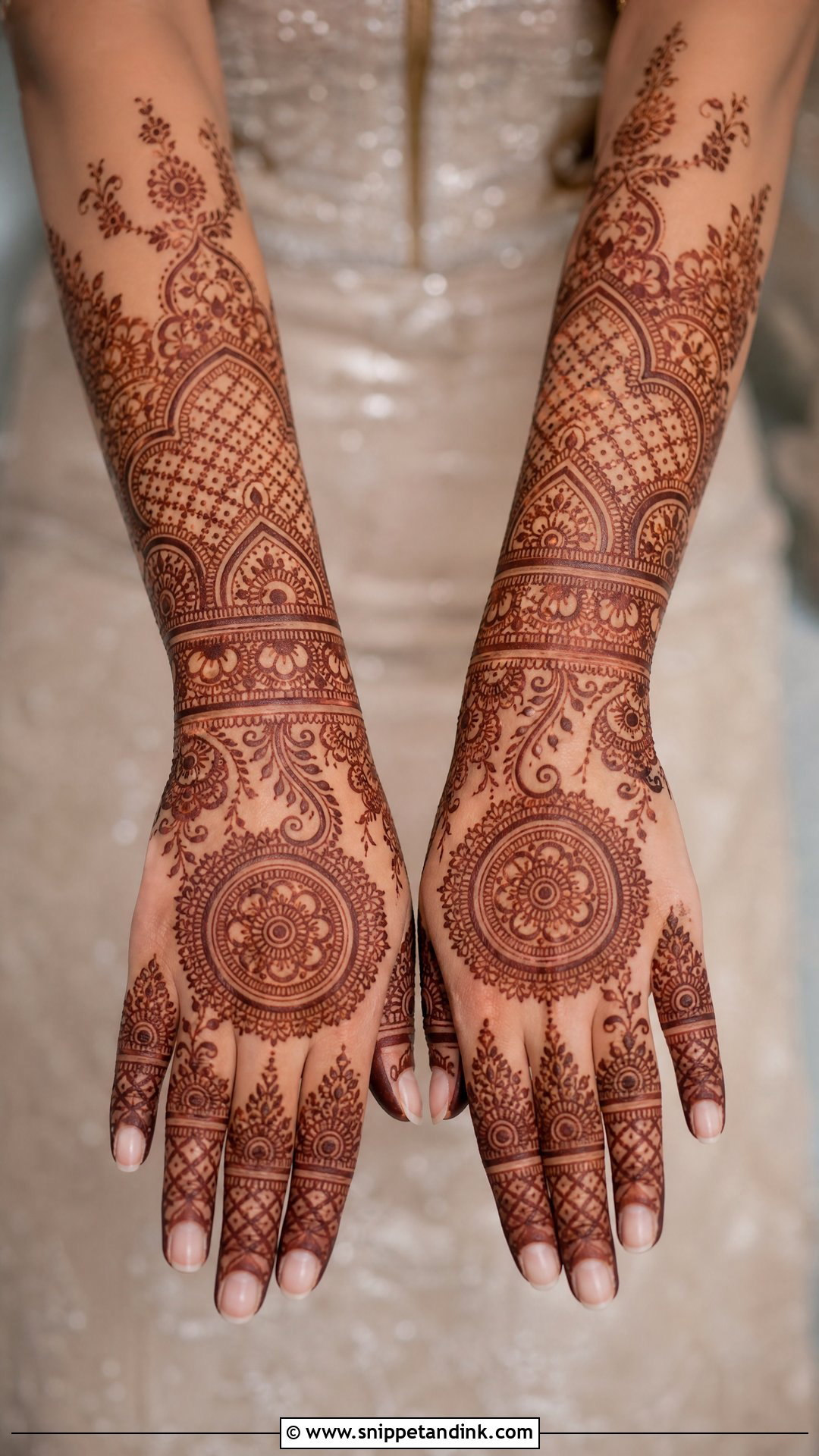
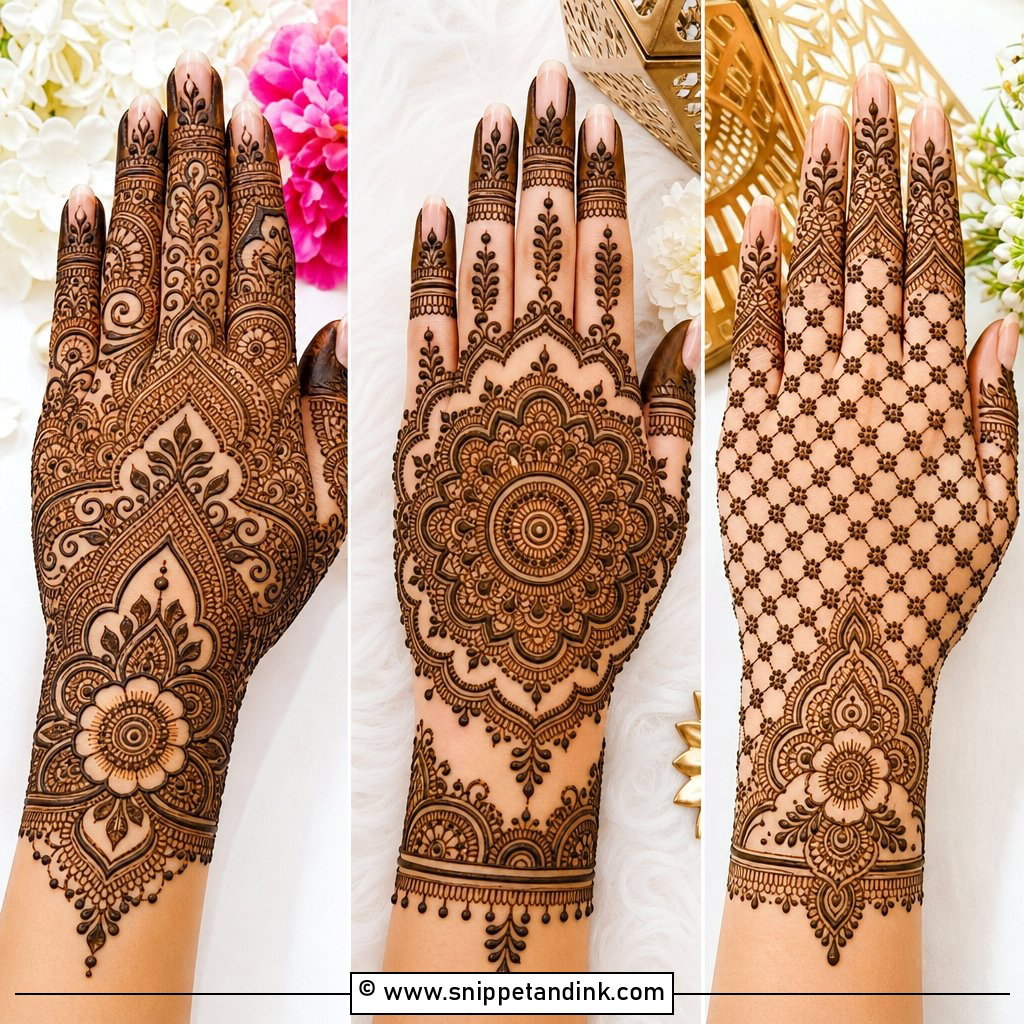
Full coverage on the back side runs from the fingers to the forearm with very little skin left bare. I usually set a round mandala in the centre, carry paisleys, lotus flowers, vines and fine filler up the wrist and forearm, and finish the fingers with layered bands, leafy tips and tiny checks. It belongs with heavily embroidered lehengas, traditional sarees and classic bridal jewellery. The risk with this much detail is that it reads as one dark mass, so I leave hairline gaps between sections; they’re barely visible up close but they separate the motifs from a distance.
2. Indian Bridal Mehndi Back Hand
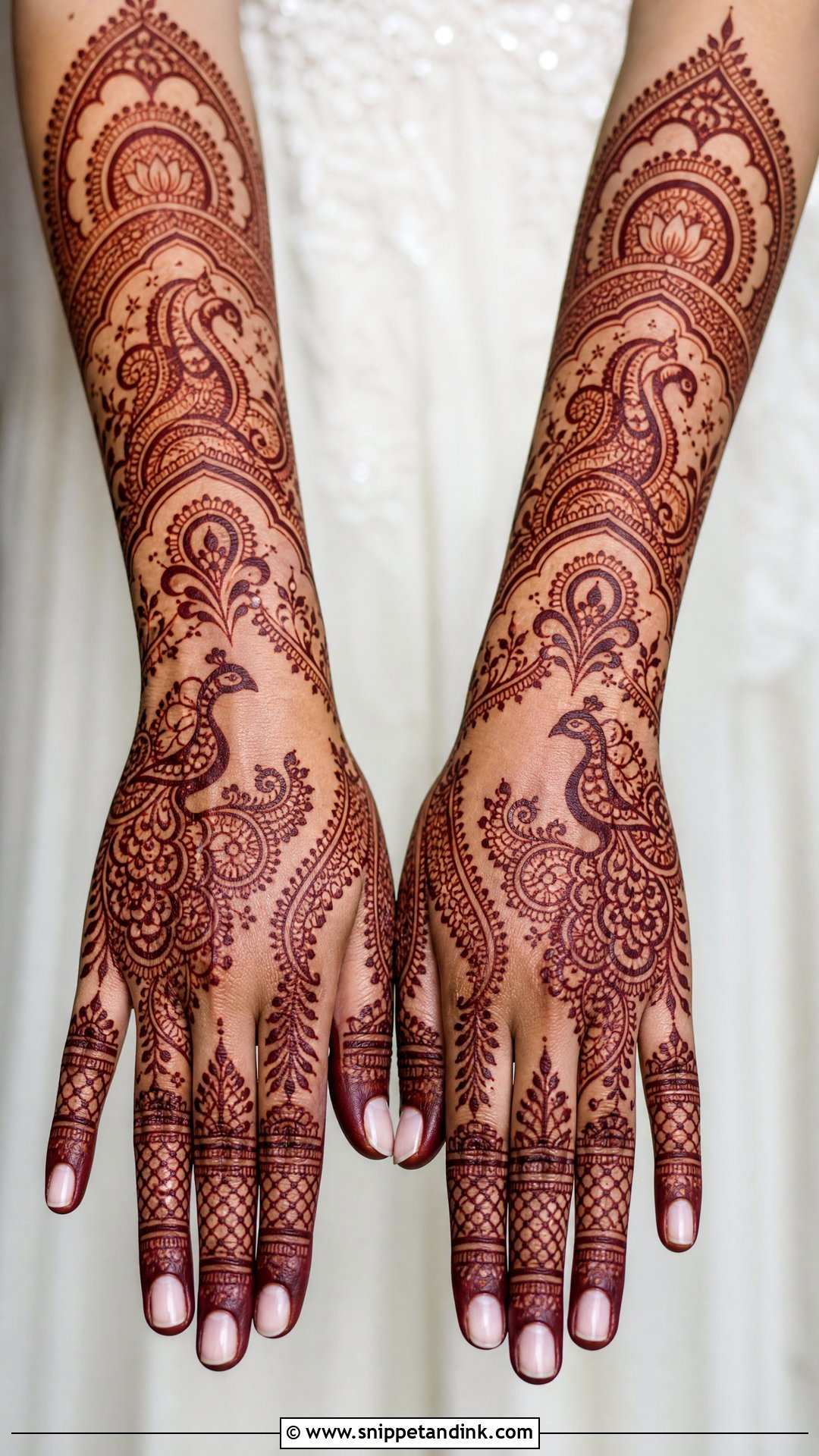
Indian back hand designs depend on symmetry and meaning: peacocks, paisleys, lotus flowers, kalash shapes and delicate mesh. I start with a bold central motif on the back of the hand and let it run toward the wrist like a cuff, then fill the fingers with dense lines, dots and miniature florals. Red, maroon, gold and green outfits suit it best. The symbols are what make it feel planned rather than random, so I ask brides which ones matter to their family before I add filler around them.
3. Arabic Bridal Mehndi Back Side
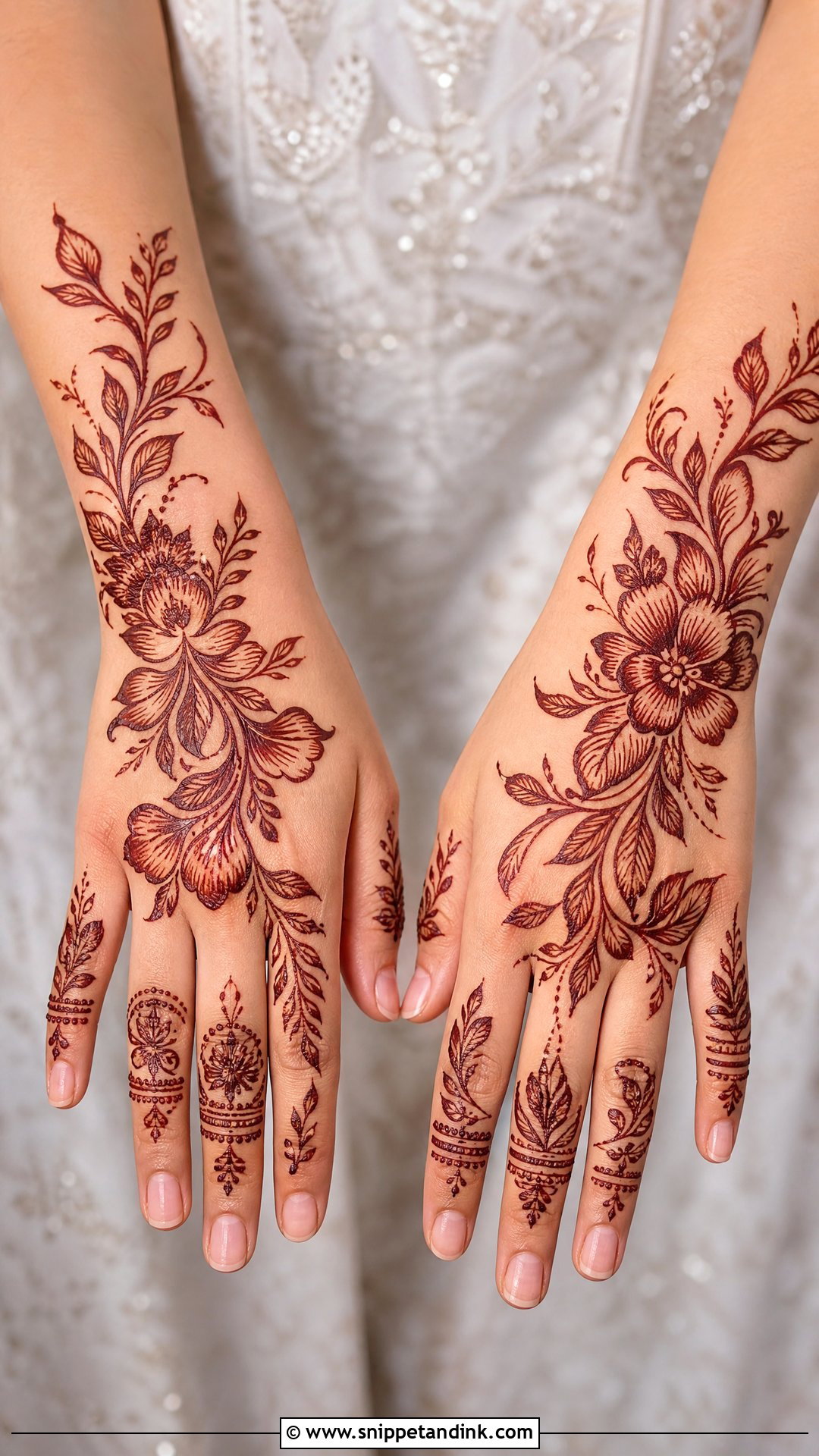
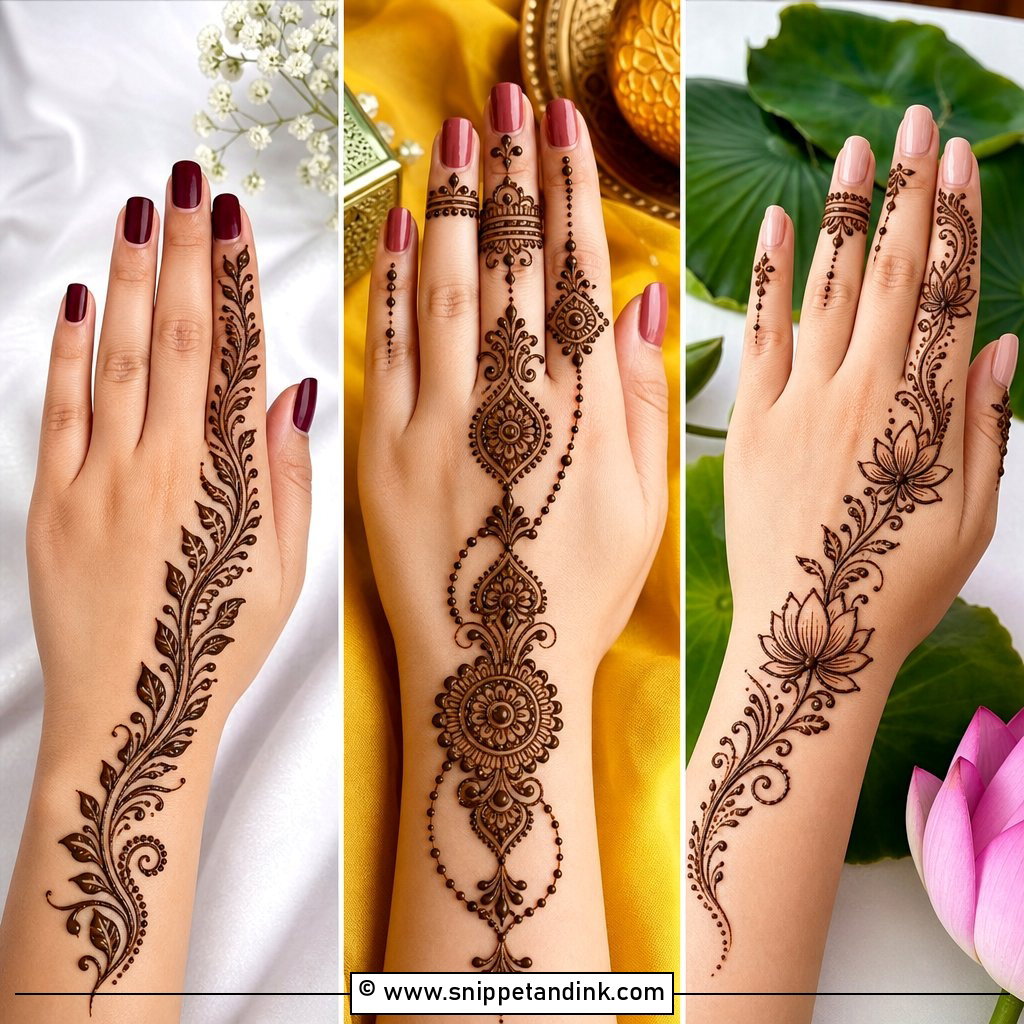
Arabic designs read well from across a room. Rather than covering everything, they use flowing floral trails, curved vines, shaded petals and generous open skin, usually travelling diagonally from one side of the wrist toward the fingers. That diagonal slims the hand visually. Thick outlines hold more paste, so the stain on this style tends to come out darker and clearer than fine work in the same spot. It pairs naturally with modern lehengas, pastel outfits and statement rings.
4. Indo Arabic Bridal Mehndi Back Hand
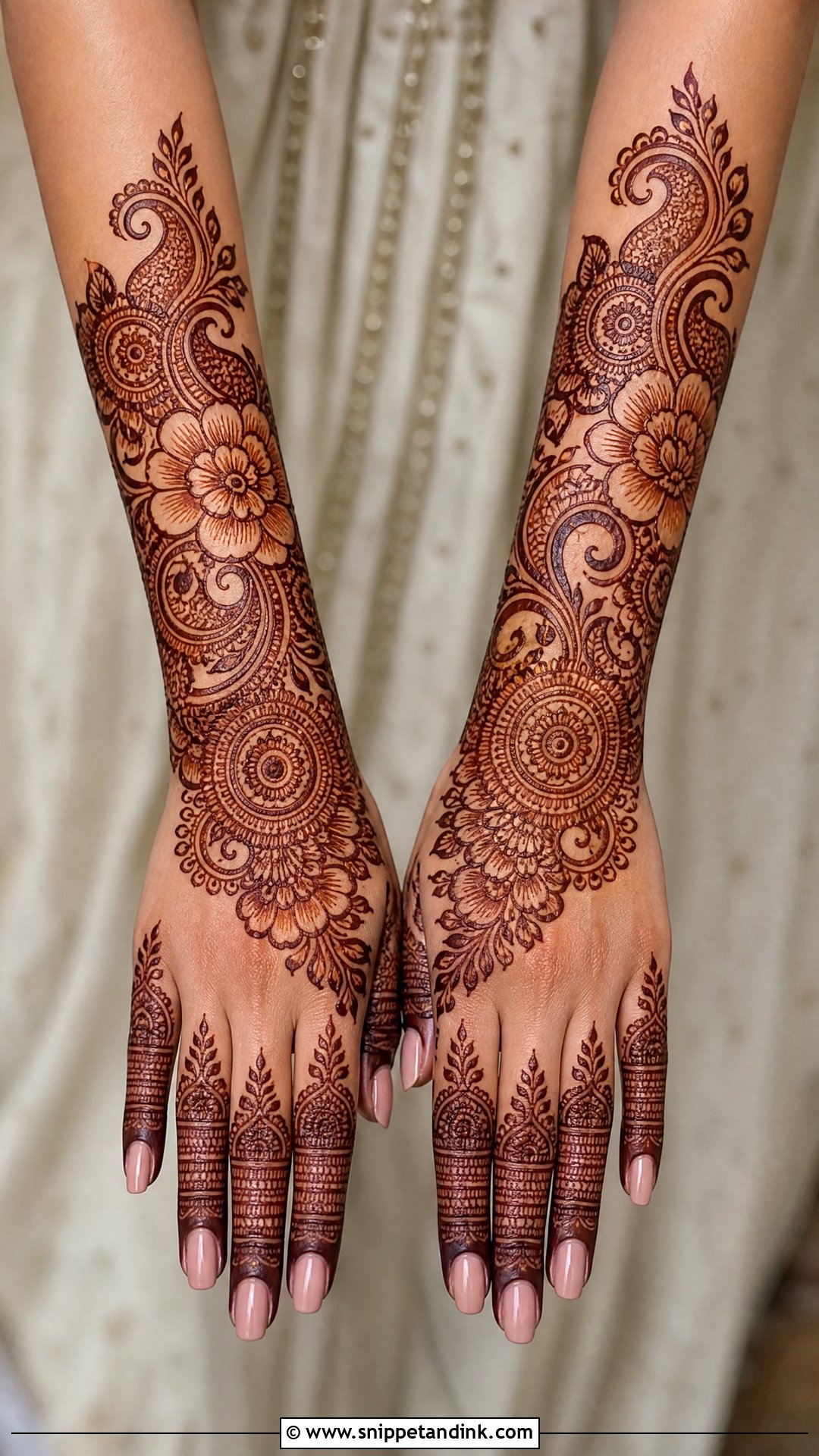
An Indo Arabic bridal mehndi back hand design takes the bold flow of Arabic mehndi and adds the fine detail of Indian patterns. Large flowers, curved leaves, paisleys, mandalas and shaded areas sit in a balanced layout, often a floral trail across the hand with a detailed bracelet band at the wrist and Indian-style lines and dots on the fingers. It’s the easiest style to scale: I can keep it light for a mehndi night guest look or build it up for the bride without changing the basic layout.
5. Bridal Mandala Mehndi Back Side
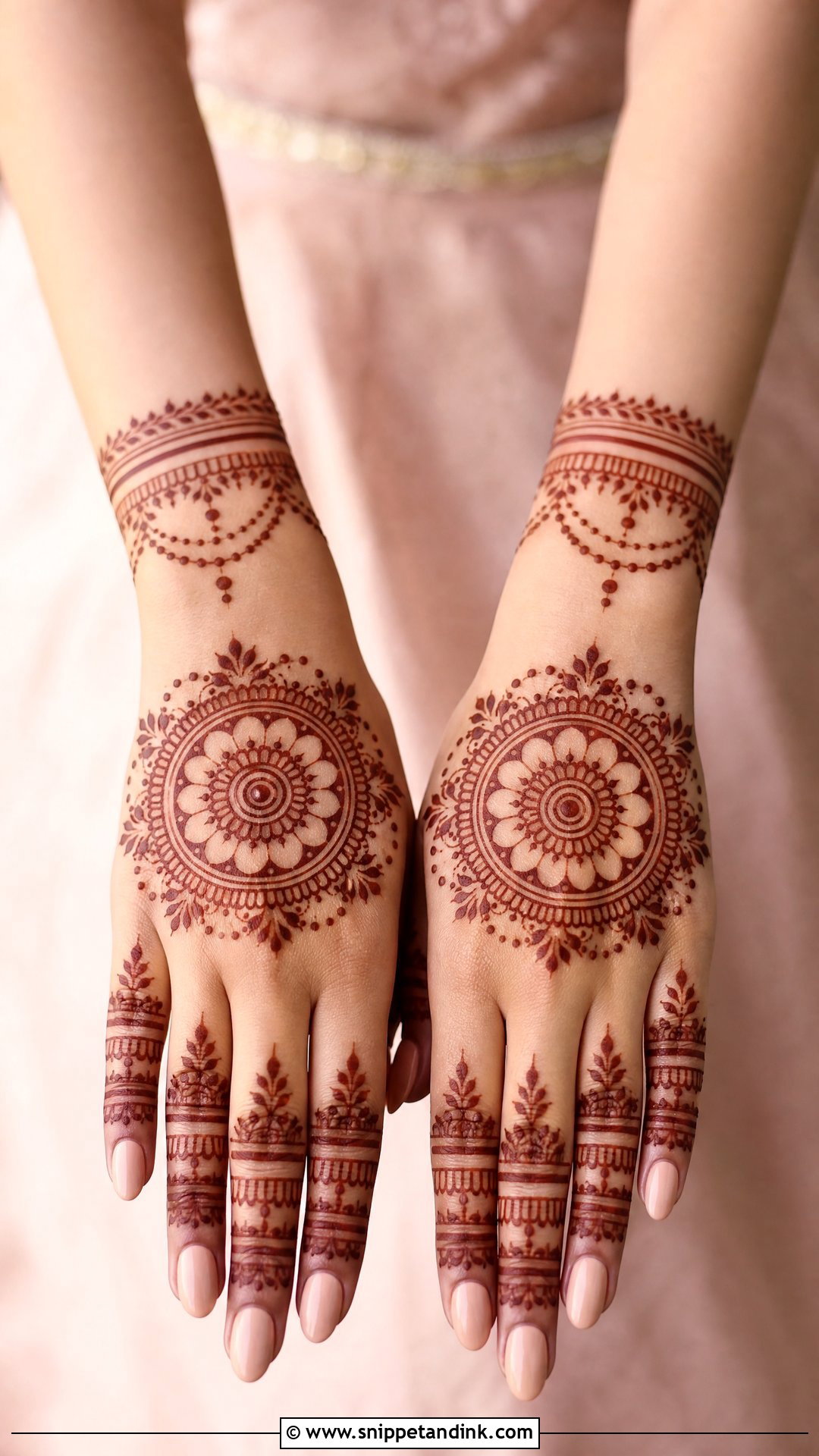
Mandalas are simple in structure and strong on the hand. The circle sits in the centre of the back of the hand, ringed by petals, dots, scallops, leafy curves and fine circular detail, with matching finger bands and a bracelet pattern at the wrist. I always draw the rings from the centre outward and check the circle from above, not at an angle, before I add the outer petals. Extend it into the wrist and forearm with paisleys or florals if you want a heavier bridal version.
6. Bridal Floral Mehndi Back Hand
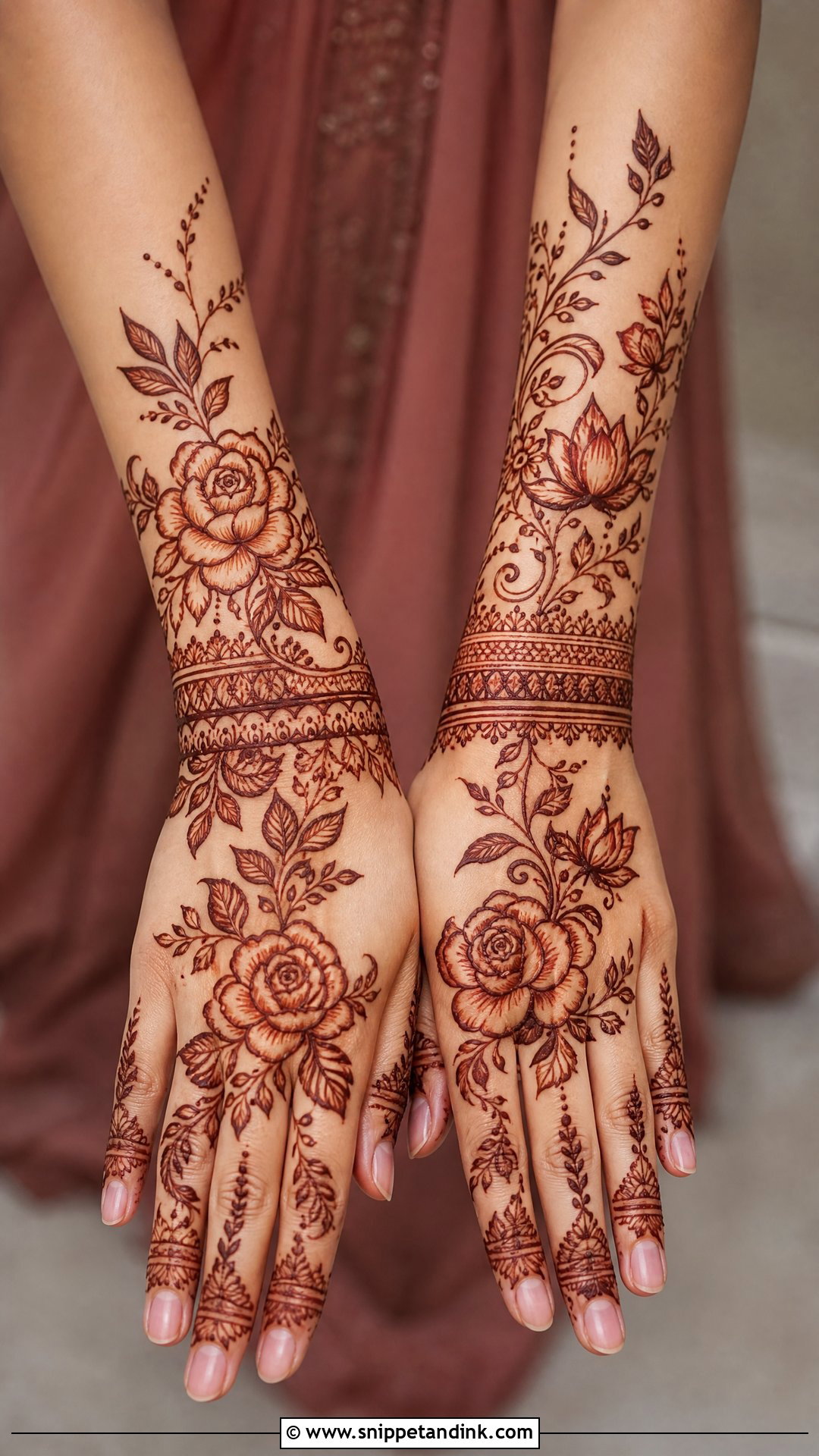
Florals give you a romantic back hand without much weight. Roses, lotuses, leafy vines, small buds and shaded petals can cover the whole hand or flow diagonally like a garden trail, with finger bands, lace-like wrist work and filler dots to make it bridal. They sit naturally with pastel lehengas, floral jewellery and outdoor events. The mistake I see is every flower drawn the same size; mixing a few bold blooms with fine leaves keeps the design readable once it stains.
7. Peacock Bridal Mehndi Back Side
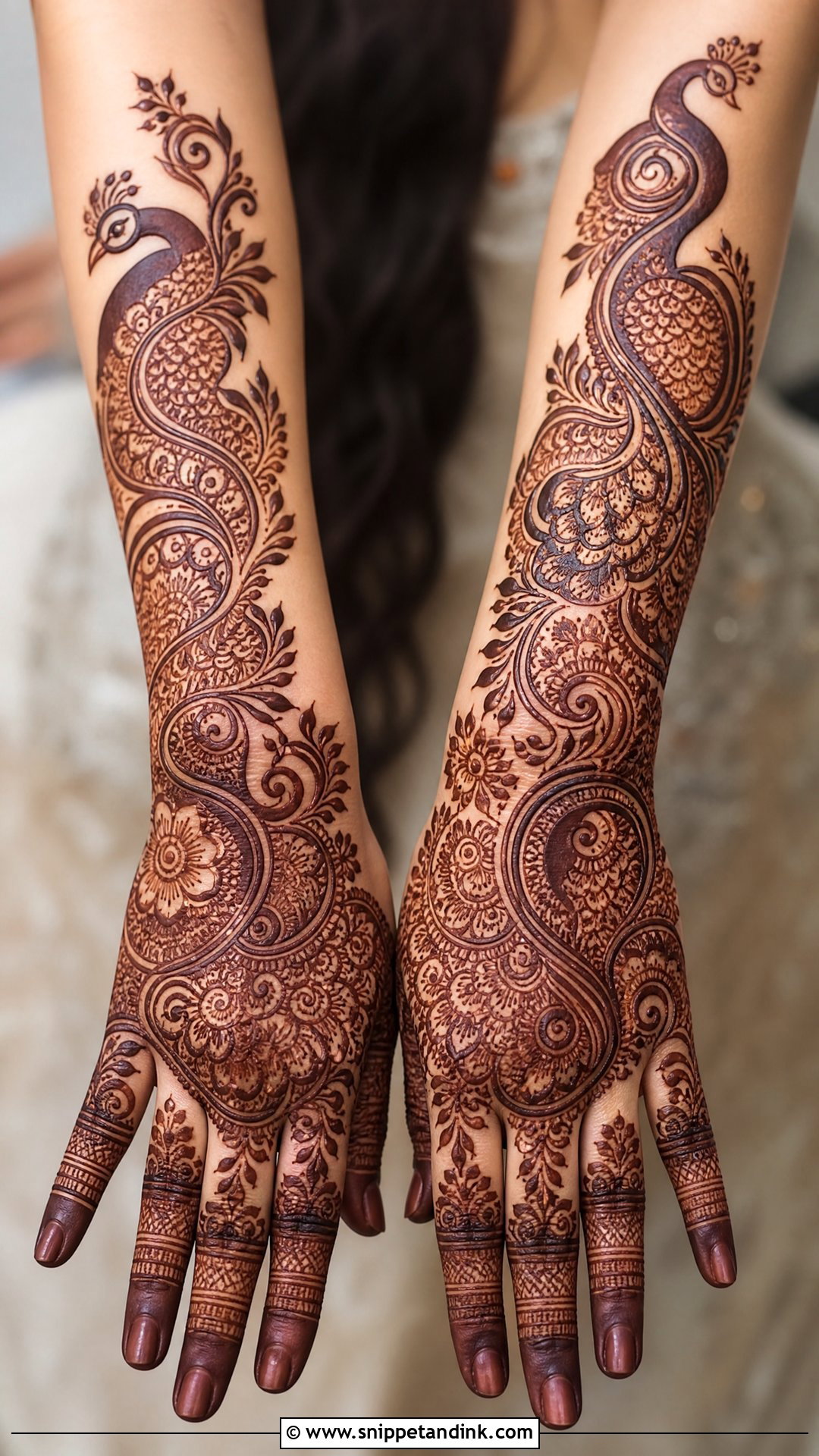
A peacock gives the back side a royal, festive focus. It can sit near the wrist, in the centre of the hand or reach along the forearm, with feathers filled with paisleys, curved lines, dots and small florals. The back of the hand has just enough room for the bird to look graceful rather than squeezed. One large peacock works, or two mirrored birds, one on each hand, so they face each other when you hold your hands together. Heavy bangles, kundan jewellery and classic outfits suit it well.
8. Jaali Bridal Mehndi Back Hand
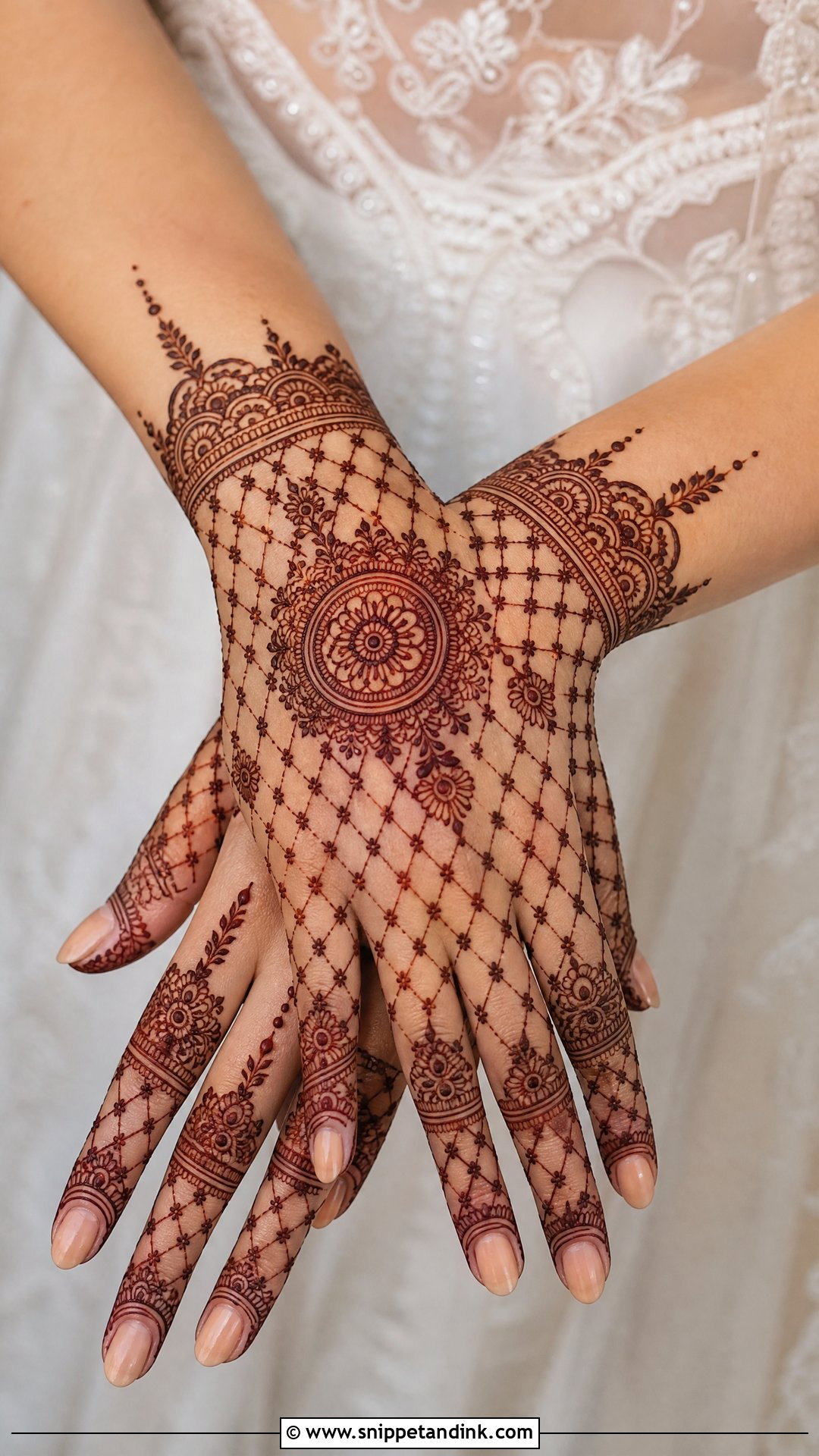
Jaali, the lace effect, is made from neat diagonal lines, tiny dots, florals or small checks forming a mesh. It can fill the whole back hand or sit in sections between larger motifs, and a mandala surrounded by jaali is one of the most balanced layouts I draw. Matching mesh on the fingers ties it together. If your outfit has net, lace, sequins or fine embroidery, this echoes it nicely. Be patient with it, though: a good grid takes time, and rushed lines vary in thickness, which shows as uneven colour after staining.
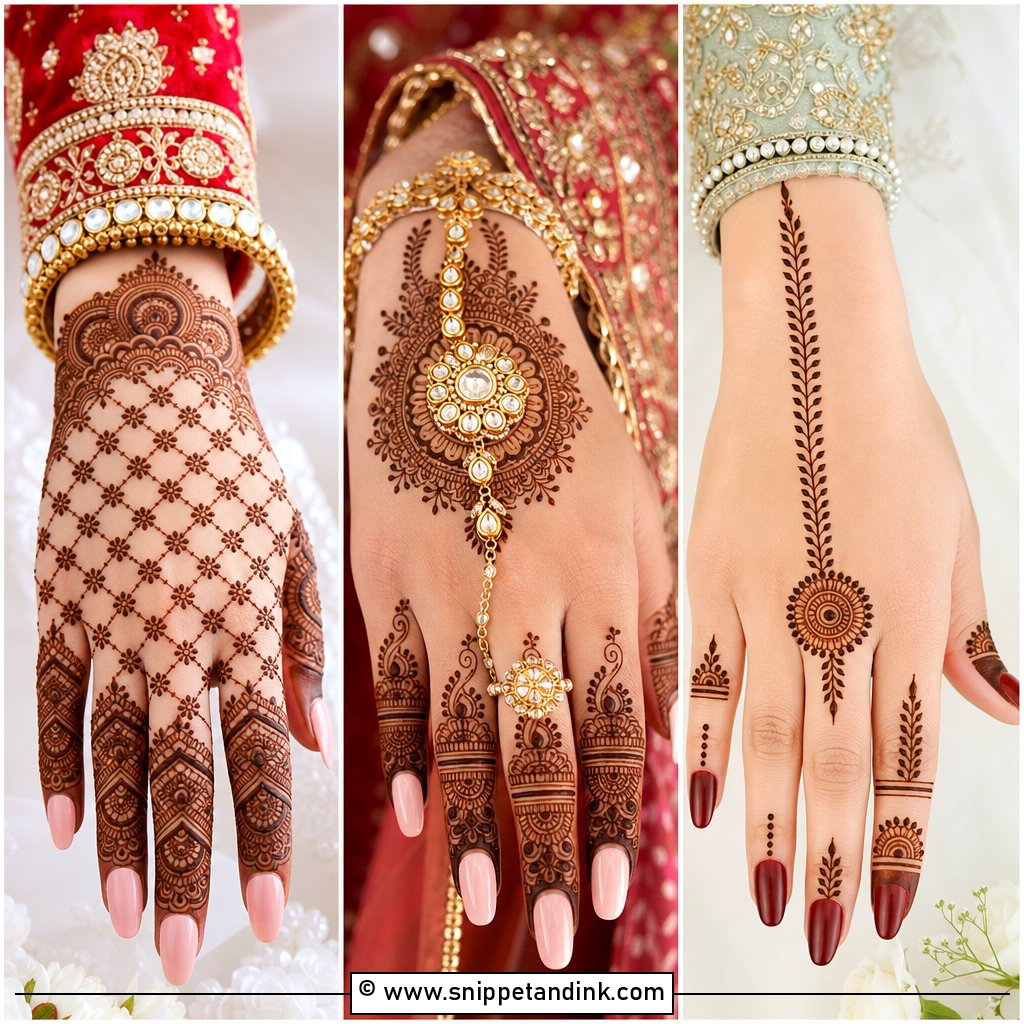
9. Paisley Bridal Mehndi Back Side
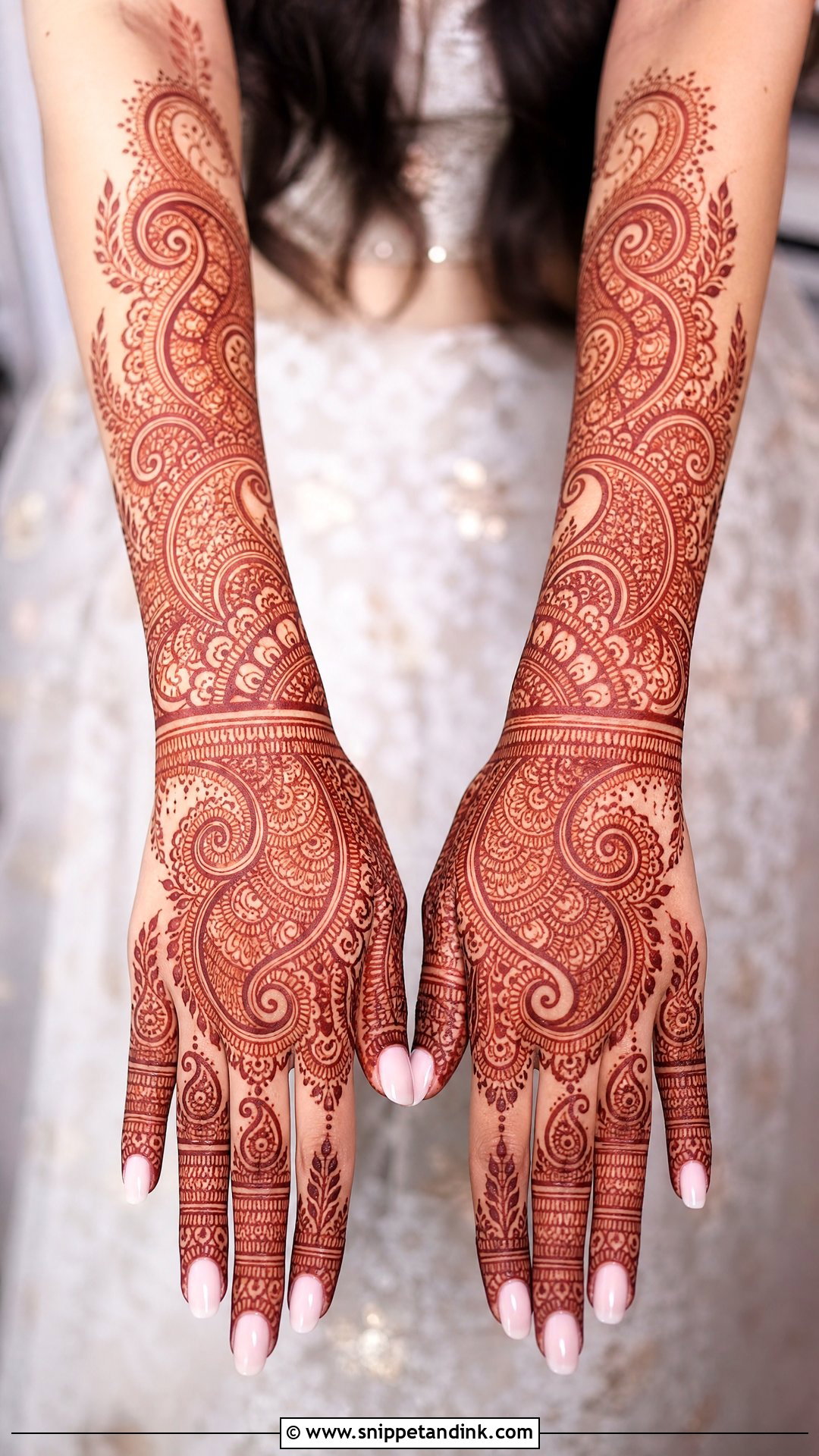
Paisleys are the motif I reach for when a hand needs movement. A large paisley near the wrist can flow into smaller ones toward the fingers, combined with flowers, leaves, fine lines and shaded filling. They’re softer than portrait or story designs but still traditional. Because the size of each paisley is easy to change, they adapt to small and long hands alike. Add dense finger detail and a cuff-style wrist border to make it bridal.
10. Bracelet Bridal Mehndi Back Hand
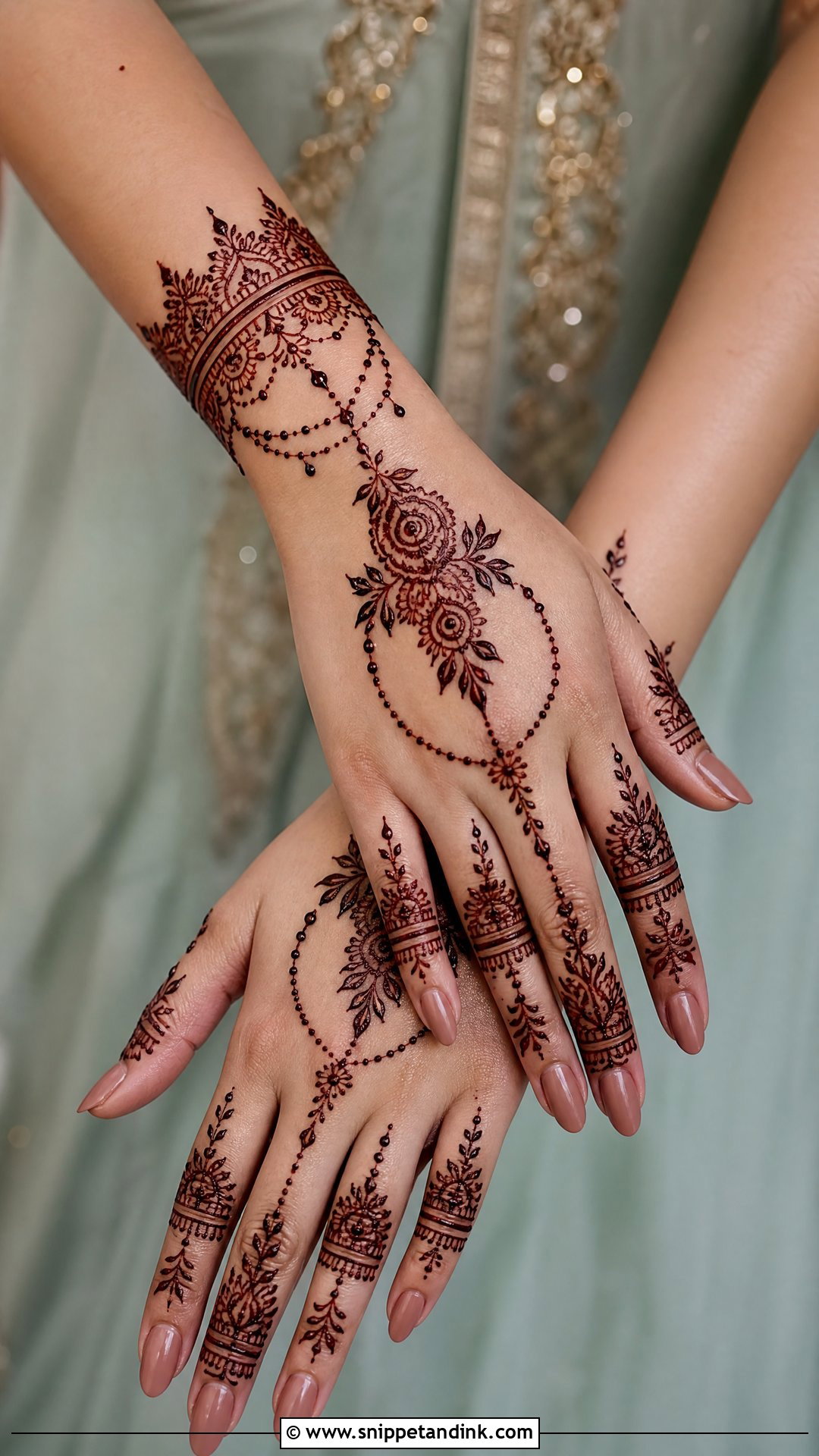
Bracelet mehndi turns henna into jewellery: a wrist cuff, chain-like lines, ring patterns and finger extensions, sometimes joined from wrist to finger to give a haath phool effect. It complements bangles, rings and hand chains, and it can be minimal or very detailed. A bridal version usually adds florals, small mandalas, dots and leafy chains. It’s also kind to brides who find long sittings difficult, since the coverage is light. I draw the chains with a very fine tip; a heavy line reads as a stripe, not a chain.
11. Rajasthani Bridal Mehndi Back Side
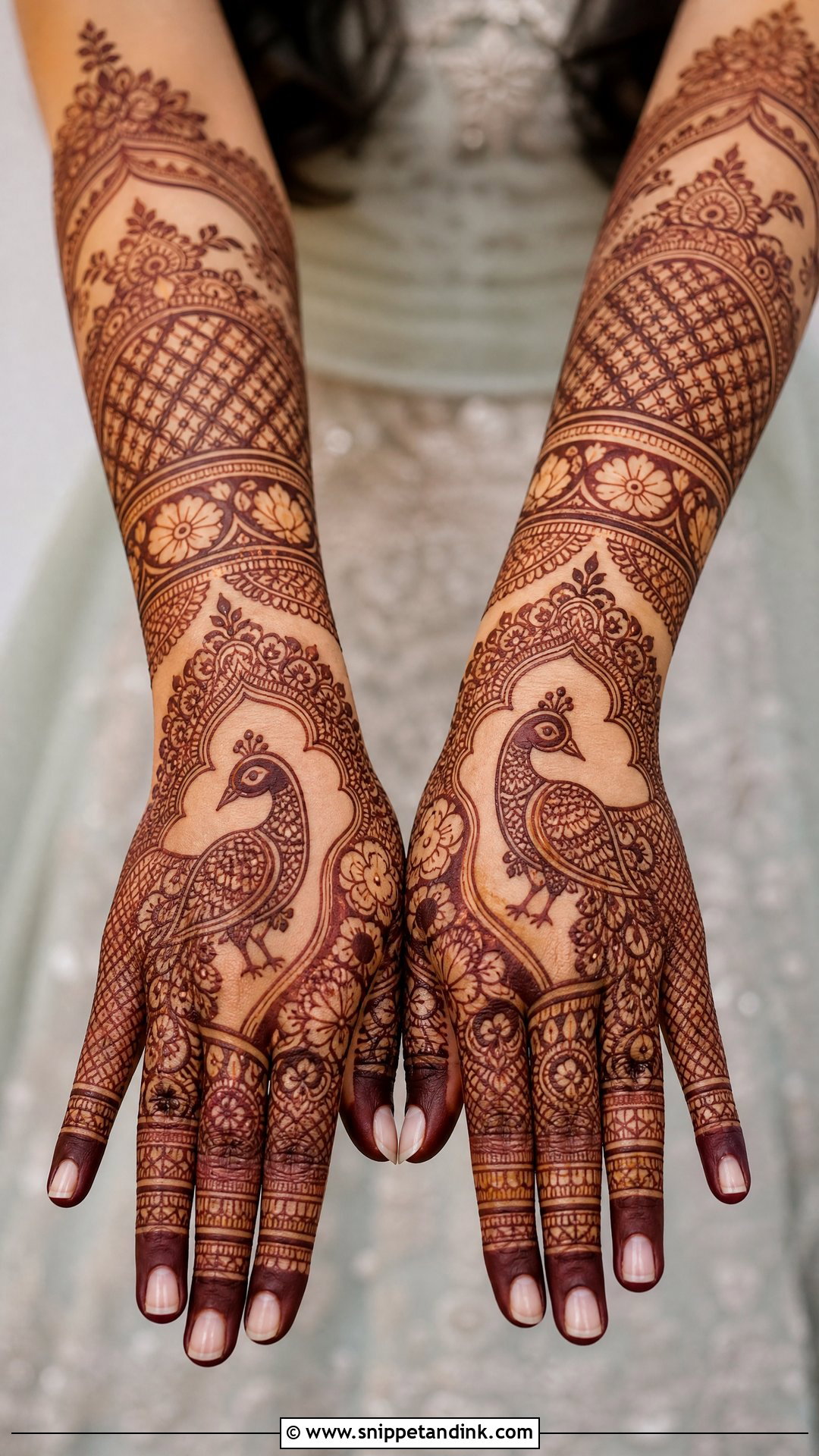
Rajasthani designs are rich with peacocks, bride and groom figures, royal patterns, paisleys, mirror-work inspired shapes and dense fillers. On the back hand I arrange them around a bold centrepiece with detailed bands moving toward the wrist, and the fingers get heavy line work, tiny flowers and patterned tips. It matches heavy lehengas and heritage jewellery. Plan for a long session. This is intricate work, and figures drawn in a hurry lose their faces once the paste dries and flakes.
12. Marwari Bridal Mehndi Back Hand
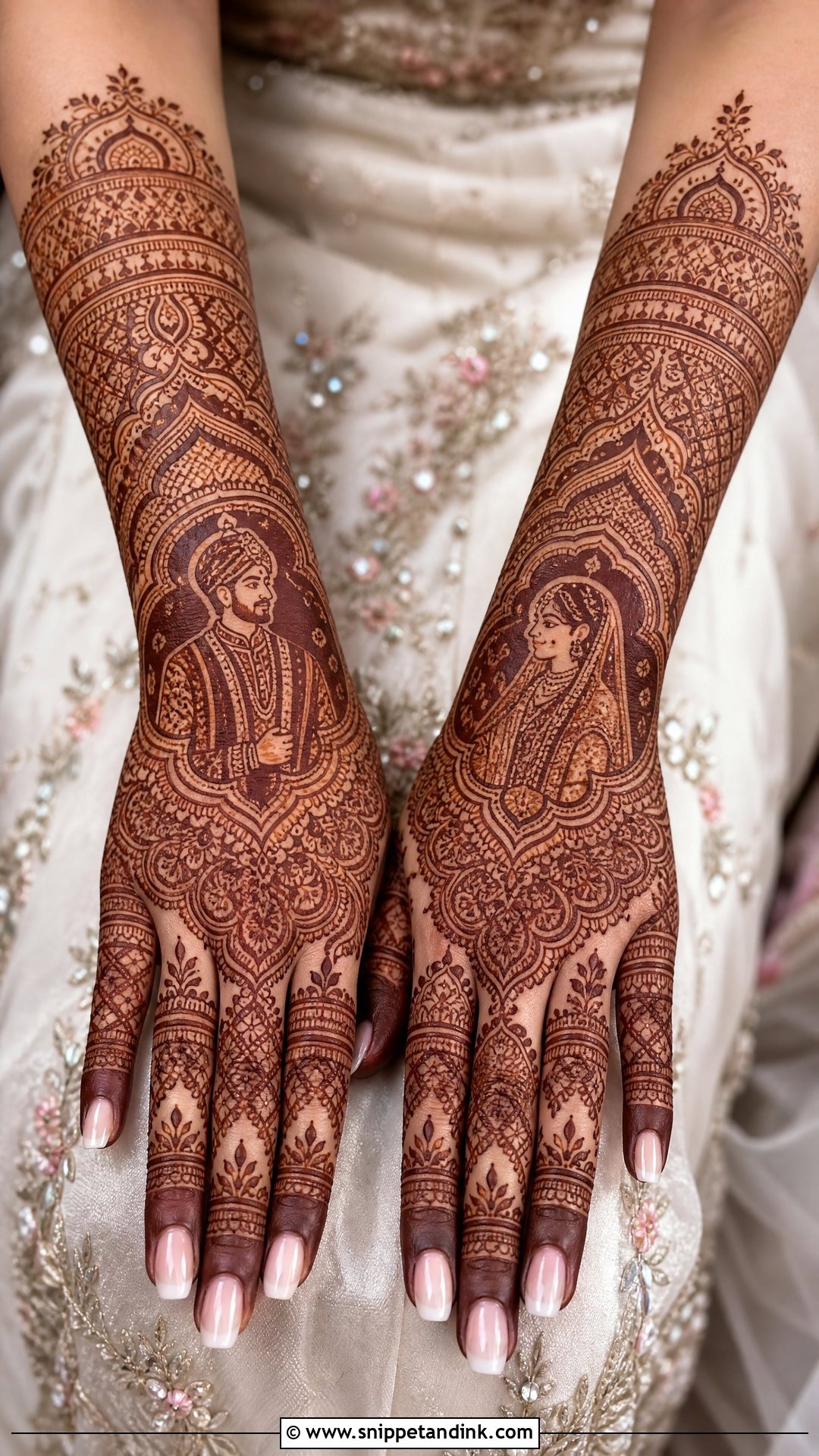
Marwari mehndi builds a complete story in panels, arches and decorative bands: small traditional symbols, bride-groom elements, paisleys, floral borders and fine geometric fillers. The structure gives the back hand a rich, ordered look, and it can extend from the fingers up to the forearm. Spacing is everything here. The panels need clear borders between them or the whole hand starts to look like texture instead of a story, so choose an artist whose past work shows clean, readable lines.
13. Mughal Bridal Mehndi Back Side
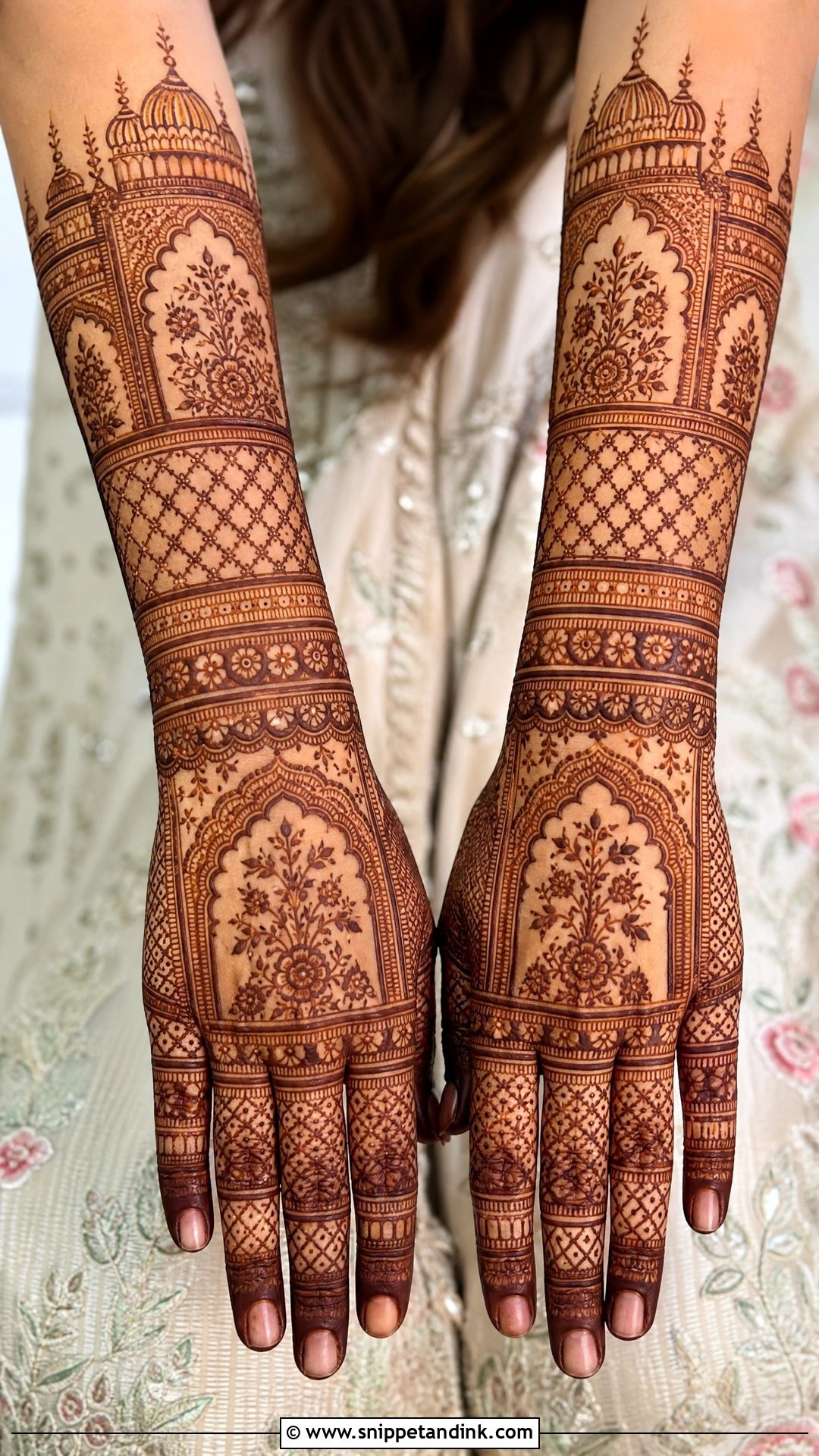
Mughal designs borrow from architecture: domes, arches, jaali, florals and palace-like symmetry. I usually put a floral dome in the centre of the back hand with curved borders reaching toward the wrist and fingers, and add fine mesh, scalloped edges and leafy vines. It suits shararas, ghararas, anarkalis and traditional lehengas. It doesn’t need crowding to look bridal. Bold outlines on the arches and clean space around them let the architectural shapes stand out.
14. Moroccan Bridal Mehndi Back Hand
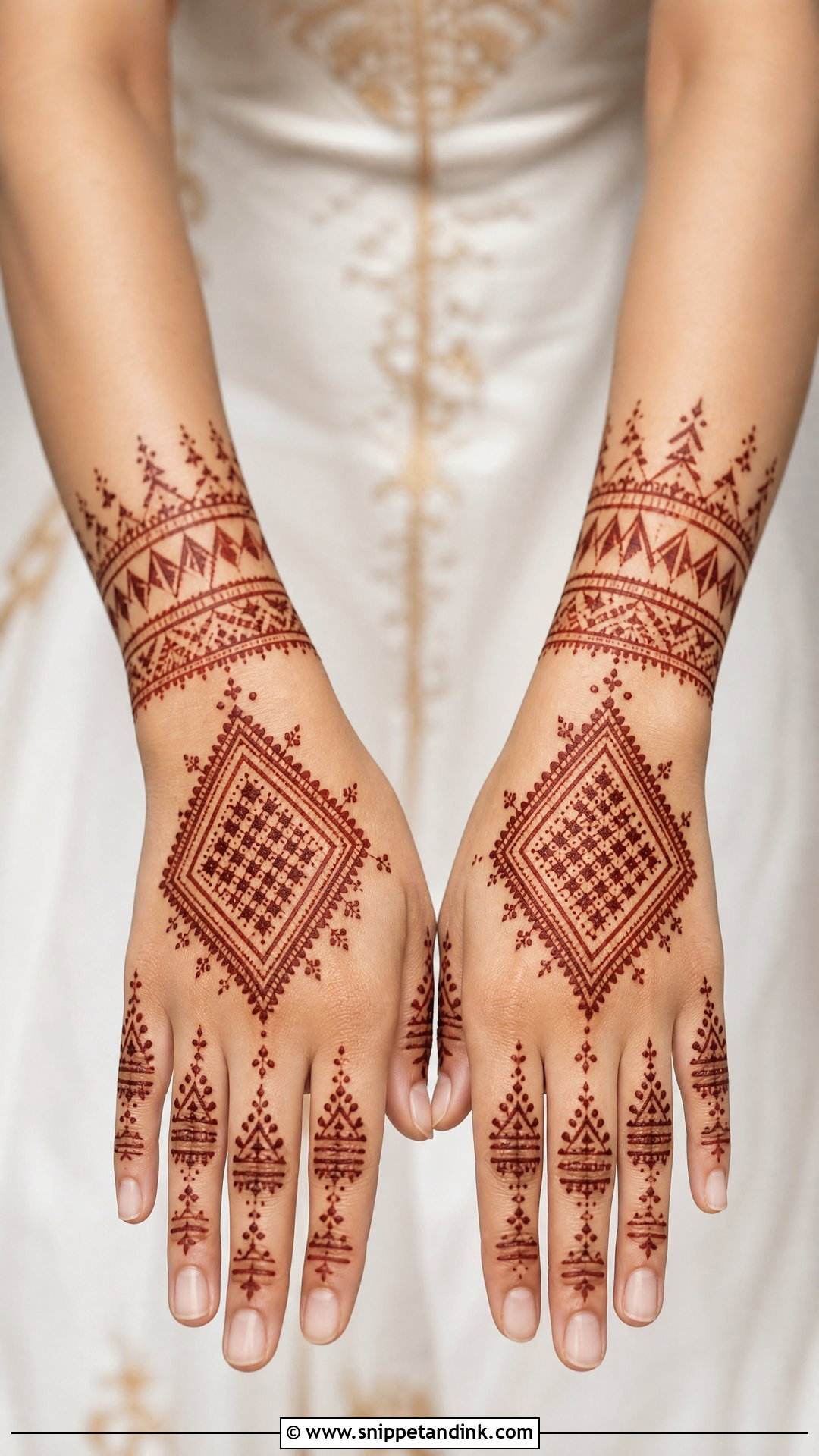
Moroccan designs swap florals for geometry: clean lines, diamonds, triangles and strict symmetry in repeating grids, angular bands and small dots. They give the hand a modern, graphic feel and suit contemporary outfits and minimal jewellery. Straight lines are harder than curves on skin that stretches over knuckles, so I draw them with the hand flat and fingers spread, then check them with the hand relaxed. A few tiny flowers or leafy borders soften it for a wedding.
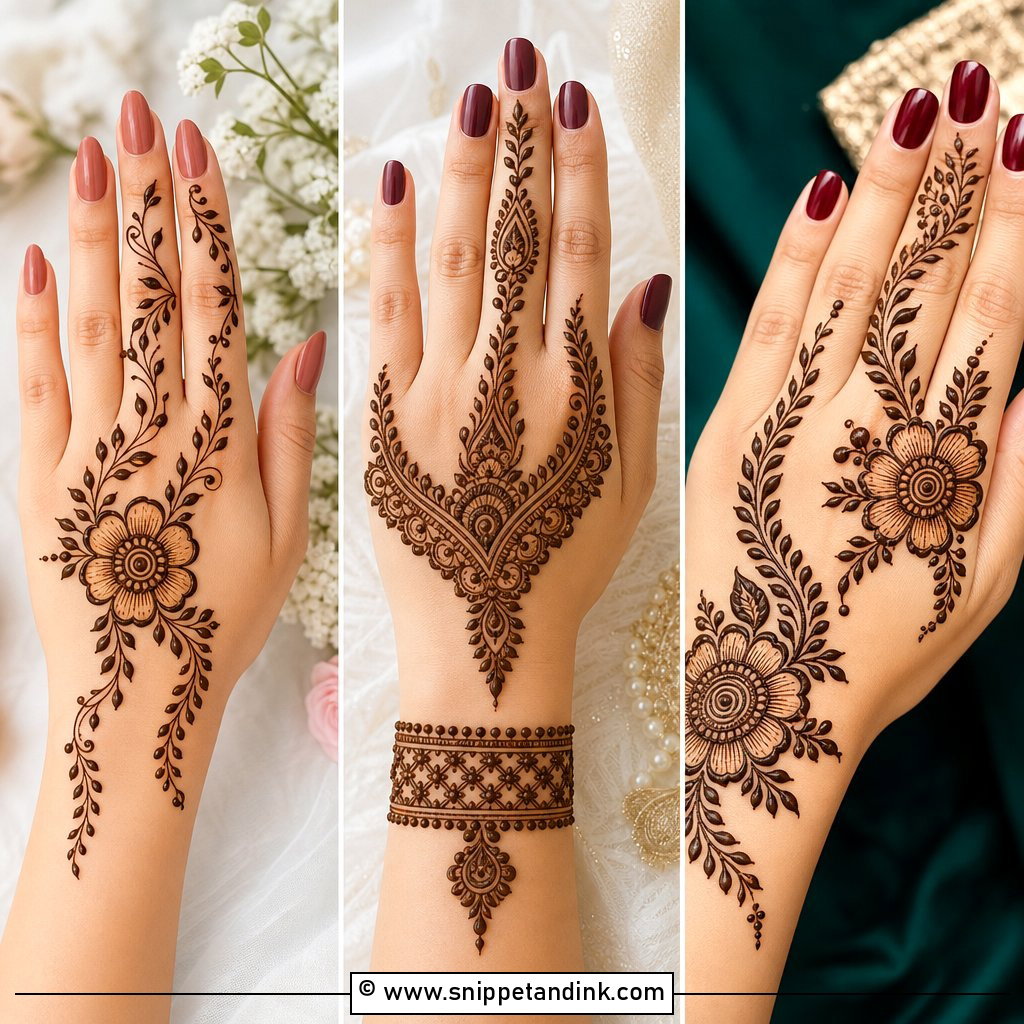
15. Gulf Bridal Mehndi Back Side
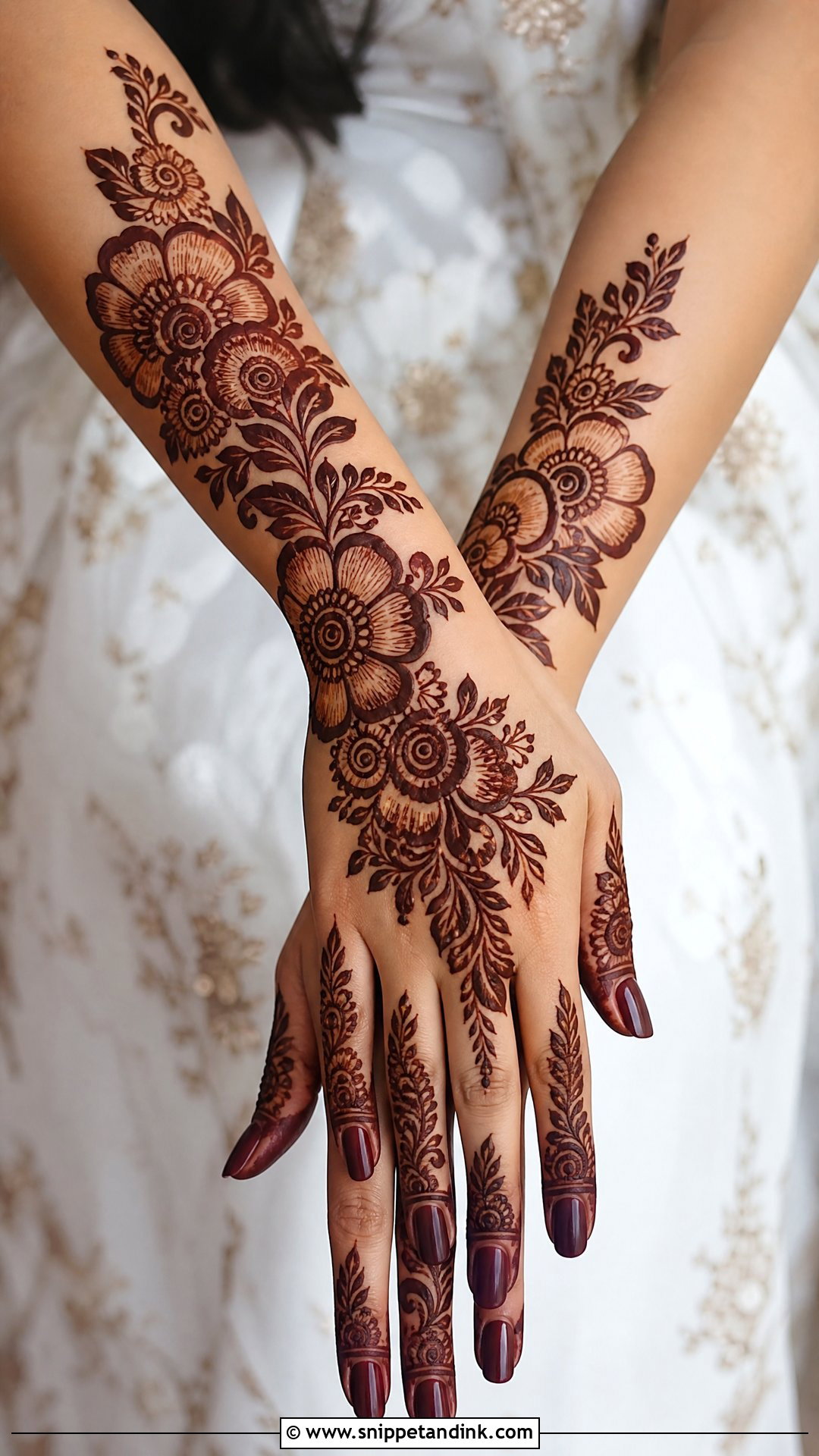
Gulf designs are bold and full of movement, with large flowers, leafy trails, thick outlines and soft open spaces. A typical layout begins at the wrist and sweeps across the hand toward the index finger, with matching floral bands or simple leafy tips on the fingers. It’s glamorous without the weight of dense Indian work. Because the motifs are big, I can resize them easily for any hand shape, and they stay visible from a distance.
16. Minimal Bridal Mehndi Back Hand
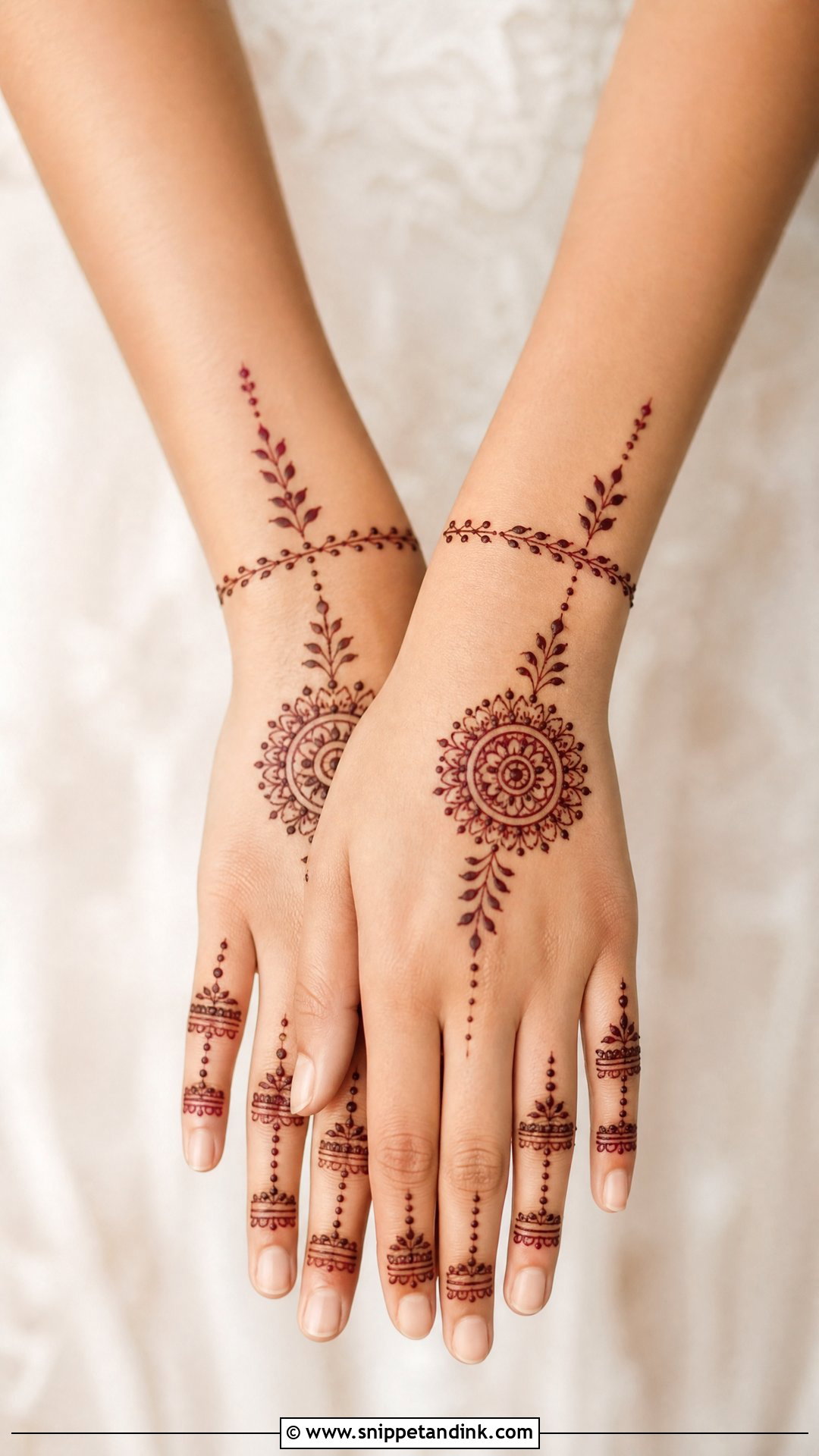
Minimal bridal mehndi back hand designs use few motifs, placed carefully: a small mandala, a floral bracelet, finger bands and delicate leafy trails. They suit intimate weddings, courthouse ceremonies and engagement looks, and they work well when the outfit or jewellery is already heavy. What makes a light design feel bridal is connection. The wrist, the fingers and the centre of the hand need to relate to each other instead of floating as separate stickers.
17. Modern Bridal Mehndi Back Side
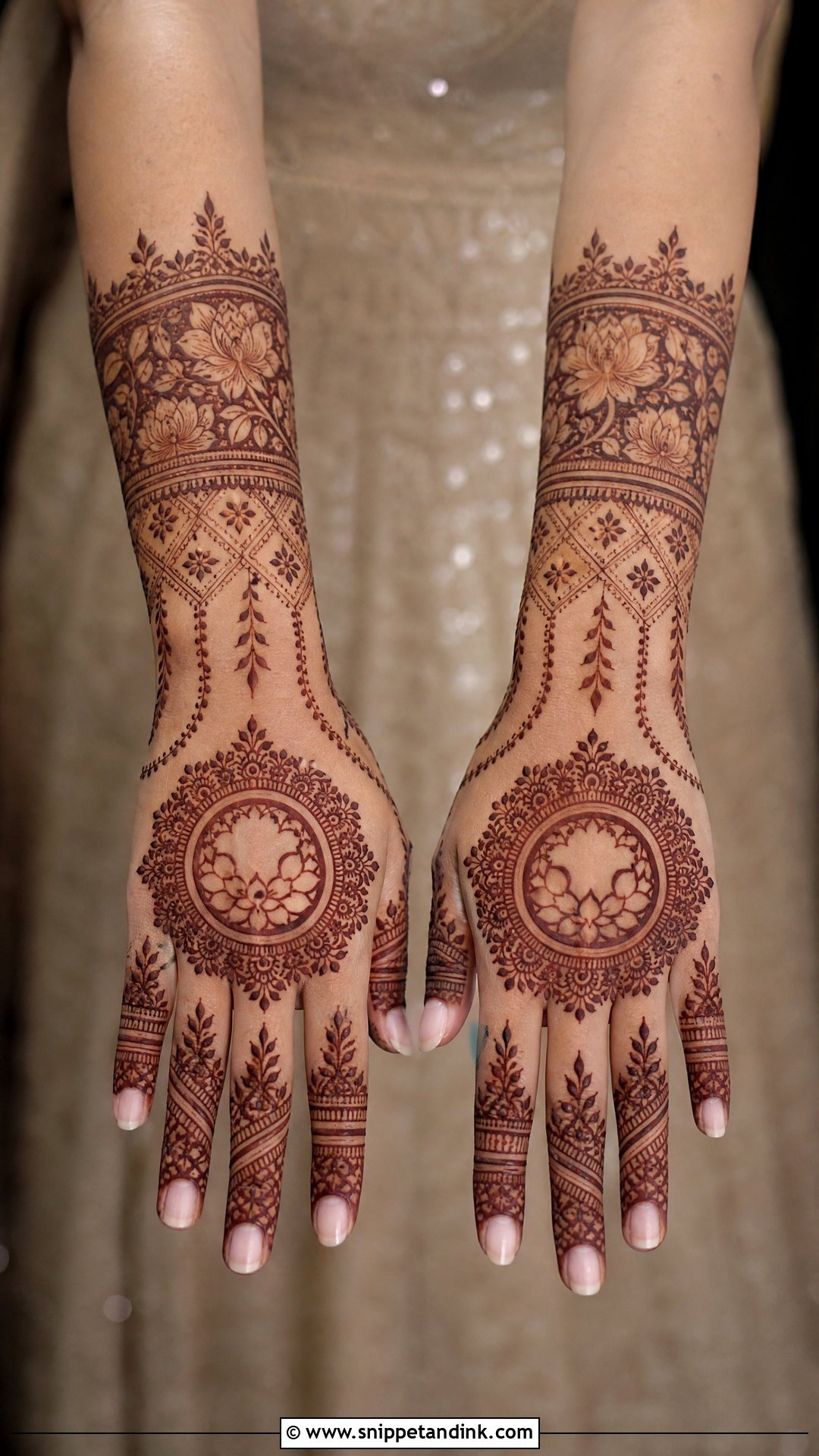
Modern designs on the back side focus on clean layouts and fresh combinations: mandalas with negative space, floral cuffs, geometric panels, leafy chains and finger-focused detail. Every motif gets room. I often match a modern design to the bride’s nail colour and jewellery, since they all show up together in ring shots and candid hand poses. It’s current without chasing a trend that dates in a year.
18. Simple Bridal Mehndi Back Hand
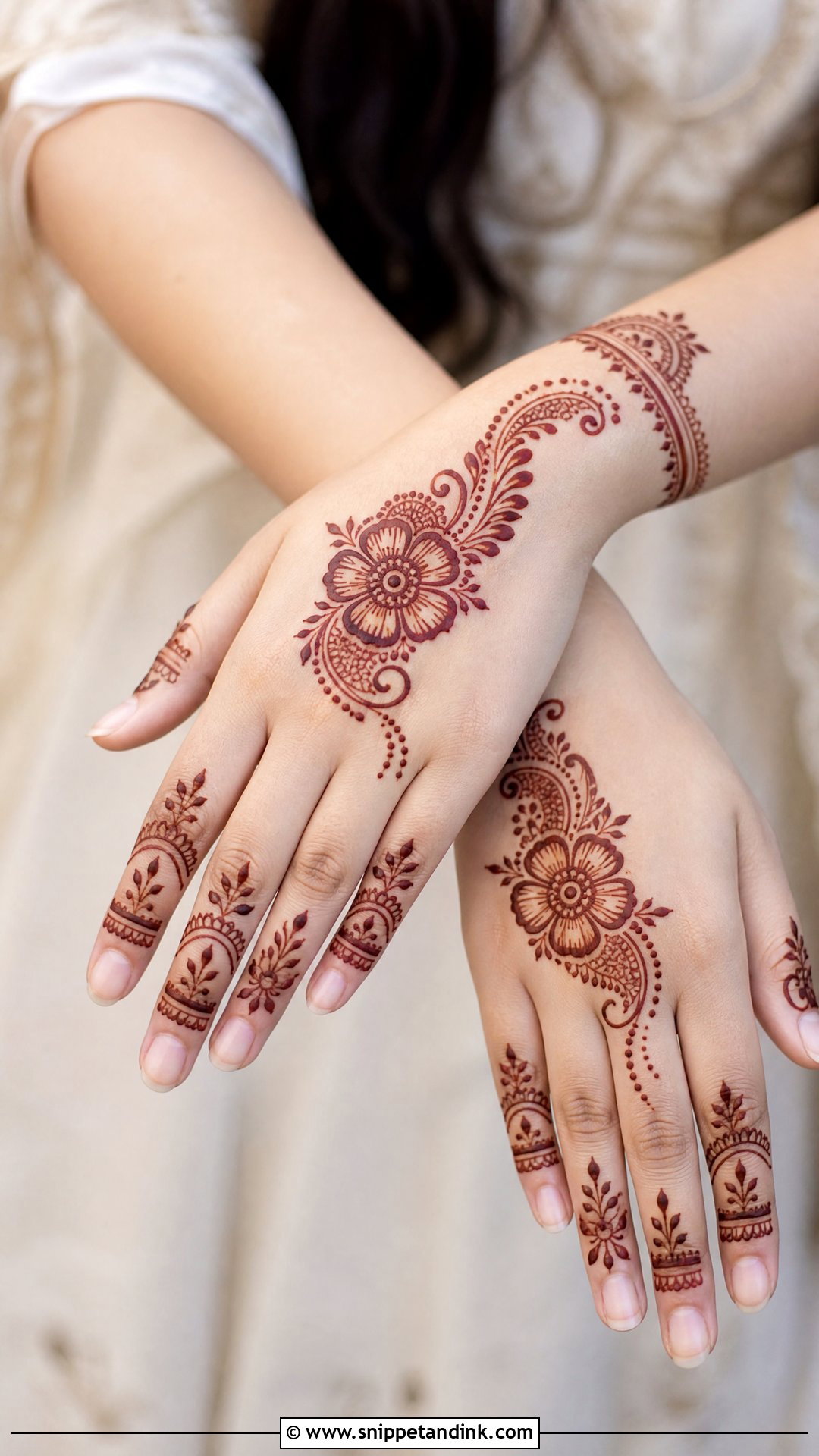
Simple back hand mehndi can include a central flower, a light paisley trail, a wrist band and decorated fingers. It still looks bridal because it covers the important areas in balance. It also helps if your session is short or you’d rather not have much paste on your skin. Clean outlines, neat dots and a little soft shading are what keep it from looking plain, and it suits pre-wedding events and small ceremonies.
19. Heavy Bridal Mehndi Back Side
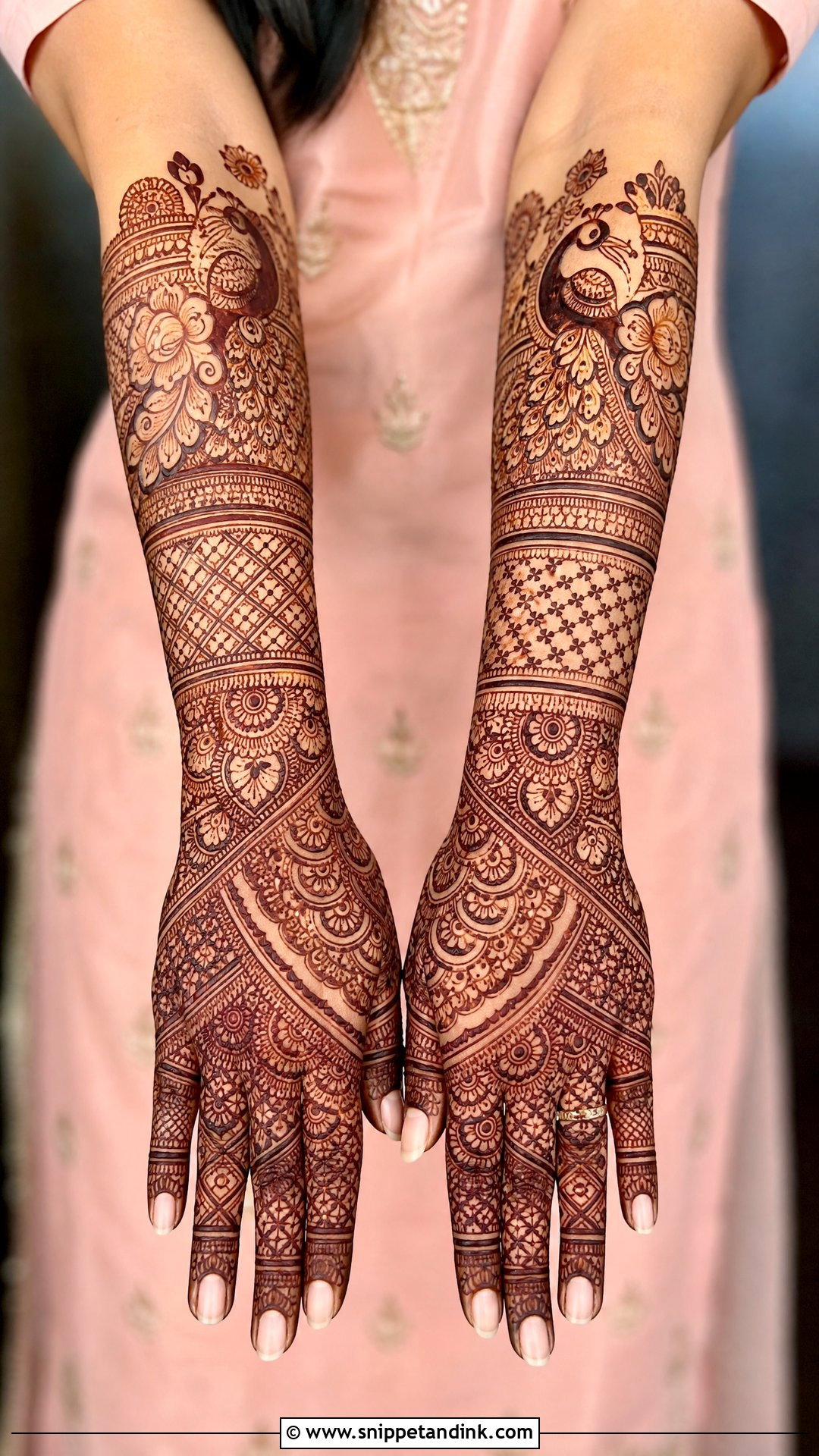
Heavy designs cover the back hand, fingers, wrist and often the forearm with peacocks, paisleys, jaali, florals, domes, fine checks and tiny filler lines. They’re luxurious and traditional, especially with heavy bangles and bridal rings. Good spacing is non-negotiable. I keep a few bold motifs clearly visible as anchors so the design has structure, because dense mehndi without them looks packed rather than detailed.
20. Back Hand Bridal Mehndi With Names
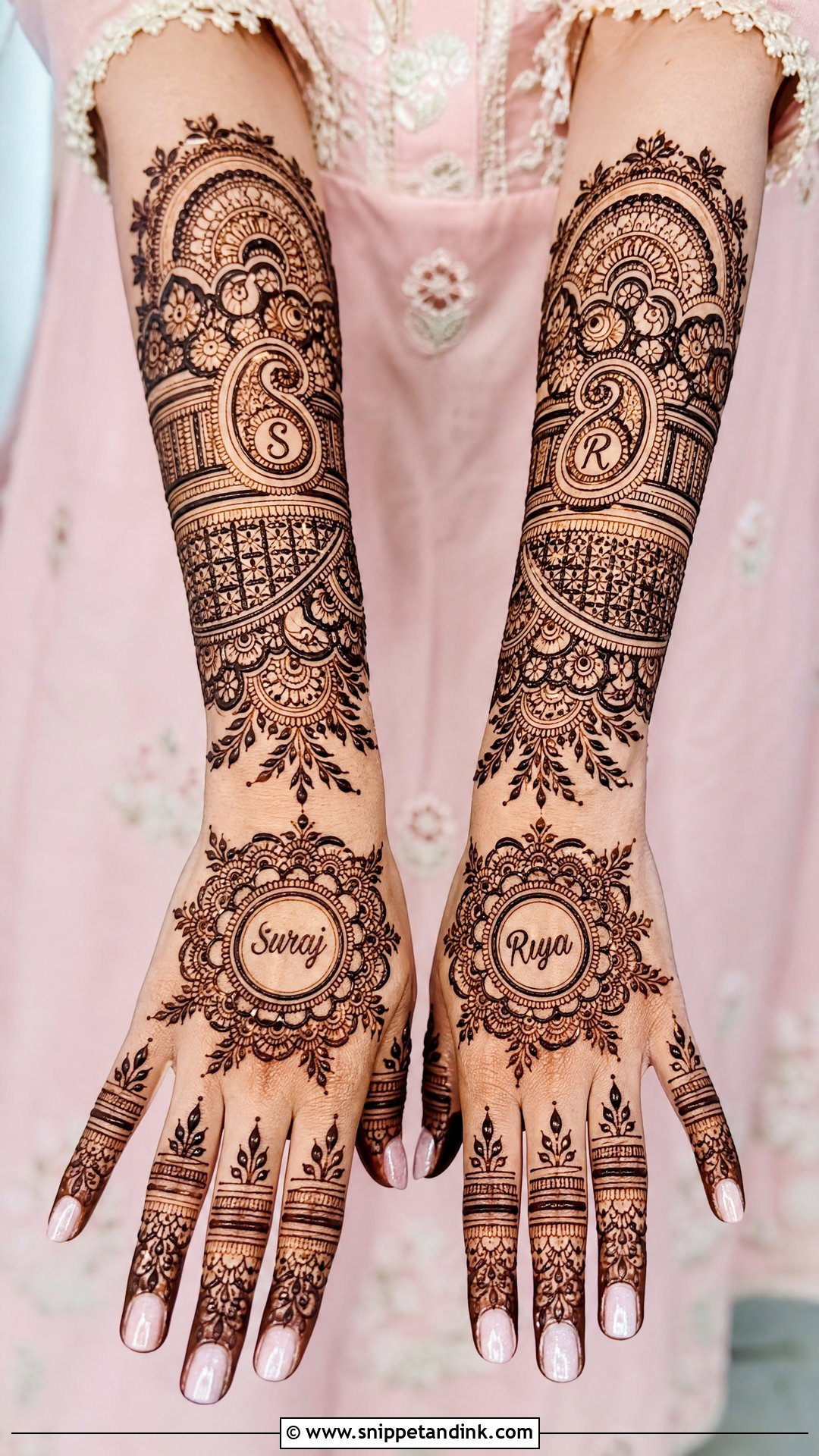
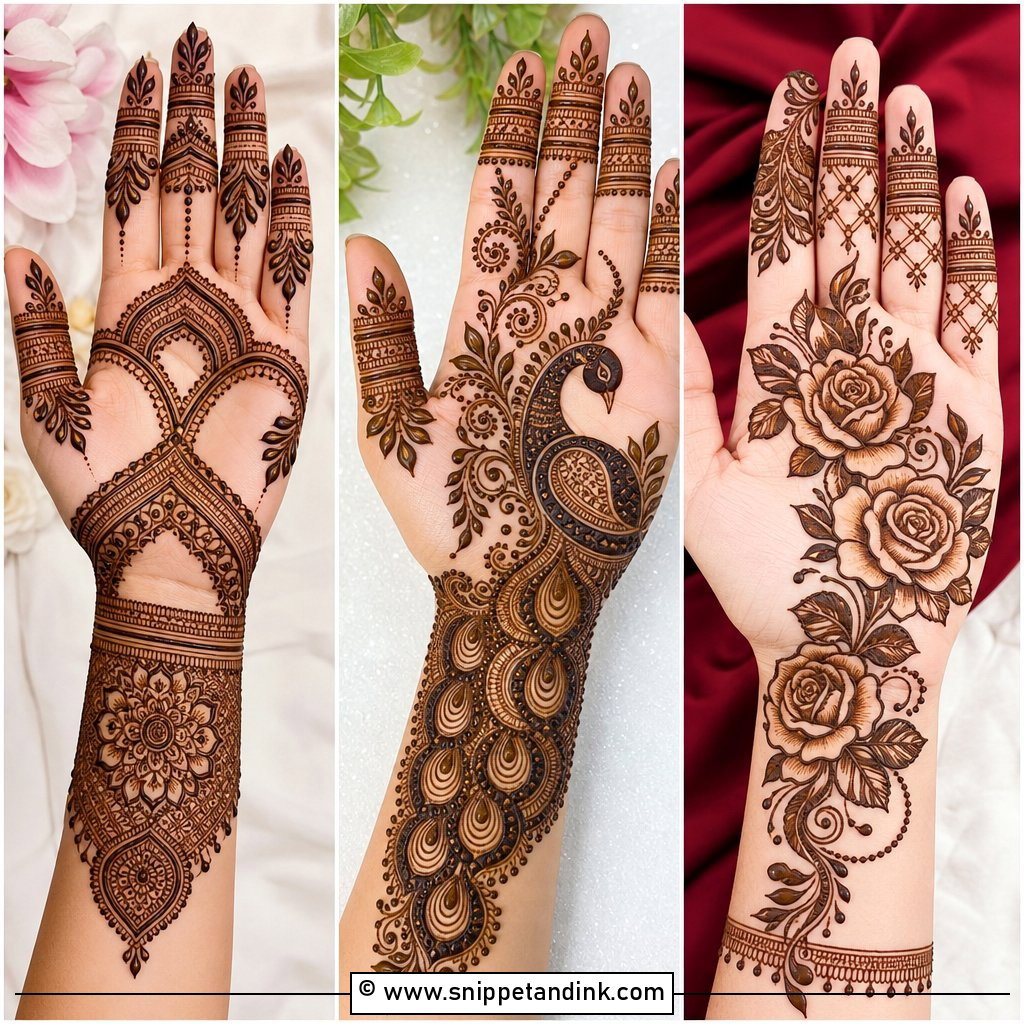
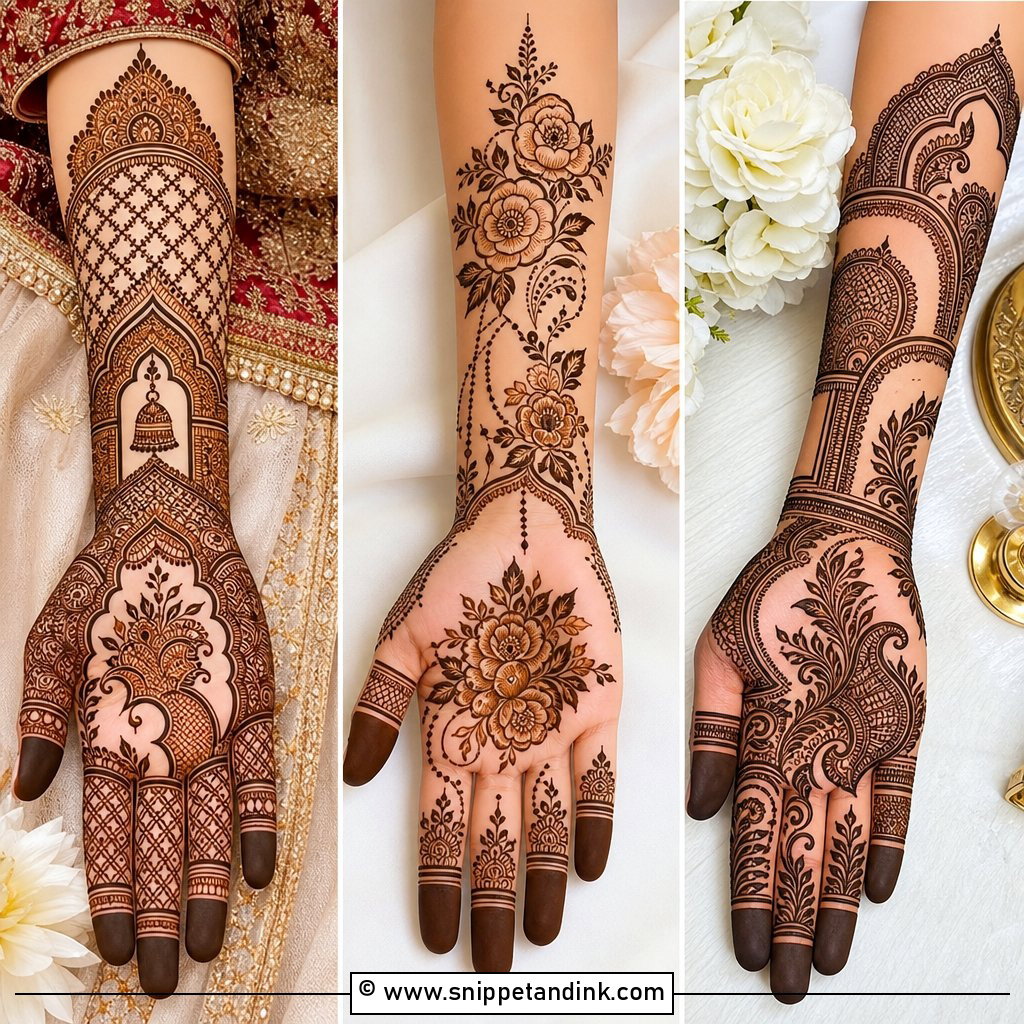
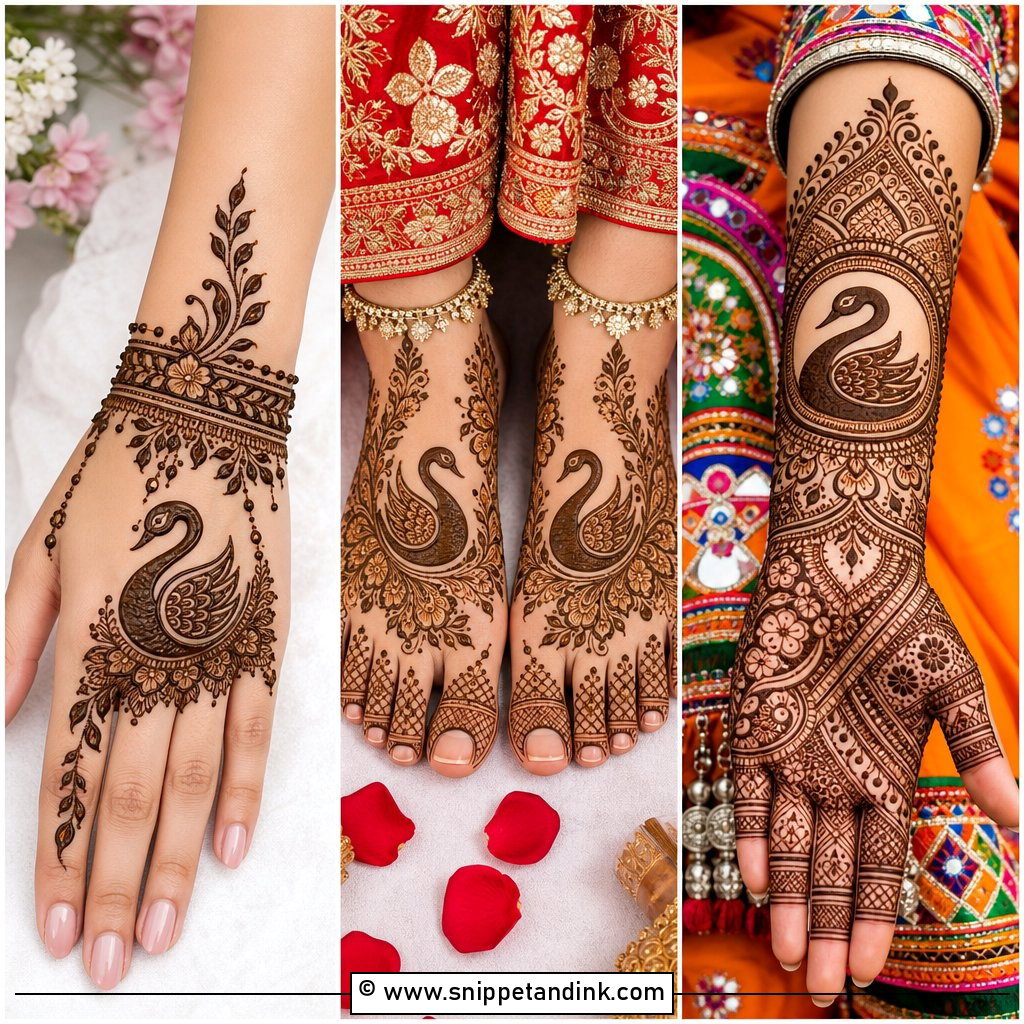
Back hand bridal mehndi with names adds a personal touch. The name or initials can hide in a paisley, a floral border, a mandala ring or a wrist panel, or sit clearly where everyone can read it. The back hand works well because the name shows in photos without taking over. I always set the lettering inside a detailed pattern rather than leaving it alone on bare skin, where it can look like handwriting on a note. It fits Indian, Indo-Arabic and full hand layouts.
21. Back Hand Bridal Mehndi With Portrait
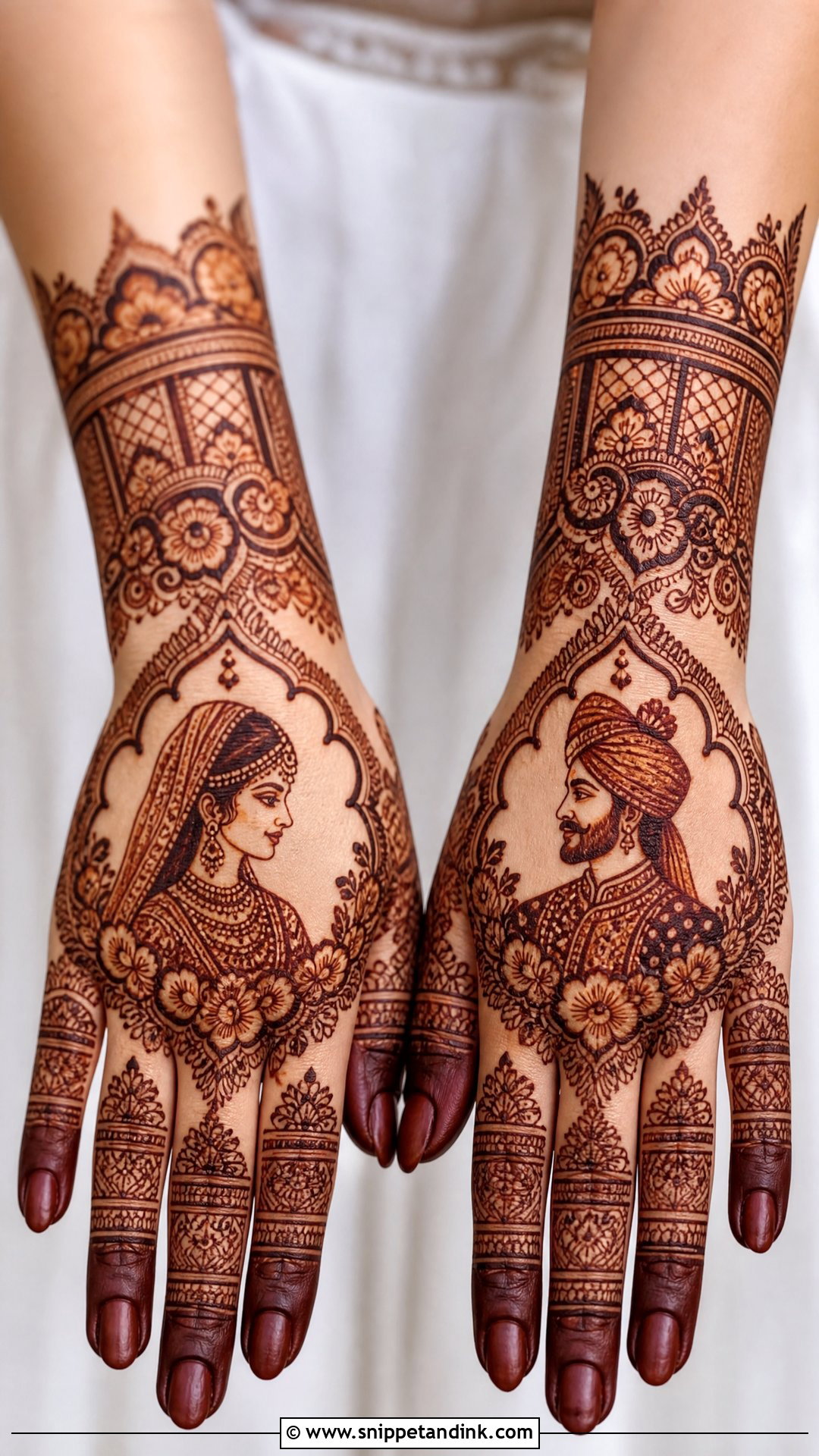
Portrait work on the back side can show a bride, a groom, a couple silhouette or a small wedding scene, depending on the space. It usually sits best near the wrist or on the forearm, where the skin is flatter than over the knuckles, framed by florals and patterns. This takes a skilled hand: facial lines have to stay crisp as the paste dries. Pair the portrait with detailed fingers and traditional borders so the hand stays balanced.
22. Back Hand Bridal Mehndi With Lotus
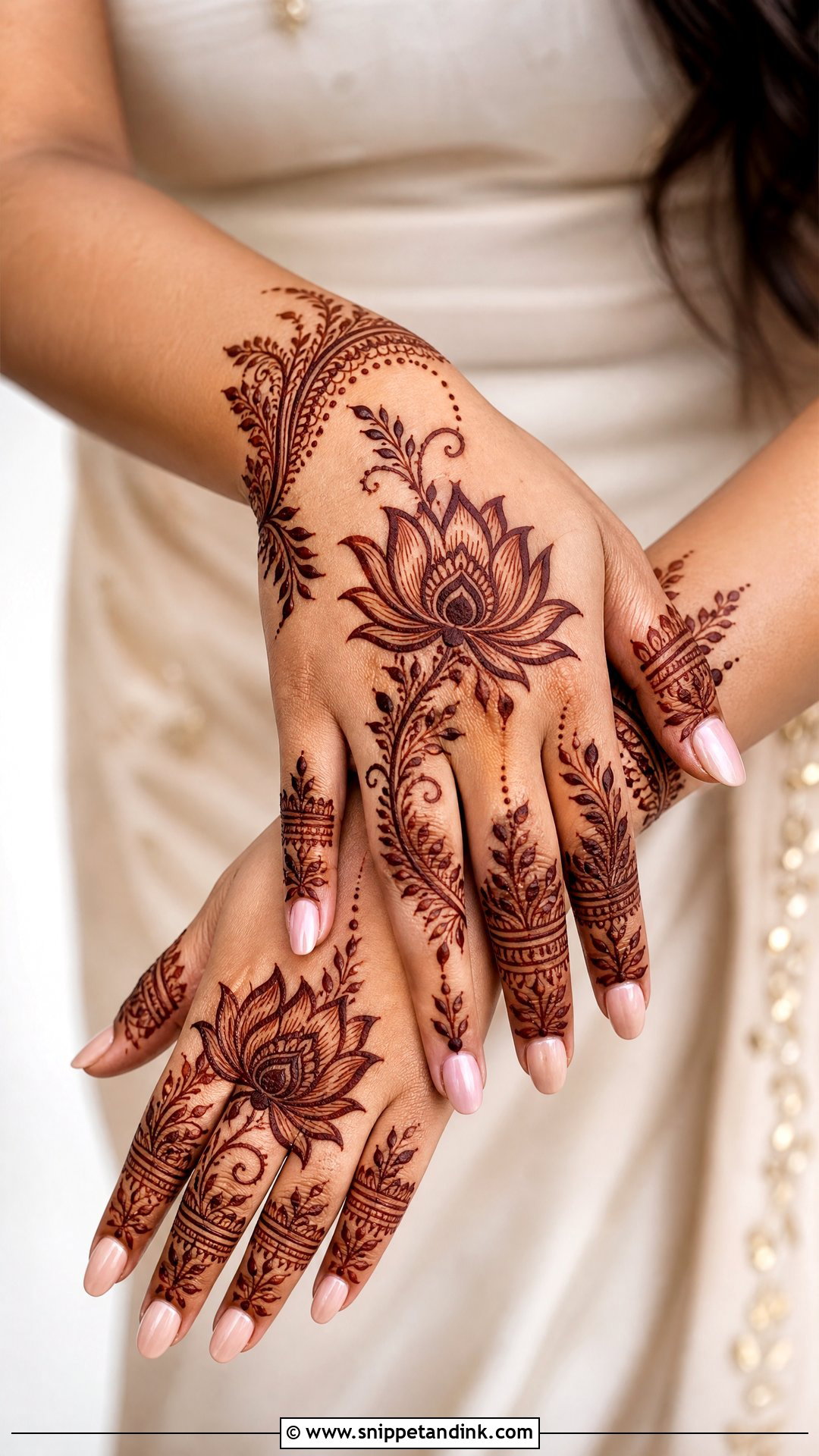
The lotus gives the back hand a calm focal point. It can sit in the centre, near the wrist or along a trail, with layered petals surrounded by leaves, dots and curved vines. It suits temple jewellery, silk sarees, pastel lehengas and classic red. For a heavier version I surround it with jaali and paisleys; for a softer one, I keep the petals bold and leave open skin around them so the flower shape stays obvious.
23. Back Hand Bridal Mehndi With Finger Detail
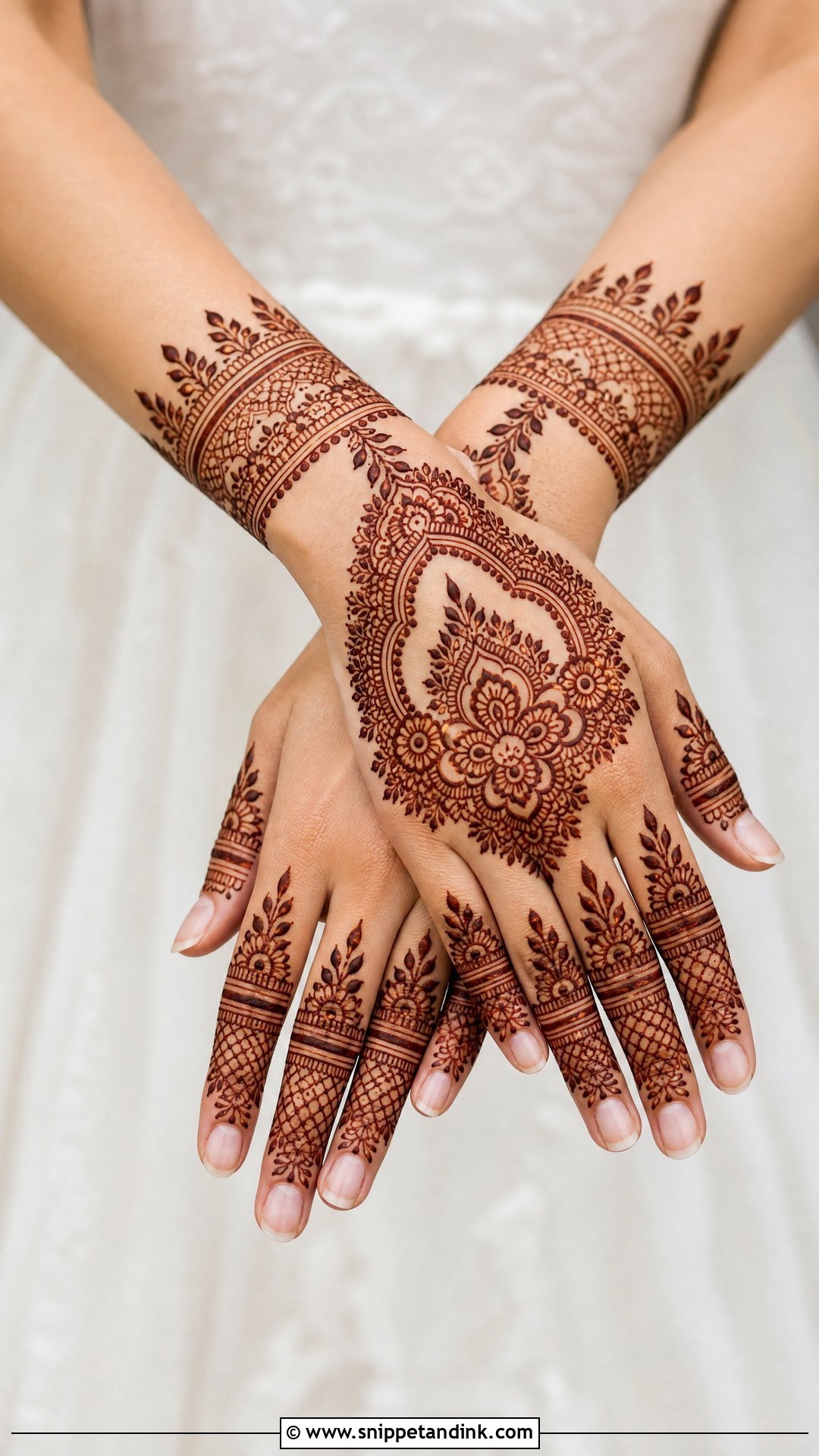
Fingers are what the camera finds first in a ring shot, so this design gives them the most attention: finger bands, leafy tips, mesh sections, dots and tiny florals, with a lighter central motif on the back of the hand and a simple cuff at the wrist. Putting the density on the fingers makes the hands look longer. If you’re planning nail art, tell your artist and your nail tech; a busy manicure next to busy fingertips can fight for attention, so one of them should be quieter.
24. Back Hand Bridal Mehndi With Wrist Cuff
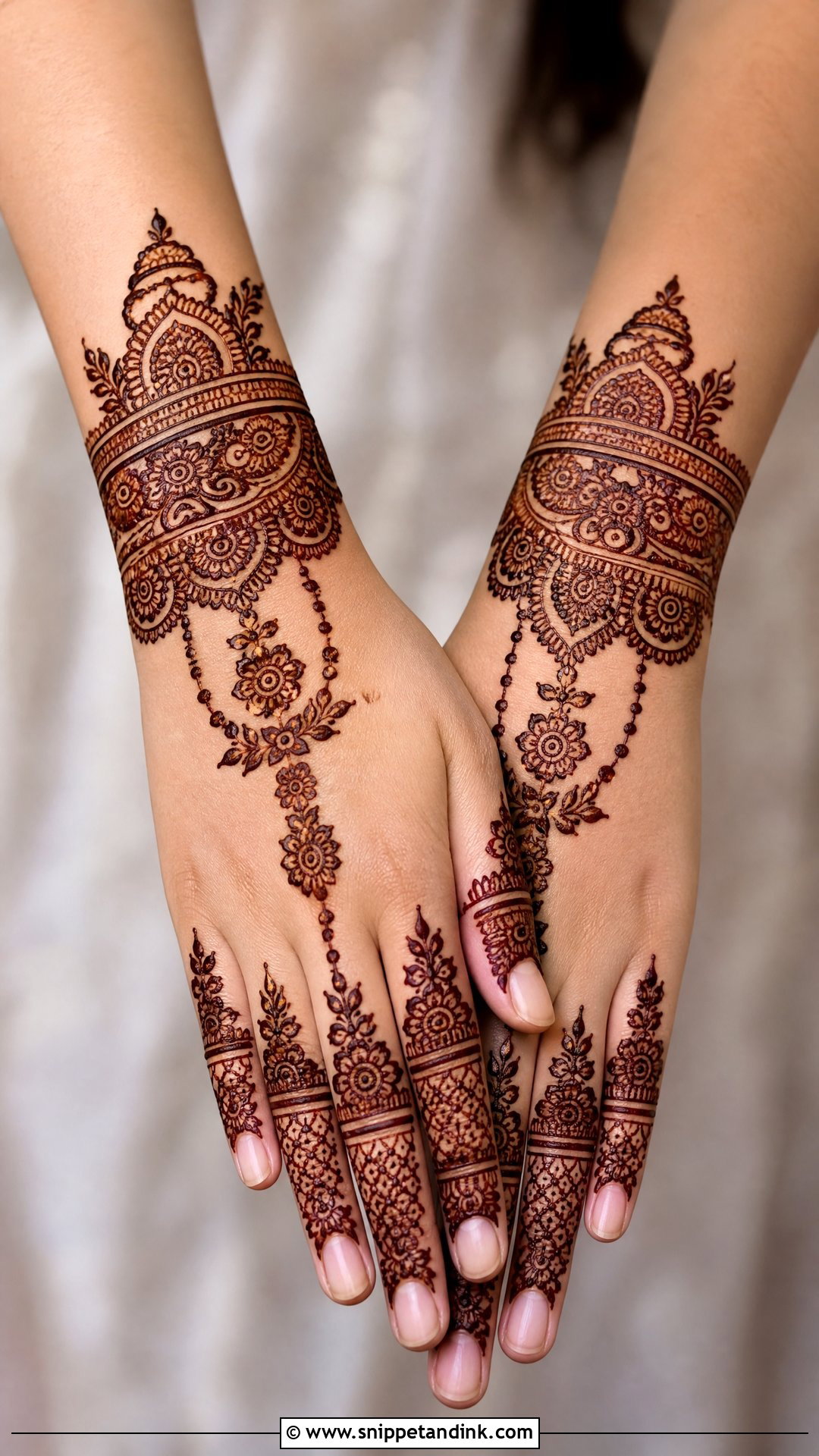
Back hand bridal mehndi with a wrist cuff design imitates a decorative bracelet. The cuff can be broad and detailed or slim, built from florals, paisleys, jaali, scalloped borders or chains reaching toward the fingers, and linked to a mandala or floral trail on the hand. It sits naturally under bangles and adds depth in hand photos. It’s also the neatest way to finish a design at the wrist if you don’t want work going up your arm.





25. Back Hand Bridal Mehndi For Short Hands
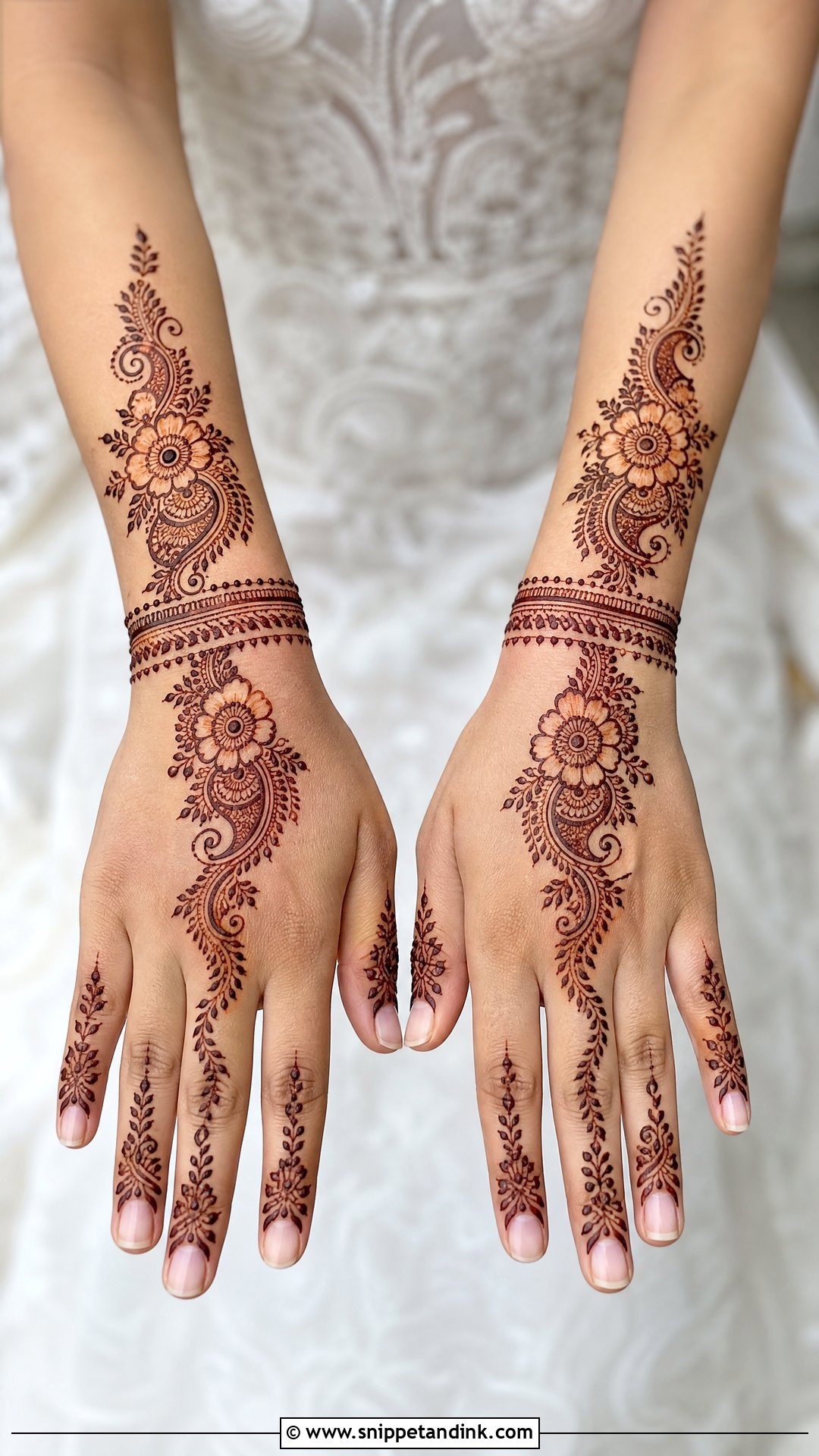
Short hands look best with length built into the design. Vertical trails, slim paisleys, diagonal florals and long finger patterns all draw the eye upward. I avoid one very large motif that fills the whole back of the hand as a single block; medium elements flowing from wrist to fingers do far more. A narrow cuff and tapered finger detail finish the shape. Even detailed bridal work can sit comfortably on a smaller hand when the spacing is right.
Eating, Sleeping and Sitting Still With Wet Paste
The hours after application are when designs get ruined, and almost always by ordinary things. Fresh paste is soft for the first half hour or so, and a sleeve brushing past or a phone picked up too soon leaves a smear that stains just as dark as the pattern.
- Eat before your appointment, and have someone feed you if the session runs long.
- Use the bathroom before I start on the back of your hands, and again before feet.
- Wear a loose, short-sleeved top with a front opening so nothing has to go over your head.
- If you sleep with the paste on, wrap your hands loosely in tissue and then medical tape or a cotton glove, and keep them out from under the pillow.
If a line smudges anyway
Tell your artist straight away. A smudge on wet paste can often be lifted with a cotton bud dipped in a little oil before it stains, and a small gap can be filled while the rest is still drying. Once the paste has dried and come off, the stain is what it is, so speak up early rather than hoping it won’t show.
What Makes a Back Side Design Work at Arm’s Length
The right back hand design comes down to your style, outfit, jewellery and comfort. Some brides want full traditional coverage; others prefer Arabic flow, a single mandala, florals or modern open space. Whichever direction you take, judge it the way guests and cameras will see it: in ring shots, under bangles and while you’re holding hands. Think about your hand shape, how your ceremony schedule fits around drying time, and how fine your artist’s lines really are, then make your favourite design your own with initials, motifs or wrist details.
You'll Like These Ideas:









Leave a Reply