
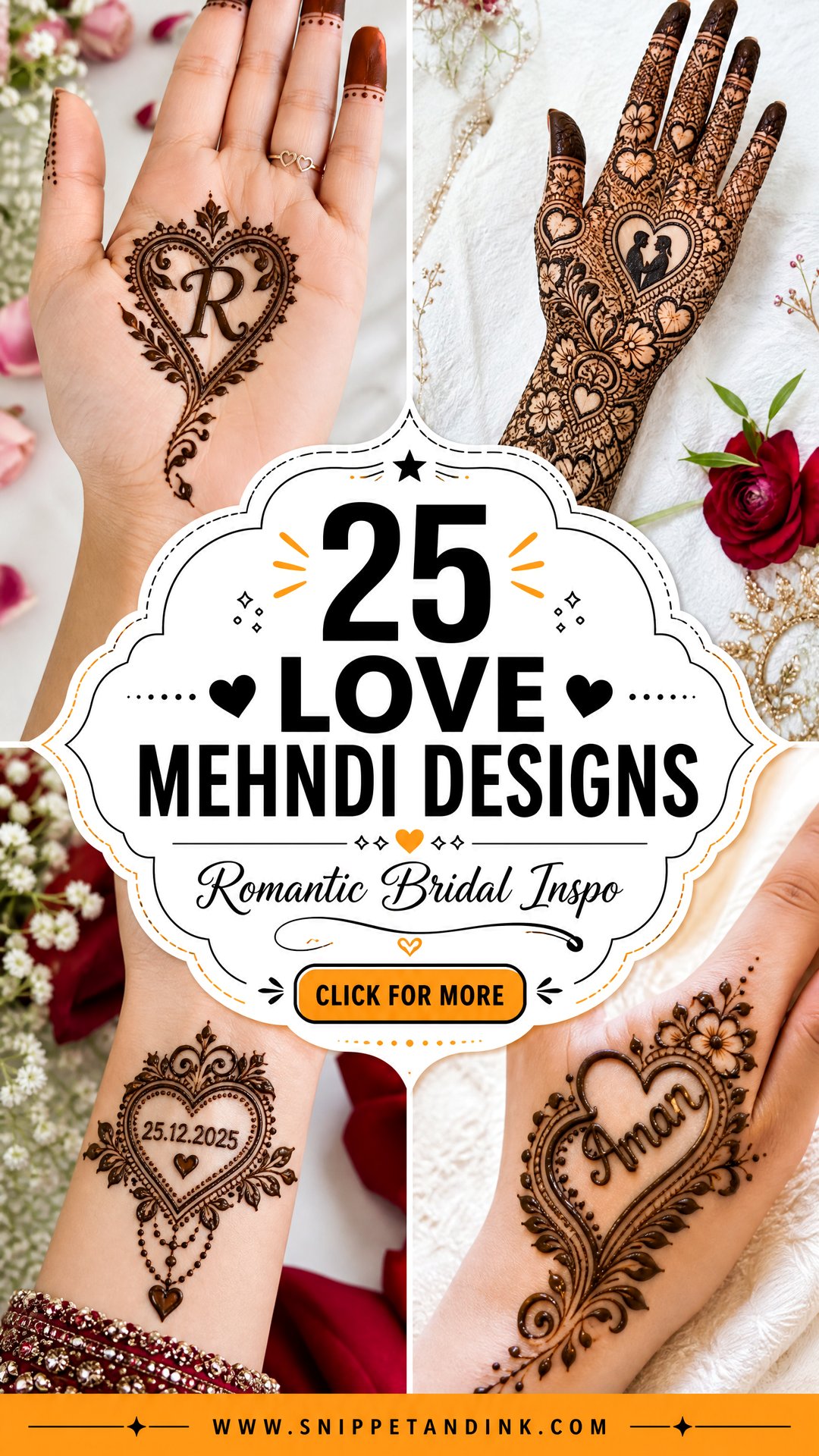
Romantic henna is mostly about what you hide in it and where. Hearts, initials, a date, a pair of birds or a portrait of the couple can sit inside almost any style, from dense Indian bridal work to open Arabic trails, Gulf florals or Moroccan geometry. Some of the layouts below are full bridal coverage; others take twenty minutes and suit an engagement dinner, an anniversary, Eid or Diwali. I’ve written each one the way I’d explain it to a client in the chair, including what tends to blur, what stains best and which hands each design suits.
Names, Dates and Faces Need Room Before the Paste Goes On
Personal details are what make a love design yours, and they’re also where henna is least forgiving. Paste spreads slightly while it dries, and a stain darkens edges more than centres, so anything small and closed, like the loop of an a or the inside of a 9, can fill in completely.
- Write names and dates out for your artist in advance, spelled exactly as you want them. In Urdu, Hindi or Arabic script, have someone who reads it fluently check the spelling.
- Ask where the lettering will go before the session starts. Flat skin on the palm or inner forearm keeps letters even; knuckles and the side of the wrist distort them.
- For portraits, bring one clear photo of each face. Simple outlines read better in henna than shaded realism.
- Decide whether anything is meant to be hidden, so the artist knows to bury it in pattern rather than frame it.
If your artist suggests making the lettering larger than you pictured, listen. The final stain will look slightly heavier than the wet paste.
1. Heart Mehndi Design For Front Hand
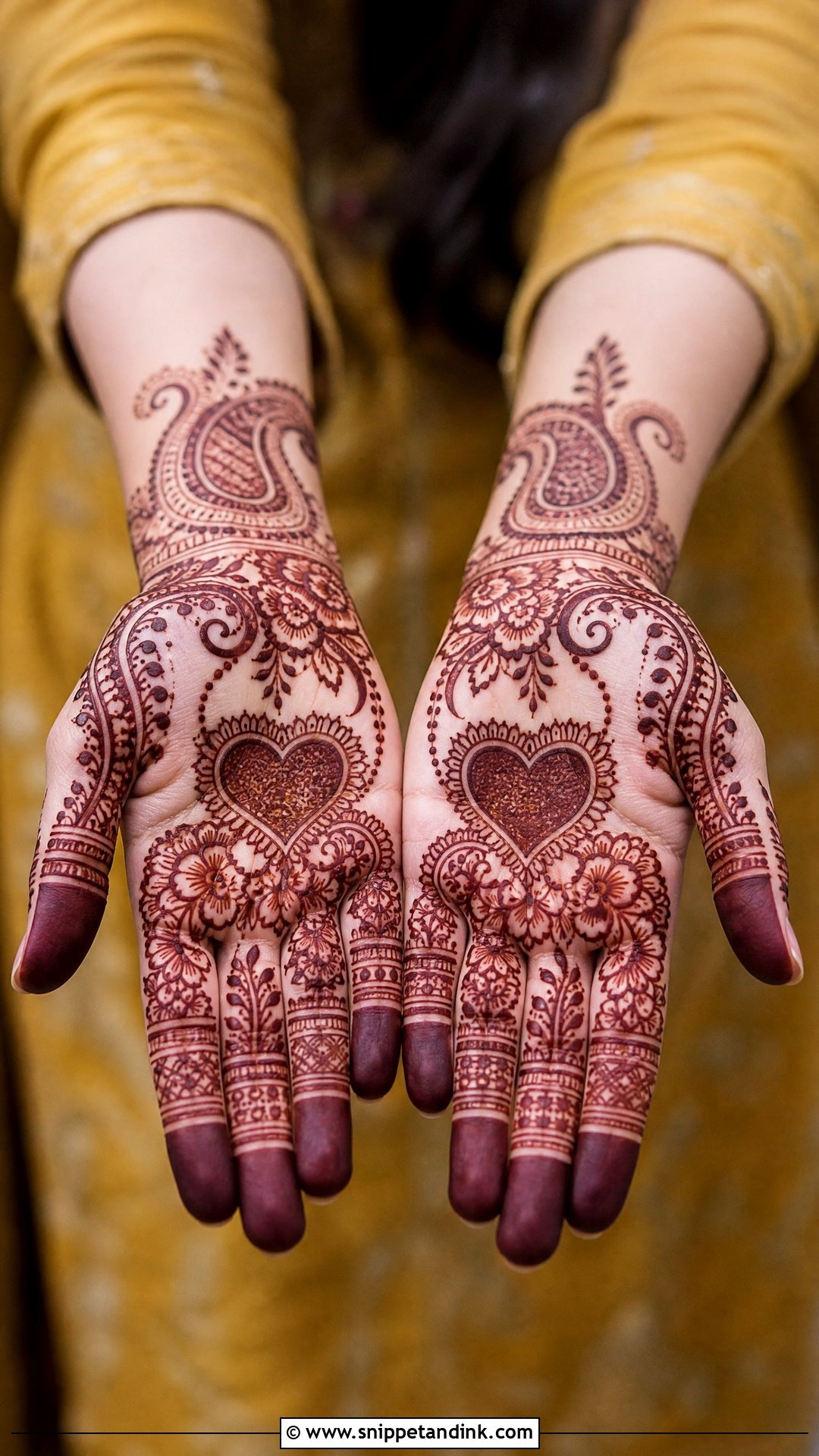
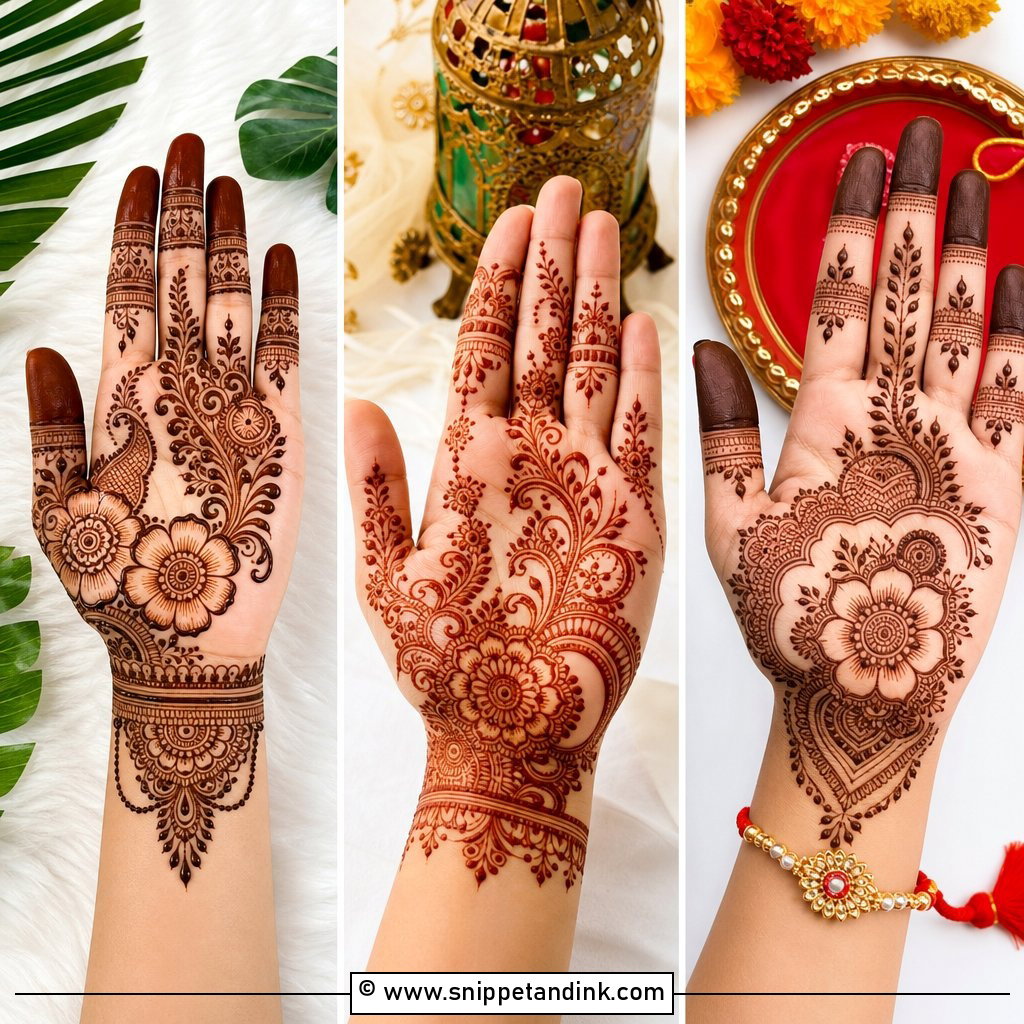
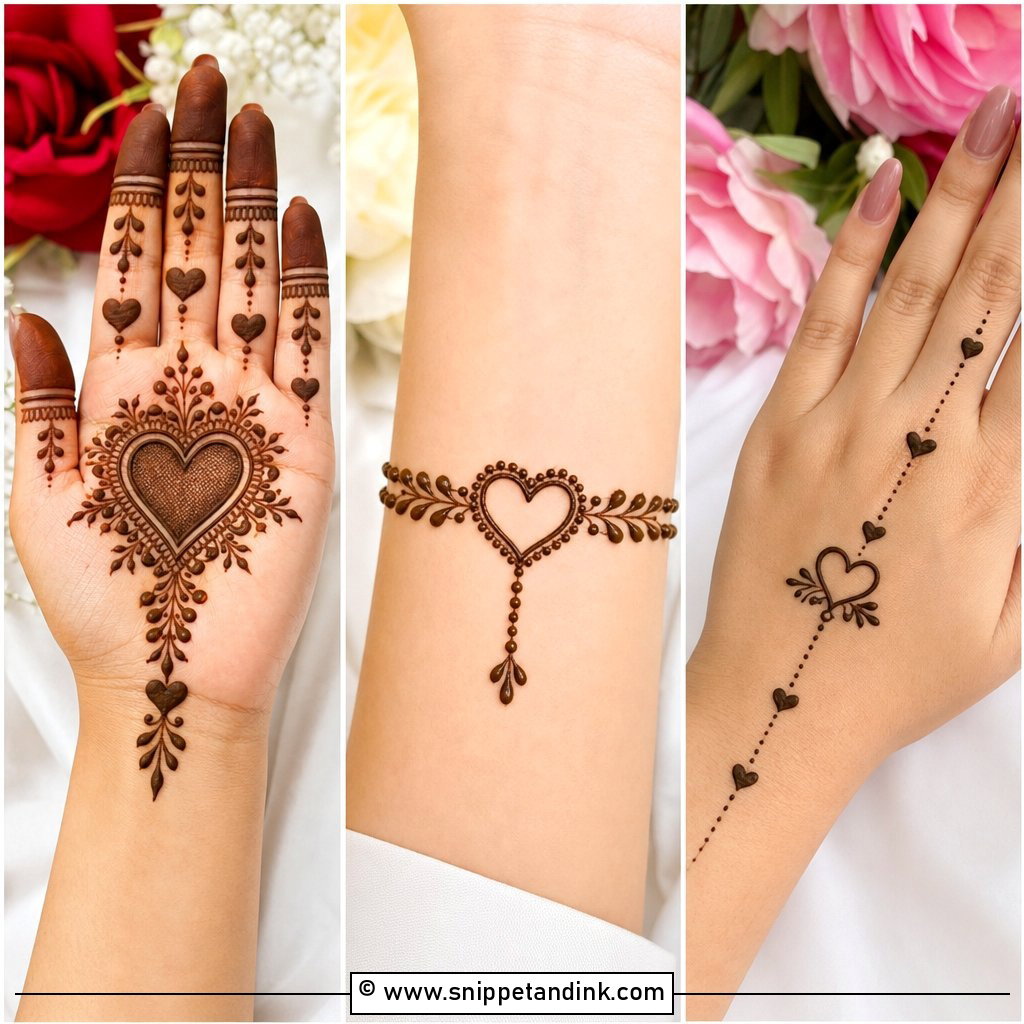
The palm is the darkest-staining part of the hand, so a heart placed in the centre comes out a deep reddish brown while the fingers go a shade lighter. I frame the heart with flowers, vines, dots and soft paisley curves, fill the fingers with leafy bands and small hearts, and close the wrist with a neat bracelet border so the design has an end. Initials can go inside the heart or tuck into the petals. It’s a calm choice for an engagement or anniversary if a full portrait layout feels like too much.
2. Simple Love Mehndi Design
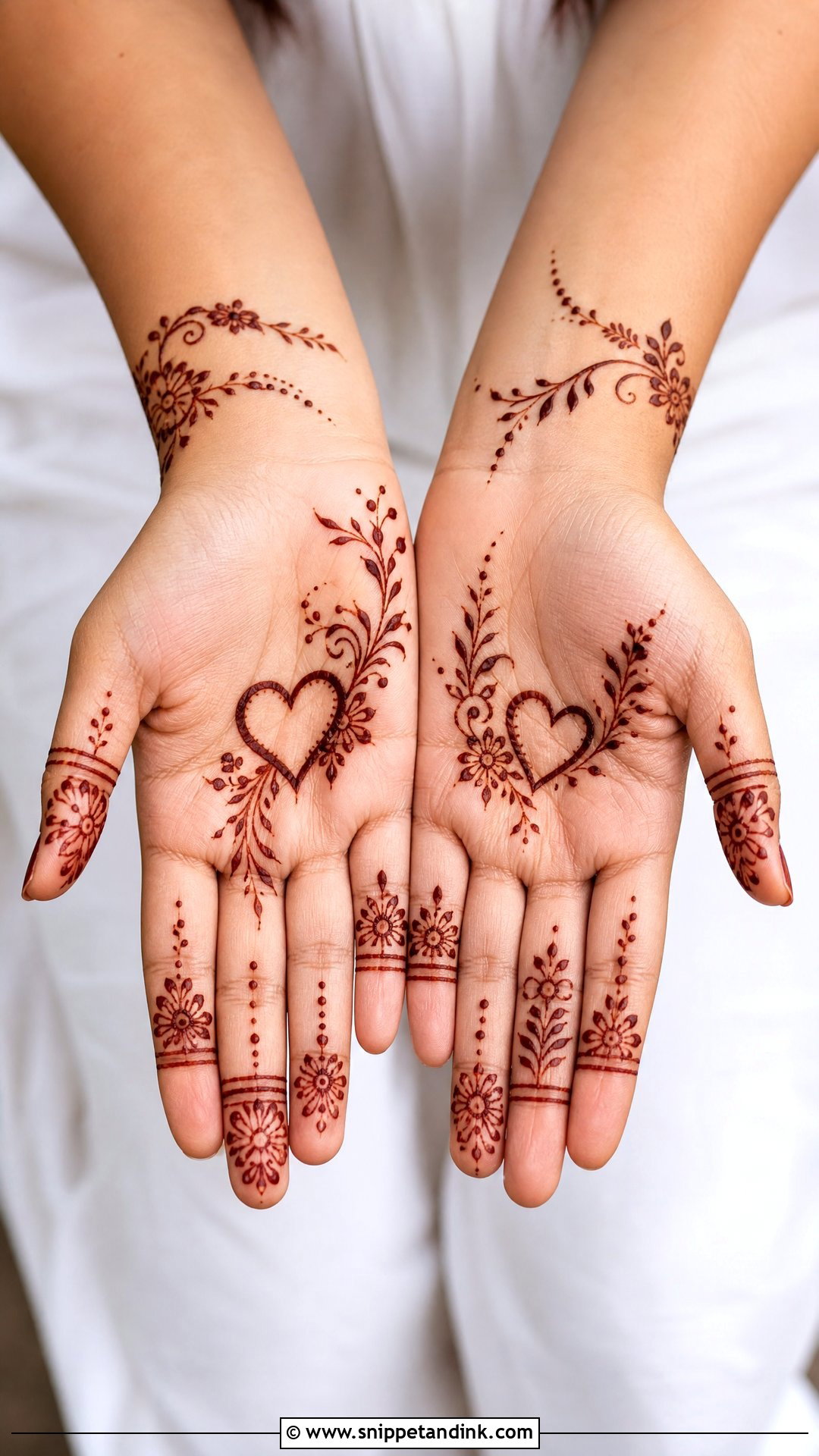
Open spacing is harder than it looks. With less pattern on the hand, a wobbly line or uneven gap shows immediately, so I draw simple designs with a finer cone tip and more care than a dense one. A small heart in the palm, flowing vines, tiny flowers and dotted trails, then ring-like bands or leafy tips on the fingers. It’s quick, which makes it practical for bridesmaids and younger guests who can’t sit for hours. Bare skin between motifs is what makes it read as modern.
3. Bridal Love Mehndi Design
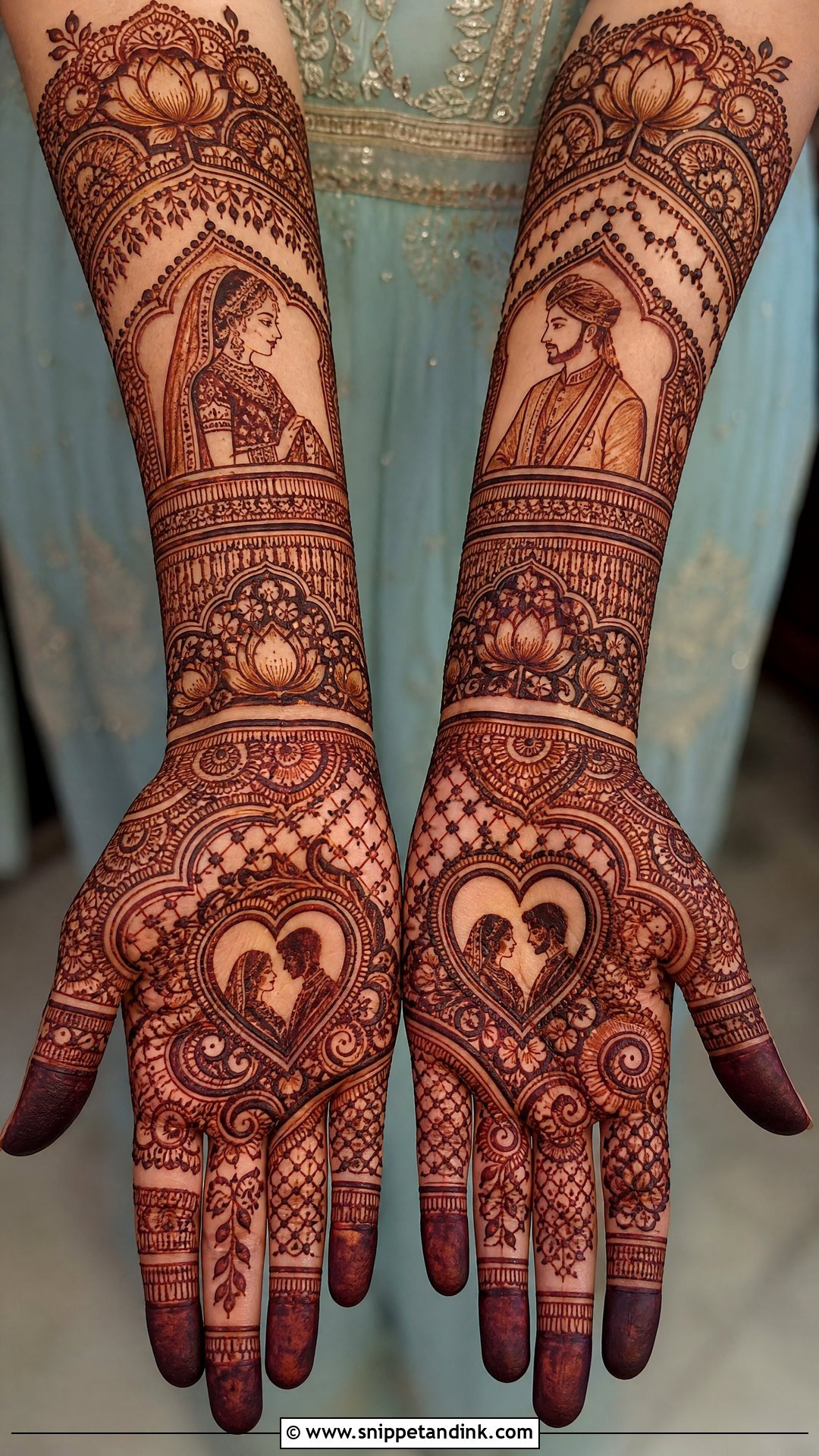
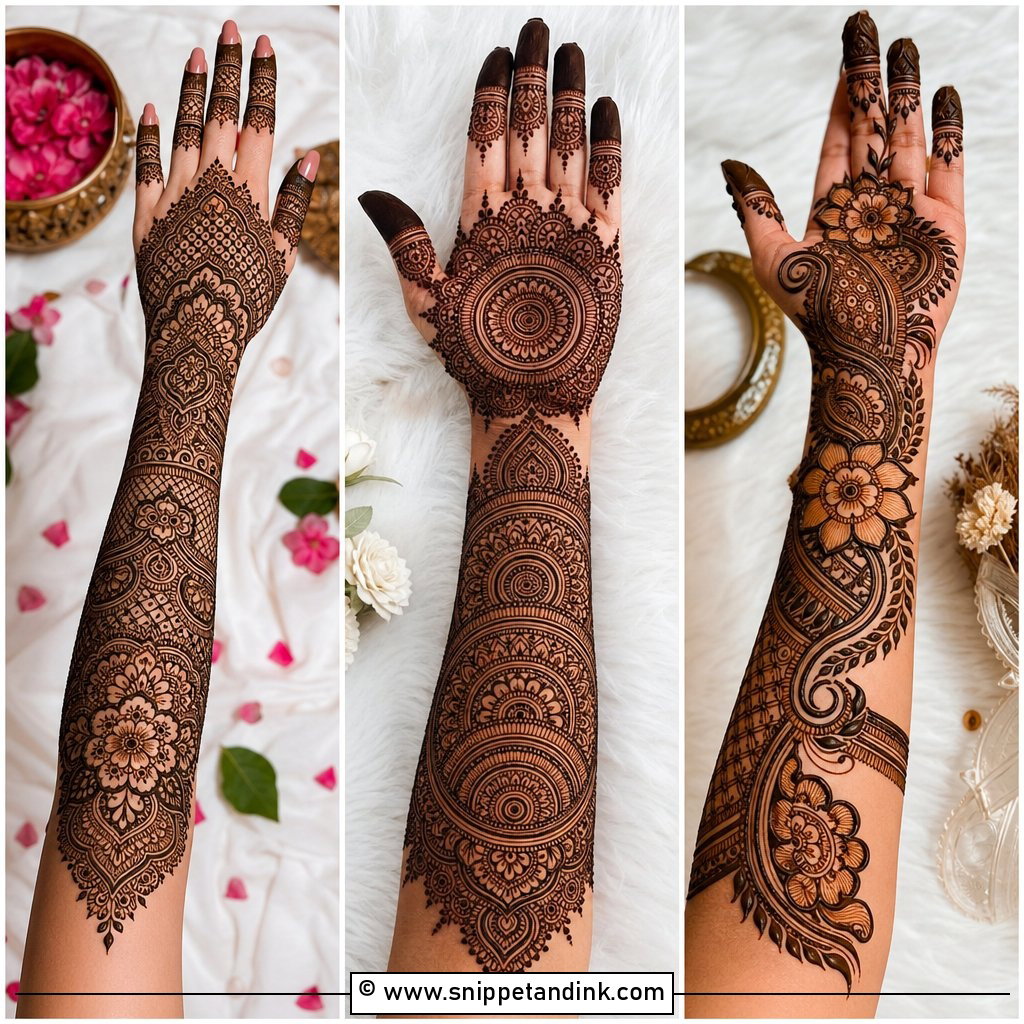
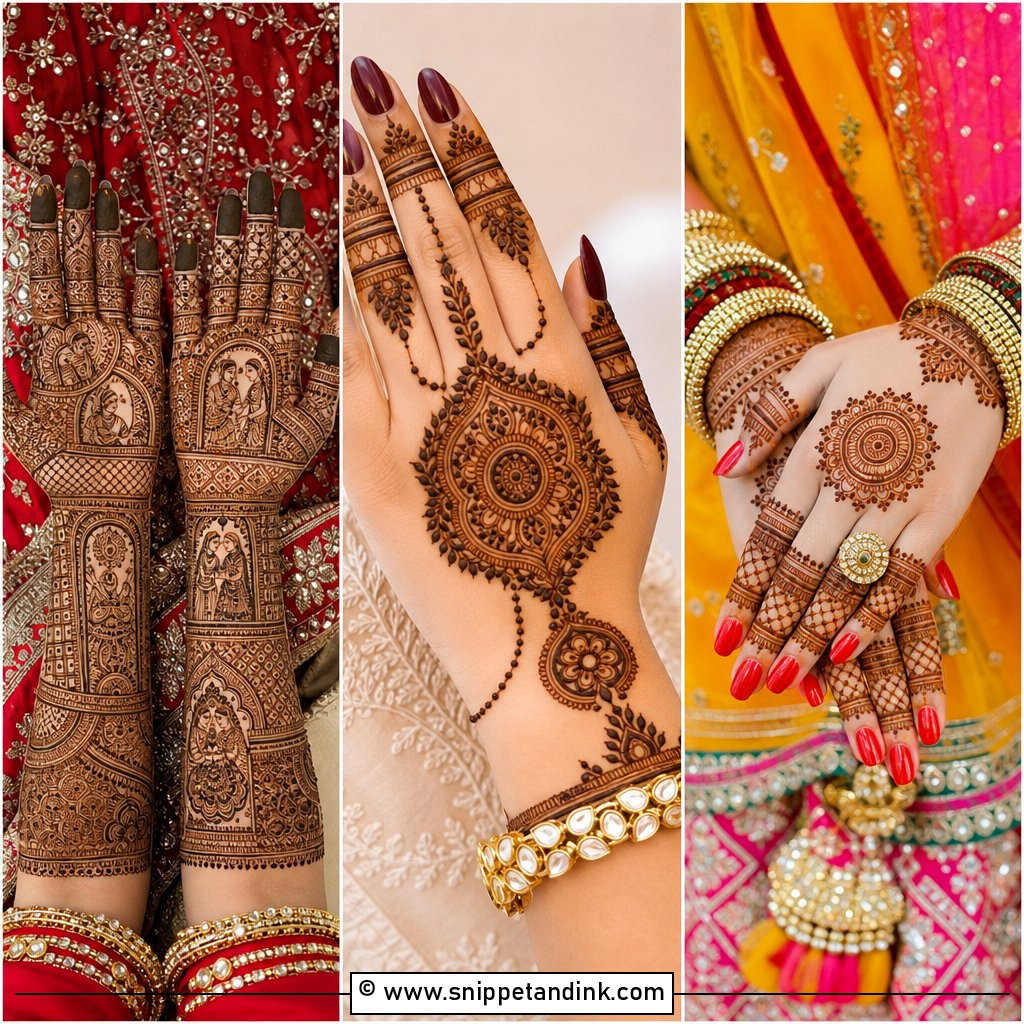
Full bridal coverage runs from the fingertips over the palm, back hand and wrist up the forearm, and I plan it in panels before the cone touches skin. Hearts, a bride and groom, wedding bells, mandalas, peacocks, lotus flowers and hidden names can all fit, but only if each has its own frame. The palm takes the central love symbol; the forearm carries the couple’s story in small sections. The mistake I see most is filling every gap, which turns the design into a brown blur once it stains. Ask for clear negative space around the key motifs.
4. Couple Name Mehndi Design
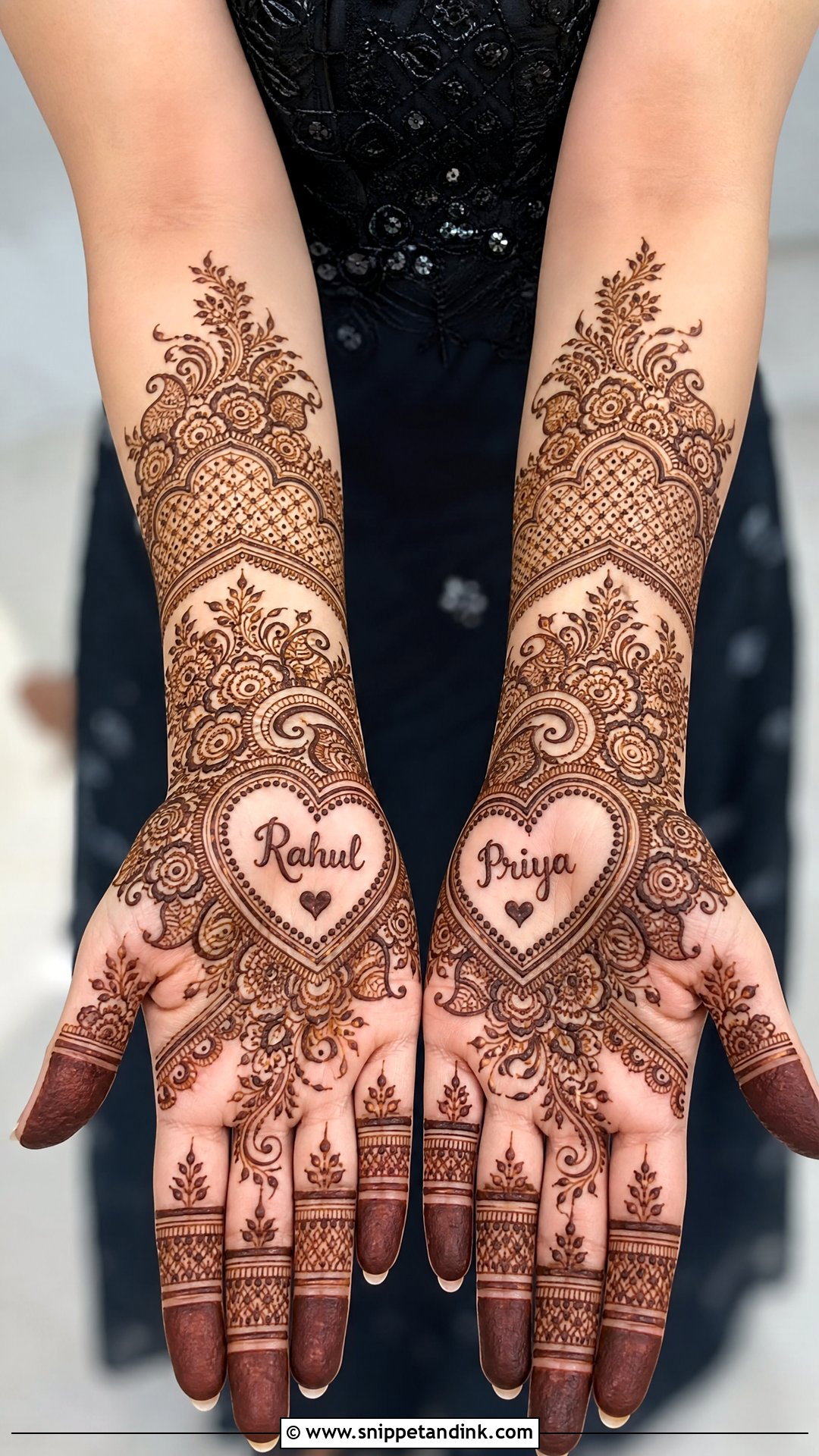
A couple name mehndi design lives or dies on its lettering, and clients are right to worry about it. Henna lines spread a little as the paste sits, so a name written too small closes up. I put names on the palm or inner forearm where the skin is flat and there’s room for letters a comfortable size, then wrap them in paisleys, leaves, tiny hearts and jaali so they belong to the artwork. For something quieter, the names can run along a vine or inside a bracelet band at the wrist.
5. Initial Letter Love Mehndi Design
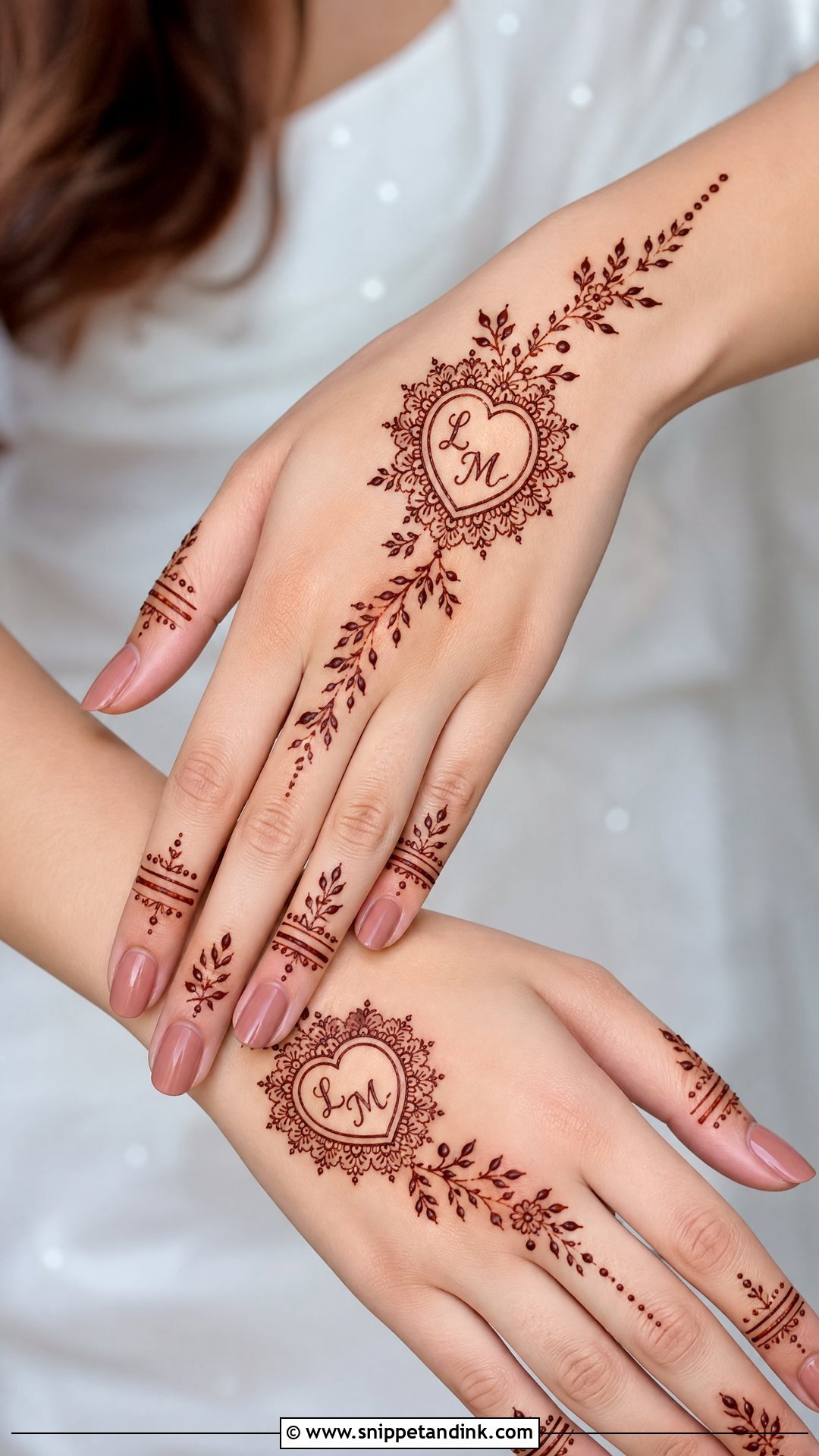
Initials are my usual suggestion for anyone nervous about full names. One or two letters inside a heart, flower or small mandala take far less space and stay legible even on a narrow back hand. I outline the letters in a bolder line and keep the filler around them finer, so the eye lands on the initials first. The fingers get leafy lines, dots and delicate bands. It works on the palm or the back of the hand, and it’s easier to keep neat than a long name.
6. Couple Portrait Mehndi Design
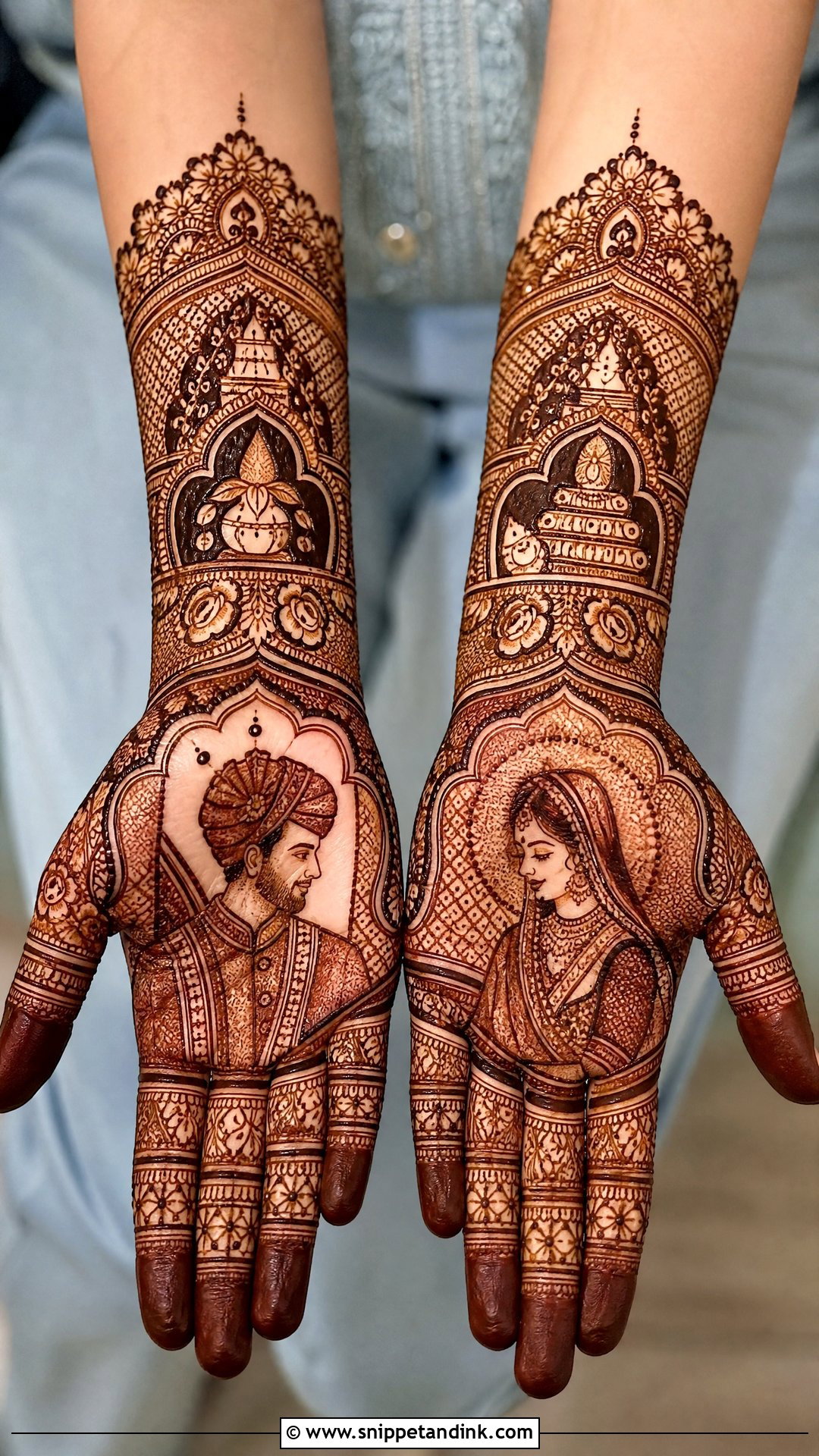
Portraits are the most demanding work I do. The faces of the bride and groom, or a wedding scene across both palms, need very fine, steady lines, and a single slip in an eye or mouth changes the whole expression. Book an artist who can show you portraits they’ve drawn on real hands, not only on paper. The rest of the hand fills with flowers, arches, jaali and traditional filler. I leave a little open skin around the faces, because detail packed too tight darkens into one patch as the stain develops.
7. Heart Mandala Mehndi Design
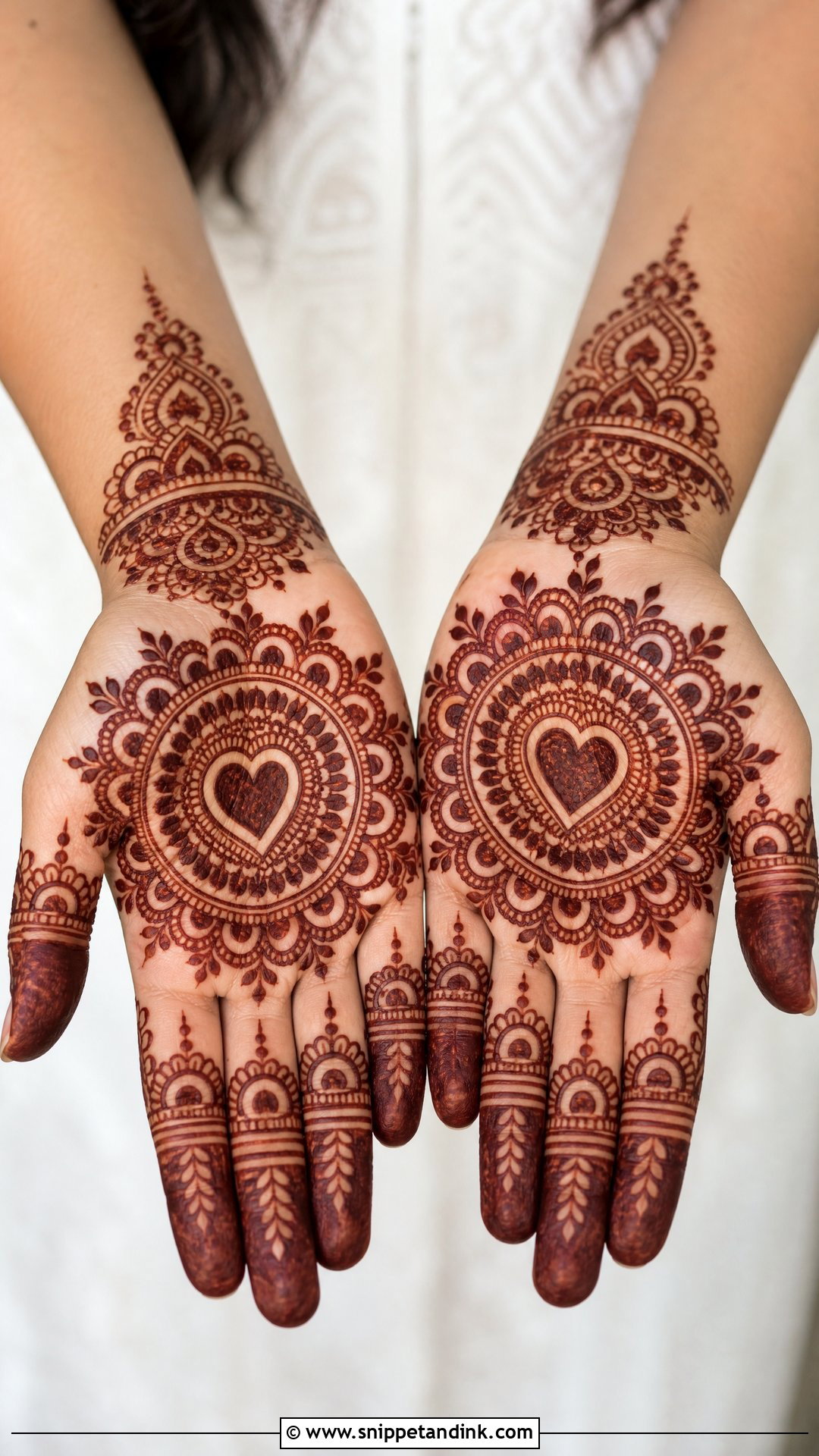
A heart set inside a circular mandala, or a mandala grown around a heart, gives traditional symmetry with a quiet love theme. I build it from the centre out, petal ring by petal ring, so the circle stays round on a curved palm. Dots, curved lines and small paisleys surround it, and the fingertips repeat a mini mandala with fine floral bands. It suits a festive gathering or an engagement as well as a lighter bridal function.
8. Arabic Love Mehndi Design
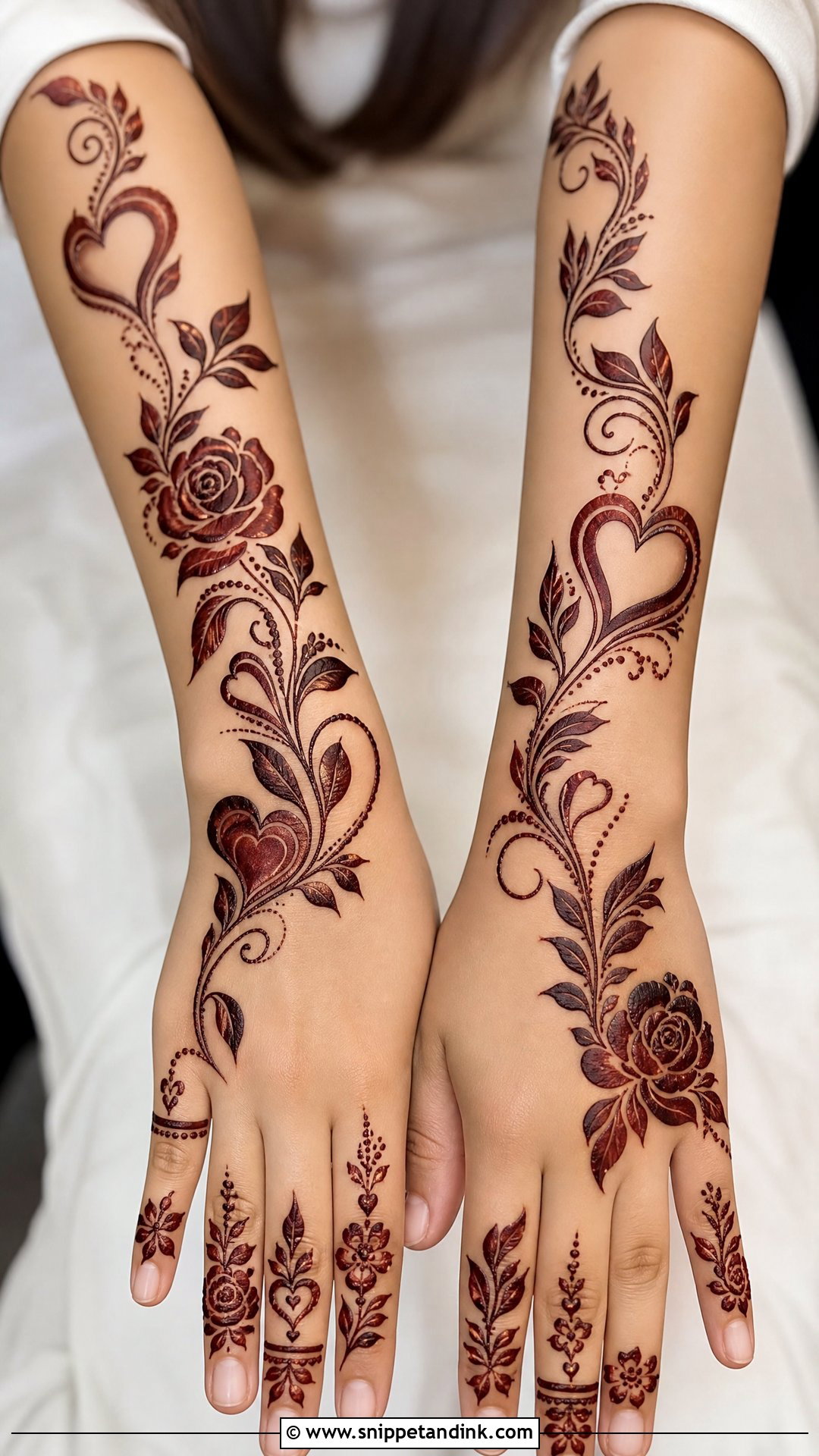
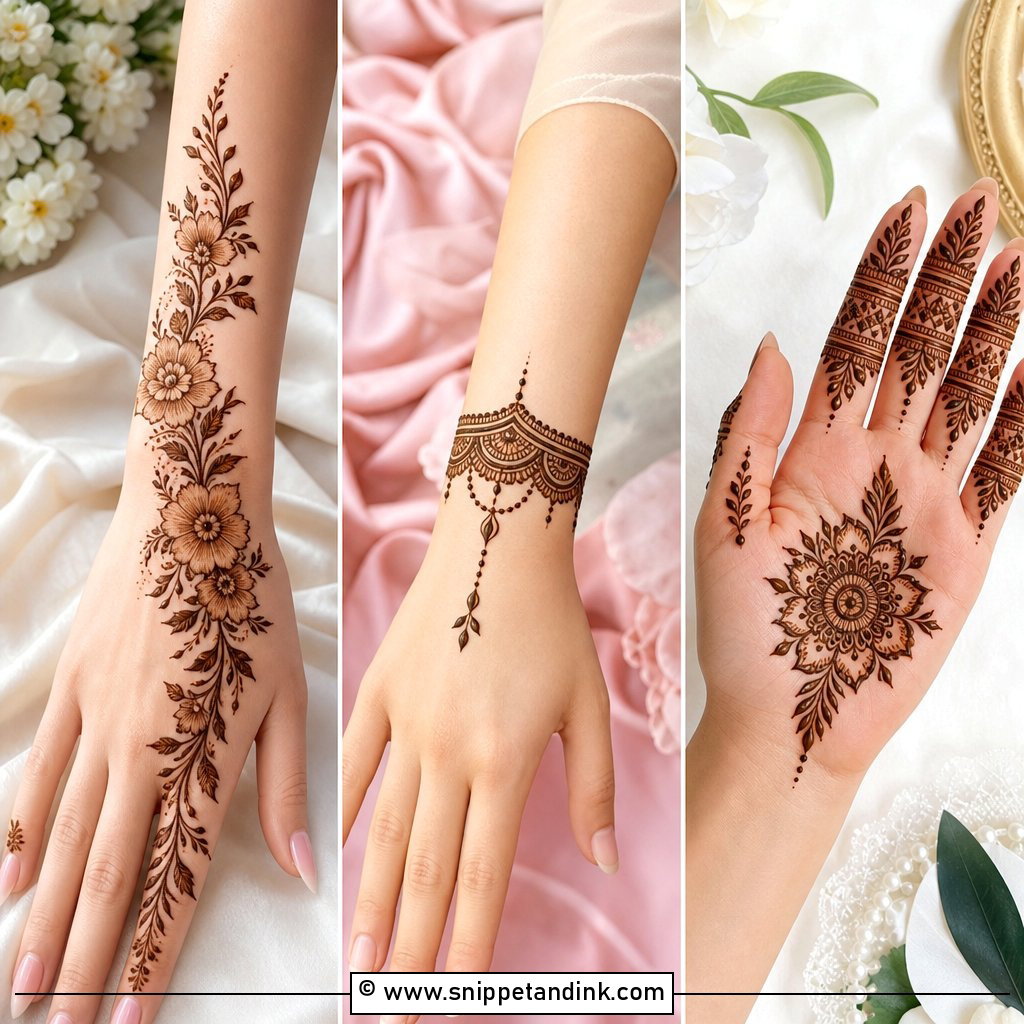
Arabic layouts run on the diagonal, from the wrist up toward one or two fingers, and leave plenty of bare skin. Hearts, roses, leaves and paisleys follow one soft curve. Because the lines are thicker, the paste sits heavier on the skin and stains strongly, which is why Arabic designs often look darker than fine Indian work done with the same henna. The heart can go near the wrist, on the palm or the back of the hand. It’s a good party or bridesmaid design, and a fast one to apply.
9. Indo Arabic Love Mehndi Design
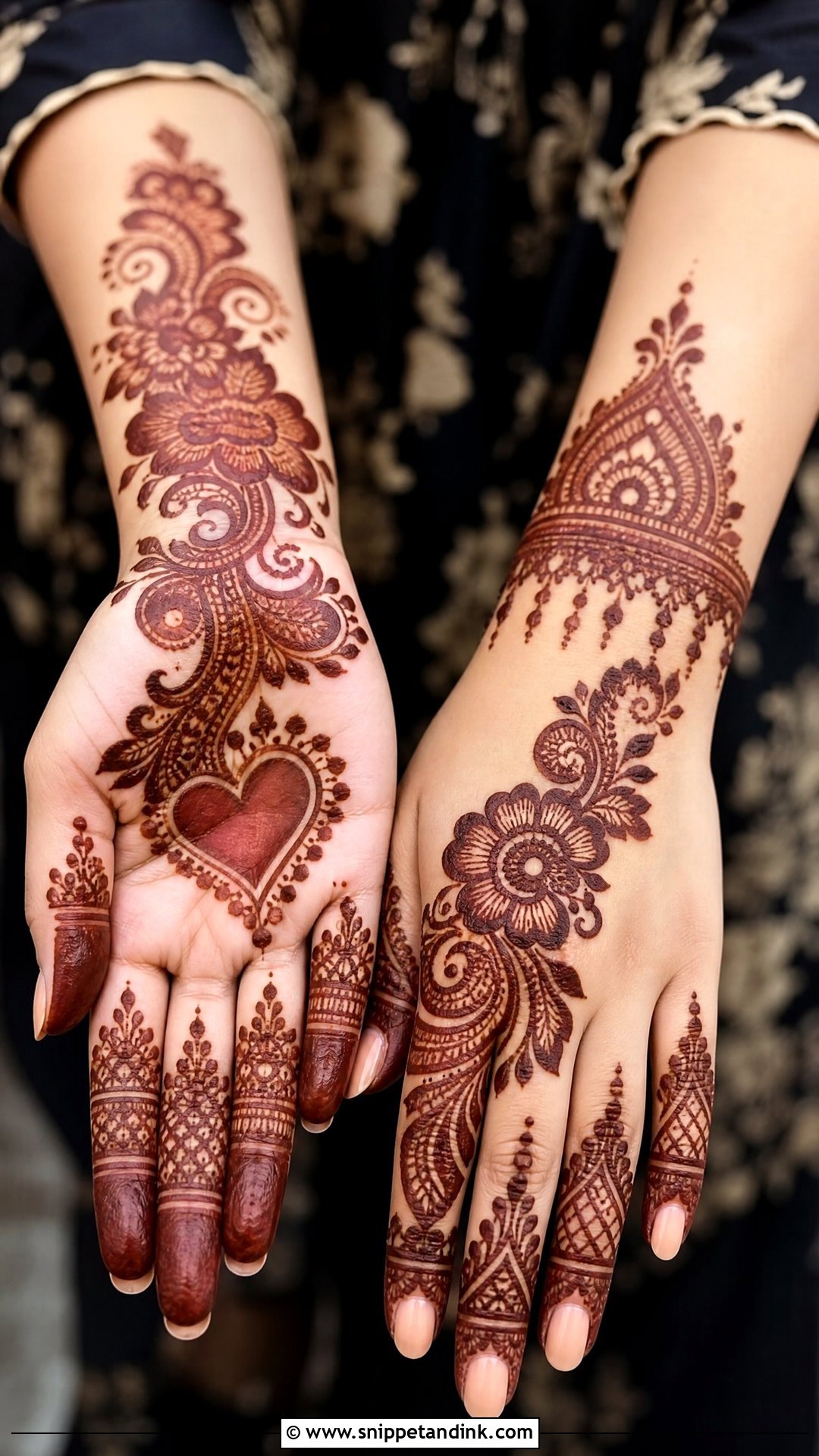
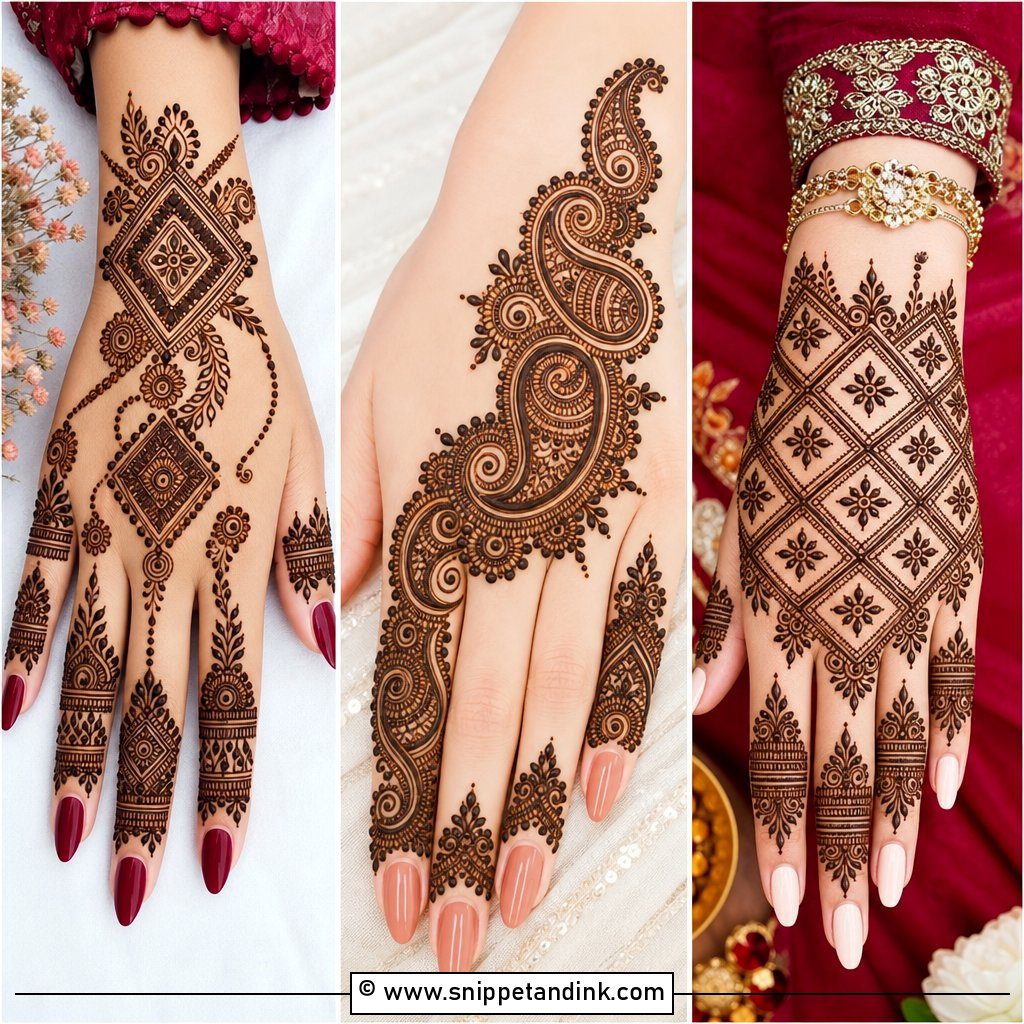
Indo-Arabic takes the bold floral flow of Arabic work and adds Indian fine filling inside it. I’d describe it to a client as fuller than Arabic and lighter than full bridal. A heart on the palm, floral trails across the hand and detailed finger fills, closed with a cuff or bracelet border at the wrist. Initials, a small date or a couple symbol slot in easily when the occasion is personal. The mix of open skin and dense pockets keeps the design readable in photos.
10. Back Hand Love Mehndi Design
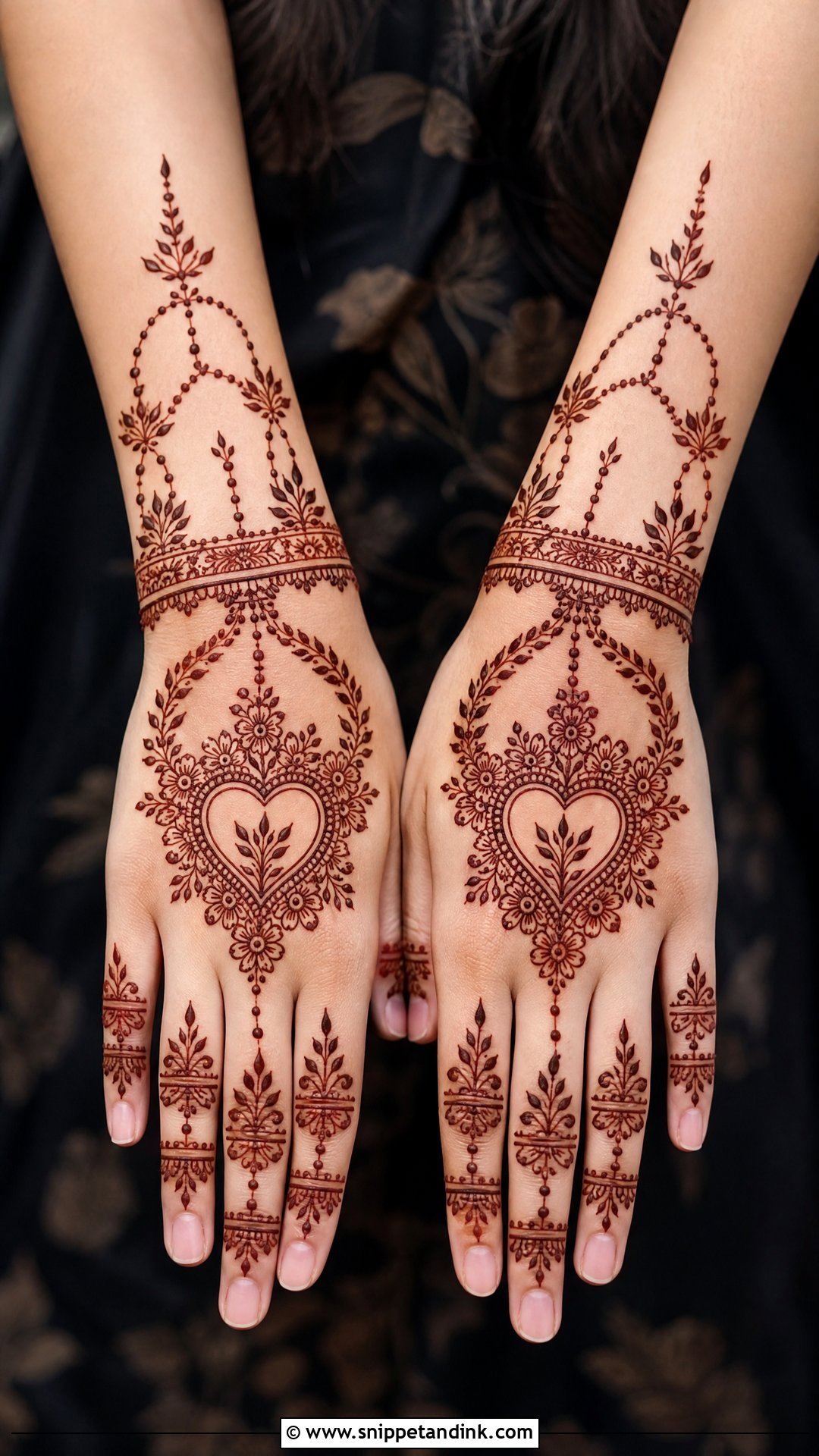
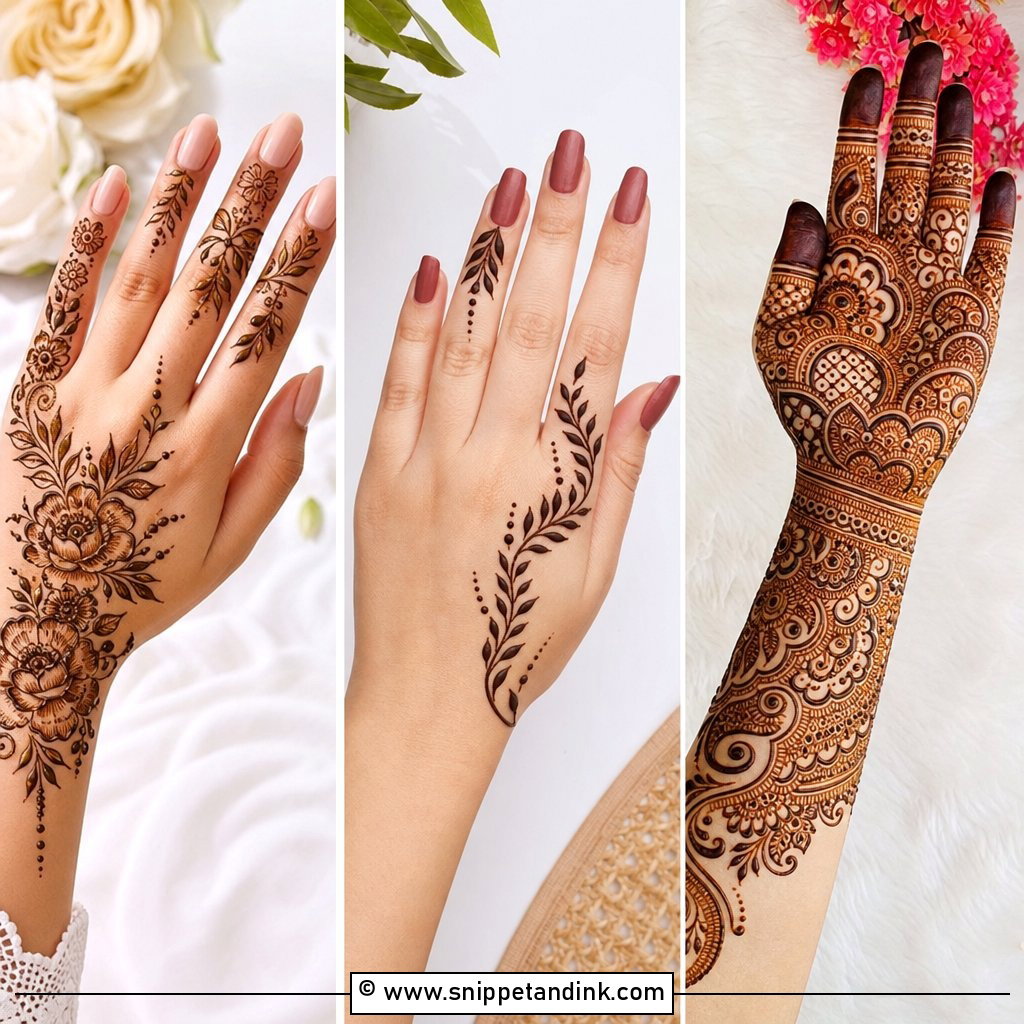
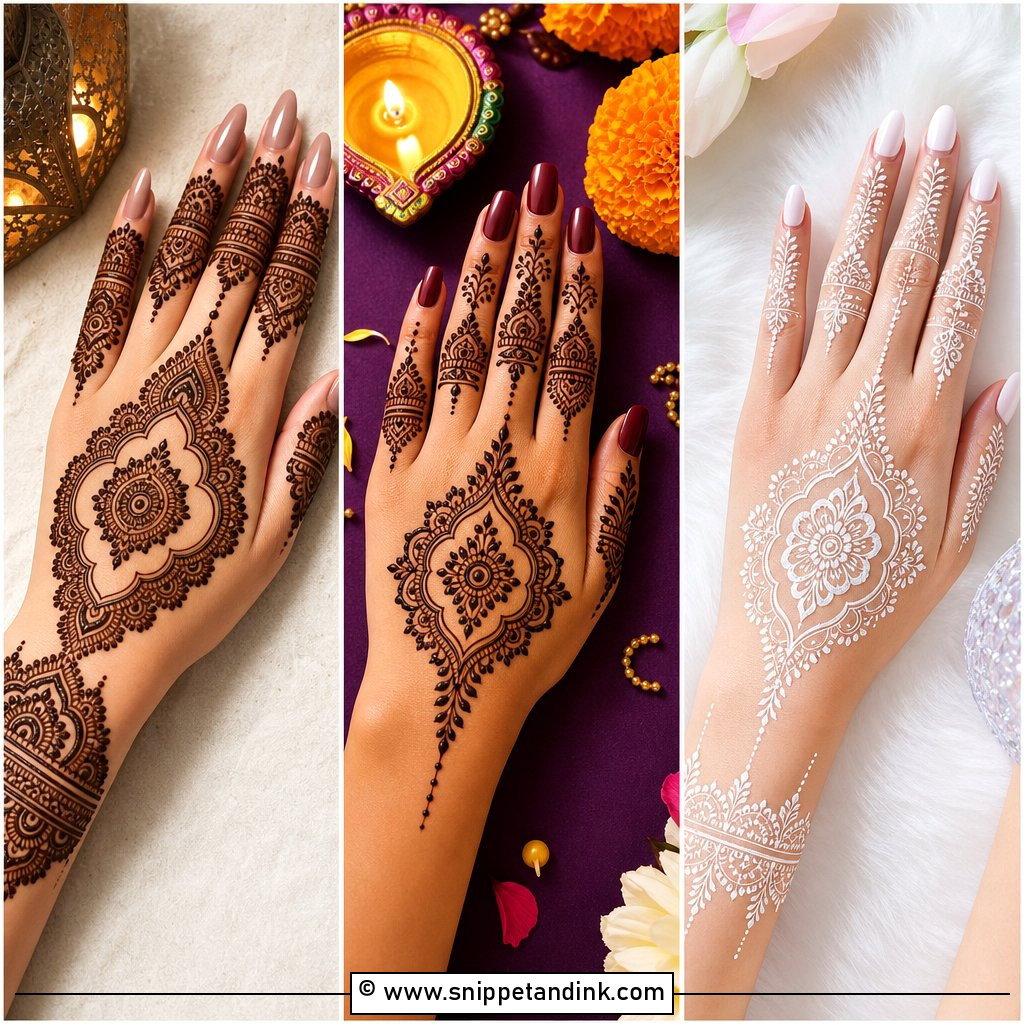
The back of the hand stains lighter than the palm, so a back hand love mehndi design needs bolder outlines to read from across a room. I set a heart in the centre and link it to the fingers with vines, chains, florals or ring patterns, then add a bracelet band so the hand looks like it’s wearing jewellery. This is the side that shows in ring and bouquet photos. Keep the fingers detailed but lighter than the centre, or they pull attention from the heart.
11. Palm Love Mehndi Design
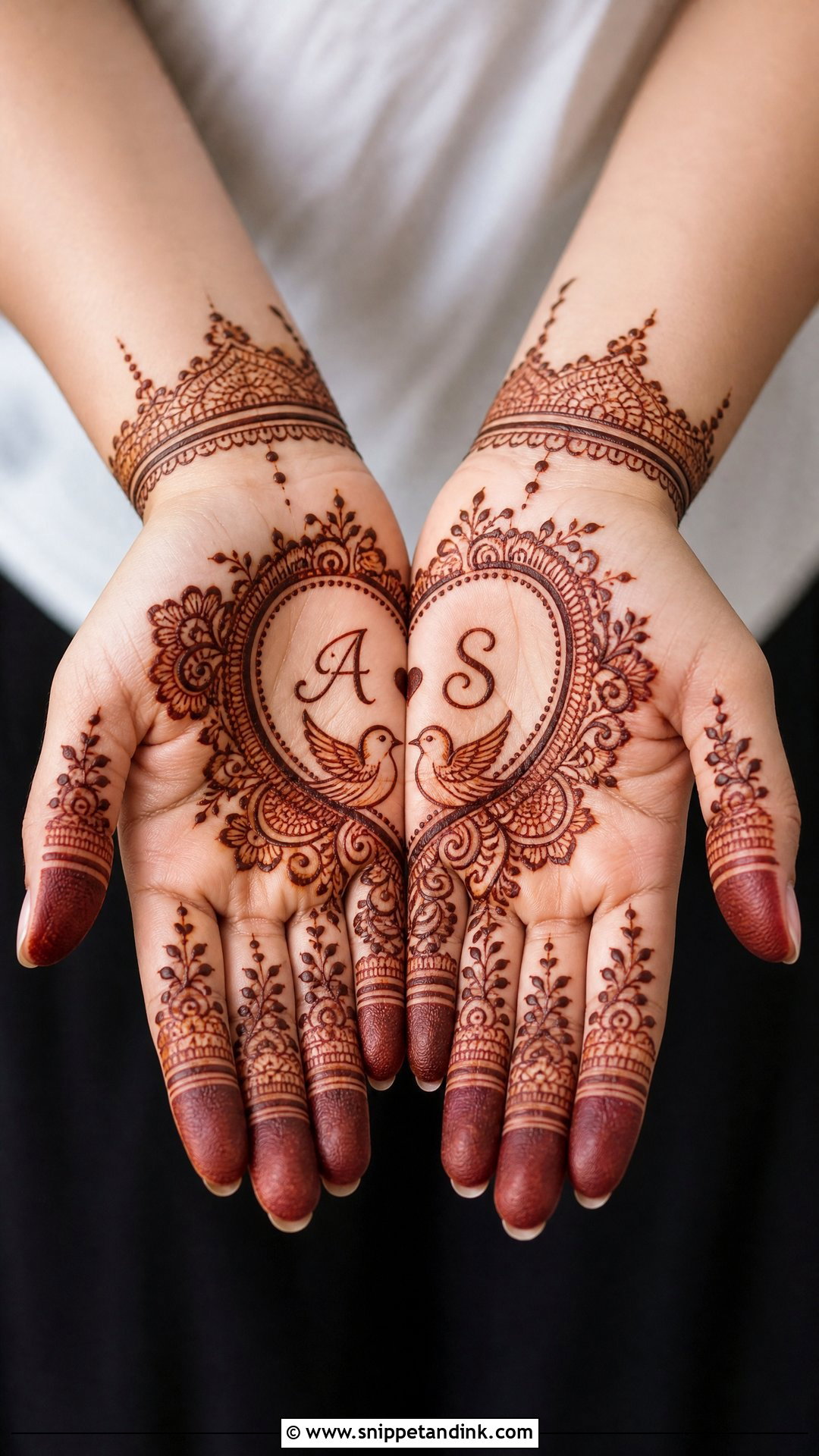
The centre of the palm is the best canvas on the hand: flat, and the place where henna stains darkest. That’s where I put the meaningful motif, a heart, initials, the couple’s name, love birds or a small wedding symbol. Curved florals, paisley borders, dots and leafy fillers build out from it, and the fingers stay simple so the palm leads. A private message can sit here quite safely, since a palm is mostly seen by the person wearing it.
12. Full Hand Love Mehndi Design
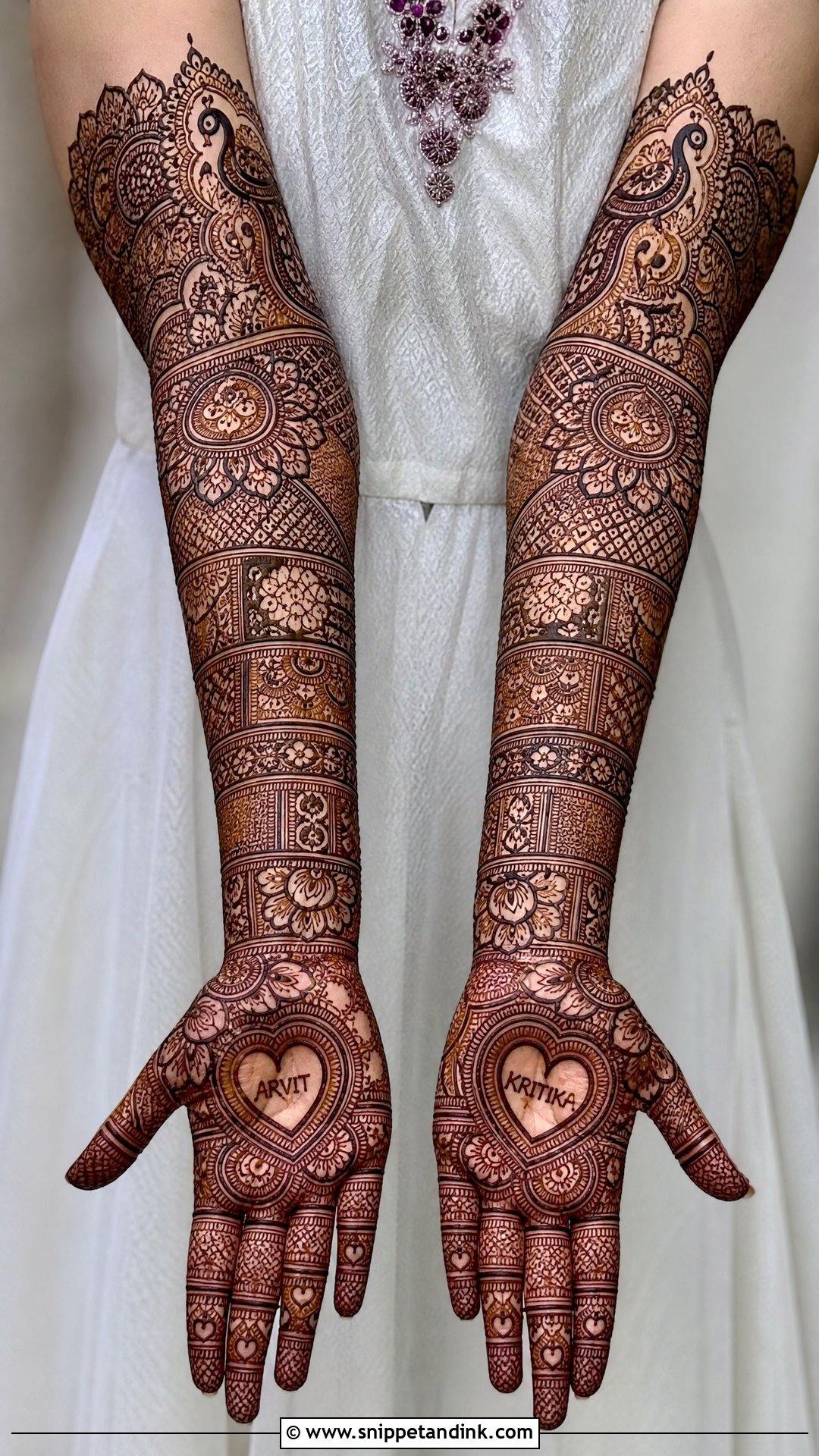
Full-hand work starts at the fingertips and carries through the palm and wrist up the forearm, and it takes hours, so plan to eat beforehand and have someone feed you while the paste dries. The design can bring together hearts, names, mandalas, peacocks, flowers, jaali and personal symbols. What keeps it from looking messy is structure: borders and spacing that divide the hand into clear sections. The palm holds the most romantic motif, and the forearm takes storytelling panels or floral architecture. The result rewards the long sitting.
13. Minimal Love Mehndi Design
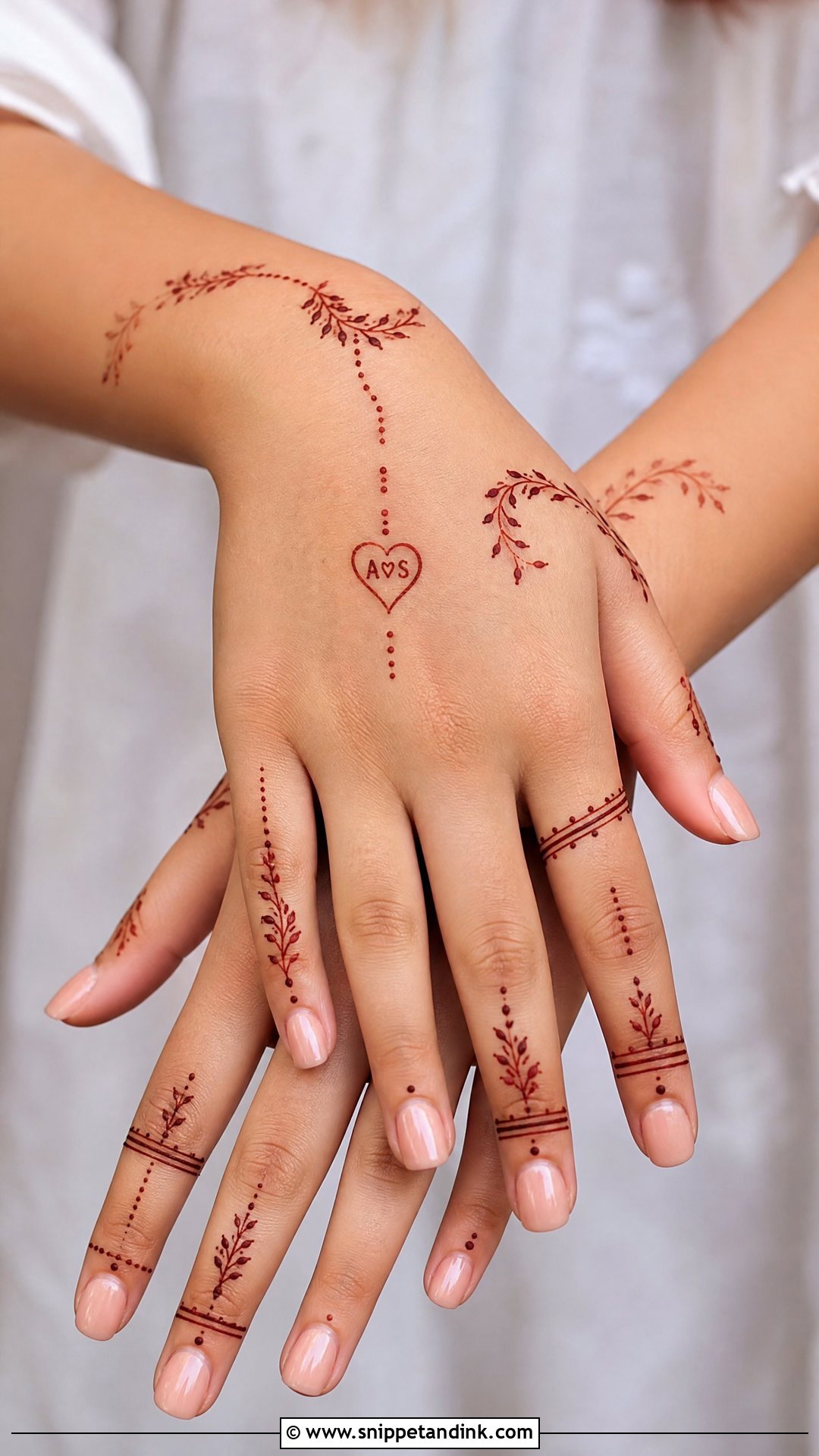
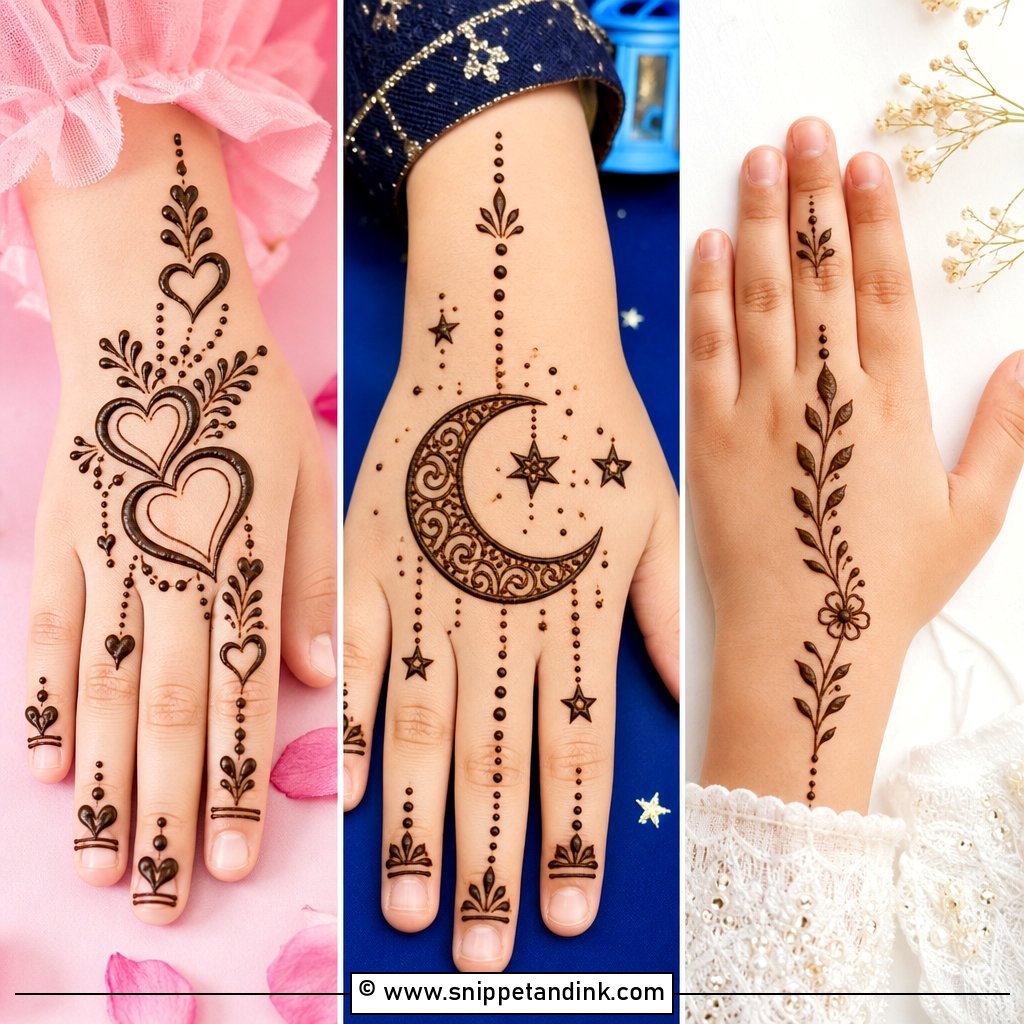
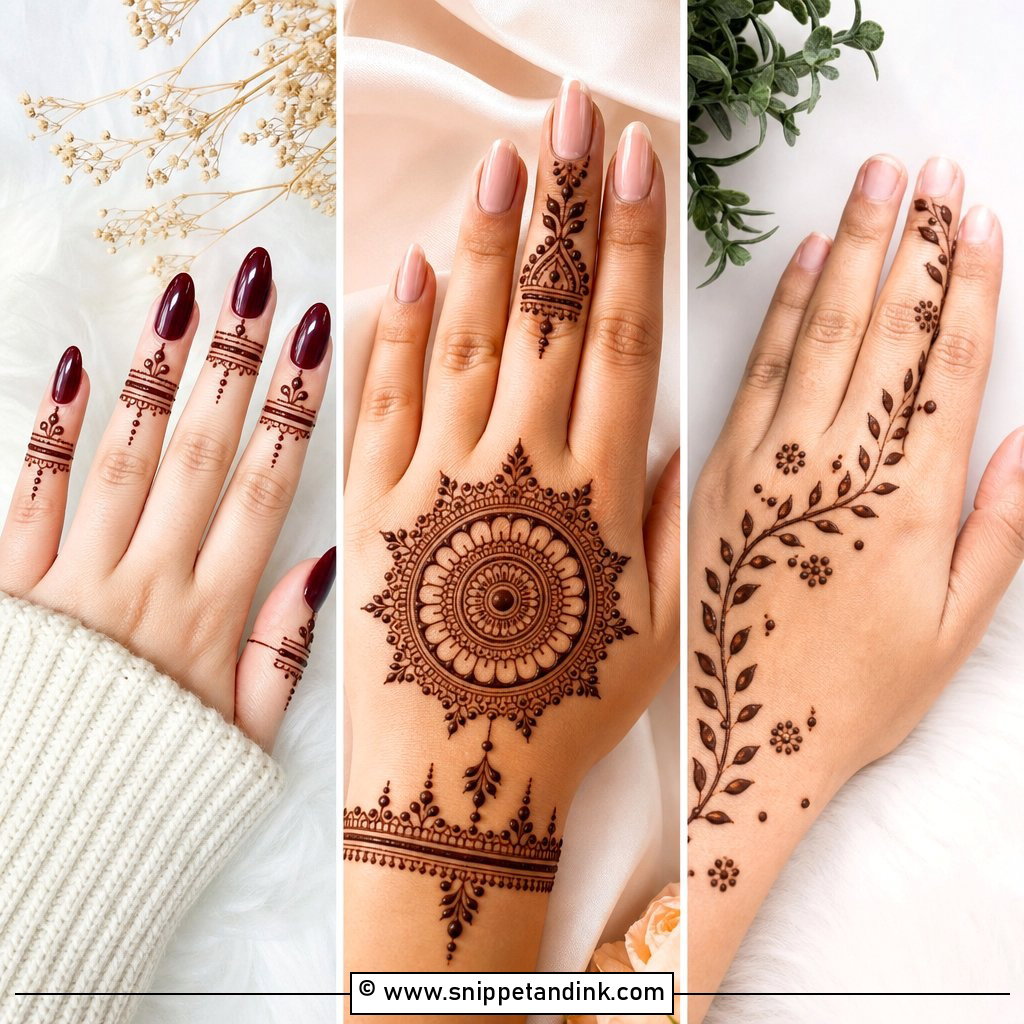
Minimal henna is a small heart, tiny initials, thin vines and a few finger bands, with most of the skin left bare. It sits on the back of the hand, the palm, the wrist or the side of the hand, and it’s done in minutes. Repeat one small motif across the fingers and wrist so it looks deliberate rather than unfinished. I’d keep it for anniversary dinners, college functions and relaxed festive days; a bride usually wants more on the wedding day.
14. Rose Love Mehndi Design
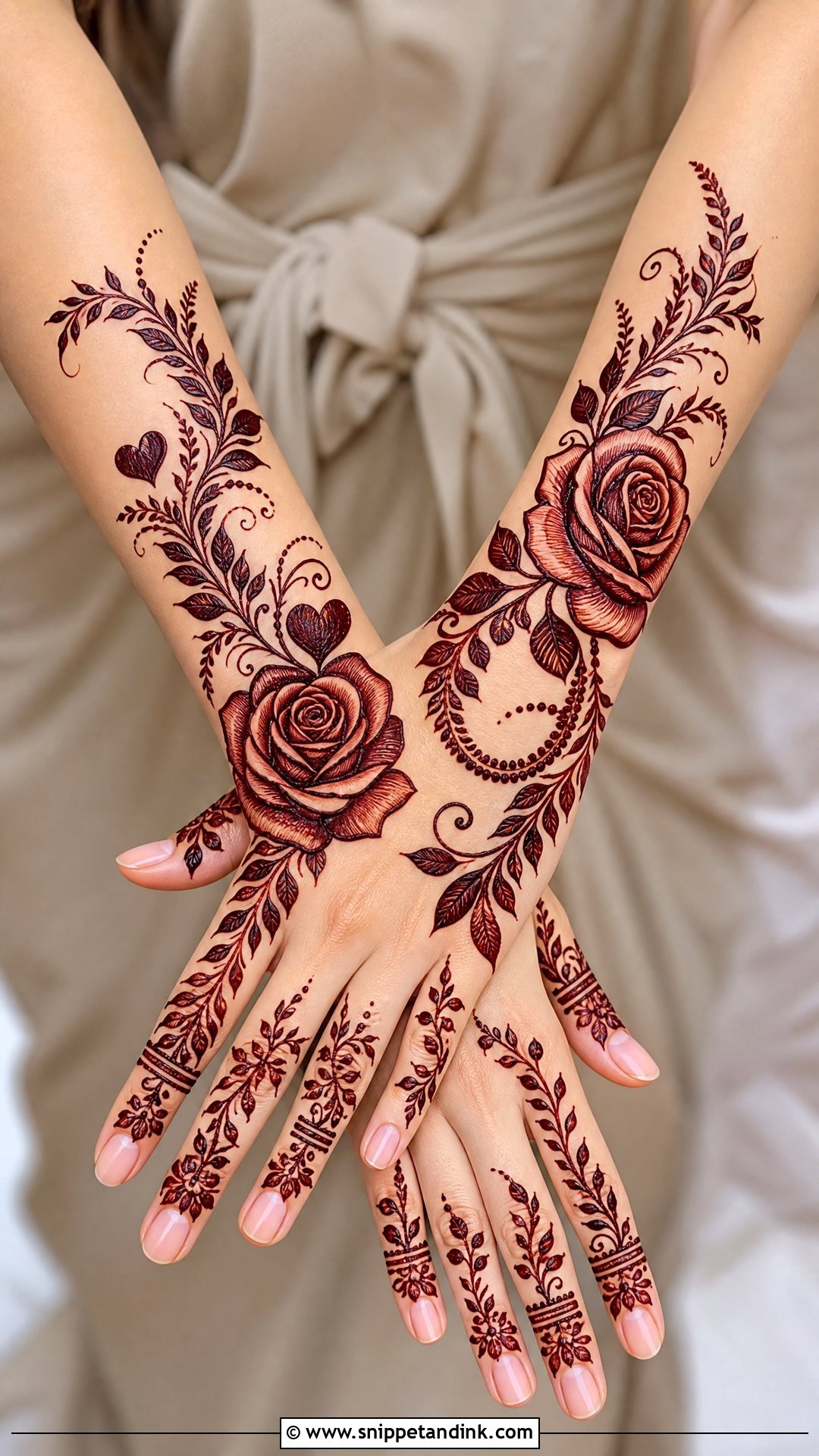
Roses suit Arabic and Indo-Arabic layouts because the petals need room to curve. A large rose sits near the palm or on the back of the hand, with a heart woven into the petals or set beside the floral trail, and smaller roses, leaves and vines carry on toward the fingers and wrist. I shade the petals by leaving a thin gap between them, which gives depth once it stains. Add jaali around the main rose for a bride, or keep the rose bold and the fingers light for a guest.


15. Love Bird Mehndi Design
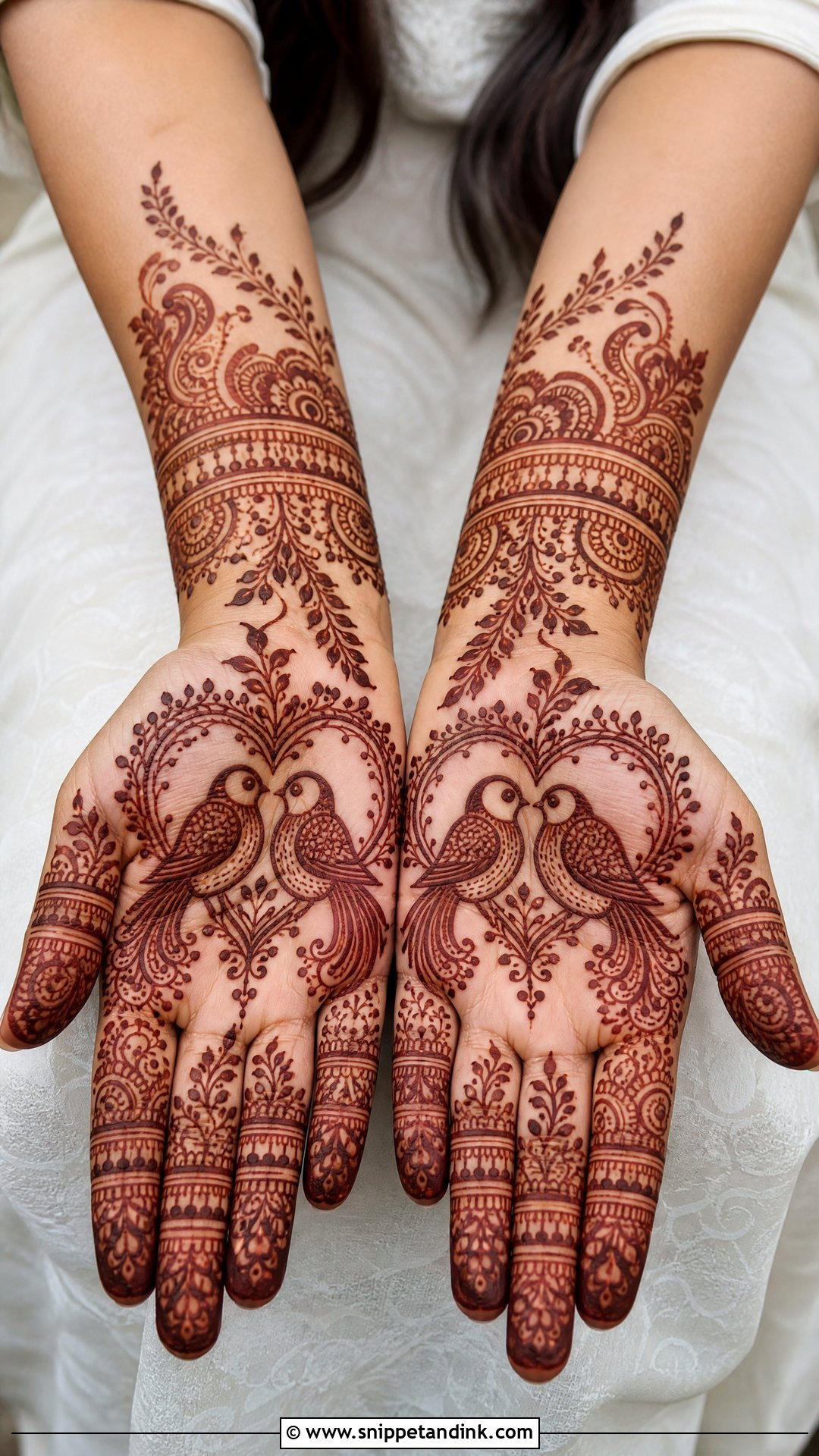
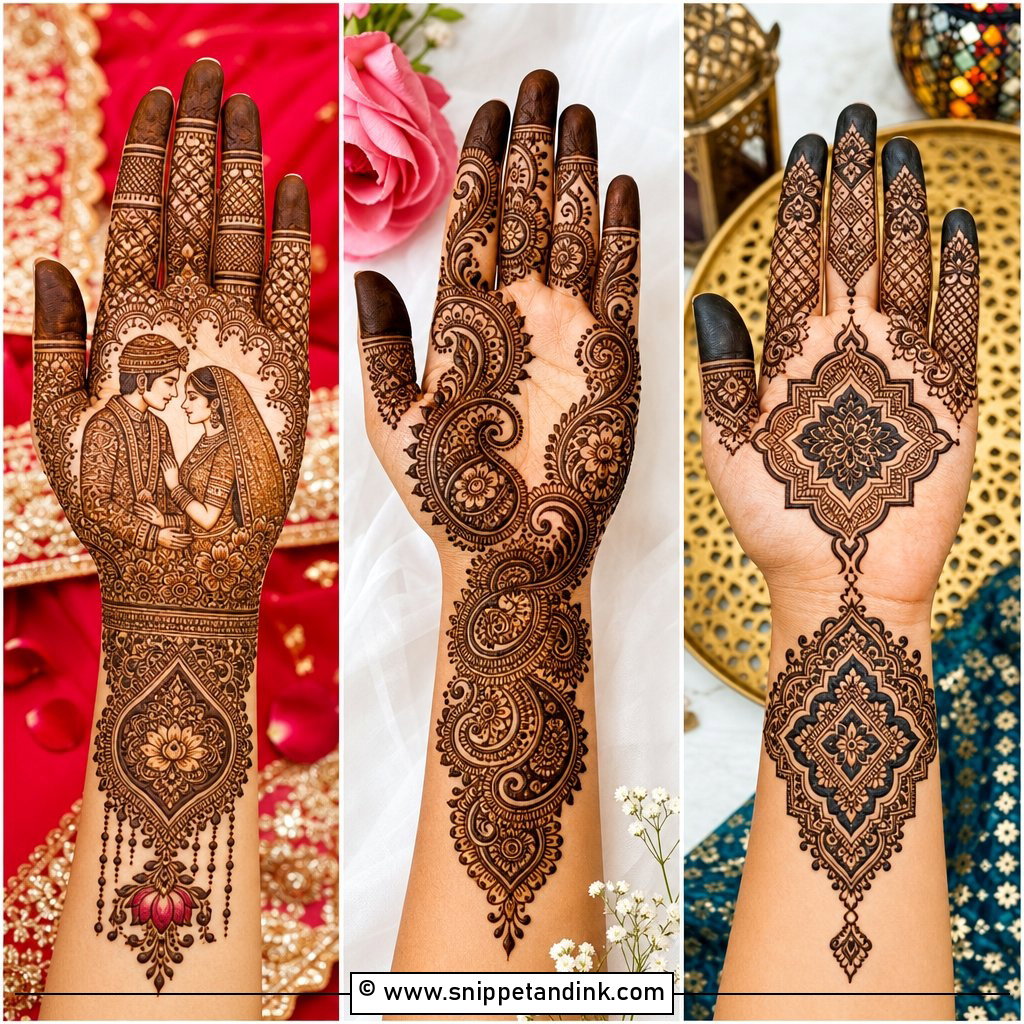
Paired birds are what I suggest to a bride who likes the love theme but feels shy about names or faces. They can face each other inside a heart, perch on a floral branch or sit one on each palm so the two hands meet as a pair. On the back hand I place them near the centre and link them to finger trails; on the palm they look best inside a framed motif. Leaves, small flowers, dots and paisleys fill the rest. Ask for birds with a clear eye and beak, since tiny birds can lose their shape and look like leaves.
16. Engagement Love Mehndi Design
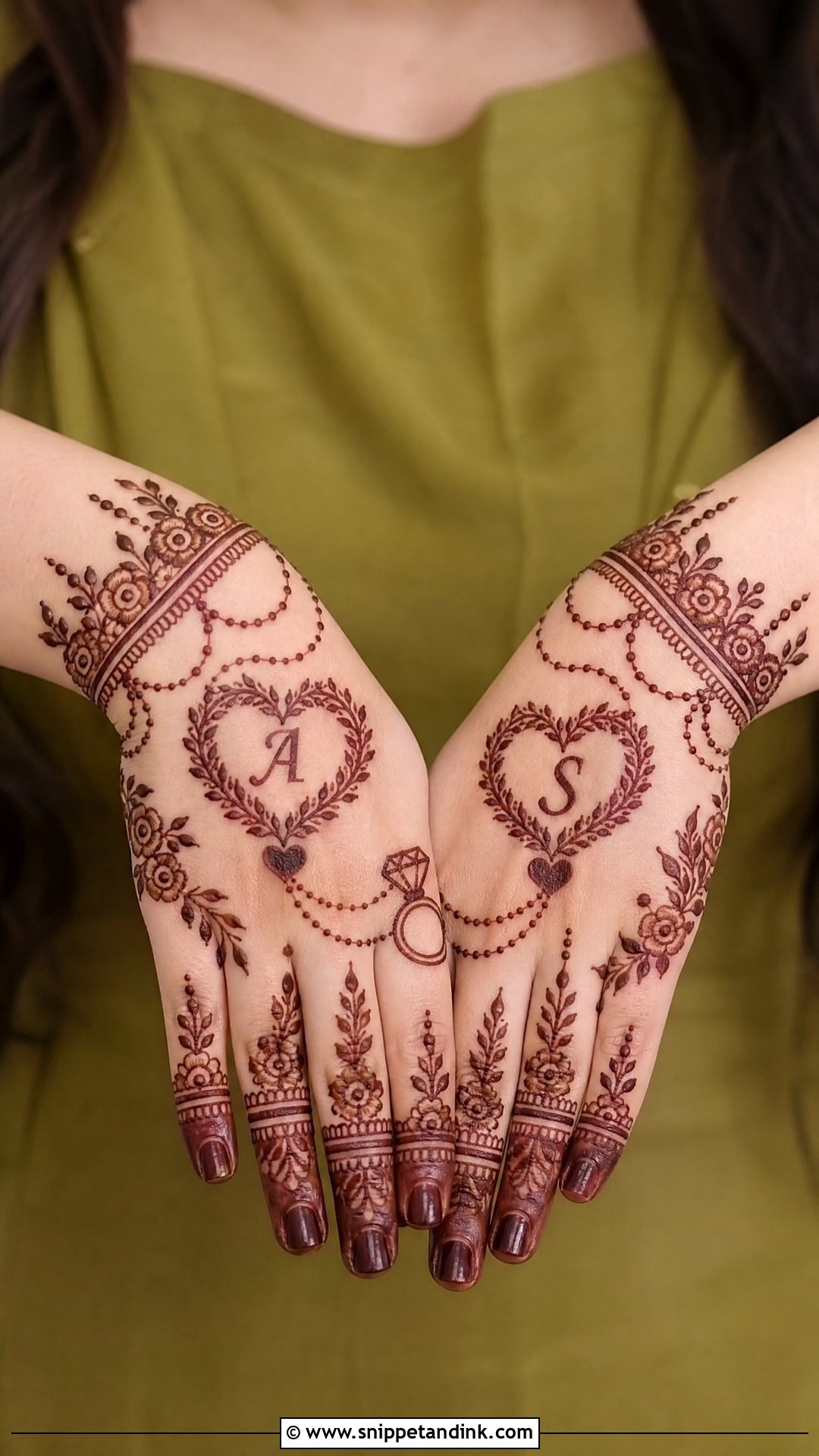
Engagement photos are close-ups of hands and rings, which shapes an engagement love mehndi design more than anything else. I work mostly on the back of the hand: a central heart, a ring motif, initials or the date, then neat finger bands that look like jewellery and a delicate bracelet at the wrist. Leave the ring finger lighter so the actual ring isn’t lost in pattern. Tiny florals and dotted chains finish it without competing with the stone.
17. Wedding Date Mehndi Design
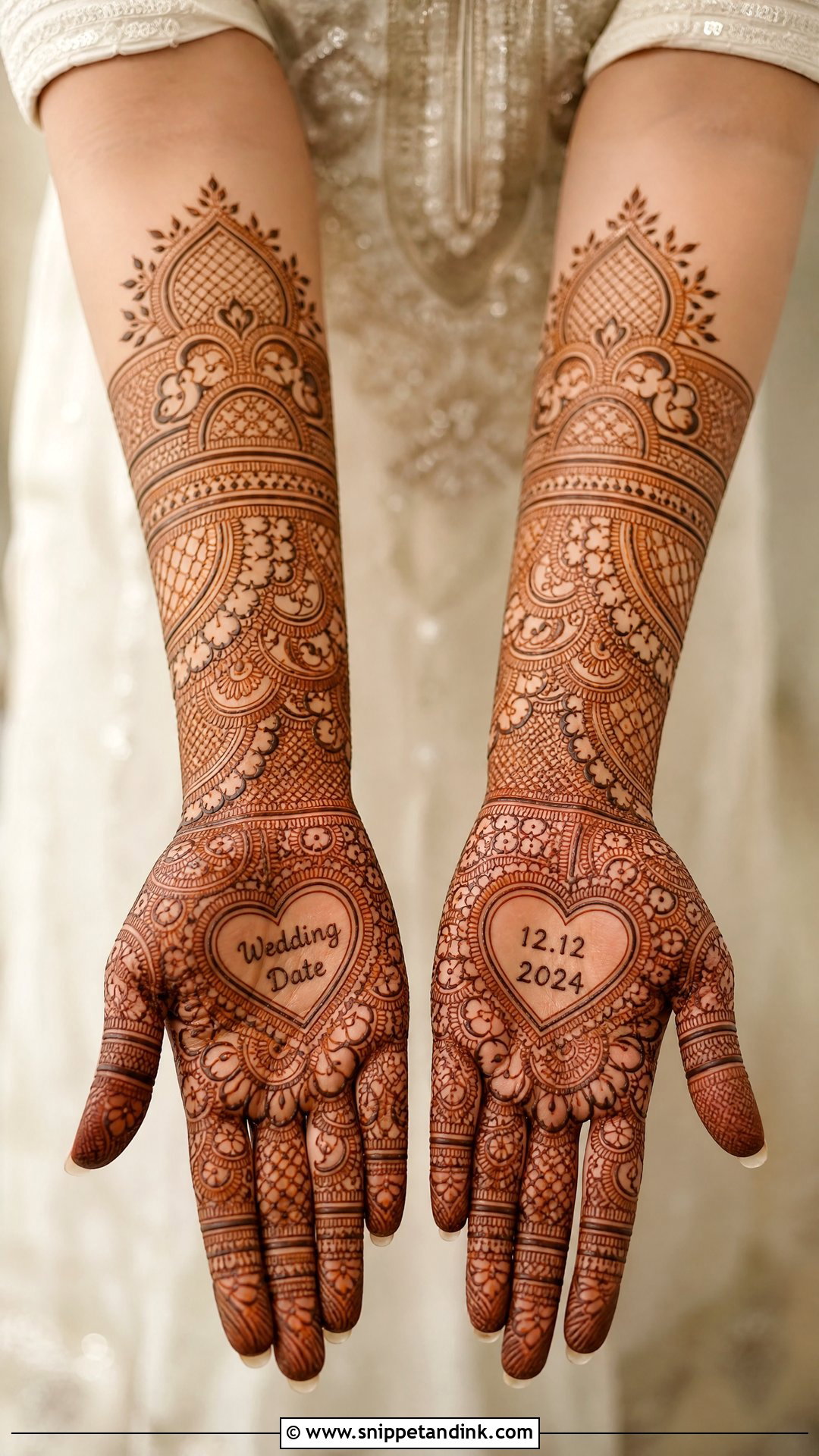
Dates are the easiest personal detail to get wrong. Numbers spread as the paste dries, and a 6 or 8 drawn small can close into a blob, so I write dates larger than clients expect and check them upside down before moving on. The date goes inside a heart, along a vine, in the wrist band or inside a small mandala. Paisleys, flowers, jaali and finger details complete the hand. It’s a meaningful option for a wedding or an anniversary, and far quicker than a portrait.
18. Valentine Love Mehndi Design
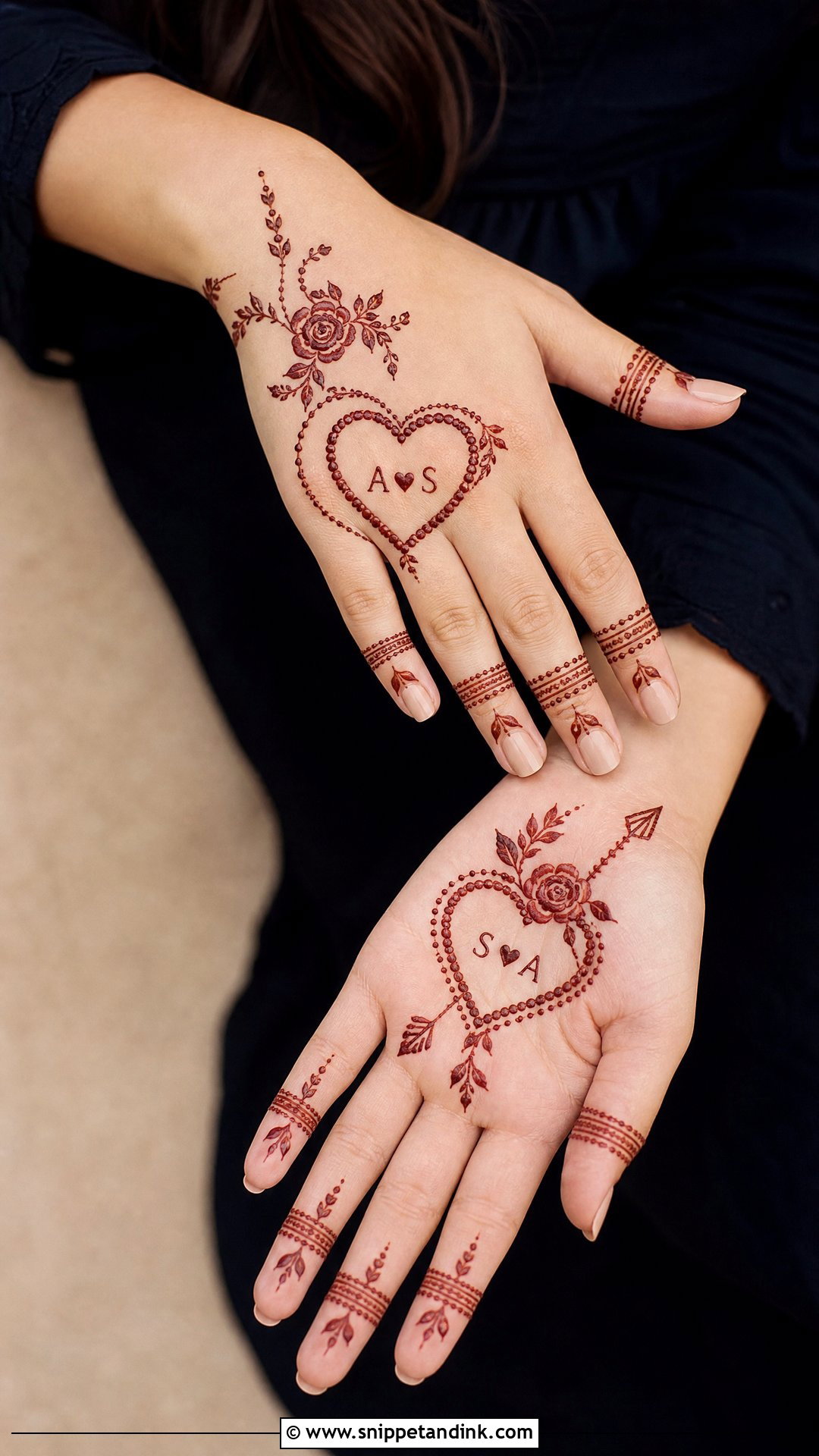
Valentine henna is meant to be light and playful: hearts, roses, arrows, initials and soft vines on the palm or a trail from wrist to fingertips. Keep one heart clearly the main motif and let the small details support it. A bold Arabic layout looks current; a minimal one suits everyday wear. Because the shapes are simple and easy to recognise, it’s a good design for anyone learning to use a cone at home.
19. Hidden Name Love Mehndi Design
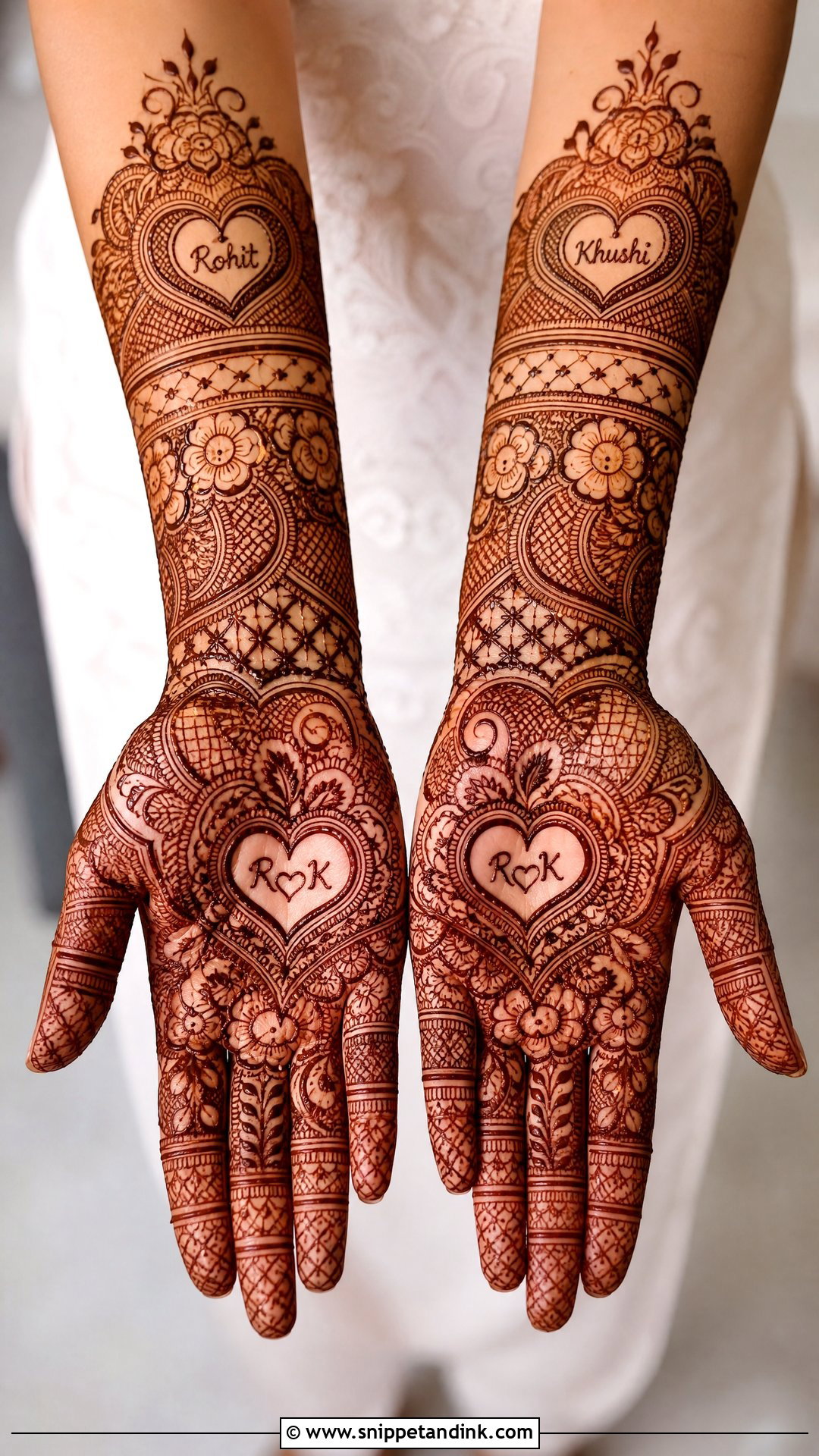
Hiding the groom’s name in the bride’s henna is an old game at many weddings, and a hidden name love mehndi design keeps it going. I tuck the letters into petals, leaves, paisleys, jaali lines or the wrist border, so the hand looks like a full bridal or engagement design with a secret inside. It only works on a busy enough hand; a sparse design gives the name away at a glance. I aim for letters that are readable once found, but not on first look, so the search lasts a little while.

20. Peacock Love Mehndi Design
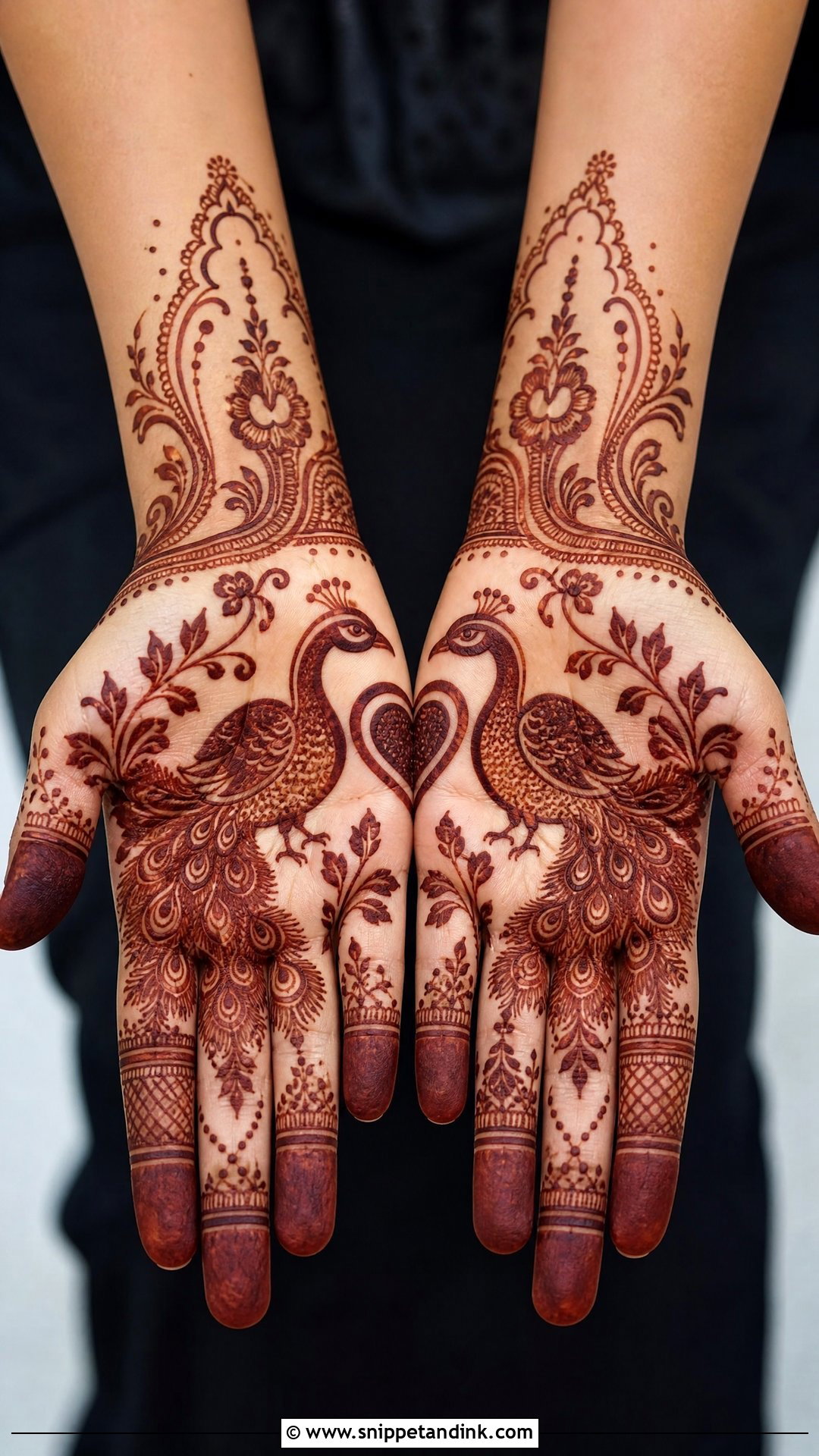
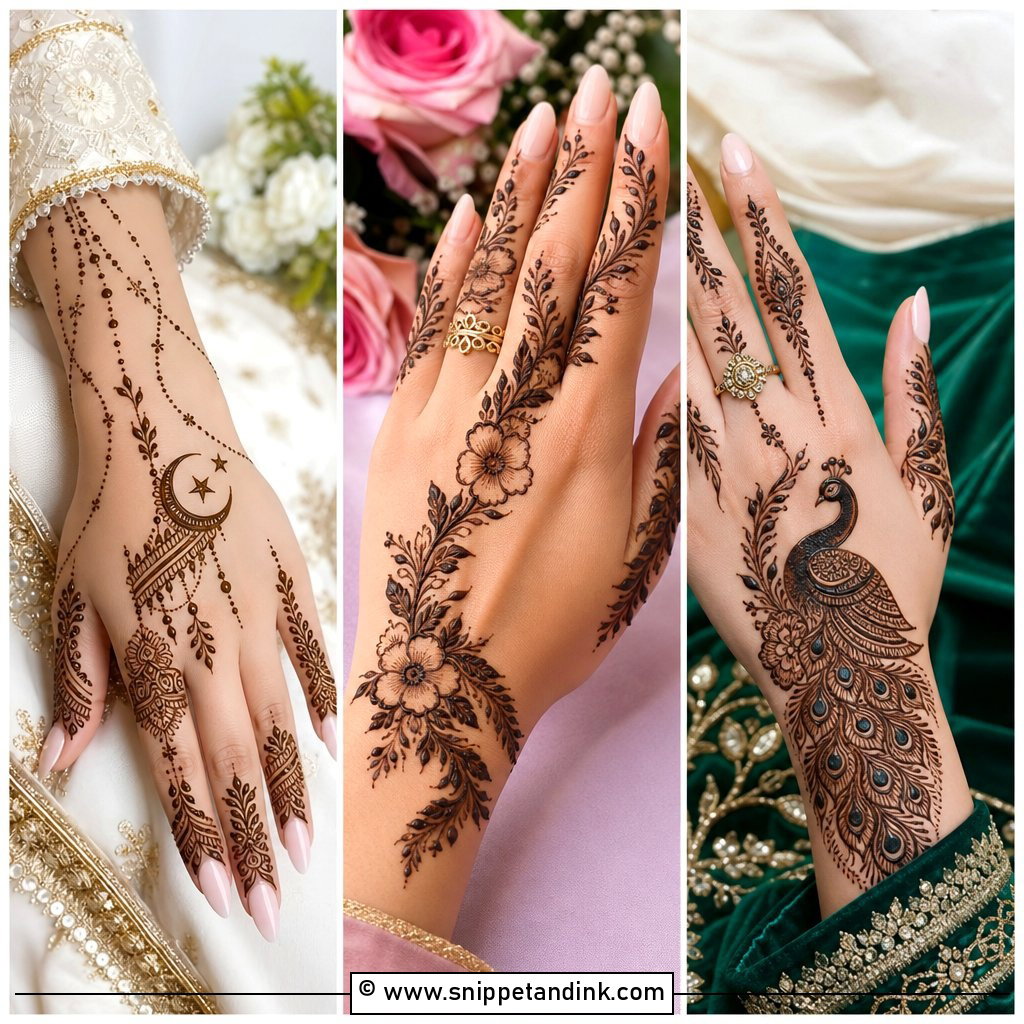
Peacocks need space, so I save them for full front hands, back hands and forearms. The bird pairs with a heart, floral vines or a couple’s initial, and its feathers fill with tiny hearts, dots, petals and fine lines. A bold border closes the wrist, and the fingers repeat leafy patterns. Long feather lines wrap well around the curve of a forearm. Peacocks are already a celebratory motif at weddings, so adding a heart or initials makes the meaning personal without changing the traditional look.
21. Floral Love Mehndi Design
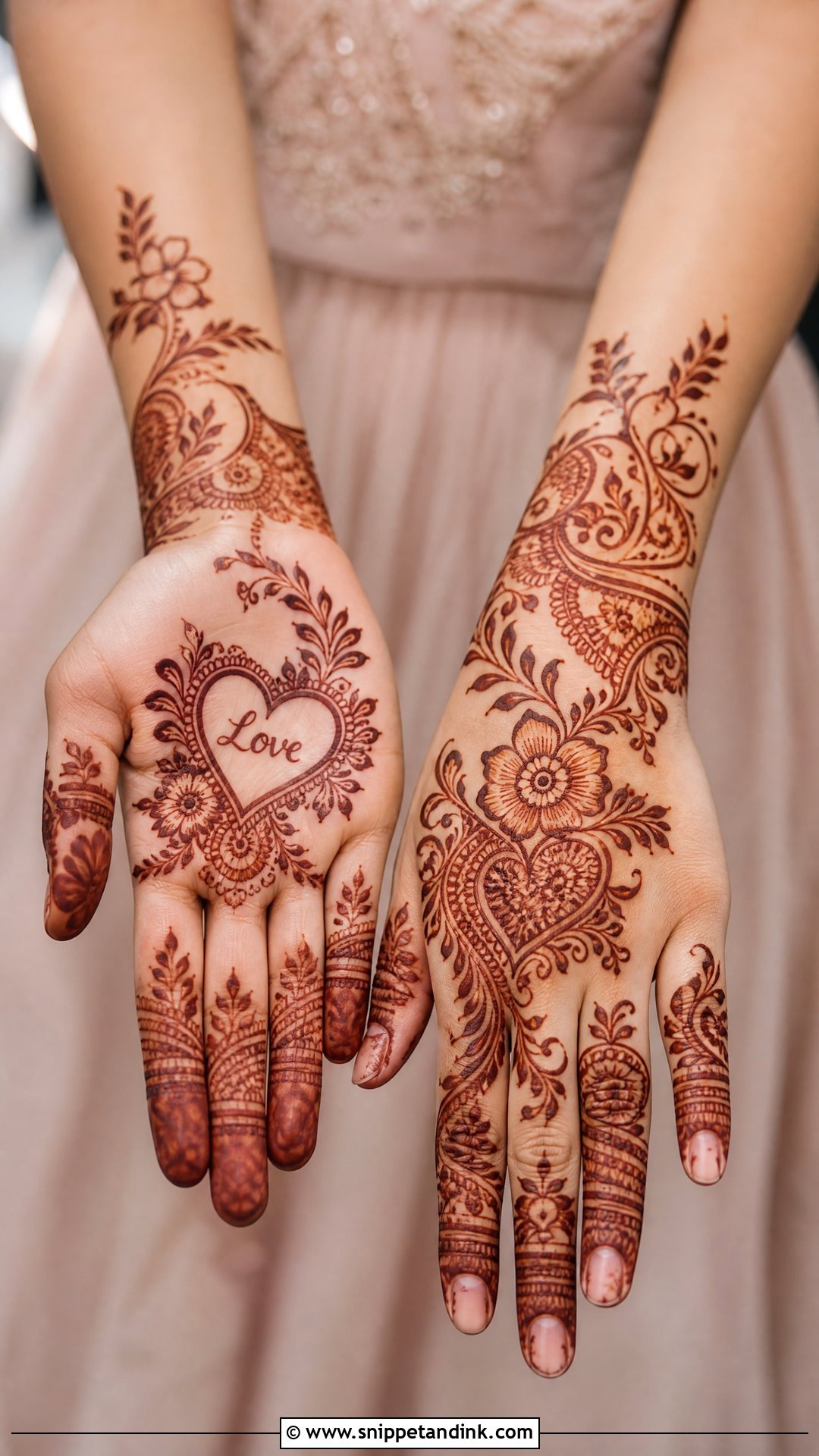
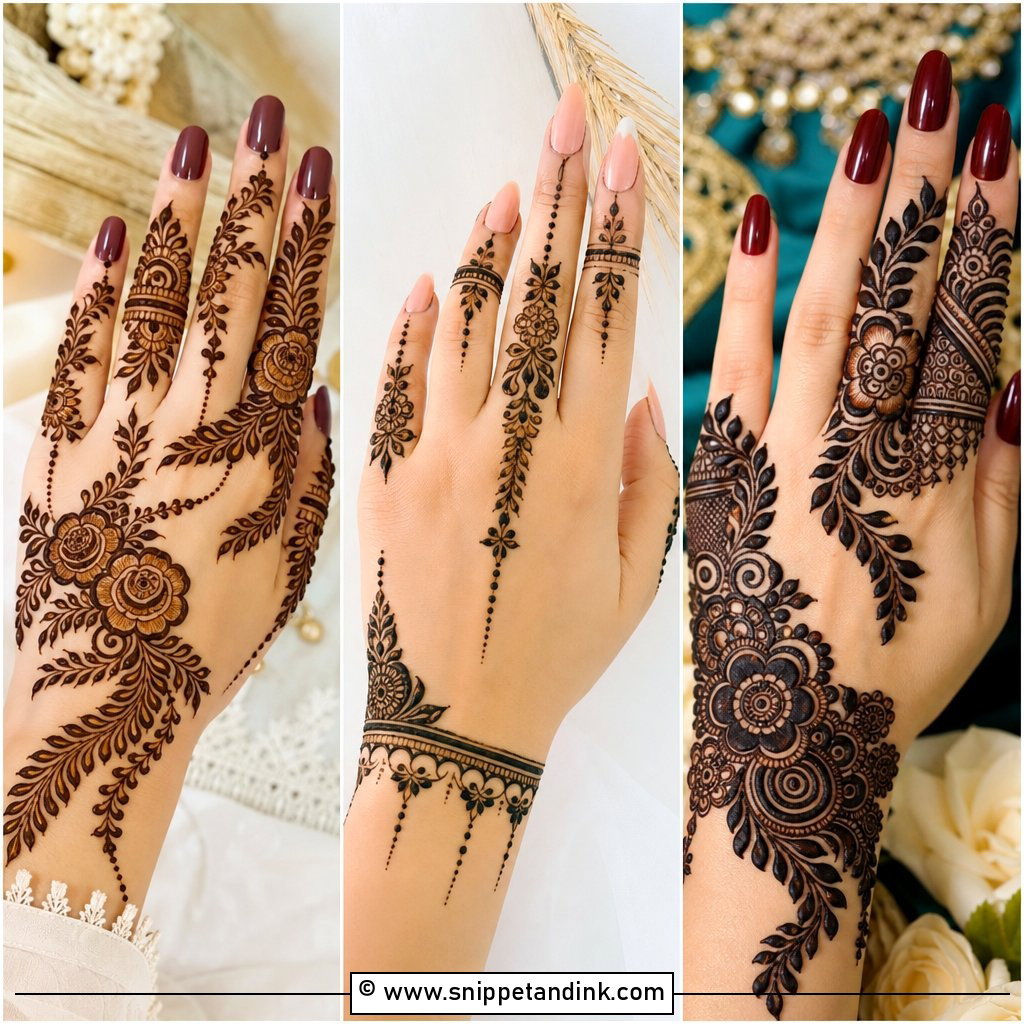
Florals are the most adaptable motif I have. Flowers can shape a heart, vines can connect initials and petals can form a love frame on the palm, and the pattern stretches or tightens to suit long fingers, small hands or a wide palm. Open flowers and light fingers give a soft look; dense shading, jaali and layered borders turn it bridal. If you’re unsure what to ask for, a floral love design is the safe starting point, and an artist can scale it to your occasion.
22. Jaali Love Mehndi Design
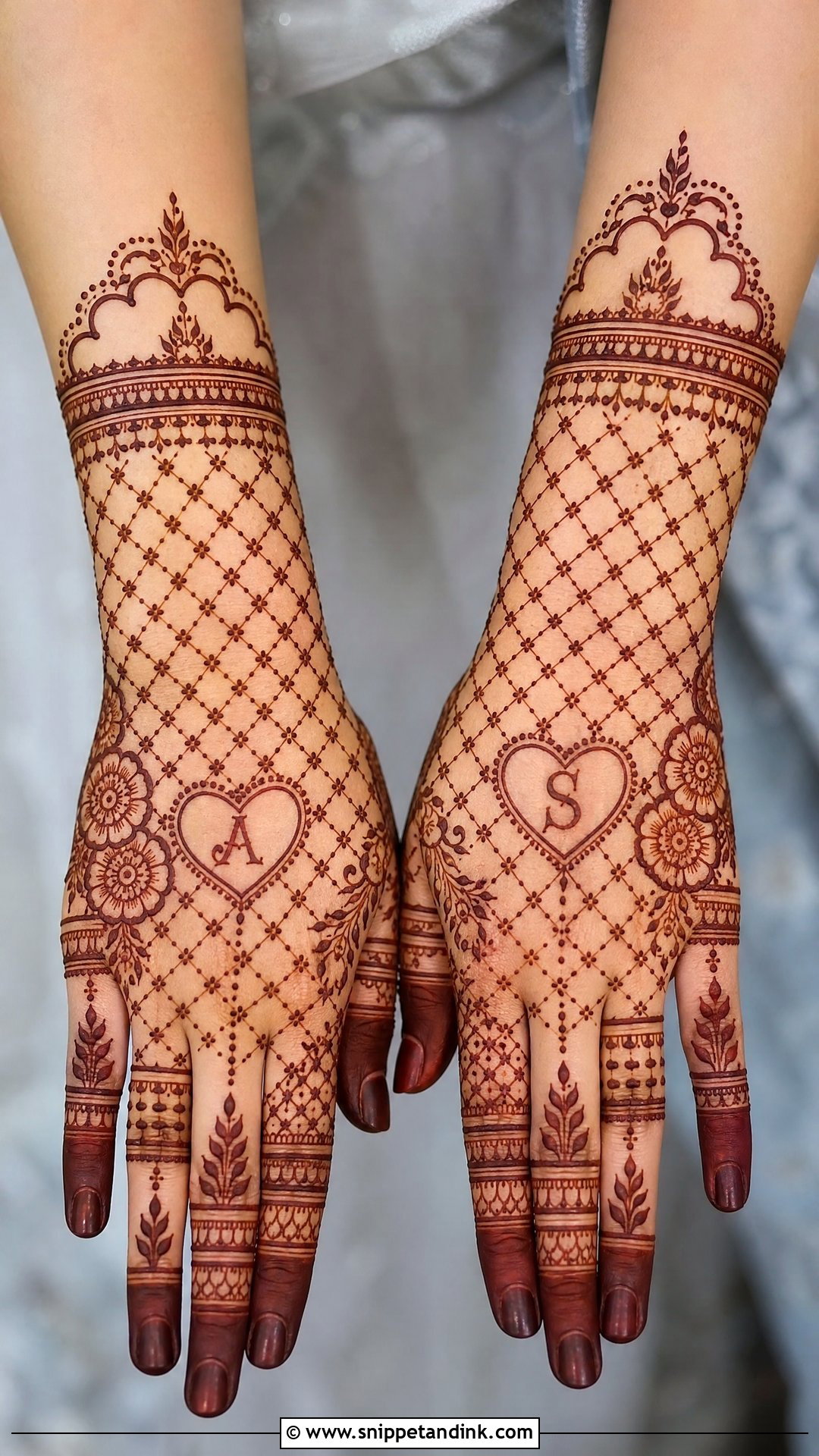
Jaali is the netted mesh that fills sections of a design, and on the back of the hand it creates a lace glove effect. A heart or initials sits in the middle with fine mesh, floral corners and dots around it, and the fingers get small net sections, leafy tips or ring bands. Mesh lines must stay evenly spaced; if they’re too close, the stain fills the holes and the lace effect disappears. For a bride I take the jaali up to the wrist with bold borders; for a lighter look, keep the mesh on one side of the hand only.
23. Bracelet Love Mehndi Design
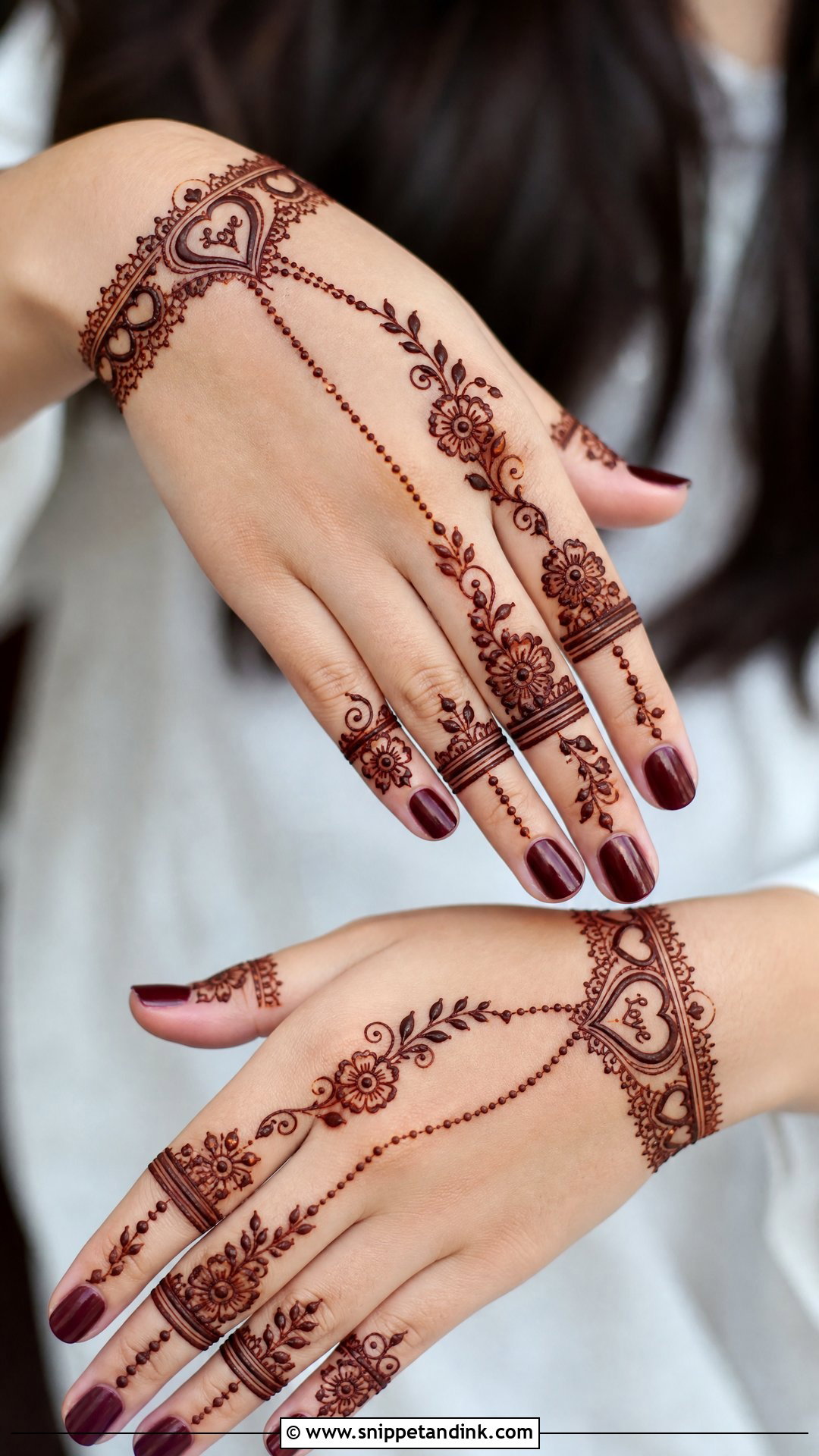
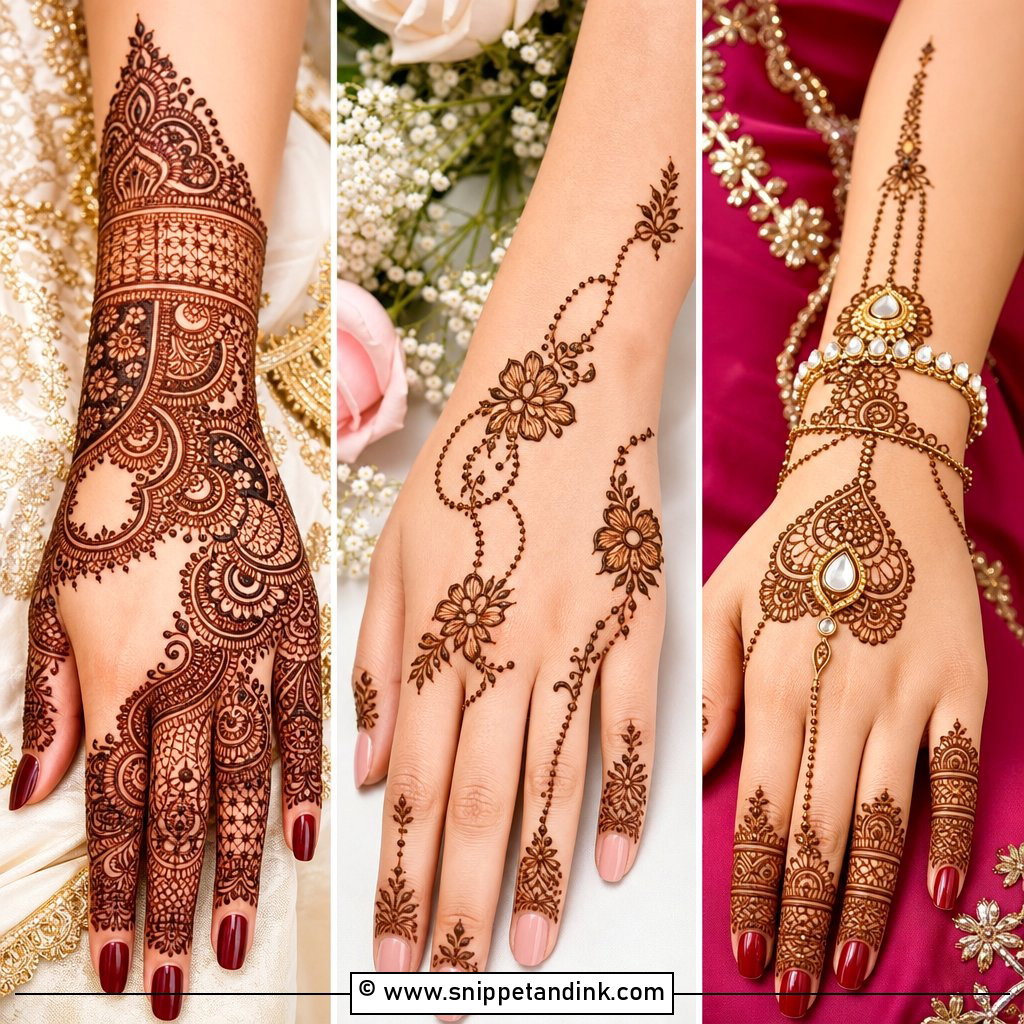
Think of this one as jewellery drawn in henna. A bold wrist band holds hearts, initials, tiny flowers or the date, chains and vines run up to the fingers, and a heart mandala or small floral motif sits in the centre of the back hand. The fingers are decorated like rings with dots and fine lines. The band has to be even all the way round, so I mark it with a few dots first and turn the wrist as I go. It suits engagement parties, anniversaries and festive outfits without heavy coverage.
24. Gulf Love Mehndi Design
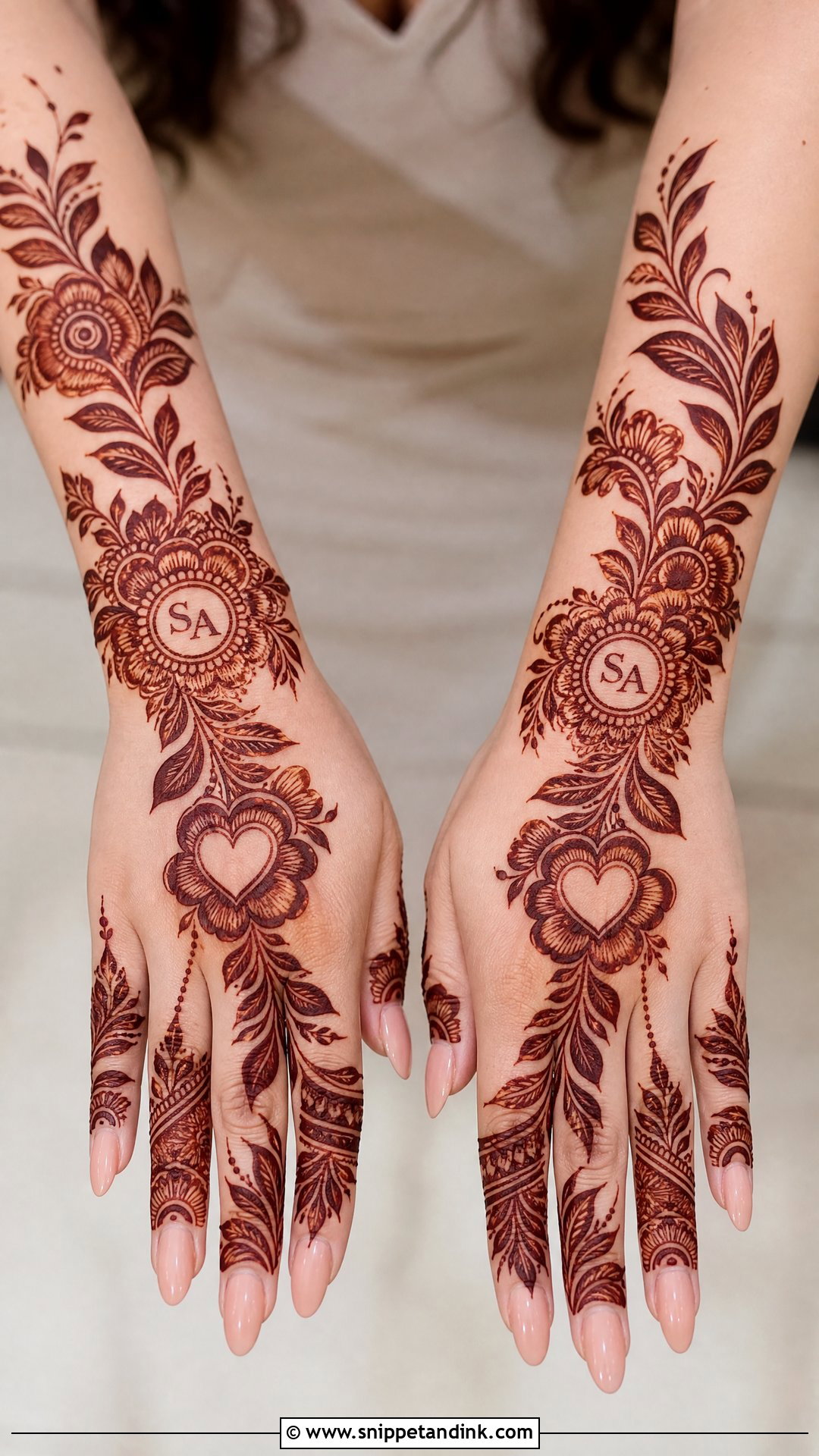
Gulf (Khaleeji) henna uses large flowers, leafy curves, strong outlines and lots of open skin, often with the outlines left darker and the petals shaded. For a love theme I add a heart inside the floral trail or initials in a bold wrist motif. It flows best across the back of the hand and up the forearm. The fingers get half-floral tips, dots and clean diagonal bands. It’s fashionable for Eid gatherings and parties, and quicker than traditional full-hand work.

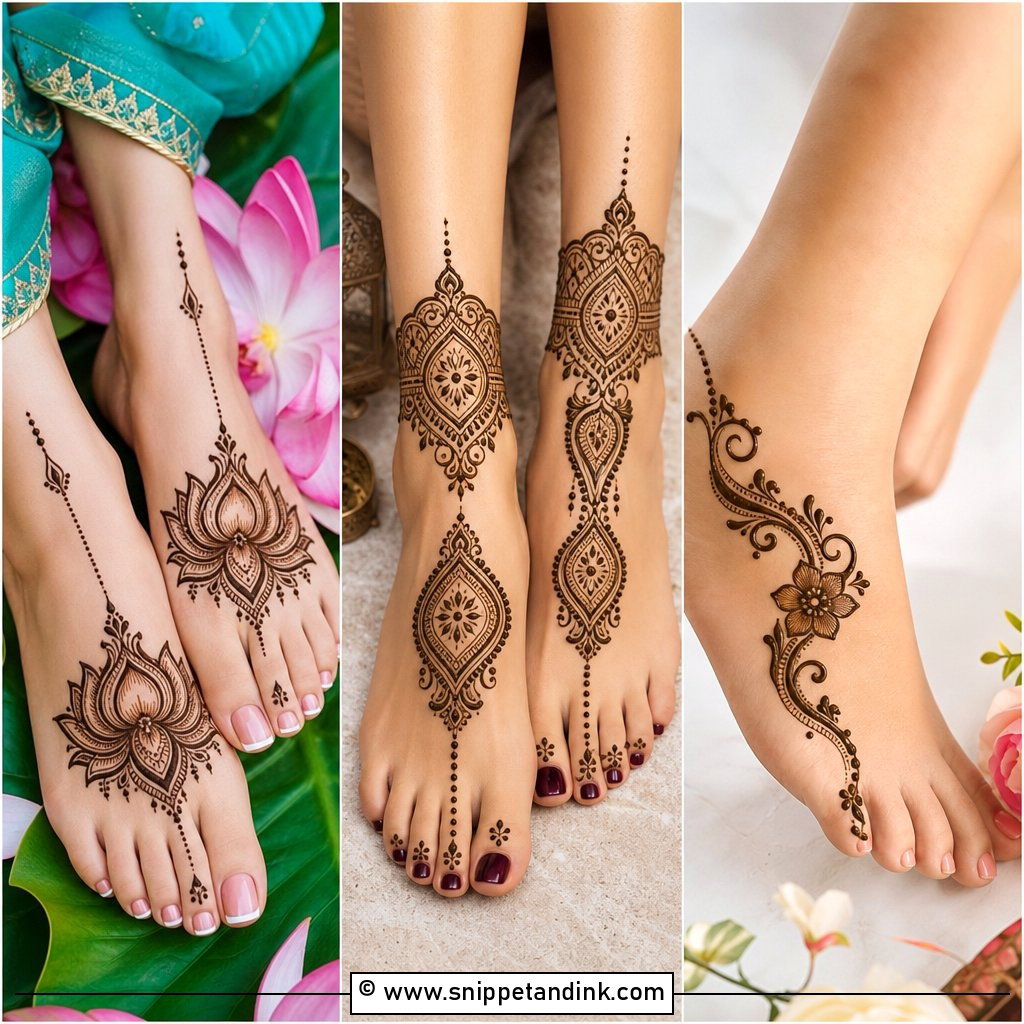
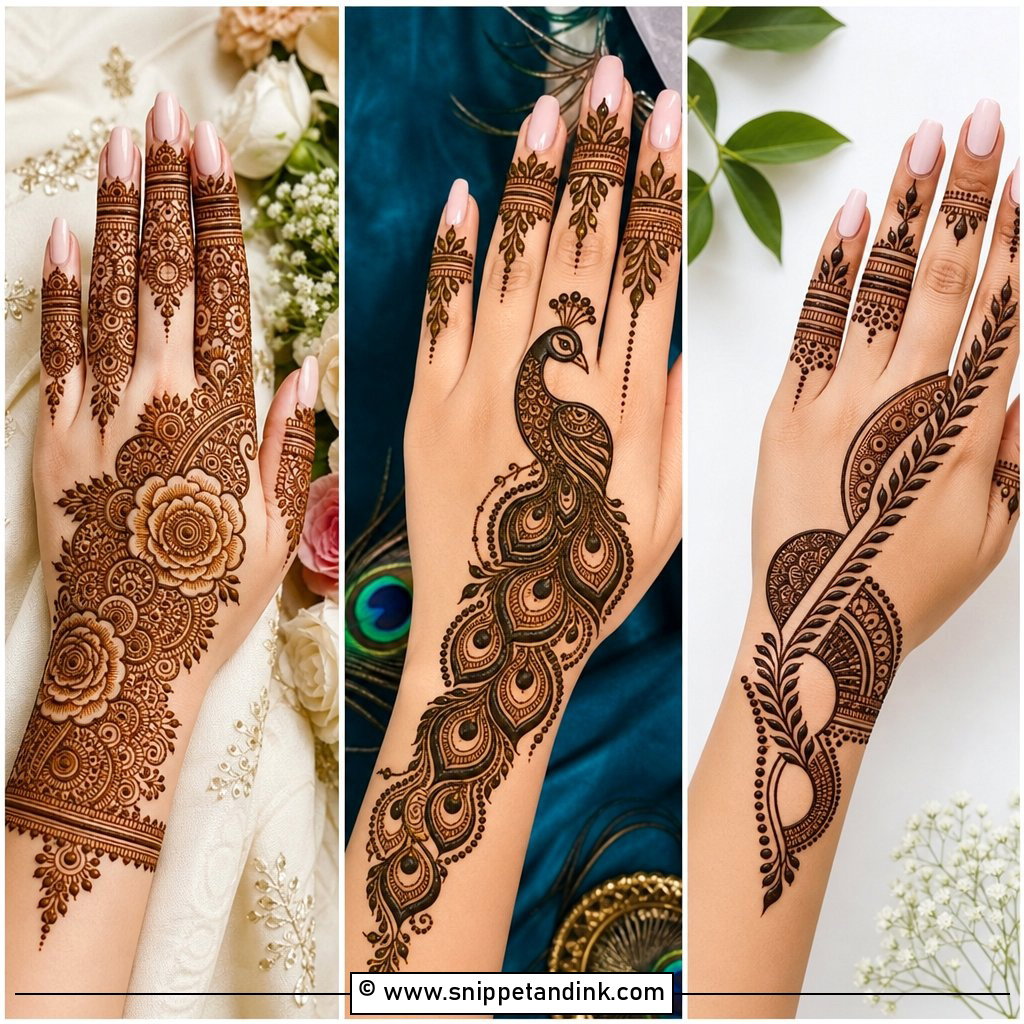
25. Moroccan Love Mehndi Design
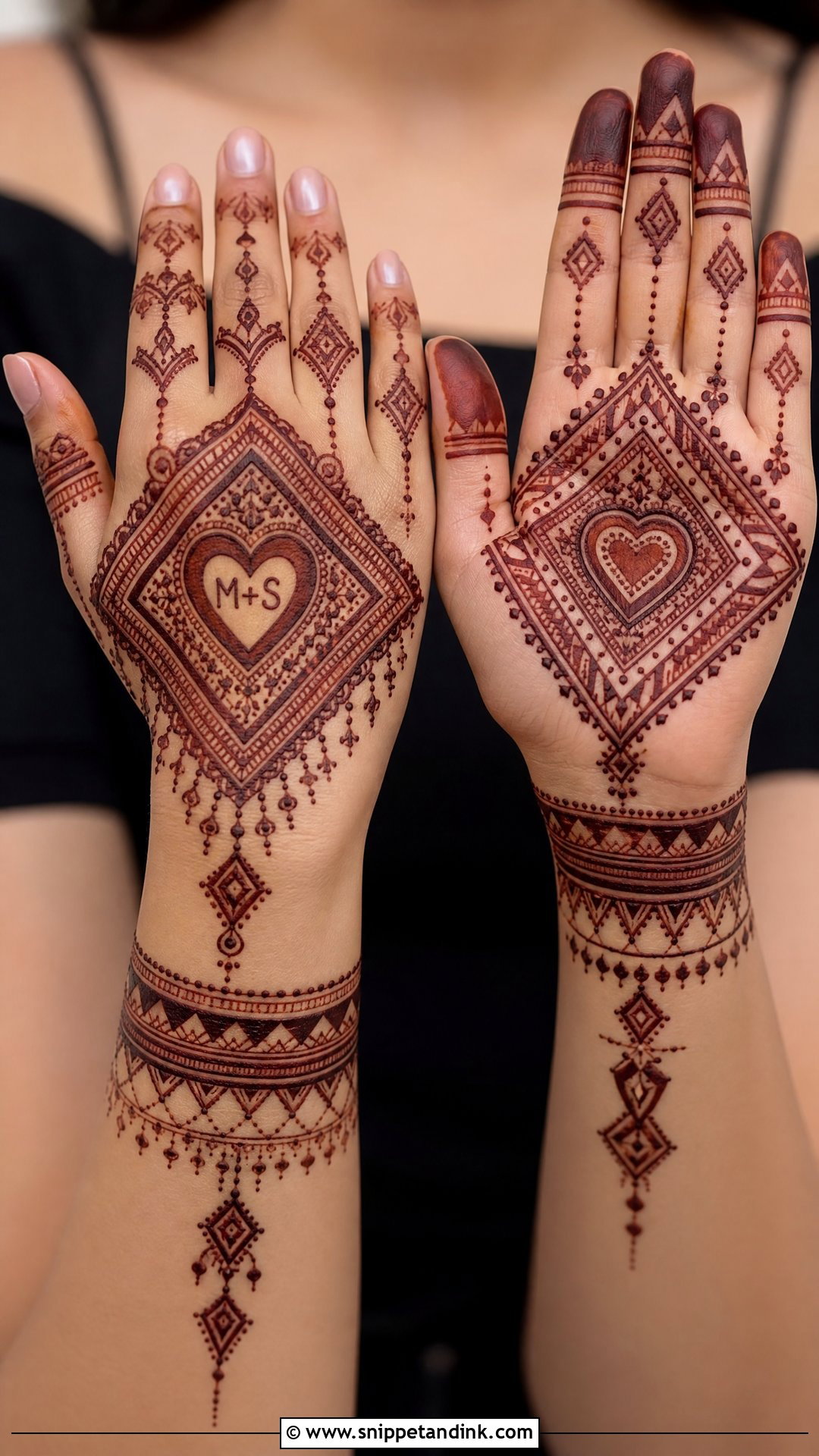
Moroccan-inspired henna swaps vines for diamonds, triangles, grids, straight lines and bold borders, with a heart or initials set in the centre for contrast. It can cover the back of the hand, palm, fingers and wrist in a structured layout. Straight lines are less forgiving than curves, so this is a design for a steady, experienced hand. Keep the heart simple against the geometry, and add a few dots or small floral touches if the grid feels too stern.
The Two Days After the Cone Comes Off
Natural henna comes off a bright orange and darkens to reddish brown over the next day or two. That’s why I apply bridal henna one to two days before the wedding, so the colour peaks on the day rather than the morning after.
- Leave the paste on as long as you can, ideally six to eight hours or overnight. A dab of lemon and sugar mixture helps it stay stuck to the skin.
- Scrape the dry paste off with a blunt edge or your fingers. Don’t wash it off.
- Keep water away for the first twelve hours or so, which means planning showers and handwashing around it.
- Warmth helps the stain develop, so keep your hands warm and skip a cold air conditioner blasting at them.
- Avoid scrubs, chlorine and harsh soaps for the first few days, and moisturise once the colour has set.
Palms and fingertips stain darkest; forearms stay lighter. A good stain lasts roughly one to three weeks, fading from the most-used areas first.
Say no to black henna
Paste that stains black within an hour is not plain henna. It usually contains a chemical dye that can cause blistering and allergic reactions that last long after the design fades. Real henna is never black on application day, so if a stall promises an instant dark result, walk away.
Where the Love Detail Sits Matters More Than the Motif
Start with the occasion and how much coverage you want, then decide how openly the romance should show. A heart, initials, a date, birds, roses or a portrait can all live inside a full hand layout as long as each has room to breathe. For the wedding itself, full-hand or storytelling designs give space for the couple’s story. For an engagement, anniversary or party, a minimal, Arabic, bracelet or back-hand layout is plenty. Show your artist the hand you’ll be photographed holding the bouquet with, and plan the main motif for that side.
You'll Like These Ideas:




Leave a Reply