
Most brides arrive at my table with a phone full of screenshots of Arabic front hand mehndi designs, and nearly all of them share one thing: a single strong path across the palm with bare skin around it. That path might be a floral trail, a paisley curve, a bracelet at the wrist or a mandala centre. The palm is the best canvas on the body for henna, because the skin there is thick and warm and takes the deepest stain, so even a light Arabic layout reads clearly. Below are 35 palm designs, from beginner trails to full bridal work, each with notes on how I’d draw it and whose hands it suits.
Drawing Around the Palm’s Creases and Fingers
A palm isn’t a flat canvas. It folds along three main creases every time you hold a cup or a phone, and that changes how I place a design compared with the back of the hand.
- I keep the boldest motif in the softer, fleshy area near the thumb or the centre, not directly on a crease. Lines that sit on a fold crack off while the paste dries, leaving gaps in the stain.
- Finger joints get a small gap or a thin band, never a large motif. Paste on a bending knuckle rarely survives the first hour.
- For brides, I often design the two palms so they join into one picture when held side by side, such as half a mandala on each hand or a vine that continues across. It photographs well and only takes planning, not extra time.
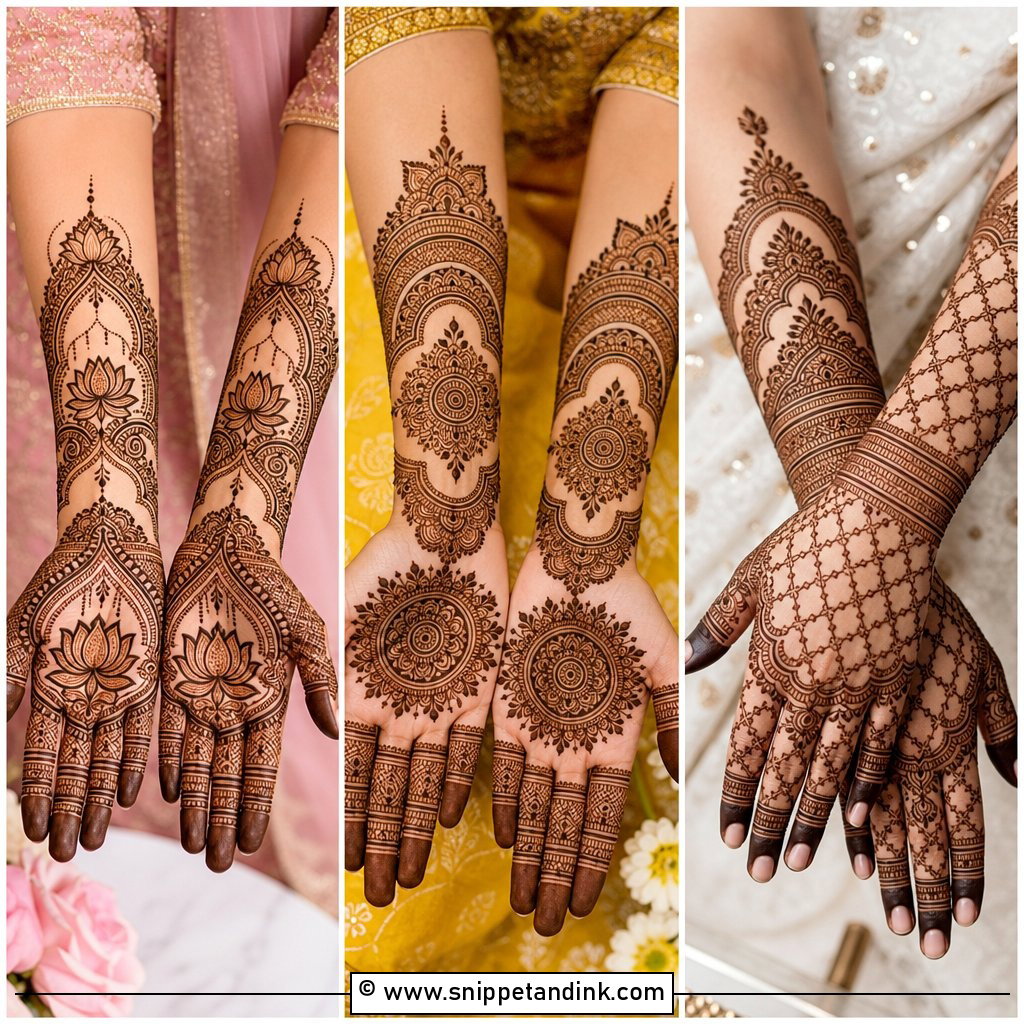
- If the hands sweat easily, I ask the client to wash them in cool water and dry them before we begin. Damp palms make the paste lift and spread.
Palms take the deepest colour on the body, so a palm design can be lighter than you think and still look rich. A trail that would look faint on the back of the hand reads strongly here, which is why many brides who choose Arabic work for the backs keep the palms simpler than they planned.
1. Simple Arabic Front Hand Mehndi Design
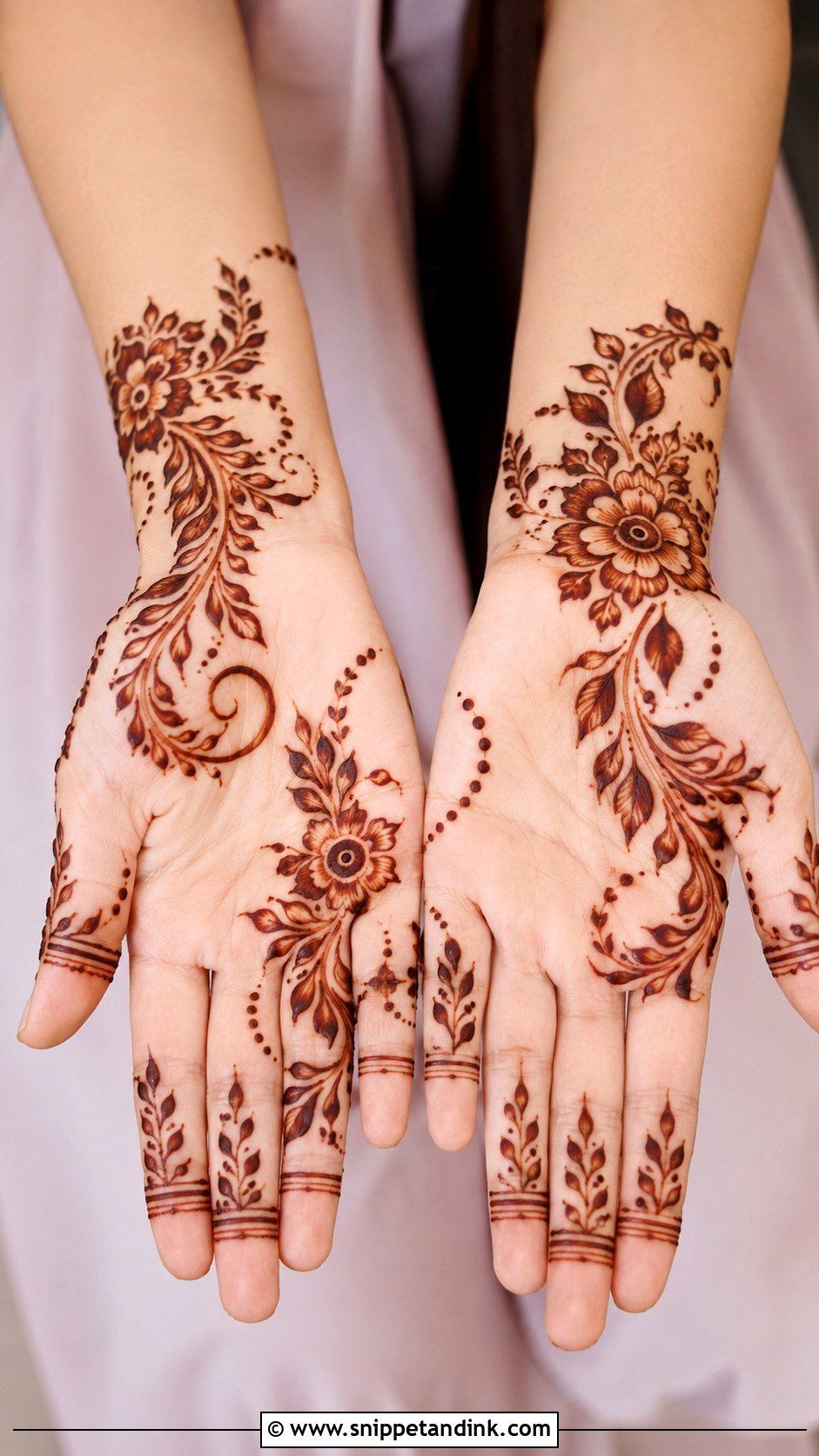
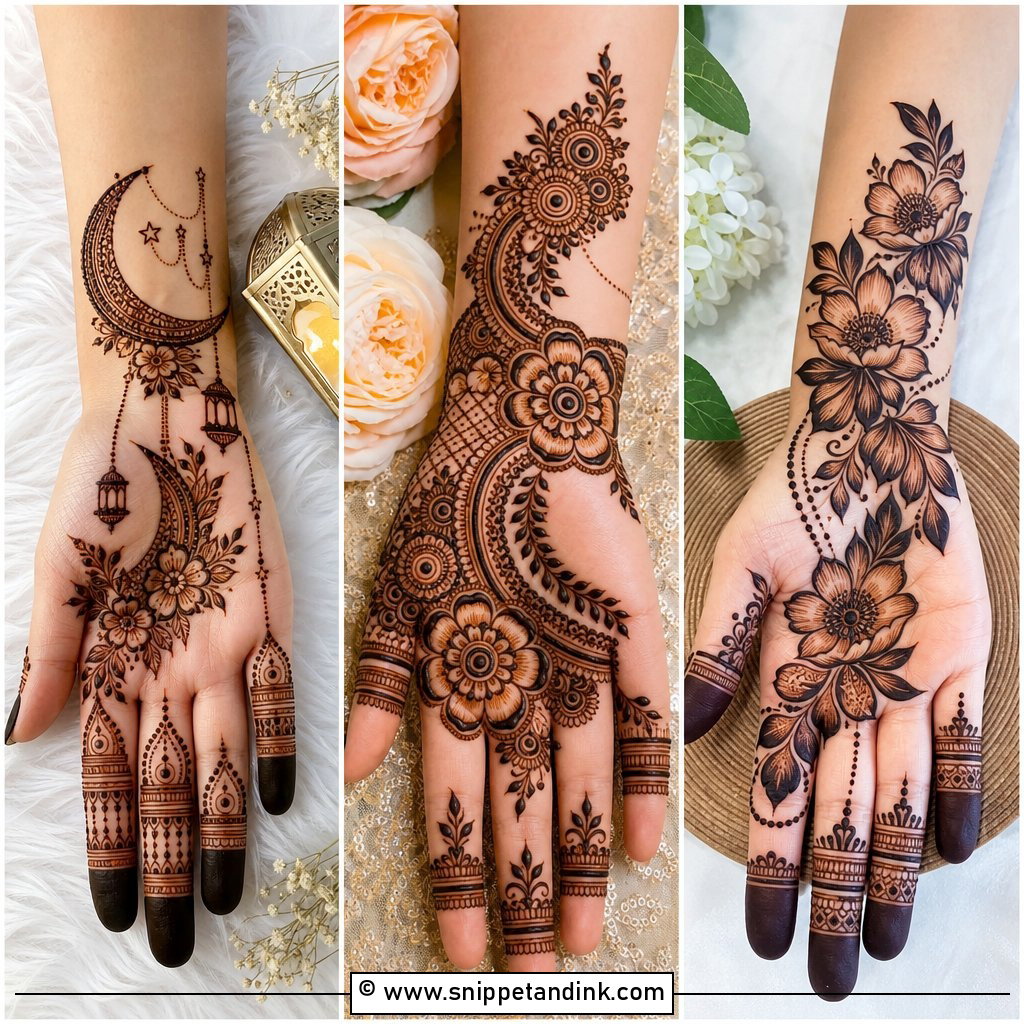
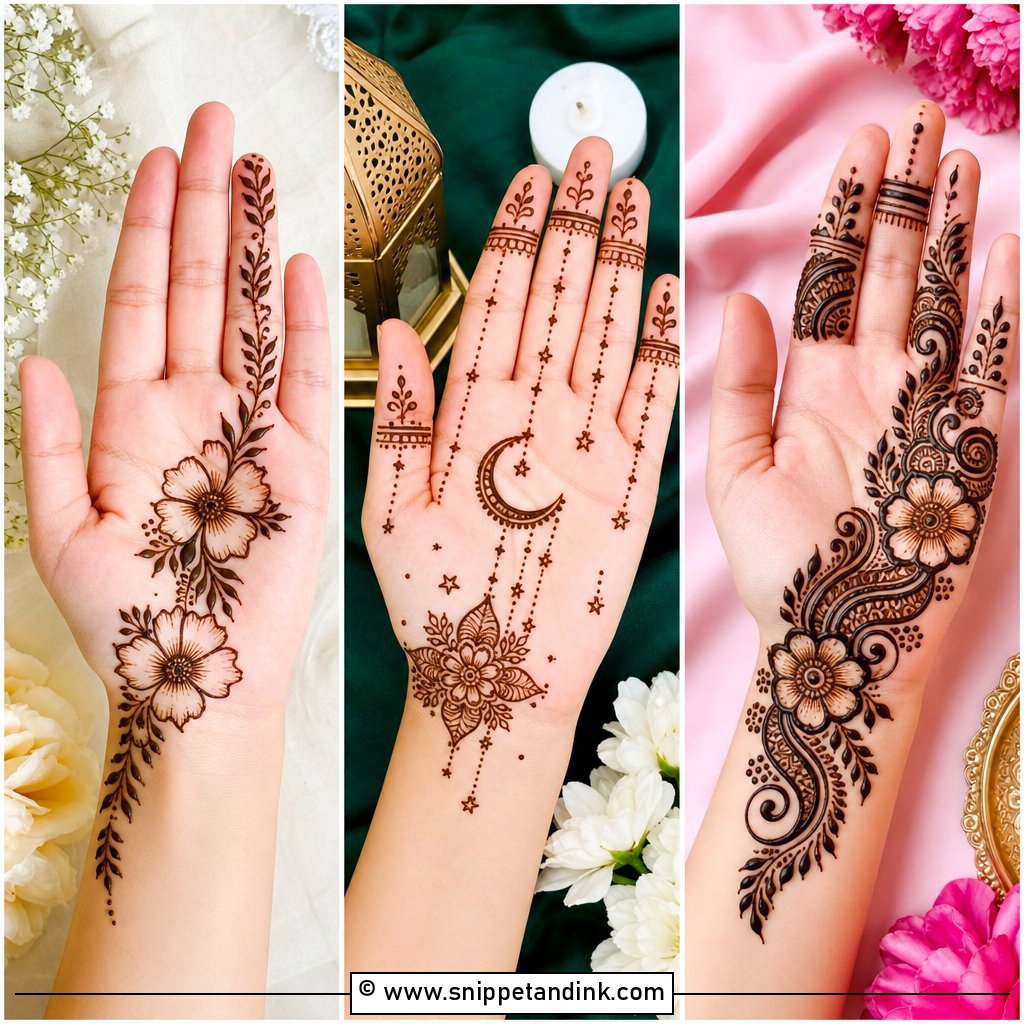
A curved floral vine from the wrist toward one or two fingers, with the centre of the palm left slightly open, is the simplest palm design I draw. Bold flower outlines, tiny leaves, dots and slim finger lines finish it. It doesn’t need strict symmetry, so it forgives a beginner’s hand. I’d keep the vine off the deepest palm crease where possible, as a line that crosses it folds every time you close your hand and can crack while drying. It takes about fifteen minutes and suits Eid mornings and family gatherings.
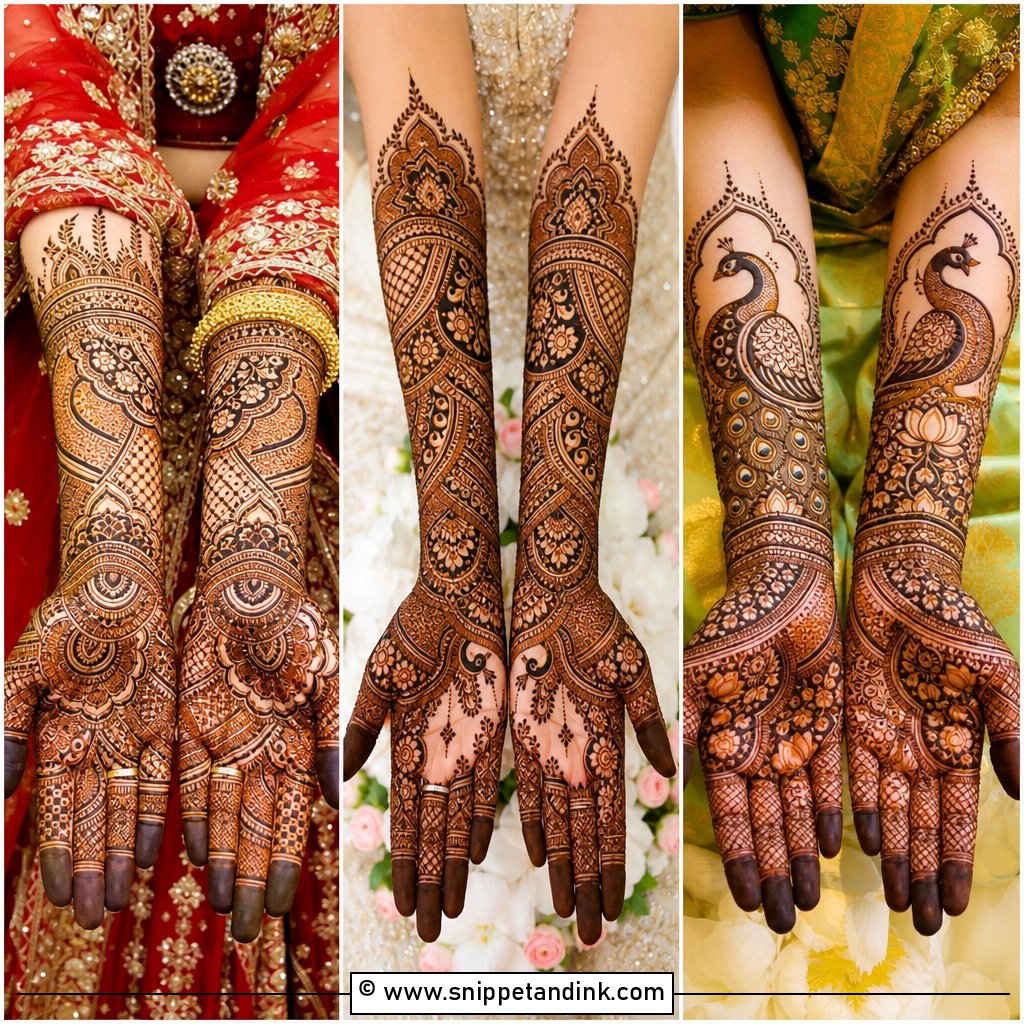
2. Full Palm Arabic Front Hand Mehndi Design
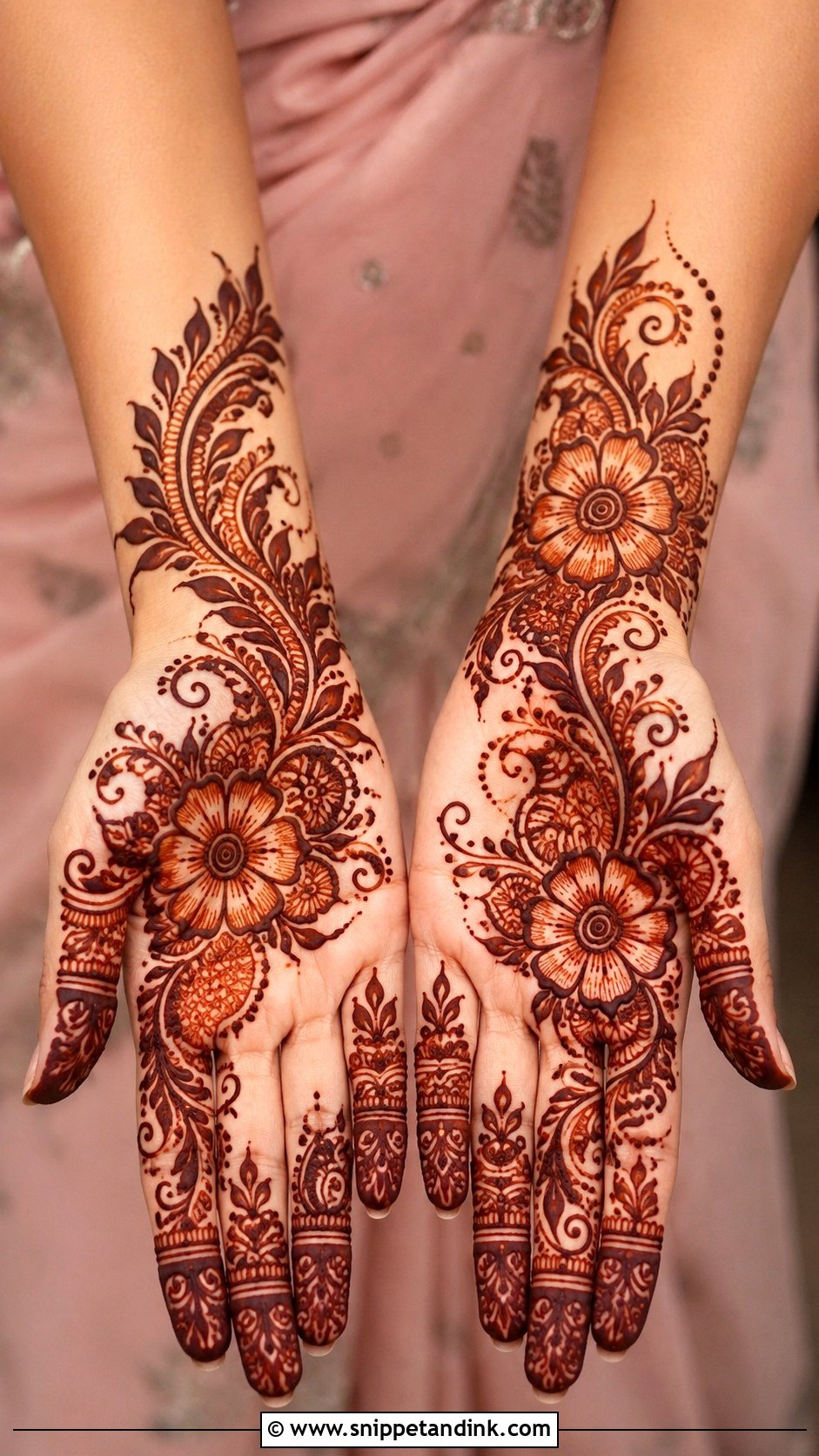
Full palm coverage in Arabic style uses large flowers, paisleys, leafy curves and shaded areas instead of tiny repeated filling. The pattern can start at the wrist, wrap through the centre and climb onto the fingers. What keeps it from looking crowded is that I leave two or three deliberate gaps, usually along the natural creases, where the eye can rest. Bridesmaids and sisters of the bride ask for this most. Close your hand gently around nothing for the first half hour; a palm this full smudges the moment you grip anything.
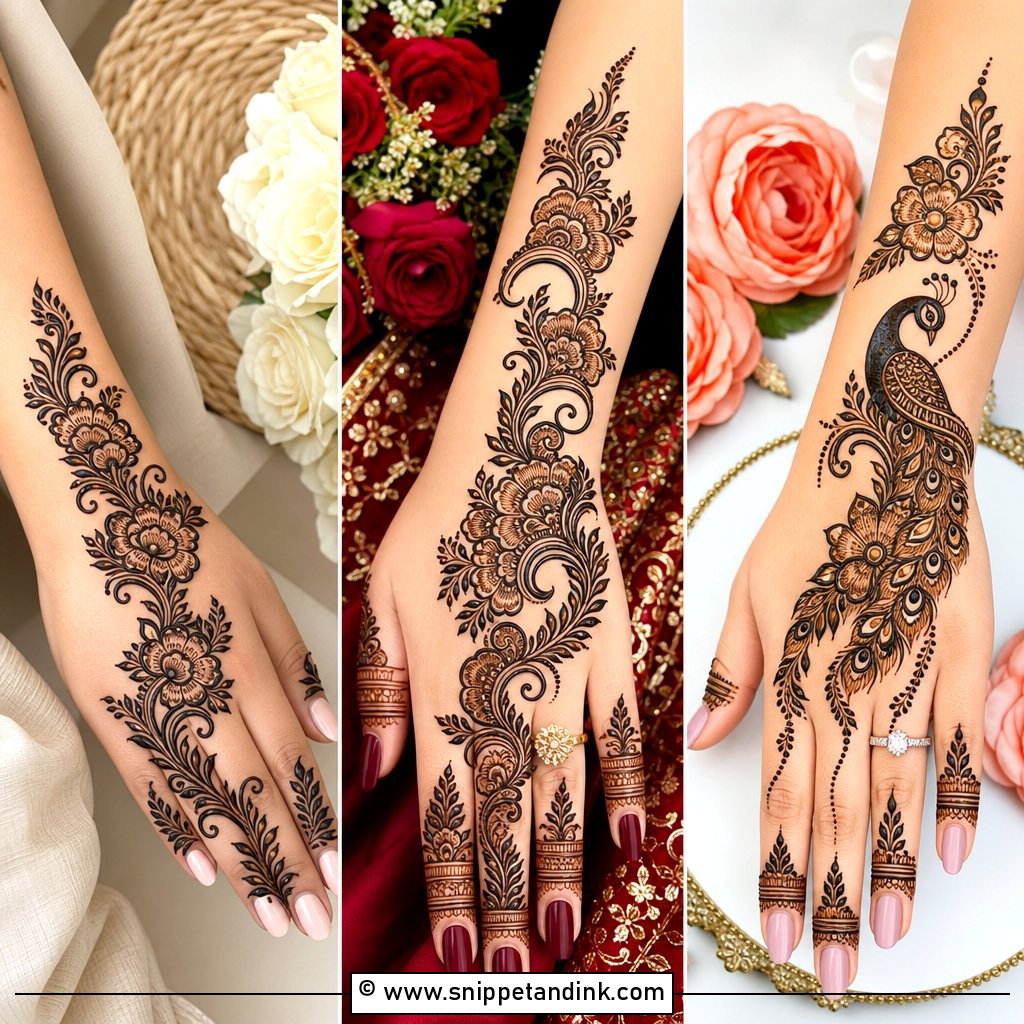
3. Arabic Floral Trail Front Hand Mehndi Design
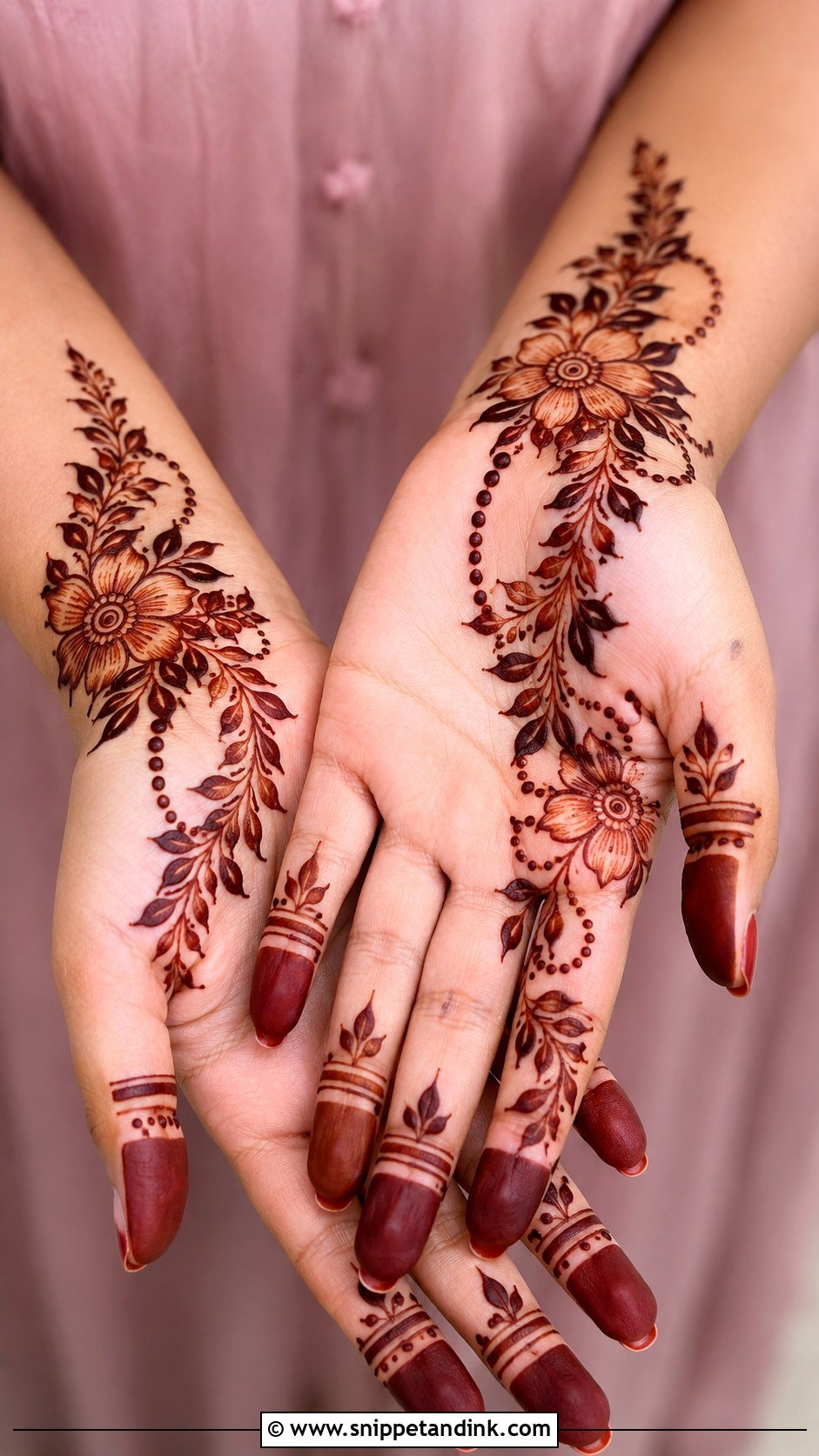
The floral trail is the classic palm layout. It starts near the outer corner of the wrist, travels diagonally across the palm and ends on the index or middle finger, with each flower outlined boldly and filled with fine lines, dots or light shading. Leaves along the trail carry the movement and lengthen the hand. On short fingers, I end the trail at the base of the finger; on long ones, it can run to the tip. It works for Eid, engagements and simple wedding events alike.
4. Arabic Rose Front Hand Mehndi Design
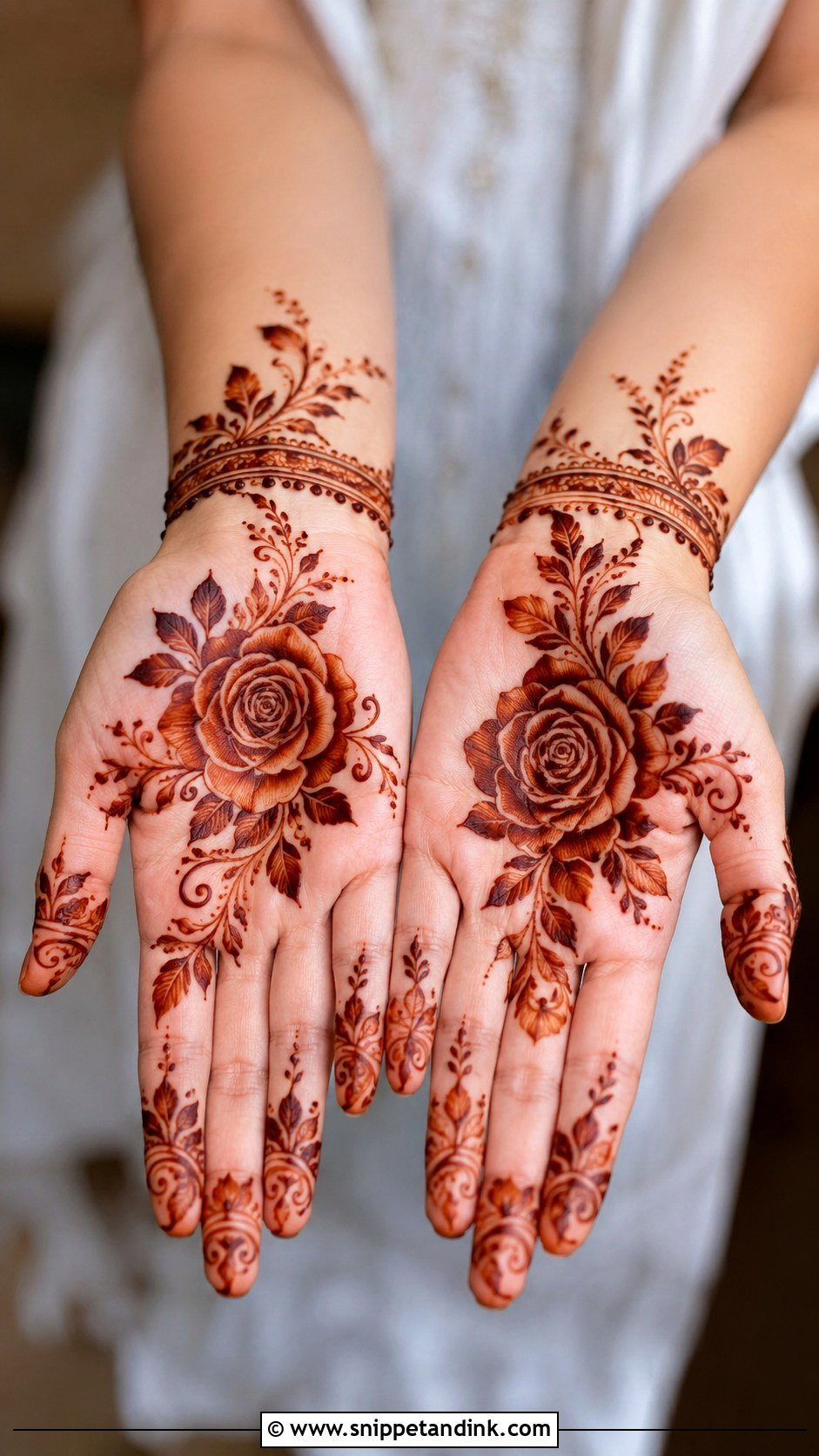
One large rose in the middle of the palm does more than a dozen small flowers. I draw the spiral centre first, then the petals outward with thin gaps between them, because palms stain so deeply that petals drawn touching will merge into one dark shape. A flowing vine leads to the fingers, and a small bracelet band or matching cluster at the wrist balances it. Keep the fingers simple, with leafy tips or bands, so the rose stays the subject. It suits engagements and bridesmaids who want something noticeable but light.
5. Arabic Paisley Front Hand Mehndi Design
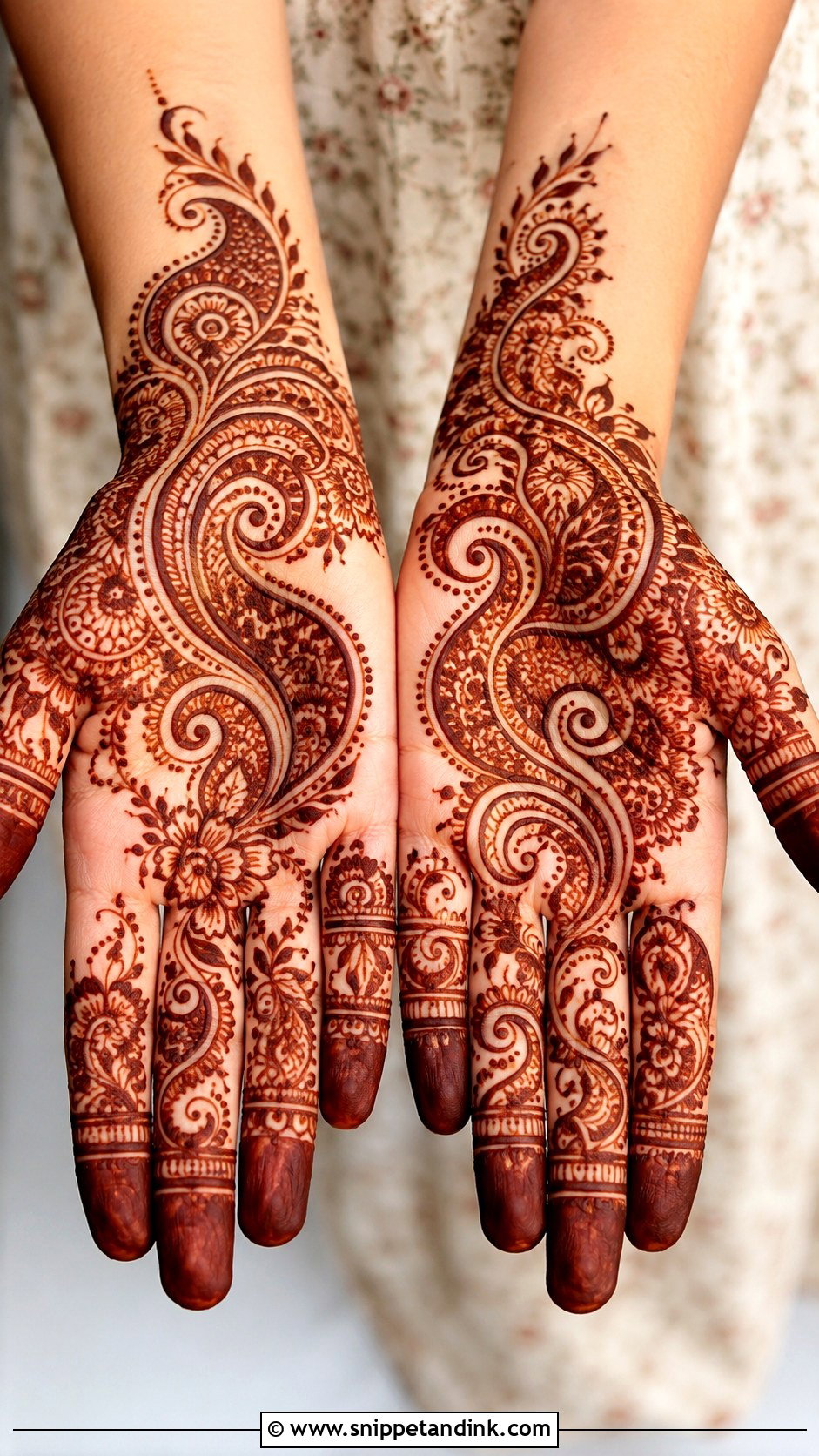
Paisley follows the curve of the palm better than any other shape, which is why it’s the motif I reach for when a palm design has to turn a corner. A paisley can start near the wrist and stretch diagonally toward the fingers, filled with small flowers, spirals, dots and leaves. The outer outline is drawn bold and the inside delicate, which gives depth. It suits a slightly heavier, traditional finish for weddings, Eid, Karwa Chauth, Diwali and family celebrations.
6. Arabic Mandala Front Hand Mehndi Design
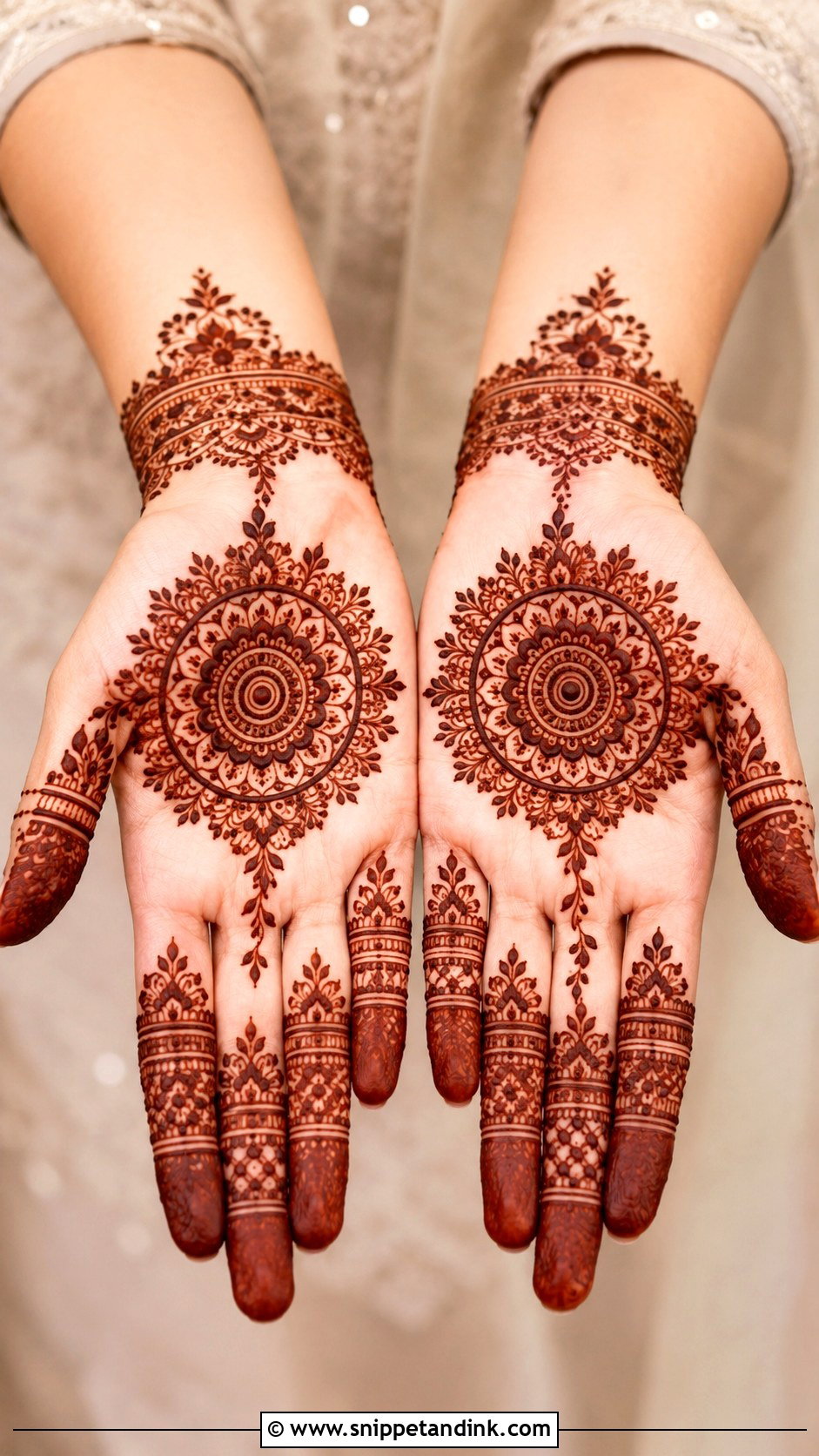
A centred mandala gives the palm structure. I keep it simple, with petal rings, dots and curved borders, and decorate the fingers with lines, small leaves and half flowers. To keep it Arabic rather than traditional, a vine runs from the mandala toward the wrist or one finger instead of filling every gap. The hardest part is placement: the palm’s centre isn’t where most people think, so I have the client relax her hand and mark the point where the creases meet. It suits younger girls, bridesmaids and anyone after a neat, photogenic palm.
7. Arabic Bracelet Front Hand Mehndi Design
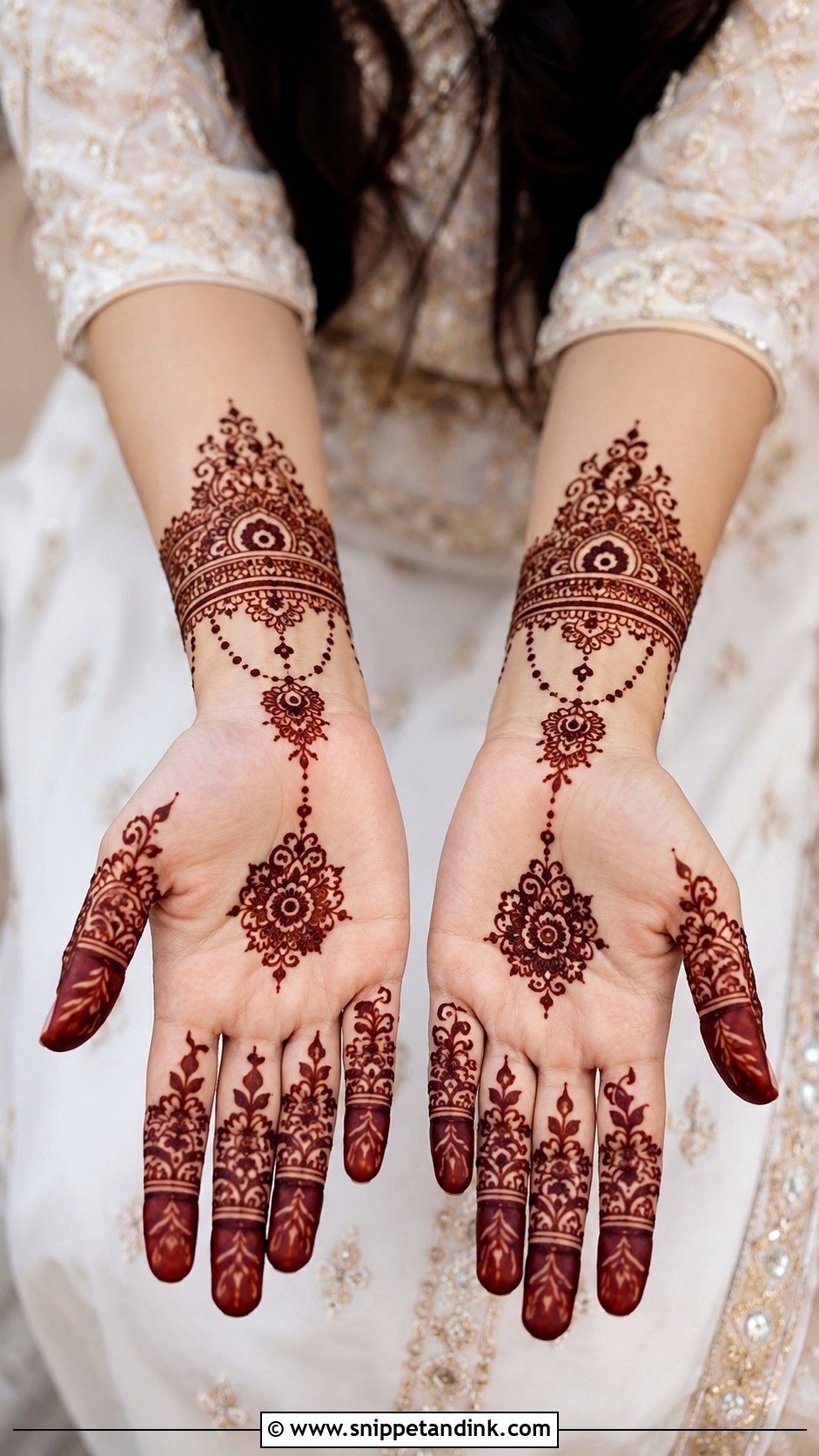
When the wrist is the feature, the palm can stay almost bare. Floral bands, chain dots, curved leaves and sometimes a hanging charm shape extend from the wrist toward the palm, with a small flower or vine connecting to the fingers. It sits well with bangles, rings and festive sleeves. Because the inside of the wrist has thinner skin than the palm, it stains lighter, so I draw the bracelet with a slightly heavier line than the palm details.
8. Arabic Finger Front Hand Mehndi Design
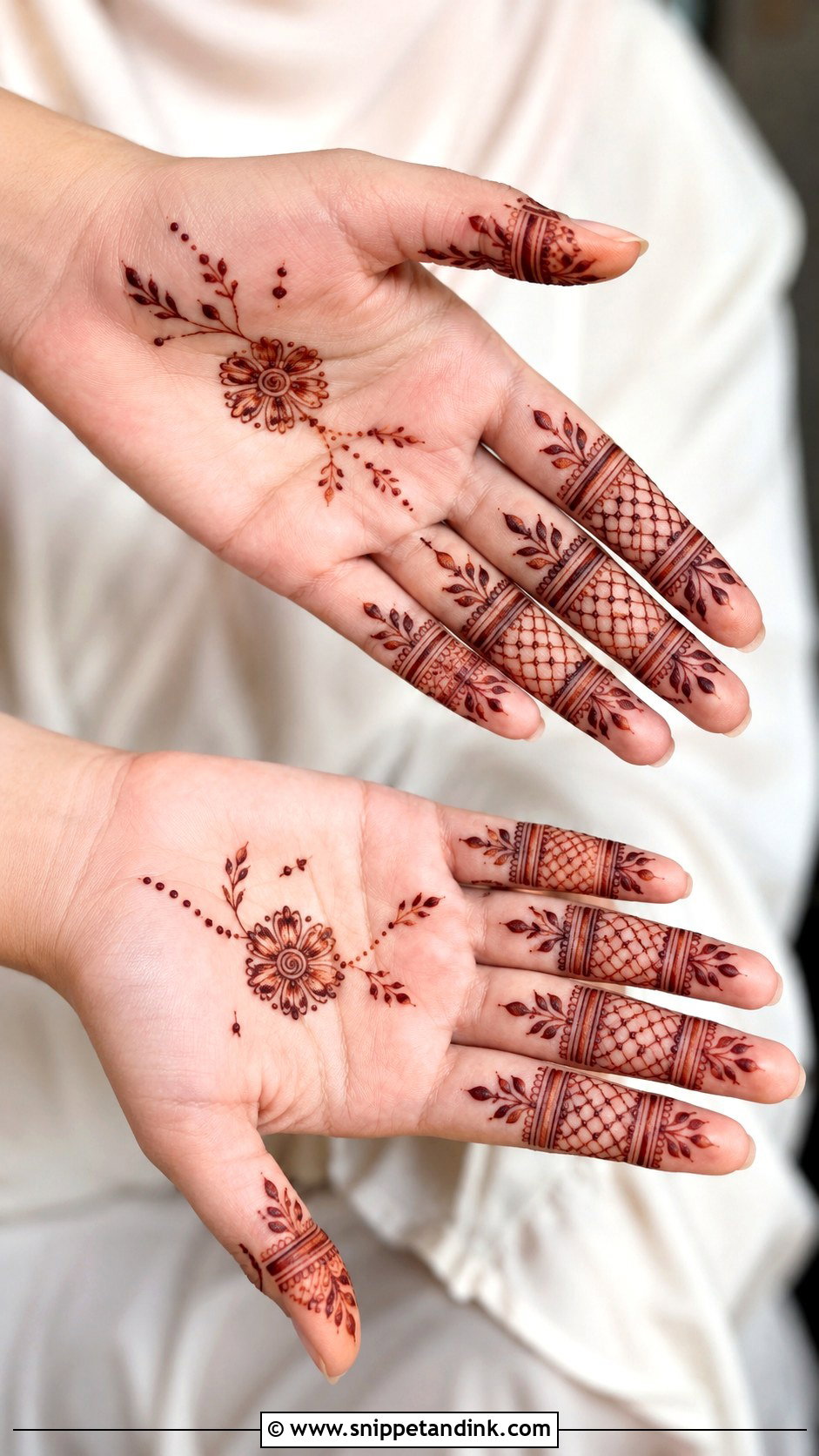
Finger-focused palms put the detail on the fingers and leave the palm open or with one small floral motif. Each finger can carry a different pattern, such as leafy bands, net sections, dots, petals or diagonal lines, tied together by repeating one shape. It’s quick, and the open palm means you can still use your hands sooner than with full coverage. It suits college events, Eid gatherings and small parties. Fingertips will stain darkest of anything here.
9. Arabic Jaal Front Hand Mehndi Design
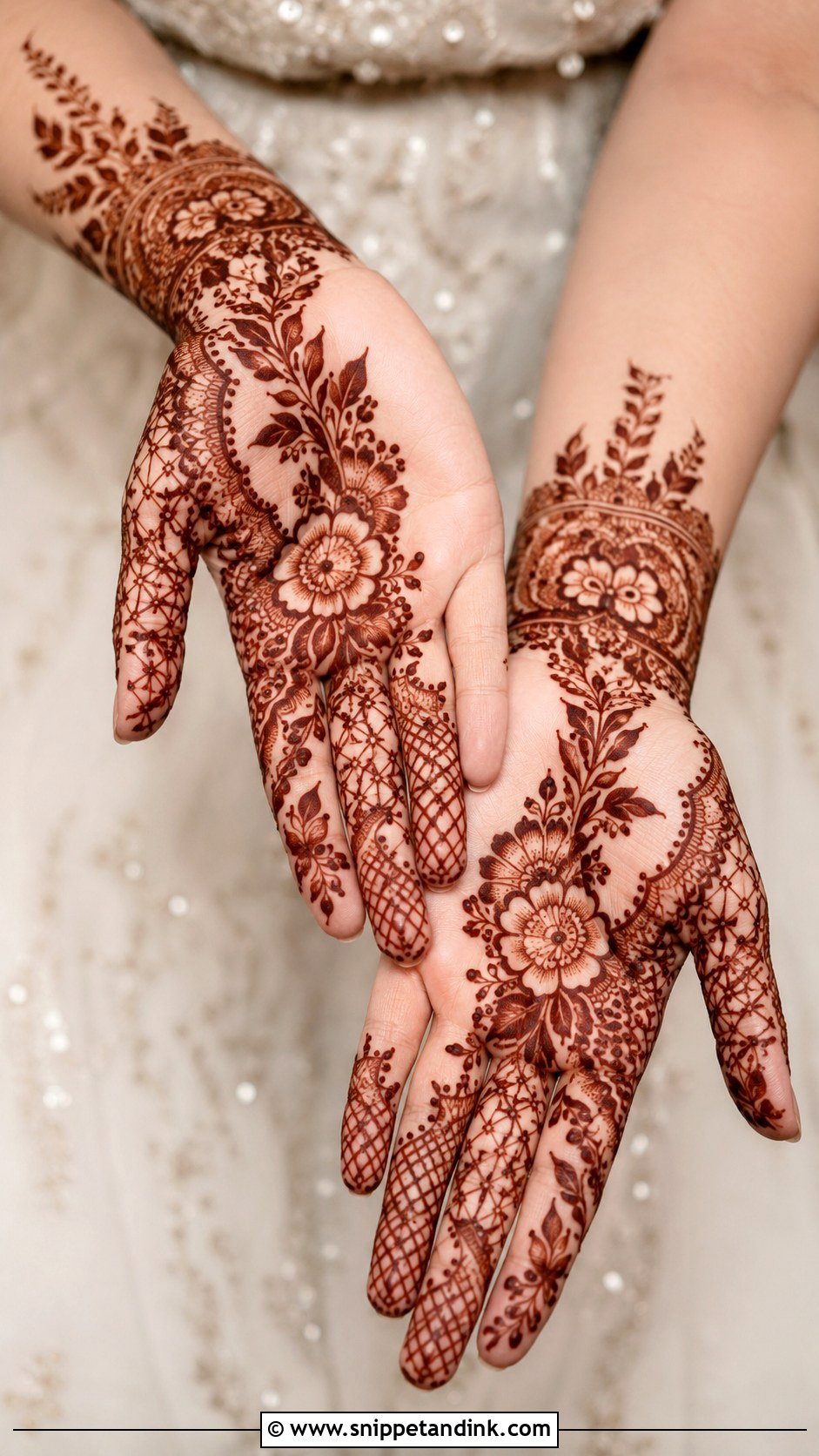
Jaal is a mesh, and on the palm it looks like fine lace once the stain comes through. I usually run a diagonal floral trail on one side of the palm and put jaal on the fingers or one section of the palm, sometimes with dots inside each cell. The lines have to be thin and evenly spaced. On a palm, where stain is deep, a mesh drawn too tight will close into a solid patch, so I leave slightly bigger gaps here than I would on the back of the hand. Wedding guests and close-up photos suit it.
10. Heavy Arabic Front Hand Mehndi Design
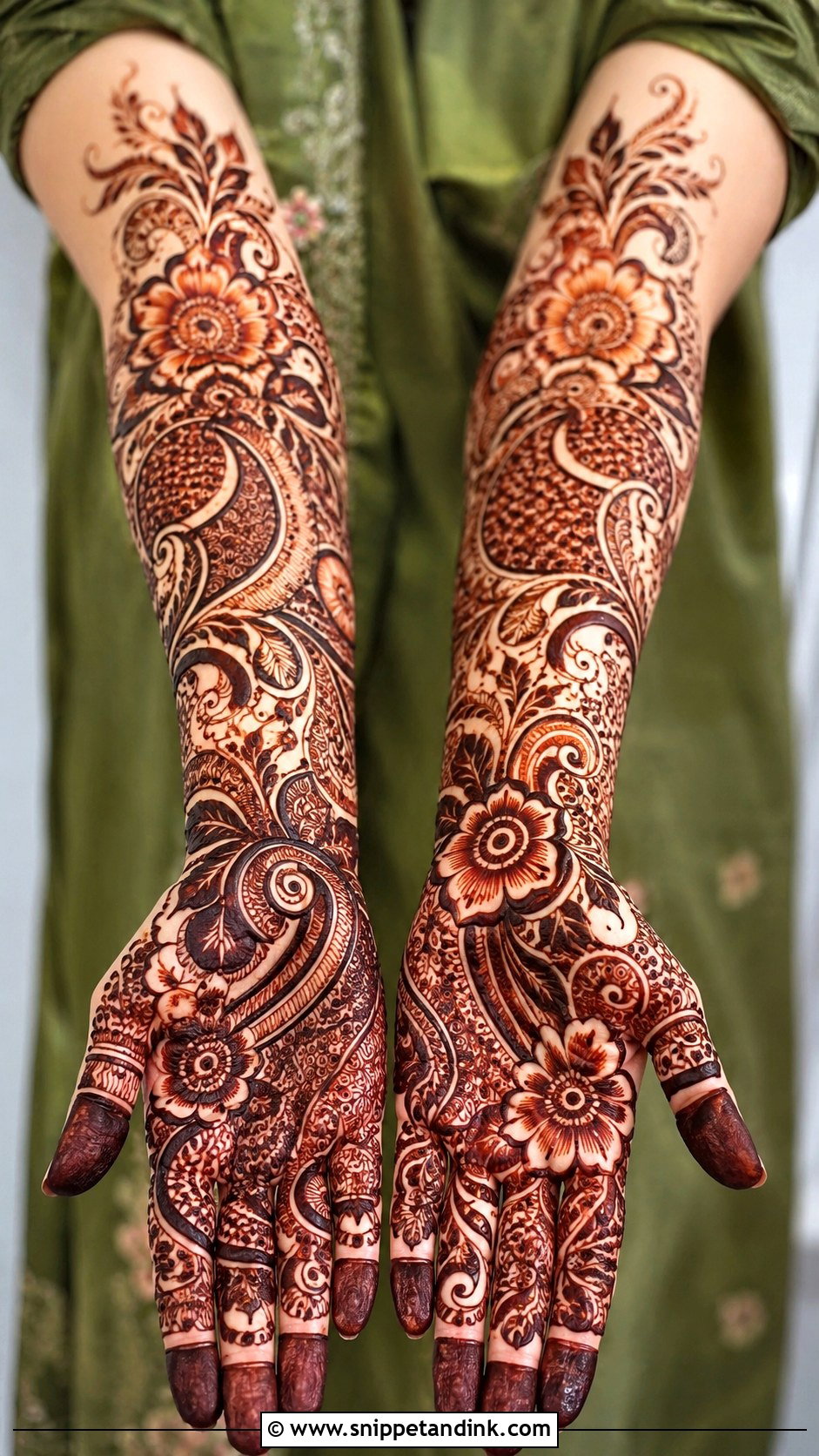
A heavy Arabic palm covers more of the palm and fingers but still keeps the rules: large motifs, flowing lines and clear negative space. Big flowers, paisleys, shaded leaves, spiral vines and filled fingertips are the usual elements, and the wrist can extend into a cuff or half forearm. I vary density across the hand rather than making it uniform, with one fuller zone and one lighter zone, so the bold areas have something to stand against. It suits brides, close family and major celebrations.
11. Minimal Arabic Front Hand Mehndi Design
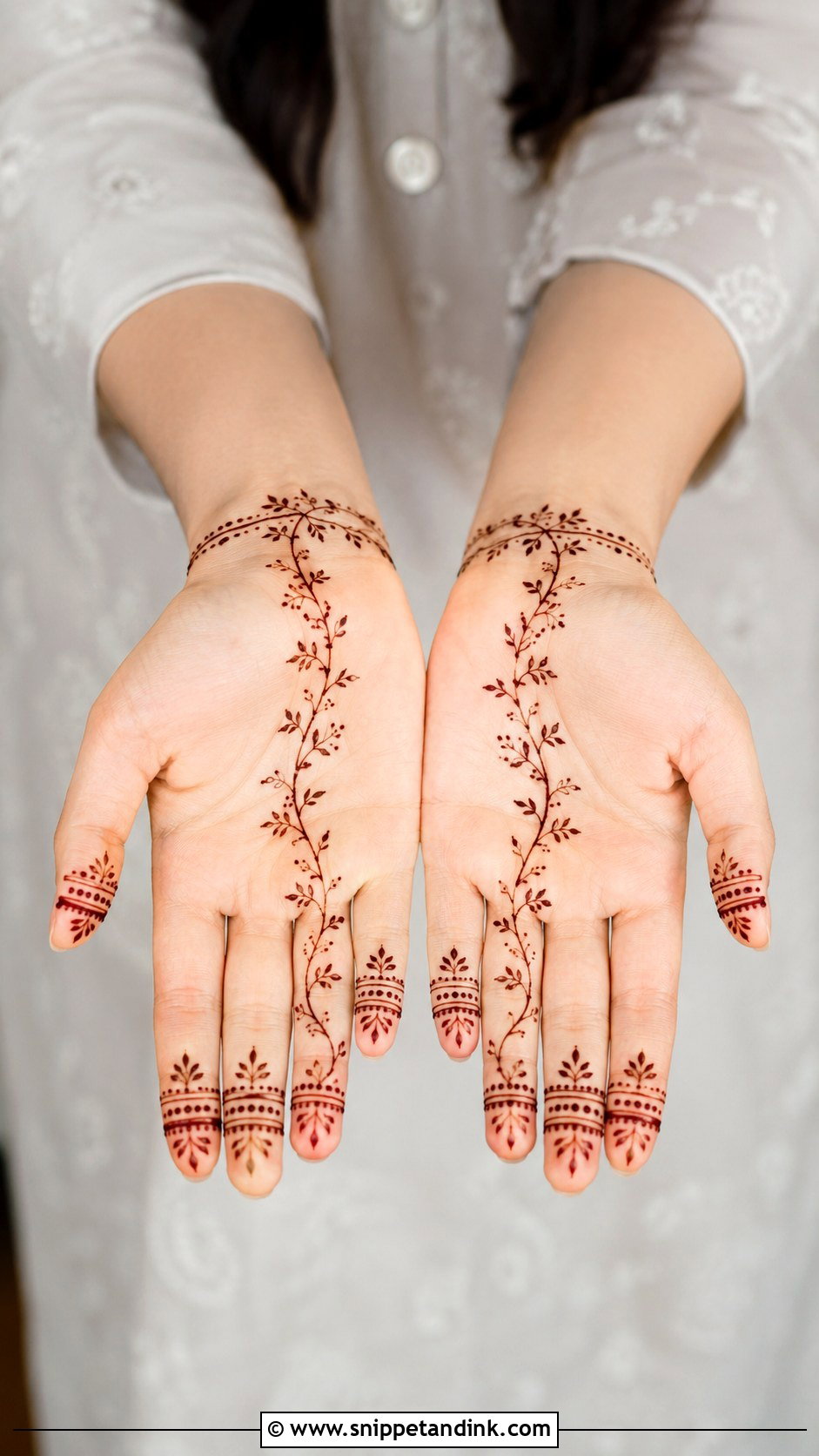
Minimal palm henna might be one slim vine from wrist to middle finger, a small flower and a few dots, with simple bands or tiny leaves on the fingers. It goes on quickly and sits comfortably with modern outfits and office celebrations. On such a light design, the cone has to be steady, because a wobble in a lone line is obvious. Confident outlines and smooth curves are the entire look.
12. Bridal Arabic Front Hand Mehndi Design
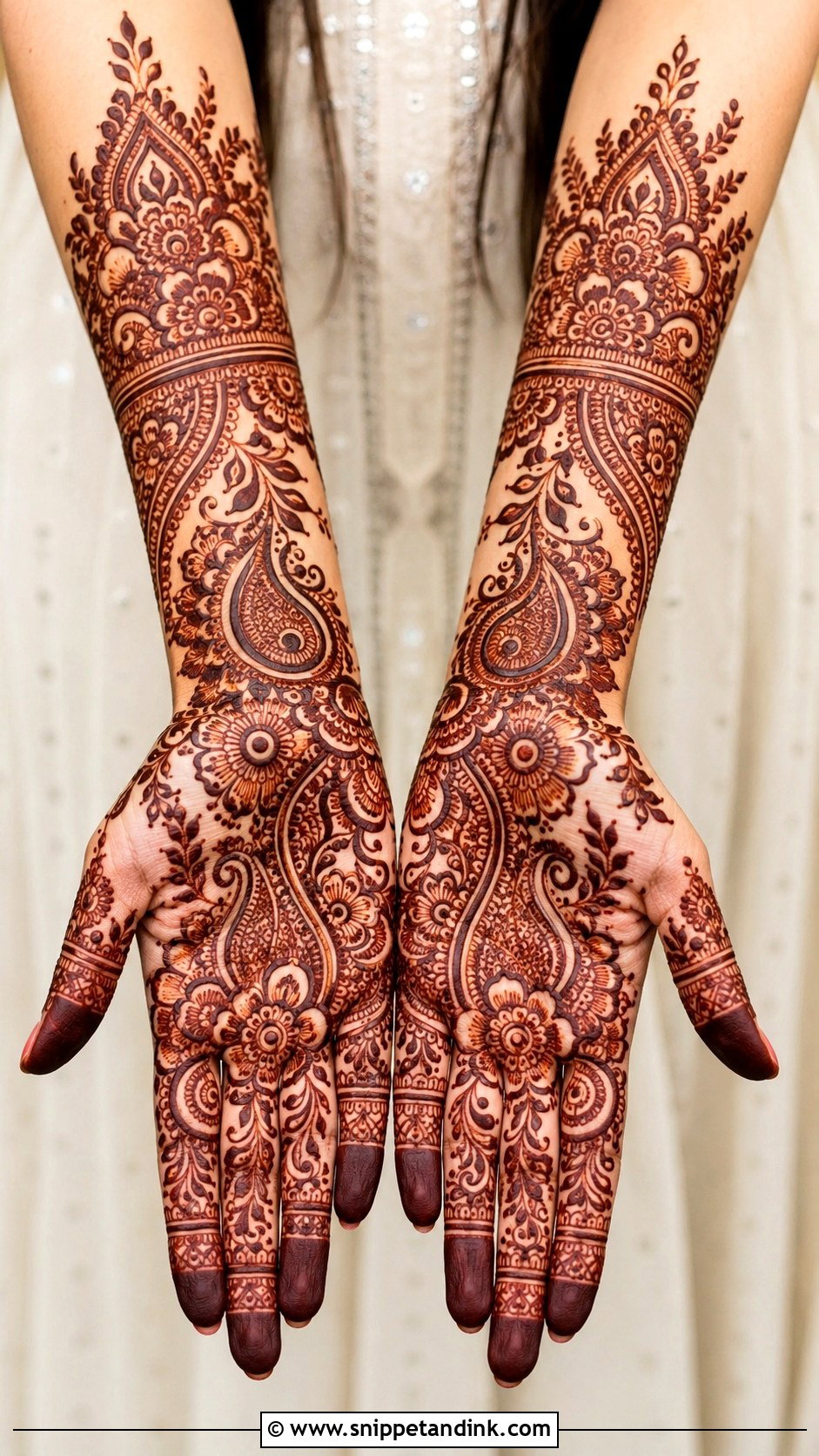
A bridal Arabic palm combines large paisleys, layered flowers, leafy trails, detailed fingers and an extended wrist pattern, with visible gaps between sections. Many brides hide small initials or a personal symbol inside a larger motif. I design both palms together on paper first so the flow mirrors, then draw them in the same sitting so the paste ages evenly and both hands reach the same colour. It suits engagements and nikah ceremonies as well as the wedding.
13. Eid Arabic Front Hand Mehndi Design
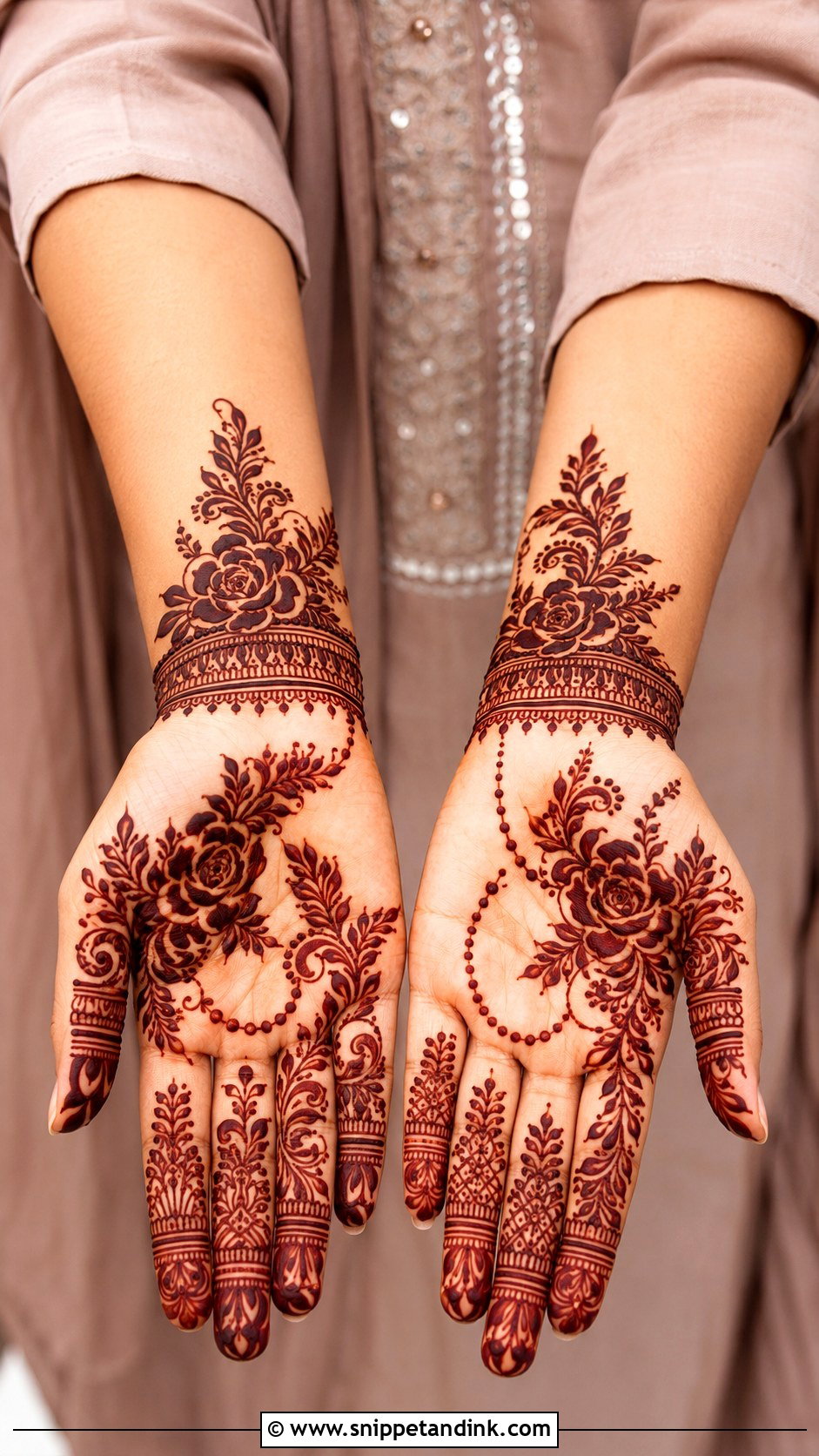
For Eid, a floral vine across the palm, decorated fingers and a bracelet band at the wrist cover most requests. Coverage can be light or medium to suit the outfit. Roses, leaves, dots and curved trails suit every age at the family table, which is useful when I’m doing several relatives in a row on Chaand Raat. It’s quick enough for last-minute application. Get it done the evening before so the stain has the night to develop.
14. Wedding Arabic Front Hand Mehndi Design
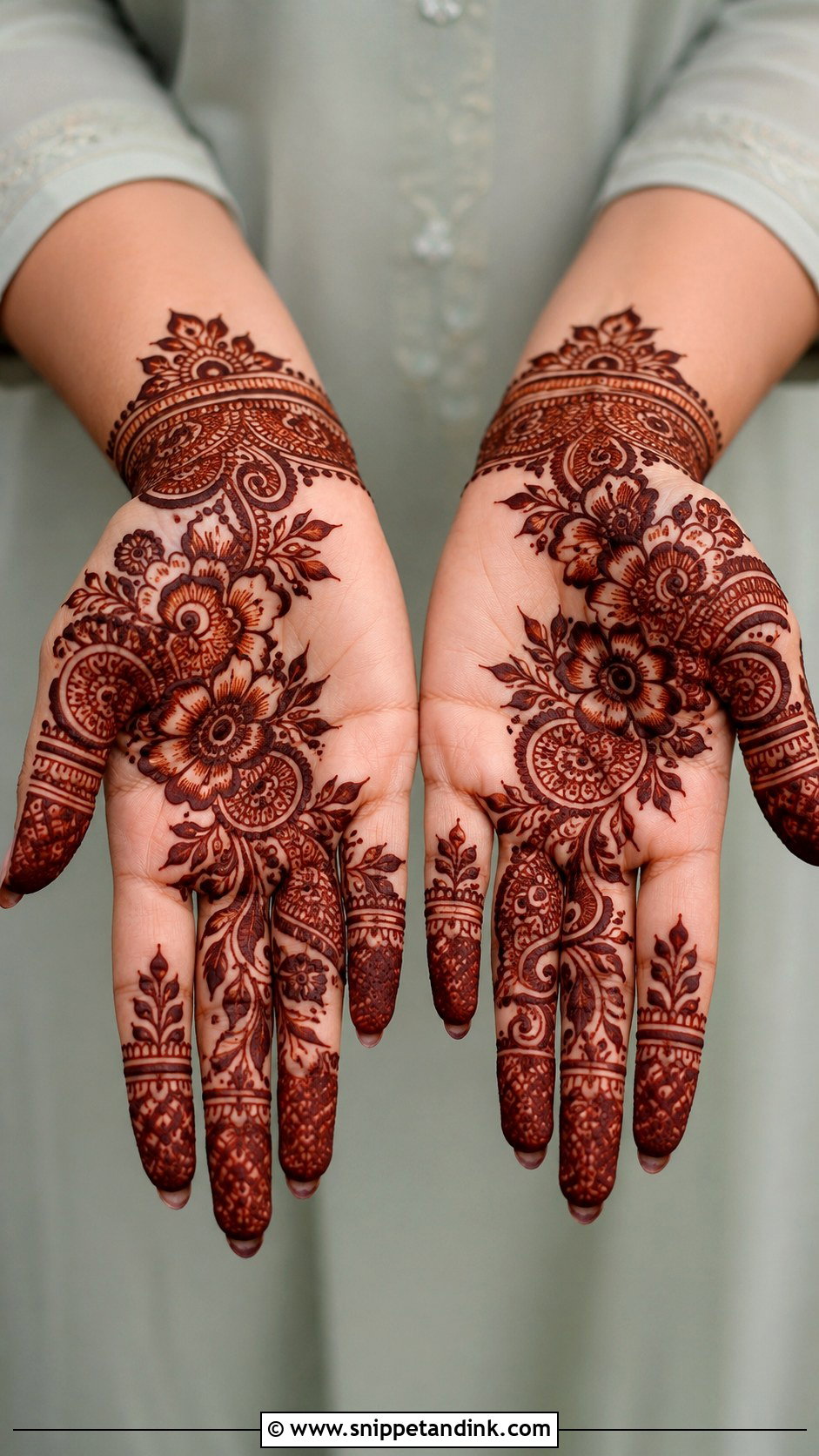
Guest henna for a wedding should look dressy without reading as bridal. Diagonal flowers, paisley clusters, shaded leaves and decorated fingertips at medium coverage do that, and a wrist cuff adds a jewellery finish with traditional outfits. It sits easily with a lehenga, sharara, saree, gown or anarkali. I’d steer guests away from extending onto the forearm unless the family has asked, since that reads as bridal at many weddings. Bold outlines with fine inner detail look best in photos.



15. Gulf Arabic Front Hand Mehndi Design
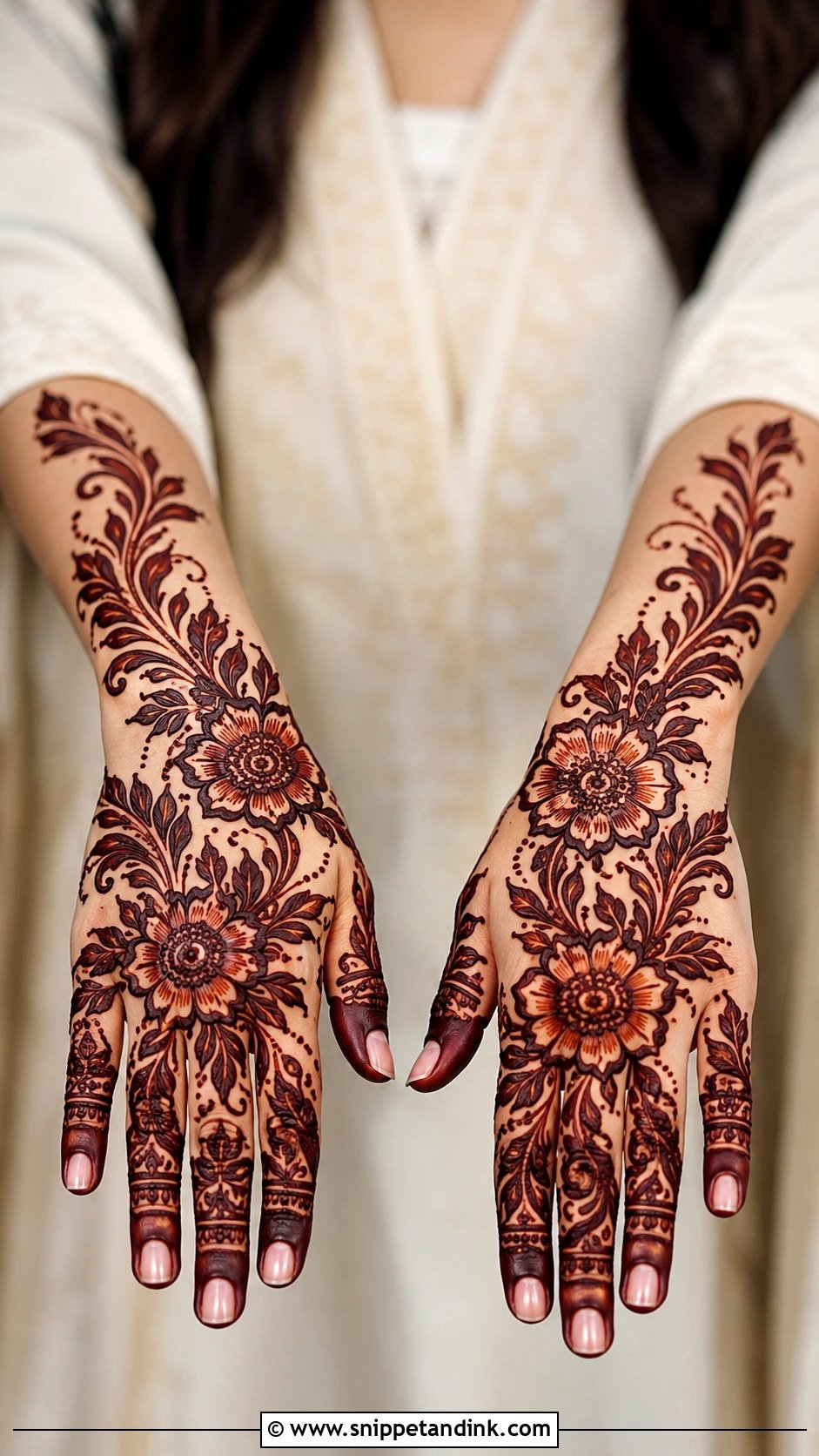
Gulf-style palms use larger flowers than standard Arabic work, with thick outlines and deep shading. The trail sweeps from the outer corner of the wrist across the palm and up the fingers, leaving clean space around it. Flowers, leaves, swirls and dotted accents fill out the path. Because the outlines are thick, I mix the paste slightly firmer so the line sits raised and doesn’t spread. Once it has darkened over a day or two, it reaches a rich reddish brown that suits anyone who wants impact without traditional filling.
16. Dubai Arabic Front Hand Mehndi Design
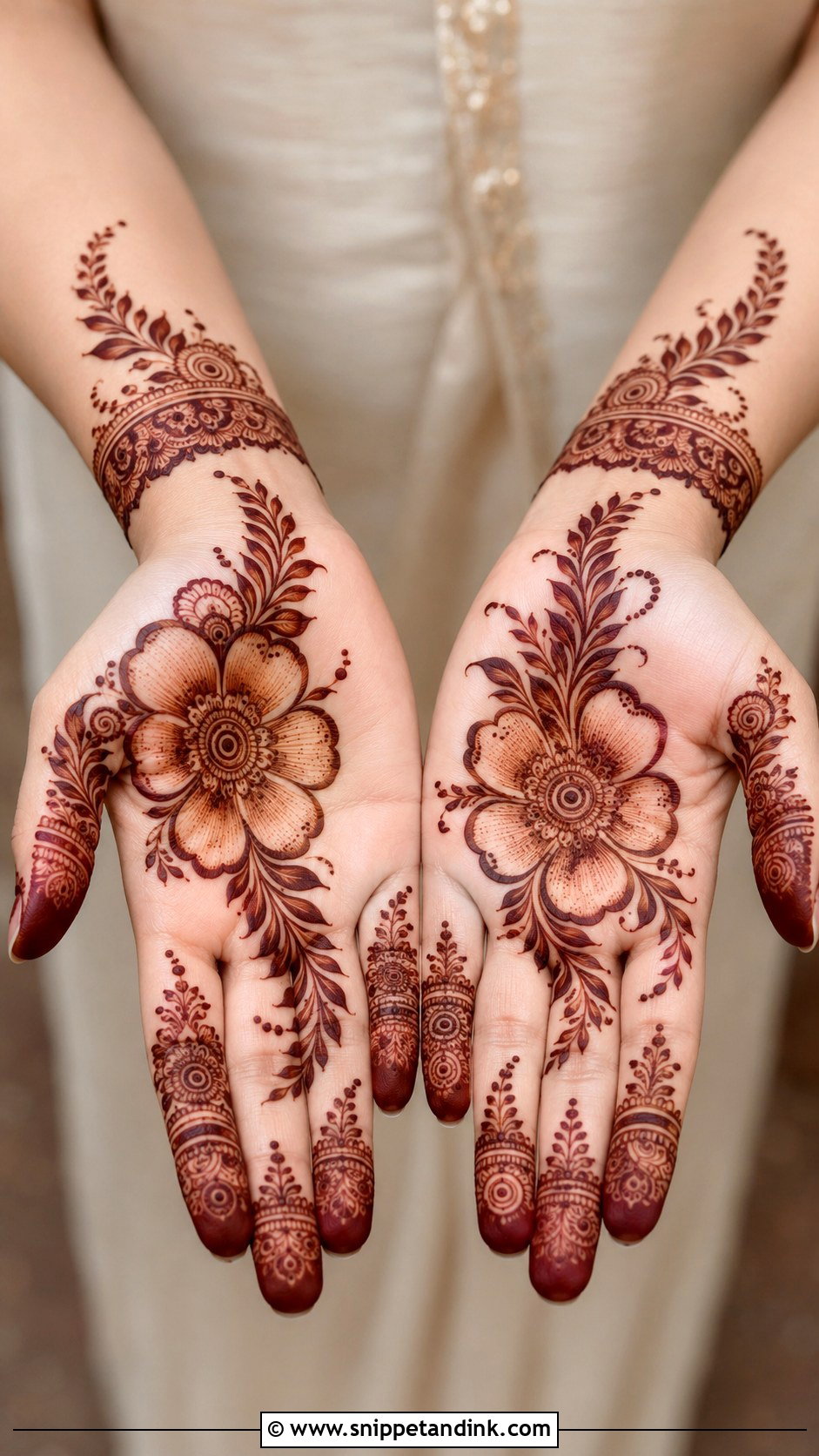
Dubai Arabic front hand mehndi is the polished, glamorous end of the style: a large palm flower, a curved leafy trail, detailed fingertips and a decorative wrist band, all with smooth lines and clear spacing. The finish is everything, so I clean any stray dots with a damp cotton bud before they stain. It suits parties, Eid, engagements and destination weddings, and it sits well with both traditional and contemporary outfits. Don’t overfill the open areas.
17. Indo Arabic Front Hand Mehndi Design
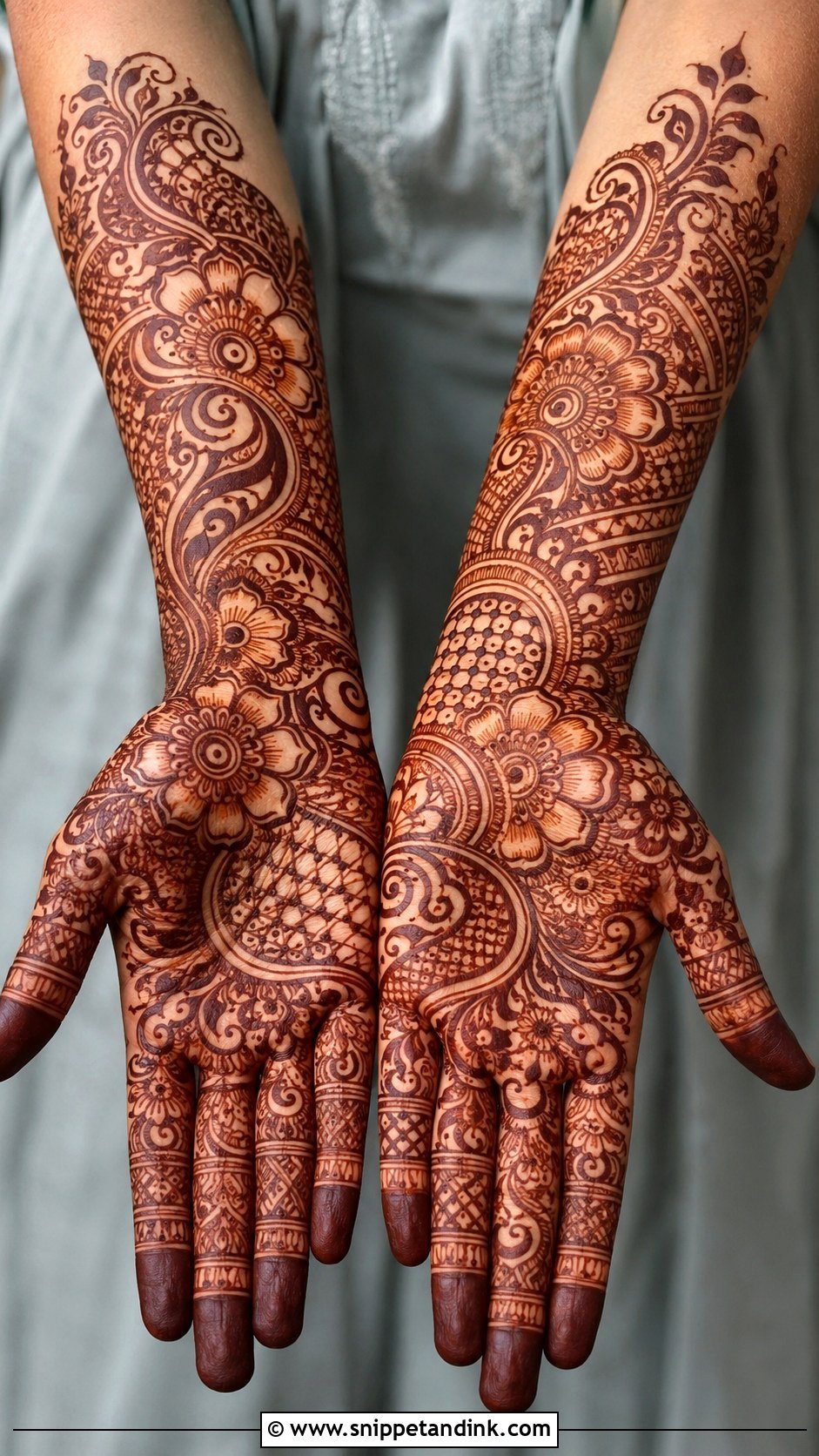
Indo-Arabic palms arrange bold flowers and paisleys diagonally in the Arabic way, then add Indian fine filling, small mandalas, net sections and detailed finger work inside them. It’s richer than simple Arabic and lighter than full Indian bridal. I keep one large focal motif on the palm and let the wrist and fingers support it. It suits weddings, festivals and family functions, and it scales from medium to heavy depending on the occasion.
18. Moroccan Arabic Front Hand Mehndi Design
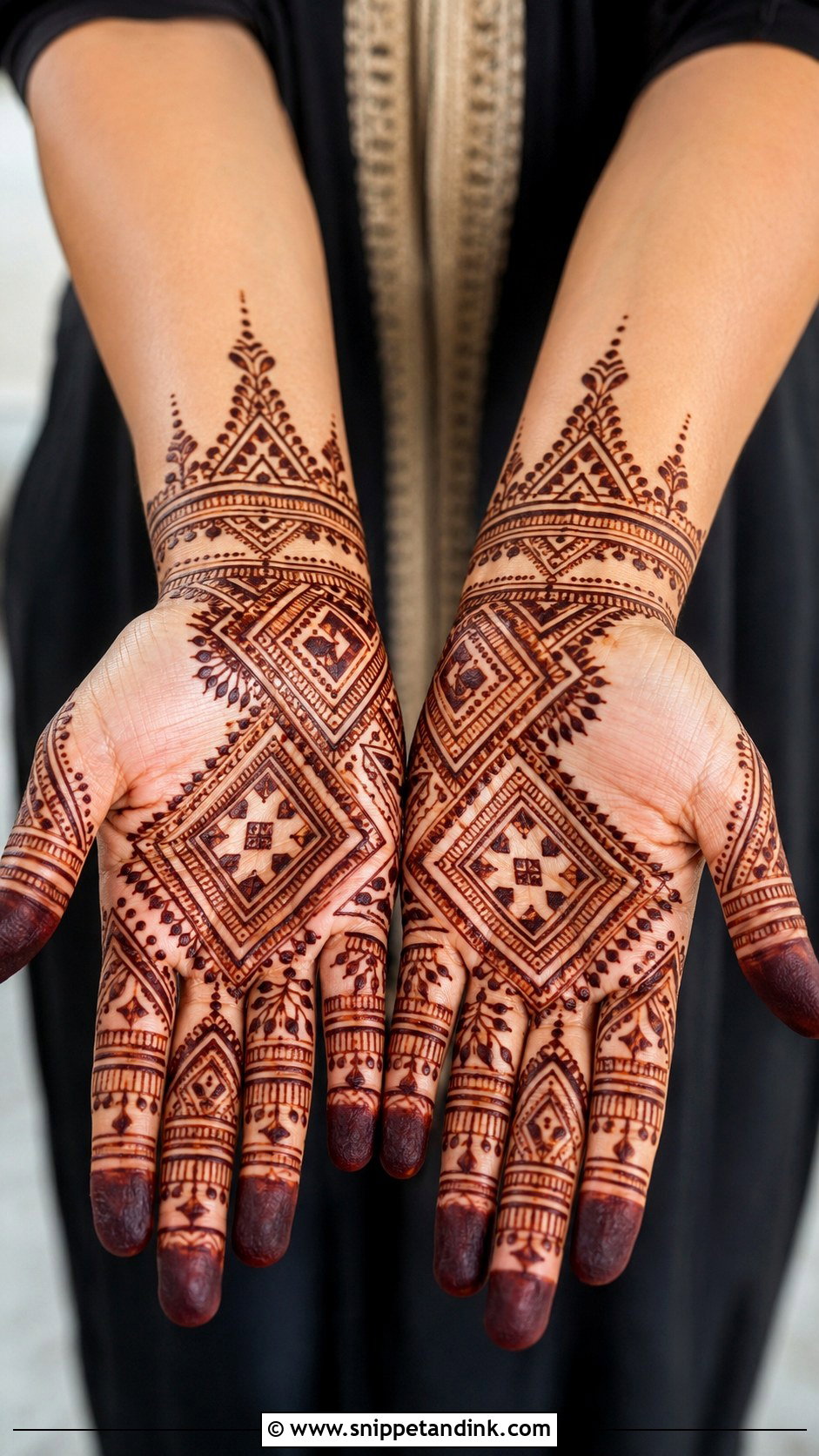
Moroccan-inspired palms trade some flowers for diamonds, lines, triangles, dots and structured bands, while still moving diagonally from wrist to fingers with open space. The geometry needs a plan: I mark corner points with tiny dots and connect them, since freehand straight lines across the palm’s curve tend to bow. It has a strong graphic quality that pairs well with minimal outfits and bold jewellery. Keep the shapes even and balanced.
19. Arabic Lotus Front Hand Mehndi Design
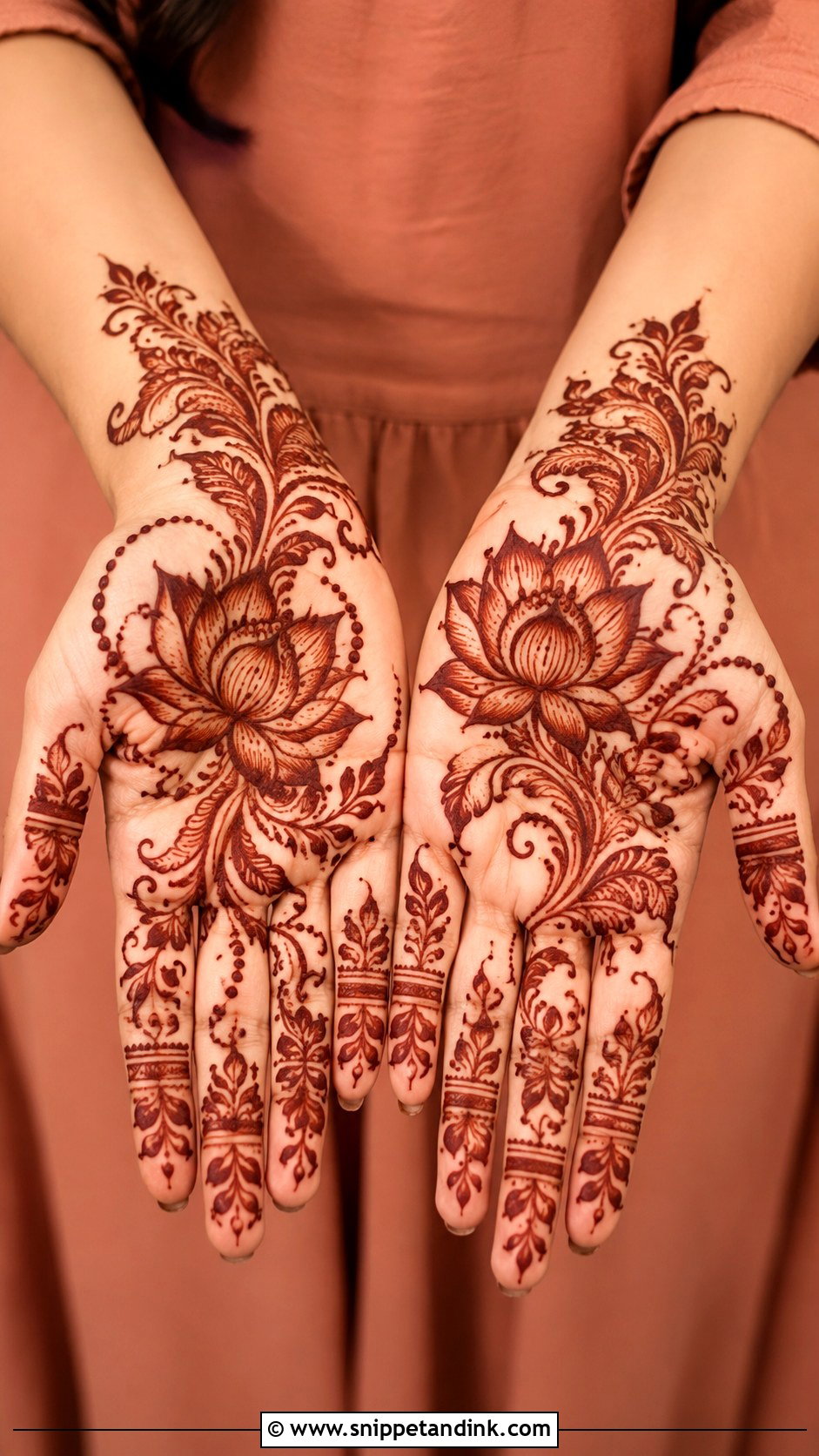
A lotus sits in the palm centre or near the wrist with its petals opening toward the fingers, surrounded by flowing leaves, dot chains and curved vines. It’s softer than a rose and very easy to recognise, at light or medium coverage. I draw the petals in rows from the middle out, with bold outlines, because the palm’s deep stain can blur thin petal edges. It suits engagements, festivals, pujas, Eid and guest looks.


20. Arabic Leafy Vine Front Hand Mehndi Design
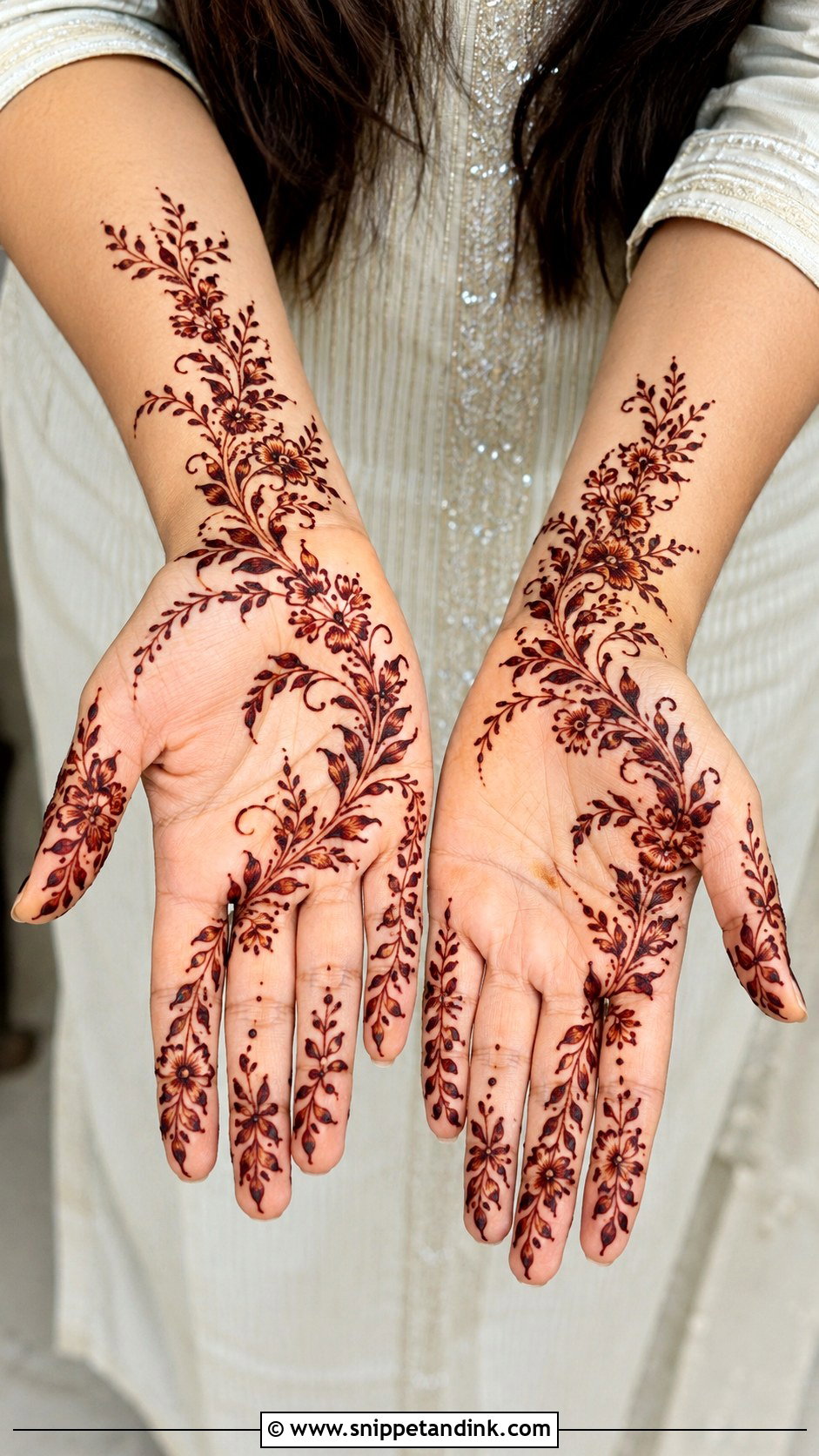
A leafy vine is the friendliest design for a beginner. It starts at the wrist, curves across the palm and continues toward the middle finger, with small leaves on both sides and a few dots or tiny flowers. Because it moves upward, it makes the hand look longer. It doesn’t need complex filling or perfect symmetry; what it does need is even spacing between the leaves, so I count them along the vine as I go. It suits simple celebrations, school or college functions and Eid.
21. Arabic Peacock Front Hand Mehndi Design
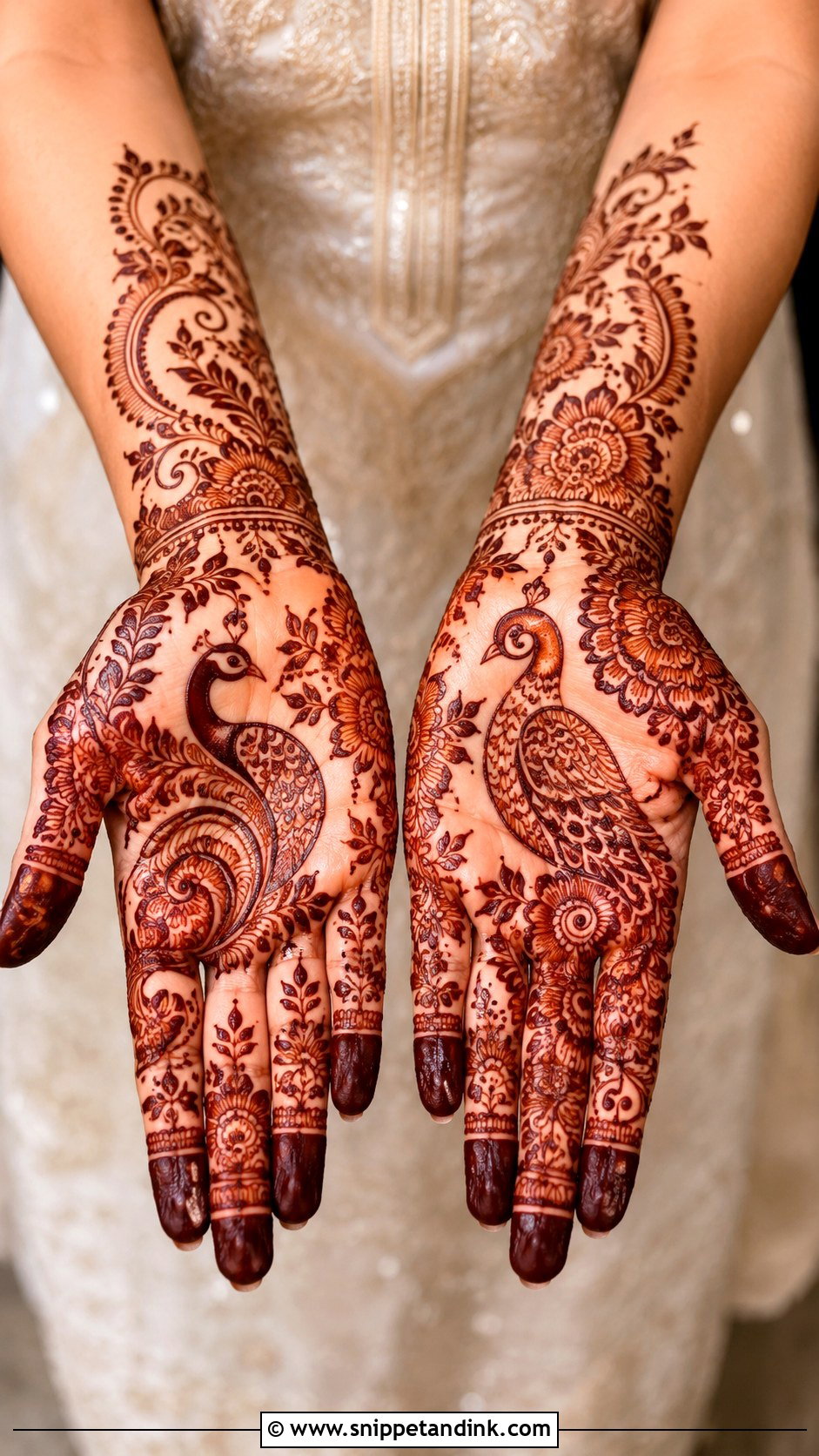
A peacock on the palm brings a traditional, festive note. It can sit near the centre or the wrist side, with feathers flowing into Arabic vines and floral trails. Let the peacock be the only feature and keep the surroundings supportive: feather details, paisley curves and dotted borders. The body needs a solid, bold outline and the feathers the finest tip I have, otherwise the bird turns into a blot on deep-staining palm skin. It suits weddings, sangeet and family occasions.
22. Arabic Shaded Front Hand Mehndi Design
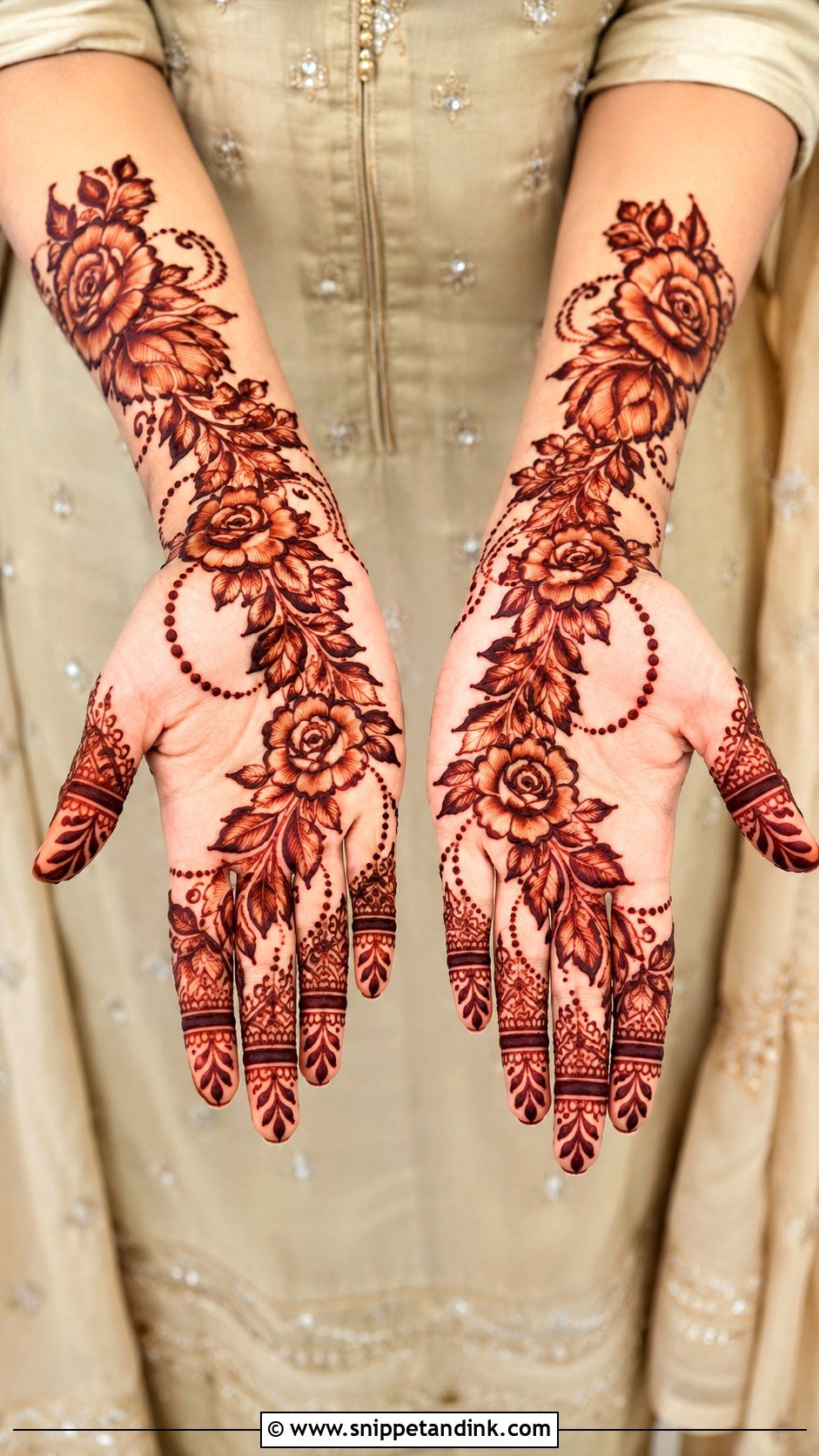
Shaded palms outline flowers, leaves and paisleys boldly, then fill them with thin strokes that fade from heavy to light. A diagonal trail of shaded roses and leaves is the version I’m asked for most, paired with simple finger bands, net tips or dotted chains. The fade has to be smooth or it looks scribbled. Shading only shows if the thin paste stays on long enough to stain, so this is one to keep on overnight. It suits Eid, engagements and wedding events.
23. Arabic Ring Front Hand Mehndi Design
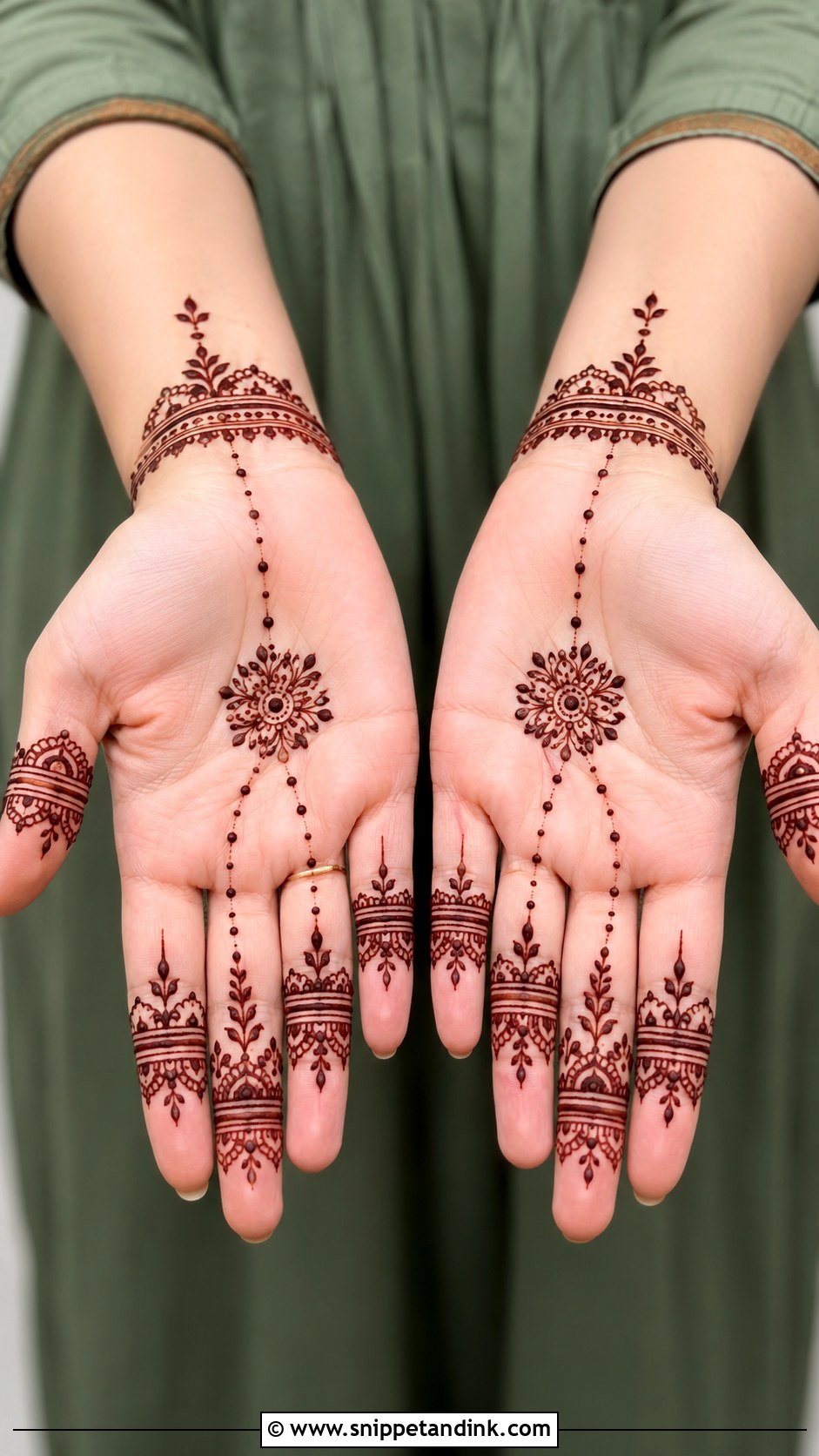
A ring design on one finger, connected by dotted chains to a floral palm motif or a wrist bracelet, gives a haath phool effect while keeping the palm open. Slim bands, leafy details or tiny petals finish the other fingers. It looks like an extension of real jewellery, especially with actual rings and bangles on. I plan which finger carries the ring motif with the client, because on an engagement hand it shouldn’t clash with the real ring.
24. Arabic Haath Phool Front Hand Mehndi Design
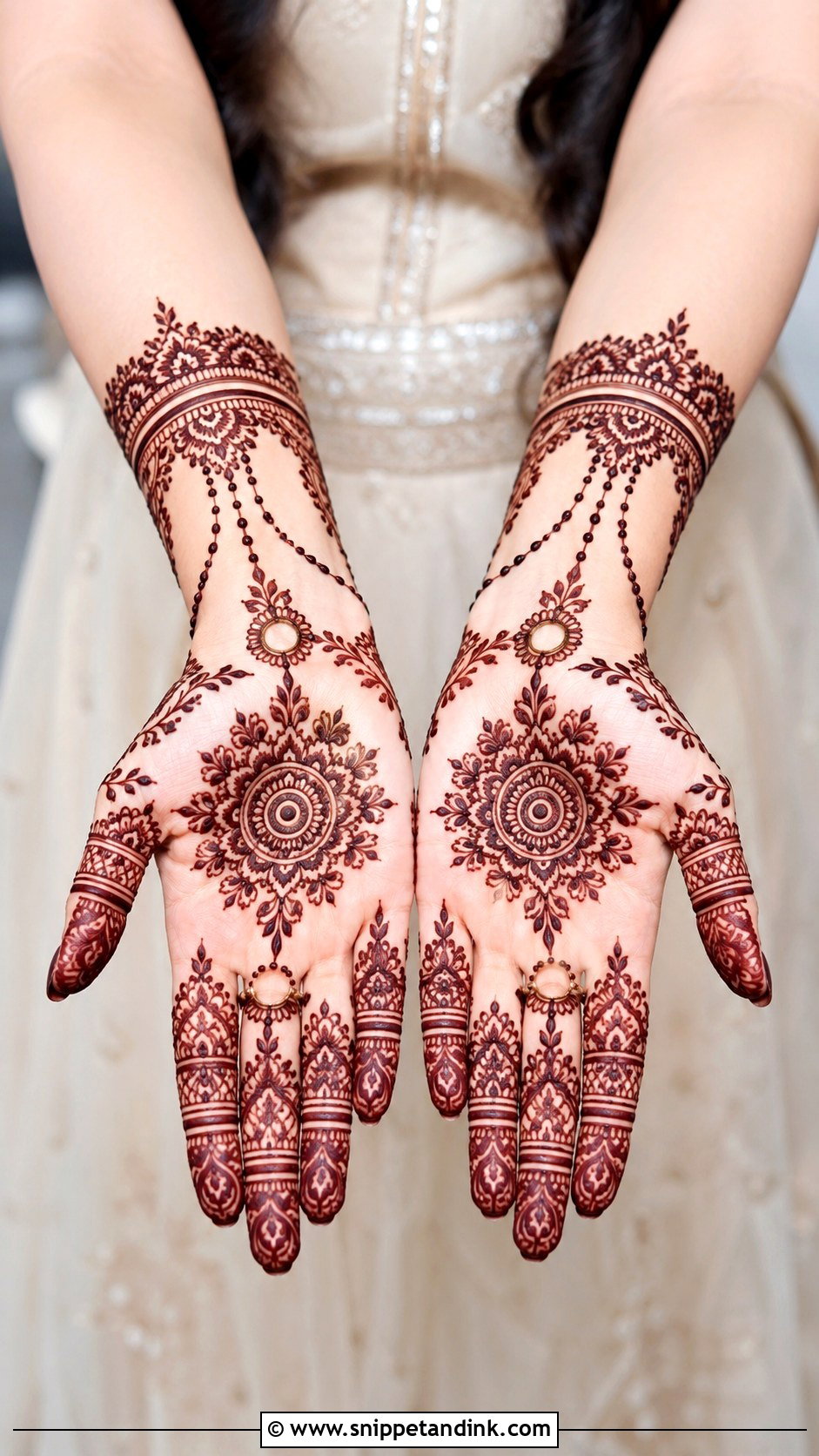
The haath phool is traditional hand jewellery, and this design draws it in henna: a bracelet at the wrist, chain-like dots across the palm and ring motifs on the fingers, joined by a floral or mandala shape in the centre. The chains must be evenly spaced, so I draw the centre motif and the ring motifs first, then link them. Arabic styling keeps it light. It suits engagements, Eid, bridesmaids and anyone who likes the jewellery look without wearing much.
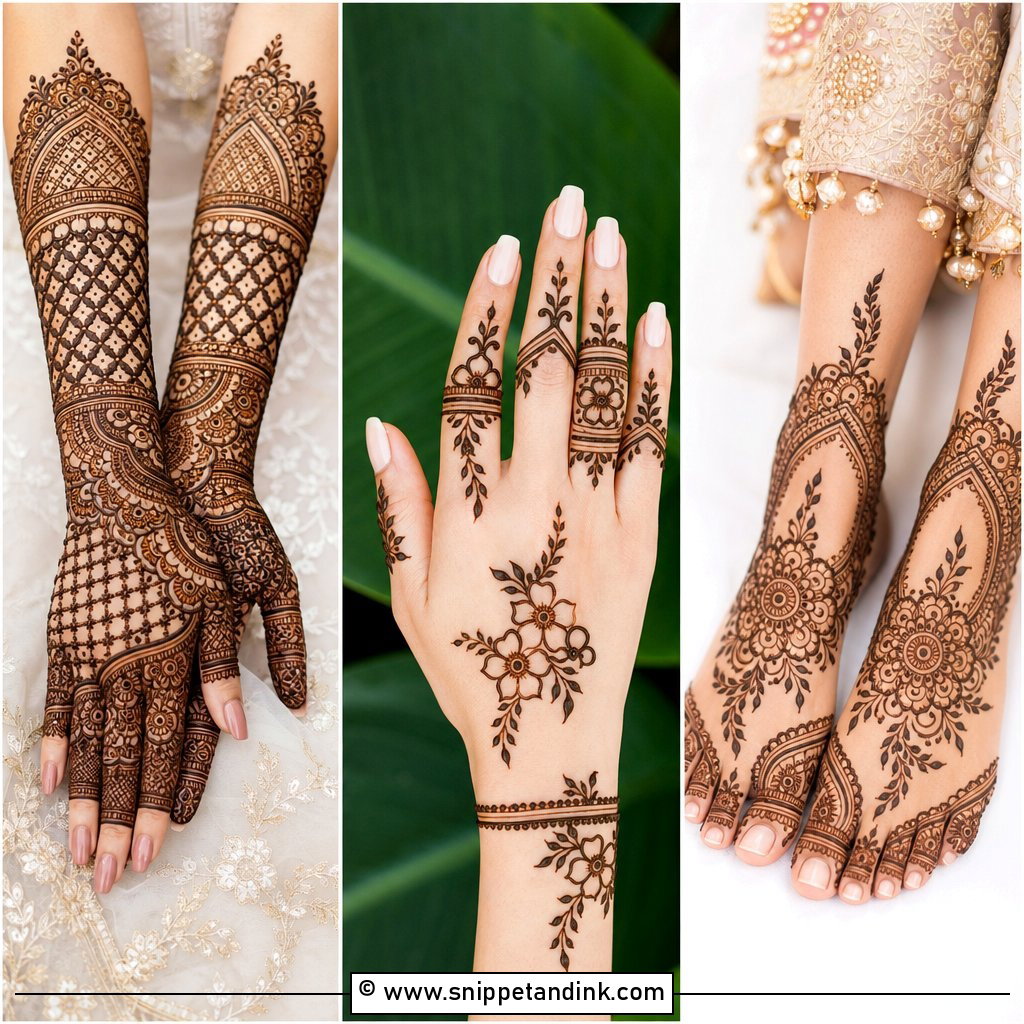

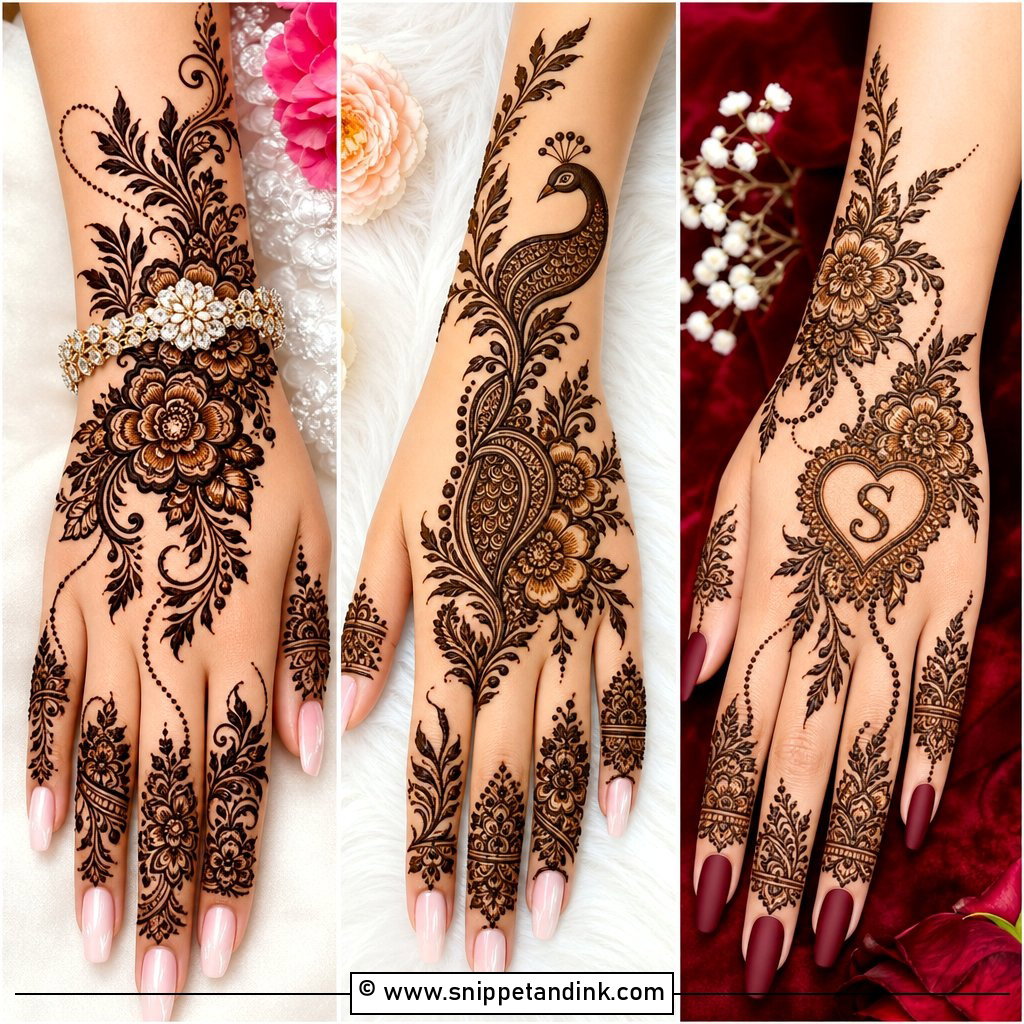
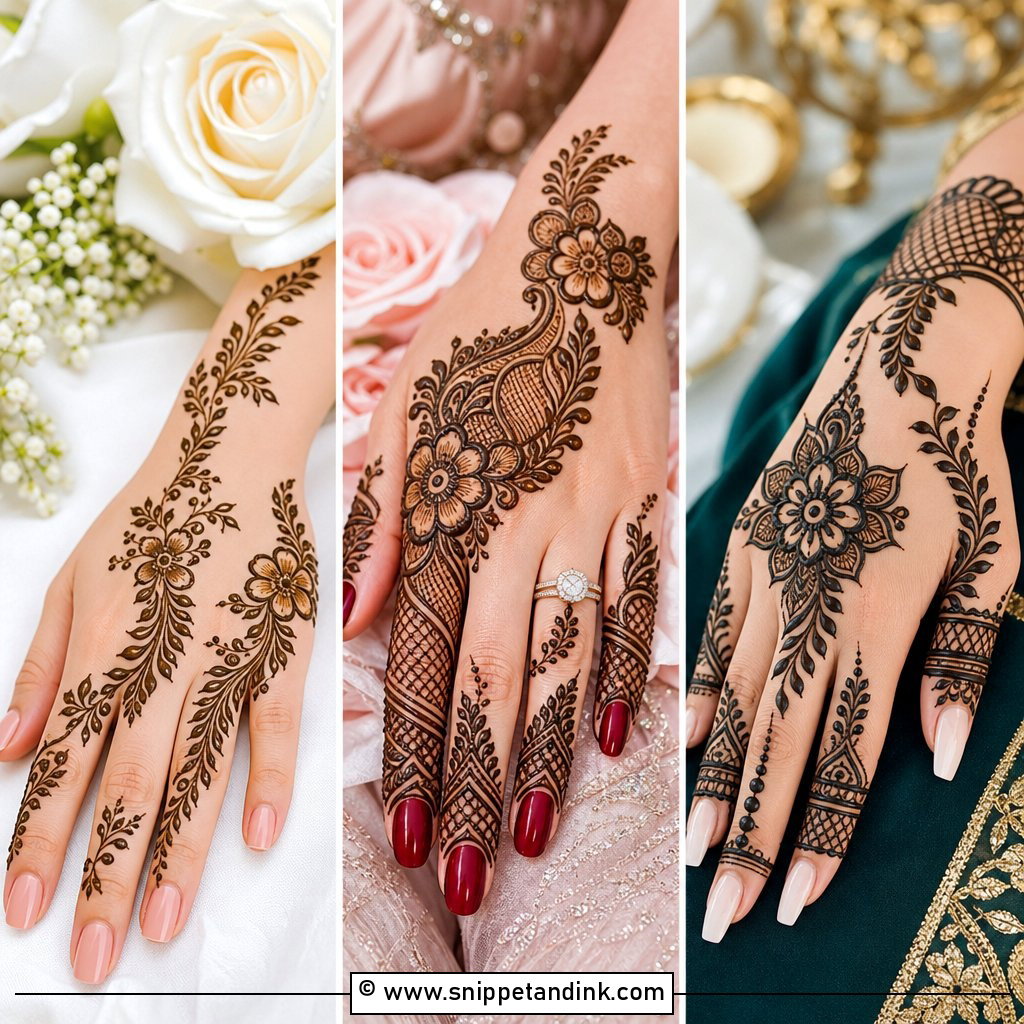
25. Arabic Half Hand Front Hand Mehndi Design
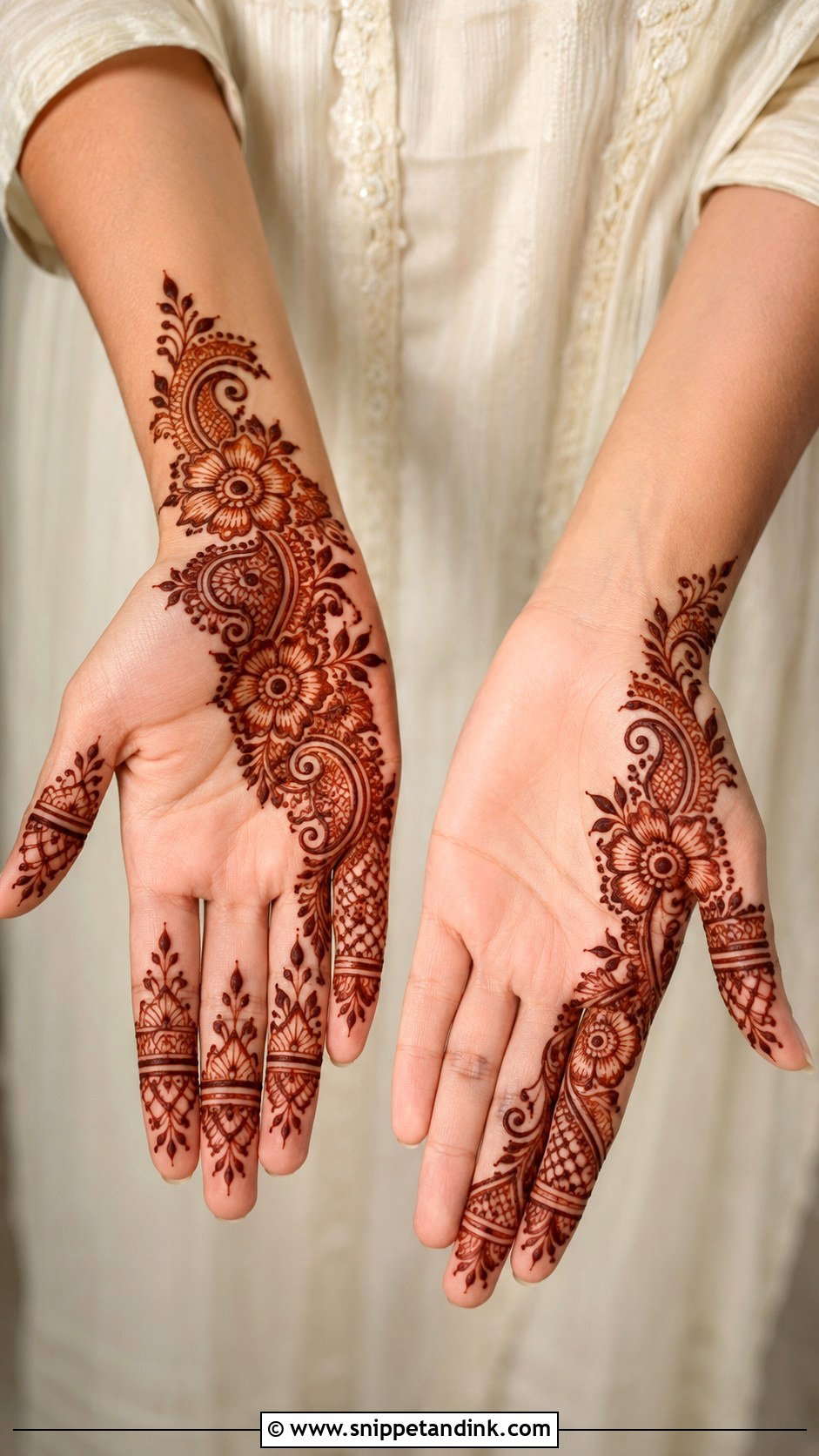
Half-hand palms cover part of the palm and fingers and leave the rest open, either along one side from wrist to index finger or across the lower palm with decorated fingers. Flowers, paisleys, leaves and dot trails all suit it. It’s practical: it dries faster and leaves you part of a hand to work with. Choose it for casual festivals, family gatherings and office events.
26. Arabic Full Hand Front Mehndi Design
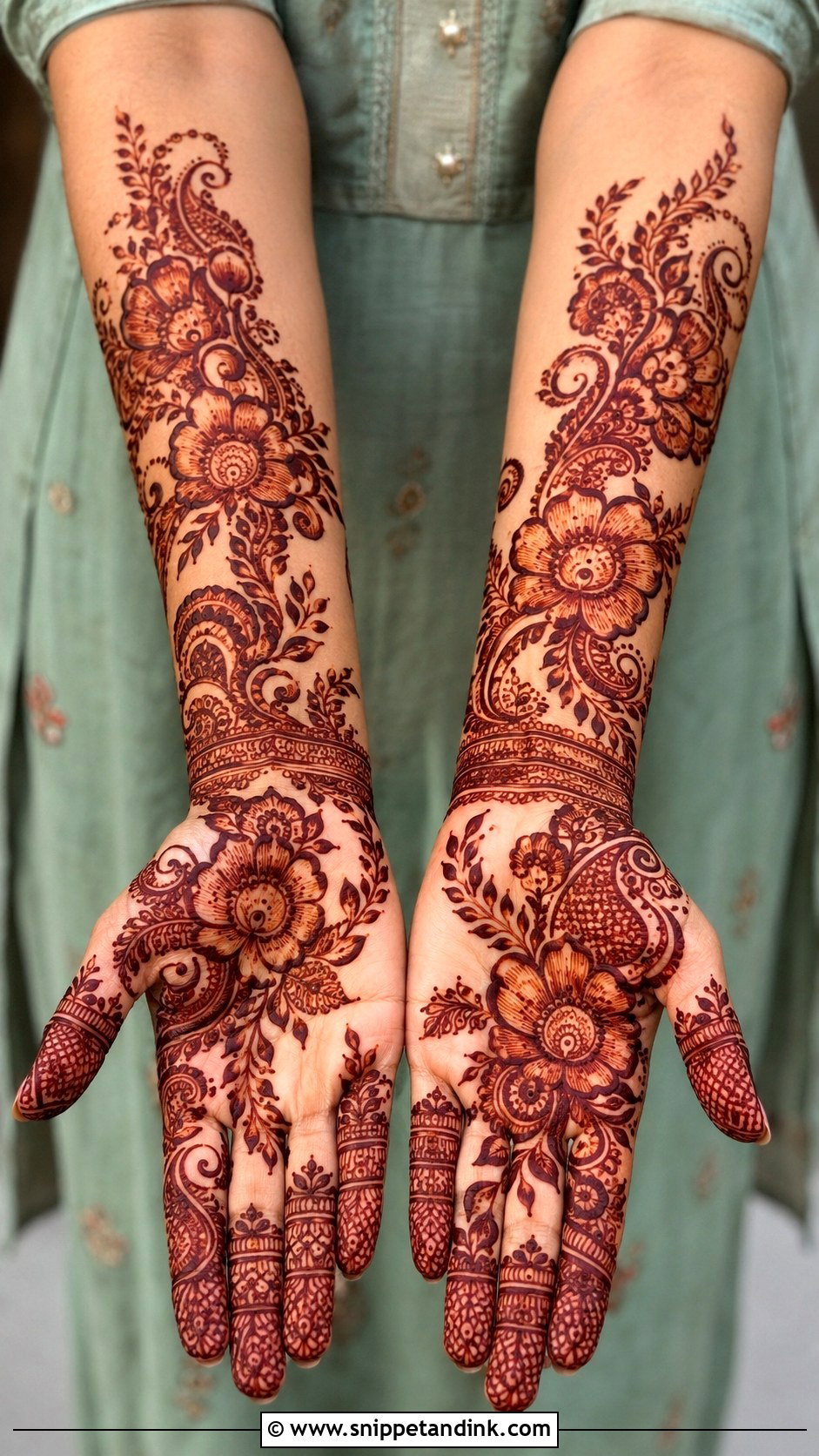
Full front-hand coverage runs from the fingertips to the wrist or forearm with large floral clusters, curved paisleys, leafy vines, wrist cuffs and detailed fingers. Even so, it shouldn’t look like a solid block; small open spaces around the main motifs keep the Arabic character. The palm and fingers can take more detail than the forearm, which stains lighter, so I taper the density as the design moves up the arm. It suits brides, bridesmaids and grand events.
27. Arabic Front Hand Mehndi Design For Beginners
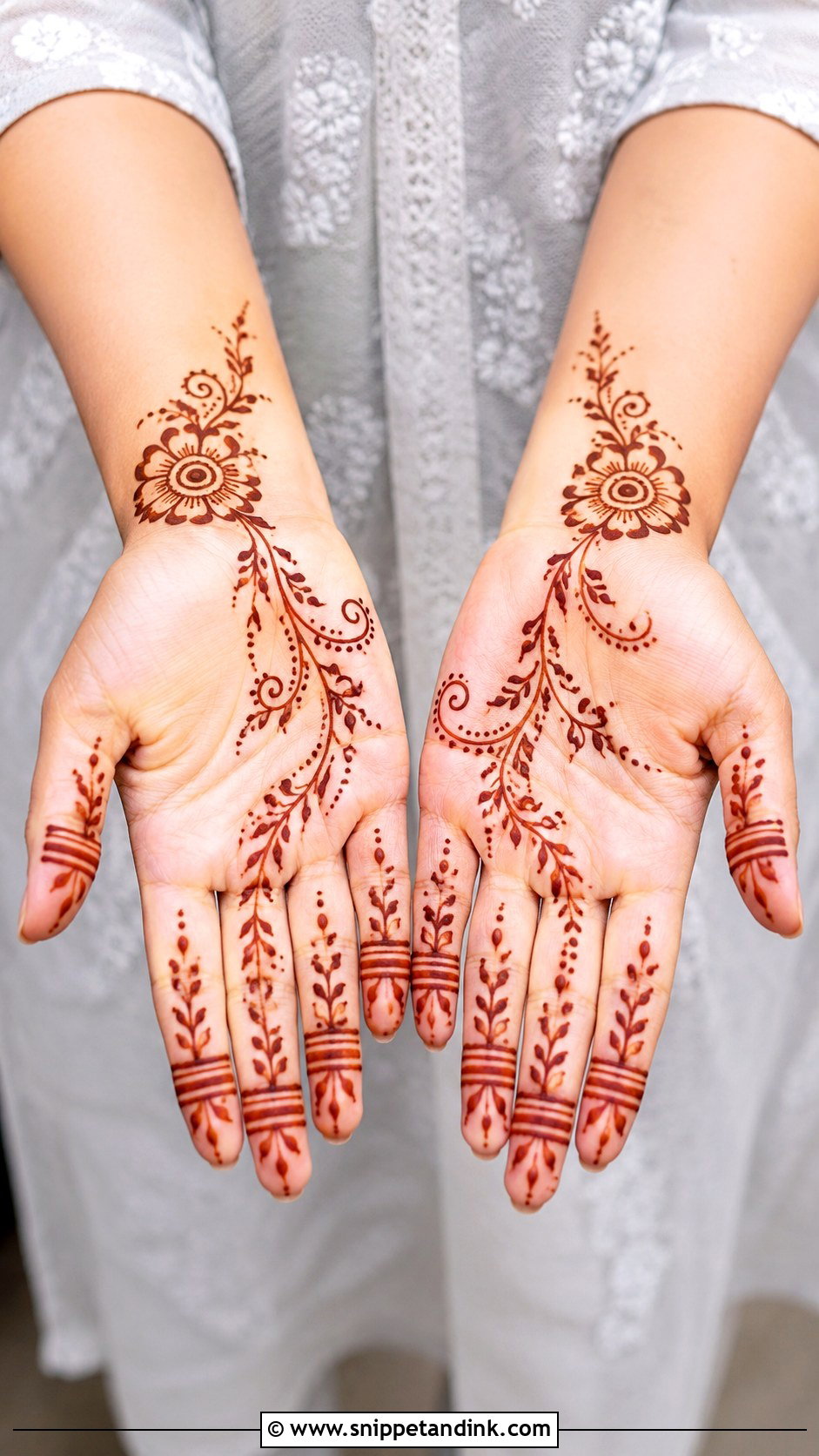
If you’re learning, build one clear trail. Start with a flower near the wrist, add a curved vine across the palm, then decorate it with leaves, dots and small petals. Keep the fingers to straight lines, tiny bands or leafy tips. Practise on paper first until your pressure on the cone is even, since an uneven squeeze is what makes lines thick in one place and broken in the next. Avoid tiny filling at first. Clean shapes look good enough for festivals and Eid.
28. Arabic Front Hand Mehndi Design For Kids
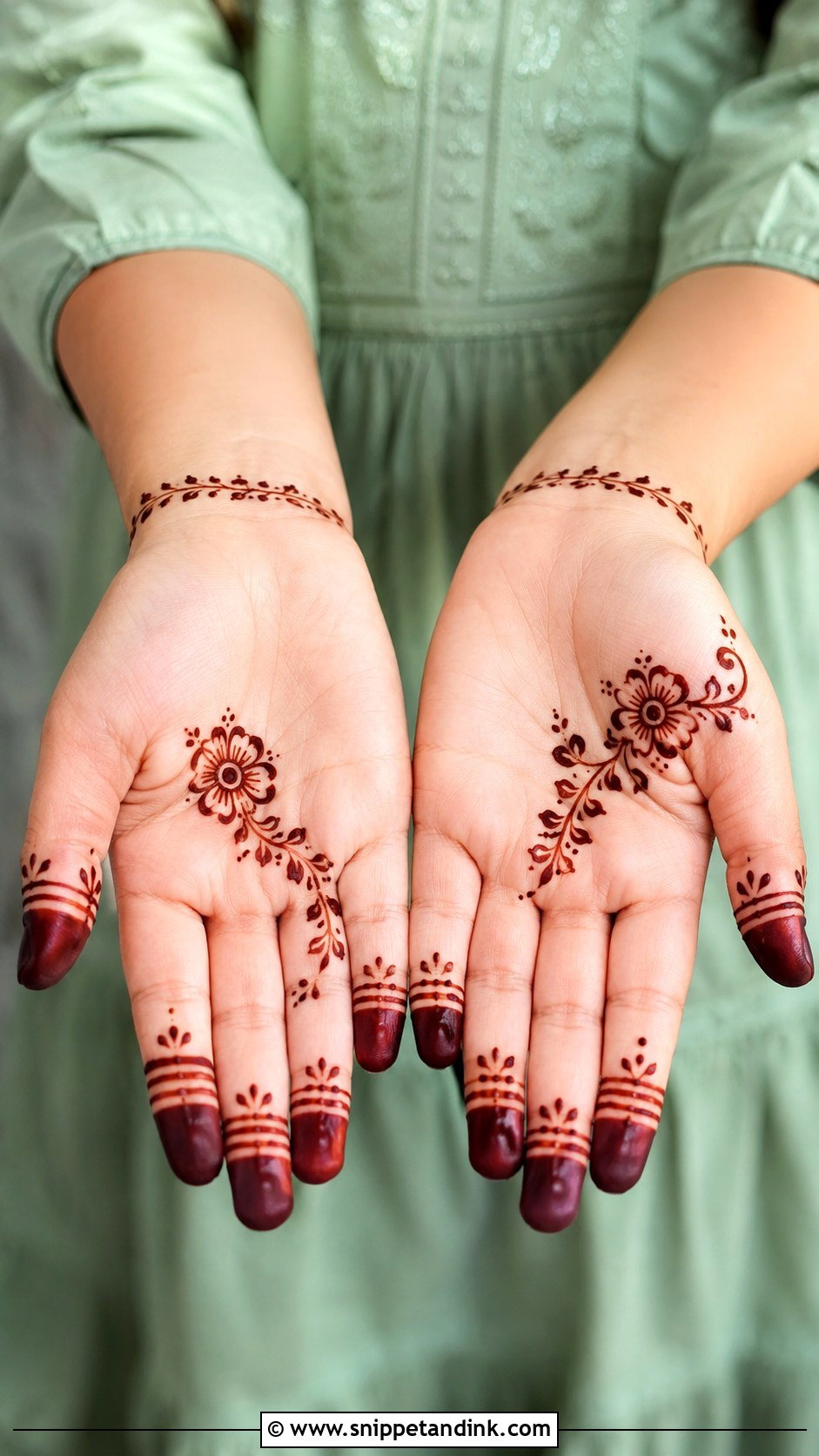
Arabic front hand mehndi for kids should be small and quick: a flower on the palm, a short leafy vine and some finger dots. A tiny heart-shaped flower, a small mandala or a bracelet band makes it playful. Children rarely sit still, so I draw slightly bolder lines that still read if a stroke wobbles. Only natural henna belongs on a child’s hand, and I keep a damp cloth nearby for smudges. It suits Eid, weddings and school cultural events.
29. Arabic Front Hand Mehndi Design For Bridesmaids
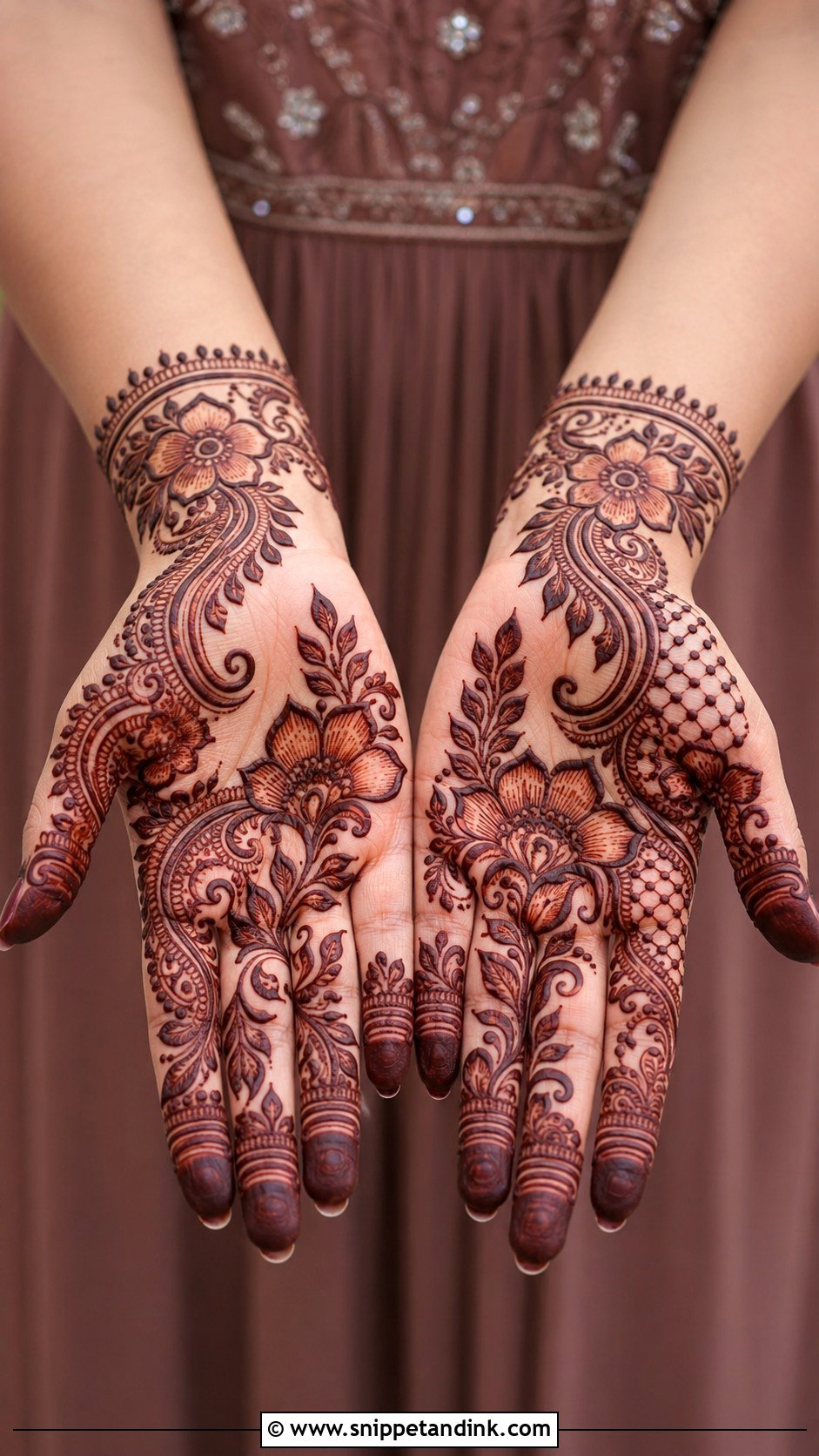
Bridesmaids need henna that complements the bride’s without competing. A diagonal floral trail, detailed fingers and a wrist cuff at medium coverage do that, with some shading or a small jaal section for richness. When several bridesmaids are booked together, I often give them the same base layout with a different flower each, so they look coordinated in group photos without being identical. It suits sangeet, mehndi night, nikah and reception, and it’s comfortable enough for a long celebration.
30. Arabic Front Hand Mehndi Design For Engagement
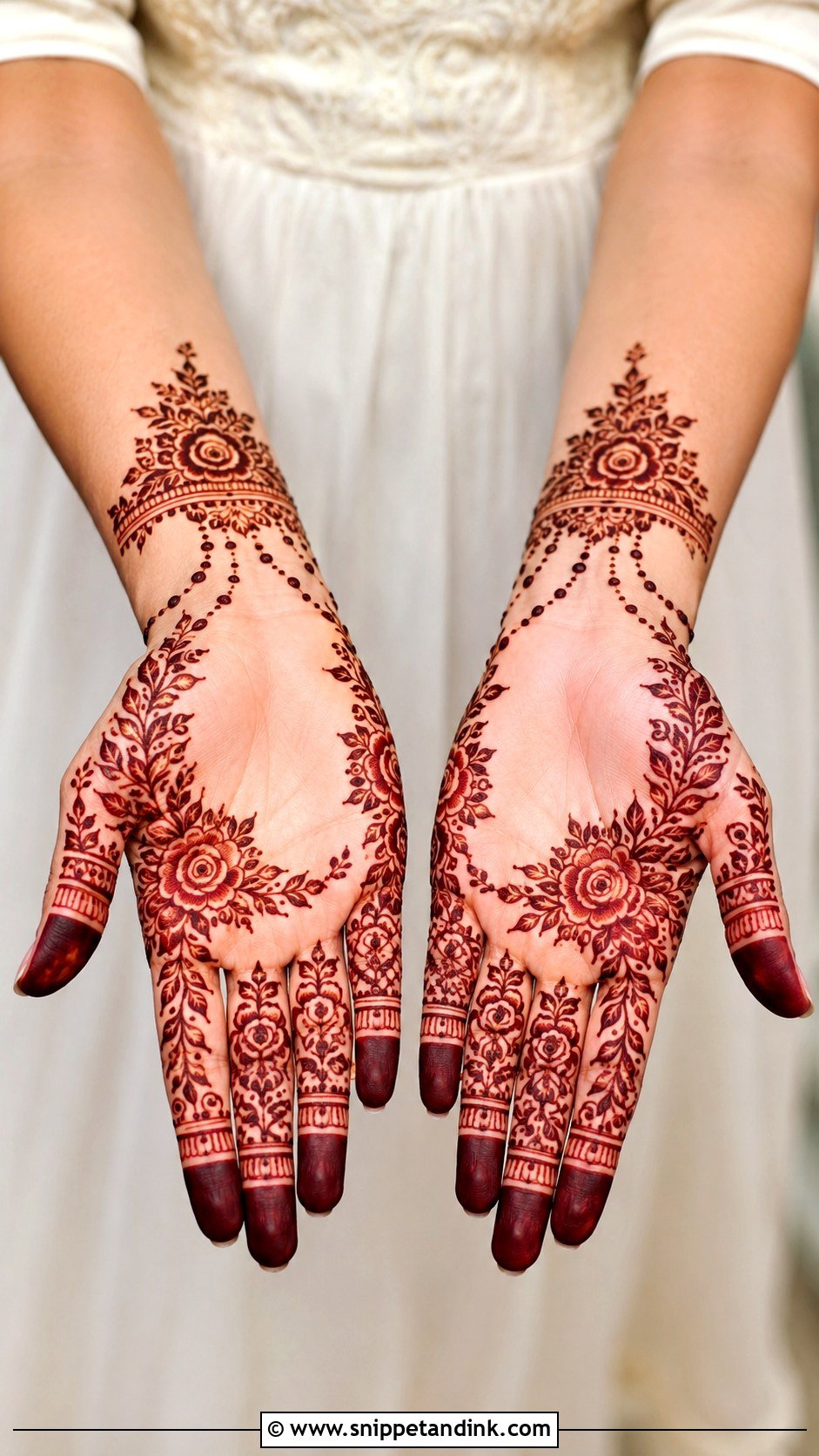
Engagement palms are designed around the ring photo. A ring-style finger motif connected to a palm flower draws attention to the hand without hiding the jewellery, with a bracelet band at the wrist and soft vines around the palm. Roses, lotus petals, dotted chains and shaded leaves are common. I leave the base of the ring finger clear so the real ring sits on bare skin, which shows both the stone and the henna clearly in close-ups.
31. Arabic Front Hand Mehndi Design For Short Fingers
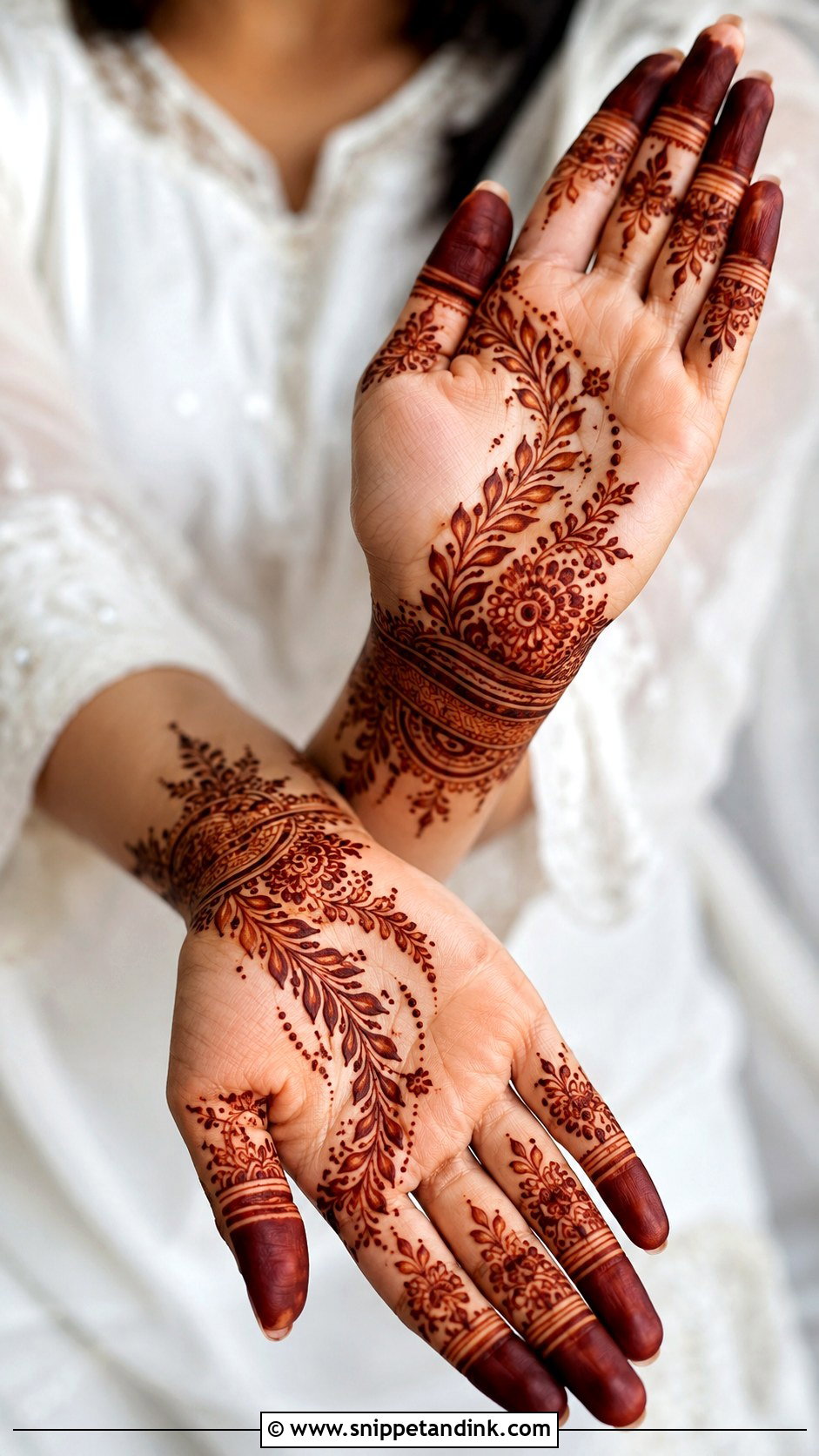
For short fingers, the design has to move upward. A vine from the wrist toward the middle finger lengthens the hand, and finger patterns stay narrow, with thin lines, small leaves and light bands rather than heavy blocks. I leave the fingertips partly open, because fully filled tips on short fingers make them look shorter still. A diagonal floral trail across the palm adds to the effect. Upward movement and clean spacing matter more than the number of motifs.
32. Arabic Front Hand Mehndi Design For Long Fingers
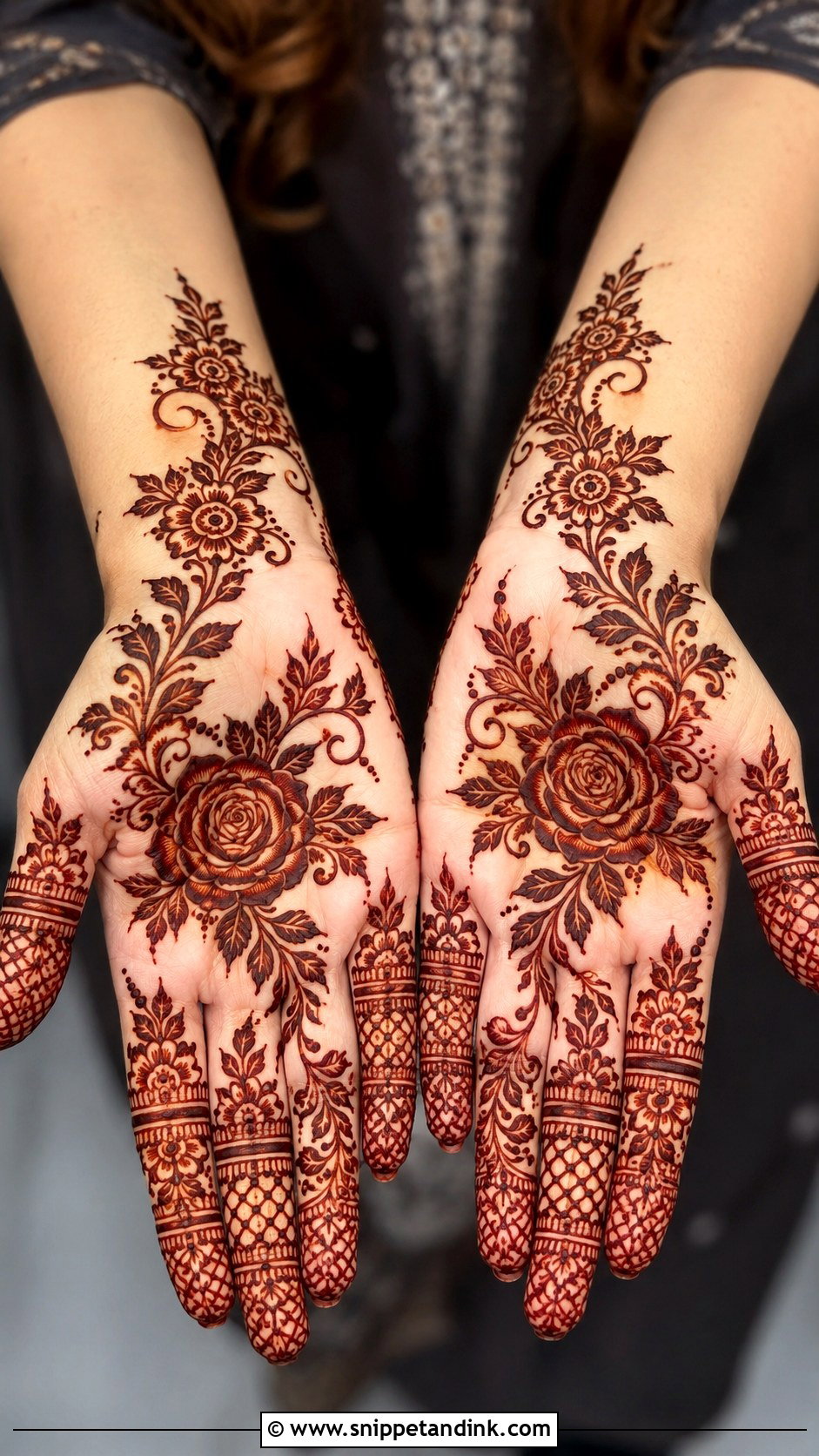
Long fingers give me room for layered bands, jaal sections, leafy vines and small floral tips on every finger. The palm can carry a bold rose, paisley or mandala linked to the fingers by curved trails, and medium to heavy coverage won’t look crowded. I still leave a gap at each knuckle, partly for the Arabic spacing and partly because henna across a bending joint cracks off before it stains. It suits weddings, Eid and close-up hand photos.
33. Arabic Front Hand Mehndi Design With Dots
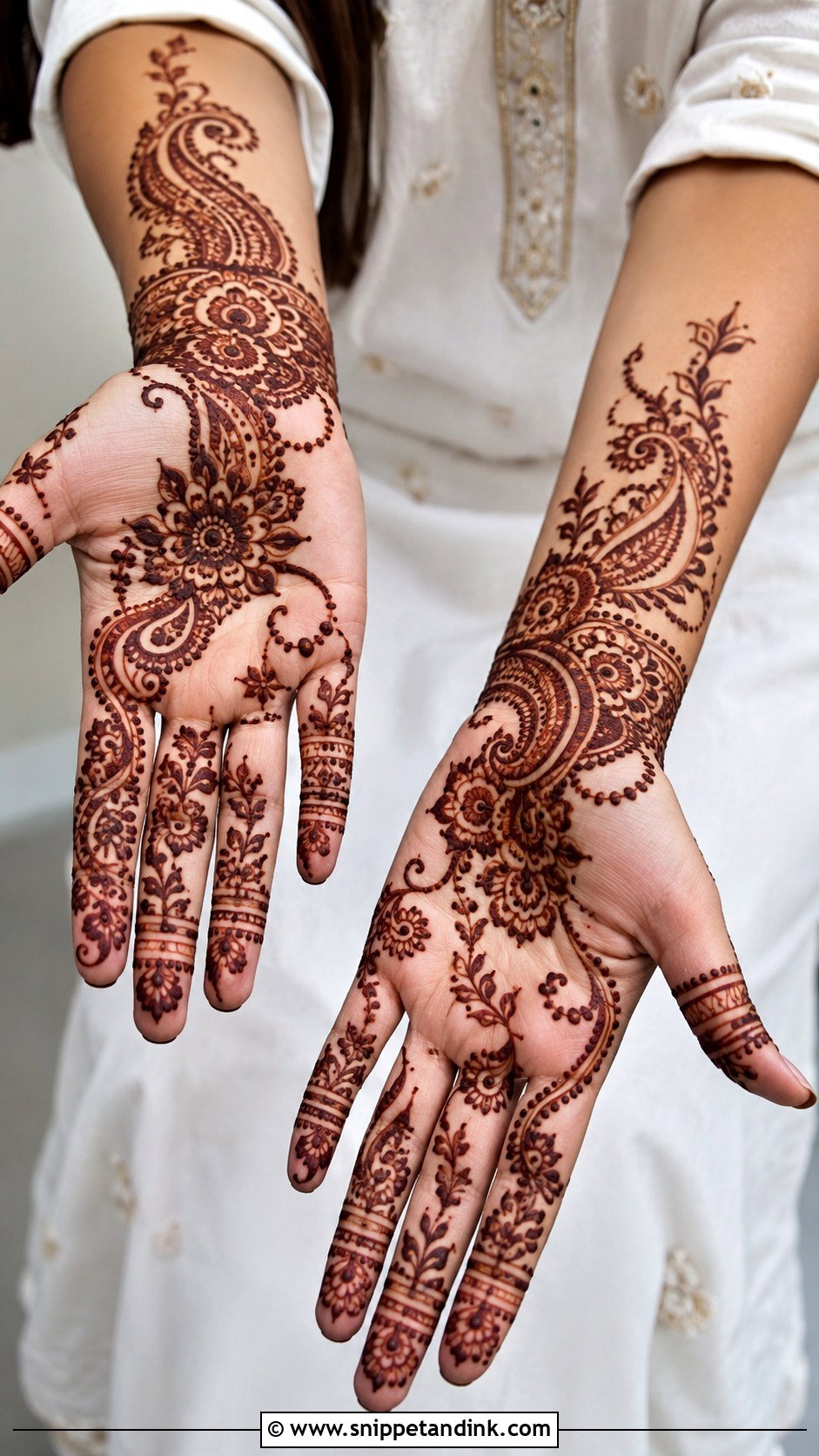
Dots finish a design more than people realise. A dotted trail can link flowers, outline paisleys, form chains or soften the spaces around a vine. On the palm, I usually set a floral pattern with dot borders running toward the fingers and wrist. Keep the dots evenly sized: I touch the cone to the skin and lift straight up without dragging, which gives a round dot rather than a comma. It suits beginners, Eid, casual parties and small family events.
34. Arabic Front Hand Mehndi Design With Bold Outlines
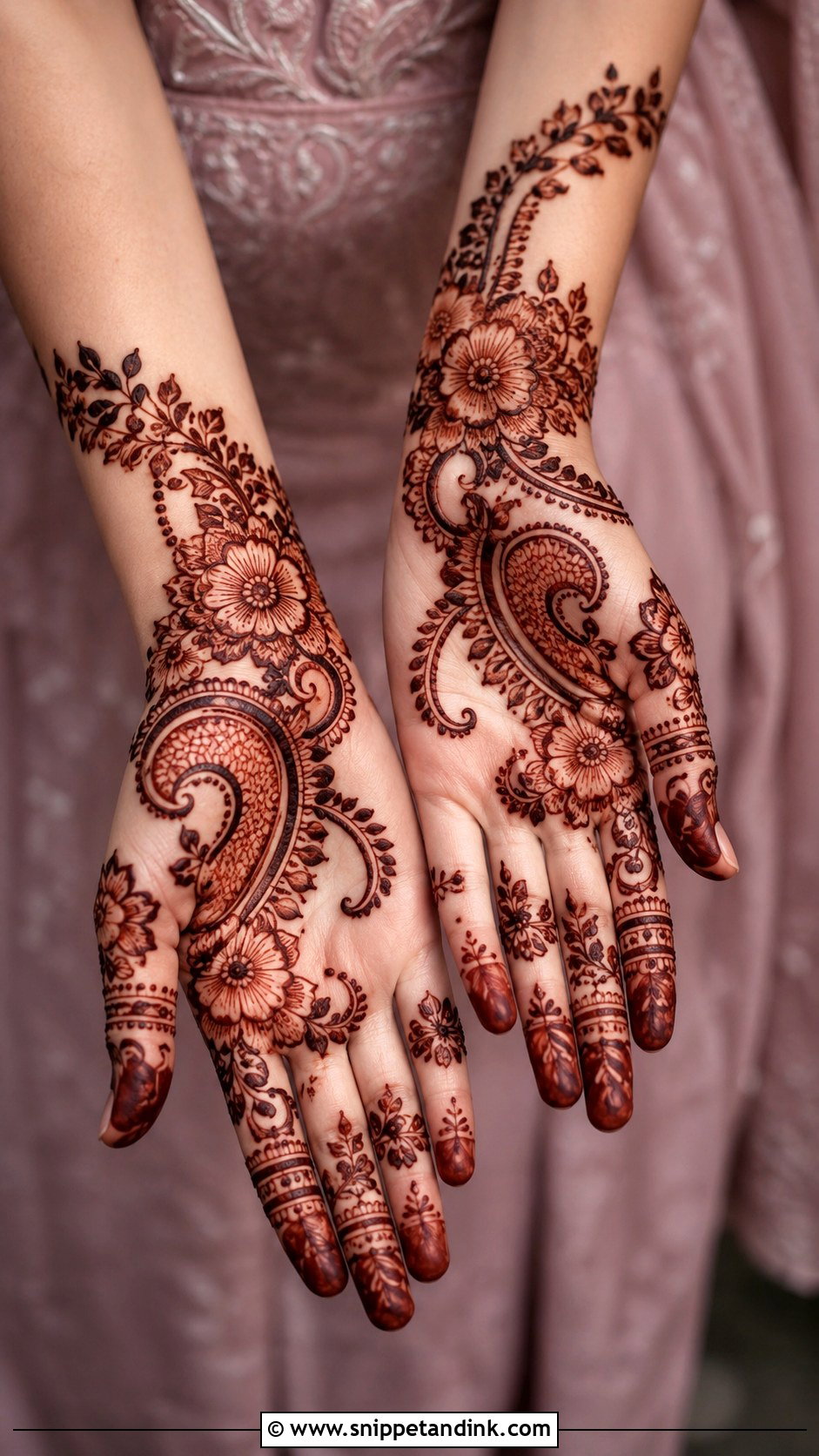
Bold outlines are the signature of Arabic palms. Flowers, paisleys, leaves and vines get thicker borders, while their insides are filled with fine lines, dots or soft shading. The contrast is what makes the design read in photos and from across a room. A thick outline also carries more paste, so it holds moisture longer and stains darker, which helps on cooler hands that usually take colour slowly. Keep the background open so the shapes get full attention.
35. Modern Arabic Front Hand Mehndi Design
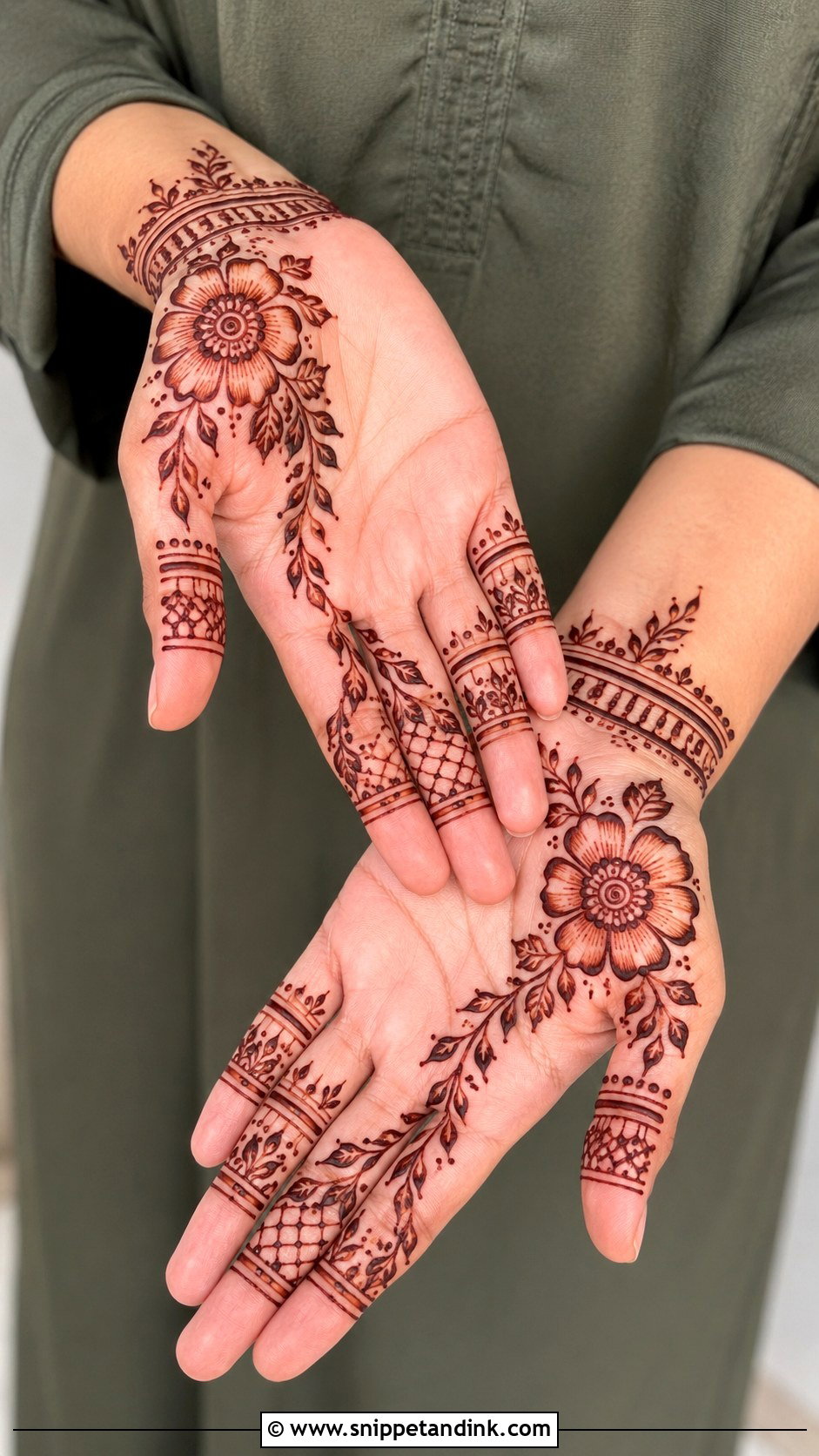
Modern palms take traditional motifs and place them sparingly: one large flower, slim leafy vines, geometric finger bands, open space and a neat wrist detail. Placement is the design, so I’ll often move a motif a centimetre during sketching until the empty areas look intentional. It suits both ethnic and contemporary outfits and works for parties, Eid, engagements and simpler weddings. Smooth lines and one confident focal motif carry it.
Your Bridal Sitting, From Arrival to the Morning After
A bridal Arabic palm session is long, and how you prepare decides how comfortable it is and how dark the result turns out.
- Book it one to two days before the wedding. The stain comes off orange and deepens for up to forty-eight hours, so the timing puts the darkest colour on the day itself.
- Arrive with washed, dry hands and no lotion, oil or sunscreen. Any film on the skin leaves pale patches.
- Wear a top that opens at the front, eat properly and use the bathroom first. Once both palms are covered, you won’t be able to do any of those for a while.
- Ask for a test dot on your inner wrist a day or two beforehand if you’ve never worn henna, or if your artist uses a paste you haven’t tried.
- Keep the paste on overnight. I wrap palms loosely in tissue and medical tape, or the bride sleeps in cotton gloves, so the paste stays warm and doesn’t rub onto the bedding.
- In the morning, scrape the dried paste off rather than washing it, then keep water away from your palms for as many hours as you can.
Palms fade more slowly than the backs of the hands, but frequent washing and sanitiser wear them down. In the days before the wedding, let someone else do the washing up and use gloves where you can, so the palm photos show the colour at its best.
Palms Up When the Photographer Asks
Arabic palm designs run from simple floral trails to bold bridal palms, with jewellery-inspired patterns, Gulf styles, Moroccan geometry and minimal layouts in between. For something quick, a leafy vine, a finger design or a bracelet pattern does the job. For a wedding, shaded flowers, paisleys, full palm work or Indo-Arabic detail carry more weight. Whatever you pick, plan it around your hand shape, your outfit and how long you can sit, and give the stain its full two days to reach its darkest before the photos.
You'll Like These Ideas:








Leave a Reply