
The palm is where henna stains deepest, so a front hand design doesn’t need much to look finished. Most of the designs here can be done in one short sitting: a mandala or flower to anchor the palm, something on the fingers, sometimes a cuff at the wrist. I’ve added notes on where I’d place each motif, who a design suits, and where it tends to go wrong. Eid, Diwali, a family wedding or a plain weekend: there’s something here for each.
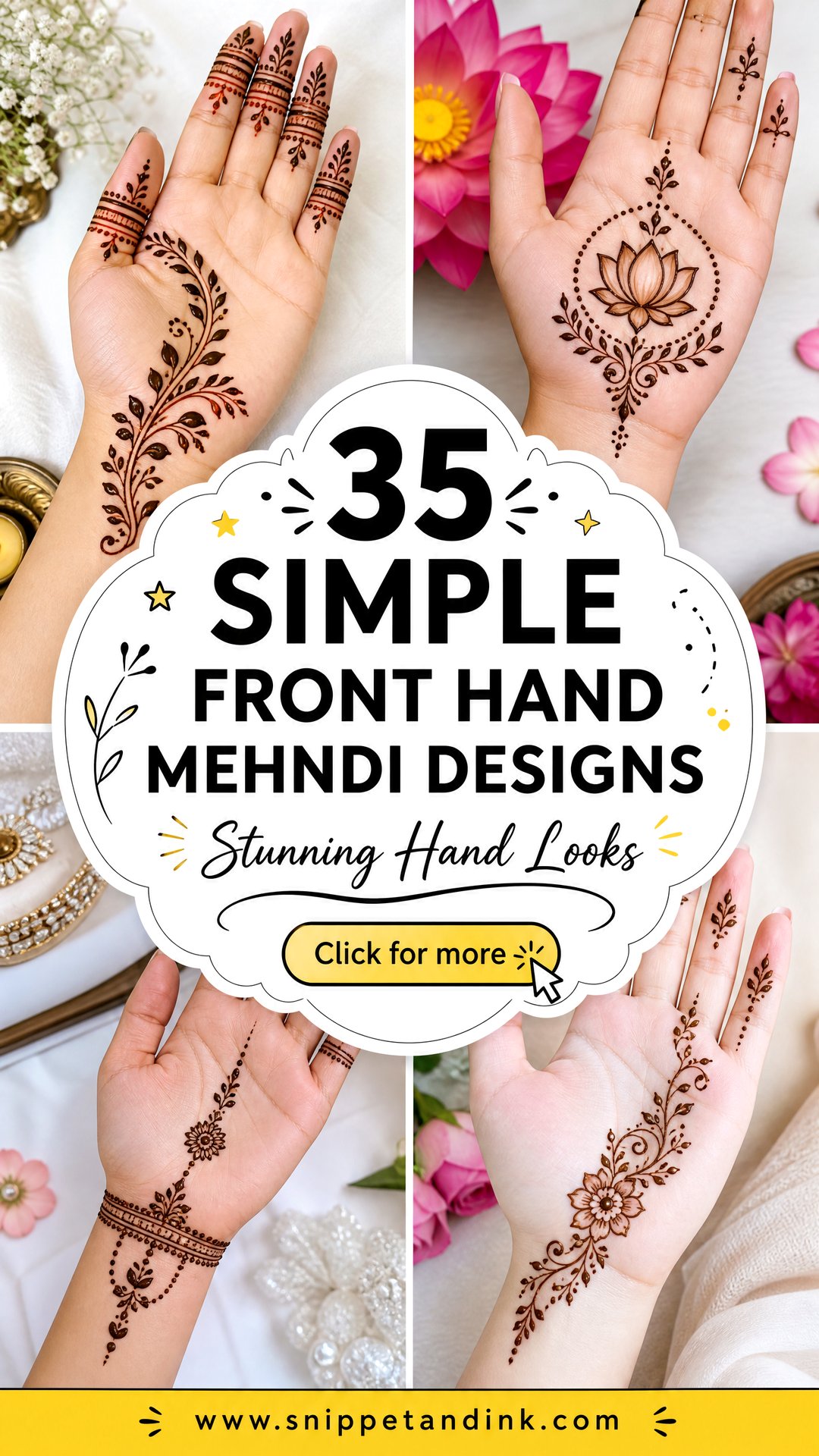
Mapping a Palm Before Any Paste Goes Down
The palm isn’t a flat page. It has three main creases, a fleshy mound under the thumb and a hollow in the middle, and every one of them changes how a design sits. Before I start, I look at the hand open, then cupped, then holding something, because that’s how people will actually see it.
- Find the visual centre with the hand slightly cupped. A mandala placed in the middle of a stretched-flat palm often ends up off-centre when the hand relaxes.
- Keep big motifs off the deep creases. Paste dries and cracks where skin folds, and the stain there comes out broken.
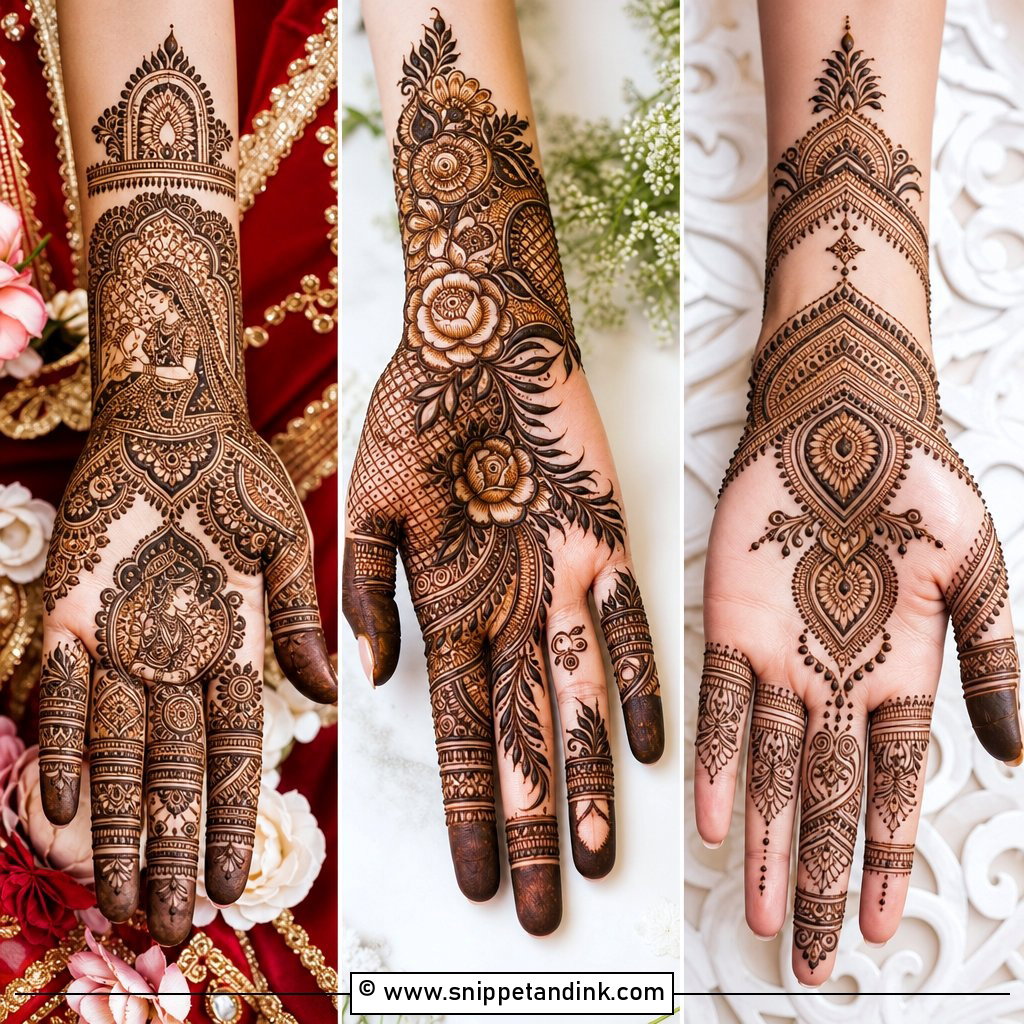
- Use the thumb mound for a secondary motif. It’s a natural spot for a paisley or flower and it shows when the hand is open in photos.
- Decide the direction of any trail. A diagonal from the outer wrist toward the index finger follows the hand’s natural lines and looks right on both hands.
- Leave the base of the palm lighter if you’ll be eating with your hands or holding a plate soon after.
I sketch the outline of the main motif first, then the finger bands, and only then the filler. Working in that order means the spacing is set before the detail can crowd it.
1. Simple Mandala Front Hand Mehndi Design
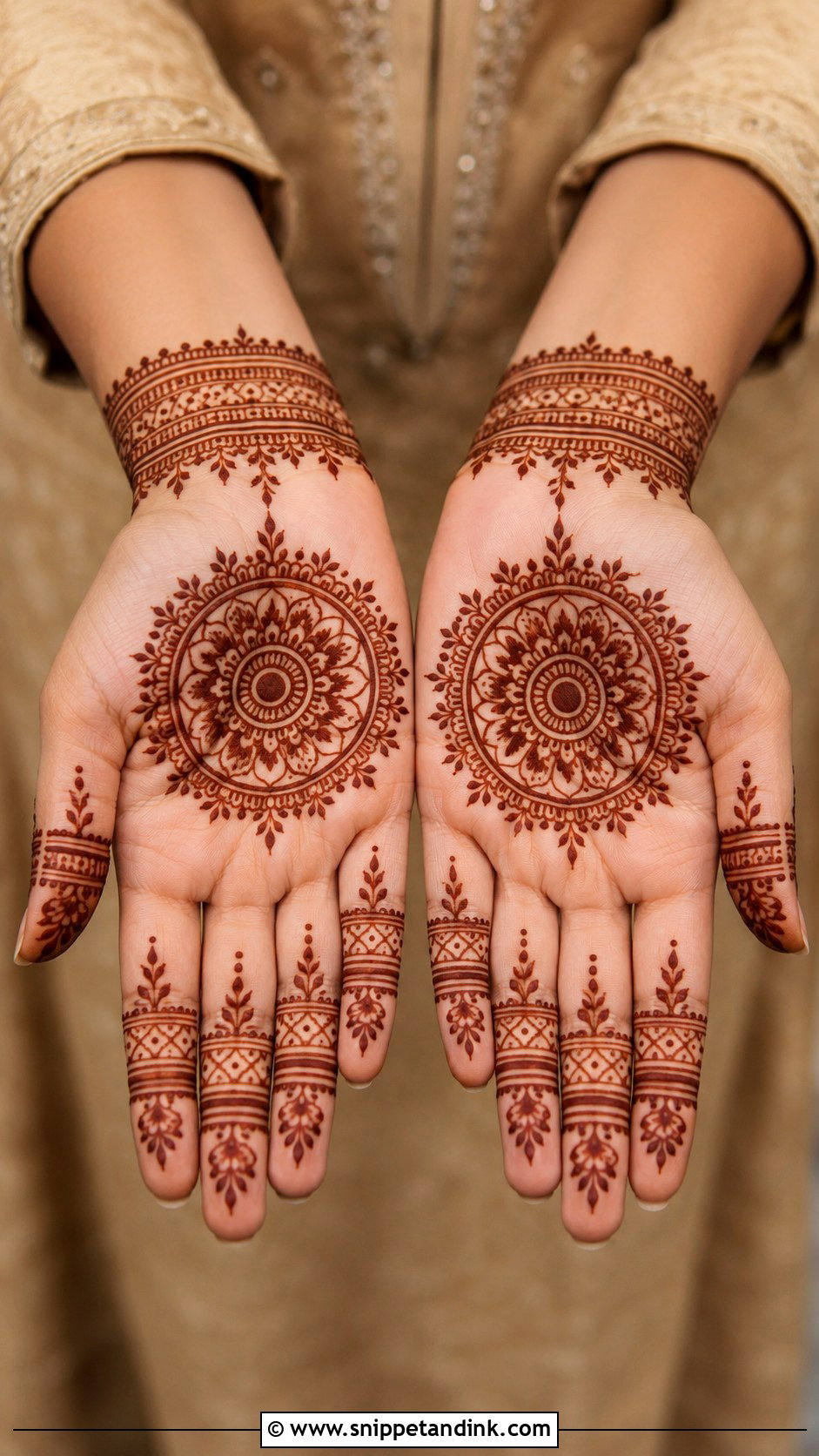
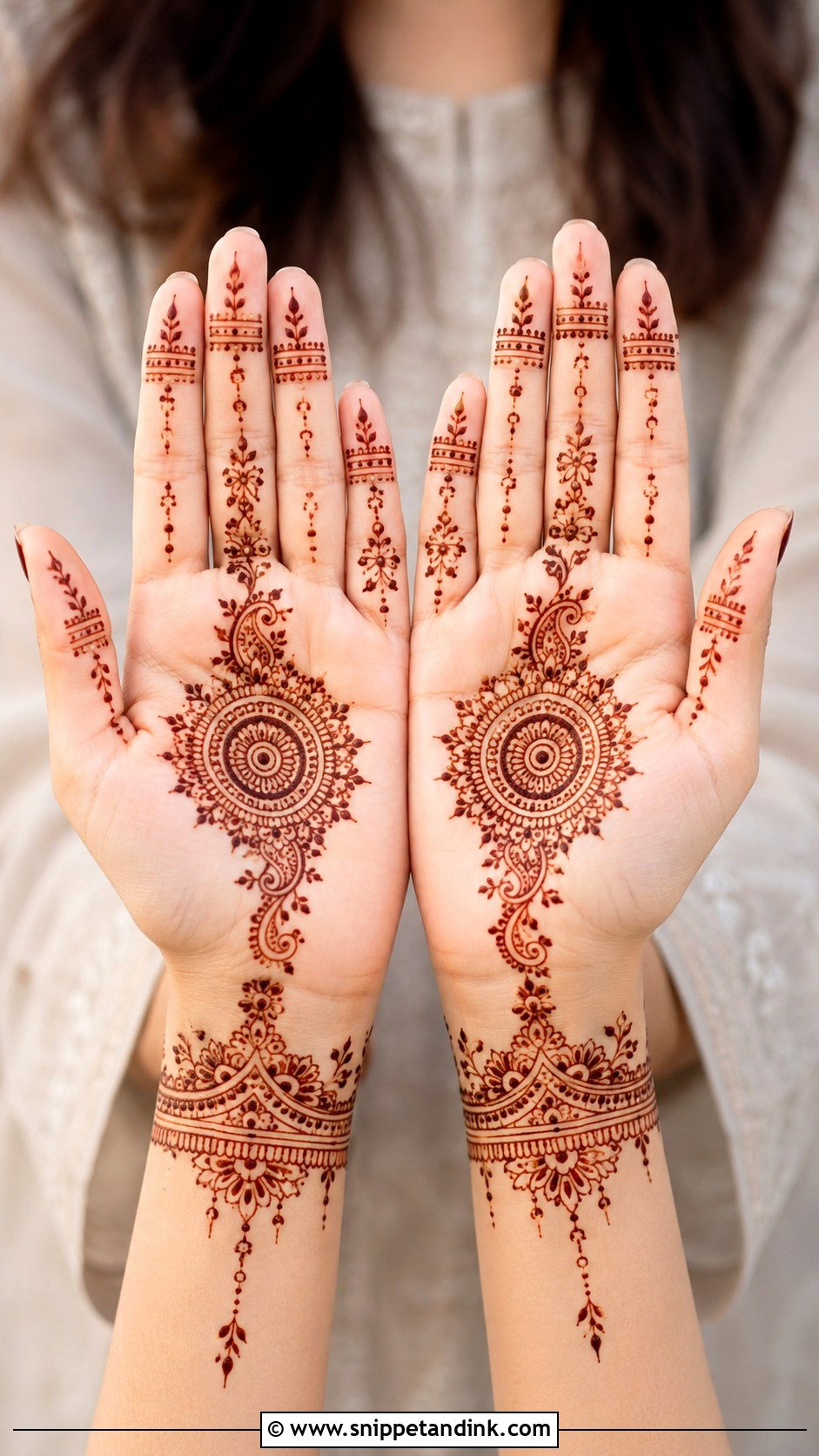
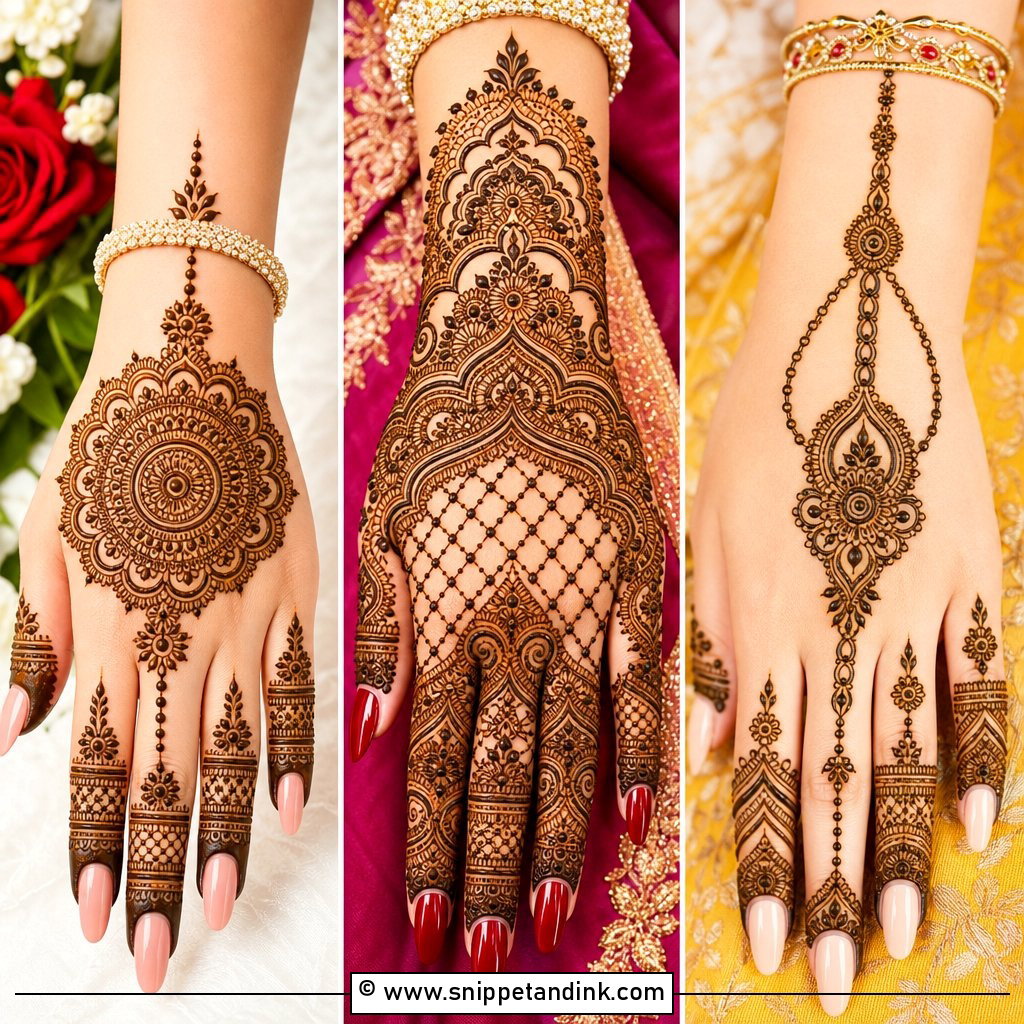
The palm mandala is the design I’m asked for more than any other. One round motif sits in the centre of the palm, built out with petals, dots and curved lines, and the fingers get light bands or tips. I find the true centre by having the client cup the hand slightly; the hollow is the spot, not the geometric middle of a flat palm. Symmetry carries this design, so a slightly oval mandala is the one flaw everyone notices. Fine for any age, and a safe pick if you’re unsure.
2. Easy Arabic Front Hand Mehndi Design
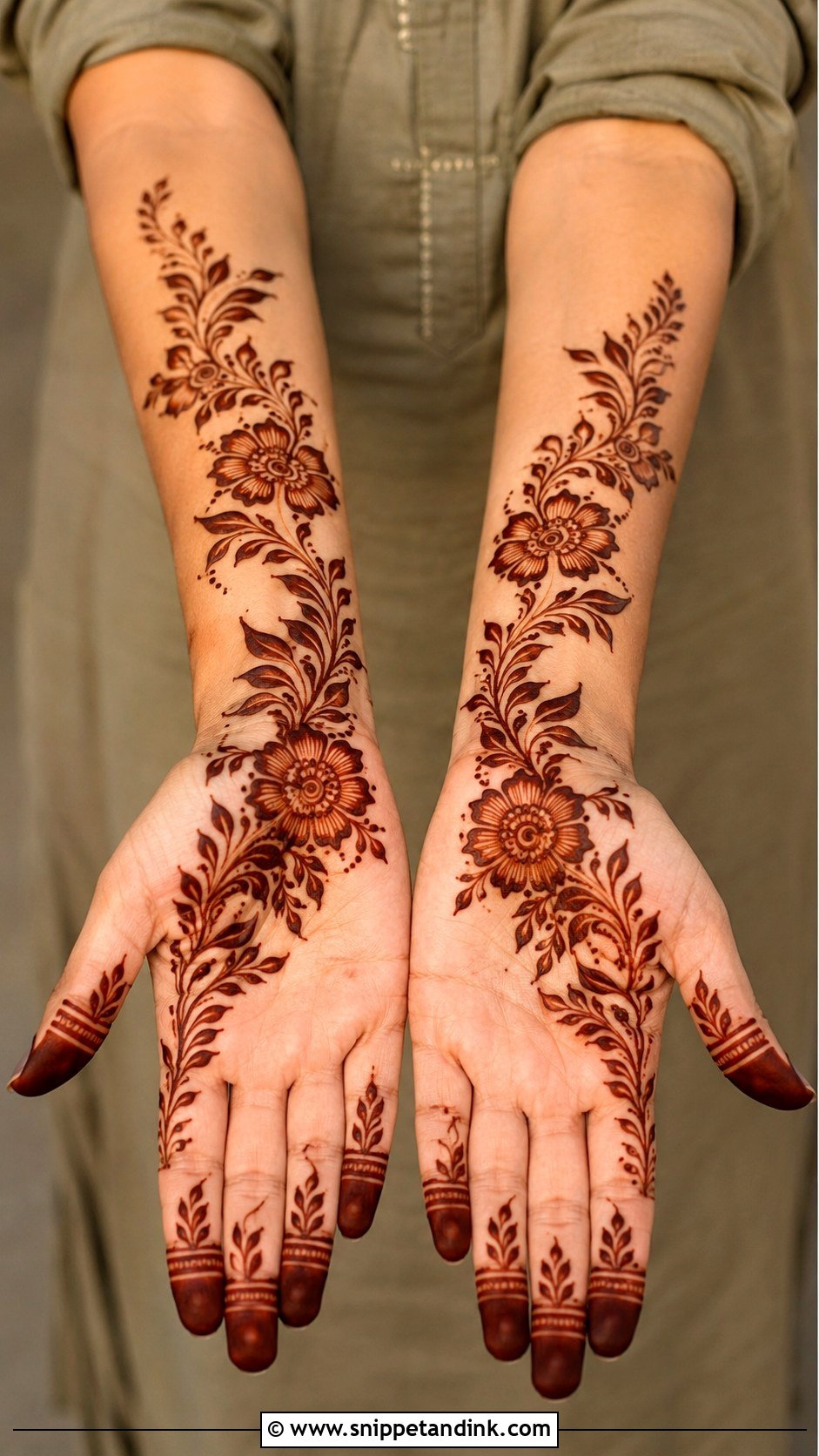
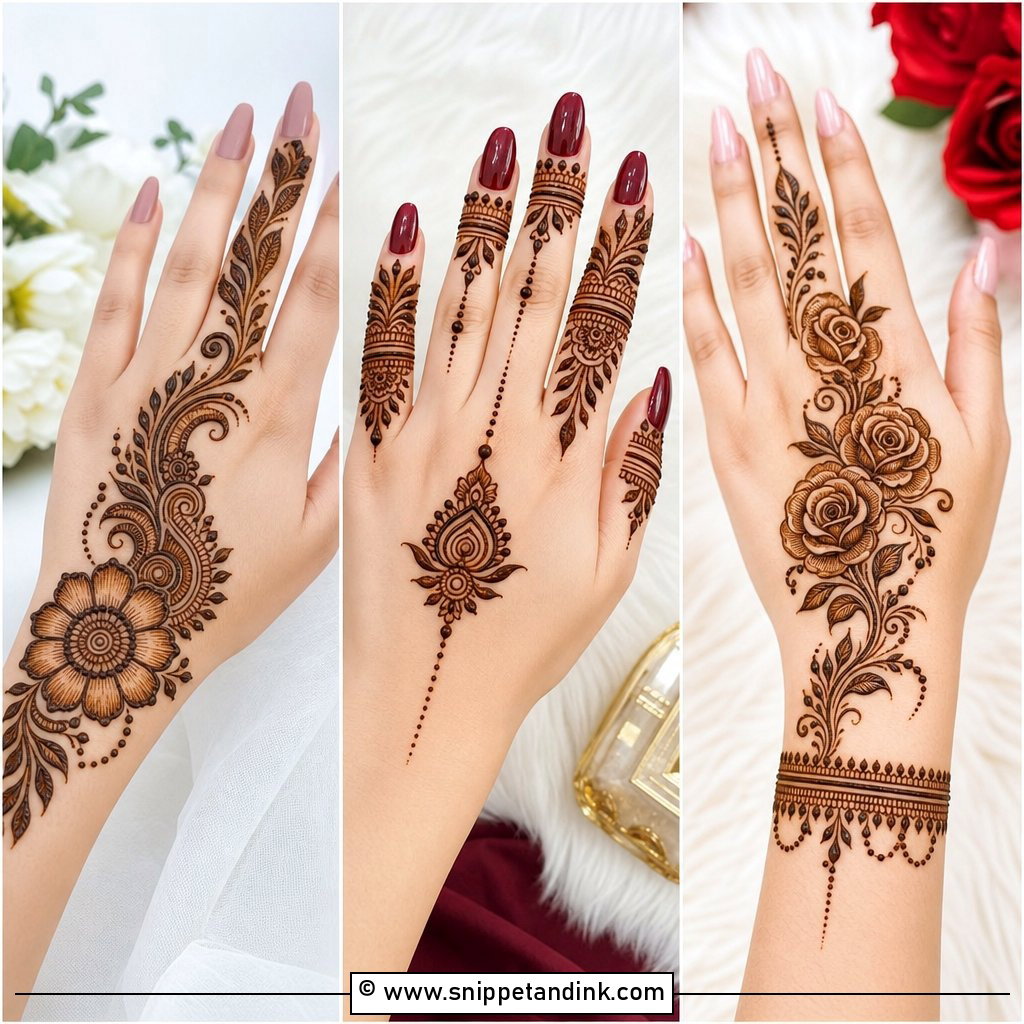
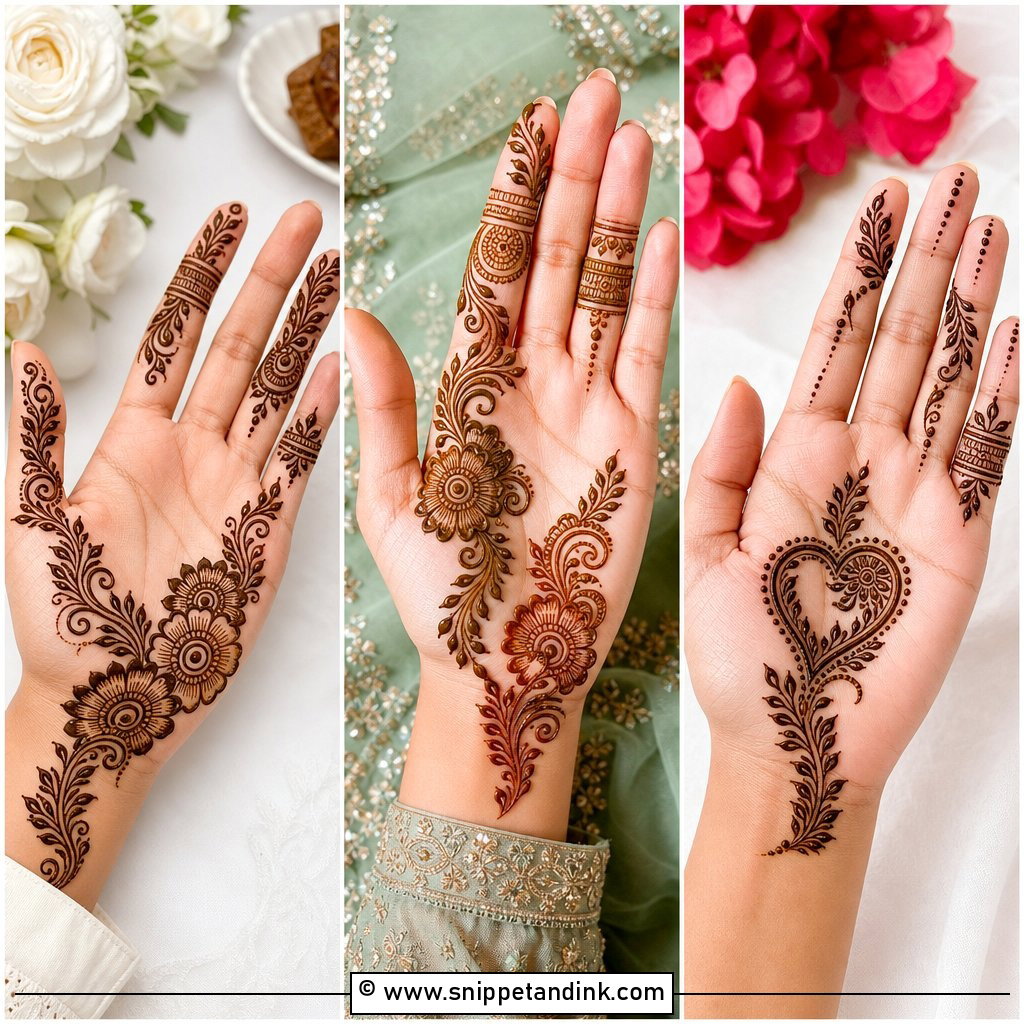
Easy Arabic front hand mehndi design layouts run diagonally from one side of the wrist toward the fingers, with the rest of the palm left open. I outline the roses or lotus heads boldly and keep the vines fine, which gives the stain two weights and makes it read from across a room. Fingers get matching trails or a couple of bands. Because so much skin stays bare, it’s comfortable in hot weather and quick enough for a salon slot squeezed in before an engagement.
3. Simple Floral Front Hand Mehndi Design
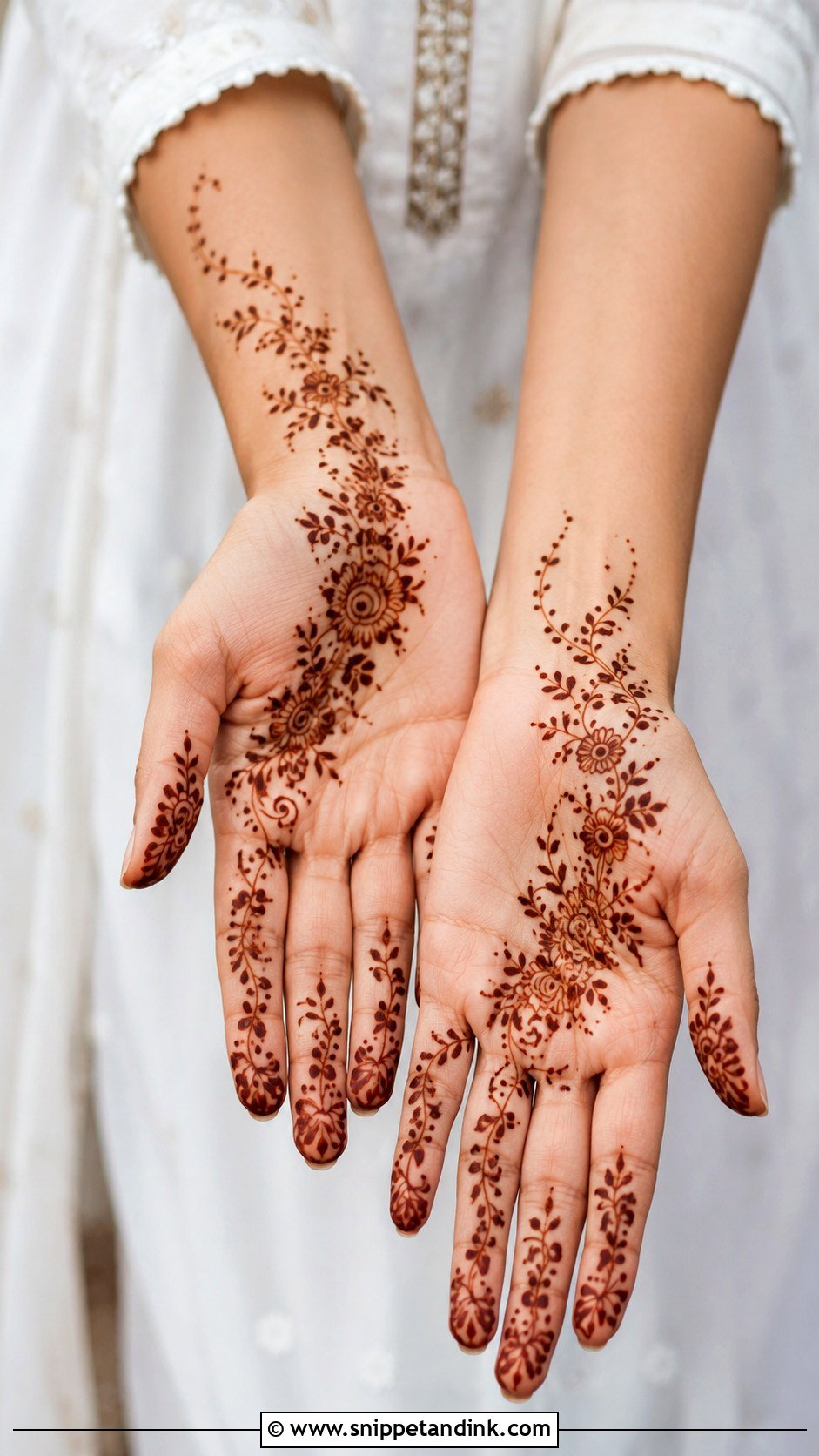
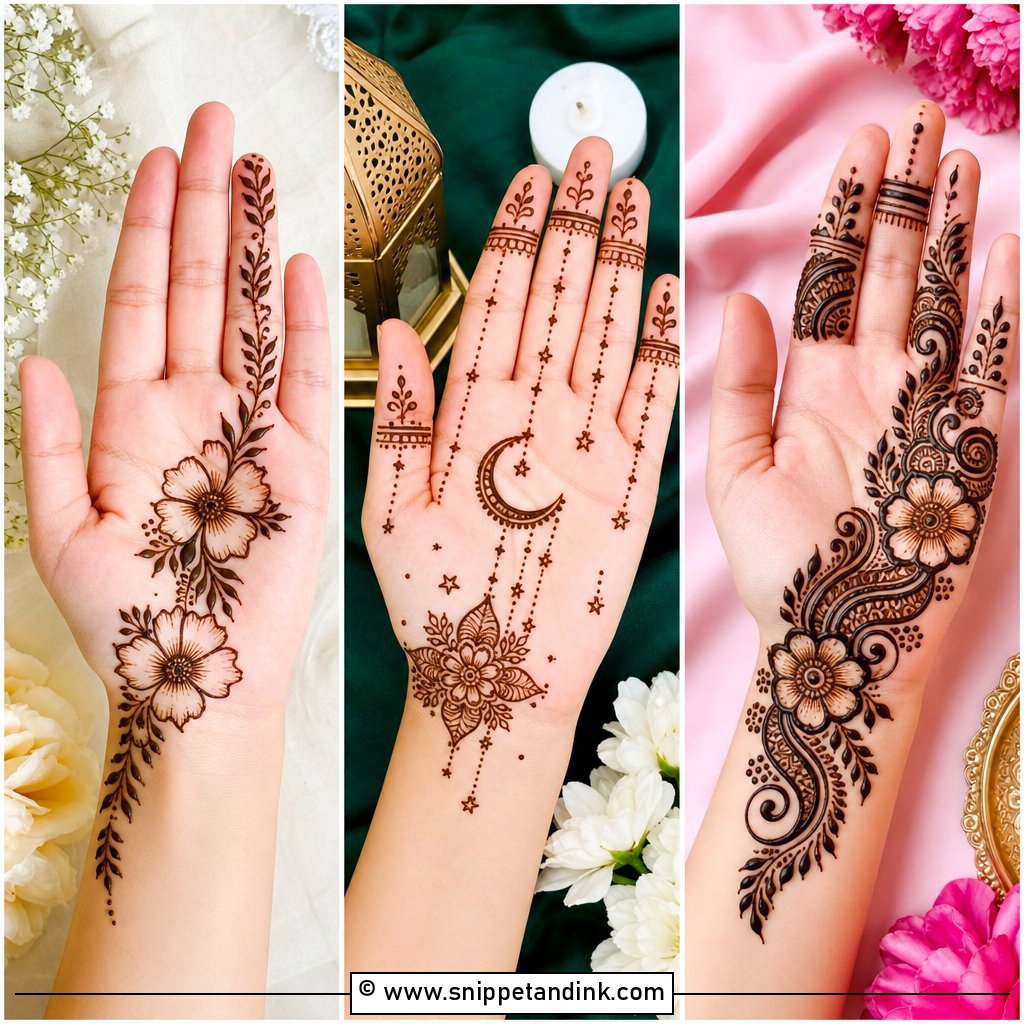
Start with one medium flower in the centre or slightly toward the thumb, then grow the design outward with leaves, dots and small curved vines. Mini flowers and leafy chains on the fingers tie it together. Roses, lotus, jasmine-style blooms or simple round flowers all work. I draw the centre flower a little larger than feels right, because petals visually shrink once the paste flakes off and the stain is flat.
4. Front Hand Mehndi Design With Fingers
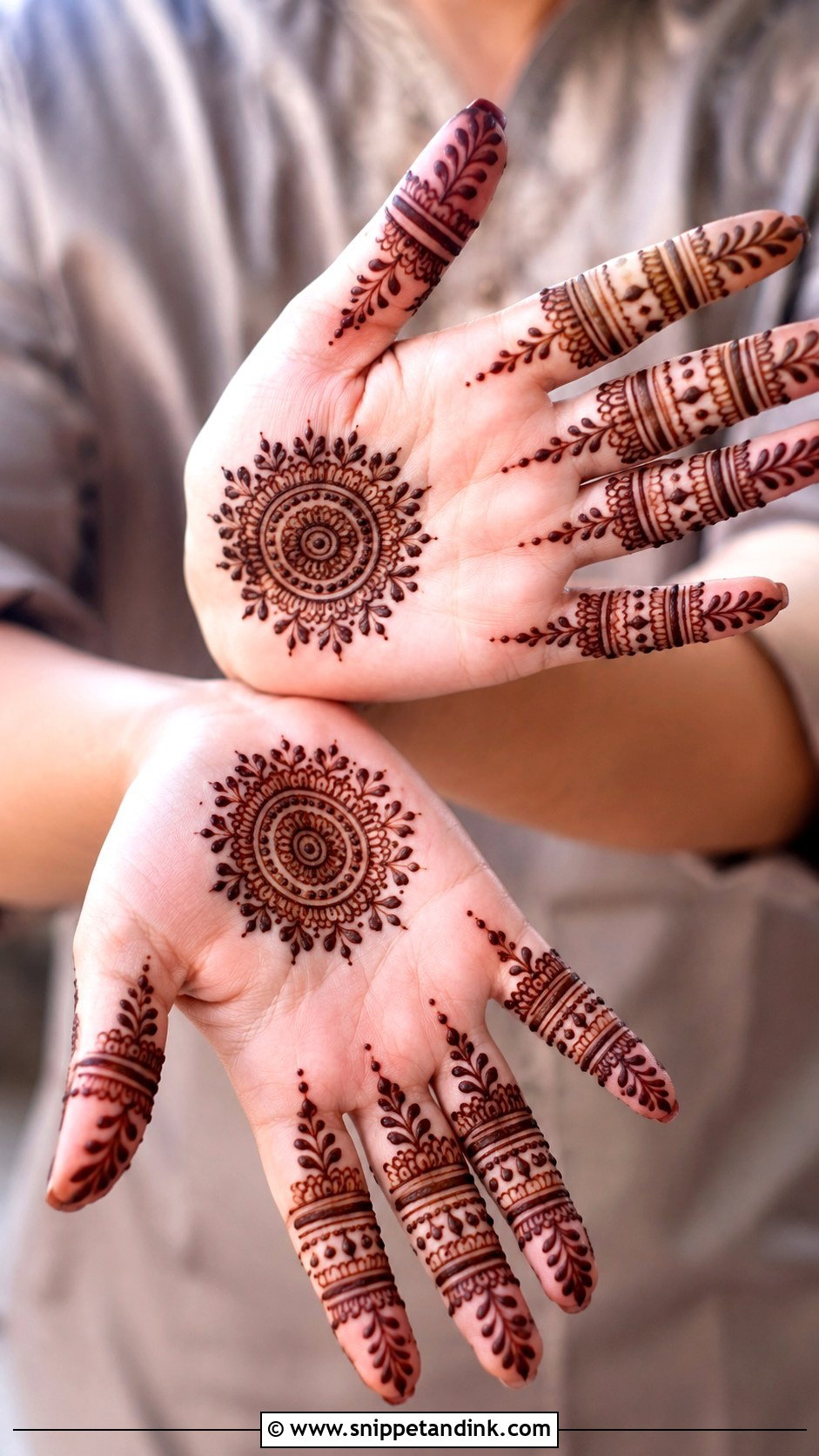
Here the fingers carry the design and the palm keeps only a small mandala, flower or paisley. Finger bands, leafy tips, dots and fine line work make the hand look longer in close-ups. It’s practical too: less paste on the palm means you can use your hands sooner. I tend to match all four fingers and give the thumb its own small motif. One bracelet-style line or a short vine at the wrist finishes it.
5. Simple Full Front Hand Mehndi Design
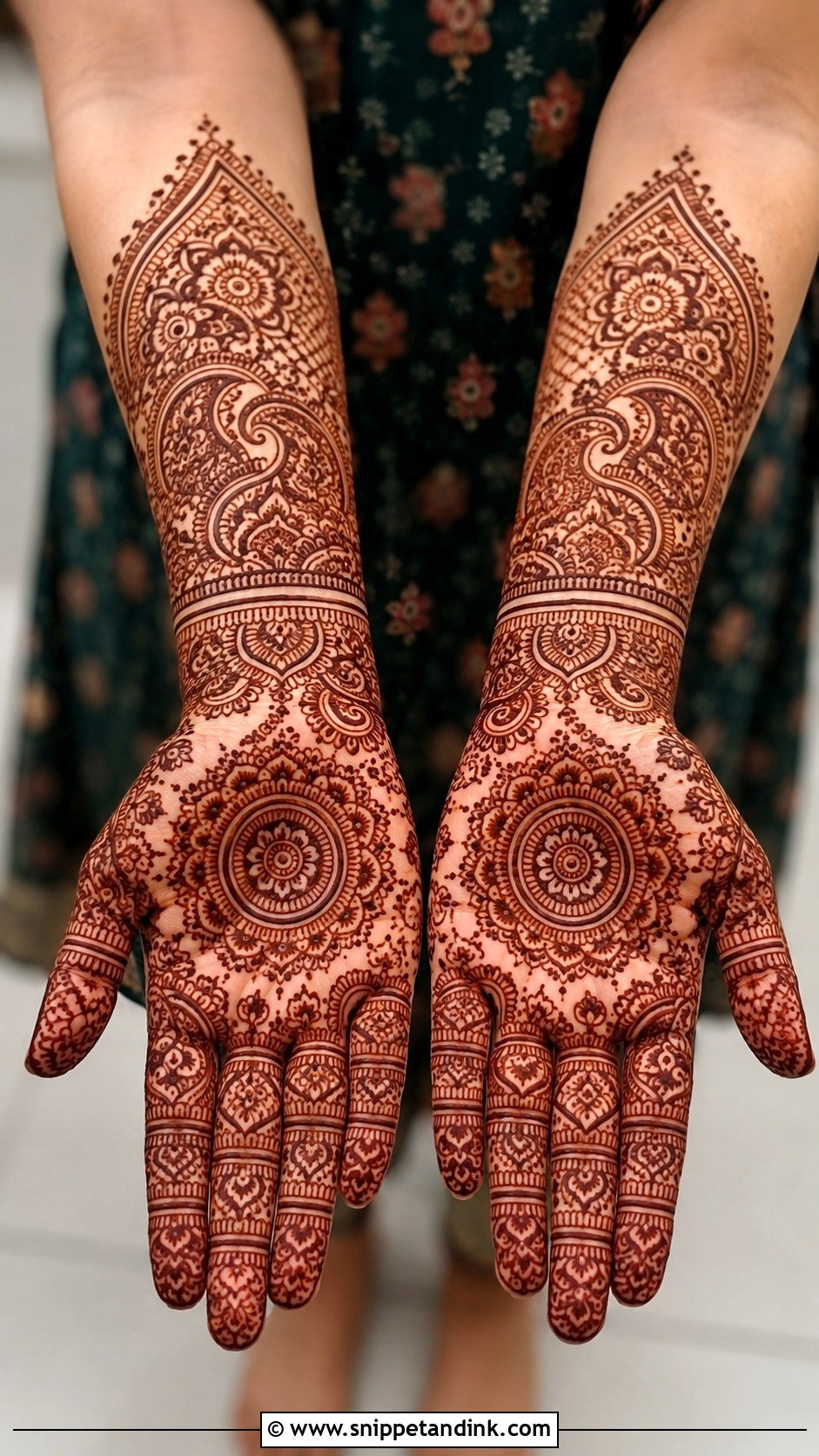
Full coverage of palm, fingers and wrist doesn’t have to mean bridal density. My rule is clear motifs with visible gaps: a central mandala, two paisleys, a few floral patches, patterned fingers. Main shapes get slightly thicker outlines and details get thin lines, which builds depth without crowding. Plan for a longer appointment and give it time to dry before you dress. For Eid, Diwali or a family wedding where you want more coverage, this is the balanced middle ground.
6. Simple Front Hand Mehndi Design For Beginners
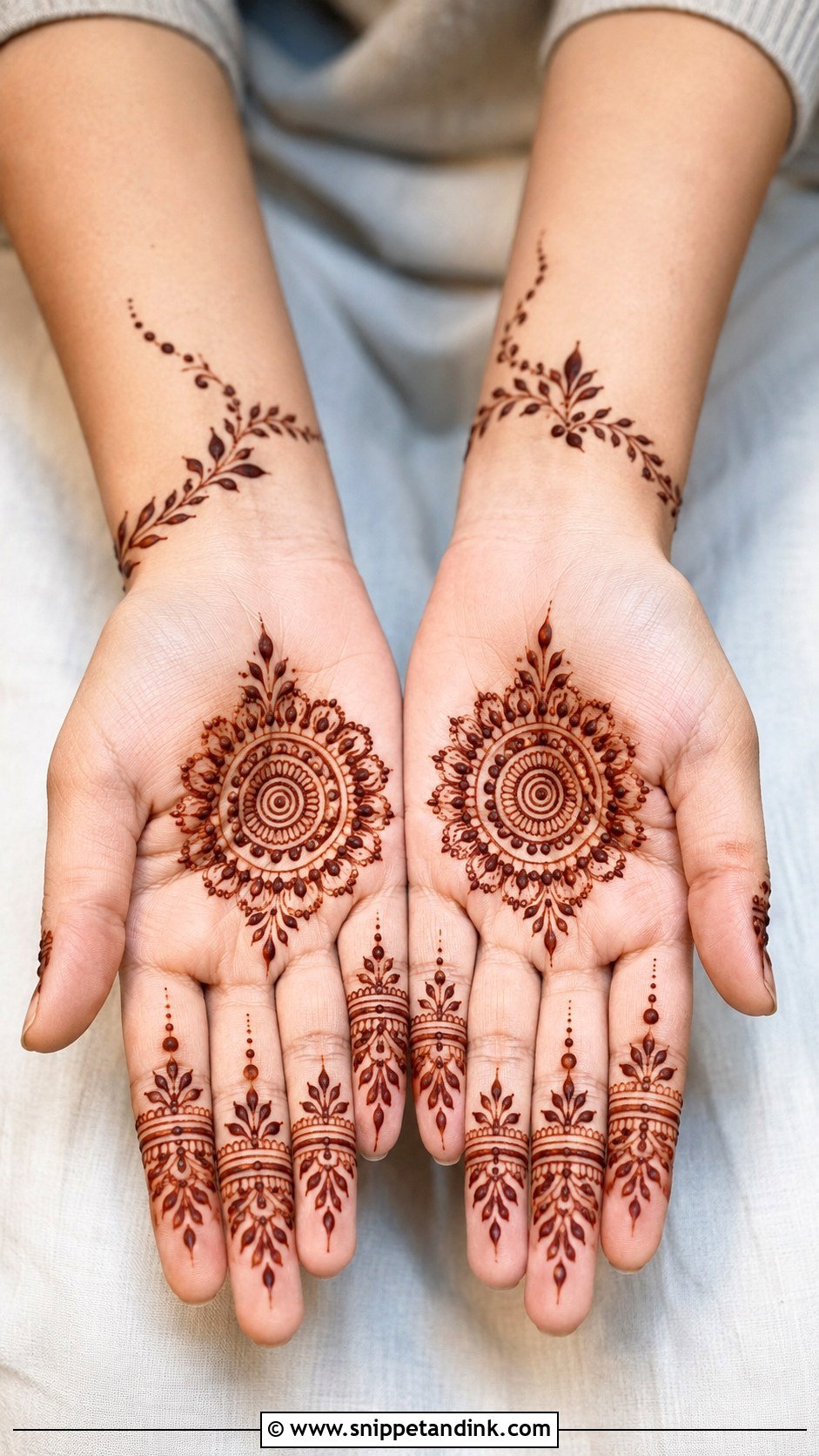
Beginners should stick to circles, petals, dots, leaves and small arches. Put a round flower or mandala in the palm, a short vine toward the wrist, simple bands on the fingers. Hold off on tiny crowded detail until your cone control improves. When I teach, I have students practise on paper until their lines stop thickening at the start and end; that blob where you begin squeezing is the most common giveaway. Dot clusters are useful for covering a small mistake.
7. Simple Bridal Front Hand Mehndi Design
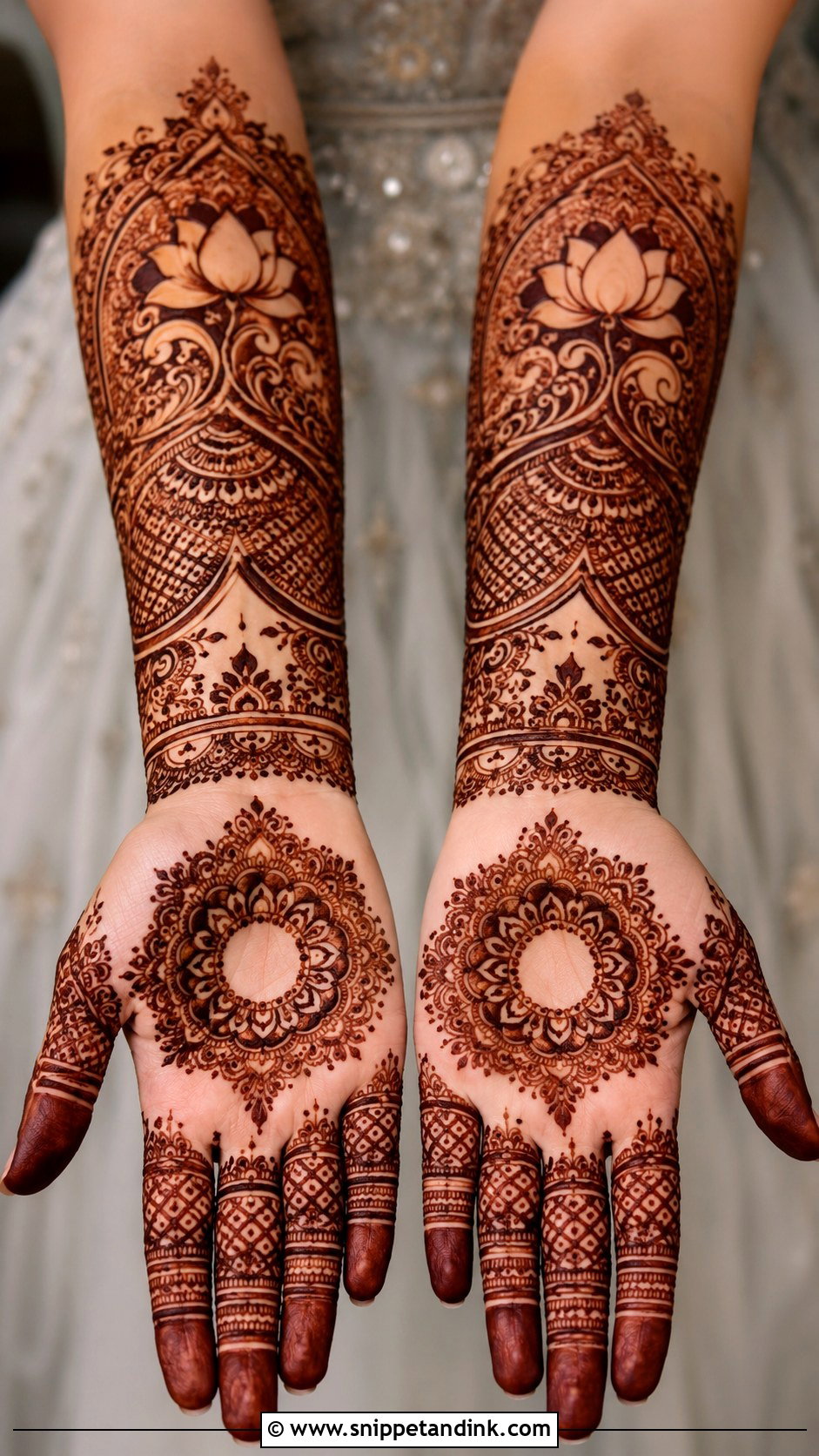
Not every bride wants elbow-length coverage. For a lighter bridal front hand, I use a central mandala, delicate paisleys, small lotus motifs, wrist bands and decorated fingers, with deliberate open space. It suits intimate weddings, court ceremonies and modern brides. Initials or a tiny couple motif can be hidden in the palm if you want a personal touch. Brides should book their mehndi a day or two before the wedding, not the morning of, so the stain has time to darken.
8. Simple Indian Front Hand Mehndi Design
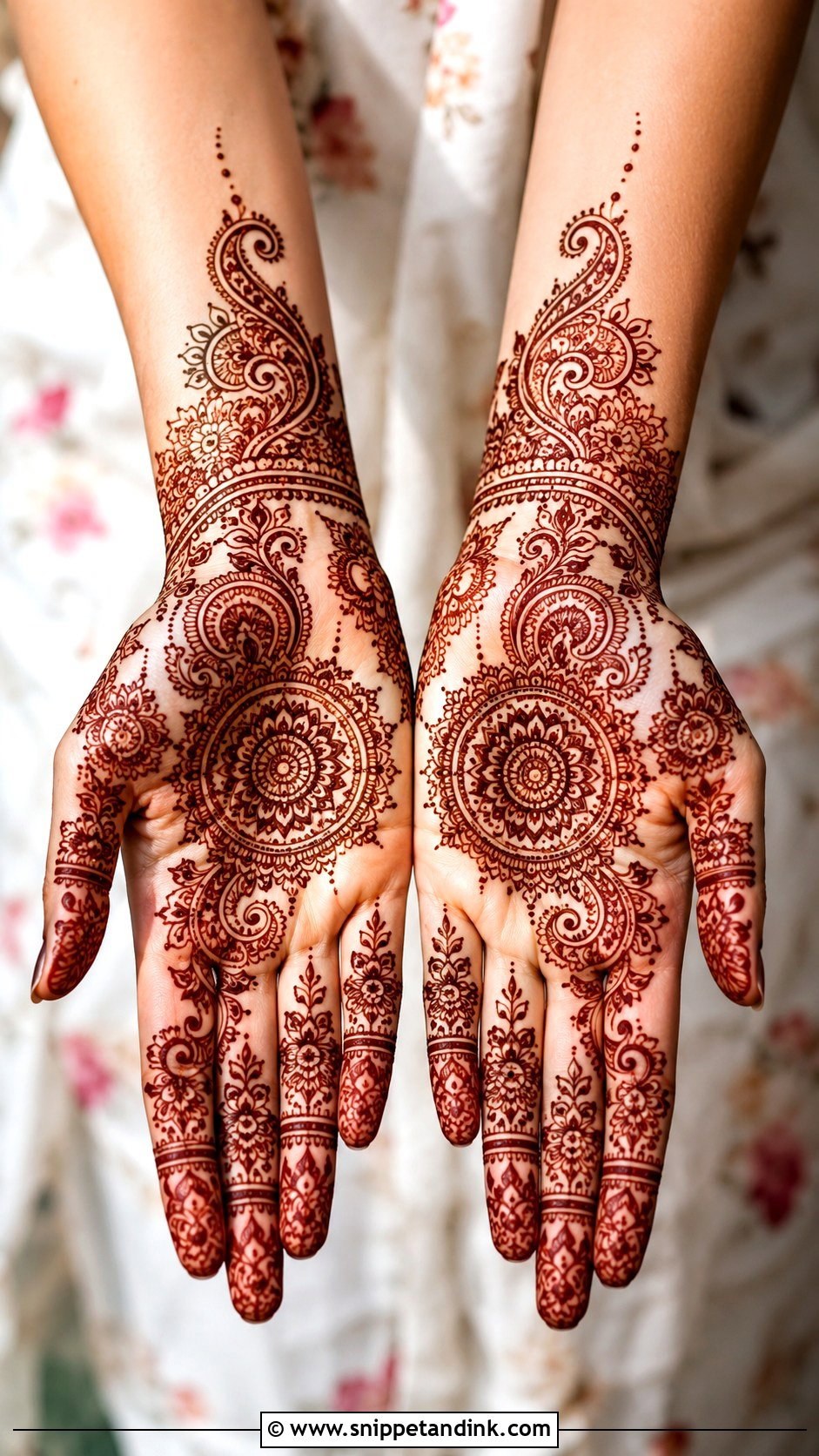
Indian-style front hands use mandalas, paisleys, lotus petals, peacock curves and fine filler patterns, but this lighter version keeps the layout wearable. A round palm motif joined to the wrist with a paisley chain, small arches and dotted lines on the fingers. The secret is repetition: I pick three or four elements and repeat them across the hand instead of adding new ones. It reads as traditional and calm, which is why guests at religious festivals and family ceremonies ask for it.
9. Simple Indo-Arabic Front Hand Mehndi Design
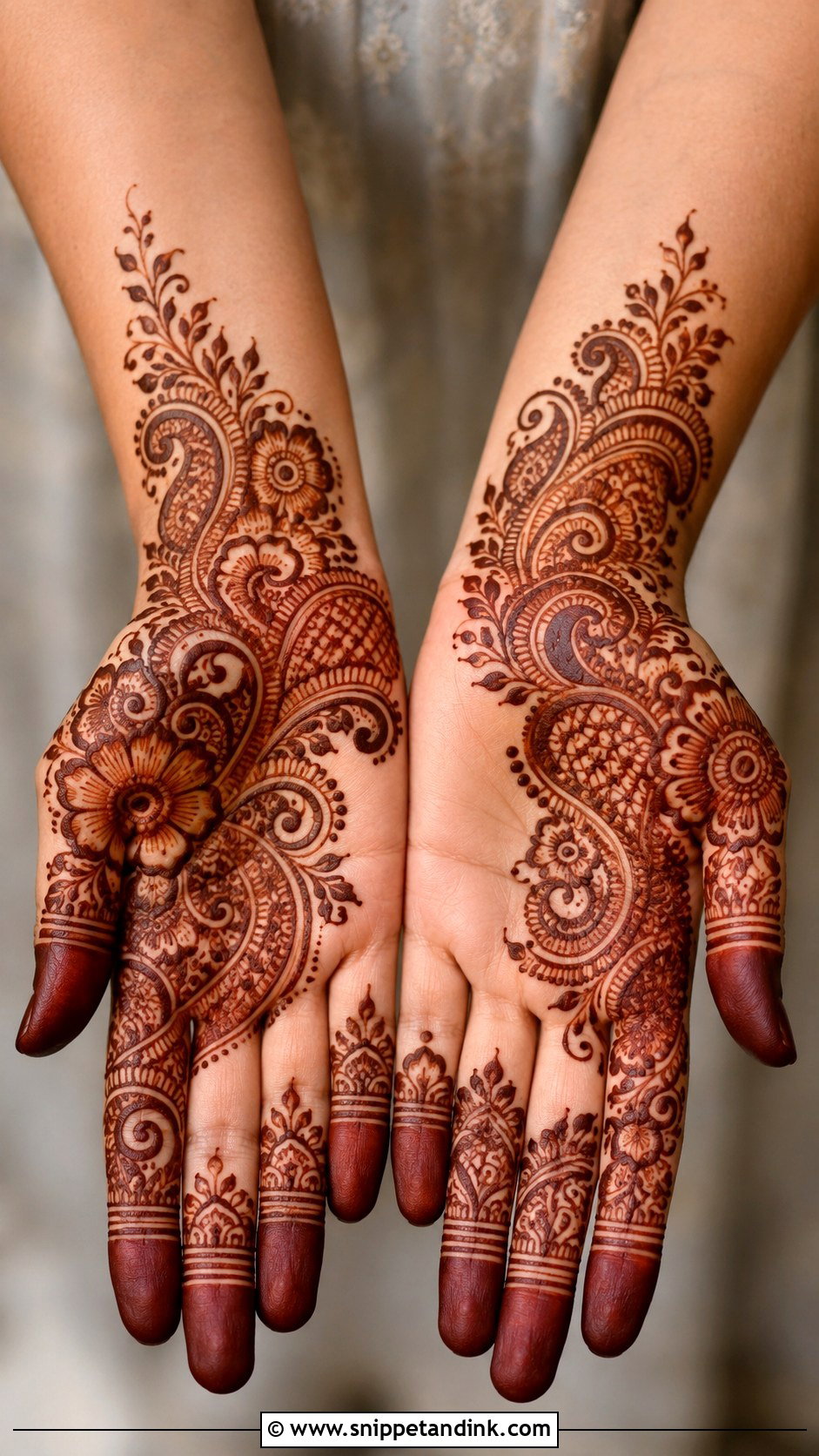
Indo-Arabic takes the bold floral trail of Arabic work and fills each flower or paisley with Indian-style lines, dots and small checks. It’s fuller than Arabic but nowhere near bridal. I leave one side of the palm slightly open so the trail has room to breathe, otherwise the two styles start fighting. Bands, leaves and small mandala tips on the fingers. Bridesmaids like it because it looks modern and traditional at once.
10. Simple Front Hand Mehndi Design With Paisley
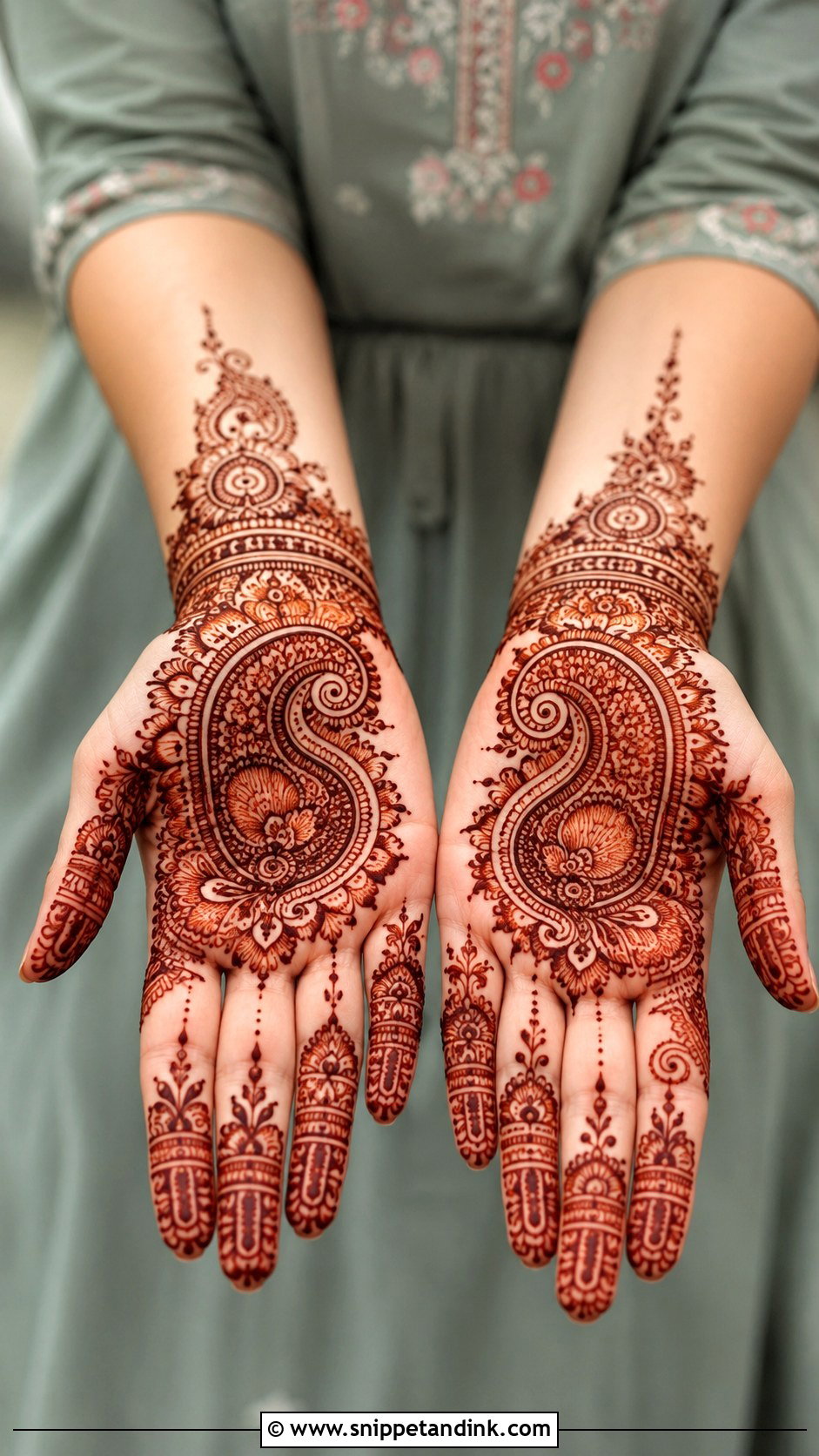
Paisley, the curved mango shape, brings a traditional feel with very little effort. I use one large paisley as the main motif and decorate its inside with lines, dots, petals or tiny leaves, then add a smaller matching paisley near the fingers for balance. Hand size changes everything here. On a small hand I draw slim paisleys; on a broad palm I widen them and use open fillers so they don’t look like dark tear drops once stained.
11. Simple Front Hand Mehndi Design With Lotus
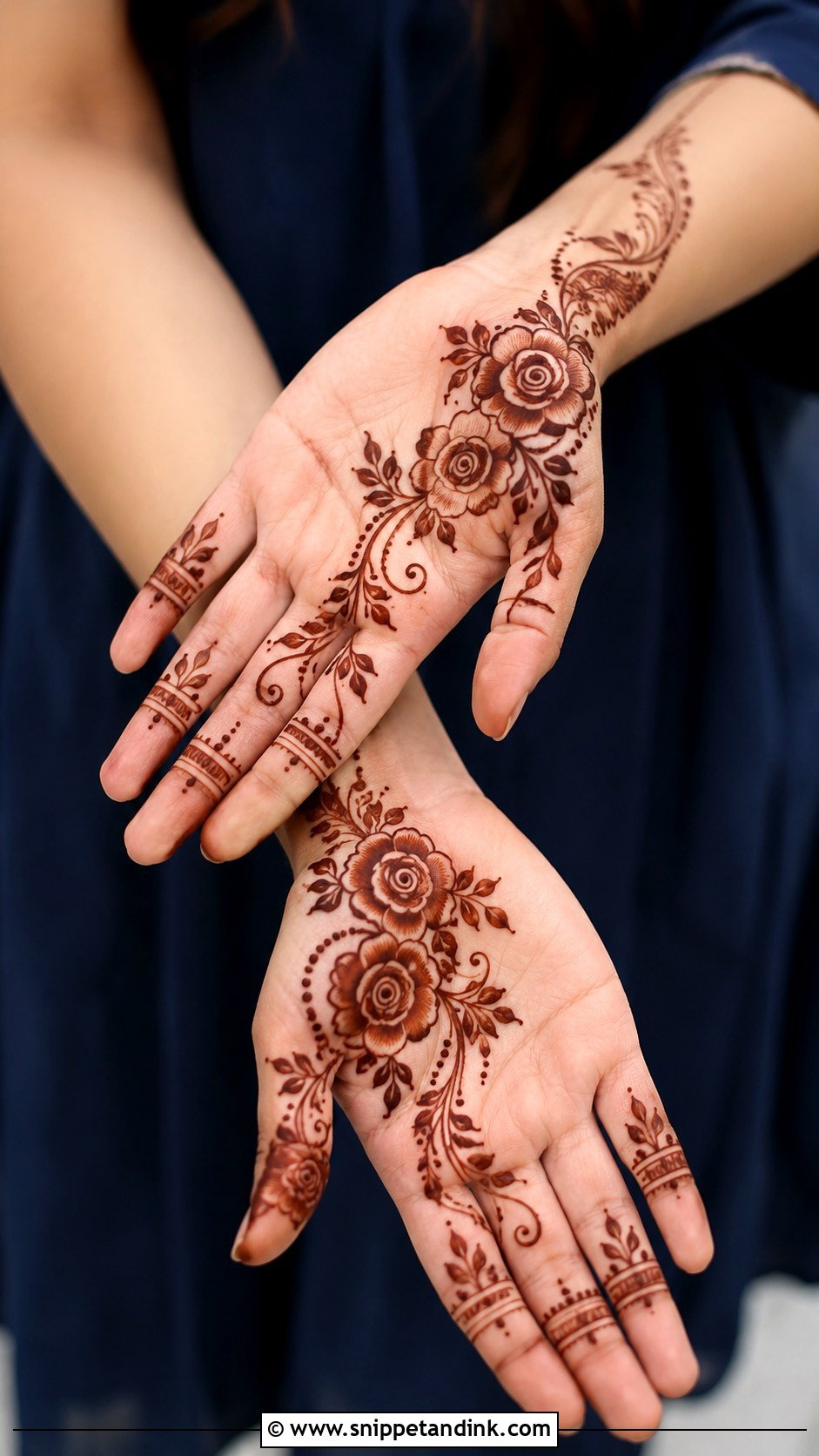
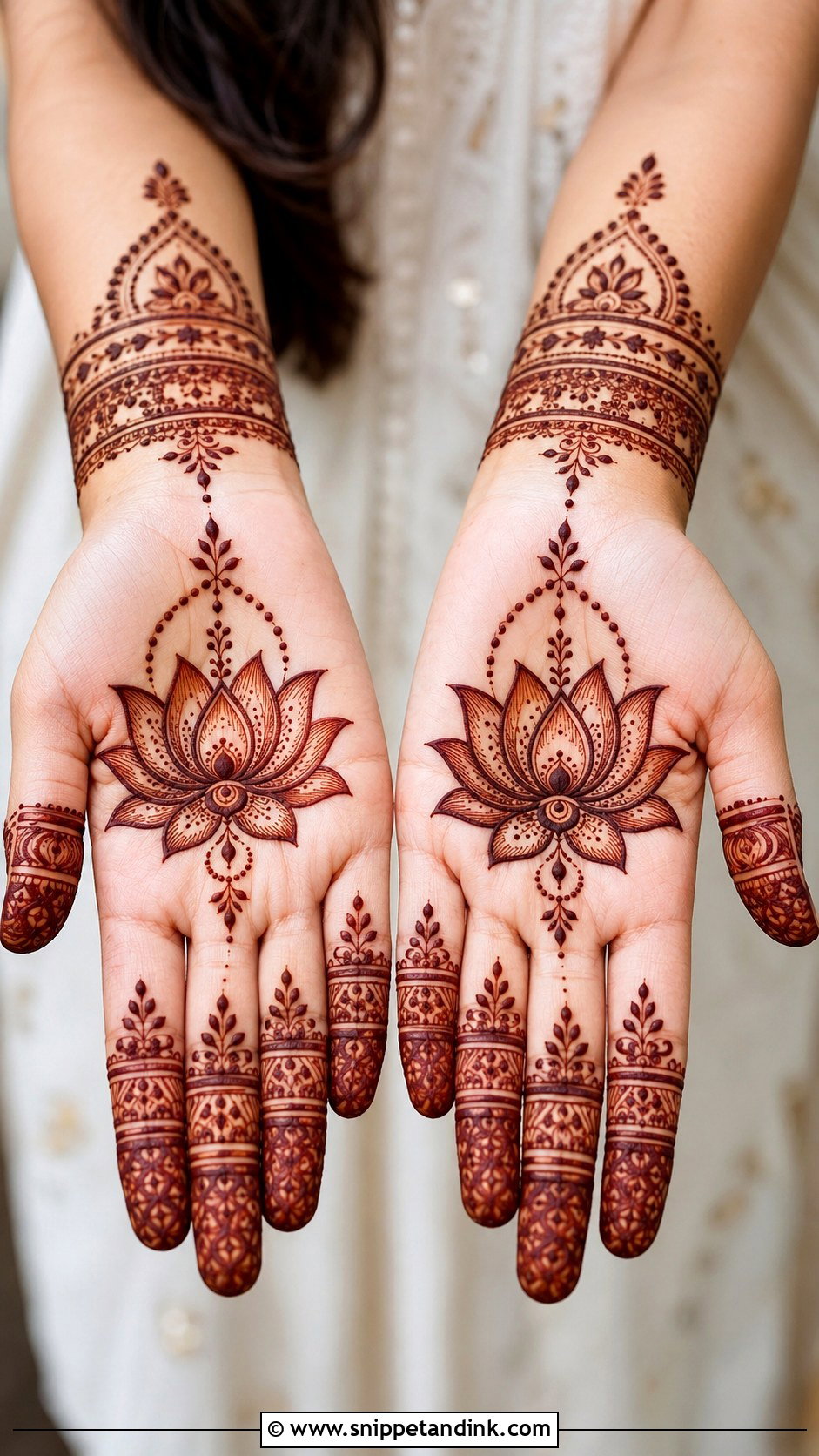
The lotus is calm and meaningful, and it sits well either in the centre of the palm or near the wrist. Its layered petals are easy to draw: three at the front, two behind, then a base. I leave open space around it for a modern look, and give the fingers small petal bands to echo it. A good fit for traditional outfits, festivals and puja days.
12. Simple Front Hand Mehndi Design With Rose
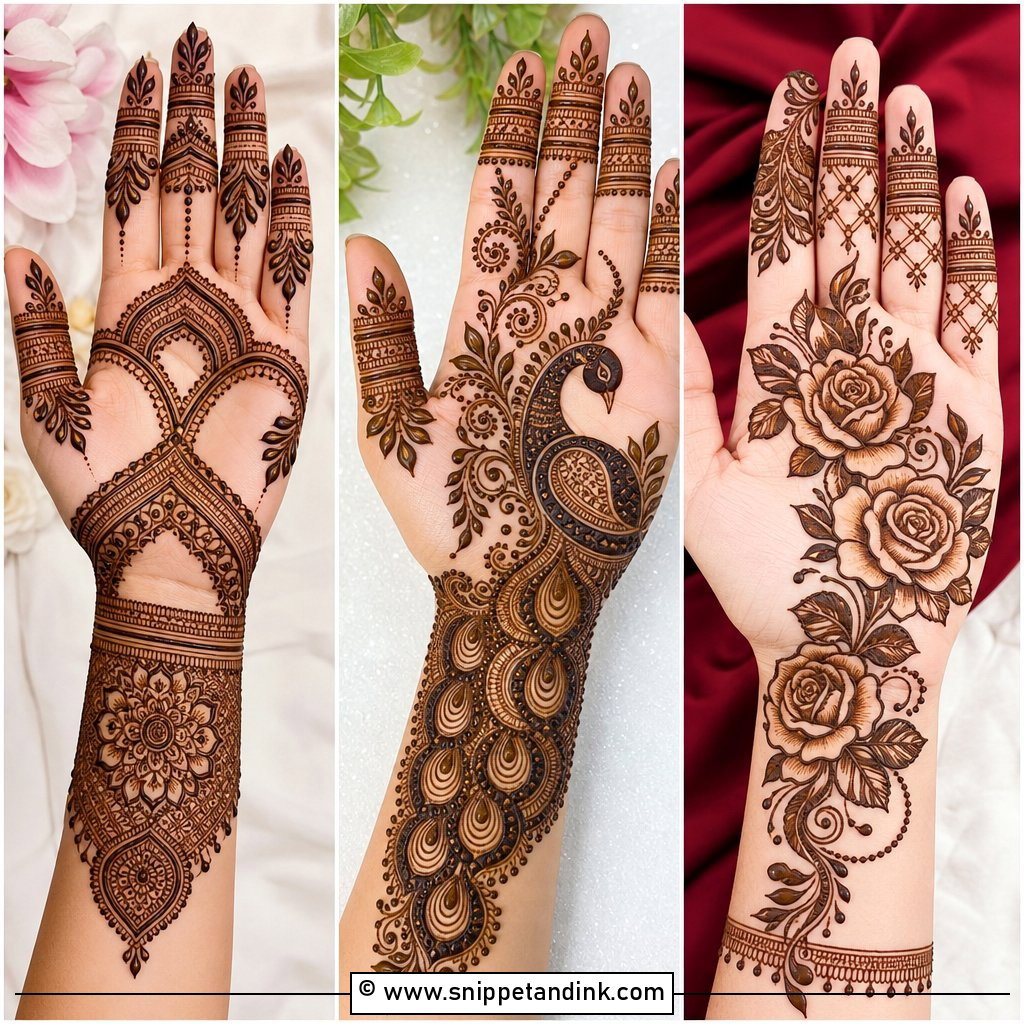
Rose designs use spiral petals, rounded layers and leafy edges. I place the rose on one side of the palm and let a vine run toward the index finger or wrist, which gives that Arabic sweep. Fingers stay light with thin rings and dotted trails. The common mistake is overfilling the petals: a solid rose stains as a single dark disc, while outlined petals keep the spiral visible. Easy to wear for parties and pre-wedding events.
13. Simple Front Hand Mehndi Design With Leaf Trail
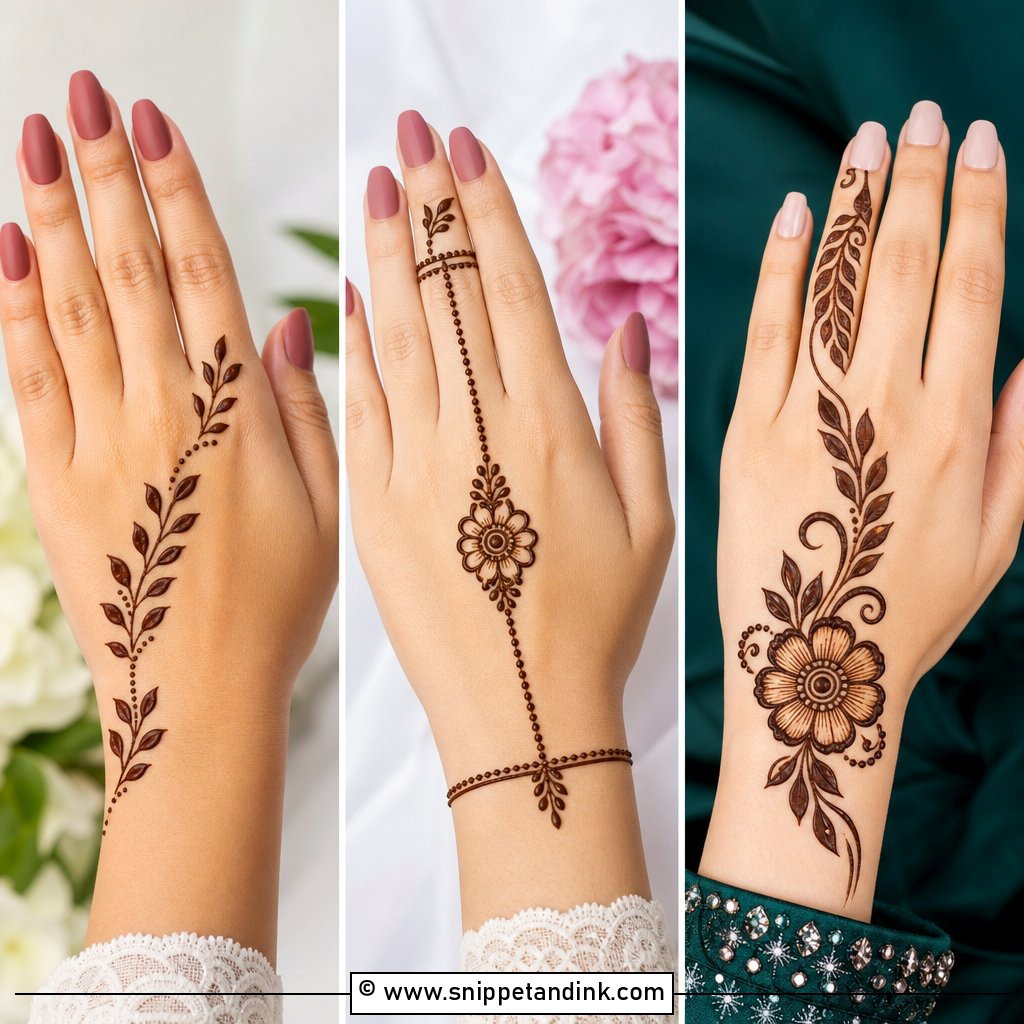
A leaf trail is quick and light. It starts at the wrist, crosses the palm and ends near the middle finger, with dots and fine lines softening the empty areas. A small flower at the wrist or palm gives it a focal point. I keep the leaves even in size and set them at the same angle along the stem; leaves pointing in random directions make the trail look rushed. It suits daily wear, college events and small family gatherings.
14. Simple Front Hand Mehndi Design With Bracelet
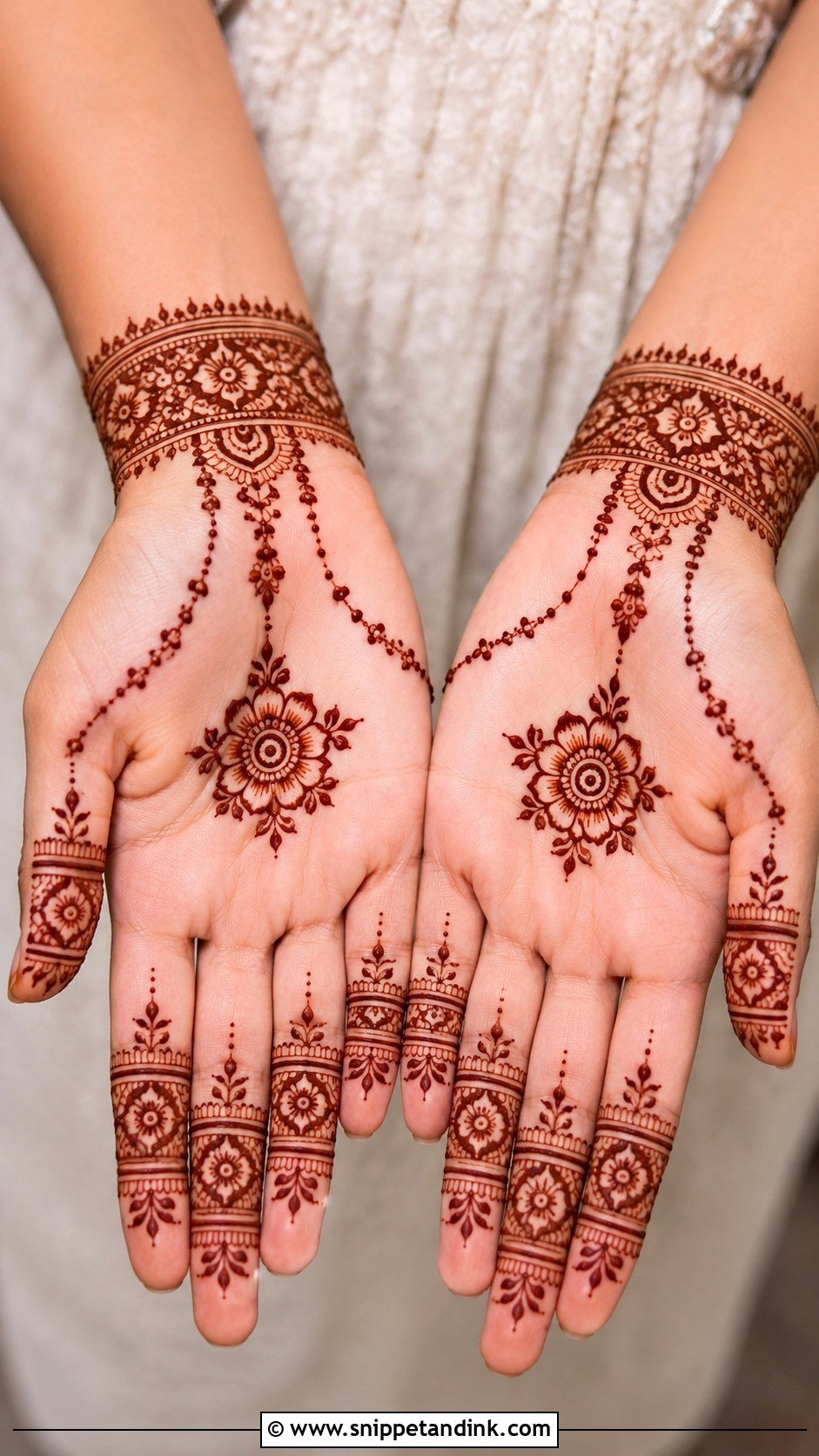
A cuff at the wrist, joined to the palm with chains, dots or a small floral trail, gives a jewellery look. The palm holds a mandala, flower or paisley and the fingers get rings and tips. I place the cuff just below the wrist crease rather than on it; skin there folds constantly, and a cuff drawn on the crease cracks while drying. It looks particularly good with bangles.



15. Simple Front Hand Mehndi Design With Jaali
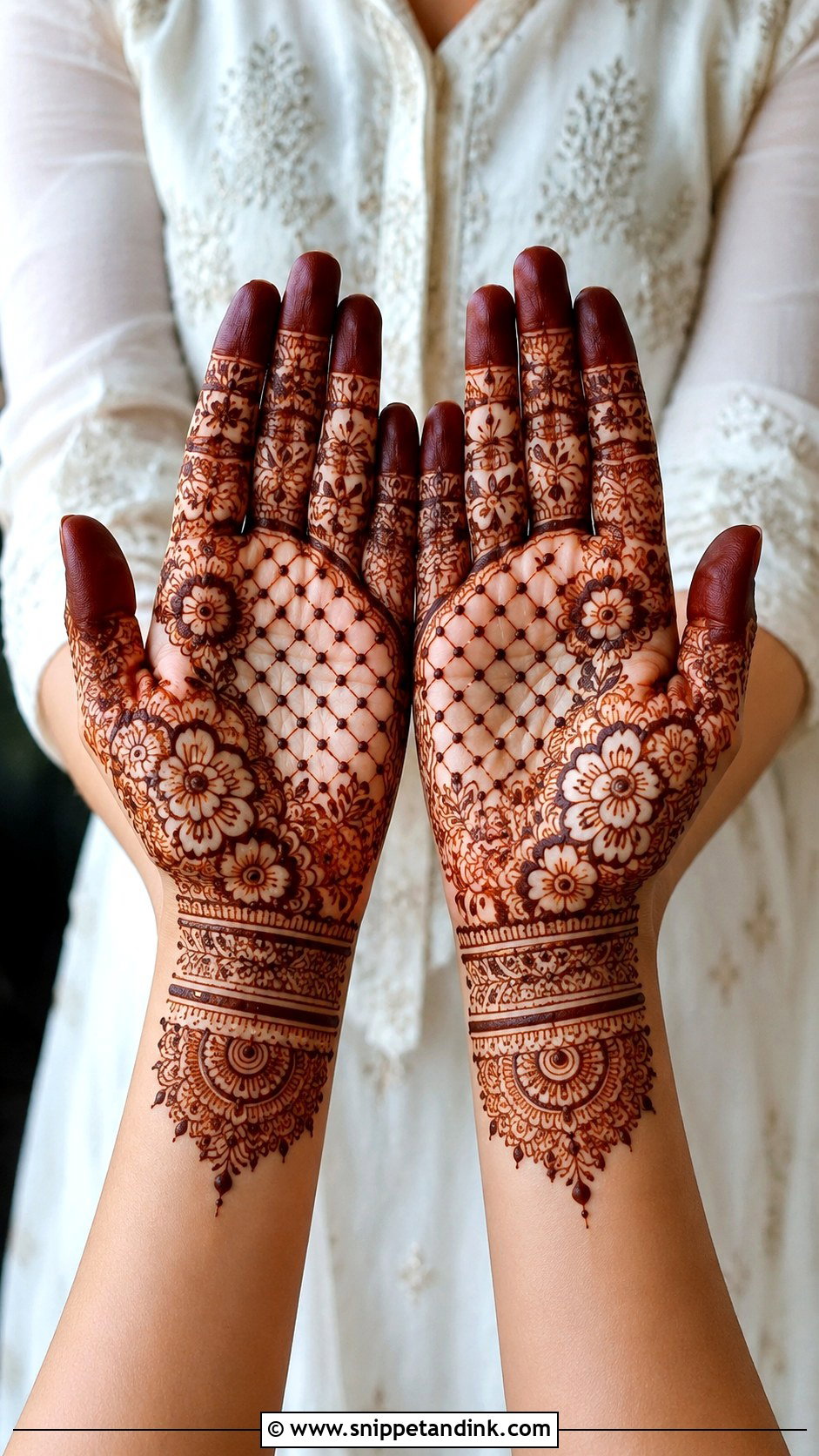
Jaali is mesh: crossing lines that add texture fast. I use one jaali section only, on part of the palm, one finger or the wrist, and balance it with a flower, leaves or a mandala. Two jaali sections and the hand looks busy. The lines must be even and not too close together, because paste settles and spreads slightly, and tight cells fill in once stained. Popular with guests and bridesmaids.
16. Simple Front Hand Mehndi Design With Dots
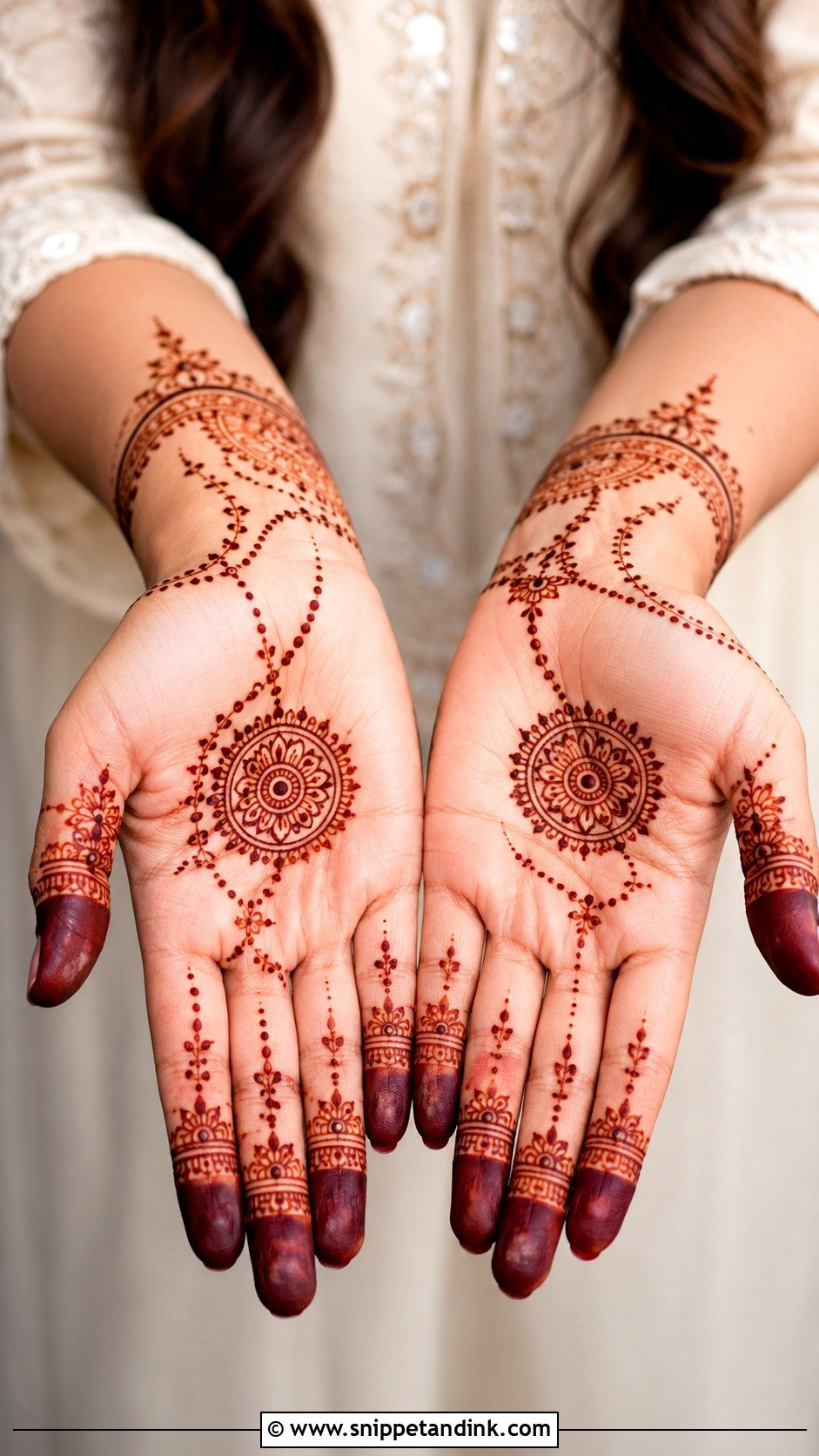
Dotted chains connecting a central flower, mandala or paisley to the fingers and wrist make an open design look finished. Dots are friendly to beginners and quick, which is why I use them for kids and teens. Consistent size is everything, so I keep steady pressure and lift straight up. Add fingertip caps or small finger bands for balance.
17. Simple Front Hand Mehndi Design With Lines
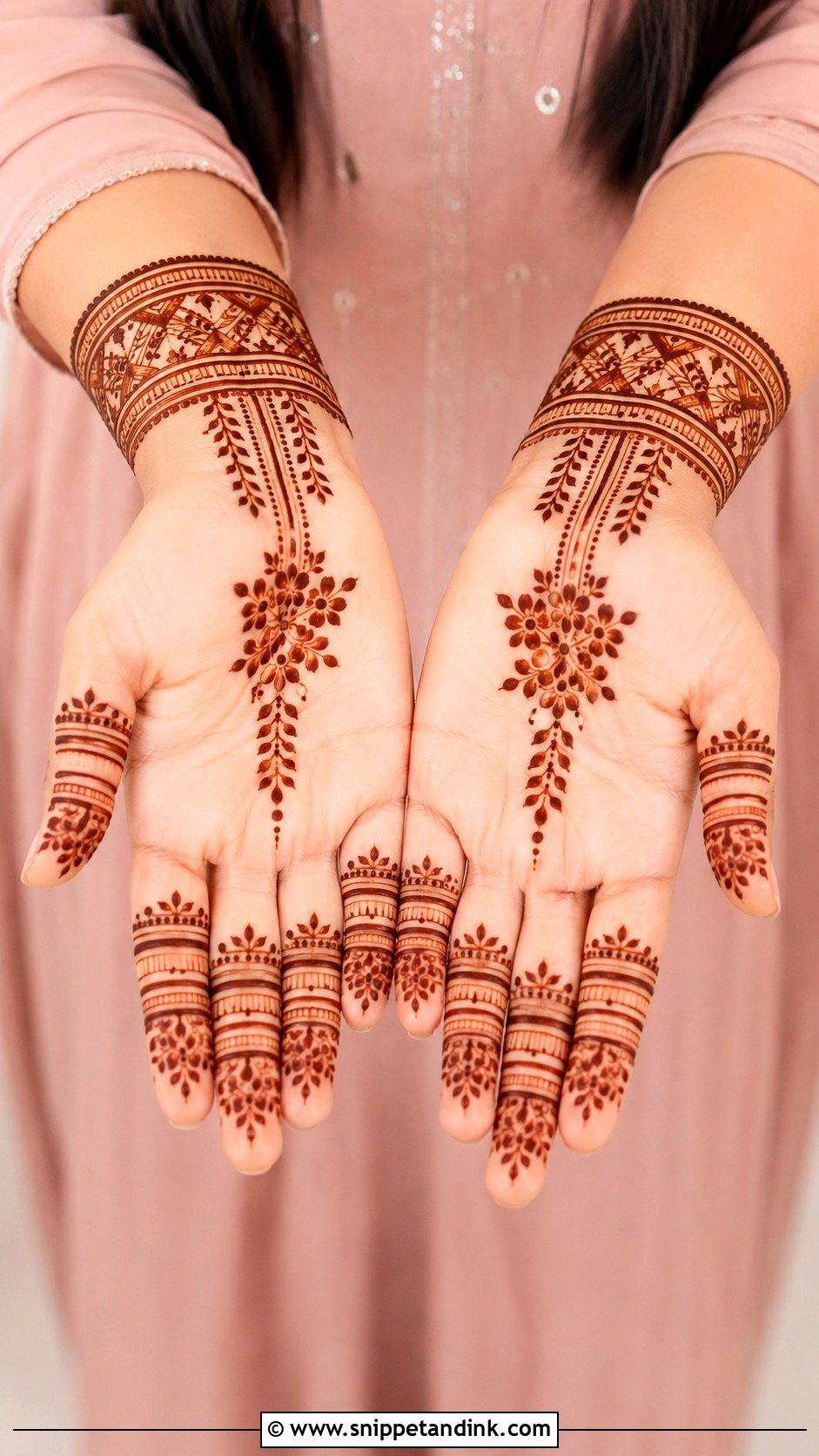
Thin parallel lines form finger bands, wrist cuffs, palm borders and geometric sections. On their own they can look plain, so I add a few flowers or leaves. Long fingers suit this best. I group the lines in threes with open space between groups; it gives rhythm and stops the hand looking striped. Dots at the line ends are a nice finish.
18. Simple Front Hand Mehndi Design With Peacock
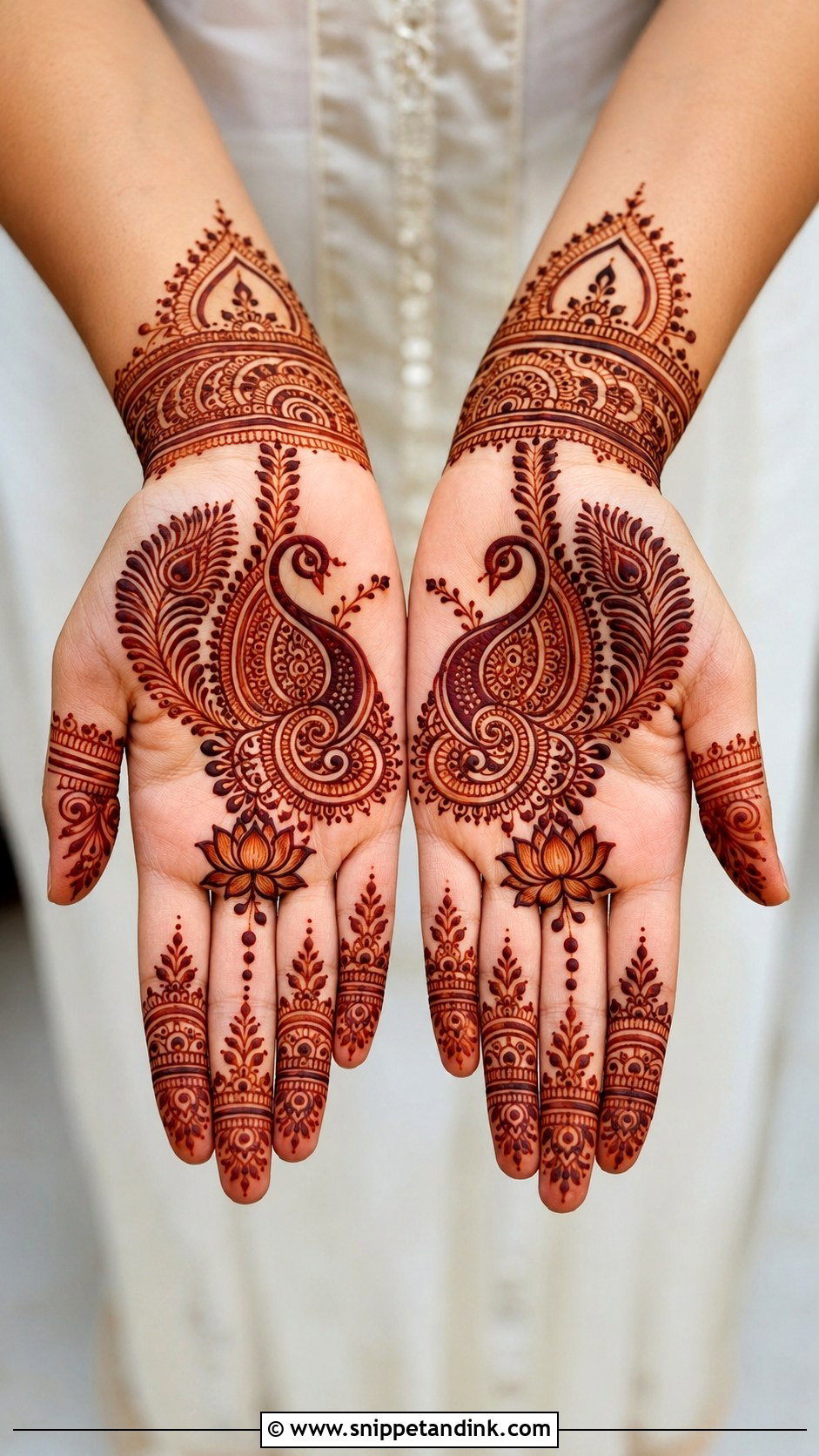
A full peacock on a palm takes time and skill, so the simple version is just the essentials: a curved neck, a small beak and a fan of teardrop feathers with dots and fine lines. Place it on the palm or near the wrist and keep the fingers simple so the bird stays the focus. Paired with paisleys or lotus petals, it’s a natural fit for Indian celebrations and weddings. I’d skip it if you need the design done in under half an hour.
19. Simple Front Hand Mehndi Design With Heart
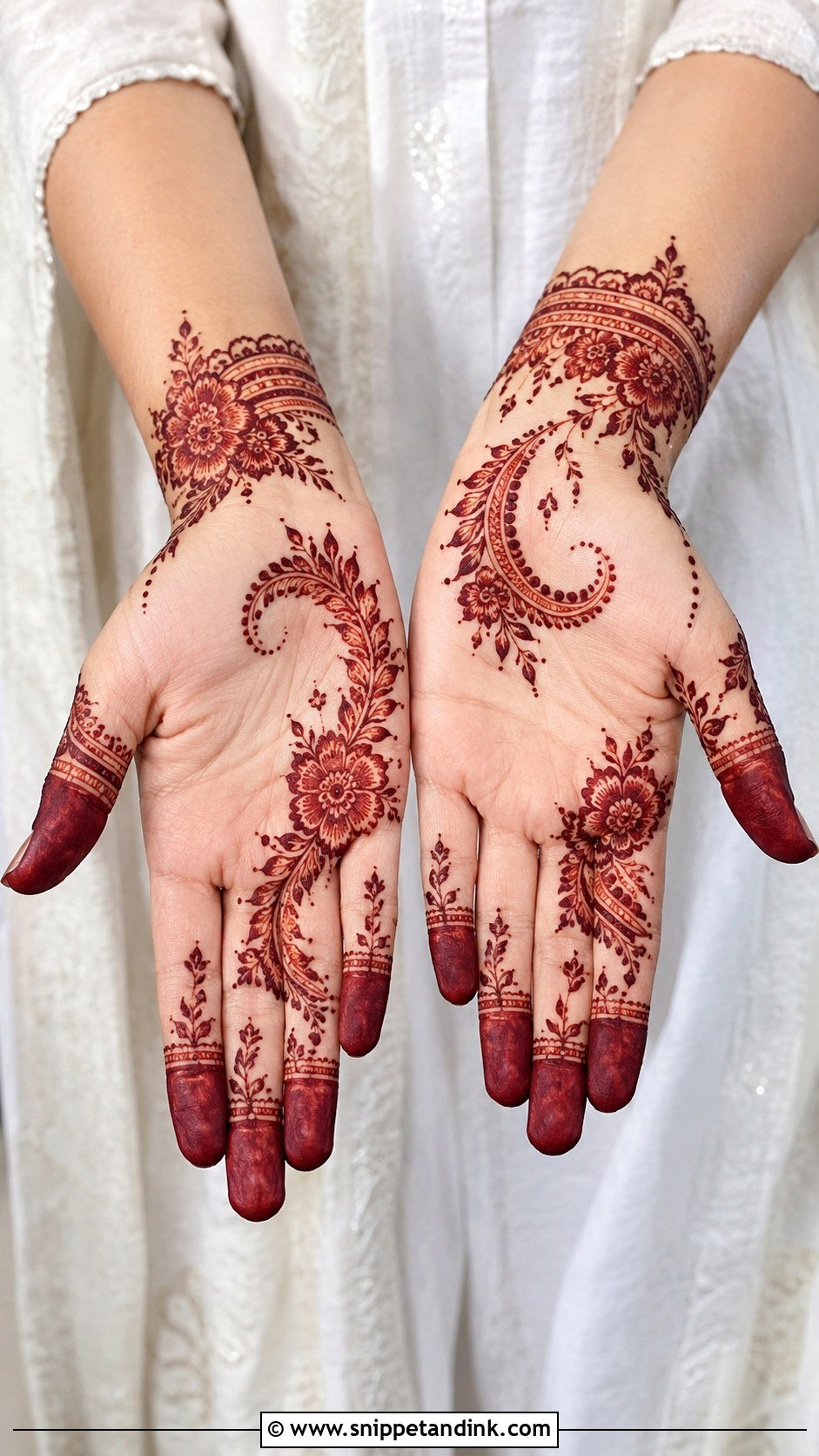
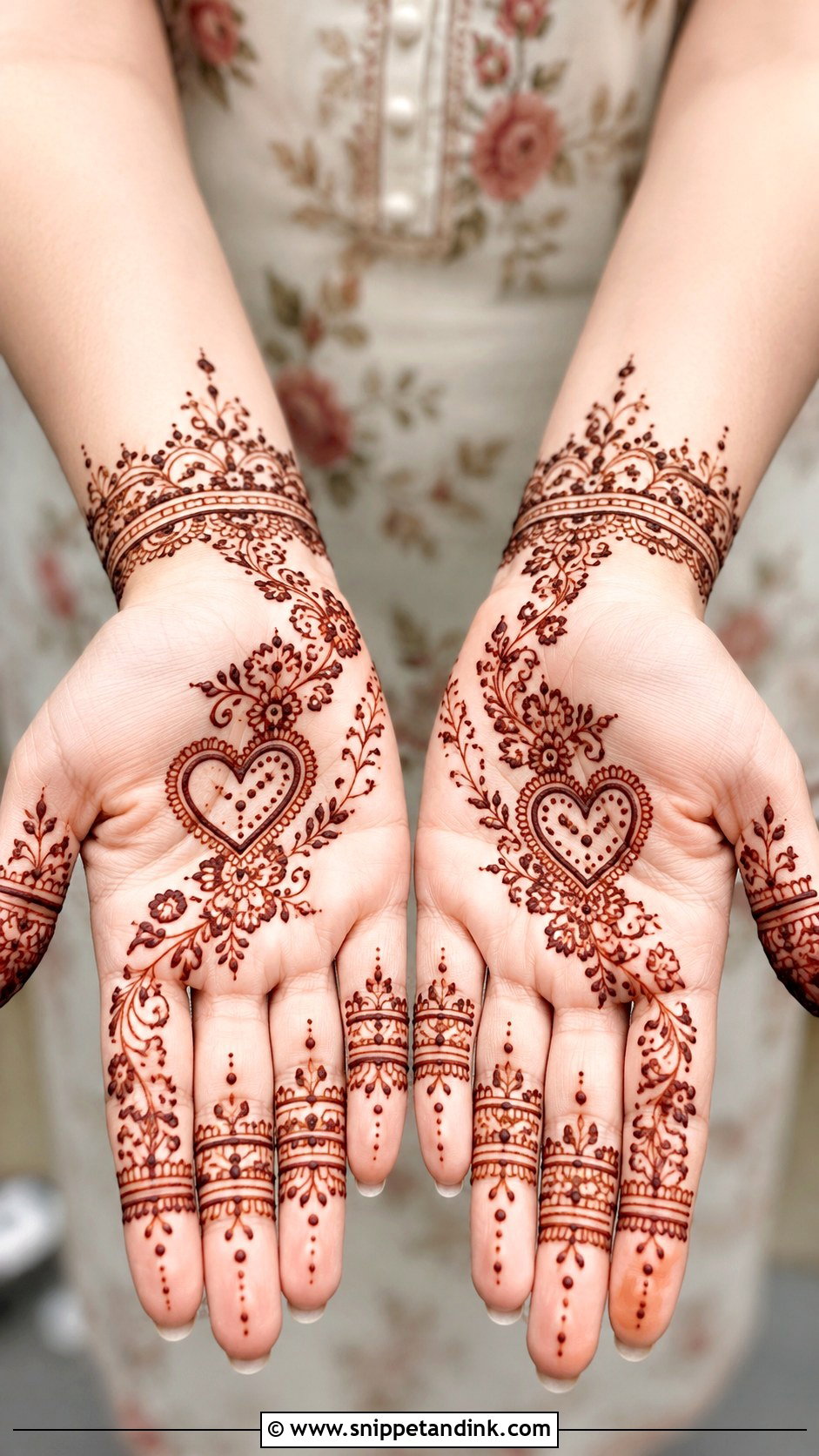
Hearts work best hidden in plain sight: inside a mandala, on a wrist bracelet, or tucked into a floral trail. Surround the heart with dots, leaves and curves so it blends in. I keep it small; a big heart in the middle of the palm tips the whole design into doodle territory. Nice for engagements, anniversaries and teens. Keep the fingers minimal with tiny bands.


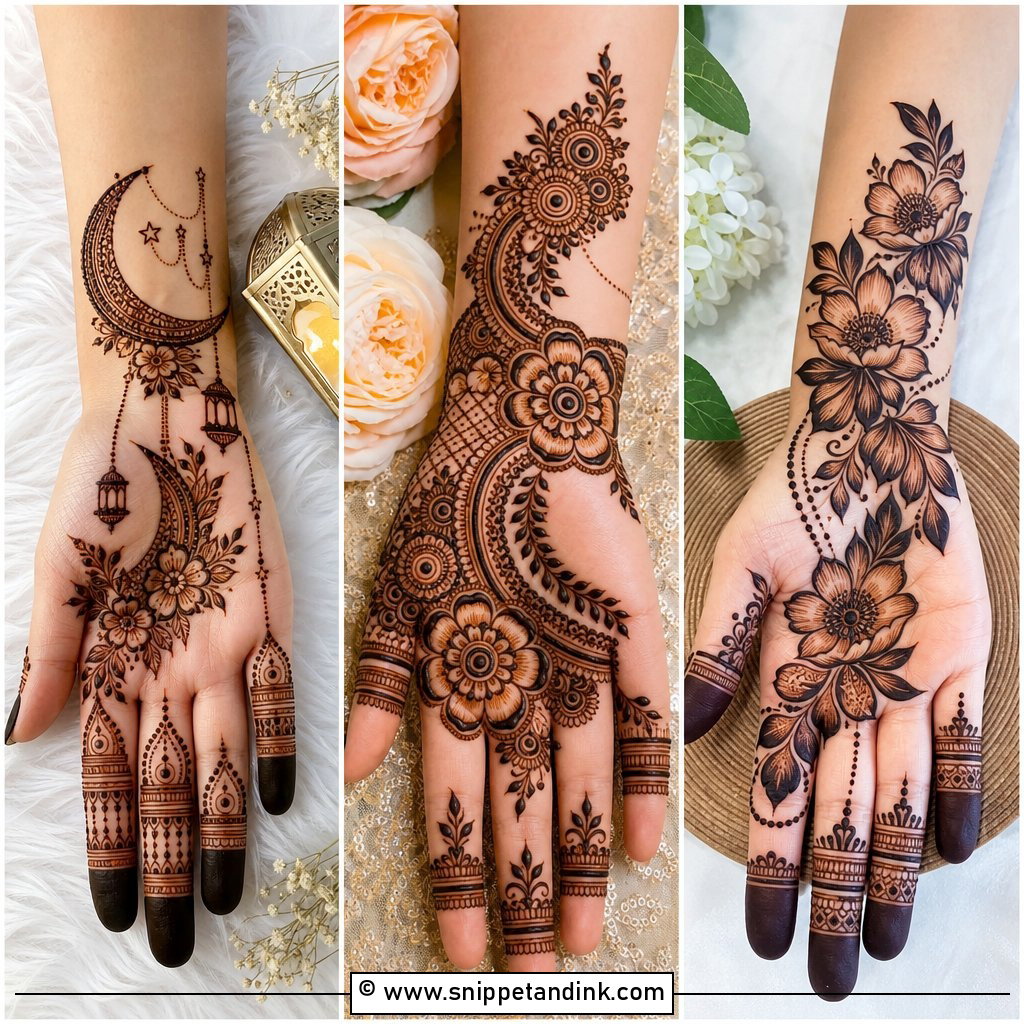
20. Simple Front Hand Mehndi Design For Eid
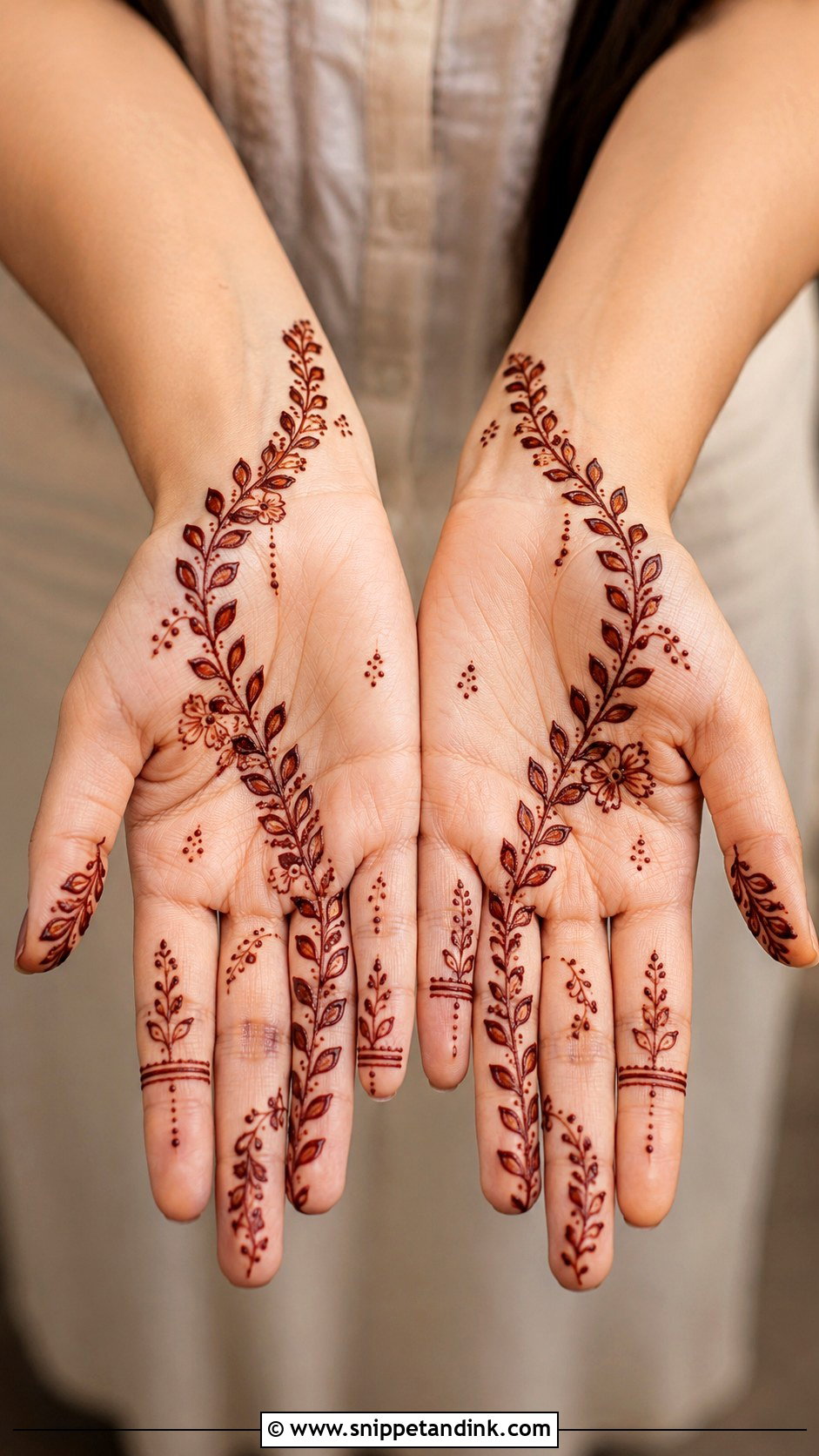
A front hand mehndi design for Eid should be quick to apply, since most people do it the night before at home. Arabic floral trails, mandalas, crescent curves, leafy vines and bracelet bands all suit. Palm-centred for tradition, diagonal for a modern look. Fingertips filled or lightly capped give the classic Eid finish. I apply in the evening so the paste can stay on overnight, and the stain is darkening nicely by morning prayers.
21. Simple Front Hand Mehndi Design For Diwali
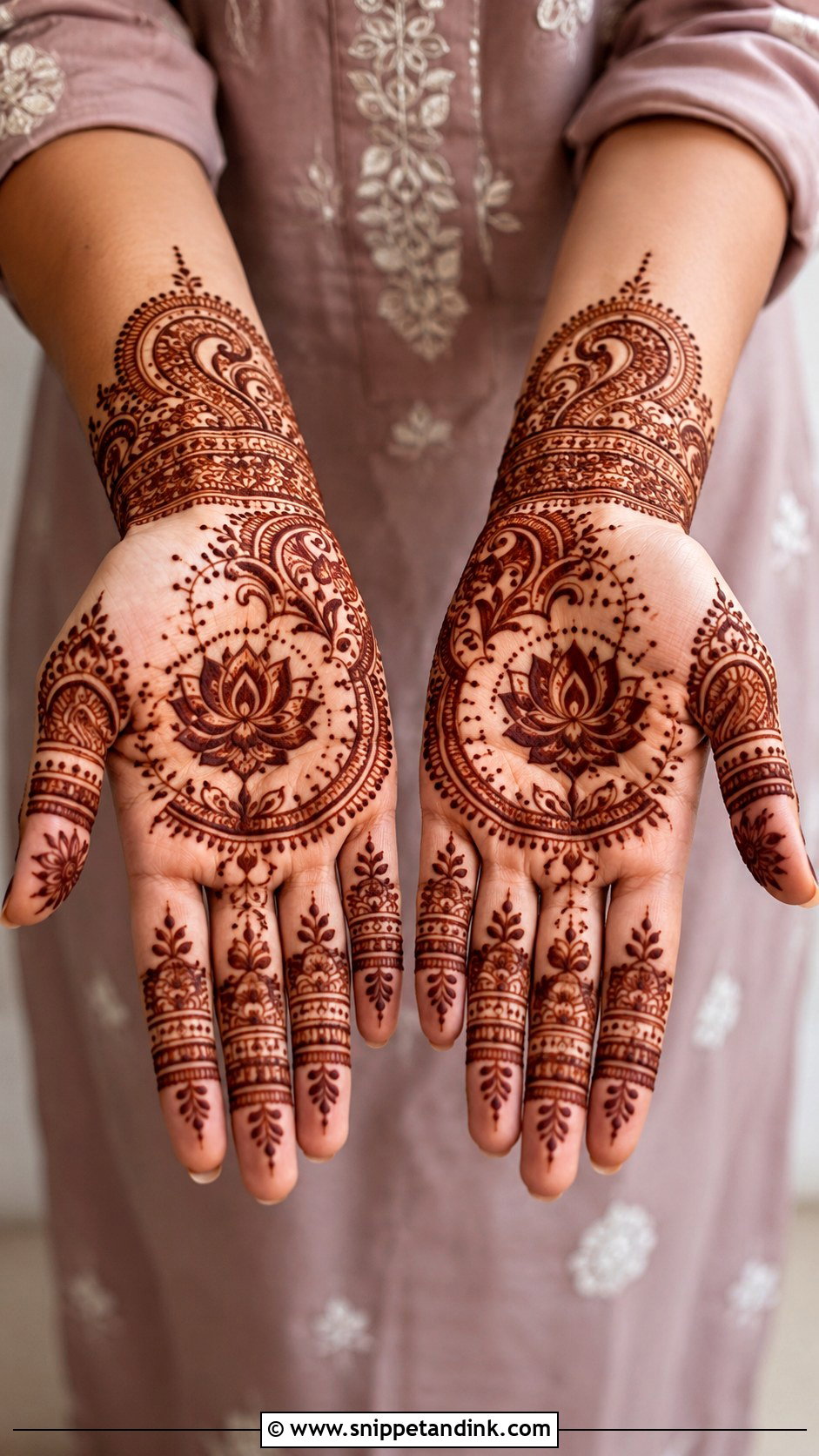
For Diwali I like a round mandala in the palm surrounded by small petal details, with lotus, paisleys or diya shapes if you want a festival motif. Clean finger bands and a wrist border complete the hand. You don’t need heavy fill; open space keeps it fresh next to bright ethnic outfits. Doing it yourself? Use dots and small leaves around the main shapes to fill gaps.
22. Simple Front Hand Mehndi Design For Engagement
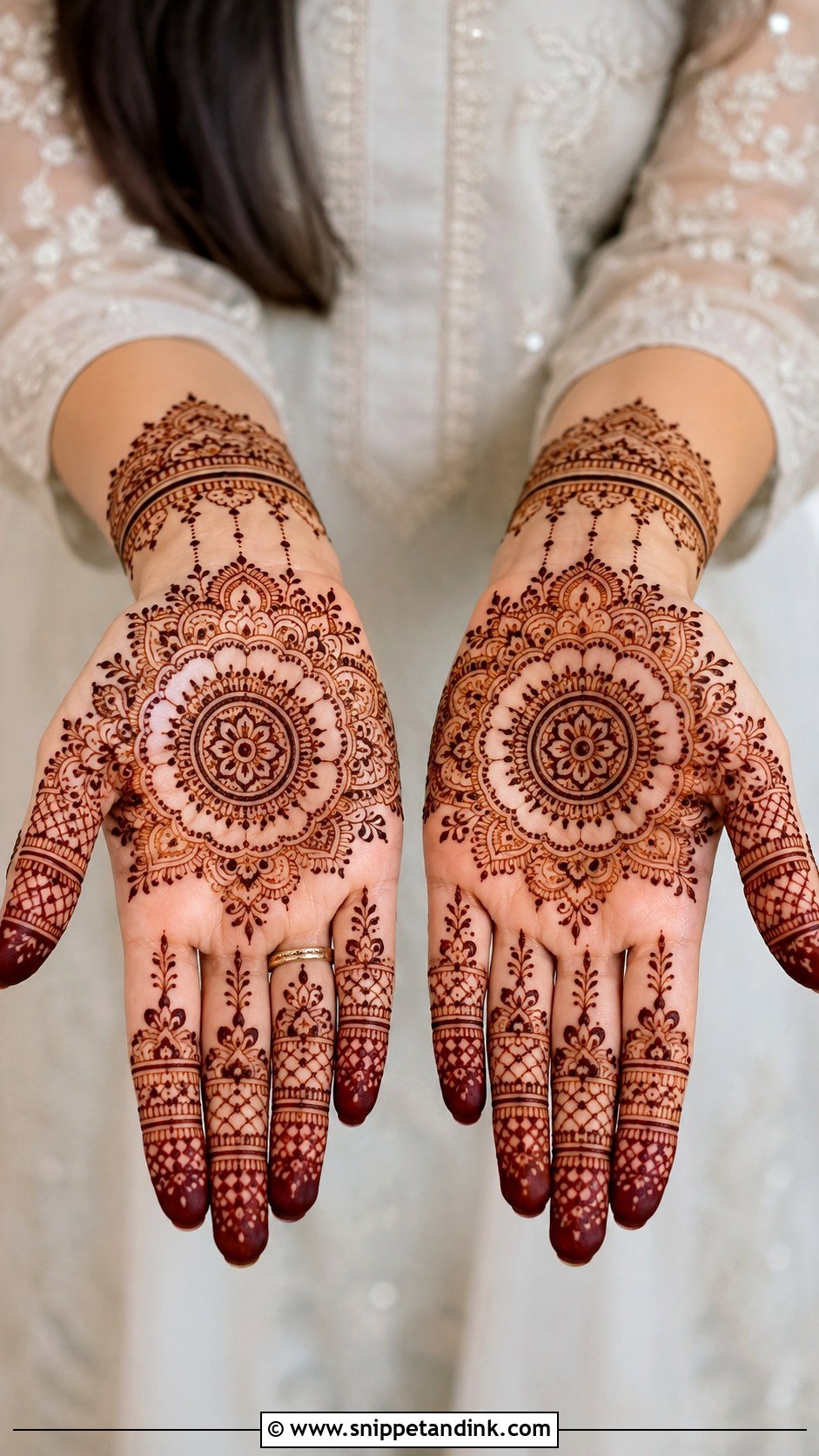
Engagement photos are mostly ring photos, so I focus on the fingers, the palm centre and the wrist, with extra detail on the ring finger. A small mandala with floral finger bands works well. Initials, a tiny heart or a fine chain add something personal. I keep the palm light so the ring stays the focal point. It also suits sisters of the bride and guests.
23. Simple Front Hand Mehndi Design For Wedding Guest
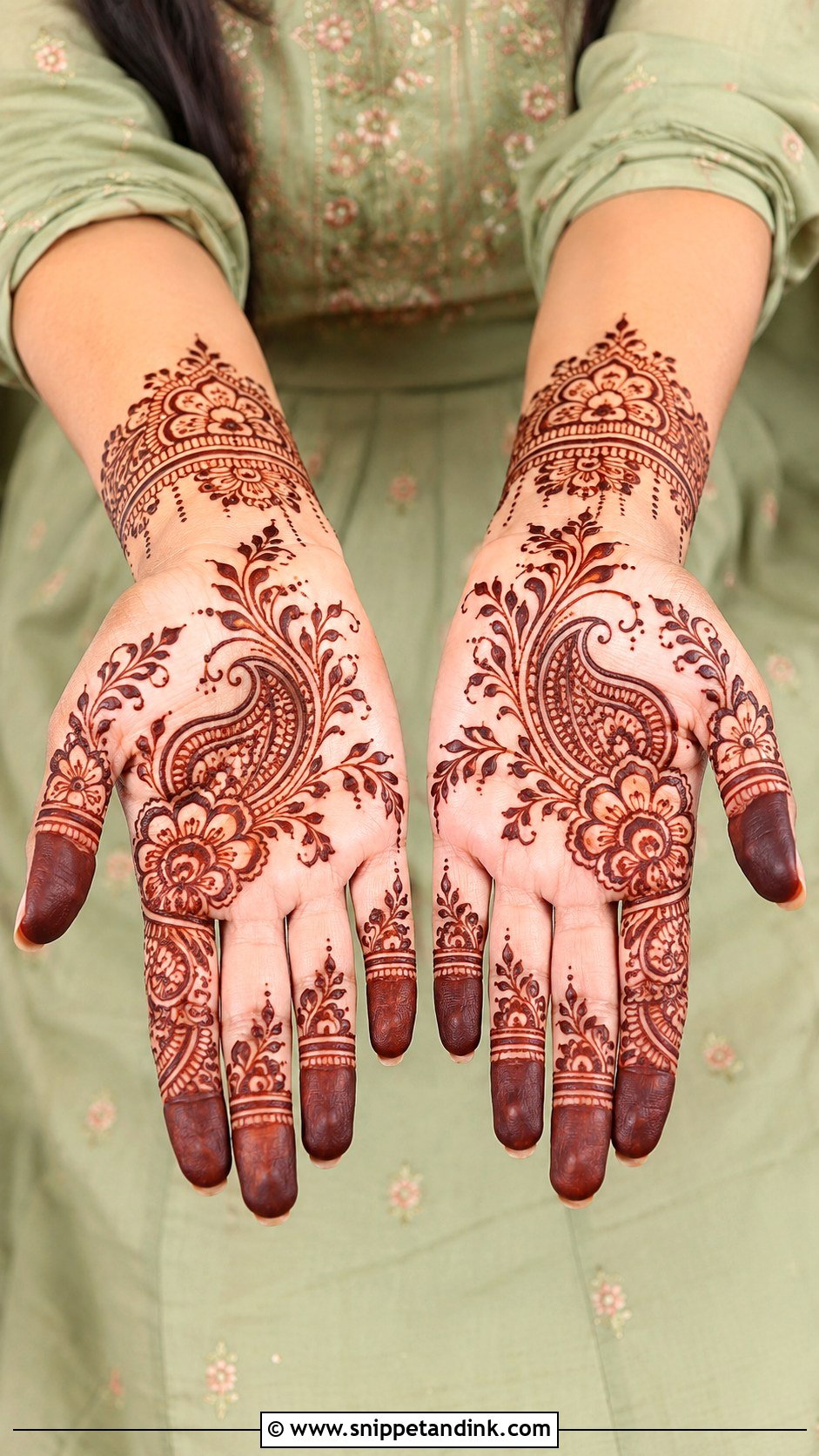
Guests should look festive without matching the bride. A floral trail, paisley palm or mandala with decorated fingers at medium coverage strikes that balance. If you have several functions in a row, this is the level of design that survives them all, since it’s easy to touch up. Add a wrist cuff for a finished look or leave the wrist bare for comfort. Arabic and Indo-Arabic patterns are quick for artists working through a queue of guests.
24. Simple Front Hand Mehndi Design For Kids
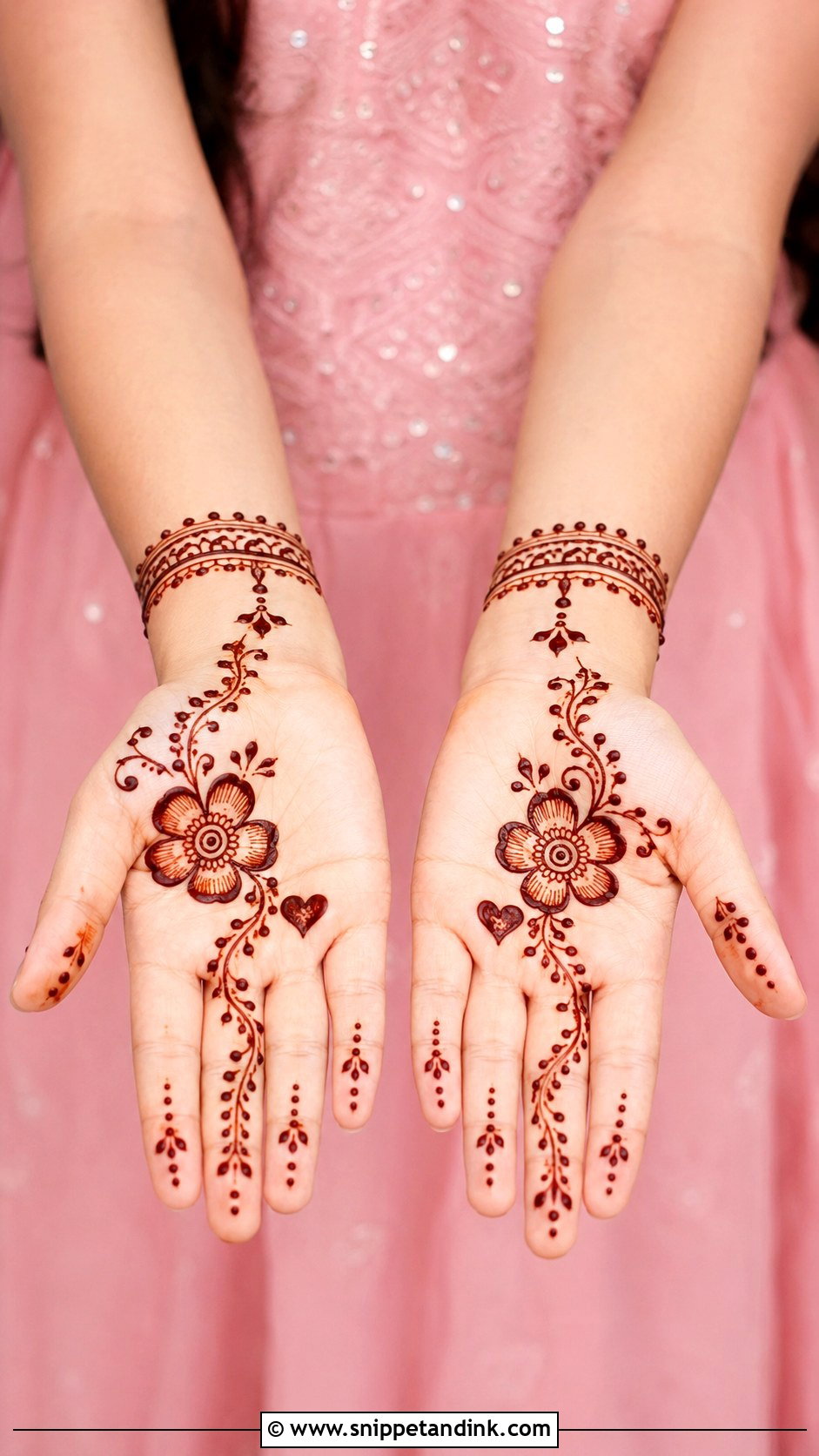
A front hand mehndi design for kids must be done before they lose patience. A small flower, round mandala, heart, butterfly shape or dotted vine on the palm, very light fingers, maybe a simple wrist band. I avoid dense coverage because small hands touch everything. Ask parents first about sensitive skin, and only ever use natural henna with children.
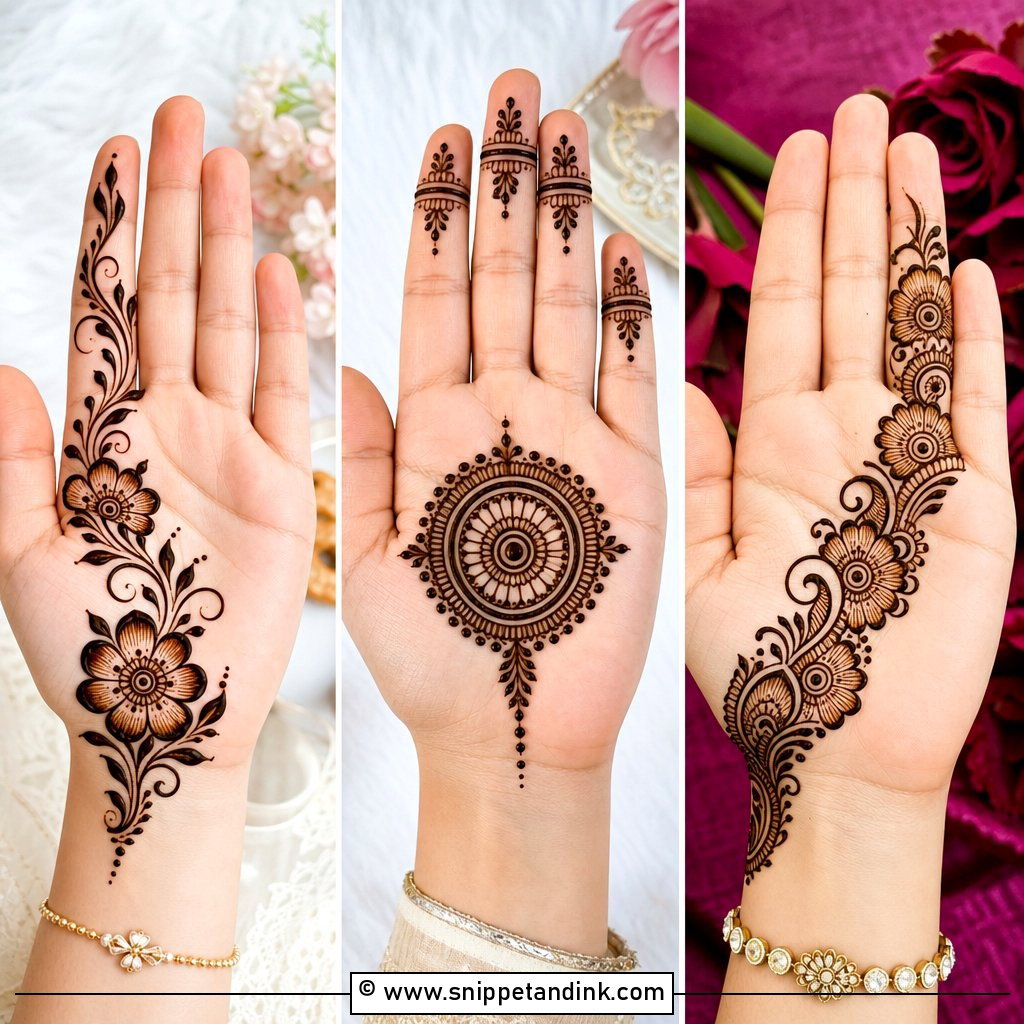
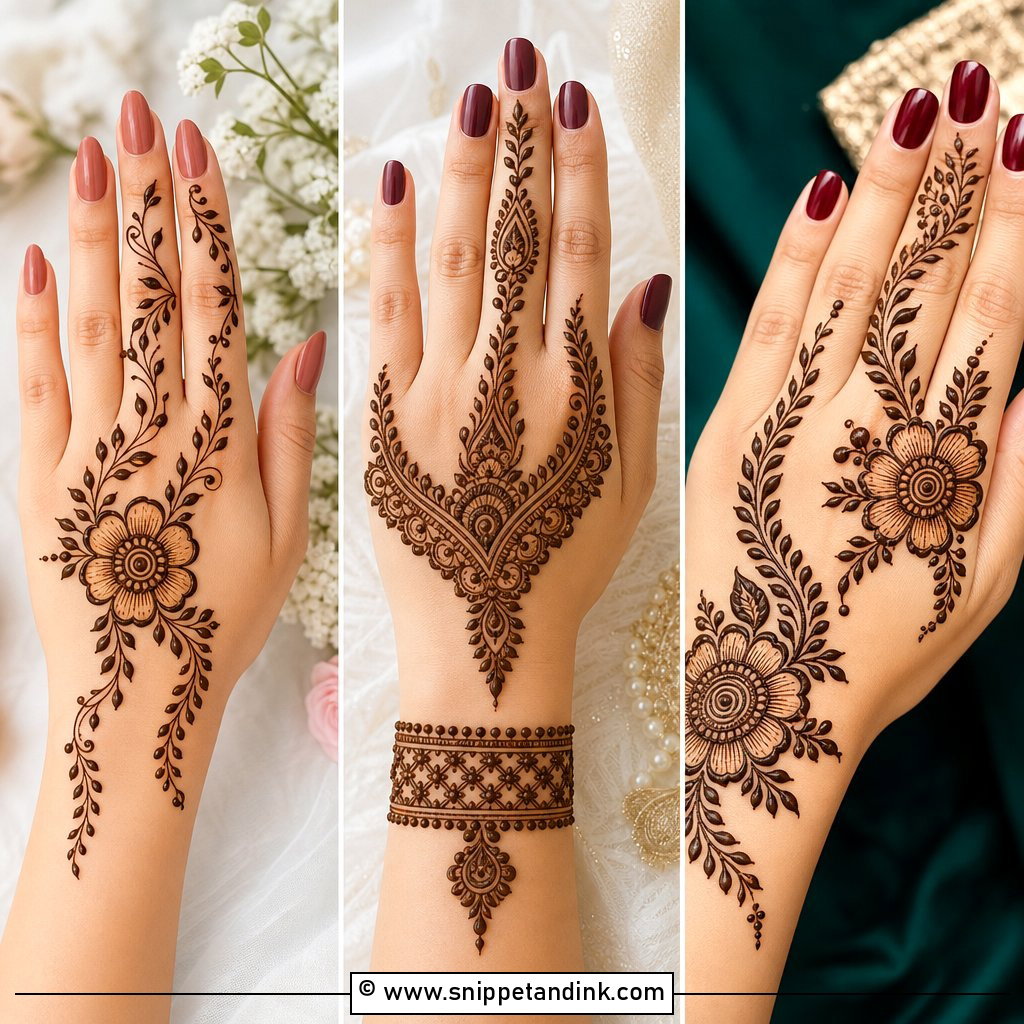

25. Simple Front Hand Mehndi Design For Small Hands
Large crowded patterns make a small palm look smaller. Slim motifs and open spacing work better: a neat mandala, tiny paisleys or a narrow floral trail. I keep finger designs vertical to lengthen them, and use dotted chains and thin leaves instead of heavy blocks. A slim wrist bracelet completes the hand. Let skin show between motifs; that’s what makes it flattering on a petite hand.
26. Simple Front Hand Mehndi Design For Long Fingers
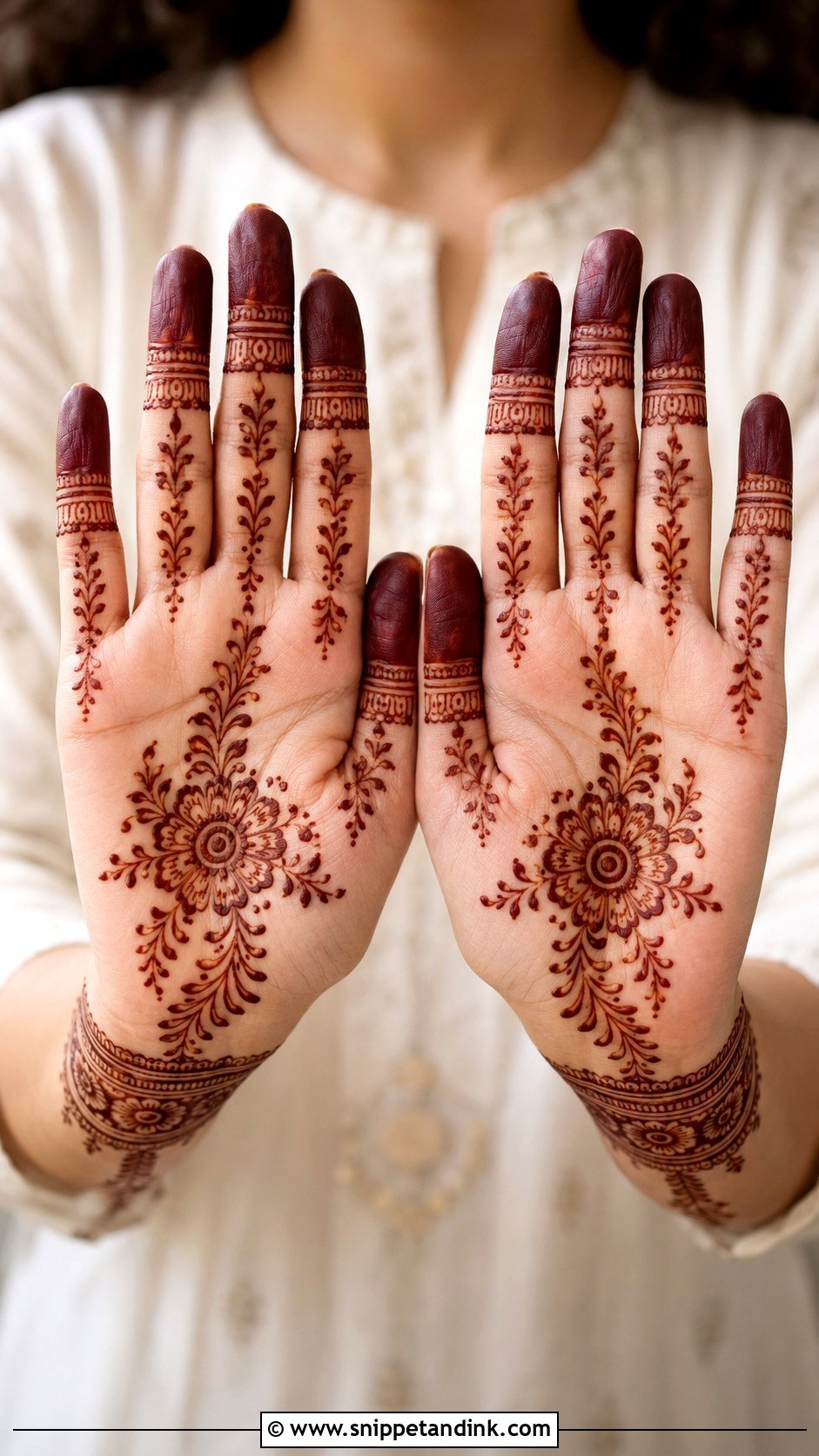
Long fingers are a gift for finger-focused work: rings, vertical lines, leafy trails and fingertip caps. The palm stays simple with one central motif. I’d either match all fingers or make one statement finger with extra floral work, not both. A slim wrist border links everything. In close-up photos the fingers become the design.
27. Simple Front Hand Mehndi Design For Dark Skin
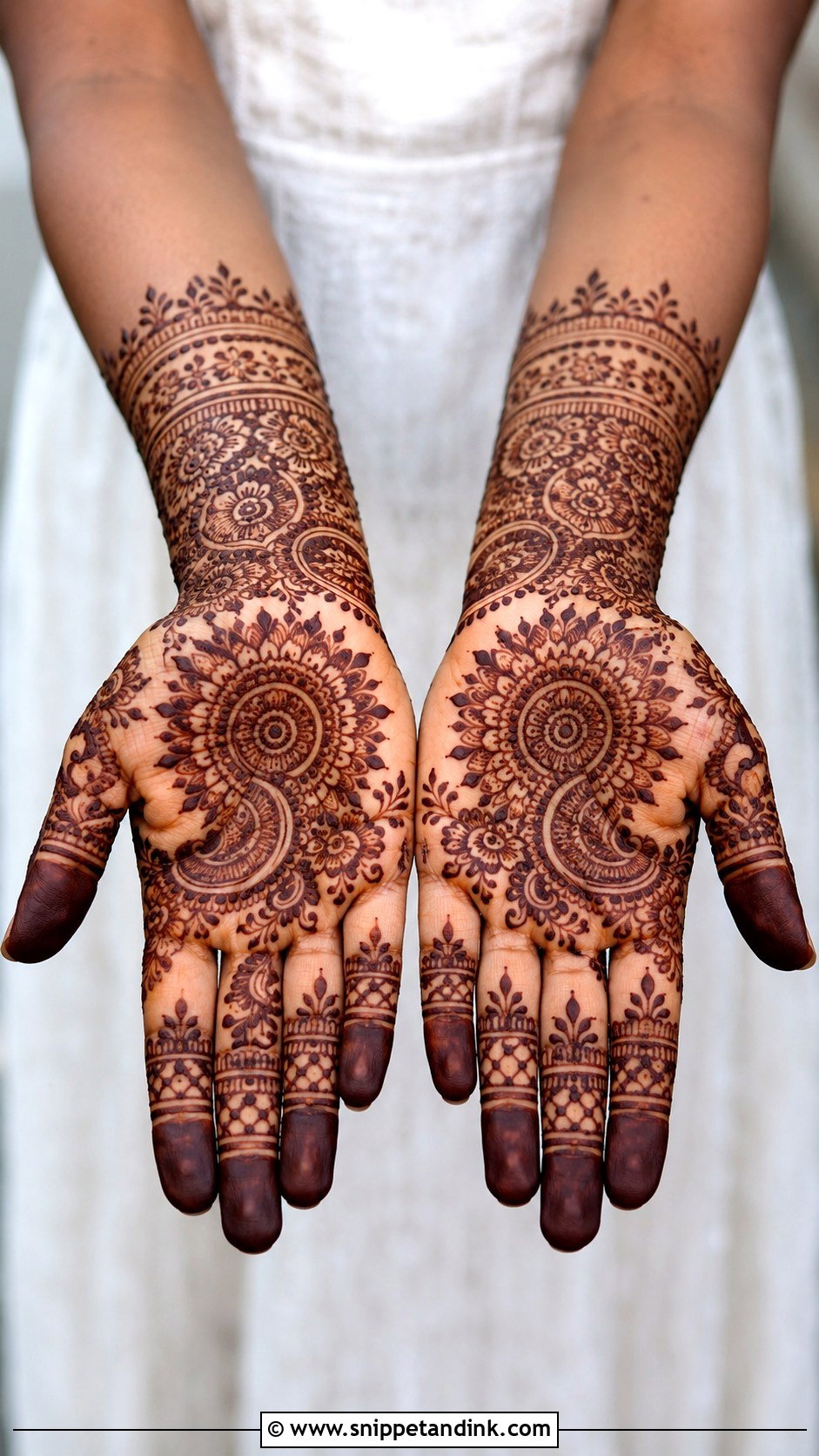
On deeper skin tones I make every line a little bolder and every gap a little wider. Natural henna stains deep maroon or reddish-brown when the paste is fresh and the aftercare is good, but very fine lines lose contrast on darker skin, especially in photos. Strong outlines on mandalas, florals, paisleys and leafy trails, plus fingertip caps and wrist bands, give the contrast that makes the design read. Done this way, the result is striking.
28. Simple Front Hand Mehndi Design For Fair Skin
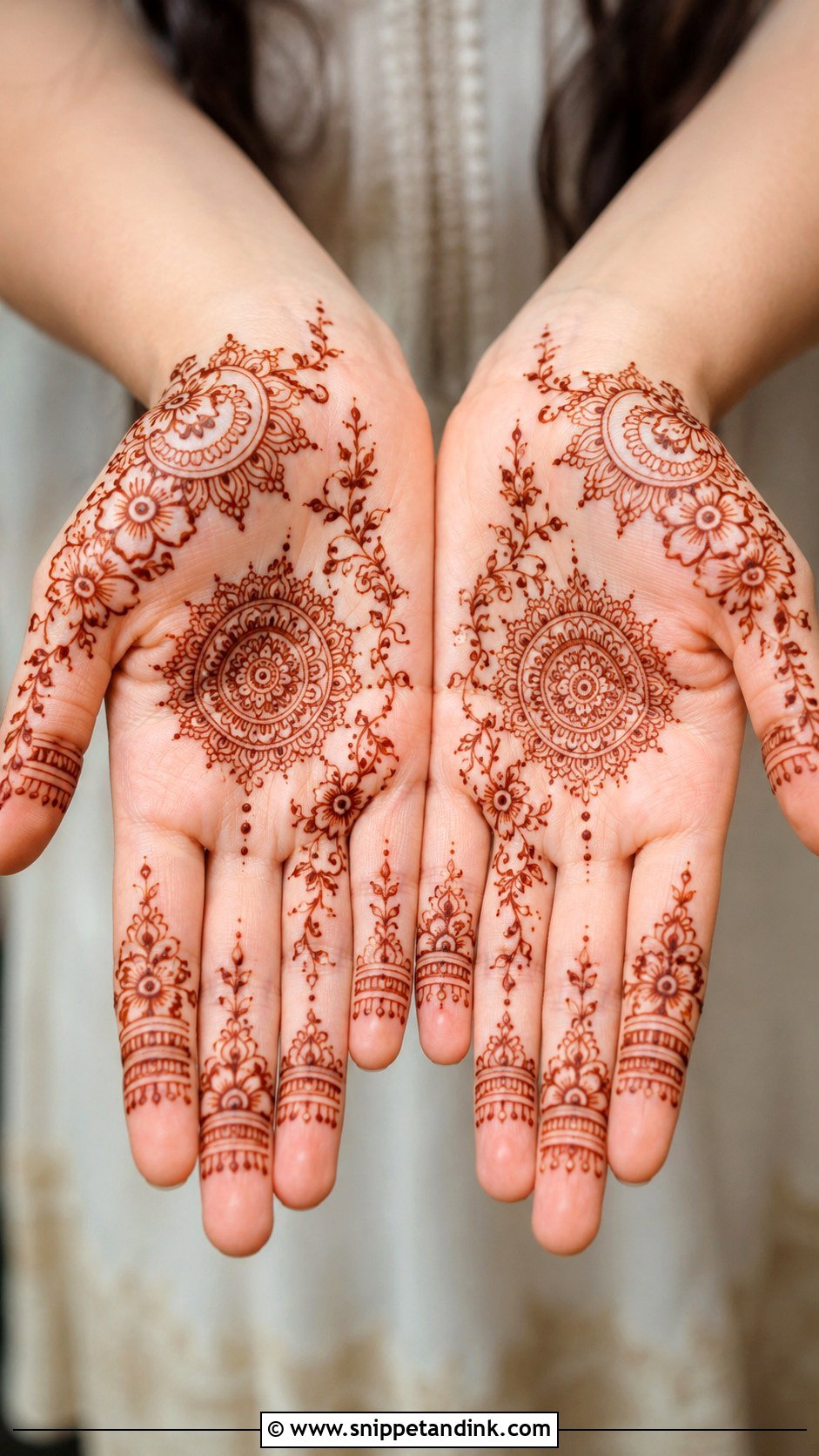
On lighter skin, even the finest lines and tiniest dots show clearly, so this is where I can use delicate floral vines and small mandalas. The stain gives a warm reddish-brown contrast. A minimal palm design or fuller Indo-Arabic layout both work. The thing I watch for is the early orange stage: on fair skin it looks very bright for the first day, so I warn clients it will deepen over the next two days.
29. Simple Front Hand Mehndi Design With Negative Space
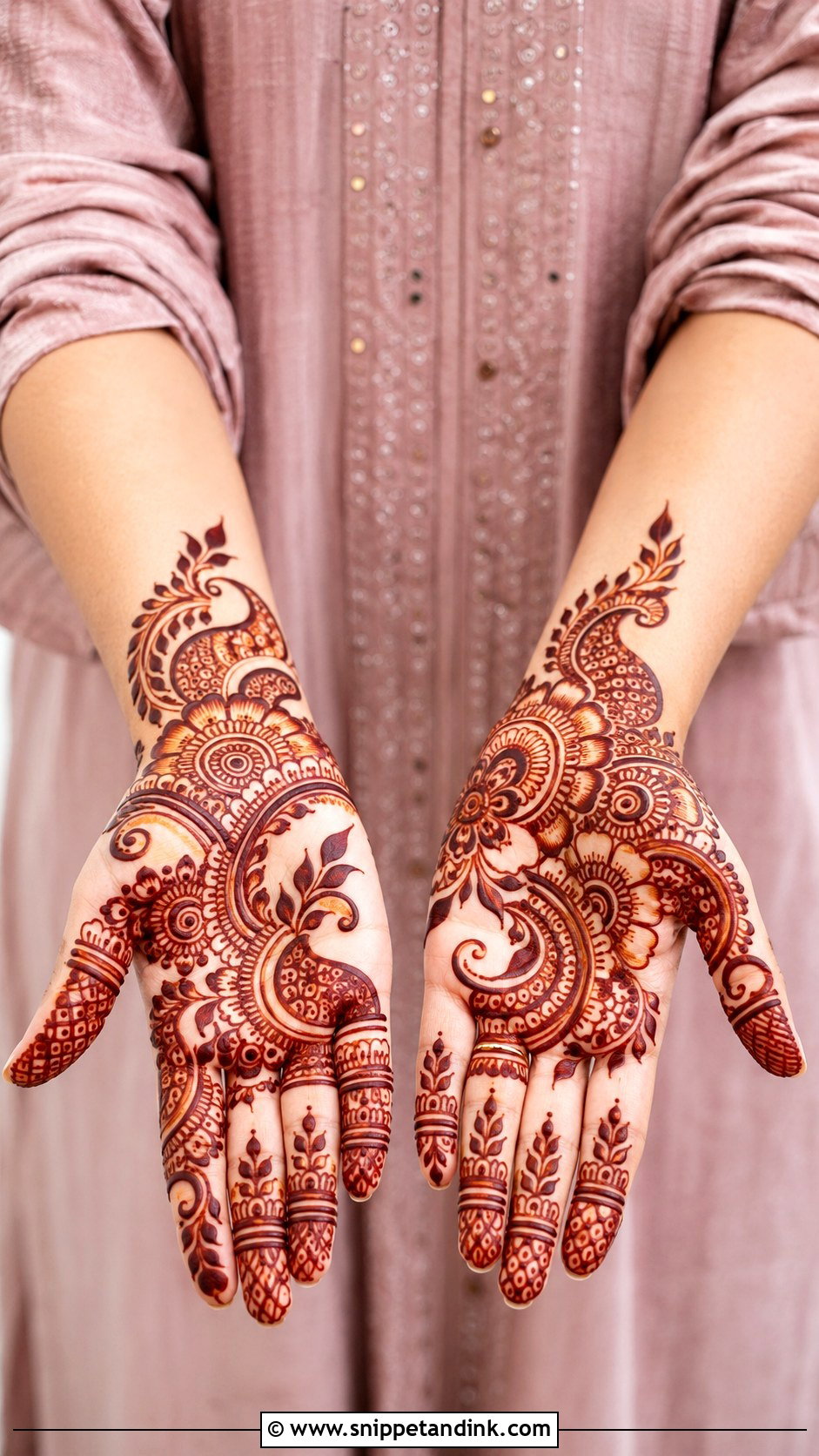
Here empty areas highlight the flowers, mandalas, paisleys or geometric sections. The bare skin is part of the pattern. A diagonal Arabic trail with blank spaces or a centred mandala surrounded by bare skin are the two classic options. I sketch the empty shapes in my head as carefully as the filled ones, because negative space designs depend on clean structure and balanced placement, and any wobble in an outline shows immediately.
30. Simple Front Hand Mehndi Design With Geometric Pattern
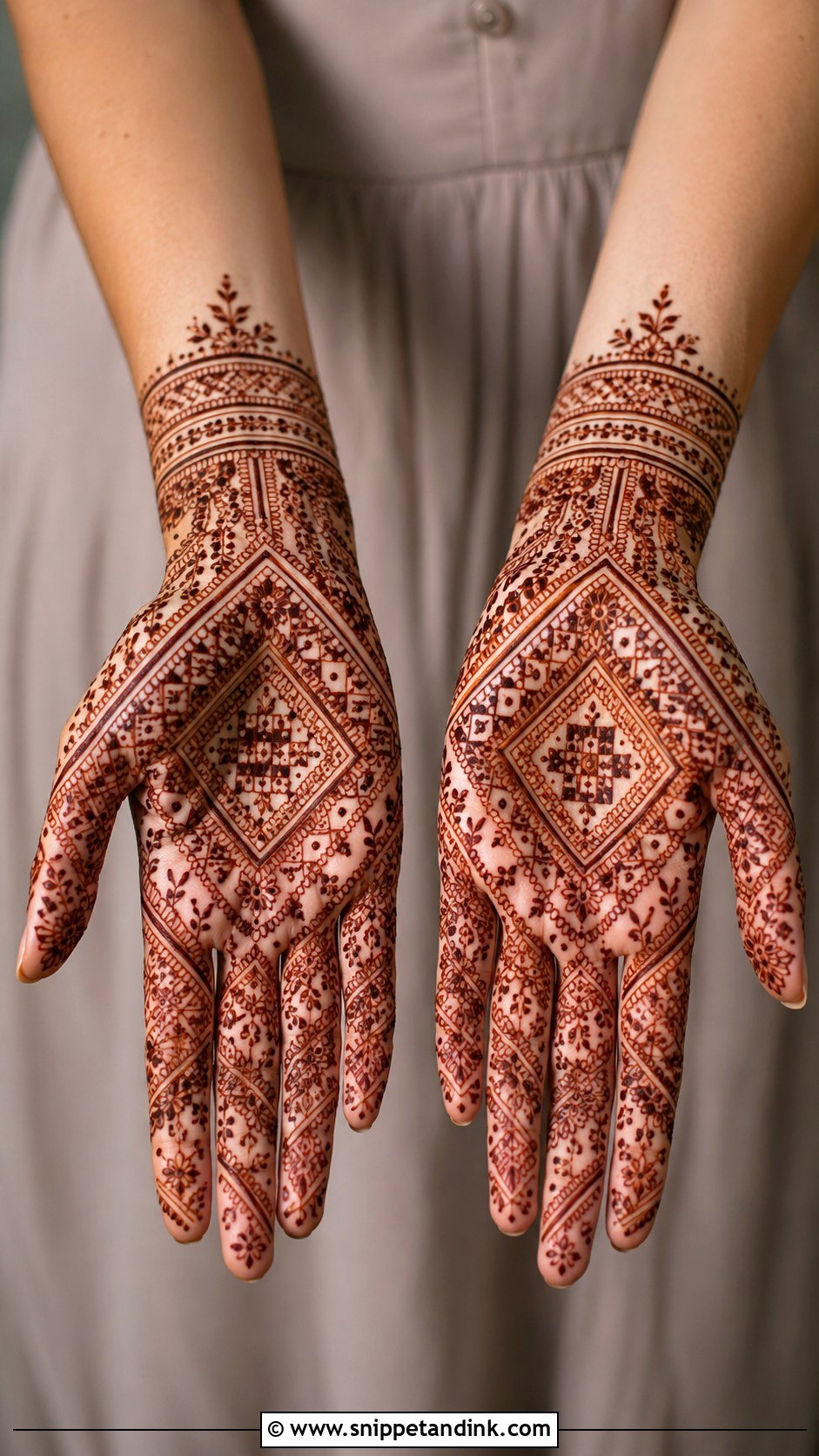
Triangles, diamonds, checks, straight lines and small boxes give a structured modern look. I soften them with a flower or a few leaves. A diamond pattern in the palm with decorated fingers is simple and wearable, and a straight-bordered wrist cuff finishes it. Geometry is unforgiving: a slightly bent line in a grid draws the eye, so I steady my hand on the table and pull lines toward myself, not away.
31. Simple Front Hand Mehndi Design With Moroccan Pattern
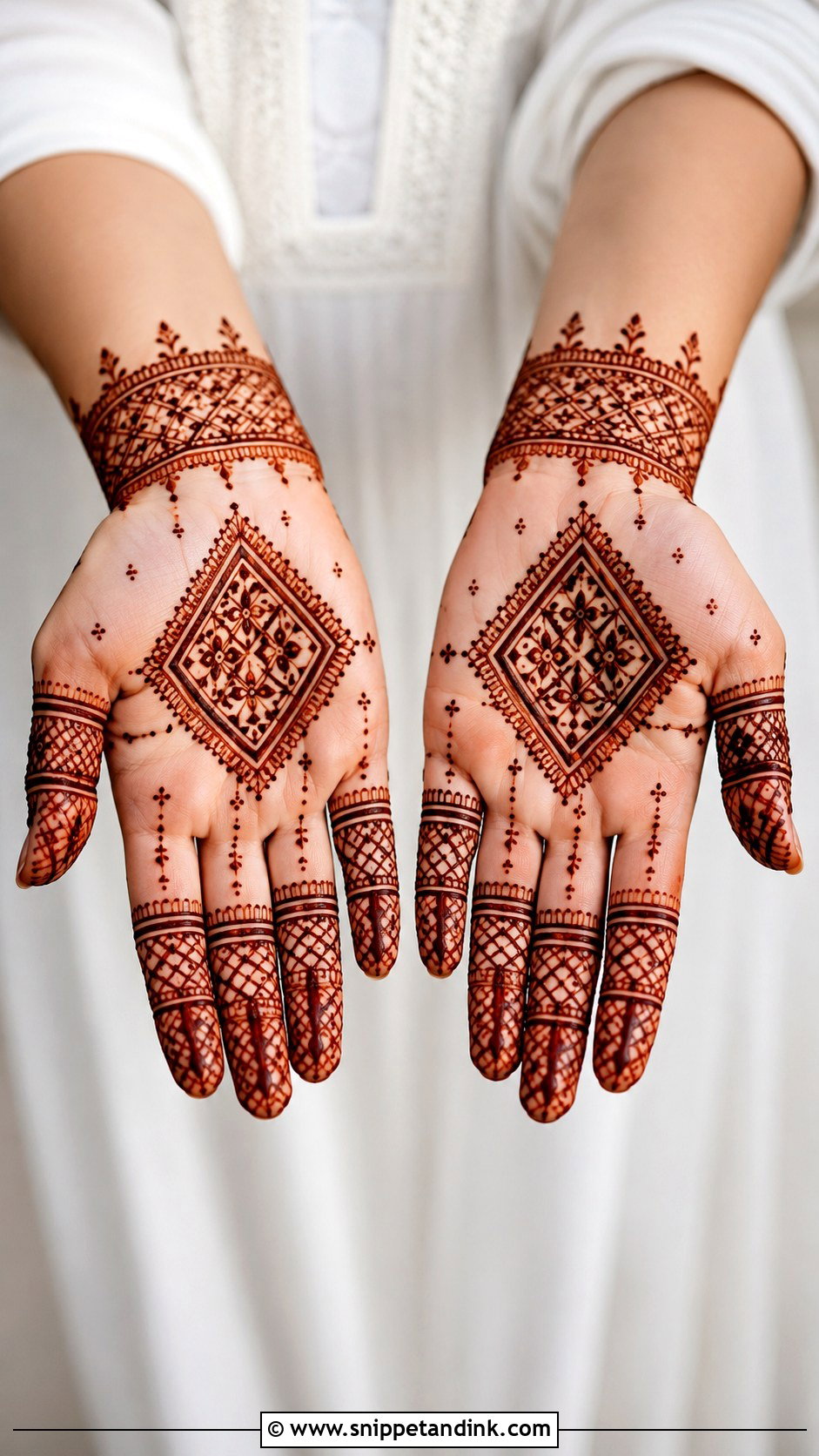
Moroccan-inspired henna is about clean geometry: diamonds, grids, dots and angular borders repeated with bold spacing. On the front hand, I place a neat geometric panel in the palm and link it to the fingers with simple line bands, keeping the wrist light. It’s a good alternative if you’re tired of florals and like symmetrical patterns.
32. Simple Front Hand Mehndi Design With Gulf Pattern
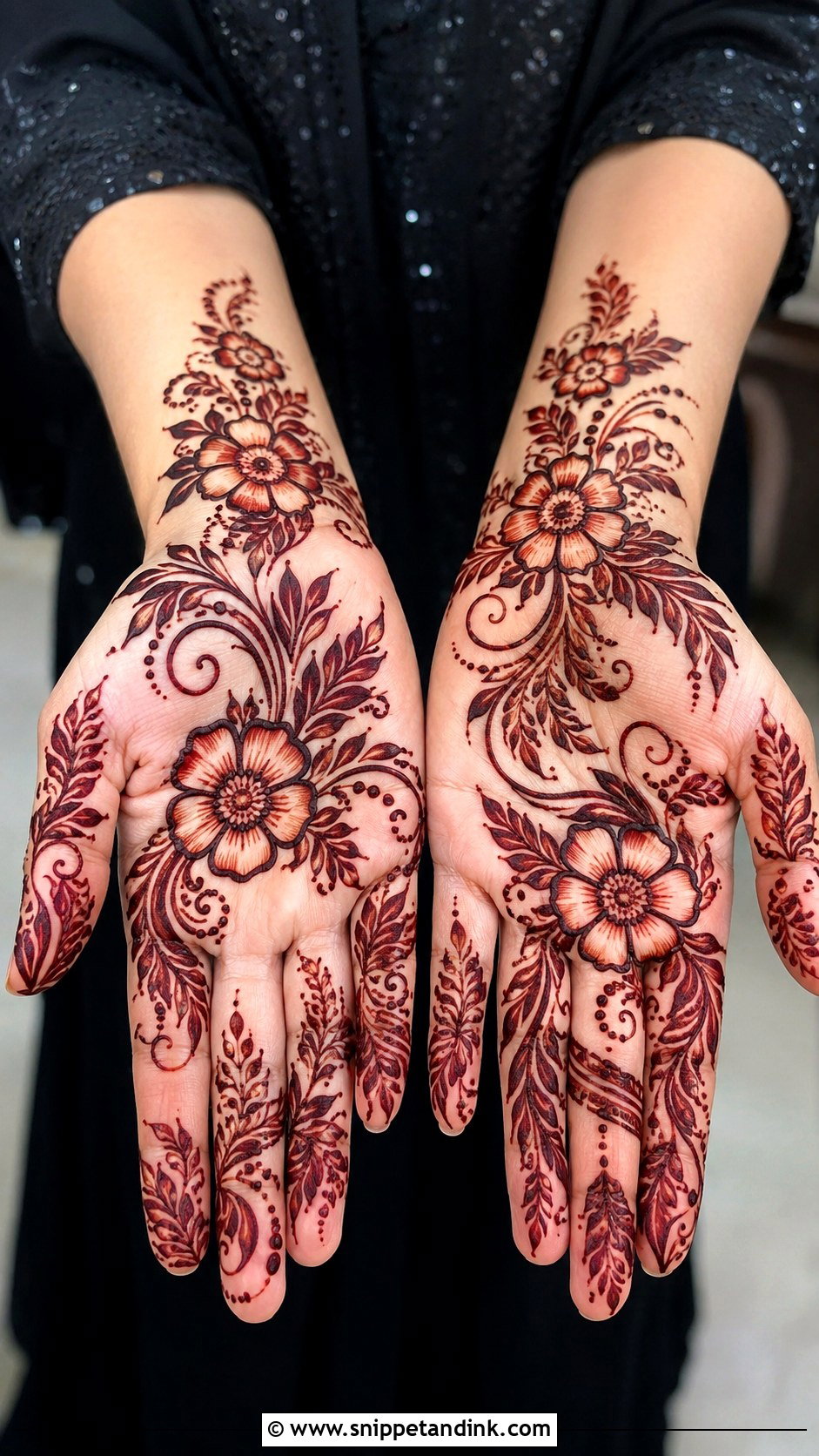
Gulf or Khaleeji-style work uses large flowers, leafy sweeps, curved vines and big empty spaces, often covering just one side of the palm. Bold outlines for the main flowers, fine dots around them for detail, simple tips or matching floral bands on the fingers. In this style the paste lines themselves are thick, so I use a cone with a slightly wider opening. It’s dramatic enough for Eid and evening events without being crowded.
33. Simple Front Hand Mehndi Design With Finger Rings
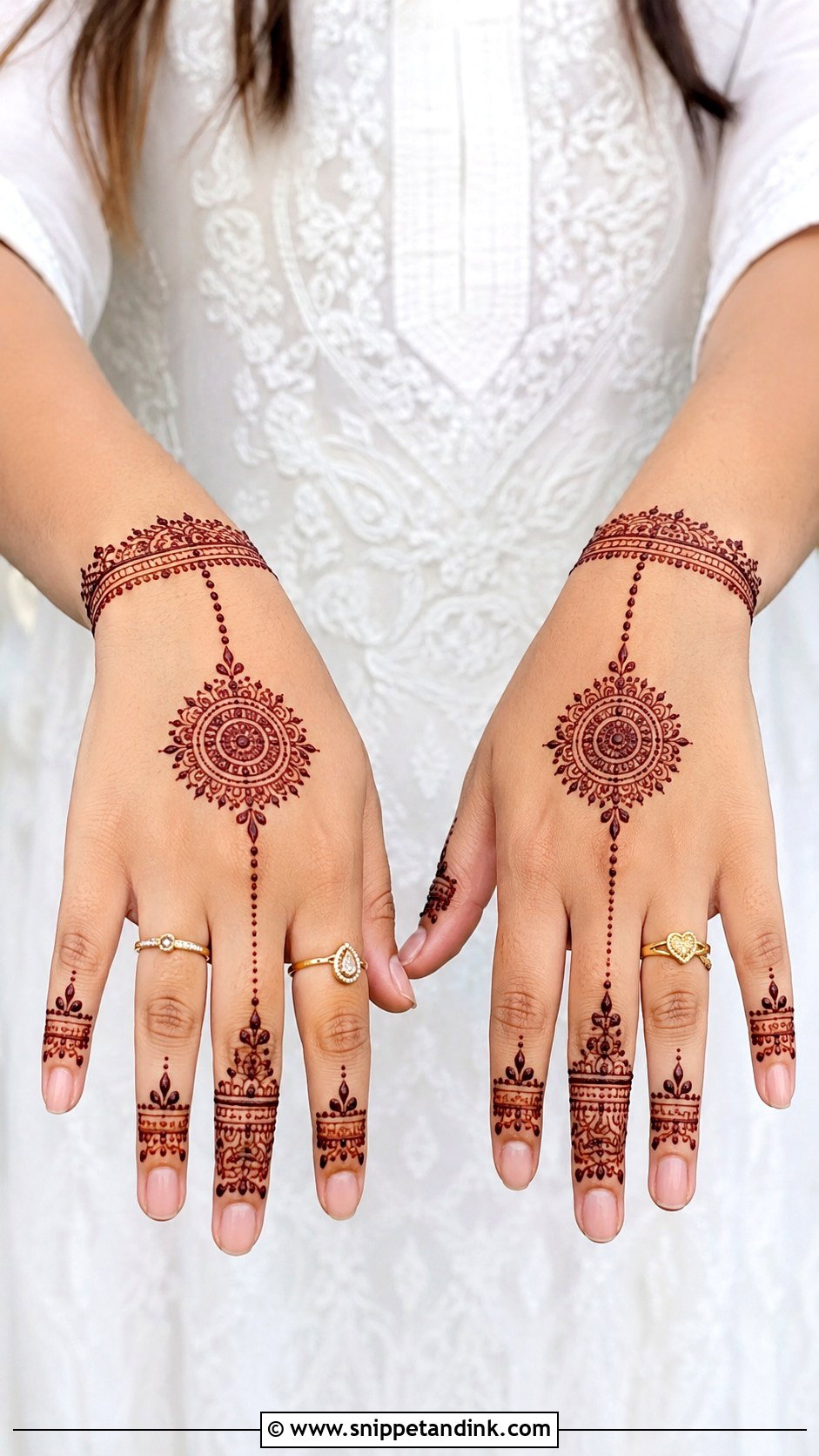
Small circular bands, dotted rings and thin connecting chains make the fingers look like they’re wearing delicate jewellery. The palm stays mostly empty, perhaps with a small mandala or flower. I place each ring between the joints rather than across them, so the bands stay unbroken when the finger bends. A slim wrist bracelet gives a fuller finish if you want it.
34. Simple Front Hand Mehndi Design With Wrist Cuff
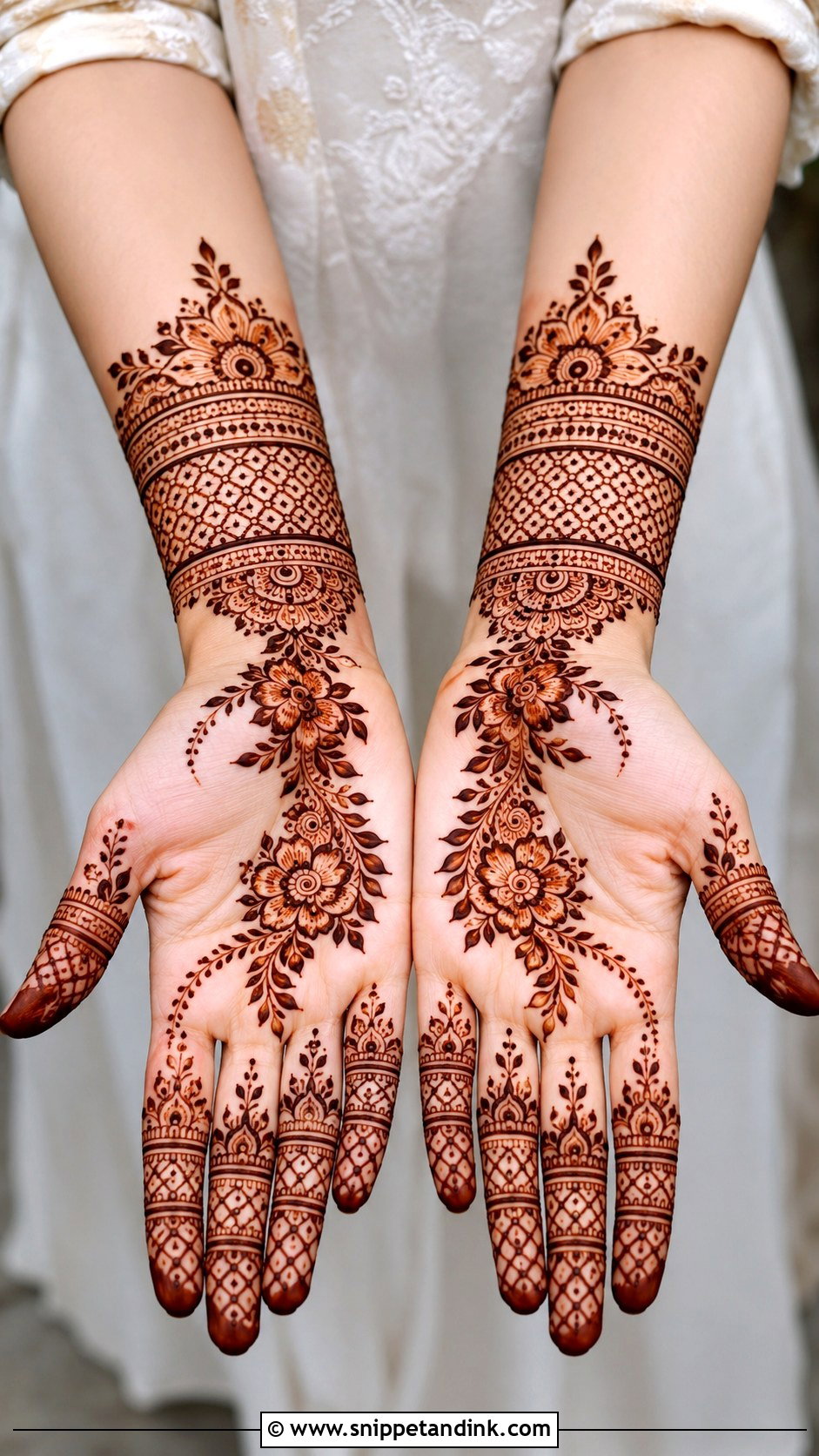
A wrist cuff polishes a minimal palm. Build it from lines, dots, flowers, small leaves or jaali, then extend a short trail toward the palm or fingers. Cuff width should match the hand: slim for small wrists, slightly wider for broader palms. If you wear bangles every day, know that metal rubbing against the cuff speeds up fading there.
35. Simple Front Hand Mehndi Design With Minimal Palm
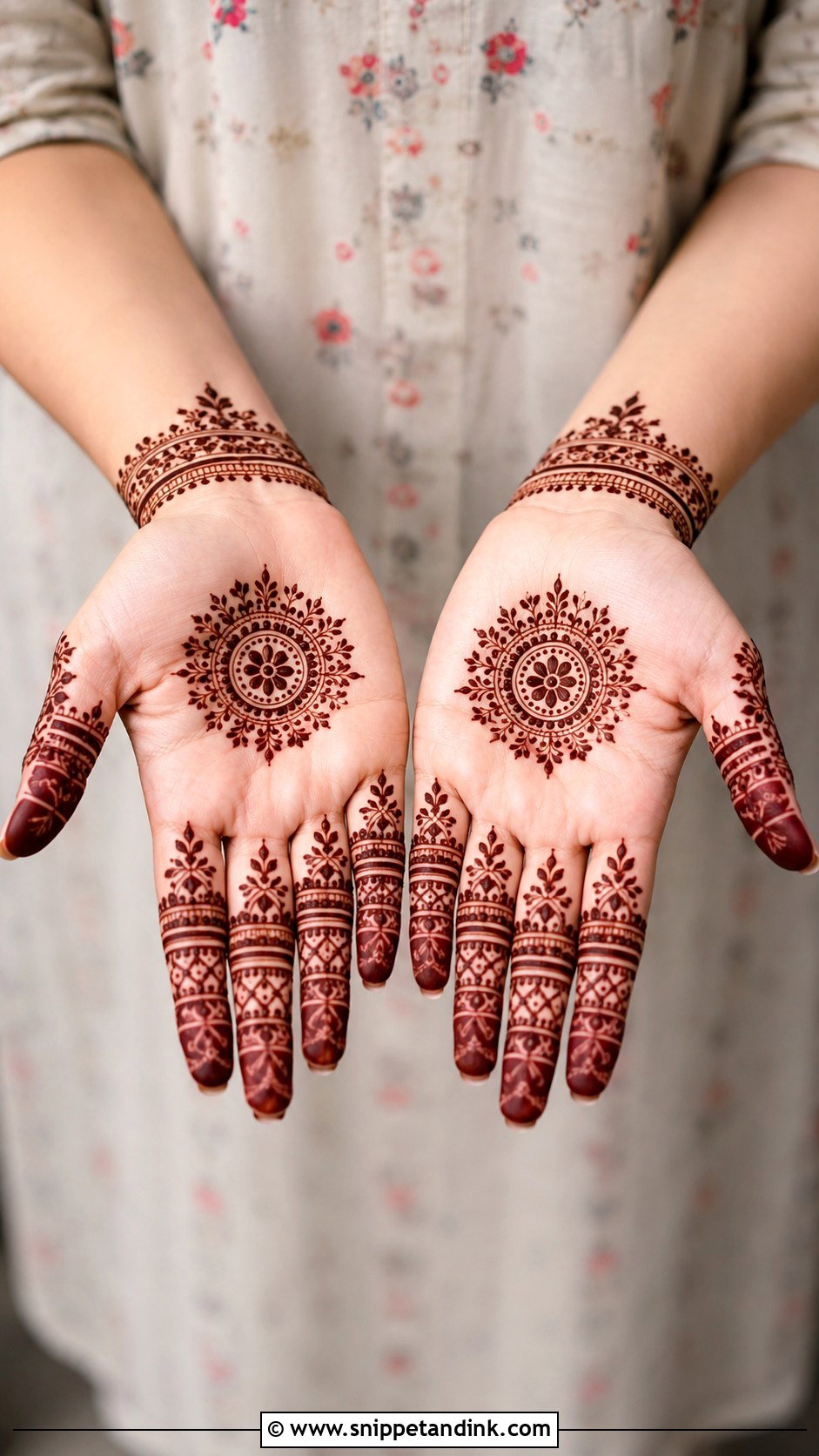
One small mandala, flower, paisley or dotted circle on the palm, and the fingers carry most of the decoration. That’s it. It’s light, modern and right for office celebrations or anyone who doesn’t like heavy henna on the palm. Add a tiny wrist border if the hand feels unfinished. With so few elements, each one needs to be neat; I’d rather redo a wobbly line than leave it.
What Goes Into the Cone Matters More Than the Pattern
A simple design with good paste will out-stain an elaborate one with poor paste every time. If you’re buying cones or booking an artist, these are the things I’d ask about.
Fresh, natural paste
Natural henna paste is a greenish or brown colour and smells earthy, often with an essential oil such as eucalyptus or tea tree mixed in to help the stain. It has a shelf life: fresh paste is kept in the freezer and used within days once thawed. Shop cones with no expiry date that sit on a shelf for months usually contain preservatives or dyes. Paste should feel like toothpaste, smooth enough to flow in a fine line without being runny.
A patch test on the inner arm
Before a big event, I’d put a small dot on the inner arm a day or two ahead. Natural henna rarely causes problems, but essential oils can irritate sensitive skin. Anyone with G6PD deficiency, and young children in particular, should avoid henna altogether unless a doctor says it’s fine.
Red flags
- A cone that promises black colour or a stain ready in minutes.
- Paste that stains skin dark immediately on application rather than starting orange.
- A chemical smell, like hair dye.
- Any burning, itching or raised skin under the paste: wash it off right away.
Placement Does Most of the Work on a Simple Palm
A light front hand design looks complete when every motif has a reason to be where it is. Mandalas, flowers, paisleys, leaves, jaali, cuffs and finger bands all work when the spacing is even and the outlines are confident. Start from your hand shape and the occasion, then the outfit. If you’re new to henna, practise dots, petals and lines first. For bigger events, add a little more detail at the fingers and wrist, and remember the stain you see on day two is the one that counts.
You'll Like These Ideas:









Leave a Reply