
The back of the hand is the side guests actually see. It’s on show when you hold the bouquet, when the ring goes on and whenever the photographer asks for a bangle close-up, so it deserves as much planning as the palm. It also behaves differently: the skin is thinner, it stains lighter, and rings and haath phool cover part of it. Below are complete bridal back hand looks ranging from full Indian coverage to open Arabic trails, jaali, bracelets and personalised initials, each with a note on how it wears in real life. Save the ones you like and bring them to your artist.
Why the Back Hand Never Matches the Palm
Brides are sometimes disappointed the morning after, when their palms are a deep maroon and the backs of their hands are a shade or two lighter. That’s normal. Henna stains thicker skin more deeply, and palm skin is much thicker than the skin on the back of the hand. The fingers fall between the two.
Knowing that changes how I draw. On the back hand I use slightly bolder outlines, keep the darkest shading on the fingers, and leave the paste on for as long as the bride can manage. A design that relies on hairline detail across the back of the hand will look faint in photos even when the aftercare is perfect.
Plan around what will sit on top
- Haath phool chains run from the ring finger to the wrist. Keep that line open or simple.
- Stacked bangles hide most of the wrist band, so don’t spend an hour on it.
- A wide kada sits over the lower wrist. End the design just below its edge or carry it well above, so no half motif peeks out.
- Gel nails or a manicure should be done before the mehndi appointment; afterwards the soaking and filing will fade fresh colour.
1. Full Back Hand Bridal Mehndi Design
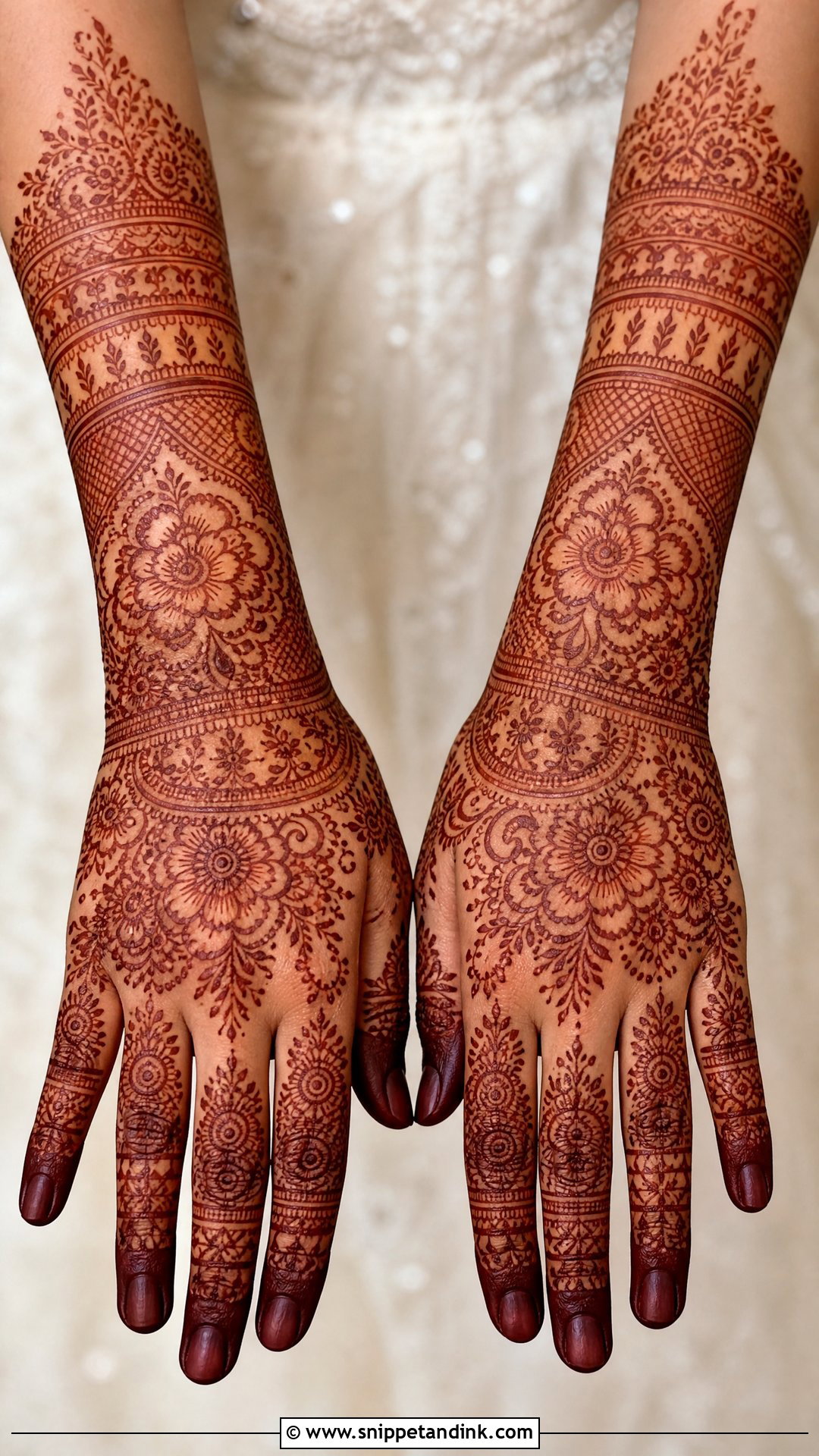
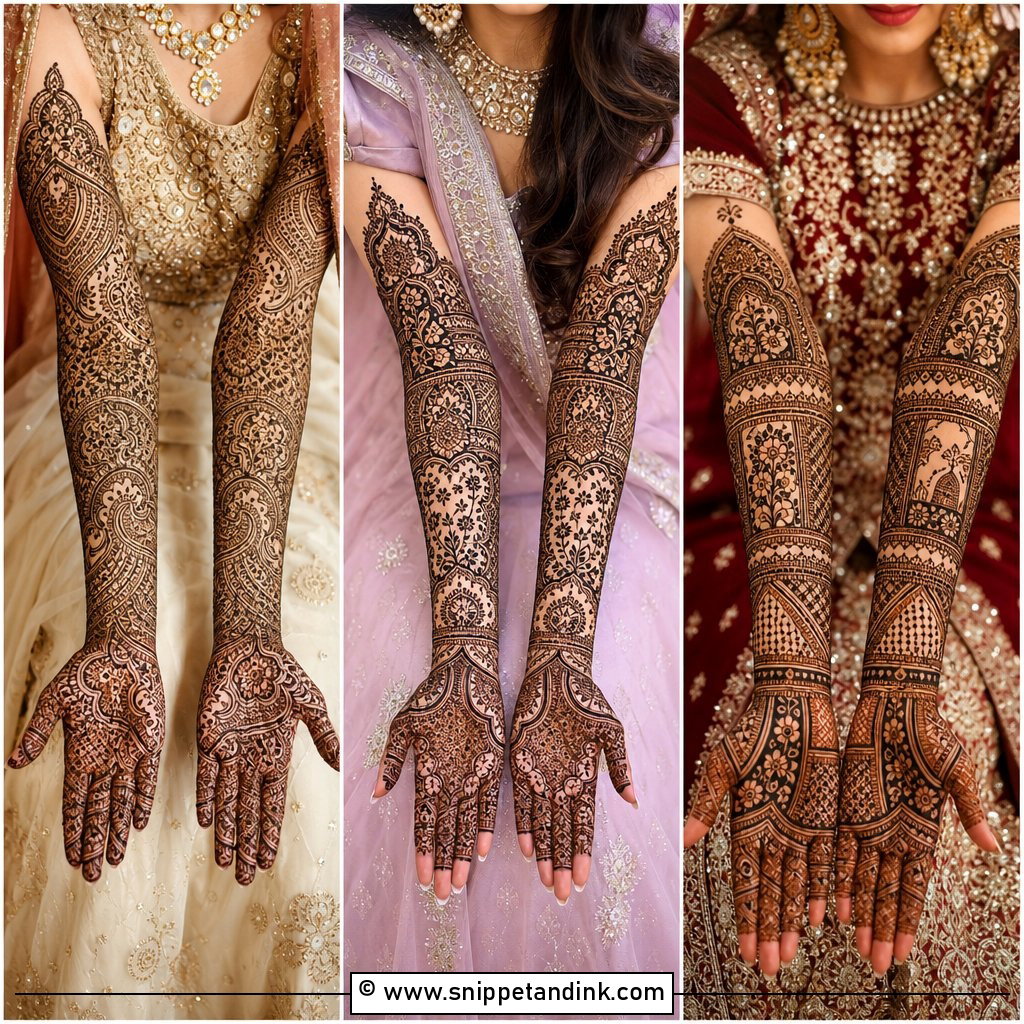
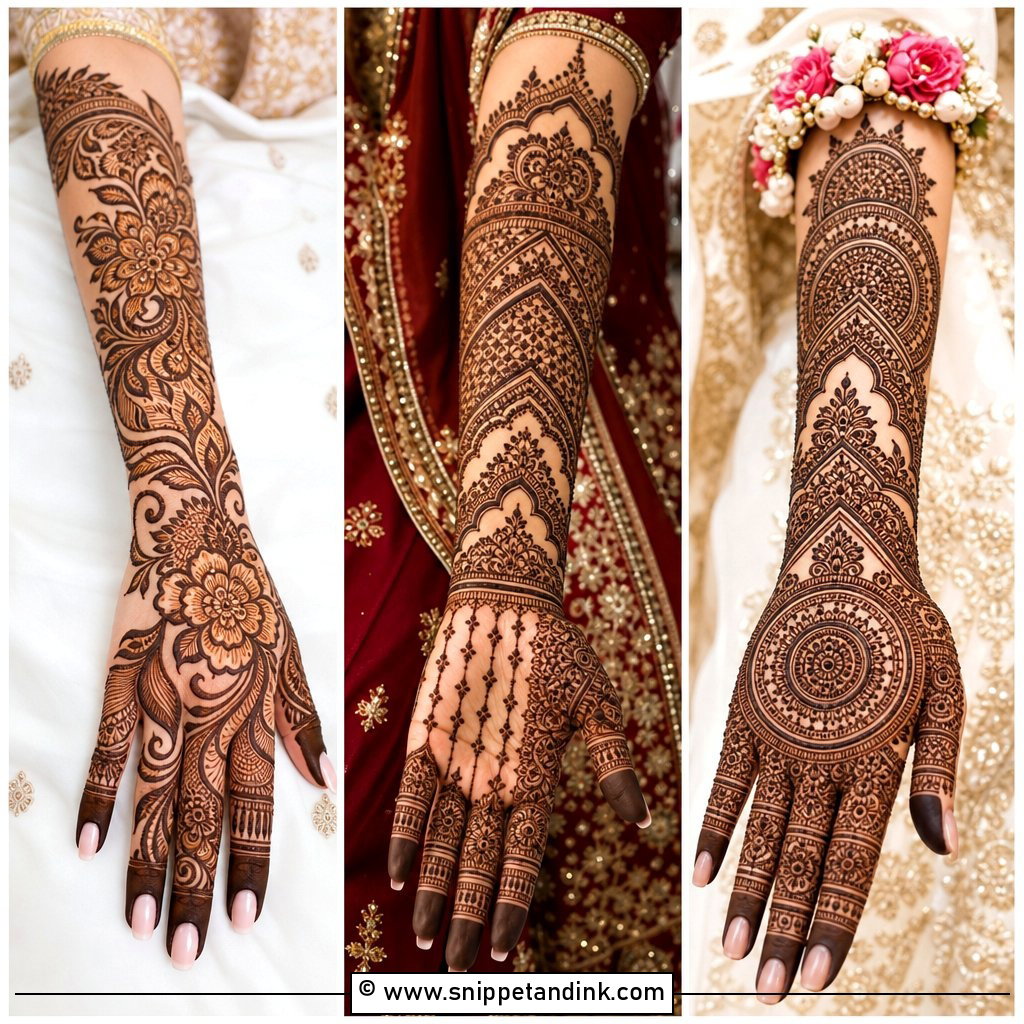
Full coverage dresses the hand before a single bangle goes on. Florals, paisleys, curls, dots and fine filler run over the fingers, the back of the hand, the wrist and the lower forearm with no empty gaps. Because the back of the hand stains lighter than the palm, I keep the main shapes bold and save the finest lines for inside them; an all-fine design can look faded here. It belongs with heavy lehengas, silk sarees and classic red or maroon.
2. Indian Bridal Mehndi Design Back Hand
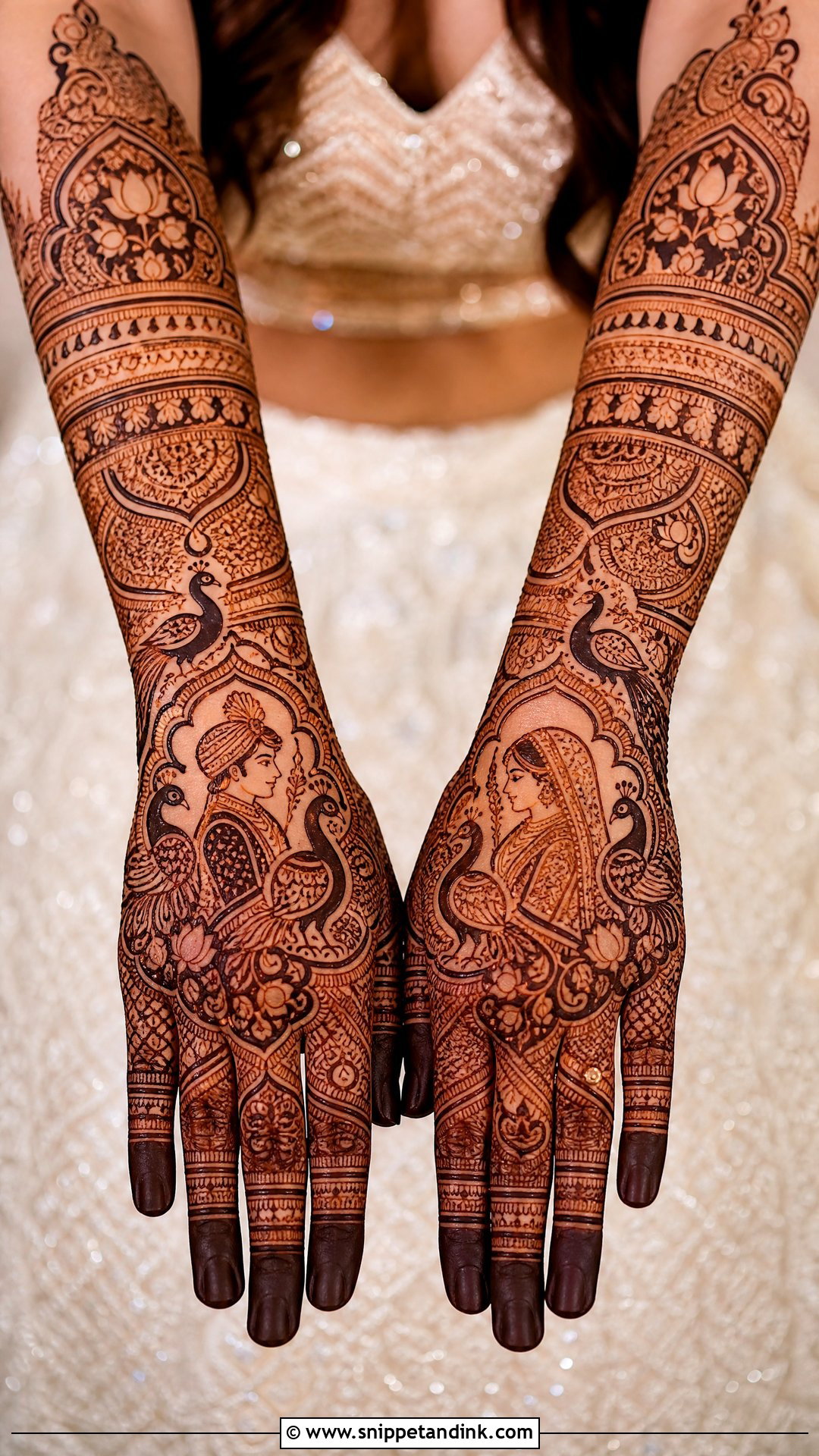
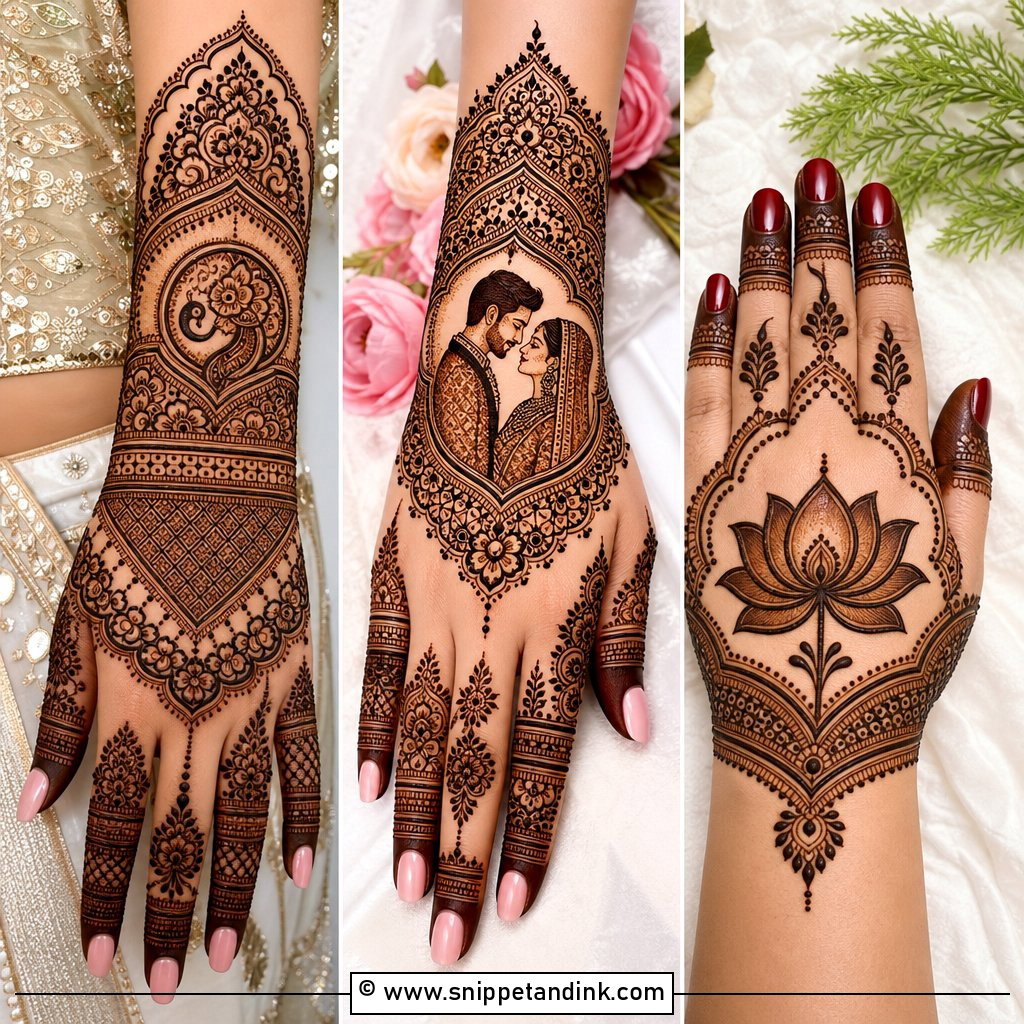
Indian back hand work layers paisleys, lotus flowers, peacocks, vines, bride and groom figures and borders from the fingertips to the wrist. Usually there’s one large centrepiece ringed by tiny leaves, dots and curved bands, with the fingers filled solid. Solid fingers matter more than people think. The skin there stains darker than the back of the hand, so they anchor the whole design visually. Initials or a date can hide inside the centrepiece.
3. Arabic Bridal Mehndi Design Back Hand
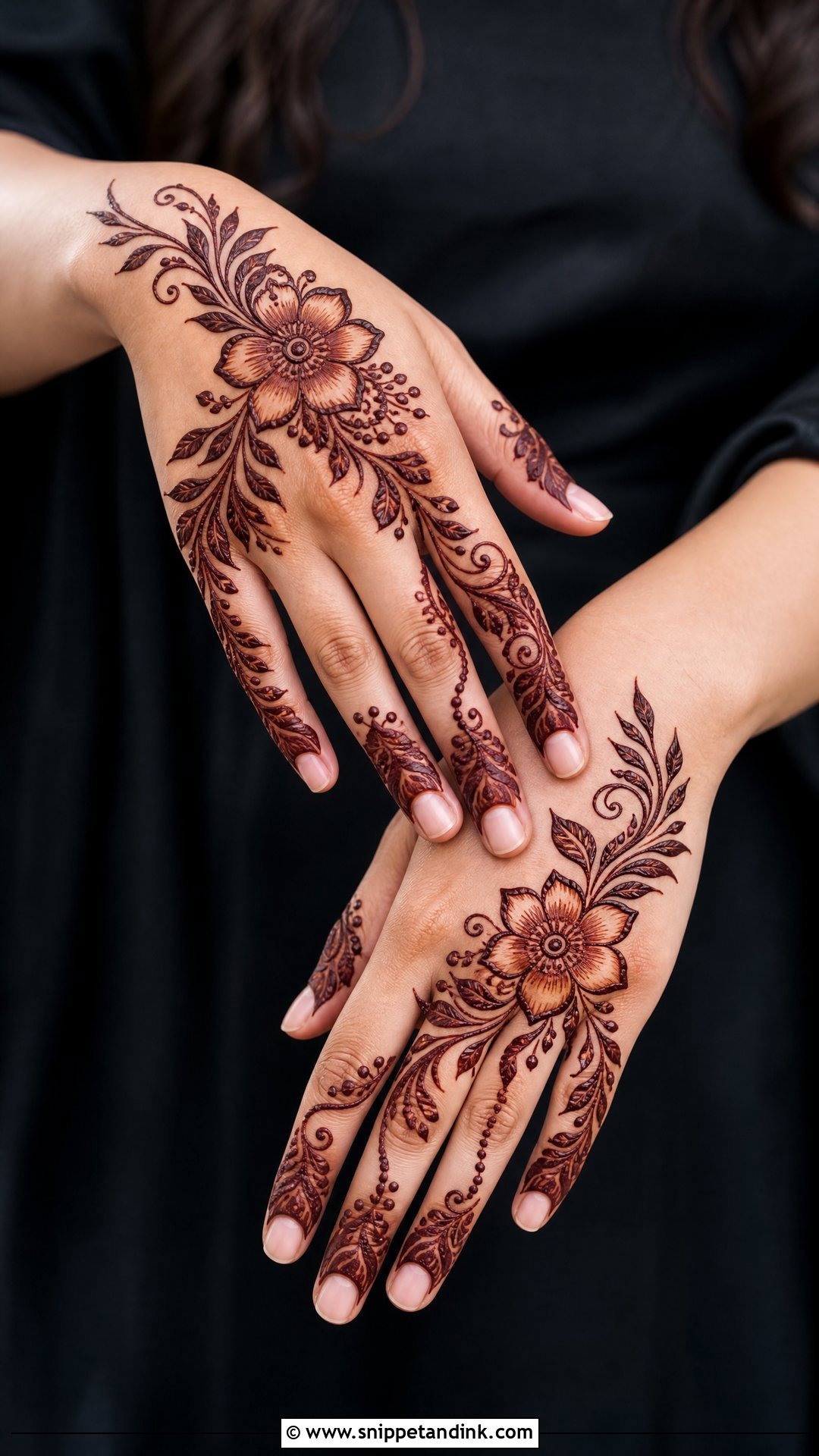
Arabic trails cross the back hand diagonally in large flowers, leafy vines and shaded petals, leaving open skin around them. That spacing shows off rings and nail colour instead of competing with them. I usually start the trail at the index finger and run it toward the outer wrist, though it can also curve round the thumb side if you’ll be wearing a big ring on the index. It reads clearly from across a room, and suits gowns, shararas and pastel lehengas.
4. Indo Arabic Bridal Mehndi Back Hand
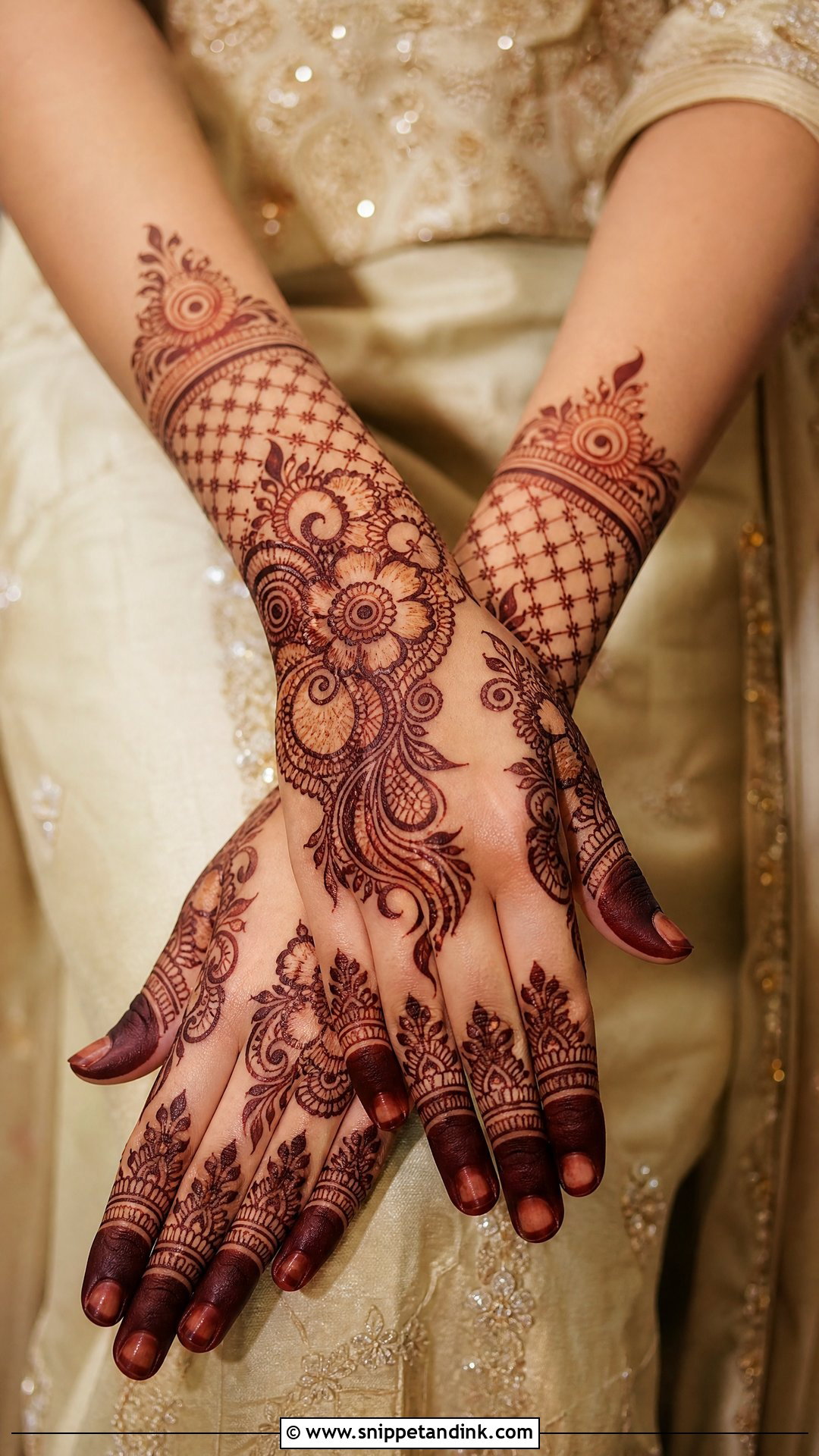
Indo-Arabic on the back hand often puts bold florals down one side, fine jaali through the centre, filled fingertips and a detailed wrist band that reads like a cuff. It’s bridal without being crowded. The part I’m strict about is the gap between major motifs; if those gaps fill in, you lose the contrast that makes this style work. It’s equally at home at engagement ceremonies, the wedding itself and a reception.
5. Mandala Bridal Mehndi Design Back Hand
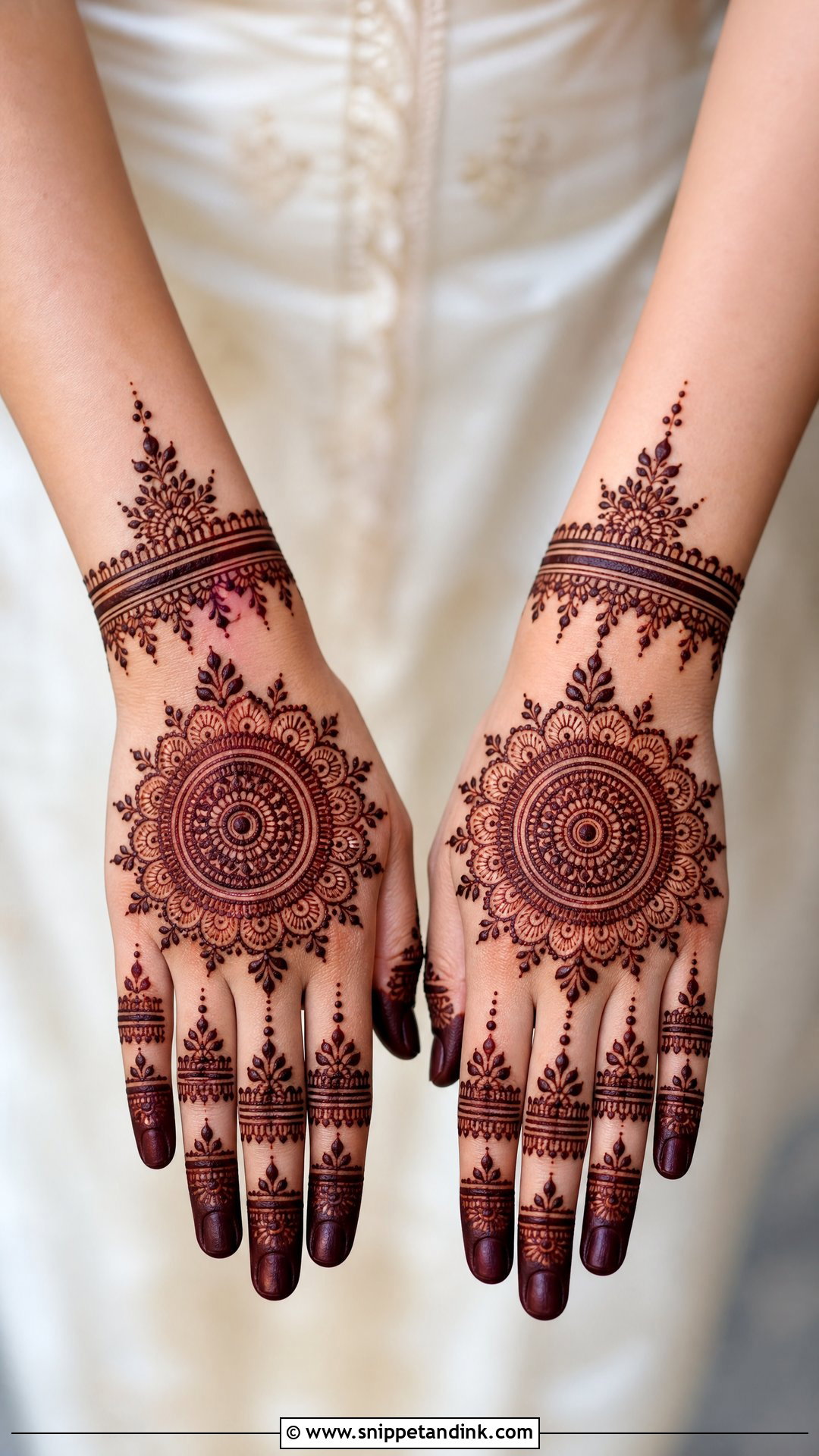
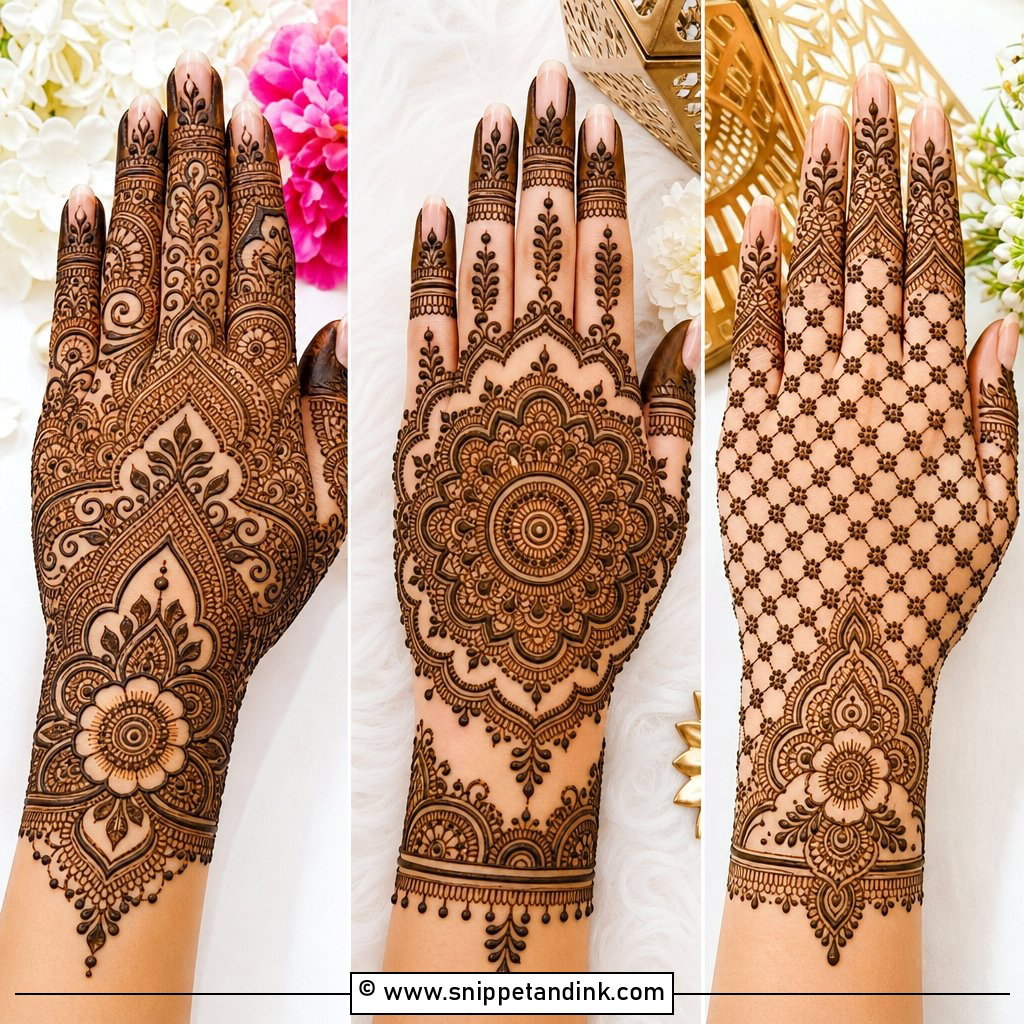
A mandala gives the back hand one calm, centred focal point, with petals, circles, dots and small accents spreading toward the fingers and wrist. The back of the hand isn’t flat, and the knuckles sit higher than the wrist, so I place the mandala slightly below the knuckles rather than at the true centre. That way it still looks centred when the hand is relaxed. Filled fingertips, a bracelet-style wrist band or small floral trails make it more festive.
6. Jaali Bridal Mehndi Design Back Hand
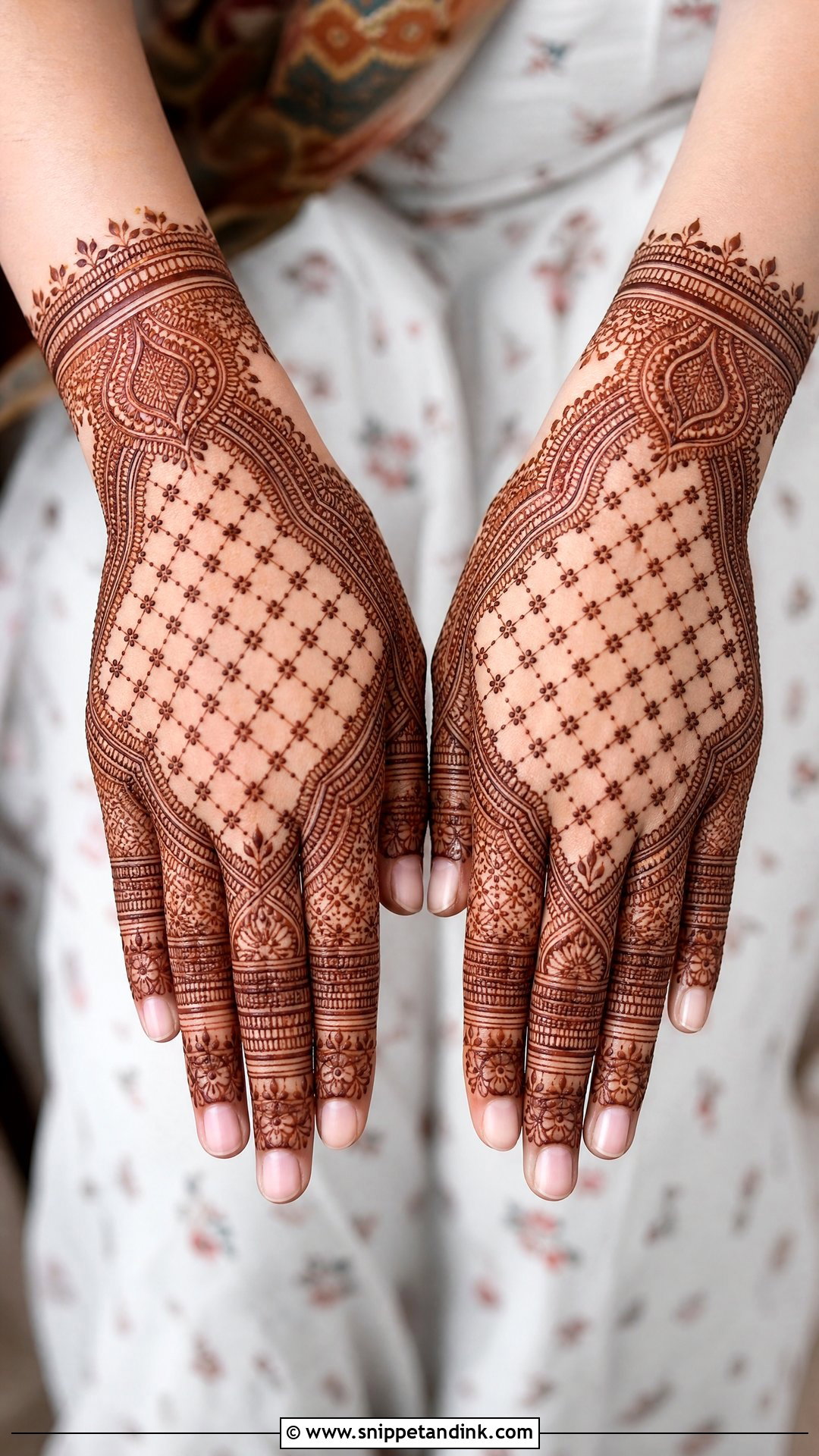
Net-like jaali can cover the centre of the hand, the fingers or the wrist, framed by flowers and paisleys. It gives a lace effect without heavy coverage and sits nicely beside embroidered sleeves and delicate bangles. What separates good jaali from bad is consistency. The lines need to stay evenly spaced, and the little dots should land exactly on the intersections. If you see wobbly mesh in an artist’s portfolio, it’ll be wobbly on your hand too.
7. Paisley Bridal Mehndi Design Back Hand
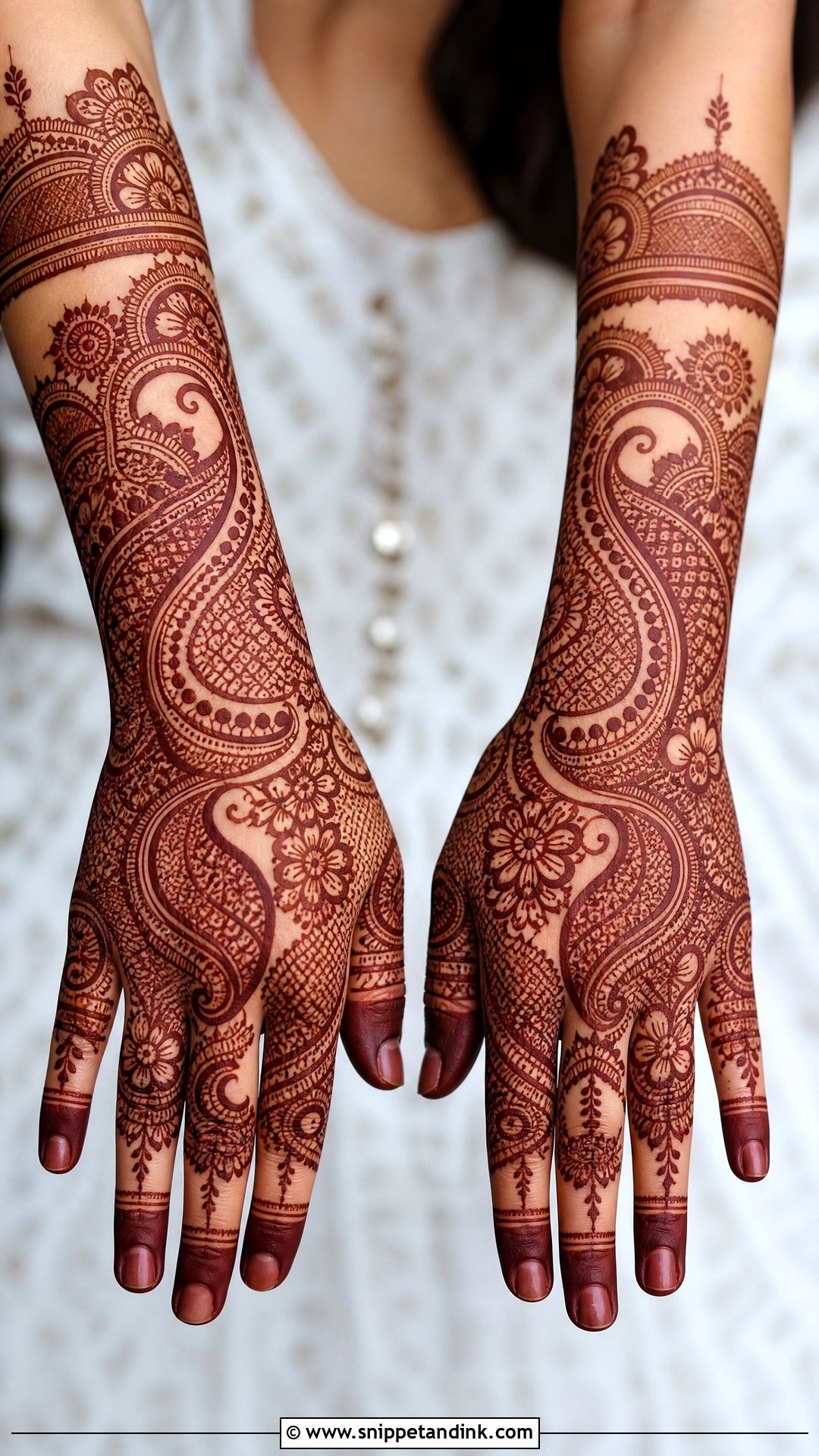
Paisleys can be stacked from wrist to fingers in layers, with flowers, leaves, dots, checks and spirals tucked between them. They give a full design an easy structure, which is why they rarely look messy. Size is my main concern on the back hand. Very small paisleys with lots of inner detail can blur into each other in a ring close-up, so I keep the main ones medium-sized and let the fine detail live inside them.
8. Floral Bridal Mehndi Design Back Hand
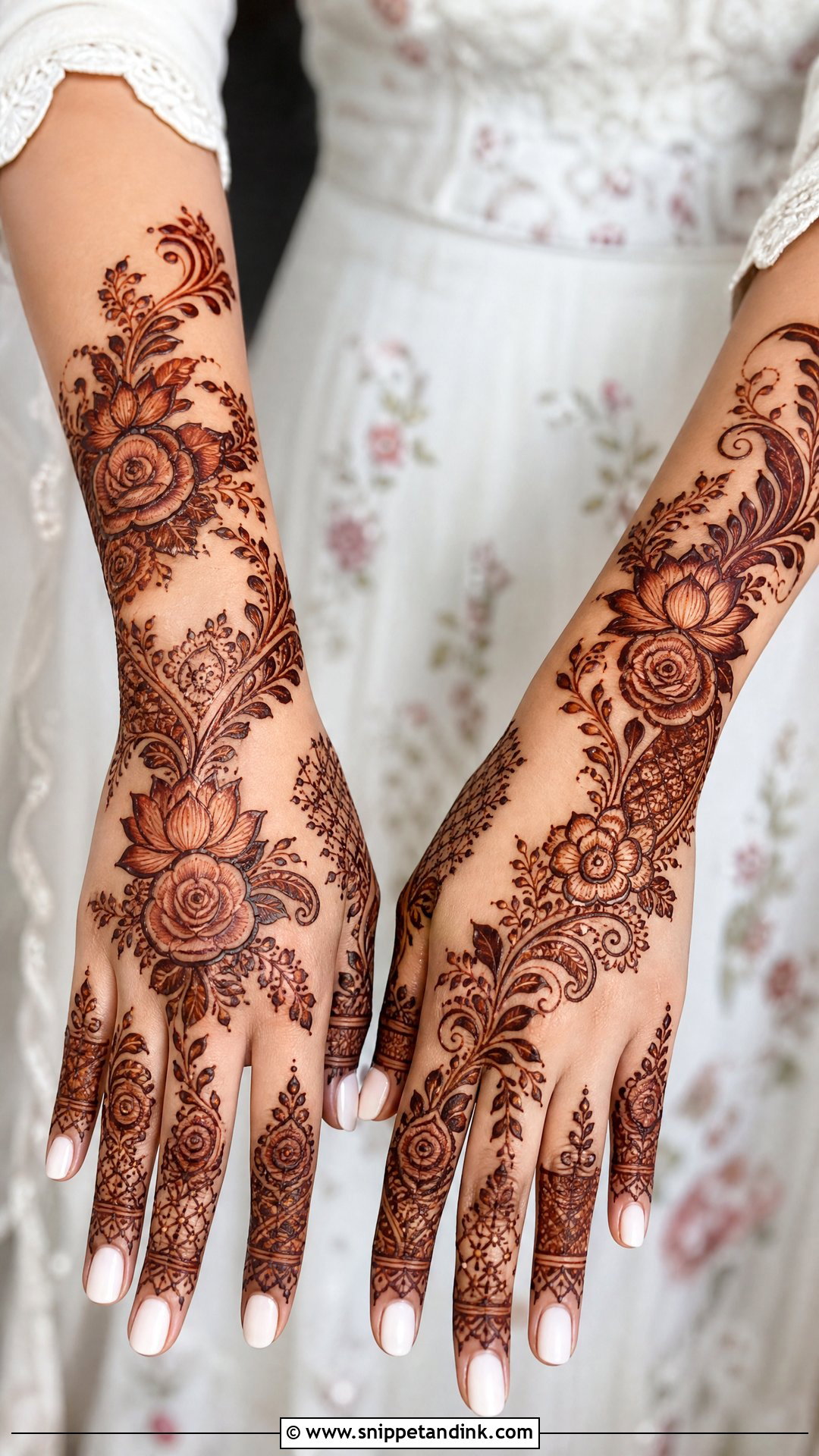
Flowers across the back hand range from a few large Arabic blooms to small Indian blossoms with fine filler between. Roses, lotuses, small buds, leafy vines and shaded petals all work. The one thing I always do is connect the flowers with vines; scattered blooms with nothing joining them look unfinished from a distance. It’s a good match for pastel lehengas, floral jewelry and daytime ceremonies.
9. Peacock Bridal Mehndi Design Back Hand
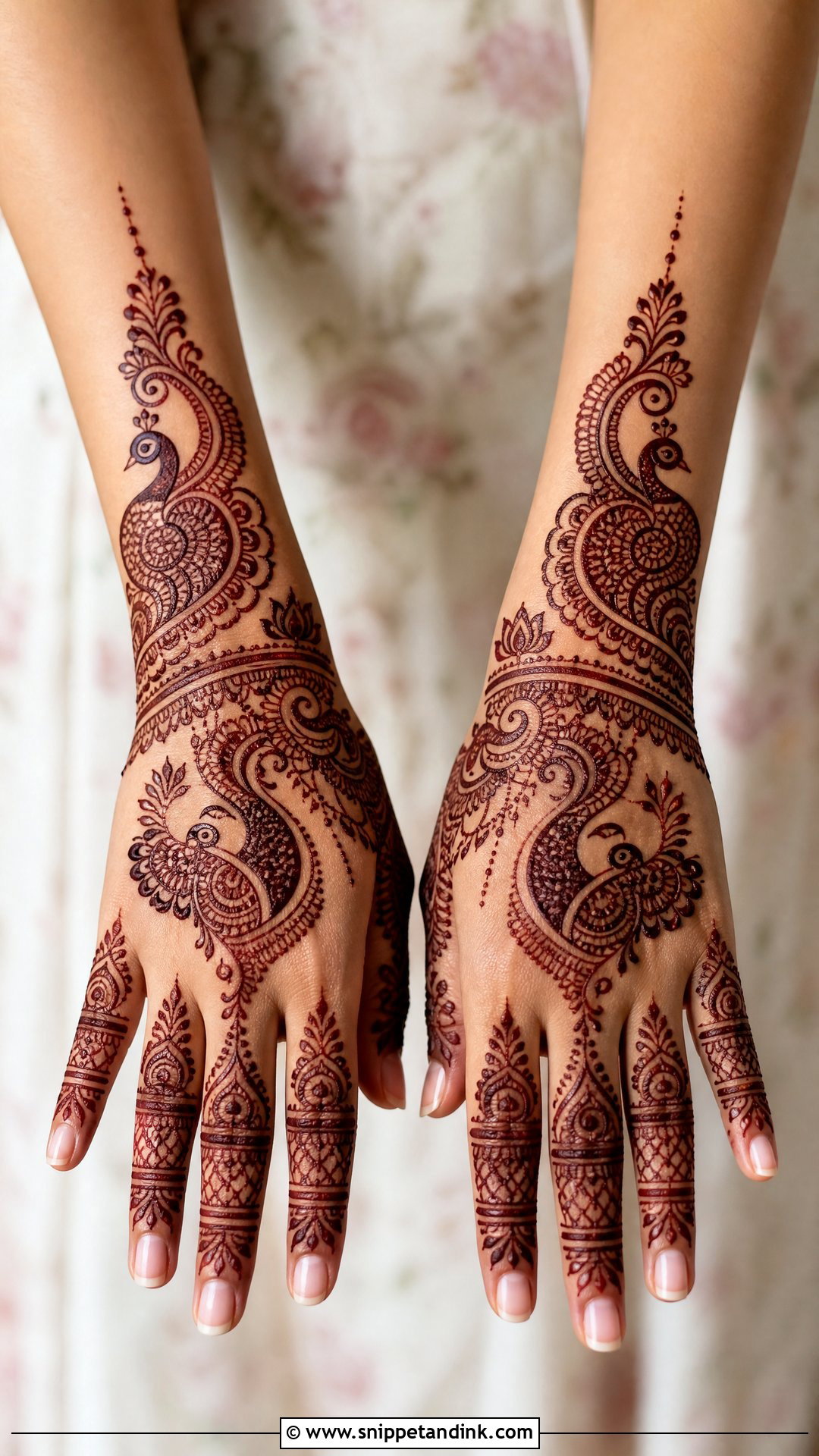
A peacock near the wrist, in the centre of the hand or along the forearm brings a festive, regal note. Its feathers flow into paisleys, florals and curved bands. On the back hand I keep the body bold and the feathers fine, because that contrast is what keeps the bird readable after the stain deepens. It sits well with gold, green, blue, red or other jewel-toned embroidery.
10. Bracelet Bridal Mehndi Design Back Hand
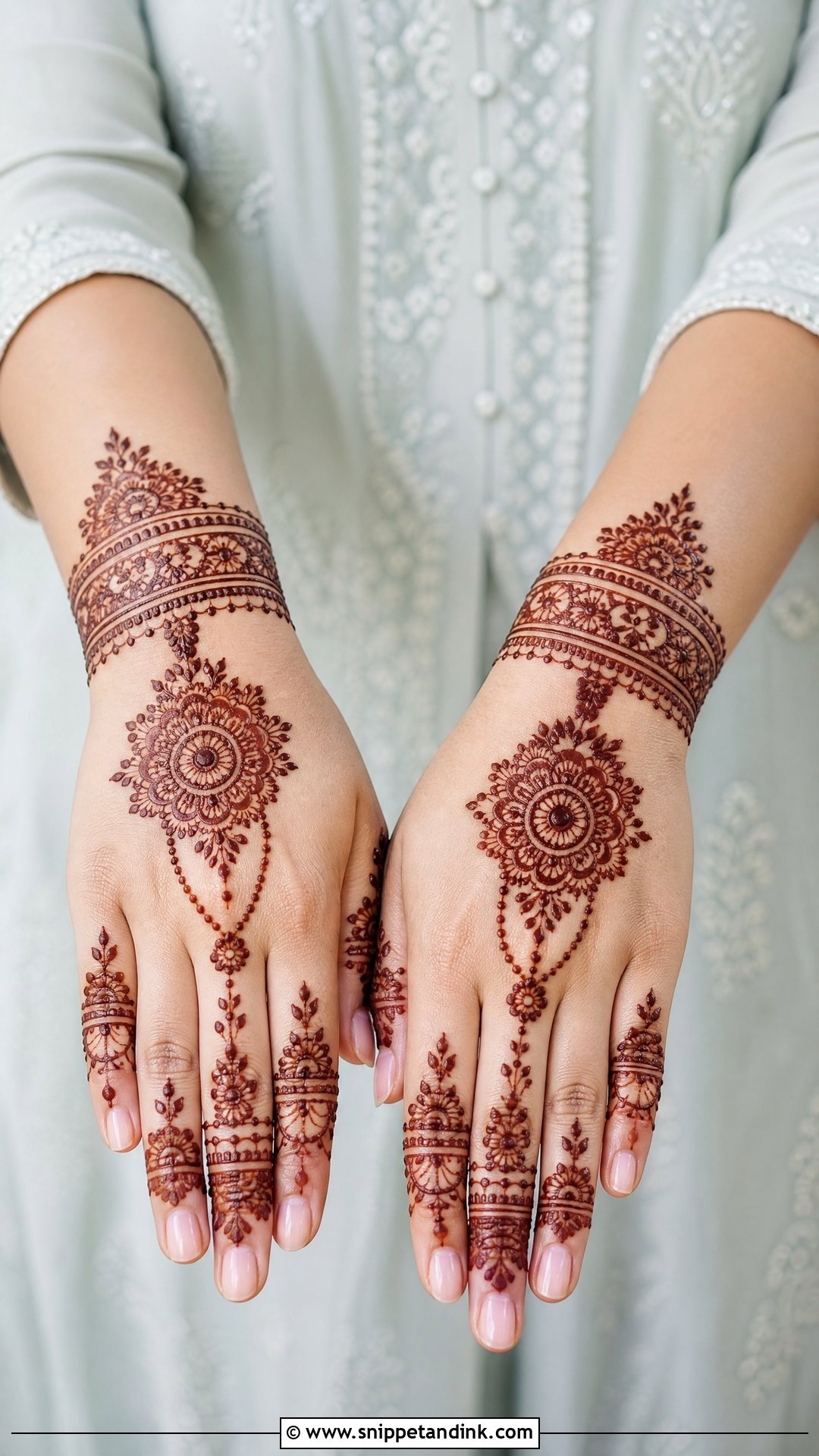
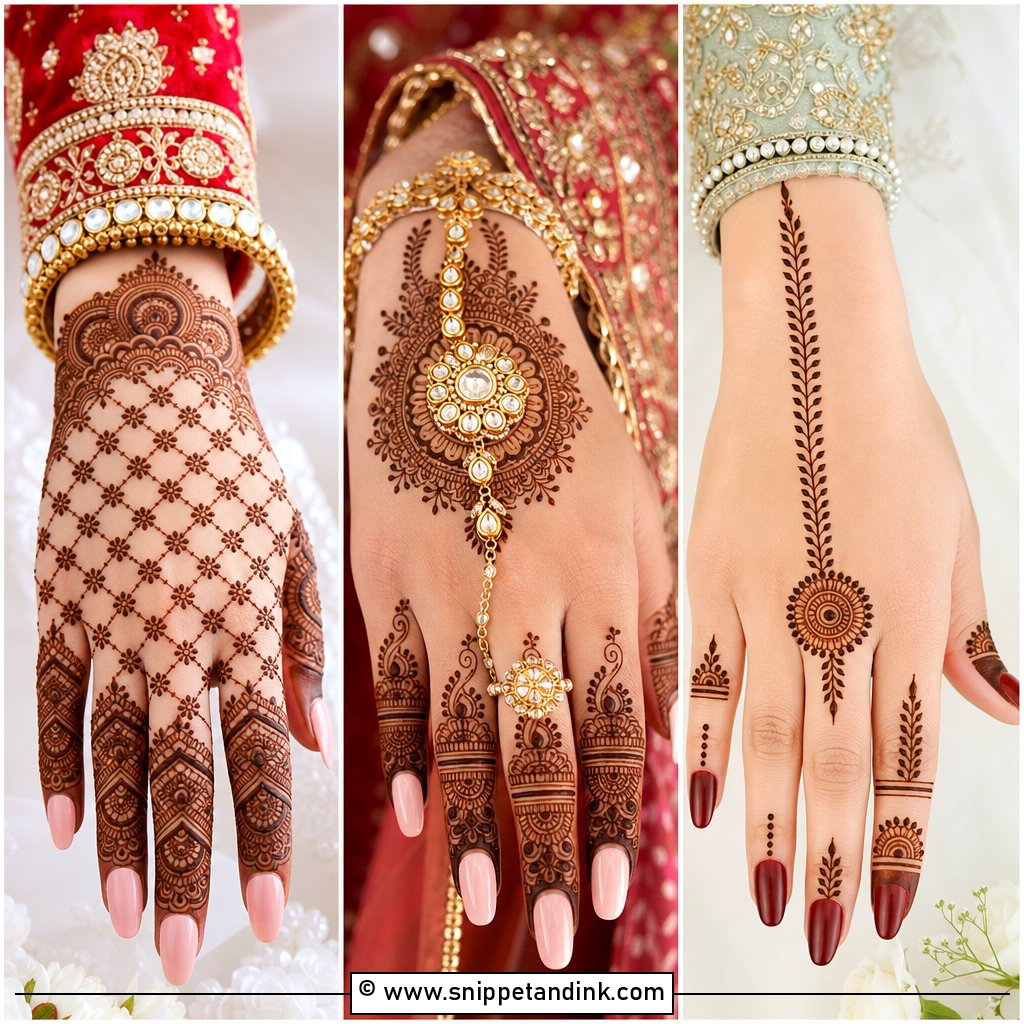
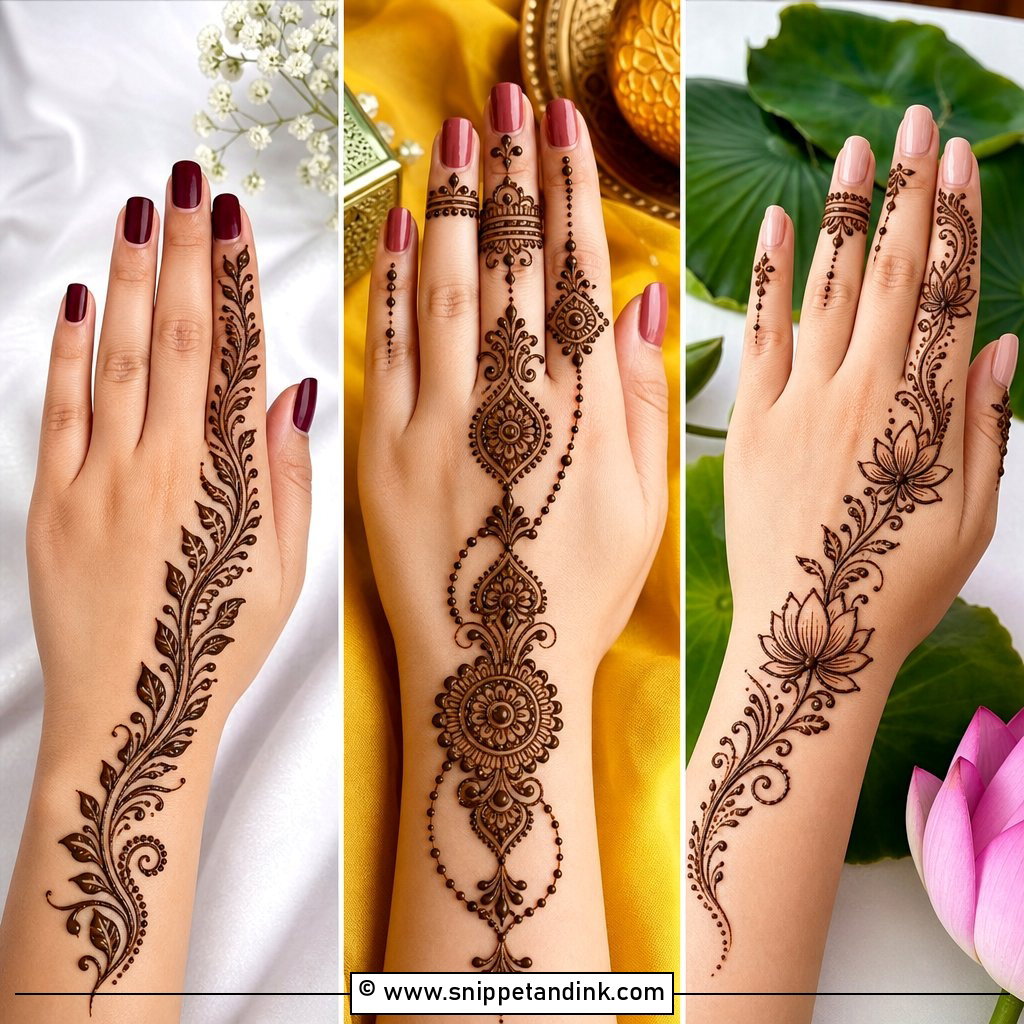
A cuff, chain or haath phool shape at the wrist, connected to the fingers by fine lines, dots and small motifs, turns the back hand into a piece of henna jewelry. It looks good with real bangles and holds up on its own too. The fingers get tiny vines, checks or leafy details. It suits a lighter look for an engagement, nikah or reception, when full coverage would feel too much.
11. Jewelry Bridal Mehndi Design Back Hand
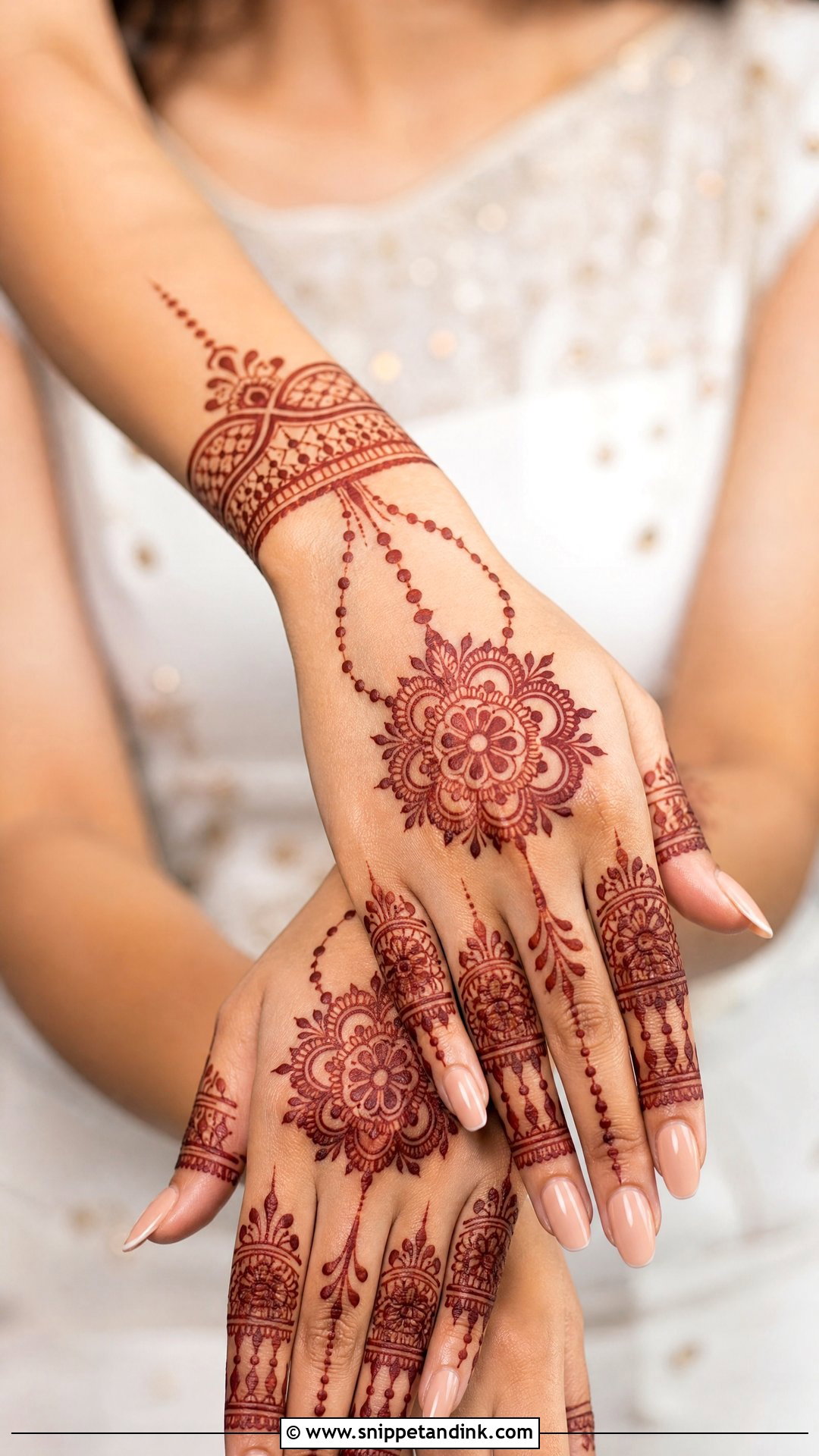
Jewelry-style henna imitates rings, chains, bracelets and hand harnesses. I start with ring motifs on the fingers, link them with dotted chains to a central flower, mandala or gem shape, and close with a wrist cuff. Clean lines and open space are what make the jewelry illusion work. Crowd it and it just looks like a busy pattern. Delicate bangles and statement rings pair naturally with it.
12. Finger Bridal Mehndi Design Back Hand
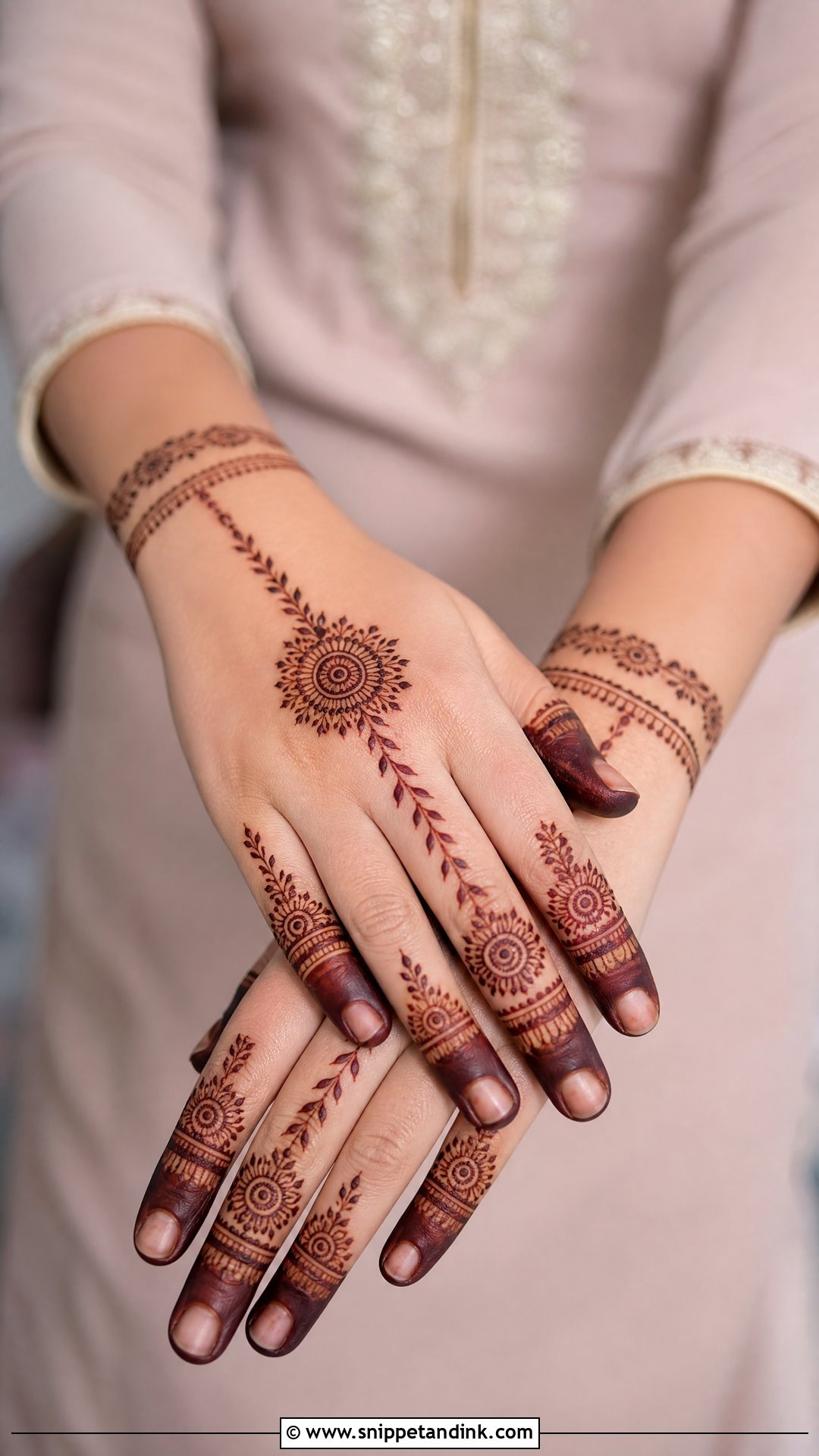
A Finger bridal mehndi design focuses on the fingers and keeps the centre of the hand light: filled fingertips, leafy strips, tiny florals, jaali panels and slim bands on each finger, with a small mandala or floral cluster in the middle. It’s the right choice when heavy sleeves or stacked bangles will cover most of the hand anyway. A decorative wrist border stops it feeling unfinished. If you’re having a manicure, get it done before the henna, because fresh paste stains the cuticles too.
13. Minimal Bridal Mehndi Design Back Hand
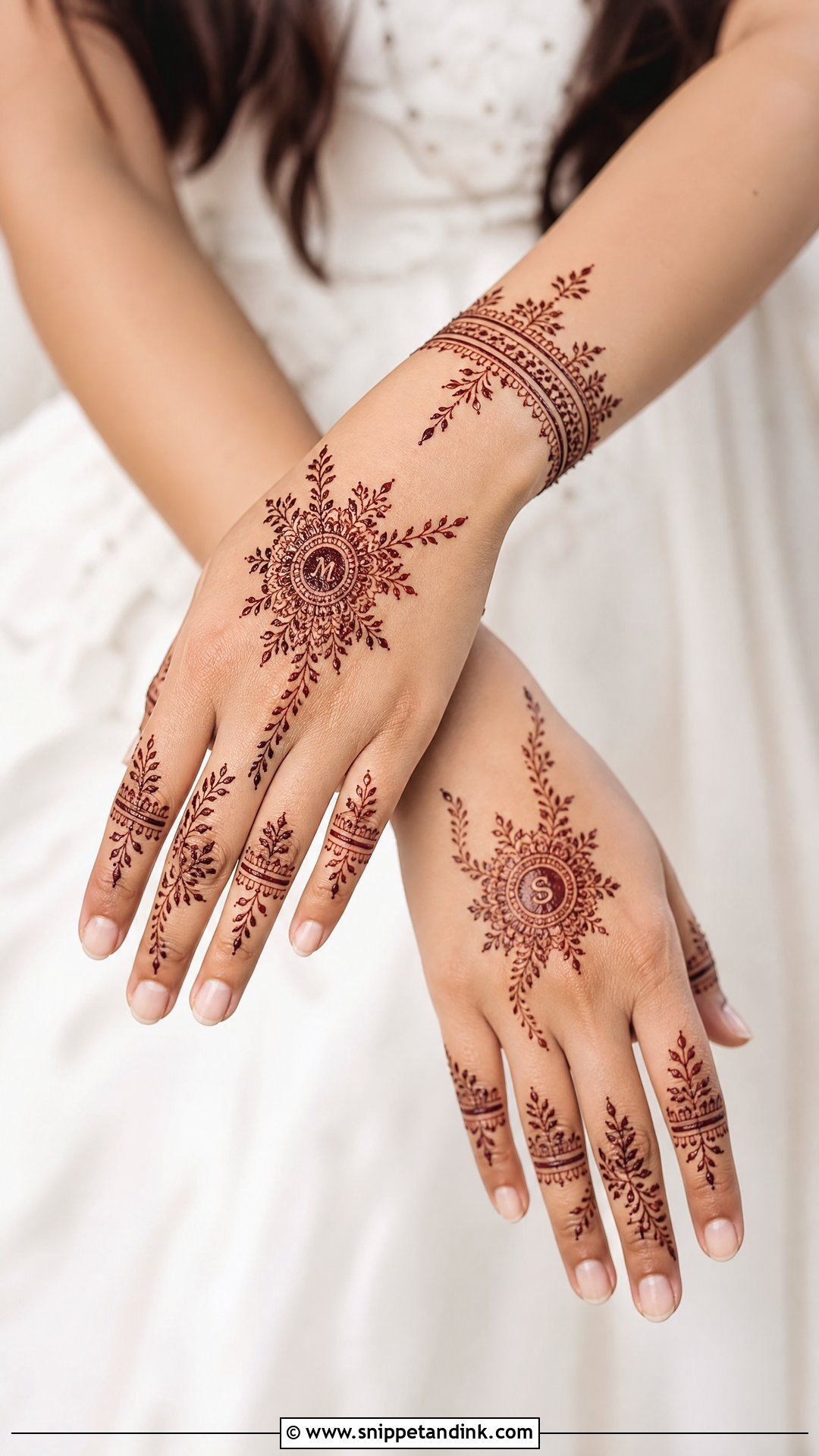
Minimal back hand henna is a small mandala, fine floral vines, spaced finger details and a simple wrist band. It reads as bridal only when the lines are clean and both hands match. It suits intimate weddings, courthouse ceremonies and destination events, and pairs well with diamond rings and pearls. Tiny initials or a date hidden in the floral trail keep it personal.
14. Modern Bridal Mehndi Design Back Hand
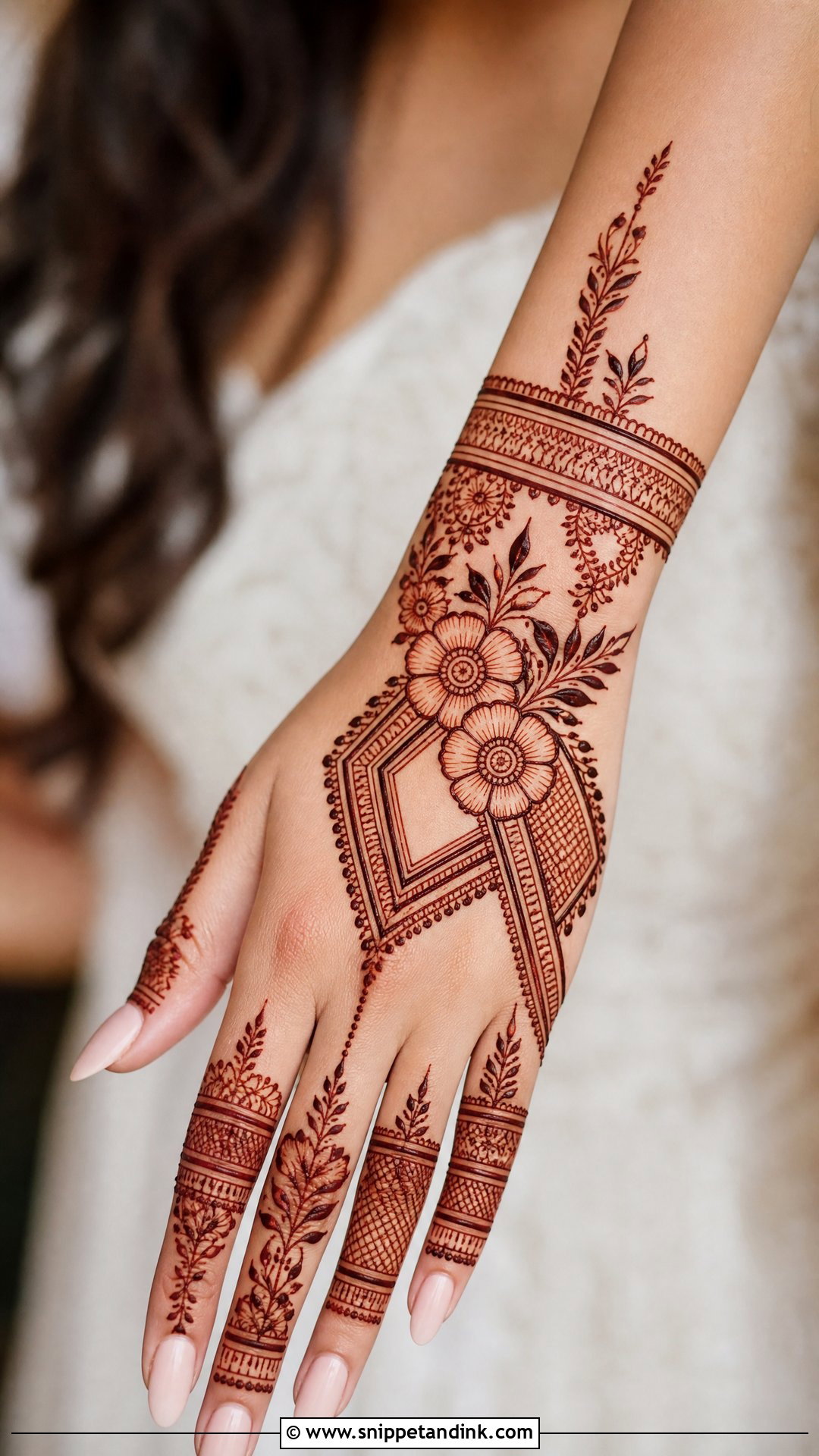
Modern back hand designs mix clean spacing with bold motifs: geometric panels, half-hand layouts, floral cuffs and fresh finger patterns. Balance is the hard part. Too much empty skin looks casual next to a bridal outfit, while too much detail loses the modern feel. My approach is one strong focal point, usually a mandala or a floral cluster, with lighter details built around it. Contemporary lehengas and fusion outfits suit it best.

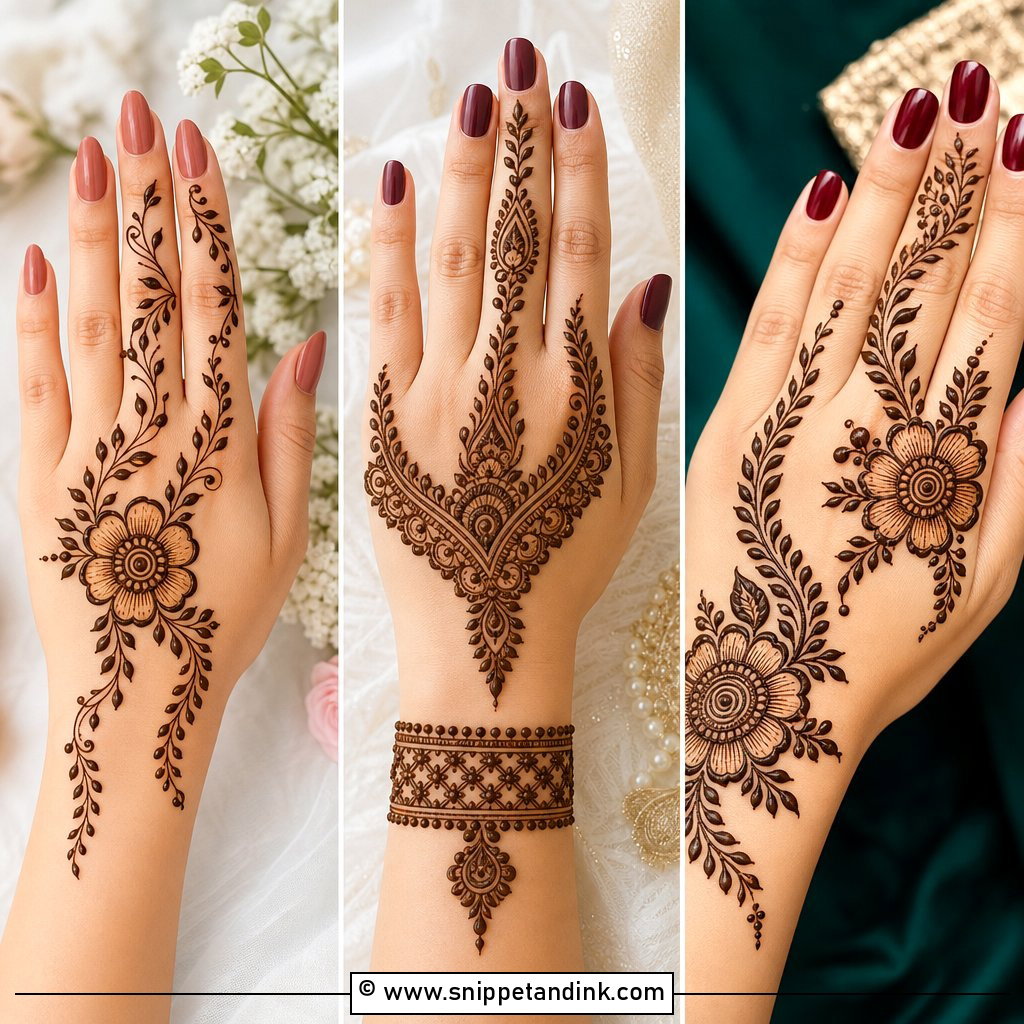
15. Royal Bridal Mehndi Design Back Hand
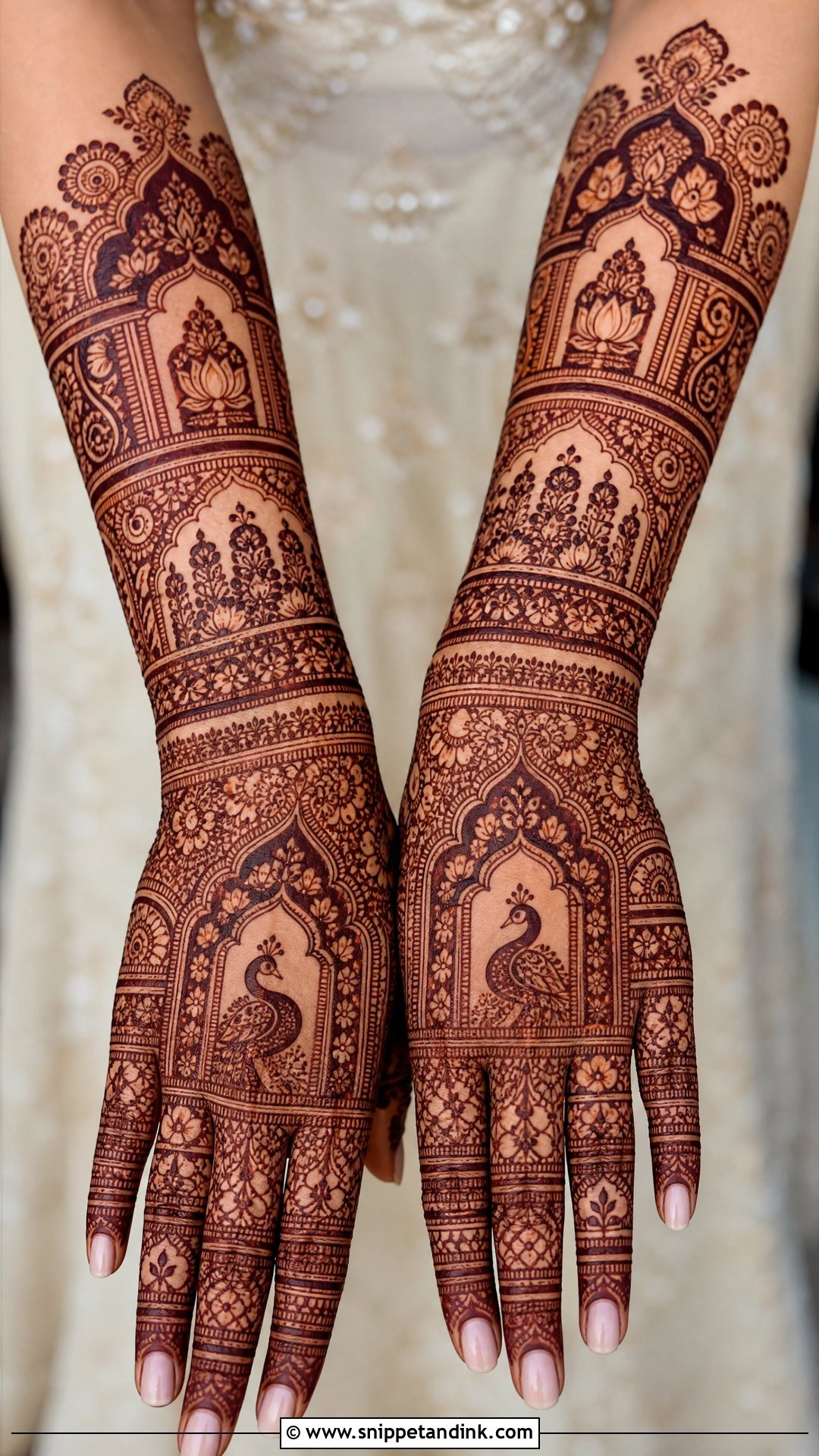
Royal designs are built like miniature artwork, with palace arches, peacocks, lotus motifs, layered paisleys and heavy borders running from wrist to forearm around one statement centrepiece. They pair with traditional lehengas, silk sarees, kundan and heirloom jewelry. The danger is making everything tiny. Bold outlines around fine inner lines keep the scenes legible once the stain settles, so I always mix line weights in this style.
16. Pakistani Bridal Mehndi Design Back Hand
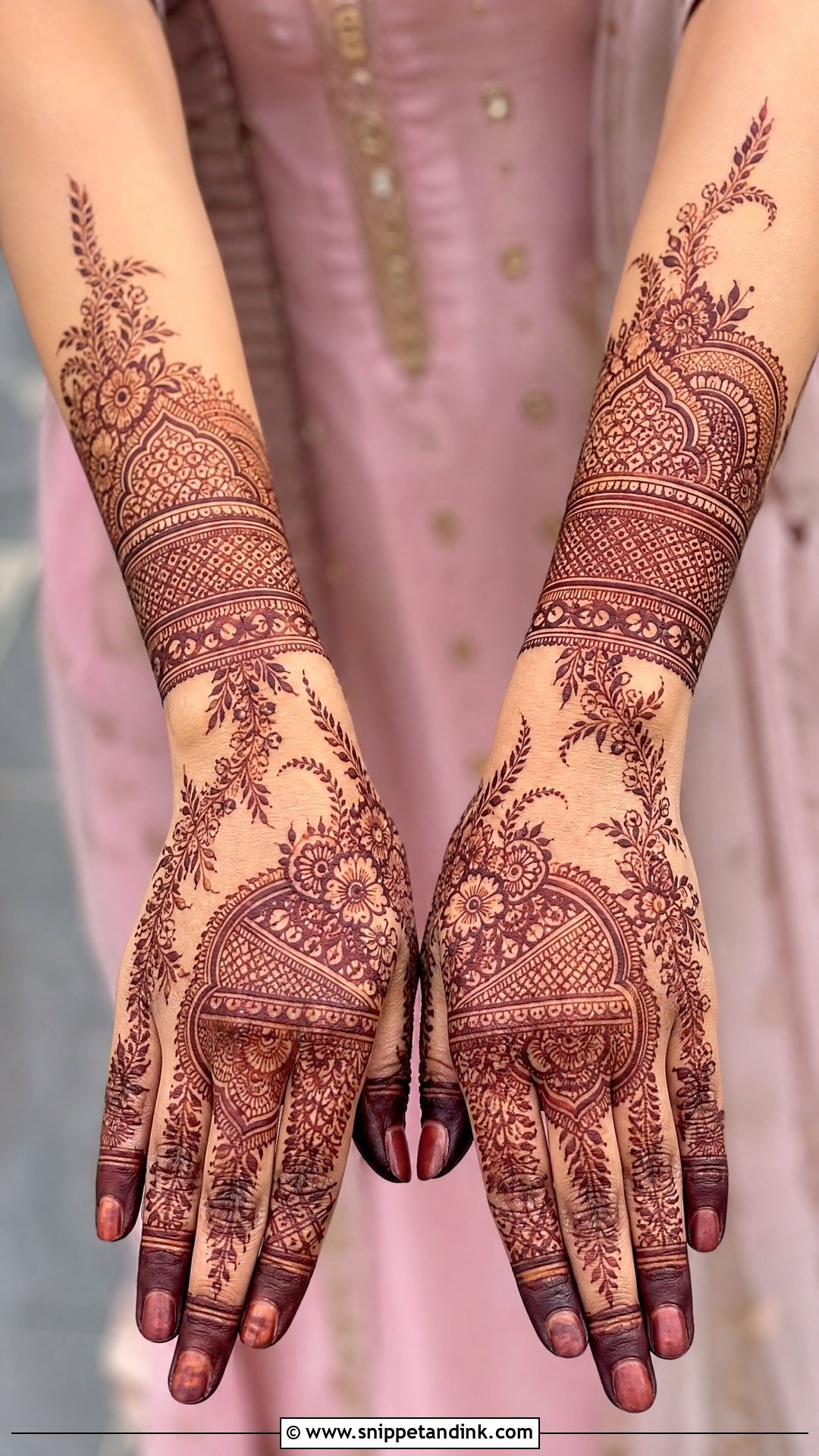
A Pakistani bridal mehndi design for the back hand blends dense Indian detail with Arabic flow: florals, domes, jaali, paisleys, leaves, shaded areas and filled fingers. It can be full, semi-full or trail-based. A common layout puts a bold central motif on the back of the hand, then connects it to the wrist with layered bands and vines. It’s at its best beside shararas, ghararas and heavily embroidered suits.
17. Rajasthani Bridal Mehndi Design Back Hand
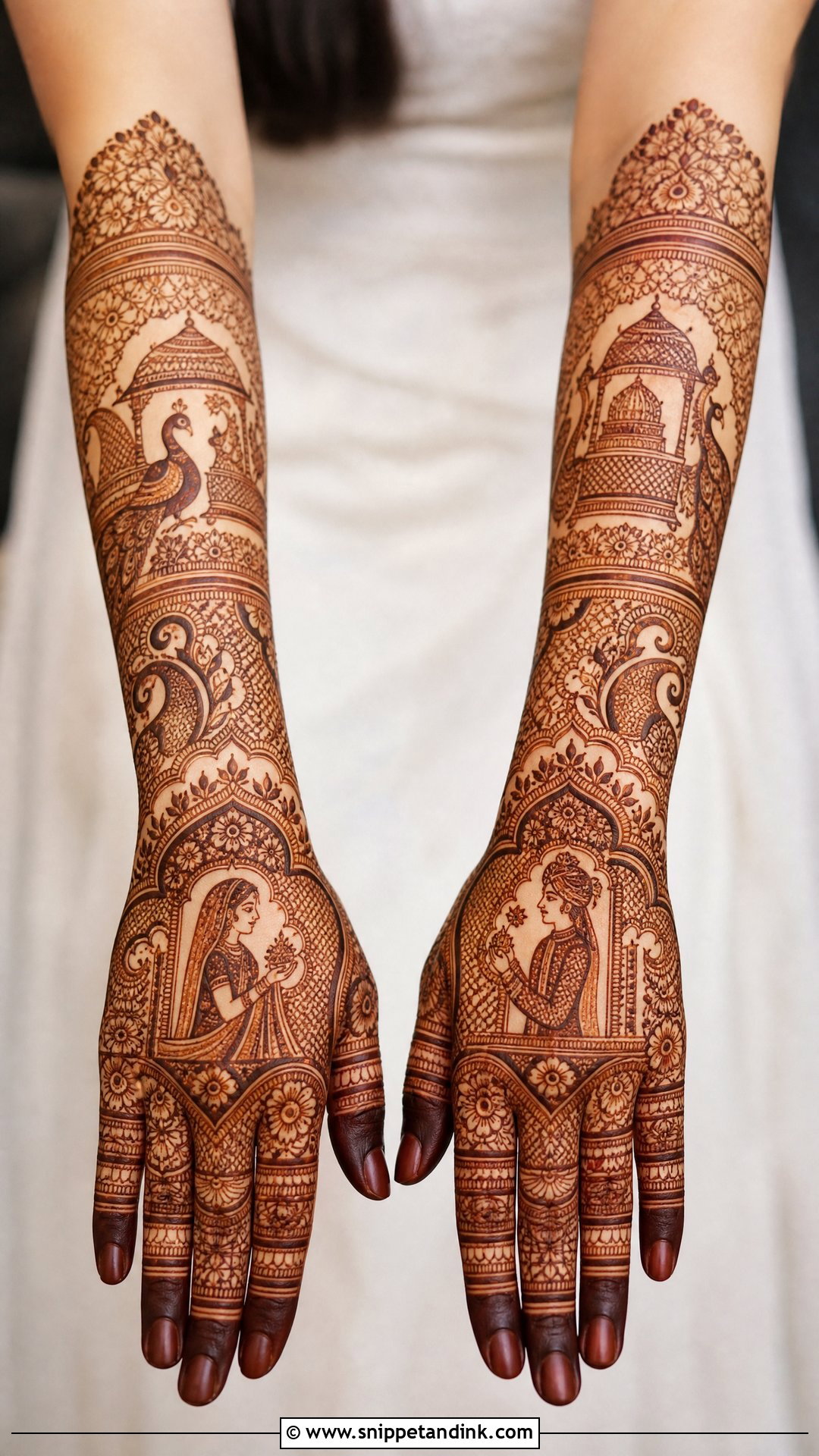
Rajasthani back hand work tells a wedding story in bride and groom figures, peacocks, doli shapes, paisleys and fine filler, often continuing over the wrist and forearm. The figures are the risk; at that scale, one stray line changes a face. Pick an artist whose past figure work you’ve seen up close. It suits red, orange, gold, pink and maroon outfits.
18. Gulf Bridal Mehndi Design Back Hand
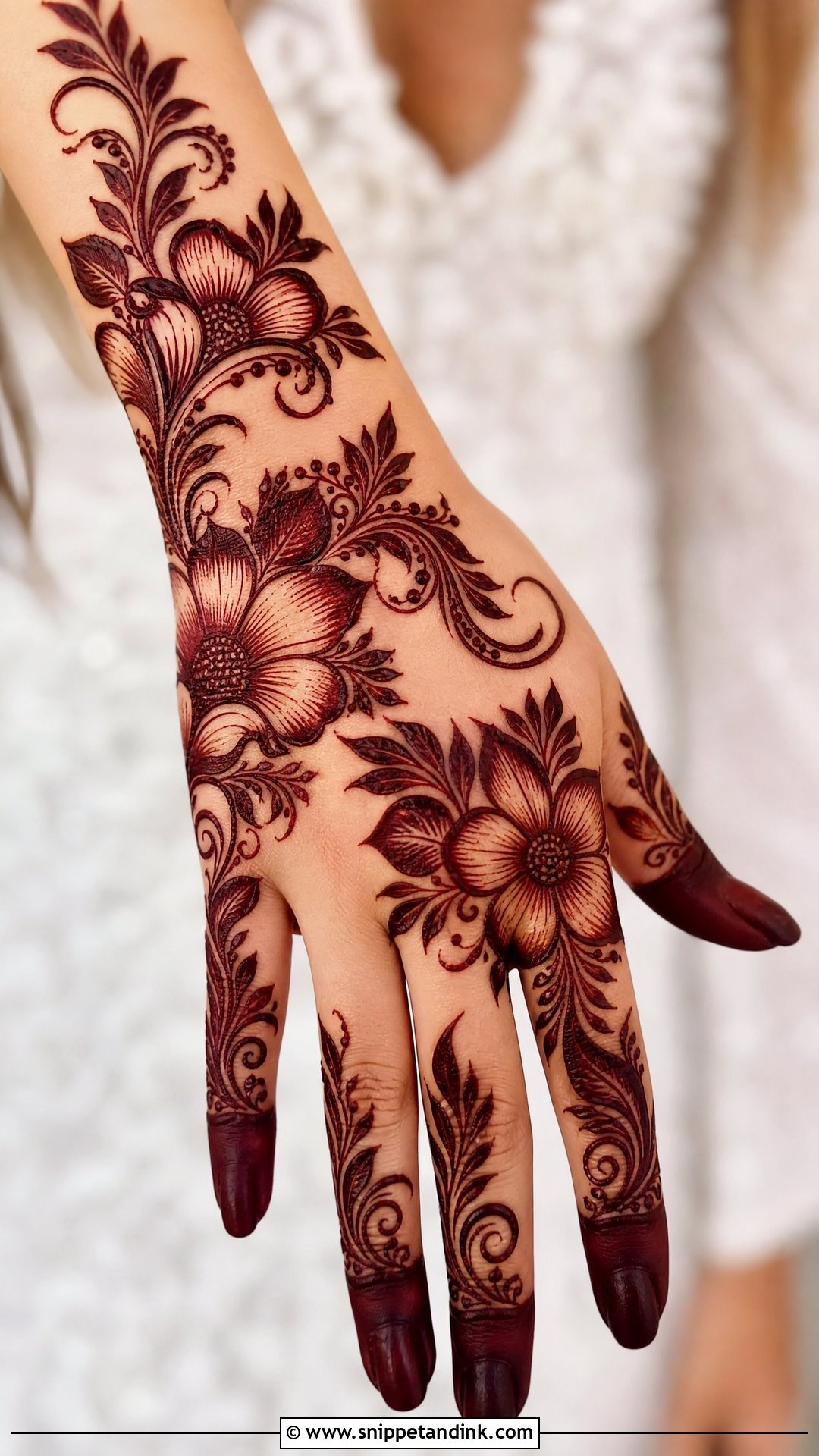
Gulf style uses large flowers, leafy sprays, curved vines, shaded petals and strong fingertip detail, either down one side of the hand or as a sweeping trail across it. There’s far less filling than in Indian work, so the stain looks crisp against the open skin. It makes an impact quickly, which helps if your mehndi evening is short on time. Gold jewelry and embroidered sleeves both sit well beside it.
19. Moroccan Bridal Mehndi Design Back Hand
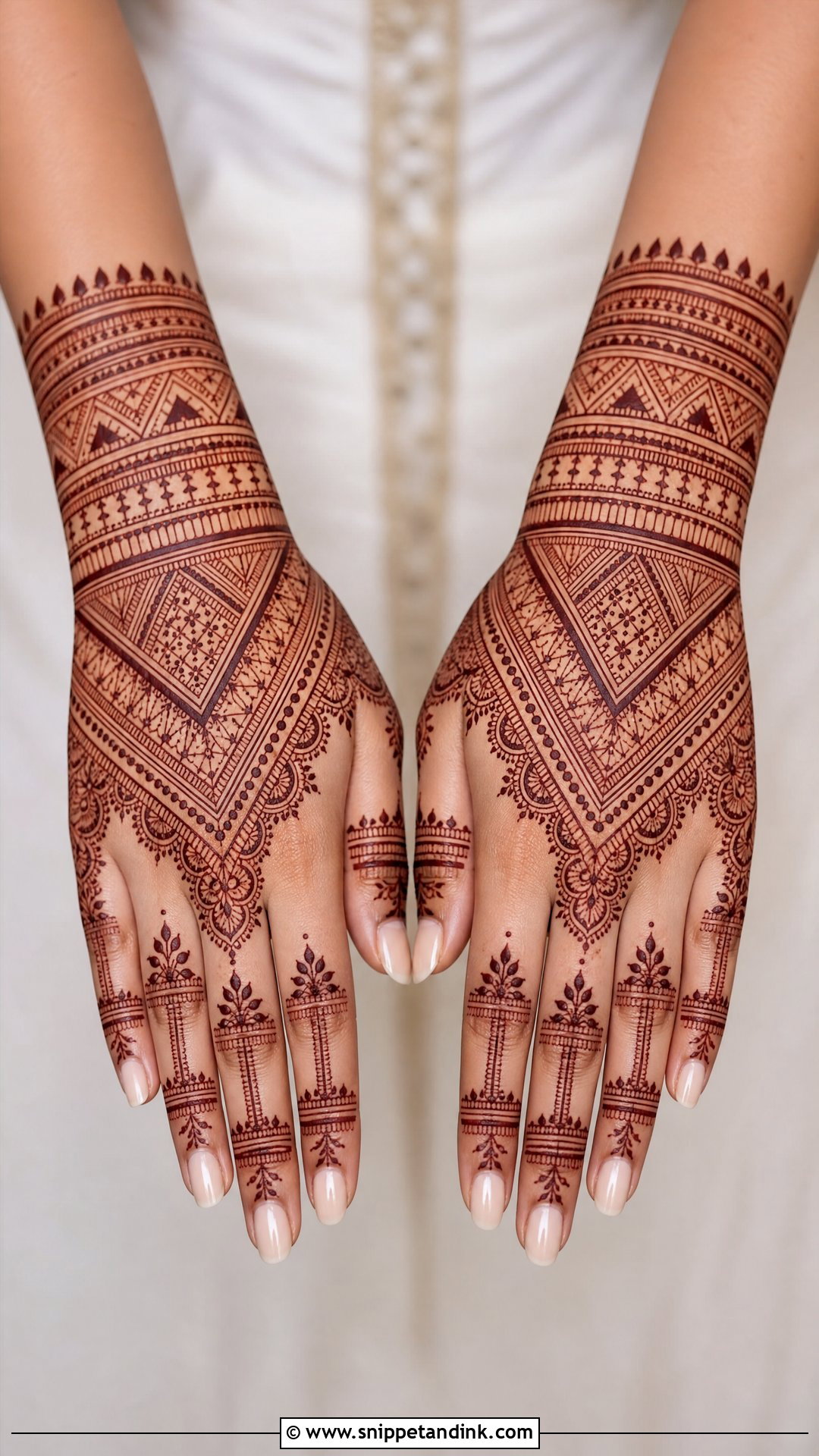
Geometry takes over here: diamonds, lines, triangles, grids, dots and symmetrical bands. It can cover the back of the hand like a patterned glove, or stay lighter with geometric finger work and a wrist cuff. Straight lines reveal every wobble, so I set guide points before drawing the grid. A small floral accent or central mandala keeps it bridal, and it looks best with minimal jewelry.
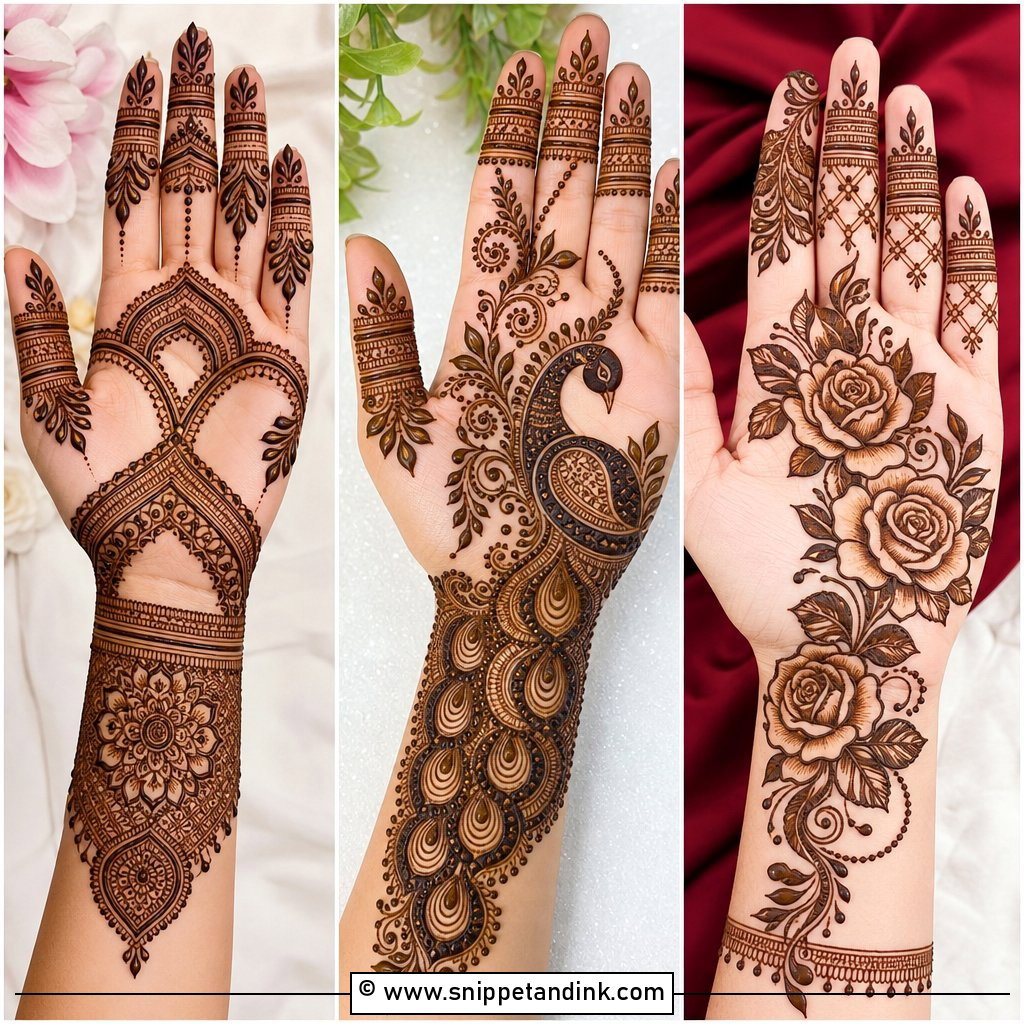

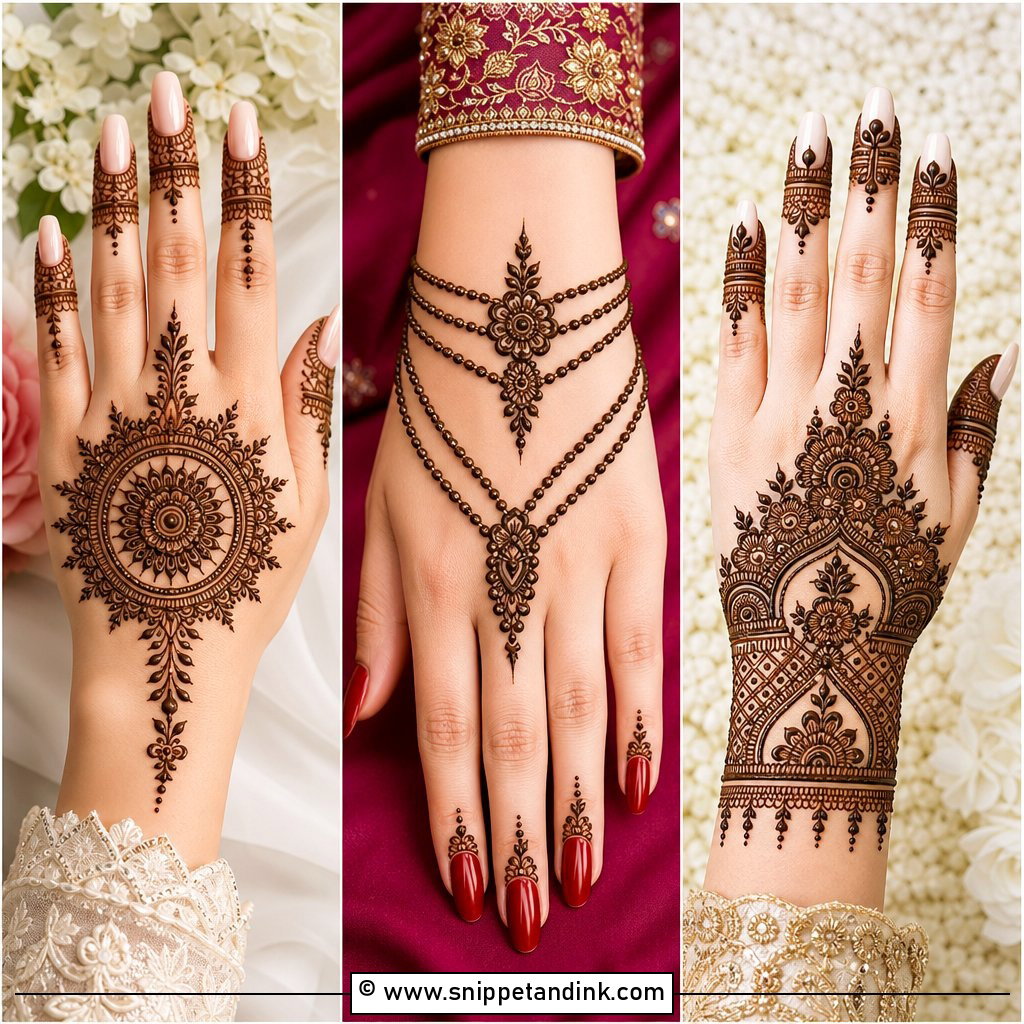
20. Personalized Bridal Mehndi Design Back Hand
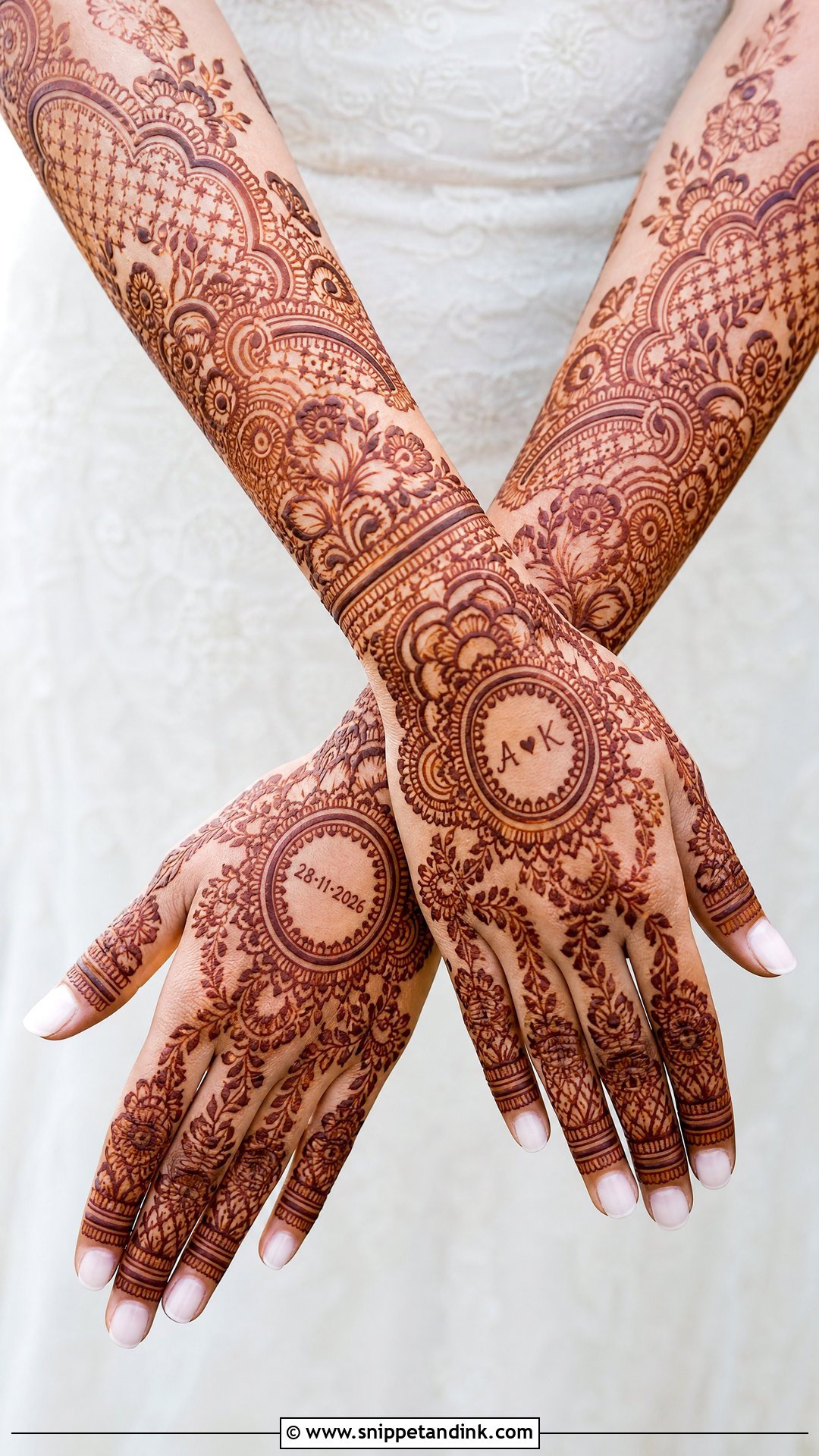
Personalized bridal mehndi design folds the couple’s own details into a traditional frame: initials, the wedding date, a favourite flower, a small symbol from your story. Paisleys, jaali, mandalas, florals and bracelet borders surround them. The skill is in hiding the personal elements naturally, near the wrist, inside a mandala or along a vine, so the design stays artistic rather than turning into a list of words.
If the Stain Comes Out Pale
Don’t judge the colour when the paste first comes off. It starts orange and keeps darkening for a day or two. Plenty of brides panic that first evening over a stain that is perfectly rich by the wedding morning.
If it’s still light the next day, warmth helps more than anything. Hold your hands near a gentle heat source for a few minutes, keep them away from water and soap as long as you reasonably can, and rub a little natural balm in before washing. Avoid scrubbing, sanitiser and chlorine, and leave the swimming pool until after the wedding.
What you shouldn’t do is let anyone draw over it with a dark instant cone. Products that promise black colour in an hour can contain chemical dye and can cause painful reactions. A slightly lighter back hand photographs far better than irritated skin, and honestly, next to a dark palm it usually just looks natural.
Your Rings, Your Sleeves, Then the Pattern
Coverage, outfit, jewelry and the mood of your wedding narrow the choice quickly. Full Indian work reads rich and traditional; Arabic and Gulf patterns feel airy and bold; mandala, jaali, paisley and bracelet layouts sit in between; modern and personalised designs add something fresh. The right bridal back hand design is clear, comfortable and yours. Talk to your artist about stain depth and timing as well as the pattern, because on the back of the hand those two decide how the design looks in every close-up.
You'll Like These Ideas:








Leave a Reply