
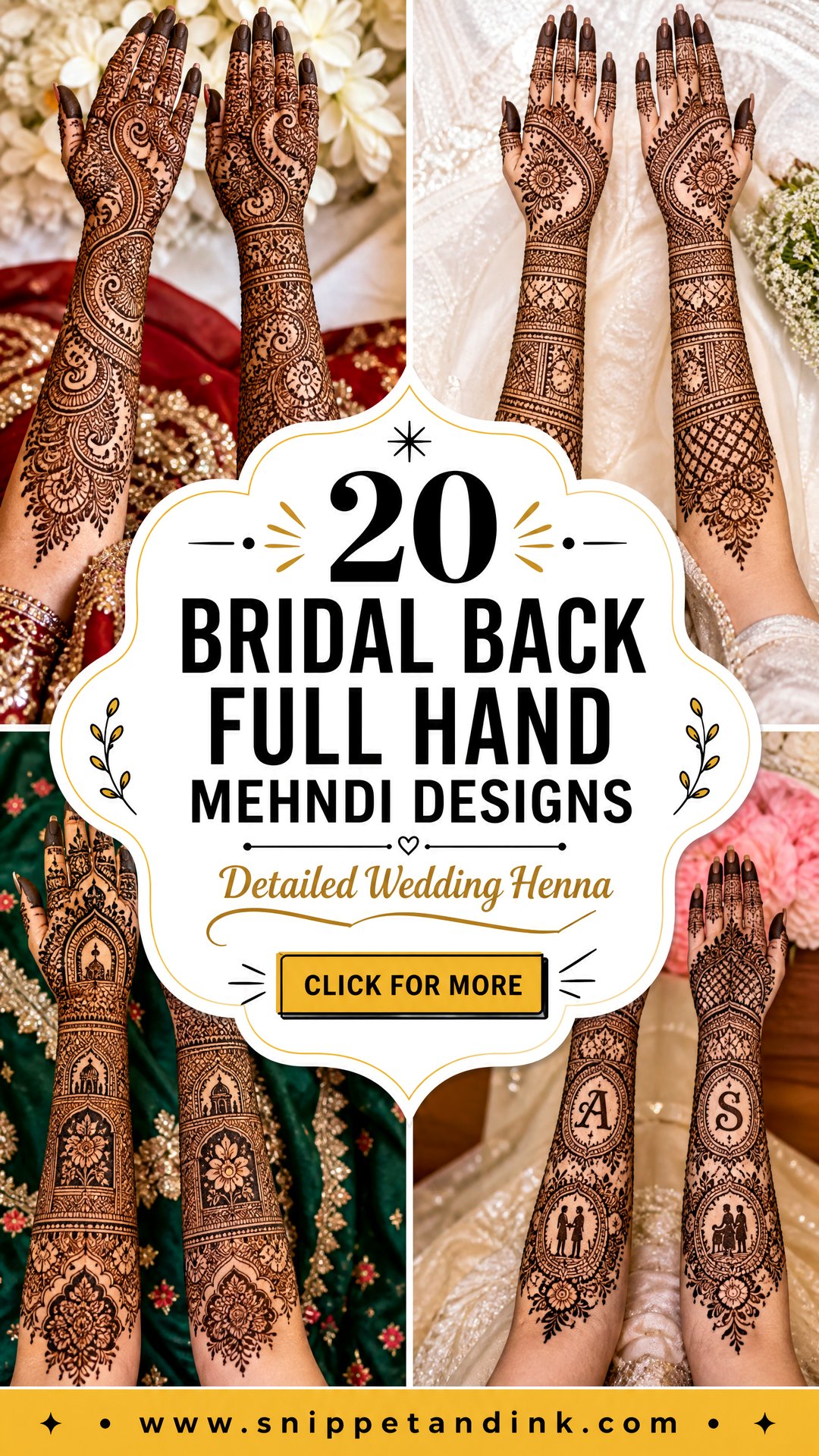
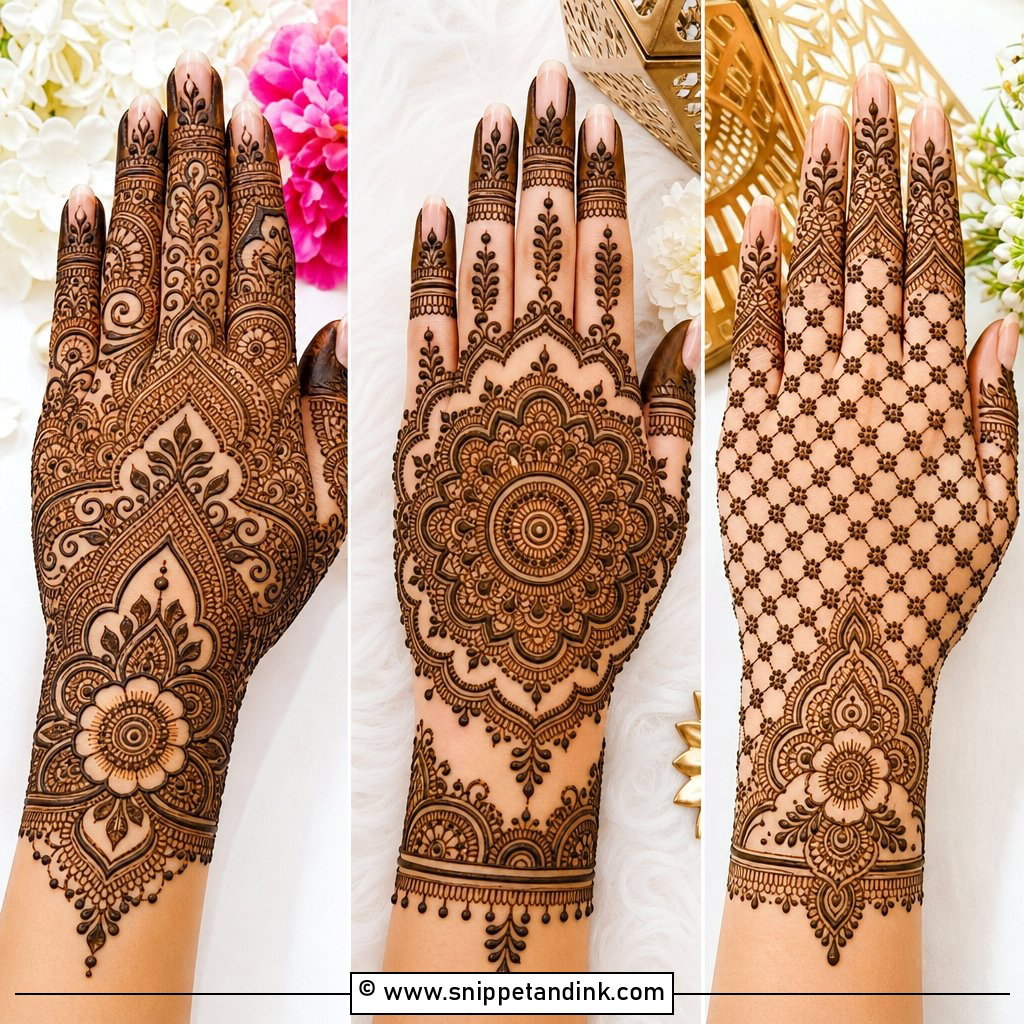
Guests barely see your palms during a wedding. They see the backs of your hands: holding the bouquet, receiving the ring, resting on your lap under a heap of bangles. That’s why I put as much planning into back full hand mehndi designs as into the palm. The design needs a clear flow from the fingertips to the wrist or forearm, and it has to survive bending knuckles and jewellery rubbing against it. Current bridal work ranges from dense Indian layouts to Arabic florals, Indo-Arabic spacing, jewellery-inspired patterns, jaali, mandalas, peacocks and personal motifs. Below are twenty I’d recommend, with notes on how each one behaves on this side of the hand.
Knuckles, Thinner Skin and Bangles on the Back of the Hand
The back of the hand behaves differently from the palm, and I design for that before anything else. The skin is thinner, so the stain usually comes up lighter and fades a little sooner. The knuckles fold, so anything drawn across them changes shape whenever you bend your fingers. And bangles cover part of the wrist and rub against whatever is underneath.
- I use slightly bolder lines here than on the palm, so the design still reads even if the stain is lighter.
- Main motifs go on the flat area between the knuckles and the wrist, not over the knuckles themselves.
- The wrist cuff is placed just above or below where the bangles sit, so it frames them instead of hiding under them.
- Fingers get simpler patterns than the hand, since they bend constantly and fine detail on them smudges first while wet.
Before I finish, I ask the bride to rest her hands in her lap the way she will during the ceremony and I look at them from standing height. That is the angle most guests and the photographer see, and it shows me straight away if one side of the design is heavier than the other.
1. Indian Bridal Back Full Hand Mehndi Design
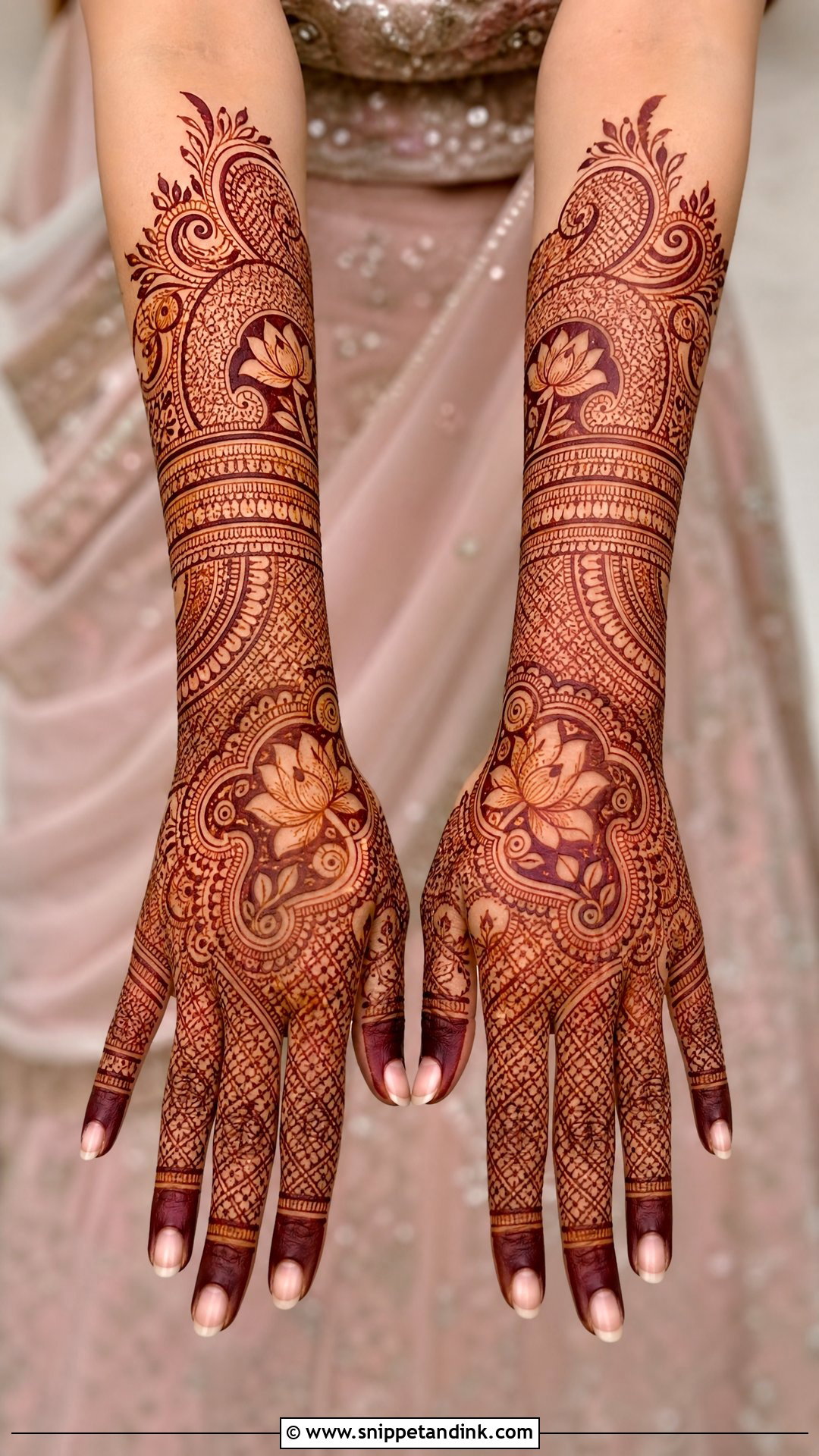
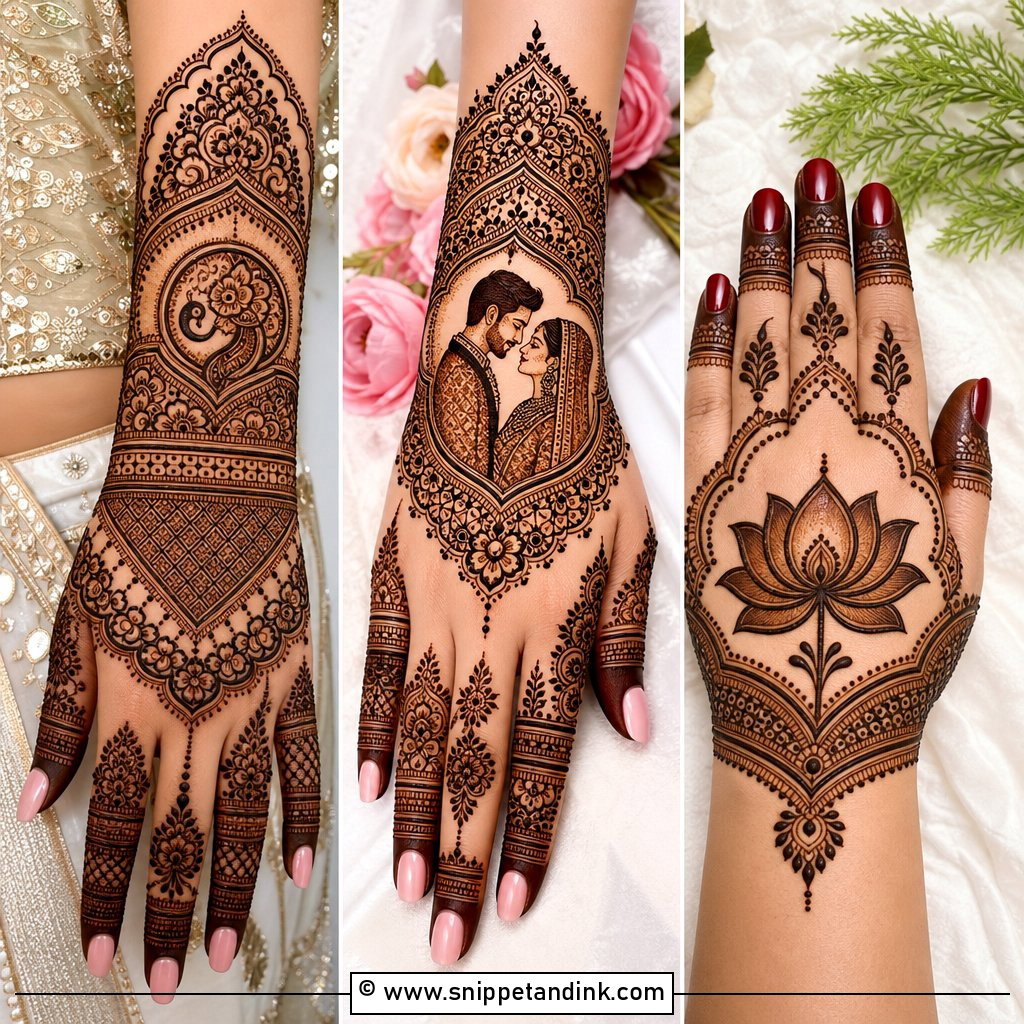
Indian bridal coverage on the back of the hand starts with filled fingertips and moves through floral vines, paisleys, leafy bands and jaali panels to a bracelet-like border at the wrist or forearm. Every space gets decorated, which is its appeal, but it only works with clean divisions between sections; without them, a full hand mehndi design stains into a dark mass. Lotus, kalash, peacock details or the groom’s initials can sit inside the panels. Red, maroon, gold, ivory and green outfits all suit it. It’s the most ceremonial look here and the slowest to apply.
2. Arabic Bridal Back Full Hand Mehndi Design
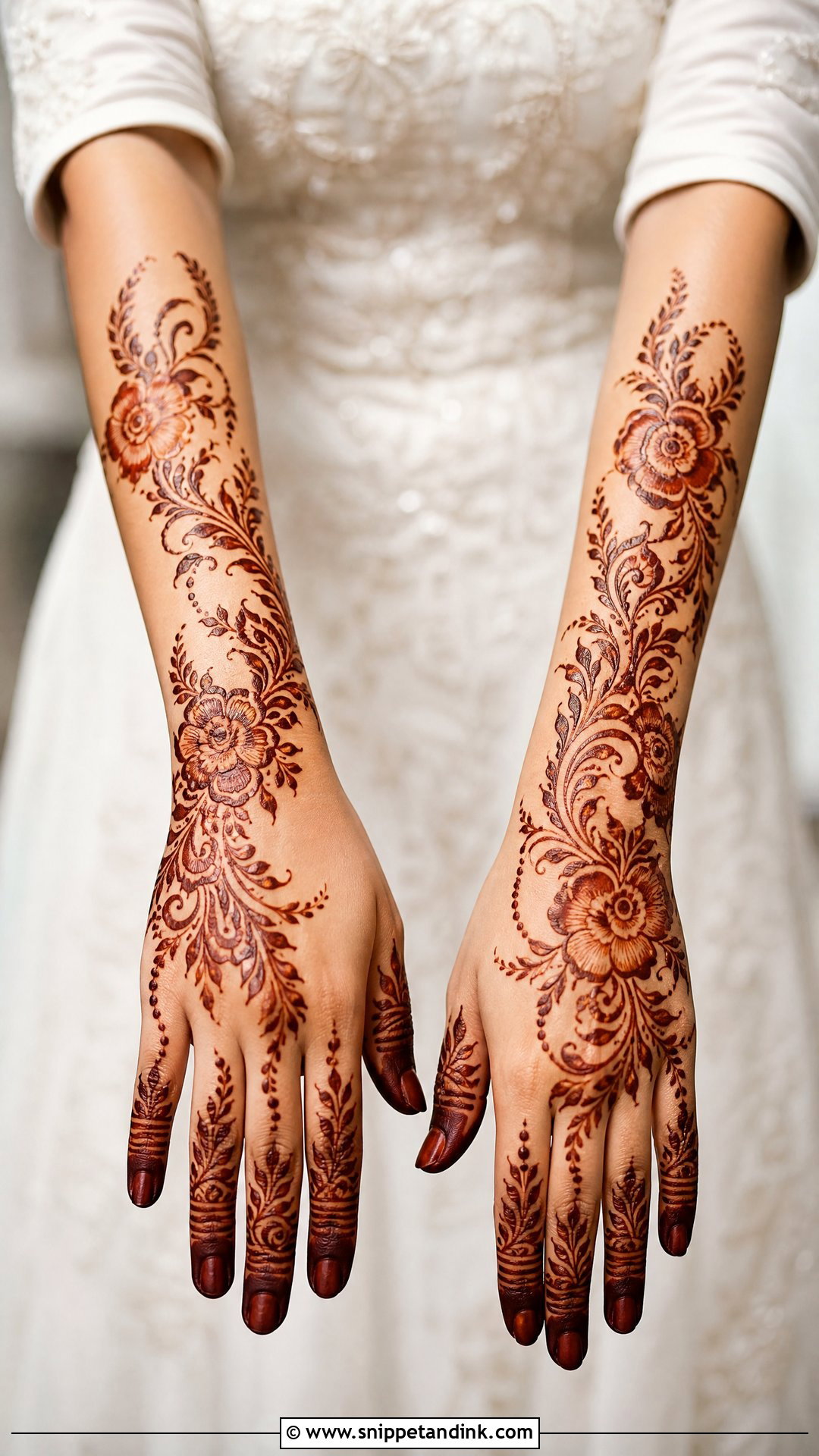
Arabic bridal back full hand designs usually run diagonally from the index or middle finger down to the wrist and on up the forearm. Large flowers, curved leaves, shaded petals and open skin keep each motif easy to read. That diagonal also happens to follow the bones of the hand, so it moves well when you flex your fingers. To make it bridal, I balance the open areas with fine dots, small leaves or thin chains. It gives full-hand coverage that feels much lighter than a dense traditional design.
3. Indo Arabic Bridal Back Full Hand Mehndi Design
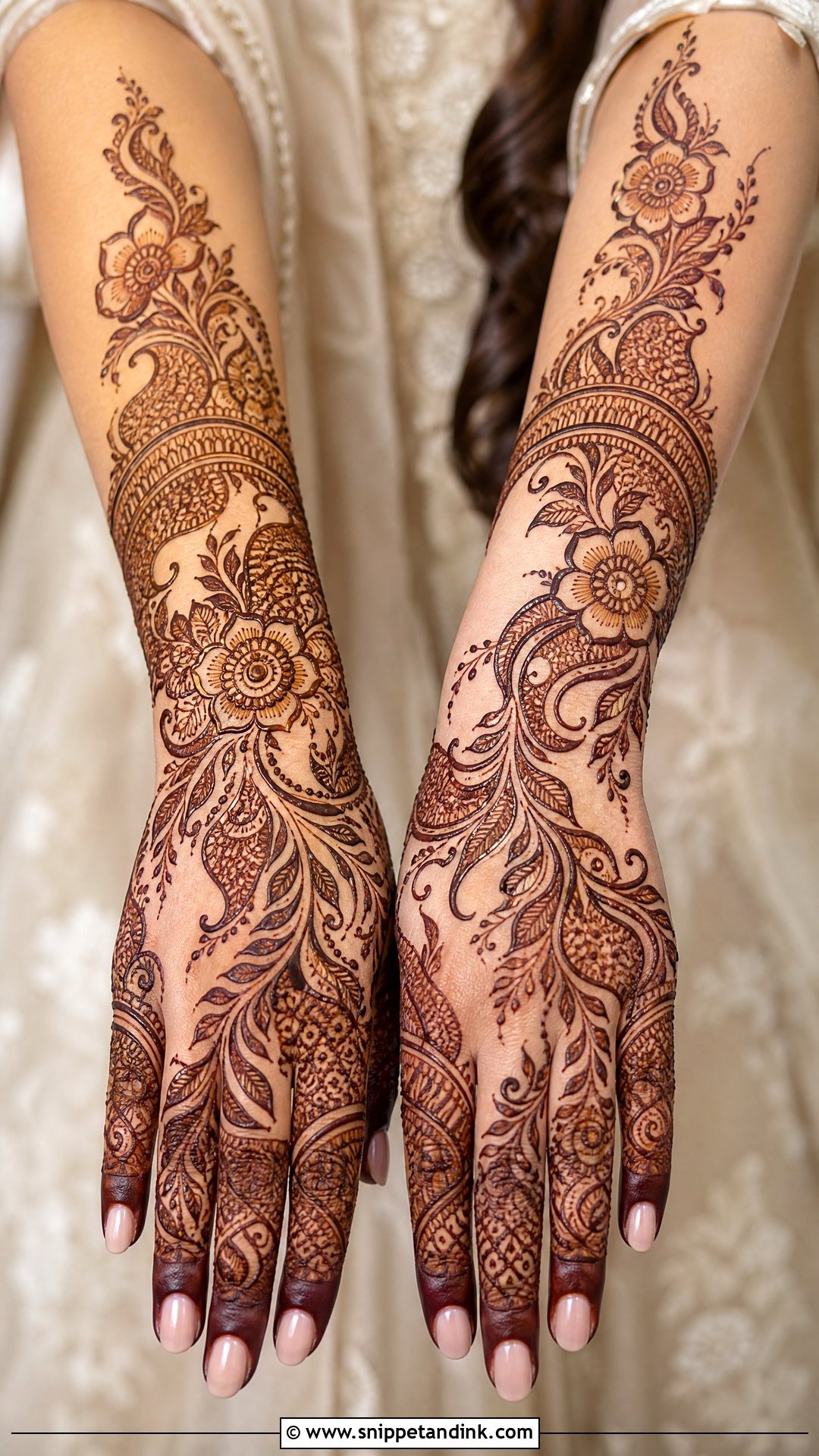
Indo-Arabic gives you Arabic flow on the outside and Indian detail on the inside. Bold flowers, paisley clusters, leafy trails and curved bands sit across the back of the hand, and each shape is filled with fine lines, dots, net and tiny petals. The outlines keep it clear even with all that filling. Stacked cuffs or slanted bands finish the wrist and forearm. It’s a good middle ground if your family expects traditional richness and you want something more modern, for an engagement, nikah, sangeet or the wedding day.
4. Full Back Hand Bridal Mehndi With Mandala
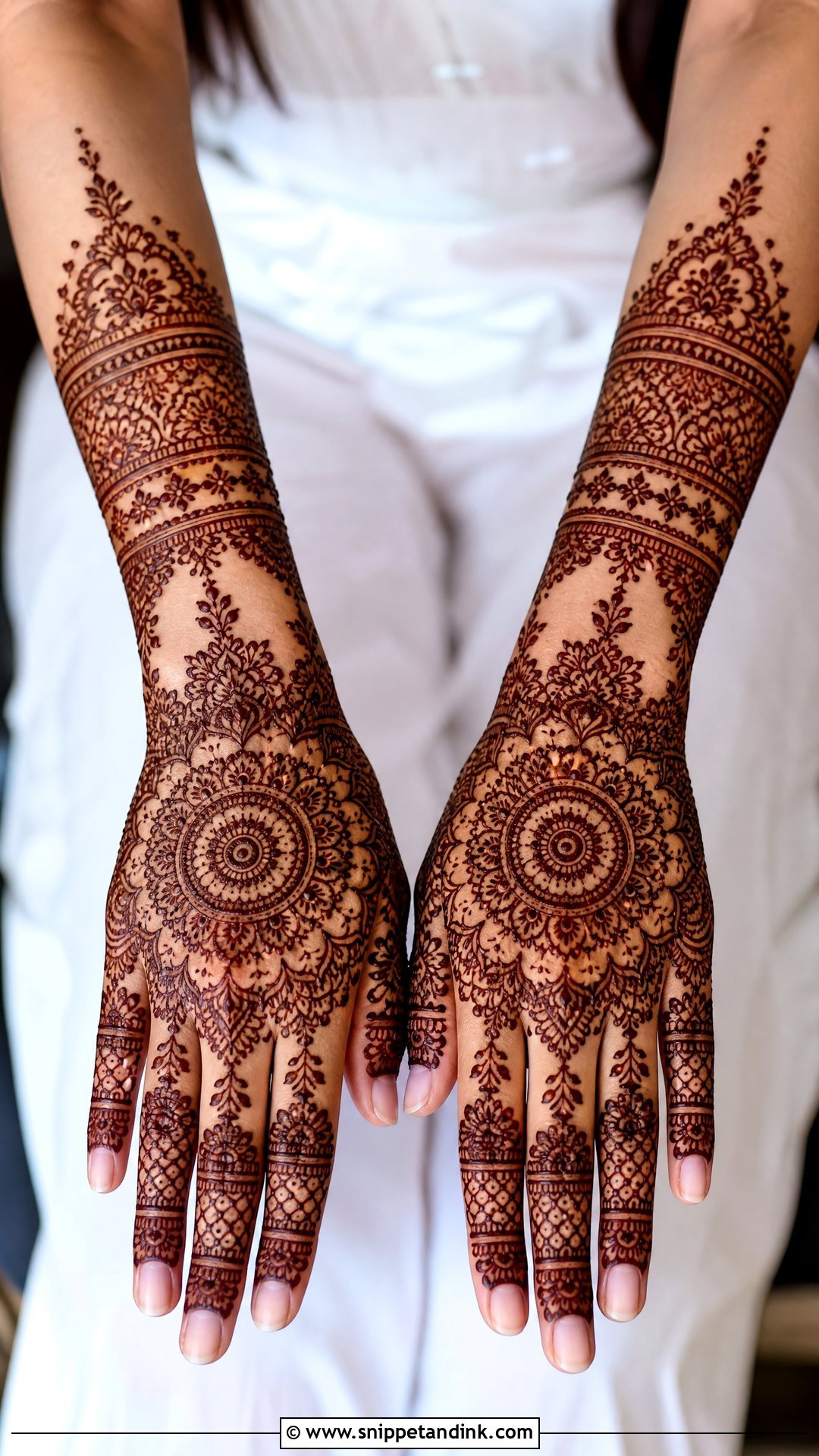
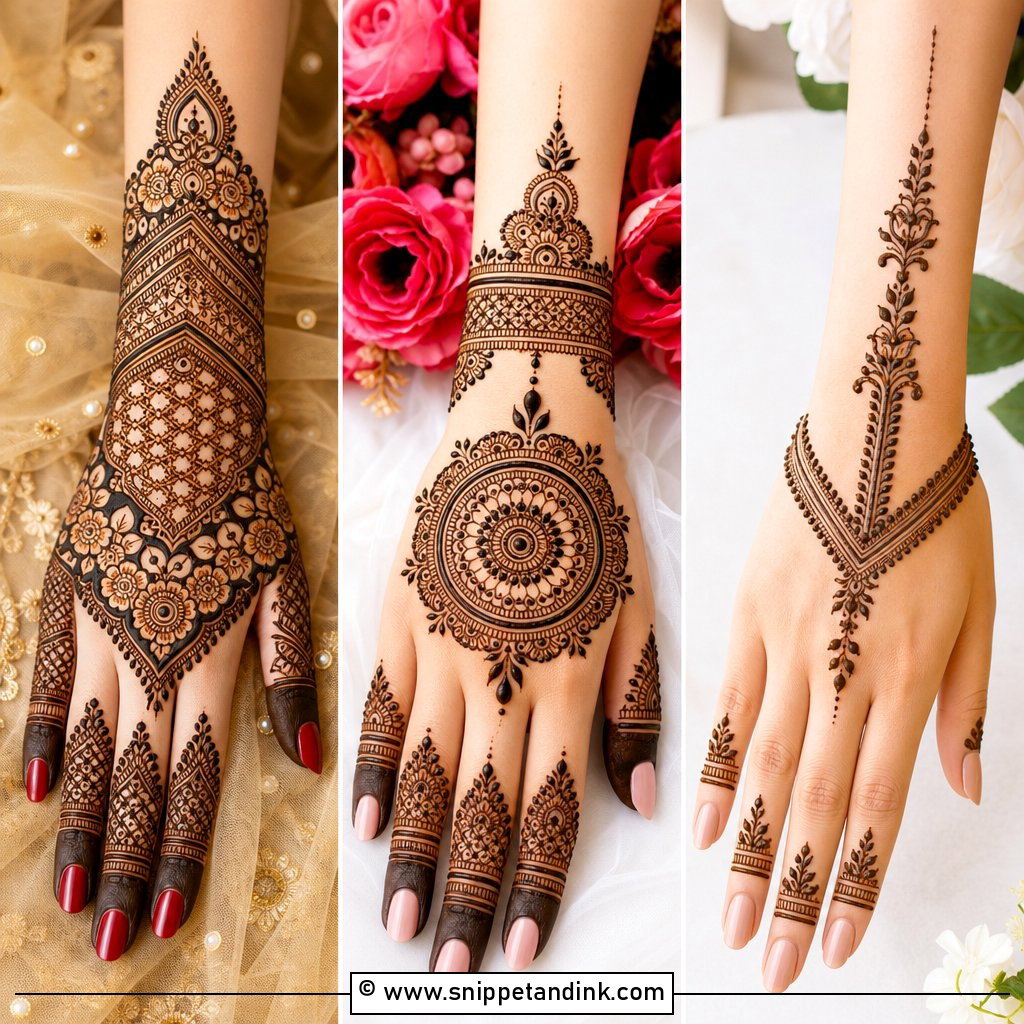
A mandala in the middle of the back of the hand gives the whole layout a centre. Around it I build finger patterns, wrist cuffs, leafy borders, paisleys and lace-like fillers. The back of the hand is flatter than the palm, so a circle keeps its shape here much better, which is one reason mandalas suit this side. It can be bold and open or packed with tiny petals and rings. I connect it to the fingers with vines or chain lines and finish with a wide wrist band so it reads like jewellery.
5. Bridal Back Full Hand Mehndi With Jaali
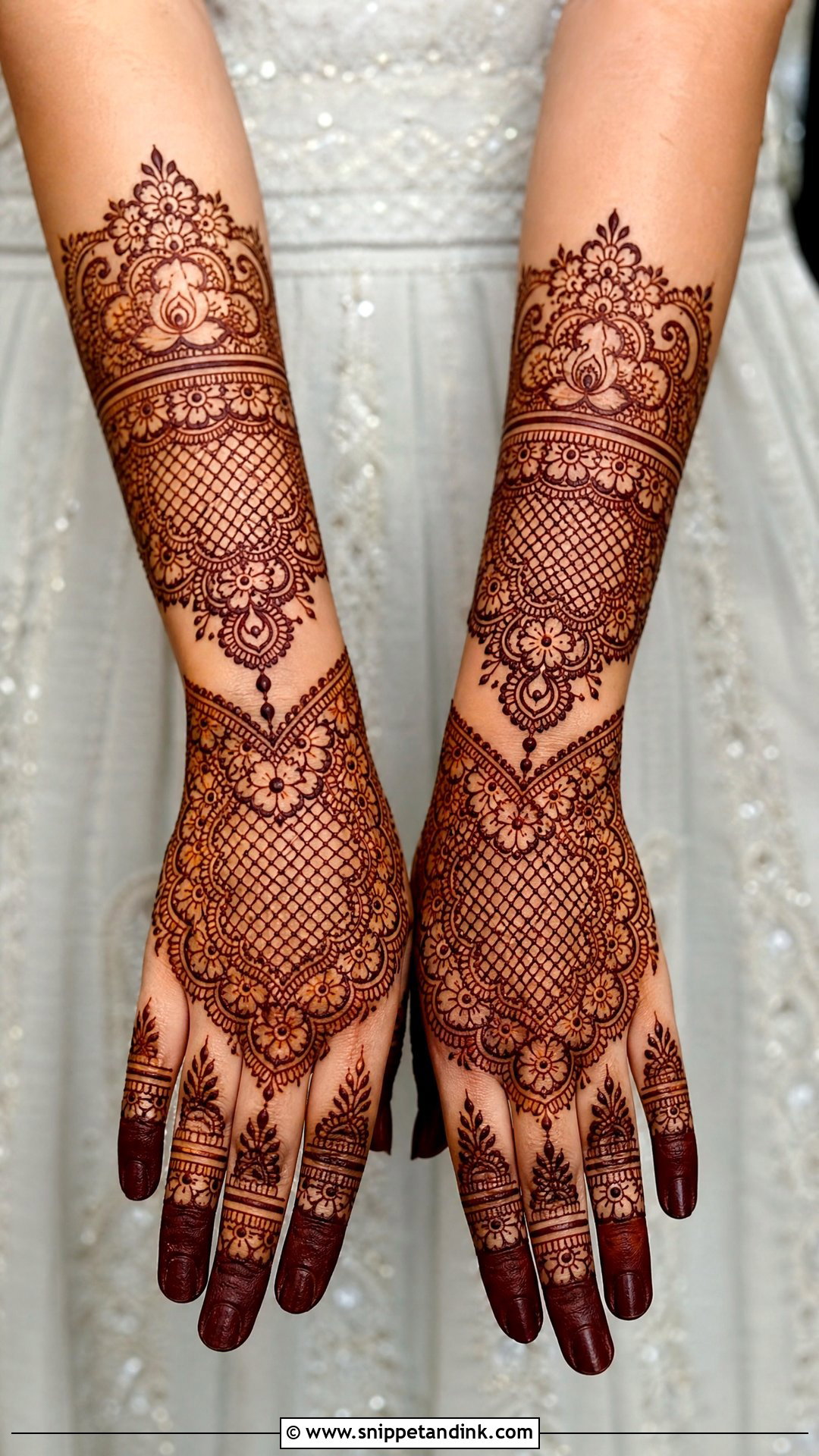
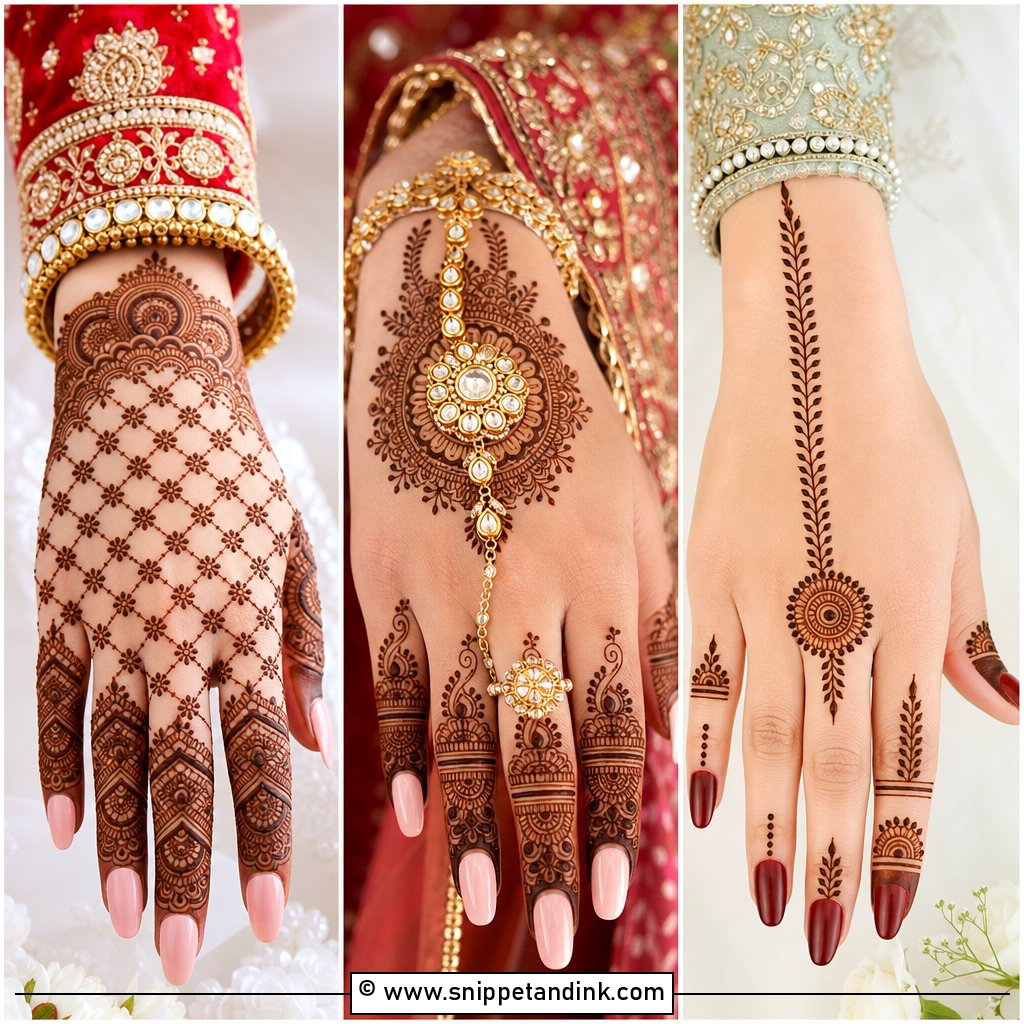
Jaali, the mesh pattern, sits well on the back of the hand because the surface is fairly flat and the lines stay even. A central jaali panel with floral edges, paisley corners, filled fingertips and a cuff-style border is a classic layout. For something more modern, I use different mesh sizes on the fingers, hand and forearm. Fine mesh needs a sharp cone tip and steady pressure; uneven lines show more in jaali than anywhere else. It pairs well with diamond rings, kundan and sheer sleeves.
6. Peacock Bridal Back Full Hand Mehndi Design
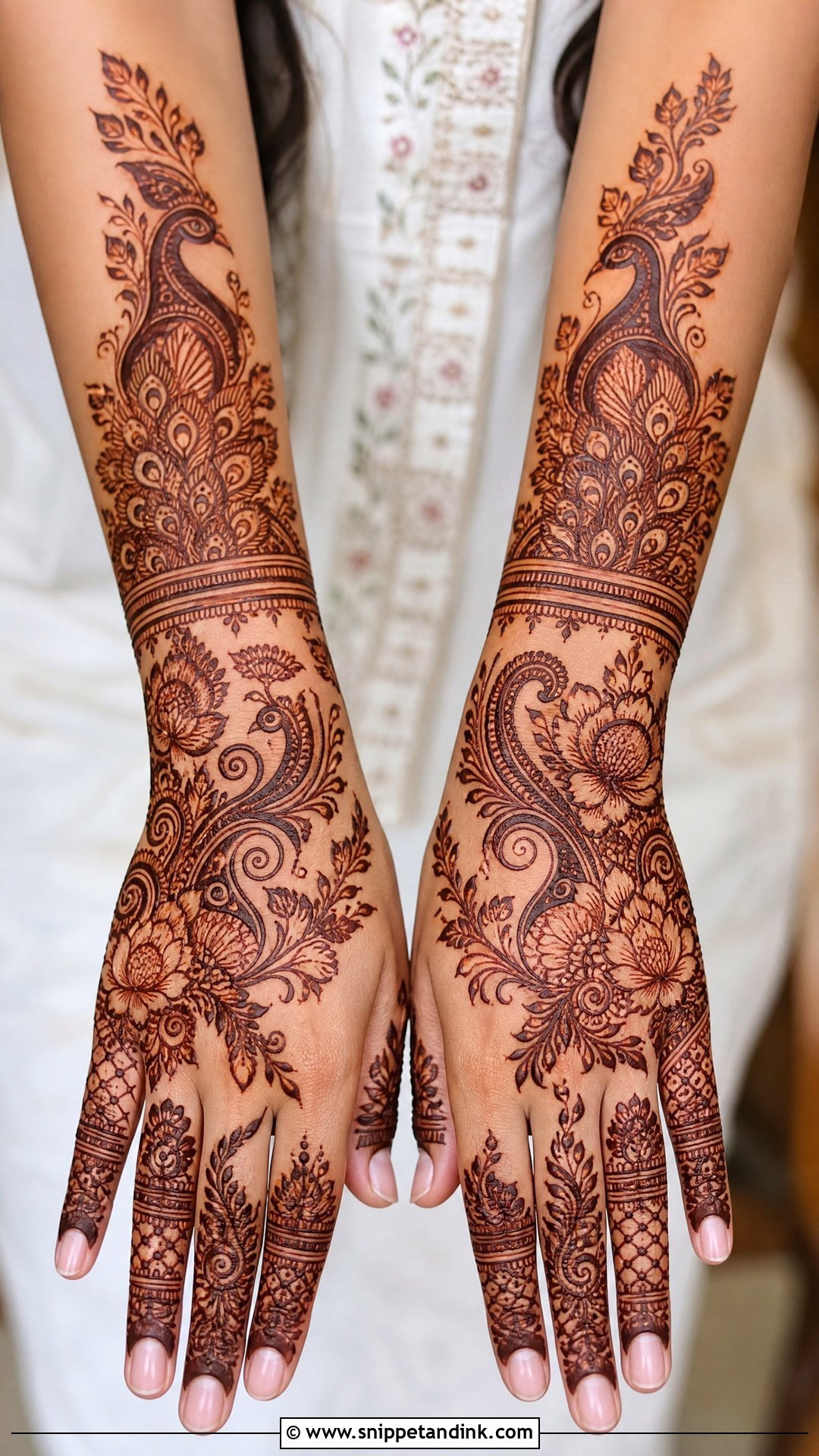
A peacock gives the hand a royal, traditional feel. It can sit across the back of the hand, near the wrist or along the forearm as the main motif, and its feathers make an easy bridge to paisleys, flowers, vines and fine shading. I like matching feather shapes on the fingers. Keep the face and feathers from being overfilled; the back of the hand stains a little lighter than the palm, so fine detail packed tightly there tends to blur rather than darken. Classic Indian bridal outfits suit it best.
7. Floral Bridal Back Full Hand Mehndi Design
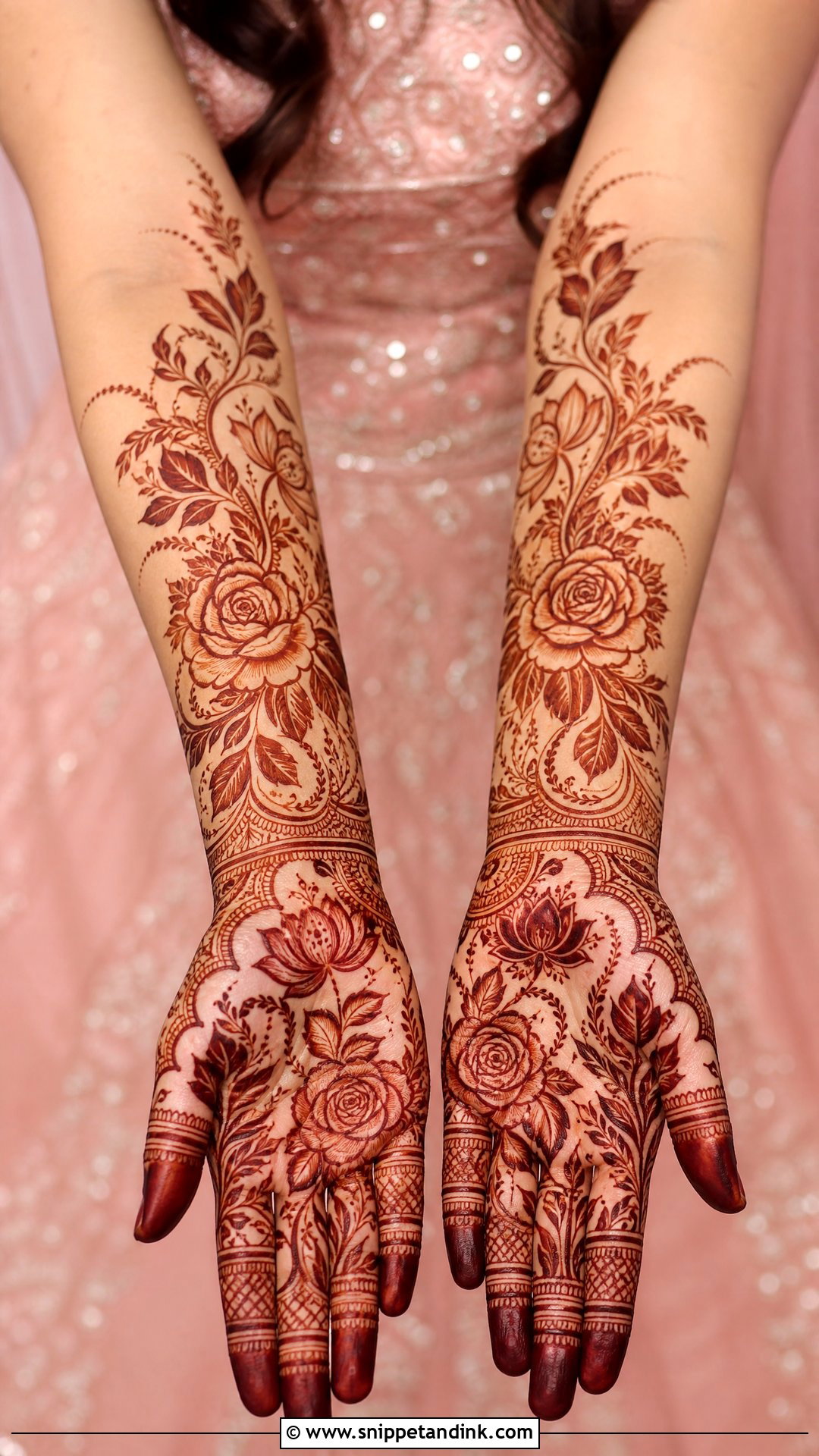
Flowers keep a back-hand design romantic. Roses, lotuses, simple round blooms, leafy stems and shaded petals run from the fingers down to the wrist and forearm, dense or open as you like. Large flowers act as focal points and small blossoms fill gaps. The thing I watch is the knuckles: a big flower drawn right over a knuckle distorts every time you make a fist, so I place blooms between knuckles and let vines cross them. Pastel lehengas, ivory sarees and floral outfits suit it.
8. Paisley Bridal Back Full Hand Mehndi Design
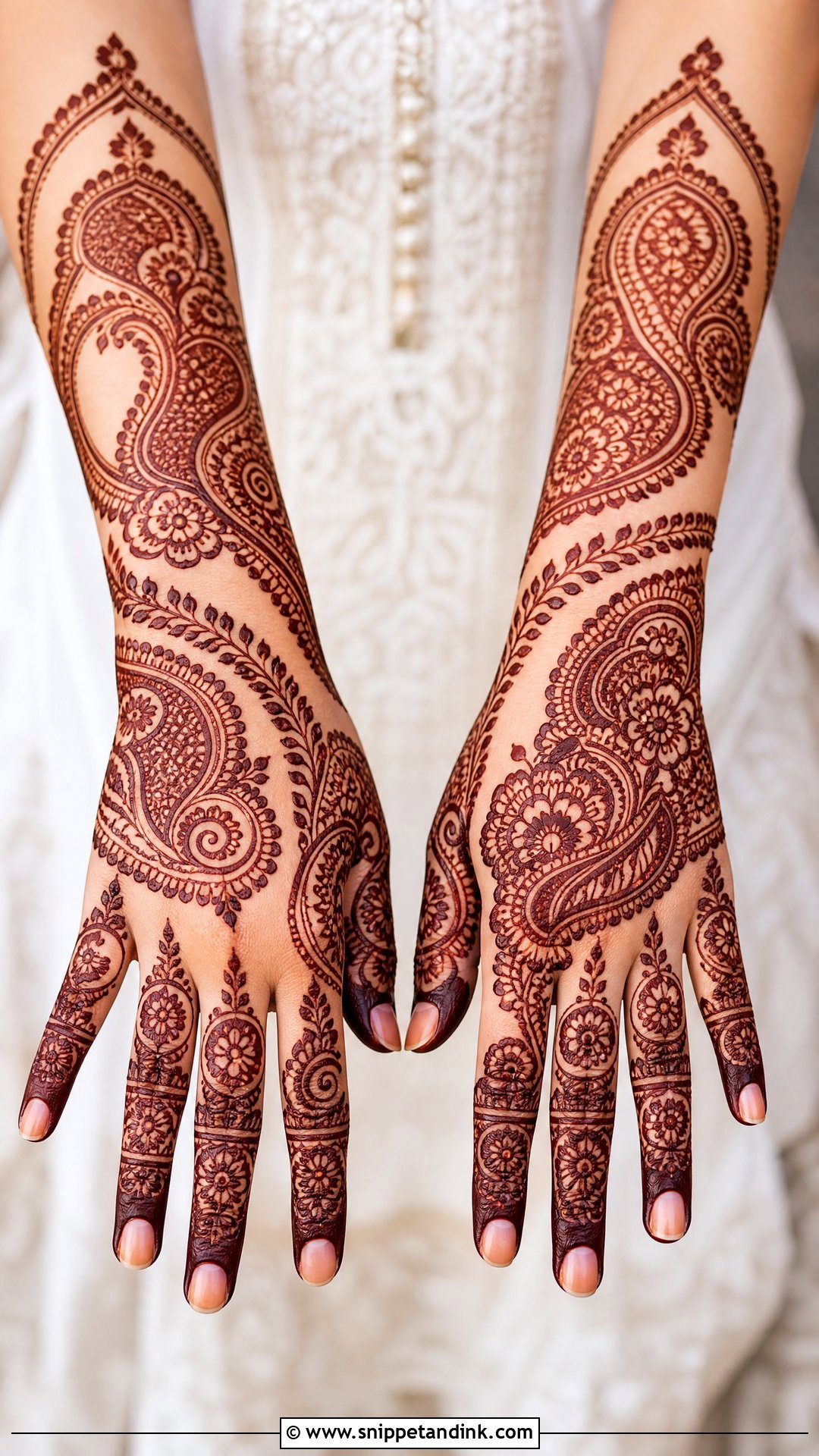
Paisleys follow the curve of the fingers, knuckles and wrist naturally, which is why they’ve lasted so long in bridal work. A bridal version fills large paisleys with fine lines, small flowers, dots, scallops and leaf strokes, with smaller ones around them for depth. Fingers can be fully filled with paisley tips or kept to slim vertical patterns. With heavy bangles, I finish the wrist as a rich cuff, so it sits right where the bangles end instead of disappearing beneath them.
9. Jewelry Bridal Back Full Hand Mehndi Design
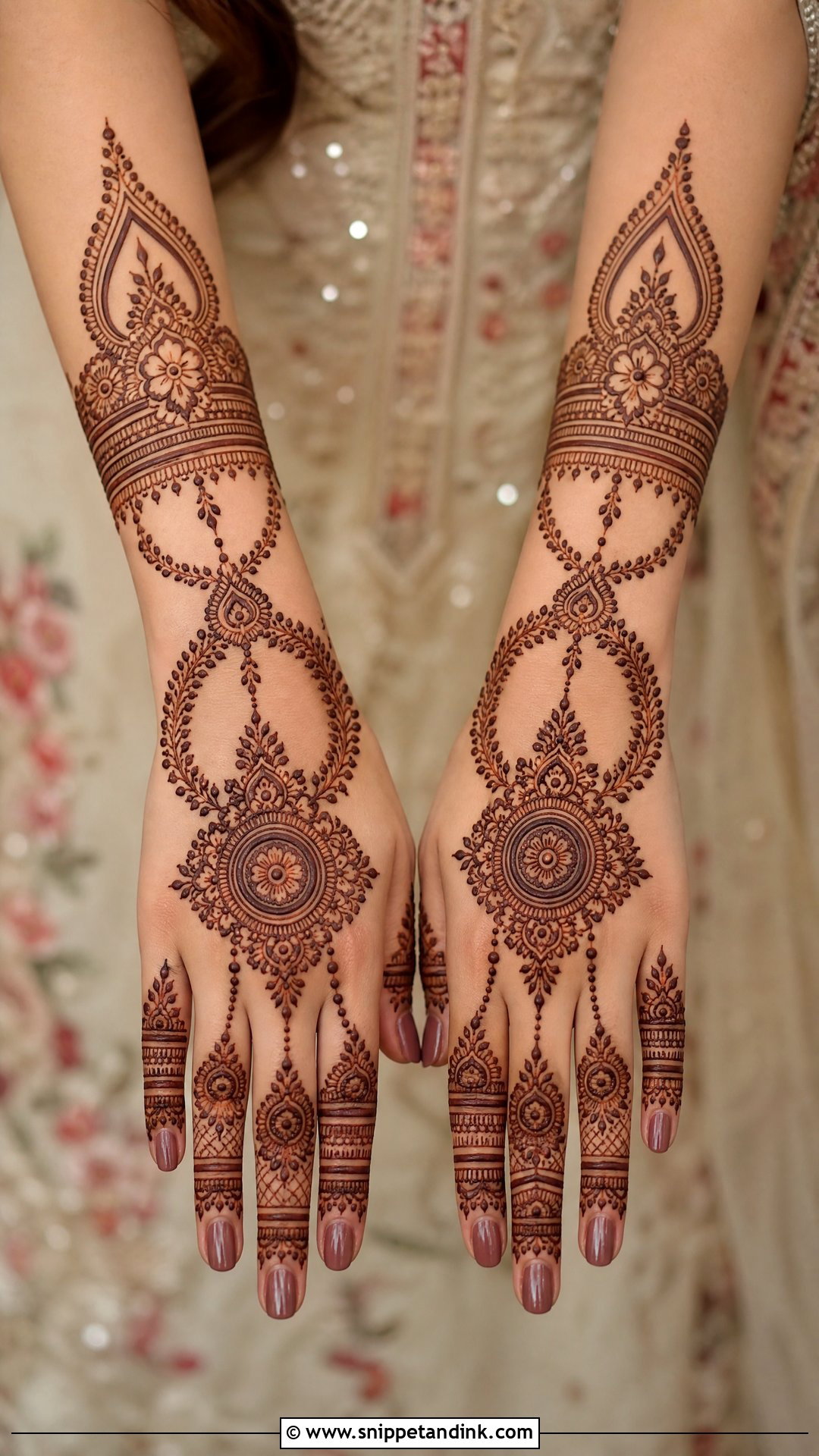
Jewellery-style designs imitate a haath phool, bangles, rings and hand chains in henna. They work with your real jewellery instead of being hidden by it. Rings on the fingers, chain lines across the back of the hand, a central floral or mandala and wide bracelet bands at the wrist make up the layout, with stacked cuffs and small hanging details on the forearm for full coverage. I always ask what jewellery you’ll actually wear, so henna rings don’t sit directly under real ones and get covered.
10. Modern Bridal Back Full Hand Mehndi Design
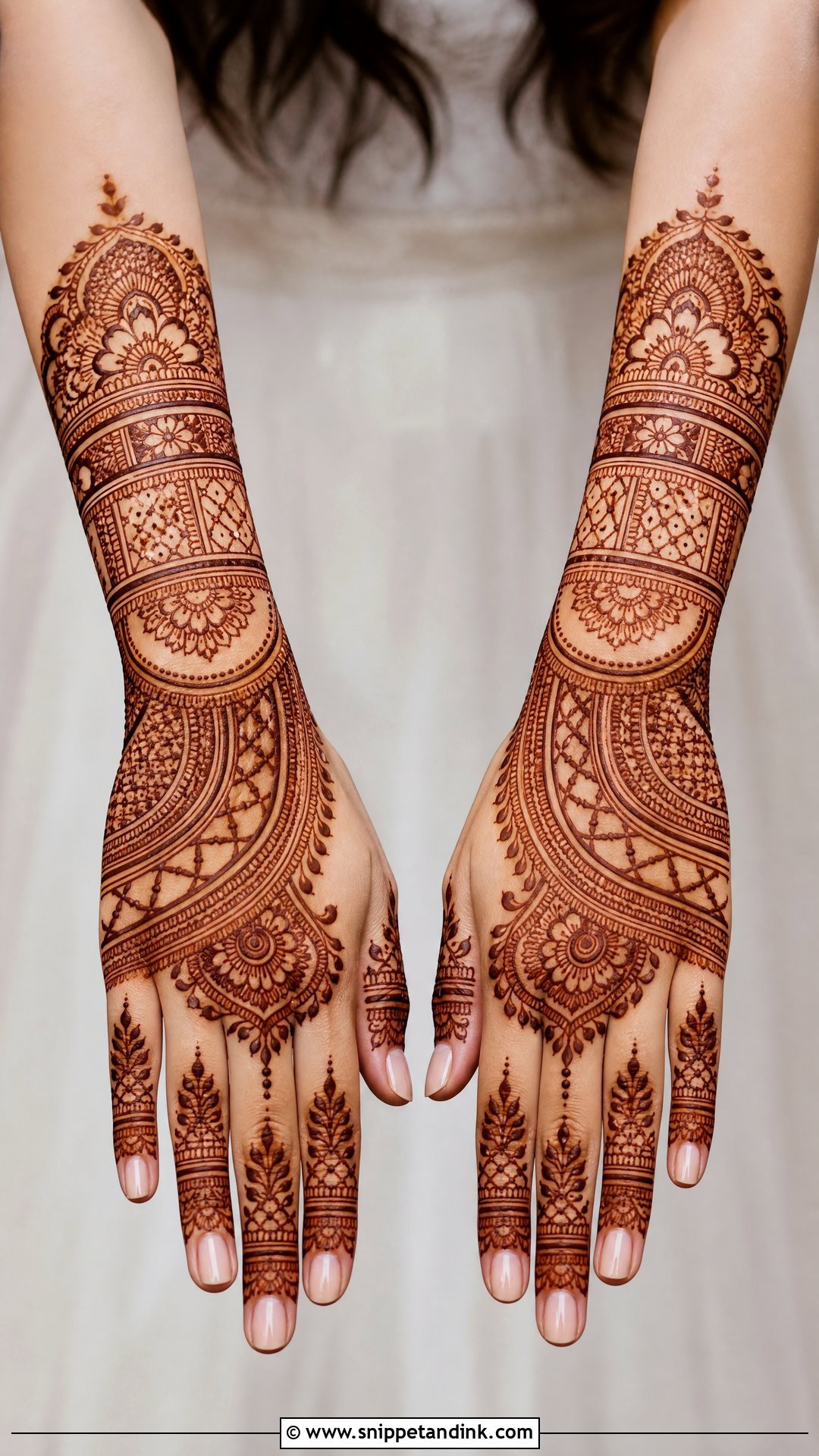
Modern back-hand designs keep the bridal feel with cleaner spacing: bold florals, geometric sections, half-mandalas, finger bands and real negative space. Destination weddings, engagements and contemporary outfits suit it, along with pearls, pastels and sleek nail shapes. Detailed wrist cuffs, fine dots and matching finger patterns keep it bridal. Be honest with yourself about how much coverage you want; if you secretly love heavy hands, a modern layout may leave you feeling underdressed next to your family’s mehndi.
11. Simple Bridal Back Full Hand Mehndi Design
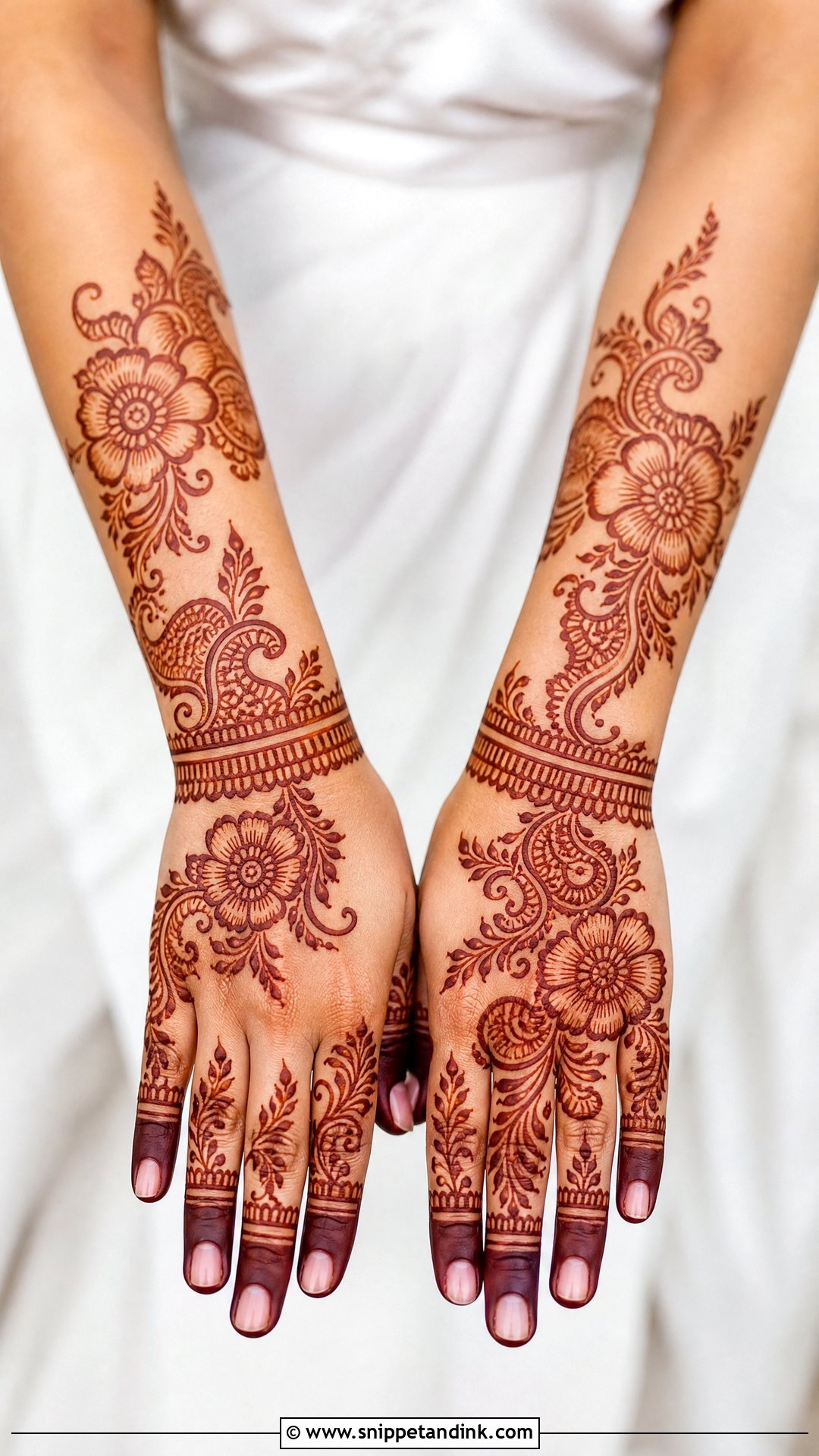
A simple full-hand design covers the whole back of the hand with less visual weight: medium flowers, clean vines, light paisleys, finger patterns and a neat wrist border. Consistent spacing matters more than detail, and I skip very tiny fillers, which tend to merge into a blur. Filled fingertips and a finished cuff still make it special. It’s also a good option for bridesmaids who want something bridal-inspired. For the bride, a hidden initial adds meaning without adding weight.
12. Heavy Bridal Back Full Hand Mehndi Design
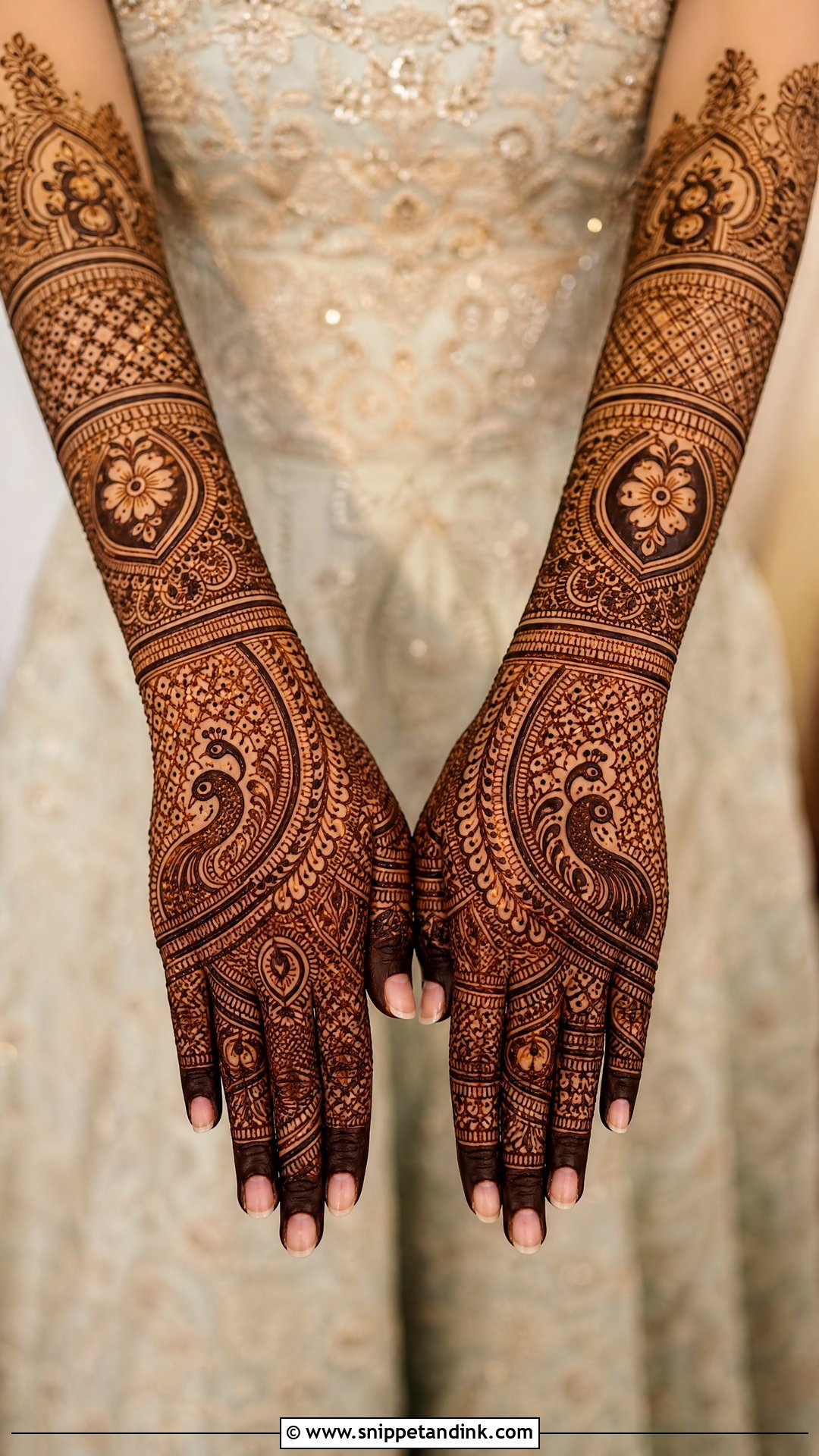
Heavy coverage runs over fingers, back of the hand, wrist and forearm with layered florals, paisleys, peacocks, jaali, mandalas, leafy fillers and fine dots. I plan the sections before filling any of them, often sketching the main dividing lines first. Without that, a heavy design looks busy instead of rich. Ask for bold outlines around the major motifs so the stain shows depth. It takes a long time, so clear your afternoon, but for a grand traditional ceremony nothing else feels quite as bridal.
13. Minimal Bridal Back Full Hand Mehndi Design
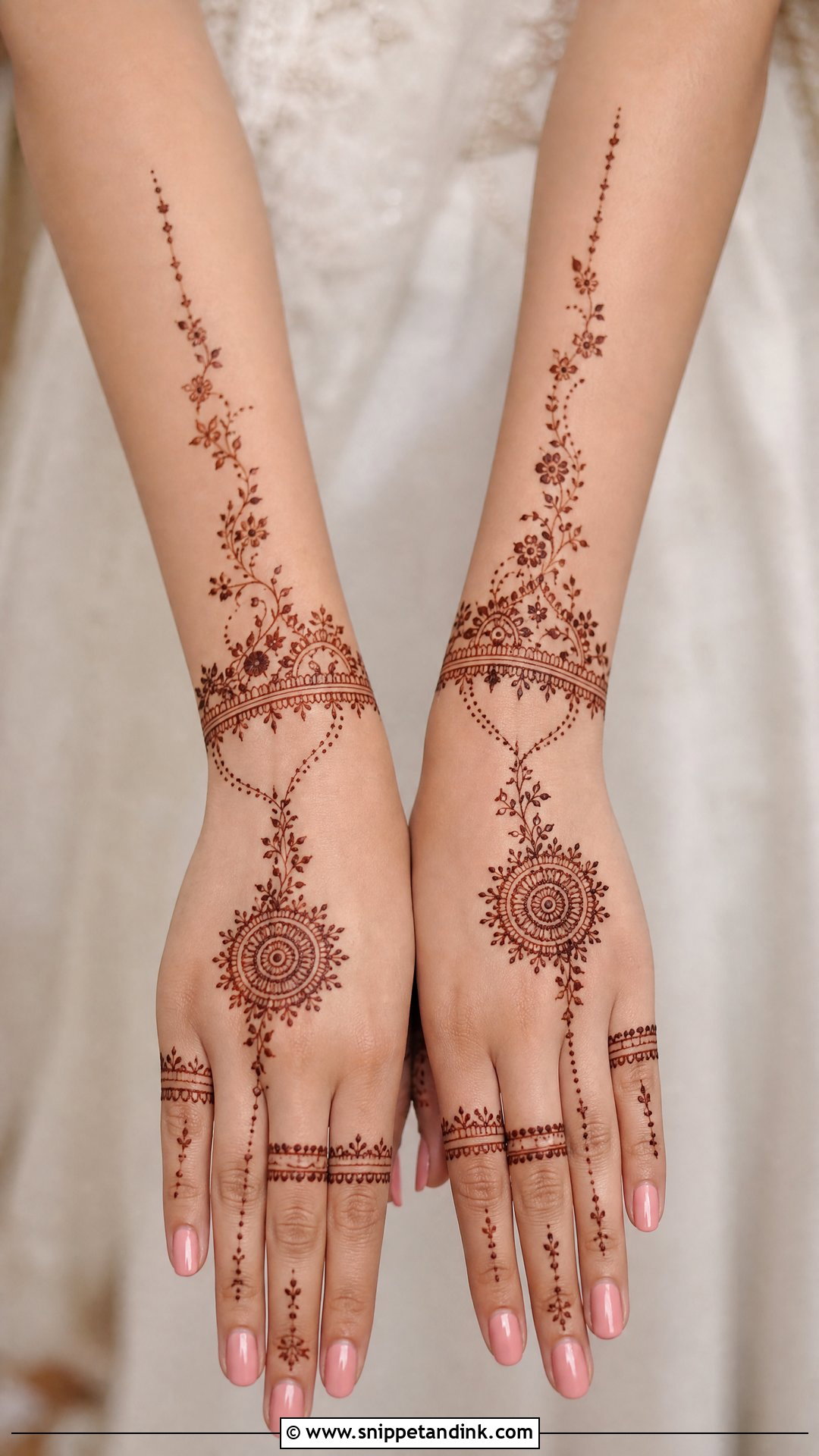
Minimal can still mean full coverage, just with generous spacing: slim floral trails, fine finger bands, small mandalas, delicate chains and light wrist cuffs. The empty skin is part of the design, so every line has to be clean, and I work slower on minimal hands than people expect. Civil ceremonies, intimate and beach weddings and pastel outfits suit it, as do brides who don’t want very dark hands. A coordinated design on both hands and a finished forearm keep it bridal.
14. Moroccan Bridal Back Full Hand Mehndi Design
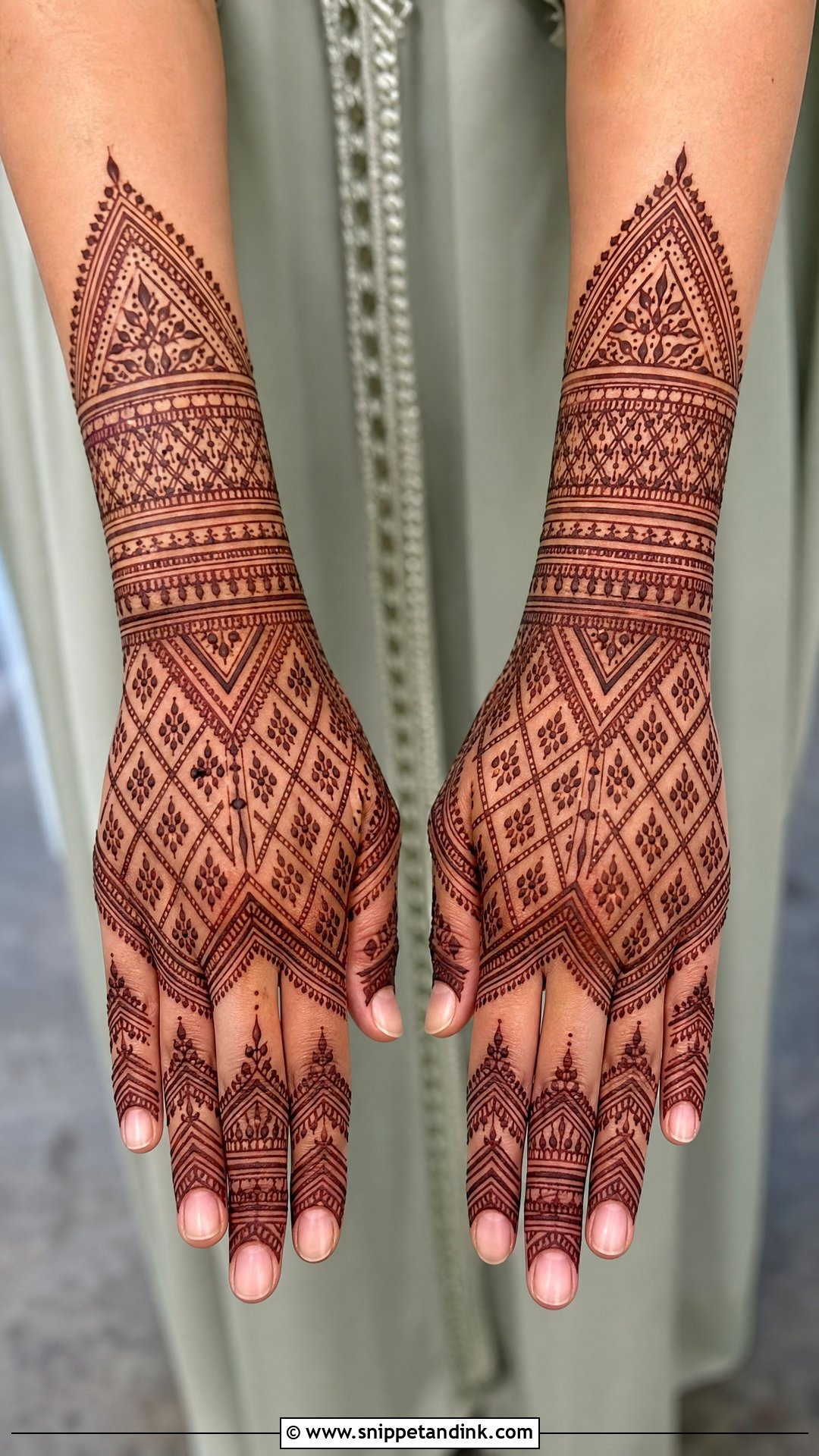
Moroccan-style geometry stands apart from floral work: diamonds, lines, triangles, chevrons, grids and block sections across the back of the hand. Small flowers, dots and fine wrist bands soften it for a wedding. The shapes are graphic, so they read clearly in photos. Fingers can carry stacked geometric bands and the forearm repeating diamond panels. Straight lines over the knuckles crack visually when you bend your fingers, so I break the grid at each knuckle and restart it beyond.



15. Gulf Bridal Back Full Hand Mehndi Design
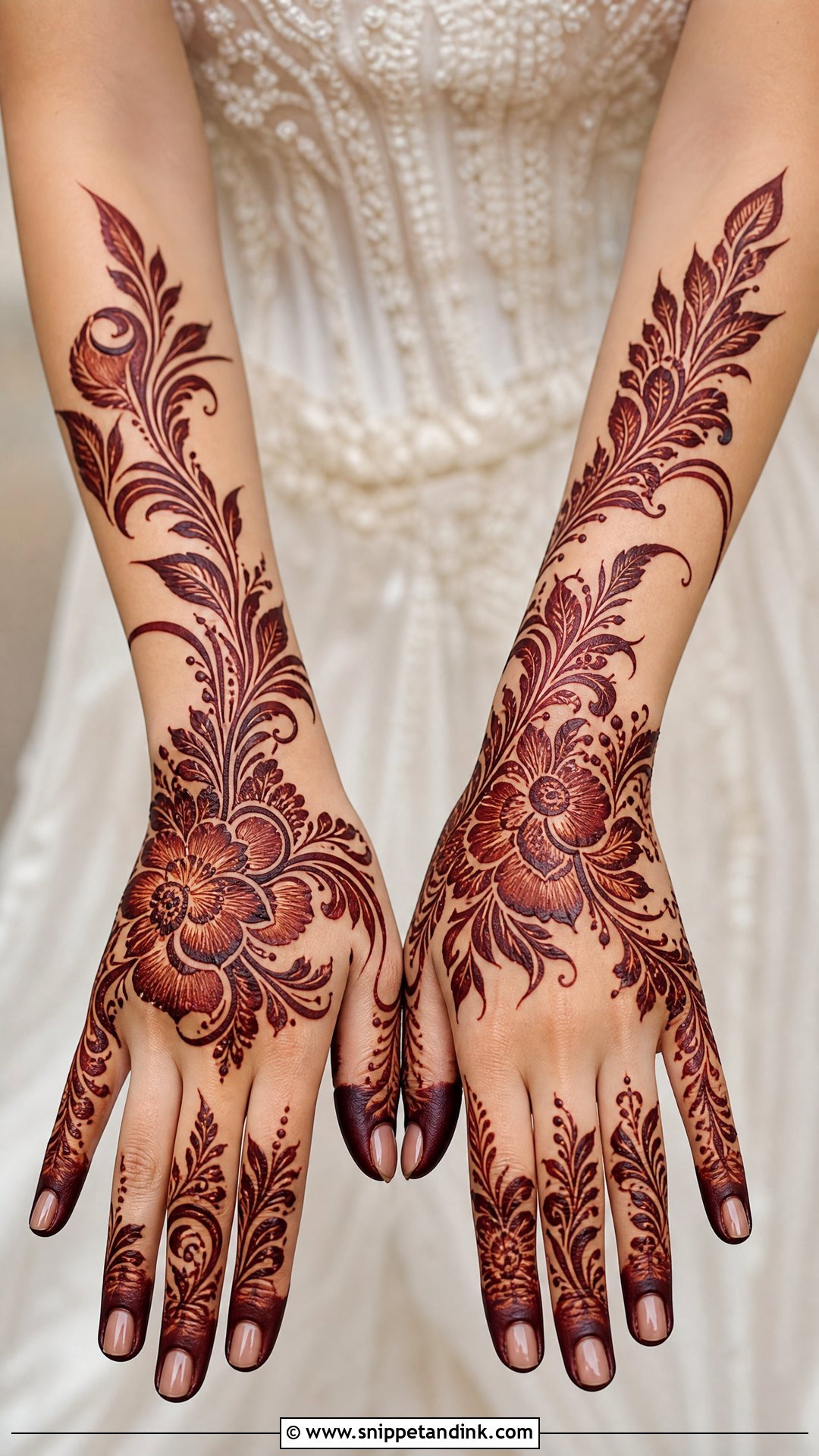
Gulf, or Khaleeji-inspired, work uses bold florals, sweeping leaves and stylish open space. Large petals, leafy curves and shaded details move across the hand, and for bridal coverage I extend them from fingertips to wrist and forearm while keeping the flow airy. Gold jewellery and embroidered sleeves suit it. Bold outlining and smooth shading are what make it stand out after the stain darkens, and because the shapes are large, it holds up well even when the back of the hand takes a lighter stain.
16. Rajasthani Bridal Back Full Hand Mehndi Design
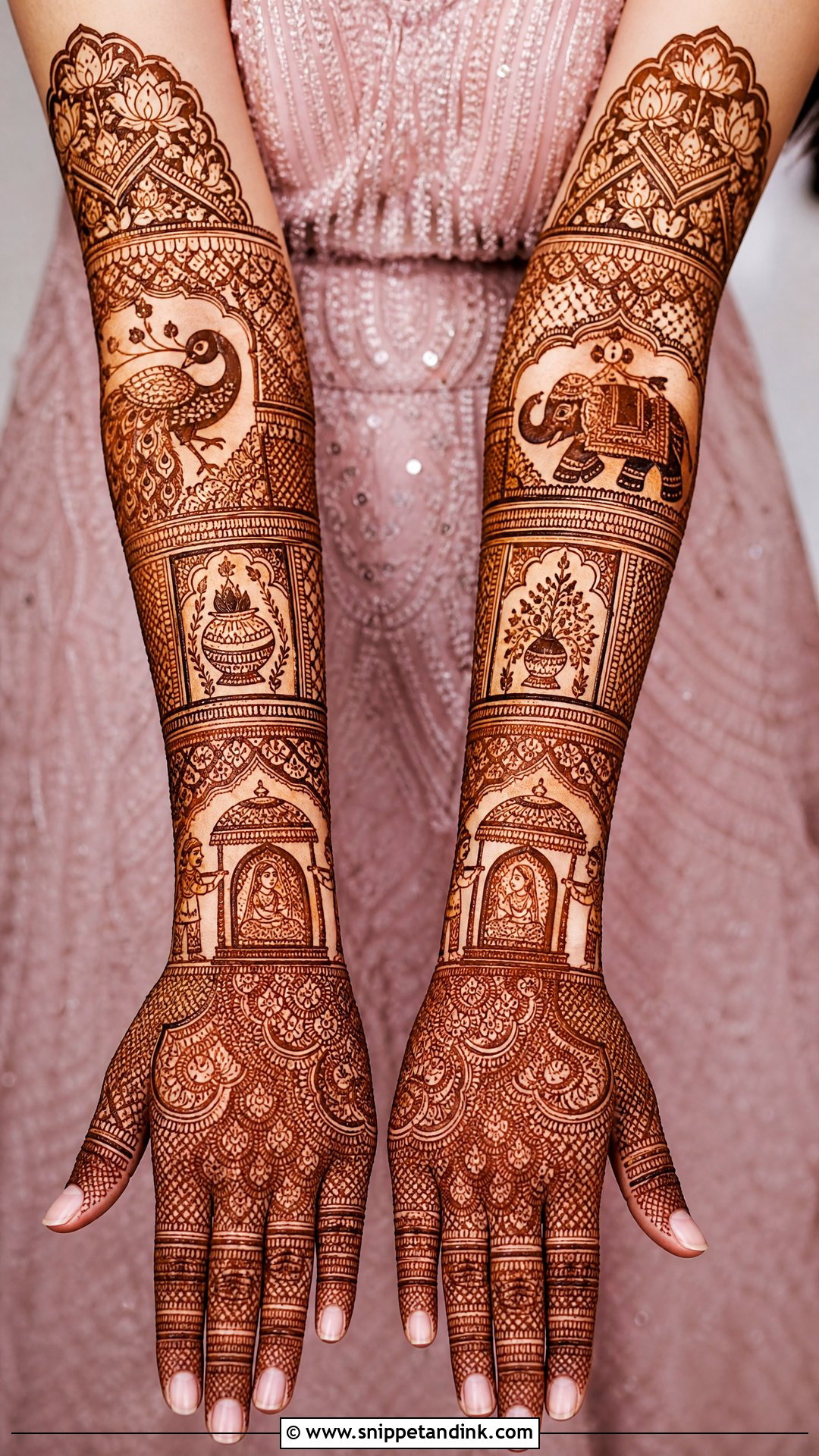
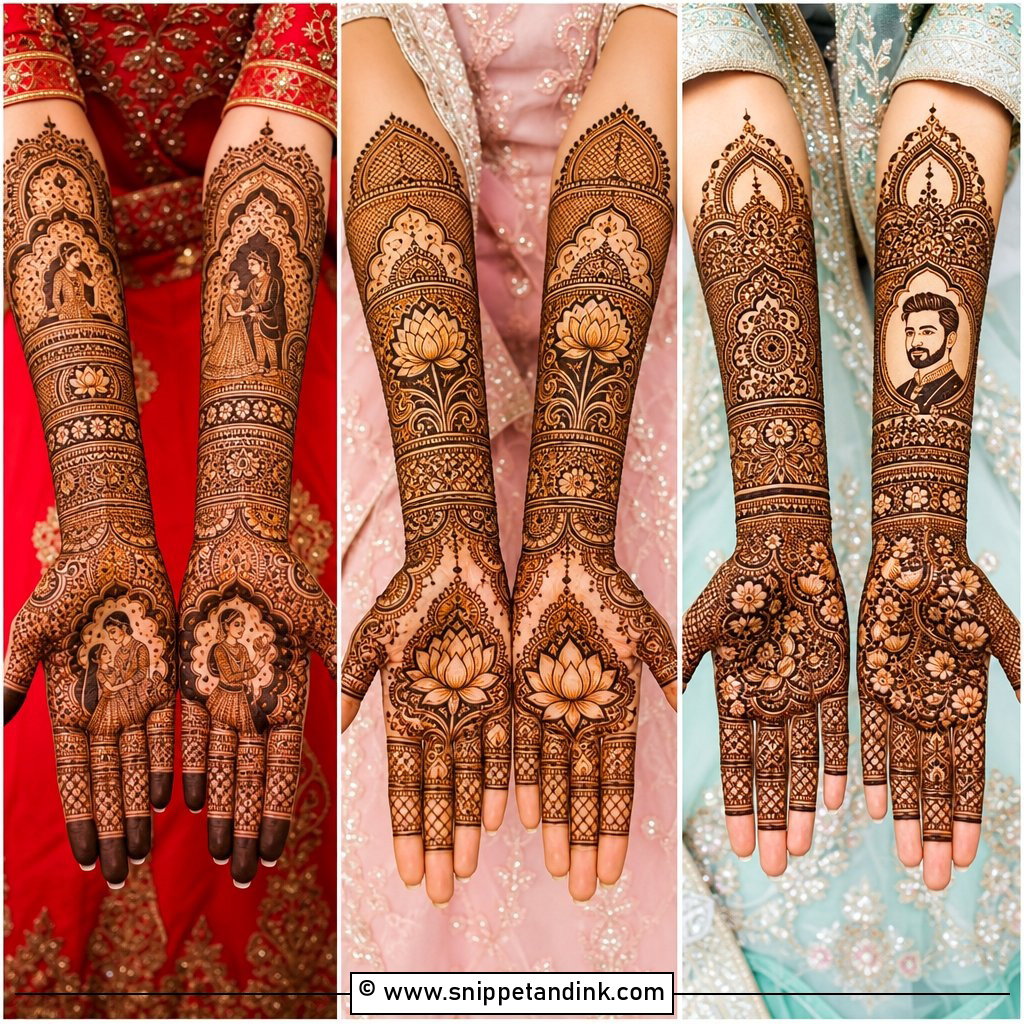
Rajasthani bridal back full hand work tells a story: bride and groom figures, peacocks, elephants, doli shapes, kalash, paisleys, flowers and fine symmetrical fillers. On the back of the hand it becomes a dense layout from fingers to forearm. Figures need their own panels with clear outlines, otherwise a face disappears into the fillers once stained. Fingers carry tiny repeats, and the wrist finishes with bangle-like borders. It suits a grand celebration and a bride who wants her mehndi to carry meaning.
17. Pakistani Bridal Back Full Hand Mehndi Design
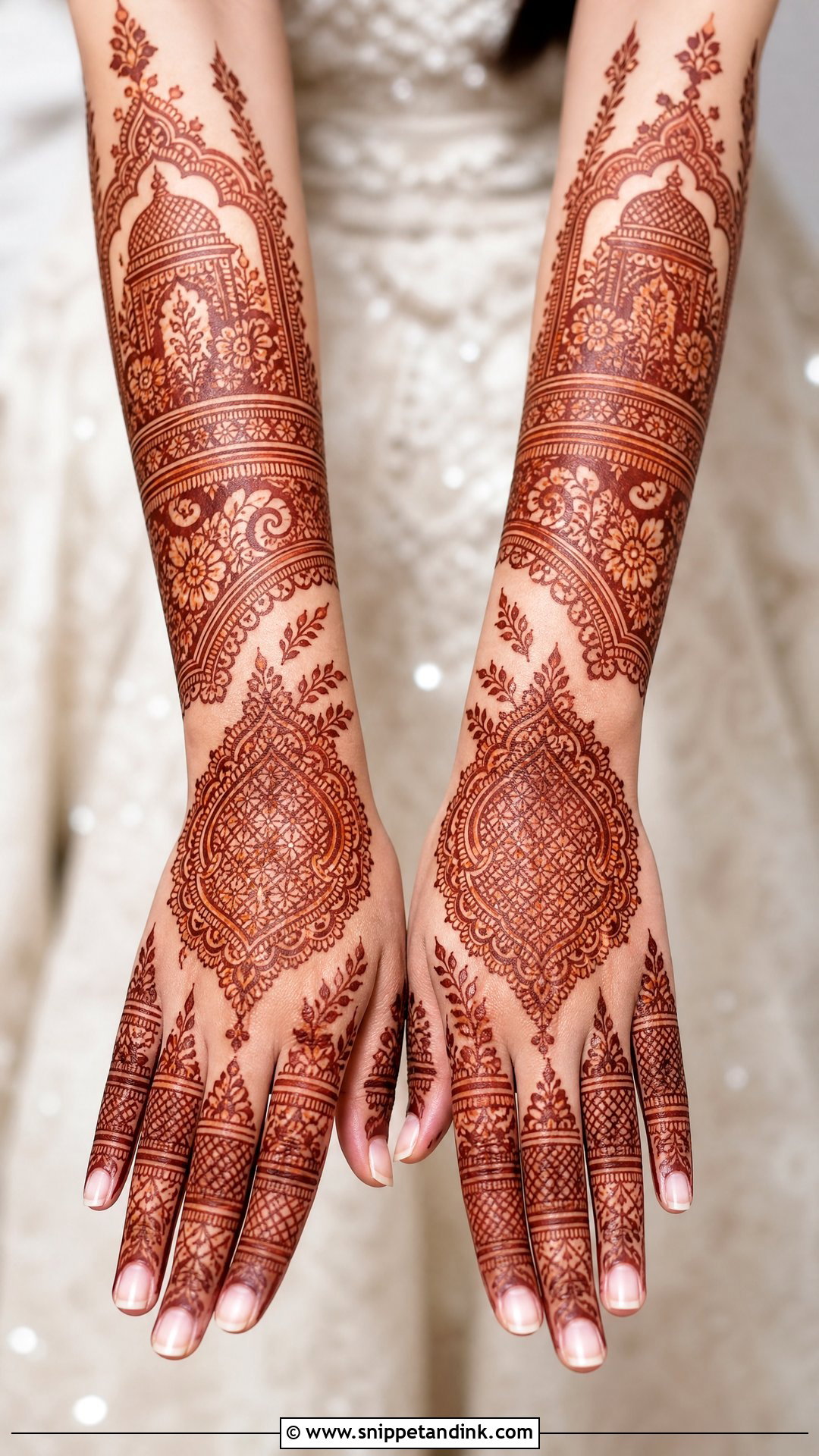
Pakistani bridal work tends to combine fine detail with elegant spacing: domes, florals, paisleys, jaali, leafy vines and some Arabic-style flow. A central floral cluster or mandala sits on the back of the hand, fingers get fine bands and filled tips, and the wrist and forearm carry layered borders like bangles. It’s popular for nikah, walima, engagement and the wedding day, and it works with heavy embroidery as well as softer looks. Good Pakistani bridal mehndi is detailed but never crowded, and the domes are where I check my spacing most carefully.
18. Lotus Bridal Back Full Hand Mehndi Design
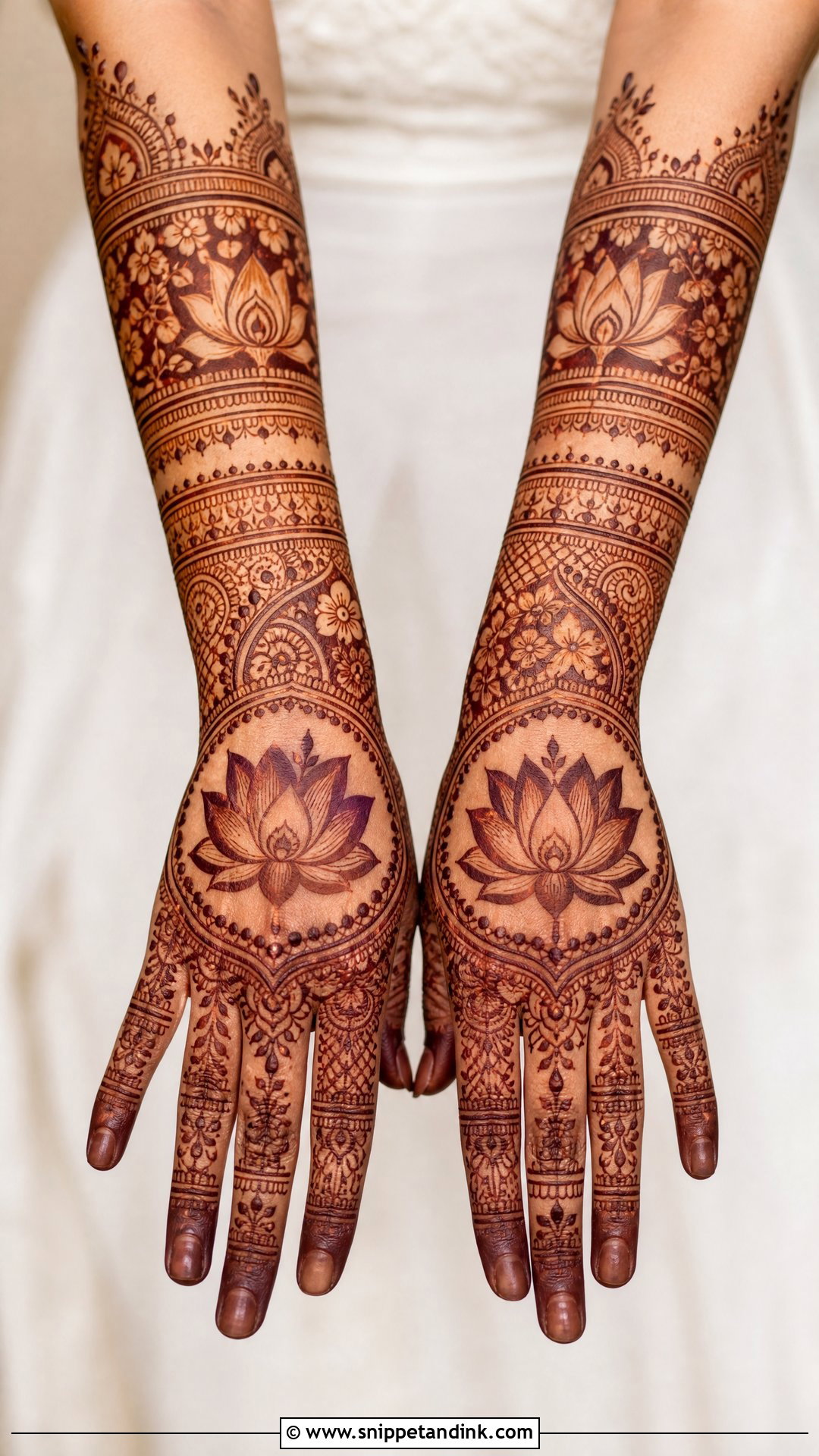
The lotus can anchor the back of the hand, repeat along the fingers or sit near the wrist in a larger floral layout. Its rounded petals combine easily with paisleys, leaves, dots and mandala-style borders. For full coverage, I connect lotus motifs with thin vines and layered bands, and use half-lotus borders or stacked cuffs on the forearm. It suits silk sarees, lehengas and temple jewellery, and gives a soft traditional result without heaviness.
19. Rose Bridal Back Full Hand Mehndi Design
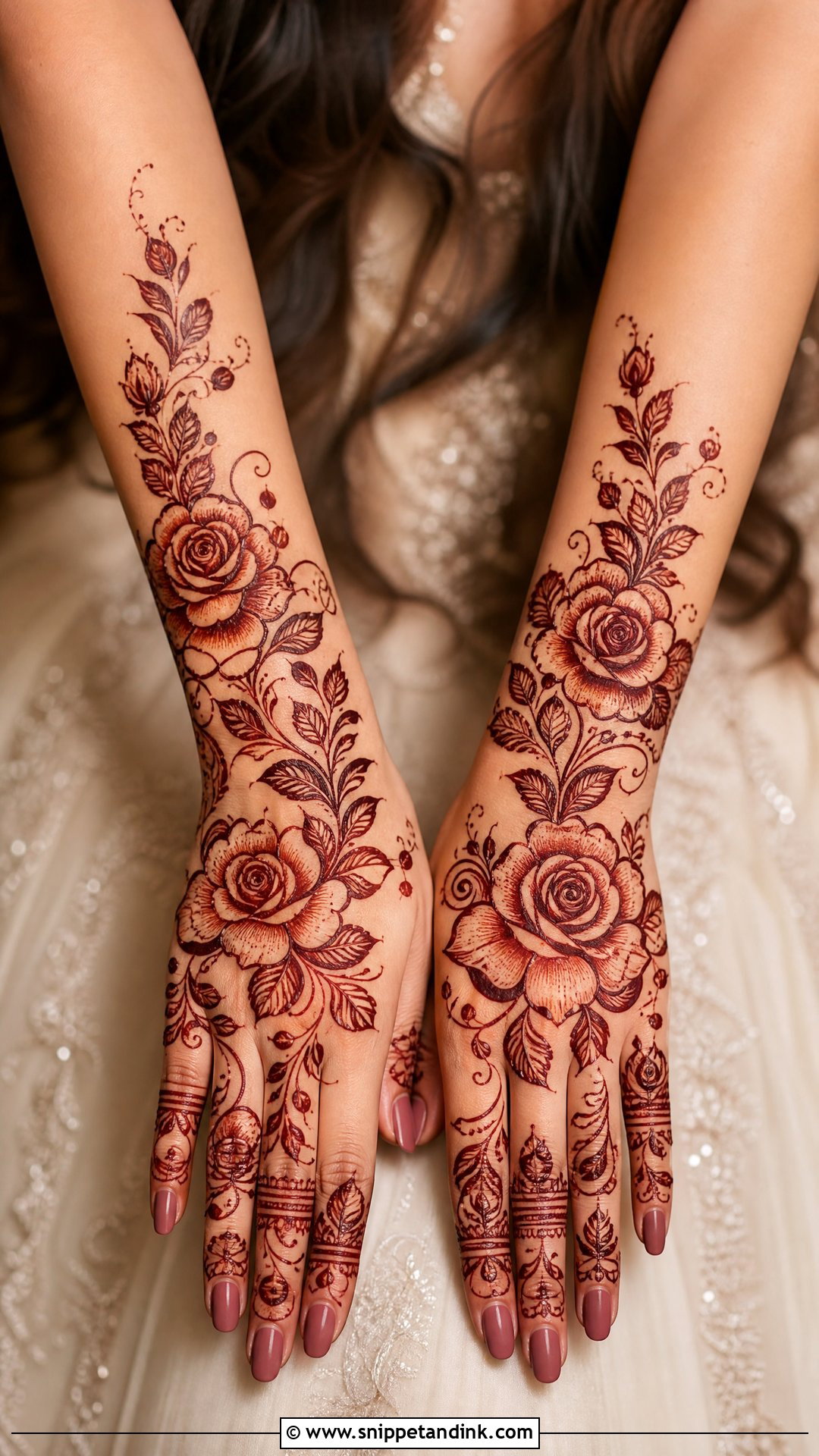
Roses suit brides who want a soft but detailed back hand. I draw them with bold outlines and shaded petals, linked by leaves, swirls, buds and finger trails, with one large cluster as the focus and smaller roses at the wrist and forearm. Pastel, blush, ivory and red outfits all work. The petals need small gaps between them; if the shading touches the outline everywhere, the rose looks like a filled circle once the stain develops. It pairs nicely with an engagement ring and nail art in close-ups.


20. Personalized Bridal Back Full Hand Mehndi Design
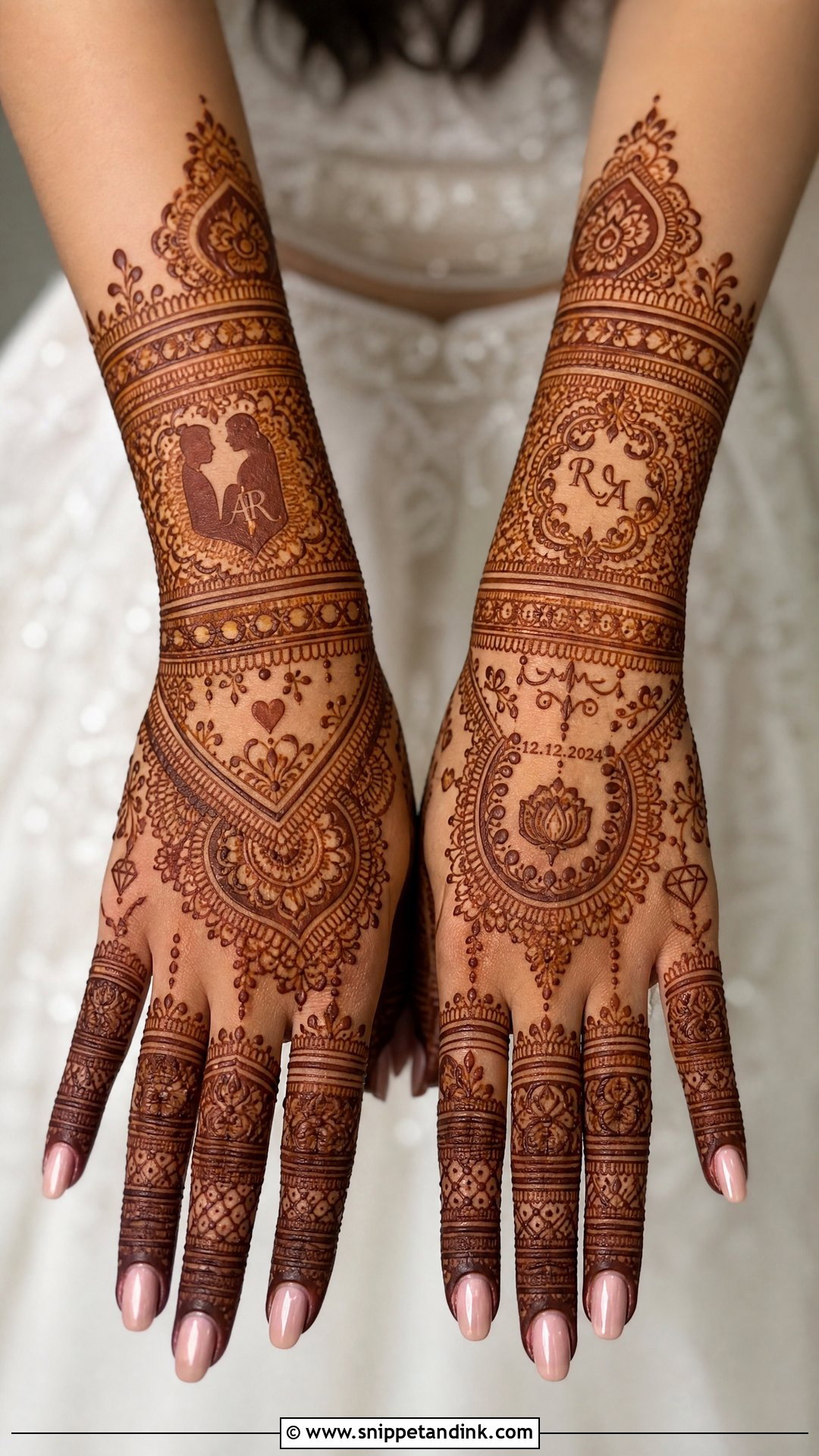
Personal details turn a full back-hand design into a keepsake: initials, the date, small couple symbols, meaningful flowers, pet names or motifs from the wedding theme. They need to be part of the layout, not dropped in at random. Initials can hide inside a mandala, a date can sit in a wrist cuff, and small symbols can live between paisleys or florals. I write the details in lightly first and build the pattern around them, so the hand still feels balanced from fingers to forearm.
How Long a Back-Hand Stain Lasts, and What Wears It Down
A good bridal stain usually stays strong for about one to two weeks and then fades gradually as the top layer of skin renews. On the back of the hand it often fades a few days earlier than on the palm. If you have a reception or walima several days after the wedding, it’s worth protecting it.
- Bangles: heavy metal or glass bangles rub the wrist stain away faster. Take them off at night.
- Water and soap: wash your hands as normal, but use gloves for dishes and cleaning, and pat dry rather than rubbing.
- Chlorine and salt water: swimming pools and the sea both fade henna noticeably, so save the beach for after the last event if you can.
- Moisture: a little natural oil or plain balm on the back of the hand each evening keeps the skin from flaking, which slows fading.
When it starts to look patchy, don’t scrub it. Let it fade evenly on its own; rubbing it with lemon or scrubs only makes the patches more obvious.
Let the Ceremony Decide How Dense the Back Hand Goes
With so many options, the quickest way to narrow them is to think about your outfit, jewellery, sleeve length, ceremony and how heavy you want your hands to feel. Dense Indian or Rajasthani work belongs at a grand traditional wedding, while Arabic, Gulf and modern layouts suit brides who like open space and bold flow. Mandala, jaali, floral, paisley and jewellery patterns sit comfortably between the two and look good in close-ups. Add initials or symbols quietly if you want meaning. A good back-hand design should look detailed, balanced and at home with everything else you’re wearing.
You'll Like These Ideas:












Leave a Reply