
A full hand of mehndi runs from the fingertips past the wrist, and on a bride it often climbs to the elbow. That coverage changes everything about the job: the time you sit, how the paste dries, and how the stain reads in photos. Below are thirty layouts I’d actually put on a hand, from dense Rajasthani bridal work to open Gulf florals, along with what each one asks of the artist and of you. Some suit a wedding morning, others an Eid evening or a sister’s sangeet, and I’ve said where a design struggles so you can rule it out early.
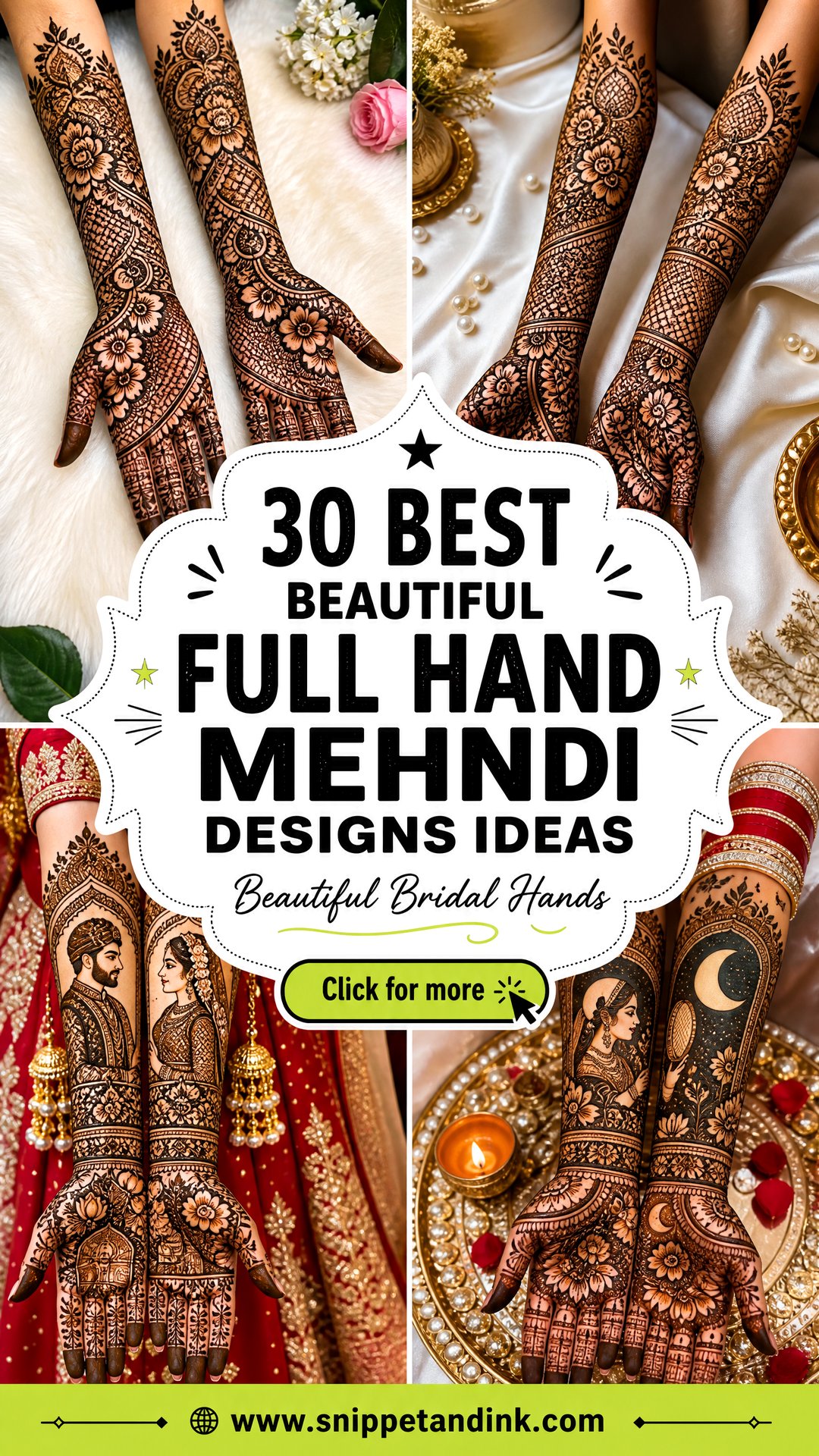
How Long a Full Hand Takes, and How to Sit Through It
People underestimate the clock more than anything else. A light Arabic full hand can be done in well under an hour per side, but dense bridal coverage to the elbows on both arms, front and back, usually runs to several hours, and portrait work takes longer again. Then the paste needs to stay on for hours more. If your mehndi night also has dancing and dinner, the bride is mostly a spectator.
When I plan a bridal sitting, I ask for a few things in advance:
- Eat properly and use the bathroom before we start. Once both palms are wet, you can’t do either without help.
- Wear a loose top with sleeves that push well above the elbow, or a sleeveless one, so nothing rubs the forearm.
- Skip lotion, oil and hand cream on the day. A clean, dry, product-free hand takes the dye better.
- Arrange someone to feed you, hold your phone and fix your dupatta while it dries.
- Plan for the palms to be done first so they have the longest time on the skin.
Reading your hand before you pick a layout
Hand shape changes which design flatters you. Short fingers and a wide palm look longer with a diagonal Arabic or Gulf trail. Long, slim hands carry dense traditional filling without looking crowded. Very small hands lose detail in heavy bridal work, so I enlarge the motifs a little. Show your artist your bare hands next to the reference picture and ask her honestly what she’d change.
1. Indian Bridal Full Hand Mehndi Design
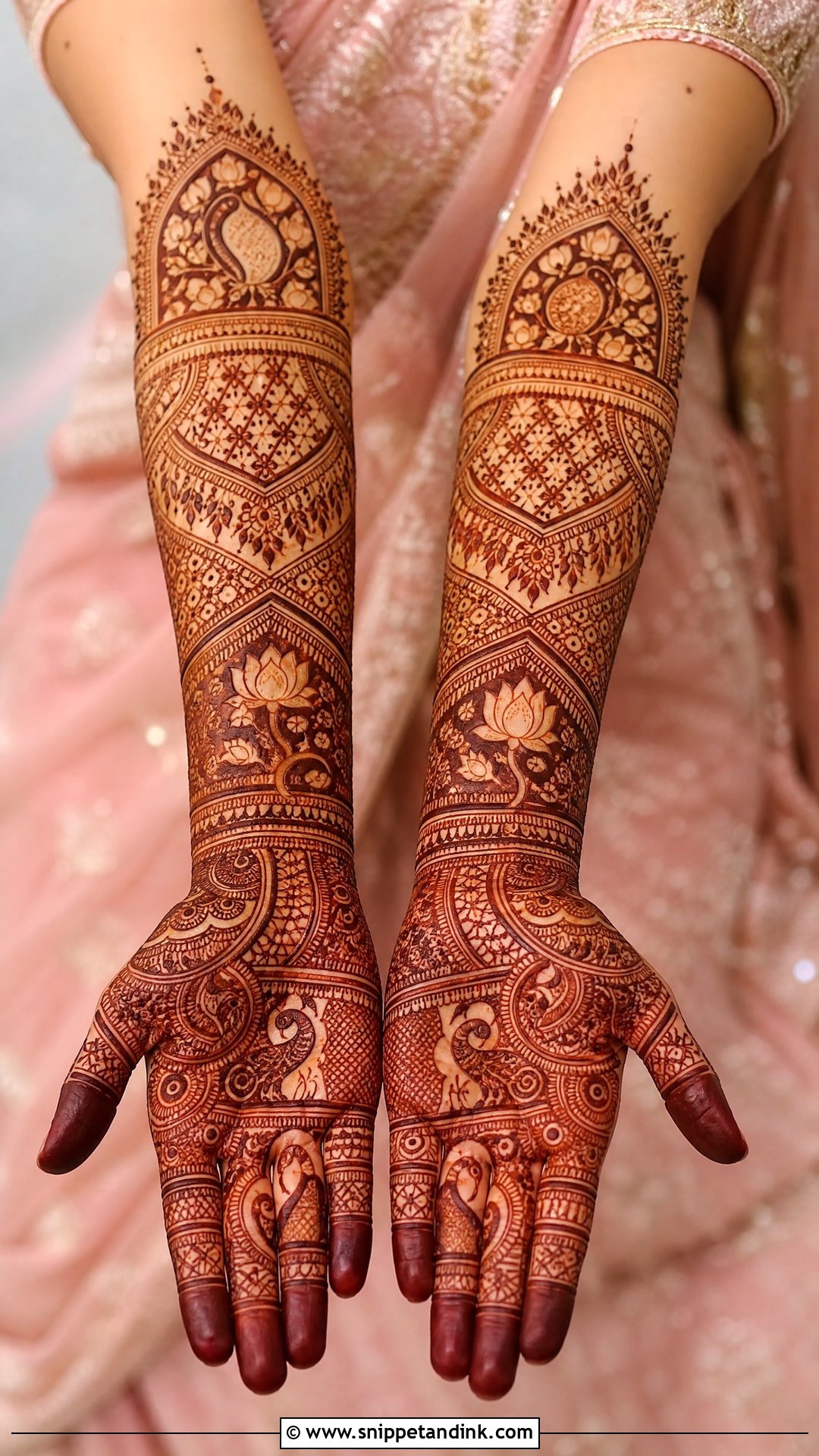
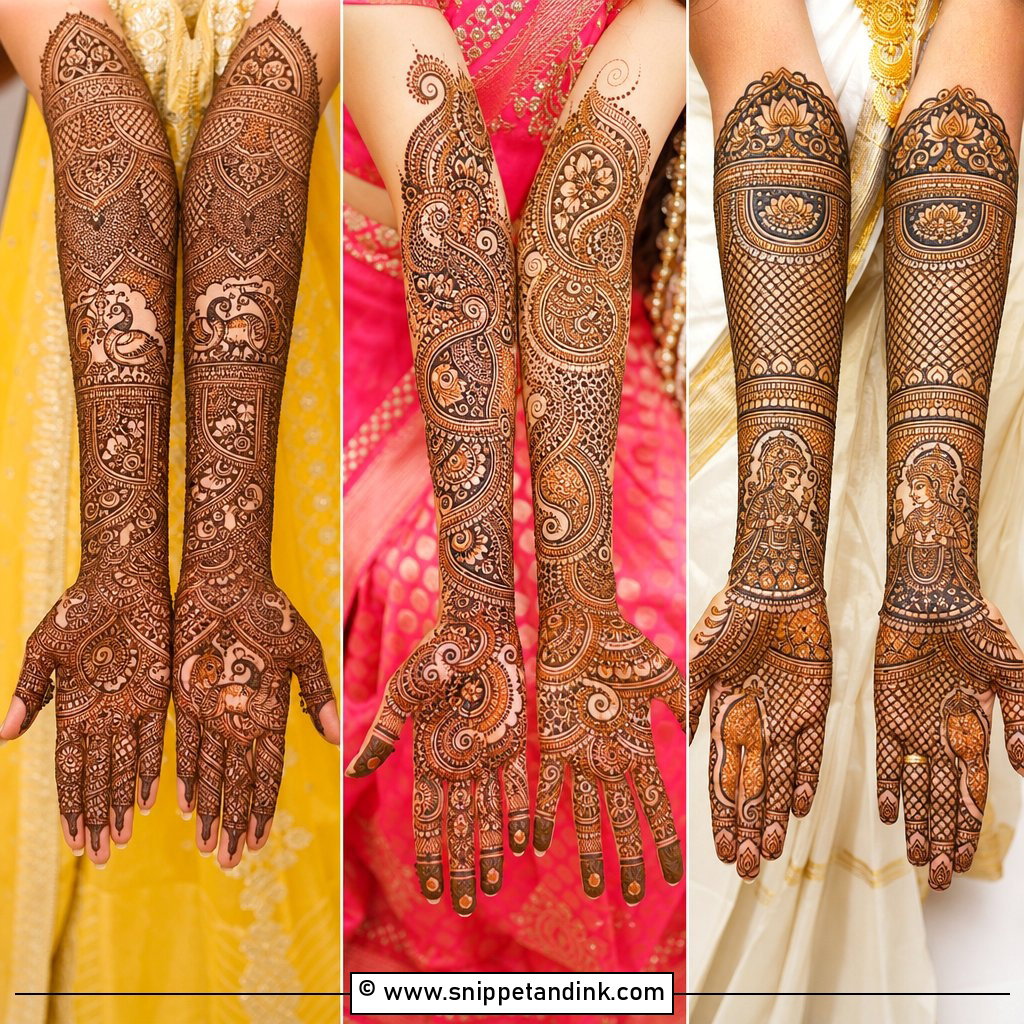
Traditional Indian bridal work fills the palm, fingers, wrist and forearm with paisleys, lotus shapes, jaali, peacocks, kalash motifs and small symbolic details. I plan both hands as a pair rather than mirror copies, so a peacock on one palm answers a lotus on the other. Dense filling does give a deeper overall colour, but only if the lines stay crisp; when I pack fine work too tight on a warm day the paste spreads and neighbouring lines merge. Ask your artist to leave a hair’s width of skin around each main motif and to finish the wrist with a clean border. That border is what makes it read like jewellery once bangles go on.
2. Arabic Full Hand Mehndi Design
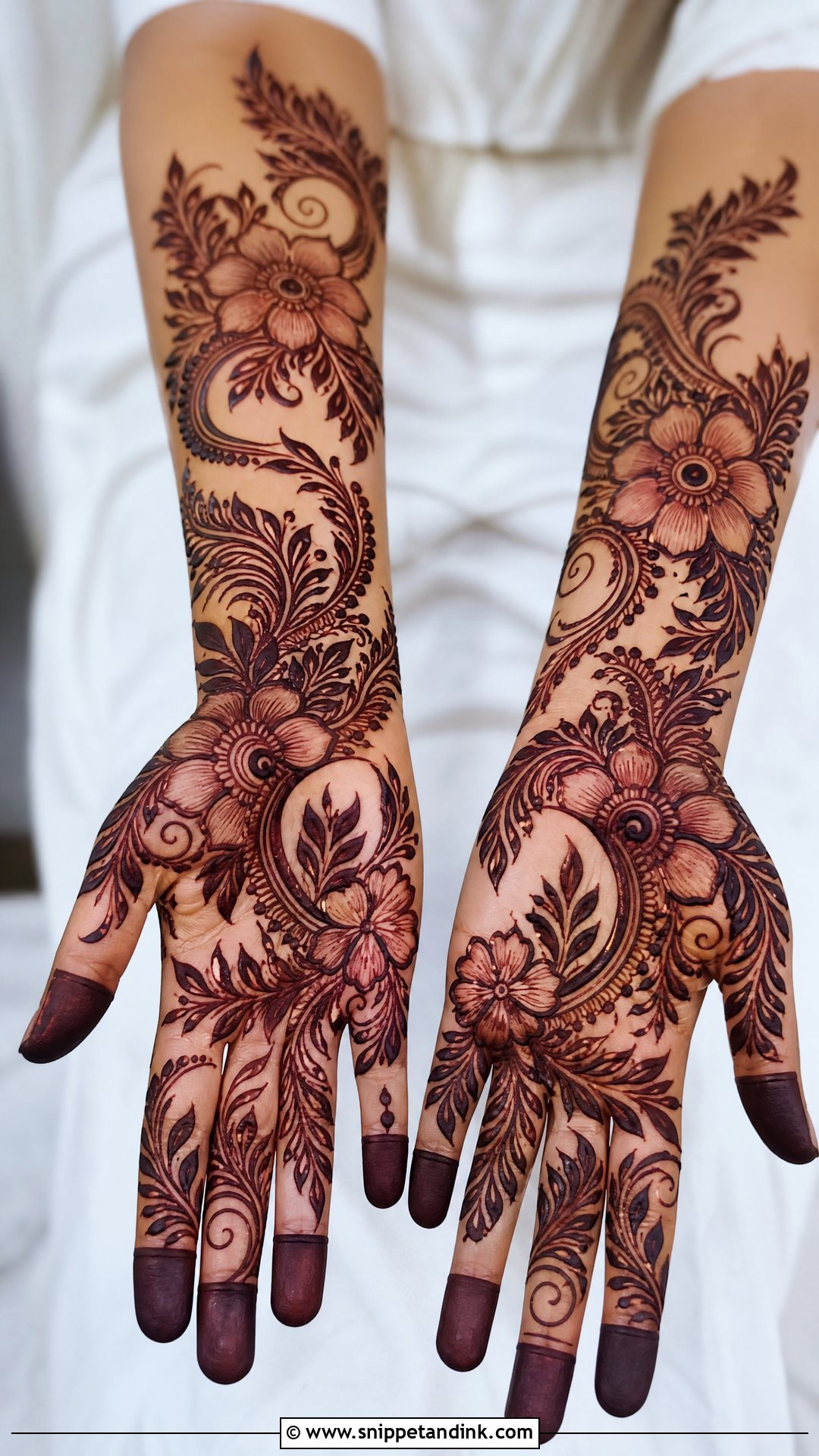
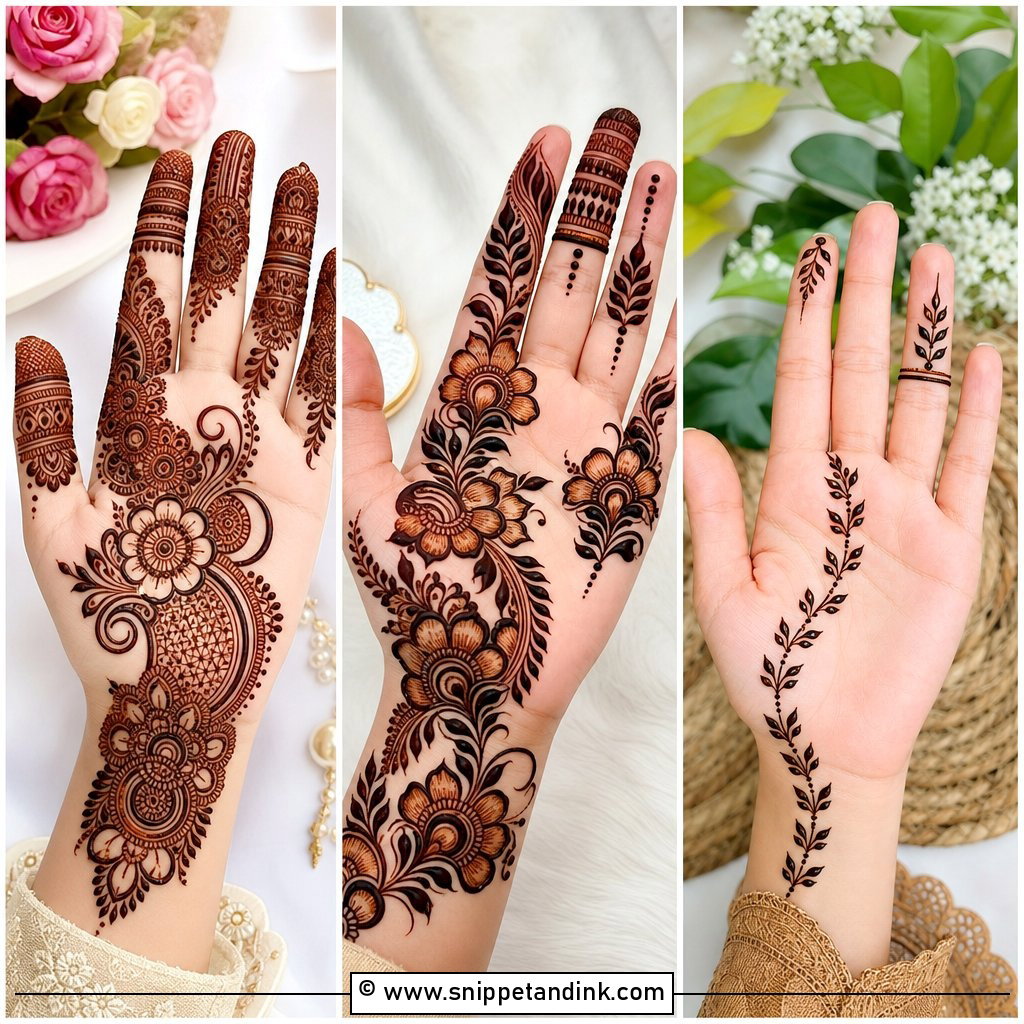
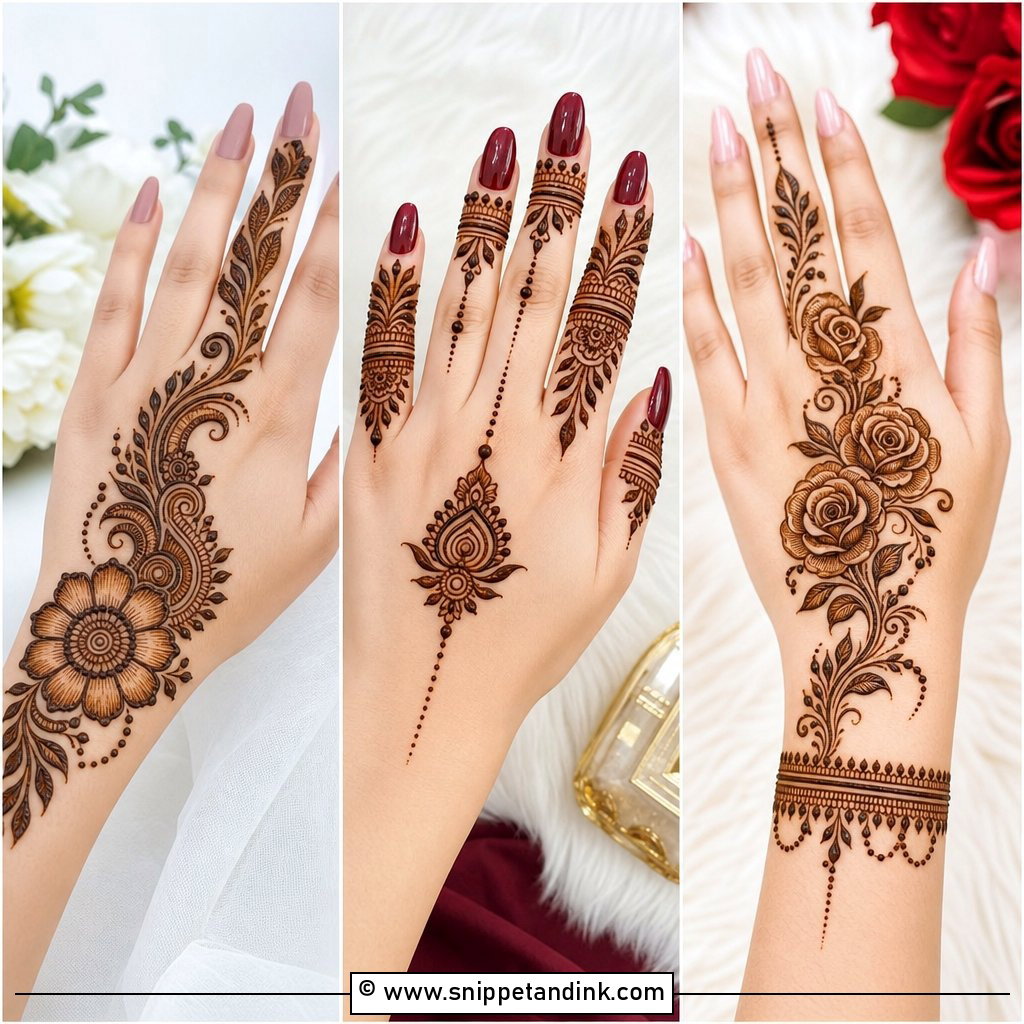
Arabic work is the design I suggest when someone wants drama without four hours in the chair. A single diagonal trail runs from the index finger across the palm and off the wrist, built from large flowers, leaves and long curved strokes, with plenty of bare skin between. Because the trail moves on an angle, it lengthens a short or wide hand noticeably. I draw the outlines thicker than in Indian work and shade the petals with a lighter stroke, so the stain has two tones instead of one flat brown. It suits bridesmaids and guests who have to sit for the artist between other tasks.
3. Indo Arabic Full Hand Mehndi Design
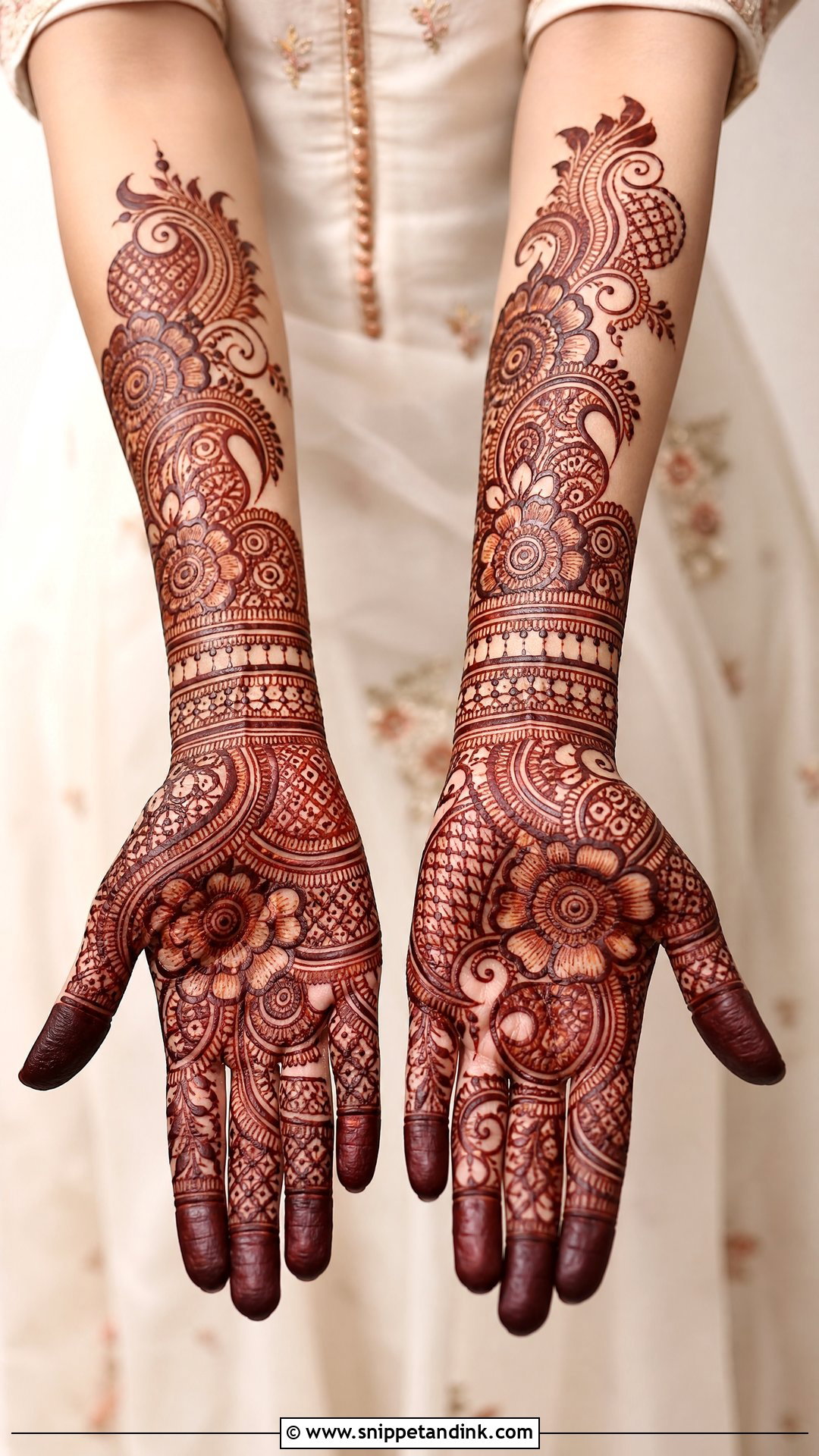
Indo Arabic full hand mehndi borrows the moving trail of Arabic patterns and fills it with the fine detail of Indian work. I usually block in the big flowers or paisleys first, check the flow from across the room, and only then add dots, mesh and leafy strokes inside them. That order keeps the airy gaps from disappearing. It sits nicely at a sangeet or engagement, and for brides who find full traditional coverage too busy. Tie the forearm back to the hand with one bracelet band so the trail doesn’t look like it simply stopped.
4. Simple Full Hand Mehndi Design
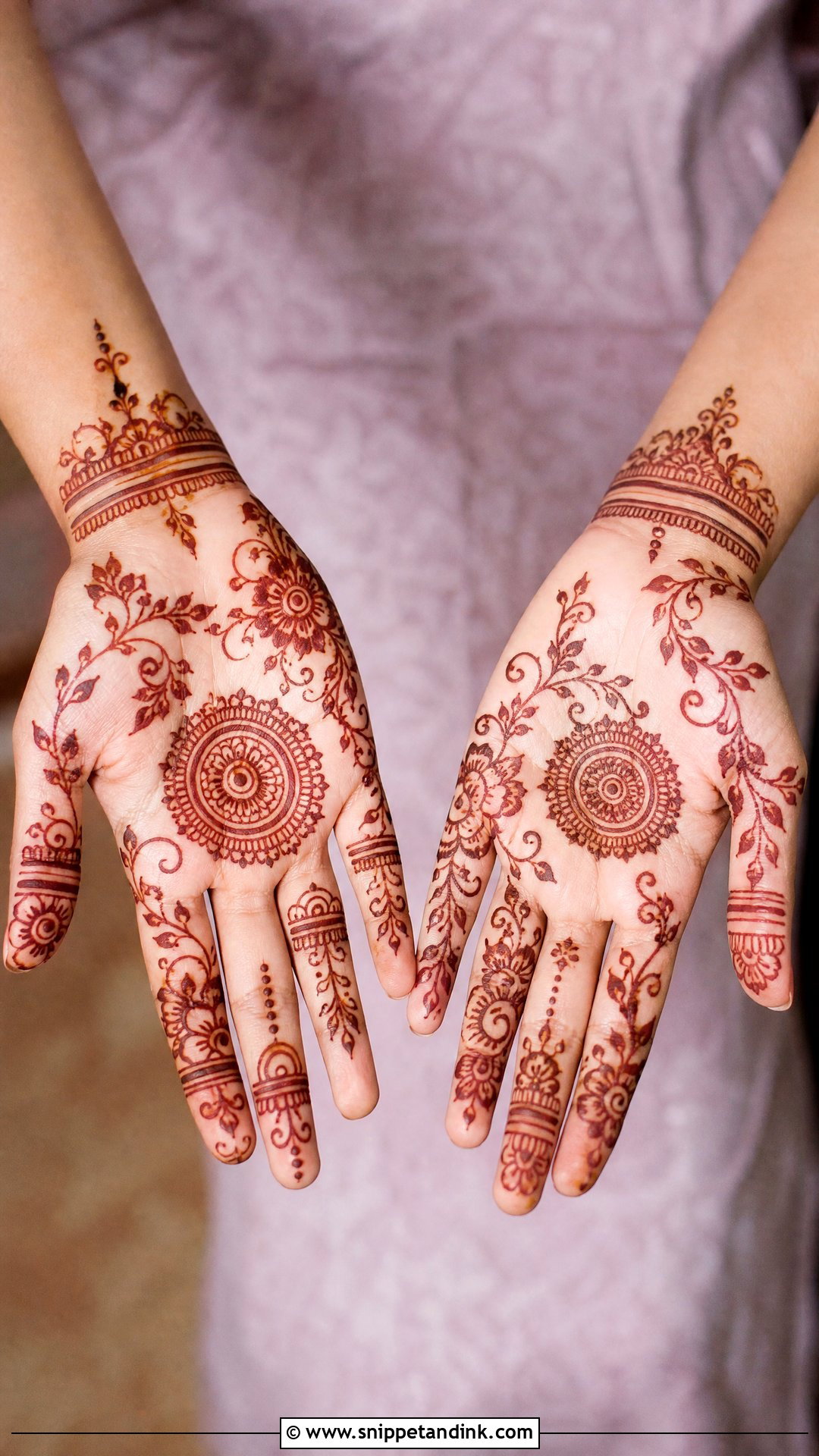
A simple full hand still covers every finger and the palm, but the motifs are larger and drawn with fewer strokes: a central flower, vines, checks, dots and a soft cuff. Most of these take me well under an hour per hand. Where people go wrong is shrinking everything to look “neat”, which leaves the palm empty from a distance. Keep one clear centre motif, give the fingers proper caps, and a basic design will read as finished. Teenagers and anyone attending several family functions in a week tend to prefer this.
5. Front Full Hand Mehndi Design
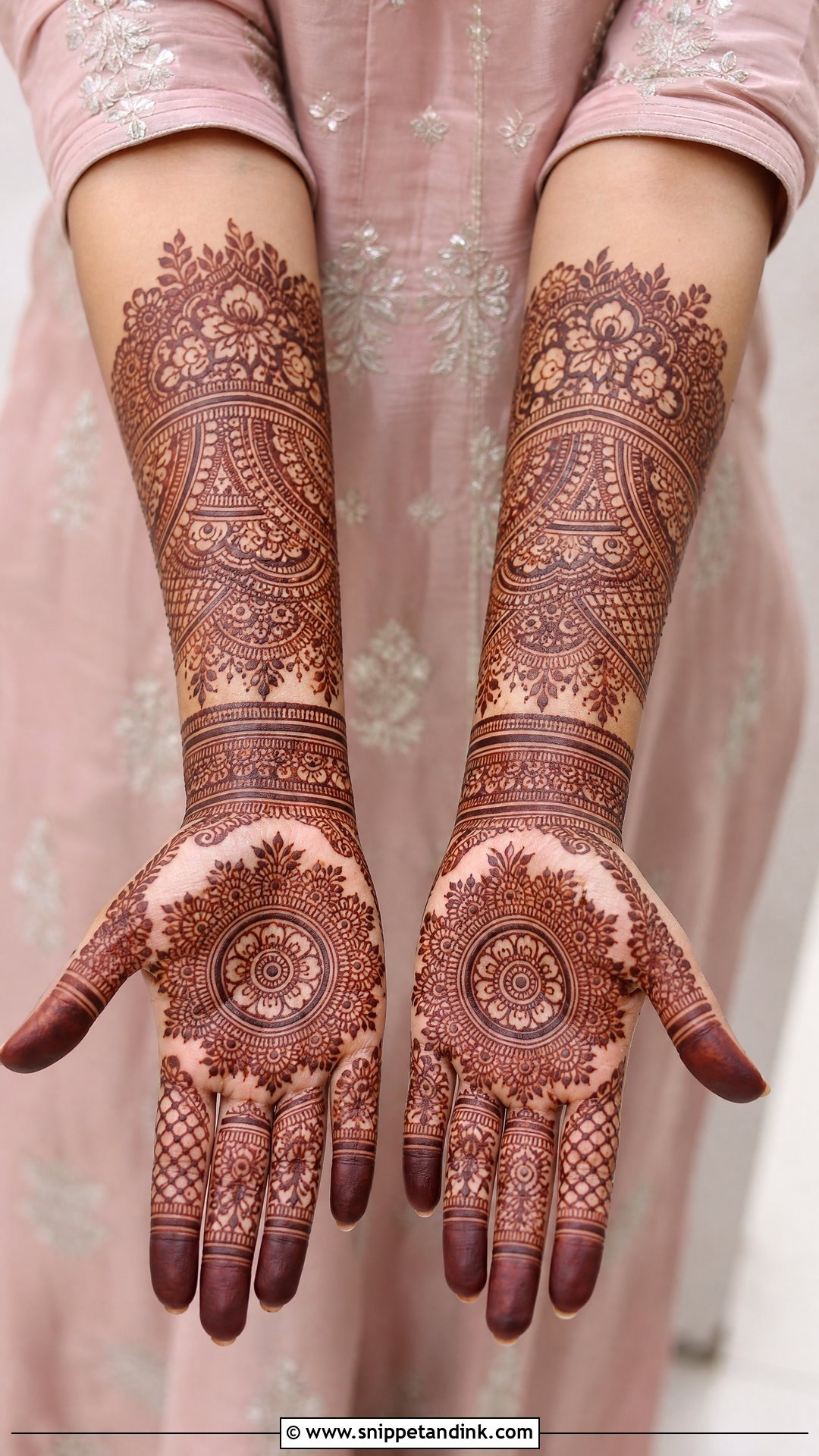
Palm-side designs get the strongest colour, because the skin there is thicker and holds the dye better than the back of the hand. That’s why I put the heaviest work on the palms for any ceremony where hands are held open for blessings or rituals. I build around one focal motif, a mandala, paisley cluster or bridal figure, and fill the fingers to match it. Ten small motifs crowded into the palm centre turn into a brown blur after the stain darkens. One strong centre with bands and jaali extending toward the forearm stays readable.
6. Back Full Hand Mehndi Design
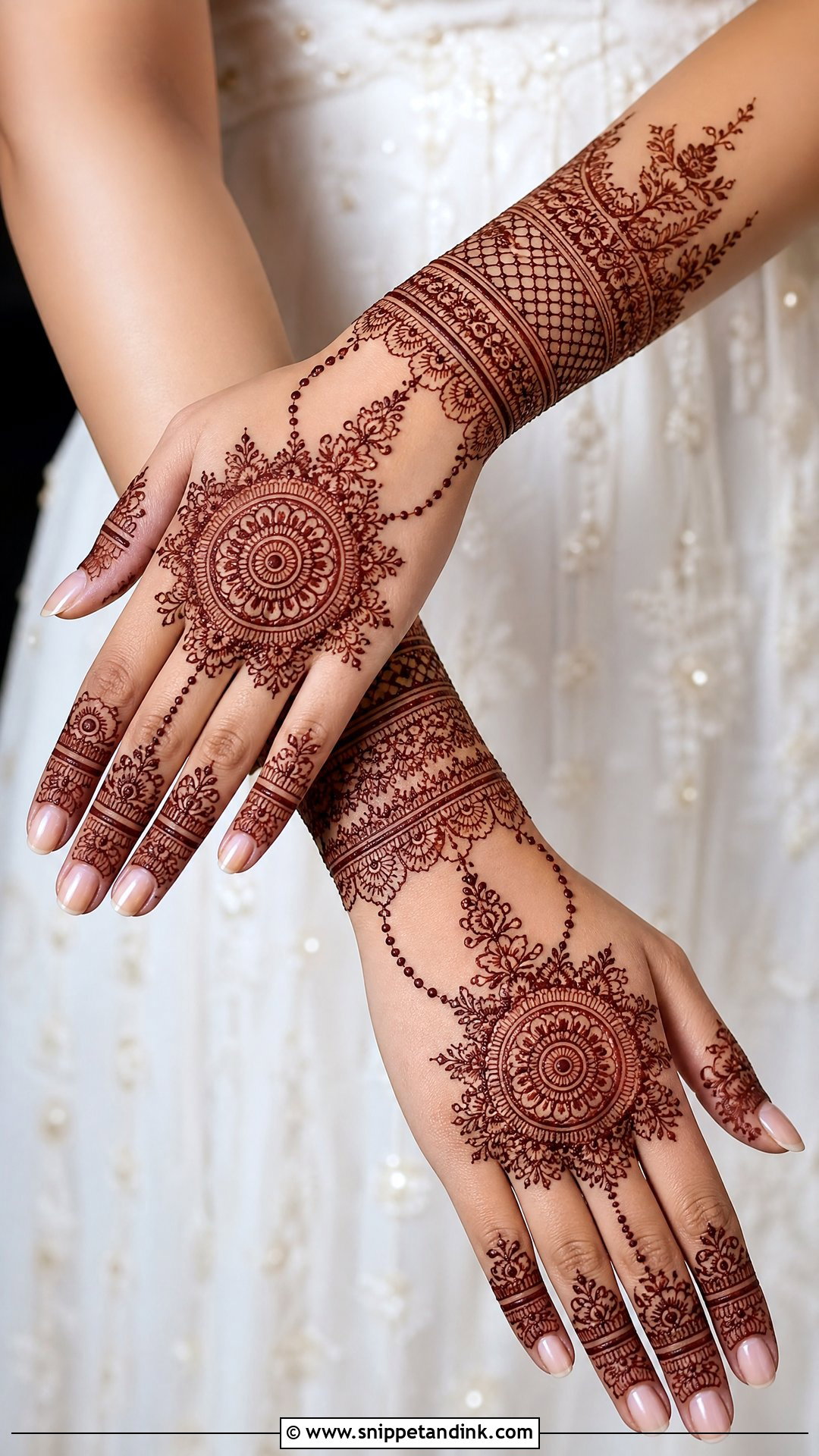
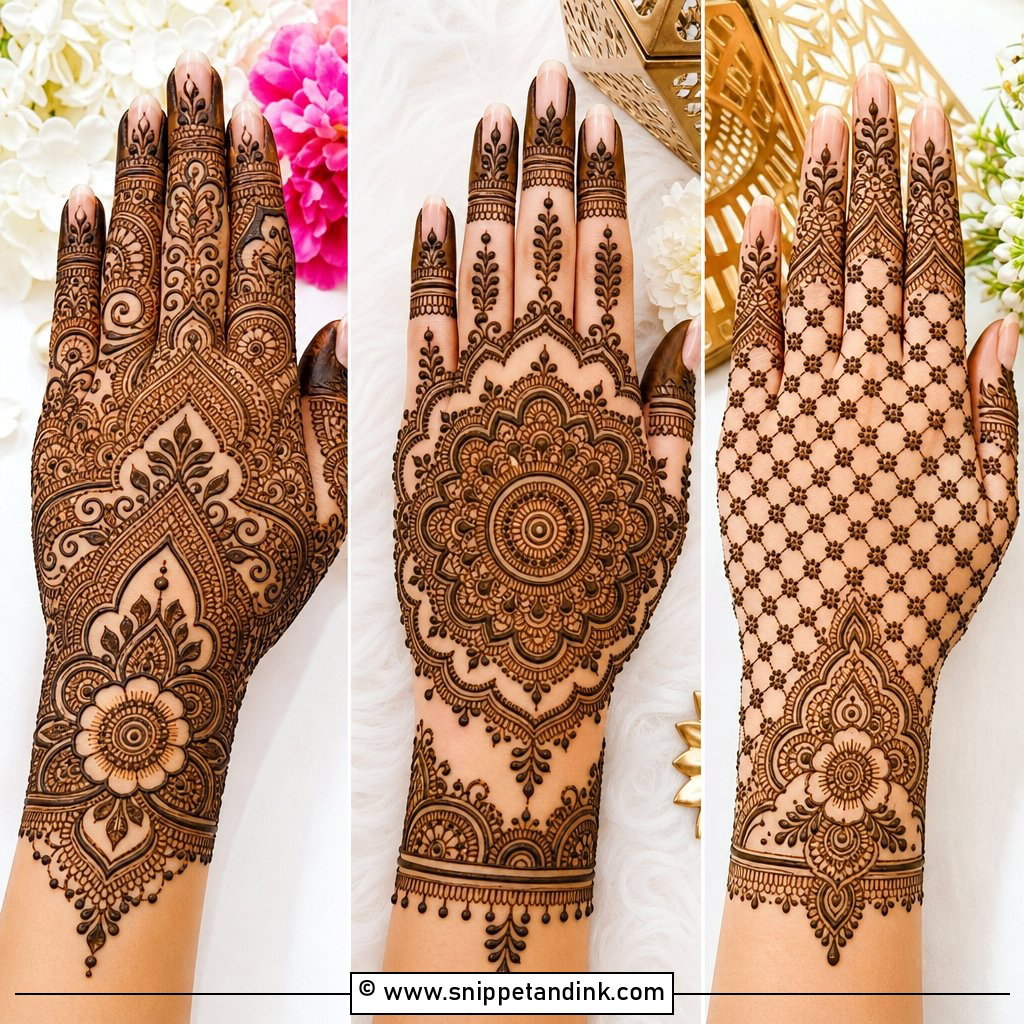
The back of the hand is the side that shows when you hold a bouquet, lift a glass or adjust a dupatta, so I treat it almost like a jewellery piece. Chains running up the fingers, a mandala at the knuckle line and lace-like mesh toward the wrist are the usual building blocks. Expect a lighter stain here than on the palm; that’s normal skin behaviour, not a weak paste. For that reason I keep back-hand lines slightly bolder. Brides can run it to the elbow, while guests usually stop at the wrist and leave more open skin.
7. Full Hand Mehndi Design With Mandala
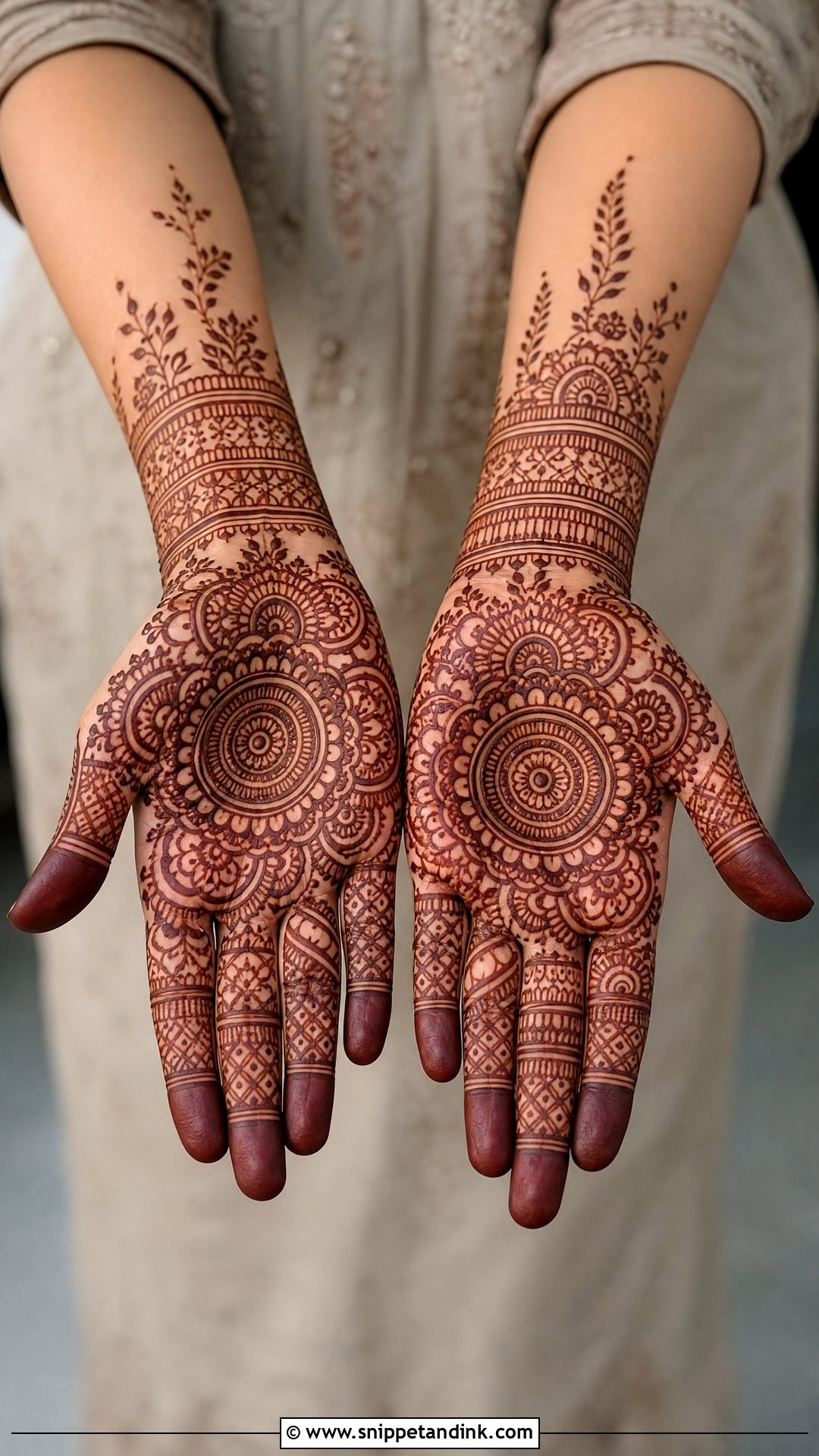
The mandala does a lot of work for very little risk. Sitting in the centre of the palm or the back of the hand, it gives the eye one place to land, and everything else can radiate from it with vines, dots and finger patterns. I scale the outer ring to the width of the hand: a mandala that reaches the edges makes a narrow hand look crowded. It works small for a festival and layered for a bride. Link it to the wrist with stacked bands or a vine so it doesn’t float on its own.
8. Full Hand Mehndi Design With Jaali
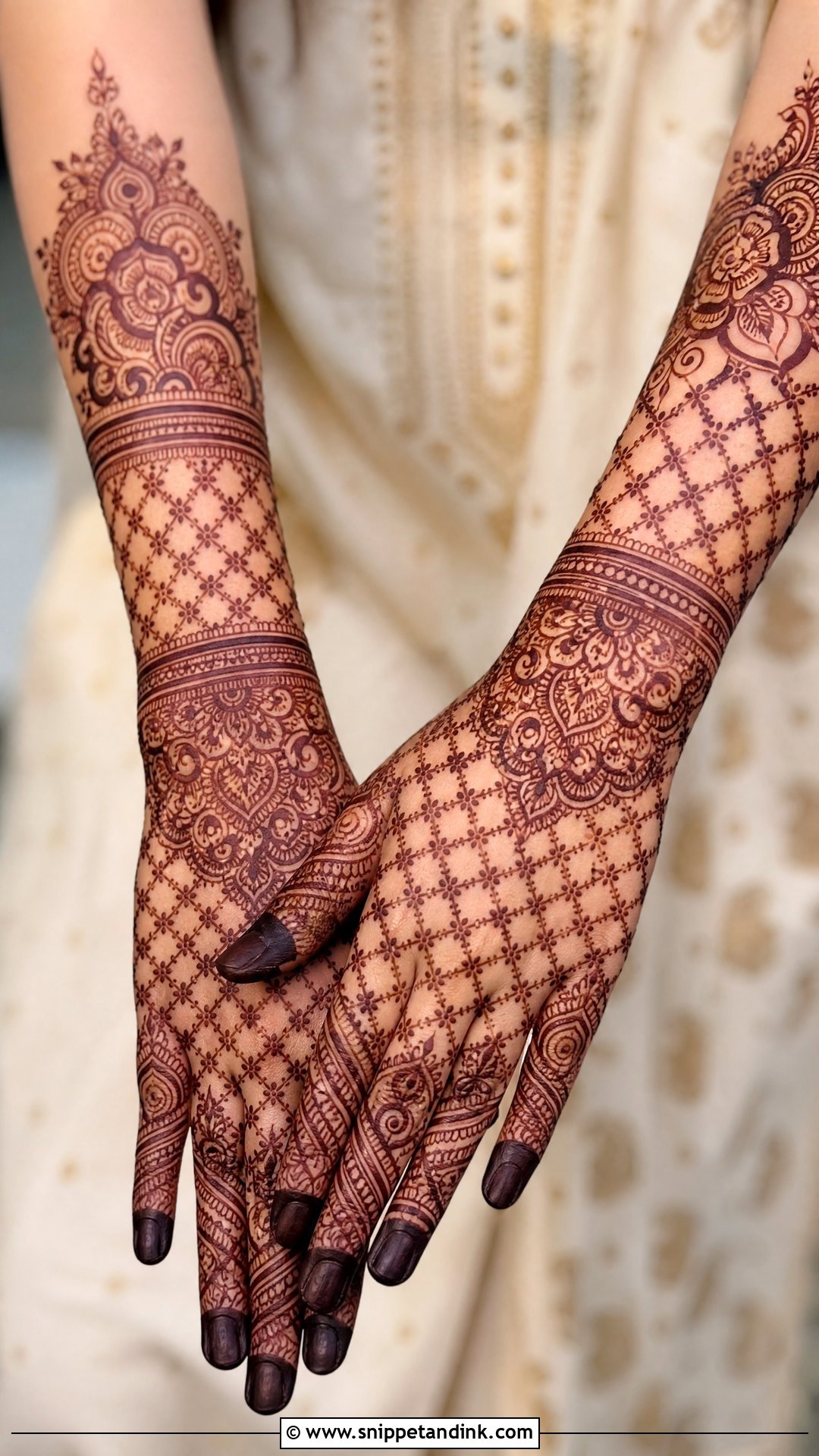
Jaali is mesh: diamonds, squares, curved netting or crisscross lines that read like lace on the skin. I use it to fill large areas on the back of the hand and forearm, where it looks like fabric laid over the wrist. The catch is that a mesh drawn too fine fills in as the paste dries and loses its pattern. I set the grid at a spacing the cone can hold cleanly, and frame it with bold flowers or paisleys so the hand has contrast instead of one flat texture. A few gaps between the mesh and the main motifs give it a lighter, newer feel.
9. Full Hand Mehndi Design With Paisley
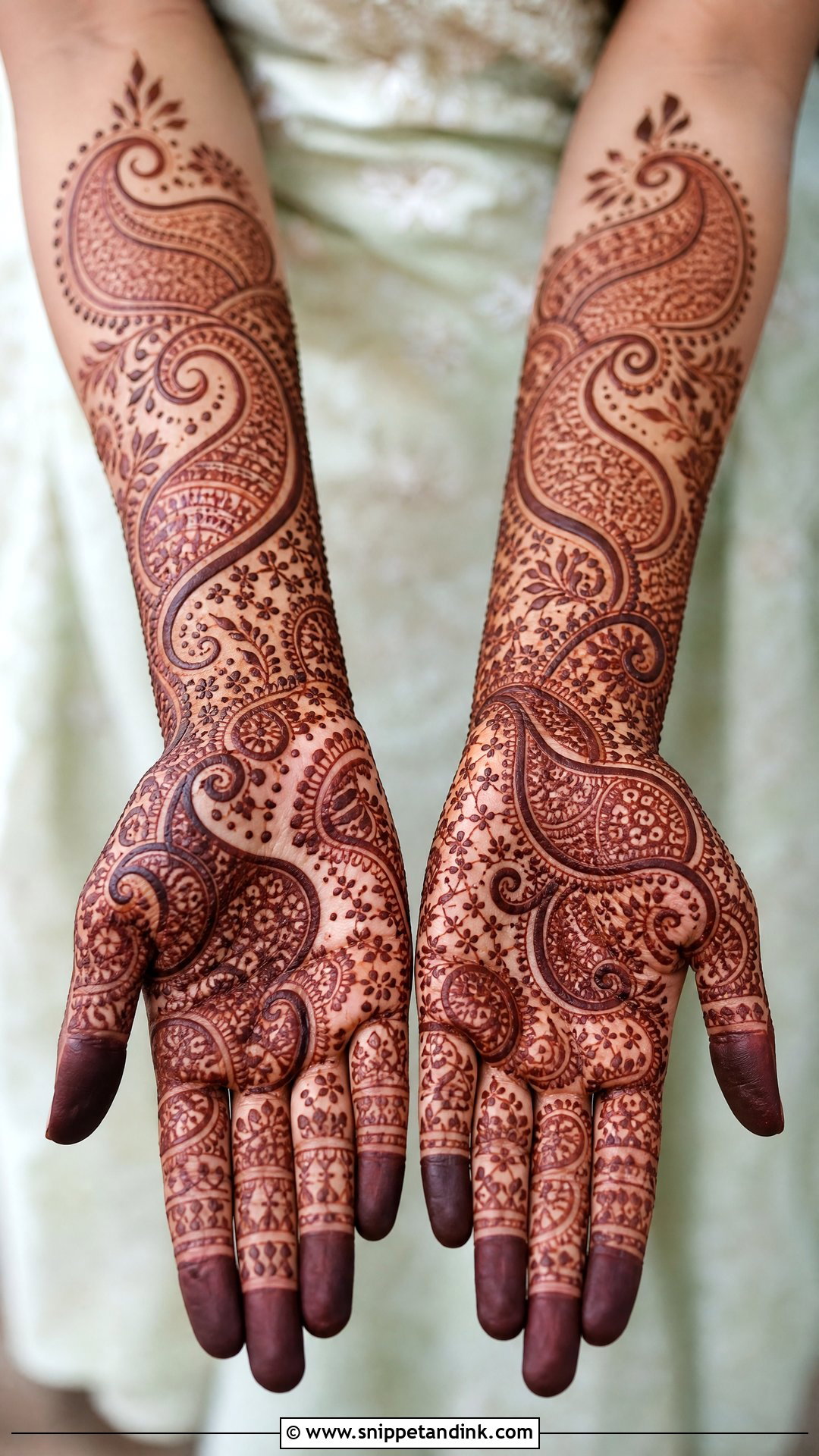
Paisleys curve the way a palm and wrist curve, which is why they flatter almost every hand. I anchor the layout with two or three large paisleys and tuck smaller ones around the fingers and forearm as fillers, never the other way round. Inside, fine lines, dots and shaded edges give them depth. The same shape can go Arabic with open filling or fully traditional with dense work, so it adapts easily from a bride to her mother. It is the motif I’d fall back on if someone can’t decide.
10. Full Hand Mehndi Design With Flowers
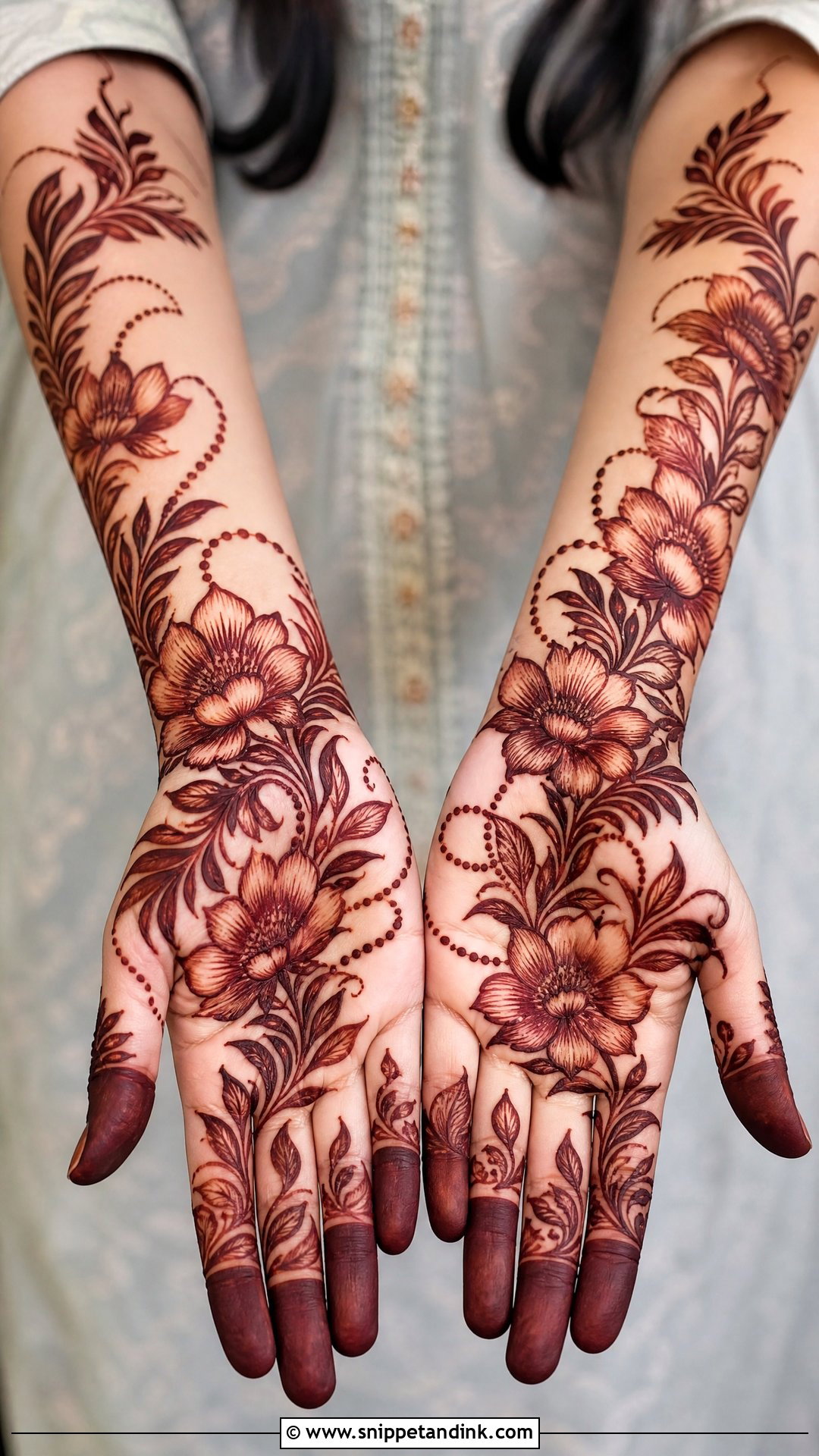
Florals cover a hand without weighing it down, from large Arabic blooms to small Indian blossoms and lotus shapes. On brides I mix them with paisleys and a cuff; on guests I enlarge the flowers and leave open skin between them. Petal size is the detail I watch. Repeat the same flower at the same size twenty times and the hand looks stamped, so I vary them in two or three sizes. Shading half of each petal makes the design pop once the stain turns from orange to deep red-brown.
11. Full Hand Mehndi Design With Peacock
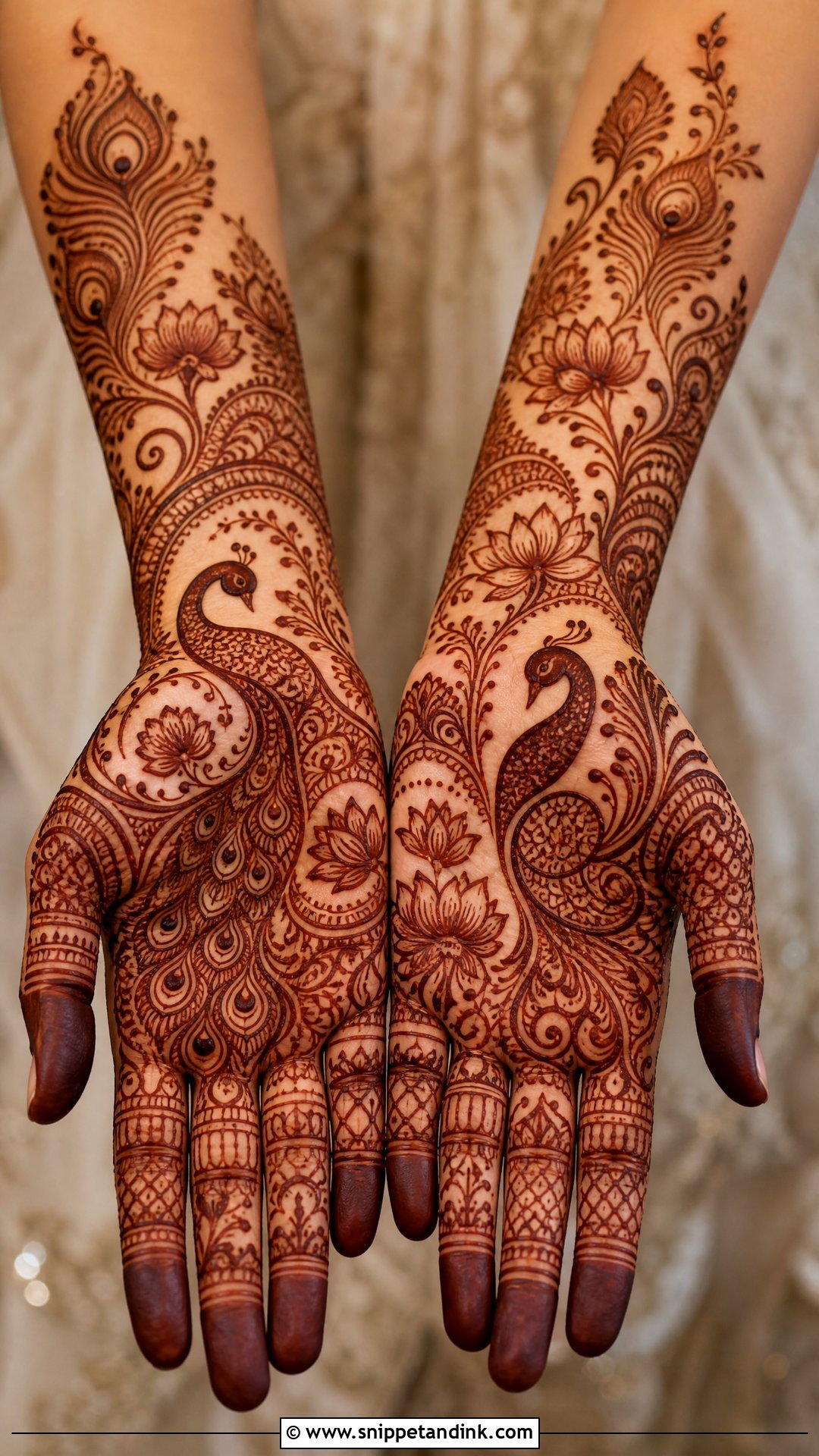
A peacock needs room. I place it on the palm, the back of the hand or the forearm, and let the tail feathers break into paisleys and fine lines around it. The mistake I see most is a peacock buried in filling until you can’t find its head. Keep the neck curve, eye and feather tips clean and surrounded by a little bare skin. Many brides put a peacock on one hand and a lotus or mandala on the other, which balances the pair better than two identical birds.
12. Rajasthani Full Hand Mehndi Design
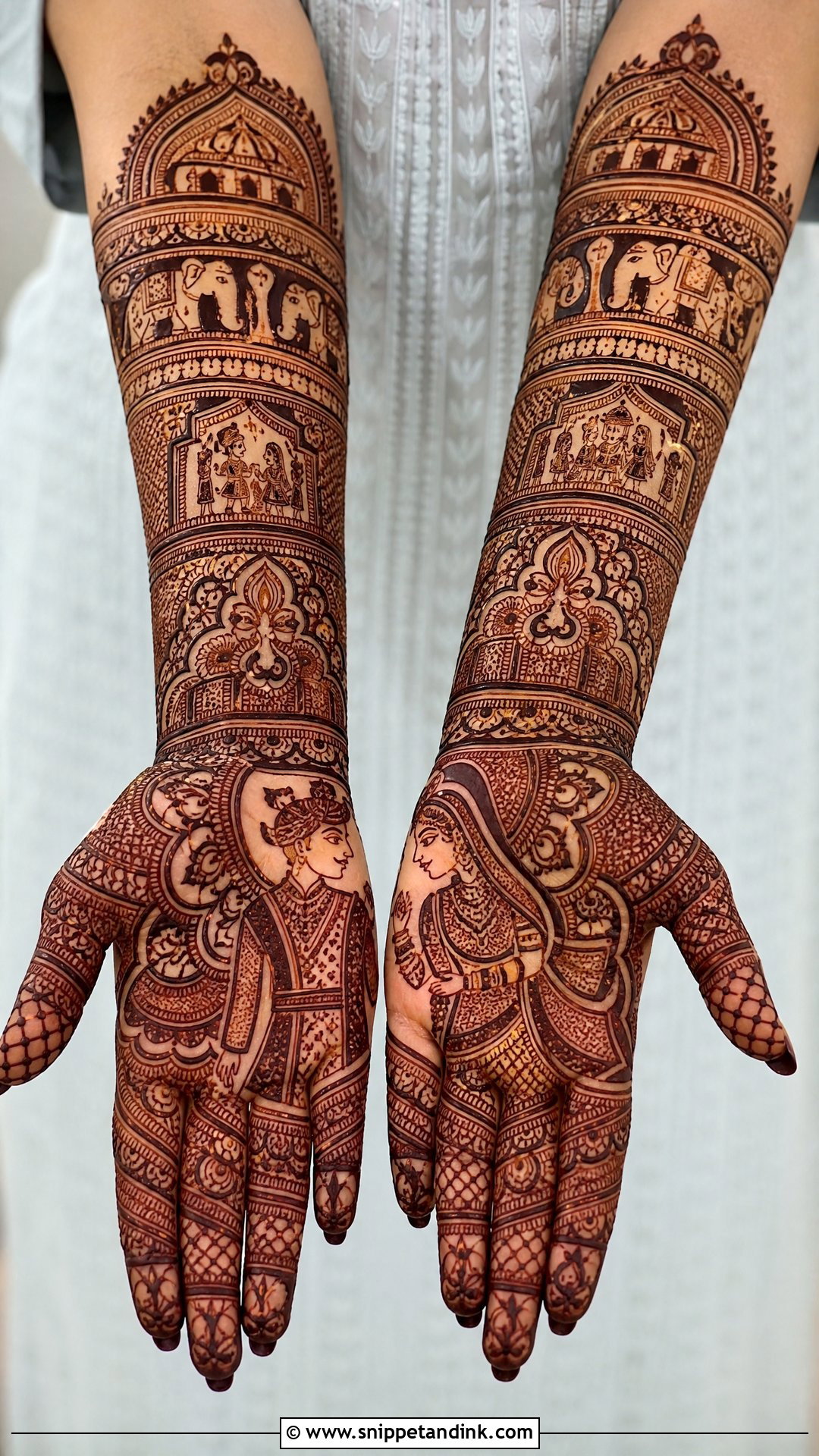
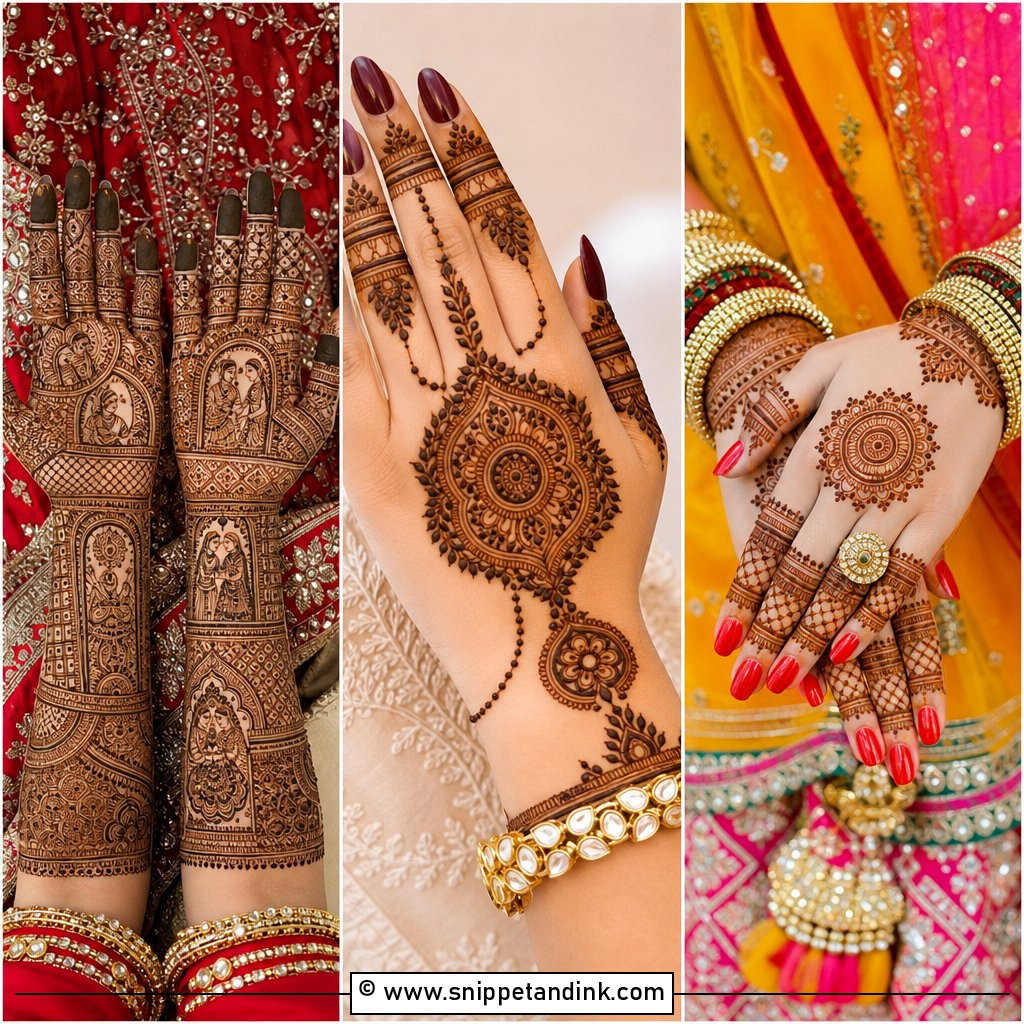
Rajasthani mehndi tells a story across the whole arm: bride and groom figures, elephants, peacocks, a doli, kalash and lotus, framed by fine geometric filling with almost no empty skin. This is slow work. A full set to the elbows can take several hours, and the bride has to sit still through it, so I book it early in the day with breaks planned in. To stop the scenes running together, I separate each motif with borders or bands, almost like panels. It suits a bride who wants heritage art on her hands and is willing to give it the time.
13. Pakistani Full Hand Mehndi Design
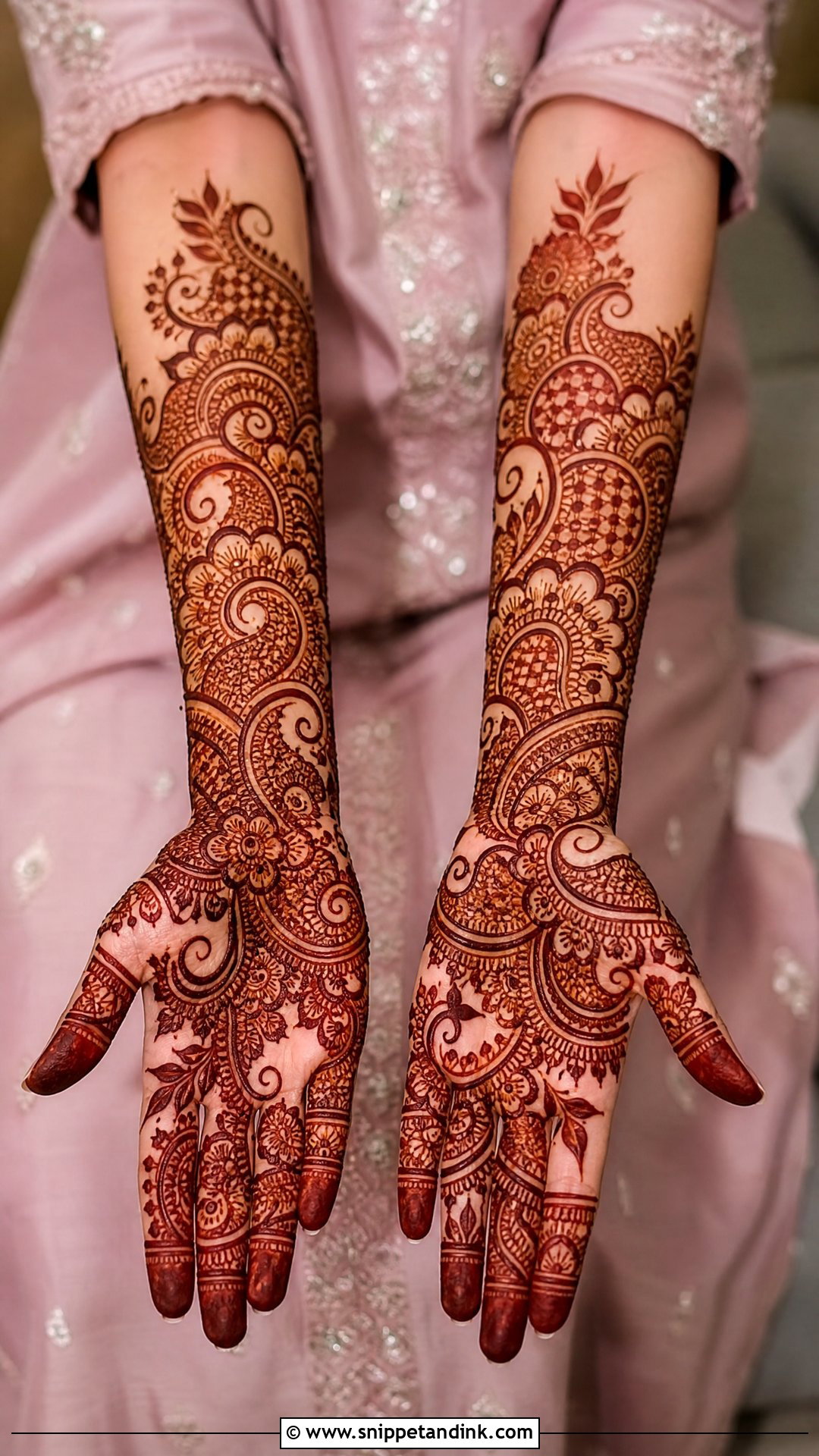
Pakistani designs pair dense Indian-style filling with bold Arabic movement: florals, paisleys, dome shapes, leafy trails and checkered fills, with fine work on the fingers and wrist. The fingers and palm can be packed while larger motifs keep some breathing space around them, and that contrast is what stops it feeling crowded. I draw the outlines firmly here, because those defined edges carry the design in photographs. Symmetrical wrist bands and delicate finger caps that echo the palm tie it together.
14. Moroccan Full Hand Mehndi Design
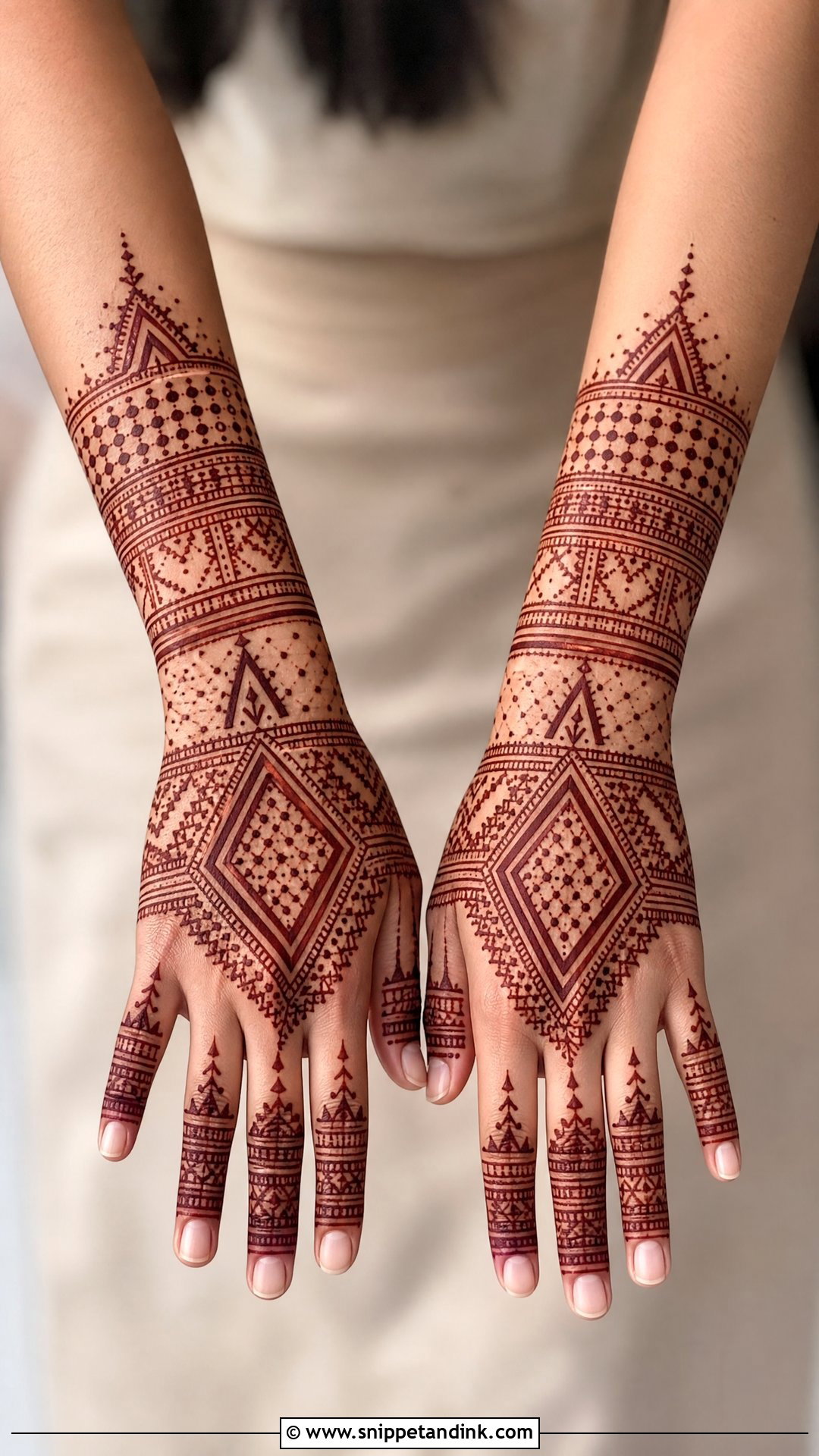
Moroccan work swaps flowers for geometry: diamonds, triangles, grids, dots and tribal-style shapes. It looks cleaner and more structured than Indian or Arabic mehndi, and straight lines follow the fingers in a way that makes them look longer. The difficulty is precision. A wobbly straight line shows far more than a wobbly petal, so I steady my hand on the client’s knuckles and keep the cone pressure even. Extend it from the fingertips to the wrist in connected bands with even spacing. It’s an unusual pick for a festival and draws comments.



15. Gulf Full Hand Mehndi Design
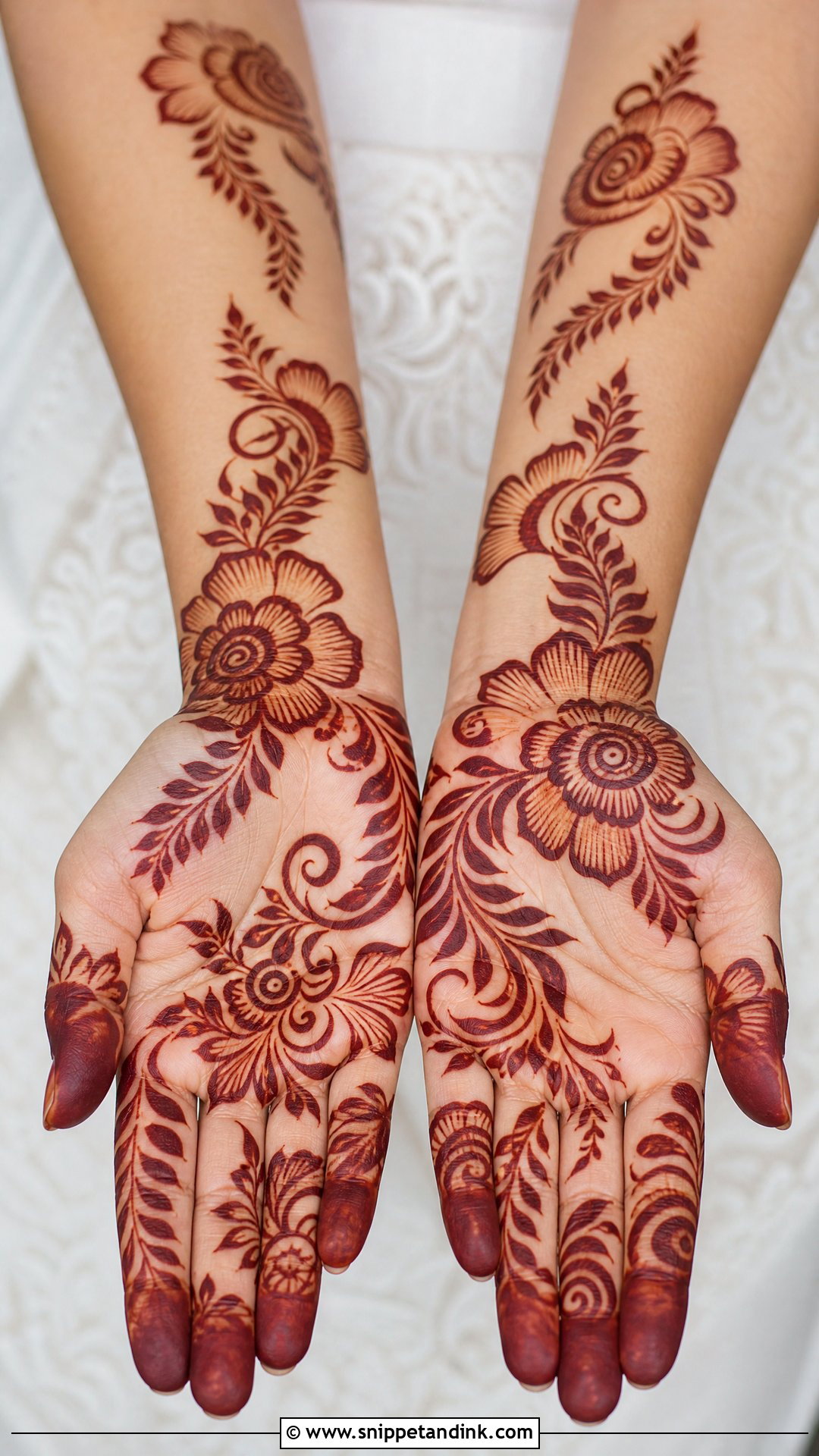
Gulf full hand mehndi, also called Khaleeji mehndi, uses large flowers with thick dark outlines, leafy trails and deliberate blank space. The blank areas are part of the design, not unfinished work, and they make the main blooms look luxurious. I shade inside the petals with a lighter, broken stroke so the stain shows two tones. It looks good on the palm and the back of the hand and extends easily up the forearm. Keep the flow diagonal or curved; set the flowers in a straight row and the hand looks blocky.
16. Modern Full Hand Mehndi Design
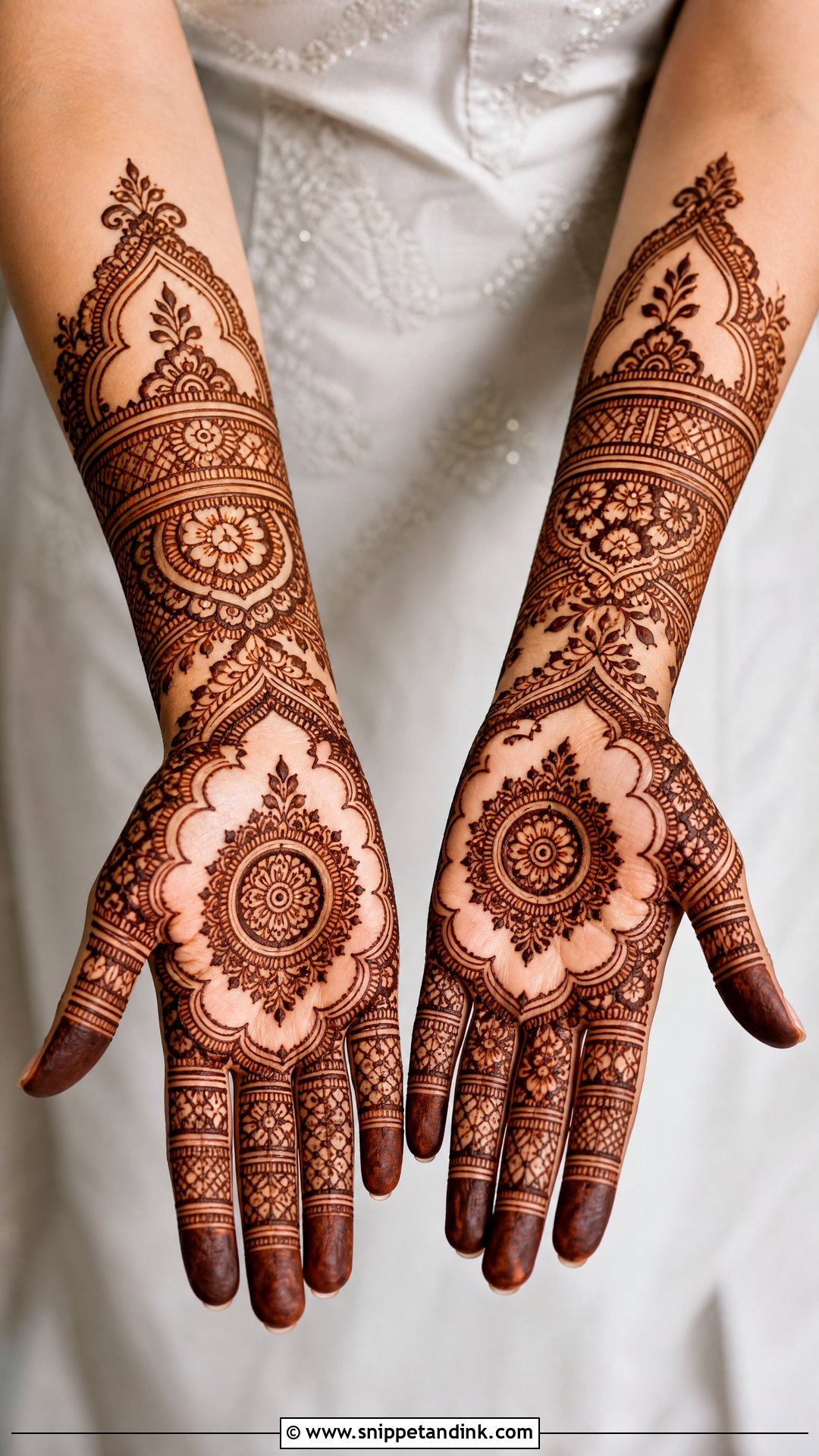
Modern full hand designs keep traditional motifs but plan the gaps as carefully as the lines: negative space, slim wrist bands, geometric blocks, a bold flower or a mandala, and neat finger detailing. The coverage is complete, yet nothing feels heavy. When I draw these I follow the length of the hand, keeping finger patterns narrow and letting the design run up the forearm, so the arm looks longer. They suit engagements, bridesmaids and brides who prefer a cleaner finish. Over-filling is the quickest way to lose the modern look.
17. Heavy Full Hand Mehndi Design
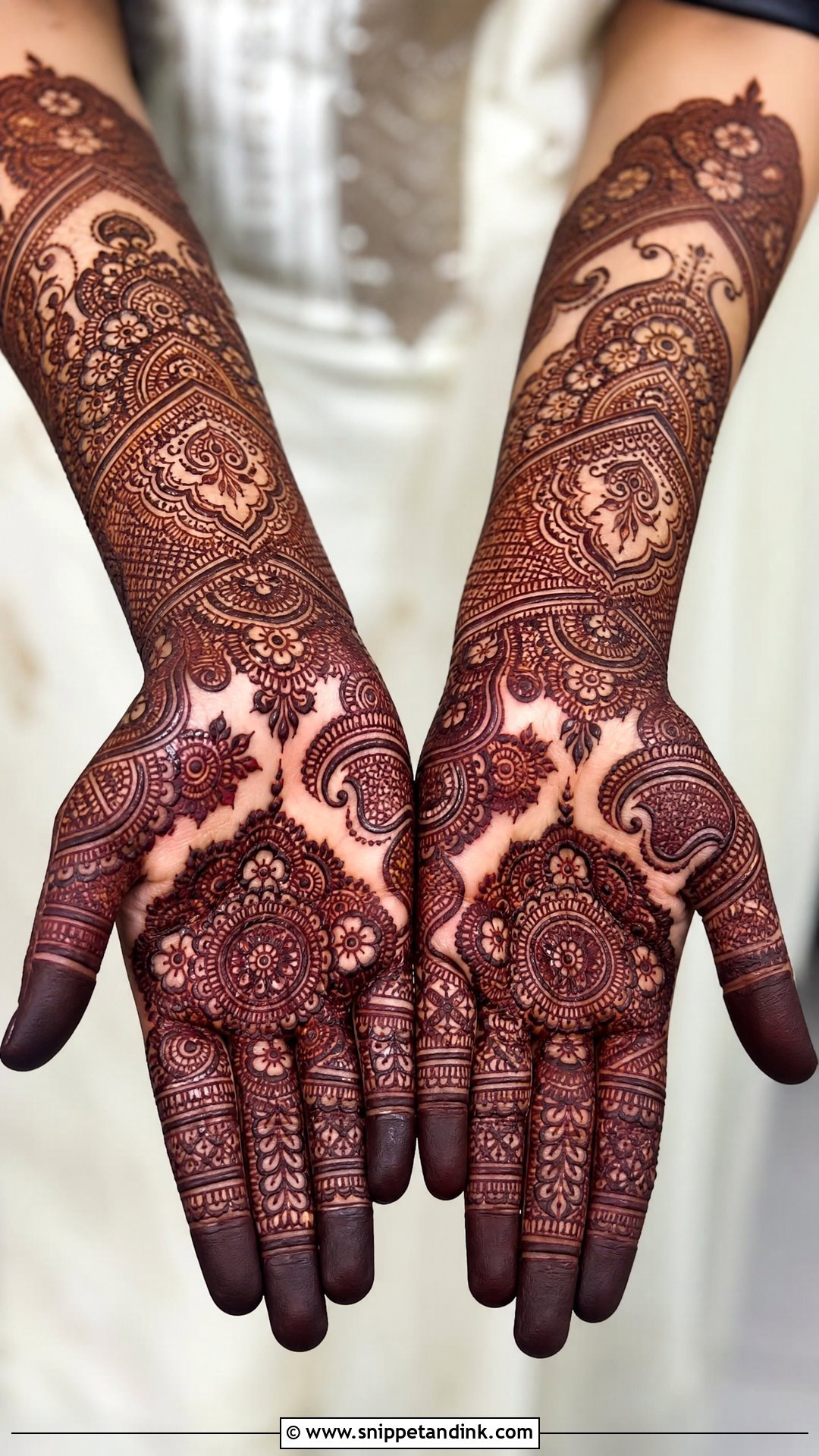
Heavy coverage leaves almost no skin showing: tiny florals, paisleys, jaali, mandalas, dots, swirls and layered borders from fingertip to elbow. It produces the deepest, most even colour, which is why brides ask for it. The risk is legibility. Lines drawn too close bleed together as the paste dries and the stain becomes one dark patch, so I place a few larger motifs among the fine filling to give the eye structure. It goes naturally with traditional jewellery and heavy lehengas.
18. Minimal Full Hand Mehndi Design
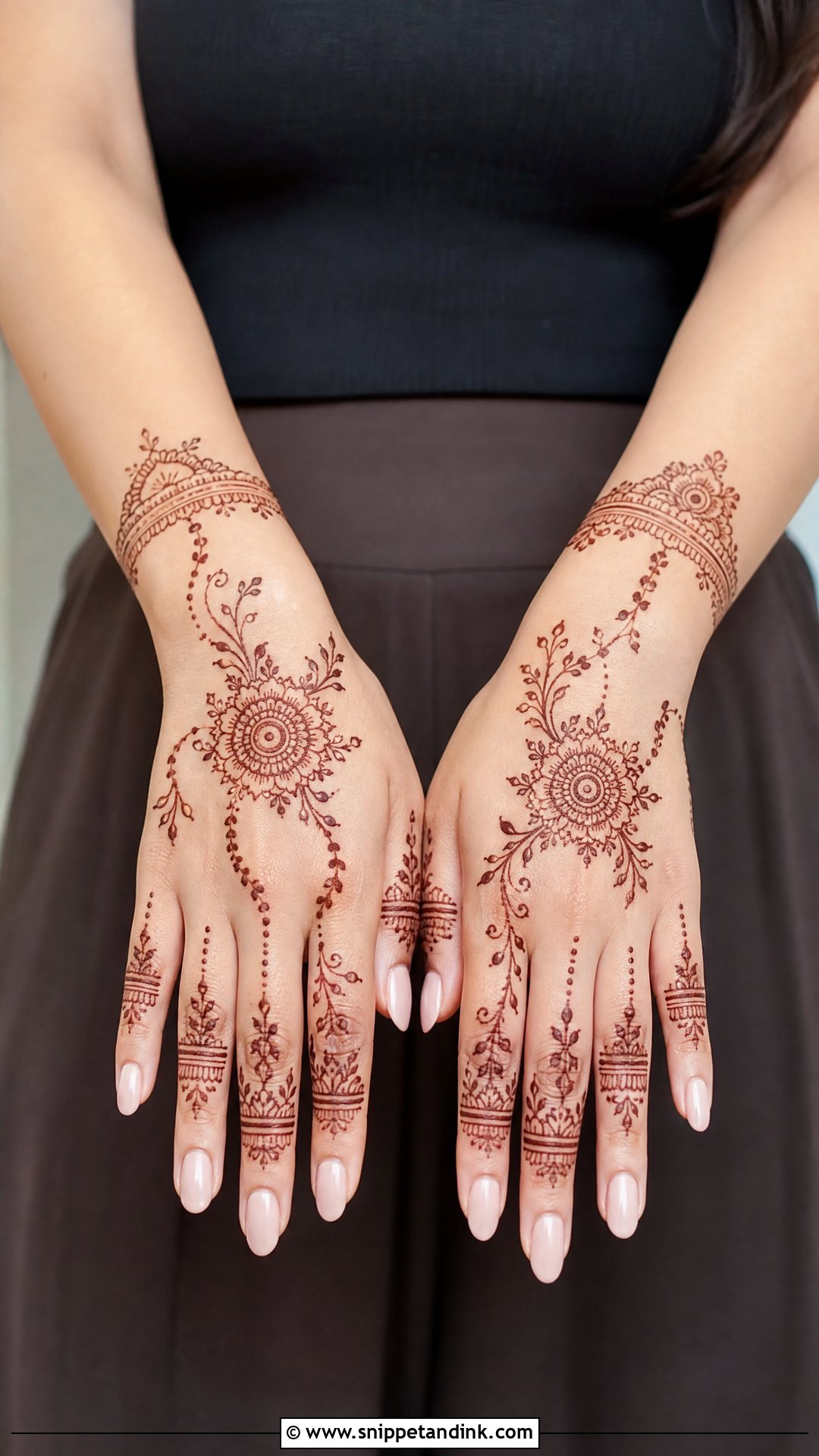
Minimal full hand designs give the impression of coverage without the paste: thin vines, small flowers, dots, a little mandala and simple finger lines. The trick is placement. I set motifs at the fingertips, the palm centre, the wrist and the forearm so the eye connects them into one design. Done this way it covers the hand visually in a fraction of the time. Small ceremonies, workdays after a festival and younger wearers suit it. Clean, evenly spaced lines matter more here than anywhere, because there’s nothing to hide a wobble.
19. Full Hand Bridal Mehndi Design With Dulha Dulhan
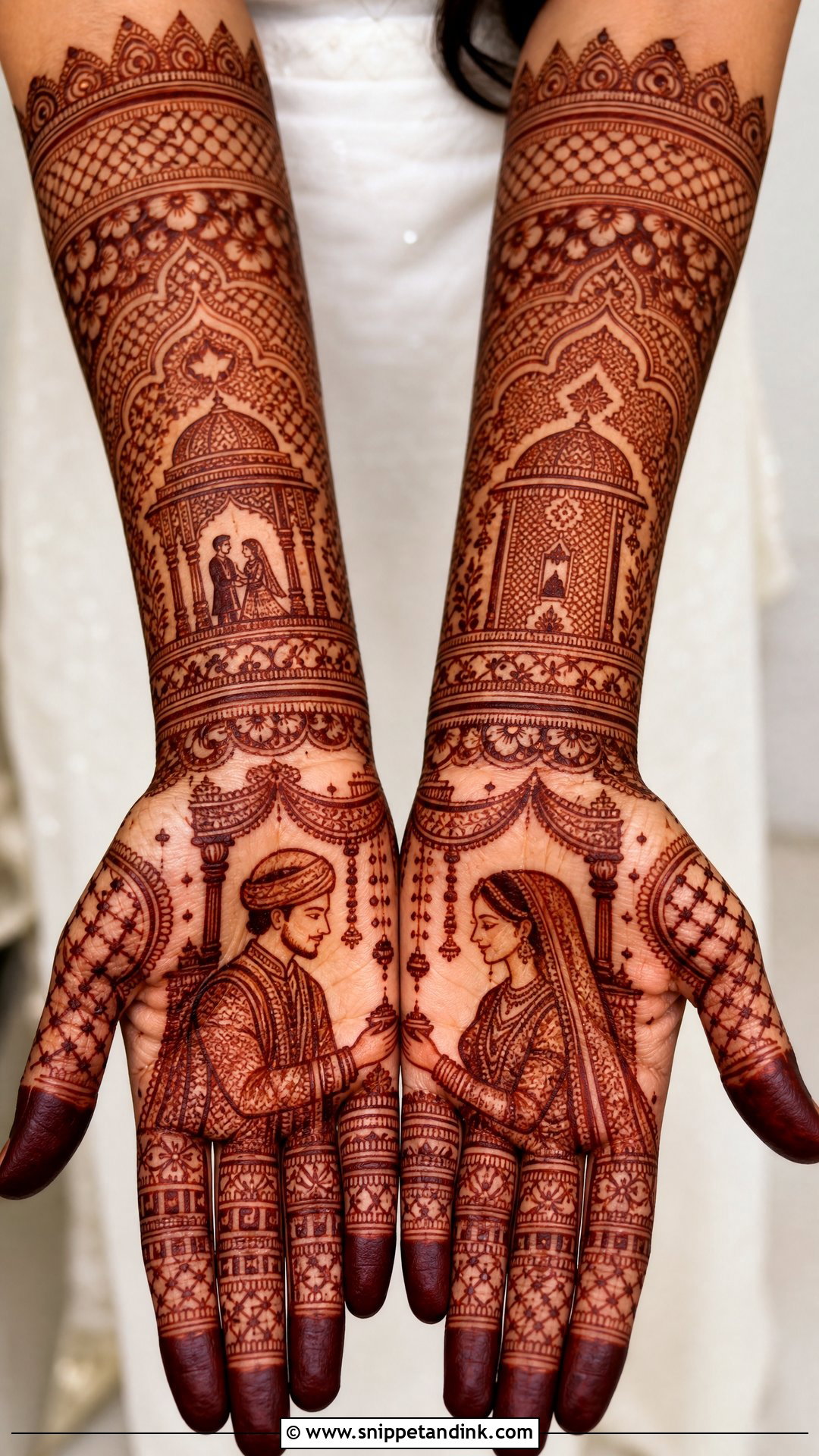
A bridal design with dulha dulhan figures puts the bride and groom on the palms, surrounded by a mandap, doli, flowers, paisleys and wedding symbols. Figures need space, and that’s the decision I talk through first: if the faces get crowded by filling, they vanish once the stain darkens. I keep the figures open and let the fingers, wrists and forearms carry the dense pattern. When it’s planned well, the hands become a small record of the wedding itself.
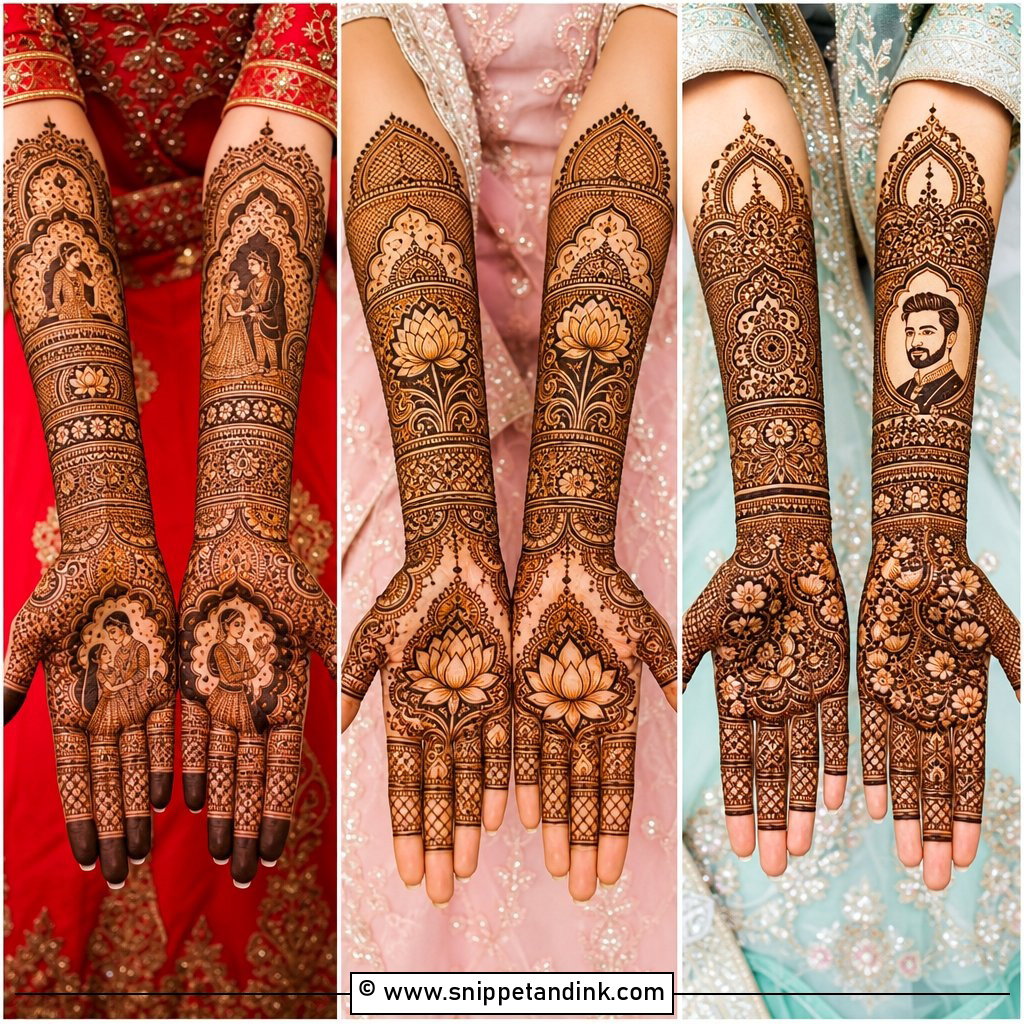
20. Full Hand Mehndi Design With Bride Groom Portrait
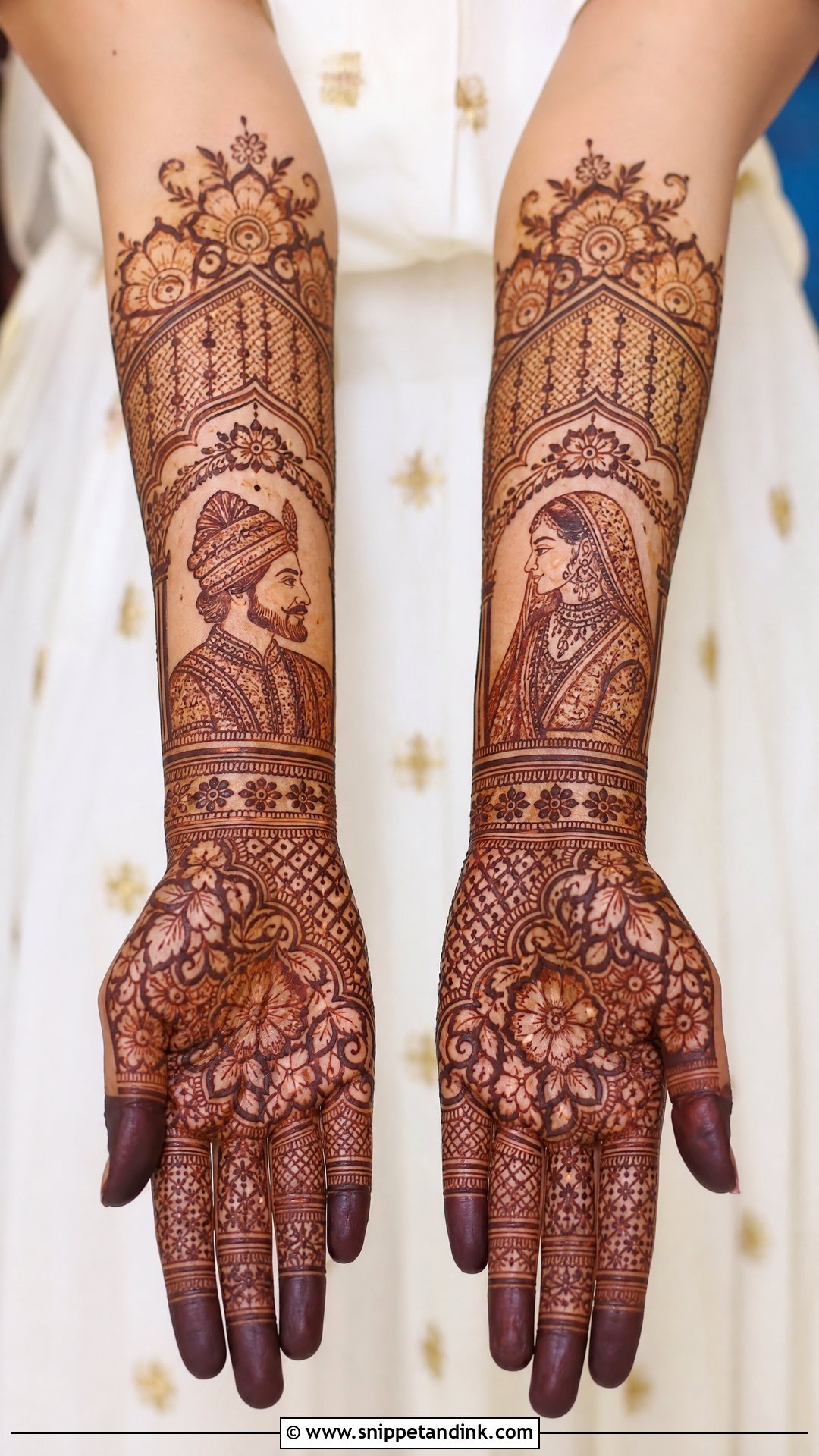
Portrait work goes a step further than simple figures, aiming for faces and characters the couple can recognise as themselves. The portraits sit on both palms, framed by traditional filling, florals, jaali and ornate cuffs. This is specialist work. Facial balance depends on tiny line weights, and an artist who draws beautiful florals may not draw a convincing face, so ask to see portraits they’ve done before booking. I frame each face with a plain border and keep the surrounding pattern controlled so the portrait stays the focus.
21. Full Hand Mehndi Design For Engagement
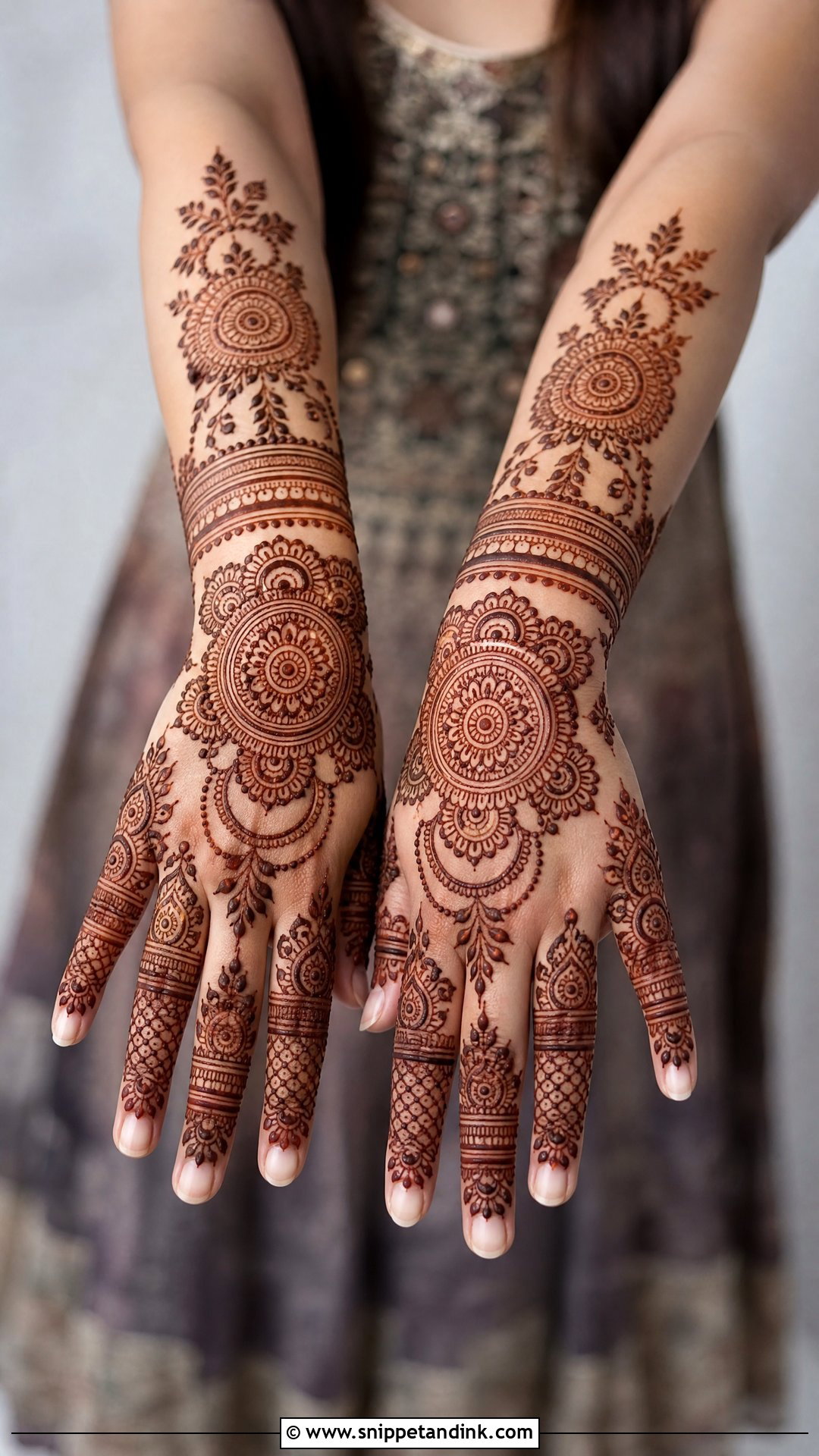
Engagement mehndi sits a step below bridal: ring motifs, florals, a mandala, initials and a bracelet-style wrist, with room to breathe. The back of the hand matters most here because every ring photo is shot from that side. I put the main mandala or floral cluster on the back of the hand and leave the ring finger lighter between the knuckles, so the band isn’t fighting a busy background. The palm can match quietly without competing with the ring.
22. Full Hand Mehndi Design For Wedding Guest
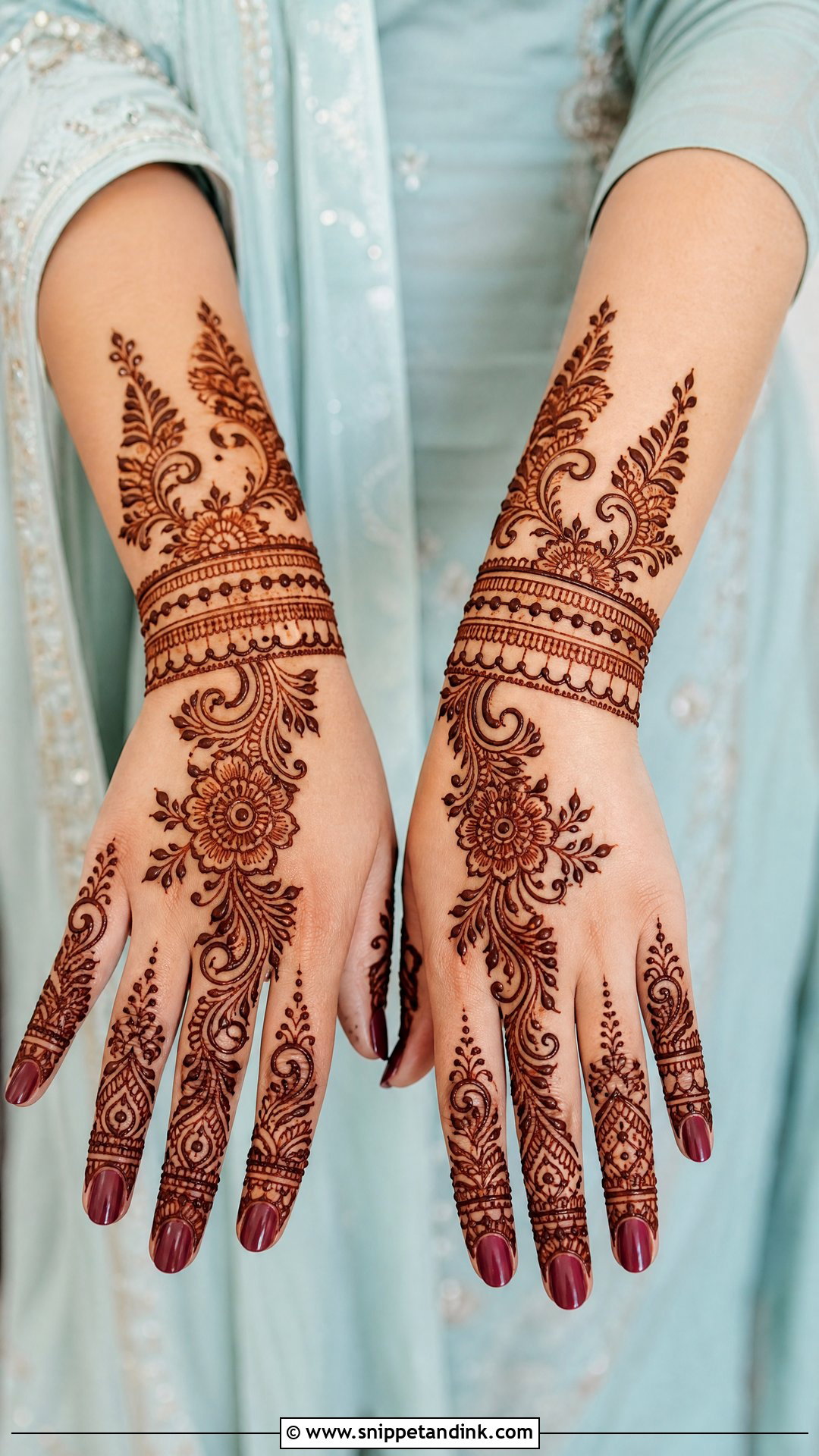
Guests want something festive they can sit for in a crowded room, often while the bride is being worked on. Arabic florals, Indo-Arabic vines, mandalas and paisleys with neat fingers fill the hand while keeping open space, which keeps application quick. A back-hand trail reads like jewellery; a palm design feels more traditional. If you’re attending three or four events, choose medium detailing and a soft cuff that won’t fight any outfit. Keep it clearly lighter than the bride’s.
23. Full Hand Mehndi Design For Eid
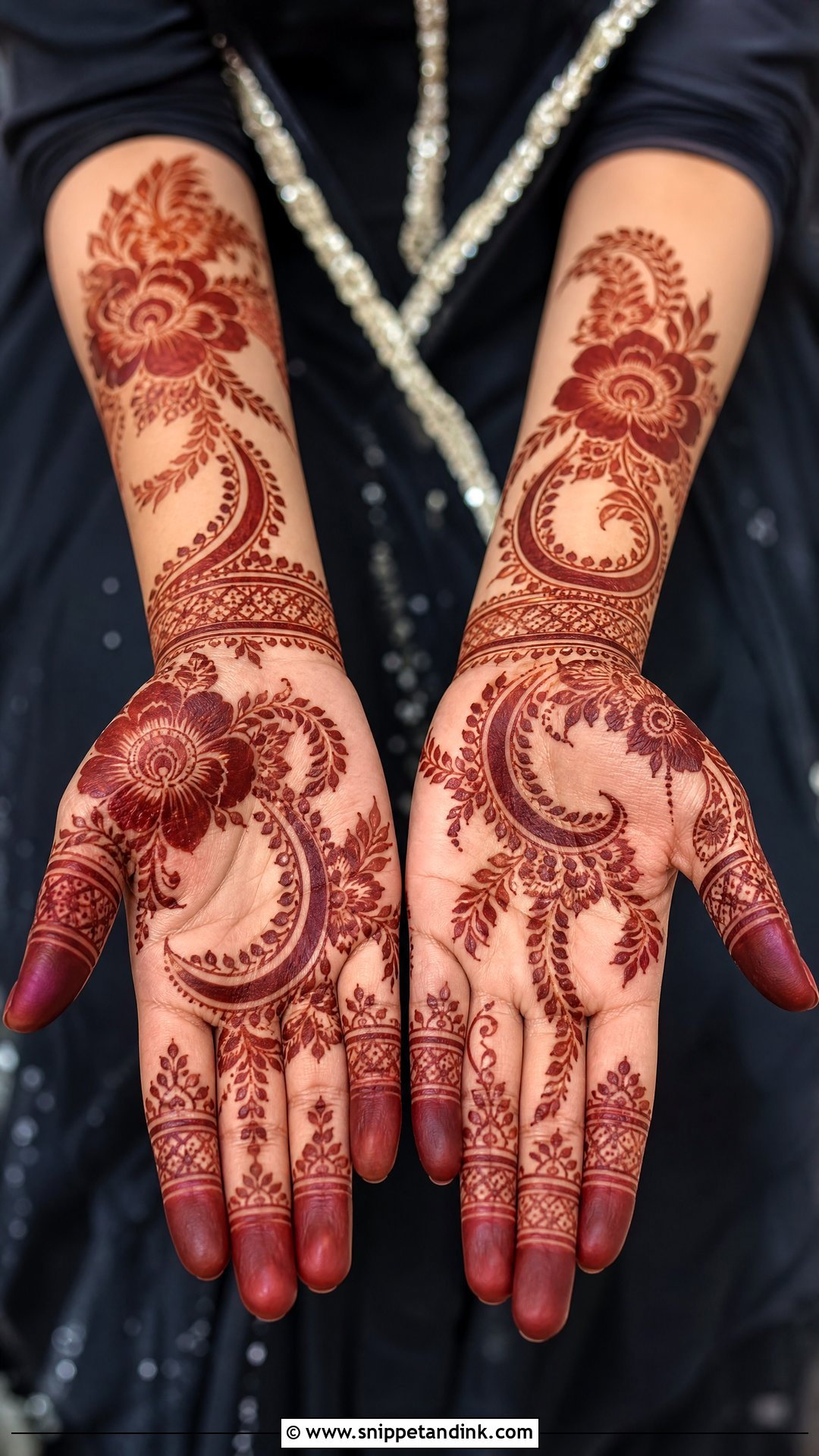
Eid designs are usually Arabic, Gulf, Pakistani or Indo-Arabic, with bold flowers, leafy vines, crescent curves, mandalas and detailed fingers. Most people apply them the evening before Eid, so the design has to be full but fast. I lean on bold outlines and open space here, because a quick design with clean gaps stains more clearly than a rushed dense one. A back-hand trail sits well with bangles, a palm design feels more traditional, and a neat wrist extension finishes it with modest or ethnic wear.
24. Full Hand Mehndi Design For Diwali
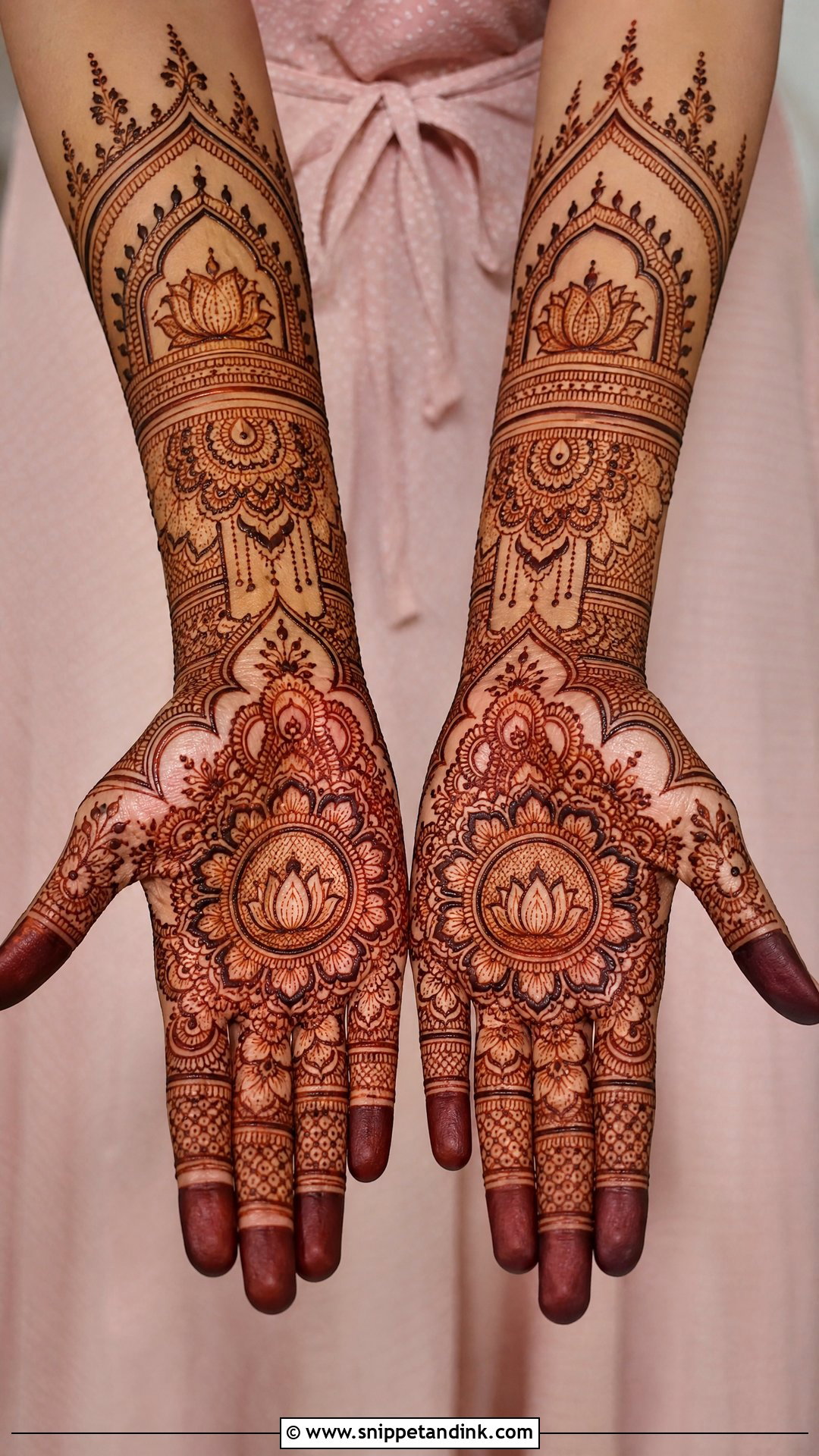
Diwali hands are busy hands: lighting diyas, serving food, hugging relatives. Lotus motifs, mandalas, paisleys, diya shapes, florals, dots and bracelet bands give a festive look without bridal weight. Front hand patterns show well during puja, while back-hand designs suit bangles and rings. I keep the layout open enough that the motifs survive the darkening of the stain. A palm mandala with detailed fingers and a decorated cuff is the classic choice, and it dries fast enough to fit into a crowded festival day.



25. Full Hand Mehndi Design For Karwa Chauth
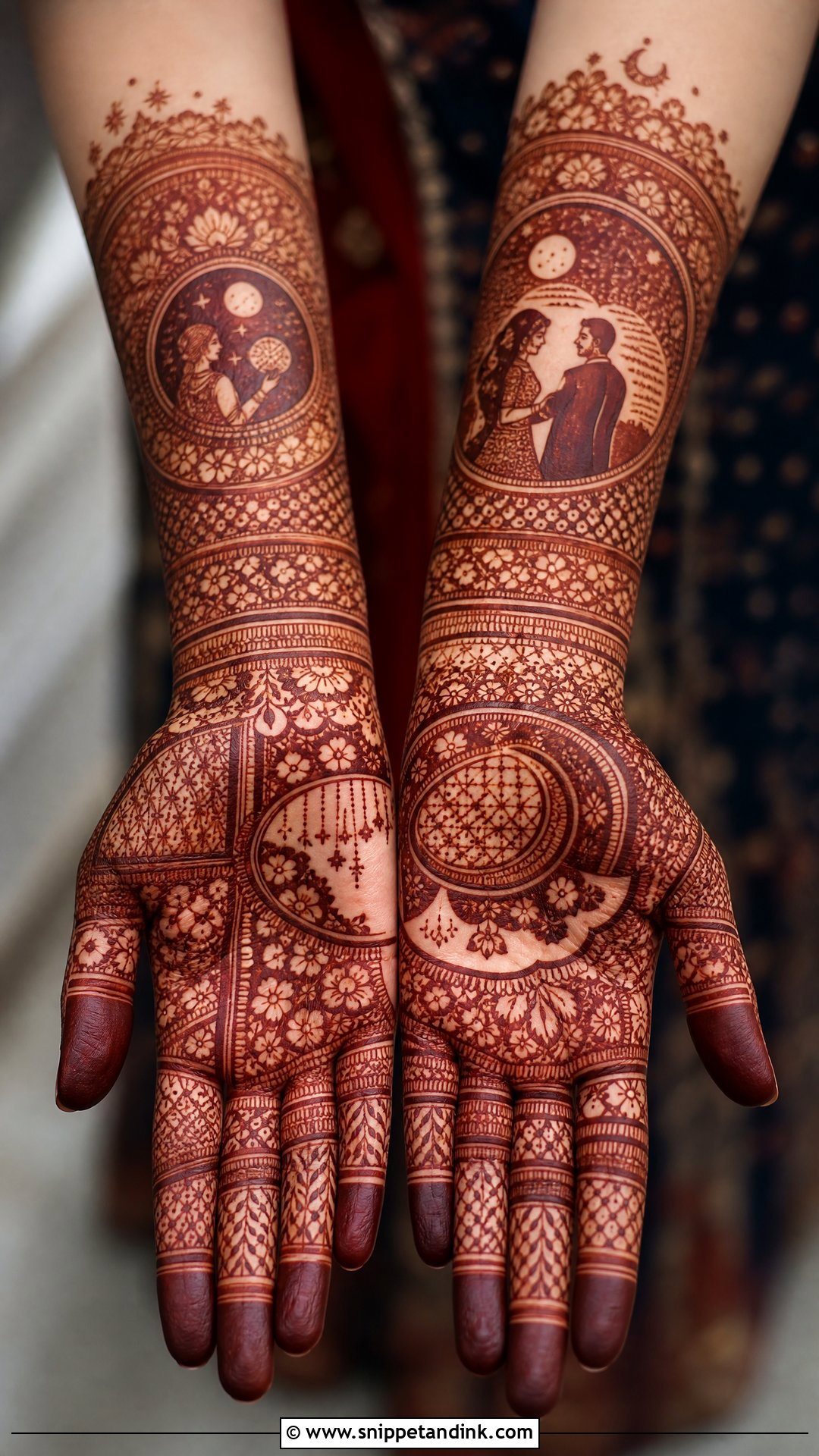
Karwa Chauth full hand mehndi leans traditional: moon motifs, sieve circles, couple figures, paisleys, florals, mandalas and filled fingertips. It is tied to married women’s rituals, so full coverage carries meaning, yet most women prefer it lighter than their wedding henna. A palm-centred mandala with traditional fillers is the faster option; couple motifs take longer and need space. Apply it the day before the fast, not the morning of, so the colour has time to deepen by moonrise. Keep the pattern well spaced and add wrist bands for the bangles.
26. Full Hand Mehndi Design For Teej
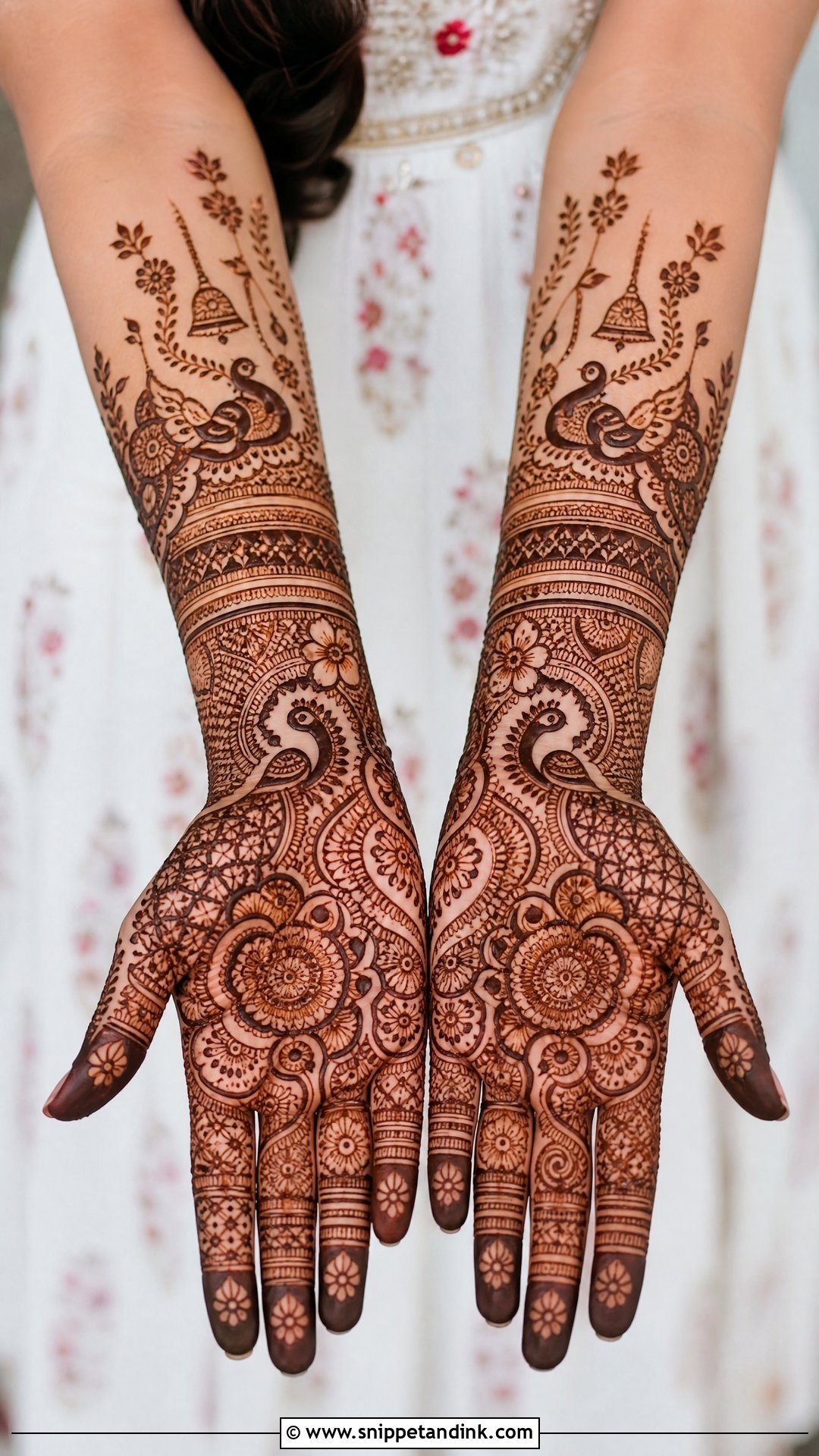
Teej is a monsoon festival, and its mehndi follows the season: leafy vines, flowers, paisleys, swings, peacocks and fine wrist patterns, in heavy or medium coverage. Green bangles sit naturally against flowing leaf motifs. A palm mandala ringed with leaves is the classic arrangement, while a floral trail on the back of the hand feels newer. Humid weather slows drying, so I’d allow extra time before anyone touches green bangles or a sari. Detailed fingers add richness to either layout.
27. Full Hand Mehndi Design For Raksha Bandhan
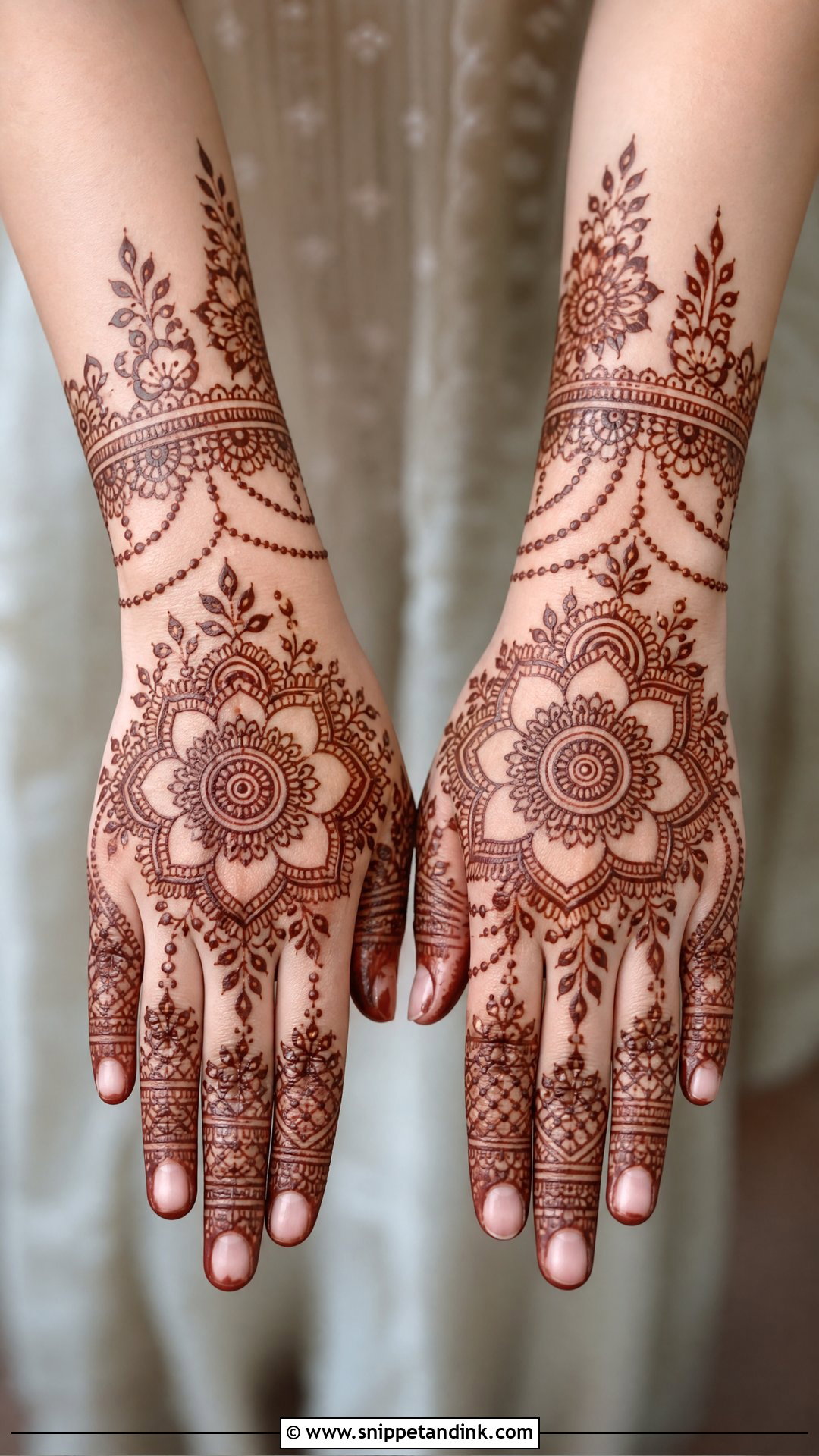
Raksha Bandhan mehndi tends to be lighter and family-friendly, because the day is about tying rakhi and those hands end up in a lot of close photos. Mandalas, florals, leafy vines and bracelet-style wrists work well. Keep the palm detailed and the forearm light, or go for a back-hand design that looks like hand jewellery. Heavy bridal motifs are usually too much unless you want a grand festive look. Clean fingers and a soft wrist cuff keep it comfortable through rituals and a full family meal.
28. Full Hand Mehndi Design For Bridesmaid
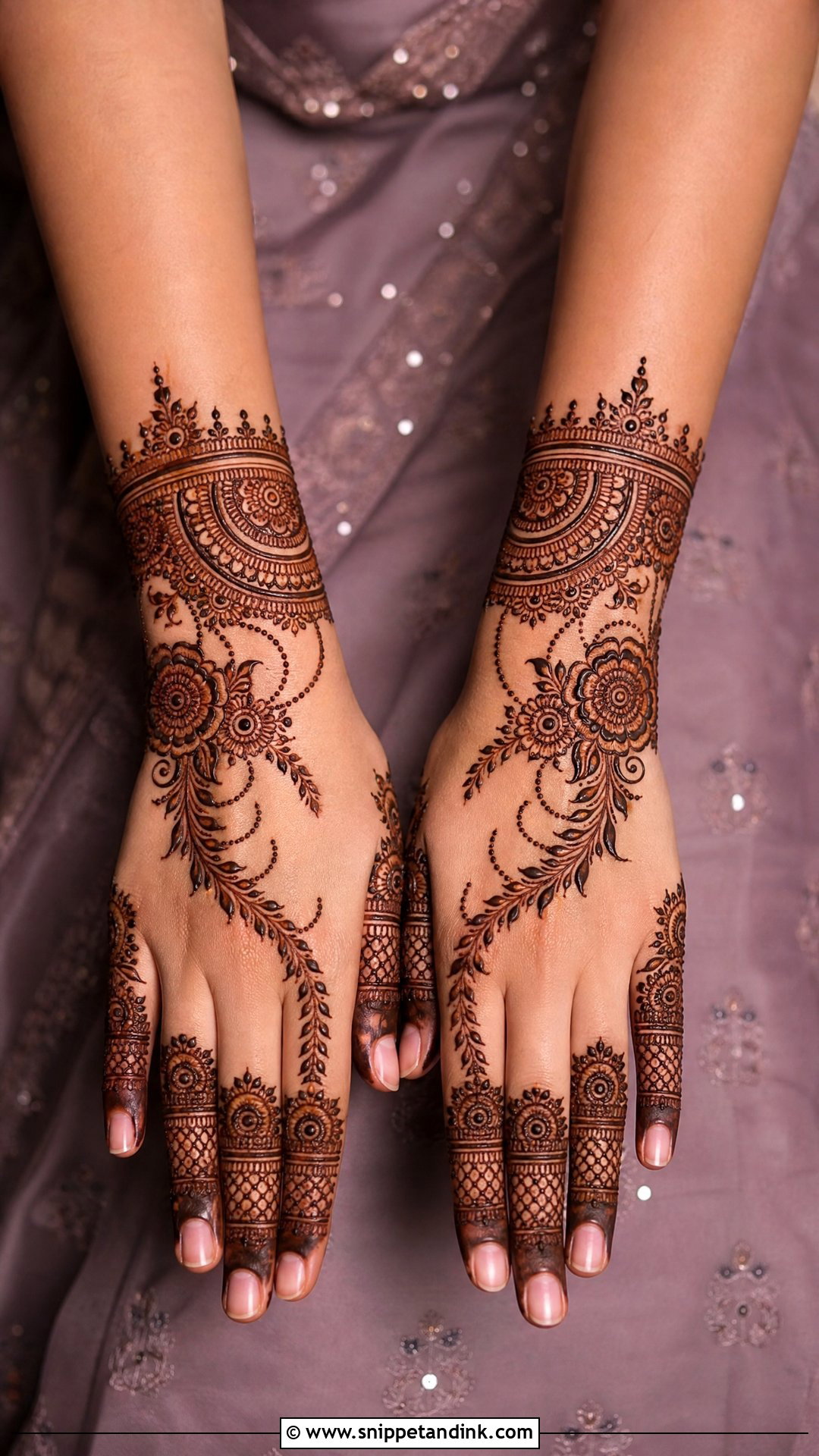
Bridesmaids need to look festive and match each other without upstaging the bride. Indo-Arabic, Arabic, floral and mandala layouts with medium detailing and open space fit that brief. I steer bridesmaids toward the back of the hand, since that’s what shows in group photos holding bouquets or each other. A diagonal floral trail, detailed fingers and a wrist bracelet is quick enough to do for a whole group in one session. Small initials or hearts are fine as long as the overall design stays clean.
29. Full Hand Mehndi Design For Kids
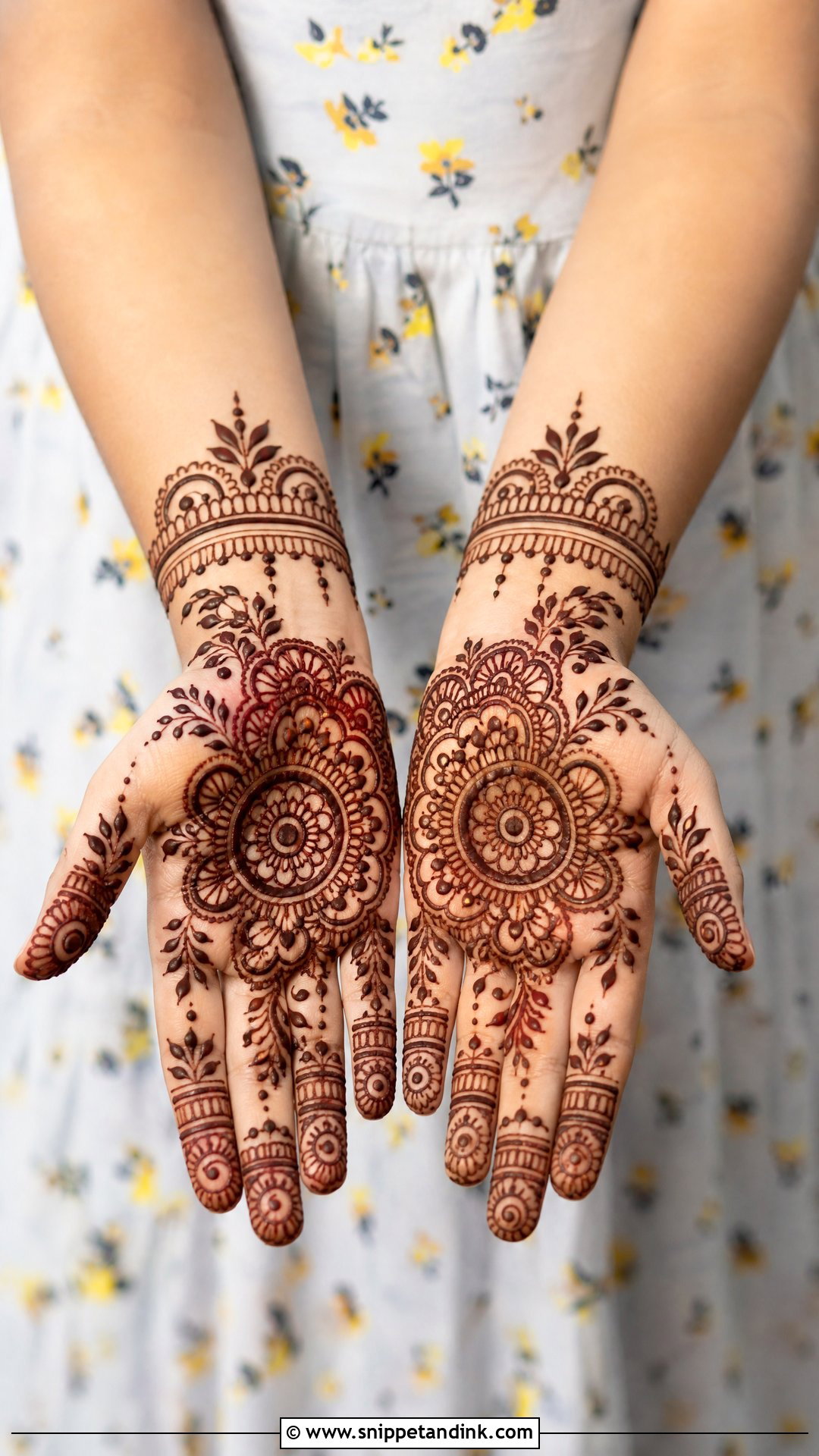
Children rarely sit still for long, so I keep their designs large, sparse and quick: flowers, dots, small mandalas, leafy trails, simple paisleys and a little bracelet band. A back-hand design with one central flower, decorated fingers and a thin wrist band gives the full-hand effect in minutes. On the palm I use round motifs, which dry faster and survive small hands grabbing things. Only use natural henna on children, and if you’re unsure about a paste, test a small dot first.
30. Full Hand Mehndi Design With Wrist Cuff
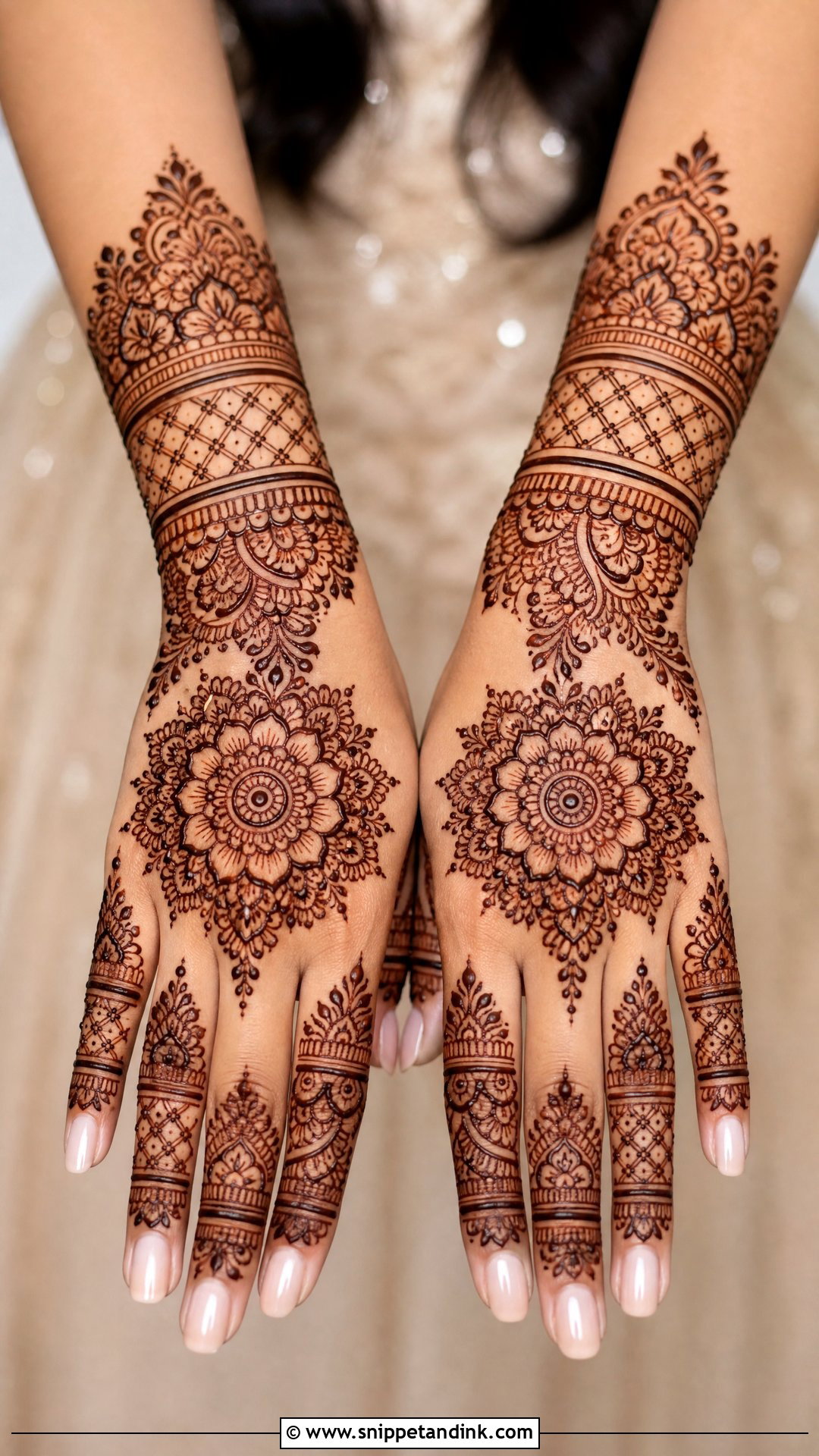
A wrist cuff turns a hand design into something that looks worn, like a bracelet. It can be thick or thin, floral, geometric, jaali-filled or modelled on a real bangle, and it links the palm or back-hand work to the forearm. I draw the cuff last and check it against the jewellery the client will actually wear; a cuff hidden under six bangles is wasted effort. Keep it symmetrical and bold enough to hold its own, and let the main hand carry the mandala, florals, paisleys or Arabic trail.
Getting a Deep, Even Stain From Fingertip to Elbow
Fresh paste stains bright orange when it comes off, and that worries brides every time. It’s supposed to. The colour oxidises over the next day or two and settles into a deep red-brown, so judge your mehndi a couple of days later, not when you scrape it off. That’s also why the application belongs at least a day or two before the wedding.
- Leave the paste on for as long as you comfortably can; six to eight hours, or overnight, gives a much richer result than two.
- Once it’s dry, dab on a little lemon and sugar mixture so the paste stays sealed against the skin instead of flaking off early.
- Keep your hands warm. A cold room slows the stain; holding your palms near a warm cup, or wrapping them loosely overnight, helps.
- Scrape the dried paste off with a blunt edge or your nails. Don’t wash it off.
- Keep water away for as long as possible afterwards, ideally until the next day, and rub a little mustard oil or balm over the design instead.
Expect the palms and fingertips to come out darkest and the forearm lighter, because the skin there is thinner. That gradient is natural. Do not accept “black henna” or any paste that promises a near-black stain in an hour; those pastes often contain chemical dyes that can burn or scar skin. Real henna smells earthy and stains orange first. If you’ve never worn henna before, ask for a small test patch on the inner arm a few days ahead.
Fading gracefully after the wedding
A full hand usually stays strong for about a week and fades over the next. Scrubbing, chlorine, dish soap and hand sanitiser all shorten that. Wear gloves for chores, and moisturise the design daily once the first full day has passed. The palms fade unevenly as skin sheds, so a light exfoliation near the end evens it out rather than leaving patches.
Matching the Coverage to the Occasion and Your Patience
Full hand mehndi isn’t about filling every millimetre of skin. Layout, motif size, spacing and how far up the arm you go matter more than the number of details. Bridal work can be dense and symbolic, while Arabic, Gulf and modern layouts stay lighter. Before you settle on one, think about your outfit, your jewellery, the event and how long you can realistically sit. Bring two or three reference photos to your artist and let her adjust them to the shape of your own hands.
You'll Like These Ideas:












Leave a Reply