
Of all a bride’s wedding henna, the front of the hands gets photographed most, so it has to hold up at arm’s length and in a macro shot of a ring. The palm is where I tell stories: mandalas, couple portraits, peacocks, paisleys, florals, jaali, hidden initials. Some brides want dense Indian work with hardly any bare skin; others want Arabic flow, open space or a lighter Indo-Arabic mix. I decide with them based on the outfit, the jewelry, the ceremony and how dark and heavy they want the finished stain. Here are the front-hand layouts I’d show a bride, and what I’d want her to know about each.
How the Shape of Your Palm Changes What I Draw
A design that looks perfect in a reference photo was drawn for someone else’s hand. When a bride sits down, I look at her palm before I look at her inspiration pictures.
- Short fingers: vertical bands and leafy lines that run along the finger make them look longer. Horizontal rings cut them up.
- A wide palm: a diagonal Arabic or Indo-Arabic flow narrows it visually better than one big centered mandala.
- Long, slim hands: they carry dense Indian work and big portraits without looking crowded.
- Deep palm creases: I avoid placing faces or fine lettering across them, because the skin folds and the stain settles unevenly in the lines.
Tell your artist which hand you write and eat with. I finish that hand second, so you aren’t sitting with wet paste on it for longer than necessary.
1. Full Hand Indian Bridal Mehndi Design
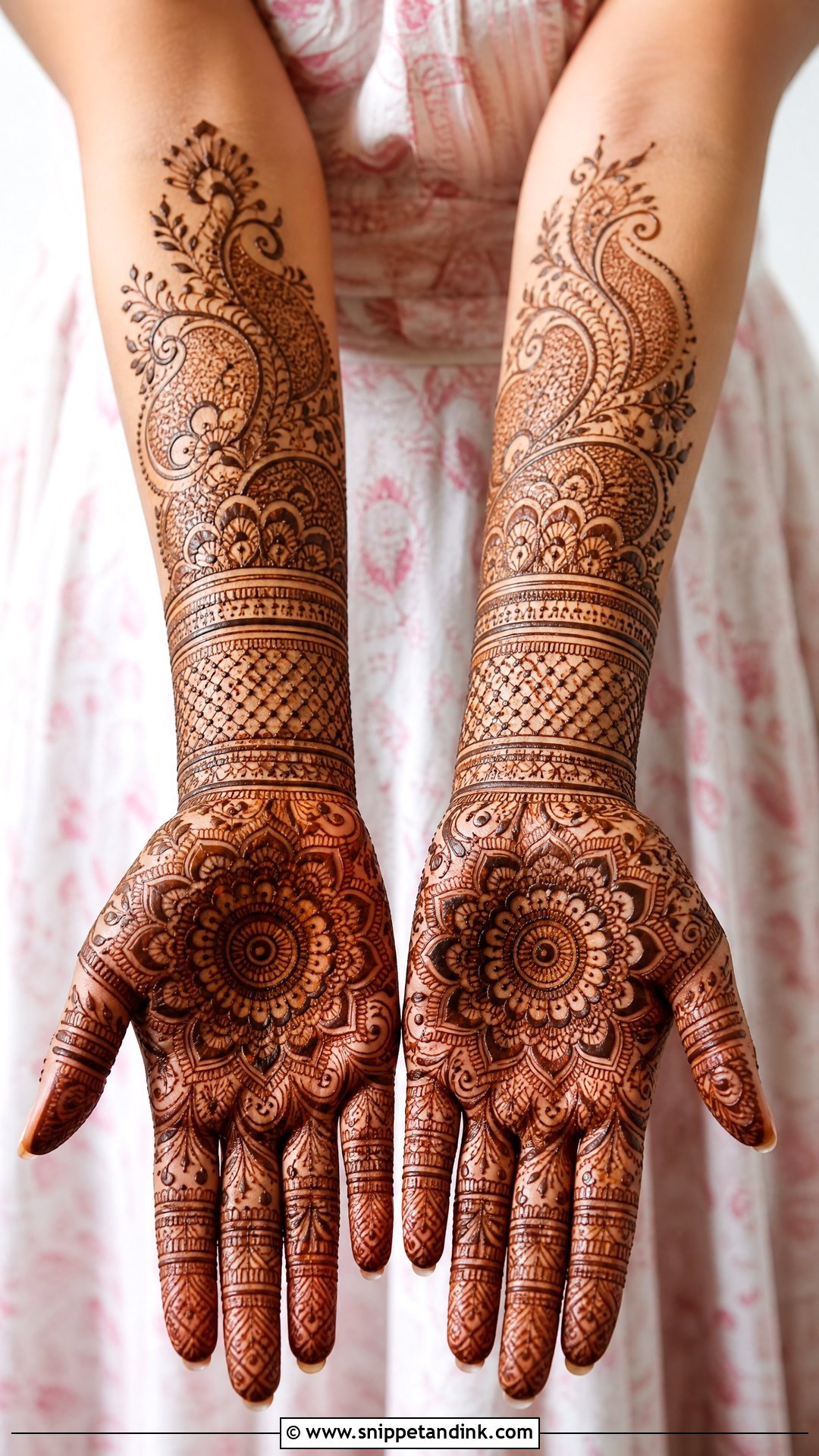
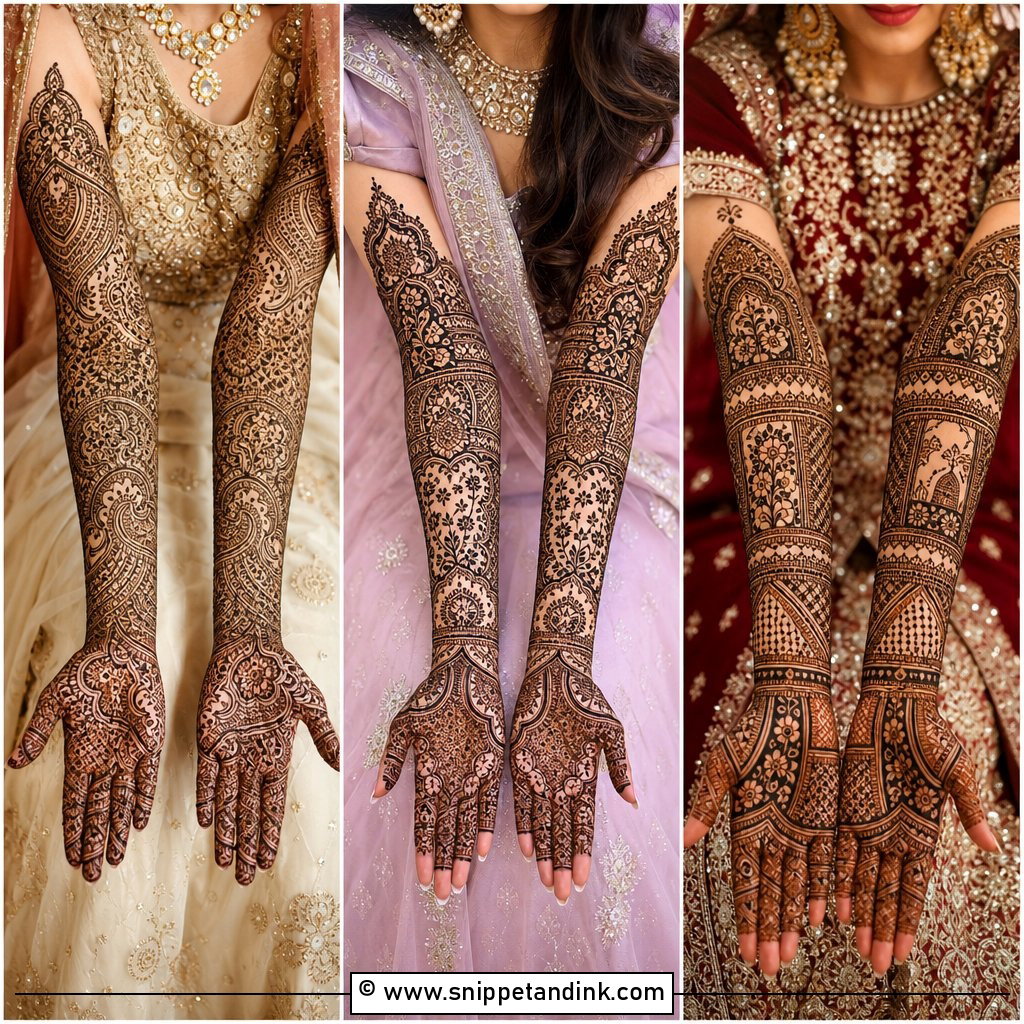
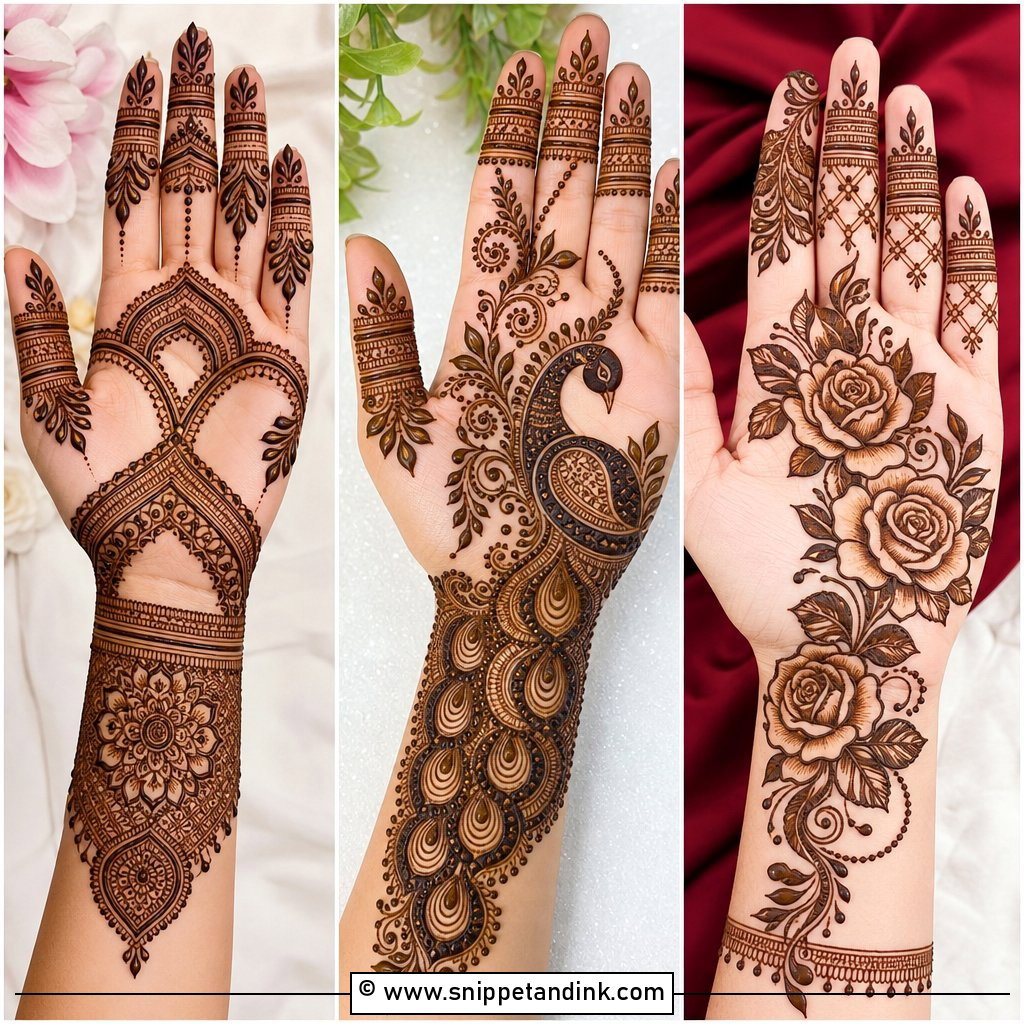
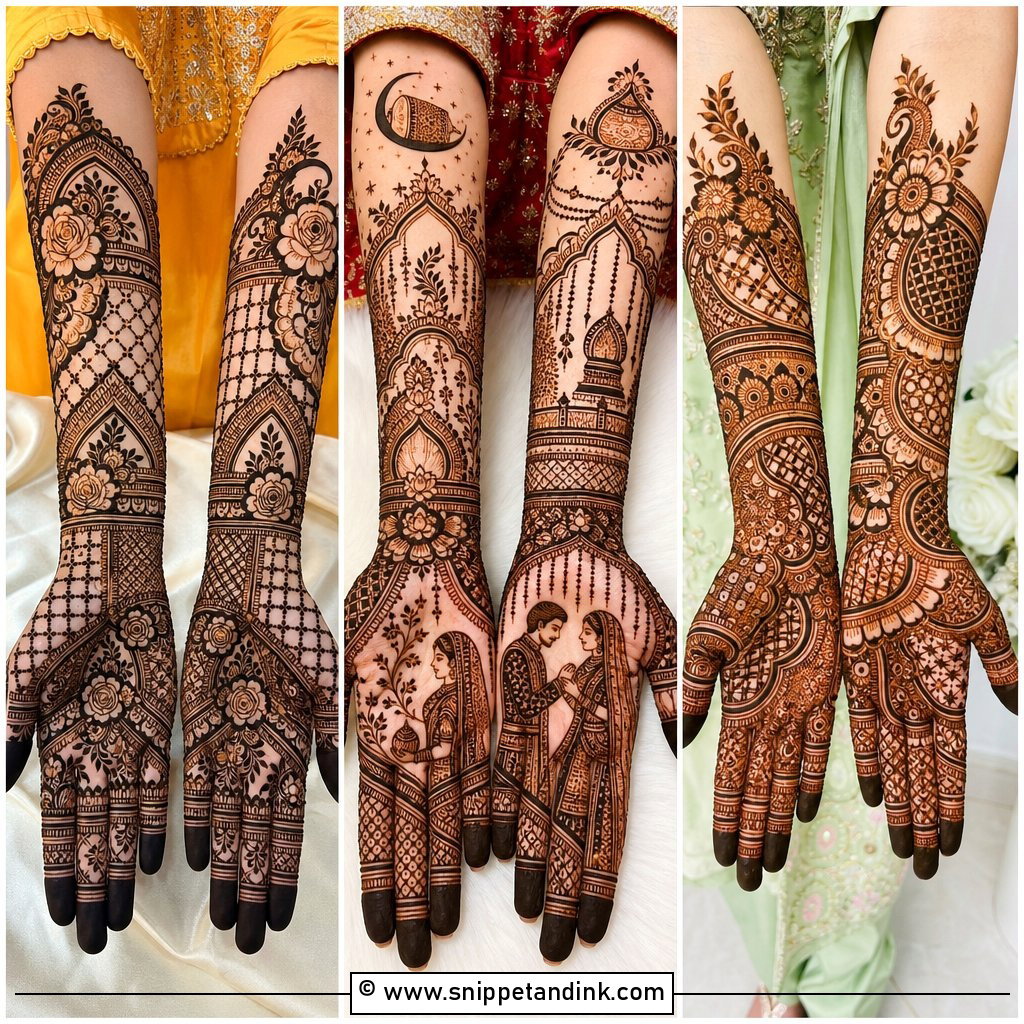
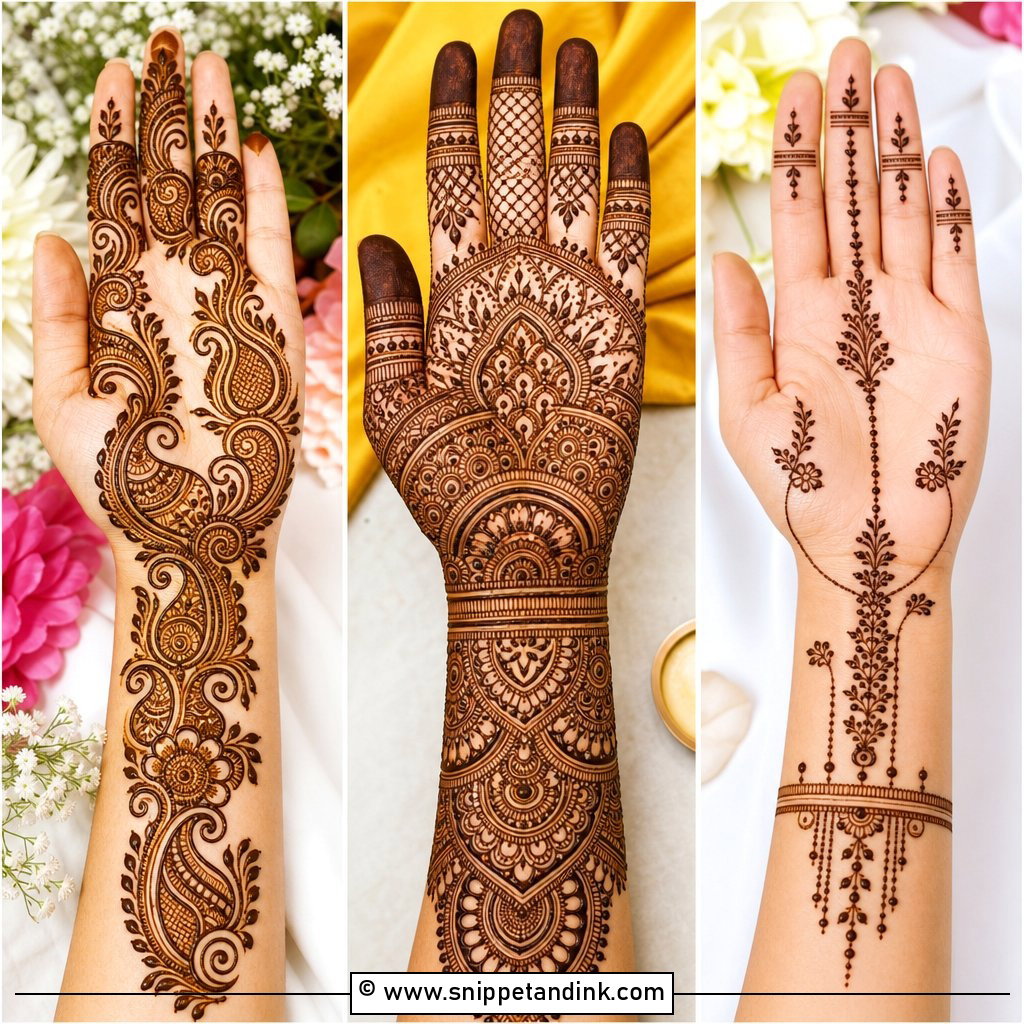
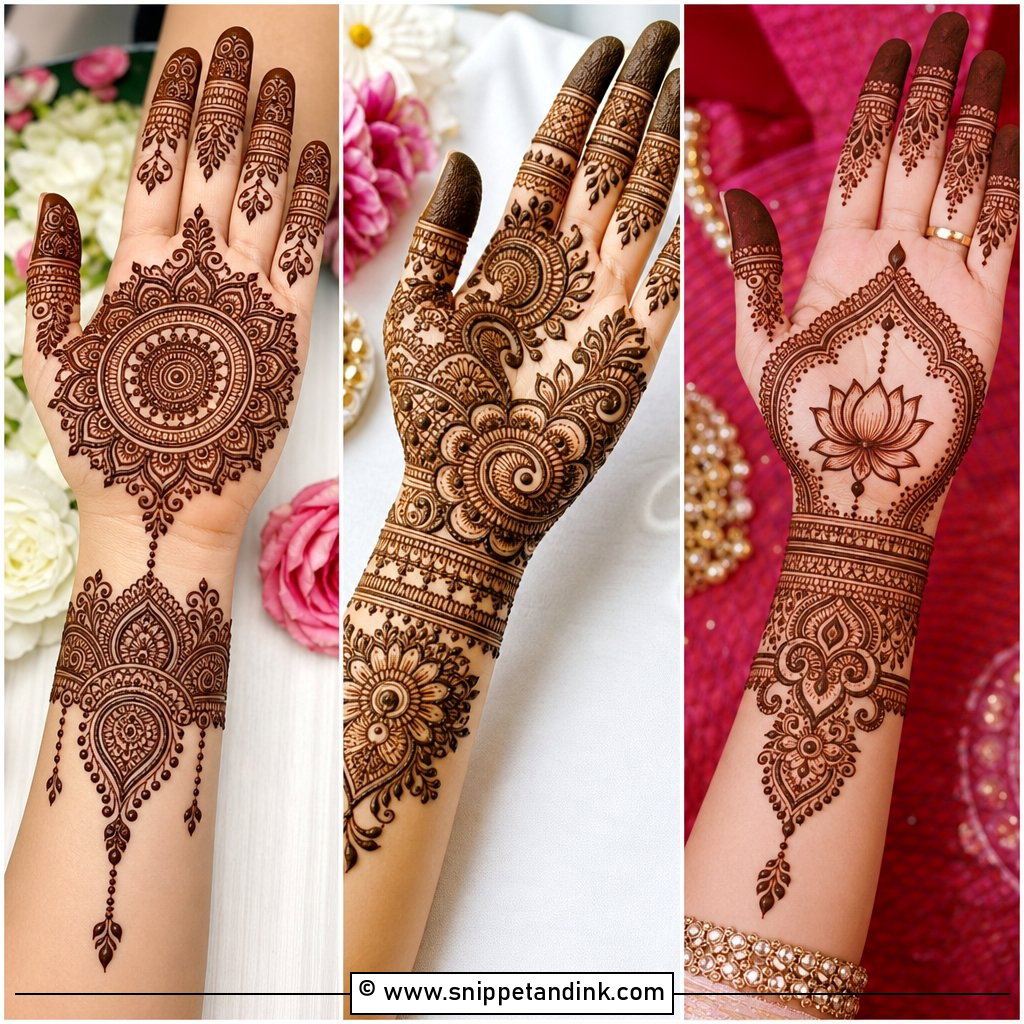
Full Indian coverage runs over fingers, palm, wrist and forearm with filler, paisleys, florals, peacocks and fine line work. A central mandala or couple element sits on the palm, and layered bands continue up the arm. It’s the classic match for heavy bangles, red outfits and gold. Density is the risk: if every motif is the same size, the stained hand reads as texture with no subject. I size one or two motifs noticeably larger so the eye has somewhere to land, then fill around them.
2. Arabic Bridal Front Hand Mehndi Design
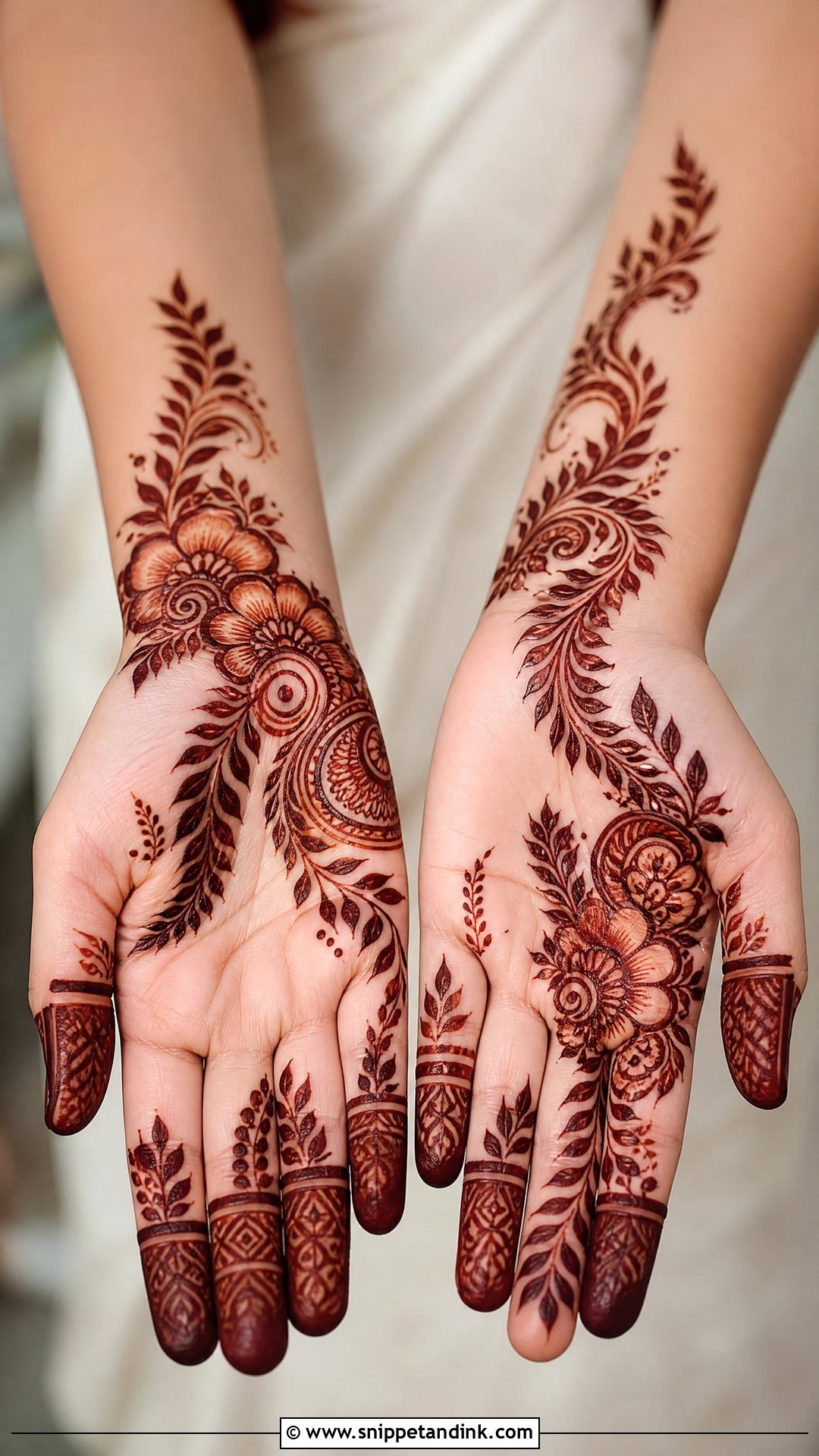
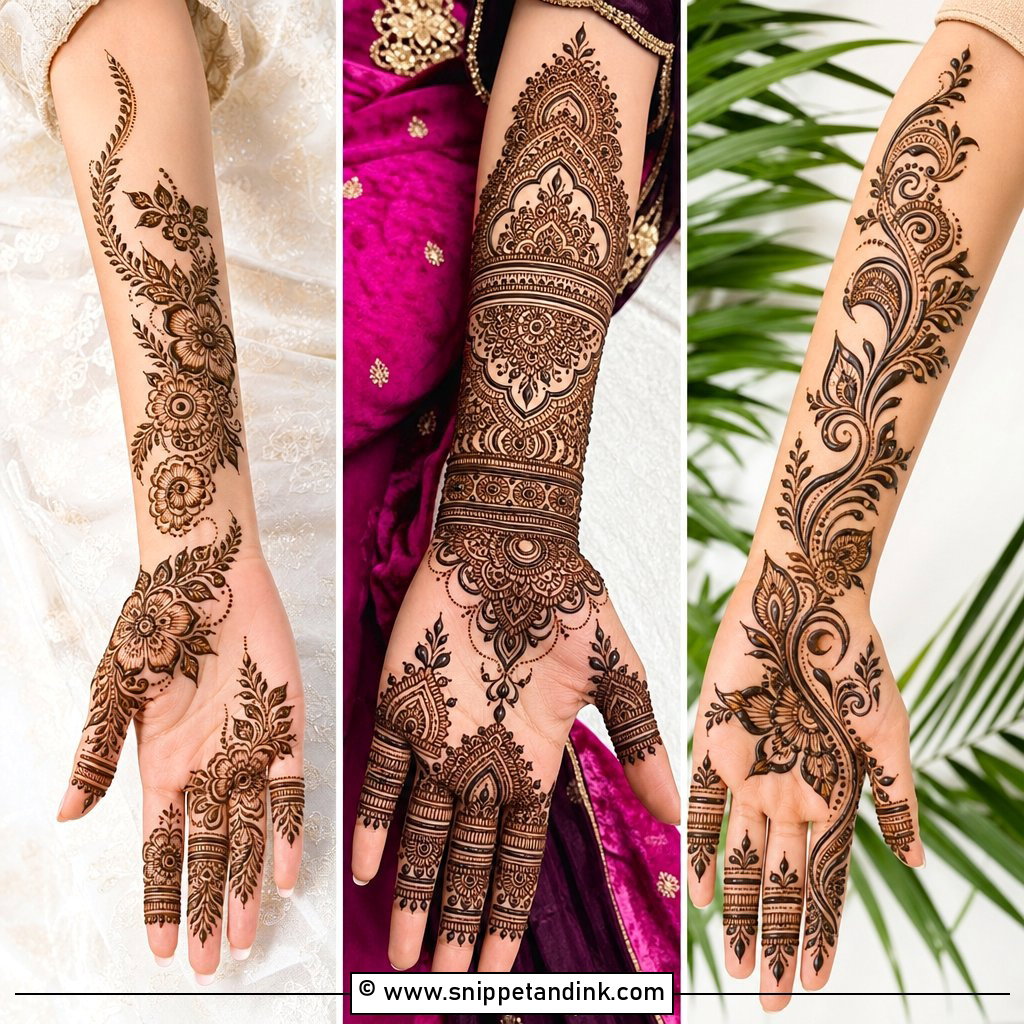
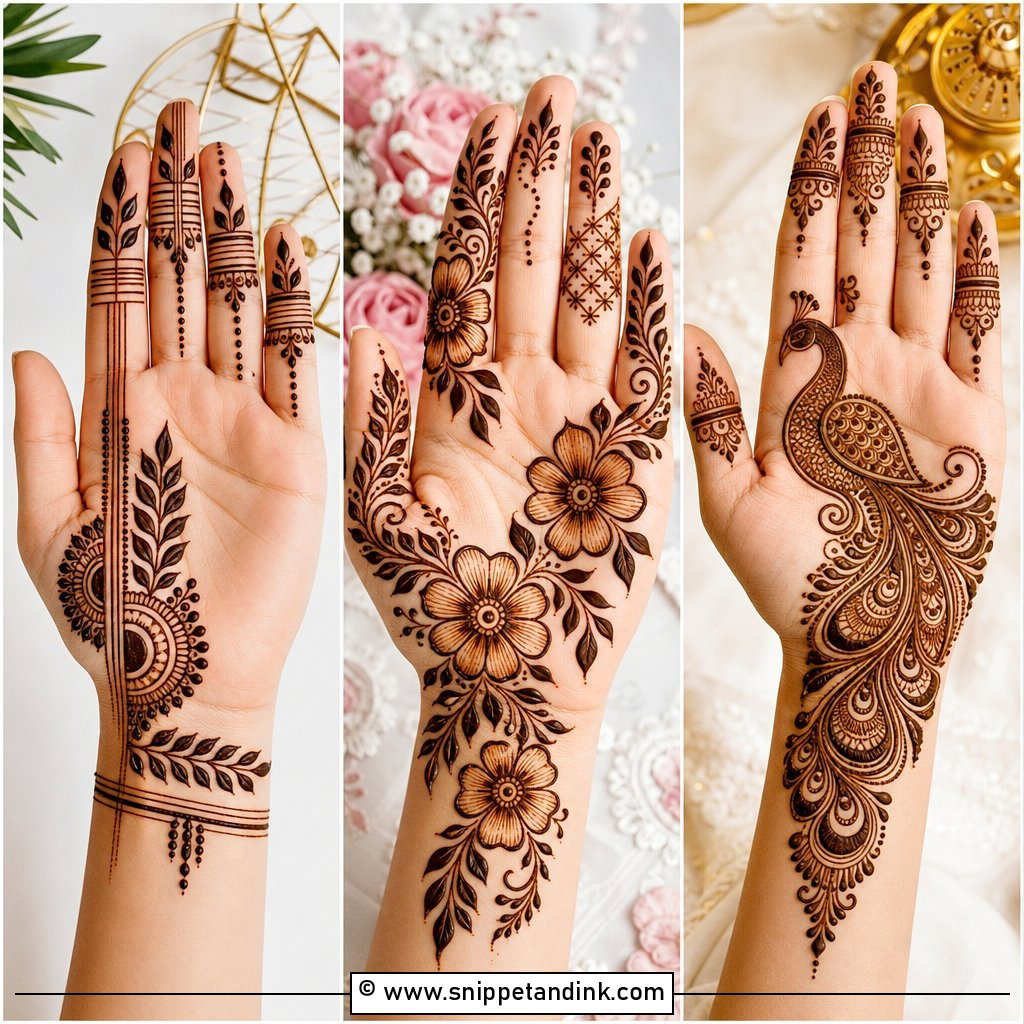
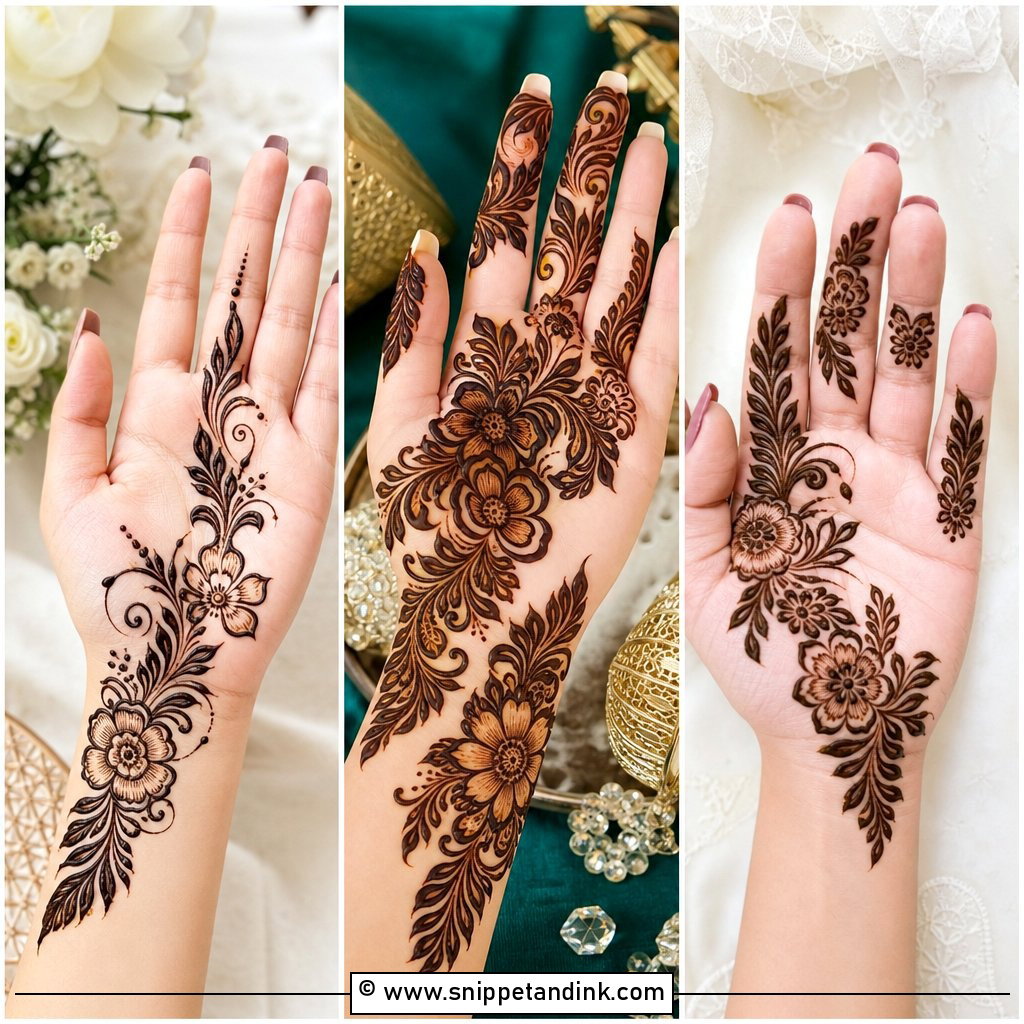
Arabic bridal work flows diagonally across the palm toward the wrist with big flowers, leafy vines, paisleys and bold outlines, and the fingers carry matching trails or simple bands. The open skin around it makes the hand look longer. It’s quicker to apply than full Indian coverage, which helps when you have a long day of other appointments. For a wedding finish I make the palm flowers larger and close the design at the wrist with a bracelet-style edge, so it doesn’t just trail off.
3. Indo Arabic Bridal Front Hand Mehndi Design
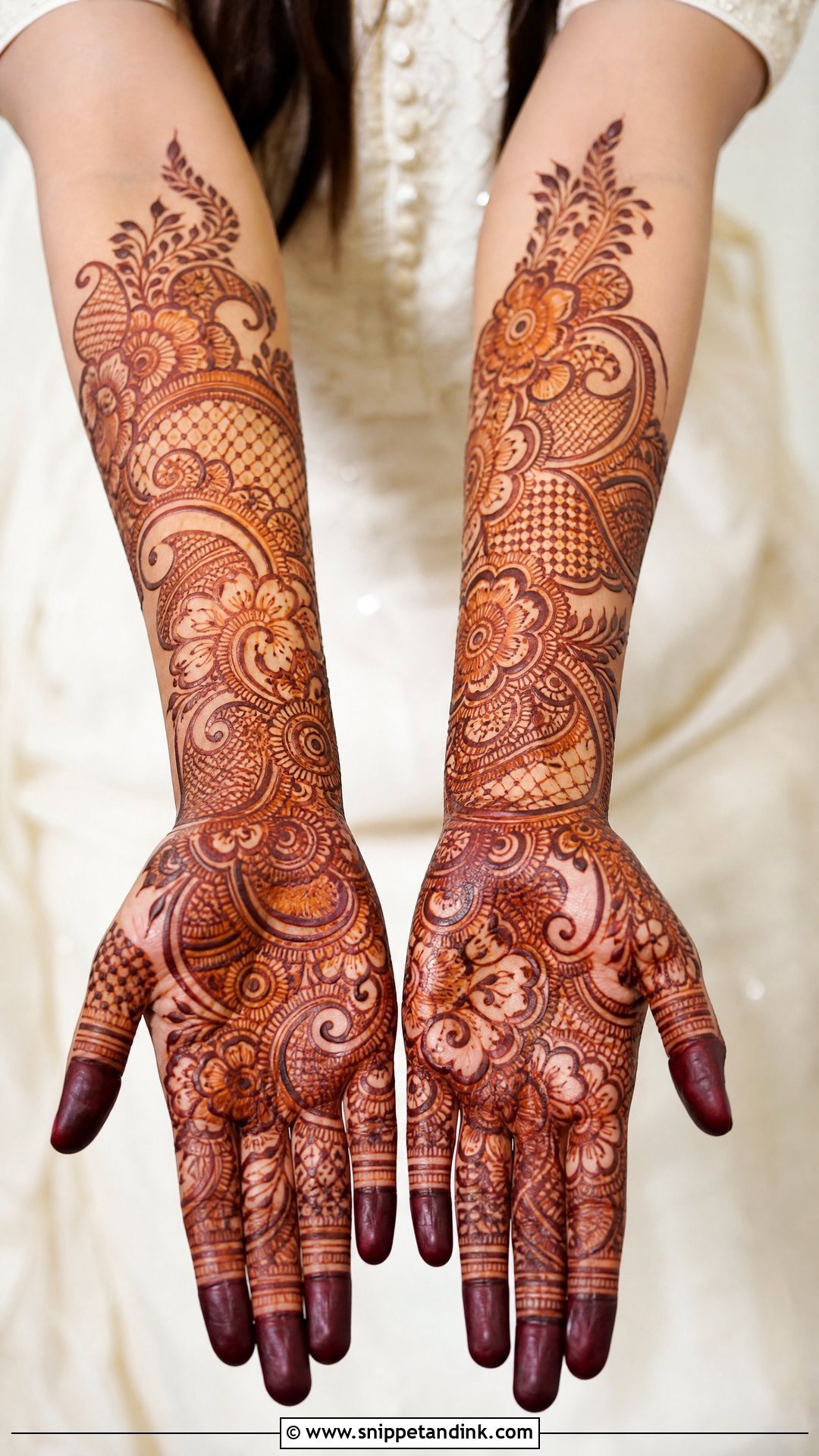
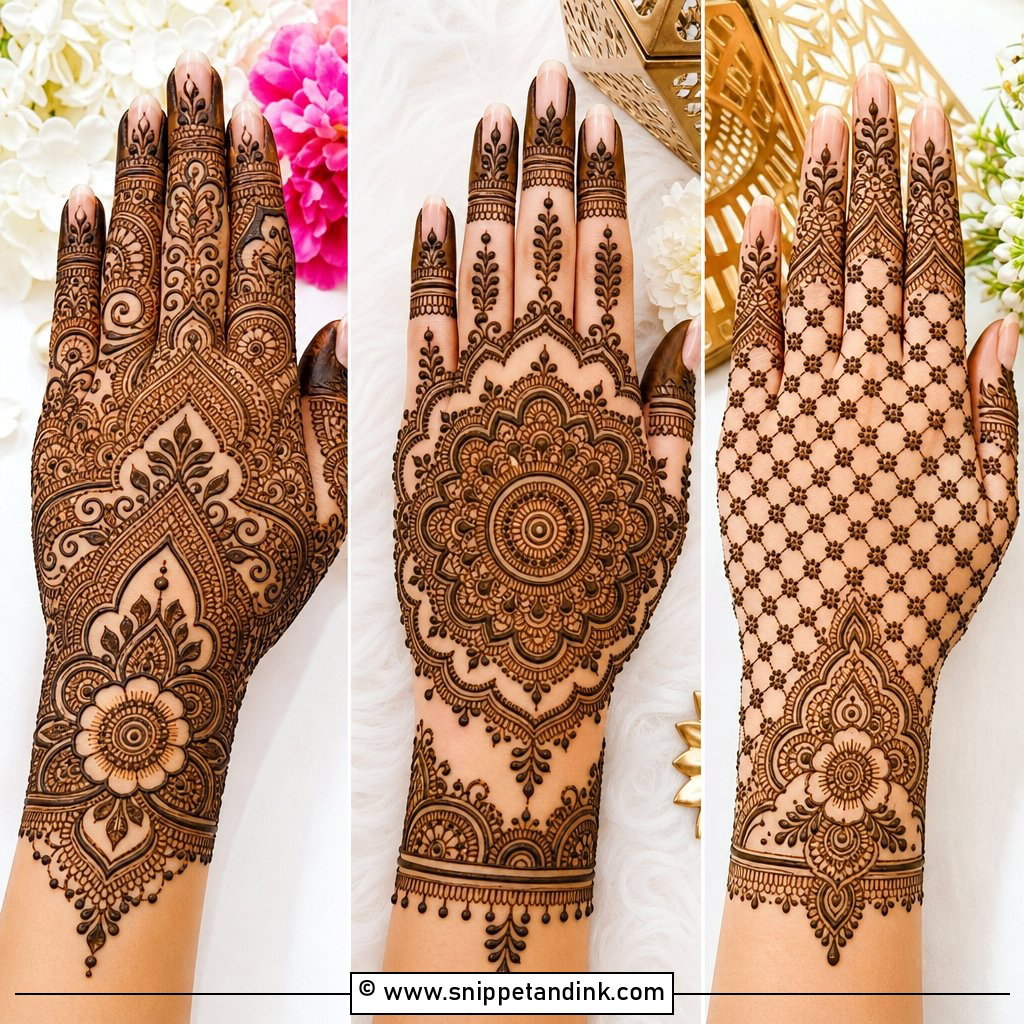
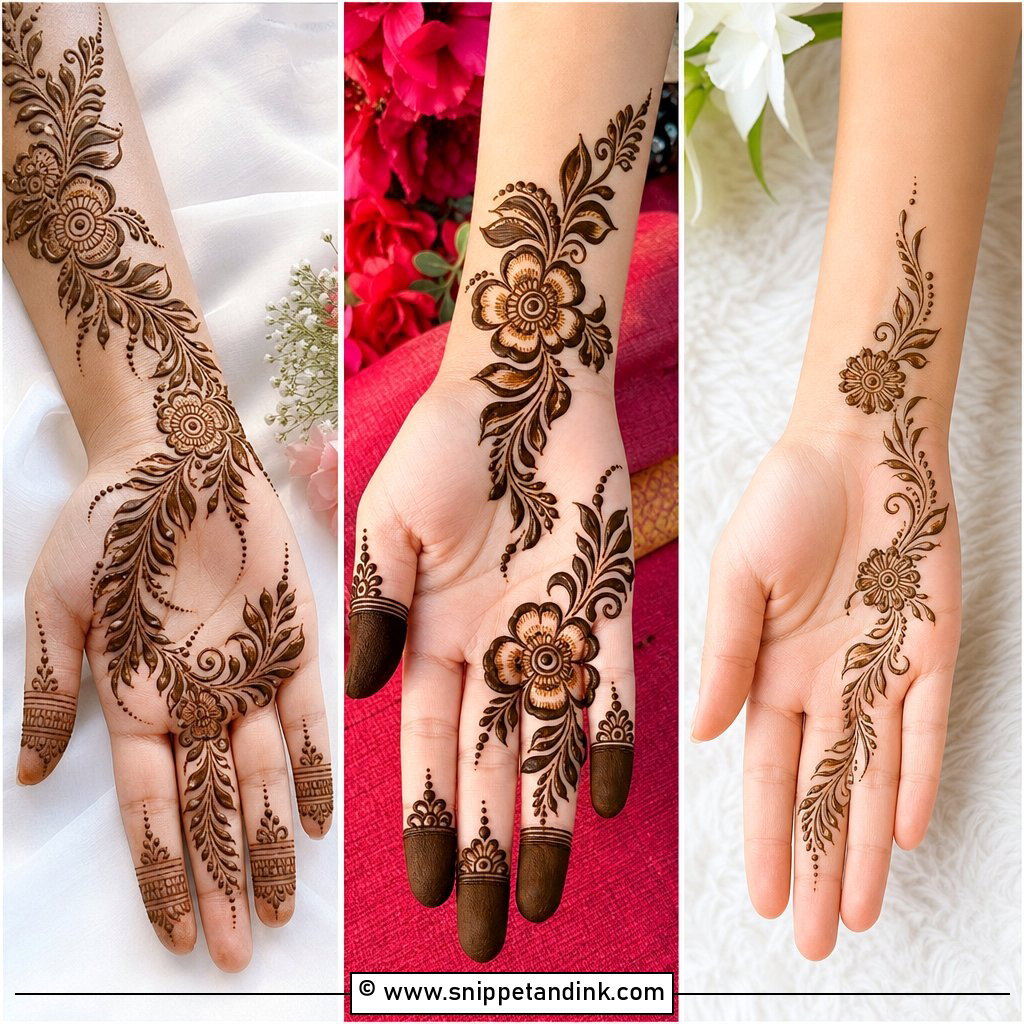
This mix gives you Indian fullness inside an Arabic flow: a bold floral trail, paisley sections, shaded petals, jaali and fine filler, with one statement motif on the palm and tidier, structured fingers. The contrast between filled and empty skin is what makes it photograph so well. I mix my paste a little thicker for the outlines and slightly looser for the filler, so both sharp edges and fine shading come out of the same session. It suits a traditional lehenga and a lighter modern outfit equally.
4. Rajasthani Bridal Front Hand Mehndi Design
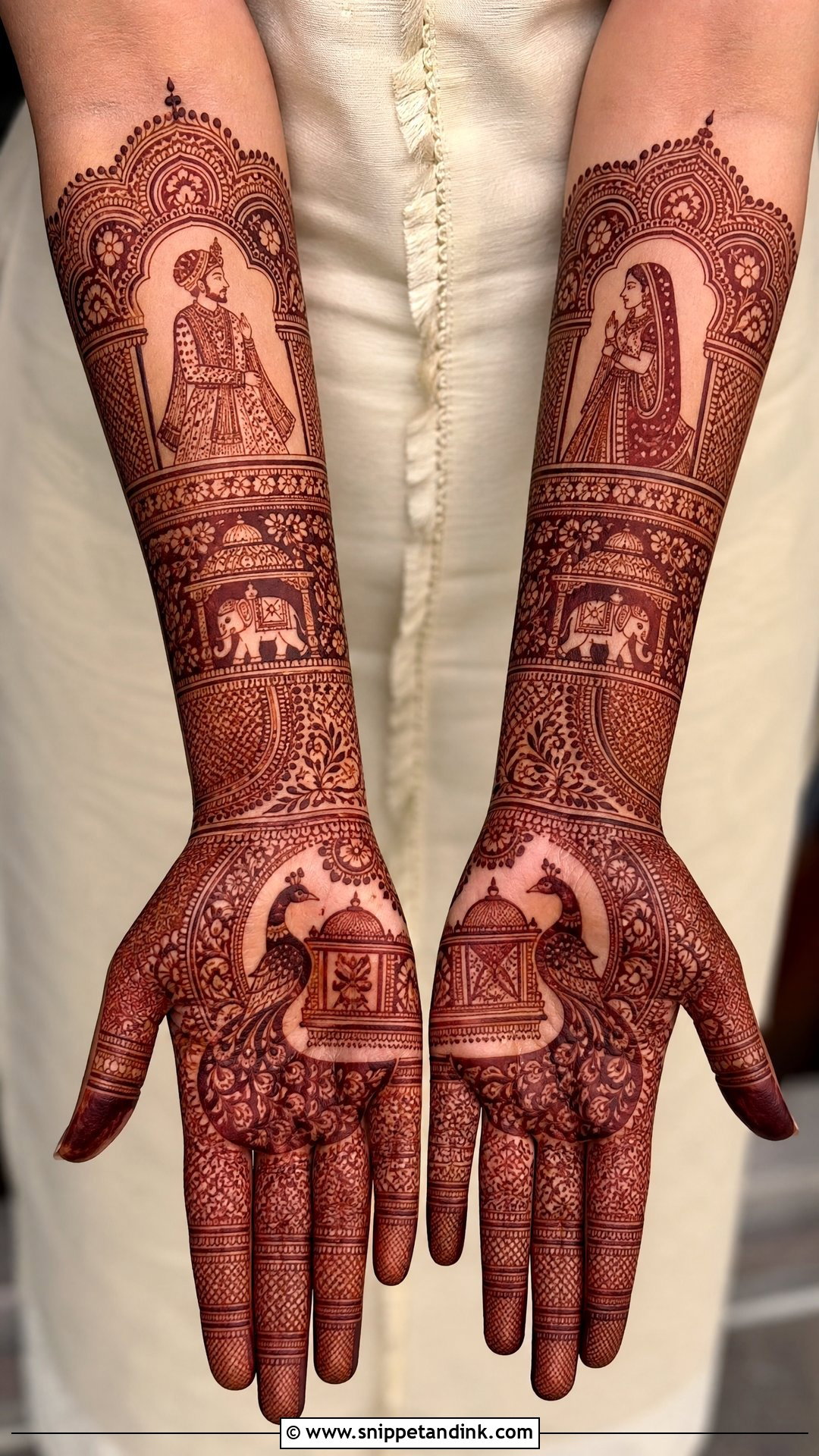
Rajasthani hands are almost a small wedding scene: bride and groom, elephants, palanquins, peacocks, lotus and storytelling panels, with borders and cultural detail running up the forearm. If you love heritage work and can sit for a long session, it’s hard to beat. I keep the fingers dense but repetitive, the same small pattern on each, so they frame the palm instead of competing with it. Traditional jewelry and embroidered sleeves suit it.
5. Mandala Bridal Front Hand Mehndi Design
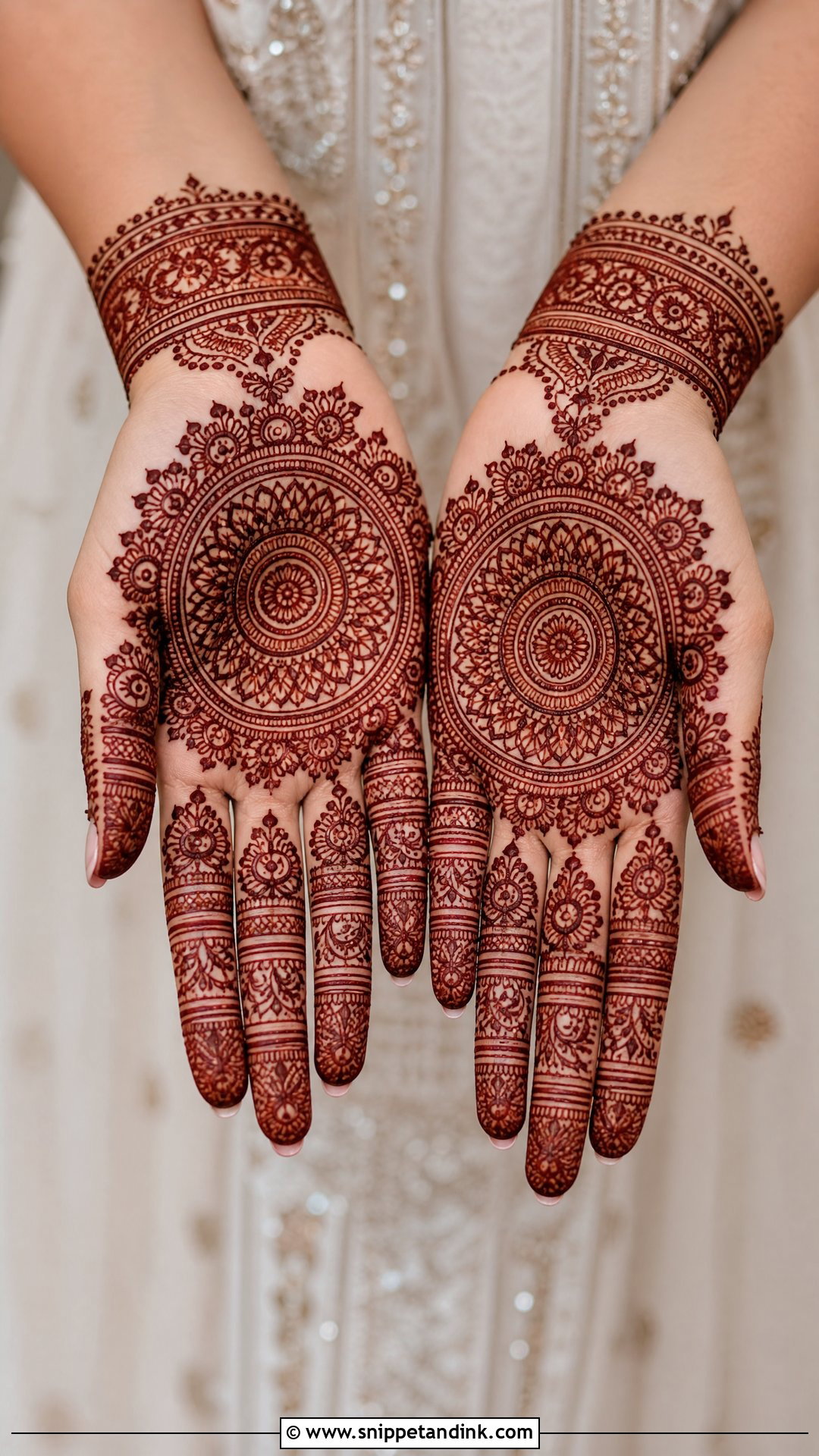
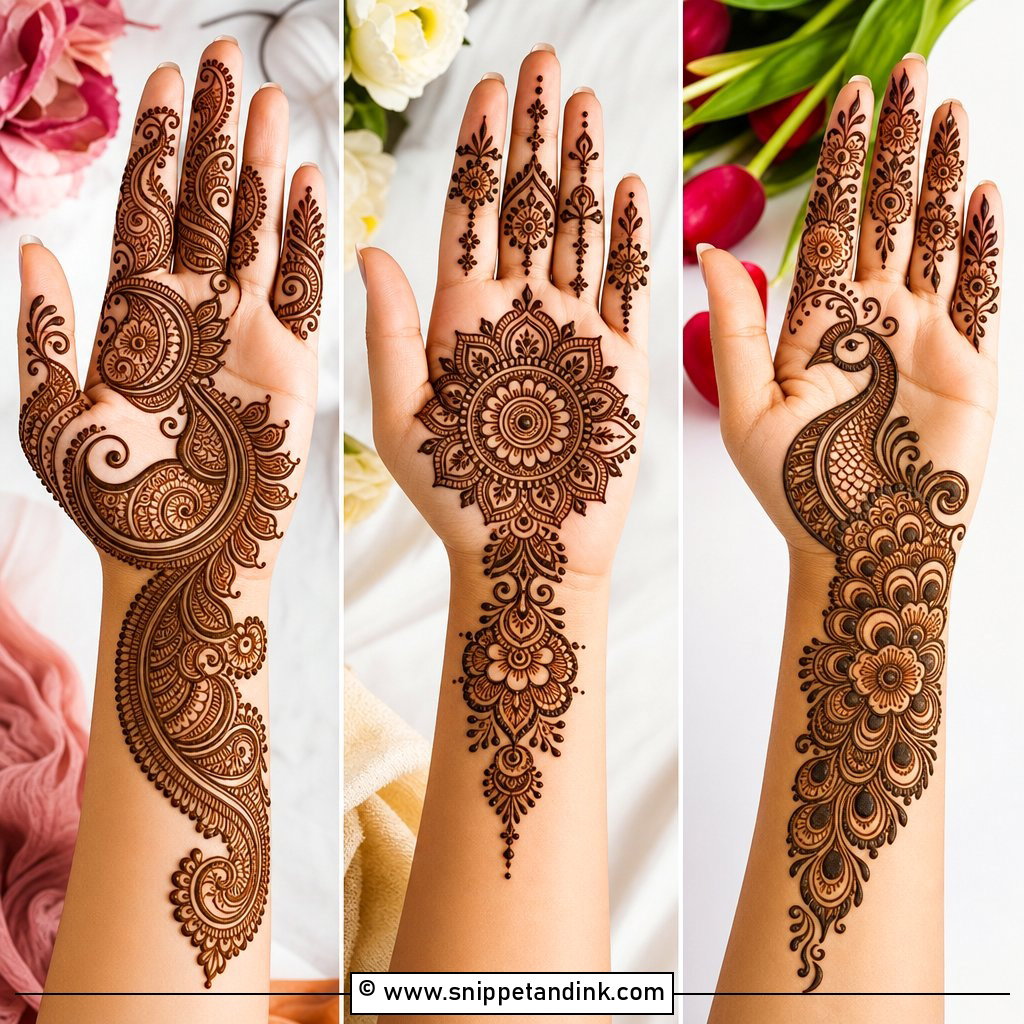
One circular mandala at the center of the palm gives wedding photos an instant focal point. Fine florals, dotted borders, paisley corners and matching finger patterns build around it, ending in a cuff or layered bracelet at the wrist. It flatters most hand shapes because it pulls attention to the middle. On a narrow palm I shrink the outer rings rather than letting them run off the edges, since a clipped mandala looks like a mistake.
6. Peacock Bridal Front Hand Mehndi Design
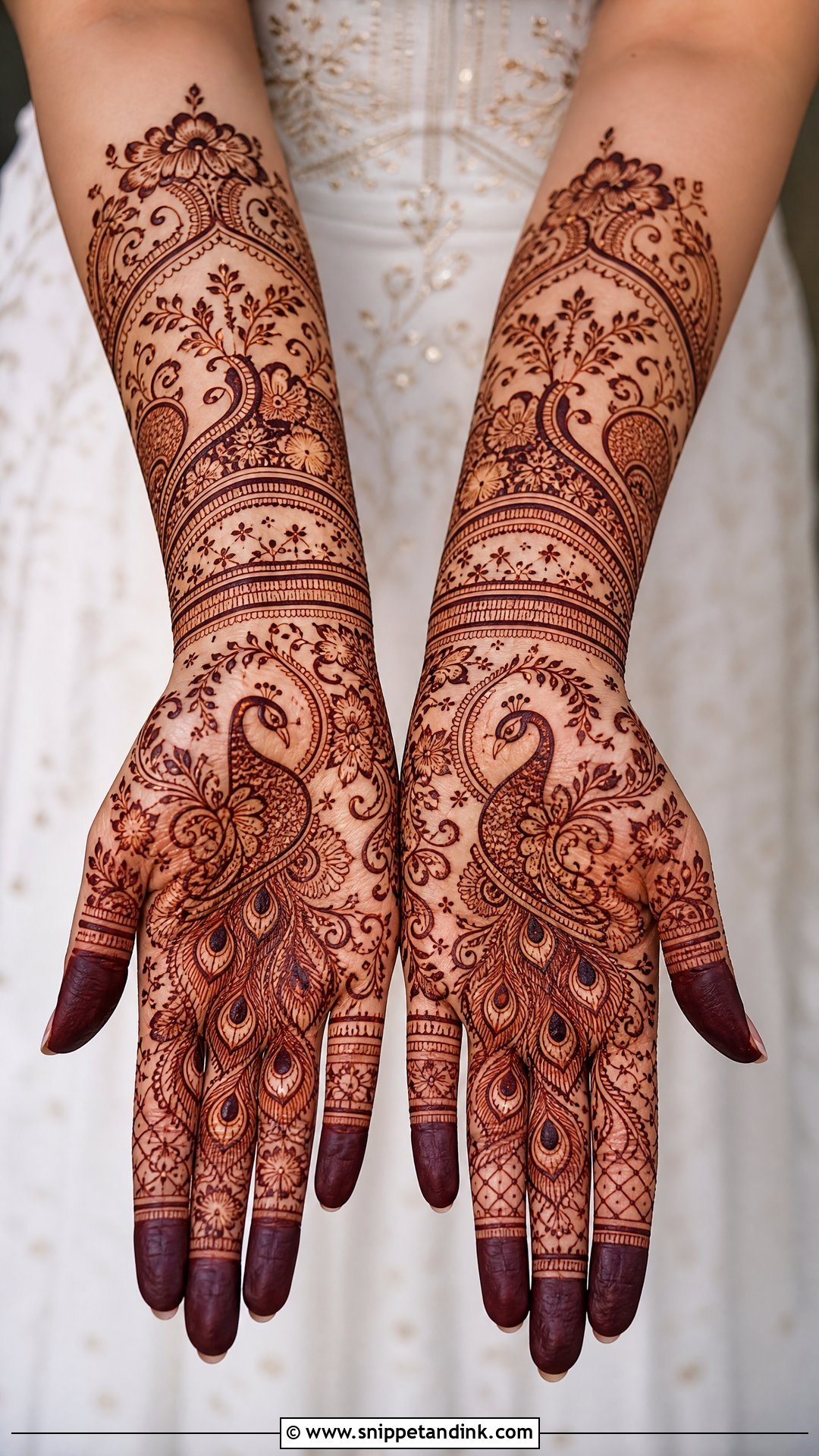
A peacock across the center of the hand, feathers reaching toward the wrist or fingers, brings movement to a traditional layout. Fine feather lines, curved paisleys, dots and shading keep it rich. Decide early between one large bird and two smaller mirrored ones; one large peacock reads better from a distance, two suit symmetry lovers. A deep maroon stain makes the feather detail stand out against bangles and rings, so this is a design where aftercare really pays off.
7. Bride Groom Bridal Front Hand Mehndi Design
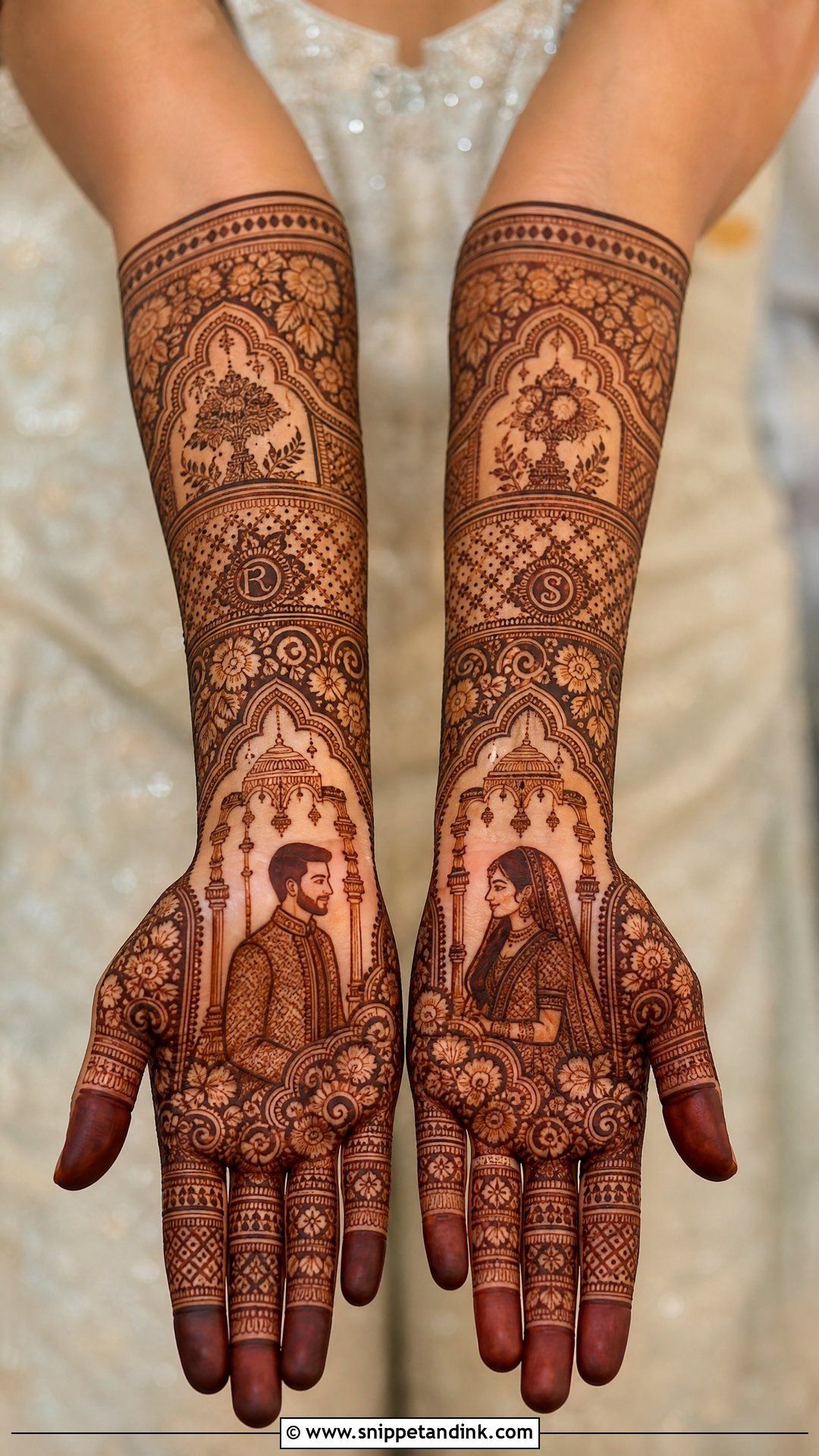
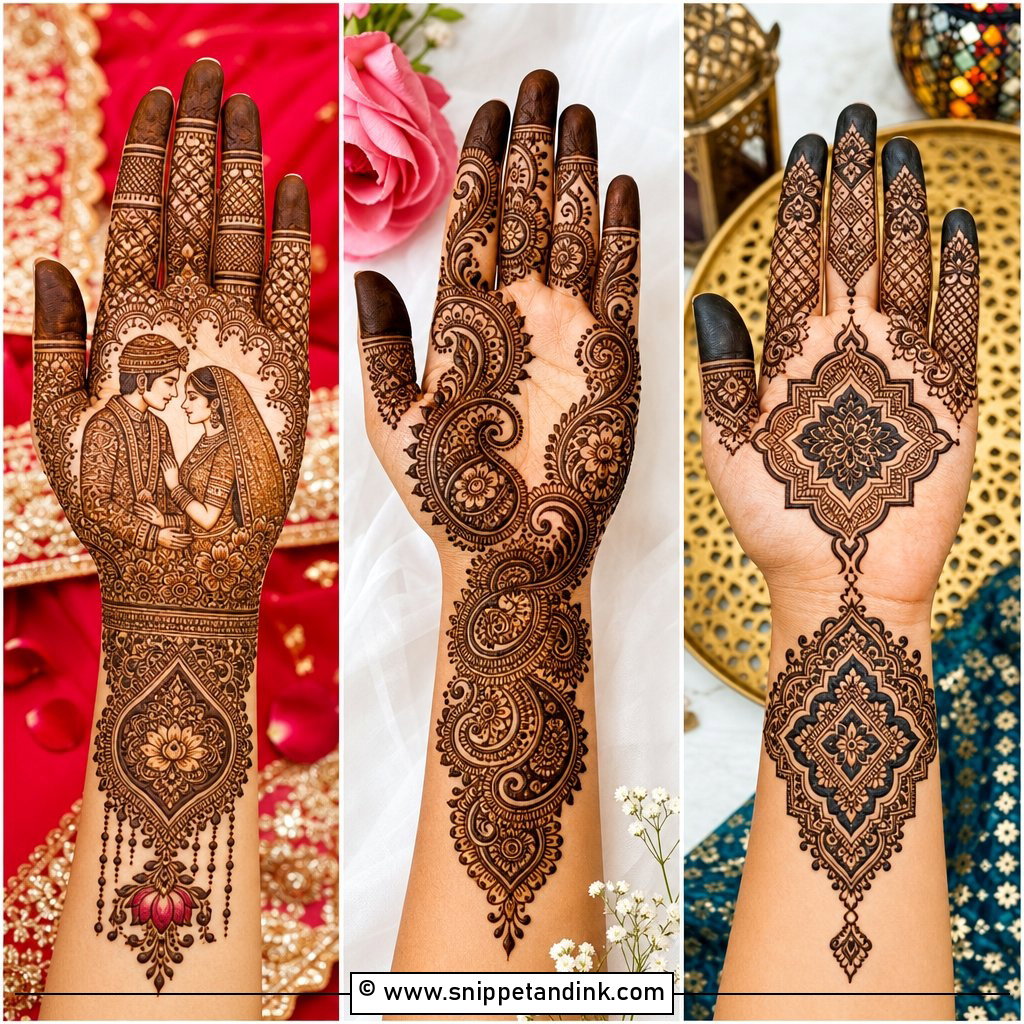
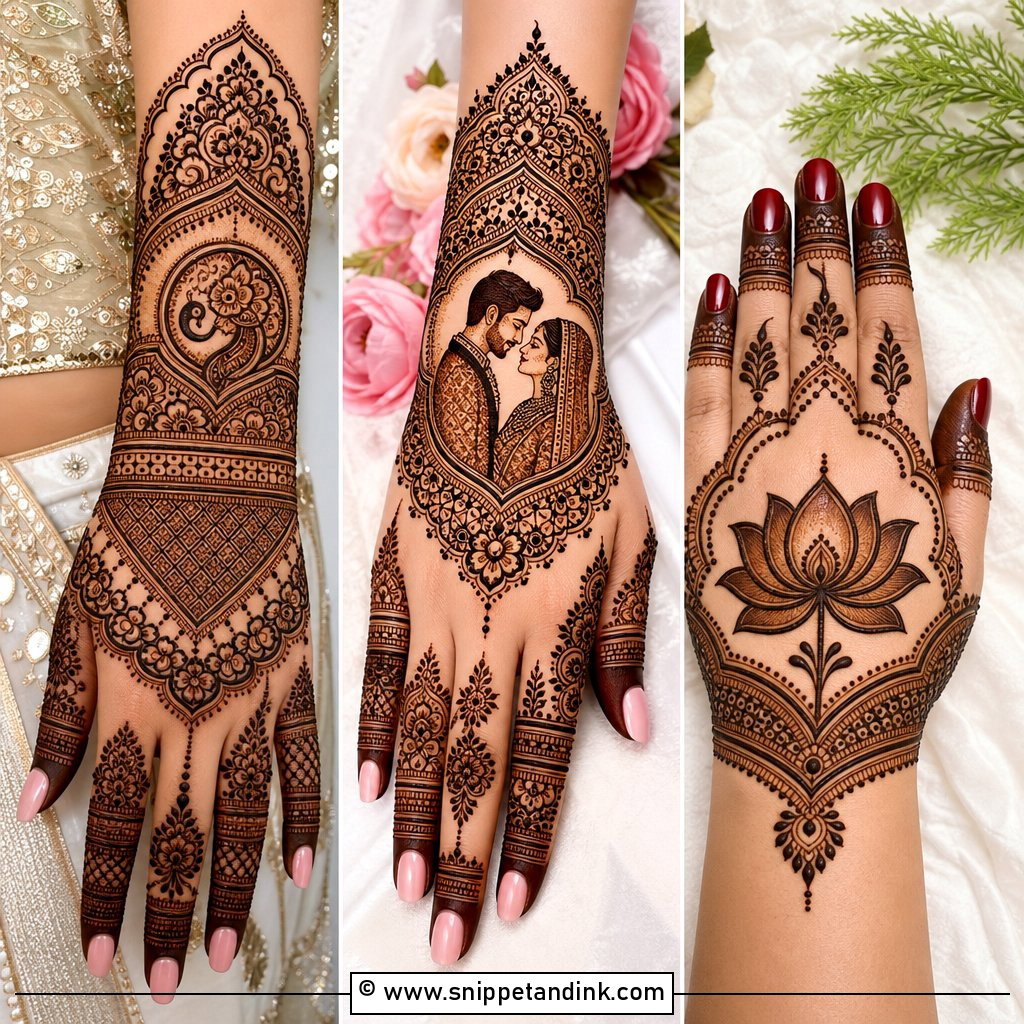
The bride on one palm and the groom on the other, or both figures in one scene, framed with mandap details, florals, doli patterns, paisleys and lace-like filler. It’s the most personal and ceremonial of these. Faces need clean proportions and very fine lines, and only an experienced portrait artist manages that consistently. I keep the surrounding filler delicate and leave a halo of skin around each face so the couple stay the subject.
8. Lotus Bridal Front Hand Mehndi Design
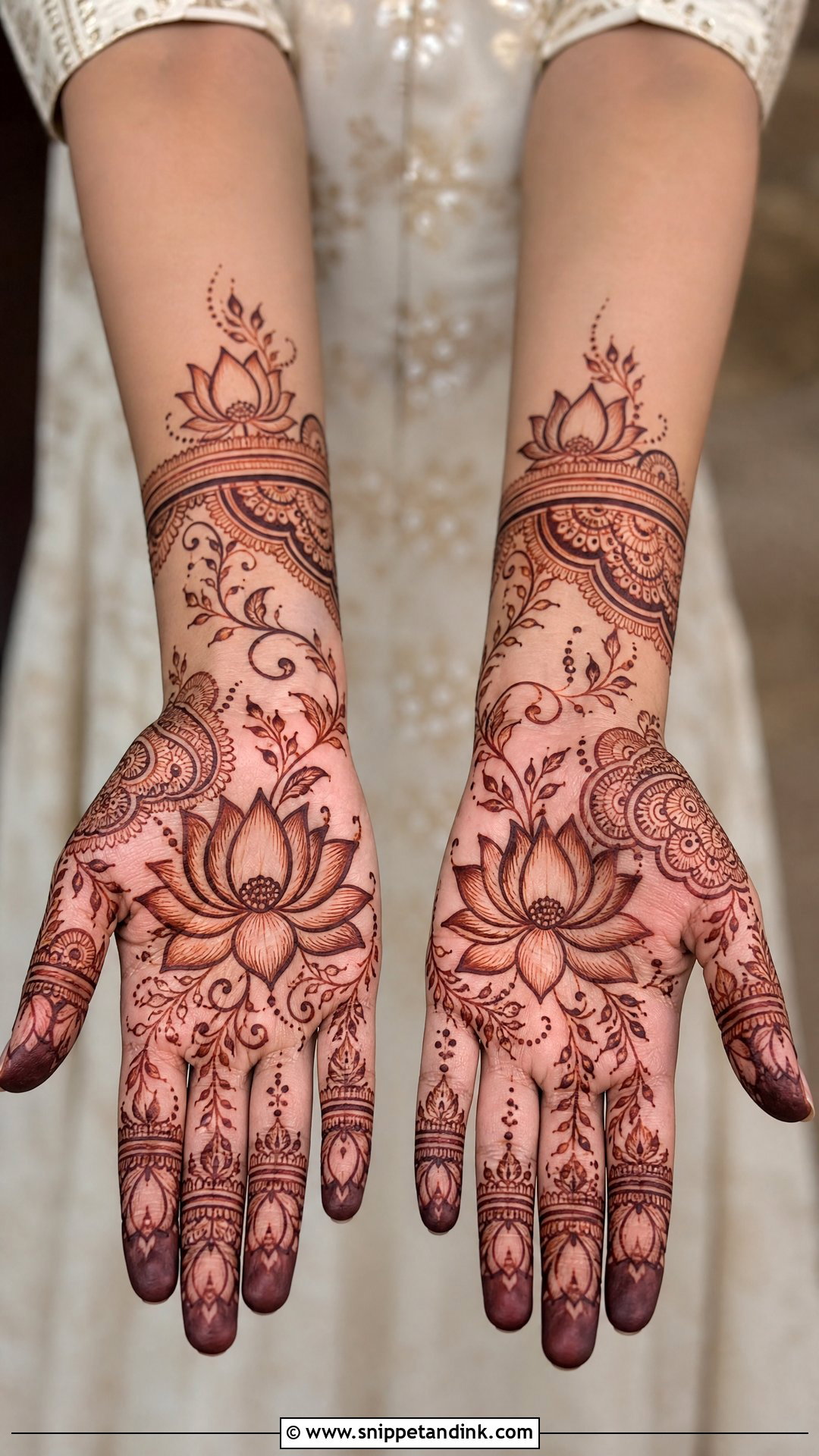
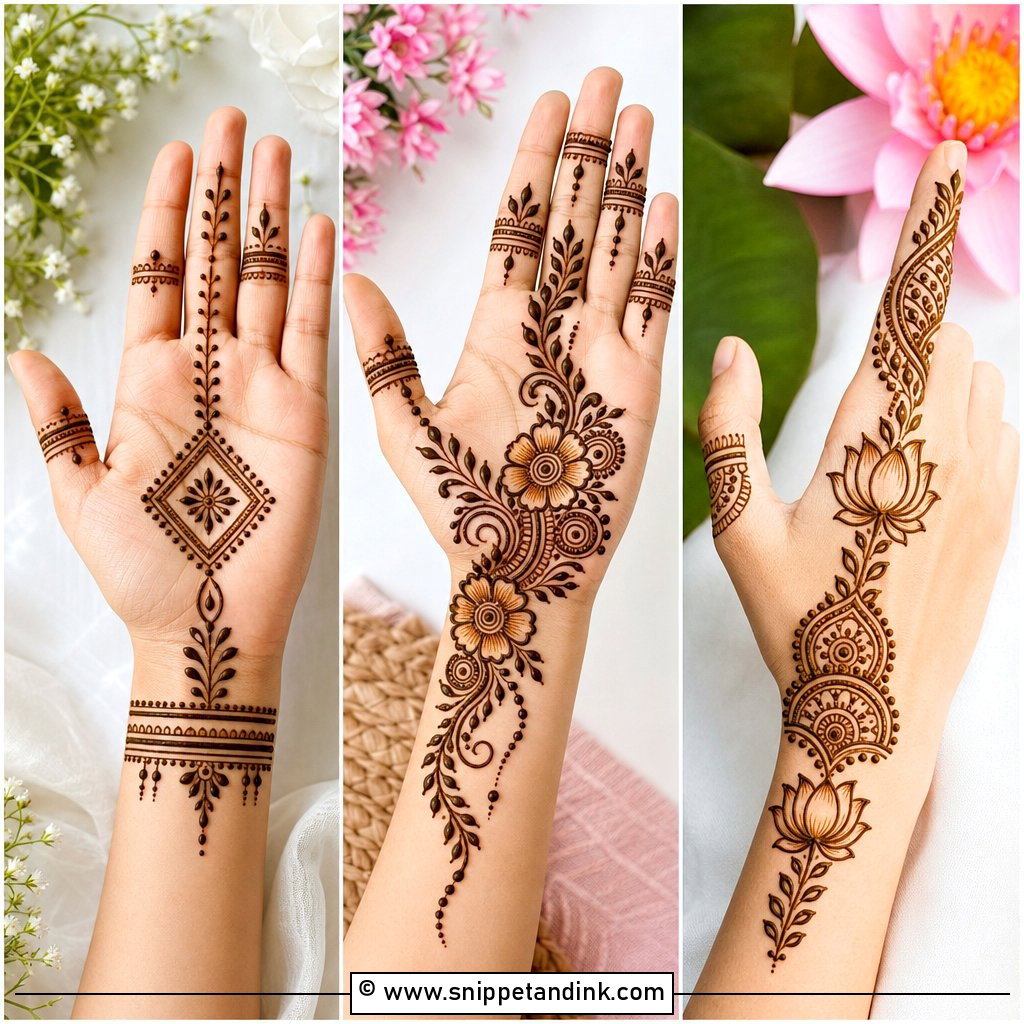
The lotus can sit at the center of the palm, near the wrist or repeat from fingers to forearm. Rounded petals pair well with paisleys, dots, shaded leaves and curved vines. I’d suggest it to a bride who prefers feminine detail to heavy storytelling. Small buds, leaf strips or ring-like bands finish the fingers. Because the petals are large, clear shapes, the design still reads in photos even when the filler around it is very fine.
9. Jaali Bridal Front Hand Mehndi Design
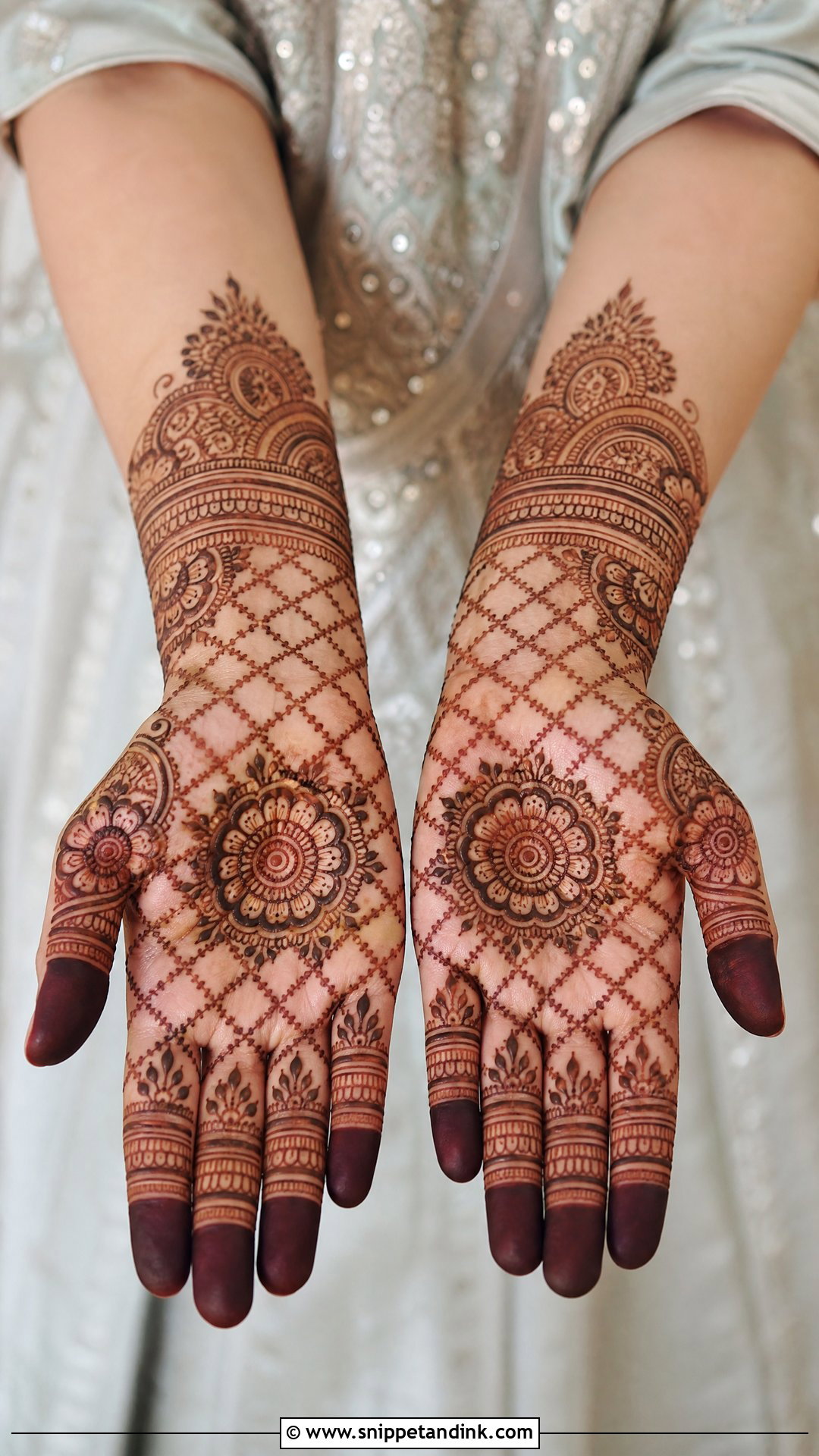
Jaali means mesh or lattice, drawn as diamonds, squares, arches or fine netting across the palm, usually with floral corners, paisley borders, a mandala center and detailed fingertips. It adds a fabric-like texture without making the palm heavy, and it sits well under ornate rings or a hathphool. Even spacing is the whole trick. I draw the guide lines in one direction across the whole palm first, then cross them, rather than building the net square by square, which is how lines drift.
10. Mughal Bridal Front Hand Mehndi Design
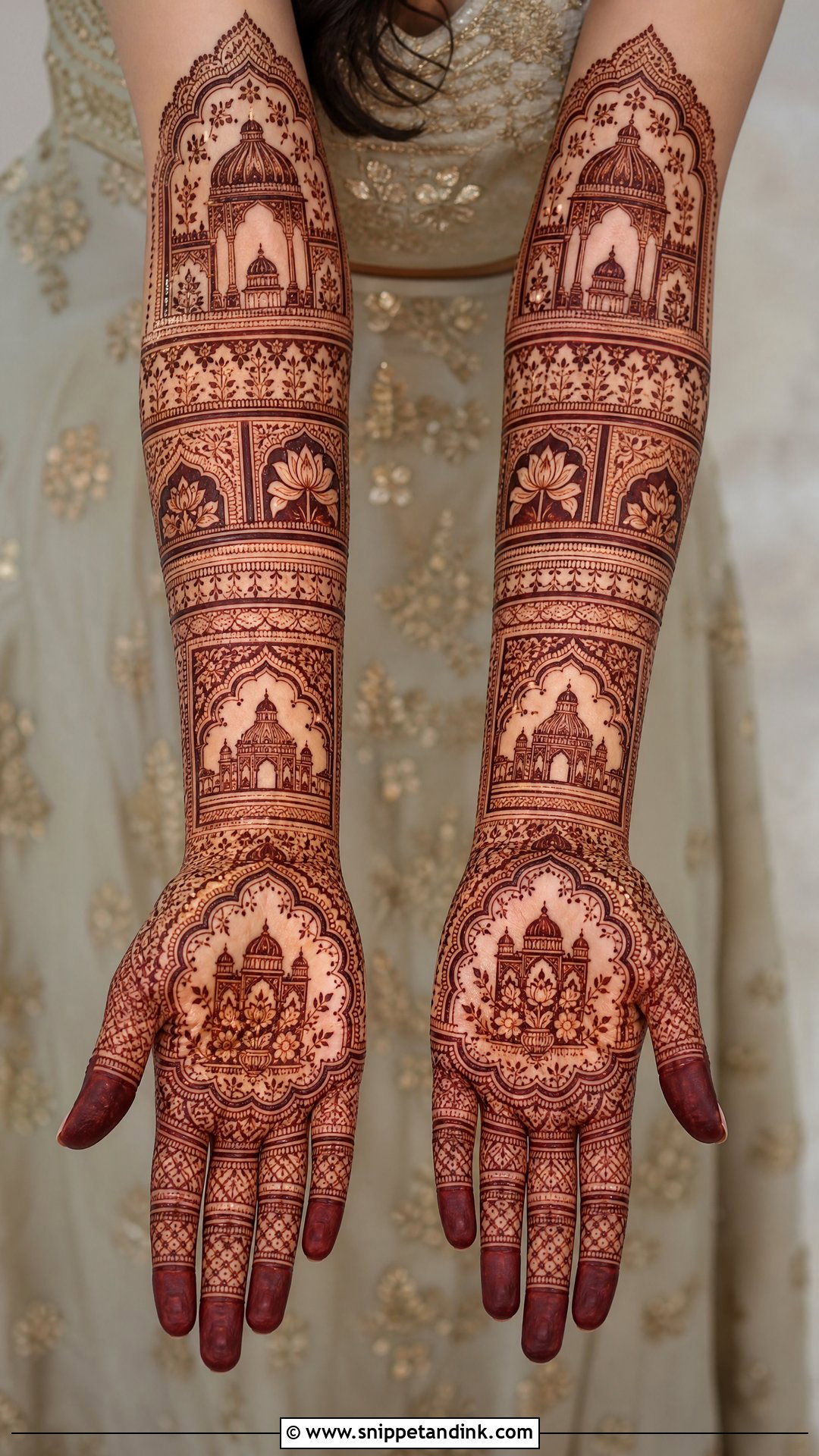
Mughal-inspired work borrows from architecture: arches, domes, jharokha windows, floral vines, fine borders and ornamental panels. A central arch on the palm might frame a lotus or couple detail, with repeated bands and small floral grids on the fingers and layered arch borders up the forearm. It’s more structured than free-flowing florals. The arches need true symmetry, so I mark the center line of the palm before starting. It sits naturally with kundan jewelry and heavy outfits.
11. Minimal Bridal Front Hand Mehndi Design
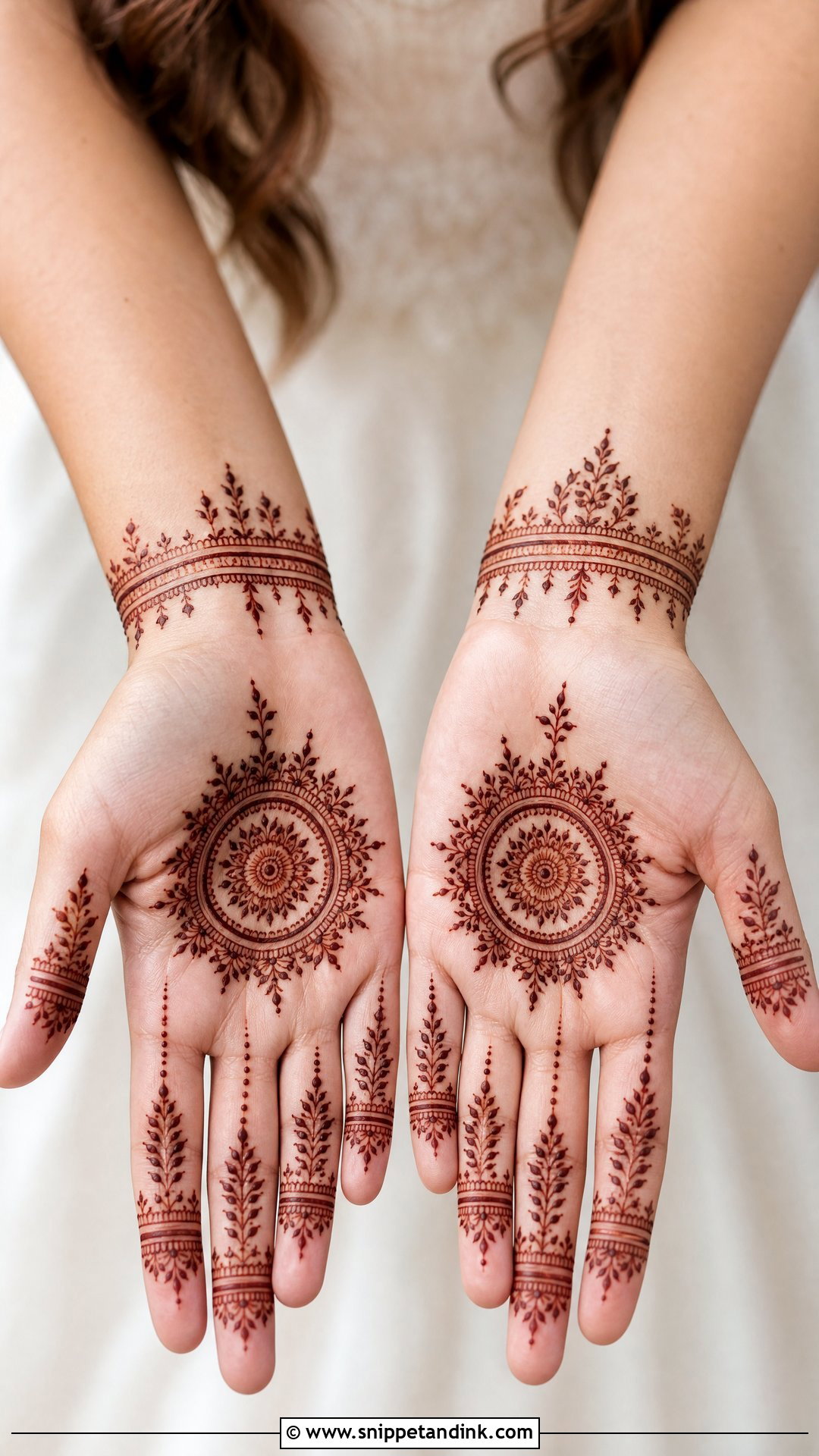
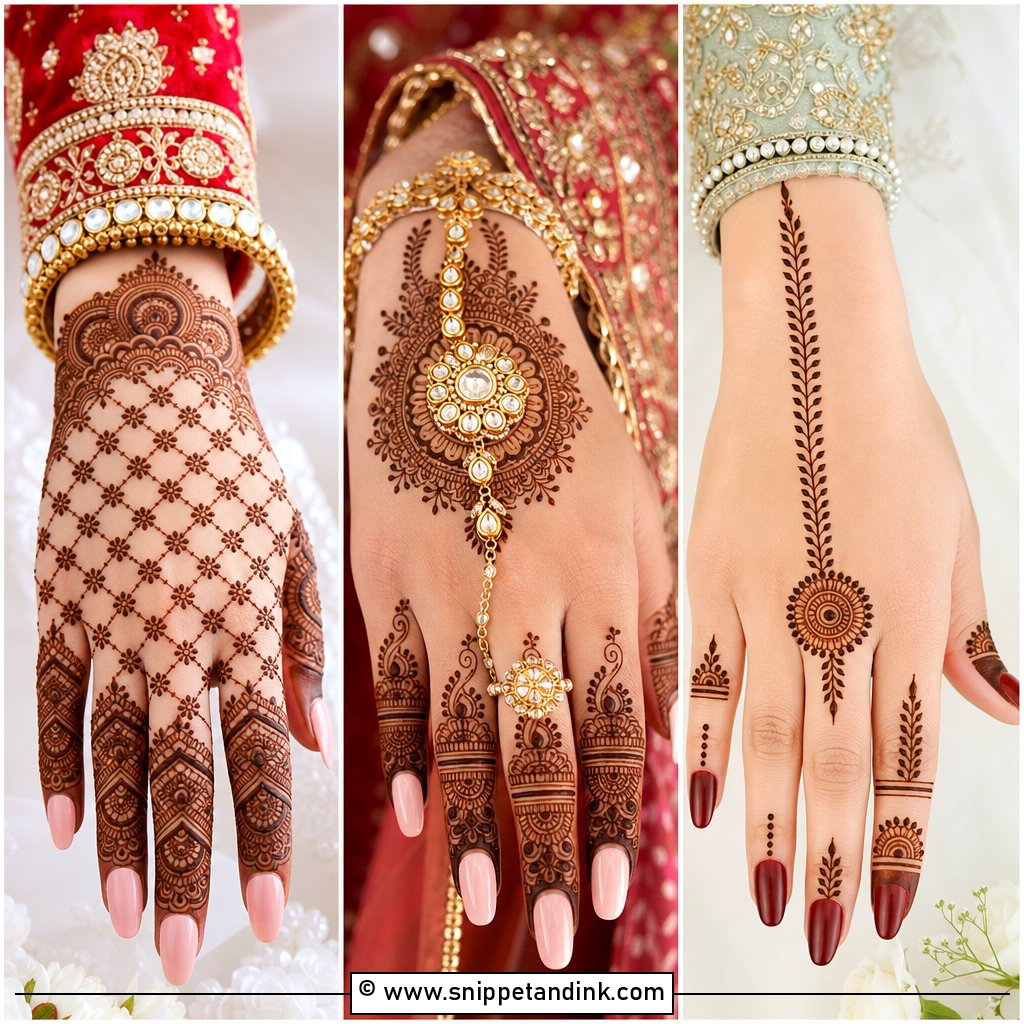
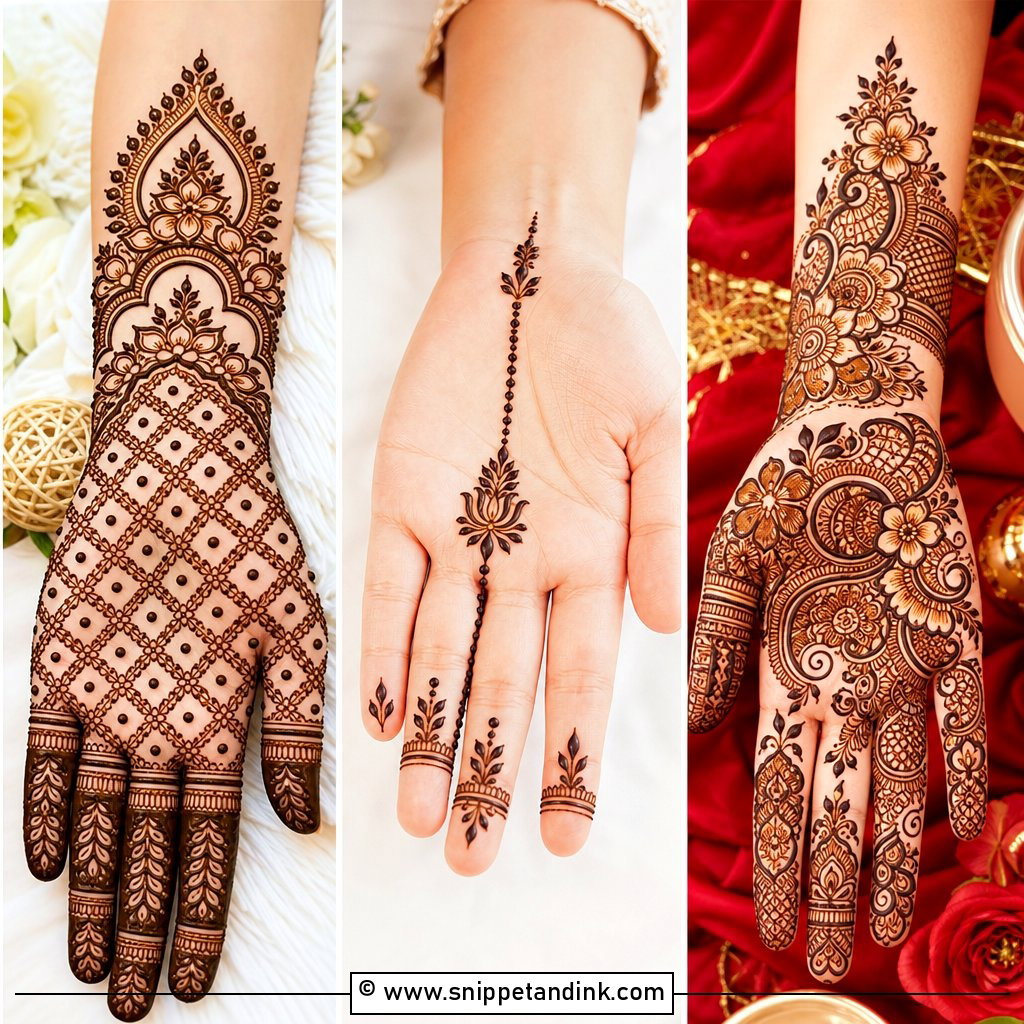
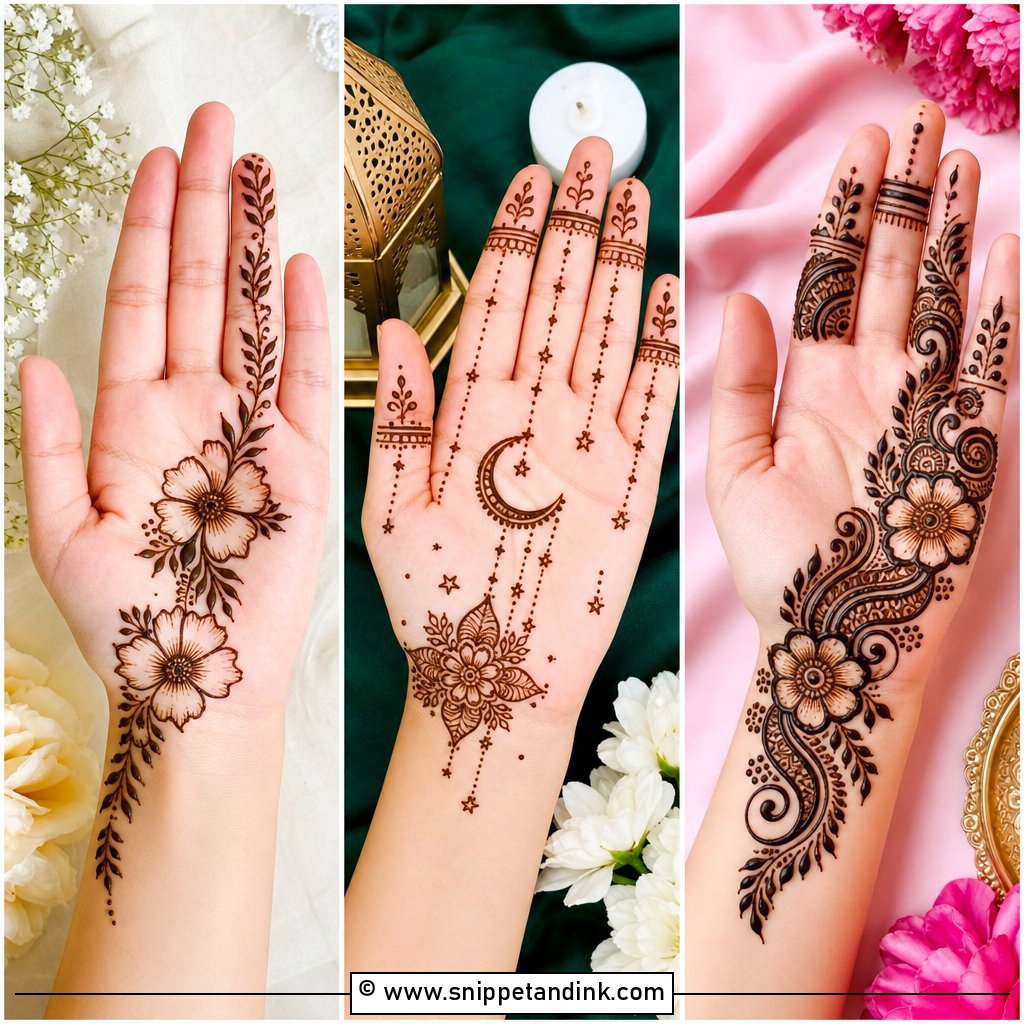
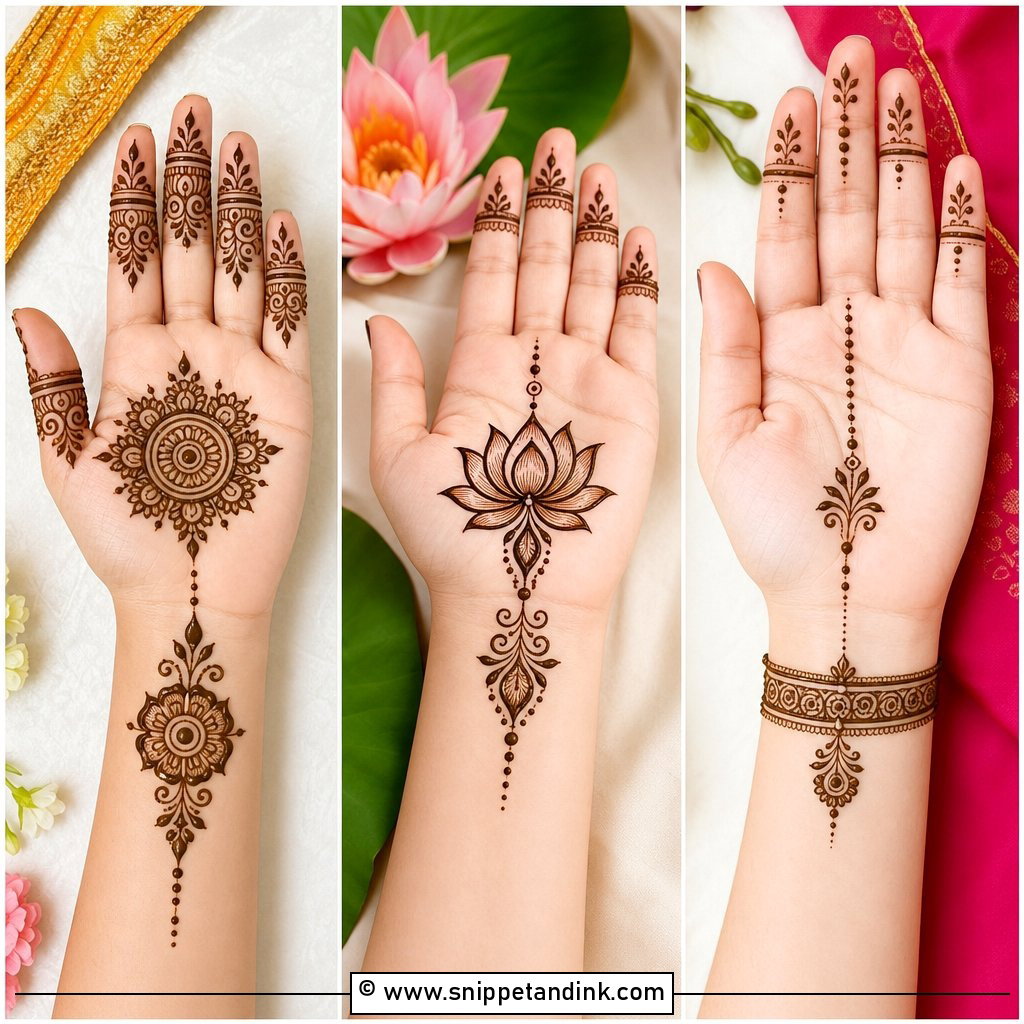
Minimal bridal work picks a few areas instead of covering the palm: a central mandala, fine finger bands, a light wrist cuff and small floral accents. It suits intimate weddings, civil ceremonies, engagement functions and brides who style lightly. With so much skin showing, every line is judged, so I work slower and keep line weight consistent. Thin vines, tiny dots and soft paisleys keep it delicate, and it shouldn’t look plain if the placement is considered.
12. Modern Bridal Front Hand Mehndi Design
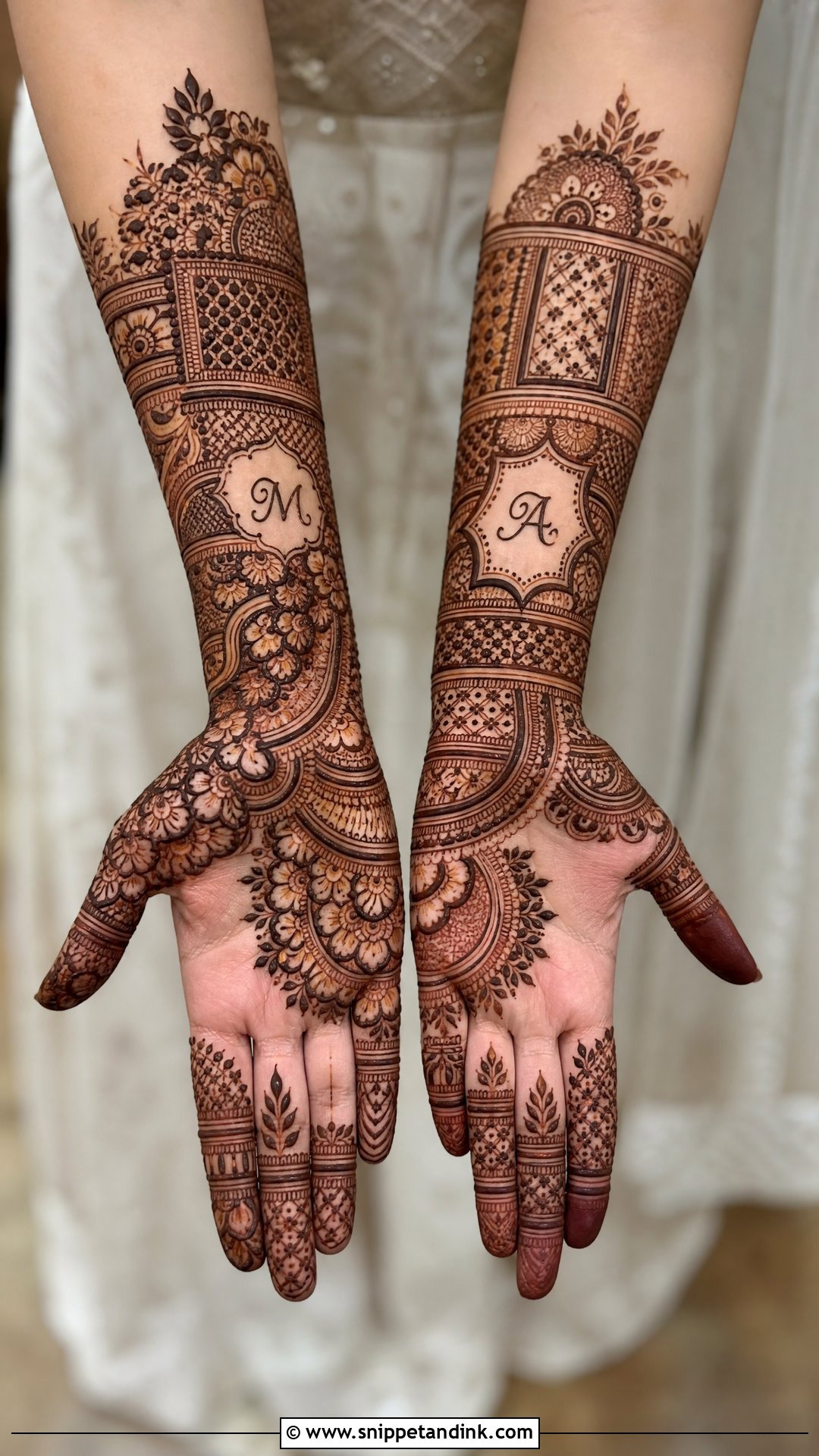
Modern layouts use negative space, asymmetrical florals, geometric panels, half-palm mandalas and sleek fingers. Nothing has to fill every inch; contrast and sharp outlines do the work. It suits pastel lehengas, contemporary sarees, fusion outfits and minimal jewelry. I always add one statement motif, a lotus, a peacock or hidden initials, so the hand still feels like a bride’s and not just a pattern.
13. Simple Bridal Front Hand Mehndi Design
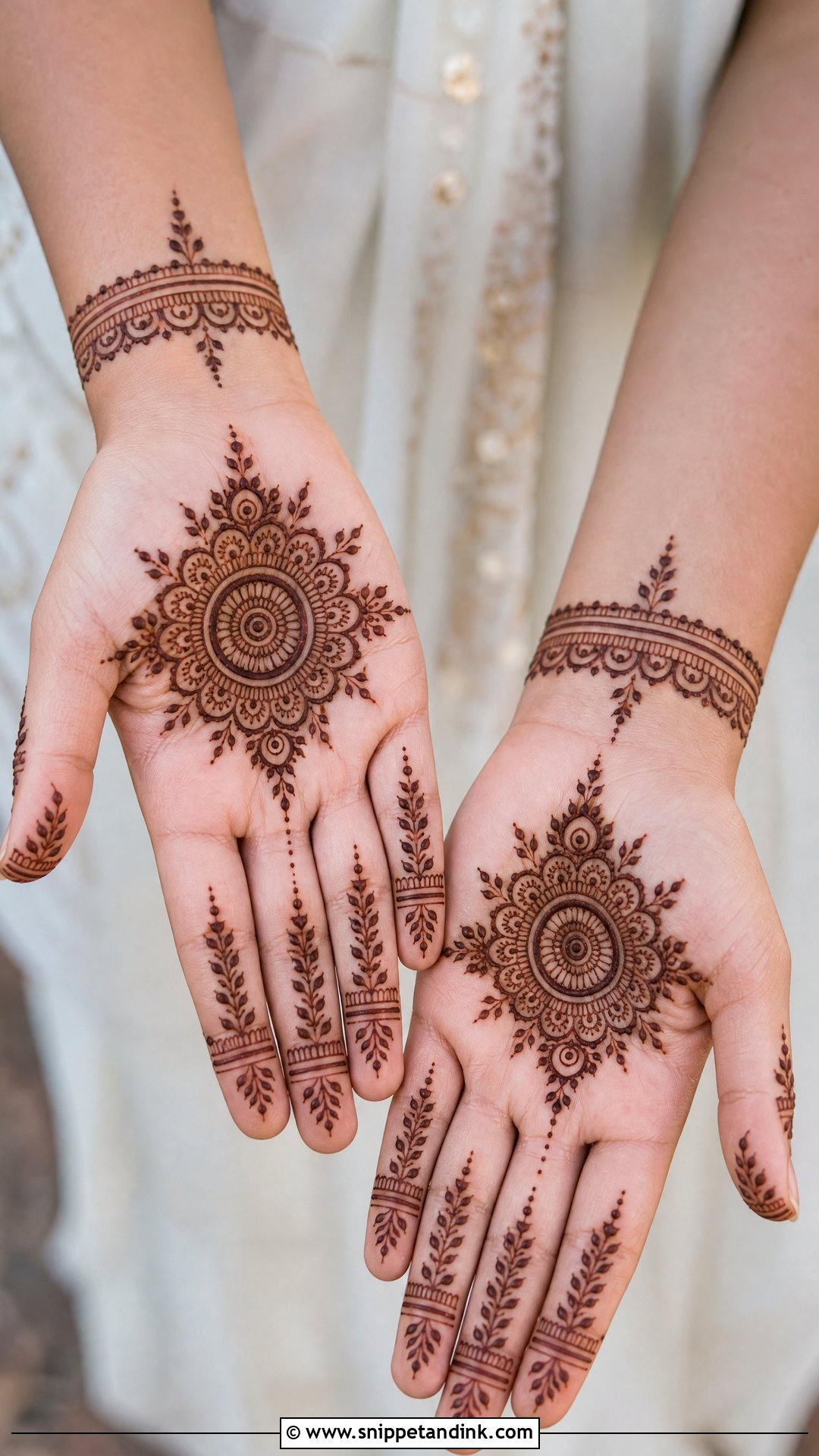
A simple bridal hand might be a medium mandala or floral circle on the palm with clean lines, leafy chains, dots and small paisleys on the fingers, ending at the wrist in a bracelet band rather than running up the forearm. It’s quick, so it’s useful for pre-wedding functions or for brides who dislike heavy henna. Simple isn’t boring when the outlines are bold and the spacing even. Larger motifs also stain more clearly than tiny filler.
14. Heavy Bridal Front Hand Mehndi Design
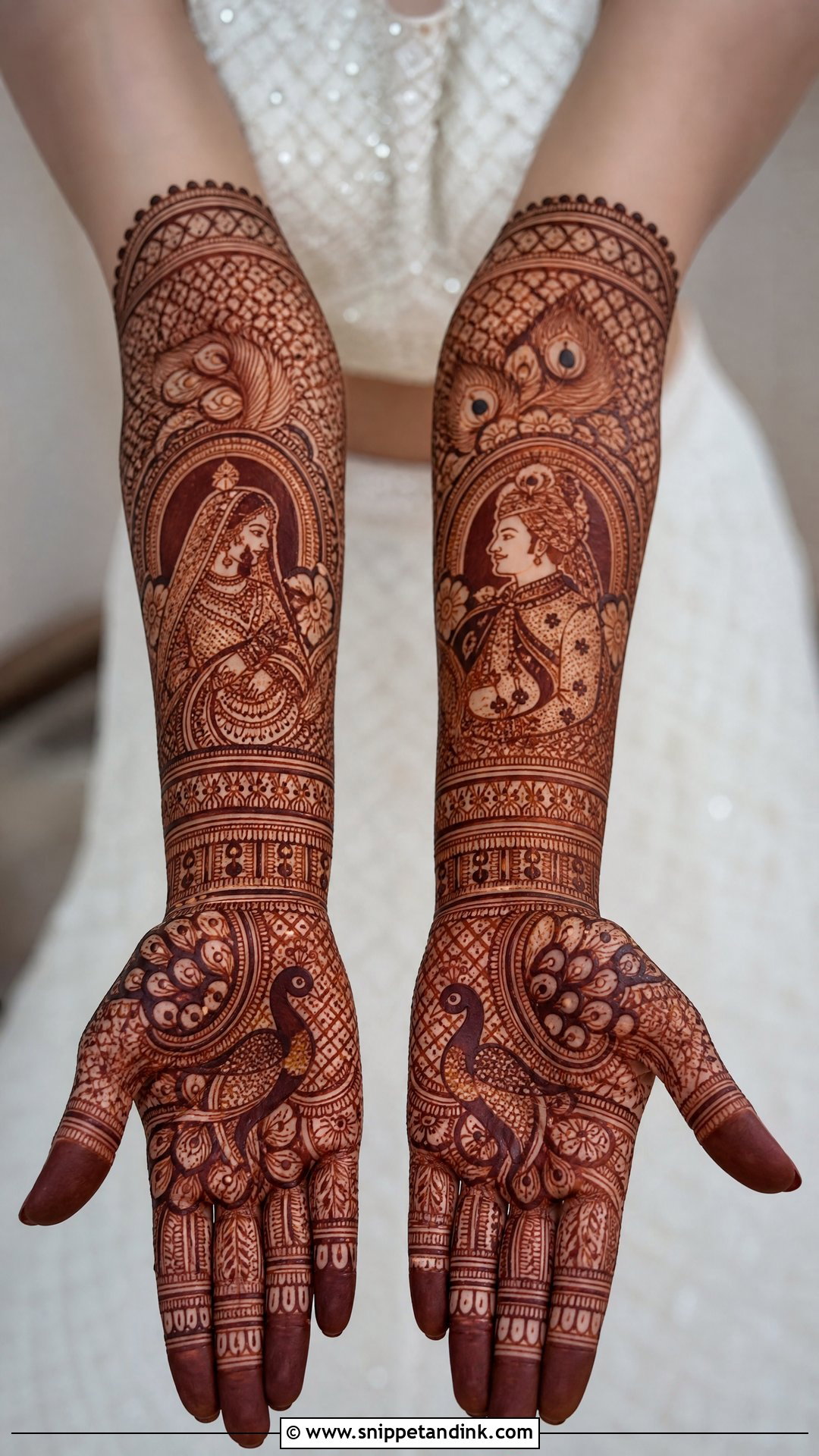
This is the dense look many brides picture: palm, fingers, wrist and forearm covered in tiny detail, with paisleys, florals, couple motifs, peacocks, jaali, layered borders and micro filler. It takes longer, and the result feels ceremonial. It sits well with red, maroon, green or gold outfits. Balance dense sections with a few larger motifs, or it tips into overcrowding. I also warn brides that micro filler needs a very fine cone tip and fresh paste, or the lines merge as they dry.
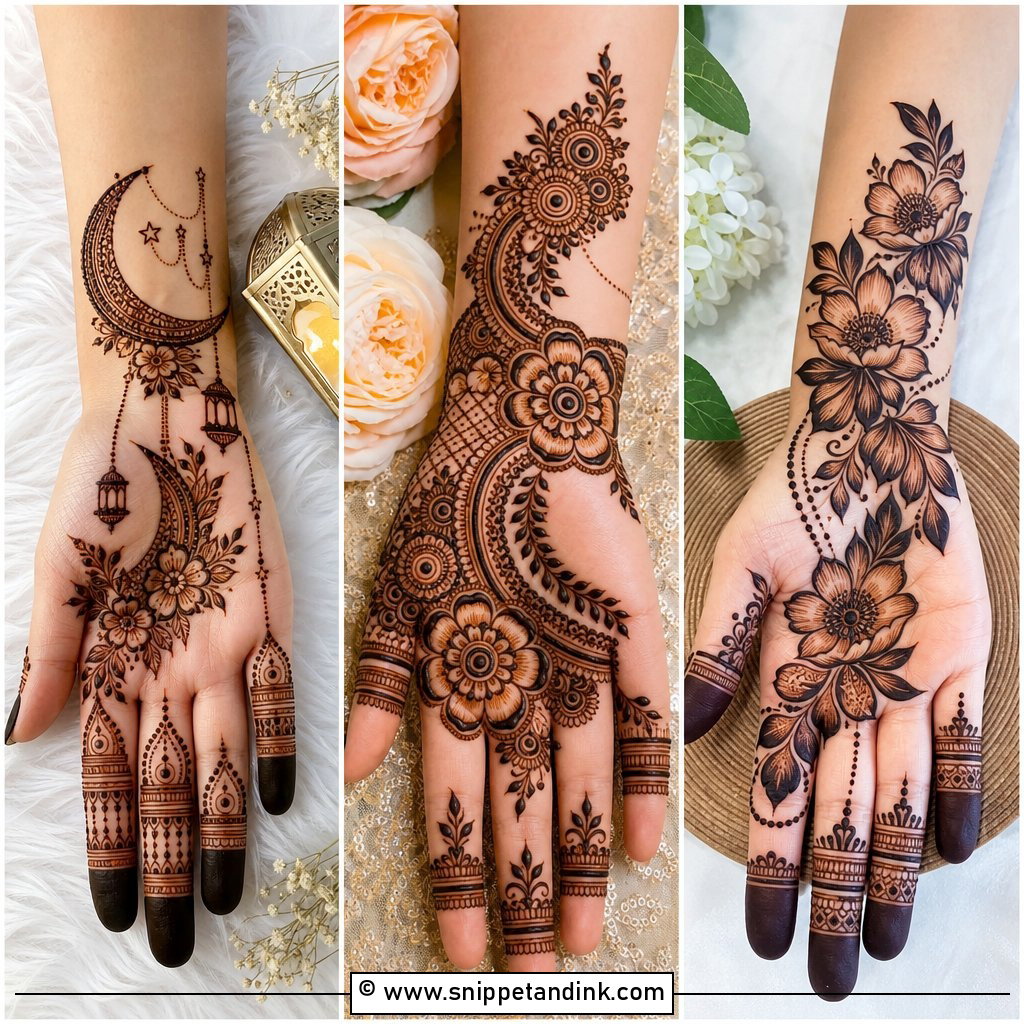
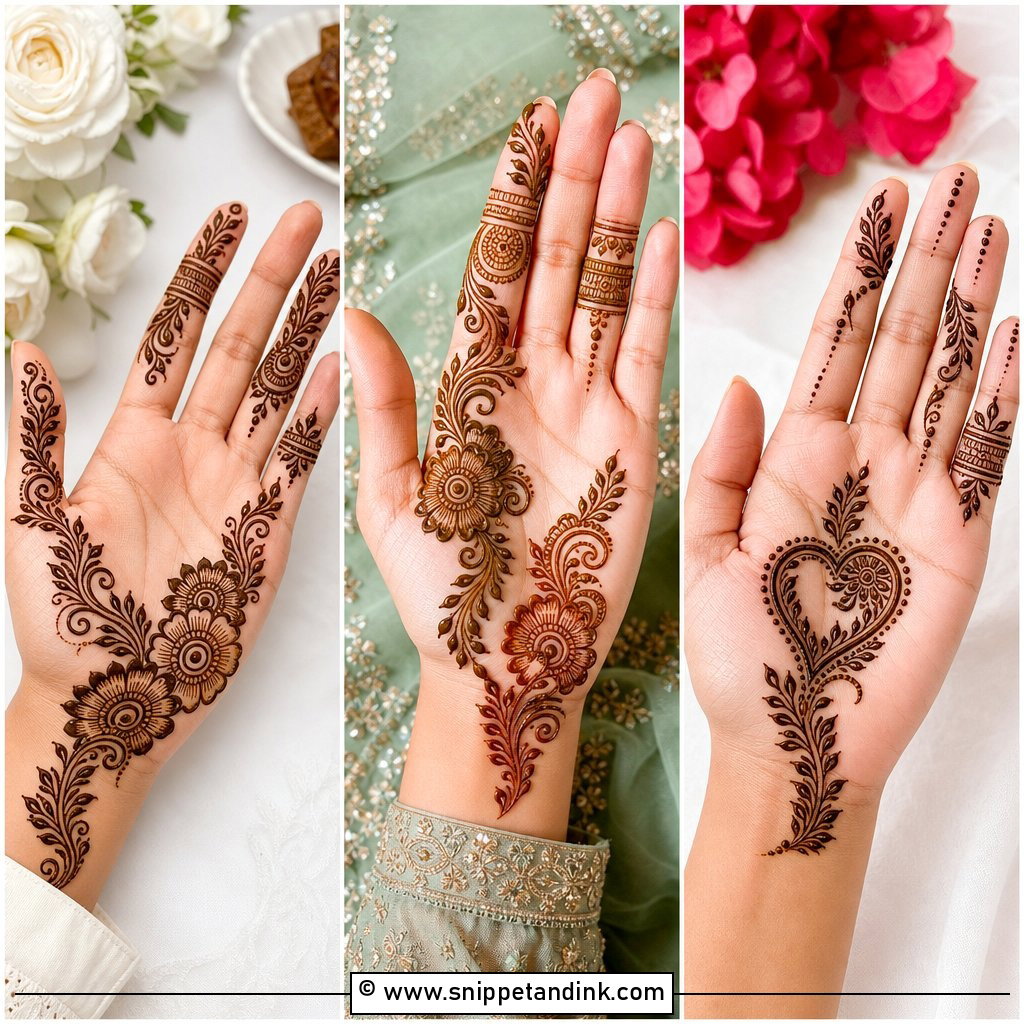
15. Royal Bridal Front Hand Mehndi Design
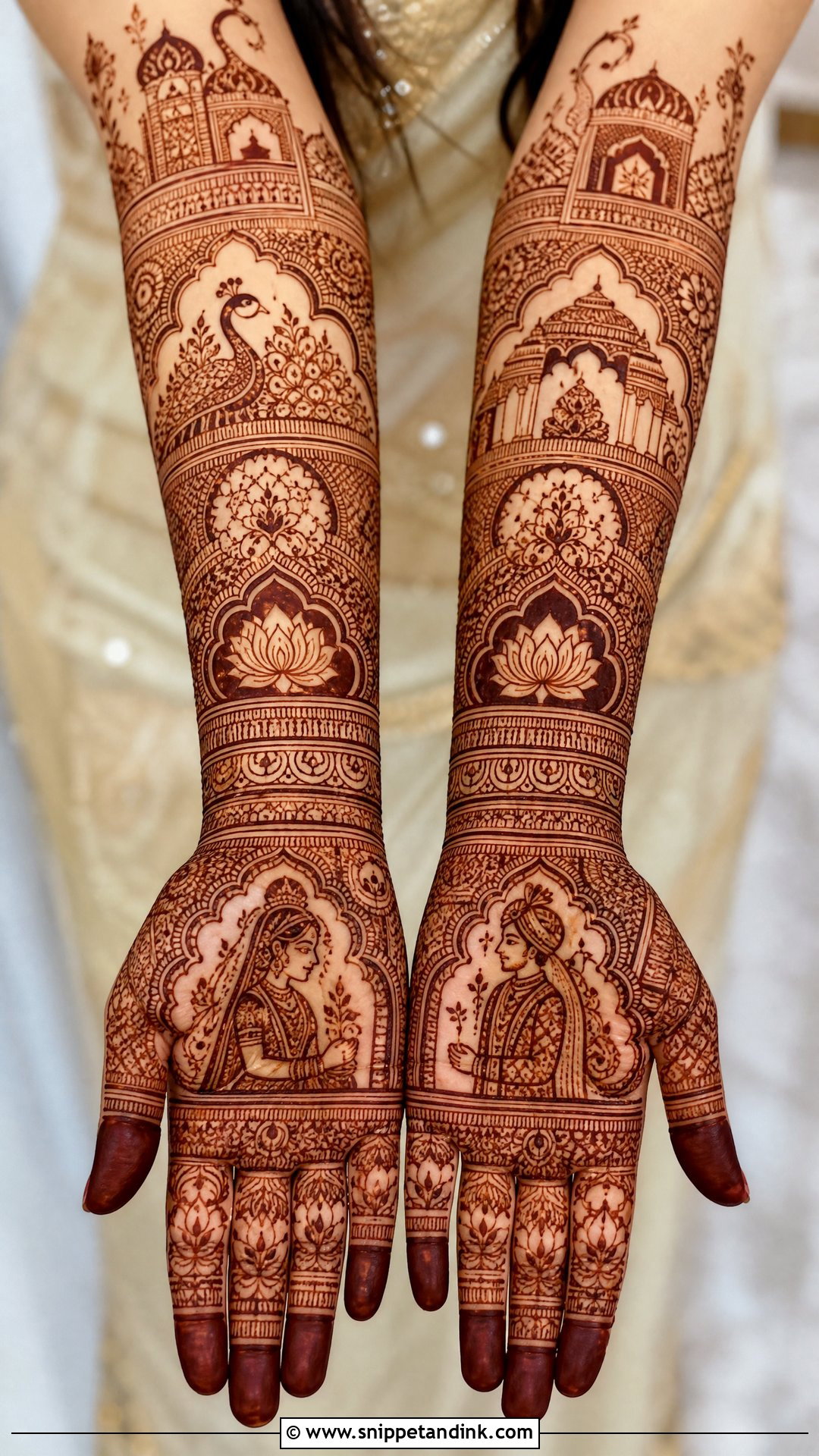
Royal hands run grand from fingertips to forearm: palace arches, elephants, peacocks, lotus, ornamental frames and layered cuffs. A mandap or portrait might take the palm, and the wrist looks like carved jewelry, which gives heavy bangles a decorated base. It suits a regal theme. I outline the main motifs with a slightly heavier line so they stay visible once the whole hand has stained and the fine work starts to blend.
16. Floral Bridal Front Hand Mehndi Design
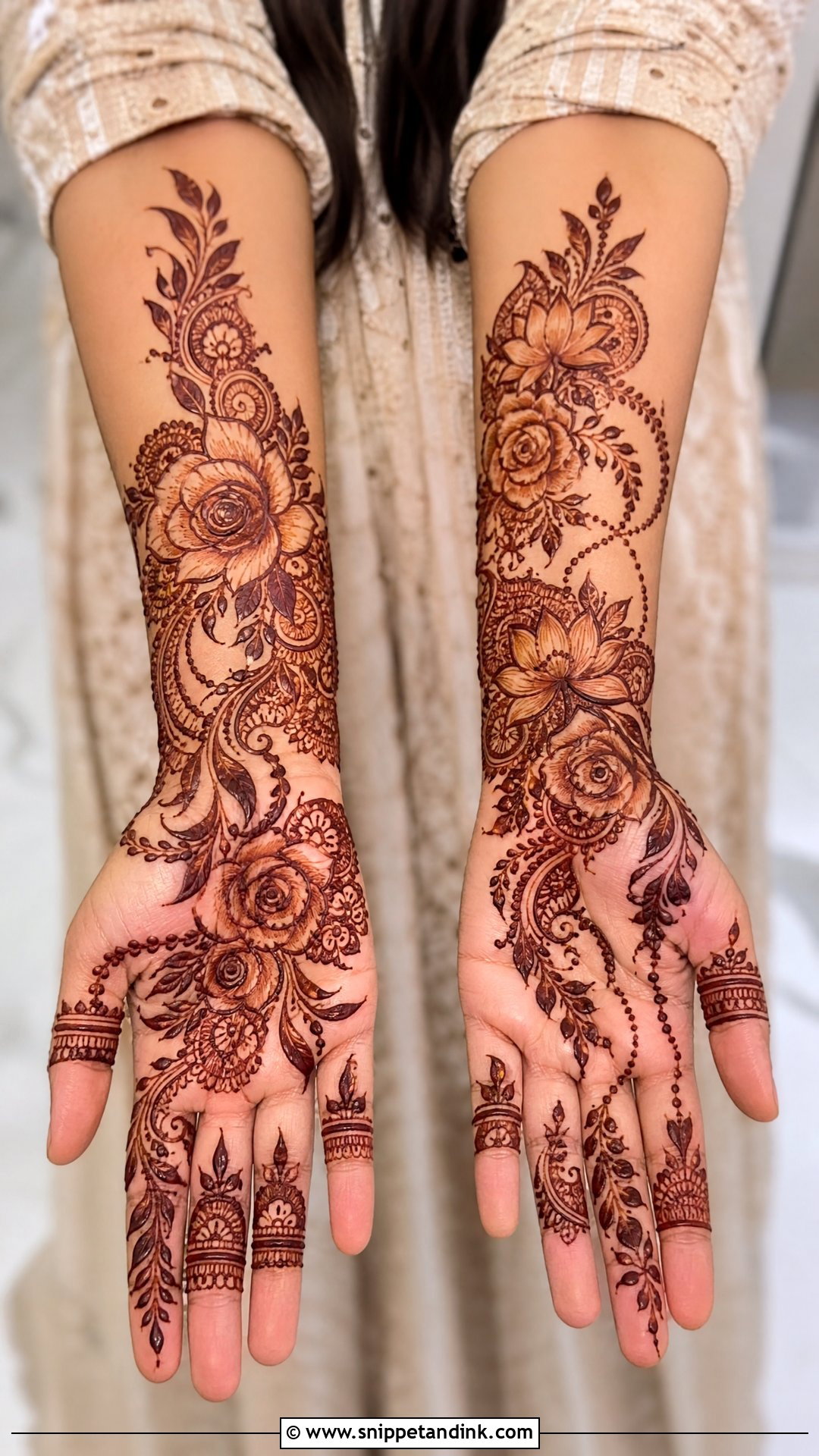
Florals adapt to any density: large flowers on the palm, smaller blossoms and leaves flowing toward the fingers and wrist, drawn tight like Indian work or open like Arabic. Roses, lotus, round petals and vines all suit a bride, and florals work with any hand shape or outfit color. I combine them with fine filler, bracelet borders and detailed fingertips to make them bridal rather than festive. They’re forgiving to photograph because curves read well at any distance.
17. Paisley Bridal Front Hand Mehndi Design
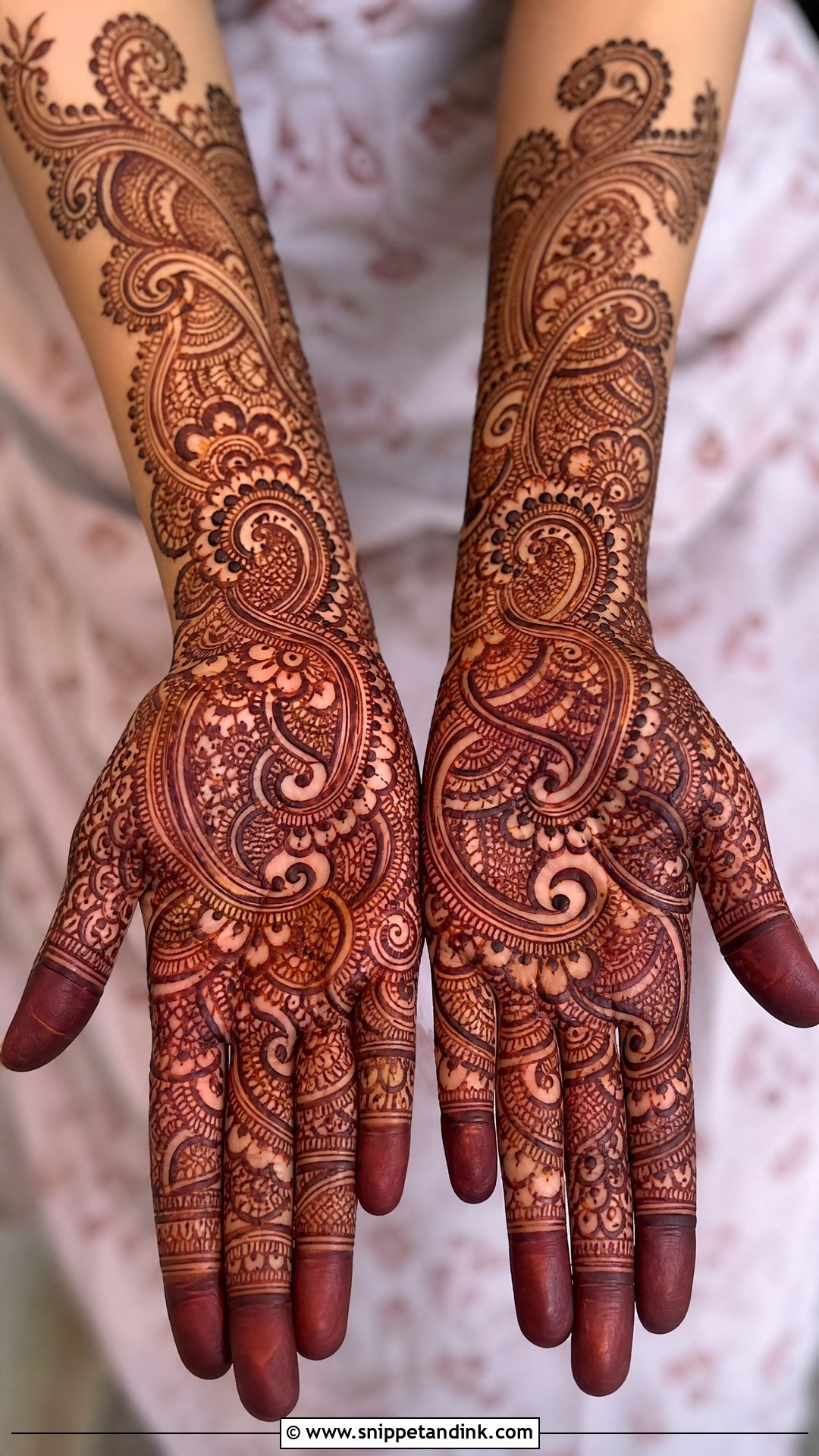
Paisleys curve across the palm, frame a mandala or trail from wrist to fingers, each filled with tiny florals, dots, scallops or fine lines. The curved shape makes hands look longer, which is why so many brides who skip portraits build their design on paisleys. Layered paisleys on the forearm and dense fingertips give it a stronger bridal finish. I point each paisley’s tail in the direction of flow, so the hand reads as one movement.
18. Finger Heavy Bridal Front Hand Mehndi Design
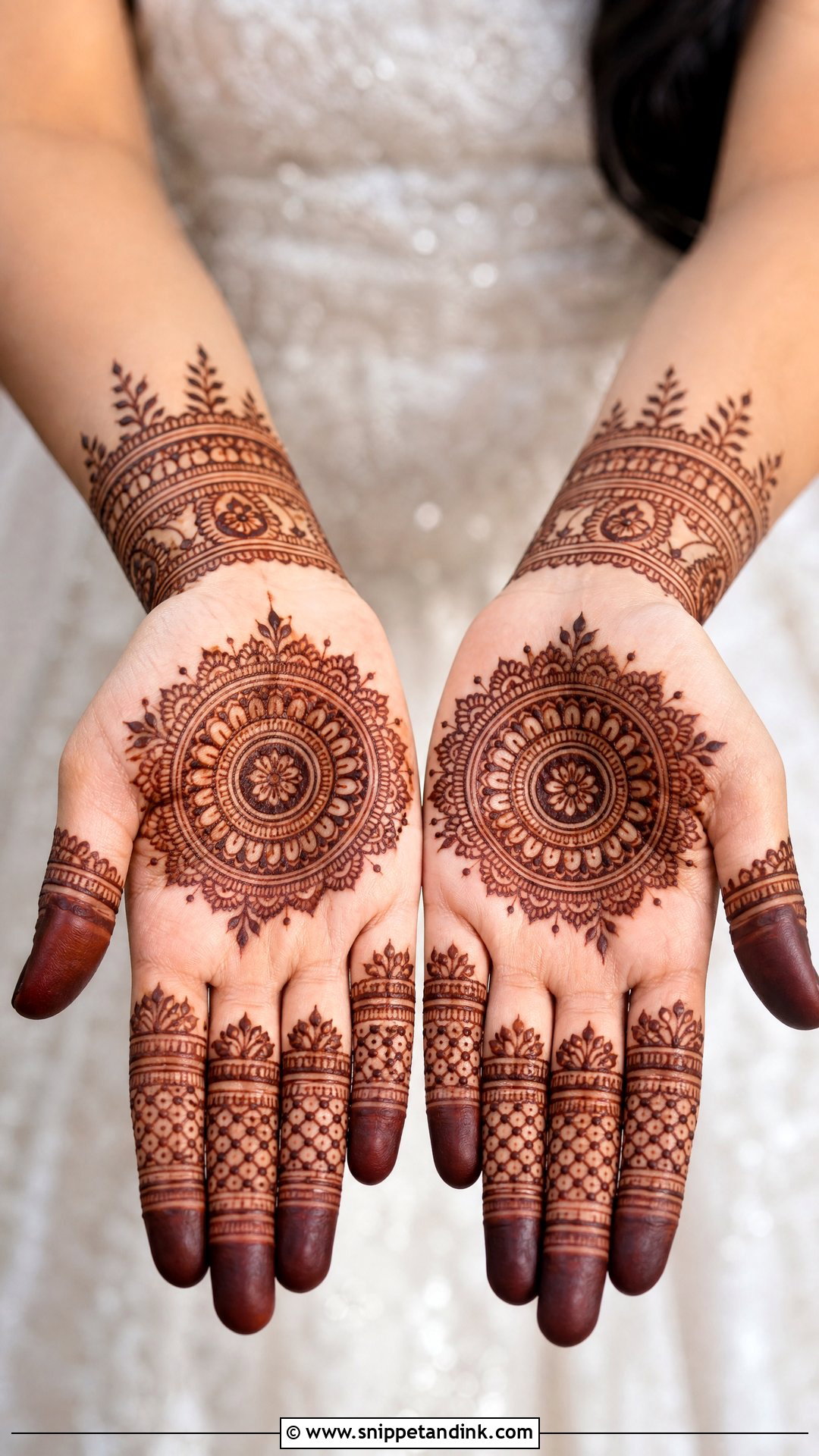
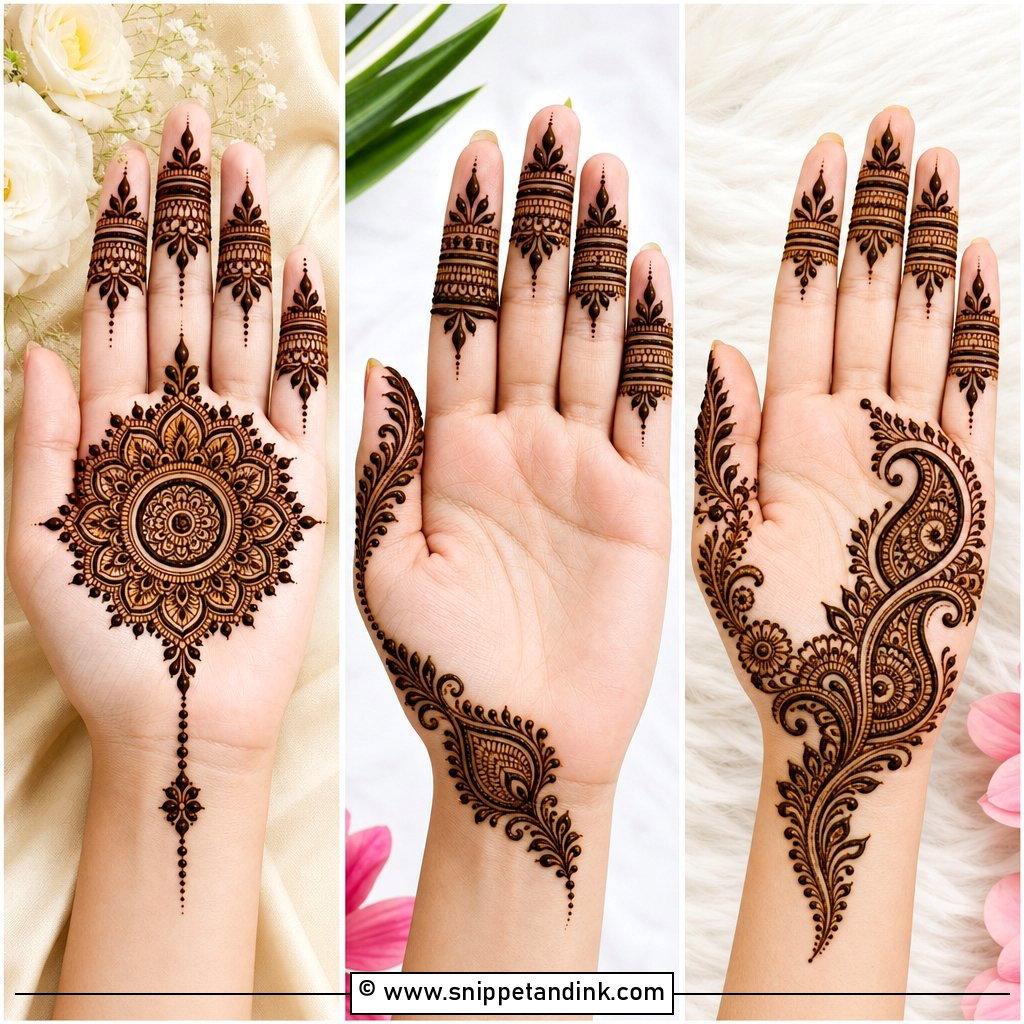
Here the fingers take the spotlight with stacked bands, leafy chains, fine grids, tiny florals and fully shaded tips, while the palm stays lighter with a mandala or floral center. Ring shots and bangle close-ups are where it shines. Keep the finger patterns aligned and similar in thickness, since uneven bands are obvious when the hand is spread. Fully shaded tips stain darkest of all, so I keep them crisp at the edge and don’t let them creep toward the nail.
19. Wrist Cuff Bridal Front Hand Mehndi Design
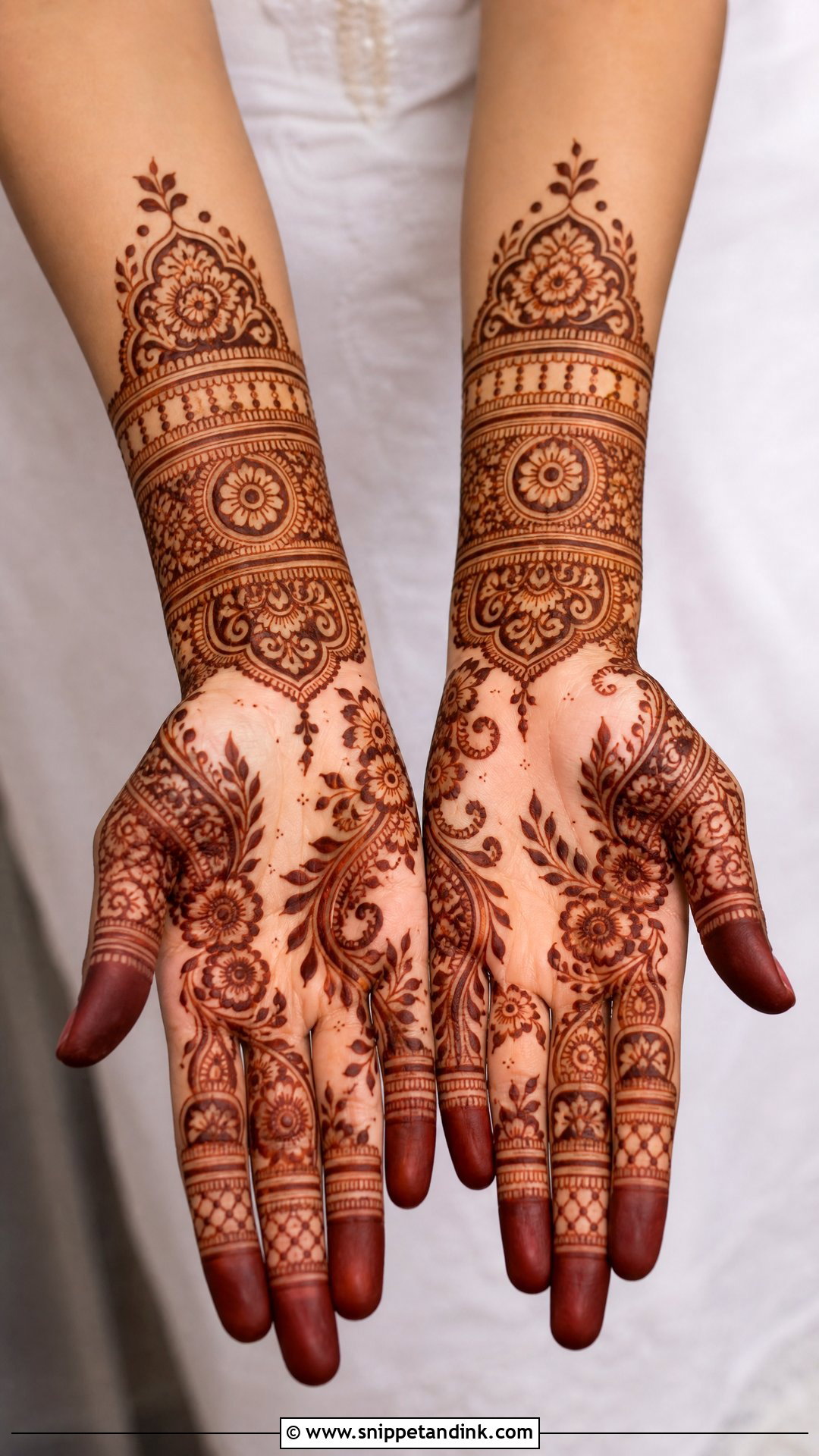
A wide wrist cuff gives the effect of henna jewelry: bracelet bands, scalloped borders, floral chains and ornament, connected to the palm by vines, paisleys or a central motif. It blends with bangles, kalire or a hathphool. The cuff can be thin or wide depending on the outfit. I always ask where your bangles will sit, because a cuff hidden under metal is wasted work, and I’d rather place it just above them.
20. Personalized Bridal Front Hand Mehndi Design
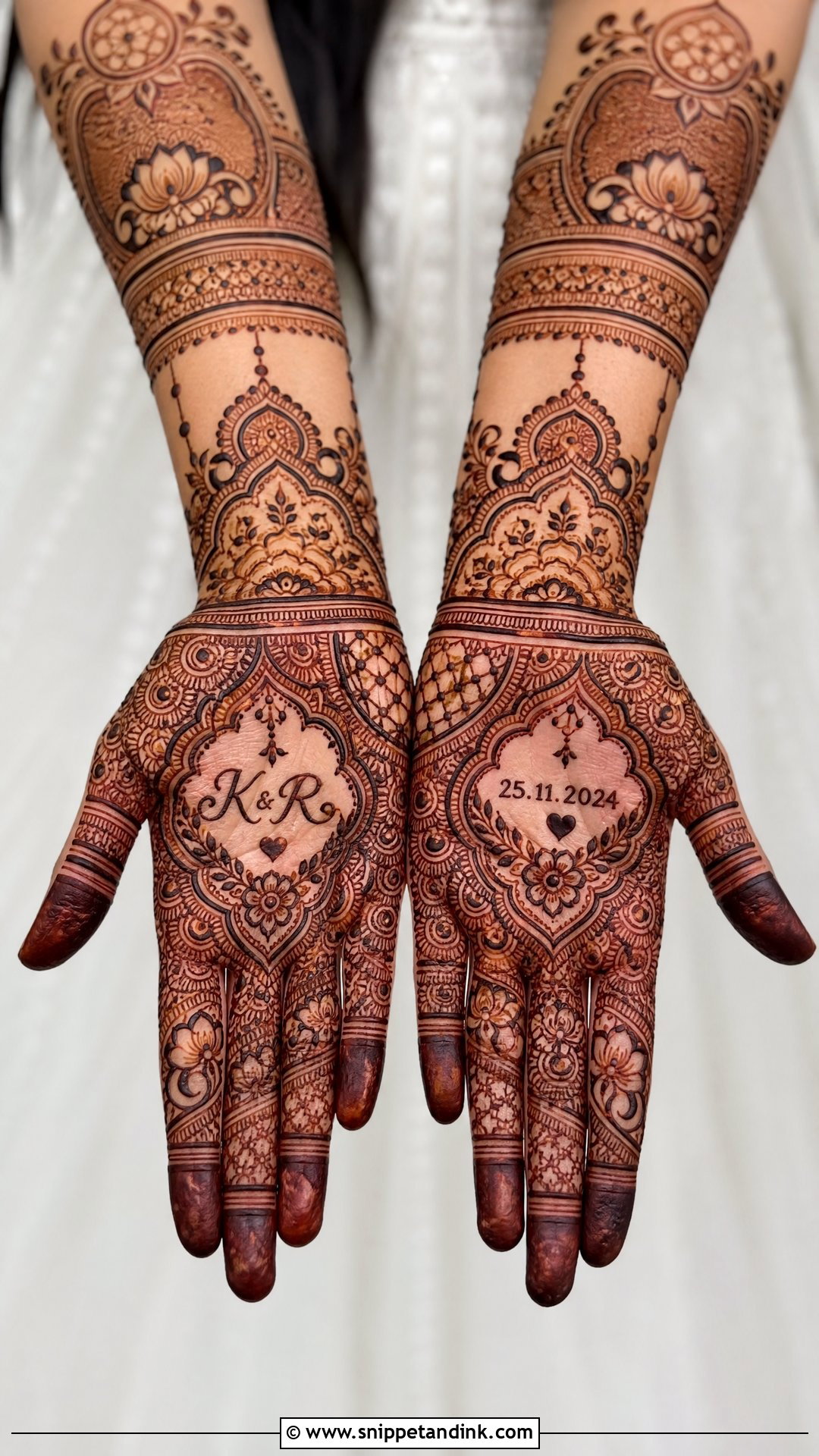
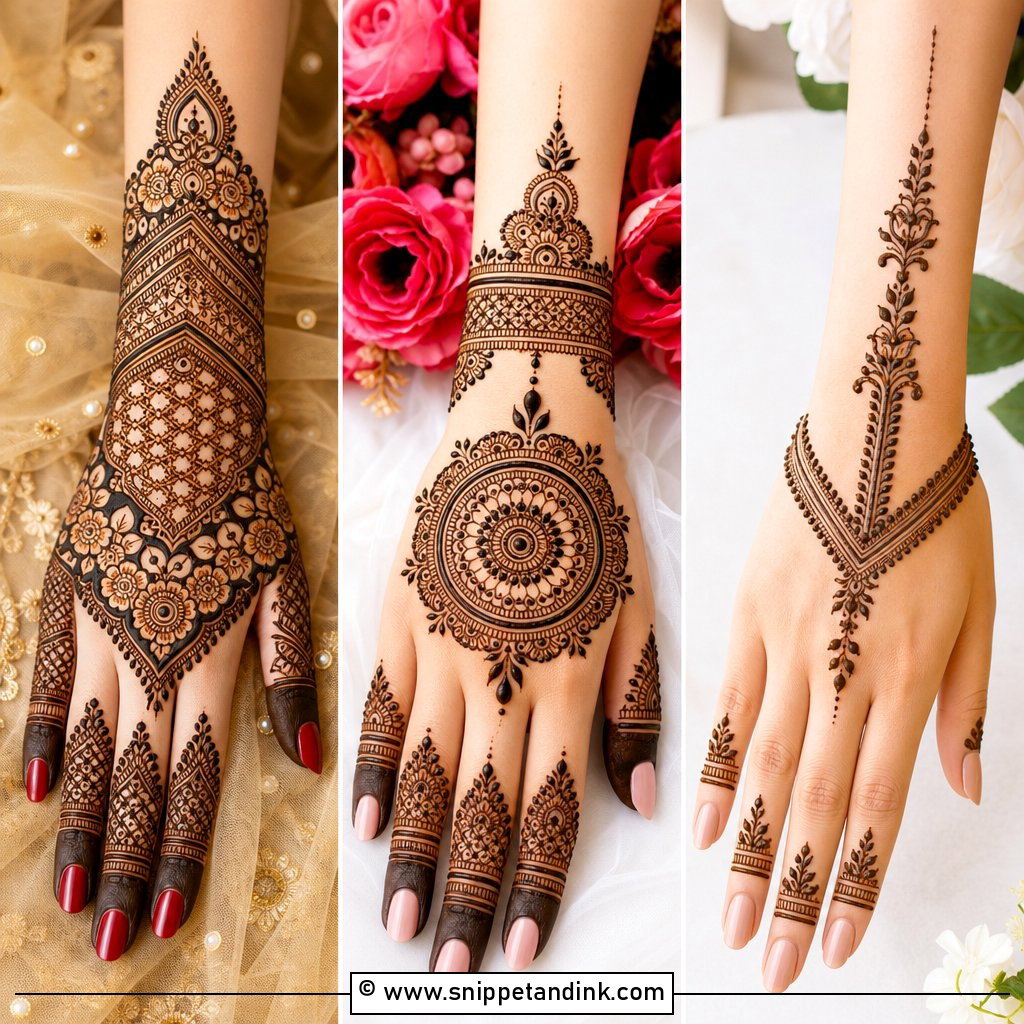
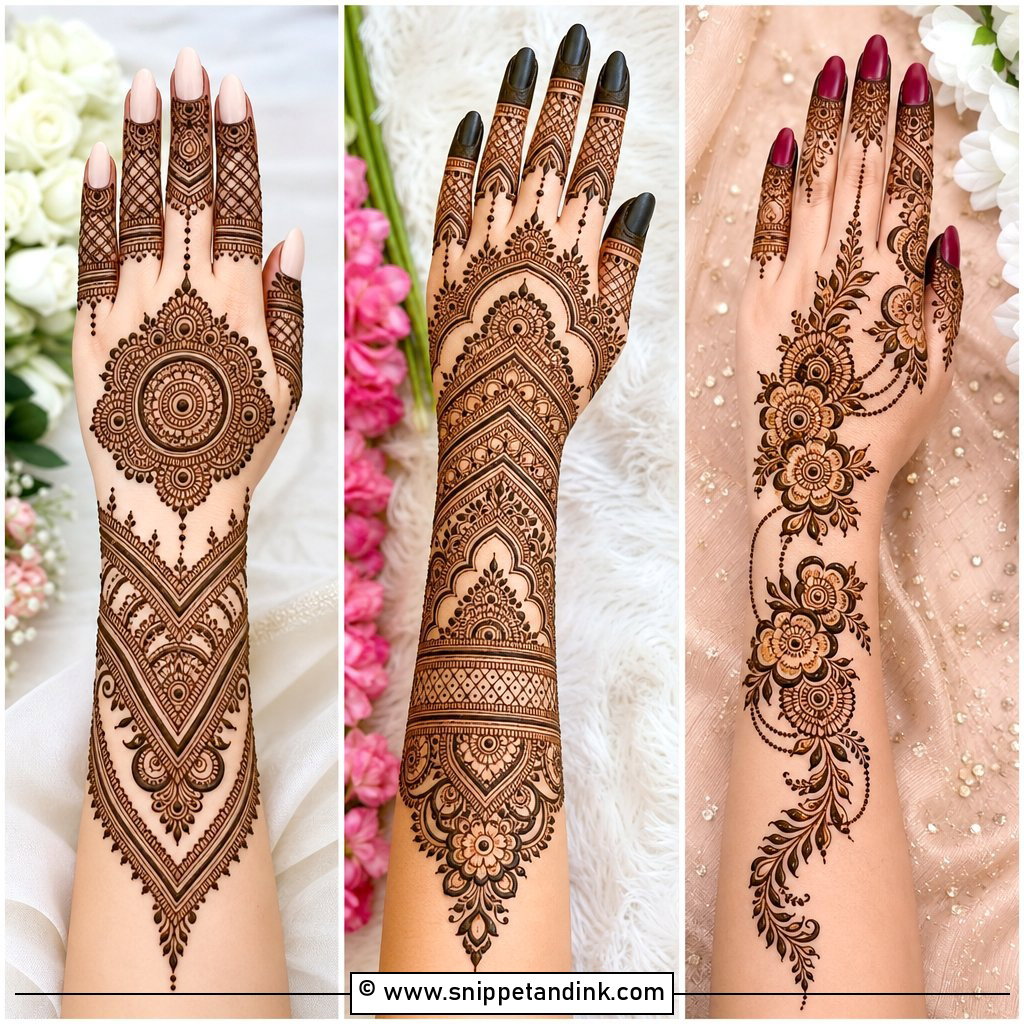
Personal details give henna a memory: the groom’s initials, the date, a proposal symbol, a favorite flower, a skyline, a pet or something from the venue, hidden inside paisleys, jaali, mandalas or borders. Keep it subtle so the design still looks elegant. Two or three elements are plenty; more and the hand starts to look like a scrapbook. Many families love the game of the groom searching for his initials, so I tuck them somewhere findable but not obvious.
21. Moroccan Bridal Front Hand Mehndi Design
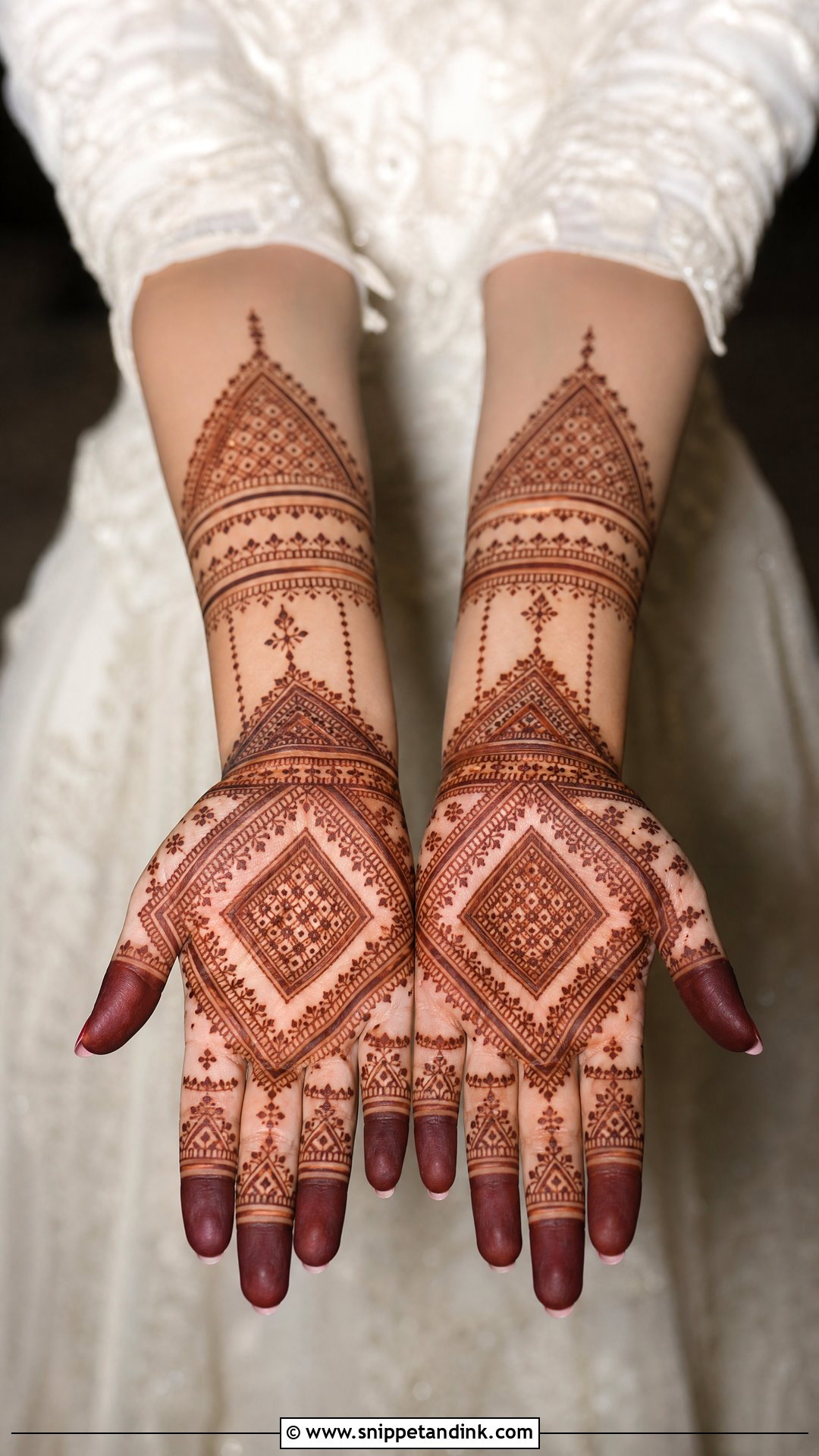
Moroccan front-hand work uses diamonds, lines, triangles, grids, dots and symmetrical blocks, very different from soft florals. Small florals or leafy borders can soften it for a bride while keeping the structure clear. It suits modern weddings, fusion outfits and anyone wanting something less common. A geometric frame on the palm with matching linear sections on the fingers is a good layout. It lives or dies on precision, and straight lines on a curved palm take real control.
22. Gulf Bridal Front Hand Mehndi Design
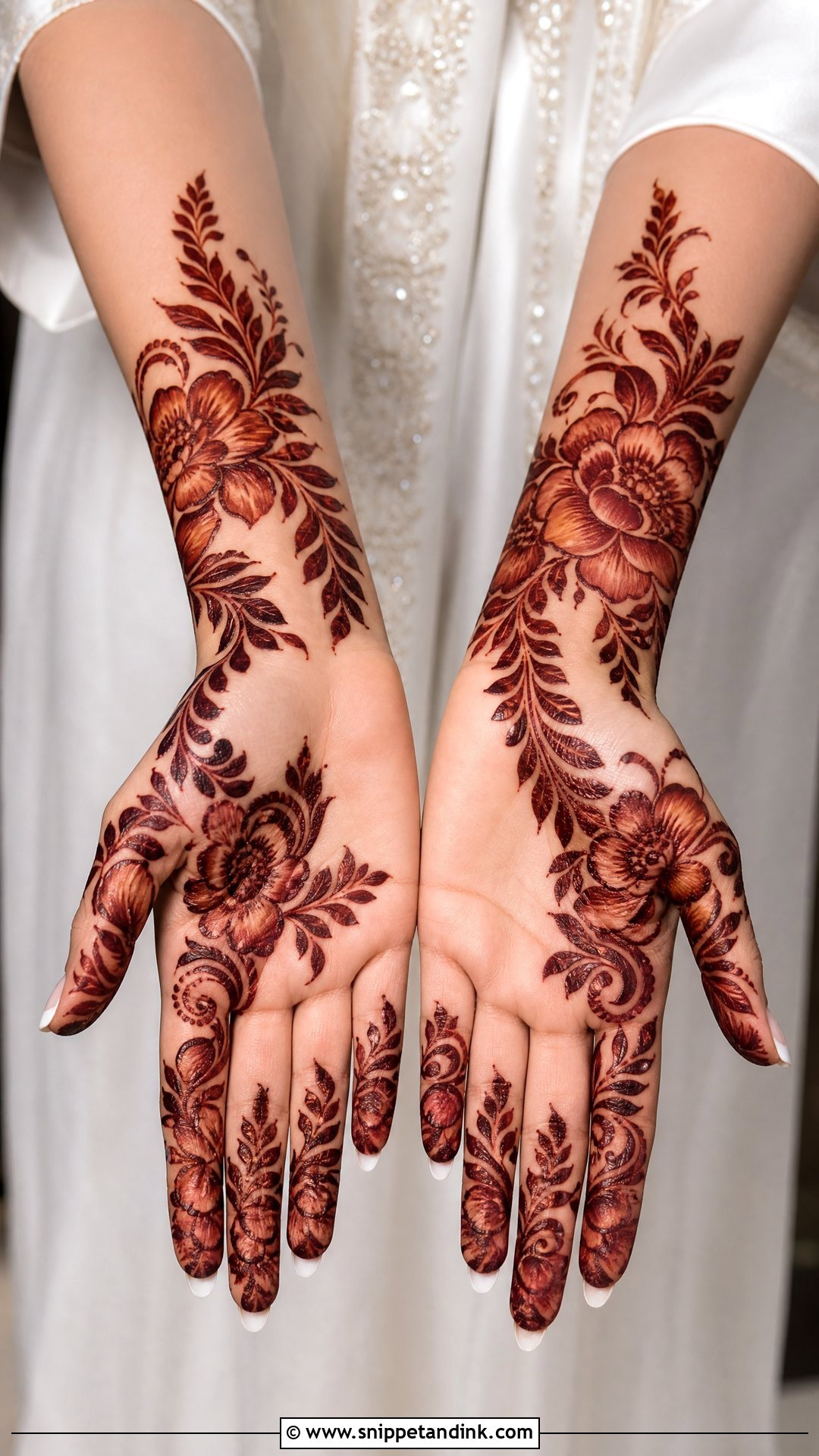
Khaleeji-inspired work uses bold florals, flowing vines, thick outlines and dramatic open spaces. The motifs are larger and airier than dense Indian work, sweeping from fingers across the palm to a floral wrist trail. It’s luxurious without being packed. The bold filled sections stain darker and clearer than fine lines, so the result looks strong on camera. Glossy nails, statement rings and simple bangles complete it.
23. Half Palm Bridal Front Hand Mehndi Design
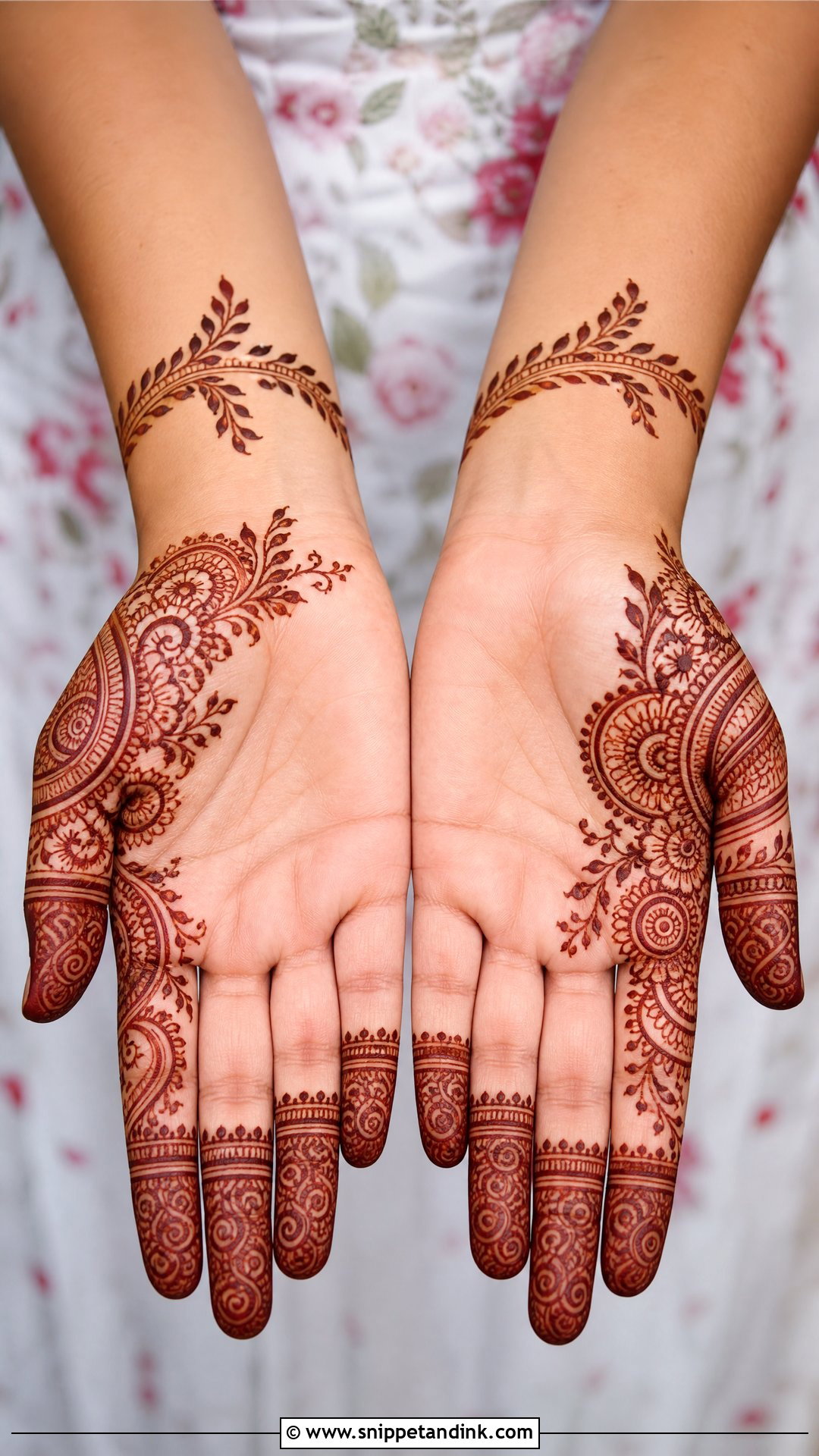
Half-palm layouts cover one side with florals, paisleys, mandalas or jaali and leave the other open, with fully detailed fingers and a slim cuff or leafy trail at the wrist. The contrast looks clean and current, and it’s comfortable to wear. I usually place the filled side toward the thumb so it shows when the hands are joined. Bold outlines and fine inner detail make the empty half look intentional rather than unfinished.
24. Engagement Bridal Front Hand Mehndi Design
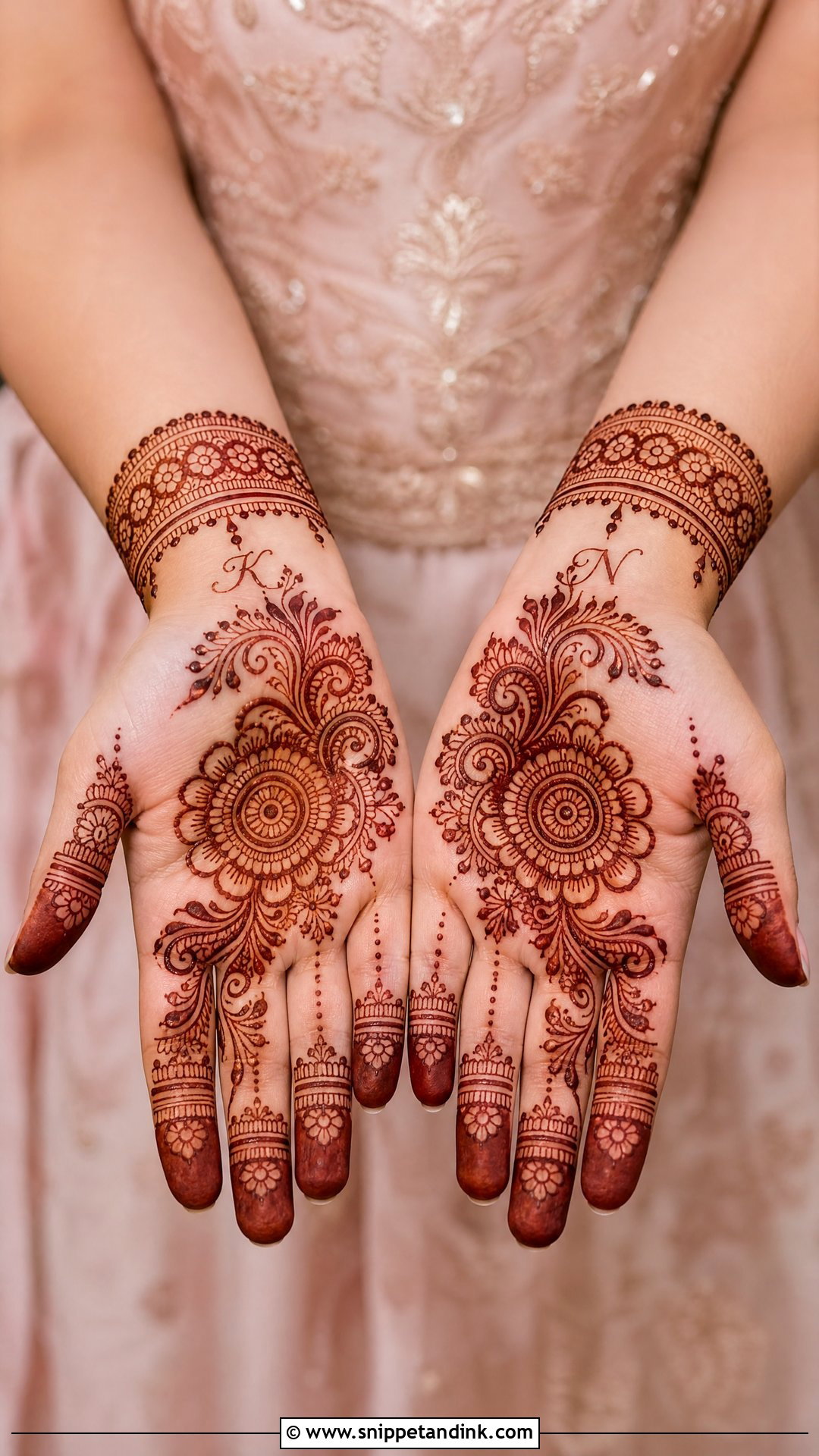
Engagement henna is usually lighter than the wedding but still needs to stand up to close-ups. A central floral mandala, clean finger bands, soft paisley trails and a bracelet wrist work well. Keep the ring finger fairly open so the ring isn’t lost in pattern. Initials, small hearts or a date suit an engagement design when they stay subtle. It’s festive without the long sitting of full bridal work.
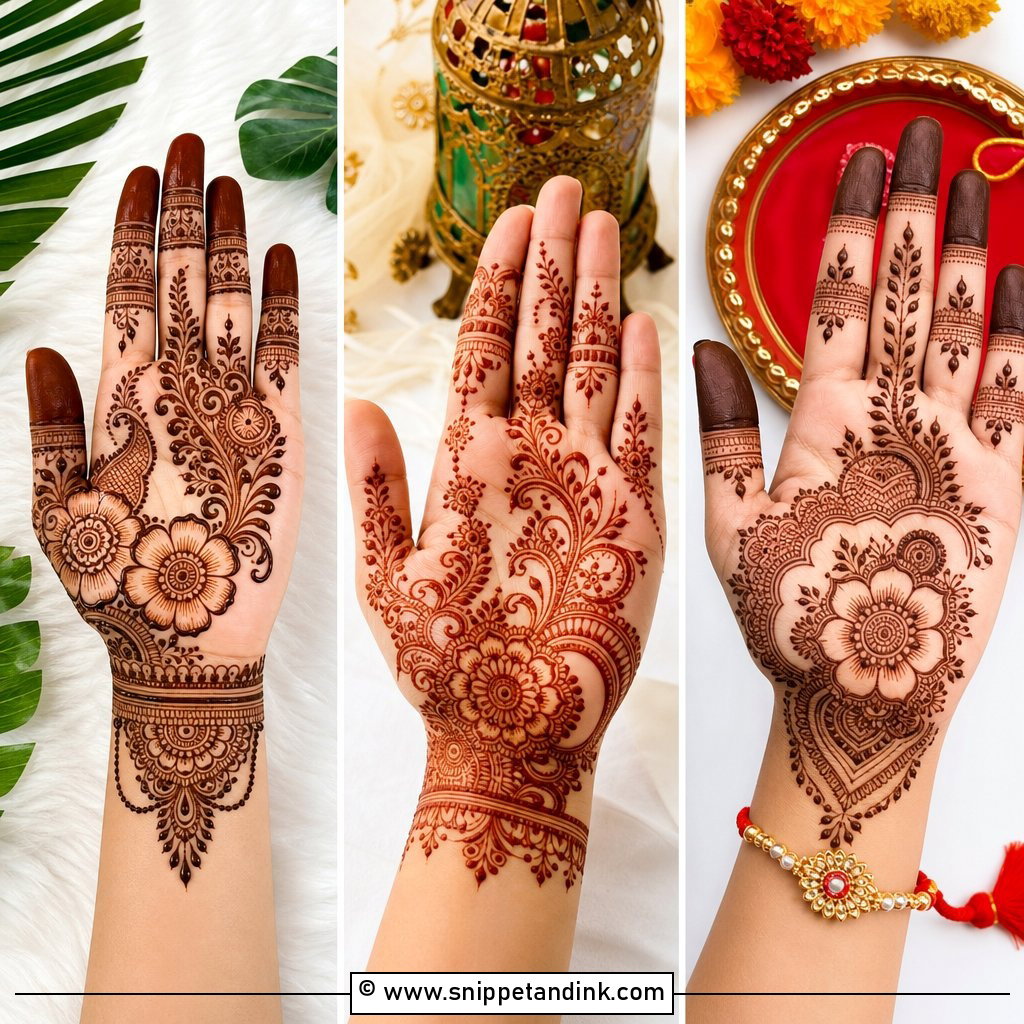
25. Wedding Day Bridal Front Hand Mehndi Design
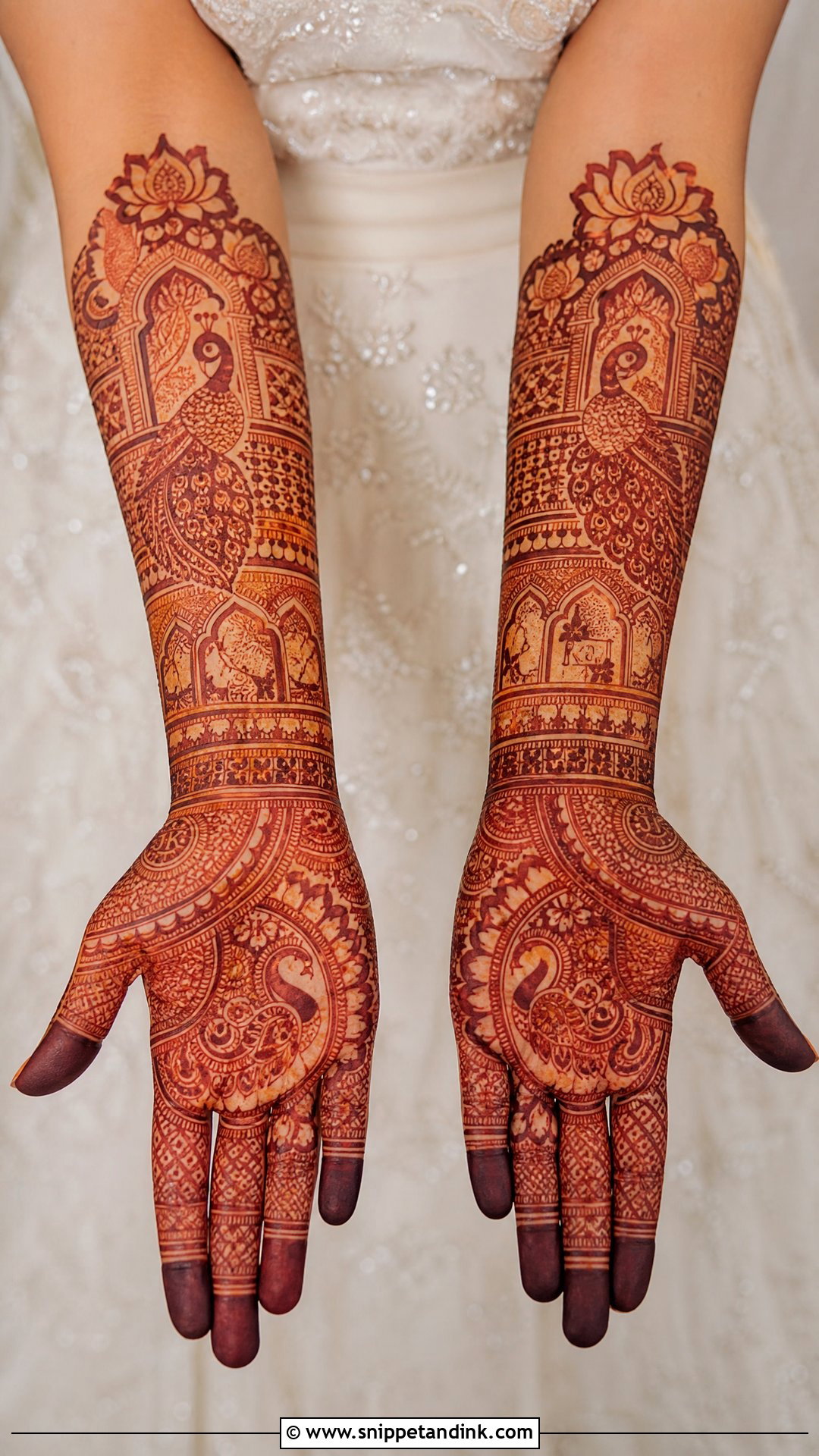
On the wedding day itself, the hands should look complete and meaningful from every angle: a palm focal point, detailed fingers, a wrist cuff, forearm work, hidden initials and traditional motifs. Since this is the main bridal mehndi, plan it around your outfit and jewelry. Heavy sleeves mean a cleaner forearm border; minimal jewelry means more wrist detail. Done well, it looks rich in person and clear in photos.
Judge an Artist by Her Stained Photos, Not Her Fresh Ones
Fresh paste always looks neat. The photos that tell you something are of the stain a day or two later: are the lines still crisp, did the jaali stay open, did the faces keep their features? Ask any artist you’re considering for those.
Ask what goes into her paste, too. Natural bridal henna is henna powder, a liquid such as lemon juice or water, a little sugar and a skin-safe essential oil. It should never contain anything that stains black instantly. I make mine fresh and freeze cones until the week of the wedding, and I’d be wary of anyone who can’t tell you when hers was mixed.
Keeping the Color Through a Week of Functions
A bridal stain peaks around two days after application and then fades slowly as the top layer of skin renews itself. Palms, which you wash most, fade first. To stretch it through the reception and beyond, rub a little natural oil or balm over the design before showering, skip scrubs and exfoliating washes, wear gloves for dishes and keep away from chlorinated pools. None of that will stop the fade, but it keeps the color even rather than patchy.
Heritage Detail or Open Flow for Your Own Hands
Front-hand henna can be traditional, modern, minimal, royal, floral, geometric or deeply personal. If you love heritage detail, look at Indian, Rajasthani, Mughal or heavy work. If you prefer open space and flow, Arabic, Gulf, Indo-Arabic or half-palm designs may suit you better. Whatever you pick, look for clear motifs, balanced fingers and a neat wrist finish. With the right artist and a layout planned around your hands, it becomes one of the details you remember most.
You'll Like These Ideas:


Leave a Reply