
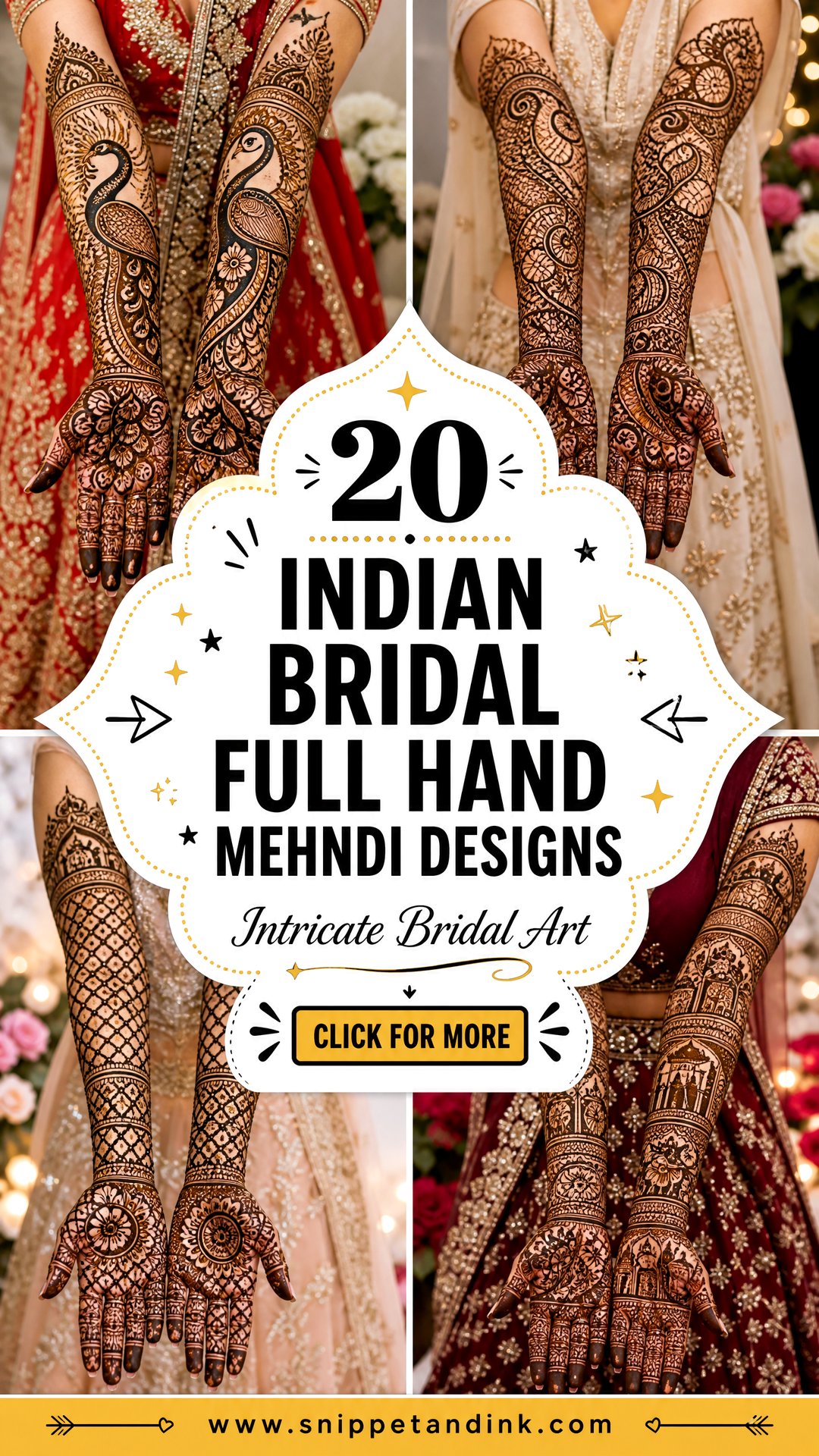
Full-hand bridal mehndi is the longest sitting I do all season, and the one brides plan least for. Covering both hands front and back, fingertips to elbow, means a dense palm, a wrist that has to sit under bangles and kaleeras, and forearm panels that show in every ring and varmala photo. The motifs below run from the oldest ones in the trade (paisley, lotus, peacock, jaali, the couple portrait) to newer layouts with open space and hidden initials. Which one suits you depends on your hand shape, your outfit and how many hours you can actually sit still, so I’ve added what I’d tell you at the consultation for each.
What a Full-Hand Appointment Really Involves
Brides are often surprised by the hours. One hand front and back to the elbow in a detailed bridal pattern is a long job, and both hands in a portrait or Rajasthani design can run most of a day. Most of my brides book the sitting one or two days before the wedding, because the stain keeps darkening for about two days after the paste comes off. Mehndi on the morning of the wedding will still look orange at the ceremony.
- Exfoliate and wash your hands and arms the day before, then skip lotion, oil and sunscreen on the day. Anything on the skin blocks the dye.
- Do waxing, manicures and any facial before the mehndi. Scrubbing or soaking afterwards fades the stain.
- Eat properly and use the bathroom just before we start. You’ll lose the use of both hands for hours.
- Wear a loose, front-opening top with short or wide sleeves that won’t brush the forearms.
- Bring your references and the list of hidden details, ranked, so we’re not deciding mid-pattern.
I also ask brides to tell me if their palms run warm or sweaty. Warm hands actually take a stain well, but sweat can lift fine lines before they set, so I’ll keep a fan going and draw the palms last.
1. Traditional Indian Bridal Full Hand Mehndi Design
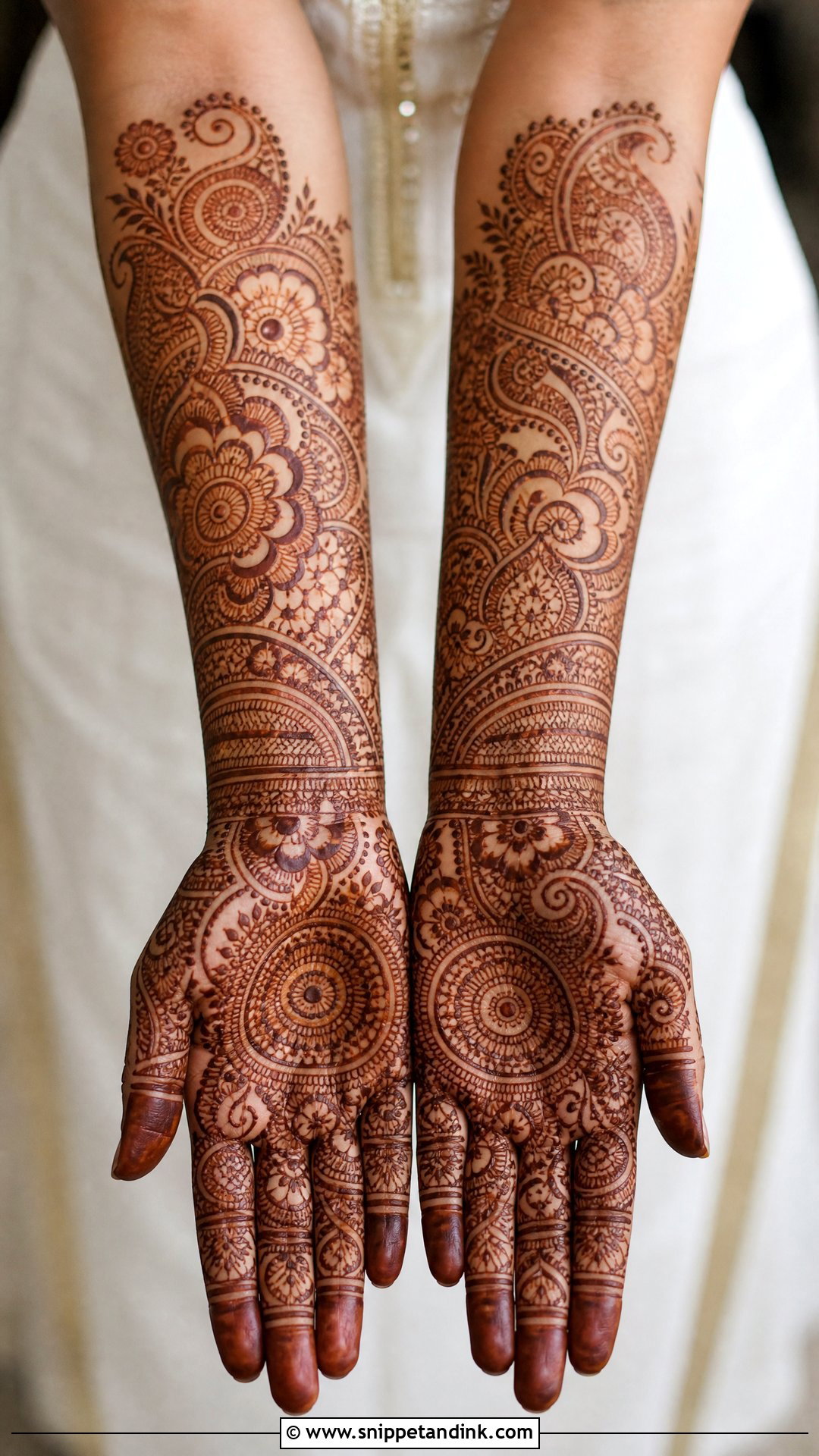
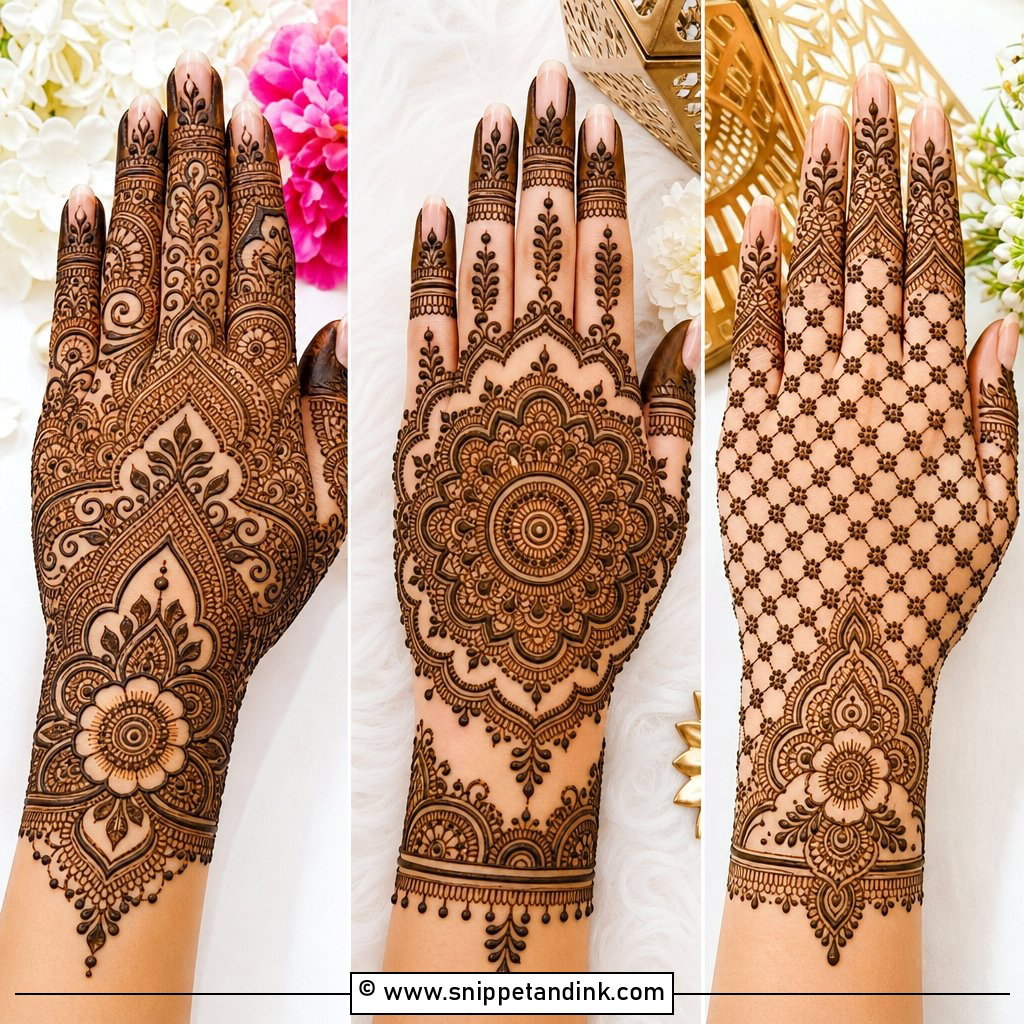
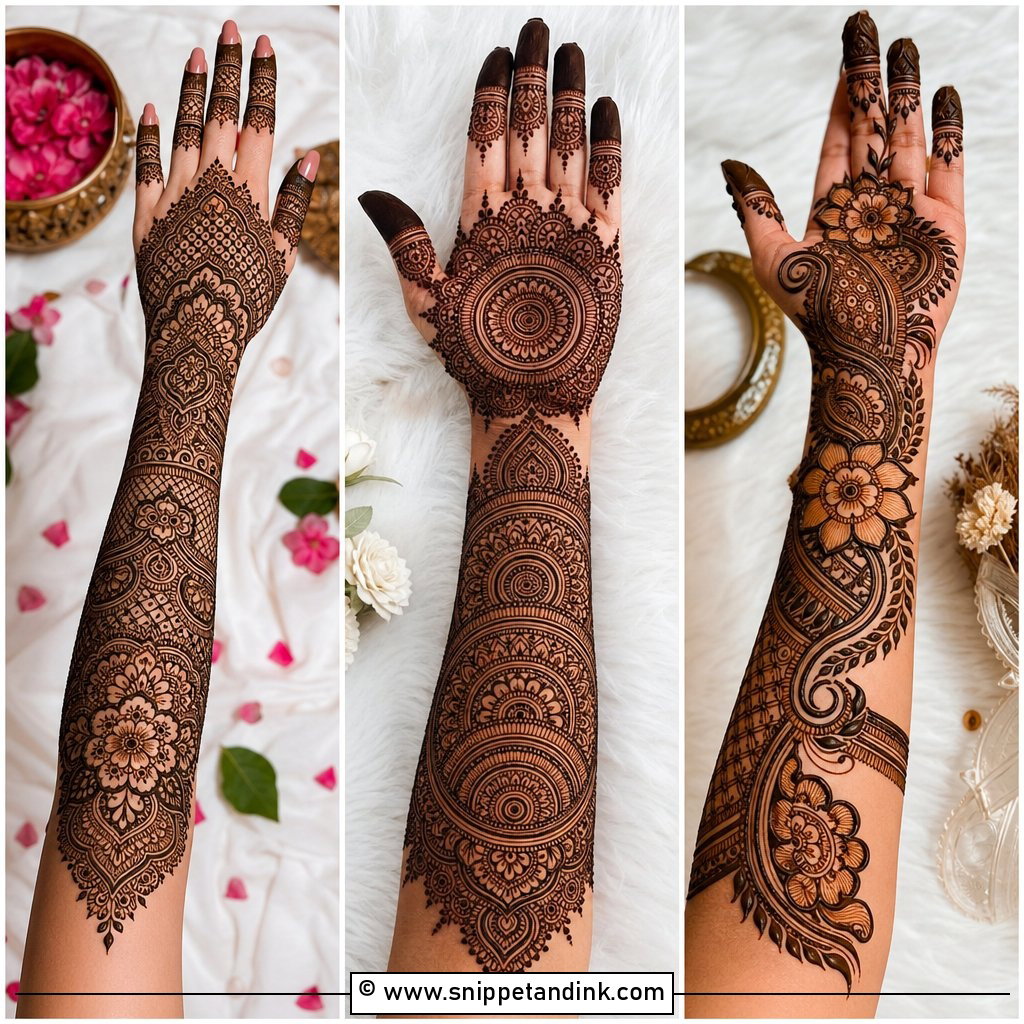
This is the layout most of my brides’ mothers had: palm, fingers, wrist and forearm filled with paisleys, small flowers, vines, dotted borders and a mandala, with almost no bare skin. I build it from the centre of the palm outwards, because if the middle drifts off-centre every border after it drifts too. It carries red, maroon and green outfits well since the dark stain reads as texture against heavy embroidery. The one thing I ask brides to check is symmetry between the two hands, which matters far more in close-up photos than any single motif.
2. Rajasthani Bridal Full Hand Mehndi Design
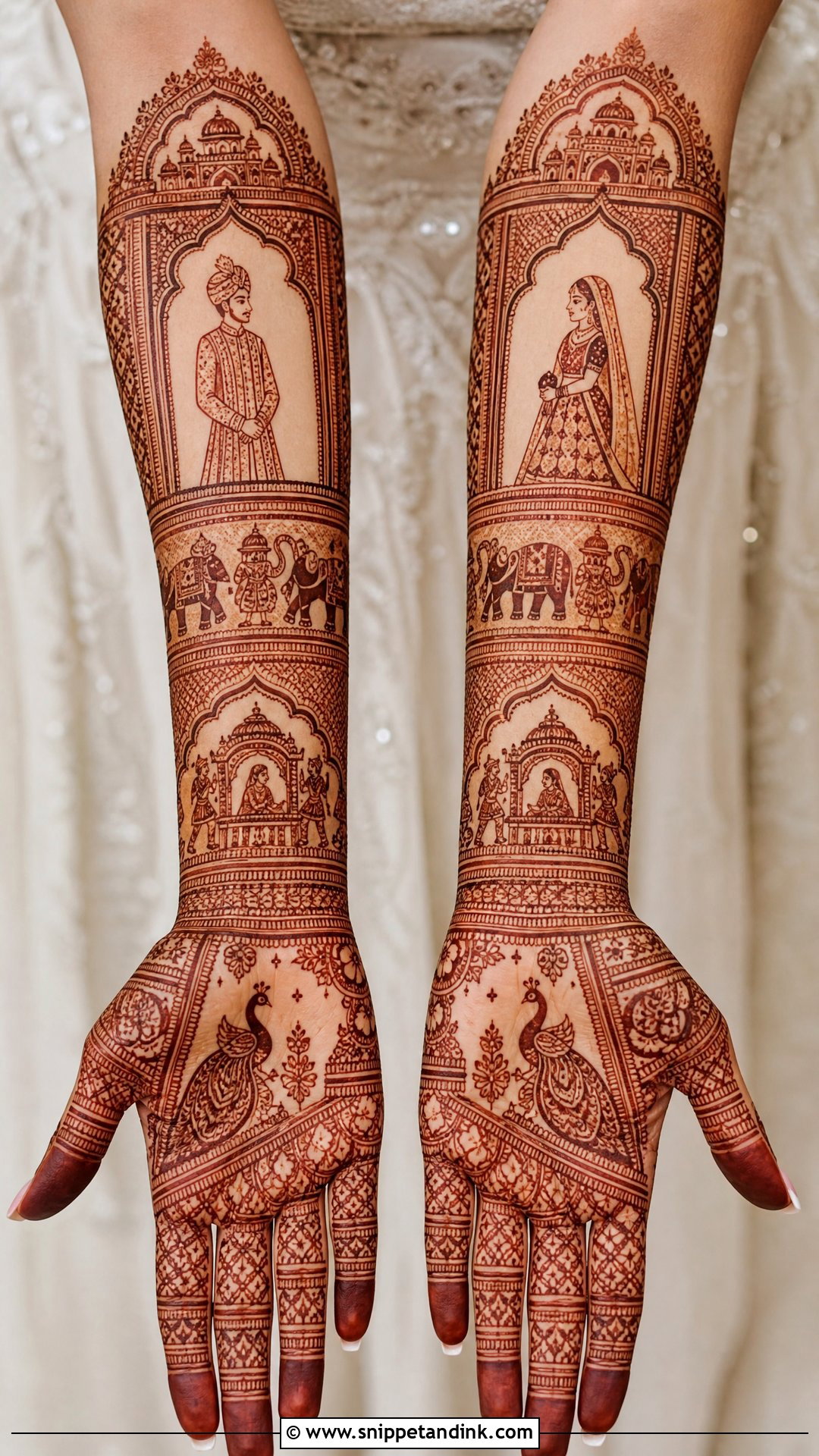
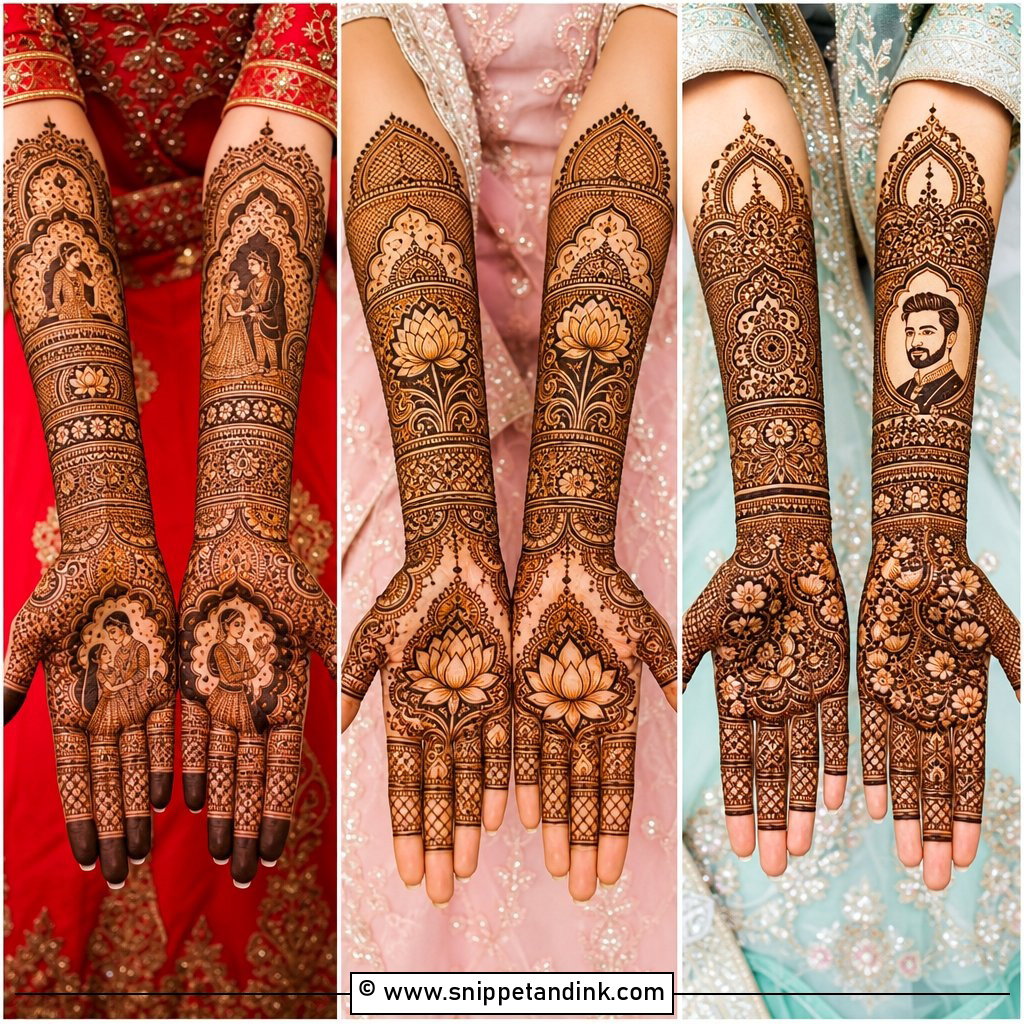
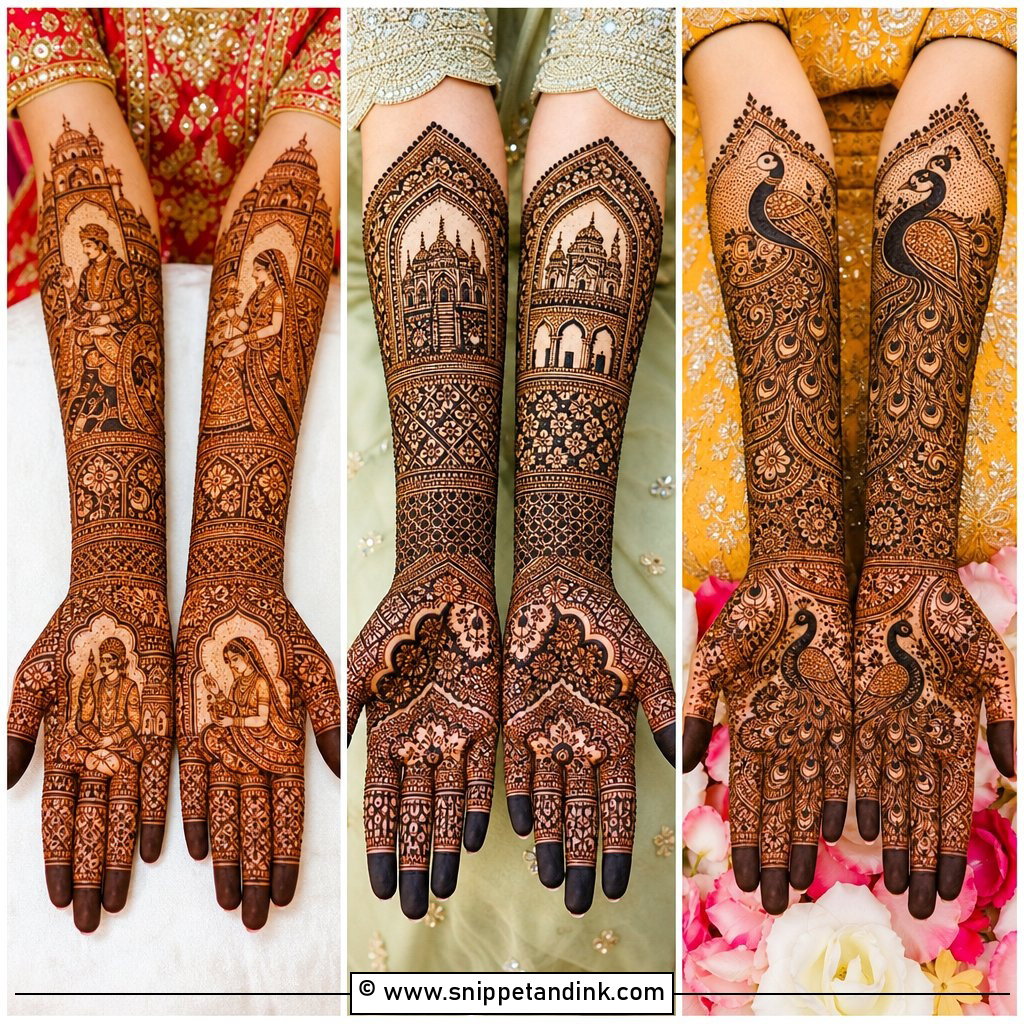
Rajasthani bridal full hand mehndi design tells a story: bride and groom figures, elephants, palaces, a doli, peacocks, all framed by ornamental borders so the two hands read as one scene when held together. It is slow work. Faces at that scale need a very fine cone tip and a steady wrist, and I always ask to see an artist’s close-ups of eyes and fingers before trusting them with this style. Budget extra time on the day, because a rushed figure is the first thing people notice.
3. Marwari Bridal Full Hand Mehndi Design
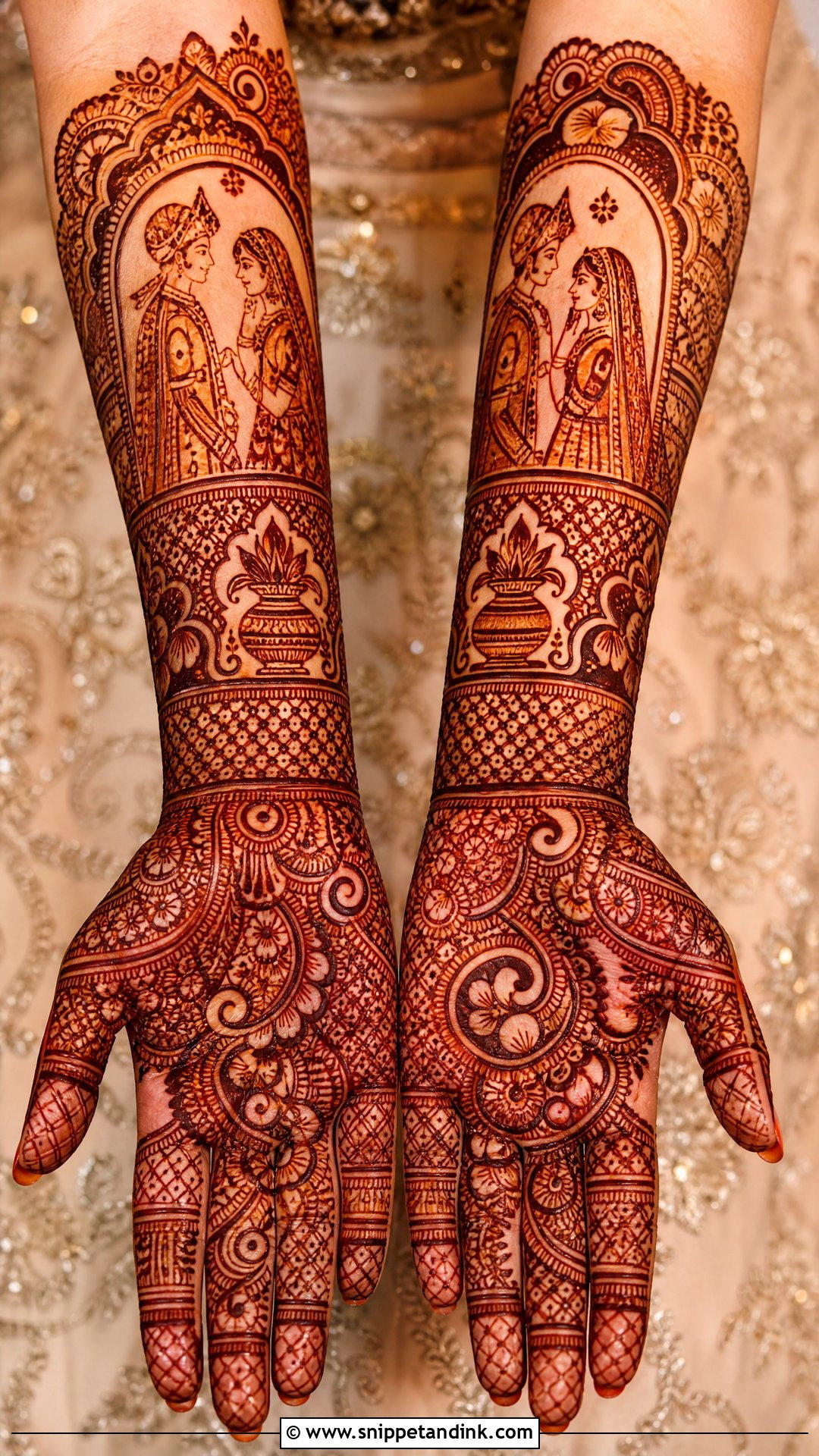
Marwari work looks heavy, but it is actually very ordered: neat sections, mirrored panels, paisley clusters, peacocks, and often dulha-dulhan figures, a kalash, shehnai or a hidden name. The structure is what keeps it from turning into a blur once the stain goes dark. I mark the panel lines first with thin guide strokes, then fill. It sits naturally beside bandhani, gota patti and kundan, and suits red or orange outfits. If your palms sweat a lot, tell your artist, since the dense fills need the paste to stay on undisturbed.
4. Peacock Indian Bridal Full Hand Mehndi Design
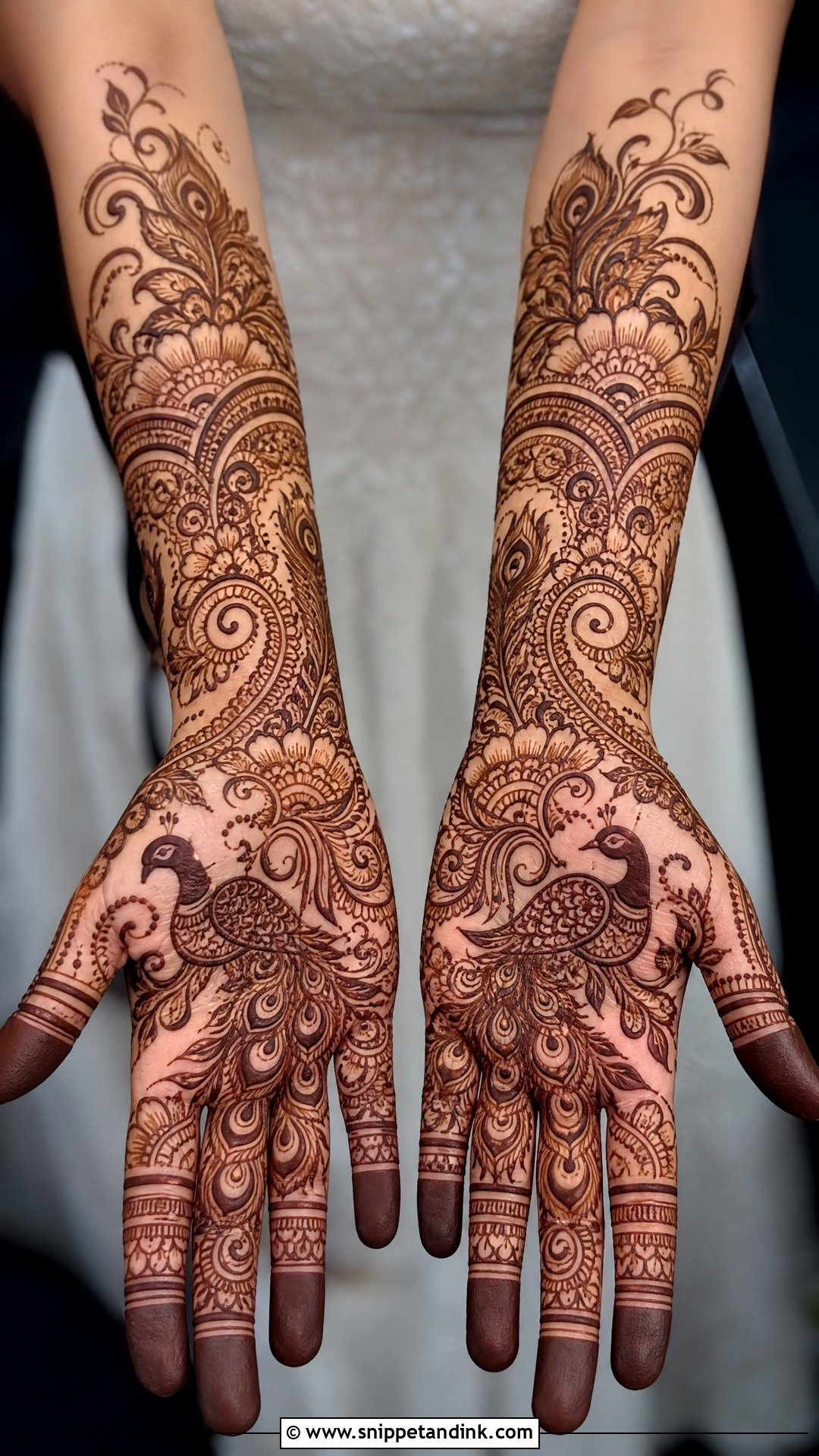
A peacock gives a dense pattern somewhere for the eye to rest. I place it on the palm, along the forearm, or as a facing pair across both hands, and fill the feathers with teardrops, dots and fine mesh. Long fingers are ideal, because the feather trails can run right out to the tips. On short, wide hands I keep the bird compact and let a border do the stretching instead. The other motifs around it should be a size smaller, or the peacock gets lost.
5. Lotus Indian Bridal Full Hand Mehndi Design
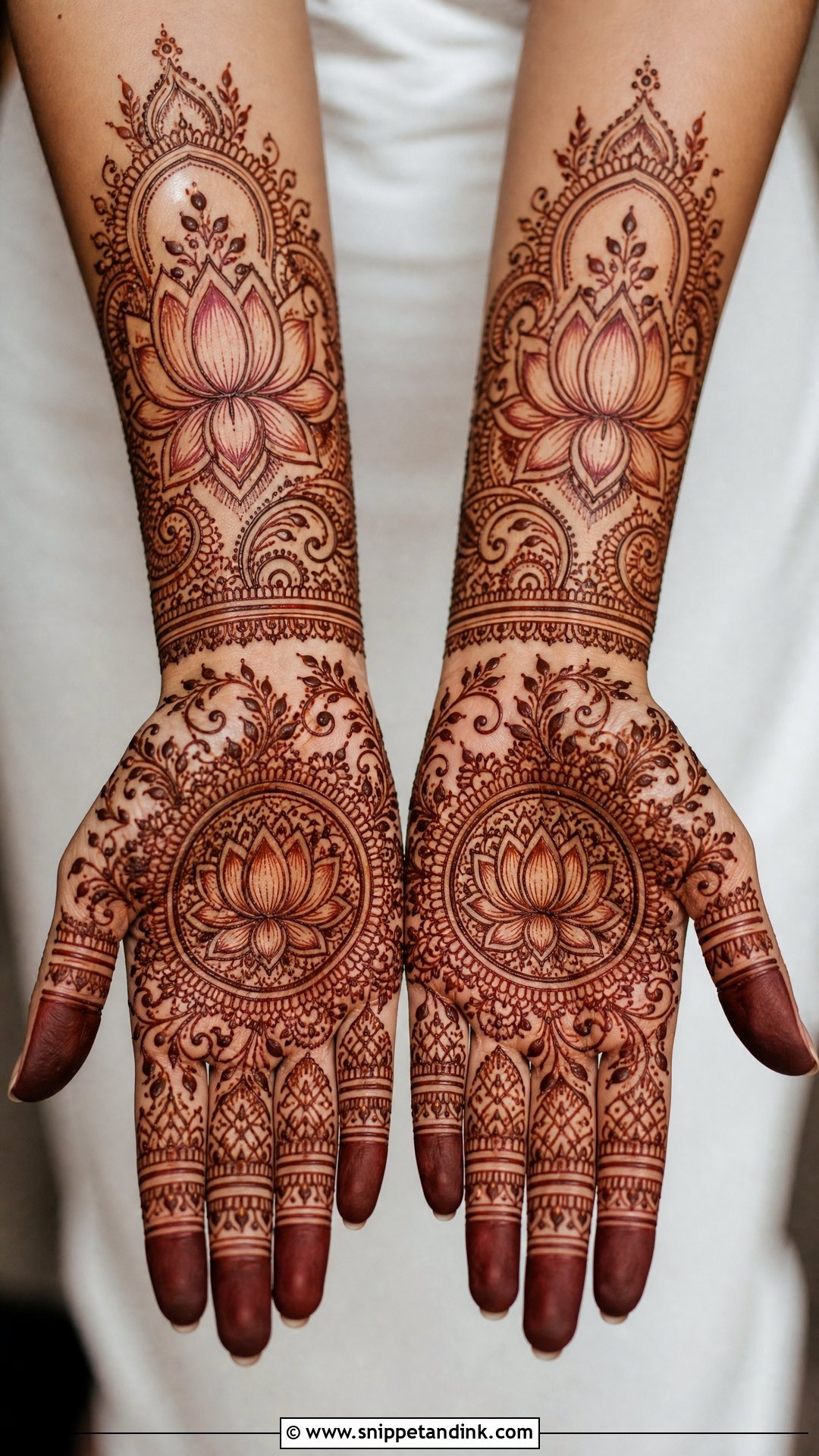
Lotus motifs are rounded and calm, usually set on the palm, the wrist band and the forearm with vines tying each section together. They hold up well as the stain darkens, since a petal is a large enough shape to survive the slight spreading that happens over two days. I put the big blooms on the palm and forearm and keep tiny petals for the fingers. Lotus mixes easily with mandalas, paisleys or jaali if you want variety without clutter.
6. Paisley Indian Bridal Full Hand Mehndi Design
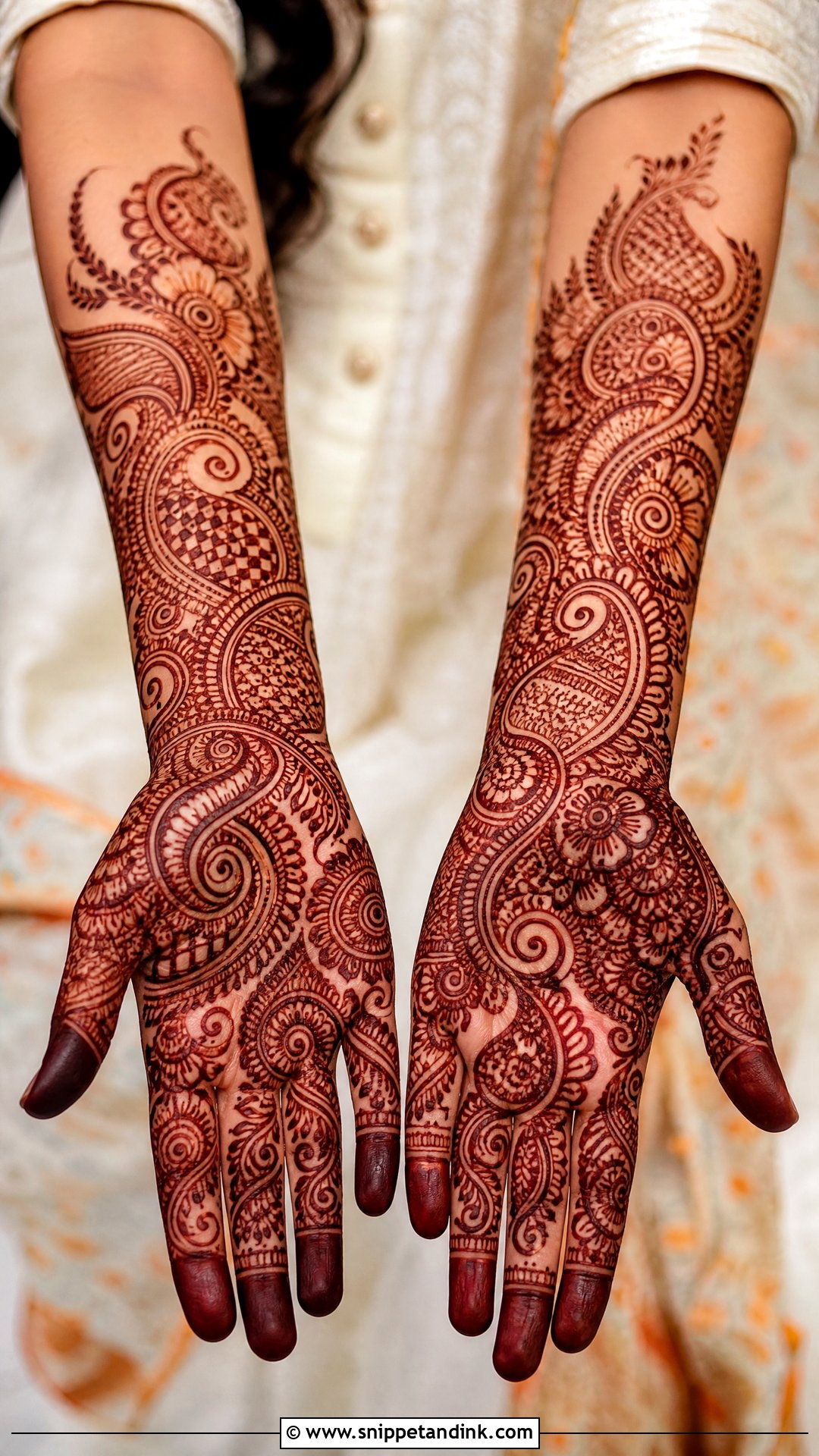
Paisley is the motif I’d call hardest to get wrong. It can be large, small, layered, tilted or chained into trails, so a fully covered hand still has movement. Hand size changes how I draw it: broad palms take big paisley clusters, slim hands look better with thinner paisley vines and fine fillers. The inside of each paisley is also where I tuck initials, because the curve hides them until someone is told to look.
7. Mandala Indian Bridal Full Hand Mehndi Design
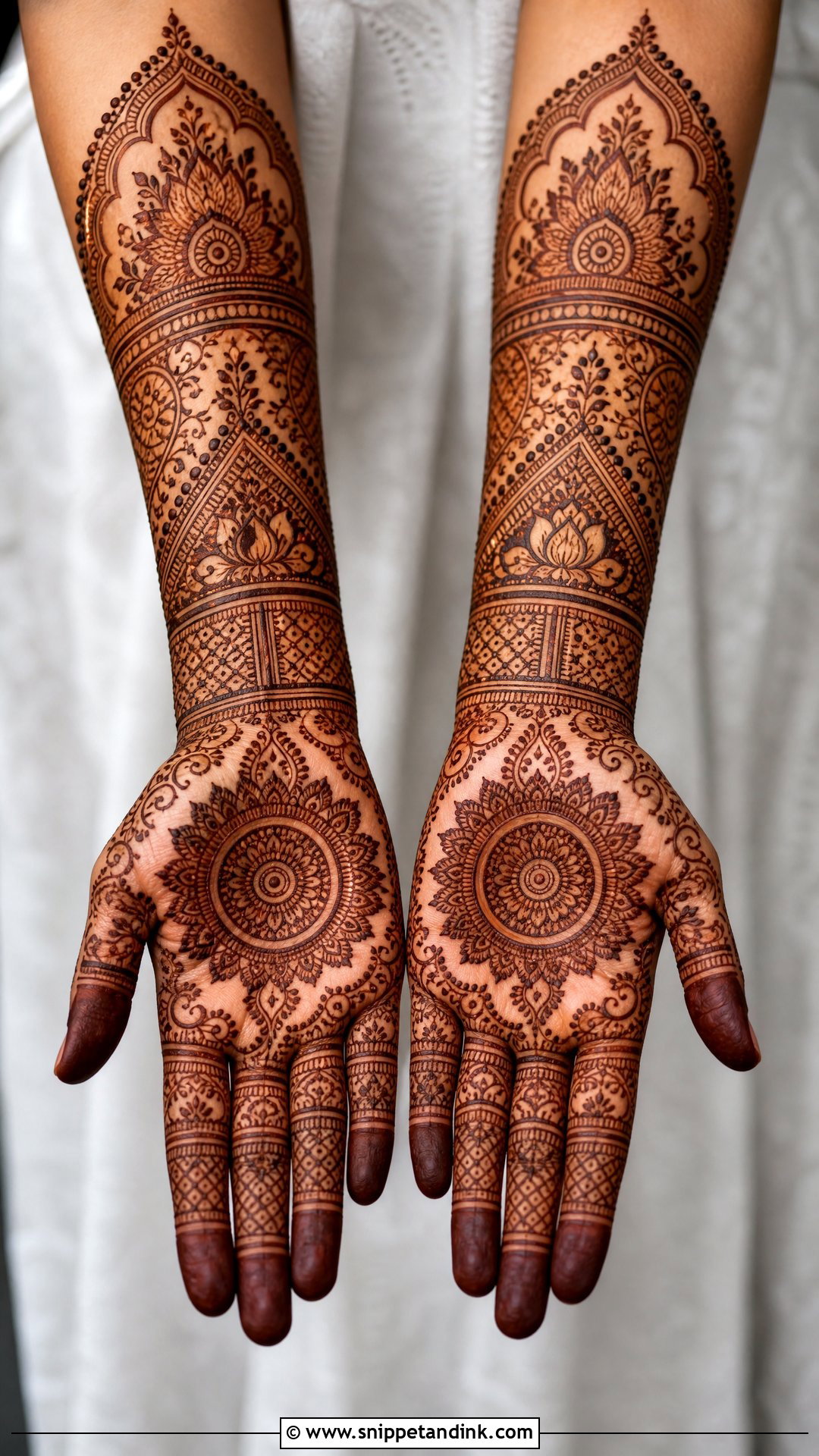
A mandala gives each palm a fixed centre, with rings of petals, dots and fine circles building outwards, then decorated fingers, a wrist cuff and forearm work to finish the full hand. The trap is a mandala that isn’t round. I draw the outer ring lightly first so the circle closes properly before any filling starts. Keep it dense for a classic look, or leave thin gaps of skin between rings for something more current. In hand-pose photos the centre stays readable even from a distance.
8. Jaali Indian Bridal Full Hand Mehndi Design
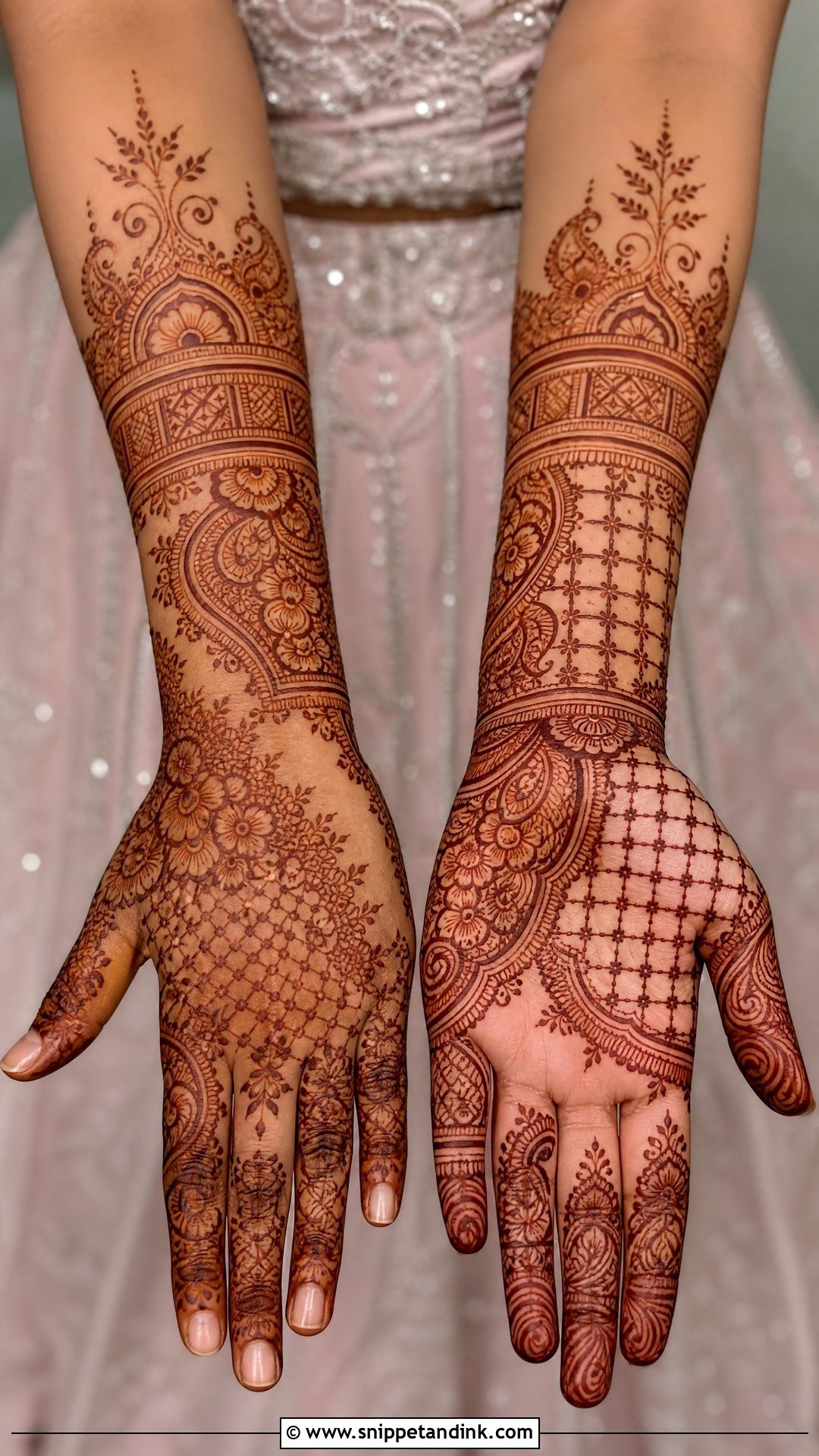
Jaali is a mesh pattern that reads like lace, used on the palms, the back of the hand, the wrist or the forearm, broken up with flowers and borders. It’s my usual answer for a bride who wants full coverage but hates a packed look, because the grid lets skin show through. The skill is in the spacing. If the mesh lines wander even slightly, the whole hand looks untidy, so I’d look closely at an artist’s jaali before booking.
9. Bride Groom Indian Bridal Full Hand Mehndi Design
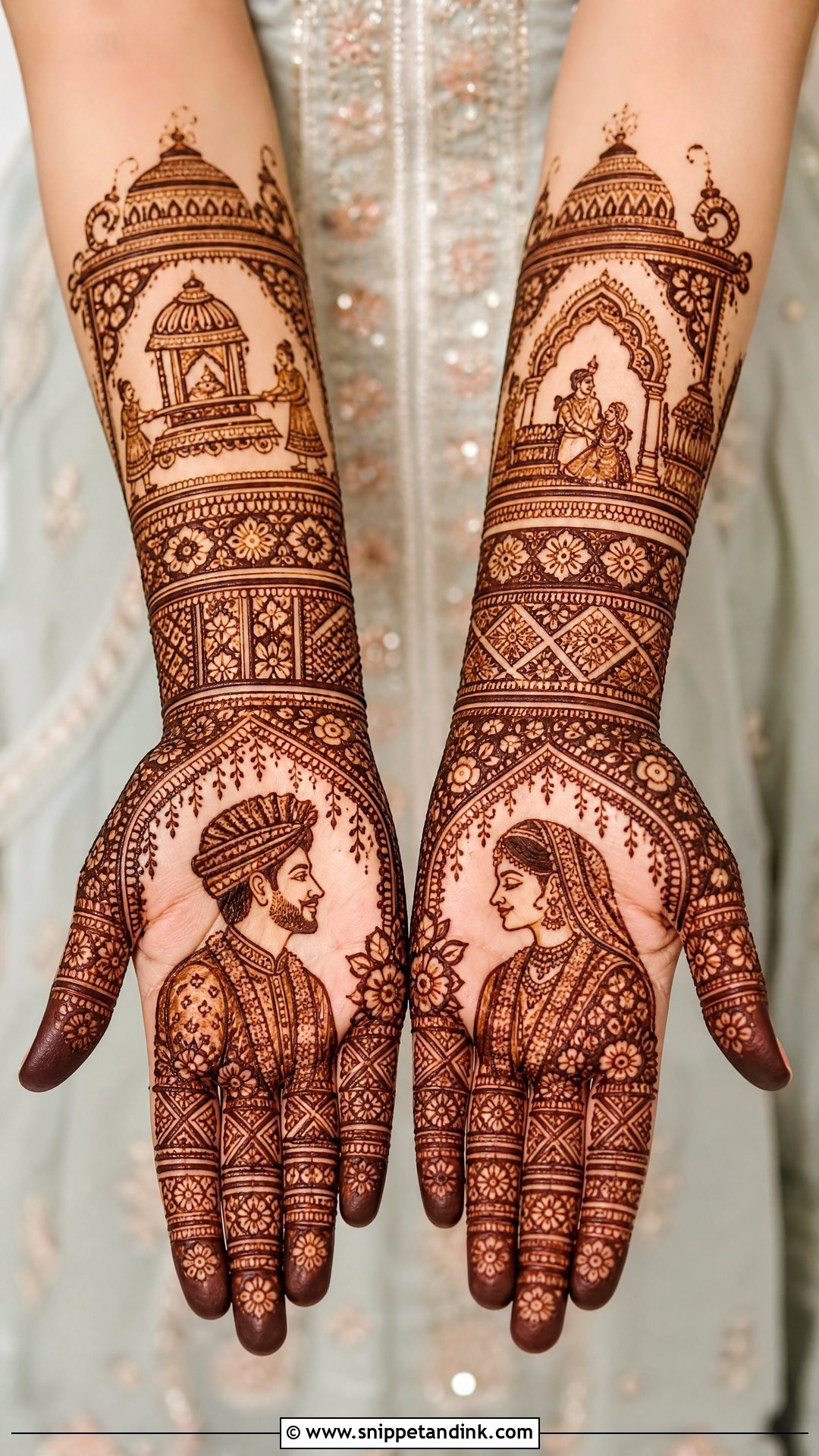
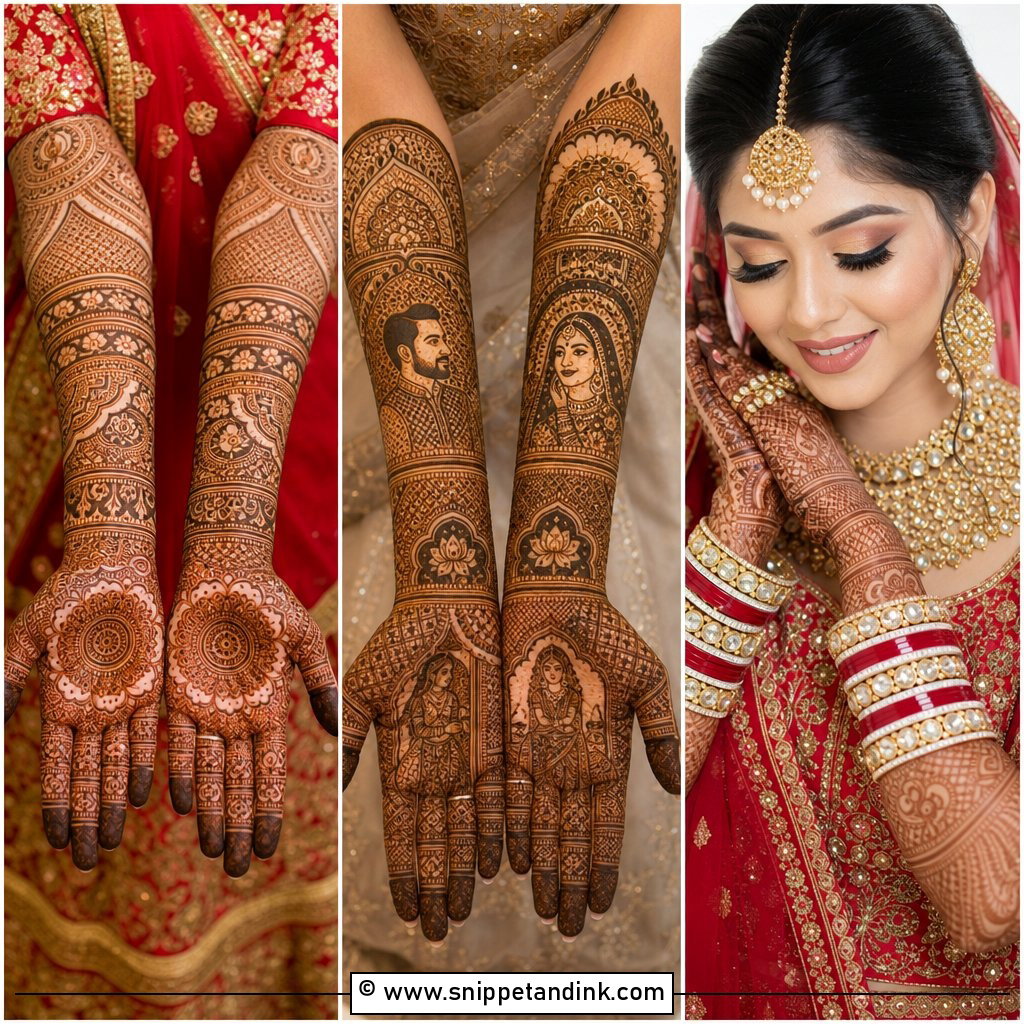
Portrait mehndi puts the bride on one palm and the groom on the other, surrounded by a mandap, varmala, doli, shehnai and floral borders. Brides choose it because it feels personal, and it gives the photographer a close-up during the ceremony. Faces are where weak artists show, so book someone experienced and give them time. I keep the forearms to supporting motifs rather than a second set of scenes, otherwise the portraits compete with everything around them.
10. Dulha Dulhan Indian Bridal Full Hand Mehndi Design
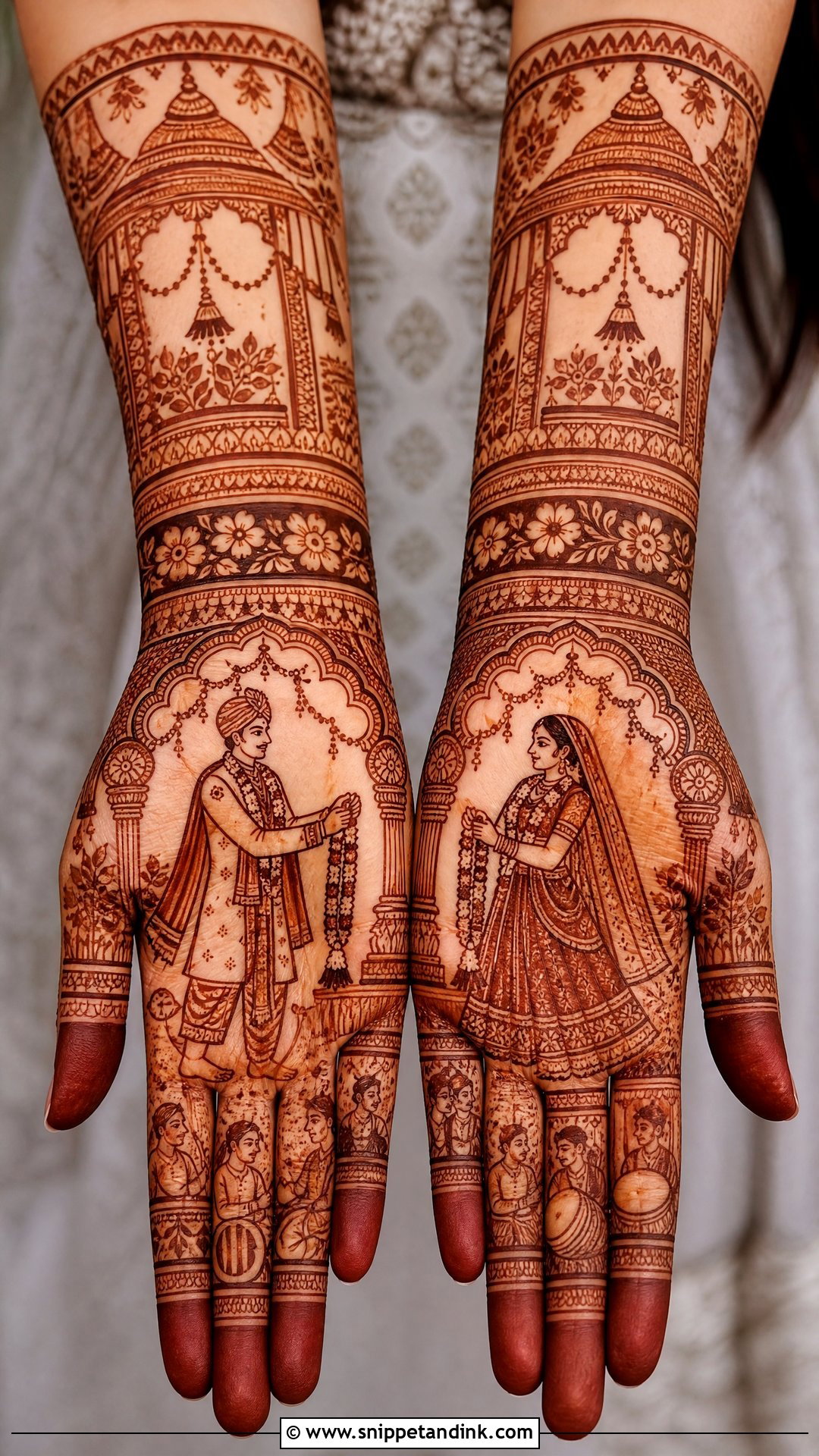
Dulha dulhan designs are close to portrait mehndi but pack in more of the wedding around the couple: garlands, mandap pillars, dhol, flowers and arches. Both palms have to be planned together before the first line, because the figures should meet when the hands are joined. I sketch the meeting point on both hands with a dot or two before drawing. Initials or the date fit into the forearm fillers without disturbing the faces.
11. Elephant Indian Bridal Full Hand Mehndi Design
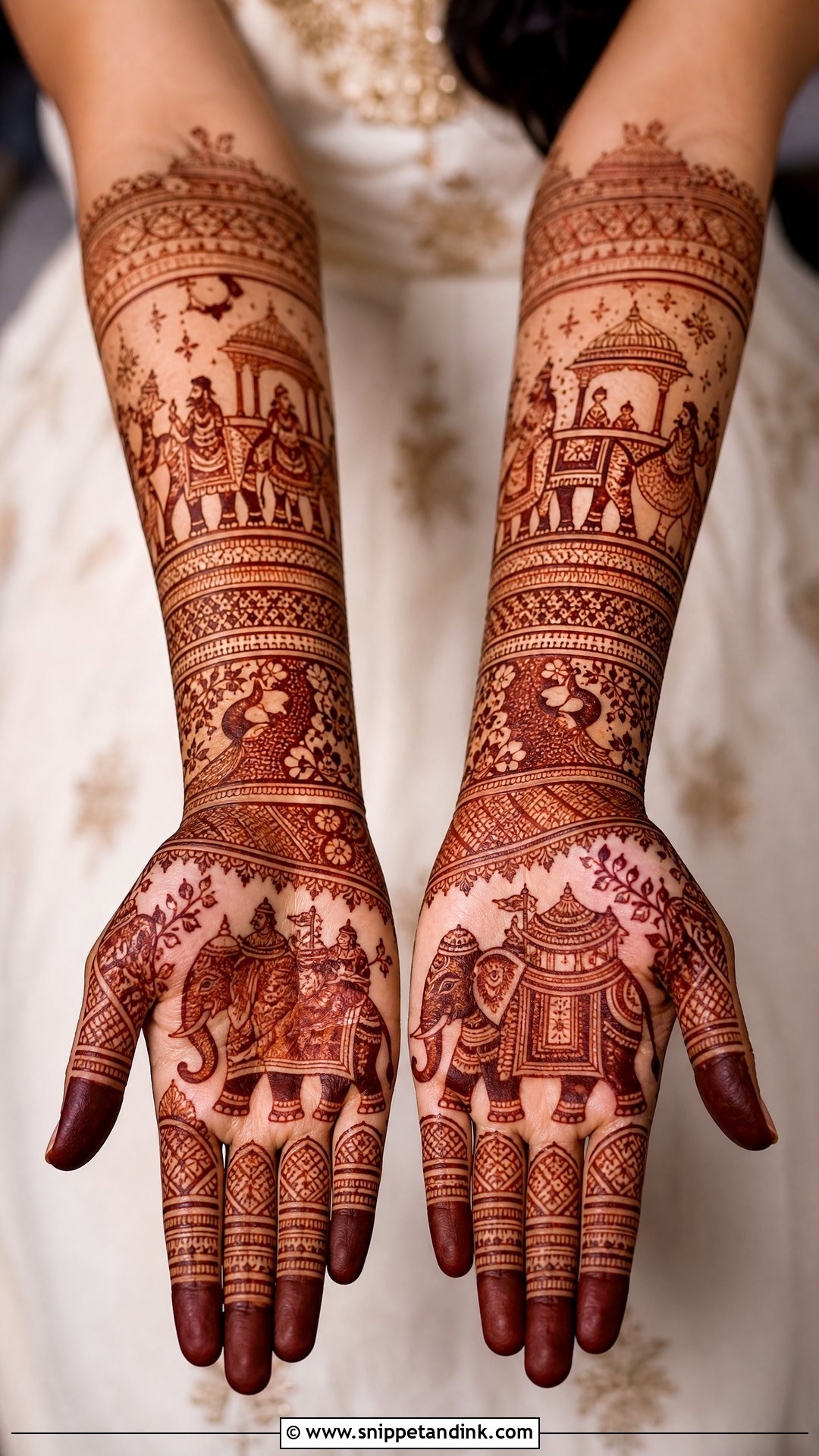
Elephants usually walk along the forearm or near the wrist, sometimes as part of a procession with peacocks and palaces. They suit heritage venues and Rajasthani or Marwari outfits. Size them generously. A tiny elephant with a decorated saddle looks fine in wet paste, but after the stain darkens the fine lines merge and it becomes a dark lump. A bold elephant motif with lighter work around it keeps its shape.
12. Palace Indian Bridal Full Hand Mehndi Design
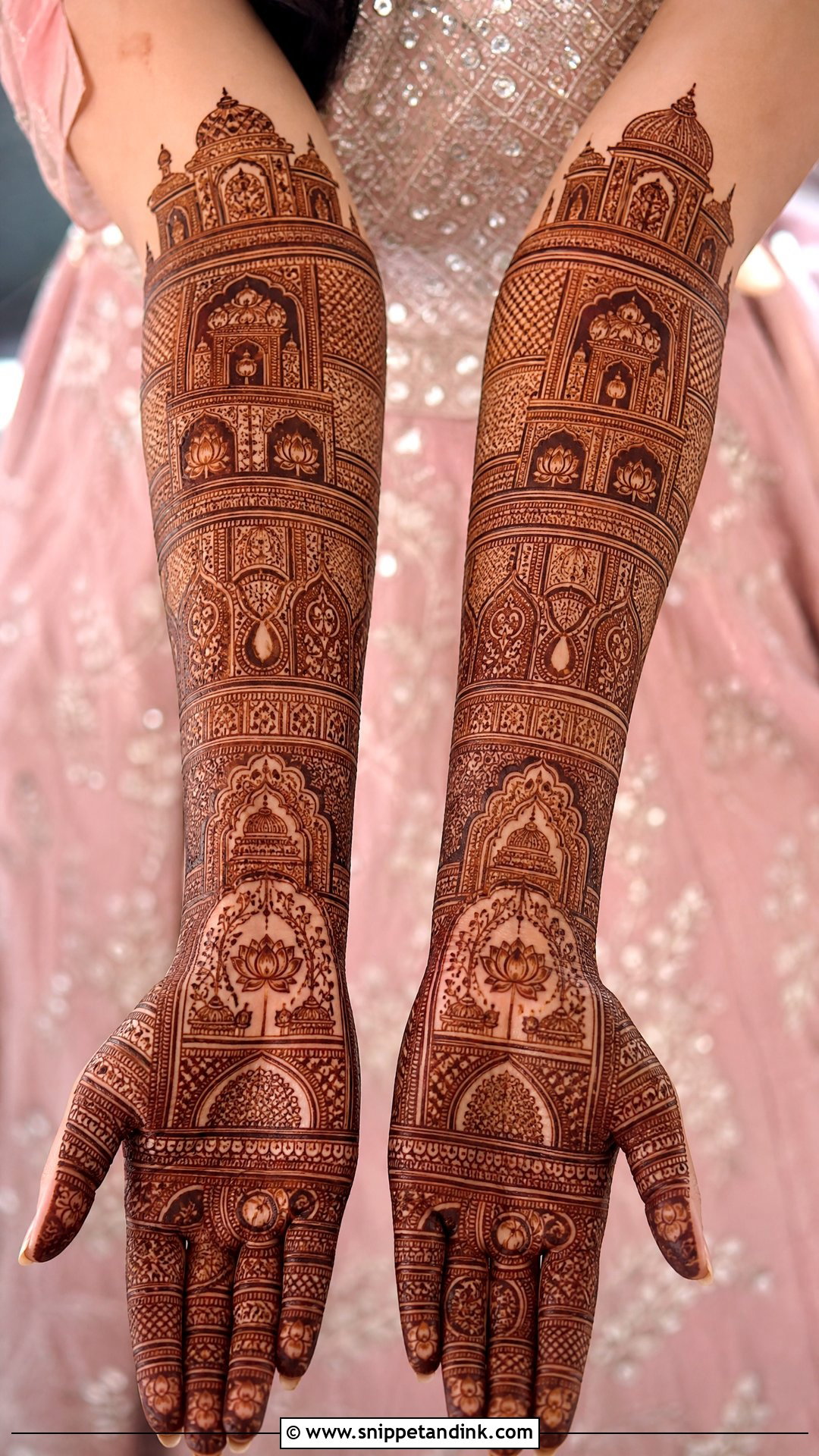
Palace motifs mean arches, jharokhas, domes, windows and carved borders, with or without the couple standing inside them. I put architecture on the forearm because it needs room for straight lines, and keep softer mandalas, paisleys or lotus on the palm to balance it. Straight lines are harder than curves with a cone, since any wobble shows, so this is one to see in an artist’s portfolio first. It pairs naturally with polki and a heavy dupatta.
13. Indo Arabic Bridal Full Hand Mehndi Design
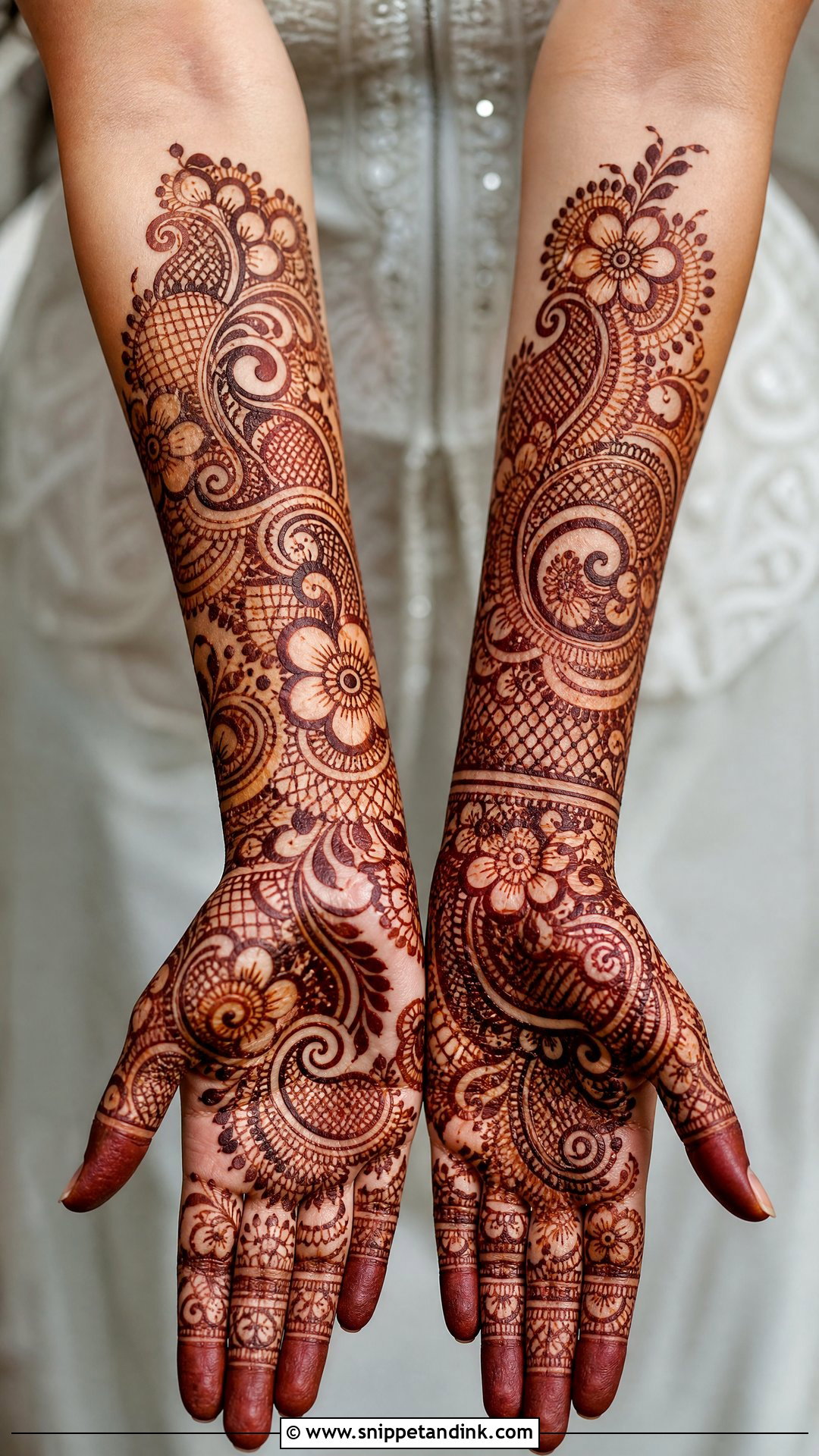
Indo Arabic takes the big flowing trails and bold flowers of Arabic mehndi and fills them with Indian dots, lines, paisleys and mesh. You still get full coverage, but with visible skin gaps, so it looks less crowded. It also works for an engagement or sangeet if you don’t want to go fully dense twice in one week. I draw the main outlines a little thicker in this style so the shapes stay crisp after the stain deepens.
14. Arabic Indian Bridal Full Hand Mehndi Design
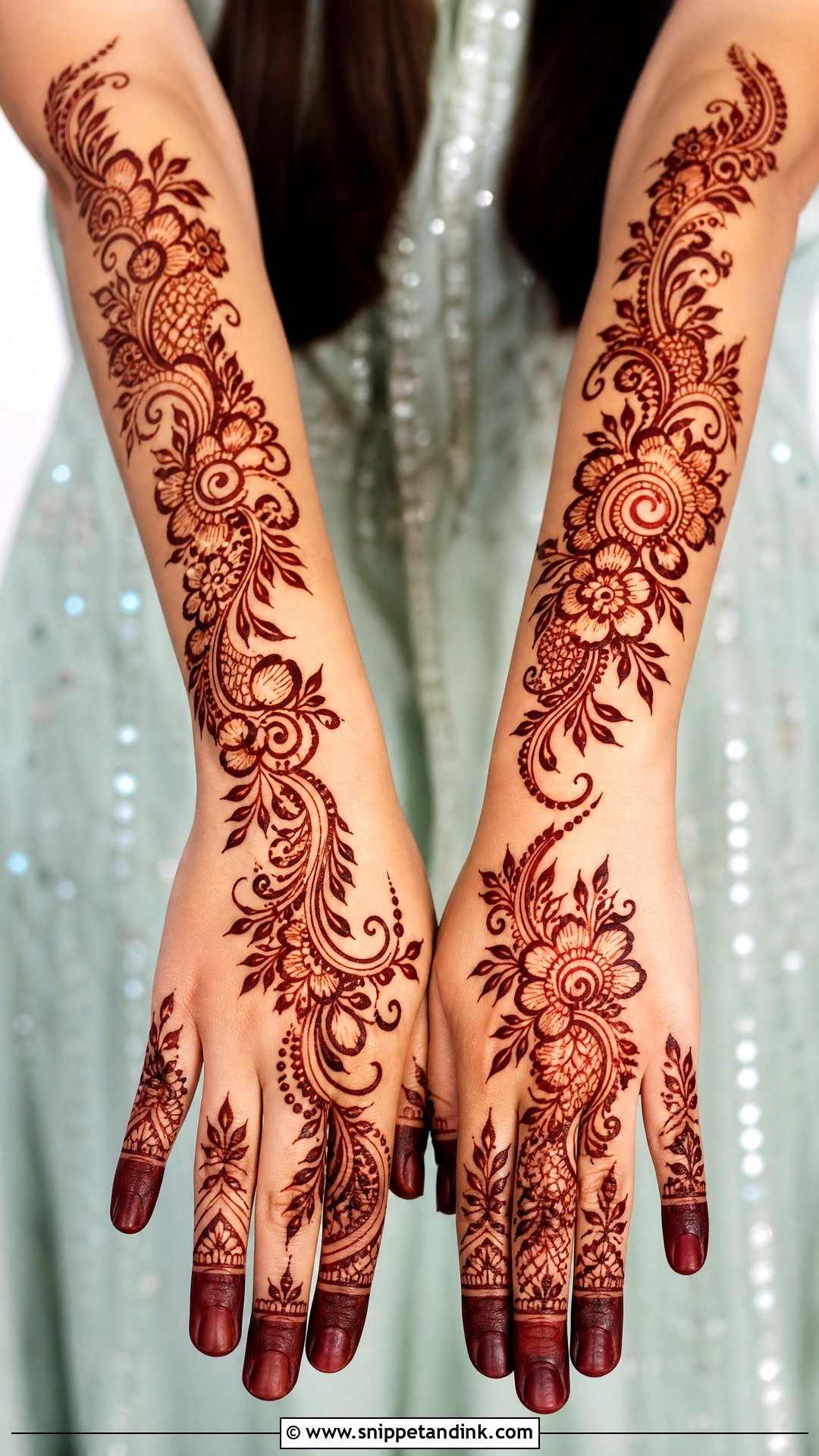
Arabic-led full-hand mehndi moves diagonally across the hand in flowers, leaves and curved borders, with open spaces that let each motif stand alone. For a bride who finds a packed palm too much, I extend the trail from fingertips to forearm and add fine Indian fillers inside the larger shapes so it still reads as bridal. It sits well with pastel lehengas, shararas and anarkalis, and it usually takes less time than a fully dense hand.
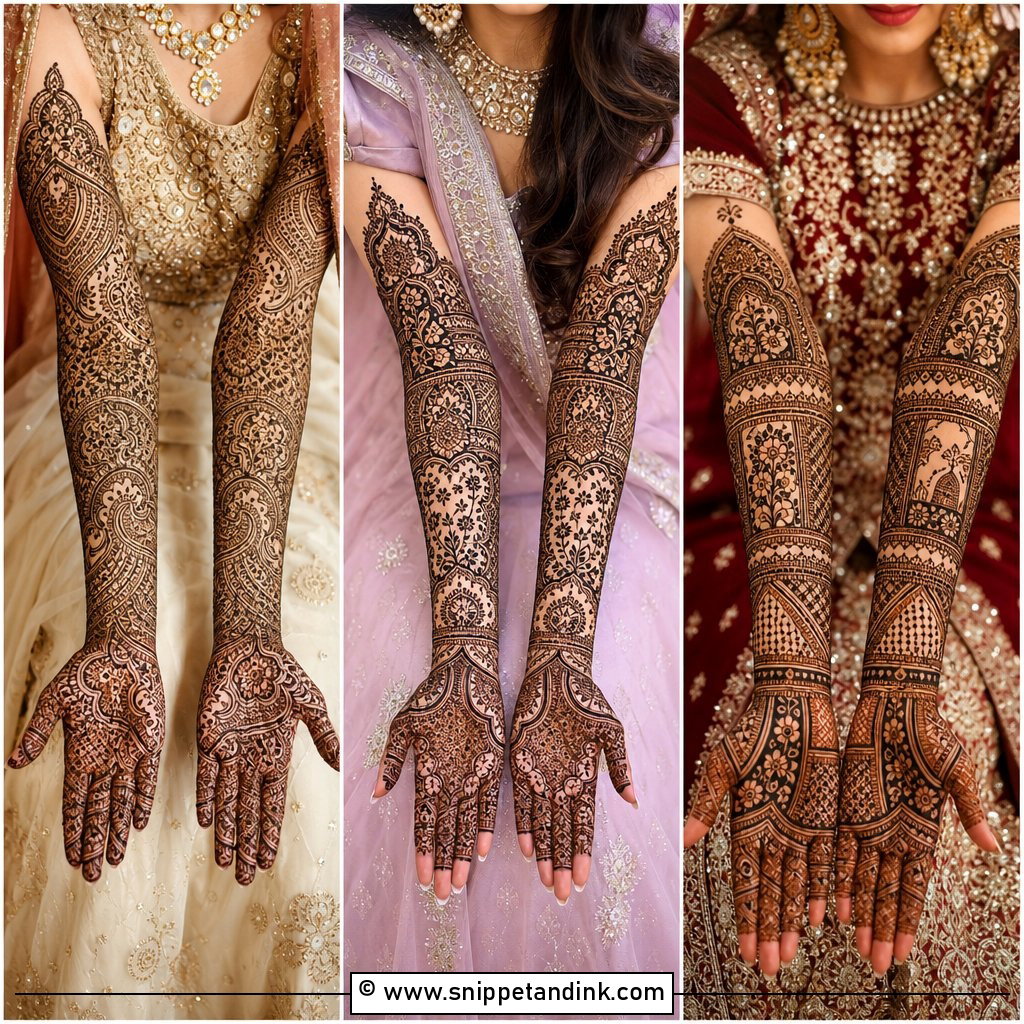
15. Minimal Indian Bridal Full Hand Mehndi Design
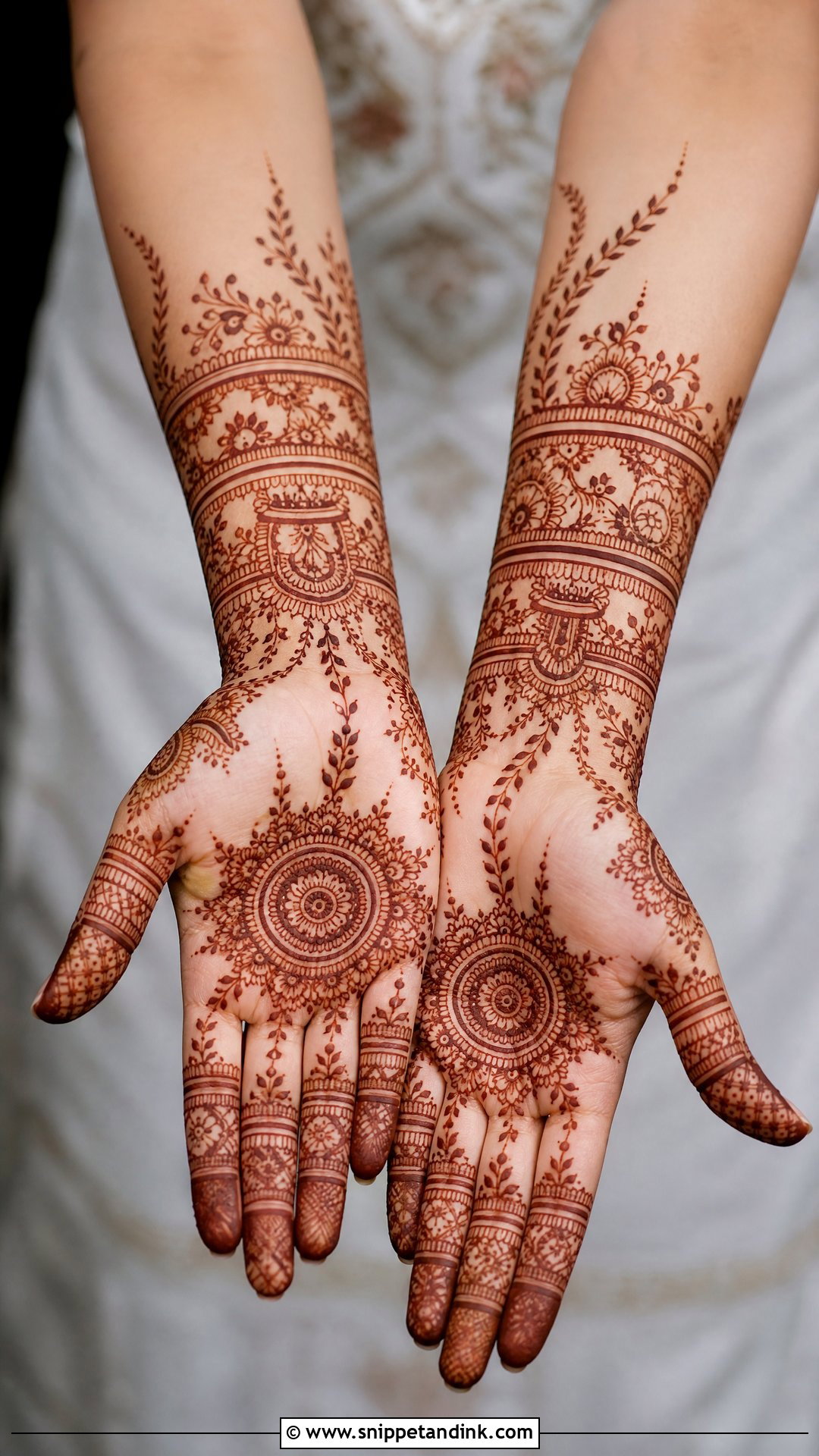
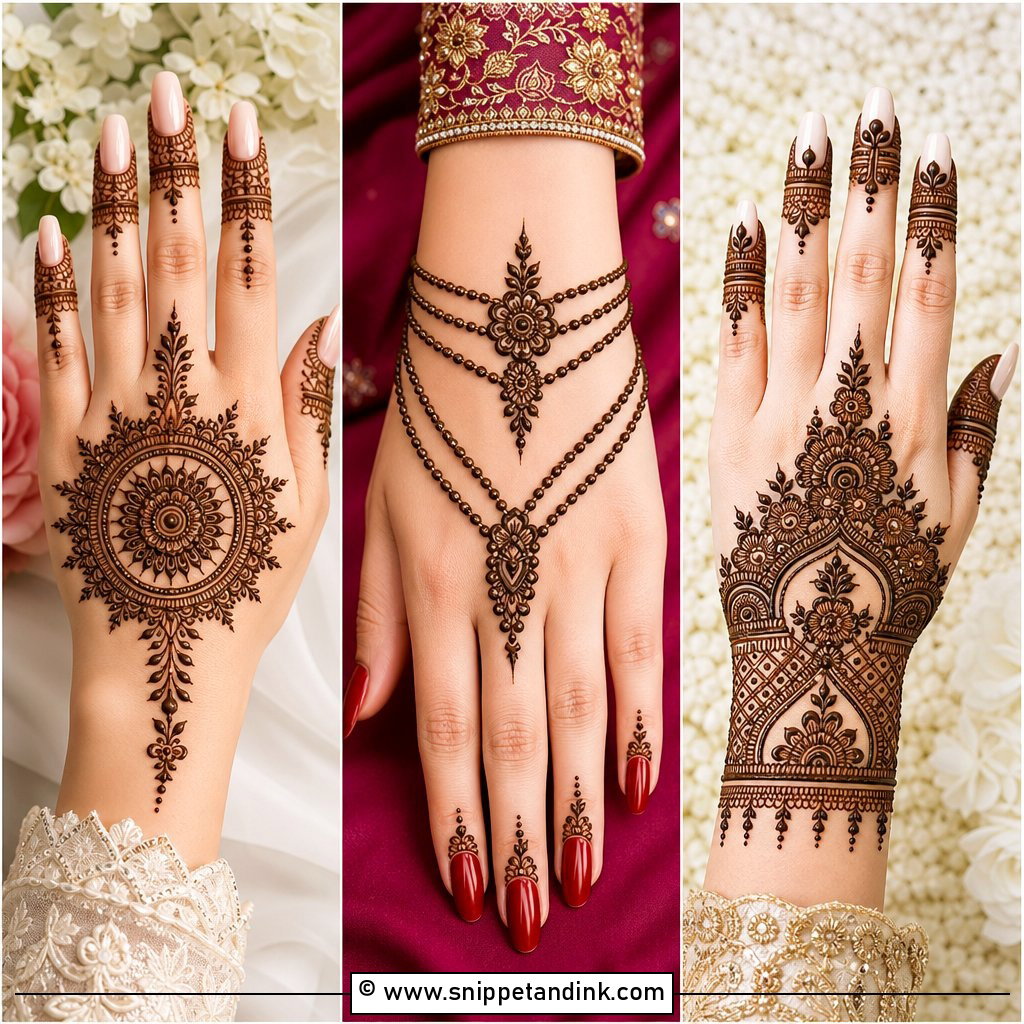
Can full-hand mehndi be minimal? Yes, if the layout is planned rather than just thinned out. I use one strong motif in each palm, then clean mandalas, simple vines, small paisleys, bracelet cuffs and neat fingertips, leaving deliberate space between them. It suits pastel outfits, light jewelry and daytime or smaller weddings. What I avoid is scattering little motifs evenly, which looks unfinished rather than modern.
16. Modern Indian Bridal Full Hand Mehndi Design
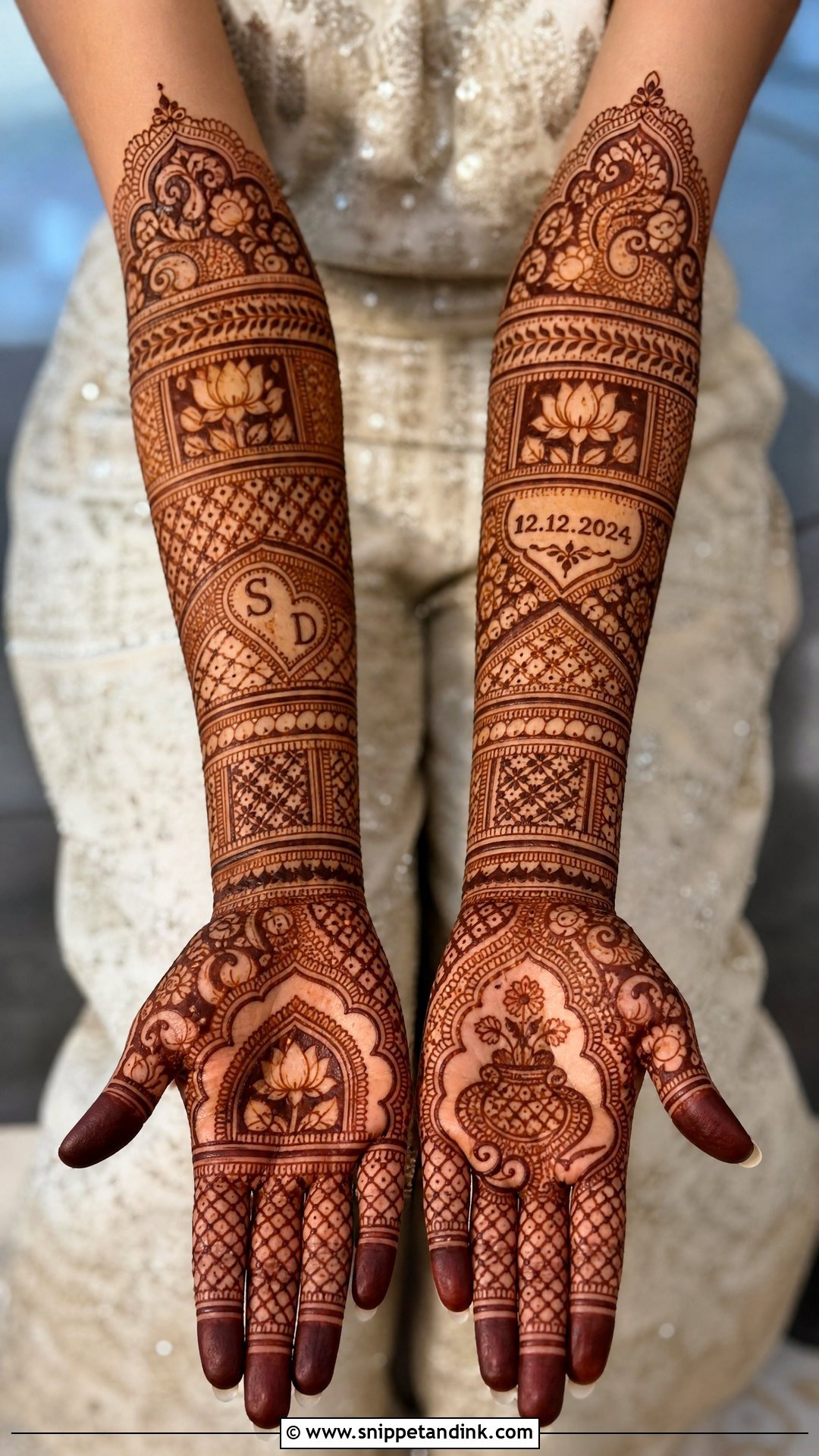
Modern layouts keep the traditional base but rearrange it: geometric panels, negative space, bracelet bands, personalized initials, the wedding date, couple symbols and slim floral trails. The hand is still covered, it just feels lighter. I usually anchor these with one traditional motif, a lotus or a paisley, so it still belongs at an Indian wedding and doesn’t date as fast. Good for fusion outfits and a reception change.
17. Personalized Indian Bridal Full Hand Mehndi Design
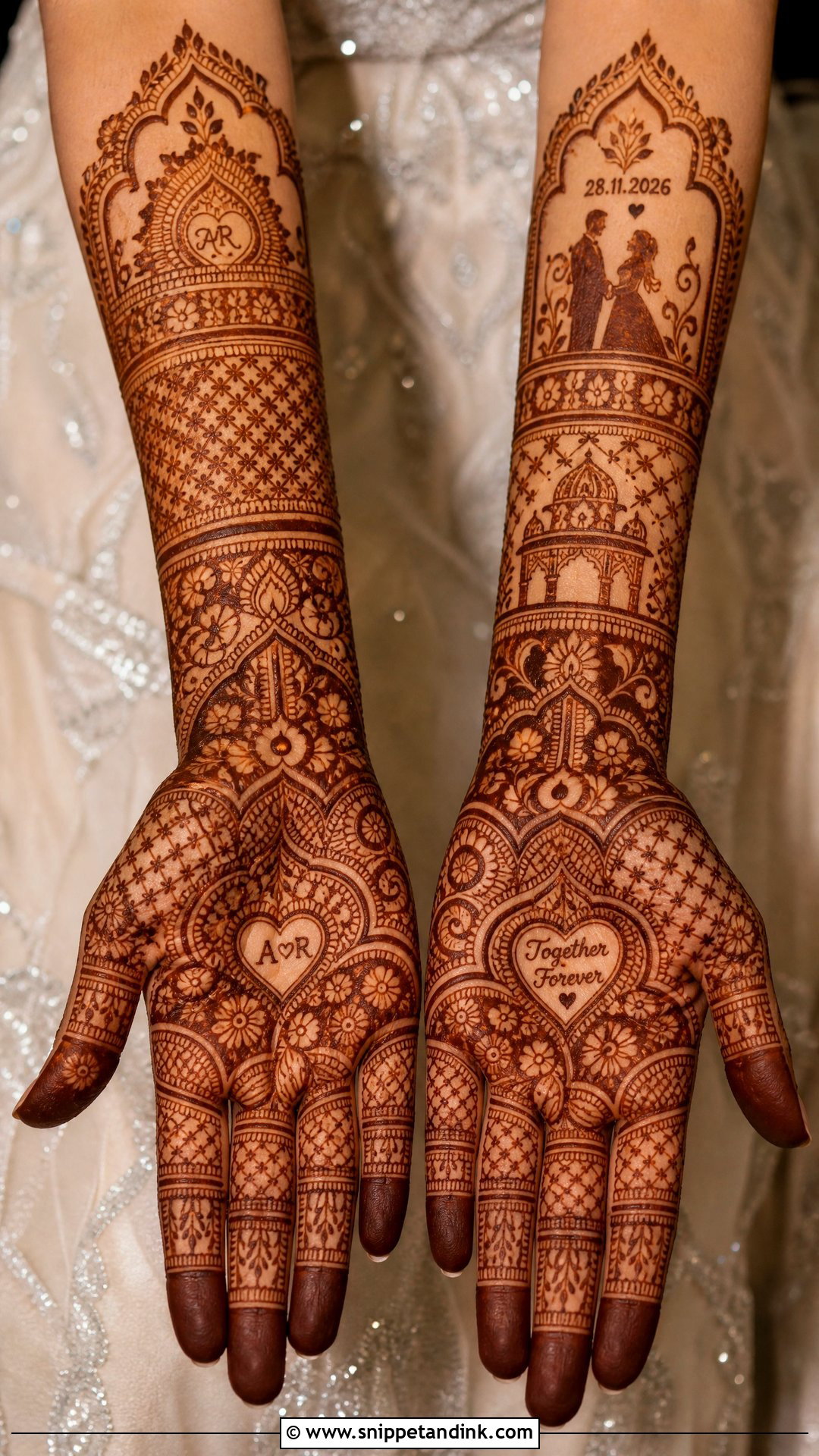
Personal details are the part brides enjoy most: the groom’s name, initials, the date, a ring for the proposal, a favourite flower, a pet, a plane for where you met. The skill is hiding them inside paisleys, jaali or forearm panels so the hand still looks like one design. Write your list before the appointment and rank it. I’d stop at three or four. Past that, the details start fighting each other and the pattern looks crowded.
18. Radha Krishna Indian Bridal Full Hand Mehndi Design
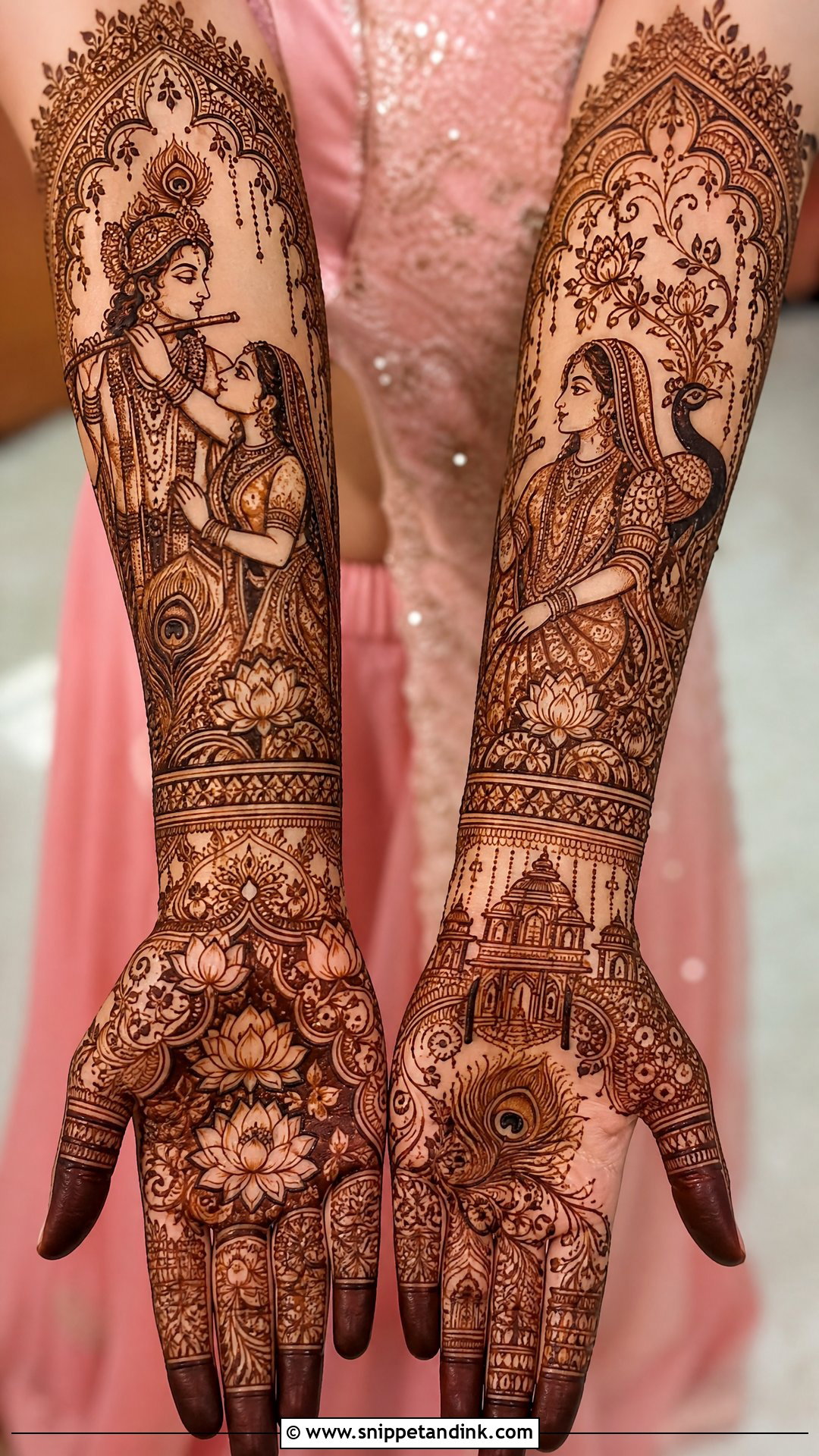
Radha Krishna artwork brings devotion into the design, with the figures on the palms or forearms and lotus, flute, peacock feathers and temple arches around them. As with any portrait work, the faces need an artist who can draw expression and proportion at a small scale. I keep the surrounding fillers light so the figures stay legible. A Radha Krishna design sits naturally with silk sarees, red lehengas and temple jewelry.
19. Kalash Indian Bridal Full Hand Mehndi Design
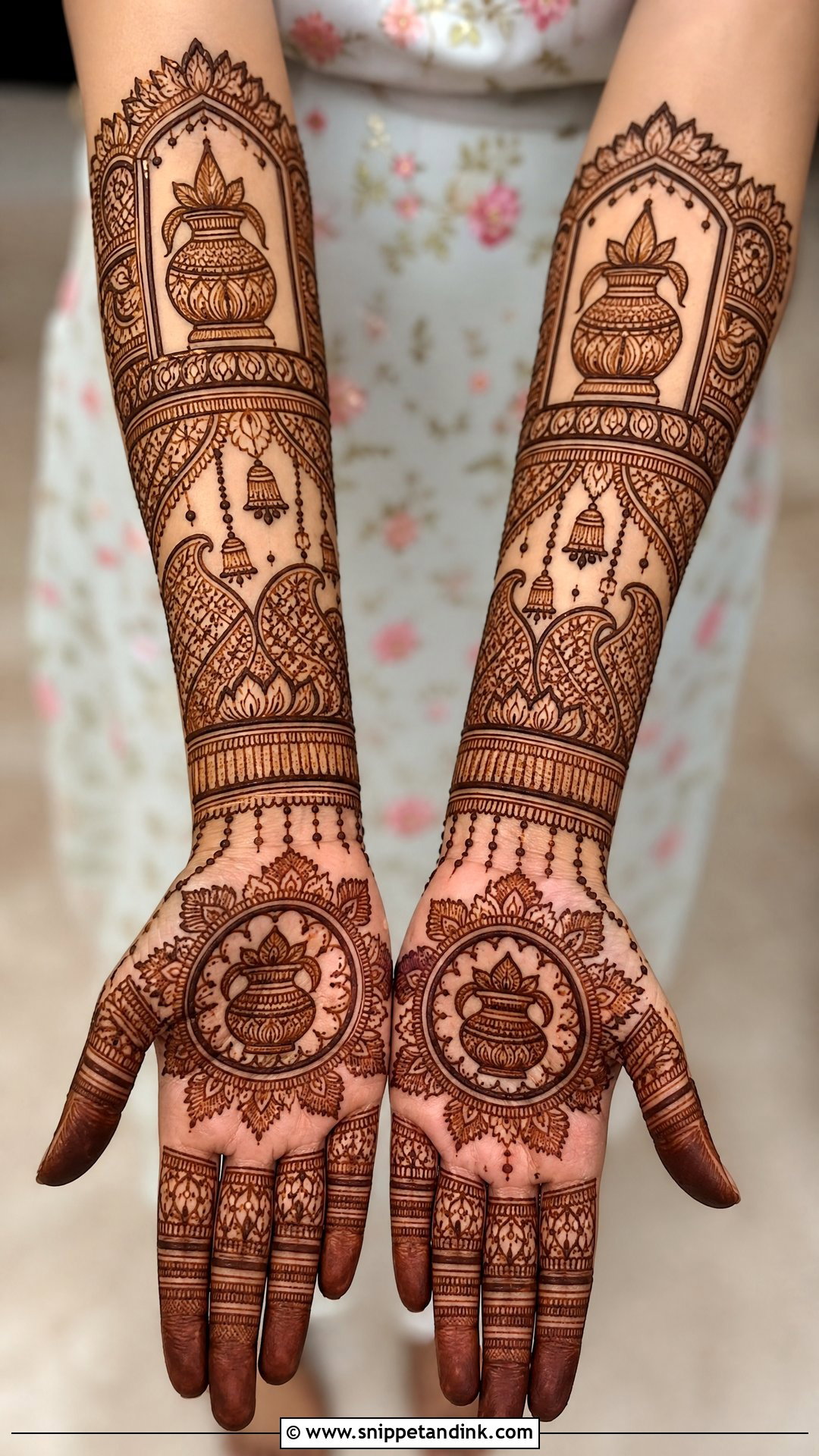
The kalash is an auspicious motif, usually near the wrist, palm or forearm, with mango leaves, lotus petals, paisleys and bells around it. It can be the centrepiece or one element in a larger layout with mandalas and peacocks. Either way, its outline must stay clear. I see it buried under filler all the time, and once the stain darkens nobody can tell what it was meant to be.
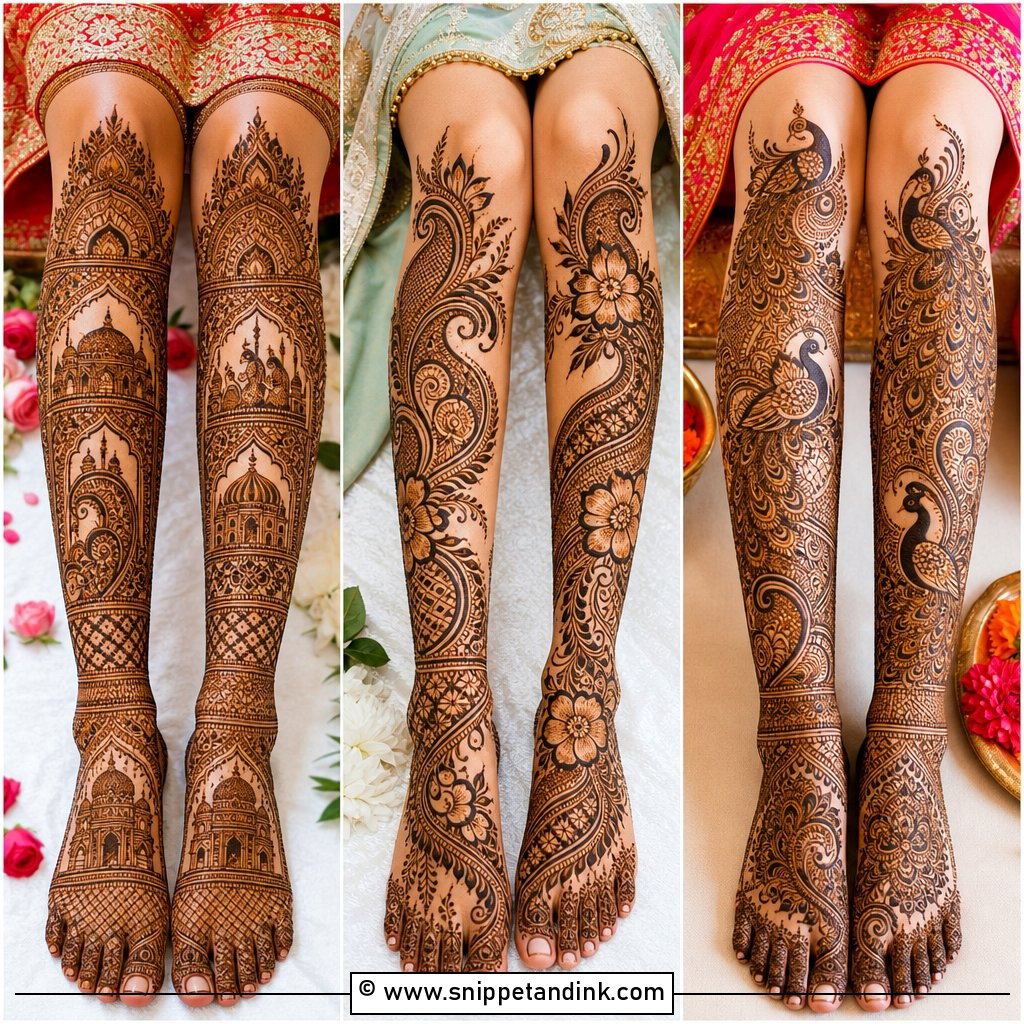
20. Heavy Indian Bridal Full Hand Mehndi Design
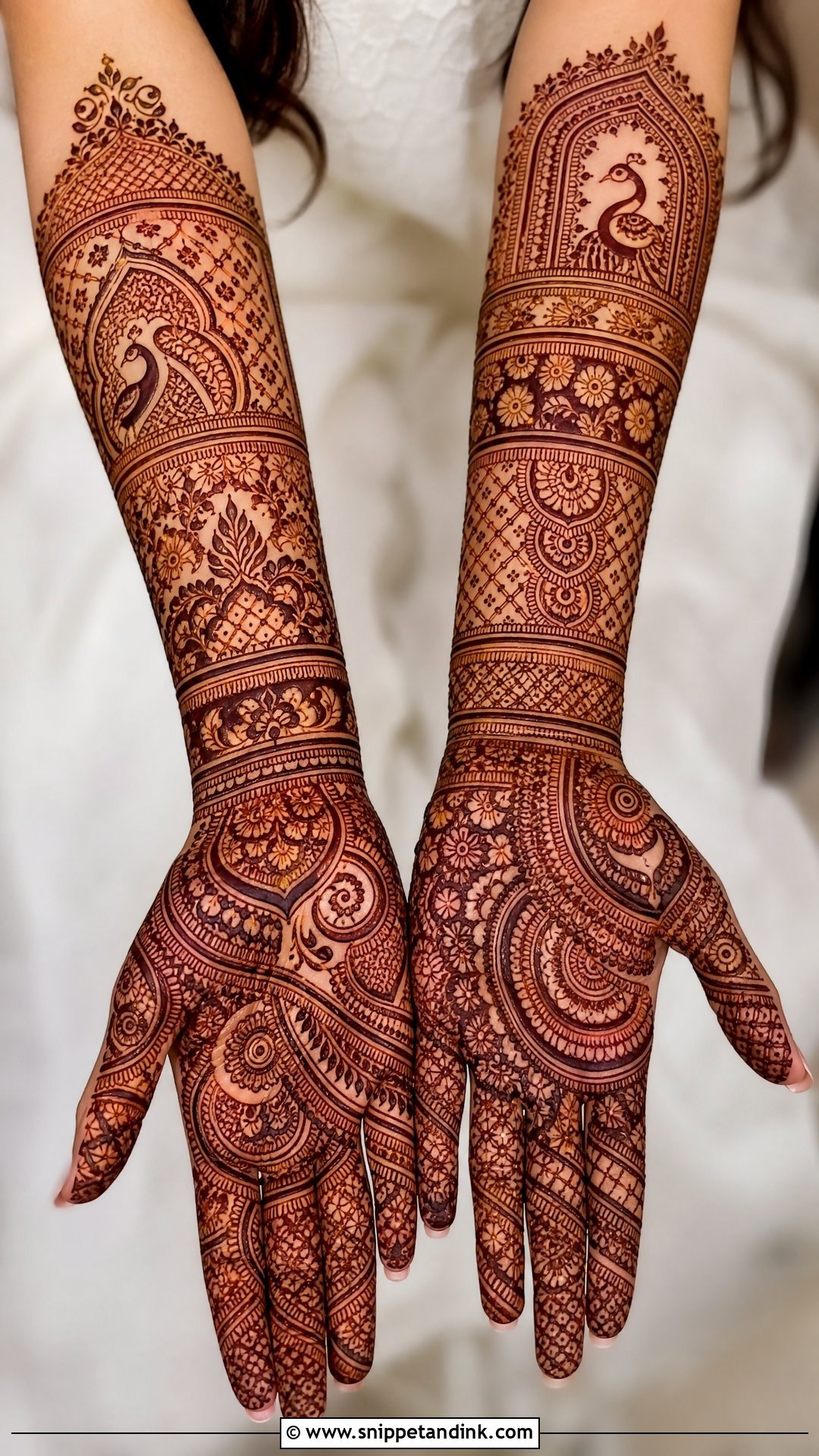
Heavy bridal mehndi covers fingers, palms, wrists and forearms with dense motifs, layered flowers, jaali and ornamental bands for the darkest, most dramatic result. It suits heavy outfits because the hands look fully dressed. The real risk is clutter, so I divide the hand into clear sections with strong borders before filling anything. Both hands front and back can take most of a day, so this is not the design to squeeze into a packed schedule.
Aftercare for a Deep Maroon Stain
The colour comes from how long the paste stays on and how warm you keep your hands. Fresh natural henna leaves an orange stain when it first flakes off. Over the next day or two it oxidises to brown, deep red or maroon, so don’t judge it at the first hour.
- Keep the paste on for six to eight hours, or overnight if you can sleep with your hands wrapped in tissue and a loose cotton layer.
- Dab on a little lemon and sugar mix once the paste is dry to the touch. It keeps the paste stuck to the skin; don’t soak it.
- Scrape the dried paste off with a blunt edge or rub it away. Don’t wash it off.
- Keep water away for as long as you can, ideally twelve hours or more, and skip hot showers and dishwashing.
- Some families warm the hands over cloves on a pan. Gentle warmth helps; never hold skin close to heat.
Only Natural Henna on Your Skin
Any cone that promises a jet-black stain within an hour is not plain henna. Those usually contain PPD or other chemical dyes that can cause blistering and lasting skin reactions. Real henna paste smells earthy or of essential oils and stains orange first. I’d ask your artist what’s in the cone and request a small patch test on your inner arm a few days ahead, especially if you have sensitive skin.
Your Outfit, Your Hands and How Long You Can Sit
Every design here gives a different effect. Rajasthani, Marwari and portrait work feel royal and dense, while others look modern, airy, and personalized. Start with your outfit and jewelry, then be honest about your hand shape and how many hours you can give the application. Bring clear reference photos, tell your artist which motifs matter most, and decide in advance whether you want hidden initials. A design you can sit through comfortably will always come out better than one rushed at the end.
You'll Like These Ideas:














Leave a Reply