
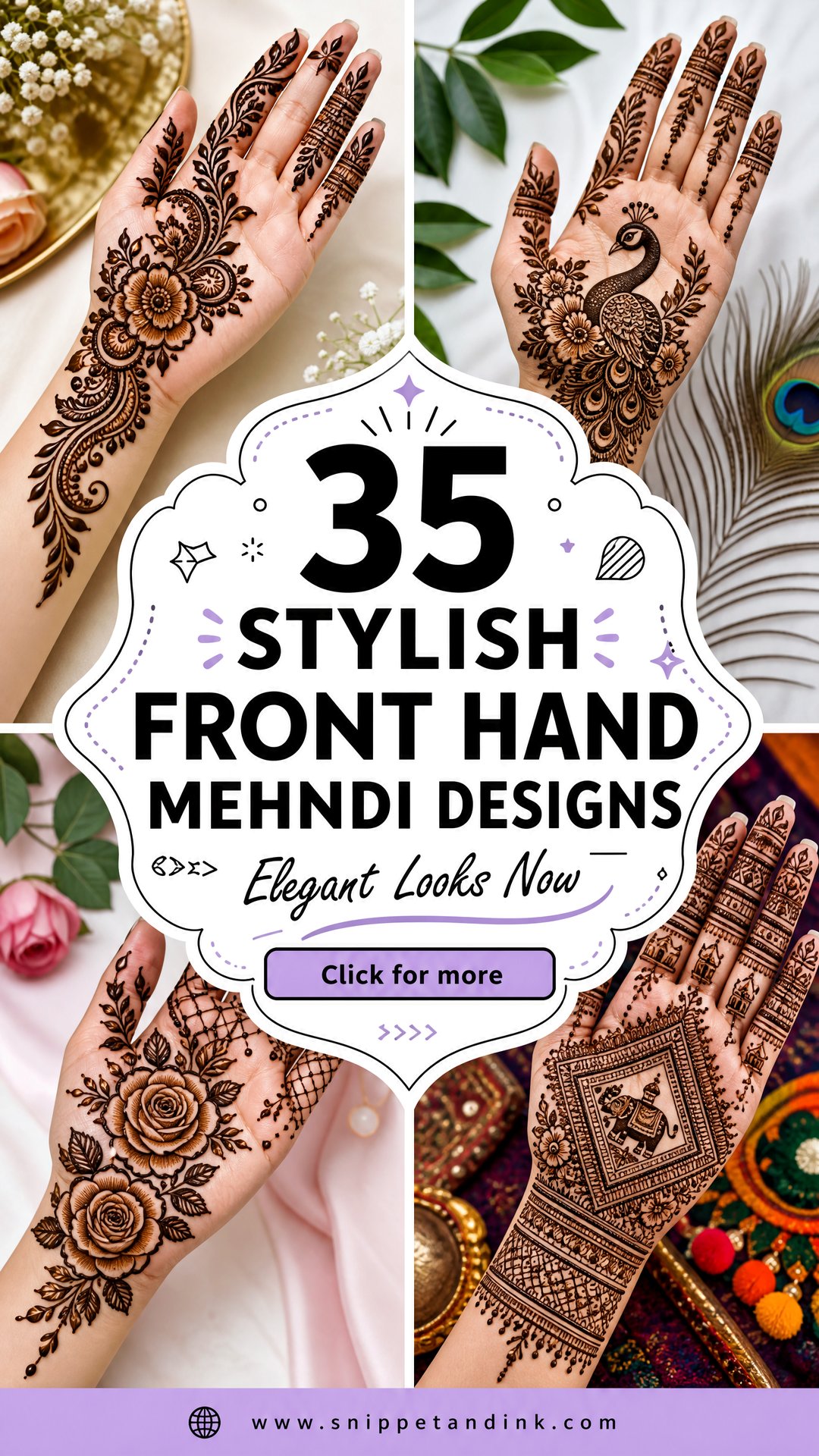
The front of the hand is where henna does its best work. Palm skin is thicker and warmer than the back of the hand, so it takes the deepest stain, and it is the side everyone sees when you hold a ring up, cup a diya or pass a plate at a function. That gives you room for almost anything: mandalas, florals, paisleys, Arabic trails, jaali panels, bracelet cuffs and full bridal layouts. What I see clients asking for most right now is cleaner spacing, one strong centre motif and fine finger work, often with Indian detail set inside an Arabic flow. Below are 35 palm designs, with notes on how each one actually behaves once the paste comes off.
Mapping a Palm Design to the Way Your Hand Moves
Before I pick up a cone, I ask the client to open and close her hand a few times. The palm folds along its main creases, and any line drawn across a crease will kink every time the hand bends. So I place the centre motif in the flat area below the fingers and above the wrist crease, and I let vines and borders cross the creases only where a little bend won’t spoil them.
Hand shape changes the plan too. On a small palm with short fingers, a diagonal layout and long finger bands add length. A broad palm can carry a big round mandala comfortably. If one hand will hold a bouquet, a phone or a plate for most of the event, I put the showpiece on the other hand.
What to decide before the appointment
- Coverage: palm only, palm and fingers, or palm through to the forearm. This sets the sitting time more than the pattern does.
- Timing: henna applied one to two days before the event gives the stain time to darken.
- Your outfit’s neckline and sleeve length, so the wrist border ends where the sleeve or bangles begin.
- Any allergy history. Natural henna paste is brown or green, never jet black; dark ‘black henna’ can contain chemicals that burn skin, and I won’t apply it.
1. Simple Front Hand Mehndi Design
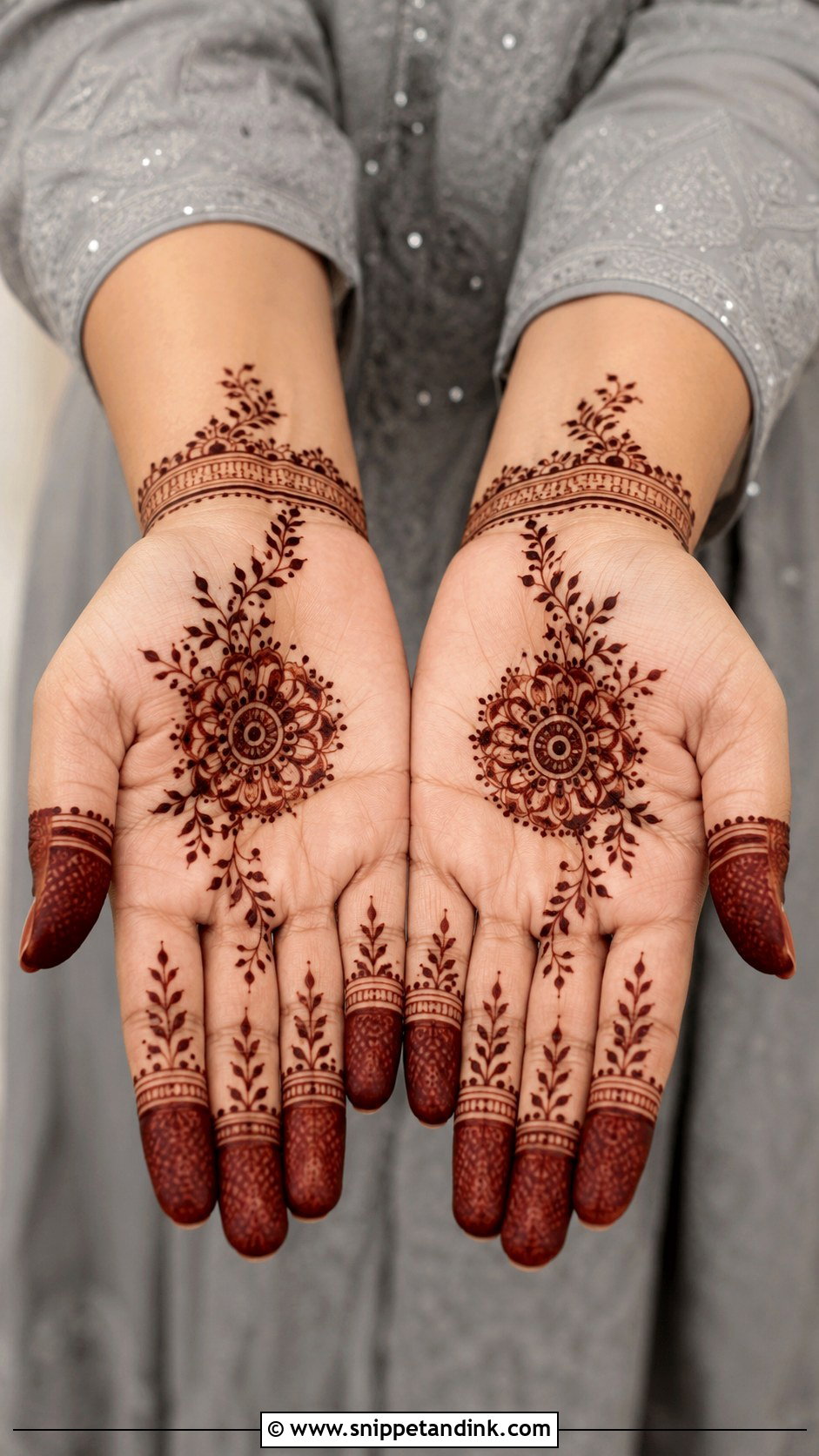
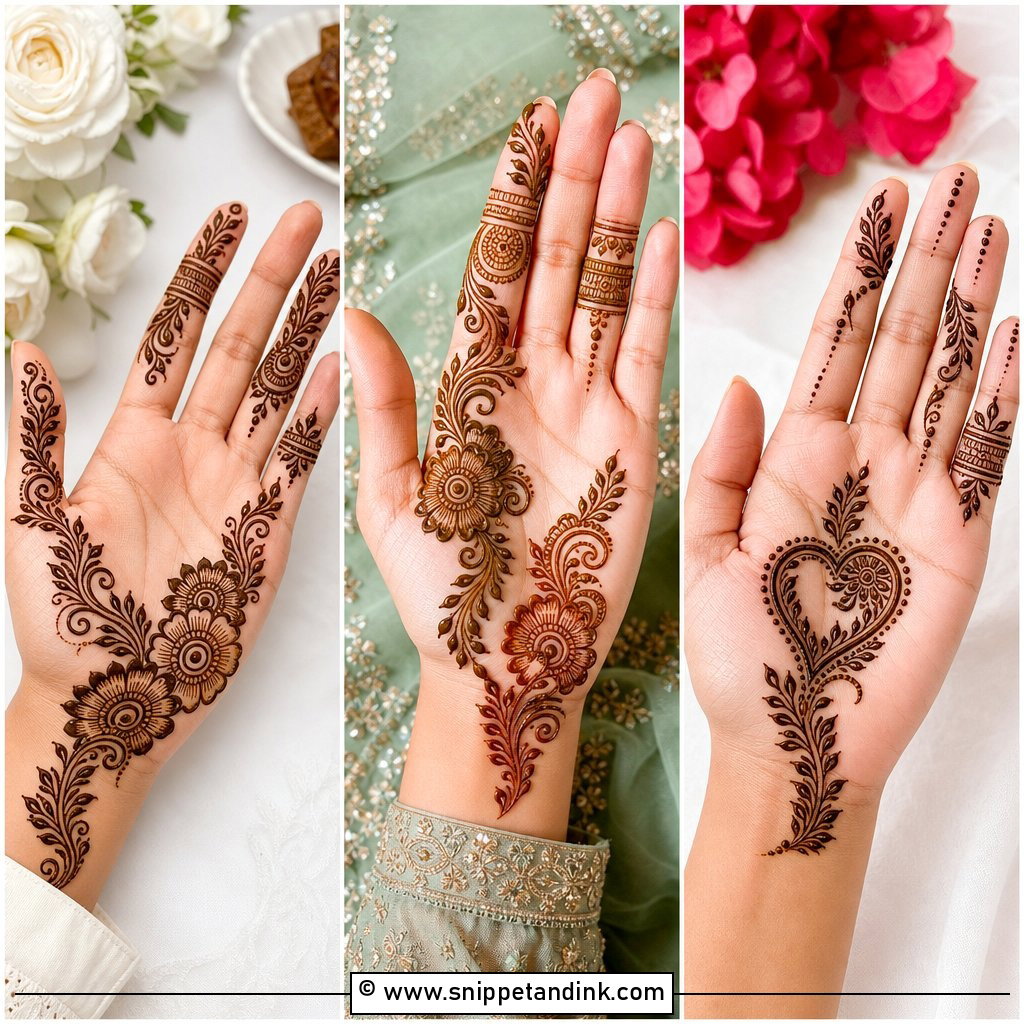
Start here if you have never sat for henna before. A small floral or mandala sits in the centre of the palm, a couple of thin vines run up toward the fingers, the tips are filled or lightly patterned, and a slim band closes the wrist. I can finish this in well under half an hour, which matters at a family function where ten people are waiting their turn. The one thing I watch is crowding: if the vines start to touch the centre motif, the whole palm reads as a smudge once it stains.
2. Arabic Front Hand Mehndi Design
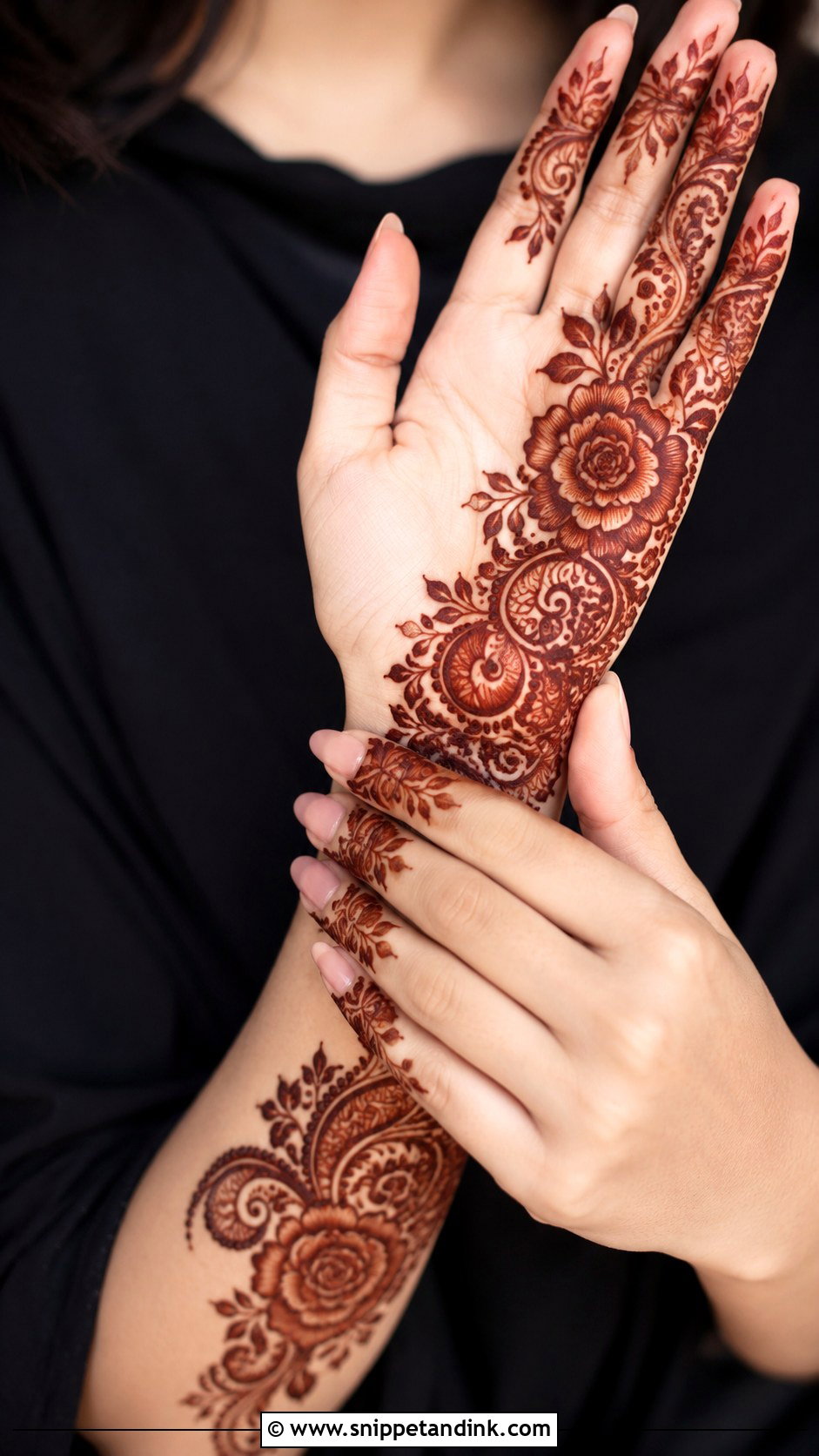
Arabic layouts run on a diagonal, usually from the wrist toward the index or middle finger, with big flowers, leafy trails and plenty of bare skin around them. That single path makes the hand look longer. I pipe the outlines thicker than I would for Indian work, because the contrast between a heavy line and empty skin is the whole effect. It is also quicker to apply than dense filling, so it is my usual suggestion for Eid, engagements and party outfits when someone wants presence without hours in the chair.
3. Full Front Hand Mehndi Design
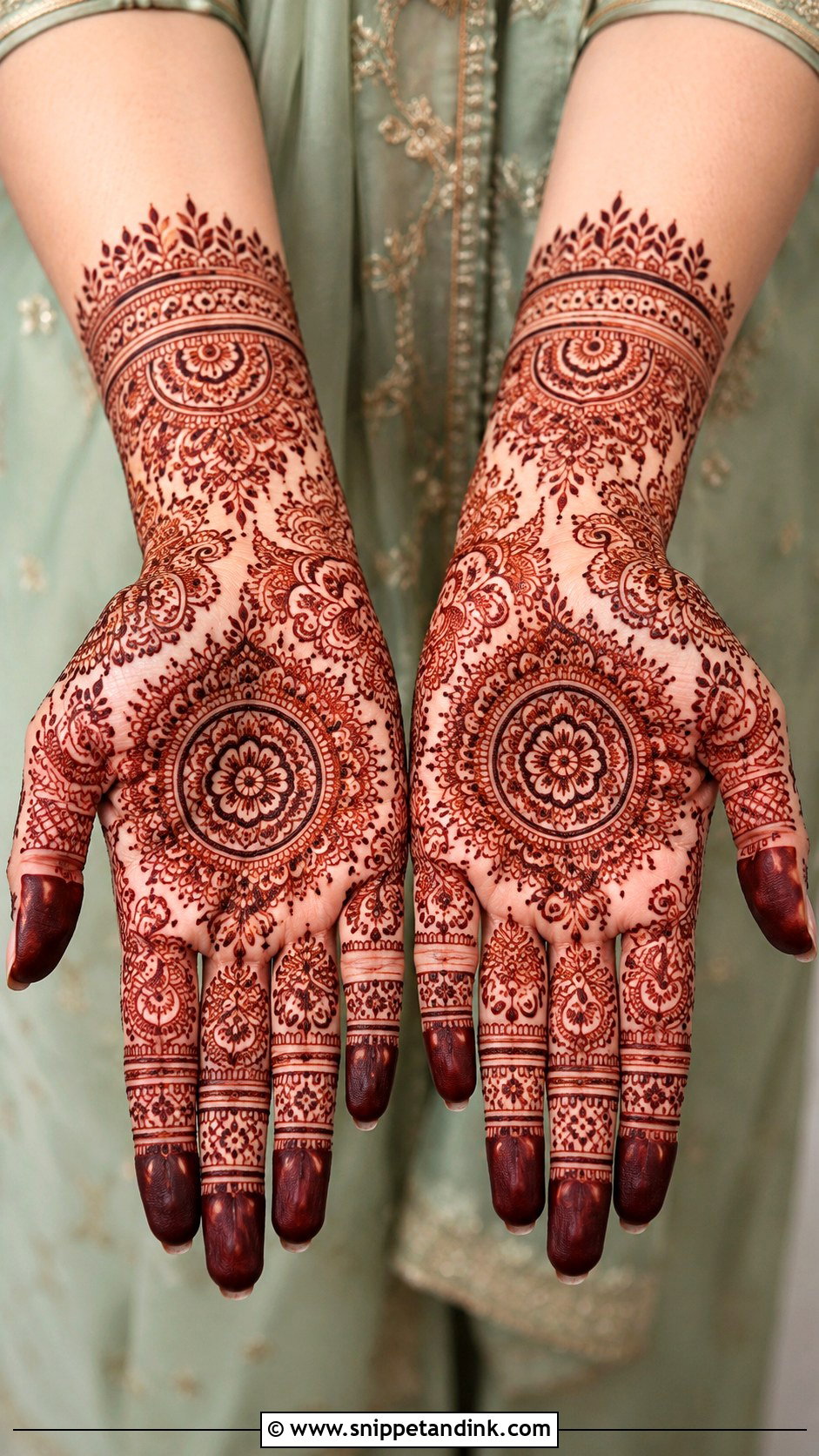
Full coverage takes in the palm, every finger and the wrist, usually with a central mandala, paisley borders, floral bands and patterned fingertips. Where people go wrong is treating the hand as one big space. I divide it into zones before I start, one main motif on the palm and smaller connecting work toward the fingers and wrist, and I keep the lines fine so the filled areas don’t merge. Expect to sit still for a good while, and plan your meal before the appointment, not during it.
4. Front Hand Bridal Mehndi Design
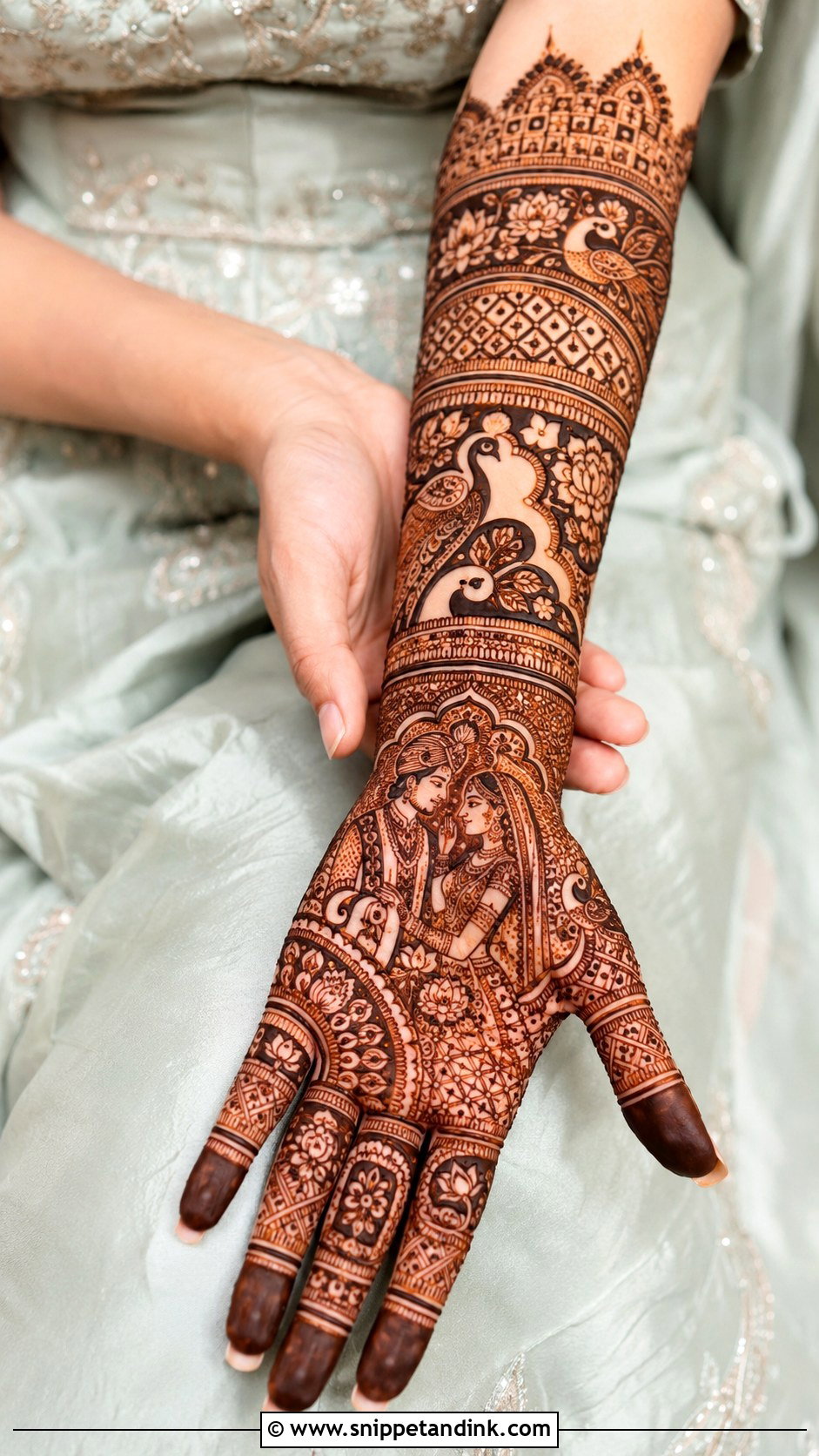
Bridal palms carry the heaviest symbolism: paisleys, peacocks, lotus flowers, dulha-dulhan art, jaali panels and small personal details such as initials or a date tucked into the filling. The palm needs one clear focal point because it faces the camera during rituals. Most brides I work with want a heavy palm, filled tips and an extension up the forearm. I always leave small breathing spaces around the major motifs, though. A bridal design with no open skin anywhere looks like a dark glove in photos, and nobody can find the names hidden inside it.
5. Modern Front Hand Mehndi Design
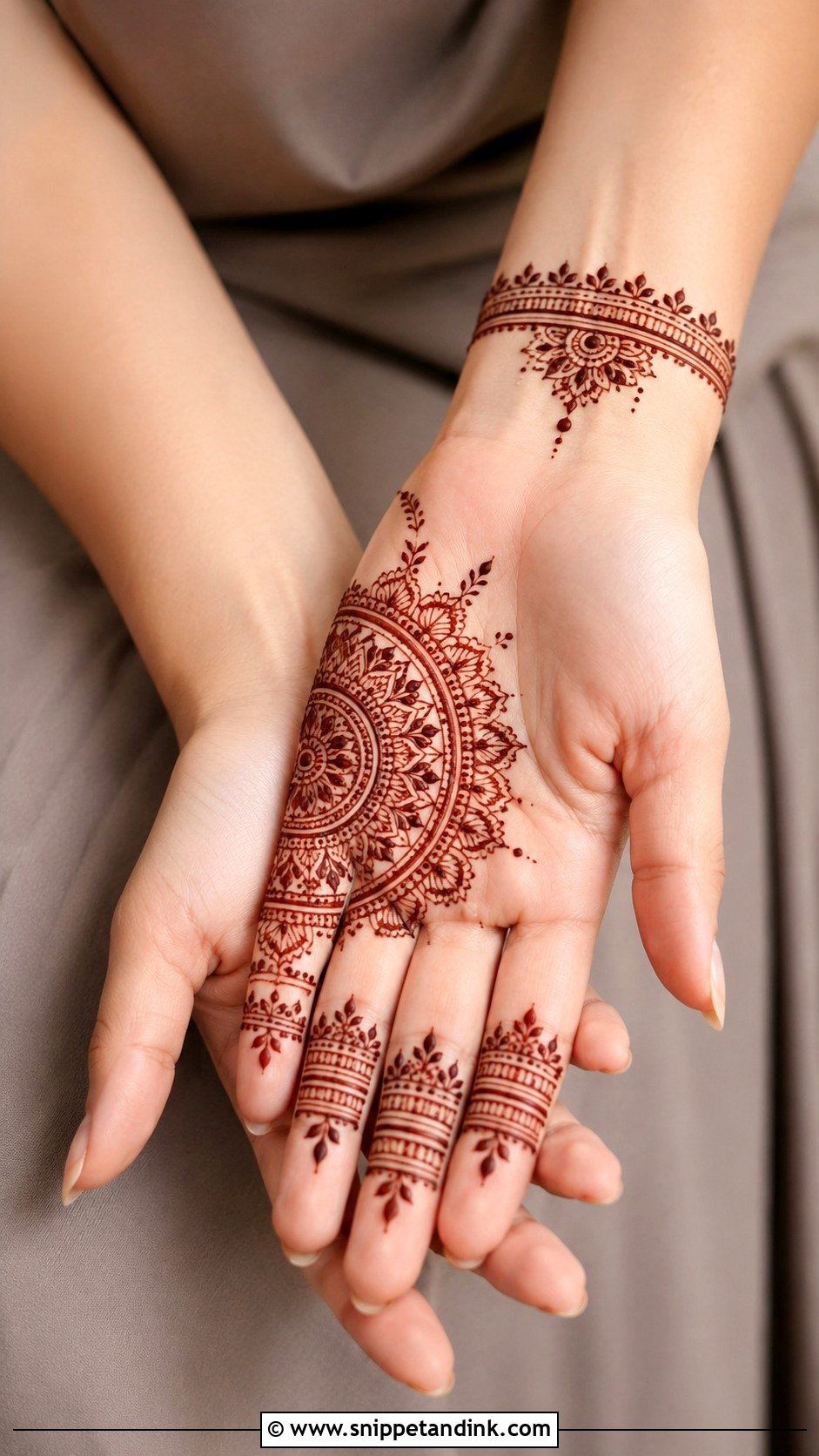
Modern palm work is about choosing where not to draw. A half mandala on one side, sleek finger bands, a few geometric accents and a narrow cuff can look more current than a fully covered hand. It suits someone who loves henna but wears contemporary outfits and simple jewellery. The risk is that sparse can look unfinished. I make every element connect to another one, even if only by a line of dots, so the empty skin reads as a choice.
6. Front Hand Mandala Mehndi Design
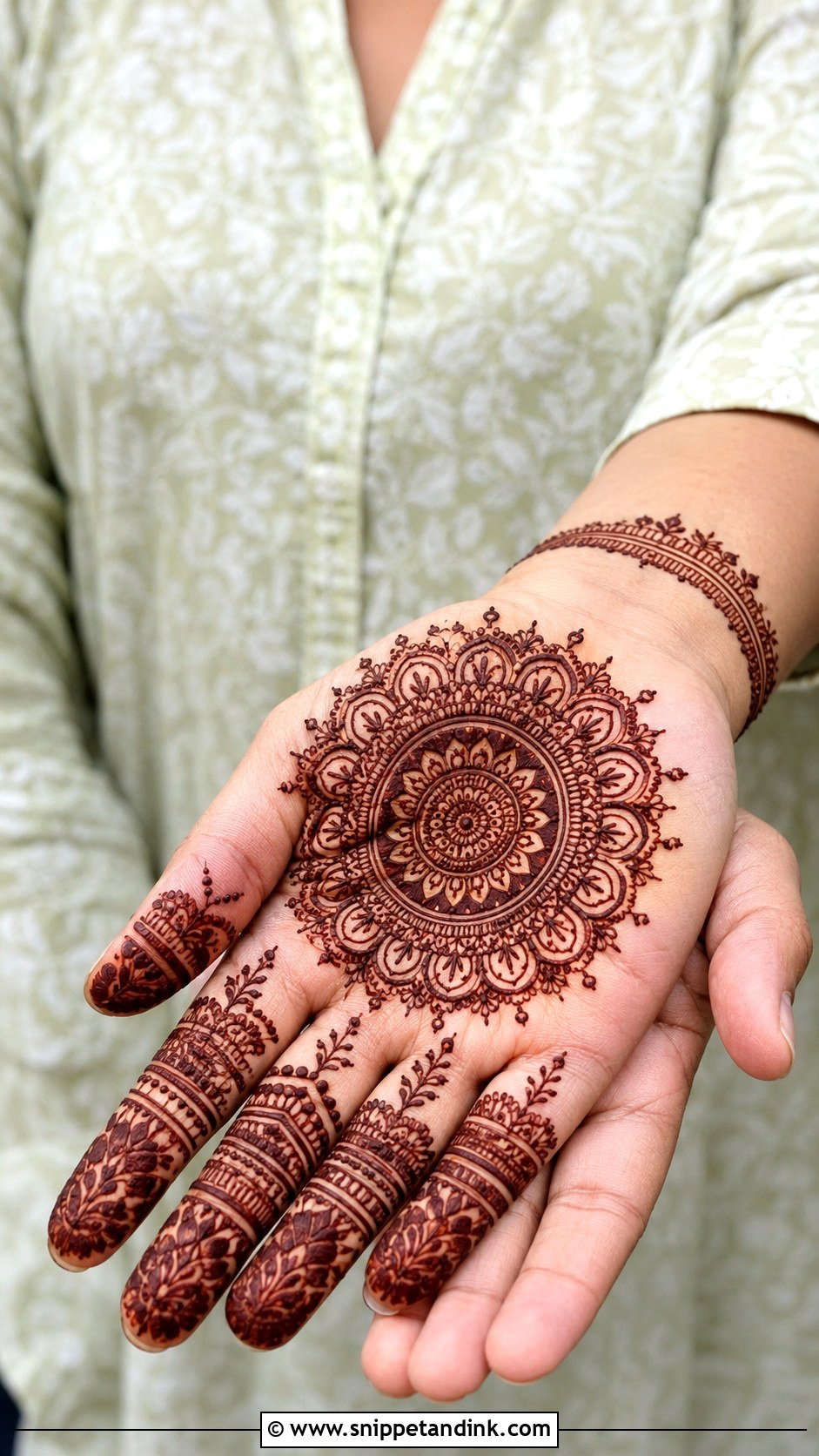
The palm is roughly round and slightly cupped, which is why a circle in the centre almost always sits well. A mandala can be as plain as petals and dots or as fine as stacked rings, scallops and tiny leaves. I add patterned fingers and a slim wrist band so the eye travels outward from the centre. This is the layout I suggest when a client can’t decide, because it is quick, symmetrical and recognisable to every generation at the function.
7. Floral Front Hand Mehndi Design
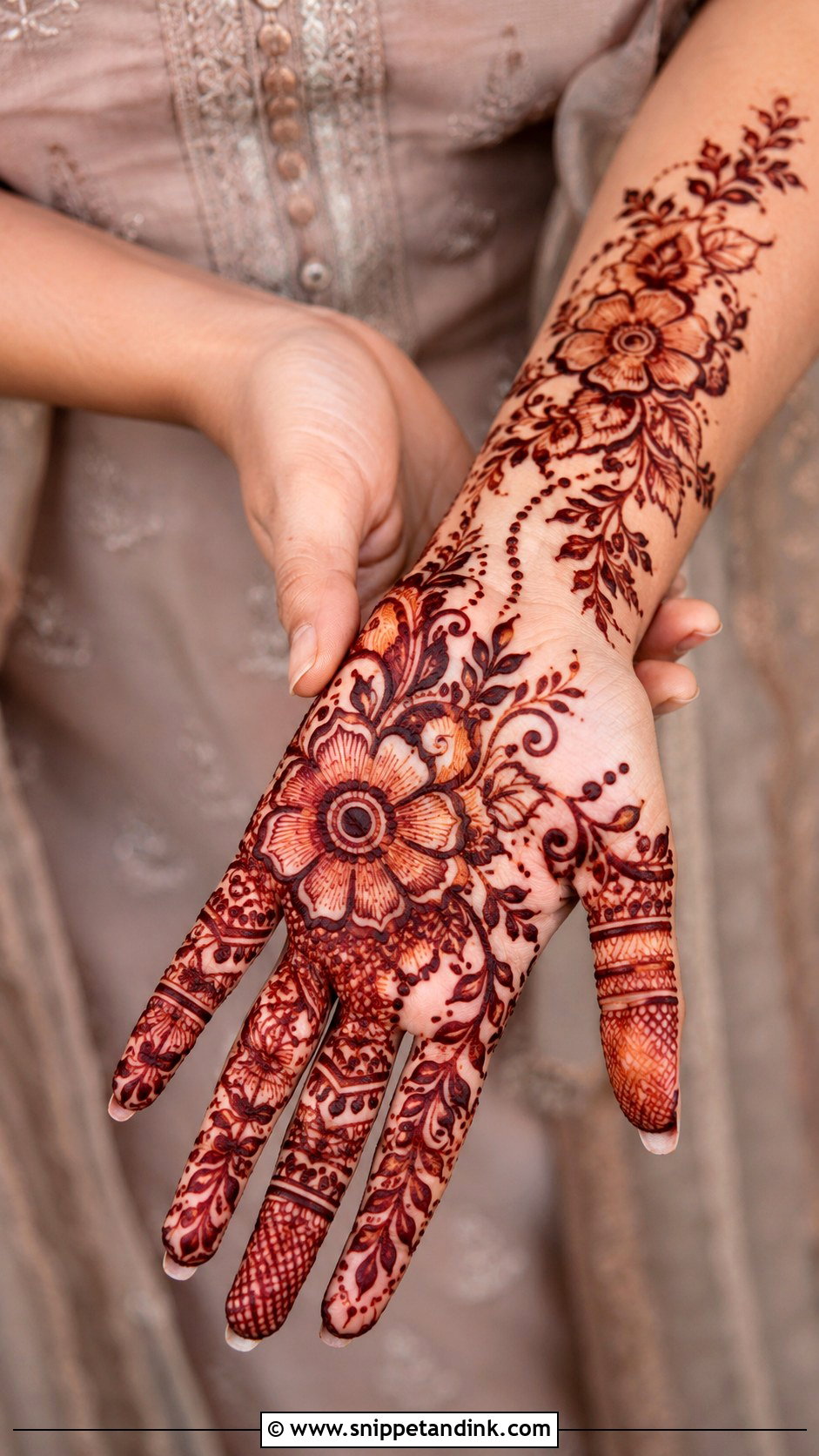
Florals are forgiving. One large flower, several smaller blooms or a curved trail can cover the palm, with leaves around them to give movement and fine dotted chains running up the fingers. Flowers read clearly from across a room, so they hold up in group photos at Eid, Diwali or a baby shower. I shade inside the petals rather than filling them solid. Solid-filled petals tend to stain as one dark blob, while shading keeps each petal separate.
8. Front Hand Paisley Mehndi Design
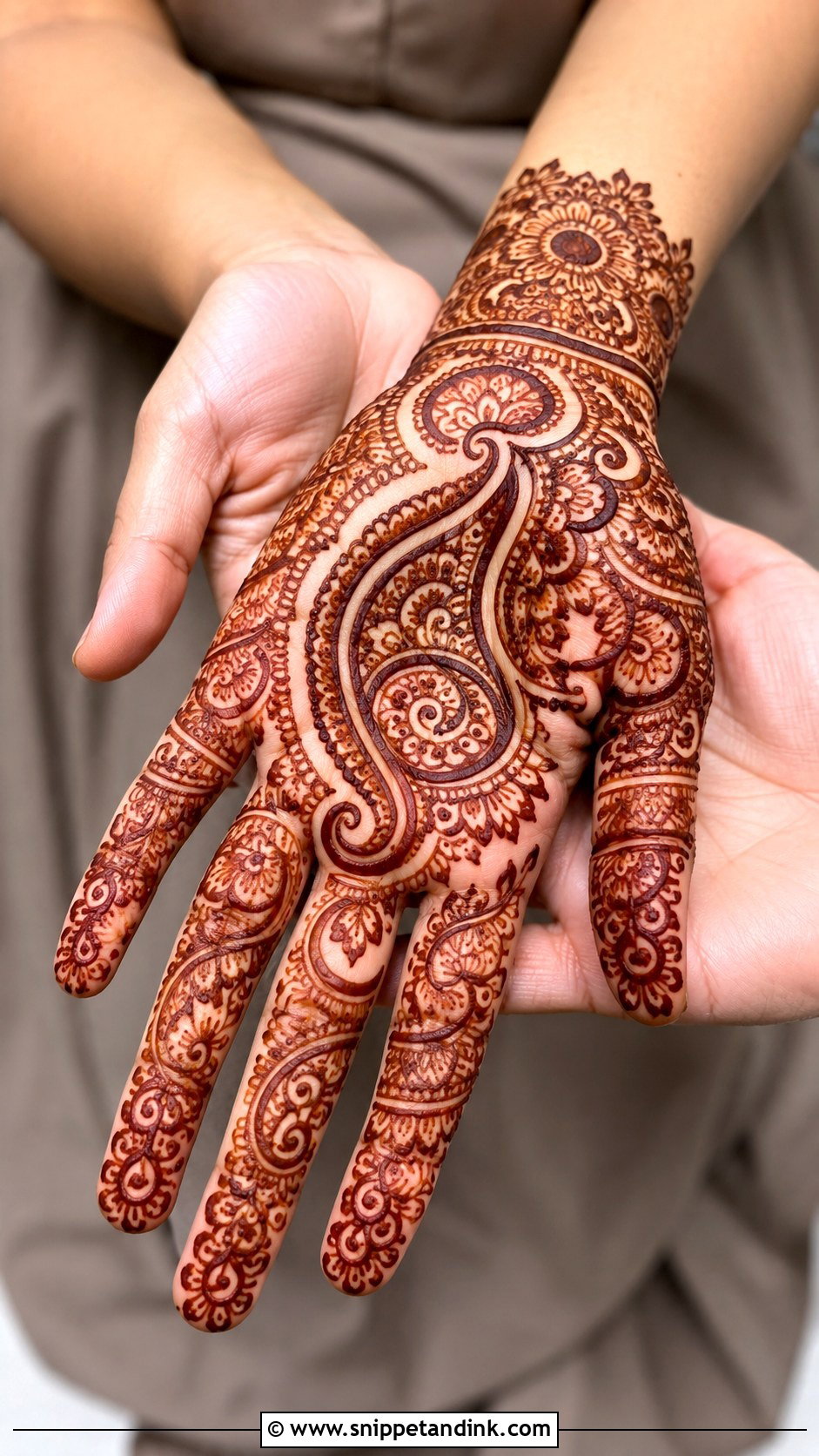
The paisley, or mango motif, follows the natural curve of the hand, so it works on short and long palms alike. You can set it in the centre, along the wrist or as a diagonal trail, usually packed with tiny flowers, dots and curled fillers. My approach is one large paisley as the anchor and smaller ones around it. If every paisley is the same size, the palm looks like wallpaper. Finish the fingers with lines and dots so the design runs right to the tips.
9. Indo Arabic Front Hand Mehndi Design
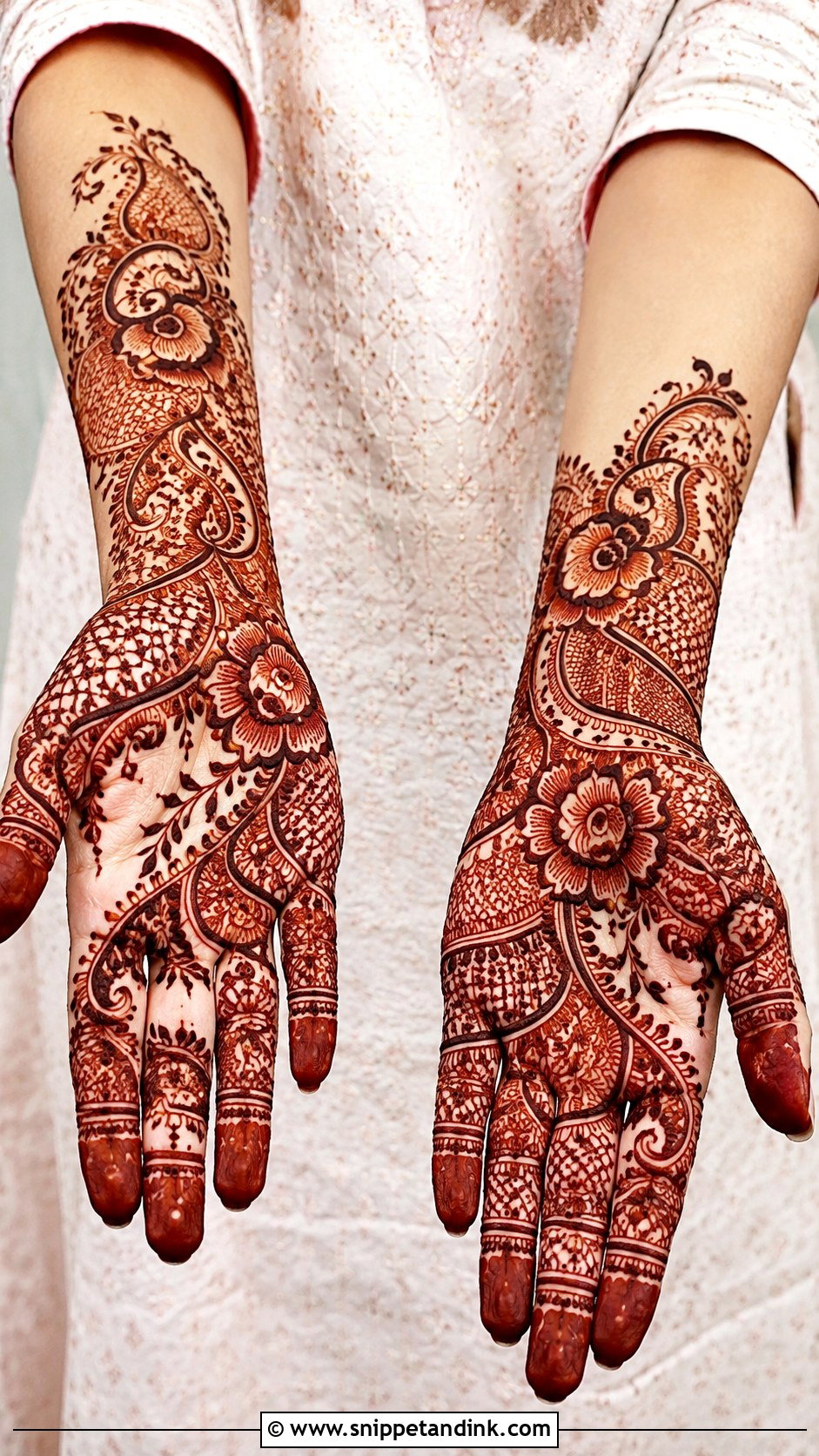
Indo-Arabic keeps the open Arabic arrangement but fills each big flower and paisley with Indian-style fine lines and dots. From a distance you see bold shapes; up close you see detail. A diagonal trail from wrist to fingers carries it well, and a small mandala or jaali panel gives it the Indian side. I find it is the most requested compromise at weddings, where the bride’s mother wants traditional and the bride wants room to breathe.
10. Front Hand Finger Mehndi Design
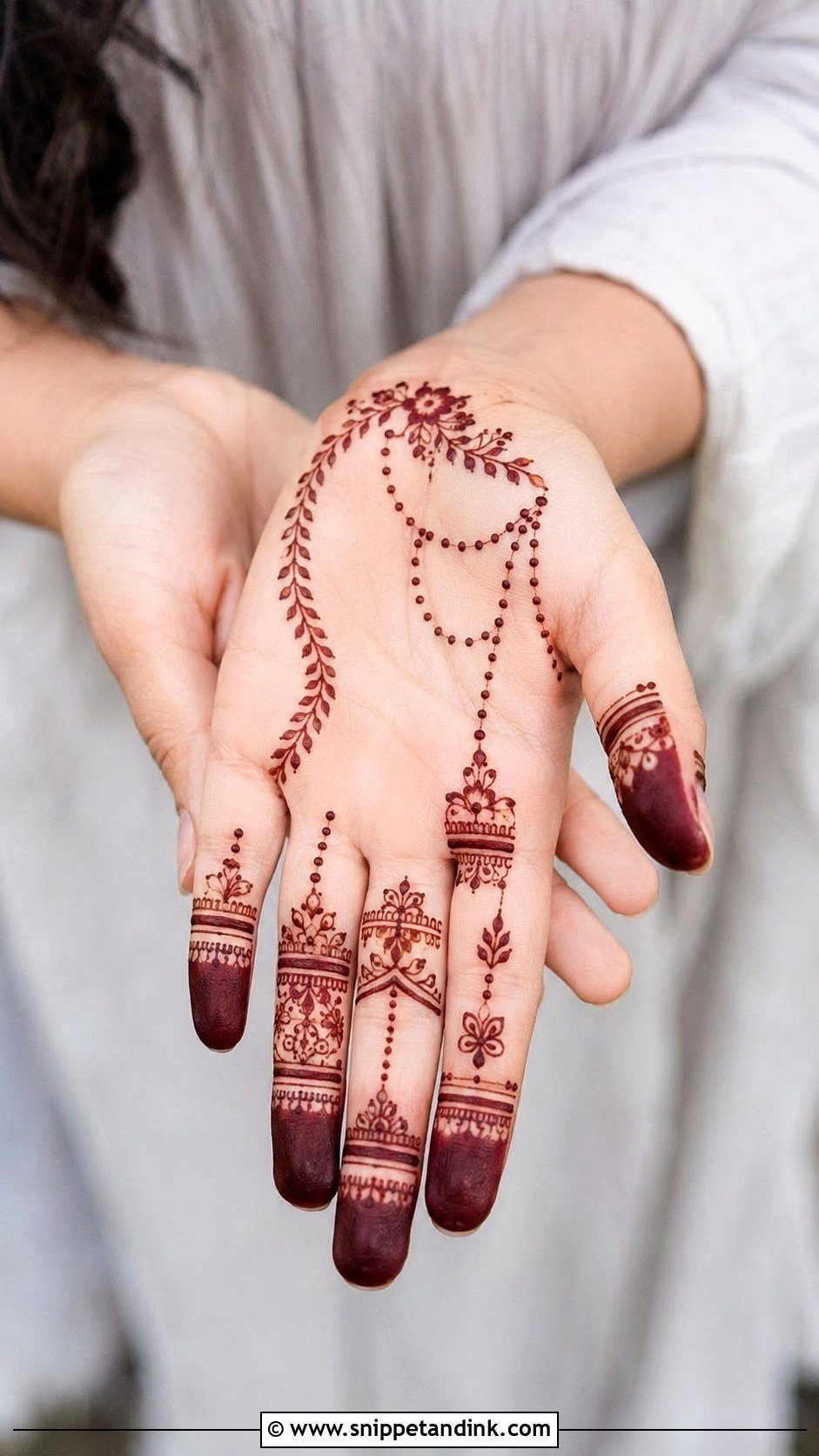
Here the fingers do the talking and the palm stays nearly bare: ring bands, leafy lines, tiny florals, dots and filled tips. A small palm motif is optional. Fingertips actually hold their stain longer than most of the palm, so this is a sensible choice if you want the colour to still look tidy a week later at work. It frames real rings rather than hiding them. Repeat the same pattern across each finger, or the hand looks unfinished.
11. Front Hand Eid Mehndi Design
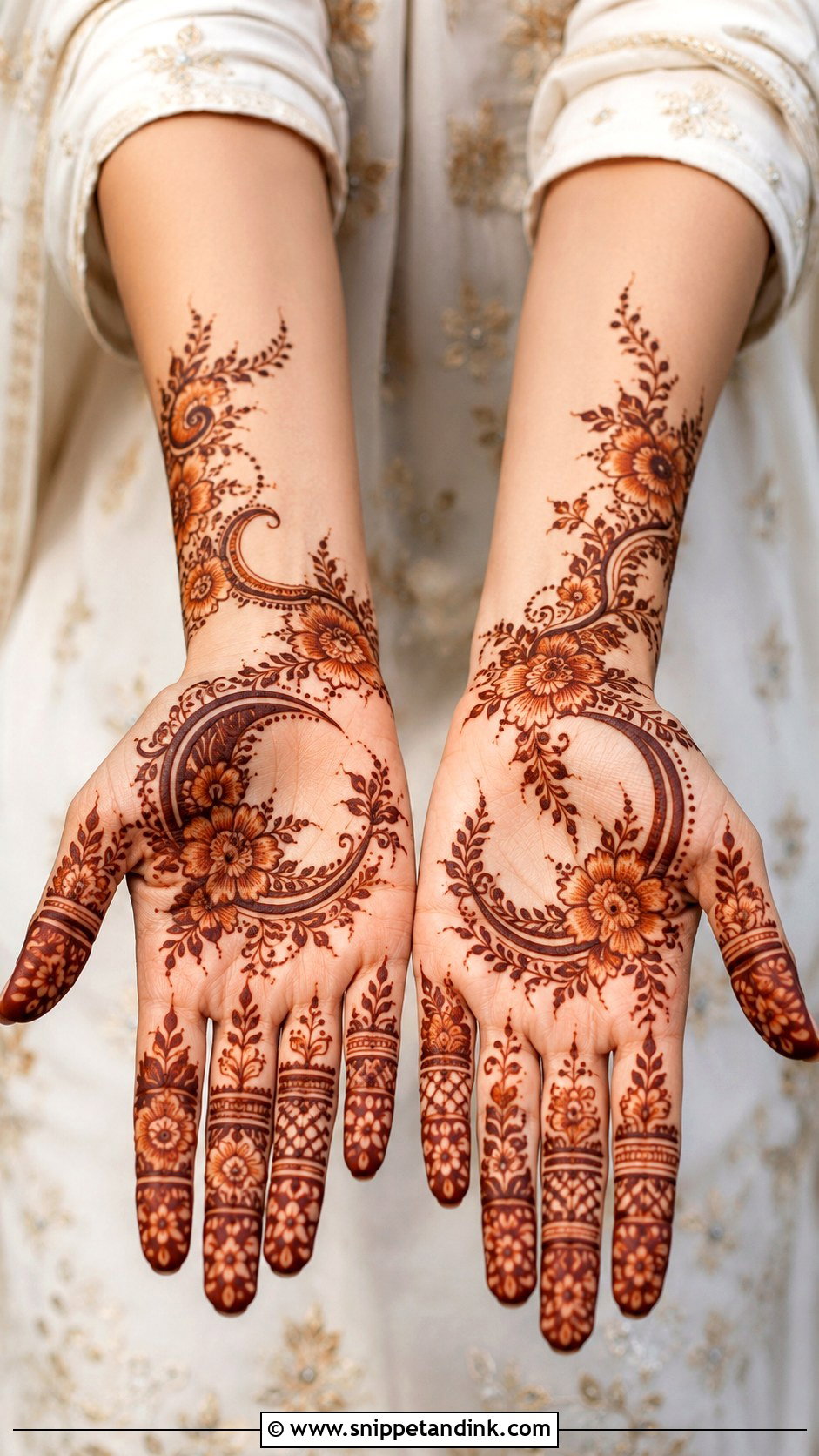
Eid means family visits, cooking and a lot of hugging, so comfort matters as much as the pattern. Arabic floral trails, crescent curves, a palm mandala or leafy vines all suit the day, kept to medium coverage with clean open spaces. I usually apply Eid henna the night before so the stain has a full night to develop. A deep maroon palm against bright clothing is exactly what people want in the photos, and medium coverage gets you there without a three-hour sitting.
12. Front Hand Diwali Mehndi Design
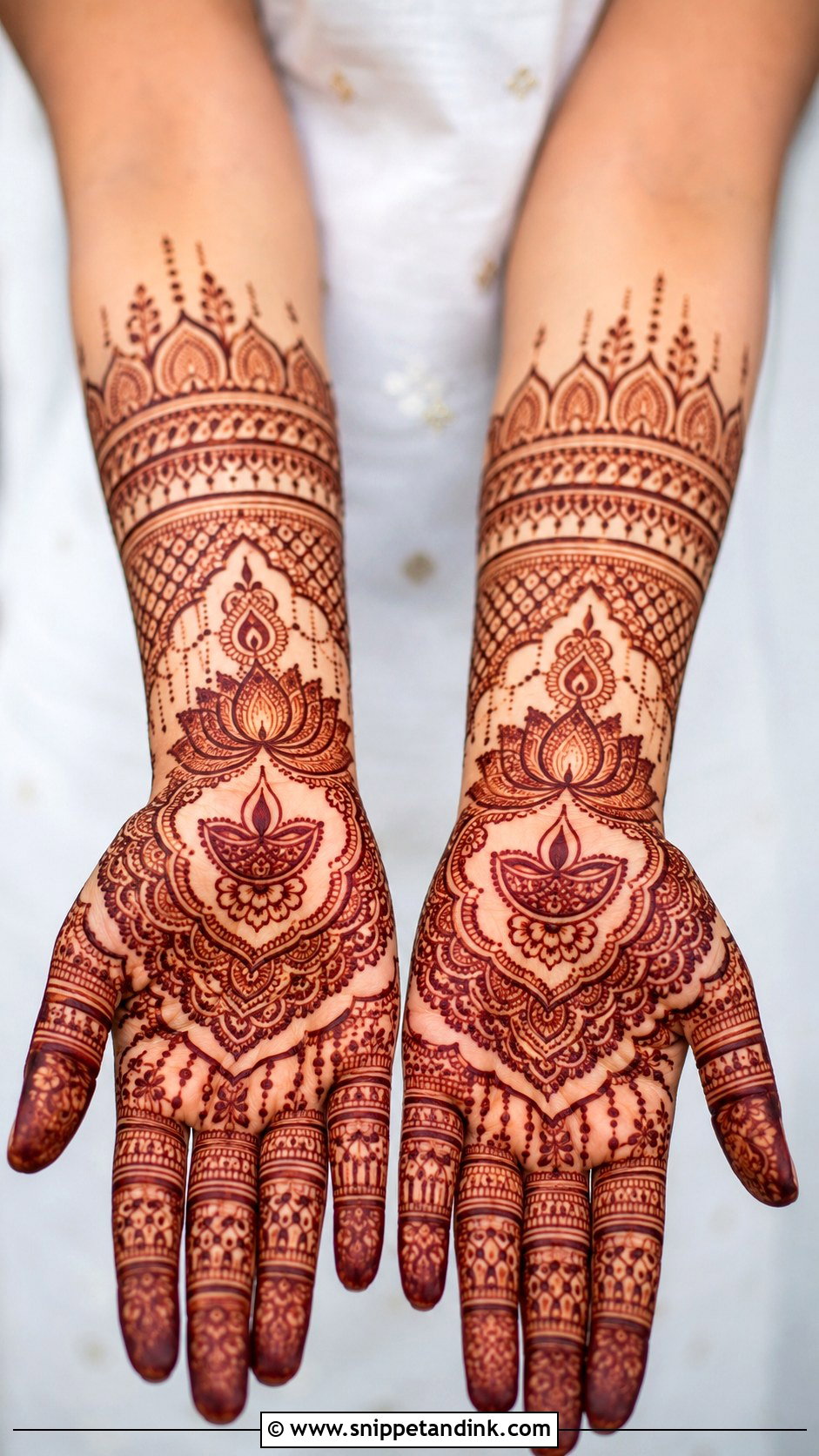
Diwali palms tend toward symmetry: a central mandala with diya shapes, lotus petals, dotted chains and a bracelet border. Because you will be lighting lamps and handling sweets, I keep the coverage medium and the lines around the wrist fine, so bangles sit on top of the design rather than smearing it. Paste that is still drying near a flame is no fun. Book the session a day ahead so the hands are dry and darkening by the evening puja.
13. Front Hand Engagement Mehndi Design
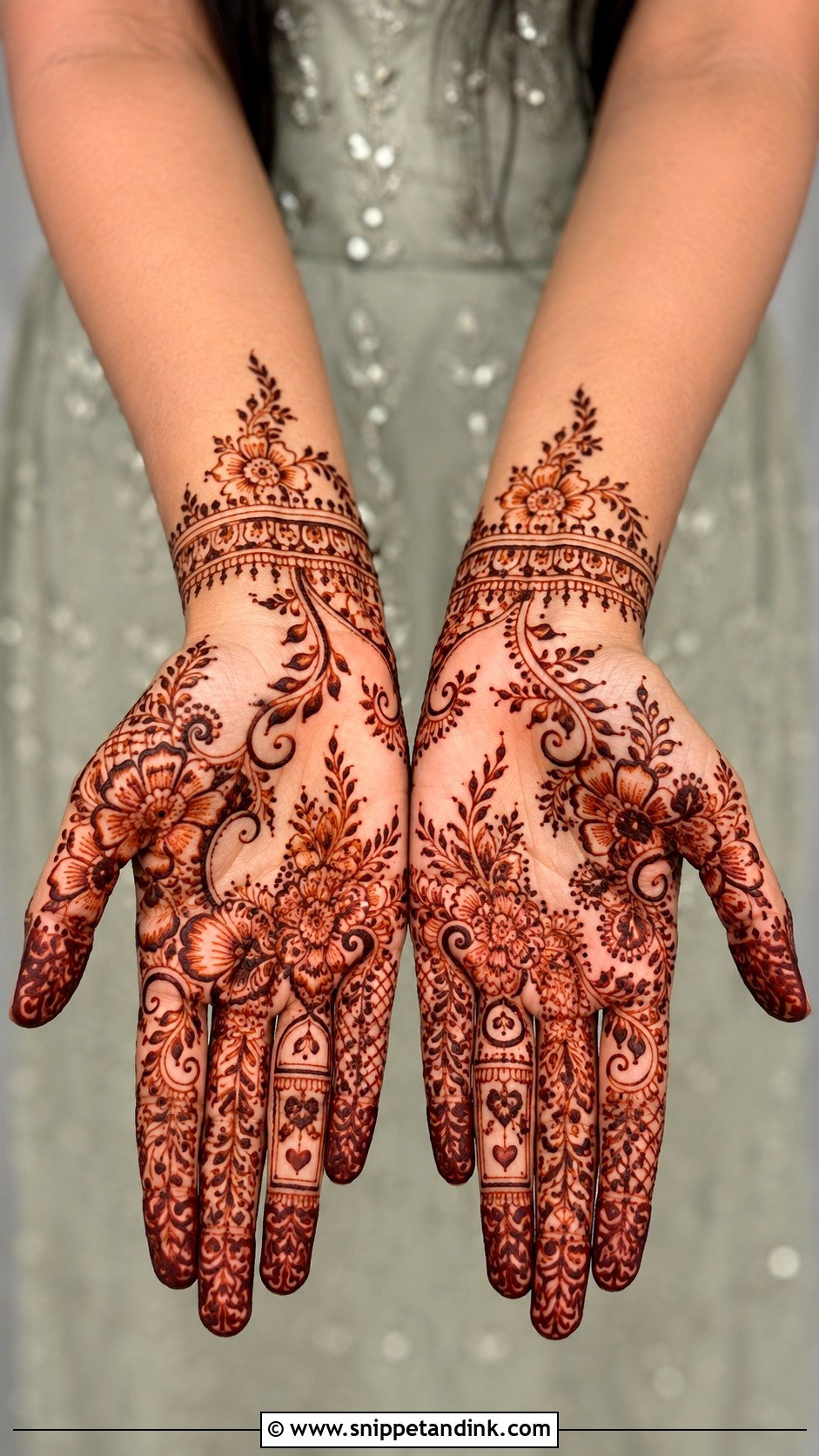
Engagement photos are mostly close-ups of hands, so the ring finger sets the rules. A Front hand engagement mehndi design can use a floral trail, small hearts, delicate jaali or a neat mandala, but I keep the area around the ring finger lighter. Dark henna right up against a diamond swallows its sparkle in pictures. A bracelet-style band at the wrist finishes the hand, and the coverage can go medium or heavy depending on the outfit.
14. Front Hand Wedding Guest Mehndi Design
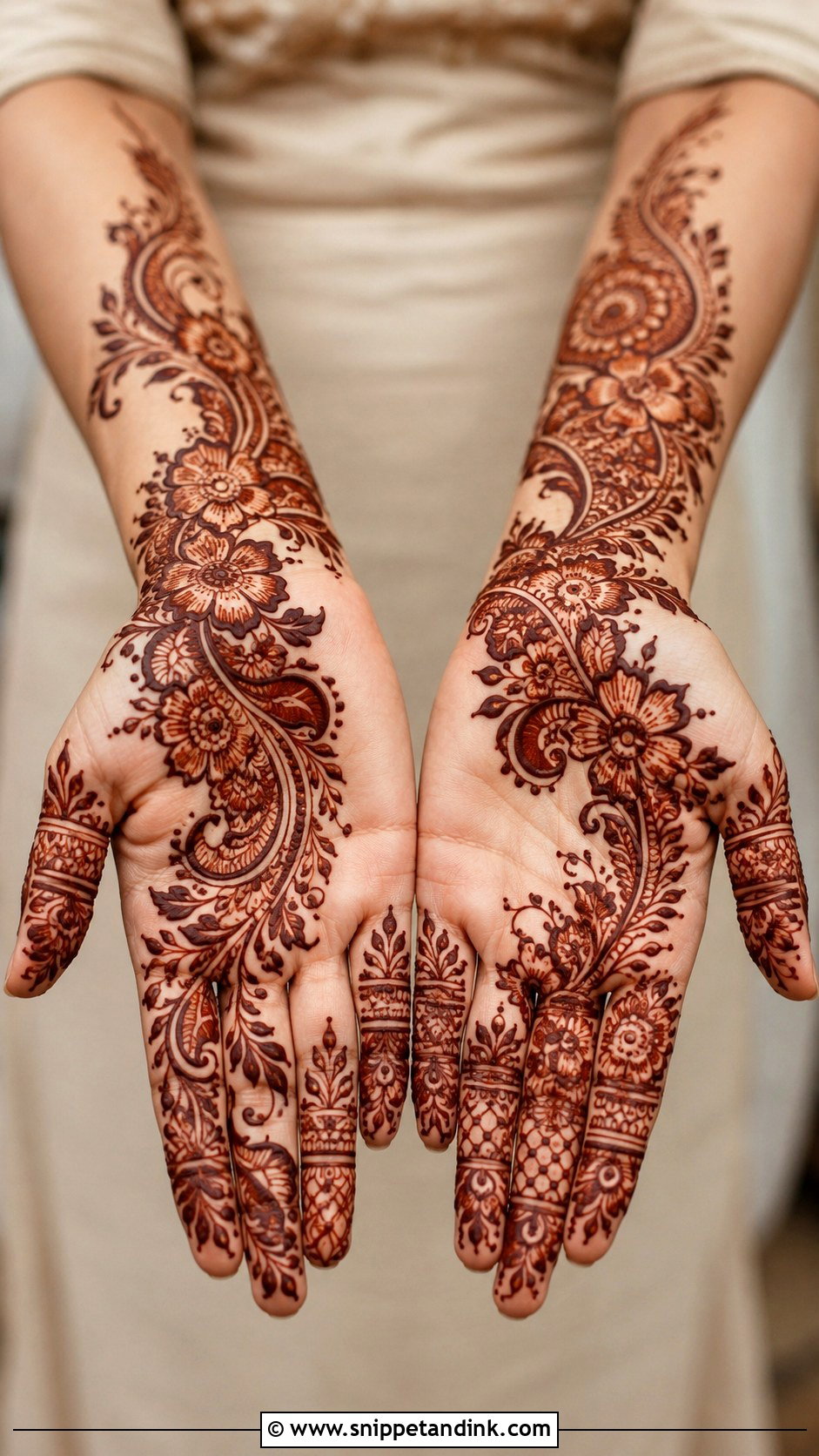
Guests should look festive without competing with the bride, so I keep guest palms clearly lighter than hers. A diagonal Arabic layout does this well: one bold flower or paisley in the palm, finger bands and a simple cuff at the wrist. It also takes a fraction of the bridal sitting time, which matters when I’m working through a queue of cousins on mehndi night. Open spacing keeps it comfortable to eat, dance and shake hands in.
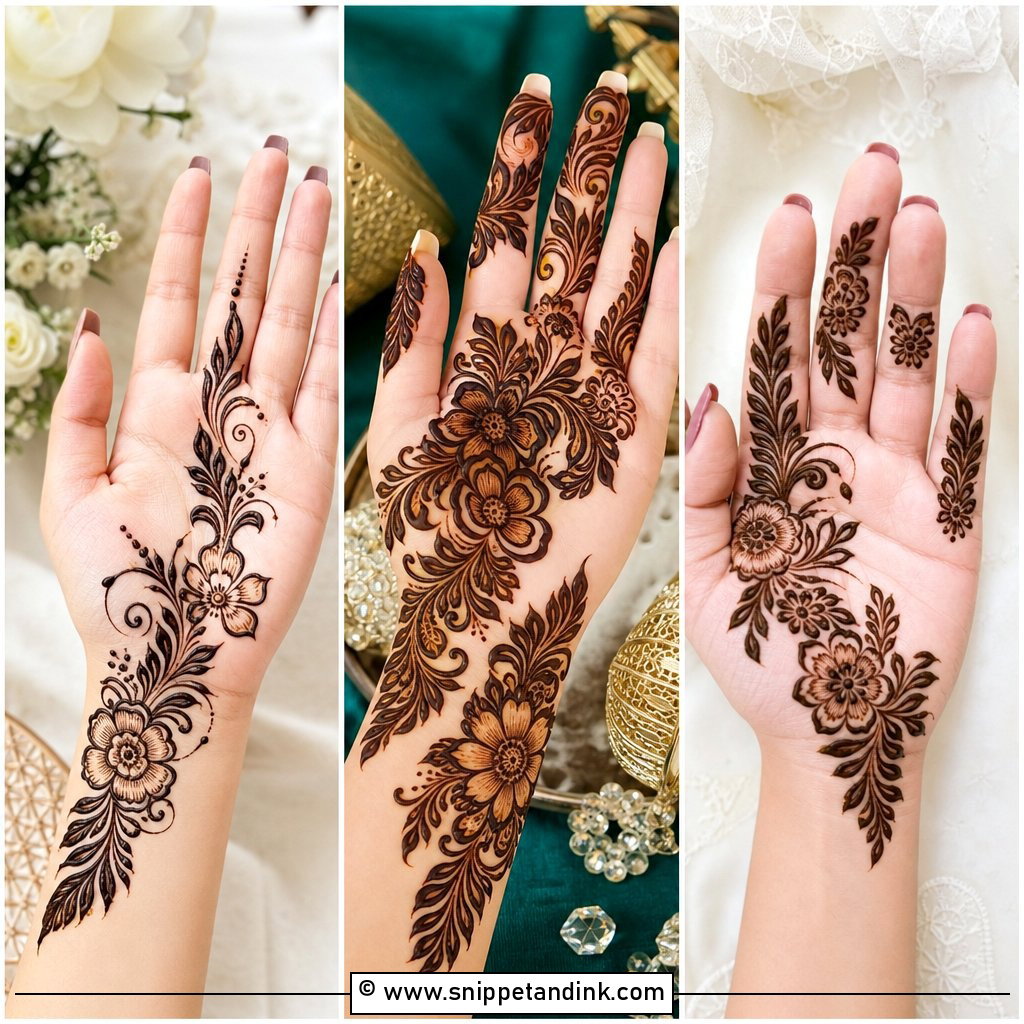
15. Front Hand Jaali Mehndi Design
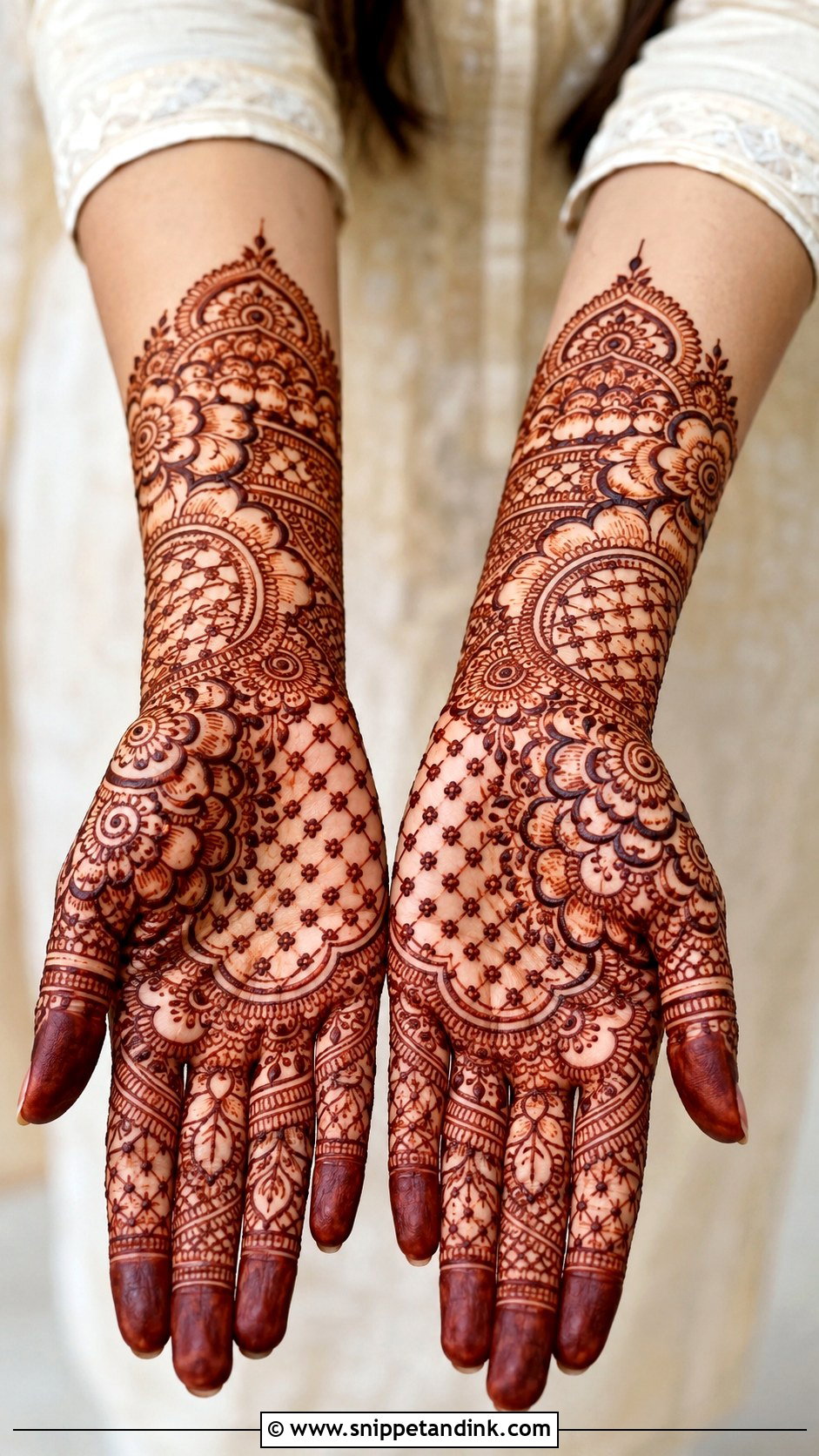
Jaali is the net or lattice pattern, and it gives the palm a woven texture. It can fill the whole palm, sit inside a floral panel or run as a diagonal strip beside paisleys. On its own, a large area of jaali looks flat, so I always set bold flowers, leaves or a mandala against it. The skill is in even spacing. If one diamond is wider than its neighbours, the eye catches it immediately, and jaali is unforgiving of a shaky hand.
16. Front Hand Peacock Mehndi Design
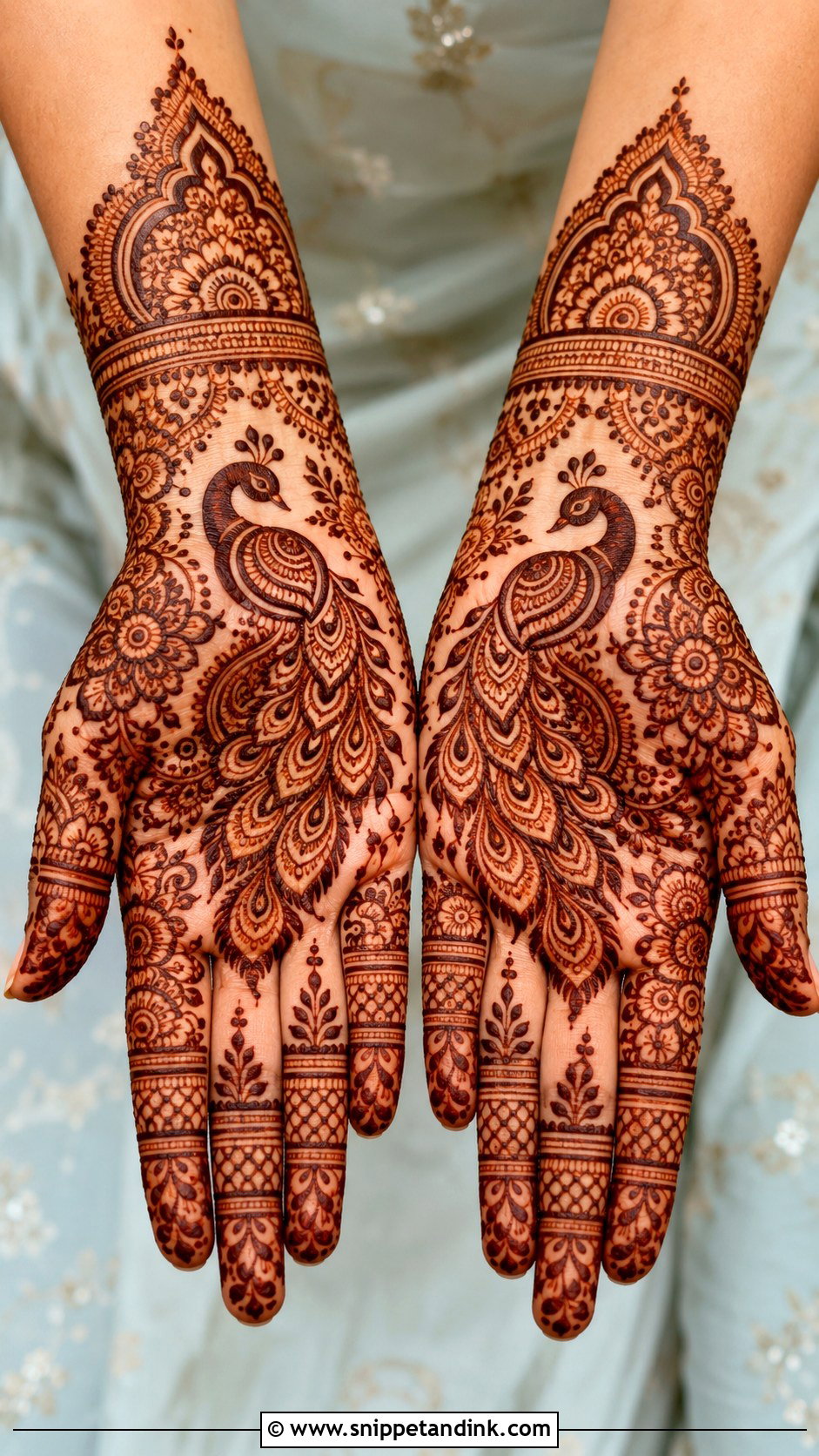
Peacocks belong to bridal events, sangeet nights and engagements. The bird can sit in the palm with its feathers fanning toward the wrist or fingers, or curve along a trail with flowers and paisleys. The mistake I correct most often is burying the peacock under fillers. Draw the body and neck first with a clean, slightly thicker line, then add feather detail, dots and scallops around it, so the bird is the first thing anyone recognises.
17. Front Hand Lotus Mehndi Design
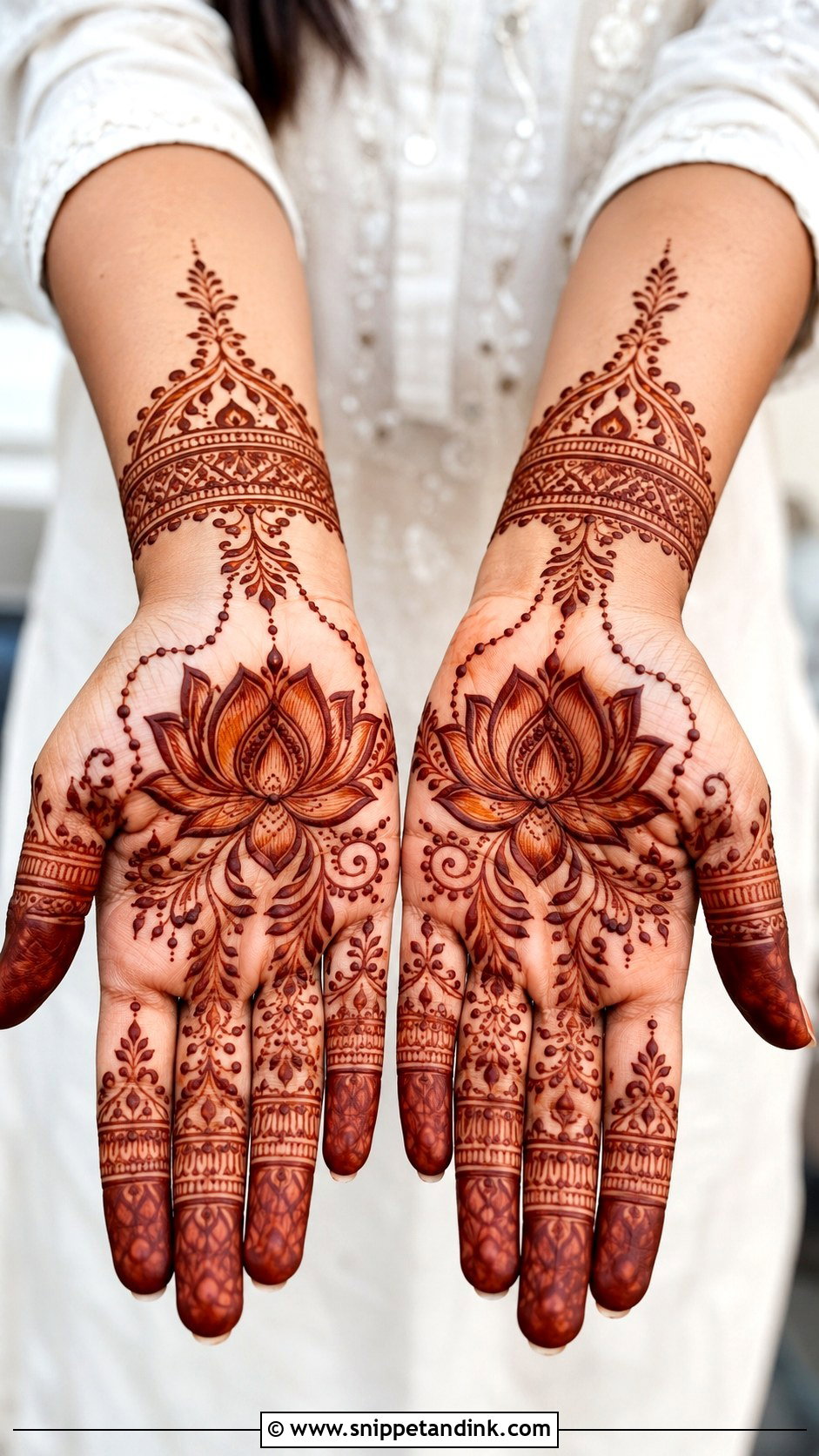
The lotus layers its petals naturally, which gives a soft centre point for simple and detailed designs alike. Put it in the middle of the palm, at the wrist or as the heart of a larger mandala, then link it to dotted chains, vines and slim finger patterns. It suits weddings, pujas and Diwali. Symmetry is everything with a lotus. I pipe the centre petal first and build outward in pairs, otherwise one side always ends up fatter.
18. Front Hand Bracelet Mehndi Design
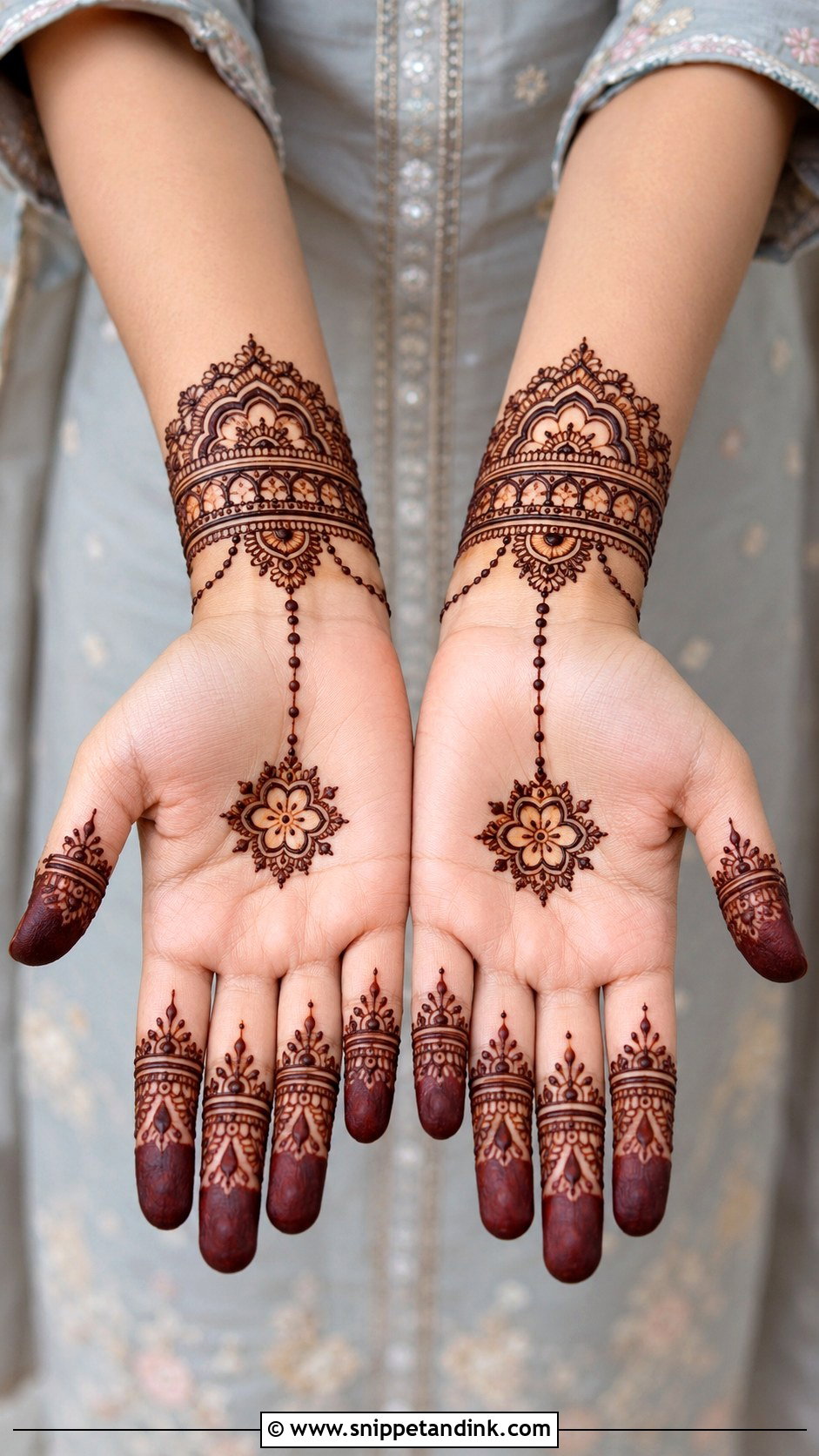
Bracelet designs put the weight at the wrist, with a cuff, chain or lace-like band, then link to the palm through vines, dots or a small motif. I like this for pre-wedding events because it reads as jewellery even before you put any on. Evenly spaced bracelet lines matter more than detail. A few small flowers near the wrist soften it, and the rest of the hand can stay mostly open.
19. Front Hand Minimal Mehndi Design
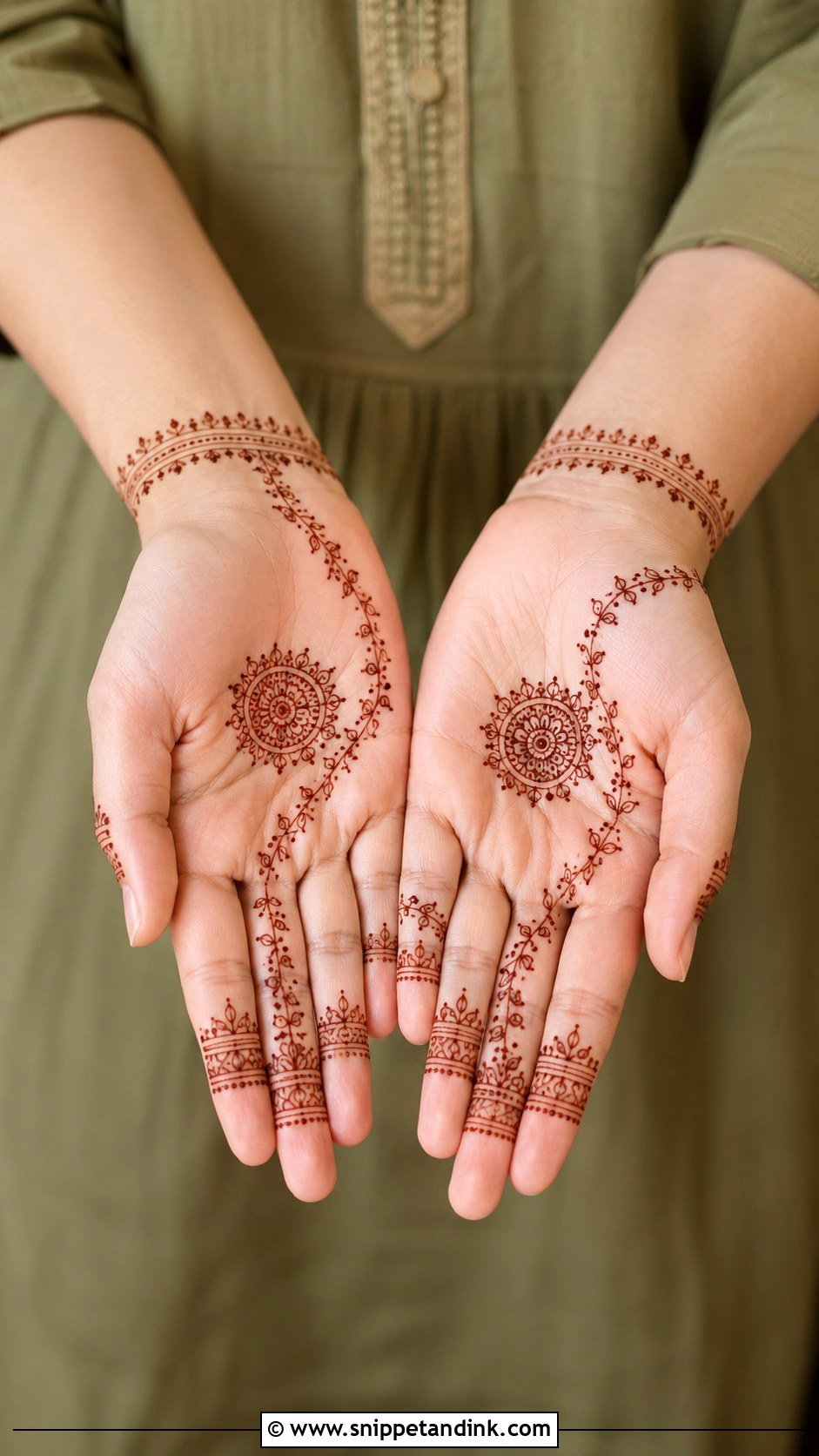
Minimal palm work is a tiny mandala, a slim vine, delicate finger lines or one small floral cluster, with the rest left bare. It is quick, it suits office functions and first-timers, and it is what I’d steer younger girls toward. The catch is that thin lines carry less paste, so they stain lighter. If you want minimal but still dark, ask for slightly thicker lines rather than more of them, and add a small wrist accent so the hand looks complete.

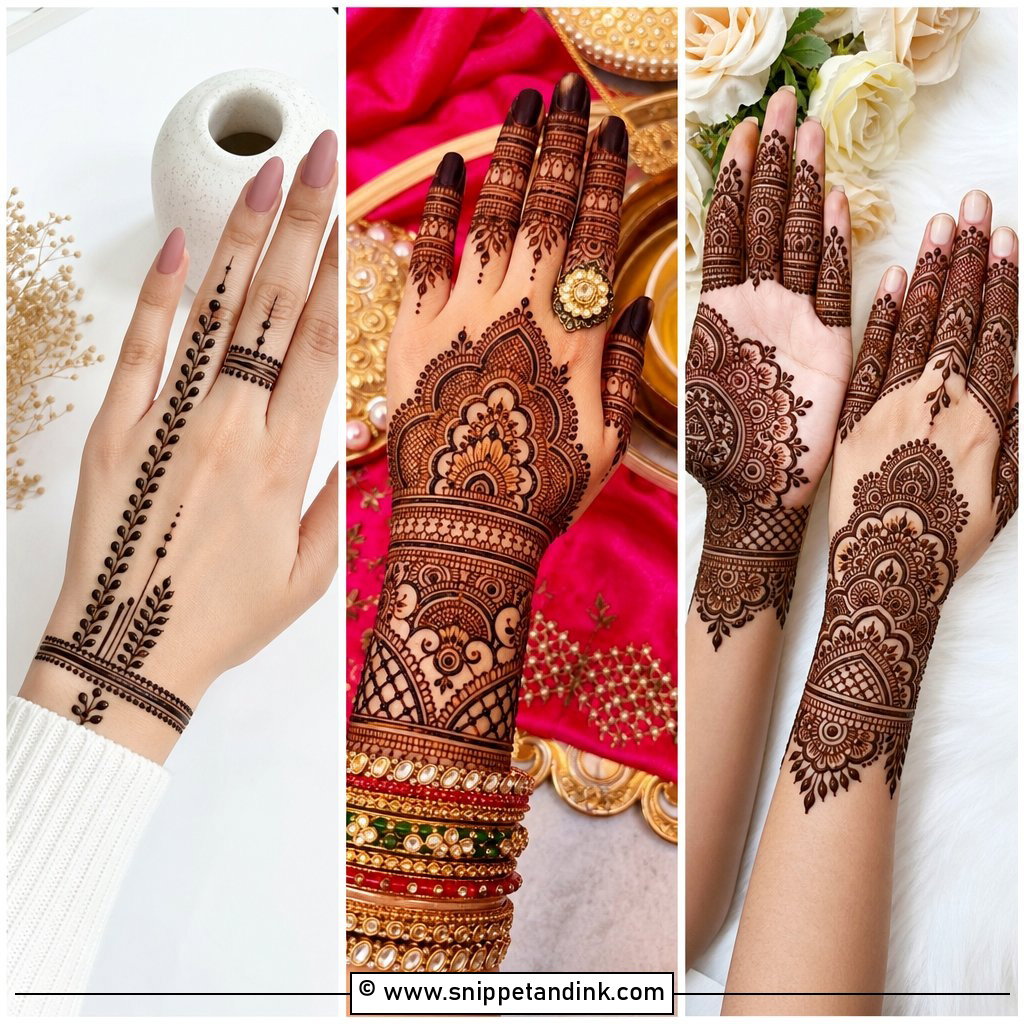

20. Front Hand Heavy Mehndi Design
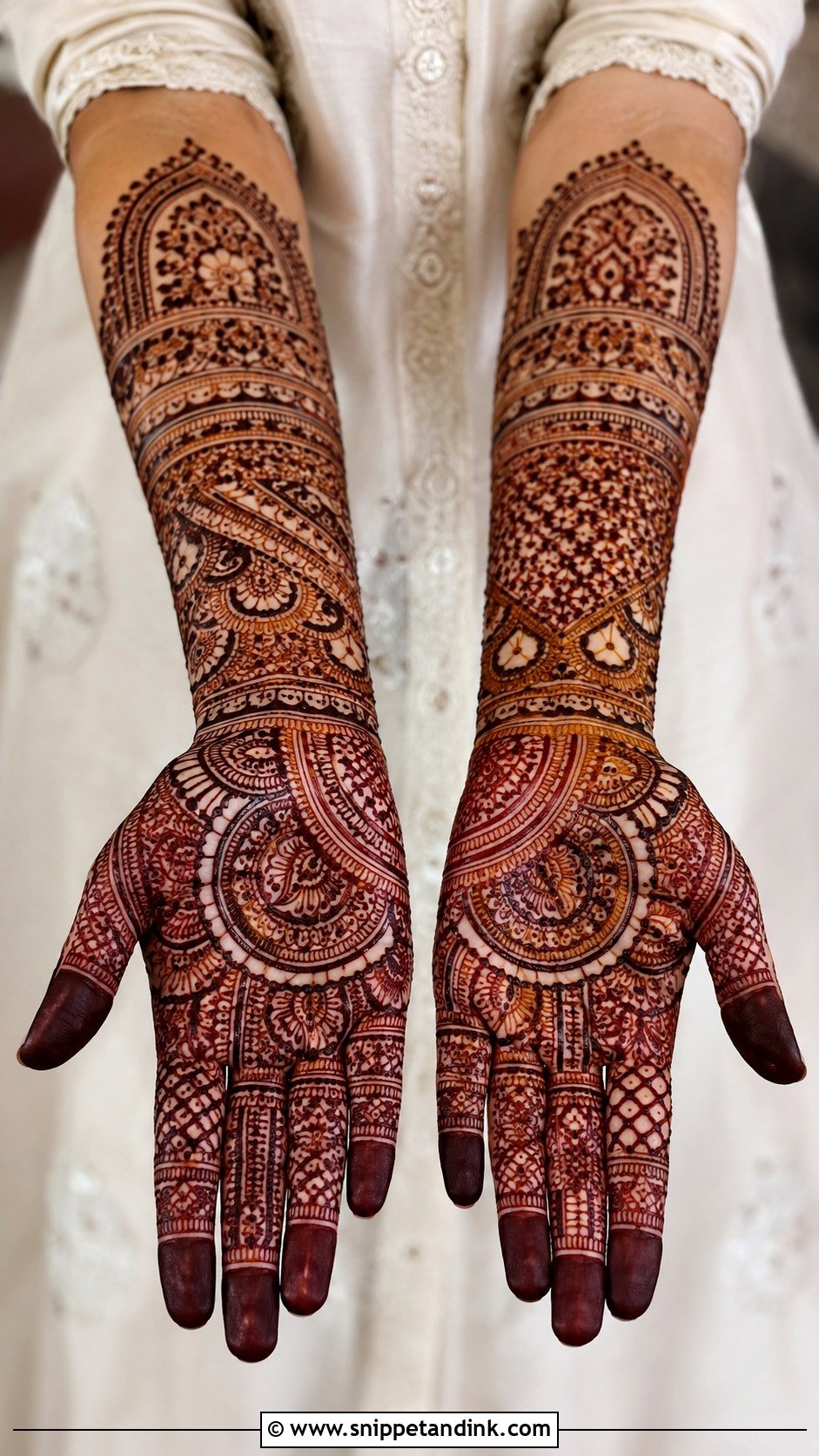
Heavy coverage fills the palm, fingers and wrist with mandalas, paisleys, florals, jaali and layered borders. It suits brides, close family and the biggest celebrations. Structure is what keeps it from looking cluttered: a central motif, detailed fingers and a strong extension from wrist to forearm. I limit myself to three or four motif families on one hand. Throwing in every element you like is how heavy henna turns into noise.
21. Front Hand Khafif Mehndi Design
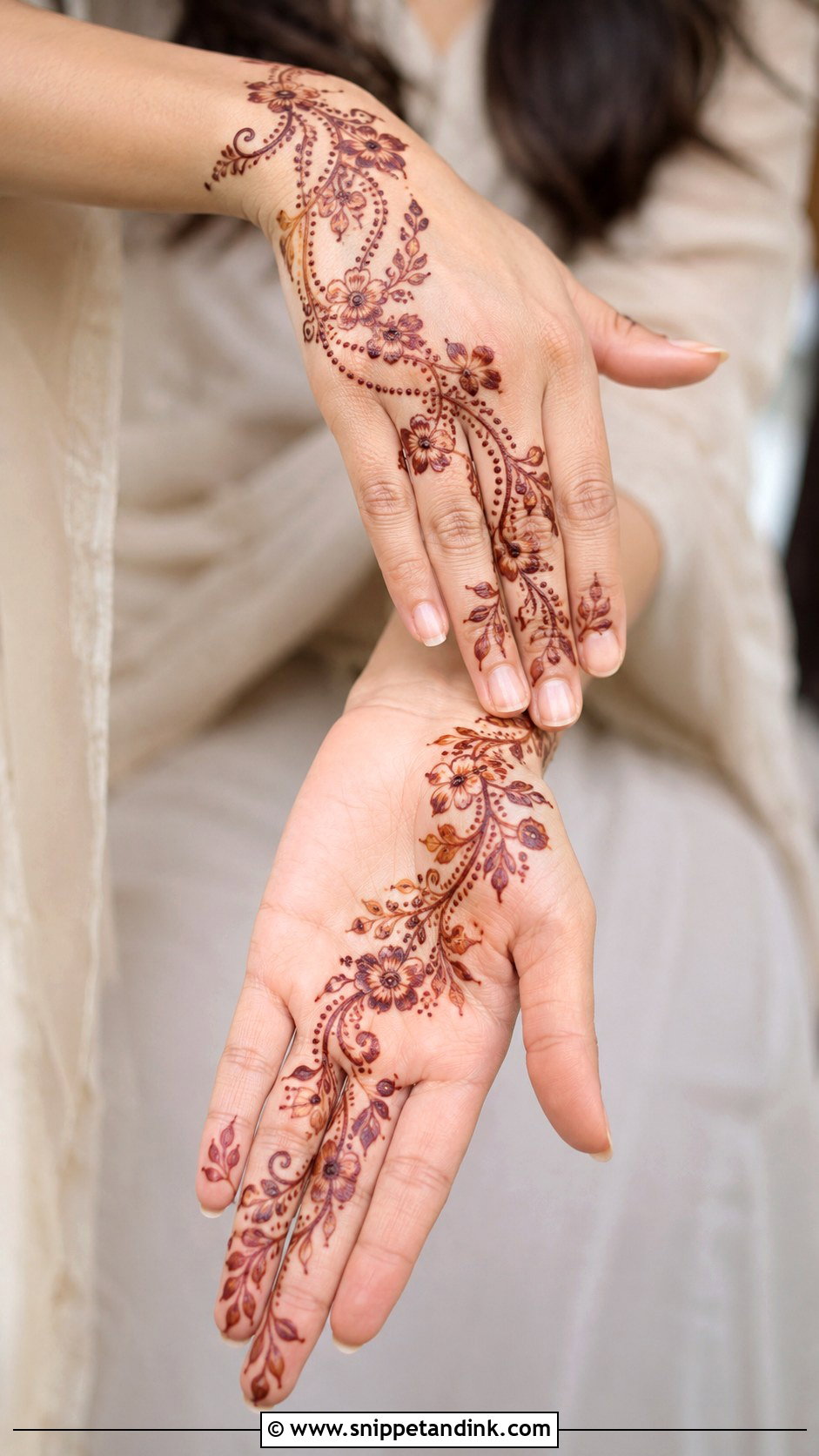
Khafif is the light, airy style, built from fine florals, tiny leaves, thin vines and soft shading with plenty of open space. It often starts at the wrist and travels lightly across the palm to the fingers. Because the lines are thin, the paste consistency has to be smooth and stringy, almost like toothpaste that holds a thread. Lumpy paste breaks the line and khafif shows every break.
22. Front Hand Rose Mehndi Design
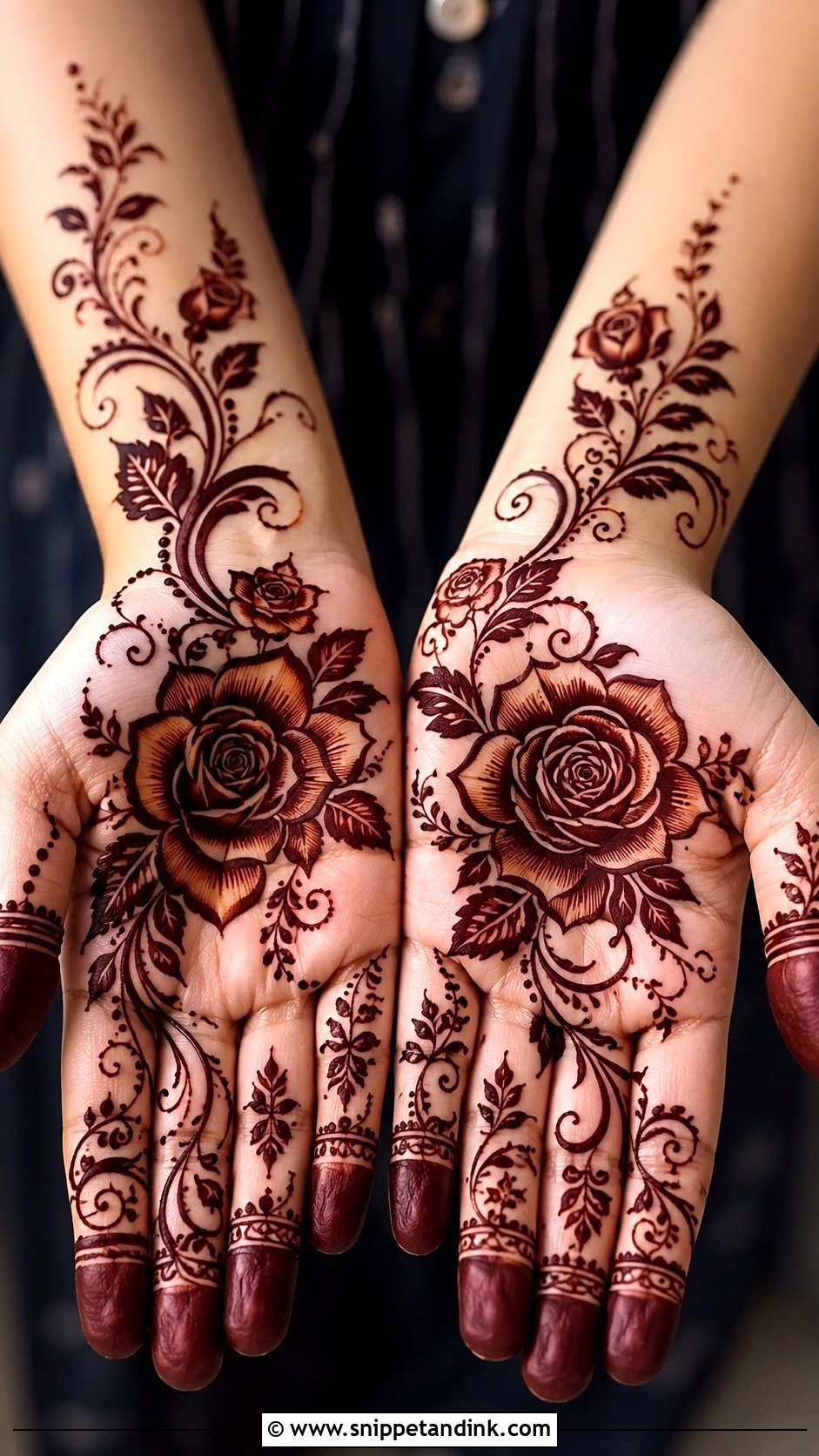
A single large rose in the palm, with leaves, vines and shaded petals, is one of the boldest things you can put there. Smaller roses can follow up the fingers or down to the wrist. Roses are at home in Arabic and Indo-Arabic work because they need open space around them. I outline every petal clearly and shade only the inner curve of each one. Shade the whole rose and it loses its shape, especially once the stain darkens to maroon.
23. Front Hand Vine Mehndi Design
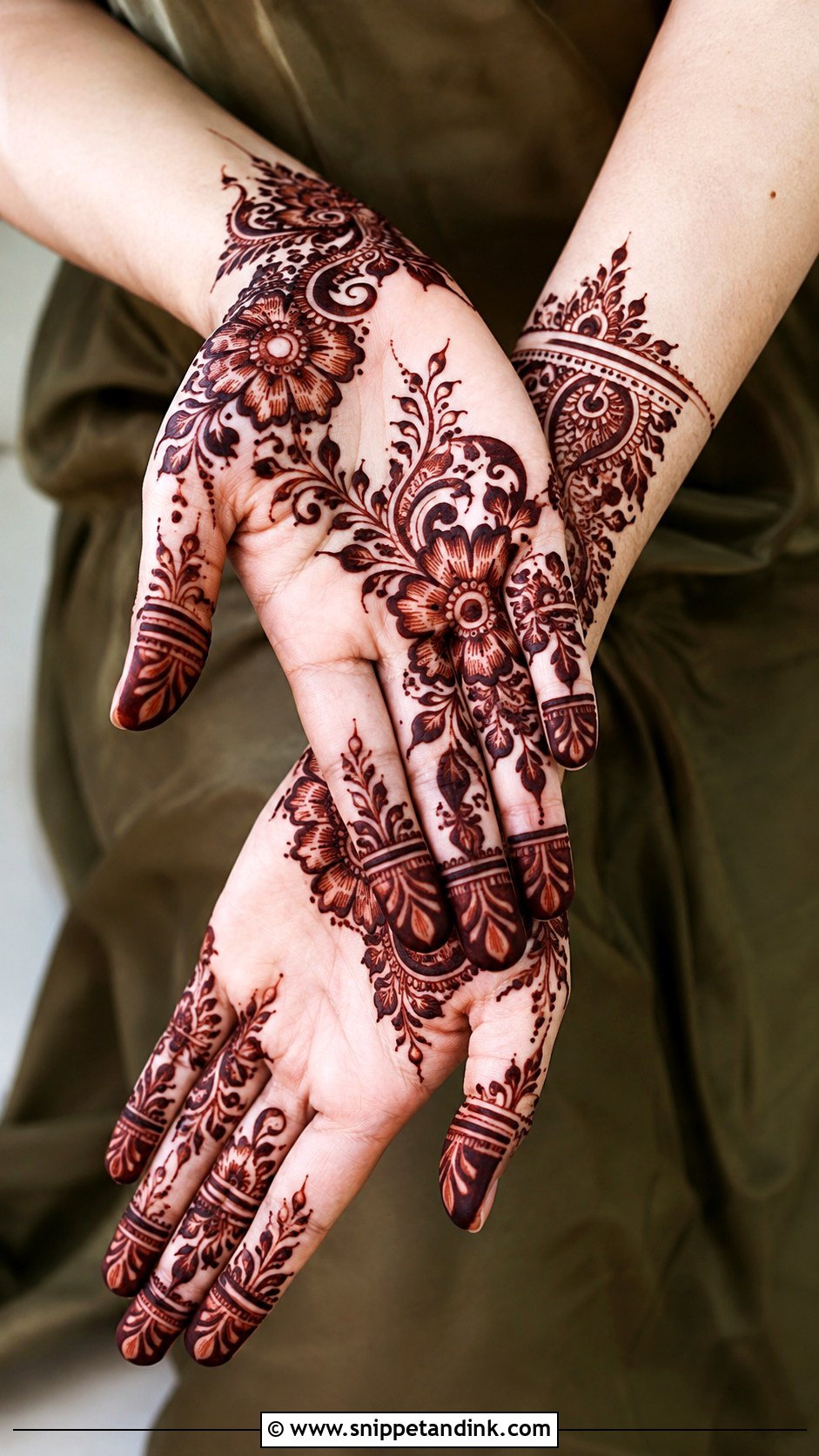
One confident vine from the wrist, curving toward the index finger, middle finger or thumb side, with leaves, small flowers and curls along it. It lengthens the fingers and suits Arabic, minimal and modern looks. The vine itself has to be drawn in one smooth pull. Hesitate halfway and you get a wobble that stays on your skin for two weeks.
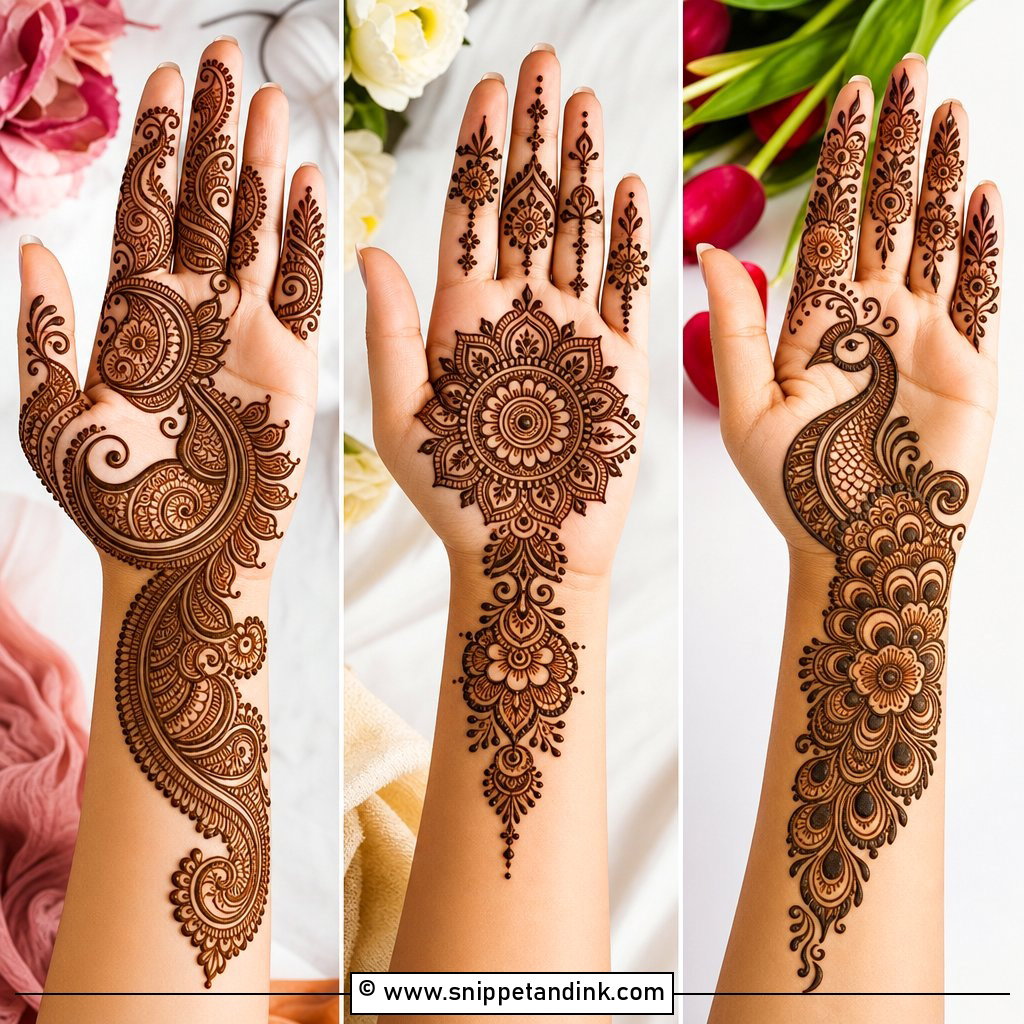
24. Front Hand Gulf Mehndi Design
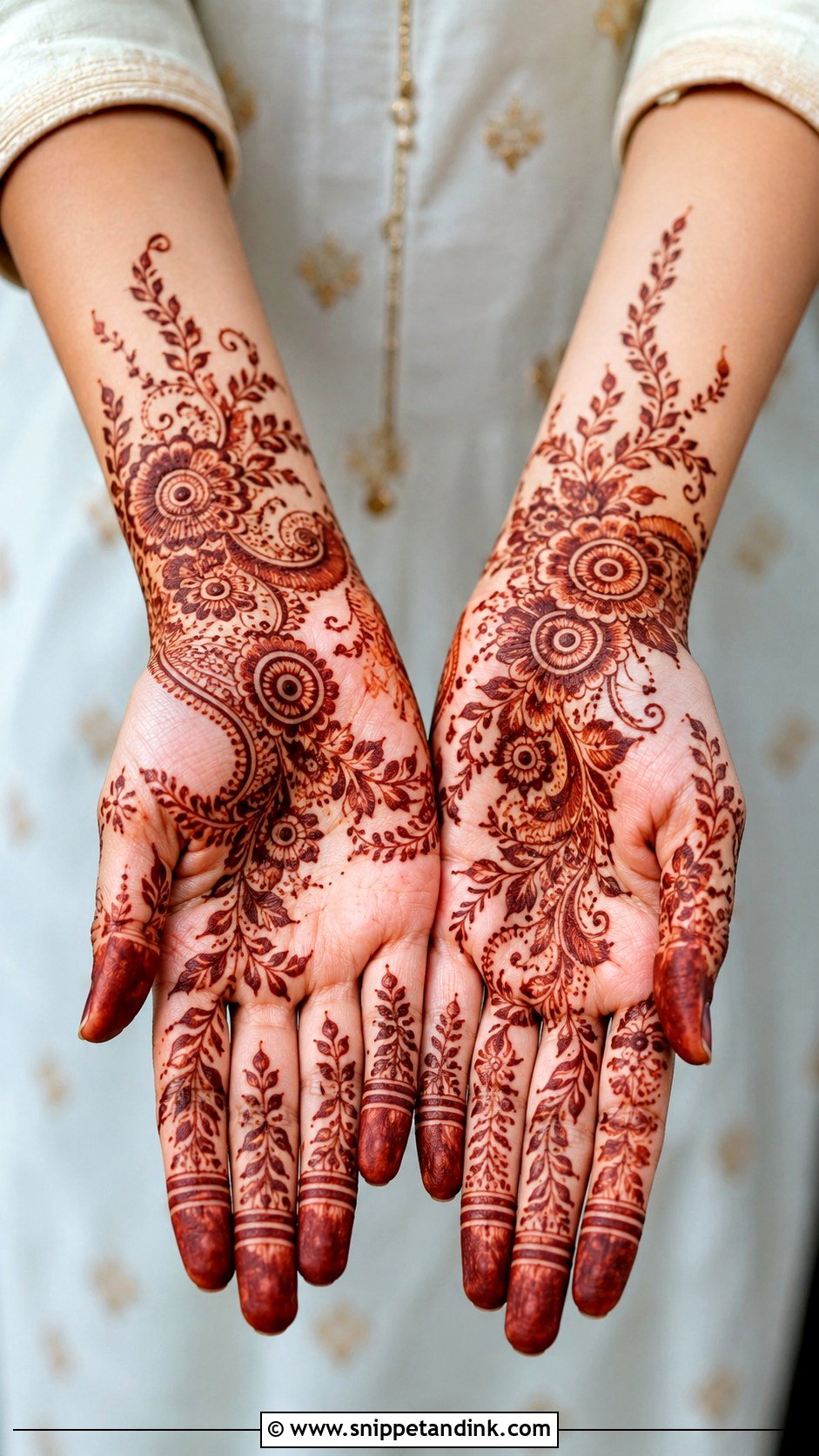
Gulf styles, often drawn from Khaleeji patterns, use big florals, dramatic spacing and sweeping curves rather than dense filling. A palm rose, a leafy swirl or an oversized paisley becomes the feature, with clean bands or partial detail on the fingers. Thick lines on open skin stain very dark, which is exactly why this style pops. It is my go-to for evening events where the lighting is low and fine detail would disappear.



25. Front Hand Moroccan Mehndi Design
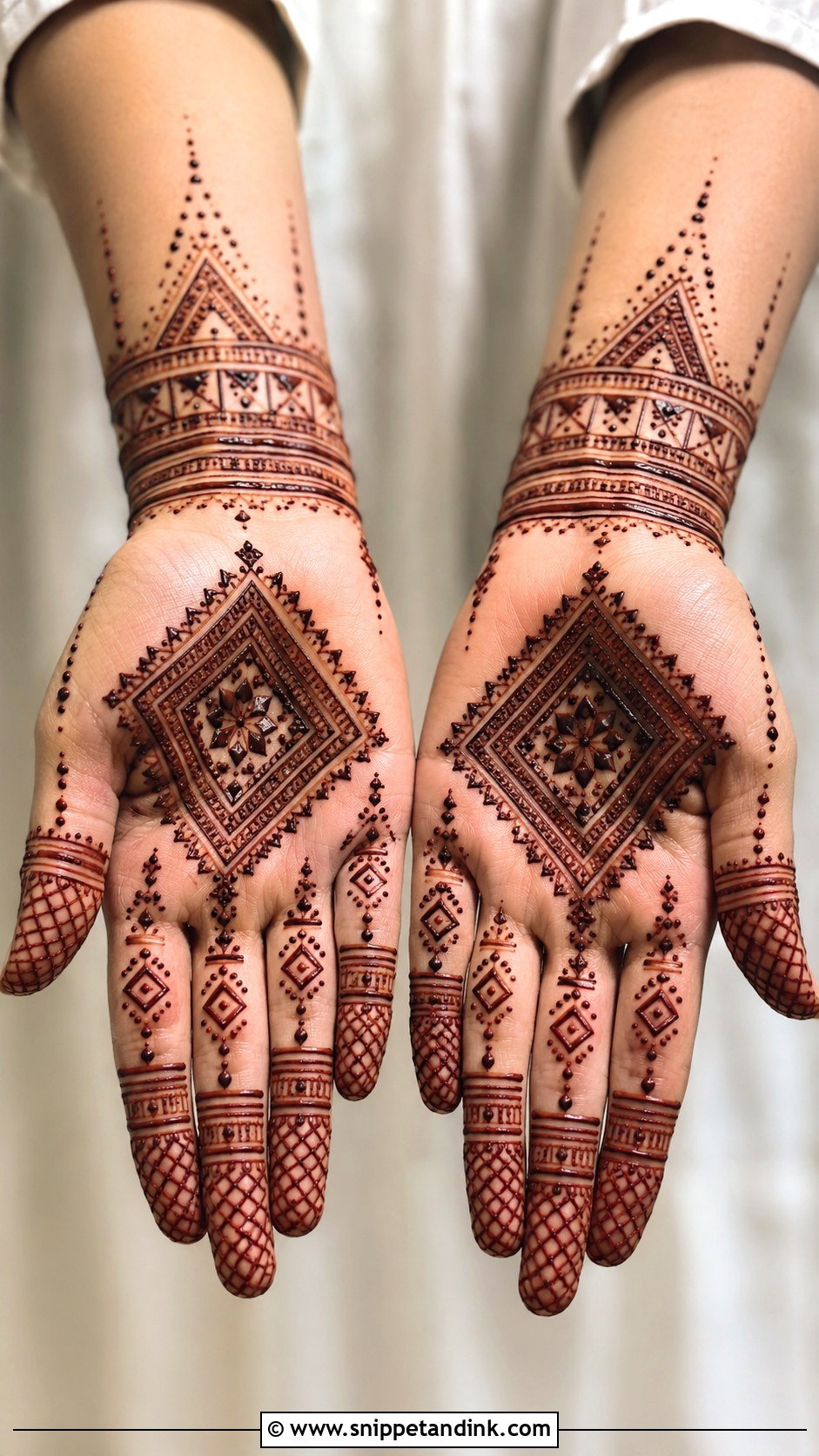
Moroccan work is geometric: diamonds, straight lines, dots, triangles and structured grids. The palm might carry a diamond grid or a central geometric medallion with a bracelet band, and the fingers repeat lines and small triangles. It suits someone who prefers symmetry to florals. Straight lines are harder to pipe than curves, so this is not the style to try on yourself the night before. Even spacing is non-negotiable, and overfilling ruins the graphic effect.
26. Front Hand Rajasthani Mehndi Design
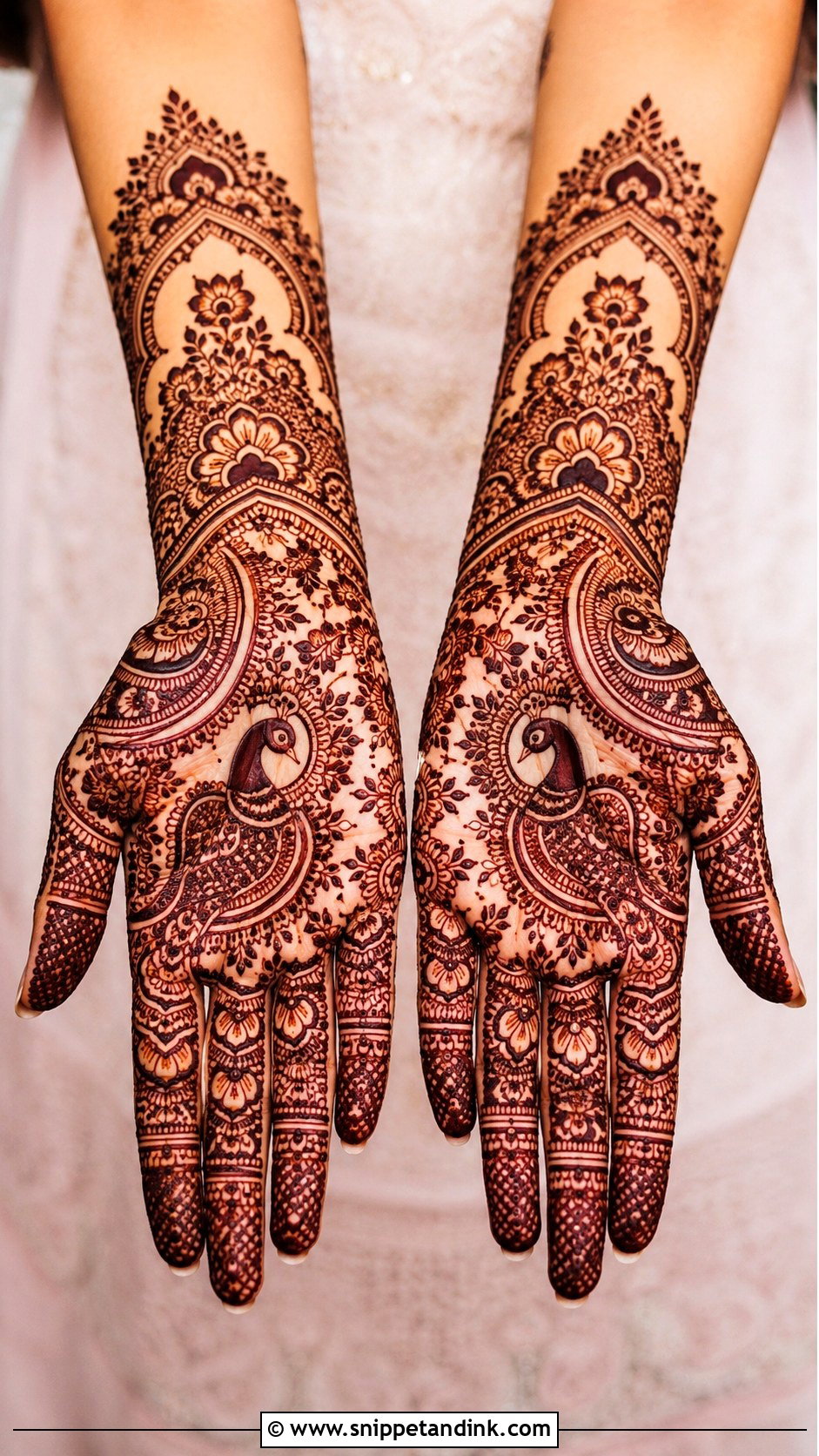
Rajasthani designs tell stories, with paisleys, floral borders, peacocks, mirrored symmetry and fine filler patterns, and bridal versions often include dulha-dulhan figures or palace motifs. Place a strong design in the palm and extend it to the wrist with layered bands, and detail every finger fully to match. This takes time. I tell brides to expect a long sitting and to have someone feed them, because the hands are out of action until the paste sets.
27. Front Hand Indian Mehndi Design
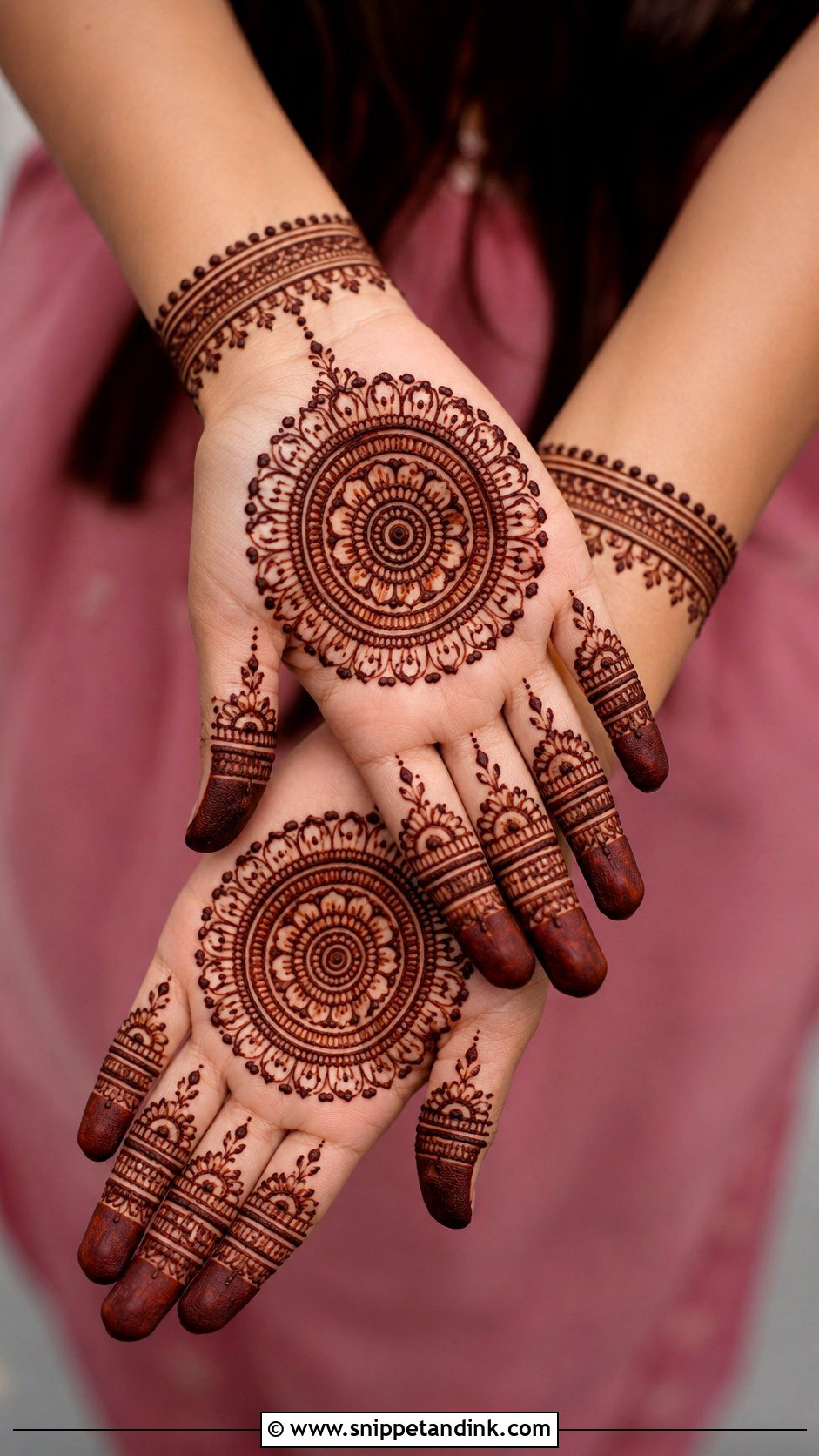
Traditional Indian palm work aims for full, balanced coverage with mandalas, paisleys, peacocks, florals, leaves, dots and fine line fillers. A central mandala with patterned fingers is the classic, and paisley borders add weight. It can be scaled from simple to heavy. Even on a fully covered palm, the layout has to be readable, so I keep clear divisions between sections. Otherwise the stain merges and you lose the detail you sat for.
28. Front Hand Pakistani Mehndi Design
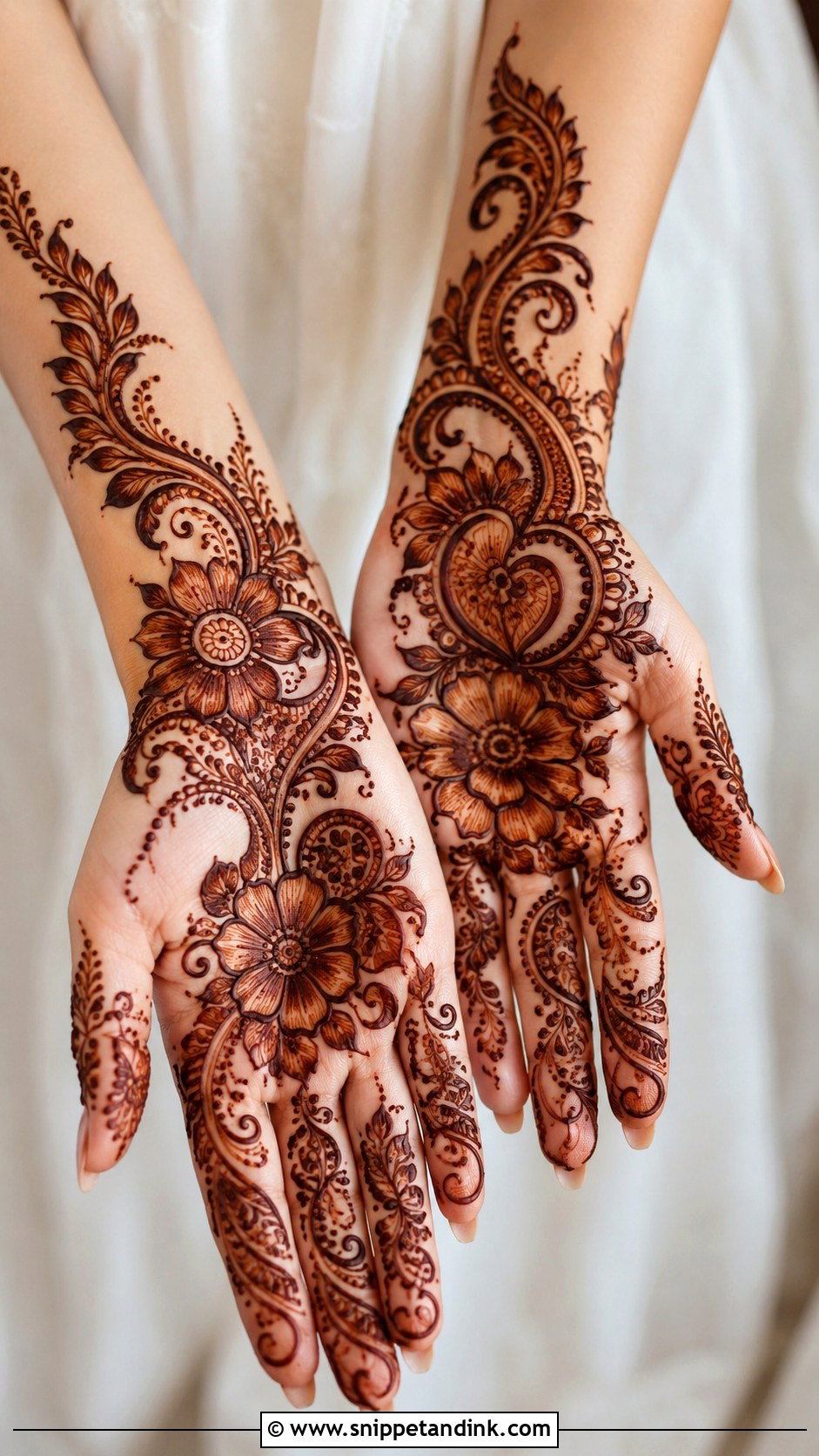
This style mixes Indian detail with Arabic flow: floral trails, shaded petals, paisleys, fine vines and decorated fingers. Many Pakistani front hand designs run diagonally, with fine filling inside larger motifs, which gives openness and richness in the same hand. It sits well at Eid, weddings, mayun and mehndi night. I keep the palm medium-heavy and give the fingers neat bands and tips, so the hand doesn’t turn too dense.
29. Front Hand Shaded Mehndi Design
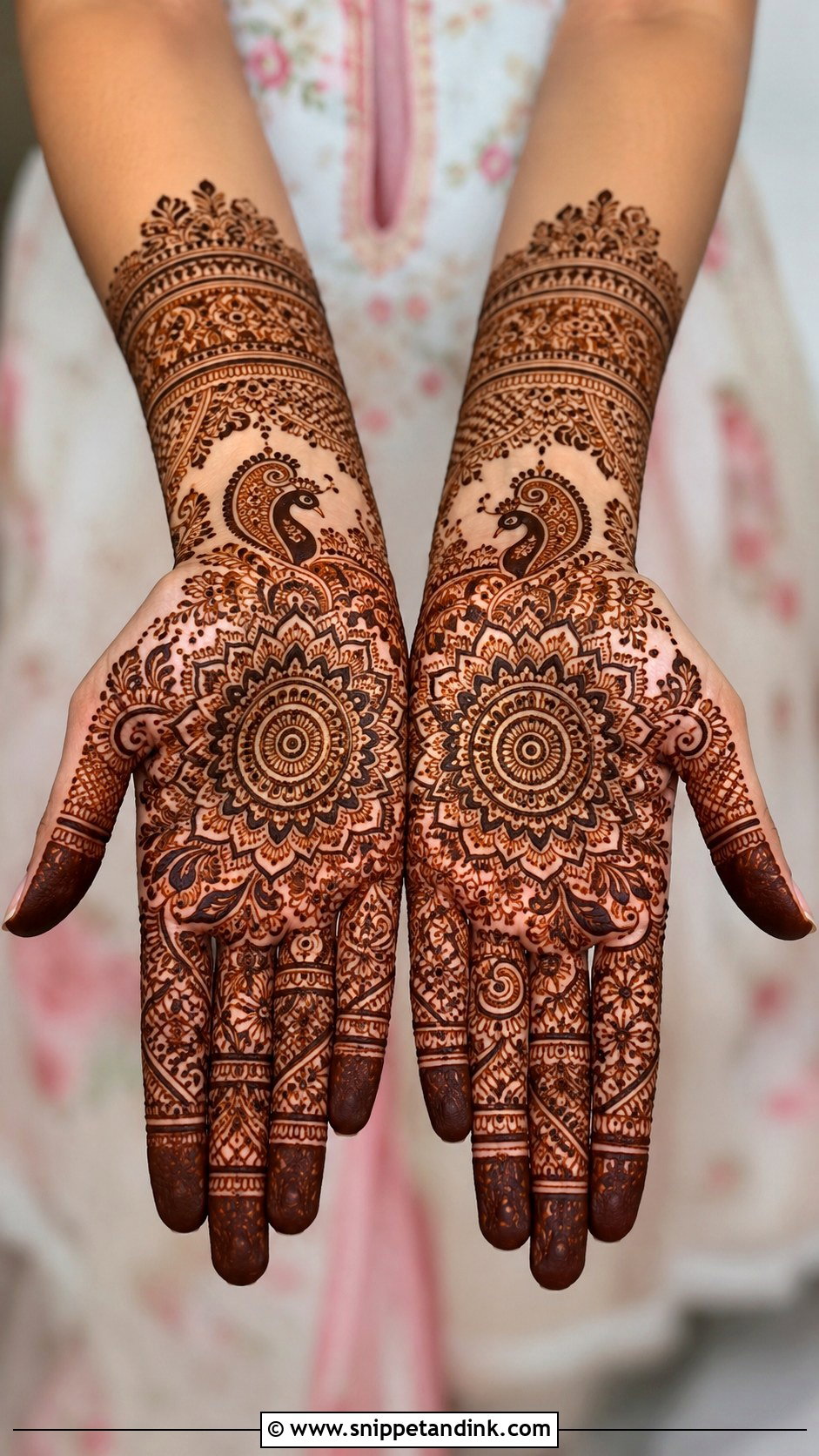
Shading adds depth inside petals, leaves and paisleys, and it is most effective in Arabic and floral work. A large shaded flower in the palm can link to leaves and vines across the fingers, with a matching shaded border at the wrist. I shade with a lighter touch on the cone, not a different paste, so the shaded zone stains a shade or two paler than the outline. Shade everything and that contrast vanishes.
30. Front Hand Circle Mehndi Design
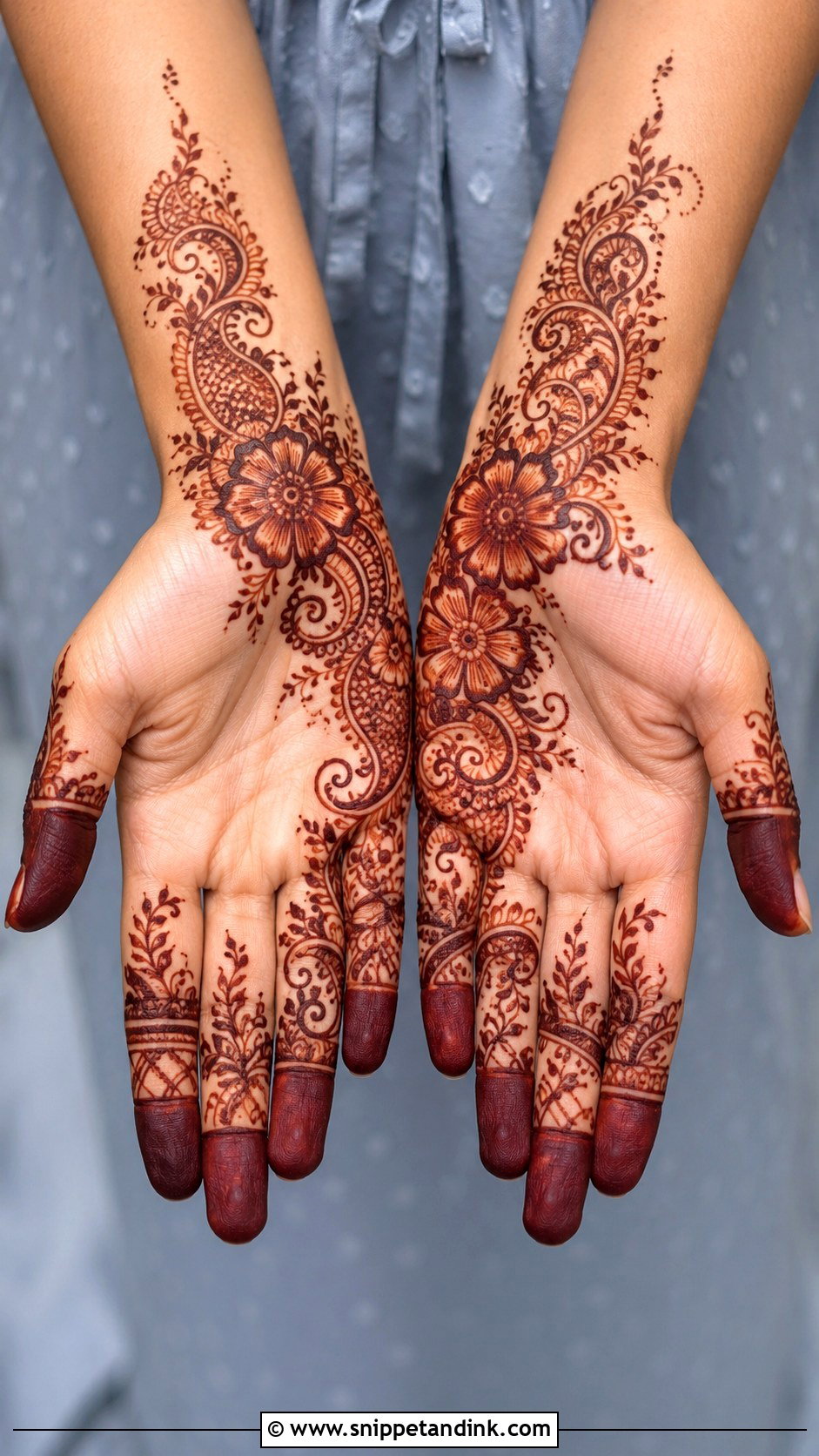
Circle designs centre on a round mandala or circular floral motif in the palm. They are quick to build because the structure is simple: one large round shape and decorated fingers, or extra rings, dots and outer petals for a fuller look. Symmetry is the whole game here. A circle that drifts even slightly oval looks wrong on the palm, so I mark a centre dot and work around it in rings.
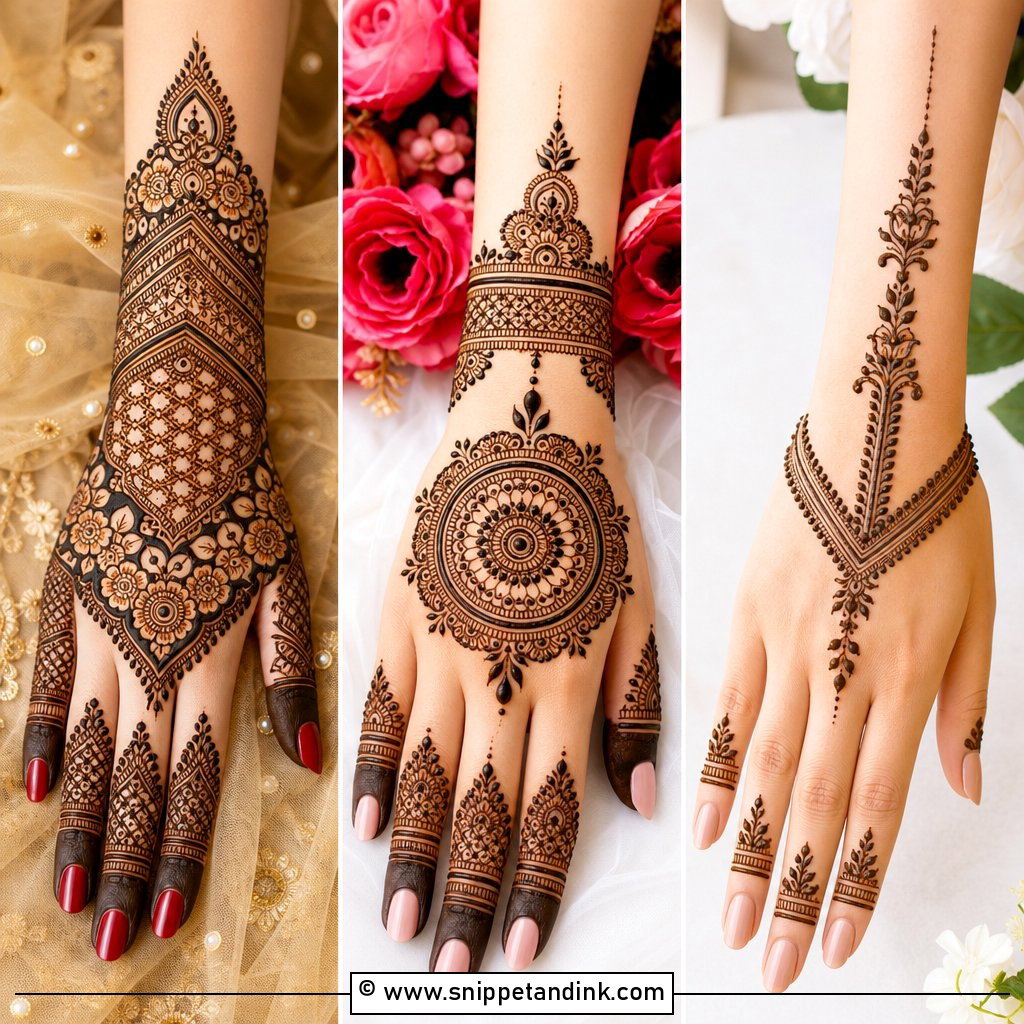
31. Front Hand Jewelry Mehndi Design
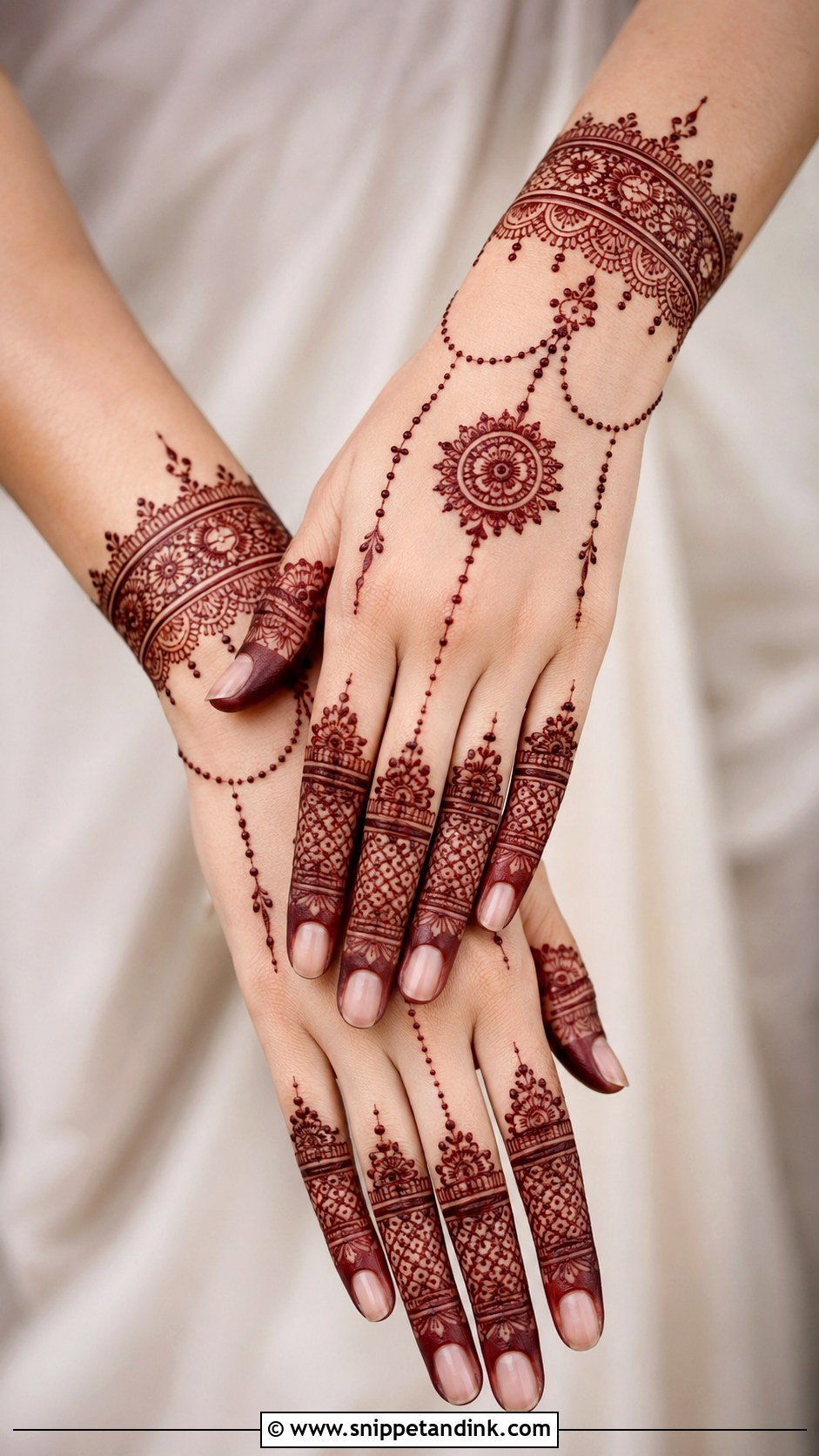
Jewellery mehndi draws ornaments in henna: bracelet cuffs, ring chains, finger bands, pearl-like dots and lace patterns, joined to a small floral or mandala motif on the palm. It pairs naturally with real rings and bangles. Keep the chains delicate and evenly spaced. Heavy motifs crowding the chains break the illusion, and the hand stops looking like it is wearing jewellery.
32. Front Hand Half Palm Mehndi Design
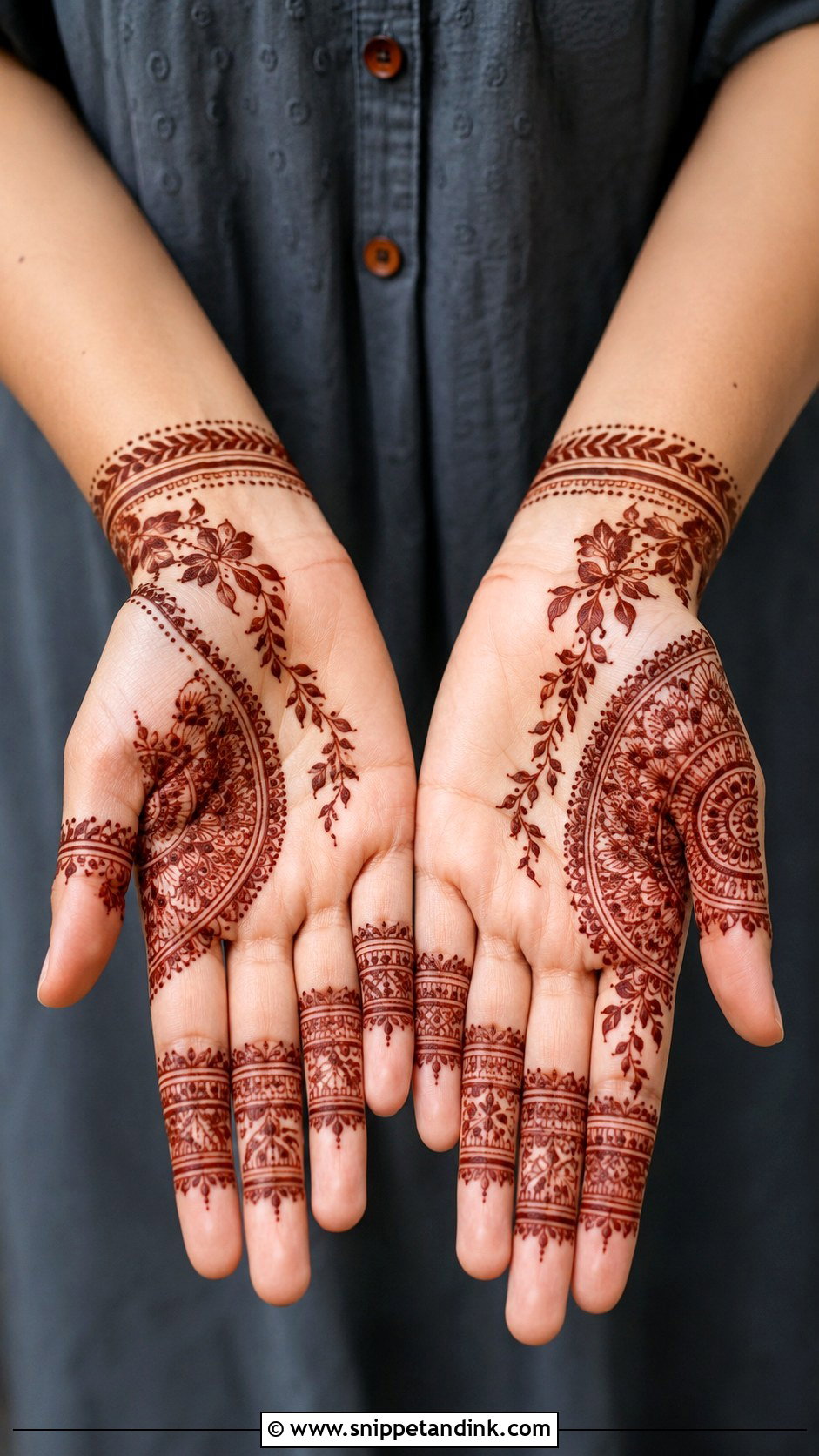
Half-palm designs cover one side or the lower half near the wrist and leave the rest bare on purpose. A floral trail, half mandala, leafy border or diagonal Arabic line all work, with the fingers fully or lightly decorated. It is quick and feels light to wear. I make sure the edge of the design has a deliberate border or finishing curl, otherwise people assume the artist ran out of time.
33. Front Hand Net Mehndi Design
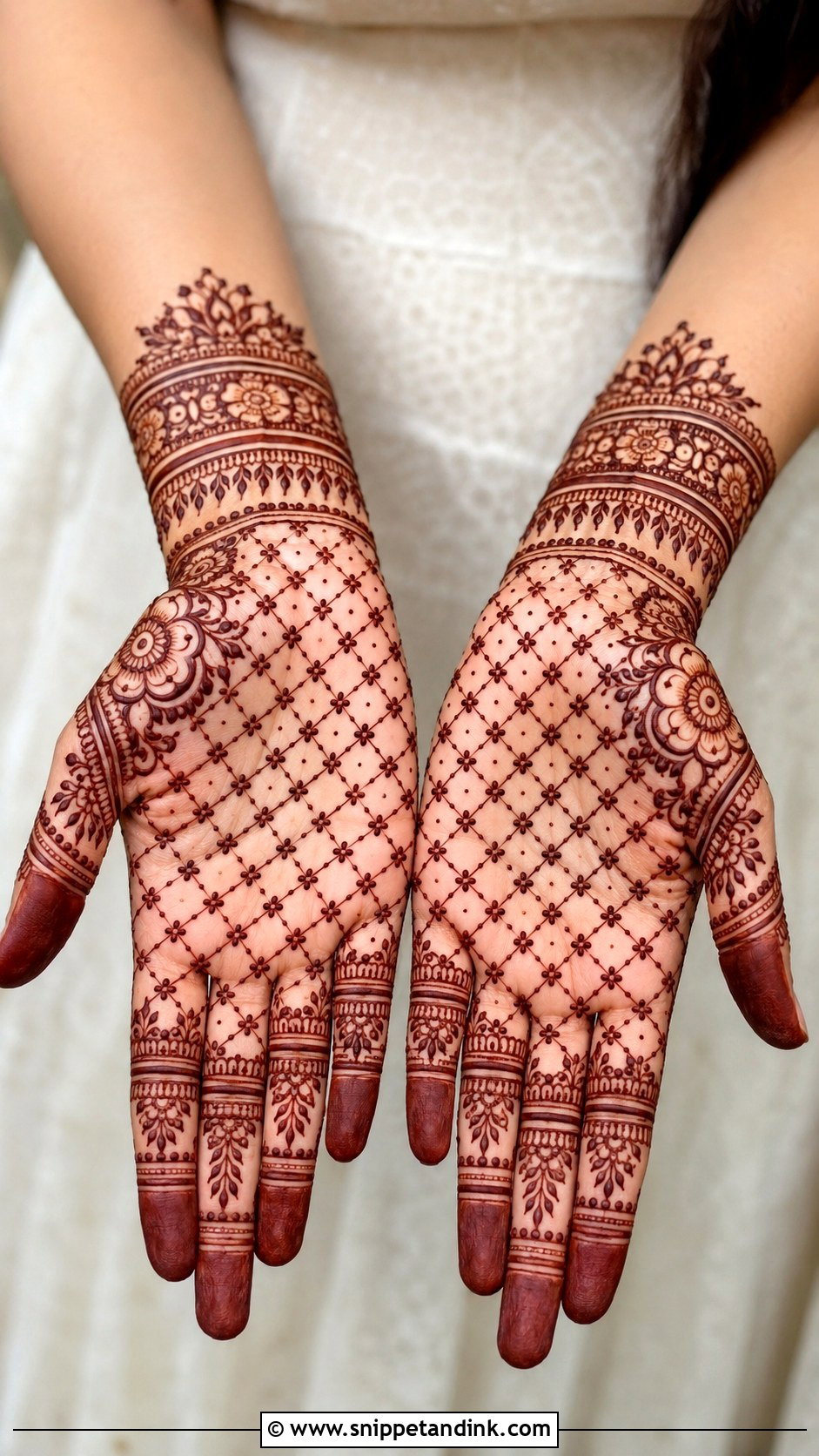
Net designs spread a mesh across the palm or fingers in diamonds, squares or curved lattice, with tiny dots or flowers inside each cell. Pair it with bold borders, floral corners or a wrist cuff, because the net itself is quiet. It suits weddings and formal events. Consistent spacing is what makes it look refined, and when the stain matures to deep maroon the texture really shows.
34. Front Hand Bangle Mehndi Design
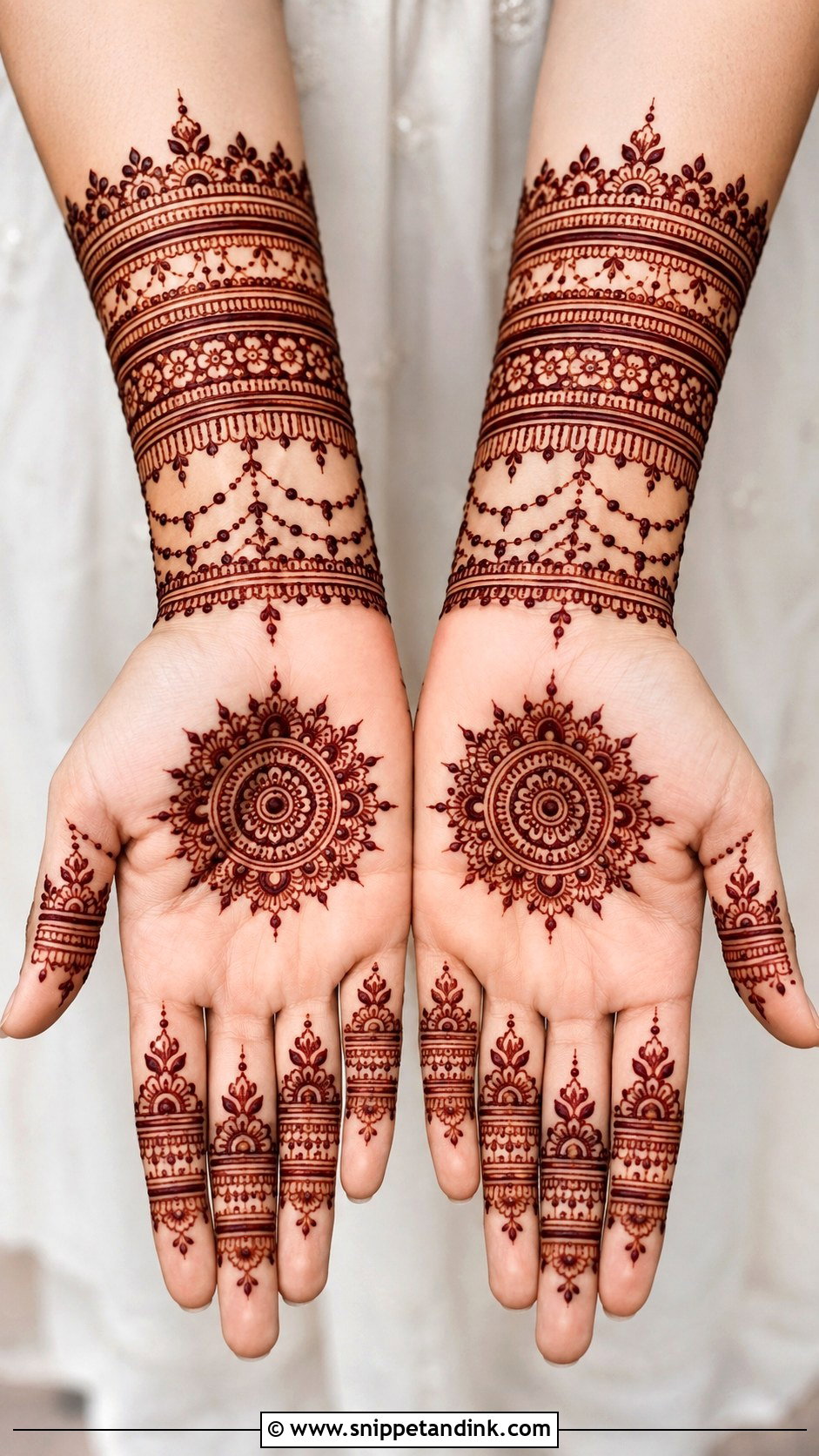
Bangle designs concentrate on the wrist and lower palm with stacked, cuff-like bands, dotted chains, floral borders and lace detail. A small palm motif ties the wrist to the fingers so the hand doesn’t look cut in half. I like it for anyone who wears glass bangles, since the henna fills the gaps between them. Keep the circular lines clean and evenly spaced, the way real bangles stack.
35. Front Hand Trendy Mehndi Design
Current palm designs combine classic motifs with clean, open layouts: a bold flower, a half mandala, slim finger bands, shaded leaves and a bracelet wrist. My rule is to pick two or three features and let them breathe, with one clear focal point. Clients often bring a screenshot and ask for every trend in it at once. On a real hand, that is too much, and the result photographs as clutter rather than fresh.
Why Palms Stain Darkest, and How to Protect the Colour
When the paste comes off, the stain is a bright orange. Over the next one to two days it oxidises to reddish brown and then maroon, which is why I never judge a design the morning after. Palms and fingertips go darkest because the skin there is thicker and holds more dye. The same thickness means palms lose colour faster from washing and handling, so care matters most here.
- Leave the paste on for at least six hours, overnight if you can. A light dab of lemon and sugar keeps it stuck to the skin.
- Scrape the dried paste off with a blunt edge or your fingernail. Don’t wash it off.
- Keep your hands away from water for the first 12 to 24 hours. Warmth helps; holding your palms near a warm cup or wearing gloves to bed both deepen the colour.
- Rub a little natural oil or balm over the design before showering in the days after, and skip scrubs and chlorine.
If the stain comes up pale
A pale palm usually means the paste was washed off too early, the skin had lotion on it, or the room was cold. Give it the full two days before deciding; colour often catches up. Applying fresh paste over a weak stain rarely fixes it evenly, so for a wedding I’d rather book the sitting earlier than plan a touch-up.
One Clear Centre, Connected Fingers, a Finished Wrist
Every palm in this list works for the same reason: the centre has one clear focus, the fingers connect back to it, and the wrist gives it an edge. Mandalas suit quick sittings, Arabic trails suit open styling, Indian patterns carry tradition and bridal layouts carry the ceremony. Decide on coverage first, based on how long you can sit and what you’ll be doing with your hands that day, then pick the motif. Bring a photo of your outfit to the appointment so your artist can match the weight of the design to it.
You'll Like These Ideas:












Leave a Reply