
A bridal hand has two faces, and most reference photos only show one. The palm usually holds the emotional detail, such as portraits, paisleys, mandalas, initials and wedding symbols. The back is what the camera sees during the ring exchange, the varmala and almost every posed shot with jewellery. When I design a set, I treat them as one drawing that wraps around the hand rather than two separate pictures. Here are twenty designs planned for both sides, from full Indian coverage and Arabic trails to Moroccan geometry and jewellery-style backs, with notes on how each side supports the other.
Which Side Faces the Camera During Each Ritual
Brides tend to choose the palm design and treat the back as an afterthought. Then the photos arrive and most of them show the back. It helps to run through the day and think about which side is on display.
- Showing off the mehndi at the function: palms, held up together.
- Ring exchange and varmala: mostly the back of the hand and the fingers.
- Holding a bouquet, a dupatta or your partner’s arm: the back.
- Folded hands during prayers and pheras: the sides and fingertips, which is why borders along the edge of the hand matter.
- Detail shots of jewellery: the back and the wrist.
If your photographer plans a lot of ring and jewellery shots, put real effort into the back. If the mehndi function itself matters most to you, the palm can take the lead.
1. Full Hand Bridal Mehndi Front And Back
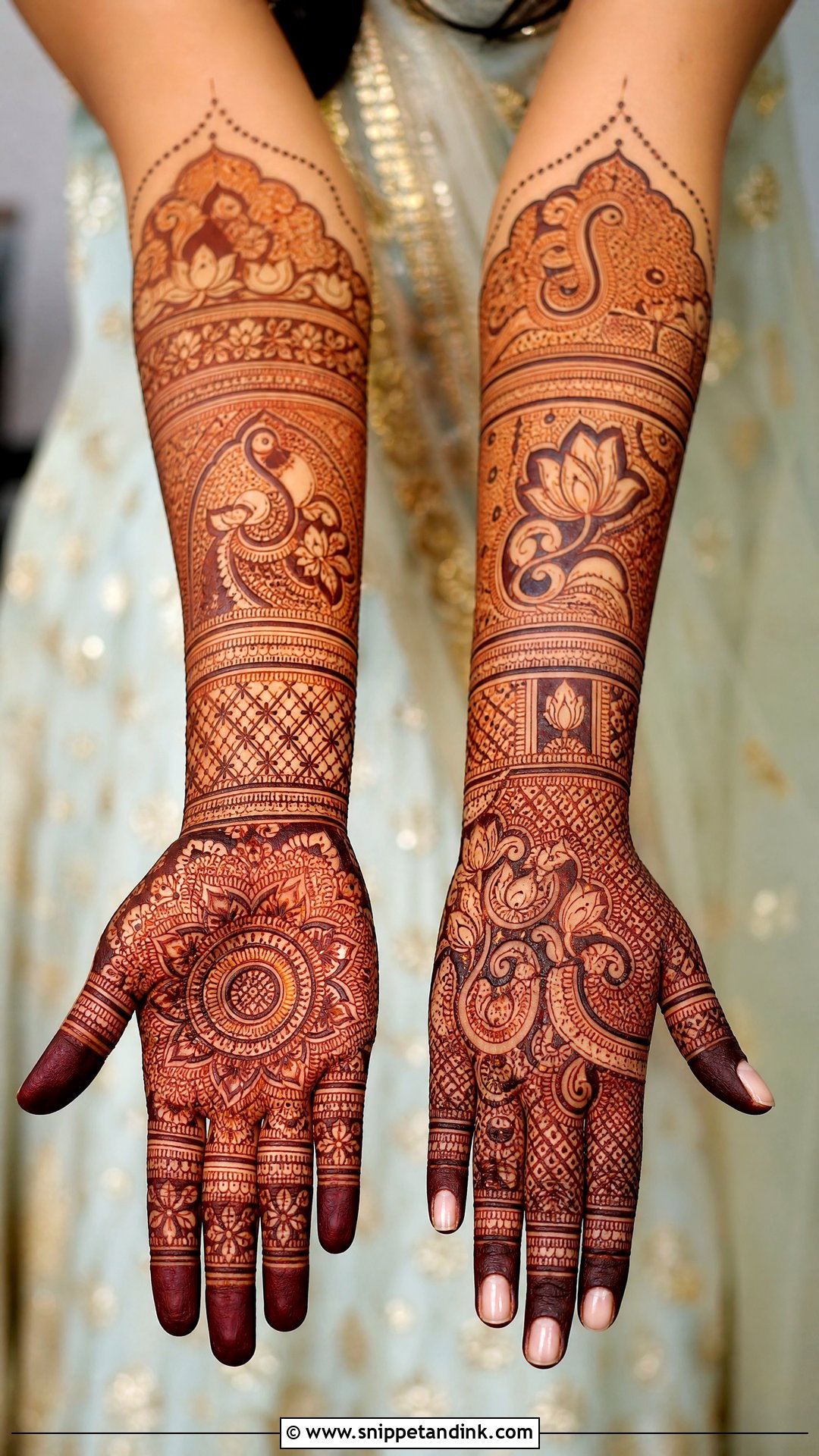
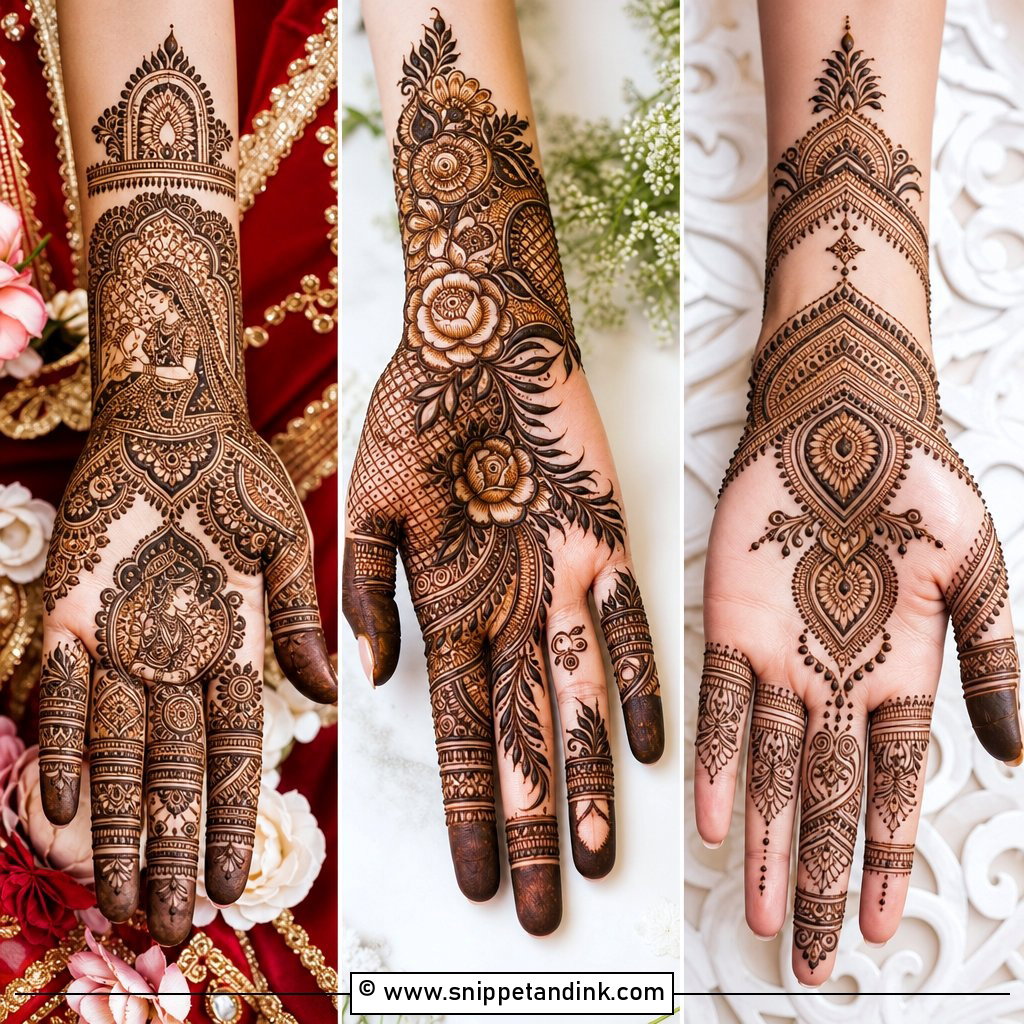
Dense paisleys, lotus flowers, peacocks and a central mandala fill the palm, the fingers are packed with fine bands and dots, and the back continues the mood with a bracelet cuff, jaali mesh, vines and ornamental finger work. Every pose shows henna, which is exactly what traditional brides want with embroidered lehengas and heavy jewellery. Where full coverage goes wrong is the side of the hand. I see designs where the palm pattern simply stops at the edge and the back starts fresh. I carry a border around the thumb side and the little-finger side so the two halves meet properly.
2. Indian Bridal Mehndi Front And Back
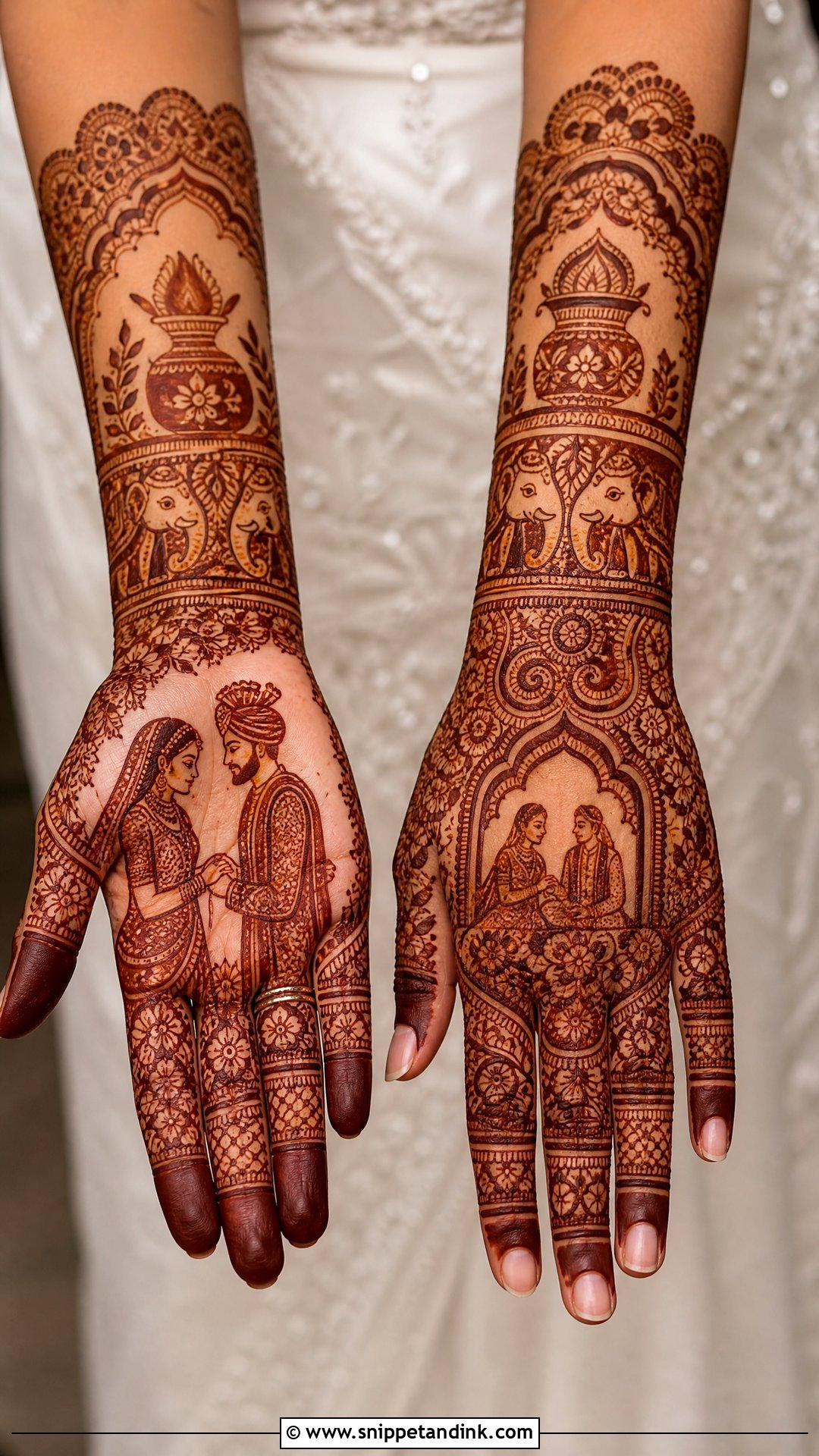
Bride and groom figures, kalash motifs, paisleys, flowers, elephant shapes and hidden initials usually belong to the palm in a traditional Indian set, while the back carries domes, lace cuffs and filled fingertips. Coverage often runs to the forearm or close to the elbow. I keep the palm dense and give the back slightly more air around the knuckles and wrist. The back of the hand stains a little lighter than the palm, so the same density on both sides would look uneven by the wedding day.
3. Arabic Bridal Mehndi Front And Back
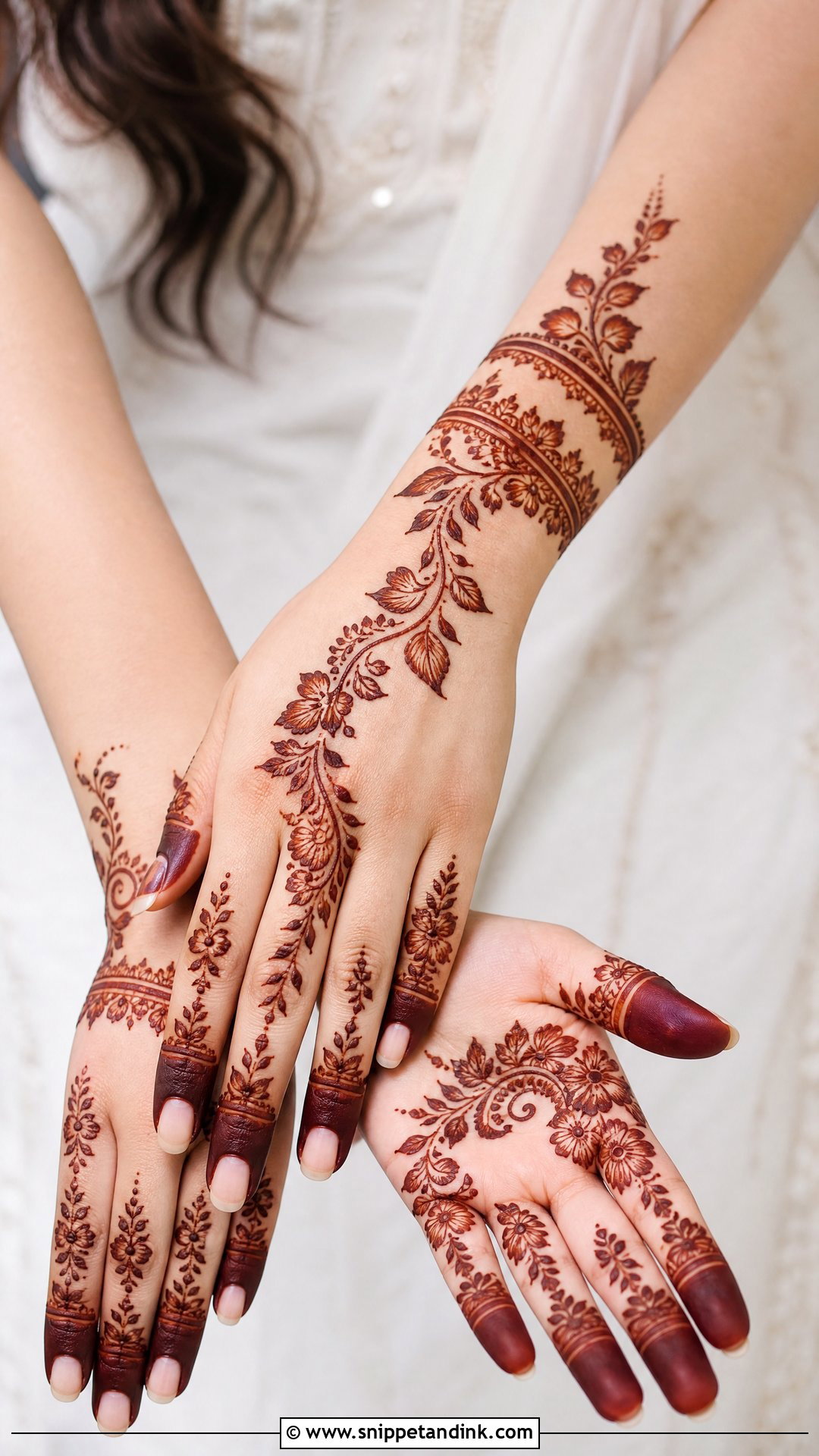
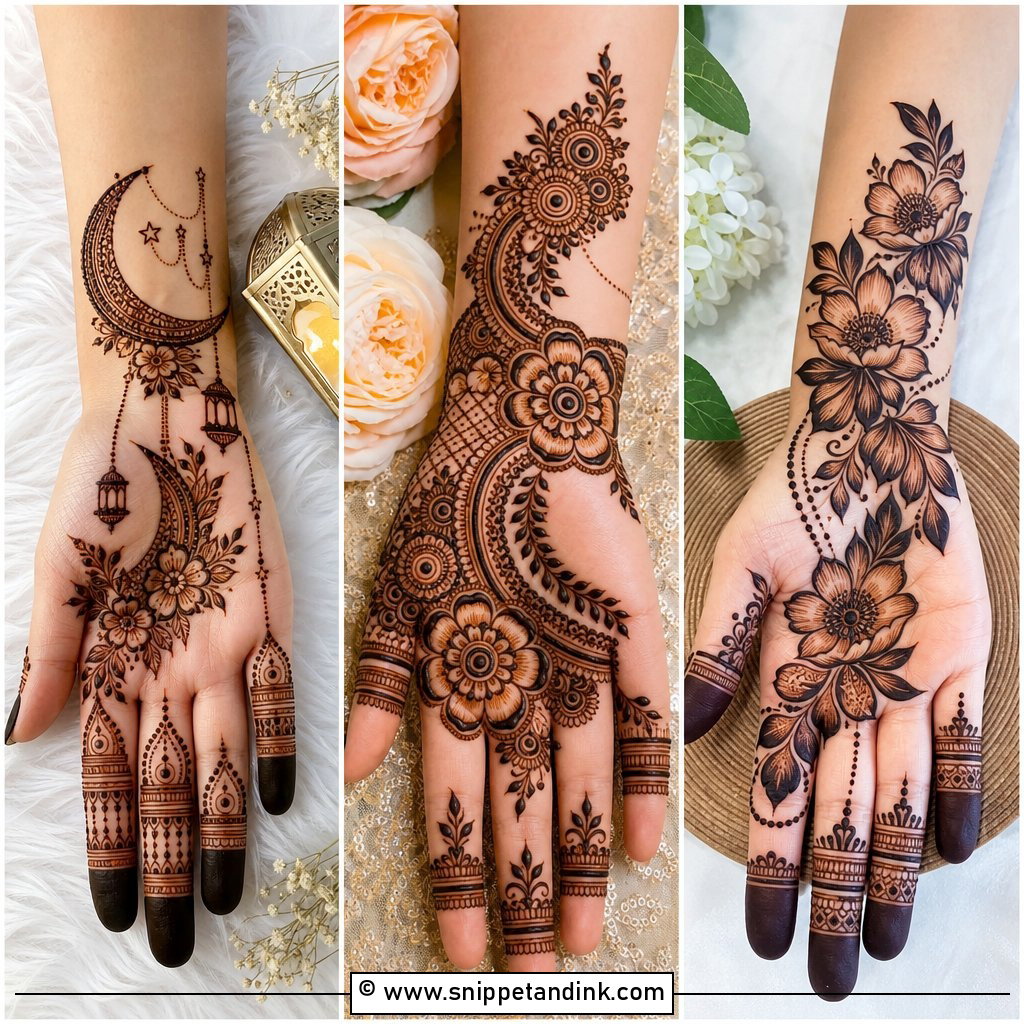
Arabic sets rely on movement. On the palm, flowing floral trails, vines, shaded petals and curved paisleys cross diagonally, and the back mirrors it with a trail from the wrist to the index finger, a bracelet band and decorated tips. Open spaces keep each motif clear. I make sure the diagonals on the two sides run in the same direction, so when you turn your hand the trail seems to continue. It’s quicker to apply than dense work, which suits nikkah ceremonies and pre-wedding events. Extra wrist cuffs make it read more bridal.
4. Indo Arabic Bridal Mehndi Front And Back
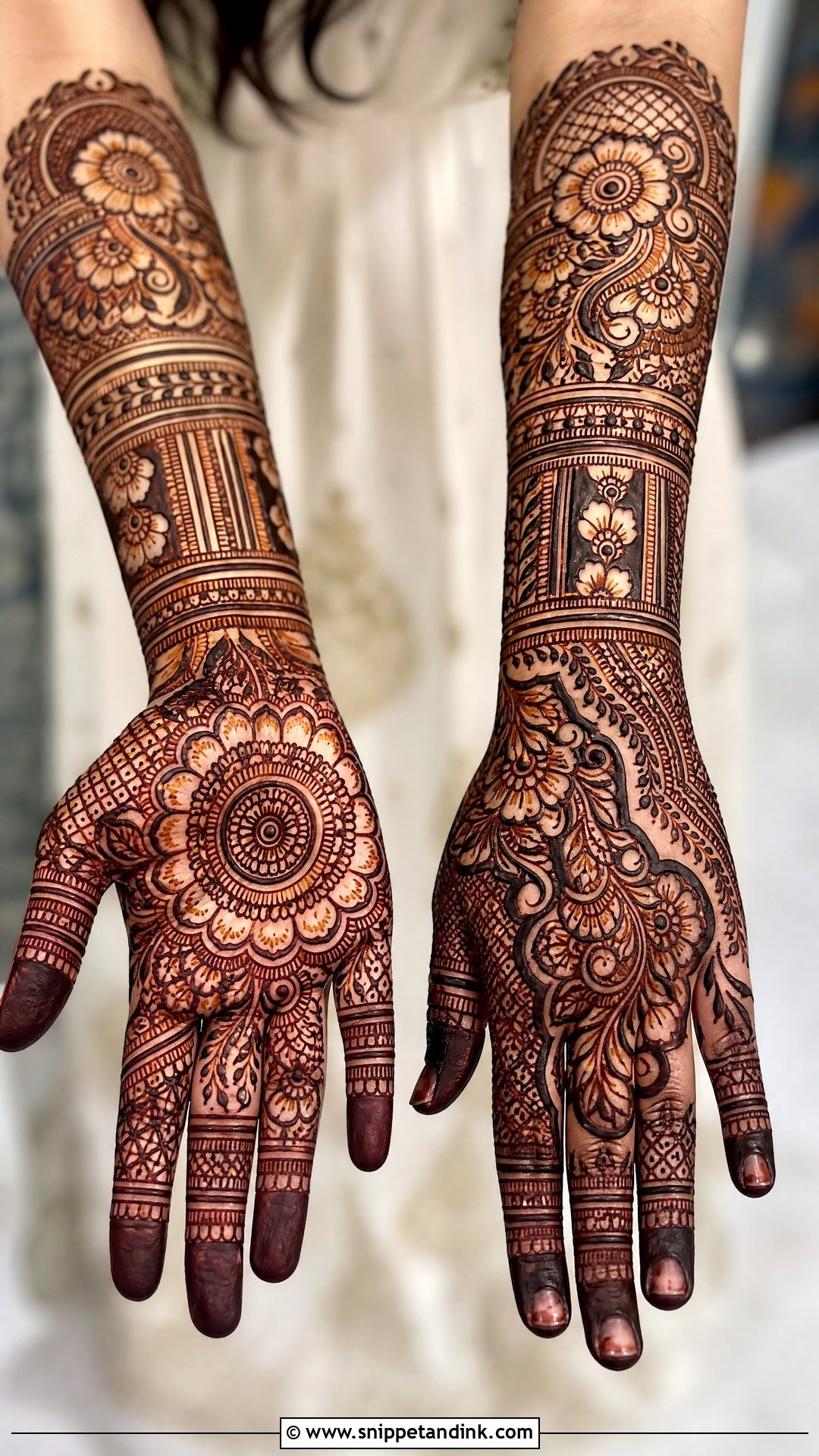
The palm takes the Indian side of this blend, with a mandala, paisley clusters, shaded flowers and fine fill. The back stays open, with a diagonal floral trail, a few mesh sections and bracelet bands. It’s festive without crowding, and it can echo bold embroidery on your outfit. Thick outlines for structure and delicate lines inside them is the rule I follow. The outline holds the shape even if the fine fill stains unevenly.
5. Front Hand Bridal Mehndi With Back Hand Design
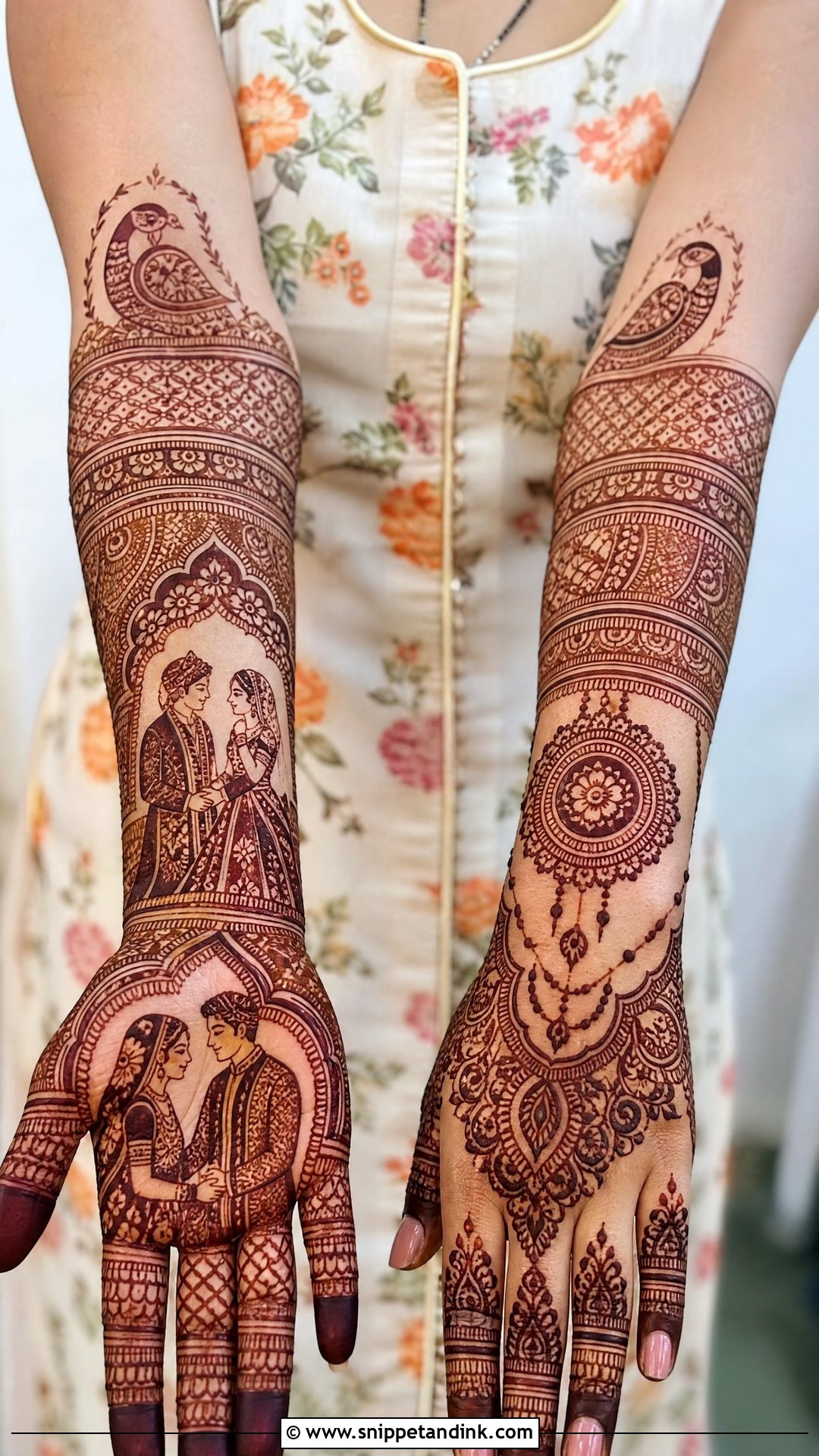
Here the palm does the storytelling, with couple art, mandalas, peacocks or wedding symbols, while the back stays light with jewellery-style chains, floral cuffs and decorated fingers. If you’ll wear a heavy haathphool or a stack of bangles, this balance makes sense, because a busy back hand would be half covered anyway. It’s also faster to apply and easier to live with across a long day. The hand reads as complete in photos without feeling heavy.
6. Back Hand Bridal Mehndi With Front Hand Design
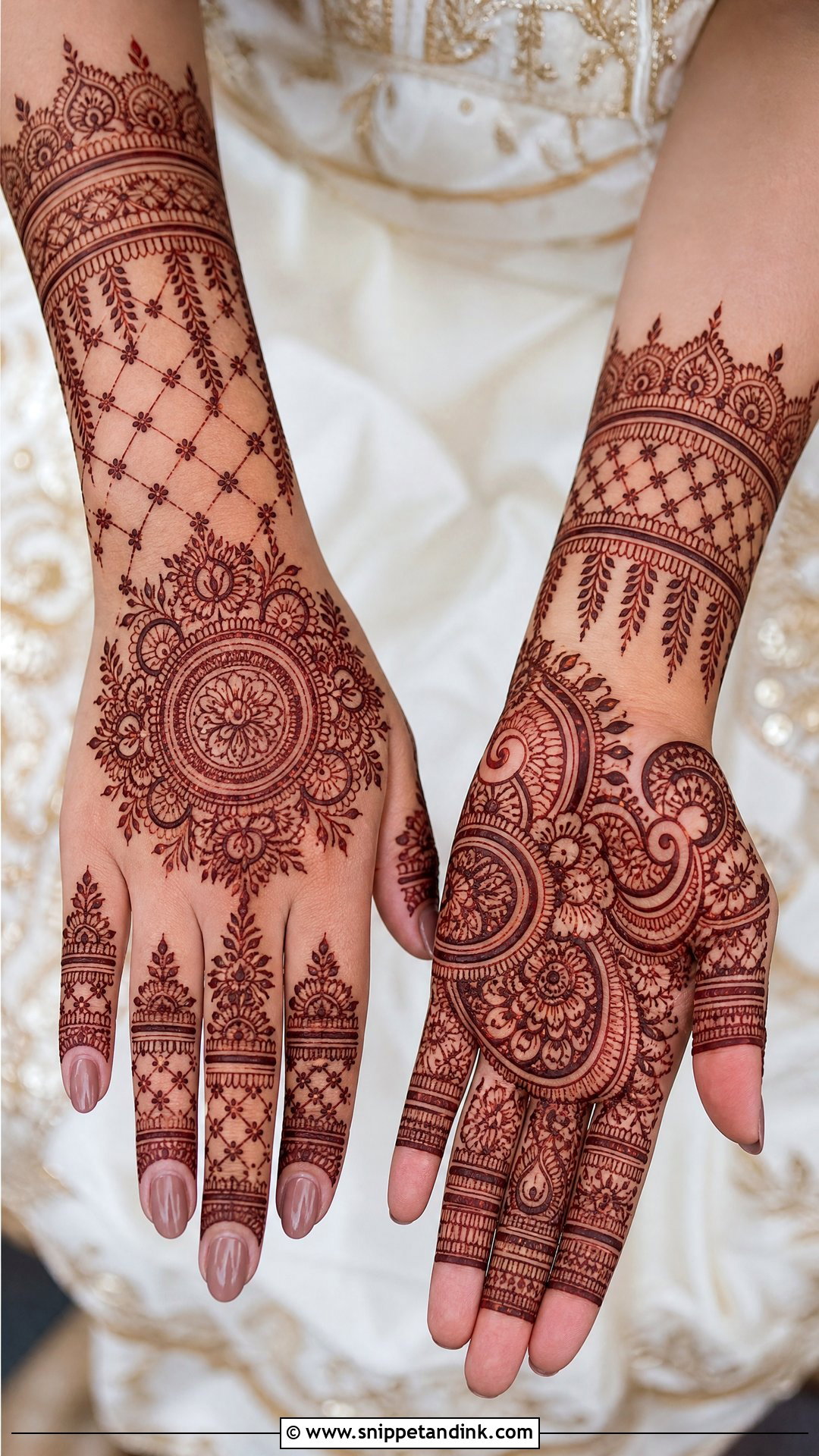
Flip the balance and the back of the hand becomes the showpiece, built for ring shots and jewellery photos: a large mandala, a lace glove pattern, jaali mesh, floral chains and bracelet cuffs. The palm stays traditional with paisleys, lotus and fine finger work. Statement rings sit inside the design like they were placed in a frame. The point I watch is the wrist. If the back design ends in a hard line there, it looks pasted on, so I run it smoothly into the forearm work.
7. Simple Bridal Mehndi Front And Back
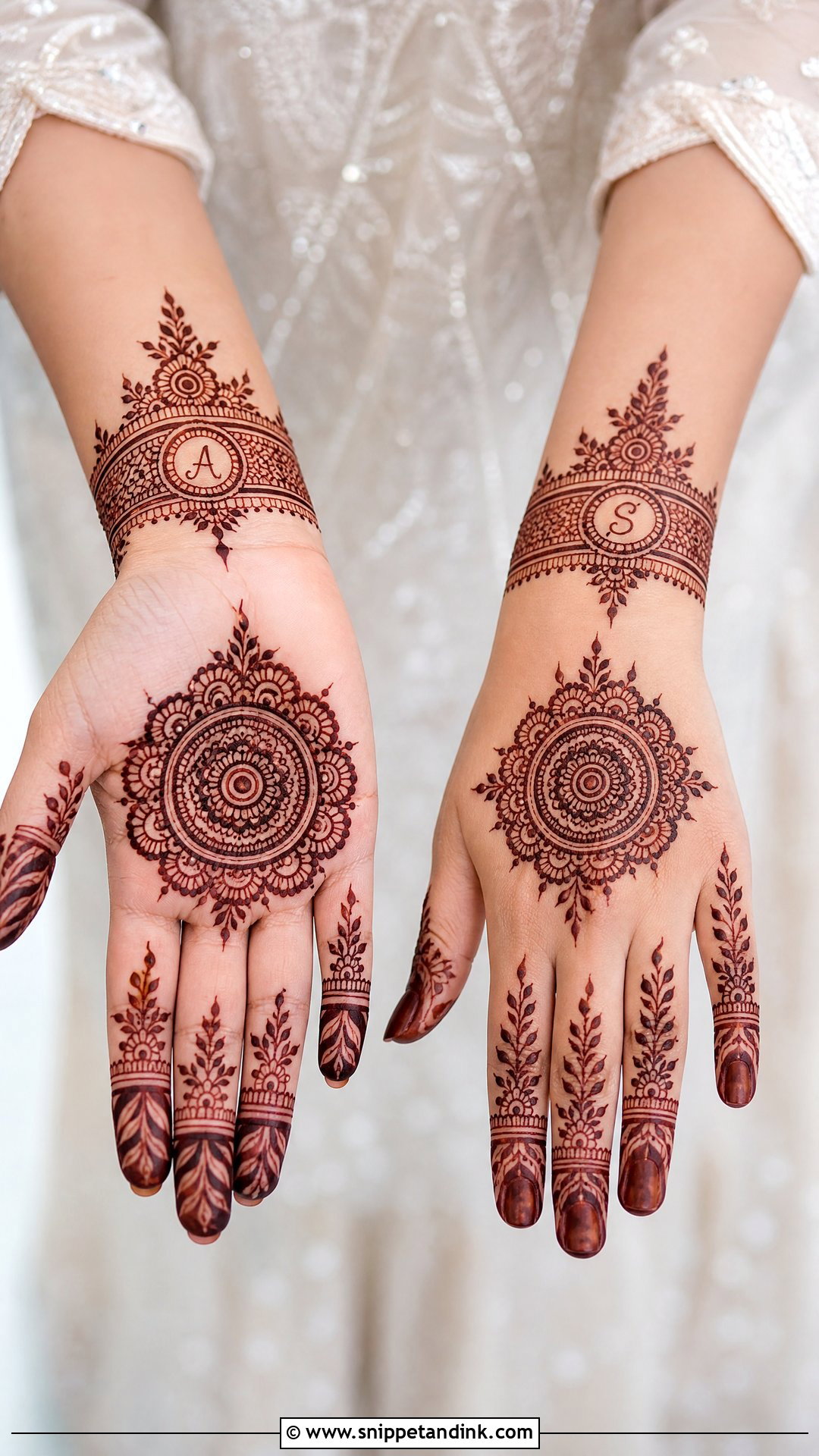
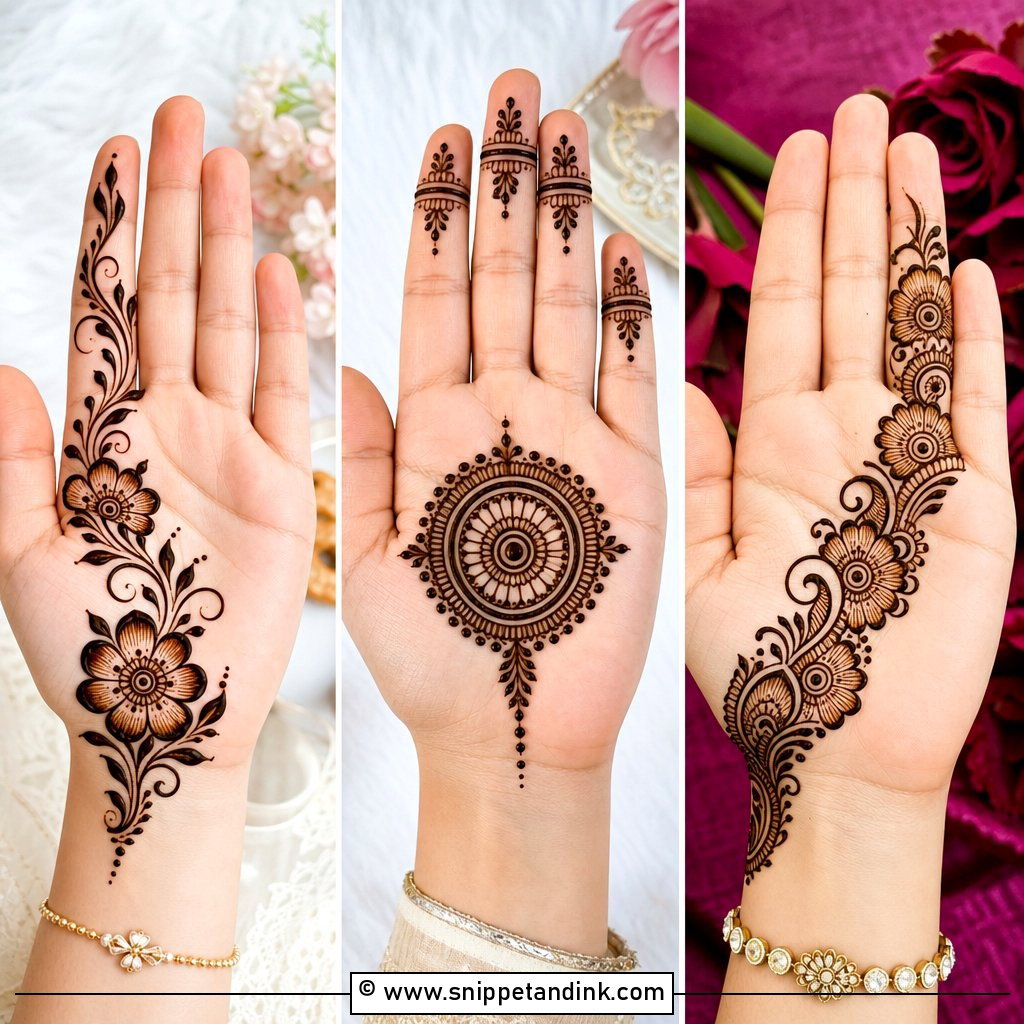
A round mandala, soft florals, neat paisleys and clean fingertips on the palm. A bracelet band, a few vines and one central flower on the back. Symmetry and tidy lines are what make a simple set look bridal rather than casual, and it’s far easier to sit through. It suits intimate weddings, civil ceremonies and beach weddings. A tiny heart, initial or date hidden in the palm makes it personal without adding hours.
8. Modern Bridal Mehndi Front And Back
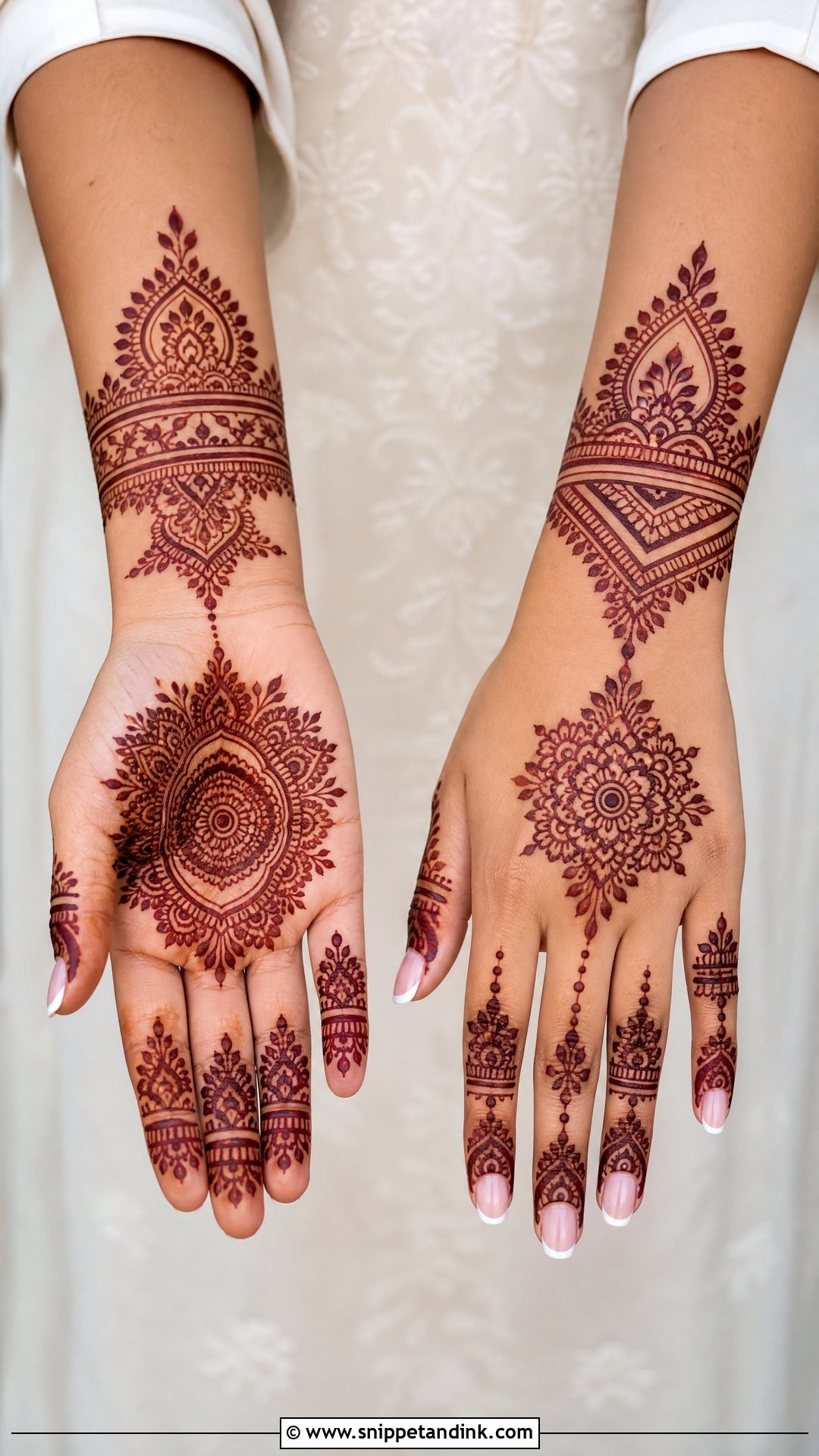
Modern sets use negative space, bold florals, geometric bands, finger rings and clean cuffs rather than filling every inch. A centred mandala on the palm with open skin around it, and a back hand that reads like a light glove, is a layout I draw often. Clear spacing is the whole point, so I’d rather leave a gap empty than add filler. It sits well with pastels, sleek lehengas, gowns and contemporary jewellery.
9. Royal Bridal Mehndi Front And Back
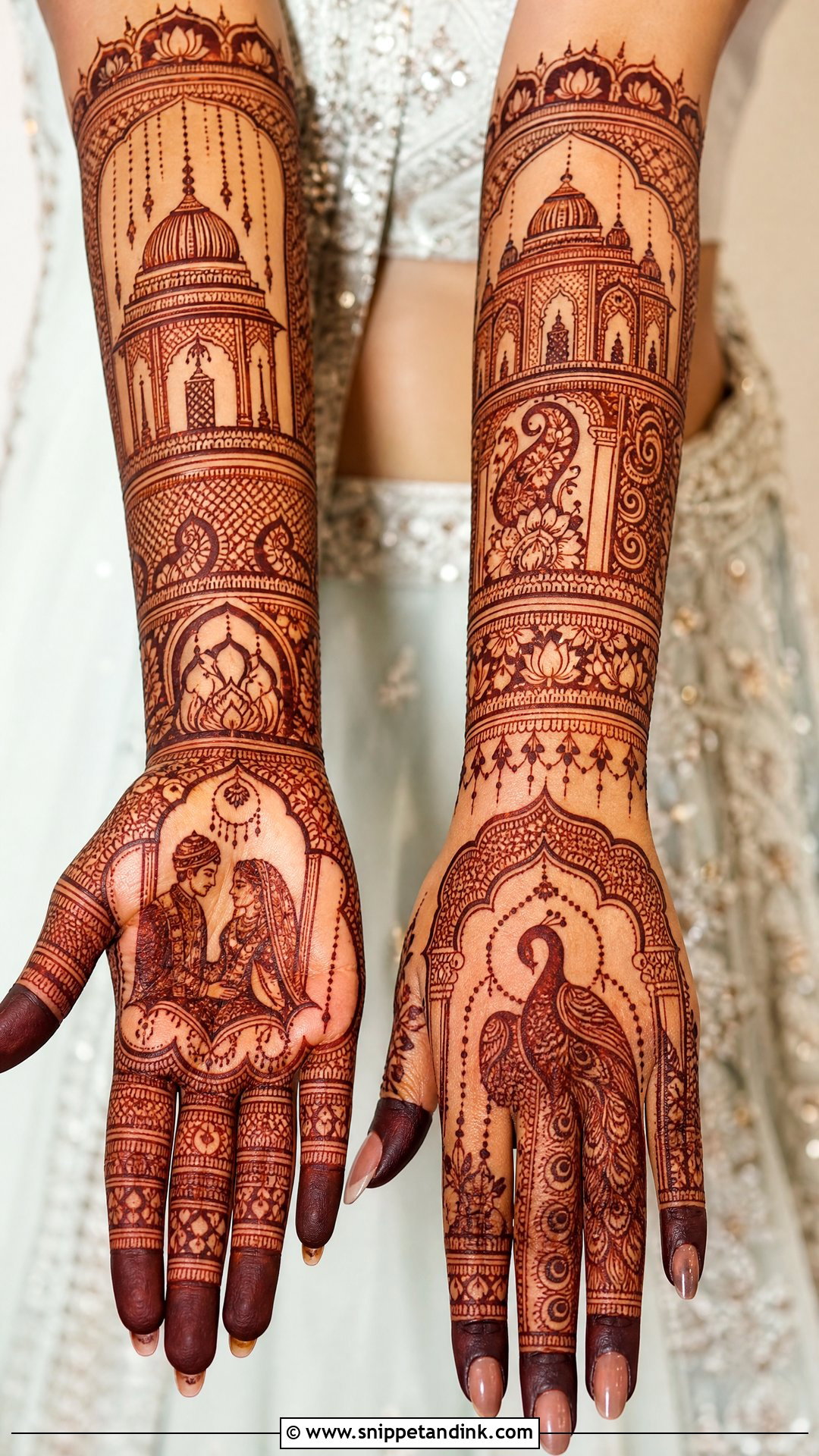
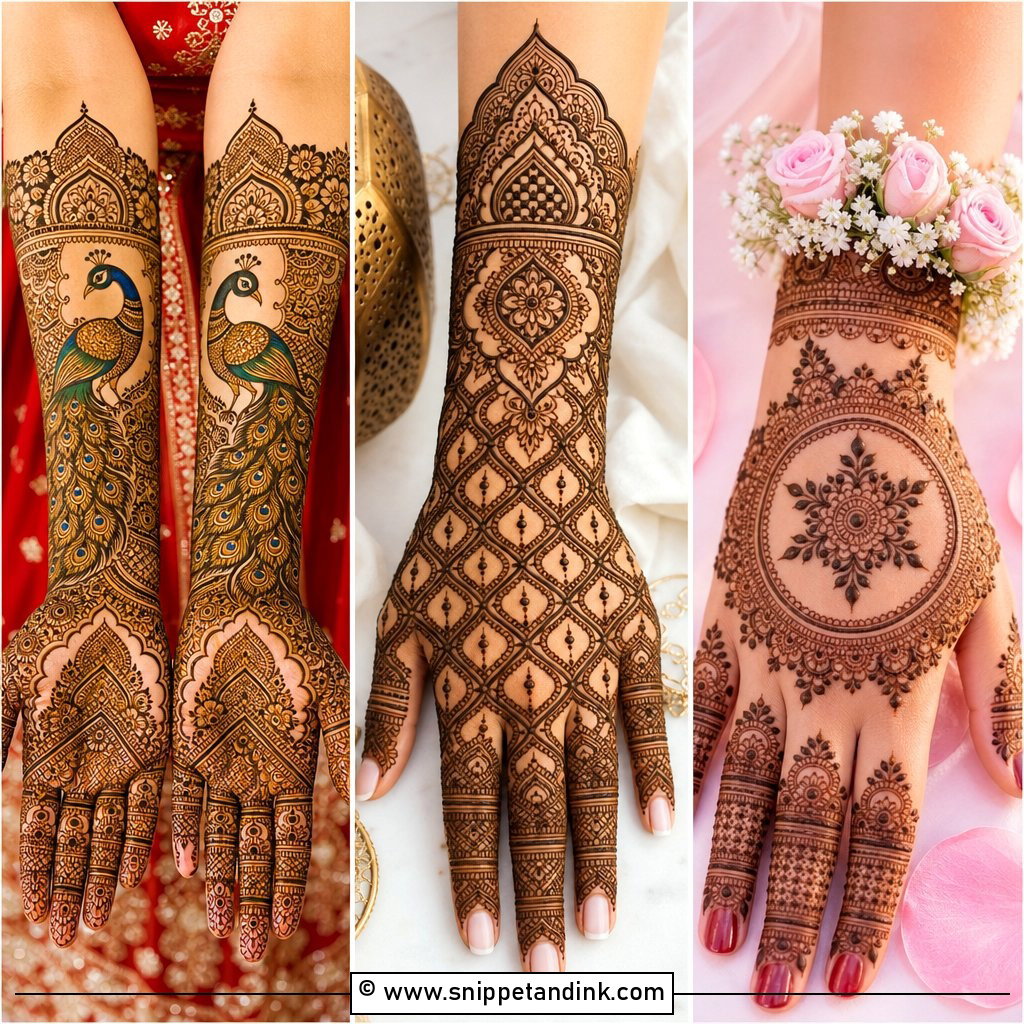
Palace domes, peacocks, lotus borders, paisley panels and bride and groom figures fill the palm, and the back answers with arches, chandelier-style chains and cuffs that look like carved jewellery. Royal designs depend on layering. Each band, from fingers to wrist to forearm, has to connect to the one beside it. Ask for strong outlines and tiny inner fill so it stays rich after darkening. Red, maroon, gold and emerald outfits carry it best, along with heavy bangles and ornate rings.
10. Peacock Bridal Mehndi Front And Back
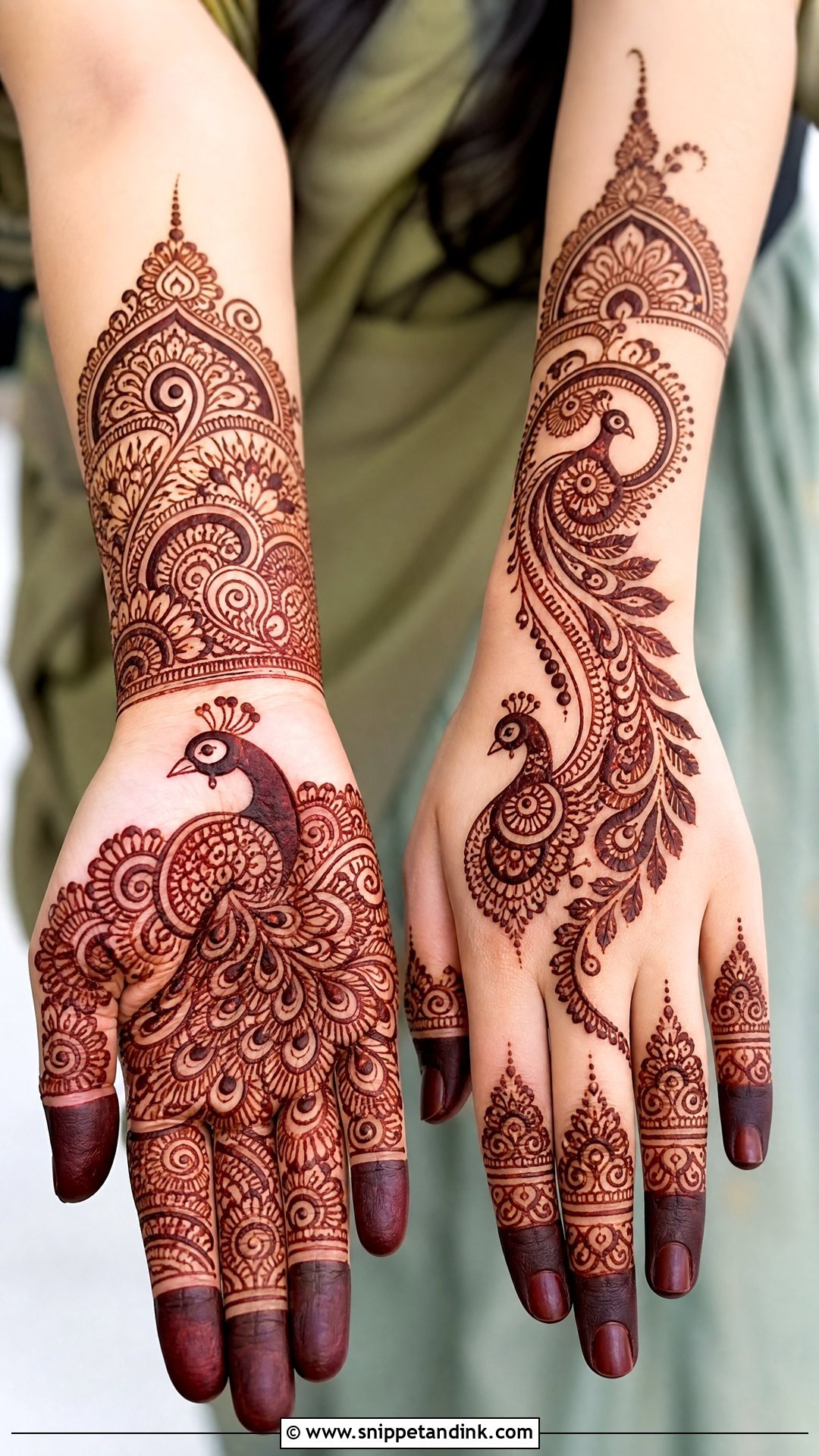
A peacock on the palm, wrist or forearm, surrounded by feathers, paisleys and fine dots, with its feather pattern trailing across the back of the hand and ending at the fingertips. Curved feathers lengthen the hand, which flatters shorter fingers in particular. The feather lines need breathing room. Packed too tightly, the bird disappears into the filler. It suits Indian and Pakistani bridal looks with silk sarees, lehengas and embroidered dupattas.
11. Mandala Bridal Mehndi Front And Back
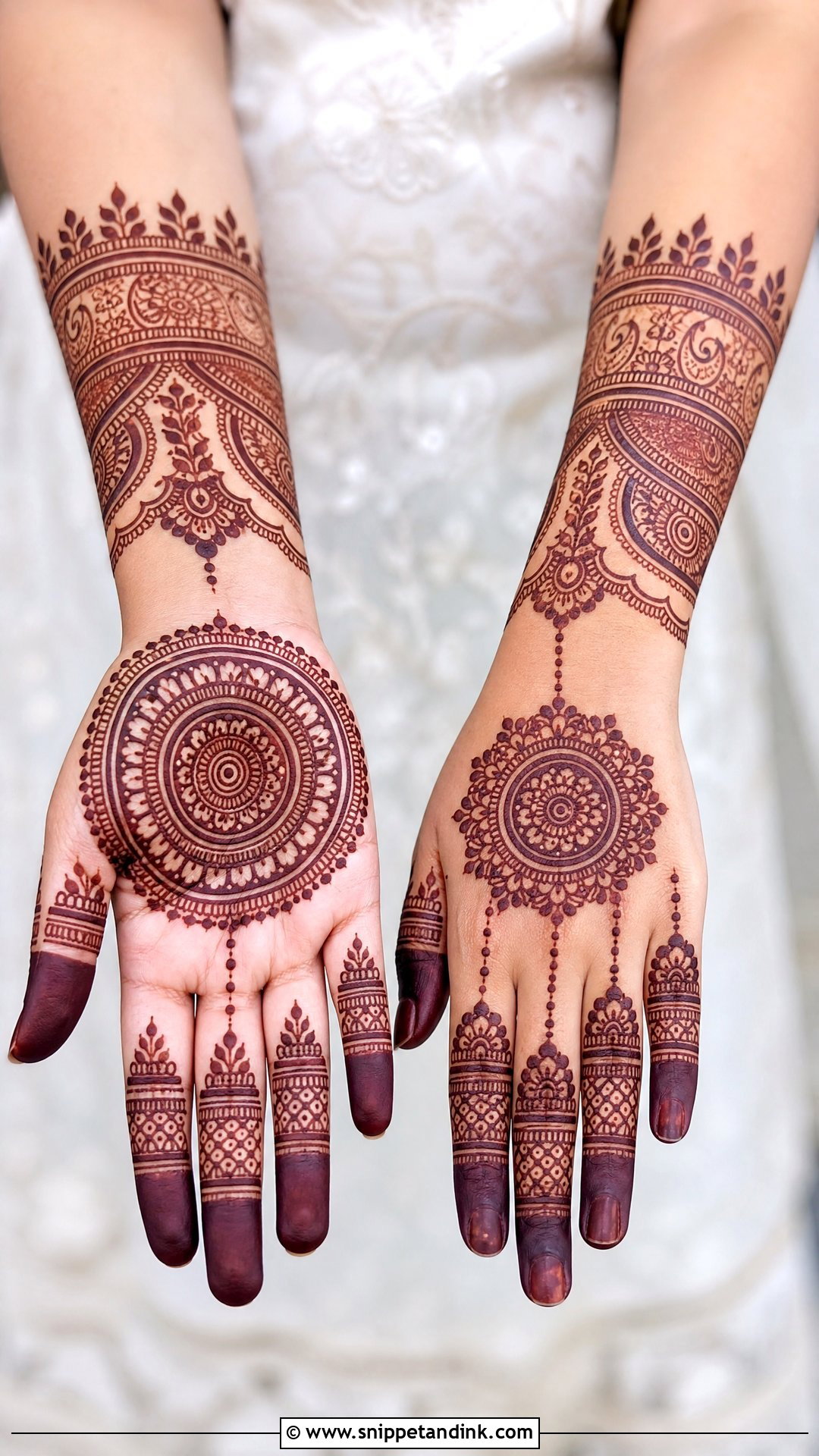
Large circle in the palm, smaller echo on the back, both connected by chains, dots or floral lines to the fingers and wrist. Mandalas resize easily, so they fit small and large hands equally well, and the symmetry gives a calm, ordered look. On the back I place the smaller mandala a little toward the knuckles rather than dead centre, because the centre of the back of the hand is often covered by a haathphool plate. Paisley borders, leafy cuffs and full fingertips finish it.
12. Floral Bridal Mehndi Front And Back
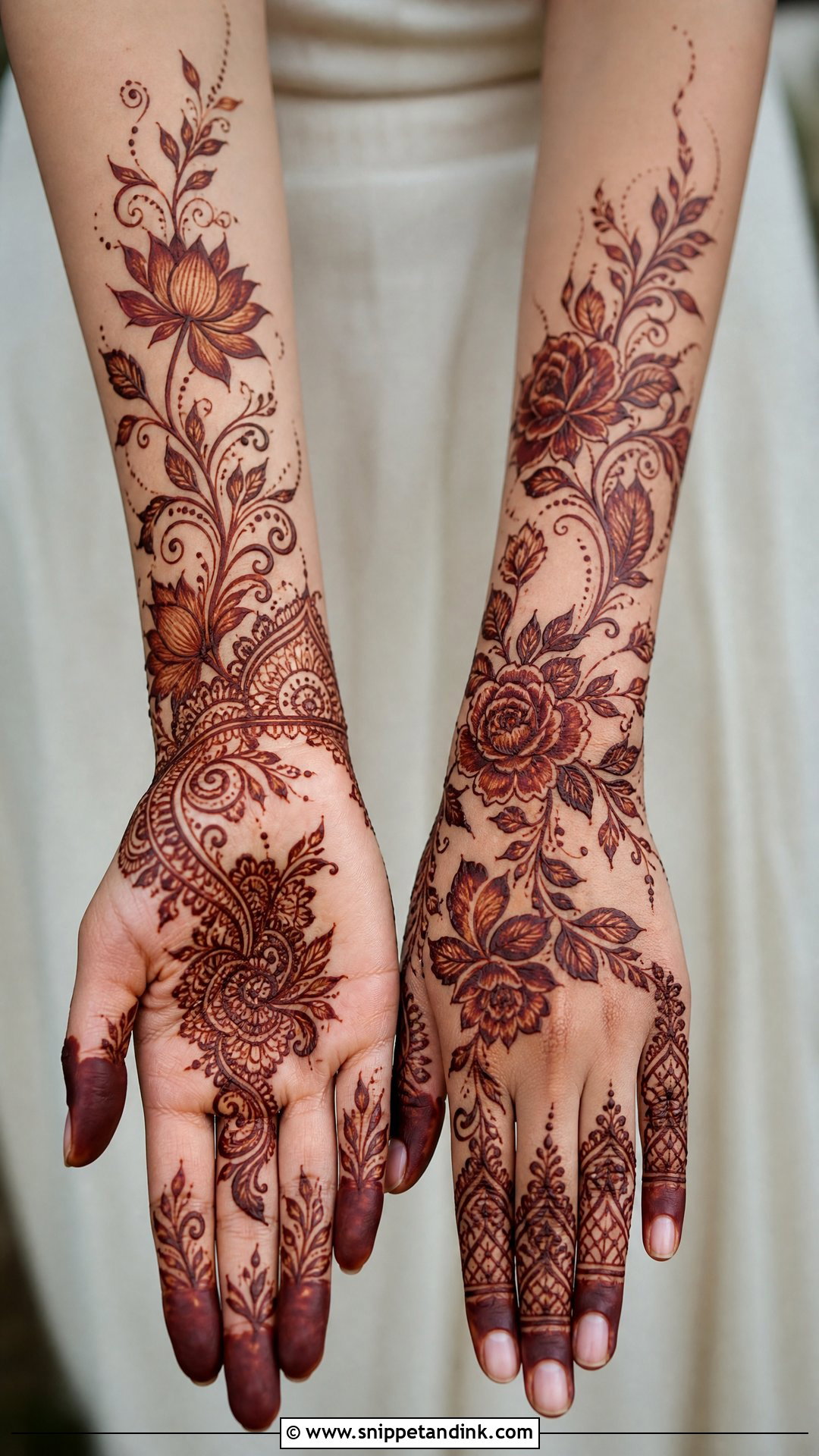
Florals adapt to nearly any outfit. I usually put lotus, roses, vines and shaded petals on the palm and give the back larger flower clusters with open spacing, which lends it an Arabic or Indo-Arabic feel. If your lehenga has floral embroidery, the mehndi can echo the same flower shapes. Shaded petals are worth asking for: they turn into soft gradients once the henna stains, adding depth without weight. Wrist cuffs, decorated fingertips and a few mesh panels make it bridal.
13. Paisley Bridal Mehndi Front And Back
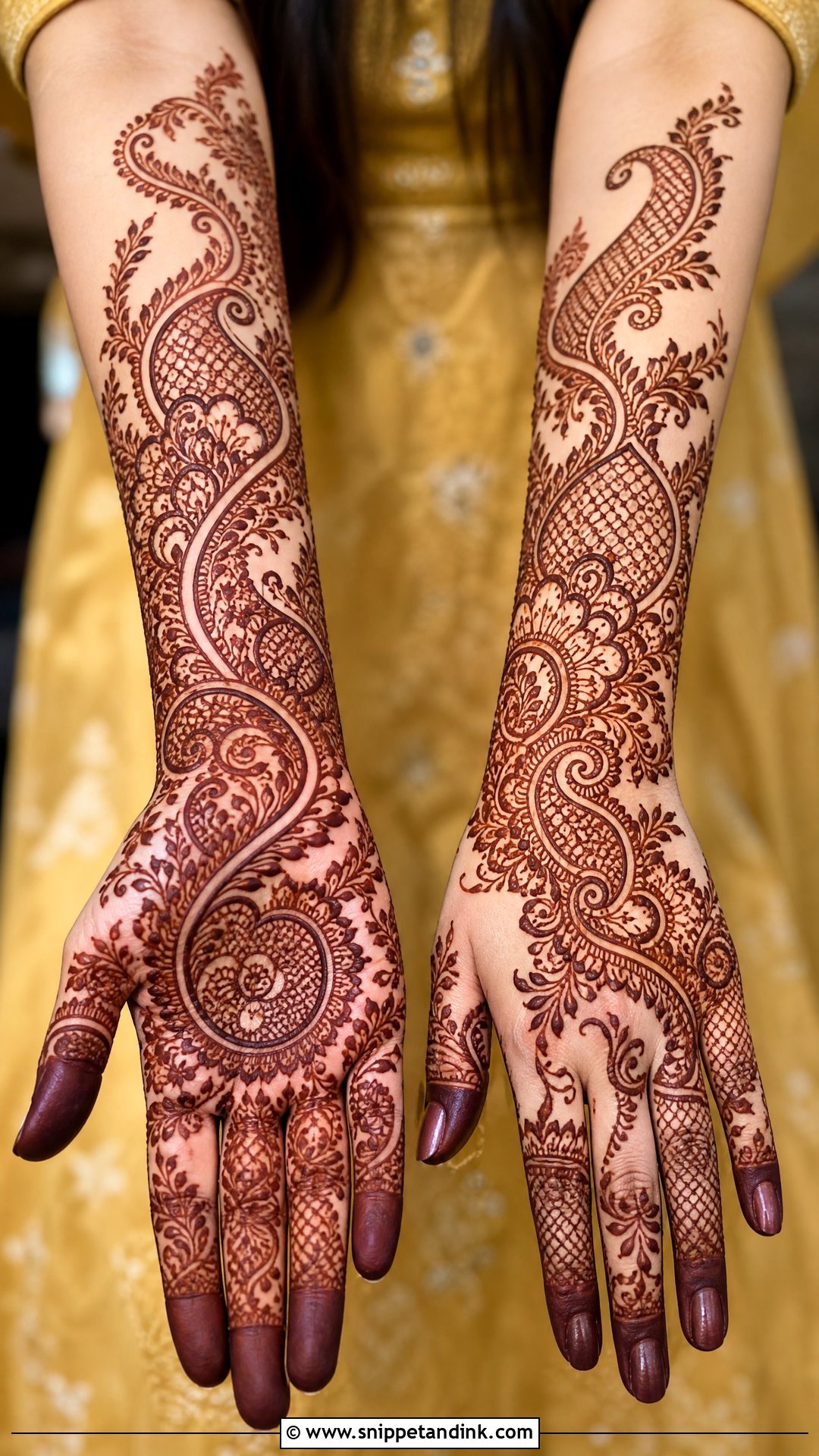
Paisleys are about the most reliable motif in bridal henna. Their teardrop shape follows the curve of the palm and the length of the fingers, so they rarely look forced. Bold, large paisleys on the palm, smaller detailed ones around the fingers and wrist, and paisley chains with leafy borders on the back give a complete classic look. It’s a good pick if you want something traditional without portraits or literal wedding scenes. Dots, mesh and shaded petals add richness.
14. Jaali Bridal Mehndi Front And Back
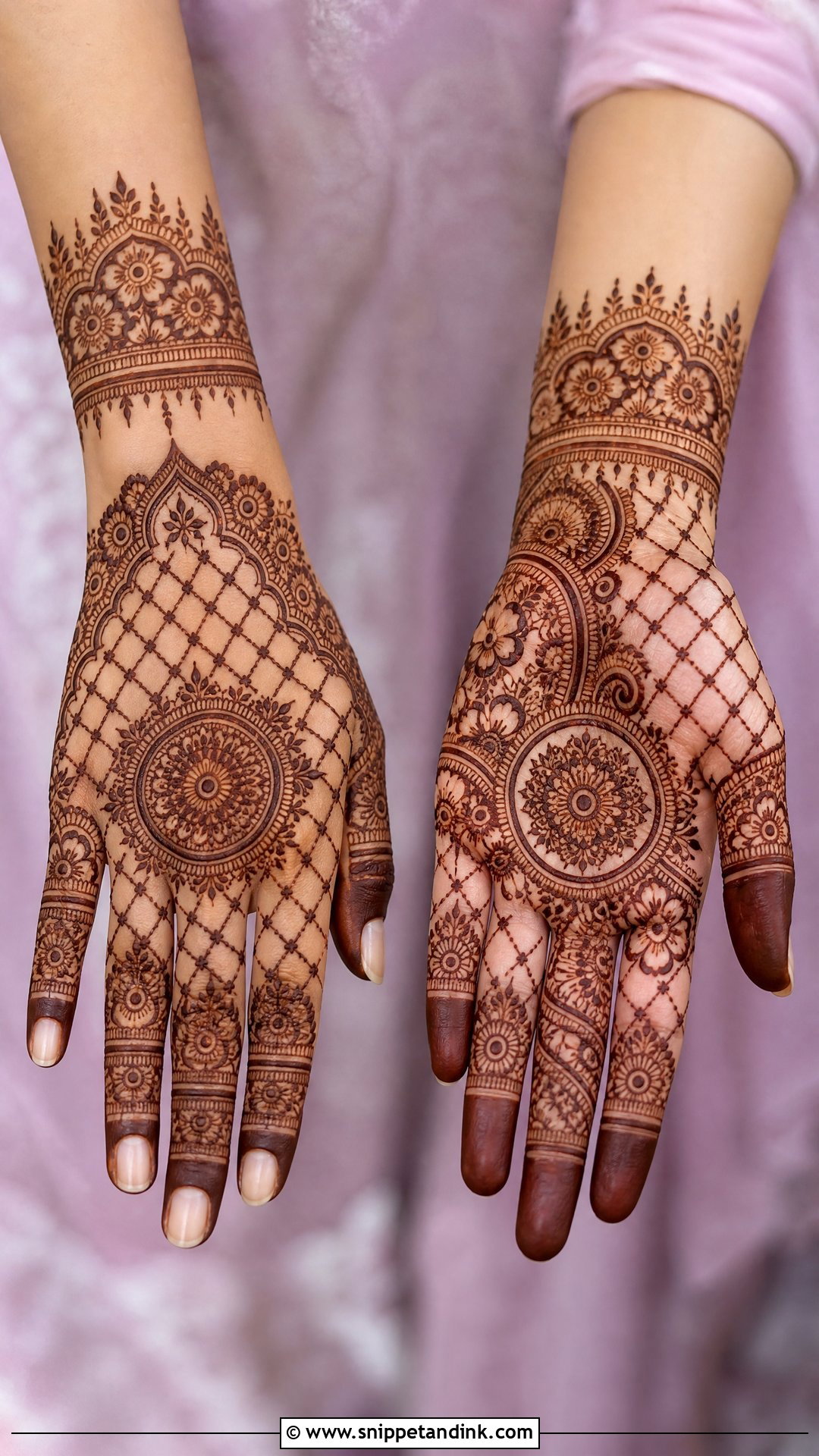
Jaali panels around a mandala or floral centrepiece on the palm, and mesh over the fingers, knuckles or wrist on the back, give the hand the look of fine lace. It pairs naturally with net dupattas, lace sleeves and diamond or pearl jewellery. The grid must be even. Mesh is the least forgiving pattern in henna, because one wobbly line breaks the rhythm of the whole panel, so this is a design to give an artist whose line control you’ve seen. Bold borders and clean fingertips frame it.

15. Portrait Bridal Mehndi Front And Back
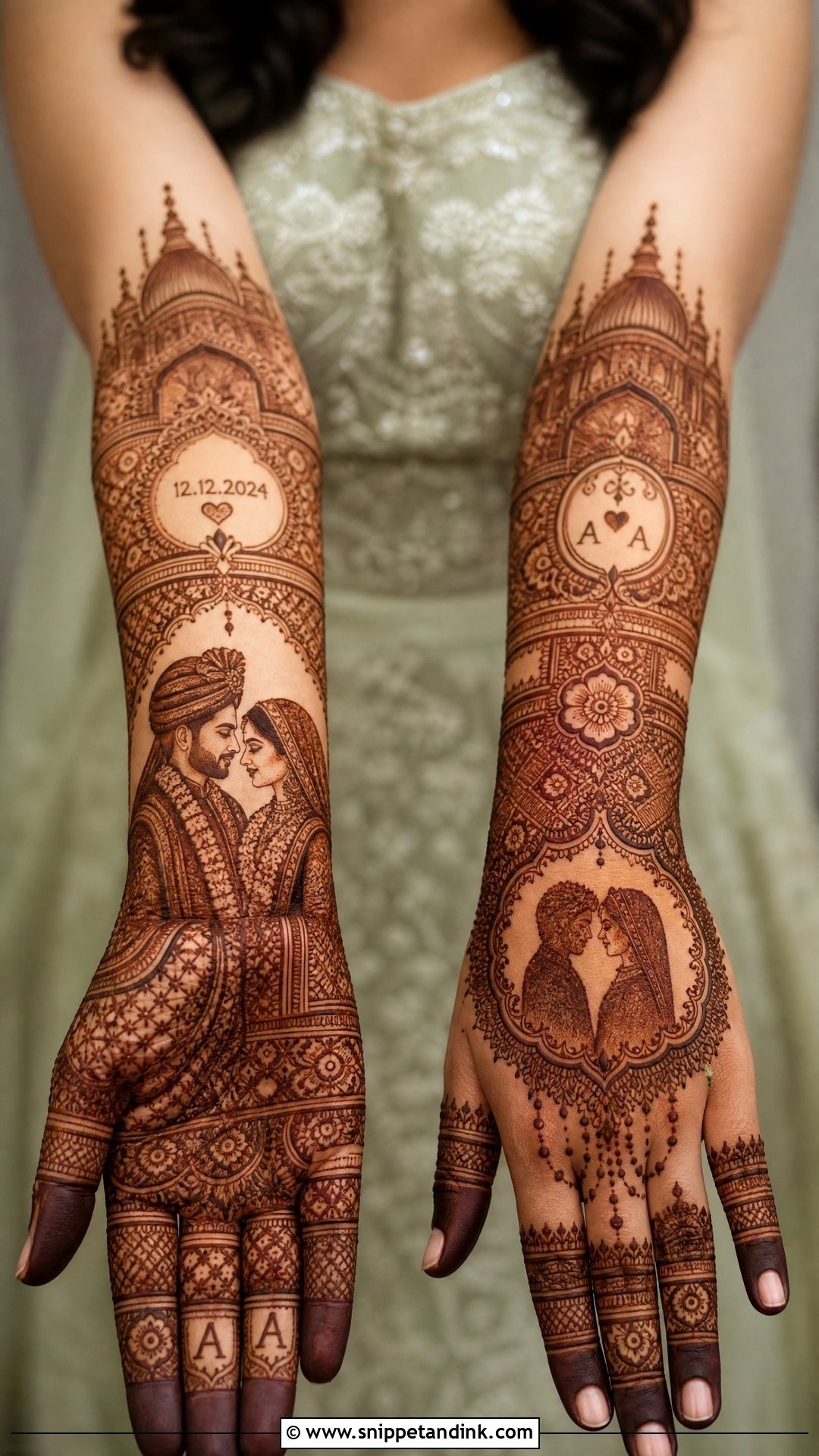
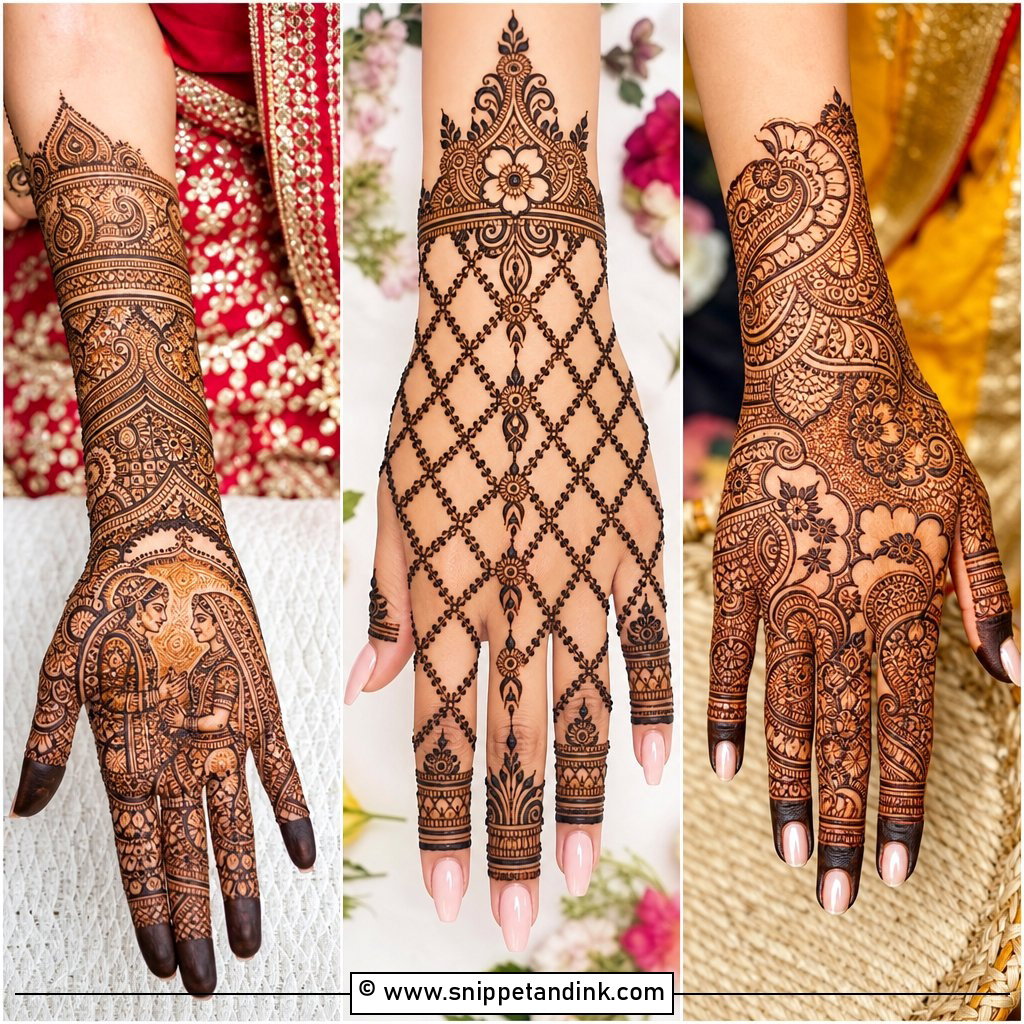
Bride and groom portraits, garlands, vows, initials or the wedding date take the palm, while the back stays ornamental with florals, domes and jewellery patterns so nothing competes with the faces. Portraits need an experienced hand, since face shapes and proportions are hard to fix in paste. Give each figure room. Crowded portraits are the ones that blur once the stain develops, and they take longer to apply than any other design here.
16. Minimal Bridal Mehndi Front And Back
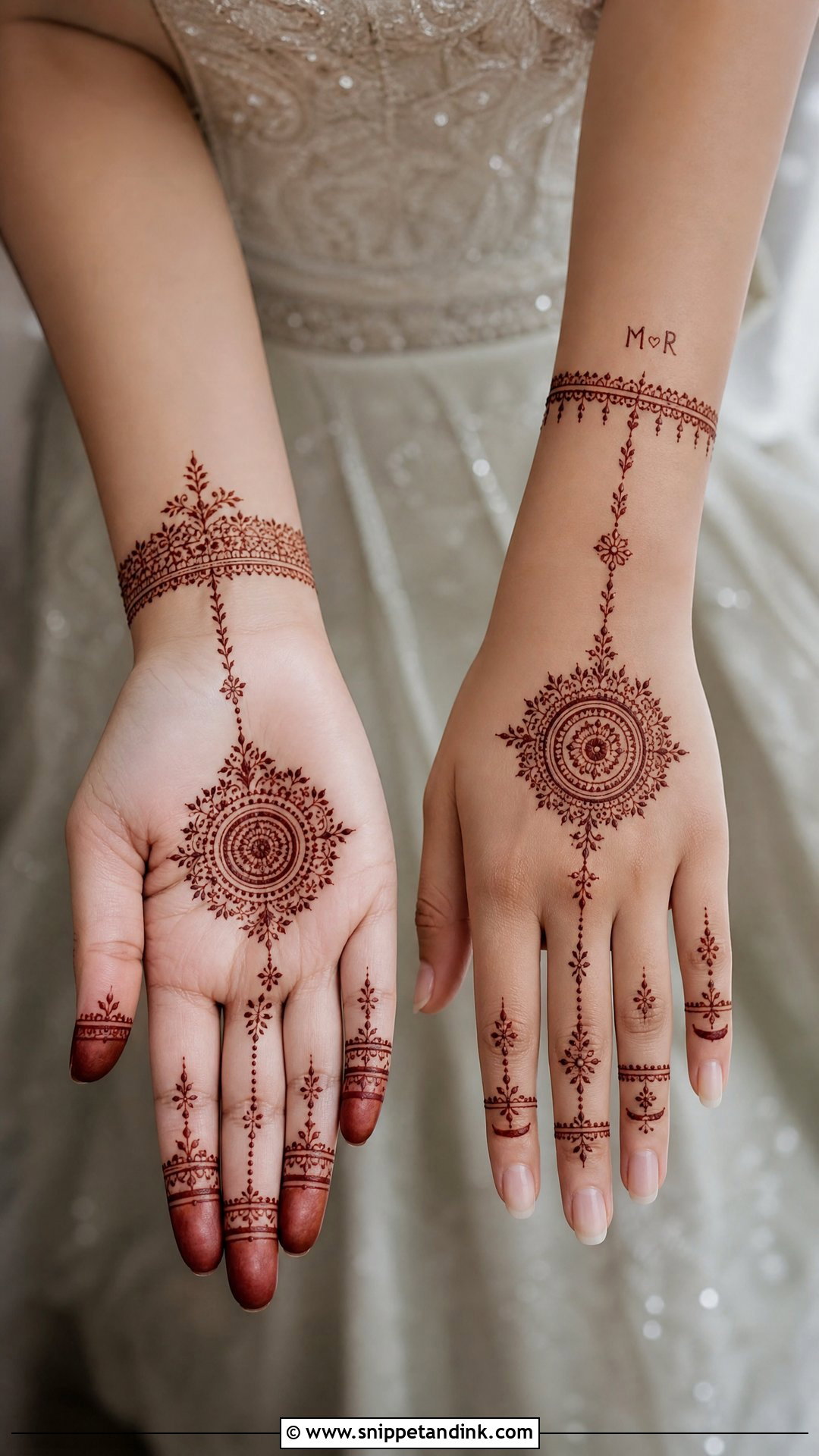
A small mandala, slim vines, fine finger bands and a simple wrist bracelet on the palm, with a delicate chain, tiny flowers and neat fingertip accents on the back. Minimal sets suit intimate weddings, engagements, destination trips and outfits that are already bold. Every line is visible, so balance matters more than detail. Initials or a tiny date add meaning without changing the clean look.
17. Rajasthani Bridal Mehndi Front And Back
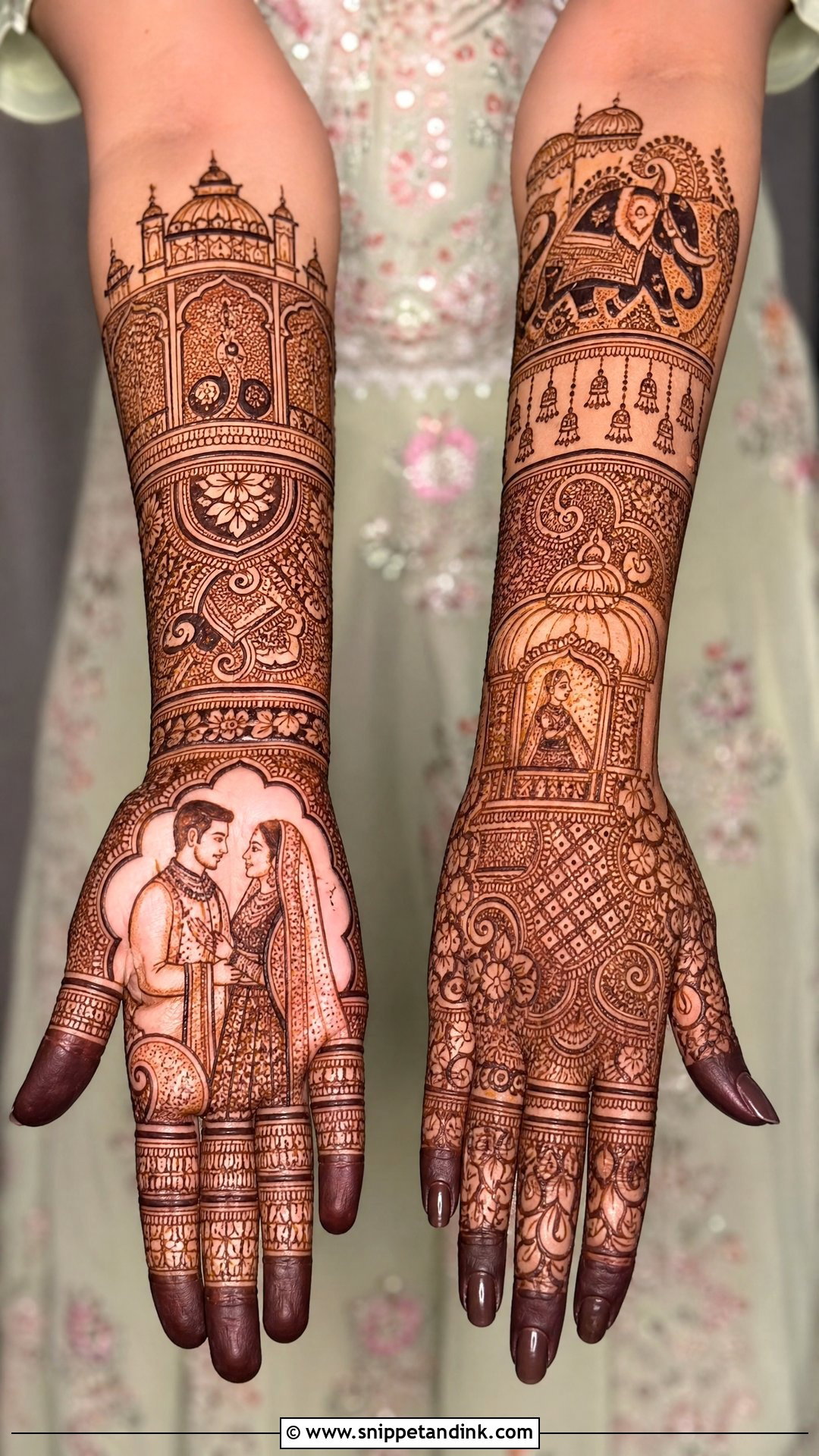
Rajasthani bridal mehndi fills the palm with bride and groom figures, royal elephants, peacocks, pots, doli scenes and dense paisleys, then continues onto the back with palace arches, floral bands and ornamental patterns, usually up the forearm. It belongs with traditional lehengas, bandhani, gota patti and heavy jewellery. Because it’s so dense, I sketch the main sections lightly before filling anything. Space around the major motifs is what lets the story read.
18. Pakistani Bridal Mehndi Front And Back
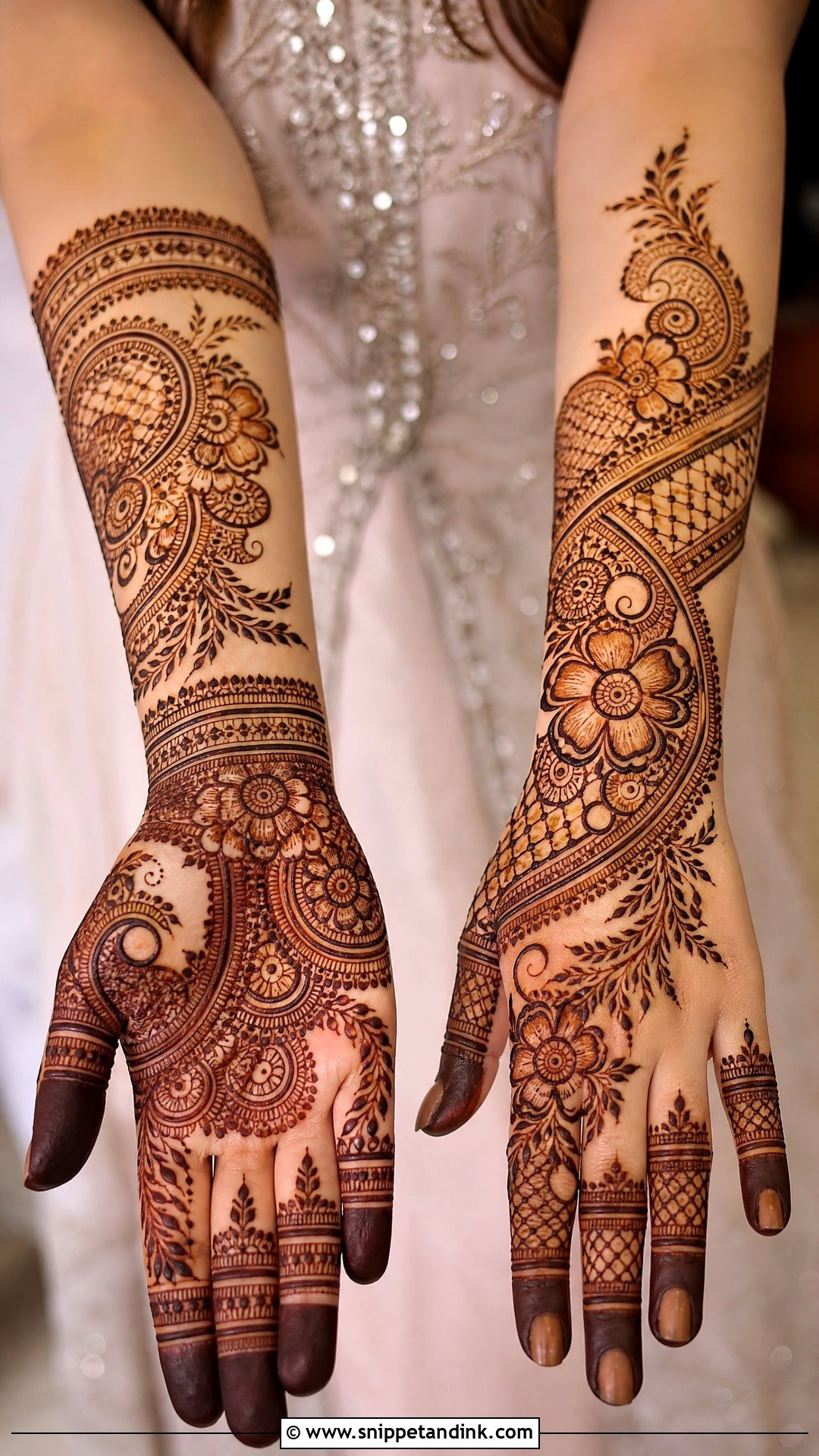
Pakistani sets blend Indian detail with Arabic flow: paisleys, florals, mandalas and fine mesh on the palm, bold flowers, shaded leaves, cuffs and diagonal trails on the back. They’re a staple for nikkah, walima, mehndi nights and traditional events, worn with ghararas, shararas, lehengas and embroidered sleeves. The elegance comes from the balance of dense and open areas. Full finger coverage and a continuous line from wrist to forearm tie the two sides together.
19. Gulf Bridal Mehndi Front And Back
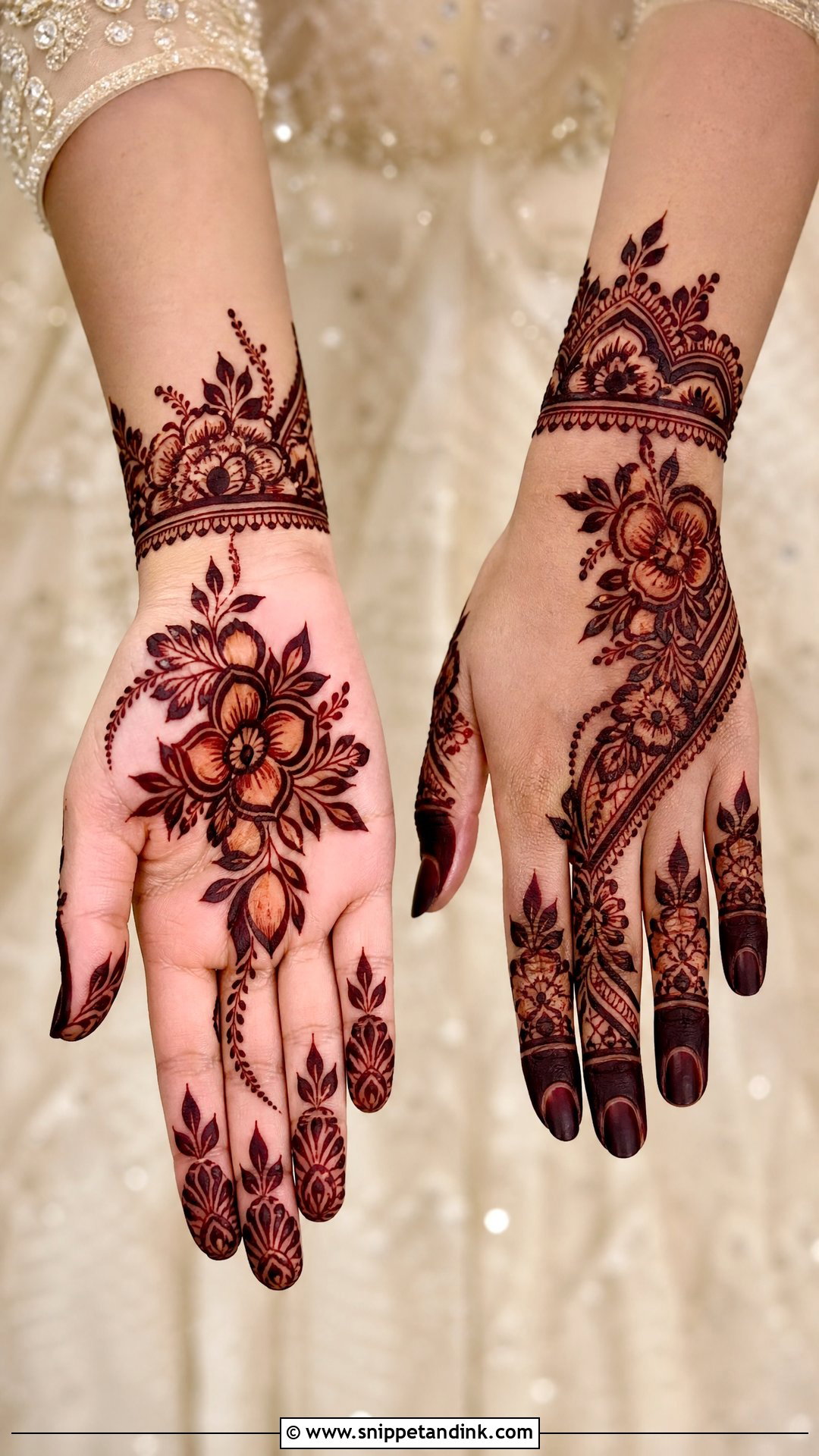
Big florals, dark outlines, leafy vines and shaded petals with generous space on the palm, and diagonal trails, wrist cuffs and strong finger detail on the back. Gulf designs are visible from across a room, which is why they suit large venues. They look rich with gold jewellery and saturated colours. I sometimes add Indian fillers around the wrist and fingers to give the boldness some wedding-level detail.
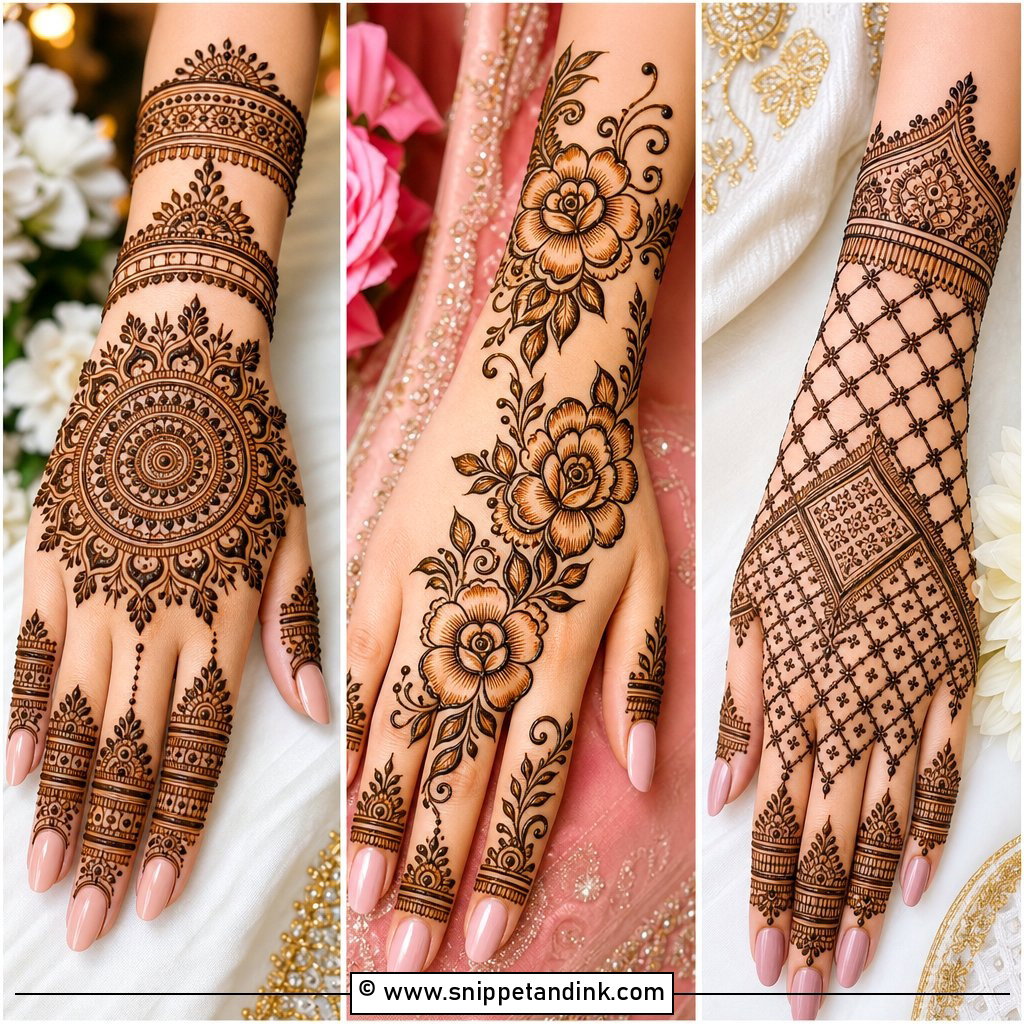

20. Jewelry Bridal Mehndi Front And Back
Ring chains, bracelet bands, floral cuffs and neat fingertips on the palm; haathphool-style chains linking fingers to wrist on the back. This design frames your rings, bangles and nail colour instead of hiding them. I follow the natural lines of the hand, the tendons on the back and the creases on the palm, so the chains move with you and don’t look stiff in candid shots. Mandalas, jaali, paisley borders and layered cuffs can make it heavier.
The Stain Came Out Orange. Now What?
Almost every bride panics at this stage, and almost always it’s fine. Natural henna is bright orange when the paste first comes off and darkens over the next day or two. That’s why bridal application is best done a day or two ahead of the ceremony.
What actually helps
- Scrape the dried paste off with a blunt edge instead of washing it, and keep water away for several hours afterward.
- Stay warm. Cold rooms and cold water slow the colour from developing.
- Use a little balm or natural oil on the hands before washing them for the next few days, so soap doesn’t strip the outer skin.
- Do nail and hand treatments before your mehndi, since scrubs and soaks afterward lift the colour.
Fingertips and palms will usually go darkest and the back of the hand a little lighter, which is normal. If one patch stays very pale while the rest develops, a skilled artist can sometimes go over it with fresh paste a day later, but it rarely matches perfectly, so I’d only do it for an obvious gap. Be wary of anyone offering a product that turns the stain black. That isn’t how natural henna works.
The Palm Tells the Story and the Back Carries the Photos
Think about both sides of the hand together. The palm holds the story, and the back carries the jewellery, the poses and the moments the photographer is waiting for. Indian, Rajasthani, portrait and full-hand designs lean traditional, while Arabic, minimal, jewellery and Gulf patterns feel lighter. Match the choice to your outfit, ceremony and comfort, book an artist whose finished stains you’ve seen, do a patch test if you’ve never worn henna, and settle the design well before the week of the wedding.
You'll Like These Ideas:









Leave a Reply