
An Arabic palm is built on one strong line. The design travels across the hand, usually on a diagonal, and everything else, flowers, paisleys, leafy vines, shaded petals, hangs off that path while the rest of the skin stays clear. Recent work borrows from Gulf, Khaleeji, Moroccan and Indo-Arabic styles, so the same palm can be pared down for Eid or dressed up for a nikah. Here are 35 front-hand layouts I draw for brides, bridesmaids and guests. I’ve added notes on line weight, placement and timing, which is where an Arabic palm is won or lost.
Thick Outline, Thin Fill: How an Arabic Palm Is Drawn
What separates a good Arabic palm from an average one is mostly line weight. I work with two widths. The main outlines of flowers, paisleys and the trail itself are drawn with a steady, slightly heavier flow of paste. Inner petal lines, dots and shading are drawn with a lighter touch. That difference is what gives Arabic henna its depth once the stain develops, and it is why a design drawn in one uniform thin line looks flat.
Order matters too. I draw the main diagonal first, then the large motifs along it, then the finger work, and only at the end the dots and shading. Working this way means I can see the spacing before committing to detail. On the palm, I also work from the fingertips toward the wrist, so my own hand is not resting on fresh paste.
Shading deserves a word of its own. In Arabic henna it is done by spreading a thin film of paste inside a petal, or by drawing fine lines close together. Thin paste stains lighter than thick paste, which produces the soft two-tone effect. It is also the first part of the design to fade, so shaded flowers look their richest in the first few days.
1. Arabic Floral Front Hand Mehndi Design
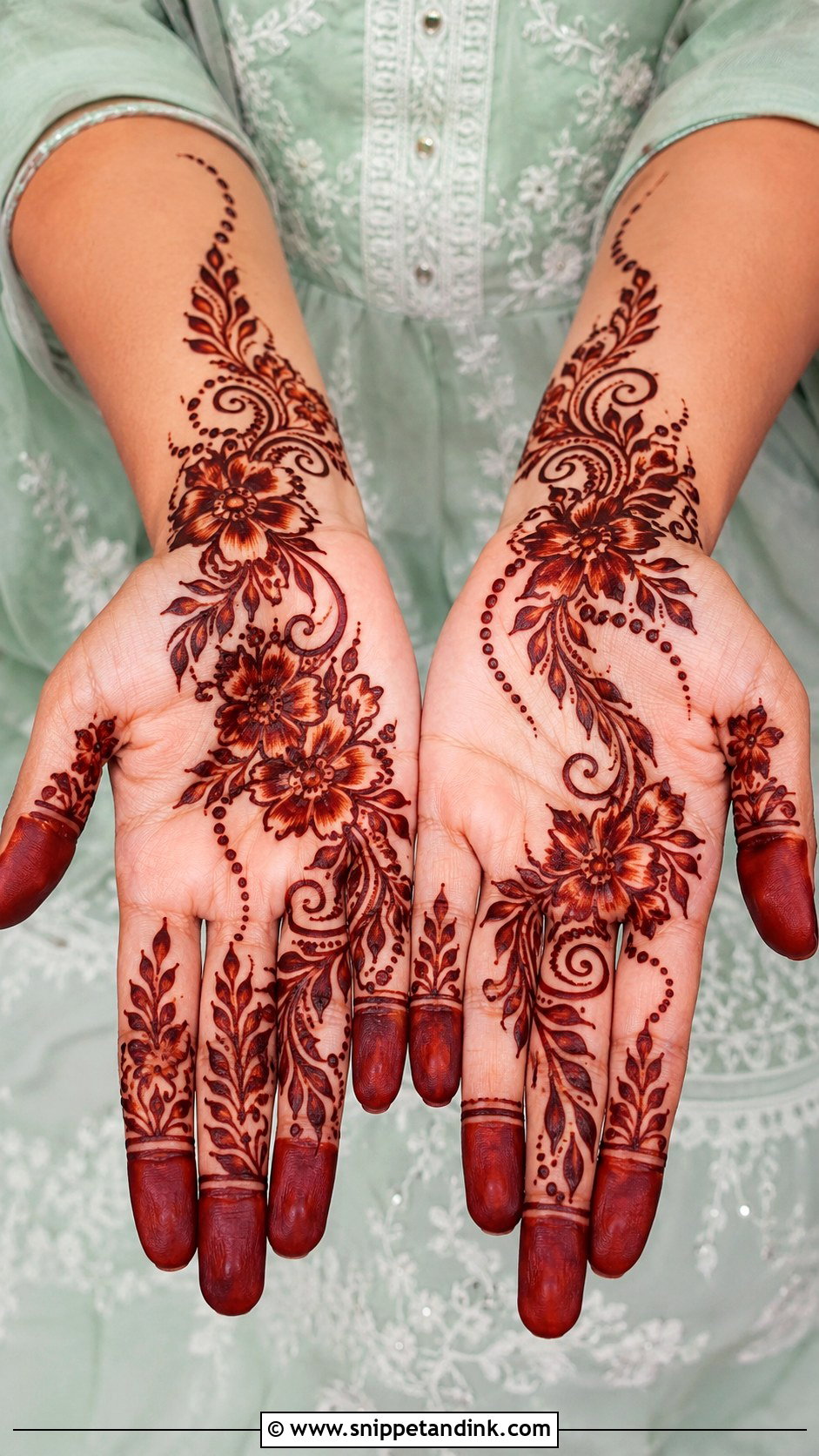
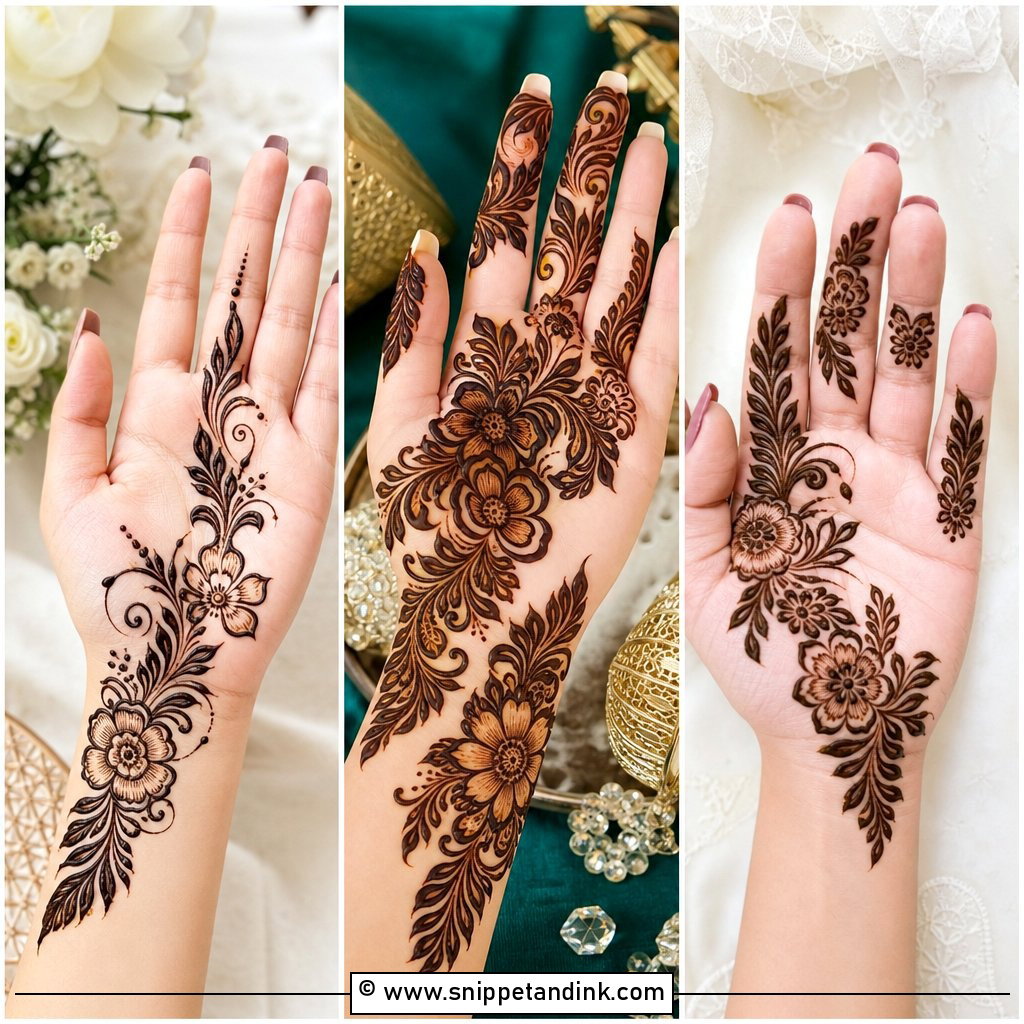
This is the layout most clients point to first: a soft floral trail that starts as a bold cluster at the wrist and climbs diagonally to the index or middle finger. Thick outlines carry the flowers; petal lines, dots and small leaves go inside afterward. The palm stays partly open. I shade or stripe the fingertips to anchor the far end of the trail, otherwise the design looks like it trails off. It suits long and short fingers alike, which is rare.
2. Simple Arabic Front Hand Mehndi Design
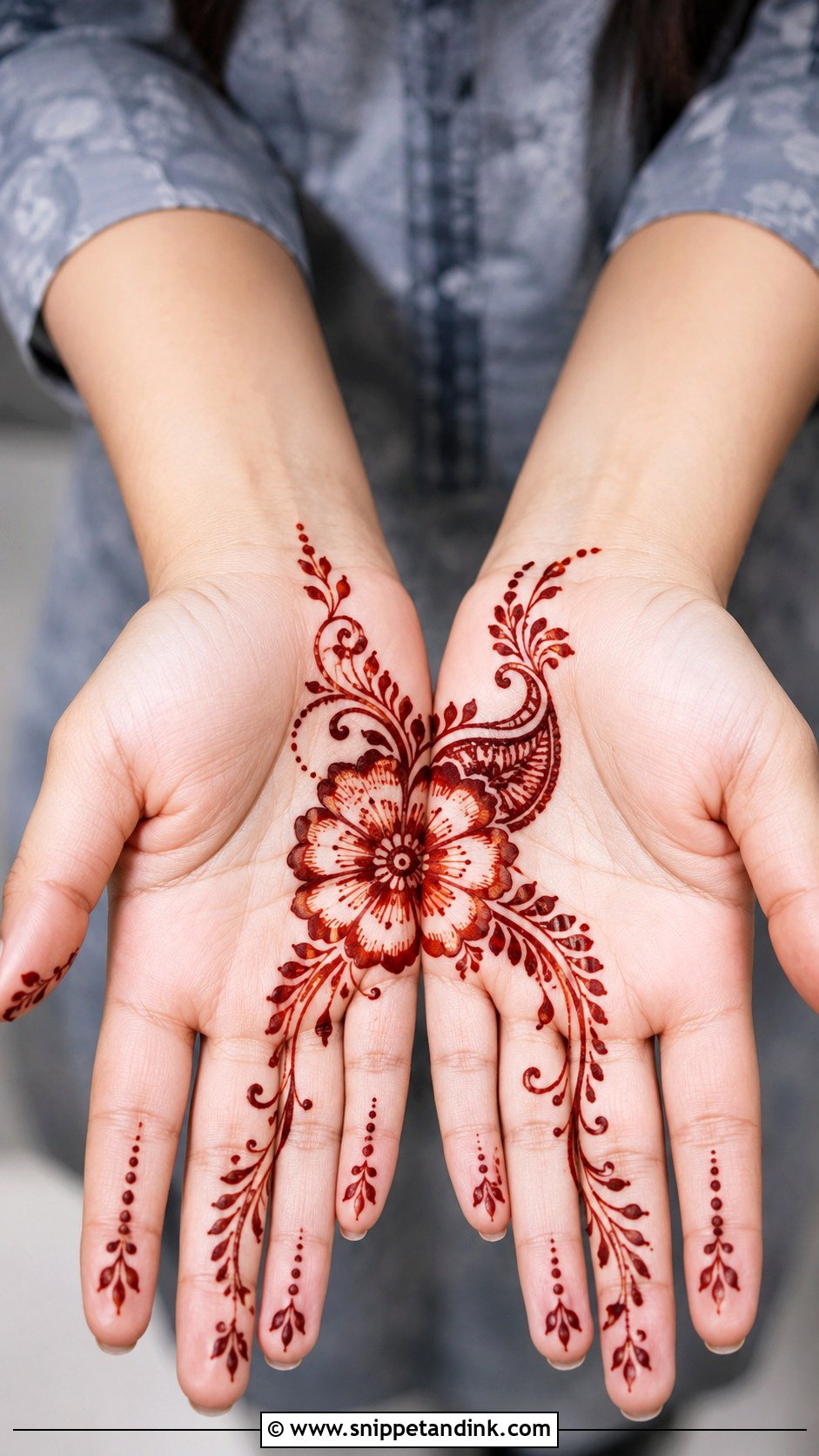
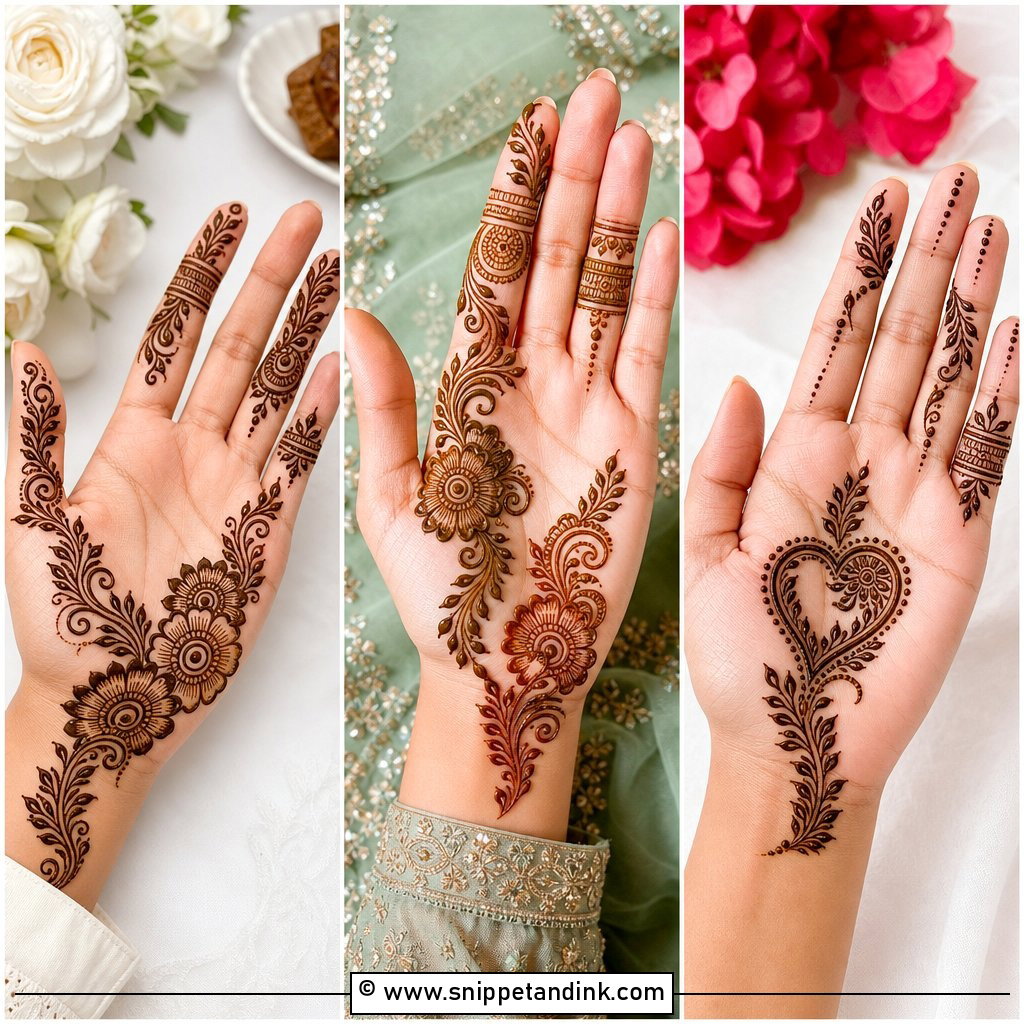
Fewer motifs, wider gaps, smooth curves. One flower on the palm, a small paisley at the wrist and vines on two or three fingers make a whole hand. I tell anyone drawing their own to lay down every outline first and only then add dots and inner strokes; that order keeps the spacing honest. It is a good last-minute design for office celebrations and school events.
3. Full Hand Arabic Mehndi Design Front Hand
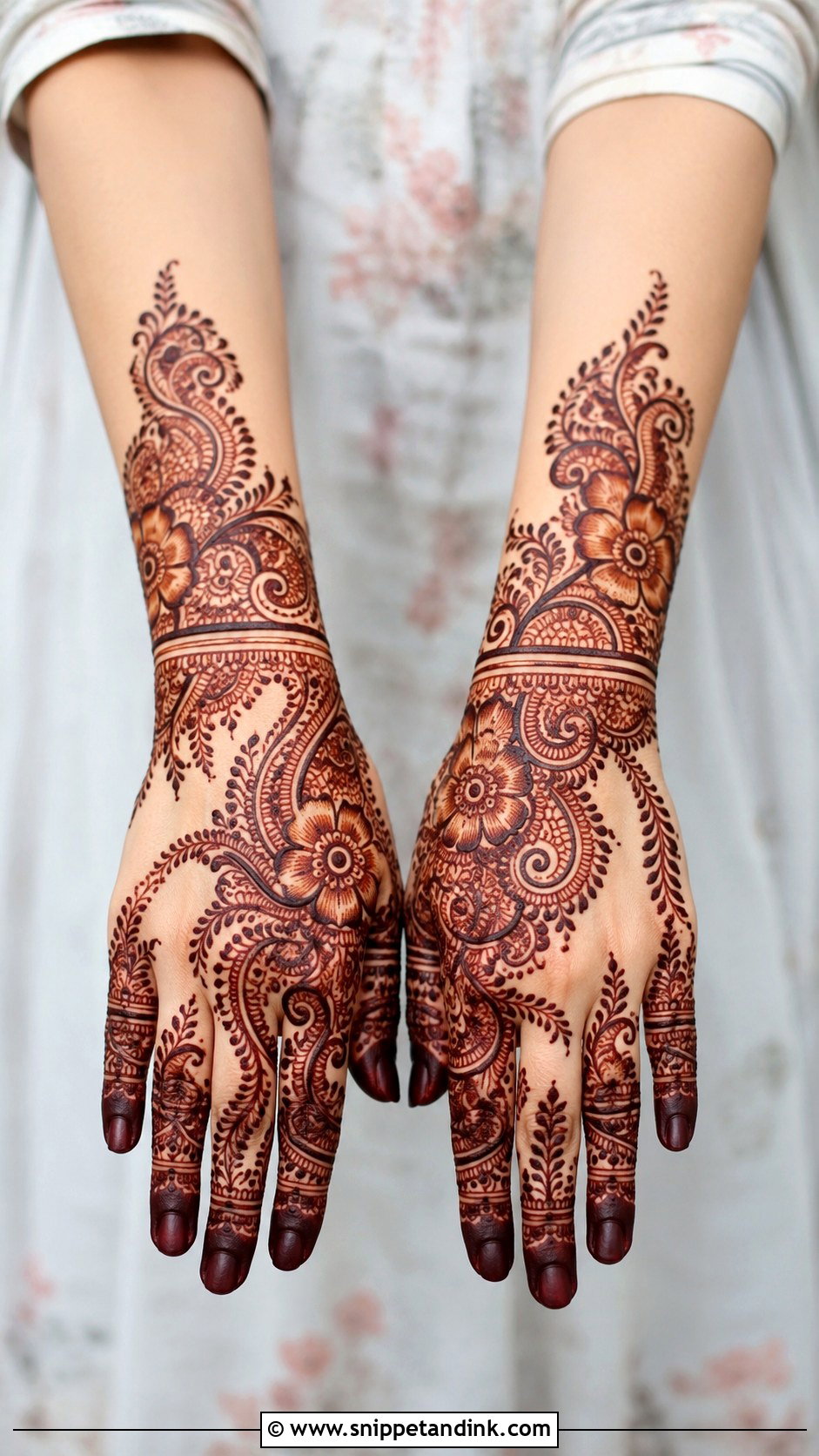
Full Arabic coverage still avoids small repetitive filler. Large flowers, paisleys, leaf chains and shaded curves run from wrist to fingertips, sometimes a little up the forearm, with open skin kept around the central palm motifs. Without those gaps it slides into Indian density and loses its character. Bridesmaids and engagement brides like the visibility. Bold fingertip fills frame the whole thing and look sharp in photos.
4. Arabic Rose Front Hand Mehndi Design
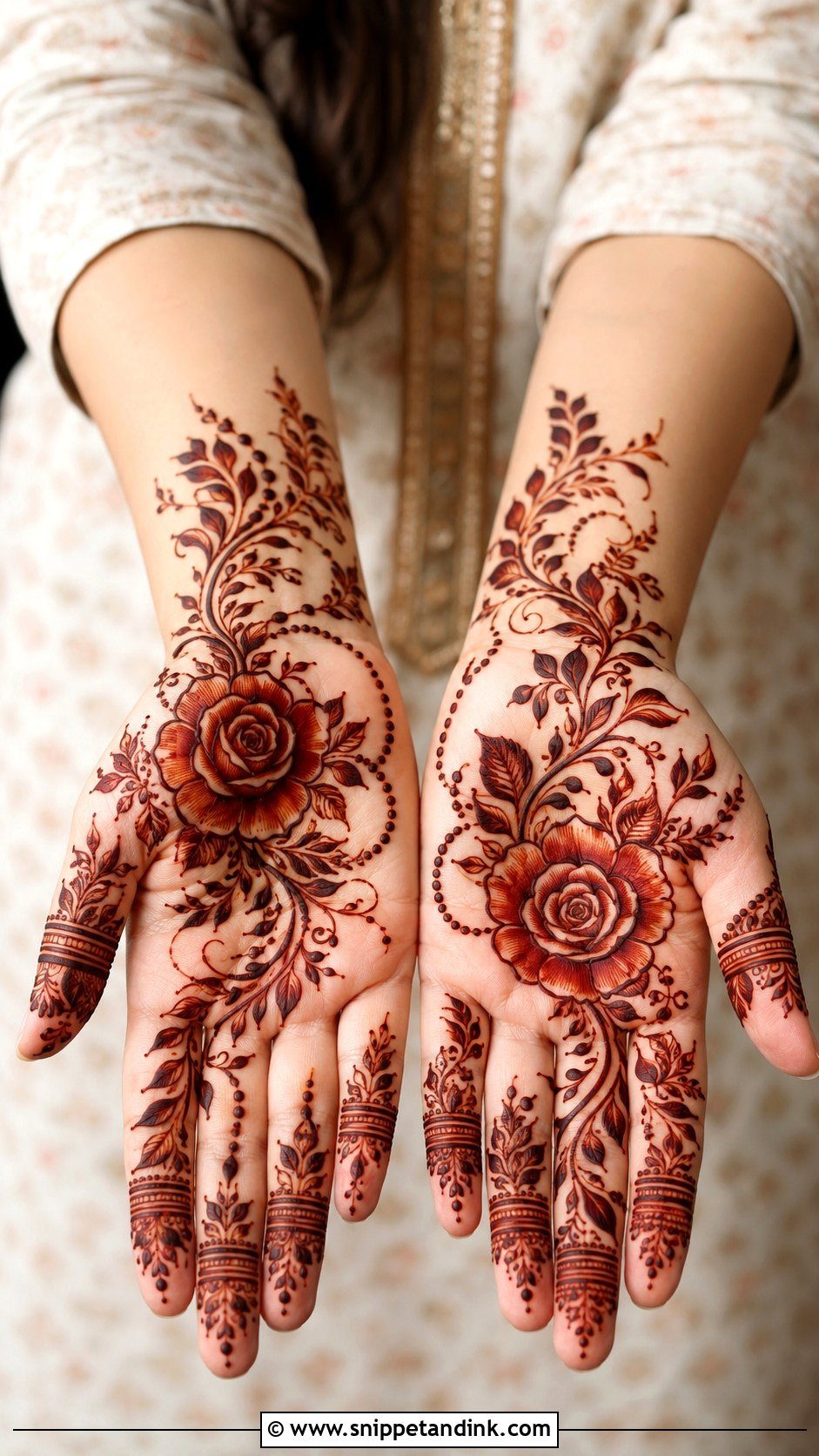
A large rose on the centre or lower side of the palm, with curved vines running to the fingers, is the romantic version of the Arabic palm. The trick is contrast: a thick outer outline, fine inner lines and light shading on the petals give it layers. Too much shading and the rose becomes a dark disc once the stain matures, so I shade only the inner curl. Finger bands or filled tips complete it.
5. Arabic Paisley Front Hand Mehndi Design
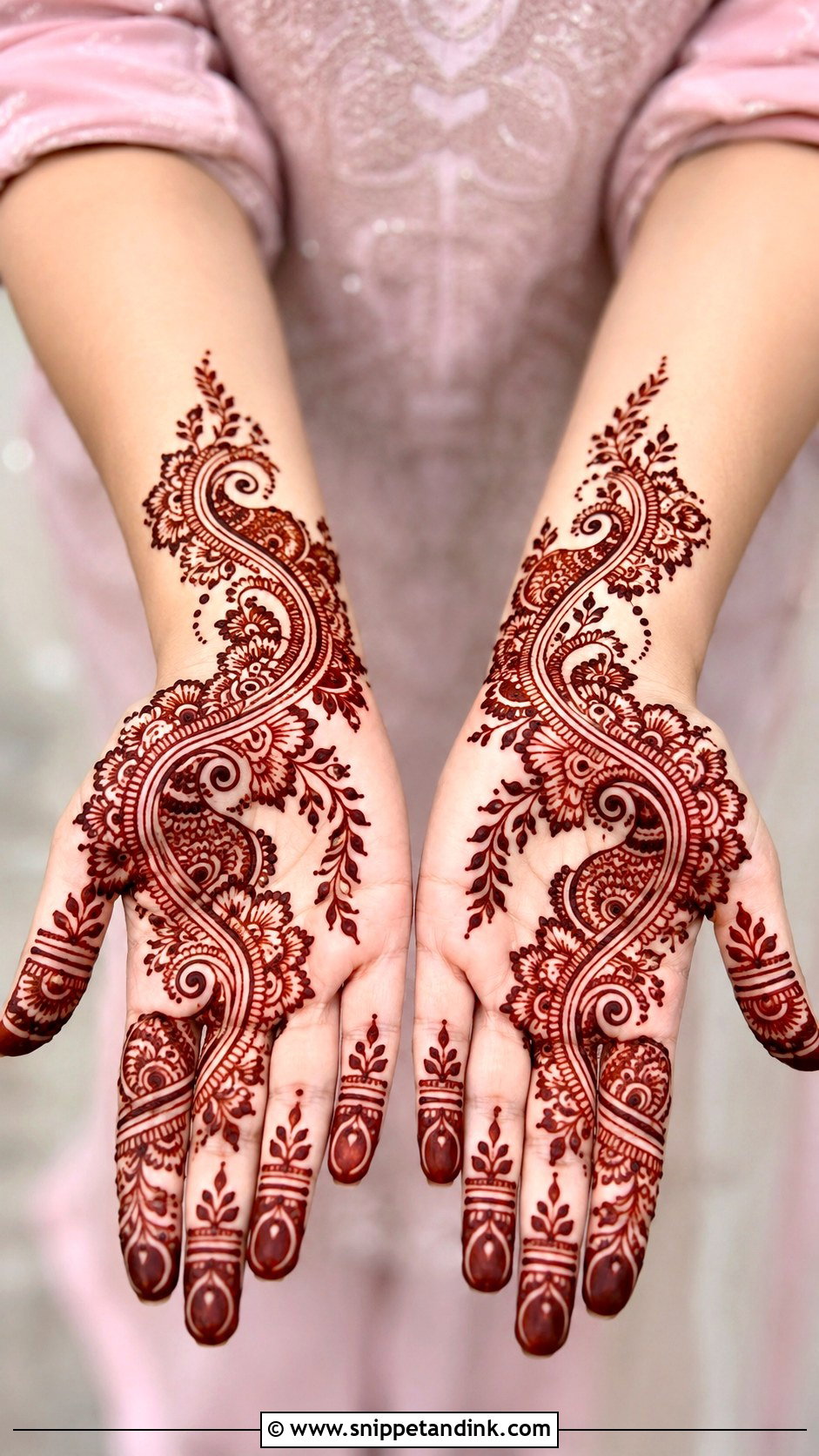
Paisleys have been part of Arabic henna for generations. A front hand paisley design usually sets one or two large paisleys along the diagonal, with flowers, leaves and dots linking them. Inside, I use small petals, swirls, mesh or teardrops. Clear gaps between the paisley trail and the finger work keep it Arabic rather than Indian. It works for weddings, Eid and Karwa Chauth equally.
6. Arabic Mandala Front Hand Mehndi Design
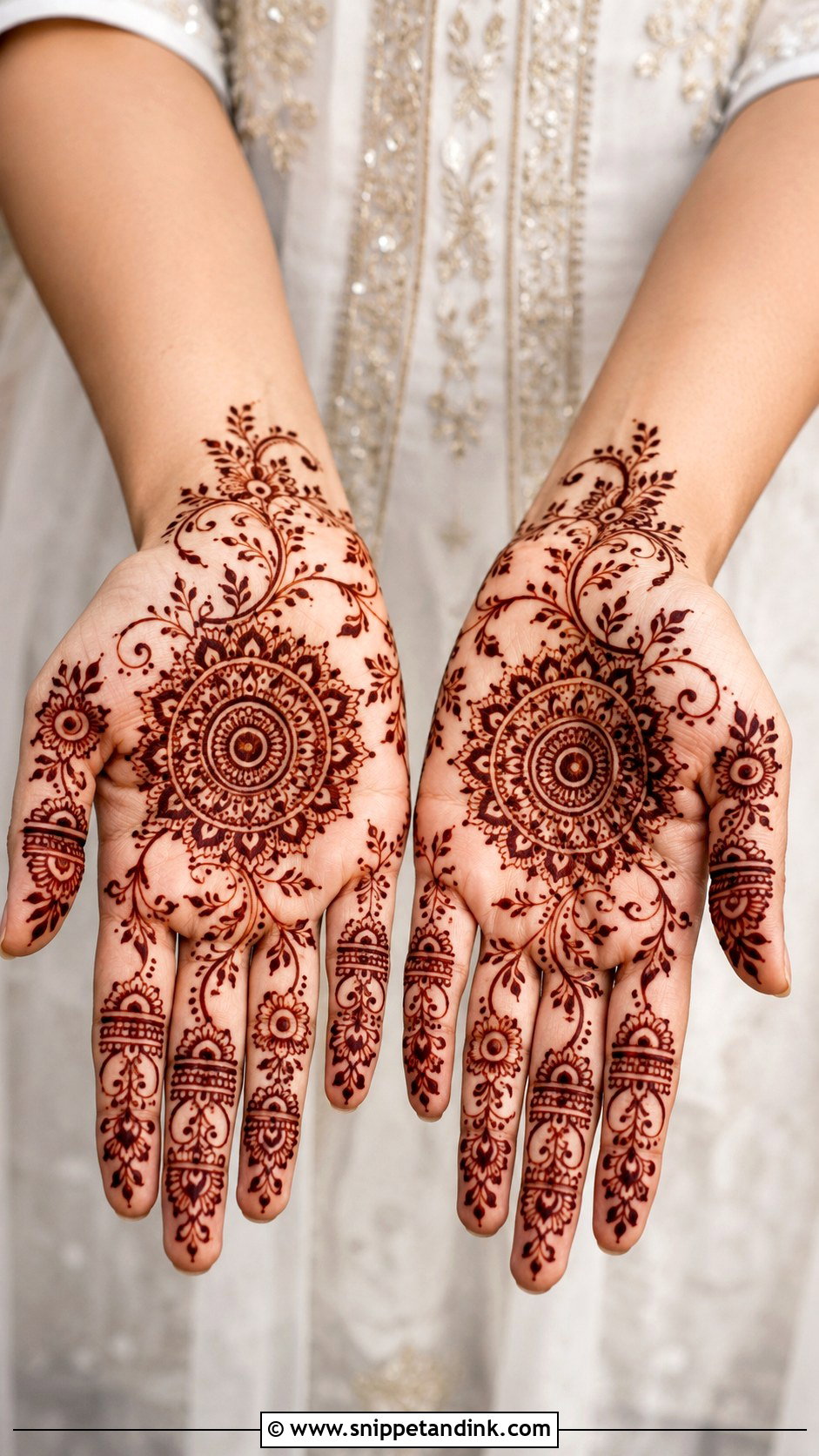
A mandala in the centre of the palm brings symmetry; an Arabic trail around it brings movement. Unlike an Indian mandala hand, this version stays light, with slim bands, dotted chains or leafy tips on the fingers rather than dense filling. I set the mandala slightly above the true centre of the palm, because the lower palm creases deeply when you cup your hand and can crack the paste. The open space around the circle keeps it crisp in photos.
7. Arabic Diagonal Front Hand Mehndi Design
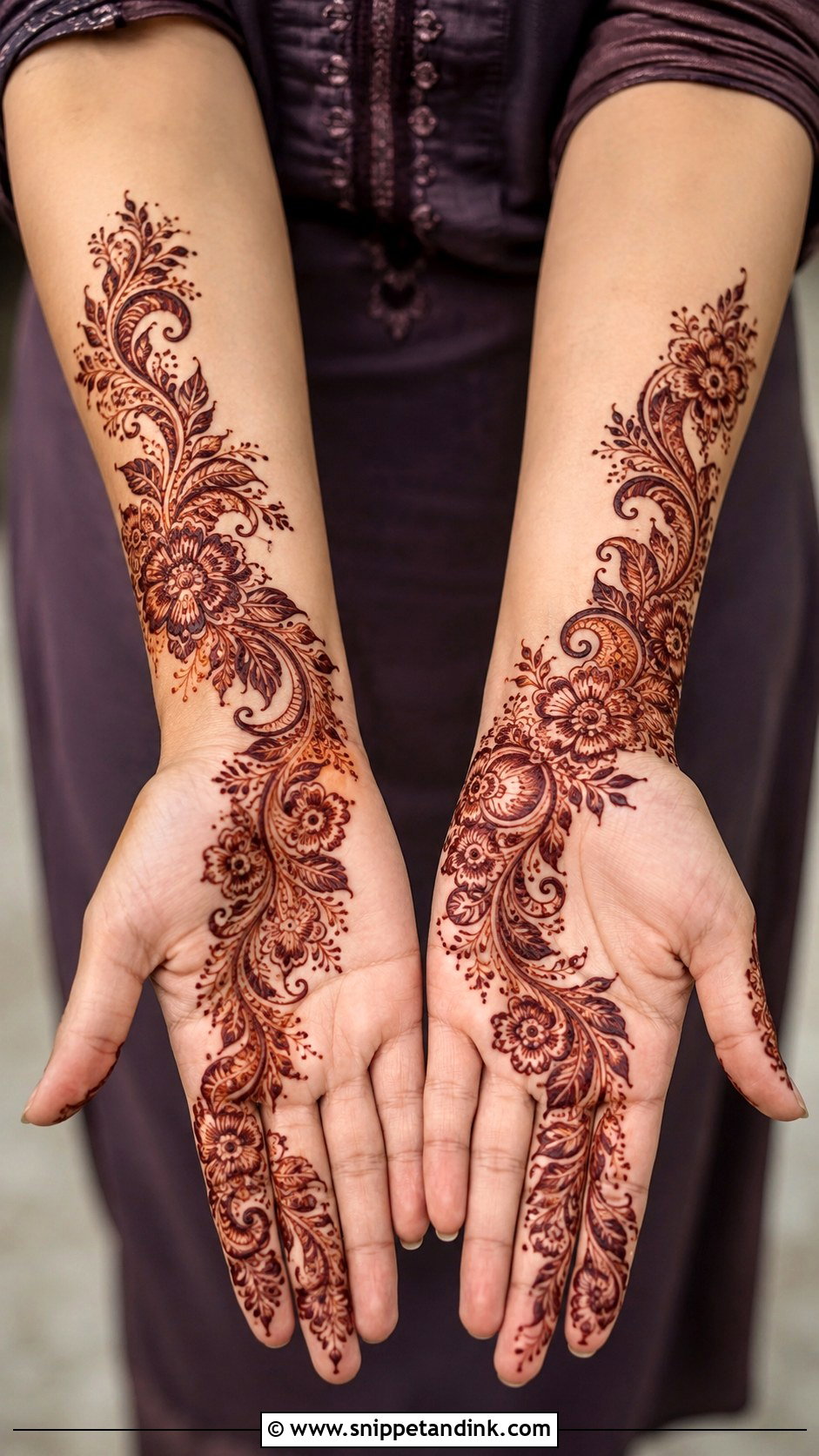
Wrist, across the palm, out through one or two fingers: that diagonal is the backbone of Arabic henna, and it lengthens the hand. Flowers, paisleys, leaves and swirls sit along one continuous path while the rest of the palm stays open. It is quick, and it can be dressed up with shading for a festive night. My one rule is to keep both sides of the trail breathing. Crowd them and the diagonal disappears.
8. Arabic Bracelet Front Hand Mehndi Design
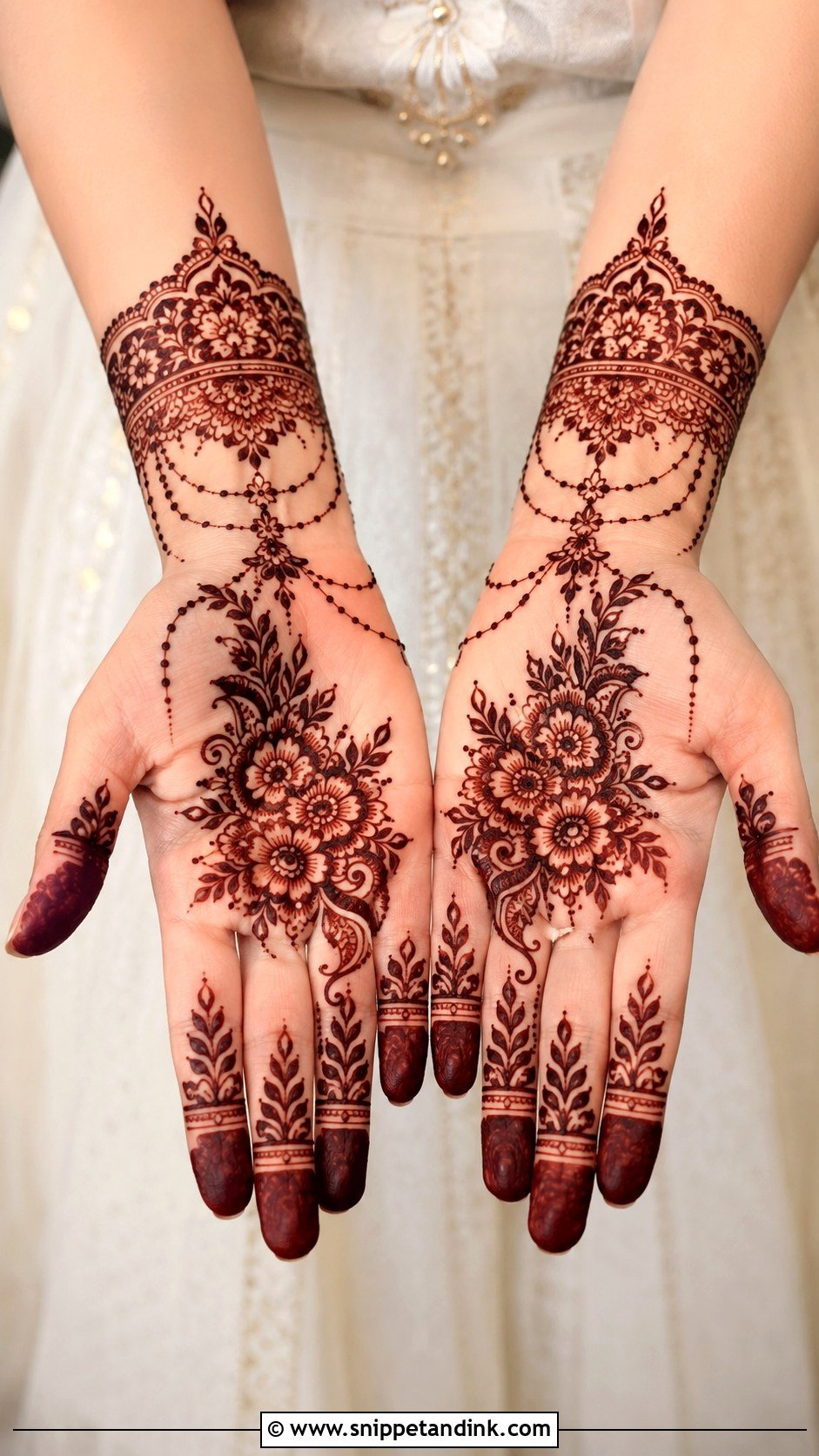
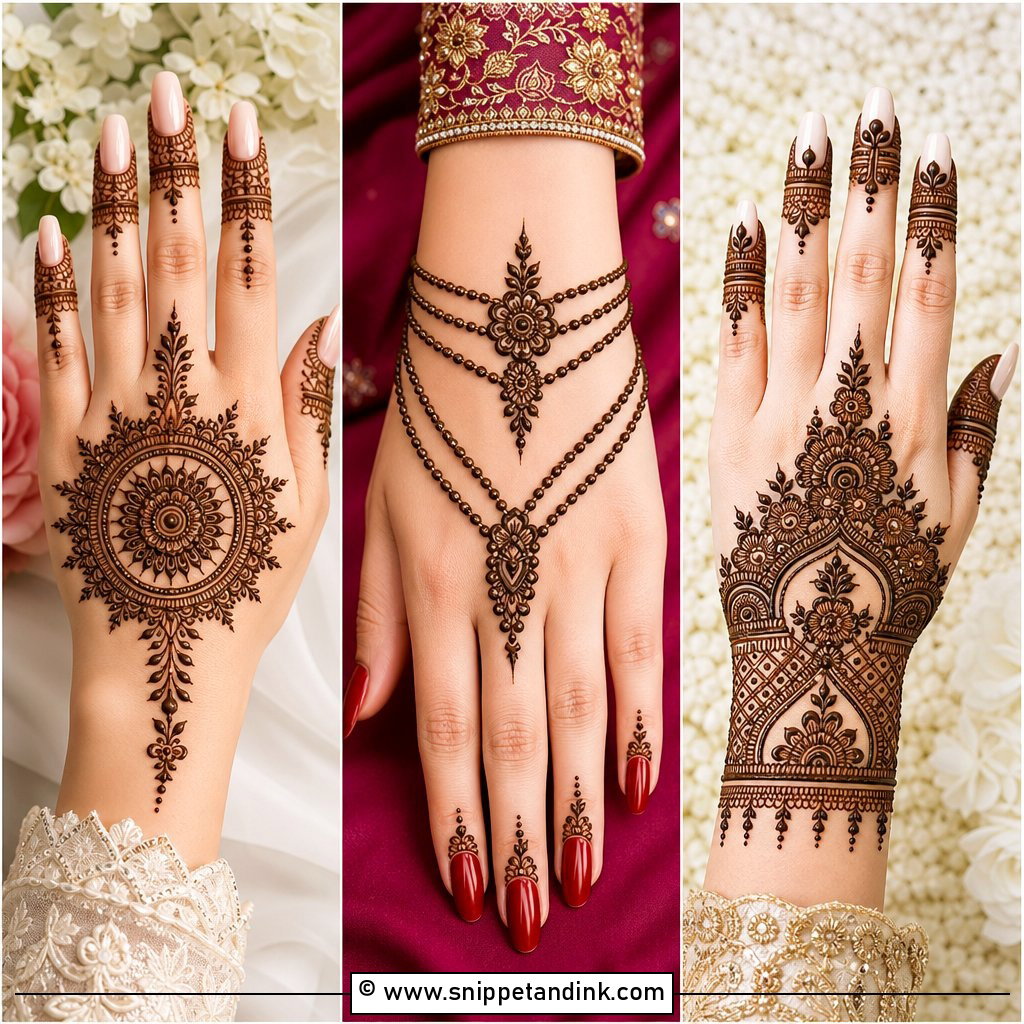
A bracelet-style Arabic front hand mehndi design puts a detailed band at the wrist and connects it to the palm with chains, dots or a floral trail, then adds rings and leafy bands to the fingers. It looks dressed even without real jewellery. I leave a small gap between the wrist band and the palm motif, which reads more modern than joining them. The band has to be symmetrical, so I mark its edges with dots first.
9. Arabic Finger Front Hand Mehndi Design
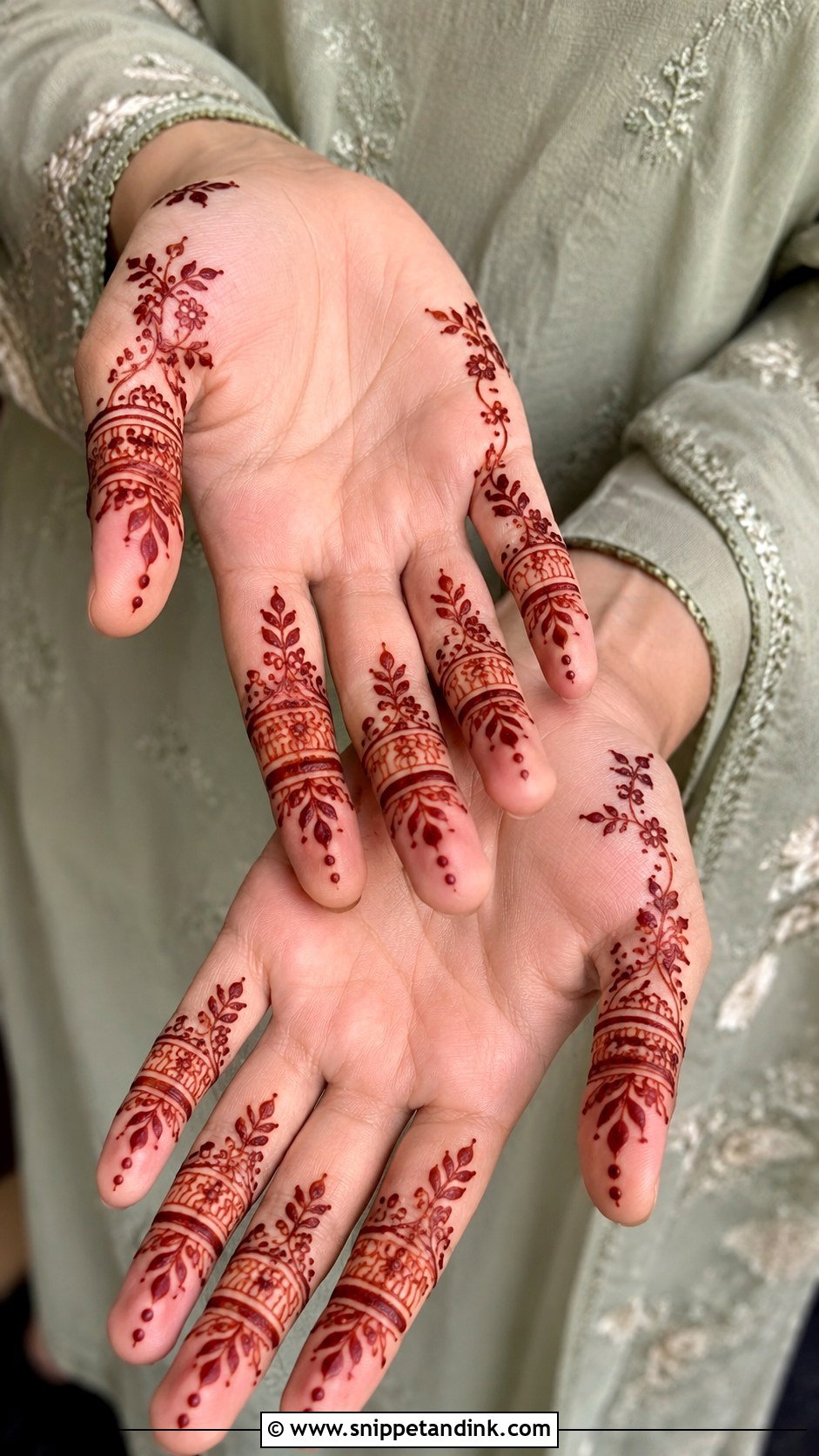
Here the fingers do the work: bands, leaves, dots, mini florals and shaded tips, with only a small flower or a curved vine near the thumb on the palm. Finger pads take a deep stain, so even modest work shows clearly. Keep the spacing and leaf shapes consistent from finger to finger. It suits anyone who dislikes a heavily stained palm or needs her hands to look neat at work the next day.
10. Arabic Front Hand Mehndi With Shaded Flowers
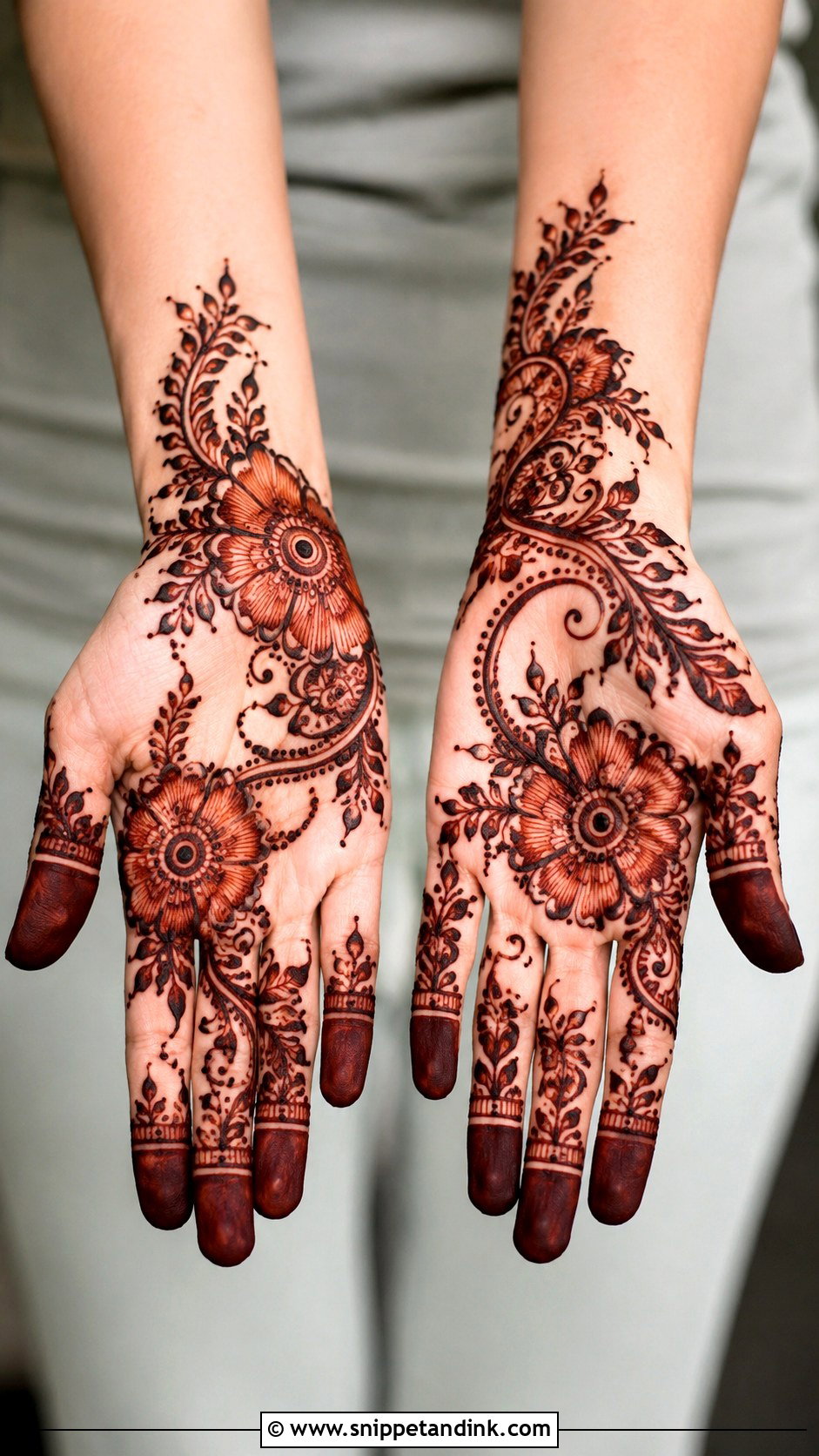
Shading is what makes a simple layout look professional. I outline the flowers boldly, then fill part of each petal with thin parallel lines or a thin wash of paste, which stains lighter than the outline. The flowers run diagonally from wrist to fingers with leaves and dots between them. Shade a few motifs and leave the rest clean; over-shaded hands look muddy once the colour darkens.
11. Arabic Front Hand Mehndi With Leafy Vines
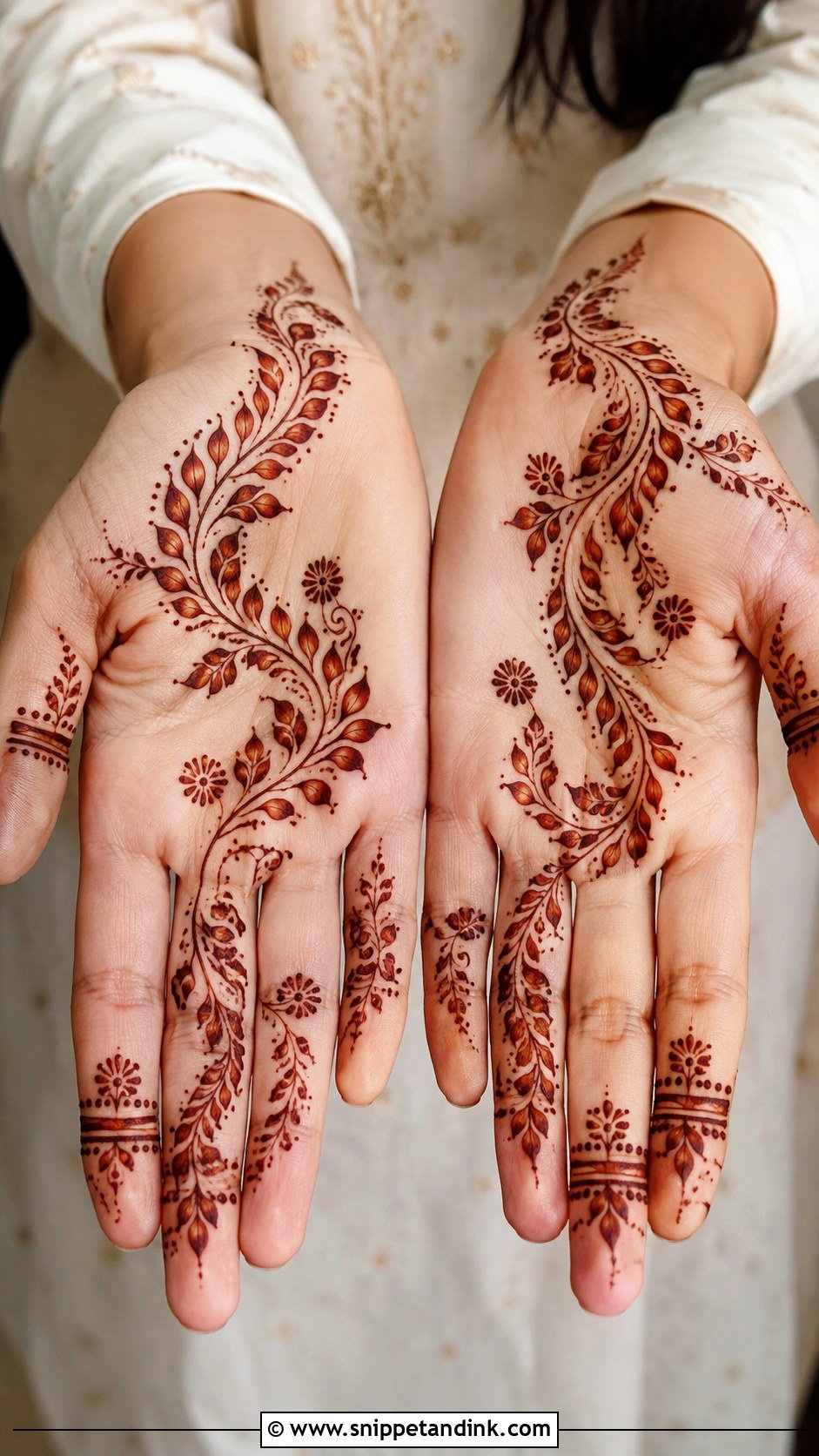
Long curved stems with small and medium leaves travel across the palm, with a flower or paisley near the wrist and nothing much else. The vine is the design. I draw the stem in one slow stroke and add leaves afterward, alternating sides so it grows naturally. Slim bands on the fingers keep it modern. It suits daytime events and lighter outfits.
12. Arabic Front Hand Mehndi With Bold Fingertips
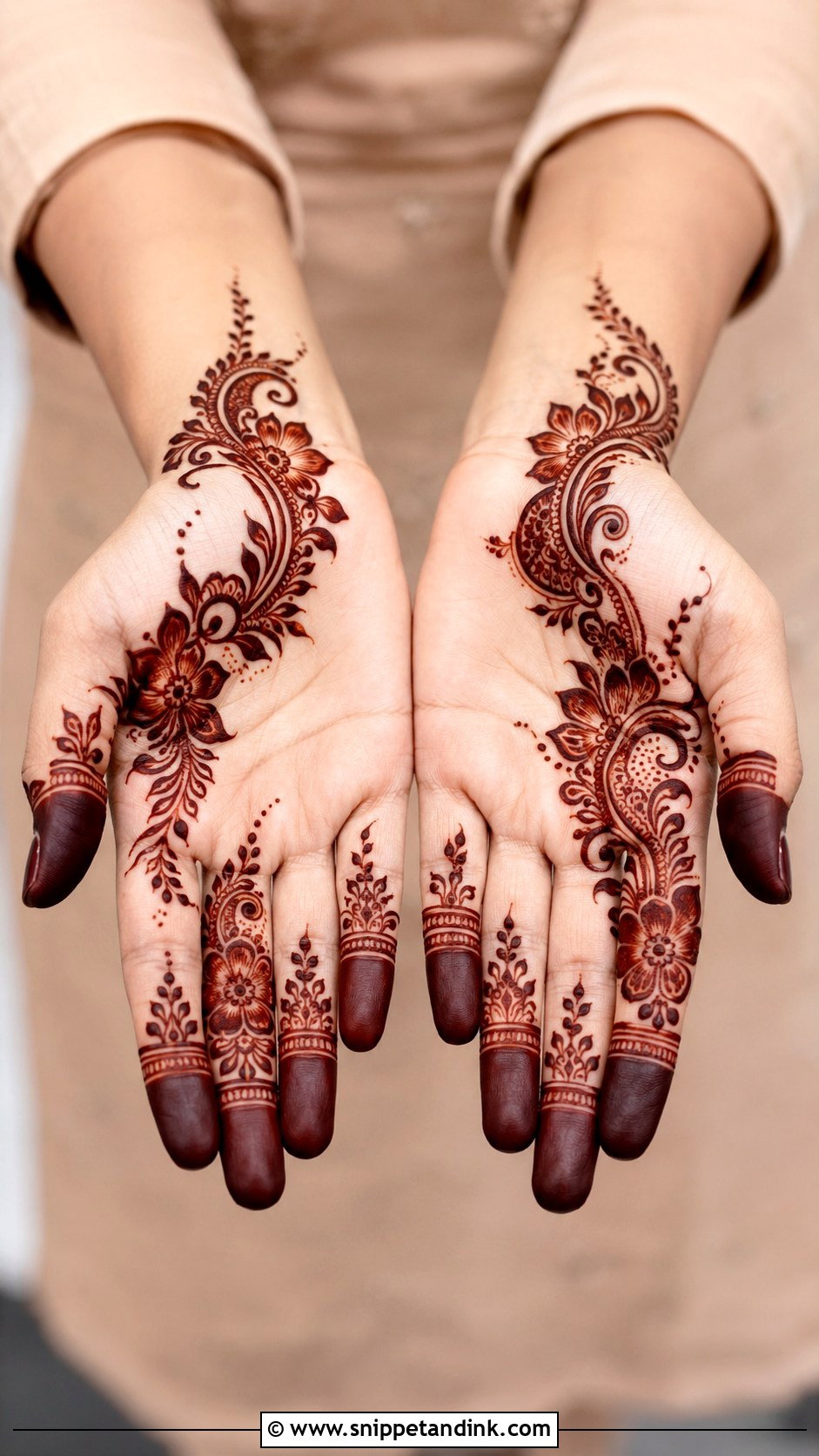
Filled fingertips give an open Arabic palm a strong frame. The contrast between solid tips and airy palm motifs is what makes it striking, especially once the stain deepens to maroon. I add a thin line or small leaf band just below each filled tip so the transition does not look abrupt. Fingertips hold colour well, which is why this look stays sharp the longest. It flatters short fingers too.
13. Arabic Front Hand Mehndi With Negative Space
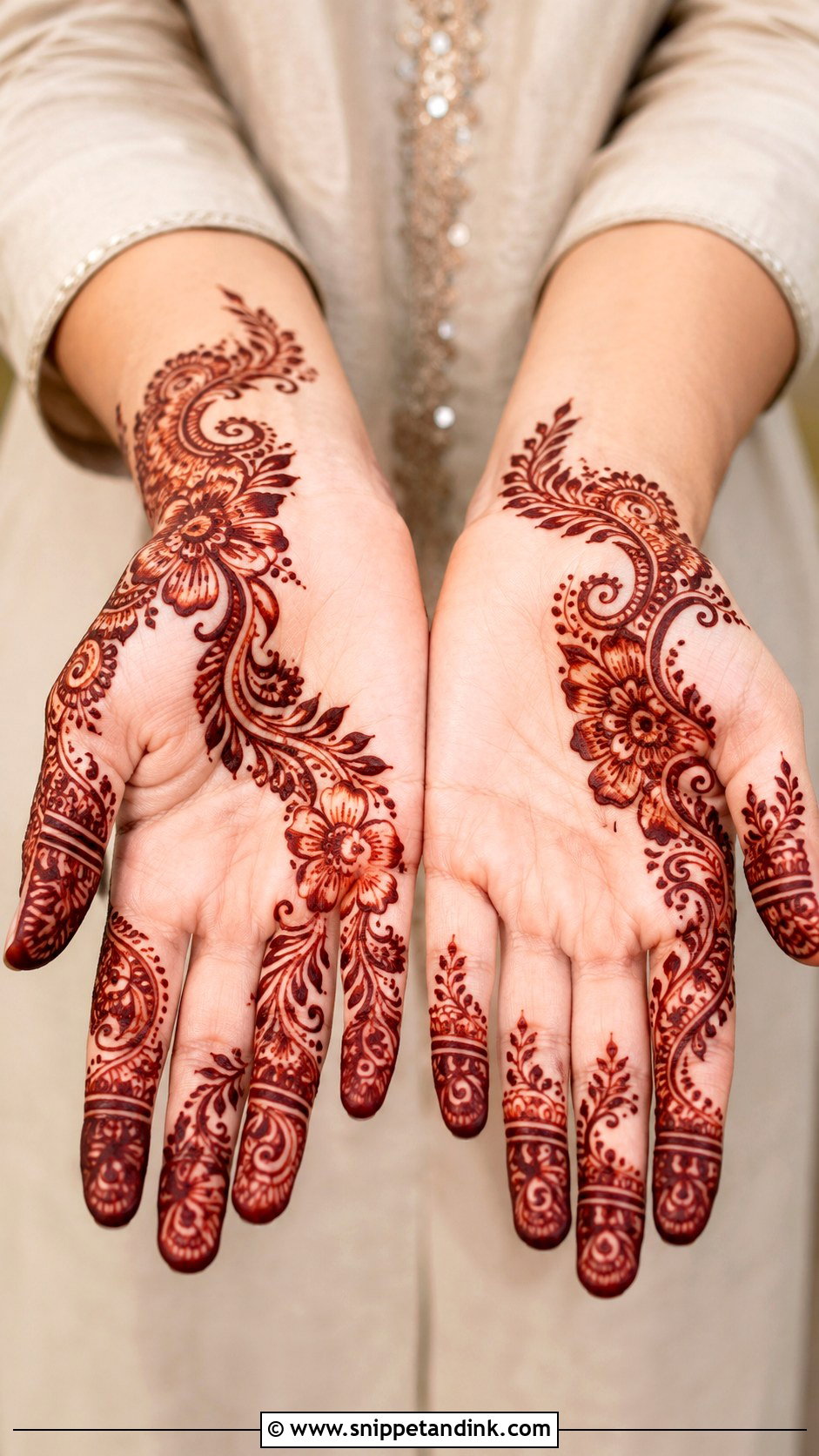
In negative-space designs, the bare skin is part of the pattern. Flowers, paisleys, leaves and vines sit with deliberate gaps between them, often as a diagonal trail, a side cluster or a curved border around an open palm. It dries faster and feels lighter. The catch is that empty space spotlights every curve, so a shaky outline cannot hide. If your artist’s lines are not smooth, choose a busier style.
14. Gulf Arabic Front Hand Mehndi Design
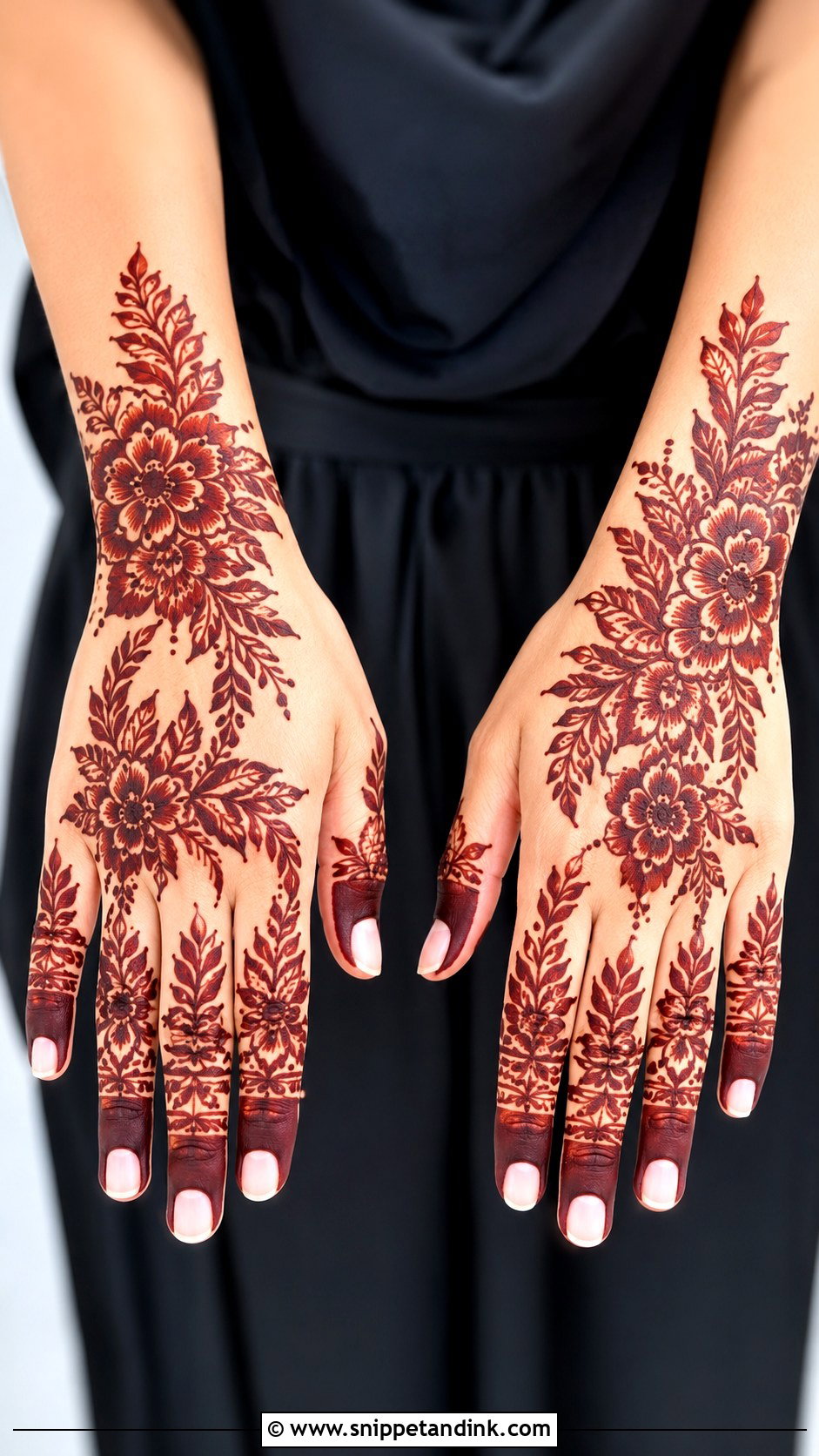
Gulf work is confident: large flowers, thick leaves, dark outlines and strong fingertips, with clean open sections at the centre or side of the palm. A cuff or wide floral curve at the wrist adds weight. I use very few small fillers here; the bigger motifs carry it. It reads clearly from across a room, which suits a guest at a large wedding.
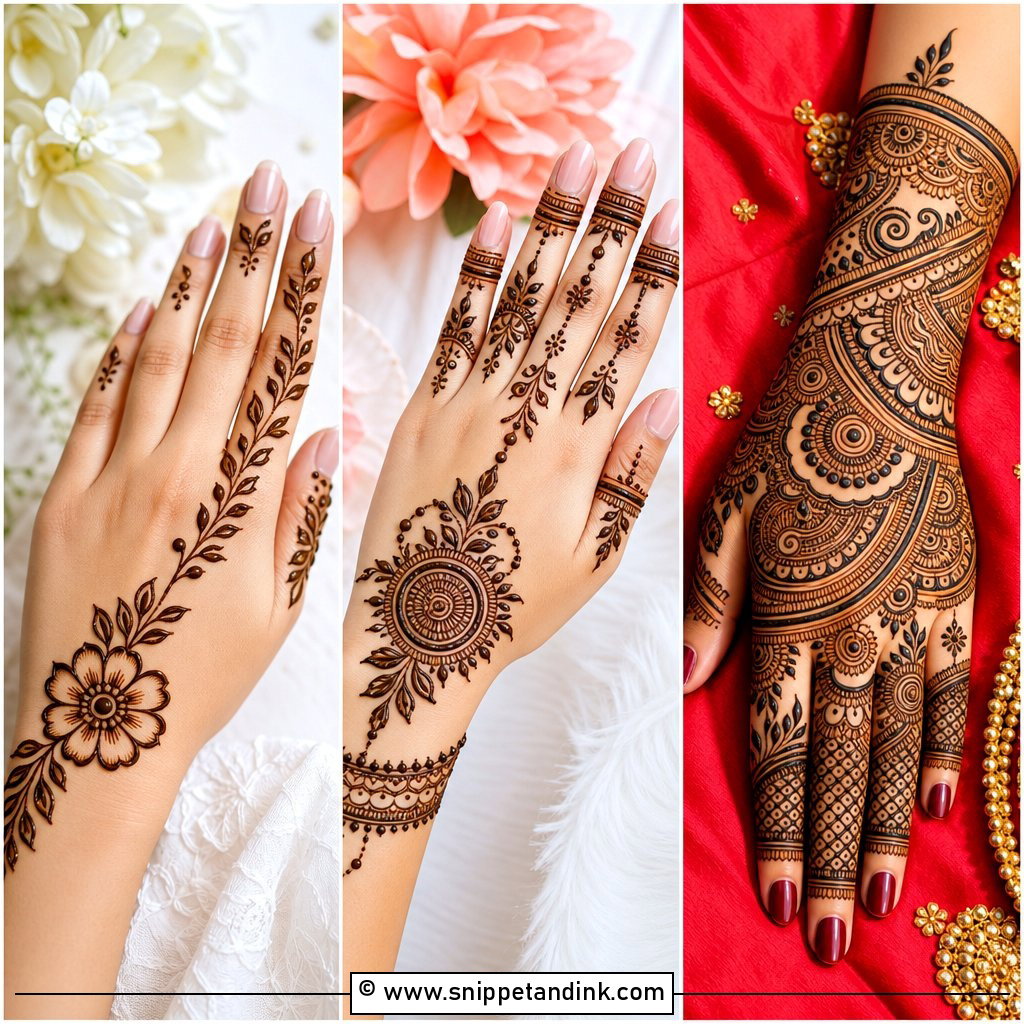


15. Khaleeji Arabic Front Hand Mehndi Design
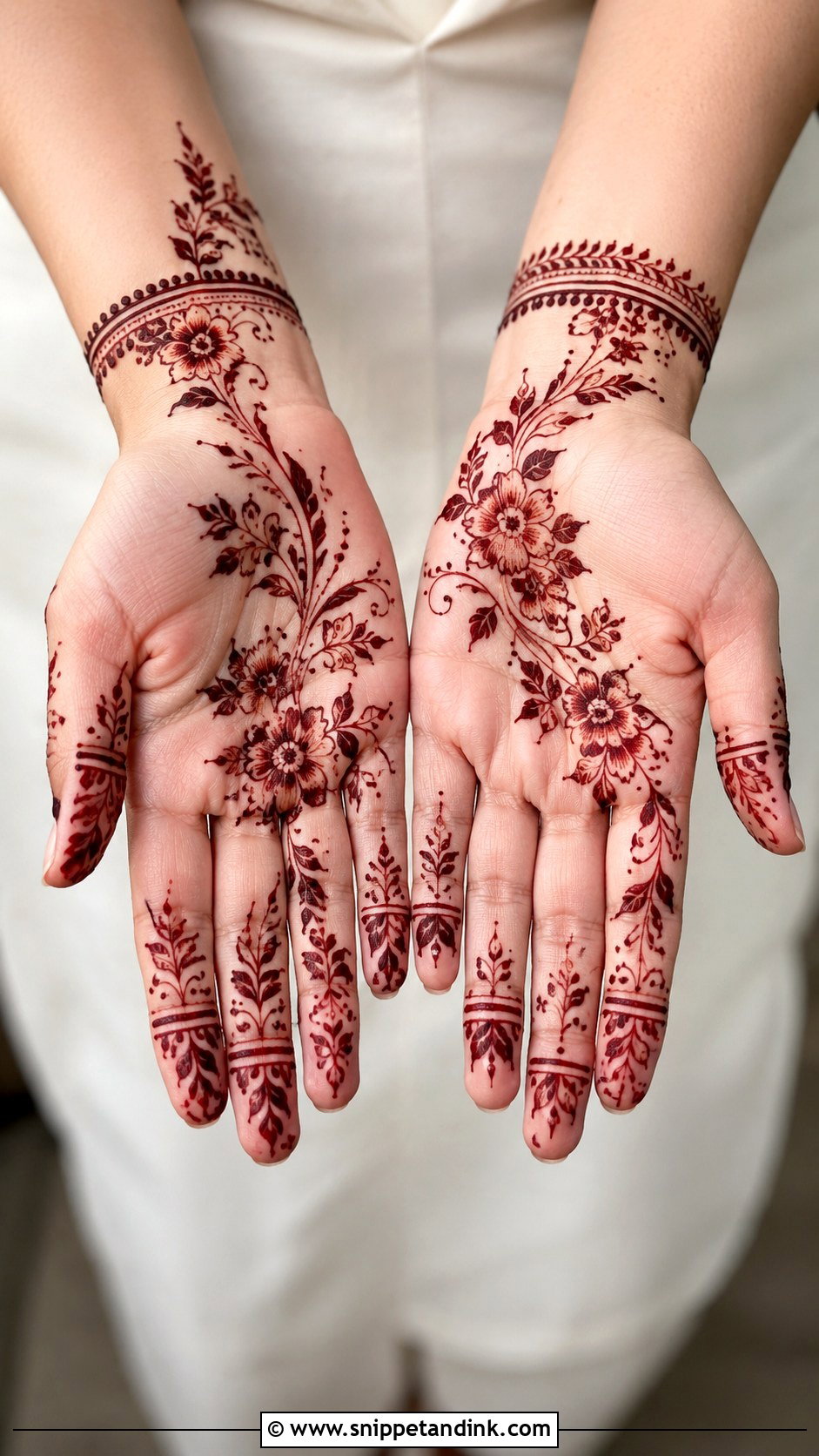
Khaleeji palms are the airy cousin of Gulf work: open florals, curved vines and delicate finger bands, with the motifs set well apart. A side-swept flower trail, a simple bracelet at the wrist and fingers left partly bare with small leaves near the tips is a typical layout. In hot weather, hands sweat less under a light design, and the paste stays put better than under dense work.
16. Moroccan Arabic Front Hand Mehndi Design
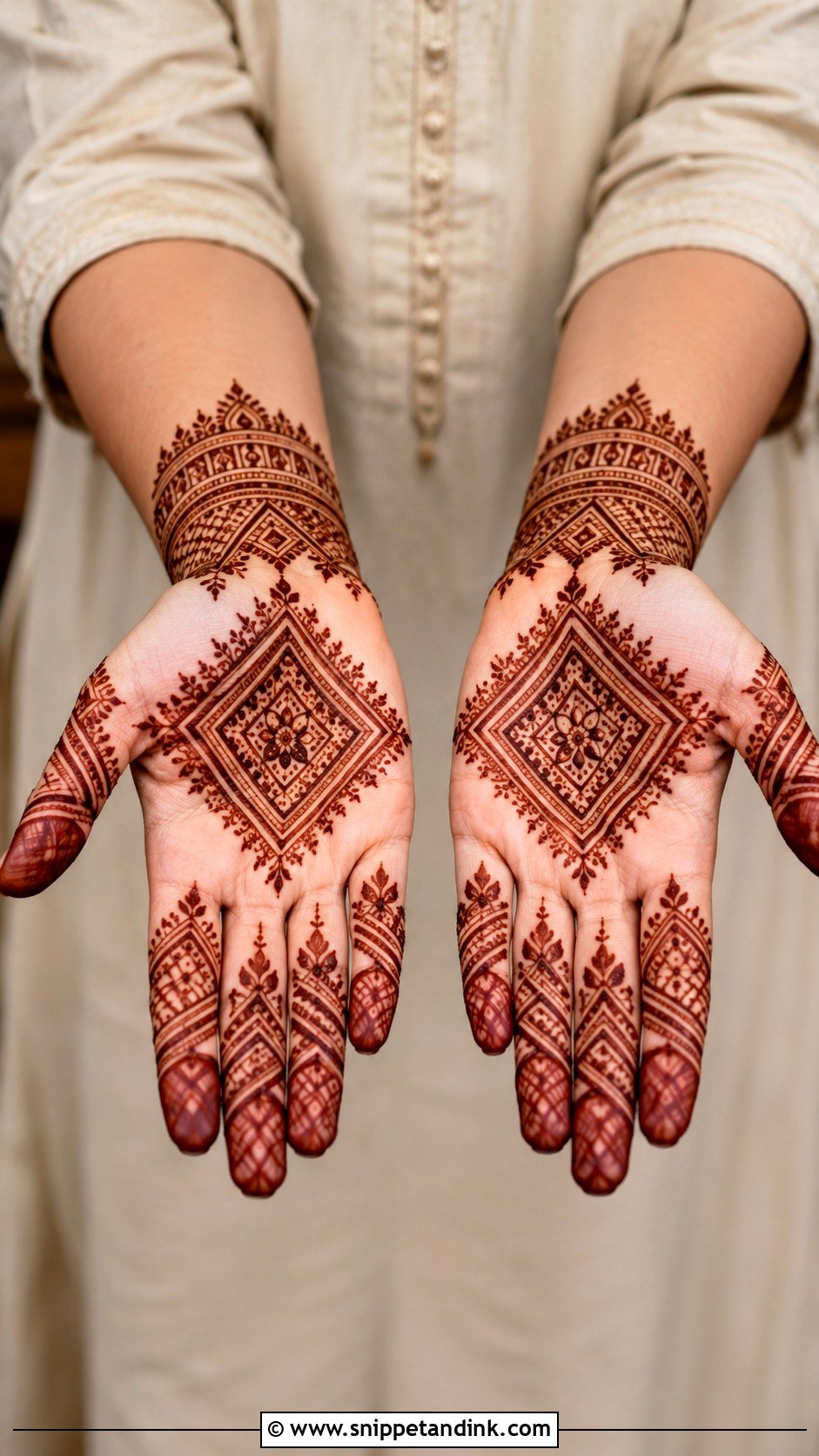
Moroccan elements bring geometry into the Arabic flow: diamonds, chevrons, triangular borders and fine grids. On the palm, I combine a geometric wrist band and a patterned panel with plain finger sections, then soften it with a few leaves. Straight lines must be even, so I take this one slowly. It sits well with fusion outfits and for anyone tired of florals.
17. Indo-Arabic Front Hand Mehndi Design
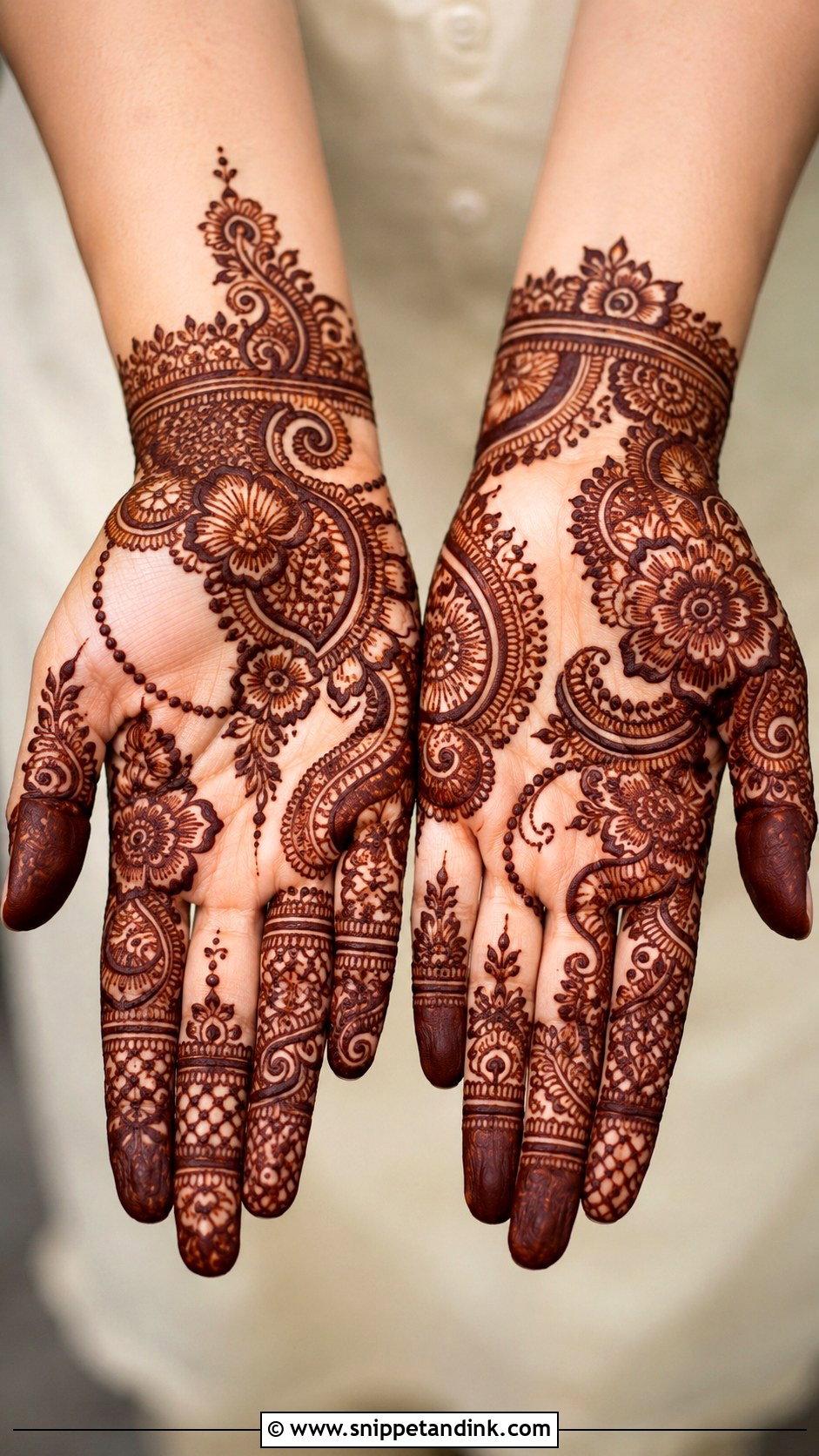
Indo-Arabic keeps the large flowers and paisleys of Arabic work and fills their insides with jaali, tiny petals and dots from the Indian tradition. It is richer than plain Arabic and still lighter than Indian bridal. I keep the heavier detail near the centre of the palm and let it thin toward the fingers along the diagonal. Engagement brides and sangeet guests choose it often.
18. Bridal Arabic Front Hand Mehndi Design
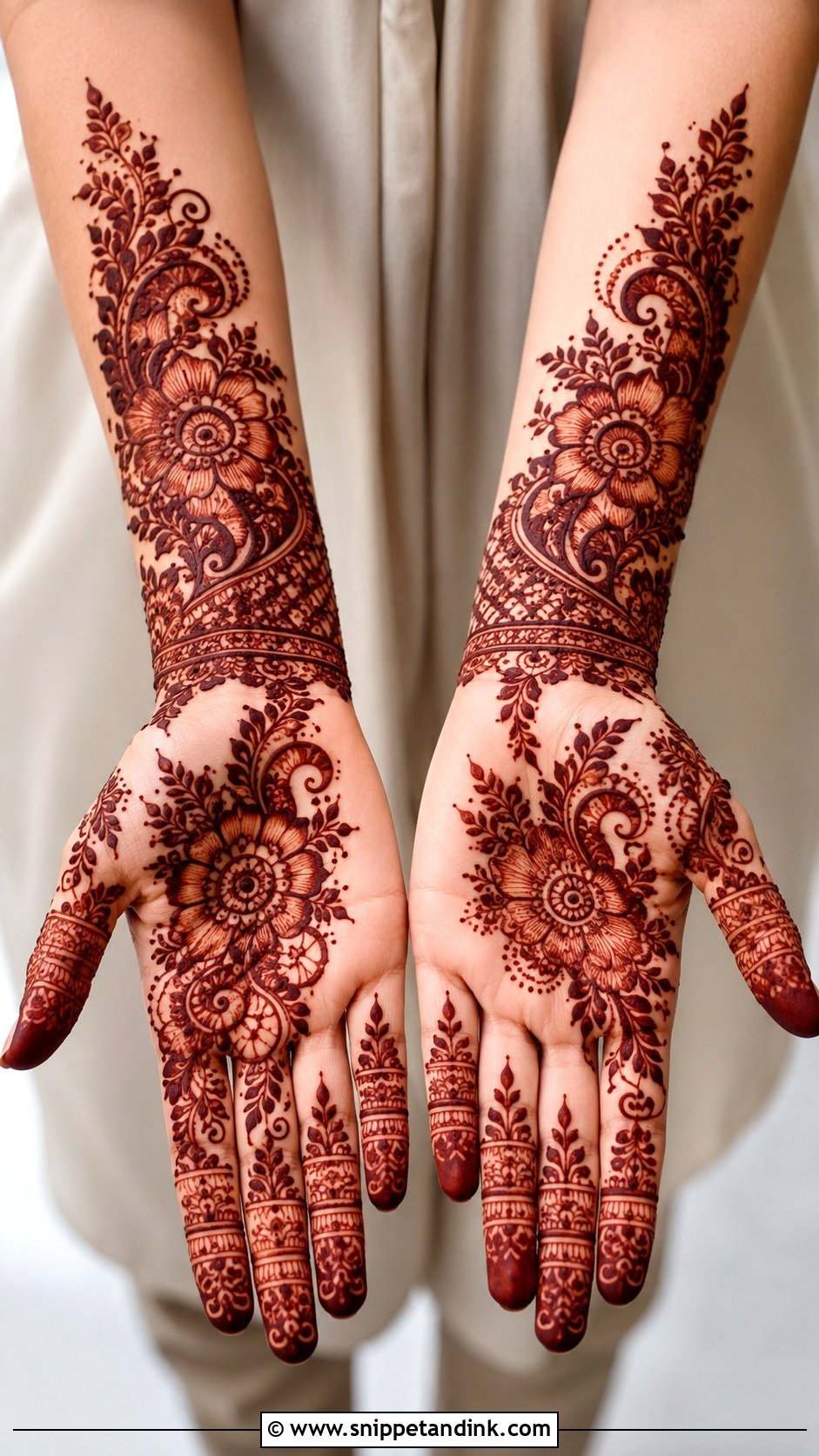
For a bride who wants visible skin gaps, Arabic bridal work uses large florals, bold paisleys, leafy trails, wrist cuffs and detailed fingers, sometimes extending toward the forearm while the palm stays flowing. Initials or a tiny heart can hide in the pattern. For the deepest colour on the day, I ask brides to have it applied a day or two before and keep the paste on overnight. Shaded flowers and filled tips look rich in bridal portraits.
19. Arabic Front Hand Mehndi For Eid
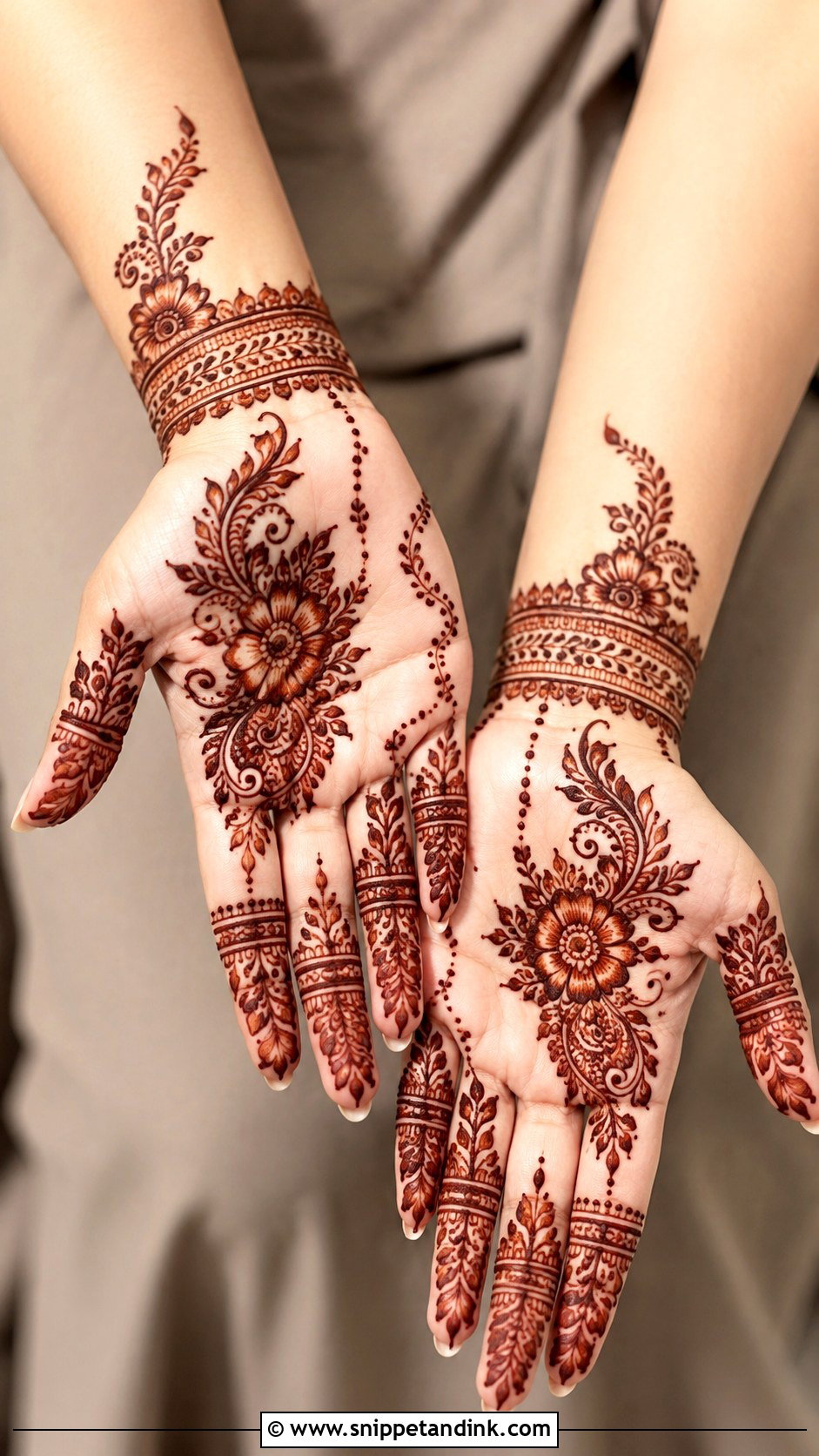
Eid henna is usually applied the night before, often for a houseful of people, so the layout has to dry quickly. A floral trail across the palm, a bracelet at the wrist and fingers with dots and bands is my standard. Skip the fine filler; bold flowers and clean leaves give a rich stain on their own. It suits teenagers and grandmothers alike.

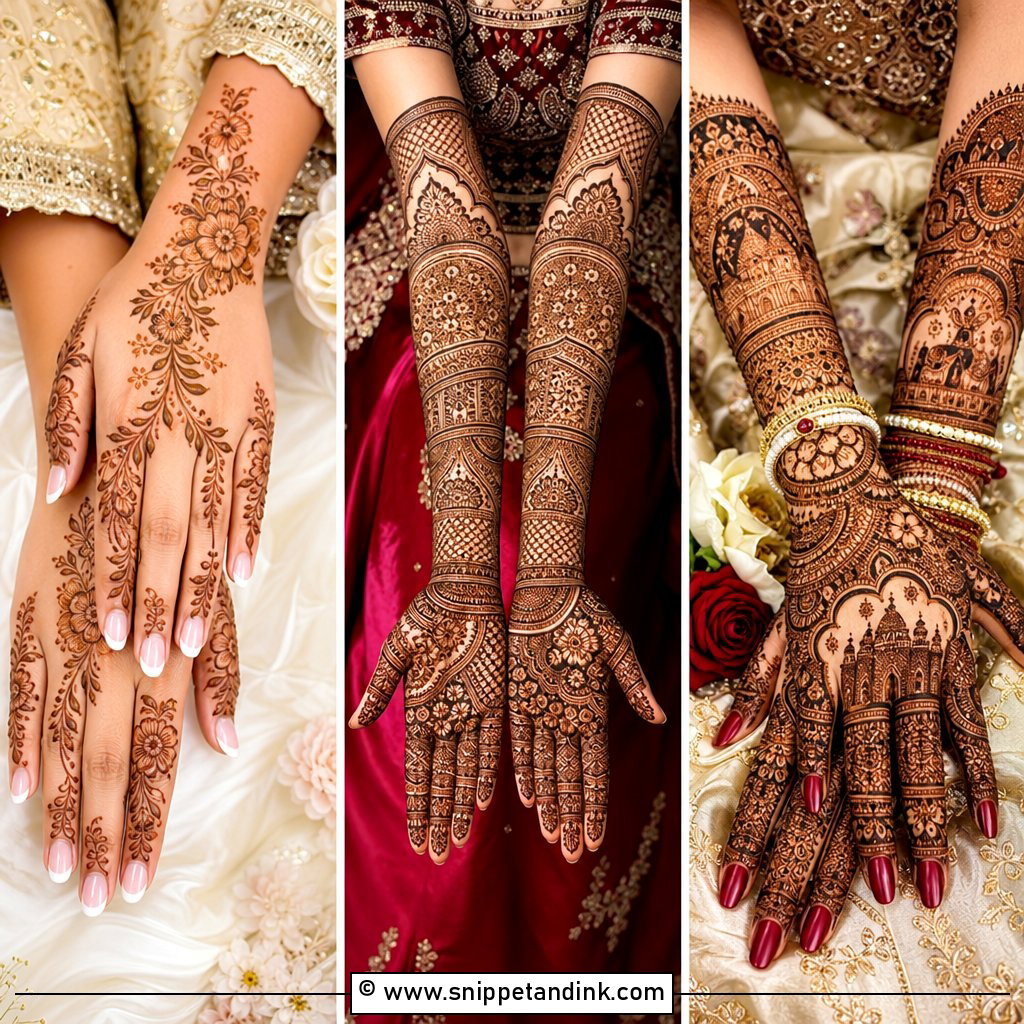


20. Arabic Front Hand Mehndi For Engagement
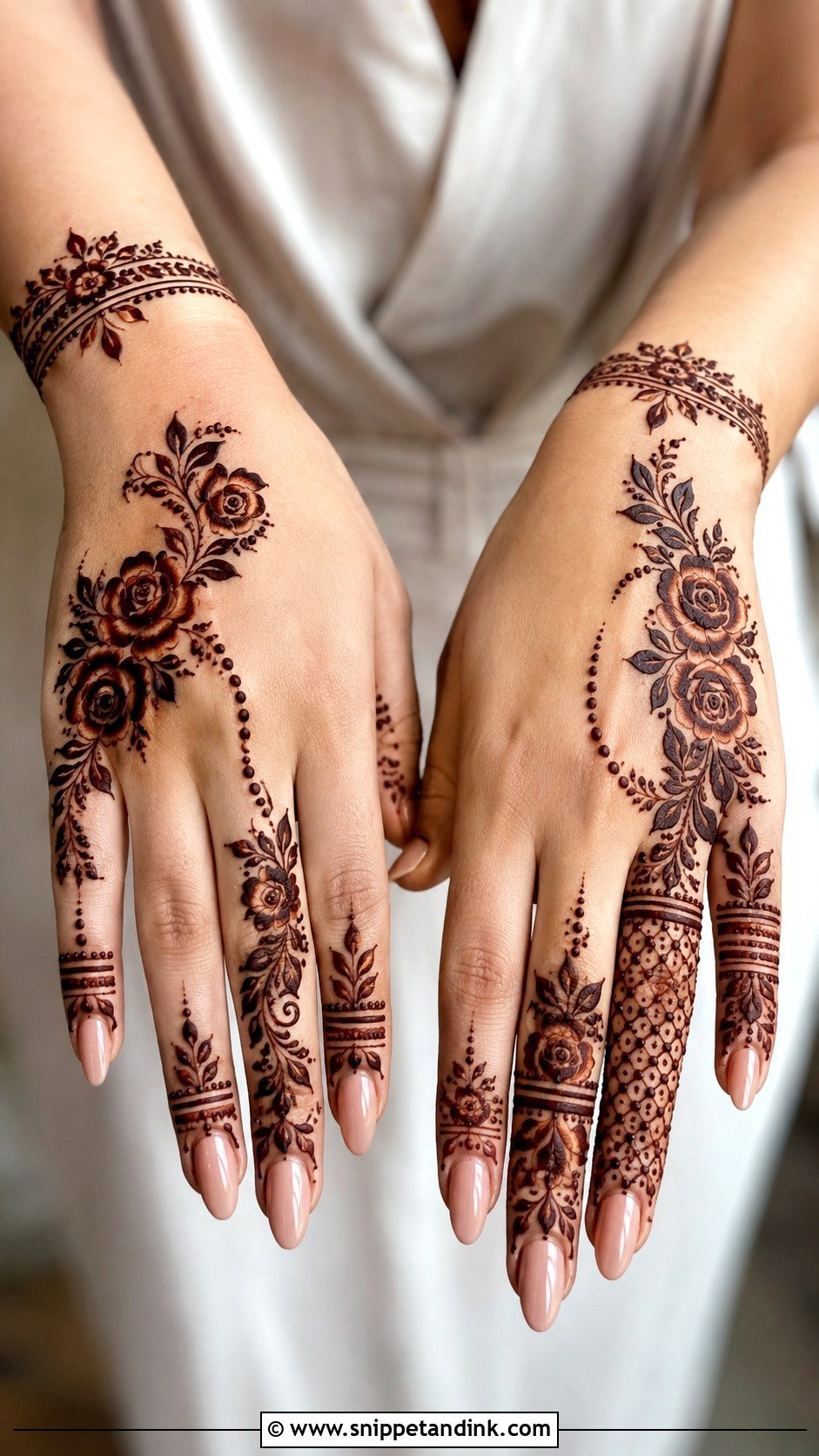
For an Arabic engagement design, I keep the palm uncrowded and give the ring finger a little extra attention with fine leaves, dots or a delicate band. A floral palm trail, finger bands and a bracelet section round it out. Shaded roses, paisleys and curved vines all suit the occasion. I leave clear skin where the ring will sit so the stone is not lost against dark henna in close-ups.
21. Arabic Front Hand Mehndi For Wedding Guests
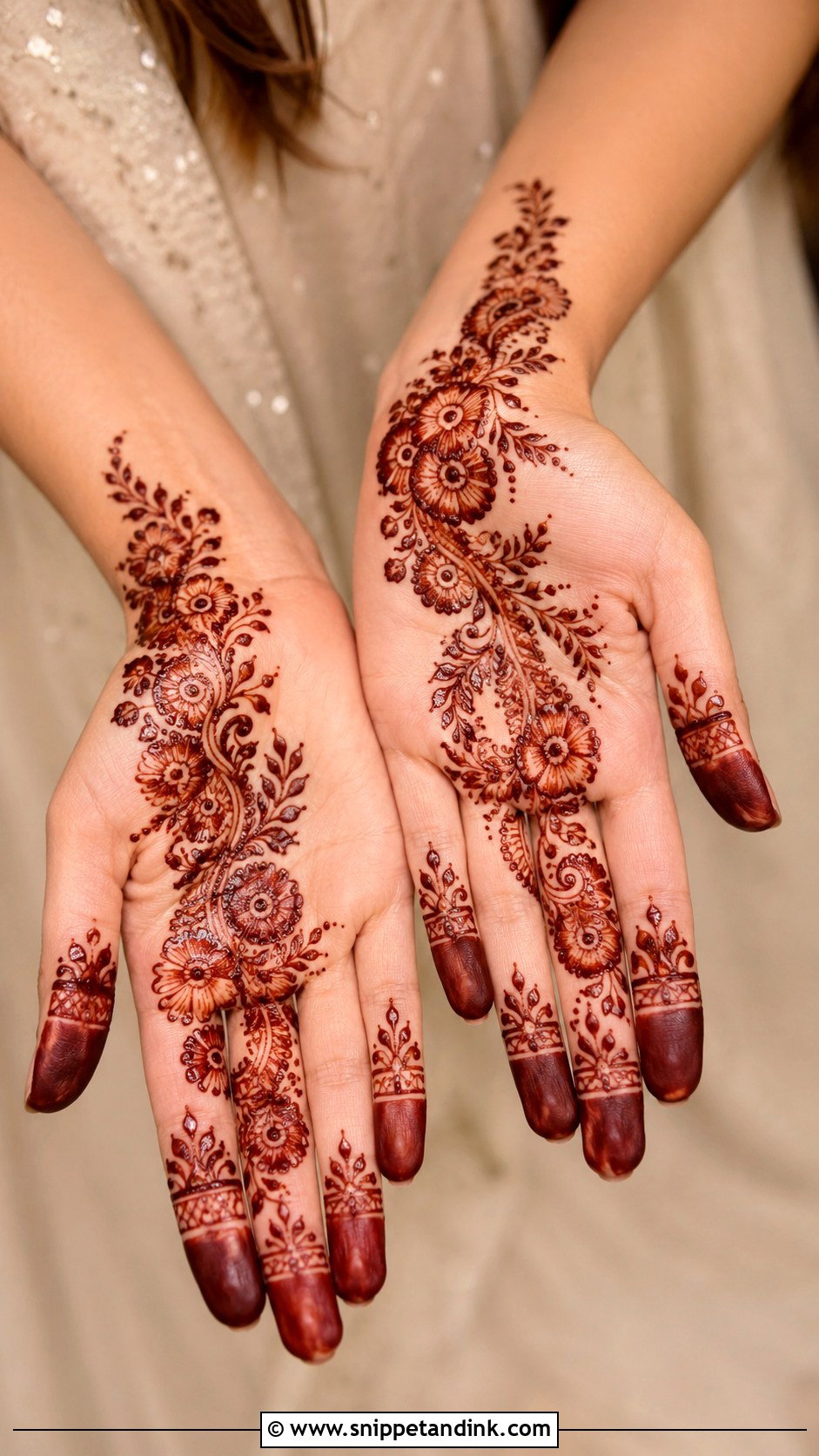
Guests want to look festive without looking bridal, and medium coverage gets the balance right. A diagonal floral vine from the wrist to the index finger, a few paisleys or shaded leaves, ring bands or partial fingertip fills, and plenty of open palm. It goes with lehengas, sarees and salwar suits. Count on a modest sitting rather than an afternoon.
22. Arabic Front Hand Mehndi For Bridesmaids
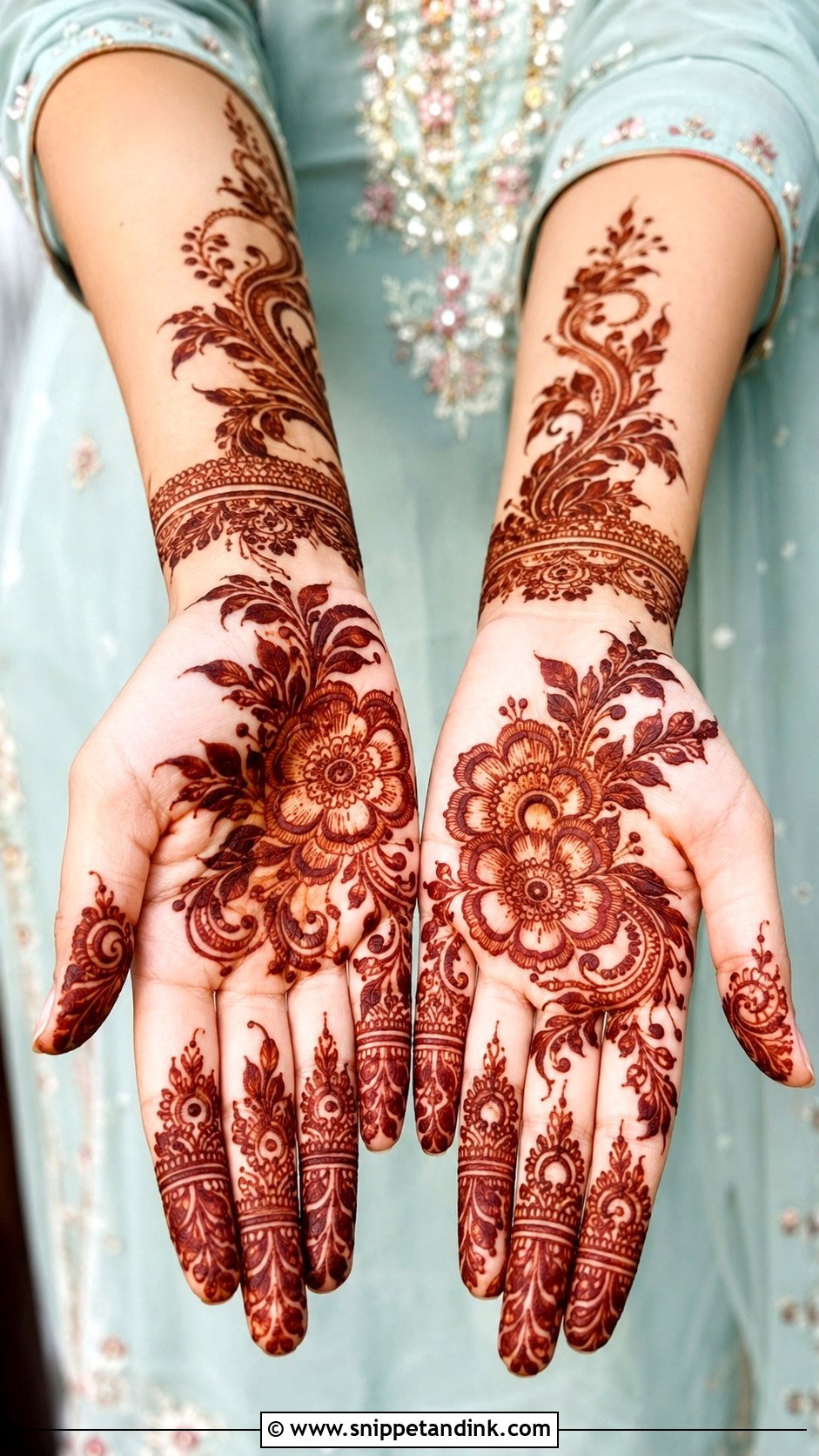
Bridesmaids need hands that show up in group photos and still stay lighter than the bride’s. I draw bold flowers on the palm, leafy vines toward the fingers and a bracelet band, sometimes extending slightly above the wrist. Matching the motif to the wedding helps, roses for a soft palette or paisleys for traditional outfits. Detailed but not packed fingers keep it comfortable through long ceremonies and dancing.
23. Arabic Front Hand Mehndi For Beginners
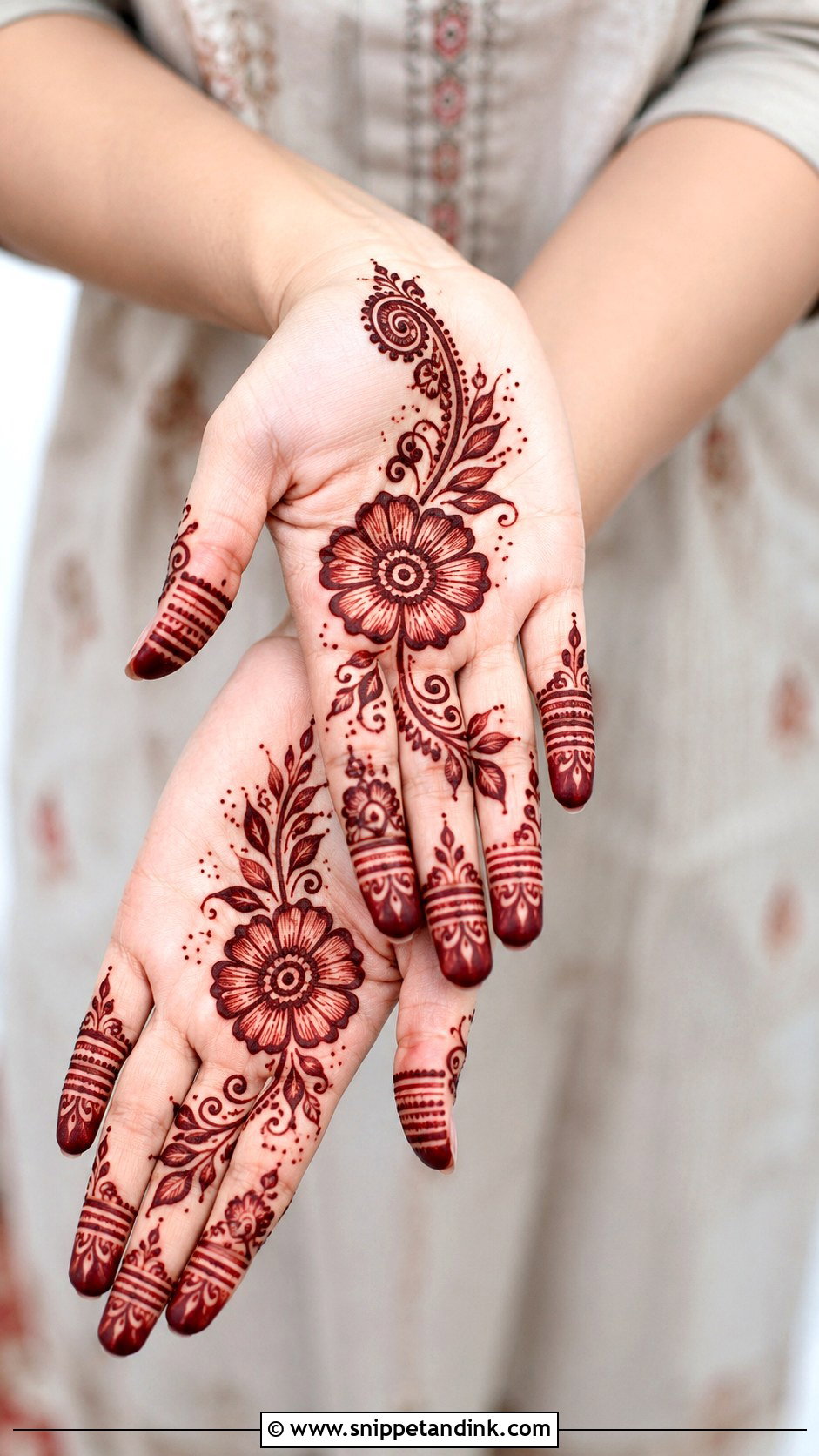
If you are new to the cone, start with one large flower on the lower palm, a curved vine toward the middle finger, leaves on both sides and dots to fill awkward gaps. Keep the wrist to a single curved band and the fingers to stripes and small leaf chains. Hold the cone like a pen, let the paste fall onto the skin rather than pressing the tip down, and the line stays even.
24. Easy Arabic Front Hand Mehndi Design
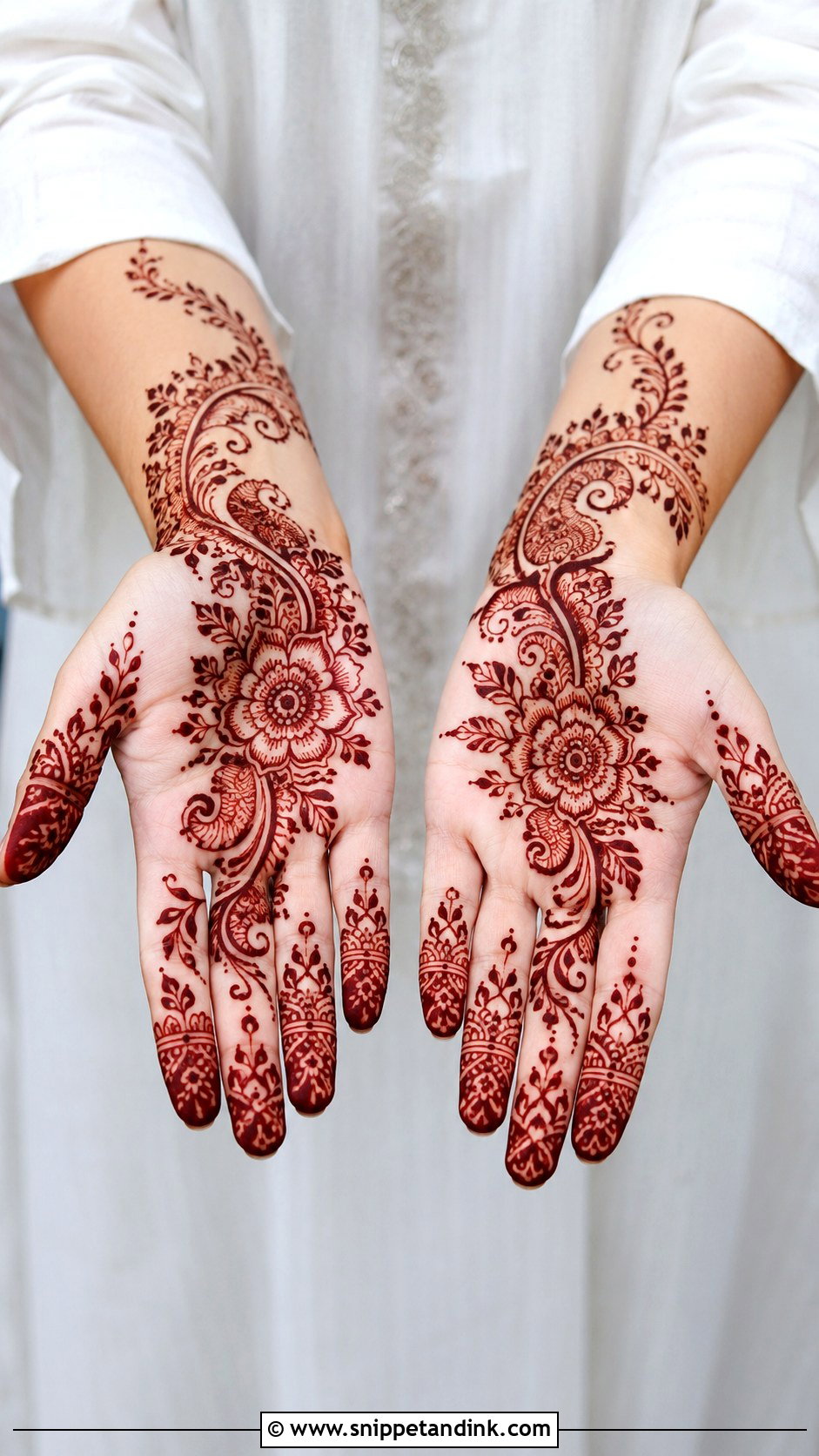
Easy means planned. A palm flower, curved vines, small paisleys and decorated tips, all drawn in one direction from wrist to fingers so the layout stays coherent. No heavy shading, no complex filler. Finger bands should echo the palm, dots for dots and leaves for leaves. This is the design for a last-minute Eid or a small celebration at home.



25. Modern Arabic Front Hand Mehndi Design
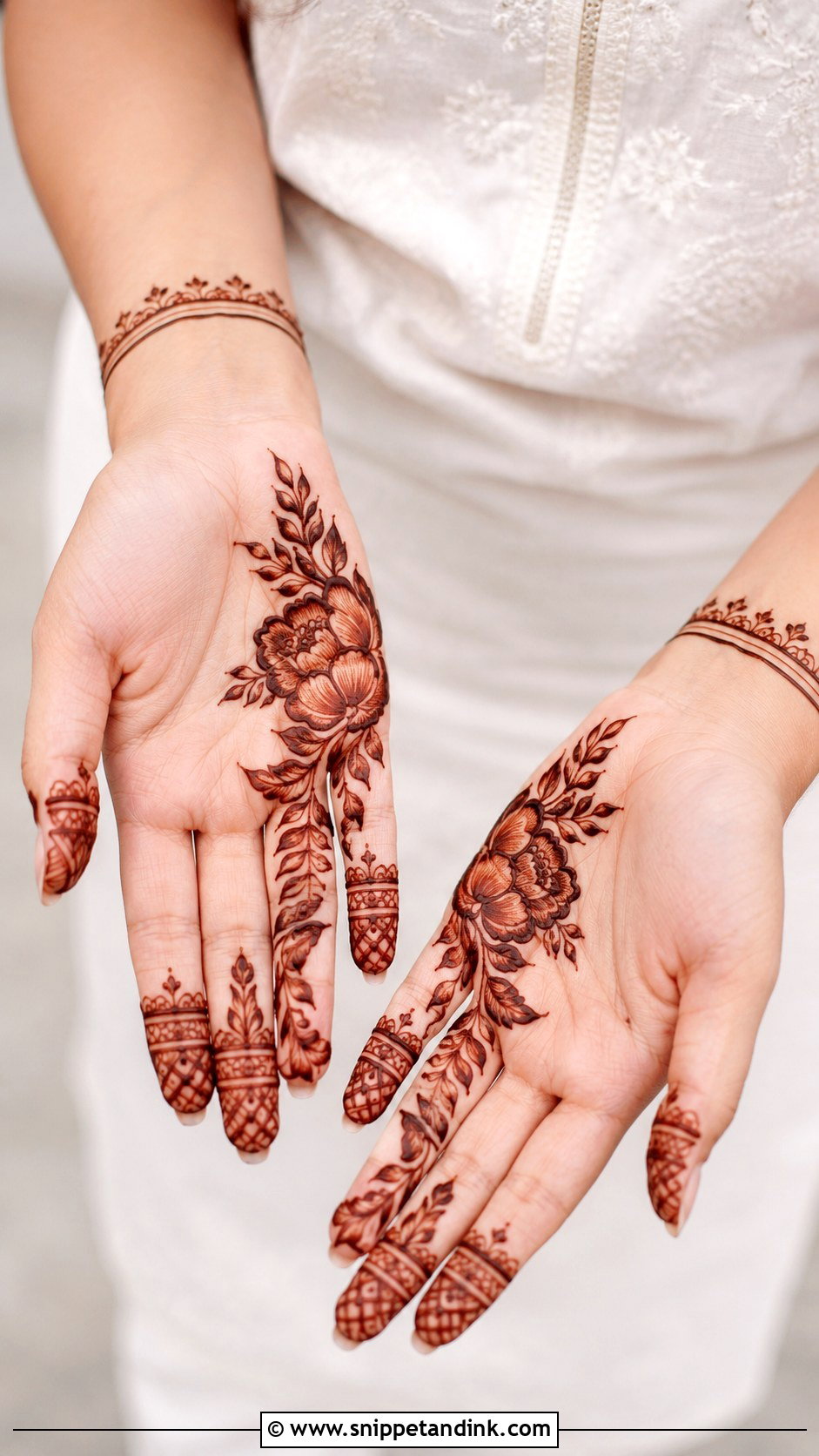
Modern Arabic uses fewer, stronger motifs: an oversized flower, a side palm vine, geometric finger bands or a sleek wrist bracelet. Bold outlines with fine inner lines give it polish, and open space around the centre of the palm makes it feel intentional. It sits naturally with contemporary outfits and minimal jewellery. I avoid copying a trending screenshot exactly; the same layout needs adjusting for a wider or narrower palm.
26. Minimal Arabic Front Hand Mehndi Design
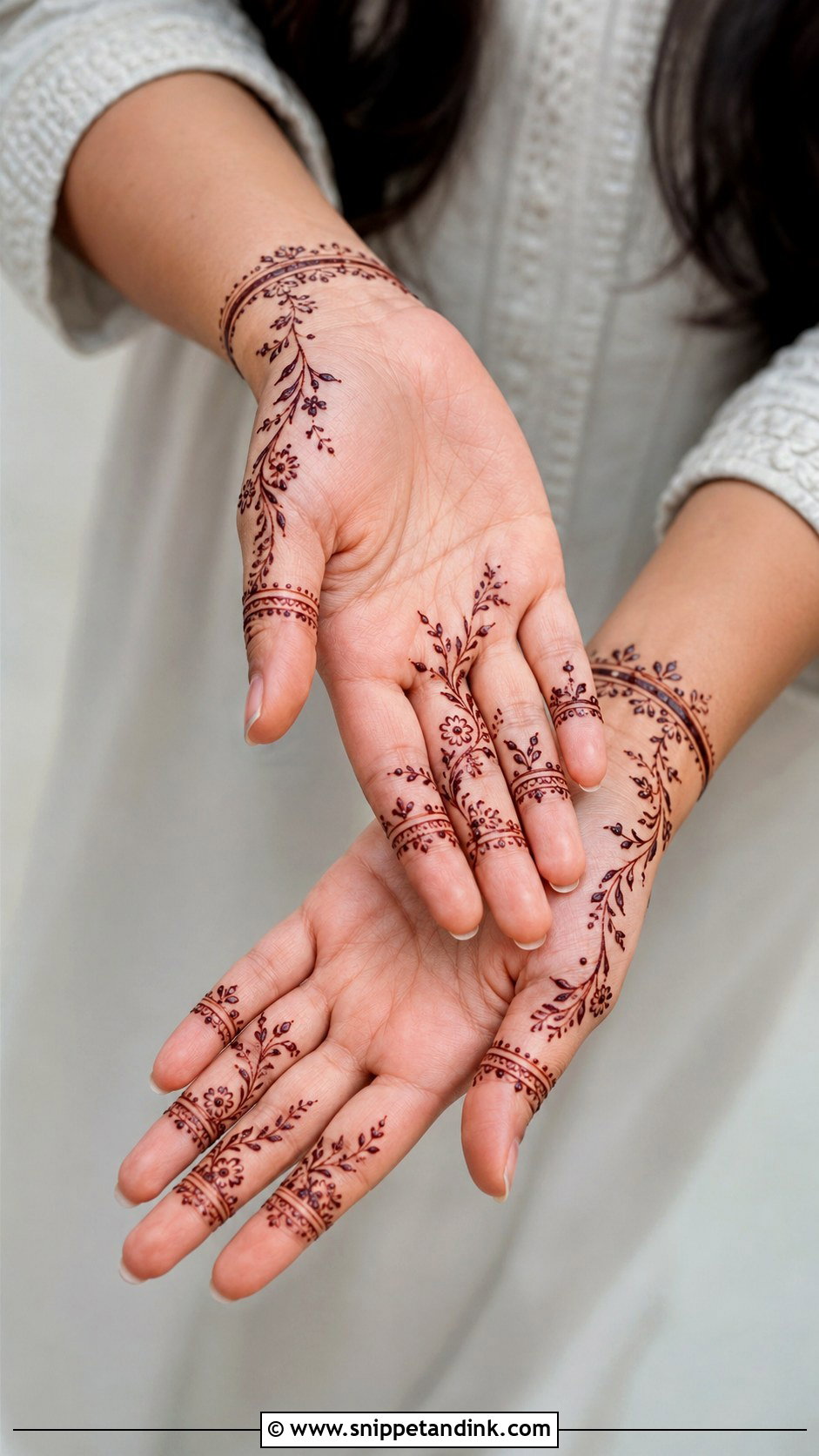
Minimal Arabic covers only part of the palm and fingers with slim vines, small flowers, dots and neat bands, plus perhaps a tiny bracelet. One focal motif on the palm is enough. It suits office celebrations, casual Eid visits and first-timers, and it fades out discreetly within a week or so. Smooth, light lines are the whole design, so take your time.
27. Arabic Front Hand Mehndi With Jaali
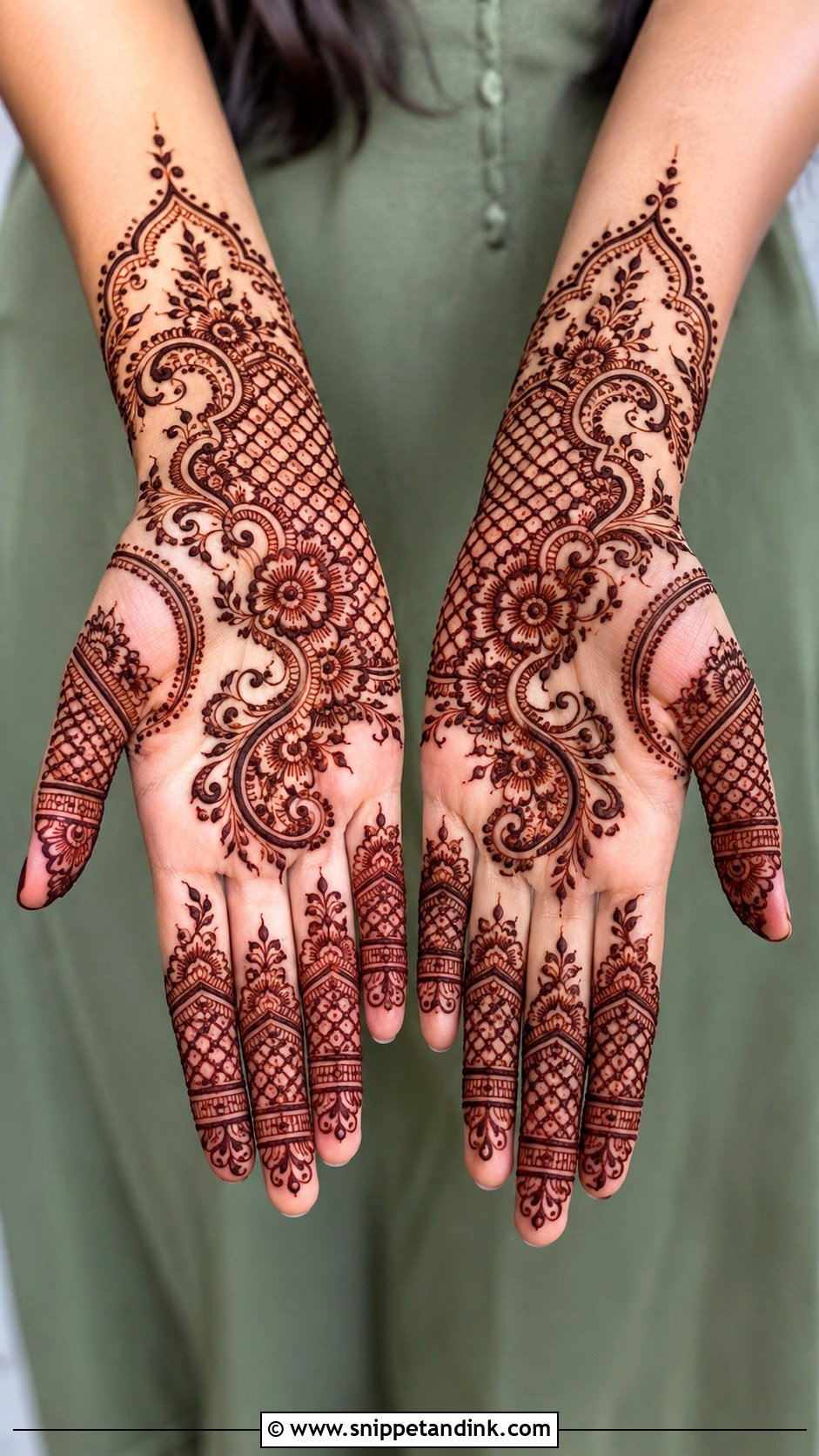
A small panel of mesh, inside a paisley, beside a flower or across part of the palm, adds texture against the flowing vines and open skin around it. Jaali also works as a ring-like panel on one finger or near the wrist. Keep the mesh lines even and not too tight. Close-set lines merge as the stain darkens, and the panel turns into a dark patch.
28. Arabic Front Hand Mehndi With Peacock
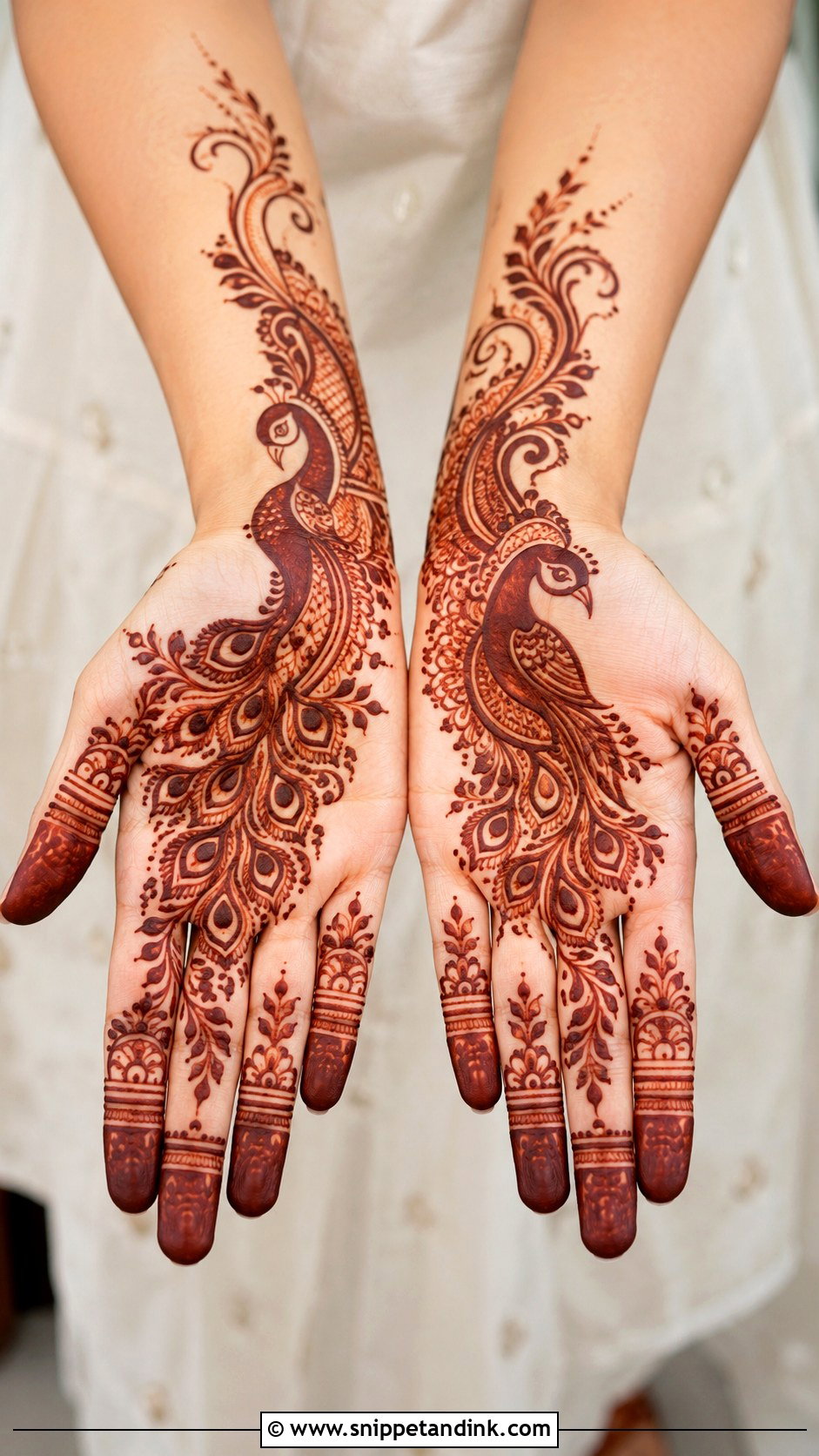
In Arabic work, the peacock sits on the lower palm or near the wrist, with a bold body and feathers that turn into floral vines heading for the fingers. Paisleys, leaves and curved feather lines continue the movement. I keep the head simple; a fussy head blurs first. Simple finger bands or leafy trails let the bird stay the focus.
29. Arabic Front Hand Mehndi With Lotus
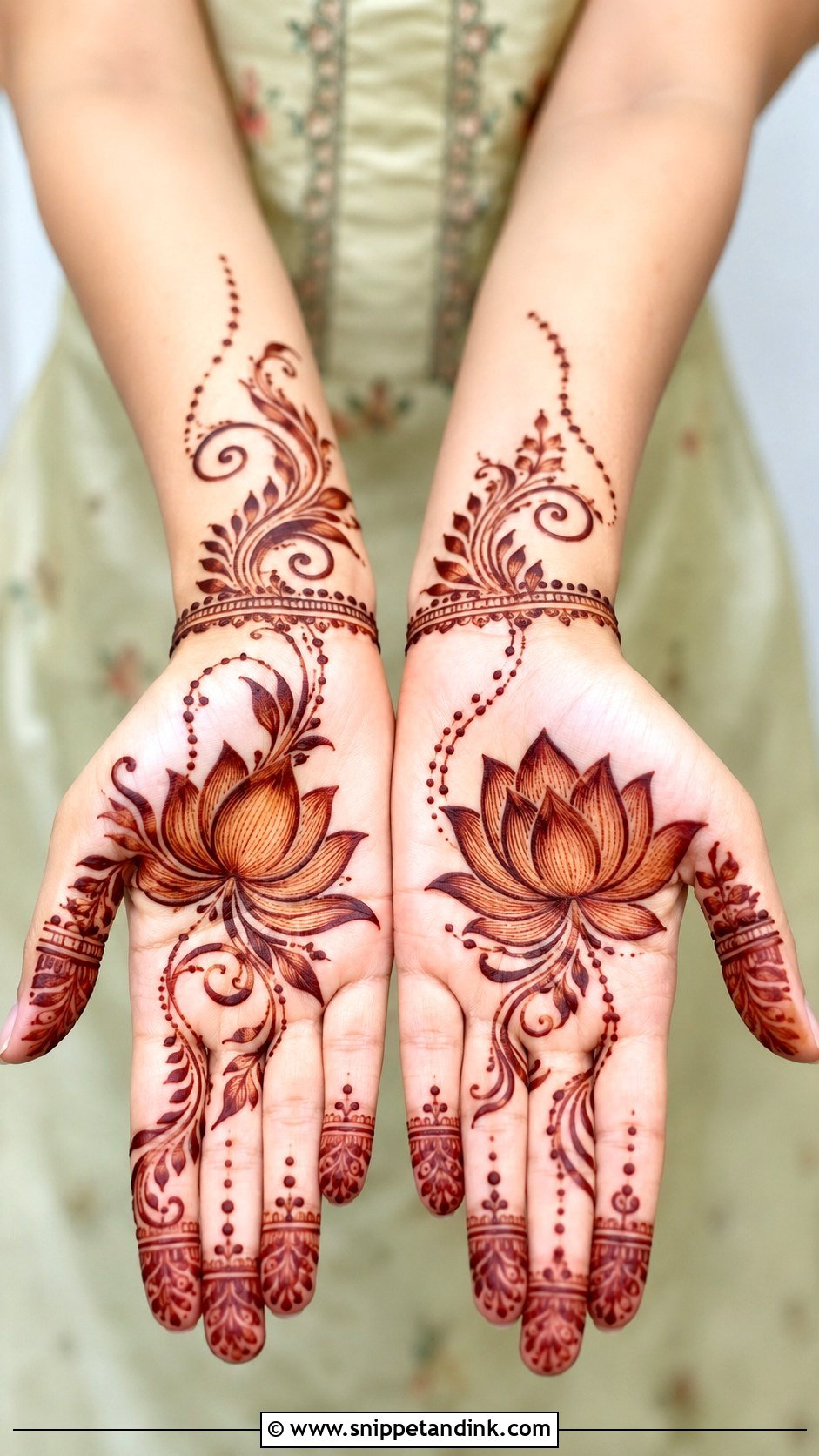
A large lotus on the palm, ringed by curved leaves, dotted trails and delicate vines, is calm and meaningful. Petals can be lightly shaded or filled with fine lines. The Arabic spacing gives the flower room. I draw lotus petals with rounded tips on the palm; pointed tips look thin once the paste flakes off. A slim wrist band and simple finger work complete it.
30. Arabic Front Hand Mehndi With Finger Bands
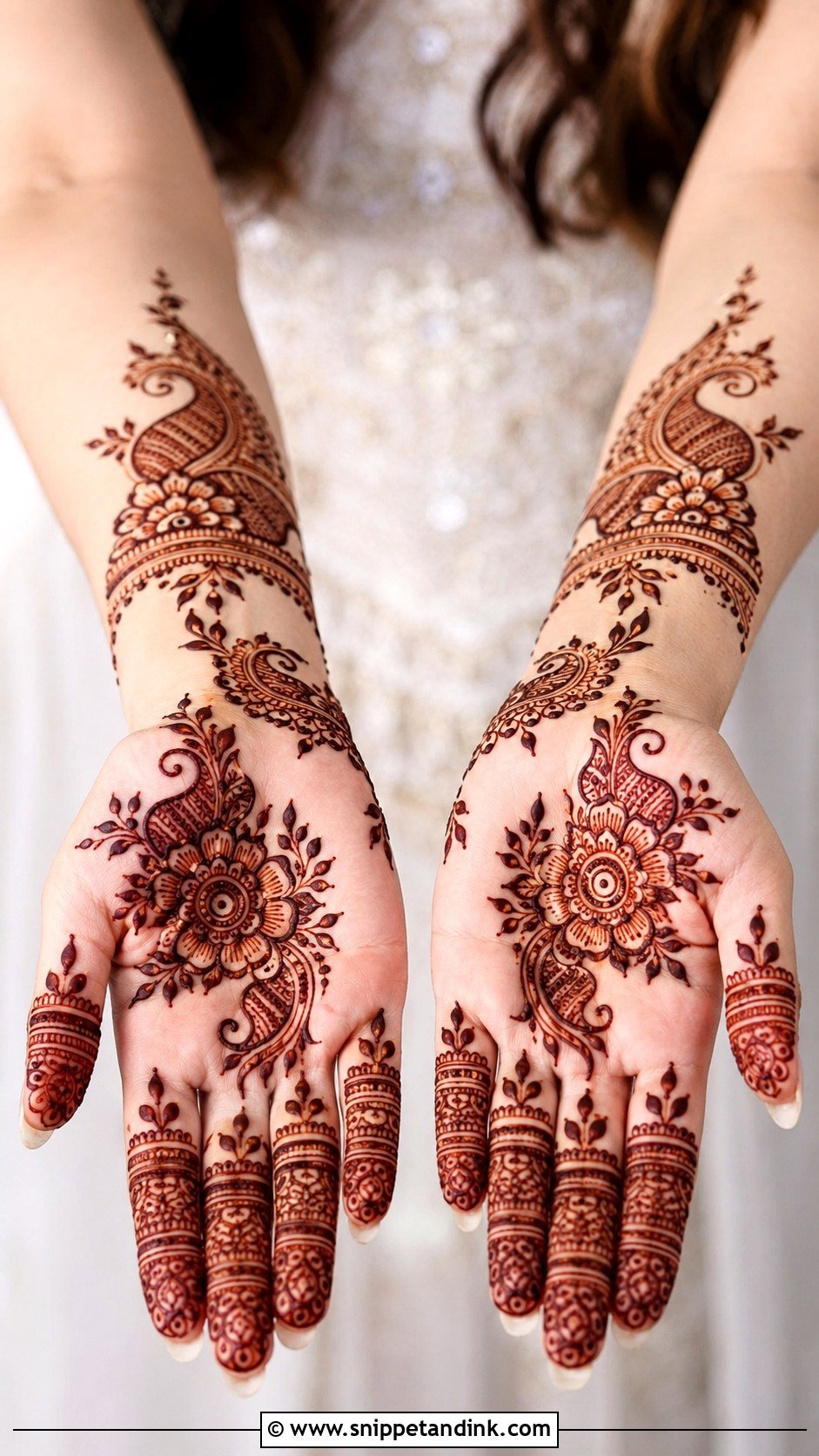
Coordinated horizontal bands on each finger, made of dots, leaves, tiny petals or thin parallel lines, finish a palm design that might be a flower, paisley or vine. Equal spacing between bands is what makes it neat, so I sight along the hand before drawing each row. Paired with a bracelet at the wrist, it reads like jewellery. Good for engagement photos and Eid.
31. Arabic Front Hand Mehndi With Wrist Cuff
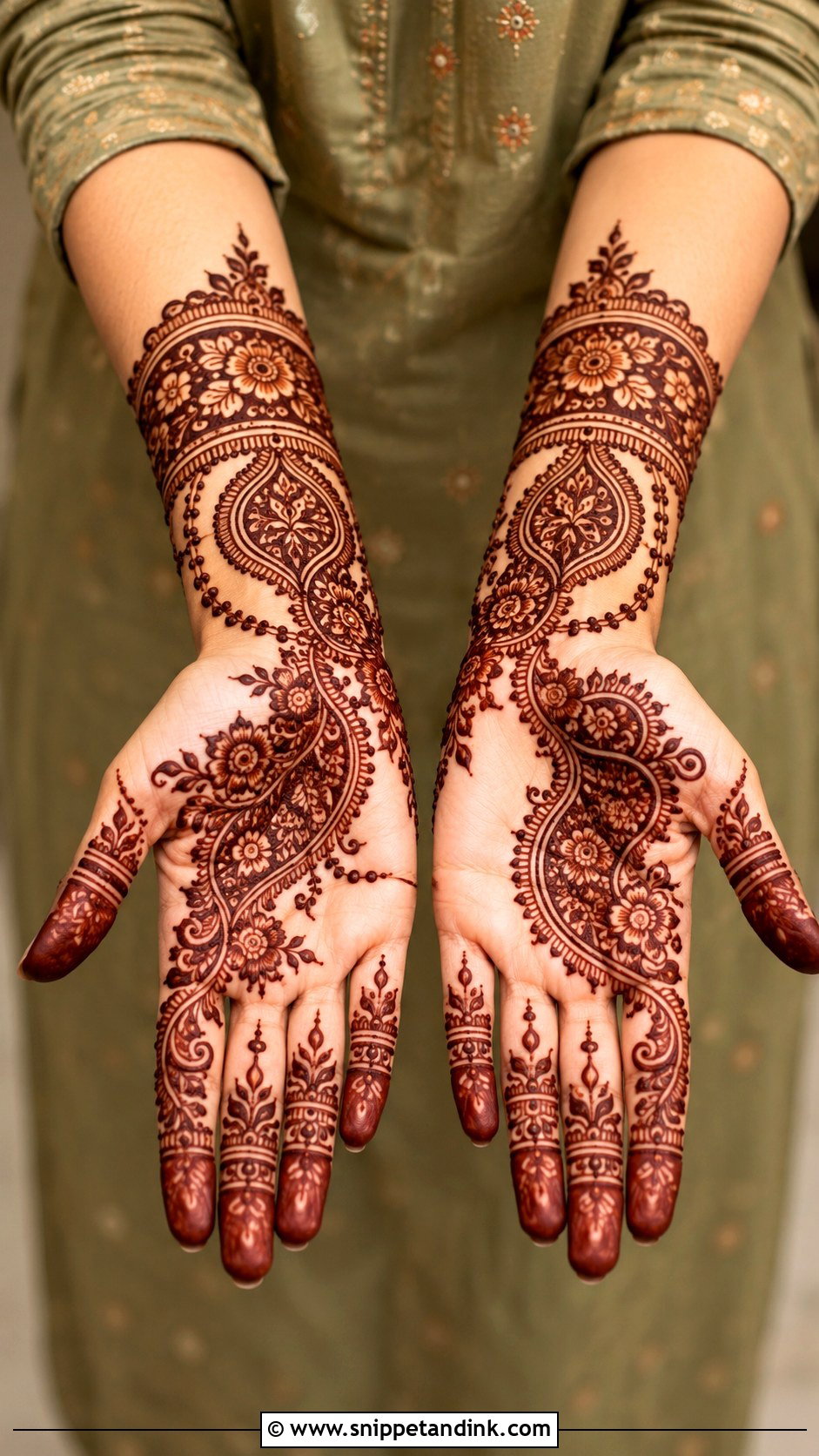
A wrist cuff of floral borders, paisley panels, jaali or layered bands gives the design a base, and a vine or floral trail climbs from it across the palm to the fingers. Make the cuff bold and keep the palm trail airy, otherwise the hand looks heavy at both ends. Dotted chains between cuff and palm soften the join. It works without any bangles at all.
32. Arabic Front Hand Mehndi With Side Trail
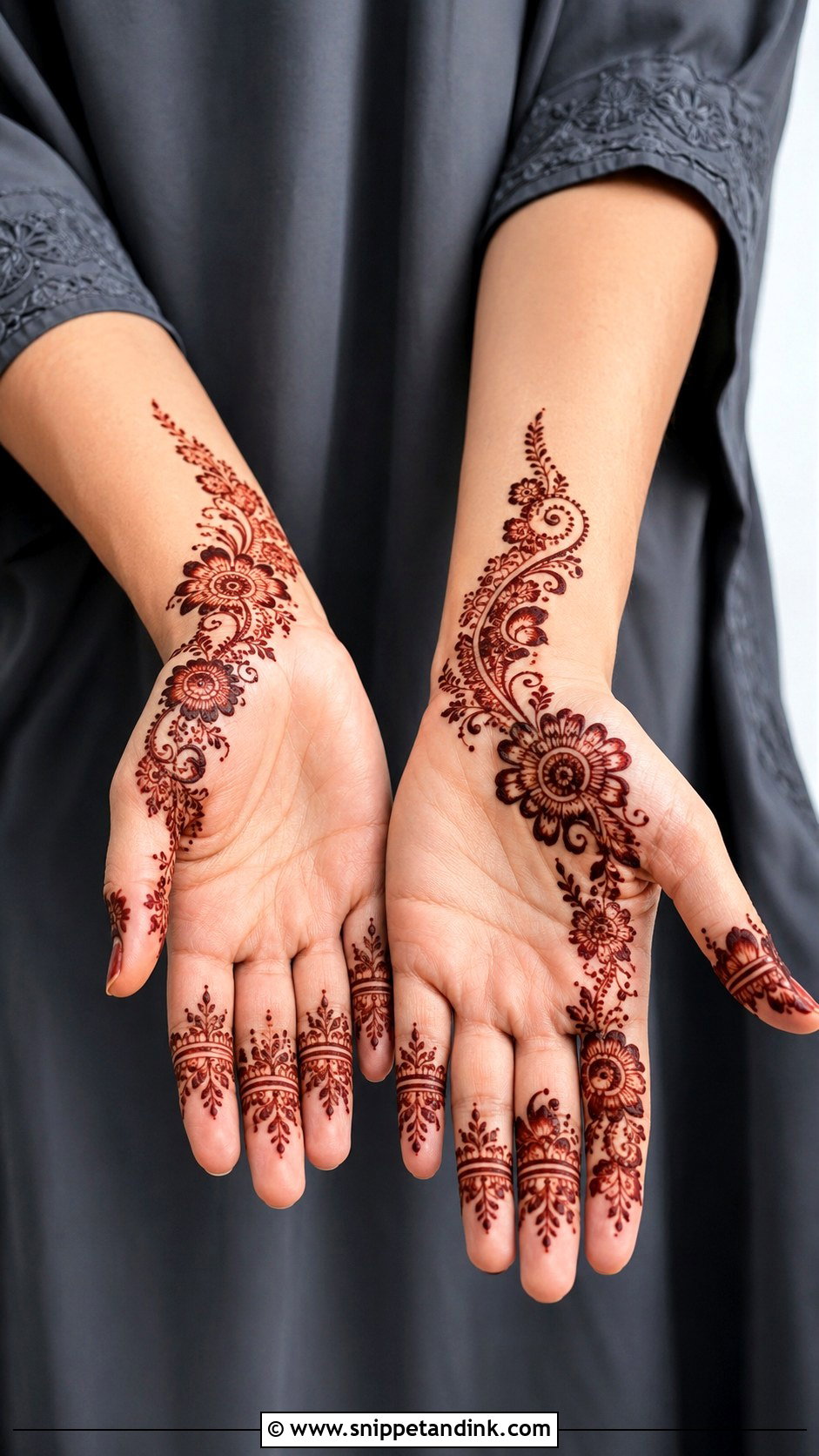
A side trail hugs one edge of the palm, starting at the wrist, curving around the thumb side and finishing at the index finger. The centre stays empty or carries a tiny dot chain. The long narrow line makes the hand look longer and suits small hands that a full diagonal would crowd. Flowers, leaves and small paisleys all fit along it.
33. Arabic Front Hand Mehndi With Palm Center Flower
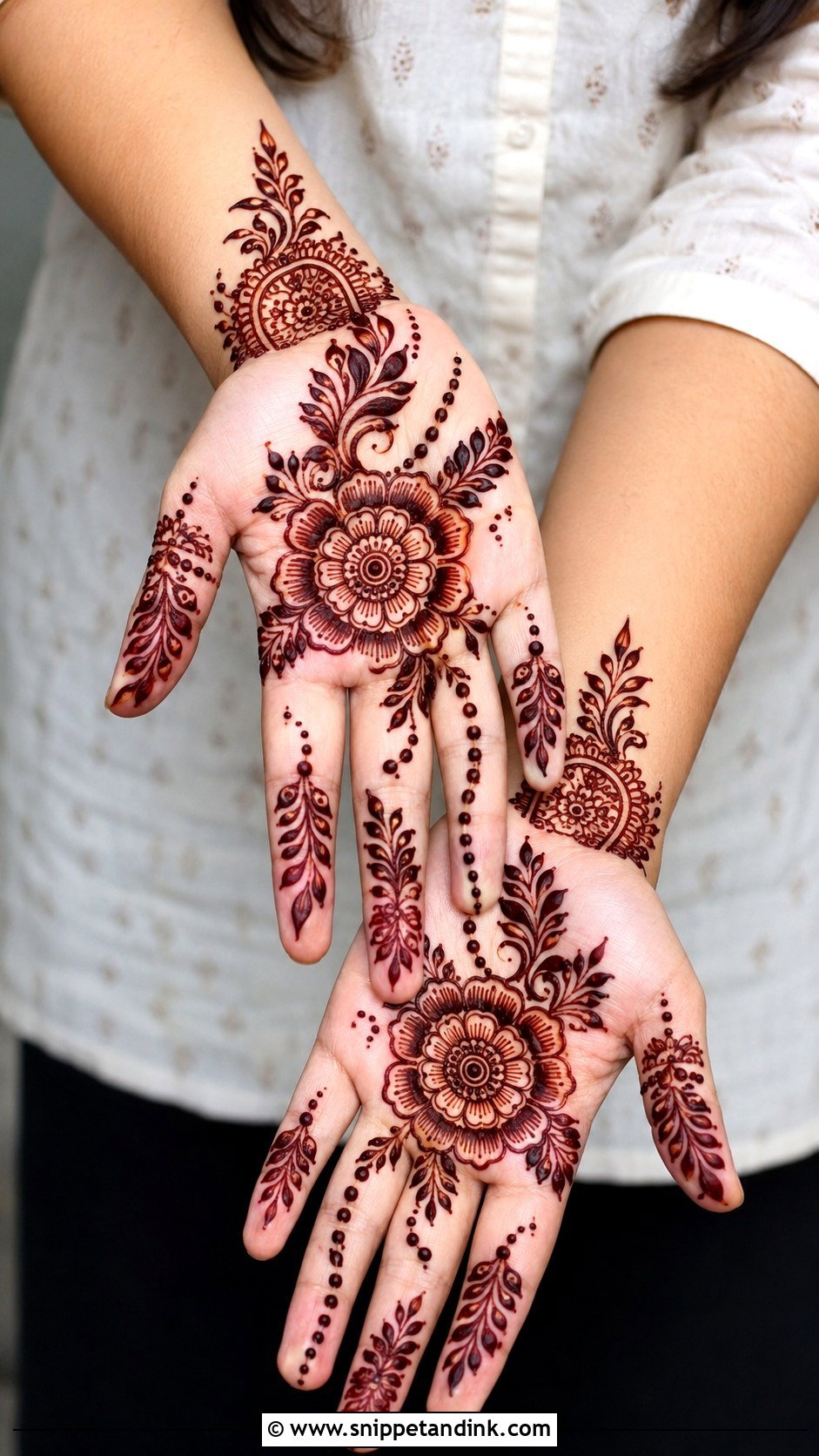
One bold flower in the middle of the palm, with vines, leaves and finger details radiating out, has a clear structure that suits beginners and pros alike. I draw the petals thick on the outside and detailed inside. A small paisley at the wrist or a curved chain to the fingers keeps the hand from looking empty. The centre of the palm takes the deepest stain, so the flower will be the darkest point.
34. Arabic Front Hand Mehndi With Open Palm
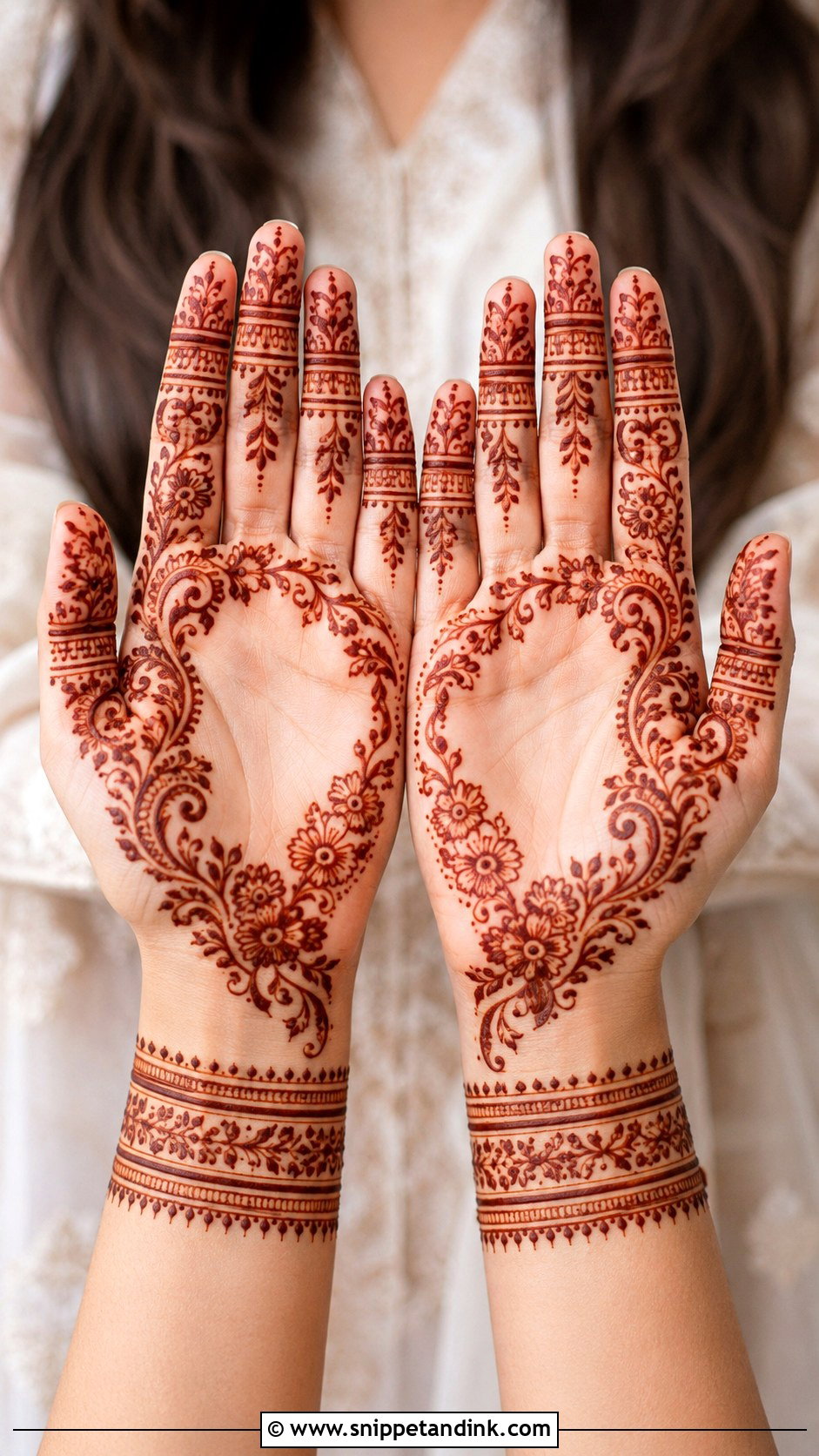
An open-palm layout frames the centre instead of filling it, with flowers, vines, wrist bands and finger detail around a clean middle. It is quick to dry and the stain feels lighter overall. I make the outer motifs bold so the empty centre looks chosen rather than forgotten. It suits simple jewellery and soft festive outfits.
35. Latest Arabic Front Hand Mehndi Design
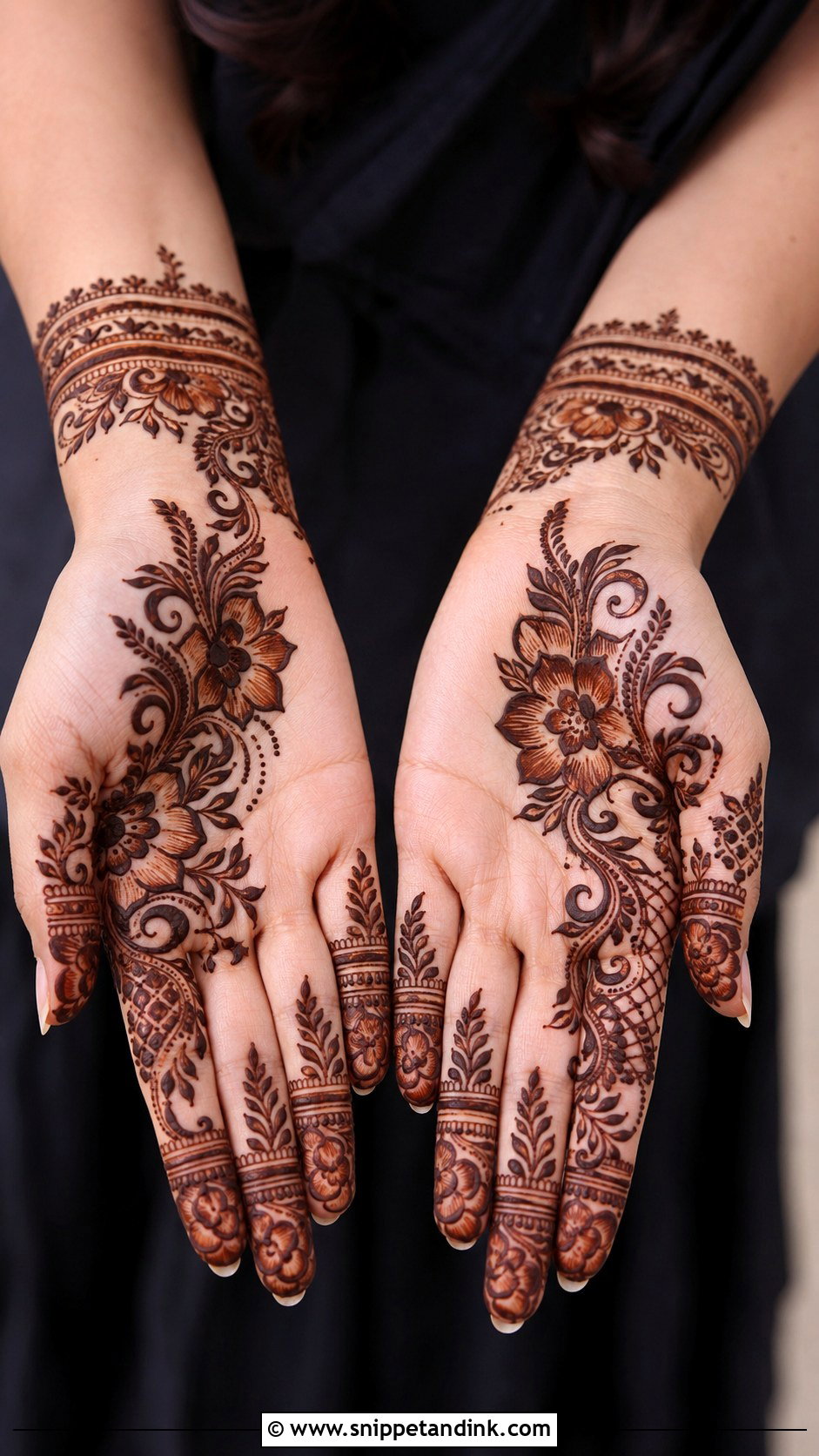
The newest Arabic palms combine bold flowers, clean negative space, shaded petals, slim finger bands and bracelet-style wrist details. The layout is usually diagonal or side-swept. Lean Gulf for boldness, Khaleeji for lightness or Indo-Arabic for detail, depending on the event. Large palm motifs and neat finger work keep it current. These are the designs I see photographed most at Eid and engagements.
What If the Stain Comes Up Pale?
When the paste comes off, every palm is orange. That is normal, and it darkens over the next day or two. But if after two days your palm is still light, one of these is usually the reason:
- The paste was on for too short a time. A couple of hours gives far less colour than a full night.
- The hands were cold. Warmth helps the dye bind, so a cold room or cold weather slows it down.
- Water reached the design too soon after removal.
- The paste was old or poorly stored. Natural henna paste loses strength at room temperature within days.
- The skin had been scrubbed, or hand cream or soap left a barrier before application.
There is no safe way to darken a stain afterwards. Avoid anything sold as a quick darkener and never use black henna over it. If you need deeper colour for an event, the honest fix is to reapply natural paste over the same design and leave it on overnight.
Mirror Image or Two Different Palms?
Arabic diagonals look elegant when the two palms mirror each other, so the trails meet in the middle when you hold your hands side by side. That is how I draw most bridal and engagement hands, because photographers often ask for that pose. For guests and Eid, two different but related palms can look more relaxed: the same flowers, arranged differently. Decide before the cone touches skin, since mirroring has to be planned from the first line.
One Diagonal, Drawn With Confidence
Every Arabic palm in this collection depends on the same things: a confident main line, bold outlines, honest gaps and a stain given time to deepen. From a simple floral trail to bridal coverage, the layout adjusts to your occasion and the size of your hand. Minimal and finger-band designs suit a quick festive evening; full hand, bridal and Indo-Arabic layouts suit a wedding. Whatever you choose, give the paste a long time on the skin, and the palm will repay it with the deepest colour on your body.
You'll Like These Ideas:

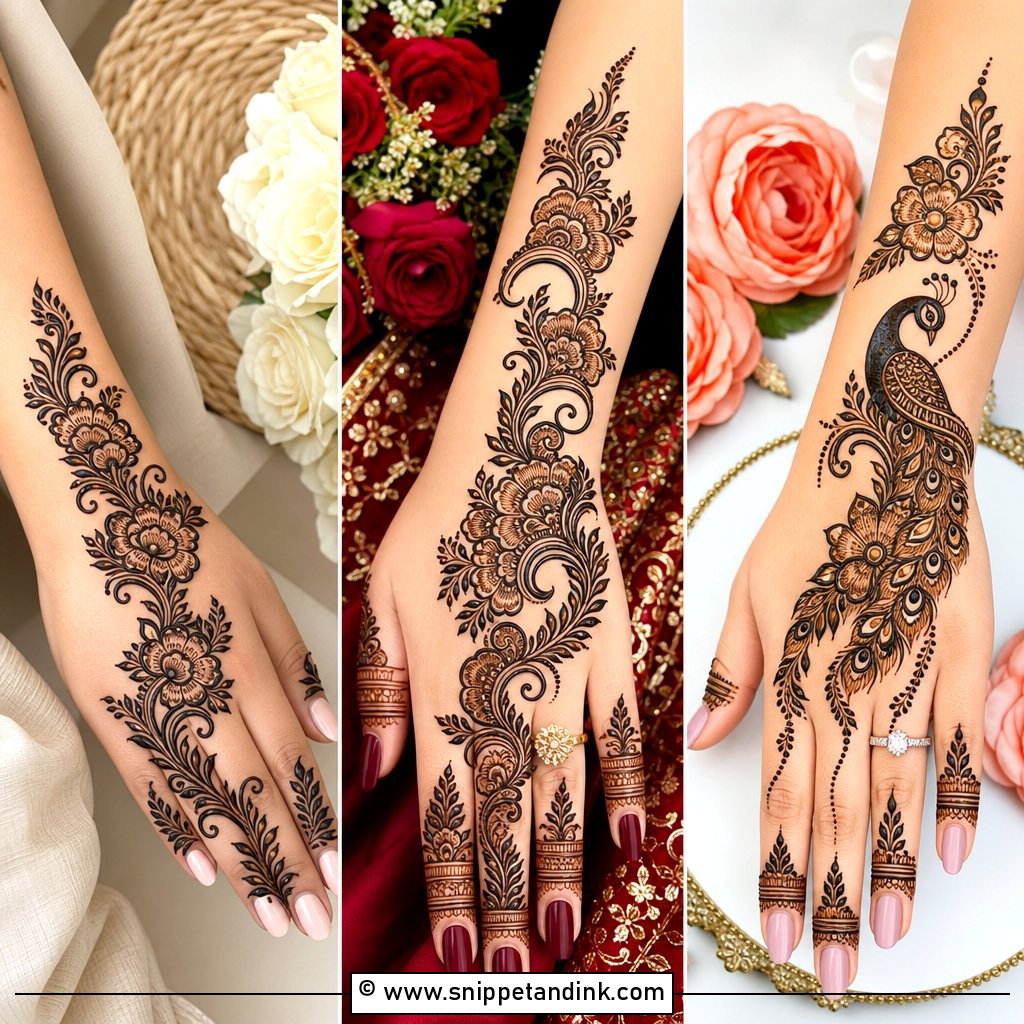


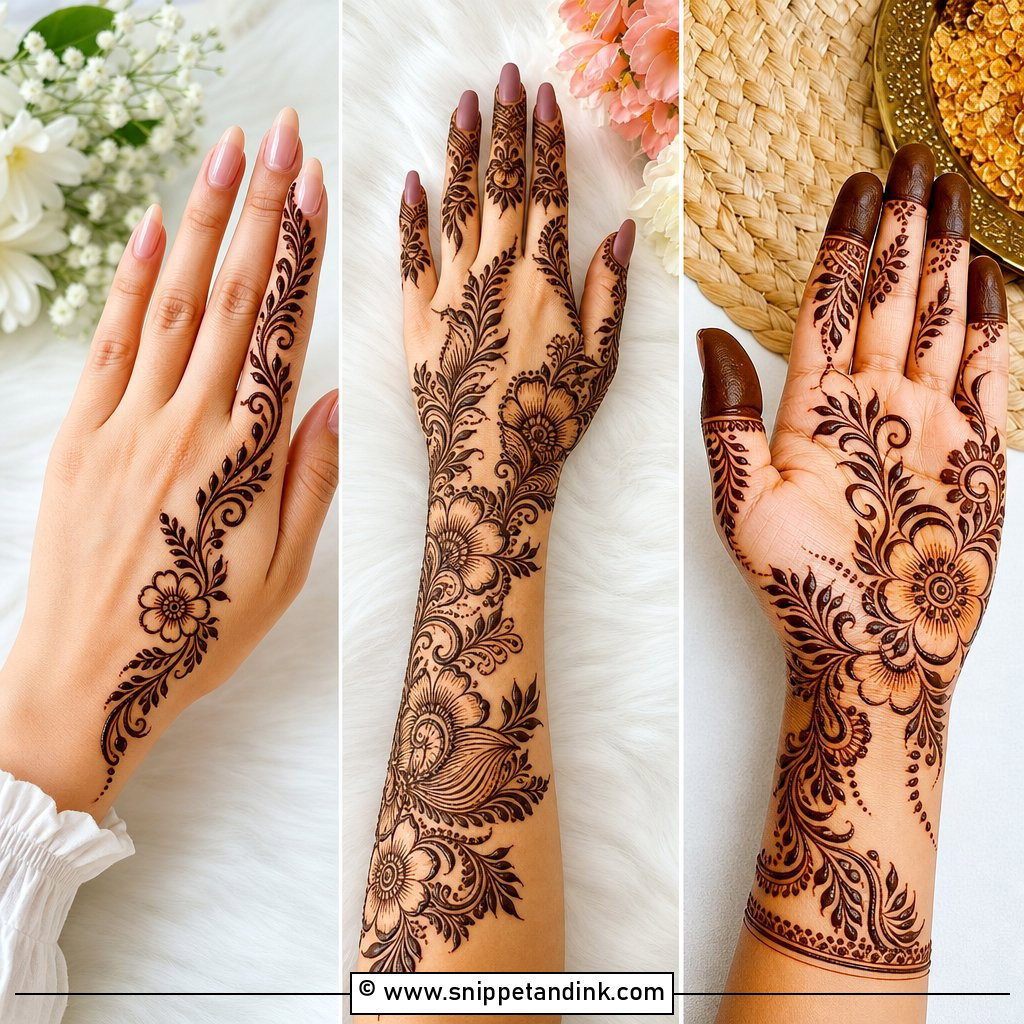






Leave a Reply