
The back of the hand is the side people actually see. It’s on show in ring shots, under bangles, during the varmala and in nearly every close portrait, while the palm spends most of the day facing down. I draw everything from dense wrist-to-forearm Indian work to Arabic trails, Indo-Arabic mixes, Moroccan geometry and open modern layouts here, plus jewellery patterns and initials tucked into the vines. What suits you depends on your outfit, your hand shape and the jewellery going on top. Below are the back hand designs I’m asked for most, with notes on how each one behaves once it’s on the skin.
Does Your Hand Shape Change the Design?
It does, more than most brides expect. Before I sketch anything, I look at the hand resting flat and then making a loose fist, because the back of the hand stretches and folds in a way the palm doesn’t.
Short fingers or a wide hand
Diagonal trails and vertical finger bands draw the eye along the hand and make it look longer. Horizontal stripes across the knuckles do the opposite, so I keep them thin or leave them out.
Long, slim hands
These carry jaali, lace and dense fillers well, and they can take a wide wrist cuff without looking heavy. Very sparse layouts can actually make them look bony, so a little more coverage usually helps.
Prominent knuckles or veins
I place the main motif between the wrist and the knuckles, where the skin stays flatter, and use small, flexible patterns over the joints. Big shapes drawn across a bony area stretch and warp every time you move your fingers.
1. Full Back Hand Bridal Mehndi Design
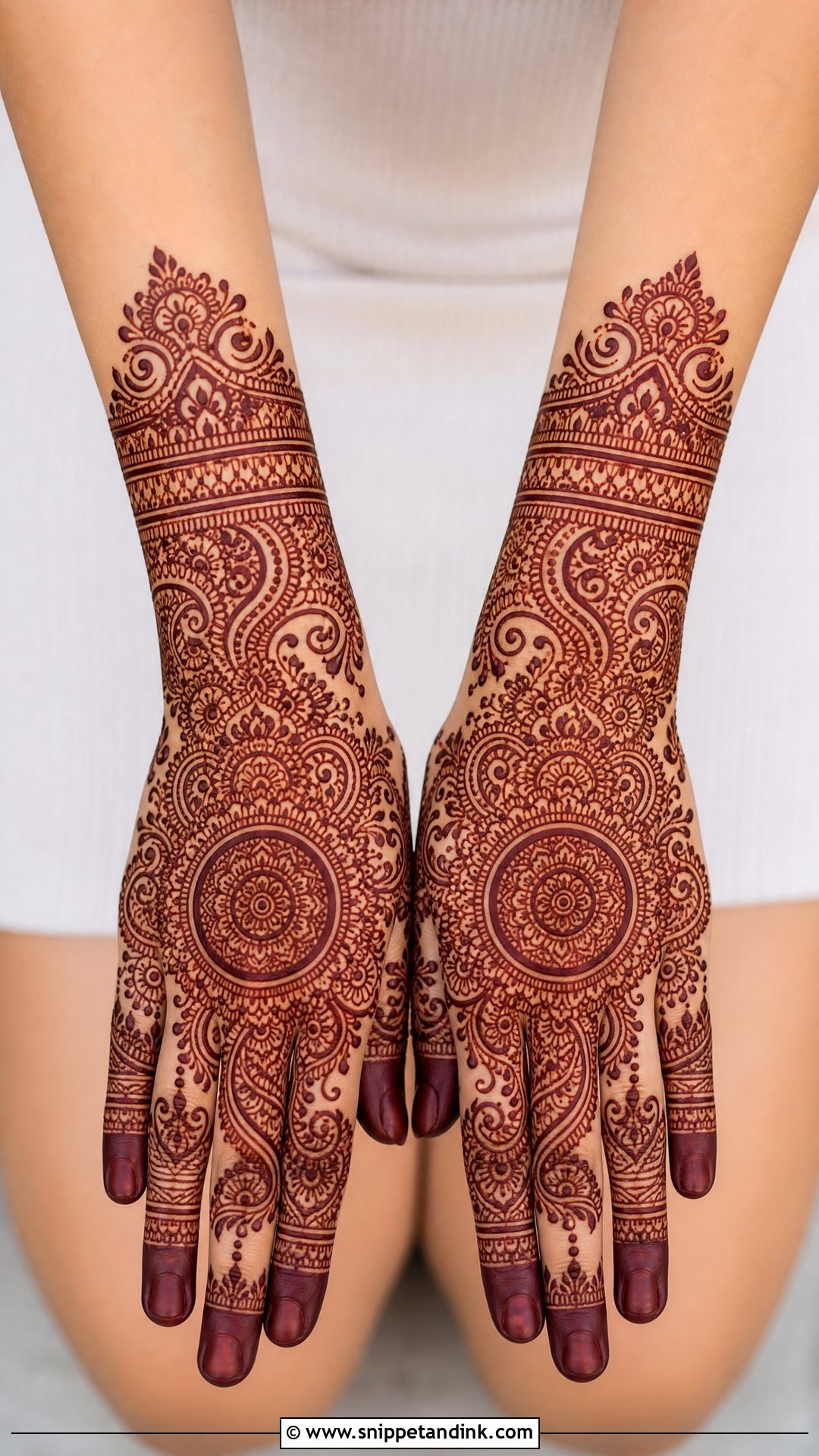
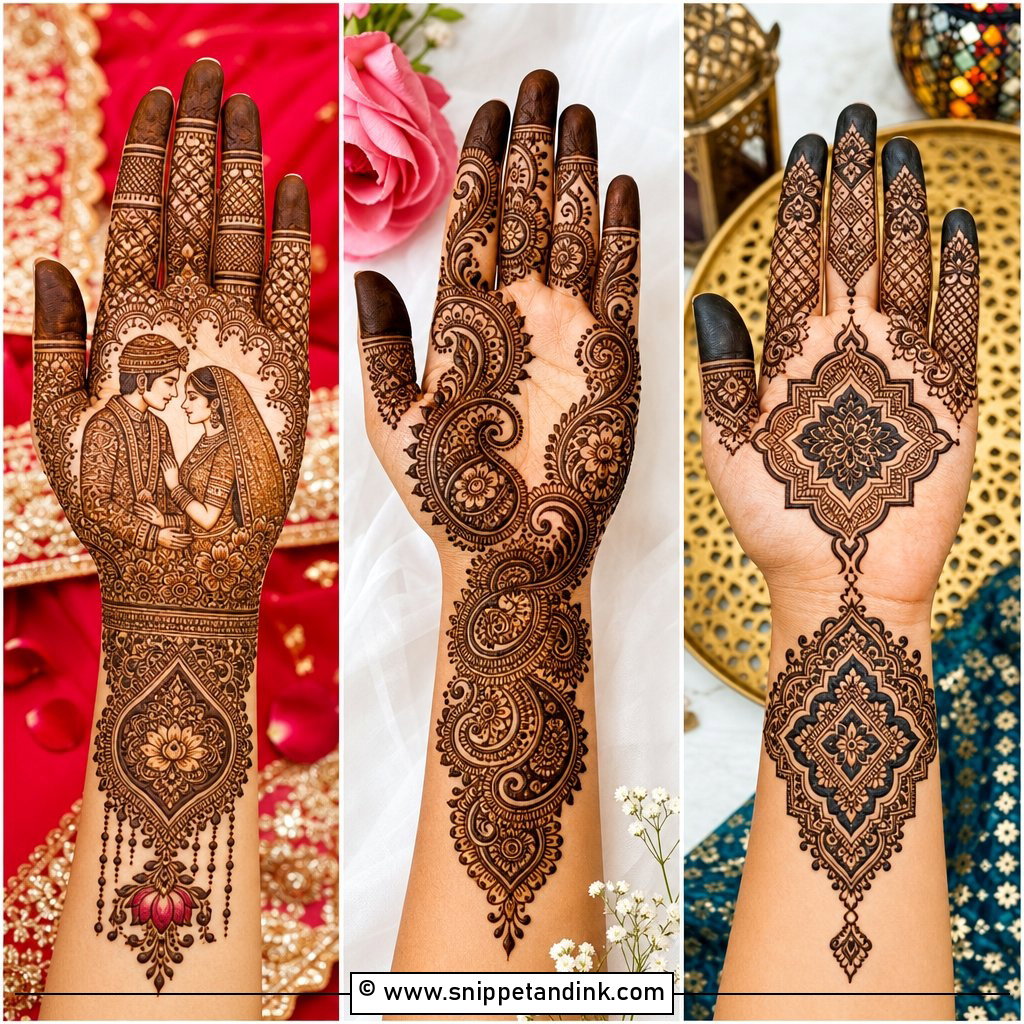
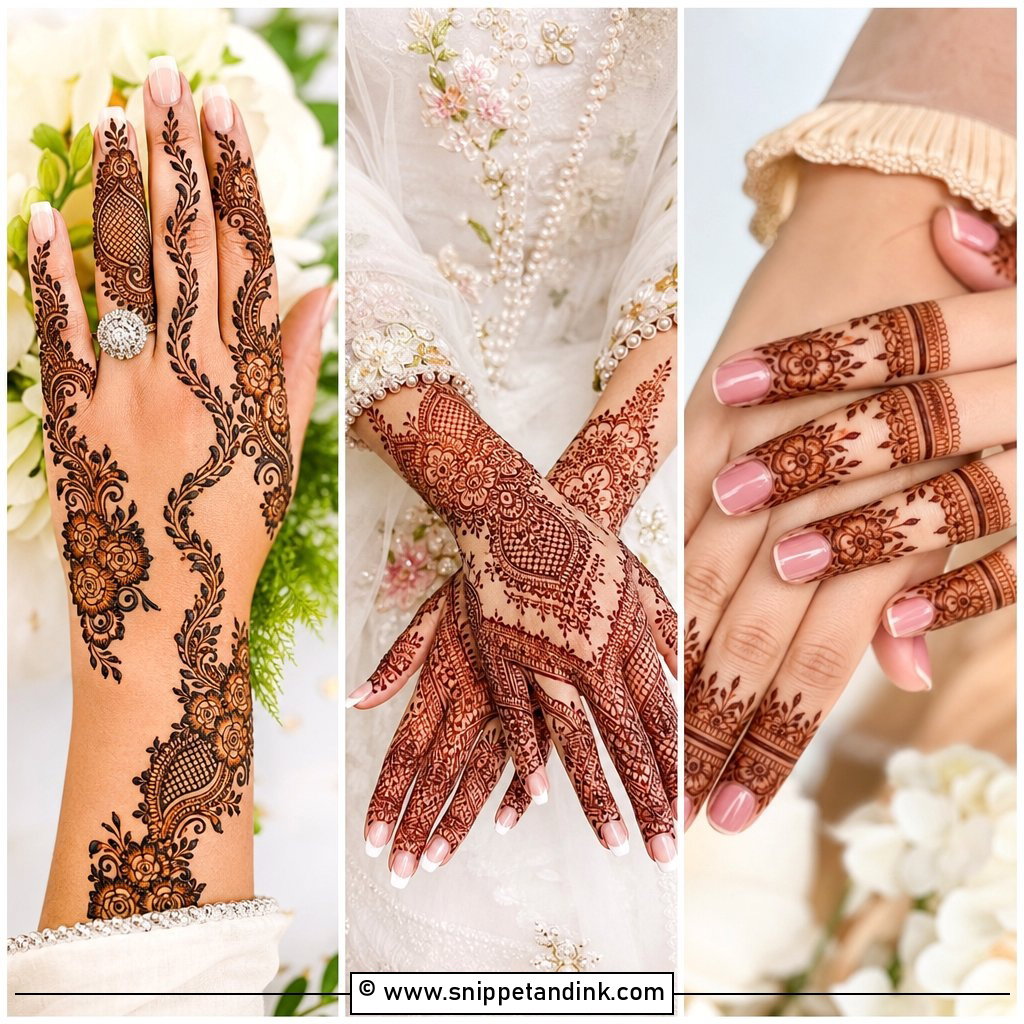
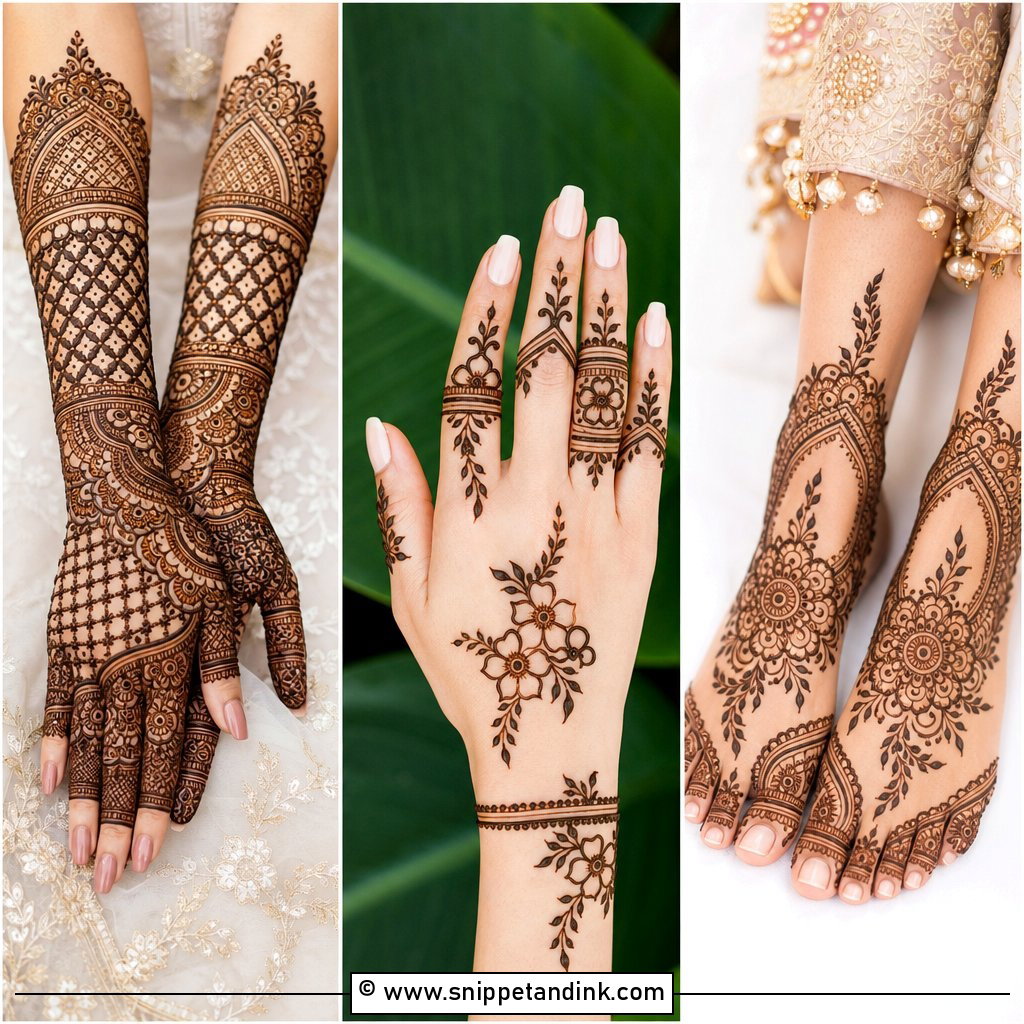
A full back hand bridal mehndi design leaves no part of the top of the hand empty. I usually start with a detailed wrist cuff, build paisley and floral fillers up the hand and finish with heavy finger patterns, with a mandala, peacock, lotus or bride-groom detail in the centre. Stacked bangles sit right on that cuff, so the jewellery and the henna seem to run into each other. Keep the fingertips bold and the centre motif clean. With heavy zari, embroidery or red and gold outfits, it holds its own.
2. Arabic Bridal Mehndi Design Back Hand
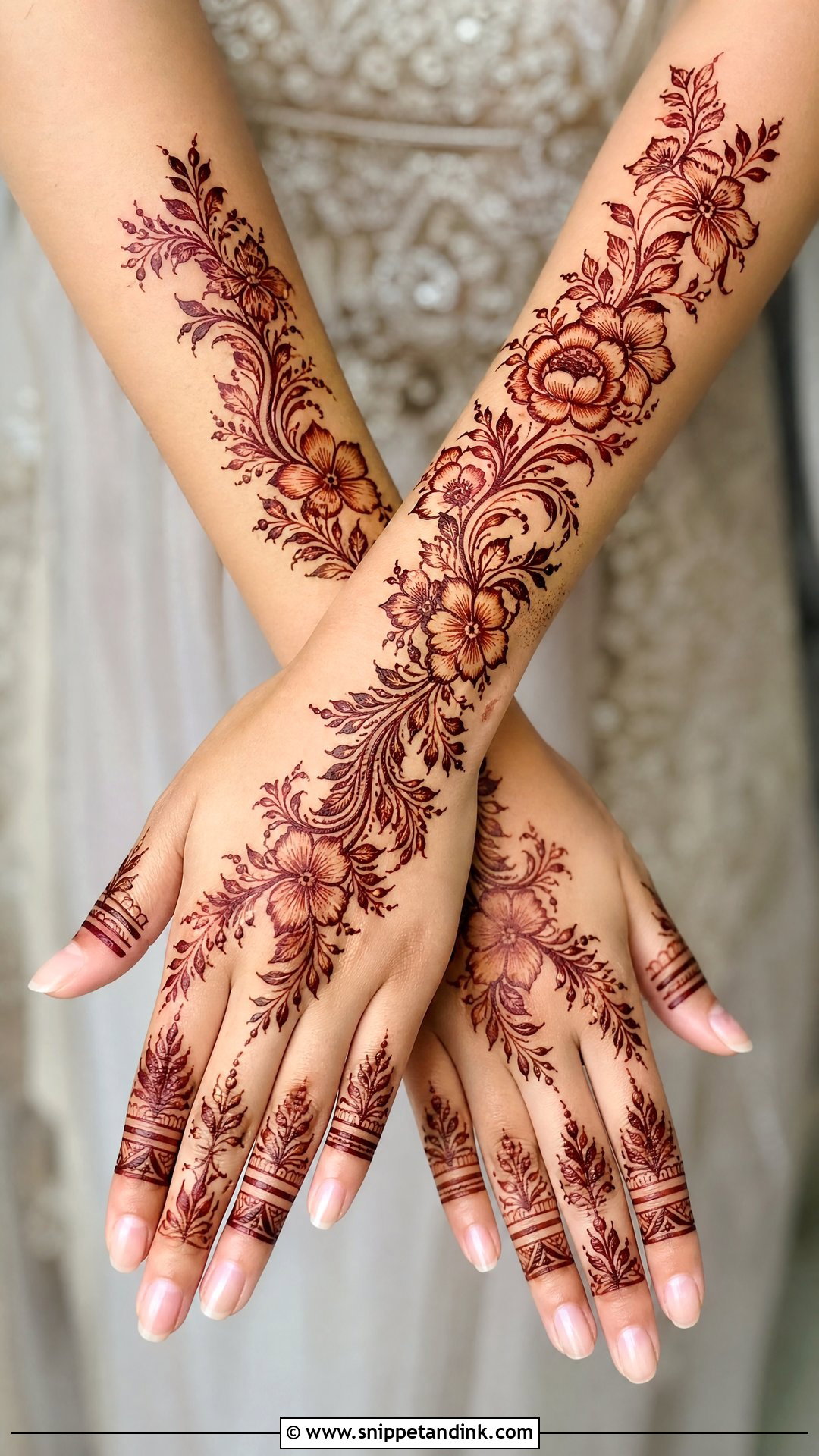
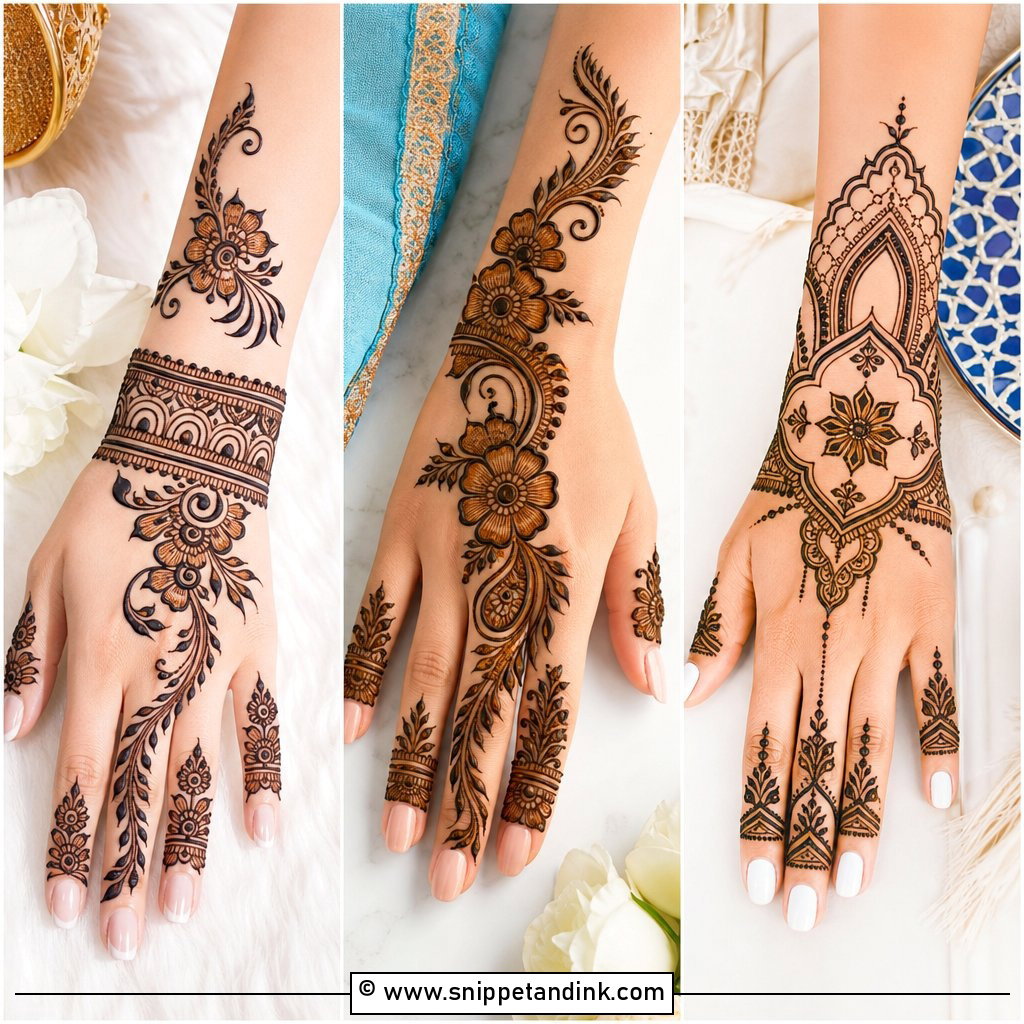
Arabic work on the back hand is about movement, not coverage. The flowing floral trail, leafy vines, curved paisleys and shaded petals usually run diagonally from the wrist toward one or two fingers, with open skin on either side. That diagonal line makes the hand look longer, which is why I often suggest it for shorter fingers. It also suits engagement ceremonies, destination weddings and lighter outfits. For the wedding itself I add finger bands, a bracelet-style wrist and a few fine dots along the trail so it doesn’t look unfinished.
3. Indian Bridal Mehndi Design Back Hand
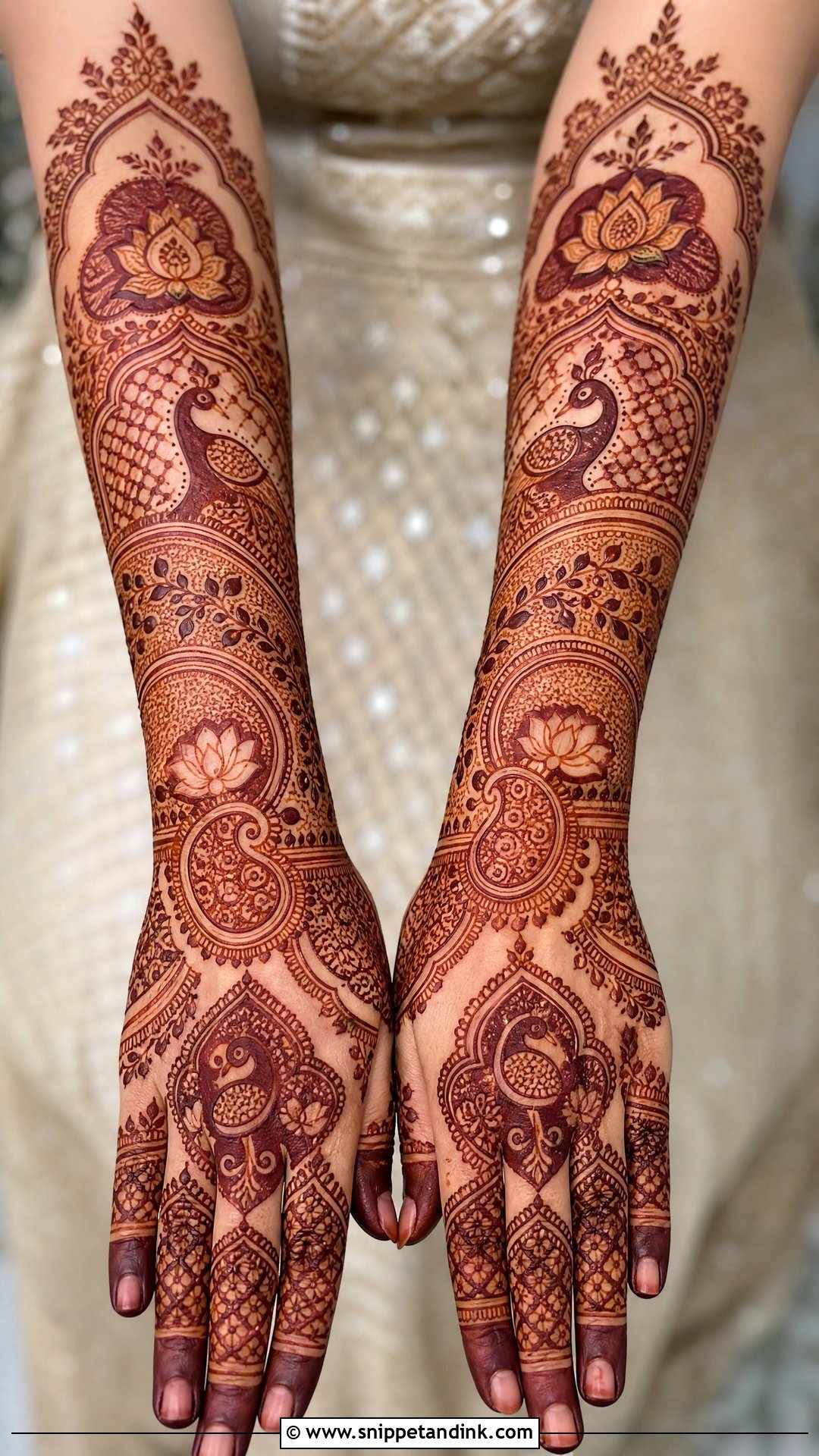
Indian bridal mehndi on the back hand is dense and story-led: paisleys, lotus flowers, peacocks, jaali, curving vines, tiny leaves and wedding symbols, all inside a clear structure. Brides choose it when both sides of both hands should feel traditional, and it sits naturally with lehengas, sarees, kundan pieces and classic bangles. The knuckles are where I slow down. The skin there folds every time you make a fist, so heavy filler over the joints cracks the dried paste early and leaves gaps in the stain; fine linework holds up much better.
4. Indo Arabic Bridal Mehndi Back Hand
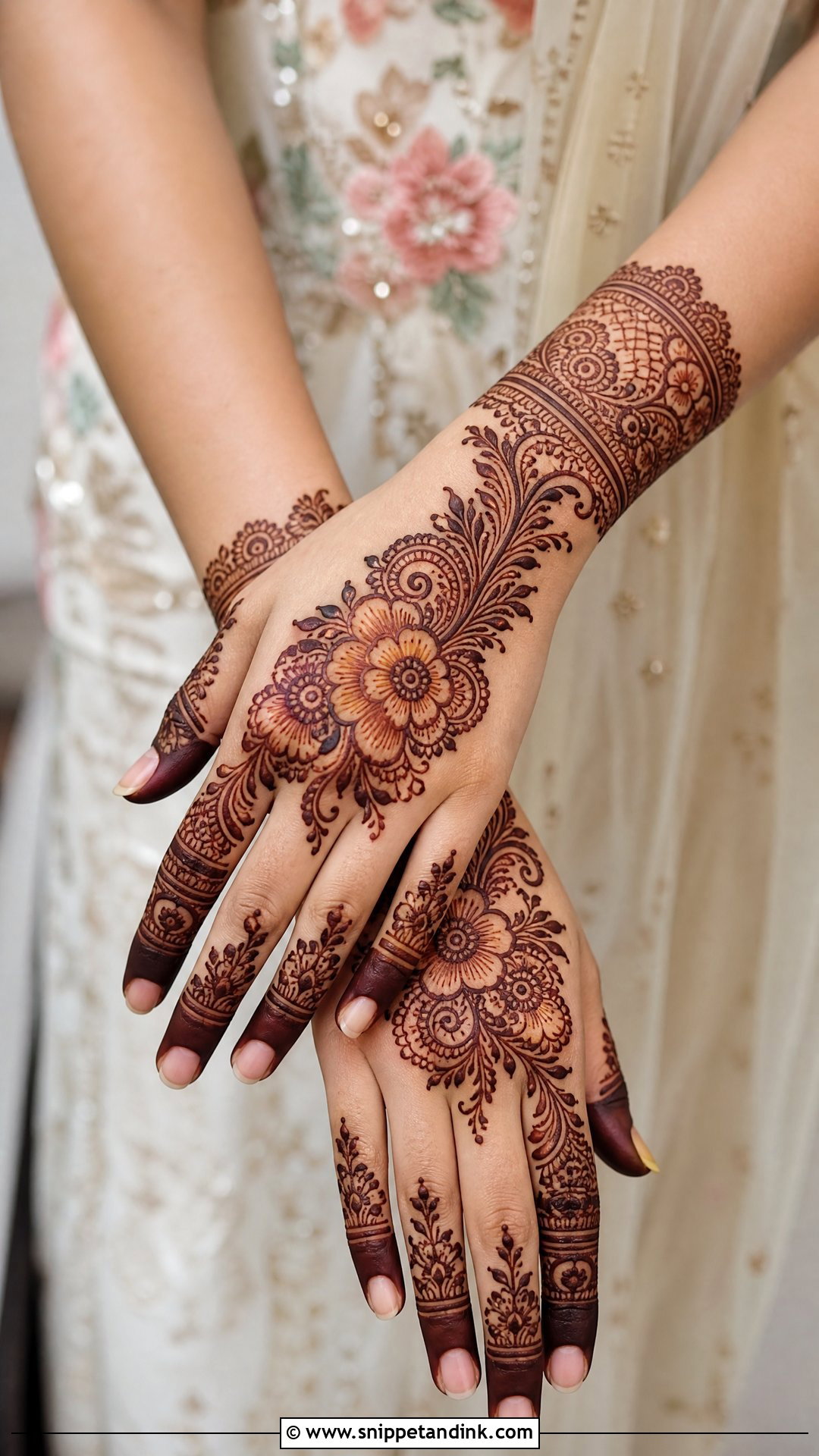
Indo-Arabic mehndi mixes the bold flow of Arabic patterns with Indian filling. On the back hand I usually draw large florals and paisley curves with lace borders and fully filled fingers, spaced more cleanly than a strict traditional layout. It looks festive without feeling heavy. I can also shape the central design around the ring finger, leaving a neat frame for your engagement ring. It works for the sangeet, nikah, reception or the wedding day itself.
5. Mandala Bridal Mehndi Design Back Hand
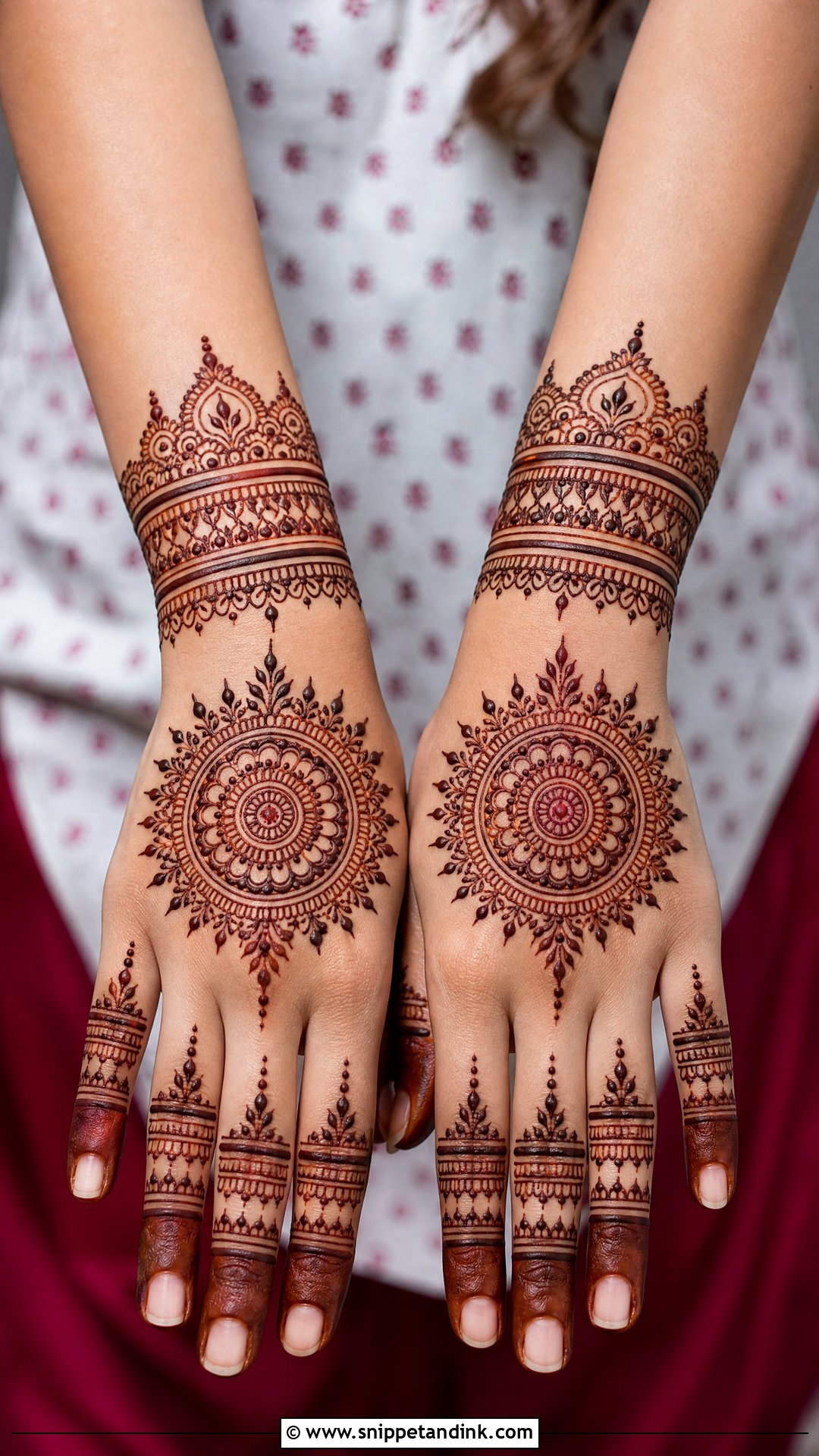
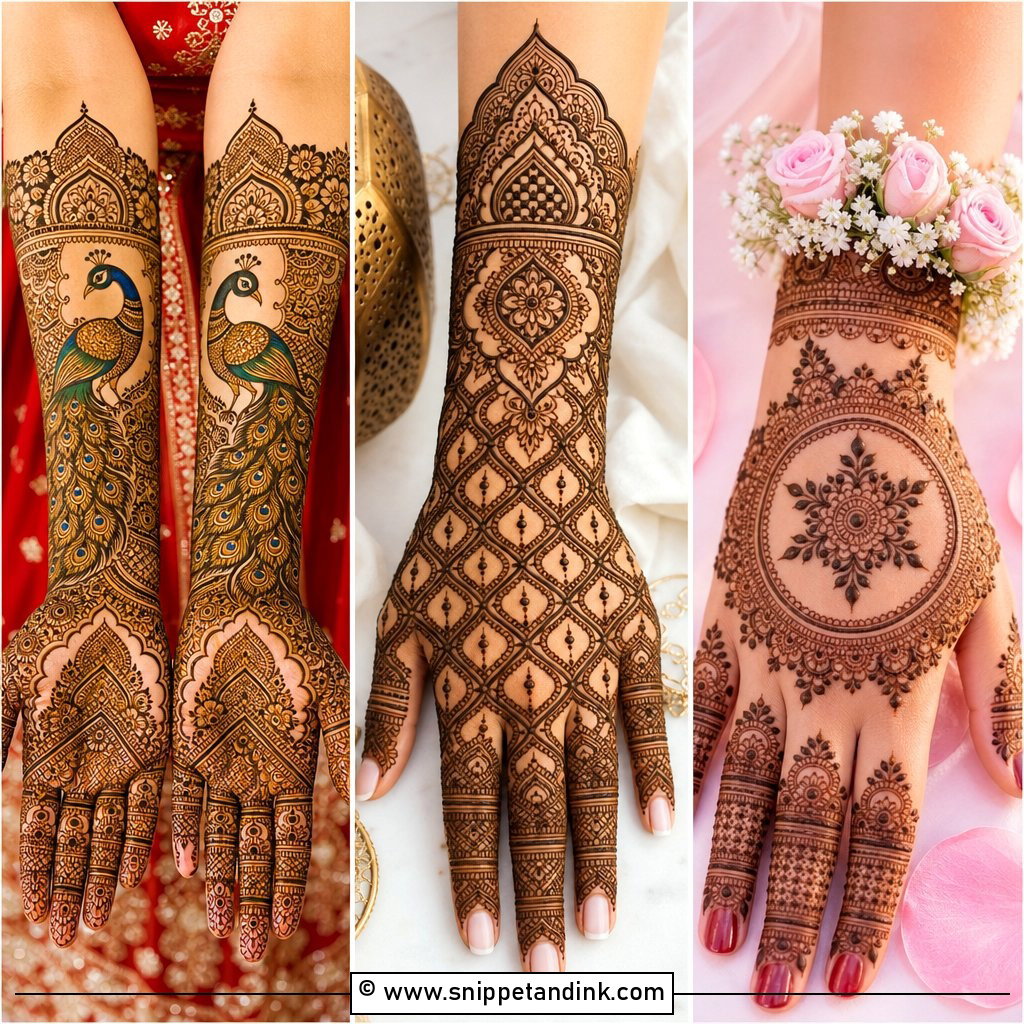
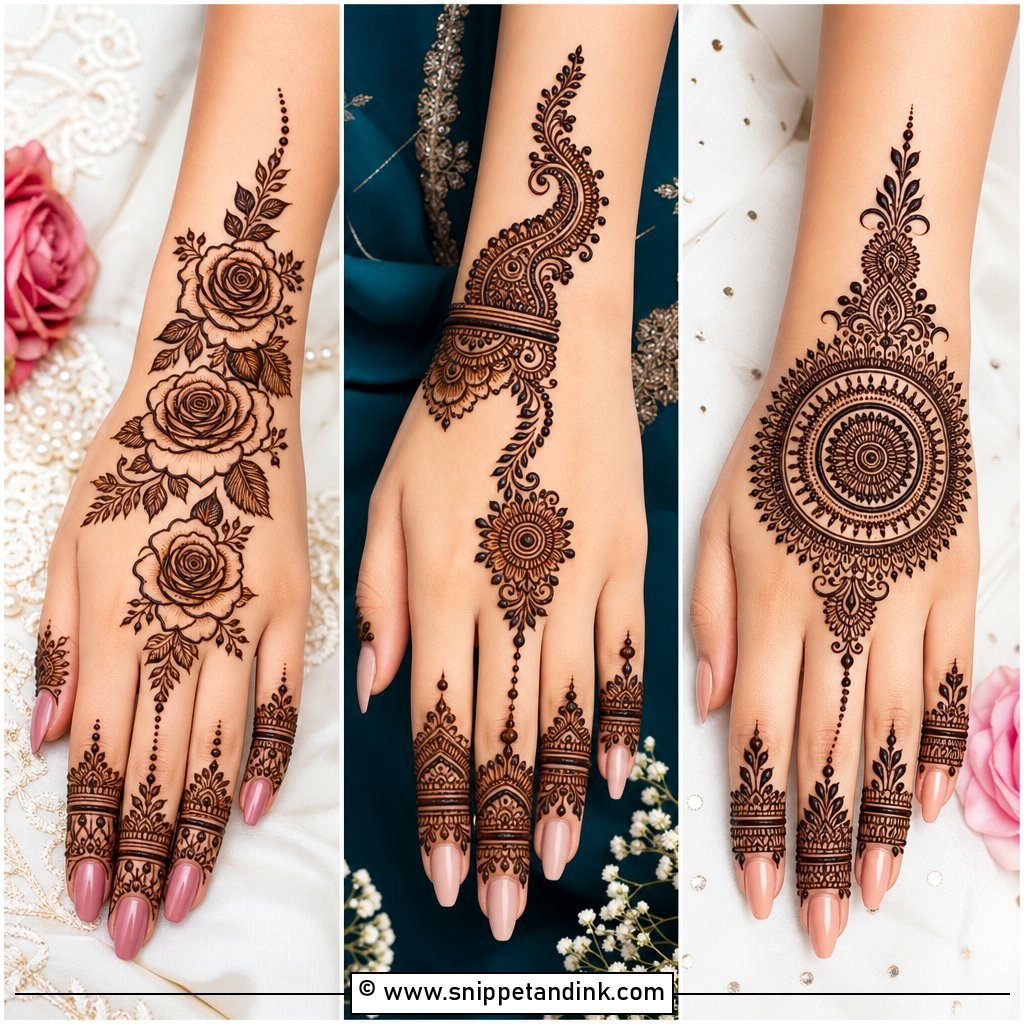
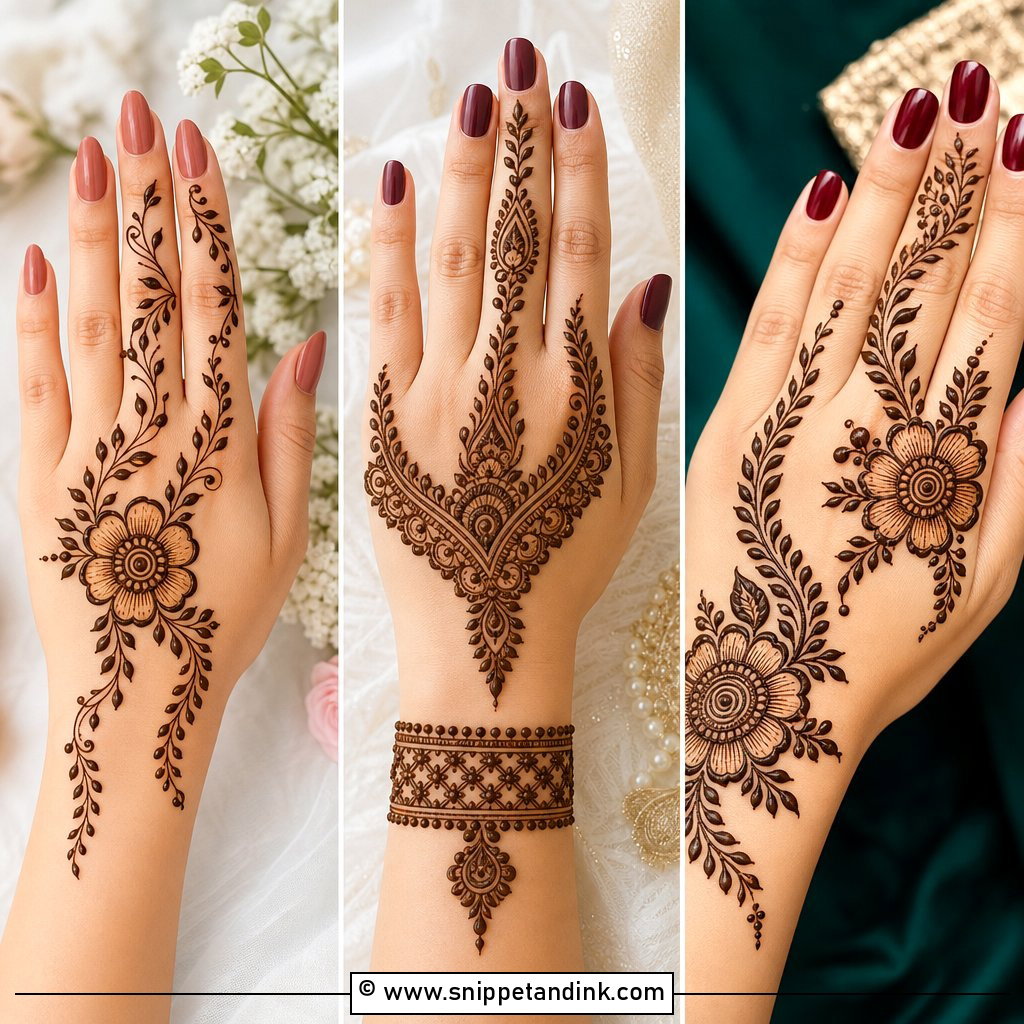
A mandala gives the back hand a centred, ordered look. The circle sits in the middle of the hand, the fingers carry bands, florals, checks or fine leaves, and a wrist bracelet or cuff closes the design. It reads clearly in close-ups and suits most hand shapes. One honest note: the back of the hand curves more than the palm, so a mandala placed too close to the knuckles distorts when you bend your fingers. I set it a little lower, nearer the wrist, and it stays round in photos. Keep it bold and simple, or add petals, dots and jaali for a fuller bridal version.
6. Floral Bridal Mehndi Back Hand
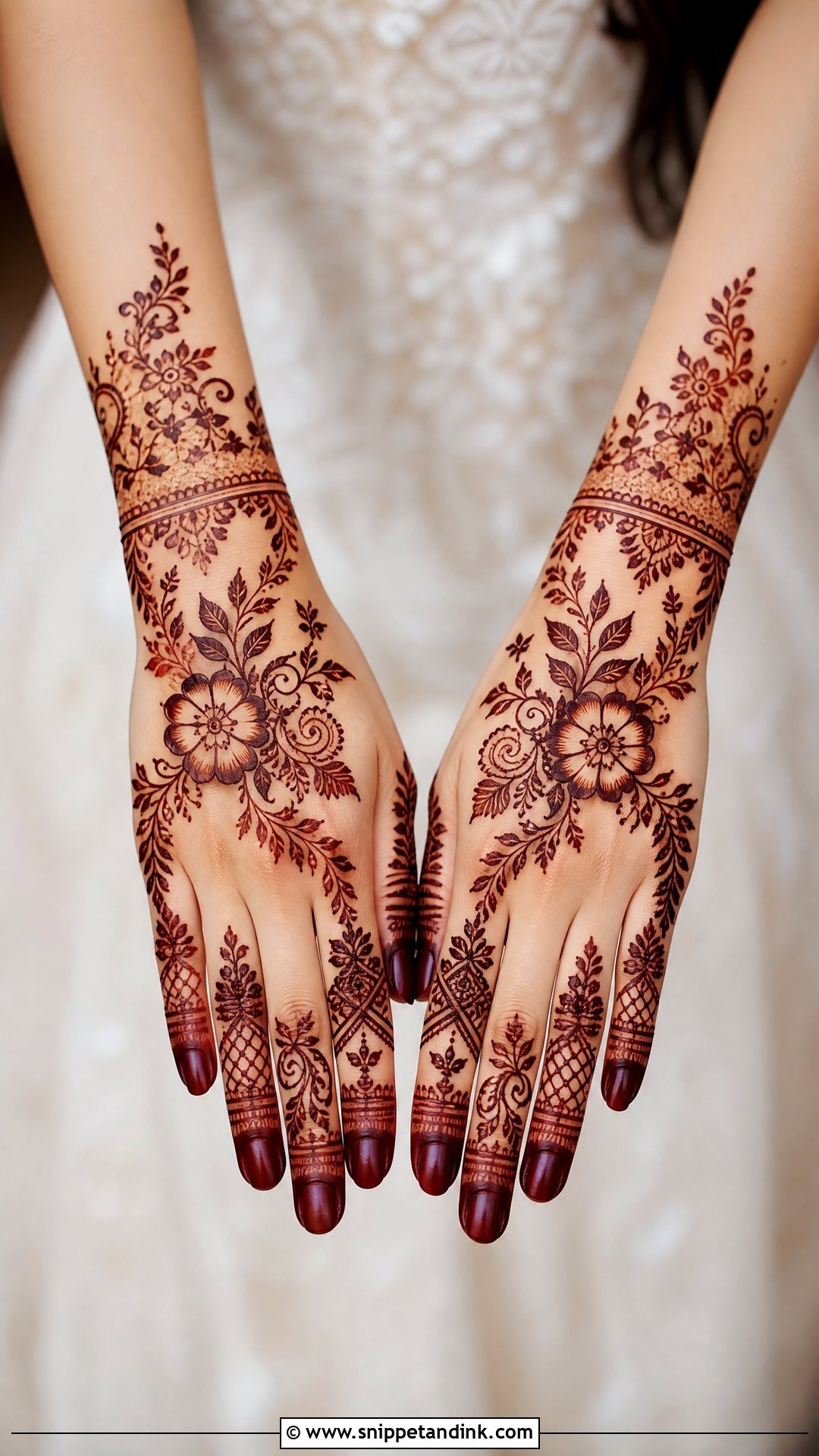
Florals can go light or heavy. A fuller version layers flowers and leafy fillers over the wrist, fingers and centre of the hand; a cleaner one uses a few large shaded roses or lotus shapes with open skin around them. They’re a natural partner for pastel lehengas, floral embroidery and garden weddings. To make the cleaner version look bridal rather than festive, I add fine netting, finger bands and a detailed wrist border that sits like a henna bracelet.
7. Peacock Bridal Mehndi Design Back Hand
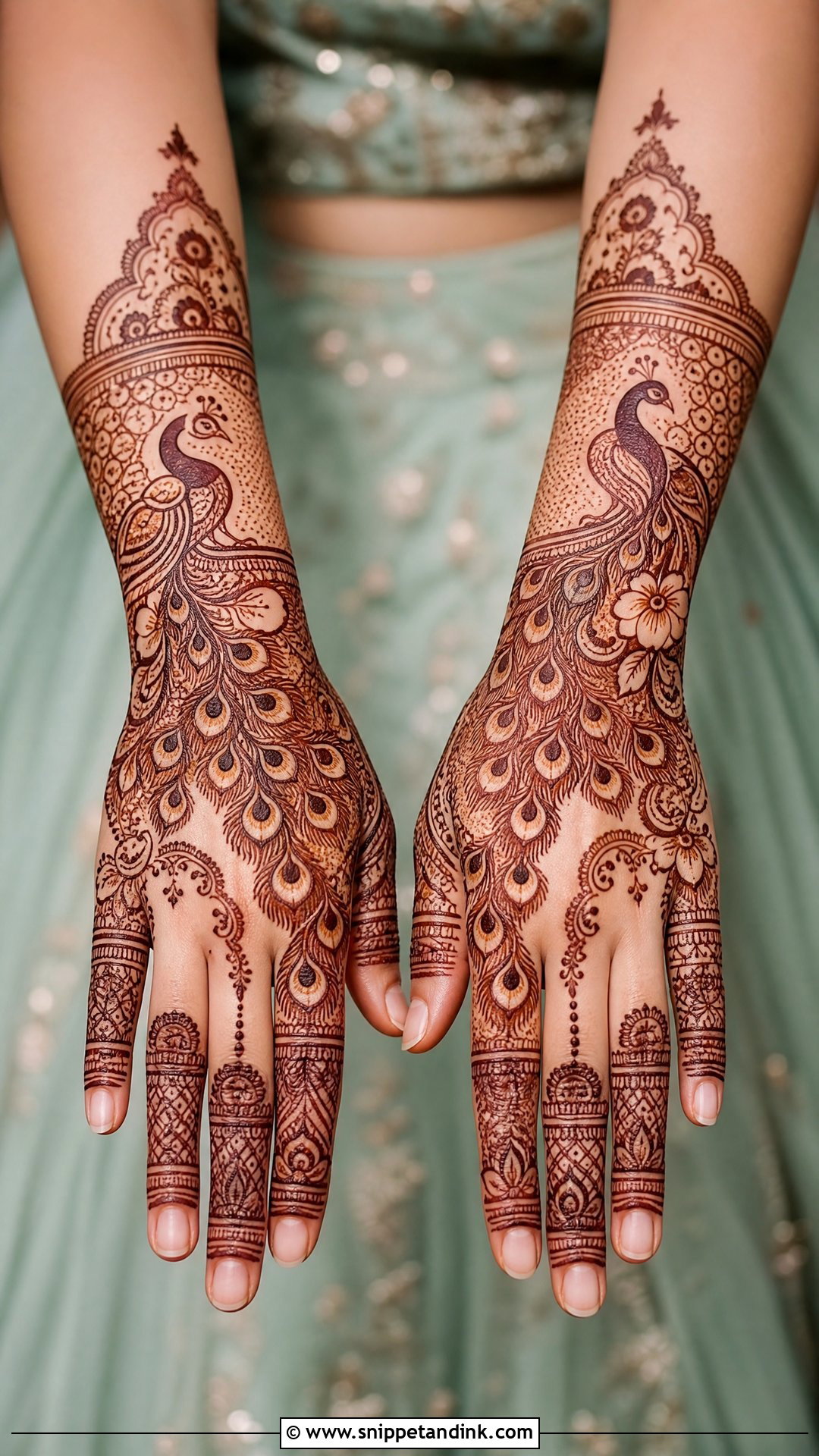
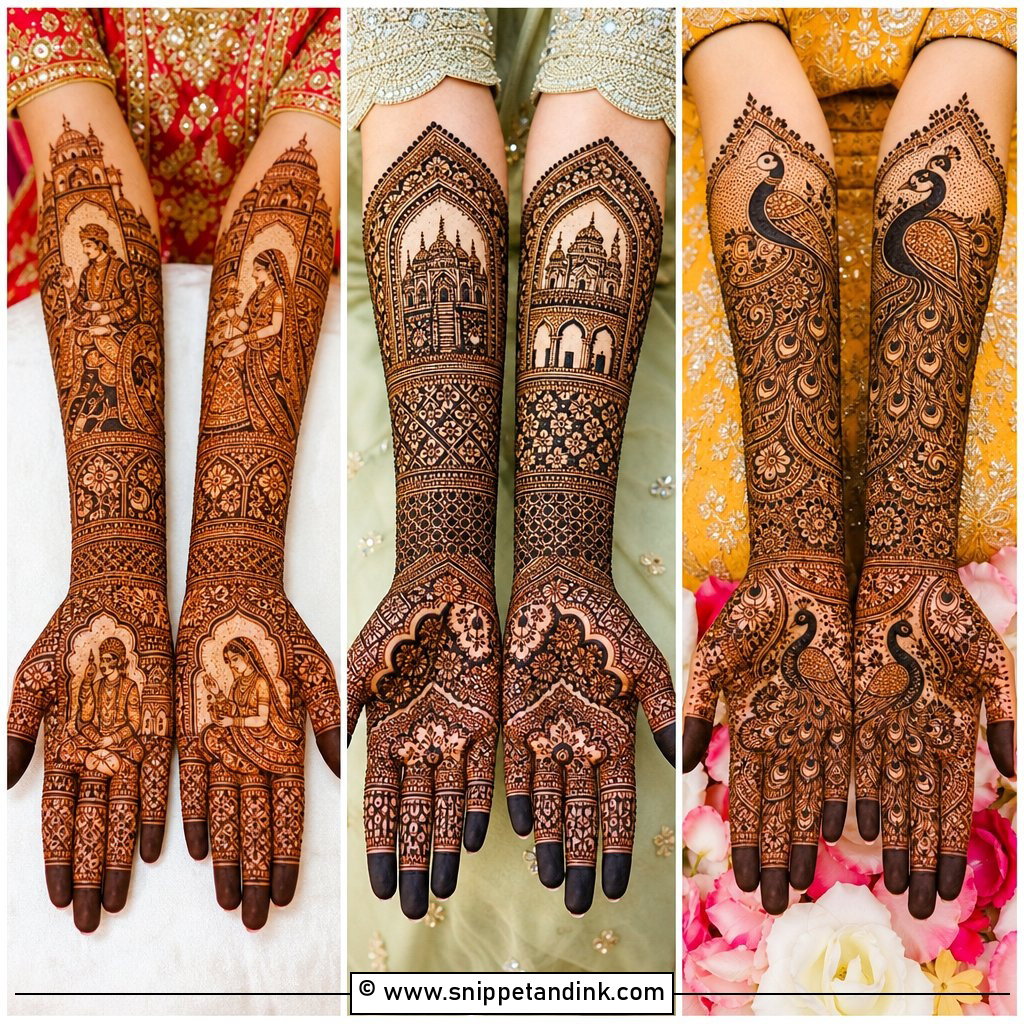
Peacocks give the back hand a regal, traditional feel. I place the bird near the wrist, across the centre or along a curved vine reaching toward the fingers, and fill the feathers with tiny lines, dots, paisleys and curved strokes. It suits silk sarees, heavy lehengas, temple jewellery and deep bridal colours. One strong peacock reads far better than several small birds scattered across the hand; on a surface this size, small birds turn into indistinct blobs once the stain darkens.
8. Jewelry Bridal Mehndi Back Hand
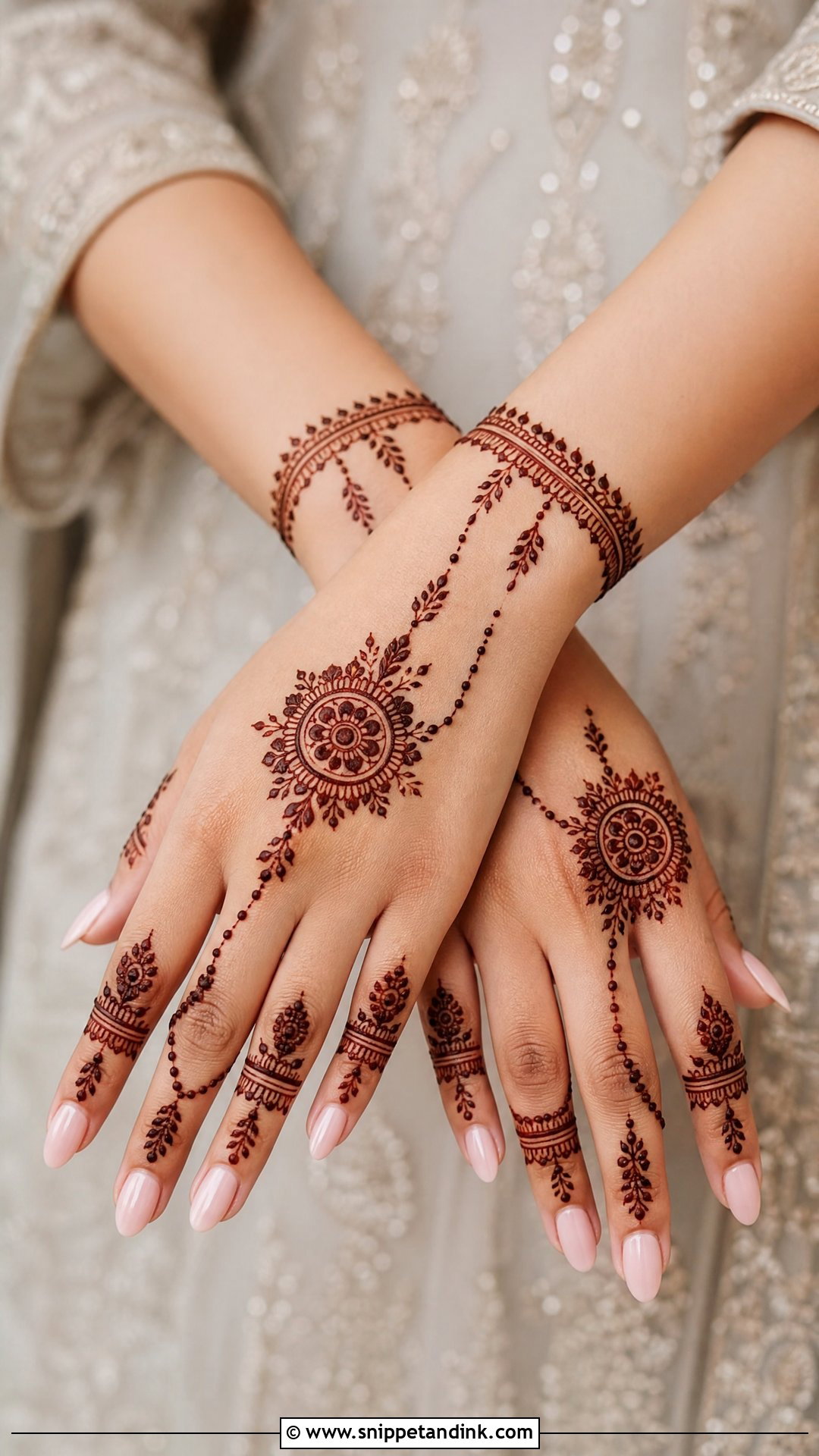
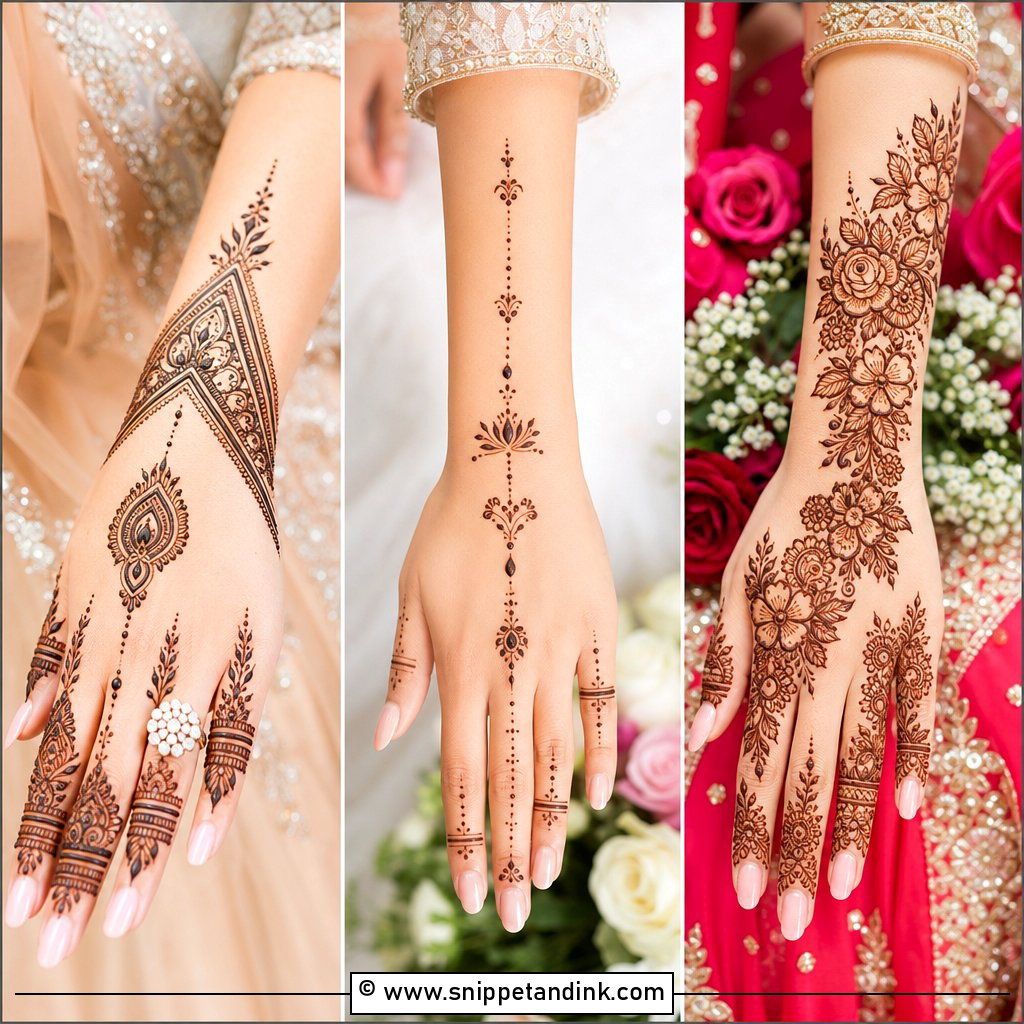
Jewellery mehndi imitates haath phool, rings, chains and bracelets. On the back hand there’s usually a central motif joined to finger rings by delicate chains, with a cuff at the wrist where a bangle would sit. It can be coordinated with the real pieces you’ll wear, which I find easier if a bride brings a photo of her jewellery to the appointment. Keep the chains thin. A thick chain line stains as a heavy band and loses the delicate look completely.
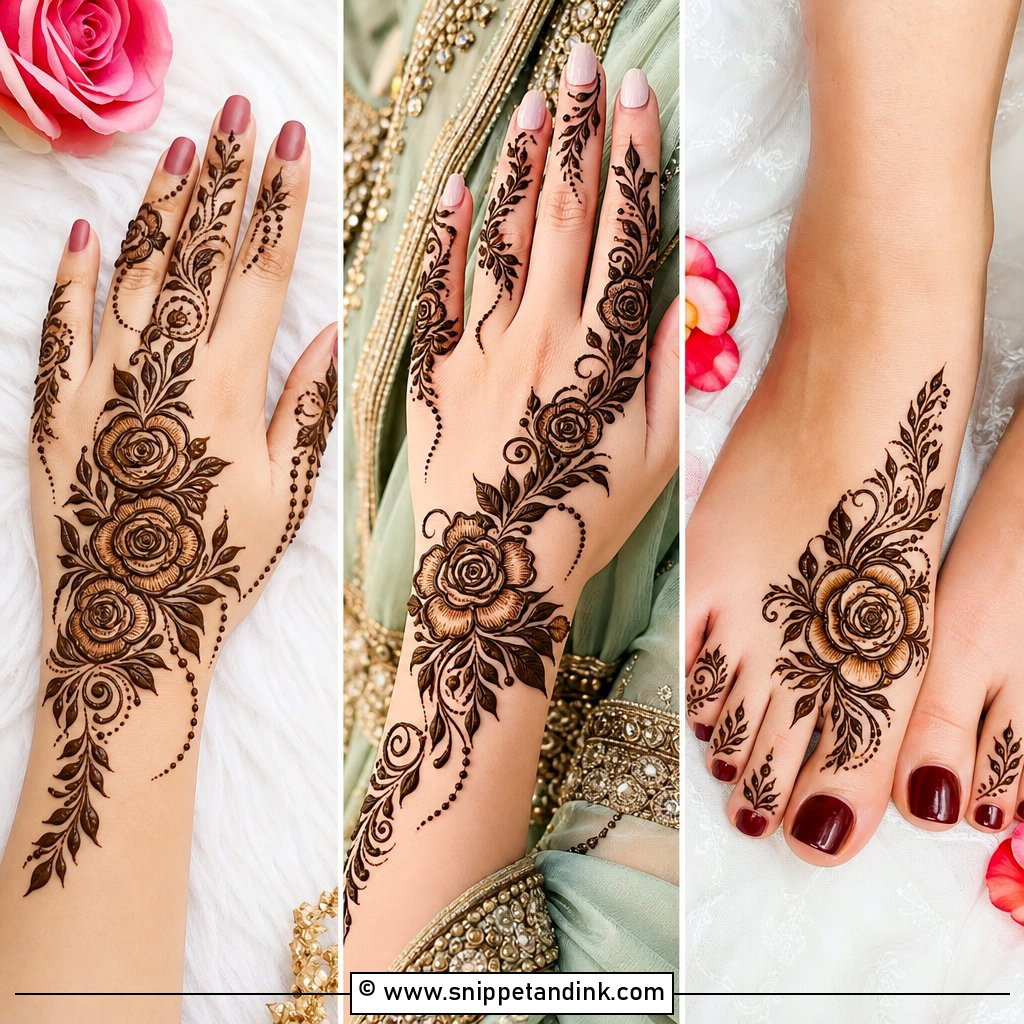
9. Rose Bridal Mehndi Design Back Hand
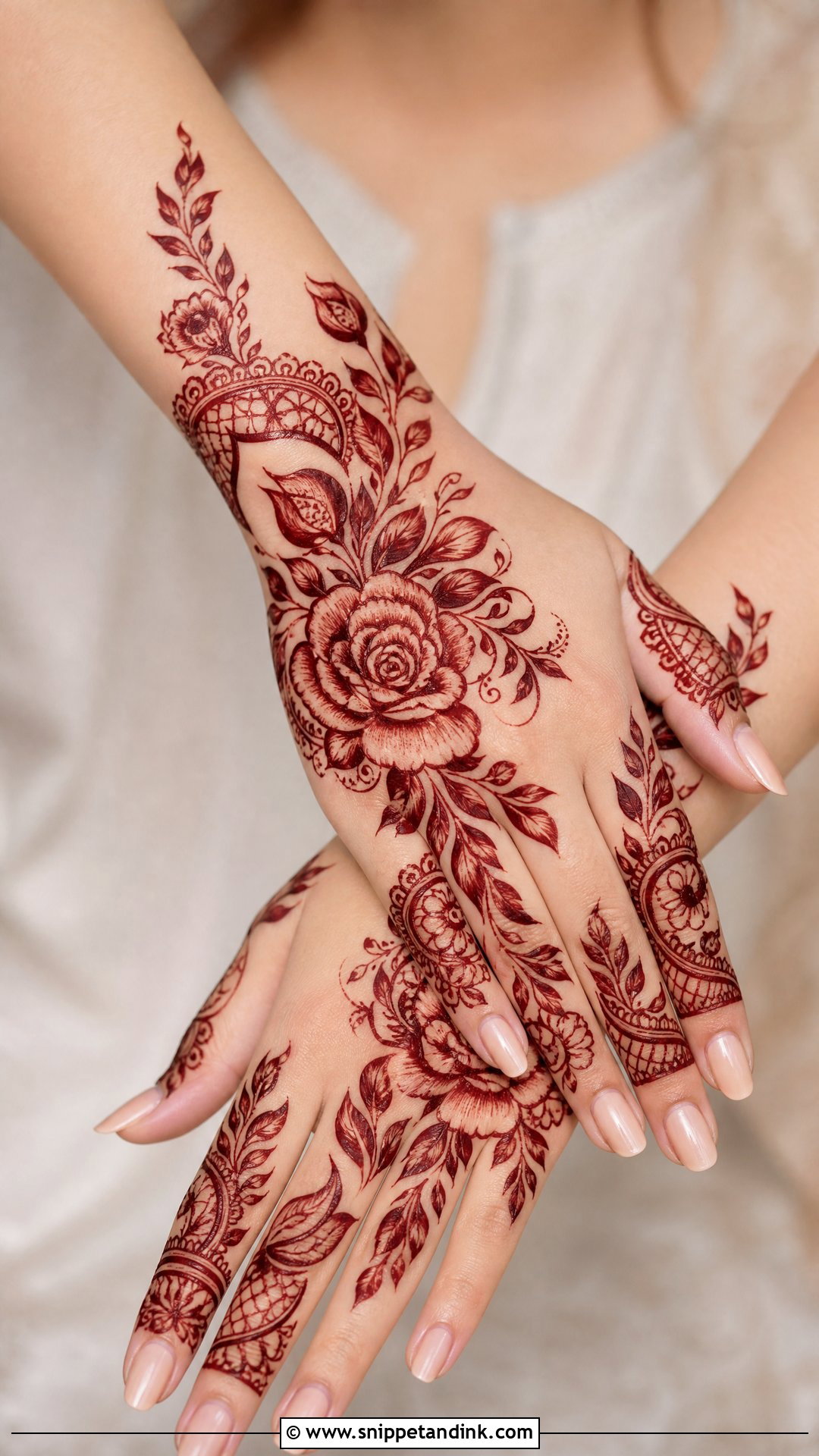
Roses need shading to work. Without it, a large rose outline on the back hand looks flat once the stain develops; with it, the petals gain depth and the flower stands out from the skin. I place the big roses near the centre and let smaller buds and leaves flow toward the wrist and fingers. It’s a favourite with brides who like Arabic or Gulf-style open layouts, and fine lace borders, paisley fillers and bold fingertips push it into bridal territory. It pairs naturally with modern lehengas, soft glam makeup and delicate bangles.
10. Lotus Bridal Mehndi Back Hand
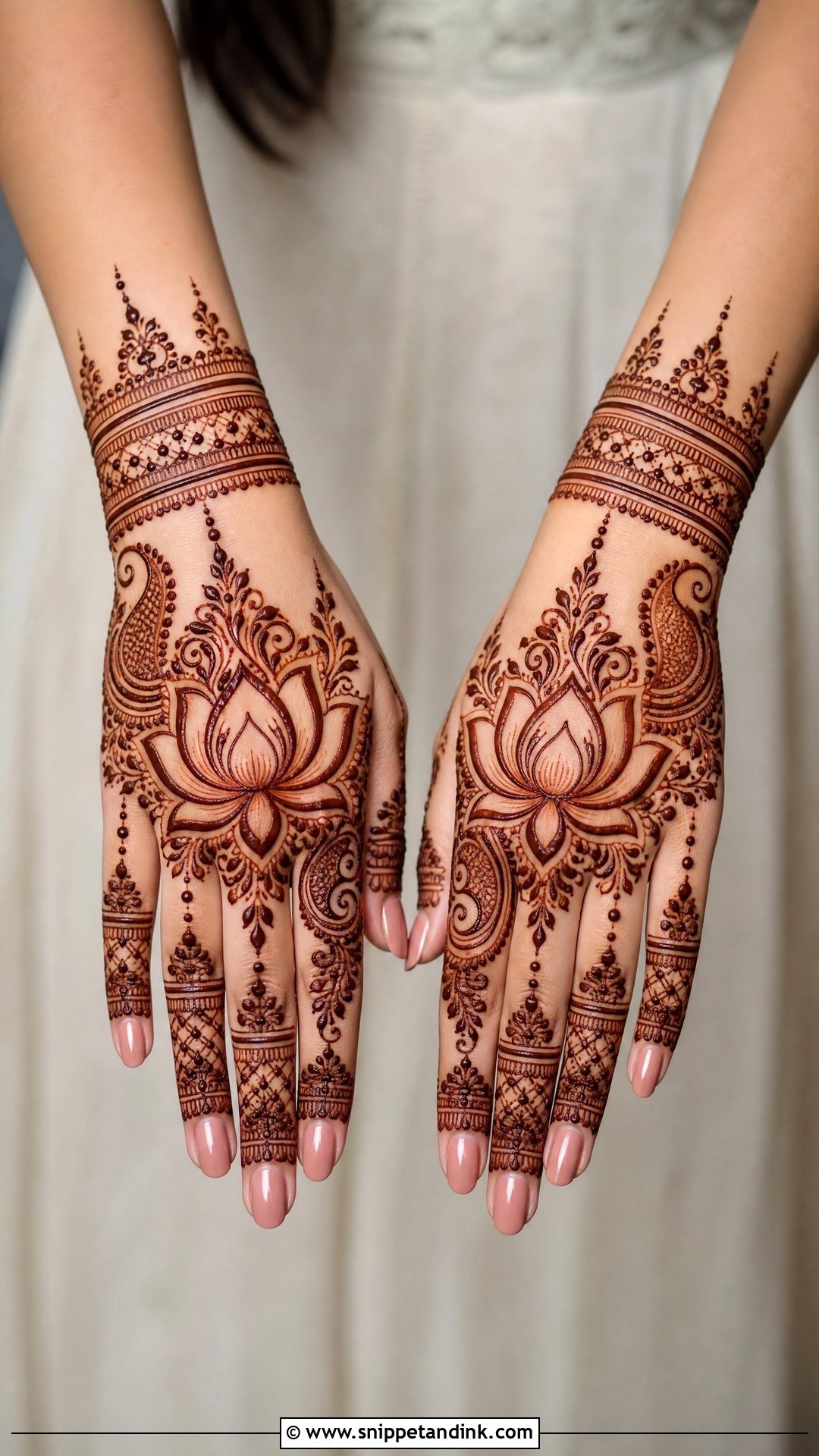
The lotus feels calm and festive, and it suits Indian bridal outfits without looking dated. It can be the single centrepiece or a repeated pattern flowing across the back hand, with bold petal outlines filled with fine lines, dots and shaded strokes. I connect it to the wrist cuff and finger bands with small paisley accents so it doesn’t float on its own. Temple jewellery, silk and warm colours all sit comfortably beside it.
11. Jaali Bridal Mehndi Design Back Hand
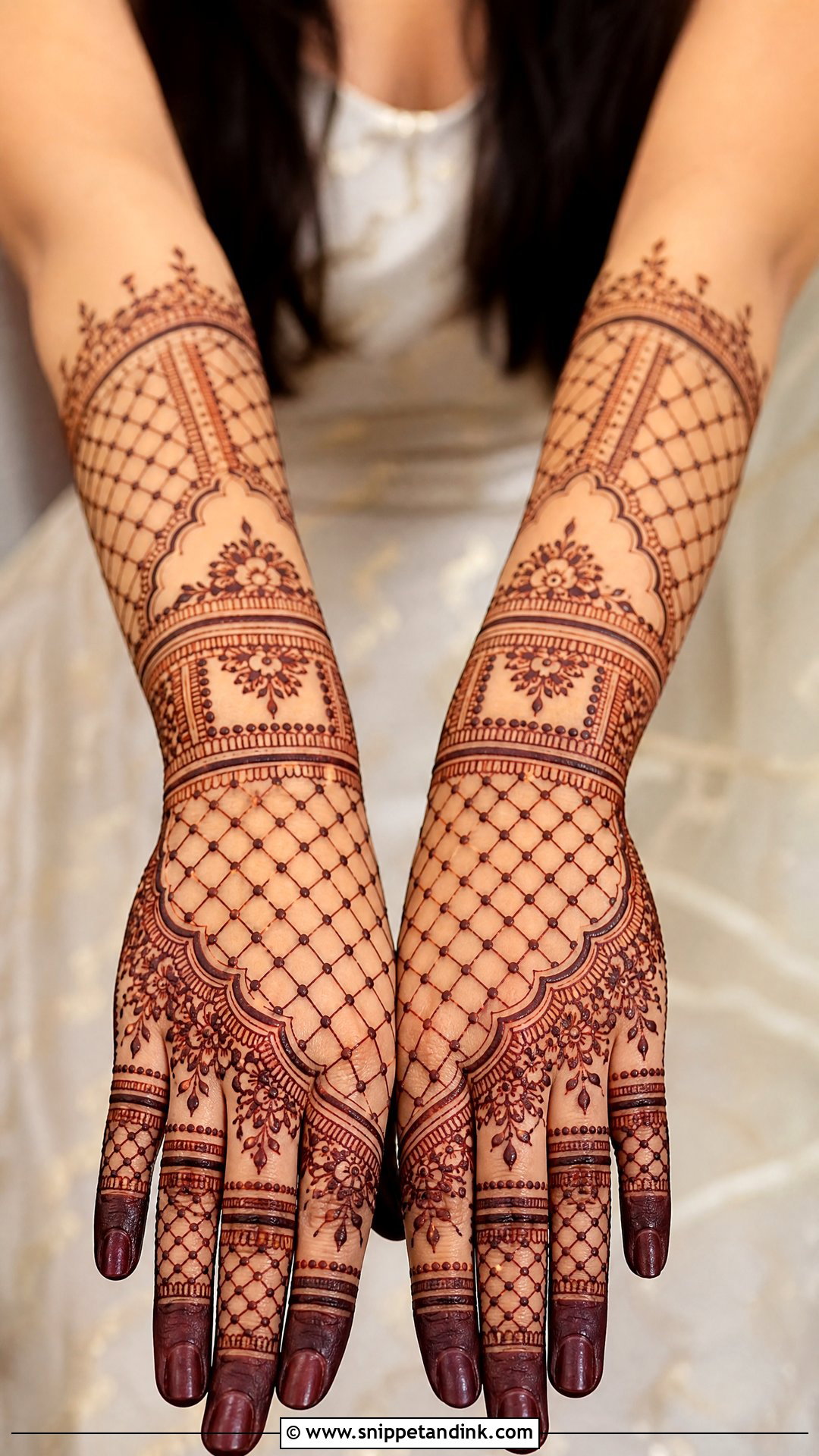
Jaali creates a fabric effect from net patterns, crisscross lines, tiny dots and bordered sections. It can cover the whole back hand or sit in selected areas beside florals and paisleys, adding texture without a lot of large motifs. Long, slim hands carry it best, though I can adjust the grid size for any hand. It’s slow work, since every line has to match its neighbour in thickness, and I anchor the mesh with bold wrist borders, filled fingertips and one clear central motif so the eye has somewhere to rest.
12. Paisley Bridal Mehndi Back Hand
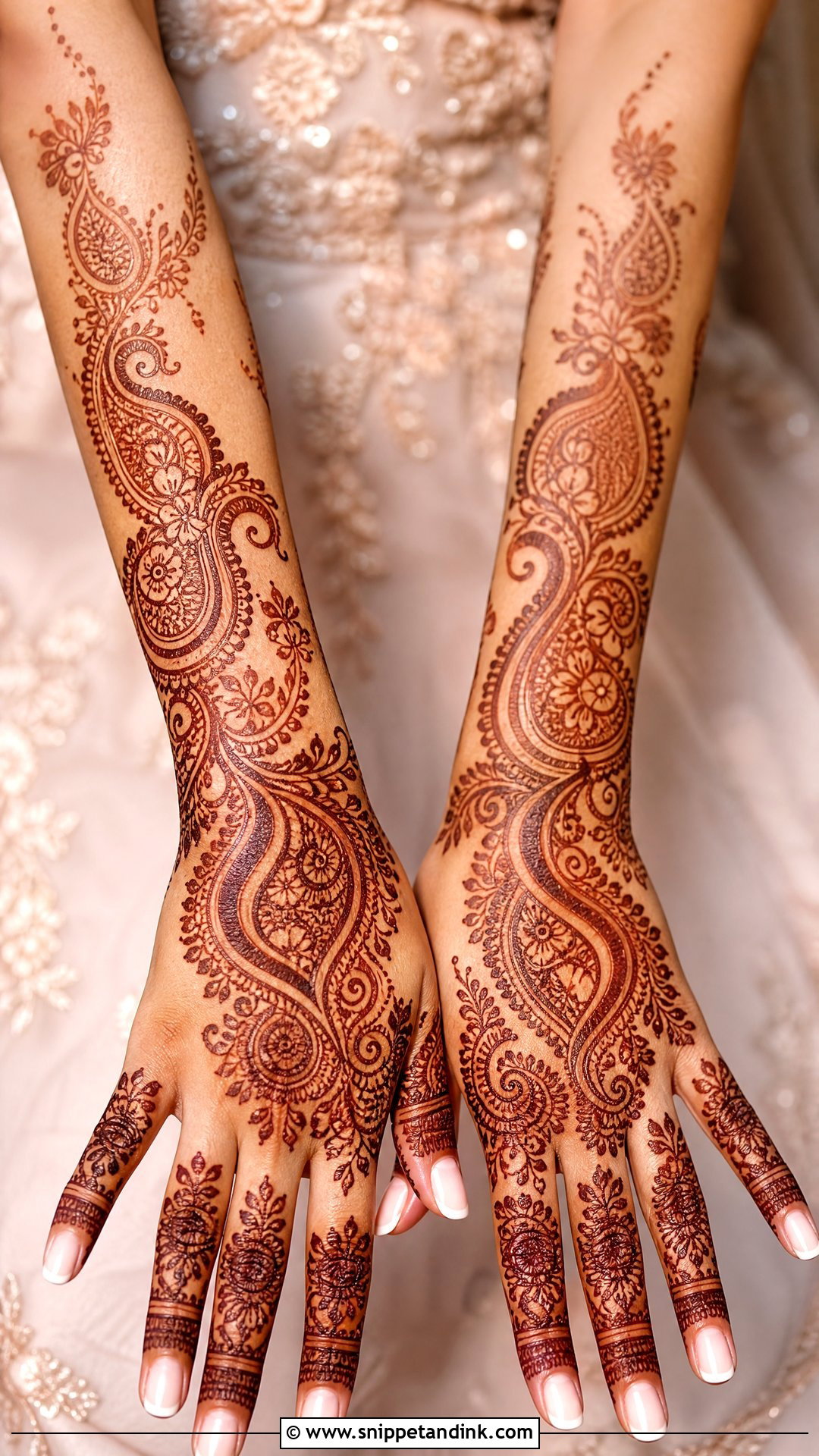
Paisleys curve with the hand instead of fighting it, which is why they’ve survived every trend. A paisley back hand might layer mango shapes with floral fillers, small leaves and dotted borders, running from wrist to fingertips or filling the whole hand. It’s traditional but still soft to wear, and it mixes easily with peacock, lotus and jaali details. Varied sizes give the pattern depth; identical paisleys repeated across the hand look stamped rather than drawn.
13. Minimal Bridal Mehndi Back Hand
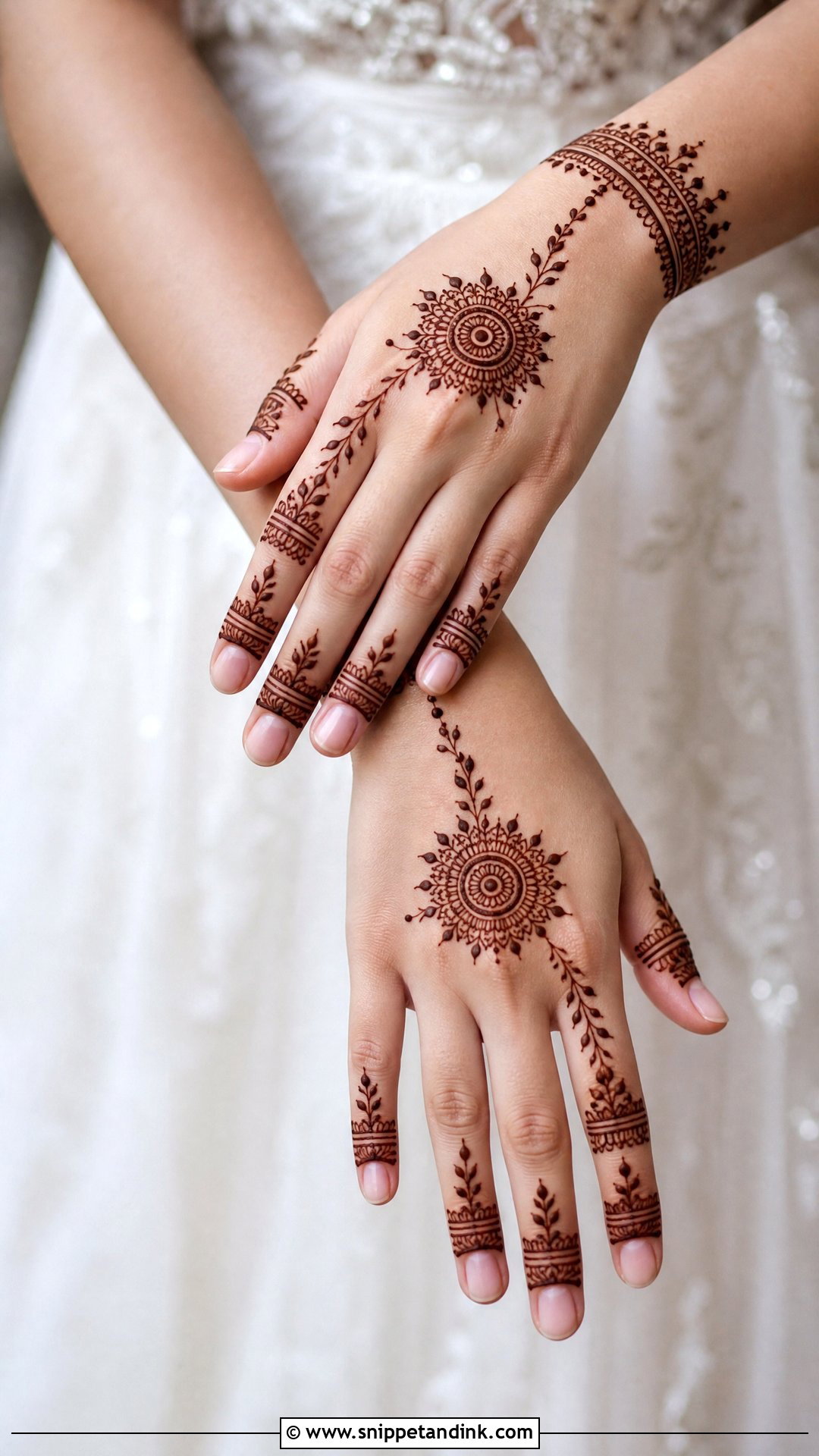
Minimal back hand designs keep more skin visible: a small mandala, fine finger bands, a delicate wrist bracelet and a few leafy trails. They suit intimate weddings, courthouse ceremonies and brides who want a lighter look. With so little paste on the hand, stain depth carries the whole design, so I push brides wanting minimal work to leave the paste on longer than they think they need to. Symmetry and crisp lines matter more here than anywhere else. Elegant rings, pearl bangles and pastel outfits complete it.
14. Modern Bridal Mehndi Design Back Hand
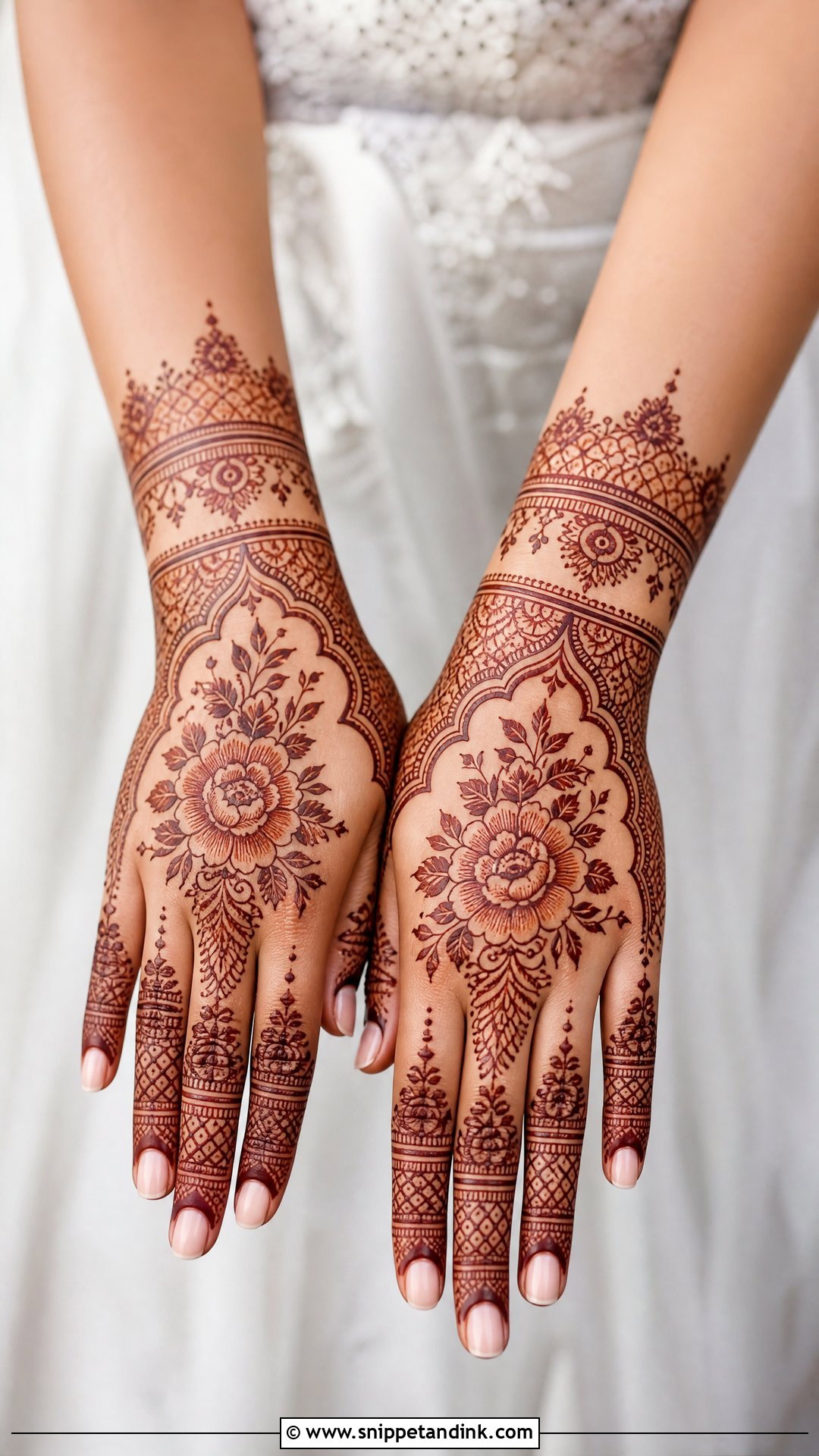
Modern back hand mehndi mixes clean spacing, bold motifs and unexpected layouts: half-hand florals, geometric borders, negative space, bracelet patterns and fine finger detail. It respects traditional mehndi art without the old full-heavy coverage, and it suits fusion outfits, contemporary lehengas, gowns and reception looks. I build it around one main feature, a mandala or a floral trail, and keep everything else sharp and airy. Two competing focal points on a back hand is the most common reason a modern design looks confused.

15. Moroccan Bridal Mehndi Back Hand
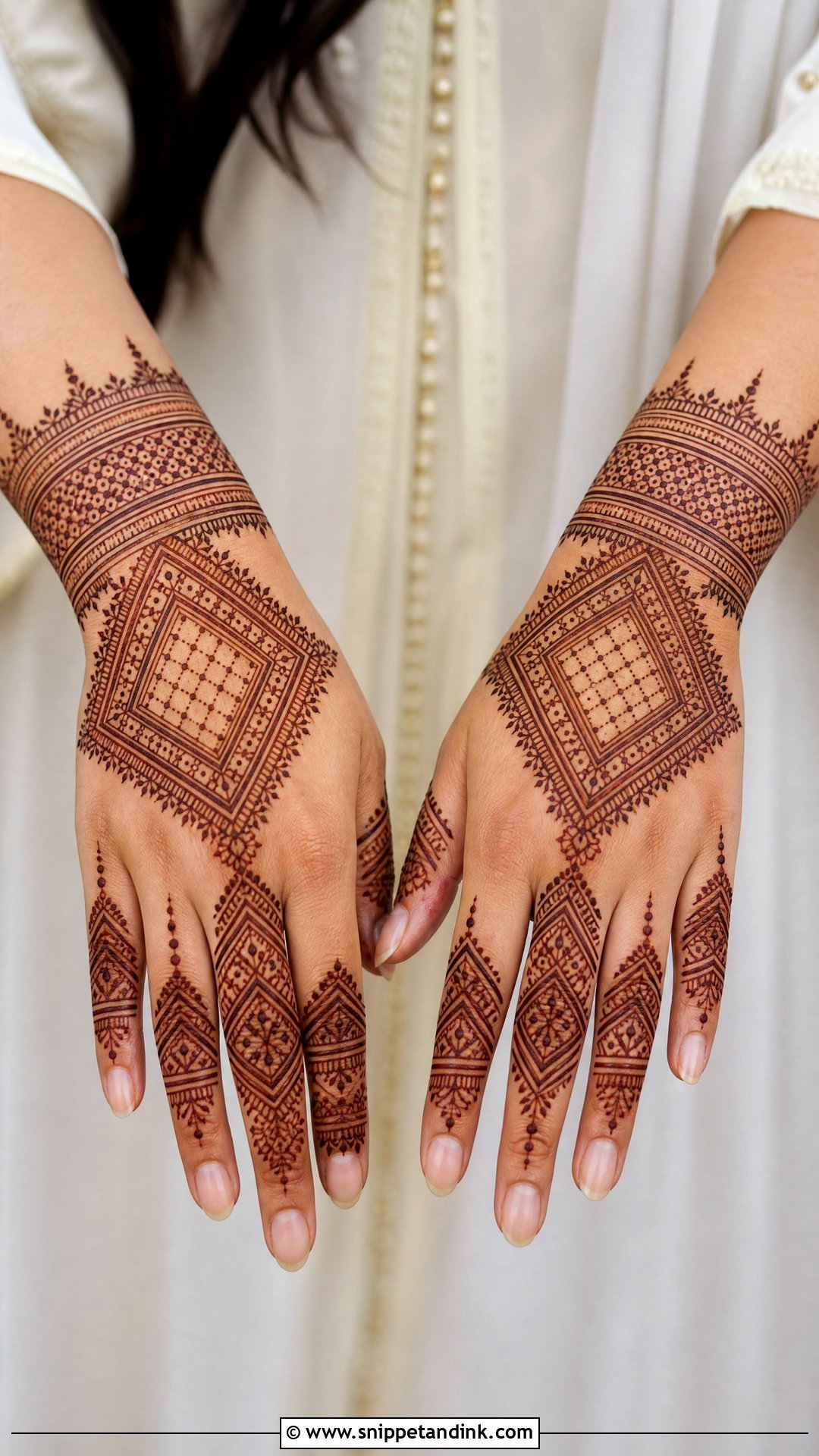
Moroccan mehndi swaps vines and paisleys for diamonds, grids, lines, dots and symmetrical shapes. On the back hand it looks bold and graphic, especially when it runs from wrist to fingers. Less floral than Indian or Arabic work, it still feels festive when the detail is fine. Brides who like modern patterns or minimalist jewellery tend to enjoy it. I add a decorative wrist cuff, balanced finger coverage and small ornamental fillers between the geometric blocks so it reads as bridal and not just graphic.
16. Gulf Bridal Mehndi Design Back Hand
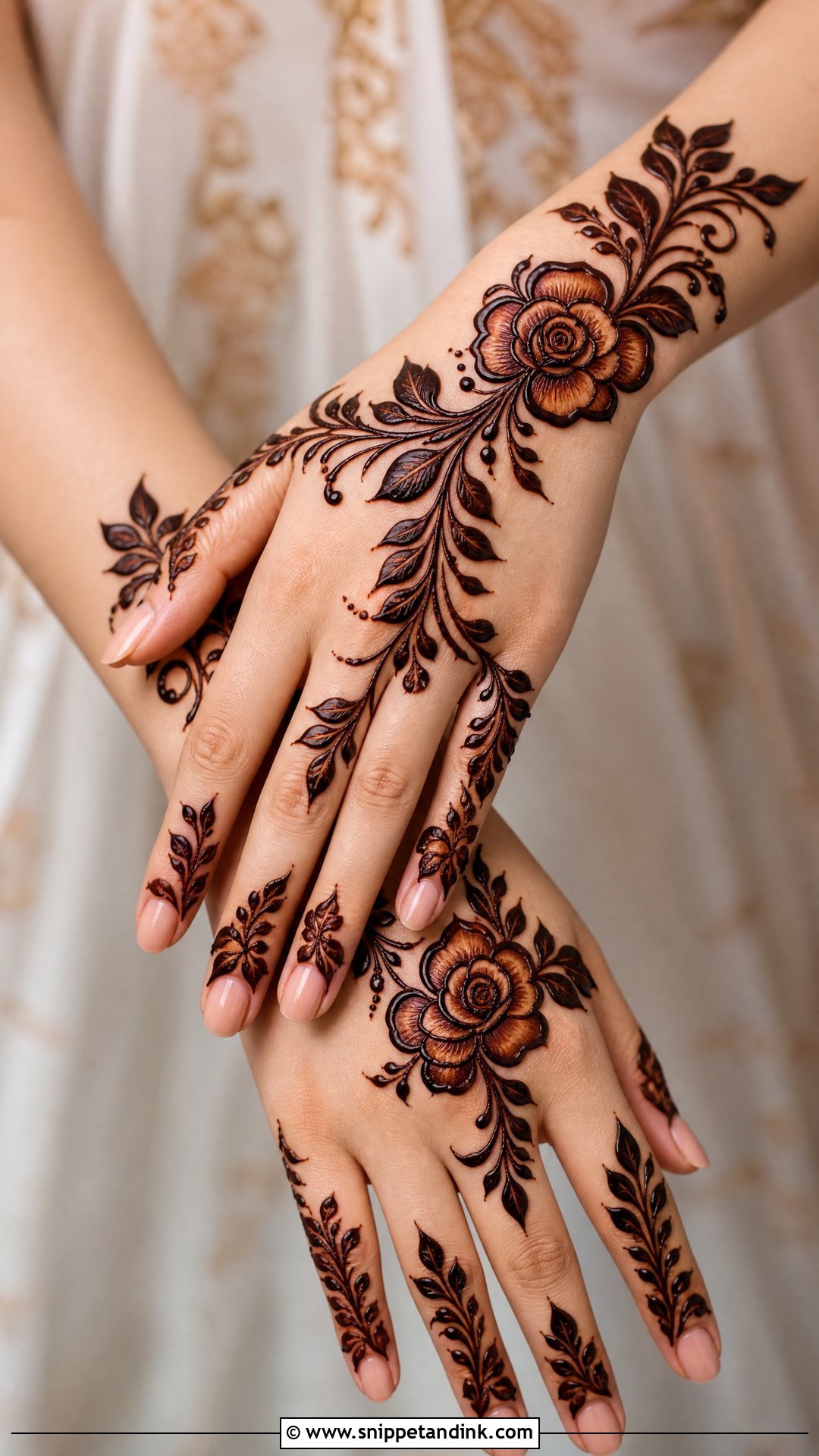
Gulf, or Khaleeji-inspired, mehndi is known for big flowers, dramatic spacing and a confident flow. On the back hand that means large roses, leafy vines, thick outlines and shaded petals, often heavier on one side of the hand with the other left open. The bolder lines stain clearly, which is a real advantage on the back of the hand, where colour comes out lighter than on the palm. Decorated fingers and a soft wrist trail finish it for the wedding events and portraits.
17. Back Full Hand Bridal Mehndi With Fingers
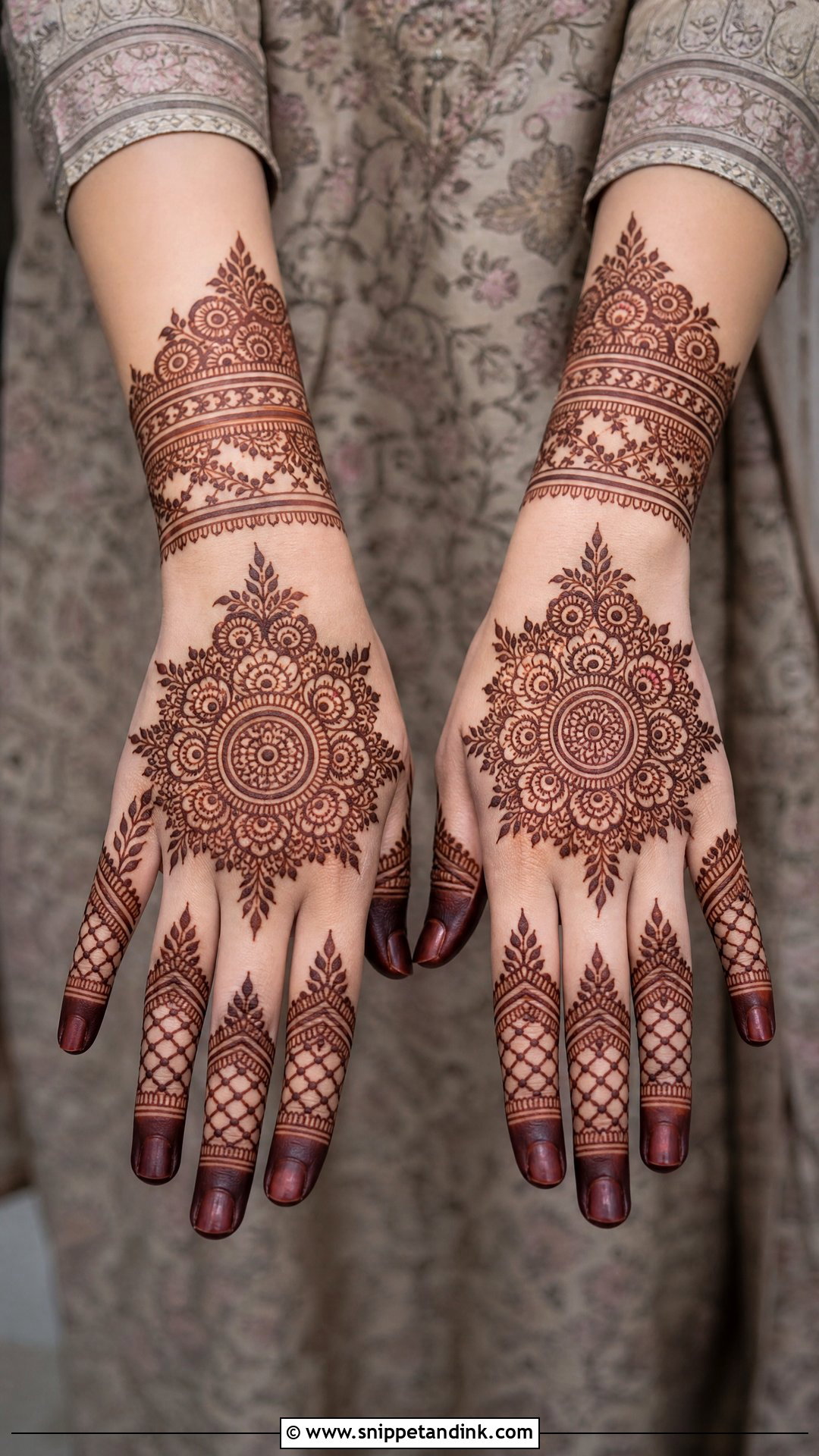
Fingers are not an afterthought; in most hand photos they’re half of what you see. This design covers the back hand with a central motif and then carries on into finger bands, leafy strips, net patterns or filled tips, with a cuff or lace border at the wrist linking it to the bangles. I make each finger slightly different but clearly related, which looks hand-drawn rather than copied. Fingertips stain very dark, so I keep tip coverage even on both hands or the difference shows straight away.
18. Bridal Mehndi Back Hand With Name
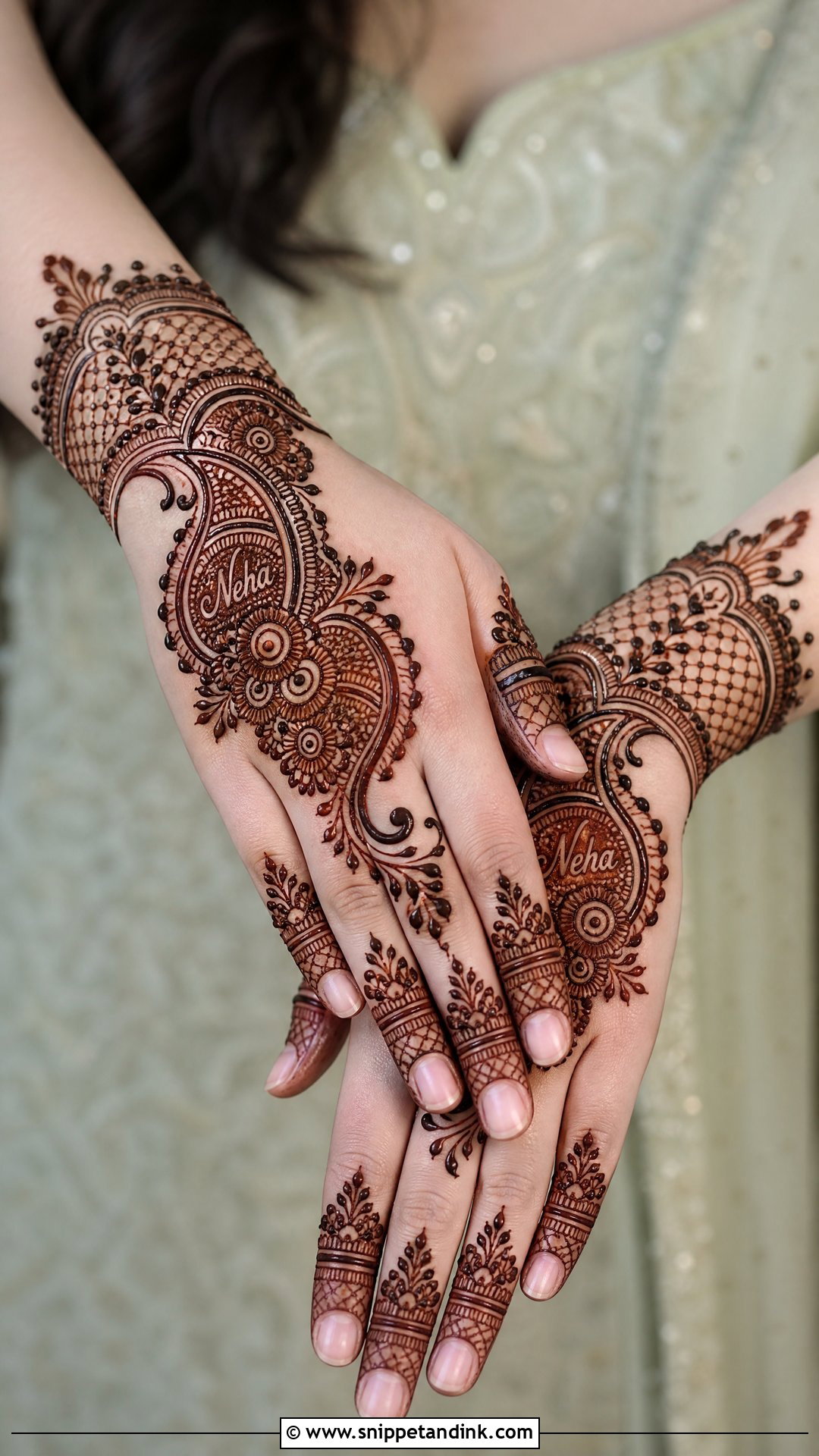
A bridal mehndi back hand with a hidden name is a small personal game. I tuck the name inside a paisley, along a vine, in the jaali or softly near the wrist, and the rest of the hand can be traditional, Arabic, floral or Indo-Arabic. If you want it subtle, I blend the letters into the surrounding lines. If you want it found, it goes in a clean central frame or the bracelet band. Check the spelling with me before I start; it’s the one detail nobody can fix later.
19. Bridal Mehndi Back Hand With Portrait
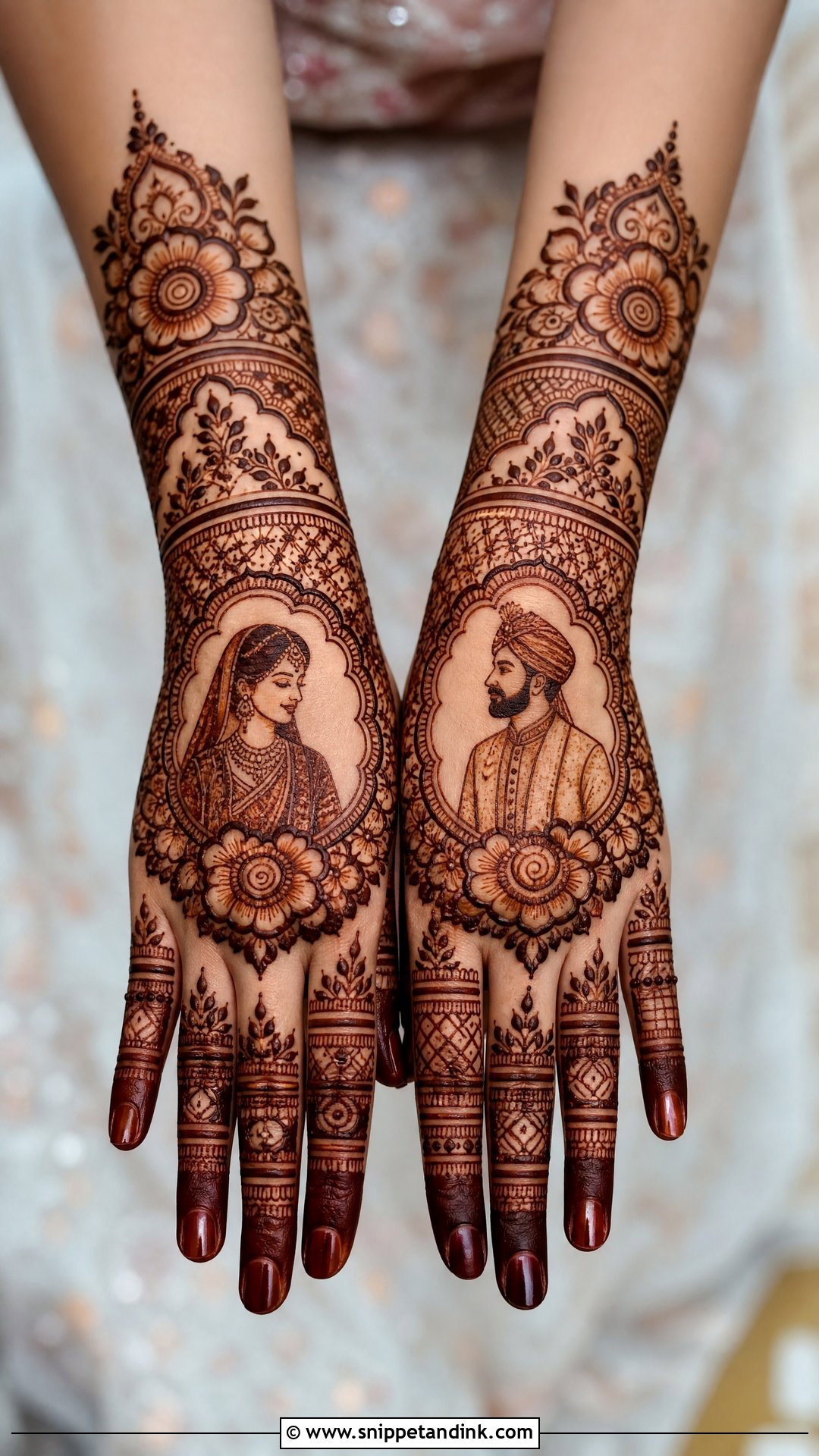
Portraits are usually drawn on palms, where the skin is flatter and stains darker. They can work on the back hand, but only with careful placement near the centre or wrist, away from the knuckles, and with enough space for the faces to breathe. Florals, paisleys and fine borders frame the artwork without crowding it. This is specialist work. Ask any artist for close photos of back hand portraits she has already done, not palm ones, before you commit.
20. Bracelet Bridal Mehndi Design Back Hand
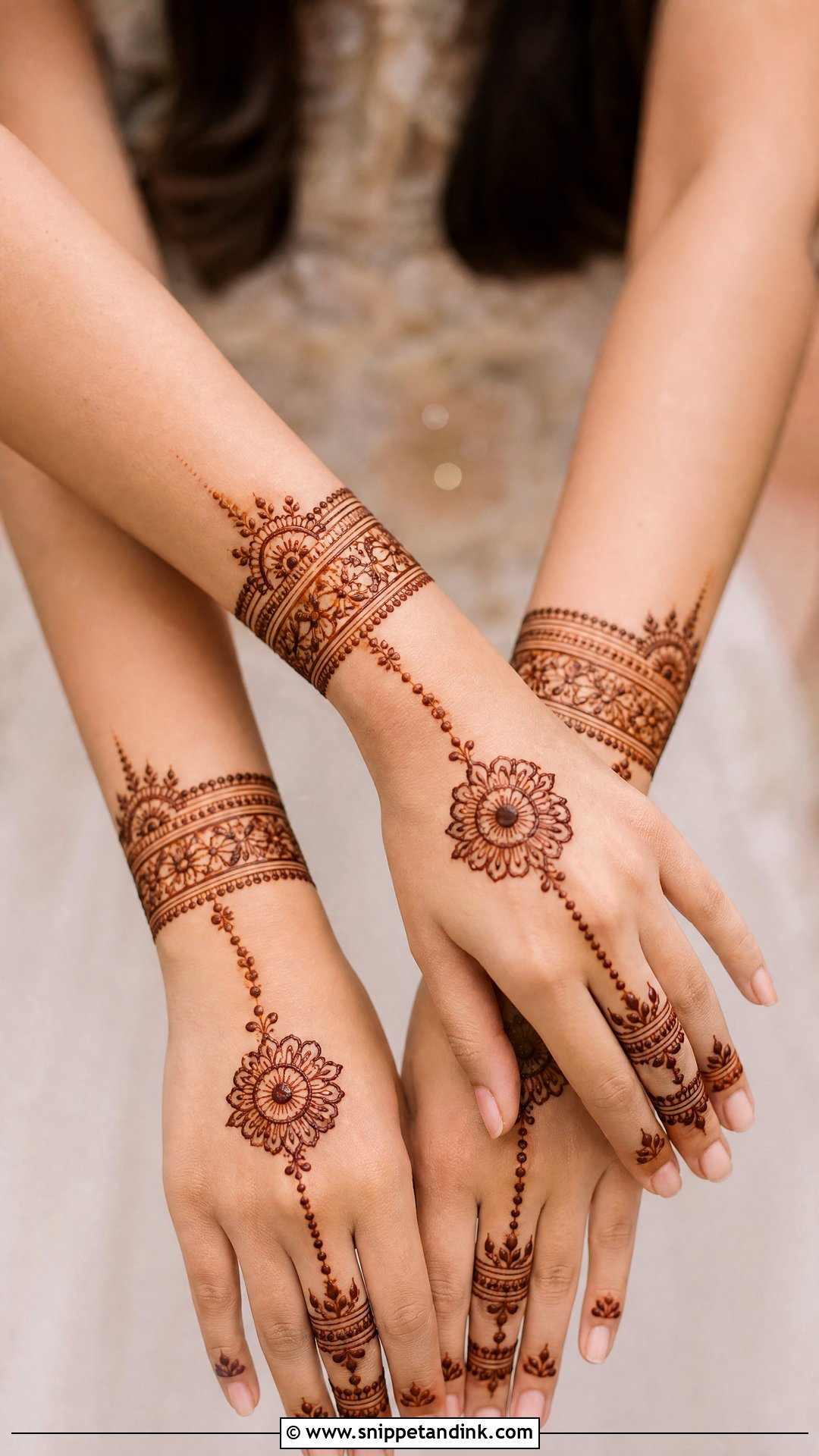
Bracelet mehndi recreates bangles and hand chains in henna, so the wrist becomes the highlight: layered cuffs, dotted borders, floral bands and fine chains leading toward the fingers. It complements real jewellery instead of competing with it, which is why brides with delicate rings or light bangles like it. I keep the bracelet section detailed and link it to a central flower, mandala or finger ring pattern. If you’ll wear a heavy bangle stack, tell me first; I’ll stop the cuff higher so it isn’t hidden.
21. Criss Cross Bridal Mehndi Back Hand
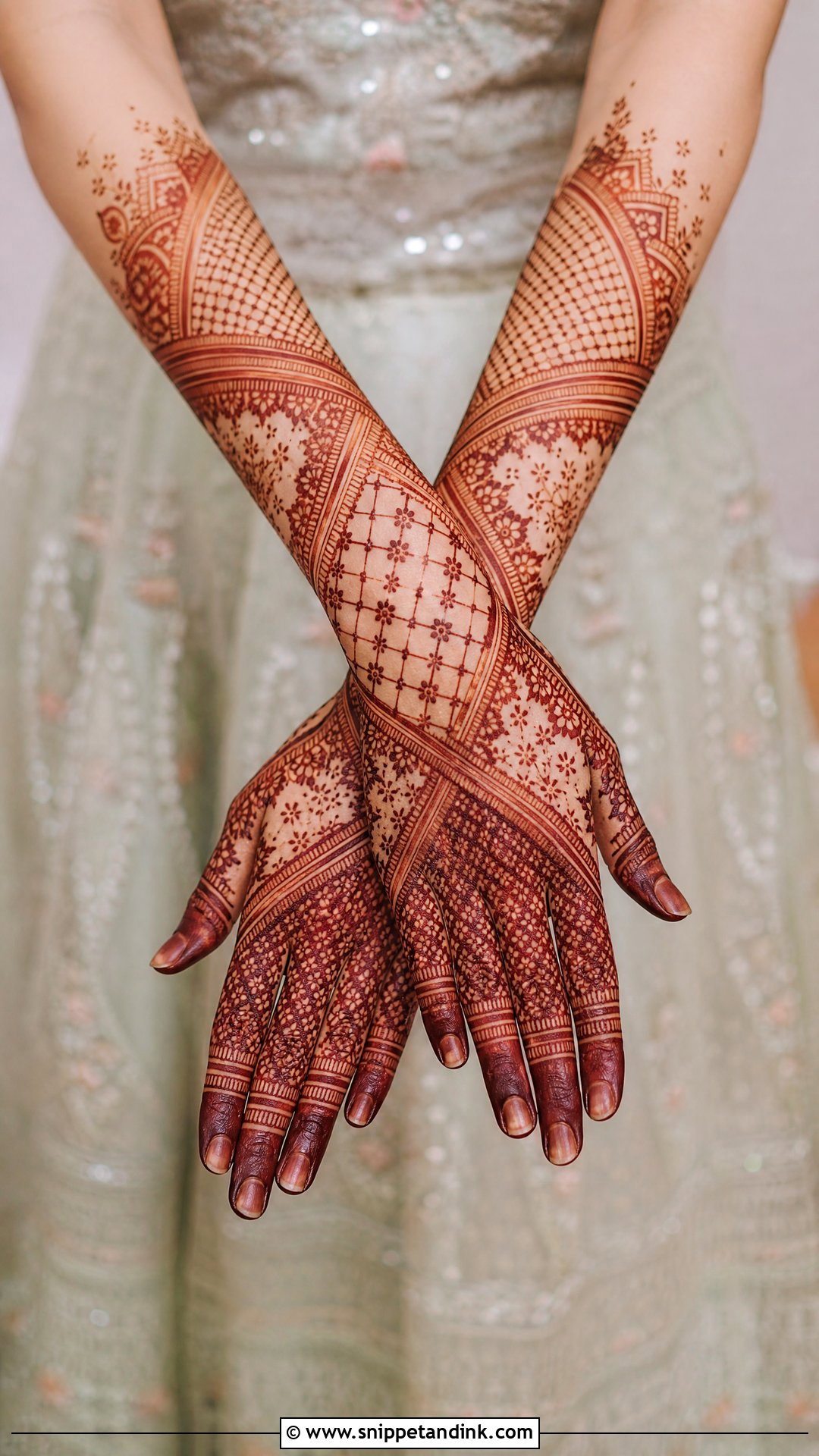
Criss cross mehndi gives the back hand a lattice texture from diagonal lines, net sections, tiny dots and bordered spaces. It’s an ordered look, and it can be combined with flowers, paisleys or mandalas. On wider hands, the angled lines help lengthen the shape. I use it in selected panels rather than everywhere, because an all-over lattice can look busy, and finish with a bold wrist border.
22. Shaded Bridal Mehndi Design Back Hand
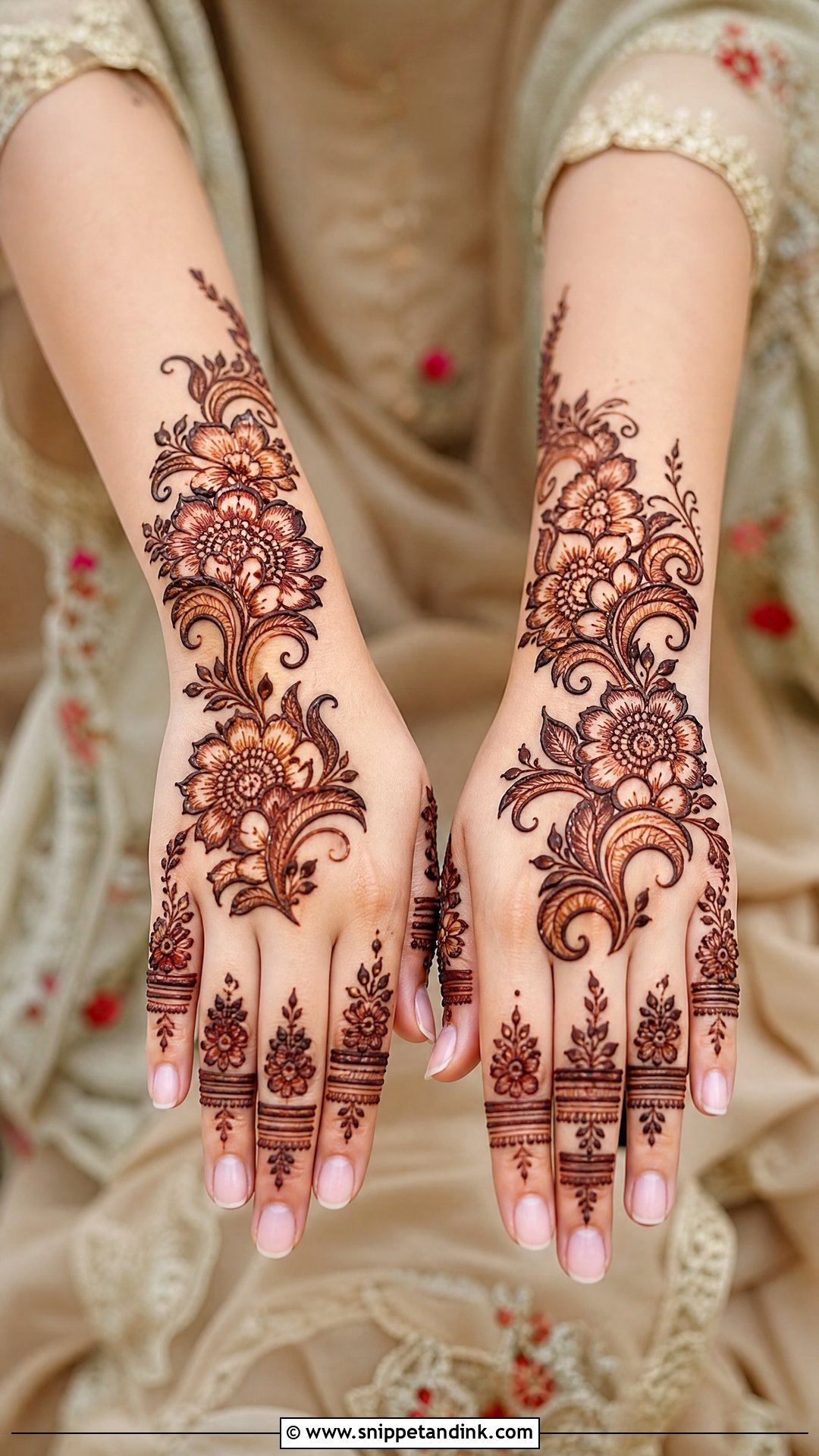
Shading means filling flowers, leaves and paisleys with a softer, thinner layer of paste so the motifs look dimensional after staining. It’s common in Arabic, Indo-Arabic and Gulf work and gives you richness without endless tiny linework. The technique depends on paste consistency: too stiff and the shading goes patchy, too runny and it floods the outline. For a wedding I pair shaded florals with detailed fingers, a bracelet-style wrist and small dotted accents.
23. Simple Bridal Mehndi Back Hand
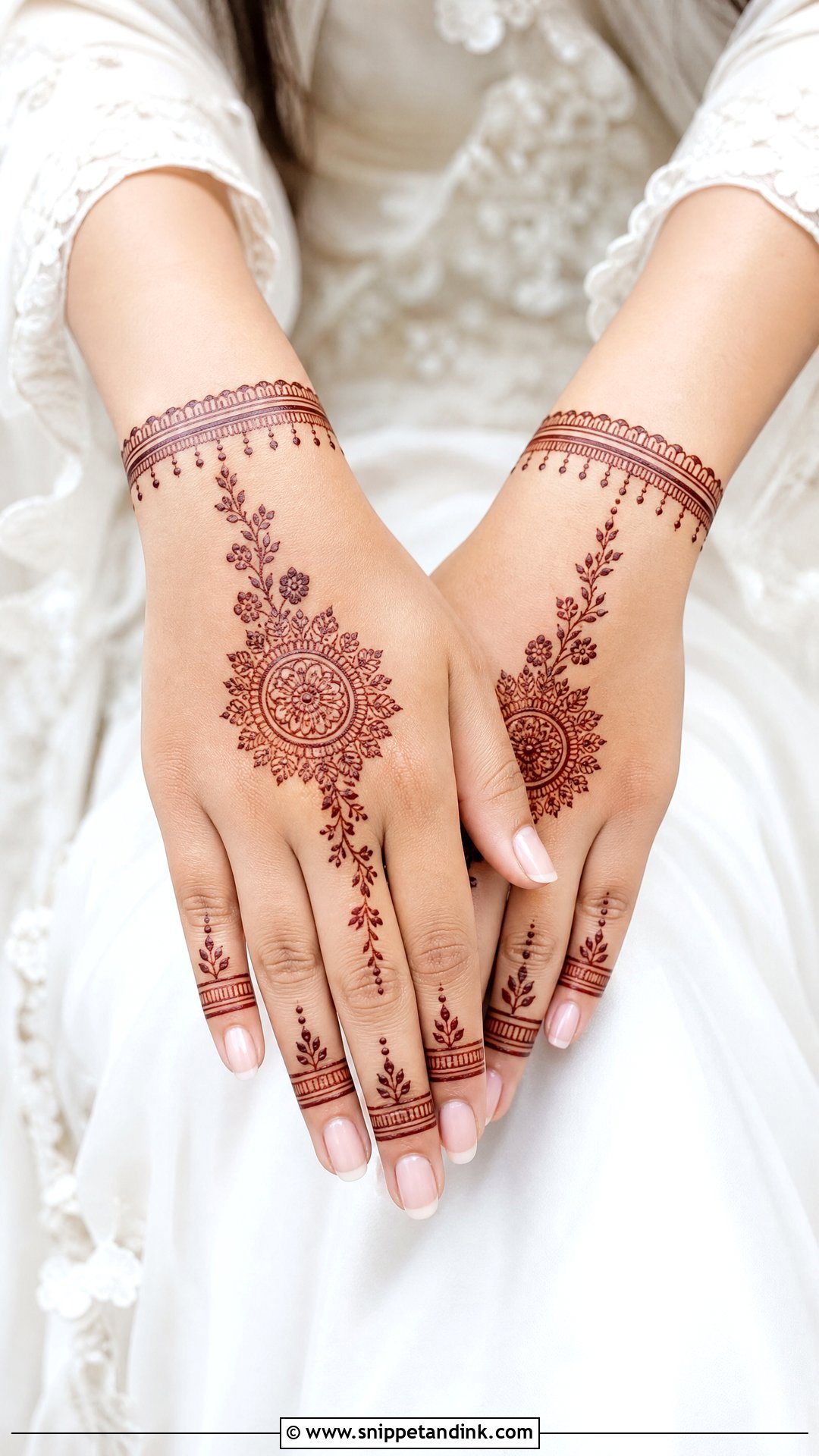
A simple back hand design isn’t plain when it’s planned. One strong focal point, such as a mandala, floral trail or paisley cluster, with clean finger details and a soft wrist border is enough. It takes less time in my chair, which matters before a packed pre-wedding week, and it suits modern and traditional brides alike. Neat spacing and sharp lines carry it, and a deep stain makes even a small design look finished.
24. Heavy Bridal Mehndi Design Back Hand
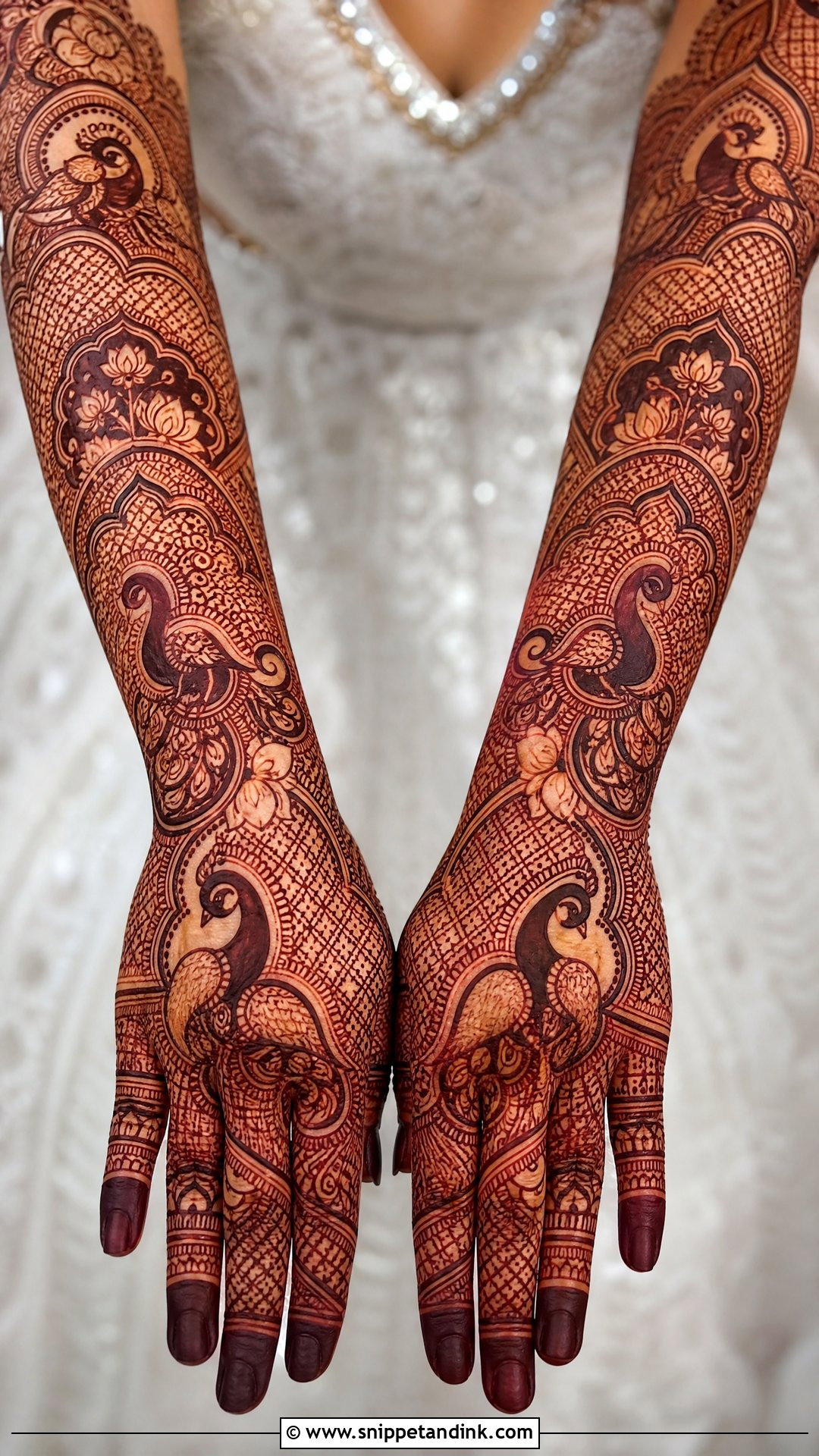
Heavy back hand mehndi covers almost everything from fingers to wrist and sometimes on toward the forearm, with peacocks, lotuses, paisleys, jaali, fine borders and dense filler. It’s rich and unmistakably bridal, and it belongs with traditional outfits, heavy bangles and grand ceremonies. Organisation is what separates luxurious from crowded. I divide the hand into clear zones before drawing, so the motifs don’t bleed into each other once the stain darkens.
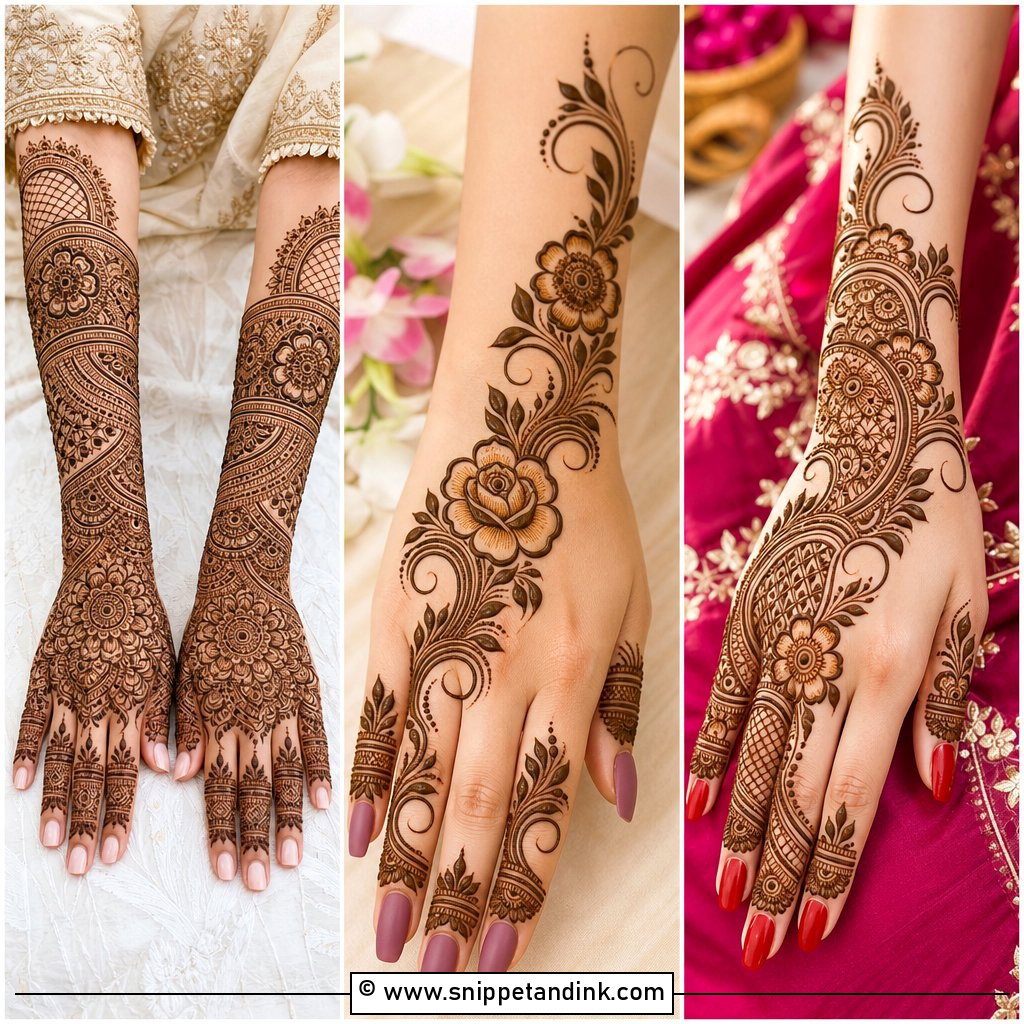




25. Back Hand Bridal Mehndi For Wedding
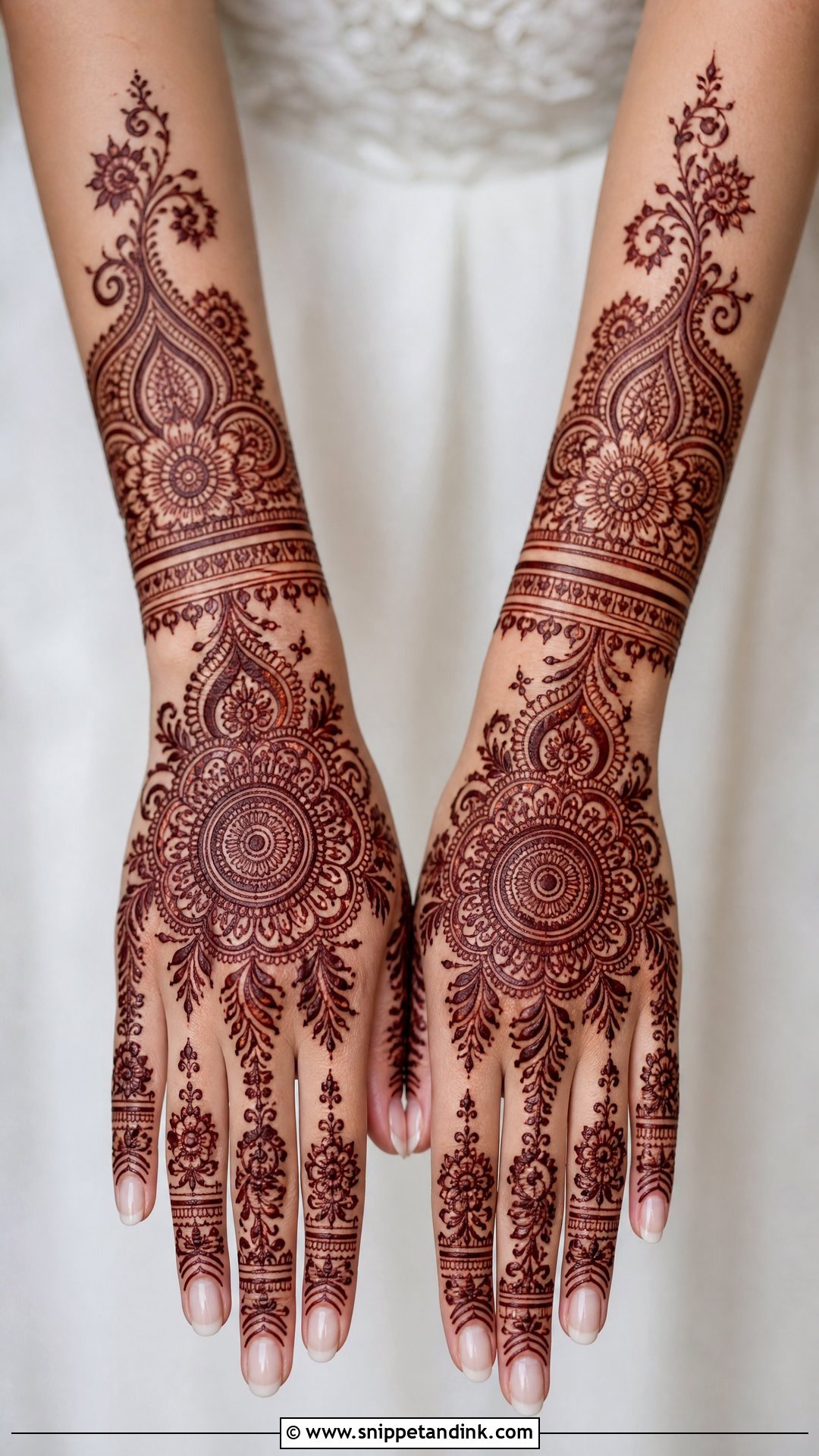
On the wedding day itself, your back hand mehndi has to look complete and stay comfortable through long ceremonies. A traditional bride might pick full Indian coverage with paisleys and peacocks; a modern one, mandalas, florals or bracelet patterns with open skin; an Arabic lover, bold vines and shaded flowers. In every case the wrist, centre, fingers and tips need to connect. When they do, the design follows every movement, from holding the bouquet to showing your rings.
The Top of the Hand Stains Lighter. Here’s How I Work Around It
Henna colour depends on how thick the outer layer of skin is. The palm and fingertips have the thickest skin and stain deepest; the back of the hand is thinner and nearly always comes out a shade or two lighter. That isn’t a flaw in the paste, and it’s worth knowing before you compare your two sides in photos.
- I draw back hand outlines slightly thicker than palm lines so they hold more dye.
- Keep the paste on the back of the hand at least as long as on the palm, ideally overnight, wrapped loosely so it doesn’t smudge.
- Warmth helps the dye release, so stay somewhere comfortable rather than in heavy air conditioning while it sets.
- Avoid washing the back of your hands for the first day; that’s where soap and water hit first.
Plan Around the Rings and Bangles You’ll Really Wear
Jewellery covers more of the back hand than people think. A full bangle stack can hide most of a wrist cuff, a haath phool sits right over the centre motif, and a wide ring covers the finger band beneath it. Bring photos of your real pieces, or wear them for a minute at the appointment, so I can put the detail where it will be seen.
Wait to put bangles and rings on until the paste is off and the stain has had a few hours to settle. Metal sliding over fresh paste smears it, and tight bangles pressing on a new stain can leave paler streaks around the wrist.
Your Back Hand, Your Bangles, Your Pattern
A good back hand design isn’t defined by how heavy it is or which motif is trending. It’s the one that suits your outfit, hand shape, jewellery and personality. Full Indian work feels rich and traditional, while Arabic and Gulf patterns look graceful with open spacing, and mandalas, jewellery patterns, florals, jaali and hidden names each bring their own character. Before you decide, save references, look closely at your artist’s fine lines, and picture the design under your bangles and rings.
You'll Like These Ideas:
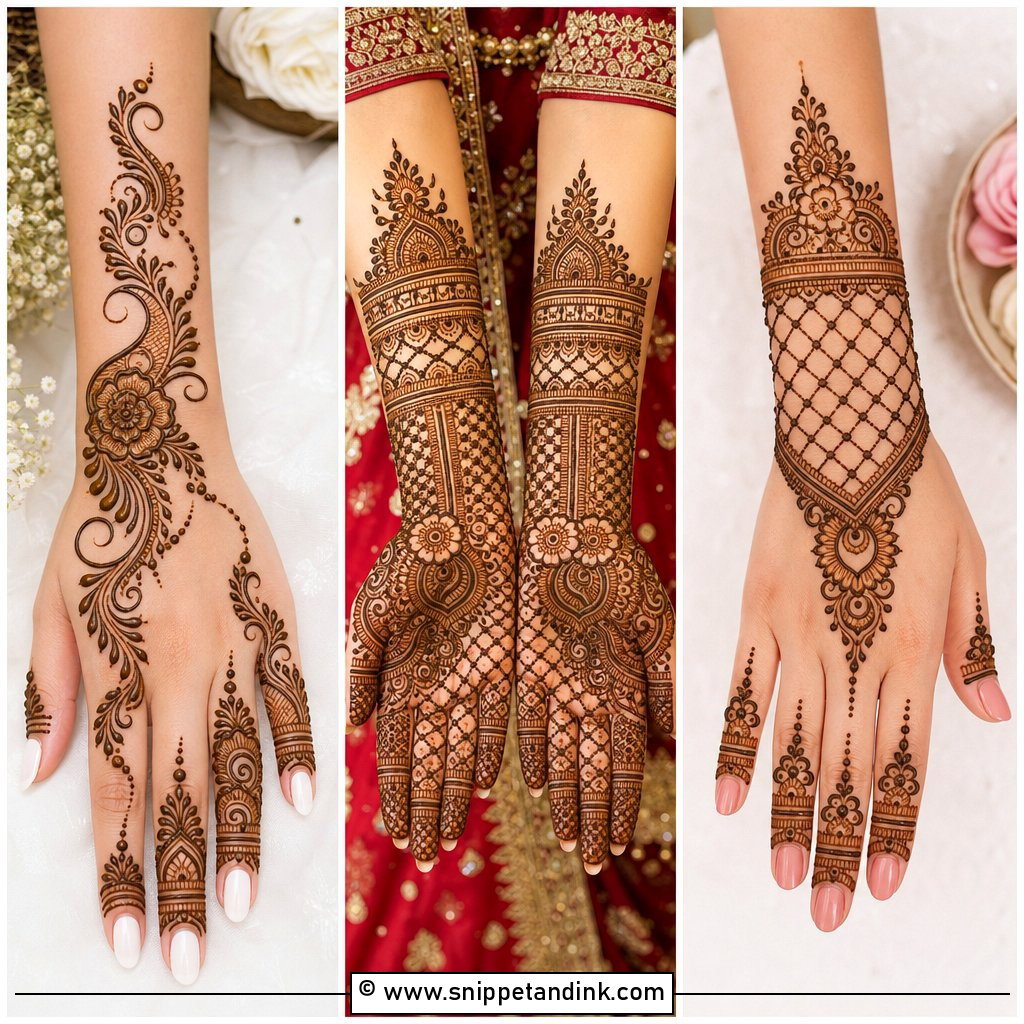







Leave a Reply