
The palm is the most honest canvas on the body. It takes the darkest stain, it shows every wobble in a line, and it’s the side people see when you hold out your hands for a blessing or a ring. Current front hand henna trends borrow from Indian motifs, Arabic spacing, mandalas, jaali mesh and bracelet cuffs, and most of them lean on clean gaps rather than solid filling. Below are 35 palm layouts, each with my notes on coverage, how it stains and who it suits, from a single mandala to full bridal work.
What Does Your Palm Shape Ask For?
Before I suggest a layout, I ask a client to hold her palm flat and then relax it. The flat palm tells me the proportions; the relaxed one shows me where the creases fold, and creases are where fine detail blurs. Most palm designs are really decisions about length and width.
Long palm, long fingers
Almost anything works. Diagonal trails make the hand look even longer, so if you’d prefer a fuller look, a central mandala or a round motif balances the length.
Short or wide palm
A diagonal trail or a vertical line of motifs adds length. I avoid one big circle covering the whole palm here, because it emphasises width. Fingers decorated to the tip also help, since they extend the line of the design.
Small hands
Fewer, larger motifs read better than many small ones. Tiny filler on a small palm closes up as the stain darkens and starts to look like a smudge from a few feet away.
Mention your dominant hand too. It’s the one you’ll reach for without thinking while the paste is wet, and some artists will finish it first so it has longer to dry.
1. Simple Front Hand Mehndi Design
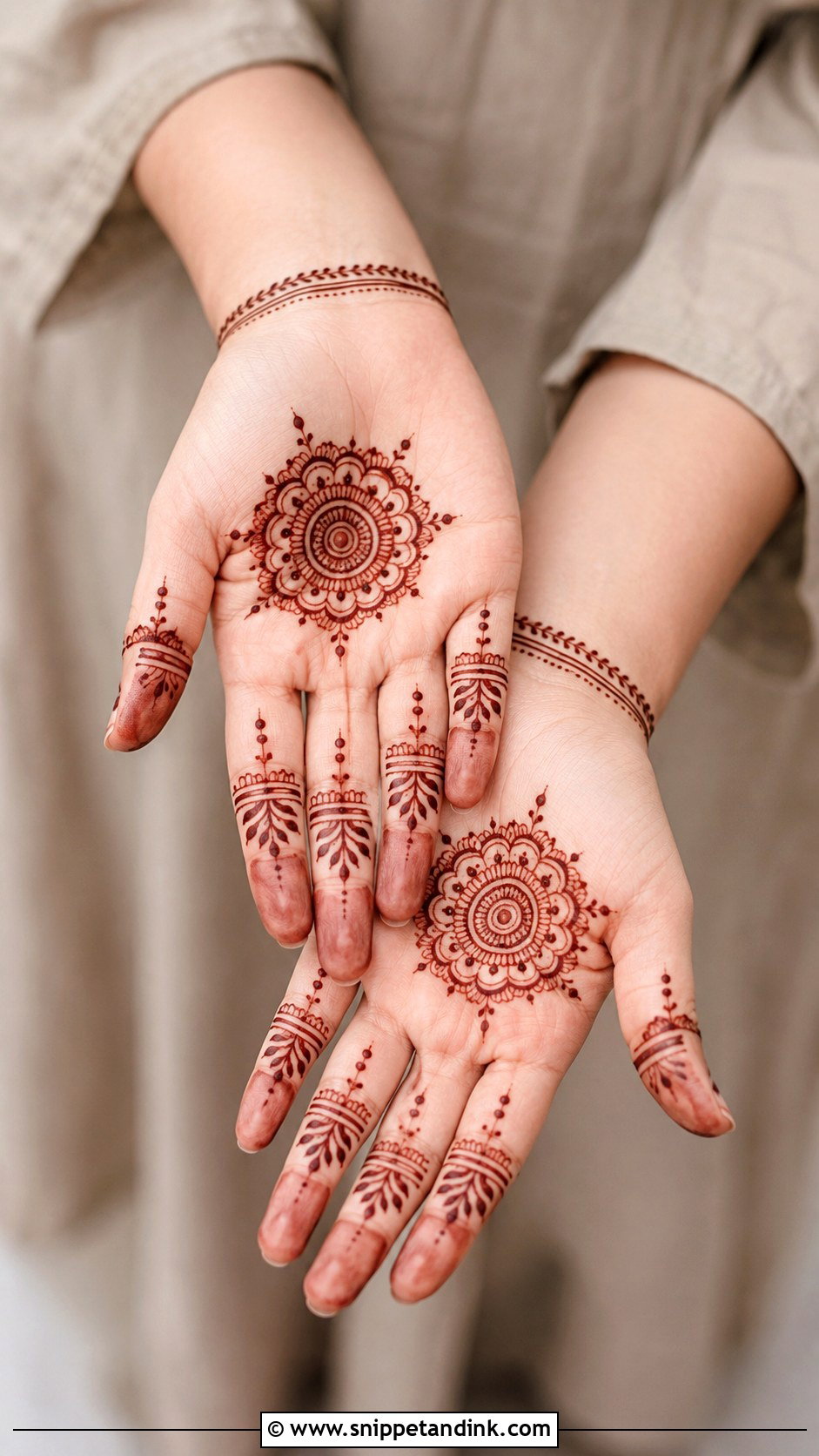
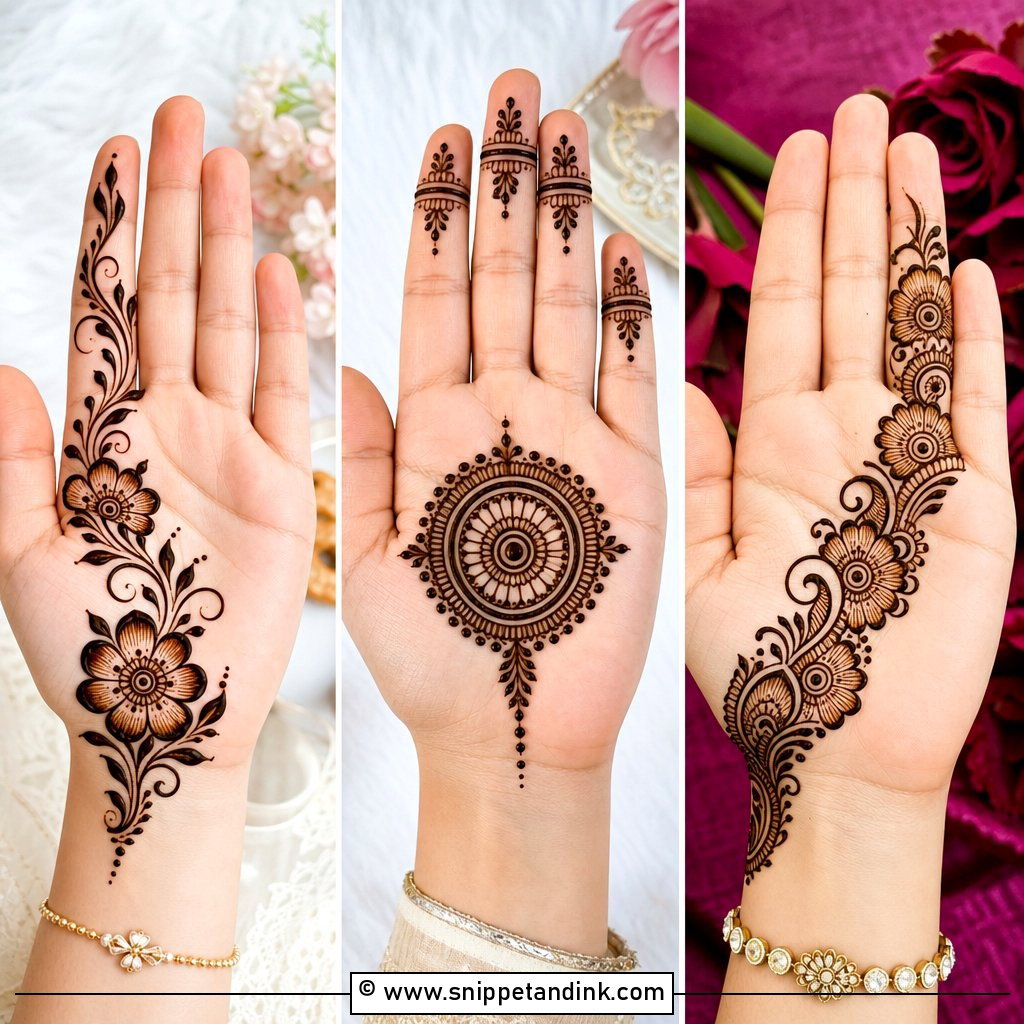
One neat palm motif, a small mandala, flower or paisley, then light finger patterns and maybe a slim bracelet line: that’s the whole design. I make the centre motif bolder than you’d expect, because on an open palm it carries the entire look, and I keep the fingers lighter so the eye lands in the middle first. It’s the layout I recommend for Eid mornings, school events and anyone trying henna for the first time.
2. Modern Arabic Front Hand Mehndi Design
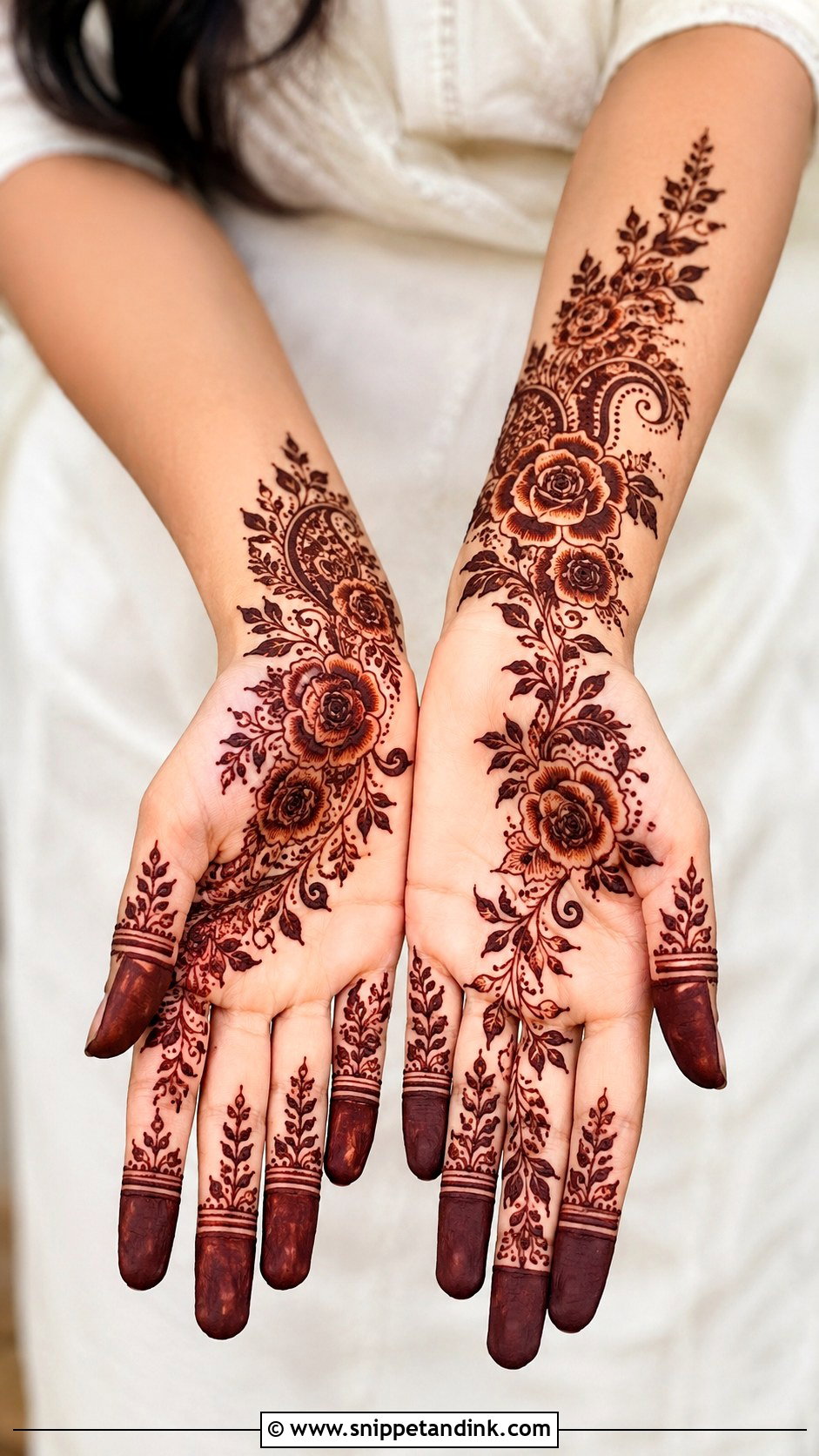
Arabic work on the palm runs diagonally from one side of the wrist toward the fingers, using bold flowers, leaves, paisleys and curved vines instead of covering every inch. On a long palm that diagonal adds even more length, which is why I steer long-fingered clients toward it. On a short, wide palm I flatten the angle a little so the trail doesn’t run out of room before the fingers. Ask for thick outlines with soft inner shading if you want it to look professionally finished.
3. Full Front Hand Mehndi Design
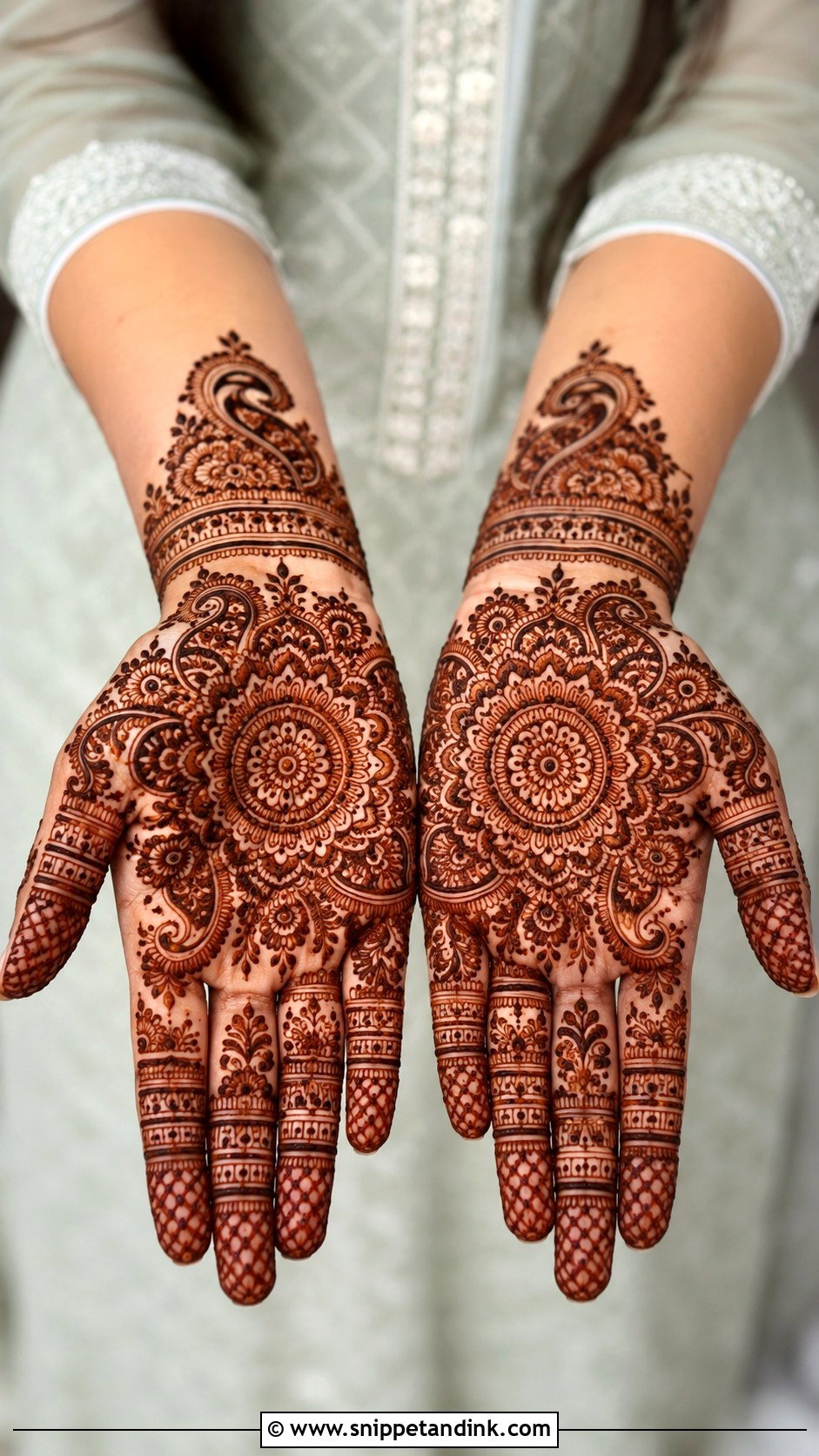
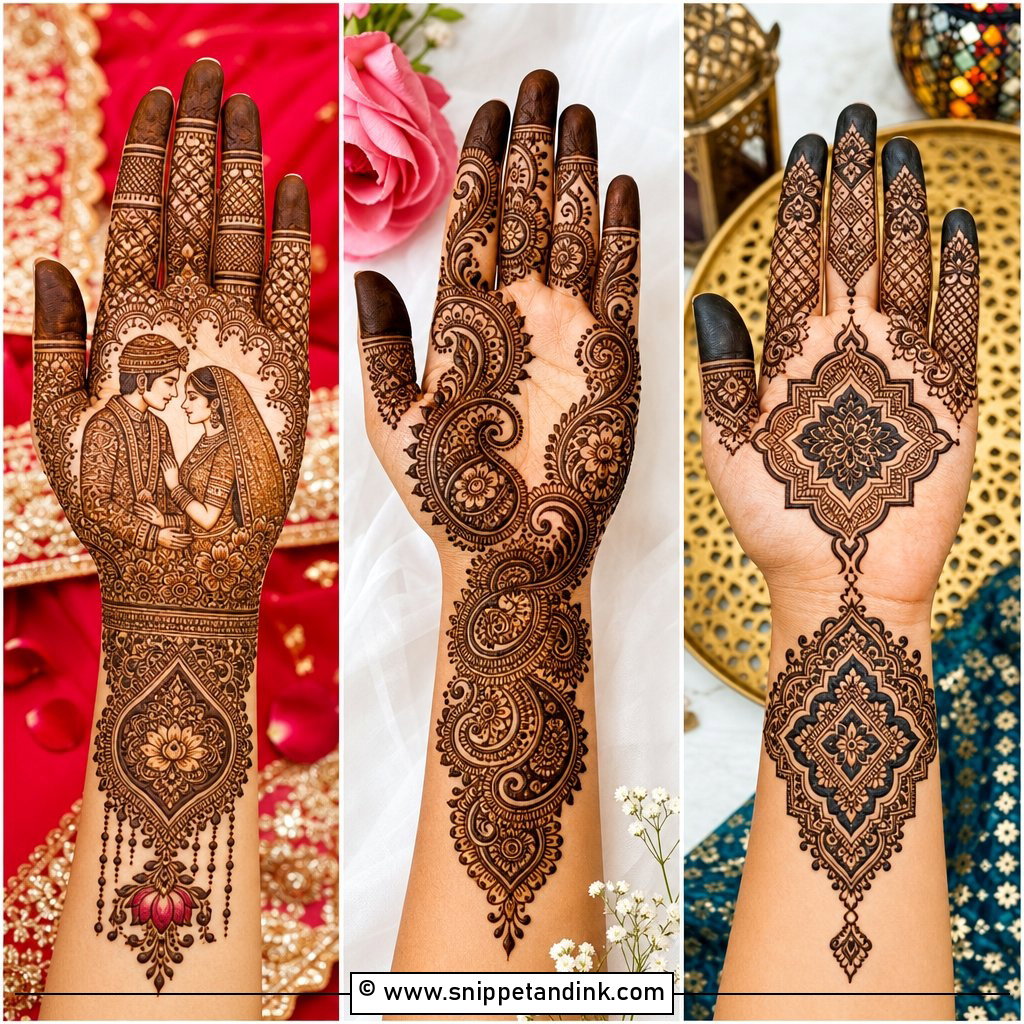
Full coverage means fingertips to wrist: a central mandala or layered paisleys, florals or traditional Indian filler, and matching bands, vines, mesh or shaded tips on every finger. The risk is the stain itself. Paste that sits in tight, packed areas can merge as it darkens, and what looked crisp when wet ends up as a dark patch. I leave tiny breathing gaps between motifs for exactly that reason. This is skilled work; choose an artist whose finished stains you’ve seen, not just her wet-paste photos.
4. Front Hand Mandala Mehndi Design
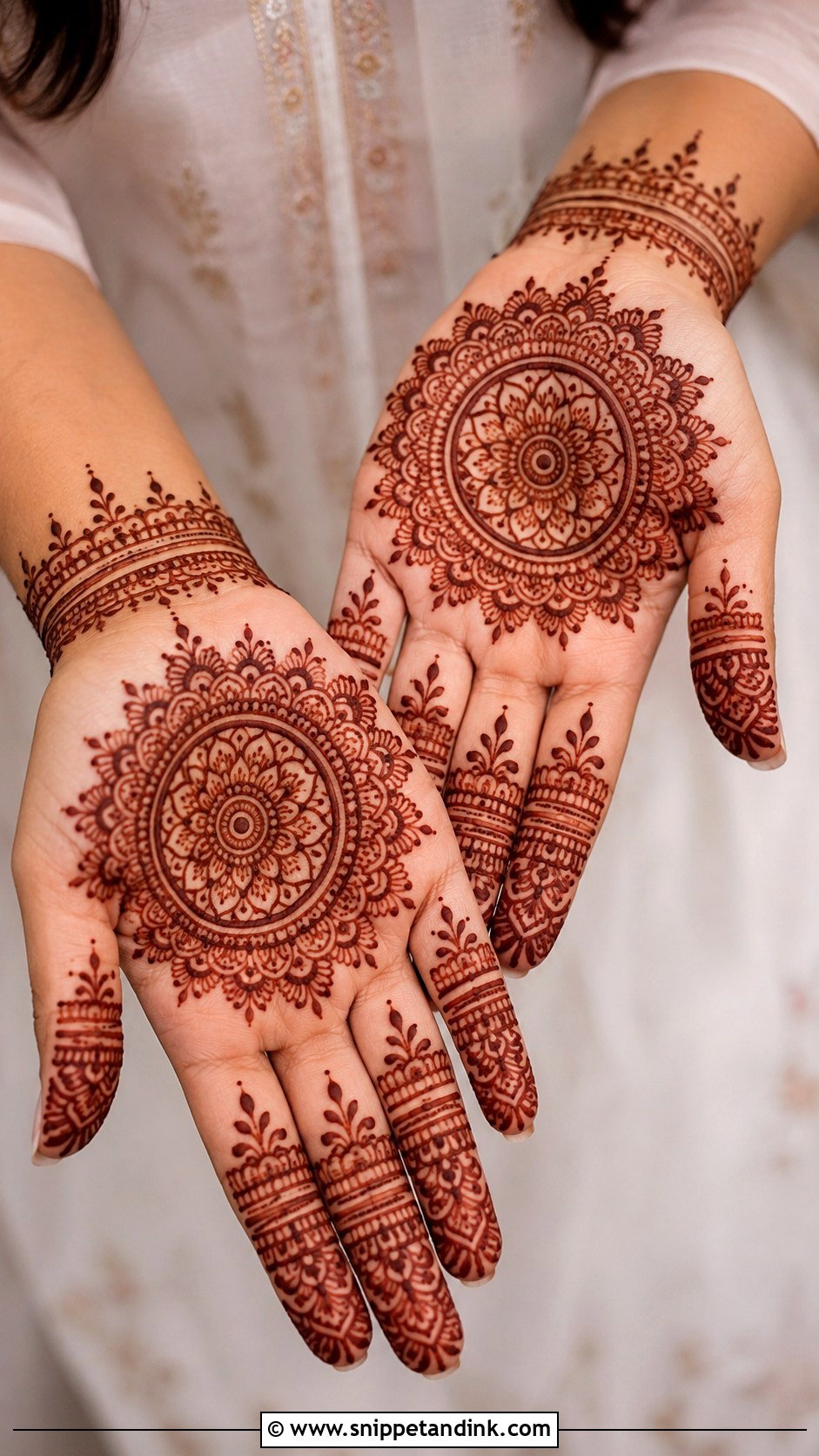
A round mandala in the middle of the palm, built outward with finger details, wrist bands, dots and small floral accents. It reads as traditional without looking dated, and it scales from a simple ring of petals to a densely layered disc. The hard part is centring it. The palm’s flat area sits slightly toward the thumb side, not dead centre, and I place the mandala there so it doesn’t fold into the creases when the hand relaxes.
5. Floral Front Hand Mehndi Design
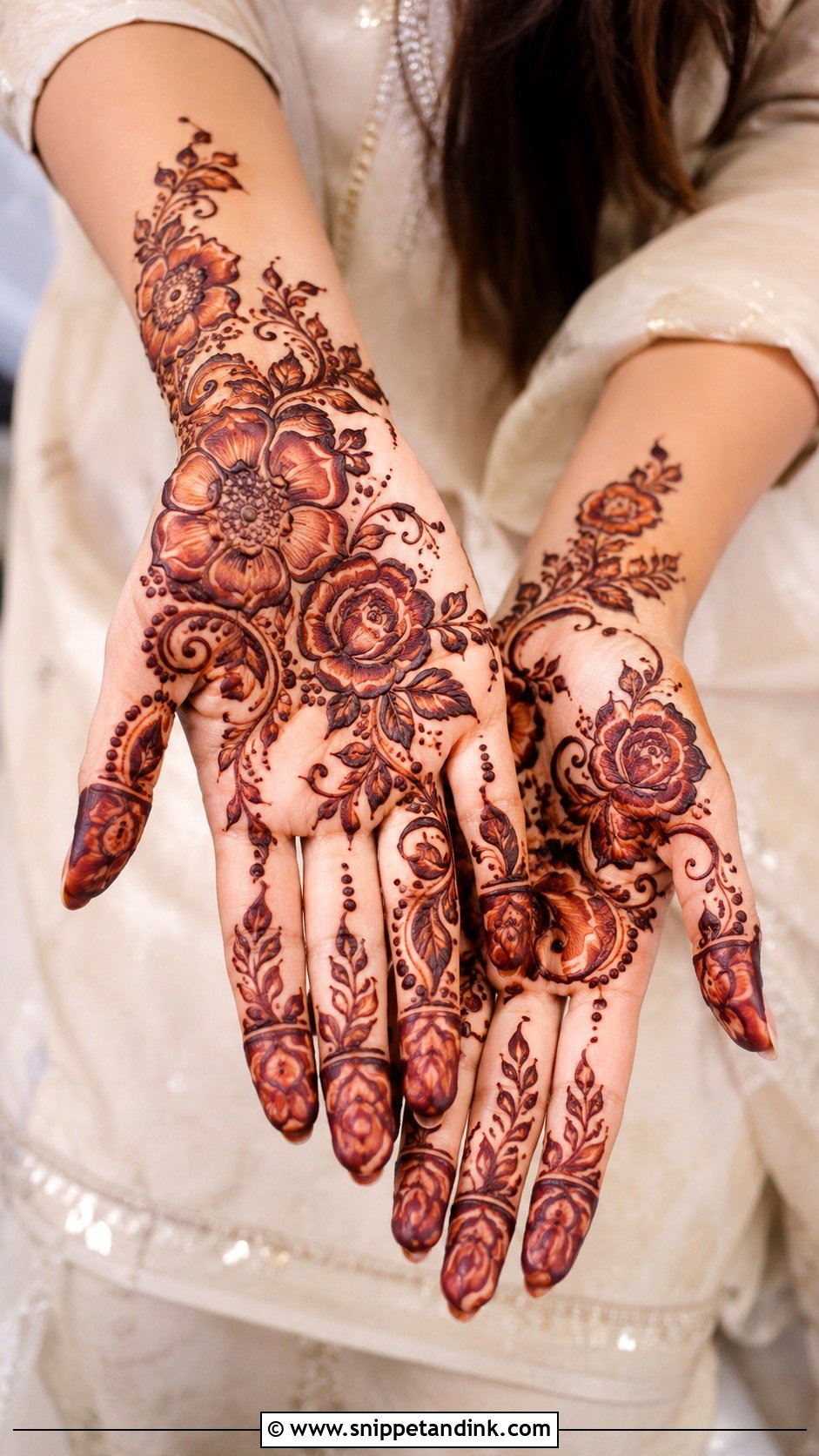
Roses, lotus blooms, buds, leafy vines and curved stems make up a floral front hand mehndi design. Current versions skip the heavy filling and rely on bold outlines with light shading. I put the largest flower near the middle of the palm and let smaller ones travel toward the index finger and wrist. That diagonal arrangement is my usual fix for a short palm, since it draws the eye along the longest line of the hand. Bridesmaids, baby showers and engagement functions all suit it.
6. Bridal Front Hand Mehndi Design
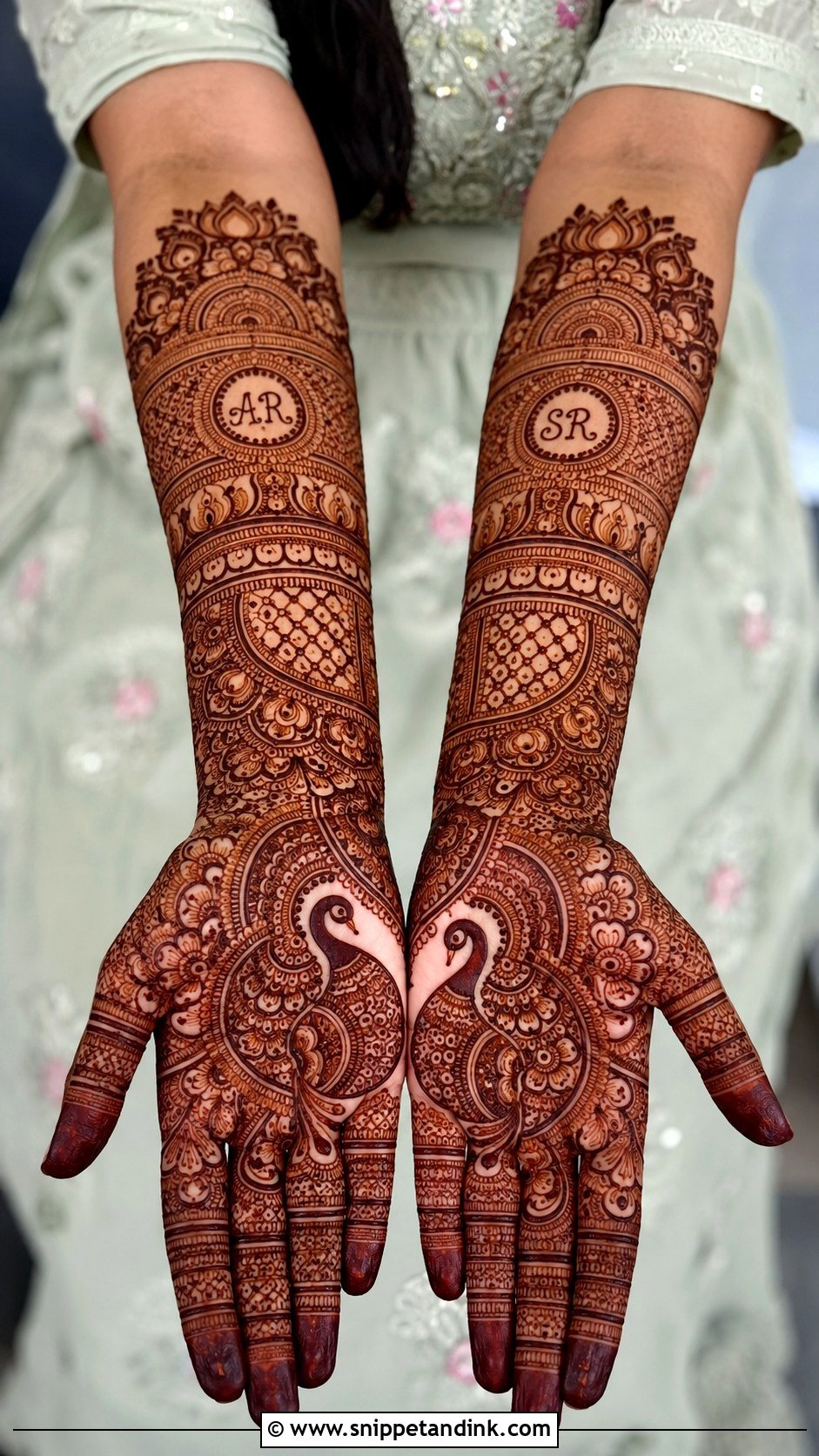
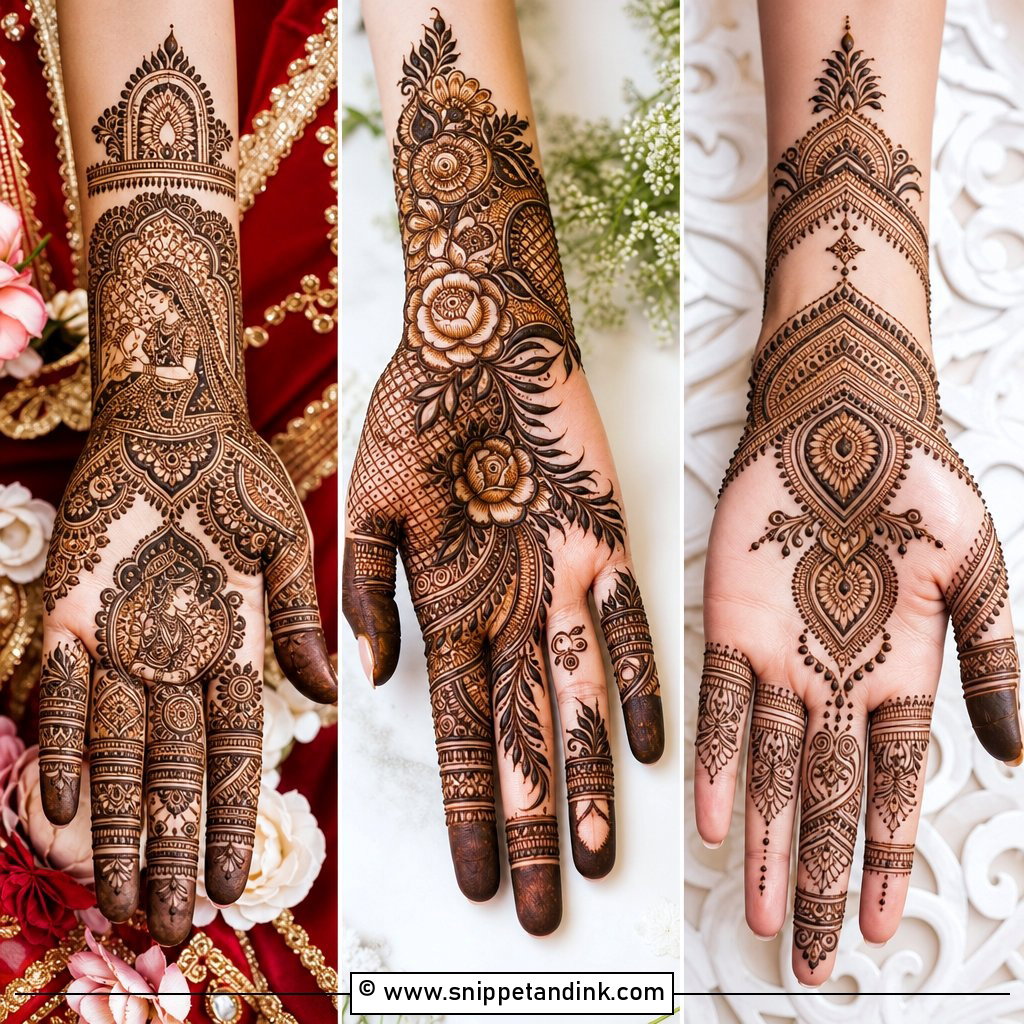
Bridal palms carry the most meaning, so they get the most planning. Paisleys, florals, jaali, mandalas, peacocks and personal details can run across palm, fingers, wrist and forearm. I give the palm the strongest artwork because that’s what faces the camera during the ceremony, and I set the density so each element stays readable rather than packing everything in. Initials or a shared motif across both hands make it personal. What matters most at this level is line control and a dark natural stain; no layout survives shaky lines.
7. Minimal Front Hand Mehndi Design
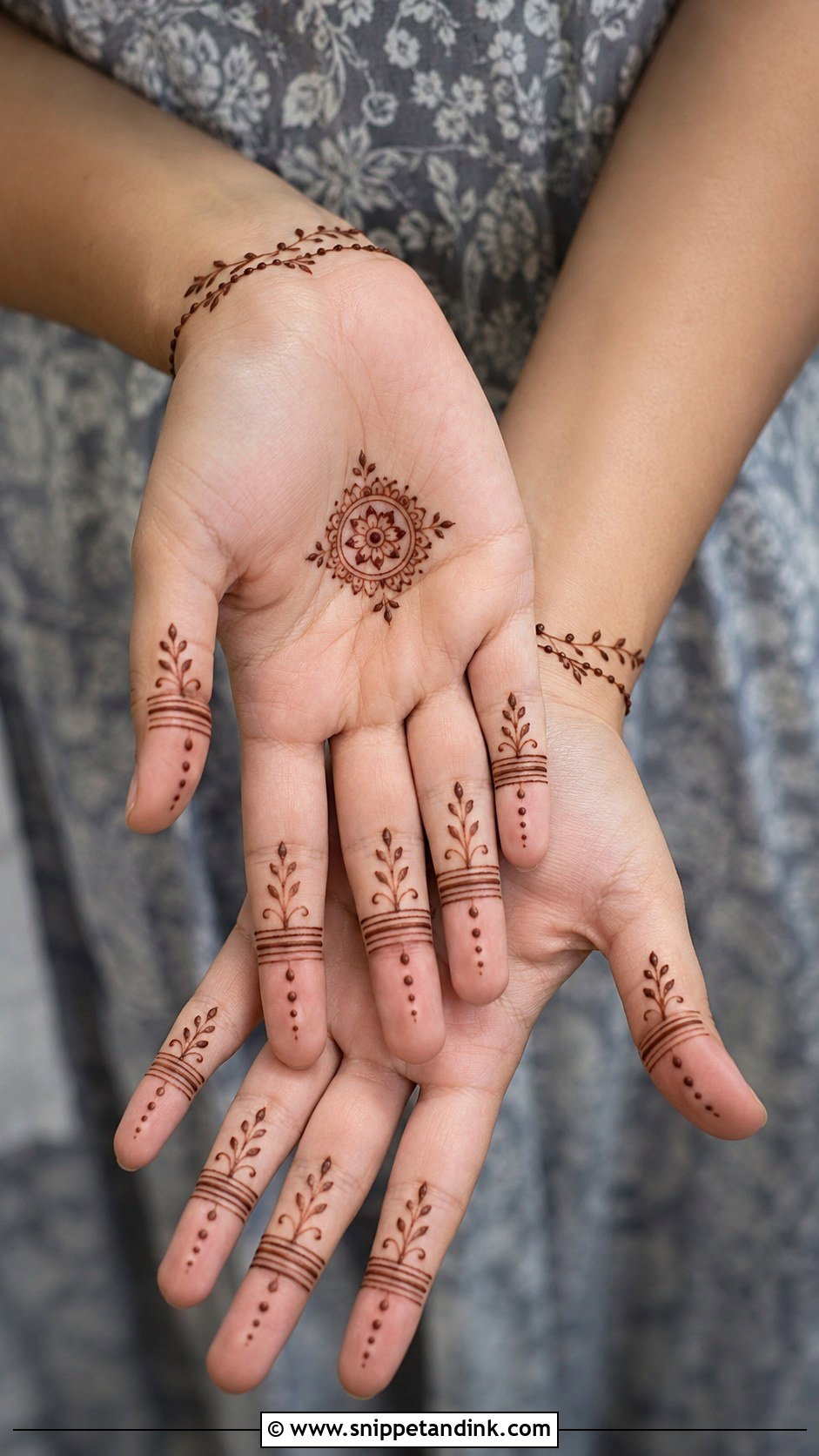
Light, clean and easy to wear: a small palm mandala, slim finger bands, tiny leaves and a delicate wrist chain, with the rest left open. Restraint is the hard part. One main motif only, thin and even lines, and nothing added because there’s a gap. I suggest it for work-friendly events, first-timers and anyone who dislikes heavy henna.
8. Front Hand Finger Mehndi Design
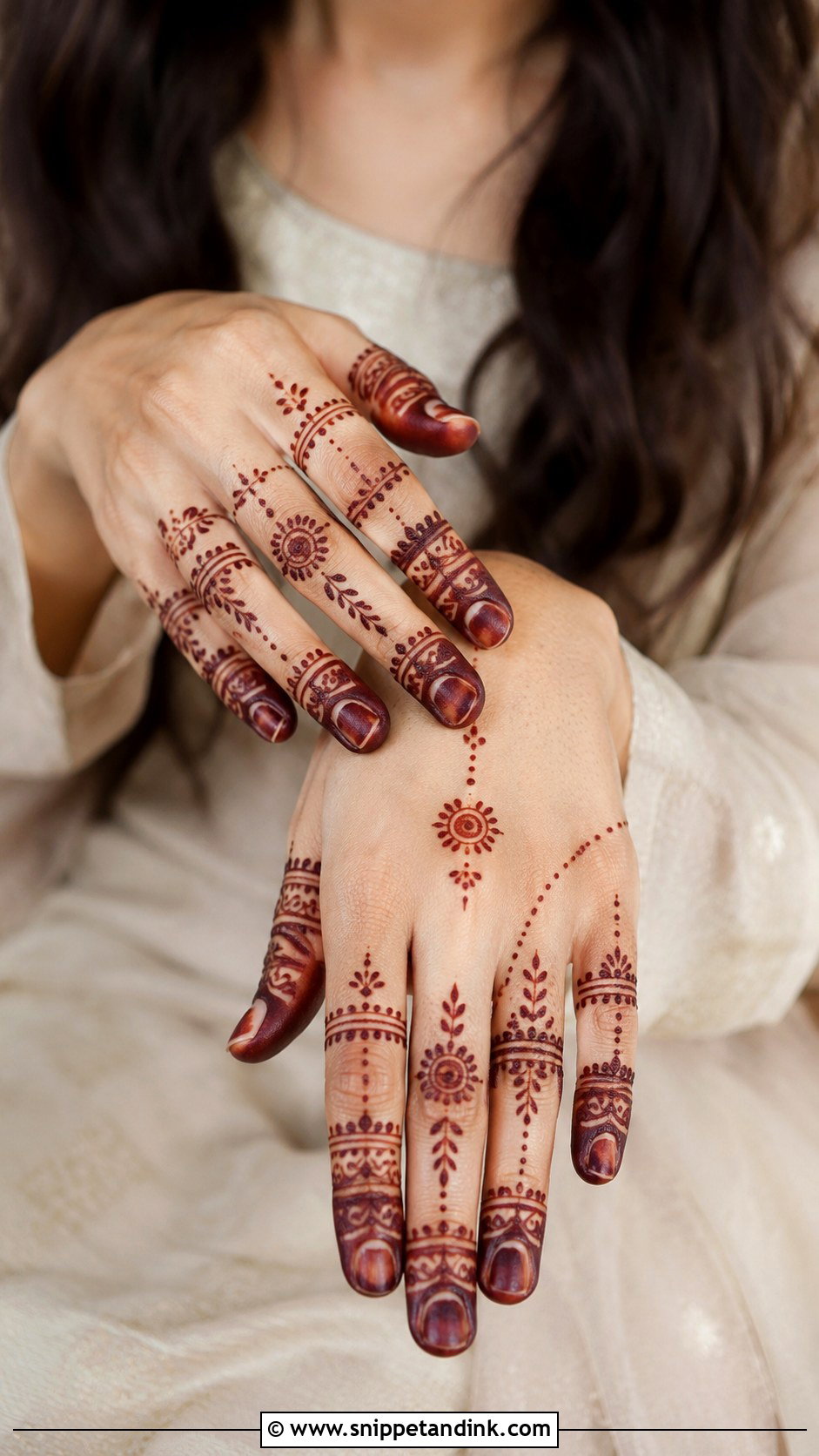
Most of the detail moves to the fingers here, with ring-style bands, leafy strips, dots, tiny florals, net patterns and shaded tips, while the palm stays softer and more open. Without some link to the palm it can look like the artist ran out of time, so I add a small centre motif or side trail to tie it together. Each finger can differ slightly as long as one shared detail, like a dot sequence or a leaf, repeats across them. It’s quick enough for a salon appointment before a college event.
9. Front Hand Bracelet Mehndi Design
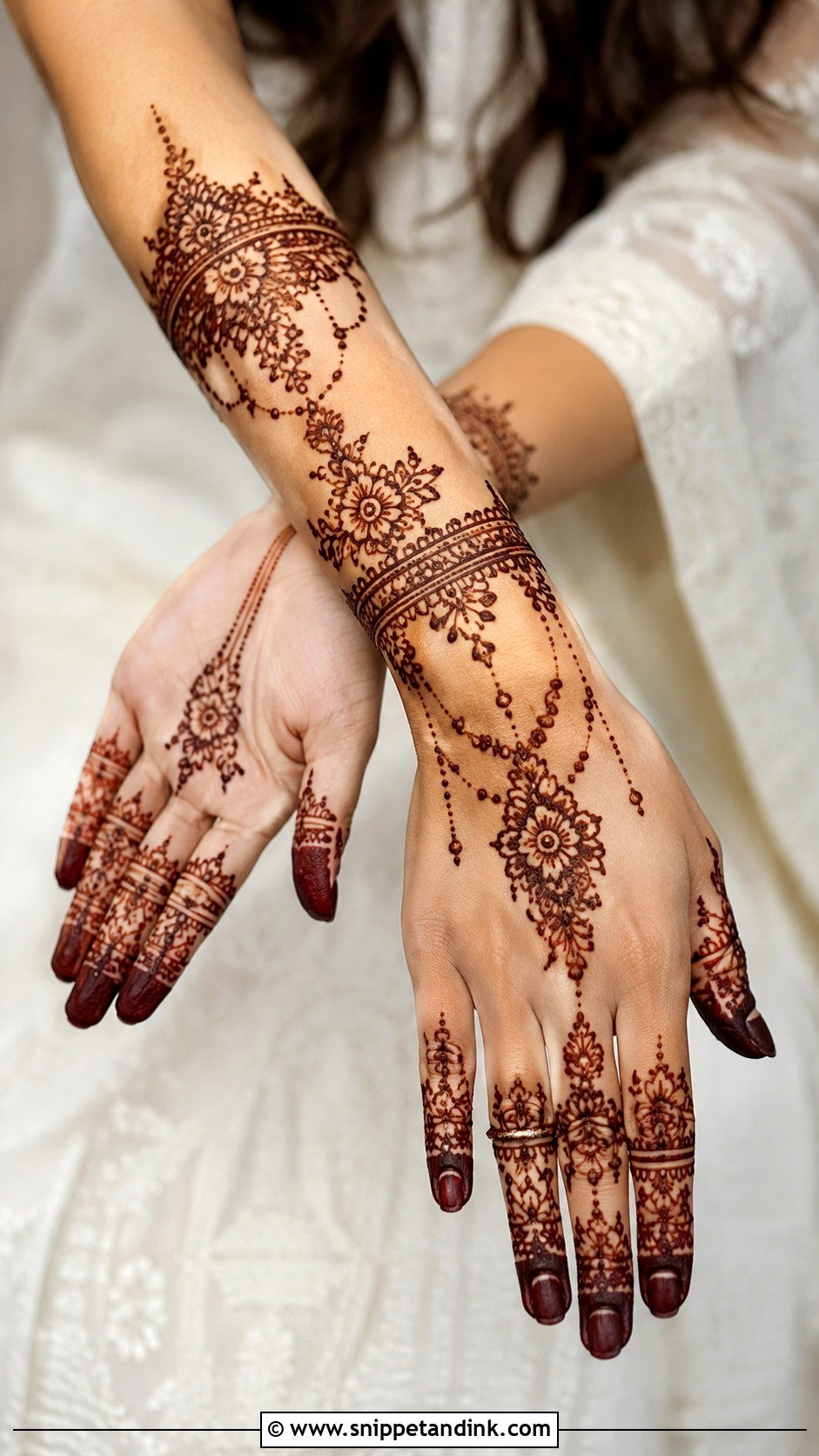
The wrist becomes jewellery: cuff bands, chain lines, beads, florals and hanging details, then a vine, mandala or ring-style link reaching gently into the palm. I draw the cuff boldly and keep the palm airy, because that contrast is the entire point. The inner wrist stains well but rubs against sleeves, so if your outfit has fitted cuffs, push them up for a few hours after the paste comes off. It suits engagement and Eid outfits, and hands look dressed even without bangles.
10. Indo Arabic Front Hand Mehndi Design
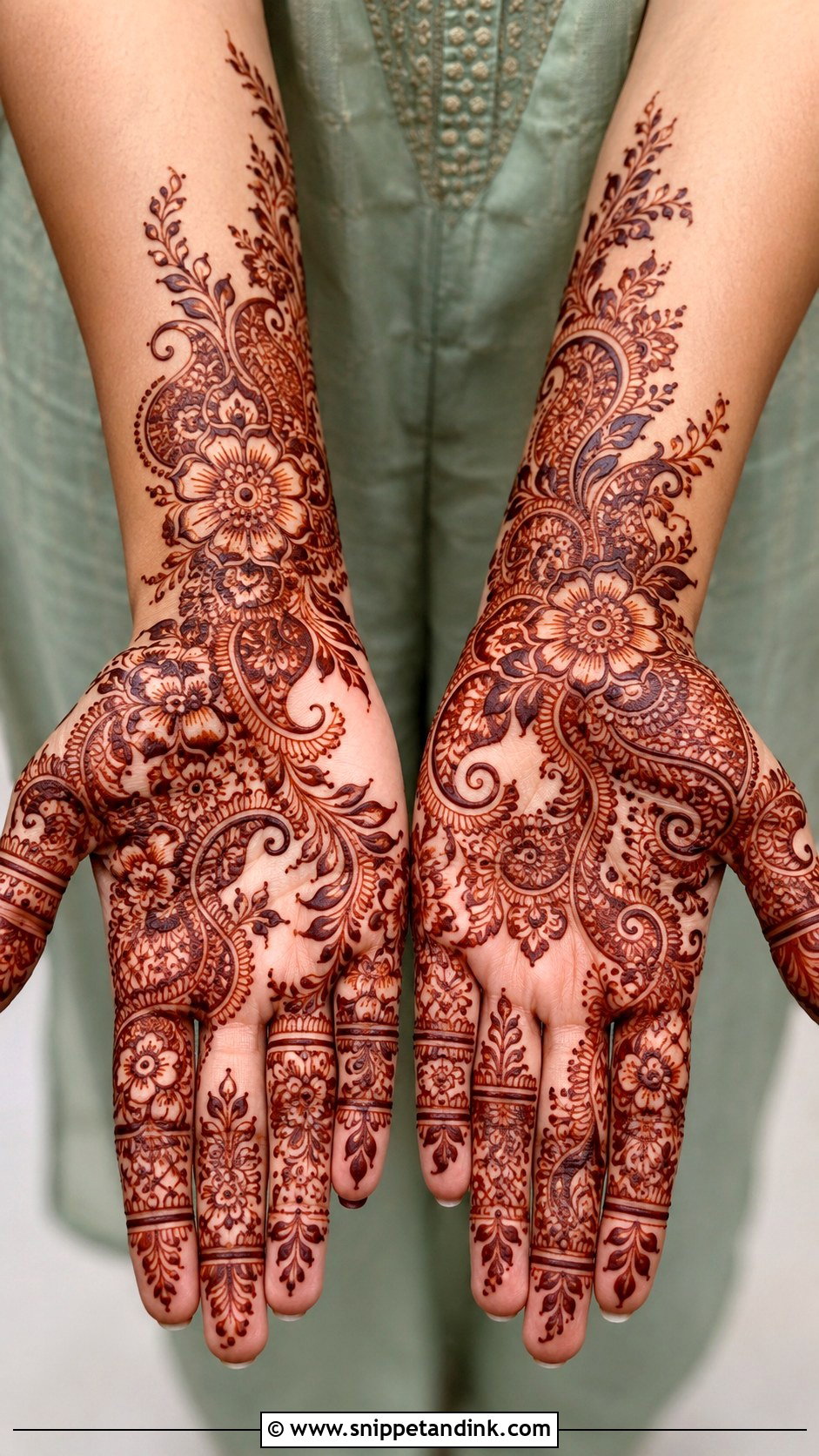
Indo-Arabic palms take the bold flow of Arabic henna and fill the insides with Indian detail: large flowers, paisleys or leafy trails, then fine lines, dots, checks and mini petals within them. You get more depth than pure Arabic work while some skin stays visible. My rule is that not every section gets equal density. Let the bold shapes lead and the fine details support them, or the hand loses its focal point. Wedding guests and bridesmaids wear this one a lot.
11. Front Hand Rose Mehndi Design
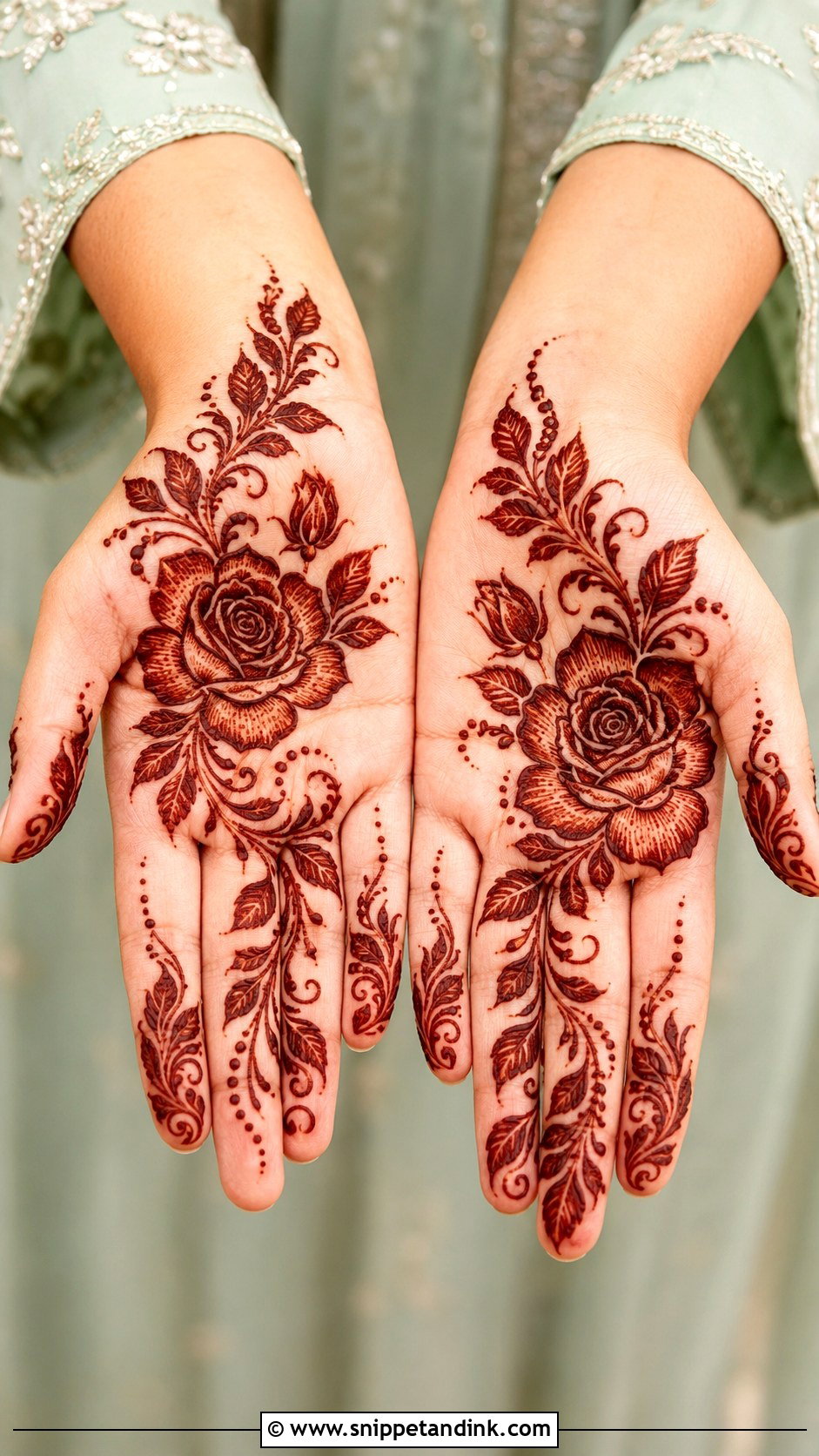
The main rose can sit in the centre of the palm, along the thumb side or inside a diagonal Arabic trail, with rosebuds, leaves, curls and dots around it. Roses resize well for small and long palms. I shade the inner petals and keep the outer outline bold, since an evenly shaded rose loses its layers once the stain comes through. Leave the surrounding skin clean. It suits engagements, receptions and family photos.
12. Front Hand Paisley Mehndi Design
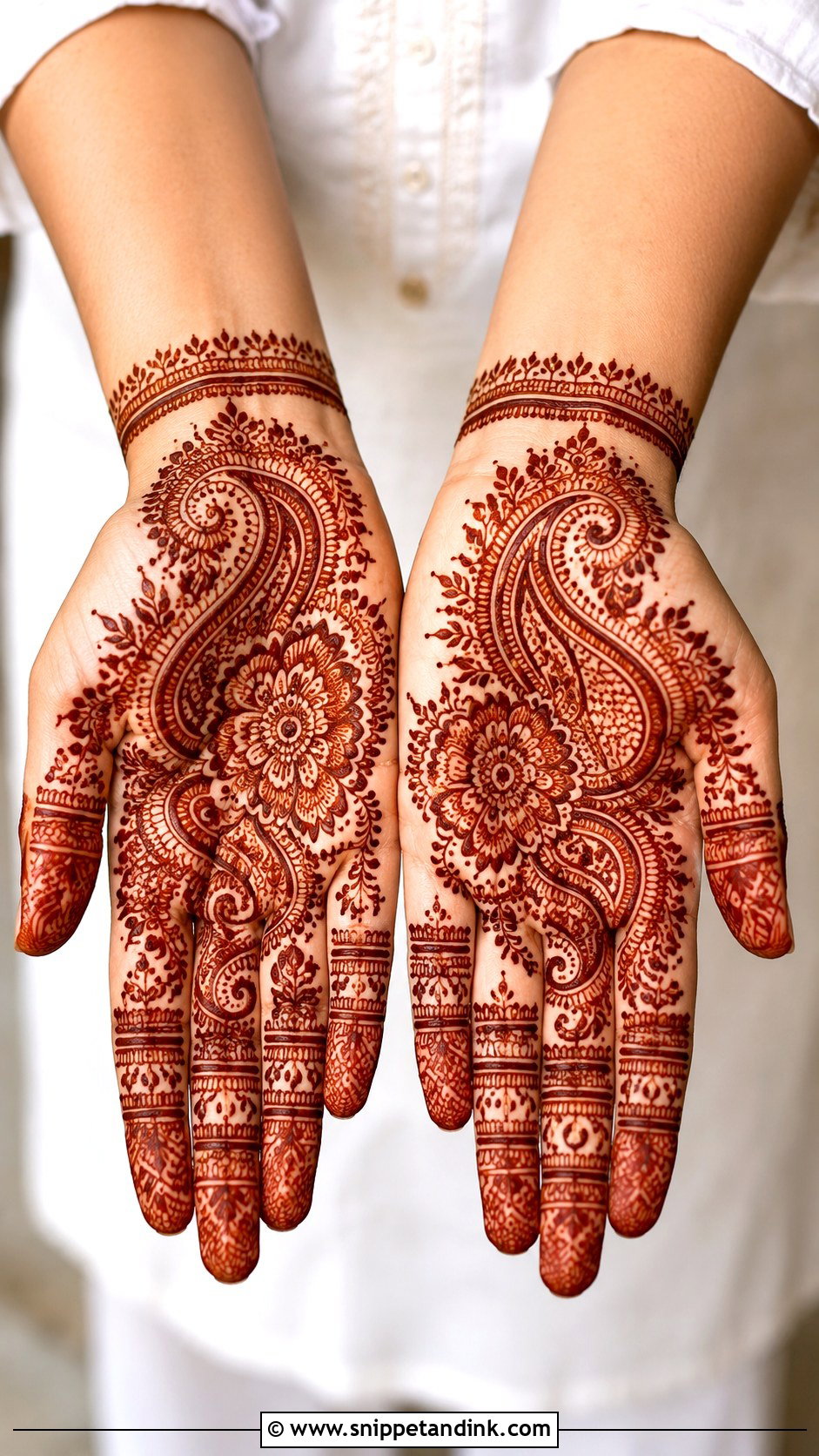
One or two curved paisleys on the palm, linked with florals, vines, dots and finger detailing, plus a half-cuff or slim border at the wrist. A paisley’s curve follows the natural flow of the hand, so it adds movement without effort. I’d rather draw two large paisleys with detailed interiors than eight small ones; crowded small paisleys blur into each other when the stain deepens. It works for festivals, weddings and traditional family occasions.
13. Front Hand Jaali Mehndi Design
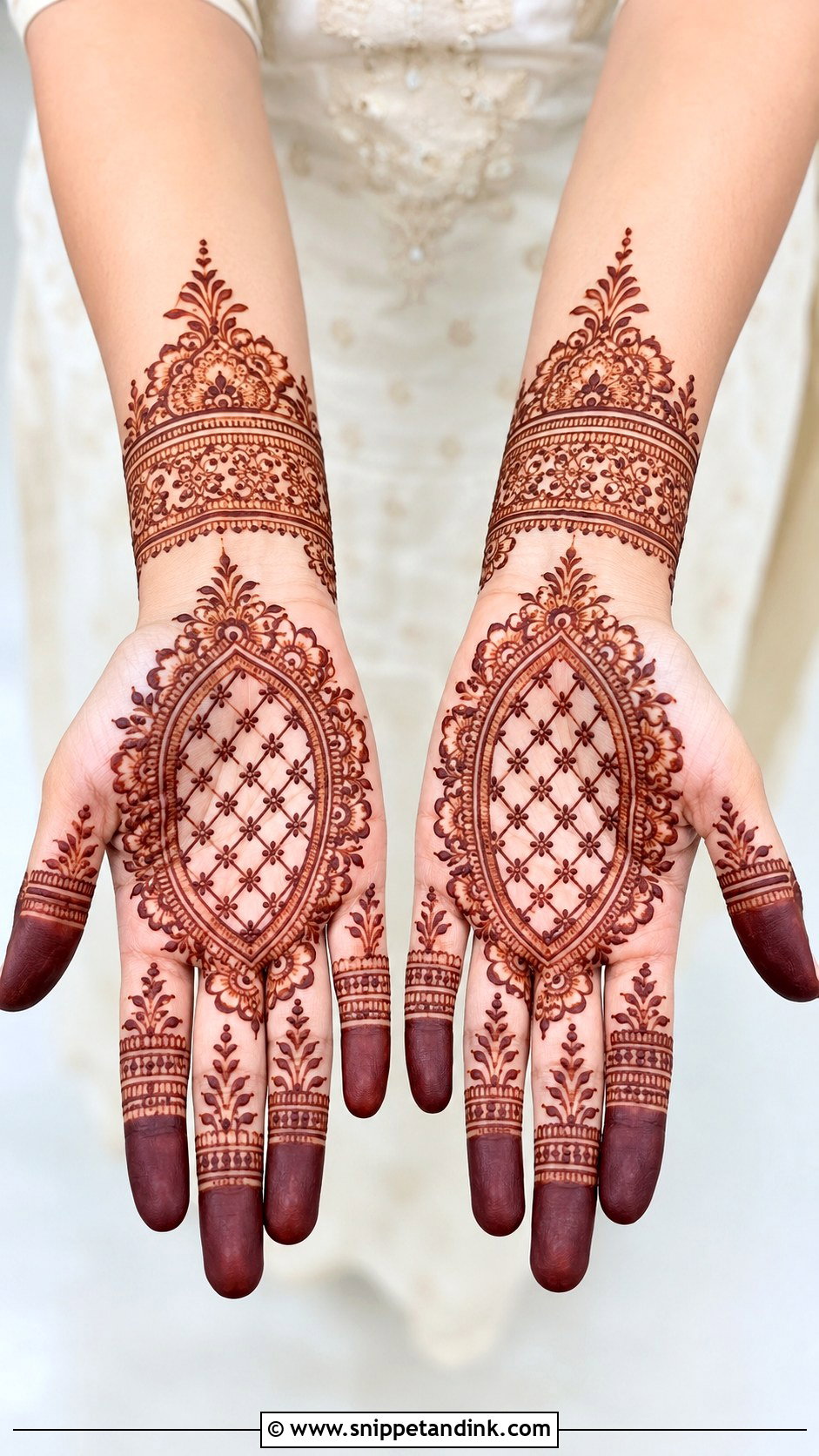
Mesh, framed by florals and paisleys, can cover part of the palm, the fingers or the wrist. The current approach mixes open net sections with bold motifs so the hand looks detailed but not packed. Jaali is unforgiving: uneven squares look messy straight away, so I pipe the parallel lines in one direction first and cross them second, checking the spacing as I go. Shaded fingertips or floral borders finish it off.
14. Front Hand Peacock Mehndi Design
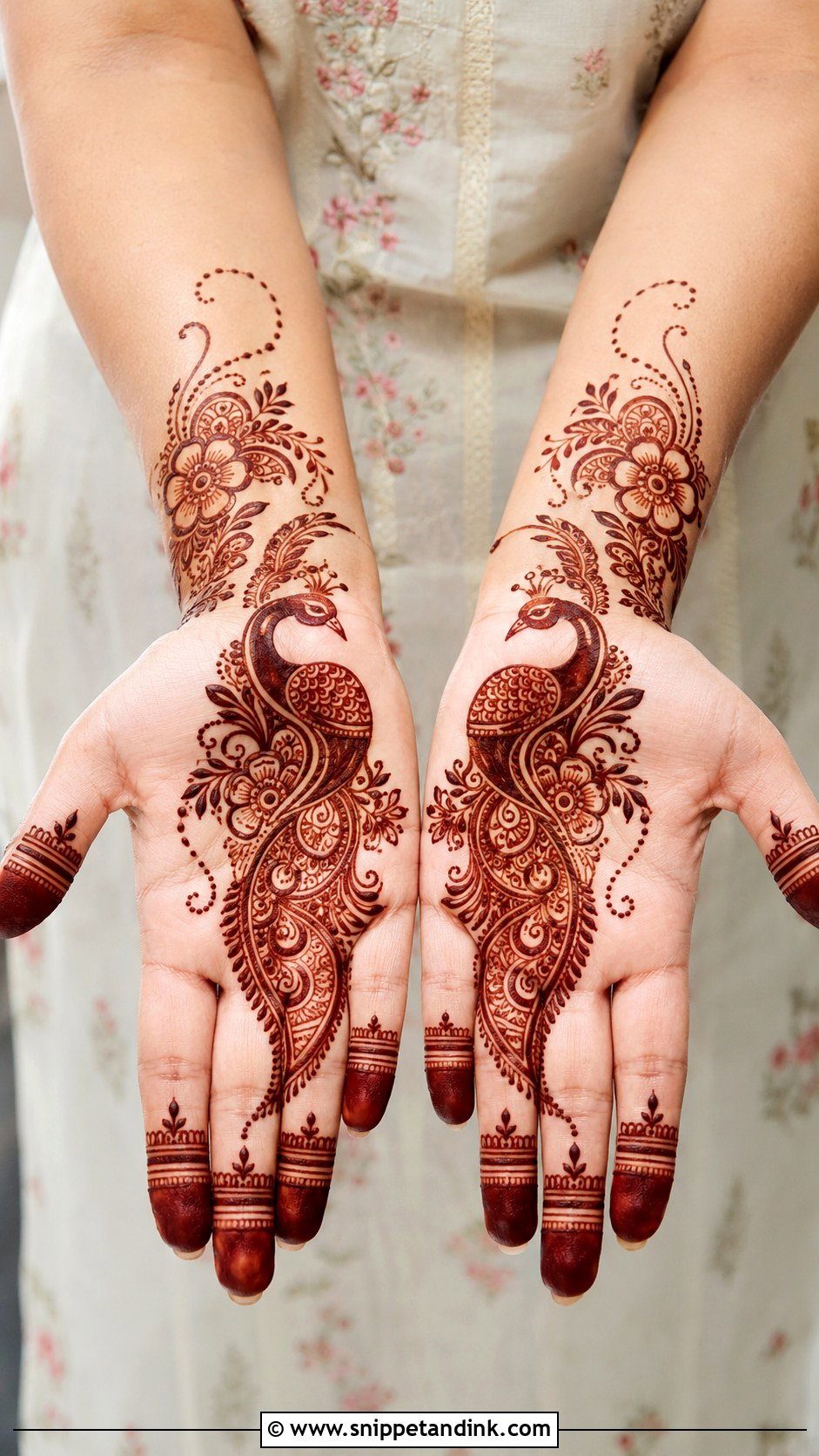
A peacock across the palm, its feathers sweeping toward the wrist or fingers, with fine feather lines, paisley accents, flowers and dots. The bird has to stay recognisable, which means giving it space; I outline the body and neck first and only then decide how much filler the hand can take. Medium to full coverage suits it. Simple bands or leafy details on the fingers keep the peacock as the main event at weddings and traditional celebrations.
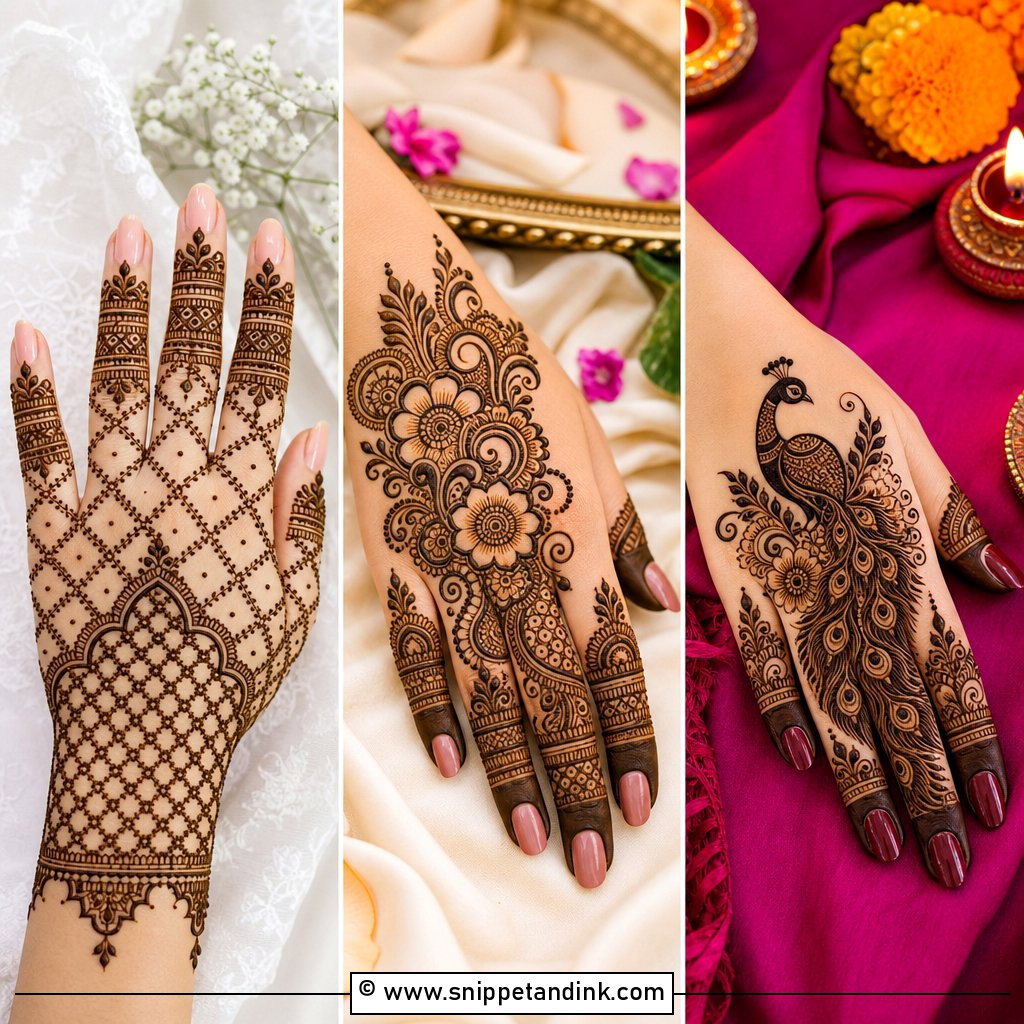

15. Front Hand Lotus Mehndi Design
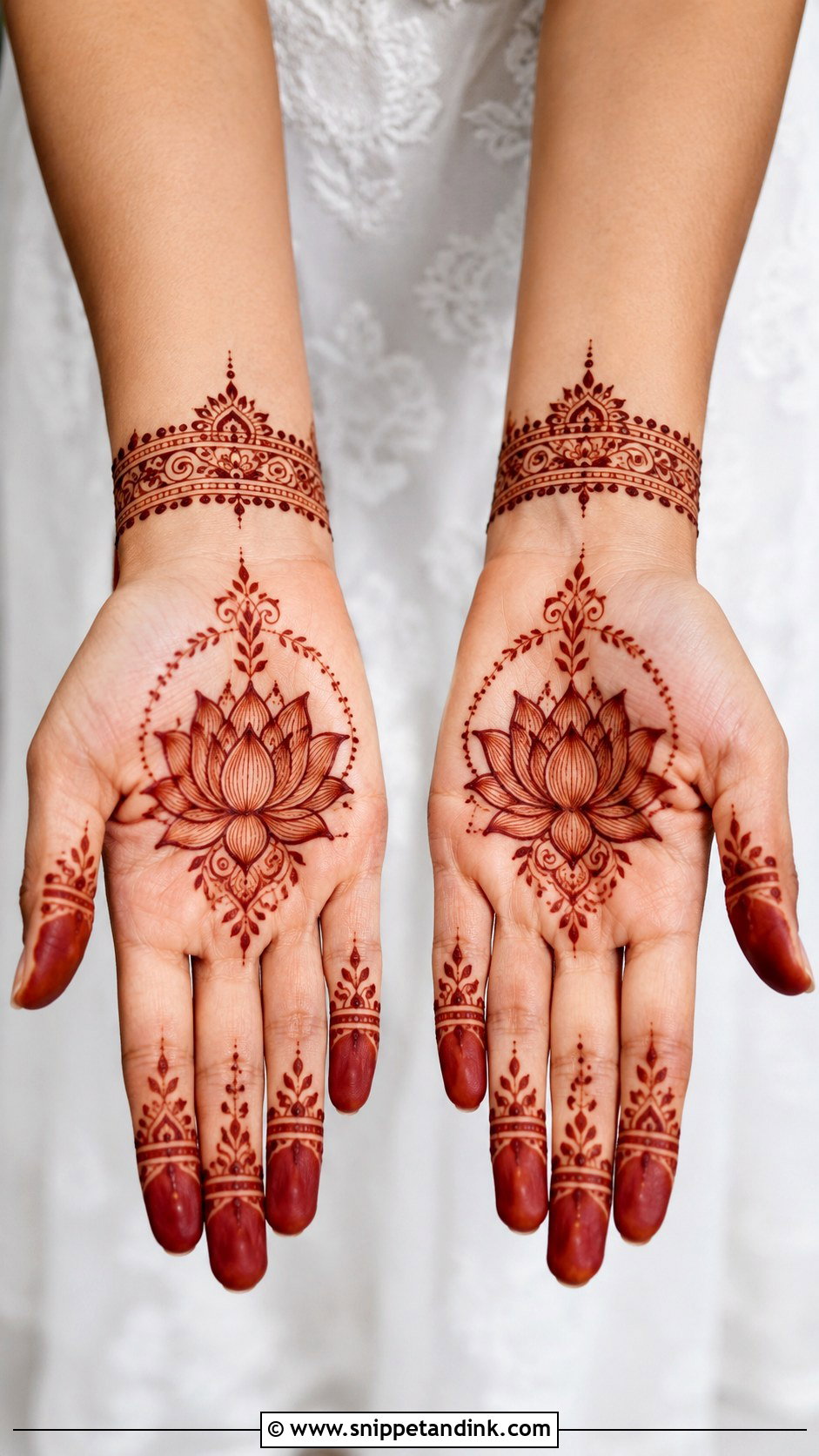
A lotus can sit at the centre of the palm, near the wrist or within a diagonal trail, finished with layered petals, dots, fine curves and small leaves. Its clean petal shape stains well because each petal is a simple closed form. One main lotus, lighter work around it. Families often request it for pooja functions as well as weddings and day events.
16. Front Hand Leaf Mehndi Design
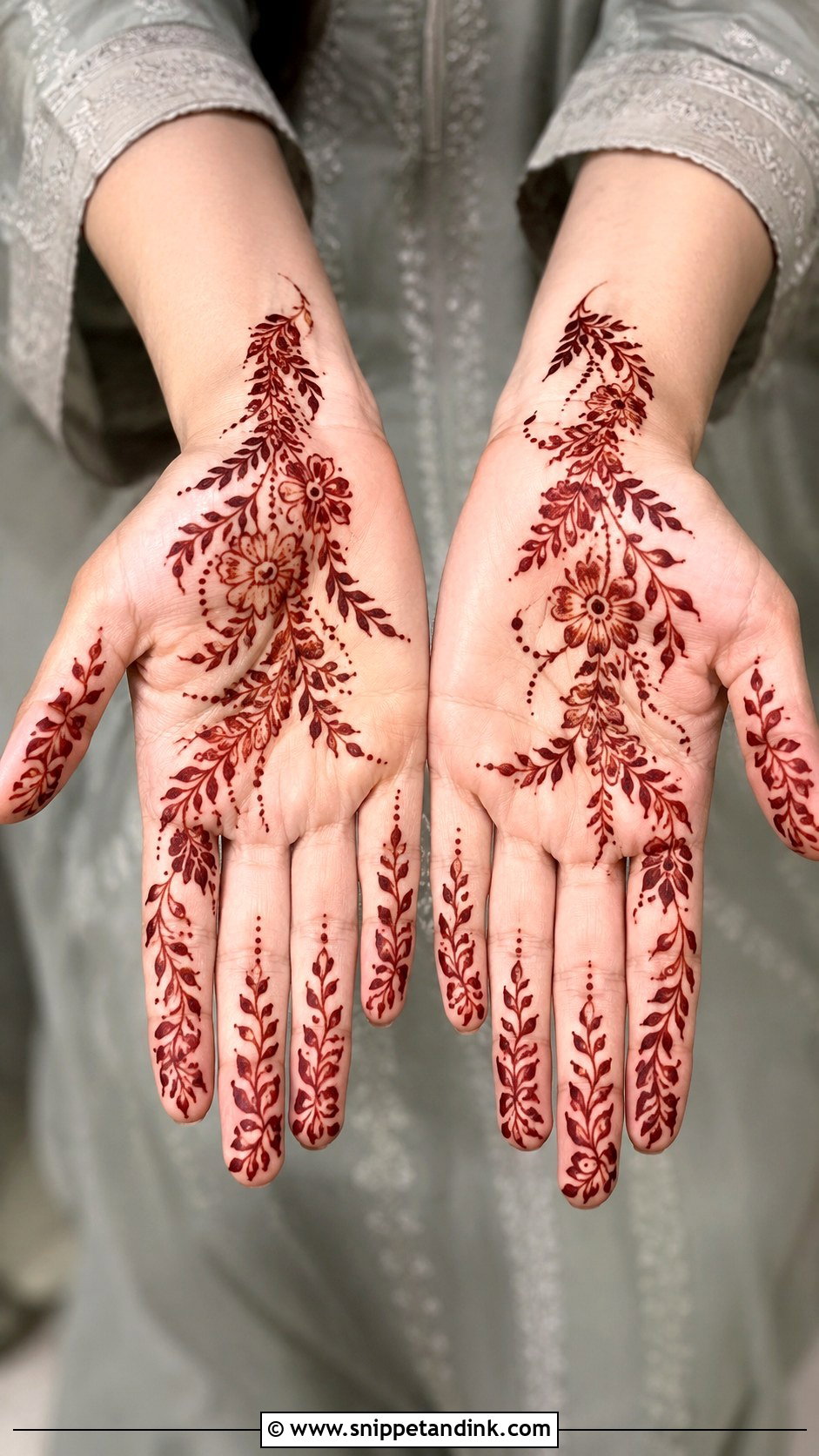
Leafy vines from wrist to fingers, a palm mandala ringed with leaves, or an Arabic side trail with bold leaf clusters all fall under this one. It looks current when the leaves are well spaced and mixed with dots or tiny flowers. Vary the leaf sizes. Identical leaves in a row look stamped, and real foliage never grows that way. Heavier finger details can turn it festive, while a single vine keeps it casual.
17. Front Hand Geometric Mehndi Design
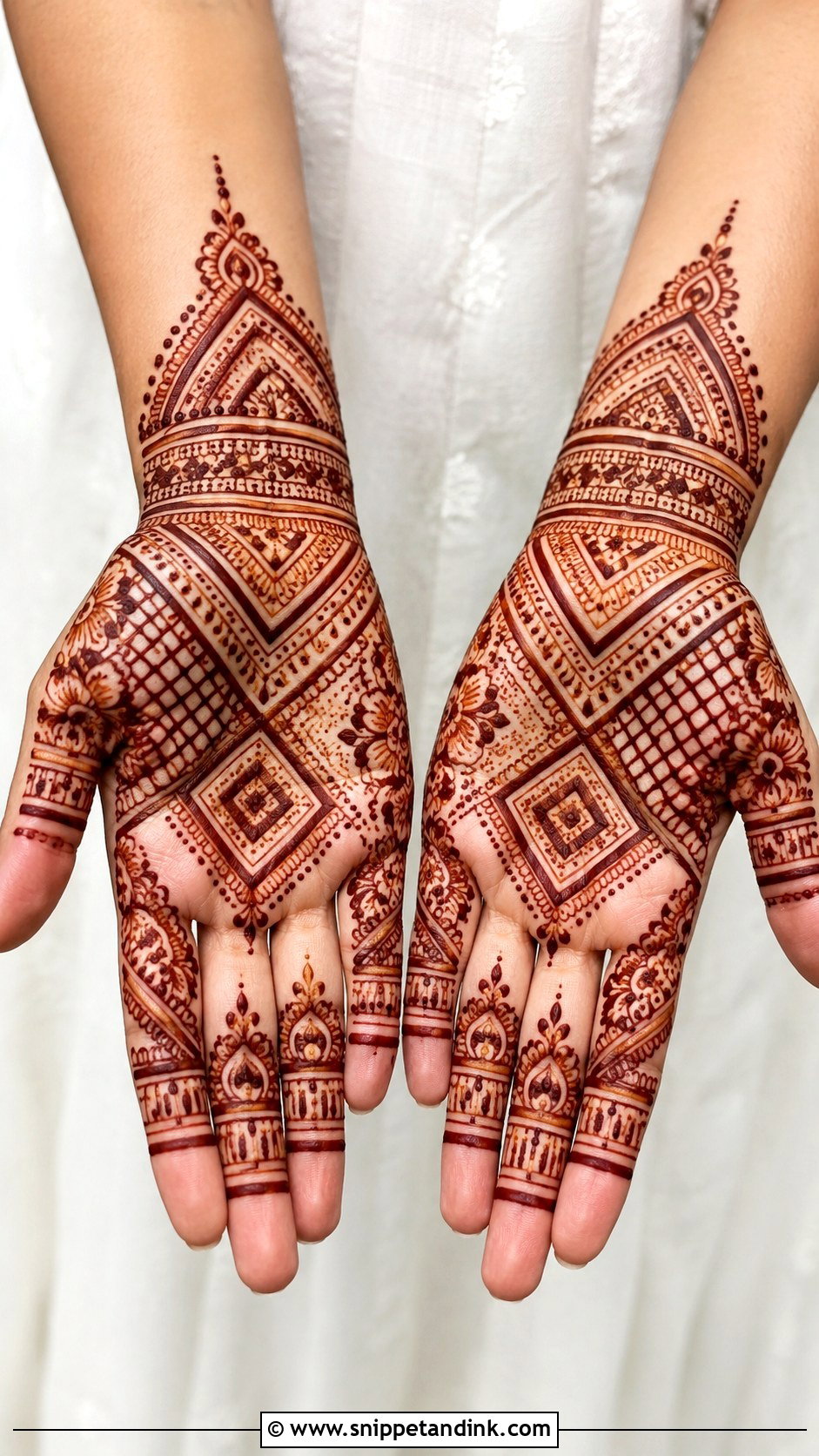
Triangles, diamonds, grids, chevrons, bracelet bands and symmetrical palm sections. The palm gives geometric work more flat space than the back of the hand does, which helps, but a palm still curves, so straight lines need a steady wrist and short, controlled strokes. I soften the geometry with florals or small dots so it doesn’t look mechanical. Fusion wear and minimalist guest outfits suit it best.
18. Front Hand Net Mehndi Design
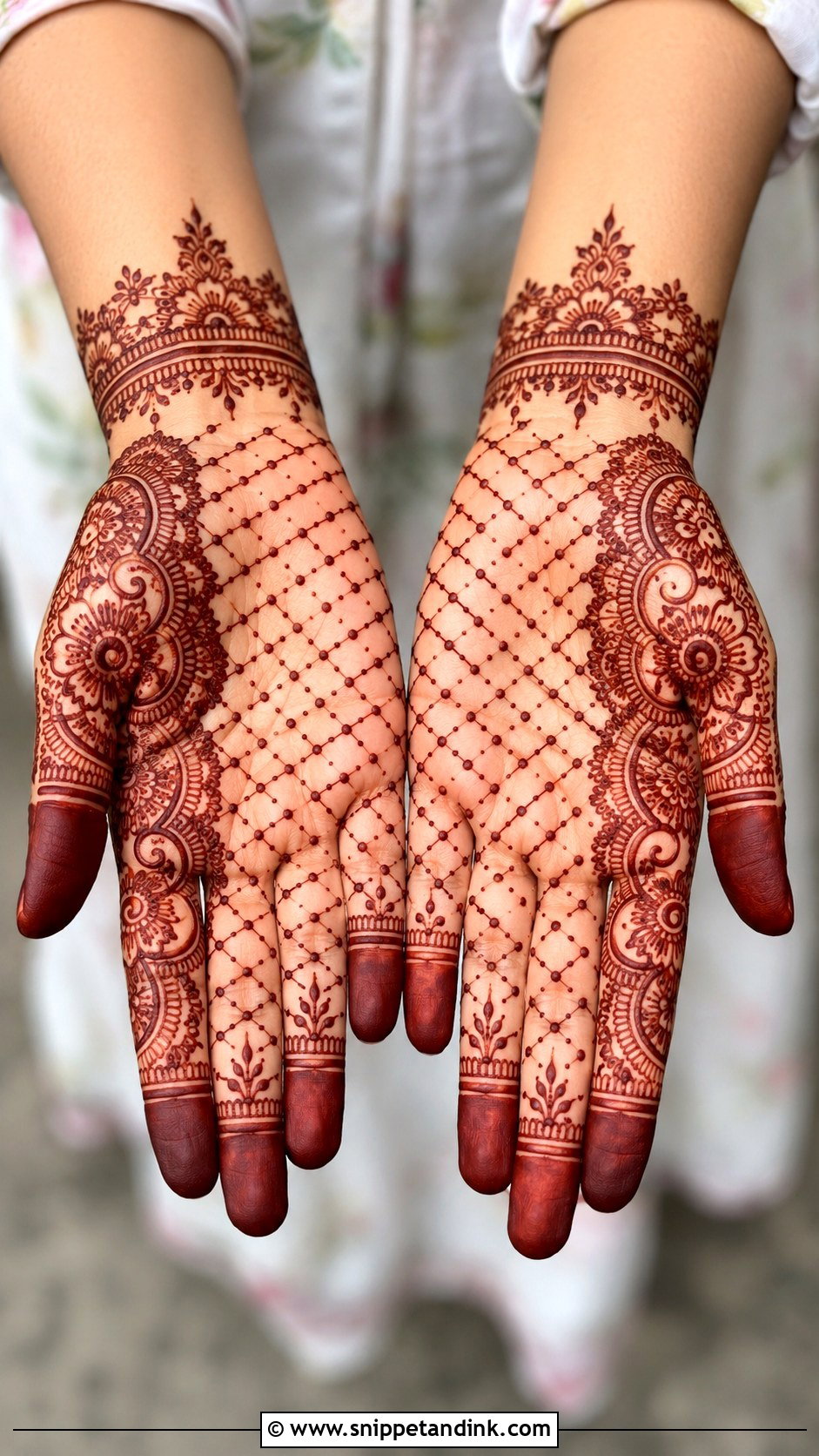
Net work gives the palm a fabric-like texture, on the fingers, across half the palm or inside larger floral and paisley frames. Tiny dots at the intersections or small flowers inside the boxes are common modern touches. The lines must stay thin and even; thick net lines swell with the stain and the open squares close up. Bold fingertips and a wrist cuff balance it at weddings, Eid and formal celebrations.
19. Front Hand Eid Mehndi Design
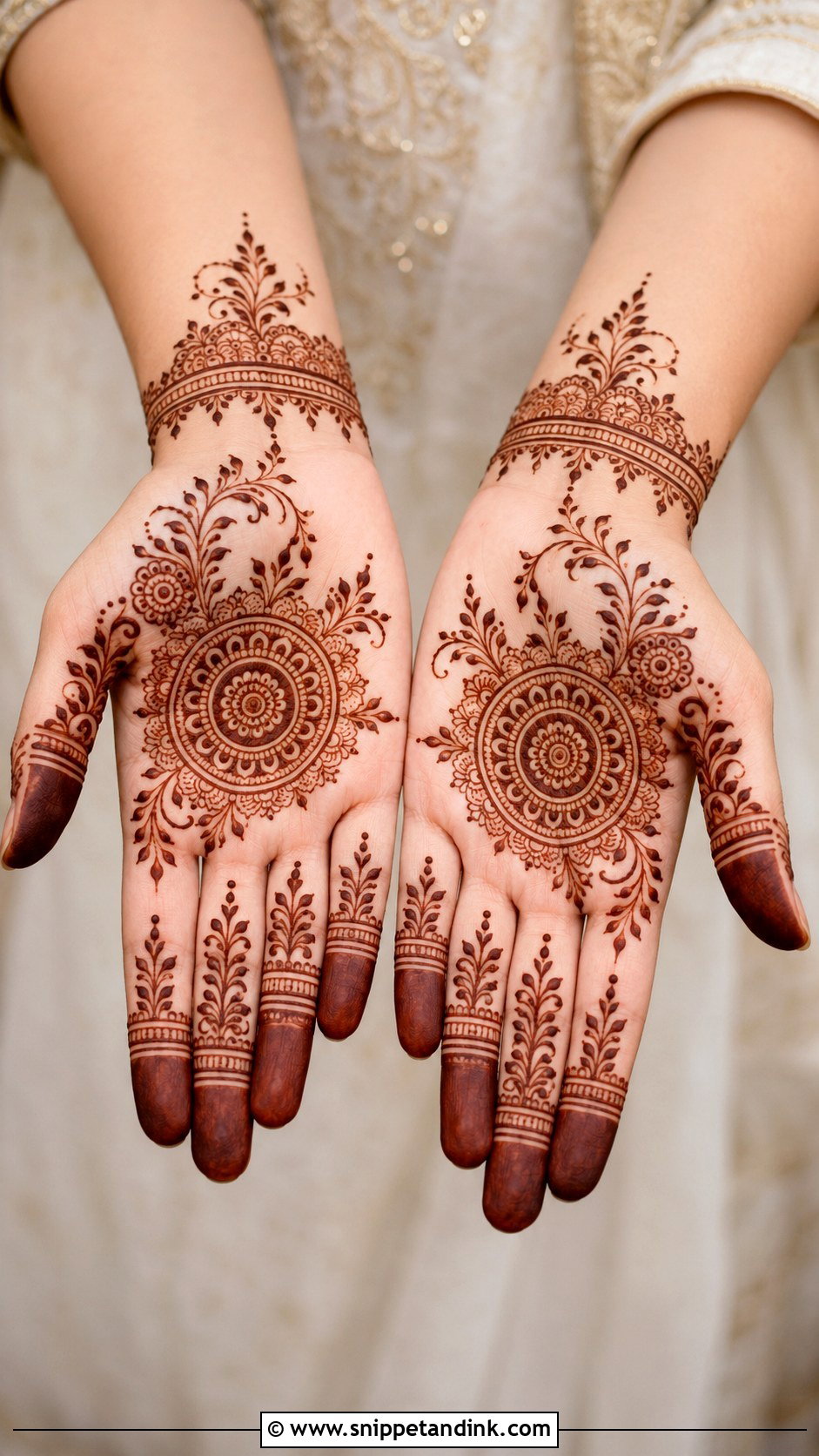
Eid henna has to survive a full day of visiting, cooking and handing out sweets. Florals, mandalas, leafy trails, finger bands and soft wrist details all work, balanced with open space so the hands suit both traditional and contemporary outfits. A diagonal Arabic pattern goes on quickly; a fuller palm design suits a dressier celebration. I keep the area around the fingers clean, because that’s what shows when you’re holding gifts or plates.
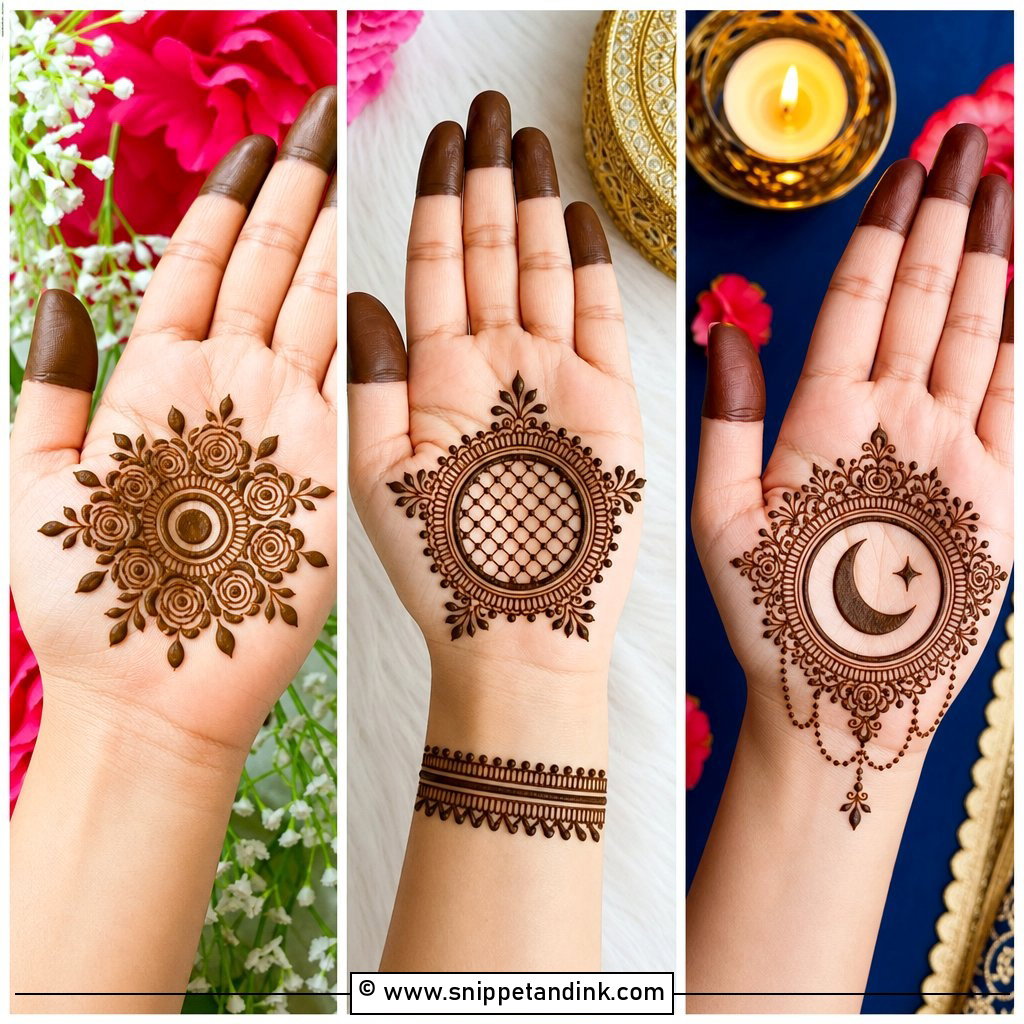

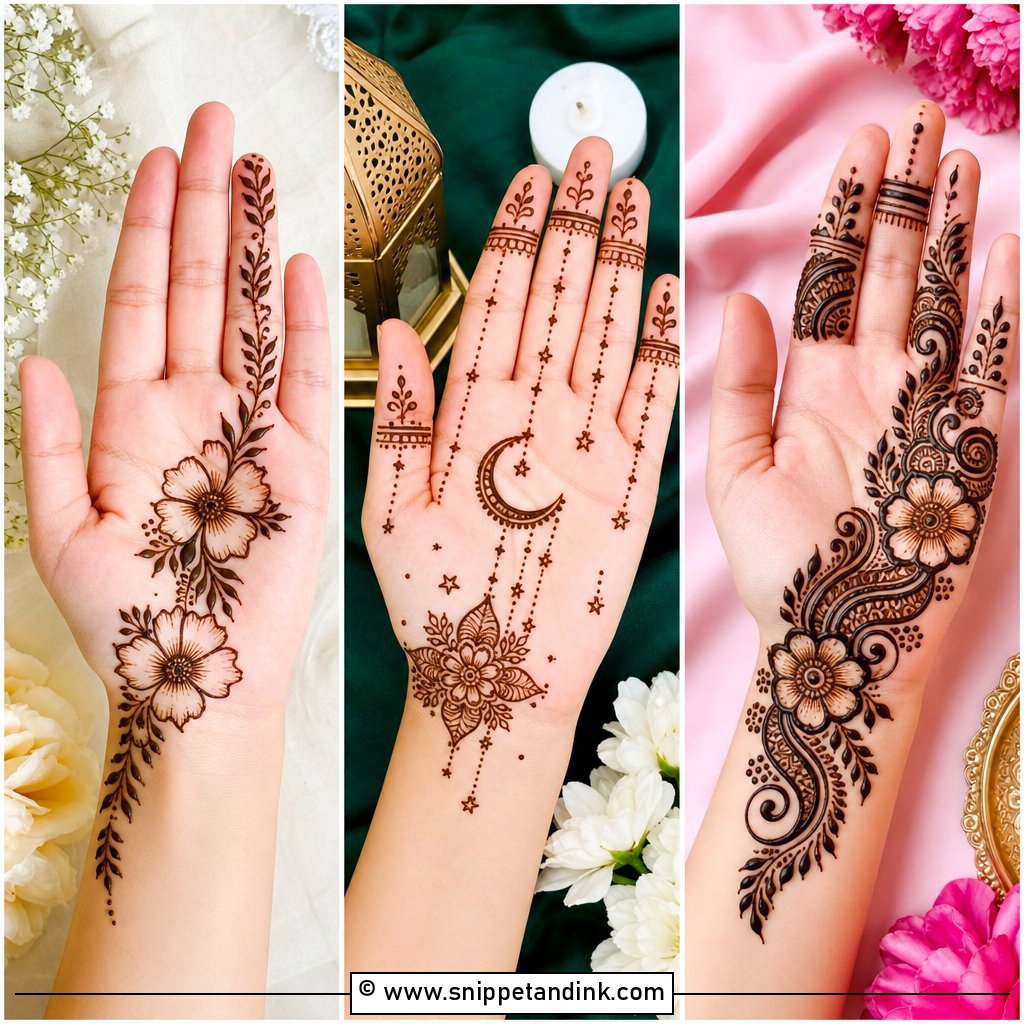

20. Front Hand Wedding Guest Mehndi Design
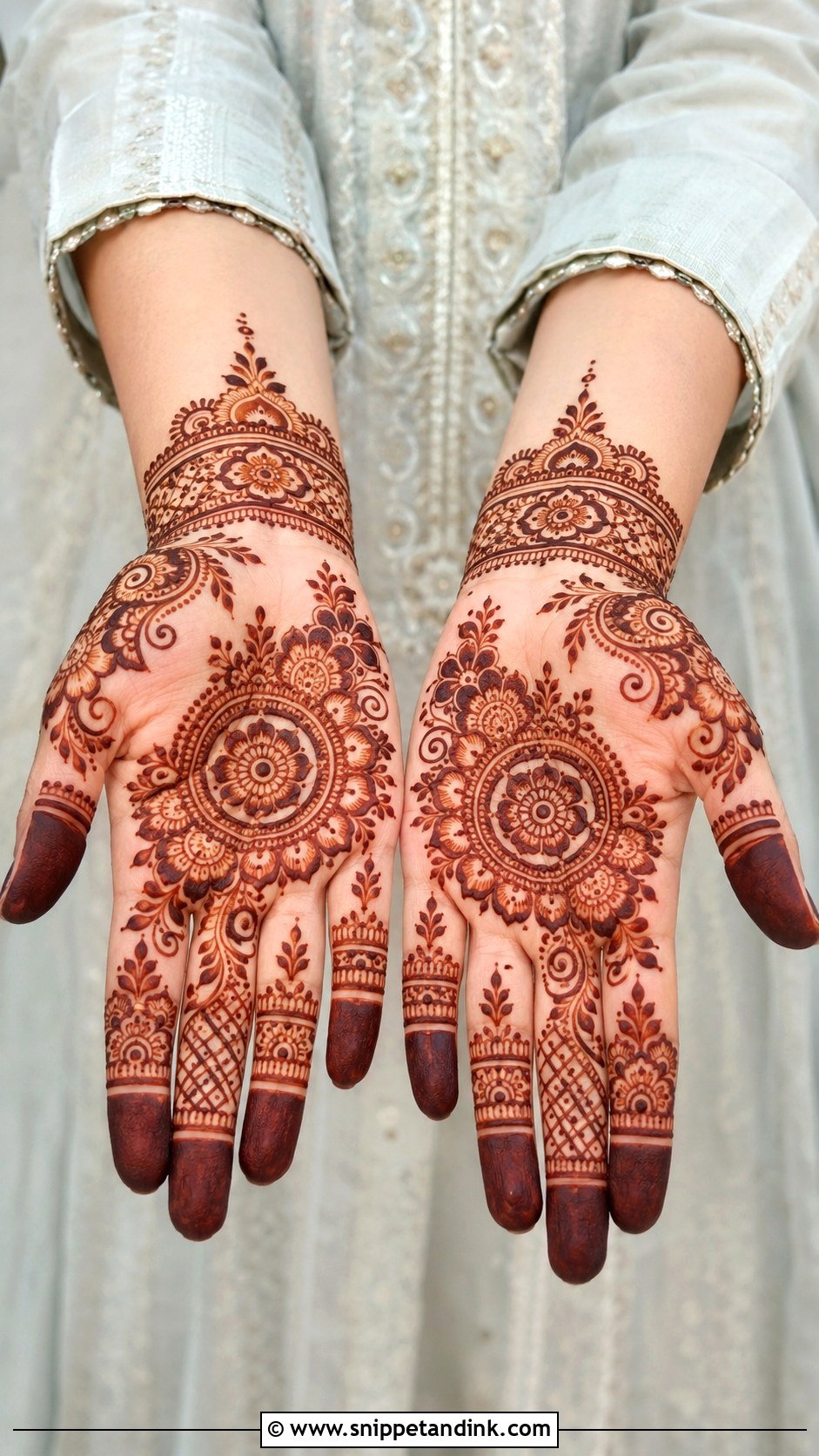
Guests should look festive without approaching bridal weight. A decorated palm, detailed fingers and a wrist accent give a complete look, using florals, paisleys, Arabic vines or a mandala centre, while skipping dense forearm coverage. If you’re attending several events across a week, medium coverage is kinder to your hands and fades more evenly. One strong focal point always reads more polished than many small ones.
21. Front Hand Engagement Mehndi Design
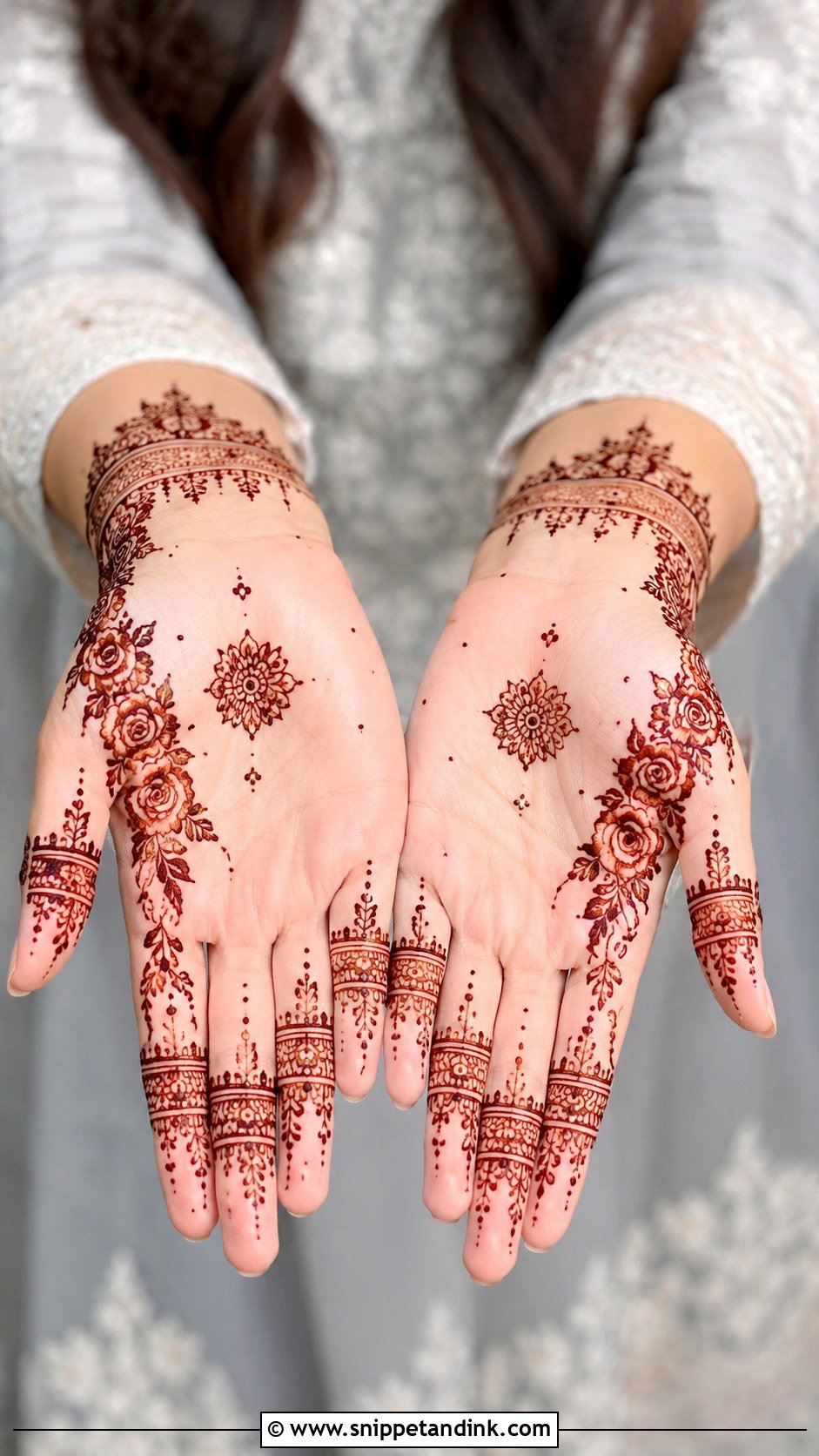
For a ring ceremony, I keep things lighter so the ring and jewellery stay visible. A front hand engagement mehndi design might be a rose trail, ring-style finger details, a palm mandala or a bracelet cuff linked to one finger. The ring finger gets the least detail at its base, so the band sits against bare skin in close-ups. Fine lines, clean florals and soft negative space suit it, and subtle initials can be hidden in the pattern.
22. Front Hand Party Mehndi Design
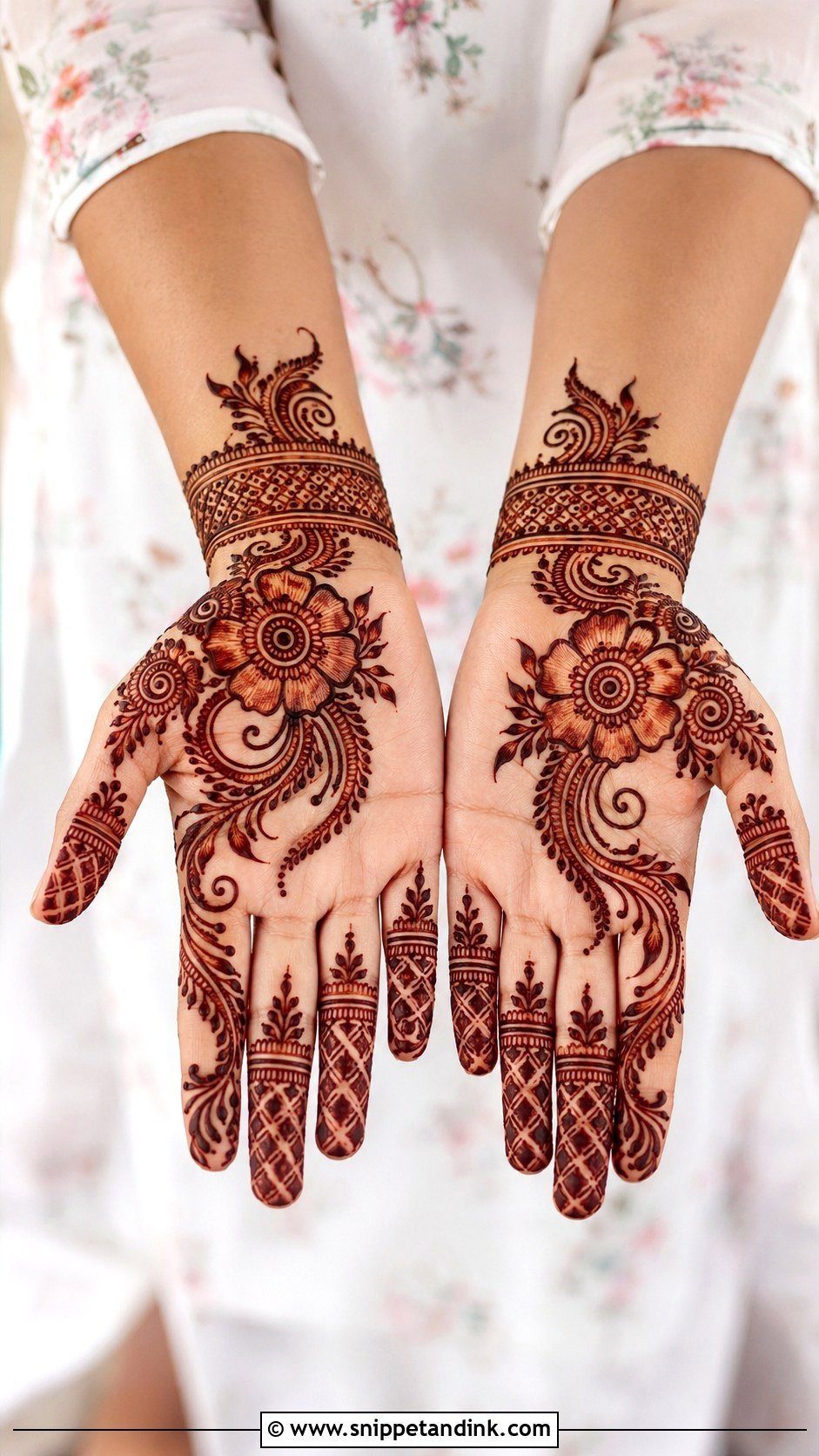
Party henna doesn’t need traditional coverage. Bold flowers, curved vines, geometric bands, finger details or one chic palm motif, plus a bracelet-style finish at the wrist, is plenty. It sits well with Indo-western outfits. Ask for open space and a thick-and-thin line contrast, which looks current, and keep it clear of your nail colour so the two don’t fight.
23. Front Hand Diagonal Mehndi Design
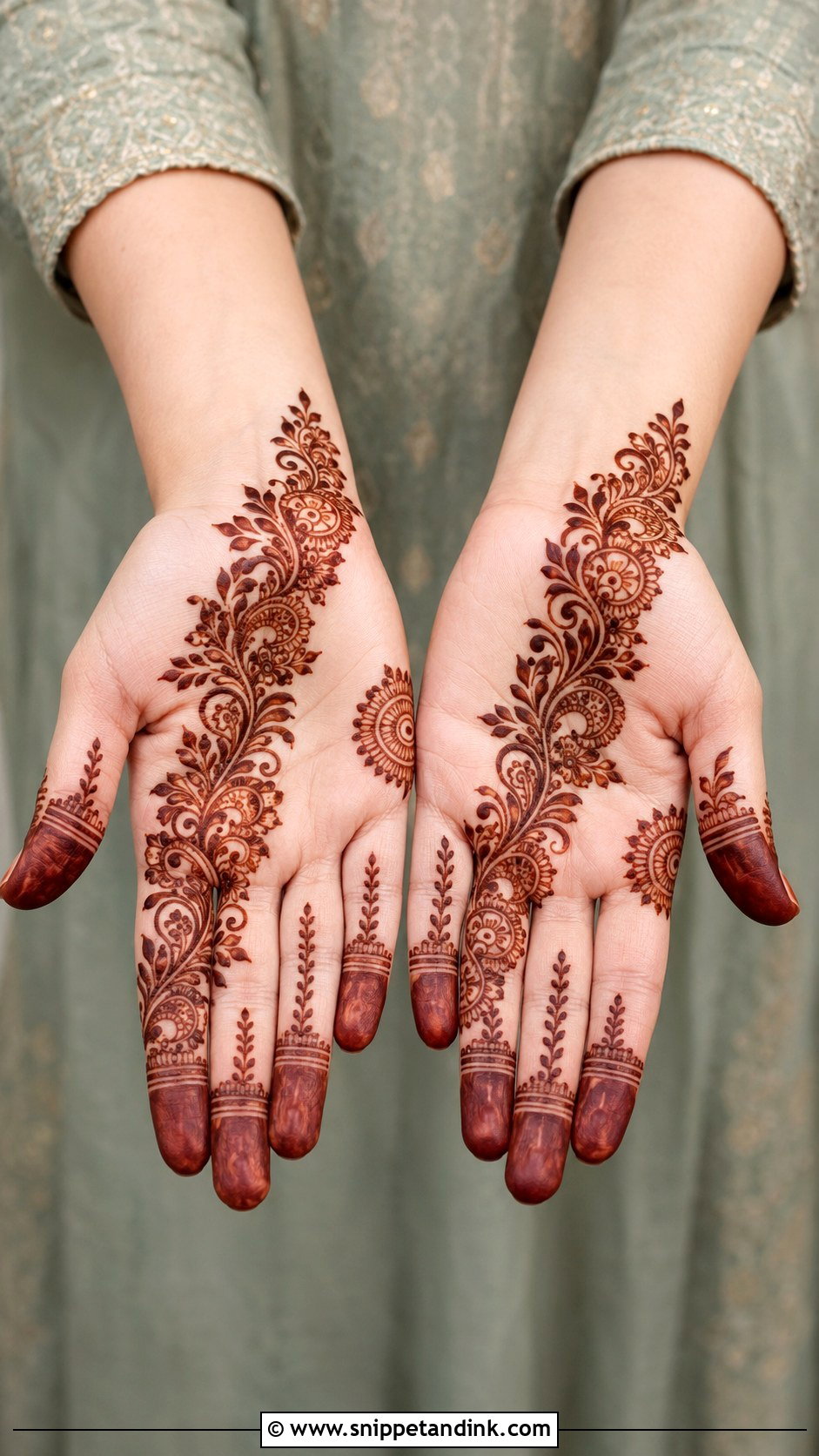
Few layouts flatter a hand as reliably. The trail starts near the wrist or the thumb side, crosses the palm and ends around the index or middle finger, with Arabic flowers, paisleys, leaves or mixed motifs along it. The open skin on either side keeps it clean. I leave the opposite side of the palm completely bare and keep fingertip work light, which makes the diagonal read as one confident line rather than a crowded band.
24. Front Hand Half Palm Mehndi Design
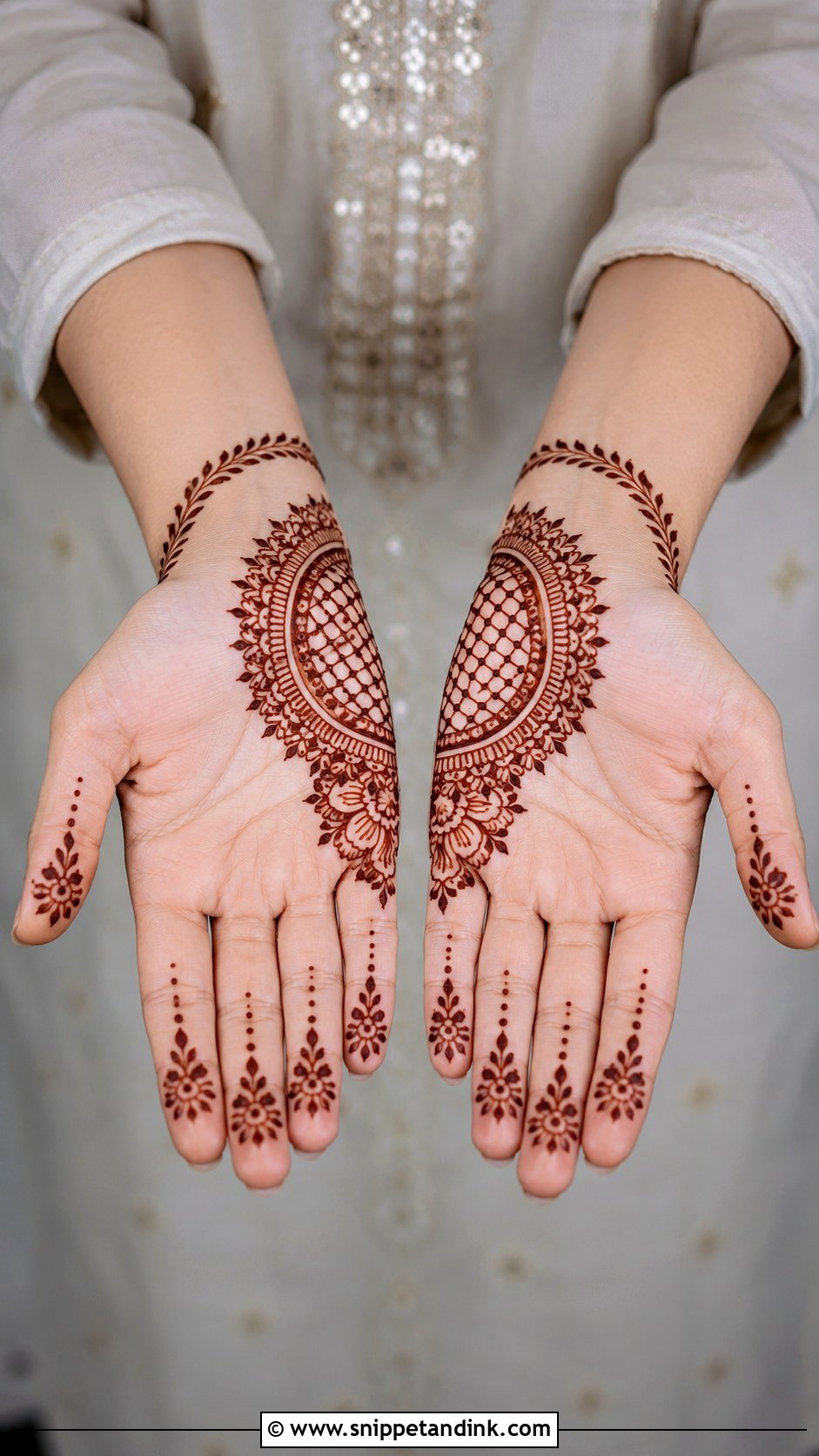
Only part of the palm is covered; the rest stays open. The covered section can hold florals, mandalas, jaali, paisleys or Arabic vines. It suits simple functions and casual Eid, and anyone who doesn’t want heavy stain across the whole palm. The edge where the design stops is what people notice, so I finish it deliberately with a border, a curl or a dotted line rather than letting it trail off. Connect it to the fingers or wrist with a small vine.

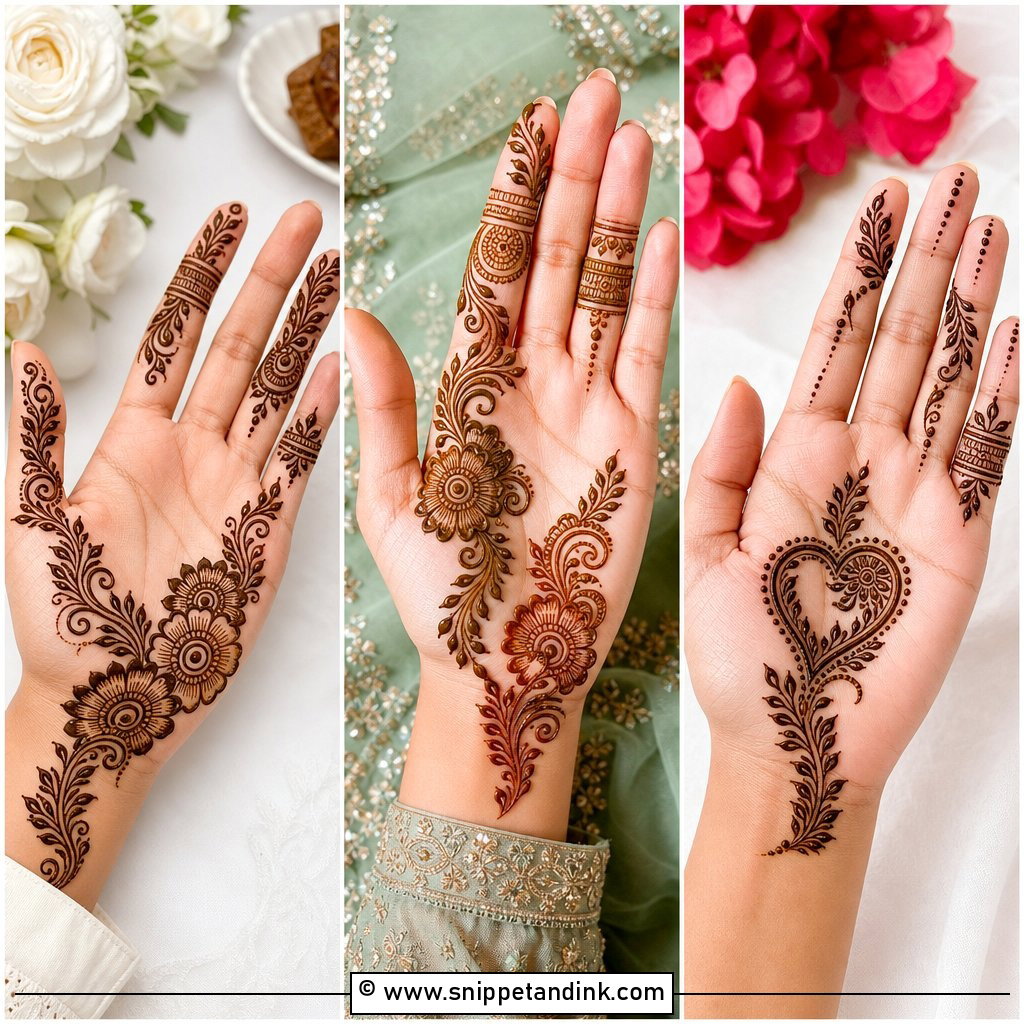

25. Front Hand Wrist To Finger Mehndi Design
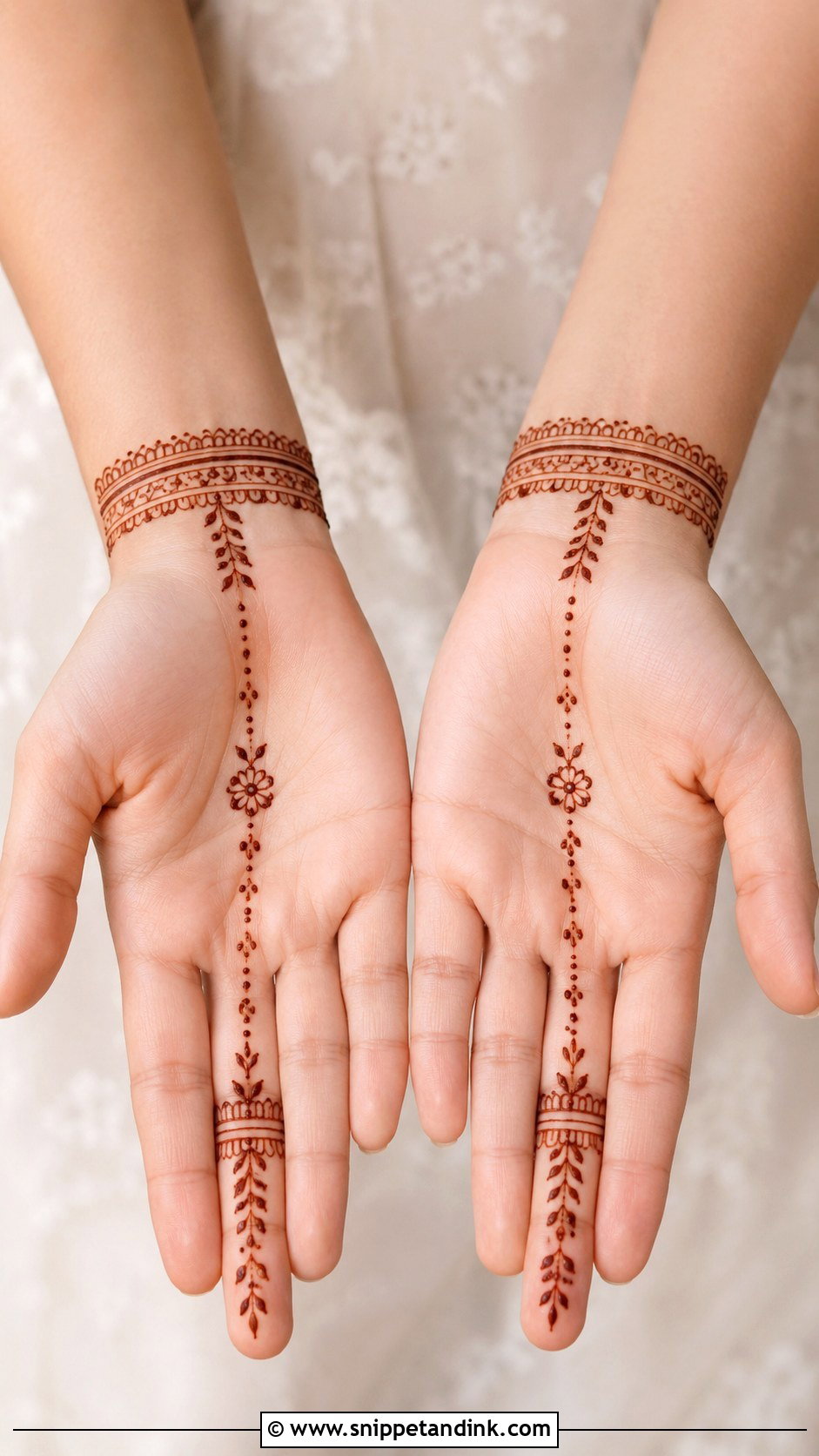
A connected line from the wrist to one or more fingers, often styled as henna jewellery with chains, leaves, flowers and ring bands. Much of the palm stays open. The wrist portion has to be detailed enough to anchor everything, while the finger section stays slim. One finger connection keeps it minimal; two connected trails make it fuller for engagement or Eid.
26. Front Hand Bel Mehndi Design
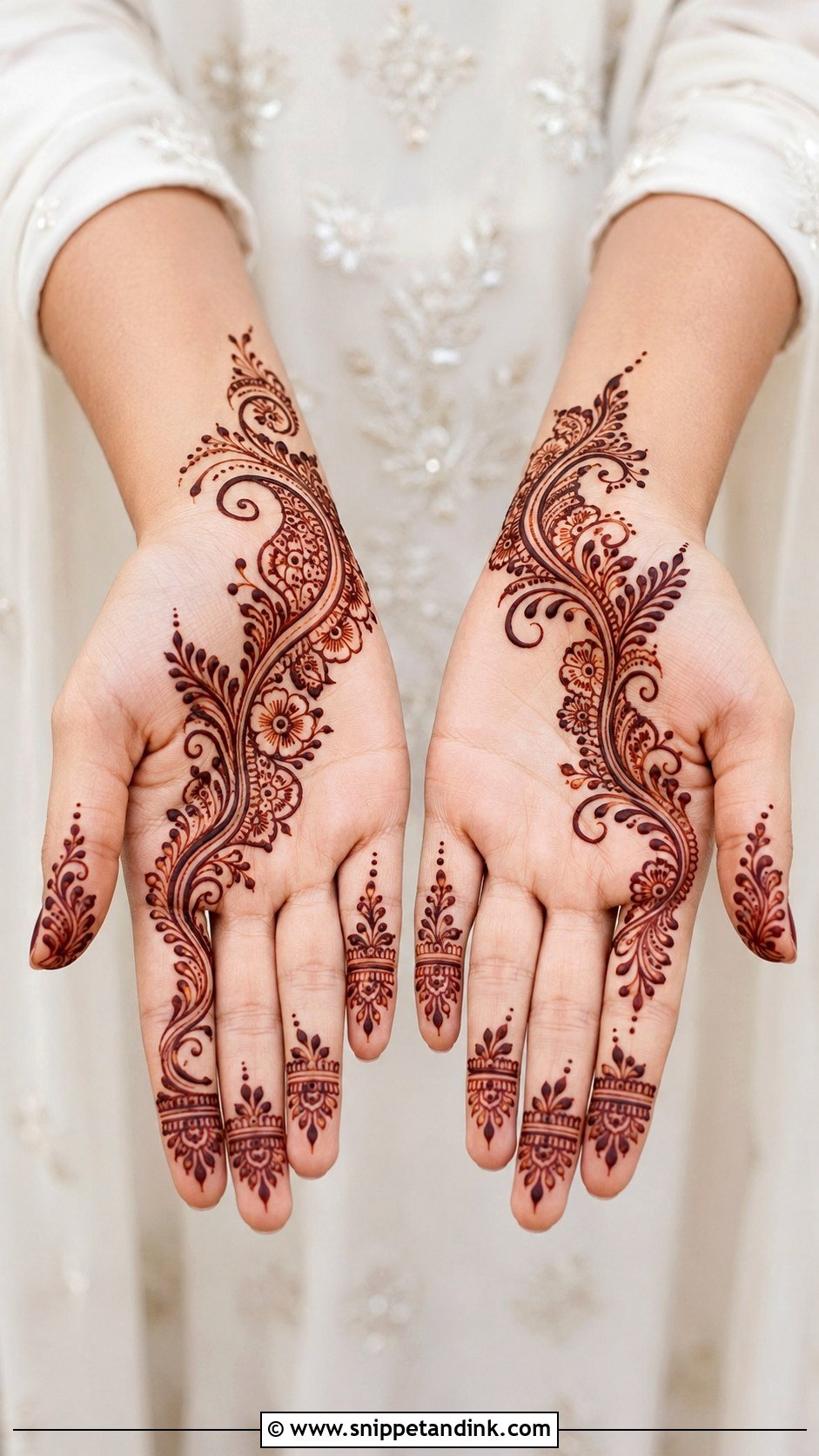
Bel is a vine trail across the palm, with leaves, flowers, paisleys, dots and small curved fillers, travelling from wrist to fingers. Newer versions space it out more than the old dense bels. Because it’s one continuous line, it’s fast to apply, which makes it a salon favourite. Keep the vine bold and leave space on both sides; add decorated fingertips and a slim wrist border if you want it fuller.
27. Front Hand Round Mehndi Design
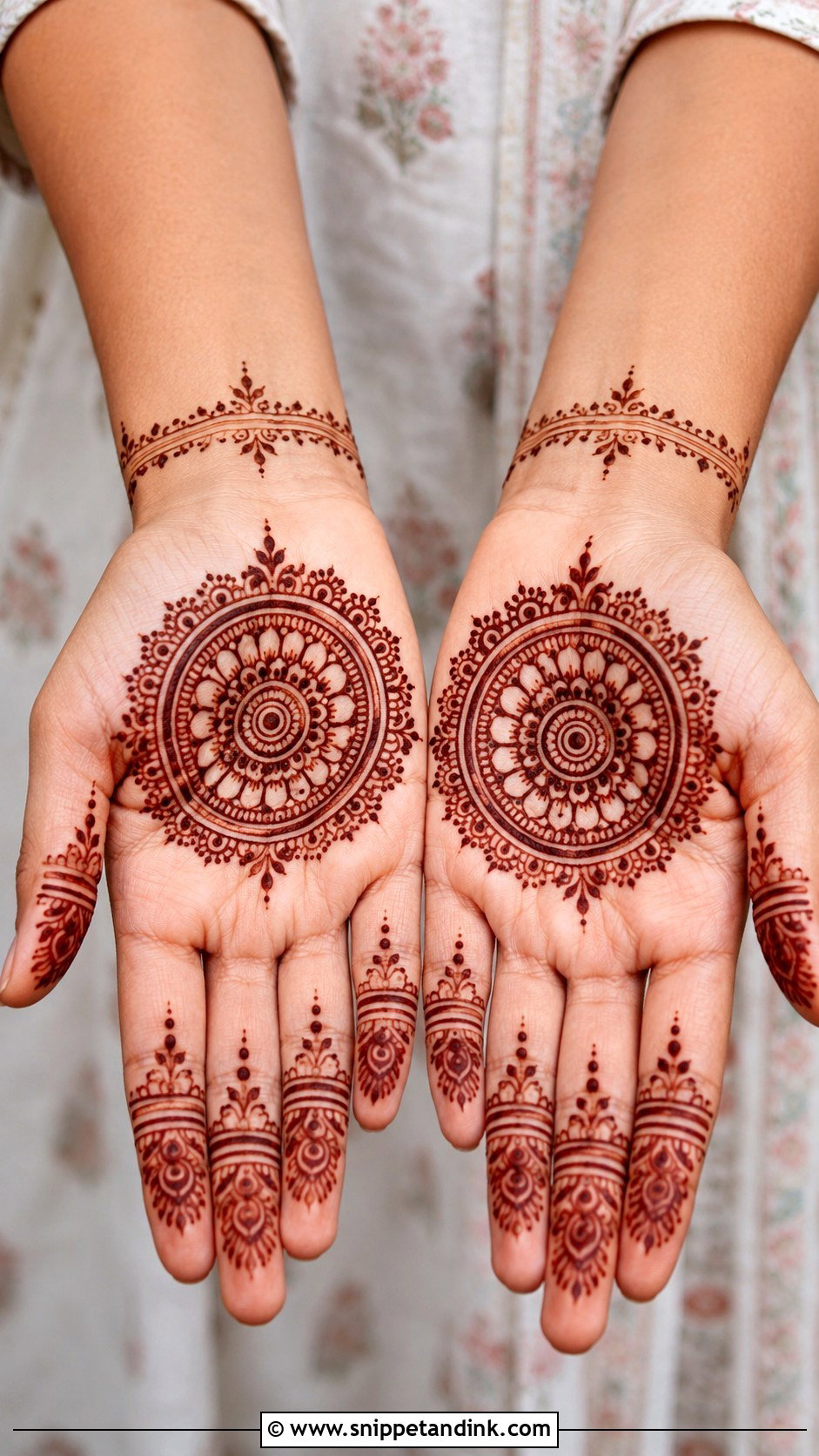
Circular elements anchor the centre of the palm: a mandala, floral chakra, dotted ring or layered traditional motif, with fingers and wrist supporting it. Placement makes or breaks it. A circle sitting a little off-centre looks like a mistake rather than a choice, so I mark the centre point with a tiny dot before I build outward. Newer versions keep the middle clean and put the fine detail around the edges.
28. Front Hand Heavy Mehndi Design
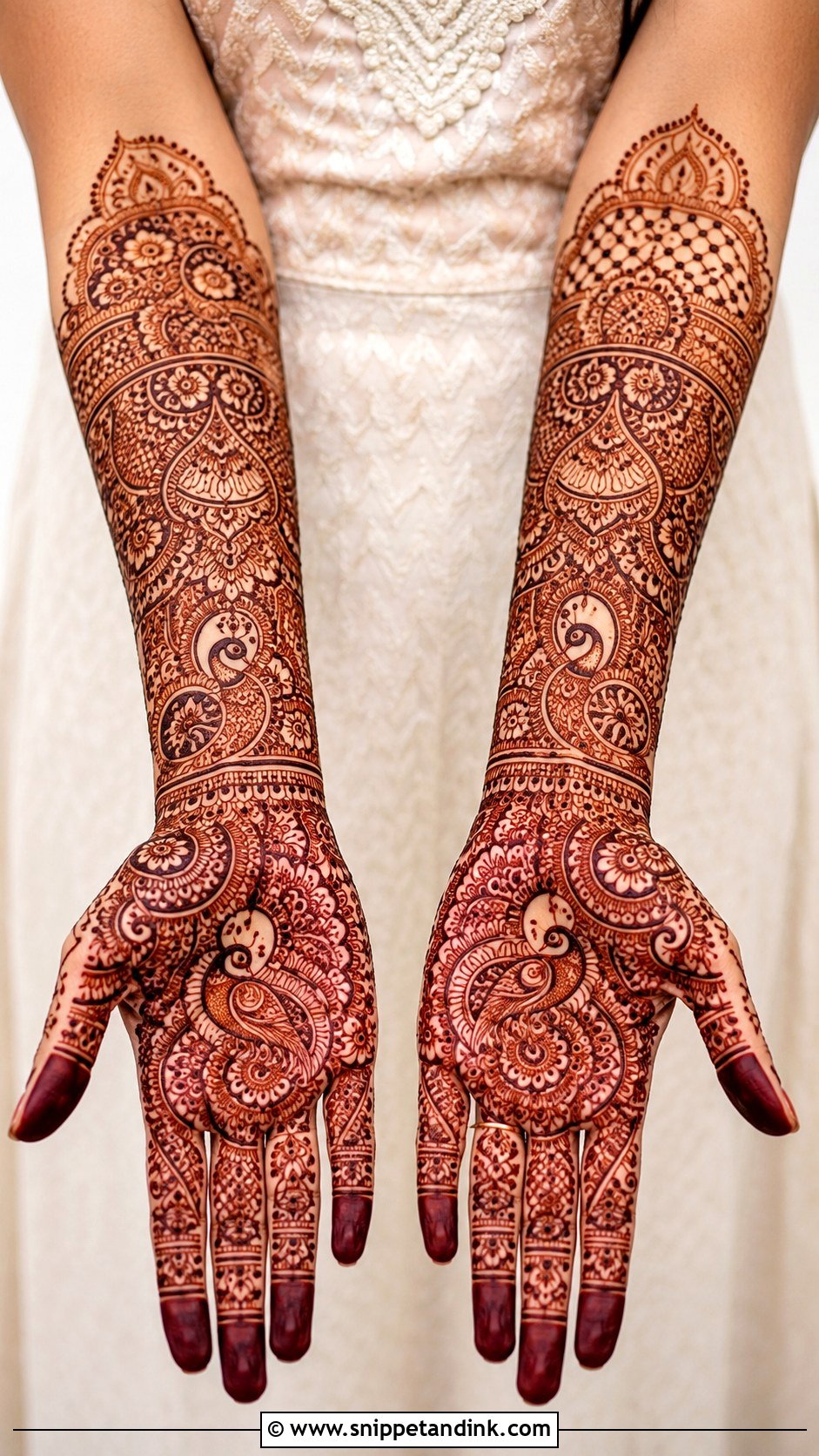
Heavy palms can cover fingers, wrist and sometimes forearm with peacocks, paisleys, florals, jaali, mandalas and layered borders. To keep it from turning into one dark patch after staining, I organise the hand into clear sections, each with its own job, and divide them with clean borders. Mix bold outlines, fine fillers and small empty spaces. Expect a long sitting, and plan the rest of that day around wet hands.
29. Front Hand Light Mehndi Design
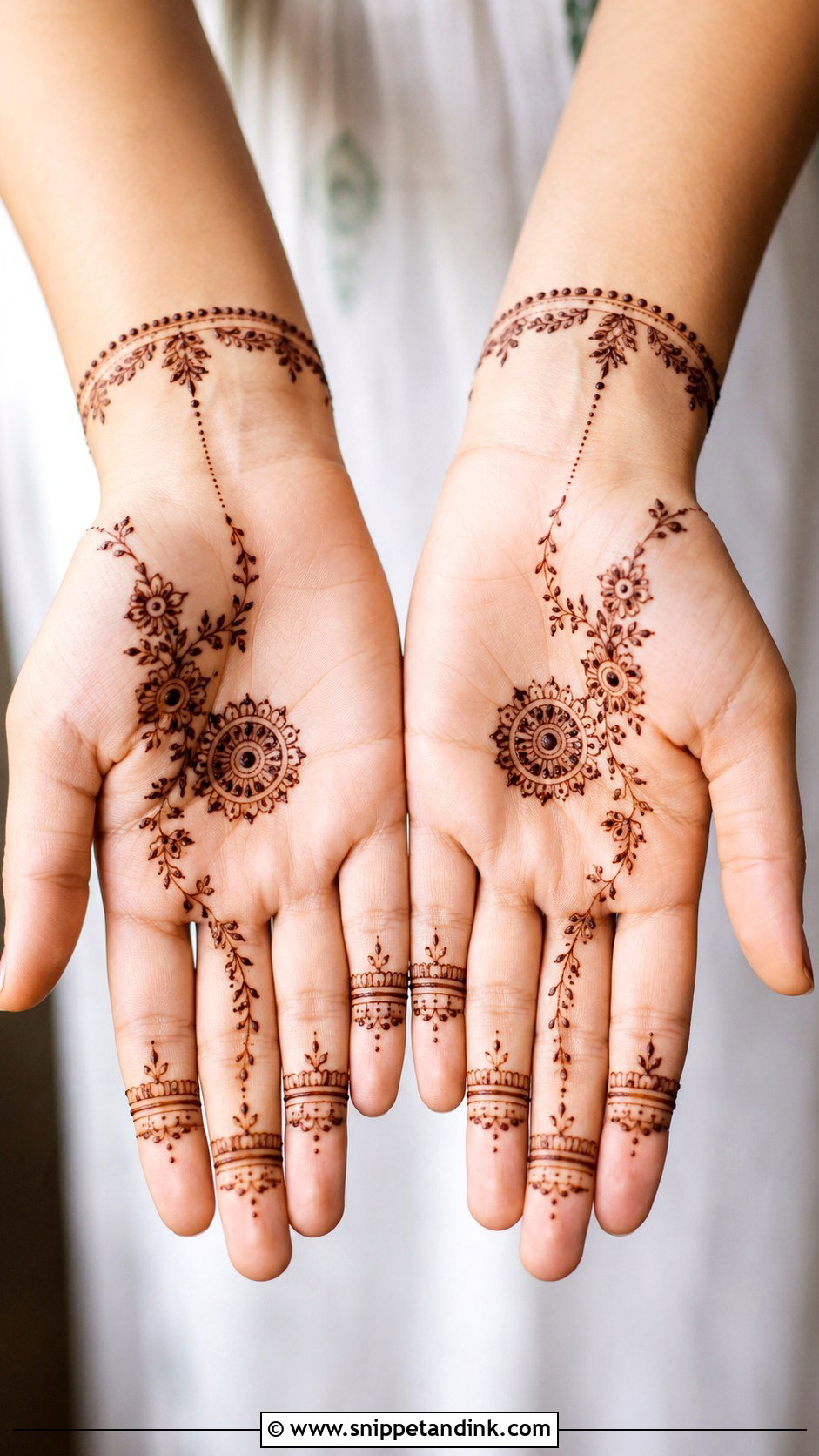
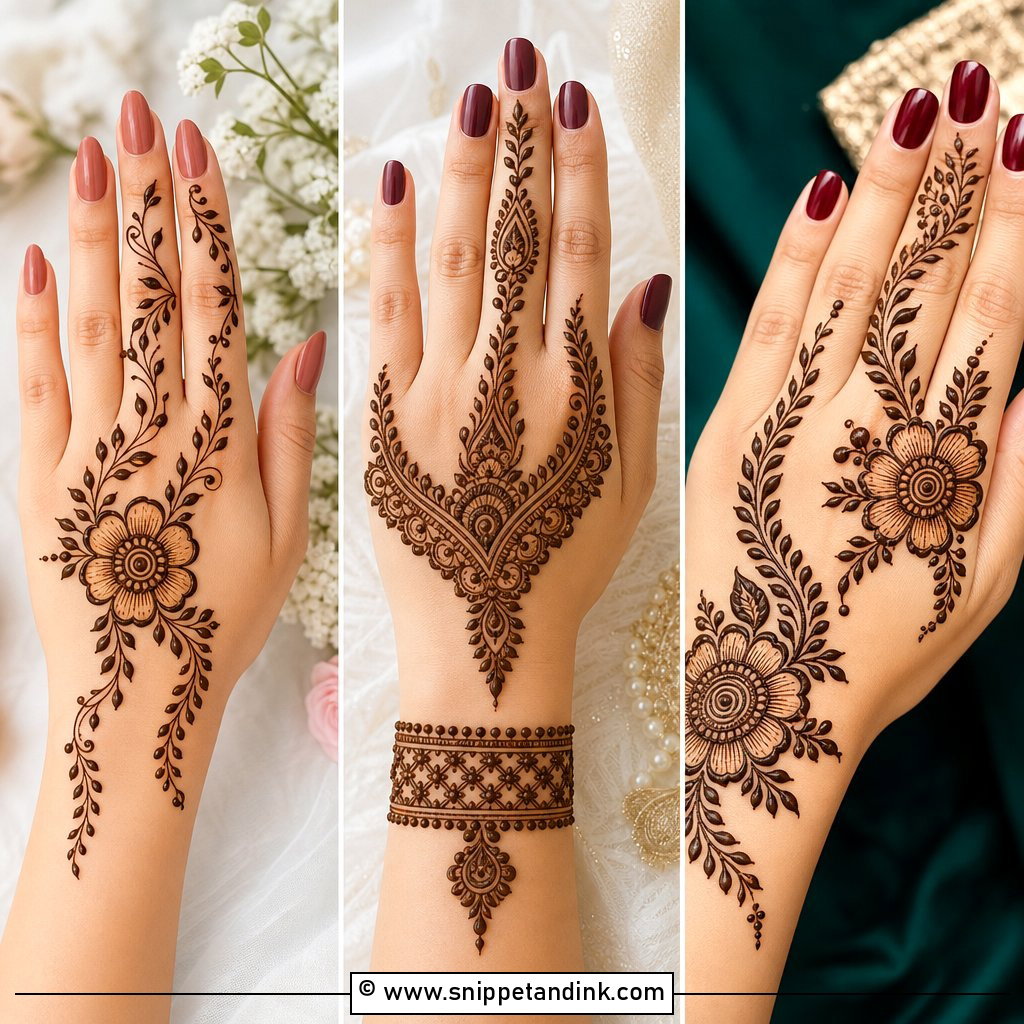
A front hand light mehndi design keeps the palm mostly open with a small floral trail, a minimal mandala, finger bands or a wrist chain. It’s quick and easy for office parties, school functions or casual Eid. To stop a light design looking unfinished, I repeat one motif across palm and fingers; a consistent theme makes even a few elements look intended.
30. Front Hand Shaded Mehndi Design
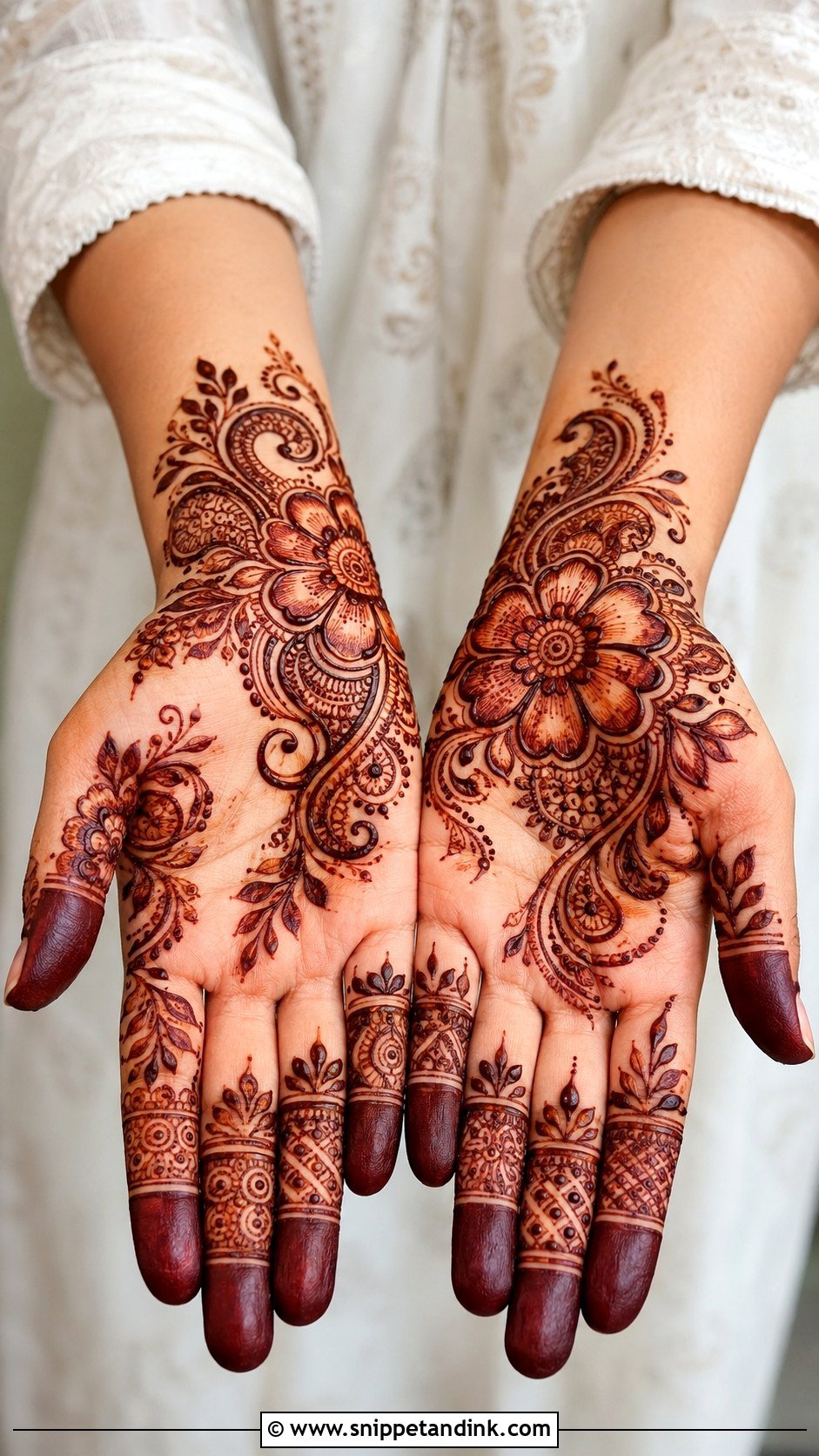
Shading adds depth inside flowers, paisleys, leaves and mandalas through fine lines, light strokes or close-set patterns, making the hand look fuller without heavy coverage. Arabic and Indo-Arabic palms use it most, since bold outlines against shaded interiors give strong contrast. Control is everything here. Overly dense shading stains almost as dark as the outline and the motif loses its shape, so I keep the edges bold and the inside texture soft.
31. Front Hand Moroccan Mehndi Design
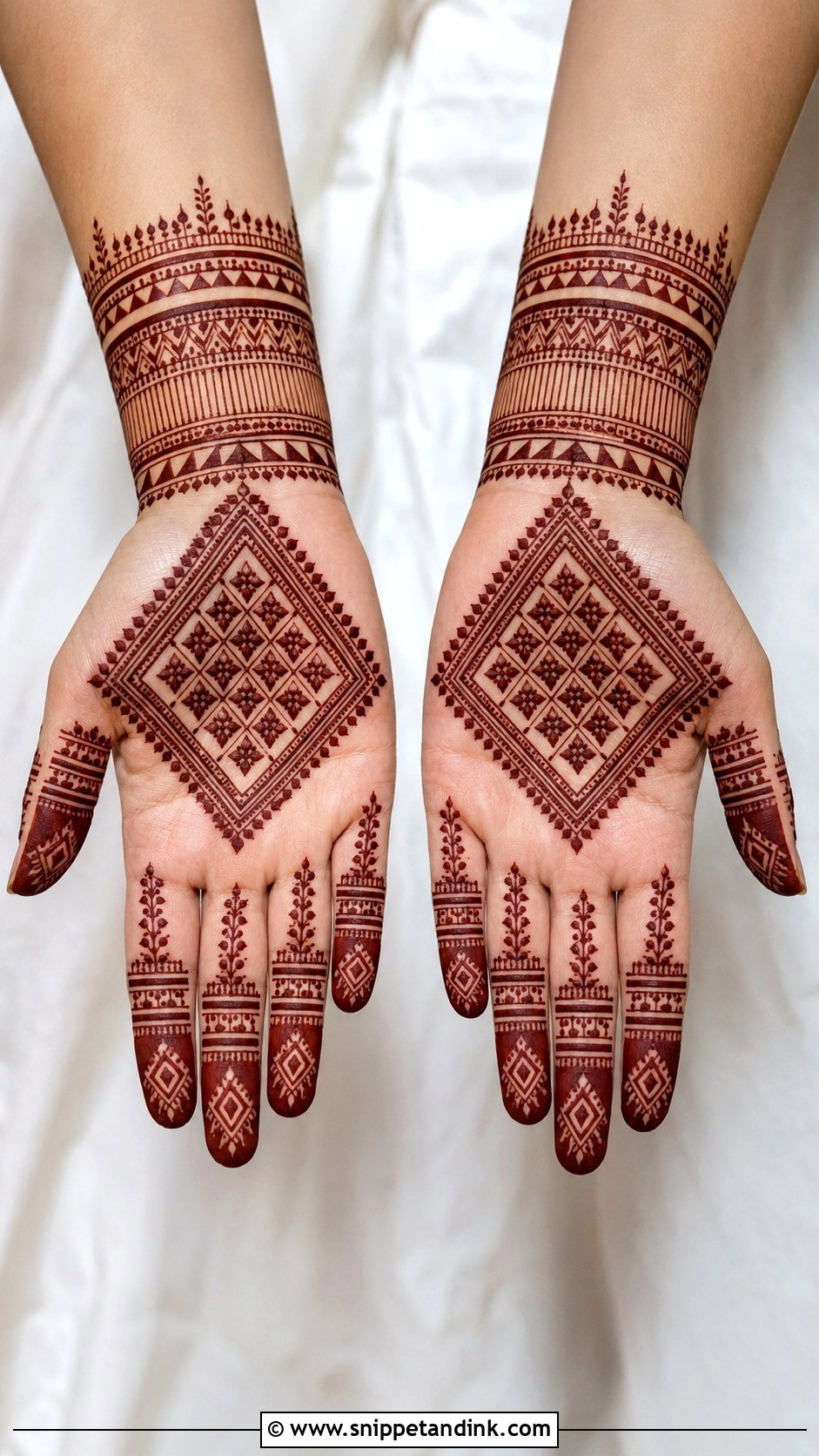
Moroccan-inspired palms suit anyone who likes bold geometry and clean structure: diamonds, straight lines, grids, triangular sections, dots and symmetrical bands. They feel more graphic than floral-heavy Indian mehndi. On the palm, I divide the space into organised sections and carry matching bands onto the fingers. Avoid mixing in too many soft motifs, and keep a little open skin so the geometry stays crisp.
32. Front Hand Gulf Mehndi Design
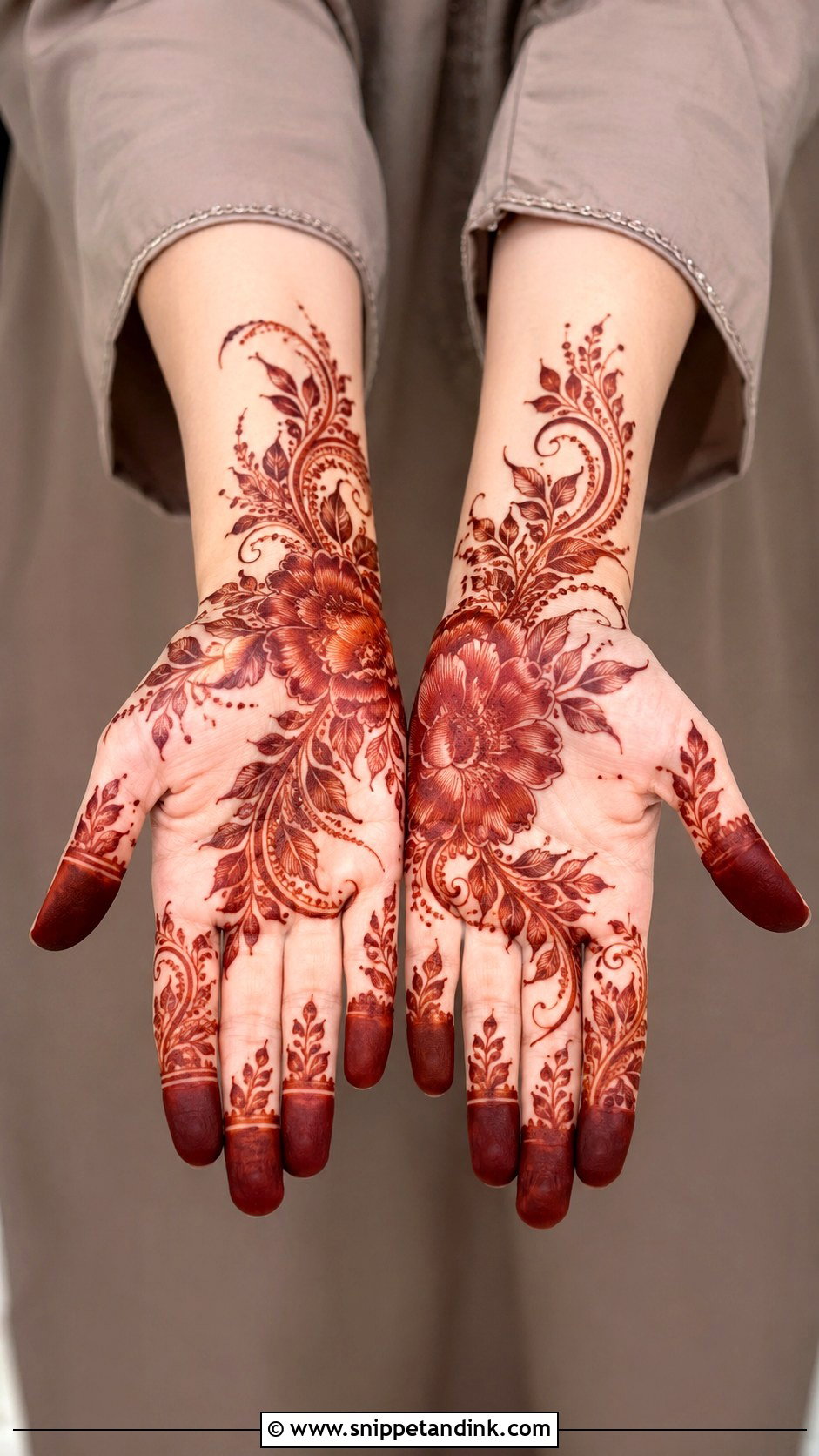
Khaleeji-inspired palms use bold florals, leafy clusters, flowing curves and generous spacing. Large motifs move across the palm, leaving enough skin to show off the stain, and fingers get bold tips, rings or floral strips. These thicker lines hold their colour well as the stain fades, which is a practical plus for Eid and festive evenings. Choose oversized flowers with clean outlines and keep the inner detail soft.
33. Front Hand Negative Space Mehndi Design
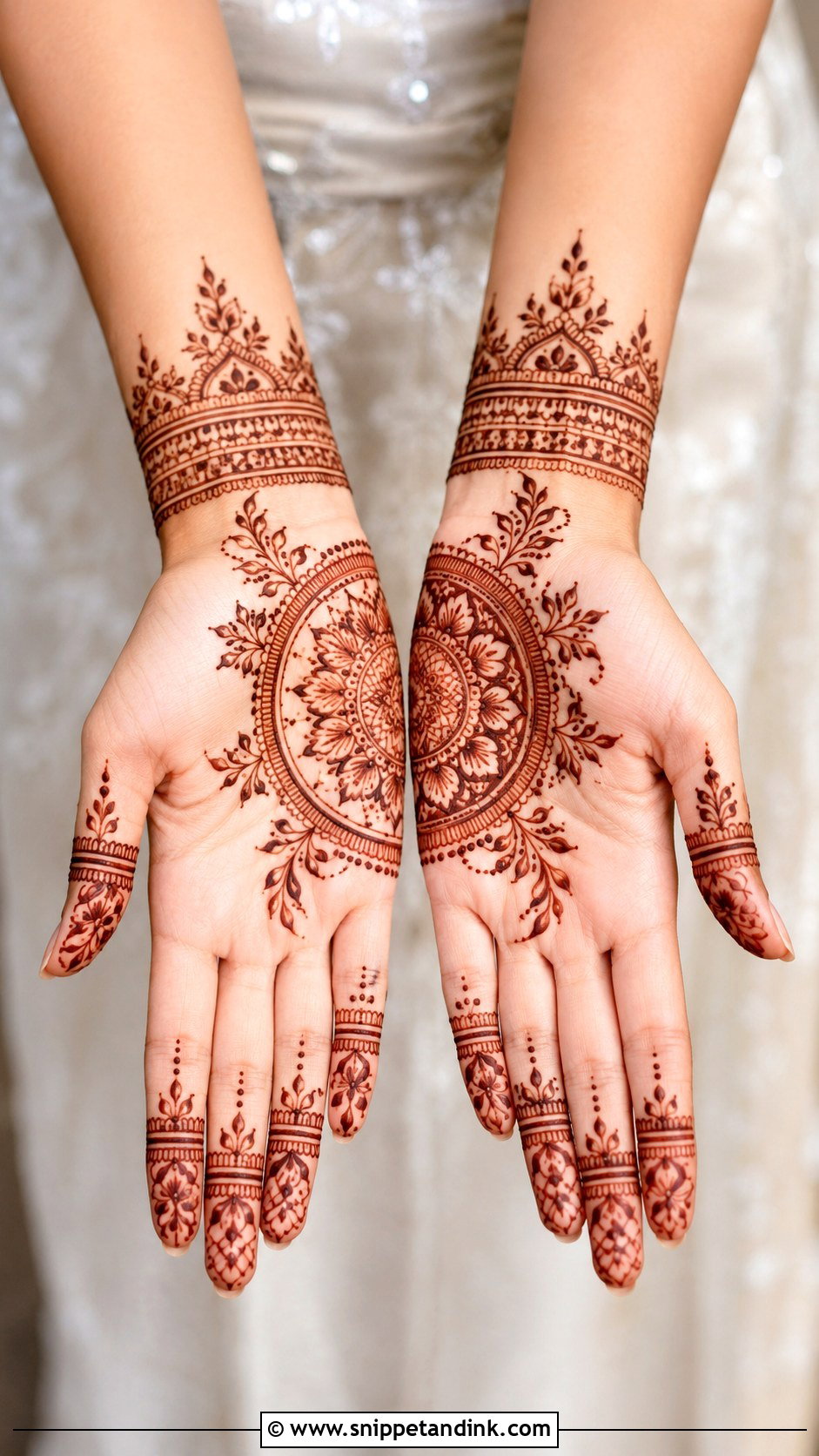
Here the bare skin is part of the drawing. Split mandalas, half flowers, geometric gaps or clean Arabic vines are placed so the open areas form shapes of their own. When it works, motifs stand out even more clearly after the stain develops. When it doesn’t, it just looks unfinished. The difference is in the borders: each empty area needs a clean, deliberate edge so the eye reads it as a shape.
34. Front Hand Fine Line Mehndi Design
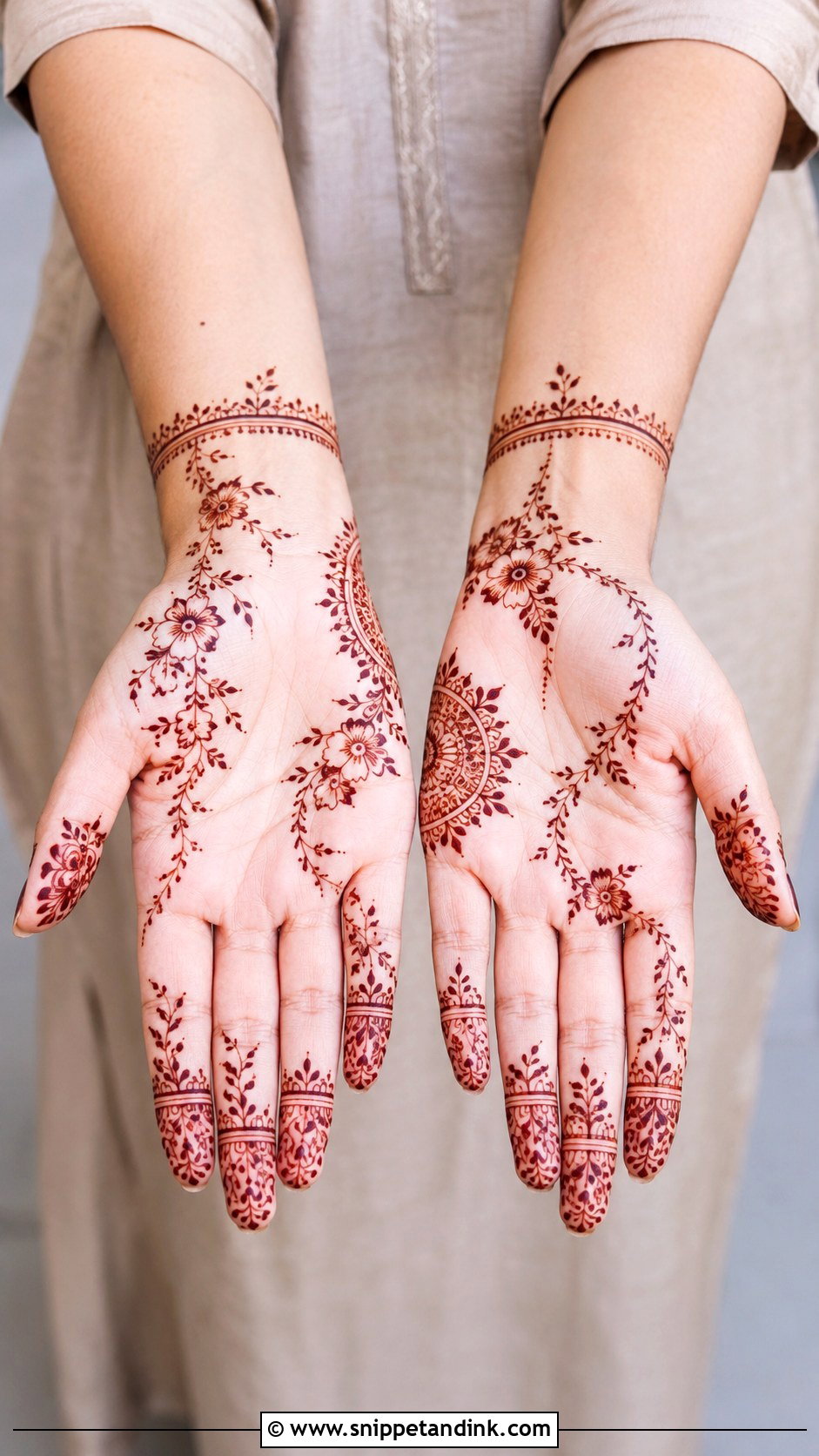
Thin strokes form flowers, vines, dots, lace-like sections and light finger patterns. It looks refined rather than heavy, but it asks a lot of the artist: a smooth, well-strained paste, a fine cone tip and a steady hand. Thin lines also stain paler, so I leave enough spacing between them to keep them visible after staining. A slim wrist band or soft mandala ties it together for engagements, bridesmaids and small functions.
35. Front Hand Modern Bridal Mehndi Design
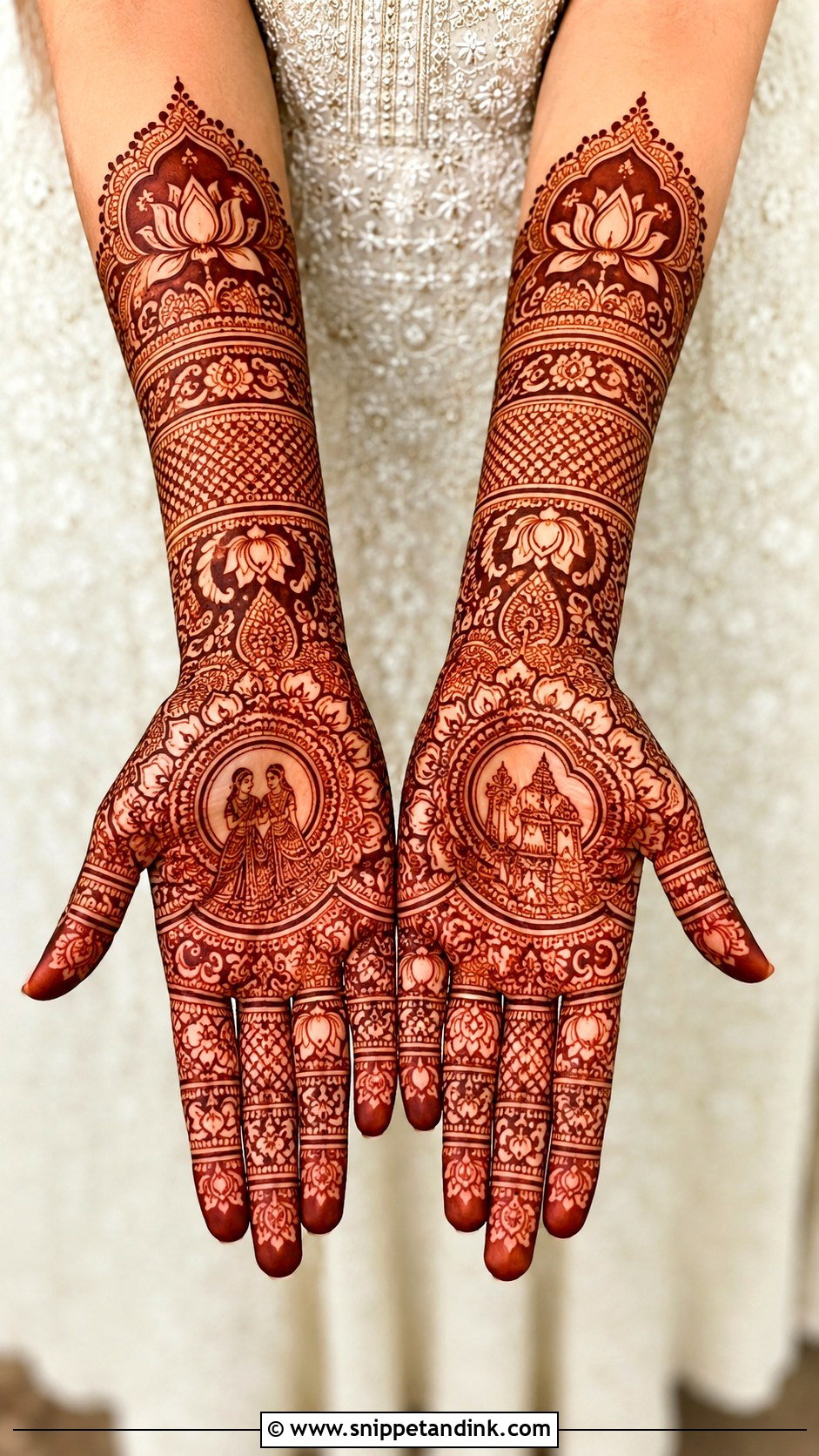
Traditional richness with an updated layout. The palm can hold mandalas, lotus flowers, paisleys, portraits, jaali or wedding symbols, while fingers get bands, mesh and floral tips and the wrist and forearm carry matching borders. Rather than making every area equally dense, I plan the hand in clear zones with fine detail and balanced negative space, so the close-ups stay sharp. Portraits in particular need room; a face squeezed into a crowded palm loses its features once the stain spreads.
Surviving a Night With Both Palms Covered
Back-of-hand henna lets you carry on with your evening. Palm henna doesn’t. Once both palms are wet you can’t hold a phone, a cup or a dupatta, and closing your fist even halfway will smudge the centre. Brides are often surprised by how helpless they feel, so I plan the logistics with them in advance.
- Eat, drink and use the bathroom before the appointment starts. Bridal palms can take hours, then more hours to dry.
- Wear something with a front opening or no fiddly fastenings, and tie your hair back.
- Ask someone to stay with you to feed you, hold your phone and adjust your clothes.
- Keep your palms facing up and fingers spread slightly while the paste sets. Rest your forearms on your knees instead of gripping anything.
- For sleeping, wrap the dry paste loosely in tissue and secure it with medical tape, or slip on clean cotton socks or gloves, so it stays in place without sticking to the bedding.
One more thing to know about palms: they stain darkest, but they also lose colour quickly. Hand washing and everyday use wear the skin there faster than on the back of the hand, so a palm stain usually starts fading within a week or two. If you have functions spread over several days, put the palm henna closest to the day that matters most.
Spacing Beats Density on the Palm
Palm henna is all about balance. Full bridal coverage, a soft floral trail, a clean mandala, bold Arabic curves and a minimal wrist-to-finger line are all good choices, and the heaviest design is rarely the best one. Good spacing, neat lines, a strong focal point and matching finger details make the real difference. Save the designs that suit your outfit, your palm shape and the occasion, then show them to your artist along with a photo of what you’ll wear.
You'll Like These Ideas:







Leave a Reply