
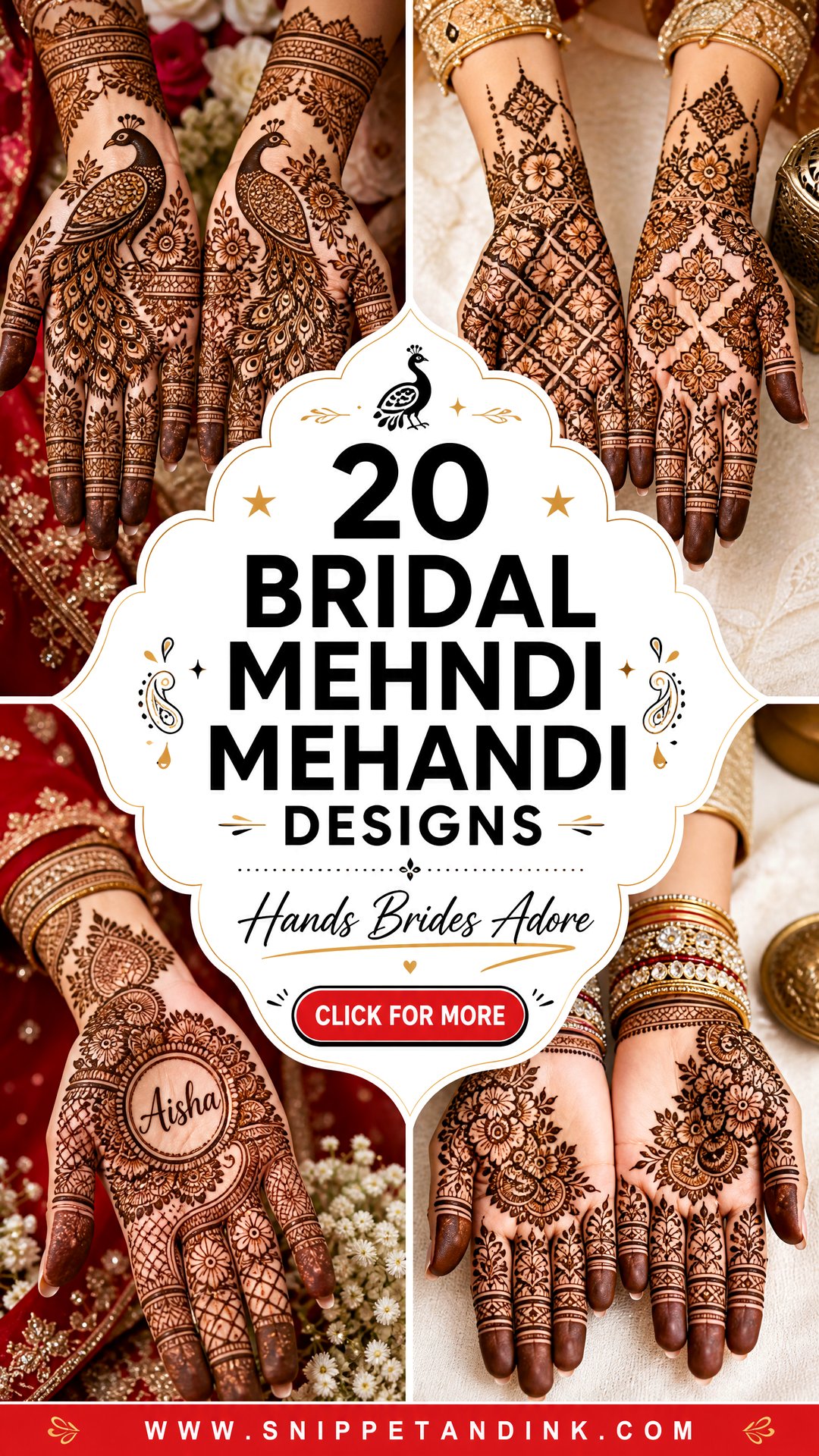
At an Indian wedding, a bride’s hands are on show through almost every ritual: held during the pheras, joined for kanyadaan, filled with rice and flowers, photographed with rings and chooda. That’s why the mehndi on them gets so much thought. The range is wide, from dense Indian full-hand coverage and Arabic floral trails to portrait work, mandala palms, peacocks, jaali mesh and modern negative space. Some brides want heavy coverage to the forearm; others prefer cleaner back-hand designs that leave the jewelry room to show. Here are twenty complete hand layouts, with what I’d tell you about each if you were sitting across from me.
Fitting the Pattern to Long Fingers, Broad Palms and Small Hands
Two brides can bring me the same reference photo and leave with quite different layouts, because that photo was drawn on someone else’s hand. Before I start, I look at finger length, palm width and where the creases fall.
- Long, slim fingers: carry fine bands all the way to the tip and keep the palm motif narrow so it doesn’t spill over the sides.
- Broad palms: one large central motif with generous borders fills the space well. Lots of small motifs make a wide palm look busier still.
- Small hands: fewer, bigger shapes read better than dense filler, and a wrist cuff set slightly higher adds length.
- Deep palm creases: I avoid running a face or a name straight across the main lines, because they distort every time you cup your hand.
Hold your hands flat in front of a mirror, then make a loose fist. Anything you love in a reference that would vanish into a crease is worth moving before the cone touches skin.
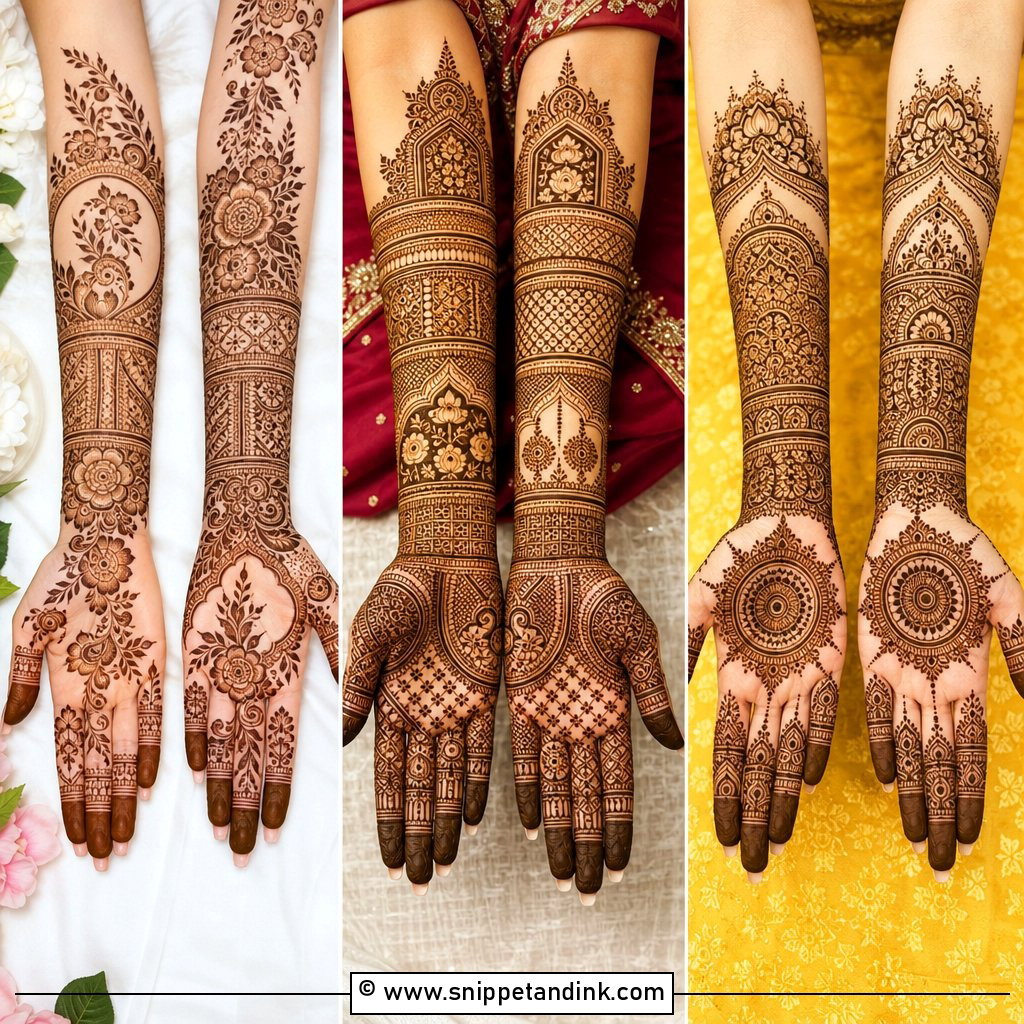
1. Full Hand Indian Bridal Mehndi Design
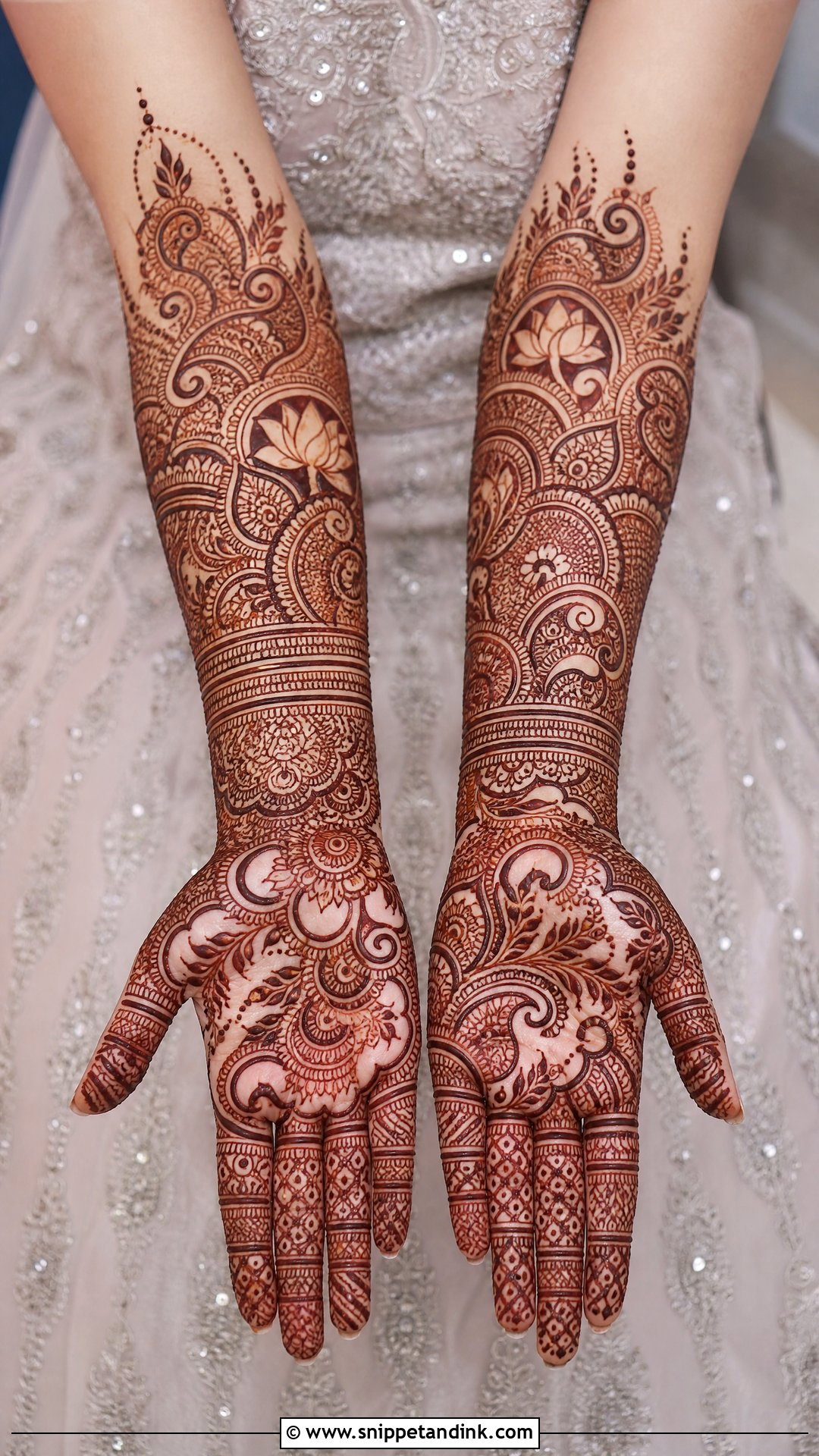
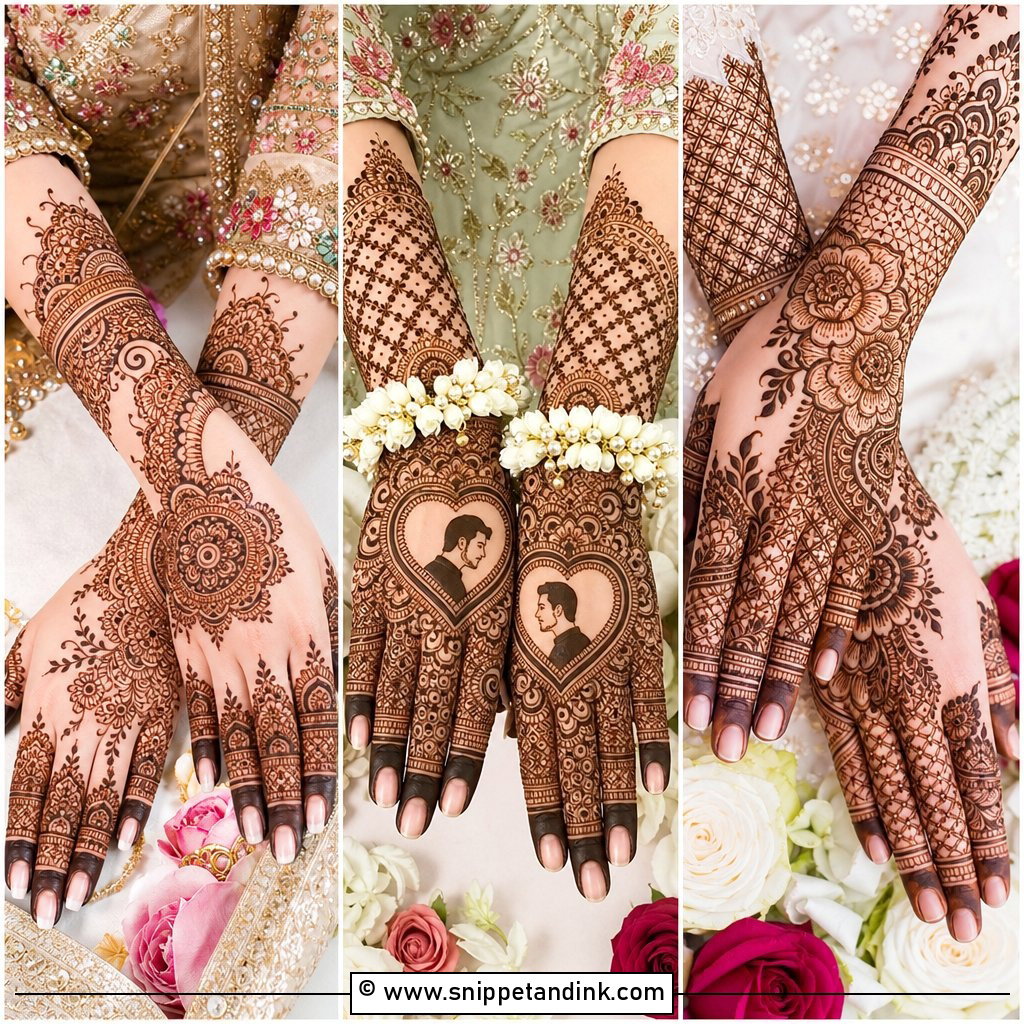
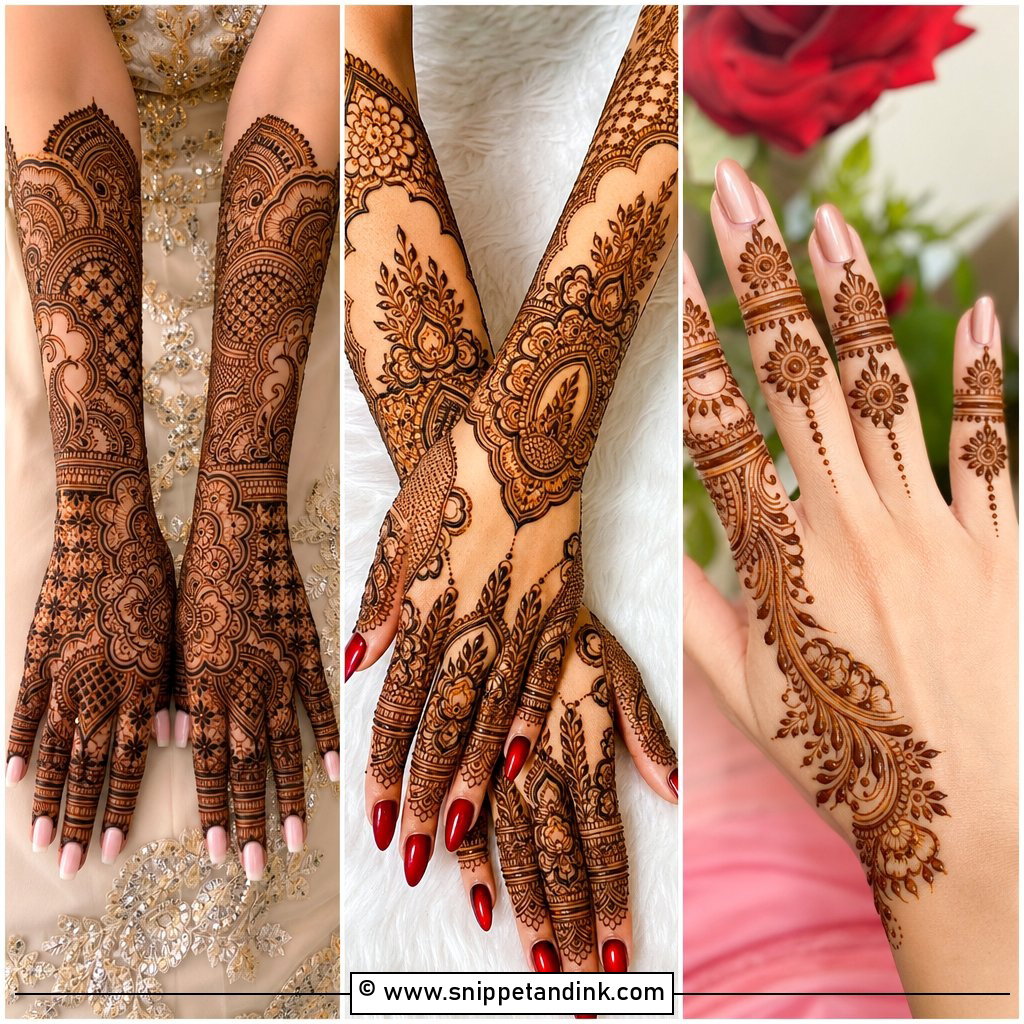
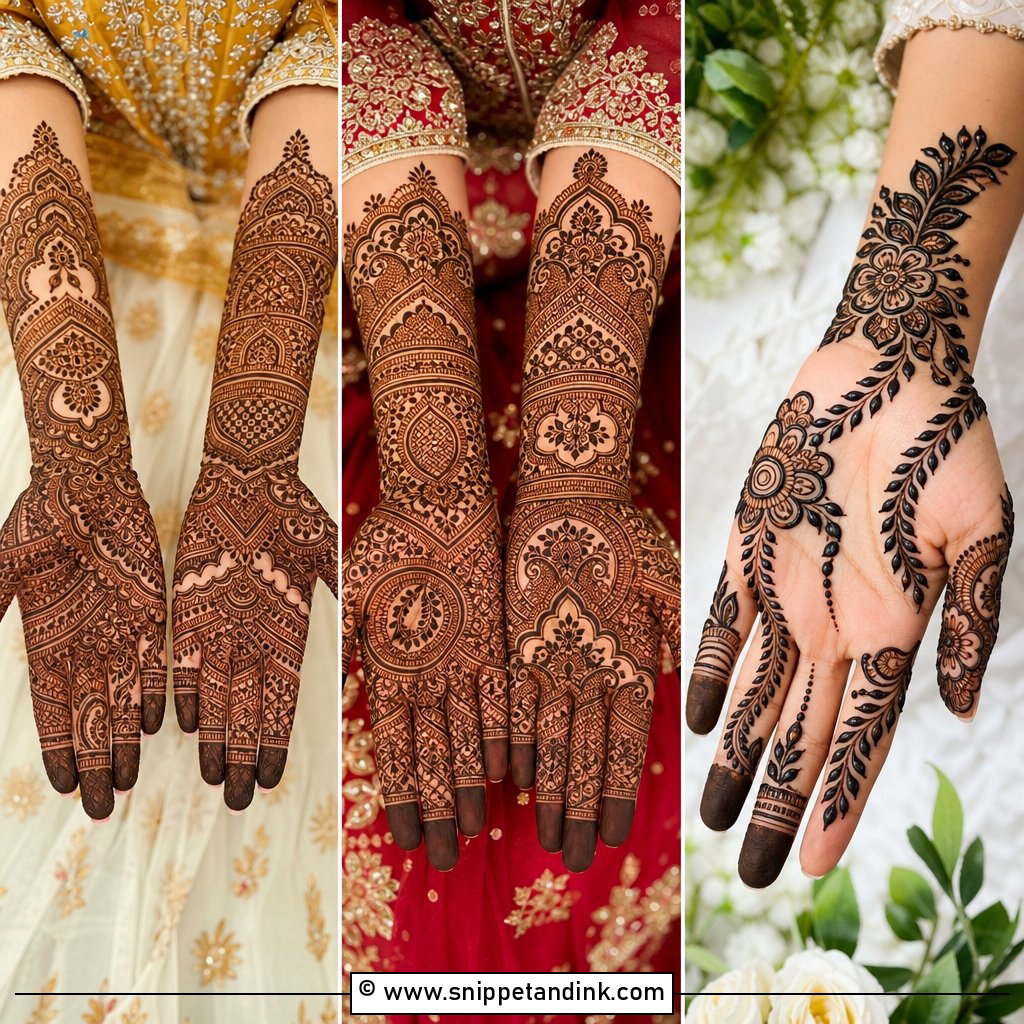
Full Indian coverage starts at the fingertips and runs past the wrist toward the forearm with very little bare skin. Paisleys, lotus flowers, vines, fine dots, shaded leaves and packed fillers make up the body. Palms usually carry a central mandala or wedding symbol, and the back of the hand gets bracelets, arches and ornamental bands. I plan this layout in zones before filling anything, because filling as you go is how one hand ends up noticeably longer than the other. Against red, maroon, gold or ivory, the density gives a deep festive look. Expect a long session.
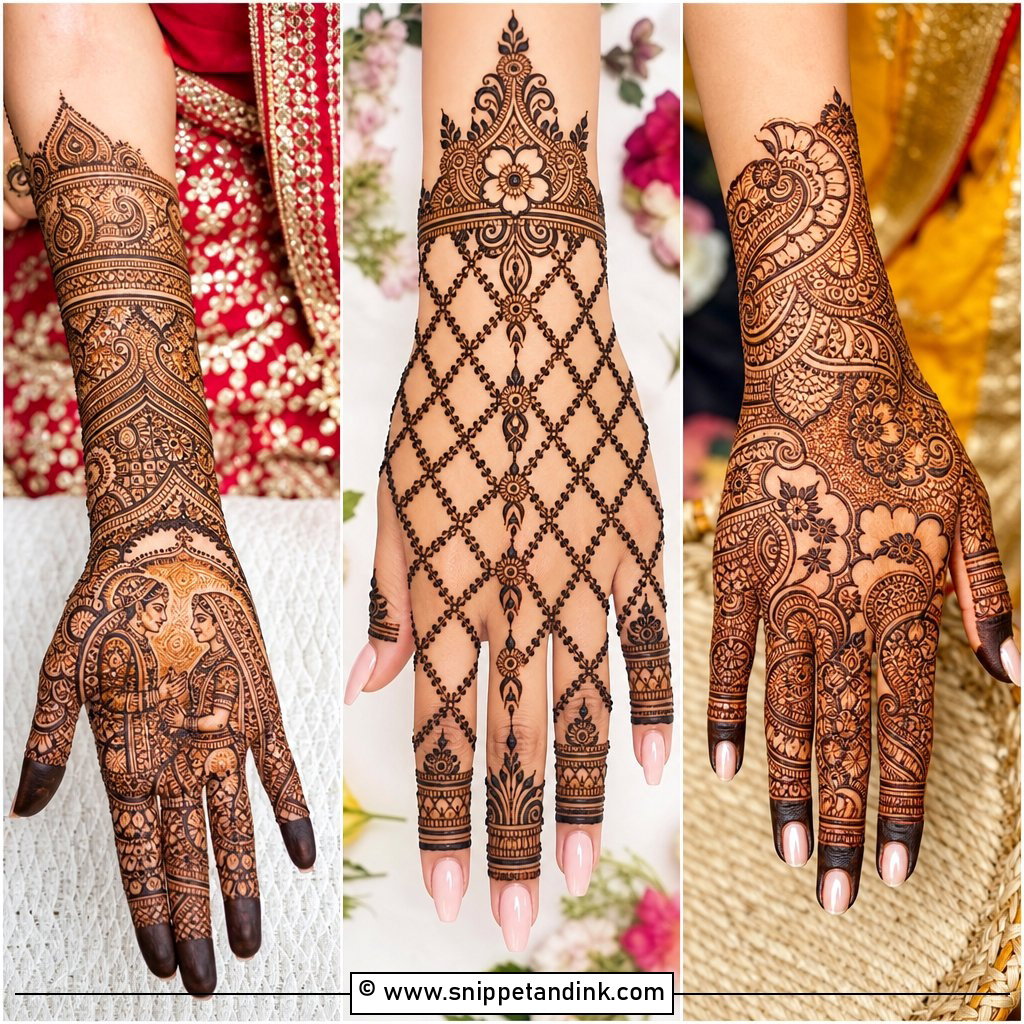
2. Dulha Dulhan Bridal Mehndi Design
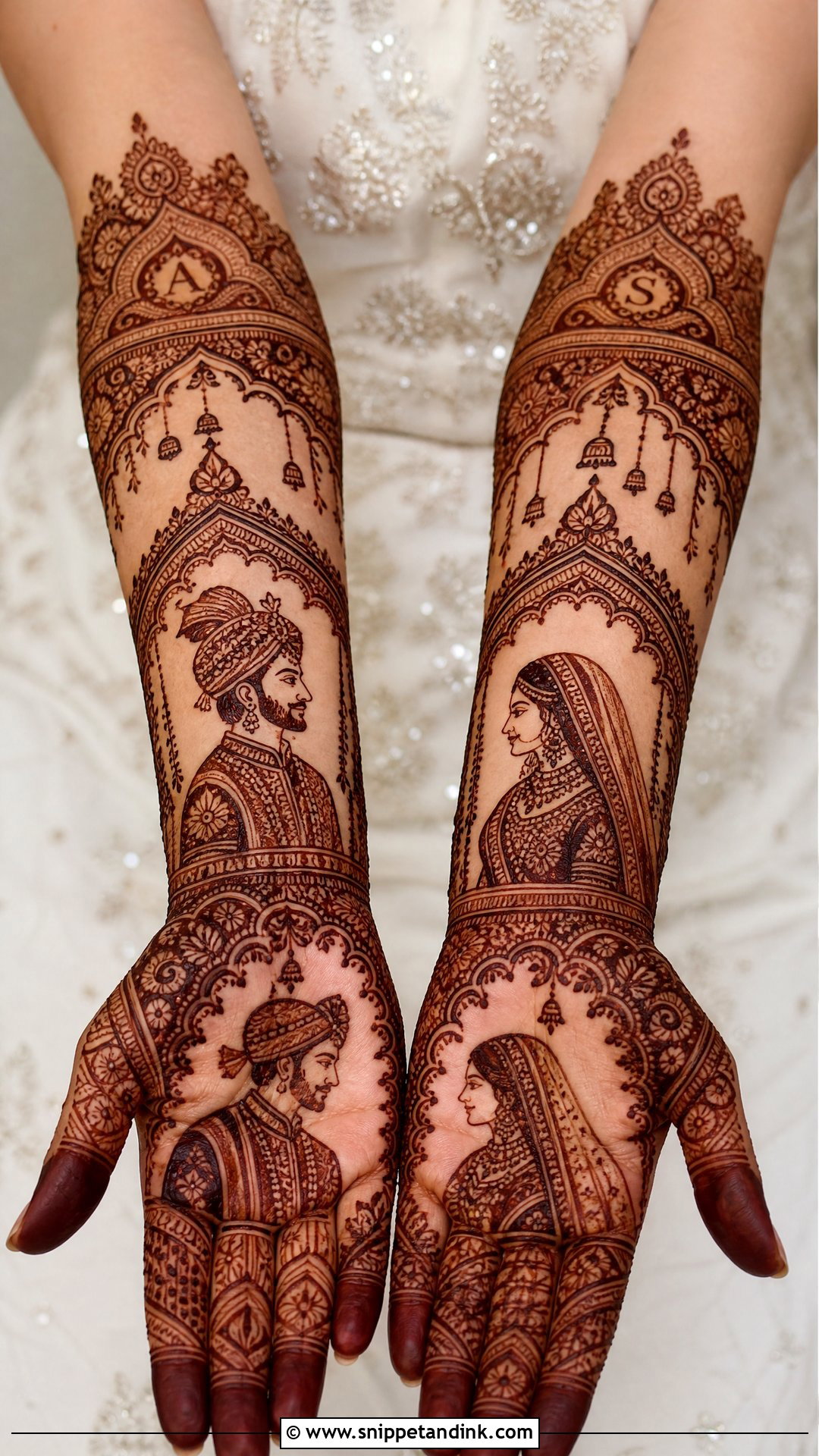
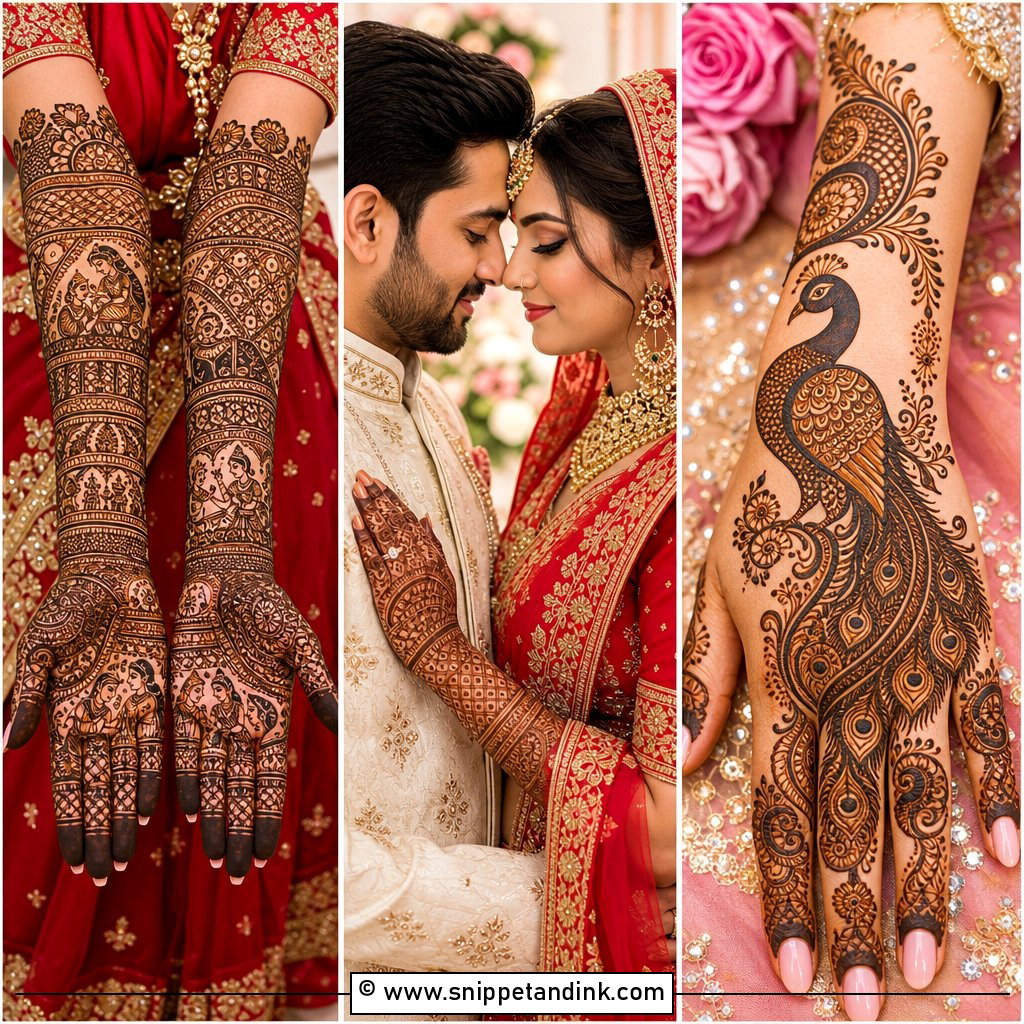
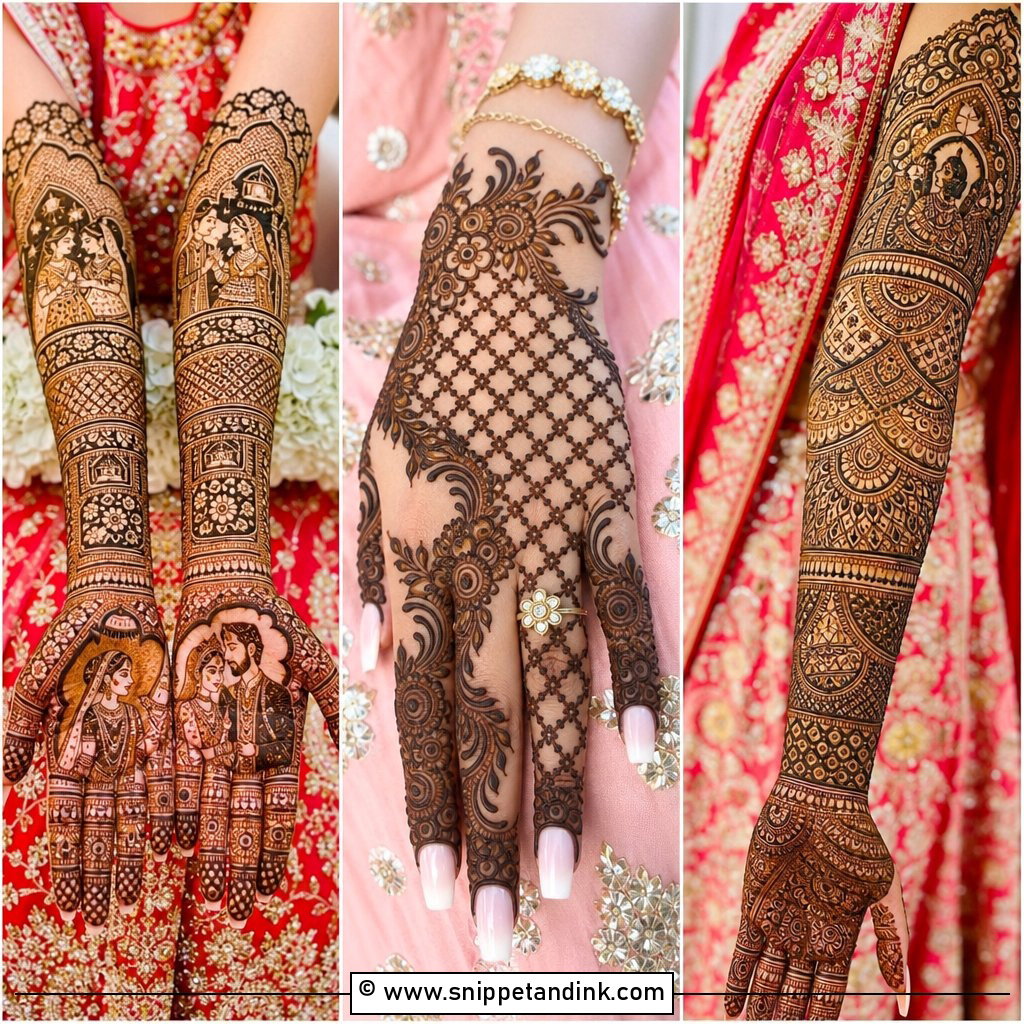
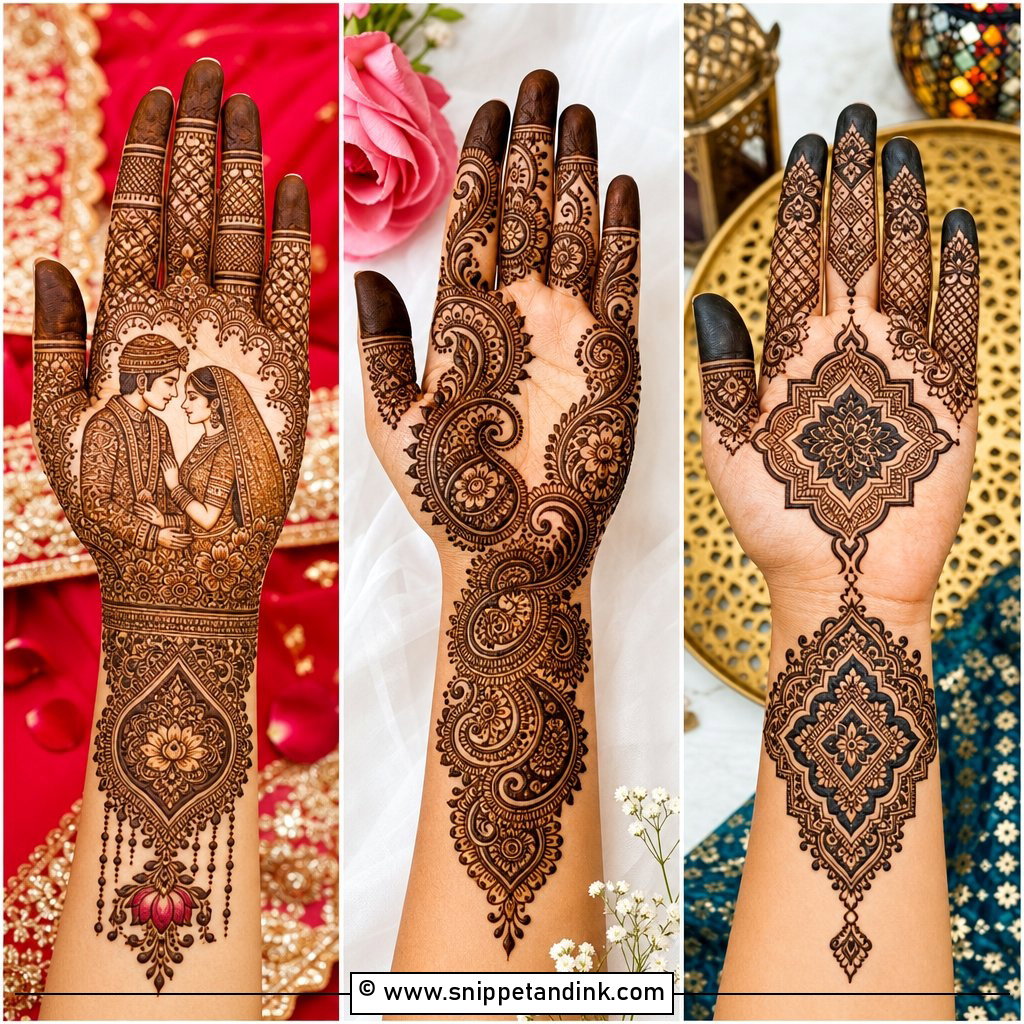
Dulha dulhan bridal mehndi puts the bride’s portrait on one palm and the groom’s on the other, framed by mandap arches, florals, paisleys, bells, doli details and fine mesh. It can extend up the forearms for a fuller finish. The two palms only work as a pair, so I sketch both faces at the same height and roughly the same size; it shows the moment you hold your hands side by side for a photo. Many brides hide the groom’s name in the pattern too. Choose it if emotional detail matters more to you than airy space, and give your artist the time faces need.
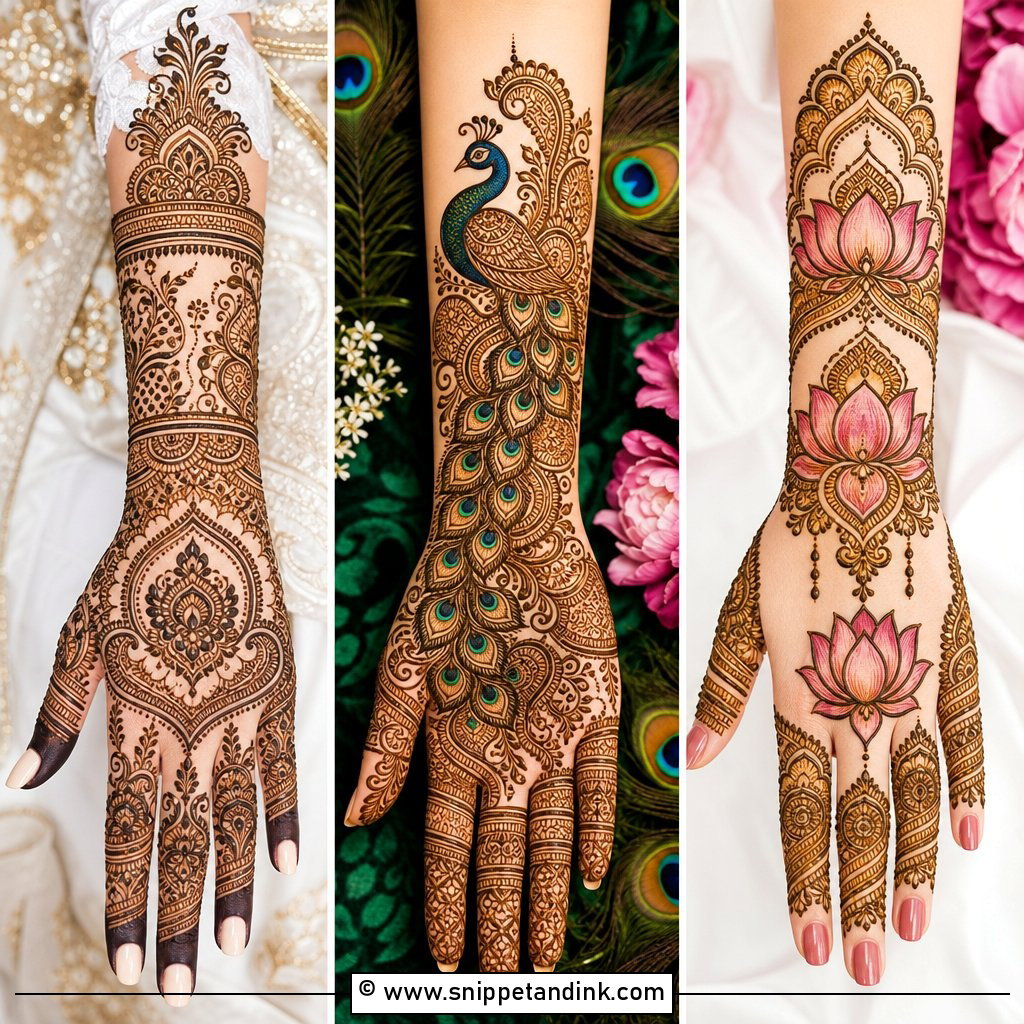
3. Peacock Bridal Mehndi Design
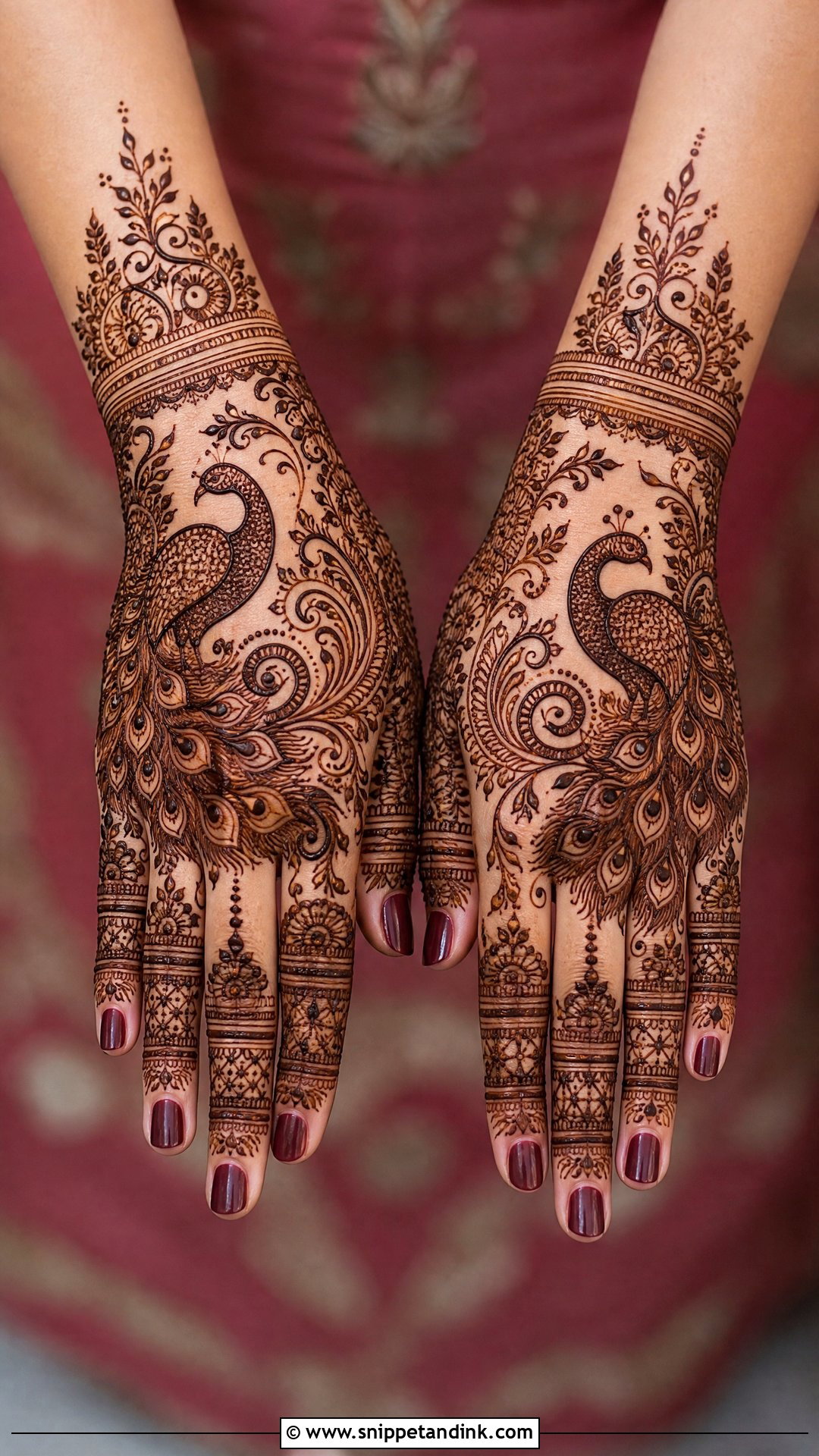
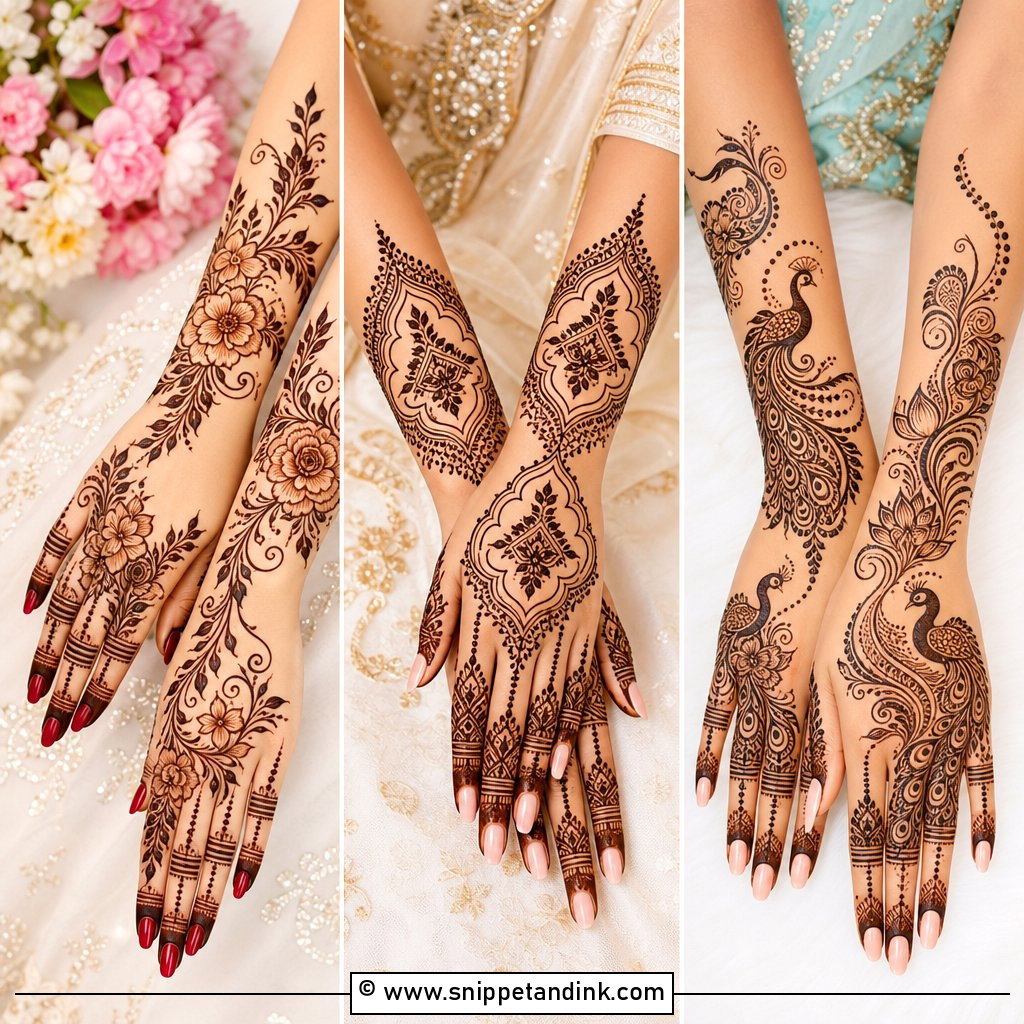
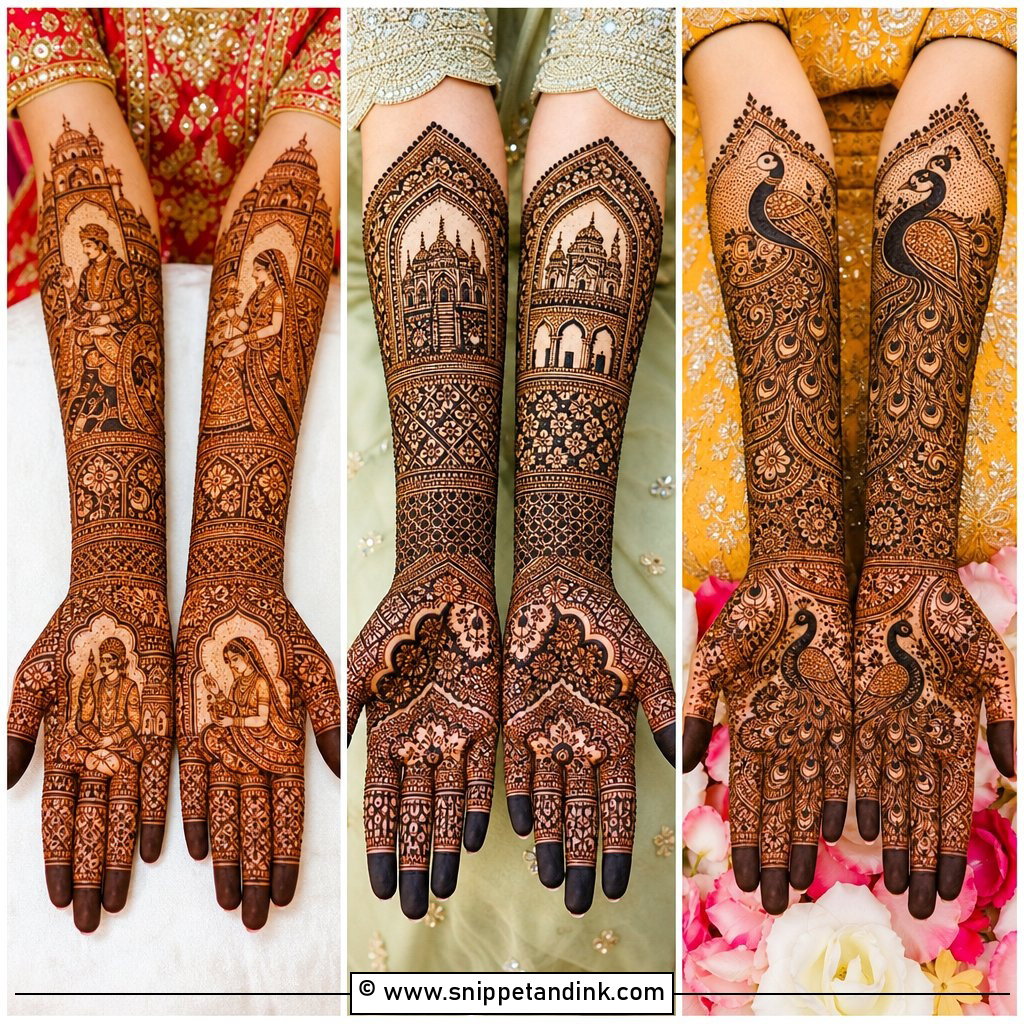
A peacock across the palm, wrist or forearm, its feathers breaking into paisleys, curls and leaves, has a regal feel that sits naturally at an Indian wedding. On the back of the hand it usually rises diagonally from the wrist toward the fingers. I like it under heavy bangles, since the tail can sweep down to the wrist and frame the stack. Feathers are where artists overwork it. Each eye on the tail needs a clear center, or once the stain develops the whole tail becomes a dark band with no shape.
4. Rajasthani Bridal Mehndi Design
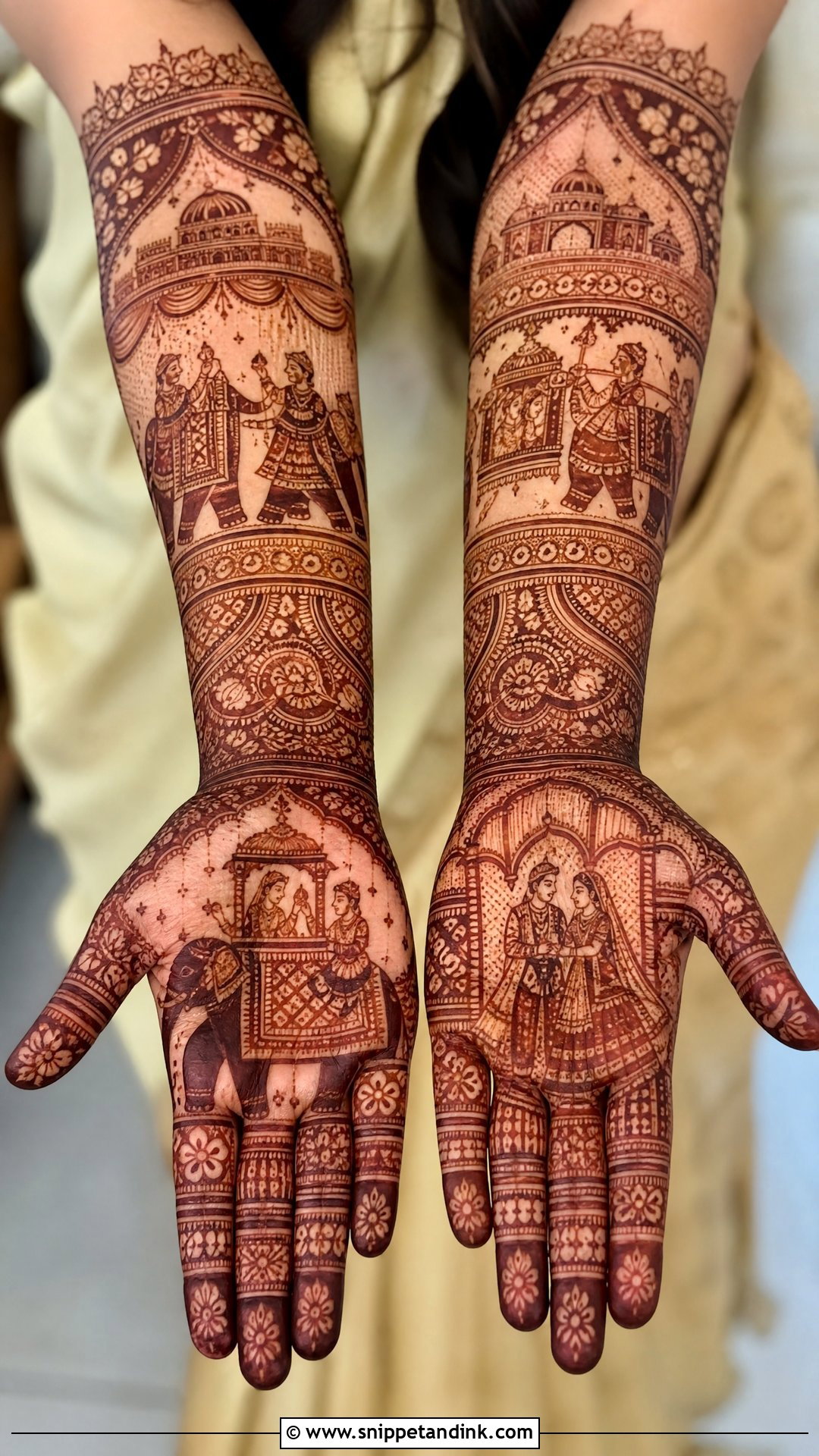
Rajasthani mehndi tells stories through symmetry: elephants, palanquins, bride and groom figures, arches, drums, palace borders. Fine fillers join every section, and hands are usually fully covered, with wedding scenes on the palms and curved ornamental bands across the back. It’s slow work. I break long sittings into stages so the bride can rest one hand while I draw on the other. It belongs at a large traditional wedding with a heavy lehenga, and it’s the style that most rewards a deep, well-protected stain.
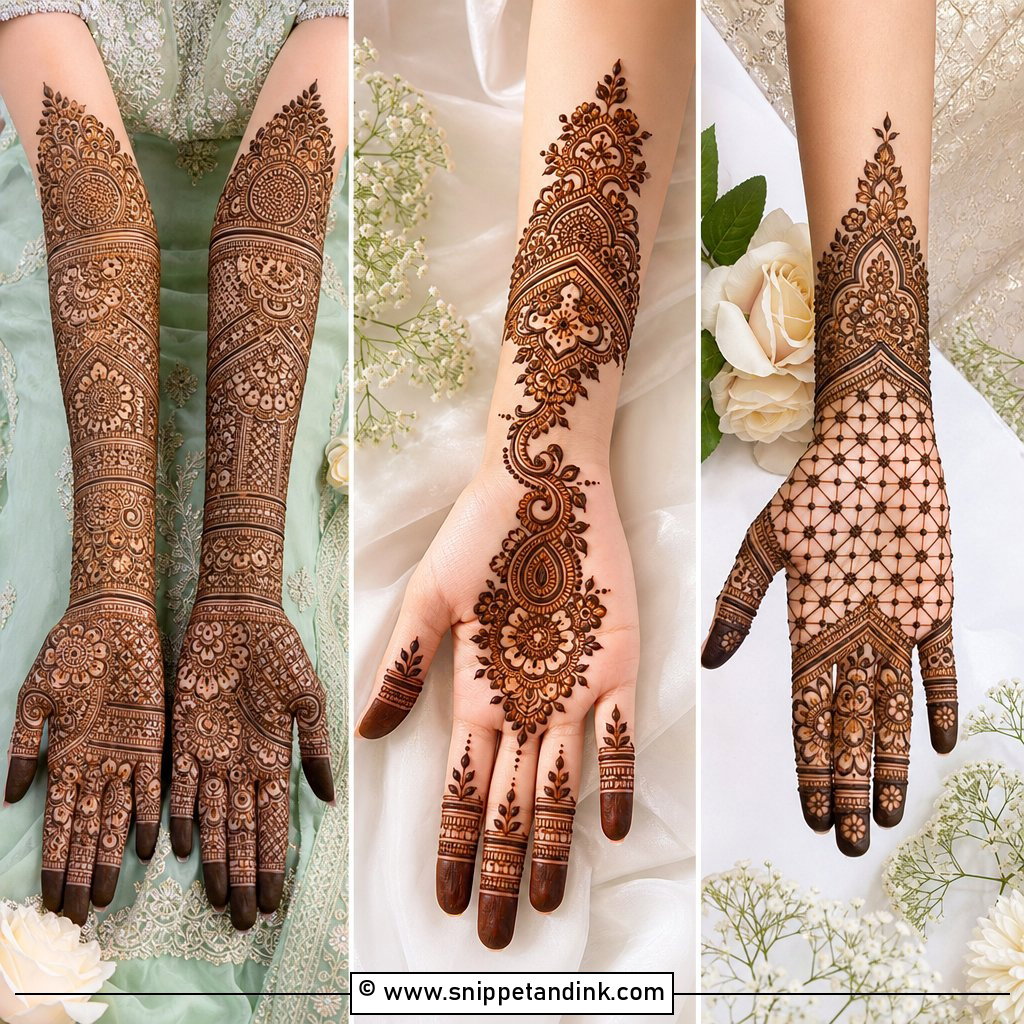
5. Arabic Bridal Mehndi Design
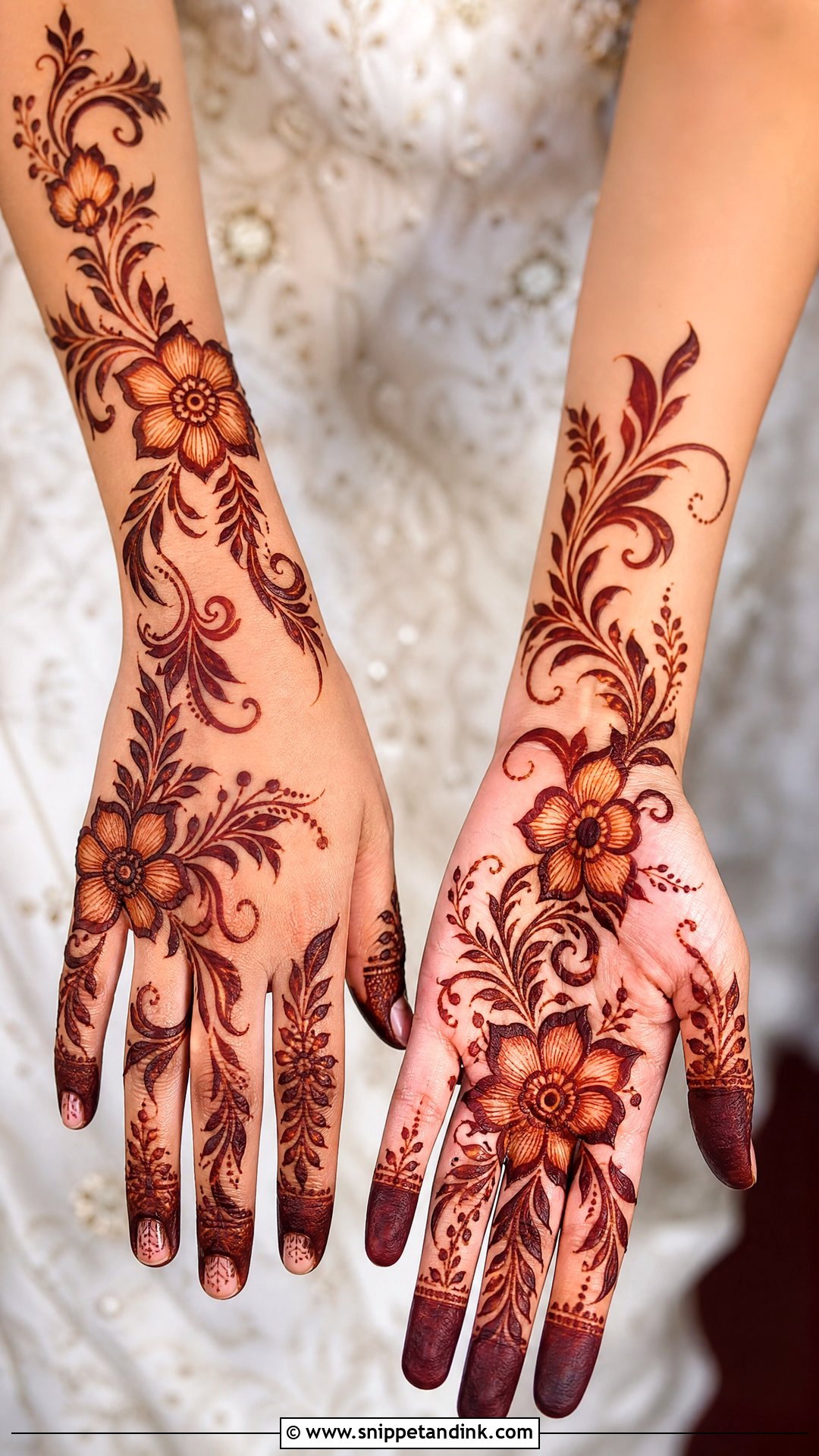
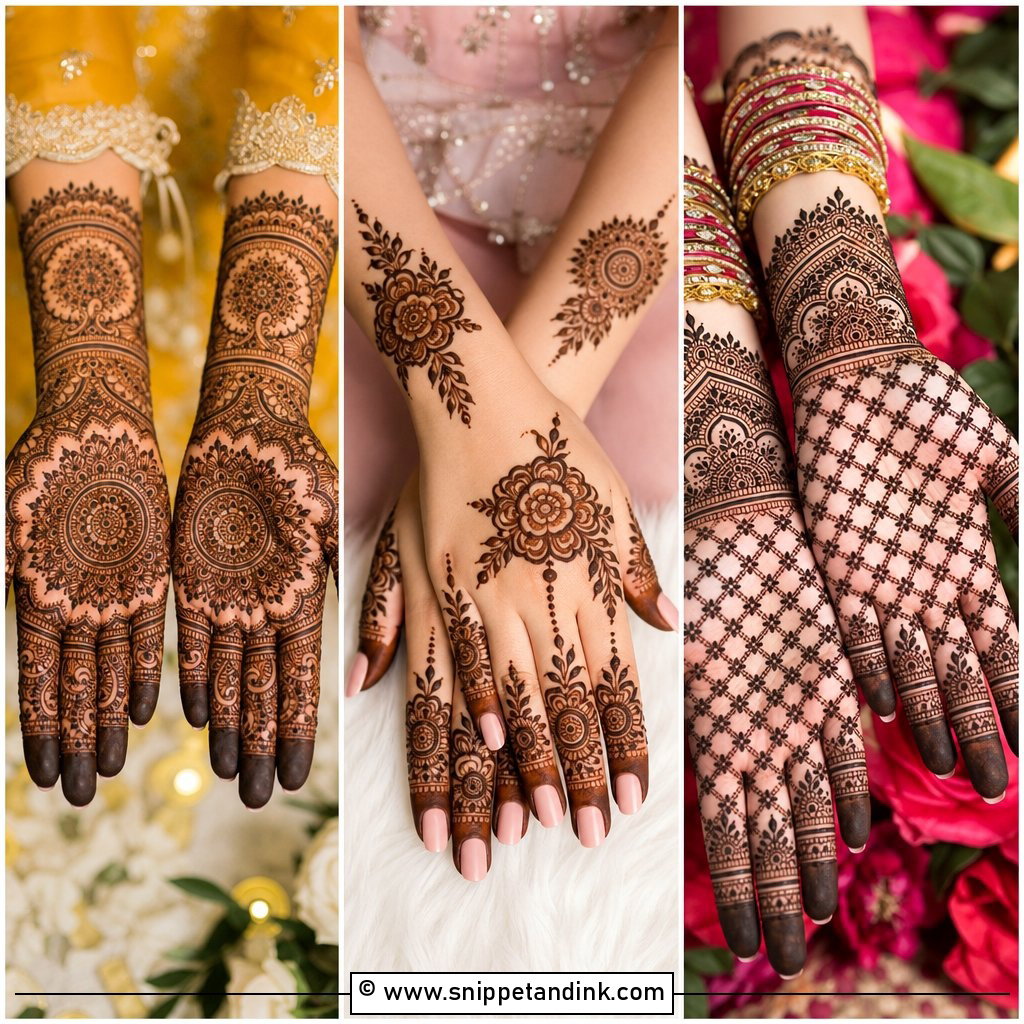
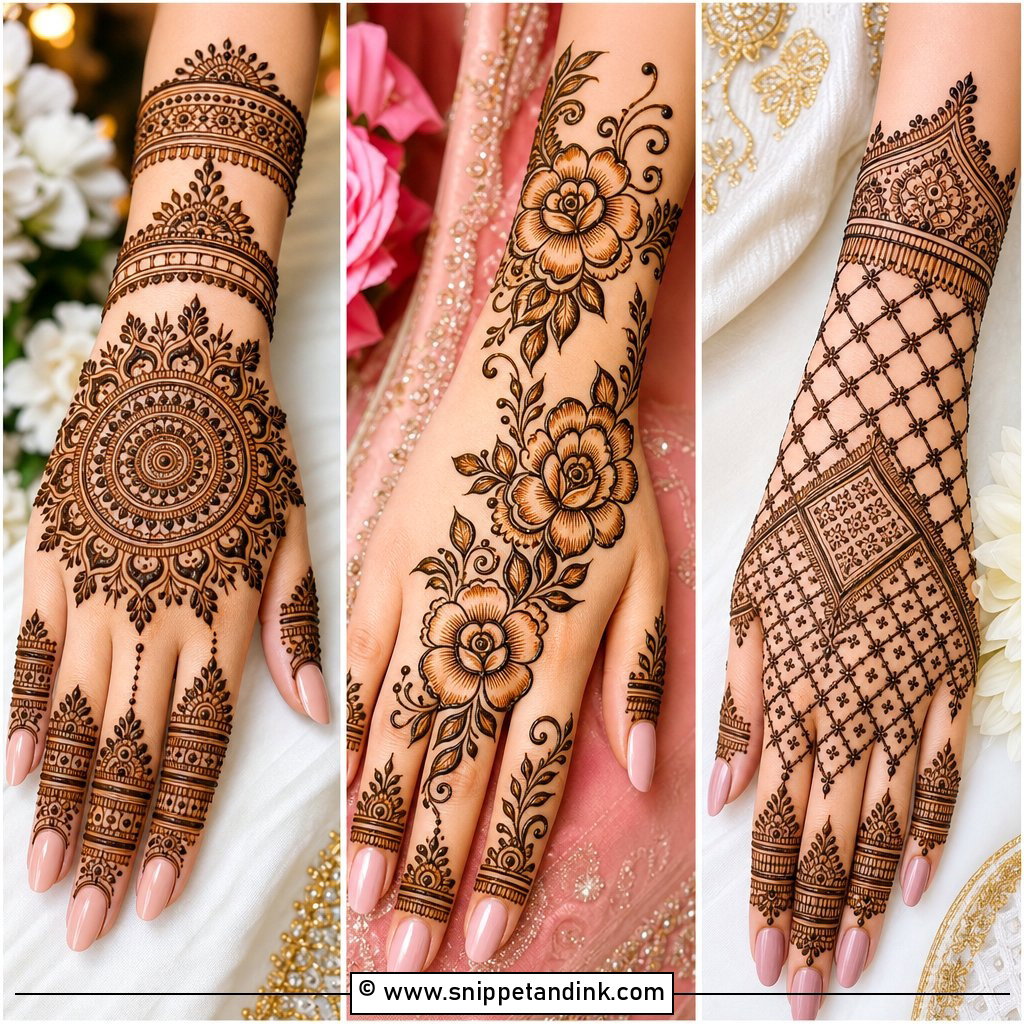
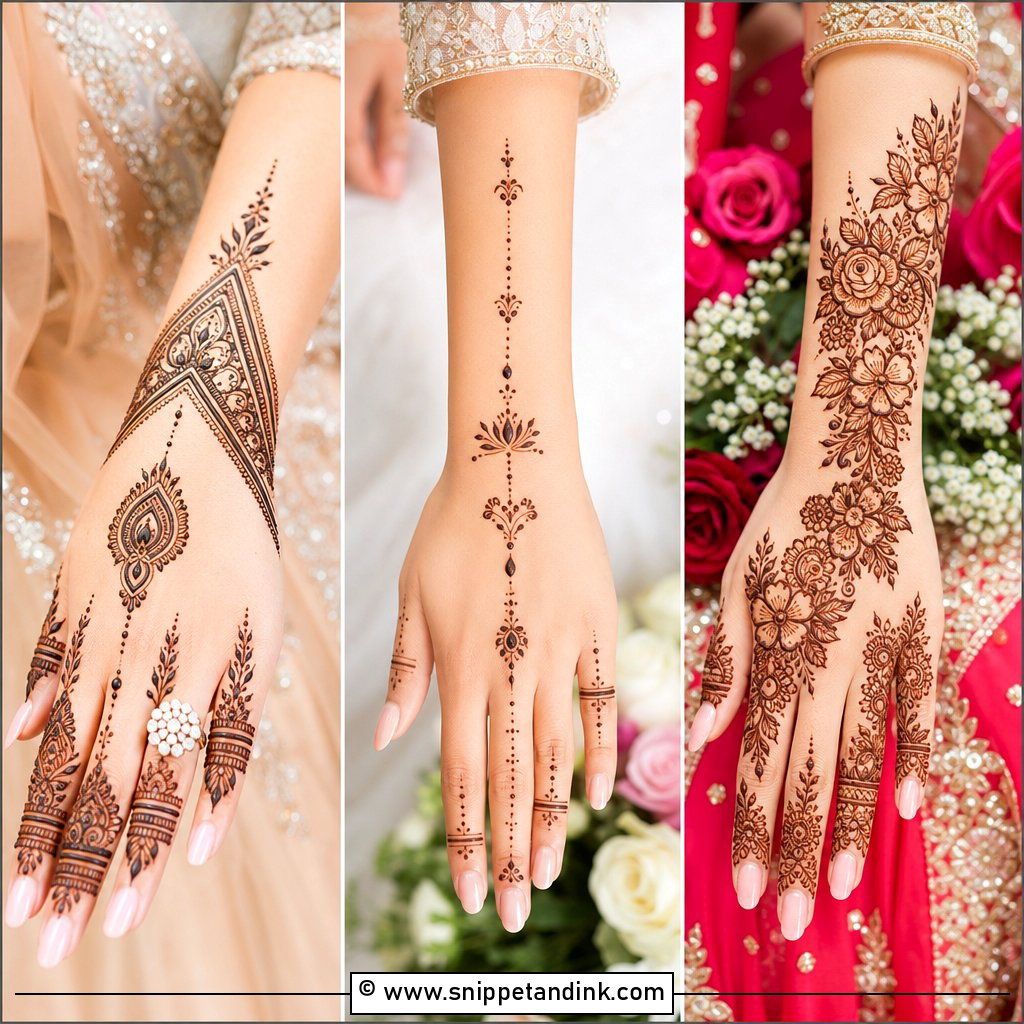
Arabic bridal mehndi trades density for bold floral trails, leafy vines, curved strokes and visible gaps. On a bride, the trail runs diagonally from wrist to fingers, with heavier detail near the palm and wrist. Bold lines carry more paste, so they stain darker and stay readable as the color fades over the following weeks. It’s also quicker than full Indian coverage, which helps when you have several functions close together. Pastel lehengas and minimal jewelry suit it, and it still looks festive at a big Indian wedding.
6. Indo Arabic Bridal Mehndi Design
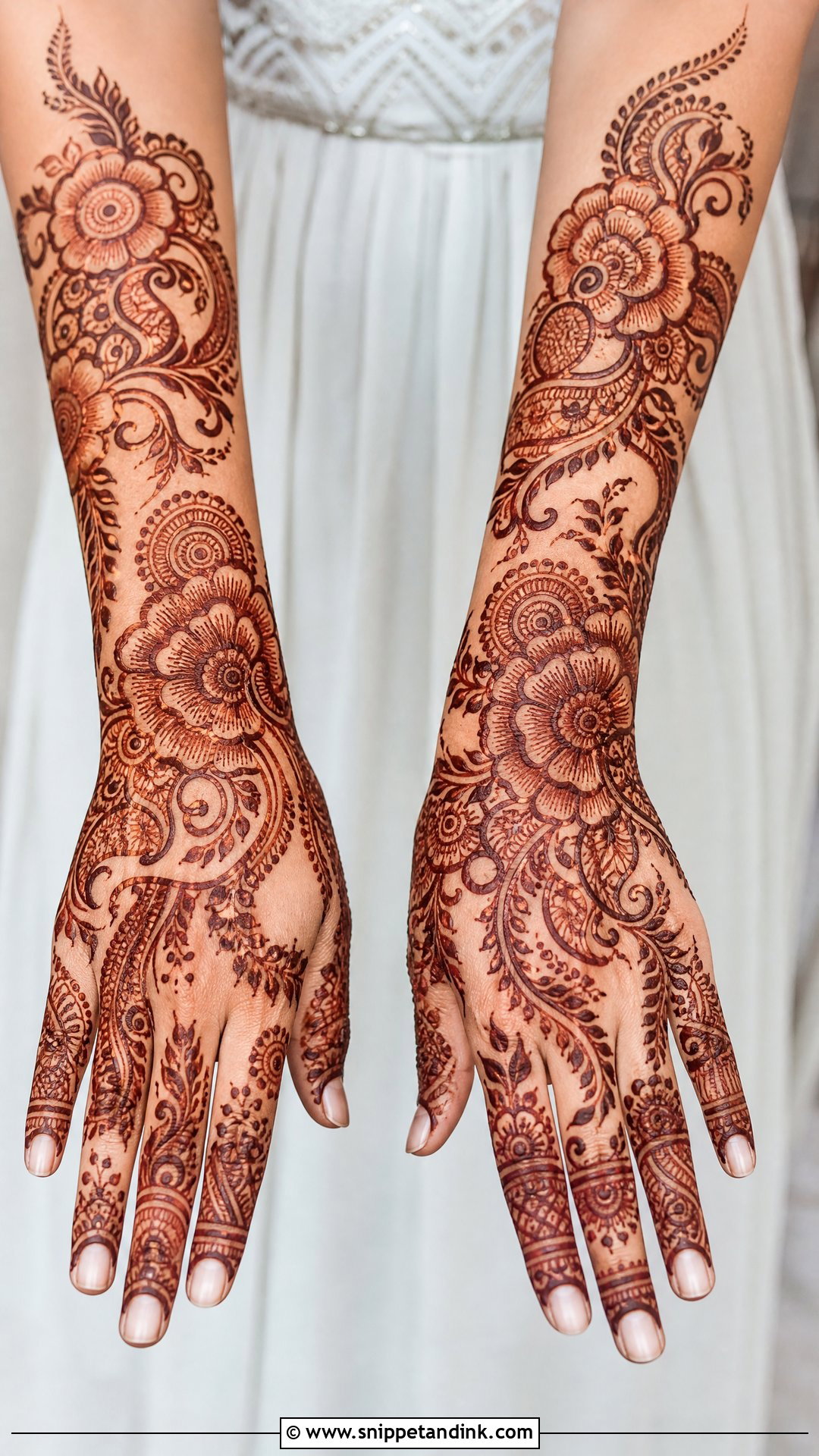
Indo Arabic bridal mehndi takes Arabic spacing and flow and layers Indian detail into it: large flowers, paisleys, leafy trails, mandala accents and delicate fillers. The open spaces stop the hand from looking crowded while still giving full bridal impact on palms and backs alike. Because its density adjusts so easily, I often suggest it when a bride wants one design language across engagement, mehndi and wedding, simply turning the detail up for the main day.
7. Mandala Bridal Mehndi Design
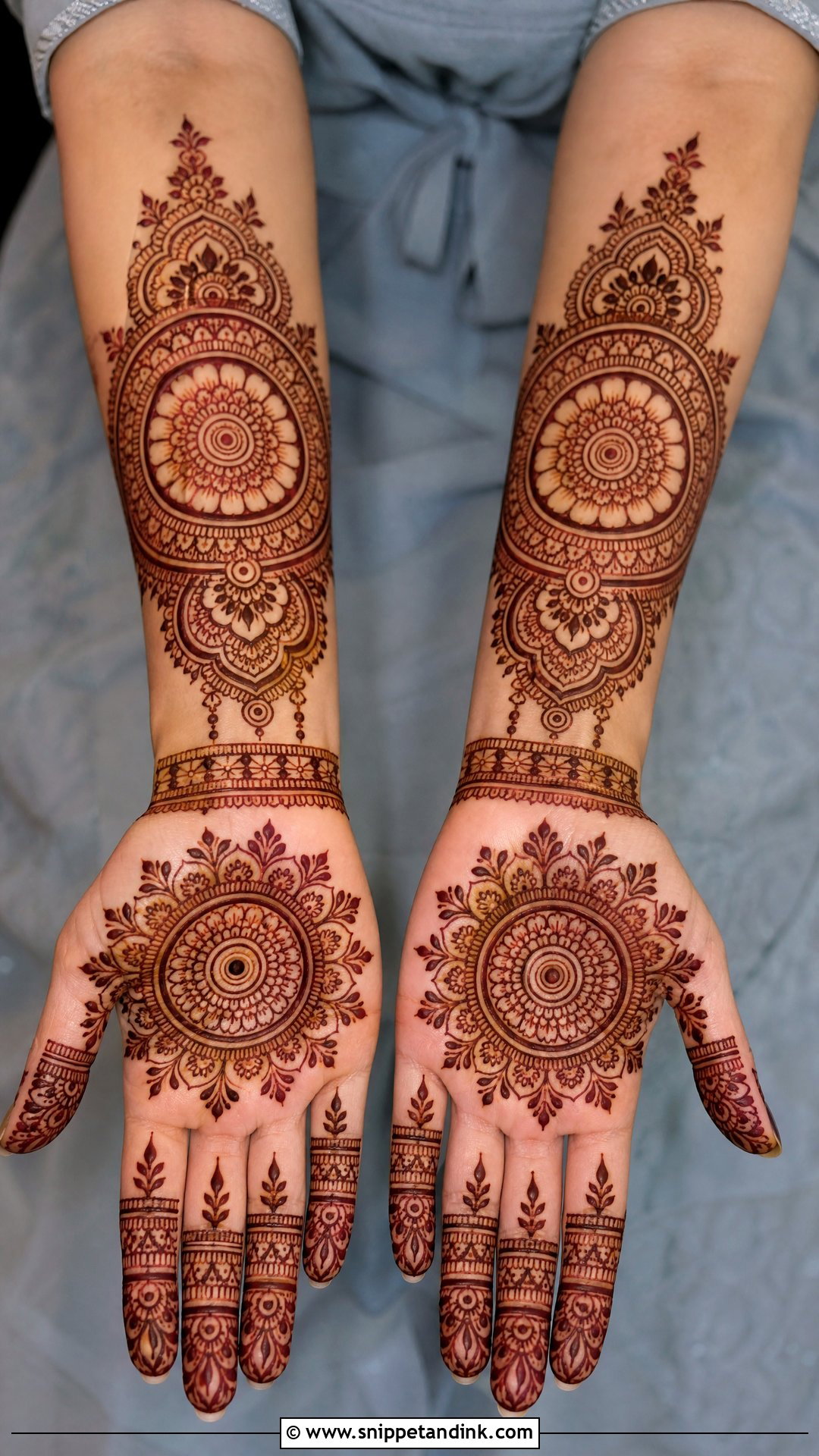
The palm here centers on a large circular mandala ringed with petals, dots and borders, while the fingers carry fine lines, leafy strips or stacked bands. Wrist and forearm can pick up matching cuffs or floral chains. Symmetry is the appeal and also the risk. Most people’s hands are slightly different sizes, so I size each mandala to its own palm rather than copying the first one exactly, and both look centered when you hold them up. Bangles, haath phool and a red outfit all sit well with it.
8. Floral Bridal Mehndi Design
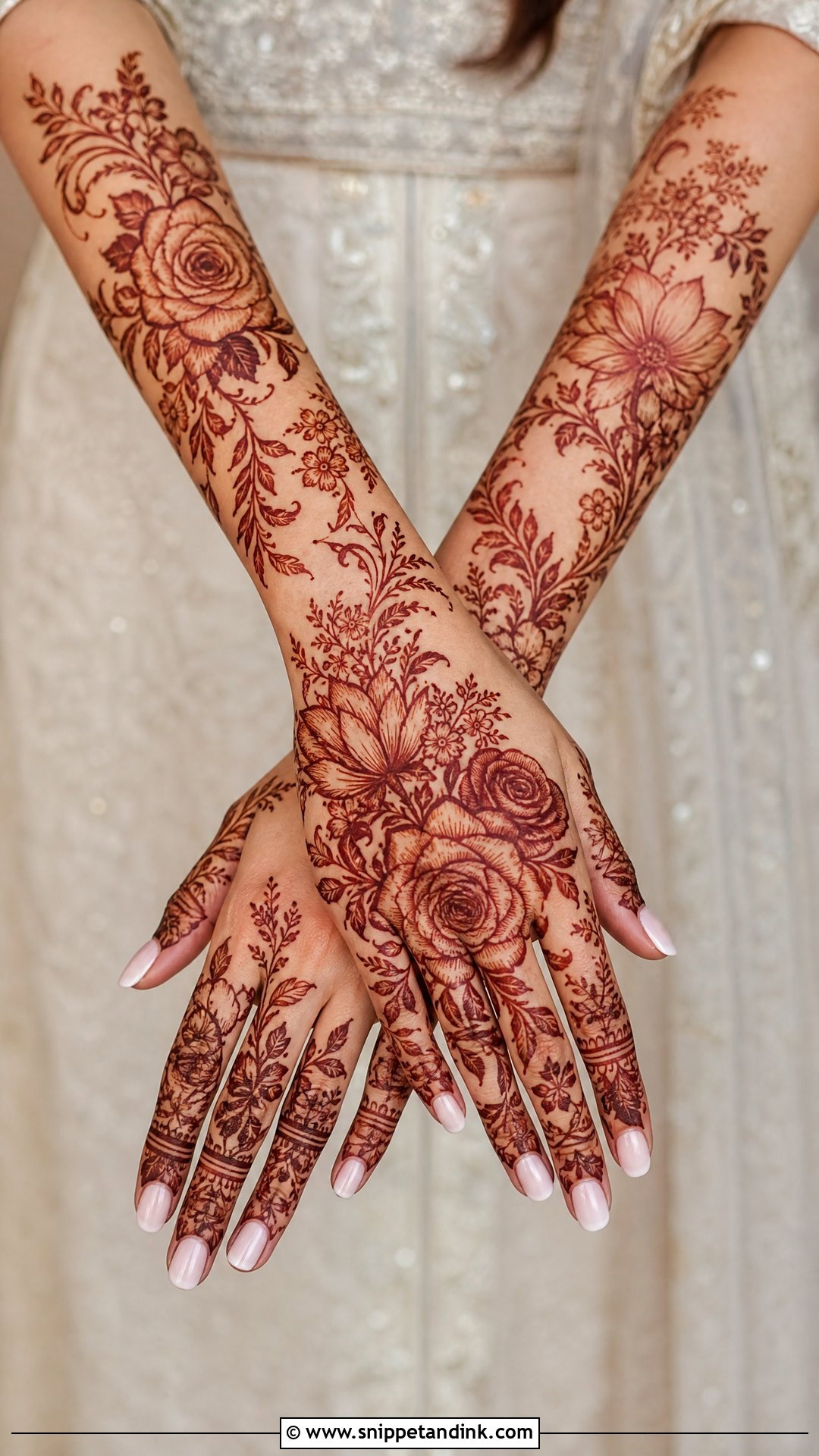
Roses, lotus flowers, small blossoms, leafy vines and curved stems spread across palms, fingers, wrists and forearms. Space them out and you get an Arabic effect; pack them in and it turns traditionally Indian. Florals are my default for brides who’d rather skip storytelling figures. They also scale to the hand. I draw larger flowers on broad palms and tight clusters on slim hands, because one big rose on a narrow palm crowds out everything around it.
9. Lotus Bridal Mehndi Design
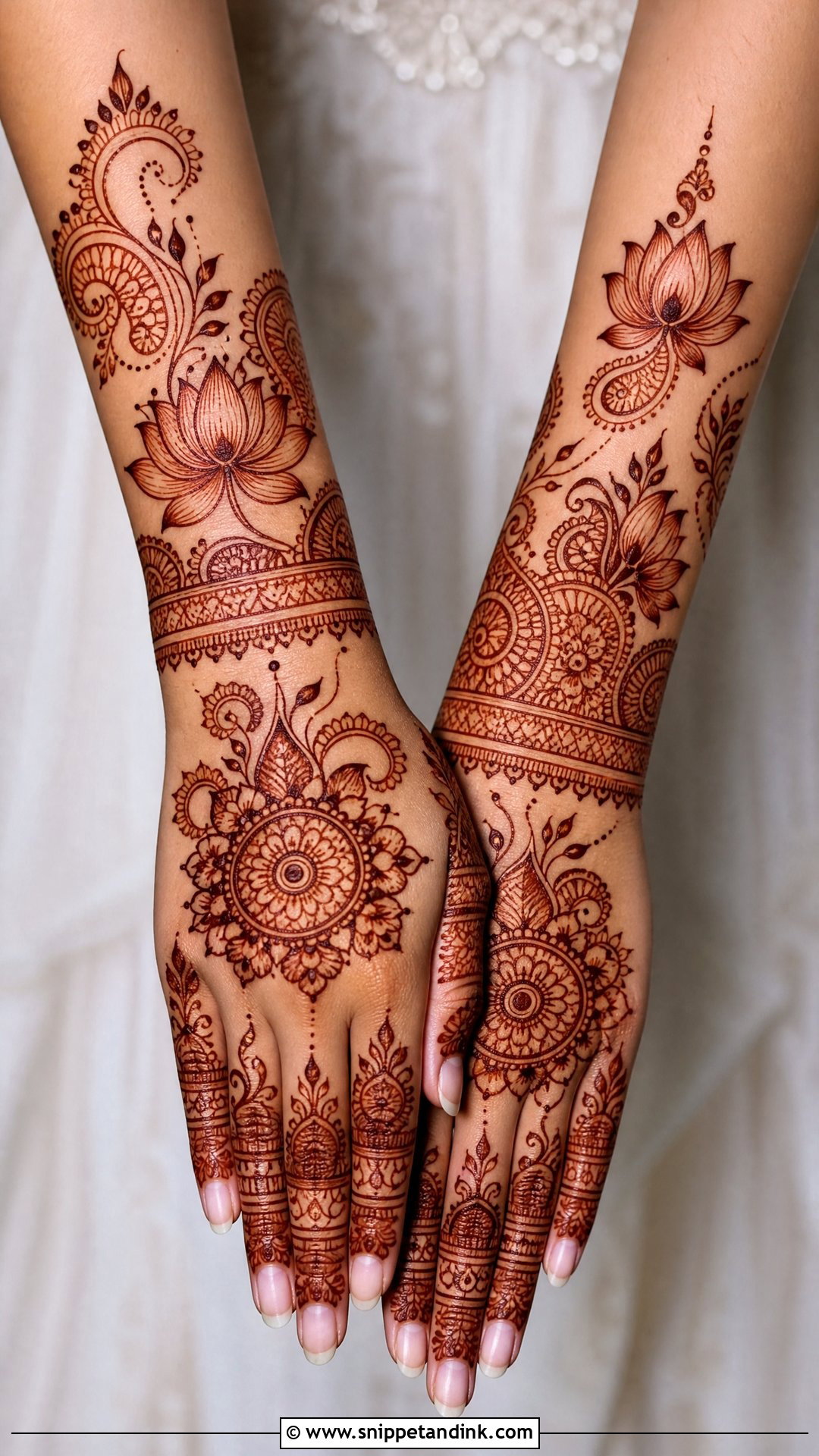
The lotus can sit at the center of the palm, bloom across the wrist or repeat along the forearm, usually with mandalas, paisleys, dots, scalloped edges and thin vines around it. Light shading on the petals gives depth without weight: I pull a thin wash of paste along the base of each petal so it stains a softer tone than the outline. Silk sarees, temple jewelry and traditional lehengas all suit it, so it fits North and South Indian weddings equally well.
10. Paisley Bridal Mehndi Design
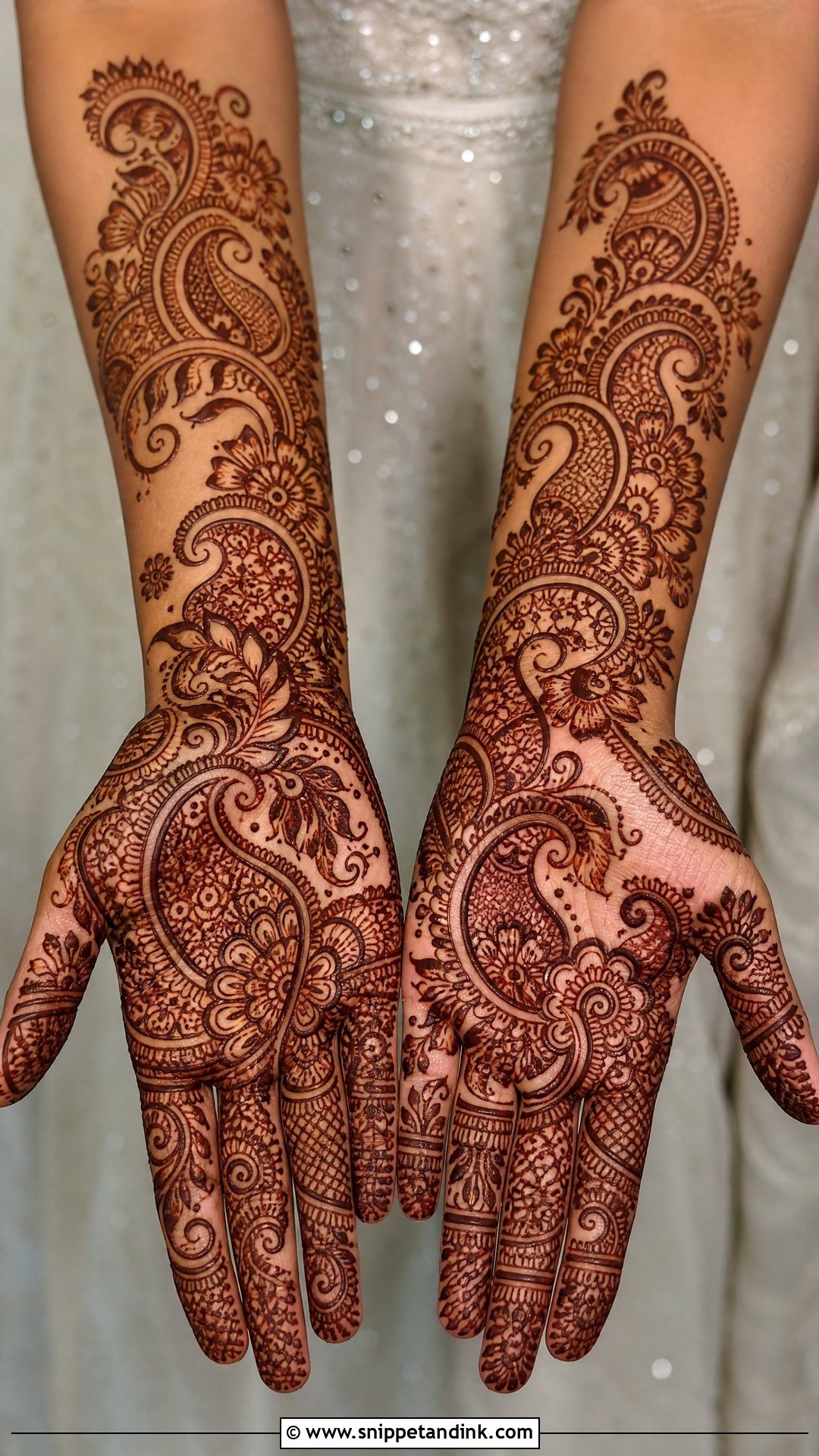
Paisleys fill space better than any other motif. They go big and bold on the palm, then repeat smaller across the wrist, back of the hand and forearm, with vines, flowers, dots and shading around each one. That flexibility makes them the answer for dense coverage without portraits, and the curve bends to narrow or wide palms. One thing I avoid is pointing every paisley the same way. Turning a few against the flow gives the hand movement instead of a wallpaper repeat.
11. Jaali Bridal Mehndi Design
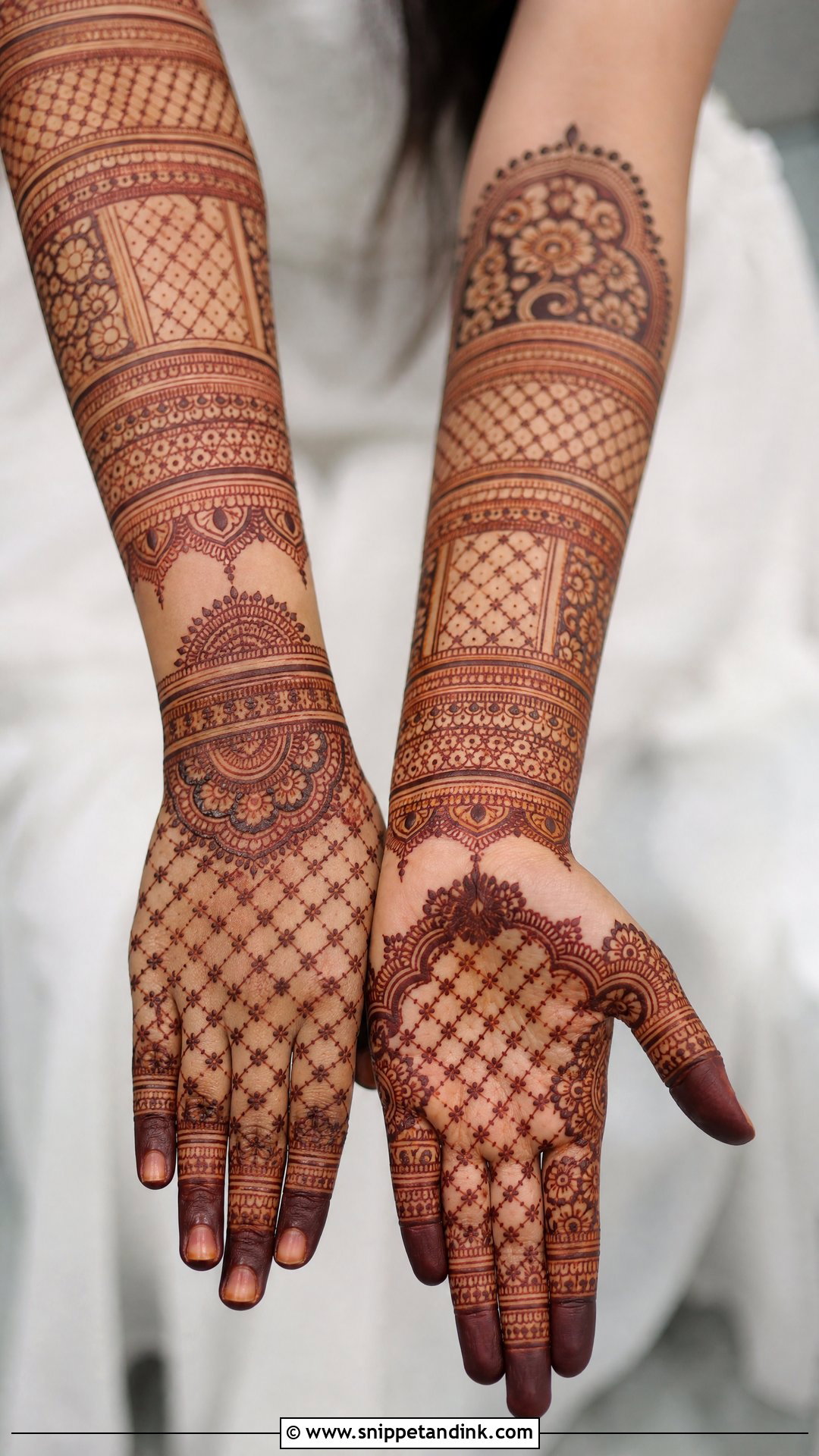
Jaali covers the hand in mesh, with crisscross lines, tiny dots, floral corners and bracelet-style wrist bands, usually on the back, and mandalas, paisleys or floral blocks on the palm. The fill changes its mood. Plain diamond mesh looks modern, while mesh dotted at every intersection looks traditional. Because mesh acts as a background, rings and haath phool stand out against it. Uneven squares show from a distance, so it needs steady, evenly spaced lines.
12. Back Hand Bridal Mehndi Design
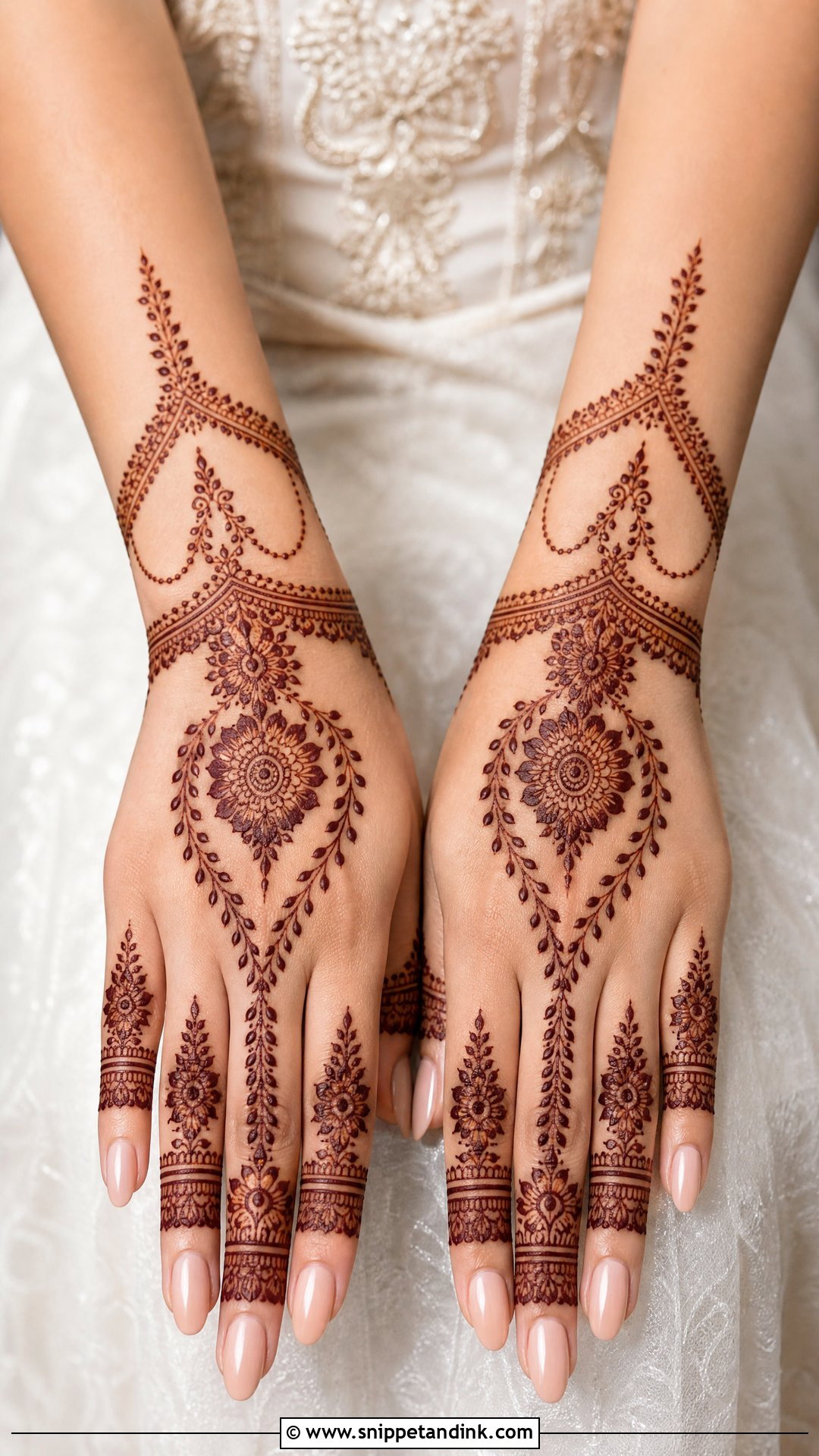
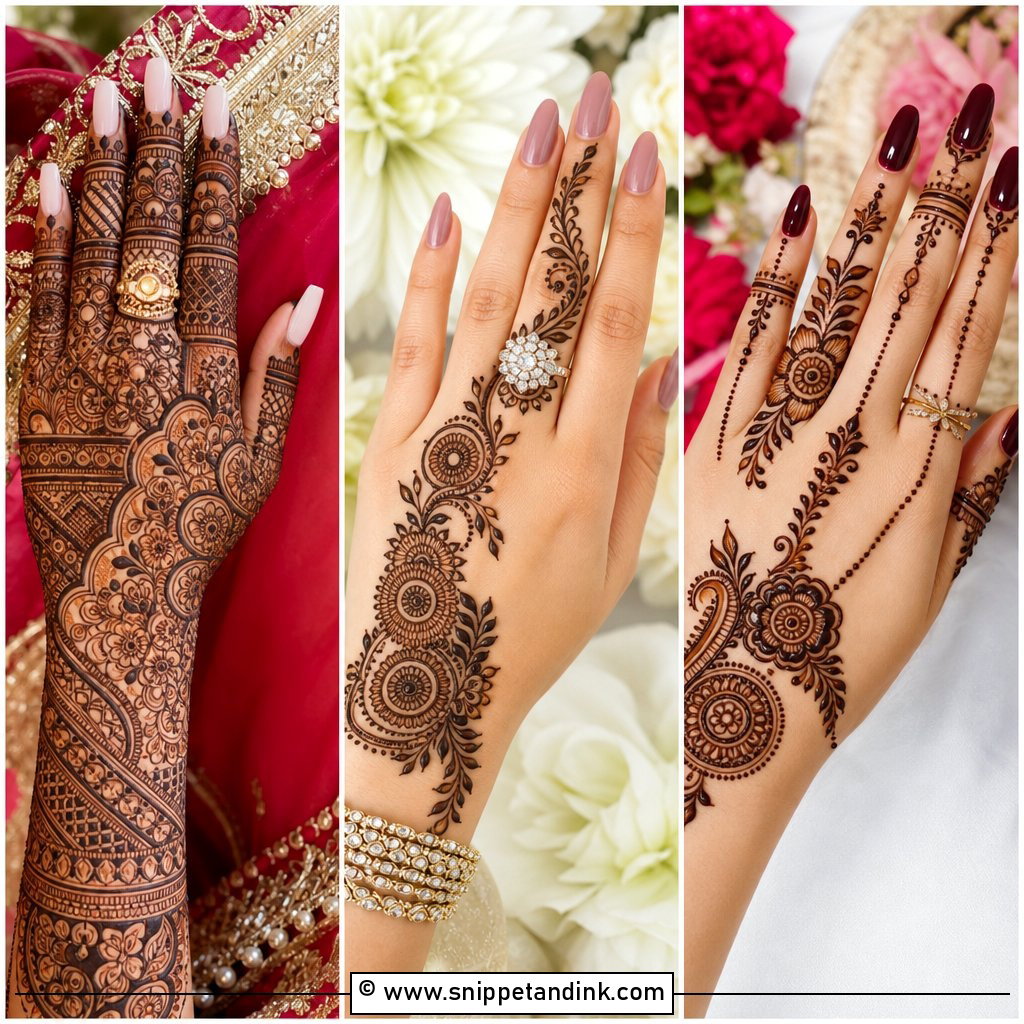
Back-of-hand designs are what people see in ring shots, rituals and candids. A complete one usually has a central floral motif, bracelet-style wrist detail, finger patterns and connecting chains that look like jewelry. Some brides want identical hands, others a mirror layout. The skin on the back stains lighter than the palm and fades sooner with washing, so I use slightly bolder lines here than inside the hand. Heavy or medium coverage both work, and it suits engagements and receptions where full palms feel like too much.
13. Front Hand Bridal Mehndi Design
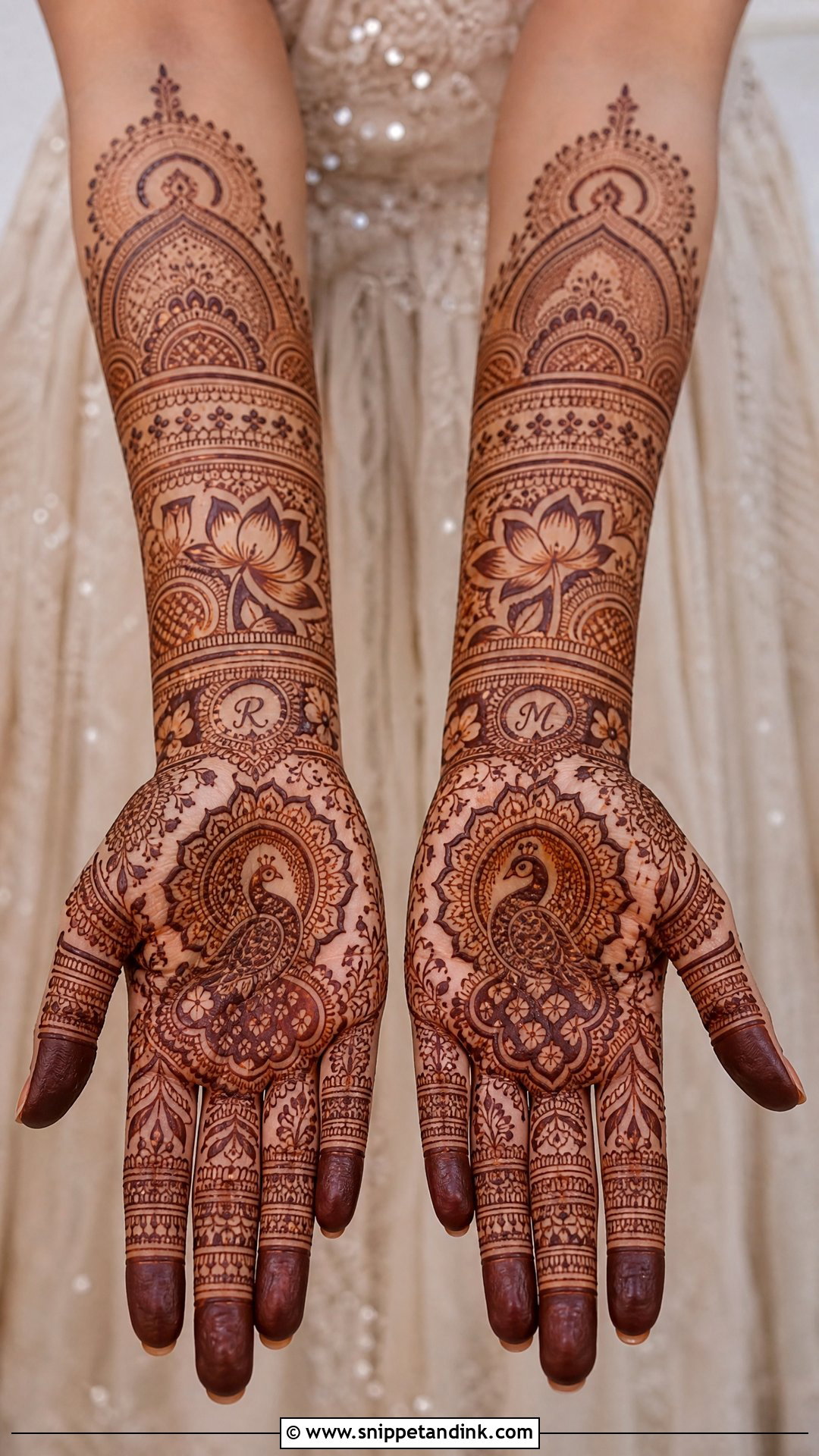
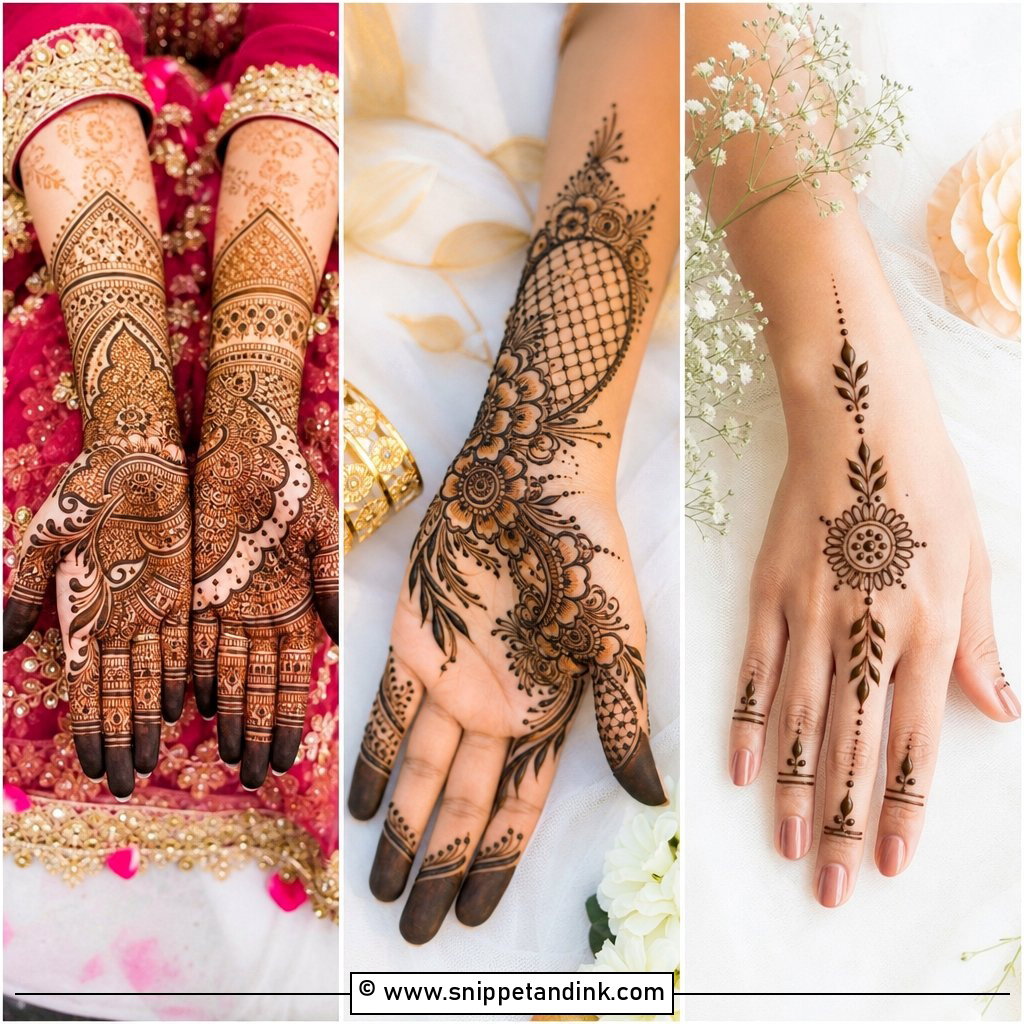
Palms are the heart of traditional bridal henna, because they’re turned up and seen in so many rituals. This is where mandalas, dulha dulhan portraits, lotus flowers, peacocks, paisleys and hidden initials belong. Fingertips are usually filled dark for contrast while the center carries the main design, with cuffs, bands and vines finishing the wrist and forearm. Palms also stain the darkest of anywhere on the hand, so fine storytelling detail keeps its definition there. Plan it for the photos of you holding flowers or jewelry, palm toward the camera.
14. Minimal Bridal Mehndi Design
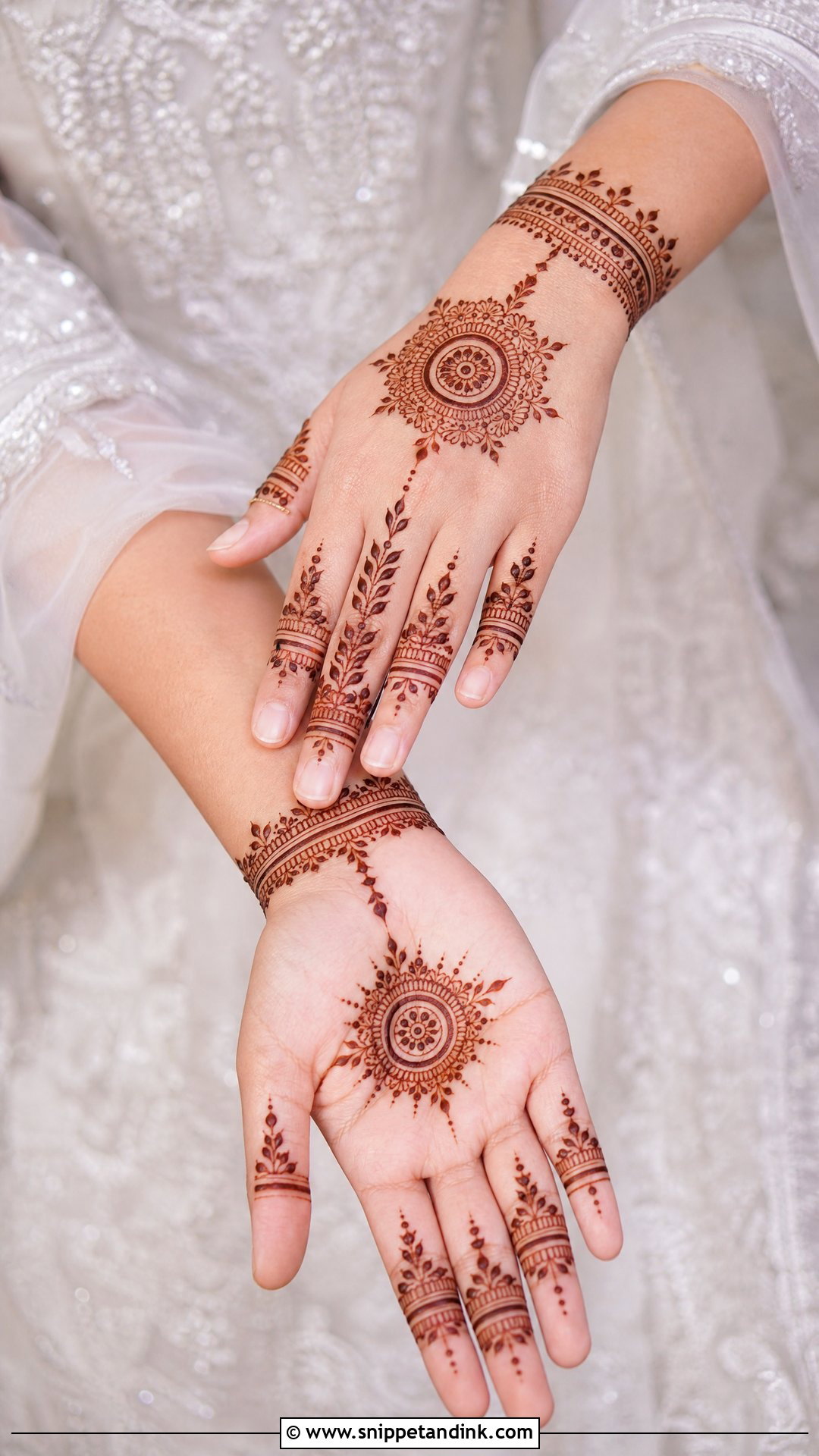
Minimal bridal mehndi keeps the wedding feel with less: a neat mandala on the palm, simple finger detail, slim wrist bands and soft floral trails, with a jewelry-style pattern on the back and open space around it. Intimate, court and destination weddings suit it, and so do outfits that are already heavily embellished, where dense henna would compete. Balance is the whole job. Fine borders, delicate dots and a graceful wrist line are what stop it reading as guest henna.
15. Modern Bridal Mehndi Design
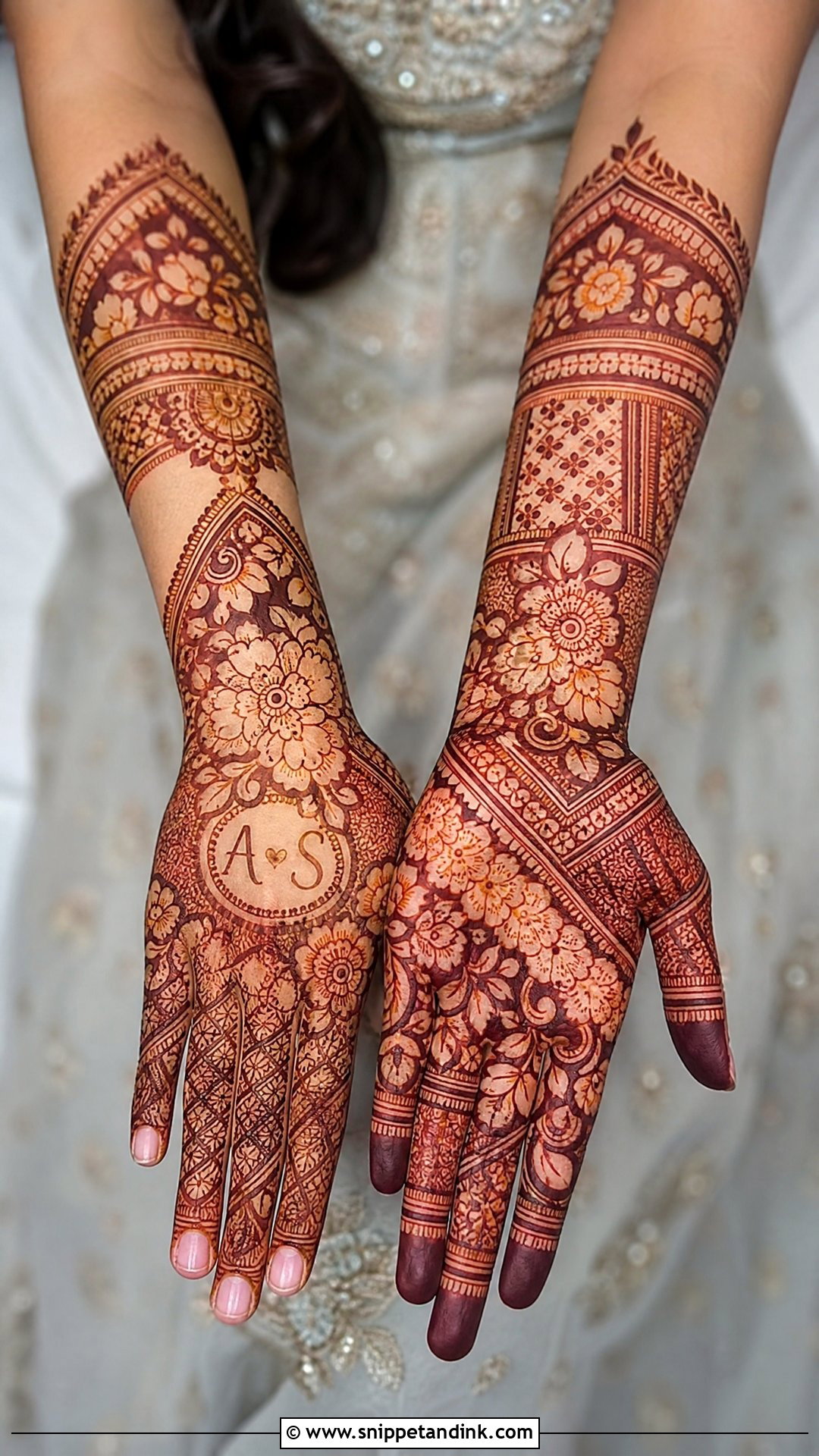
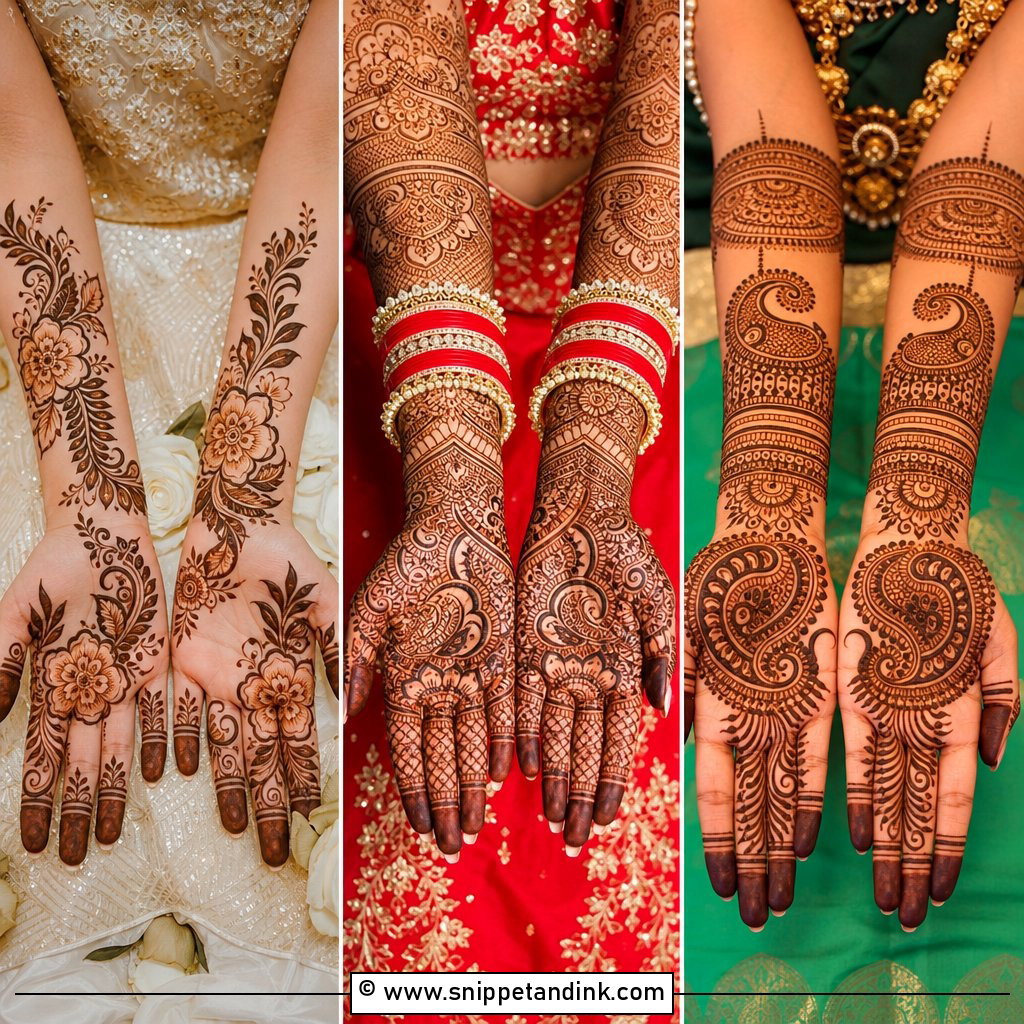
Modern bridal henna brings negative space, geometric borders, bold florals, half-and-half palms and sleek finger patterns into a traditional format. Initials, dates or small symbols personalize it, and selected areas are left open on purpose so the pattern stays sharp. Contemporary lehengas, fusion outfits and lighter jewelry suit it. Clear spacing also means the design still reads from across the mandap, not only in close-up.
16. Jewelry Bridal Mehndi Design
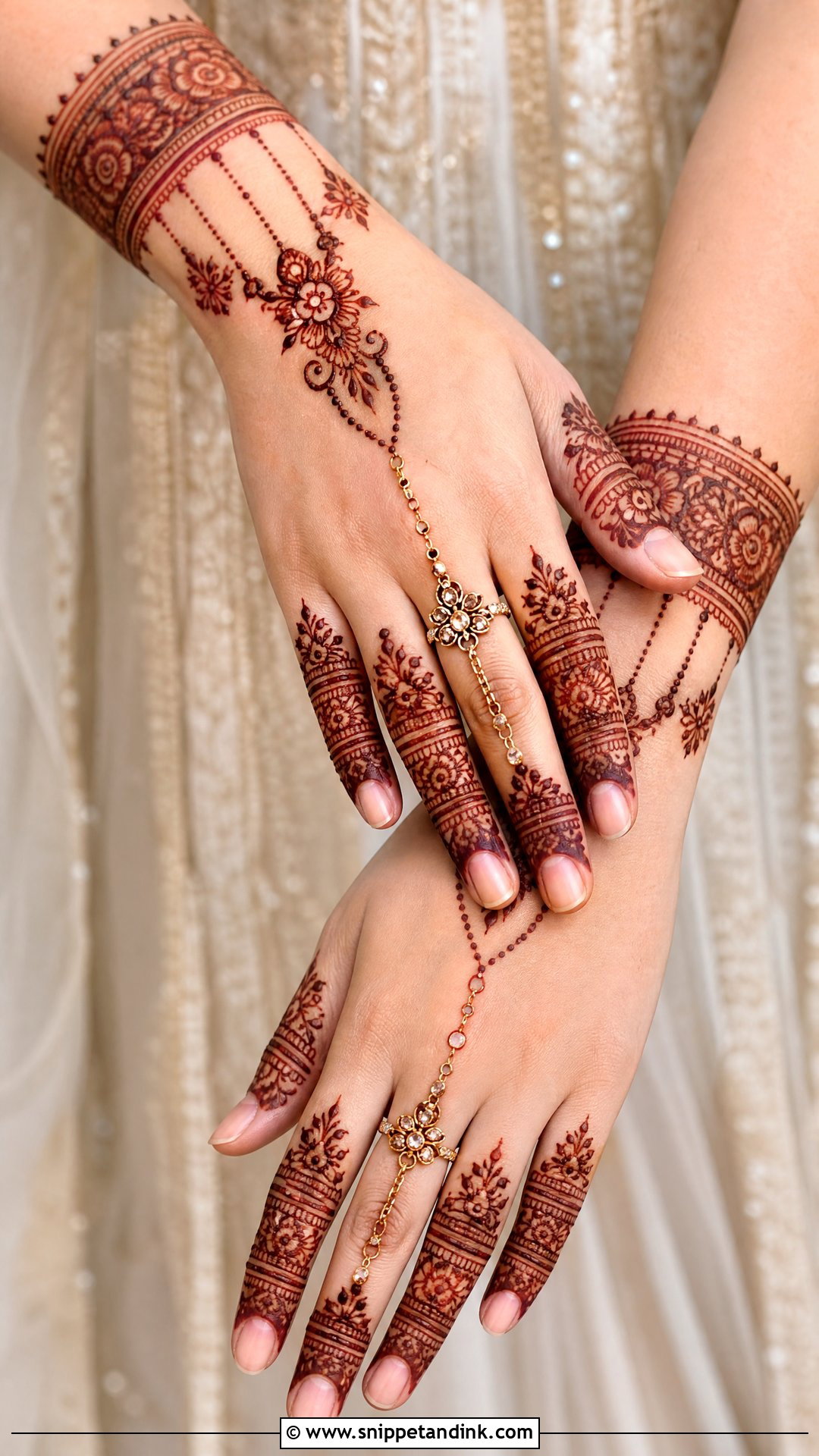
Jewelry henna imitates hand ornaments: bracelet cuffs, ring chains, finger bands, hathphool shapes and small hanging details. It’s mostly drawn on the back of the hands, though it can continue to the palms and wrists. For the main wedding, I surround the jewelry layout with florals, mandalas and paisleys so it holds its own next to real gold. Bring your rings and bangles to the sitting. The drawn chains should meet the real ring, not stop a finger joint short of it.
17. Moroccan Bridal Mehndi Design
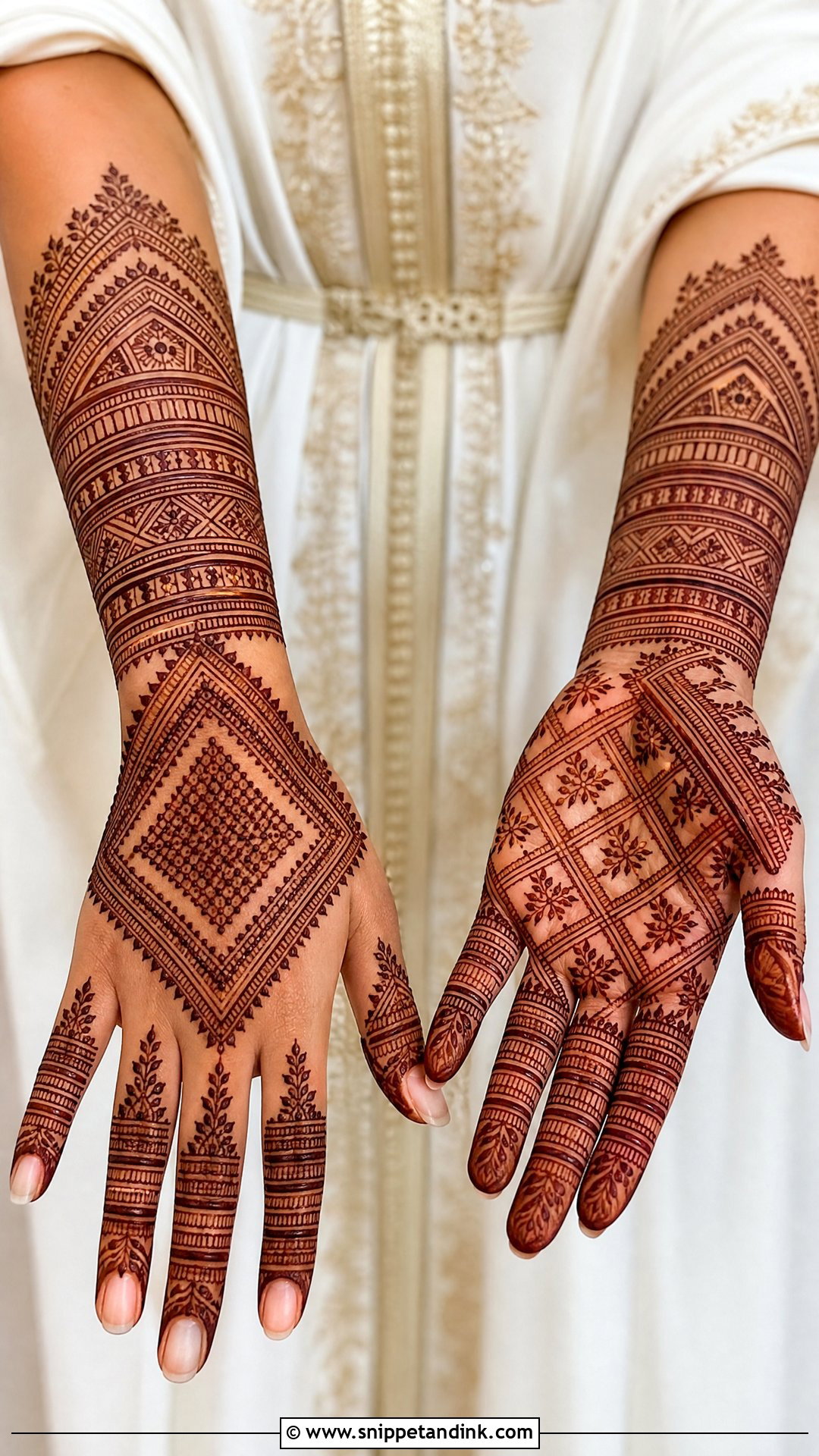
Moroccan bridal henna uses diamonds, lines, checks, triangles, grids and structured borders instead of soft florals. It can cover palms, fingers, wrists and forearms neatly, and it’s especially striking on the back of the hand. Fusion suits it, with Moroccan panels beside an Indian mandala or Arabic florals. It’s for a bride who wants a less common look. Straight lines in henna are unforgiving, since a pause mid-stroke leaves a blob, so check your artist’s geometric work before you commit.
18. Gulf Khaleeji Bridal Mehndi Design
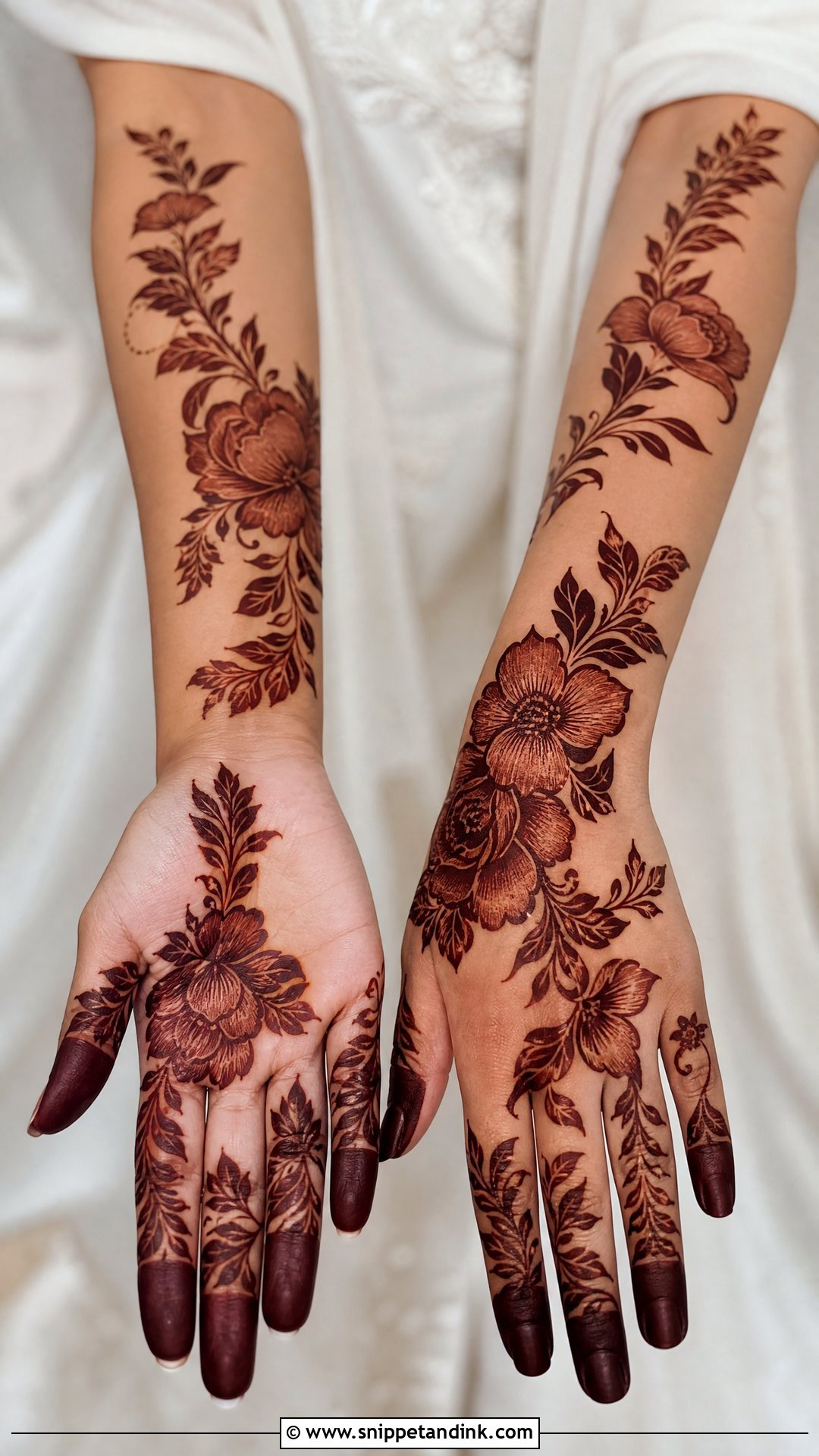
Khaleeji henna is built on bold florals, dark outlines, leafy trails and dramatic spacing, with larger motifs than Indian work. For a bride, it can run from wrist to fingers on the back and get fuller on the palm. Petals are often filled solid, which takes thick, even paste; too thin and the fill stains blotchy. It’s glamorous without being packed, and it looks right beside gold jewelry and embroidered sleeves.
19. Bridal Mehndi Design With Name
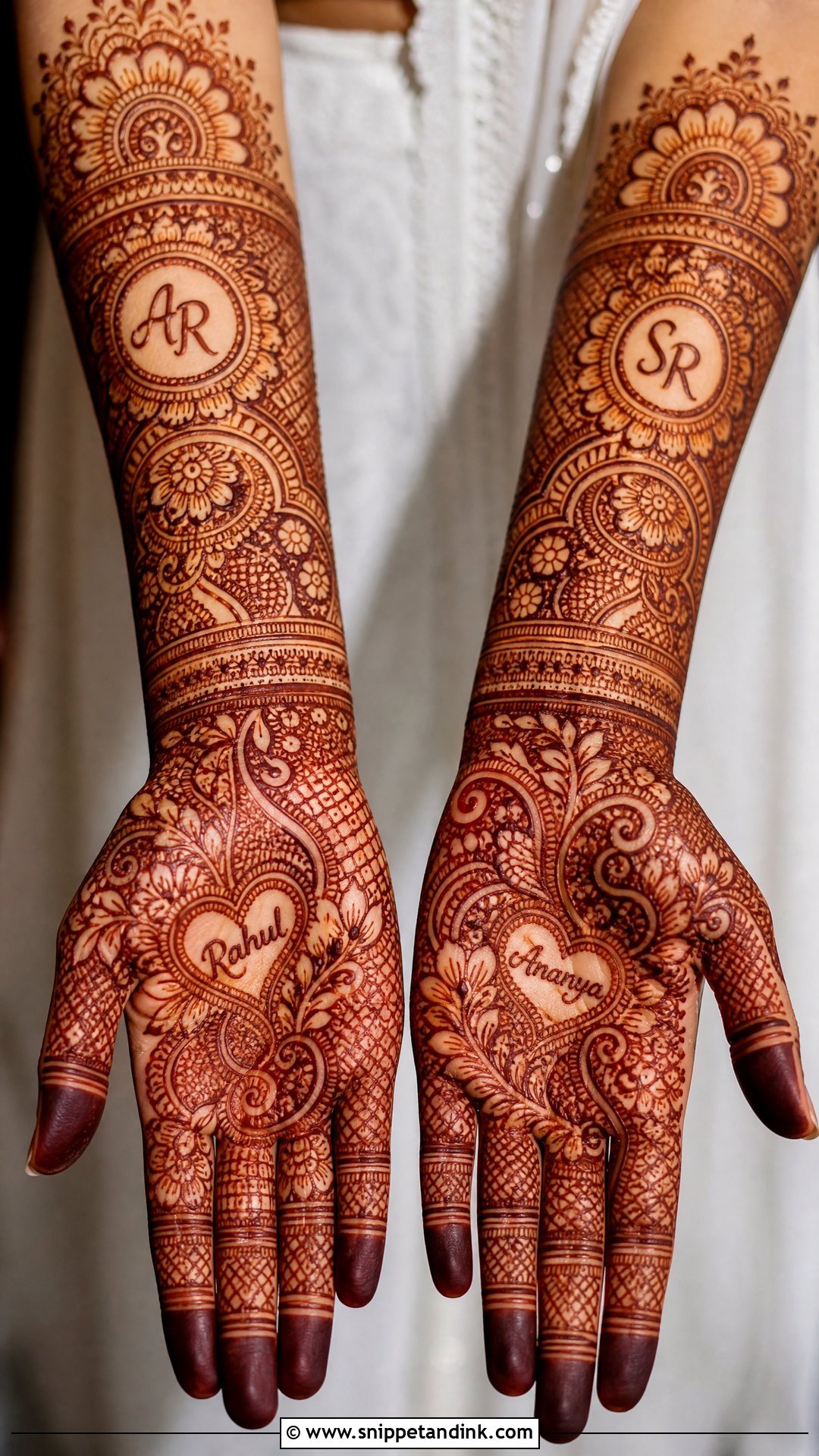
Hiding the groom’s name or initials inside paisleys, petals, jaali sections, wrist bands or mandala borders turns the mehndi into a game, since tradition says he has to find it. Some brides add the date, both sets of initials or a small symbol. Everything around it stays traditional, with peacocks, flowers, paisleys and dense fillers keeping the letters subtle. My trick is to write them in the same line weight as the fillers nearby. Draw them bolder and they jump out at once. It’s the easiest way to personalize the hands without portraits.
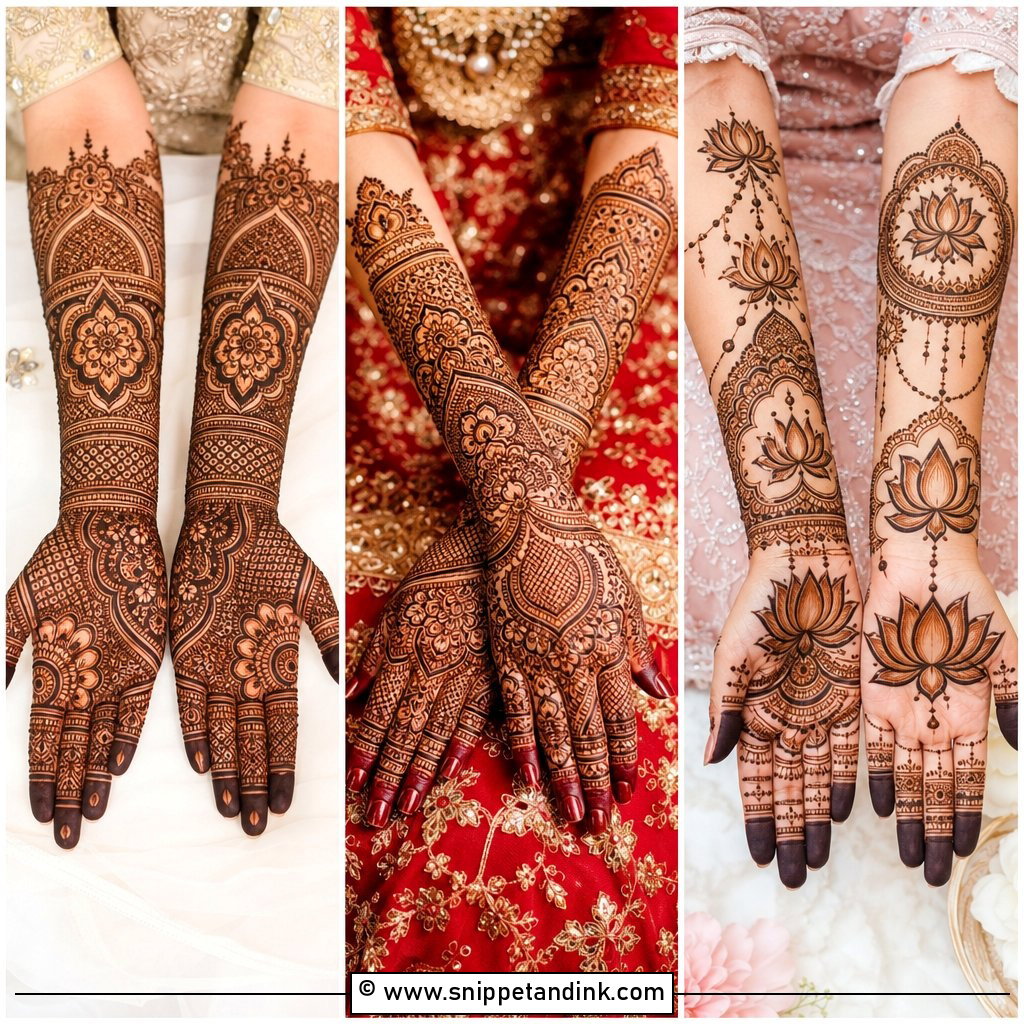
20. Bridal Mehndi Design For Short Hands
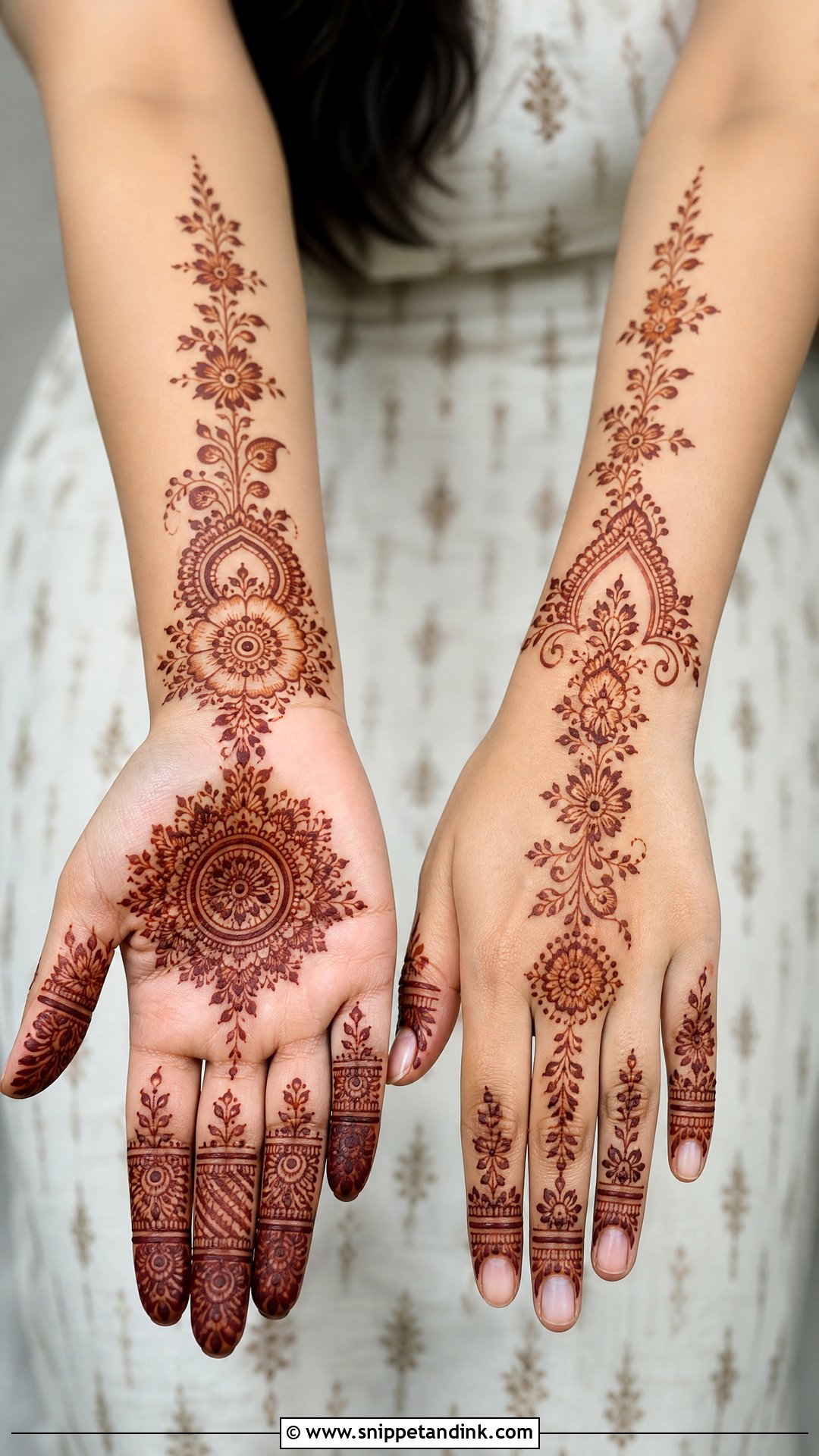
On shorter hands, the design’s job is to add length. Vertical trails, slim paisleys, narrow mandalas, fine vines and finger patterns that run upward all lead the eye from wrist to fingertip. Heavy blocks across the palm do the opposite and make the hand look smaller. On the back, jewelry chains stretching to the fingertips help, and a centered mandala with neat side details keeps the palm uncluttered. Full bridal coverage is still possible; placement matters far more than quantity.
Leaving Room for Chooda, Kaleere and Haath Phool
In many Punjabi and North Indian families, the bride wears a chooda, a stack of red and ivory bangles, from the wedding morning for weeks afterward. It covers a good stretch of forearm. Detail drawn where the chooda sits stays hidden for that whole time, so I either end the wrist cuff above the stack or keep the covered area to simple fill.
Kaleere hang from the bangles over the backs of the hands, and haath phool chains run across the back to the fingers. If you’re wearing both, the back-hand design should be lighter and work around the jewelry rather than underneath it. Show your artist the pieces, or at least clear photos of them, before the sitting.
A Dark Stain, Family Teasing and the Photographer’s Timing
There’s an old saying at Indian weddings that the darker the bride’s mehndi, the more her husband, or her mother-in-law, will love her. Nobody treats it as fact, but every aunt checks the color, so give the stain its best chance: paste on for several hours, no water for as long as you can manage, and warm hands.
The color peaks about two days after the paste comes off, which is one reason the mehndi function usually falls a day or two before the wedding. Ask your photographer to take detail shots of your hands in daylight or by a window. Warm indoor lighting pushes the stain toward orange, while daylight shows its true maroon.
Your Design Is Only as Good as Its Placement
Heavy detail isn’t the only measure of good bridal mehndi. What counts is a complete hand design that suits your outfit, hand shape, ceremony and taste. Some brides feel most themselves in dense Indian coverage; others in Arabic trails, modern spacing, lotus motifs, jaali or jewelry-style layouts. Any of them looks bridal once placement and coverage are planned. Before you settle, save your references, look at the artist’s stained past work, and picture the design under your bangles and rings. Then let the paste sit as long as you can.
You'll Like These Ideas:


Leave a Reply