
Hands get photographed at nearly every ritual, so bridal mehndi has to work at two distances at once: clear motifs from across the room, and fine line work when the camera is right on the ring. Most of what I do in a consultation is balance those two. Full-hand Indian patterns, Arabic floral trails, Indo-Arabic layouts, mandalas, jaali, peacocks and bride-and-groom art are all still asked for, and each one sits differently on a palm, a back hand or a forearm. Below are twenty complete bridal hand designs, with what I’d watch for when drawing each one and the kind of bride it tends to suit.
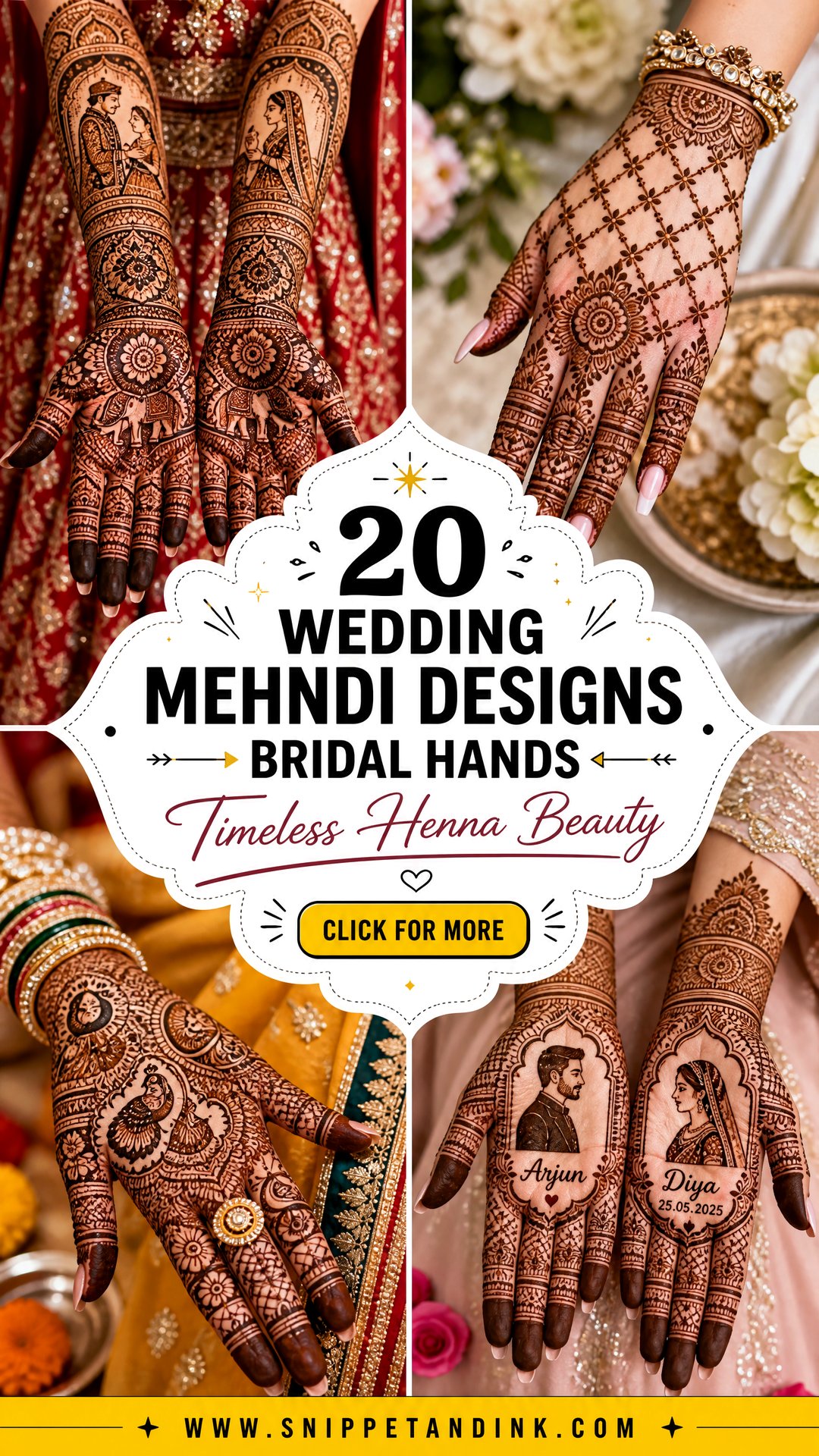
Fitting the Layout to Small Palms, Long Fingers or Wide Hands
The same reference photo can look completely different on two brides, because hands differ more than people expect. Before I start, I look at palm width, finger length and where the wrist crease falls, then adjust the layout.
- Small or petite hands: fewer, larger motifs. Lots of tiny filler on a small palm reads as one dark patch once it stains.
- Short fingers: vertical lines, slim bands and a design that stops just past the knuckle make them look longer. Avoid heavy horizontal rings on every finger.
- Long, slim fingers: these carry full fingertip caps and detailed finger panels well.
- Wide palms: a strong central motif with a diagonal trail breaks up the width better than a symmetrical grid.
Arms matter too. If your sleeves end at the elbow or your bangles sit high, tell your artist, so the design either finishes cleanly above them or continues beneath where it can be seen.
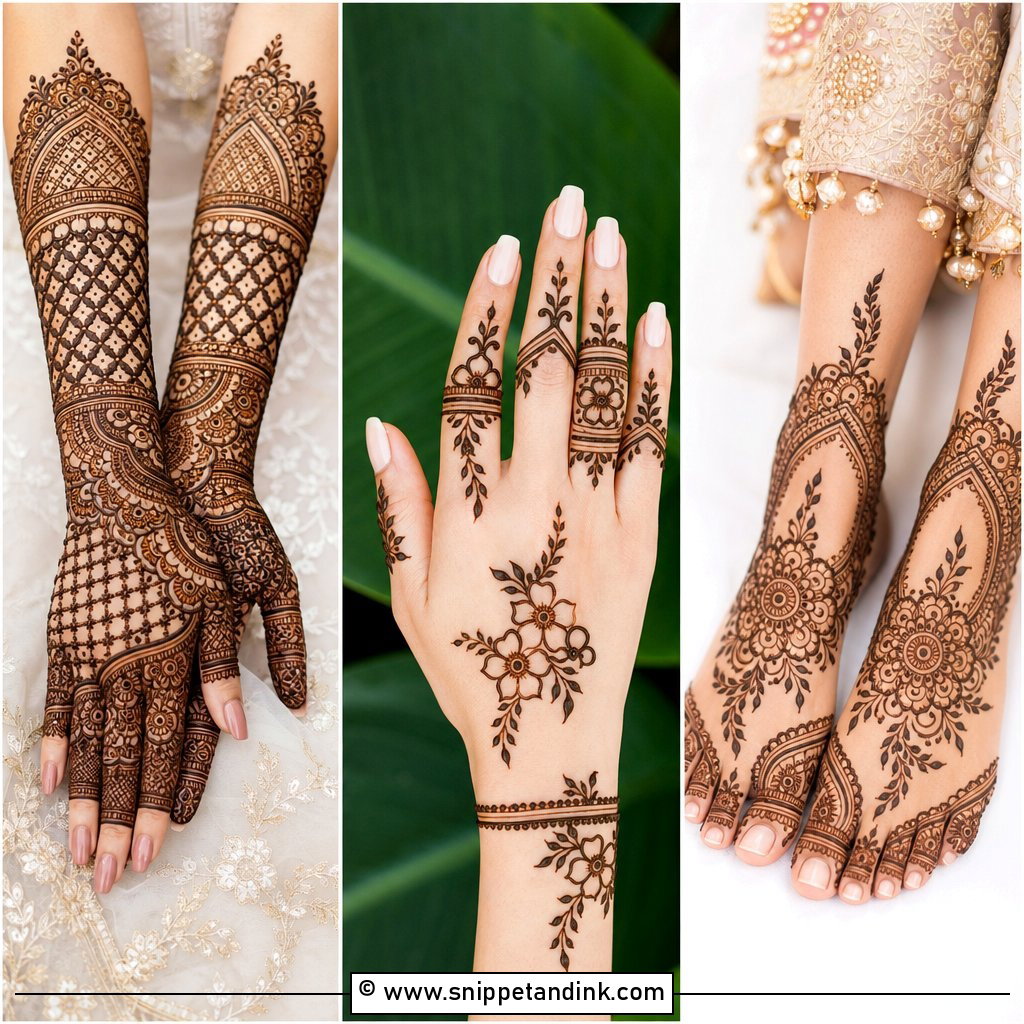
Feet follow the same logic. I keep the main motif on the top of the foot, away from the sole and the sides that rub inside shoes, and stop at a band just above the ankle bone so it looks finished with a lehenga hem or a saree pleat moving around it. Plan to sit with your feet up and bare until the paste dries completely, so book that part of the session last.
1. Full Hand Indian Bridal Mehndi Design
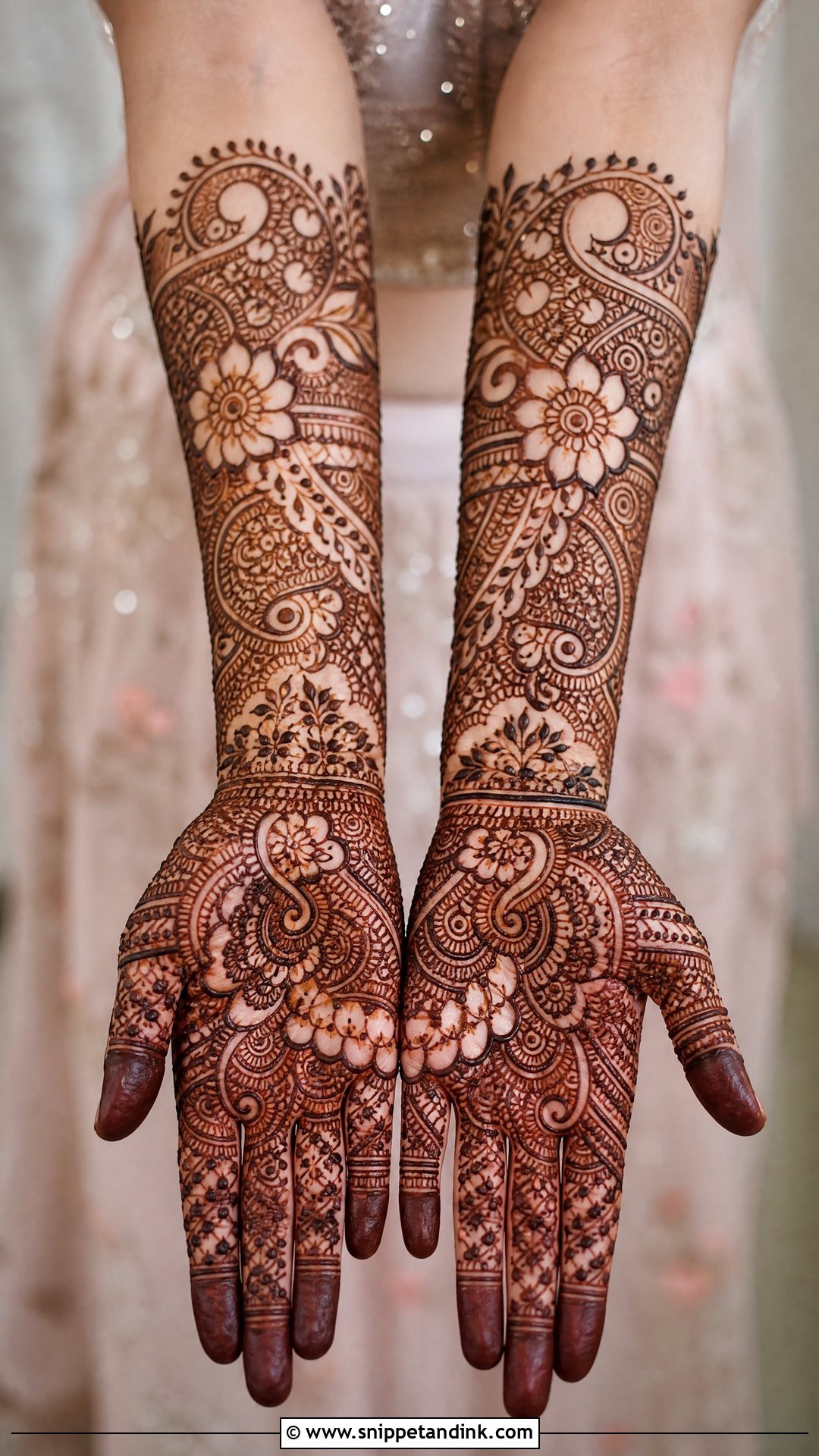
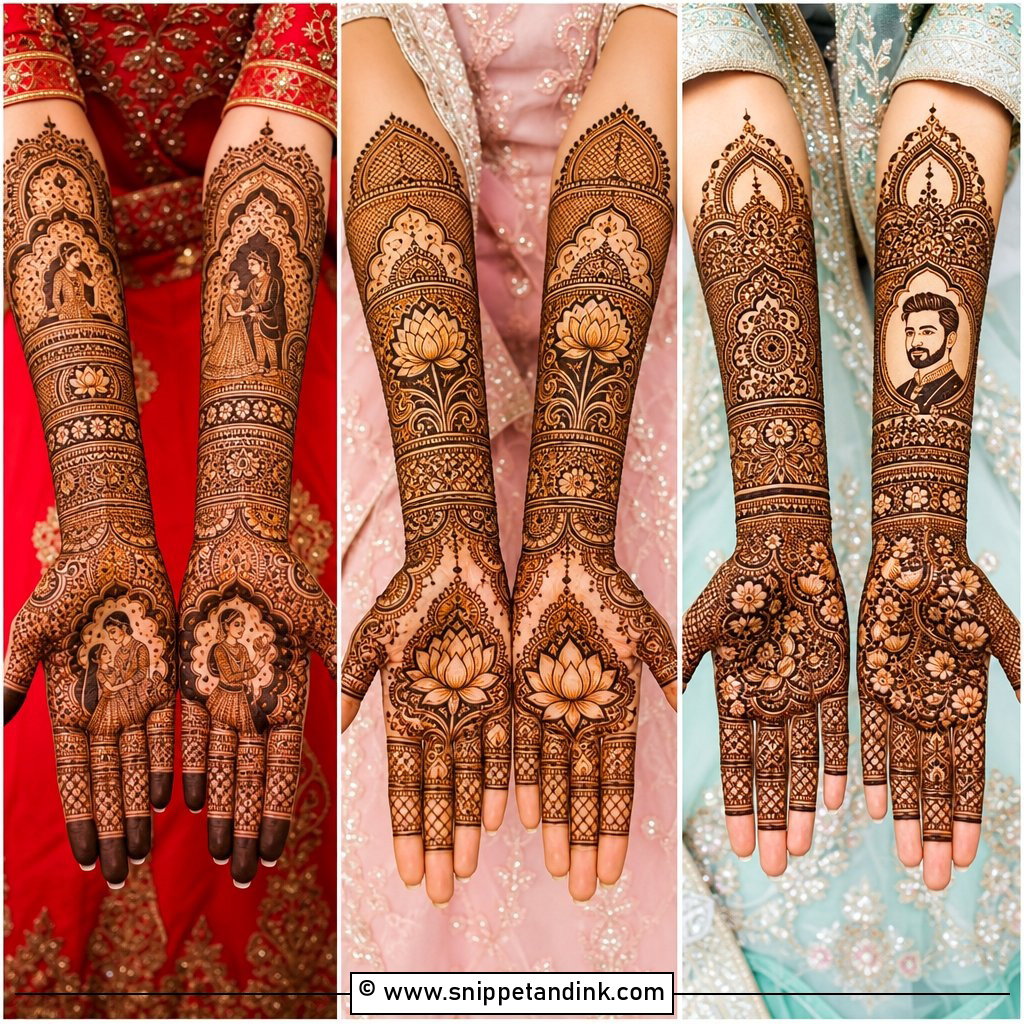
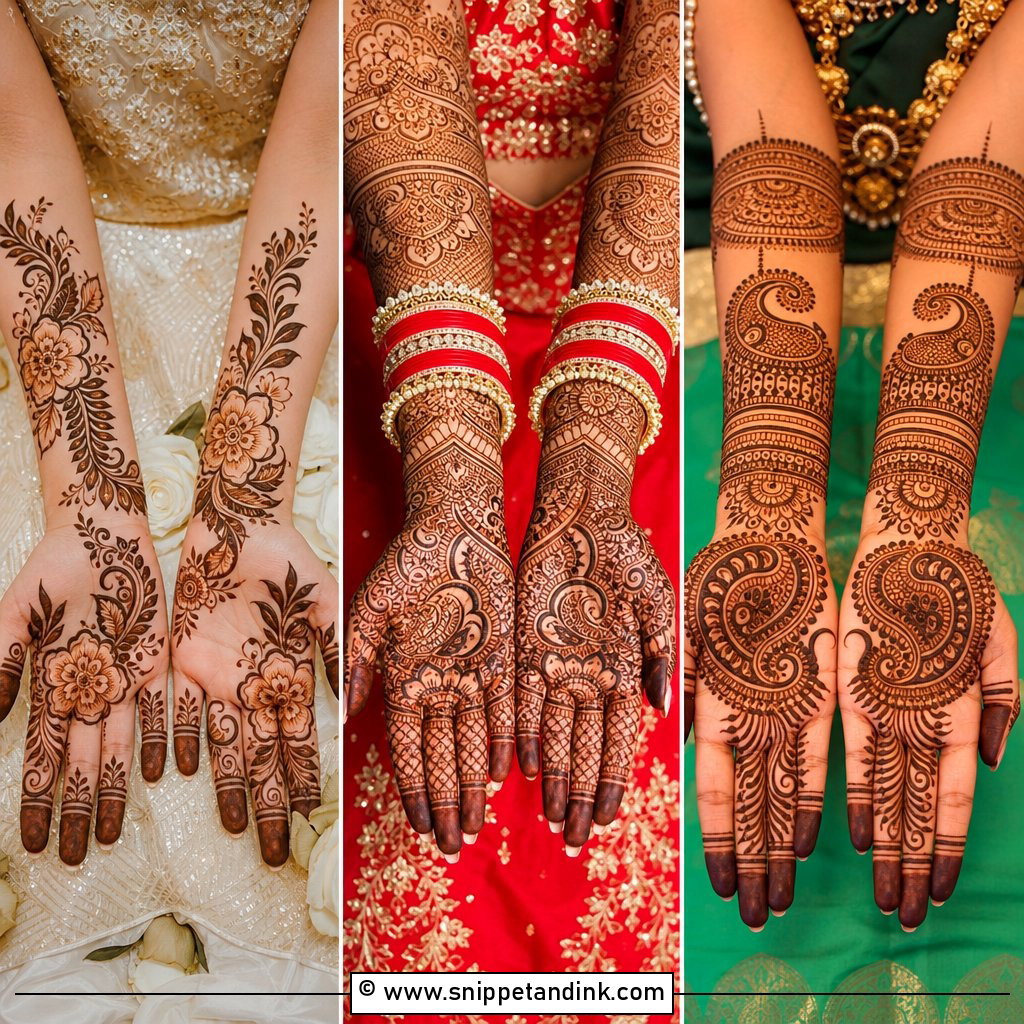
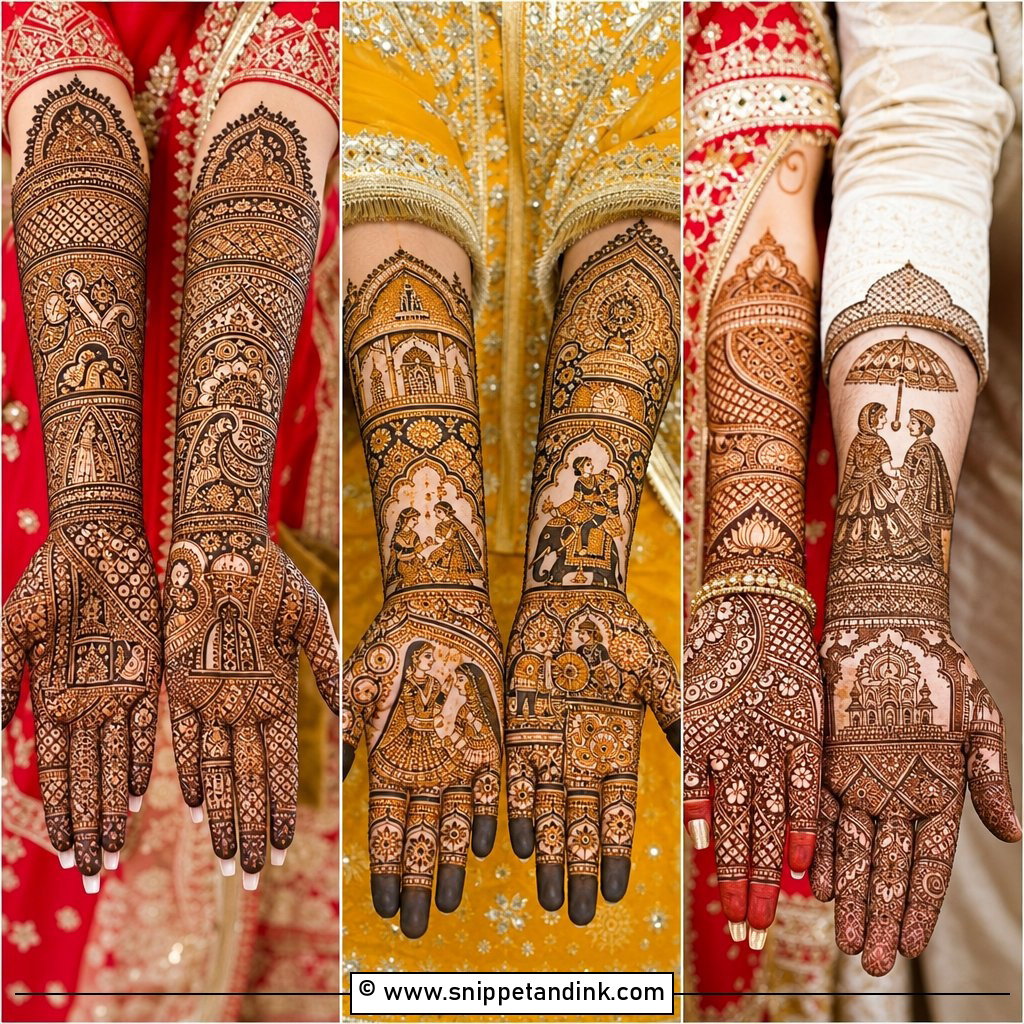
Dense, layered and slow to apply: full Indian bridal coverage fills the palms, fingers, wrists and forearms with paisleys, flowers, vines, leaves and fine filler. From a distance it looks grand; up close, every line adds texture. The risk is that the filler stains as dark as the motifs and the whole hand turns into one brown mass. I outline the big shapes in a slightly heavier line and keep the filler fine, so the structure survives the stain. Hidden initials, dates and small symbols fit naturally inside. Heavy lehengas, silk sarees and gold jewellery all suit it.
2. Arabic Bridal Mehndi Design Full Hand
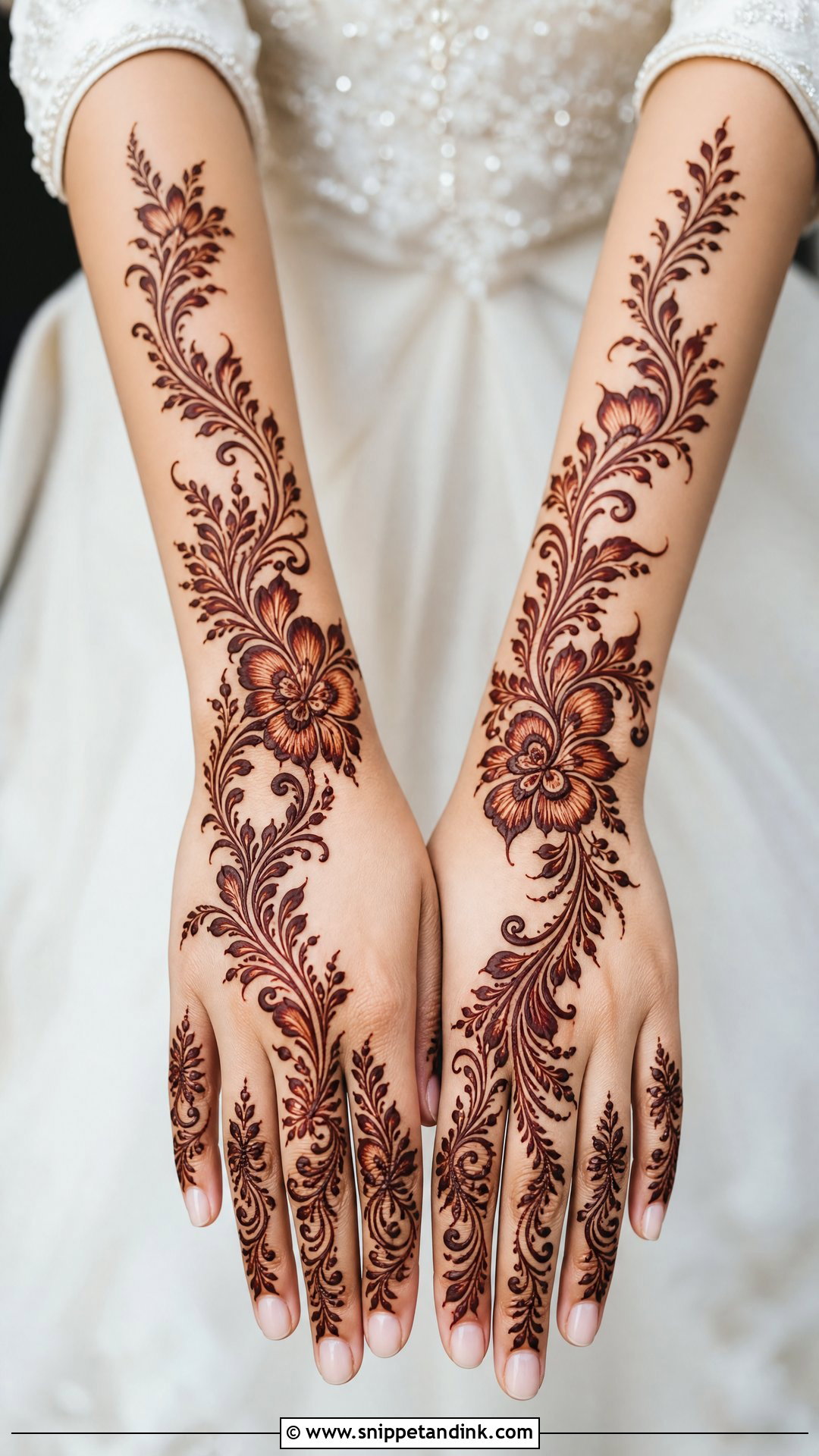
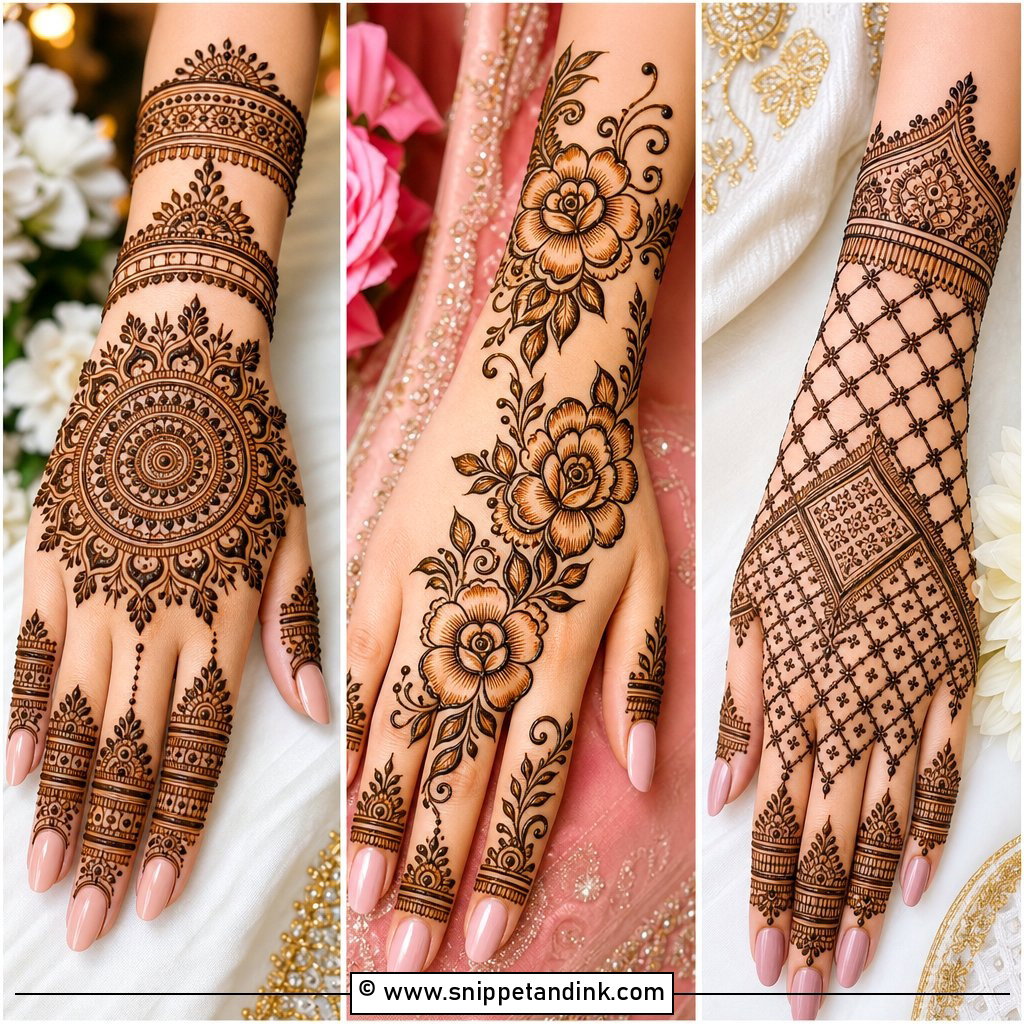
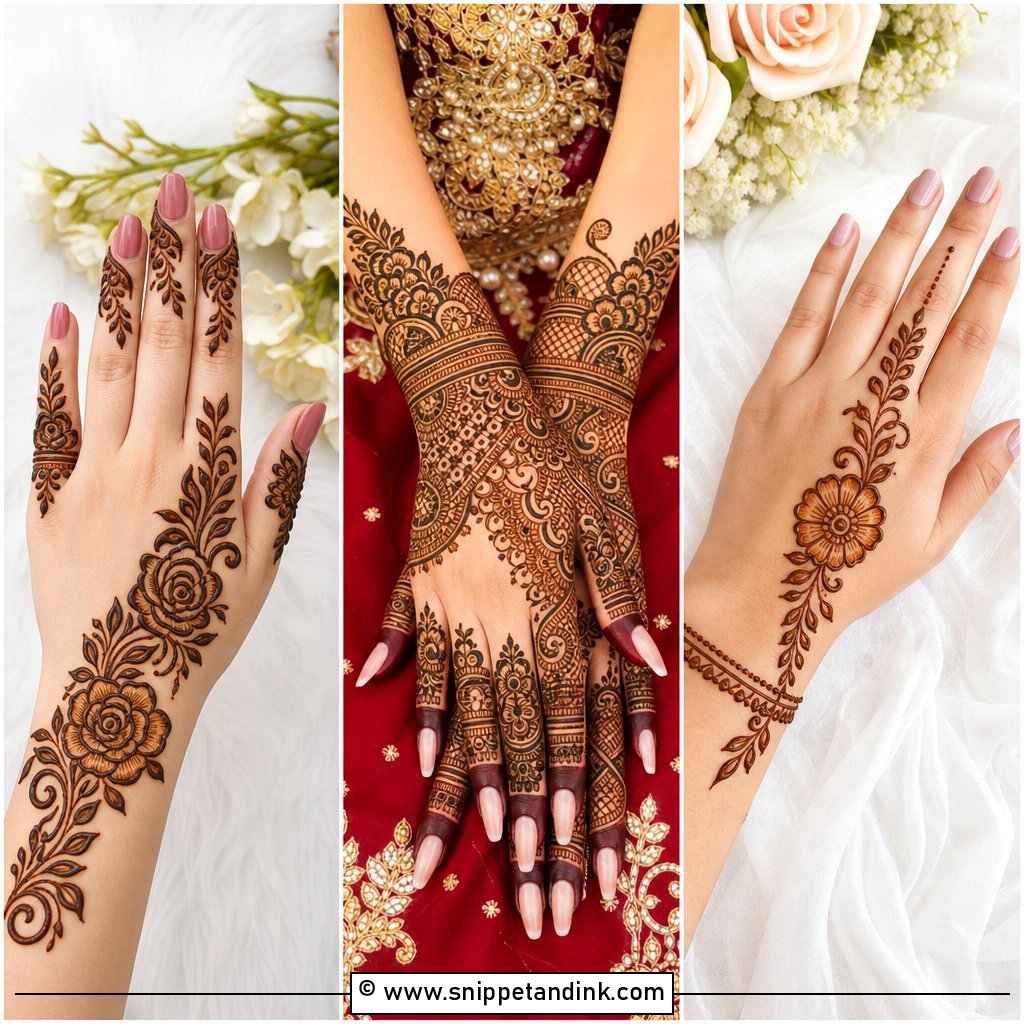
Arabic full hand flows diagonally from the fingers to the wrist and forearm, using large flowers, leafy vines, bold outlines and open skin. Because of that spacing, it’s easy to read in photos, especially on the back of the hand, and the deep maroon stain stands out against bare skin. It’s quicker to sit through than Indian coverage. For a bride, I add delicate wrist cuffs and finger detail so it looks finished rather than like a guest’s design. Outdoor weddings and daytime ceremonies suit it.
3. Indo Arabic Bridal Mehndi Design
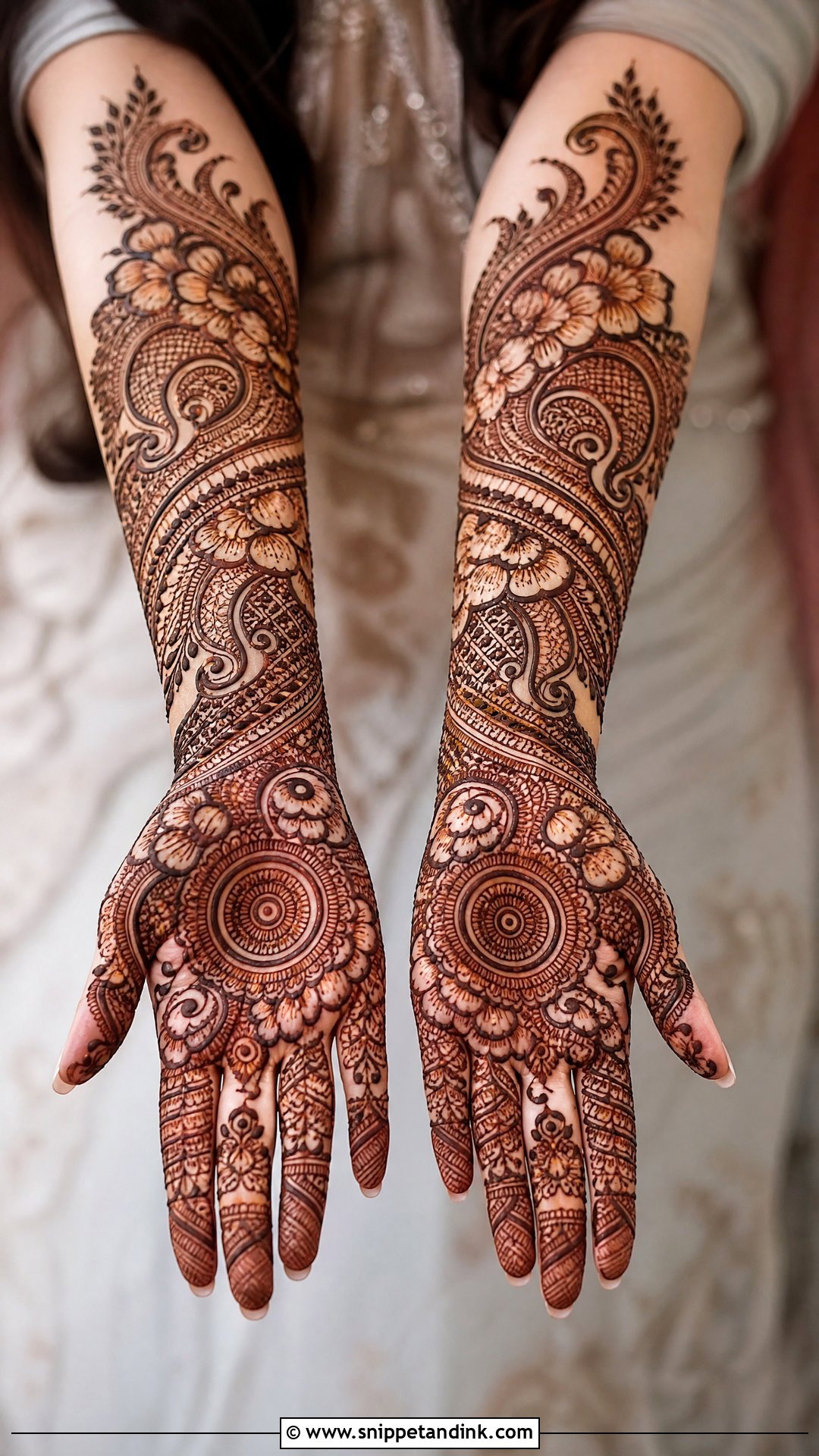
Indo Arabic bridal mehndi design is my answer for the bride who wants full coverage but can’t stand the idea of every centimetre packed. Floral trails, paisley curves, mandala centres, shaded petals and detailed finger work share the hand, with breathing room between them. I plan palms and back hands together, with matching wrist-to-forearm extensions, so the four sides of the hands feel like one design. It sits comfortably with both traditional and contemporary outfits.
4. Bridal Mandala Mehndi Design For Hands
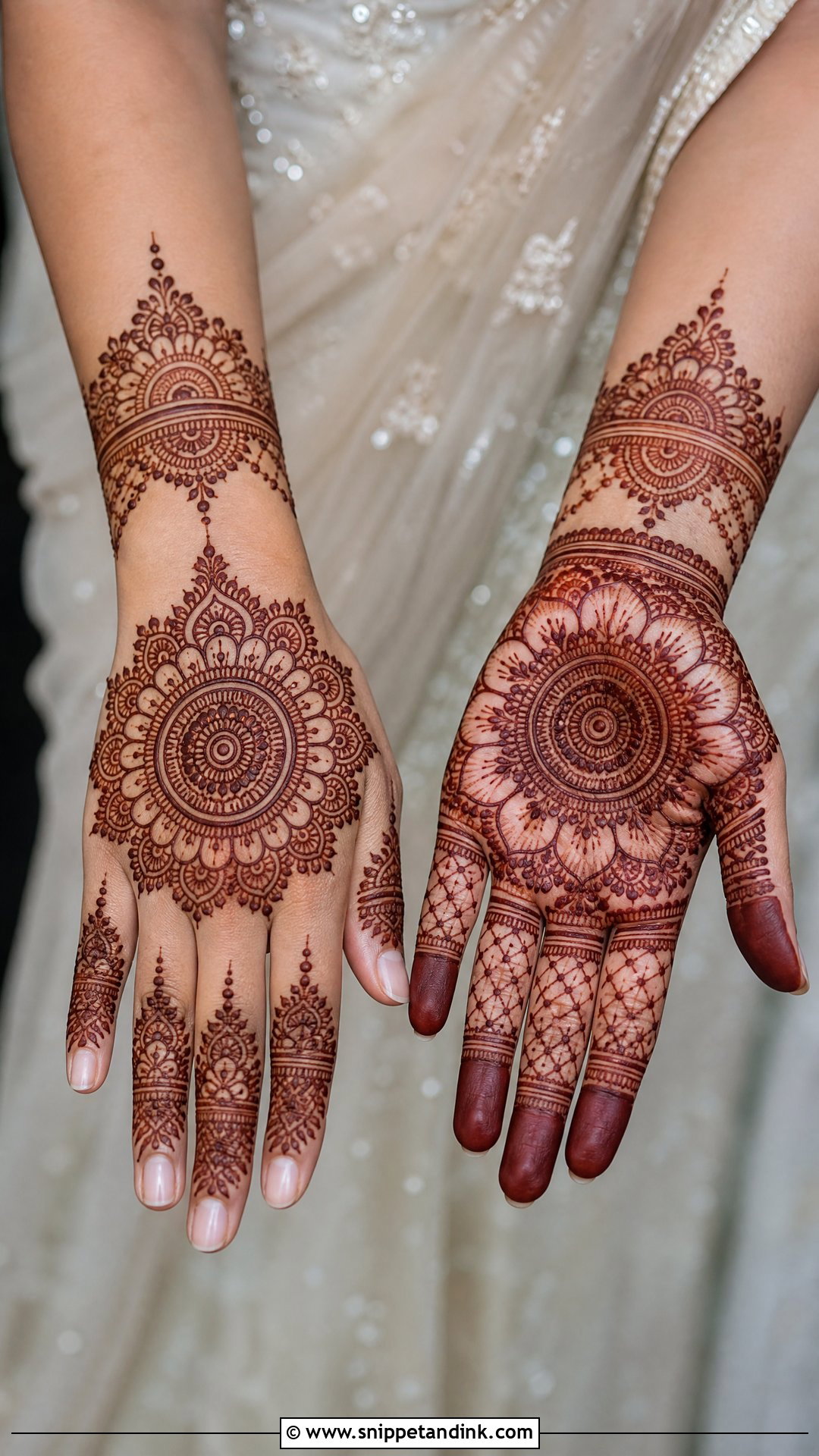
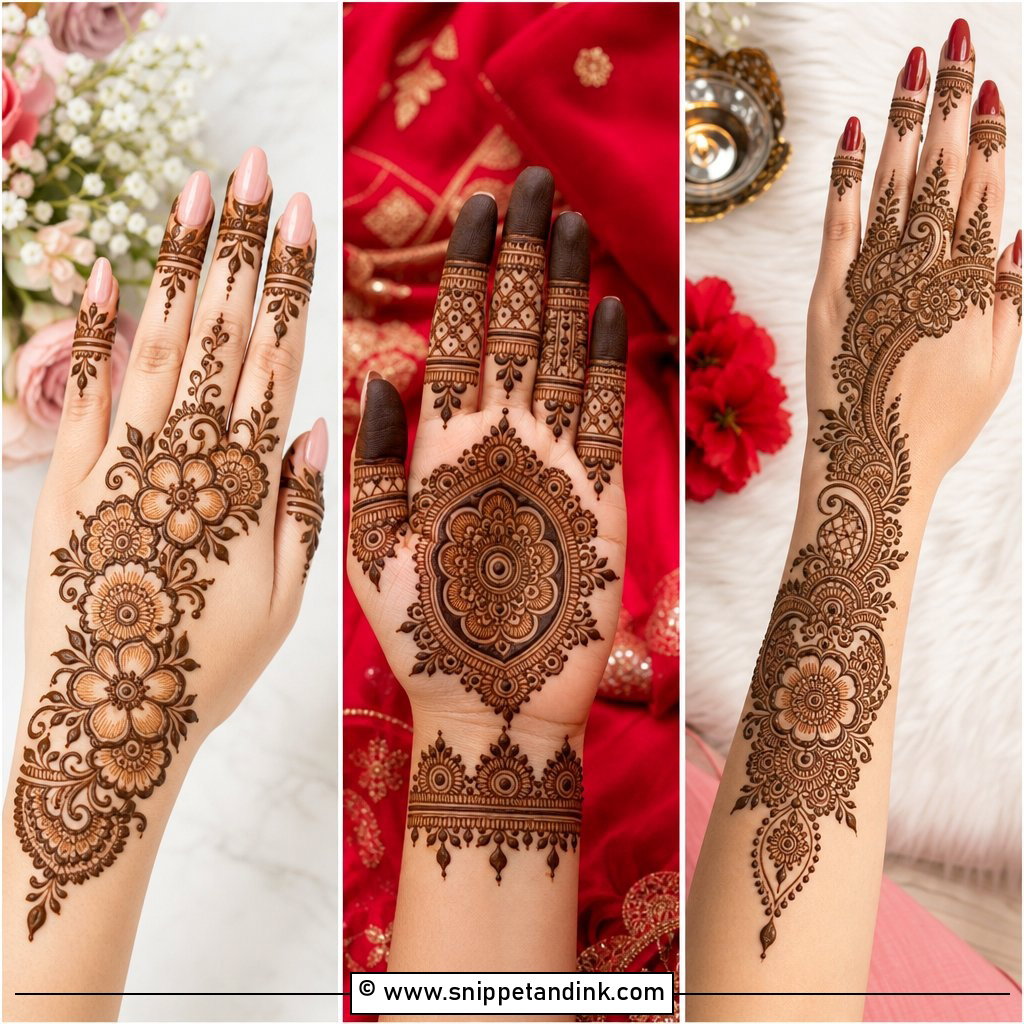
A mandala gives the hand a single, calm focal point. I place it in the centre of the palm or back hand and build out in rings of dots, petals, lace borders and finger detail. Getting the centre right matters more than people think. On a small palm I’ll set the mandala slightly lower than the true middle, toward the heel of the hand, so it doesn’t crowd the fingers. It can stay minimal or grow with wrist cuffs, forearm bands and paisley extensions. Bangles and rings sit around it without fighting it.
5. Bridal Peacock Mehndi Design Full Hand
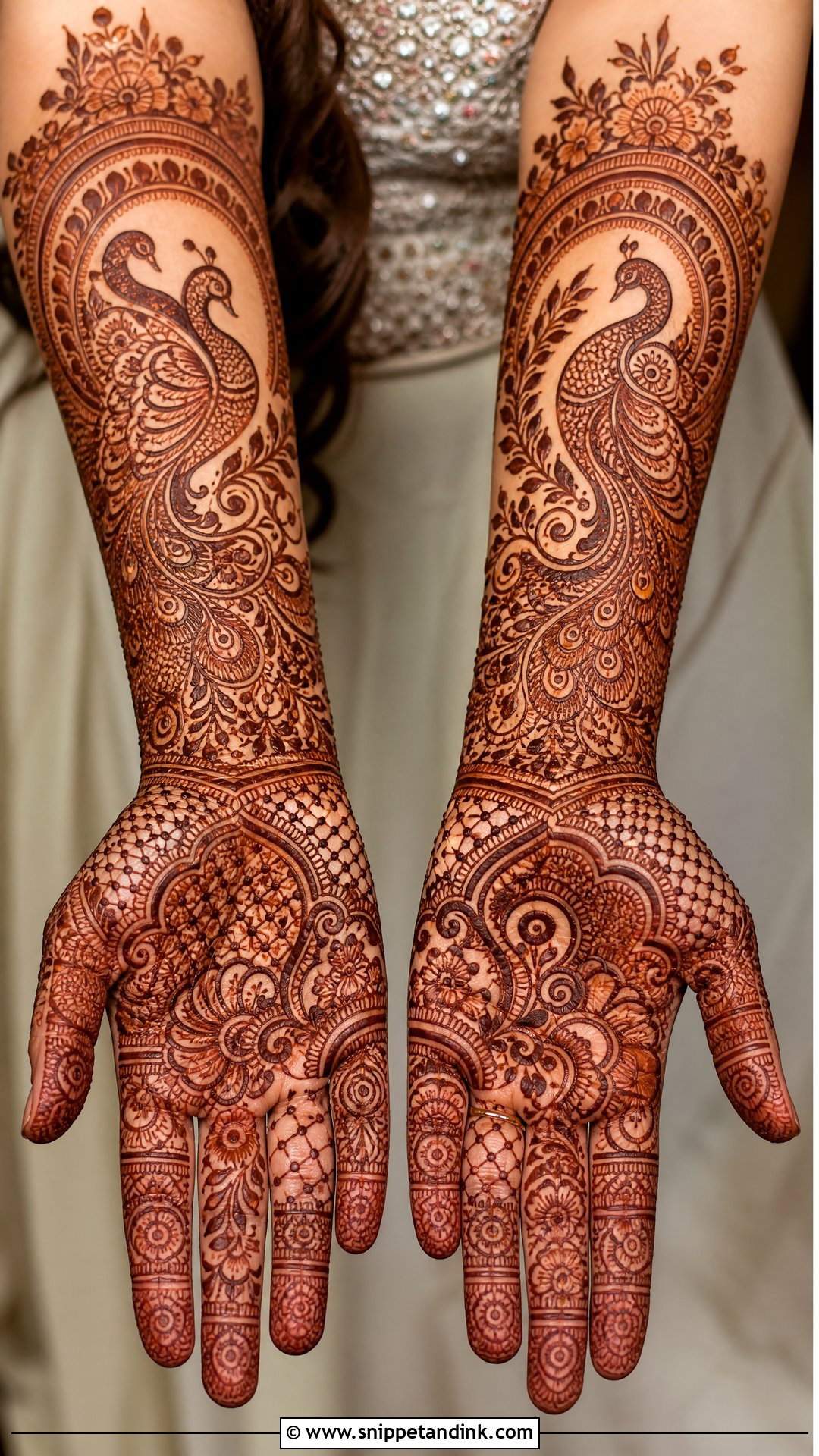
The peacock’s curved neck and fanned tail make it one of the most natural shapes for a hand. A full-hand peacock design usually places one or two birds across the palm, wrist or forearm, surrounded by paisleys, feathers, florals and fine mesh. Feathers let me add shading and delicate lines. What I protect is the outline of the bird itself; if the surrounding filler gets too close, the peacock disappears once the stain develops. It suits outfits with zari, embroidery or jewel tones.
6. Bridal Portrait Mehndi Design
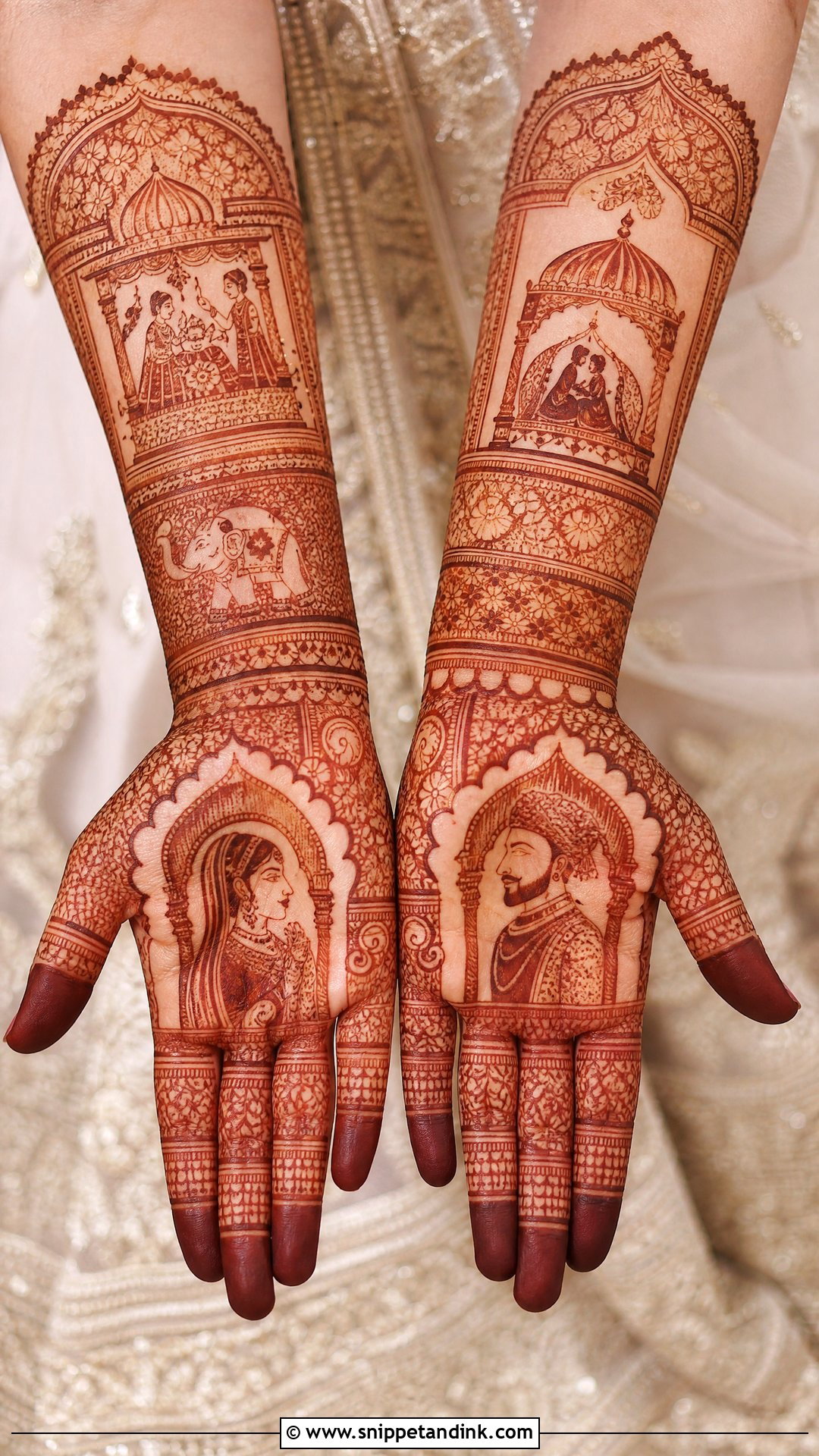
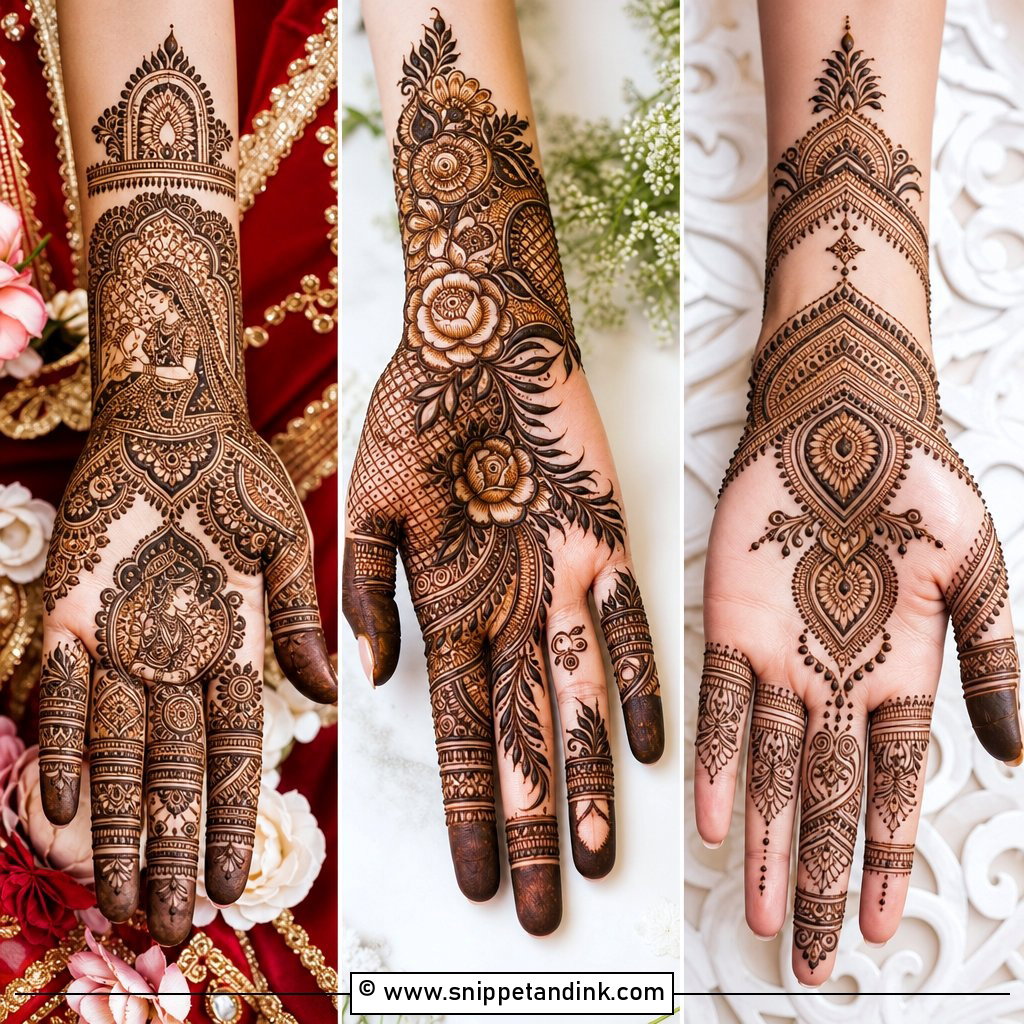
Portrait mehndi usually places a bride on one palm and a groom on the other, with wedding details around them: domes, a doli, flowers, paisleys, bells, jaali panels and borders. This is skilled work. Faces and figures need clean outlines and correct proportions, and henna paste spreads a little as it sits, so a heavy hand can blur a face. Ask to see stained photos of an artist’s previous portraits, not just fresh paste shots. Small custom details such as the actual outfits, initials or a proposal symbol make it personal. For close-up hand photography, few designs carry more meaning.
7. Bridal Jaali Mehndi Design Back Hand
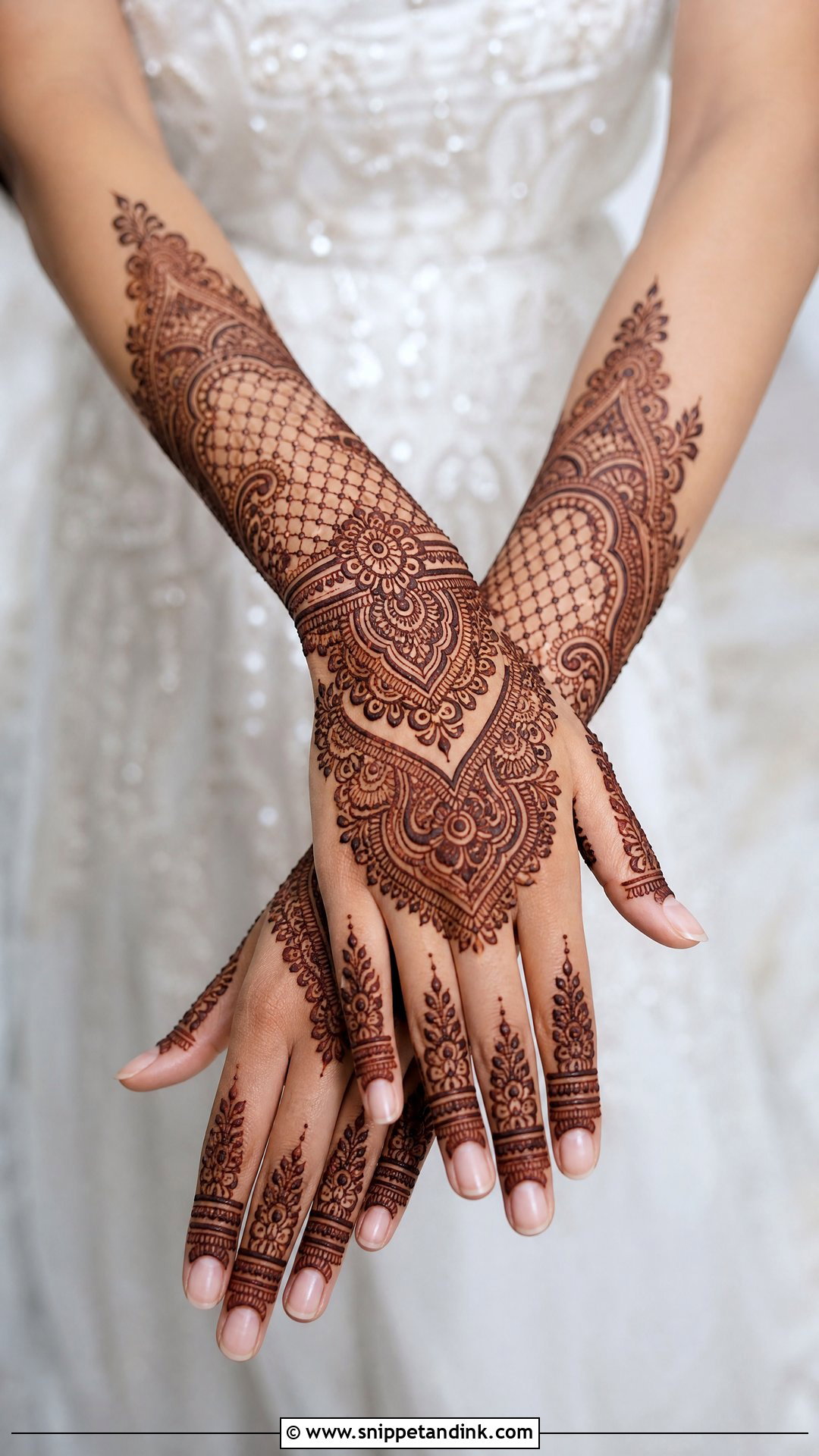
Jaali on the back hand reads like lace, especially next to rings and bangles. I frame the mesh with flowers, vines, paisleys or a bracelet band at the wrist, which stops it looking like a uniform grid. Vertical panels of jaali also make the fingers look longer. You can choose fine or bold mesh. Fine mesh looks delicate in person but can fill in when it stains, particularly on warm hands where the paste softens; bold mesh stays readable in photos. It works for engagement, mehndi night and wedding portraits.
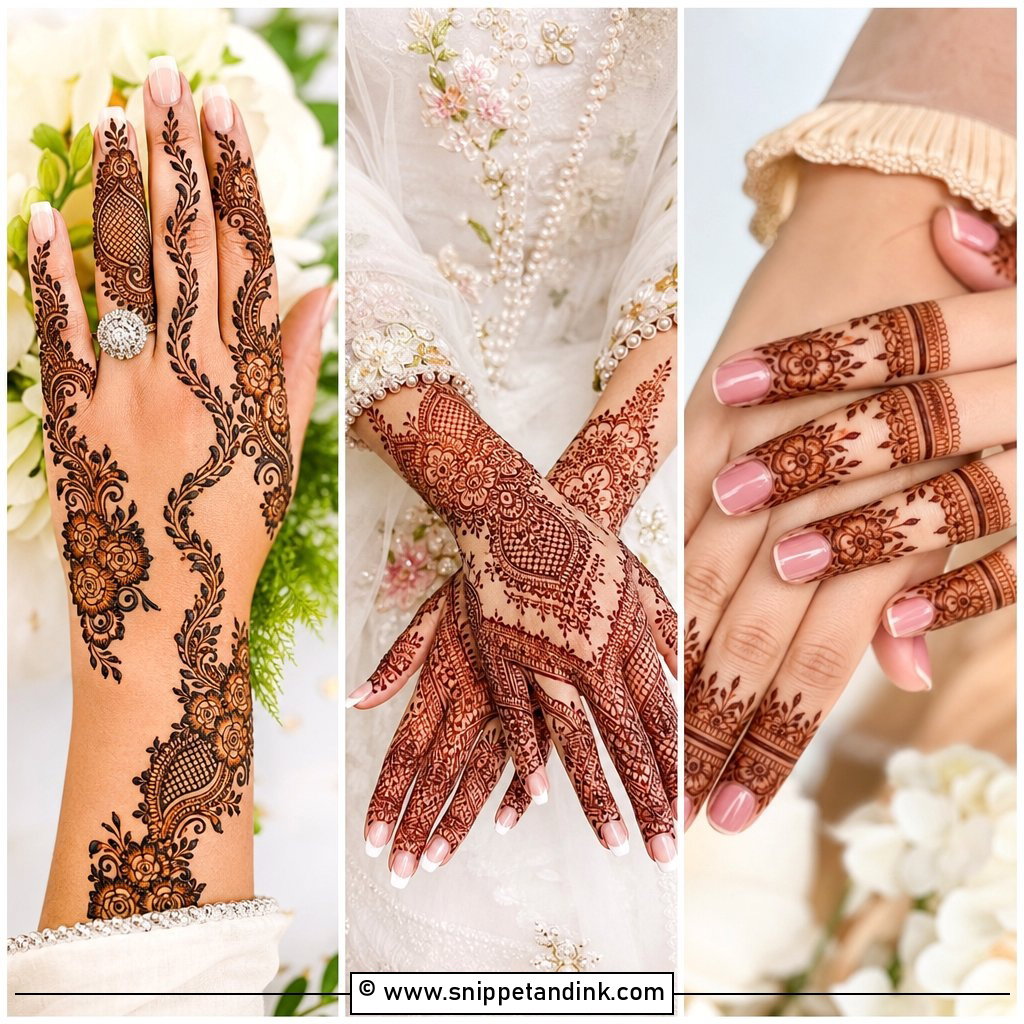
8. Bridal Floral Mehndi Design Full Hand
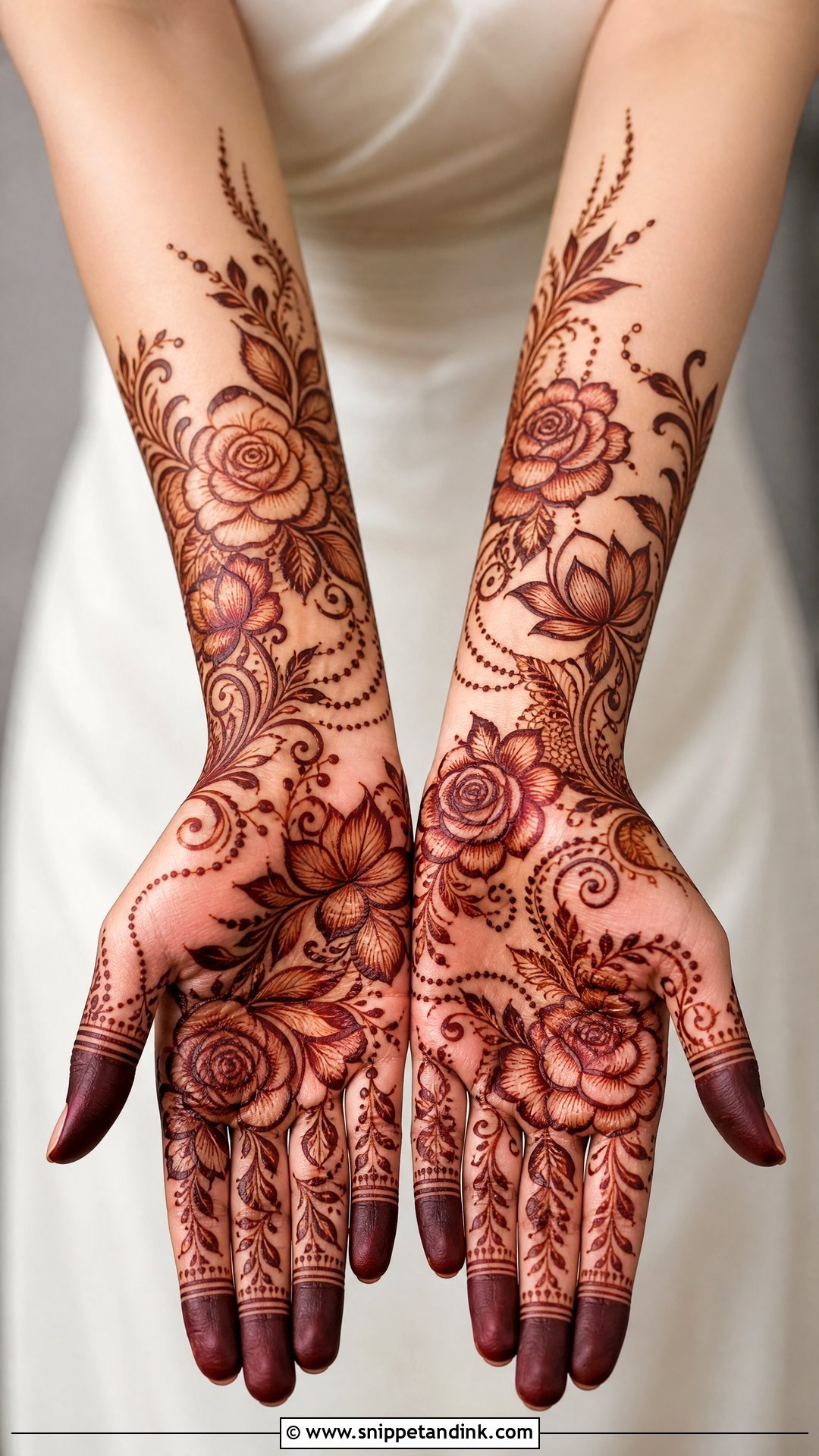
Florals adapt to almost any layout, which is why I use them in traditional, Arabic and modern work alike. A full-hand floral design can carry roses, lotus flowers, small blossoms, leaves and shaded petals across the palm, back hand, wrist and forearm. Large clusters with fine detail around them feel romantic. Pastel outfits, floral jewellery and daytime events suit it. For a heavier bridal finish, I add paisleys, dotted trails and filled fingertips.
9. Bridal Paisley Mehndi Design Full Hand
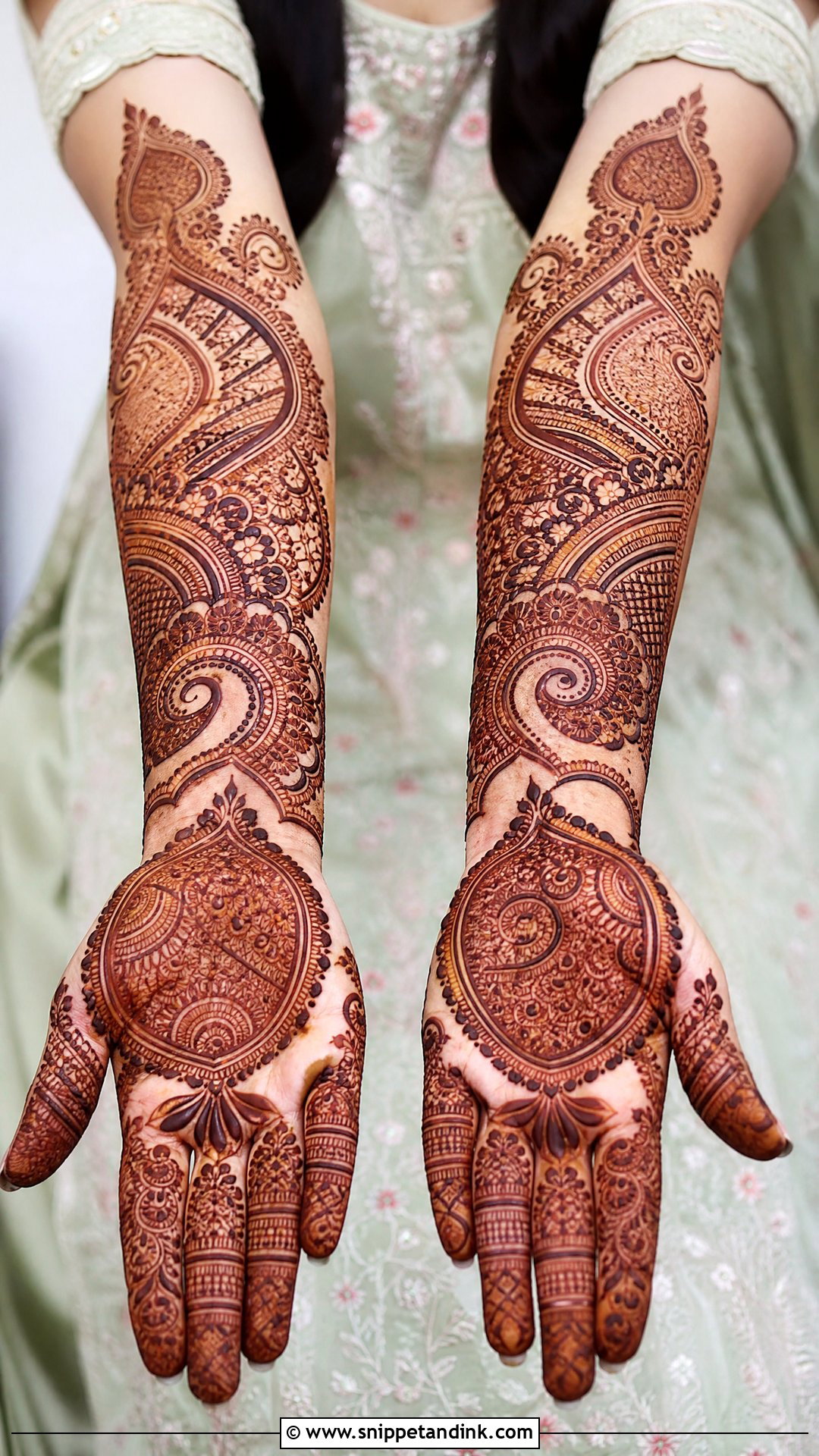
Paisleys create movement because their teardrop curve naturally follows the line of the palm and wrist. In a full-hand paisley design I draw large frames and fill them with tiny florals, leaves, dots and lace patterns, then carry smaller paisleys onto the fingers. It can be dense and grand, or lighter with open spacing between each shape. Their strong outlines are the reason paisleys stain so clearly. Red, maroon, green and gold bridal outfits all sit well beside them.
10. Bridal Rajasthani Mehndi Design
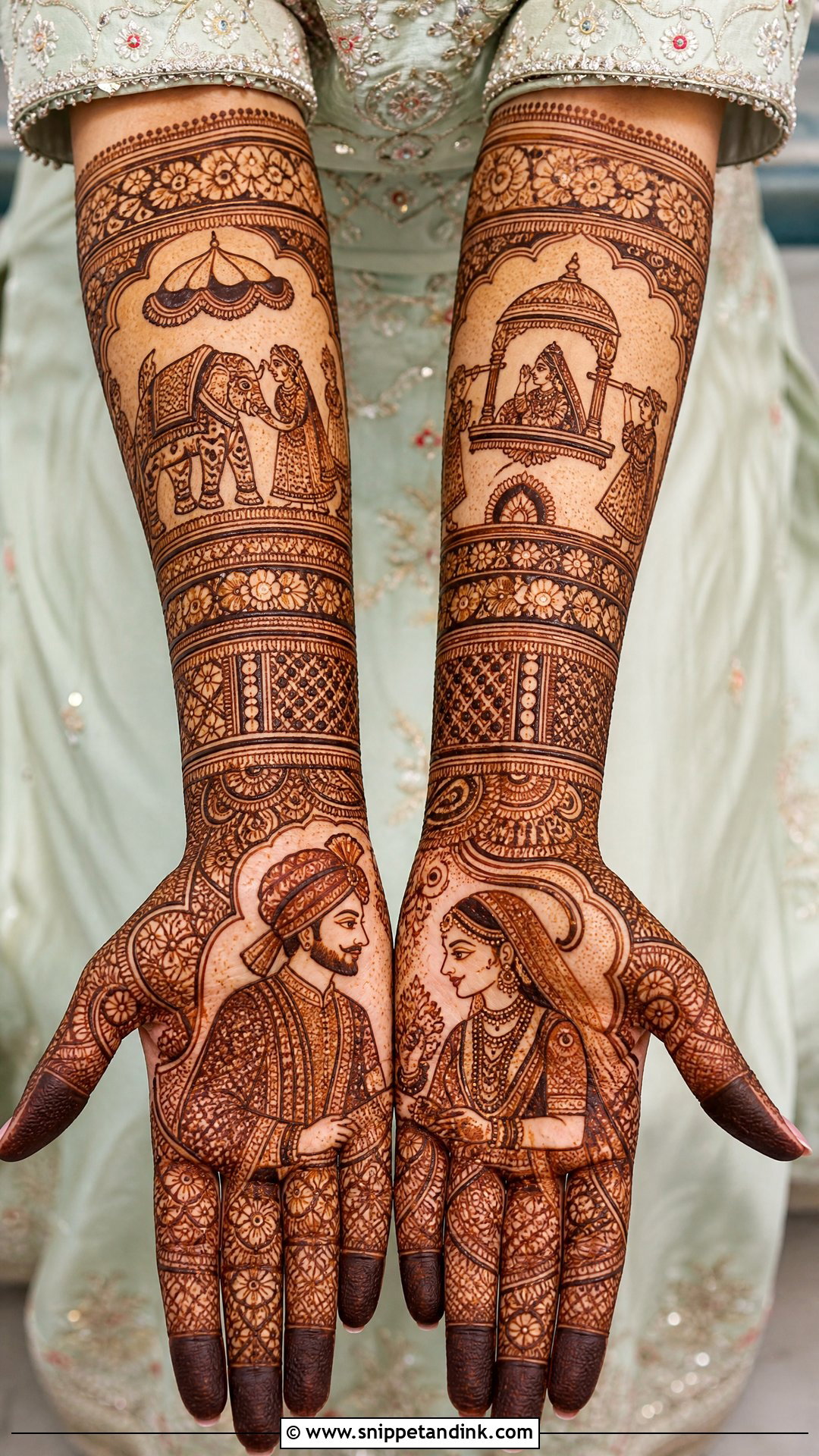
Rajasthani bridal mehndi tells a story: bride and groom figures, elephants, palanquins, musicians, royal arches, paisleys and detailed borders, filled from fingertips to forearms with almost no empty skin. It’s the longest sitting of anything on this list, and I’d only take it on with enough time booked and a bride ready to stay still. A fine cone tip and a smooth, consistent paste are essential, because the tiny details are what make it. Traditional weddings with heavy bridal attire are where it belongs.
11. Bridal Marwari Mehndi Design
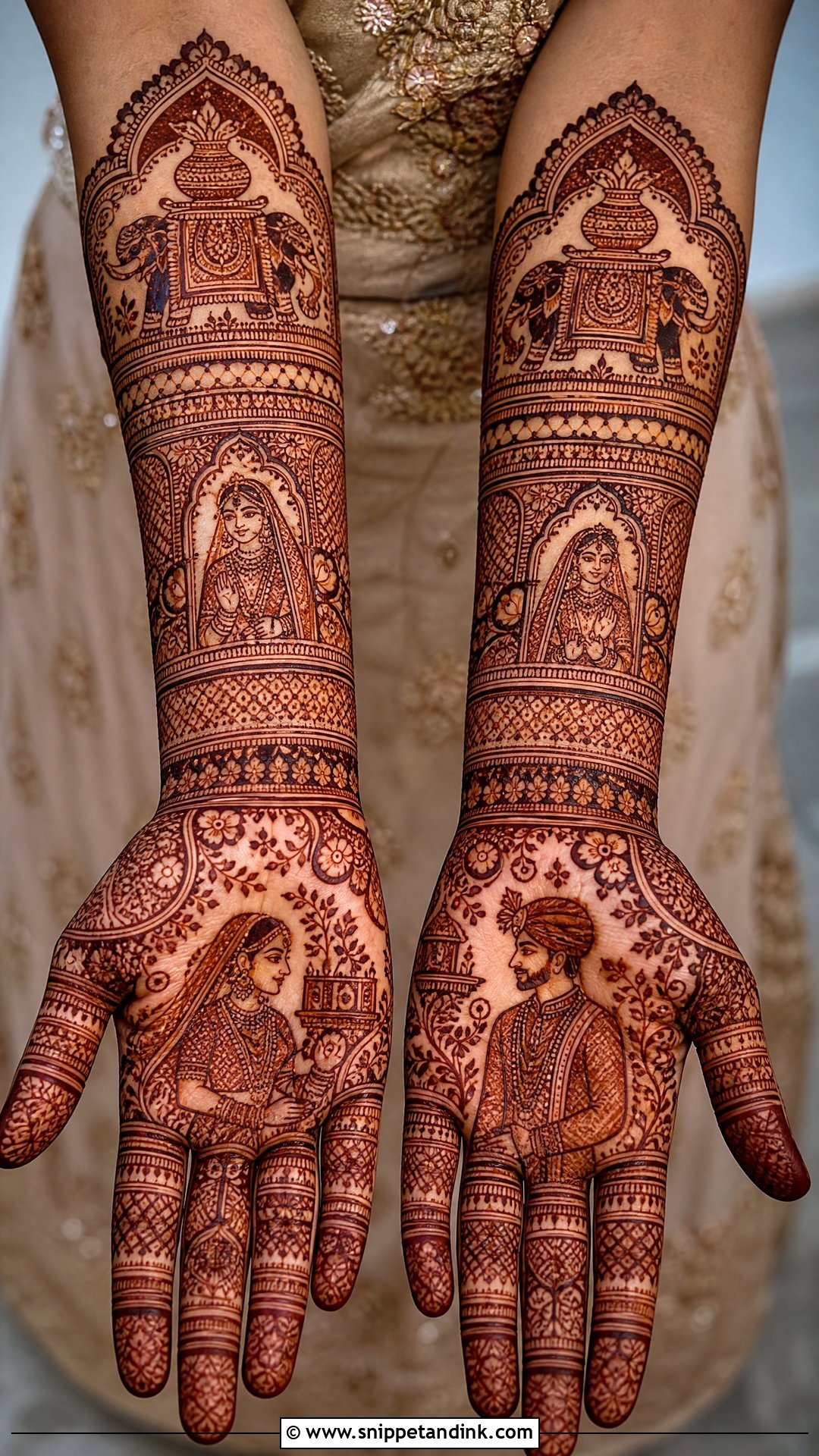
Marwari mehndi is close cousin to Rajasthani work, with a strong emphasis on symmetry: fine paisleys, floral vines, bride-groom figures, elephants, kalash details and ornamental borders, usually across the full palm and toward the forearm. Dense as it is, the best versions keep the major motifs visible. I mirror the composition between the two palms so they read as a pair when the bride holds her hands up together during rituals. Red, orange, pink and gold outfits suit it, and hidden names tuck easily into the borders.
12. Bridal Jewellery Mehndi Design Back Hand
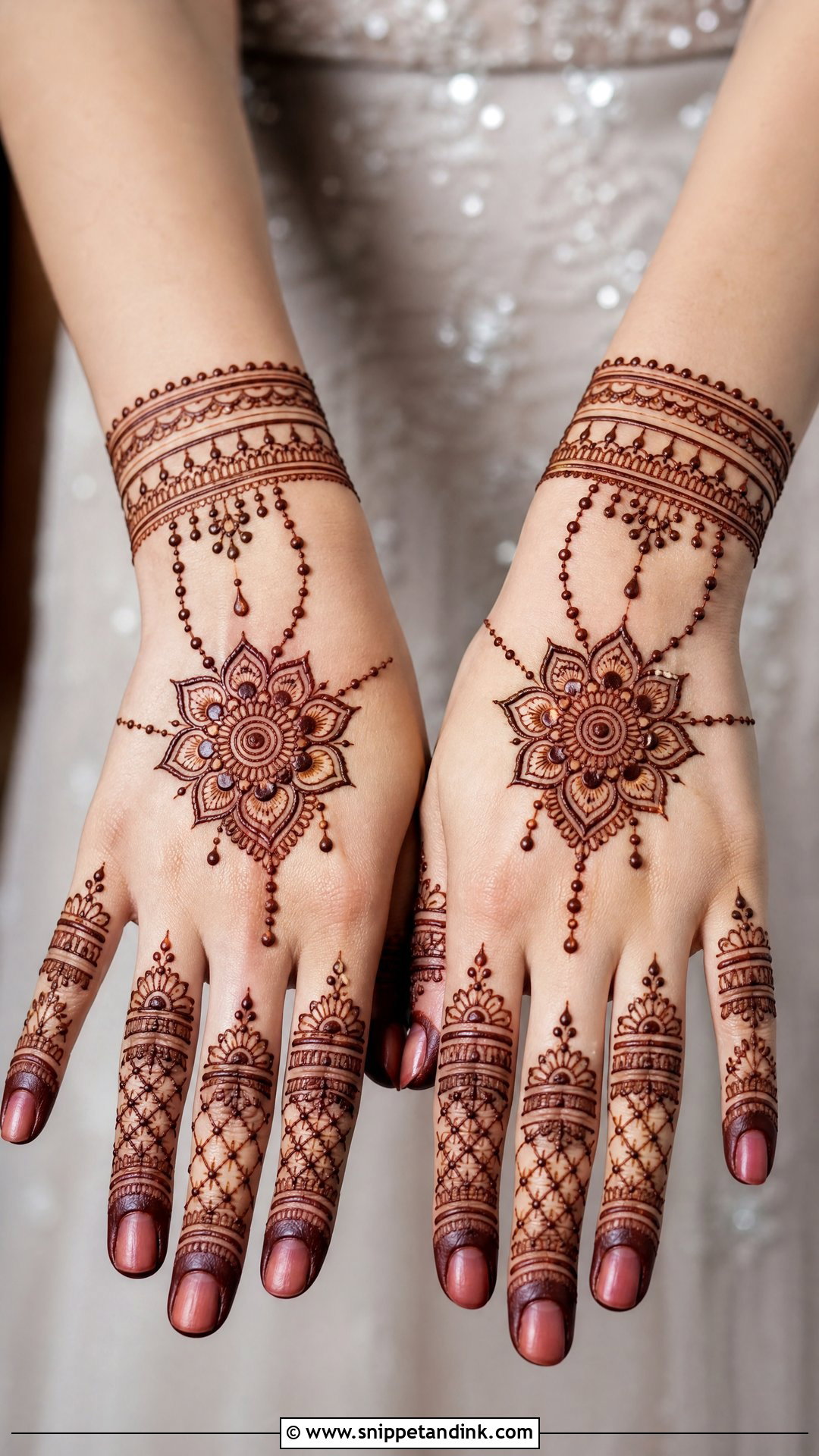
Jewellery mehndi draws accessories onto the back of the hand: bracelet bands at the wrist, chain lines across the hand, ring patterns on the fingers and a central floral or mandala motif. I’d ask you to wear your real rings and bangles to the appointment so the drawn pieces sit around them rather than underneath. It can be minimal or full; for a bride, I add shaded flowers, tiny dots and finger extensions. In ring shots it frames the fingers and wrist without crowding them.
13. Bridal Minimal Mehndi Design For Hands
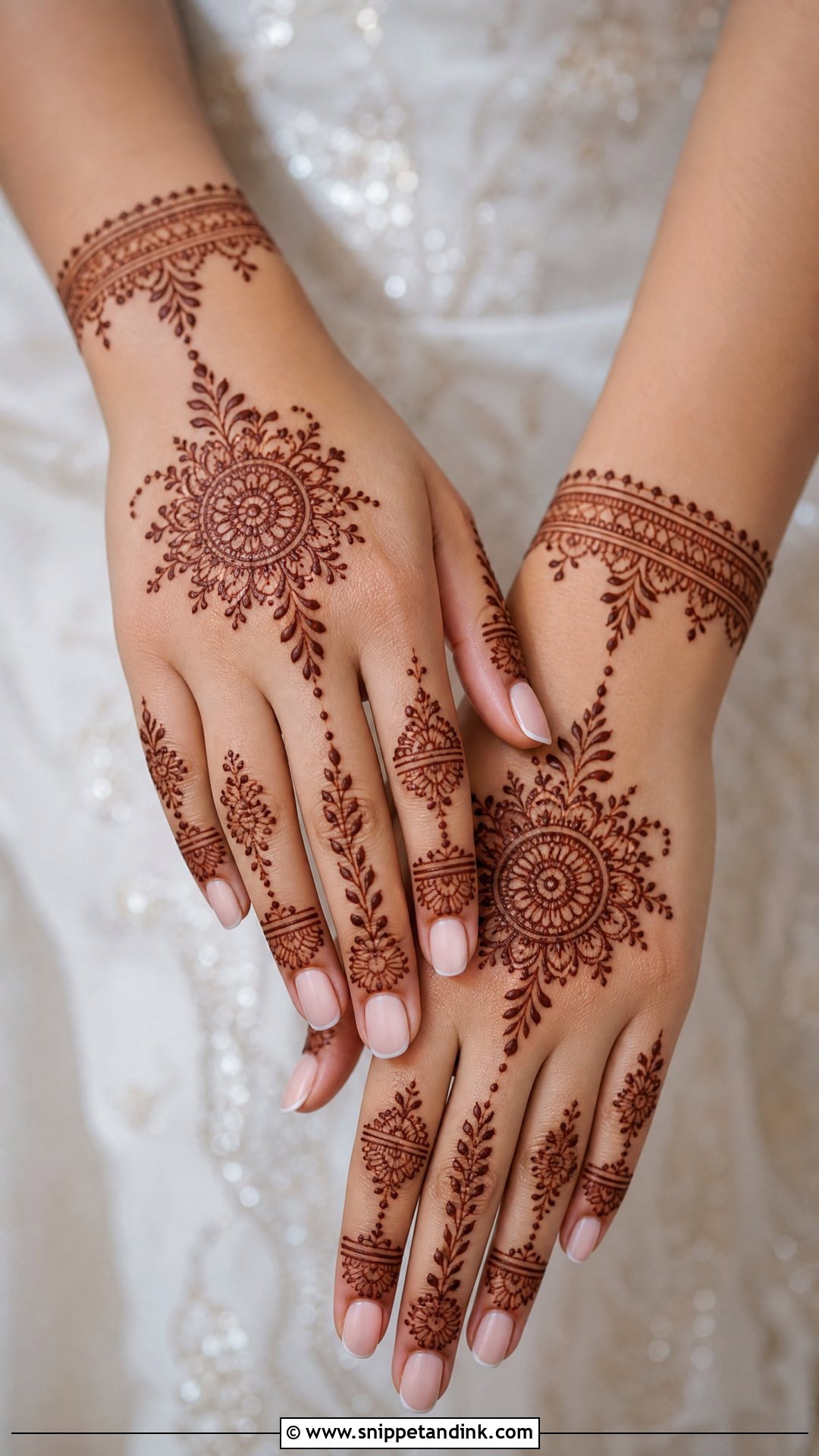
Plenty of brides don’t want heavy mehndi, and a minimal design can still look bridal if it’s finished properly. Clean mandalas, fine vines, small florals, simple wrist cuffs and elegant finger patterns, with open spacing throughout. It suits lightweight outfits, intimate ceremonies and anyone whose jewellery, nails or embroidery should be the focus. Balance is everything here. Even with few elements, I make sure palms, fingers and wrists all carry something, so neither hand looks half done.
14. Bridal Front Hand Mehndi Design
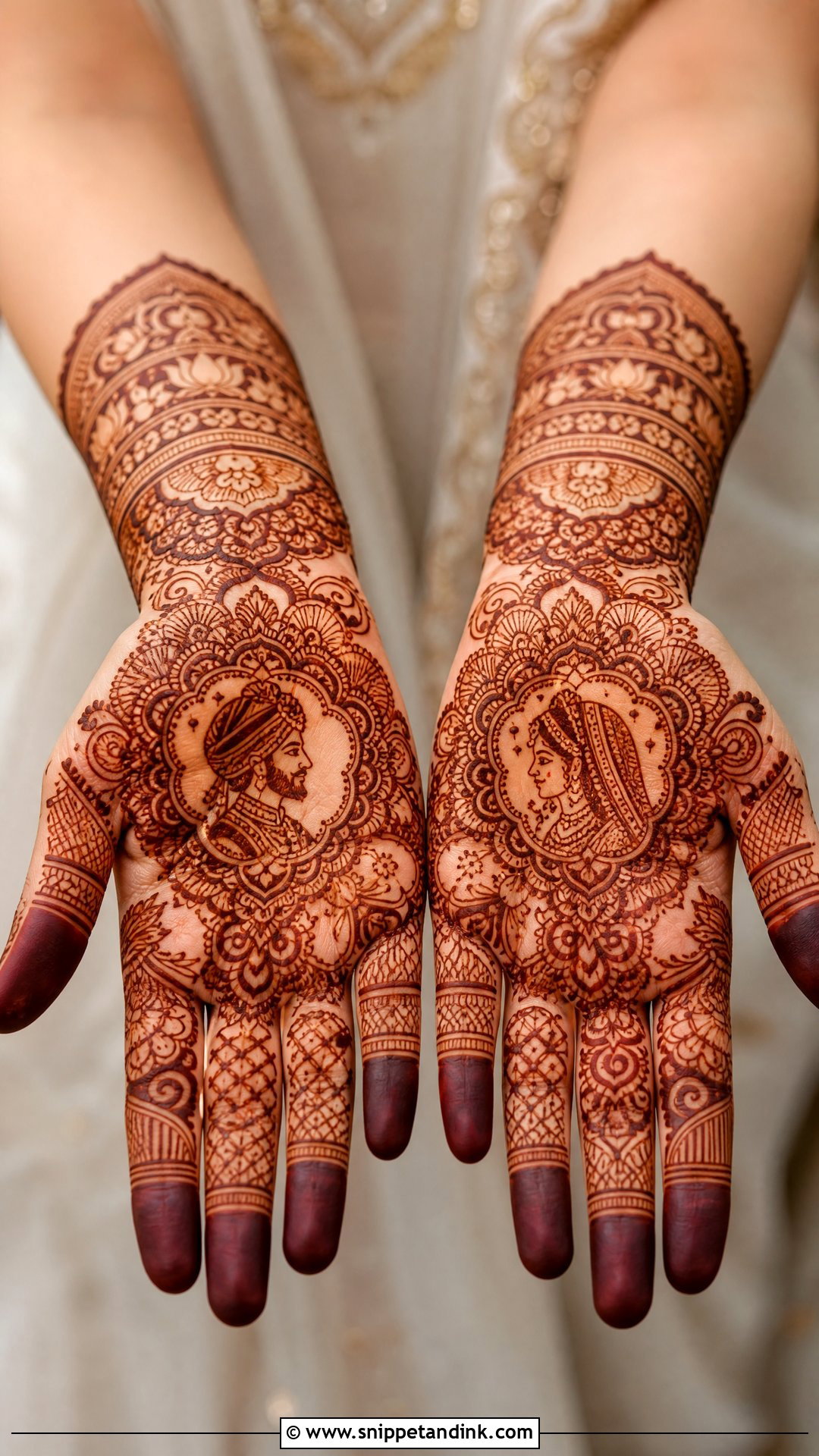
Palms stain darkest, so the front hand is where I put the richest detail: mandalas, paisleys, florals, bride-groom art, lotus motifs and detailed finger sections. Palms are on show during blessings and rituals, so the design needs a clear structure, usually a central motif on each palm with patterns leading toward the wrist. Fingertips can be fully filled for a traditional look or lined finely for a modern one. Just remember the palms fade fastest too, since they’re the part of the hand you wash and use most.



15. Bridal Back Hand Mehndi Design
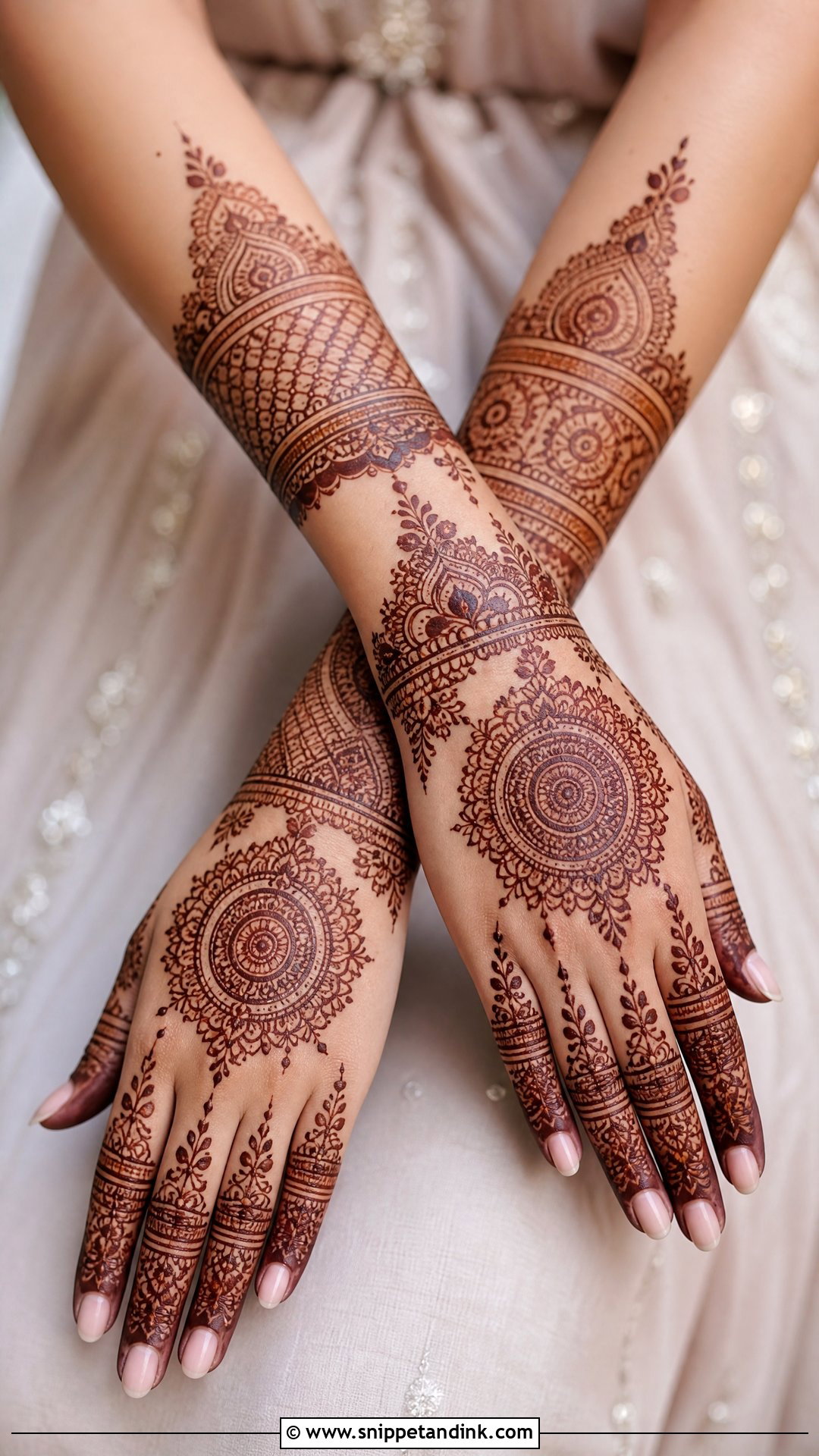
Bouquets, ring reveals and jewellery adjustments all show the back of the hand, so clarity matters most here. Floral trails, jaali panels, bracelet bands, mandala centres and finger extensions are the usual building blocks. The back hand stains lighter than the palm, which is why I use bolder outlines and keep the main motif clearly visible. Open spaces and bold lines suit modern photography; a fingertip-to-forearm extension suits a traditional look. Bangles and bridal nails should sit inside the design comfortably.
16. Bridal Finger Mehndi Design Full Hand
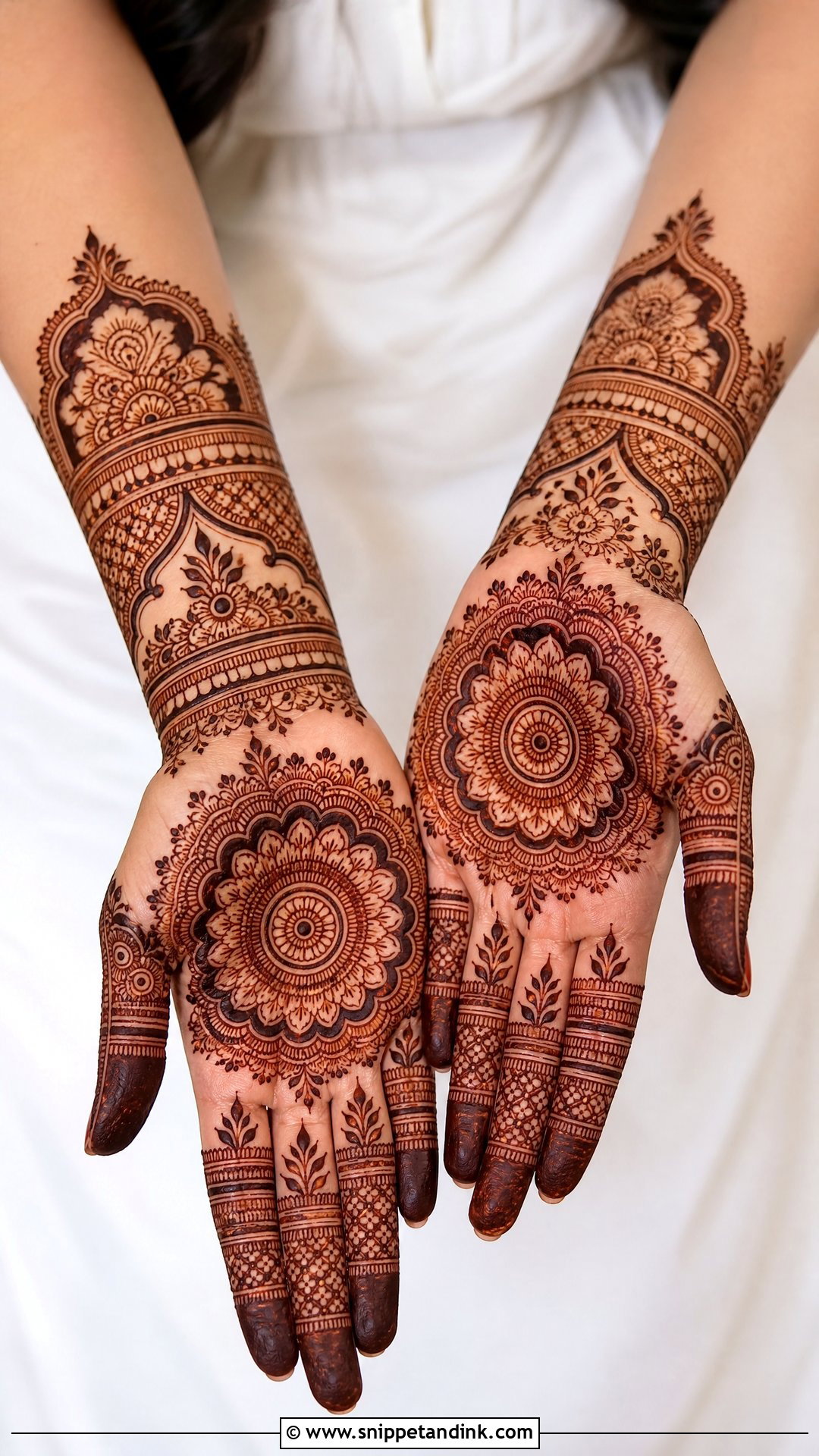
Finger-focused designs put the long detail on the fingers: decorated tips, leafy lines, small florals, bands, dots and slim paisleys, balanced by a mandala, floral circle or open Arabic trail on the palm. Fingers lengthen visually when the pattern runs vertically along them. Where this goes wrong is a gap between finger work and palm work, so I always carry at least one line across the knuckle to connect them. Almond nails, bridal rings and delicate bangles complement it.
17. Bridal Lotus Mehndi Design Full Hand
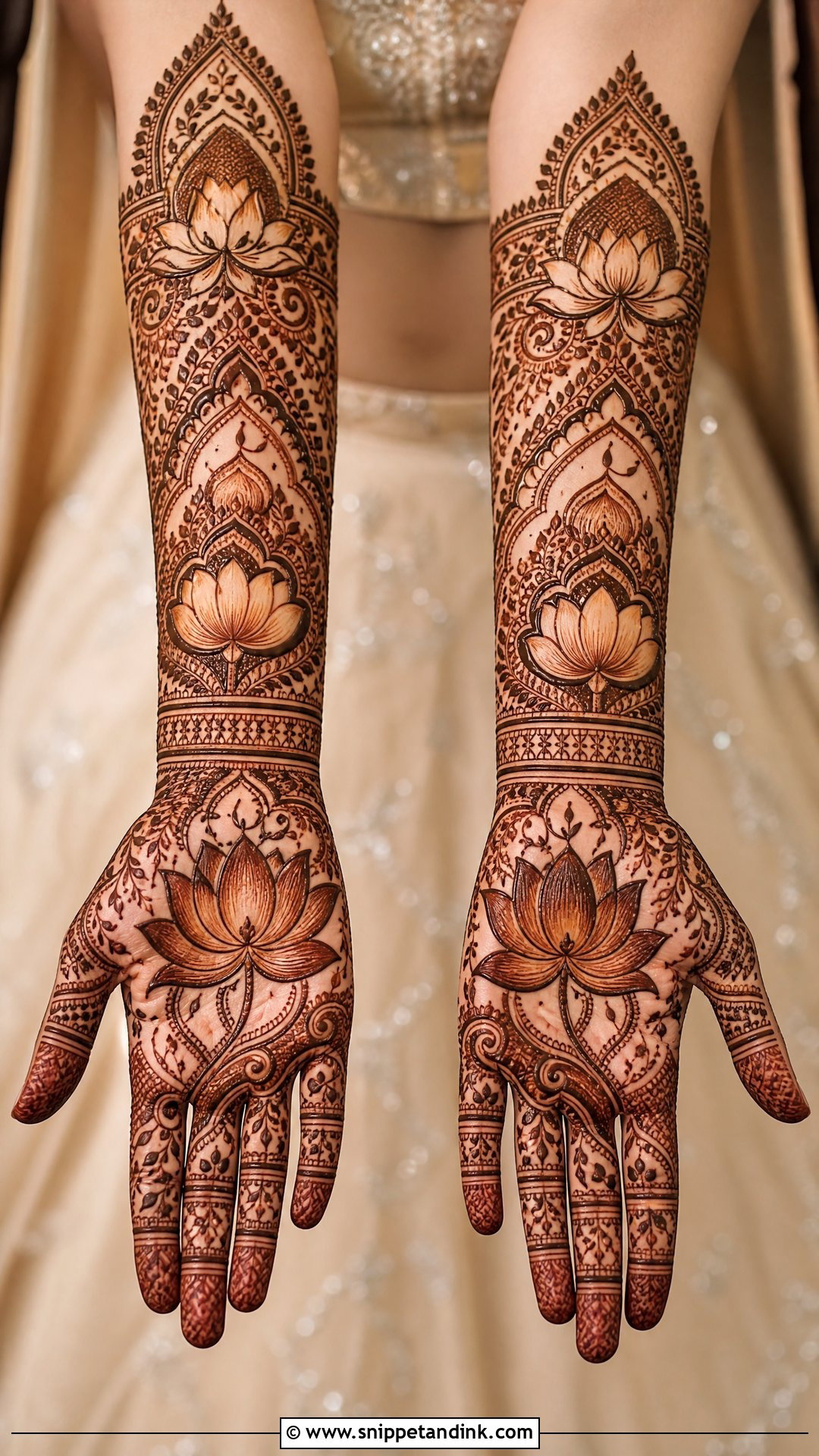
The lotus has a natural layered shape, so it fills space without looking harsh. I place lotus motifs in the centre of the palm, along the wrist or across the forearm, and surround them with leaves, arches, paisleys and fine dots. The motif carries an auspicious meaning in many traditions, which is part of why it’s requested so often. Silk sarees, temple jewellery, pastel lehengas and classic bridal outfits all sit well with it. Dense or slightly open, it gives the hands a refined finish.
18. Bridal Moroccan Mehndi Design
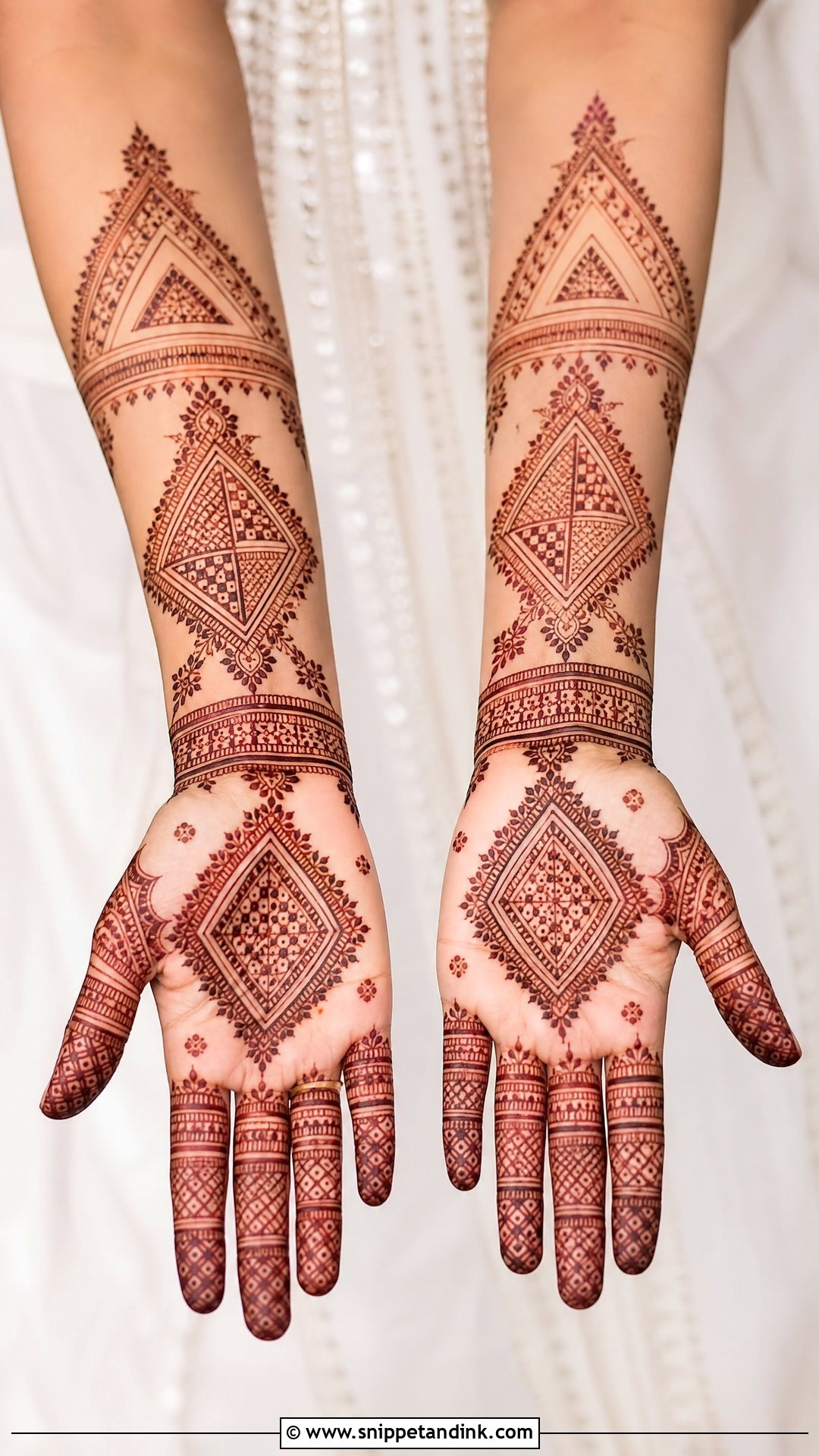
Moroccan mehndi swaps soft vines for geometry: diamonds, grids, lines, triangles, dots and structured panels. For a bride, I soften it with floral borders or Indian-style wrist cuffs so it still feels like wedding henna. Sharp shapes read well in photos even at a distance. The technical demand is steady cone pressure; a straight line that thickens and thins halfway along is obvious in geometric work. Back hands, fingers and forearm bands suit it best, and it stands apart from the usual bridal florals.
19. Bridal Gulf Mehndi Design Full Hand
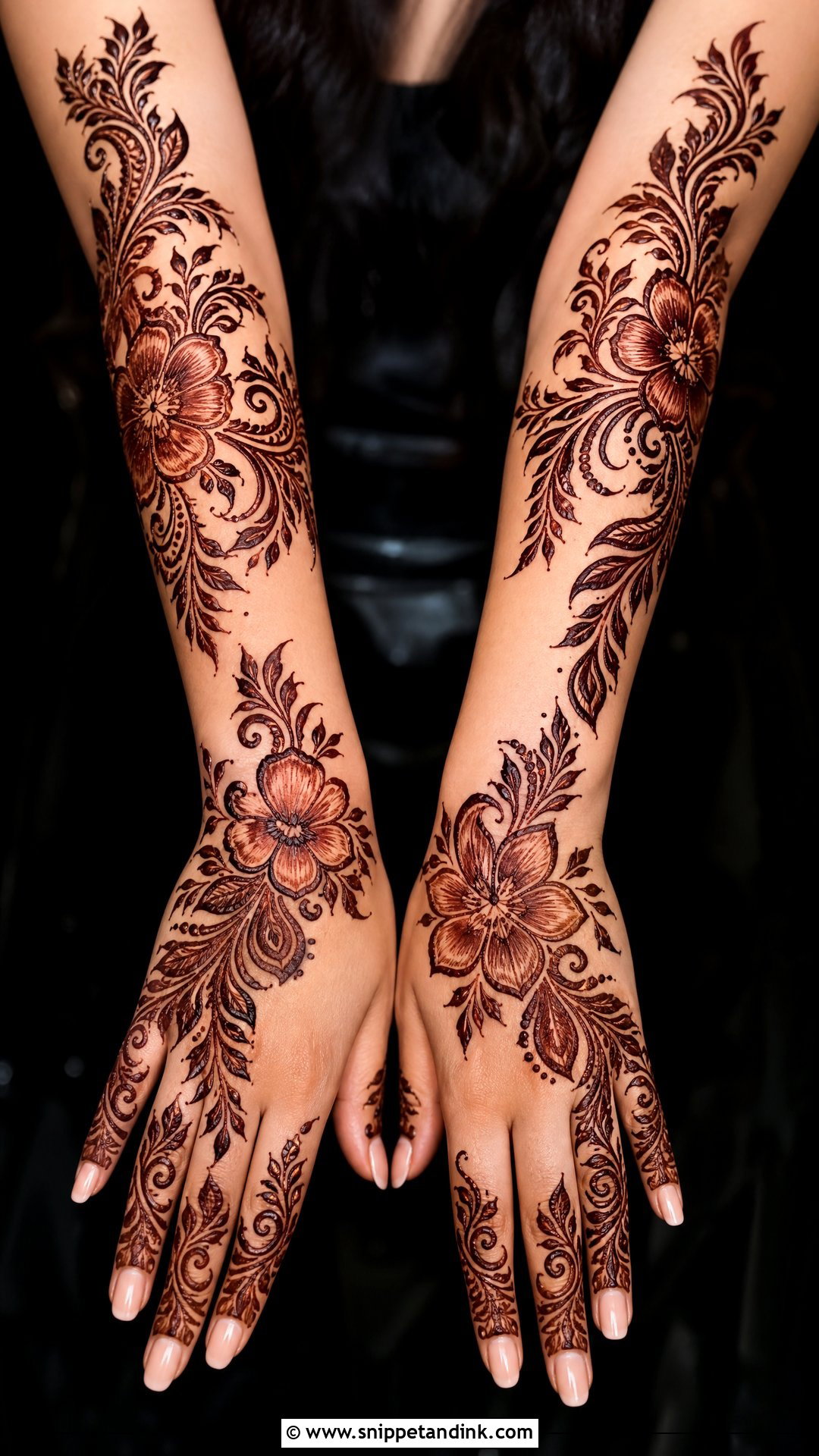
Gulf mehndi is bolder than a simple Arabic pattern and lighter than traditional Indian coverage: big florals, flowing leaves, dark outlines and open skin, moving across the hand in strong trails with decorated fingers and wrist-to-forearm extensions. Large flowers and thick outlines make it read clearly in photos, and shading gives depth. Thick outlines use more paste per line, so I keep the cone well filled to stop the line breaking. It sits comfortably with gowns, sarees, lehengas and fusion outfits.
20. Personalized Wedding Mehndi Design
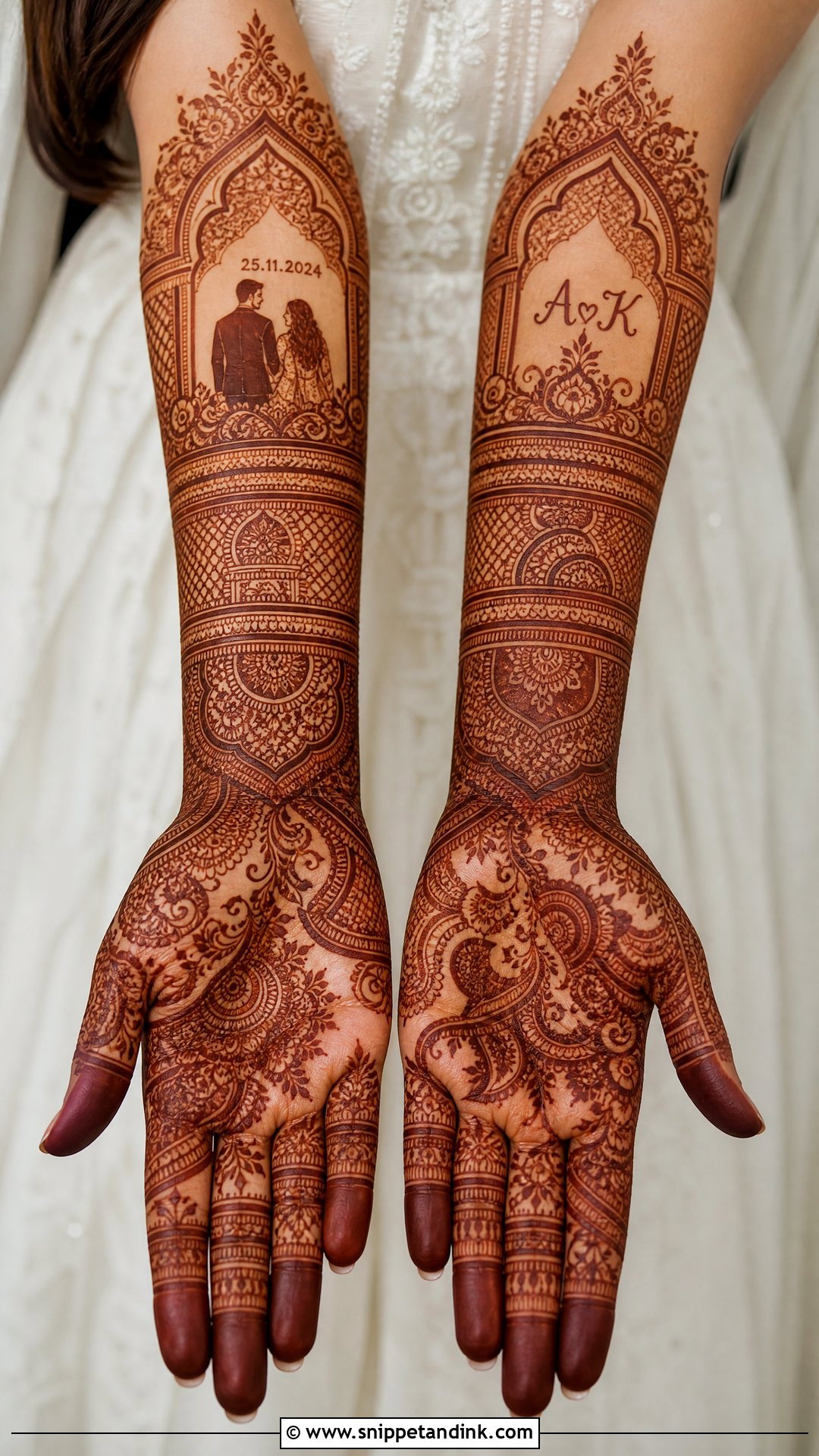
Personalised mehndi turns the hands into a keepsake: initials, the wedding date, a proposal symbol, a favourite flower, cultural motifs, a city skyline, a pet or small icons from the couple’s travels. The rest of the hand is built from bridal elements such as paisleys, florals, mandalas, jaali and wrist borders. I tuck the personal details into the pattern so they blend in from a distance but can still be found in close-ups. Hiding the groom’s name and having him search for it is a tradition many families still enjoy.
Portfolio Photos Worth Asking a Bridal Artist For
Fresh paste always looks neat. The real test of a mehndi artist is the stain two days later, so these are the things I’d want to see if I were hiring someone for my own wedding.
Day-two stain photos
Ask for photos of developed stains, not just paste. You’re looking for a deep, even colour and lines that stayed separate rather than bleeding together.
Work in the style you want
An artist excellent at Arabic trails may not have the fine control for Rajasthani figures or portraits. If you want faces or geometric panels, ask for examples of exactly that.
Paste and time
Ask whether the paste is freshly mixed from natural henna and what goes into it. Then ask how long your chosen design will take for you, and whether the artist or a team will handle family members on the same day, so your own session isn’t rushed.
Hand Shape, Outfit and the Photos You’ll Keep
A bridal mehndi design should suit your outfit, your hand shape, the mood of your ceremonies and the photos you want to remember, not just look pretty on a phone screen. Full Indian designs feel grand and traditional, while Arabic and Gulf layouts look open and light. Mandalas, jaali, florals, peacocks, lotus motifs and personal details each change the character of the hands. Save a few references, look at your artist’s stained results, and decide how much coverage you can comfortably sit for. Then trust the artist to fit the design to your hands.
You'll Like These Ideas:






Leave a Reply