
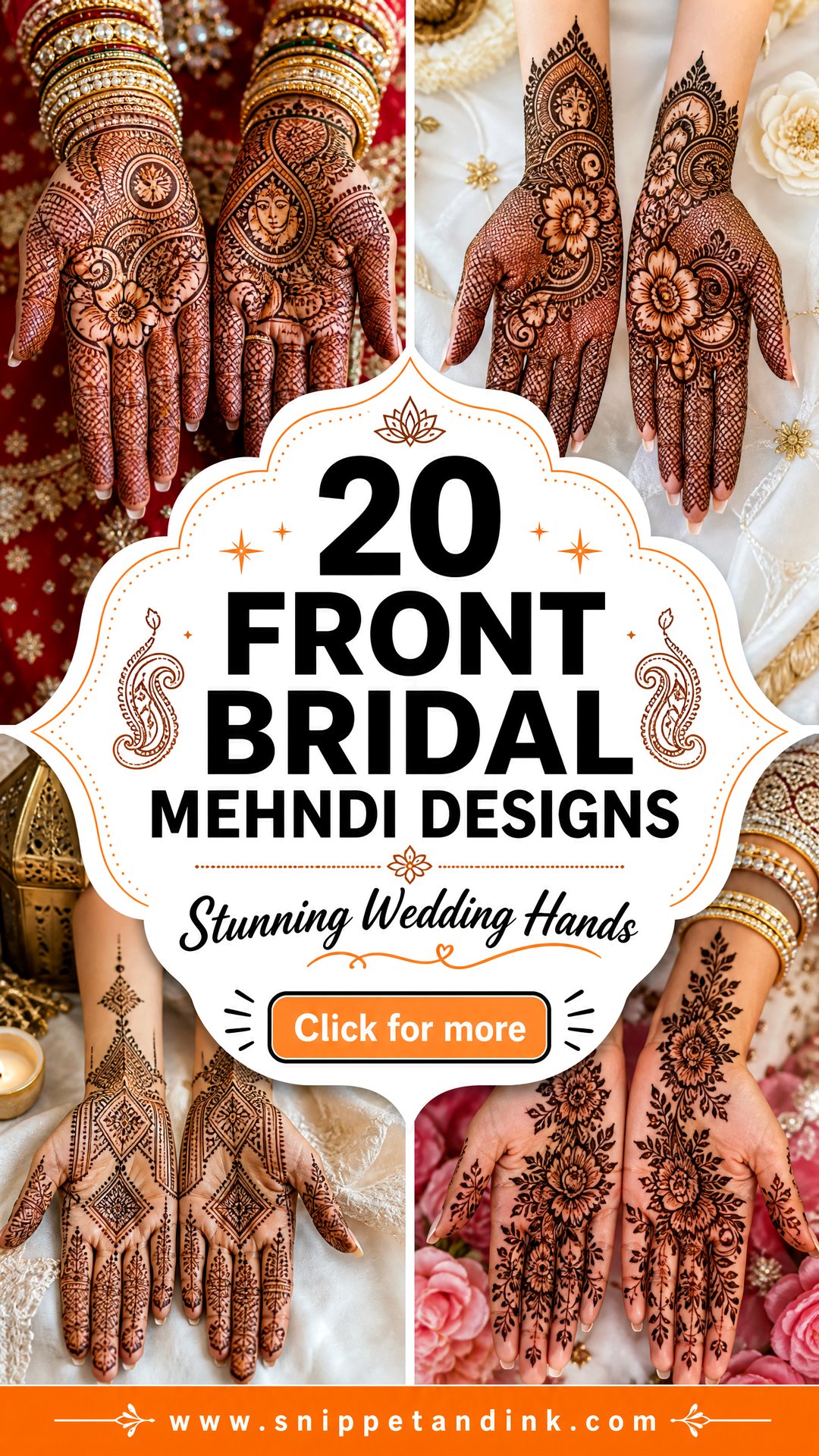
The front of the hand is where I put the meaning. It’s the side that shows when you hold your hands up for the camera, receive the ring or rest them on your lap, so it carries the dulha-dulhan portraits, the lotus mandalas, peacocks, jaali, paisleys and wedding symbols. Some brides want heavy Indian coverage from palm to forearm; others prefer Arabic spacing, Indo-Arabic flow or a modern design with open skin. Your outfit, jewelry, the ceremony and how much detail you want in close-ups all shape the choice. Here are 20 front-hand bridal designs I draw regularly, with notes on how each one stains and what it asks of you in the chair.
The Stain Peaks Two Days Later, So Plan Backward
Natural henna doesn’t come out at its darkest. When you scrape the dried paste off, the stain is a bright orange. Over the next 24 to 48 hours it oxidizes and deepens to red-brown or maroon. That’s why I book bridal mehndi one or two days before the wedding, never the morning of. Too early, and the stain starts to fade as skin naturally sheds; too late, and you’ll be in orange for your photos.
What your skin should be like when you arrive
- Clean and dry, with no lotion, oil or sunscreen on your hands and arms. Anything on the skin blocks the dye.
- No waxing or scrubbing on the day; freshly exfoliated or irritated skin can sting under the paste.
- Nails done earlier, or plan to do them after. Fresh polish and wet paste don’t mix.
- Bathroom visit, food and a phone charger sorted. Once both hands are wet, you’re not using them for hours.
One firm warning. Avoid any paste sold as black henna or promising an instant dark color. Those often contain a chemical dye called PPD that can cause severe skin reactions and scarring. Real bridal henna is made from the plant, and it always starts orange.
1. Full Hand Bridal Mehndi Design
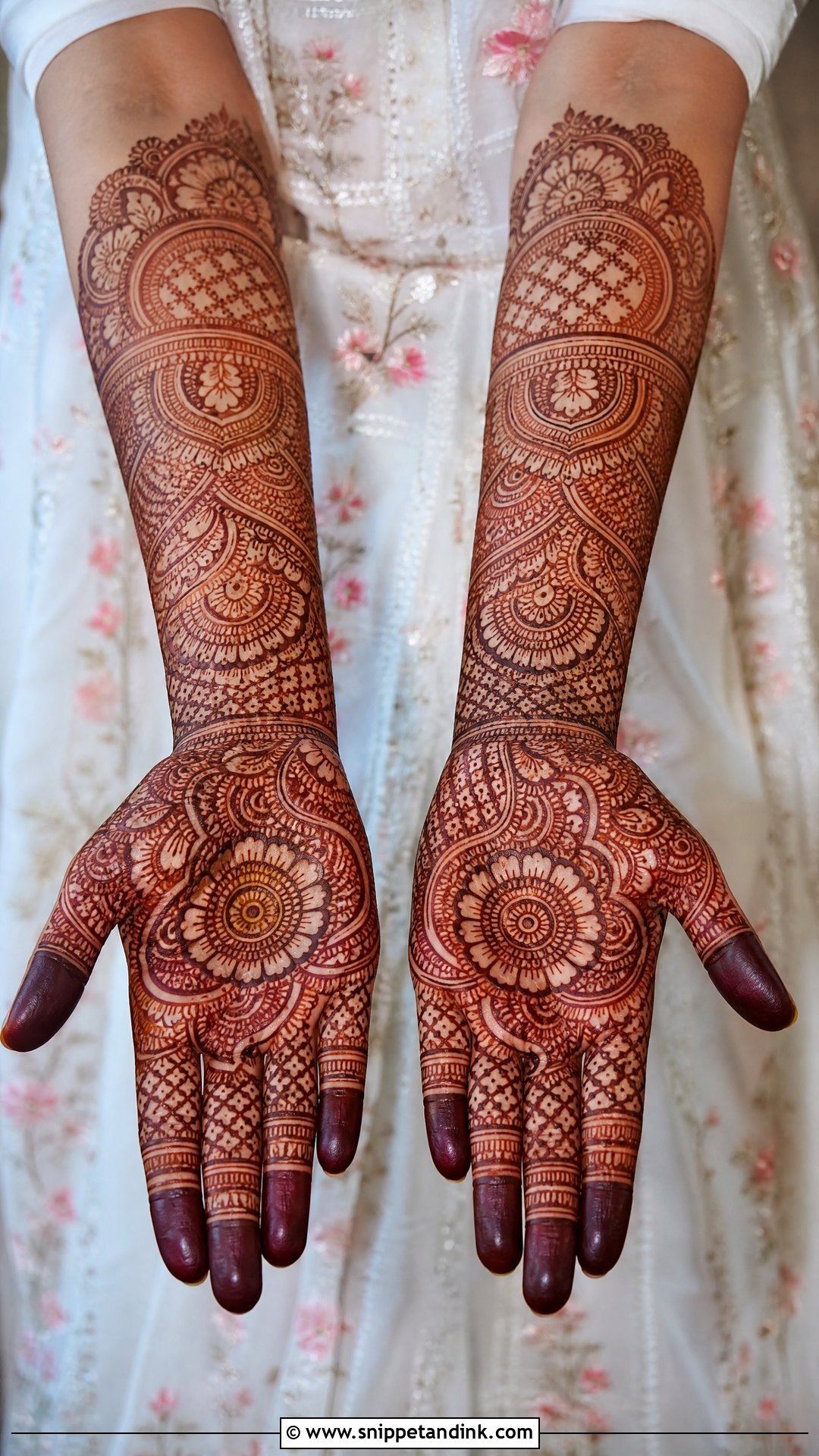
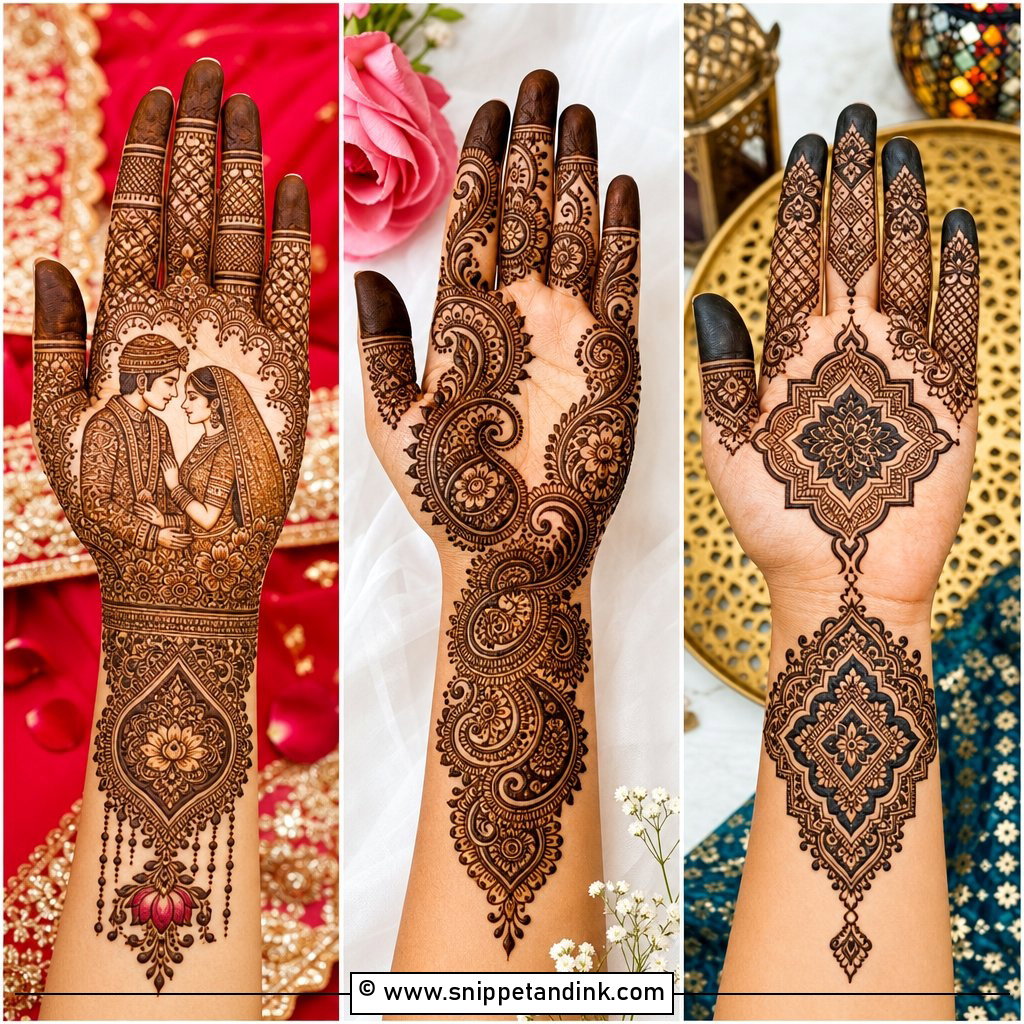
Full hand coverage, fingers to wrist and often up the forearm, is the classic bridal choice. It usually layers paisleys, florals, fine grids, mandalas and borders so the hand looks complete from any angle, and it sits naturally with lehengas, sarees, ghararas and heavily embroidered outfits. I keep both hands balanced but not identical: one palm might carry a central mandala, the other a bride-groom motif or symbol. Be ready for the time it takes. Full front and back coverage on both hands and arms is several hours of sitting still, so I plan breaks and make sure you’ve eaten first.
2. Indian Bridal Mehndi Front Hand
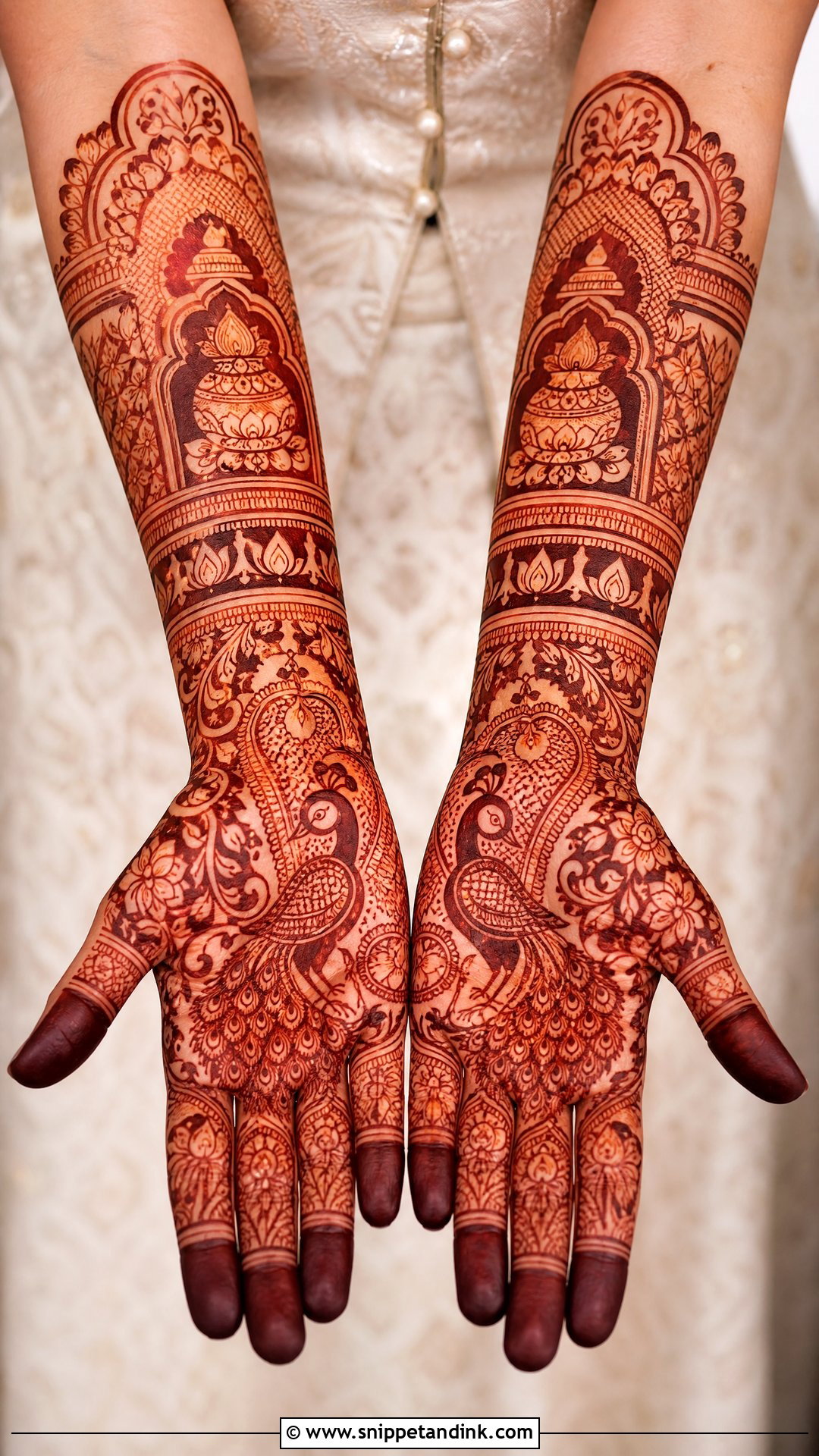
Indian bridal designs are dense and full of motifs: peacocks, lotus flowers, paisleys, kalash shapes, vines and tiny fillers that leave very little empty skin across palm, fingers, wrist and lower arm. Fingertips are usually filled solid, and they stain darkest of all, because skin there is thicker and holds more dye. Initials or a small date can hide inside the pattern for your partner to find. The trade-off with this much detail is that fillers need room to breathe; if lines sit too close, the paste spreads as it dries and the stain merges into a blur. Good fine work depends on paste that’s smooth and consistent.
3. Arabic Bridal Mehndi Front Hand
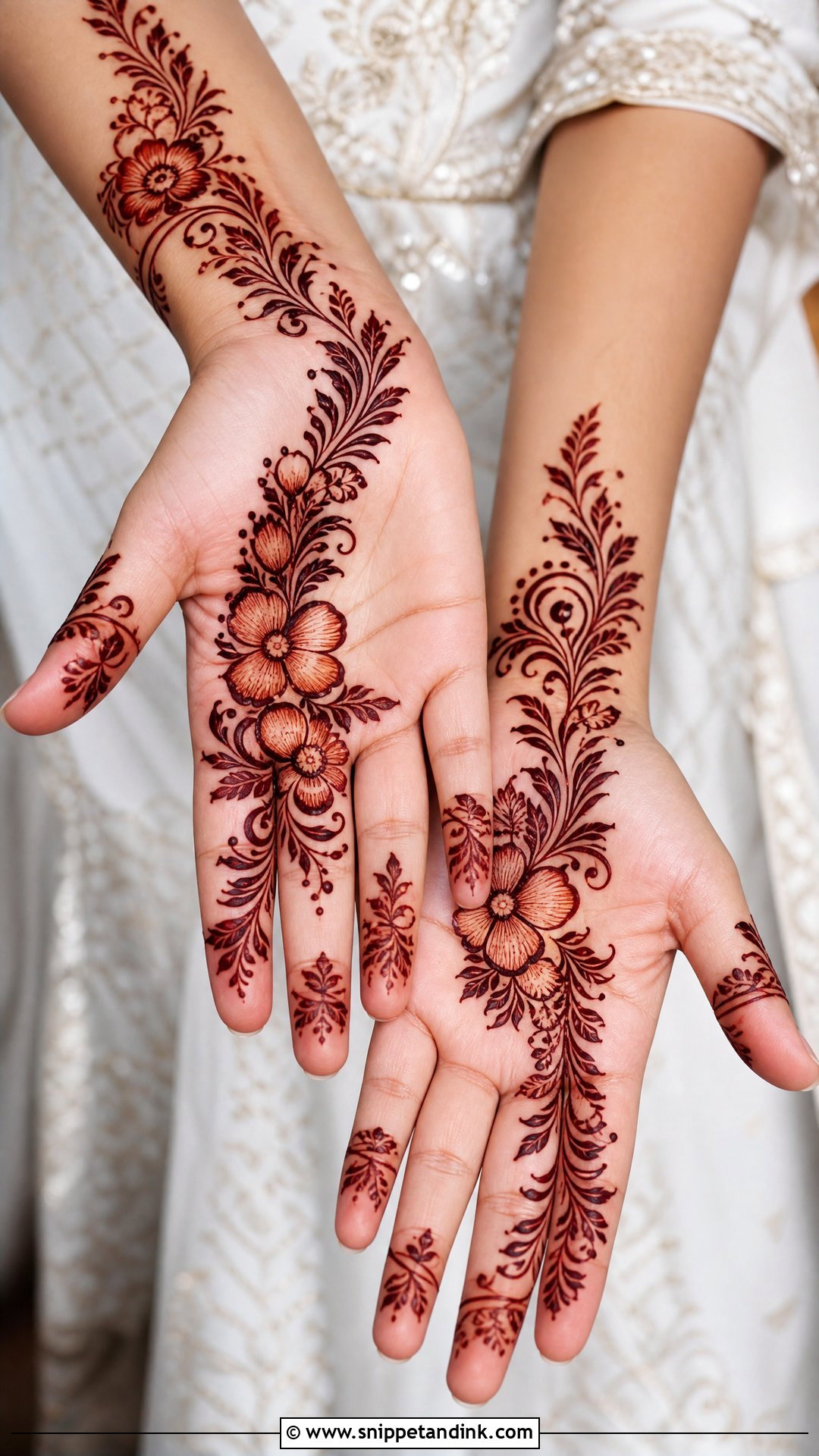
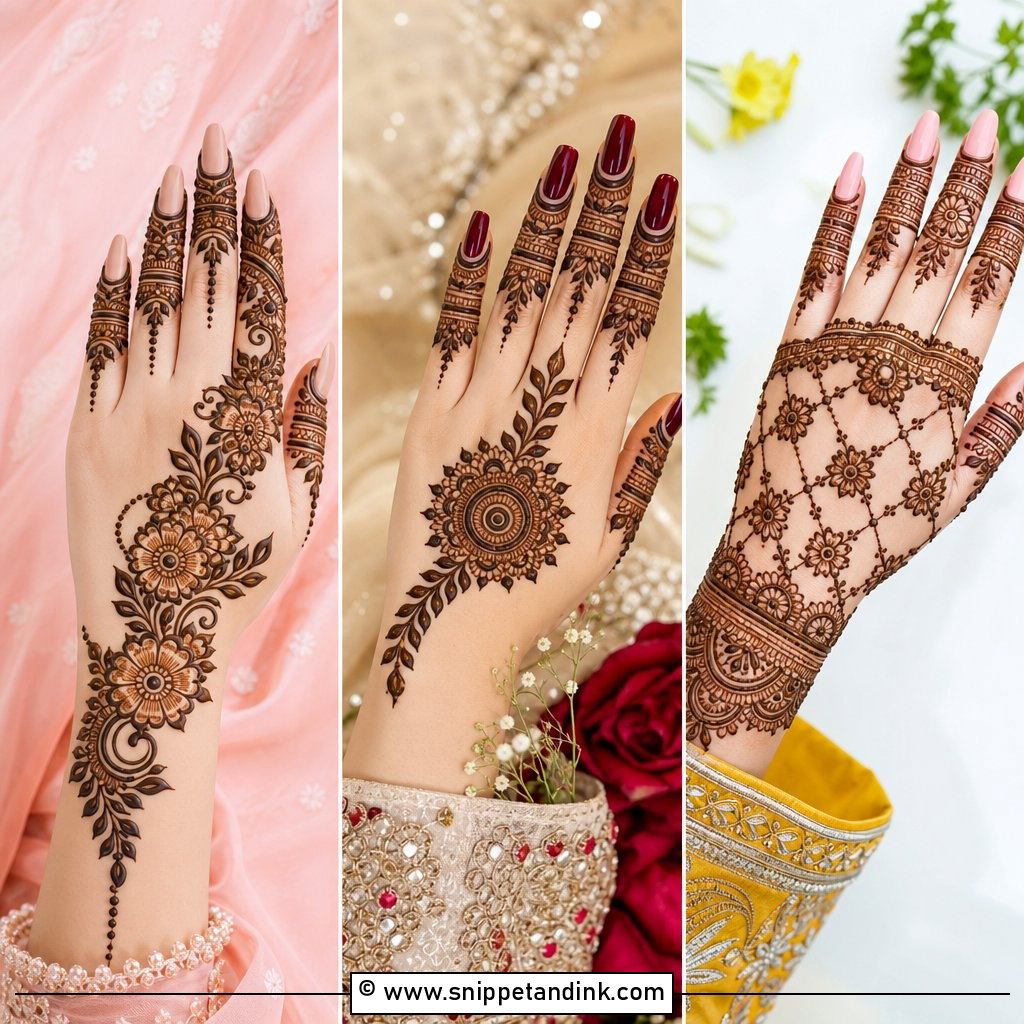
Space is the point of Arabic work. Arabic bridal mehndi front hand designs use flowing floral trails, leafy vines, shaded petals and curved paisley paths across the palm and fingers, leaving open skin between motifs so the design looks clean and modern. Bold outlines stain clearly, and the shading is made by thinning the paste, which gives a soft gradient once it develops. It’s a bridal look without heavy filling. A trail from the index finger to the wrist, or a diagonal across the palm, makes the hand look longer, and it takes far less sitting time than full Indian coverage.
4. Indo Arabic Bridal Mehndi Front Hand
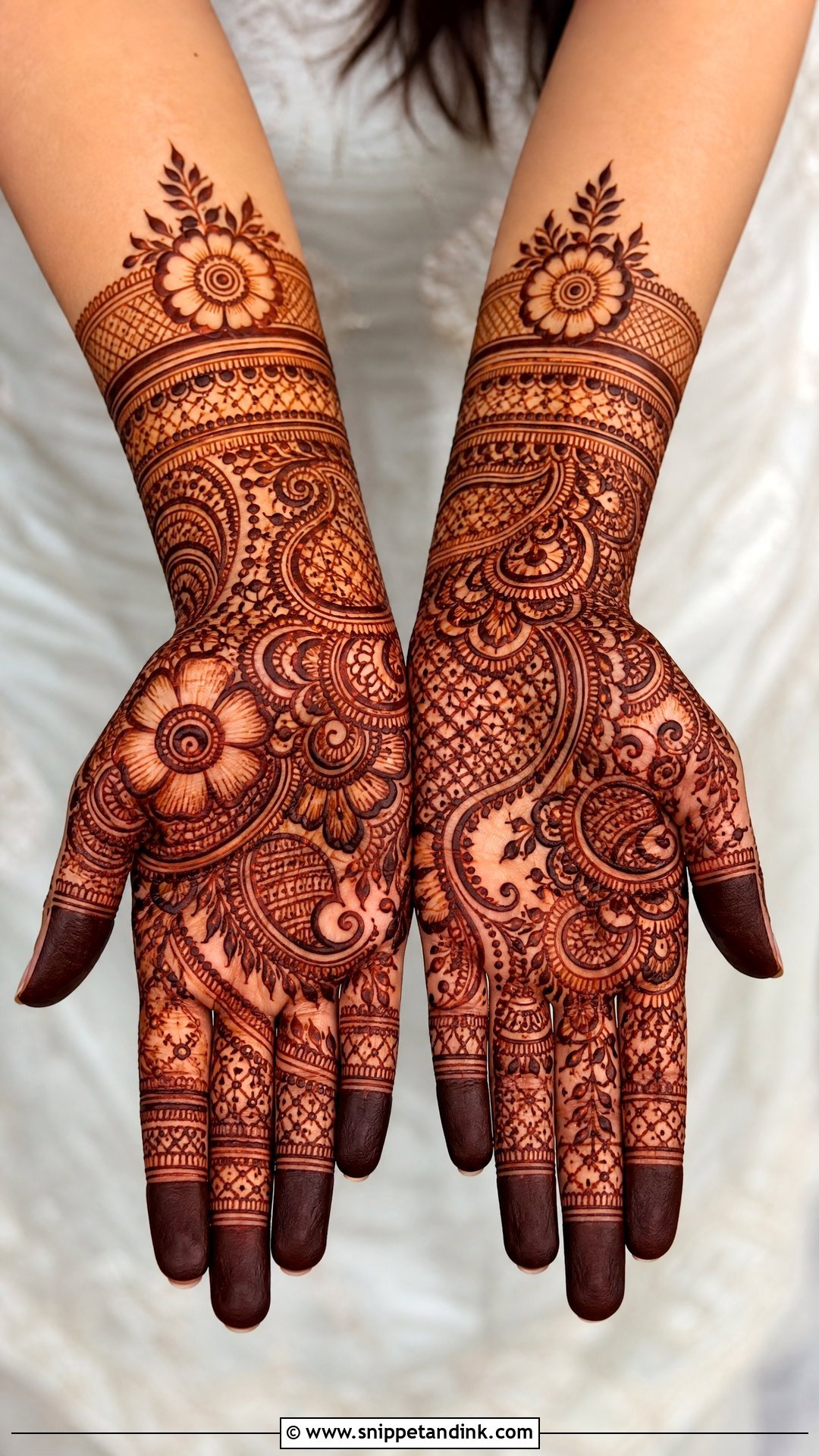
This is the style I draw most for brides who can’t decide. Indo Arabic bridal mehndi borrows the bold flowers and movement of Arabic work and adds the fine fillers, jaali and traditional detail of Indian mehndi, so it looks rich but still airy. A common layout starts with a large floral or paisley trail on the palm, then detailed fingers, bracelet-style cuffs and small Indian fillers around the main shapes. Bold outlines hold up at a distance; the fine detail rewards anyone who looks closely.
5. Dulha Dulhan Bridal Mehndi Front Hand
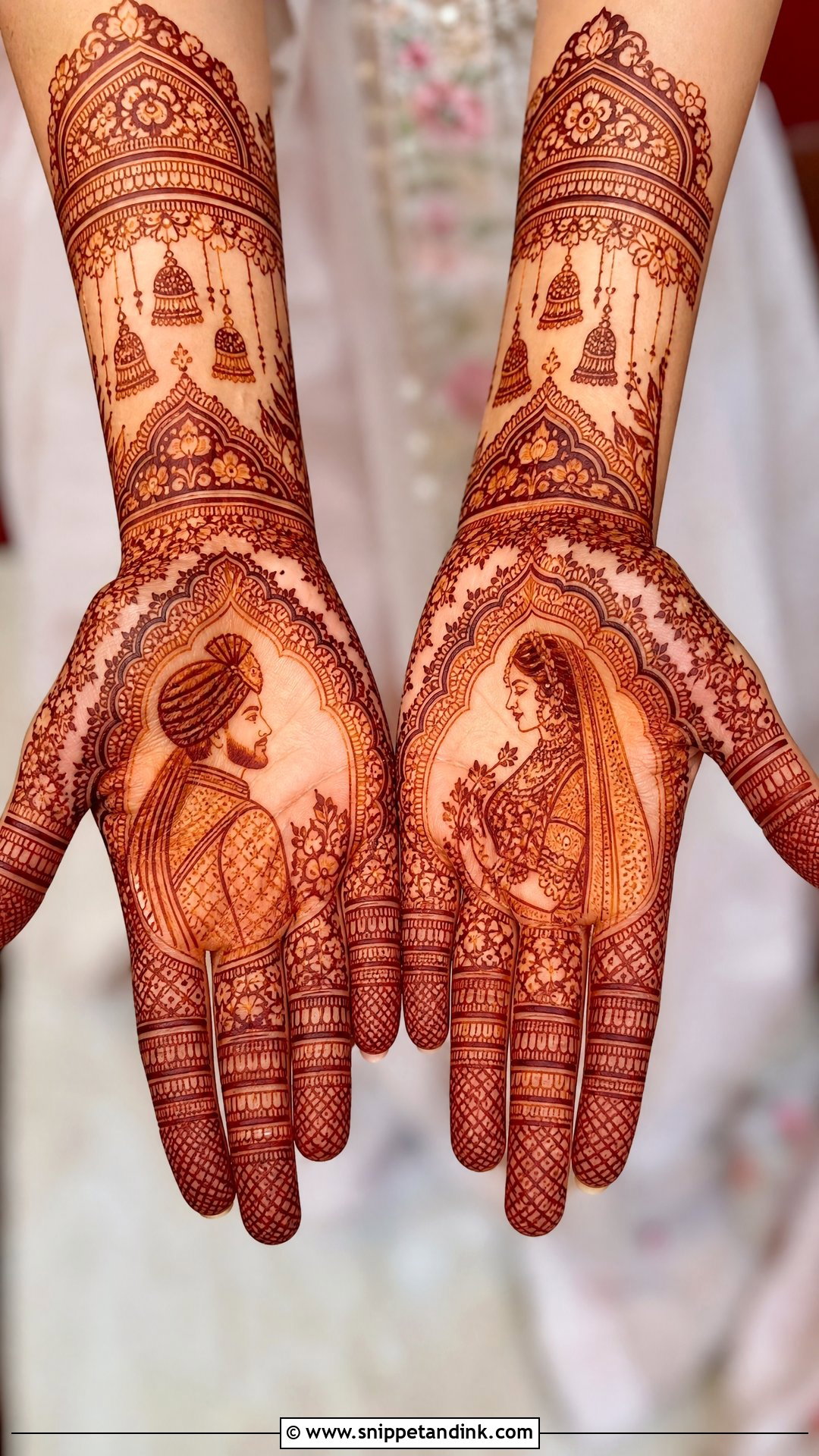
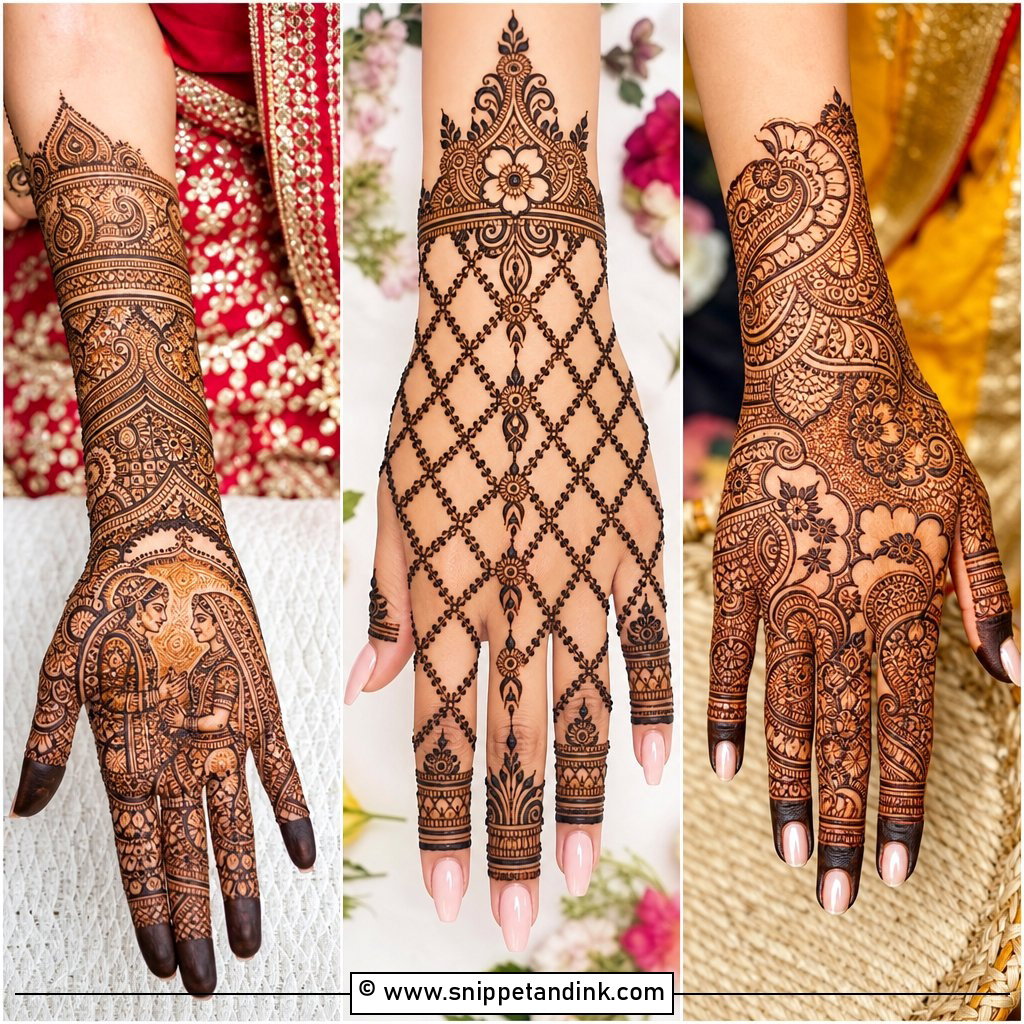
A dulha dulhan bridal mehndi front hand design tells your wedding story. Usually the bride sits on one palm and the groom on the other, framed with arches, florals, bells, jaali and paisley borders, so the full picture only appears when your hands come together. Faces are the hardest thing I draw in henna. Small features blur if the paste spreads even slightly, so I keep portraits as large as the palm allows, use a fine-tipped cone, and avoid heavy shading on the face. Ask your artist to show you portrait work they’ve done before you commit.
6. Peacock Bridal Mehndi Front Hand
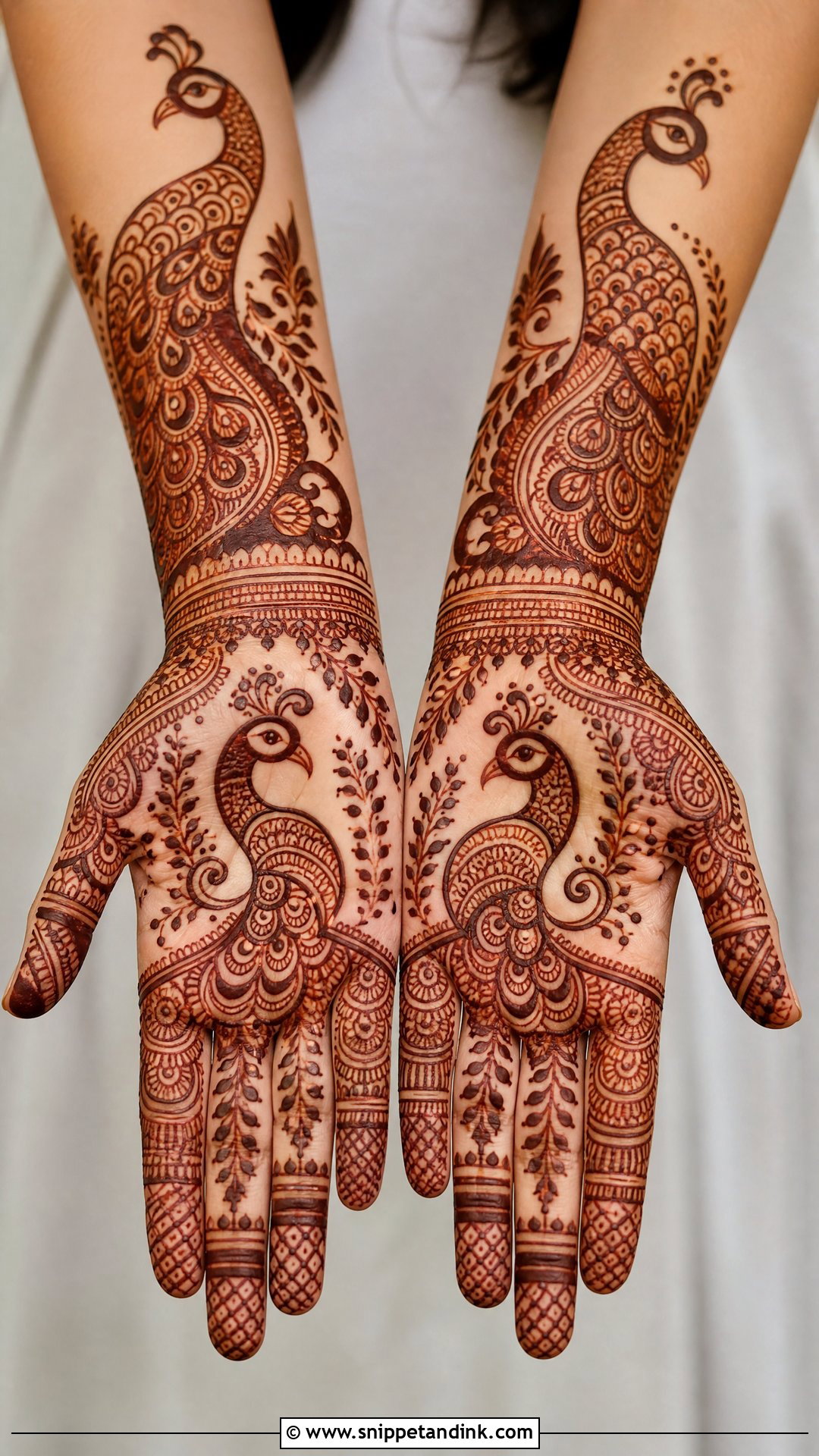
Peacocks have been part of bridal mehndi for generations, and they still feel royal. The bird can sit at the palm center, curve along the wrist, or spread its feathers across the whole hand, with each feather filled with dots, checks, petals and fine lines. It looks right with Indian outfits, temple jewelry and classic bangles. For something more modern, I pair one peacock with open space or a bold mandala instead of filling around it. Long tail feathers are best placed running up the fingers, where they follow the natural length of the hand.
7. Lotus Bridal Mehndi Front Hand
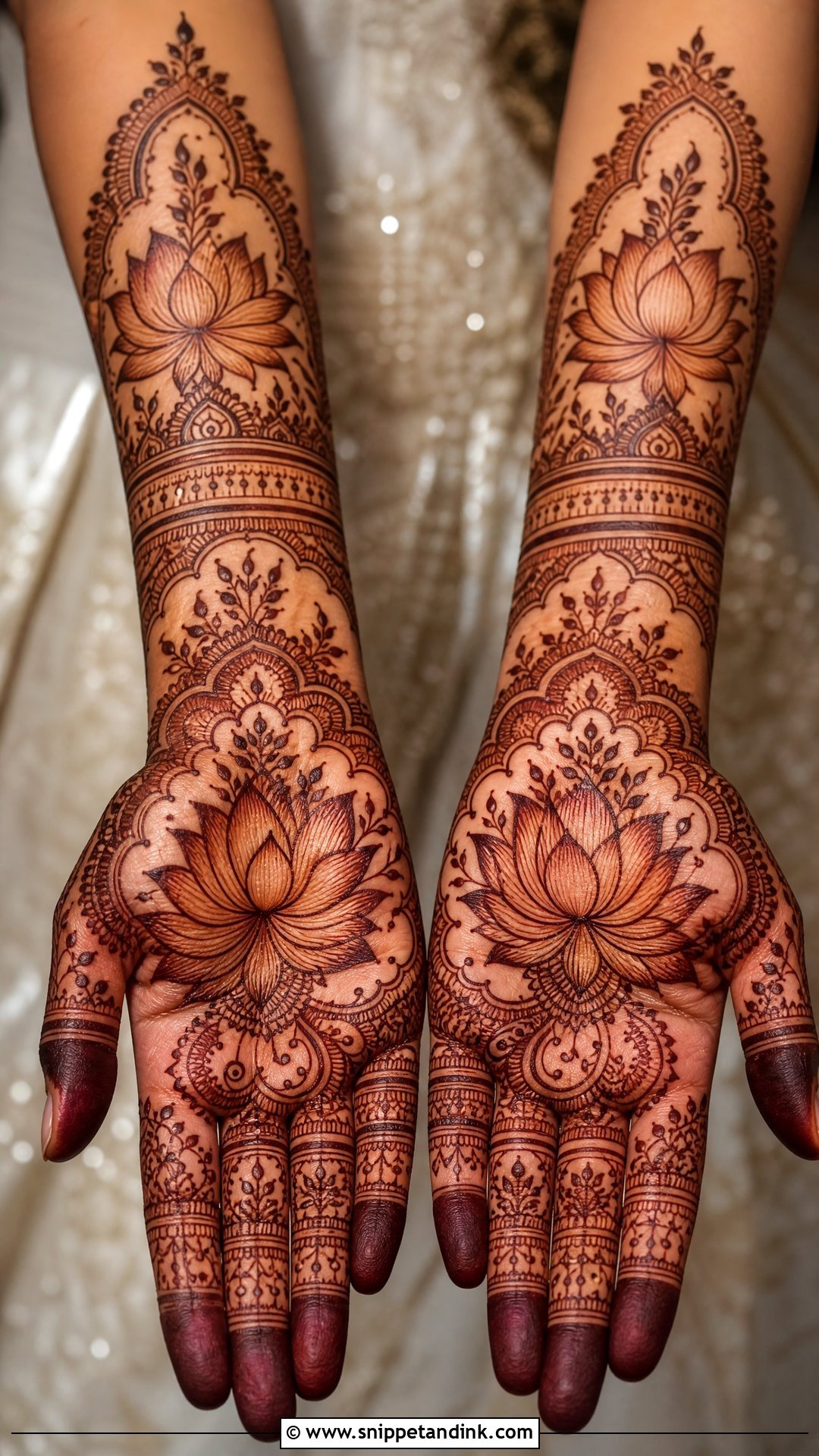
Lotus motifs bring a soft, symbolic look and are easy to scale. A large lotus can anchor the palm, sit as a wrist cuff, or repeat in layered arches across the hand, with mandalas, paisleys, scalloped borders and vines around it. Smaller petals on the fingers keep the balance. Layered petals stain in tones if I vary the paste thickness, so the inner petals come out darker than the outer ones, which gives the flower real depth without crowding the design.
8. Mandala Bridal Mehndi Front Hand
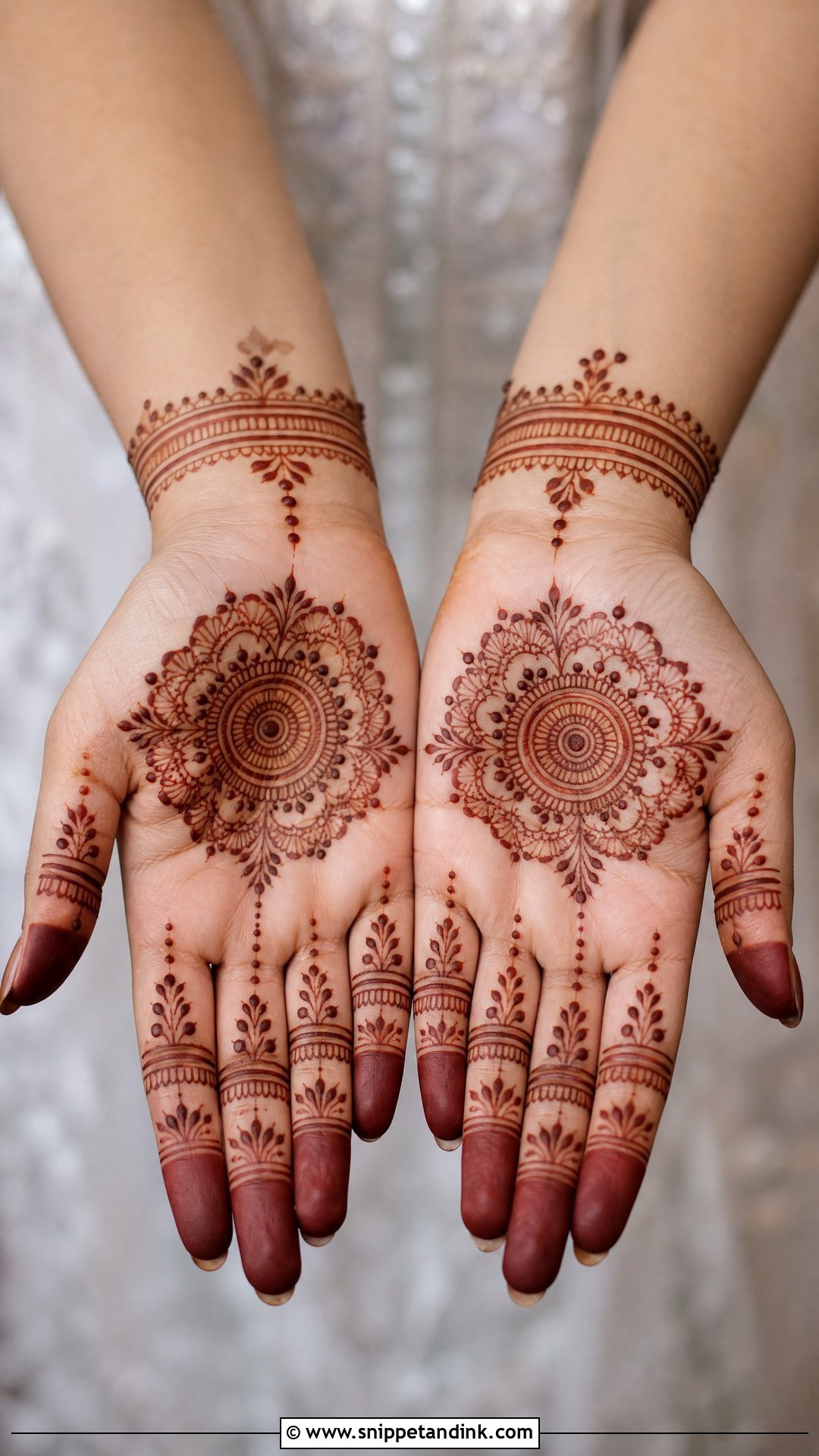
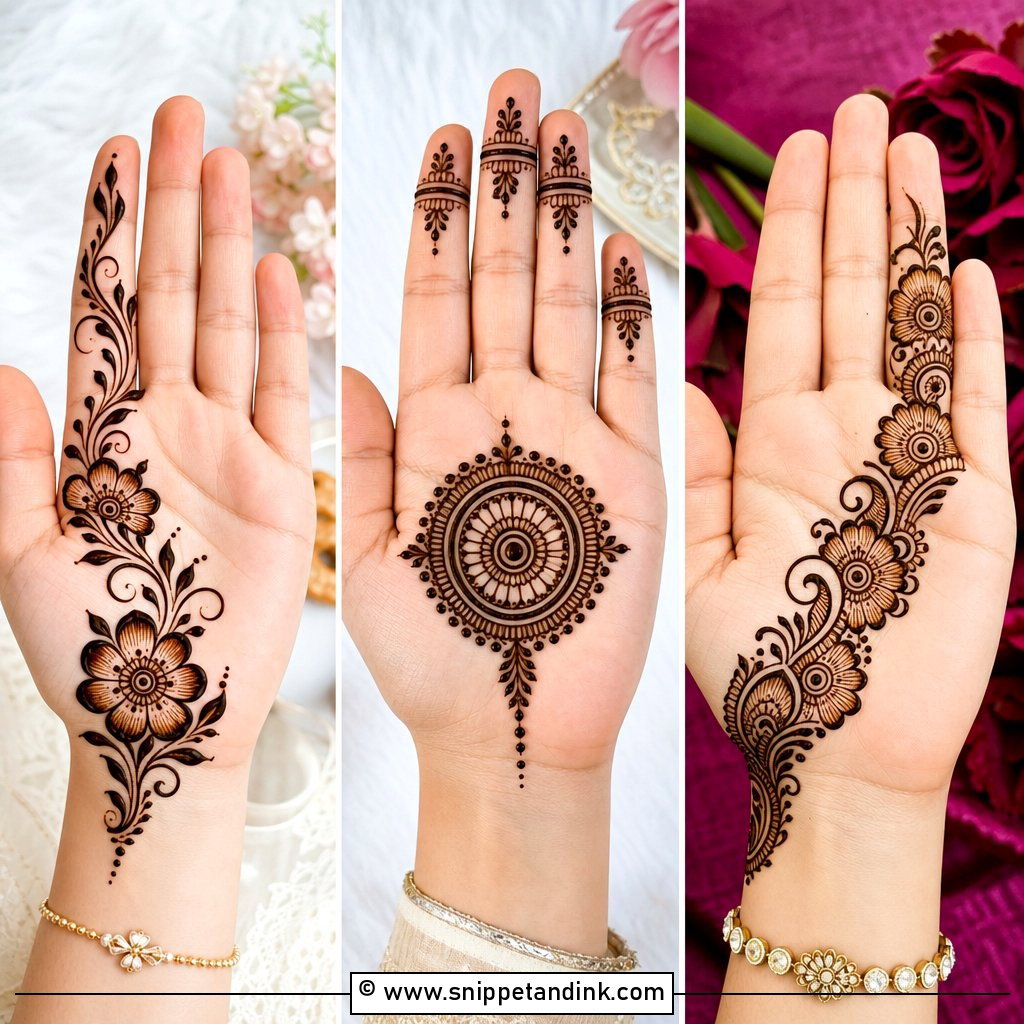
Mandalas give symmetry and a neat focal point. The circle sits in the middle of the palm, surrounded by finger patterns, wrist bands, trails or paisleys, and brides who like a clean front hand often choose it. For more bridal weight, I make it larger and fill it with tiny petals, dots and curves, or connect it to a bracelet pattern at the wrist. The center of the palm creases when you close your hand, so I start the mandala with your hand flat and relaxed, and I ask you not to clench it while it dries, or the rings crack.
9. Jaali Bridal Mehndi Front Hand
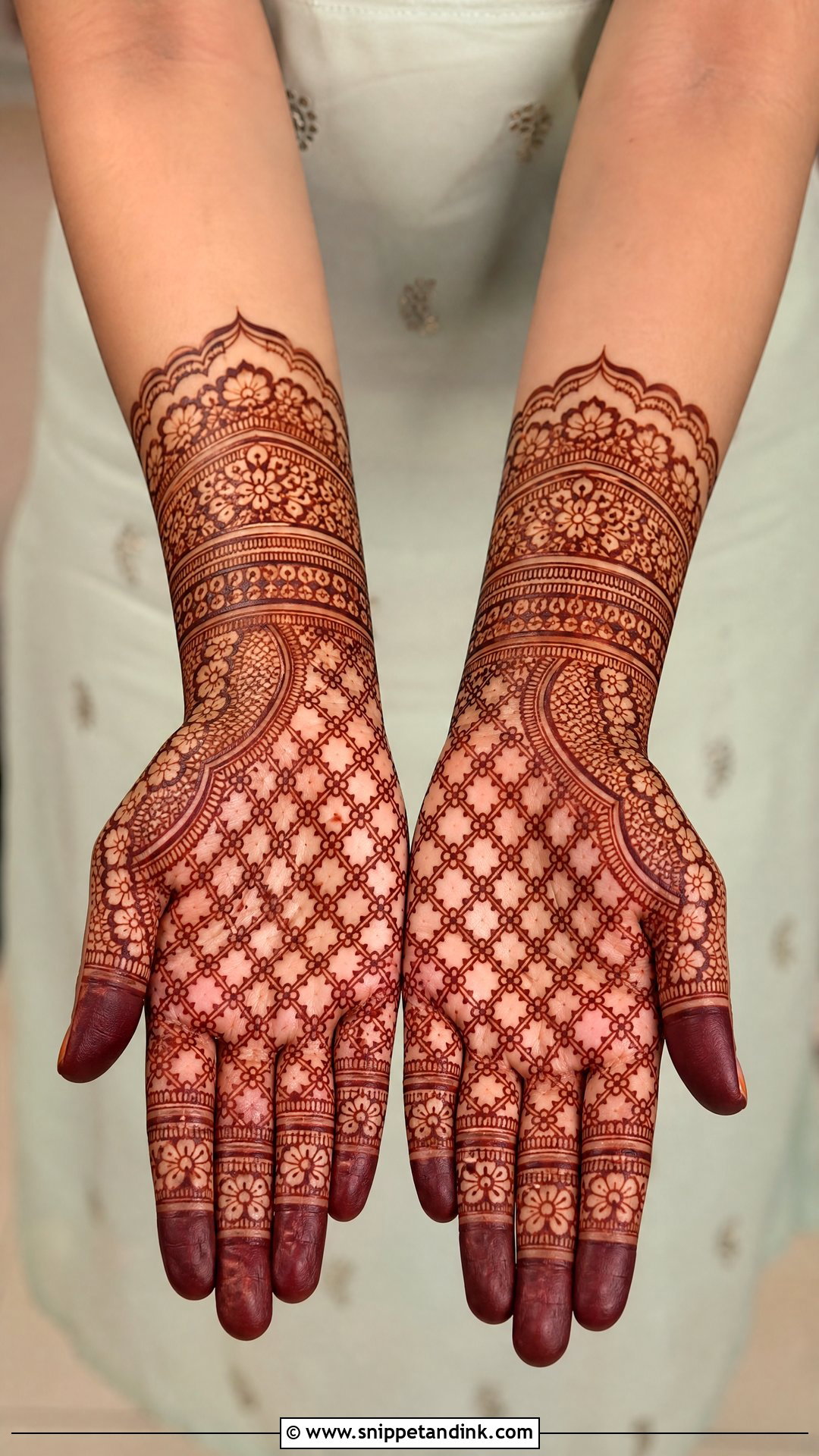
Jaali gives the hand a lace-like look: diamond mesh, floral mesh or geometric netting across the palm, with detailed borders on the fingers and wrist. The open grid creates contrast, and small dots, flowers or leaves inside the mesh finish it. It sits naturally next to bridal jewelry, almost like a hand accessory, and pairs with mandalas, paisleys or Mughal arches. A grid is unforgiving. Every line has to be the same weight and the gaps even, so jaali is where you see the difference between a steady hand and a rushed one.
10. Royal Bridal Mehndi Front Hand
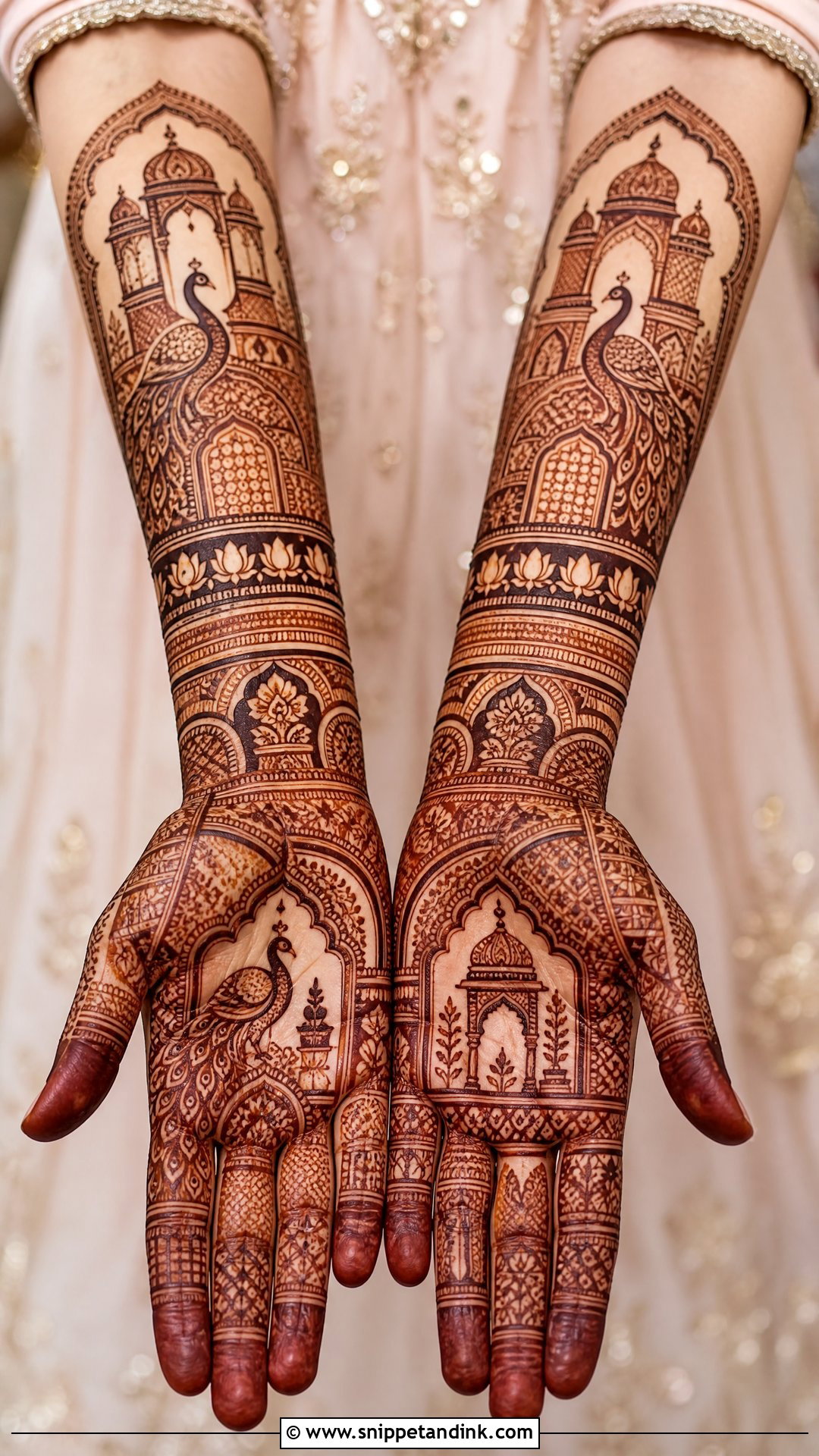
Royal designs are built like palace architecture: Mughal arches, jharokha frames, peacocks, elephants, lotus borders, paisleys and layered cuffs. The palm usually holds a bold central scene, and the wrist and forearm fill with architectural patterns and fine fillers. They suit heavy bridal outfits, kundan jewelry and traditional bangles. The mistake I see is too many large motifs crammed into one area. I map the big shapes first with dots before drawing anything, so the spacing stays organized from palm to arm.
11. Rajasthani Bridal Mehndi Front Hand
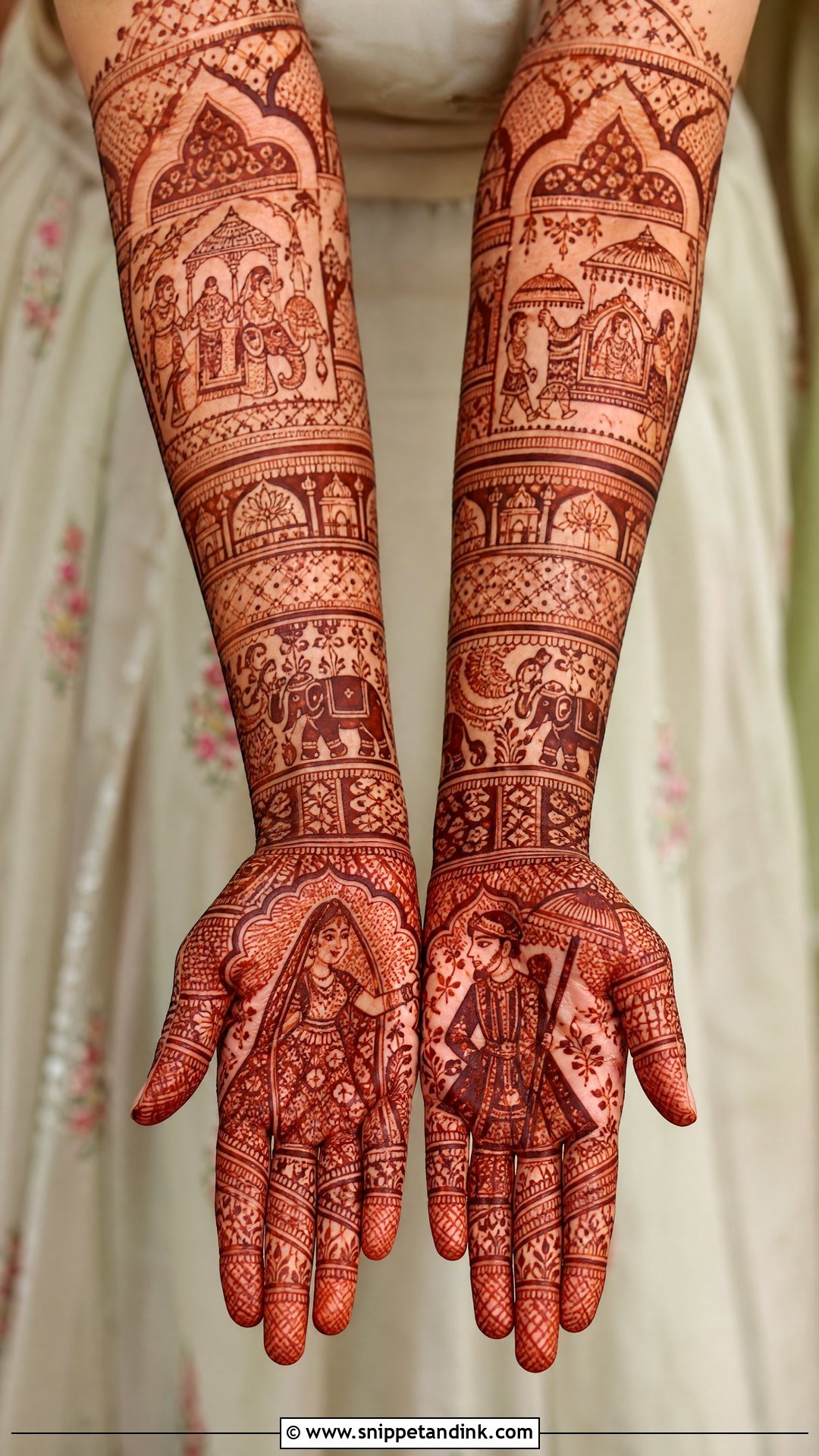
Rajasthani mehndi is storytelling. Bride-groom figures, palanquins, elephants, peacocks, dhol motifs and arches sit inside dense filler work, often turning both hands into one wedding scene, with the bride on one palm and the groom or baraat on the other. Fingers carry fine patterns to match. It’s heavy and time-consuming, so it belongs at a mehndi night where you can sit for hours. The richness pairs with red, maroon, orange or gold outfits.
12. Pakistani Bridal Mehndi Front Hand
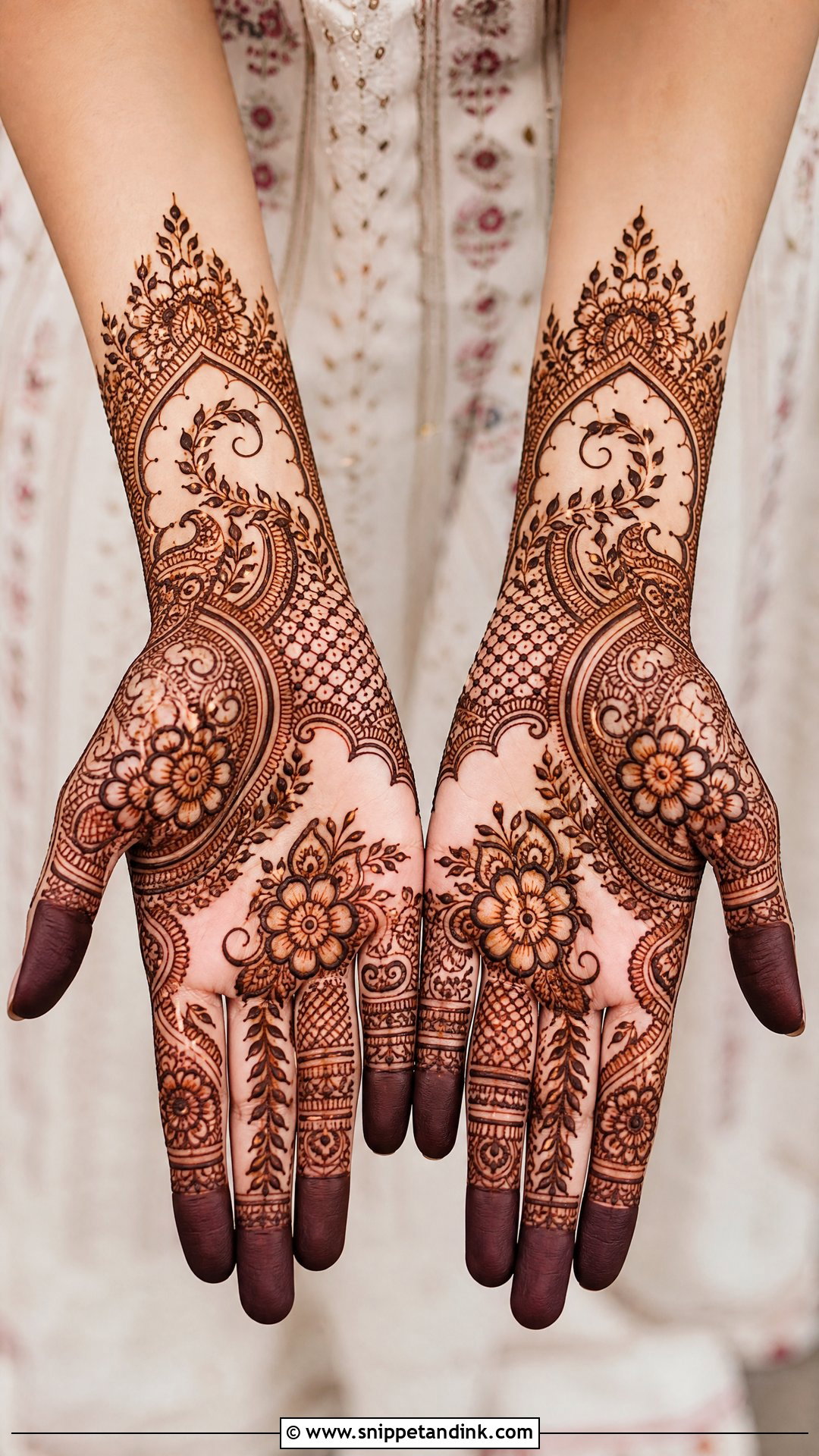
Pakistani bridal designs often mix delicate florals, fine mesh, vines, paisleys and long wrist extensions. They can be as dense as Indian work, but many use more spacing and flowing lines, which keeps them traditional without crowding. A typical layout has a detailed palm center, filled fingertips, floral finger trails and cuff bands. Initials, a small heart or the date can be woven in. The deep maroon stain these designs are known for comes from a good paste left on long enough, not from any trick, and it keeps darkening for a day after removal.
13. Moroccan Bridal Mehndi Front Hand
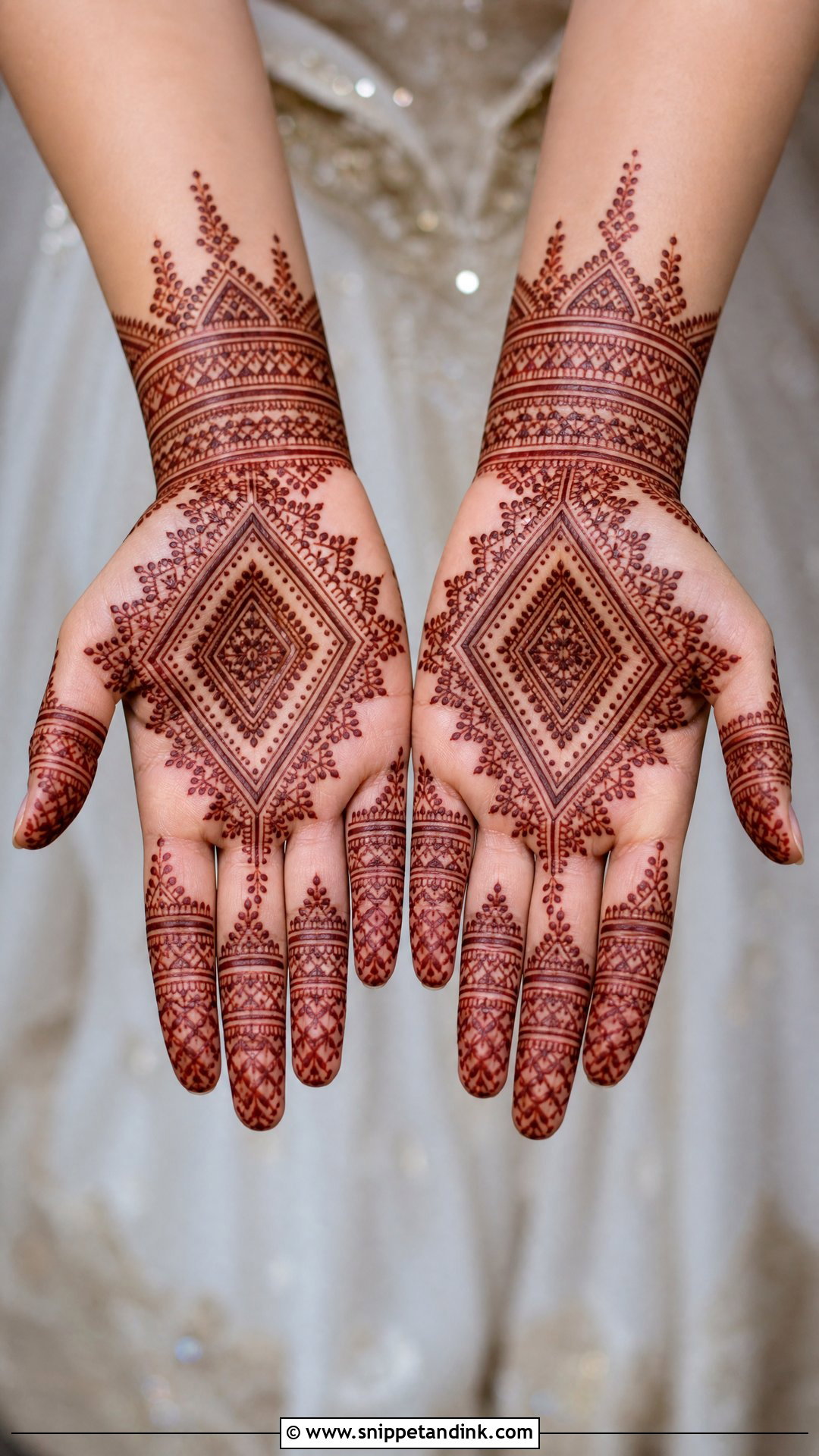
Moroccan-inspired work swaps florals for geometry: diamonds, triangles, lines, grids, chevrons and symmetrical bands. The palm takes a strong geometric center, the fingers stacked bands and tiny repeats. It suits brides with minimal jewelry or contemporary outfits, and a few dots or tiny florals at the wrist soften it. Straight lines are harder than curves in henna, because any wobble shows, so I steady my hand against yours and keep the cone at a low angle.
14. Gulf Bridal Mehndi Front Hand
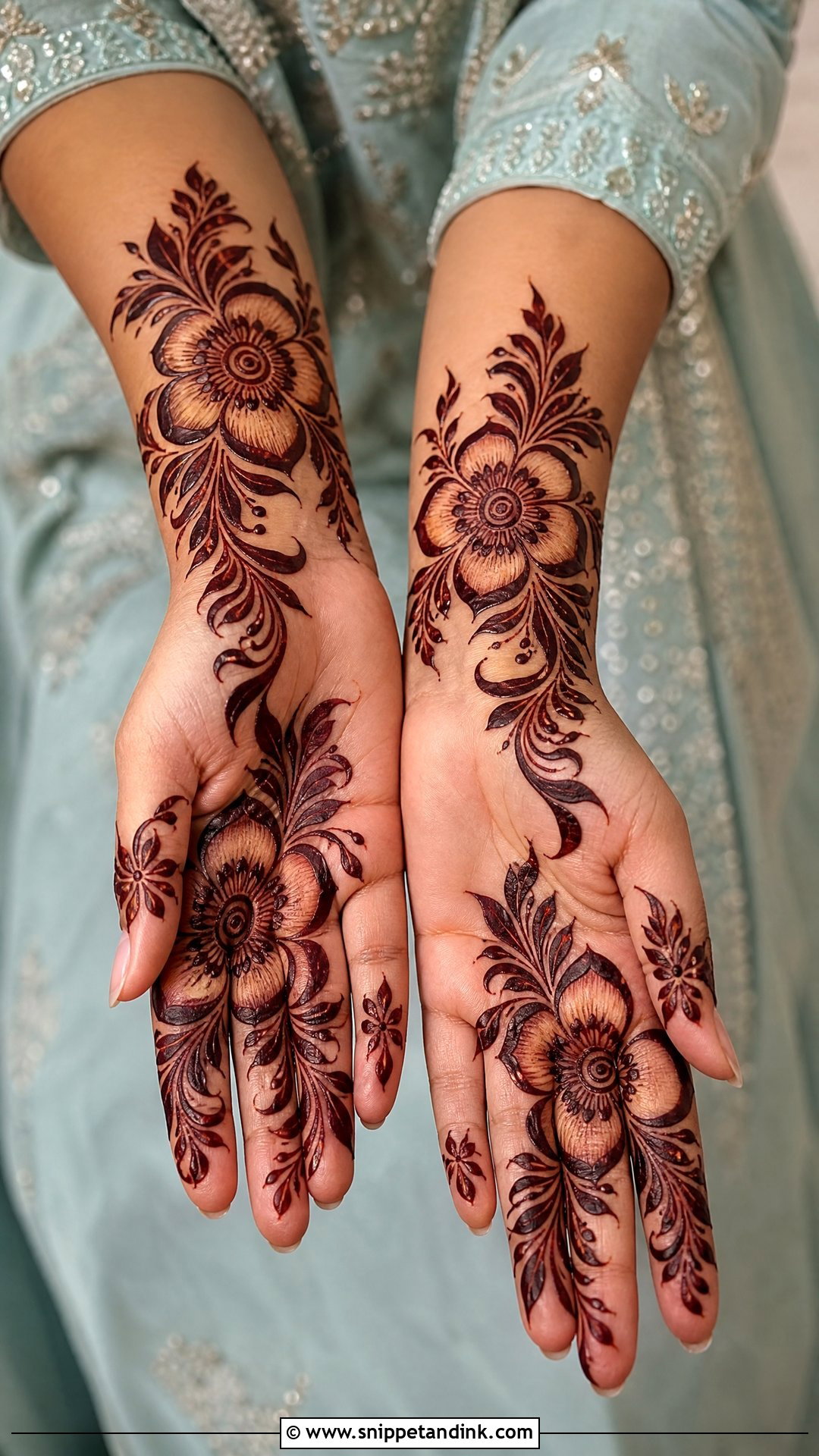
Gulf designs are bold and open: large flowers, sweeping leaves, thick outlines and shaded petals across the palm and fingers. Their confidence is in the spacing; they don’t need to cover every inch to look bridal. A typical layout starts at the wrist, moves diagonally across the palm and ends with detailed fingertips. Thick lines hold more paste, so the stain comes out rich and readable from across a room. It’s a good pick if your outfit is busy and you want hands that read clearly in group photos.
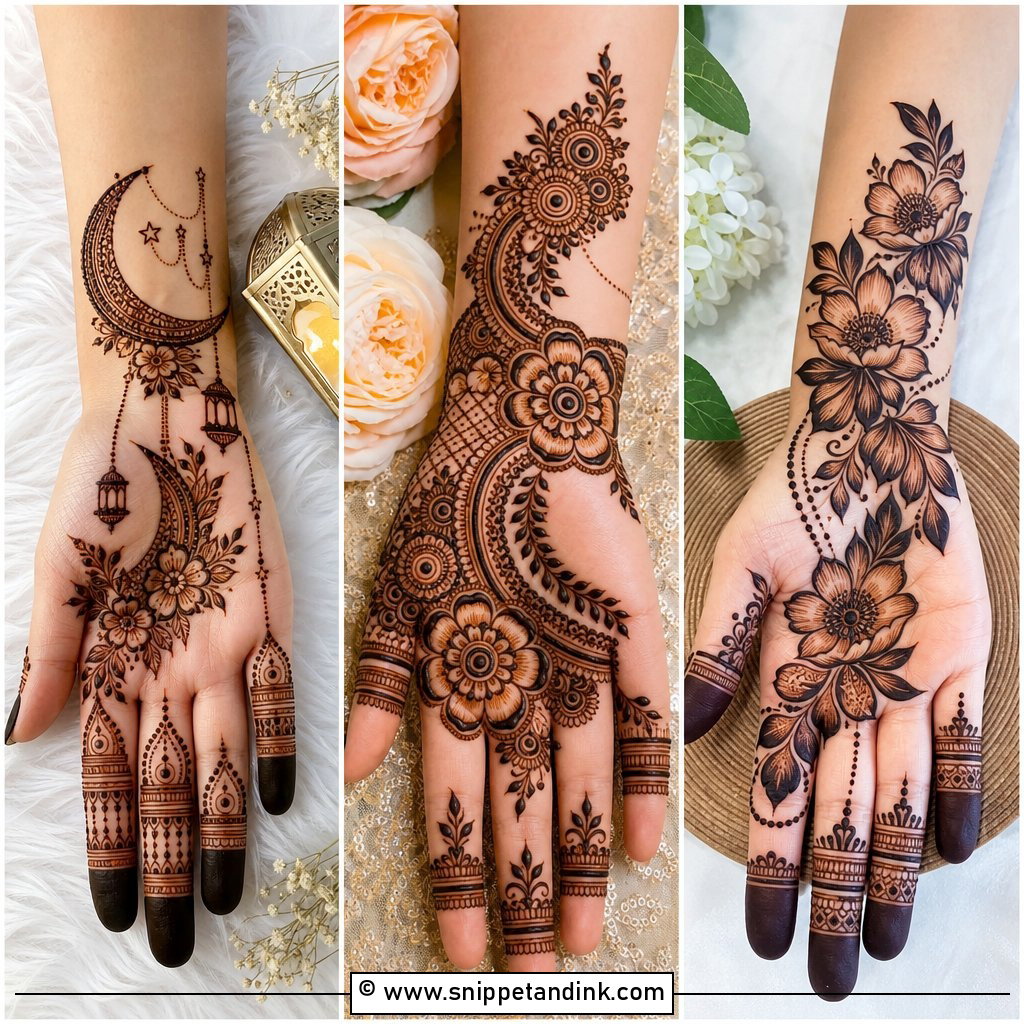
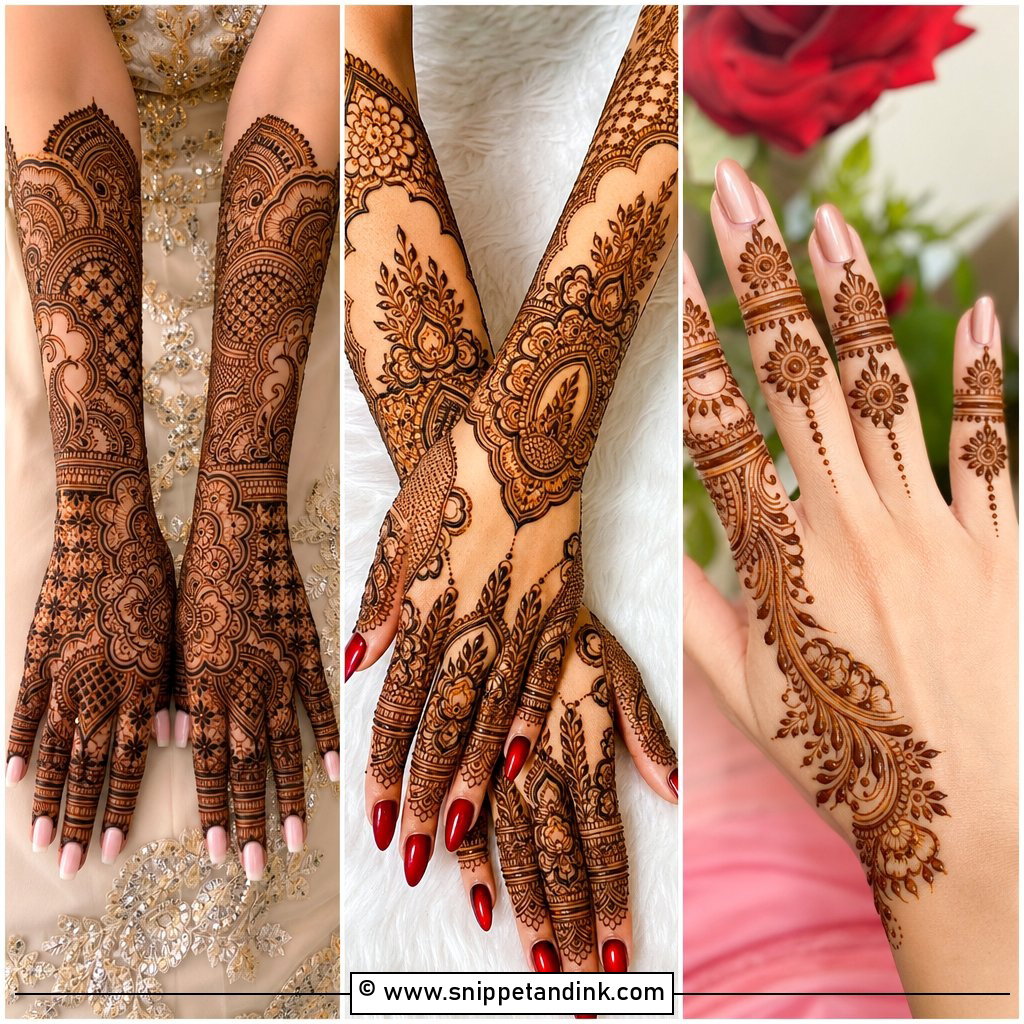

15. Minimal Bridal Mehndi Front Hand
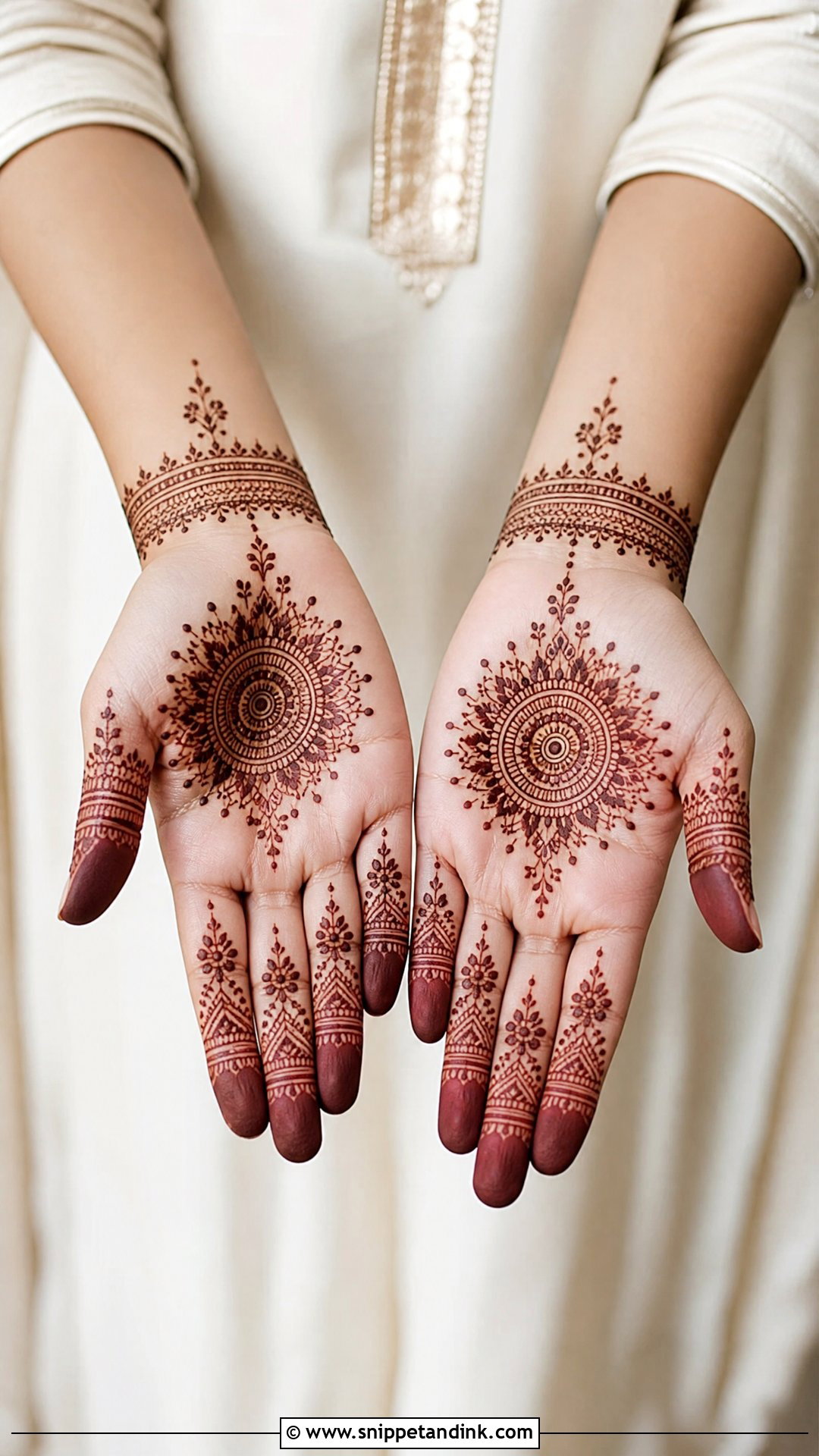
Minimal bridal mehndi keeps to clean mandalas, delicate finger details, slim wrist bands and small floral trails, with one main motif on the palm and open space around it. It suits intimate weddings, civil ceremonies and engagement days. A fine bracelet line near the wrist, initials or a small date keeps it feeling bridal rather than casual. Light designs show stain quality more than heavy ones, because there’s nothing to hide a pale patch, so aftercare matters even more here.
16. Modern Bridal Mehndi Front Hand
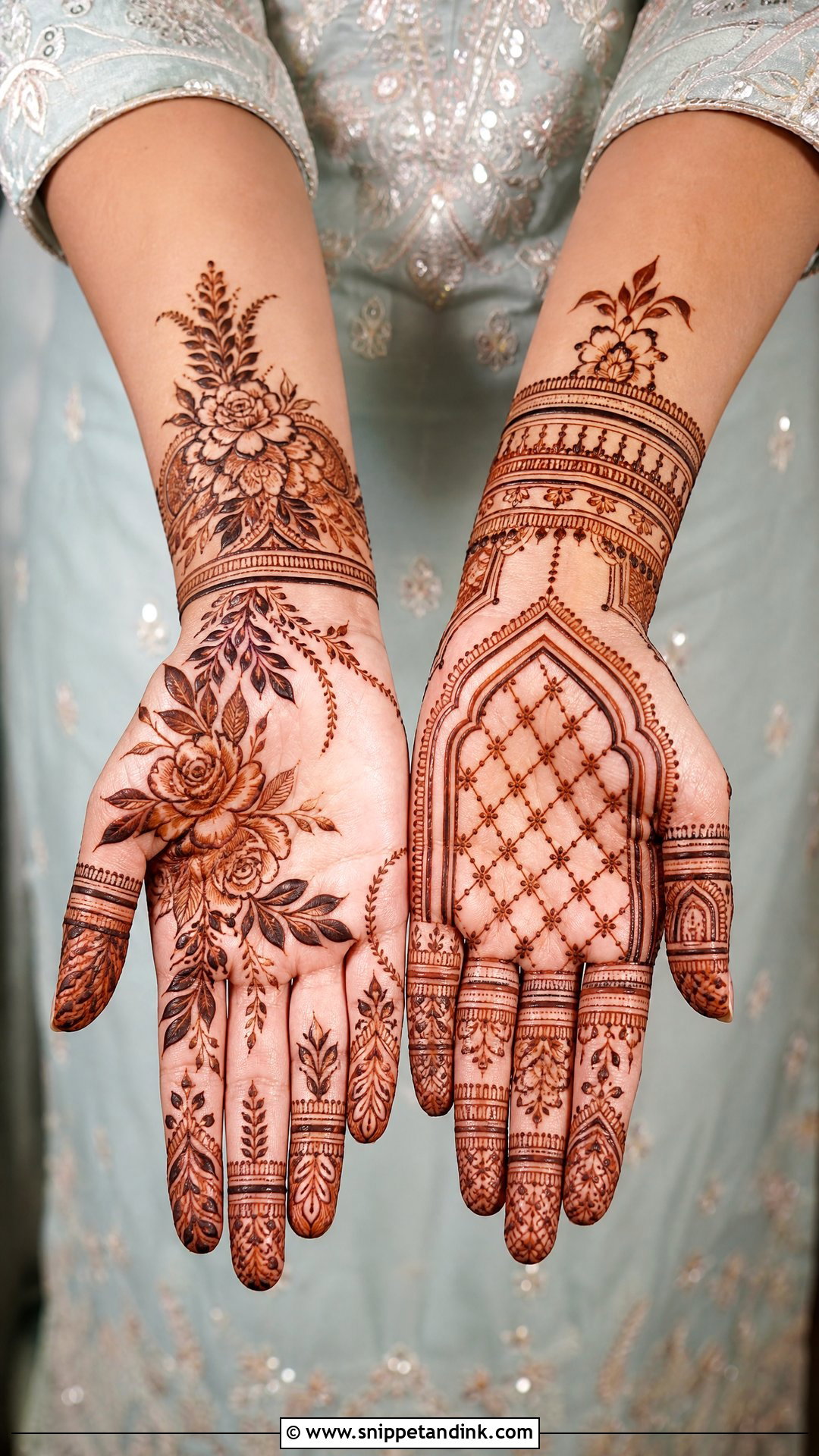
Modern layouts break the old rules: negative space, half-and-half palms, geometric borders, bold florals, portrait frames or asymmetric trails. I might place a mandala on one palm and a floral diagonal on the other, or leave open space around a heavy motif for contrast. Fingers stay detailed but not loaded. These work well with pastel lehengas, contemporary outfits and sleek jewelry. Asymmetry has to be planned, not random, so I sketch the layout on paper with you before the cone touches skin.
17. Personalized Bridal Mehndi Front Hand
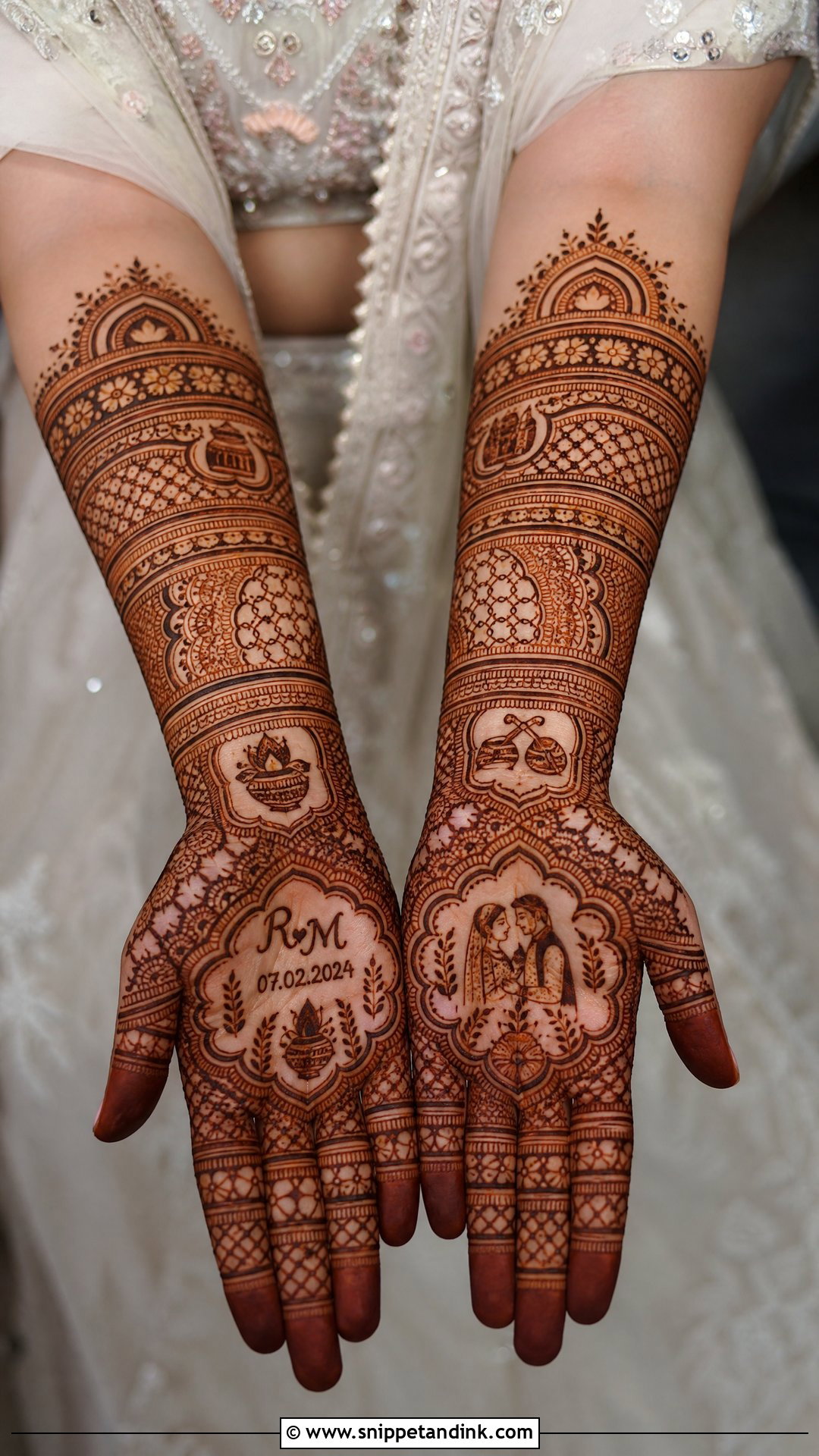
Personal details turn the hands into a keepsake. You can include initials, wedding dates, proposal symbols, pets, favorite flowers, city skylines or small pieces of your story. The skill is blending them into the design: initials hidden in a paisley, a date inside a wrist band or mandala border, a skyline as a cuff. Keep the main design traditional, with florals, jaali or paisleys, so the personal elements feel like they belong. Bring me a written list of the words and dates; spelling mistakes in henna last for two weeks.
18. Jewelry Bridal Mehndi Front Hand
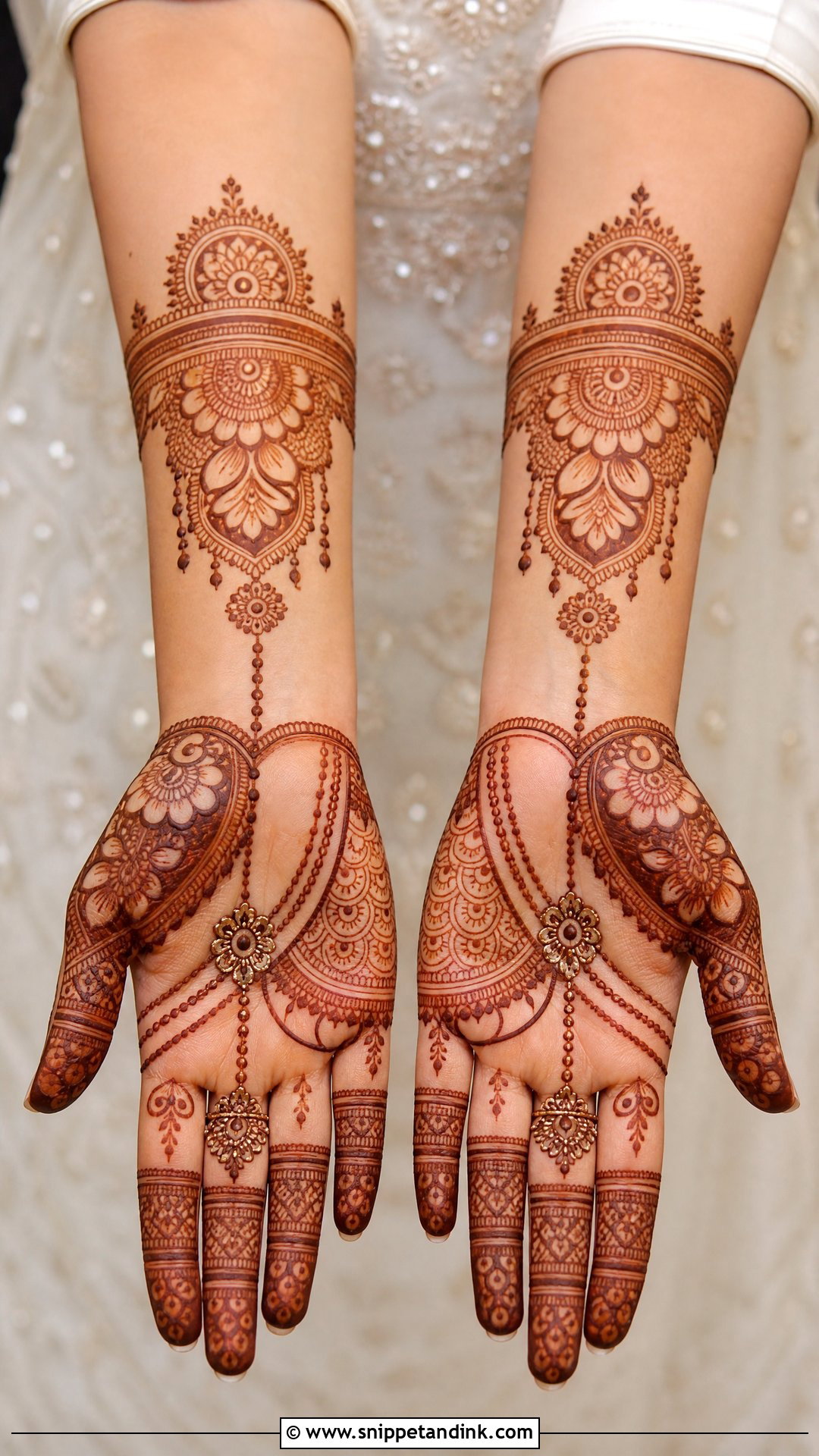
Jewelry-style mehndi draws ring chains, bracelet cuffs, finger bands and haath phool patterns, with delicate hanging details across the palm, while the center of the hand often stays open. It works with real rings, bangles and hand accessories, and small florals, dots and lace borders add richness. Placement matters more here than in any other style. Your real rings and bangles will sit on top of the henna, so I ask you to bring them or tell me where they’ll go, and I draw the chains to frame them rather than disappear under them.
19. Floral Bridal Mehndi Front Hand
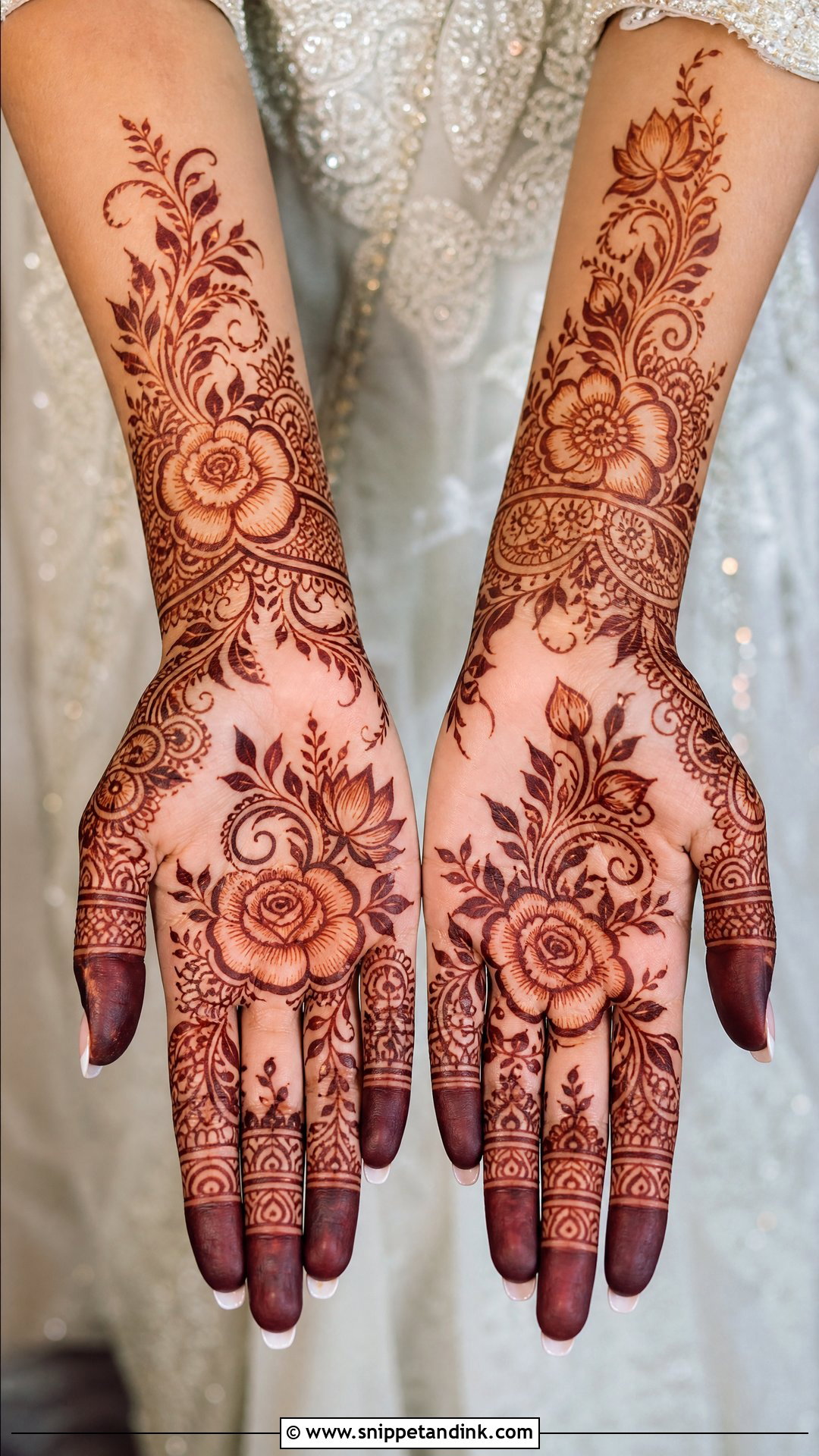
Floral designs are the most adaptable, heavy or light. Large roses, lotus flowers, small blossoms, vines and shaded petals can flow across the palm, fingers and wrist. They’re a good fit if you’d rather not have human figures or strong religious symbols. Bold flowers with fine fillers, paisley borders and detailed fingertips make it bridal. Leave some open space between petals so the stain reads clearly, which sits well with pastel outfits, garden weddings and daytime ceremonies.
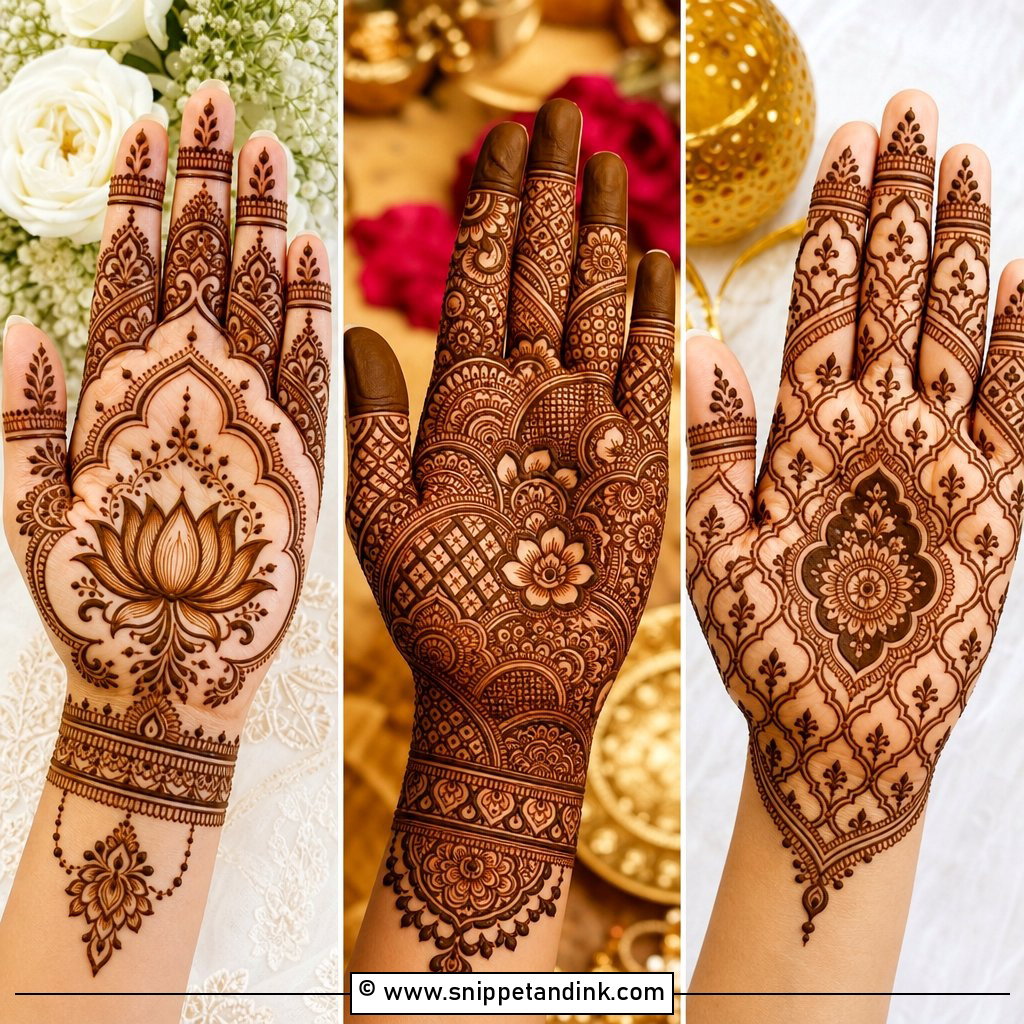
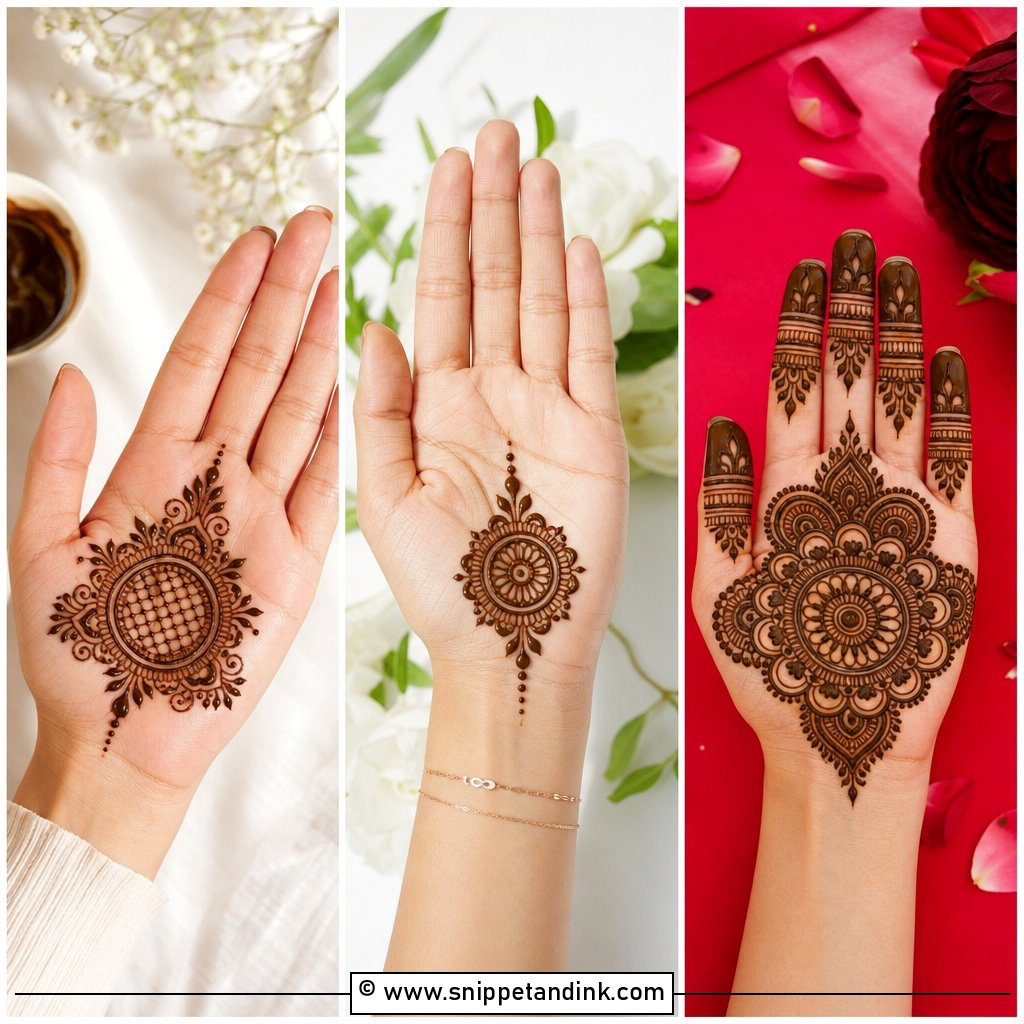

20. Simple Bridal Mehndi Front Hand
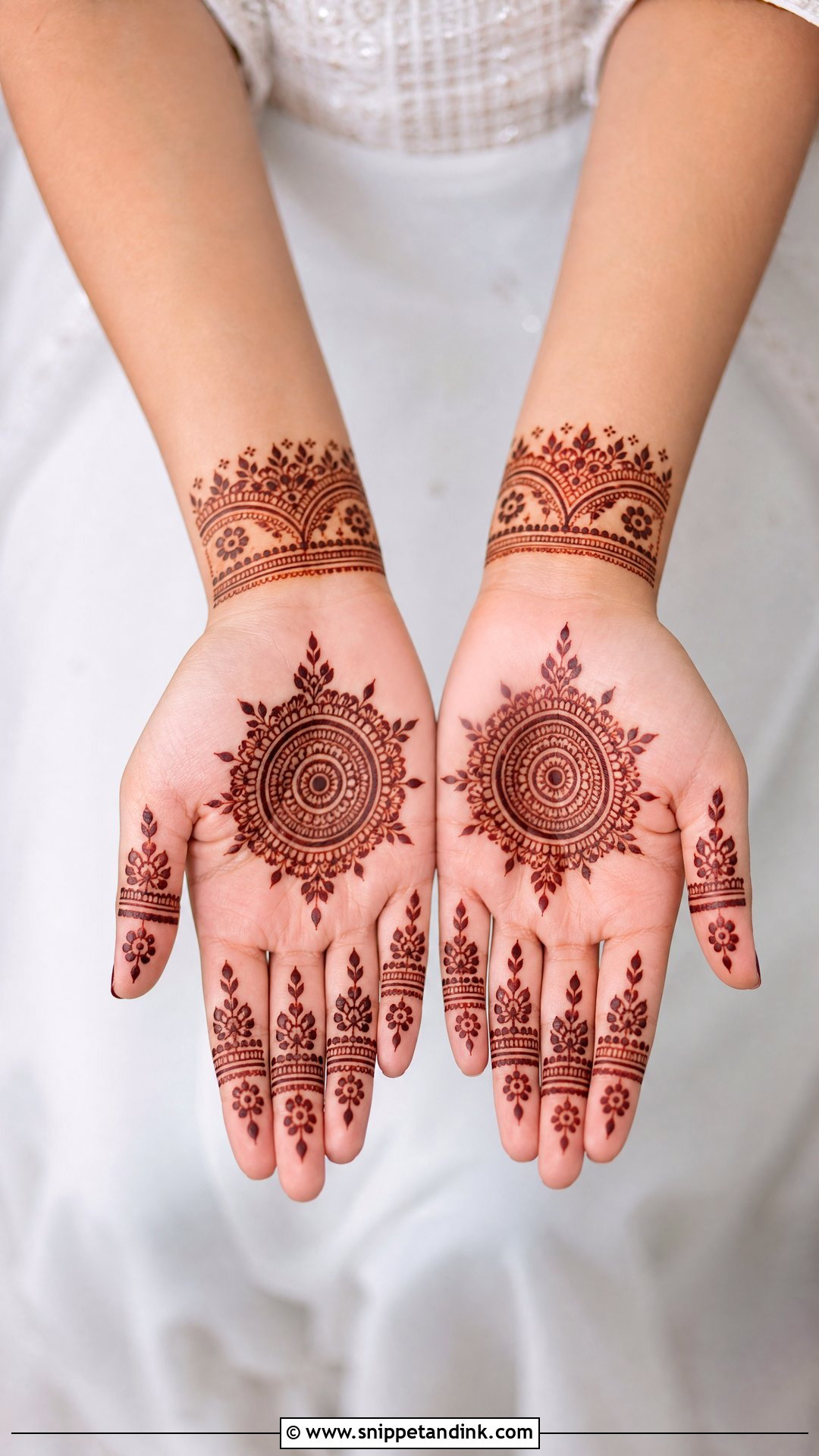
A simple design can still look fully bridal, because what makes it bridal is a complete layout, not weight. A central mandala, leafy finger trails, small florals, slim wrist cuffs and clean spacing are enough. Keep lines clean and motifs balanced on both hands; you can match them or make one slightly more detailed. This is also the realistic choice when time is short, or if you know you’ll struggle to sit still for hours. Lighter designs dry faster and are less likely to smudge before they set.
What Happens After the Paste Dries
Most of the color you’ll see on your wedding day is decided in the hours after I leave. The longer the paste stays on, the more dye reaches the skin, so I ask brides to keep it on for at least six to eight hours, and overnight if they can.
- Once the paste is dry to the touch, dab on a thin lemon and sugar mixture. It keeps the paste stuck to your skin instead of flaking off early.
- Keep your hands warm. Cold hands stain lighter, so sit somewhere warm and wear loose cotton gloves to bed if you’re sleeping in it.
- Scrape the paste off with a blunt knife or your nail. Don’t wash it off.
- Keep water away for as long as you can, ideally the rest of the day. Water stops the darkening early.
- Once you do wash, rub on a little balm or mustard oil before contact with water to protect it.
Palms and fingertips will always come out darker than the back of the hand and the forearm. That’s normal, and it’s down to how thick the skin is, not the paste. On the wedding day, keep hand sanitizer, chlorine and harsh soaps away from your hands. The stain usually lasts one to three weeks before fading, depending on how often you wash.
Heavy or Light, Let Your Sleeves Decide
When you’re torn between styles, think about your outfit, the ceremony, your jewelry and how long you can comfortably sit. Then look at your sleeves. Elbow-length sleeves hide the forearm, so detail there is wasted; a sleeveless blouse shows everything. A traditional bride may want full Indian or Rajasthani mehndi, while a modern bride may prefer Arabic, minimal or jewelry-style patterns. Portraits, initials and dates bring meaning; lotus, mandala, jaali, floral and Gulf layouts bring clean elegance. Whichever you choose, it should look balanced on both hands in every close-up.
You'll Like These Ideas:











Leave a Reply