
At an engagement, the back of the hand is the side everyone photographs. It is what faces the camera when the ring goes on, when you pose with your fiance and when relatives ask to see the ring up close. So when I plan engagement mehndi I usually start at the back of the hand, not the palm, and I design around one empty space: the base of the ring finger. Florals, paisleys, mandalas, jaali, wrist bands and ring-inspired chains all have a place here; the question is how much of the hand you want covered and what your outfit can carry. Below are thirty back-hand layouts with my notes on how each one stains, how long it takes and who it suits.
Why the Back of the Hand Never Stains as Dark as the Palm
This surprises a lot of brides. Henna stains the outer layer of skin, and the palms and fingertips have the thickest outer layer on the body, so that is where colour comes out deepest. The back of the hand has thinner skin, and the same paste there usually settles a shade or two lighter, closer to a warm reddish brown than the deep maroon you see on palms.
That changes how I design for it. On the back of the hand I use slightly bolder outlines, avoid packing very fine filler into large areas and keep fingertips well covered, since fingers are where the back of the hand stains darkest. If a design you like was clearly photographed on a palm, expect a softer result when the same pattern goes on the back.
- Ask whether your artist uses fresh, natural henna paste. A good fresh paste is brown or green-brown when applied, never jet black.
- Avoid any paste sold as black henna. These often contain chemical dyes that can cause serious skin reactions.
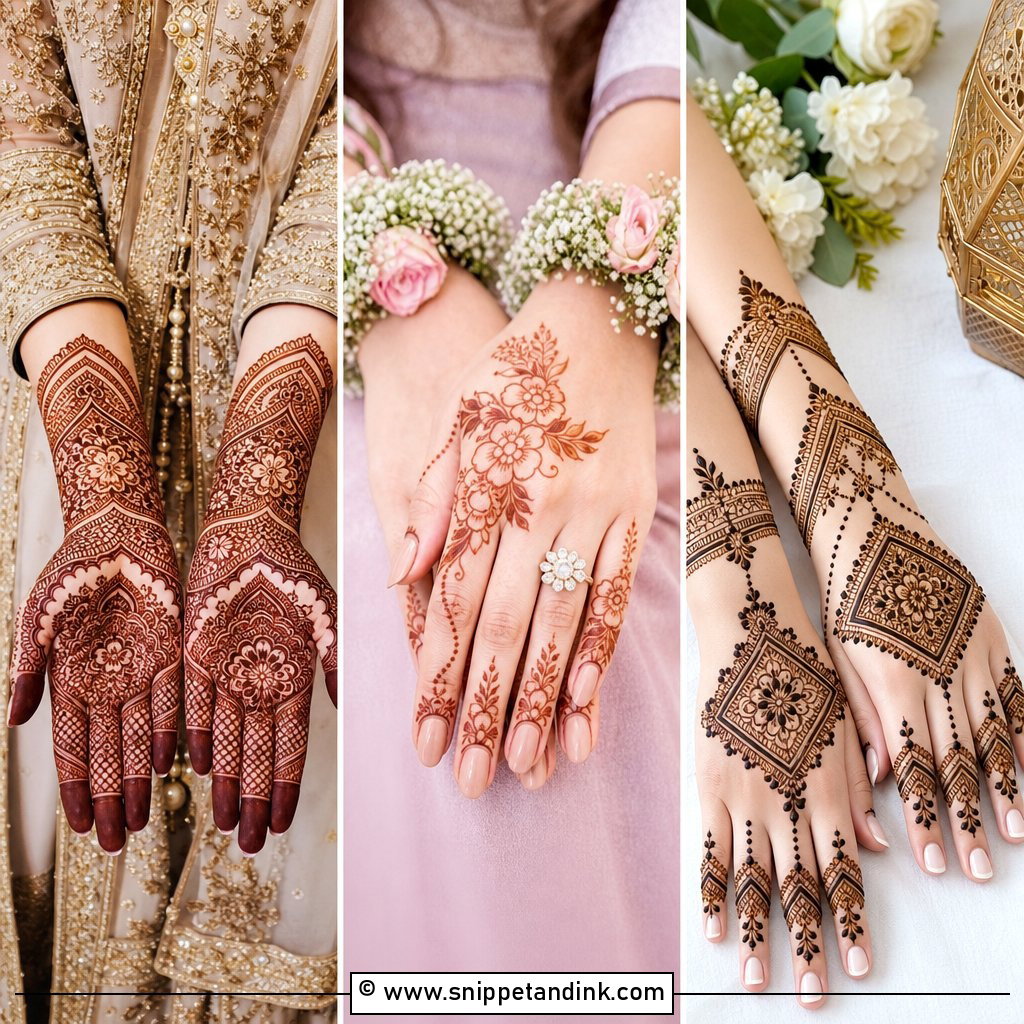
- If you have sensitive skin, ask for a small dot of paste on the inner arm a few days before, to check for any reaction.
1. Full Back Hand Engagement Mehndi Design
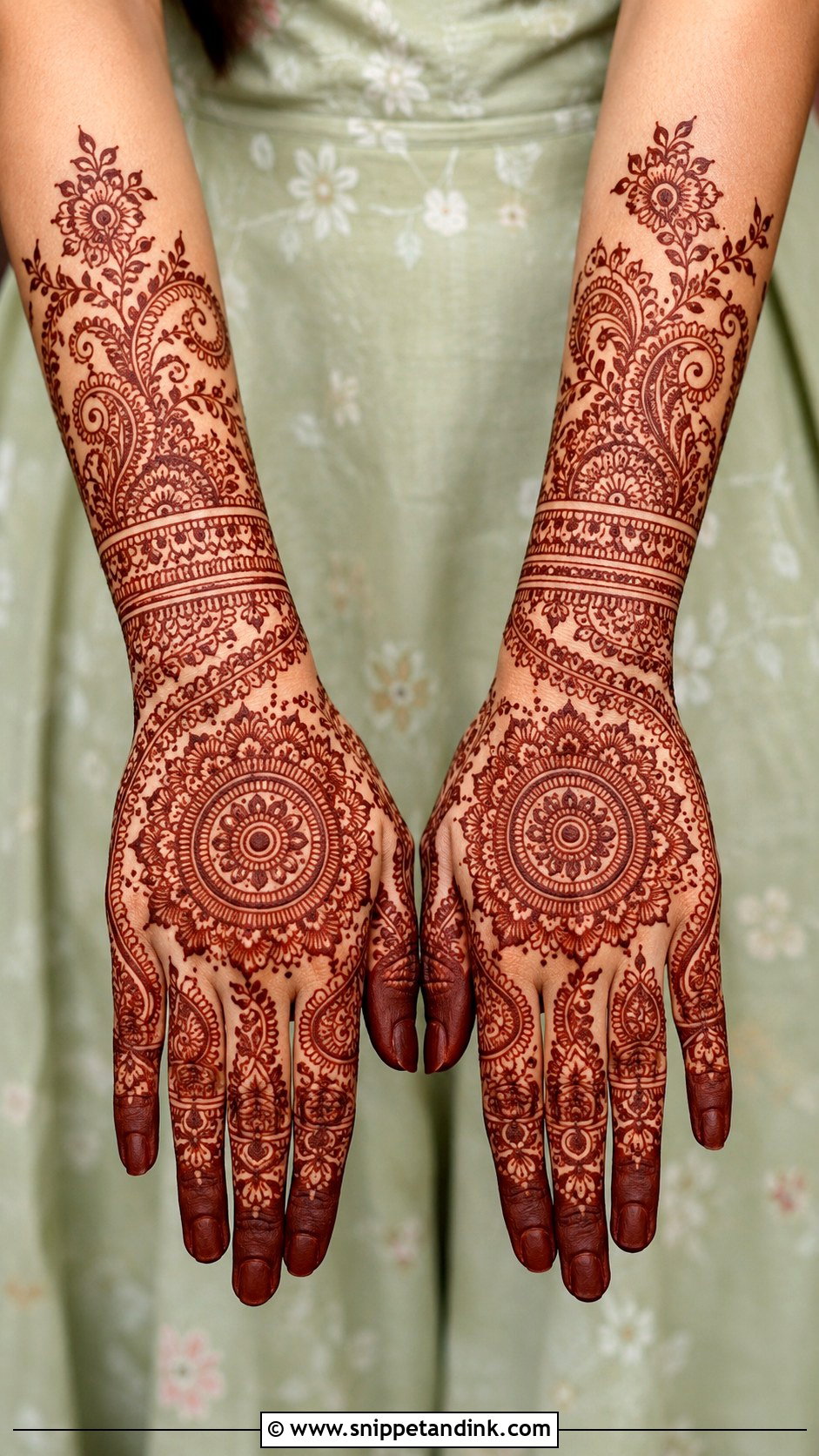
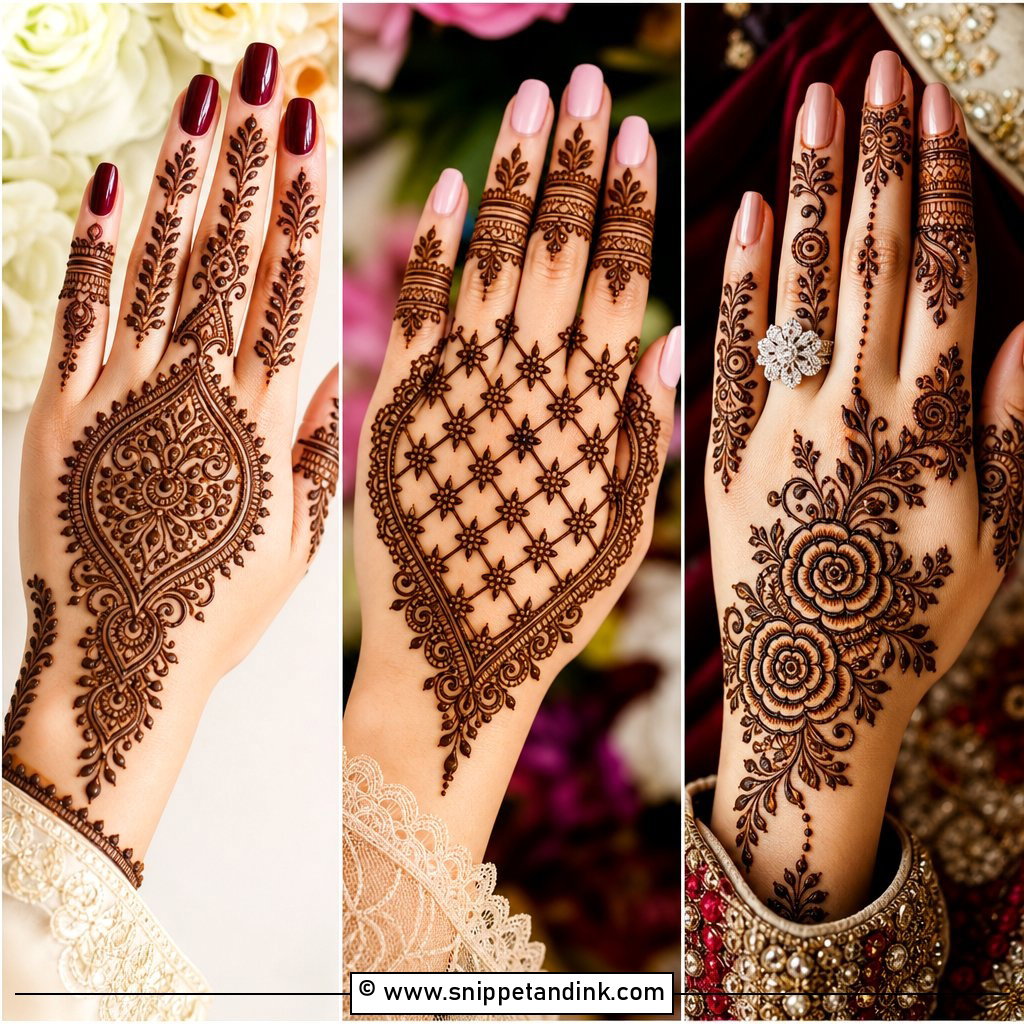
Full coverage runs from fingertips to wrist: detailed finger panels, a central floral, paisley or mandala across the back, and a band or leafy border at the wrist to tie it together. It suits heavy, embroidered or traditional outfits that would make a light design look lost. On a full back hand I deliberately leave small pockets of bare skin around each main motif, because a solid block of fine lines turns into a brown blur once it stains. Expect this layout to take a while per hand, and leave a clear patch at the base of the ring finger.
2. Simple Back Hand Engagement Mehndi Design
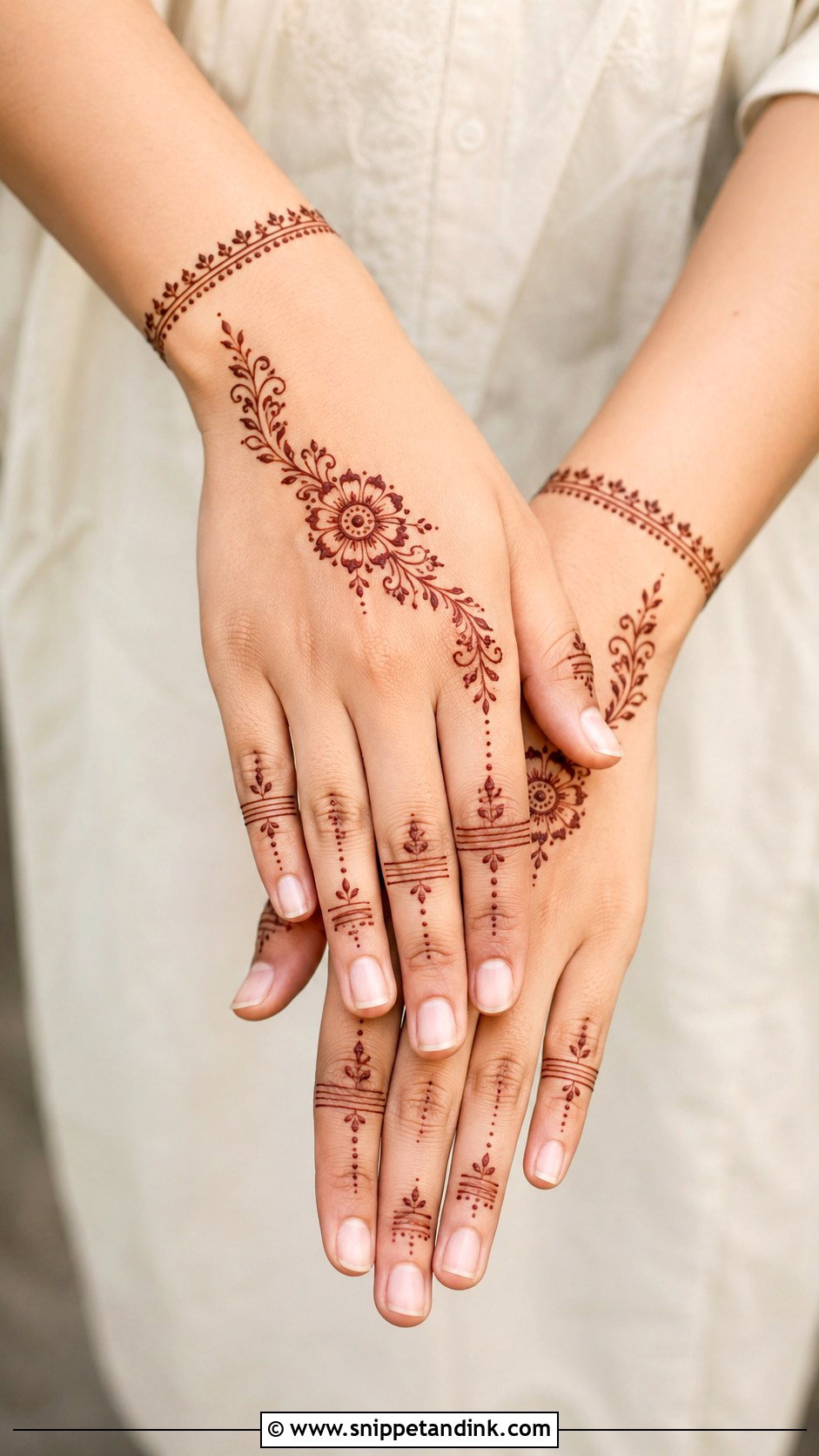
A simple layout gives you a central flower or small mandala, a few leafy vines and neat finger detailing, with plenty of skin left showing. It sits well with pastel lehengas, sarees, suits and modern outfits, and it is quick enough to fit into a busy engagement week. I still give the fingers a little more detail than the centre, because the fingers frame the ring and catch the camera first. A thin wrist border or a single chain finishes it.
3. Arabic Back Hand Engagement Mehndi Design
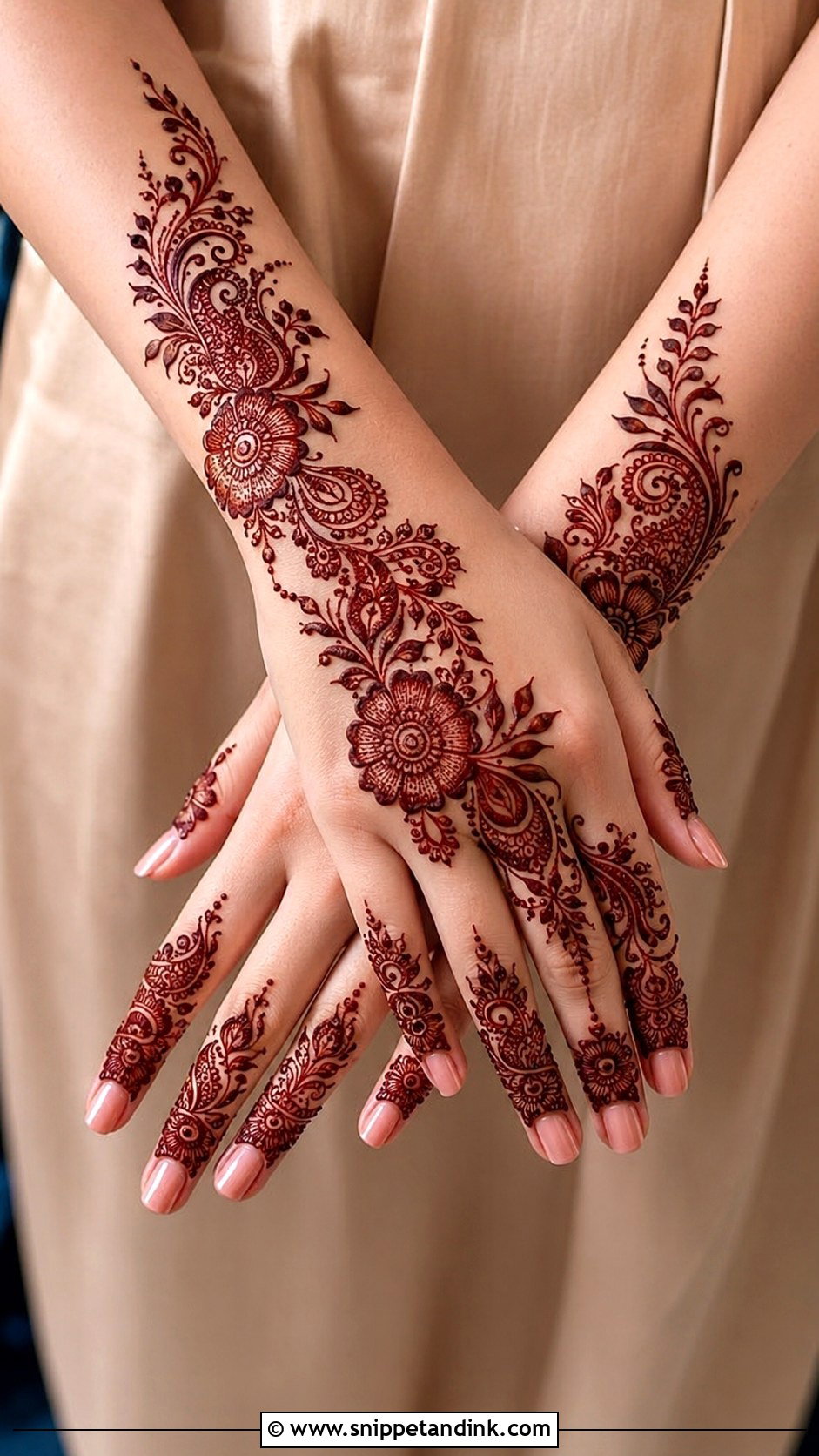
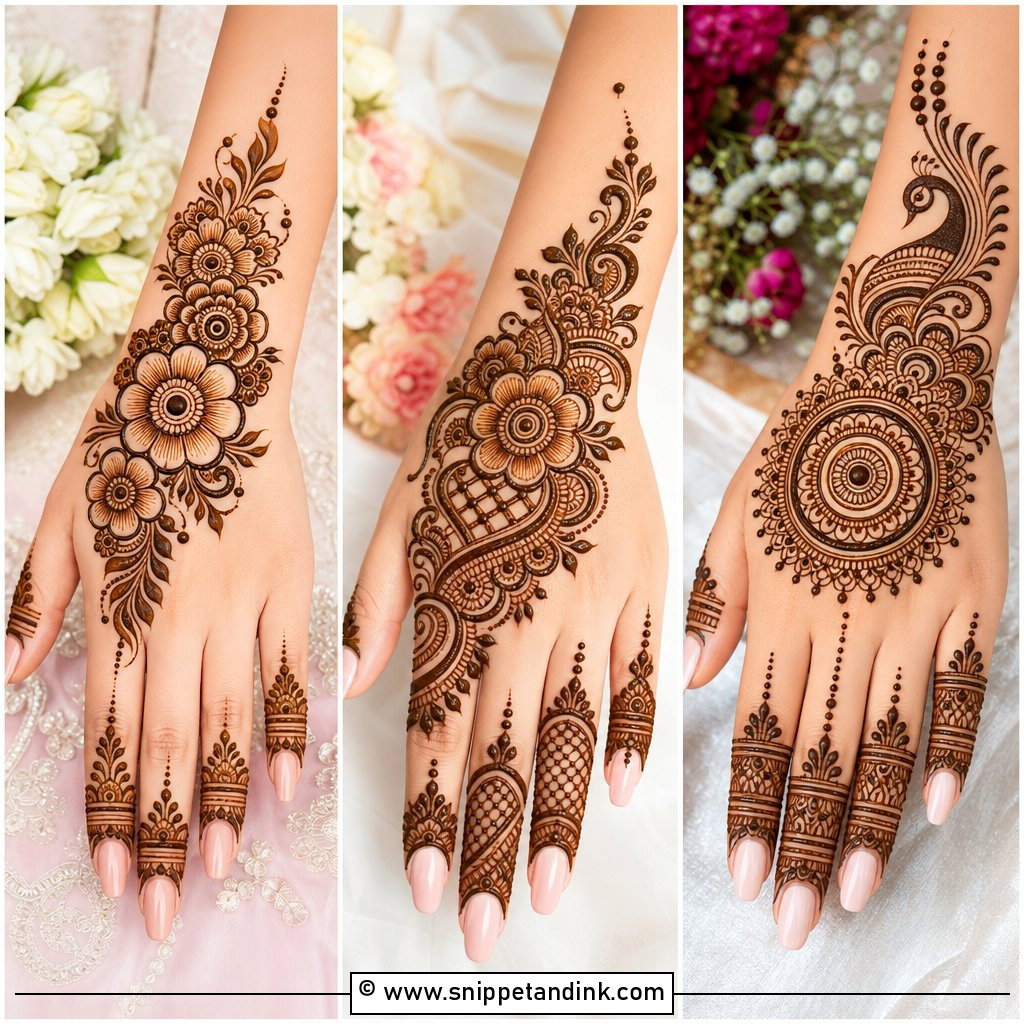
Arabic layouts run on a diagonal from one side of the wrist up toward the fingers, built from bold flowers, leafy trails and paisleys with lots of open skin between them. That open space is why it looks so clean next to a ring. For an engagement I use a medium-thick outline with fine detail inside, since the bold outline holds a strong stain on the back of the hand while the fine lines add texture. You can push it fuller for a traditional outfit or trim it back for a modern dress without changing the basic flow.
4. Indian Back Hand Engagement Mehndi Design
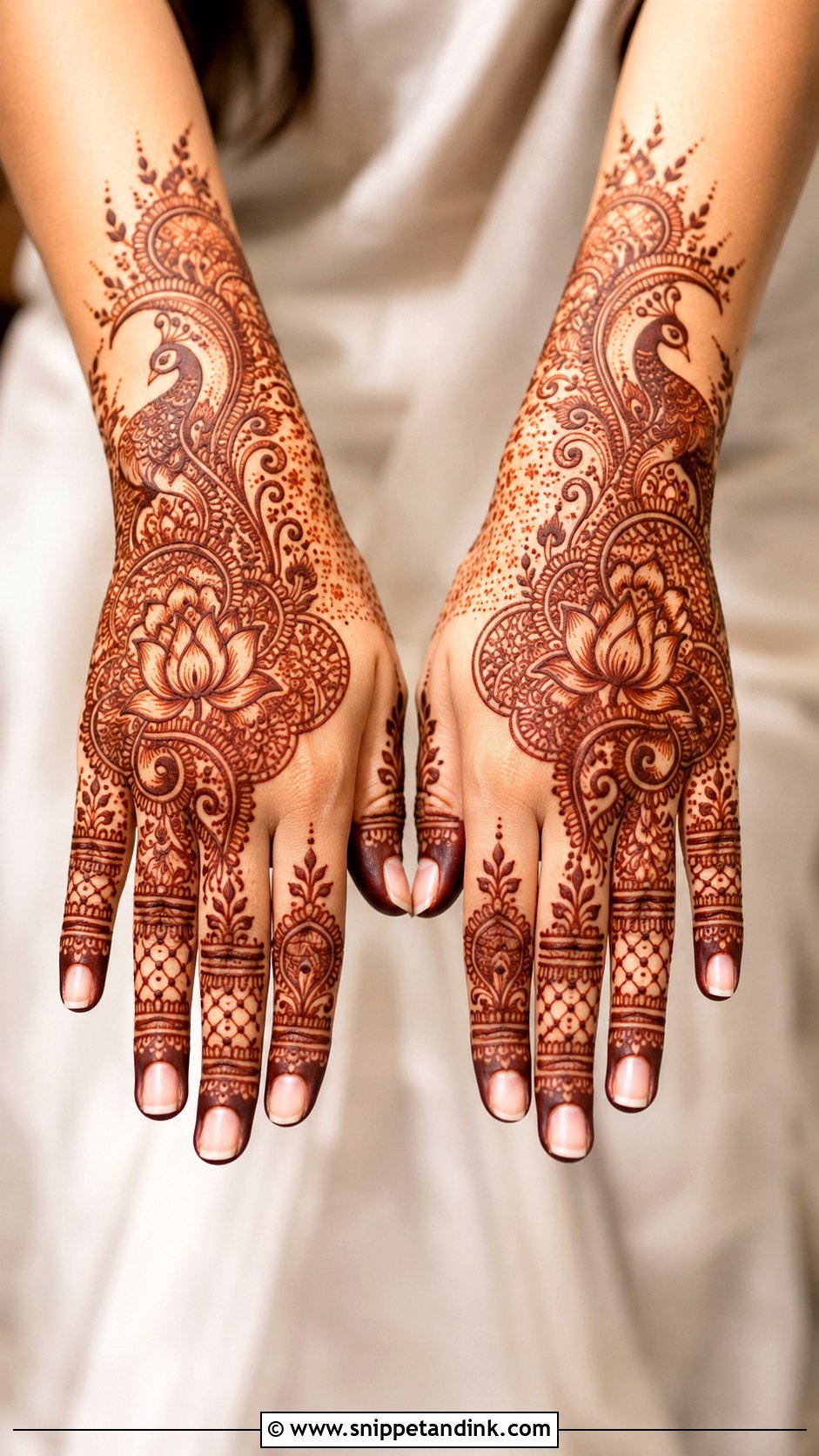
Indian layouts suit you if you love dense, traditional work: paisleys, peacocks, lotus flowers, tiny leaves, dots and filled finger panels. For an engagement I keep it a step lighter than wedding mehndi, usually a central mandala or large paisley with symmetrical detail spreading to the fingers and wrist. It goes naturally with silk sarees, lehengas, shararas and classic jewellery. If you want something personal, I can tuck small initials or ring motifs near the wrist, where the skin stays flat and the lines don’t distort. Allow plenty of sitting time; dense work on the back of the hand cannot be rushed.
5. Indo Arabic Back Hand Engagement Mehndi Design
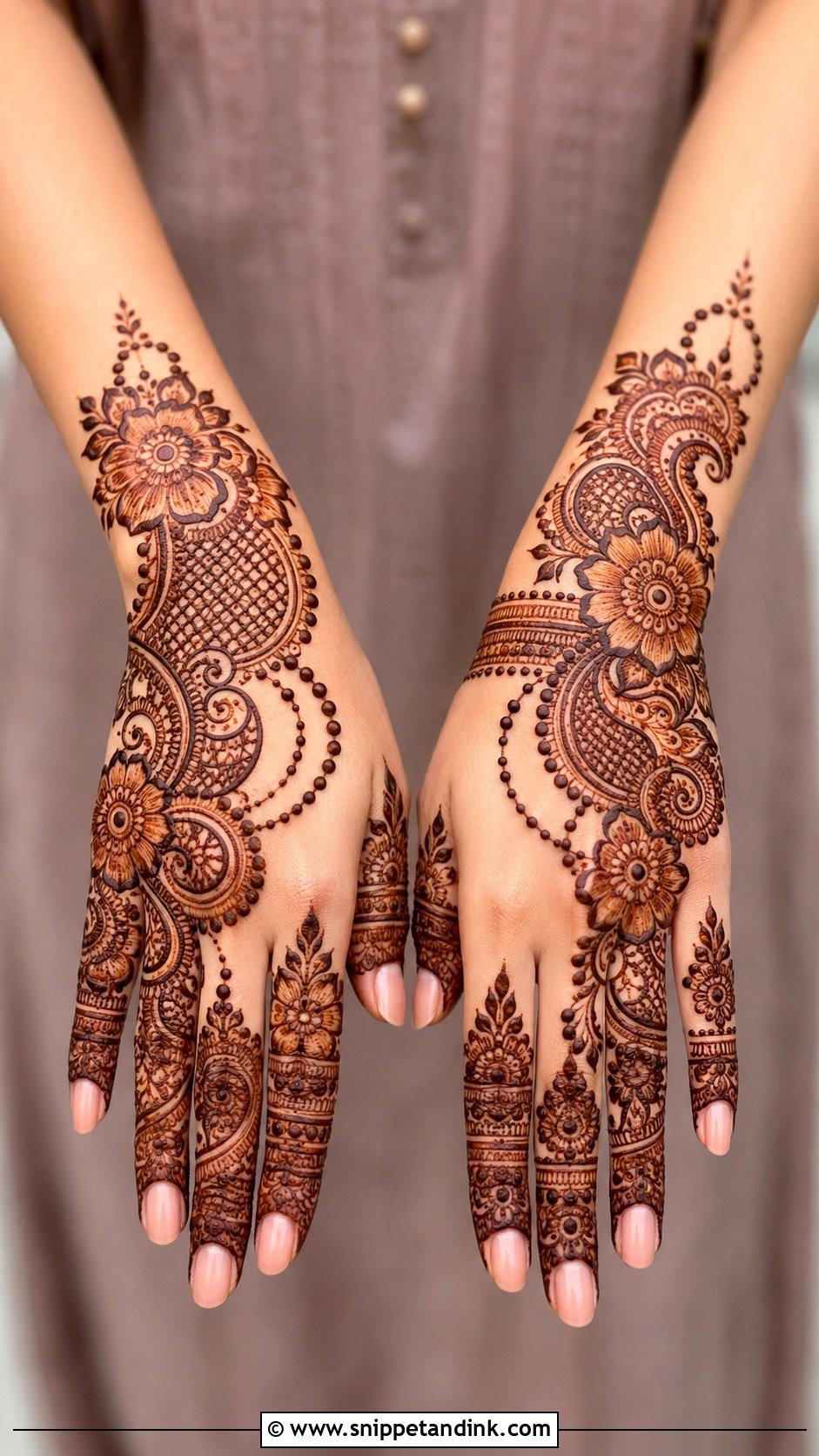
Indo-Arabic takes the open flow of Arabic work and adds the detailed filling of Indian work. My usual layout is a diagonal floral trail with paisleys, shaded petals, a couple of small jaali sections and neatly decorated fingers. It is the layout I suggest most for sisters and bridesmaids too, because it looks festive at a moderate sitting time. For the bride, a bracelet band at the wrist and fine chain details toward the fingers make it read as engagement mehndi. It moves easily between traditional and fusion outfits.
6. Floral Back Hand Engagement Mehndi Design
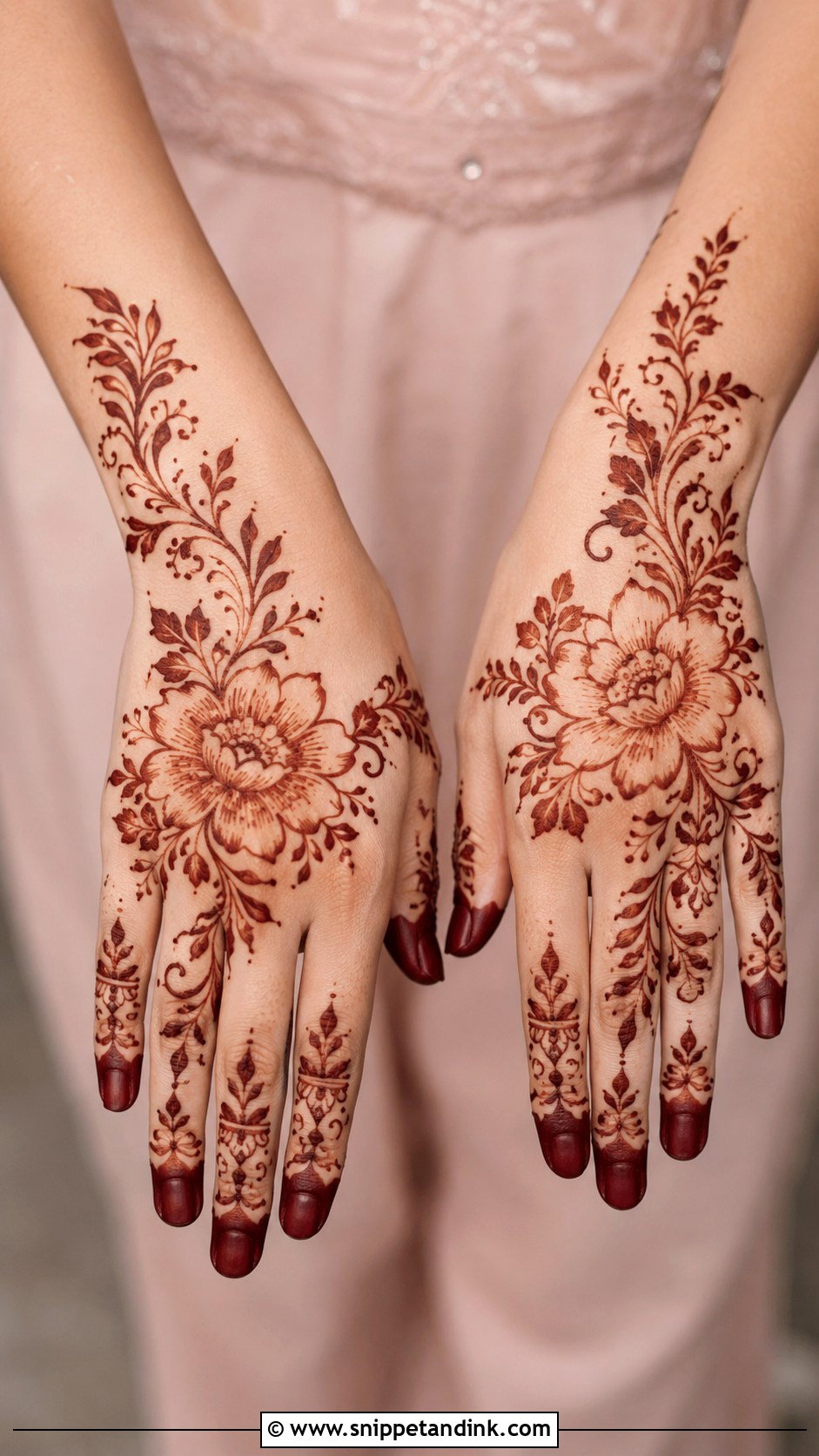
Florals keep the back of the hand romantic without feeling heavy: large open blooms, small buds, leafy vines and curved stems travelling toward the wrist, with petal tips or slim leafy lines on the fingers. They suit pastel outfits, floral jewellery and daytime ceremonies. I shade only some petals and leave others open, because shading every petal makes the flowers merge once the stain darkens. A bracelet-style band at the wrist gives the design a clear finishing edge.
7. Mandala Back Hand Engagement Mehndi Design
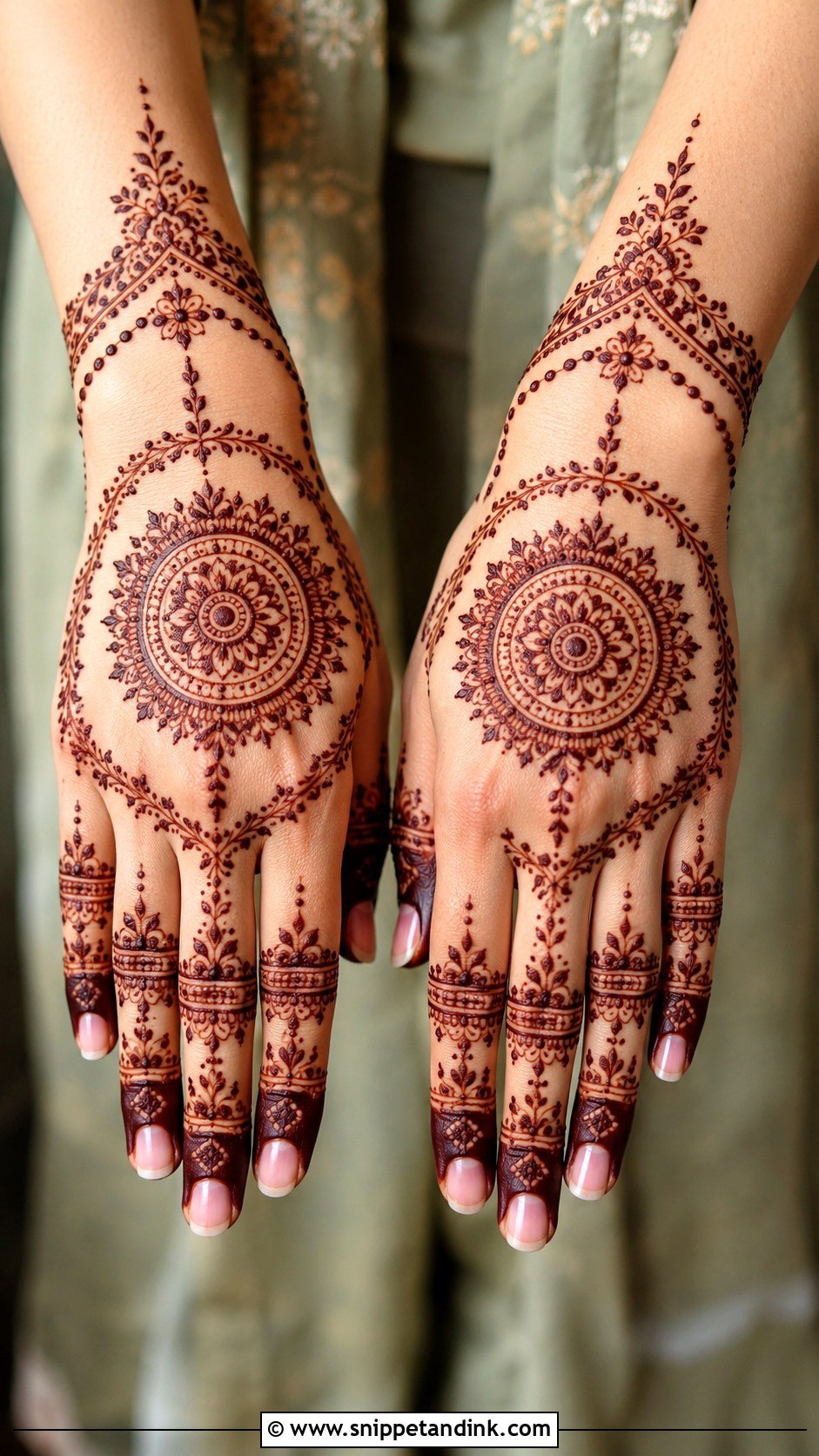
A mandala gives the back of the hand one balanced centre, with dots, leafy arcs, small florals and finger patterns arranged around it. It suits brides who like symmetry, and when two hands are placed together for photos the matching circles look very tidy. The tricky part is placement: the back of every hand is slightly different, so I find the centre with the hand relaxed, not stretched flat, or the circle ends up looking lopsided in photos. Keep it minimal with finger accents, or build it out with wrist bands and jaali borders.
8. Ring Ceremony Back Hand Mehndi Design
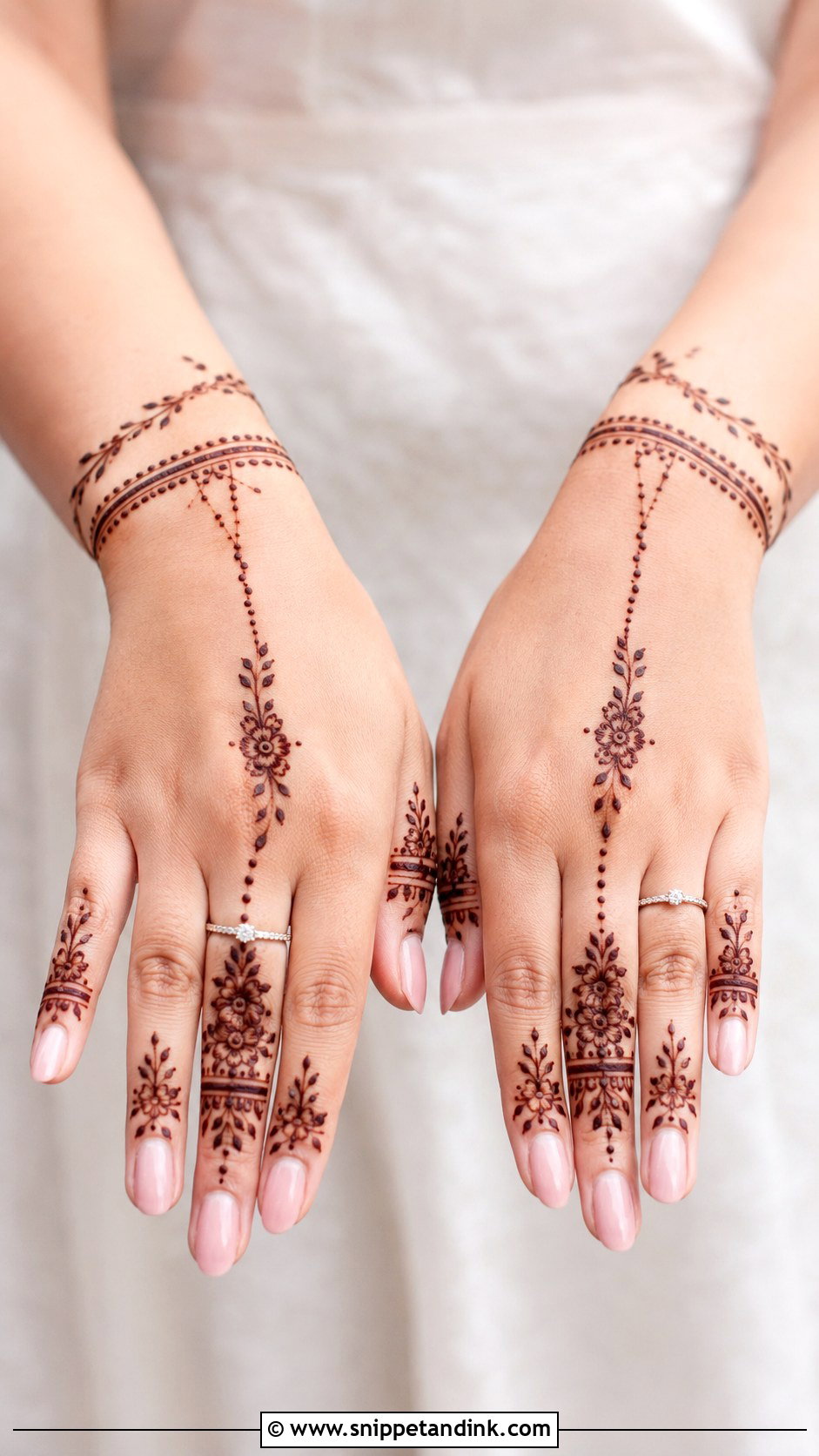
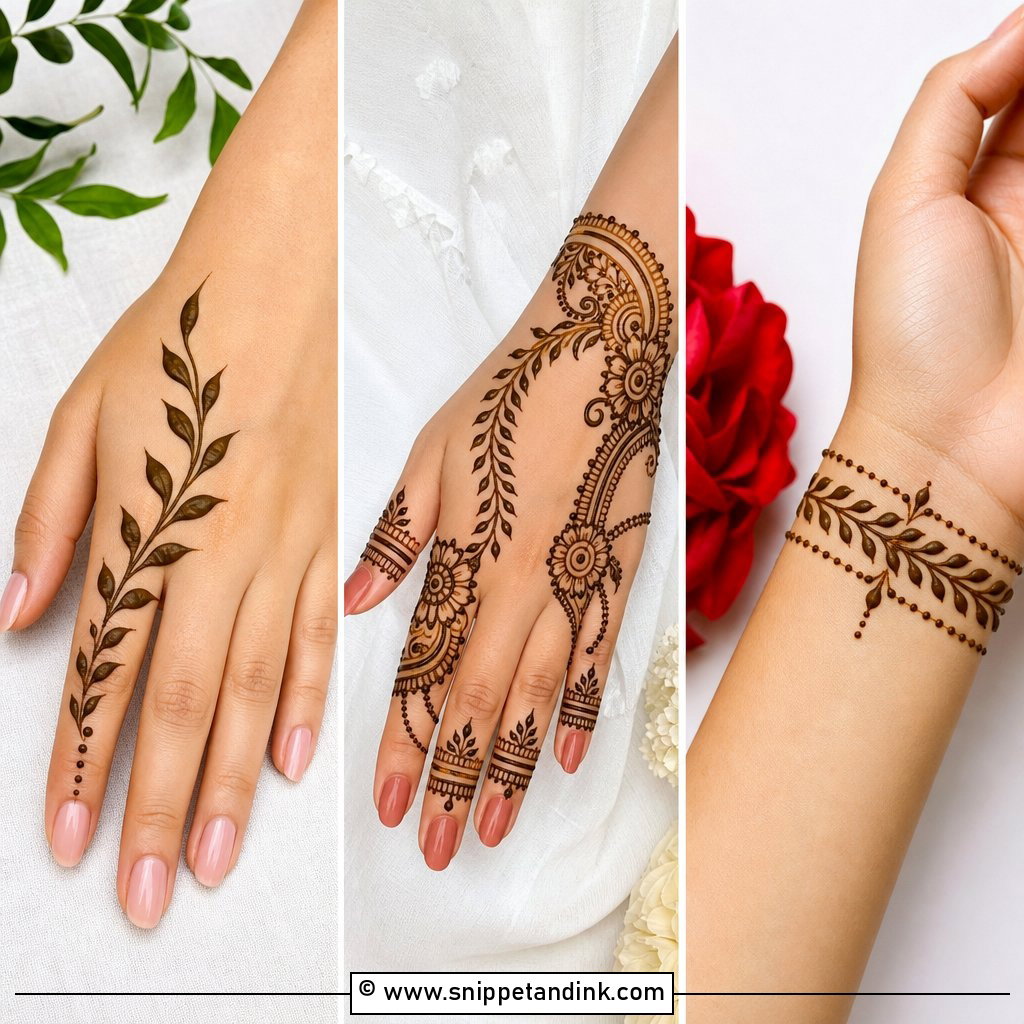
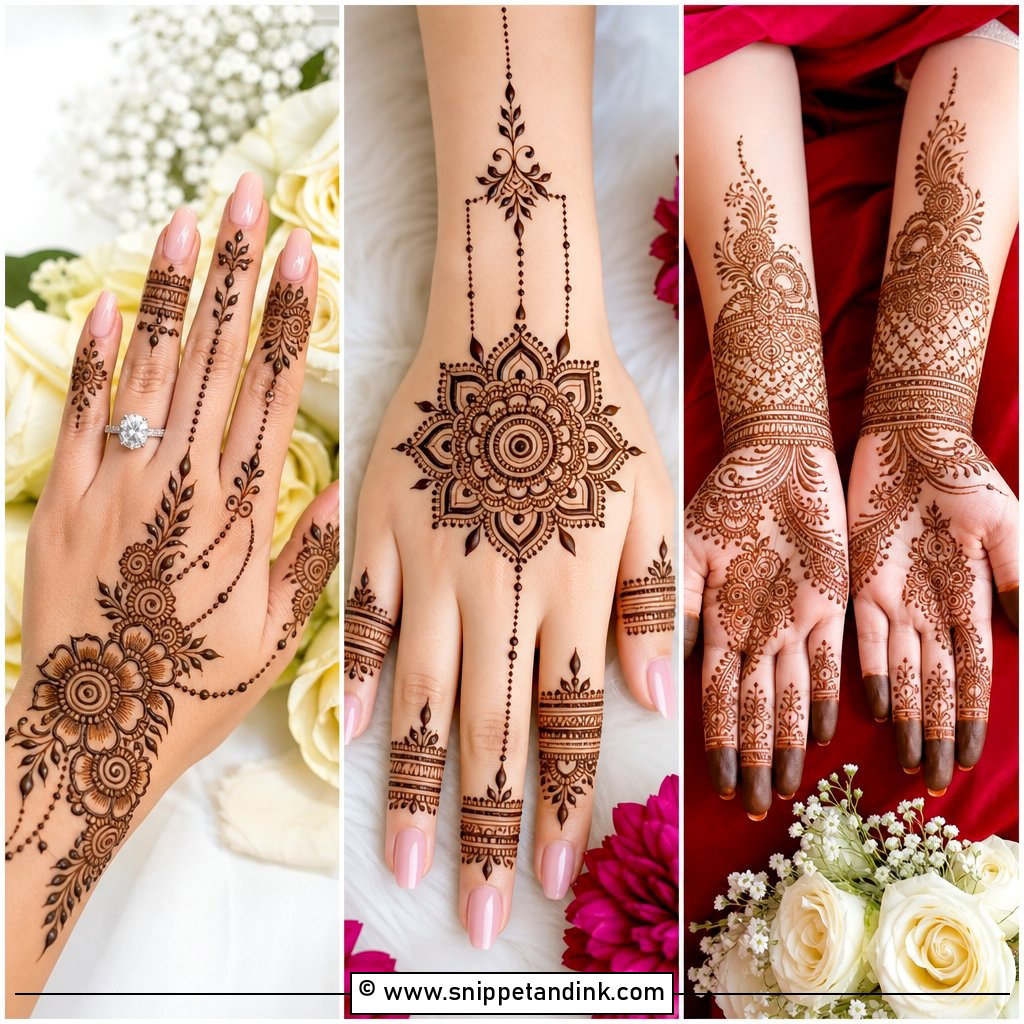
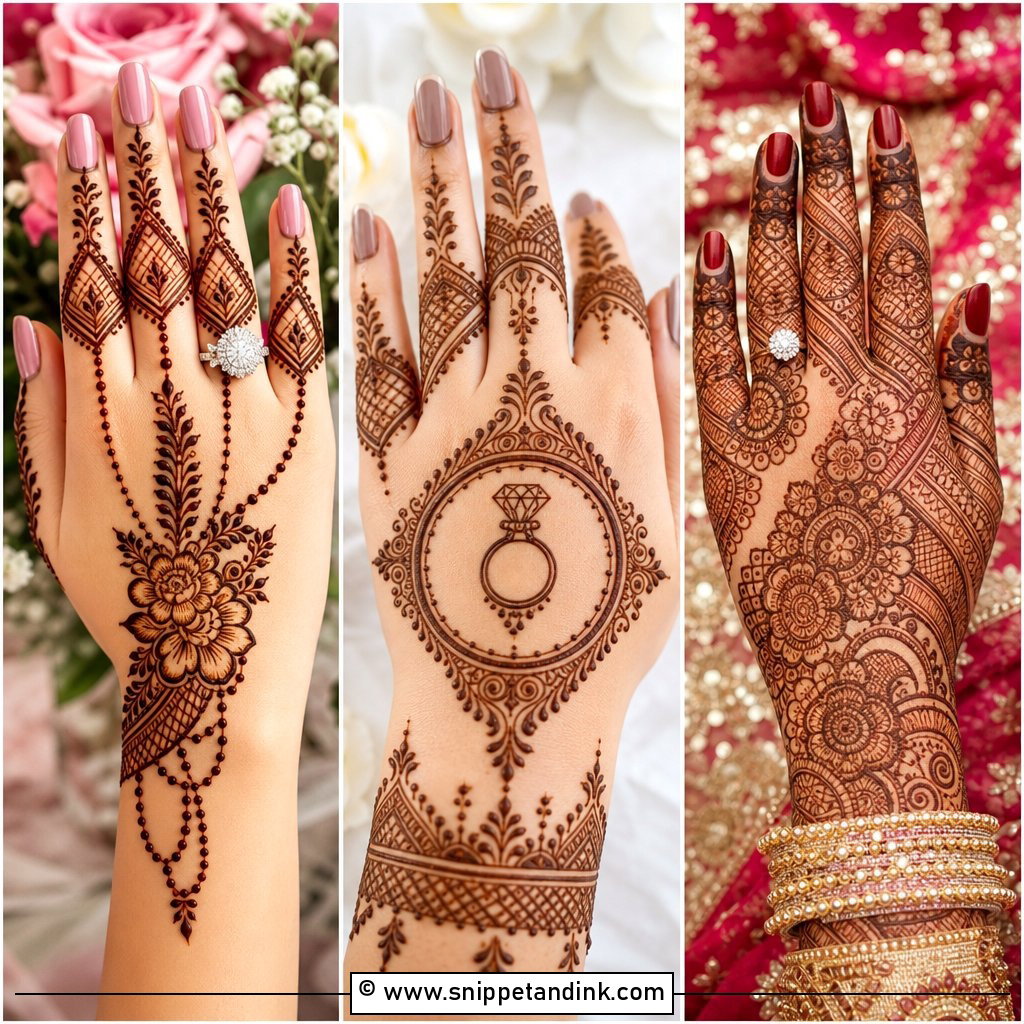
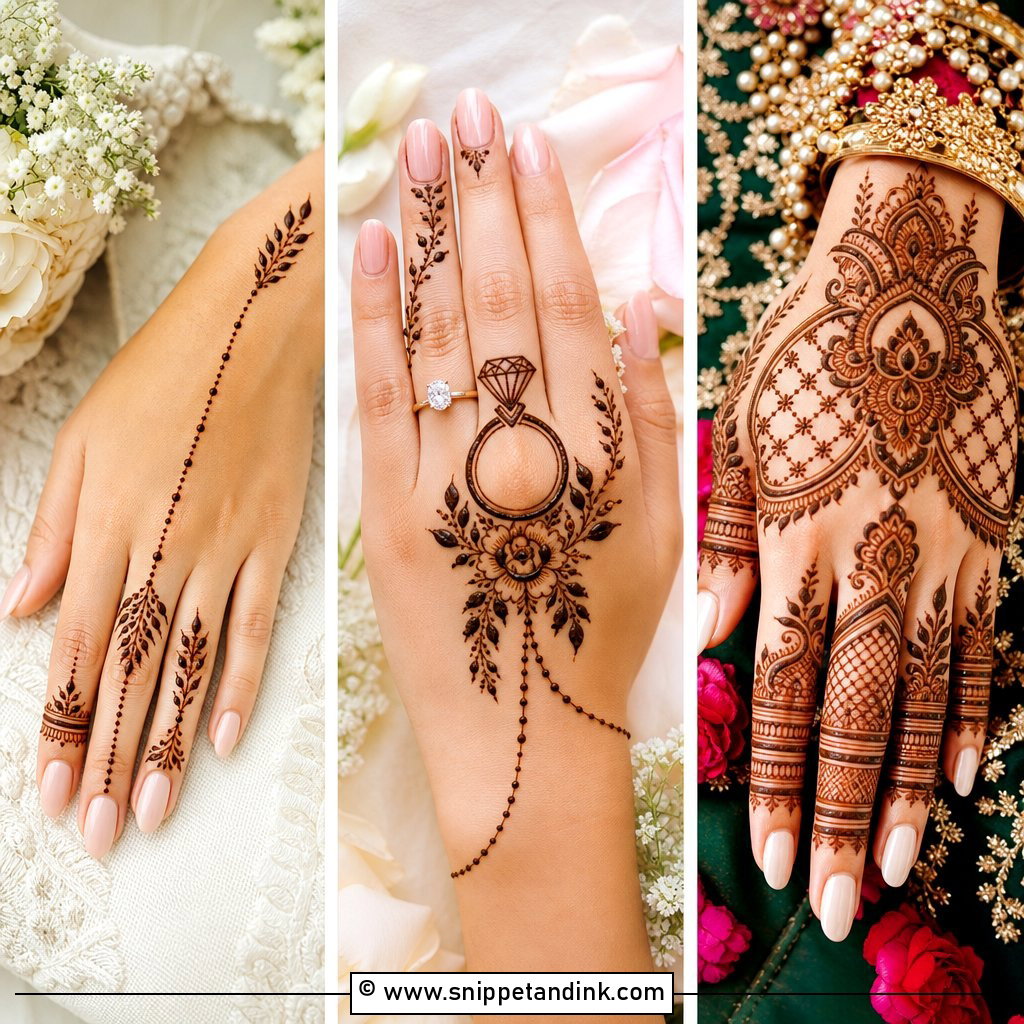
For the ring ceremony itself, the design should lead the eye to the ring rather than compete with it. I use fine chains, a bracelet band, finger trails and small motifs, often running a chain from the wrist up to the ring finger like hand jewellery. Small flowers, dots and curved lines decorate the chain. The centre of the hand stays light, or carries a small mandala, so nothing pulls attention away from the stone. I leave the base of the ring finger completely bare; a ring slid over fresh lines there will smudge them.
9. Bracelet Back Hand Engagement Mehndi Design
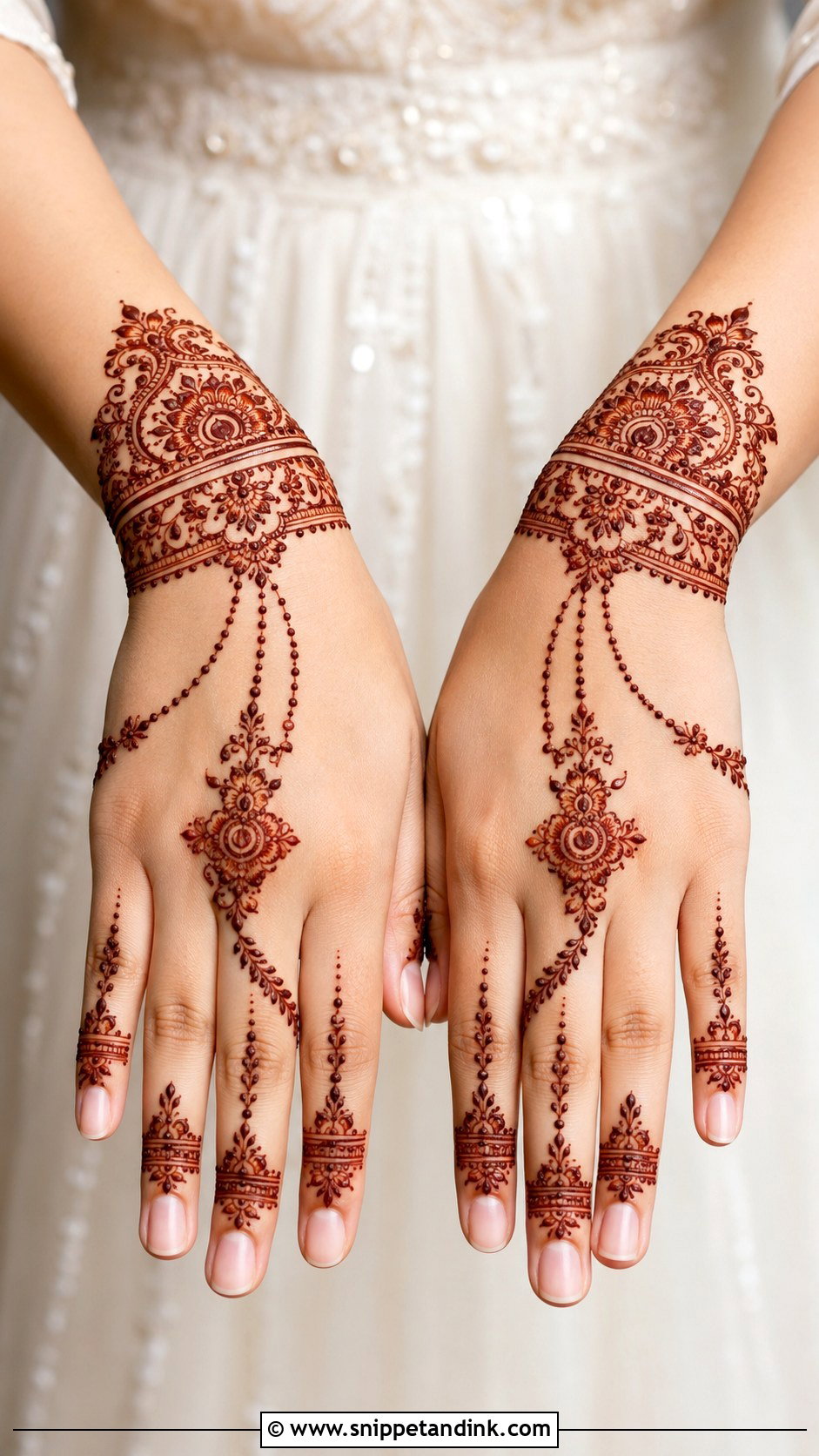
A bracelet layout looks like henna jewellery wrapped around the wrist and hand: a detailed wrist cuff, thin chain lines, ring-style loops and finger accents. The cuff can be floral, geometric, paisley or jaali. From there, chains connect to the middle or ring finger for a hand-harness look. Everything depends on clean joins; if a chain line wobbles or misses the loop, it shows straight away. It sits naturally next to bangles and engagement rings.
10. Minimal Back Hand Engagement Mehndi Design
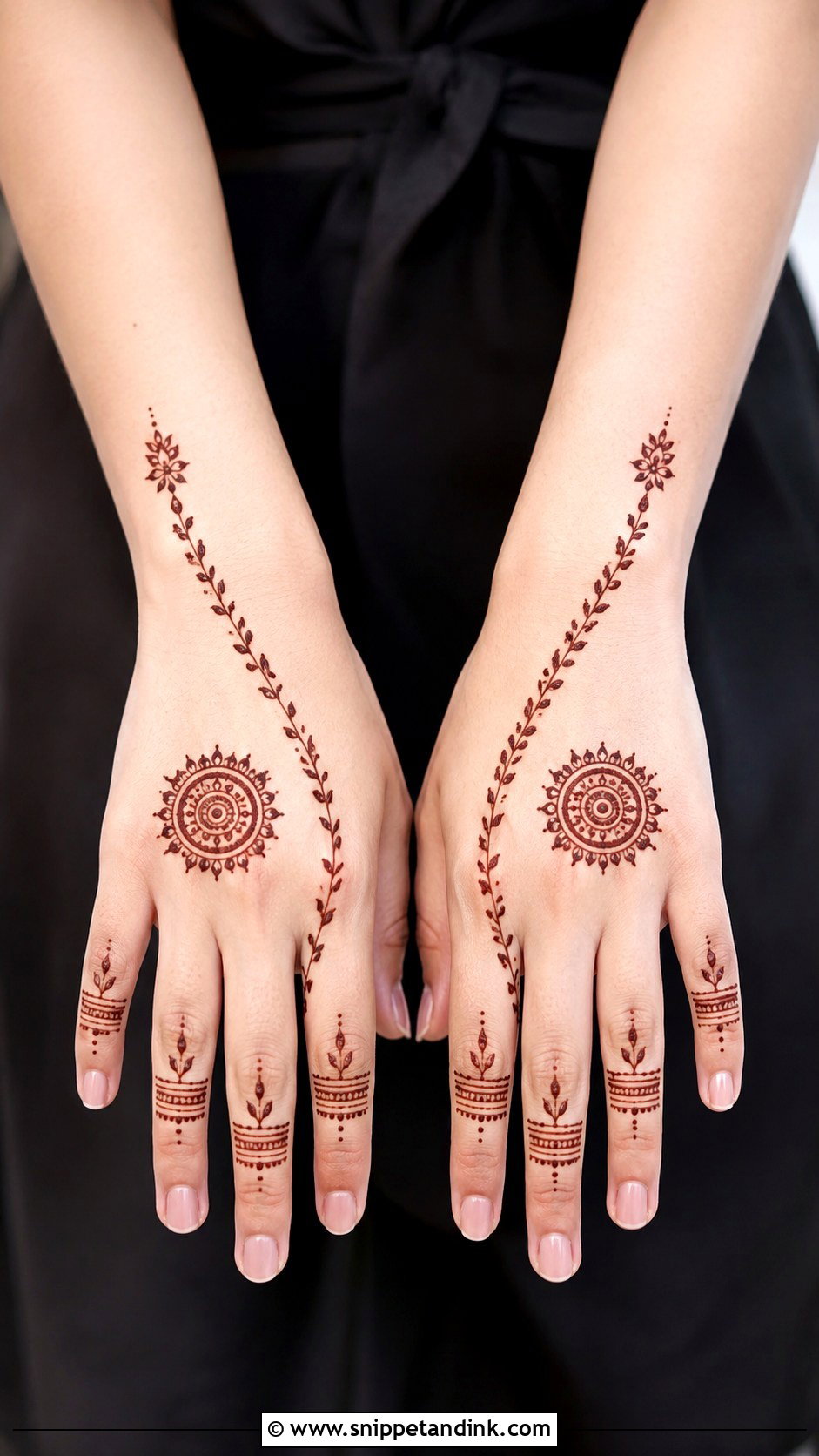
Minimal back-hand work means a small floral, a slim leafy trail, simple finger lines and a tiny wrist detail, with most of the hand left open. It suits modern outfits, civil engagements and smaller gatherings, and it lets the ring and jewellery lead. One honest warning: very fine lines on the back of the hand stain lighter than you might expect, so for a minimal design I make the lines a touch thicker than they look in pinned photos. Otherwise they can fade into a faint orange outline by the ceremony.
11. Modern Back Hand Engagement Mehndi Design
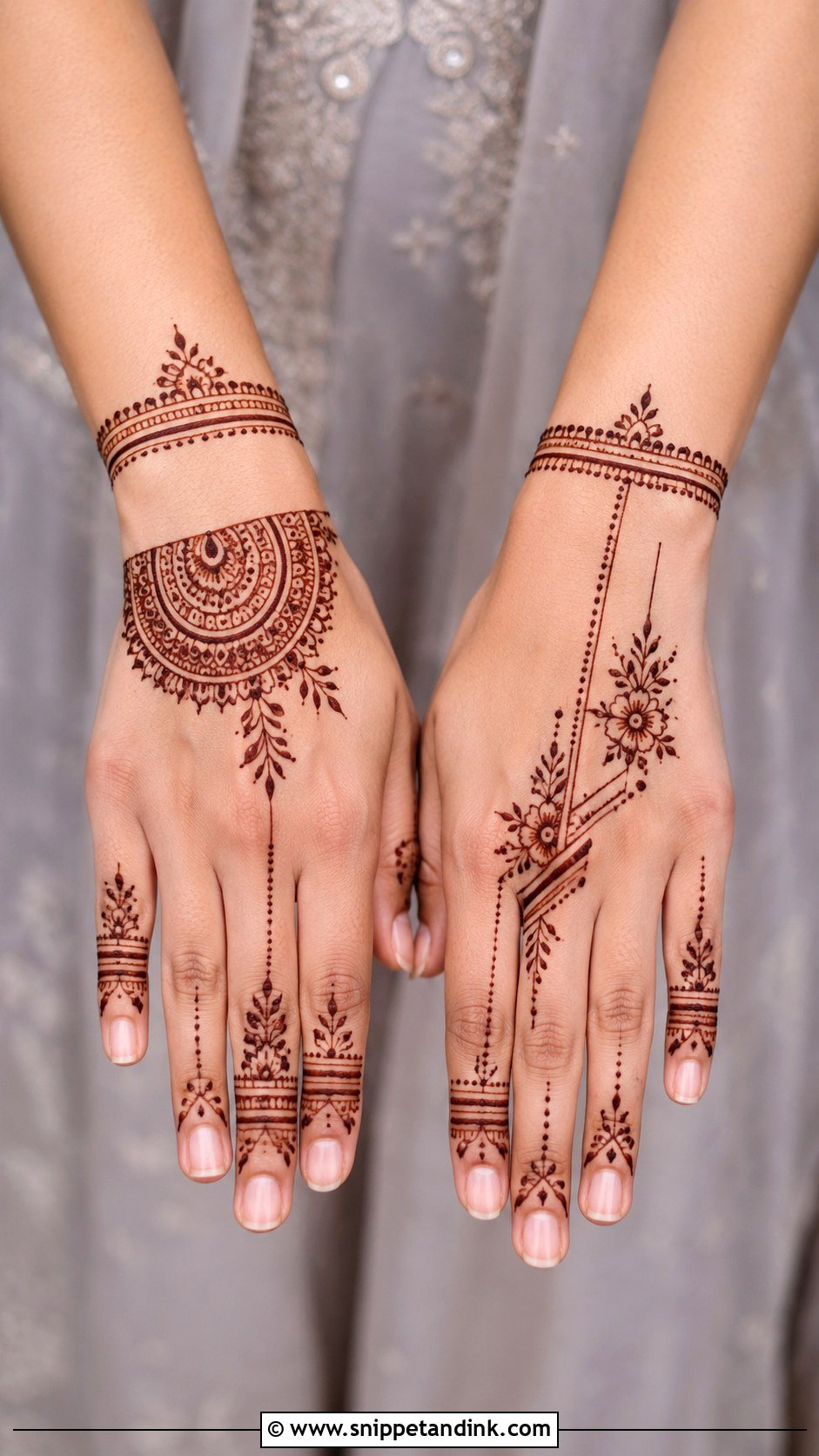
Modern layouts rely on clean placement and negative space rather than coverage: geometric lines, florals, half mandalas and bracelet details. They suit sleek engagement outfits, gowns and fusion lehengas. I often vary the fingers on purpose, one detailed and two simple, so the hand looks designed rather than filled. Let a single main feature lead and keep the rest supporting it. Crowding the motifs is what makes a modern design look messy instead of intentional.
12. Bridal Back Hand Engagement Mehndi Design
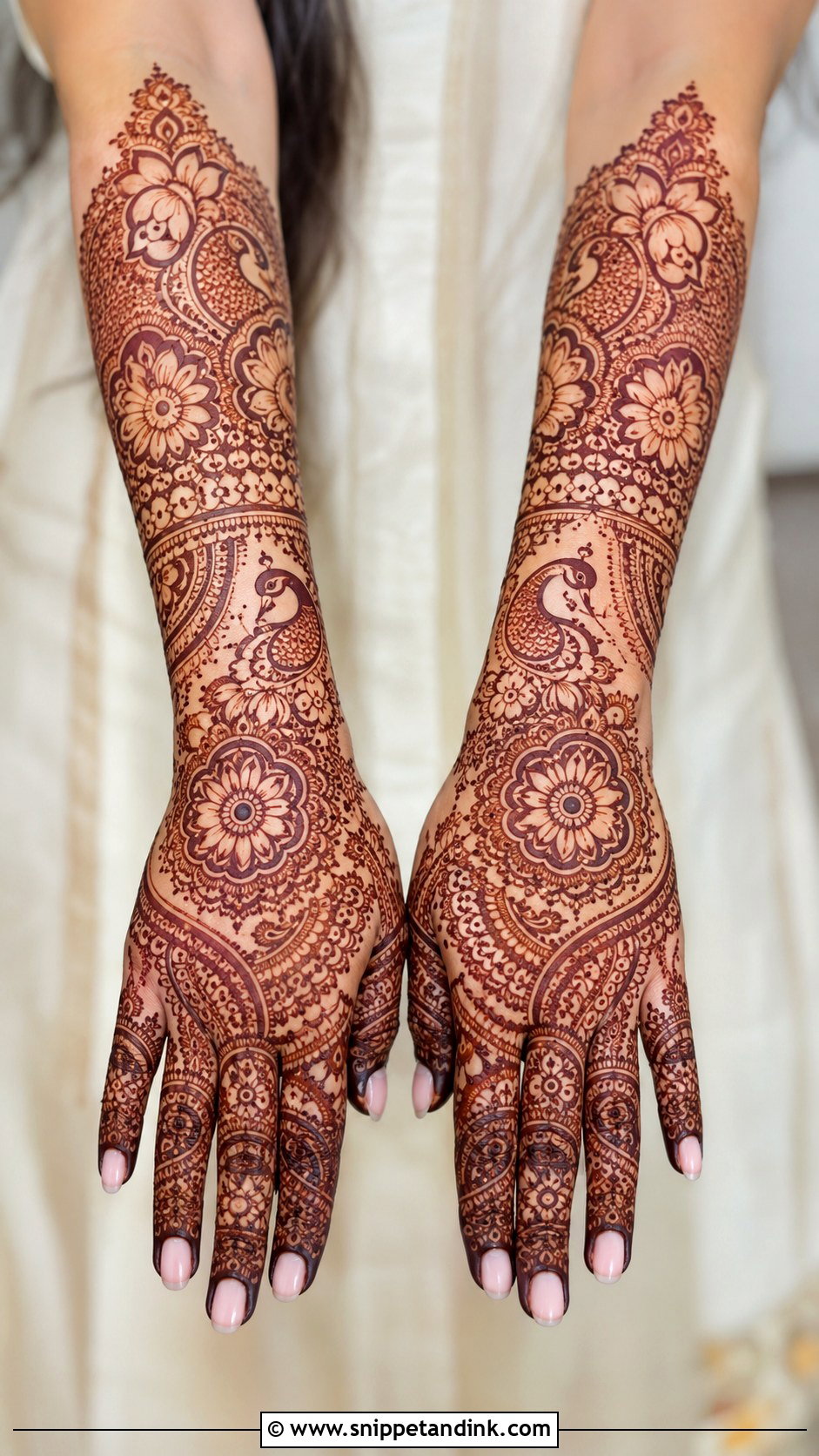
A bridal-weight engagement design sits between simple engagement mehndi and full wedding mehndi: layered florals, paisleys, mandalas, peacock touches, finger panels and sometimes an extension past the wrist. It suits couples who treat the engagement as a large event. I fill the big motifs with fine lines instead of solid blocks, because solid filled areas on the back of the hand often stain unevenly and look patchy. There is room here for initials, a date or small couple symbols, as long as the ring area stays clear.
13. Royal Back Hand Engagement Mehndi Design
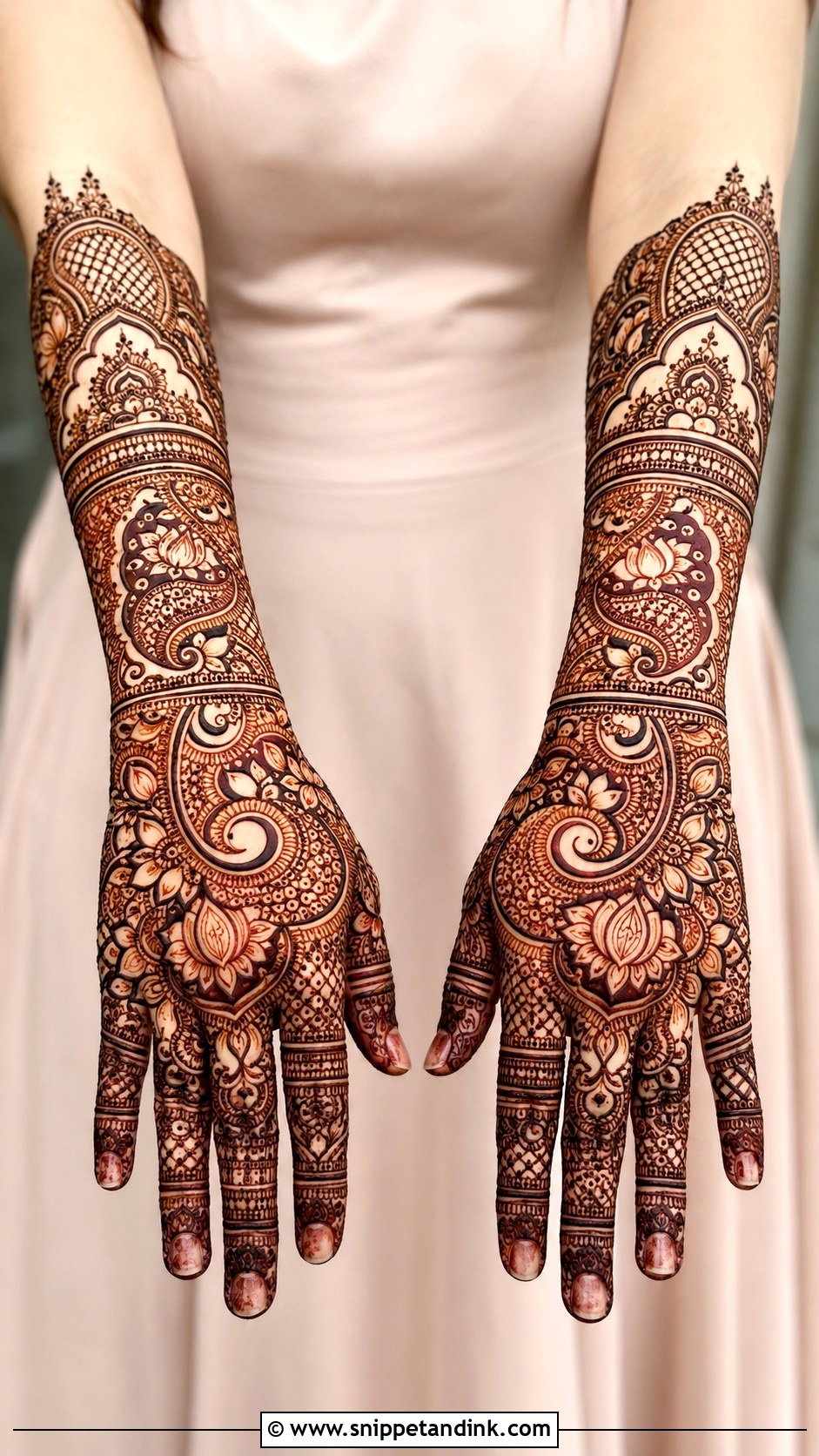
Royal layouts are rich and structured: bold paisleys, lotus motifs, shaded florals, jaali and an ornate wrist cuff, sometimes stretching toward the forearm. They belong with heavy jewellery, silk, velvet and deep festive colours. The main motif on the back of the hand needs to be large and clearly outlined, or it disappears under bangles in photos. I keep outlines sharp and fillers precise, because on this much detail a single smudged line breaks the whole symmetry.
14. Peacock Back Hand Engagement Mehndi Design
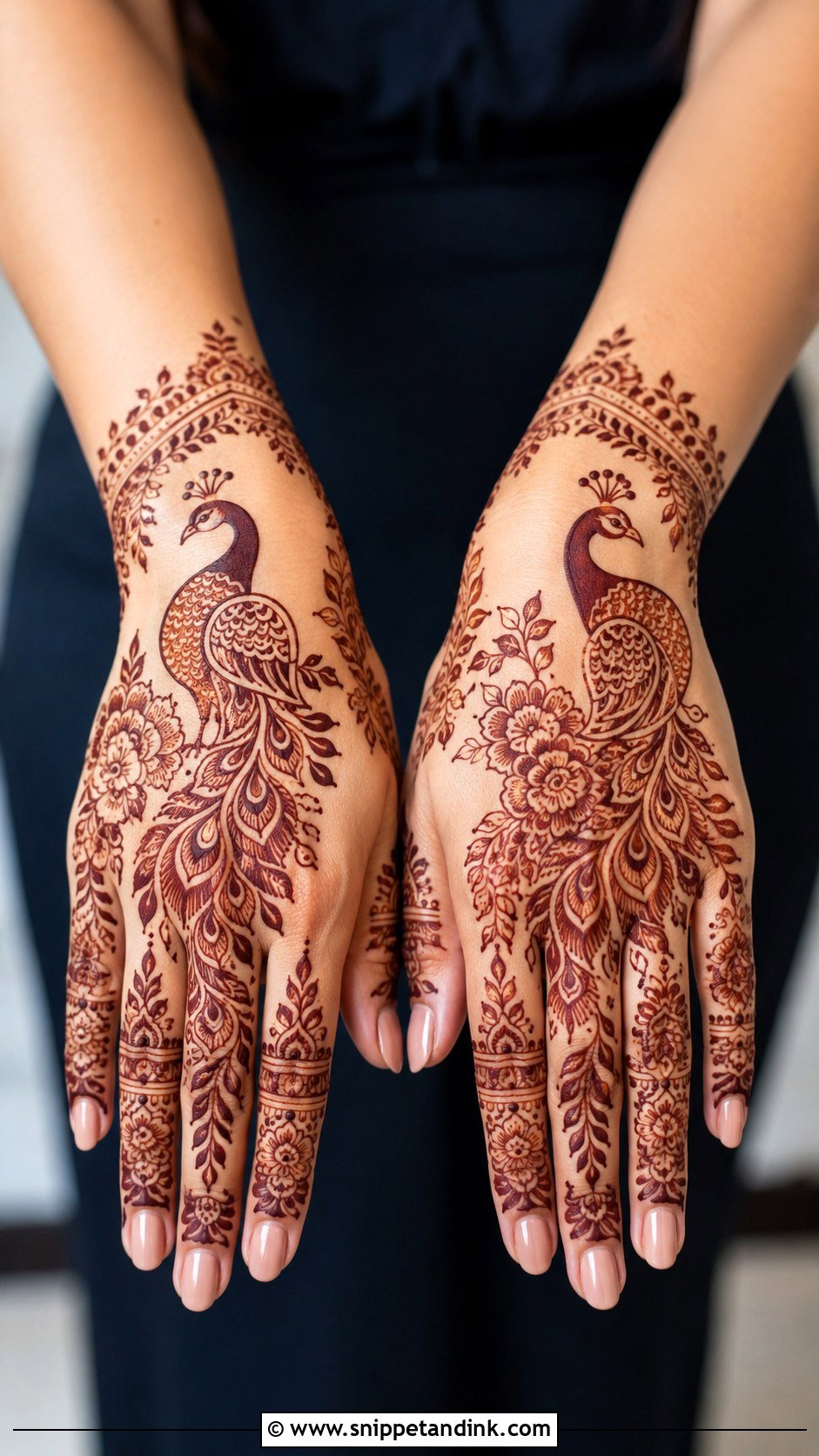
A peacock gives the back of the hand movement. I usually place the body near the wrist and let the feathers sweep toward the fingers, which makes the hand look longer; paisleys, florals and leafy curves fill around it. It suits brides who love classic Indian work but want a single artistic focal point. Keep the peacock’s body detailed and everything around it lighter. If the background is as busy as the bird, the outline gets lost once the stain darkens.
15. Paisley Back Hand Engagement Mehndi Design
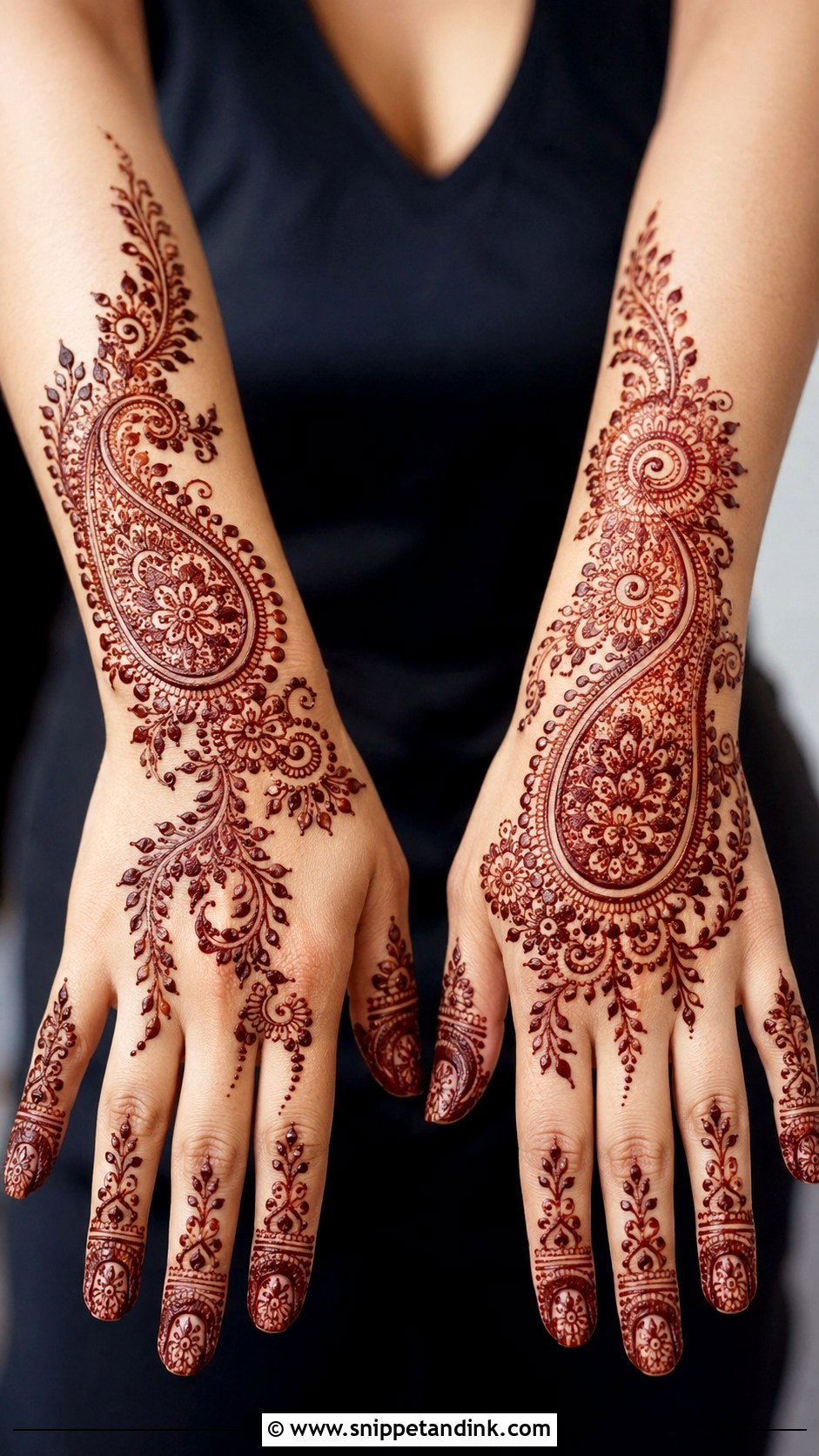
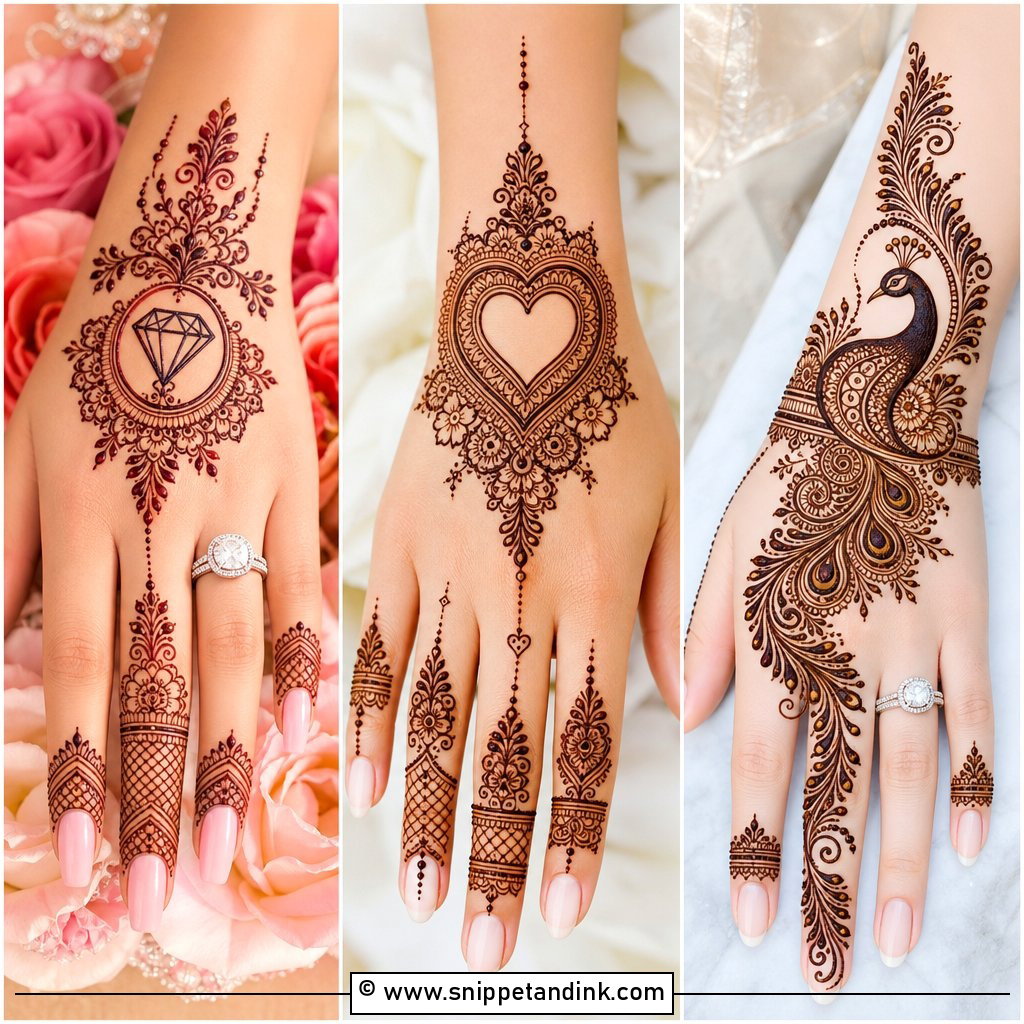
Paisley is the motif I can bend to almost any style: simple, bold, detailed or heavily shaded. For an engagement I place one large paisley slightly off-centre and let smaller paisleys, flowers, dots and vines flow toward the wrist and fingers on a gentle diagonal. Mini paisley tips or leafy bands finish the fingers. It goes with almost any outfit, which makes it a safe choice if you haven’t settled what you’re wearing yet.
16. Jaali Back Hand Engagement Mehndi Design
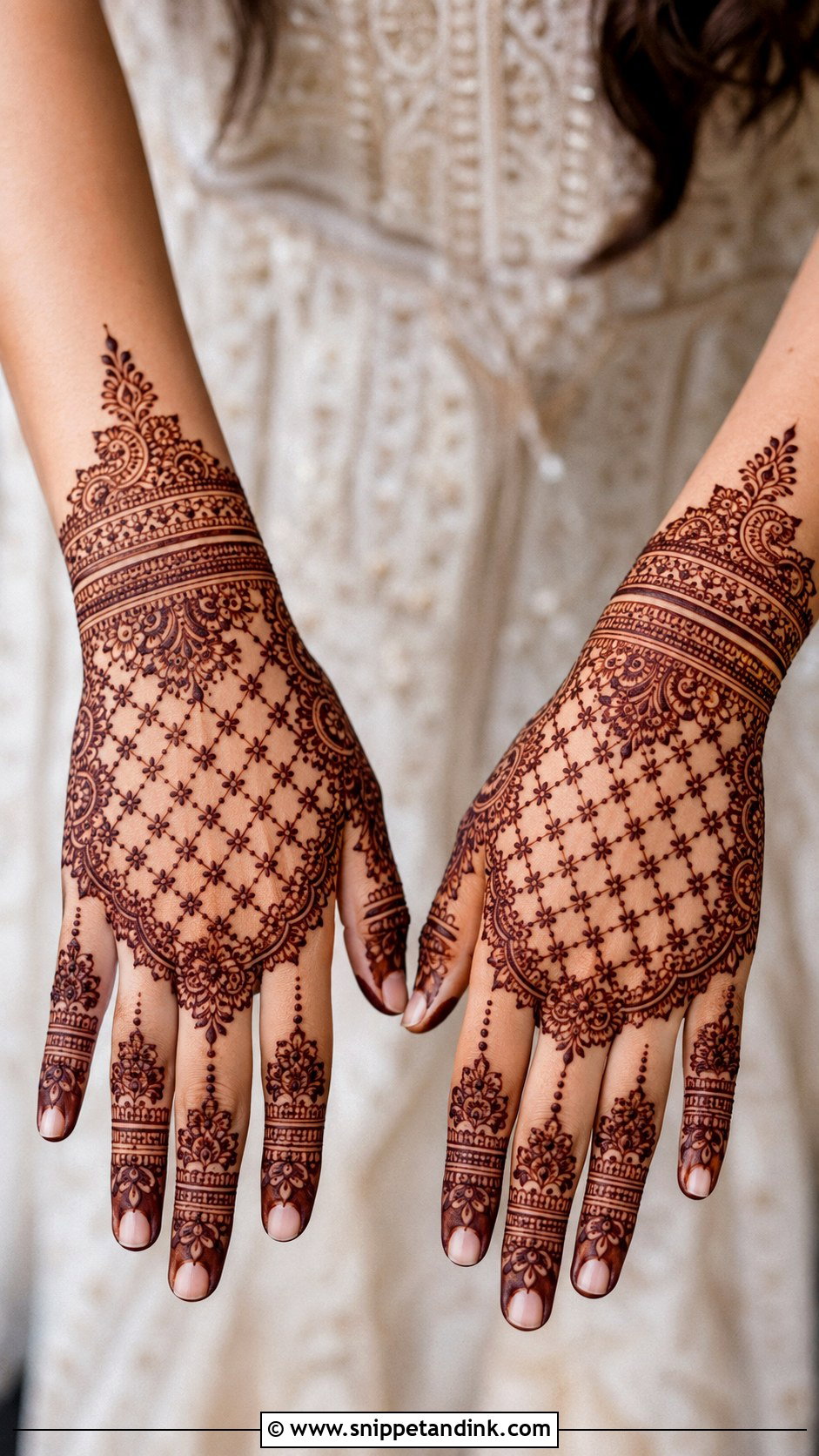
Jaali is a fine mesh drawn across part of the hand, combined with flowers, borders and finger details. It can sit in the centre, along one side or inside a wrist band, and up close it reads almost like lace. It is also the most demanding pattern I draw: the lines must be evenly spaced and the cone pressure steady, because any thick or uneven line in a grid stands out instantly. Balance it with soft florals or paisleys so the hand doesn’t look like one large net.
17. Finger Back Hand Engagement Mehndi Design
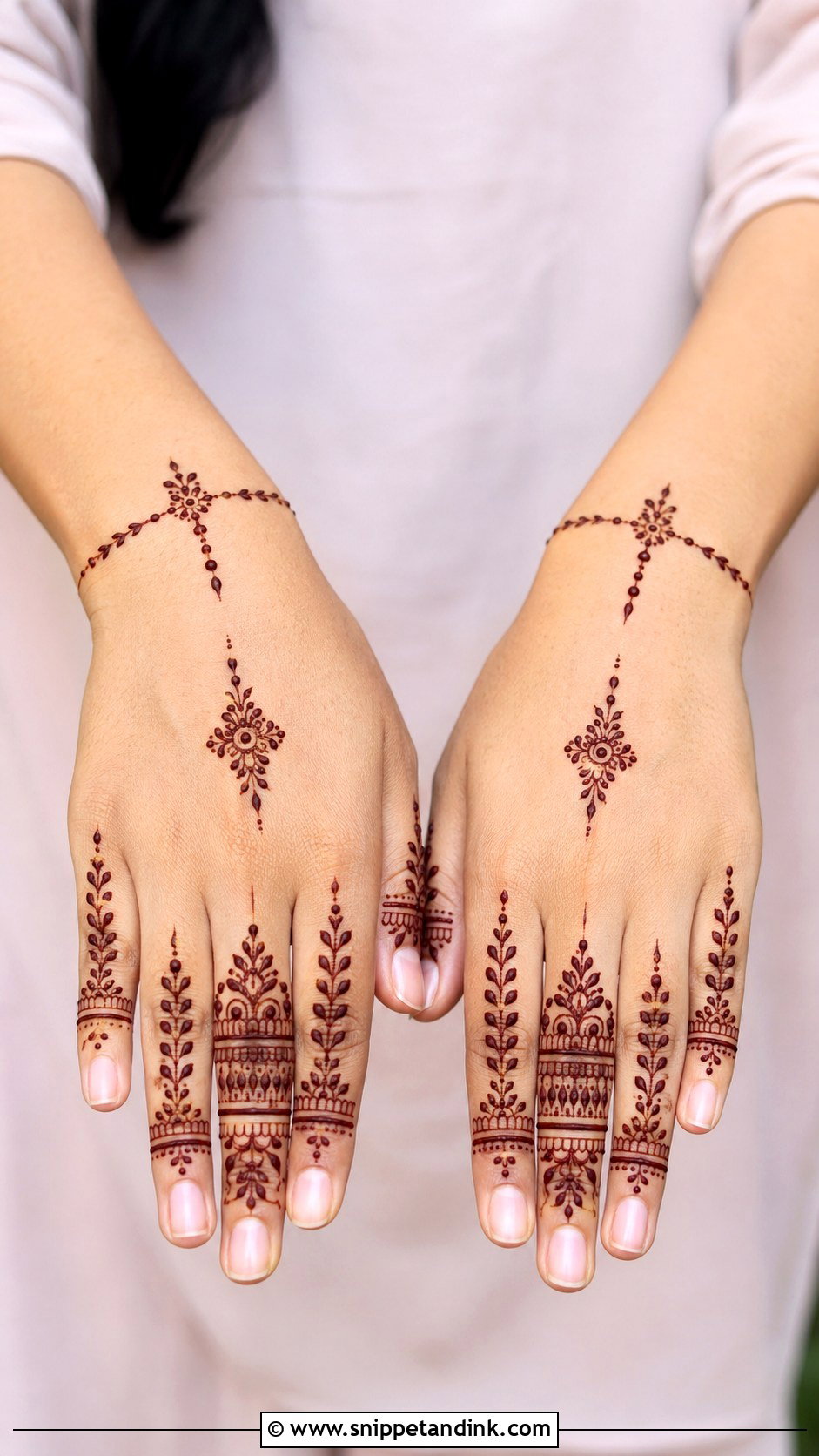
Finger-focused designs put most of the detail on the fingers and keep the back of the hand light, with a small motif, chain or side vine. The ring finger can carry a little more than the others, framing the ring from either side. Leafy lines, dots, small florals and slim bands all fit. It suits brides who don’t want heavy coverage and looks sharp with nail colour and fine bracelets. Fingertips stain darkest of anywhere on the back of the hand, so this layout gives you strong colour where the camera looks.
18. Jewelry Back Hand Engagement Mehndi Design
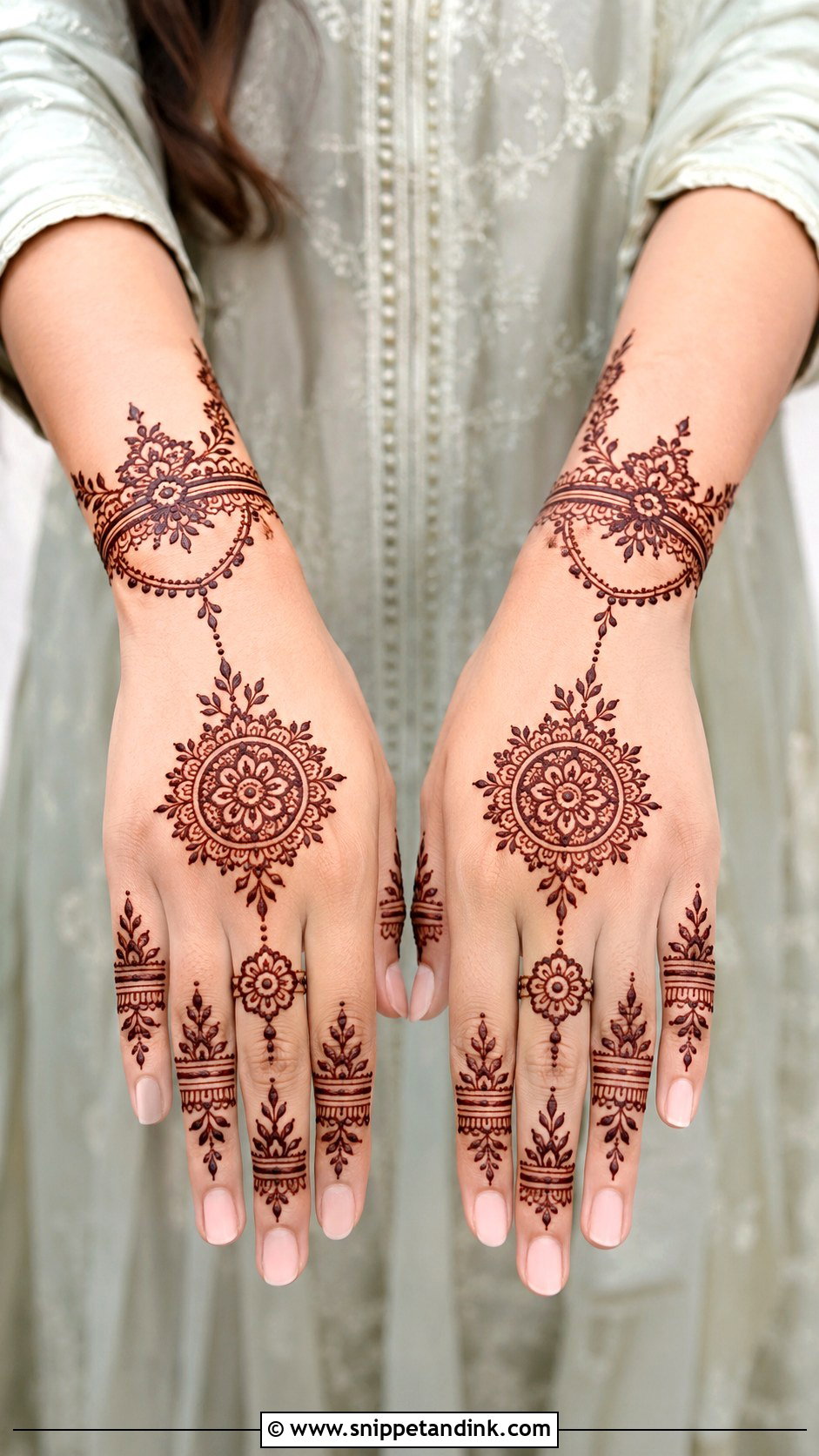
Jewellery mehndi is essentially a haath phool drawn in henna: wrist bracelet, chain lines, ring loops and one central motif on the back of the hand. The centre can be floral, mandala or paisley, and the chains stay thin, decorated with tiny dots or leaves. It works well with real rings and bangles, because the drawn jewellery and the real pieces look like a set. Choose it if you want an ornamental finish without full coverage.
19. Rose Back Hand Engagement Mehndi Design
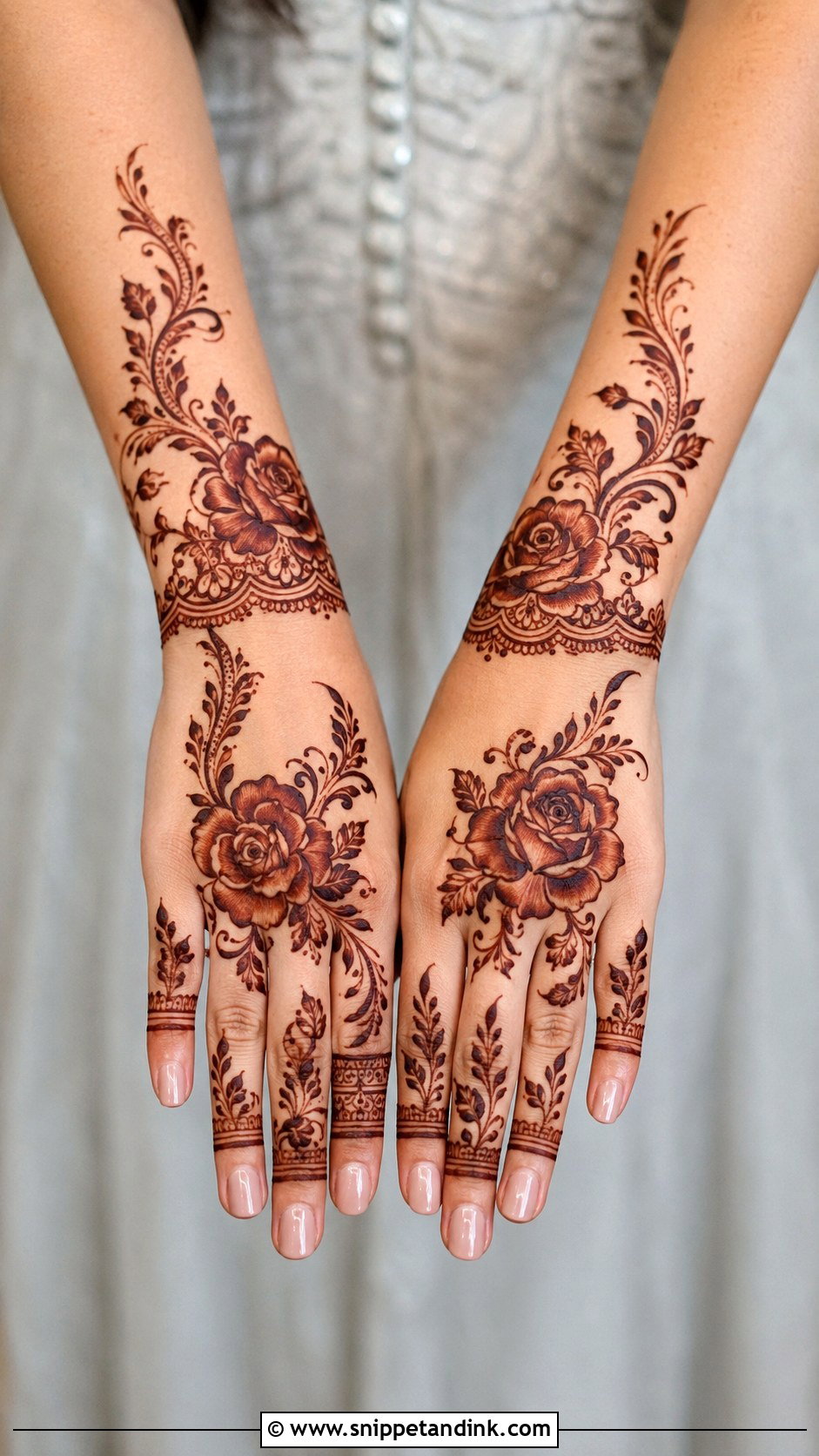
A rose gives the back of the hand a softer, more modern flower than the usual round motifs. I place it in the centre, near the wrist or within a diagonal trail, shading the outer petals so the rose looks full and leaving the inner petals lighter for depth. Leaves and vines carry it toward the fingers, which can stay simple with leafy tips or small buds. For a fuller design, add a wrist cuff of mini roses. It works for day and evening ceremonies alike.

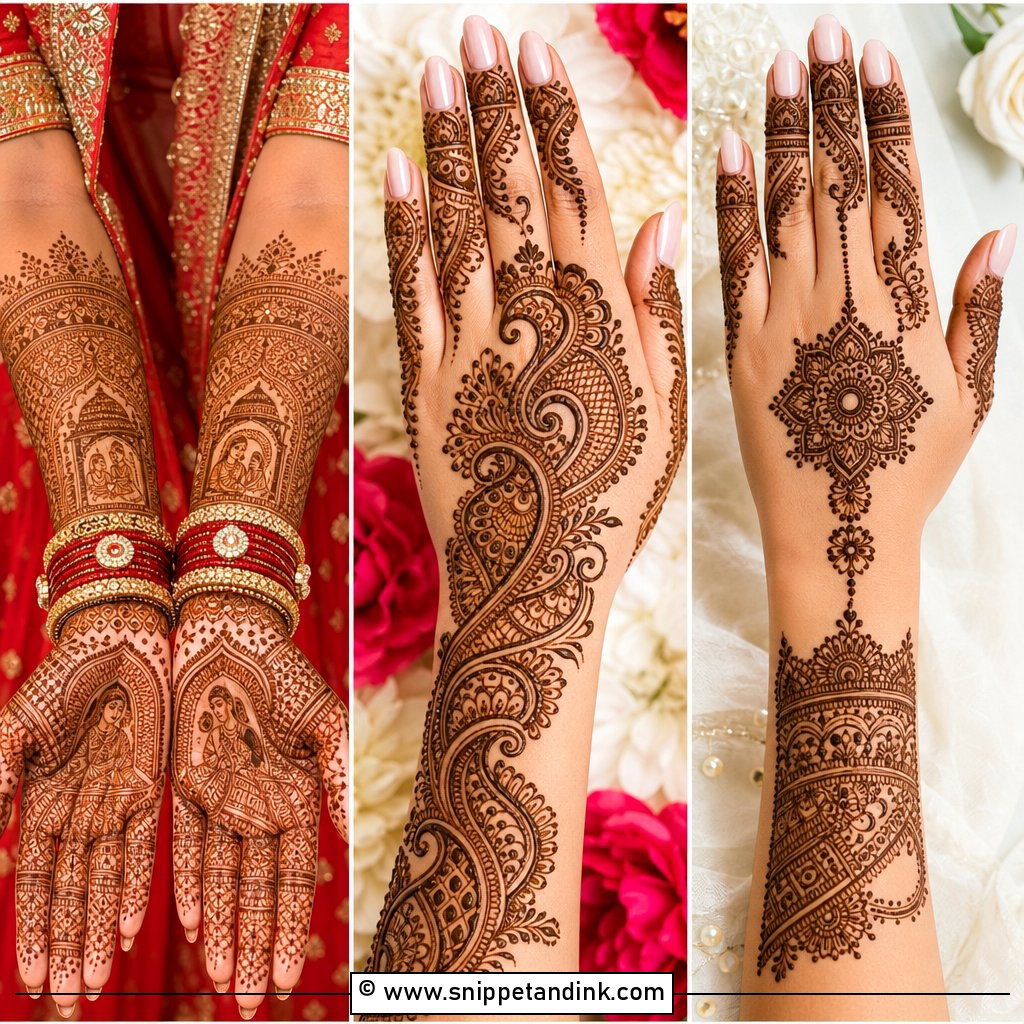
20. Lotus Back Hand Engagement Mehndi Design
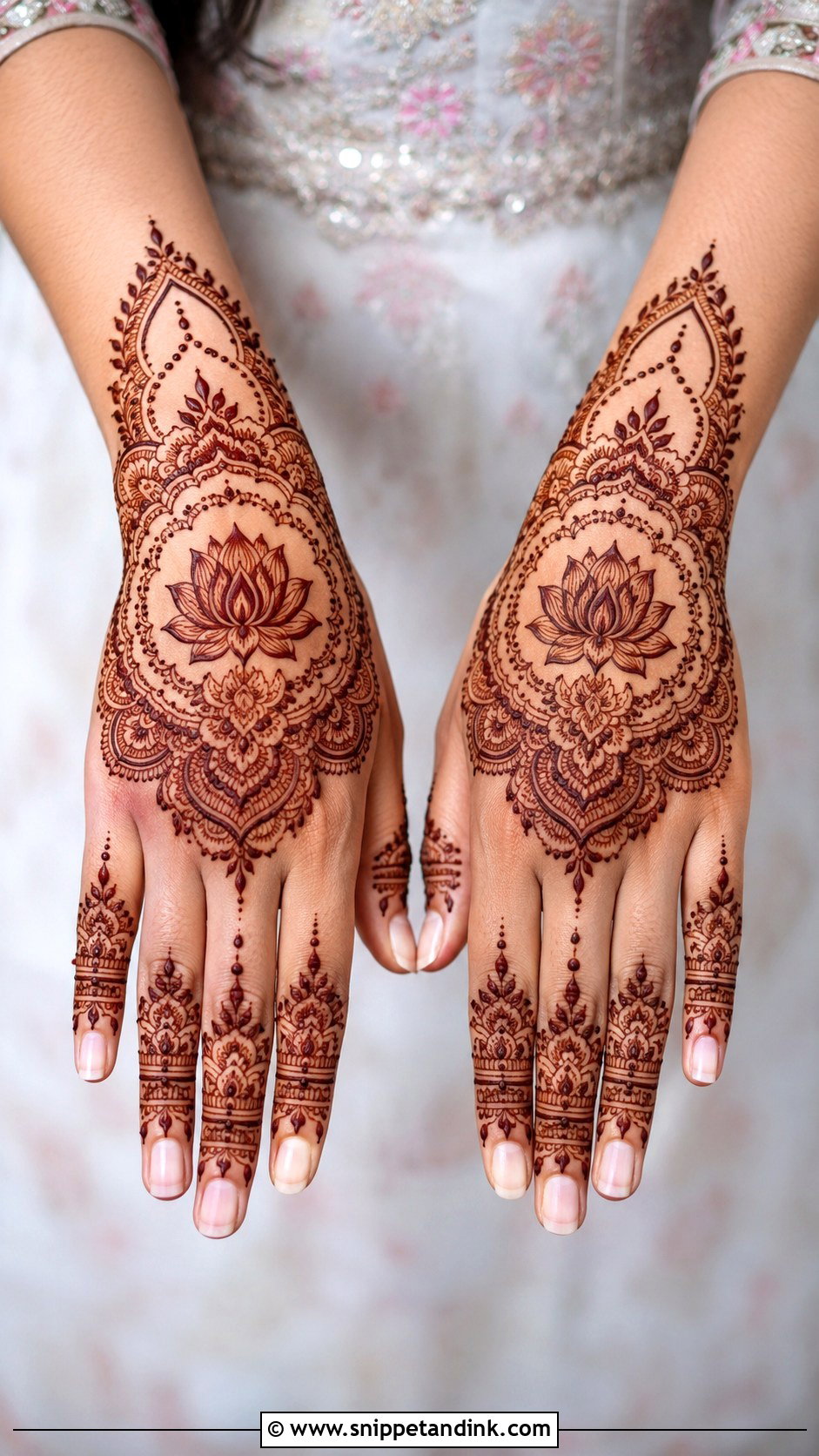
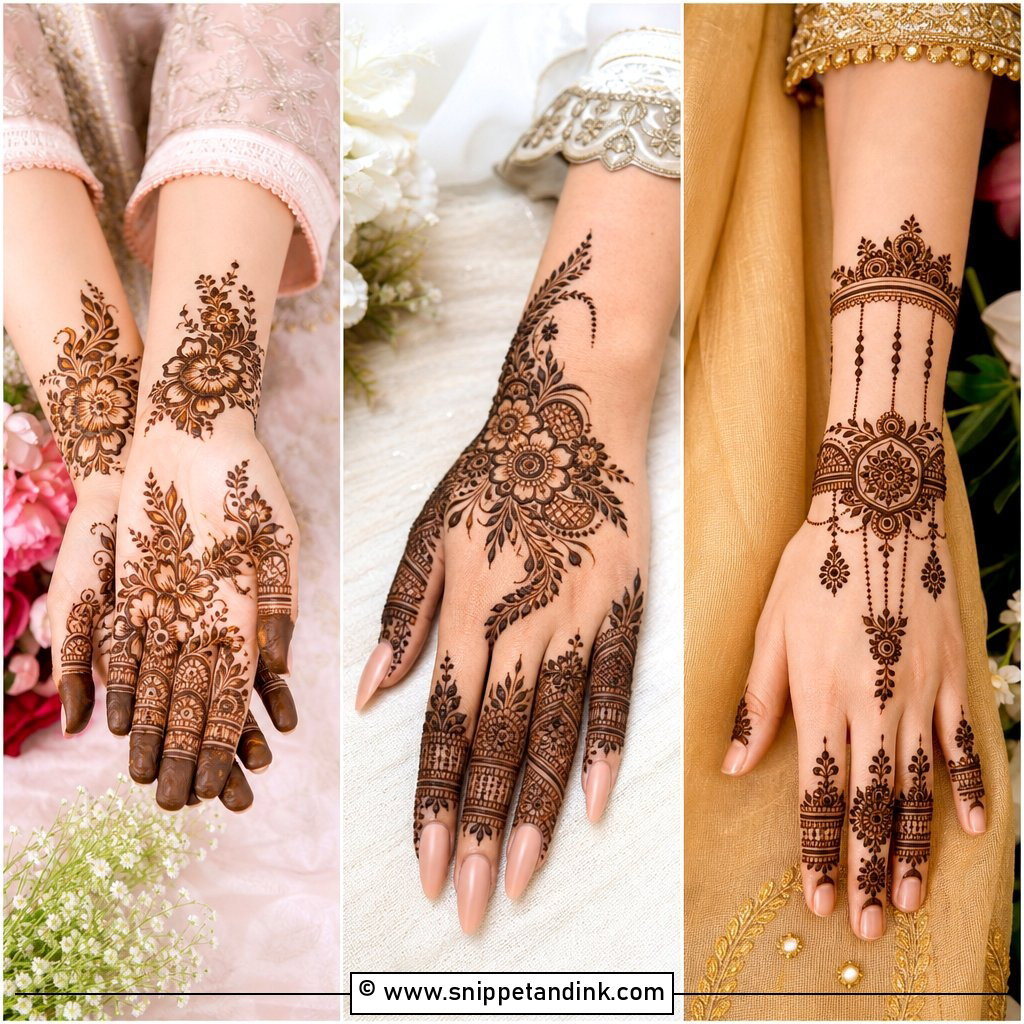
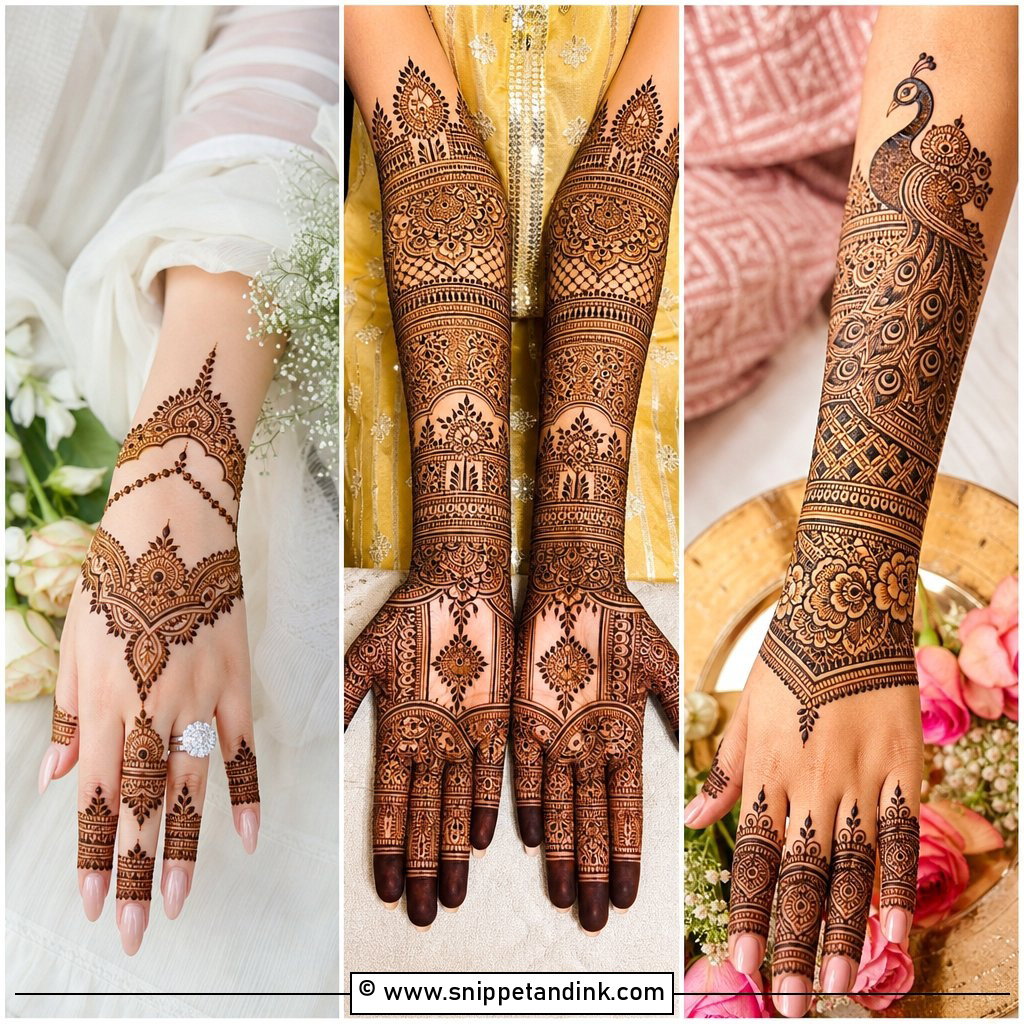
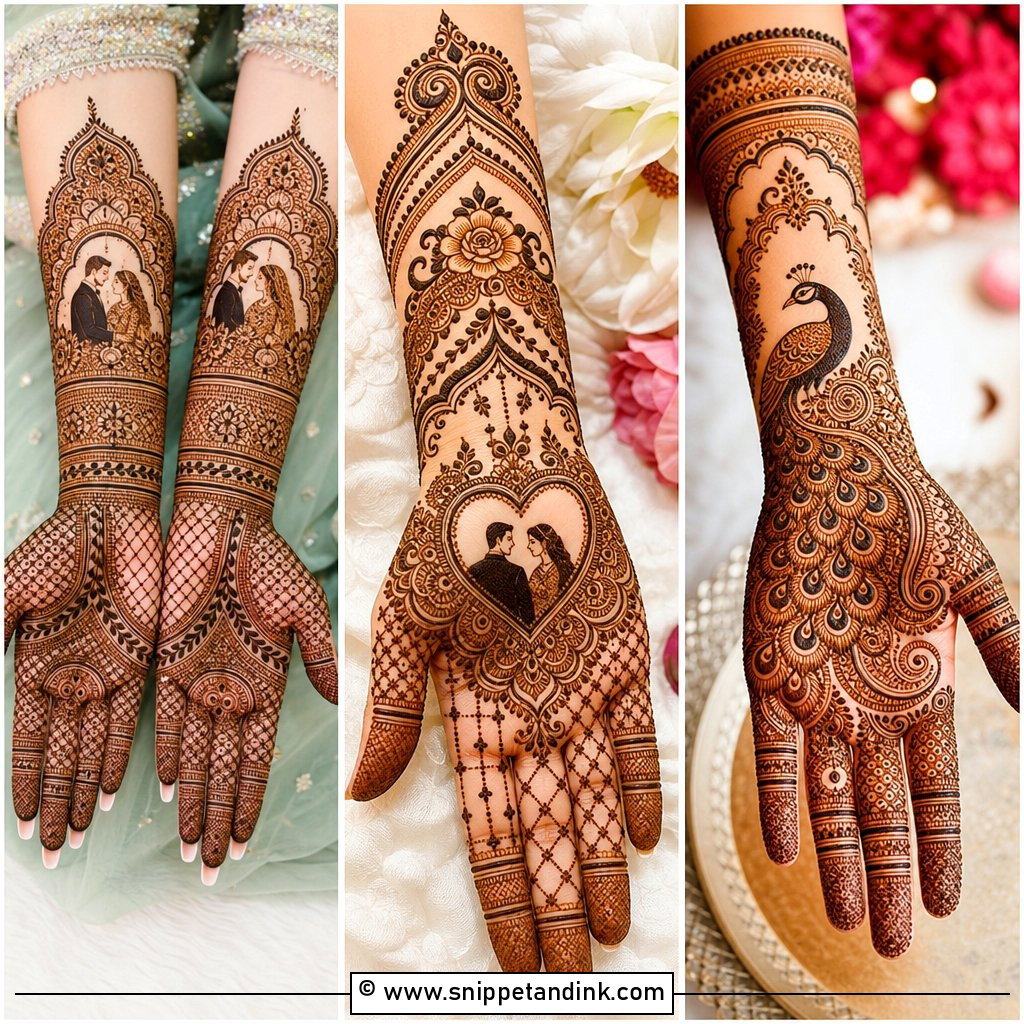
The lotus carries a lot of meaning in many families, and it sits well with Indian outfits and temple jewellery. I place it at the centre of the hand, inside a mandala or near the wrist with petals opening toward the fingers, then add dotted arcs, paisleys and leafy borders. The petals need room. If they are packed with fine filler, the lotus shape vanishes once the stain deepens, so I keep at least the outer petals clean and open.
21. Shaded Back Hand Engagement Mehndi Design
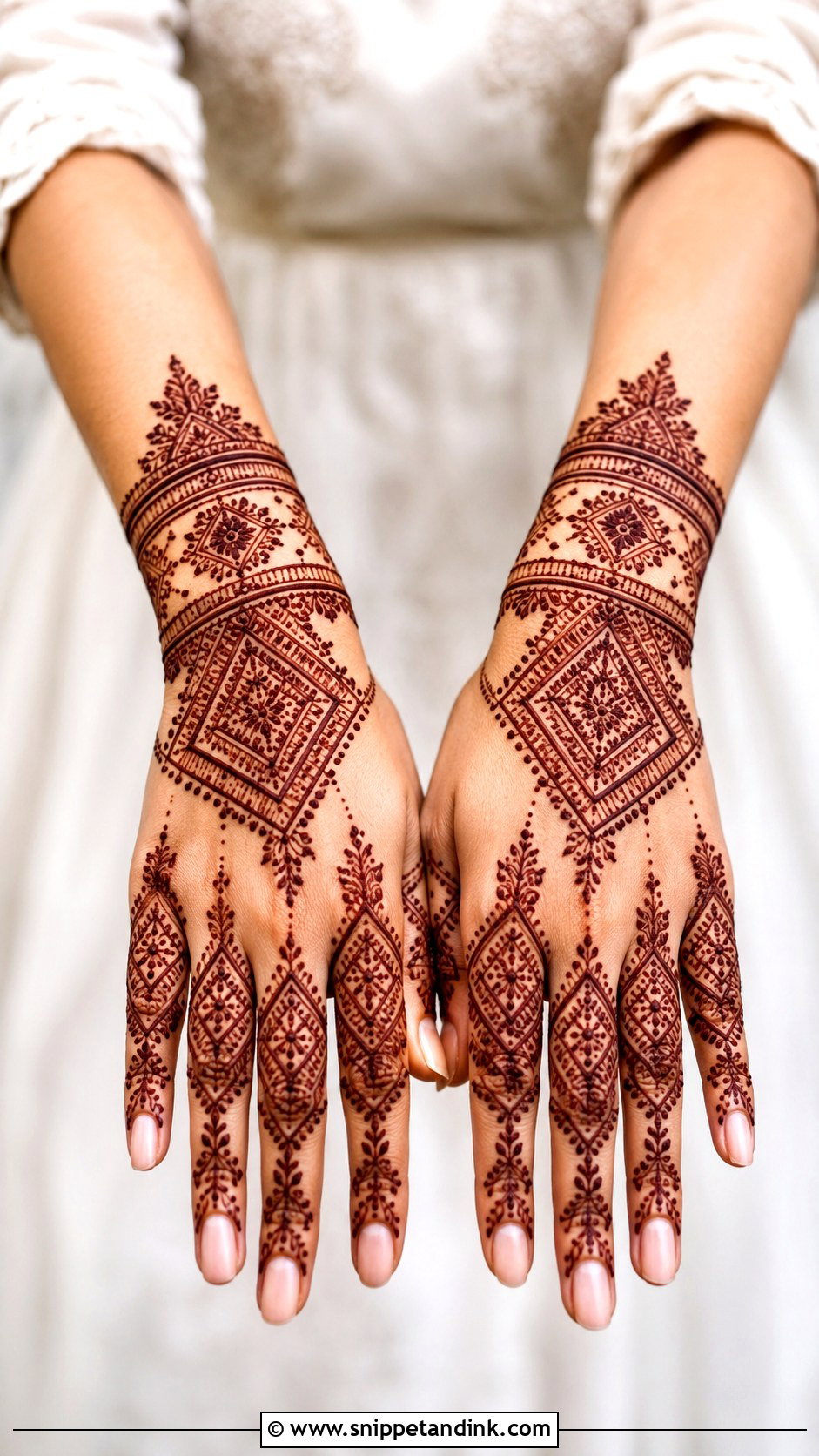
Shading gives depth without the sitting time of ultra-fine work. I use filled petals, soft shading, bold outlines and open spaces for contrast; flowers, paisleys and leaves look more dimensional once the stain develops. A shaded floral trail from wrist to fingers with simple finger bands is my usual layout. Good shading comes from a steady cone and an even layer of paste; patchy shading happens when the paste is laid too thin in some areas, so the stain comes out blotchy.
22. Geometric Back Hand Engagement Mehndi Design
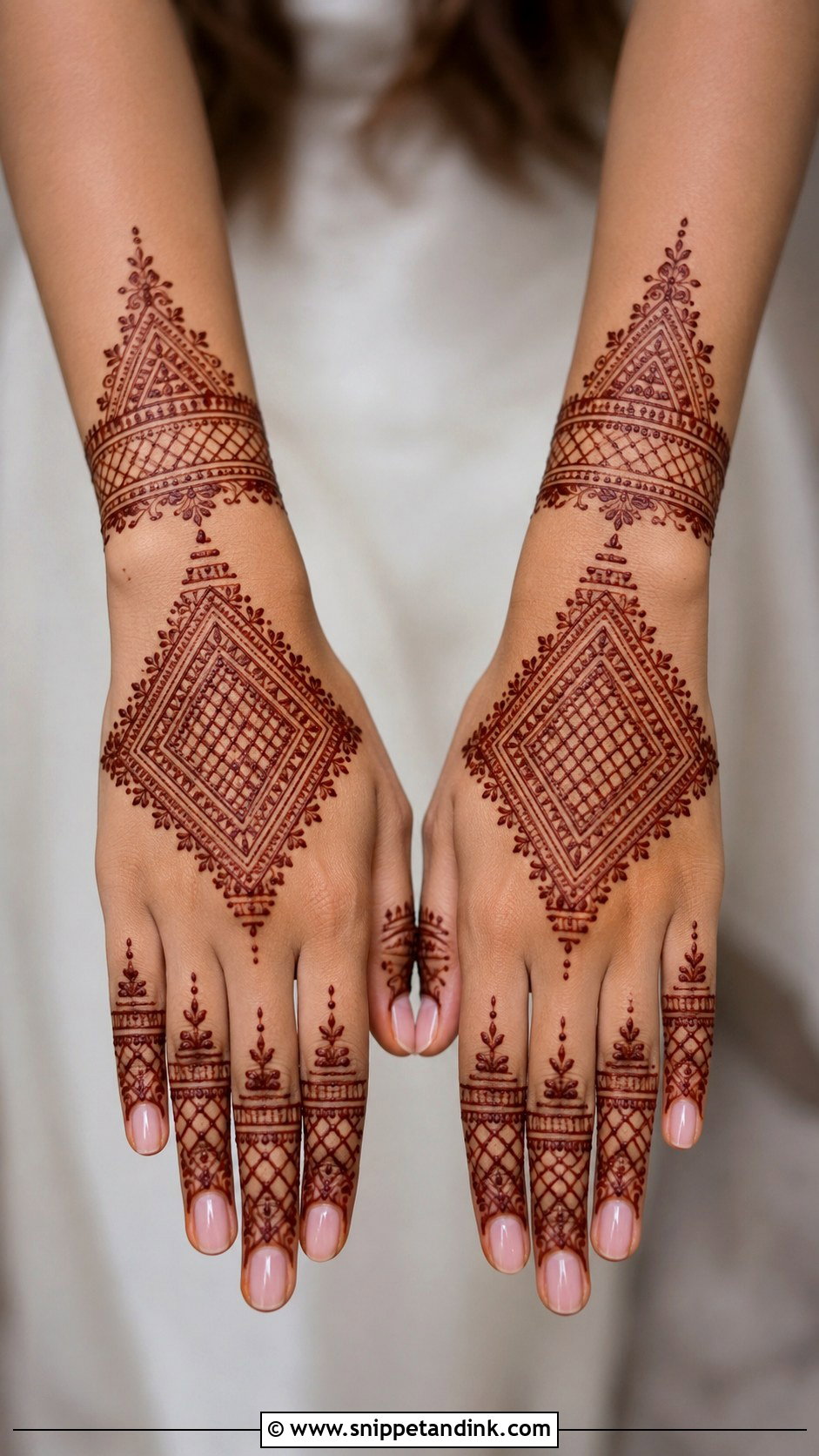
Geometric designs bring triangles, lines, grids, diamonds and structured finger details to the back of the hand. To keep it feeling like engagement mehndi, I combine the geometry with florals or leafy borders, often a diamond-shaped centre filled with fine jaali. It suits contemporary and Indo-western outfits. Straight lines are less forgiving than curves, and the back of the hand is not flat, so I sketch the main guidelines first and check them with the hand relaxed. Done carefully, it looks quite different from the usual floral work.
23. Gulf Back Hand Engagement Mehndi Design
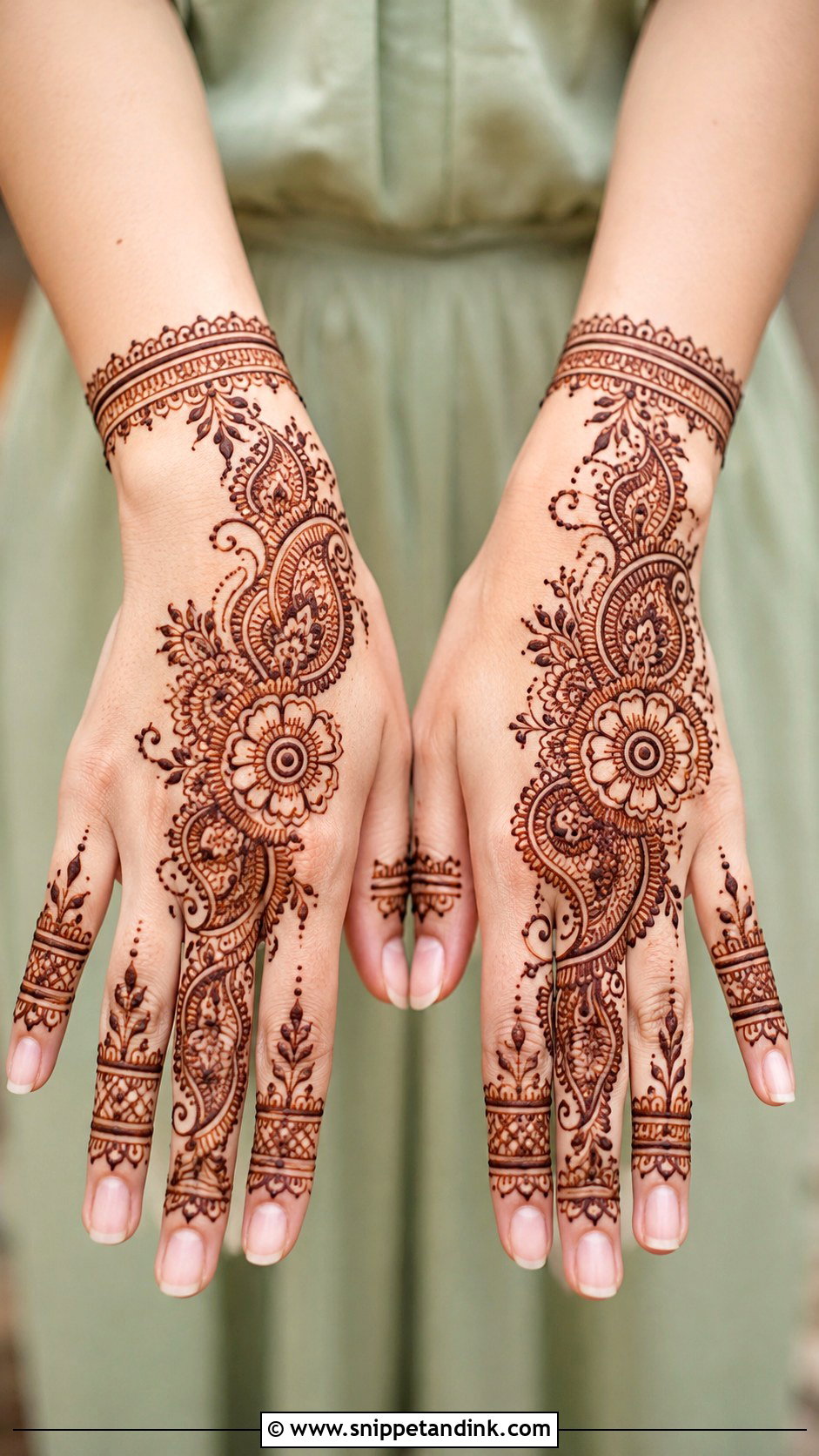
Gulf or Khaleeji-inspired layouts use bold flowers, leafy sprays and wide stretches of open skin. They usually cover one side of the hand and sweep across the fingers, which makes the hand look longer. Thick outlines are the point of this style and they stain strongly, so it is a good choice if you want rich colour on the back of the hand. Outline the large motifs clearly and put the small details inside for texture. Leave space around the ring finger so the ring still shows.
24. Moroccan Back Hand Engagement Mehndi Design
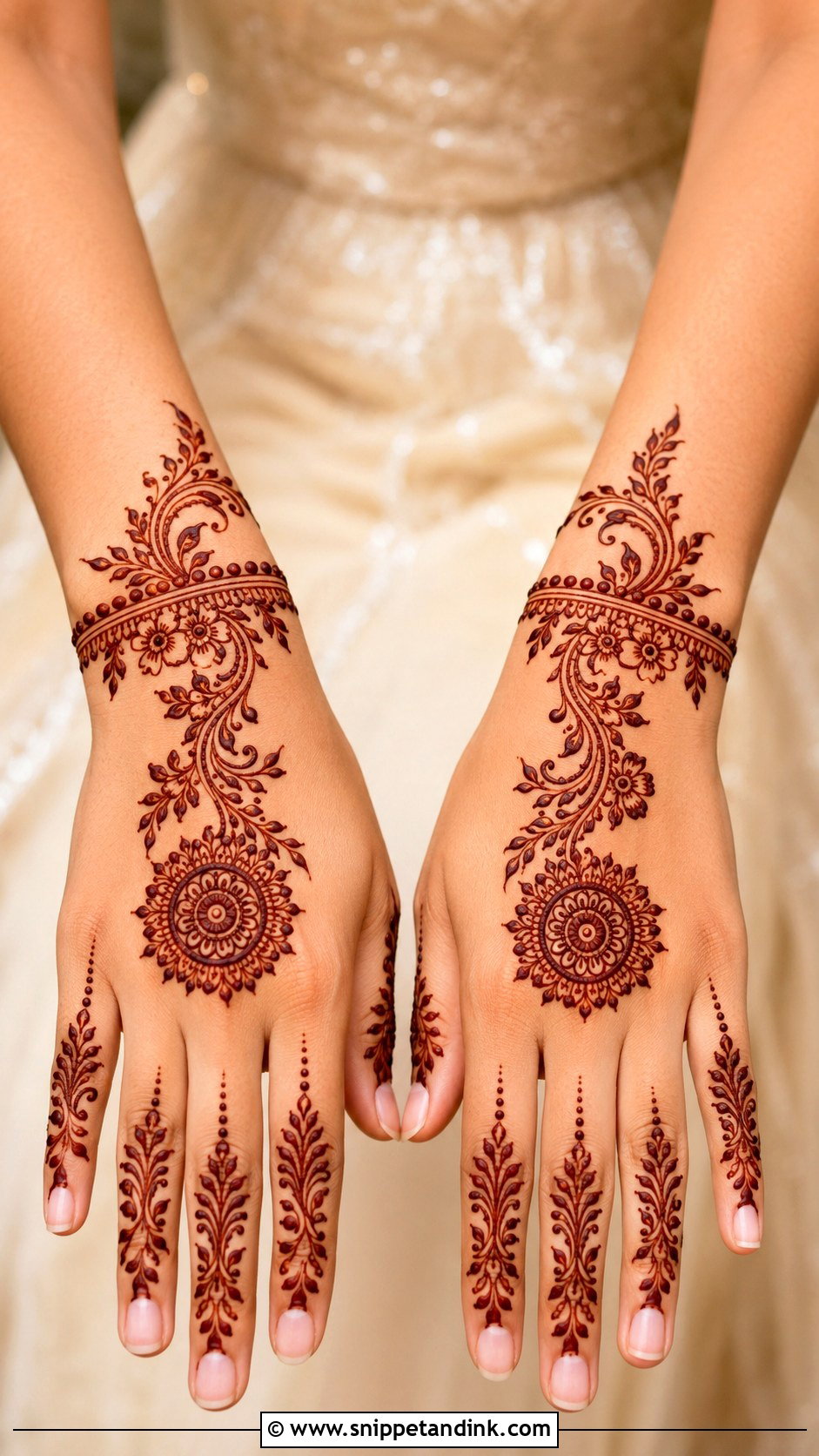
Moroccan-style work is built from diamonds, lines, dots, grids and repeated shapes, with a clear, organised structure. For an engagement I soften it with a few small florals or a delicate wrist band. The back of the hand suits it well because the patterns stay readable in photos. It is a strong choice if you are tired of floral trails and paisleys. Consistency is everything here; I count and space the repeats before drawing, because one shape that is bigger than its neighbours throws off the whole pattern.
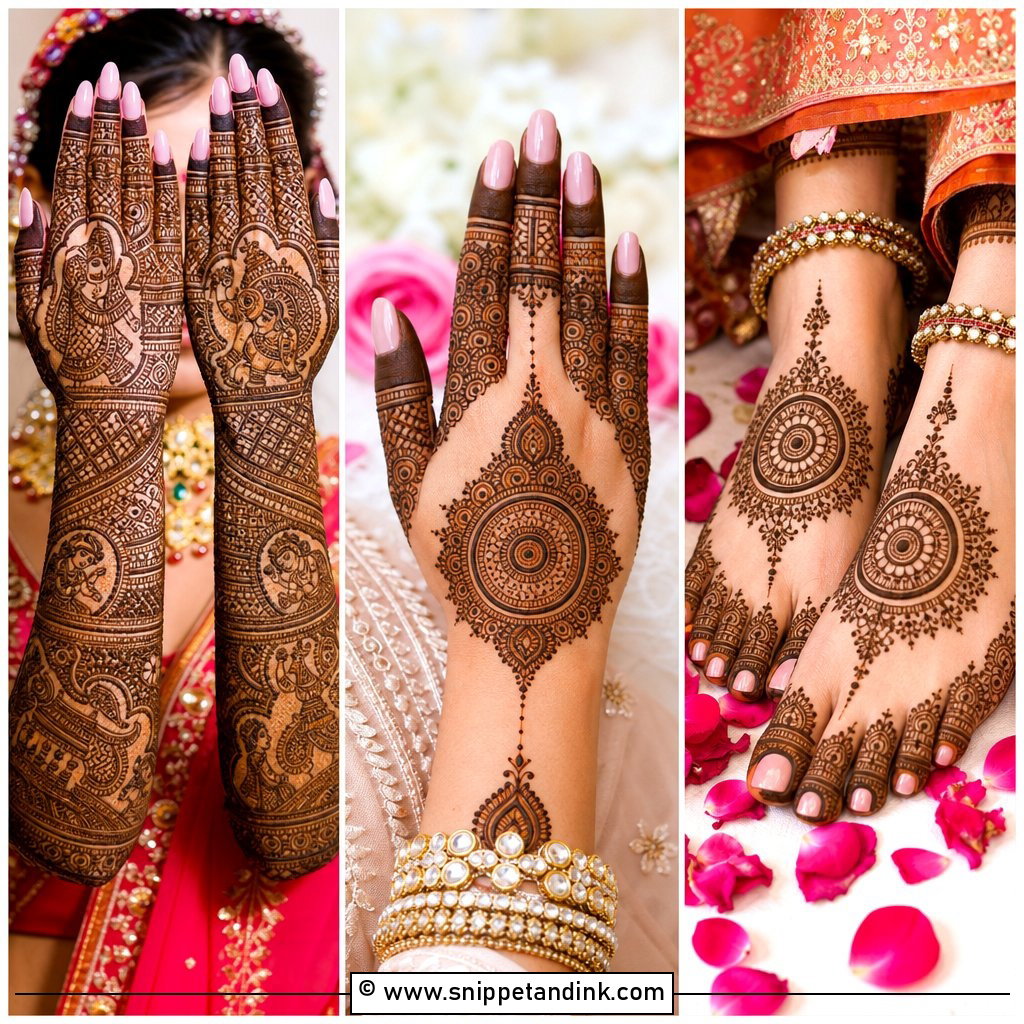

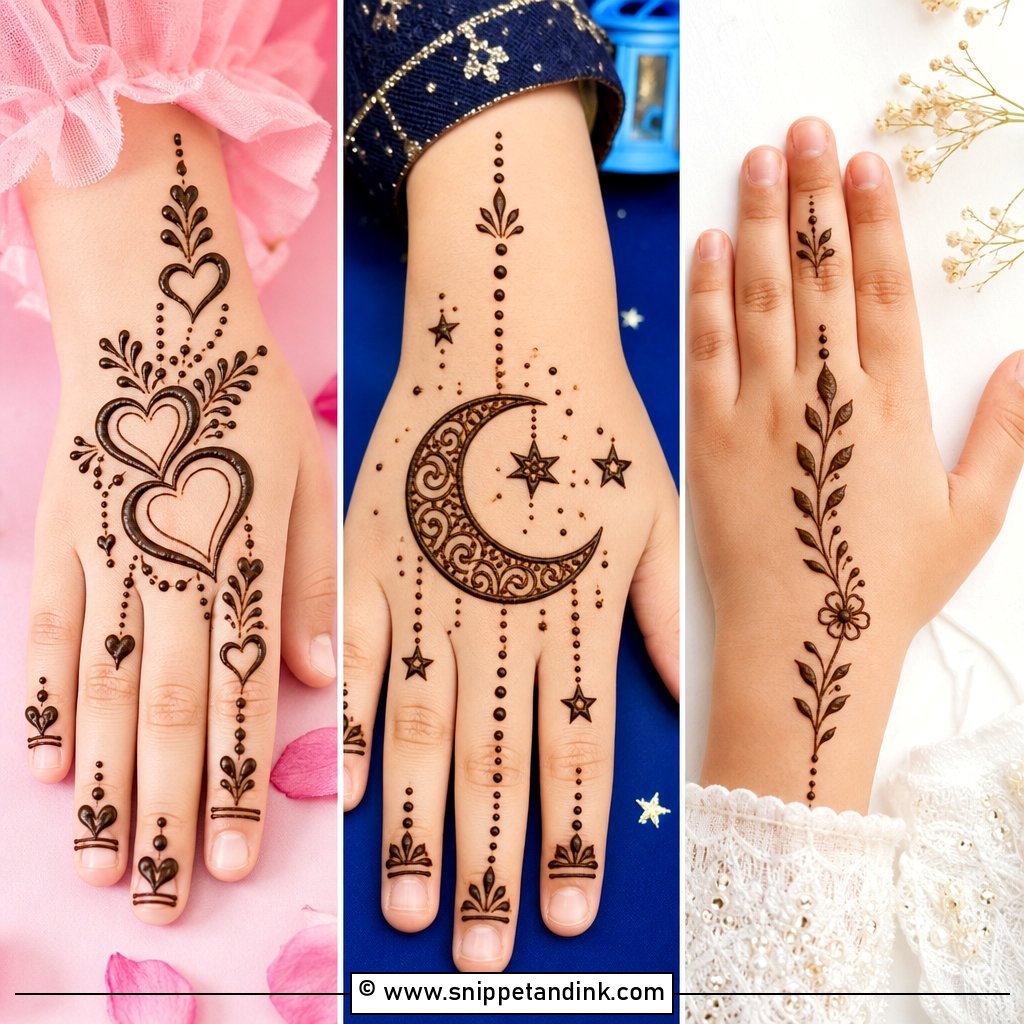
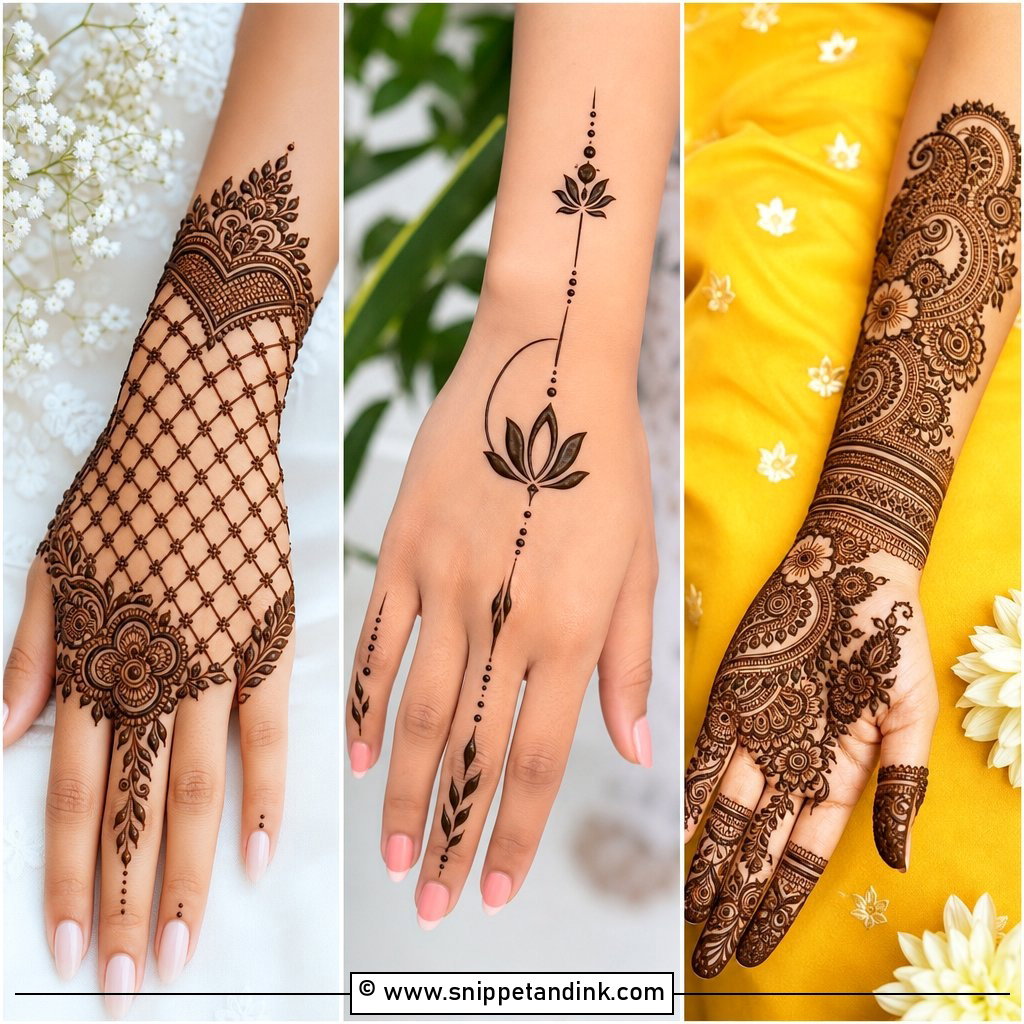
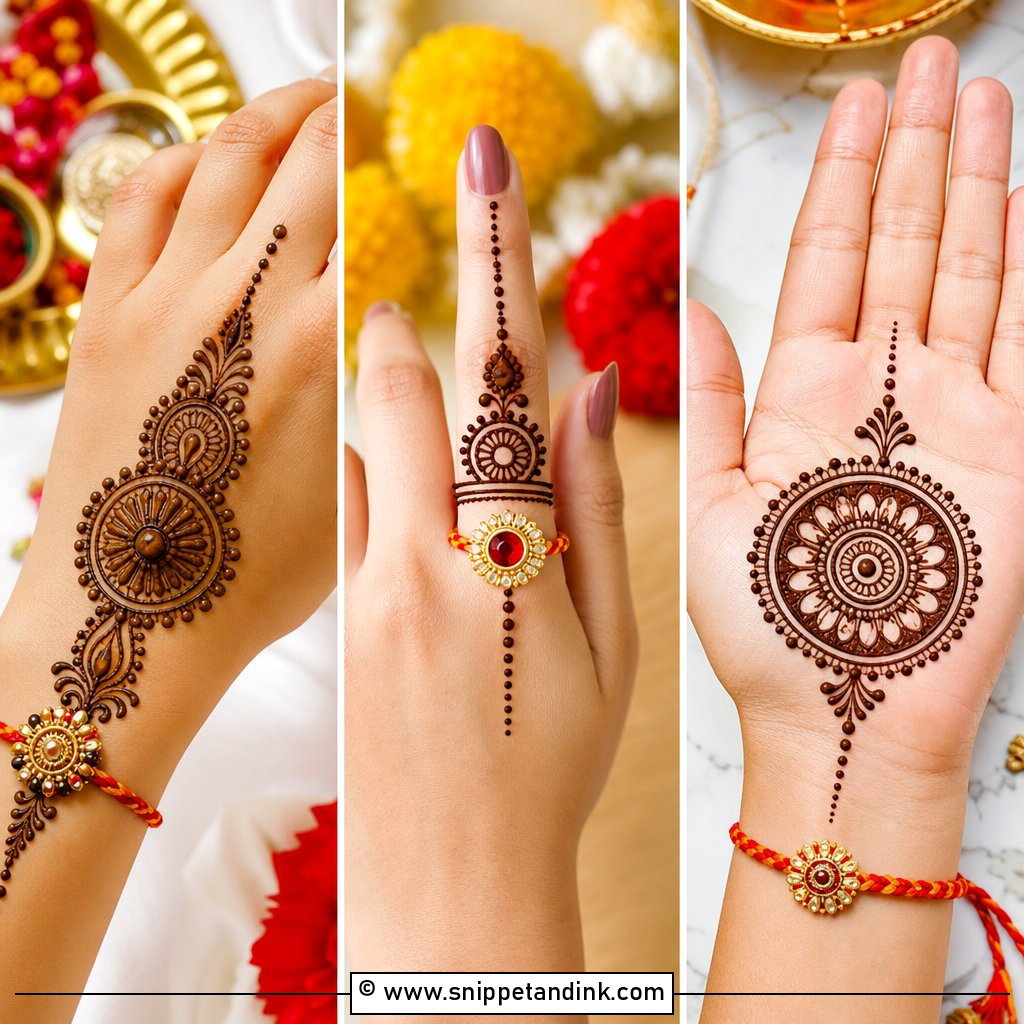
25. Half Hand Back Engagement Mehndi Design
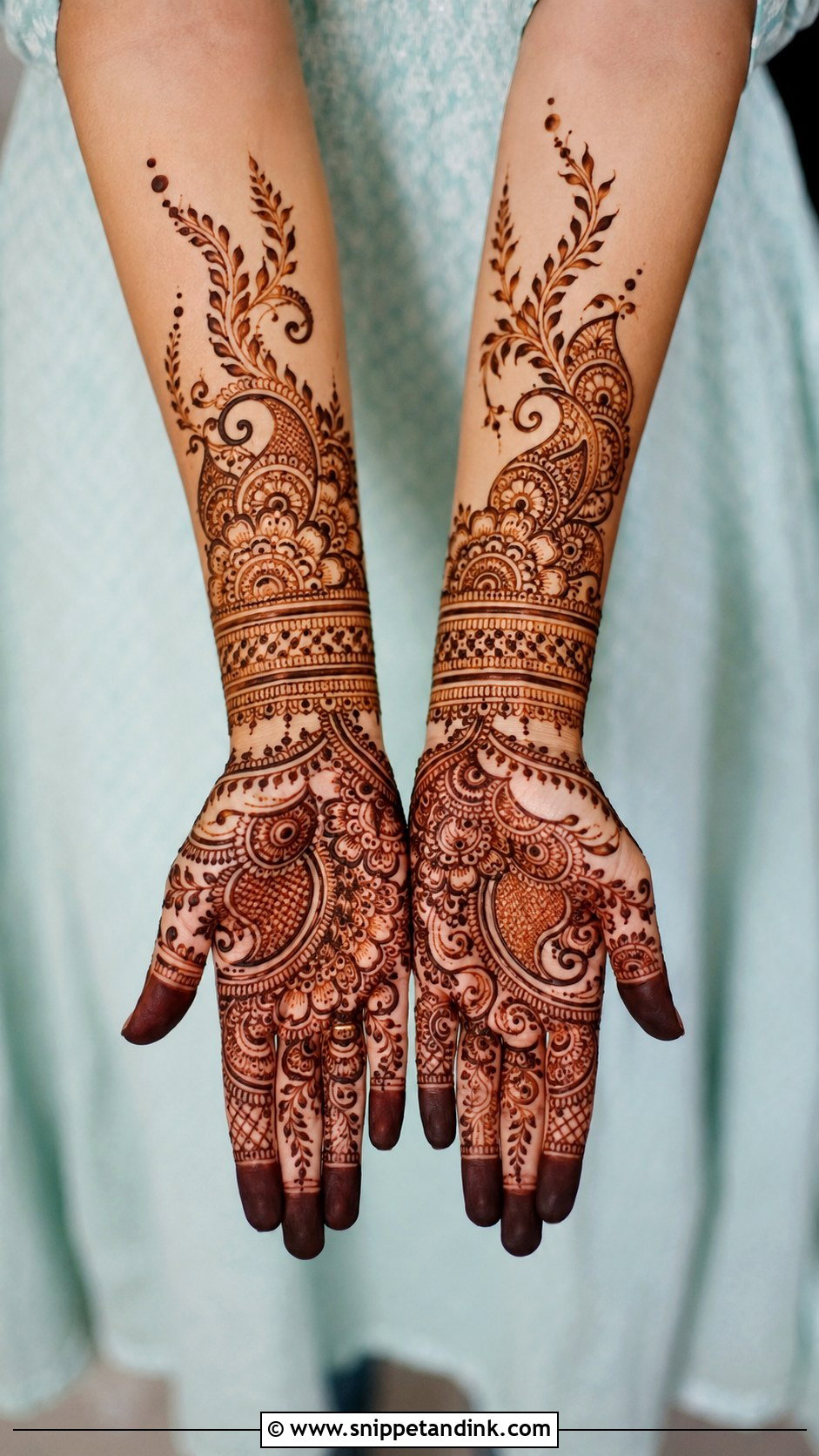
Half-hand layouts cover part of the back of the hand and leave the rest open: the fingers and one side, or the wrist and centre with bare skin toward the thumb. They sit between minimal and full coverage, festive without feeling heavy, and can use florals, mandalas, paisleys, jaali or Arabic trails. The open areas give the design room. I like this layout for engagements held on a weekday evening, since it fits a shorter sitting.
26. Wrist To Forearm Back Engagement Mehndi Design
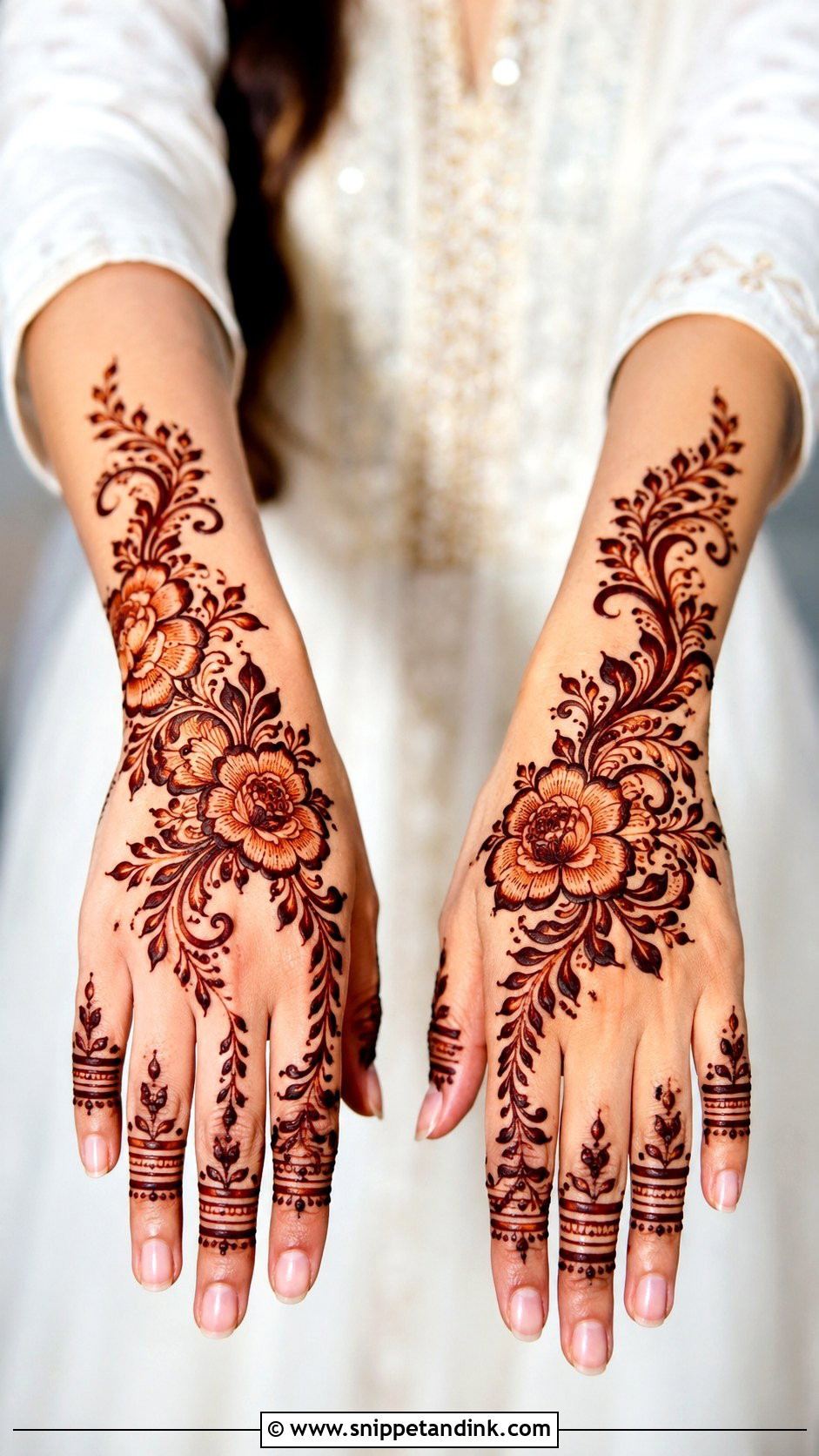
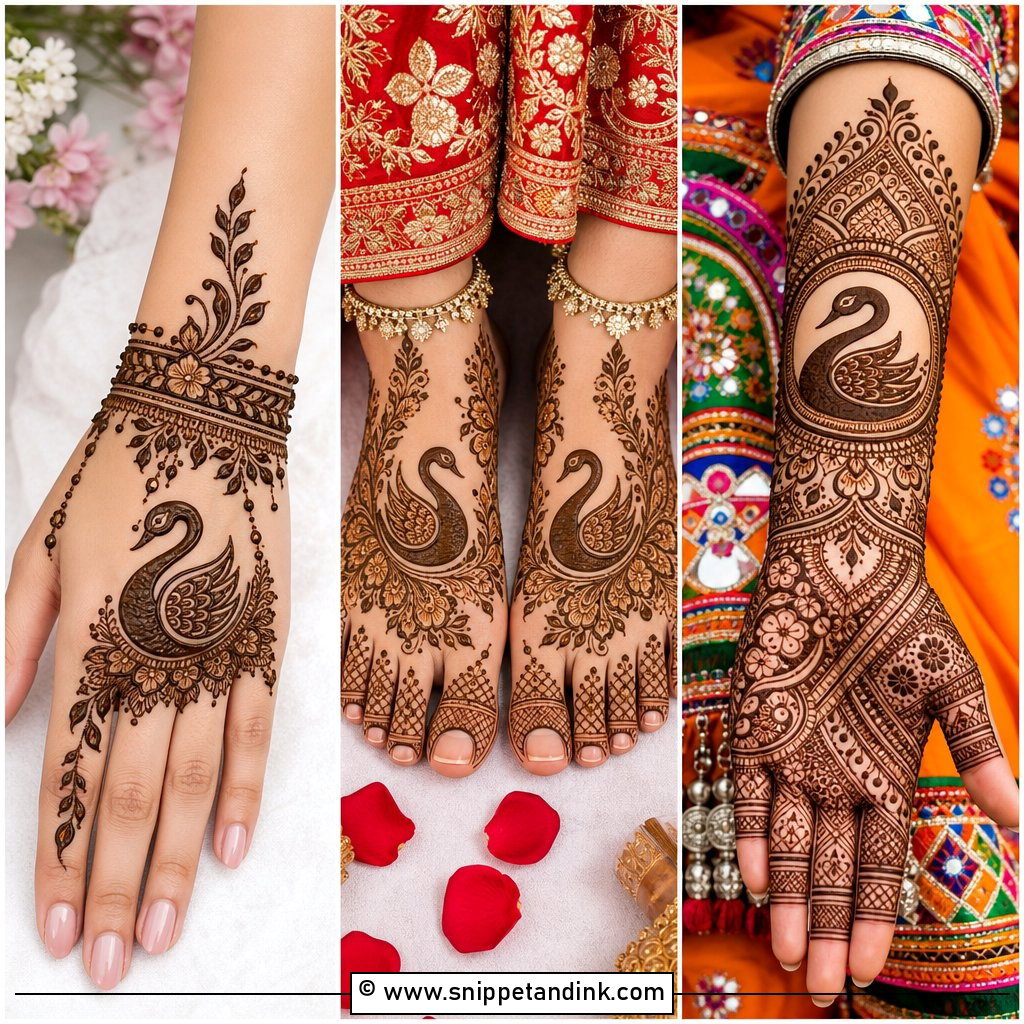
Extending the design from the hand past the wrist adds drama while keeping the focus on the back of the hand. It begins at the fingers or centre and continues with bands, florals, paisleys and leafy trails up the forearm. It needs short or sheer sleeves to be seen; under full sleeves it is wasted effort. A strong wrist band acts as the bridge between hand and arm, and the forearm part should be a little lighter than the hand so the two read as one design.
27. Engagement Name Back Hand Mehndi Design
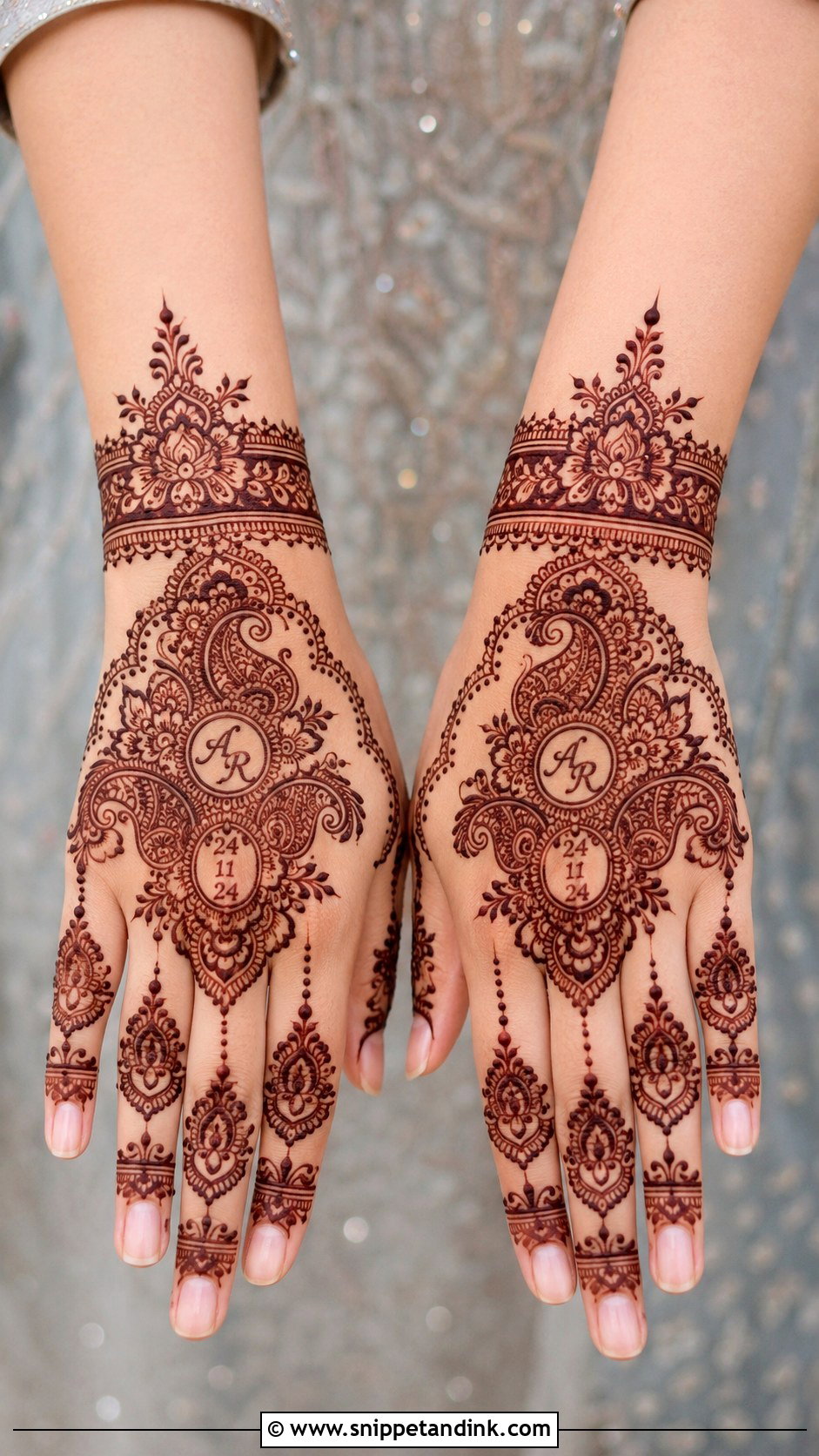
Engagement name back hand mehndi hides a name, initials or date inside a flower, paisley, wrist band or small heart. The rest of the design can be traditional, Arabic, floral or modern. I write names at the wrist or along the side of the back of the hand, where the skin stays flat; over the knuckles, letters stretch and blur as the fingers bend. Keep the lettering small and woven into the pattern so it reads as a discovery rather than a label.
28. Heart Back Hand Engagement Mehndi Design
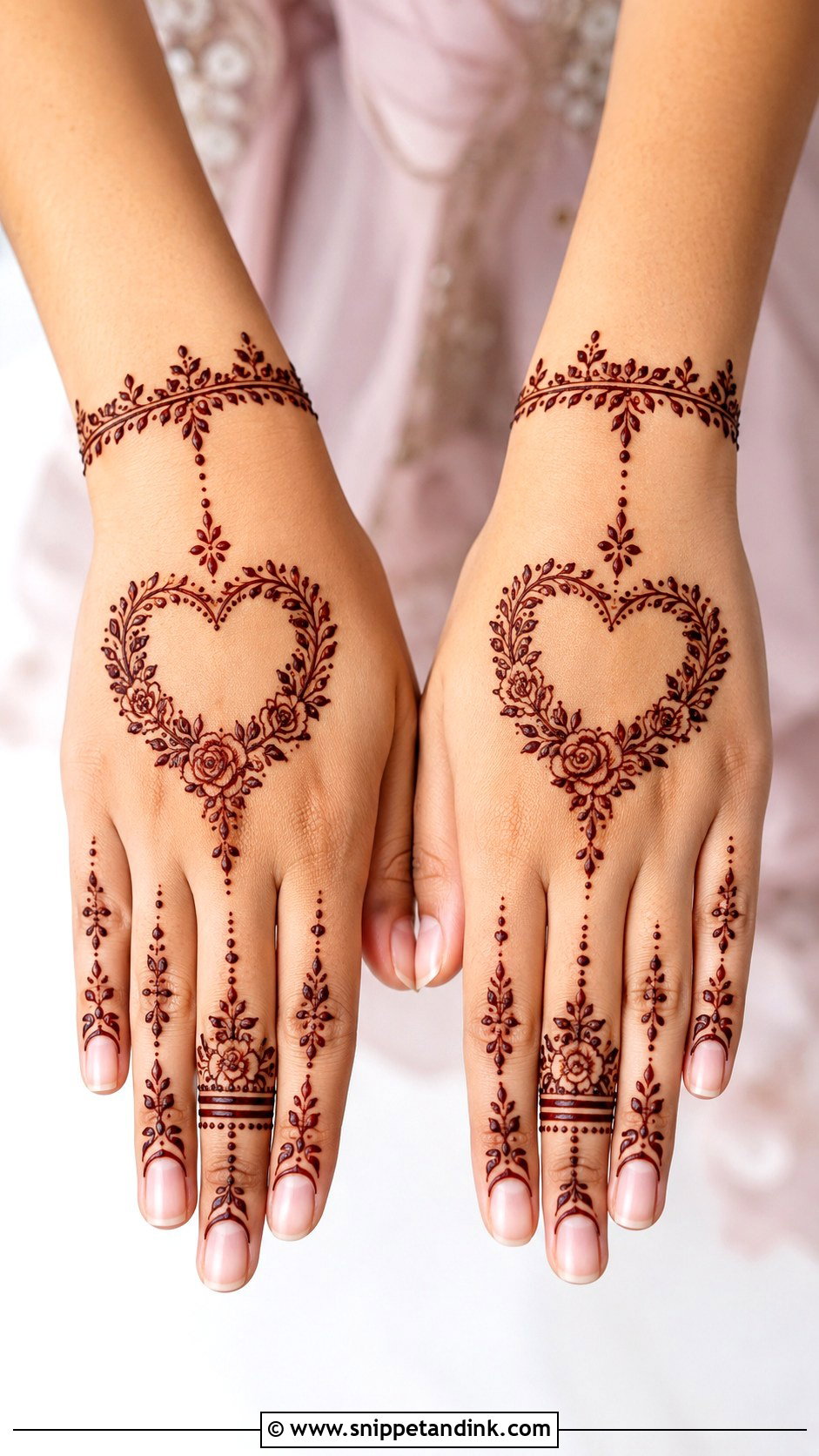
A heart can look sweet or childish depending on how it is built. Rather than a large plain heart, I form it from florals, leaves, dots or two curving paisleys, and place a small one near the ring finger or wrist. Thin lines and soft details keep the rest of the design graceful. Pairing the heart with bracelet chains gives it a jewellery feel that sits naturally in ring-exchange photos.
29. Back Hand Engagement Mehndi For Bride
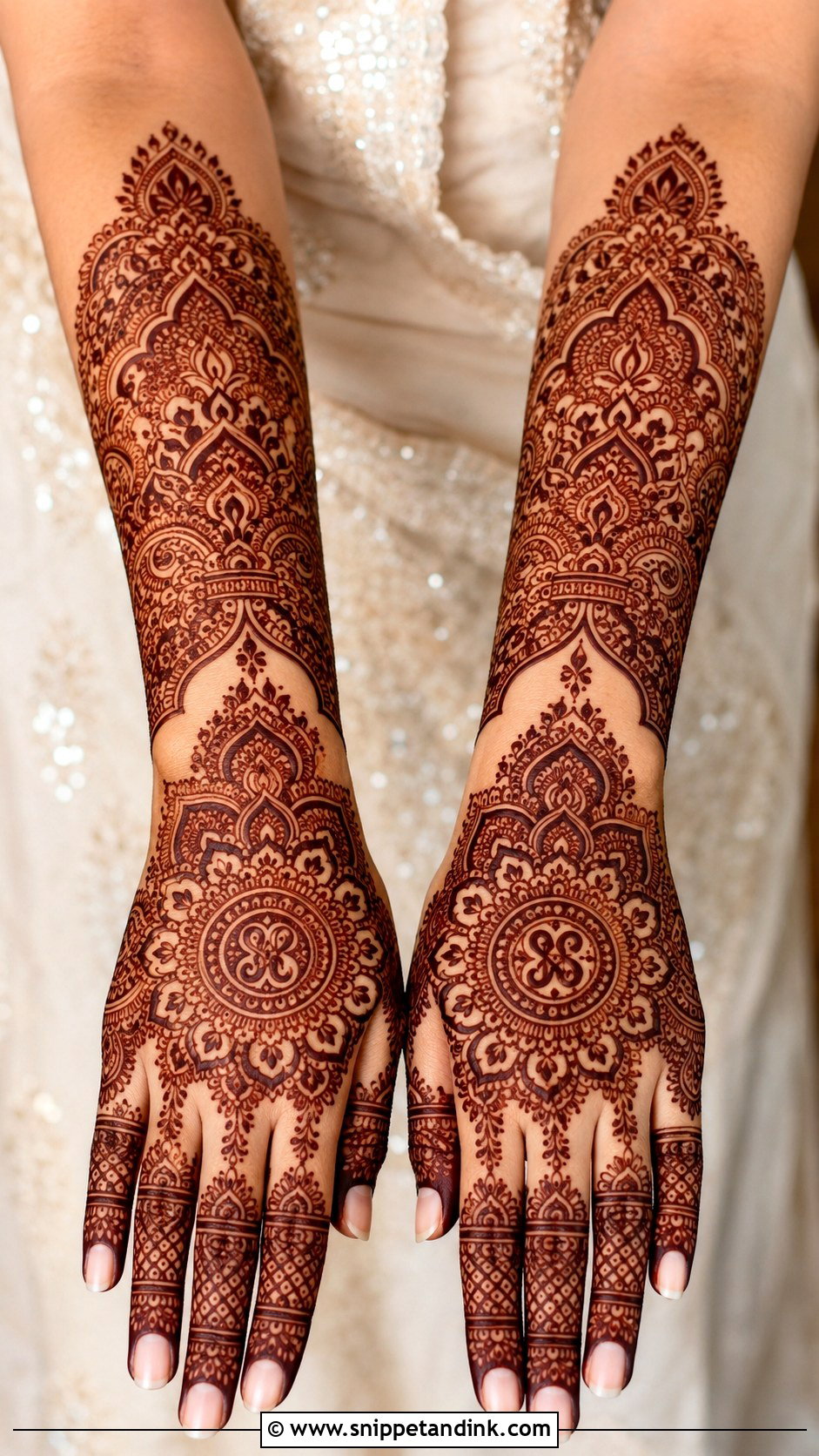
The bride’s engagement mehndi should be a little more detailed than her guests’, so she stands out in group photos. Full coverage, a floral trail, a mandala centre or a jewellery layout can all work, depending on the outfit. Match the density to the clothes: heavy lehengas carry detailed patterns, while simple sarees and gowns look better with airy Arabic or minimal work. Add initials, a date or a lotus if you want something personal. Whatever the layout, I keep the ring area visible from every angle.
30. Back Hand Engagement Mehndi For Guests
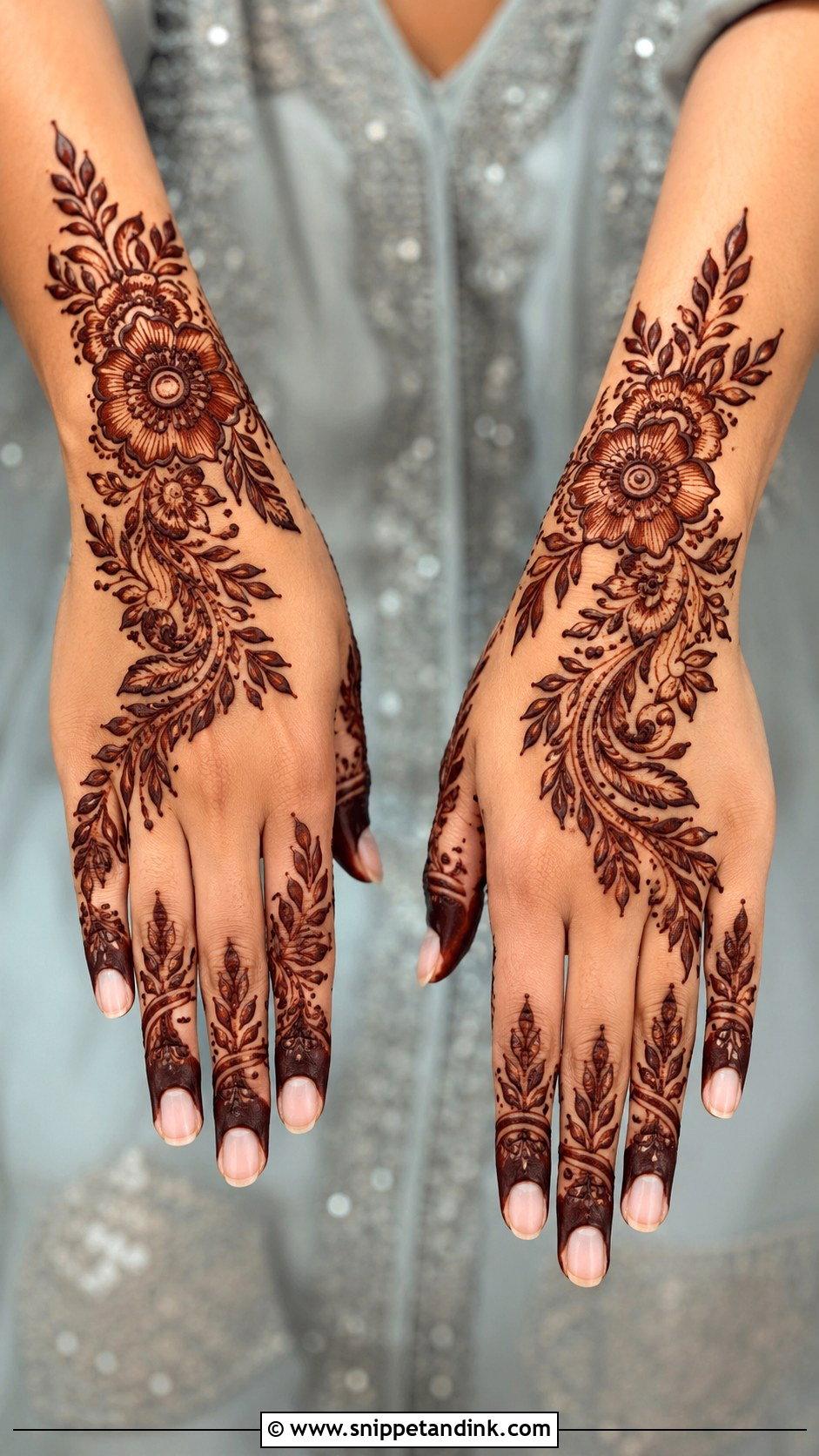
For guests, I keep engagement mehndi quick and light: a floral trail, small mandala, bracelet pattern or finger-focused design that finishes at the wrist. Arabic or minimal styles give a clean result in a short sitting, which matters when there’s a queue of cousins waiting. If the engagement is formal, a bit more detail on the fingers and wrist helps. The guests’ designs should look festive but stay clearly lighter than the bride’s.
Getting the Stain to Peak on the Day the Ring Goes On
Fresh henna comes off the skin bright orange. It darkens over the next one to two days as it oxidises, which is why I schedule engagement mehndi a day or two before the ceremony, not the same morning. Same-day mehndi tends to look pale orange in the ring photos, and wet paste on the ring finger can smear the moment the ring slides on.
The First Twelve Hours
- Leave the paste on for as long as you comfortably can, ideally six hours or overnight. Longer contact gives deeper colour.
- Once the paste dries and cracks, I dab on a light lemon and sugar mix so it stays stuck to the skin.
- Keep your hands warm. Cold hands give weaker stains, so wear a light wrap or sit away from the air conditioning.
- Scrape the dried paste off with a blunt edge or your fingernail. Don’t wash it off with water.
Until the Ceremony
Try to keep water off the design for most of the first day, then rub a little natural oil or balm over the stain before every wash. Avoid scrubbing, chlorinated pools and harsh hand sanitiser on the design, because they lift colour from the back of the hand far faster than from the palm. Handled this way, the stain usually looks its richest around the second day, and that is the day I’d put the ring on.
Let Your Outfit and Ring Decide How Much of the Hand to Cover
Your outfit, jewellery, ceremony style and appetite for coverage decide most of this. Some brides want dense Indian work; others prefer simple Arabic trails, jewellery mehndi or modern minimal layouts. Because the back of the hand is what the camera sees during the ring exchange, I’d choose a layout that frames the ring, suits the shape of your hand and uses lines bold enough to stain well. If your jewellery is already heavy, leave more skin bare. Bring two or three of these layouts to your artist and ask which one she would adapt for your hand.
You'll Like These Ideas:






Leave a Reply