
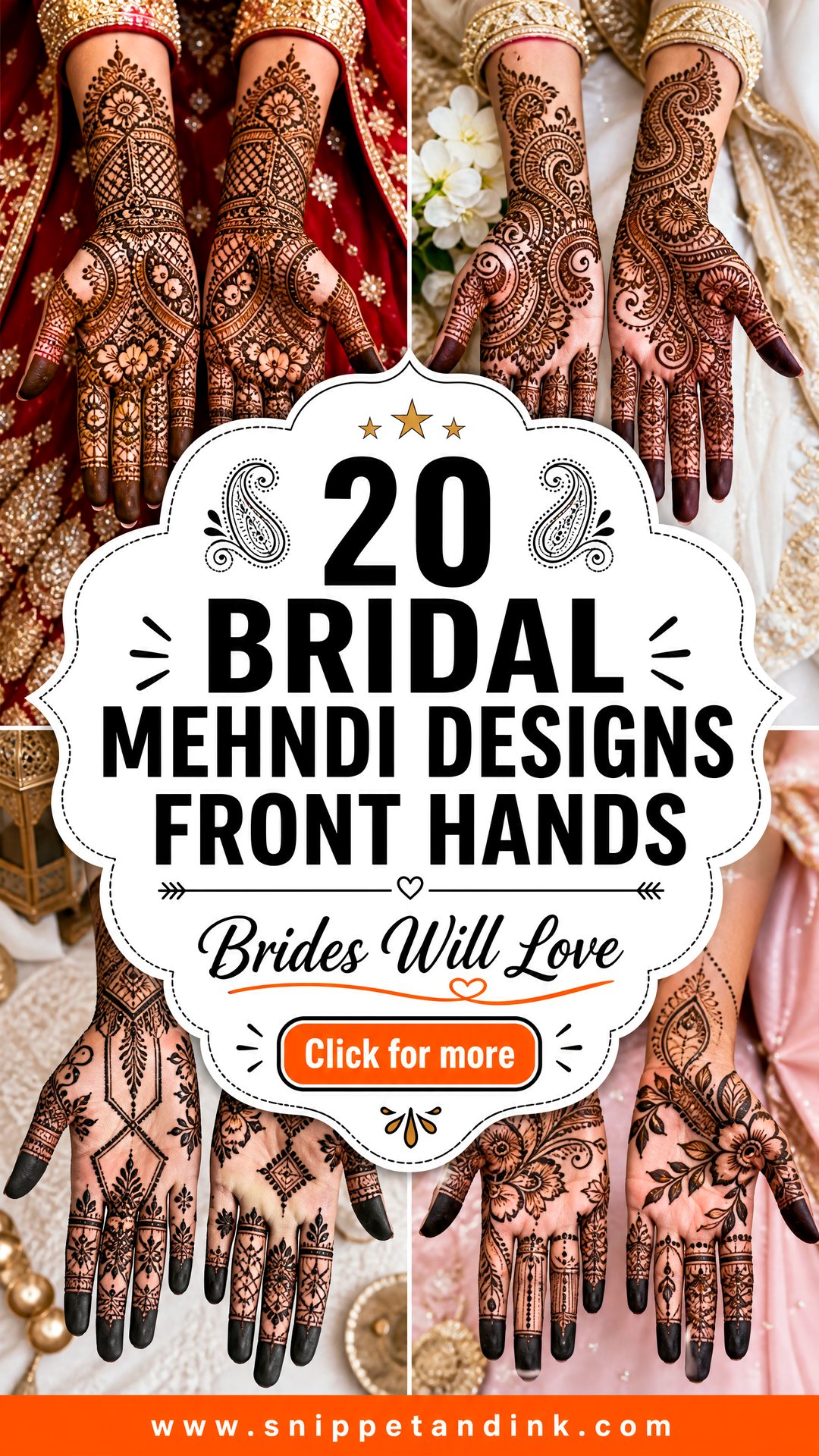
Bridal front hand mehndi is where the stain comes up darkest and where guests lean in first, so it’s worth getting the placement right. A palm is not a flat page. It has a thumb mound, deep creases, a hollow in the centre and three segments on every finger, and a motif dropped in the wrong spot will warp the moment you close your hand. Below are twenty palm designs I’m asked for, from dense Indian work and Arabic vines to portraits, jaali and modern negative space, with notes on where each motif sits best and what to ask for before you book.
Mapping Motifs Around the Creases, the Thumb Mound and Finger Joints
When a bride sits down with me, I ask her to open and close her hand a few times before I draw anything. The palm moves more than any other part of the body we decorate, and the design has to survive that movement.
The hollow and the thumb mound
The hollow in the centre of the palm stays the flattest, so that is where I put the main motif: a mandala, a peacock body or a portrait. The fleshy mound below the thumb bulges and folds as you grip, which distorts round shapes. Paisleys, vines and border work handle that area better.
Creases and finger segments
Deep palm creases and the wrist crease are where fresh paste cracks first and where fine lines smudge. I let borders sit just beside them rather than across them. Each finger has three segments separated by joint creases, and treating every segment as its own small panel, a band, a leaf, a dot cluster, keeps the fingers looking neat when they bend.
Fingertips are often dipped in solid henna, which usually stains darkest of all. Paste that touches the nails will tint them orange, so if you’ve planned a particular manicure, mention it before we start.
1. Full Hand Bridal Mehndi Design Front Hand
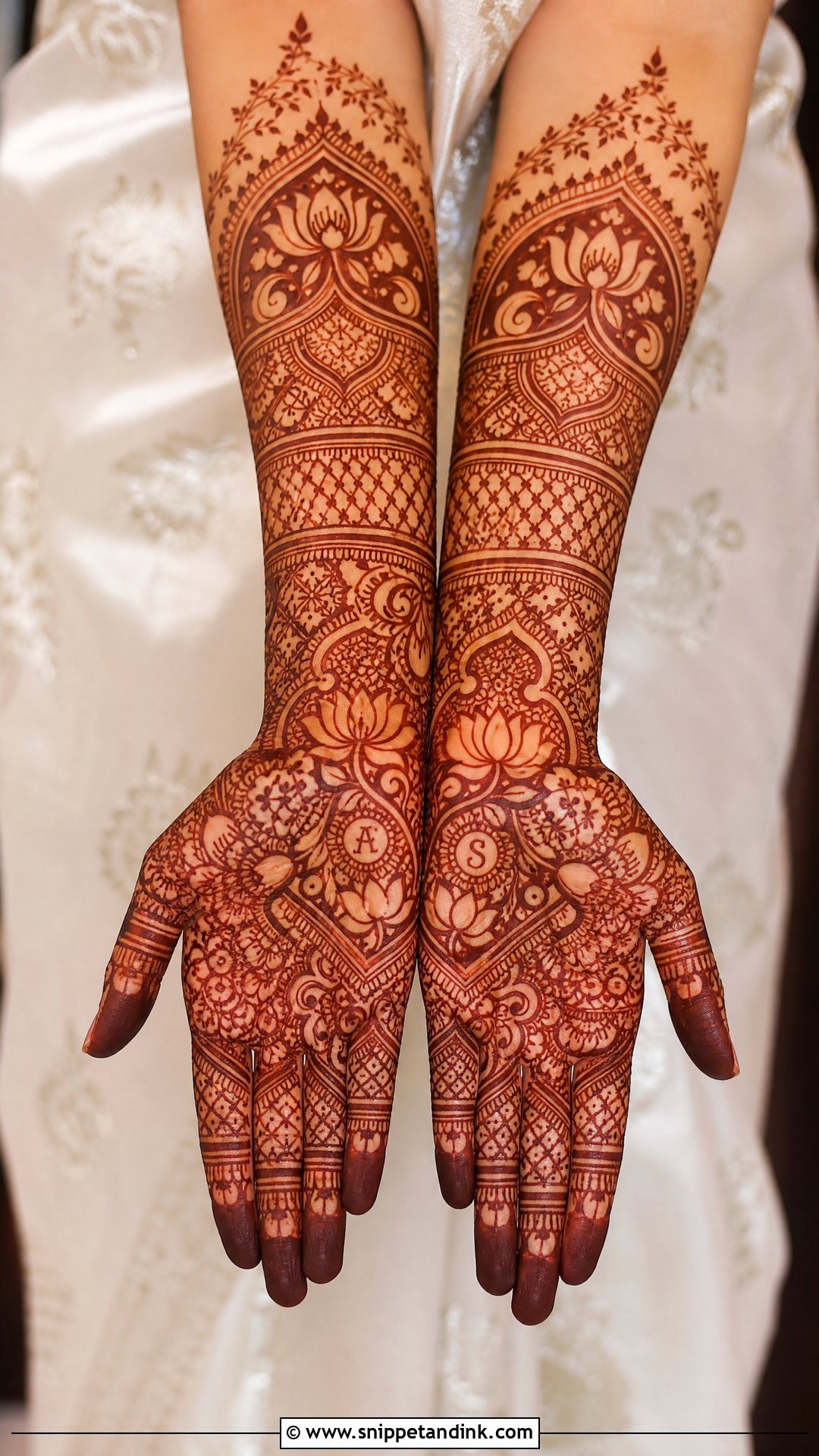
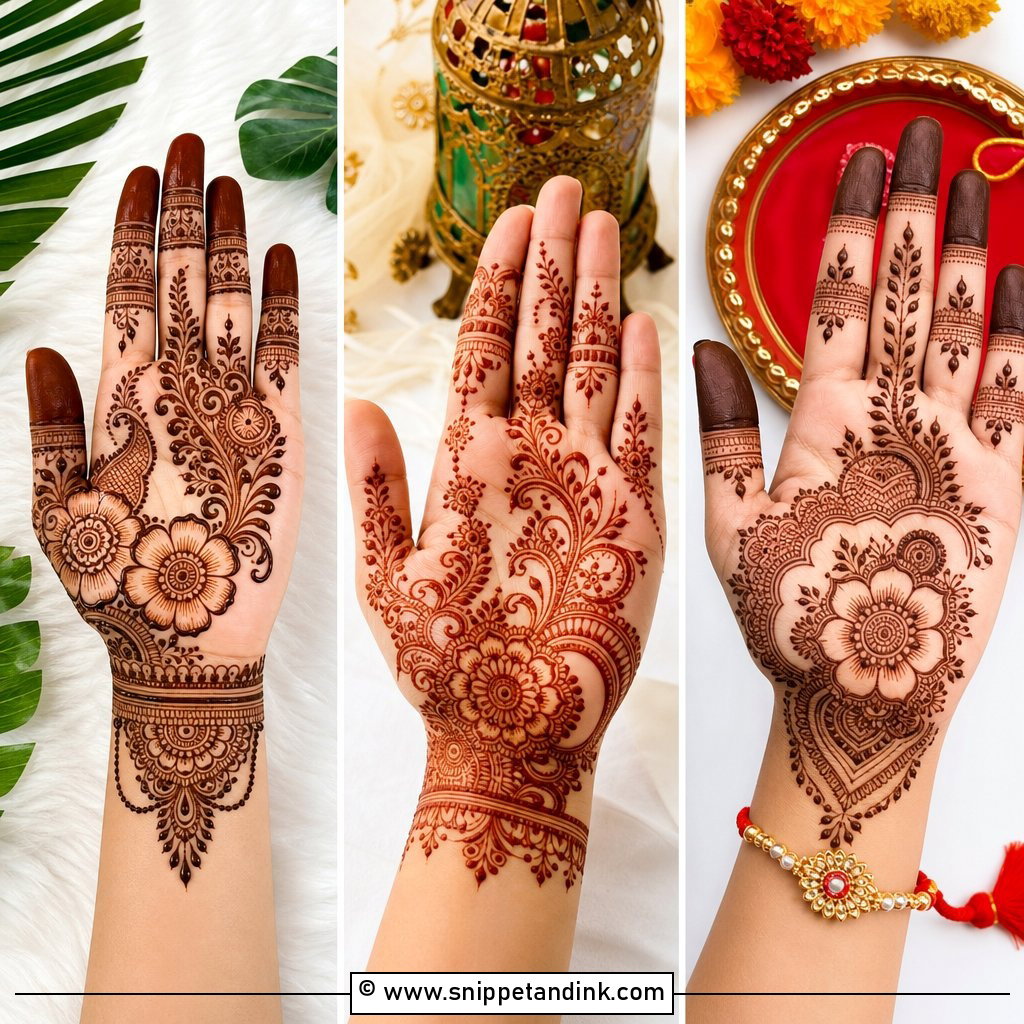
Fingertip to wrist or forearm, the palm filled with paisleys, lotus flowers, small vines, curved borders and fine filler, and the fingers heavily patterned. It’s the classic dulhan palm for red, maroon, gold and ivory outfits. My one firm request with full coverage is a single strong focal motif in the hollow of the palm with slightly more open skin around it. Palms stain so deeply that a completely packed centre turns almost solid, and then the hidden initials or wedding date nobody can find.
2. Indian Bridal Mehndi Design Front Hand
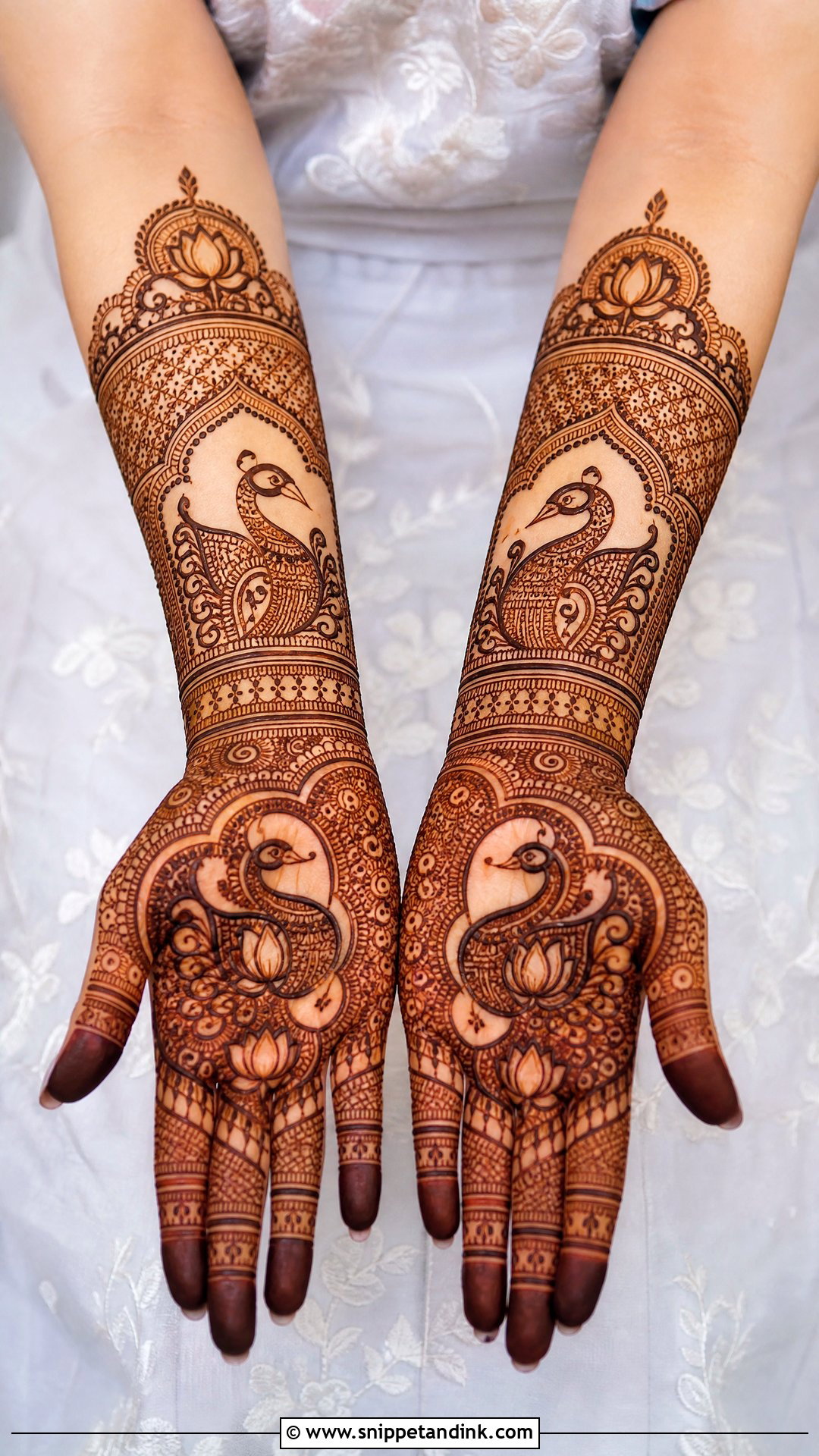
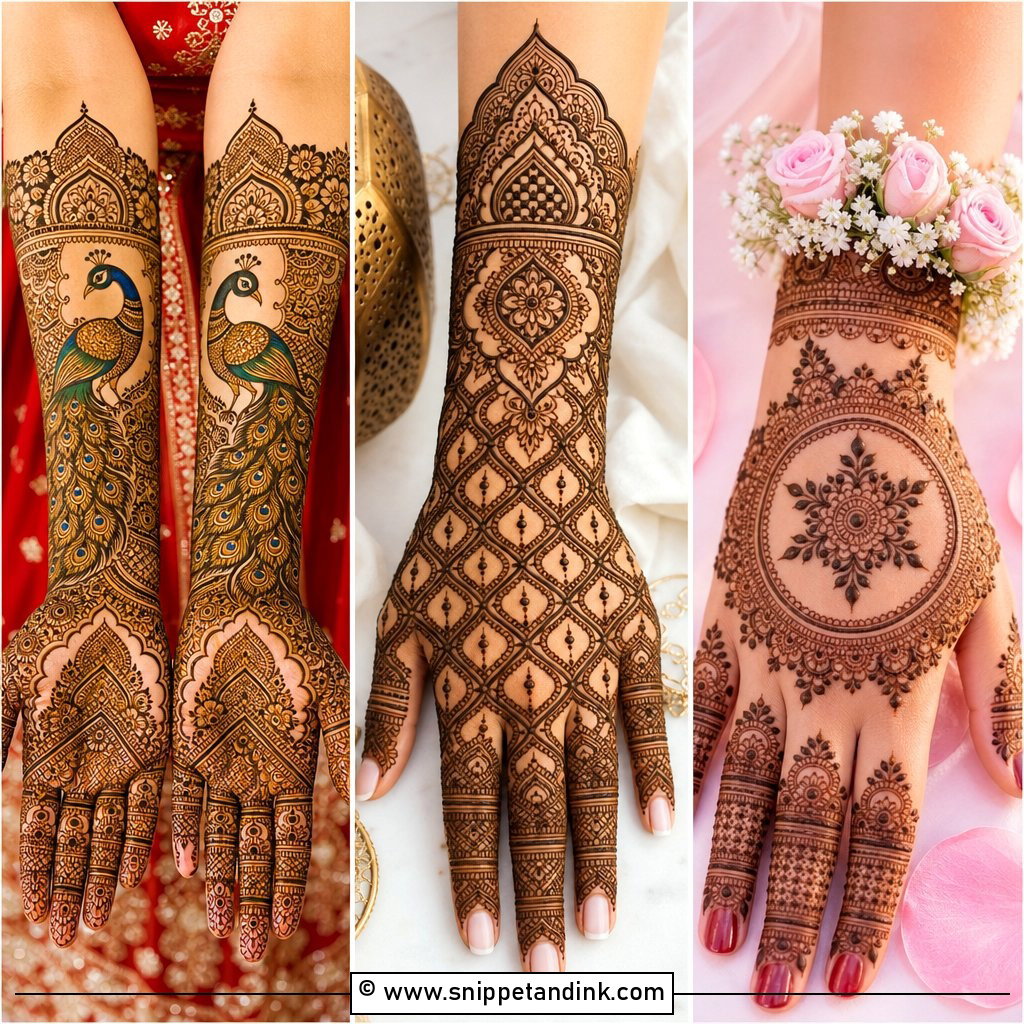
Peacocks, lotus petals, mango paisleys, fine dots, leafy vines and symmetrical borders that cover the palm fully are the building blocks of a traditional Indian palm. Every part has a job, down to the fingertip caps and wrist cuff. I usually make the two hands coordinated rather than identical: a mandala or peacock on one, paisley clusters and hidden personal details on the other. Held side by side, they look like a pair instead of a photocopy.
3. Arabic Bridal Mehndi Design Front Hand
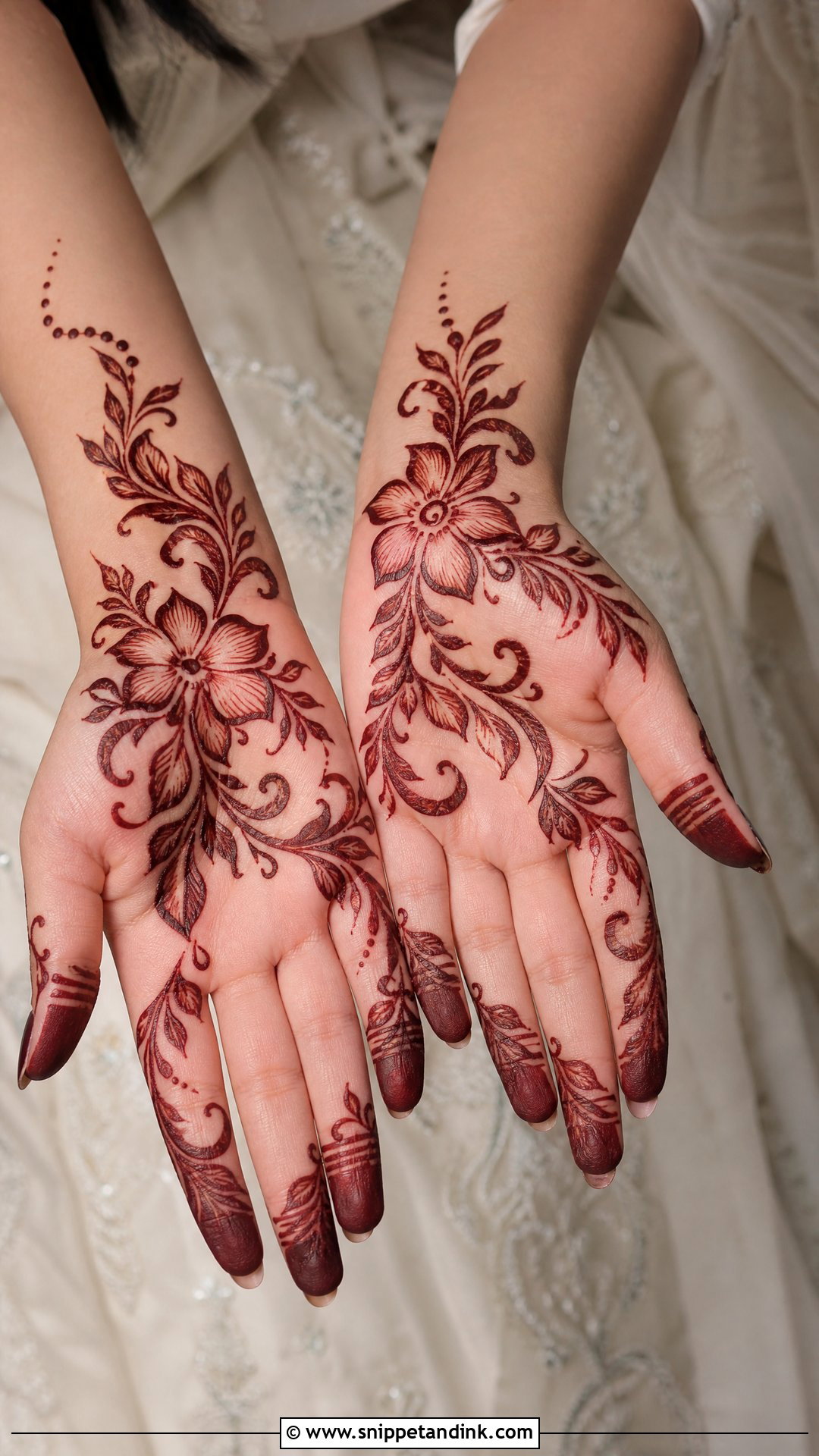
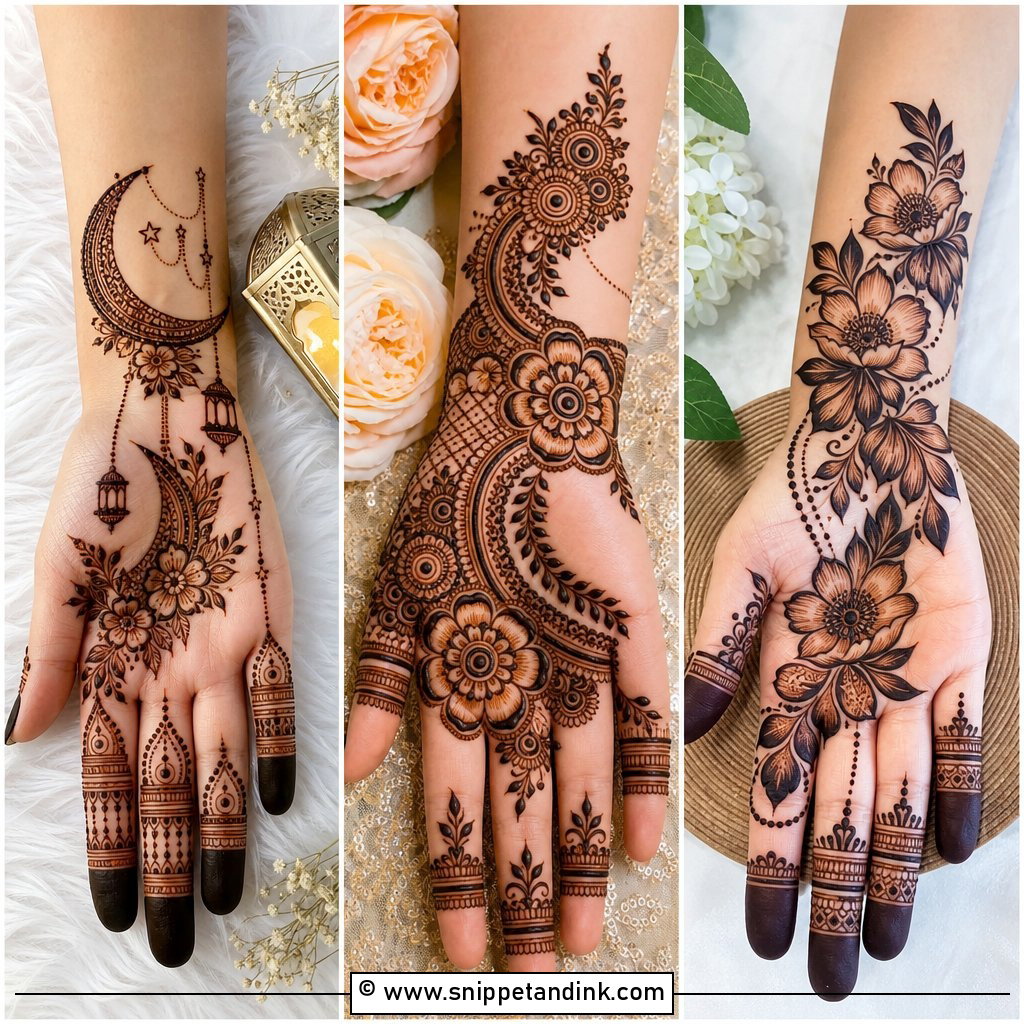
Lighter, but still bold. Arabic palm layouts use flowing floral trails, leafy curves and shaded petals that run diagonally from the base of the palm toward the index finger and wrist, leaving open skin between them. That diagonal stretches the hand visually. The thick outlines survive the staining process well, so the design reads clearly in photos. I’d suggest it for an engagement, nikah or sangeet, or a modern outfit where your jewellery should share the attention.
4. Indo Arabic Bridal Mehndi Design Front Hand
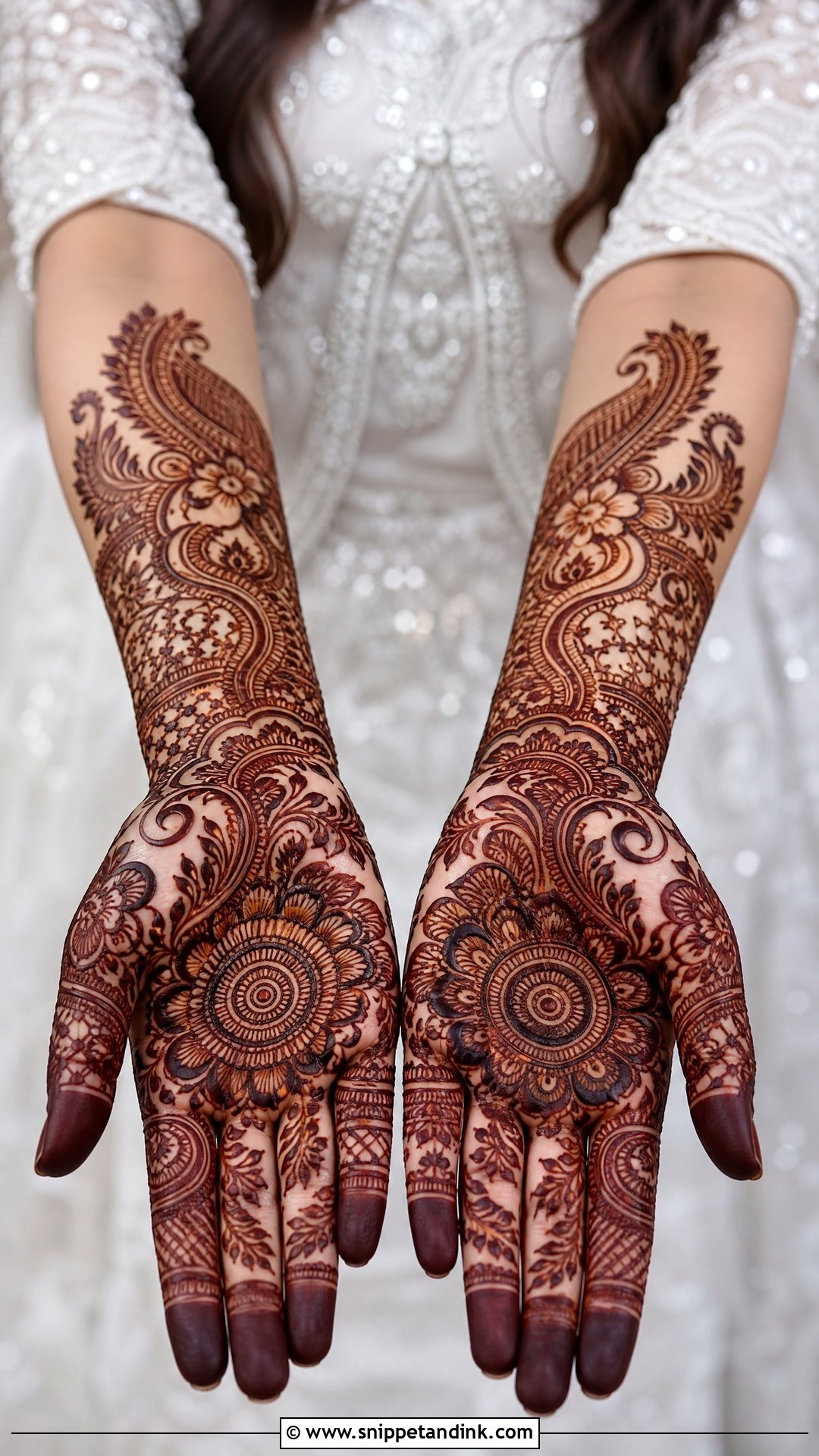
Indian fine detail meets Arabic open spacing and bold florals. A typical layout puts a central palm mandala in the hollow, large flowers along the outer edge, paisley vines near the wrist and detailed finger work. On medium-sized hands the open areas stop it from looking heavy. Clean outlines and shaded petals make the most of the deep palm stain, and balanced fingers keep the two hands matched.
5. Dulhan Bridal Mehndi Design Front Hand
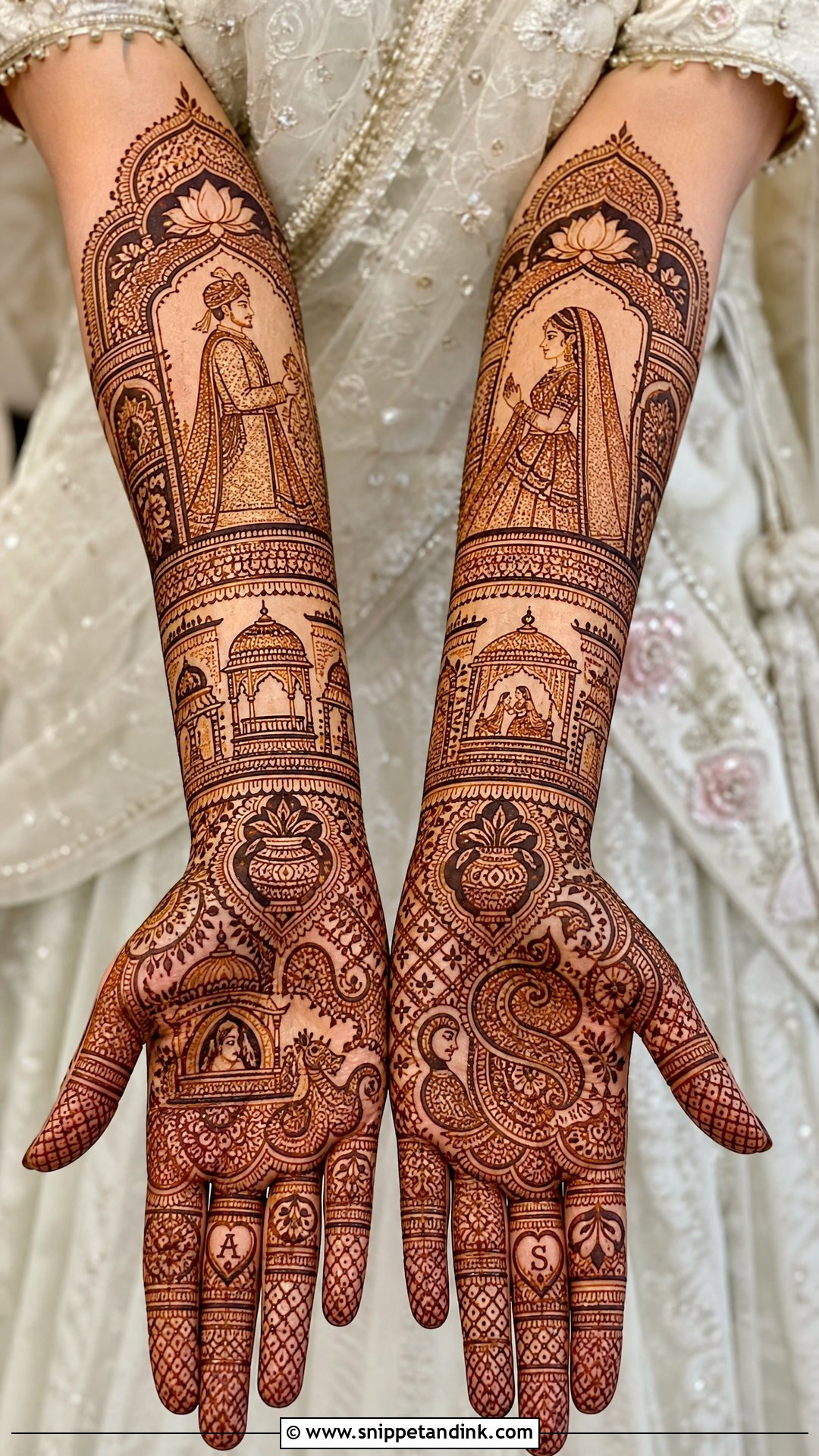
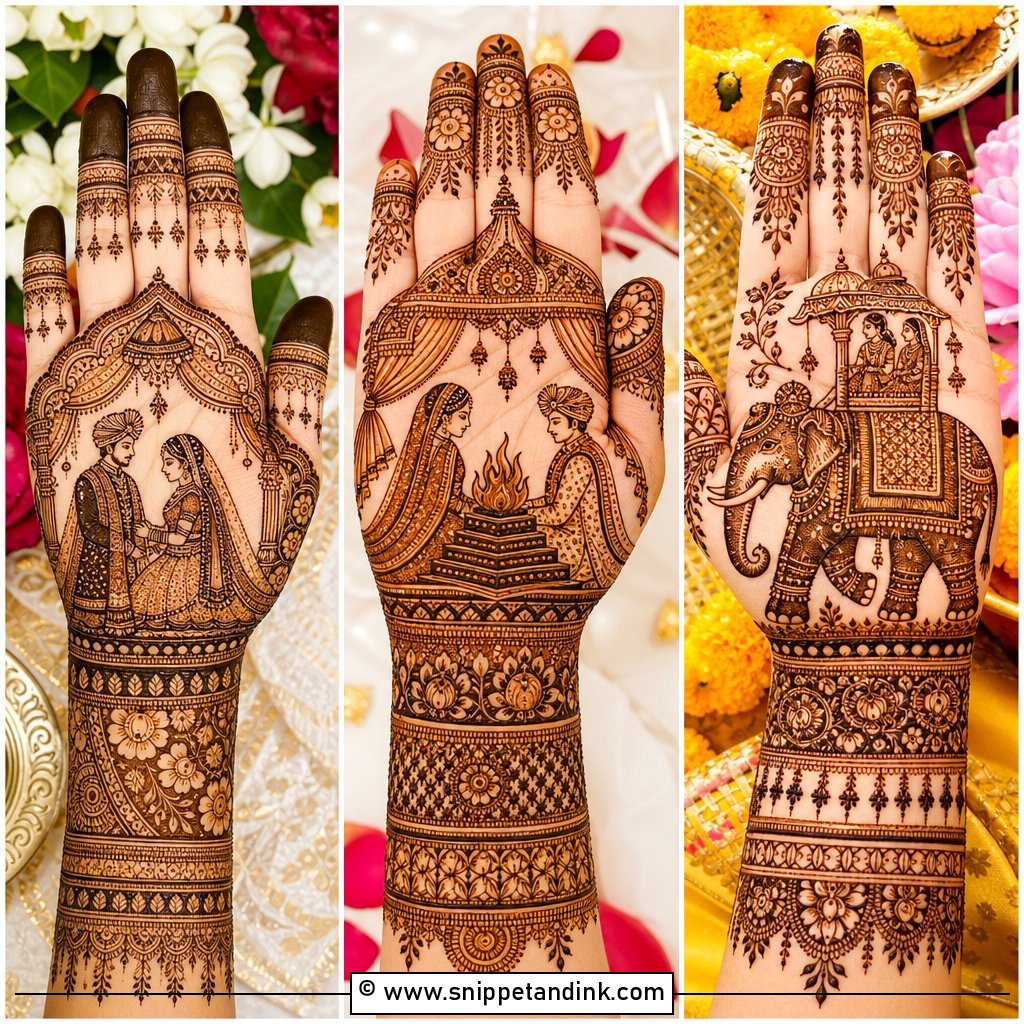
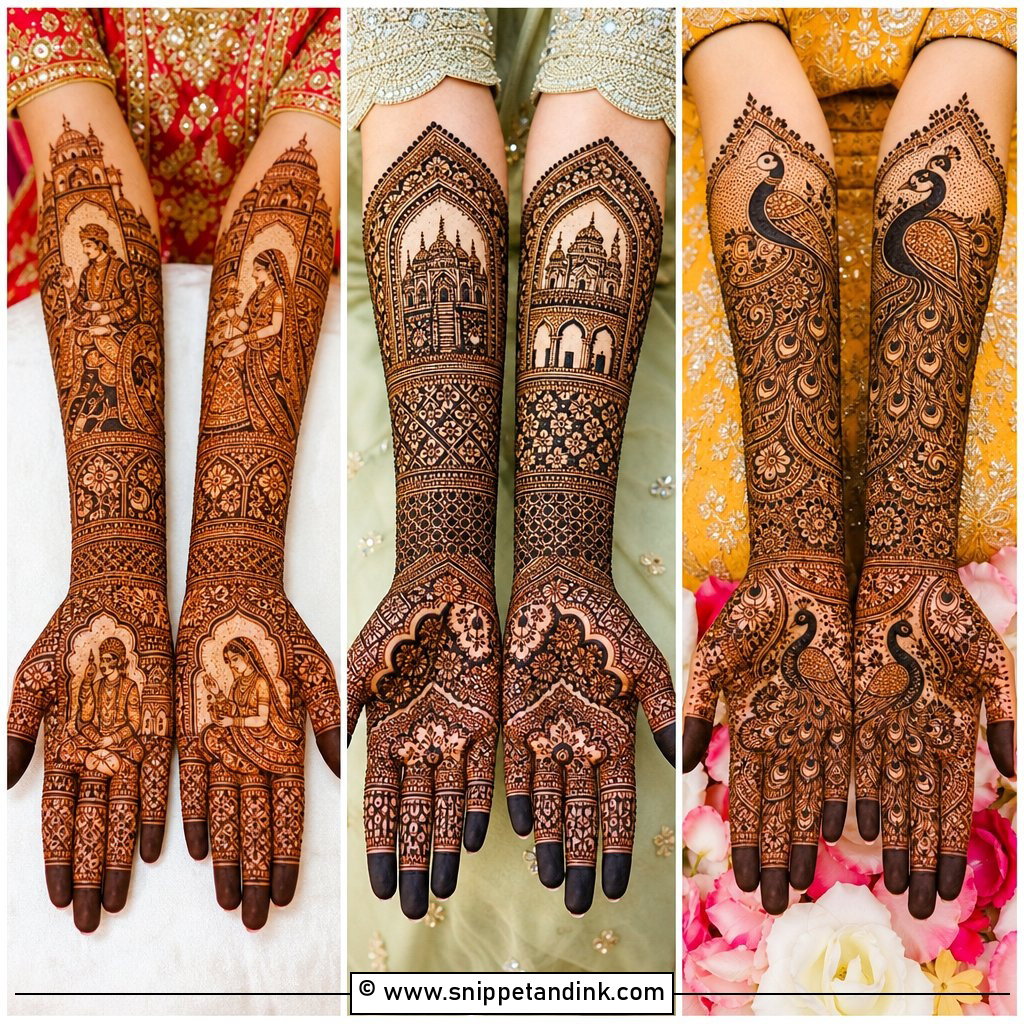
A dulhan palm tells the wedding story: bride and groom figures, a doli, kalash, lotus or peacock, with paisleys, jaali, florals and borders around them. It’s heavy, personal and slow to apply, so plan for a long sitting. Pick one or two story elements and let them breathe. When I’m asked to fit the whole ceremony onto one palm, the figures end up so small that the stain swallows them.
6. Peacock Bridal Mehndi Design Front Hand
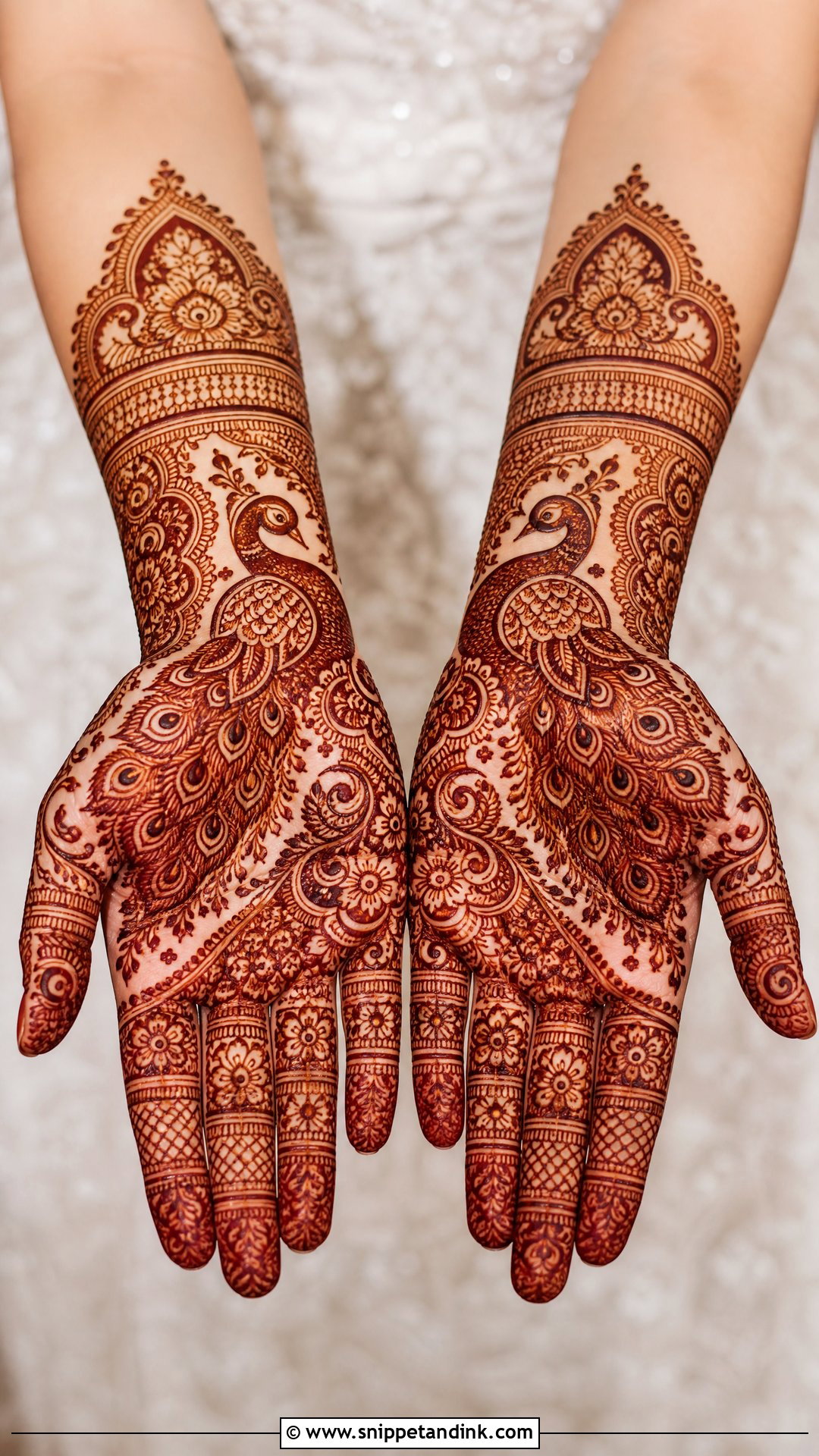
One large peacock across the palm with feathers spilling into paisleys, flowers and vines, or two smaller birds facing each other near the wrist. The body works best in the hollow of the palm, with the tail sweeping up toward the fingers, because that area stays flat when you cup your hand. Feathers carry the fine work: checks, dots, scallops and leafy strokes. Keep the fingers slim and lightly patterned so the bird stays the focus.
7. Lotus Bridal Mehndi Design Front Hand
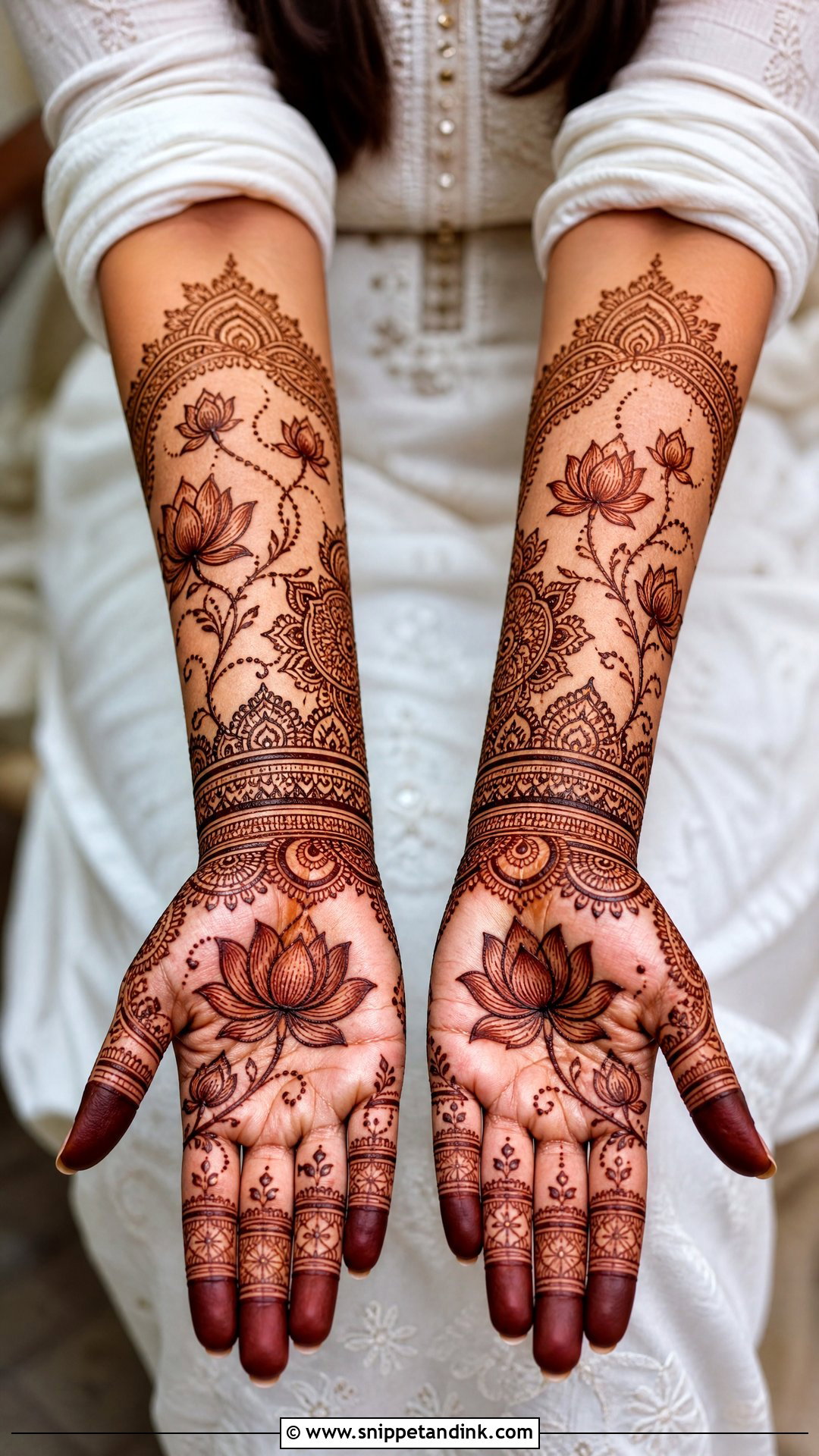
Soft petals and clean curves keep a lotus palm graceful rather than plain. The flower can sit in the centre, rise from the wrist or repeat across both hands. Lotus suits lehengas, sarees, shararas and pastel outfits. I pair it with thin vines, mandala borders, paisley corners and neat fingertips, and shade inside the petals for depth. The open space around each bloom is what keeps it from looking old-fashioned.
8. Mandala Bridal Mehndi Design Front Hand
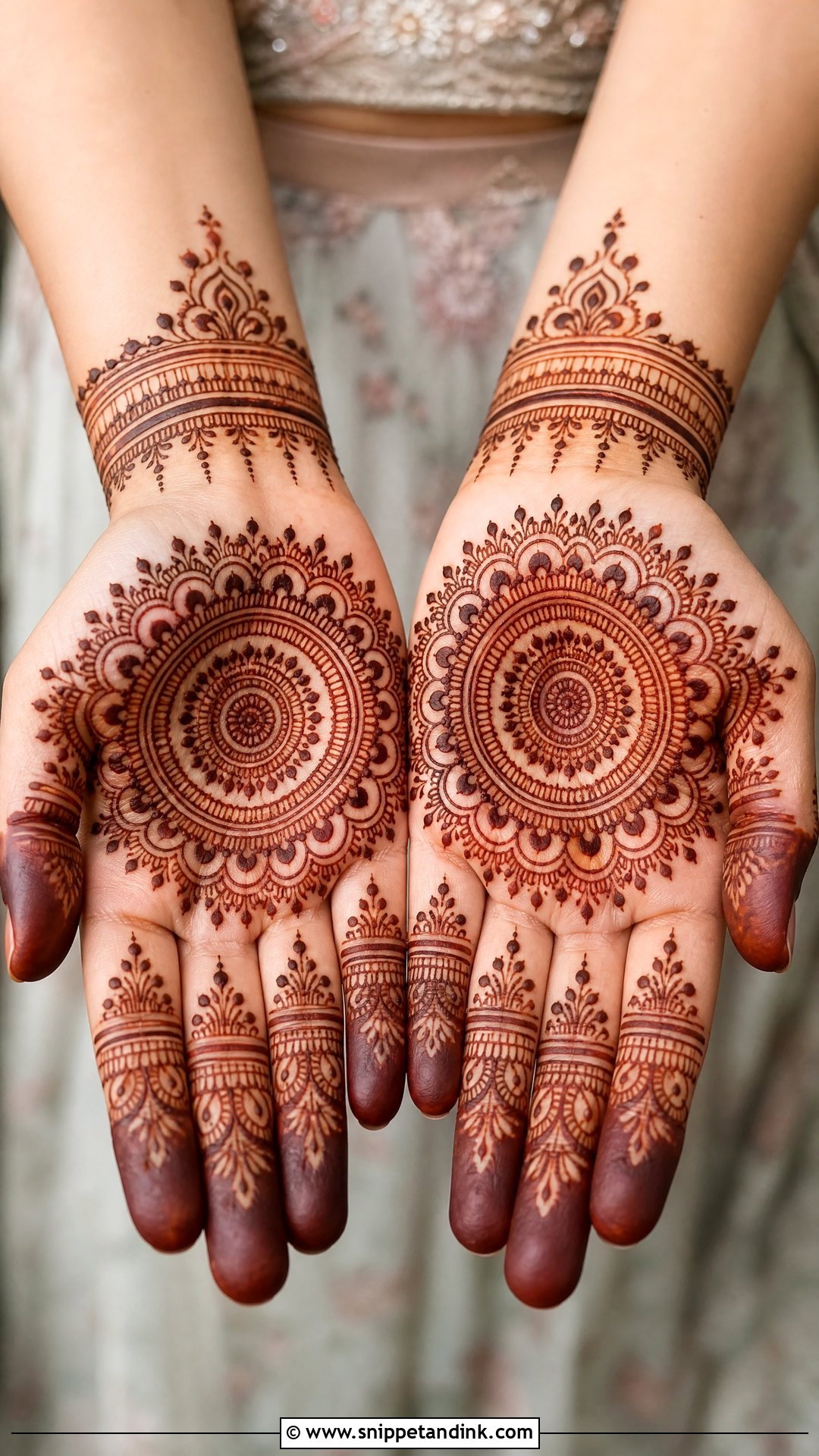
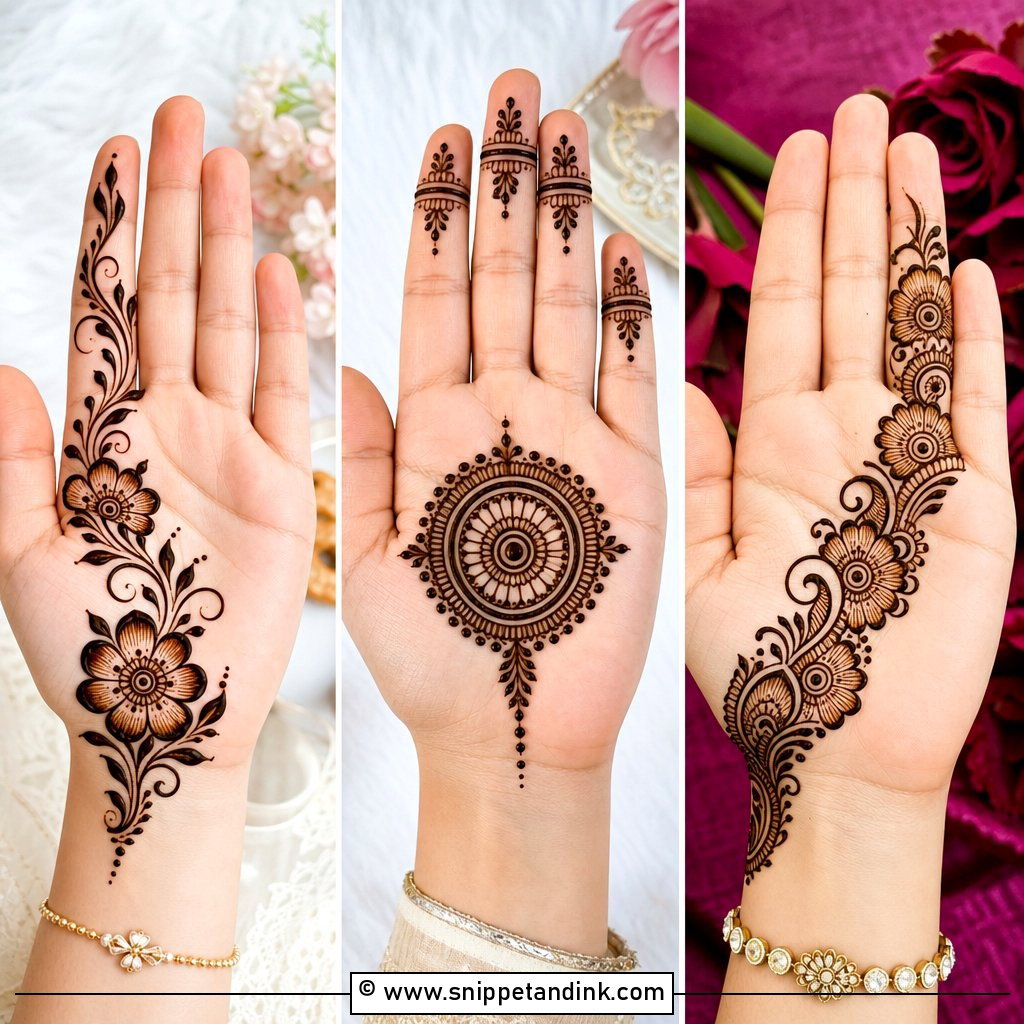
A centred circle that spreads outward in petals, dots, scallops and fine rings, linked to decorated fingers, wrist cuffs and small side motifs. Mandalas are especially kind to small palms, because one neat focal point fills the space without crowding it. The circle has to sit in the true centre of the palm with the hand relaxed, not stretched flat, or it slides toward the thumb when you hold anything. Heavier fingers and a wrist extension make it bridal.
9. Jaali Bridal Mehndi Design Front Hand
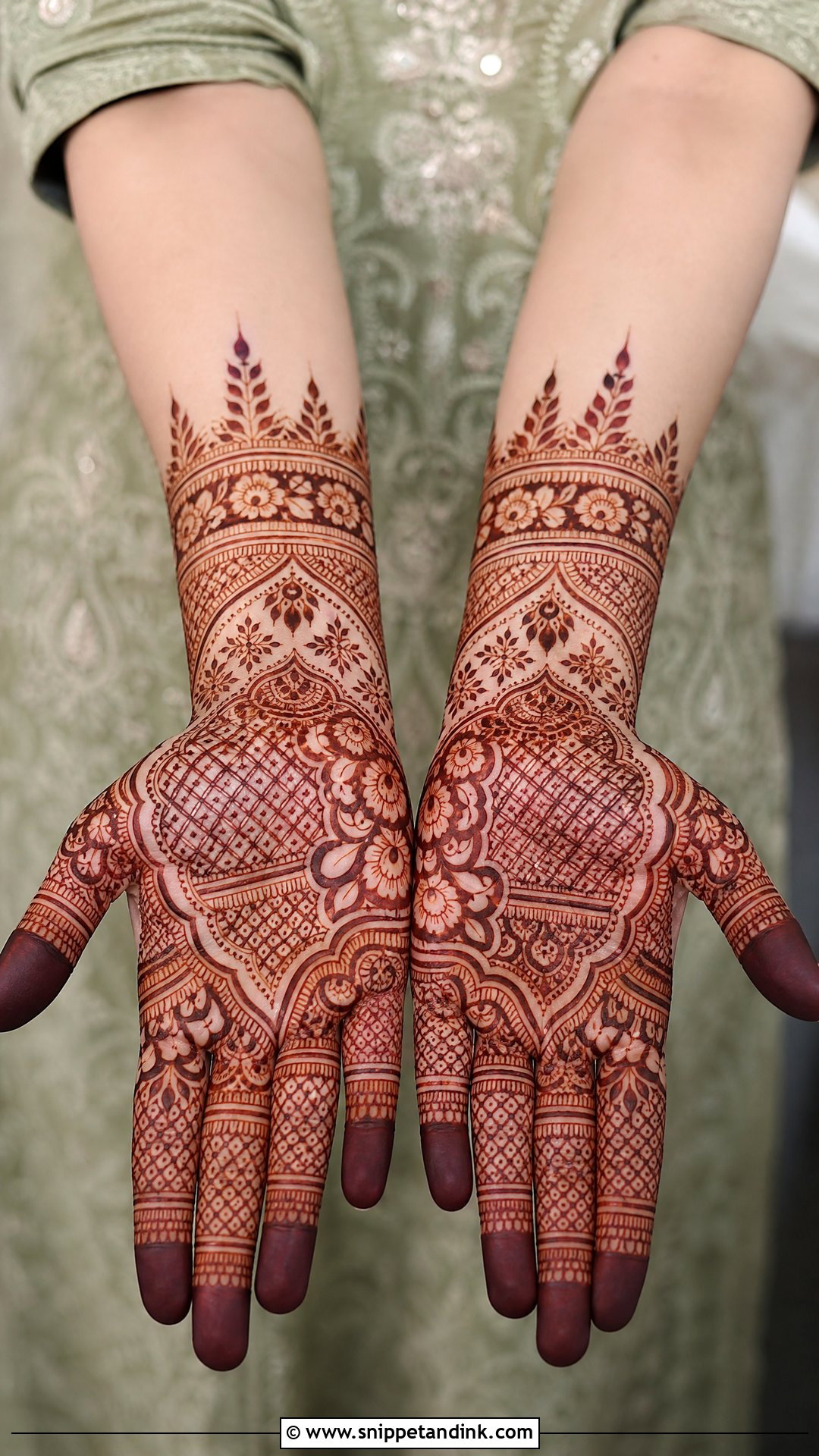
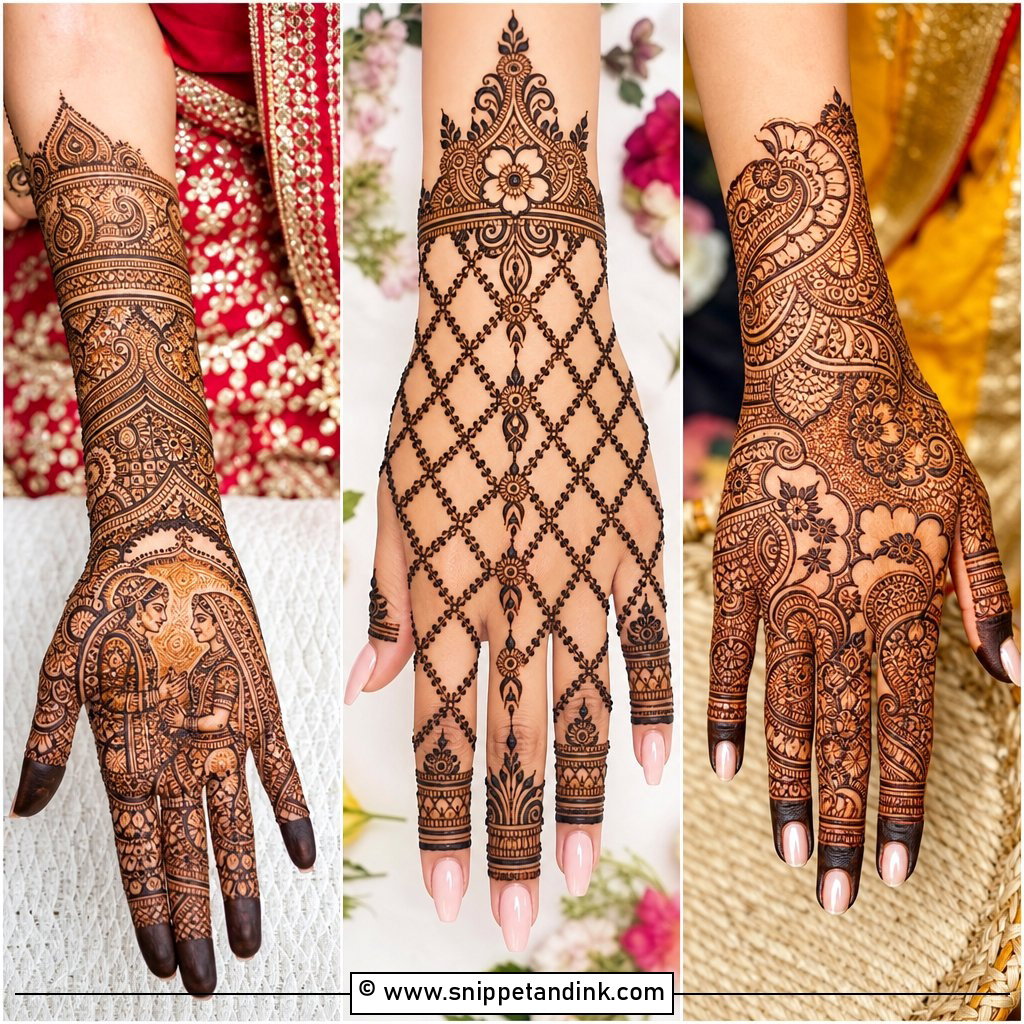
Net, lattice, diamond and mesh patterns across the palm, wrist or finger sections give the hand a jewellery-like texture. Jaali is useful when you want heavy coverage but don’t want the palm to stain into one dark shape, since the tiny open boxes let skin show through. The lines have to be even. I avoid running fine mesh straight across the major palm creases, where it blurs, and use floral borders to frame the panels instead.
10. Portrait Bridal Mehndi Design Front Hand
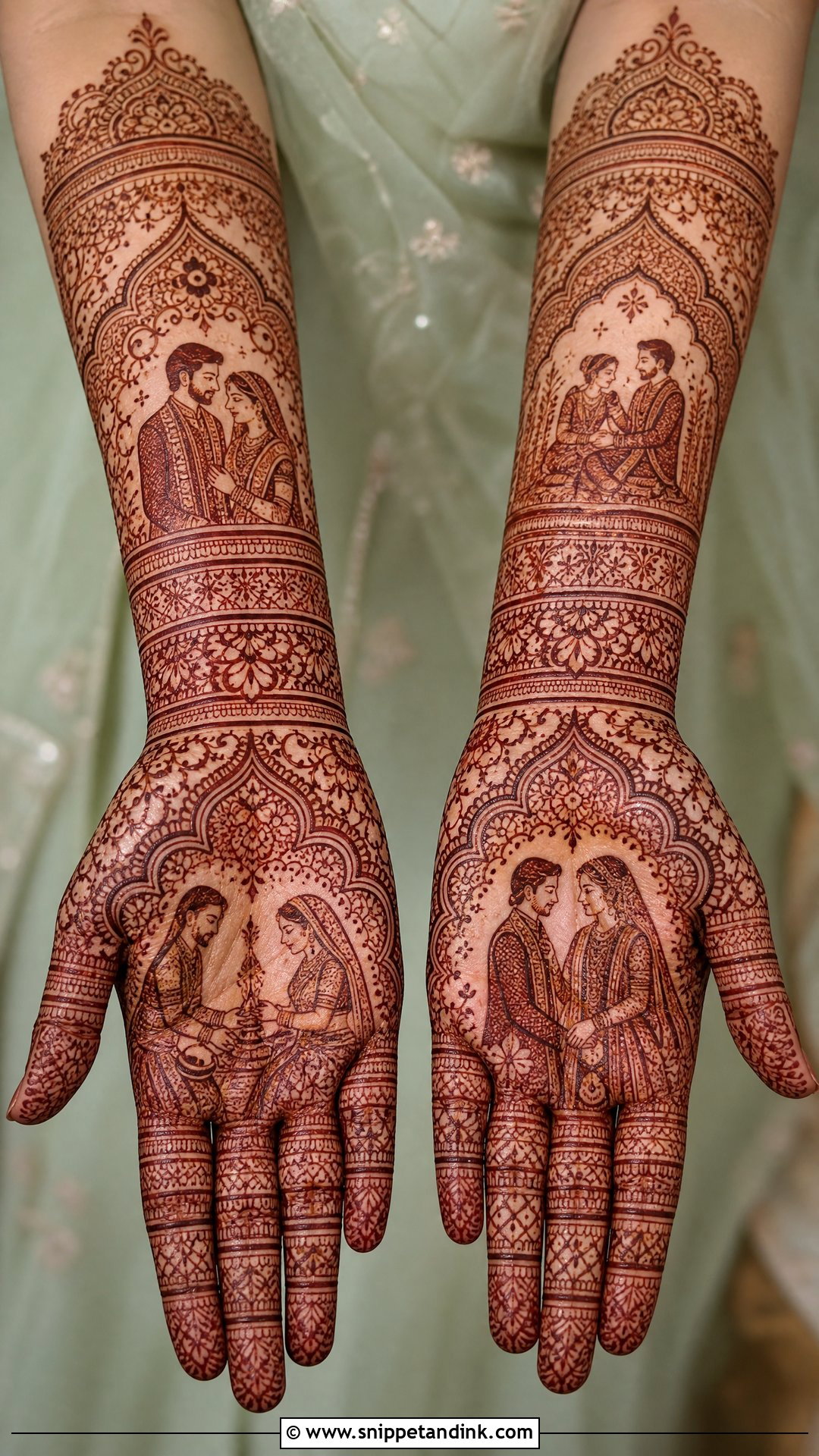
Portrait palms feature bride and groom faces, ritual scenes, proposal moments or symbolic couple artwork, framed by florals, paisleys and mandalas. Faces are the hardest thing to draw in henna, so look for an artist with portrait photos of finished stains, not just wet paste. Medium-sized portraits stay clear. Tiny ones surrounded by detail tend to lose their expressions as the colour deepens.
11. Paisley Bridal Mehndi Design Front Hand
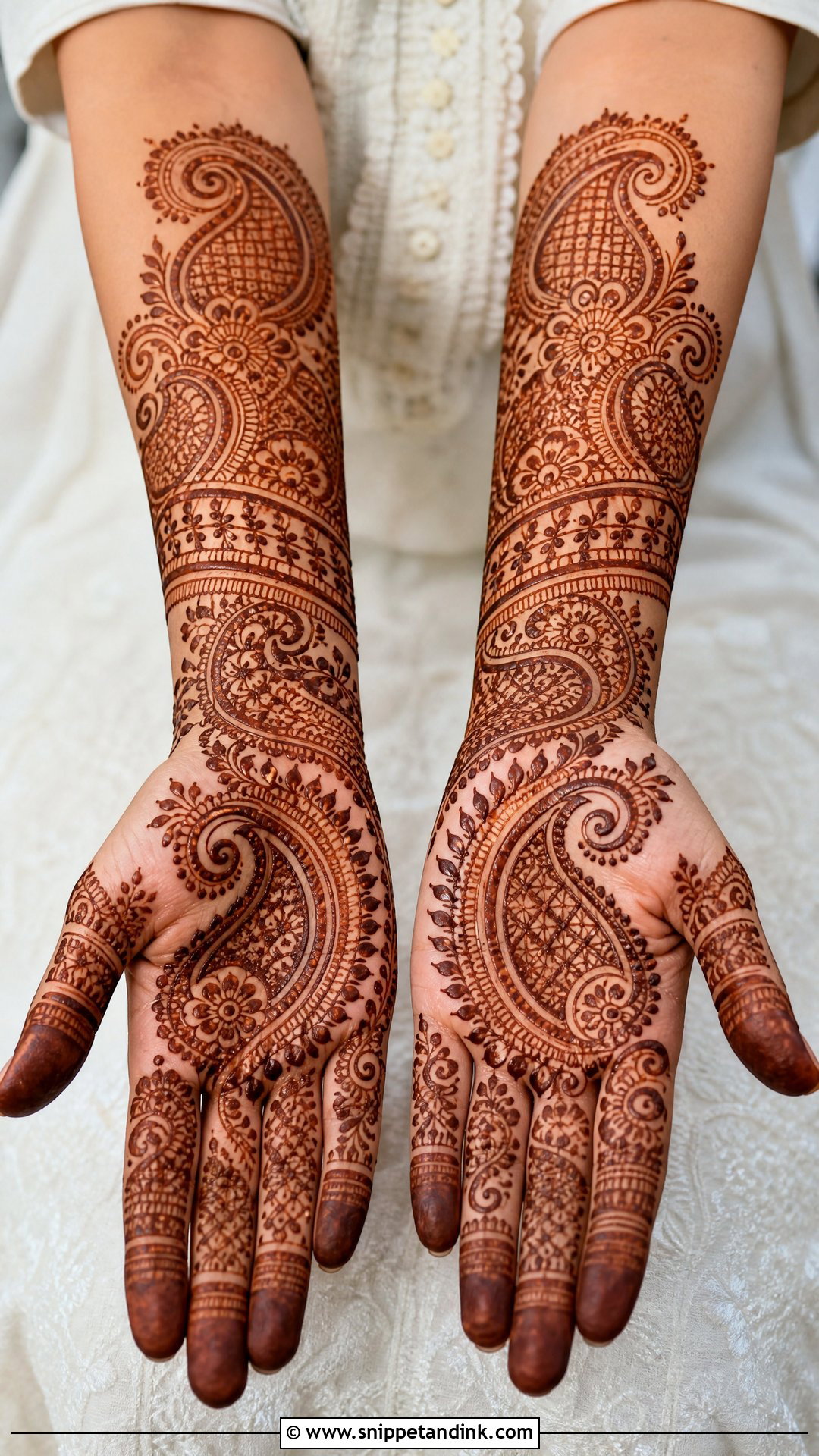
The curved paisley fits the palm’s natural shapes, wrapping around the thumb base, the wrist and the finger joints, which is why it never looks forced. Artists fill them with leaves, dots, checks, flowers and fine lines. Paisleys scale to any hand size. Large ones on the palm with smaller ones along the wrist and fingertips give a full traditional finish without portraits or figures, and they match almost any outfit.
12. Floral Bridal Mehndi Design Front Hand
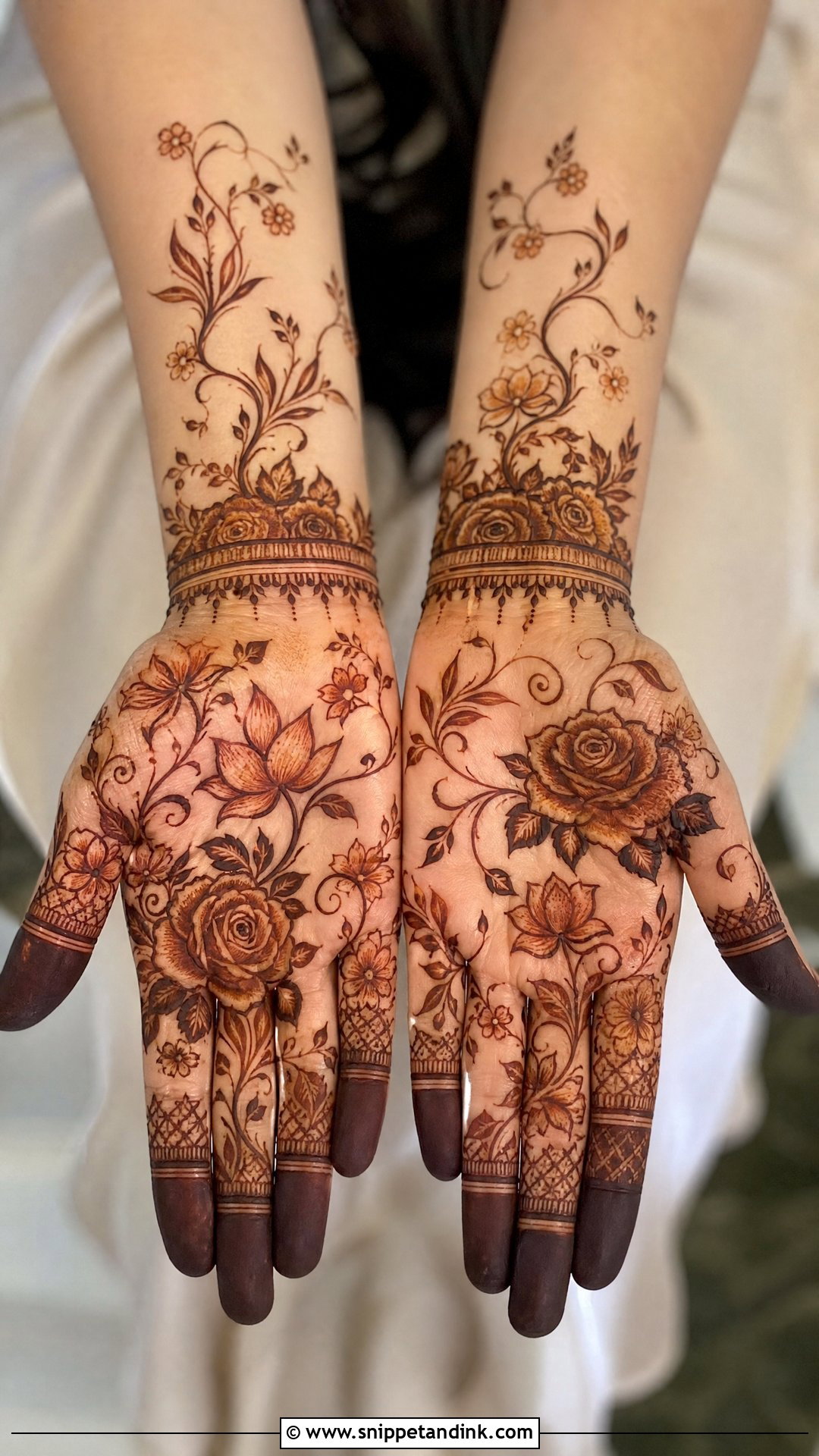
Roses, lotus blooms, small blossoms, leafy vines and shaded petals can be dense like Indian work or open like Arabic henna. That range is what makes florals so adaptable to outdoor weddings, daytime ceremonies and pastel lehengas. The risk with open florals is a casual look. I connect the flowers with curved stems, wrist bands and detailed fingers, which turns a scattering of blooms into a single bridal design.
13. Minimal Bridal Mehndi Design Front Hand
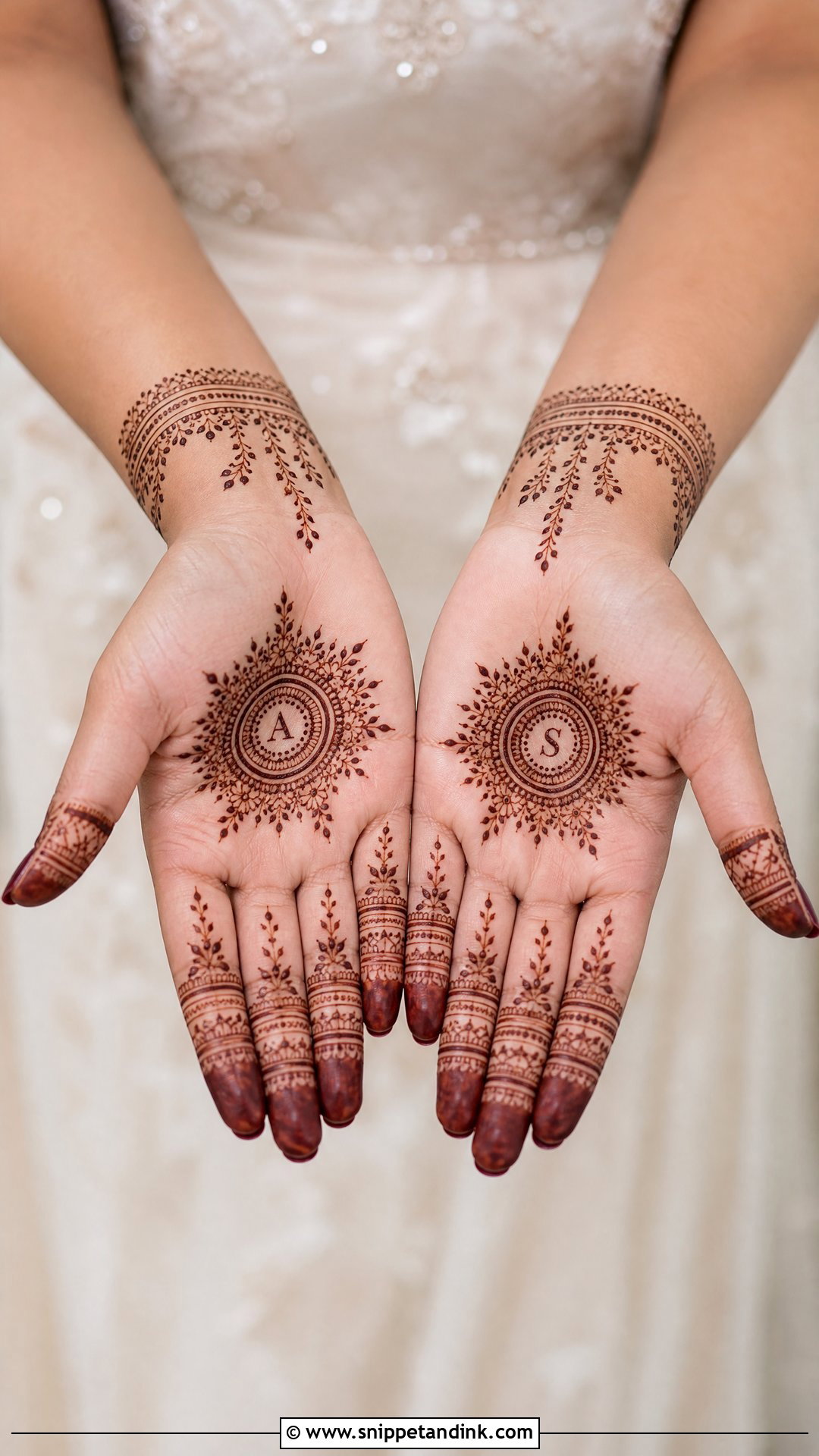
Not every bride wants a heavy palm. A small mandala, fine finger patterns, a delicate bracelet cuff and light floral trails are enough when the placement is careful. Minimal works for simple jewellery, lighter outfits, registry ceremonies and intimate celebrations. It also leaves you with usable hands much sooner after application. One personal detail, initials, a date or a tiny lotus near the wrist, keeps it bridal.
14. Royal Bridal Mehndi Design Front Hand
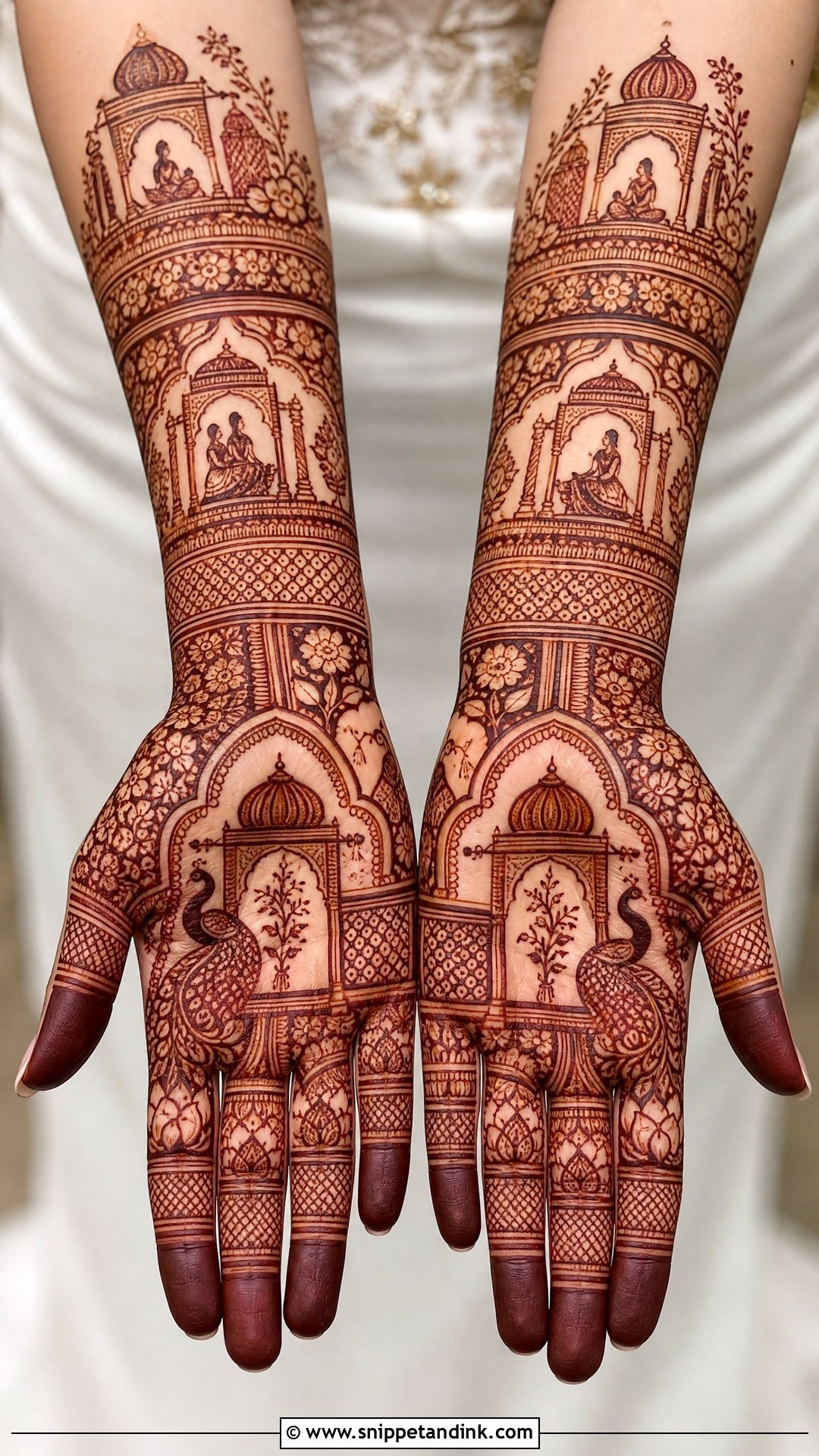
Palace arches, peacocks, lotus clusters, doli motifs, jaali panels and ornamental cuffs, usually extending past the wrist to frame the hand: royal palms are grand and slow to draw. The difference between rich and messy is sectioning. I divide the palm into clear zones with one main motif in the centre and structured borders around it, so each part reads on its own in close-ups. It belongs with heavy lehengas and traditional jewellery.
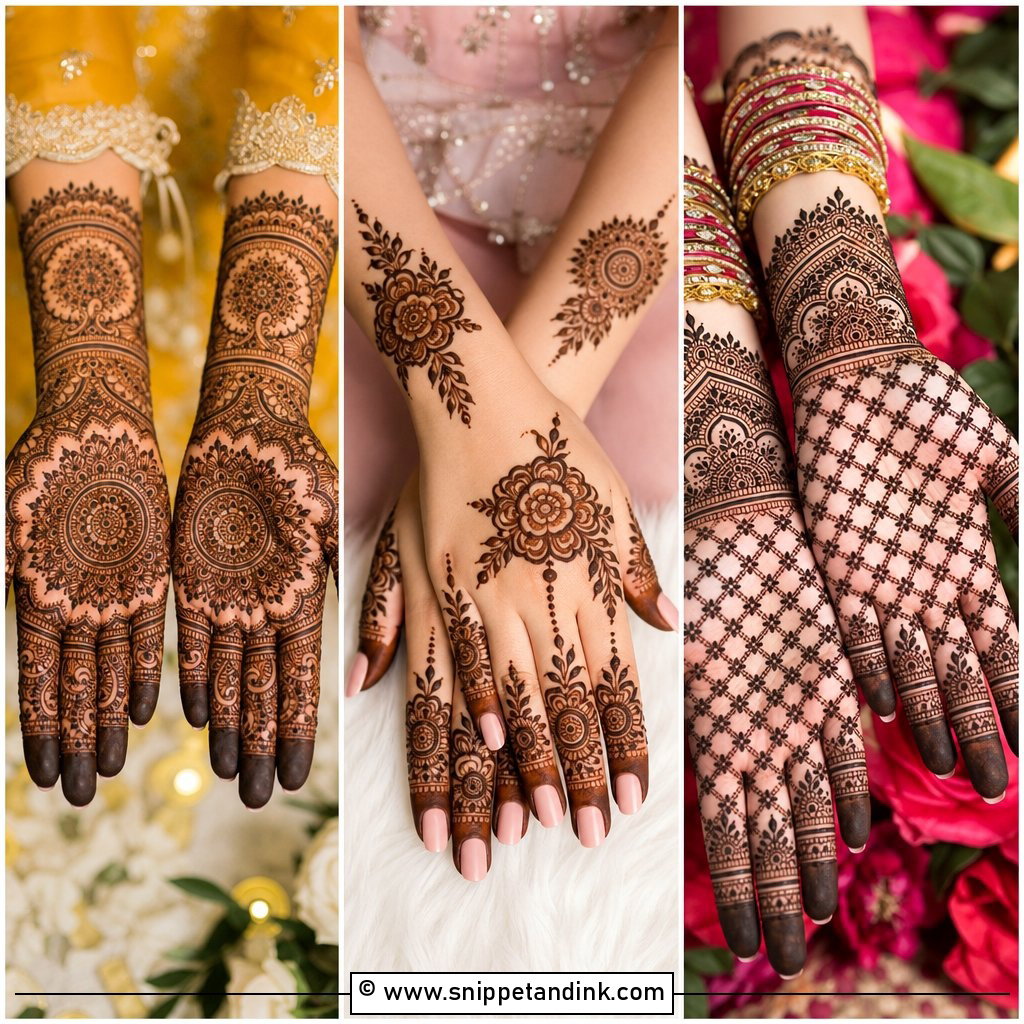

15. Rajasthani Bridal Mehndi Design Front Hand
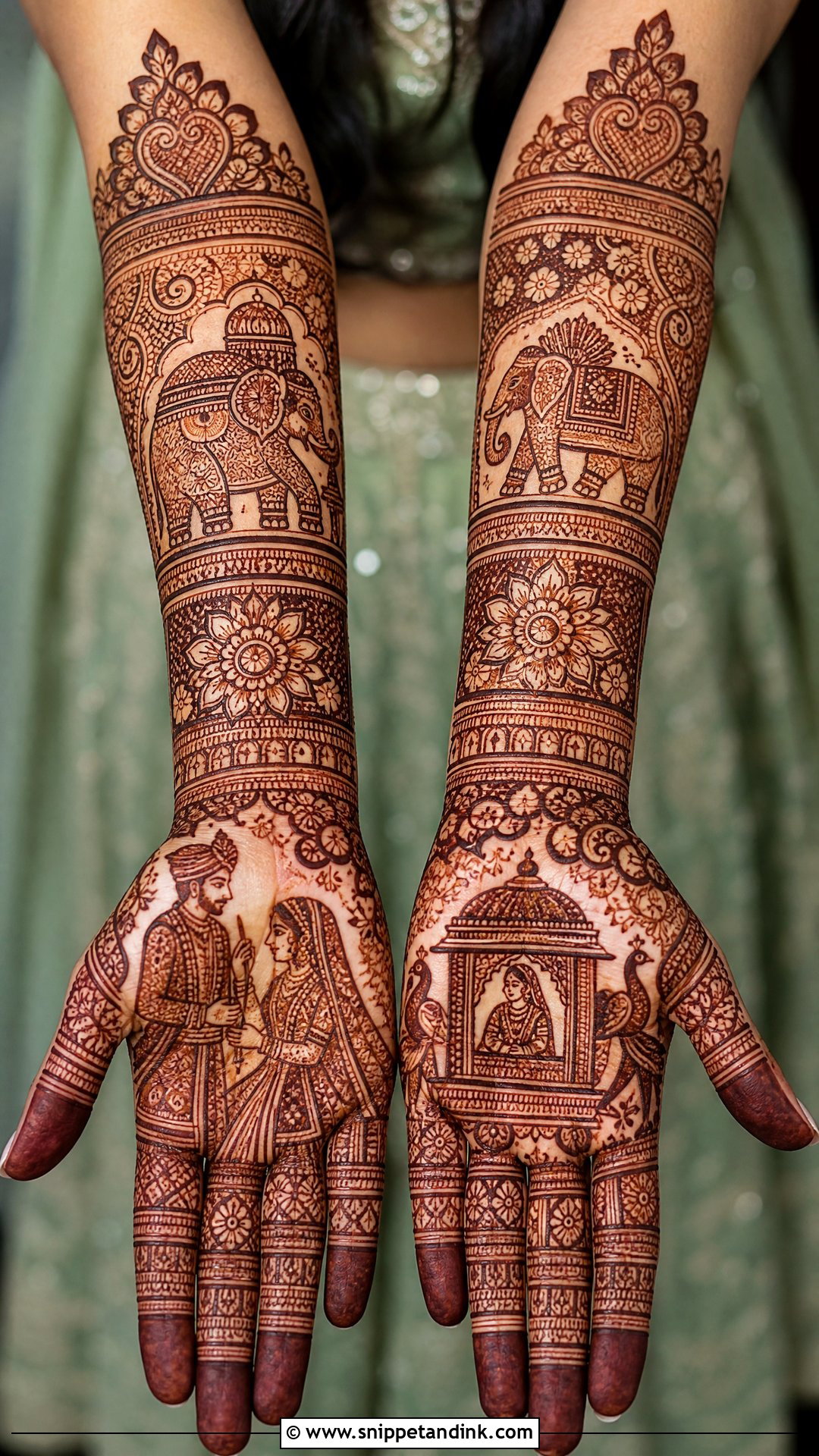
Bride and groom figures, elephants, peacocks, doli artwork, curved paisleys and tiny fillers tell an old-world wedding story, often split so each hand shows a different part of the journey. Palm size matters here more than with any other design. Longer palms can hold larger figures, while smaller hands look better with compact motifs and fewer of them. Keep the fingers in repeated lines, leaves and small florals to balance the dense palm.
16. Pakistani Bridal Mehndi Design Front Hand
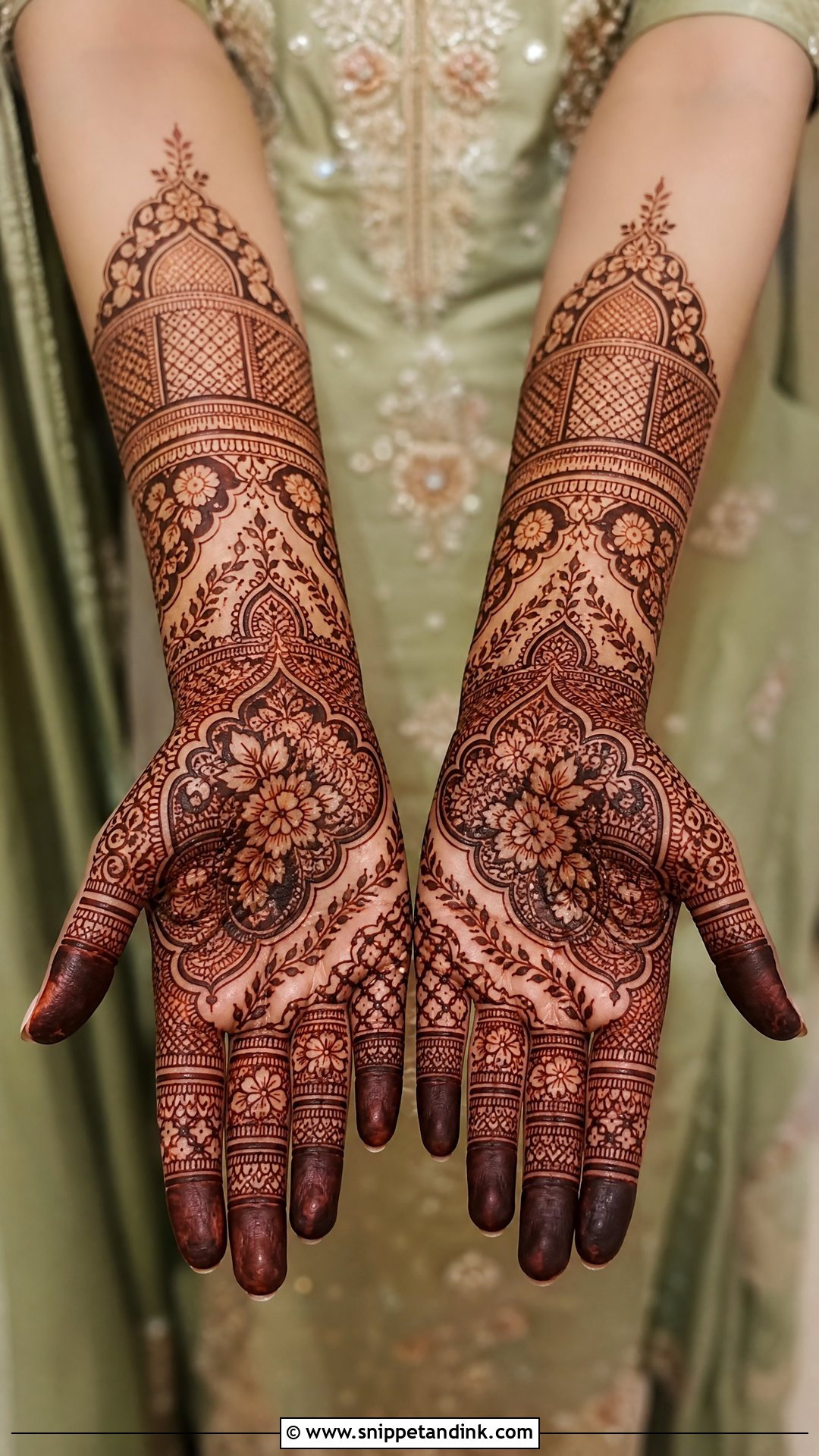
A Pakistani bridal mehndi design on the palm blends Indian detail with Arabic flow: florals, domes, paisleys, jaali, vines and filled fingertips, with graceful spacing and strong borders even when it’s heavy. It’s a natural fit for nikah, walima, baraat and reception looks. I often start these from a bold wrist cuff, build floral panels up the palm and finish with detailed fingers. A deep maroon stain suits it particularly well.
17. Gulf Bridal Mehndi Design Front Hand
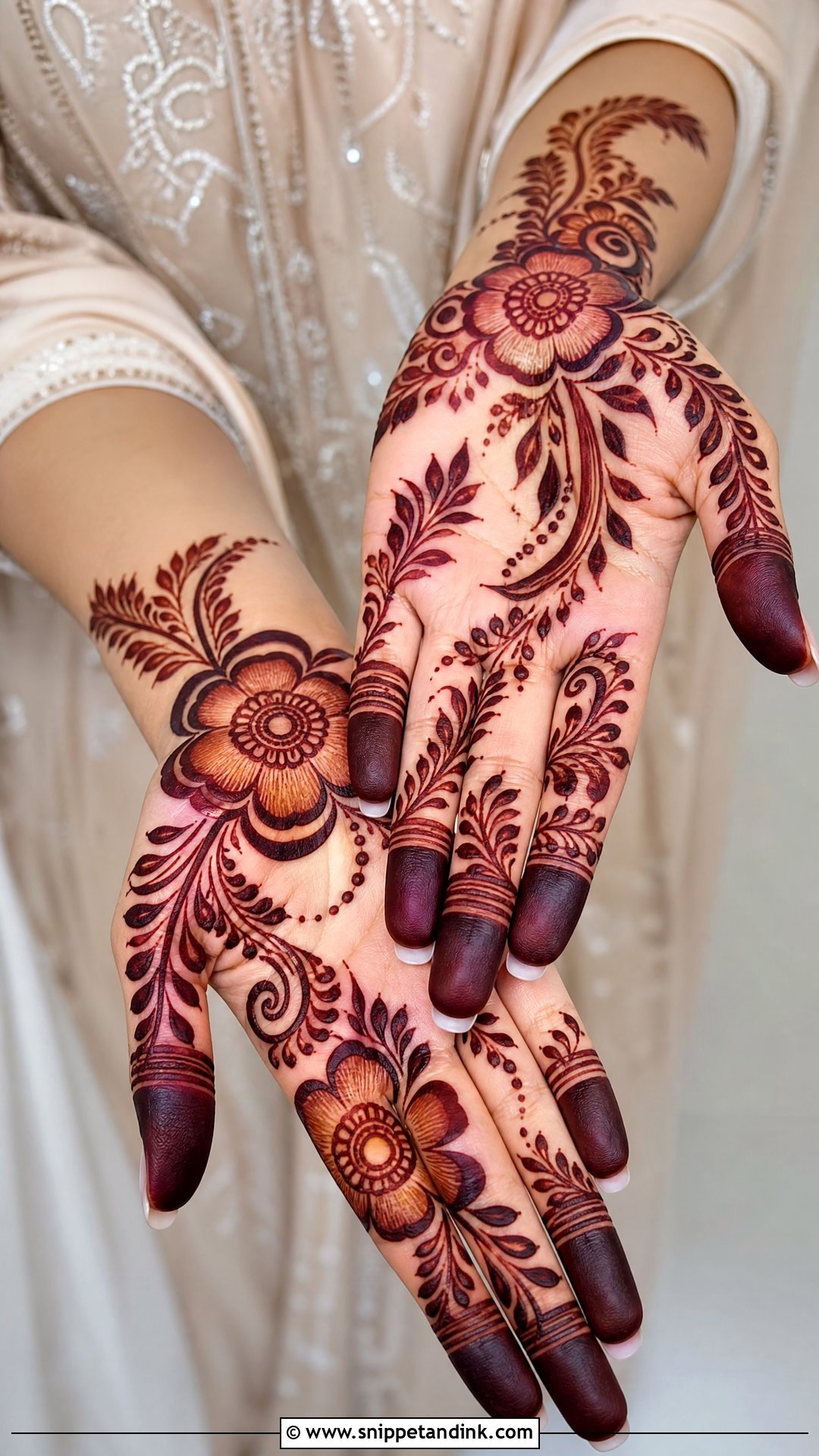
Large flowers, leafy trails, thick outlines, shaded petals and lots of negative space. Gulf-inspired designs feel open and dramatic next to dense Indian work, and they read from across a hall. The pattern usually travels diagonally from wrist to index finger. For a bridal version I add wrist detail, fuller fingertips and a few fine fillers around the main trail, but only a few, or the drama goes.
18. Moroccan Bridal Mehndi Design Front Hand
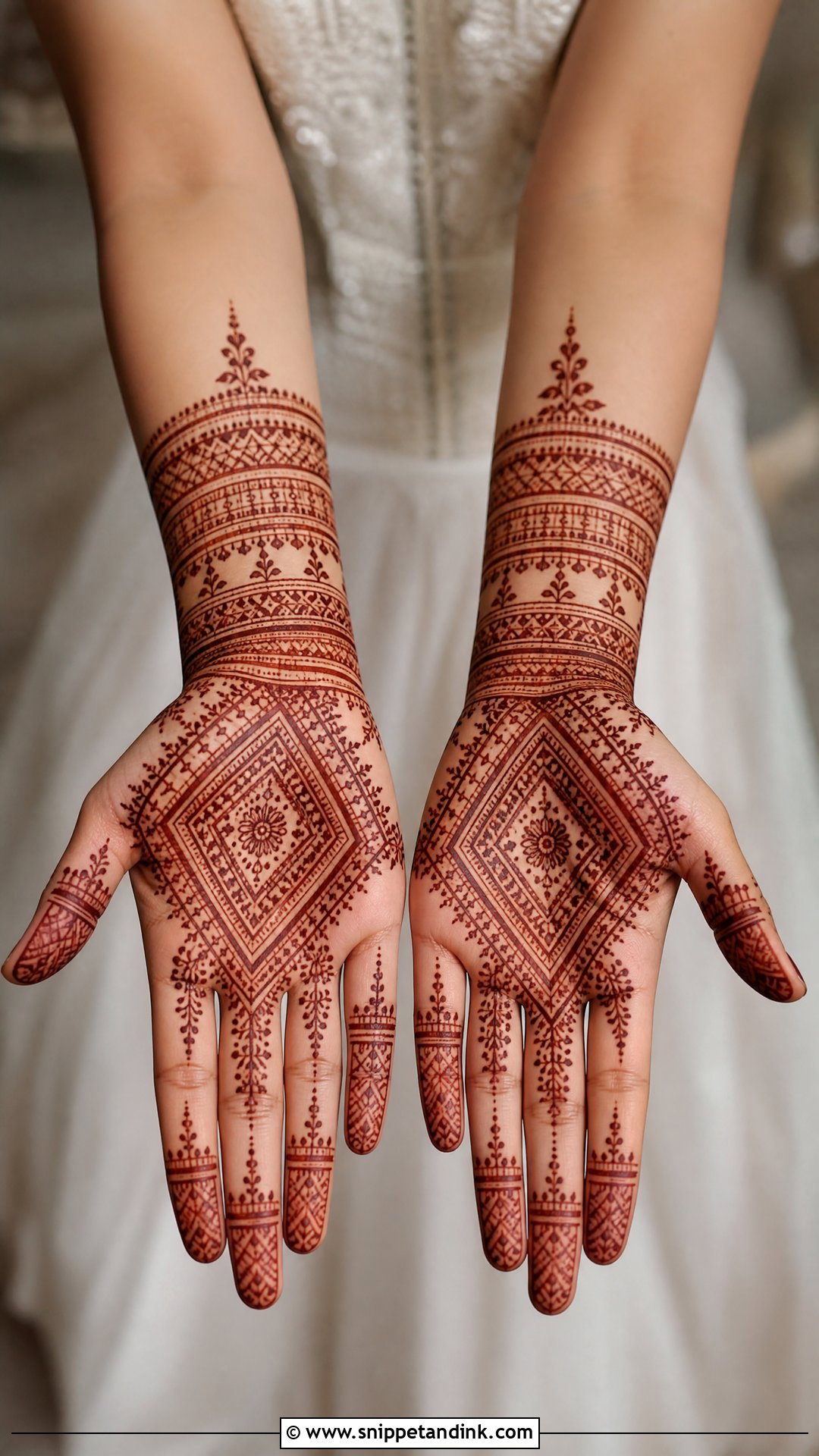
Diamonds, triangles, grids and repeated borders replace florals and paisleys in Moroccan-inspired palms. Long fingers suit it best, since vertical lines lengthen the hand further. Geometry on a palm has a particular challenge: the creases. A straight band drawn across the heart line kinks when you close your hand, so I place borders between creases rather than over them. Small flowers or mandala accents soften it for a contemporary bridal outfit.
19. Jewelry Bridal Mehndi Design Front Hand
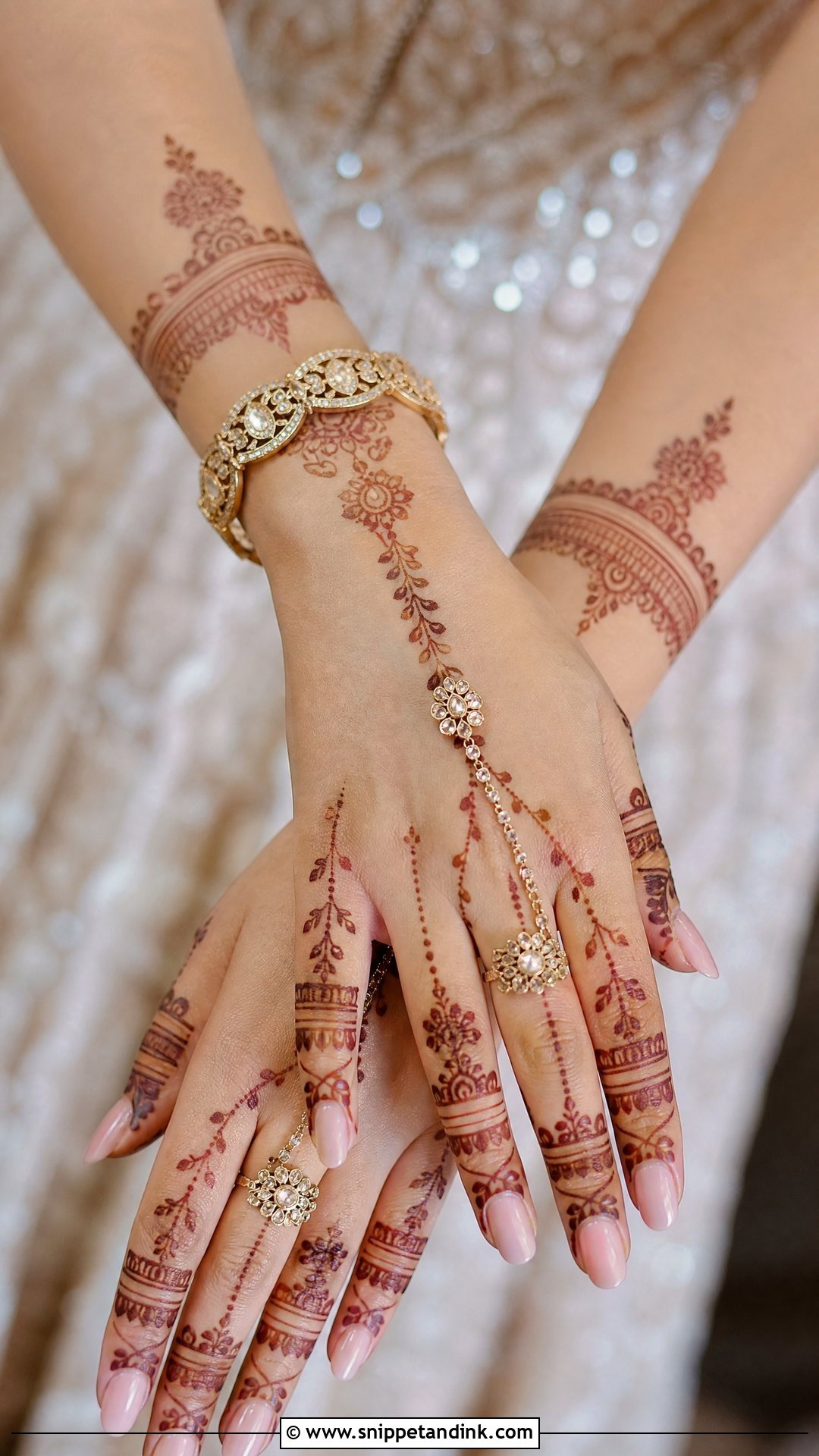
Bracelet cuffs, ring chains, fingertip bands and haathphool-style lines drawn on the palm side turn the henna into ornaments that sit alongside bangles, rings and kaleeras rather than hiding under them. Go fuller on the cuffs and fingers for the main wedding day and lighter for an engagement or reception. These lines look graceful when you hold a dupatta or garland, because they follow the direction your fingers naturally curl.



20. Modern Bridal Mehndi Design Front Hand
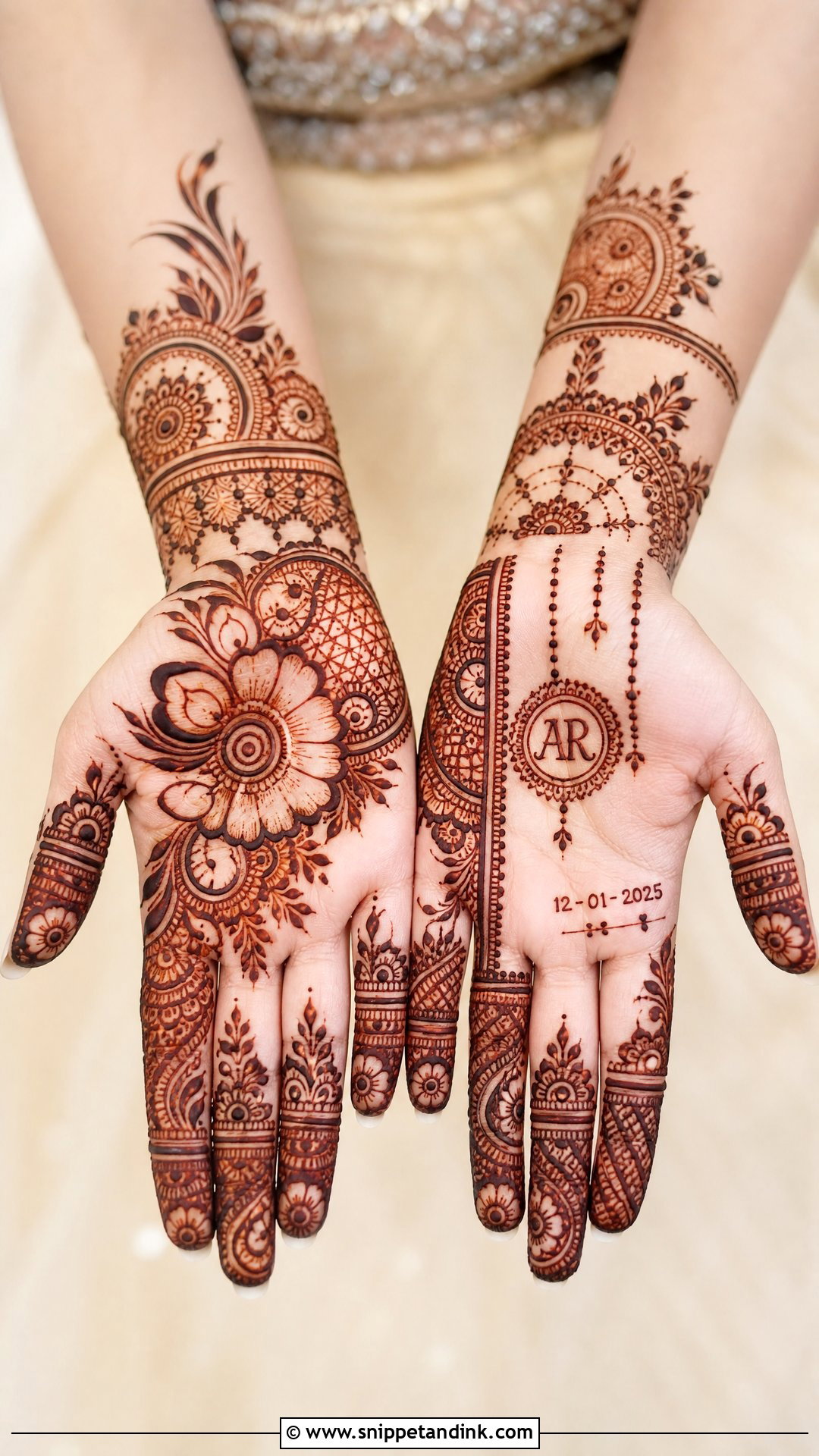
Half-and-half layouts, negative space, florals, mandalas, initials, dates or small symbols, with the palm kept slightly open and the fingers and wrist carrying most of the detail. Modern palms suit fusion outfits, pastels and minimal jewellery. The trap is piling every current trend onto one hand. One clear idea per palm ages much better in your photos than five fashionable ones.
Your Reference Photo Was Drawn on Someone Else’s Palm
Brides often bring one photo and ask for an exact copy. I understand why, but that design was planned for a different hand, with different finger lengths and a different palm width. A copied design rarely fits a new hand without adjustment, and a good artist will scale and rearrange it rather than force it.
It works better to bring a few references and say what you like about each one. Maybe it’s the density of the first, the peacock in the second and the wrist cuff in the third. That gives your artist something to design from.
- Ask to see photos of the artist’s finished stains a day or two after removal, not only fresh paste, which always looks crisp.
- Confirm the time the session will take for your chosen coverage, then add a margin.
- Mention your dominant hand, since you’ll want to use it for small tasks and may prefer it done last.
- Settle any hidden names or dates in advance, along with the spelling.
A Palm Design Should Still Read When You Close Your Hand
Your outfit, your ceremony, the size of your palm and how long you can sit will settle most of this. Heavy Indian and Rajasthani designs feel ceremonial, while Arabic, Gulf and minimal layouts look lighter. Portraits, initials, lotus, peacocks, jaali and jewellery patterns each add their own character. Save two or three references, ask your artist what suits your palm and your schedule, and look for a design that will look good fresh, stain deep and still read clearly when you open your hand for the camera.
You'll Like These Ideas:






Leave a Reply