
If I had to keep only one motif in my kit, it would be the flower. It scales down to a single bud for a schoolgirl at Eid and up to garden-like coverage for bridal mehndi, and it sits comfortably inside Arabic trails, Indian filling, mandalas, jaali, paisleys and bracelet layouts. One bold rose on the palm, a full-hand garden or a light trail across the back of the hand are all on the list below. For each, I’ve noted how it behaves on skin and where people tend to go wrong.
Sizing the Main Flower to Your Palm
The same rose can look perfect on one hand and awkward on another. I size the focal flower to the hand in front of me, not to the reference photo, and this is roughly how I think about it.
- Broad palm, shorter fingers: one large central bloom fills the palm well. Keep finger work vertical, such as vines and slim trails, to add length.
- Narrow hand, long fingers: smaller flowers stacked along a diagonal suit it better than one big circle, which can make a slim hand look even narrower.
- Small hands: fewer, larger shapes beat many tiny ones. Tiny flowers on a small hand blur together once the stain darkens.
- Visible veins or knuckle lines on the back of the hand: I let a vine follow them rather than fight them, so the design moves with the hand.
Reference photos are usually taken on slim, long hands. If your hand is different, expect your artist to rescale the design, and treat that as a good sign.
1. Simple Flower Mehndi Design Front Hand
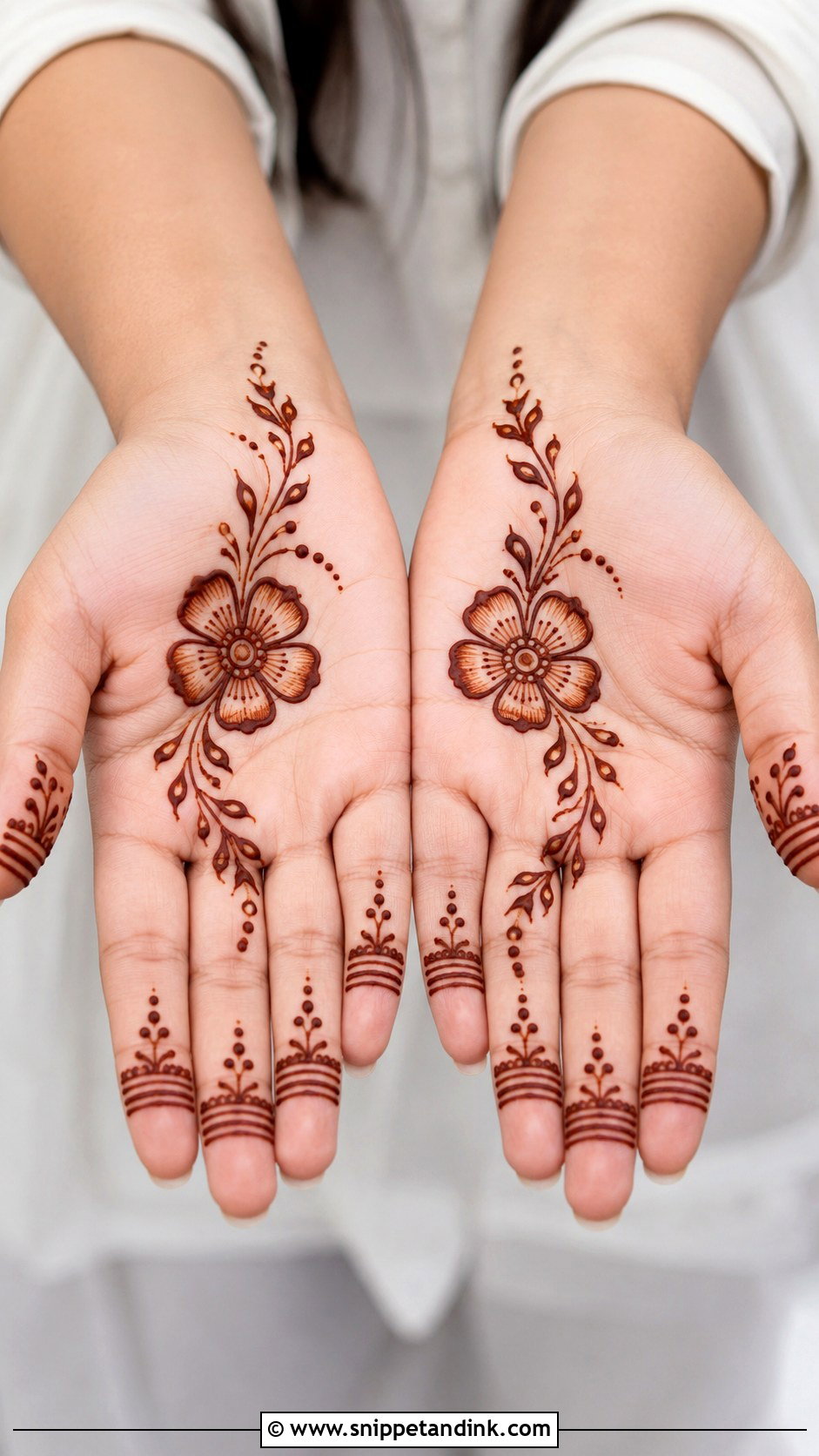
One rounded flower in the center of the palm, slim leafy vines toward the fingers and wrist, a few dotted trails, and small bands or shaded tips on the fingers. Open petals keep it fresh. Palm skin stains darker than anywhere else on the hand, so this modest design comes up richer than you’d expect. Eid, Diwali, school events and first-timers all suit it.
2. Back Hand Flower Mehndi Design
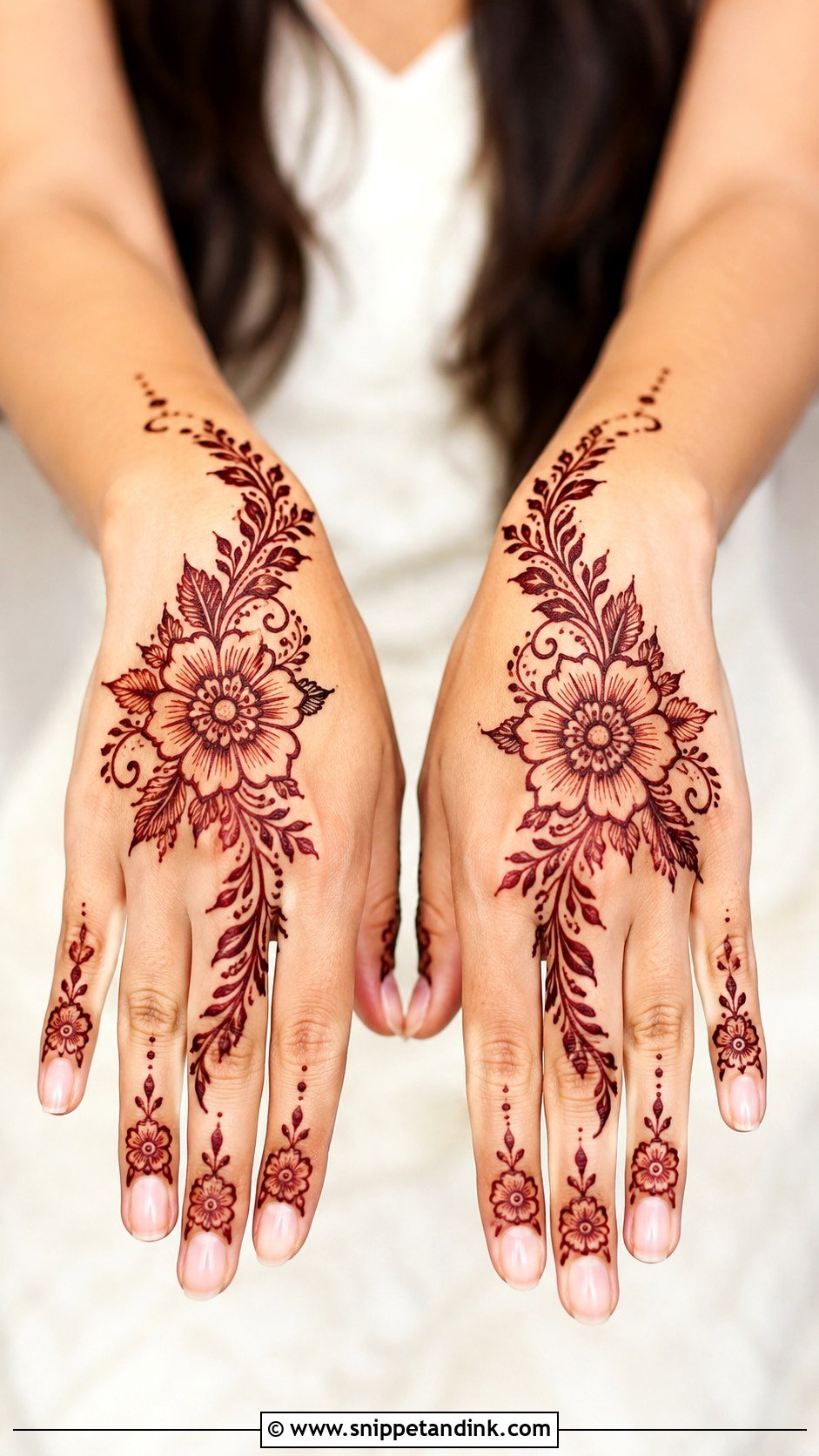
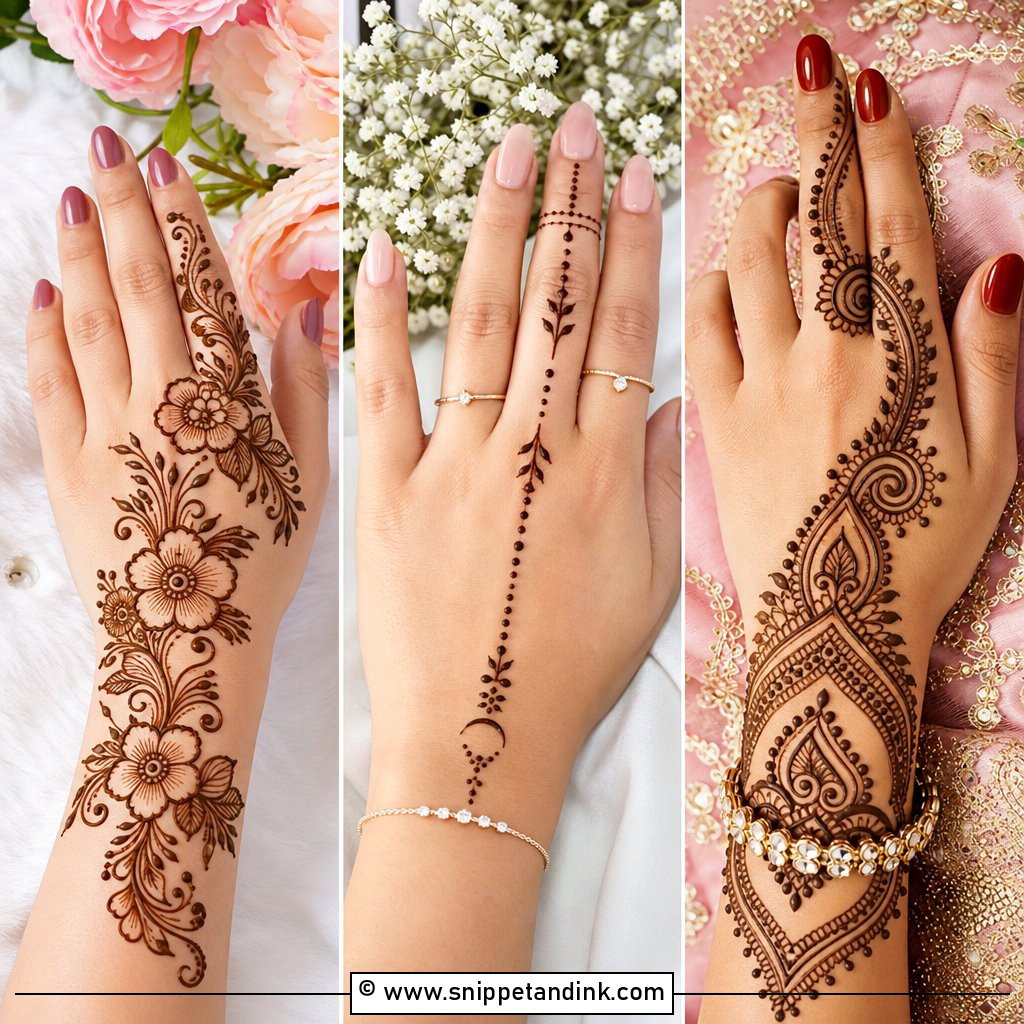
Placed in the middle of the back of the hand, a large flower reads almost like a piece of jewelry, especially with curved vines reaching toward the index finger and the wrist. Leave skin around it so the bloom stays crisp, and give the fingers matching leafy lines, half-flowers and neat tips. You’ll see this side every time you hold a clutch or lift your bangles, which is why I spend the most time on its outline.
3. Arabic Flower Mehndi Design
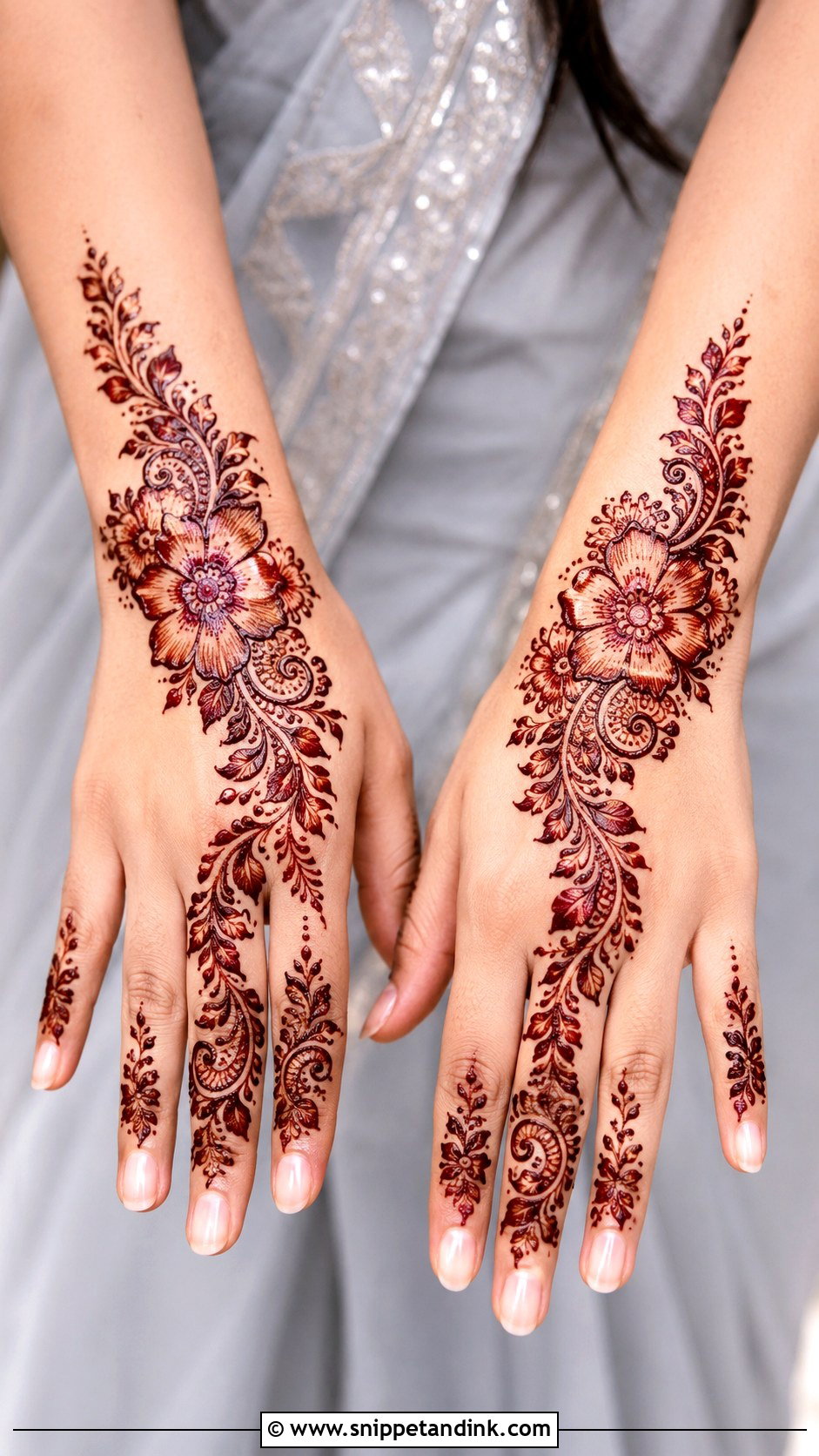
Arabic flower mehndi design puts big flowers along one side of the palm and lets a vine travel diagonally toward the wrist or fingertips. Thick outlines, shaded petals and generous gaps give it that look, with paisley curves or leafy branches linking the blooms. It applies quickly. My one caution: shaded petals look best on fresh, smooth paste, so if your artist’s cone is lumpy, the shading will be too.
4. Indian Flower Mehndi Design
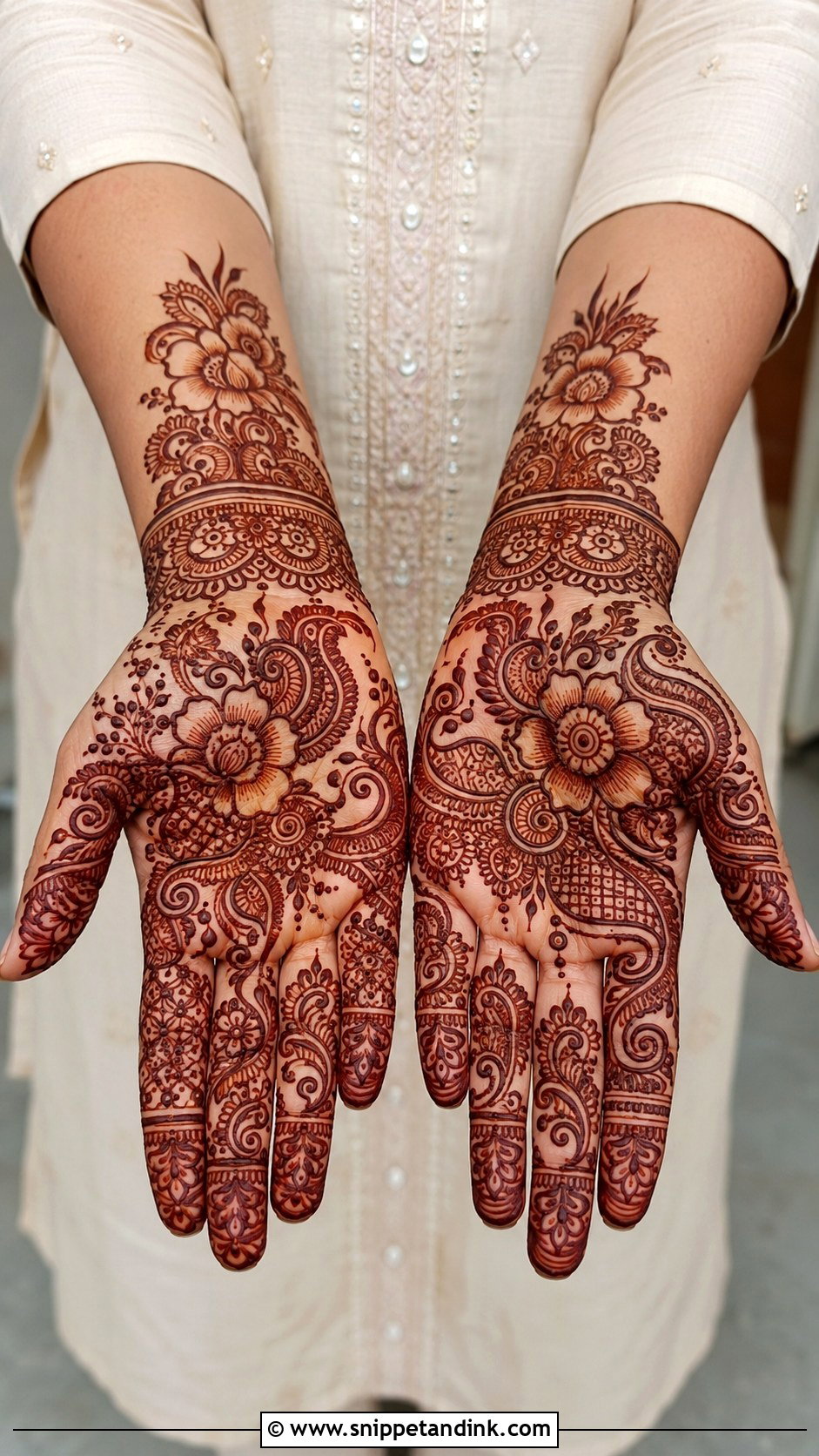
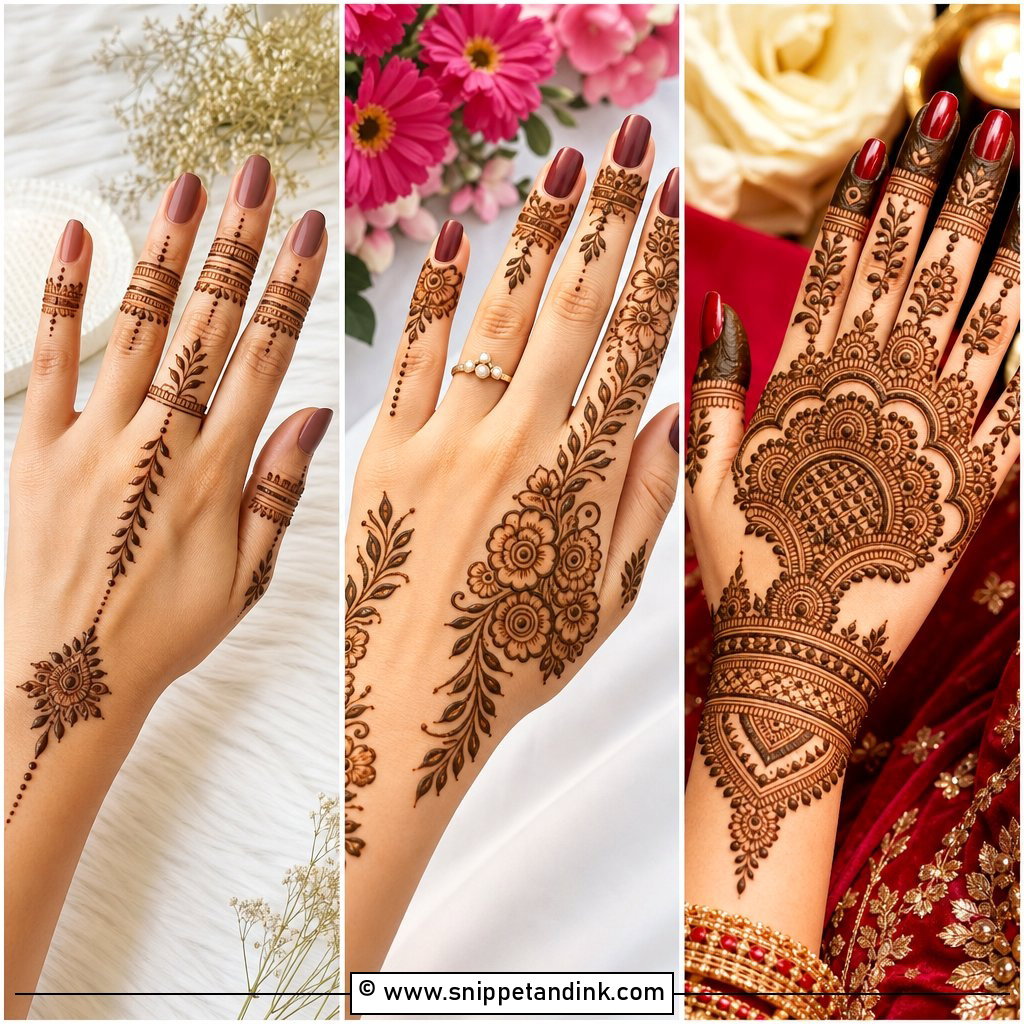
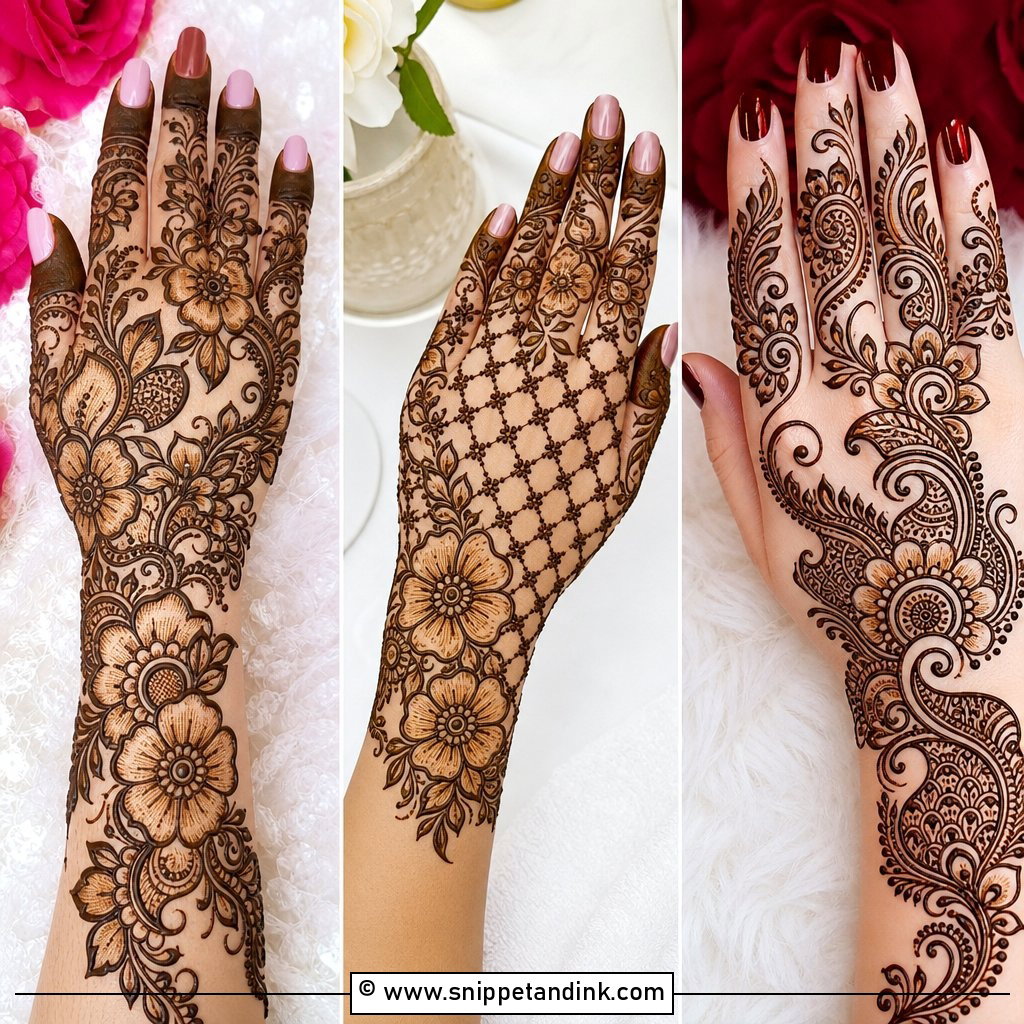
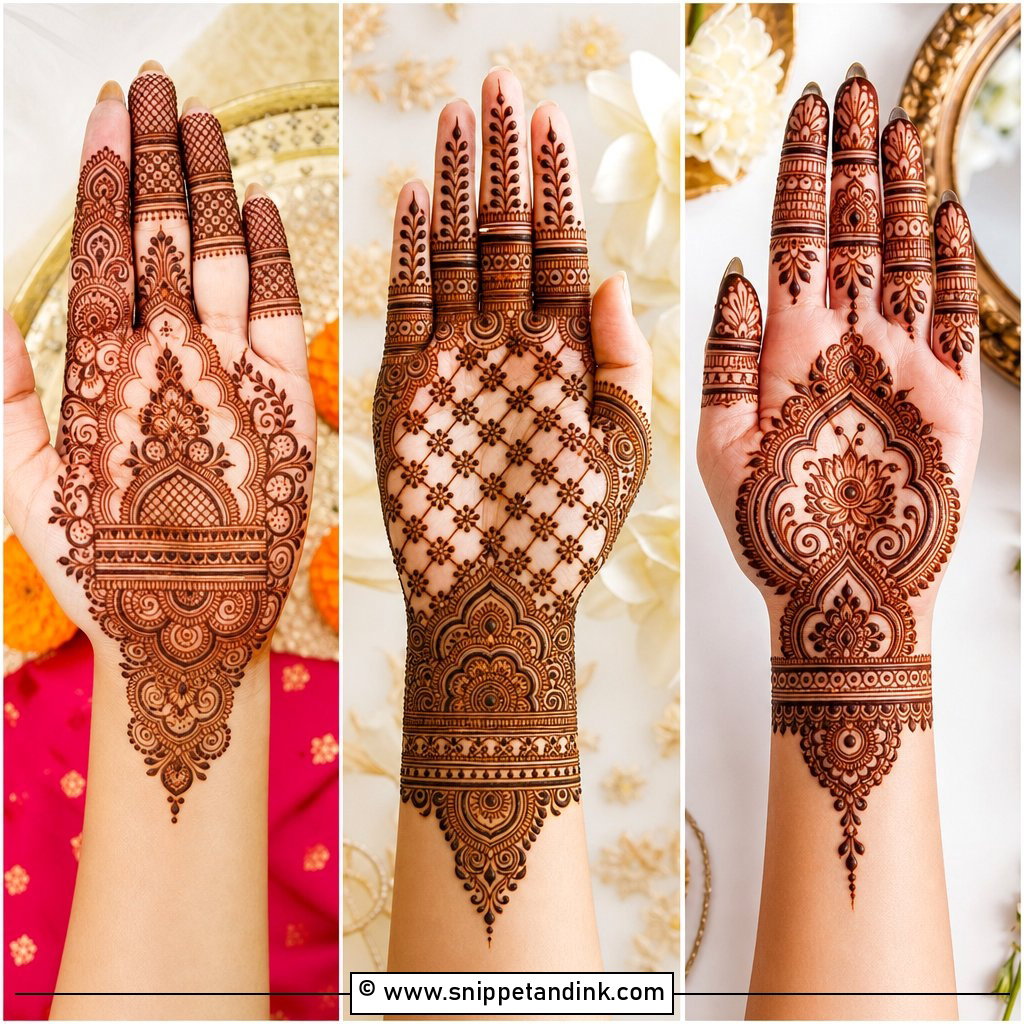
Indian floral work leaves very little empty skin. Layered flowers, fine lines, paisley, dots and small fillers cover the palm, fingers and wrist, often starting from a lotus or rose in the palm with smaller blooms and curved leaves around it, and tight floral bands or checks on the fingers. It’s for traditional occasions and for people who love dense mehndi. Keep the biggest flower bold and every filler neat; the fillers are what give away a rushed job.
5. Indo Arabic Flower Mehndi Design
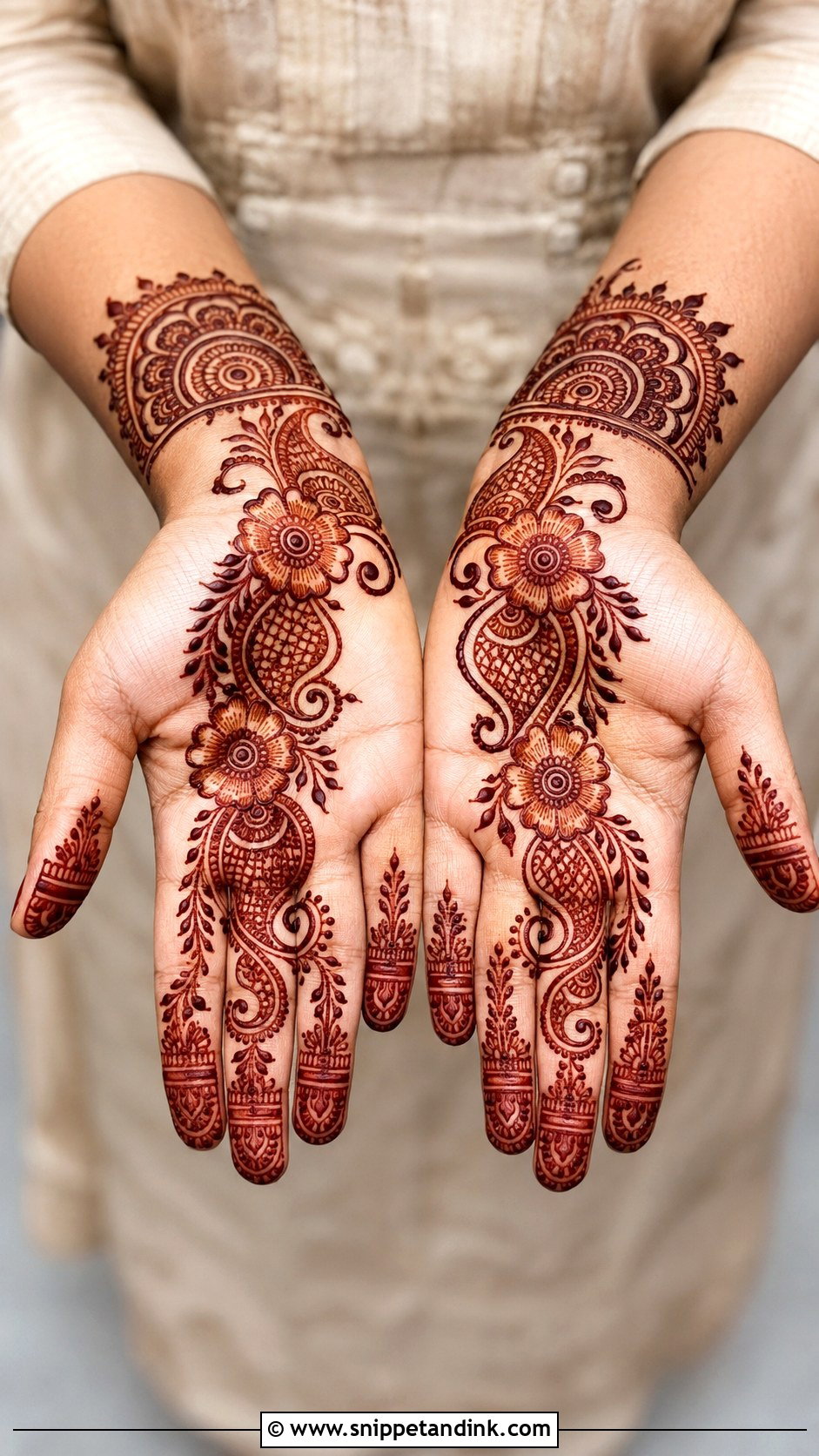
A diagonal floral trail across the palm, with selected petals filled in Indian style using fine lines, dots and tiny checks, and paisley or small mandala accents near the wrist. Fingers stay partly covered with small gaps. From across a room it reads bold, and up close the detail shows, which is why Indo-Arabic is so popular at sangeets and Eid dinners. I fill only some petals, never all, so the Arabic open feel survives.
6. Rose Flower Mehndi Design
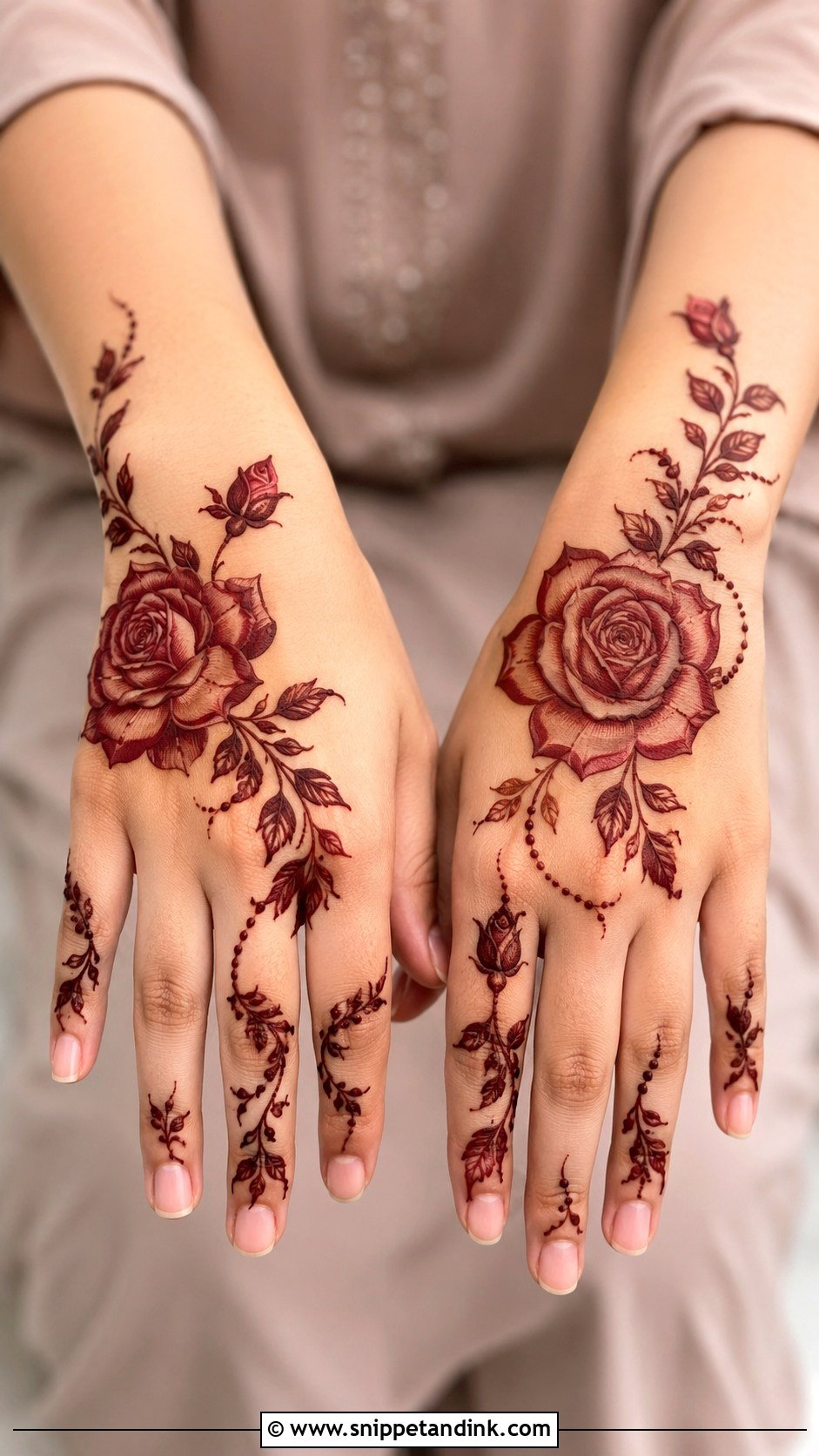
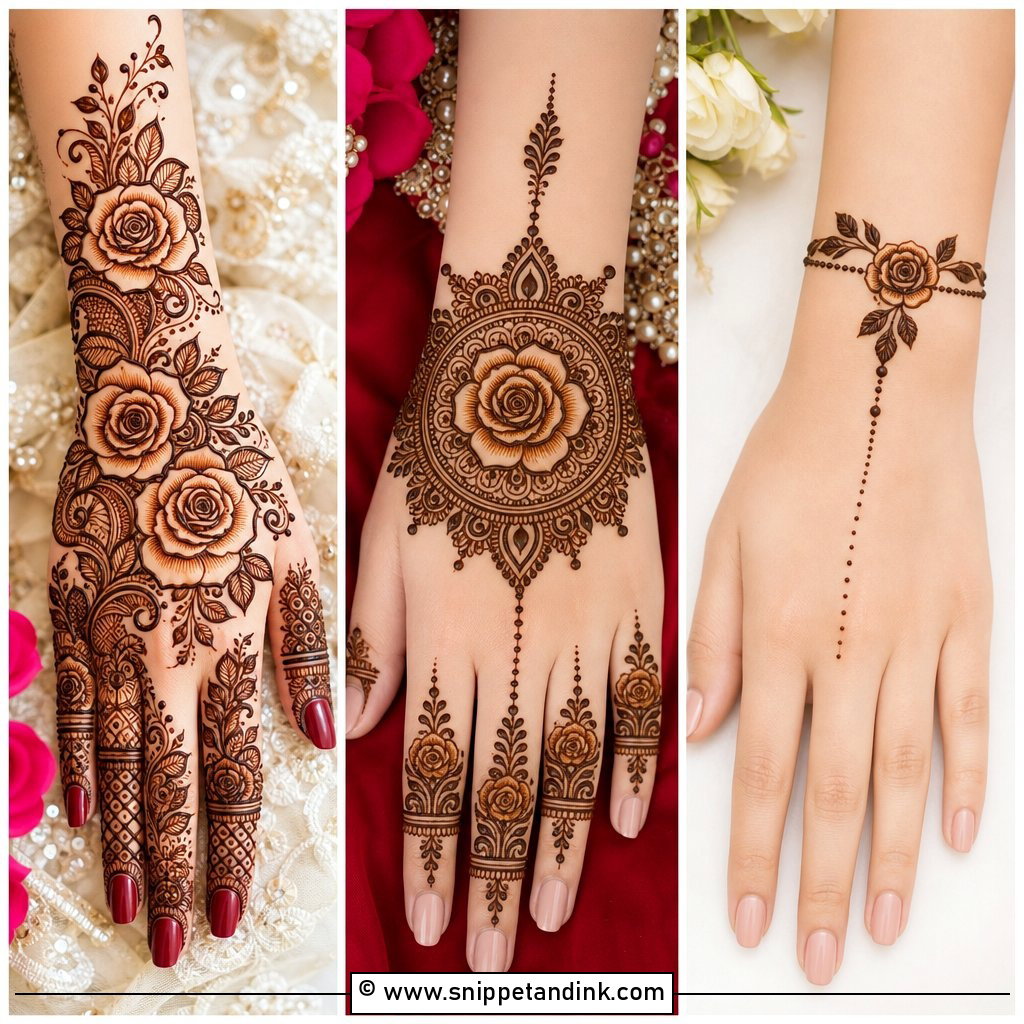
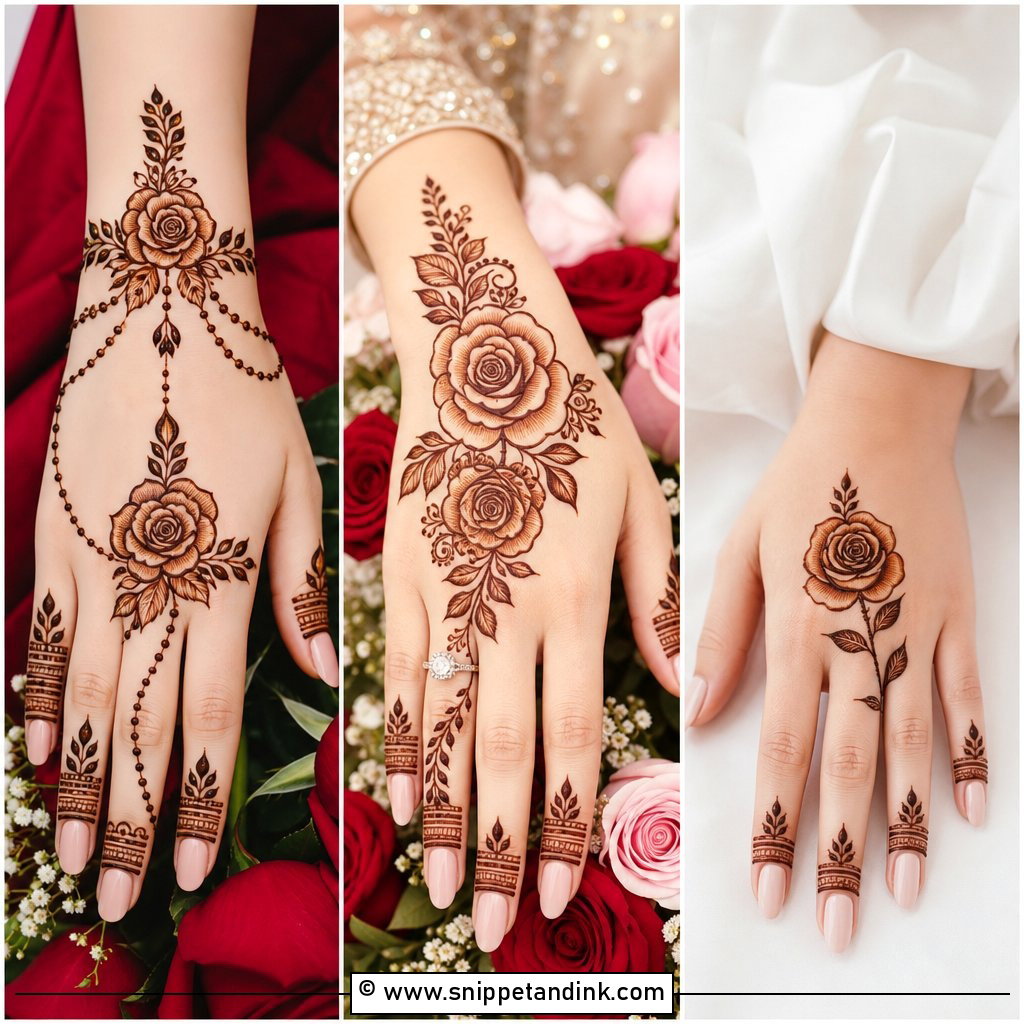
One large rose on the palm or the back of the hand, its petals curved with soft inner shading, plus a stem, leaves and small buds. Roses suit Arabic and Indo-Arabic layouts because round petals give natural movement. On the fingers I use thin vines, tiny rosebuds and clean caps. The tricky part is the center of the rose: the spiral has to be tight and small, or the bloom looks like a cabbage.
7. Lotus Flower Mehndi Design
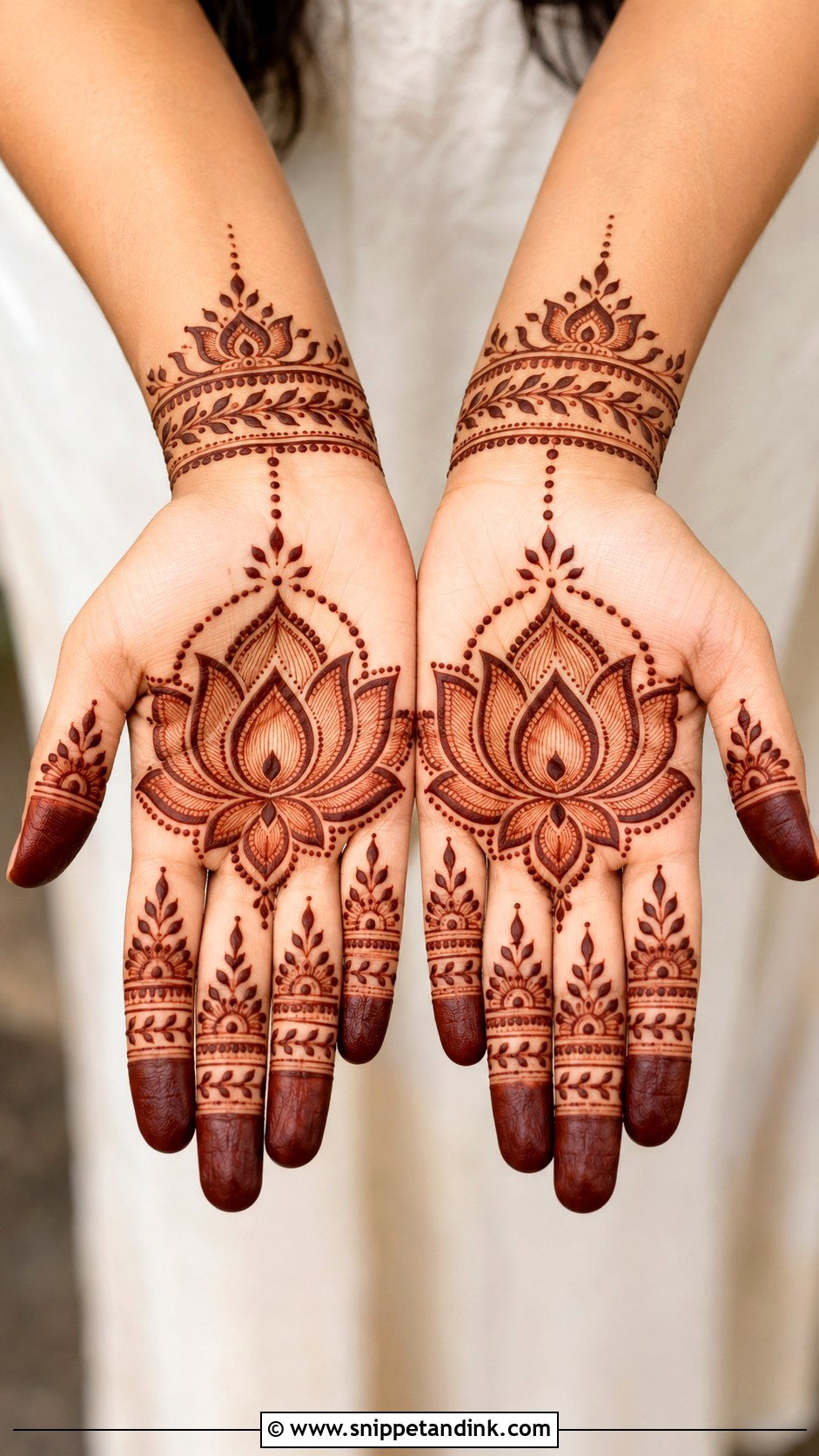
Layered pointed petals make the lotus a natural centerpiece on the palm, wrist or back of the hand, surrounded by dots, leaves and curved vines. Half-lotus shapes near the fingers and a bracelet band at the wrist make it fuller. It sits well with sarees, lehengas and temple jewelry. A wide palm suits it especially, since the lotus gives a clear center and draws the eye upward, while on a narrow hand I draw it smaller and taller.
8. Flower Mandala Mehndi Design
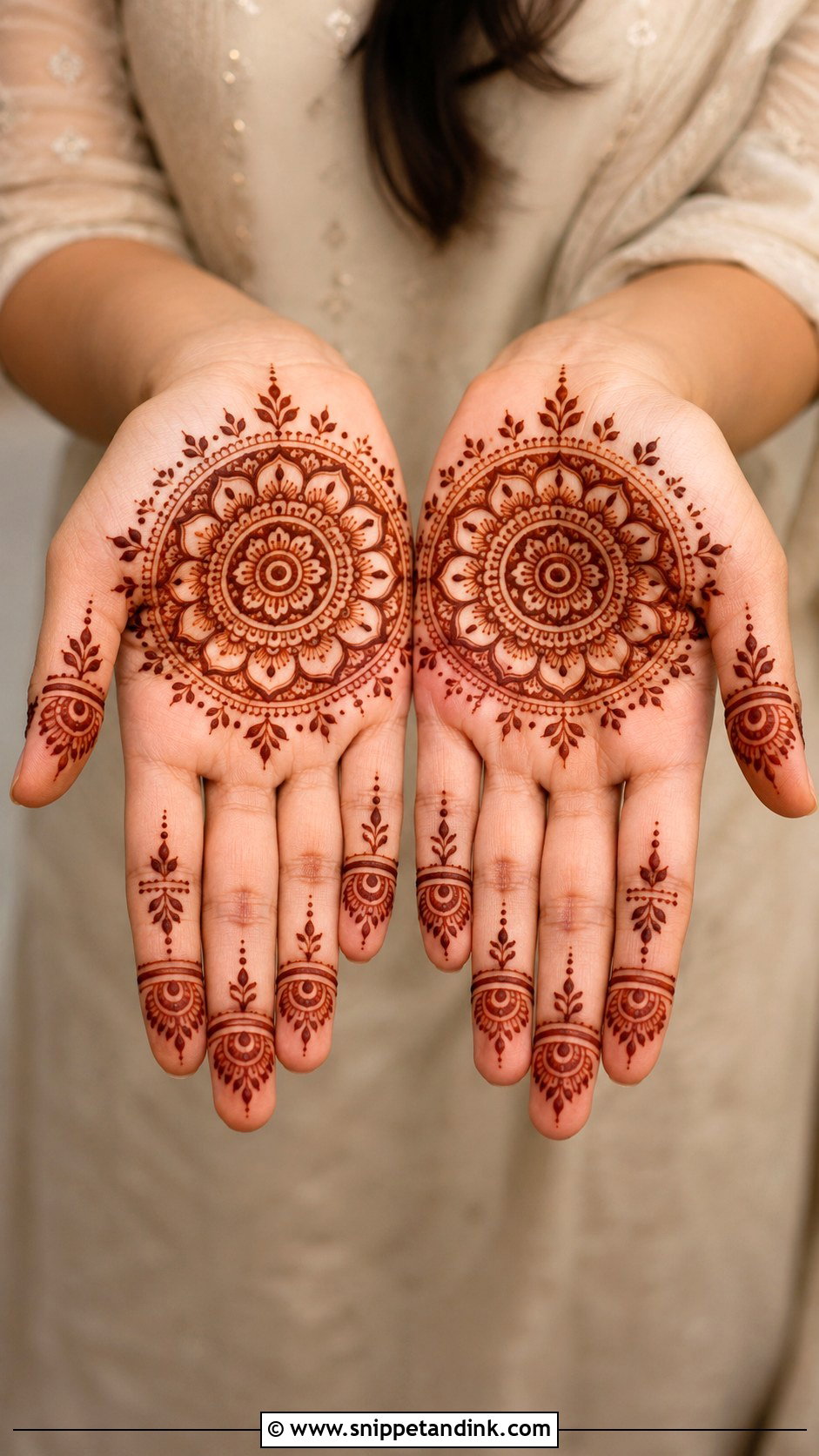
A flower mandala mehndi design starts with a round flower in the center of the palm or back of the hand, then builds even rings of petals around it, with dotted borders, tiny leaves and half-mandalas on the fingers. It offers traditional mehndi with a simple structure, good for poojas, family gatherings and practice. After staining, the open rings between petal layers are what make the floral center stand out. Uneven rings are the giveaway, so I check spacing every layer.
9. Full Hand Flower Mehndi Design
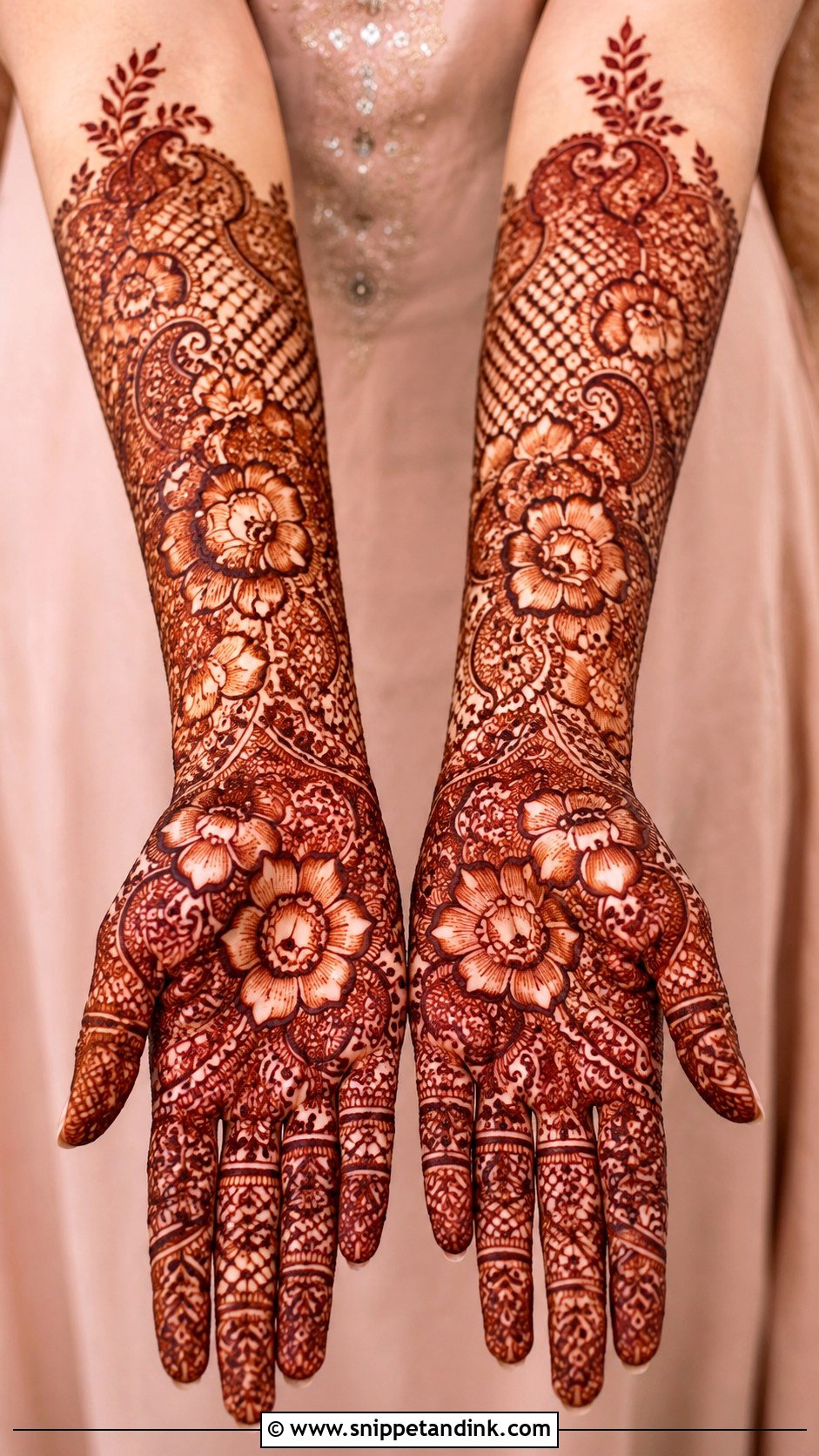
Large blooms across the palm, vines, leaves, dots, paisley and small mesh in the spaces, and the design carrying on past the wrist toward the forearm. The fingers should connect with floral bands, not random separate motifs. Big open flowers mixed with smaller detailed fillers keep it readable. When the stain develops to deep maroon with the flower outlines still distinct, it photographs wonderfully, and that clarity comes from leaving thin gaps of skin around each bloom.
10. Half Hand Flower Mehndi Design
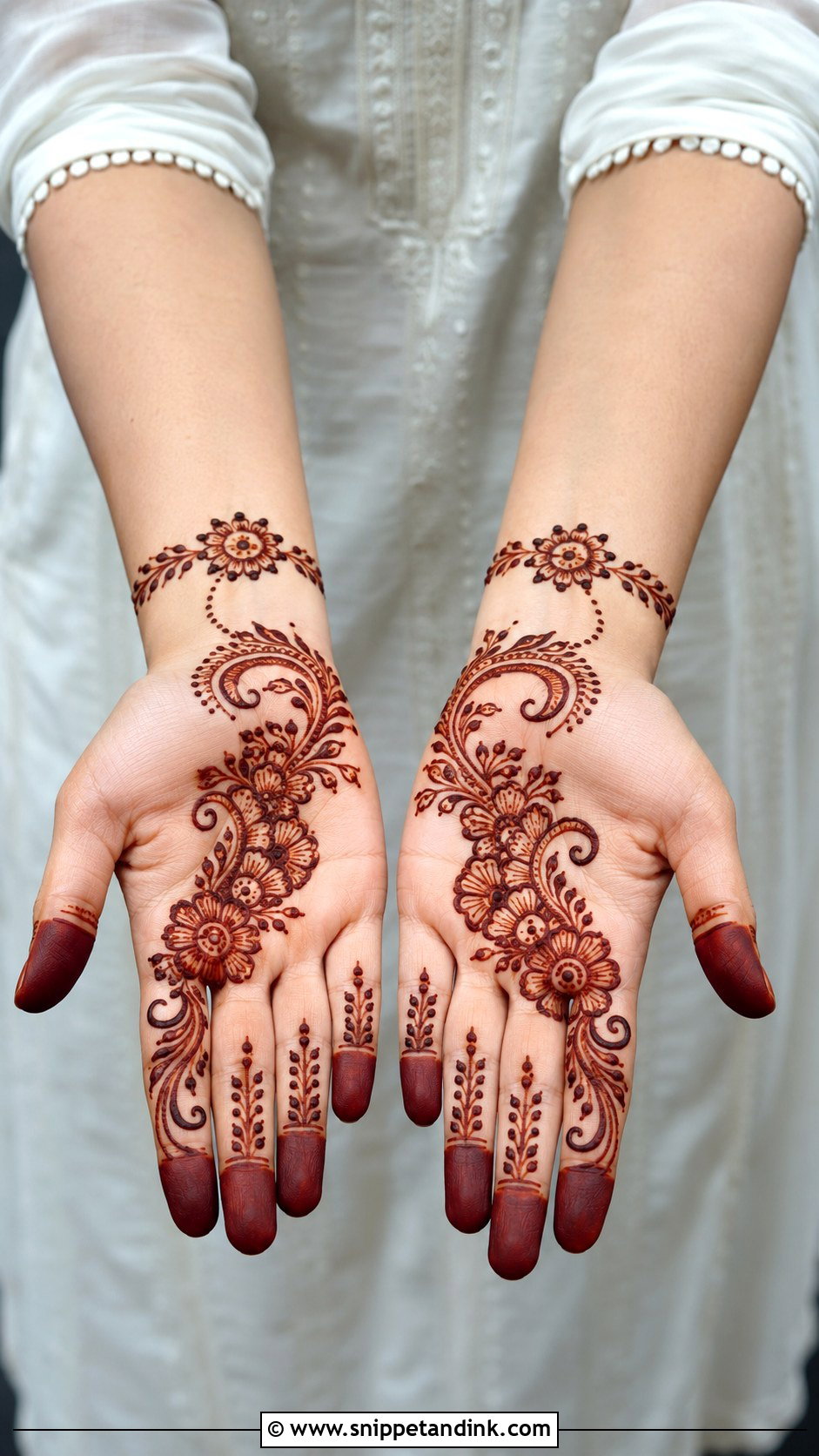
Palm and fingers covered, wrist and lower hand kept light with a thin flower bracelet or dotted chain. A large flower on one side of the palm with vines across the fingers works, as does a central floral mandala with half-filled tips. This middle ground is festive without the hours a full hand needs. I suggest it for guests, teenagers and bridesmaids who need their hands back quickly.
11. Flower Vine Mehndi Design
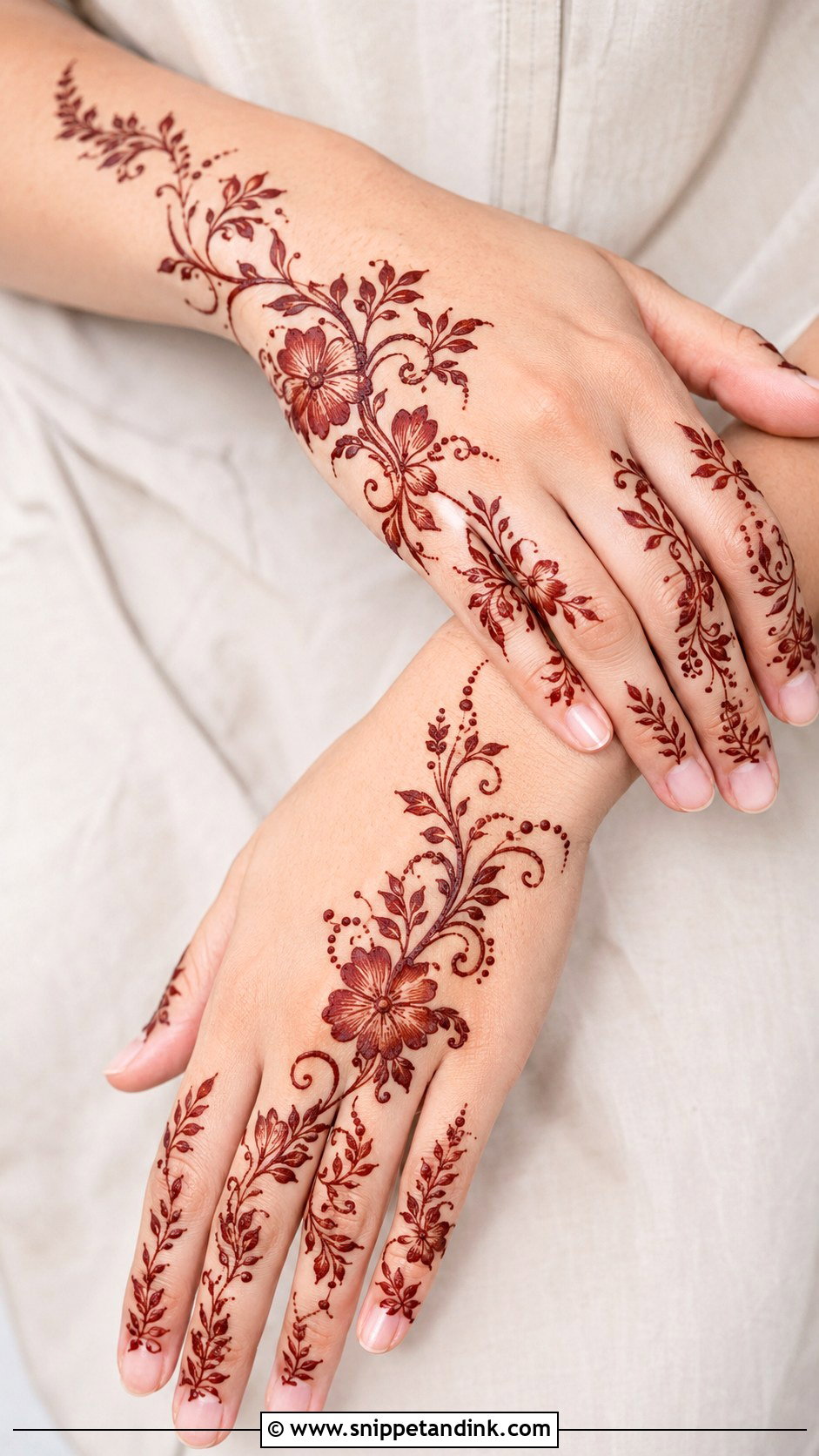
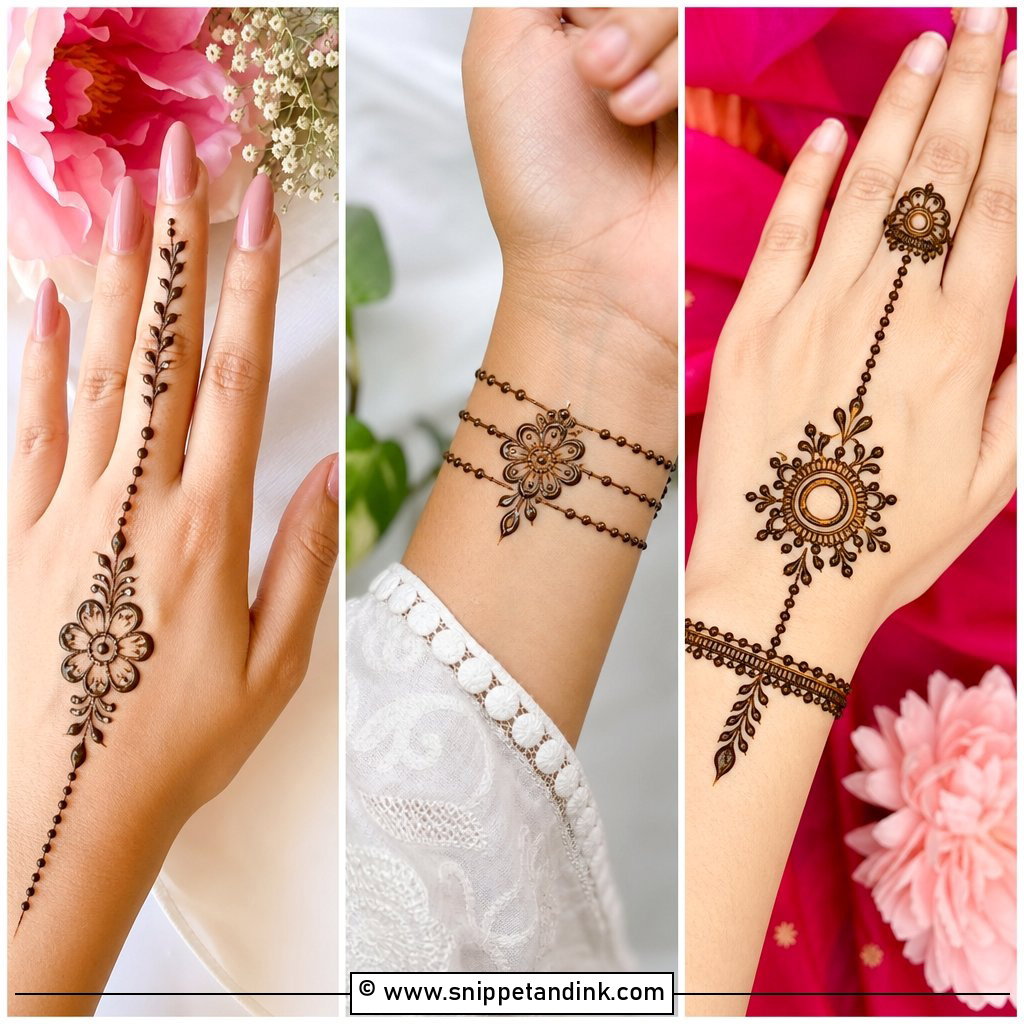
Starting near the wrist, a vine curves across the palm or back of the hand toward one finger, with flowers of different sizes along it and leaves, dots and buds in the spaces. Following the length of the fingers flatters long hands. It’s also forgiving: a small wobble in a stem just looks like a stem. Bold flowers, thin stems.
12. Flower Bracelet Mehndi Design
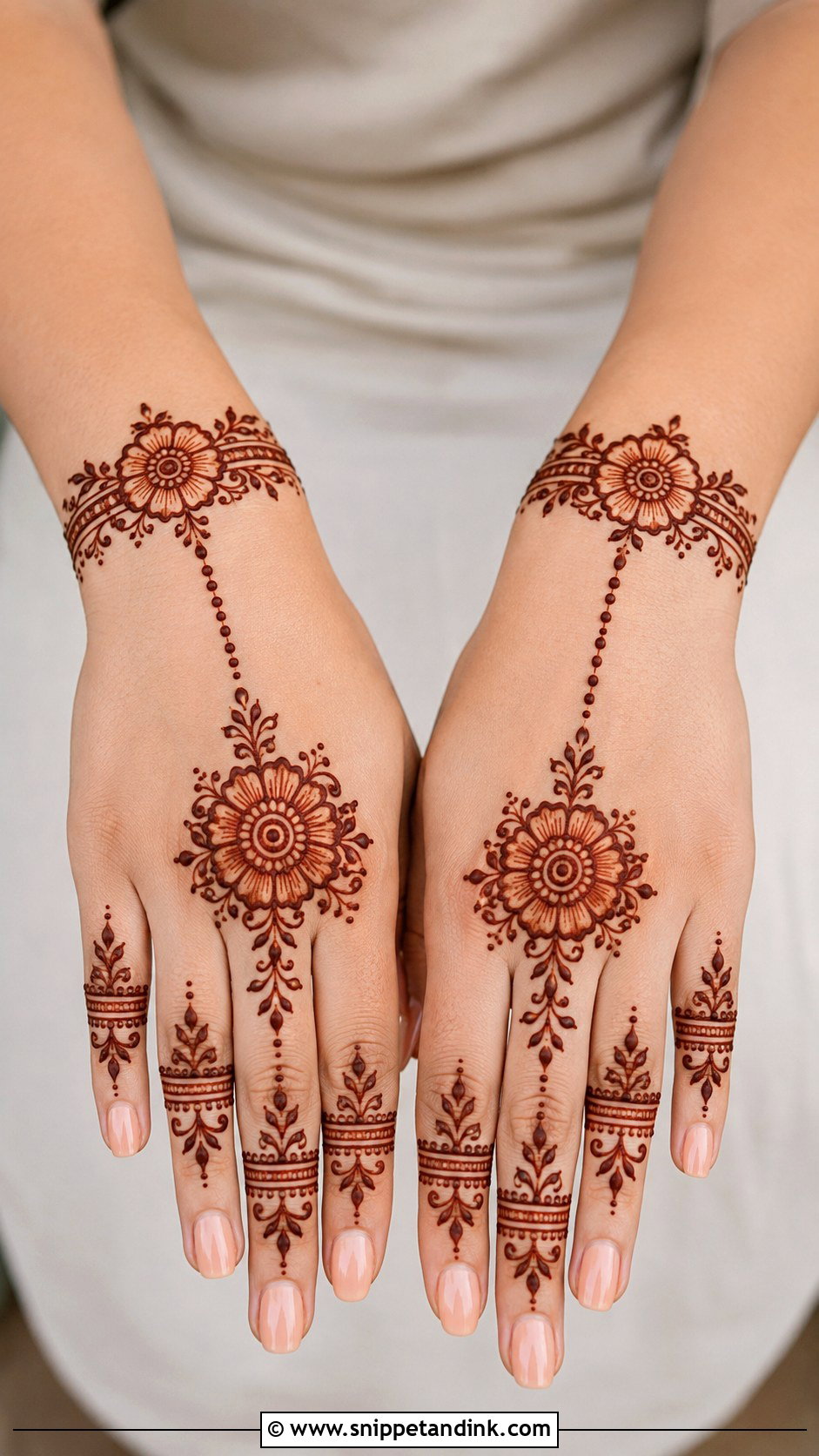
A floral band around the wrist connects to a central flower on the back of the hand through chains, dots or slim vines, while the fingers stay minimal with rings, leafy lines or tiny caps. Hand and wrist read as one accessory, which suits close-up photos and bangles. I place the band slightly above the wrist bone, so a stack of bangles doesn’t sit directly on it all evening and rub it pale.
13. Flower Finger Mehndi Design
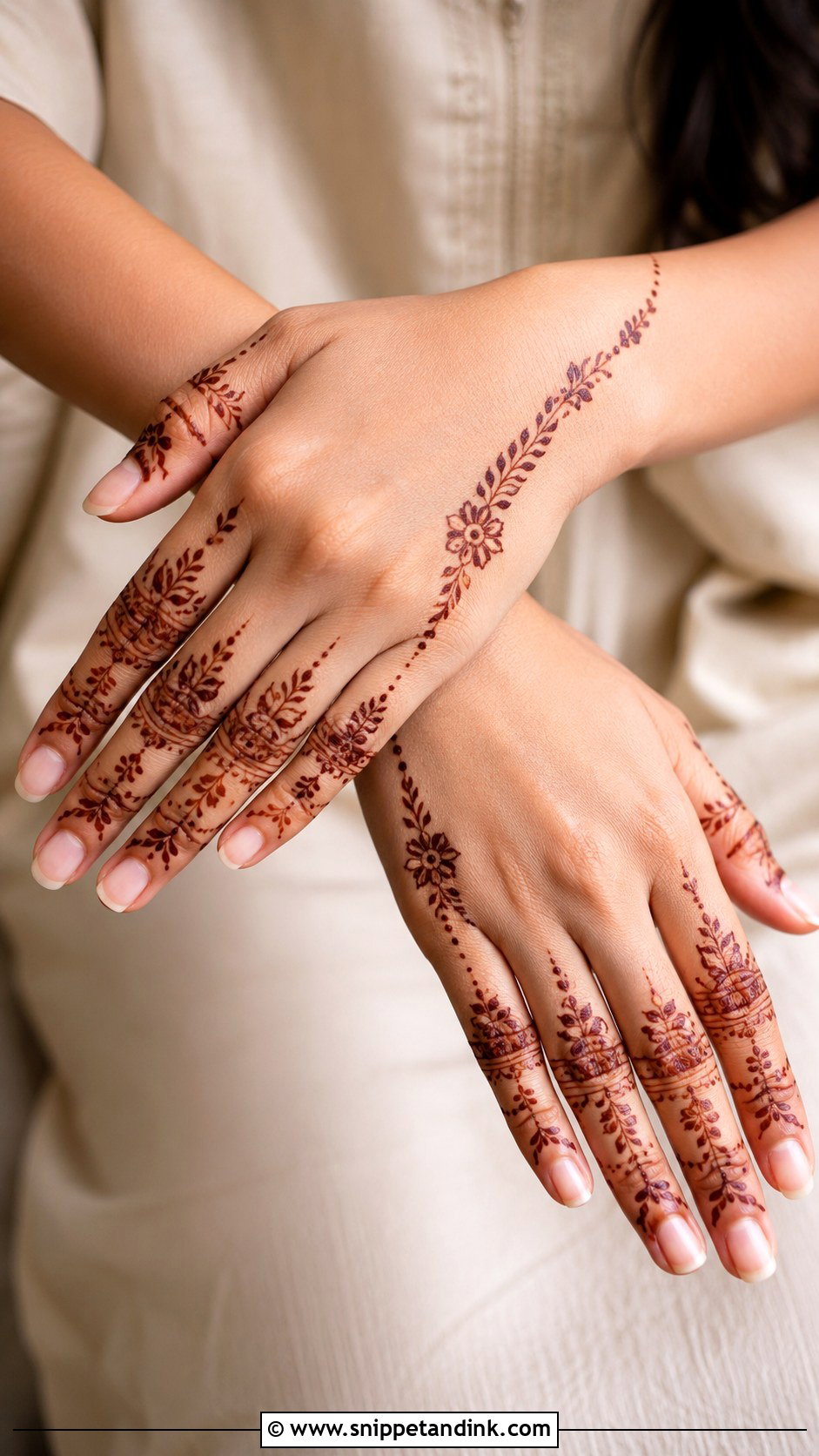
Most of the detail goes on the fingers: small flowers, leafy bands and dotted trails, connected so they don’t look random, perhaps with one diagonal floral chain touching two or three fingers. The center of the hand can stay bare or take a tiny mandala. It dries quickly and suits office-friendly events. If you’re wearing nail color, have it done before the henna, not after.
14. Flower Jaal Mehndi Design
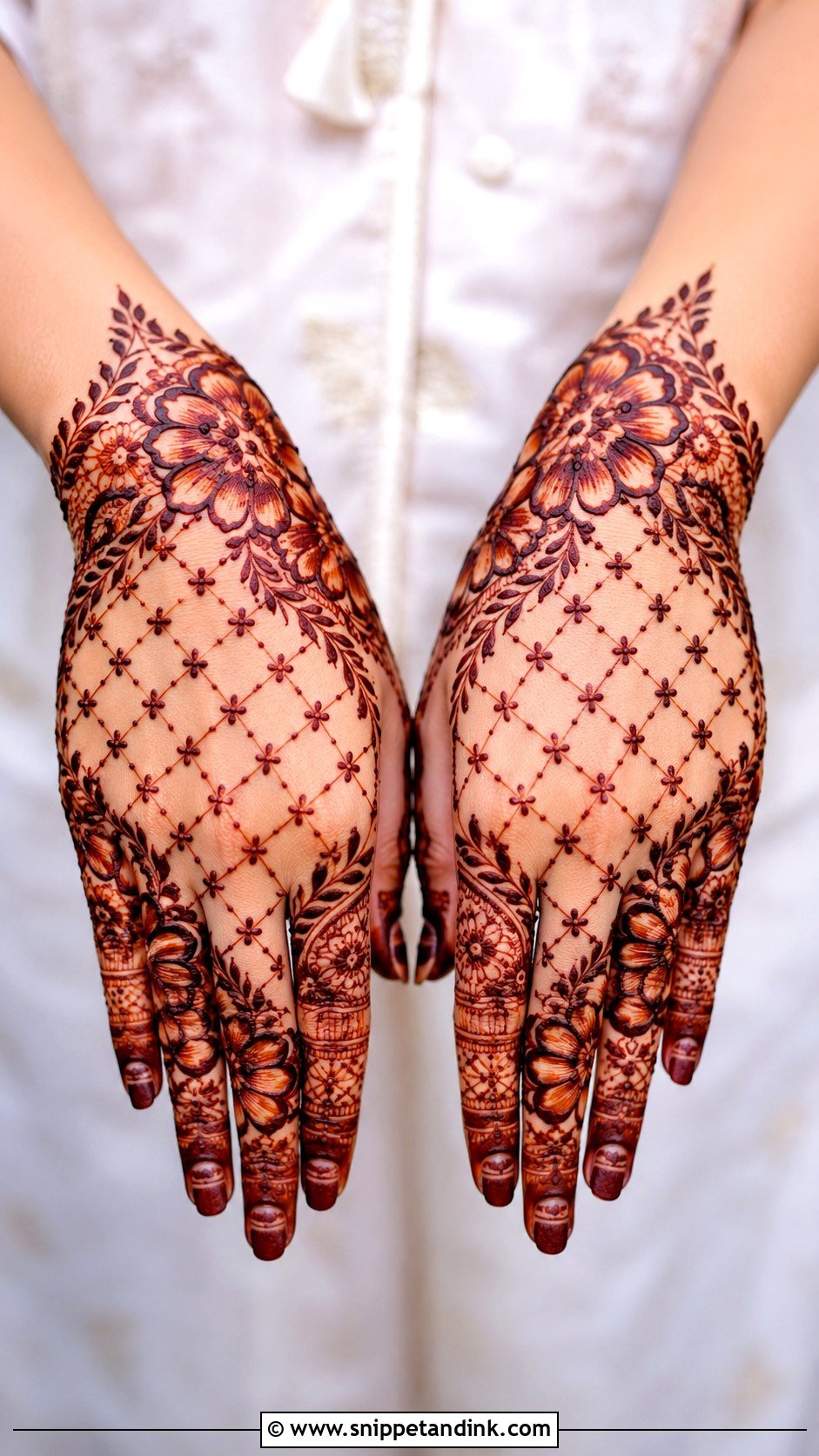
Mesh covers the palm, back of the hand or wrist, with flowers at the corners or center. Larger flowers on one side stop it from looking flat. The mesh should be fine and even, with tiny dots at each intersection, and the flowers bold. On a broad hand I make the jaal cells slightly bigger; on a small hand, smaller, so the grid stays in proportion. Squeeze too many cells into a small space and they close up as the stain deepens.
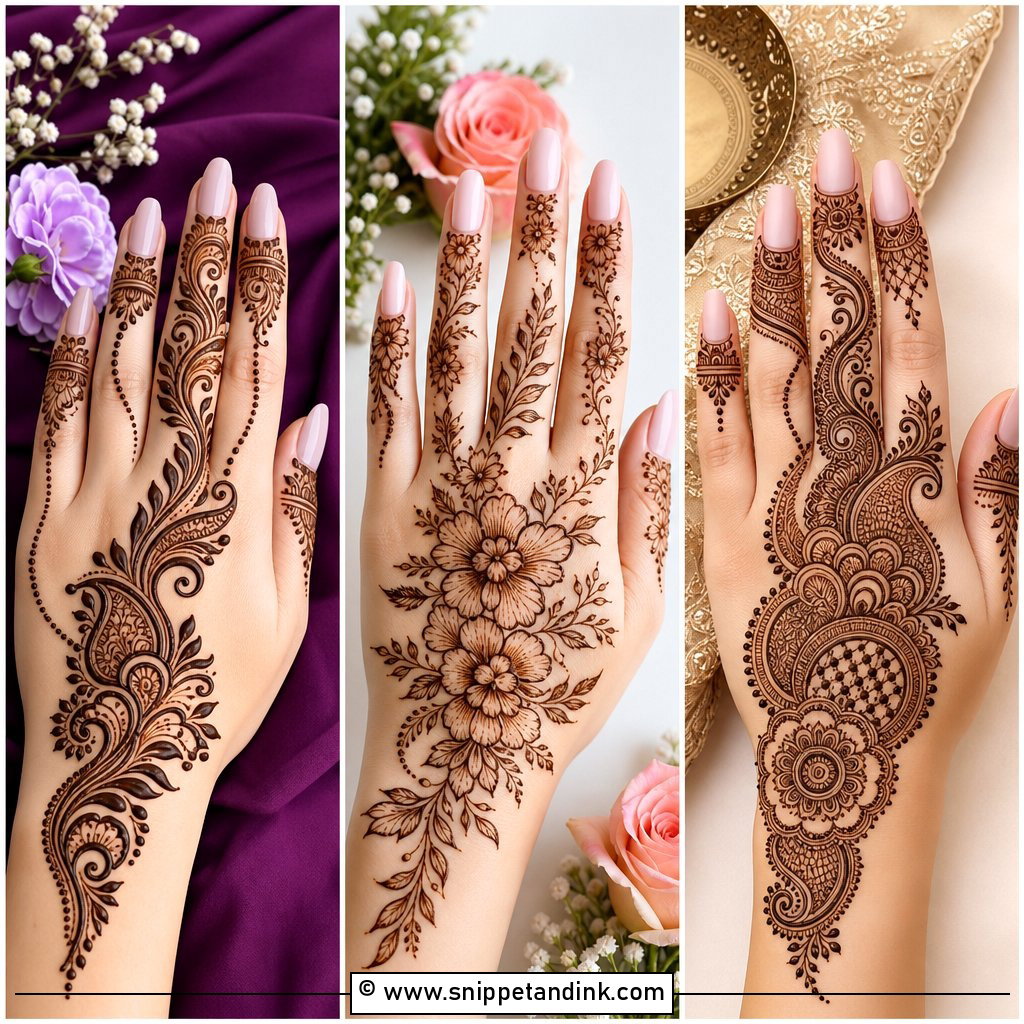
15. Flower Paisley Mehndi Design
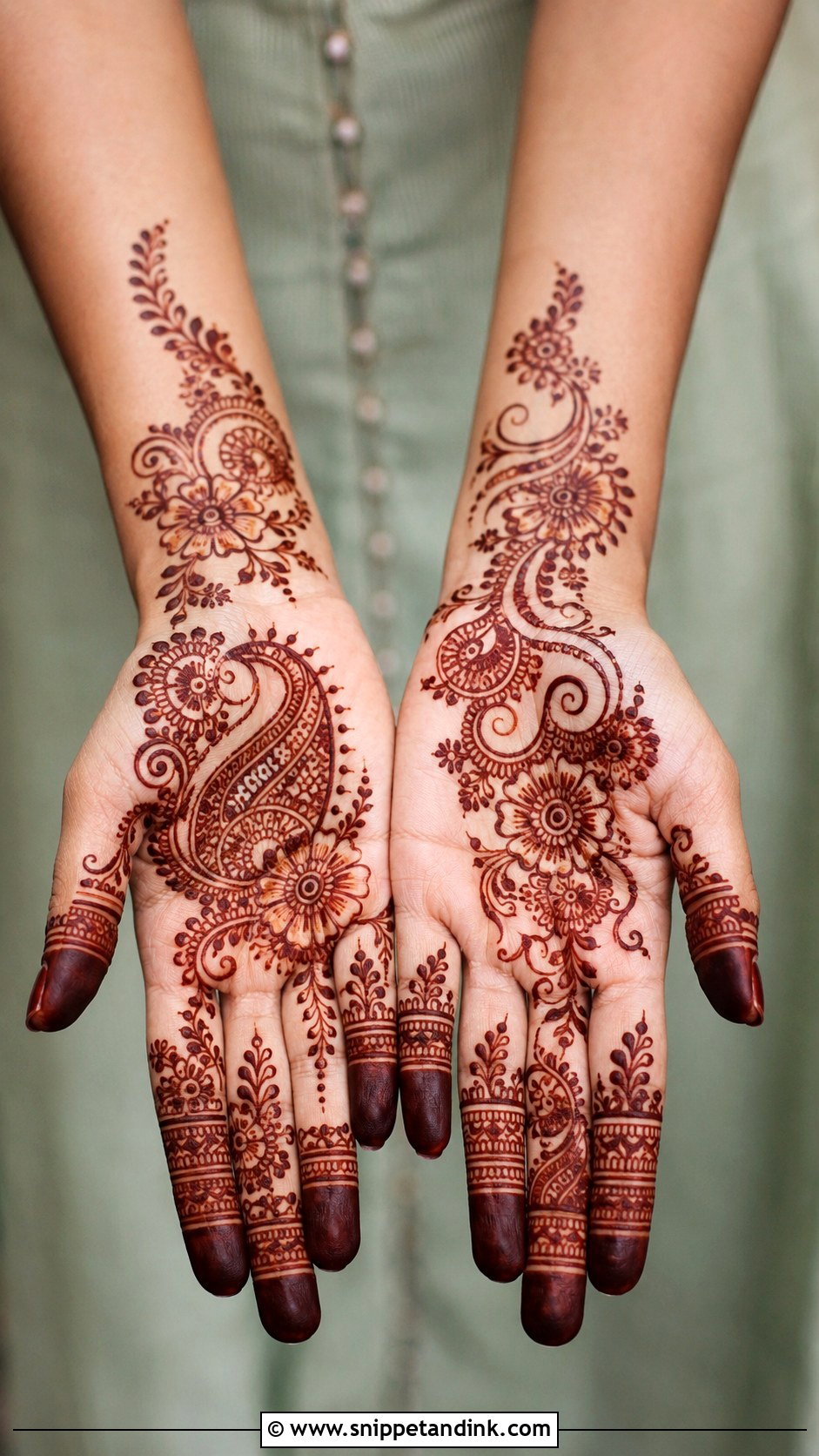
A large paisley on the palm filled with petals, dots and curves, flowers around its edge and vines running to the fingers and wrist. The paisley gives movement, the flowers softness. It can be as simple or detailed as you like, which is why it suits both Indian and Indo-Arabic hands. Repeating one flower shape across the whole design is my trick for making it look cohesive rather than busy.
16. Flower Peacock Mehndi Design
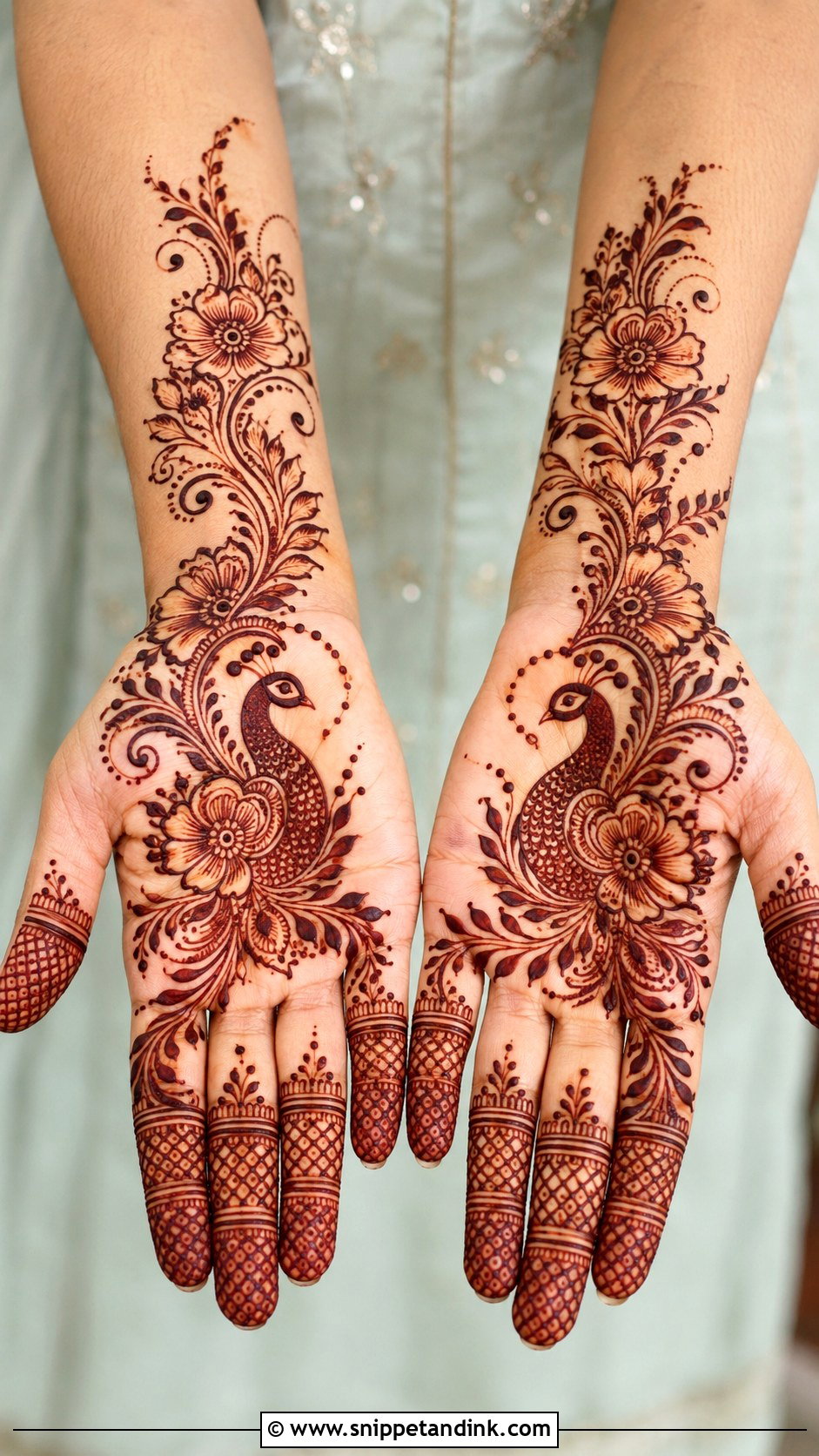
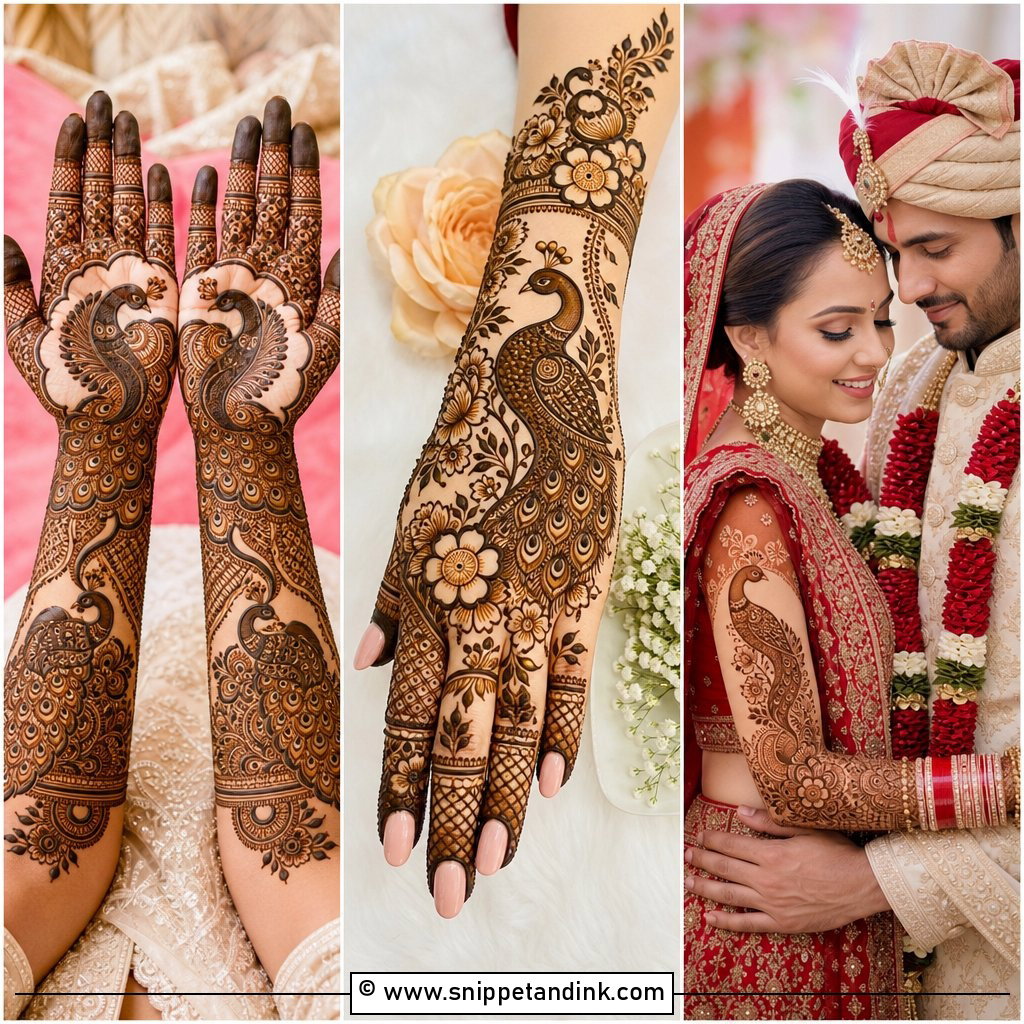
A flower peacock mehndi design turns the bird’s feathers into floral vines and petal clusters, on the palm or the back of the hand. The bird’s outline has to stay graceful and clear, and the flowers provide movement around it. One peacock with a floral trail is the lighter version; pair it with full fingers and wrist-to-forearm flowers for bridal. I draw the neck curve first, because if that curve is stiff, nothing else saves the bird.
17. Modern Flower Mehndi Design
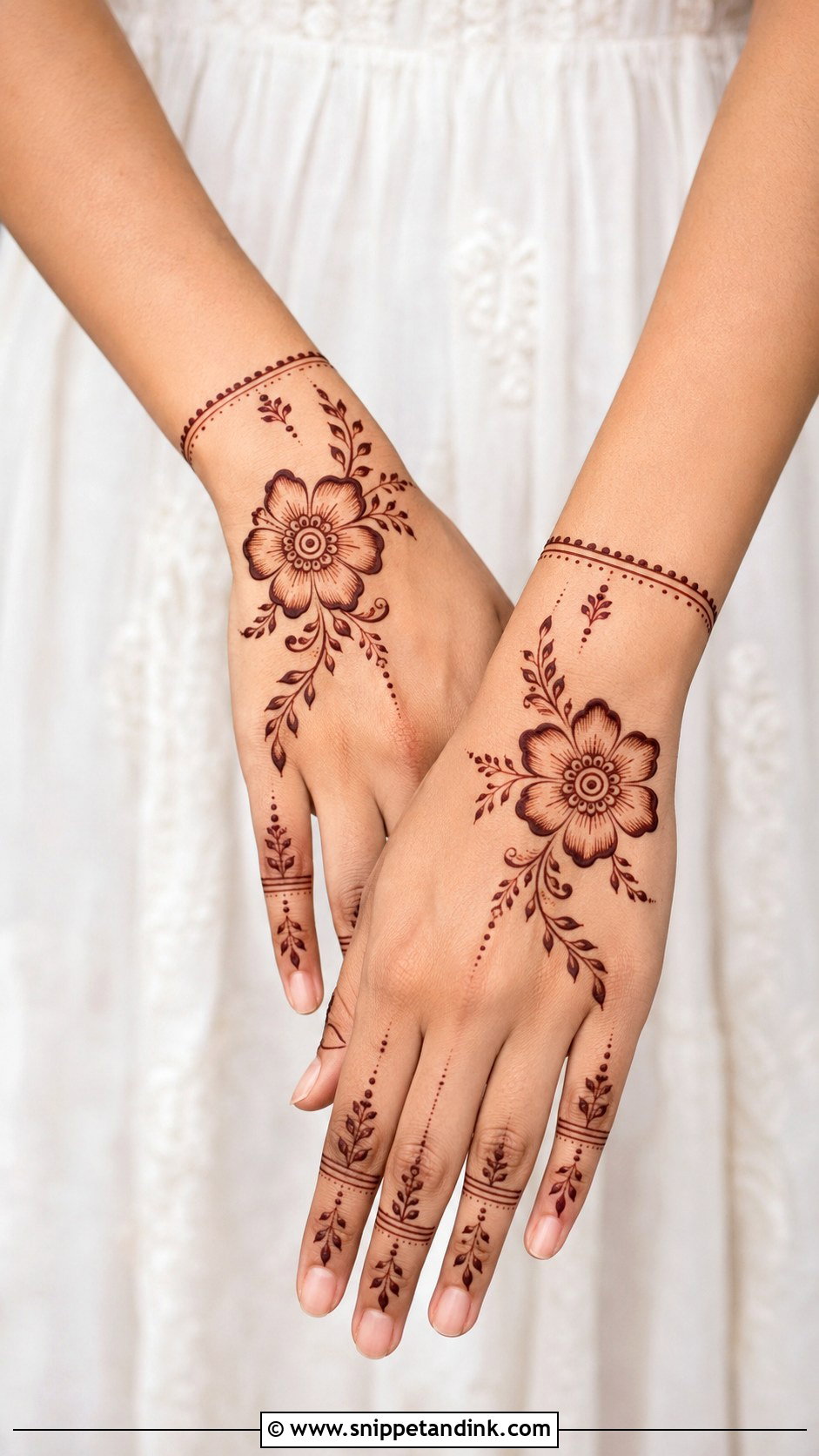
One or two statement flowers placed with intent, clean spacing, bold outlines and few fillers. A flower on the back of the hand, a slim wrist band and lightly decorated fingers is enough, with geometric dots, tiny leaves or fine curves to keep it fresh. It suits brunches, parties and contemporary outfits. Empty space is what makes each flower clear in photos, so I don’t fill it.
18. Minimal Flower Mehndi Design
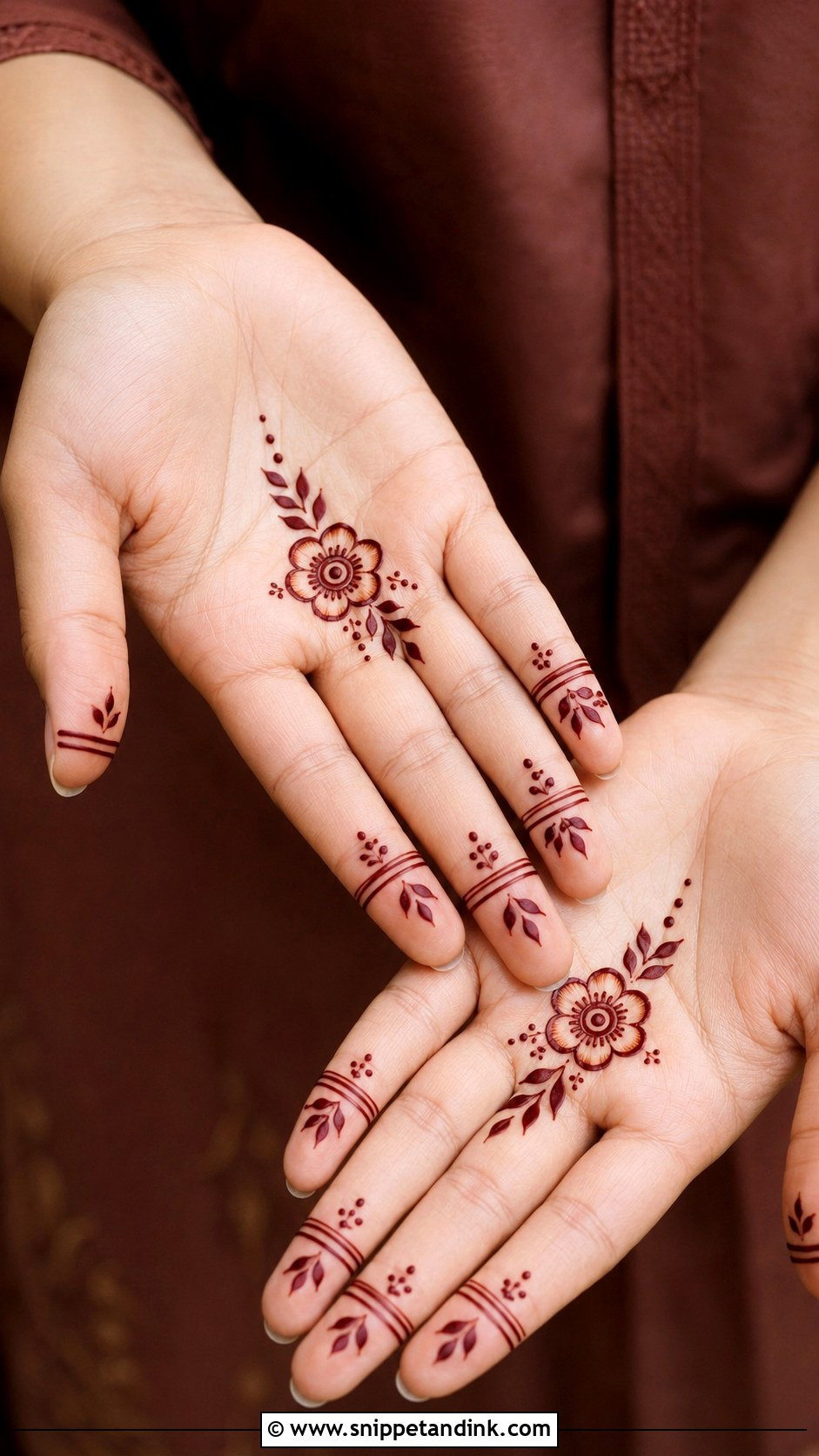
One small flower on the palm, wrist or back of the hand, a few leaves and dots, and light finger bands or tips. It goes on in minutes and dries fast. Clean lines let the stain show on any skin tone. Centered placement makes it look intentional, while adding extra motifs around it usually makes it look unsure.
19. Bridal Flower Mehndi Design
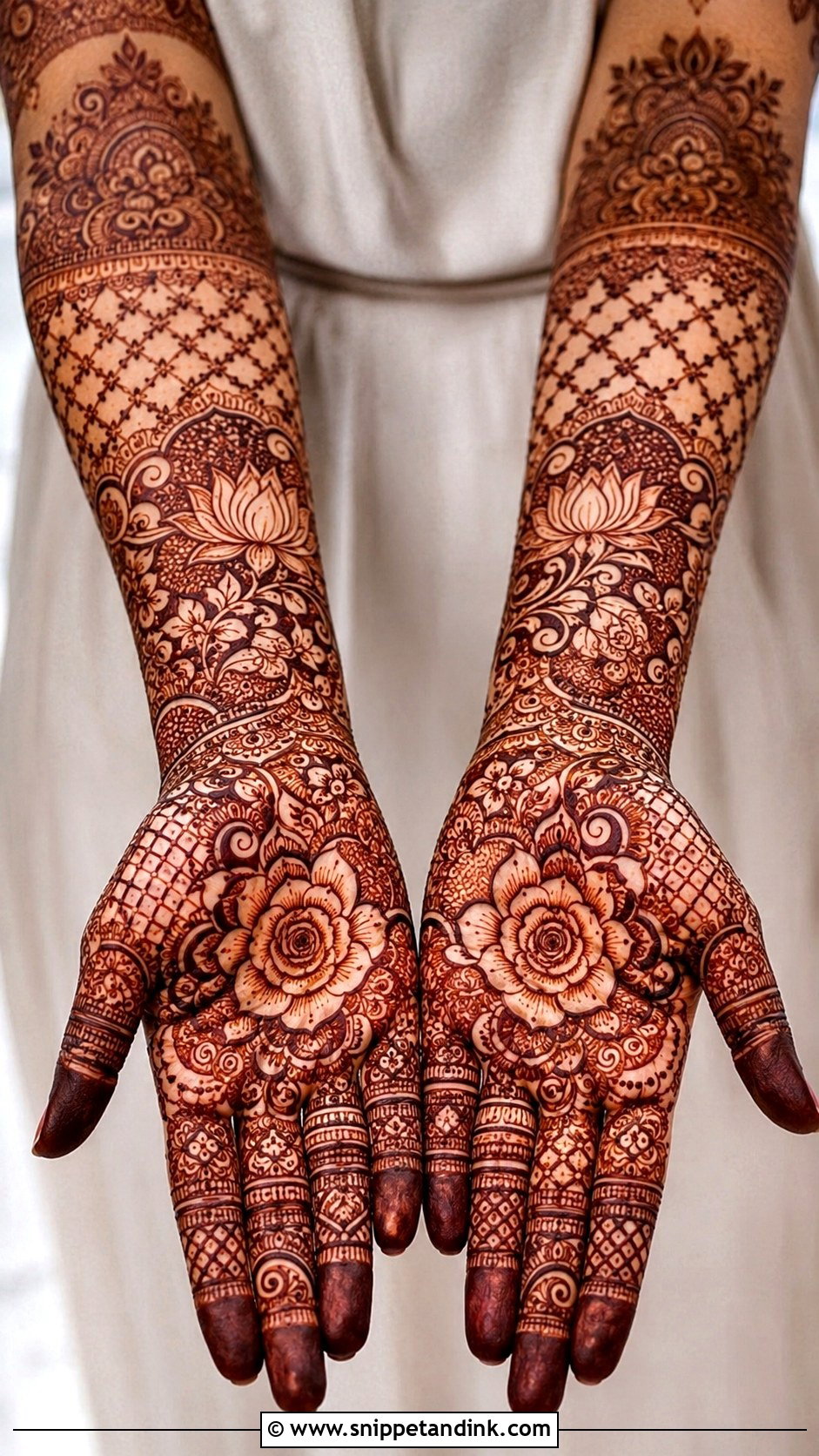
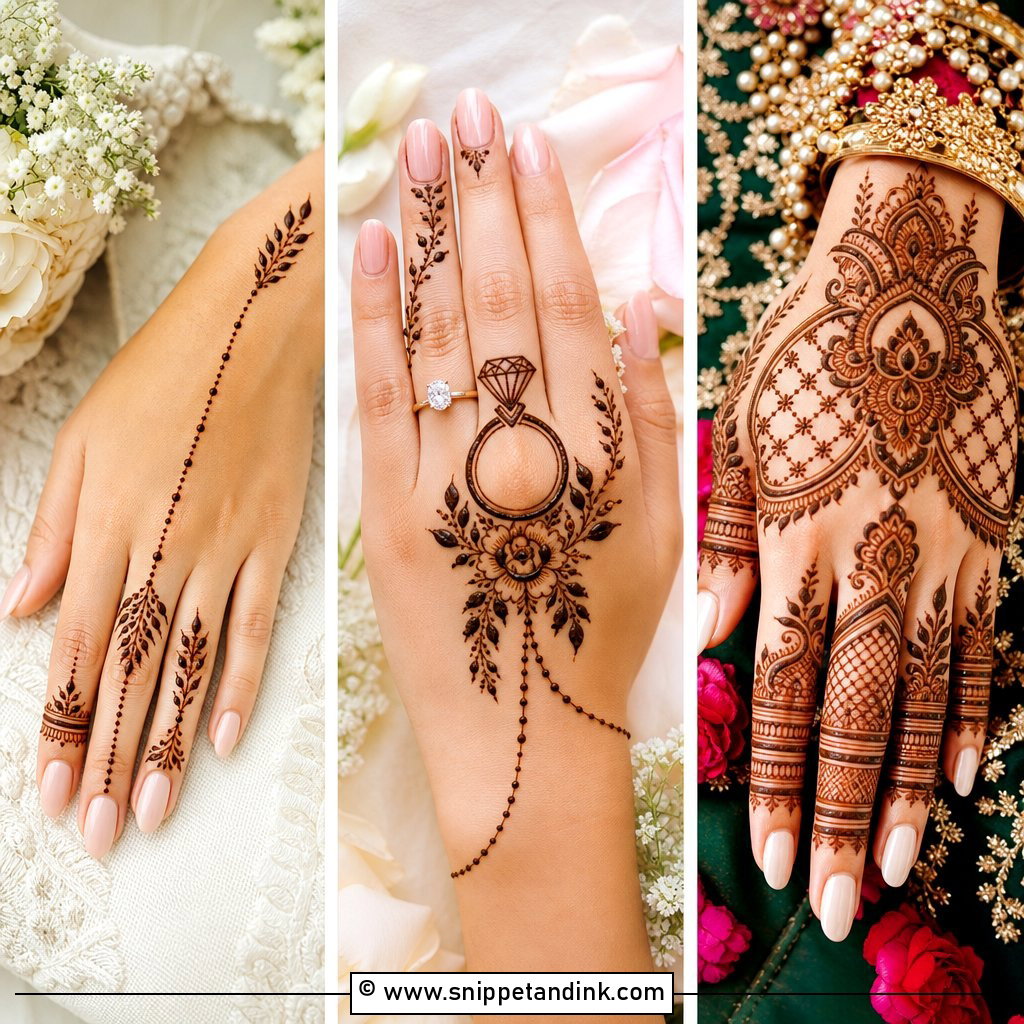
Bridal florals connect from fingers to forearm: layered roses, lotus, jasmine-style blooms and leafy vines in a garden-like layout, with paisley, jaal, mandalas or small symbols between sections, on both palms and backs. For a softer bridal look I keep the flowers larger and leave slight gaps; for traditional, tiny fillers and dense finger work. Flowers suit everything from red lehengas to pastels. Book a trial if you can, since bridal paste stains differently on every bride’s skin.
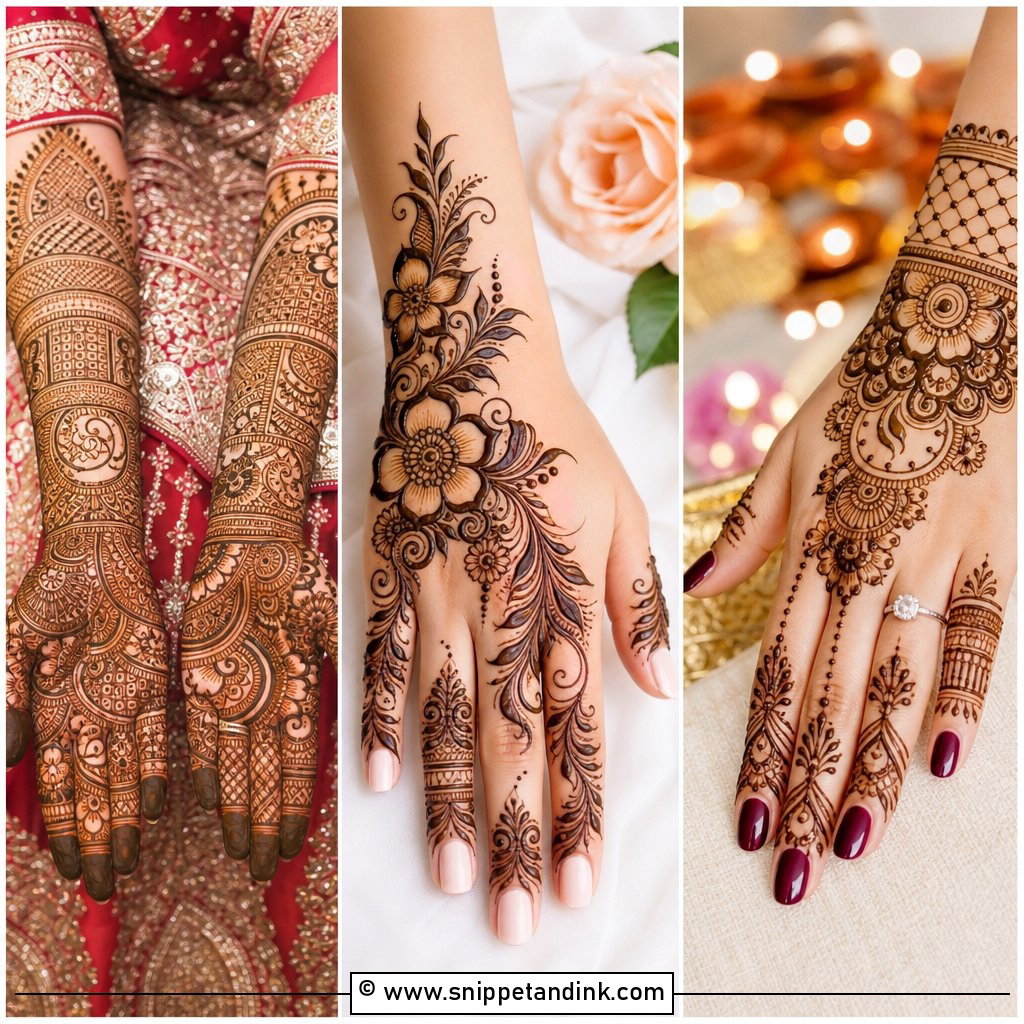
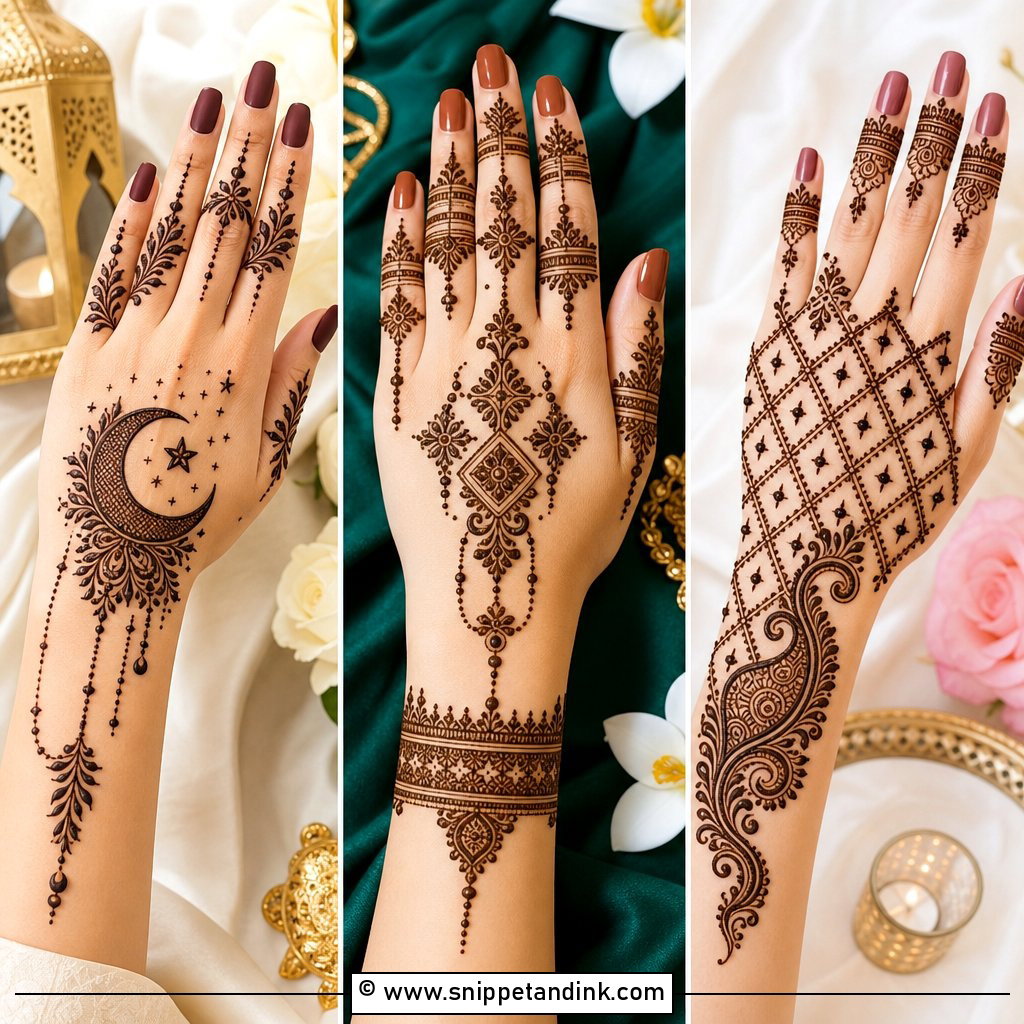
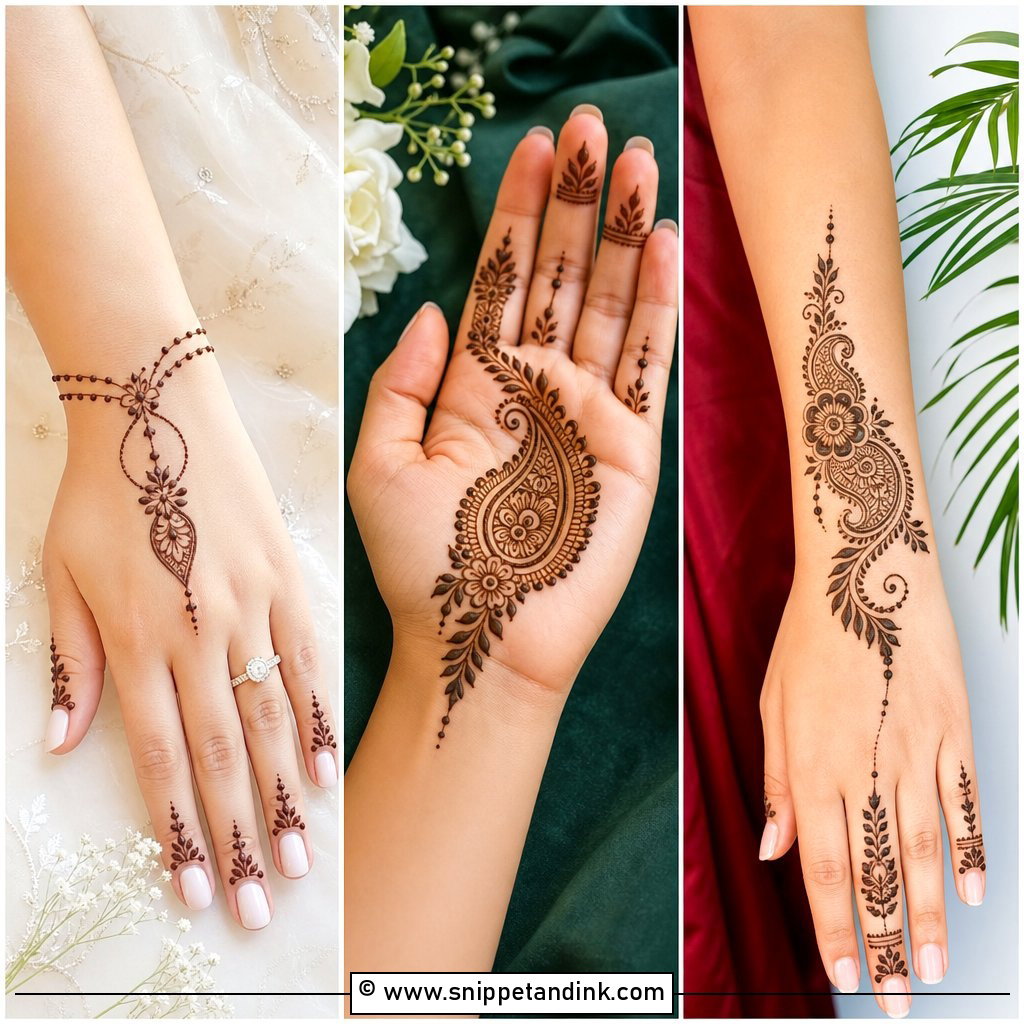
20. Flower Mehndi Design For Eid
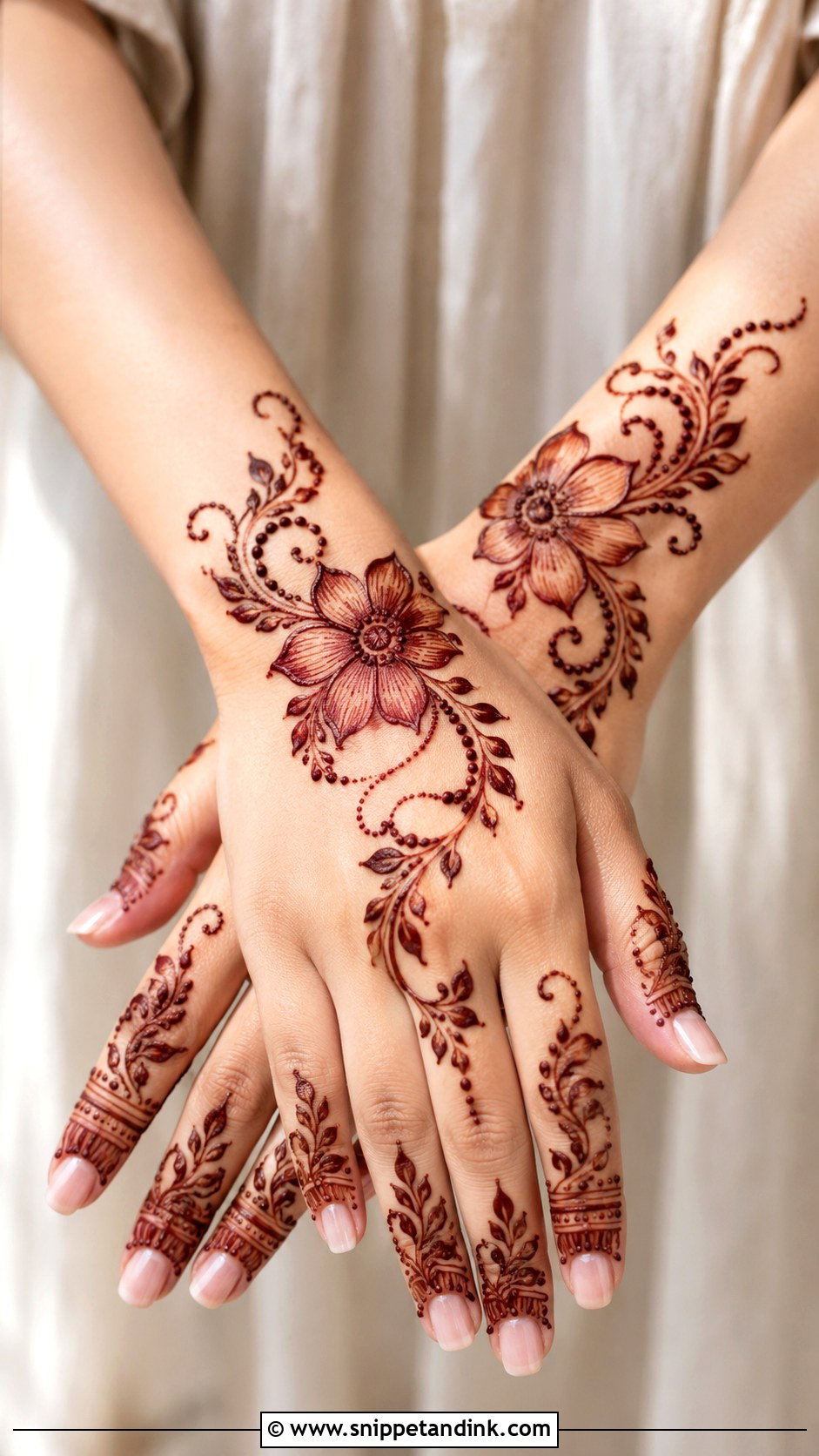
Arabic floral trails are the Eid favorite because they look polished without covering the hand: a bold flower near the wrist or palm, leaves and vines moving toward the fingers, dotted chains, shaded petals and neat tips. It applies quickly, which matters on chaand raat when every woman in the family wants hers done. Open spacing looks modern; extra small flowers give fuller coverage.
21. Flower Mehndi Design For Diwali
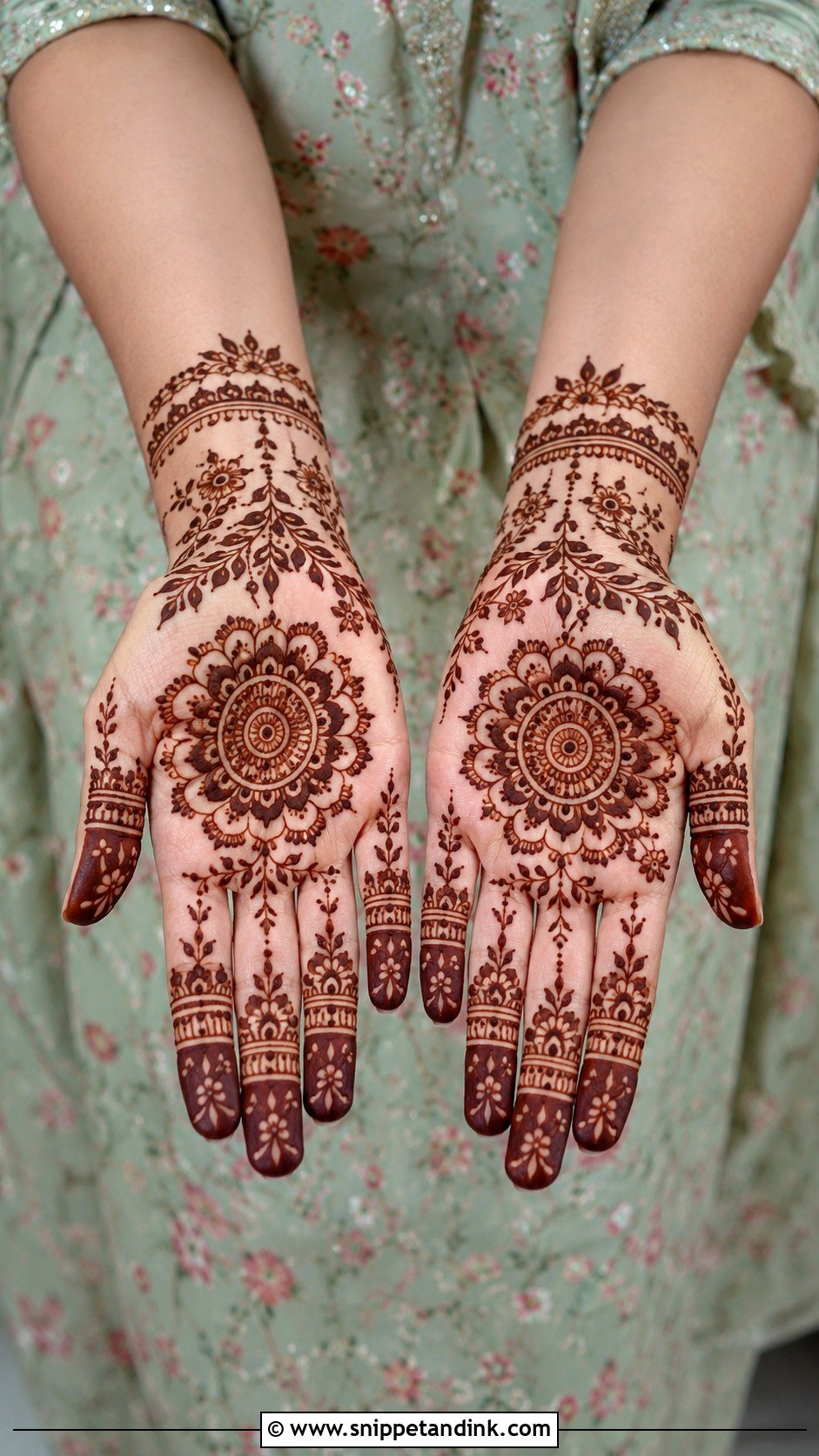
A central floral mandala on the palm, leafy vines, dotted borders and small flower clusters around it, with bands and petals on the fingers. For more decoration, extend it to a floral bracelet at the wrist. Diwali evenings are lit warmly and dimly, so I keep the flower outlines bold. Fine lines that look great in daylight can disappear in diya light.
22. Flower Mehndi Design For Engagement
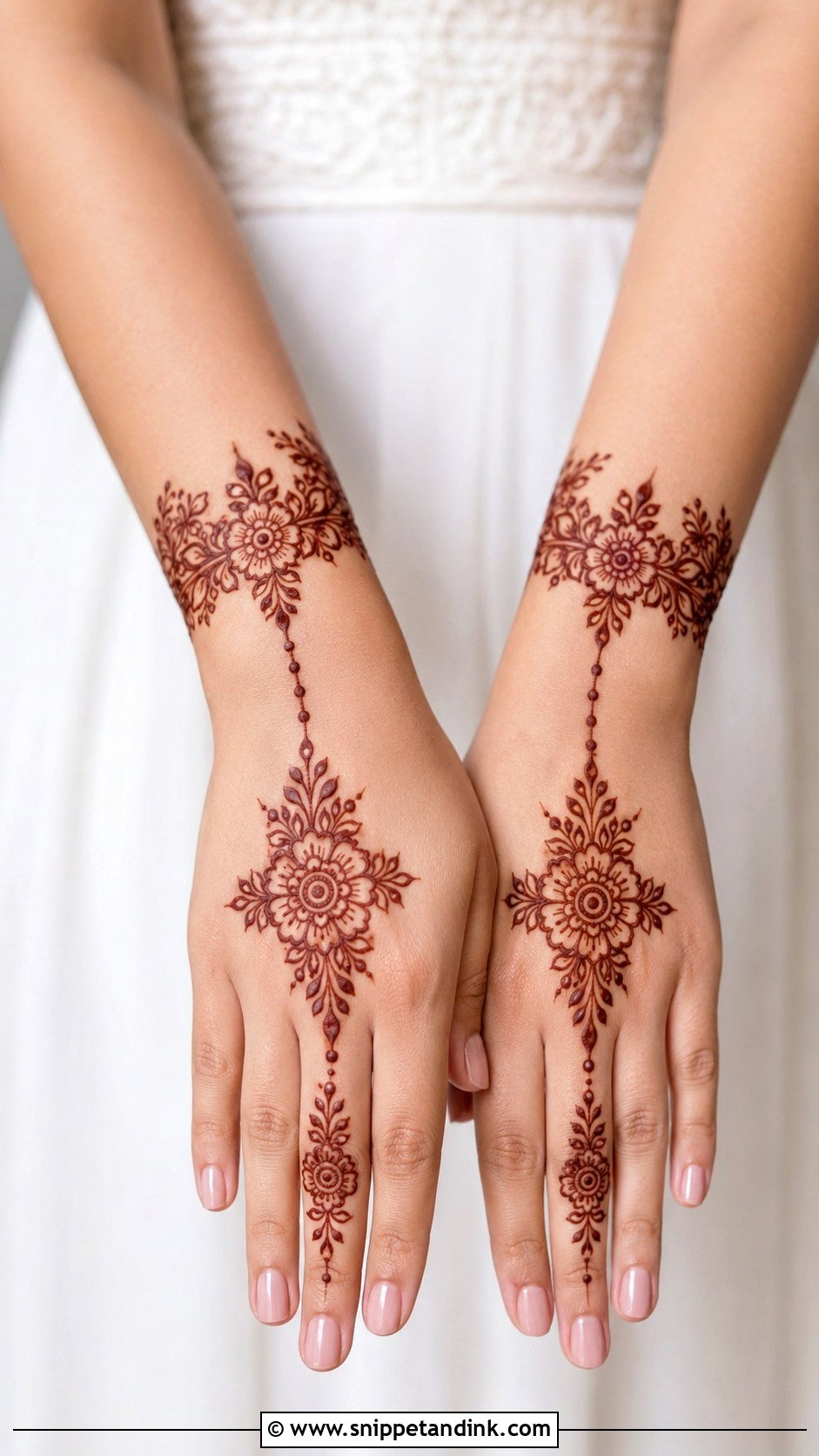
A flower mehndi design for engagement usually centers on the back of the hand, since the ring is the focus. A floral bracelet at the wrist connects to a central flower through dotted chains or vines, and the ring finger gets only a delicate band or slim trail. Roses read soft, lotus traditional, tiny blossoms modern. I leave the space where the ring sits clear, so nothing competes with it in close-ups.
23. Flower Mehndi Design For Bridesmaid
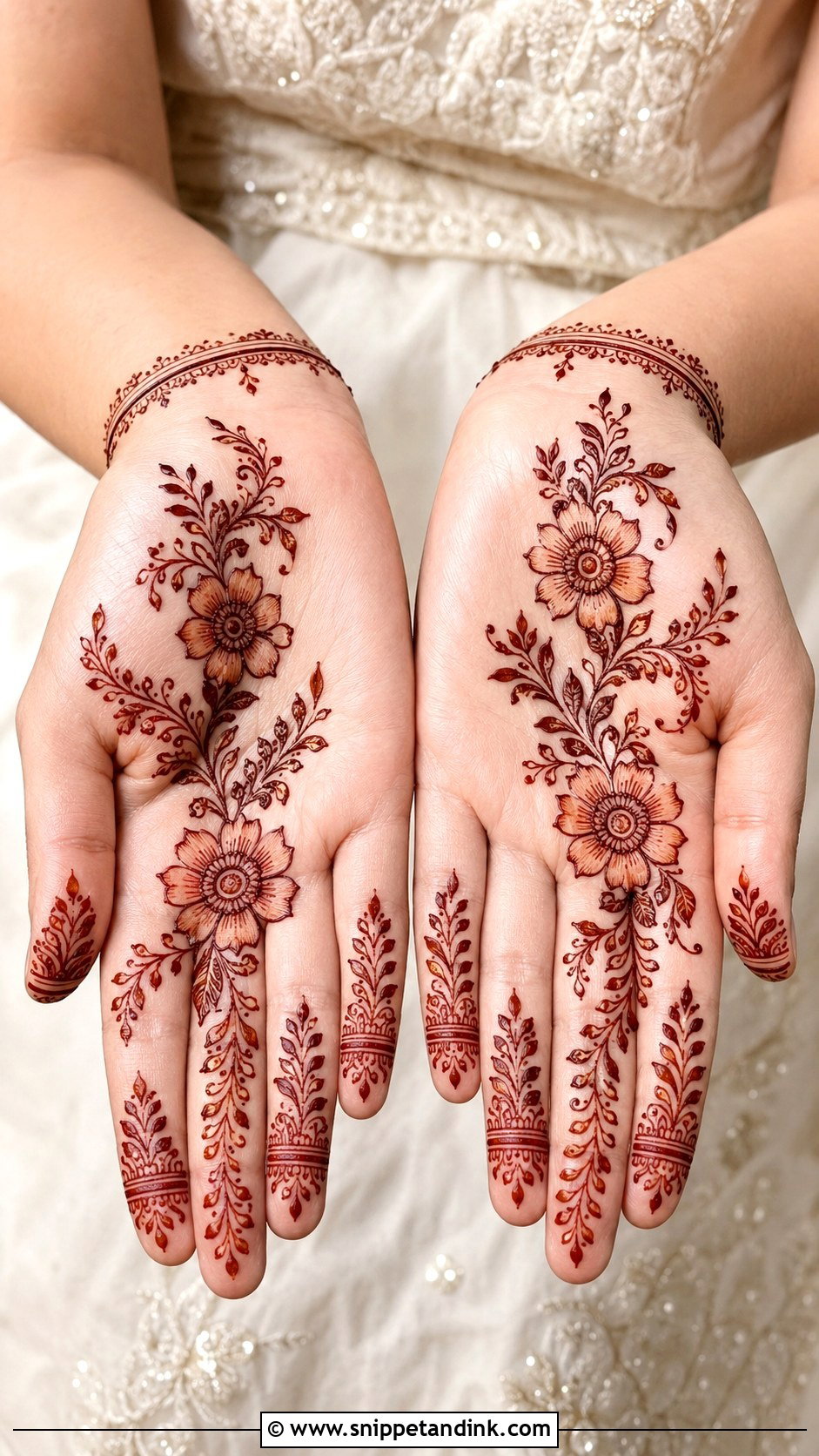
Bridesmaids want festive but lighter than the bride: an Indo-Arabic floral trail across part of the palm, fingers and wrist, bold flowers with fine inner lines, enough open skin to stay comfortable, small leafy branches near the fingers and a thin wrist band. It doesn’t take hours. For a group, I keep the same floral theme on everyone and adjust the scale for each person’s hand, so photos look coordinated without being identical.
24. Flower Mehndi Design For Kids
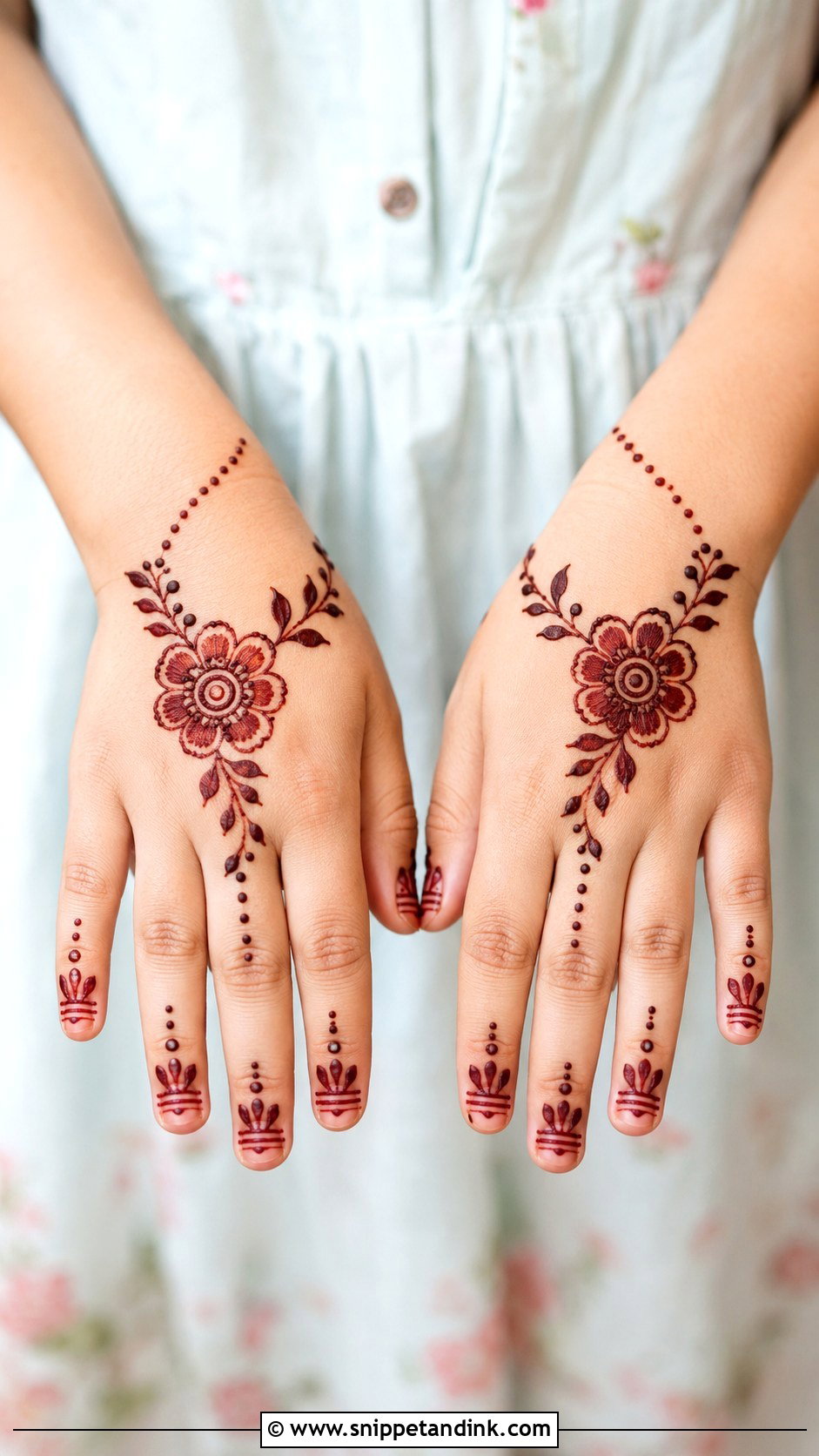
One round flower on the back of the hand or palm, small leaves and dots, a tiny wrist chain and simple petal tips. Children won’t sit through dense work, so slightly thicker lines that stay clear even if they wiggle are better than fine detail. A small design also fades evenly rather than leaving patches. Use plain natural henna for kids, never a paste that promises a black result.
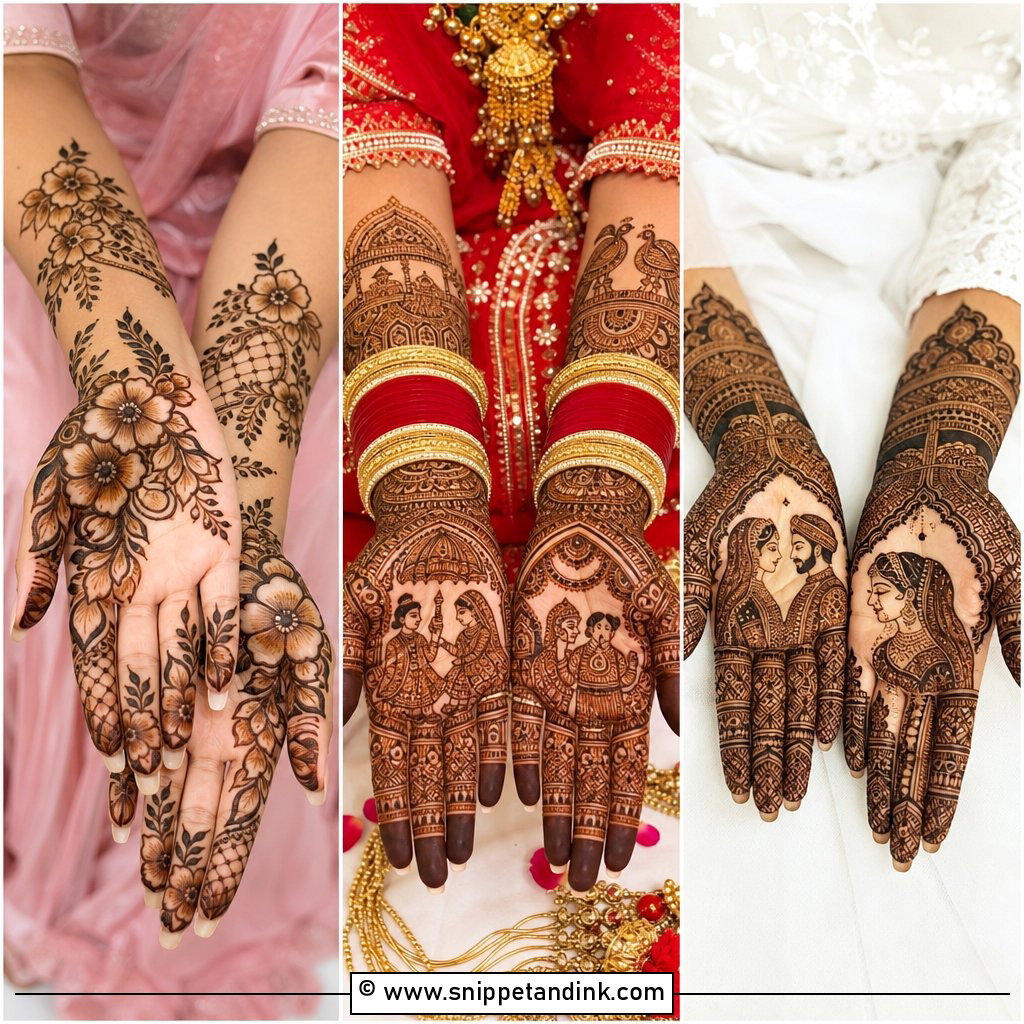
25. Easy Flower Mehndi Design For Beginners
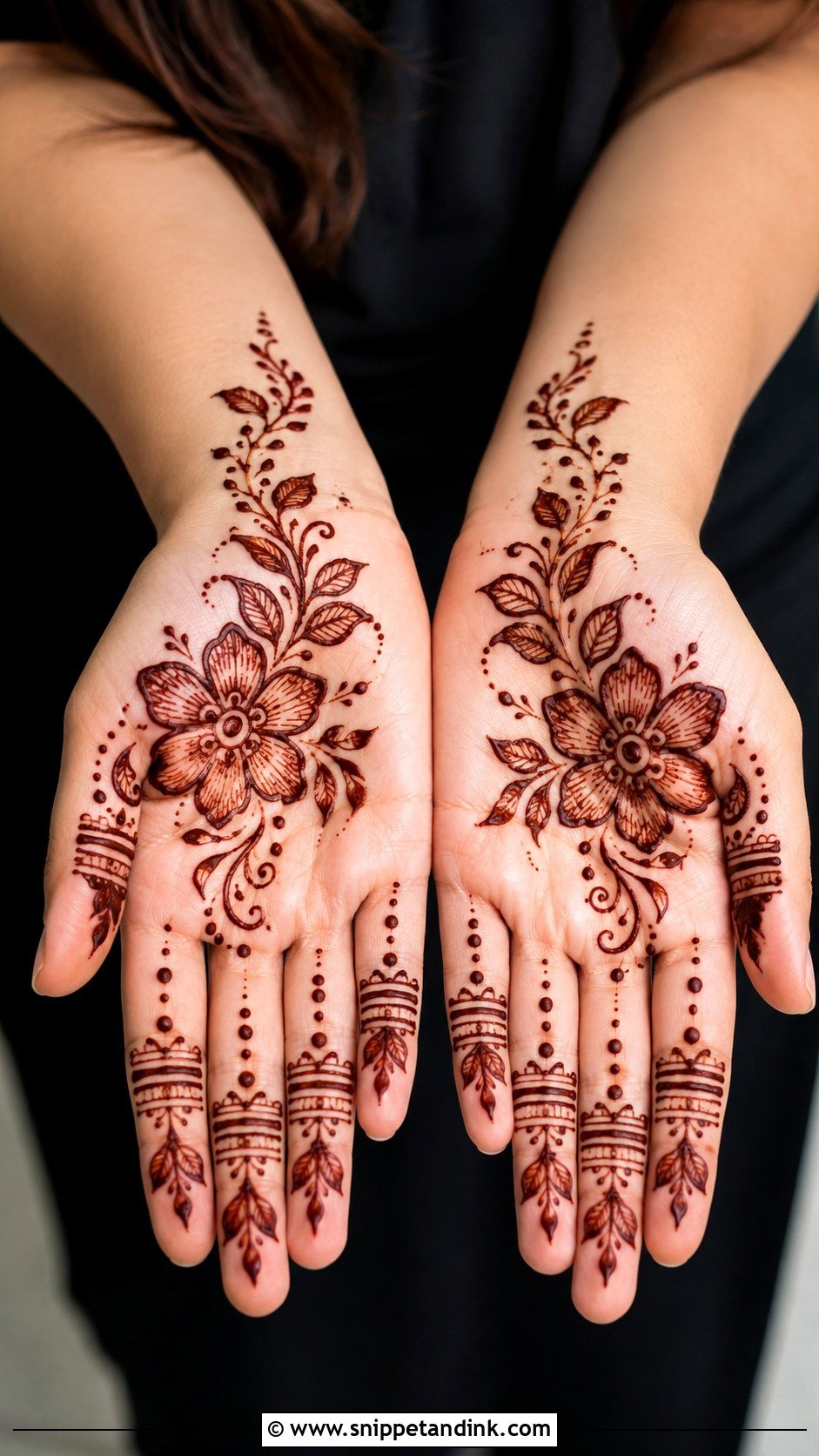
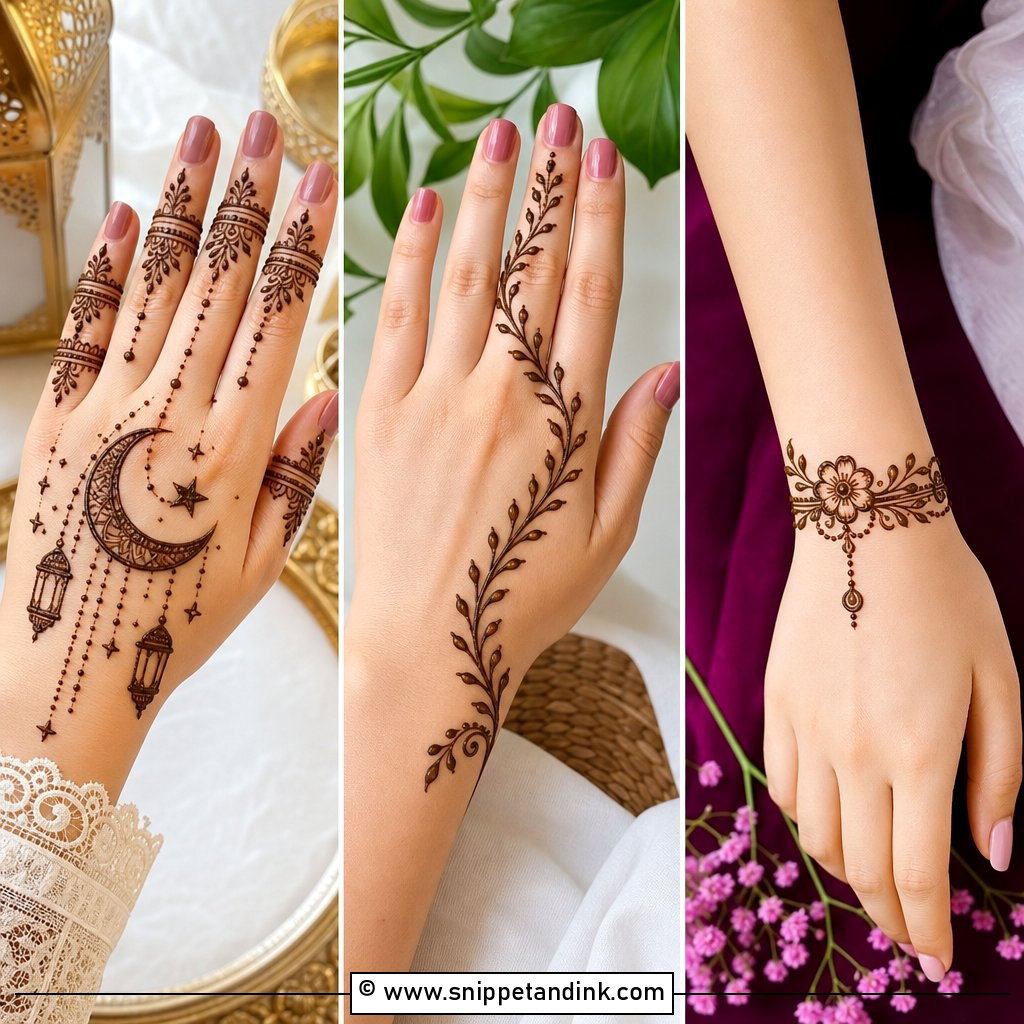
Start with a five-petal flower on the palm or back of the hand, add two curved leaves on each side, then a vine toward the wrist or a finger. Use dots to fill gaps instead of shading. Fingers get small flowers, straight lines and rounded tips. Floral shapes don’t need to match exactly, which is why I give this one to beginners: it teaches pressure control without punishing small mistakes.
26. Big Flower Mehndi Design
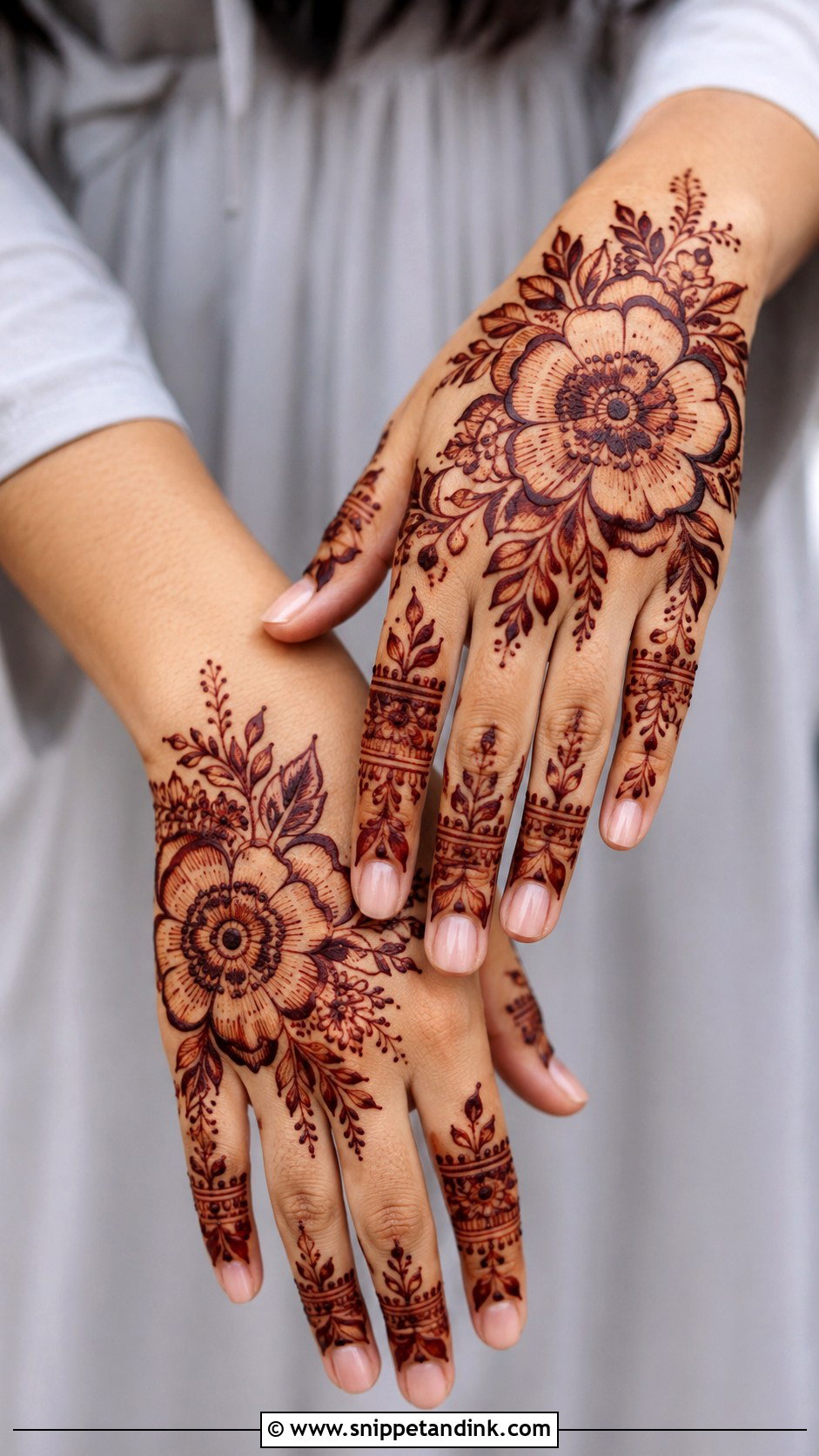
One oversized flower on the palm or the back of the hand, thick outer petal outlines, fine lines inside for texture, and a few leaves, dots and buds that stop well short of crowding it. It’s quick and bold, and it fills a broad palm naturally. Leaving open skin around the bloom keeps it dramatic. Big petals also show uneven shading more, so I keep any filling light and consistent.
27. Small Flower Mehndi Design
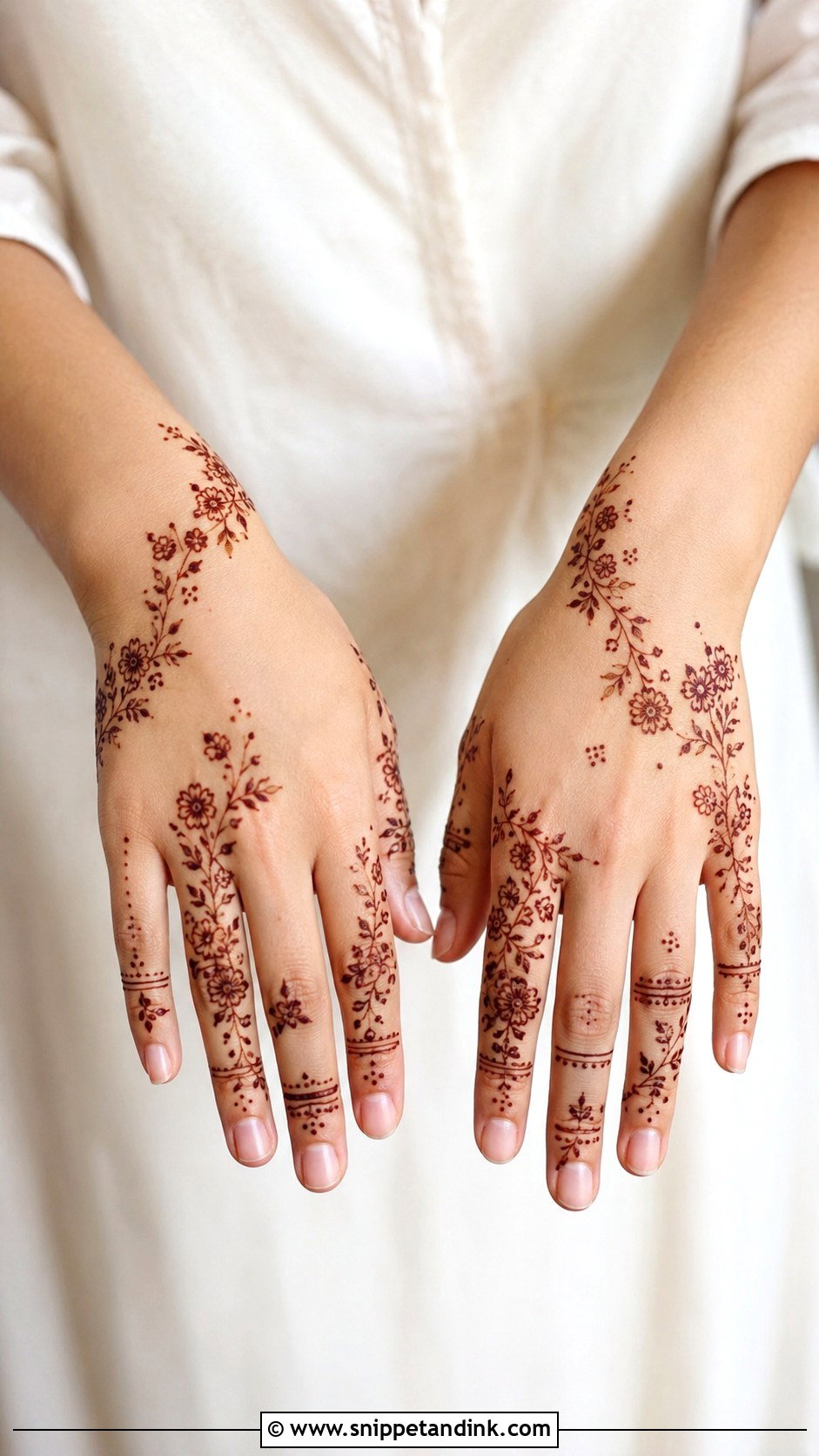
Tiny blossoms repeated across the fingers, around a mandala or along a slim vine, or scattered over the back of the hand and joined by dots and leaves. Small motifs don’t overwhelm narrow hands, which is when I suggest them. They suit casual wear, school functions and small festivals. The flowers need even spacing; scattered without a plan, they look like spots.
28. Flower Mehndi Design With Leaves
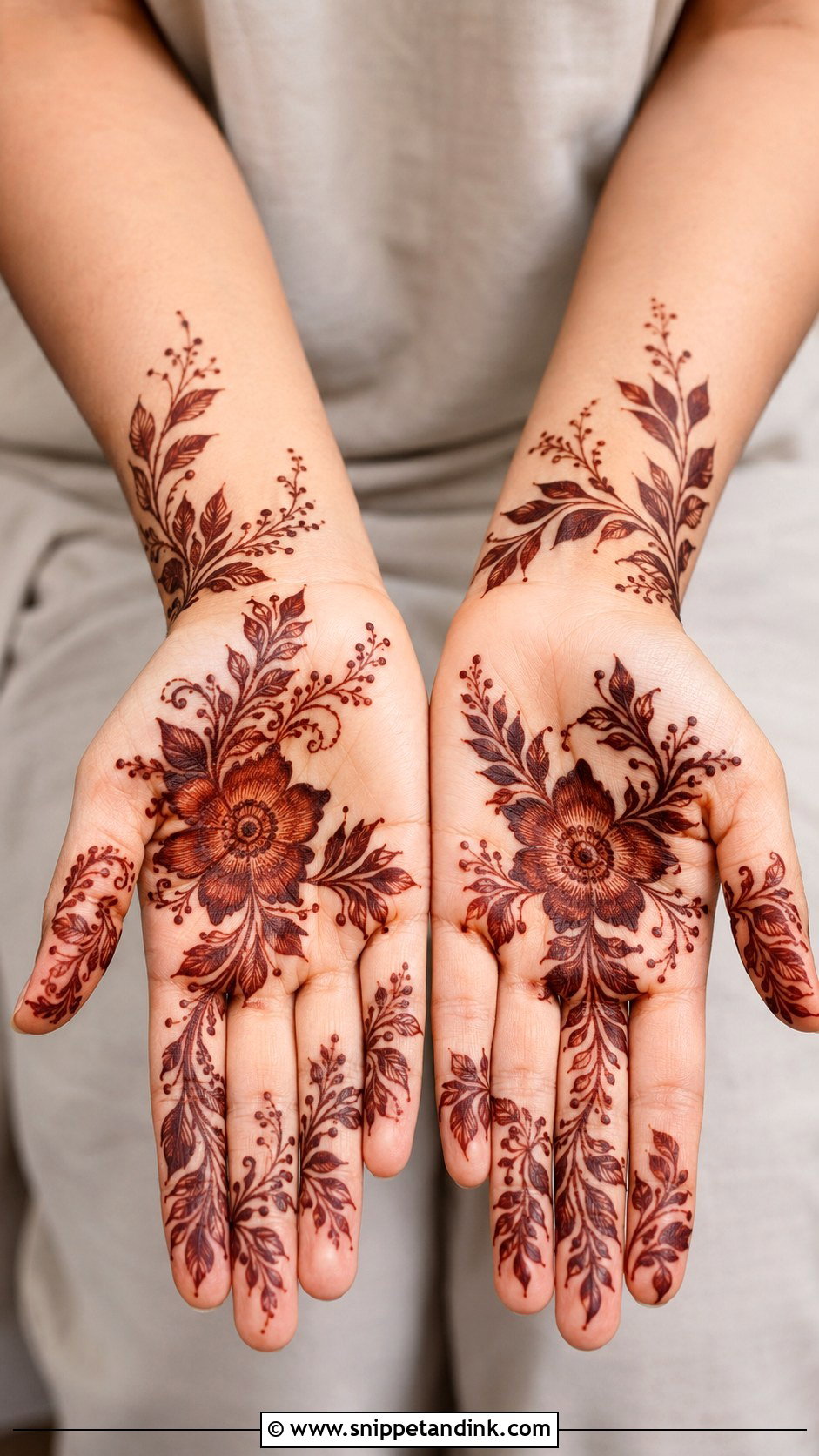
One main flower near the palm or wrist, with leafy branches running toward the fingers. Leaves guide the eye across the hand, and varying their size gives rhythm without clutter. It works front, back or wrist to forearm, and suits Arabic and minimal styles. I shade only a few leaves and leave the rest open, which keeps it fresh rather than heavy.
29. Flower Mehndi Design With Dots
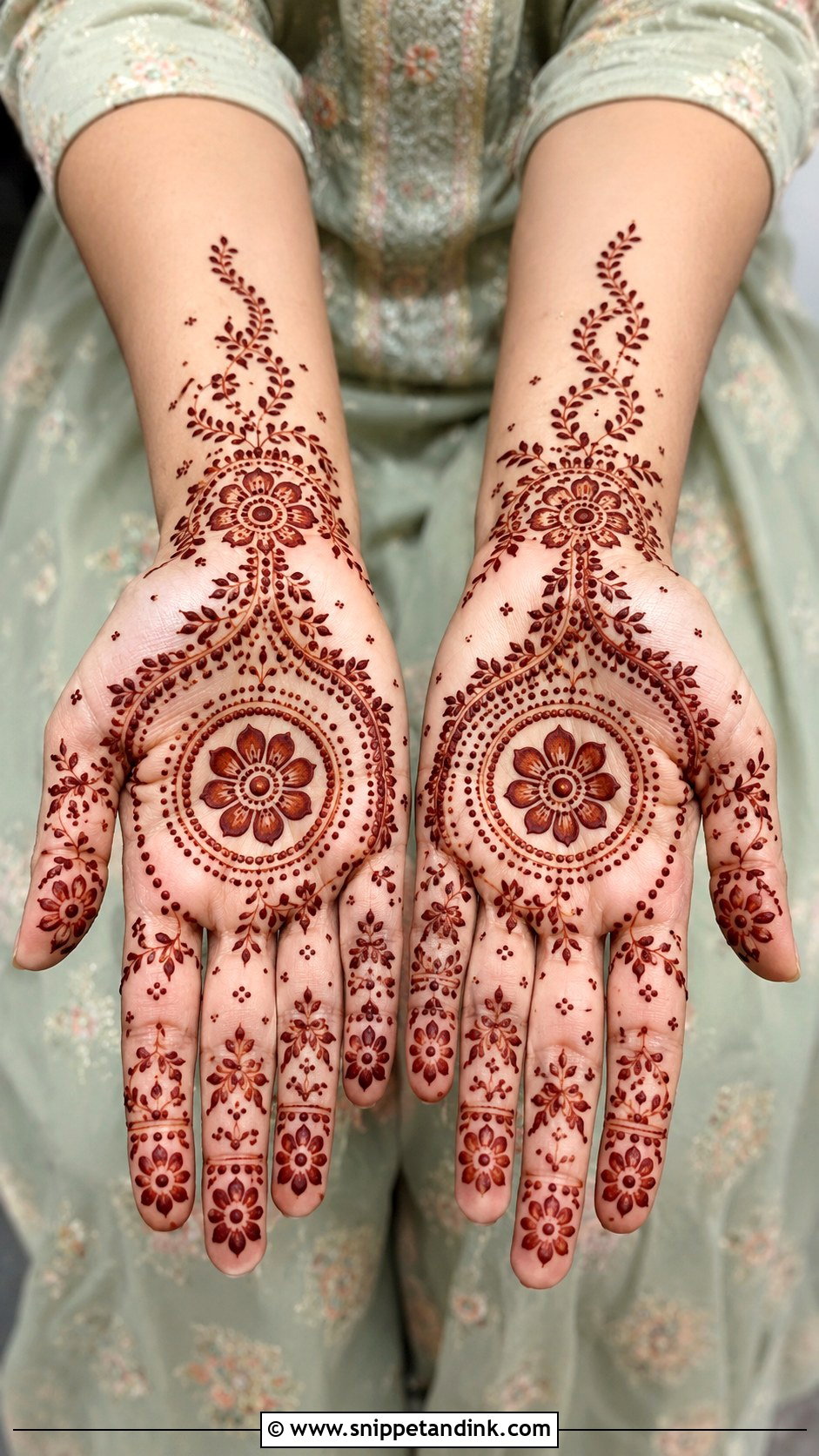
Dots frame flowers, connect vines, fill gaps and add a jewelry-like finish. A central flower ringed by dotted circles or trails, small flowers on the fingers and dots between each motif makes the hand look connected. Consistent dot size is the whole secret. Tiny dots read delicate, larger ones bold and traditional, but mixing sizes at random looks careless.
30. Flower Mehndi Design With Shading
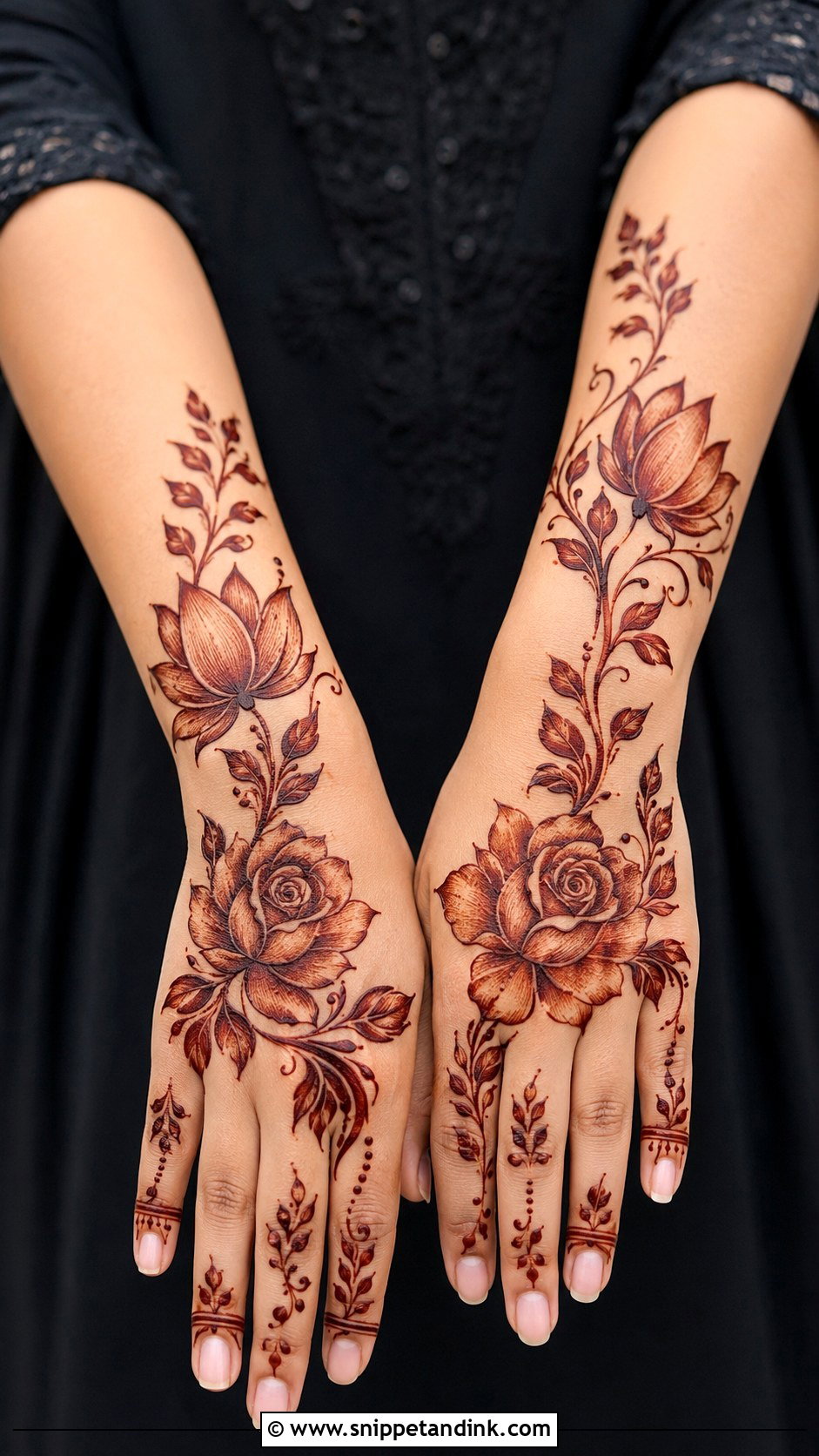
Light strokes inside each petal, with small open areas left so the flower doesn’t go solid dark, give depth to roses, lotus and big Arabic blooms. Paired with clean vines, leaves and simple fingers, it looks rich without full coverage. Control is the skill. Shading too heavily or too close to the outline blurs after staining, so I keep strokes fine and leave a hairline gap inside each outline.
31. Flower Mehndi Design With Name
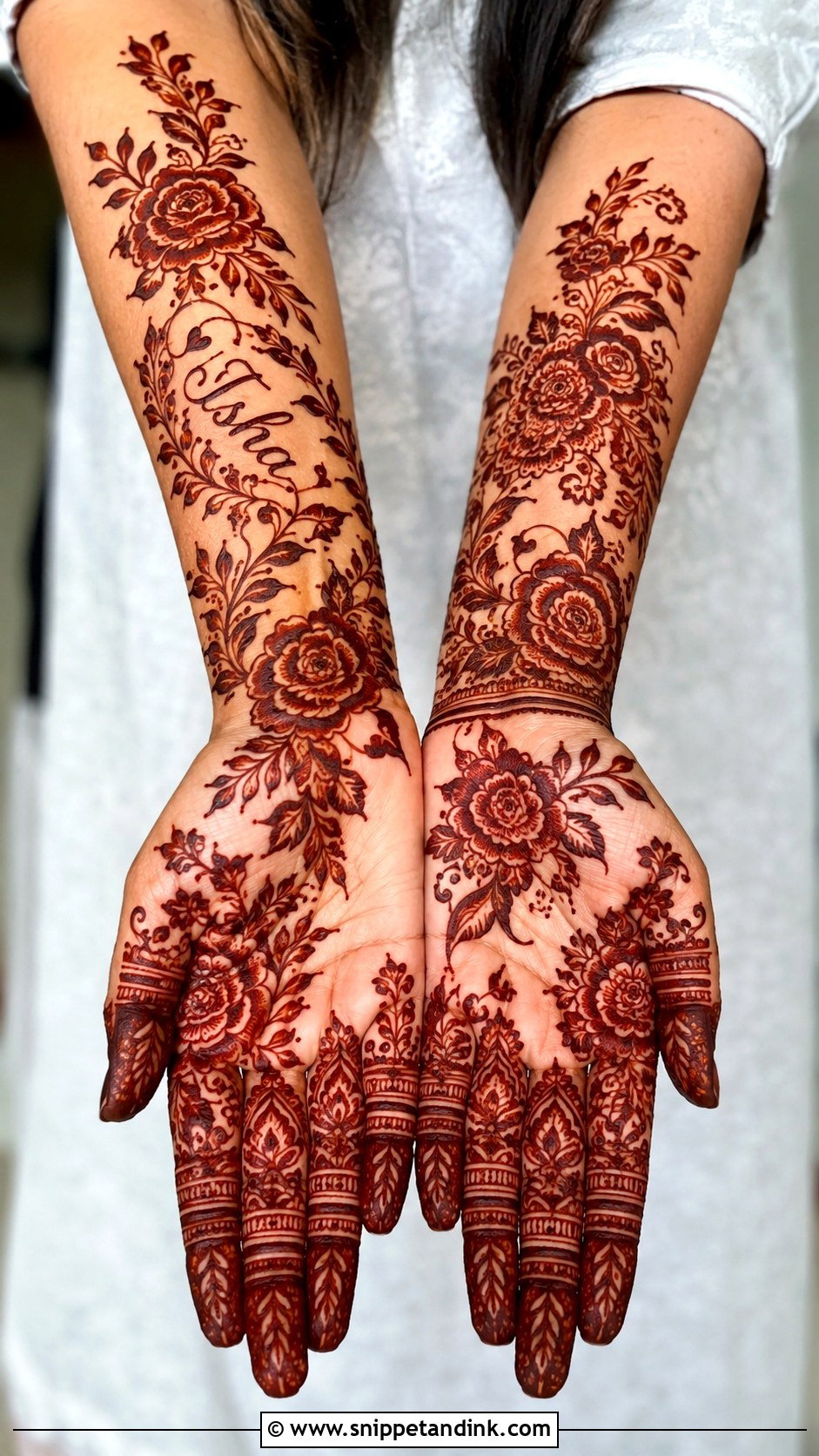
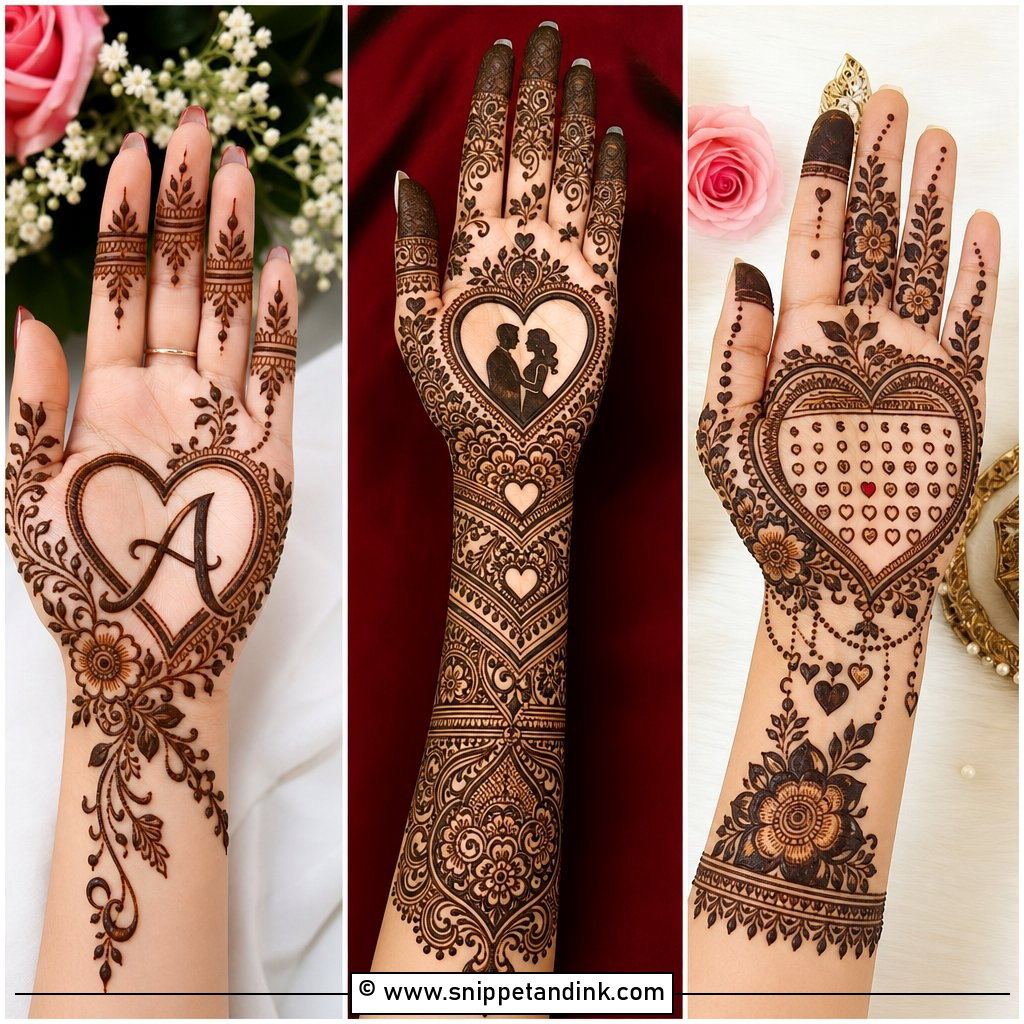
Hiding a name in the henna is a long-standing wedding tradition, and the groom is often challenged to find it. It can sit inside a floral vine, between petals or along a wrist band, with roses, lotus or small blossoms around it so the letters blend in. Keep letters clear but small, especially in dense designs. For bridal hands I tuck it into the forearm or palm filler; for a lighter look, beside a back-of-hand flower trail.
32. Flower Mehndi Design For Feet
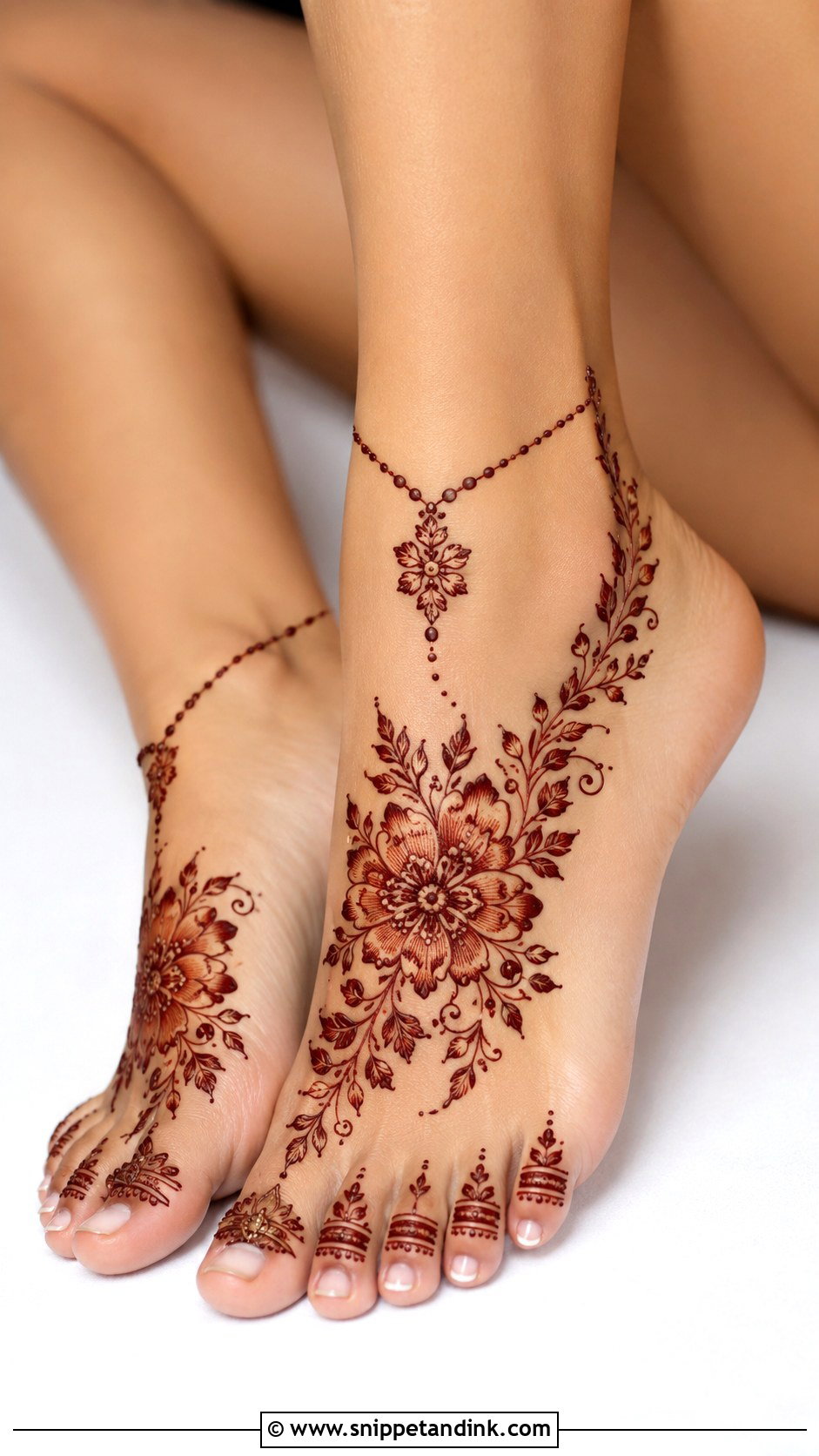
A large flower near the center of the foot, vines to the toes and ankle, toe rings, dotted chains and small leaf bands. For bridal or festive wear, wrap the ankle like a floral anklet; for a simple version, one bold flower with light detail elsewhere. Soles stain very dark and tops of feet a bit lighter, so spacing on top matters. Feet need to stay still and off the floor until the paste dries.
33. Flower Mehndi Design For Forearm
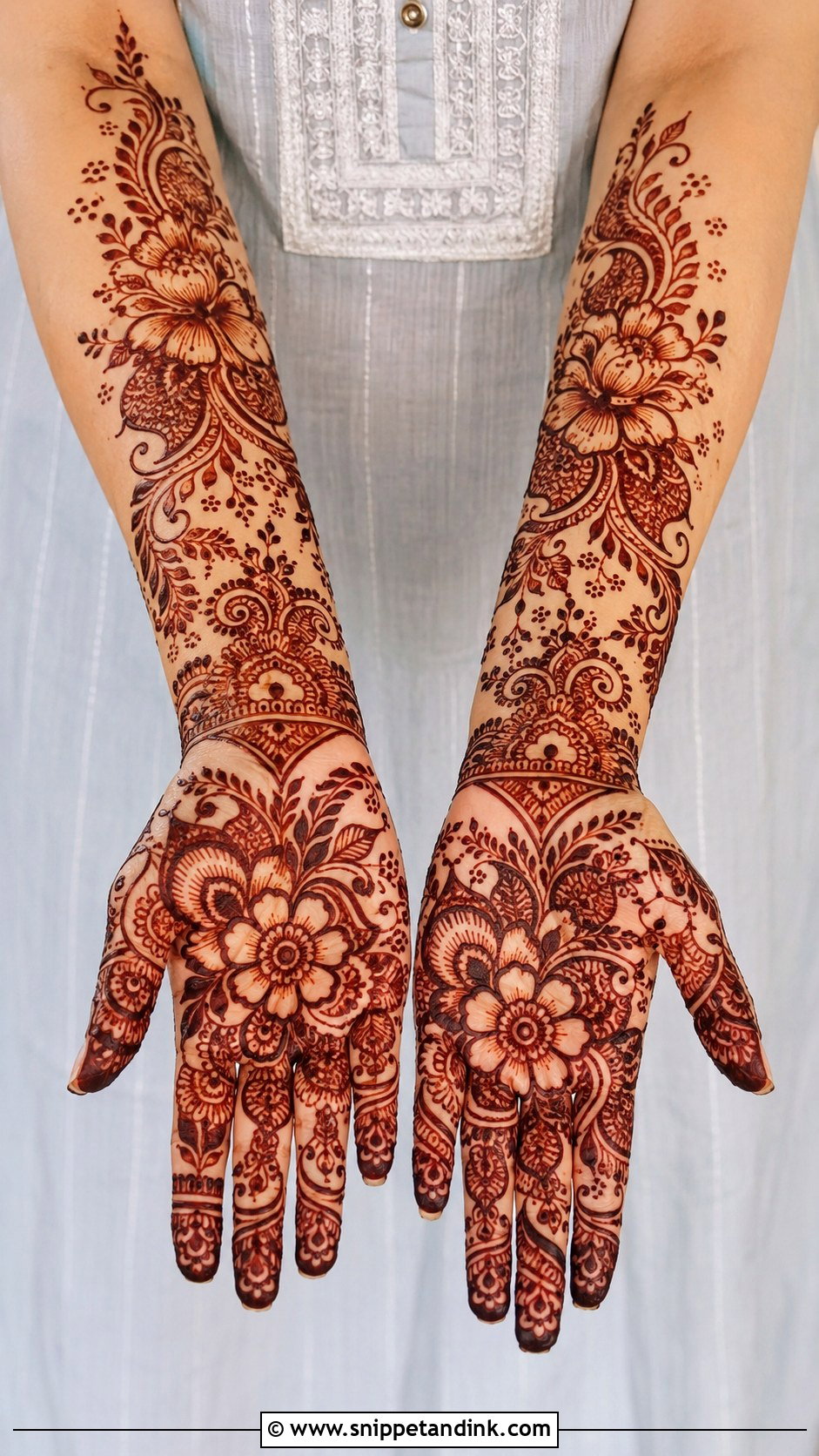
A floral bracelet at the wrist, then larger flowers and leafy vines climbing the forearm, with paisley, dots and small petal clusters between the main blooms. It shows beyond sleeves and bangles, which brides and bridesmaids like. Forearm skin stains lighter than the hand, so I keep the wrist detailed and the forearm more open; dense forearm filling tends to look patchy next to a dark palm.
34. Moroccan Flower Mehndi Design
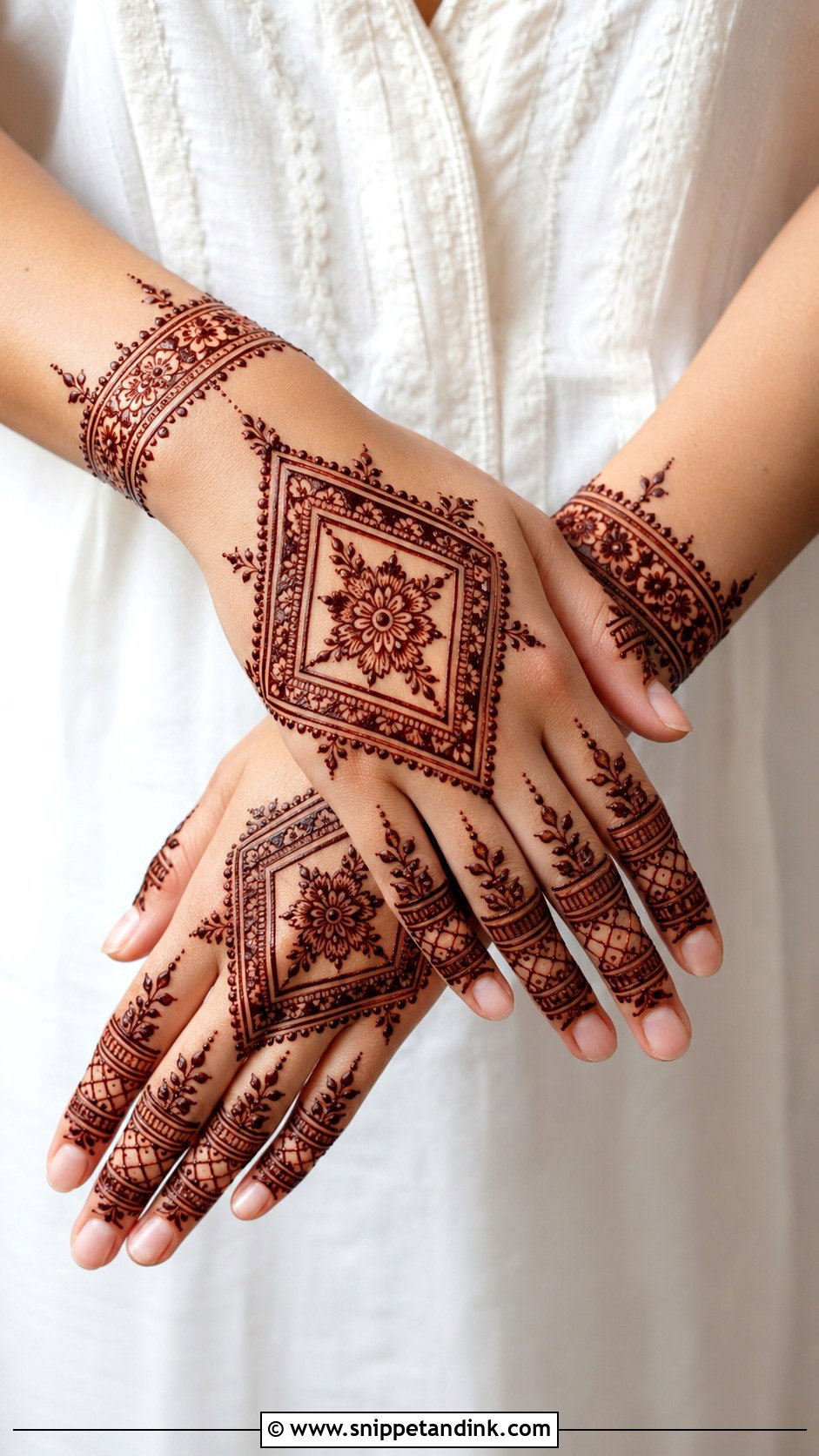
Diamonds, lines, grids and angular borders frame the flowers, for example a flower inside a geometric panel on the back of the hand or palm, with patterned bands running to the wrist and fingers. It’s modern and quite different from classic Indian florals. Keep the flower simple so it doesn’t fight the geometry. The contrast of curved petals against straight lines is what gives it impact once it stains reddish-brown.
35. Gulf Flower Mehndi Design
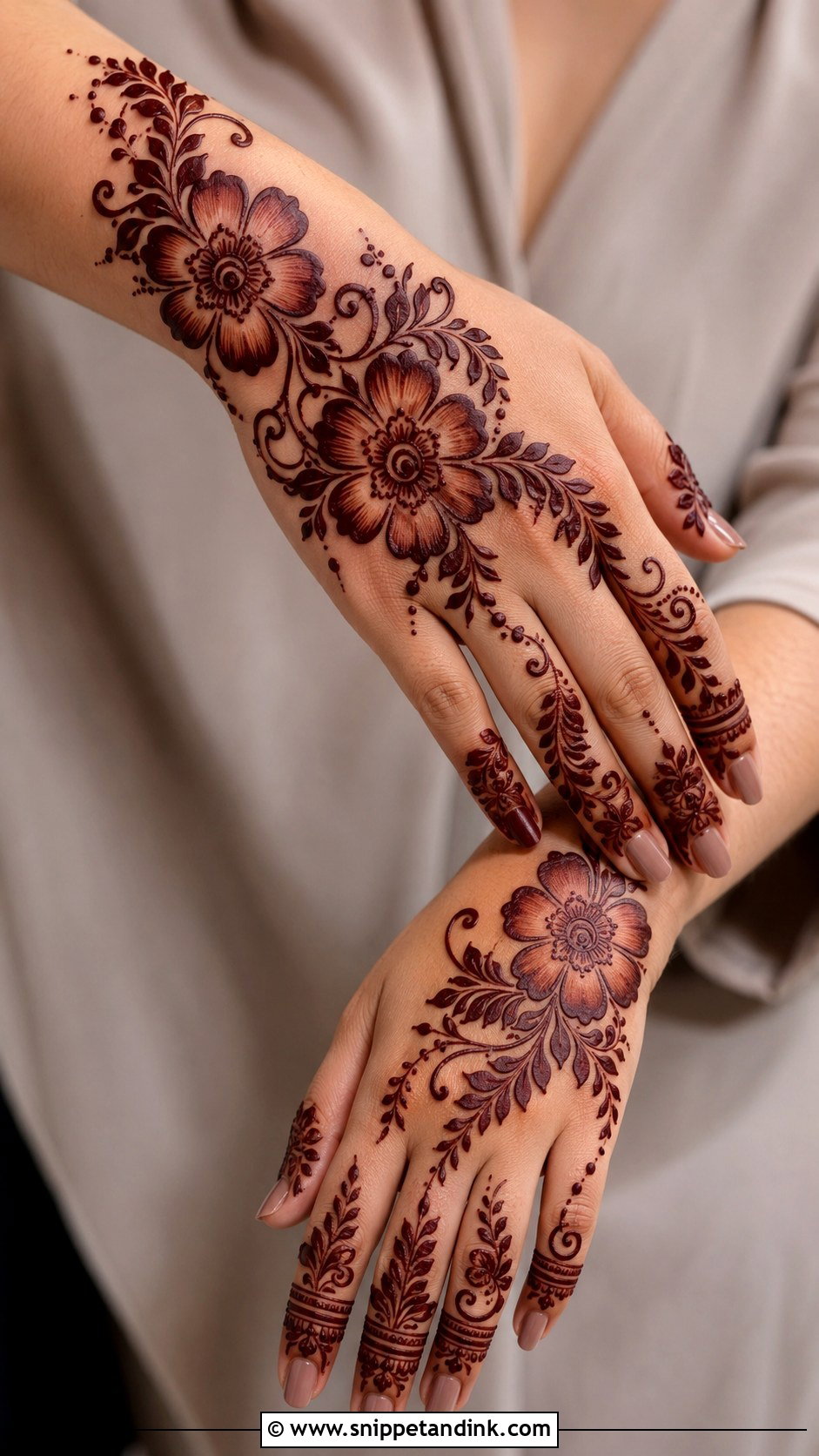
A Gulf flower mehndi design, also called Khaleeji-inspired floral henna, covers one side of the hand with big blooms and leaves the other side bare: thick outlines, shaded petals, leafy curls and a wrist extension. It looks glamorous without dense coverage and suits Eid, weddings and evening parties, usually on the back of the hand next to jewelry. I draw the main trail from wrist to fingers in long, confident strokes. Hesitant, broken lines are the most common flaw in this style.
Smudged a Petal While the Paste Was Wet?
It happens to almost everyone, usually when reaching for a phone. Fresh, wet paste can often be rescued if you act straight away and leave the fixing to your artist.
- Freeze. Don’t wipe, because wiping spreads the dye into a wider stain.
- Lift the smudged paste with a toothpick or a cotton bud, using a single upward flick instead of rubbing.
- Let the artist redraw the line. A stray smear that has already dried may leave a faint mark, which usually fades faster than the design.
For sleeping with fresh henna, I wrap the hands loosely in tissue and then a thin cotton cloth or medical tape. Plastic gloves trap heat, which helps the stain, but they also make paste slide if your hands sweat, so I only suggest them once the paste has fully dried.
Wet paste marks fabric as readily as skin, and the orange doesn’t always wash out of silk or light cotton. Wear an old, dark top with loose sleeves to the appointment, keep your outfit for the next day well out of reach, and ask whoever helps you with food or water to hold the cup rather than handing it over.
Rose, Lotus or Jasmine? Let the Occasion Pick
A rose trail reads soft, a lotus mandala classic, a full-hand garden festive and rich. Small changes in placement and detail move the same flower from simple to bridal. Think about the occasion, the outfit, your hand shape and how much time you can sit for. Beginners do well with vines, dots and one large flower; brides can layer florals with paisley, jaal and forearm extensions. Bring a few favorites to your appointment and let your artist adjust them to your hands.
You'll Like These Ideas:


Leave a Reply