
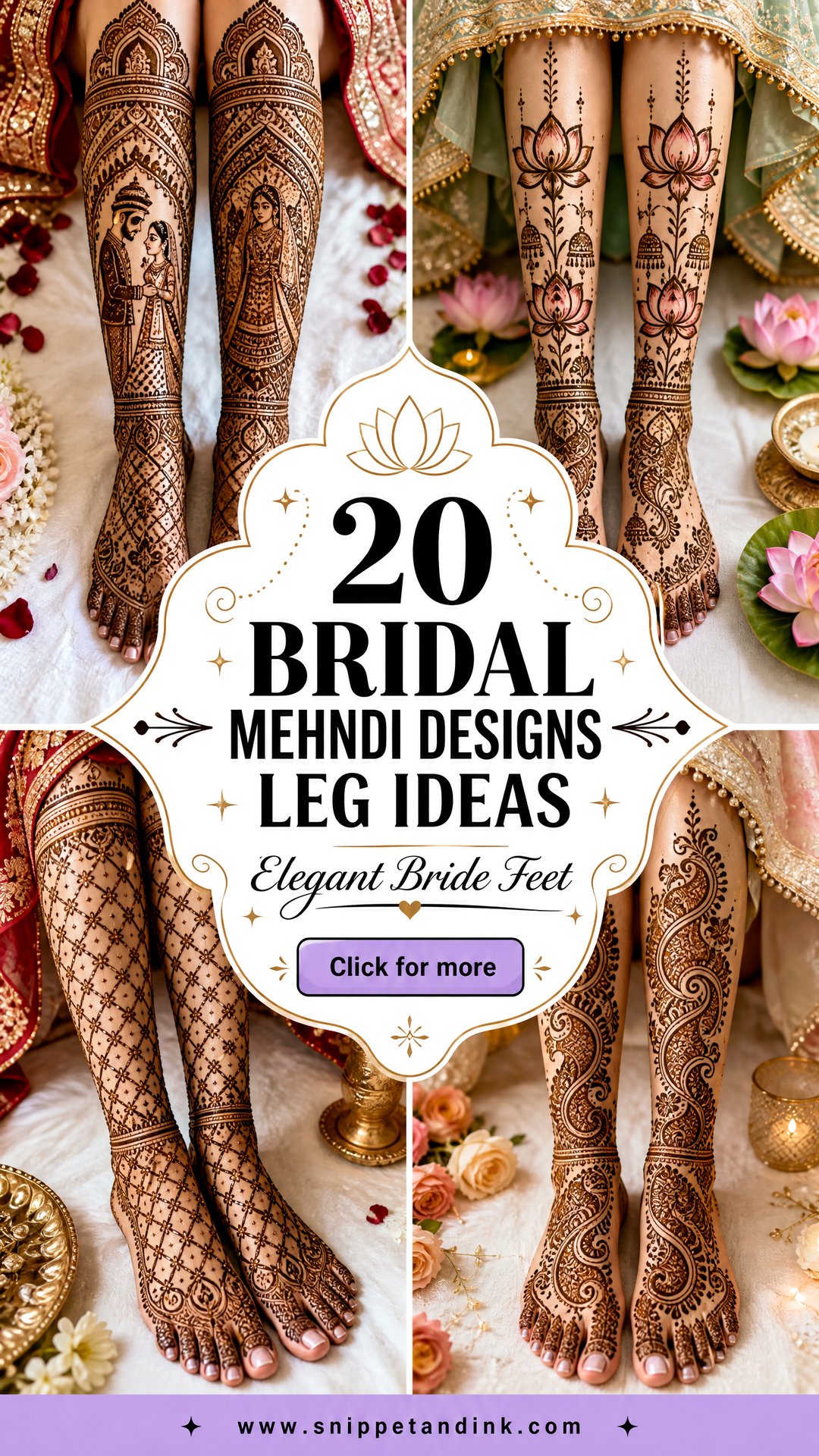
Feet and lower legs show up in more wedding moments than brides expect: stepping into the mandap, the pheras, the toe-ring ritual, and every close shot of anklets and sandals. Leg mehndi has its own rules, though. Skin there stains differently from the palm, and once your feet are covered you can’t walk anywhere, so the design has to suit both the outfit and the hours you can give it. I’ve grouped twenty leg layouts below, from full Indian coverage and Arabic vines to mandala feet, jaali, lotus borders and spaced modern work, with notes on where each one sits and how it wears.
Why I Always Do the Feet Last
Once paste is on your feet, you are not walking anywhere until it dries, and ideally not for hours after that. So in a bridal session I finish the hands first, then the feet, and the bride stays put with her legs up on a stool or cushion. Planning around that one fact avoids most of the problems I see.
- Wax or shave your legs a day or two before, never after. Hair removal after application strips the top layer of stained skin, and shaving on the morning itself can leave nicks that sting under henna.
- Wear loose trousers you can roll above the knee, or a skirt, and bring a spare pair of flat slippers you don’t mind staining.
- Use the bathroom just before I start on the feet. It sounds obvious, but it is the most common reason a bride smudges a fresh design.
- Keep the soles bare for at least a few hours. Socks or sheets pressed against wet paste smear it.
Feet also stain darker than shins. The skin on the soles, heels and tops of the toes is thicker and holds more colour, while the lower leg comes out lighter even with the same paste. I plan line weight around that rather than expecting the calf to match the foot.
1. Full Leg Bridal Mehndi Design
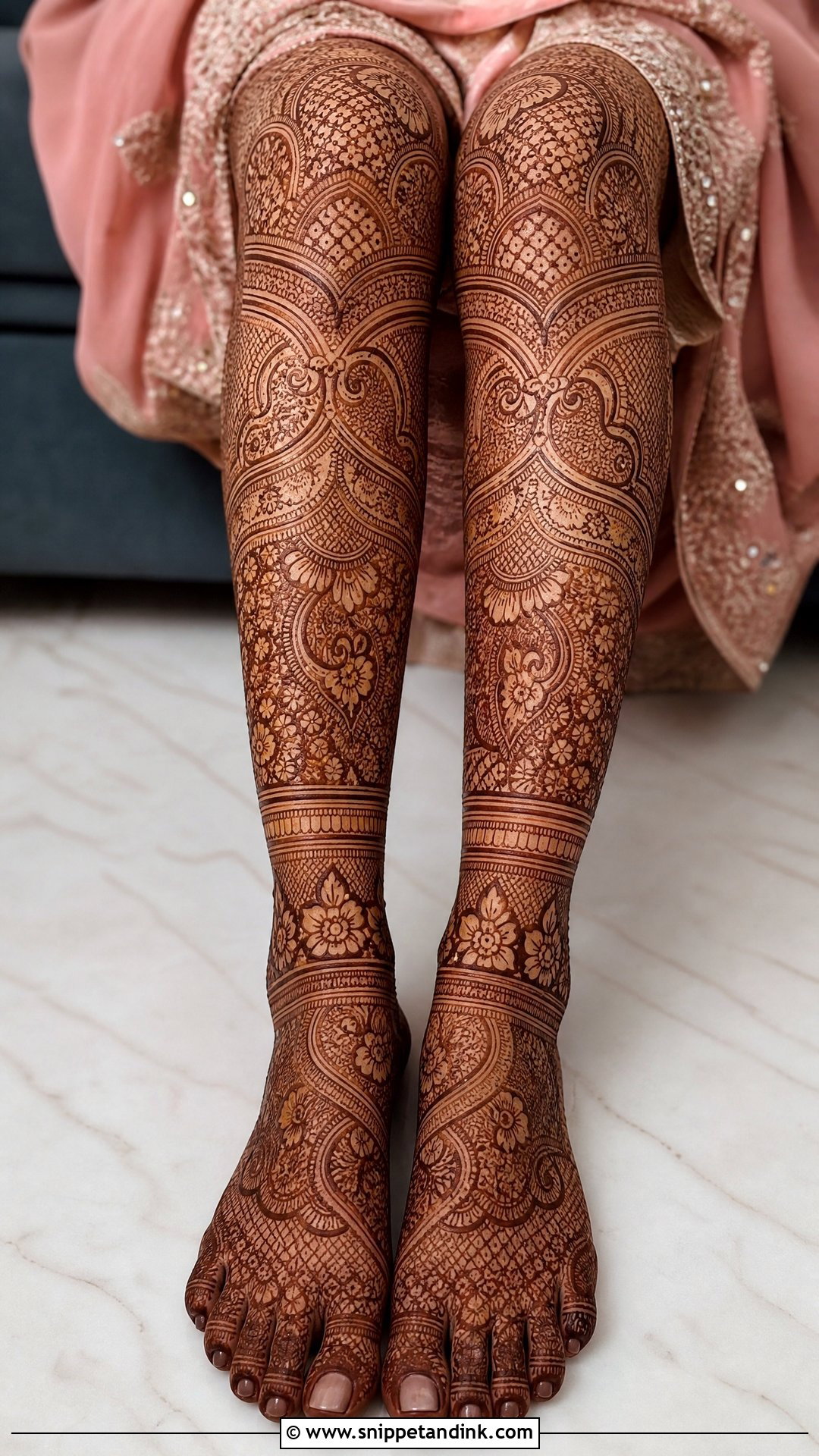
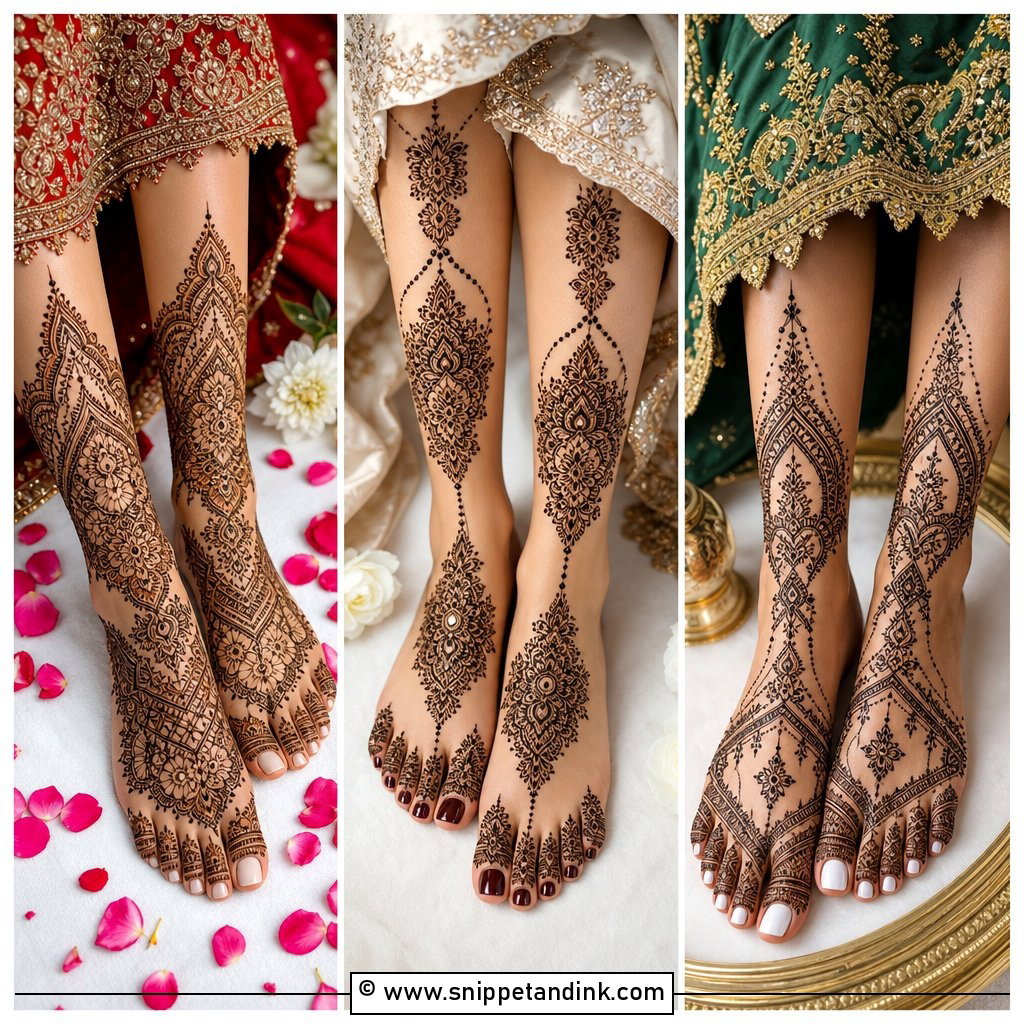
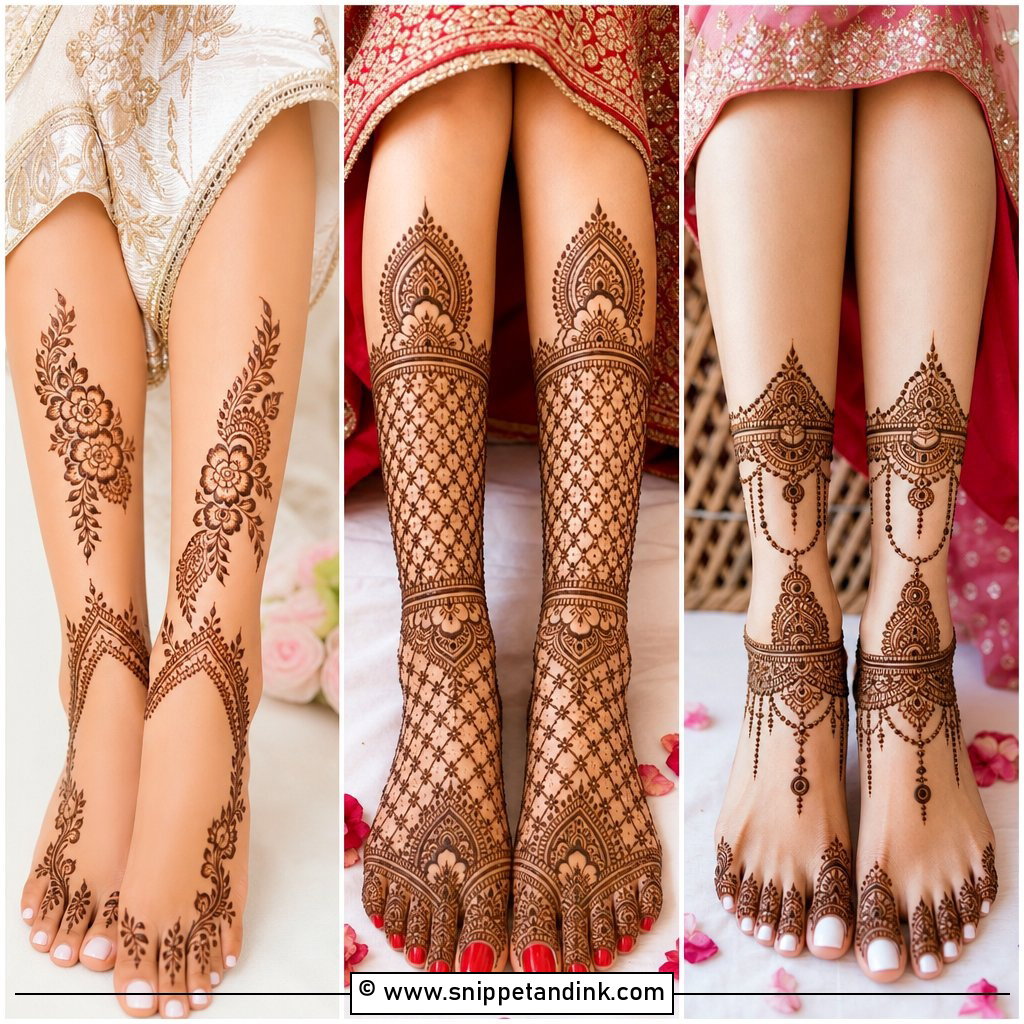
Full leg coverage runs from detailed toe caps over the whole foot, wraps the ankle like jewellery, then climbs with paisleys, mandalas, vines and jaali toward the calf. It shows best in lehengas, shararas and sarees, where the lower leg flashes as you walk or sit for rituals. I keep the two legs balanced but not mirror copies; a small change in paisley placement or flower direction is what makes it look hand drawn. Because the shin stains lighter than the foot, I use thicker lines higher up so the deep maroon carries all the way.
2. Indian Bridal Leg Mehndi Design
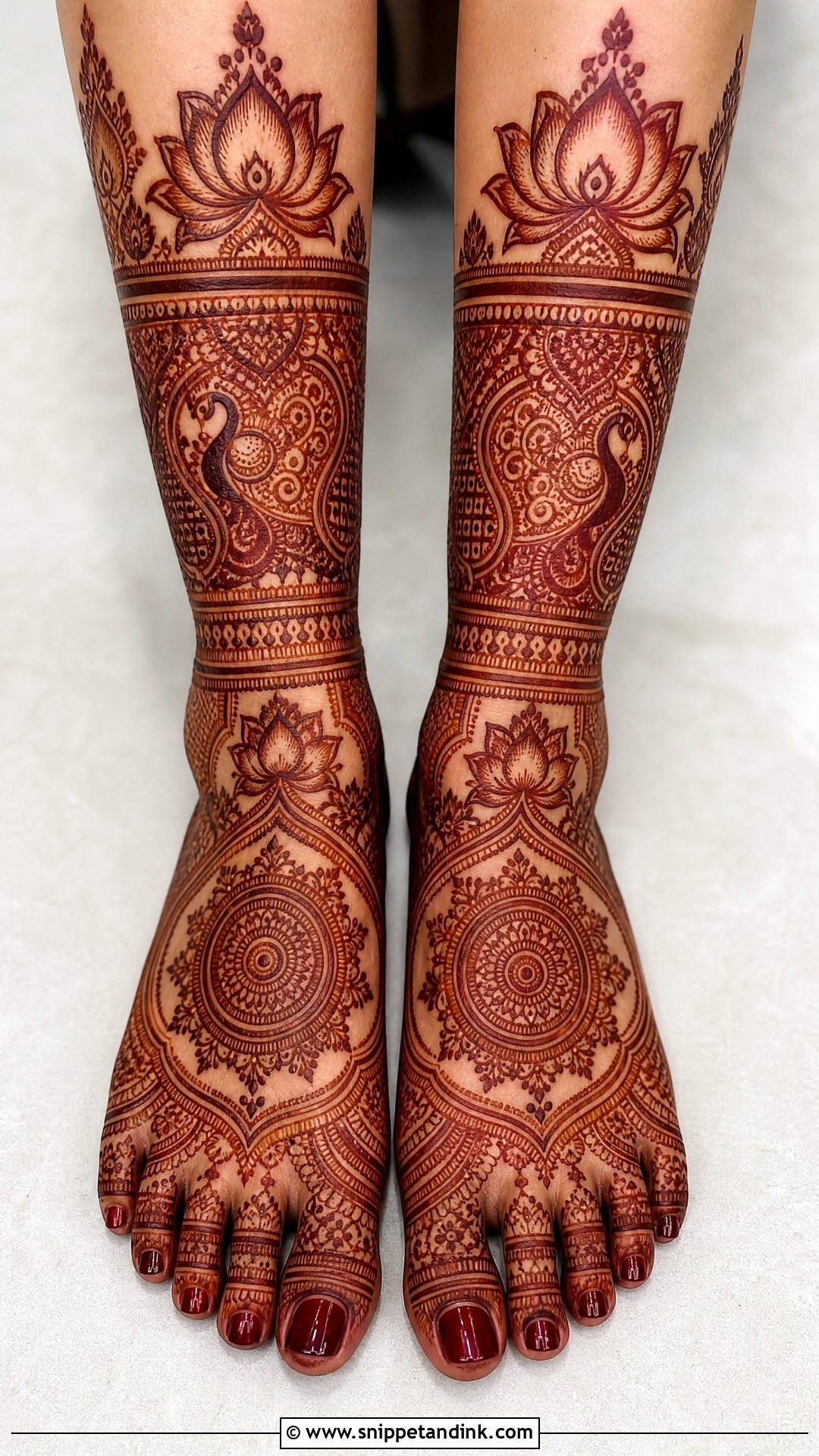
Indian leg designs are dense and symmetrical, built from lotus flowers, peacocks, paisleys, bells, mandalas and fine fillers that climb from the feet toward the lower leg. Toes, heel sides and the ankle get fully decorated, while the shin takes larger motifs so they still read from a distance. With heavy payal and a traditional outfit, it is the classic dulhan finish. Initials or a small wedding symbol tuck in easily. Just know it is a long sitting, and both feet have to stay up and still until the paste sets.
3. Arabic Bridal Leg Mehndi Design
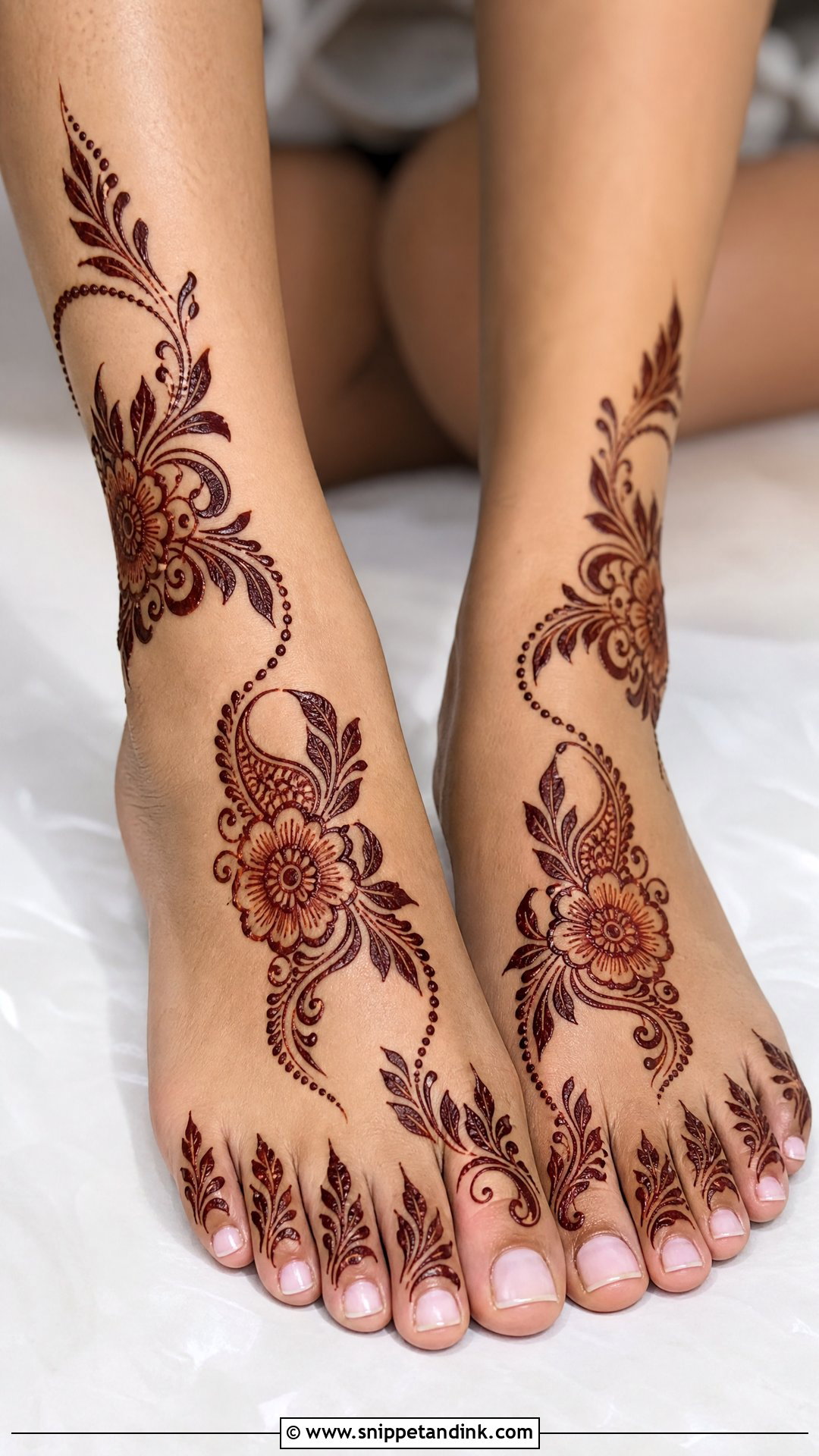
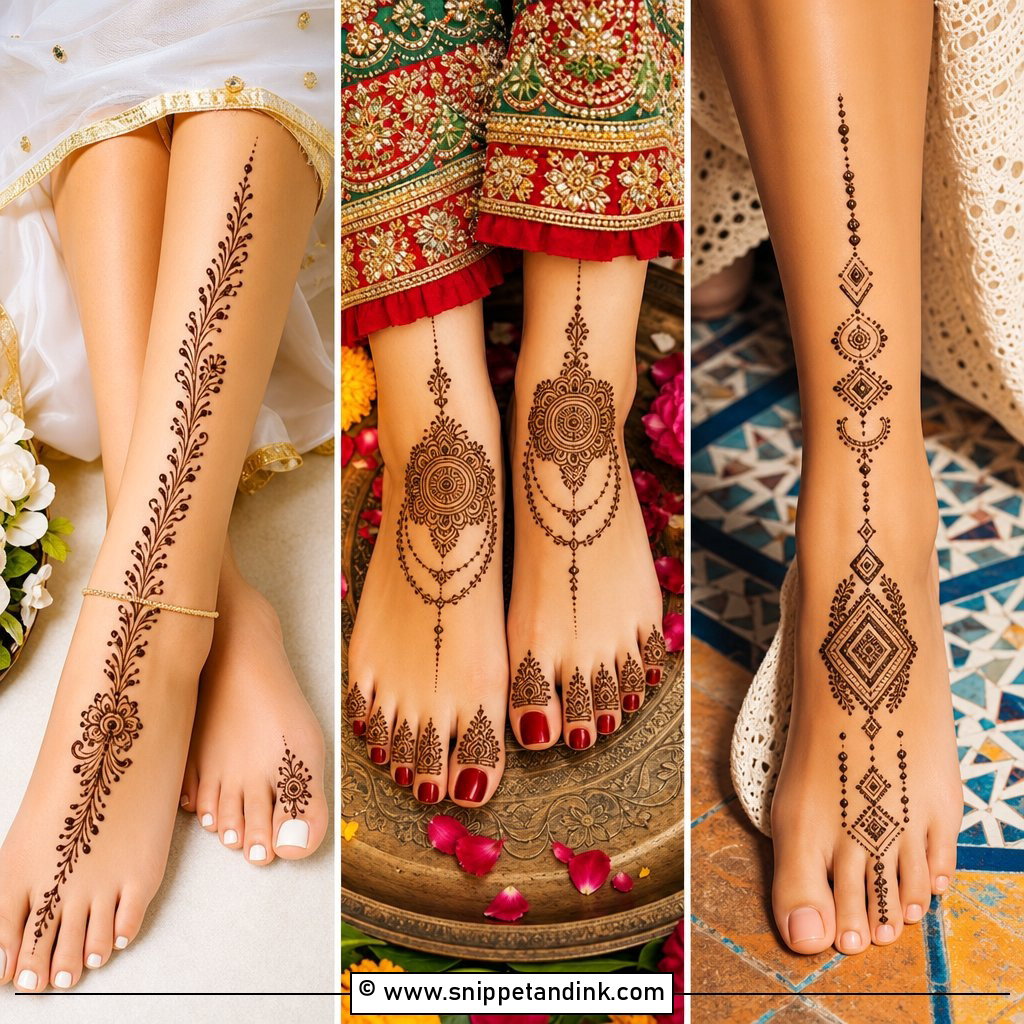
Arabic leg work follows one diagonal trail of bold flowers, leafy vines and paisleys from the side of the foot toward the ankle and lower calf, leaving plenty of skin open. I draw it with a firmer, thicker line than Indian work, and that extra paste is why the contrast comes out so strong once the stain darkens. It sits nicely with minimal anklets and open sandals. To make it feel bridal rather than casual, I add shaded petals, dotted borders and a matching vine on the second foot.
4. Indo Arabic Bridal Leg Mehndi Design
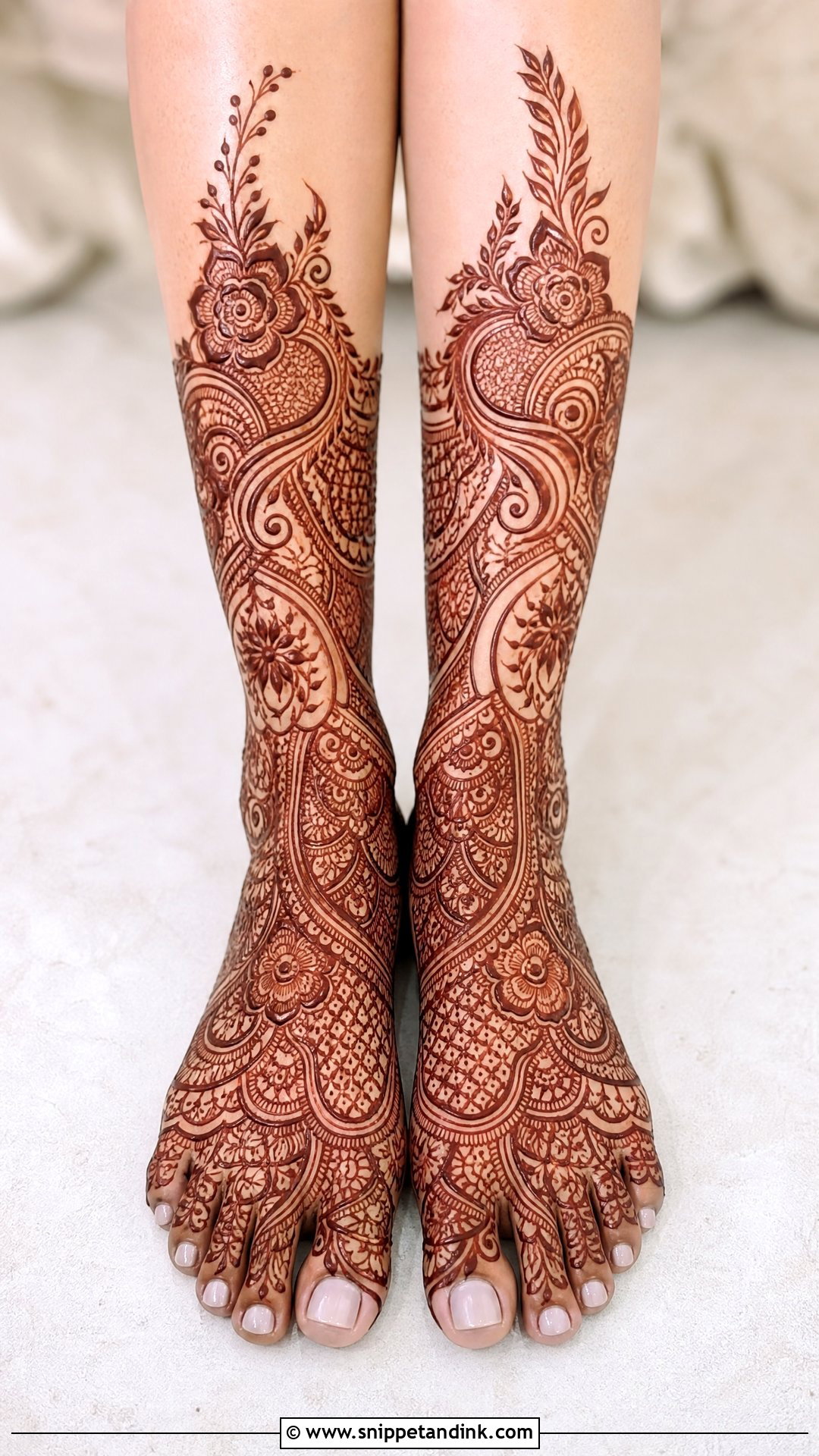
Indo Arabic bridal leg mehndi design pairs the bold flow of Arabic work with Indian detail. A typical layout I draw starts with a large floral on the top of the foot, adds paisley trails around the ankle, and fills chosen gaps with dots, curls, leaves and small jaali sections. The open gaps keep it airy and the fillers keep it festive. It moves well between functions too, so it suits a bride wearing her mehndi through the nikah, sangeet and wedding day.
5. Bridal Foot Mehndi Design
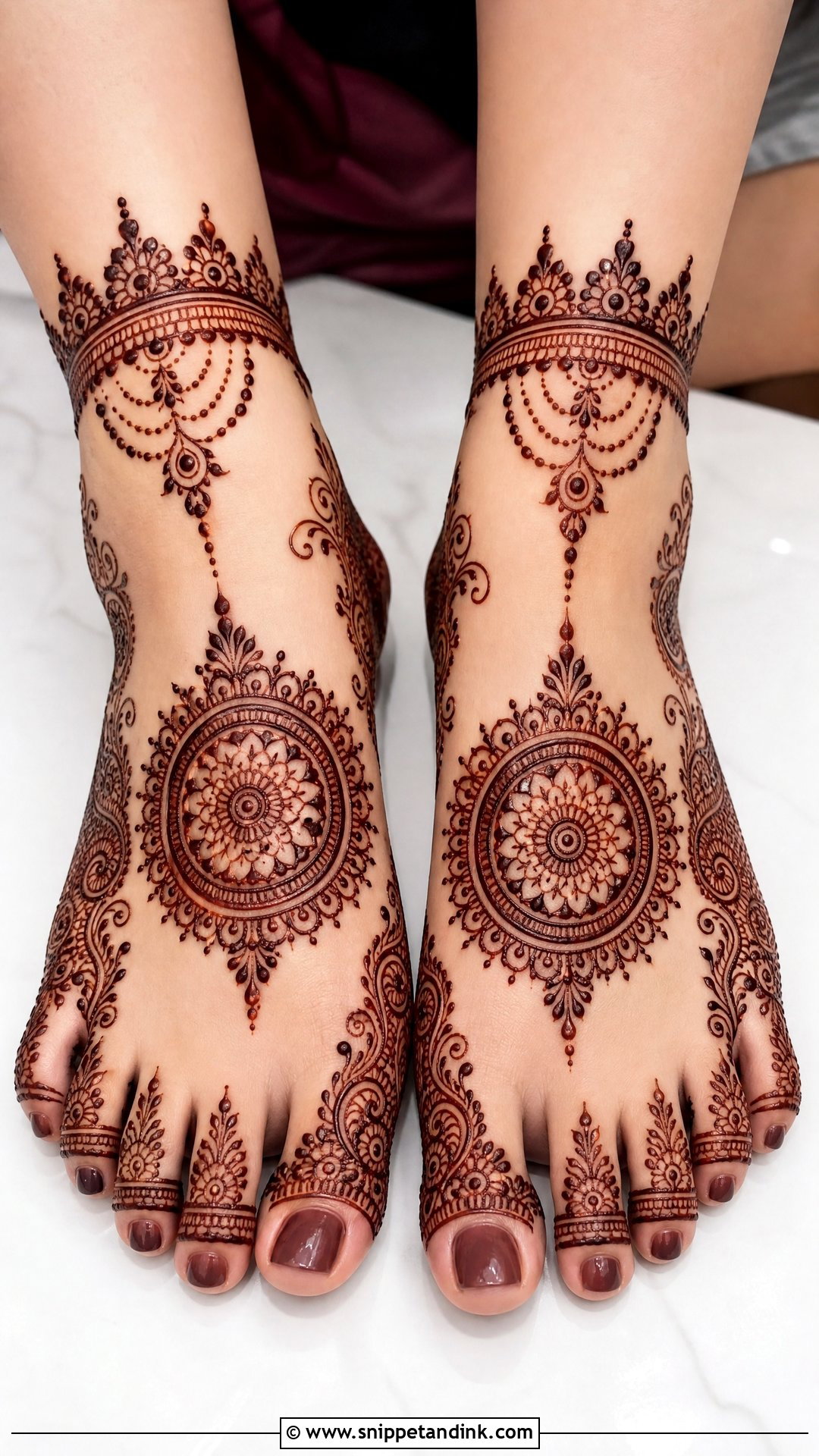
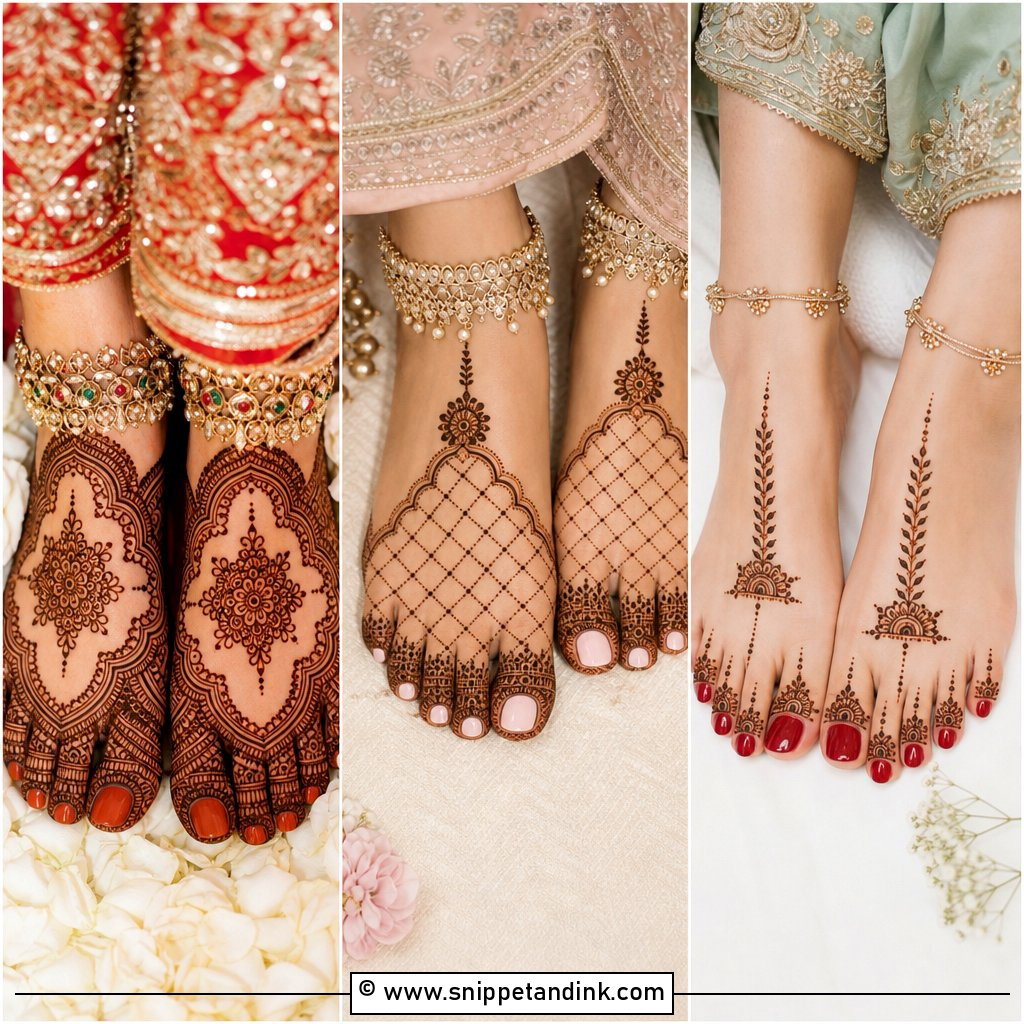
Foot-only bridal designs cover the toes, the top and sides of the foot, and the ankle, then stop. Toe bands, a central mandala, side paisleys, floral vines and an anklet-style border are the usual elements. I recommend this to brides who want a complete look but less time in the chair, since it cuts the sitting considerably compared with full legs. It still shows in every entry shot and ritual close-up. Keep both feet matched in density so neither looks unfinished.
6. Full Feet Bridal Mehndi Design
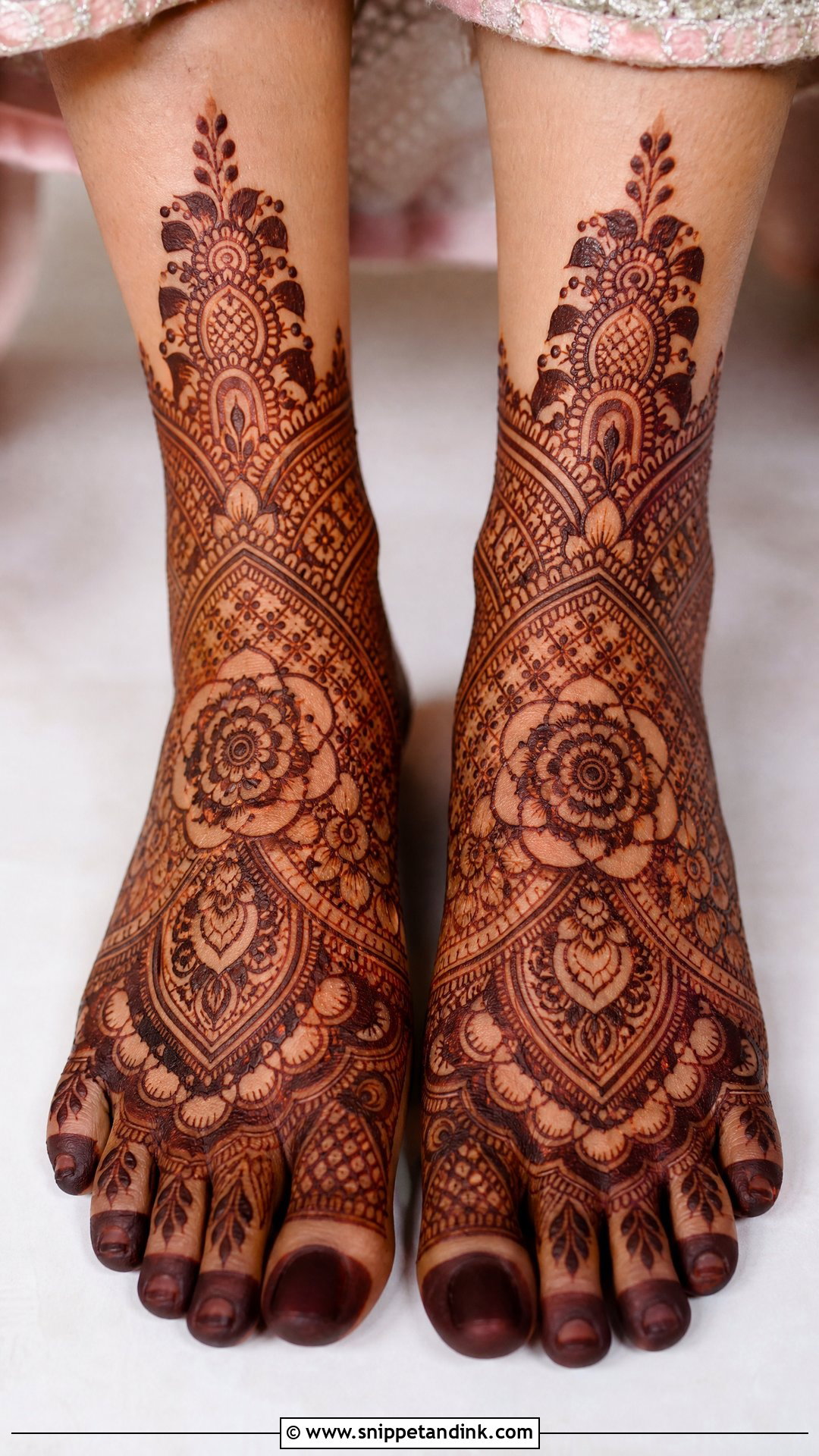
Full feet coverage fills the entire top of each foot with connected pattern: toes in small bands or leafy tips, a centre of mandalas, florals, paisleys and shading, and curved borders down the sides so it looks finished from every angle. Barefoot rituals and open sandals are where it earns its place. The risk is crowding. I always pick one focal point per foot, usually a central mandala or a large lotus, and let the fine detail sit around it rather than competing.
7. Mandala Bridal Leg Mehndi Design
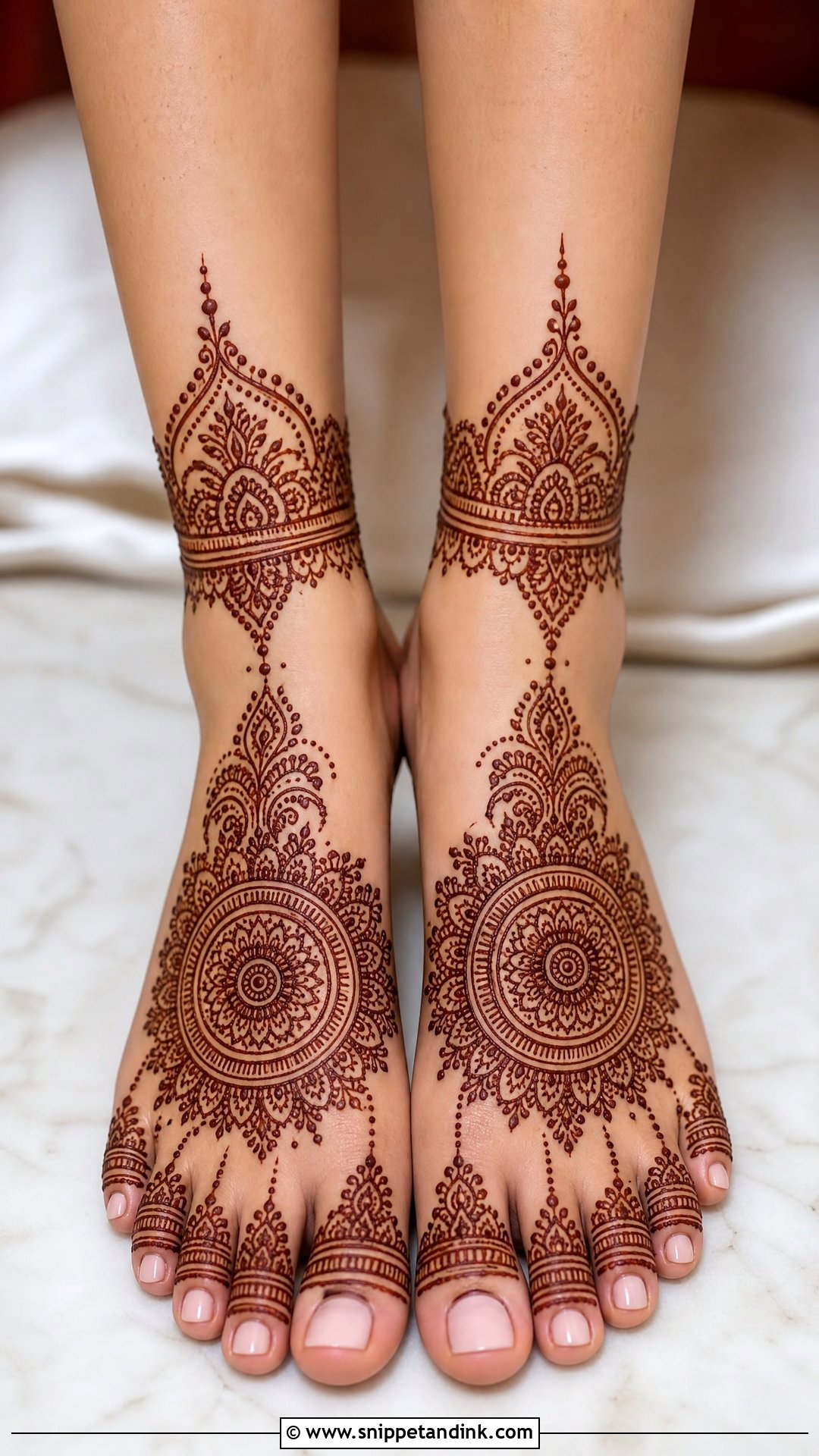
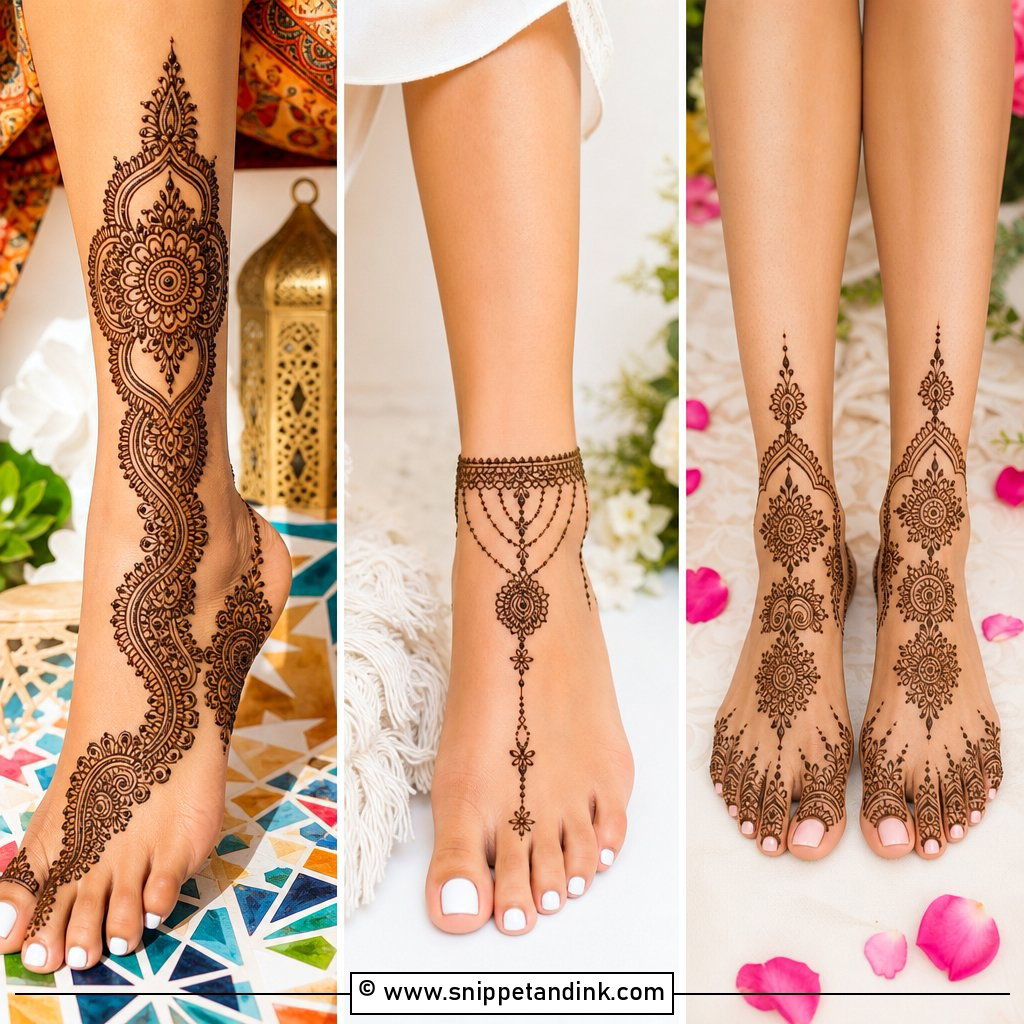
A mandala on the top of each foot gives the design a clear centre, with smaller circles echoed at the ankle or lower calf and petals, dots, vines and paisley extensions filling around them. The top of the foot slopes, so I mark the centre with the bride standing flat, not with her foot propped up, or the circle drifts toward the toes once she stands. Detailed toe bands and a delicate anklet border finish it. Round shapes also read especially well in overhead photos.
8. Peacock Bridal Leg Mehndi Design
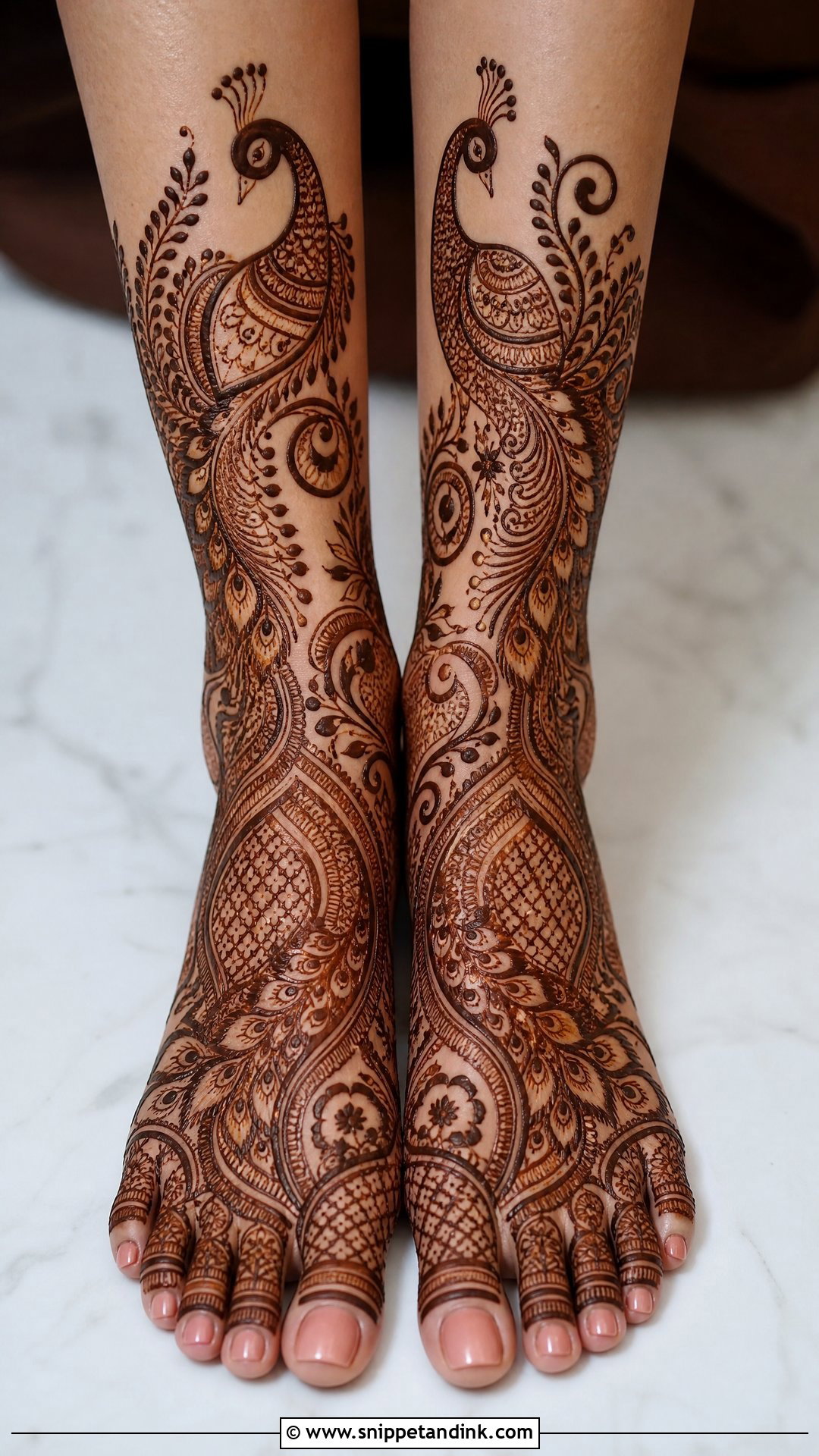
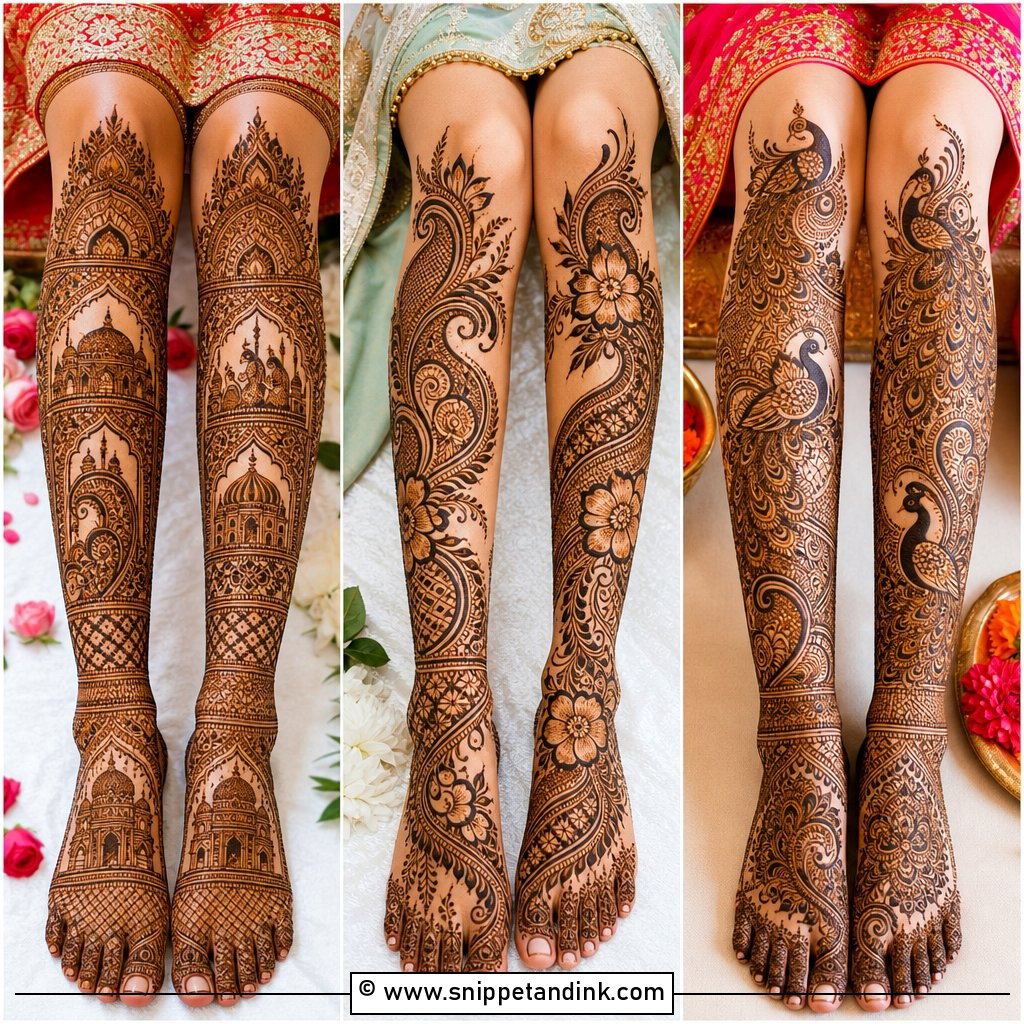
Peacock bridal leg mehndi design puts the bird on the foot, ankle or lower leg, with feathers trailing into paisleys, floral vines and curved fillers. Thin feather lines with a little shading give it life. My rule is to keep the surrounding pattern controlled, because a peacock buried in filler just disappears. One bird per leg, angled toward the inside of the foot so they face each other when you stand, makes a confident traditional centrepiece with temple jewellery and embroidered lehengas.
9. Lotus Bridal Leg Mehndi Design
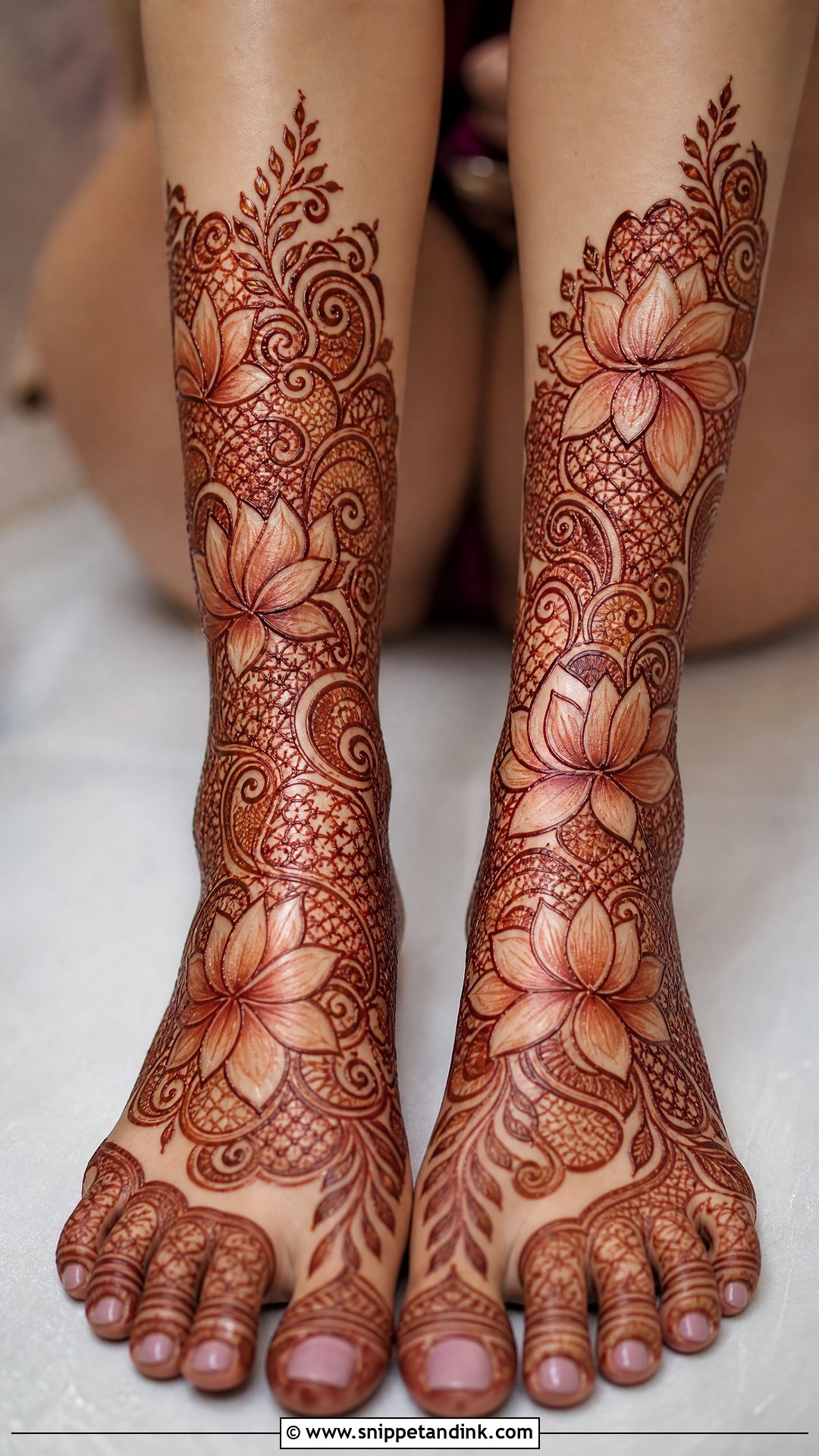
Lotus works as a main motif on the foot, a border around the ankle, or a repeated pattern climbing the lower leg. Heavy versions pair a full lotus foot with jaali on the sides and paisleys near the ankle; modern ones use a few larger flowers and lots of negative space. Shaded petals, dotted outlines and fine leaf trails customise it easily. I find it one of the most forgiving leg motifs, because petals hide small asymmetries between the two feet.
10. Jaali Bridal Leg Mehndi Design
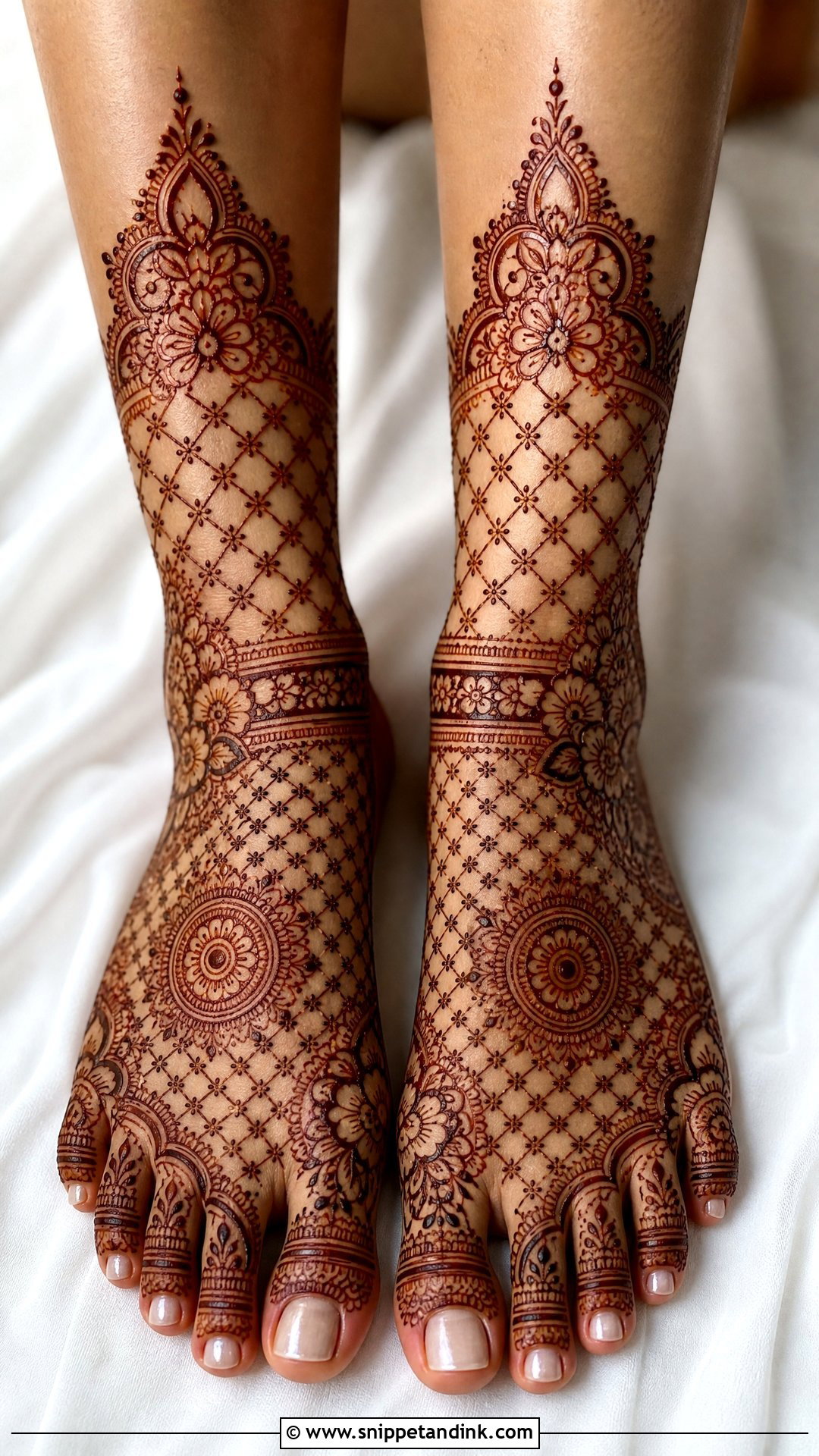
Jaali on the legs creates a net-like effect with fine crisscross lines, small dots, floral corners and bordered panels. I usually confine it to the top of the foot or a band around the ankle and keep the toes and borders bold for contrast, since mesh alone flattens out in photos. Mandalas, paisleys and lotus motifs round it off. Spacing is everything here, so check your artist’s jaali samples closely; uneven squares are obvious on a smooth foot.
11. Paisley Bridal Leg Mehndi Design
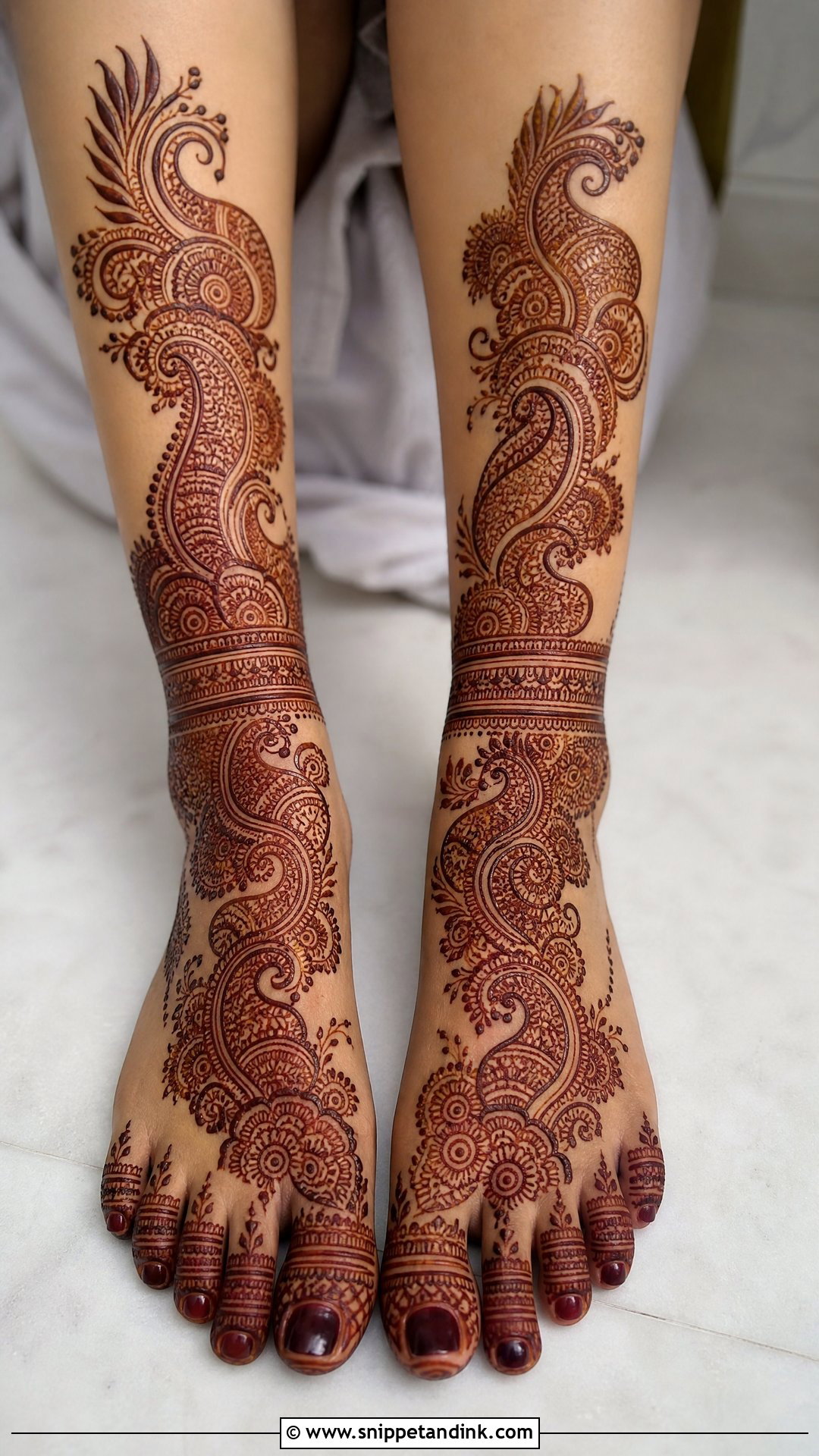
Paisley bridal leg mehndi design can go two ways: small paisleys packed tightly for a heavy traditional look, or large flowing ones for something Arabic in feel. On legs I arrange them in a curved trail from the toes toward the ankle and calf, which gives the feet a sense of movement, and fill around them with florals, dots, leaves and fine mesh. Varying the sizes is the detail I’d insist on. Same-sized paisleys in a row look stamped rather than drawn.
12. Floral Bridal Leg Mehndi Design
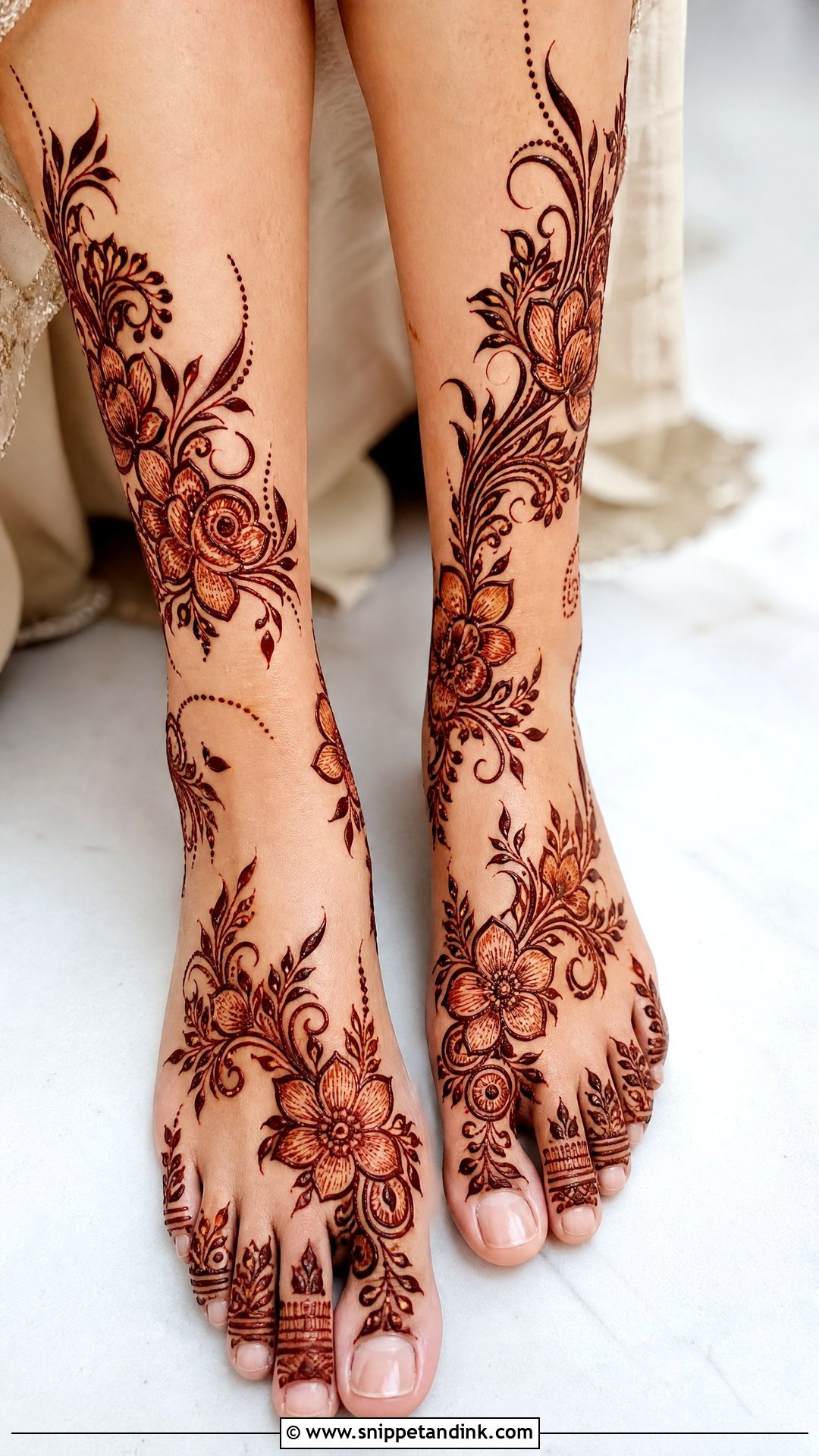
Florals adapt to any outfit. Bold Arabic flowers, detailed Indian blooms, lotus petals, rose shapes or leafy vines can cover the whole foot and ankle or trail lightly up the side of the leg. Shaded petals add depth as the stain darkens. On their own, flowers can look like party mehndi, so to make it bridal I always add toe detail, an ankle border and fine fillers between the blooms.
13. Anklet Bridal Leg Mehndi Design
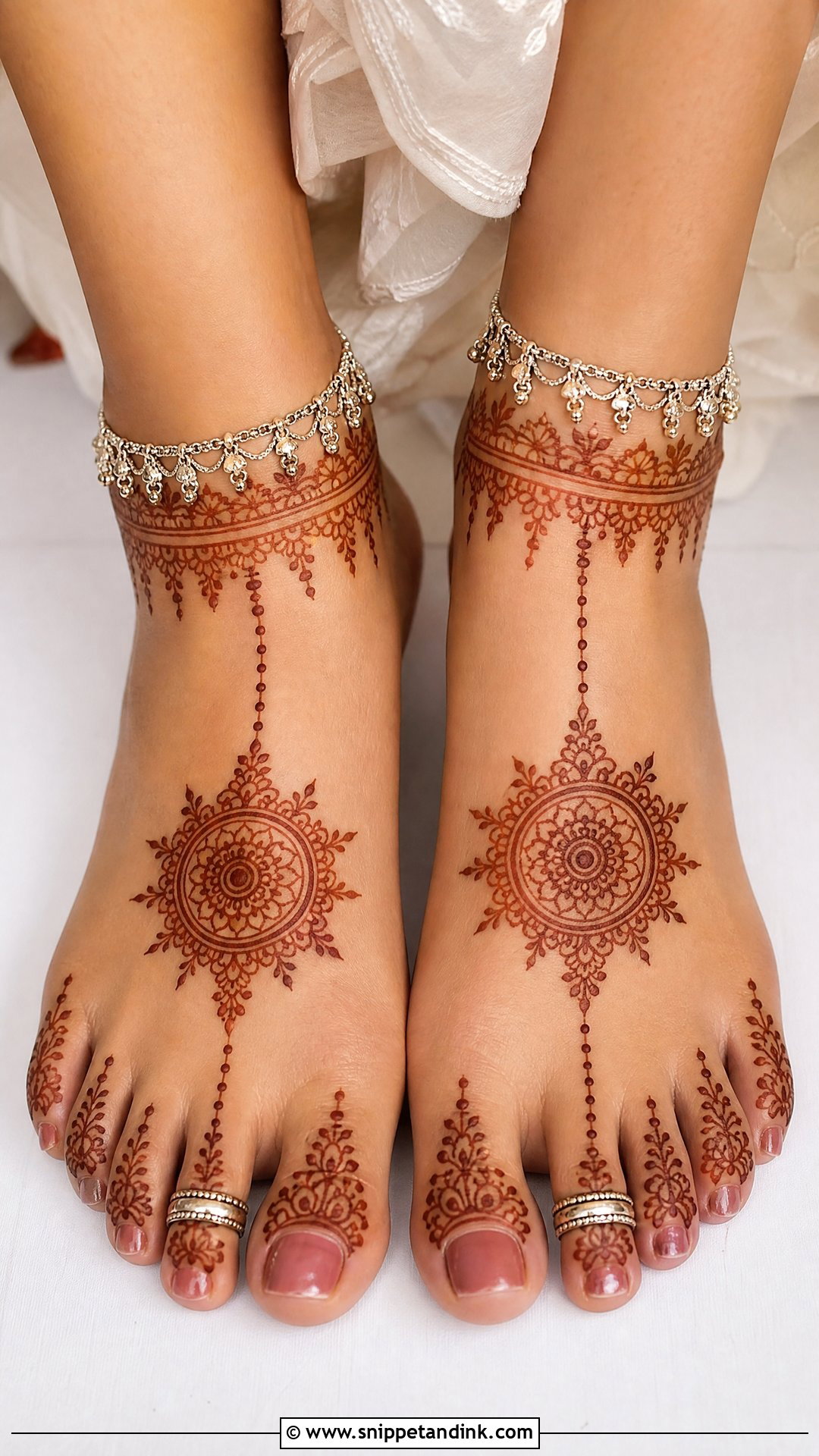
Here the ankle is the star: chains, beads, tiny flowers, hanging drops and curved bands wrap around it like a drawn payal, while the foot stays simpler with a mandala or floral trail. Medium coverage, quicker to apply. One thing I check is where the real anklet will sit. If the henna anklet lands exactly under the silver one, the drawing gets hidden, so I place it a little higher or lower. Matching toe-ring details and a small paisley or lotus on the top of the foot complete it.
14. Jewellery Bridal Leg Mehndi Design
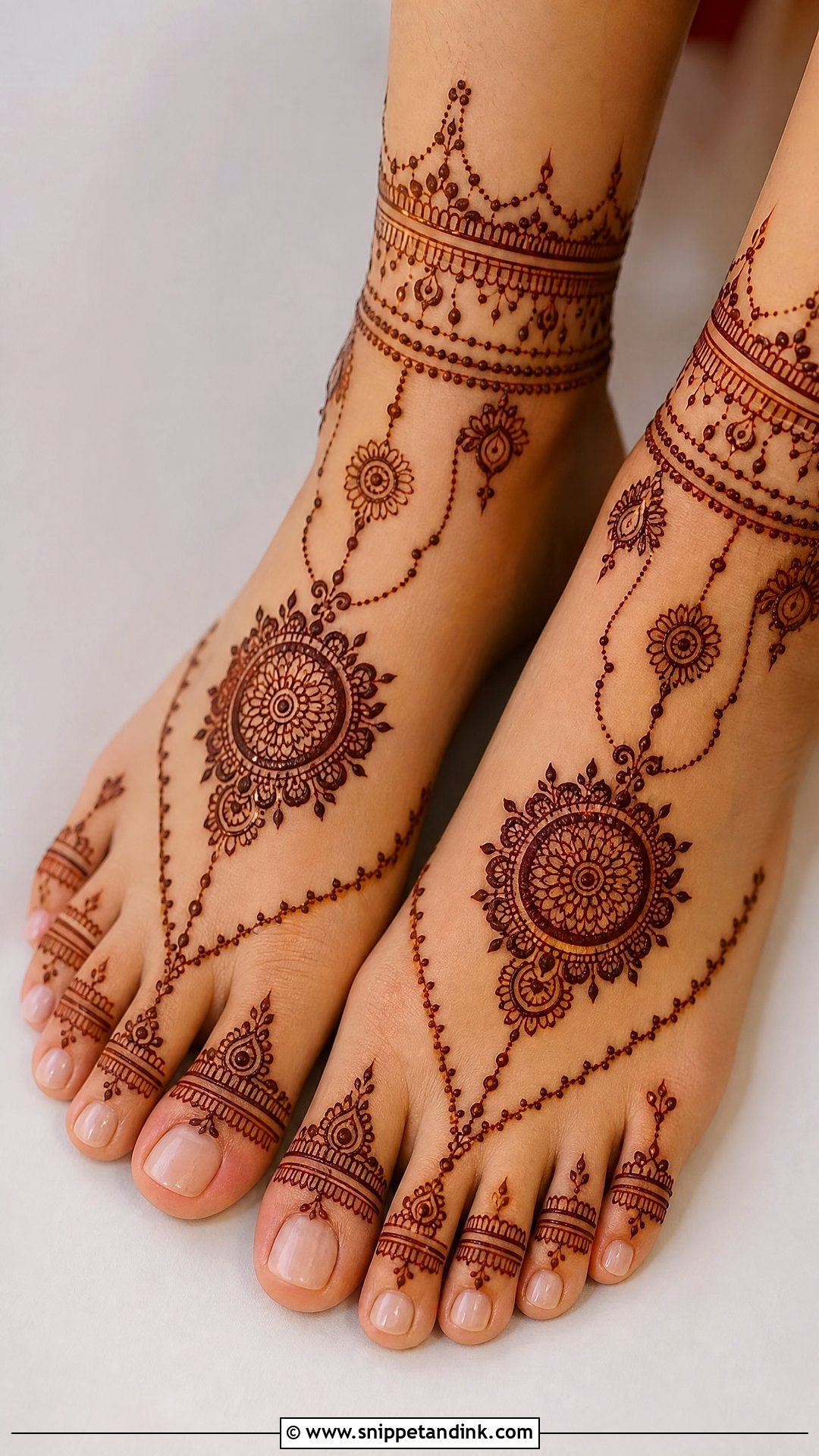
This style draws the jewellery itself: anklets, toe rings, chains, pendants and foot ornaments. It usually starts with toe-ring patterns, connects through fine chains across the foot, and ends in anklet bands, often with a pendant-like mandala or lotus in the centre. With open bridal footwear it really does look like custom jewellery. Clean lines and even spacing are non-negotiable, and I hold back on filler because too much of it hides the jewellery effect entirely.
15. Minimal Bridal Leg Mehndi Design
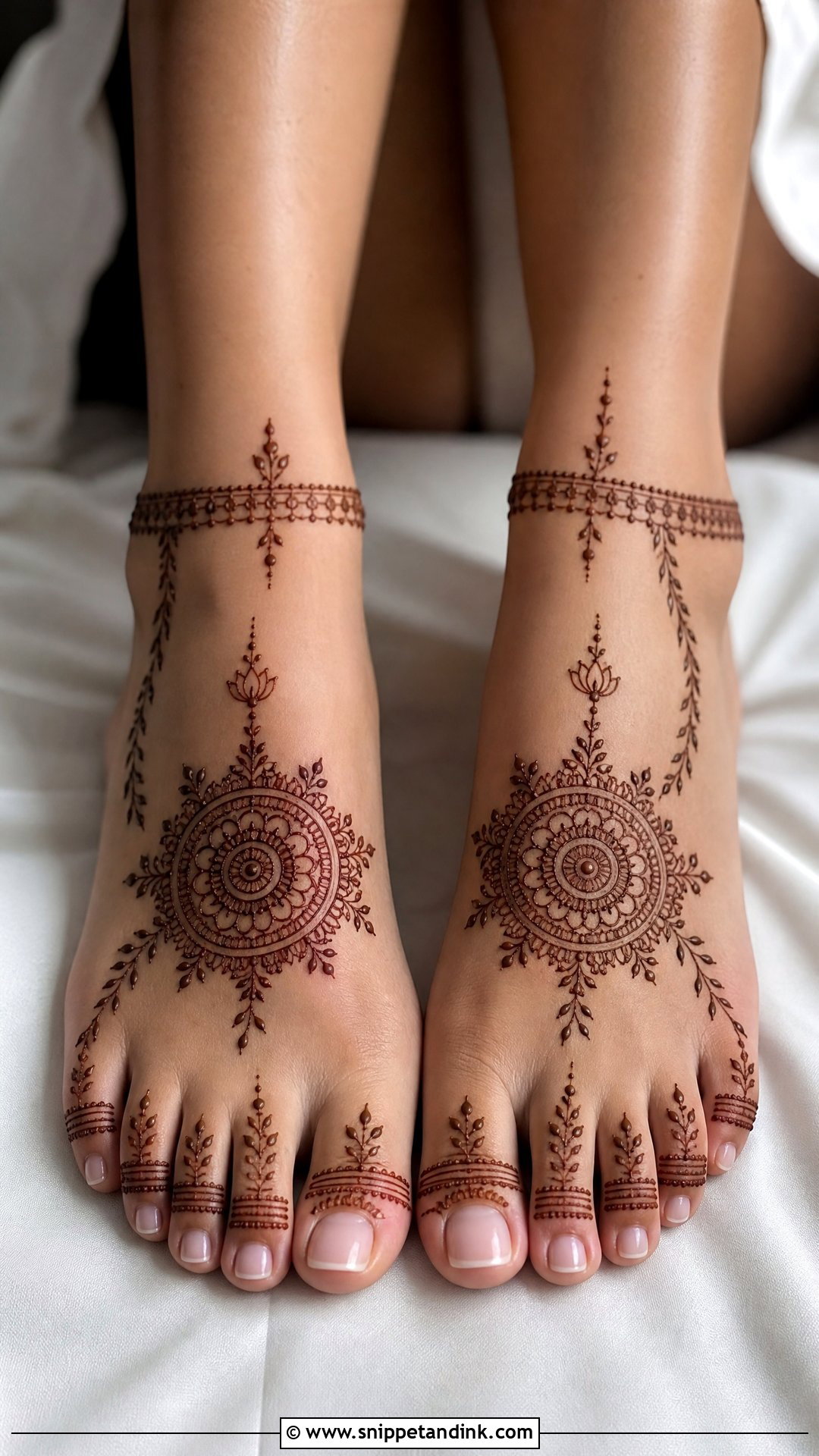
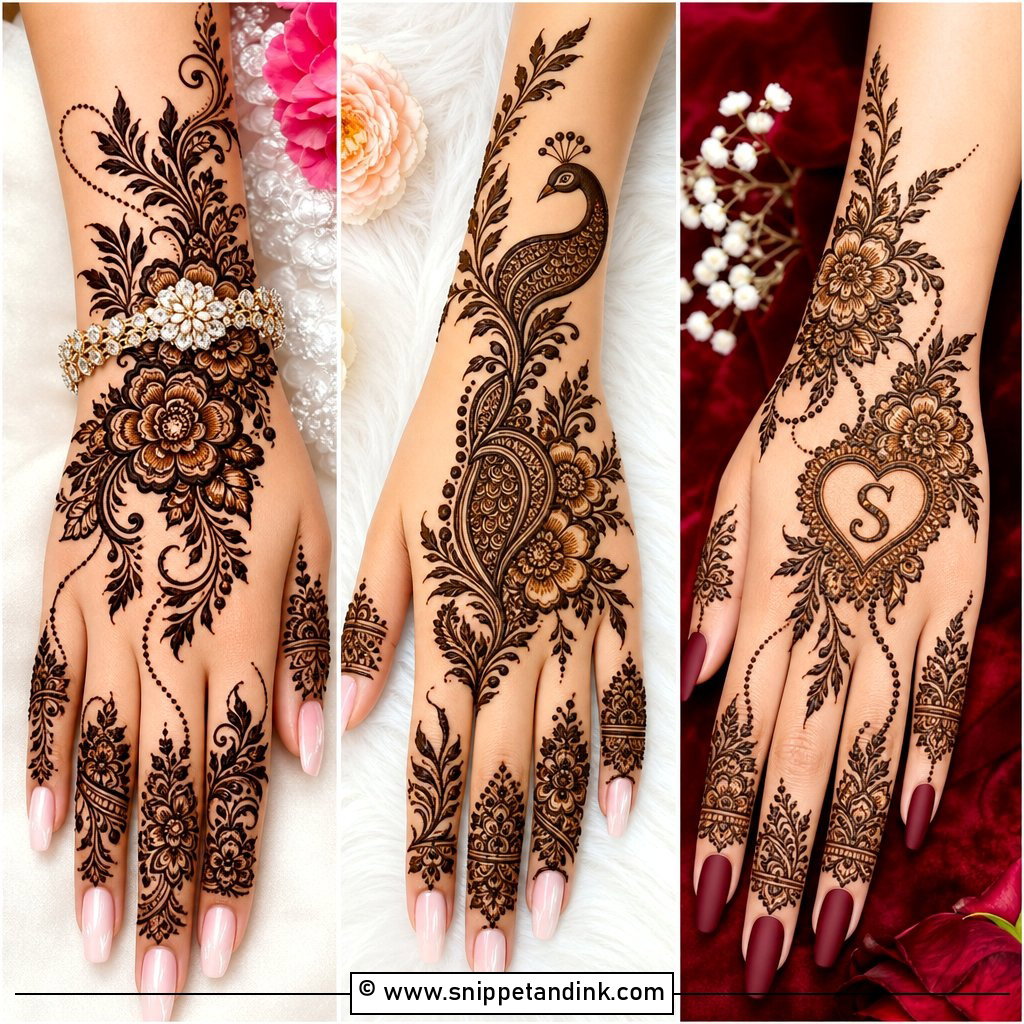
Minimal bridal leg mehndi design picks a few details instead of covering everything: a central mandala, a thin ankle band, a leafy side trail and simple toe patterns. It suits shorter ceremonies, sensitive skin and tight schedules. Minimal can tip into casual very quickly, so I keep the motifs graceful and the finishing lines sharp. A small lotus or floral anklet is often all it needs to read as bridal.
16. Modern Bridal Leg Mehndi Design
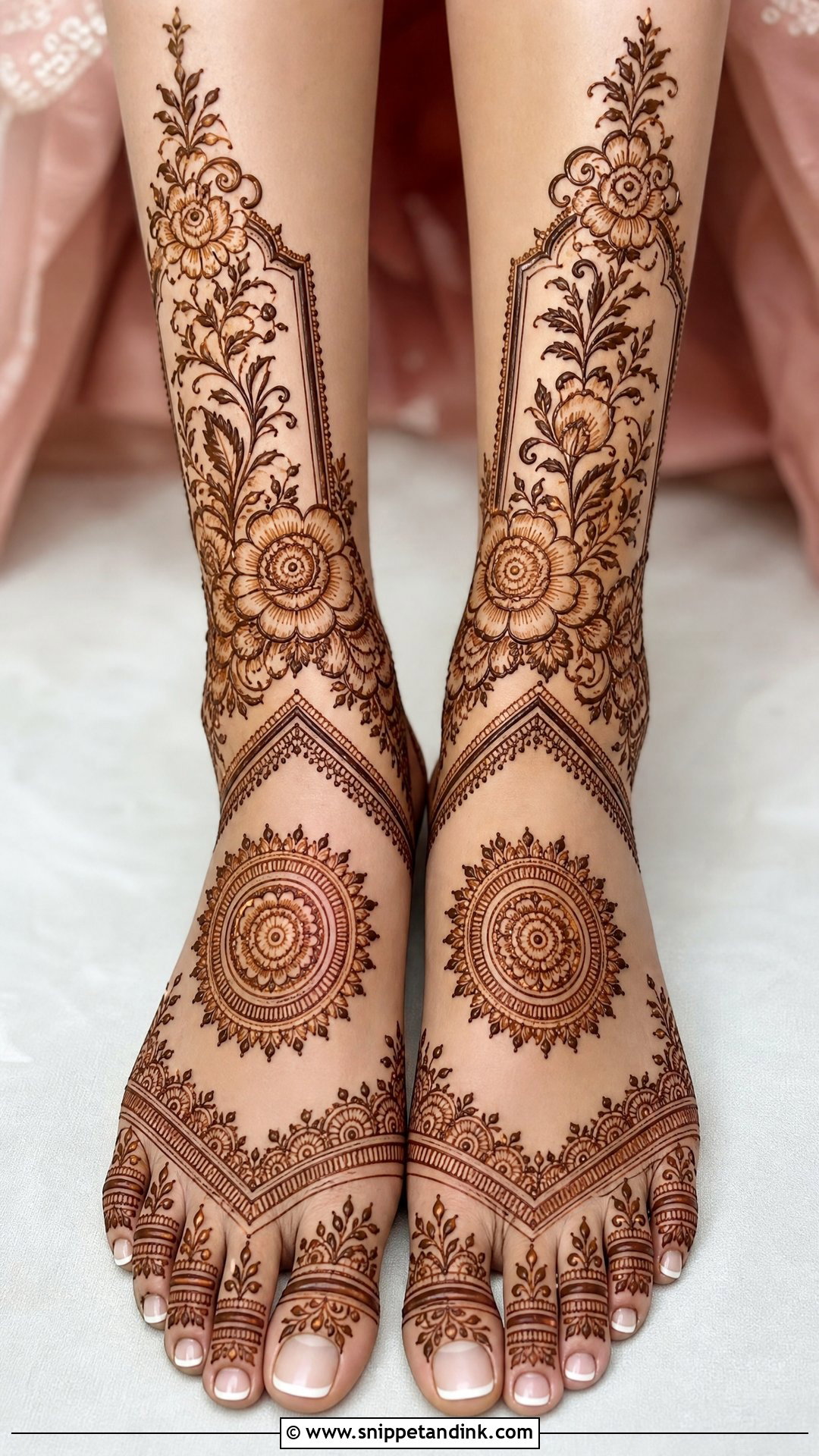
Modern leg layouts use clean spacing, bold motifs, negative-space panels, geometric borders and sometimes asymmetry. A version I draw often starts with detailed toes, places one large flower or mandala on the foot, then spaces smaller patterns toward the ankle. Open skin keeps it crisp after staining. It sits easily with pastels, contemporary lehengas and fusion outfits, and guests can take it in at a glance.
17. Rajasthani Bridal Leg Mehndi Design
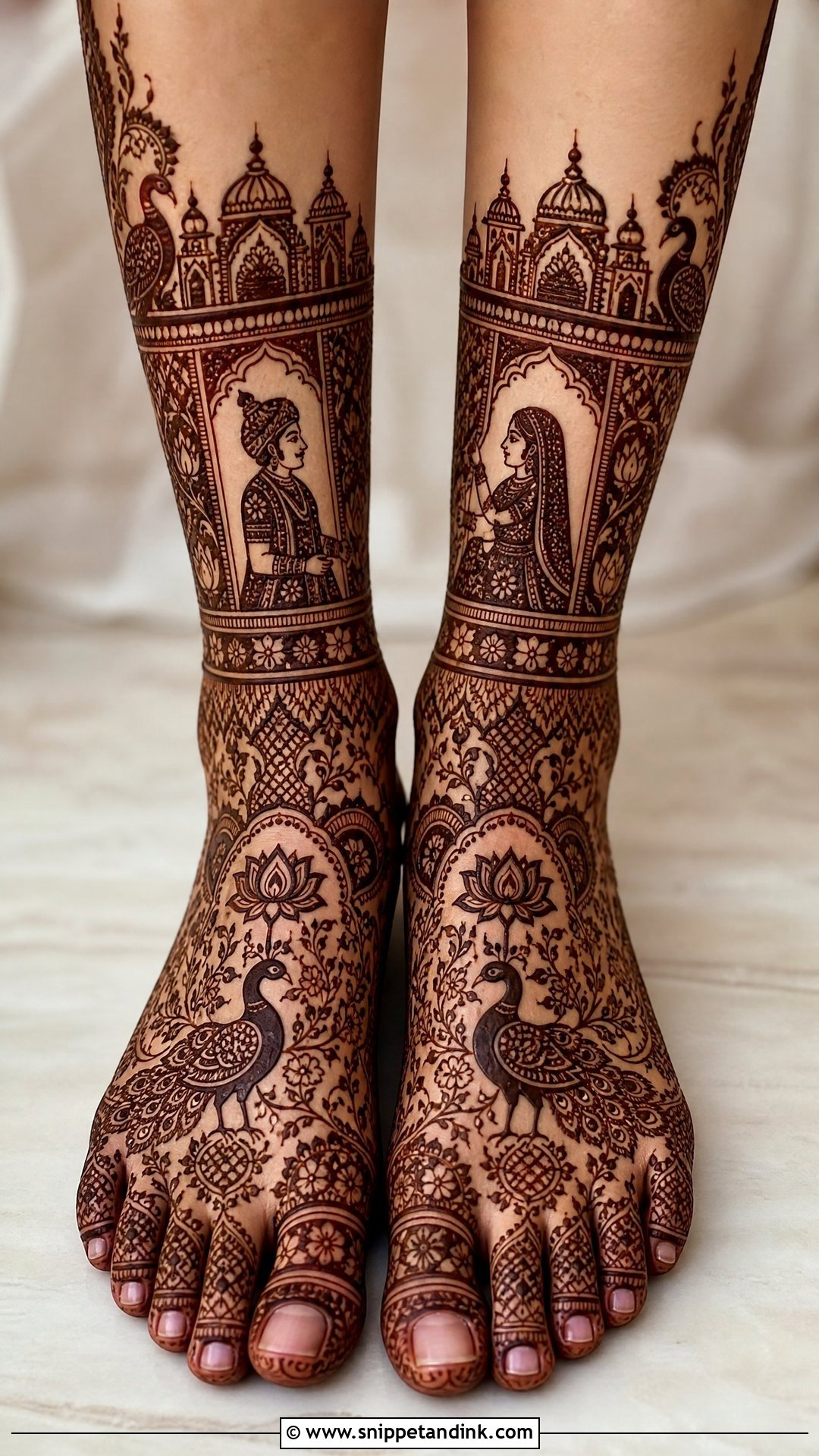
Rajasthani leg designs carry the same storytelling as the hands: peacocks, bride and groom elements, palace-style borders, lotus motifs, mirror symmetry and very fine fillers, covering the feet completely and climbing toward the calves in ornamental panels. It is the longest leg session on this list, so only choose it if you can sit for it. I keep the major figures clear and outlined more heavily than the fillers, especially around any personal details, otherwise they get lost once everything stains the same colour.
18. Moroccan Bridal Leg Mehndi Design
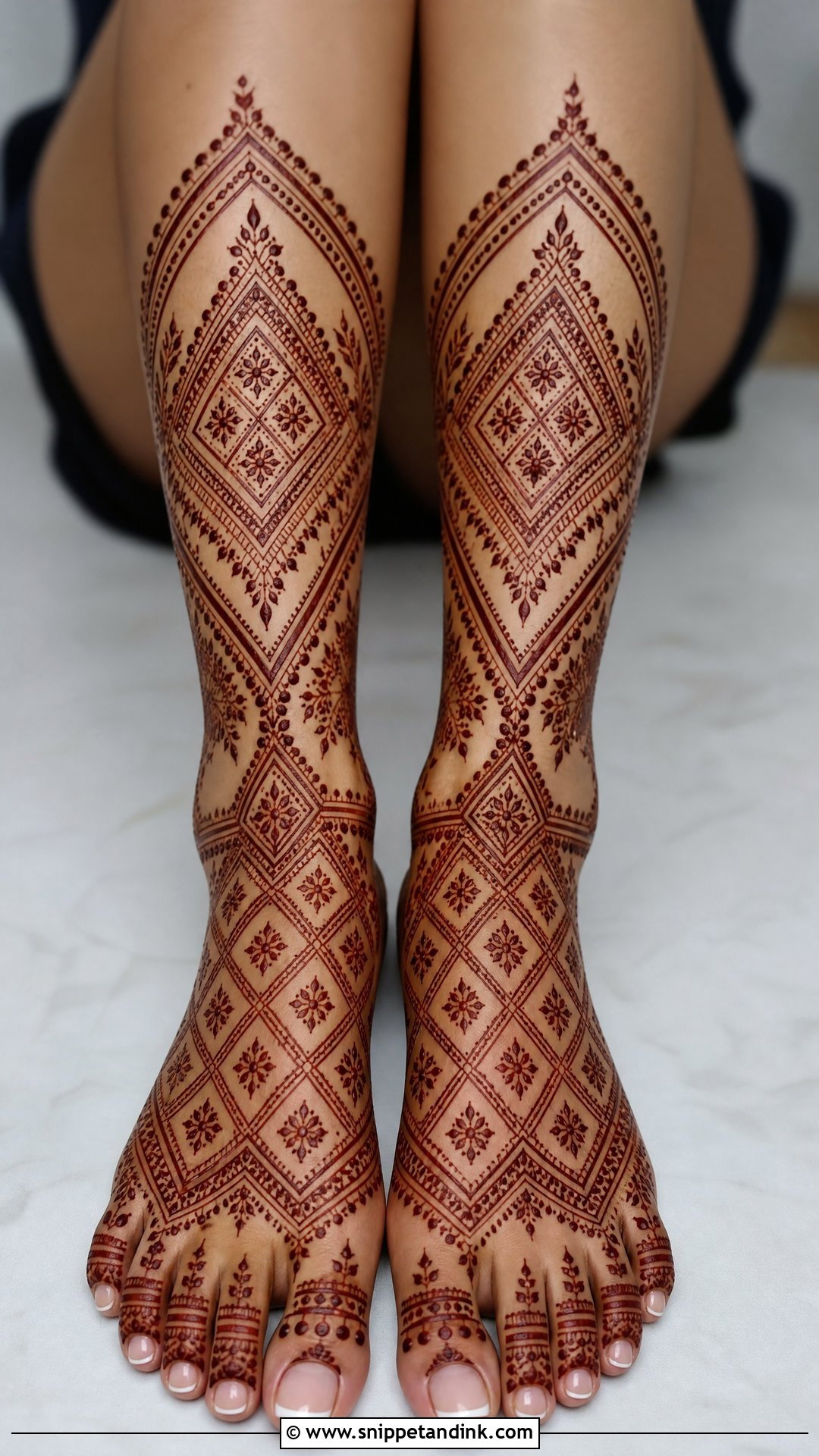
Moroccan work swaps dense florals for diamonds, straight lines, grids, dots, triangles and bold borders, arranged in neat panels across the foot, around the ankle and up the shin. If your outfit has geometric embroidery or mirror work, it echoes it nicely. Straight lines on a curved shin are tricky, and I draw them with the leg held still at a fixed angle so they don’t bend when the bride stands. A few small florals soften it for a bridal finish.
19. Gulf Bridal Leg Mehndi Design
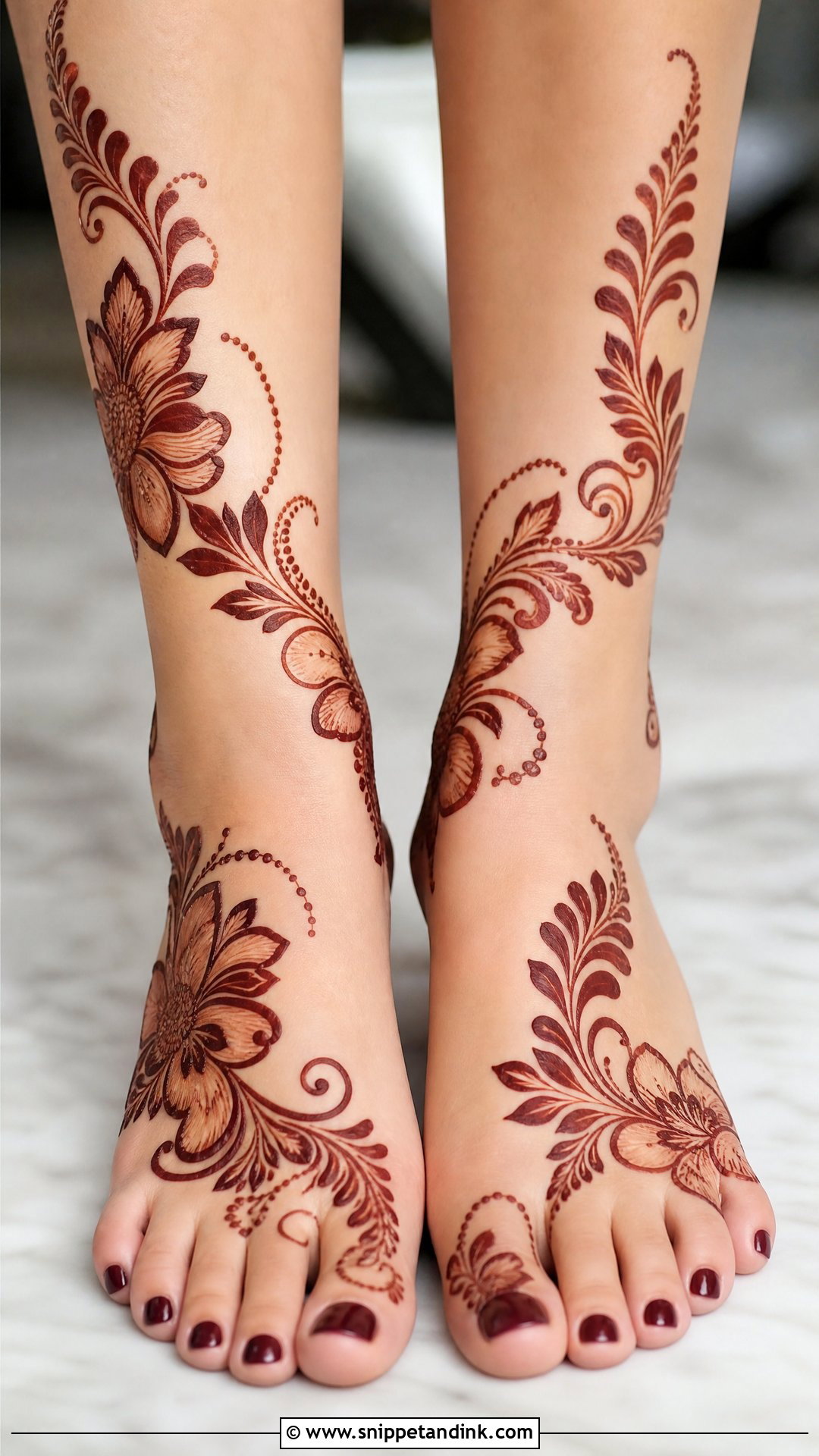
Gulf or Khaleeji-inspired leg mehndi uses large flowers, thick leafy vines, shaded petals and curved trails across the foot and ankle, with generous open skin between them. Contrast is the whole appeal: thick lines stain dark while the bare skin keeps it airy. It feels luxurious without Indian-style density. Gold anklets and embellished sandals suit it, and I’d ask for matching trails on both feet with a soft finish at the ankle.
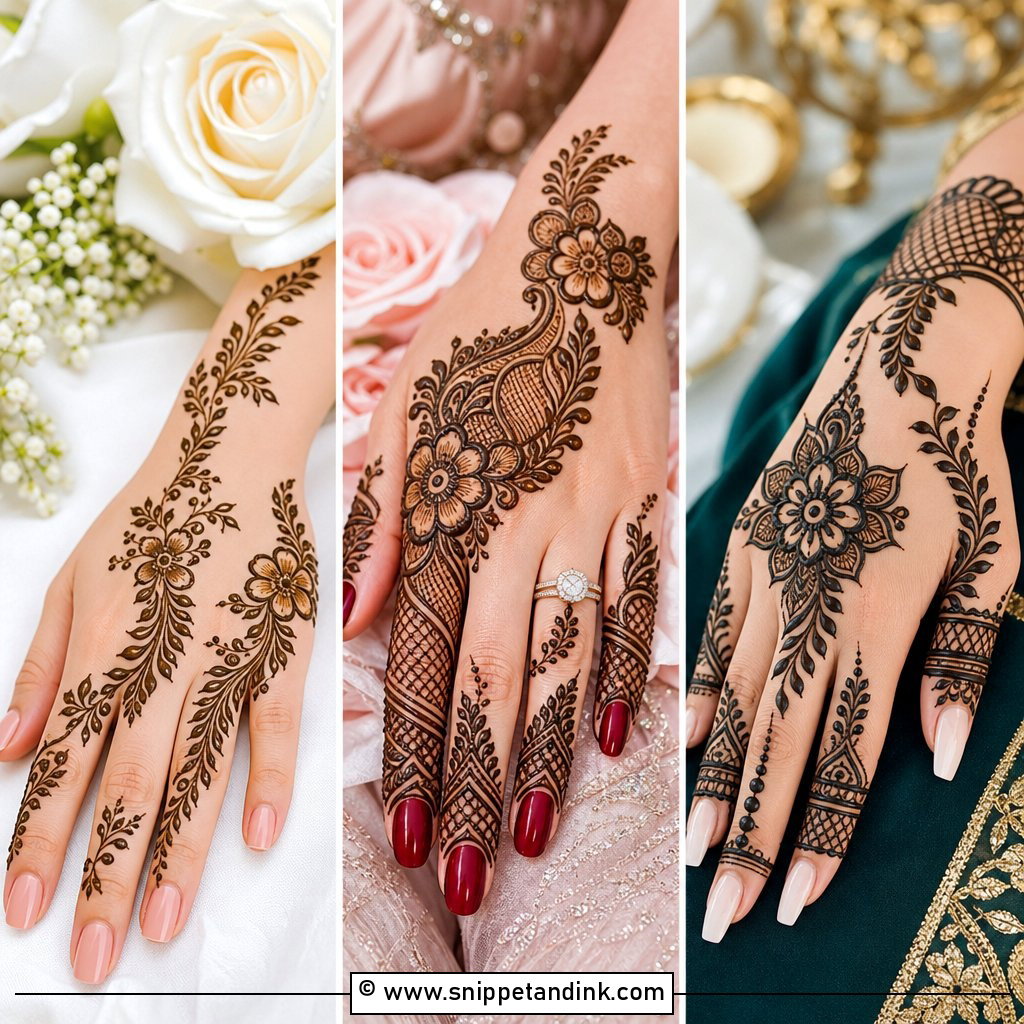

20. Knee Length Bridal Leg Mehndi Design
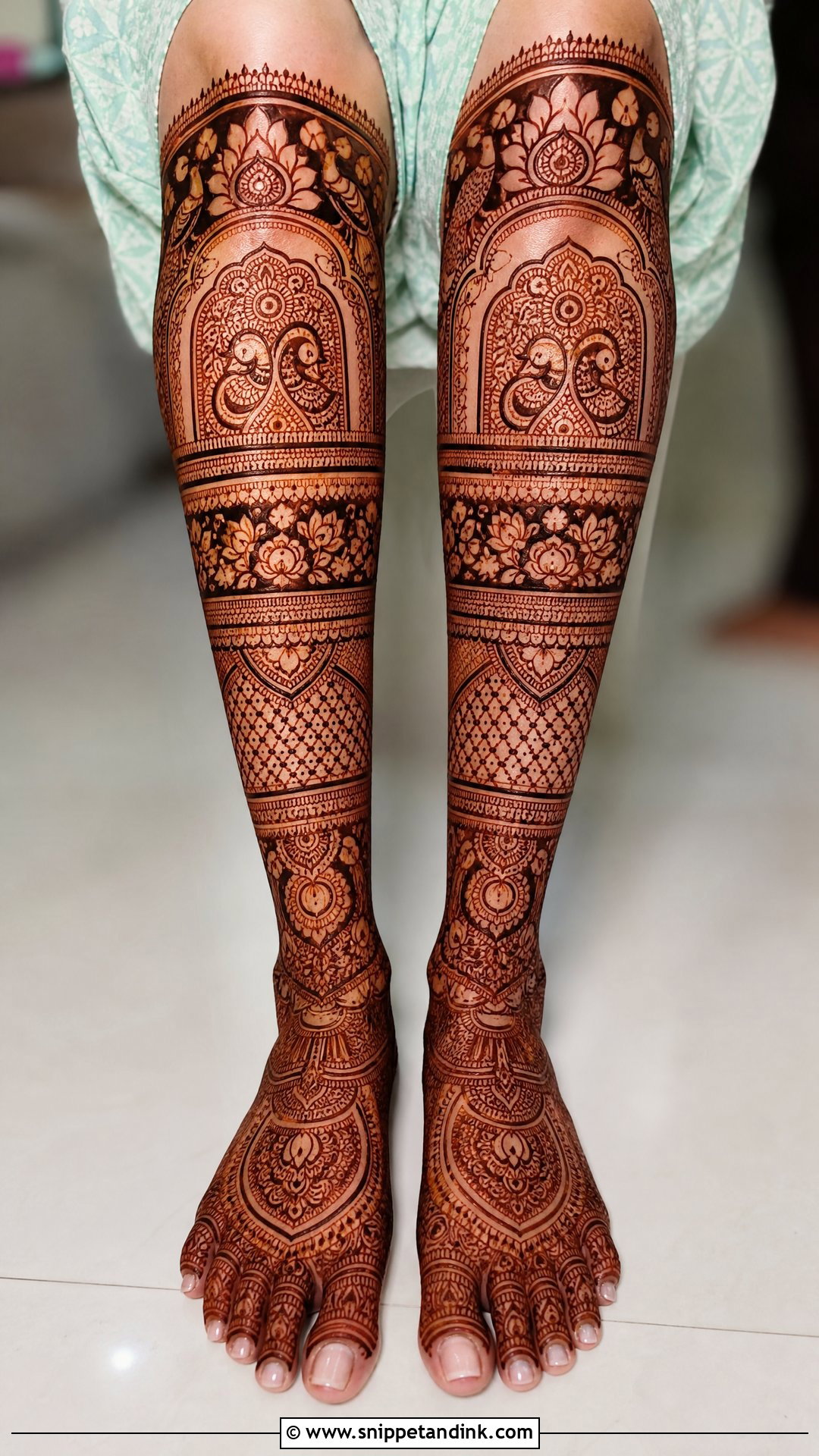
Knee length bridal leg mehndi design is maximum coverage, from the toes over the feet and ankles and up the lower leg to near the knee, with panels, mandalas, peacocks, lotus borders, jaali, paisleys and repeated floral bands. It suits highly traditional weddings and outfits that reveal the legs during rituals. Layout matters more than anything here. I put the larger motifs on the shin and calf and save the fine detail for the feet, partly for balance and partly because fine lines on the upper leg stain faint and get lost.
Lehenga Hems, Payal and How Much Leg Actually Shows
Before deciding how high to go, stand in your outfit and look down. A heavy lehenga with a floor-length hem usually shows only the feet and a little ankle as you walk. A saree reveals a bit more at the front, and a sharara or a fitted churidar with a short hem changes the picture again. There’s little point sitting through knee-length work that only your photographer will see if your hem never lifts.
Working around anklets and footwear
Bring your payal and wedding sandals to the session, or at least photos of them. I position the ankle border so the jewellery frames it instead of covering it, and I keep the area under sandal straps lighter, since straps rub and can lift the stain early. Closed shoes are worth avoiding for the first day; trapped heat and friction blur fresh colour.
Keeping the colour through the festivities
Feet take more wear than hands, so they fade unevenly if you’re not careful. Avoid soaking them, skip pedicures and foot scrubs until after the wedding, and rub in a little oil before bathing in the first few days. The tops of the feet usually hold their colour longest; the edges of the soles fade first from walking.
Which Leg Design Fits Your Outfit and Your Patience?
Leg mehndi comes down to three things: what your outfit reveals, the jewellery you’ll wear, and how long you can sit with your feet up. Full Indian coverage feels rich and traditional; Arabic and Gulf patterns are bold with open space; mandala, jaali, paisley, lotus and anklet designs sit at different points between classic and modern. For a heavy dulhan look, go dense with fine fillers. For something lighter, floral trails, jewellery patterns or a minimal ankle design will do it. Talk placement and stain depth through with your artist well before the wedding, so the design is settled long before your session starts.
You'll Like These Ideas:



Leave a Reply