
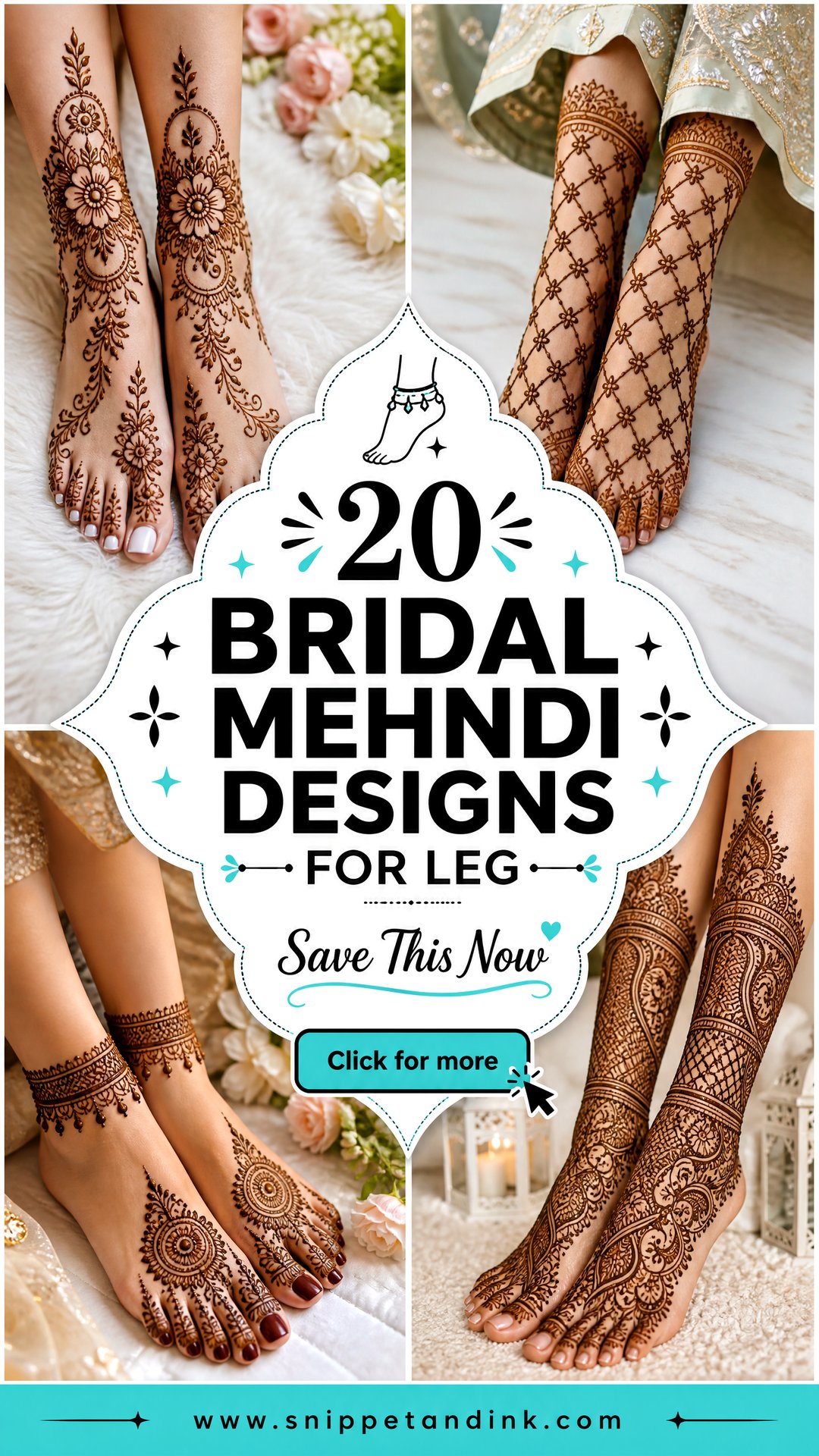
Leg mehndi is the most negotiable part of a bridal set. Some brides want henna from toe to knee, others only want what shows beneath the hem, and both are right depending on the outfit. A heavily embroidered lehenga, a saree with a traditional border and a modern reception silhouette each reveal a different amount of leg, and that should shape the design more than any trend does. I’ve gathered twenty Bridal Mehndi Designs for Leg below, from full Indian coverage and Arabic trails to jaali, peacocks, mandalas and personal details, with notes on placement and how each wears through a long wedding.
How Much Leg Does Your Outfit Actually Reveal?
This is the first question I ask, and it saves brides hours in the chair. A floor-length lehenga or gharara usually shows the feet and maybe the ankle when you sit or walk up steps. A saree with pleats shows even less, apart from the moment you lift it. Paying for intricate shin and calf work under those outfits is a choice, and a lovely private one, but it won’t be in many photos.
Shorter hems, side slits, sharara cuts and reception dresses change the picture completely. Here the shin and calf are on show, and a design that stops at the ankle can look unfinished.
- Floor-length lehenga or gharara: put the effort into feet, toes and a strong ankle cuff.
- Saree: feet and ankles, with any calf work kept as a bonus rather than the main design.
- Side slit or shorter hem: plan the shin and calf as part of the main design.
- Several outfits over the wedding days: design for the outfit that shows the most leg.
1. Full Leg Bridal Mehndi Design
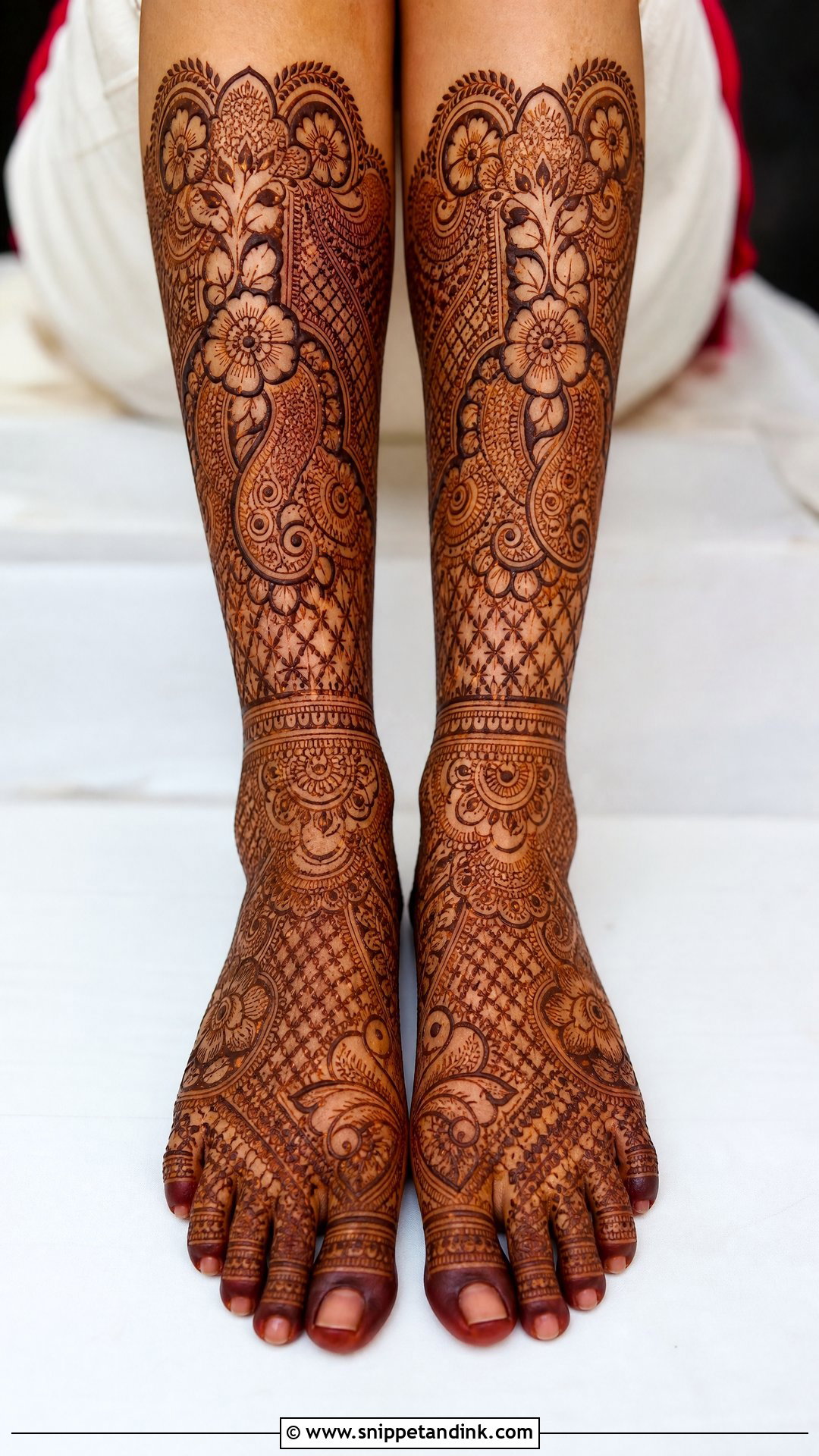
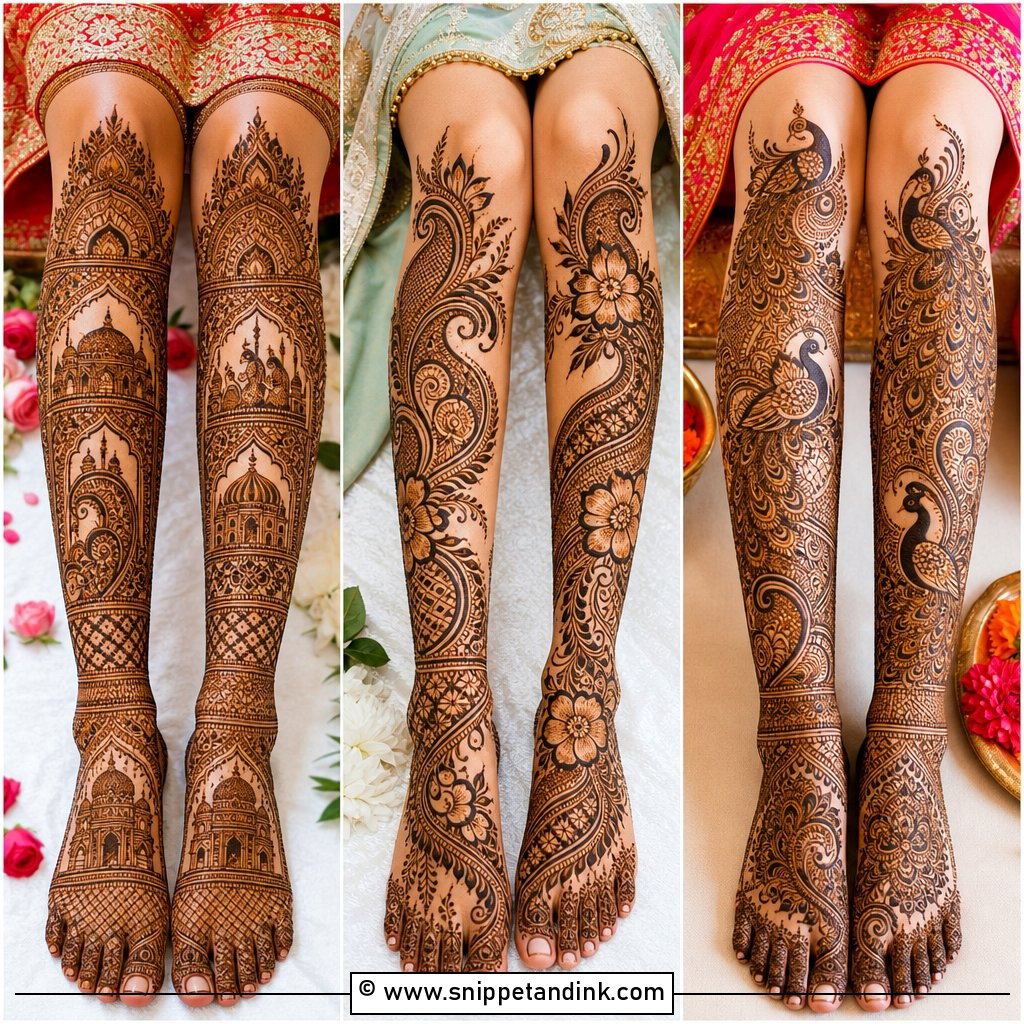
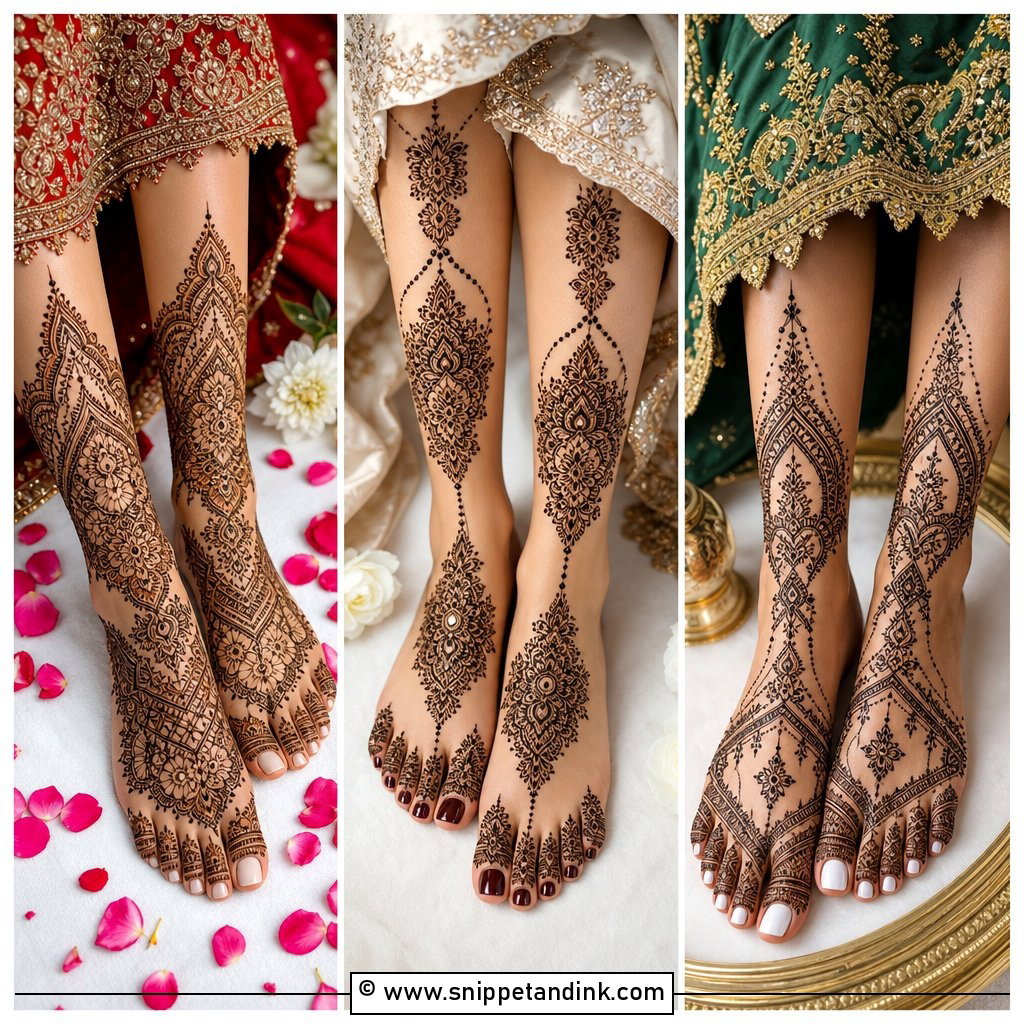
The full leg bridal mehndi design starts at the toes and climbs toward the calf, sometimes stopping just below the knee, with dense florals, paisleys, jaali, leafy borders and fine filler. It goes with lehengas, ghararas and sarees worn with heavy anklets. Scale is the thing to get right. I draw the main motifs larger around the ankle and shin than on the foot, because the leg is a long surface and small motifs repeated up it start to look like wallpaper. Expect a long sitting, then a deep, detailed stain.
2. Indian Bridal Leg Mehndi Design
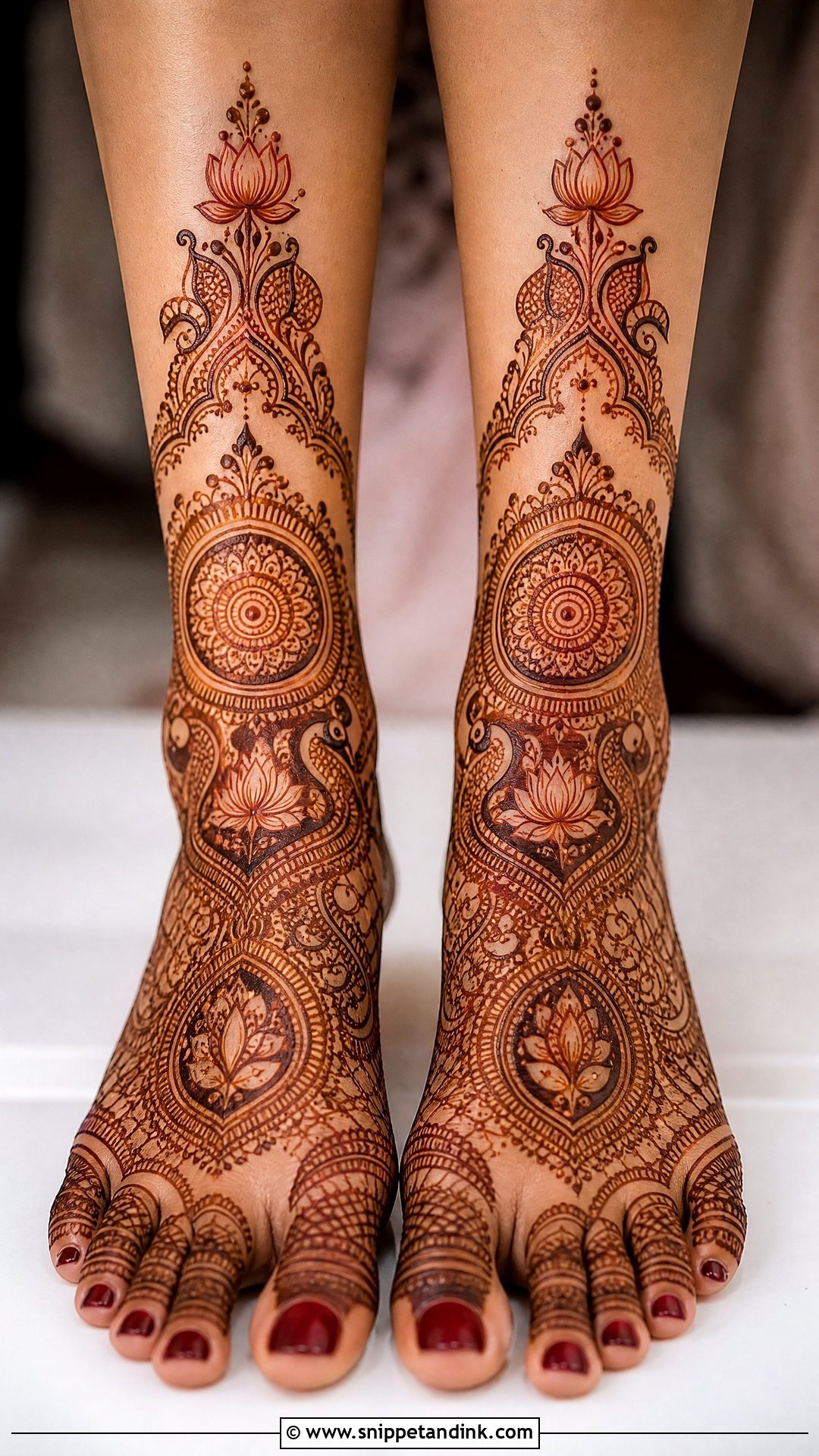
Lotus flowers, paisleys, mandalas, peacocks, bride and groom figures and lace fillers make up a traditional Indian leg design, spread evenly across feet, toes, ankles and lower legs. It suits red, maroon, pink, gold and ivory outfits. I divide the leg into bands, usually the foot, the ankle cuff and the shin, and give each band its own main motif. Without those divisions the motifs bleed into each other once the henna darkens and nothing stands out.
3. Arabic Bridal Leg Mehndi Design
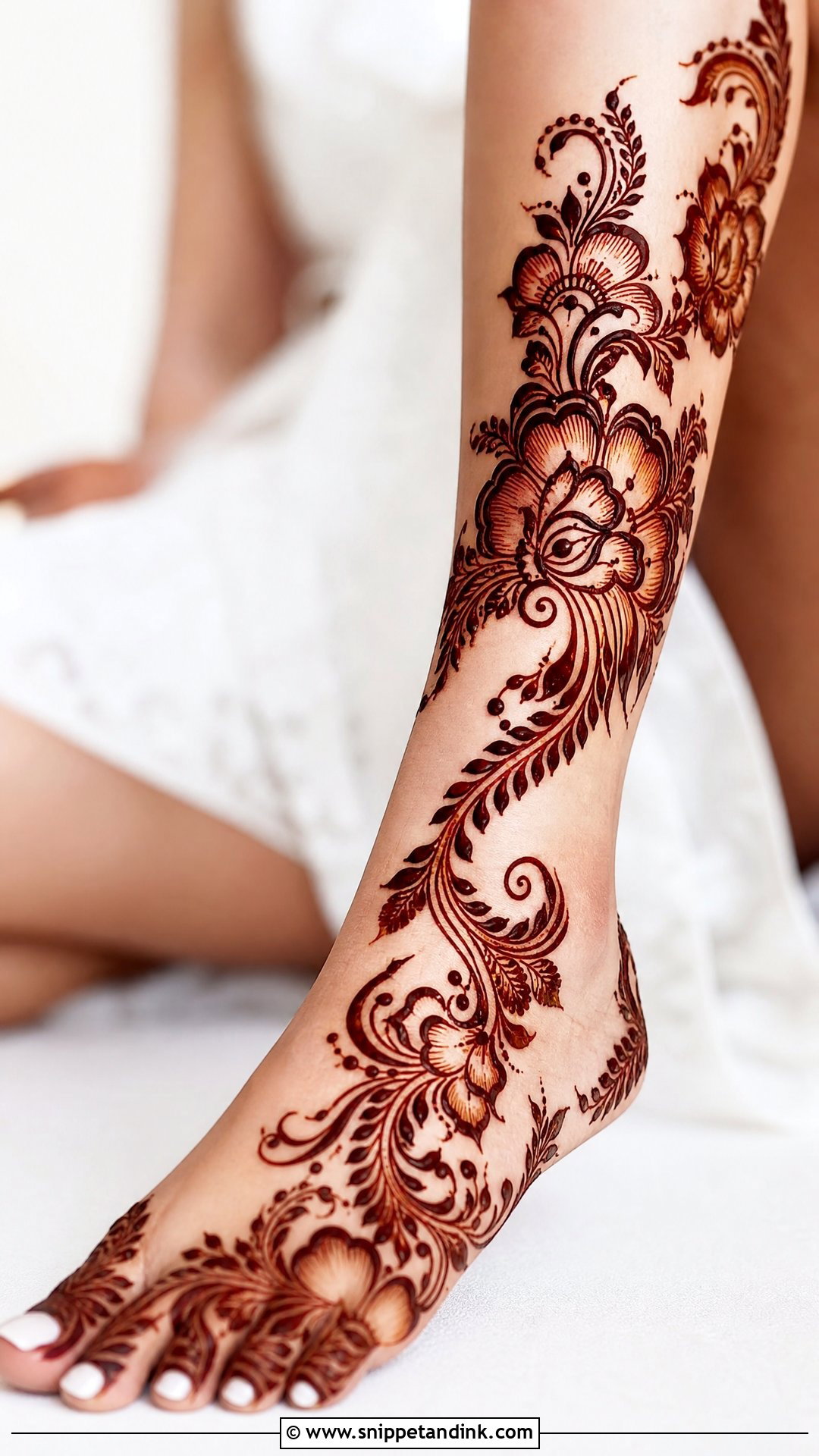
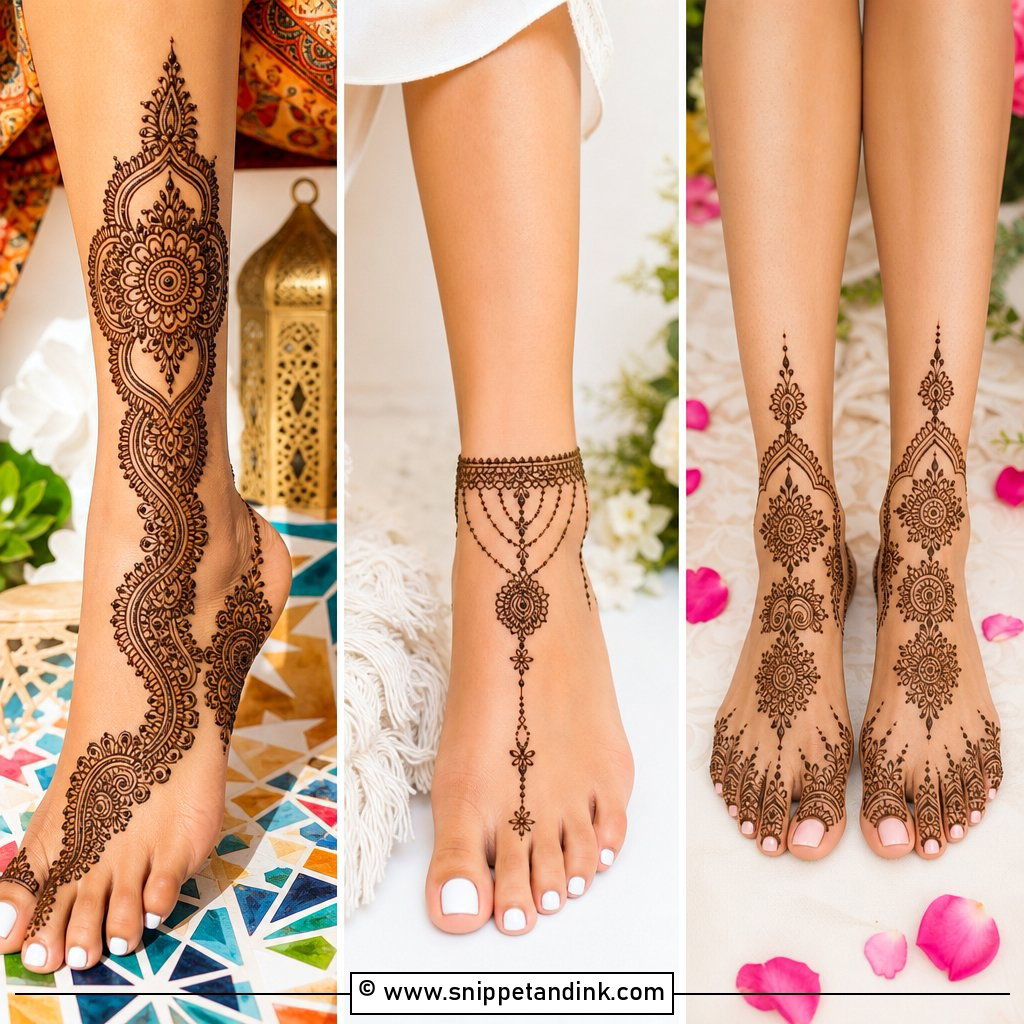
Arabic leg work is bold and easy to read from across a room. Flowing vines, large flowers, curved leaves and shaded petals travel diagonally from the toes over the ankle and up the outer side of the leg, leaving plenty of bare skin. That diagonal is what lengthens the leg. It’s lighter to sit through than Indian coverage and comfortable for outdoor weddings in the heat. The thick outlines stain strongly, which matters on the shin, where thinner lines tend to come up pale.
4. Indo Arabic Bridal Leg Mehndi Design
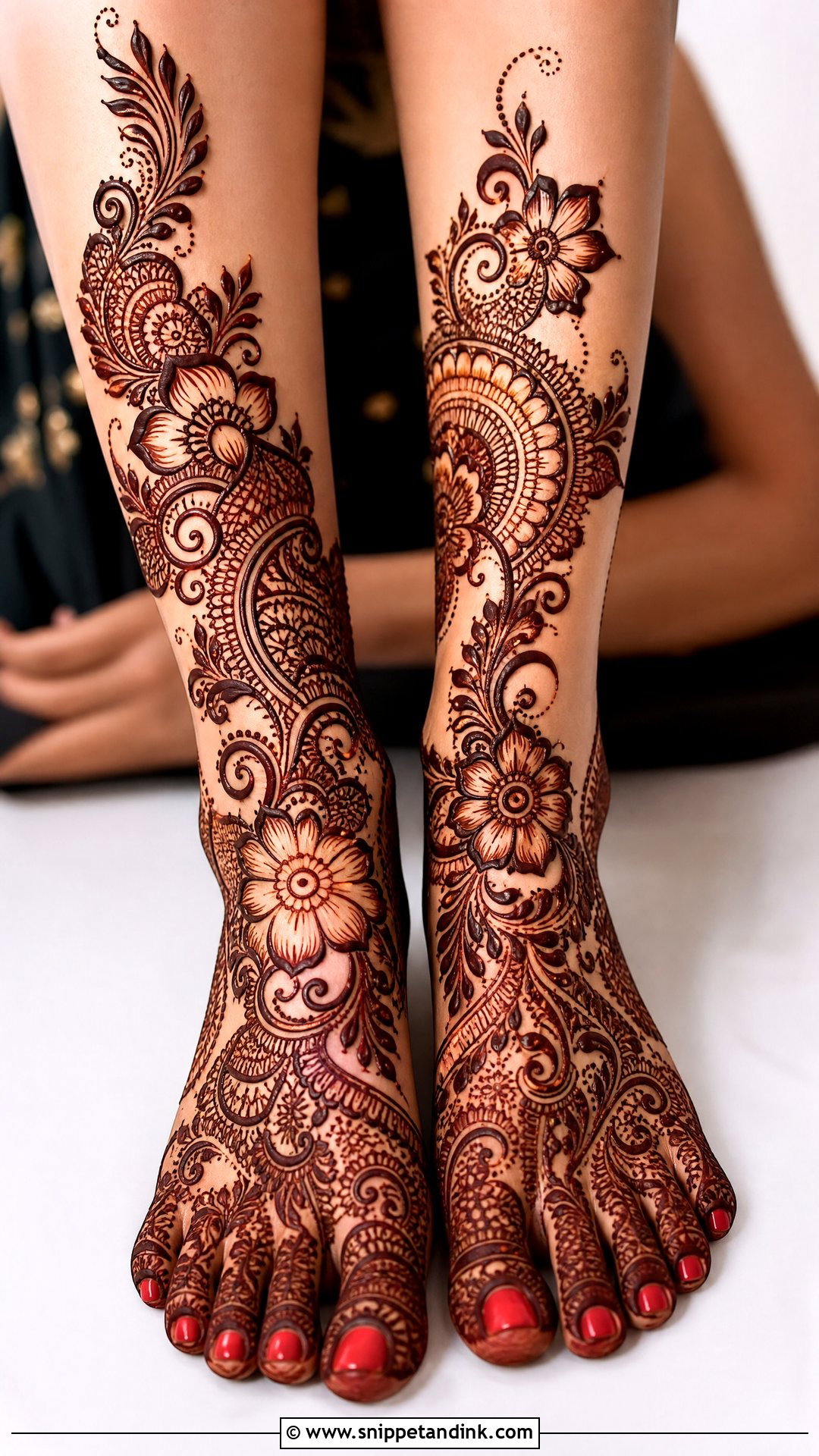
Arabic flow on the outside, Indian detail on the inside: big floral trails, paisley curves and shaded leaves, each filled with fine inner work and a few mandala accents. Indo Arabic leg mehndi looks rich without being packed, and it sits best between the toes and mid-calf, where there’s room for shape but not so much that the detail gets lost. Curved ankle work is the highlight here, so wear anklets that sit just above or below it rather than over it.
5. Simple Bridal Leg Mehndi Design
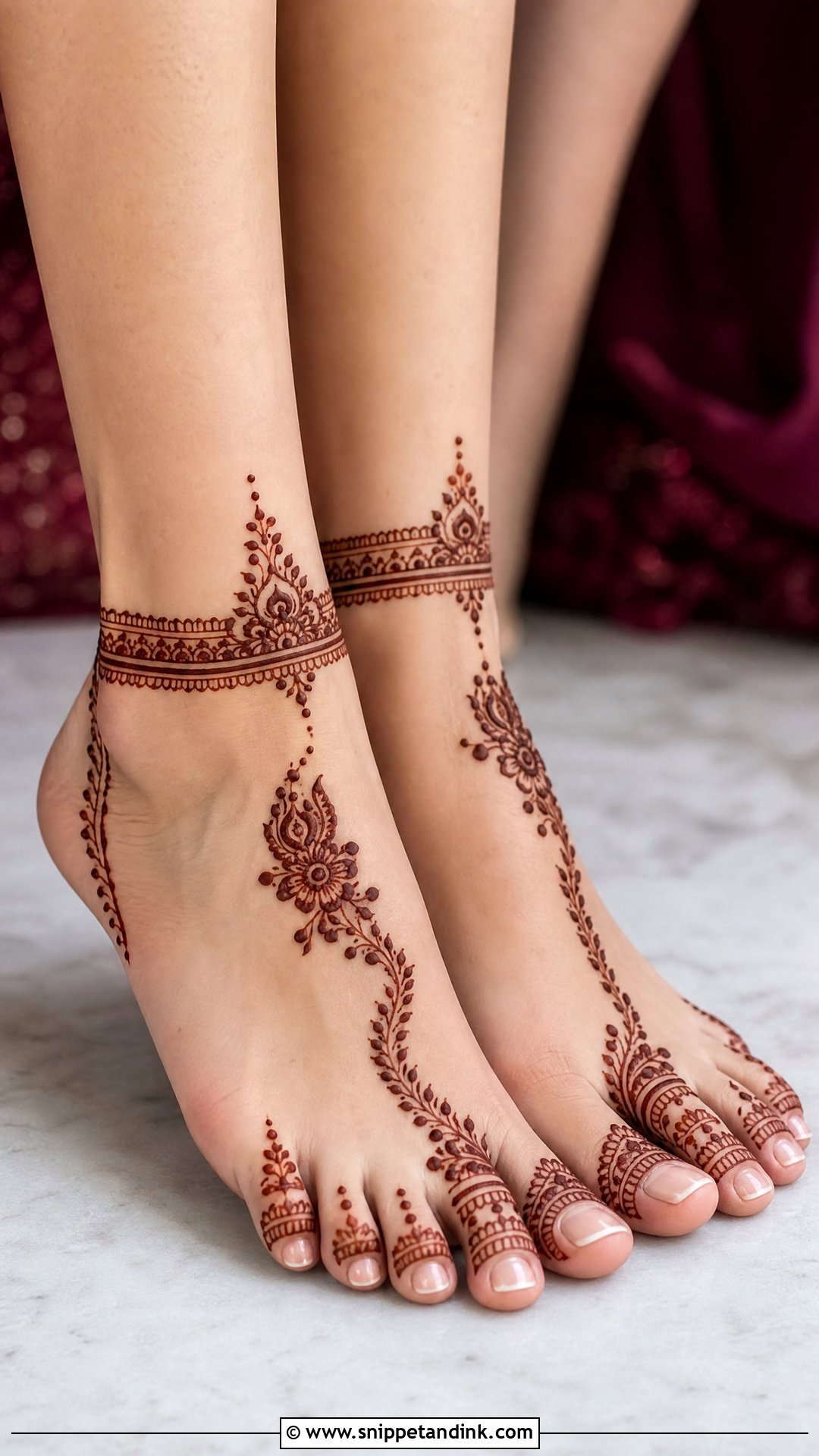
Clean florals, small paisleys, toe details, ankle bands and light leafy trails cover the feet and ankles while leaving plenty of open skin. A simple design is easy to wear through long events and won’t fight with a heavily embroidered outfit. Bold outlines, very little filler. That’s how I keep a simple design from looking faint on the leg, since lighter work on thinner skin can vanish if the lines are too fine.
6. Heavy Bridal Leg Mehndi Design
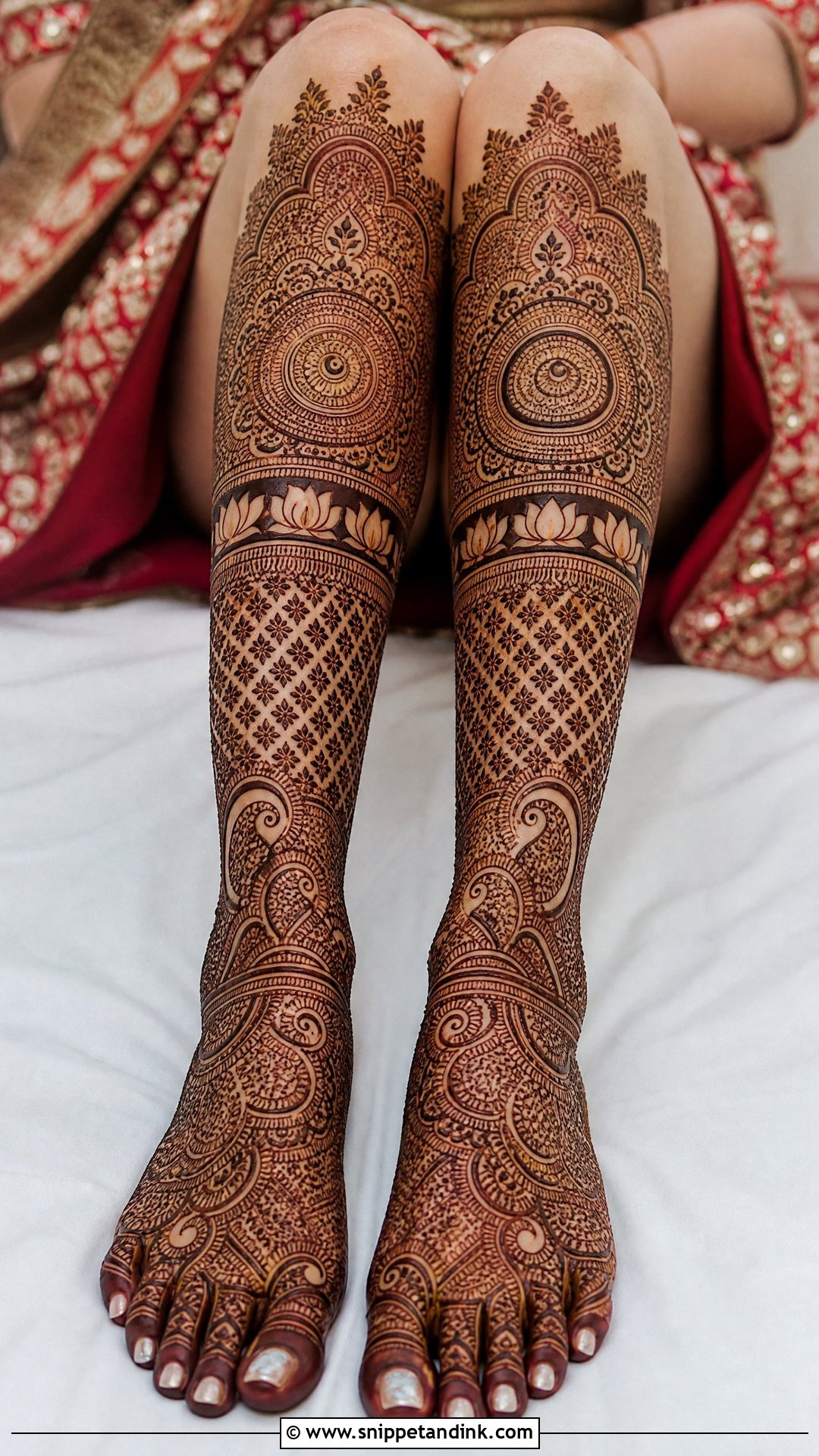
From toes to calves, heavy leg mehndi is filled with jaali sections, paisley chains, lotus borders, mandalas and fine dots, and it will show in every photo where your feet appear. I leave thin channels of bare skin between the major sections. They look like nothing when the paste is wet, but once the stain deepens they are the only reason the pattern stays readable. It belongs with traditional jewellery, payal, toe rings and embroidered bridal wear at large ceremonies.
7. Peacock Bridal Leg Mehndi Design
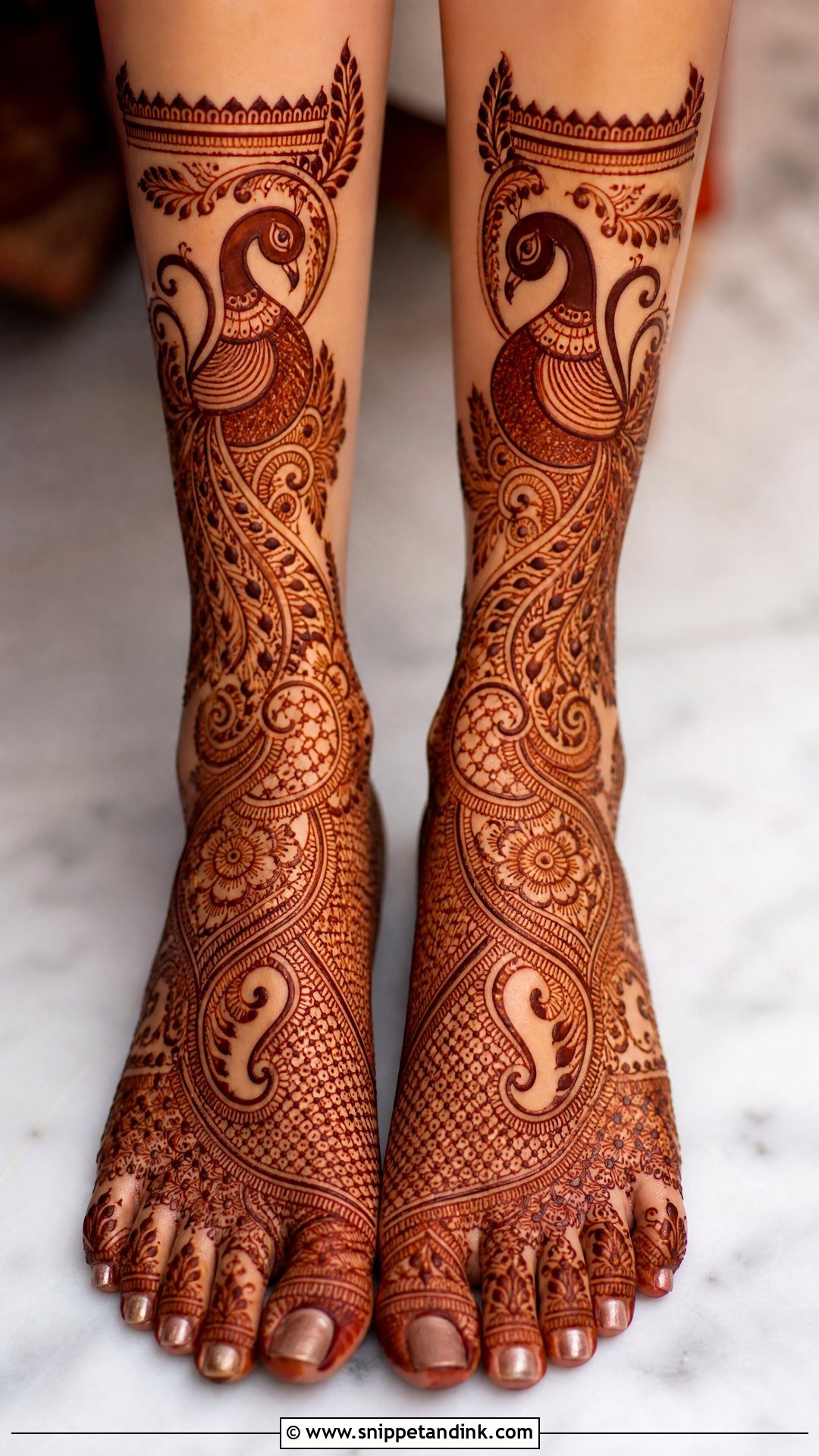
Peacock bridal leg mehndi places the bird on the top of the foot, around the ankle or along the side of the calf, with its feathers flowing into paisleys, vines and fine mesh. The calf placement is my favourite, because the long feathers can follow the muscle line and the bird looks like it’s moving. Keep the body bold and the feather detail fine. It sits naturally with lehengas and sarees that already carry peacock or royal embroidery.
8. Lotus Bridal Leg Mehndi Design
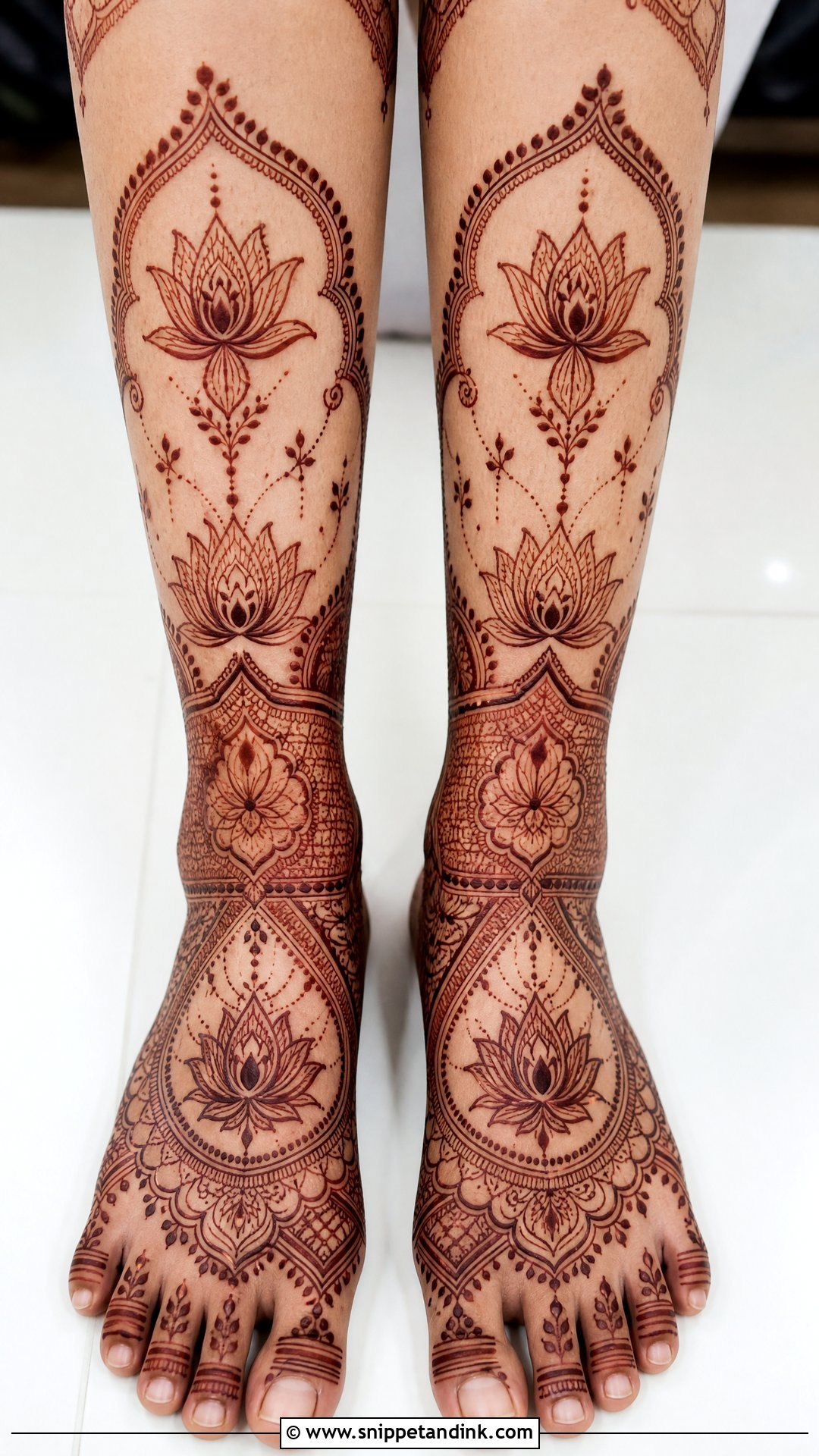
A lotus can be the main motif on the foot, the ankle or the lower leg, surrounded by mandalas, scalloped borders, leafy vines and fine dots. I draw it in layered rows of petals with a strong outer line, so it stays visible after darkening even on the paler skin of the shin. Repeating lotus bands around the ankle give a jewellery effect. Pastel outfits, temple jewellery and silk sarees are where it fits most easily.
9. Mandala Bridal Leg Mehndi Design
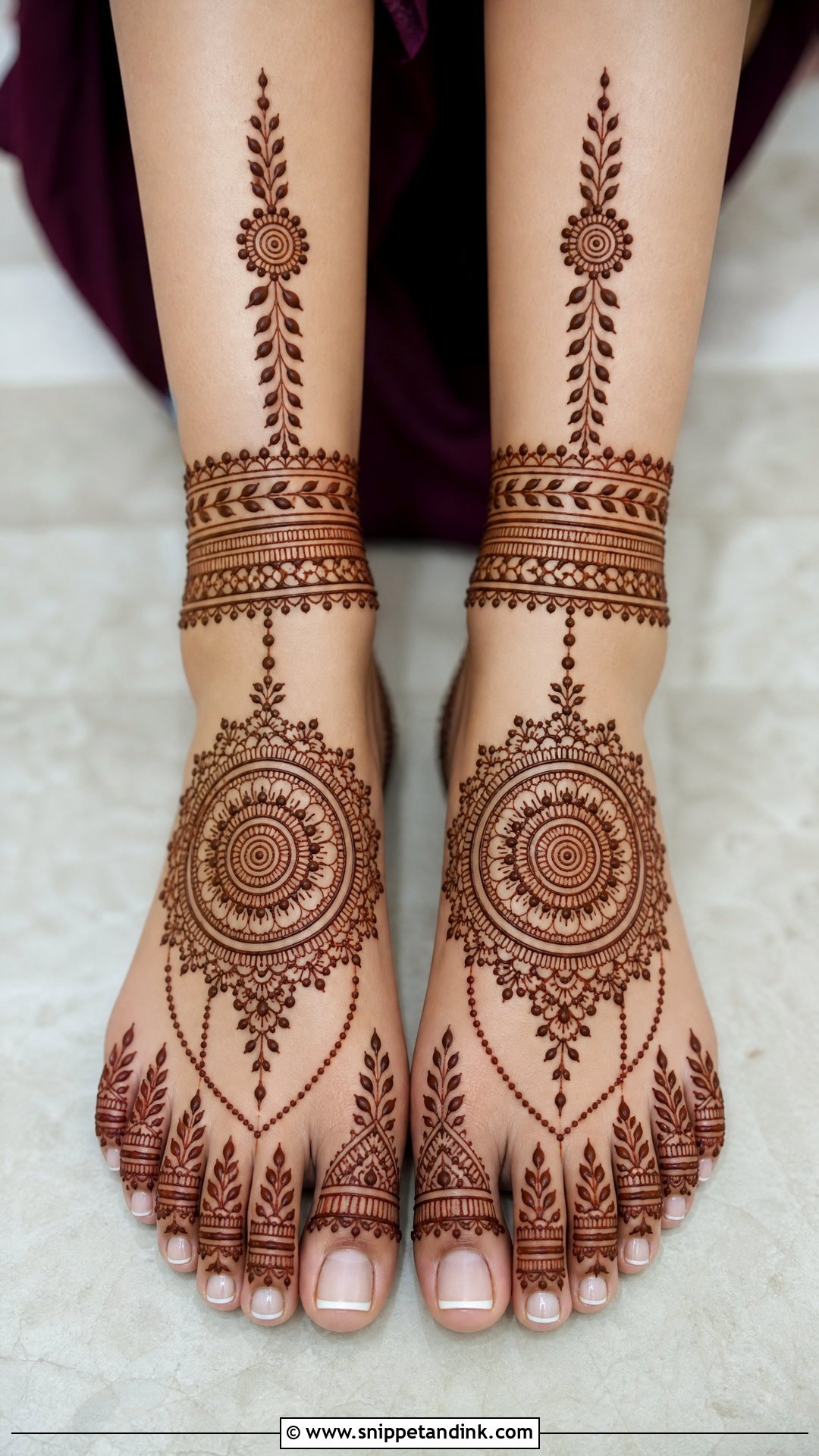
A round mandala on the top of the foot, toe and ankle details around it, and, for fuller coverage, ankle bands and leafy trails leading up the calf. It gives a centred, symmetrical look that suits brides who like order. The mandala itself needs bold outer rings and finer inner detail to look deep rather than flat. It works at any density, from a single motif to full bridal coverage.
10. Jaali Bridal Leg Mehndi Design
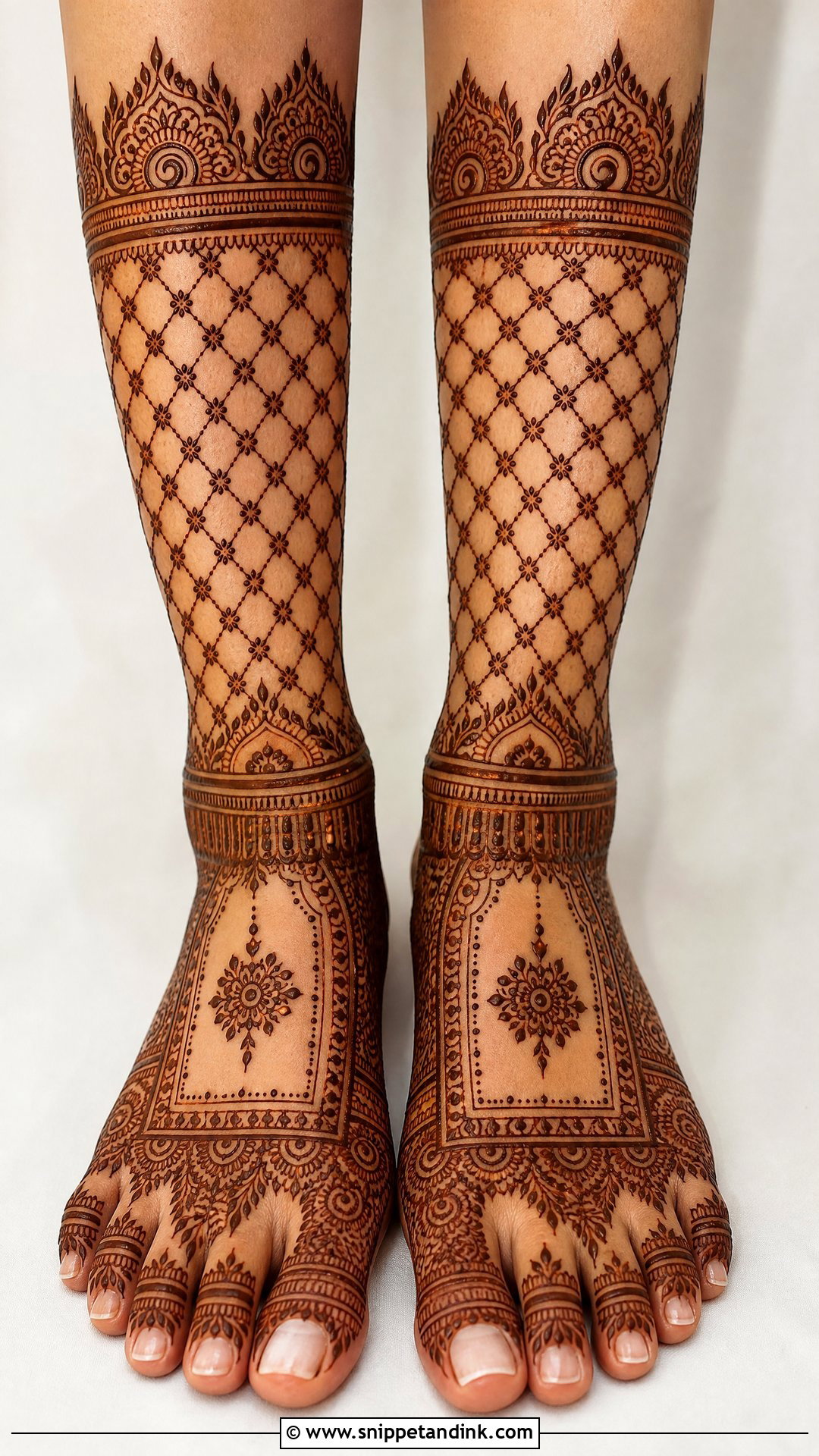
Jaali is mesh: a net pattern over the feet, ankles or the side of the leg, framed by floral borders, paisley corners and dotted details. On the skin it looks like fine fabric. The grid has to be even, and the front of the ankle is where it usually goes wrong, because the skin folds there every time you flex your foot. I widen the mesh at that crease and place small flowers or dots in selected boxes elsewhere. It suits bridal heels, payal and open footwear.
11. Floral Bridal Leg Mehndi Design
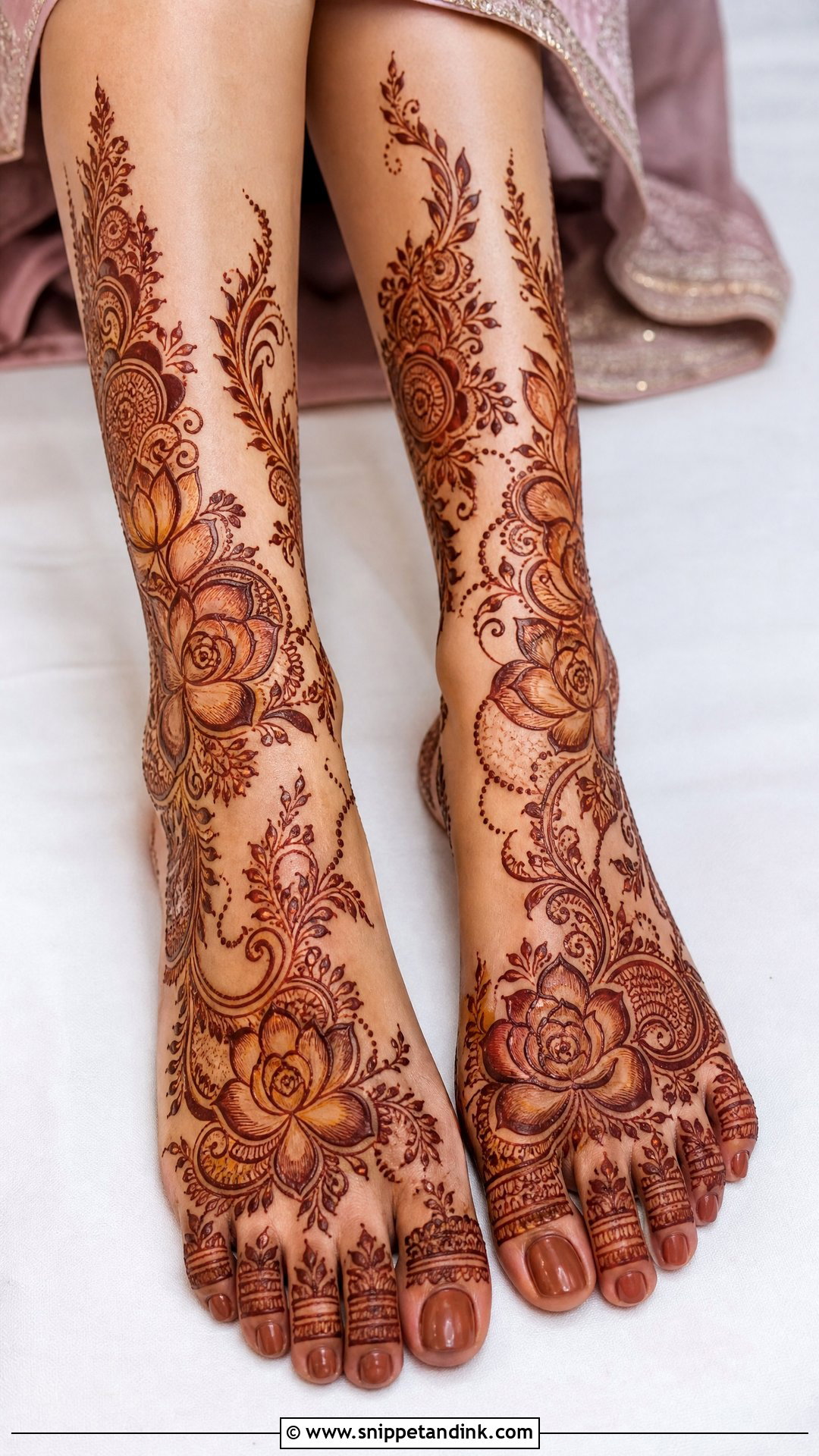
Roses, lotus flowers, small blossoms, leafy vines and shaded petals can run from the toes to the ankle or continue up toward the calf. Florals scale easily: big open flowers look modern, while tight clusters of tiny blooms feel traditional. I curve the leaves along the shape of the leg rather than stacking them straight, which keeps the trail from looking stiff. It sits nicely with floral lehengas, pastels and garden ceremonies.
12. Paisley Bridal Leg Mehndi Design
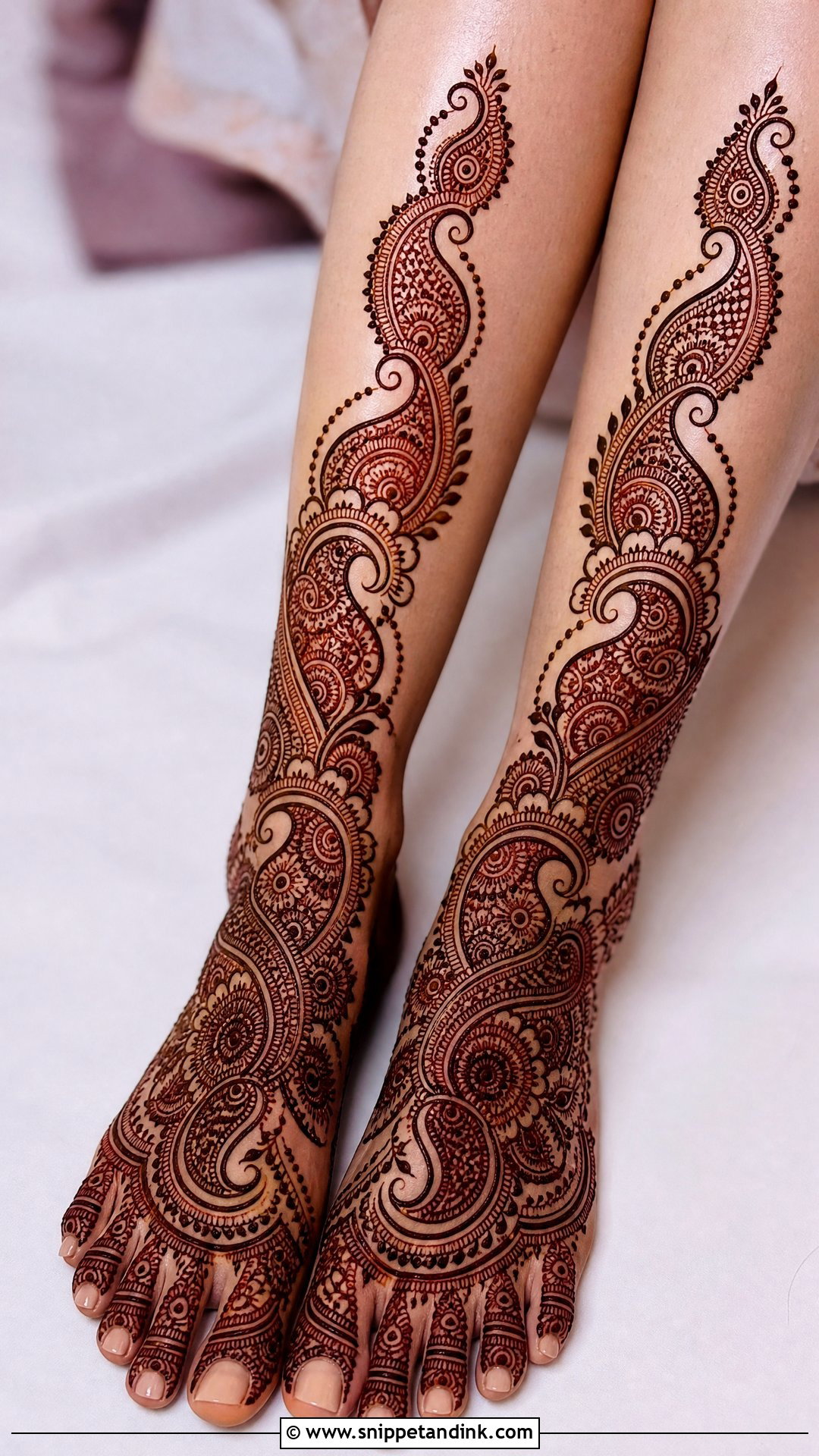
Paisleys have been part of bridal henna for generations, and on legs they behave especially well because their teardrop curve follows the ankle and calf naturally. They mix with florals, dots, checks, vines and fillers. I size them in proportion: larger paisleys at the ankle and calf, smaller ones toward the toes, so the design tapers like the leg does. It’s a traditional choice without portraits or modern elements, and it suits heavy lehengas and sarees alike.
13. Moroccan Bridal Leg Mehndi Design
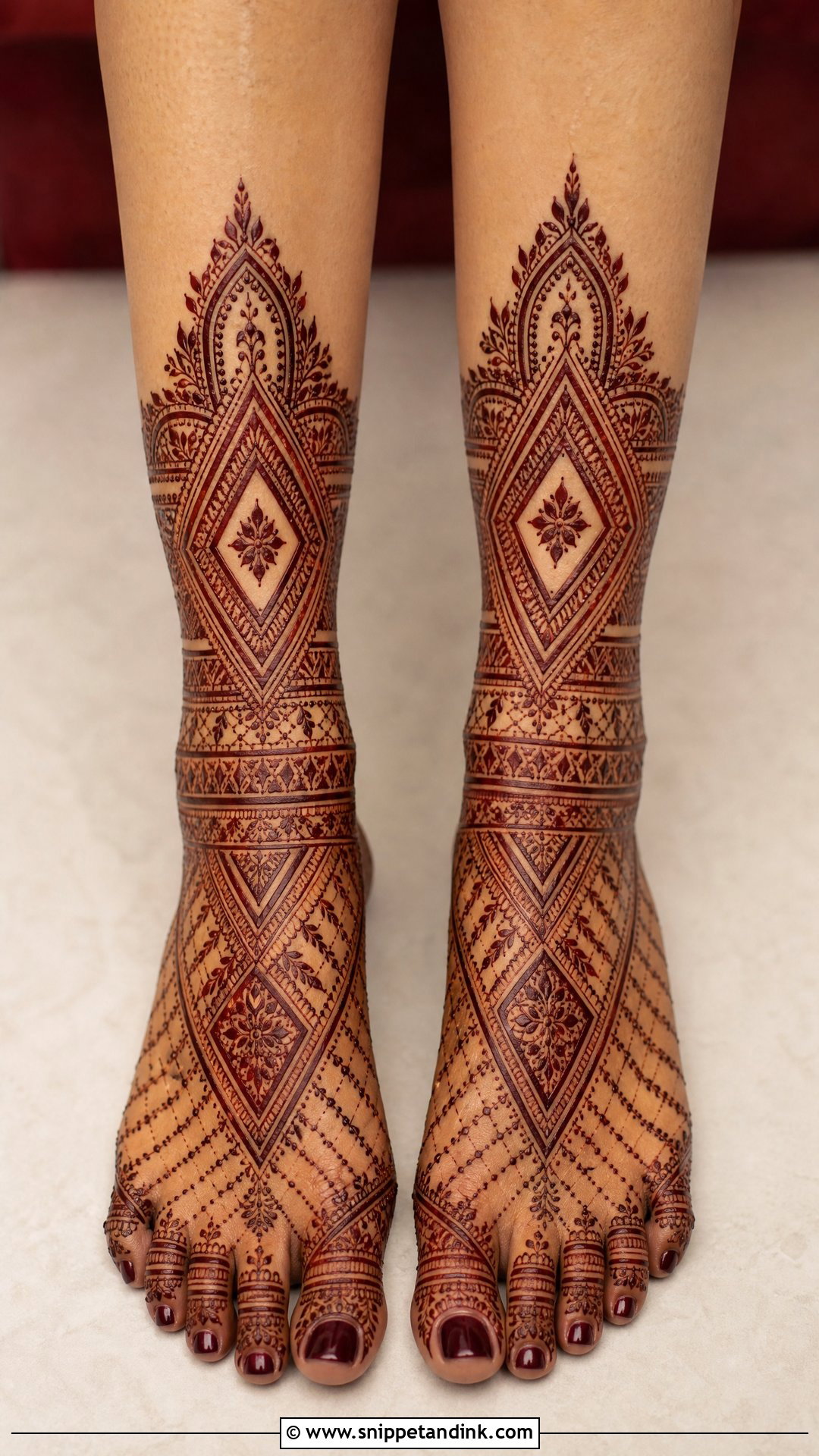
Diamonds, triangles, grids, dots and bold borders replace florals in Moroccan-inspired leg work. Straight lines on a rounded calf are tricky: a band that looks level while you sit can tilt when you stand. I draw geometric bands with the bride’s foot flat on the floor for exactly that reason. Small flowers or leaves around the ankle soften it if needed. Ask to see an artist’s past geometric work before committing, and pair it with fusion wear or minimal jewellery.
14. Gulf Bridal Leg Mehndi Design
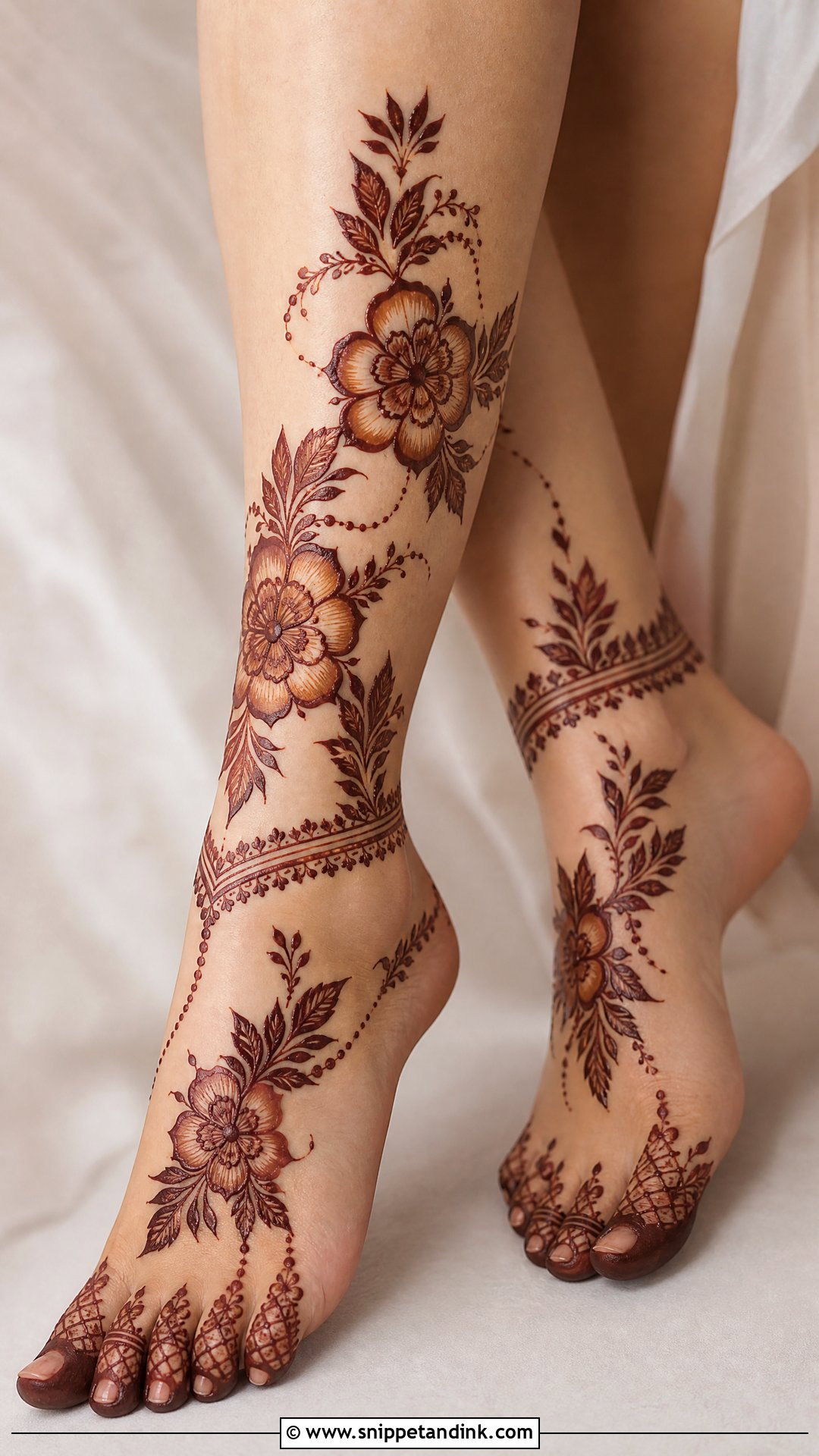
Gulf bridal leg mehndi, also called Khaleeji style, relies on large flowers, leafy sprays and confident open spacing that moves across the foot and up the leg. It doesn’t need to cover every inch to feel bridal. Bracelet-style bands at the ankle and fine matching toe details finish it. Big flowers demand a sure hand, since any wobble in a large petal shows. It looks rich next to gold jewellery and satin fabrics.
15. Rajasthani Bridal Leg Mehndi Design
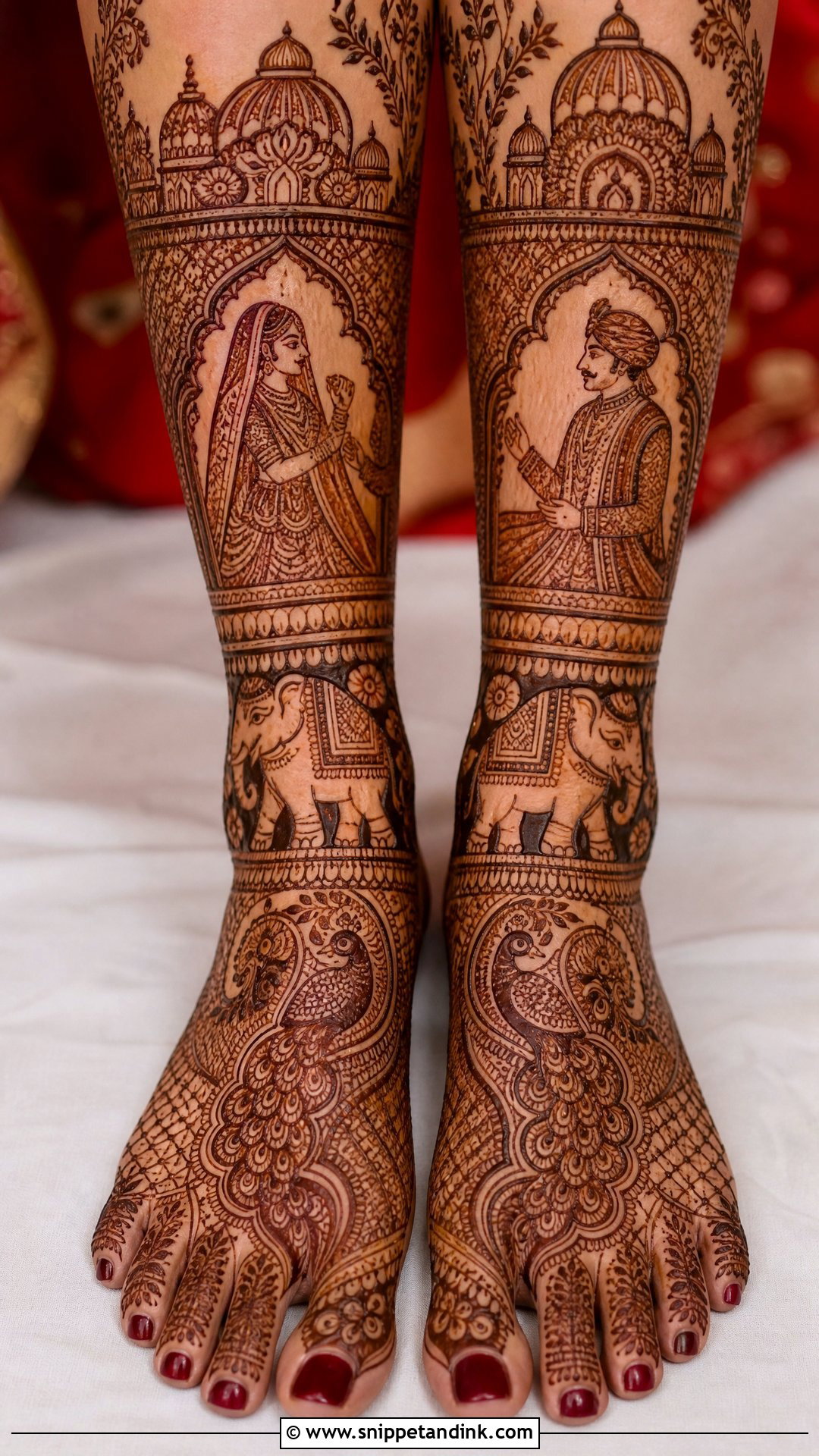
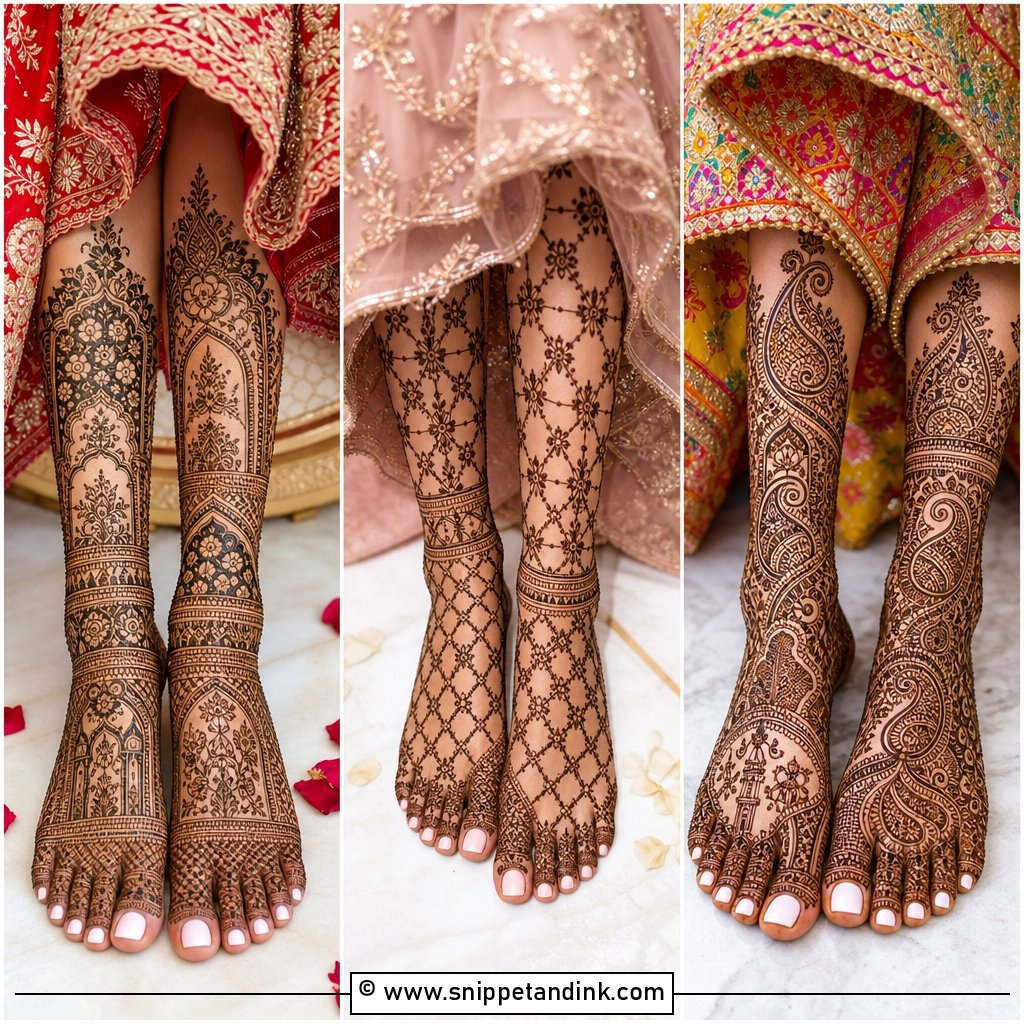
Bride and groom figures, elephants, peacocks, kalash, doli scenes, palaces and paisleys with dense filling: Rajasthani leg work is storytelling with almost no empty skin, creating a grand dulhan finish. On legs I put the narrative scenes on the shins and calves, where there’s flat space for them, and keep the foot for borders and fill. It needs a long application and a long drying wait. Initials or small wedding symbols can sit within the scenes, and it suits royal lehengas, gota work and classic jewellery.
16. Anklet Bridal Leg Mehndi Design
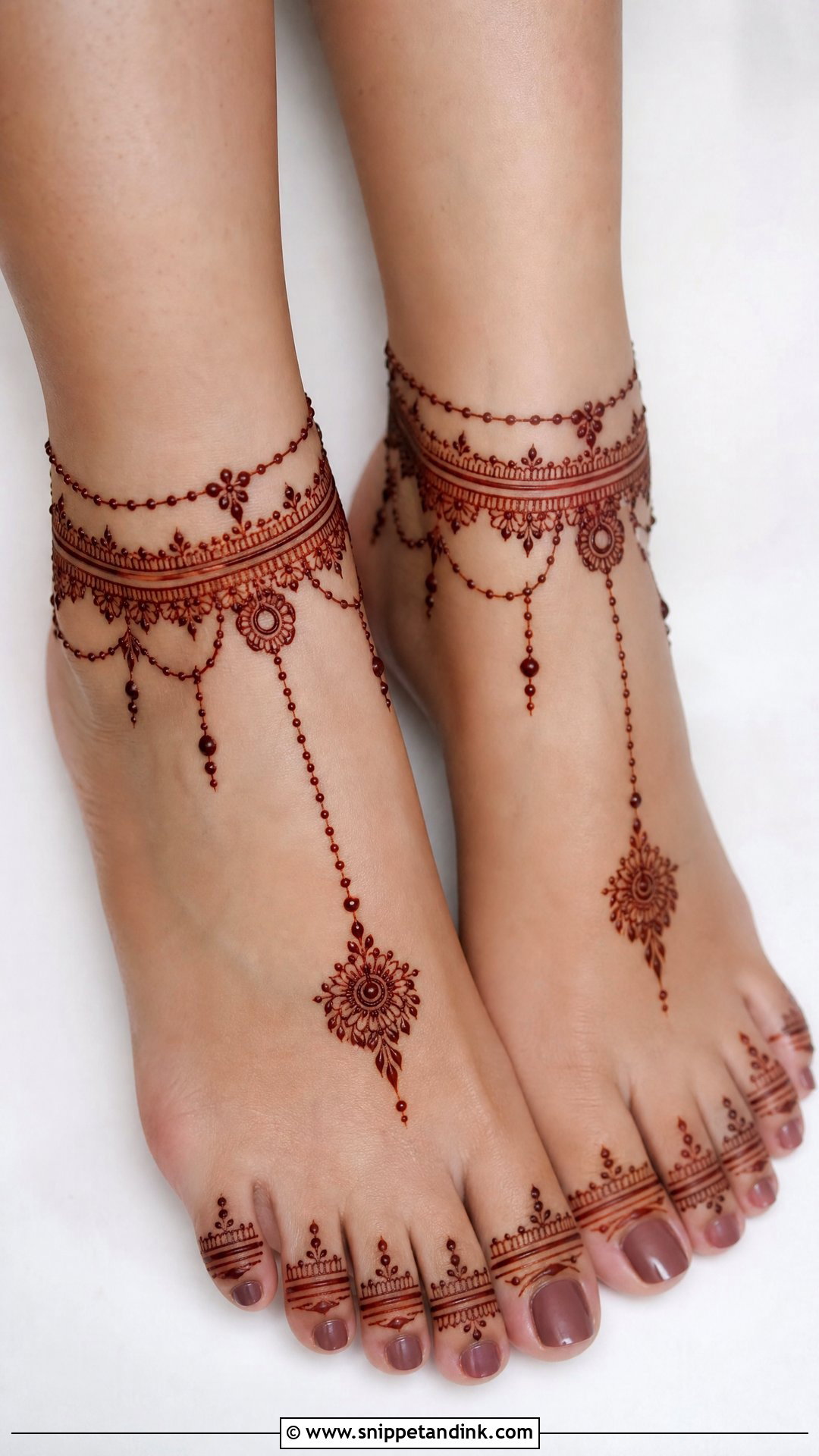
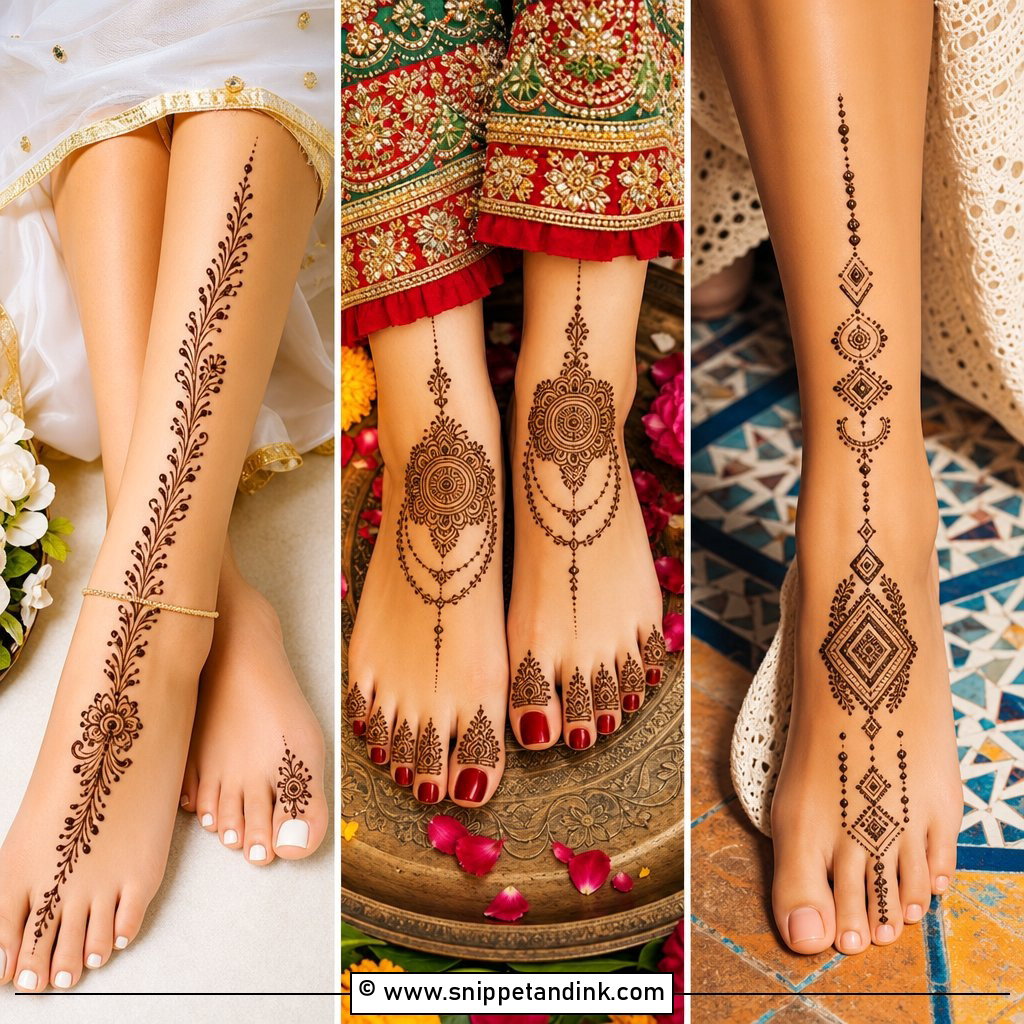
This design is jewellery drawn in henna: bands, chains, dots, small flowers and hanging charm details around the ankle, with light toe patterns and maybe a small motif on the foot, while the leg stays mostly bare. It shows off real payal and toe rings rather than competing with them. Linking a foot mandala to the ankle band with fine chains gives it a more bridal finish. I check the band height on both legs with the bride standing, because ankles are rarely the same height off the floor.
17. Foot To Calf Bridal Mehndi Design
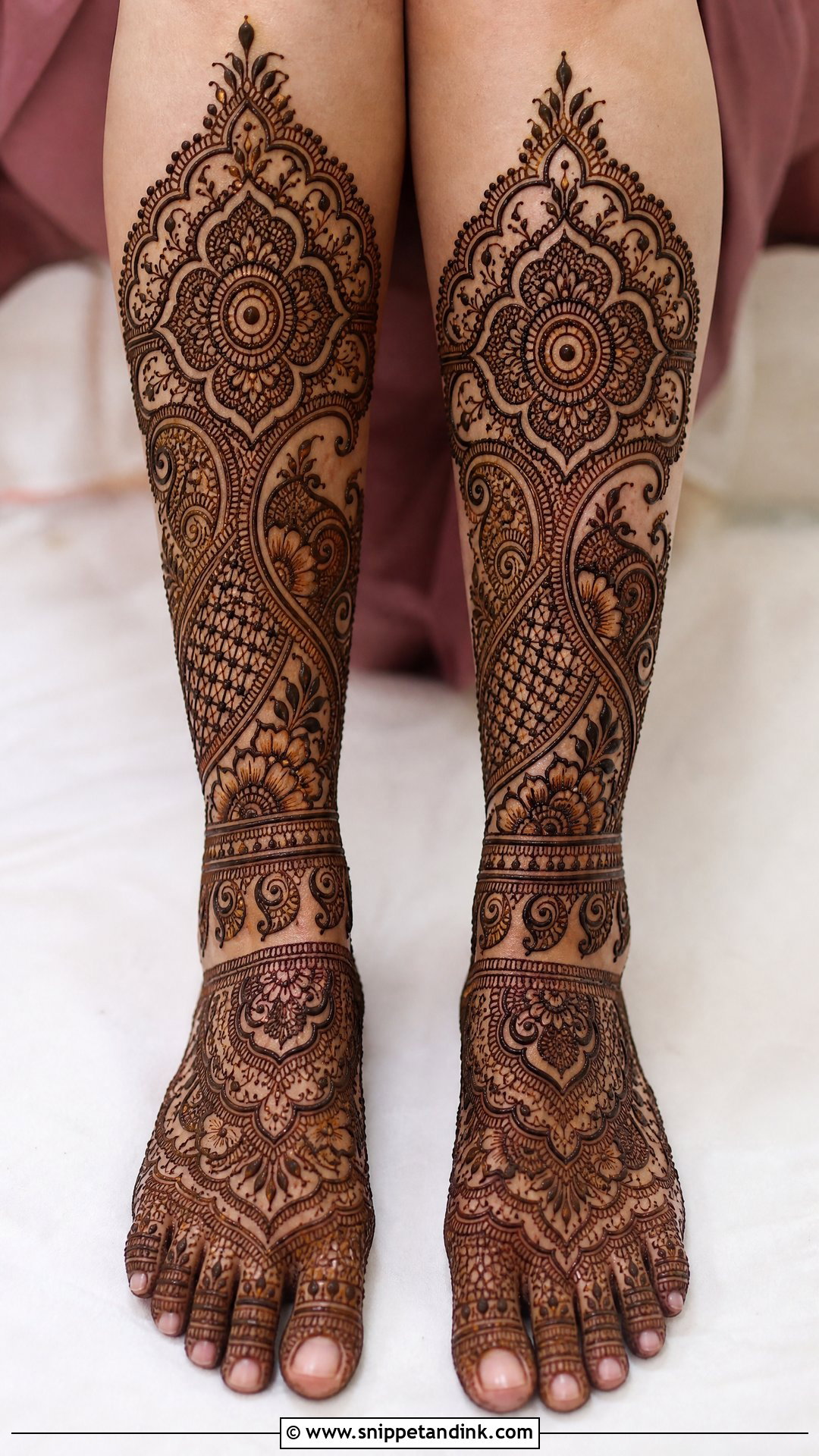
Medium to heavy coverage that stops at the calf rather than running up the whole leg. It’s a practical middle ground: visible, bridal, and quicker to sit through. Florals, paisleys, jaali patches, mandalas and leafy borders all fit. The calf is where I’d put a larger motif, since it gives the design height. Keep the foot detailed and the calf section bold so the eye travels up the leg smoothly.
18. Side Leg Bridal Mehndi Design
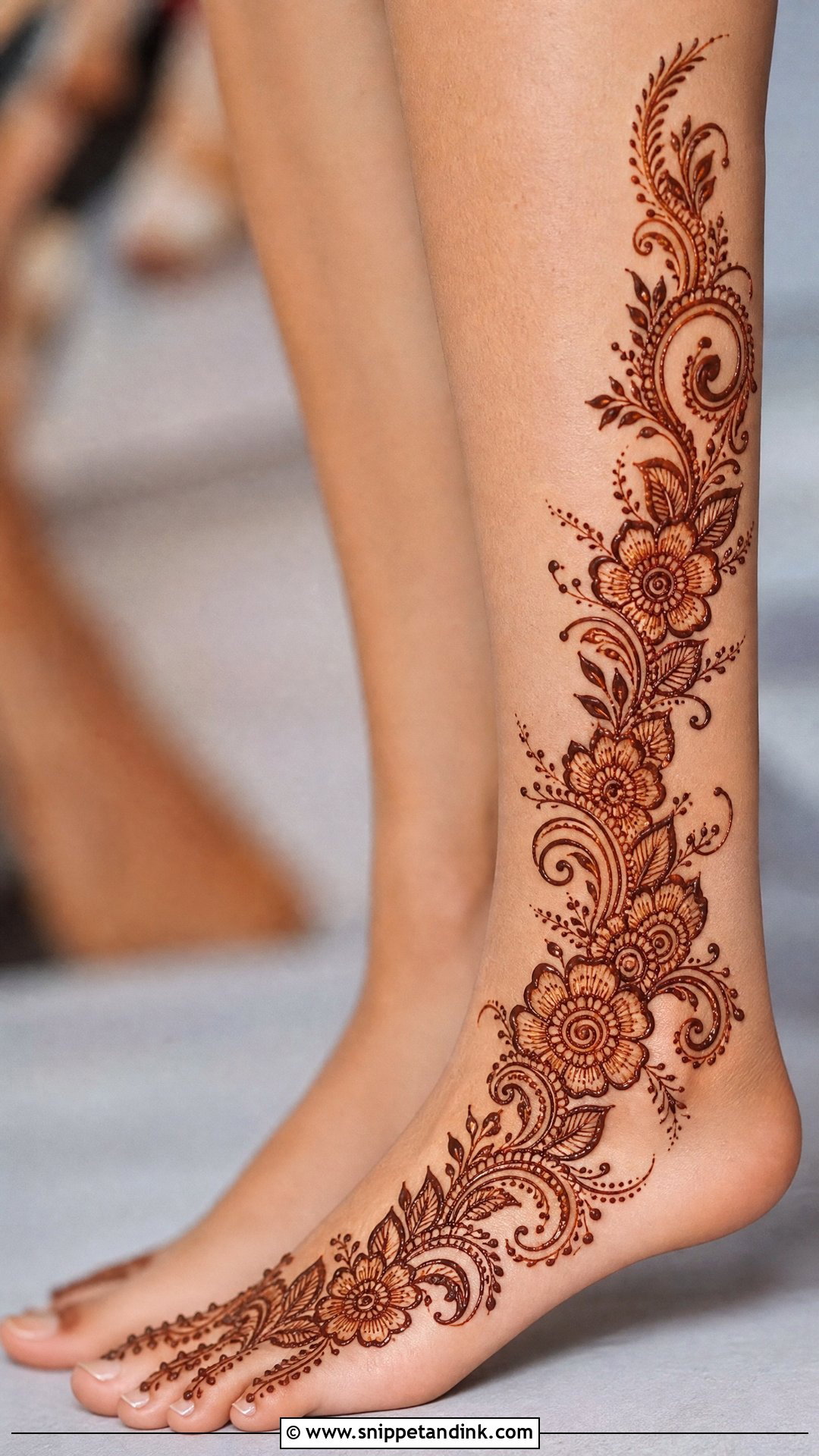
Running the design along one side of the foot, ankle and leg leaves the front open, which makes the leg look longer and lighter. Arabic vines, florals, paisleys and leafy trails suit this best. It’s the obvious choice for outfits with side slits, shorter lehenga hems or shoes that expose the ankle. I usually put it on the outer side of each leg so the two designs mirror each other when you stand with feet together.
19. Minimal Bridal Leg Mehndi Design
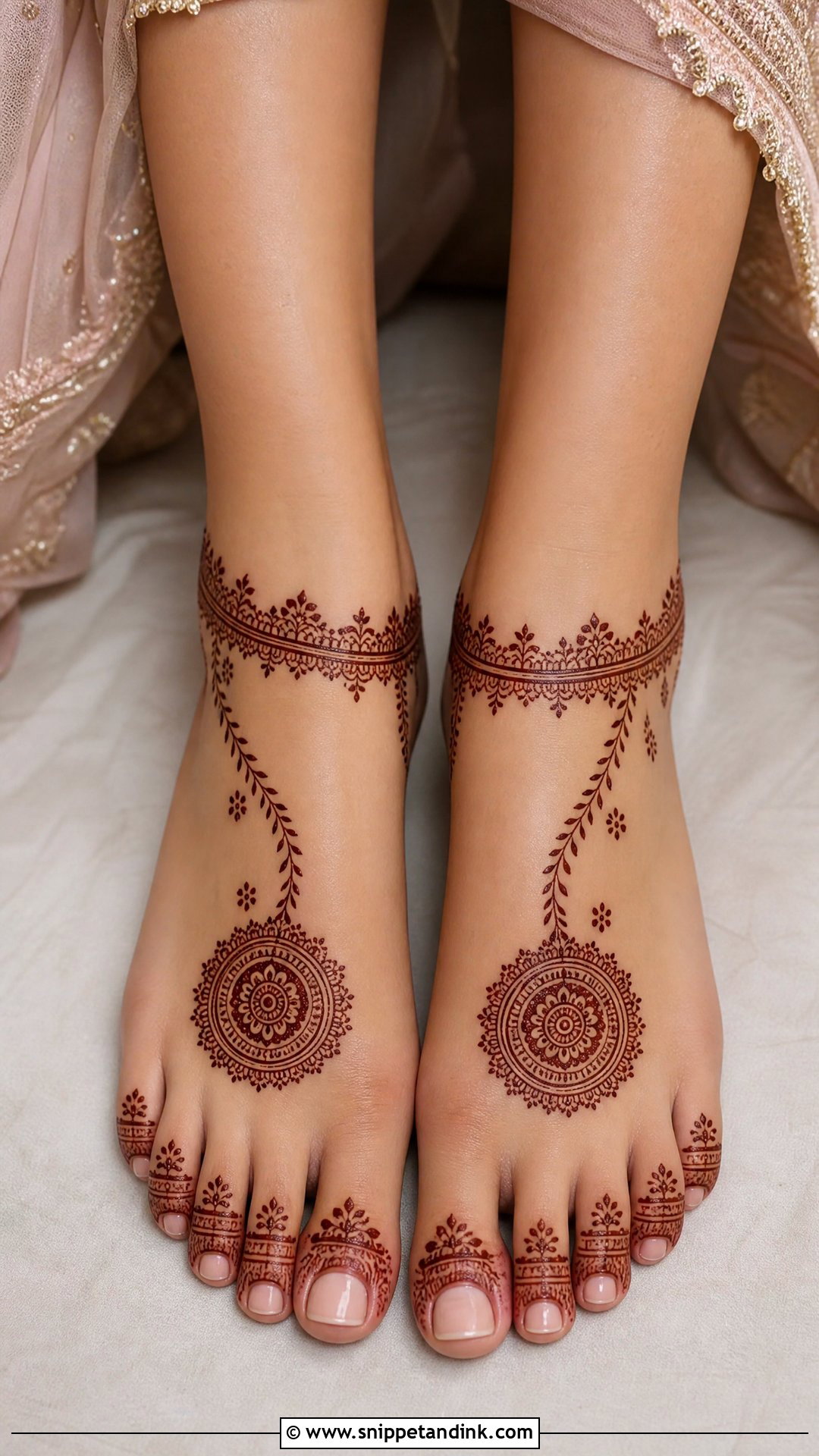
A small mandala, fine toe details, a delicate ankle band and a light trail. That’s all. Minimal leg mehndi is for intimate weddings, civil ceremonies, destination trips and brides who don’t want to sit for hours. Every line is on show, so precision matters more than quantity, and too many tiny fillers spoil it. Keep the composition simple and let the open skin do the work.

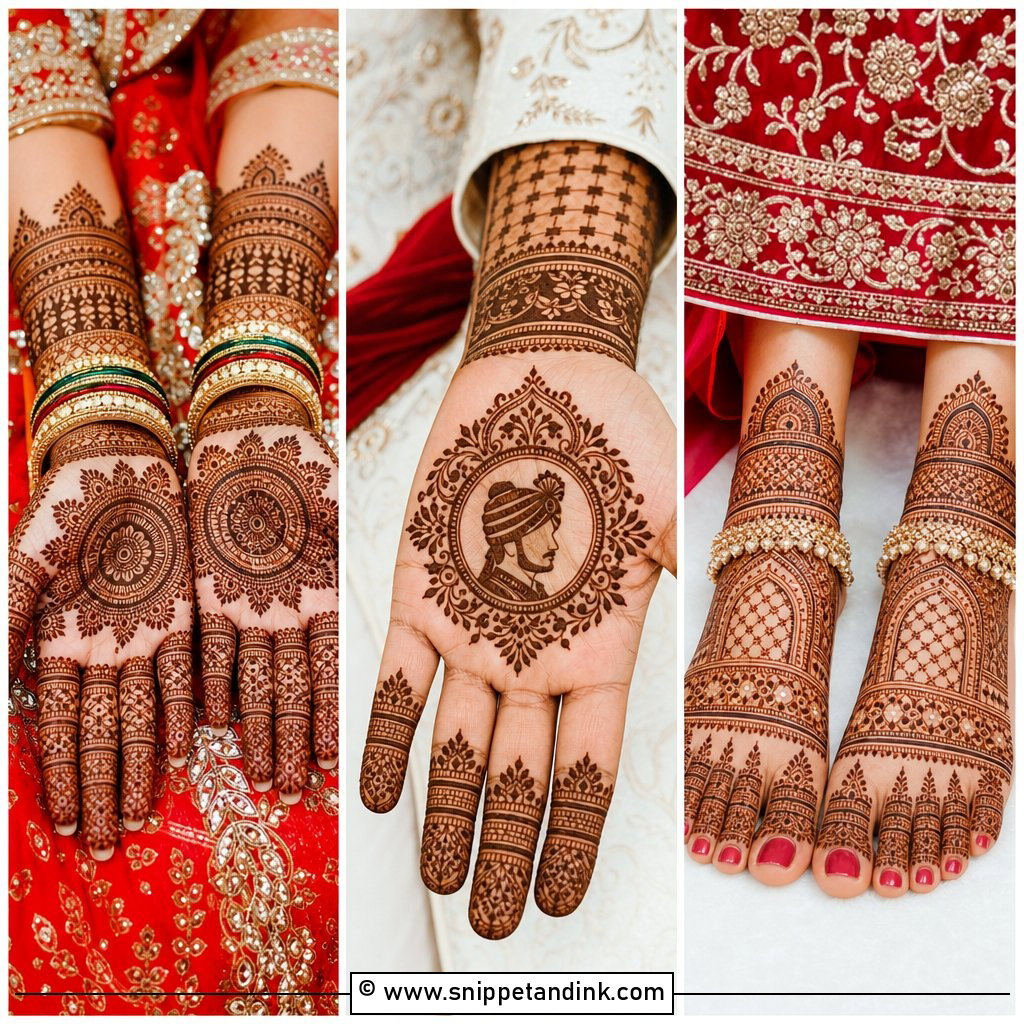

20. Personalized Bridal Leg Mehndi Design
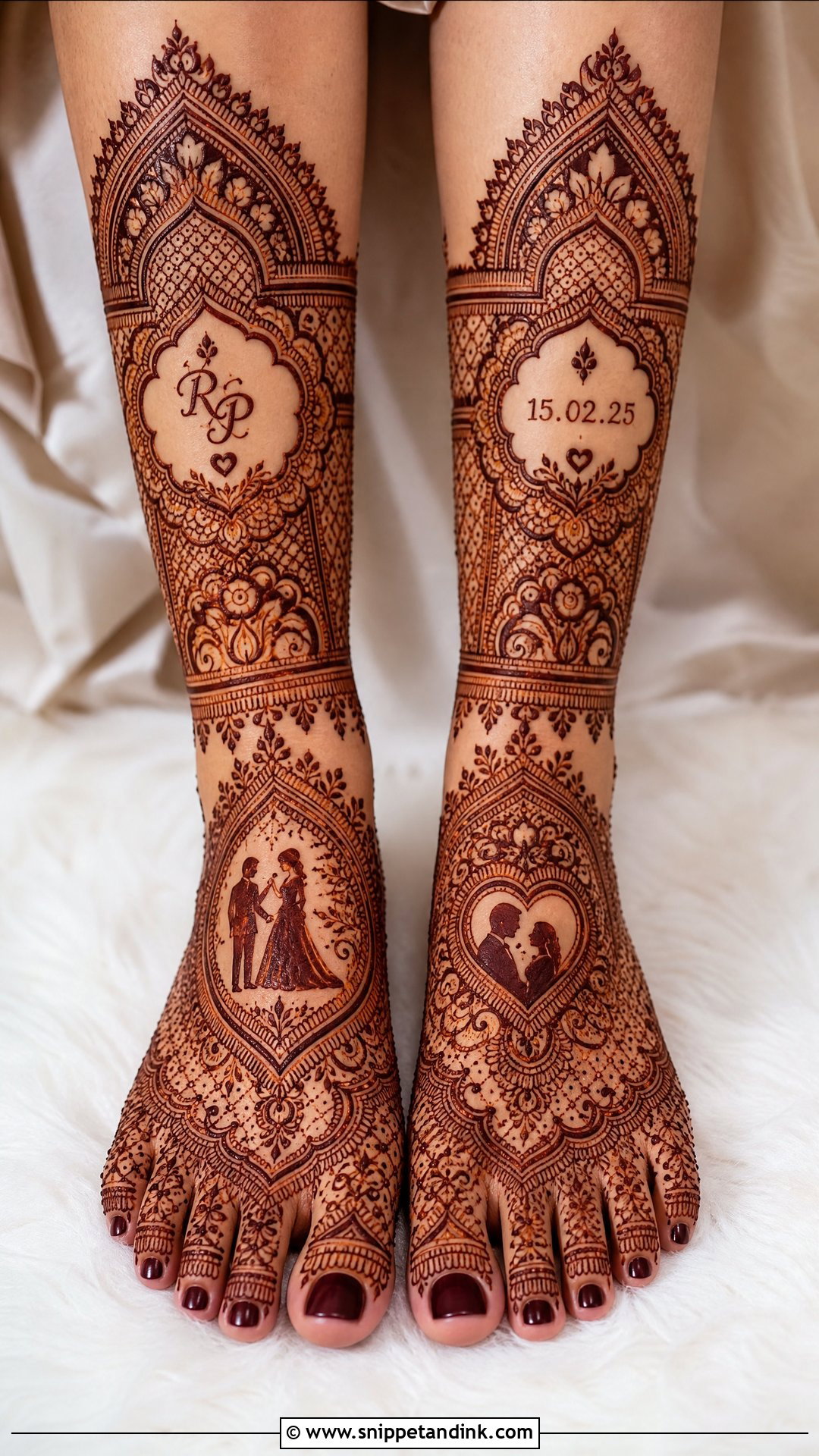
Personalized bridal leg mehndi hides meaning inside the pattern: initials, the wedding date, small couple symbols, a favourite flower or a cultural motif tucked into paisleys, mandalas, jaali or borders. Keep it tasteful. Personal details blended into a full layout look intentional, while the same details dotted randomly look like doodles. It’s also worth knowing that small lettering on the leg stains more lightly than on the palm, so write names a little larger than you’d think.
Shave Two Days Before, Then Leave the Skin Bare
Leg skin needs a little more preparation than hands. Henna sits on the outer layer of the skin, so anything that strips or coats that layer weakens the stain. Shave, wax or exfoliate a day or two before your appointment, not on the morning of it and never afterward. Freshly shaved skin can sting under lemon and sugar sealant, and razor scrape removes colour once the stain is there.
Come with clean legs and no moisturiser, oil or self-tan, since these act as a barrier. Wear loose trousers or a long skirt you can roll up easily, and bring cotton socks or a soft wrap for the drive home.
Why the shin comes up paler than the foot
Henna stains darkest on thick skin, such as soles and palms, and lighter as it moves up the leg. The shin is usually the palest area. Keeping the paste on longer and keeping your legs warm helps, but it is also why I draw bolder lines up the leg and save the finest work for the feet. After removal, keep water off your legs for the rest of the day and skip hot baths and pools until after the wedding.
Leg Henna Pays Off Only Where the Hem Lets It Show
Start with your outfit and how much leg it actually reveals, then think about comfort and the ceremony itself. Indian, Rajasthani, peacock, lotus and full-leg designs are the traditional route. Arabic, Gulf, side-leg, anklet and minimal work is lighter. Moroccan geometry or a personal motif will set yours apart. Talk through coverage, timing and aftercare with your artist before the day so the design sits well with your jewellery, footwear and photos.
You'll Like These Ideas:






Leave a Reply