
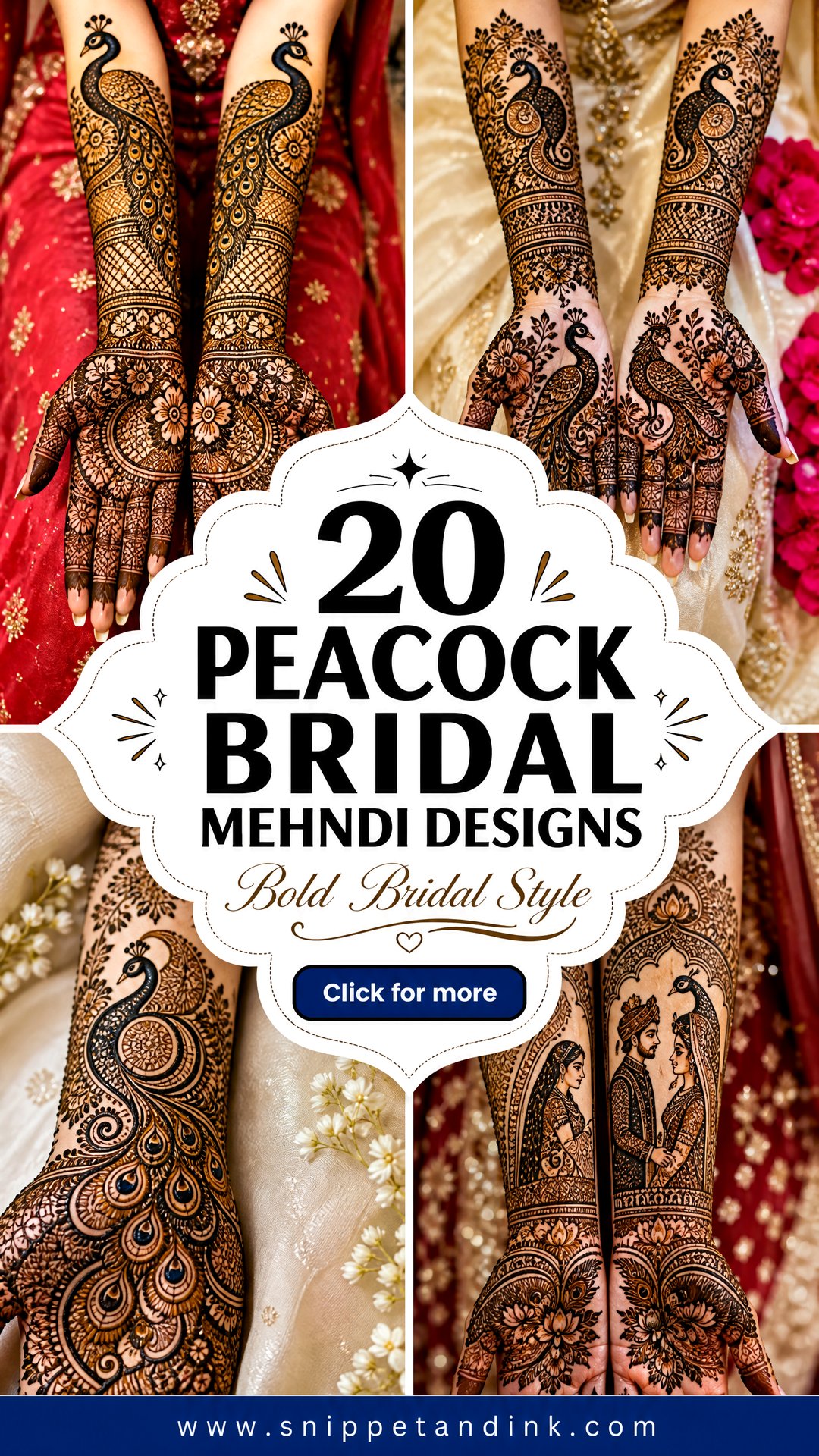
Brides ask me for the peacock more than any other bird, and I understand why. The mor carries meaning in so many wedding traditions, and it has a softness that sits comfortably inside classic wedding henna. Its curved neck, fanned tail and dotted feathers flow naturally into paisleys, florals, mandalas, jaali and cuff-style borders, so it works in Indian, Arabic, Indo-Arabic and Rajasthani layouts alike. A full heavy hand suits the wedding itself, a cleaner back-hand piece suits an engagement, and a spaced modern layout suits a bride who wants less coverage. What follows are twenty ways I’d place the bird, with notes on how each one stains and photographs.
Palm, Back of Hand or Forearm: Where a Peacock Stains Darkest
Henna doesn’t stain every part of the body equally, and I plan the peacock’s placement around that before I draw anything. The palms and fingertips have thinner, warmer skin and take the deepest color. The back of the hand stains a little lighter, and the forearm lighter again. So the same bird drawn on a palm and a forearm will look like two different shades of maroon by the wedding.
That changes how I draw. A peacock on the forearm gets slightly bolder lines and fewer hairline fillers, because faint detail on lighter-staining skin simply disappears. A peacock in the palm can take the finest work I do.
Bring these to your consultation
- A photo of your outfit’s sleeves, so I know where the design will be covered and where it will show.
- Your bangles or kada, if you have them, to plan where the cuff should stop.
- Two or three designs you like and one you dislike. The dislike usually tells me more.
- The time you need to leave for the ceremony, so we can count back the sitting time.
1. Full Hand Peacock Bridal Mehndi Design
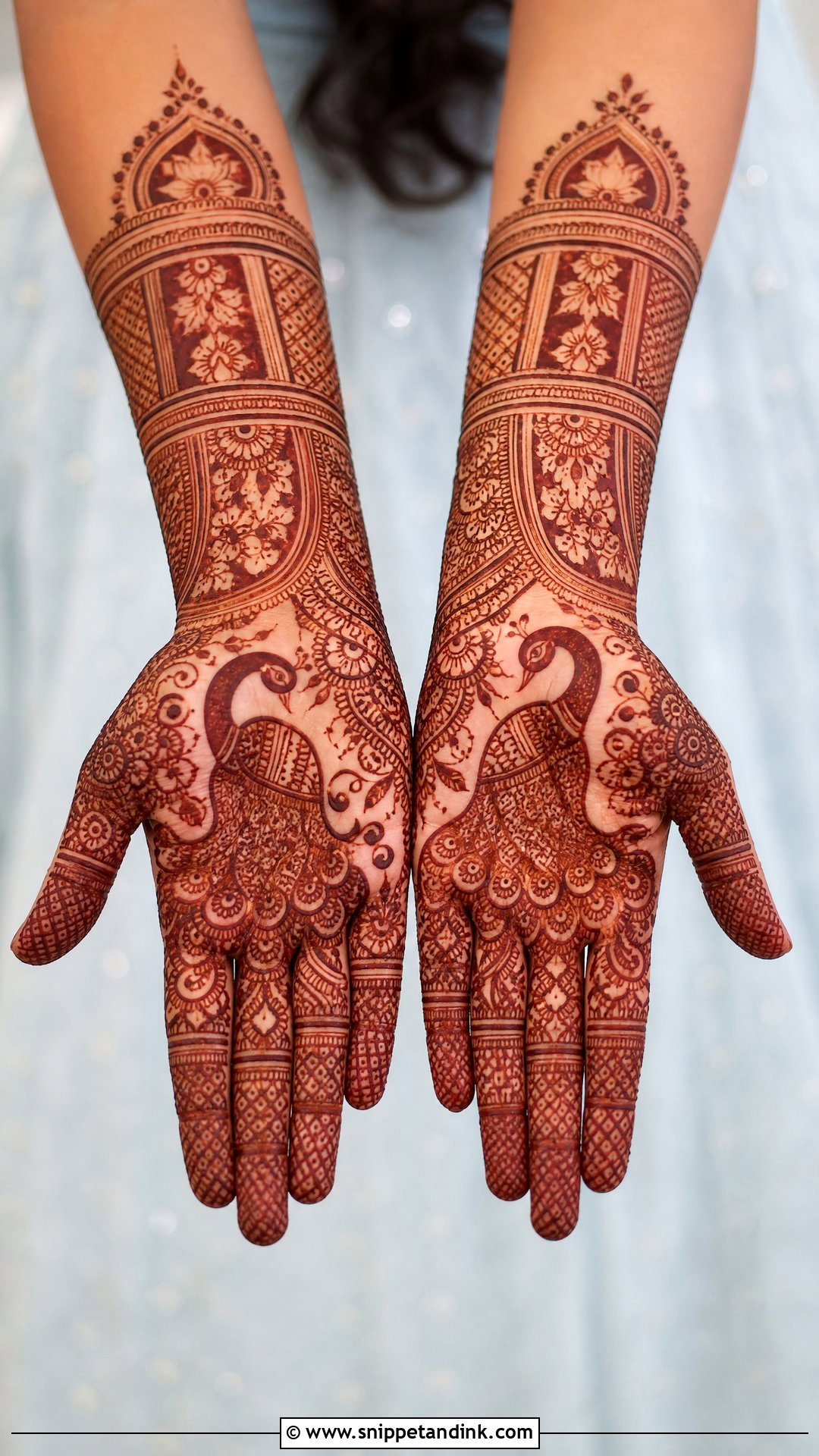
On a full hand I usually anchor one large peacock in the palm, then let dense florals, paisleys and vines take over the fingers and wrist. A second peacock or a feather trail on the forearm balances the composition, otherwise the arm looks unfinished below an elaborate palm. The detail I protect most is the bird’s outline: I draw it with a slightly thicker cone line than the fillers around it, so once the stain develops the peacock still reads from across a room. Heavily embroidered lehengas and sarees match its weight. Plan for a long sitting; a full-hand set on both sides is not something I rush.
2. Indian Peacock Bridal Mehndi Design
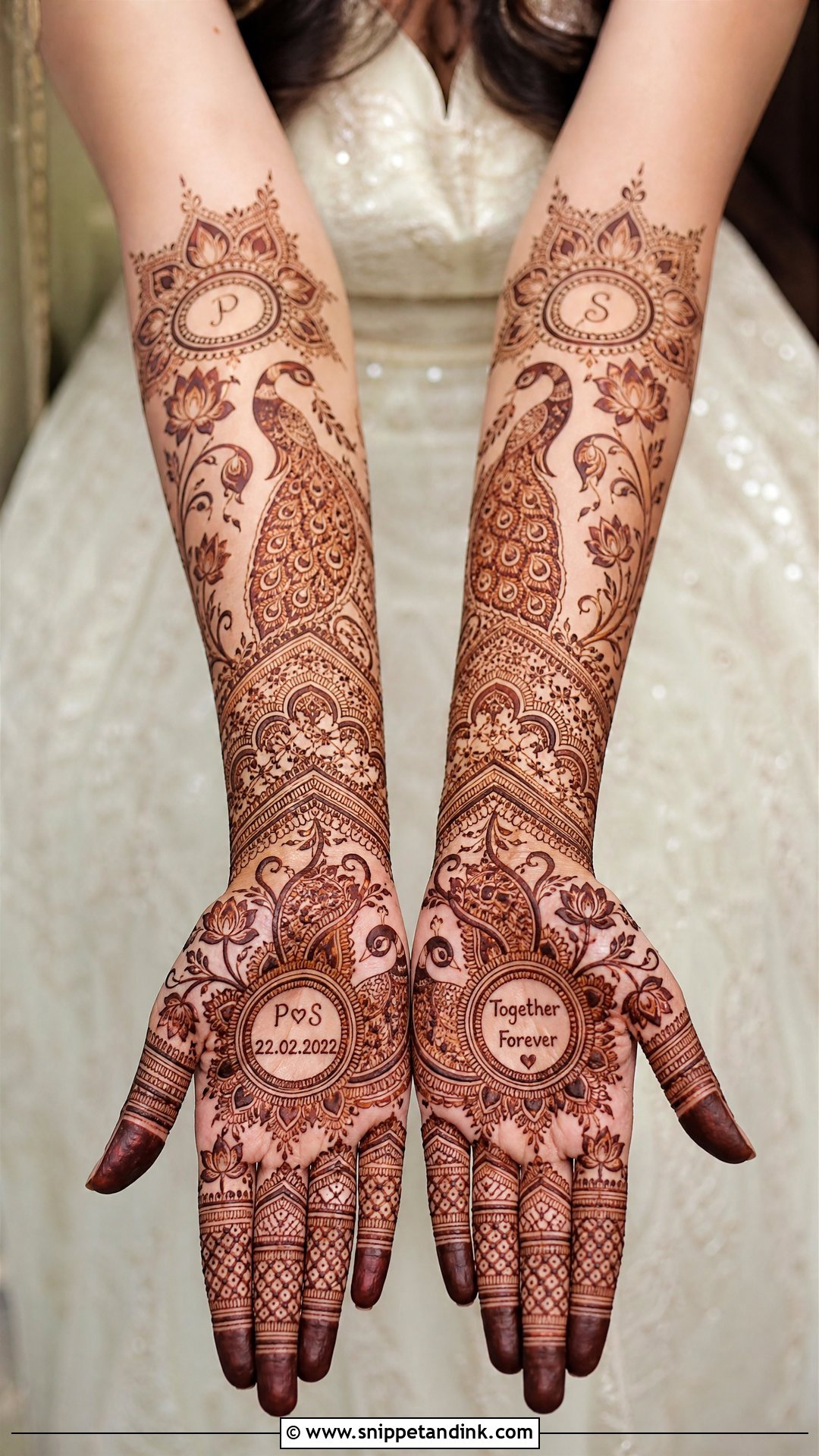
Indian peacock work is about density and storytelling. The bird usually sits on the palm or forearm, surrounded by paisleys, lotus, mandalas, vines and fine finger patterns, and every gap gets filled. Initials, the wedding date or a tiny bride-and-groom pair can be hidden inside the composition for the groom to hunt for. Symmetry is what I check most, because in photos both palms are held side by side and any mismatch shows instantly. I sketch both peacocks at the same scale before filling either one. Dense fill also means more paste on the skin, which tends to give a deeper bridal stain.
3. Arabic Peacock Bridal Mehndi Design
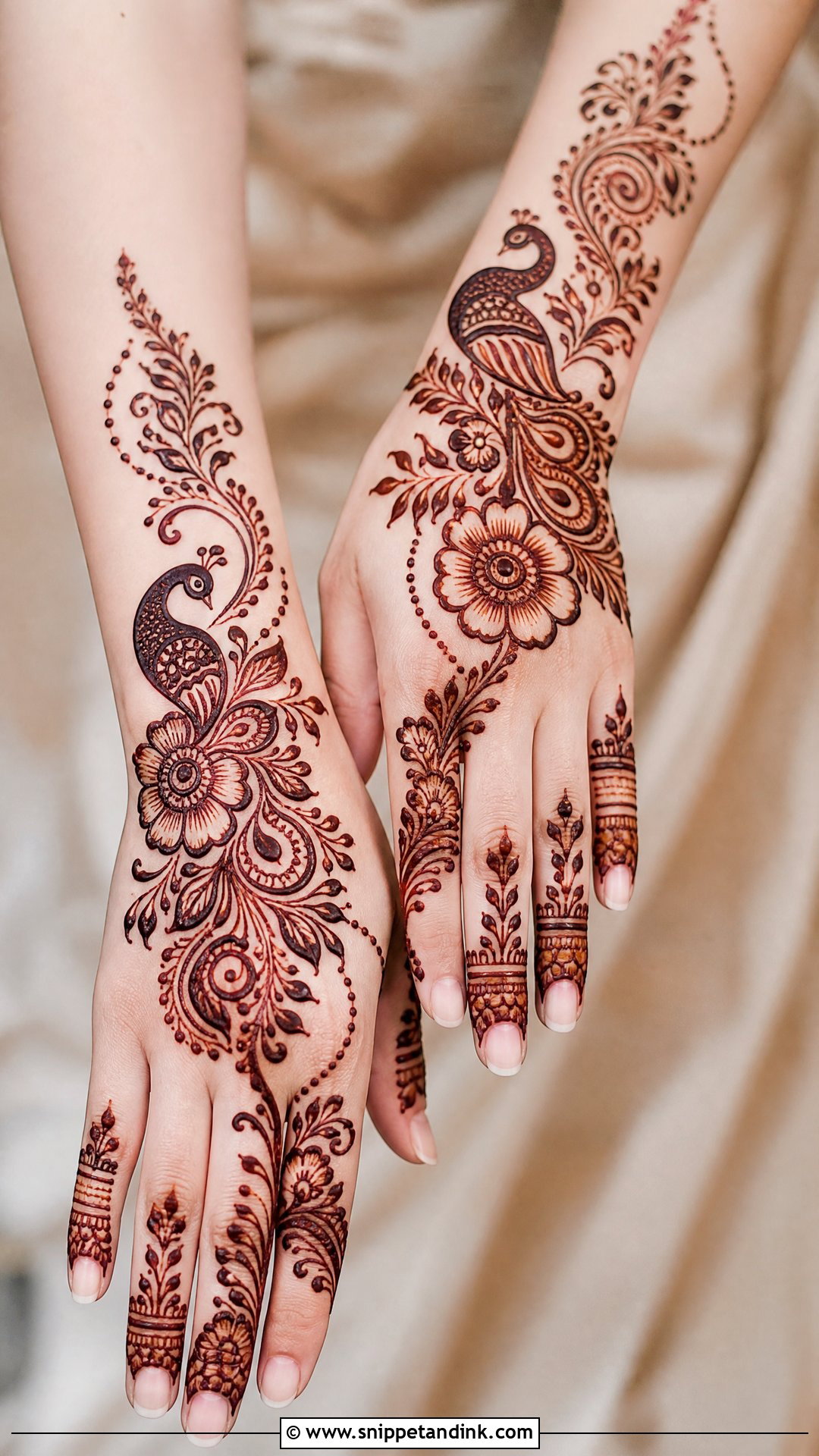
Arabic placement is the opposite philosophy: bold outlines, trailing florals and plenty of bare skin. The peacock reads from a distance because nothing crowds it. I usually start at the wrist, sweep the design diagonally across the back of the hand and finish on the fingers with floral tips. This layout lives or dies on stain color. A deep maroon makes the open spaces look deliberate, while a pale orange stain can make an open design look thin, so I’d push aftercare hardest for this style. It also dries faster than a dense Indian hand, which helps on a tight schedule.
4. Indo-Arabic Peacock Bridal Mehndi Design
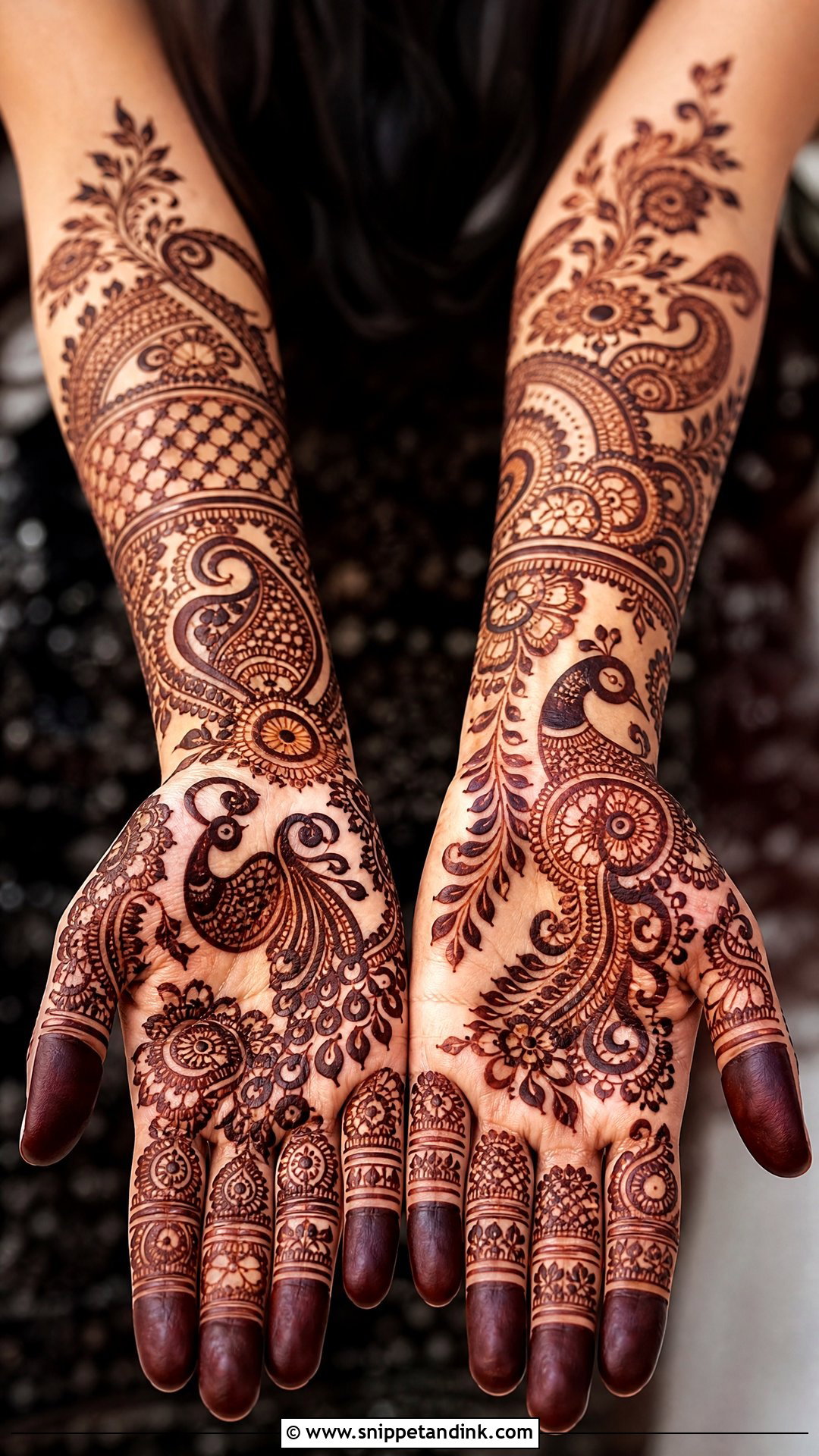
Indo-Arabic takes the flowing outline of Arabic henna and fills parts of it with Indian detail. A common layout puts a large peacock on one side of the palm, runs floral vines across the hand and adds shaded paisleys toward the wrist, with detailed finger bands and small jaali patches. The bold outlines give the hand structure and the fine inner work gives it richness, so it holds up in both wide shots and close-ups. I suggest it to brides who find full Indian coverage too much but feel Arabic alone is too plain for the main day.
5. Rajasthani Peacock Bridal Mehndi Design
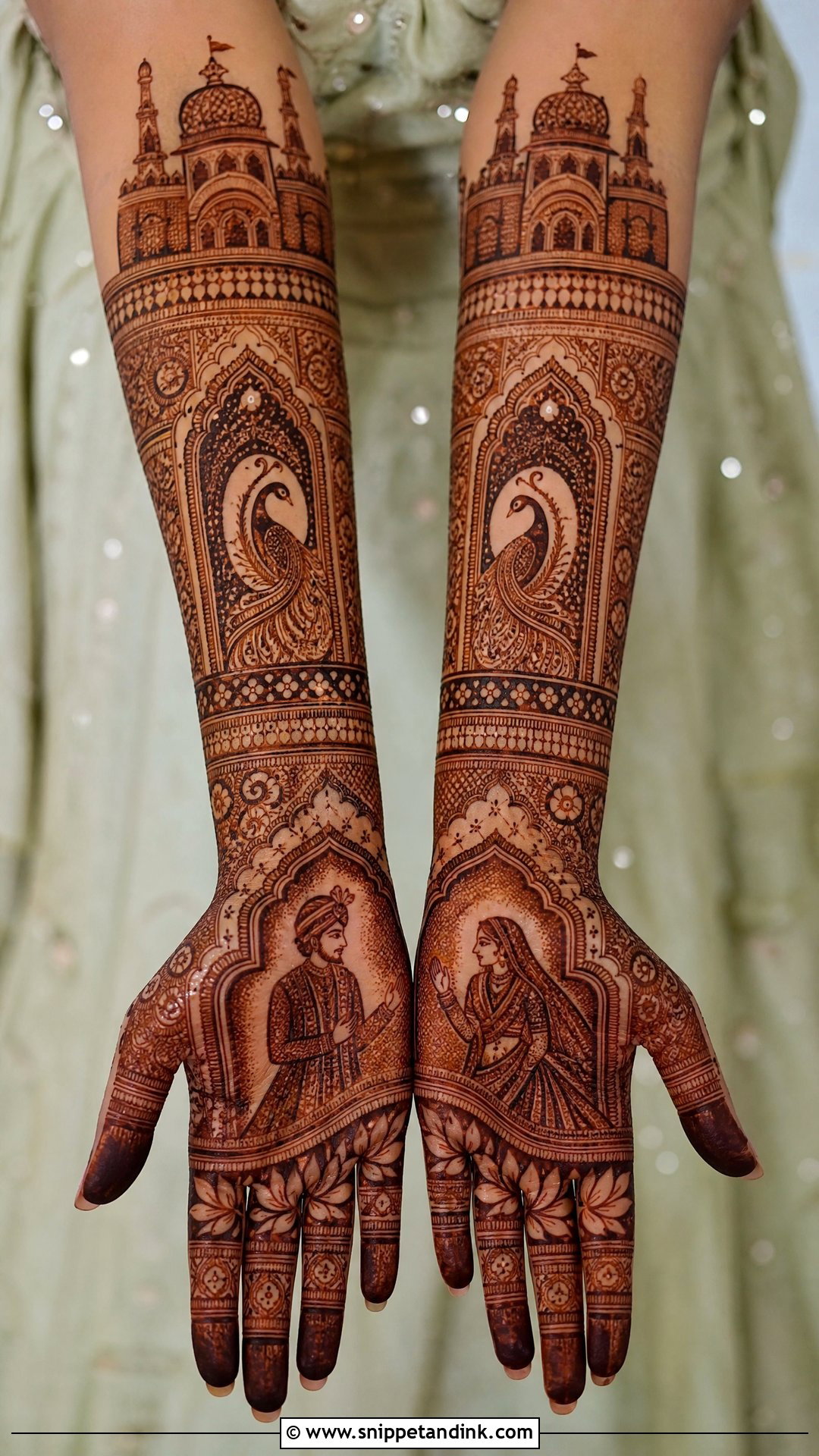
Rajasthani peacock bridal mehndi design is the most narrative style I draw: mirrored peacocks, palace arches, bride-and-groom figures, elephants, the doli and fine ornamental fillers. The peacock often sits near the wrist or on the forearm as one character in a larger scene. With this much going on, I map the main figures in light dots before any fill goes in, because once checks and vines start there’s no room to move a misplaced arch. Keep the peacock shapes clean and let tiny checks, dots and paisleys do the filling. Expect it to take longer than any other style here.
6. Peacock Mandala Bridal Mehndi Design
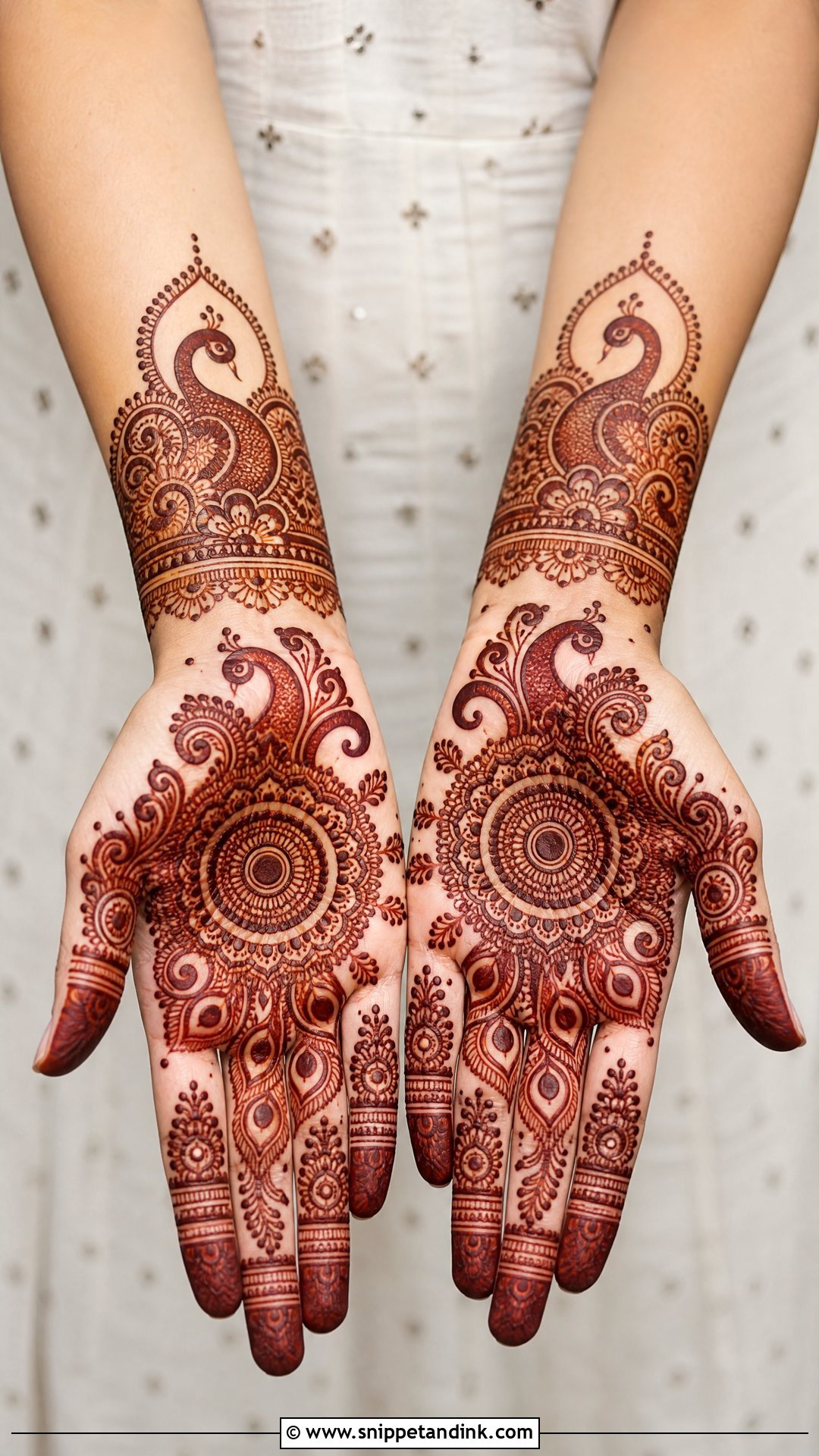
Mandala layouts suit brides who like order. A round mandala sits in the palm while peacocks curve around it or rise toward the wrist, giving the hand a calm center and a graceful border. Finger bands, small florals and dotted lines finish it. The circle has to be truly round, which is harder than it sounds on a cupped palm, so I ask the bride to hold her hand flat on a cushion while I draw the outer rings. Coverage is flexible: lighter for a sangeet, extended into the forearm with feathers and jaali panels for the wedding.
7. Peacock Back Hand Bridal Mehndi Design
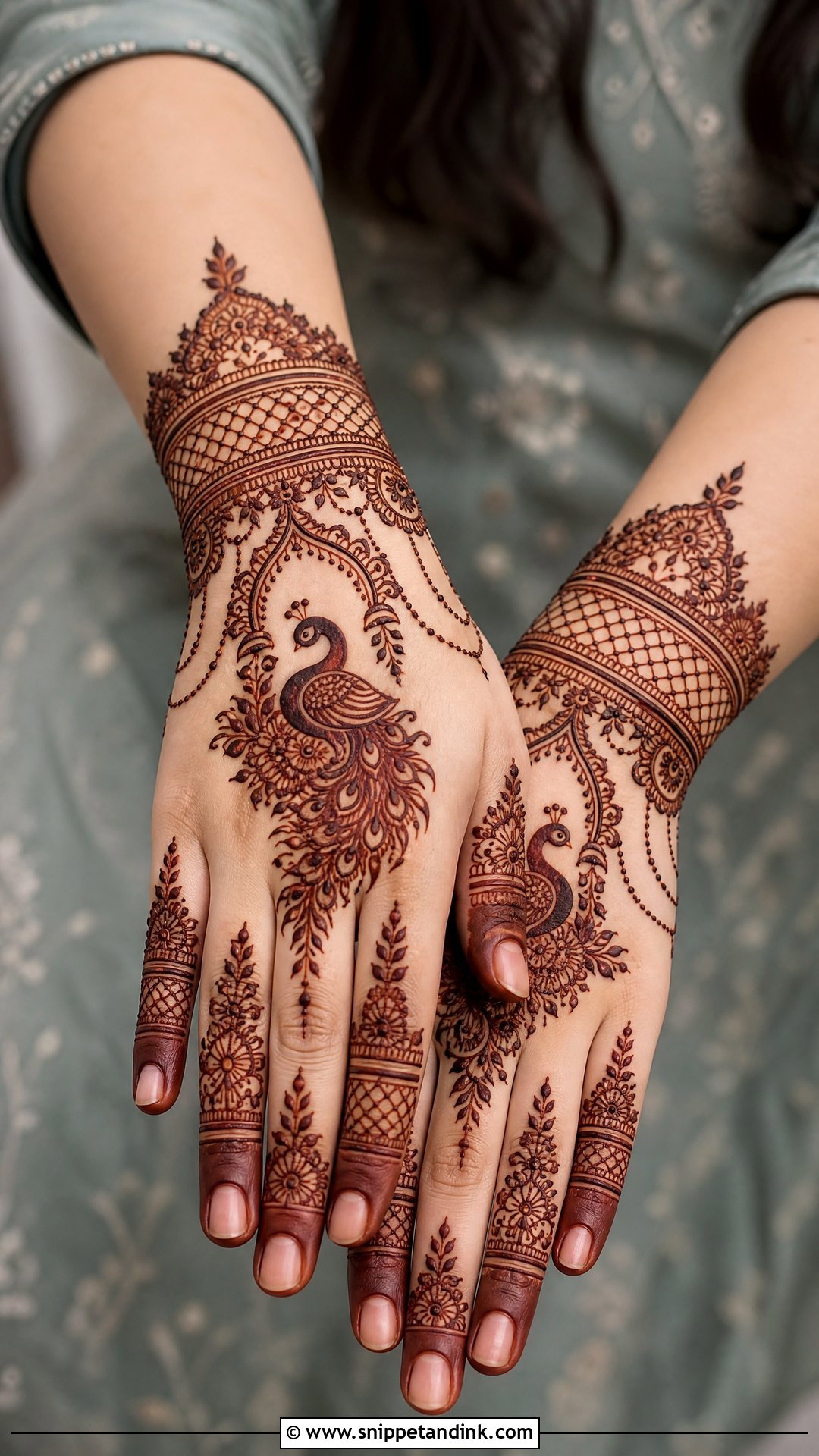
The back of the hand is what everyone actually sees all day: when you hold a glass, wear rings and pose for hand shots. I usually set the peacock near the wrist or the center of the back hand and let vines, mesh and finger bands grow out from it. A cuff at the wrist turns the whole piece into something that looks like jewelry. Stain on the back of the hand is naturally lighter than on the palm, since the skin there is thicker and drier, so I keep the peacock’s lines bold rather than hairline fine.
8. Peacock Palm Bridal Mehndi Design
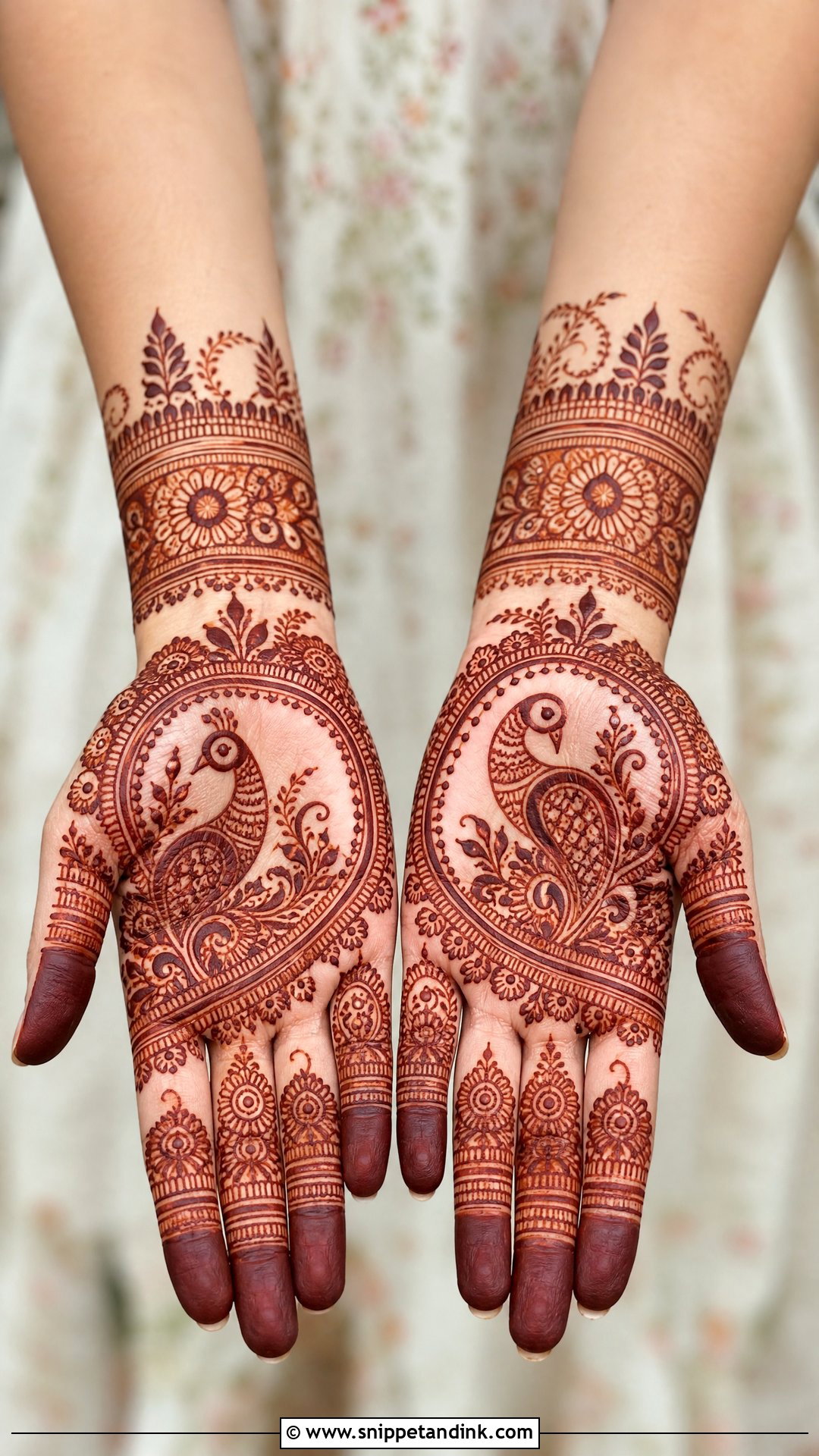
A palm peacock puts the main motif front and center, which is why it dominates close-up photos. The bird might sit inside a circle, curl around a paisley or spread its feathers across the whole palm, with small flowers, leaves and fine net patterns filling the space around it. Fingers can stay dense or open. The palm is where henna stains darkest, so a palm peacock gives you the richest color of any placement. It pairs well with matching wrist-to-forearm henna so the arm doesn’t look bare beneath it.
9. Peacock Finger Bridal Mehndi Design
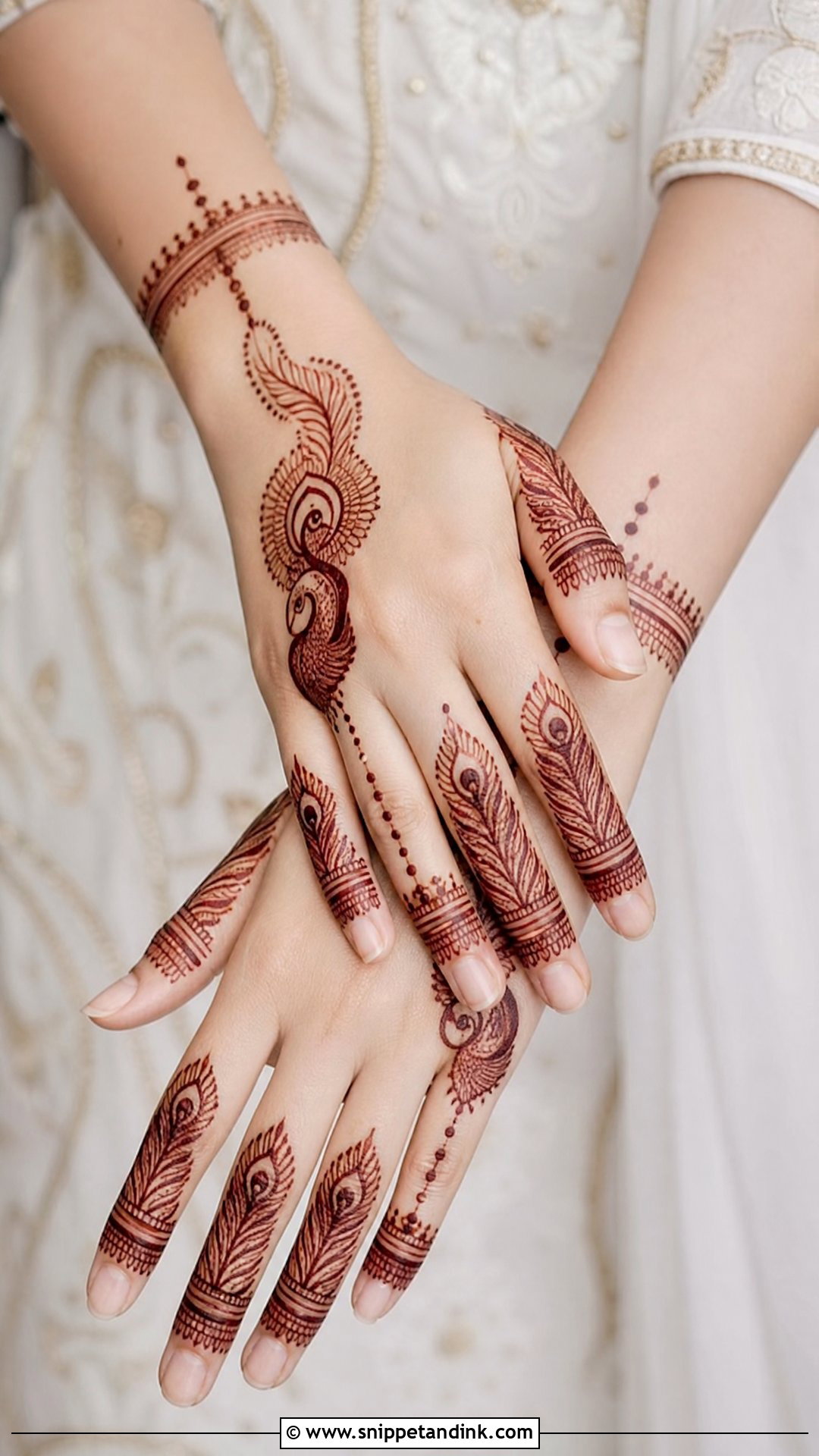
Finger-led designs drop the big palm bird and use feather-inspired finger details, small peacock heads, leafy curves and fine bands instead. A small mandala or floral base on the palm or back hand gives the fingers something to belong to. I find this the most practical option for engagement brides and anyone with delicate rings, since it frames the jewelry instead of competing with it. To keep it bridal rather than casual, I add a wrist cuff or a thin peacock trail that ties the fingers back to the hand. Fingertips stain fast and dark, so this one develops color quickly.
10. Peacock Paisley Bridal Mehndi Design
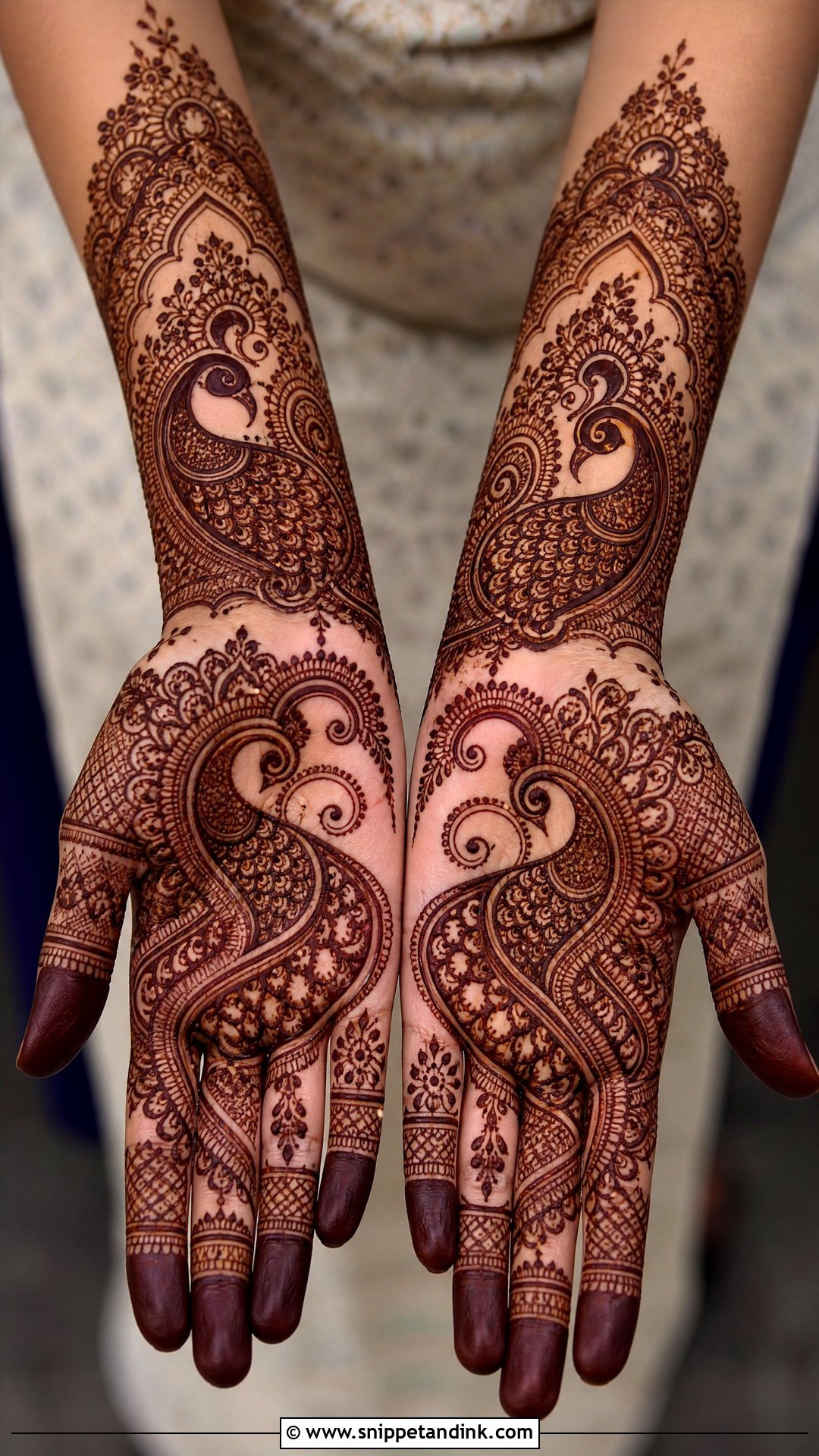
Paisley and peacock are a natural pair because the paisley’s teardrop curve already looks like a bird’s bent neck. I’ll often draw one large paisley-peacock on the palm, smaller paisleys at the wrist and fine florals on the fingers. Inside each paisley go dots, mini leaves, scallops and spirals for depth. The curves stretch visually, so this layout flatters long hands most. On short, broad hands I scale the paisleys down and run them diagonally, otherwise they crowd the palm.
11. Peacock Floral Bridal Mehndi Design
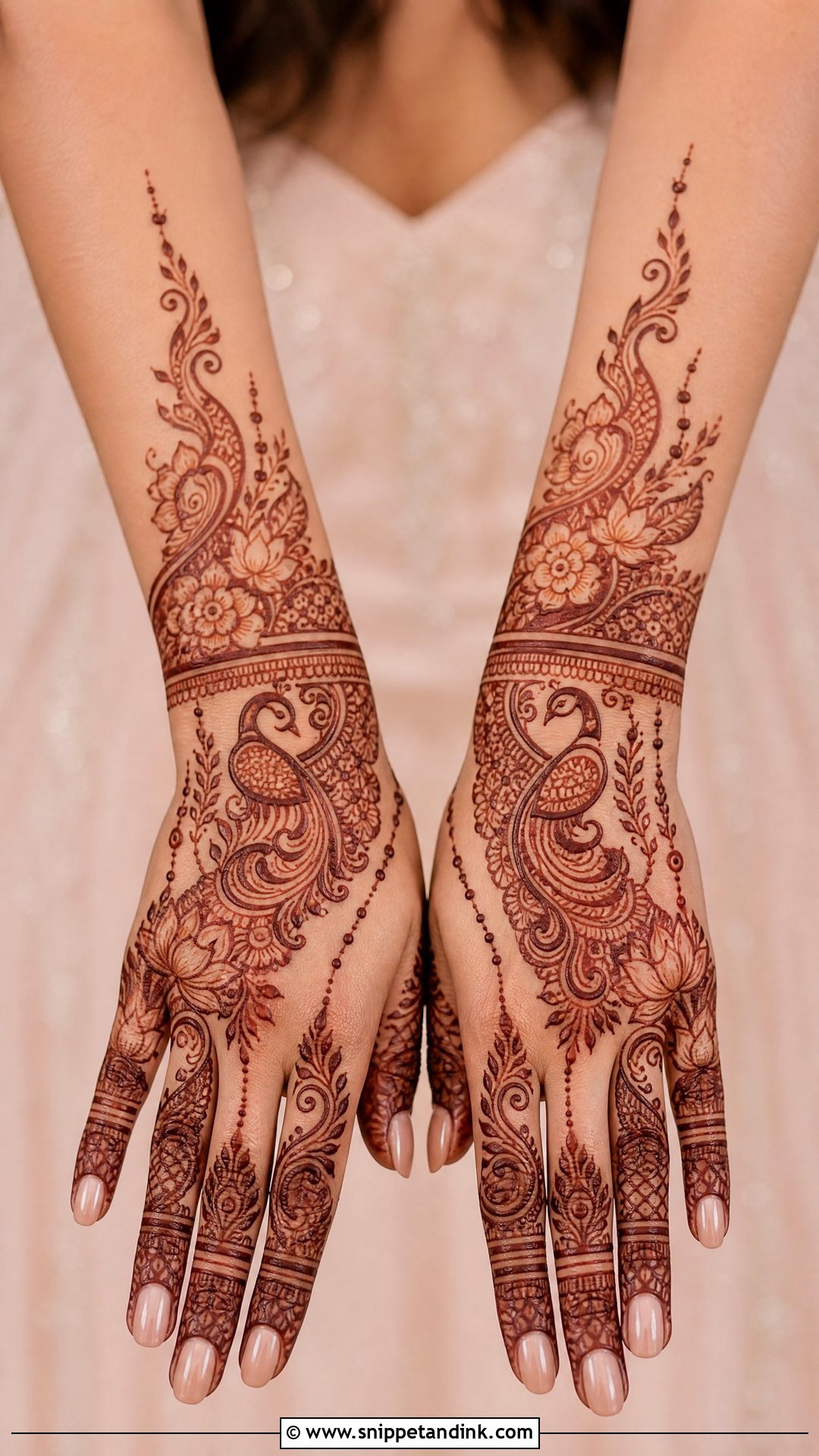
Florals soften the peacock’s strong silhouette. Here the bird is surrounded by roses, lotus petals, leafy trails and shaded blossoms, flowing from forearm to palm or diagonally over the back of the hand. Shading inside petals is done with lighter, thinner paste strokes, and it shows up as a paler tone after staining, which is what gives the flowers depth. For the wedding version I add detailed fingers, wrist bands and a few jaali panels. It reads feminine without looking heavy.
12. Peacock Jaali Bridal Mehndi Design
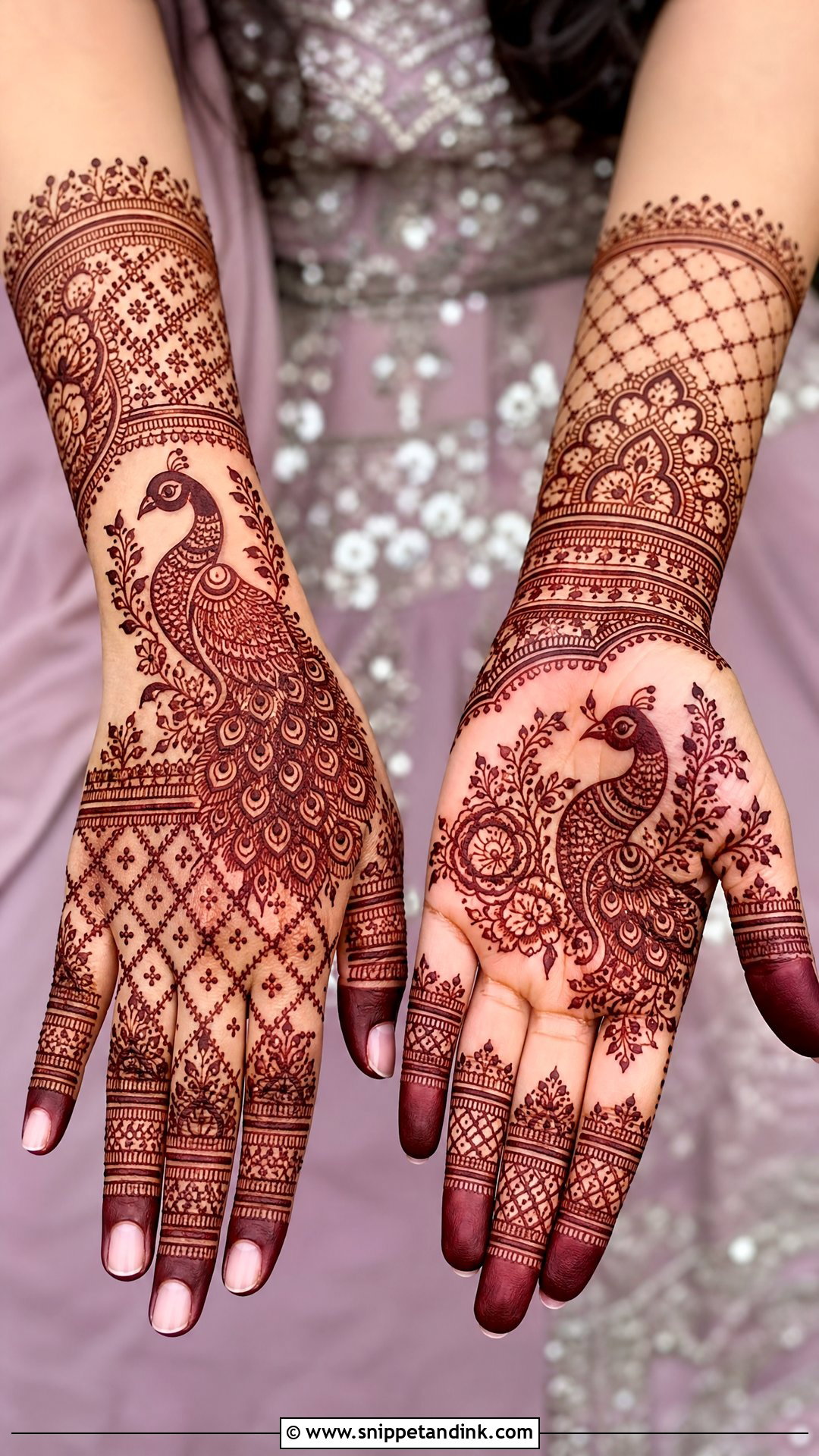
Jaali is the lace of mehndi: diamond, square or curved mesh with tiny dots or flowers inside each cell. Paired with a bold peacock outline, it gives structure and texture at once. The mesh is where my cone control matters most, because if the lines sit too close they merge as the stain darkens and the net turns into a blotch. I leave a clear gap between every line. On the back of the hand, jaali sits nicely under rings and hand chains.
13. Peacock Bracelet Bridal Mehndi Design
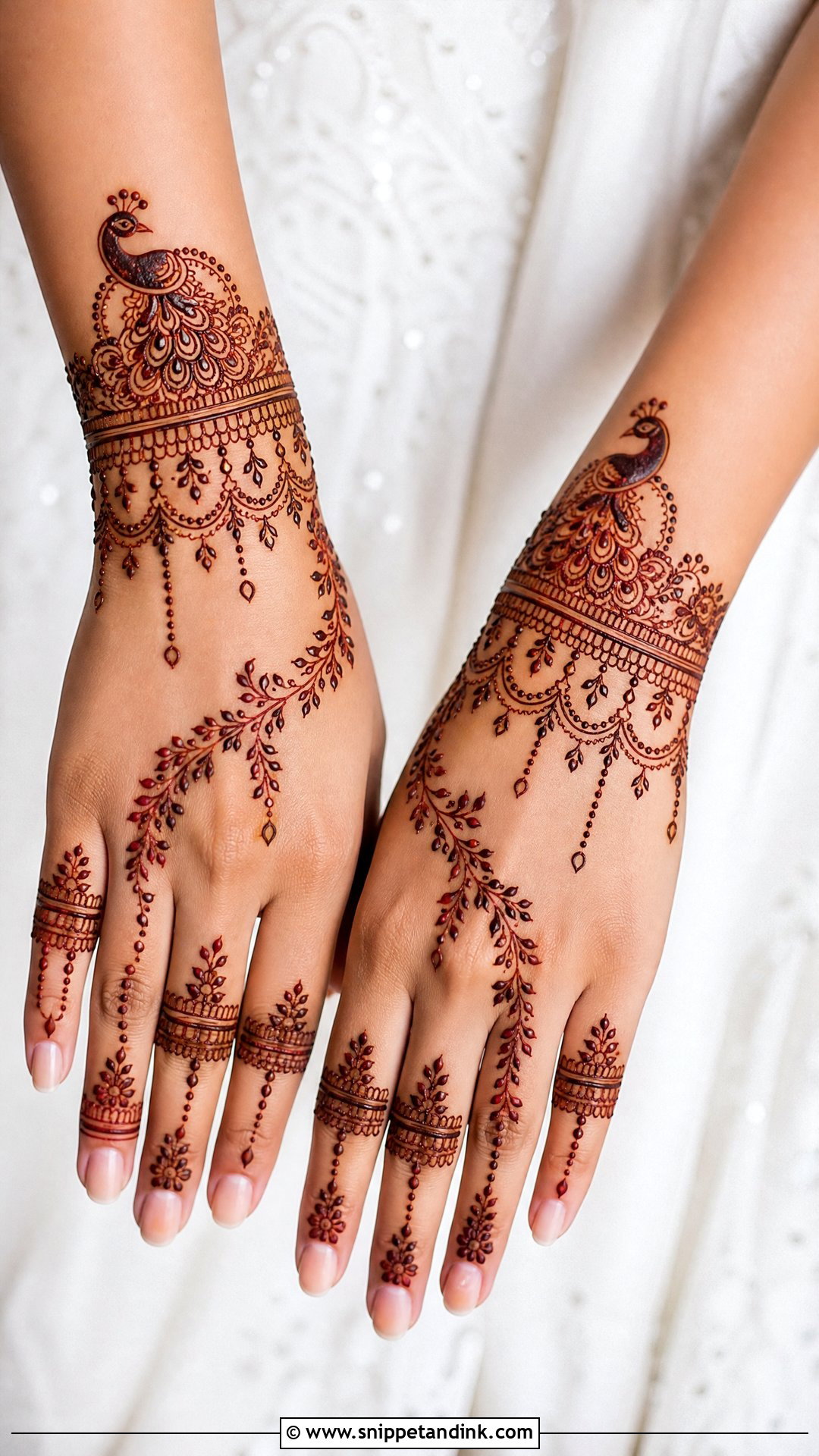
A bracelet design decorates the wrist before a single bangle goes on. The peacock sits near the wrist or lower back hand, ornamental bands wrap around like a kada, and florals, chains and dots carry the design to the fingers. It’s a smart pick if your outfit has heavy sleeves that cover the forearm. I make the bracelet band bold enough to stand out once stained, and I connect the peacock’s tail directly into the cuff so they read as one piece rather than two stickers placed side by side.
14. Peacock Forearm Bridal Mehndi Design
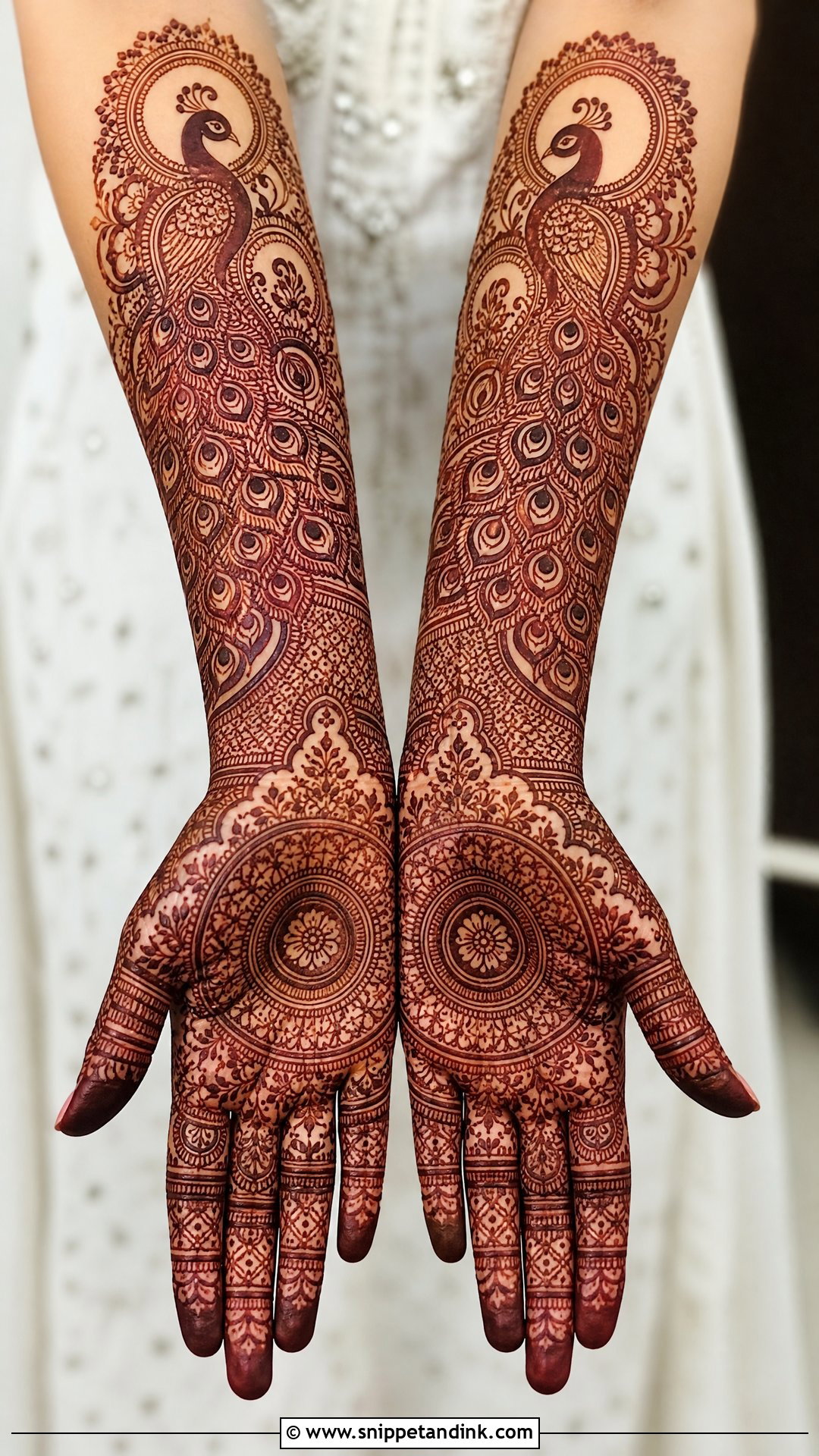
Forearm peacocks give the most room for feather work. The bird can sit on the forearm with its tail spilling down toward the hand, or rise from the wrist into a larger composition. This is a strong wedding-day choice because the arm looks complete next to bangles, kalire and sheer sleeves. The palm carries mandalas, paisleys or florals so the arm and hand feel connected. One thing to know: forearm skin stains lighter than the palm, so the forearm peacock will usually settle a shade or two paler than the hand design.
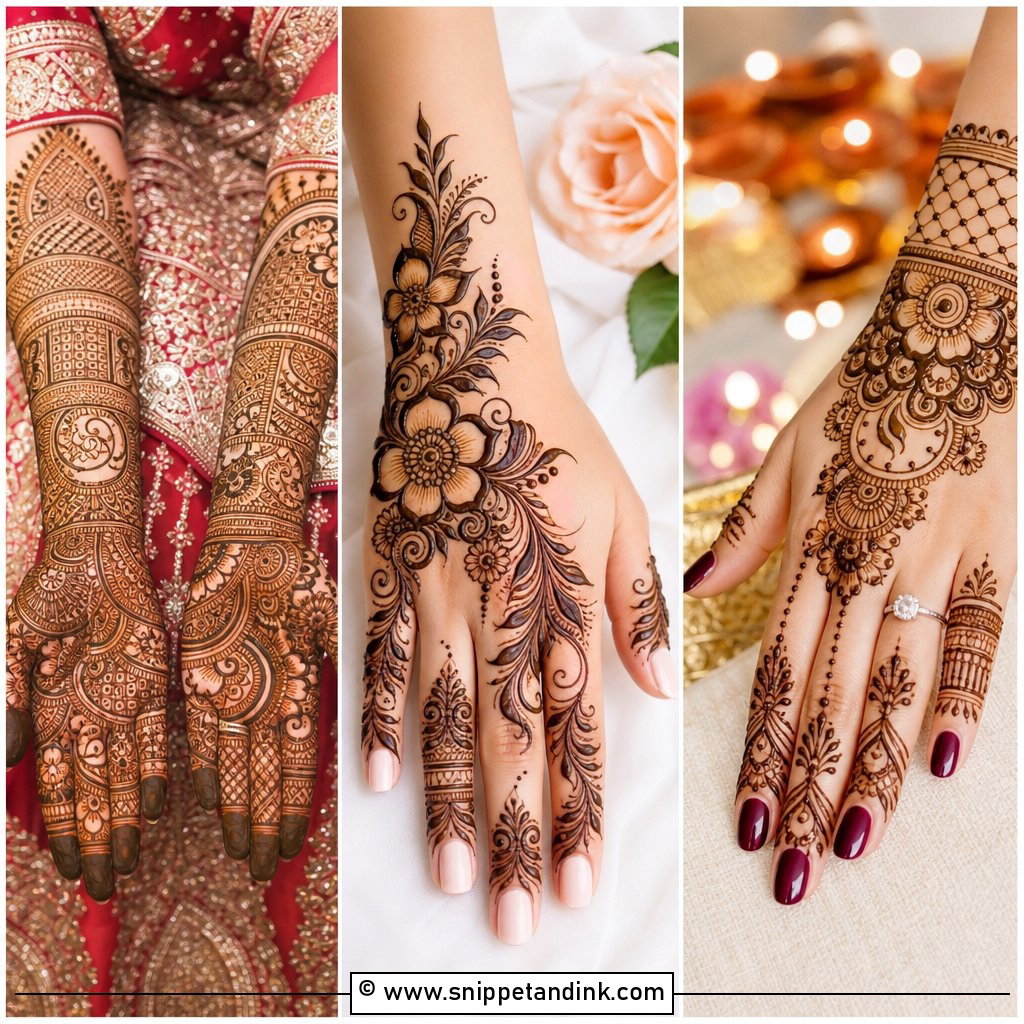
15. Peacock Feather Bridal Mehndi Design
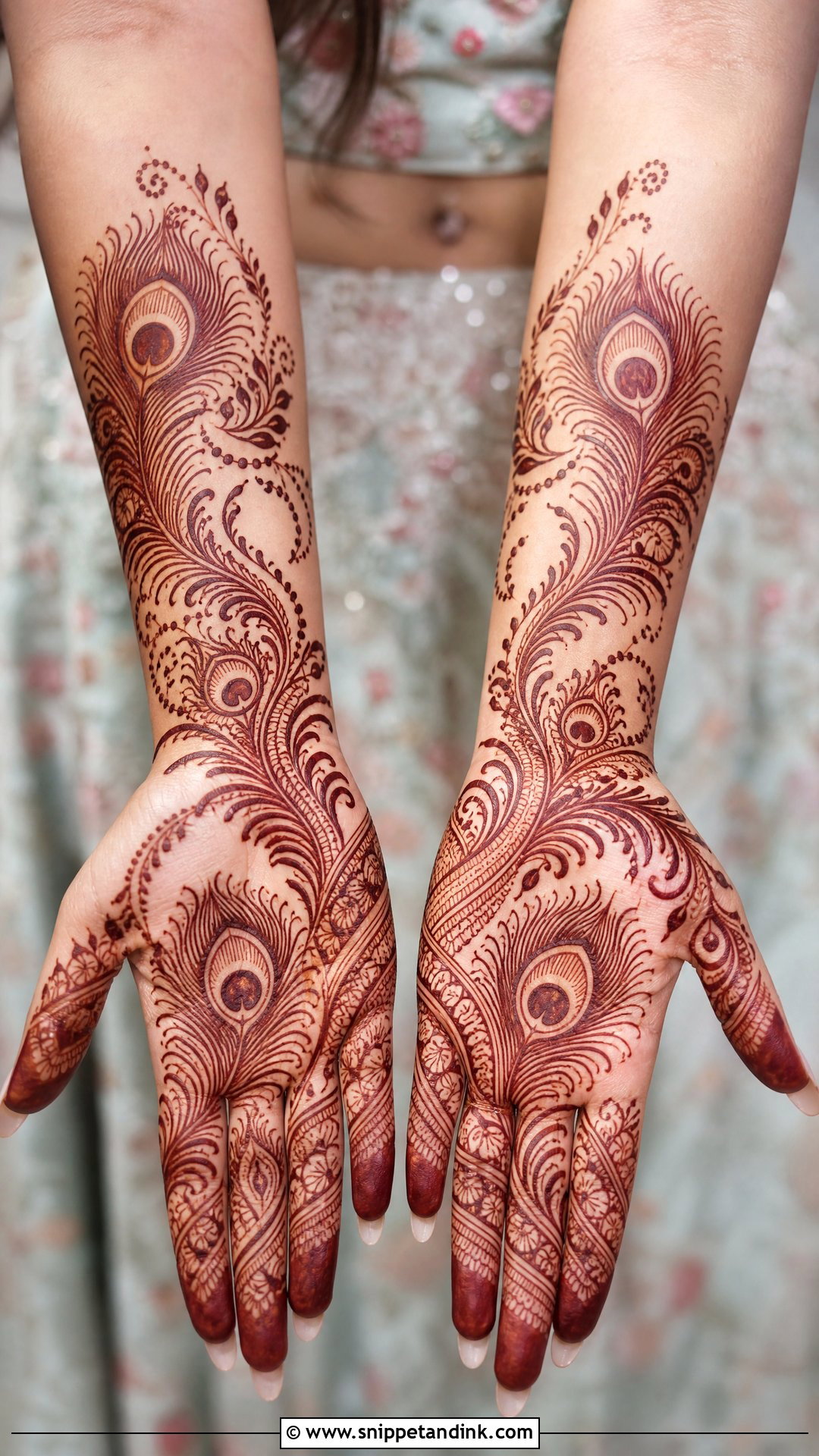
Here the tail does the work rather than the bird. Long feathers stretch across the palm, wrist or forearm, each one filled with eyes, dots, leaves and curved lines, and that length makes the hand look longer. Kept open it looks modern; filled densely it looks fully bridal. The feather eyes are where I see the most blurring, because the center dot and its surrounding ring are tiny. I leave real spacing between them so the details survive the stain darkening.
16. Minimal Peacock Bridal Mehndi Design
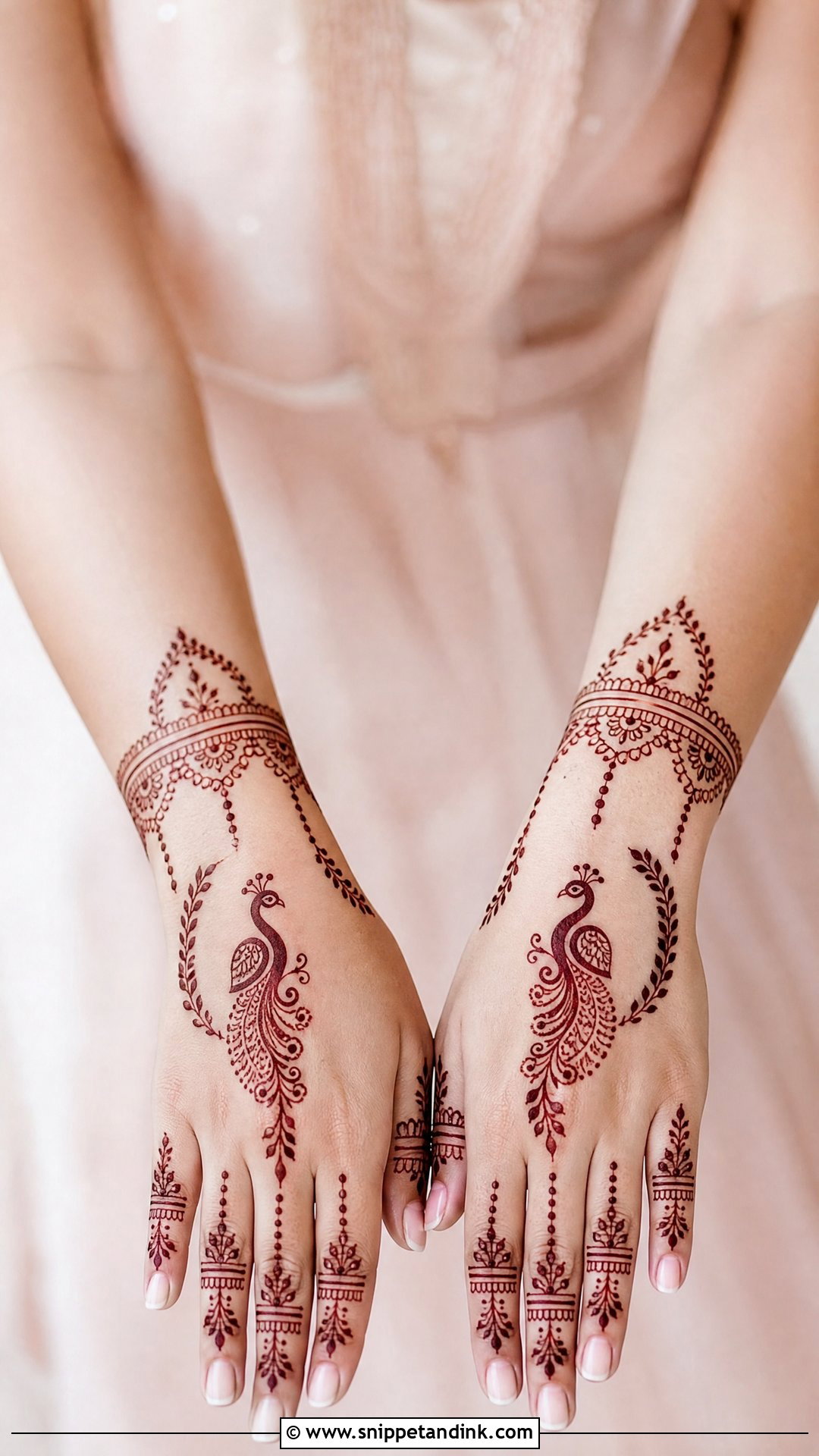
Minimal doesn’t mean unfinished. A small peacock on the back of the hand, a simple floral wrist cuff, clean finger patterns and plenty of skin are enough for intimate weddings, engagements or registry ceremonies. The difference between minimal and sparse is connection: a small mandala, dotted chains or leafy curves have to join every element into one piece. I draw these with confident, continuous lines, because a hesitant stroke shows clearly when there’s no fill around it to hide it.
17. Heavy Peacock Bridal Mehndi Design
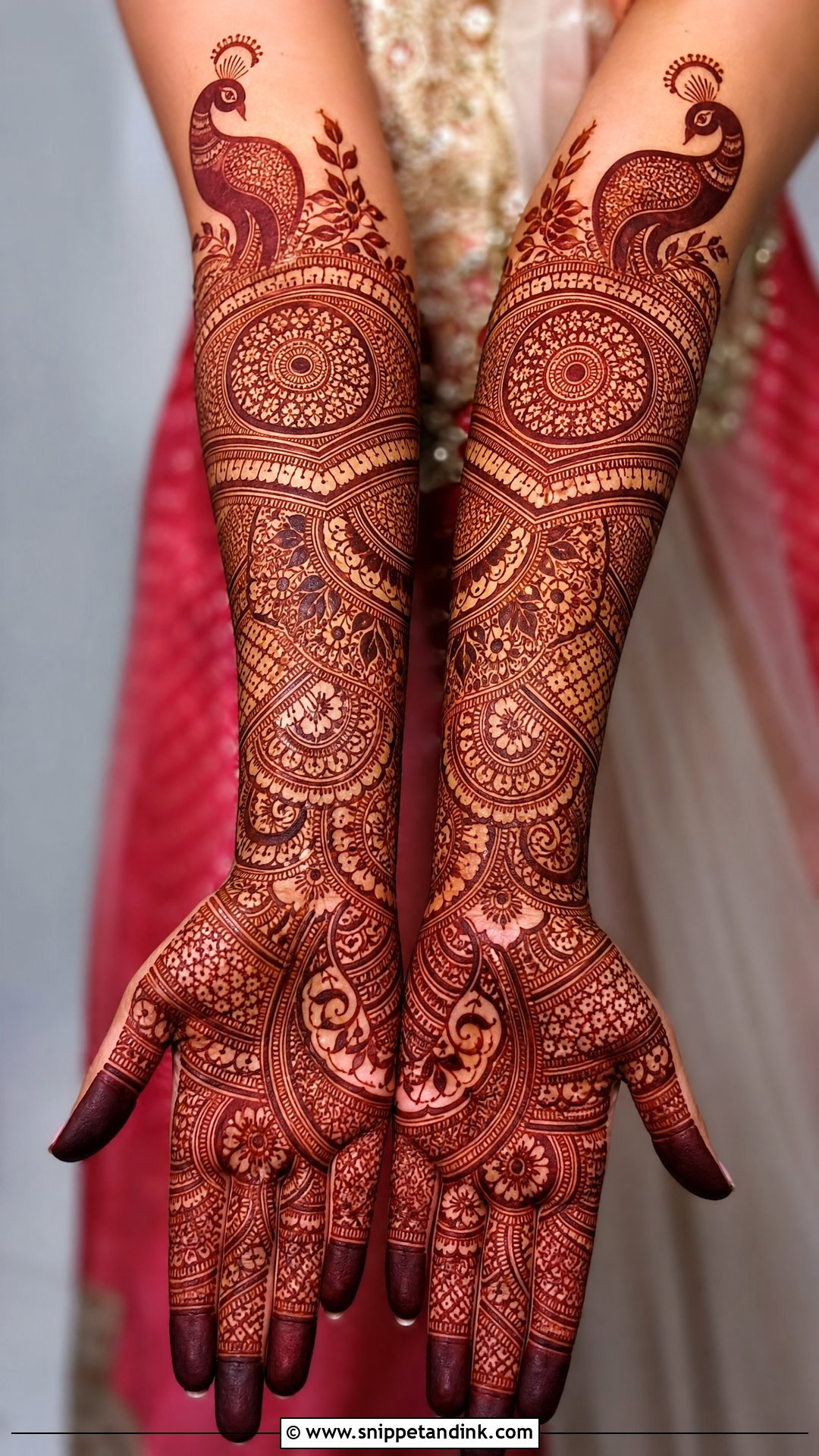
Heavy coverage means palms, back hands, fingers, wrists and forearms filled with peacocks, paisleys, florals, mandalas, jaali and fine filler, usually mirrored on both hands. What keeps it from looking crowded is focal points: a large peacock on each palm or forearm that the eye lands on first. Without them, heavy mehndi turns into texture. It’s a long sitting, and I always remind brides to eat beforehand and arrange for someone to help them while the paste dries. The result is a design that carries as much of the bridal look as the outfit does.
18. Peacock Bridal Mehndi With Bride And Groom
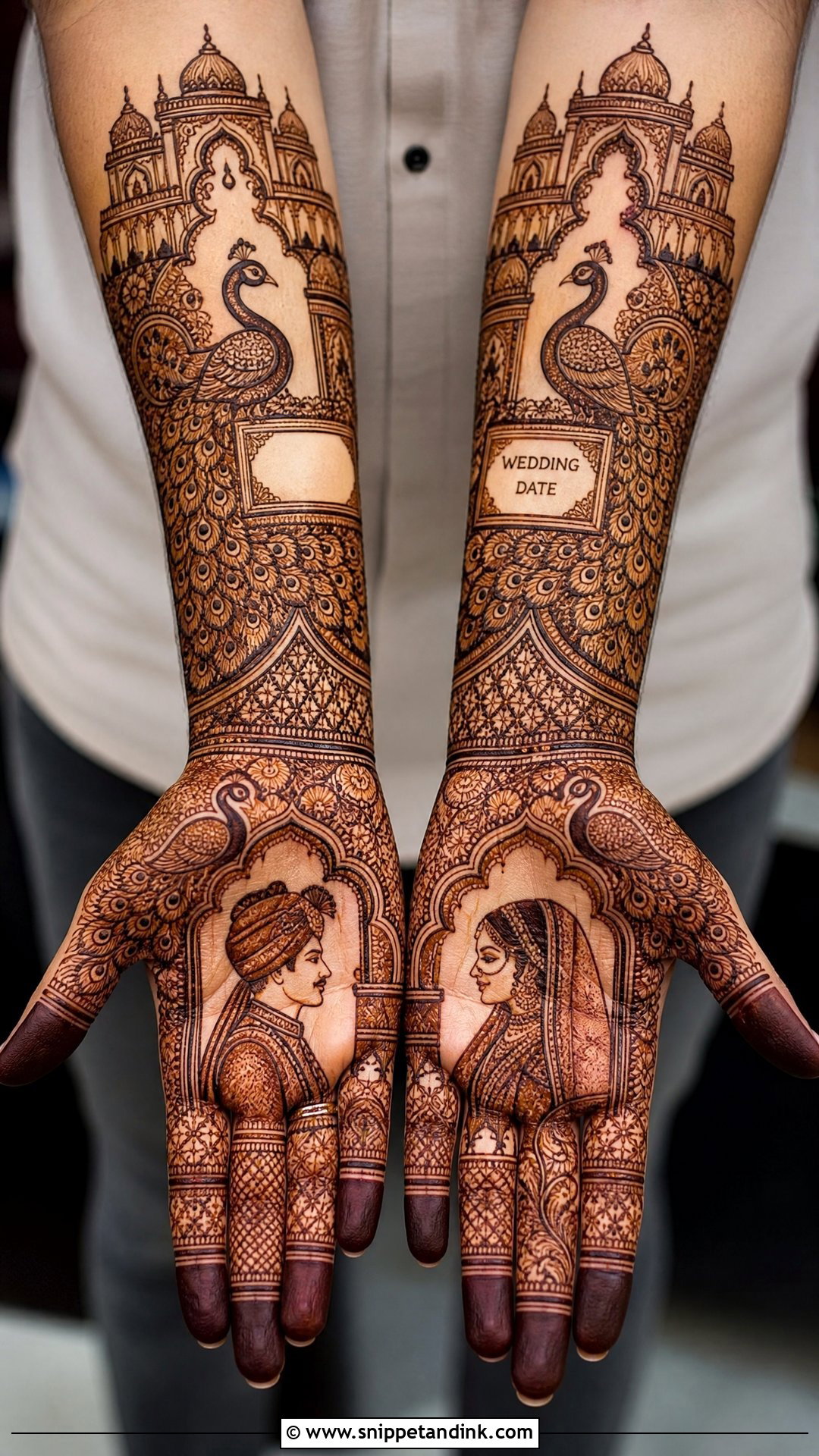
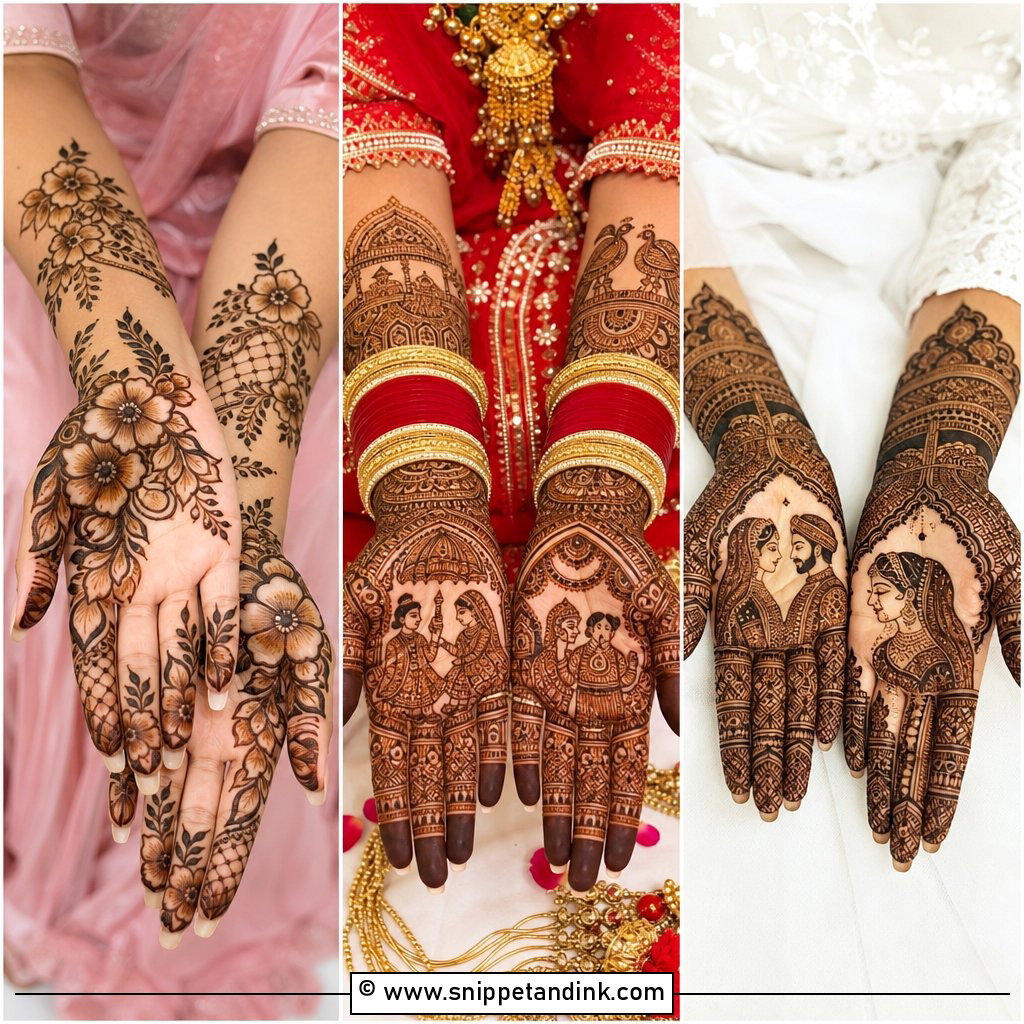
Bride-and-groom figures add a personal story to the peacock design. The birds can frame the couple, perch above palace arches or appear near the wrist as symbolic motifs. The bride-and-groom figures usually go on opposite hands, with peacock patterns tying the two sides together, and initials, a date or small ceremony details can be added. The mistake I see most is figures drawn too small: faces turn into smudges once stained. I give each face enough room for clear eyes and features, and I keep the outlines clean around it.
19. Peacock Foot Bridal Mehndi Design
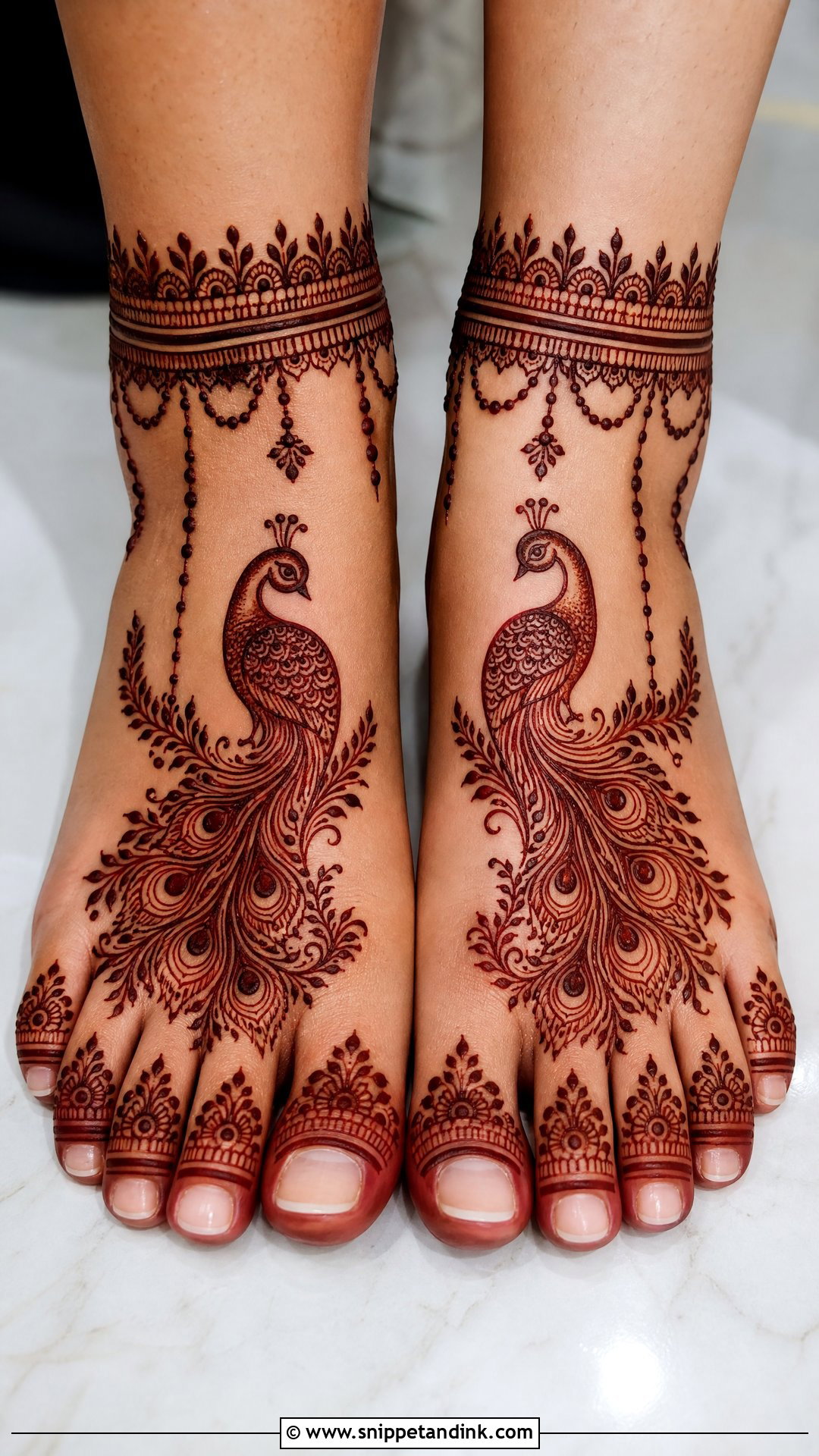
Feet complete the set, especially with open sandals, anklets or traditional bridal footwear. I usually place the peacock on top of the foot, run the feathers toward the toes or ankle and add an ankle band that reads like a payal. Feet are curved and bony, so I draw with the bride’s foot resting at its natural angle, not pointed, or the design distorts when she stands. Keep the toes neat with small floral tips or bands. Feet often stain very dark, so they tend to match the palms nicely.
20. Modern Peacock Bridal Mehndi Design
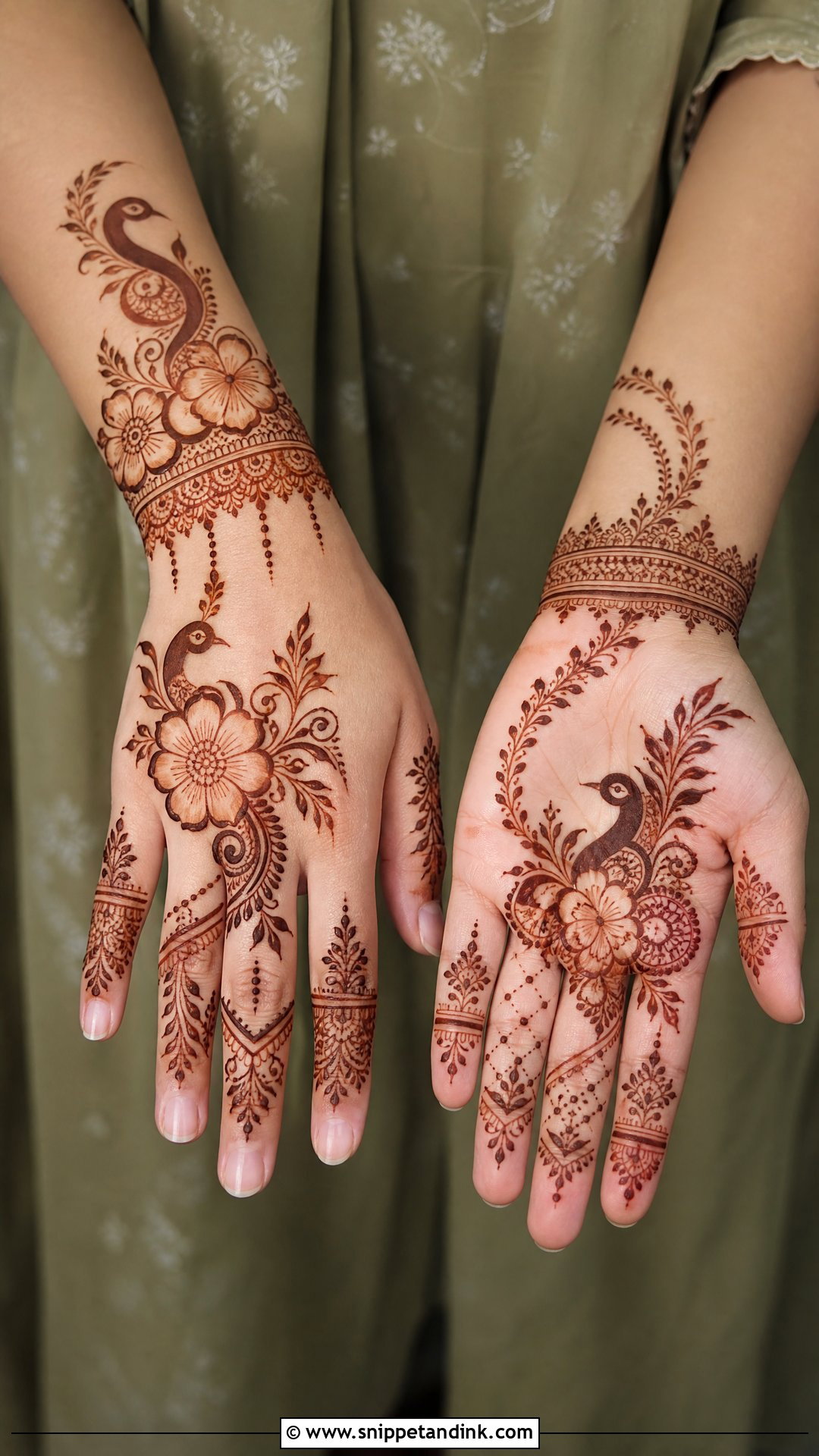
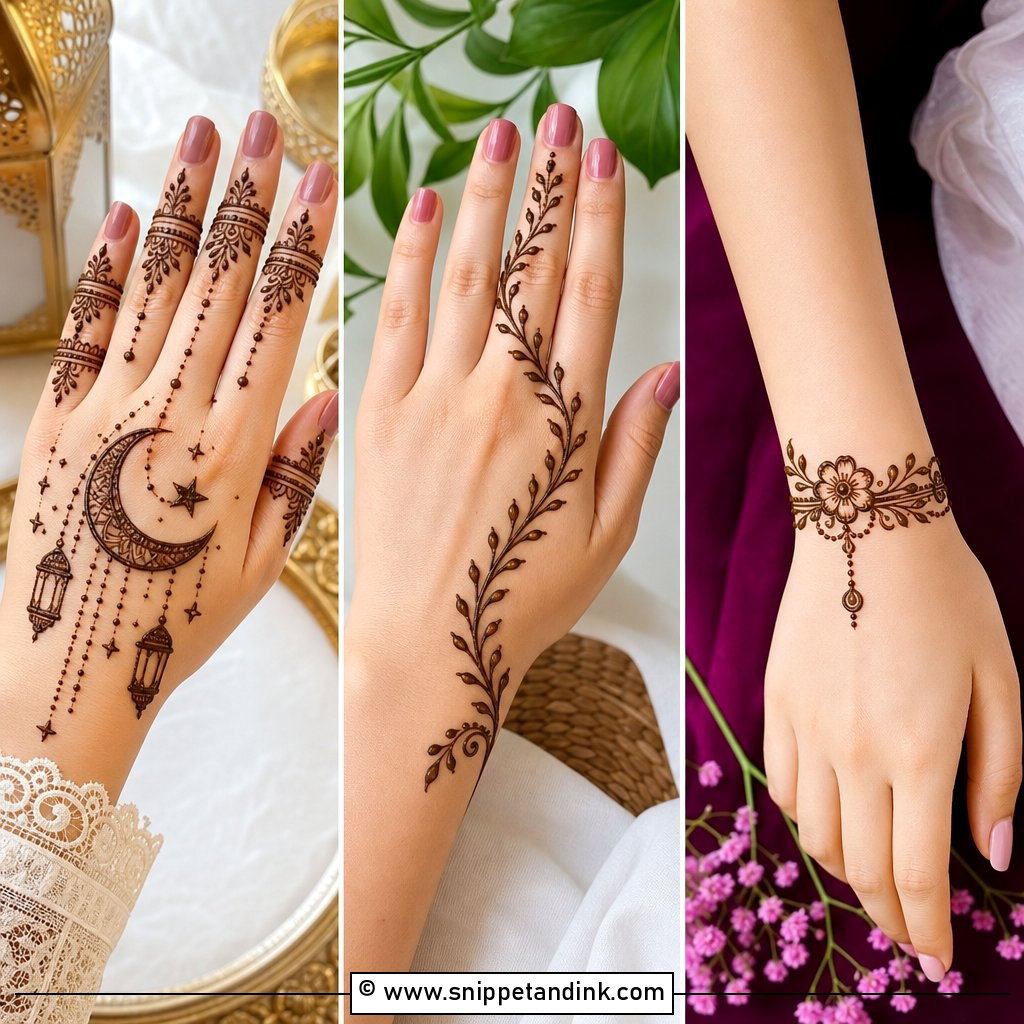
Modern peacock designs keep the bird but clear space around it: half peacocks, geometric borders, open palms, diagonal trails, bold florals and simple fingers. It suits pastel lehengas, minimal jewelry and fusion outfits. The challenge is keeping the peacock recognizable once everything around it is simplified, so I keep its neck curve and crest exact and simplify the tail instead. Bold outlines, clean negative space and two or three statement fillers are enough. It wears easily on the days after the wedding too.
Paste Off, Color Rising: Aftercare That Decides the Stain
When the paste comes off, the stain is bright orange. That surprises a lot of brides, but it’s normal. Natural henna oxidizes and deepens over the next day or two, moving from orange to red-brown to maroon. That’s why I like the mehndi sitting one or two days before the wedding, never the morning of.
- Leave the paste on as long as you can manage, ideally six hours or overnight. Longer contact means deeper color.
- Dab a little lemon and sugar mixture on once the paste is dry. It keeps the paste stuck to the skin instead of flaking away early.
- Scrape the dried paste off with a blunt edge or rub with a little oil. Don’t wash it off.
- Keep water away from the design for the rest of that day if you can. Water stops the darkening early.
- Warmth helps. Keep your hands warm and avoid air-conditioning blasting on them during those first hours.
One warning I give everyone: avoid any cone sold as black henna or promising a black stain in an hour. Those often contain a chemical dye that can cause serious skin reactions. Real henna never stains black. If your artist mixes her own paste, ask what’s in it; a good artist will happily tell you.
A Peacock Has to Survive the Stain to Be Seen
The peacock adapts to almost any tradition and coverage level: royal and dense, floral and soft, or pared back to a few confident lines. Indian, Arabic, Indo-Arabic, Rajasthani and jewelry-style layouts all have room for it. Before you settle on a design, think about where you want the darkest stain, how your hands will be photographed, and how the pattern sits under your bangles and rings. If the bird is still clear and crisp on your wedding morning, the design was planned well.
You'll Like These Ideas:


Leave a Reply