
Rajasthani mehndi designs are the storytellers of the henna world. Where other styles decorate the hand, Rajasthani work narrates it: a dulha and dulhan facing each other across two palms, a peacock under a palace arch, an elephant carrying the baraat, jaali screens and paisleys packed into every gap, and fingers worked right to the tips. It’s the densest, most detailed style I draw, and the one that rewards planning most. More brides now ask for personal details woven in, mirrored layouts across both hands, and lighter versions for functions before the wedding. The designs below run from full bridal arms to small festival patterns, with notes on what each one asks of your time and your hands.
Planning the Dulha, the Dulhan and the Hidden Name
Figurative Rajasthani work is planned more like an illustration than a pattern. Before the cone comes out, I sketch the story with the bride: who appears, which hand they go on, and what happens around them. The usual arrangement puts the bride on one palm and the groom on the other, so the pair only meet when the hands are held side by side. Around them there might be a doli, a baraat elephant, musicians, a varmala moment or a jharokha framing each face.
- Hand size decides how many scenes fit. A small palm takes two simple figures well, while a crowd of characters needs the forearm too.
- Faces need clean skin around the profile. Packing filler right up to a nose or chin is what makes portraits look smudged once they stain.
- Agree on which way the figures face before starting. Mirrored hands are planned together, not one after the other.
- Decide on the hidden name. Many families still enjoy the custom of the groom searching the bride’s hands for his name or initials, so tell your artist how hard you want it to be to find.
Bring a photo of your outfit’s sleeves and your jewellery. A heavy kada or chooda can sit right over a portrait if nobody planned for it.
1. Rajasthani Bridal Mehndi Design
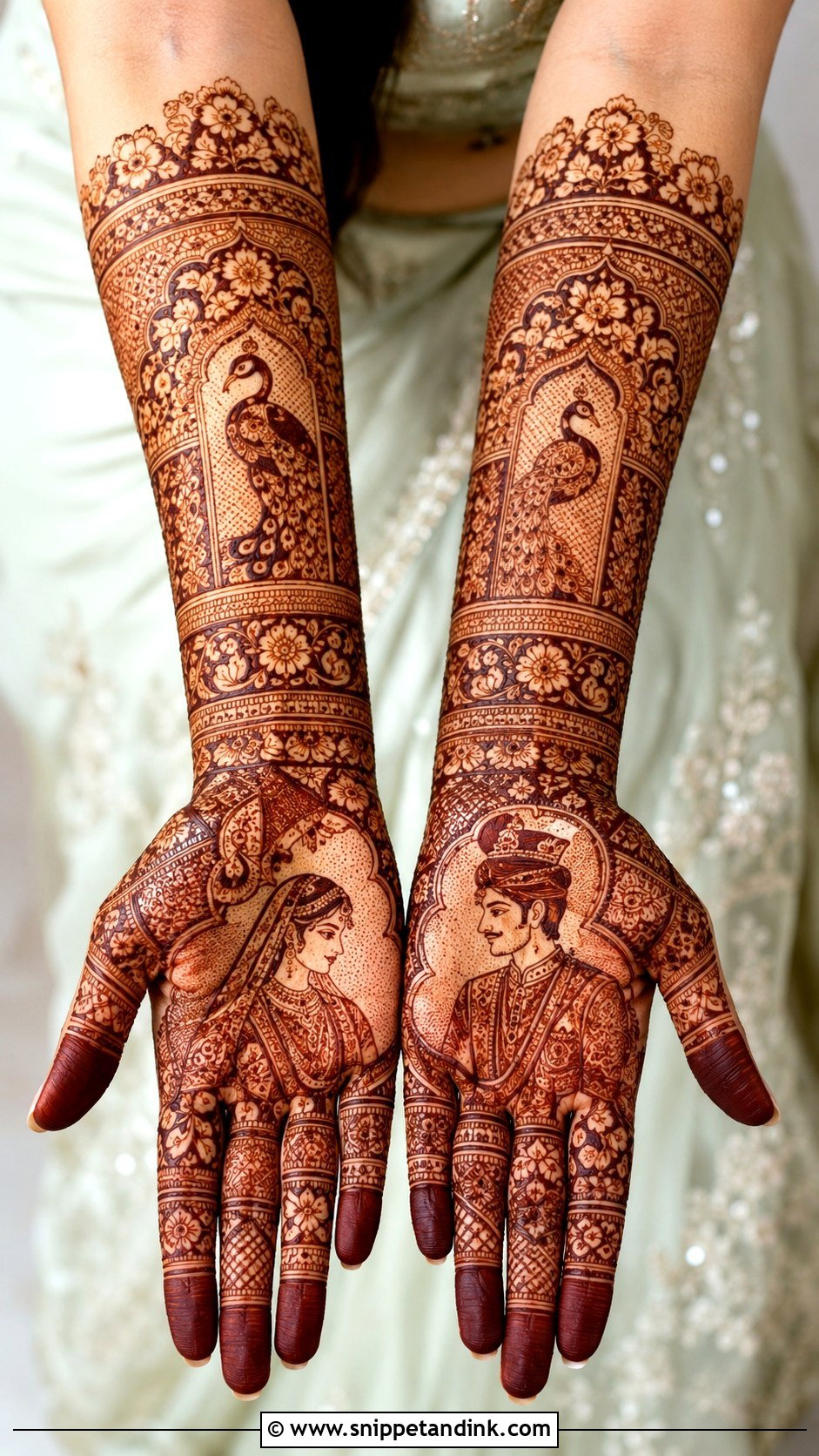
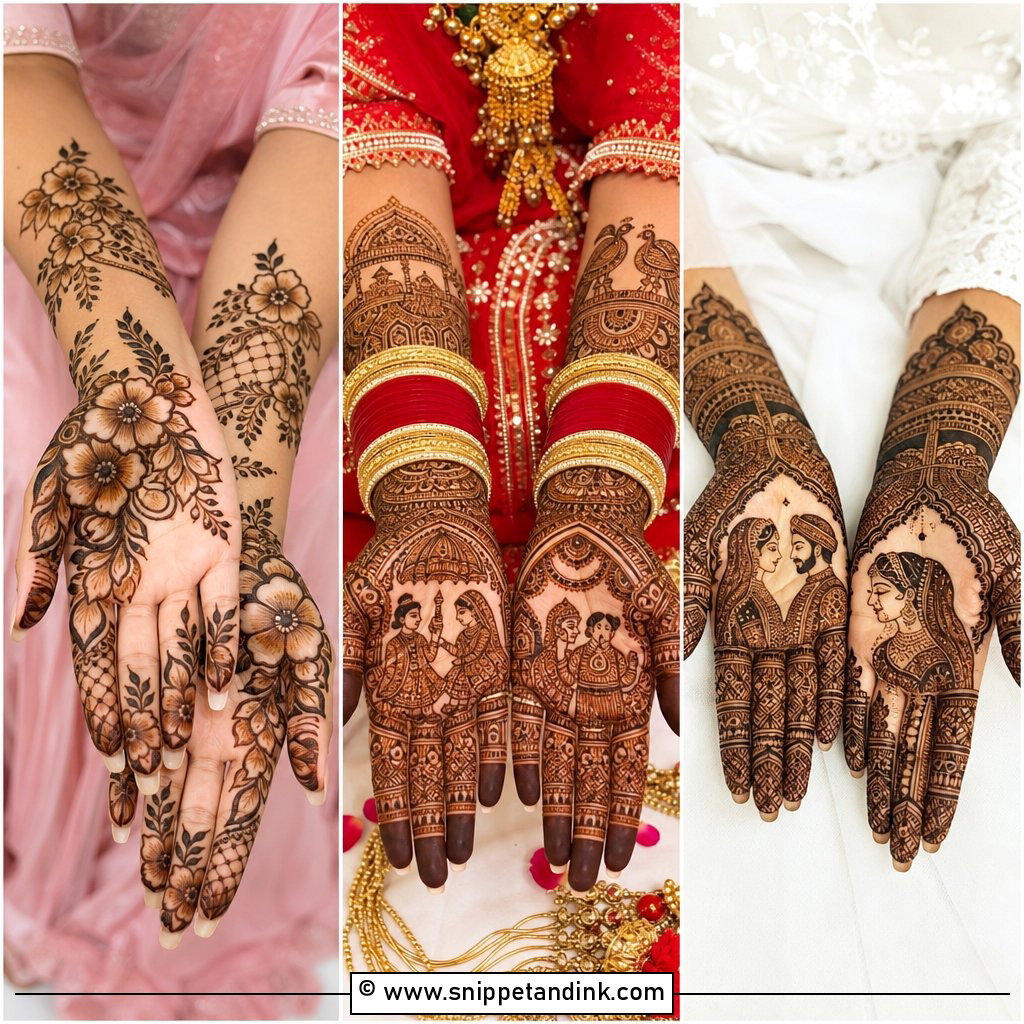
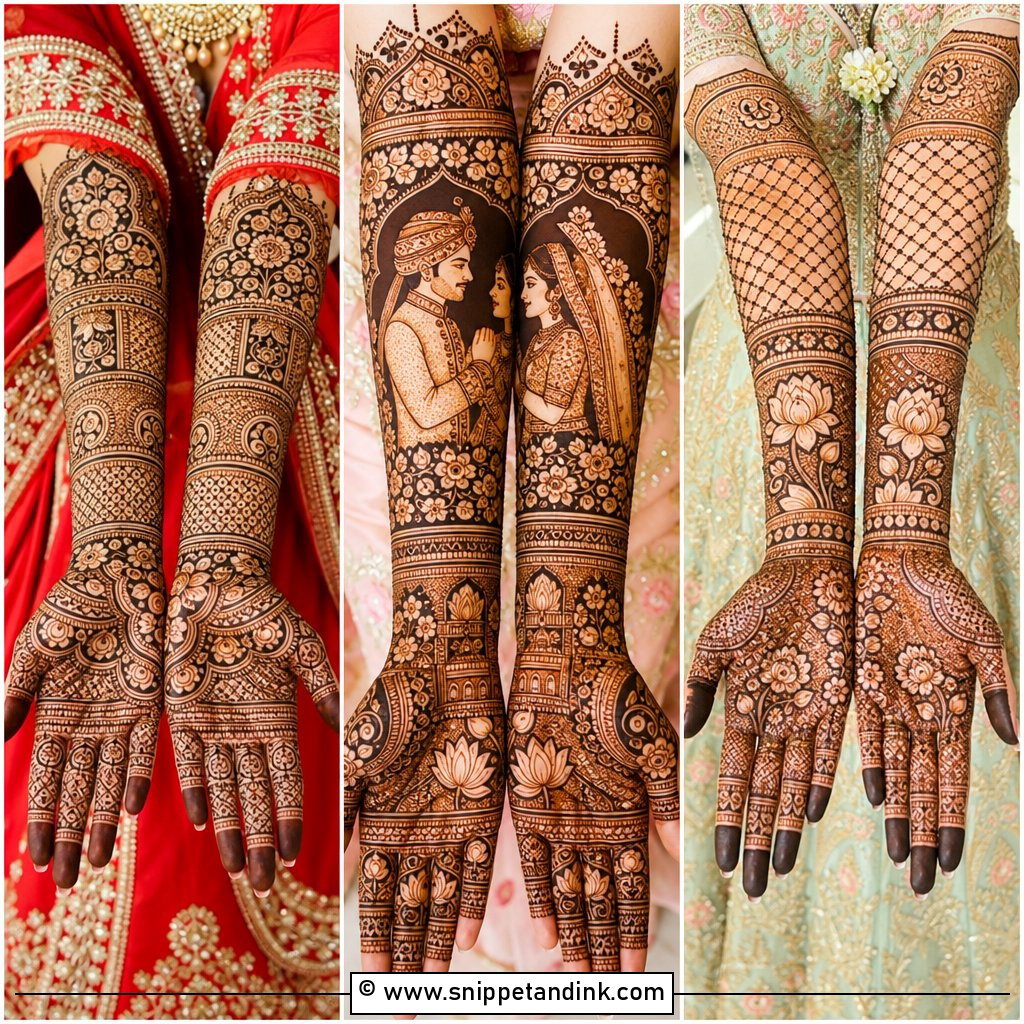
Full Rajasthani bridal work covers palms, fingers, wrists and forearms with almost no bare skin. Paisleys, flowers, jaali, peacock curves and tiny dots sit inside balanced panels, and it sits naturally beside heavy lehengas and kundan jewellery. Initials, the date or small personal symbols can hide inside the pattern. I keep the palm motifs bold and save the finest detail for the forearms, because the palm stains darkest and would close up if it were as fine. Expect a full day’s sitting.
2. Rajasthani Full Hand Mehndi Design
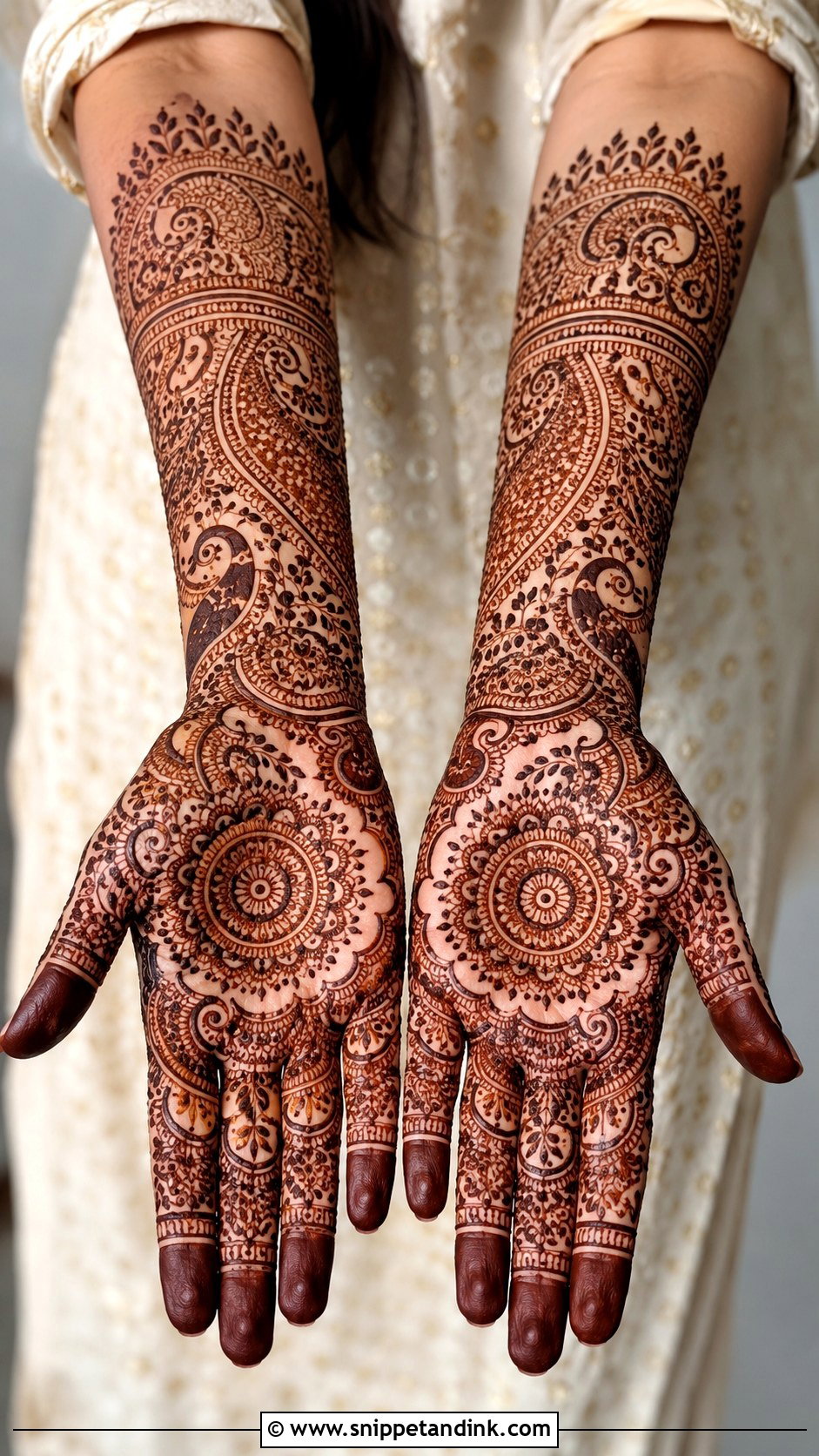
Full coverage without going bridal: a strong palm centrepiece, usually a mandala, paisley cluster or peacock, with the pattern running to the wrist and forearm in arches, floral vines, leaf chains and mesh. Fingers carry fine bands, dots and leafy tips. Sisters of the bride and close family often choose this, since it looks special but sits a step below the bride’s own hands. It takes noticeably less time than bridal work because the panels are larger and the filling more open.
3. Rajasthani Dulha Dulhan Mehndi Design
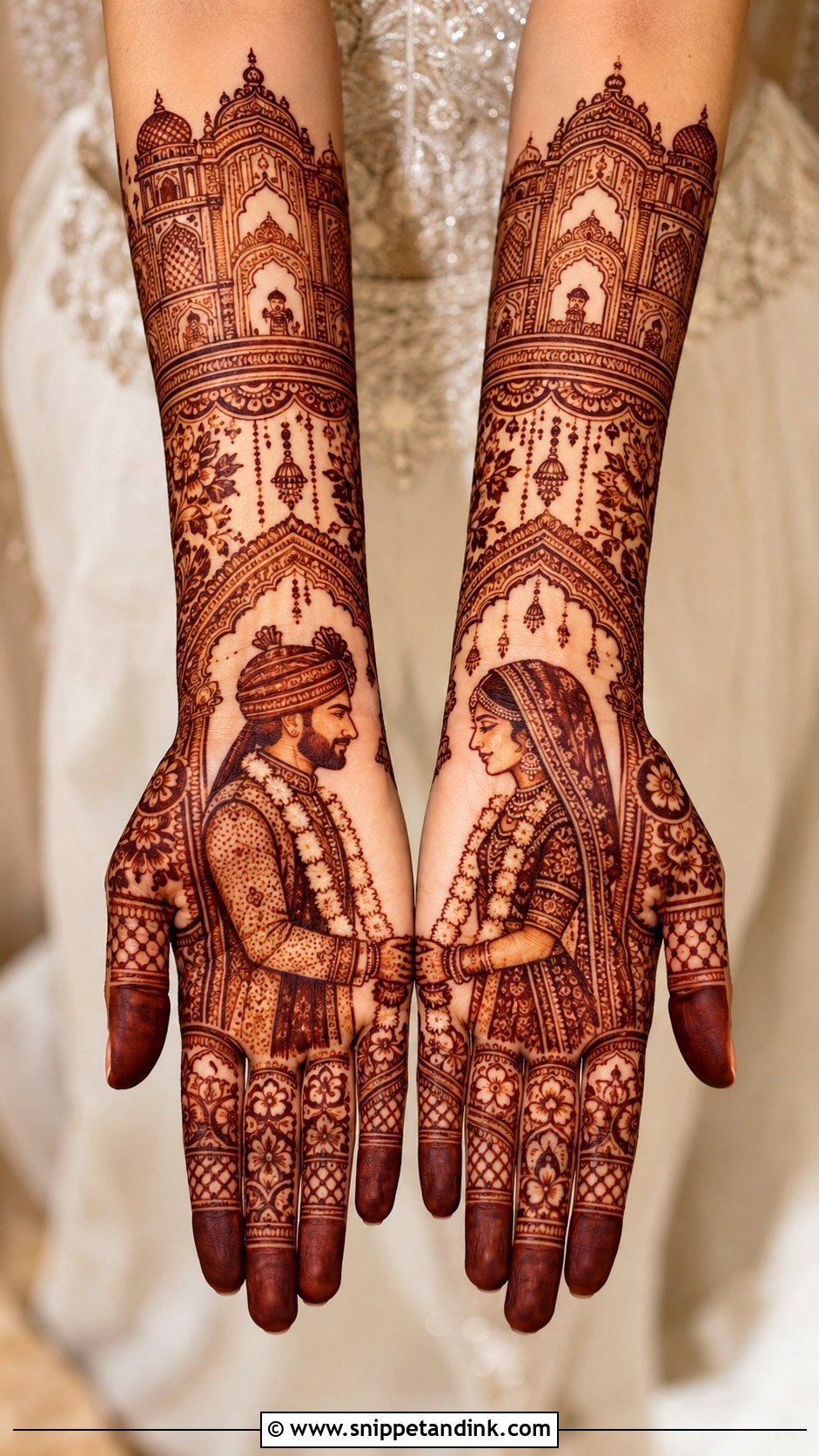
The dulha dulhan mehndi design is the classic Rajasthani wedding hand: the bride drawn on one palm, the groom on the other, so the story only completes when the hands come together. Around the portraits go varmala details, palace windows, floral frames, paisleys and small ceremonial scenes. Faces are the hardest thing I draw in henna. They need enough palm space to read, so on a small hand I simplify the figures and give them clean skin around the profile rather than crowding them with filler.
4. Rajasthani Peacock Mehndi Design
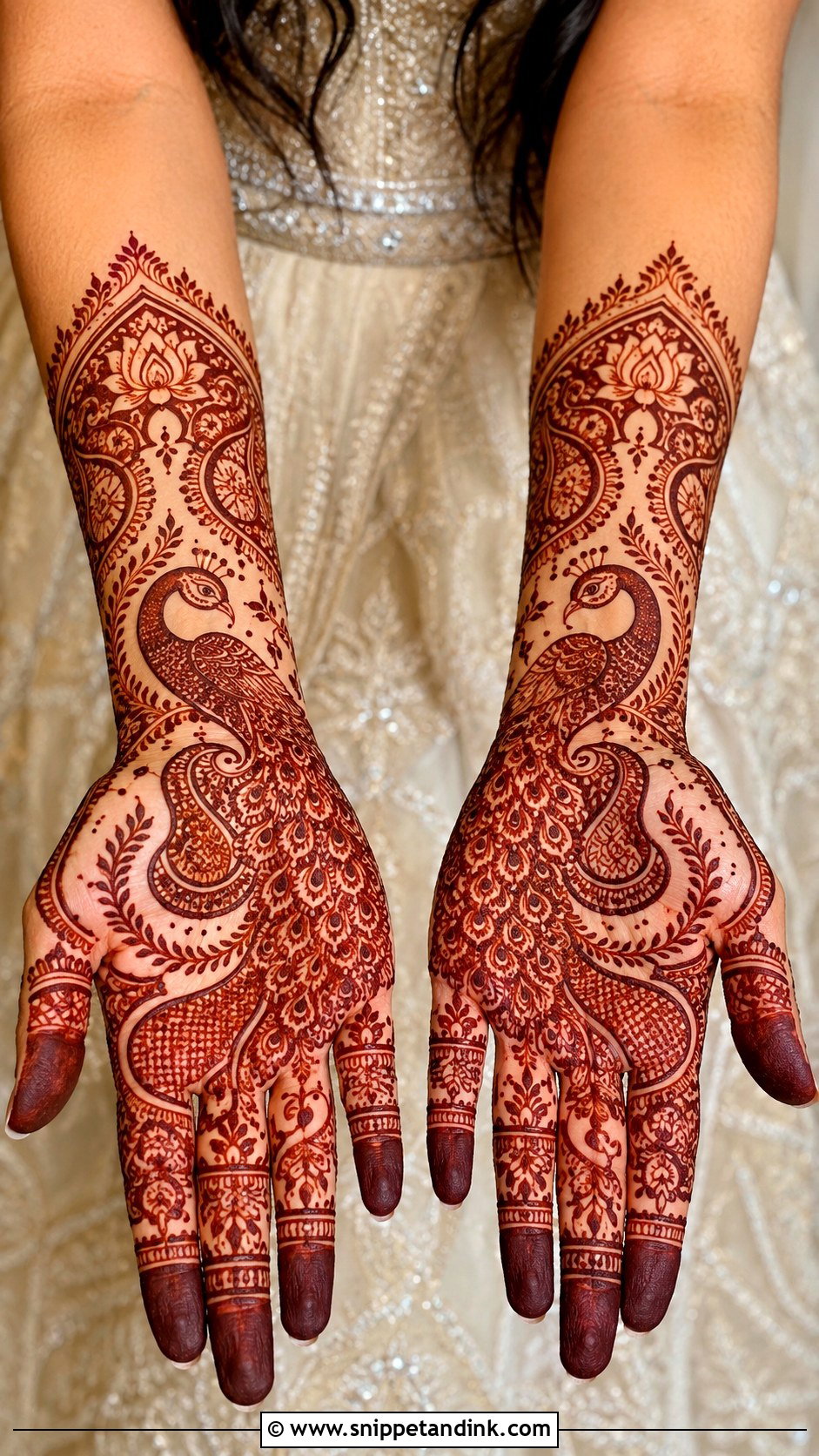
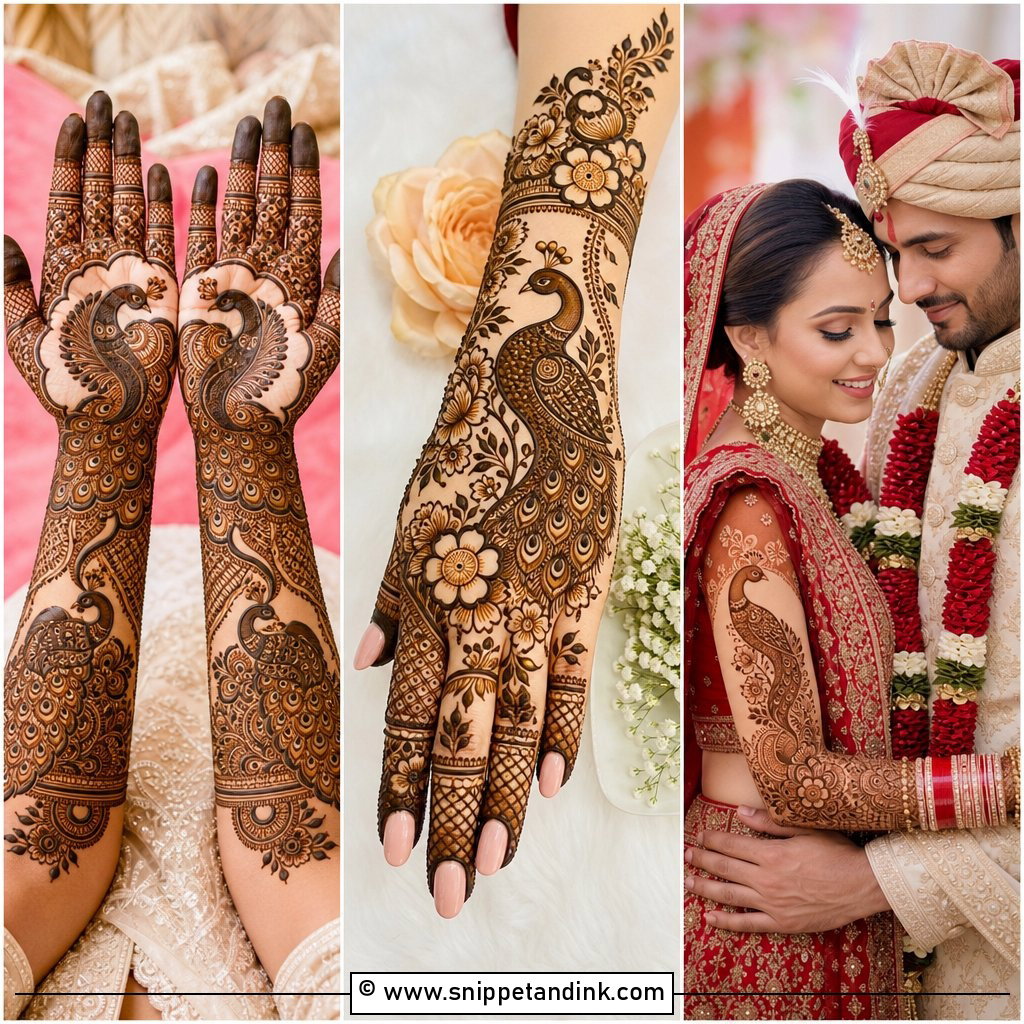
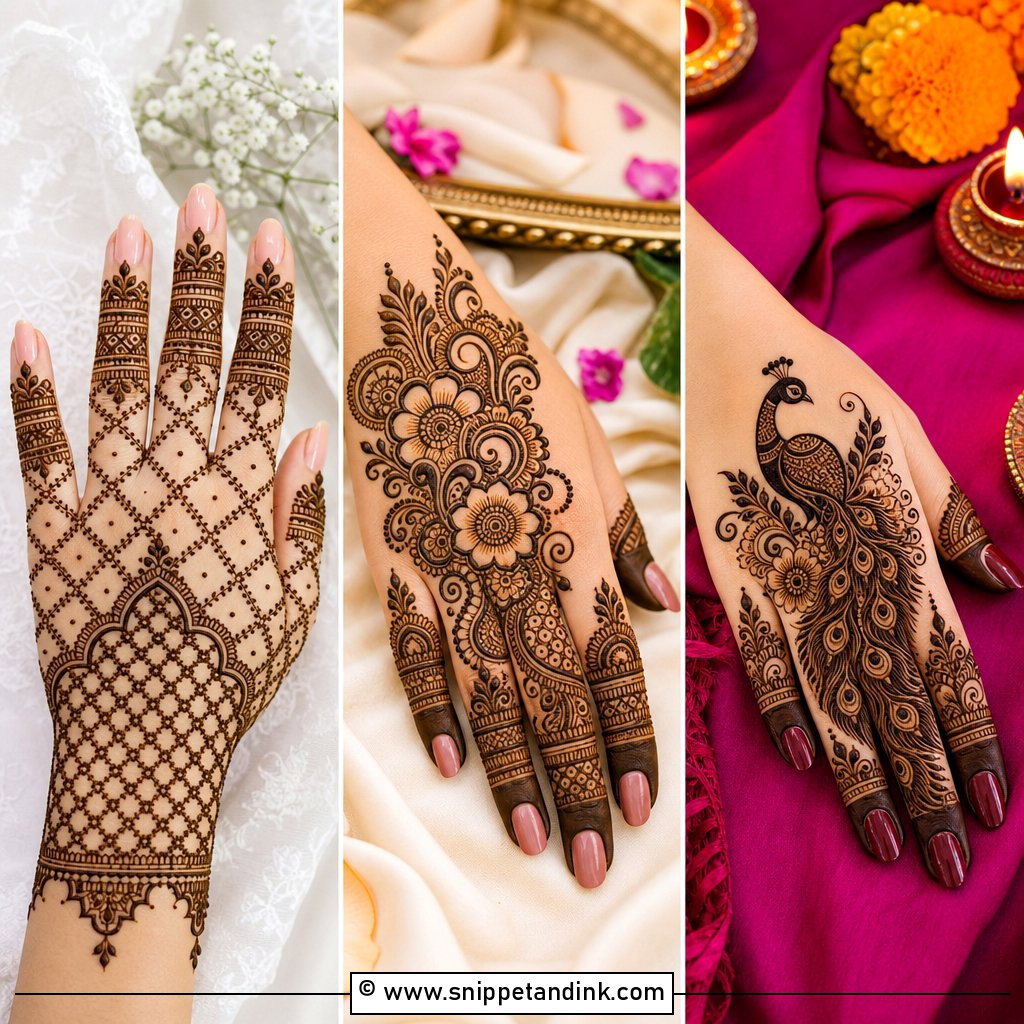
Without portraits, the peacock is how a Rajasthani hand gets its movement. It sits across the palm, wrist or forearm with feathers flowing into paisleys, flowers and vines, the feather sections filled with tiny checks, dots, leaf strokes and curves. Matching feather bands or floral tips finish the fingers. I keep the neck and body of the bird outlined more heavily than the filling around it, or it gets lost once the dense work darkens.
5. Rajasthani Mandala Mehndi Design
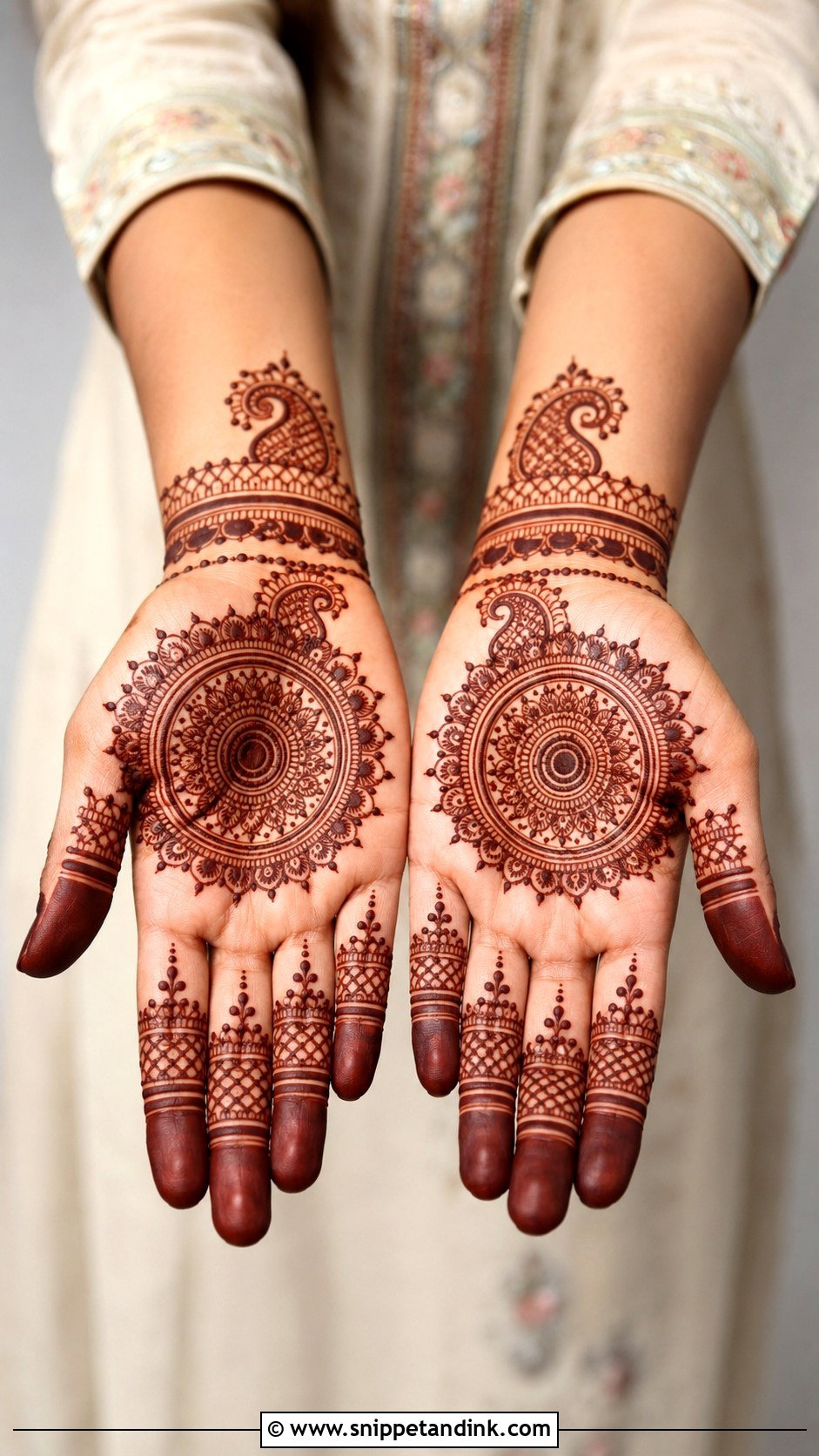
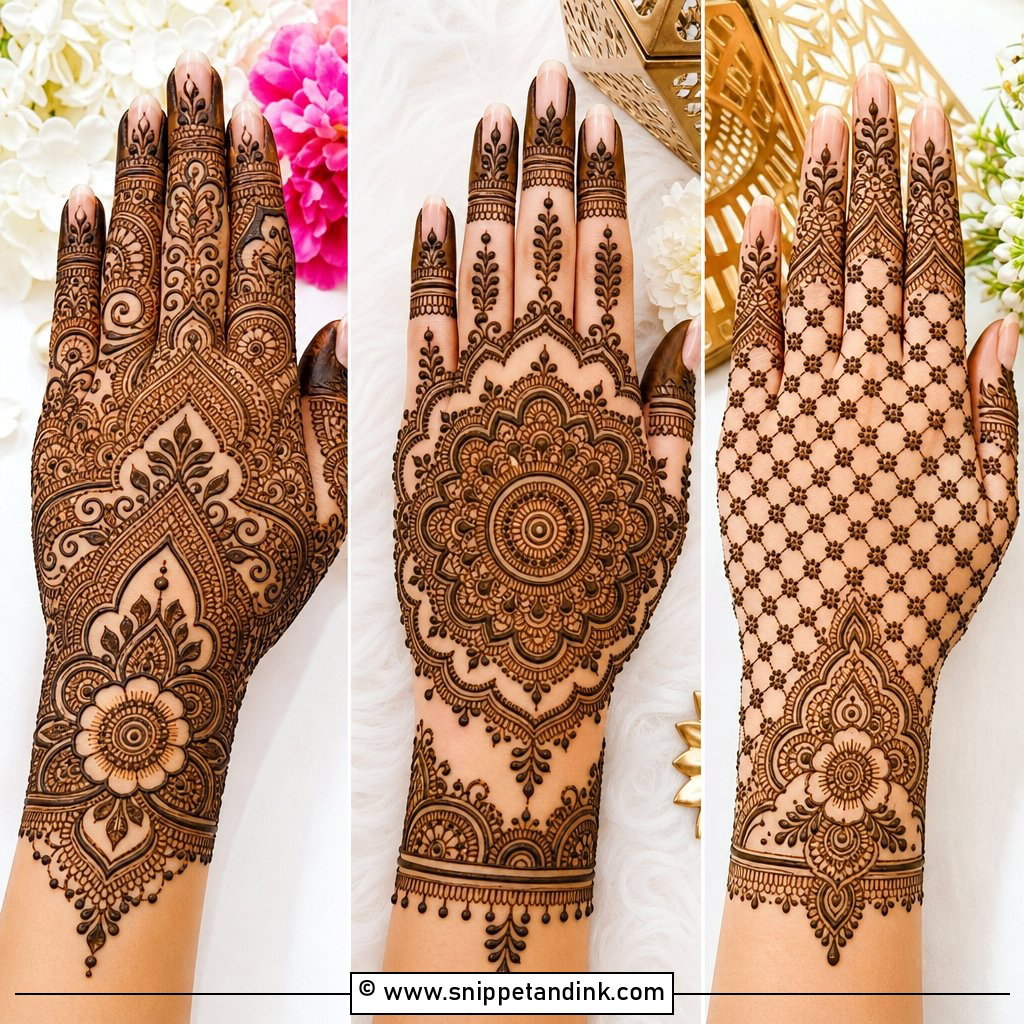
A bold circular mandala in the centre of the palm, ringed with petals, dots, curved lines and small paisleys, then matching bands on the fingers and a bracelet section at the wrist. It’s easier to read than dense figurative work but still feels complete, which suits engagements and festivals. Symmetry is everything, so I check the circle from the client’s side of the table as well as mine before I add the outer rings.
6. Rajasthani Back Hand Mehndi Design
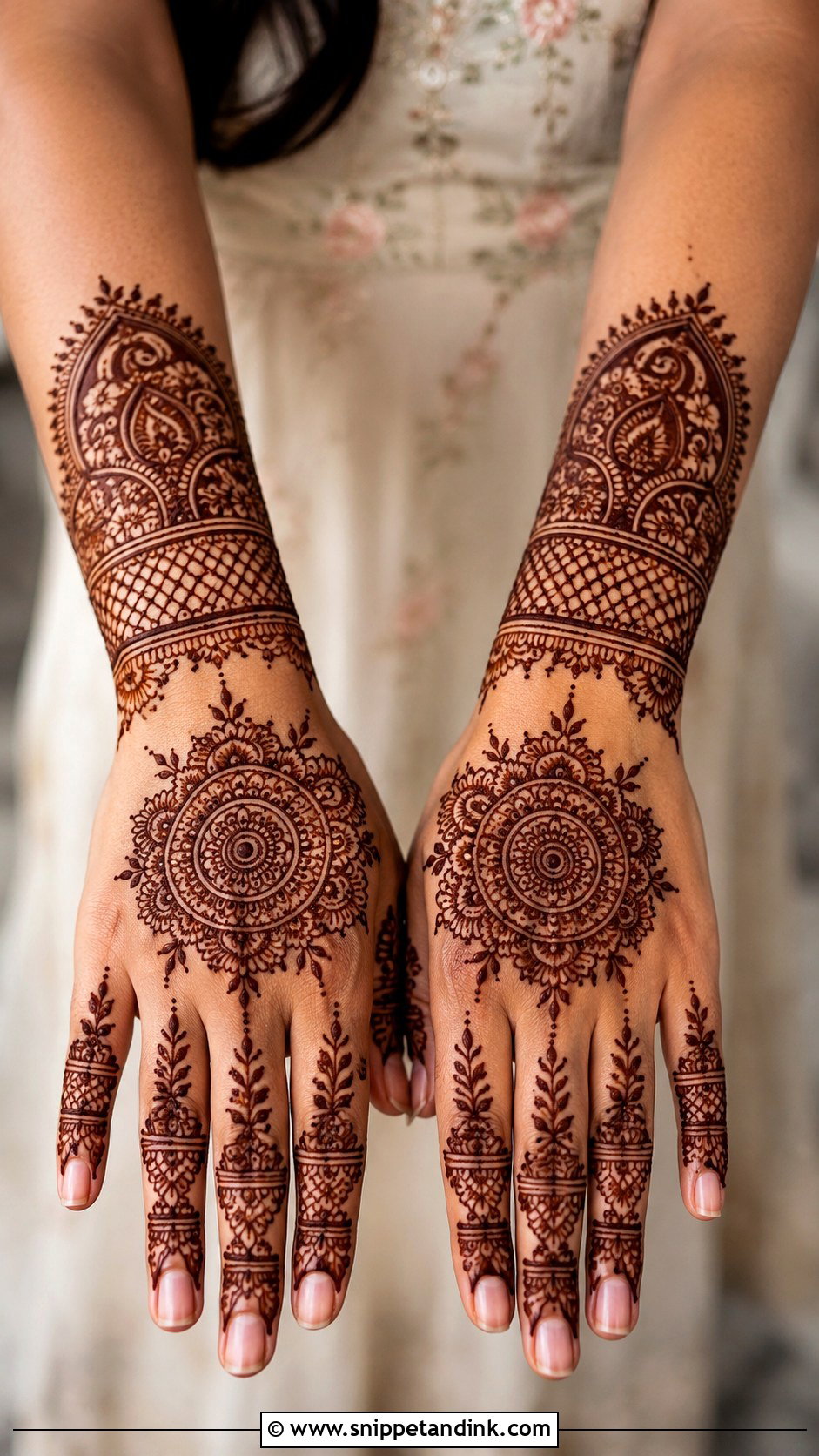
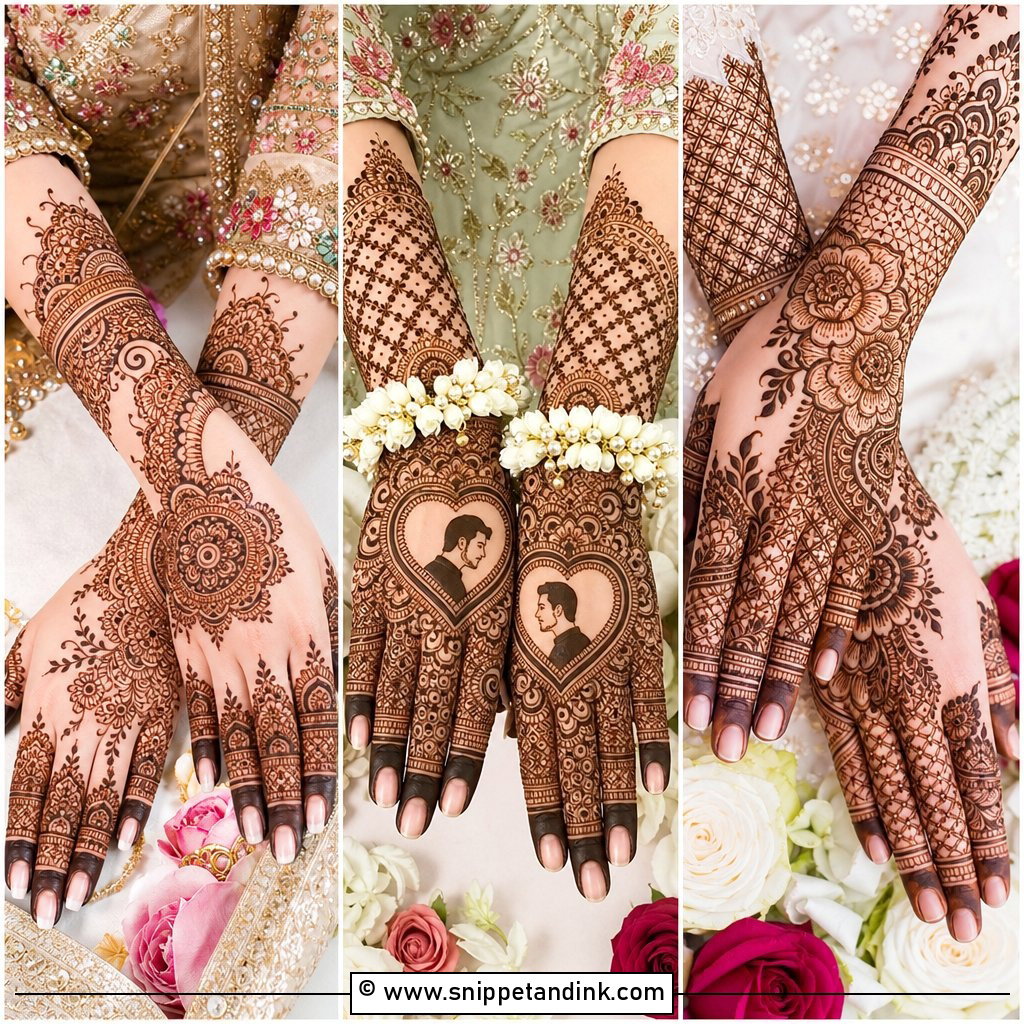
Rings, bangles and the back of the hand are what everyone sees at a ring ceremony, so this placement earns its popularity. A central mandala, floral medallion or peacock leads to the fingers through leafy chains, jaali sections and delicate bands, with a cuff-like border at the wrist borrowed from traditional jewellery. It’s easier to sit through than a heavy palm. The skin here is thinner and stains a little lighter, so I draw outlines slightly bolder than I would on the palm.
7. Rajasthani Front Hand Mehndi Design
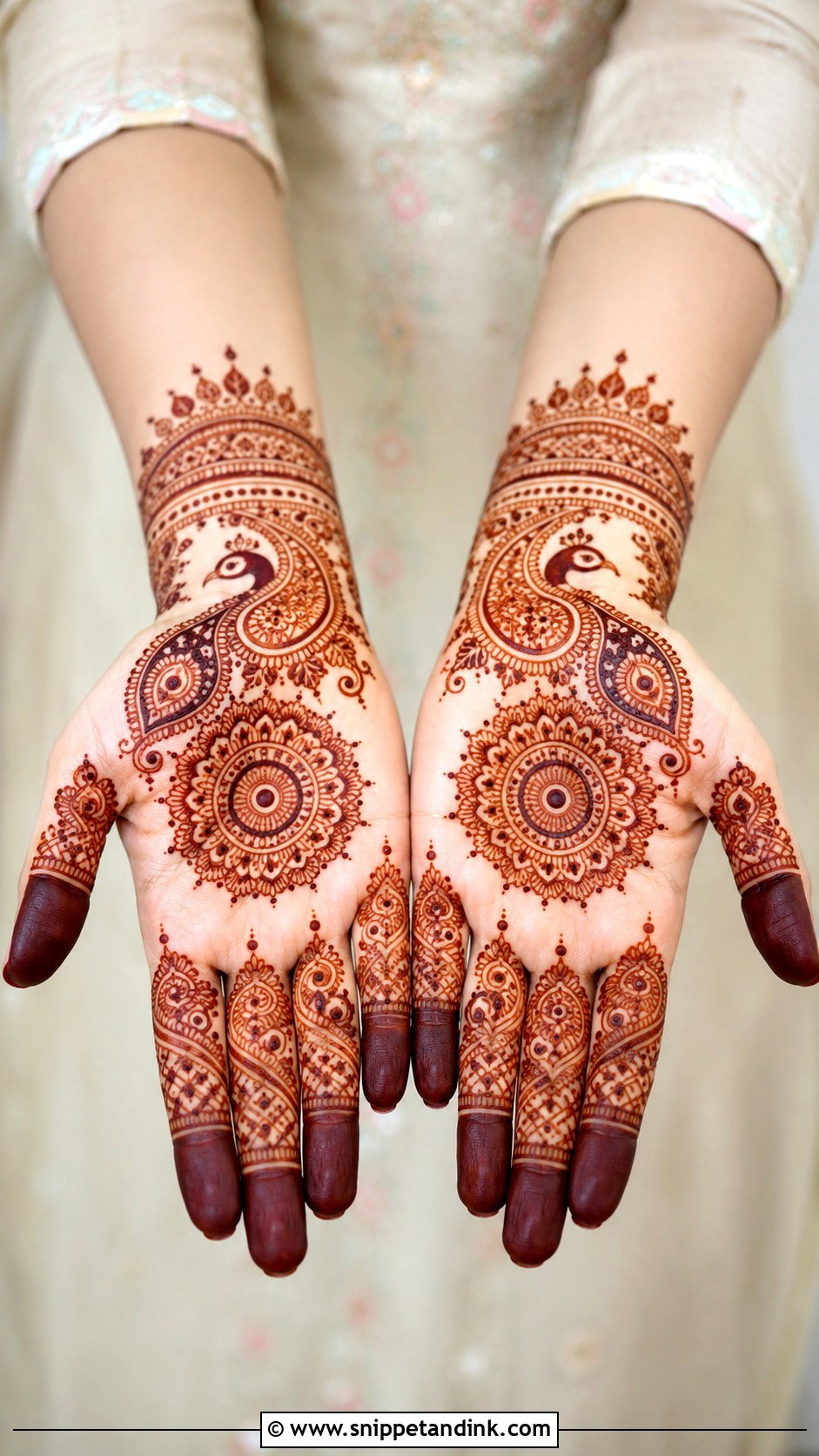
On the front of the hand, the palm carries a central mandala, a paisley pair, a peacock curve or a small bride-groom element surrounded by dense fillers. Fingertips are usually dipped solid for contrast, with thin bands, leaf chains and dotted lines along the fingers and a bracelet or small arch at the wrist. Haldi, mehndi night, Teej and Karwa Chauth all suit it. Because the palm takes the darkest colour, this is the version to choose if a deep stain matters most to you.
8. Rajasthani Arabic Mehndi Design
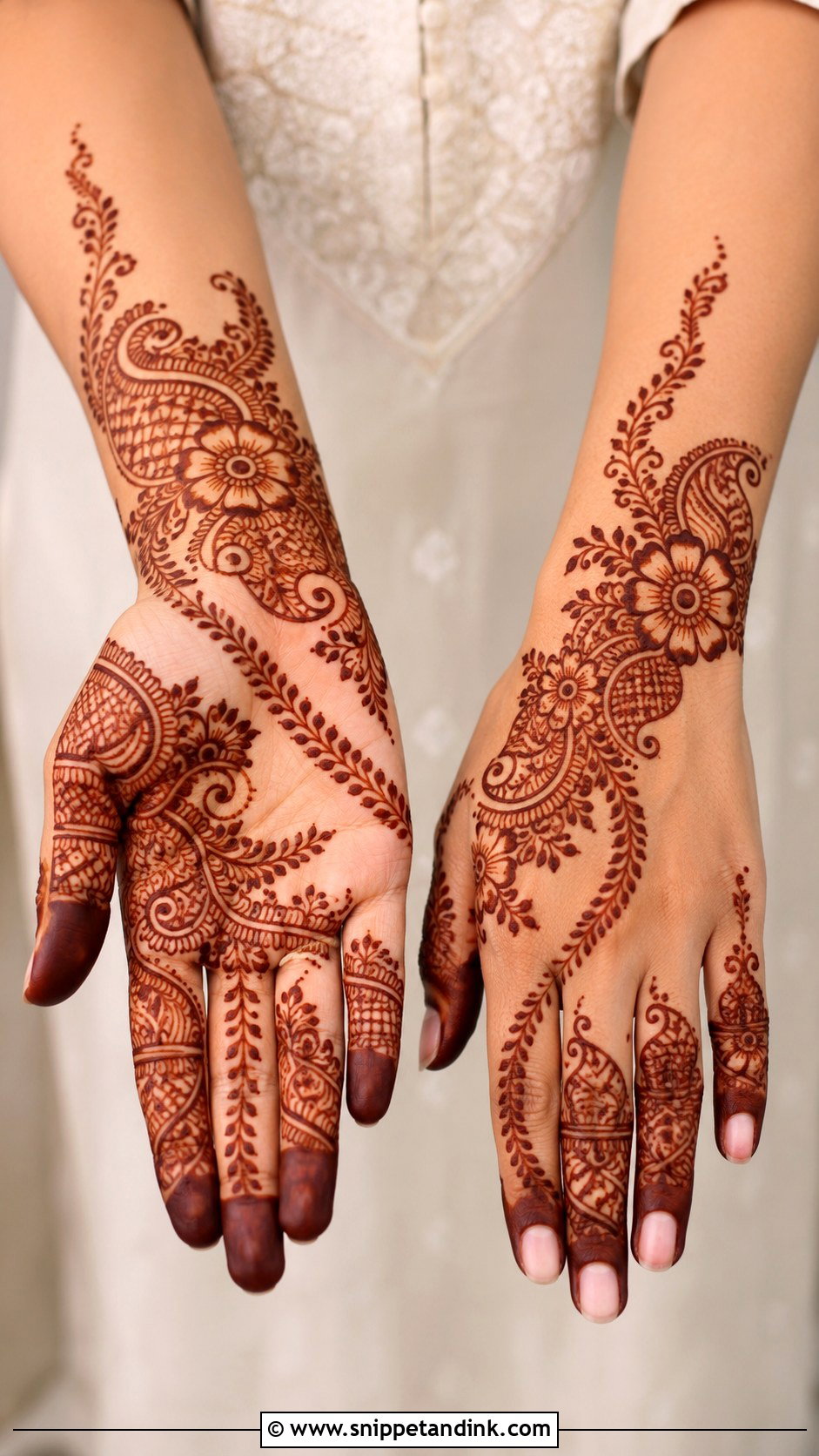
Here the Rajasthani style borrows the open diagonal of Arabic henna. Bold flowers, paisleys, leafy vines and curved negative spaces run across the hand, and the Rajasthani character comes through in fine jaali filling, small peacock elements and detailed fingers. It’s festive without the hours, so engagement parties, Eid, family weddings and sangeet nights suit it. I’d keep the jaali inside the big motifs only; spread across the open skin, it cancels the Arabic flow.
9. Rajasthani Indo Arabic Mehndi Design
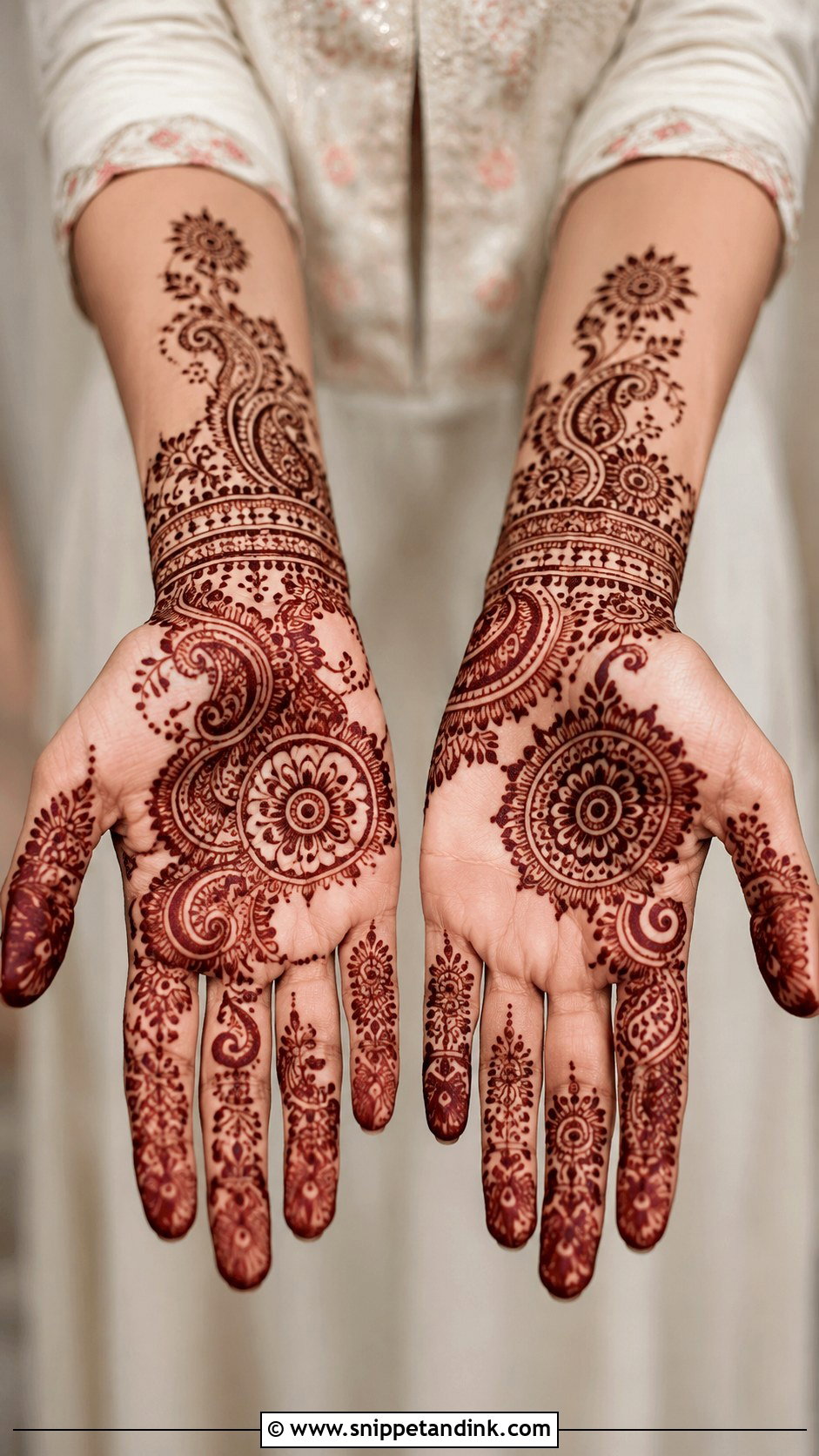
Indo-Arabic Rajasthani work keeps the flowing structure but packs Indian detail into paisleys, mandalas, fine fillers and ornamental borders. A bold floral or paisley cluster on the palm moves diagonally to the wrist and forearm, with half-filled bands, dots and leafy tips on the fingers. It looks detailed but takes far less time than full bridal work, so bridesmaids and guests ask for it. Visible skin between motifs is part of the design, not a gap to be filled.
10. Rajasthani Jaali Mehndi Design
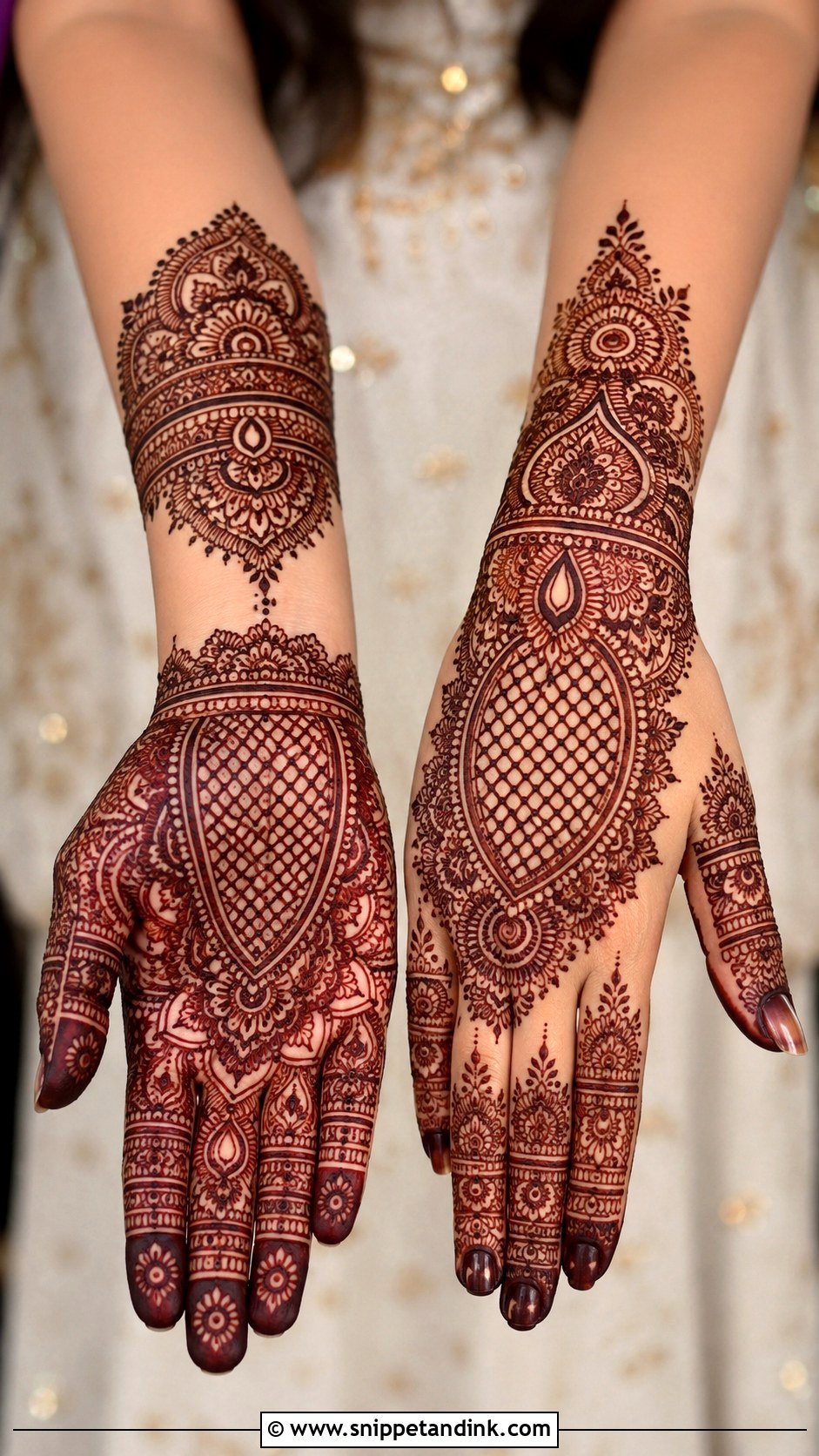
Jaali turns the hand into textile: a net of crossing lines on the palm, fingers, wrist or forearm, framed by paisleys, flowers and dotted borders, often combined with mandalas, peacocks or palace arches. It’s the technique that shows a henna artist’s control most plainly. If cone pressure varies even slightly, the net goes uneven, so I draw jaali early in a long session while my hand is steadiest. Done cleanly, it looks organised from every angle.
11. Rajasthani Paisley Mehndi Design
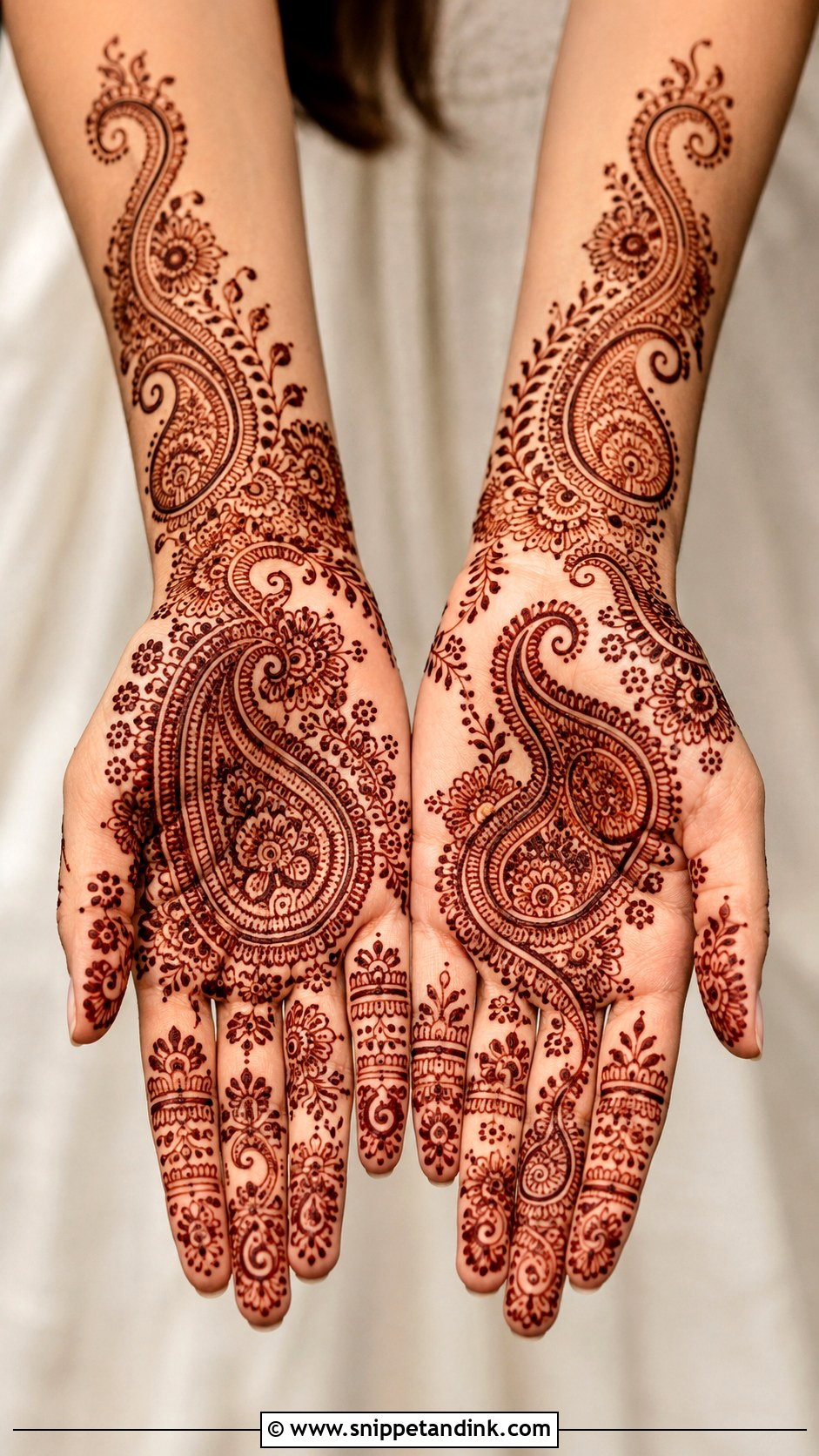
Paisleys follow the curve of the hand almost by themselves. A large one on the palm leads into smaller ones across the wrist and forearm, each filled with flowers, leaves, dots, checks and curved lines, with slim paisley tips on the fingers. Brides, mothers of the bride and festival wearers all choose it because it feels traditional without needing portraits. Larger paisleys near the palm and smaller toward the fingers keeps the eye moving the right way.
12. Rajasthani Elephant Mehndi Design
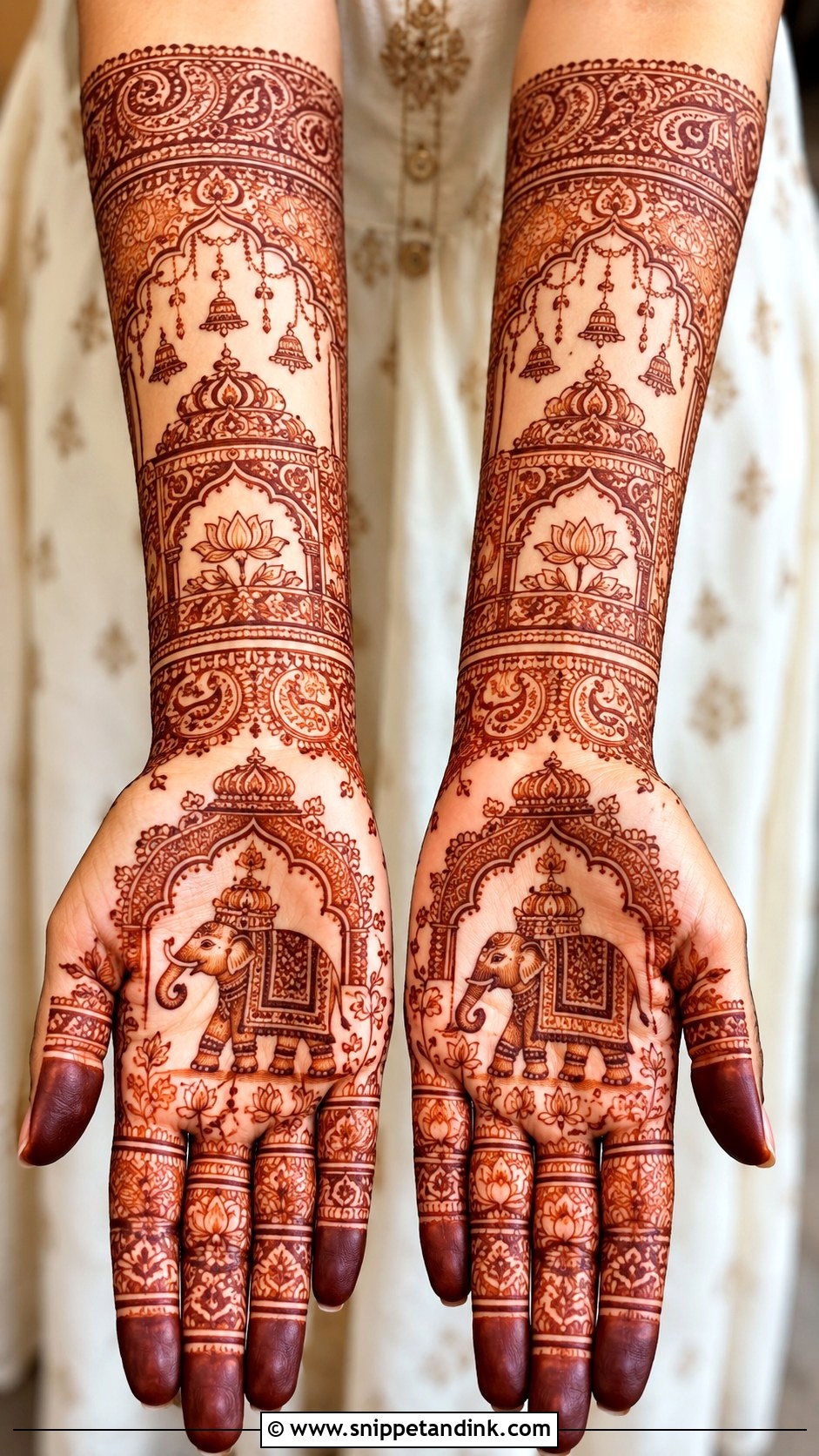
Elephants bring the palace and the procession onto the hand. The animal usually sits on the palm or forearm, dressed in an ornamental blanket with bells and fine line work, surrounded by paisleys, lotus flowers, arches, jaali and dotted borders. Elephants are tied to celebration and grand processions, which is why they suit bridal hands so well, and they fit Jaipur- or Udaipur-themed weddings naturally. The forearm usually gives them more room than the palm; a cramped elephant reads as a blob.
13. Rajasthani Jharokha Mehndi Design
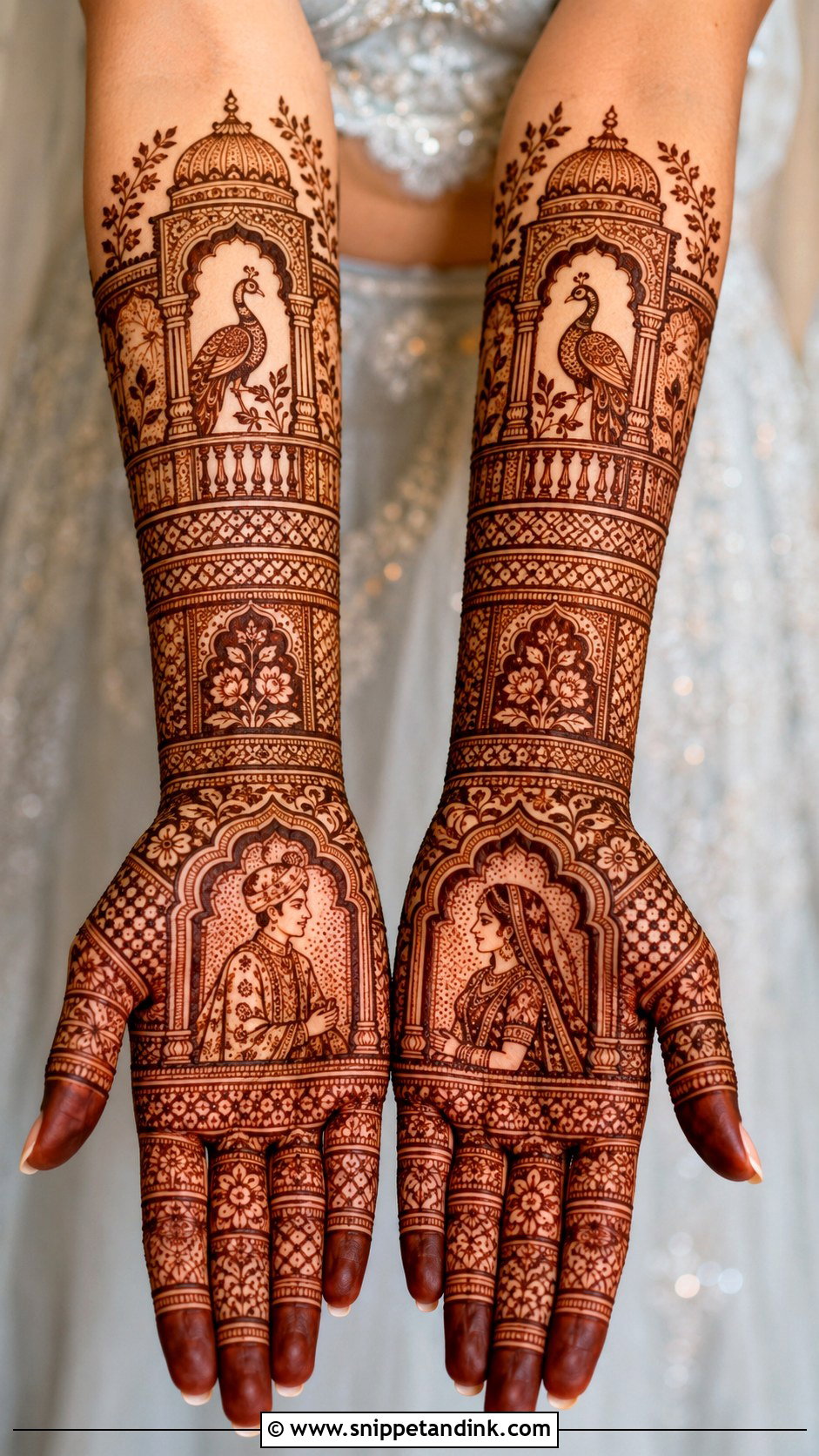
Jharokha designs borrow the carved palace windows of Rajasthan. Arch-shaped frames on the palm or forearm hold bride-groom portraits, peacocks, florals or mandalas, with lattice, paisley borders and delicate vines around them. The arches give structure and natural focal points, so even dense work stays readable. I draw every arch outline first and fill the windows afterwards, which keeps the frames matched in height across the hand.
14. Rajasthani Sheesh Mahal Mehndi Design
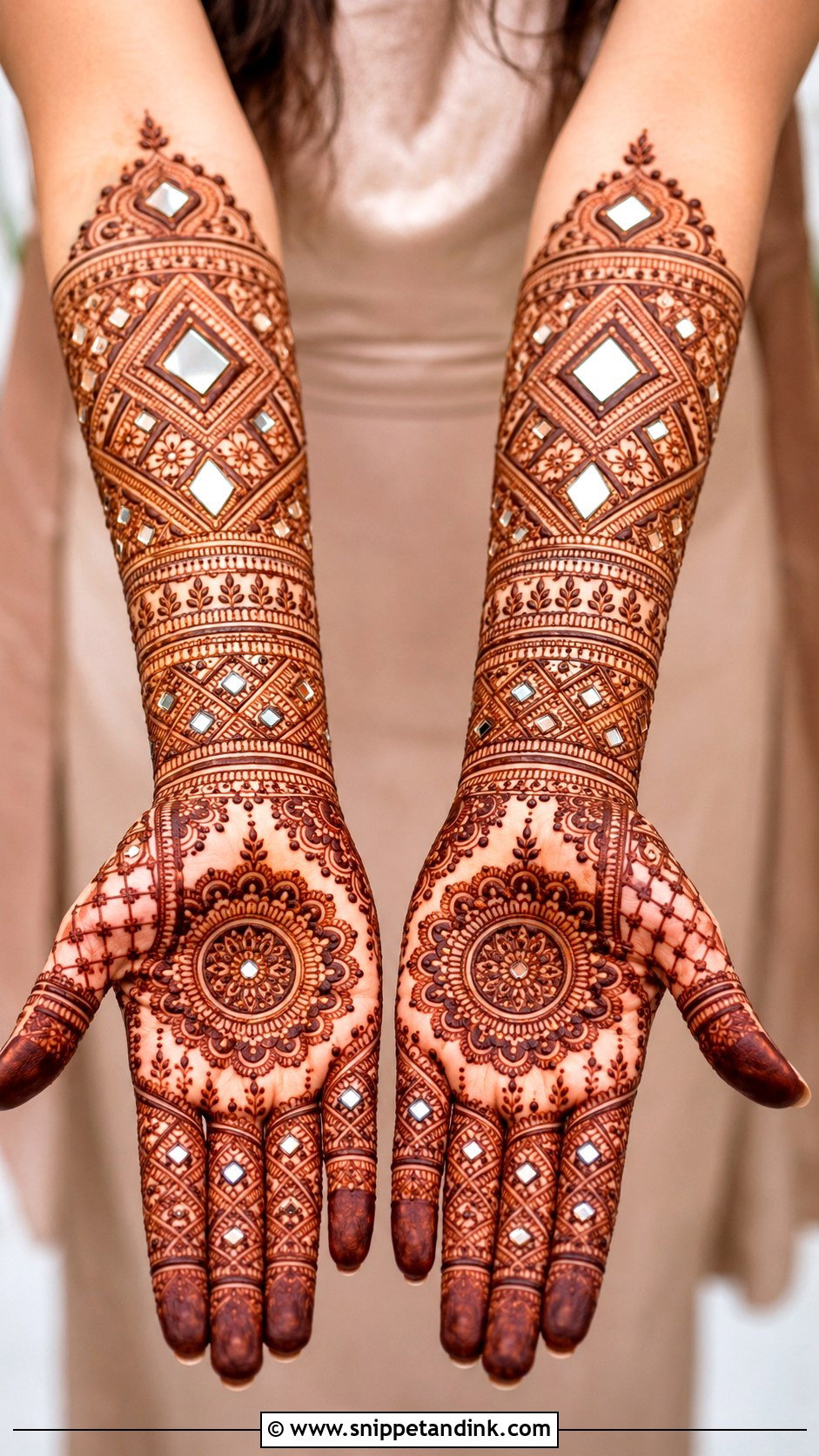
Sheesh Mahal work takes its cue from mirror-studded palace rooms: repeating diamonds, small panels that look like reflecting glass, jaali grids, floral frames and ornamental borders. A central mandala or arch sits on the palm, with structured geometric sections running up the wrist and forearm. It suits people who prefer neat, symmetrical artwork to loose floral trails. Crisp lines are non-negotiable here, because dozens of tiny shapes magnify every wobble.
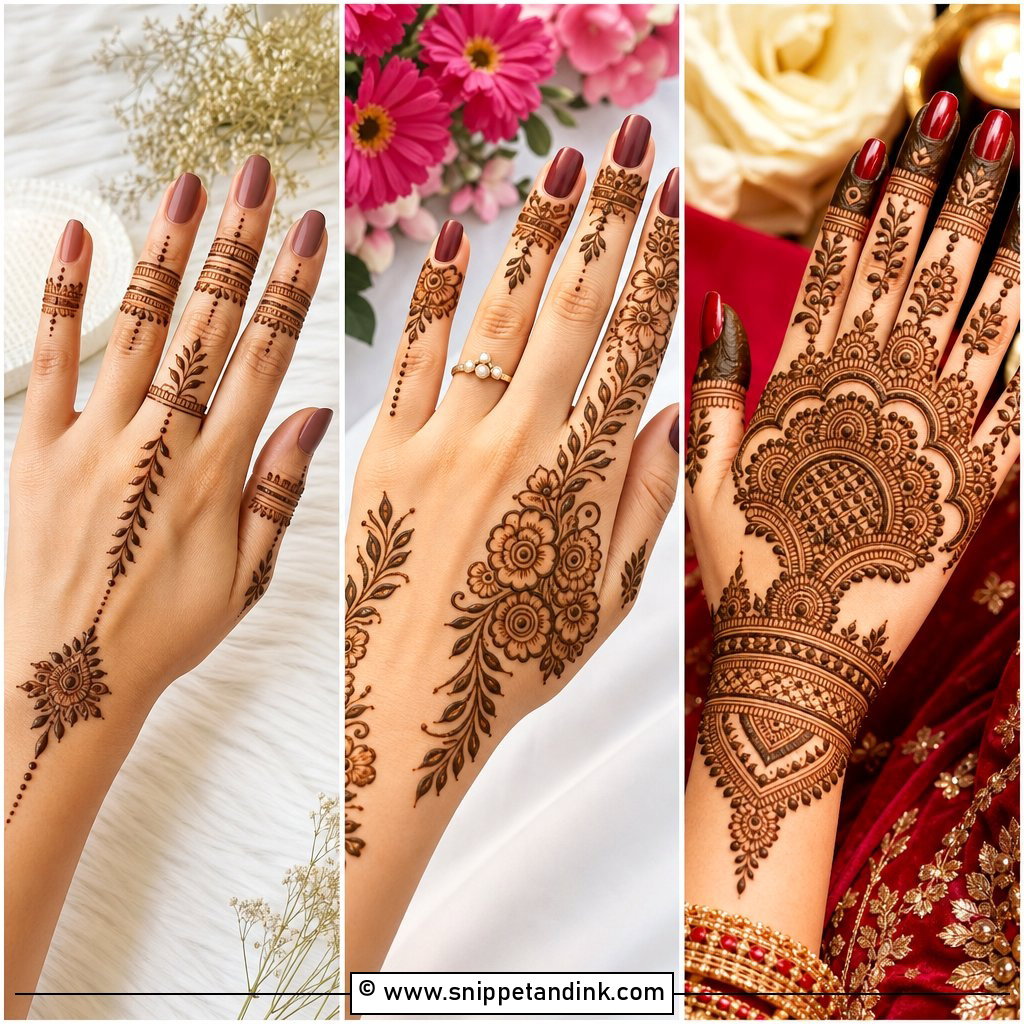
15. Rajasthani Marwari Mehndi Design
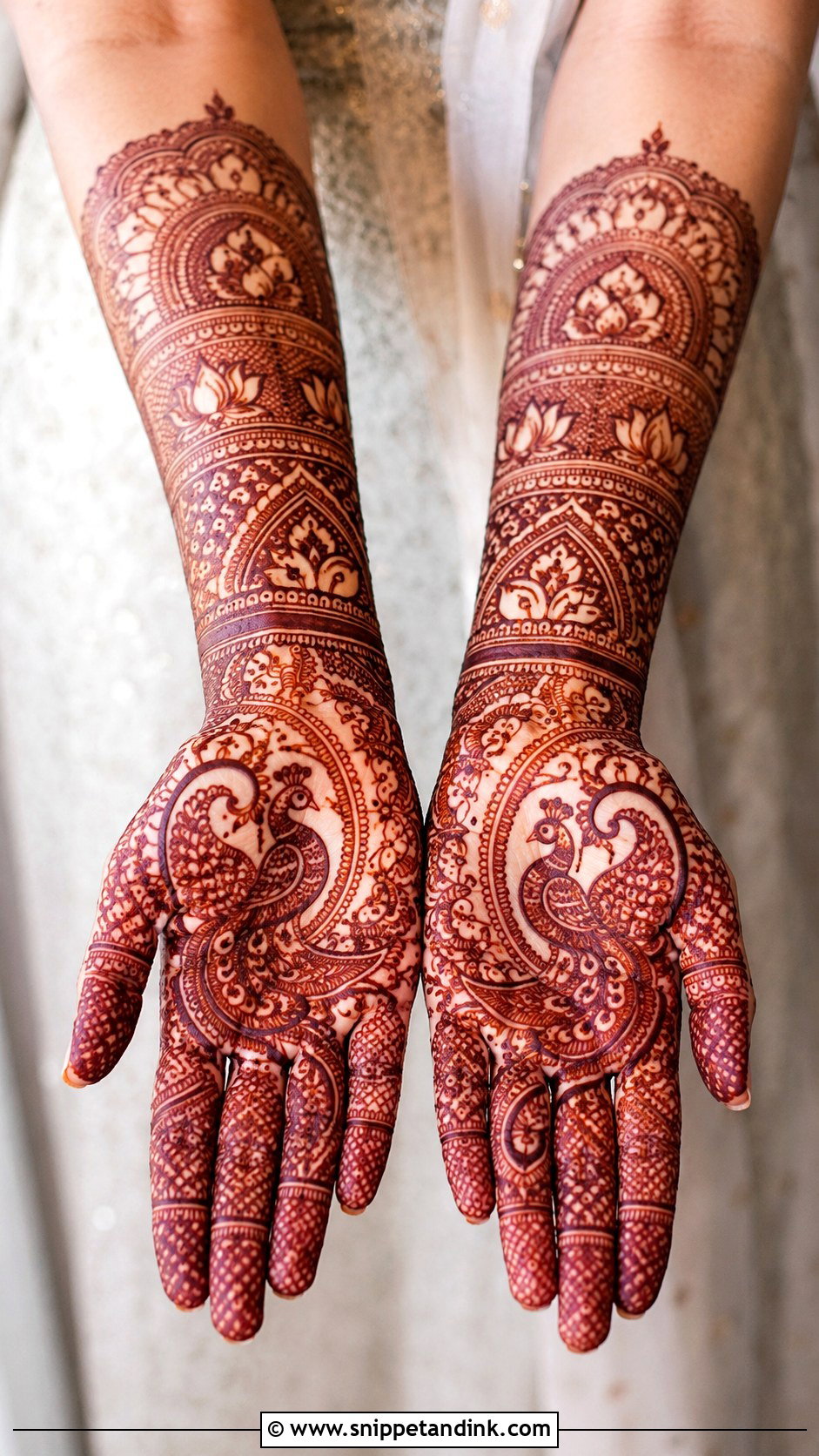
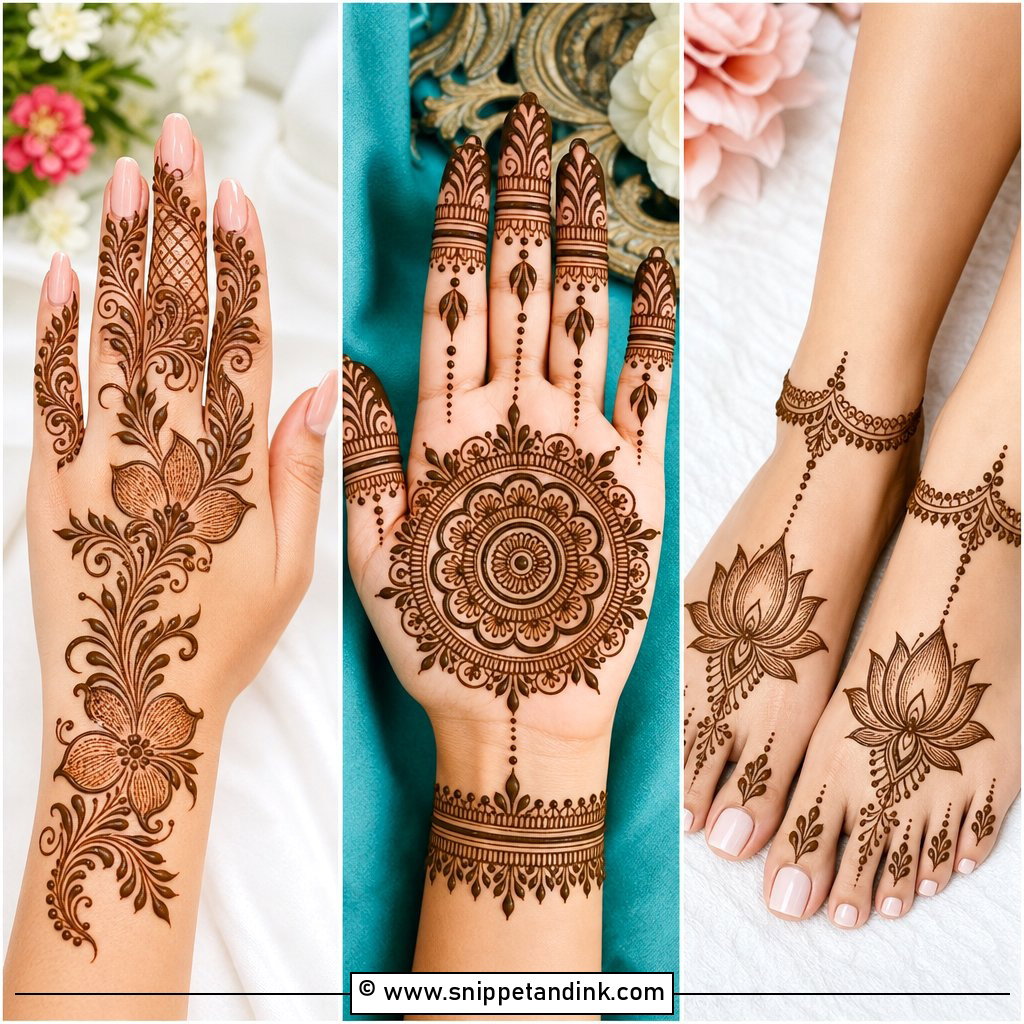
Marwari designs pack the palm with fine paisleys, peacocks, lotus elements, bride-groom figures and carefully filled fingers, often running up the forearm in bands that look like bangles. Small repeated details make the hand look full and festive. It’s rooted in Rajasthani wedding tradition and sits well with red, orange, pink and gold outfits. Repetition is the craft here; I keep each repeated element the same size so the hand looks woven rather than scattered.
16. Rajasthani Royal Mehndi Design
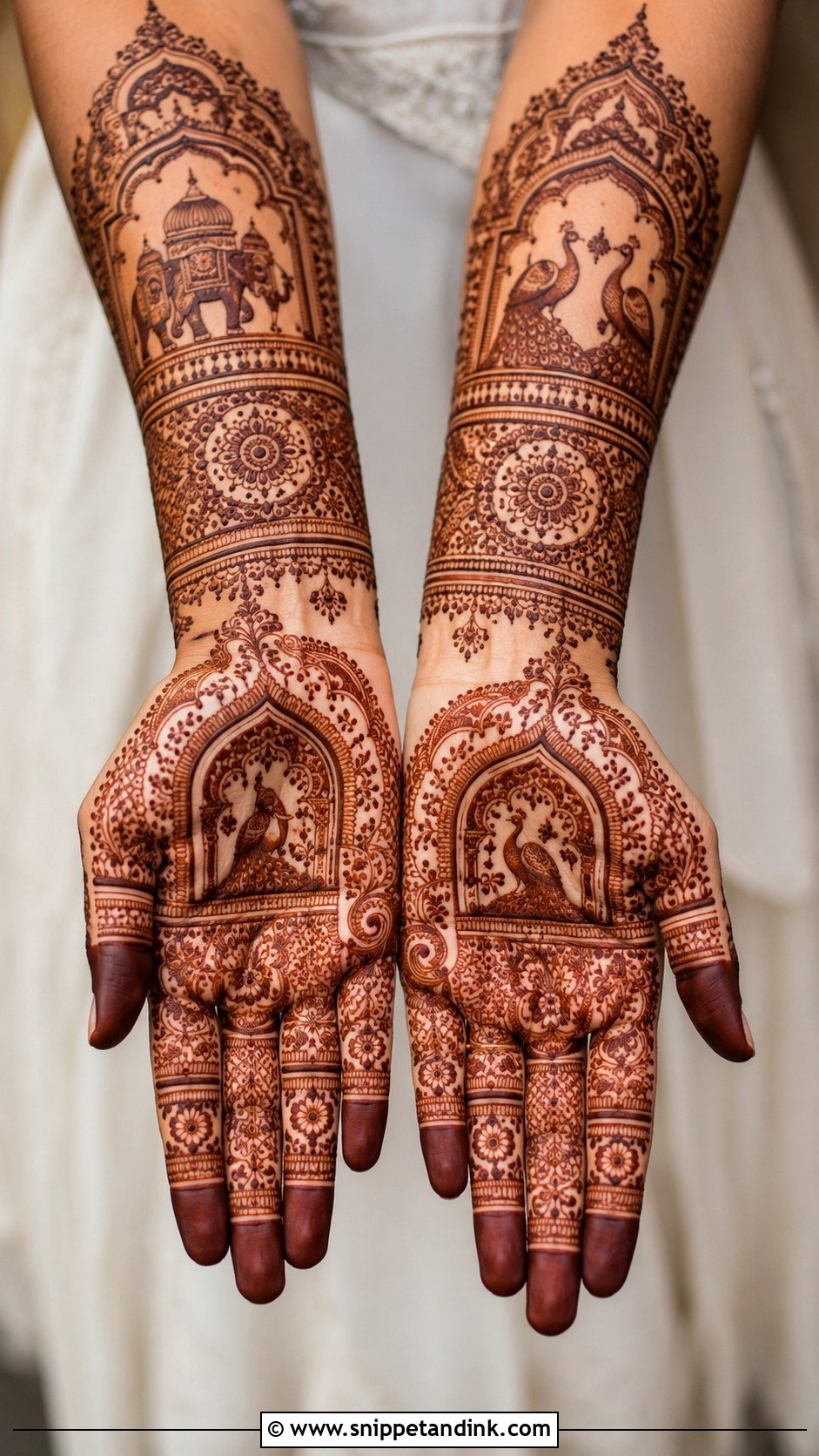
Royal layouts combine palace arches, elephants, peacocks, paisleys, mandalas and jewellery-like wrist bands in one design, with a bold focal point on the palm and layered panels on the forearm. With that many motifs, each one needs its own frame and a little breathing room inside it, or it looks cluttered. Fine dots and border lines connect the sections. Bridal events and receptions where the hands need to carry the outfit are where it belongs.
17. Rajasthani Simple Mehndi Design
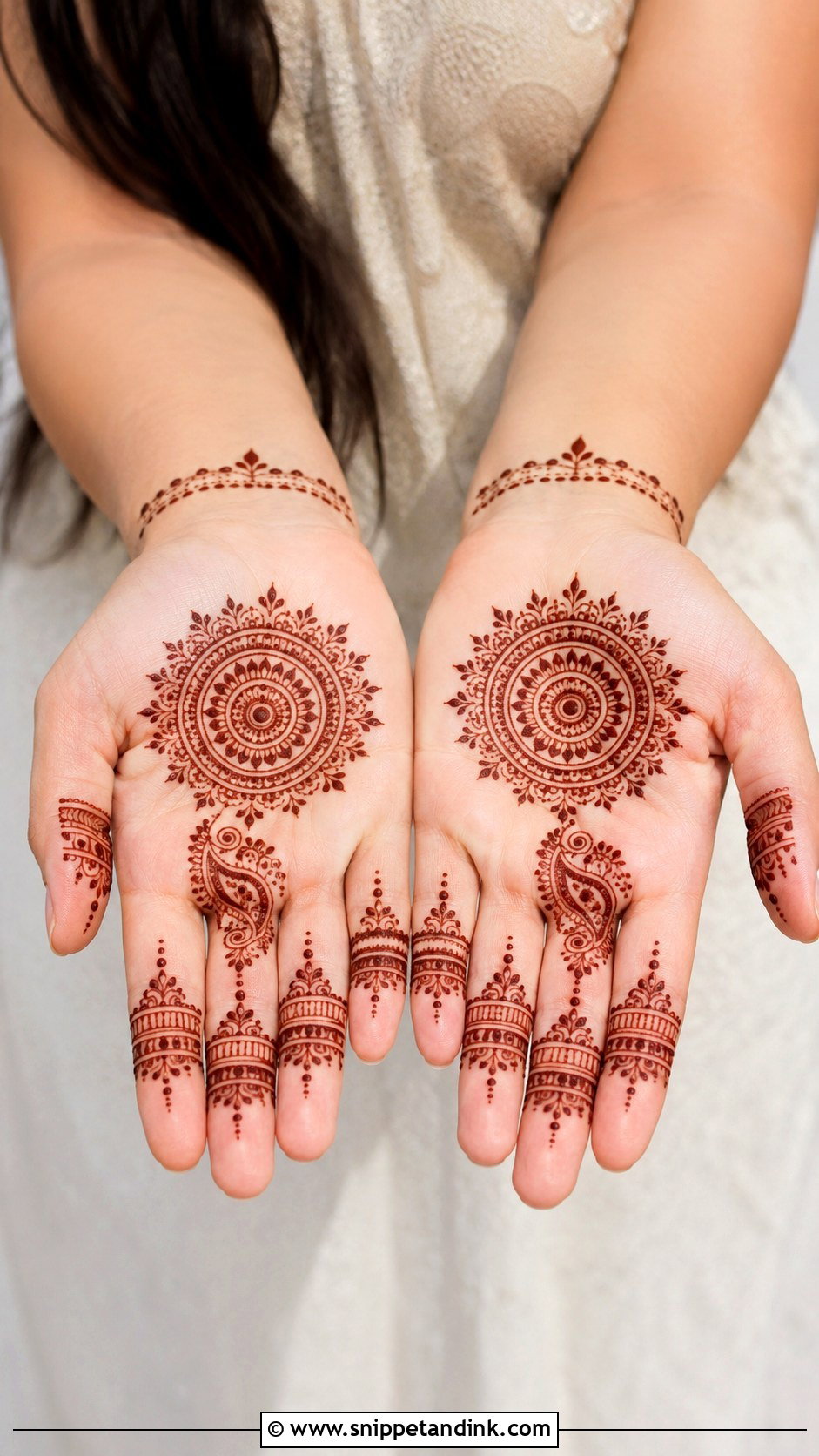
Simple Rajasthani keeps the tradition and cuts the density: a neat mandala, small peacock or paisley cluster on the palm, clean bands and dots on the fingers, and a bracelet strip instead of forearm work. It’s quick enough for casual festivals, young girls and beginners, yet should still feel complete from palm to fingertips. Strong outlines with small fillers in the right places carry it. If you’re practising at home, this is the one I’d start with.
18. Rajasthani Minimal Mehndi Design
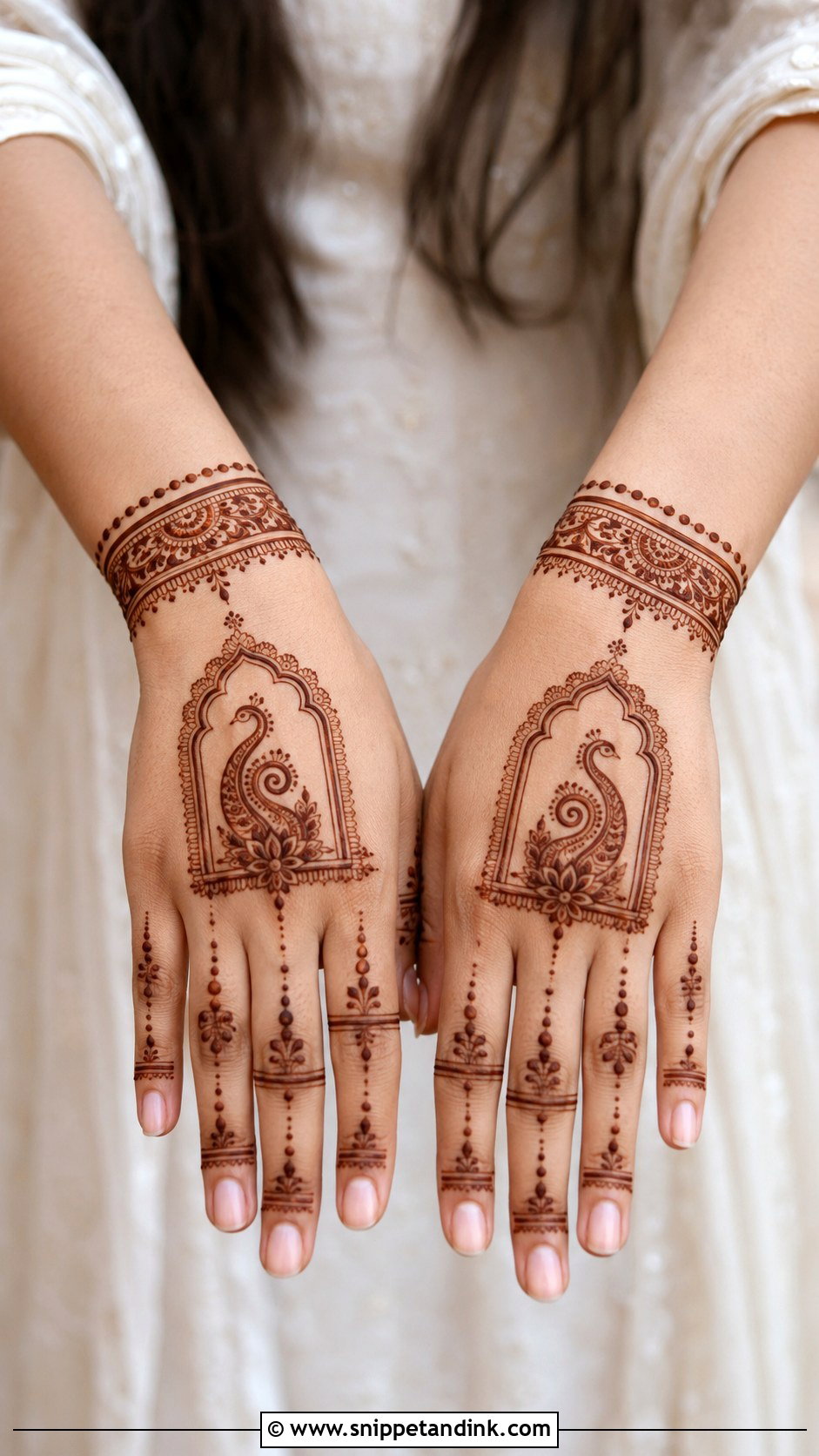
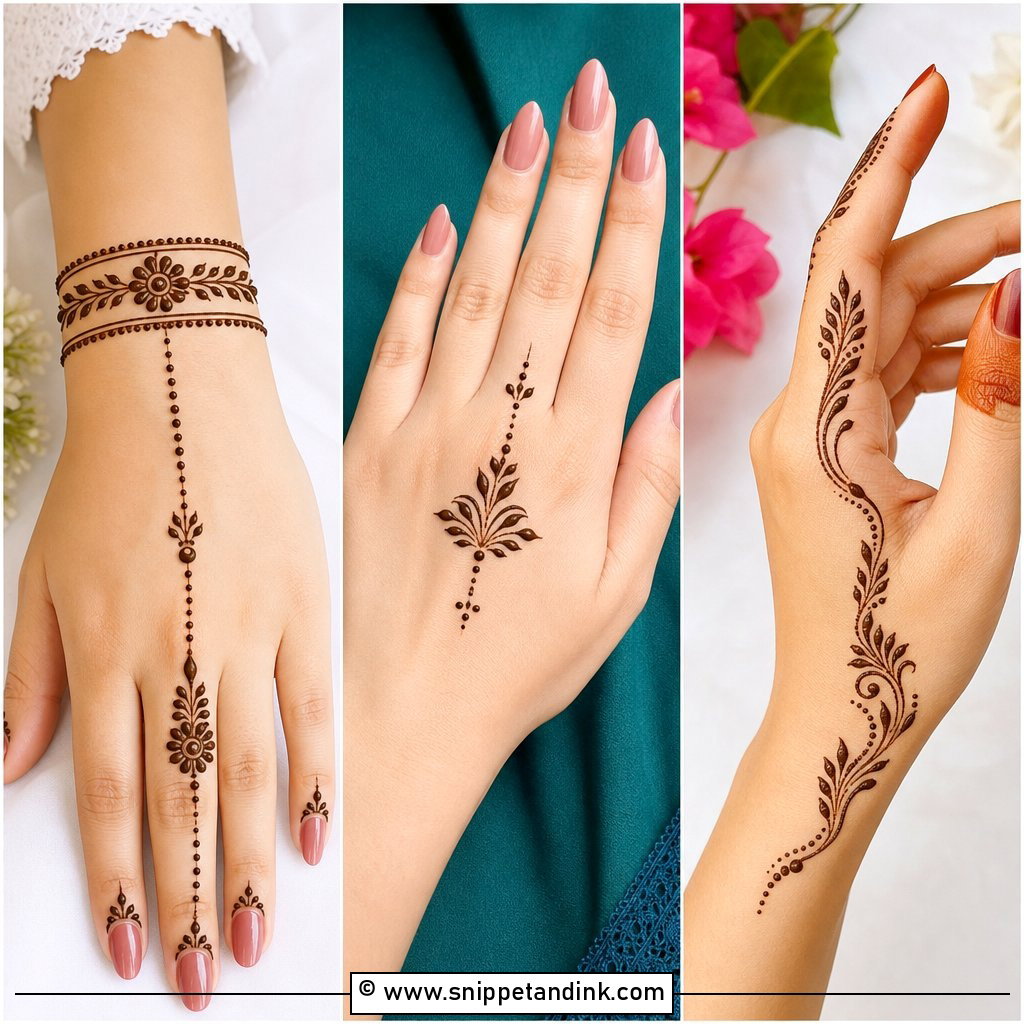
Minimal versions use one central mandala, a small jharokha frame or a single peacock curve, with clean finger details and plenty of negative space. A thin cuff or dotted bracelet finishes the wrist. It suits engagements, office-friendly festivals and bridesmaids who want subtle henna. To keep it recognisably Rajasthani rather than generic, I add one signature element, small paisley accents, fine dots or an arch-shaped border.
19. Rajasthani Heavy Mehndi Design
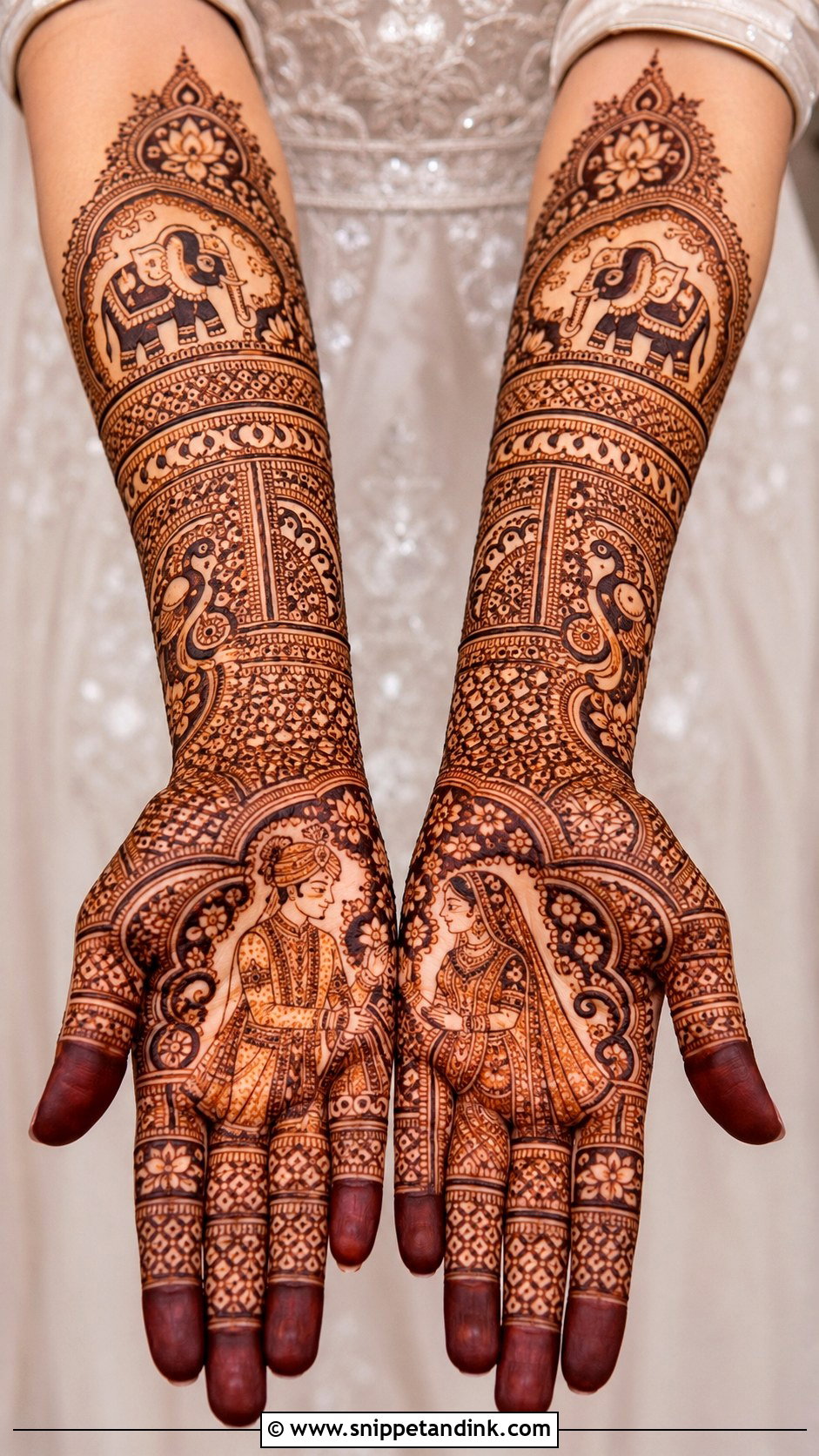
Heavy Rajasthani coverage fills palms, fingers, wrists and forearms almost completely: portraits, peacocks, elephants, paisleys, mandalas, jaali, vines and layered borders. It gives a dramatic stain and the most traditional look of anything here. Organisation is what separates rich from muddy. I place the large motifs first, then fill the gaps with dots, checks, leaves and fine lines, never the other way round.
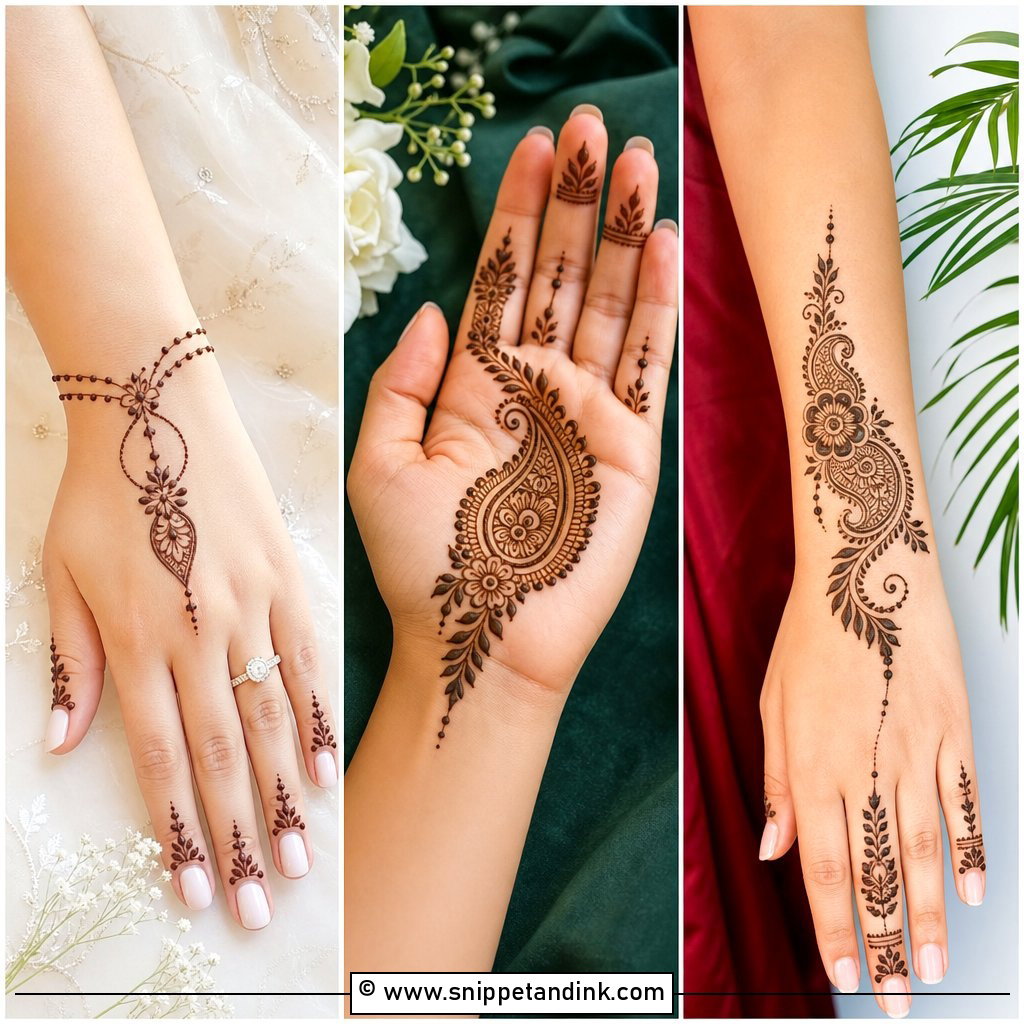
20. Rajasthani Half Hand Mehndi Design
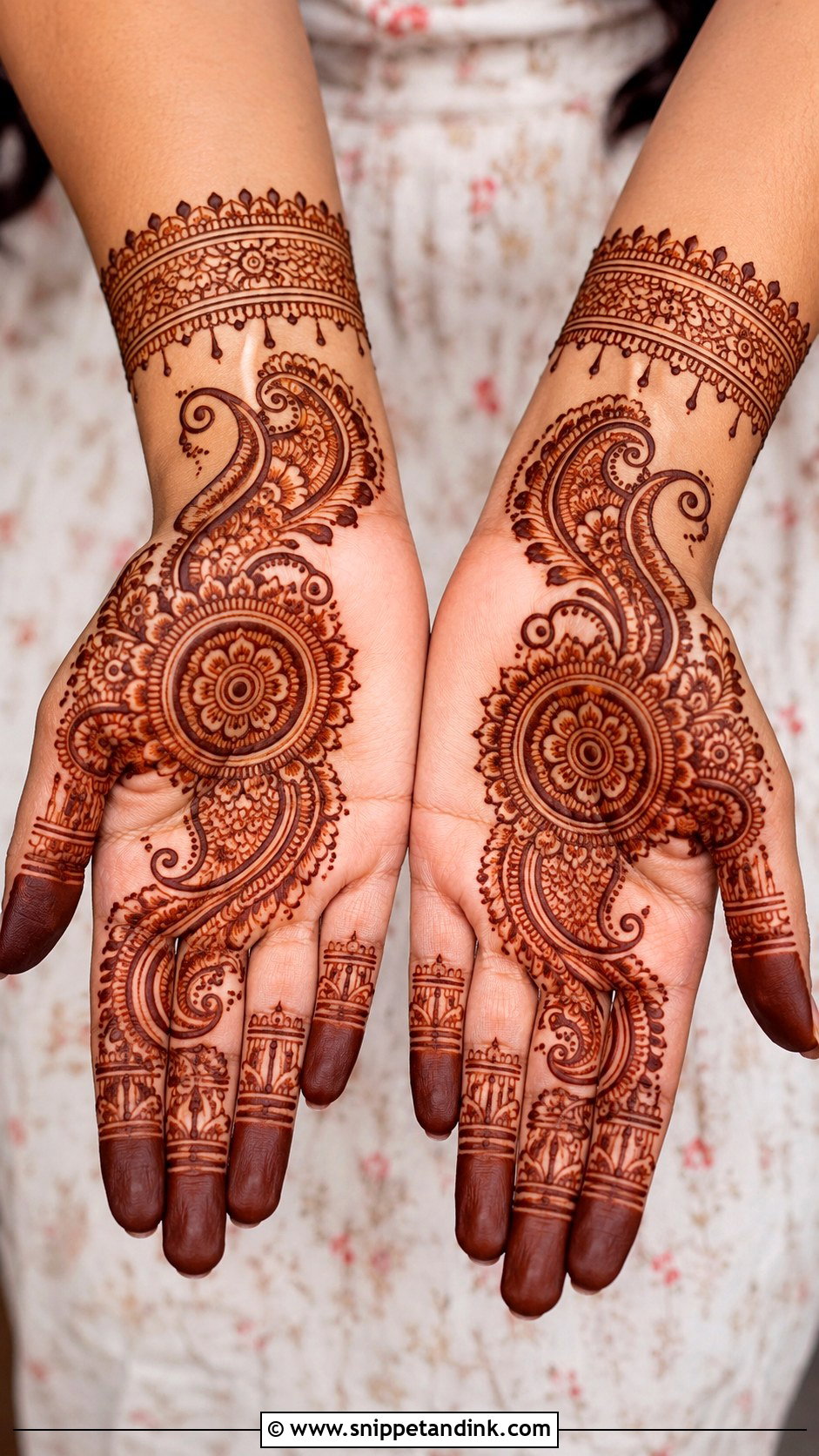
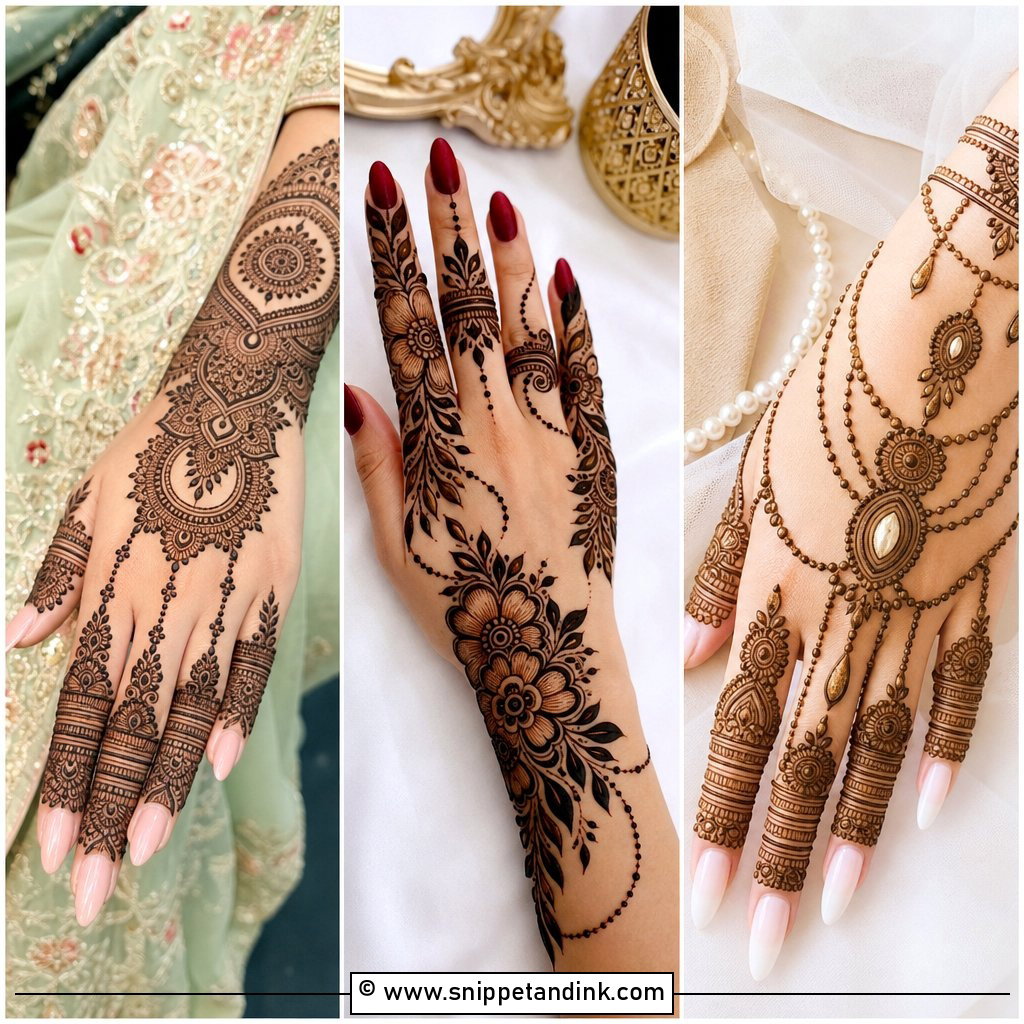
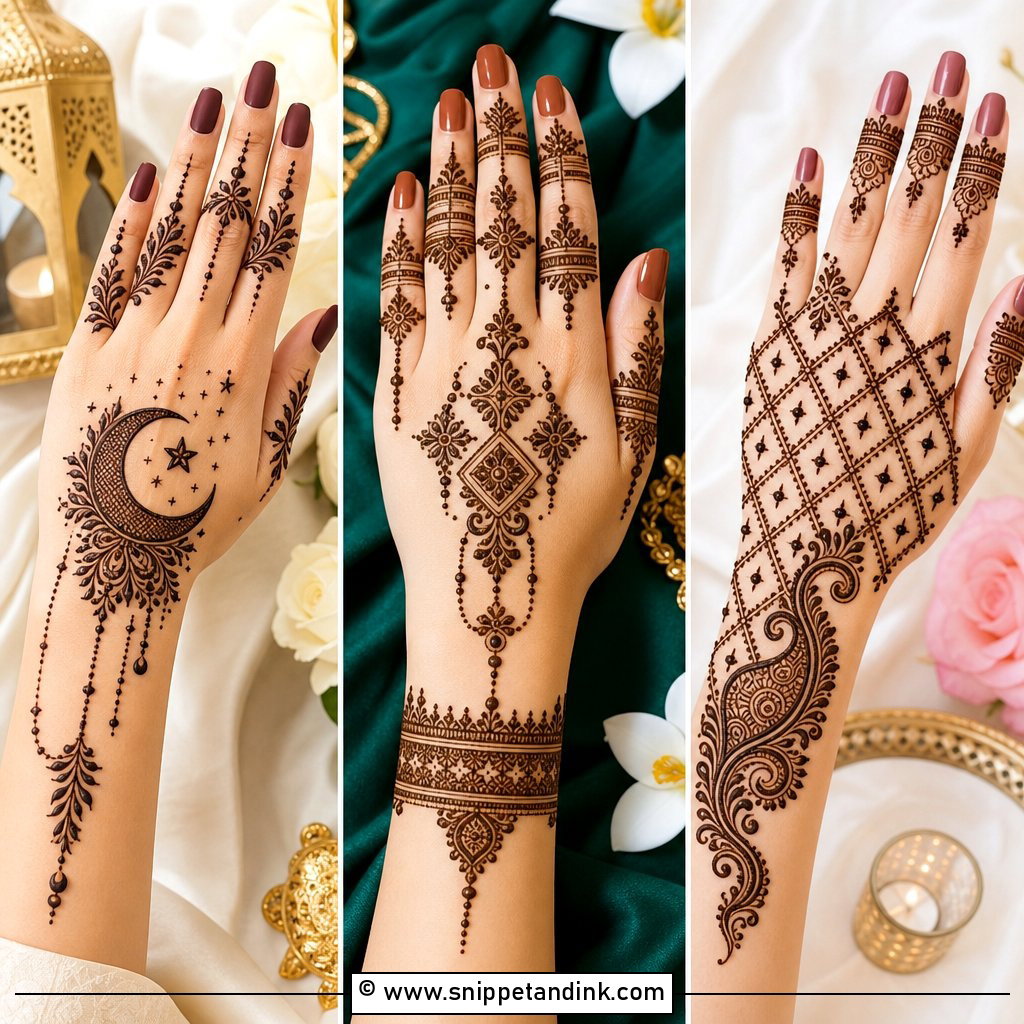
Half-hand Rajasthani covers the palm, fingers and wrist and stops before the forearm. A mandala, paisley trail, peacock curve or floral centrepiece leads, with detailed fingers and a bangle-like border at the wrist. It’s quicker and more comfortable than full bridal work, so guests and bridesmaids attending several functions often prefer it. The finger work matters more here than on a full hand, since there’s no forearm to balance a light palm.
21. Rajasthani Finger Mehndi Design
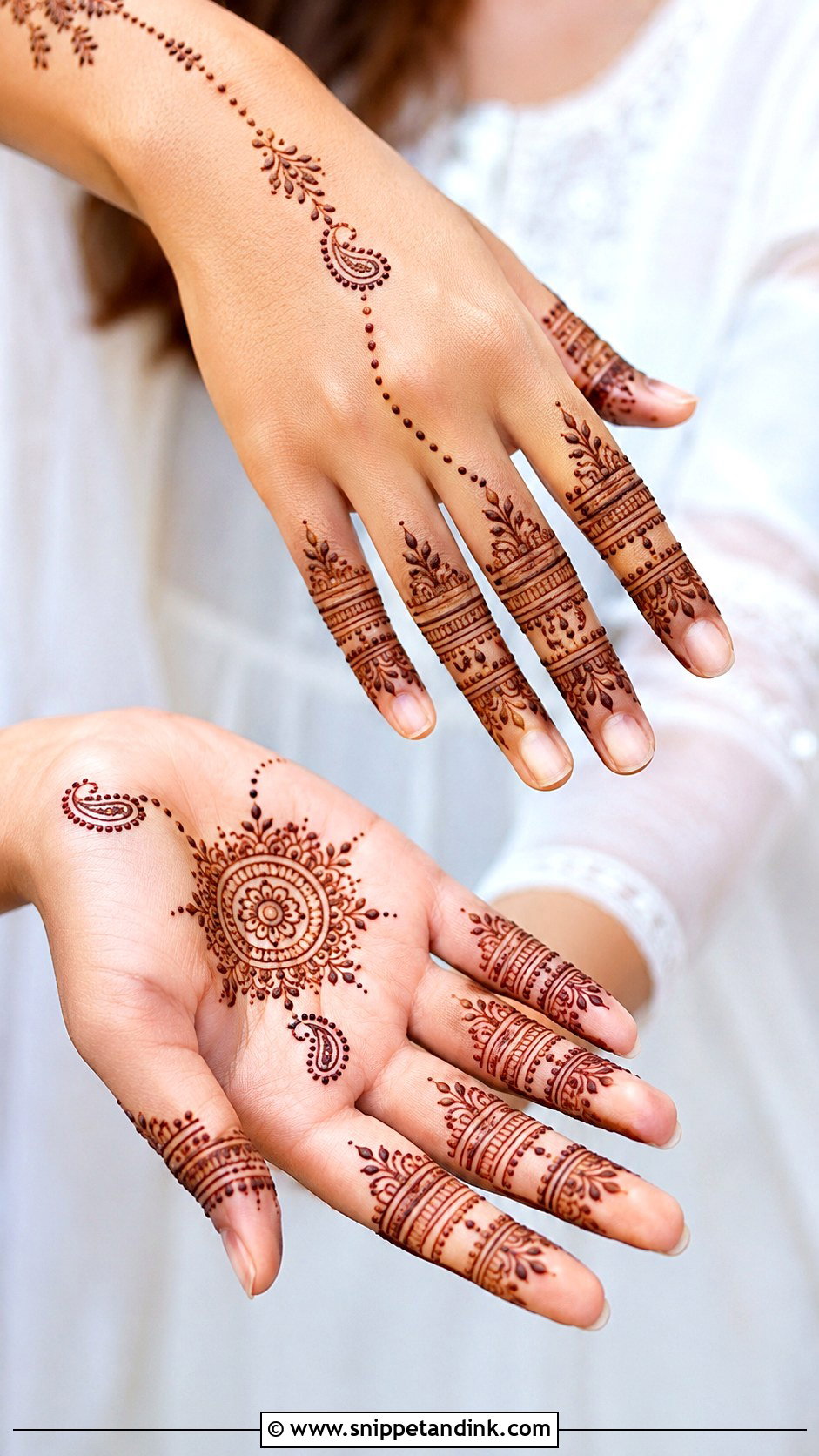
Fingers become the main event here: bands, leafy tips, dotted chains and small paisleys, tied to a light palm or back-hand centrepiece so it doesn’t look like ten separate decorations. The palm can stay open with a mandala or small floral. I give each finger a related but slightly different pattern, which reads as deliberate rather than repetitive. It also works on the back of the hand with ring-style chains.
22. Rajasthani Bracelet Mehndi Design
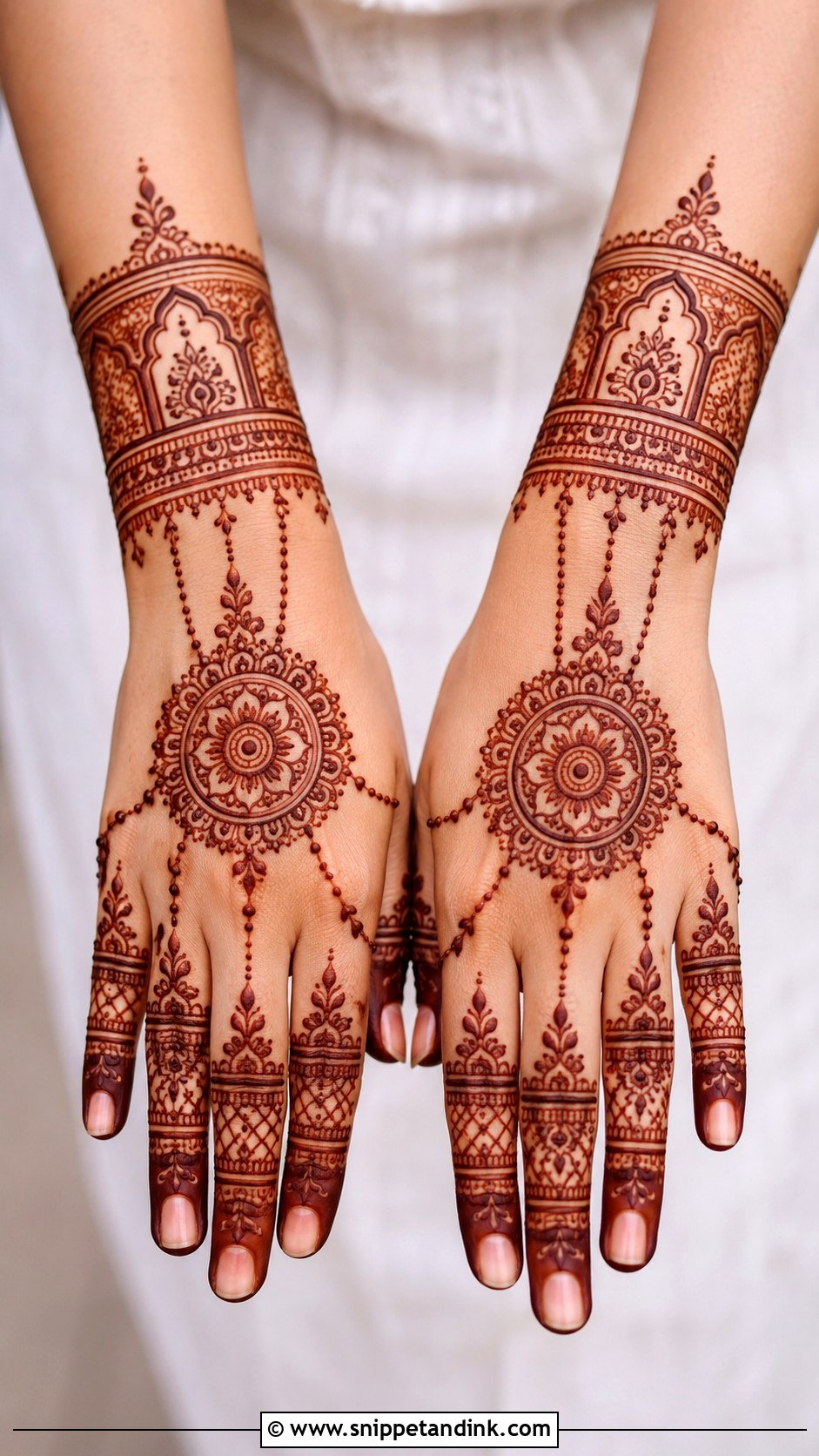
A detailed cuff at the wrist, built from arches, dots, checks and floral borders, with thin chains running from it to a back-hand mandala, a paisley or the fingers. It mimics traditional hand jewellery, so it suits engagements and bridesmaids, and jharokha arches or tiny peacocks inside the band make it more distinctly Rajasthani. I place the cuff just below the wrist crease; drawn on the crease itself, it cracks the first time the hand bends.
23. Rajasthani Bangle Mehndi Design
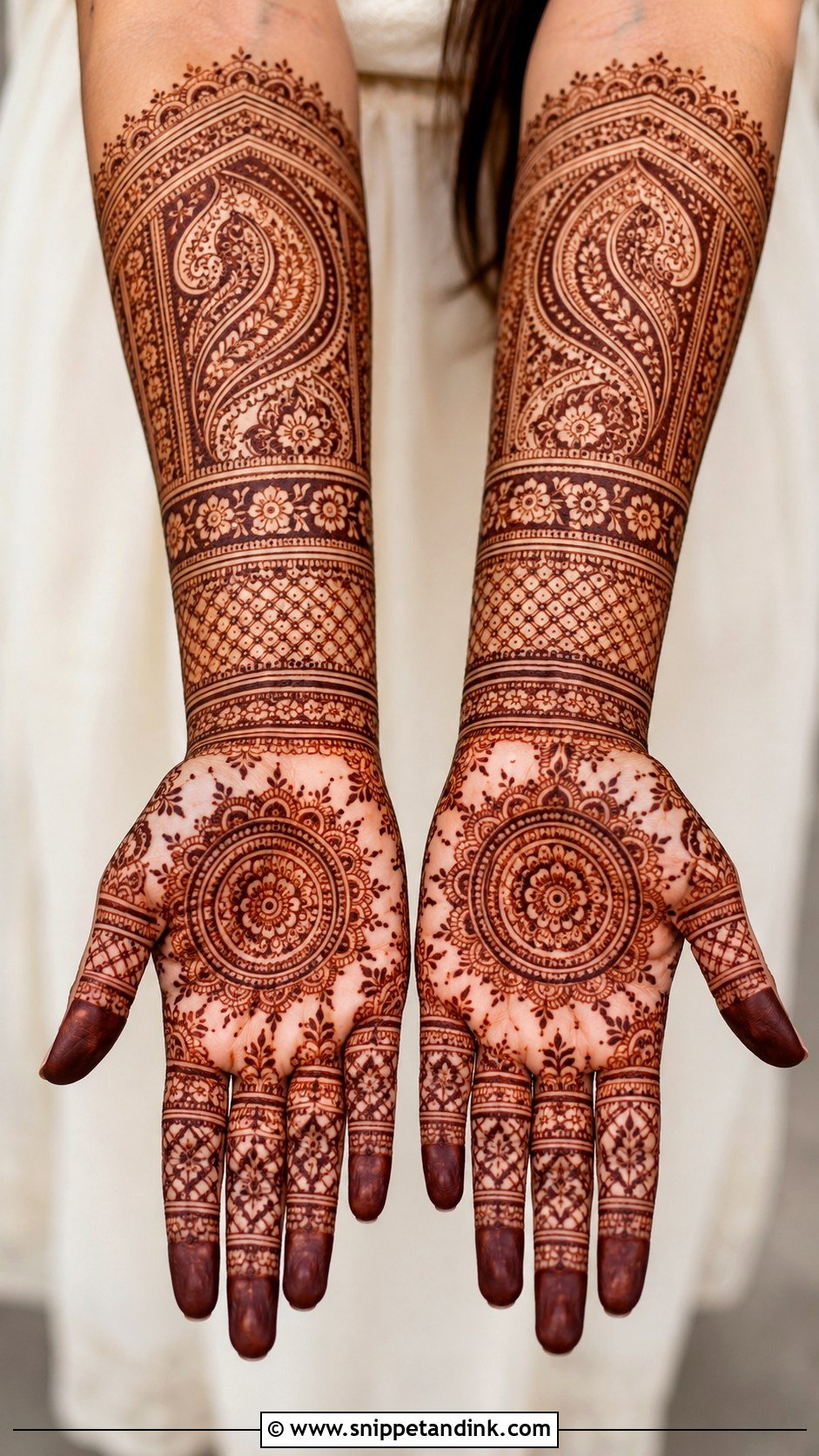
Several horizontal bands climb the wrist and forearm, each filled with paisleys, flowers, jaali, dots or curved borders, and they link to a mandala or peacock on the palm. Brides who’ll wear a chooda or stacks of bangles like it, because the henna extends the jewellery up the arm. Clean gaps between the bands keep the layers visible. I’d tell your artist where your chooda will sit, so the most detailed band isn’t hidden under it.
24. Rajasthani Lotus Mehndi Design
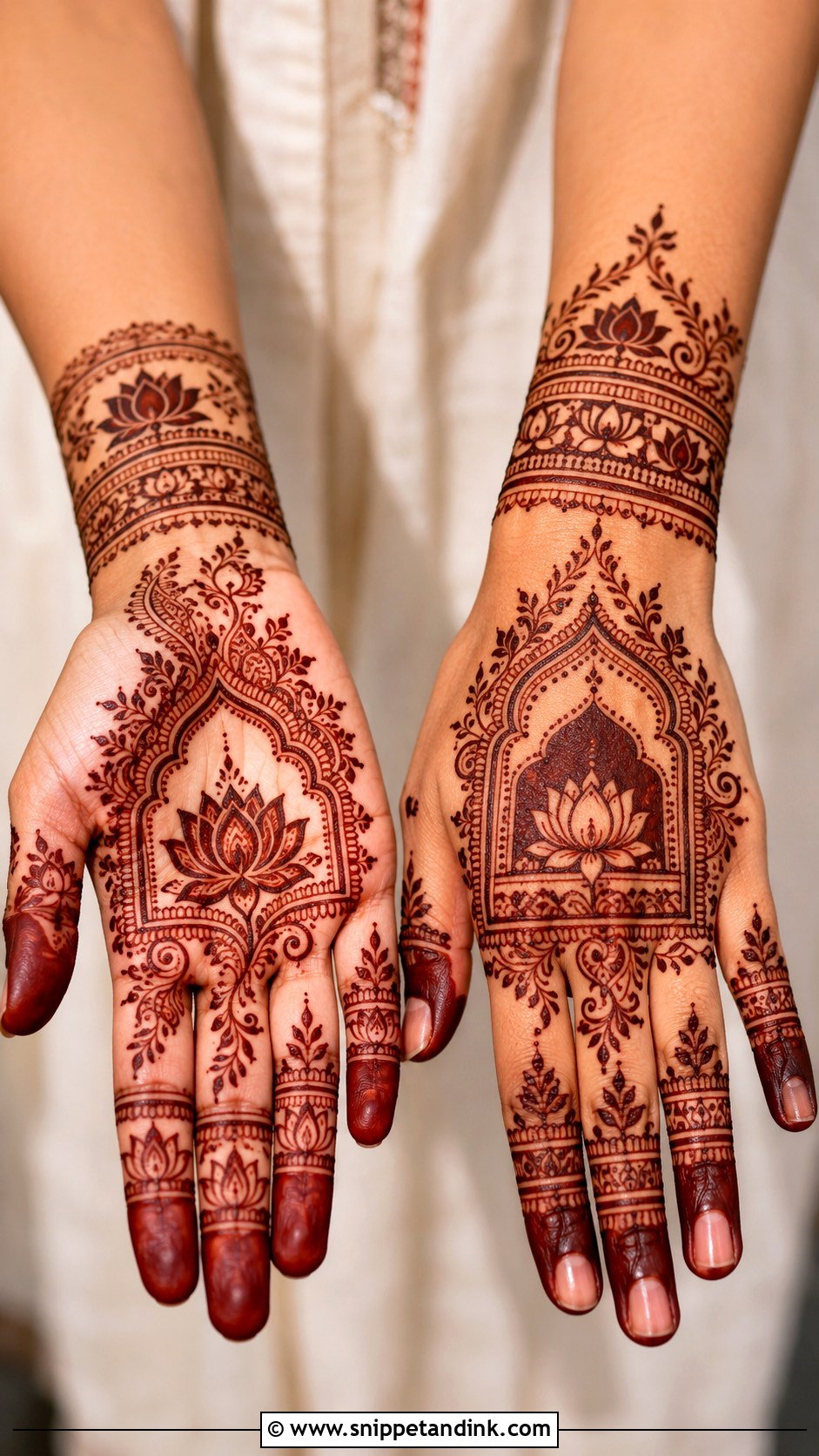
The lotus can sit in the centre of the palm, on the back of the hand or inside a jharokha frame, surrounded by paisley leaves, dotted borders, jaali and curved vines, with petal-like bands on the fingers. It carries a calm, auspicious feeling that suits puja days and festivals as much as weddings, and it’s a good alternative for brides who don’t want portraits. Bold, clearly separated petals are what make a lotus read once the stain darkens.
25. Rajasthani Floral Mehndi Design
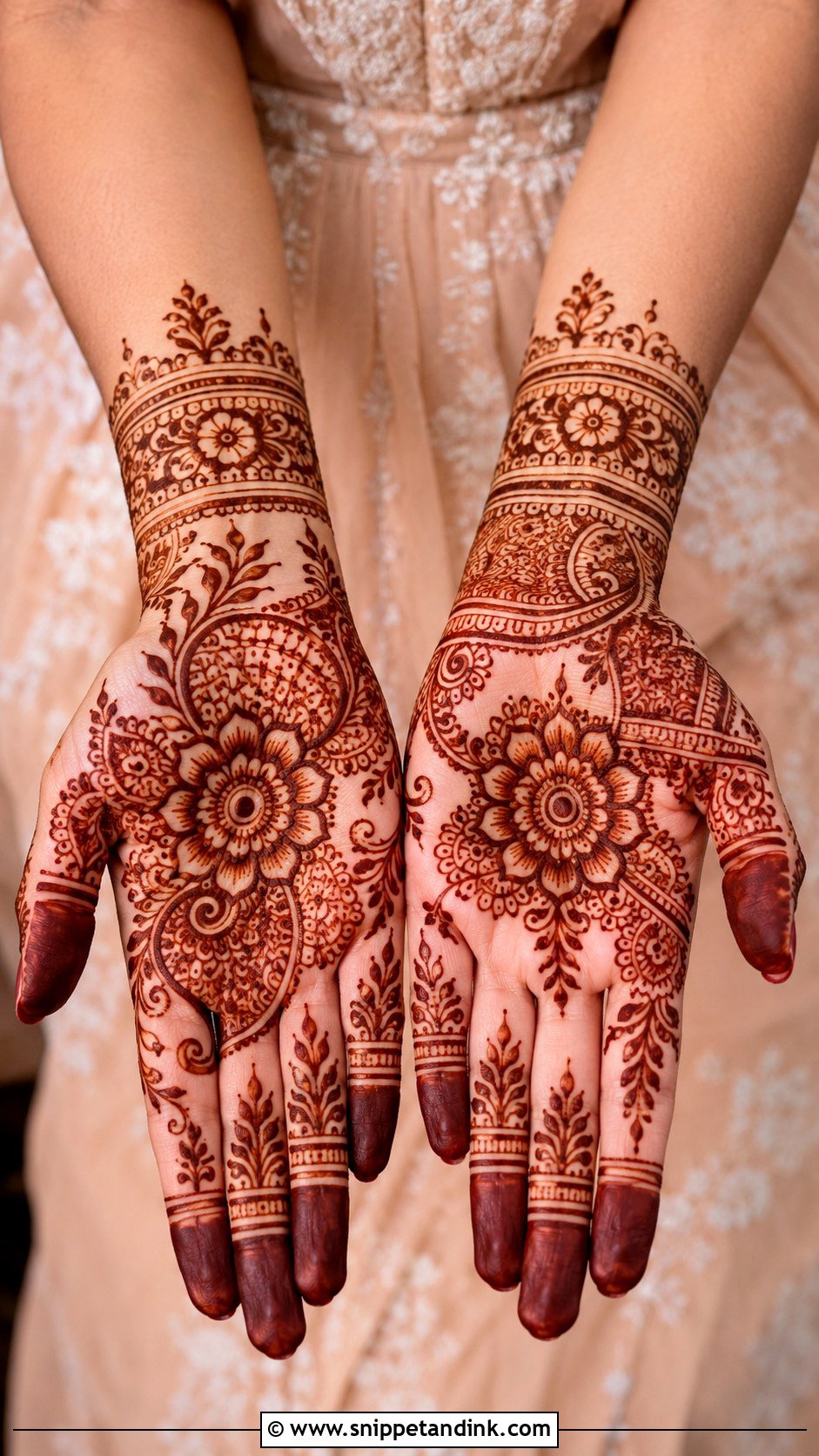
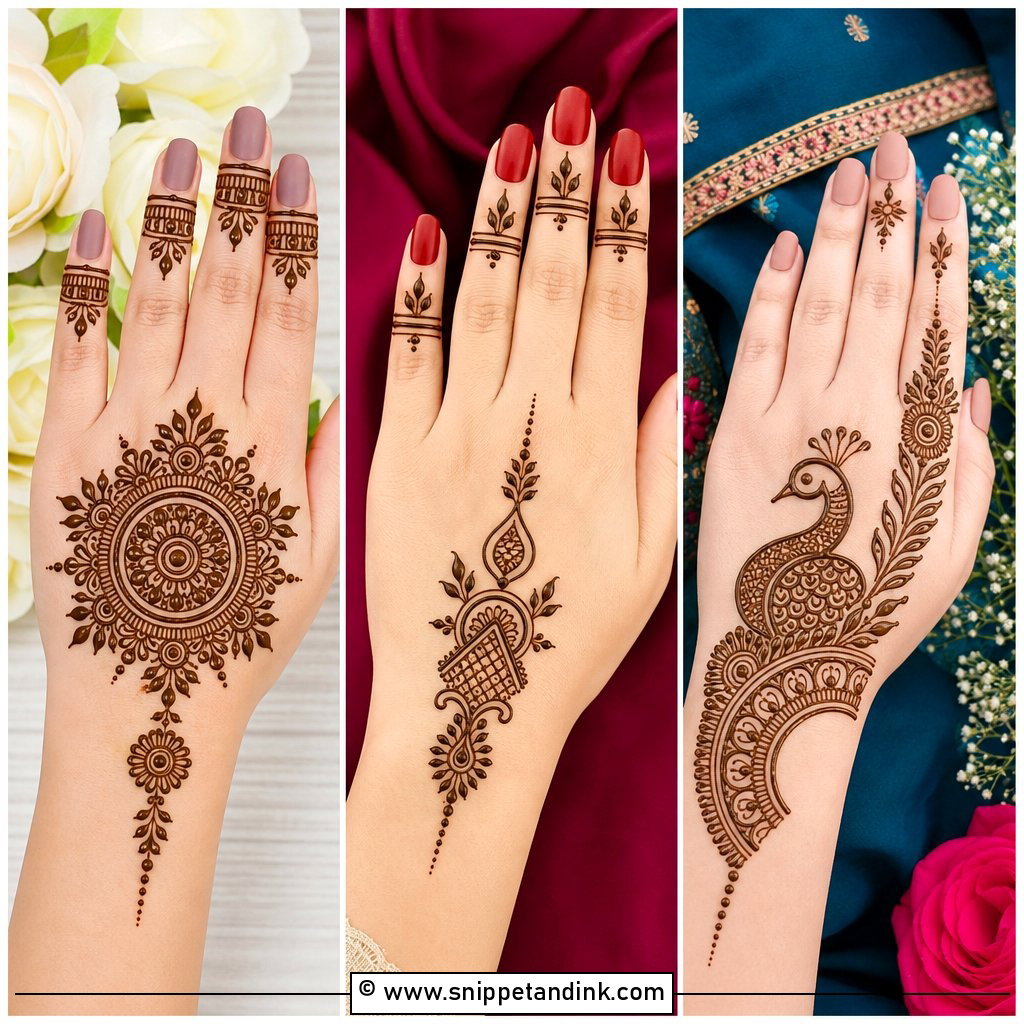
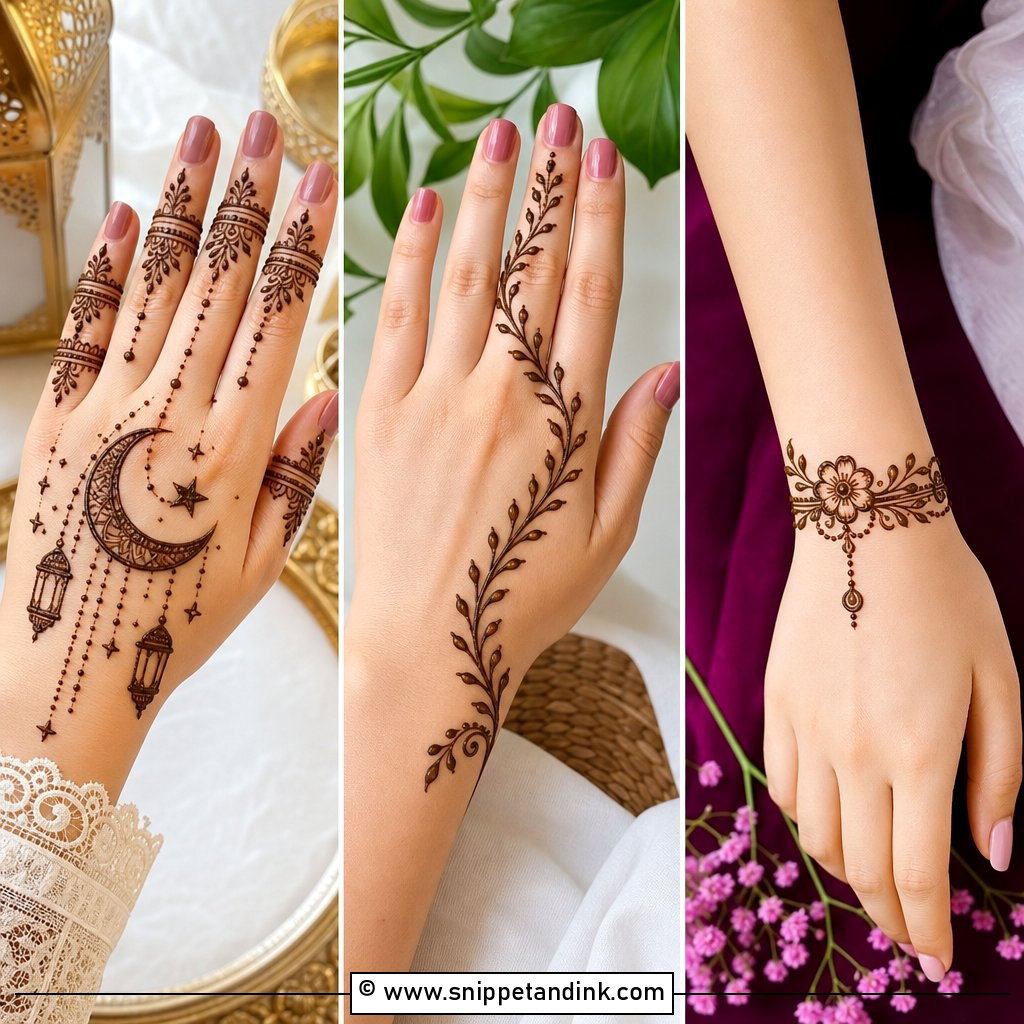
Flowers lead here while the detailing stays traditional. A large flower mandala on the palm, smaller blooms travelling toward the wrist and fingers, paired with paisleys, dots, jaali and fine borders to make it Rajasthani. It can be dense for a wedding or open for a casual function. Scattered flowers are the mistake I see most; I plan the path the blooms take across the hand before drawing a single petal, so the design flows instead of sprinkling.
26. Rajasthani Karwa Chauth Mehndi Design
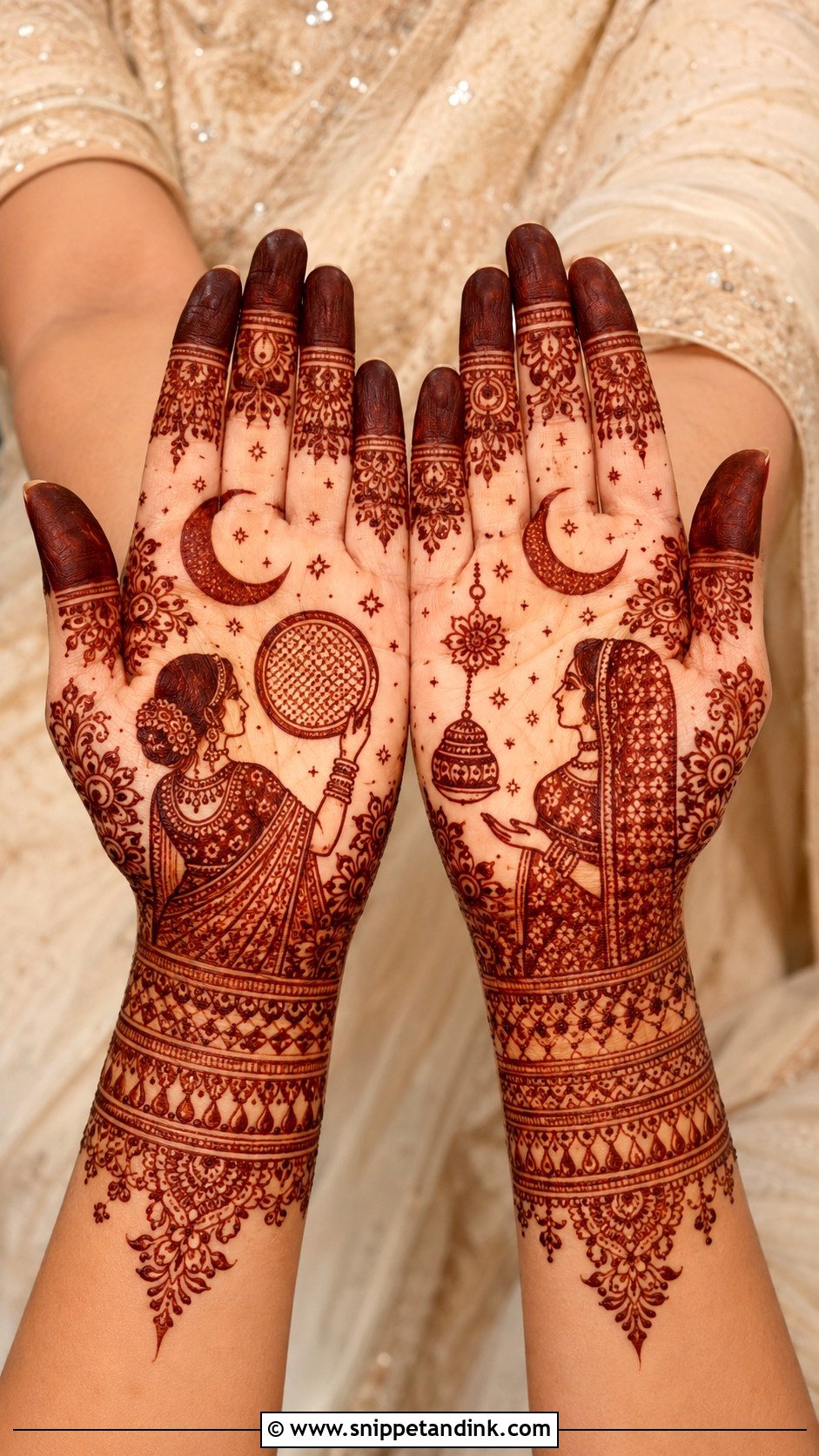
For Karwa Chauth, the palm can carry a bride figure, a moon, the sieve (channi) used to view the moon, or a kalash, framed by paisleys and floral borders, with fine bands on the fingers and bangle-style work at the wrist. It’s traditional without being as heavy as bridal mehndi. Peacock curves, arches and jaali add Rajasthani character. I’d book it for the day before, so the colour has deepened by the time the moon rises.
27. Rajasthani Teej Mehndi Design
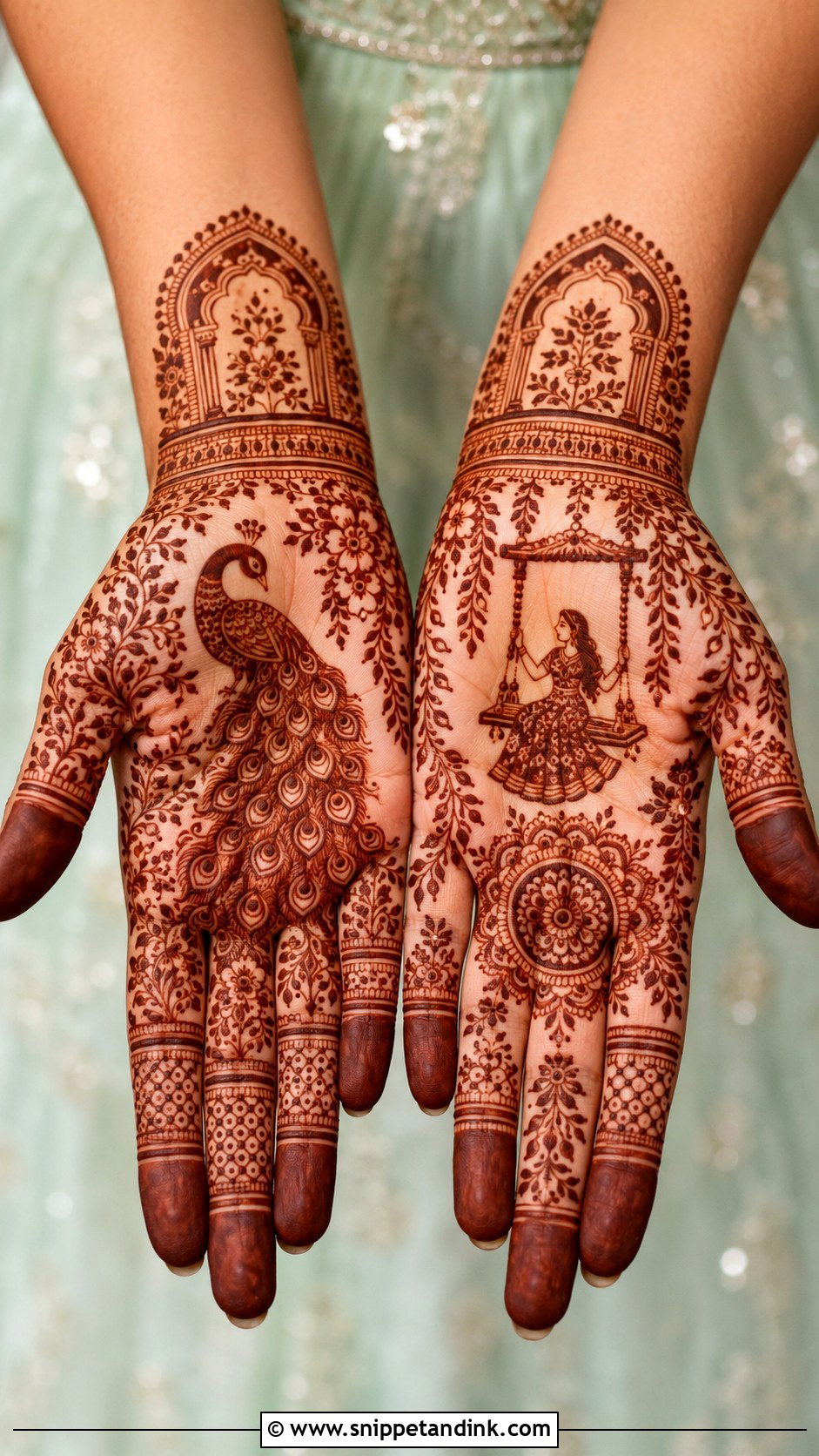
Teej is a monsoon festival, and the designs show it: swings, peacocks, flowers, leaves, mandalas and ornamental wrist borders, with a bold circular centrepiece on the palm and leafy bands on the fingers. Medium coverage keeps it festive and comfortable for a day of gatherings. Small jharokha arches or folk-style patterns at the wrist add cultural weight. It sits naturally beside the bright green and red lehengas, sarees and bangles of the season.
28. Rajasthani Engagement Mehndi Design
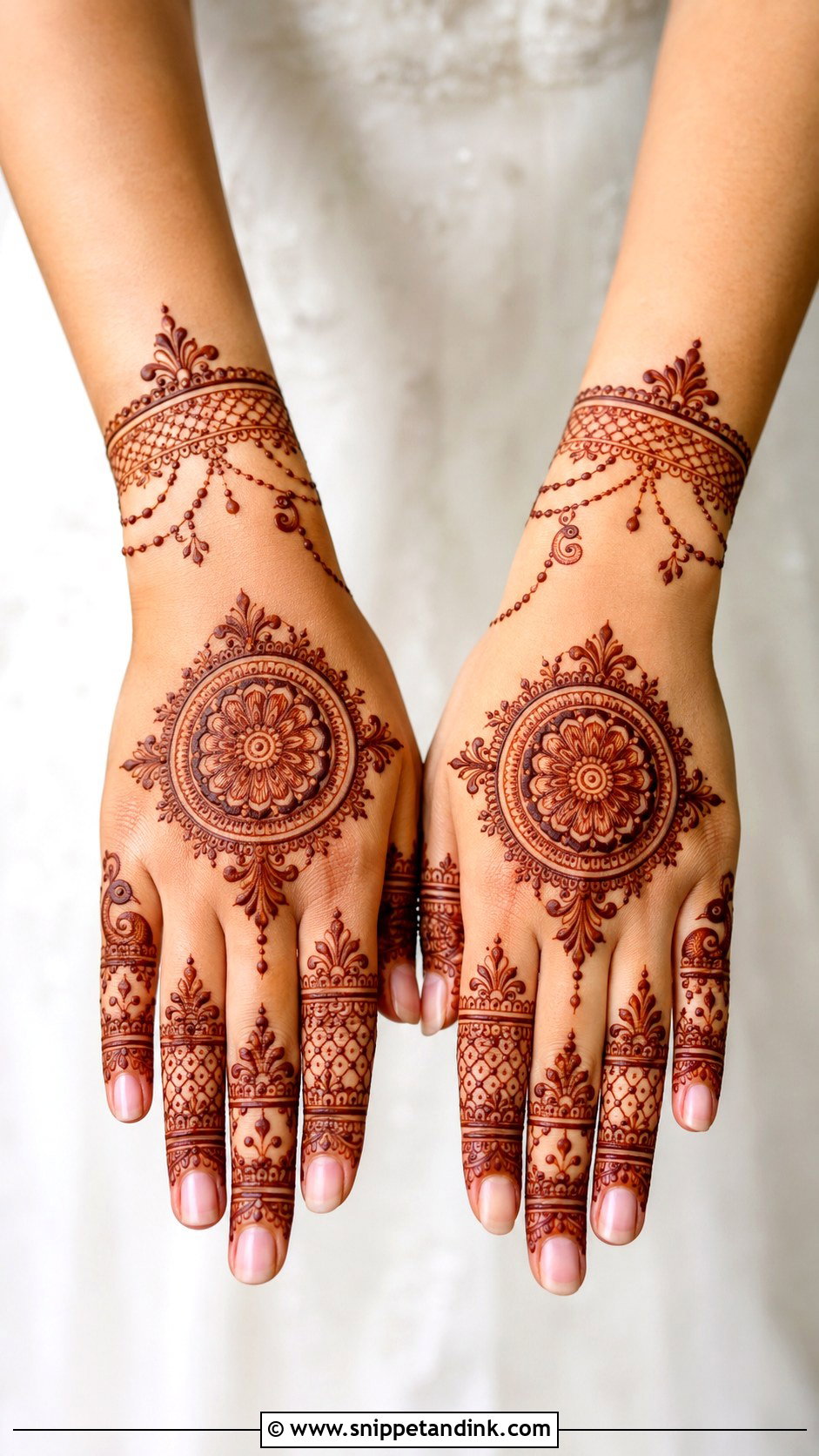
Engagement henna has one job above all: it has to frame the ring. I put the main work on the back of the hand, a mandala, floral medallion, bracelet chain or jharokha frame, with detailed tips and bands on the fingers but clean skin around the ring finger itself. A lighter paisley or floral pattern on the palm keeps the hand complete. Jaali panels, dotted borders and tiny peacocks add Rajasthani detail without crowding the jewellery.
29. Rajasthani Wedding Guest Mehndi Design
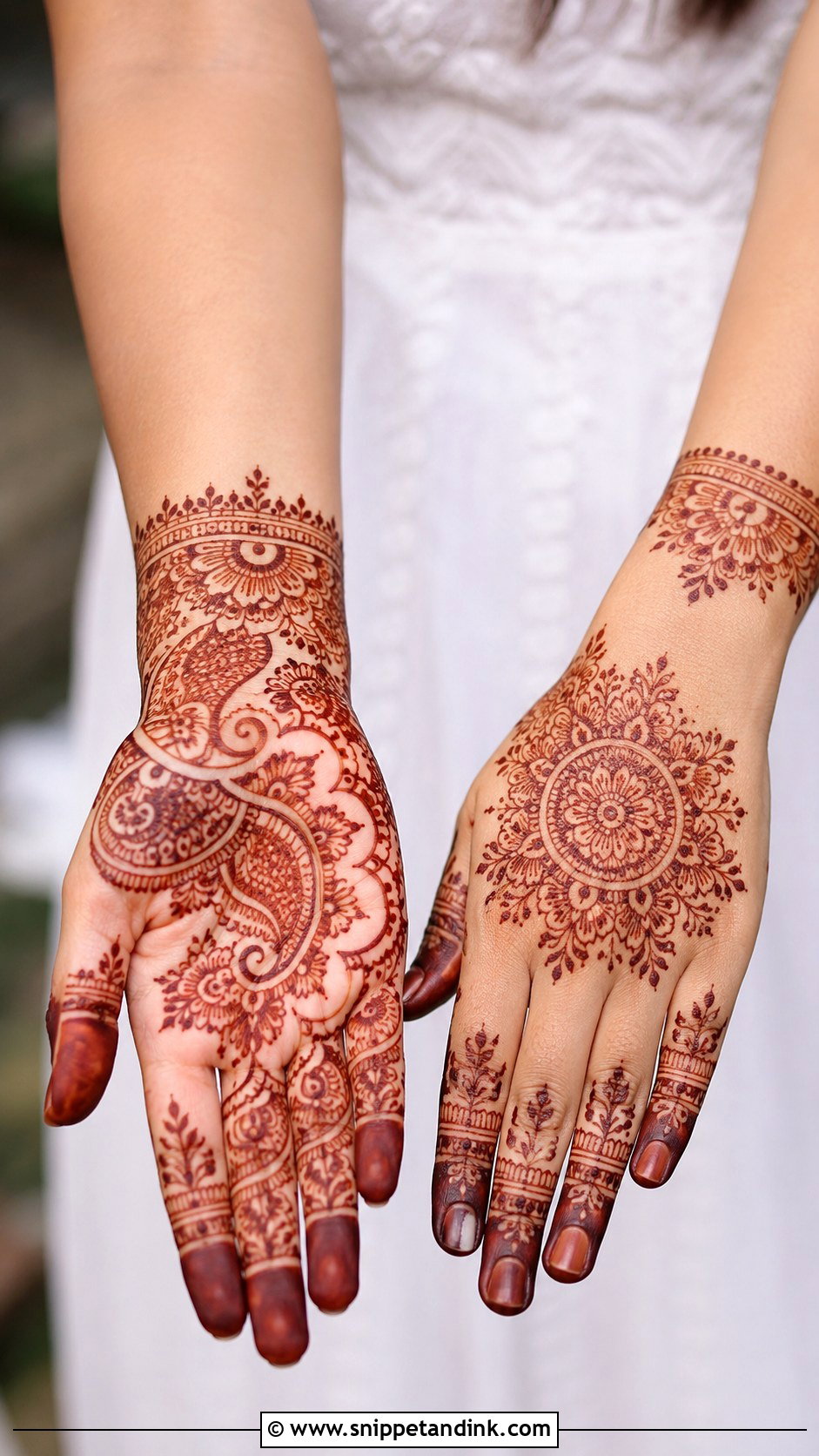
Guests should look festive without matching the bride’s density. A medium-coverage palm or back-hand design with paisleys, flowers, mandalas and neat fingers, a small bracelet border and a mostly bare forearm does that. It’s easy to wear through sangeet, mehndi night and the wedding day itself, and it doesn’t need a long sitting. Small jaali sections or peacock curves keep the Rajasthani character. Keeping it lighter than the bride’s is also simply good etiquette.
30. Rajasthani Bridesmaid Mehndi Design
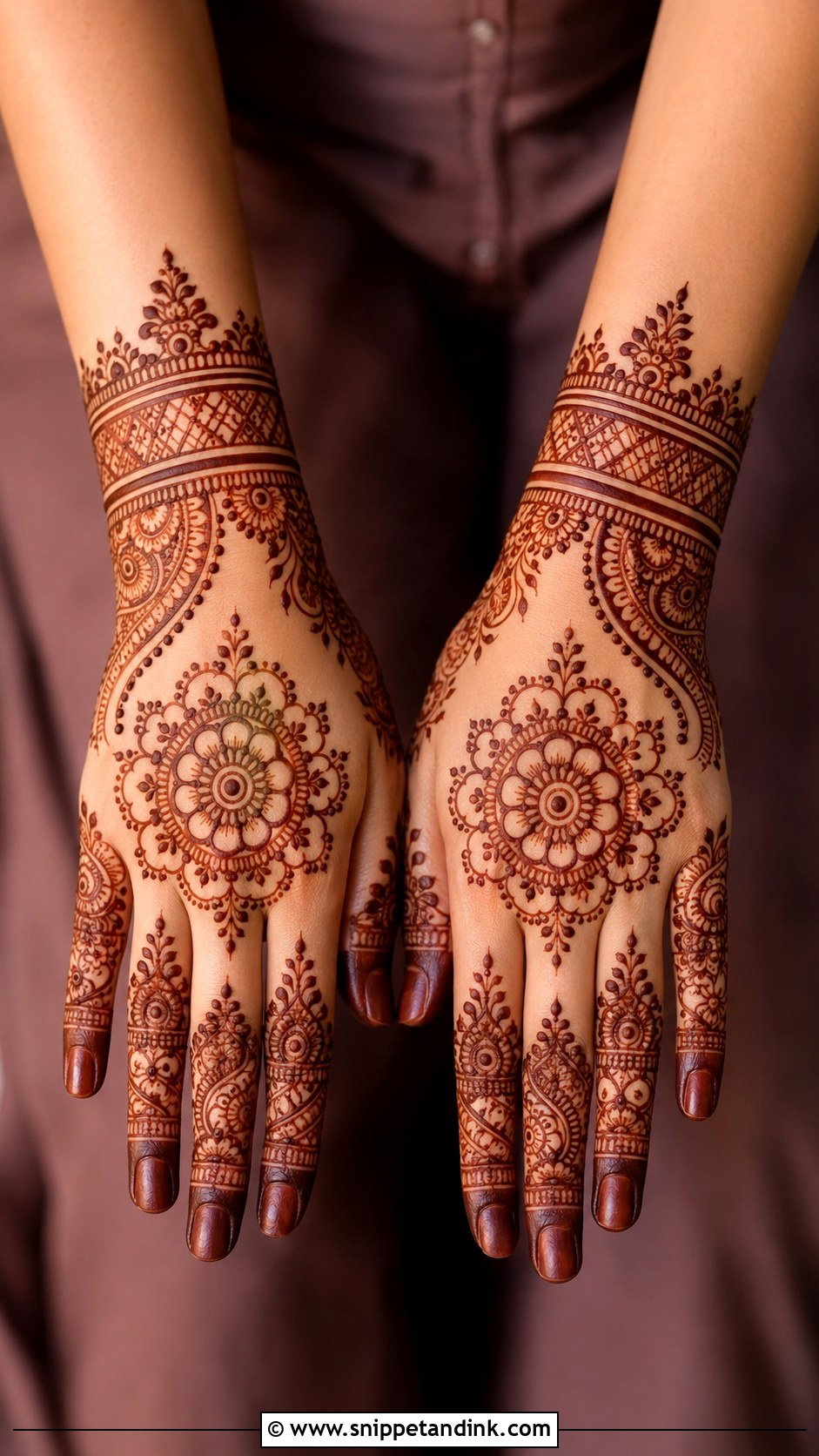
A Rajasthani bridesmaid mehndi design should coordinate with the group and stay lighter than the bride’s. A floral mandala with finger detailing on the back of the hand, a simple paisley or peacock on the palm, and a bracelet-style wrist all look polished in group photos. Matching one small element across every bridesmaid, the same mandala or wrist band, ties the group together. When I do a bridal party, I draw that shared element first on everyone so it stays consistent.
31. Rajasthani Groom Mehndi Design
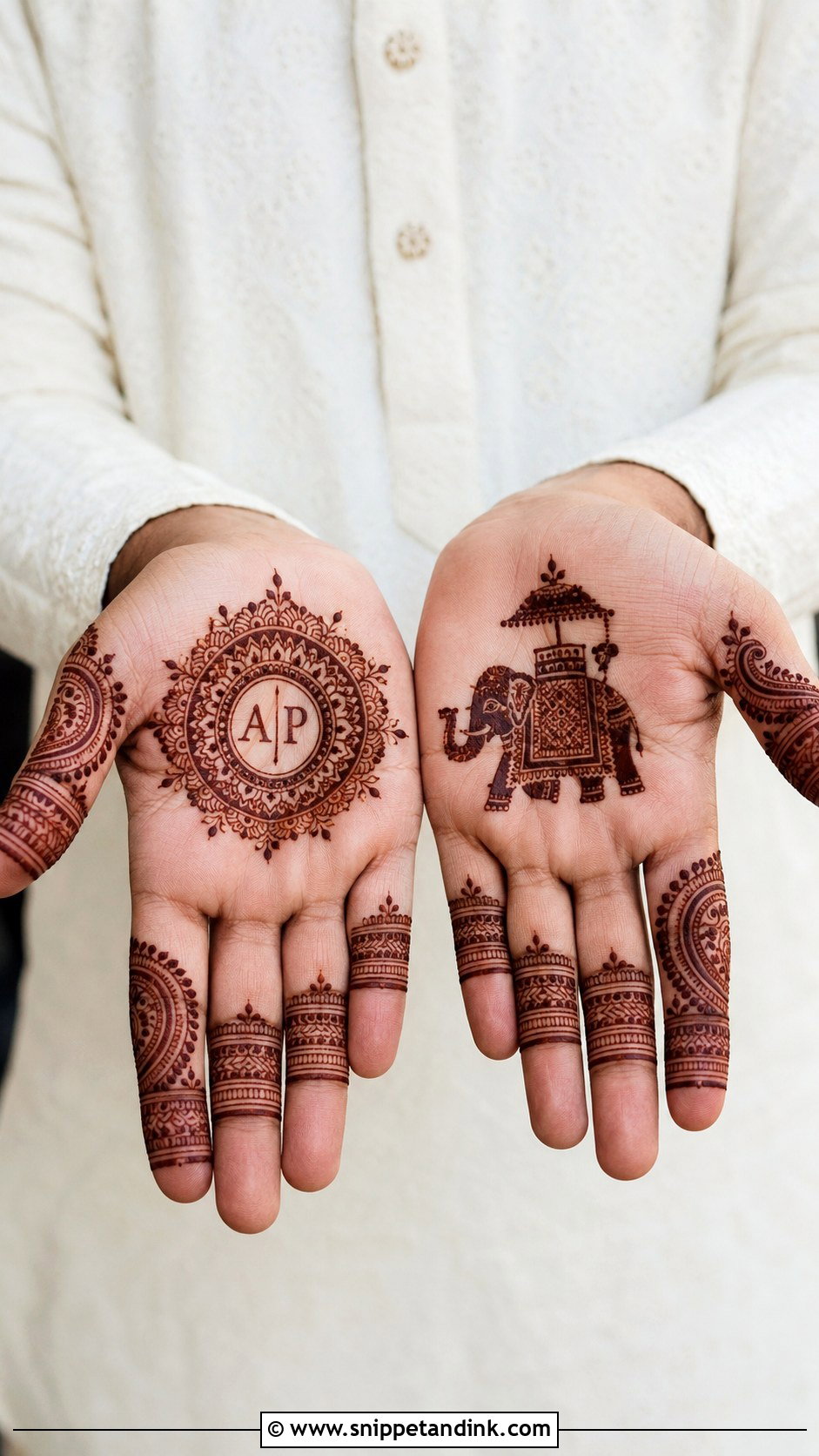
Groom’s mehndi is usually far simpler than the bride’s: a small mandala, a wedding symbol, the bride’s initials, a royal motif or a minimal paisley on the palm. Some grooms go bolder with elephants, swords or jharokha borders for traditional ceremonies. Fingers can stay mostly bare or take small bands. Many grooms want something that won’t look out of place at work the following week, so I keep it to the palm, where it can stay discreet.
32. Rajasthani Feet Mehndi Design
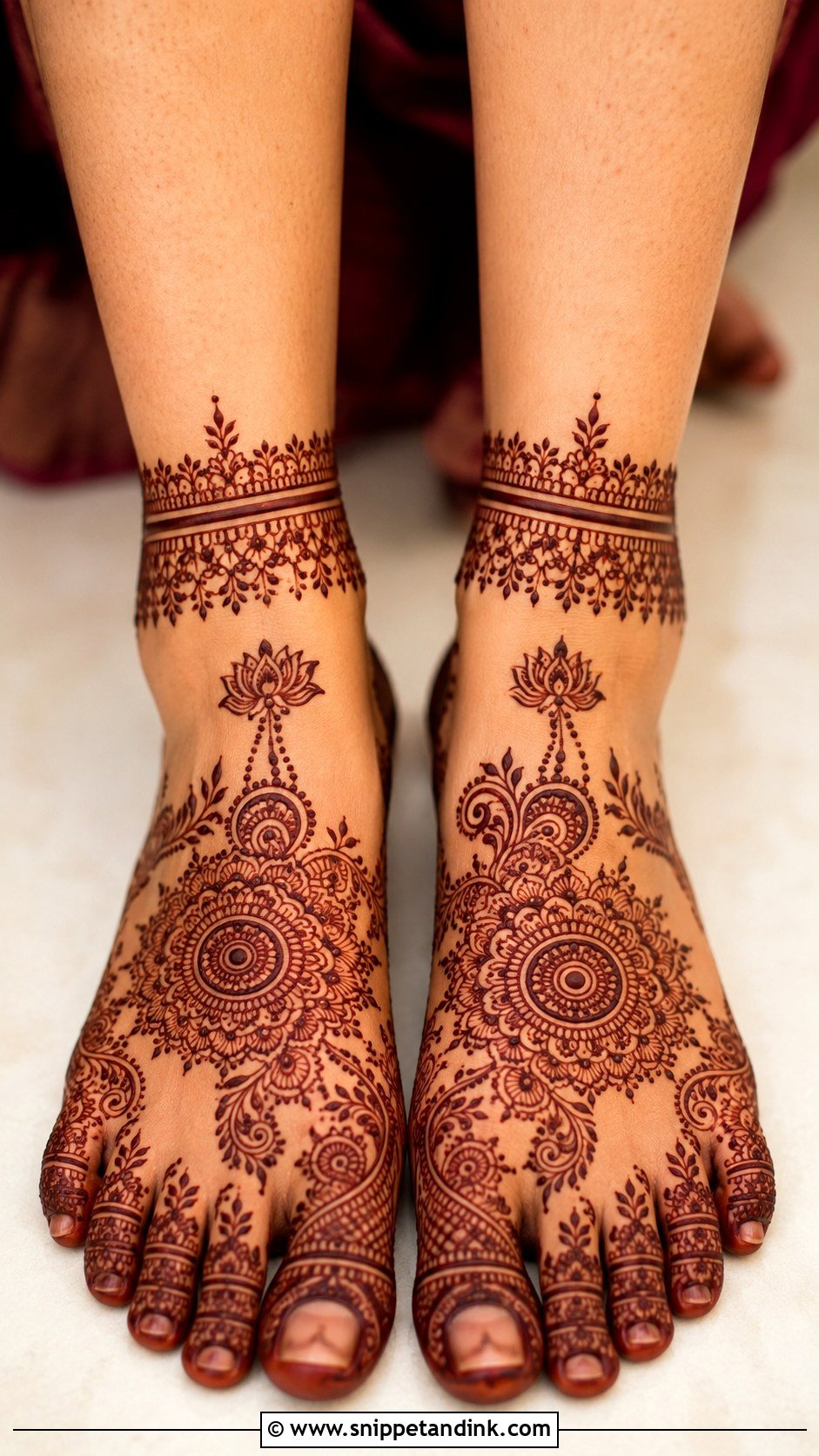
A Rajasthani feet mehndi design finishes the bridal look: mandalas, paisleys, lotus flowers, peacock curves, anklet borders and toe details on top of the foot, extending to the ankle or higher for brides. The spacing has to follow the foot’s shape. Anklet bands are popular because they pair with a payal. Walking and footwear wear foot henna faster than hands, so I use slightly bolder lines there and let the soles take the darkest stain.
33. Rajasthani Anklet Mehndi Design
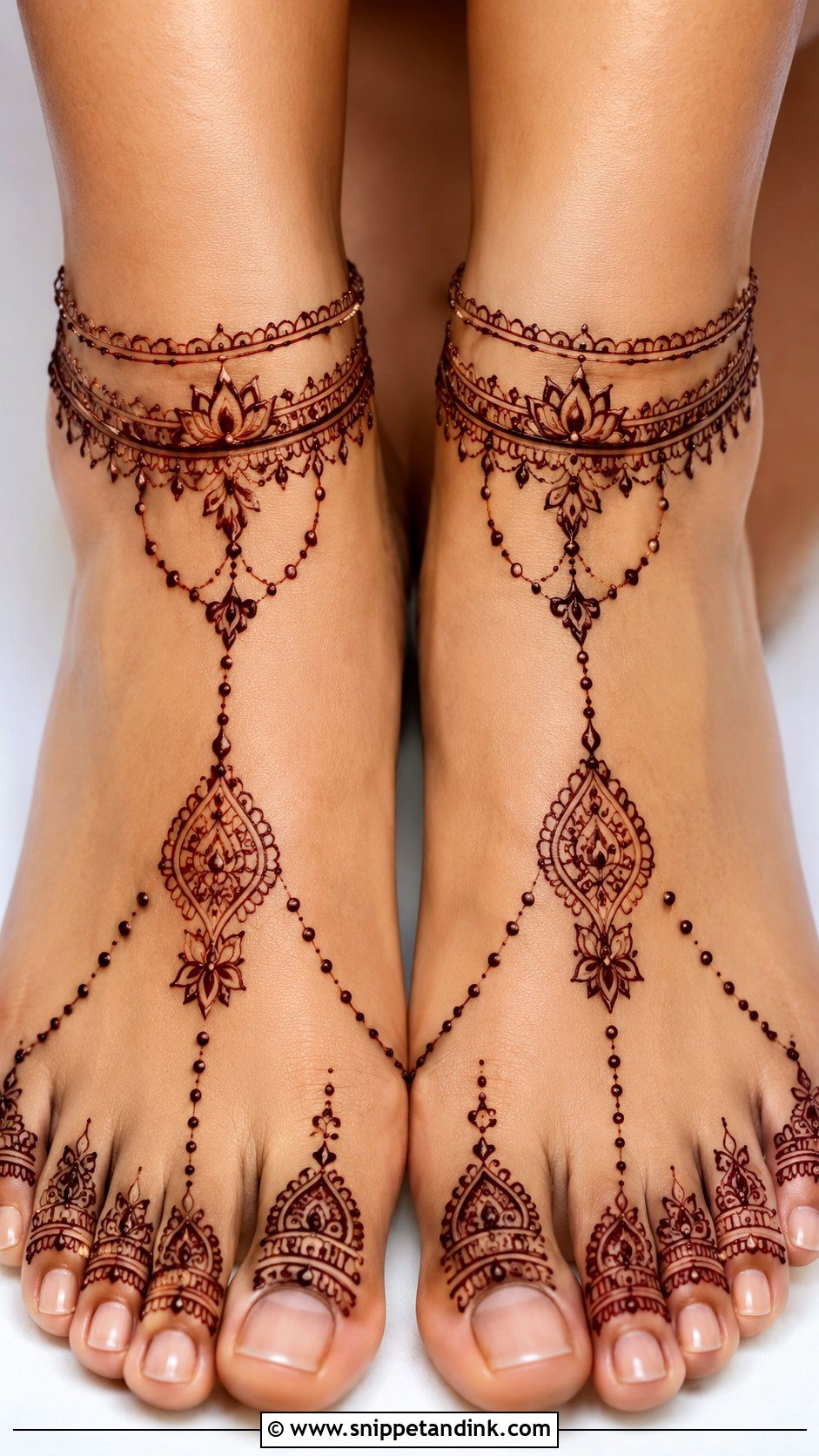
This design treats the ankle like jewellery: a band around it with hanging dots, paisleys, leaves and small floral drops, linked by chain-like lines to a mandala or lotus on top of the foot, with matching toe patterns. It’s lighter than full foot coverage but still ornamental, and it looks right with payal-inspired styling and barefoot ceremony moments. If you’ll wear strappy sandals, tell your artist; a strap rubbing across the band will wear it away within a day.
34. Rajasthani Modern Mehndi Design
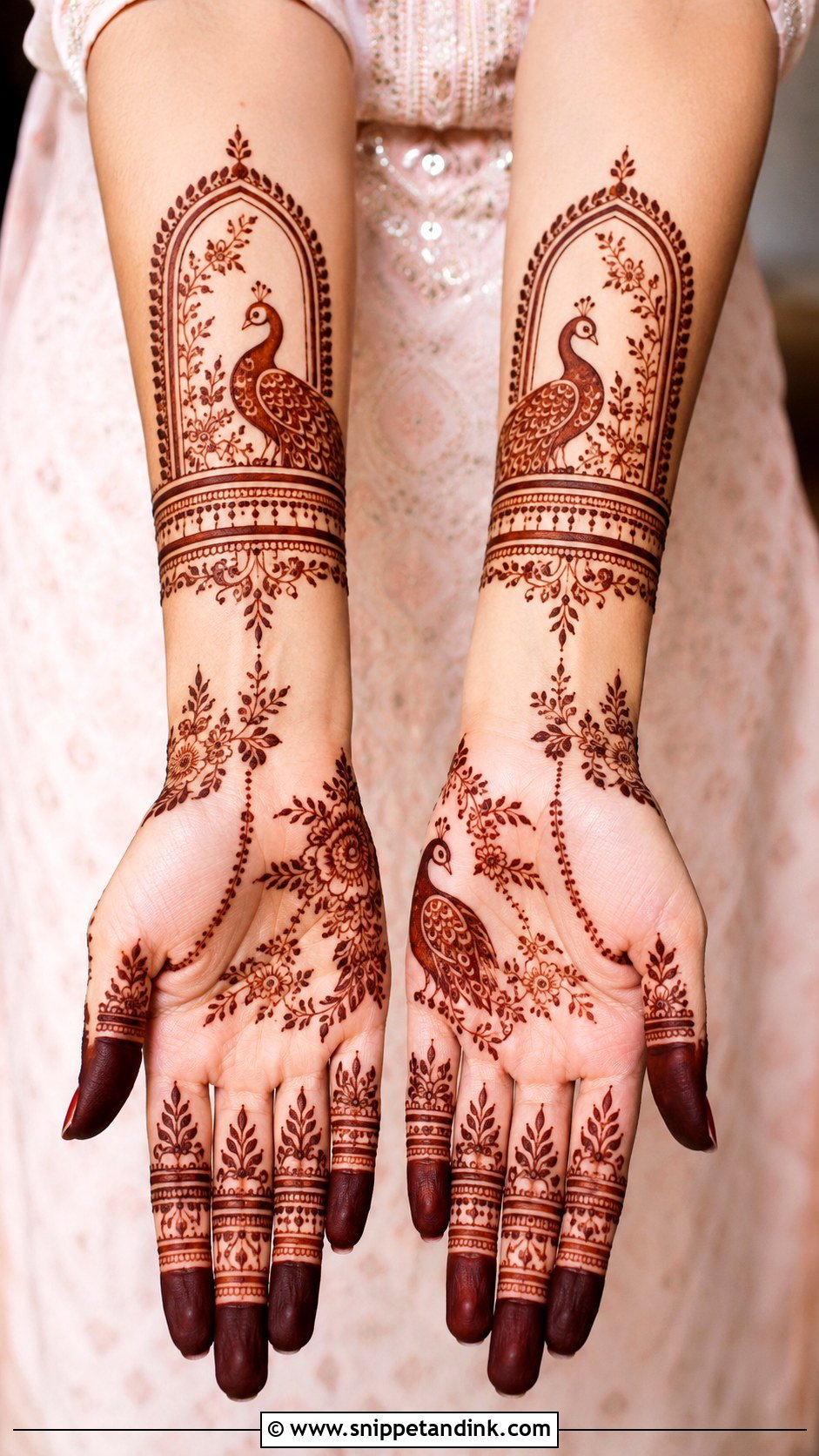
Modern Rajasthani keeps the traditional motifs but gives them space: a jharokha frame on one hand, a peacock curve on the other, open skin around both. Fingers get bold tips with fine lines instead of full filling, and a simple cuff replaces the heavy forearm panel. It suits brides who want cultural roots with a fresher look, along with destination weddings and pre-wedding events. Each element has to be placed deliberately, since there’s no dense filler to hide behind.
35. Rajasthani Personalized Mehndi Design
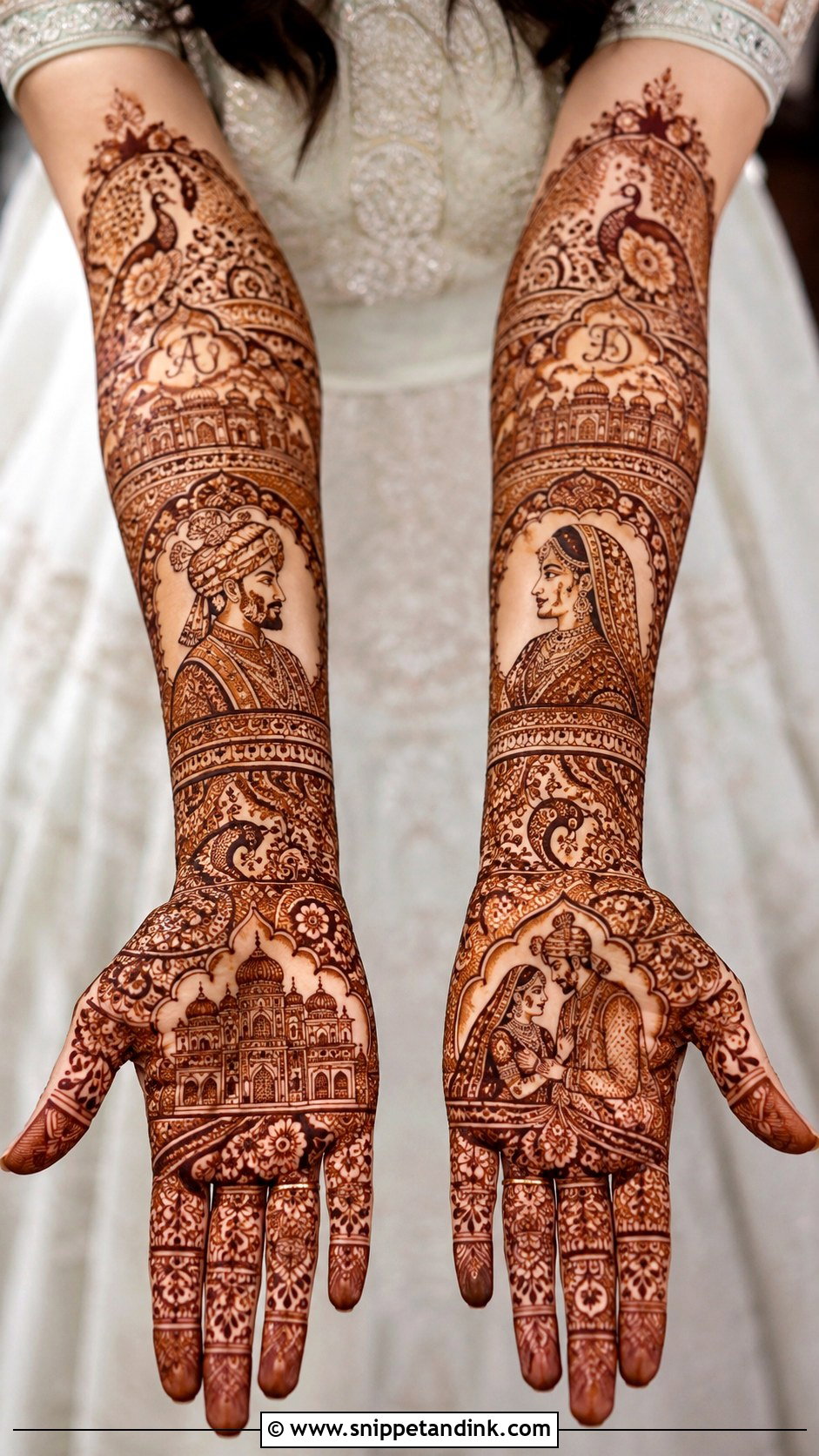
Personal details are where Rajasthani storytelling really comes alive. Initials, the wedding date, a proposal symbol, a sketch of the venue, a pet’s name, favourite flowers or small travel memories can all sit inside a base of portraits, arches, peacocks, elephants, paisleys and jaali. The skill is hiding them so they look like part of the pattern, not stickers added on top. I ask brides for their list a week ahead, so I can work out where each detail fits before the day.
A Long Sitting, and How to Get Through It
Full Rajasthani bridal hands and feet are a day’s work, not an afternoon’s. The density is the reason: every gap gets filled, and the portraits and arches are drawn slowly. Some families book two artists so the feet are done while the hands are being worked on, which shortens the day considerably. Either way, the bride sits still for hours, and a little preparation makes a real difference.
- Wear a loose, button-front top with sleeves that roll well above the elbow. Pulling anything over your head afterwards will smudge the paste.
- Tie your hair back and take off rings and bangles before the first line goes on.
- Eat beforehand, and have someone ready to feed you and hold your drink with a straw.
- Use the bathroom just before the hands start. Once both palms are wet, you’ll need help for everything.
- Keep the room warm rather than cold. Warm skin takes the dye better, and a chilly air-conditioned room slows the stain.
- Plan to sleep with the paste on. Loose cotton gloves or tissue wraps protect the sheets, and the extra hours on the skin give a deeper colour.
I tell every bride the same thing about the first look after scraping: it will be orange, and that’s correct. Rajasthani designs have so many fine lines that they look pale at first, then the whole pattern darkens over the next day or two and the detail comes up sharply.
Royal Detail Needs a Clear Layout
From full bridal hands to simple mandalas, peacocks, jharokha frames, jaali and personalised wedding stories, Rajasthani henna gives you more ways to tell a story than any other style. Your occasion, outfit, comfort and how long you can sit will narrow the choice. Brides usually go for heavy full-hand designs, while guests and bridesmaids do well with lighter back-hand or bracelet patterns, and feet or anklet work completes a traditional look. Whatever you choose, a clear layout and clean detailing are what make the density look royal rather than crowded.
You'll Like These Ideas:


Leave a Reply