
A wedding cake has three jobs: sit in the middle of the room, survive several hours of being looked at, and then taste good enough that people finish their slice. The style you pick decides how hard each of those jobs is. Right now I’m piping a lot of vintage borders and pressing flowers into buttercream, and flavors like lemon elderflower, pistachio raspberry and brown butter caramel come up at almost every tasting. Below are the cake styles couples ask me about most, with what each one is good at and where it struggles.
Matching the Cake Style to Your Guest Count and Serving Plan
Before couples fall for a look, I ask how many people need a slice and how the cake will be served. Bakers usually count in wedding portions, a slim finger of cake rather than a party wedge, so a cake that looks small can feed more than you’d guess. A classic six, eight and ten inch round stack gives roughly seventy-five of those portions, though every baker’s chart differs a little.
Some styles stretch further than others:
- Square tiers give more portions than round tiers of the same width.
- A small display cake plus kitchen sheet cake is the most efficient way to feed a large crowd.
- Cupcakes and dessert tables need roughly one item or more per guest, plus a few spare.
- Tall cakes look generous, but extra height doesn’t always mean extra portions if the tiers are narrow.
Also tell your baker who will cut it. Venue staff who cut cakes every week portion very differently from a well-meaning relative with a bread knife.
1. Classic Tiered Wedding Cake
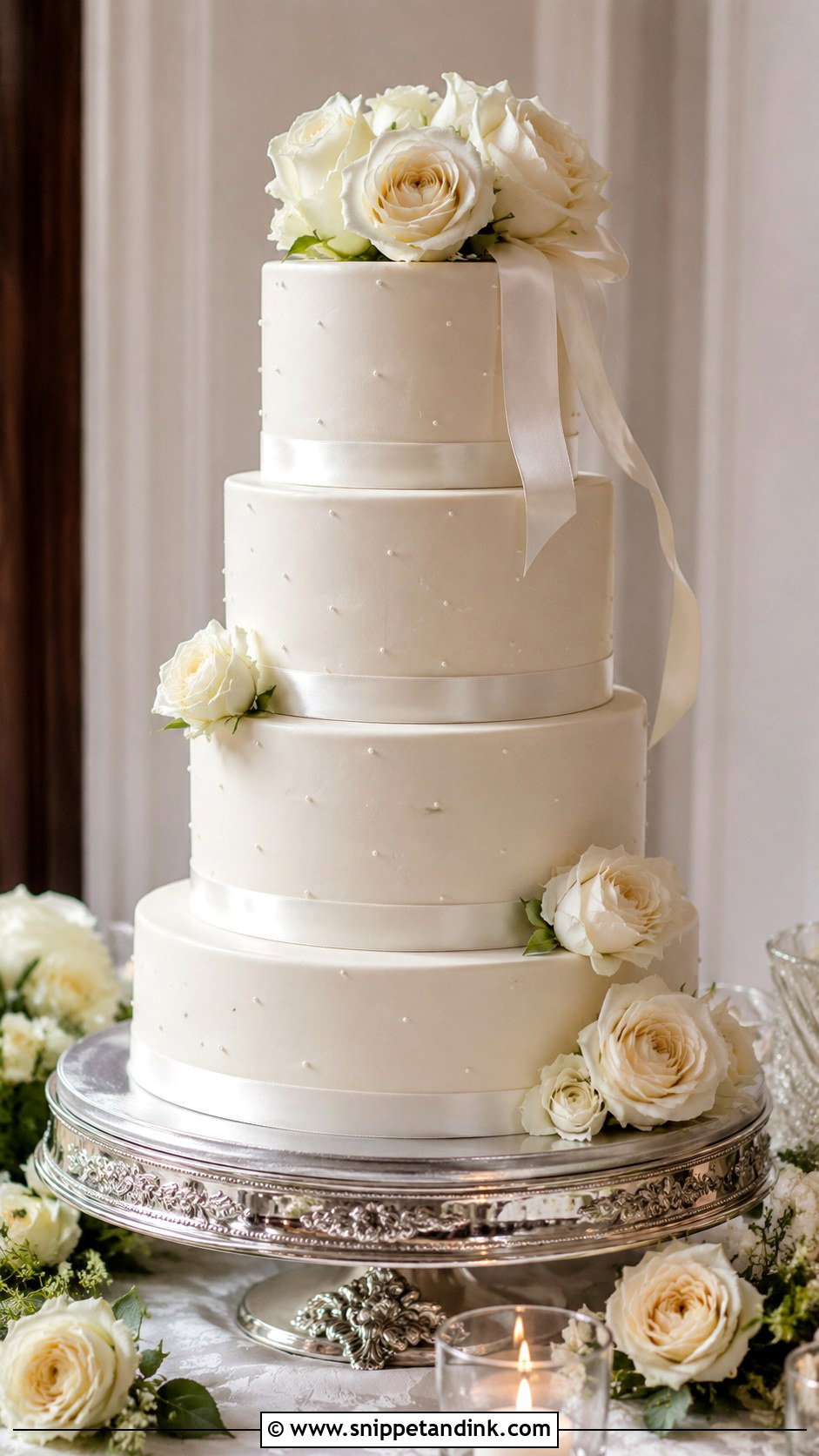
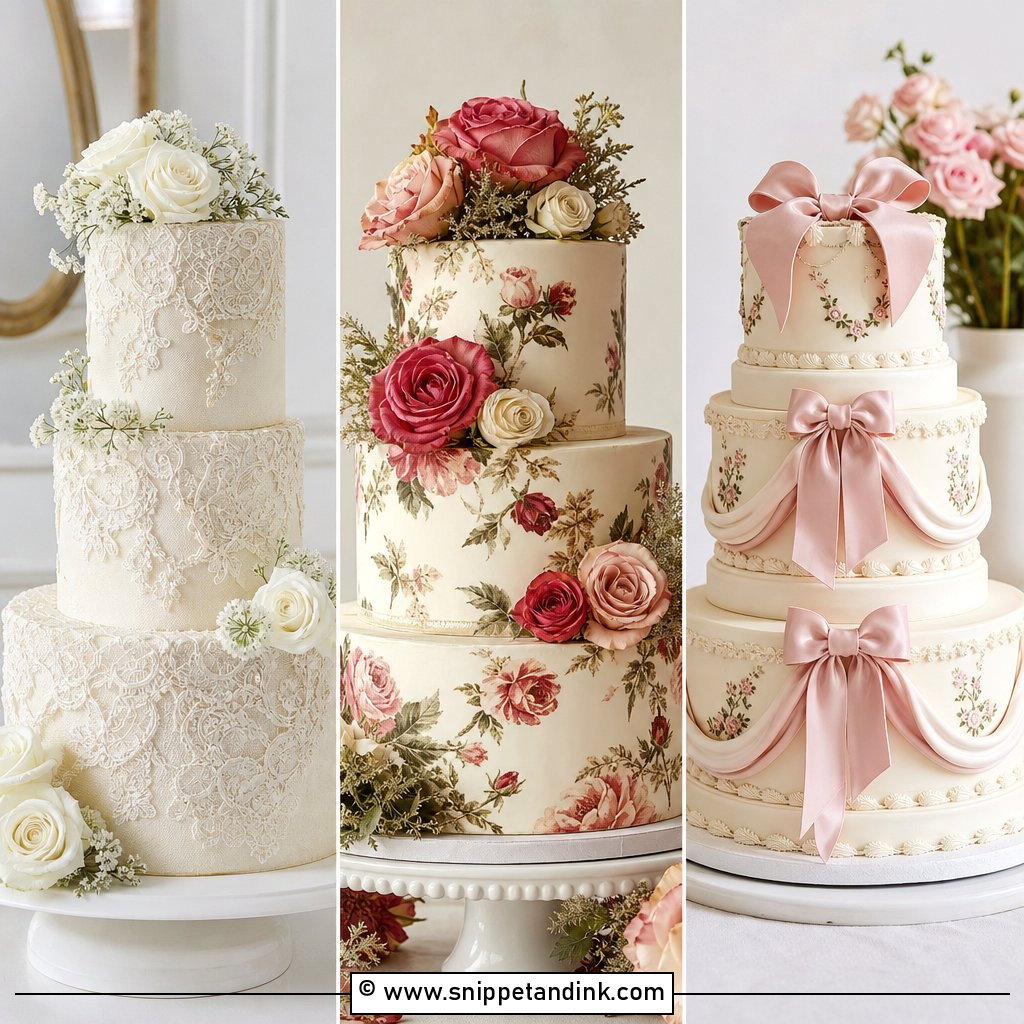
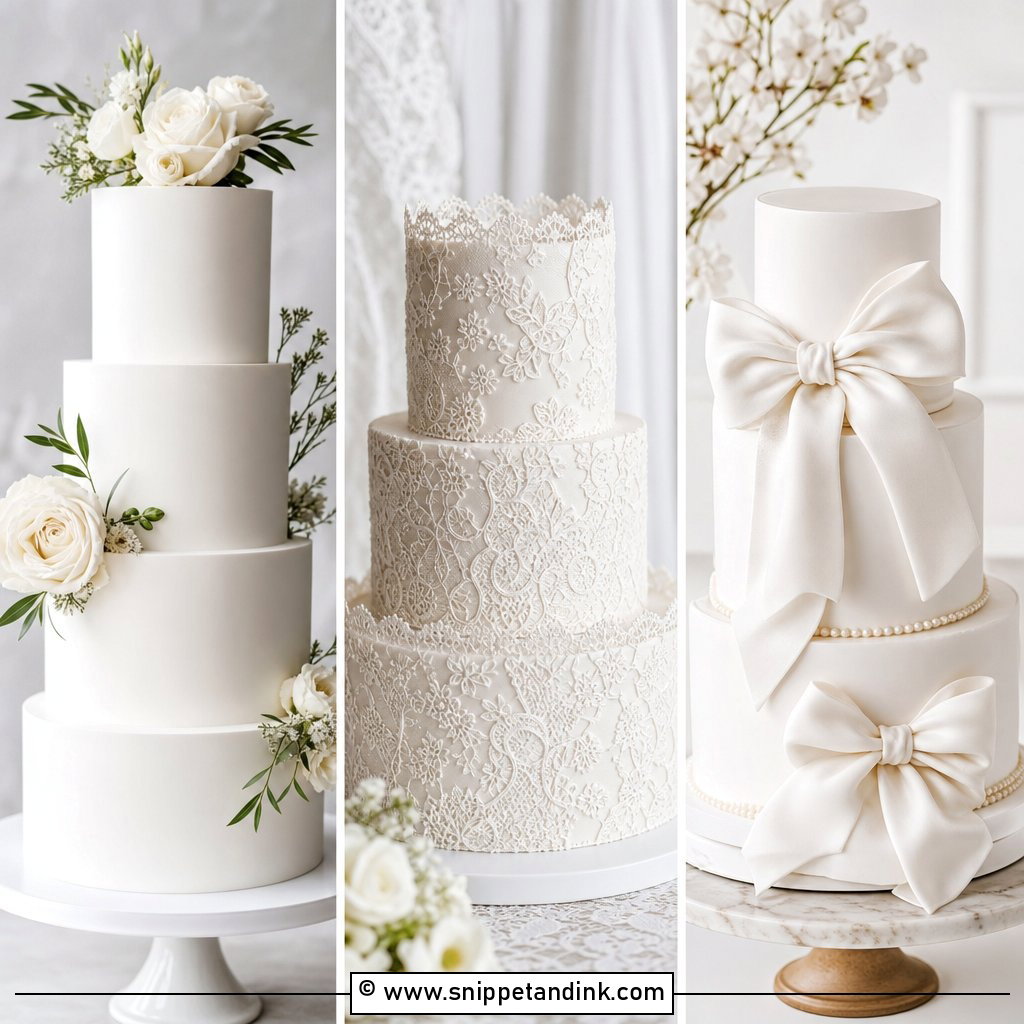
Two to five stacked tiers in smooth white or ivory is still the cake most venues and photographers are set up for. Its strength is predictability: the structure is well understood, so it travels and stacks without surprises. Vanilla bean, almond, lemon and champagne sponge are popular inside because they suit a mixed crowd. Keep decoration modest, a ribbon or a pearl dot border, and let the flowers tie it to the rest of the room.
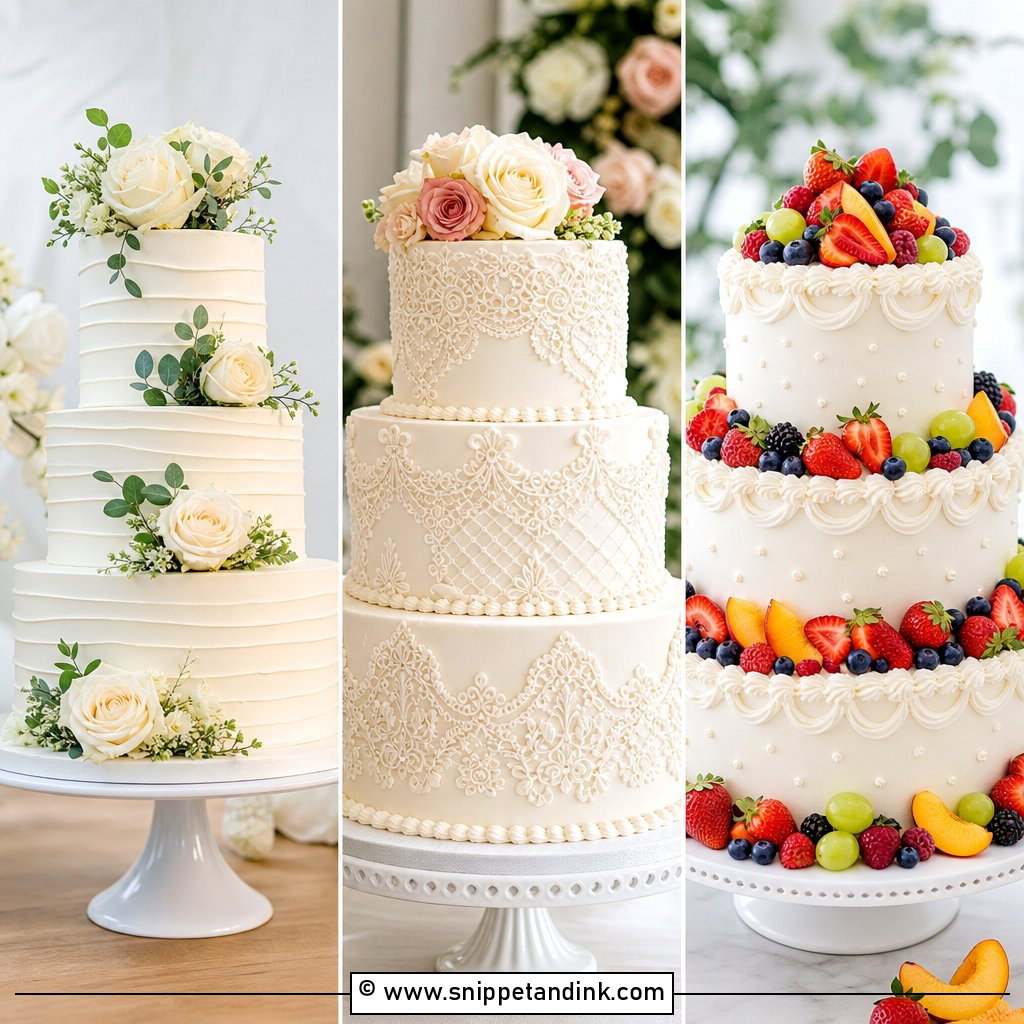
2. Buttercream Wedding Cake
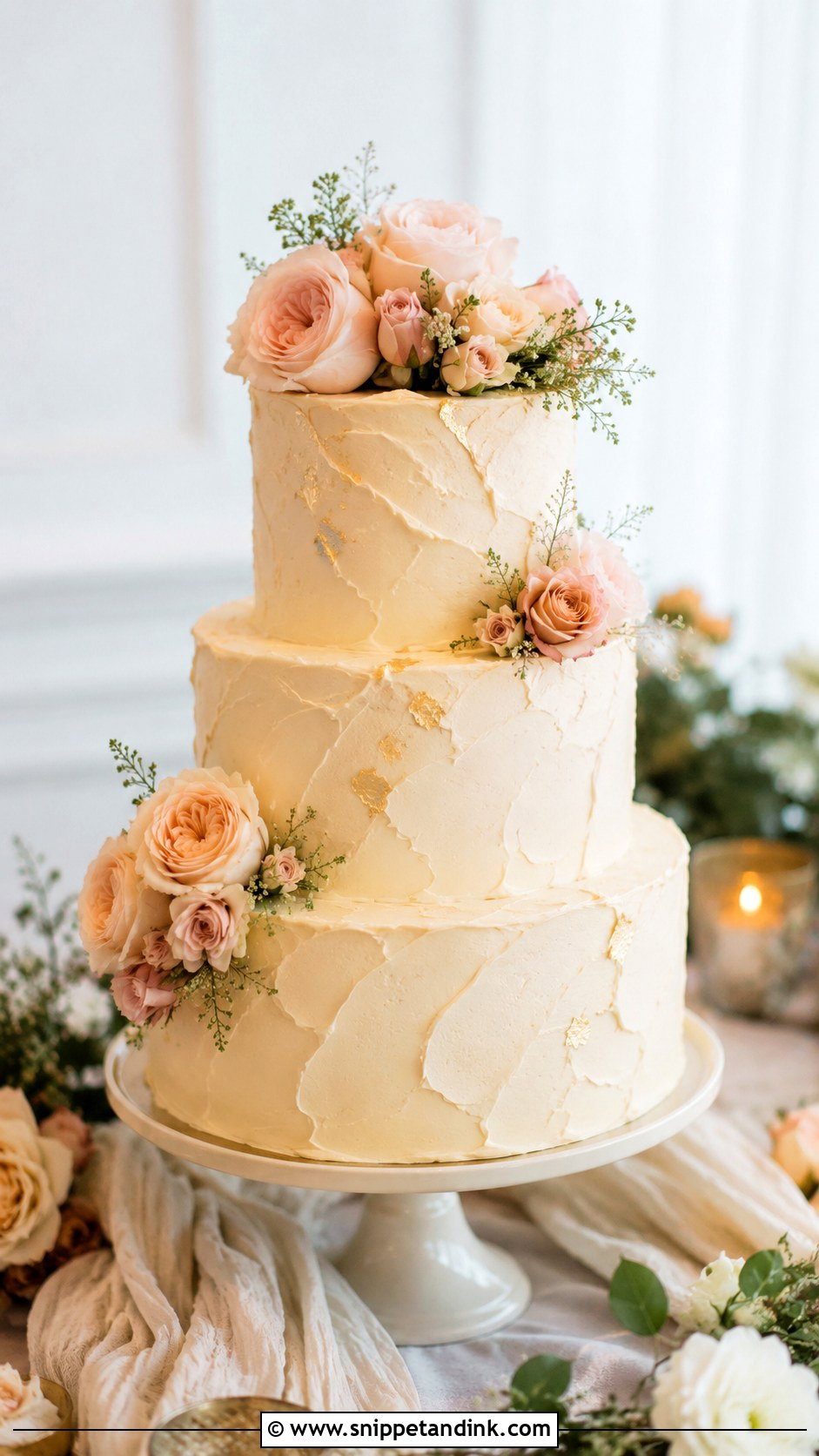
Buttercream is what most guests actually want to eat. Swiss and Italian meringue versions are silky and much less sweet than American buttercream, and they take texture well, from palette knife strokes to ruffles. The trade-off is temperature. Meringue buttercream softens in a warm room, so I ask where the cake will stand and for how long before I agree to an outdoor display. Fresh herbs, flowers or a little fruit finish it without fuss.
3. Fondant Wedding Cake
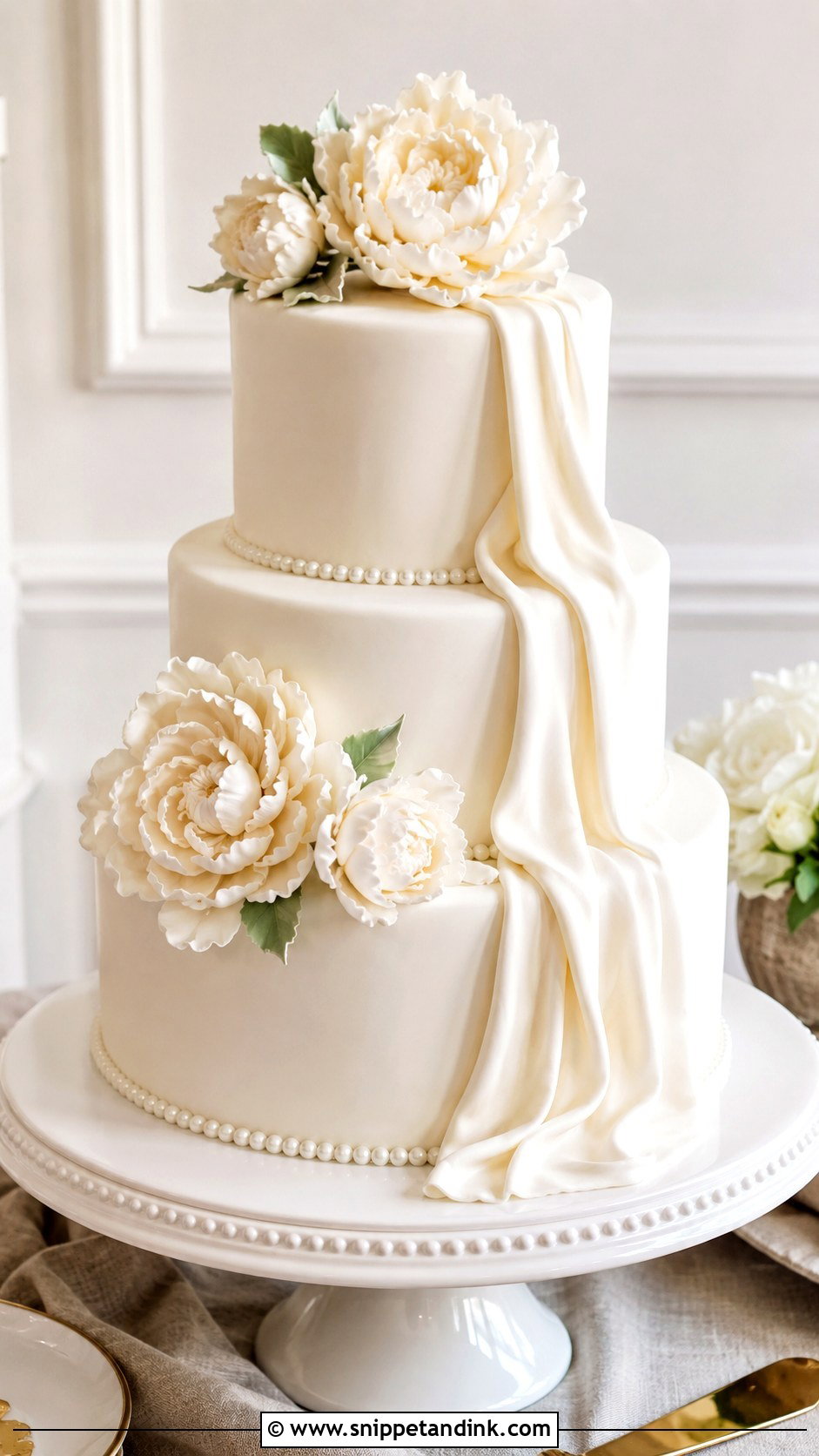
Fondant gives the sharp edges and smooth sides that bows, drapes, painted details and sculpted shapes need. It also protects the cake from air and handles warm indoor rooms better than soft frosting. Ask what sits underneath it. A good baker puts a proper layer of buttercream or ganache under the fondant, and many guests peel the fondant off anyway, so the cake inside has to carry the flavor. Ivory fondant with sugar flowers is the classic version; a pearl sheen or lace texture modernizes it.
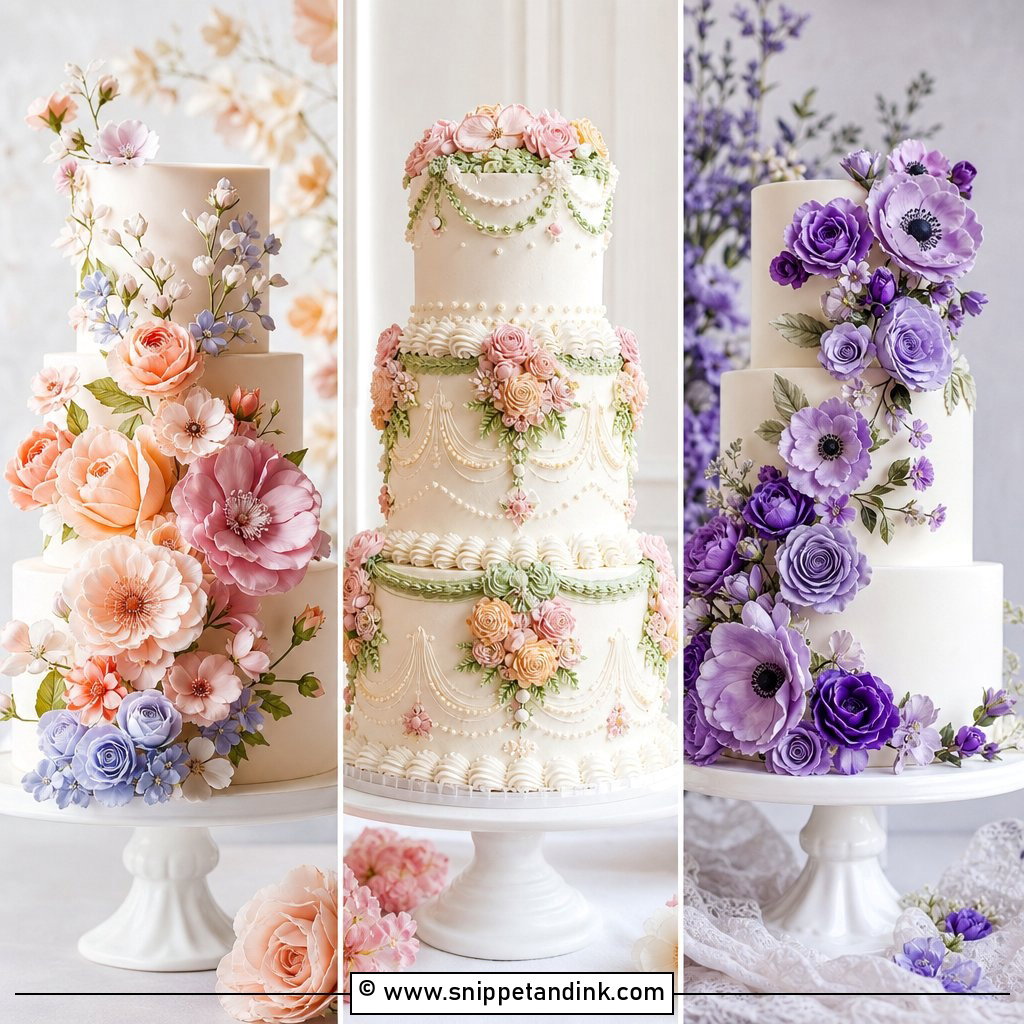
4. Vintage Lambeth Wedding Cake
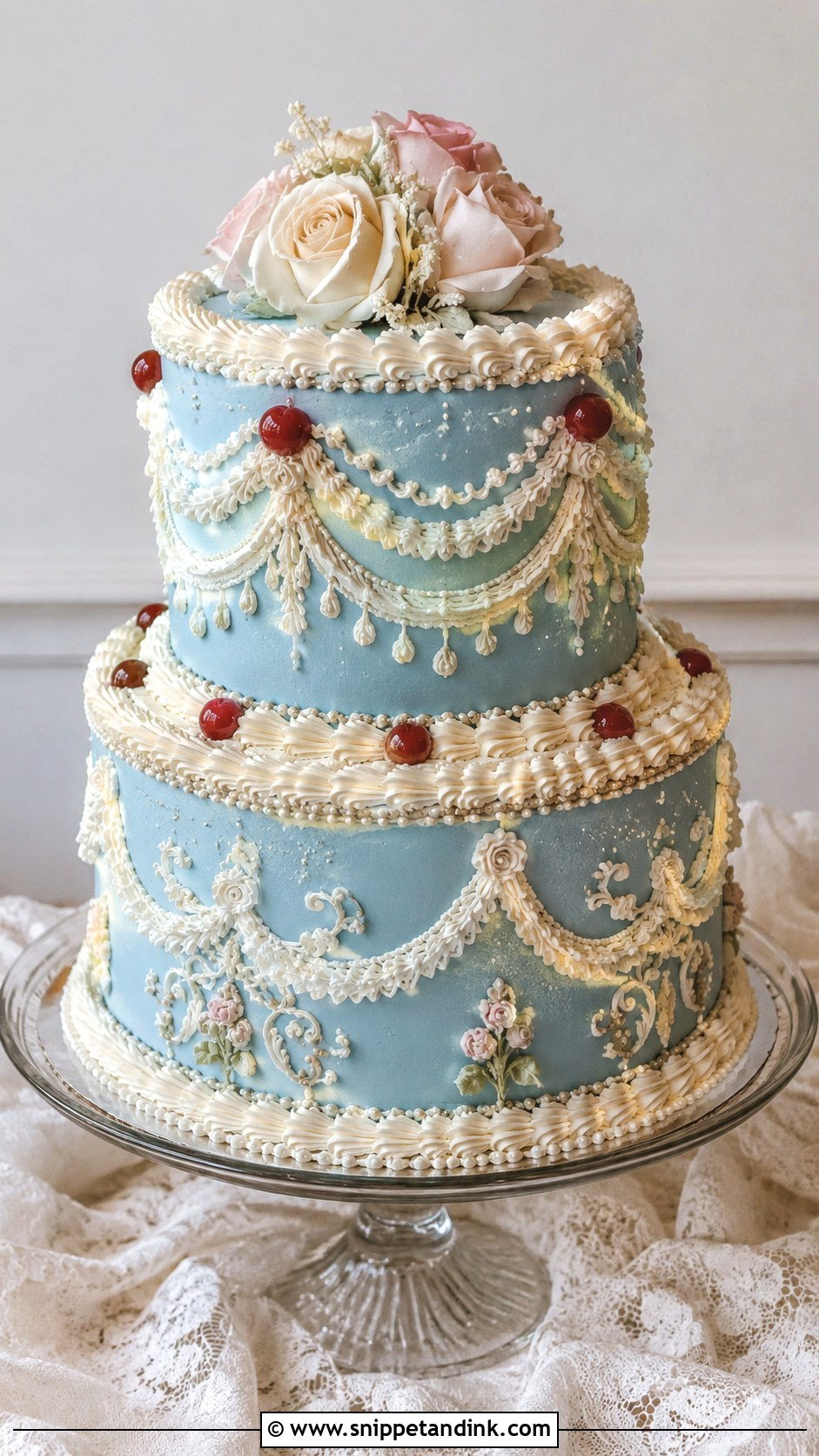
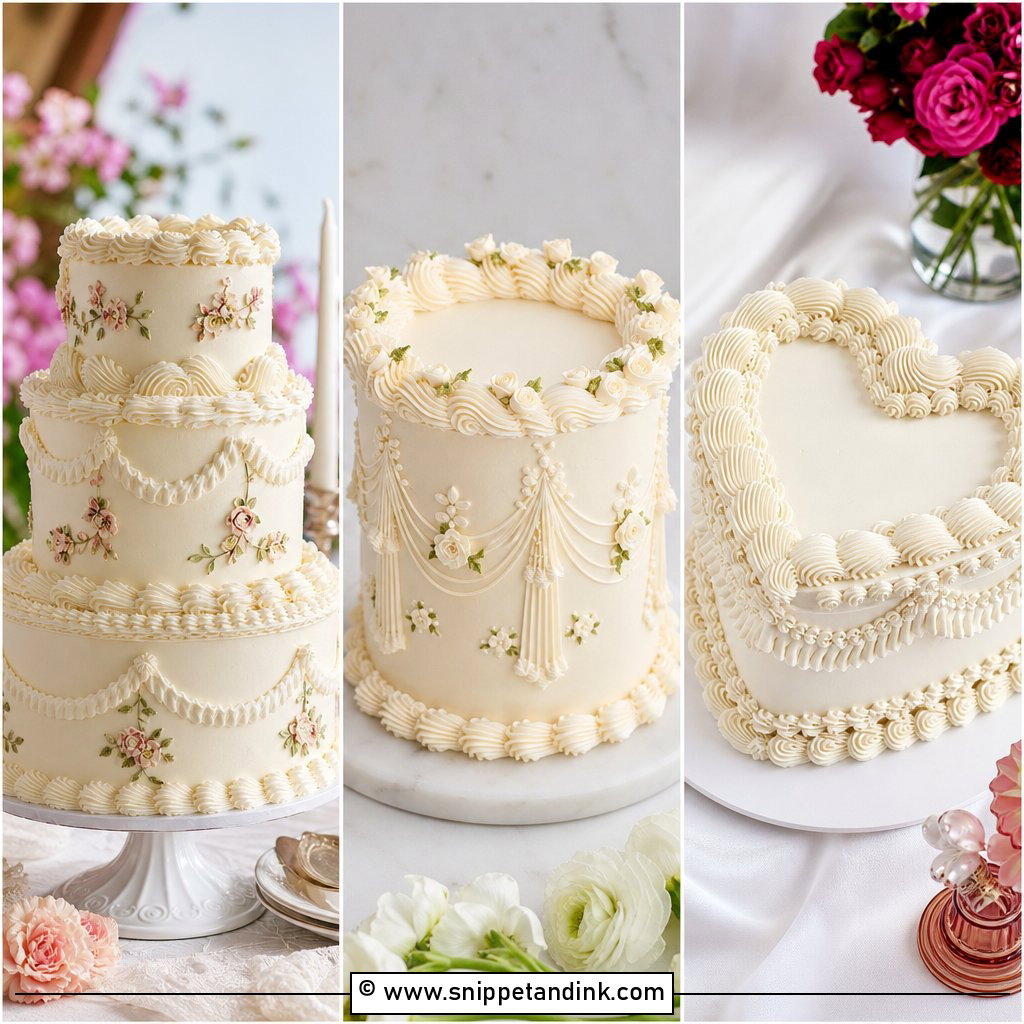
Lambeth is the old English overpiping method, and it is slow, careful work. Each border of layered piping, shell, swag and drop line is built on top of the last one, so a tall Lambeth cake can take a full day of piping alone. Ivory looks classic; pale blue, blush or butter yellow gives it a playful “something old” feel. I prefer it on a two-tier or a single tall tier, because on five tiers the detail gets lost and the cake looks heavy. Cherries, pearls or a small topper are all it needs on top.
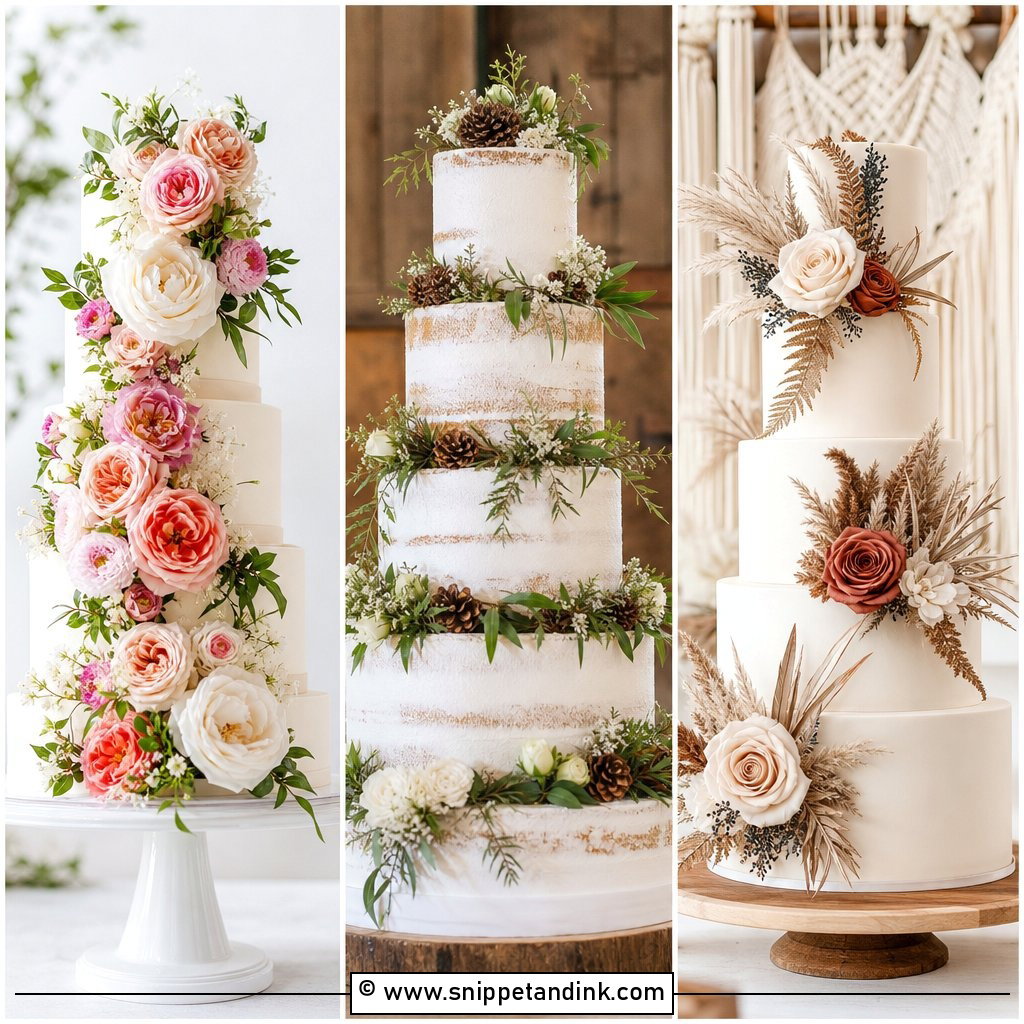
5. Floral Wedding Cake
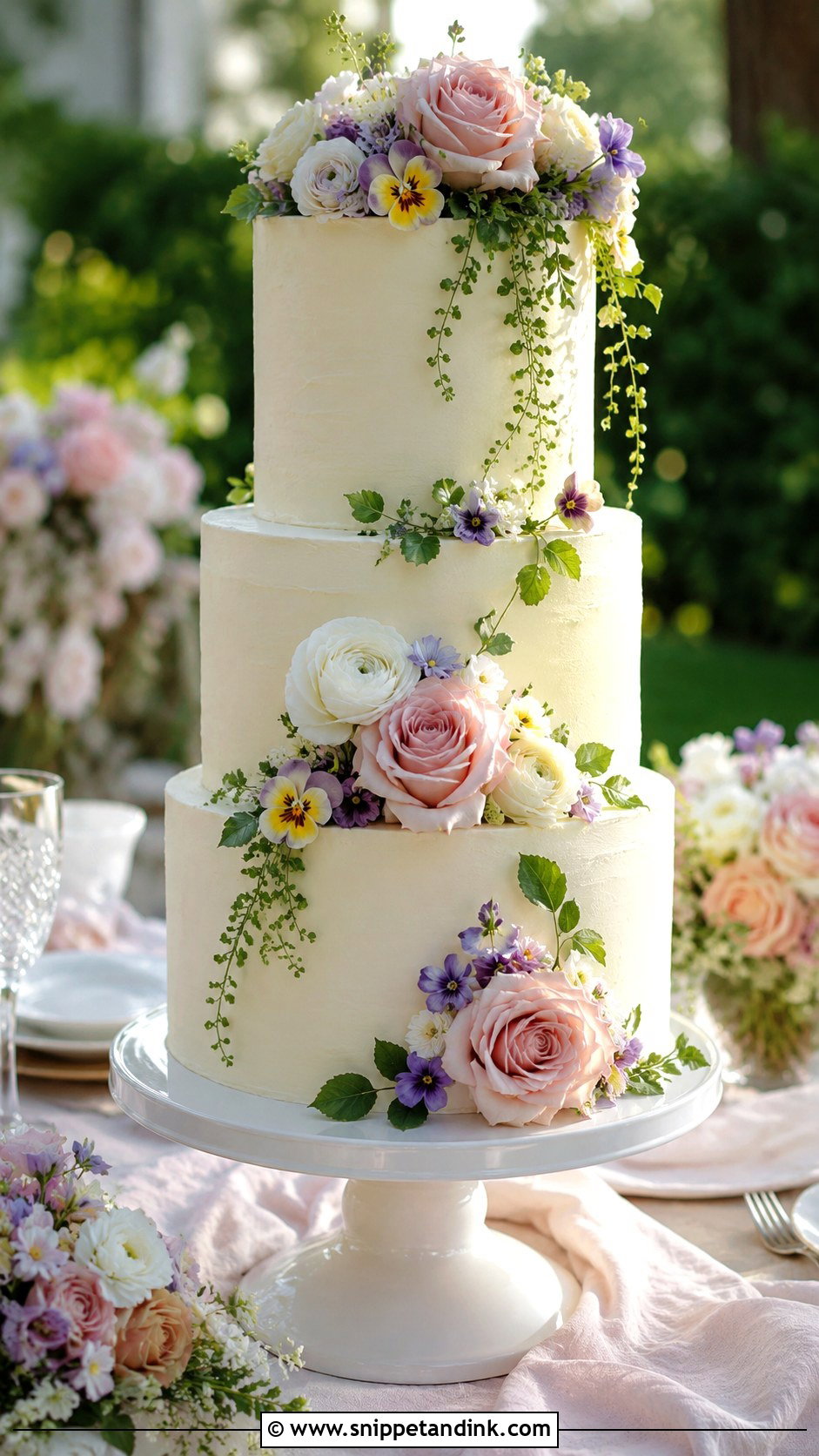
Flowers connect the cake to the bouquet and centerpieces, but every bloom has to be food-safe. Many popular florist flowers are sprayed, and some are toxic, so stems get wrapped and the flowers sit on small barriers rather than pushed straight into the frosting. Edible options like pansies and some roses can go on directly if they were grown for eating. A simple white cake with a few blooms, a painted floral, or a full cascading floral arrangement all work. Decide with your florist and baker together who supplies and places them.
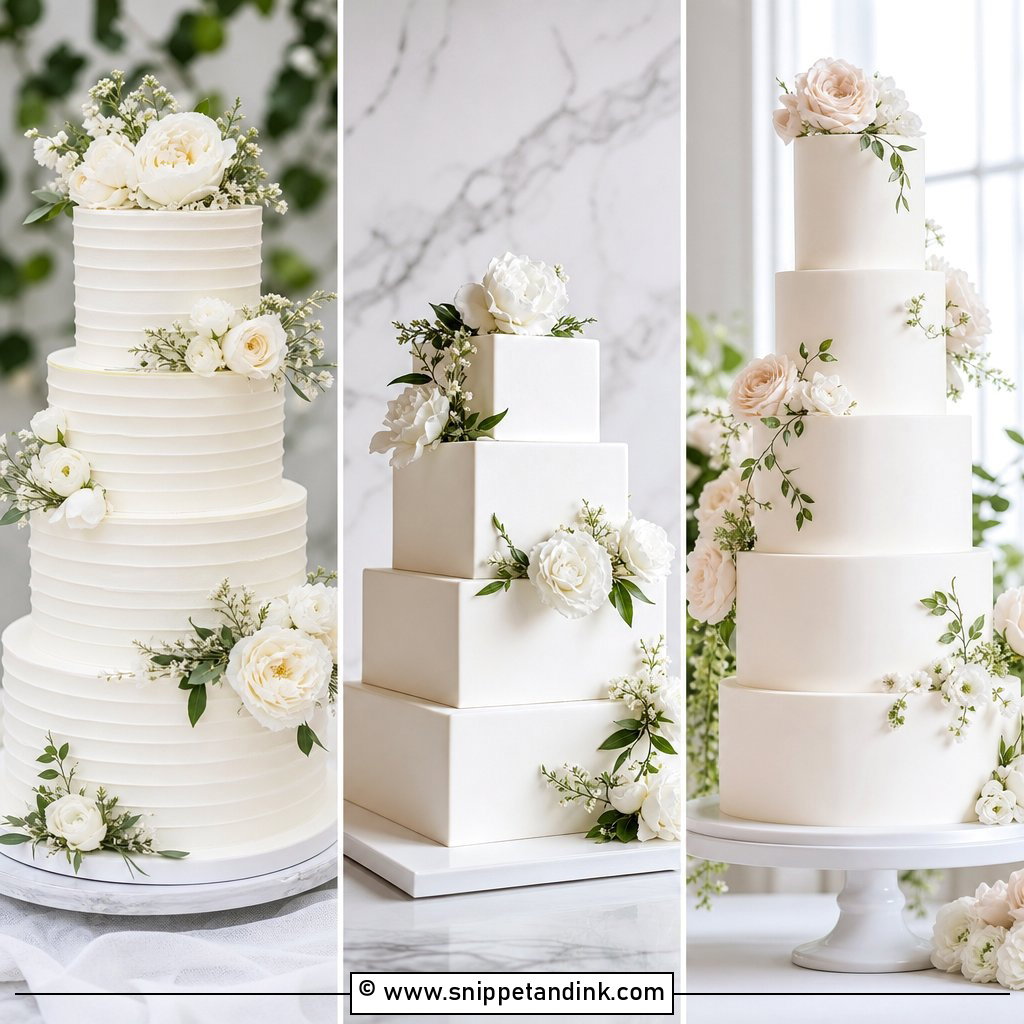
6. Minimalist Wedding Cake
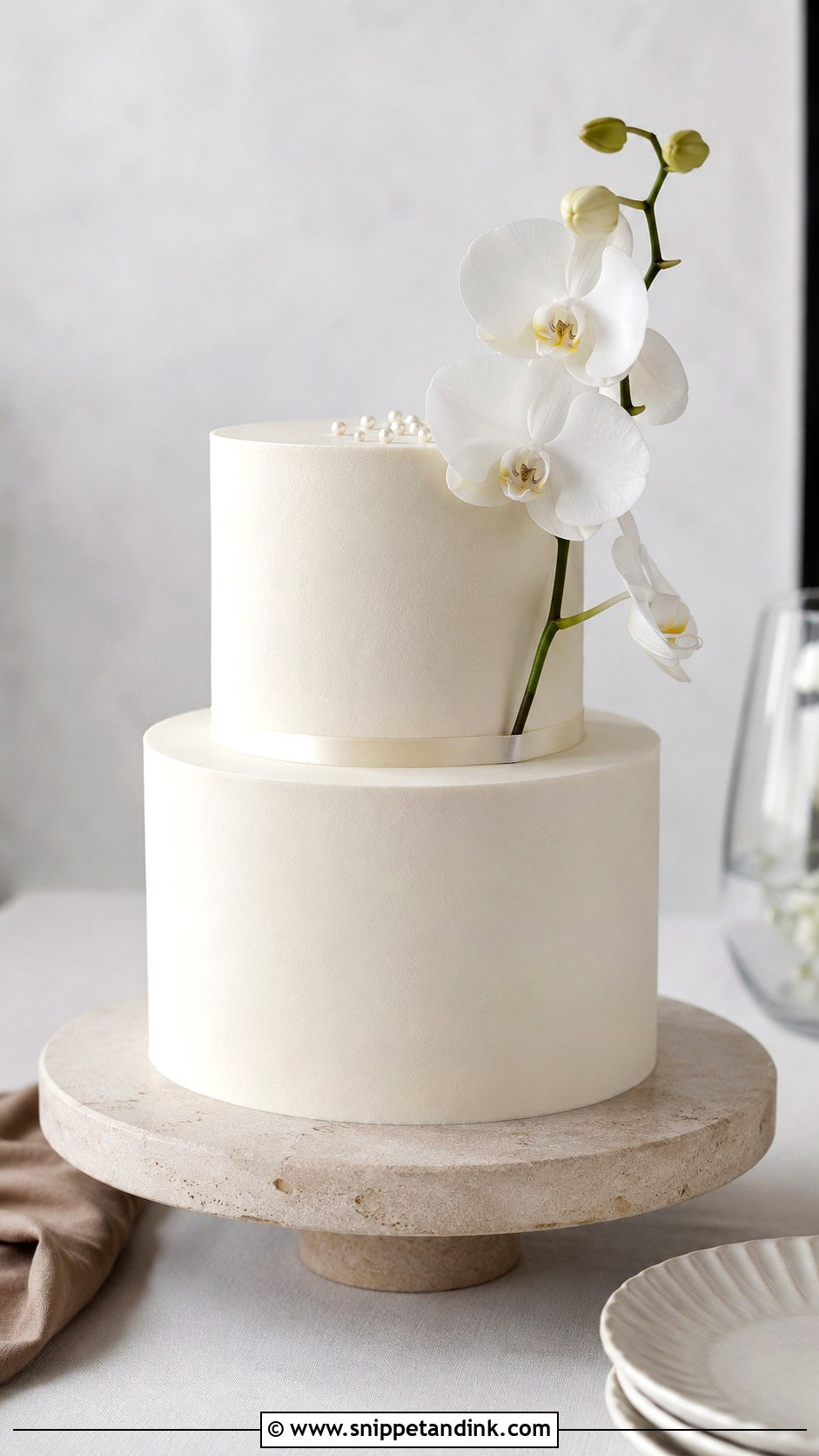
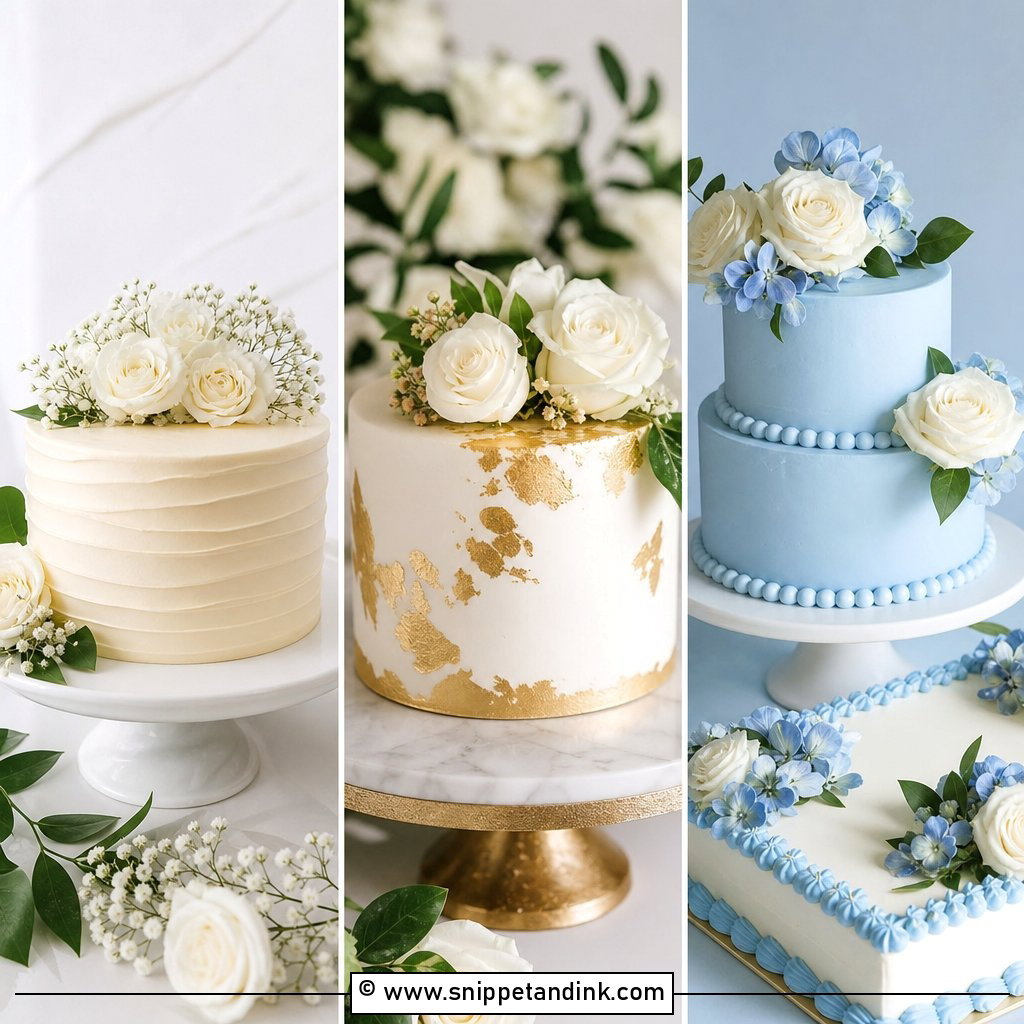
Minimalist cakes look easy and are not. With no decoration to hide behind, every bump in the frosting and every slightly leaning tier shows. That is why I’d only book this style with a baker whose portfolio shows clean, sharp edges. A single stem, a linen-textured surface or a slim ribbon is enough, and the plain finish lets flavor take over. Olive oil cake, coconut and lemon all suit a light frosting.
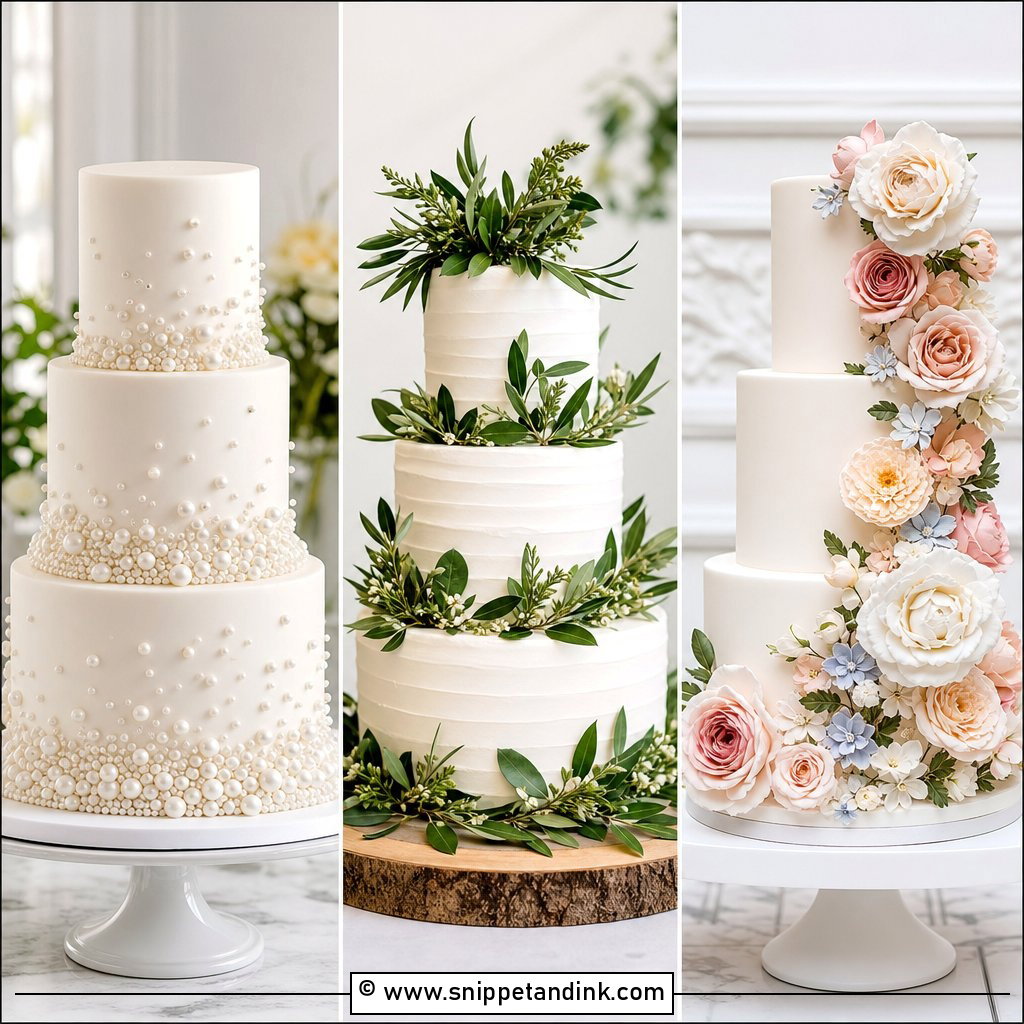
7. Rustic Wedding Cake
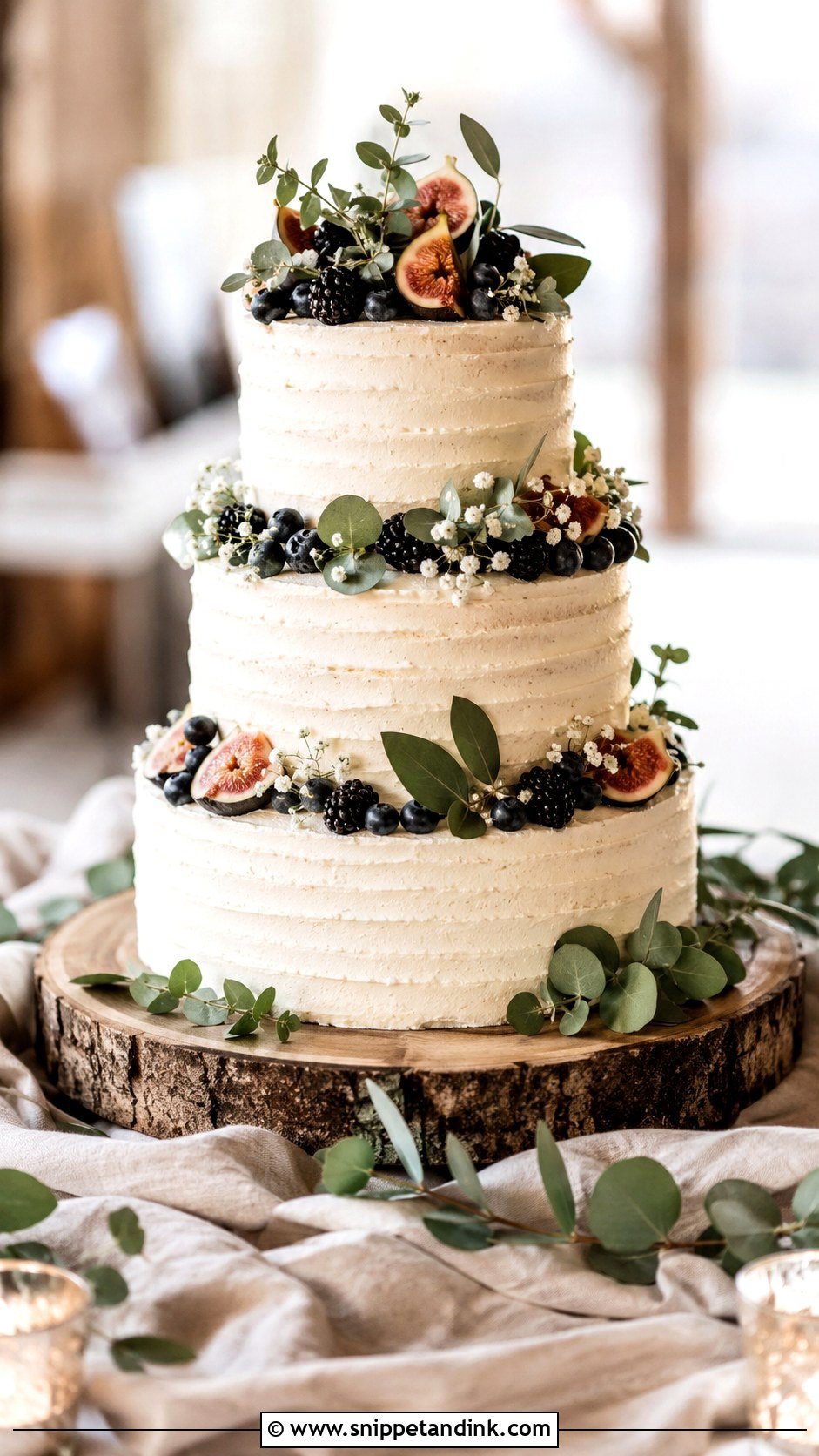
Rustic cakes rely on semi-naked or textured buttercream, greenery, figs and berries. Rustic should still mean level tiers and a deliberate layout, otherwise it just looks unfinished. Carrot, spice, honey and brown butter flavors suit the style, and they hold moisture well, which helps at barns and farms where the cake may sit out for a while. A wooden stand finishes the display.
8. Naked Wedding Cake
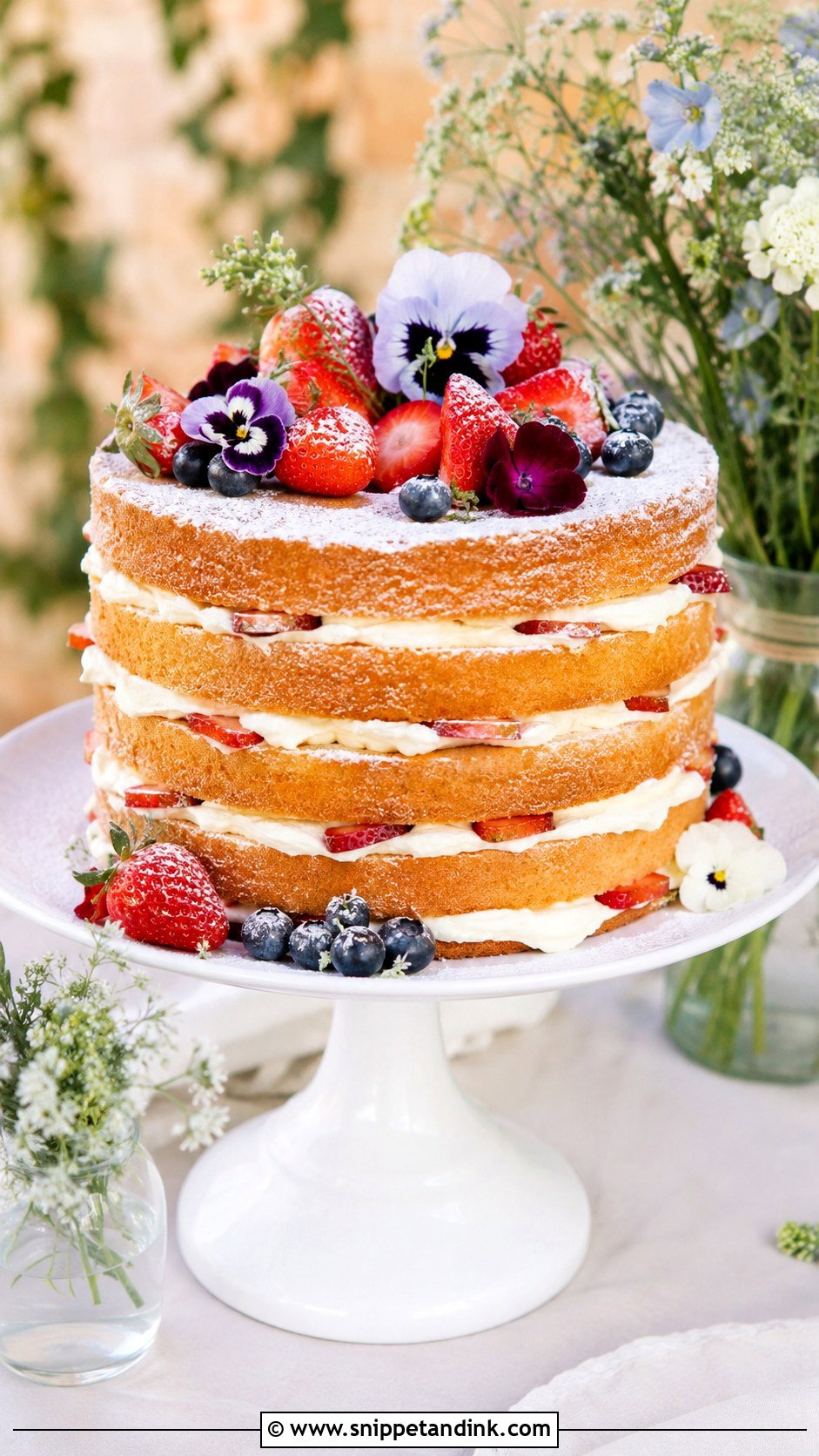
With little or no frosting on the outside, a naked cake shows its layers and filling, and that same lack of coating is its weakness. Bare sponge dries out quickly in open air. I bake and assemble these as close to the wedding as possible and recommend cutting them sooner in the evening. Berries, a dusting of powdered sugar and a few flowers are all it needs. Vanilla, lemon, almond and berry flavors do best.
9. Semi Naked Wedding Cake
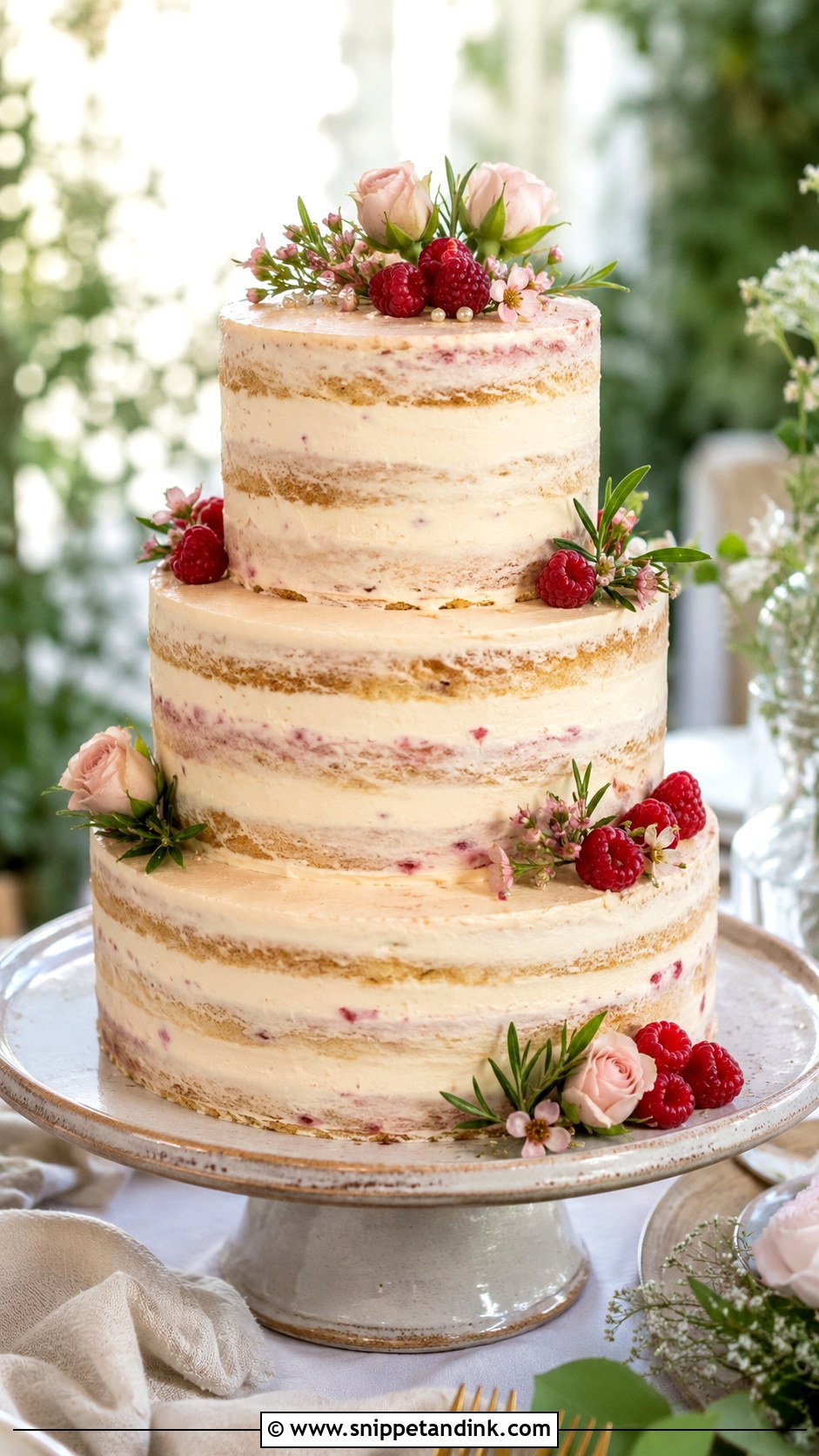
A thin coat of frosting scraped back so the layers just show through is my usual suggestion for couples who like the naked look but have a long reception. That scraped layer keeps the sponge from drying and makes the tiers look cleaner. It suits coastal, garden and outdoor receptions. Vanilla raspberry, lemon blueberry and strawberry cream are frequent picks, and fresh berries or small blooms finish it.
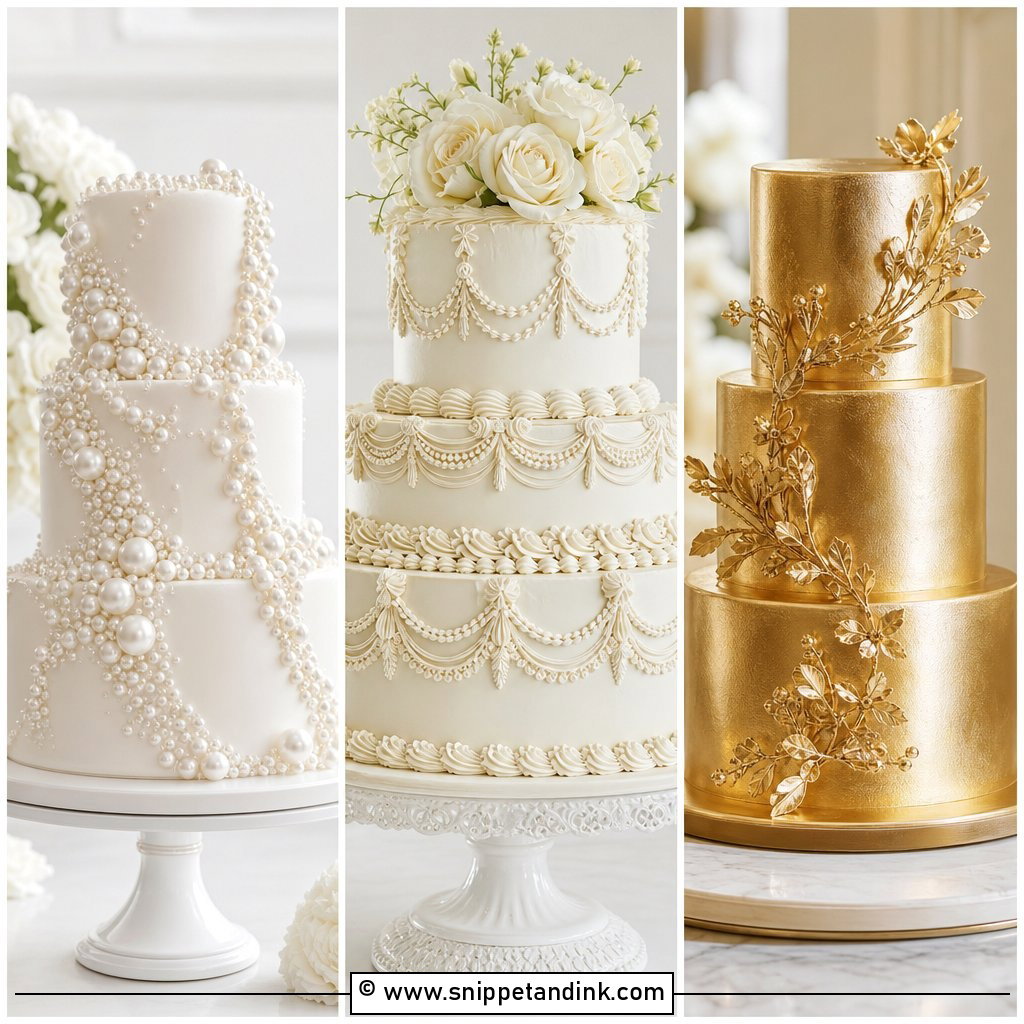
10. Pearl Wedding Cake
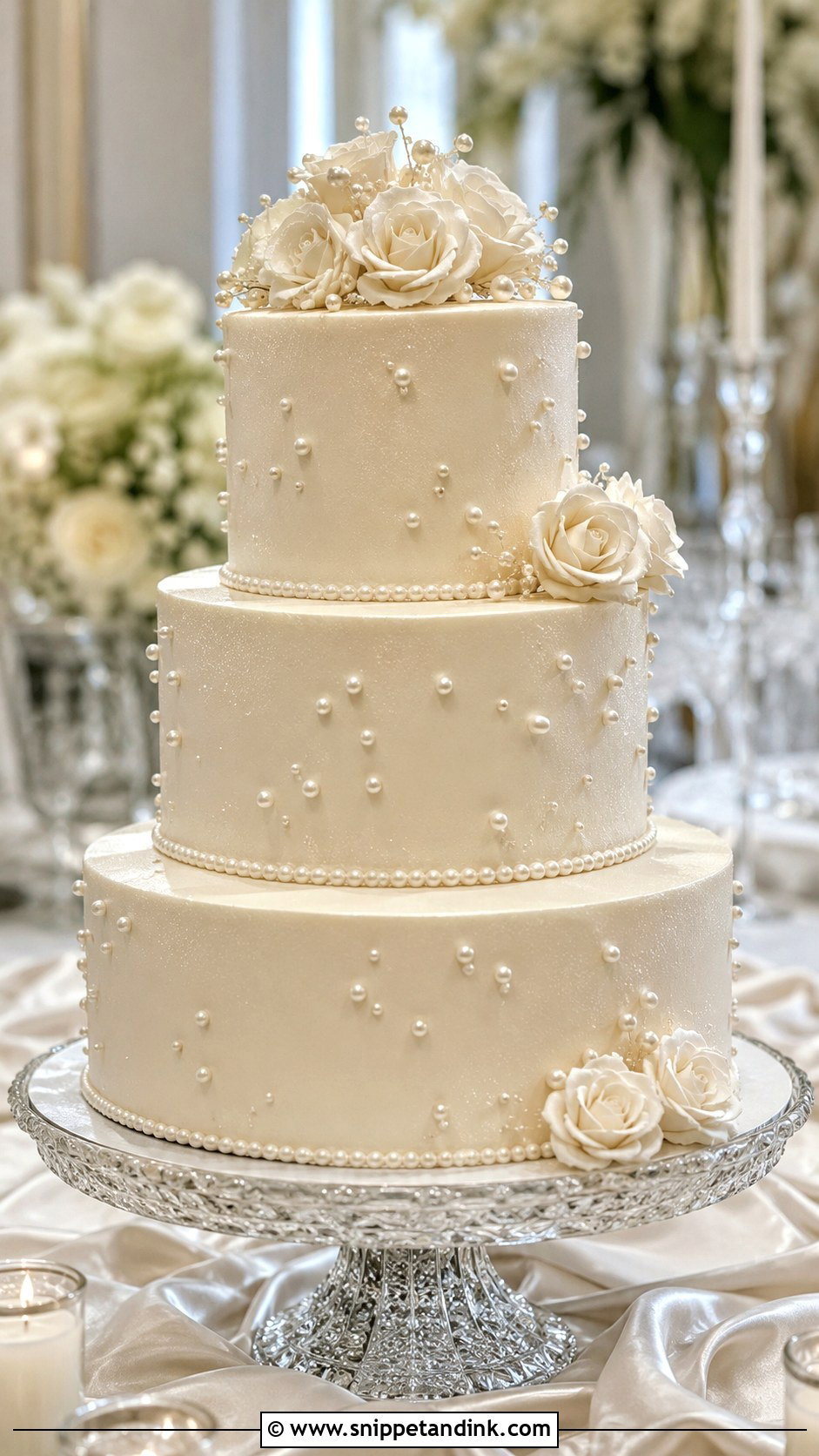
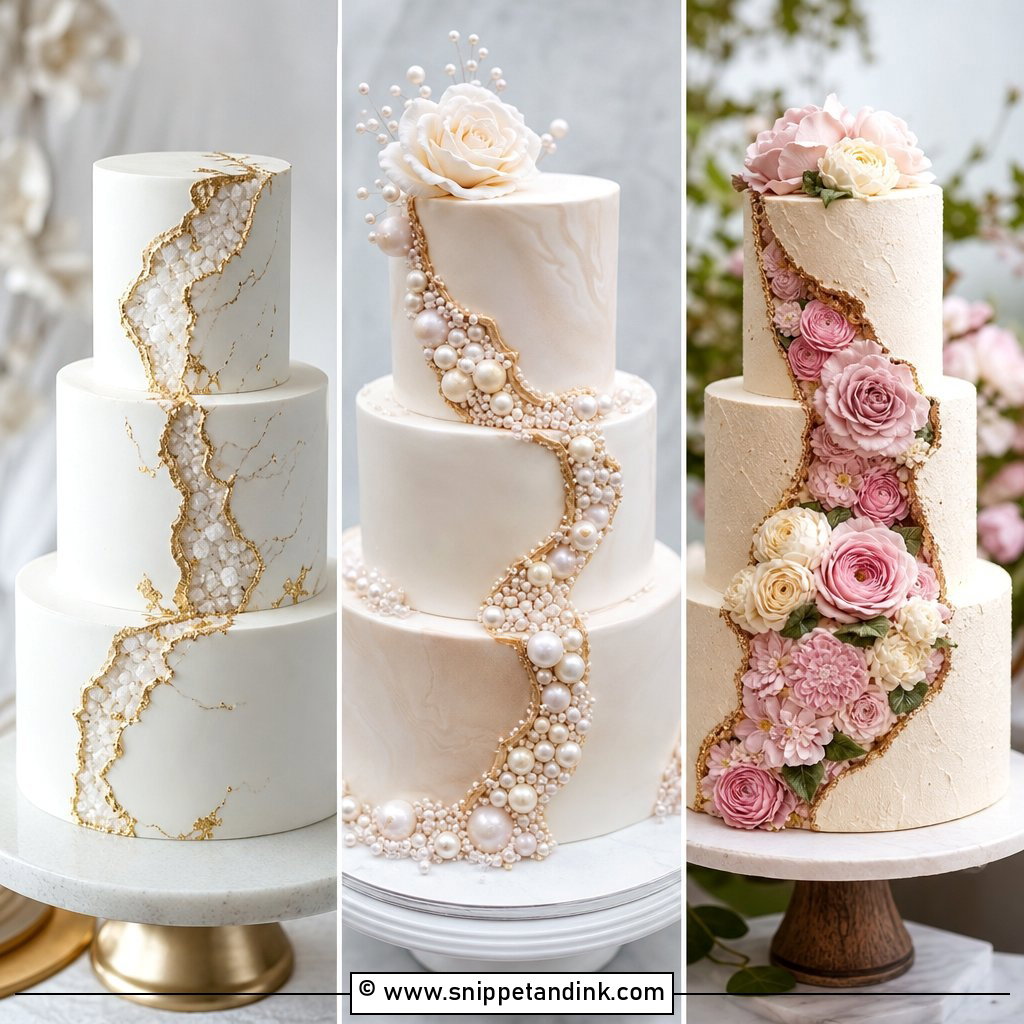
Pearls are usually small balls of fondant or sugar, sometimes dusted with edible luster. They can be scattered across smooth buttercream or lined up around each tier. Hand-placing hundreds of them takes time, which shows up in the price, so a pearl border at each tier is the practical middle option. Ivory, champagne, blush and soft grey frosting suit the look, and it sits well beside satin gowns and black-tie rooms. White chocolate or almond sponge keeps the inside pale.
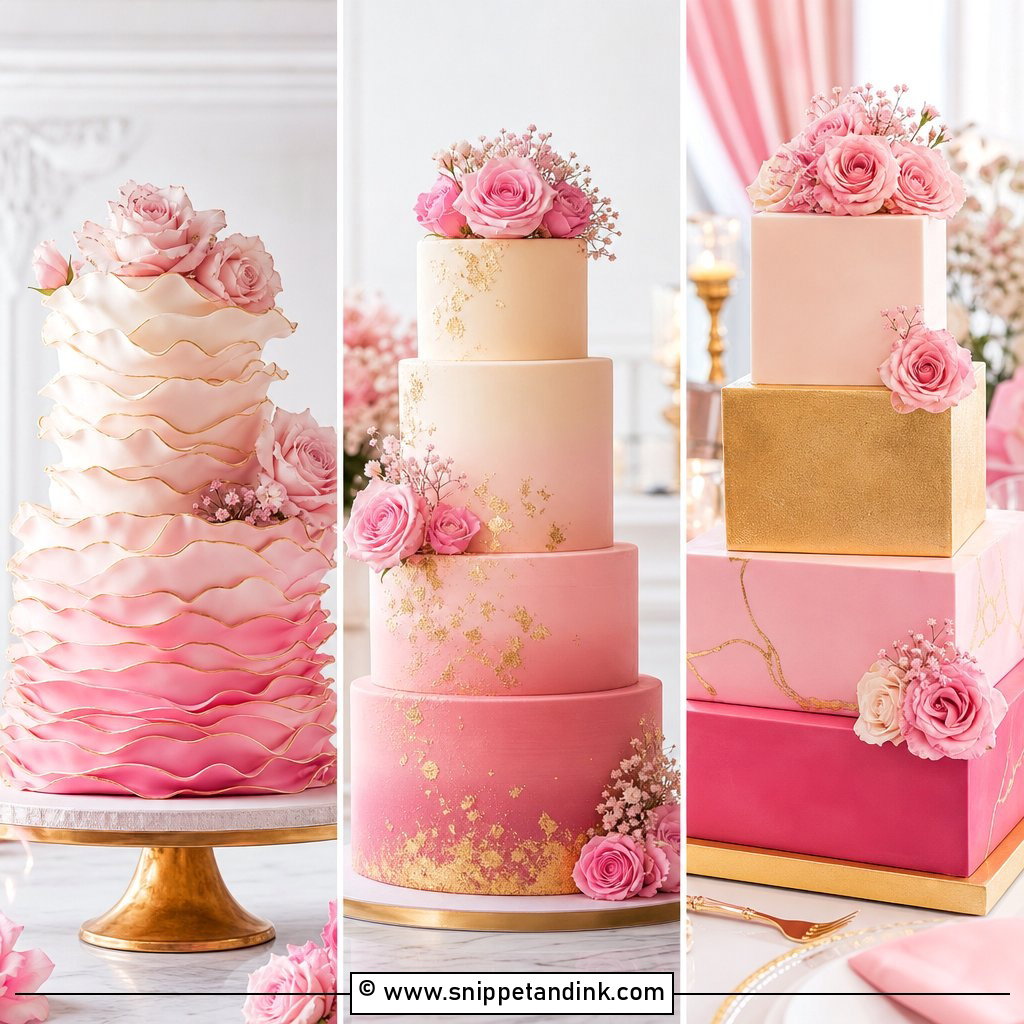
11. Gold Wedding Cake
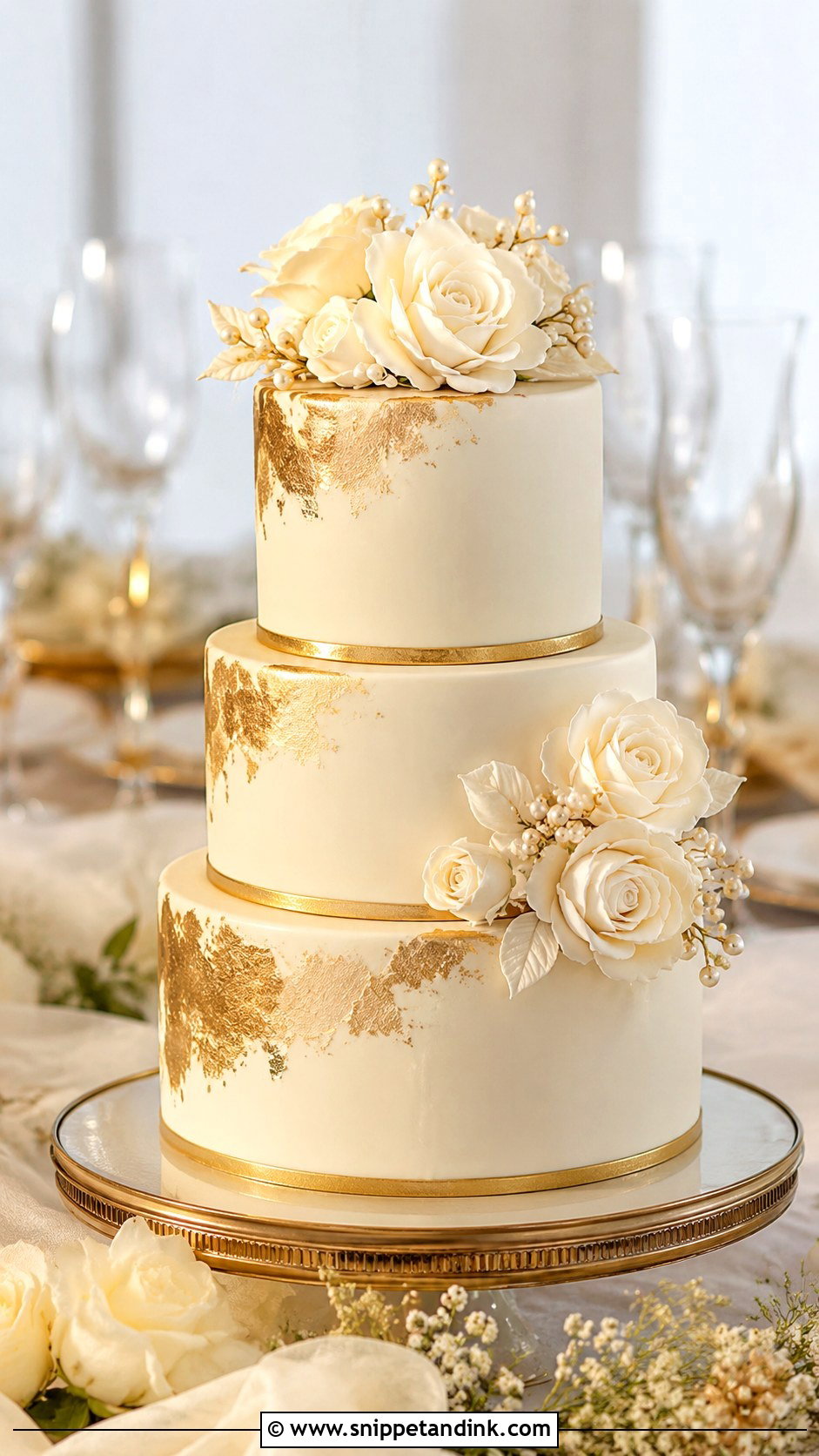
Gold is best used as an accent: gold leaf patches, painted edges or a thin band. Real edible gold leaf is fragile, and I apply it at the very end because humidity and fingerprints spoil it. A cake covered entirely in gold paint tends to look less refined than one with a few metallic strokes. Ivory buttercream, white fondant and blush frosting all pair with it. Caramel, chocolate hazelnut and almond flavors match the warm look.
12. Square Wedding Cake
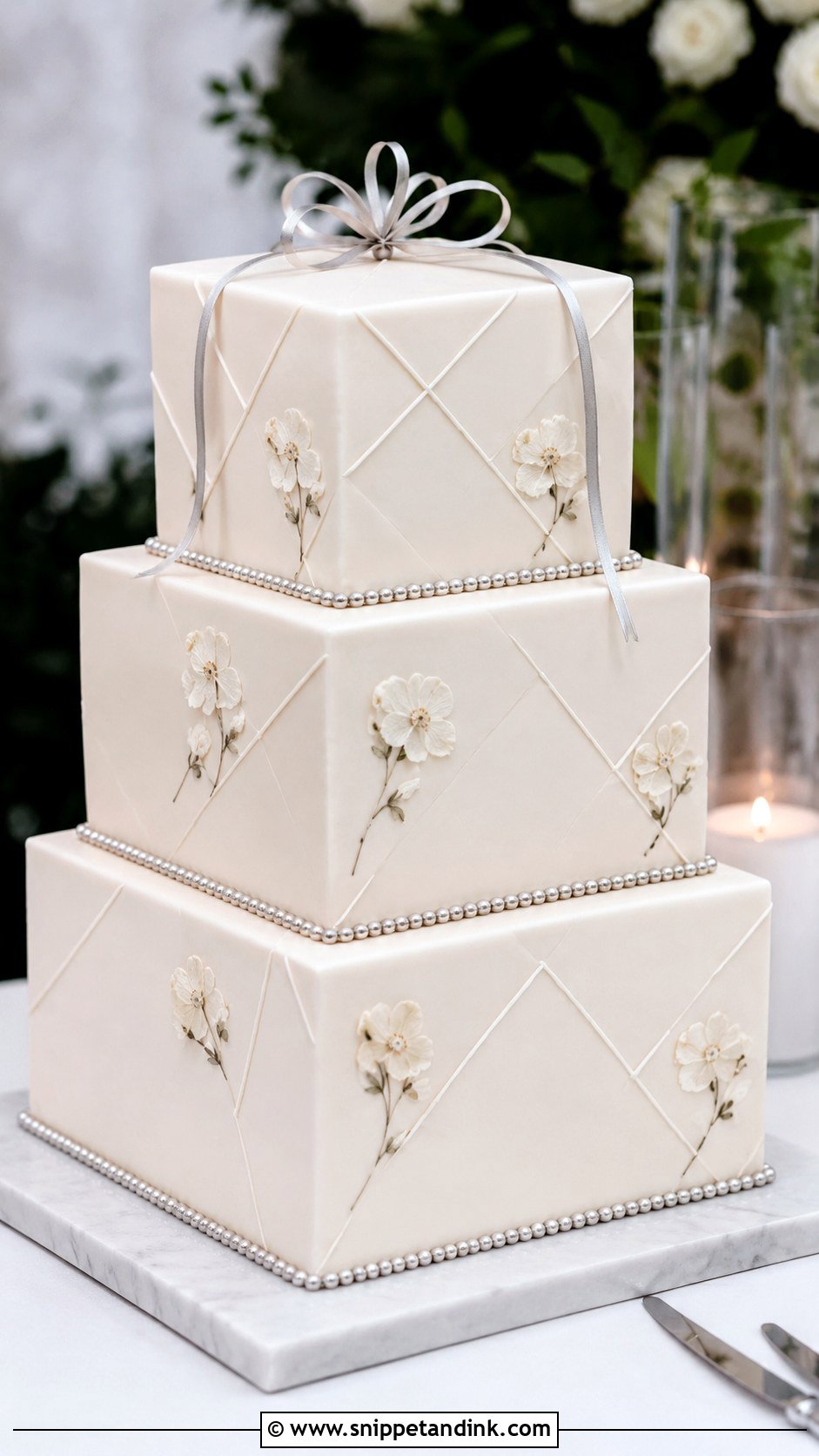
Square tiers look architectural, and they also give more portions than round tiers of the same width, because you don’t lose the curved edges. The corners are the hard part. Buttercream on a square cake needs to be chilled and scraped carefully, which is why many square cakes are finished in fondant or over ganache. Stack them straight for a formal look or offset them for movement, and add ribbon or a geometric pattern if you want detail.
13. Tall Wedding Cake
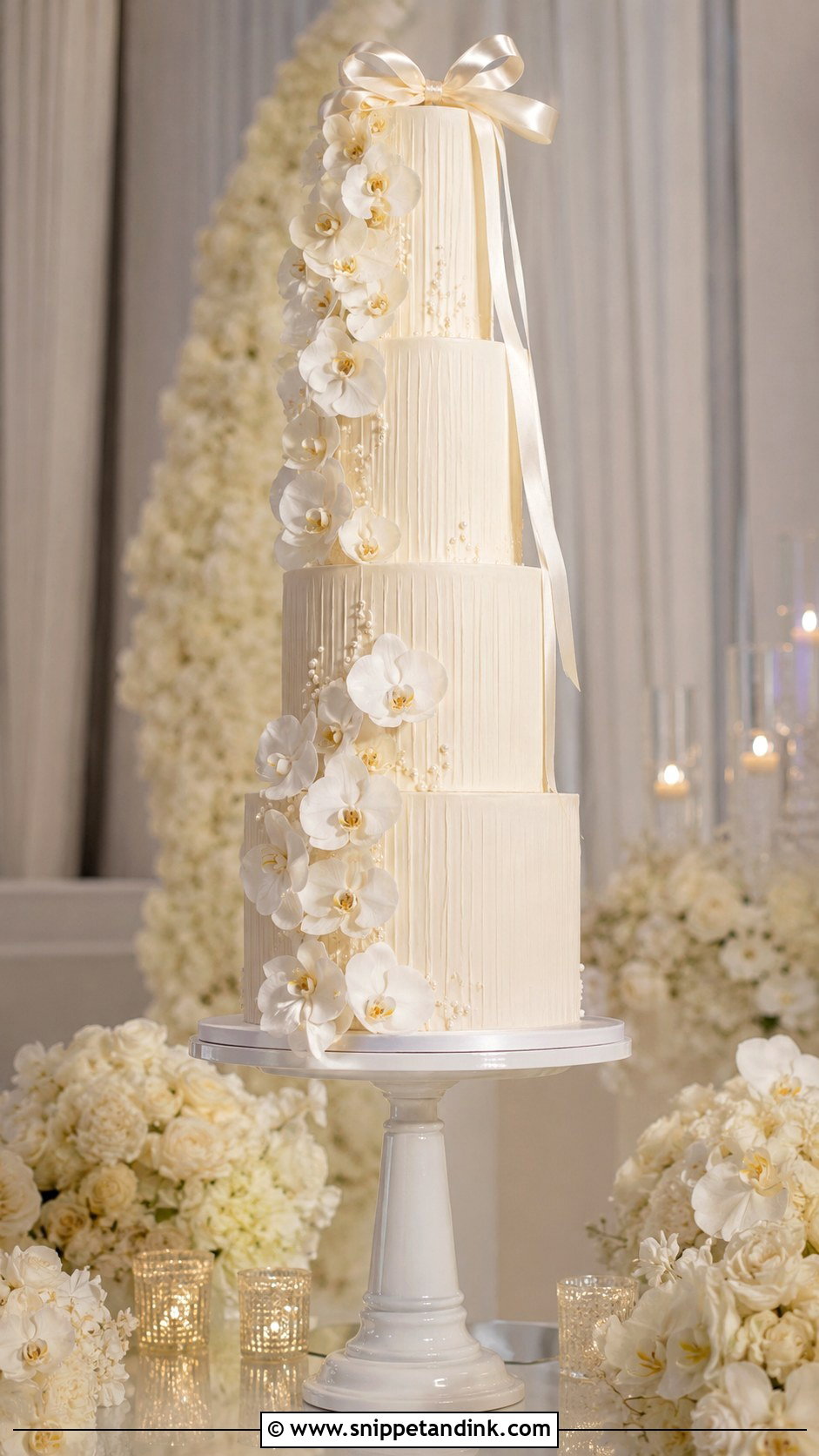
Height reads beautifully in rooms with high ceilings, and extra-tall tiers or slim stacked layers pull the eye up without needing much decoration. The risk is structure. Tall cakes need dowels, boards and often a central rod, and they must be stacked on site or transported with great care. If your venue has a long walk, steps or an uneven floor between the van and the table, mention it early. Vanilla bean, lemon and chocolate slice cleanly, which helps on tall tiers.
14. Small Wedding Cake
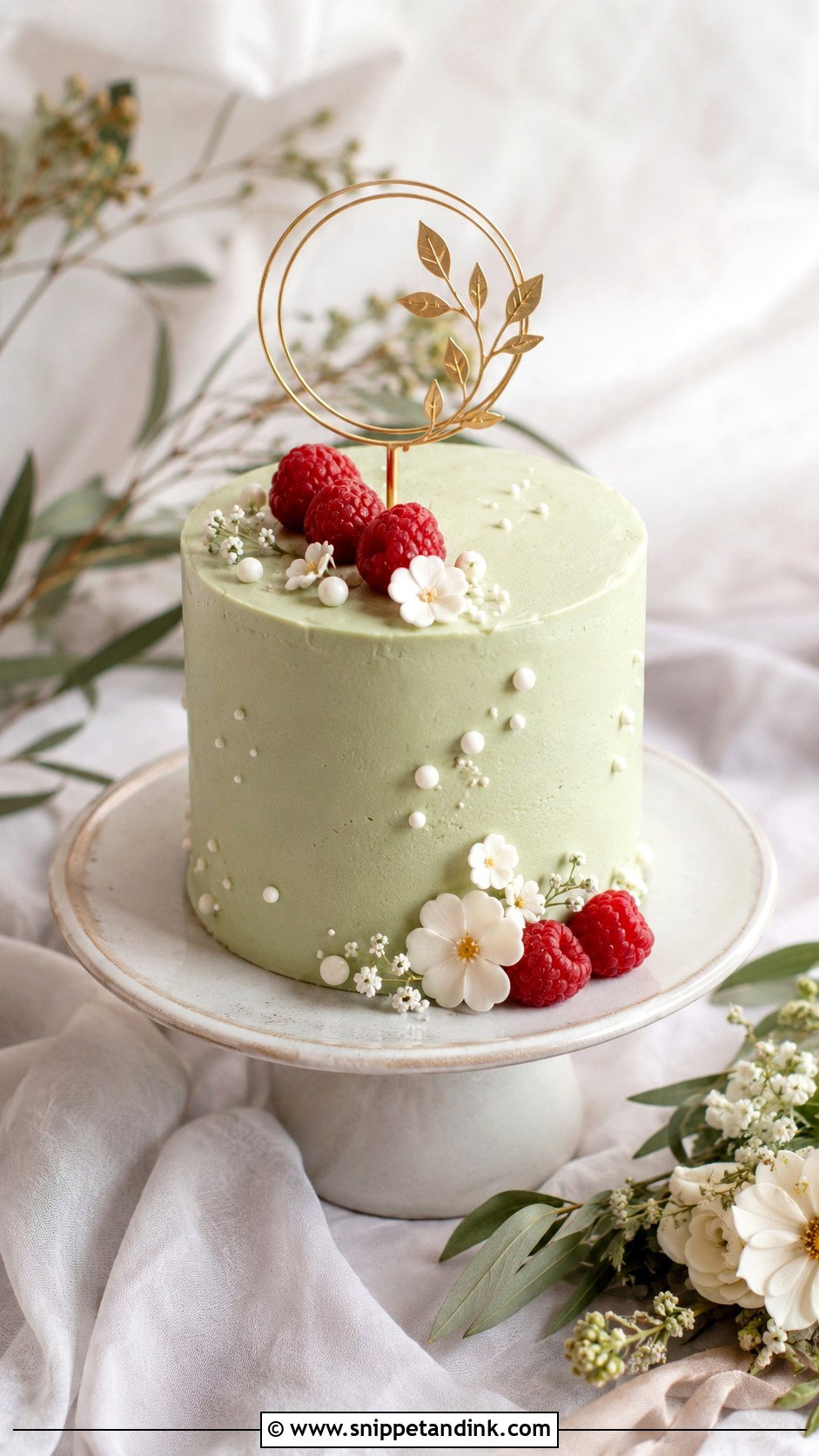
A one- or two-tier cake suits elopements, courthouse weddings and receptions with other desserts. Because you are feeding fewer people, you can choose a bolder flavor without worrying about the whole crowd. Pistachio raspberry, chocolate caramel or coconut cream can make it memorable. Vintage piping or a mini floral cascade gives a small cake presence, and a raised stand helps it hold its own on a big table.
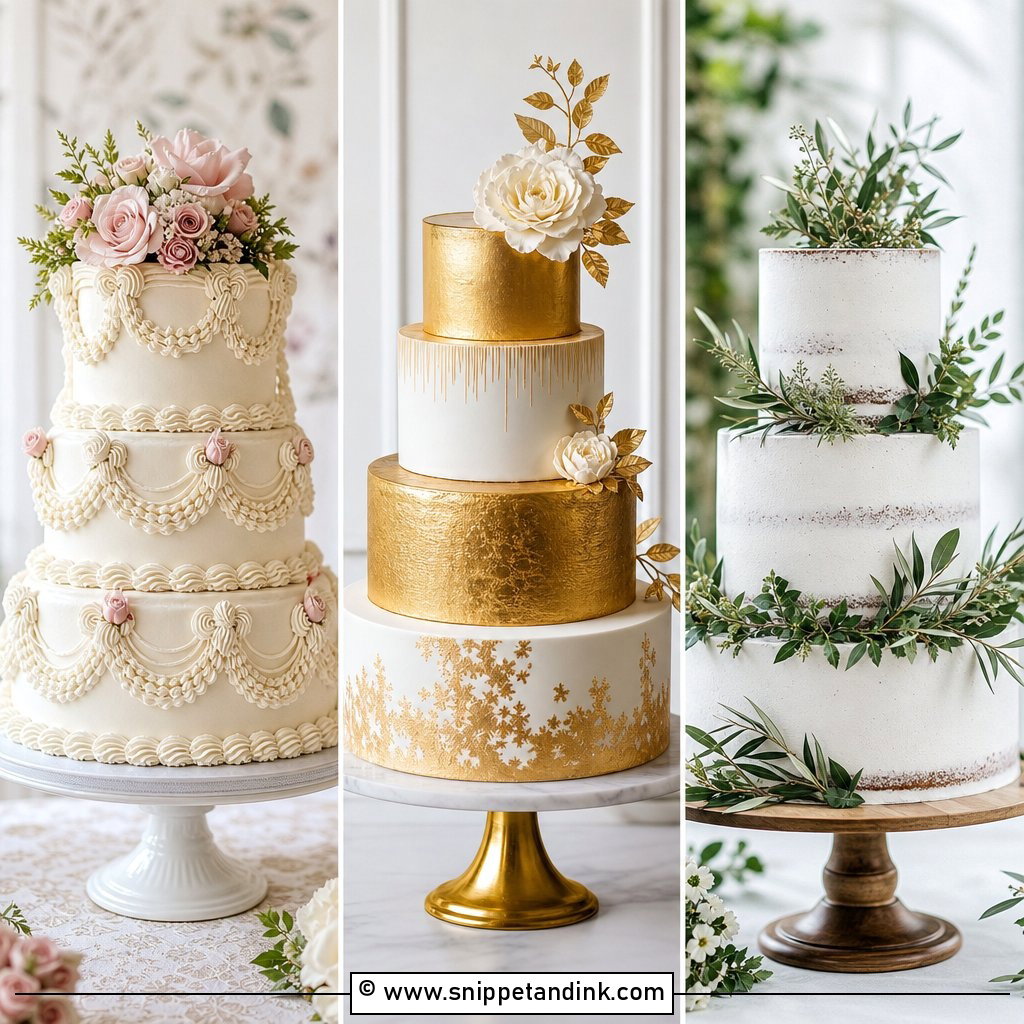
15. Sheet Wedding Cake
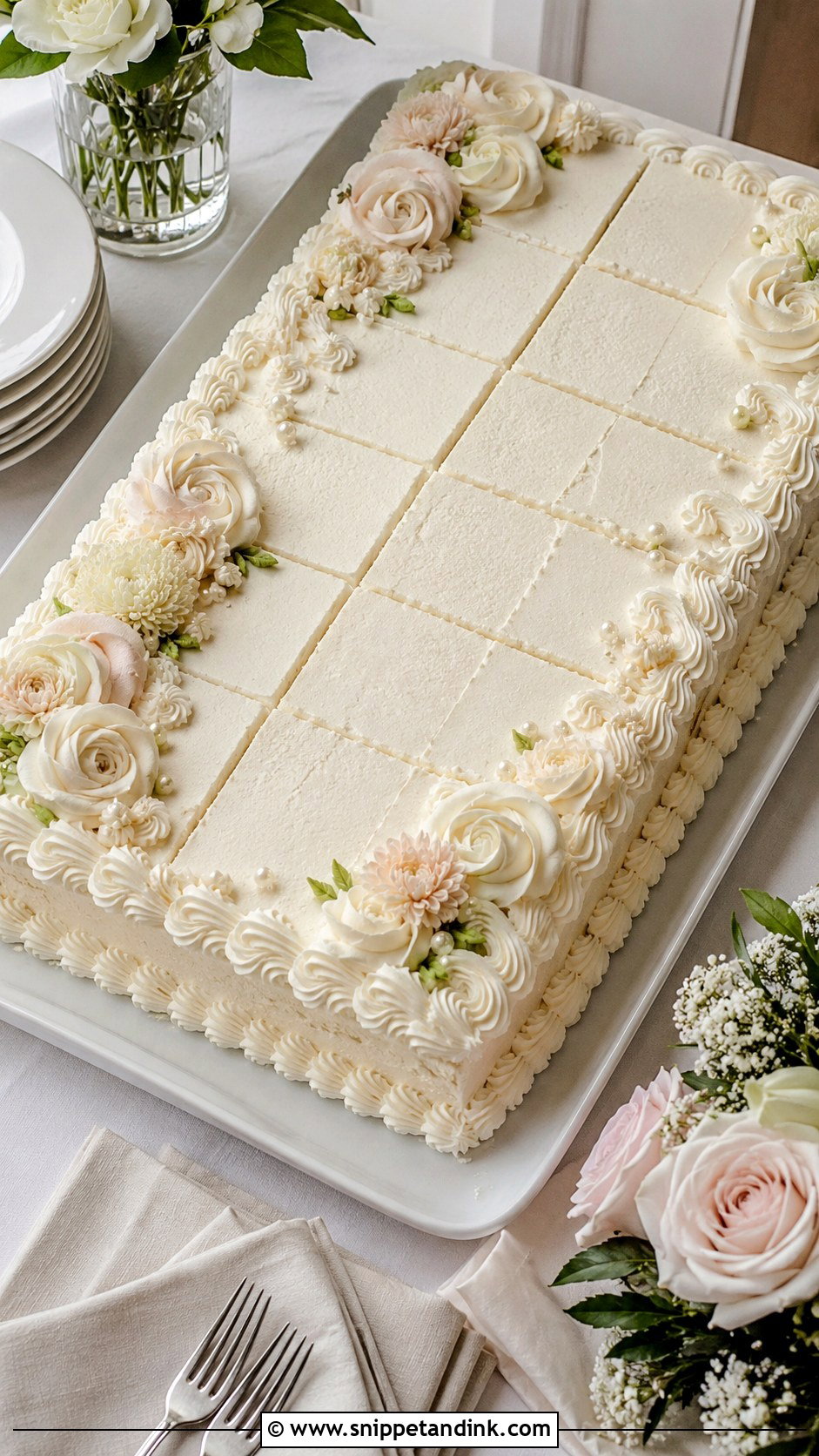
Sheet cake is the honest, practical answer for big guest lists, and it can look good. Some couples show a small display cake for photos, then serve sheet cake from the kitchen; it is a common setup and caterers like it because portions come out fast and even. Others decorate the sheet itself with piped borders, flowers and fruit. Vanilla, chocolate, lemon and marble are reliable. A vintage piped sheet cake is having a real moment.
16. Cupcake Wedding Cake
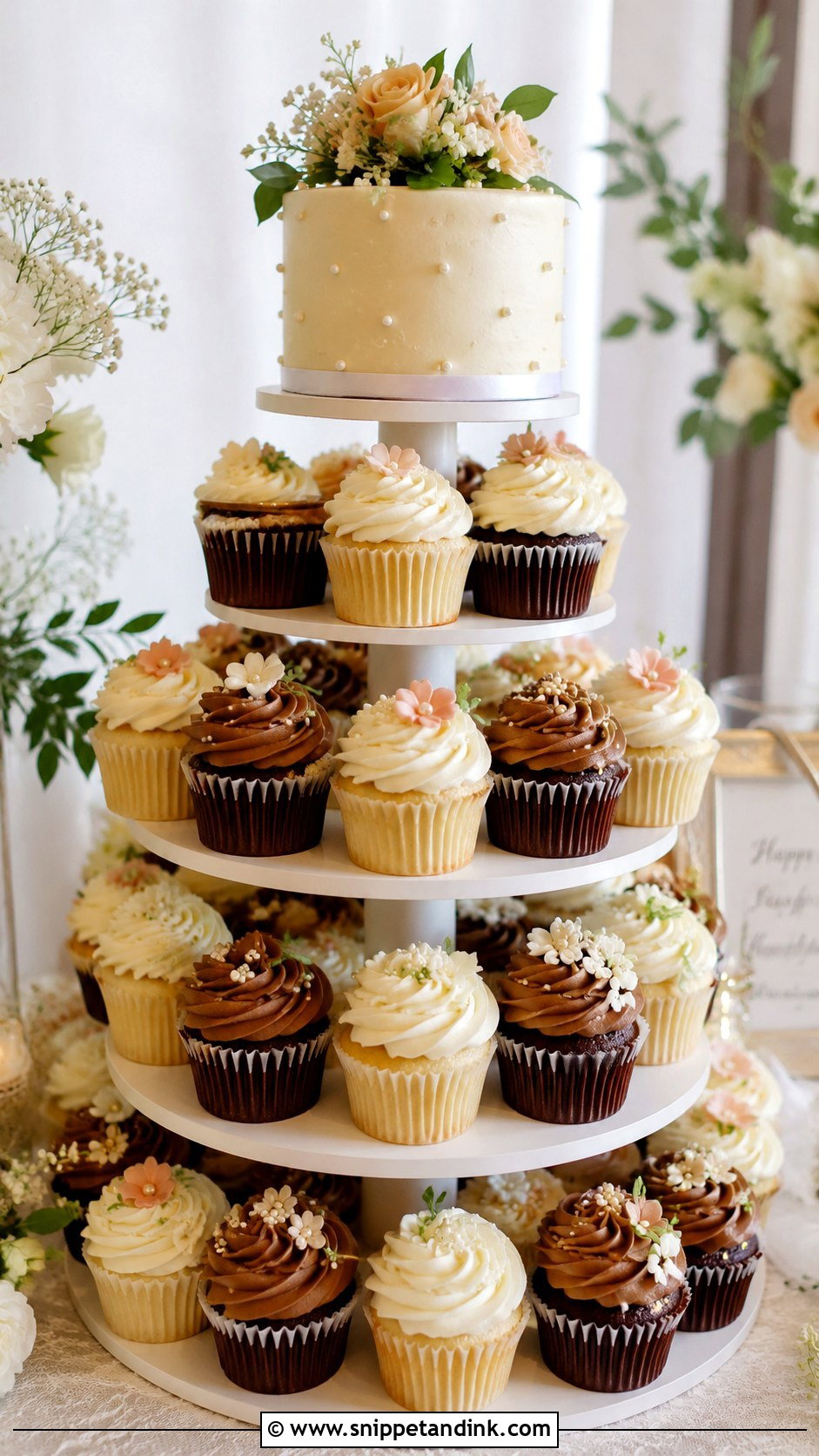
A cupcake wedding cake works when you want easy serving and lots of flavors, including gluten-free options that can be kept on their own tier. Cupcakes are set out on tiered stands to look like a cake, and a small cutting cake on top keeps the traditional moment. Coordinate the frosting colors so the display reads as one design. One practical note: cupcakes go stale faster than a covered cake, so they need to be baked very close to the day.
17. Dessert Table Wedding Cake
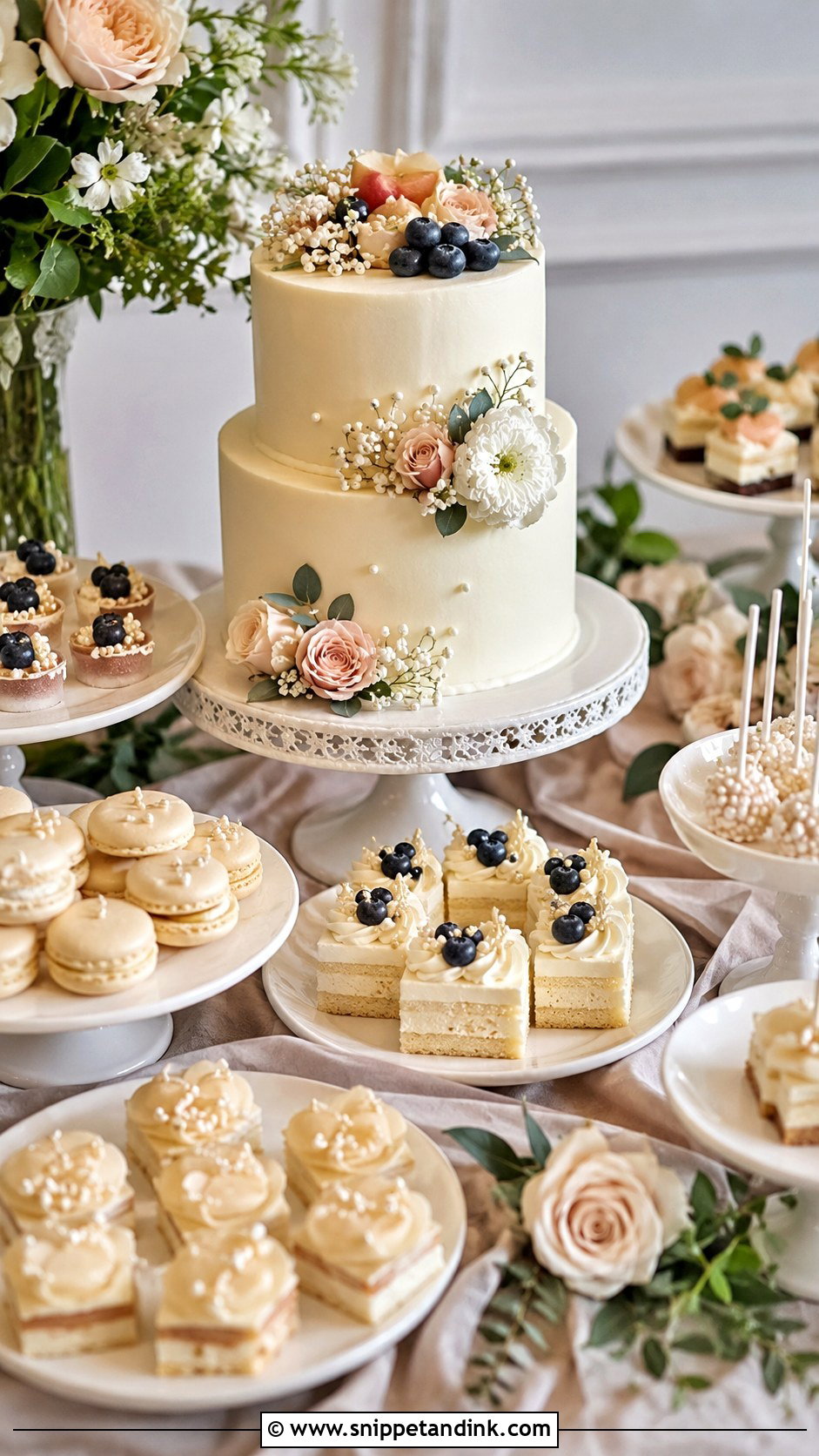
Here the main cake shrinks and is surrounded by mini cakes, macarons, cookies, mousse cups or tarts. Guests like the variety, and it suits receptions with lots of mingling. The cake still needs to be the visual anchor, so put it on a taller stand at the center. A two-tier buttercream cake with matching small desserts is a reliable plan, and it lets you offer different flavors without building one enormous cake. Ask who refills the table during the evening.
18. Chocolate Wedding Cake
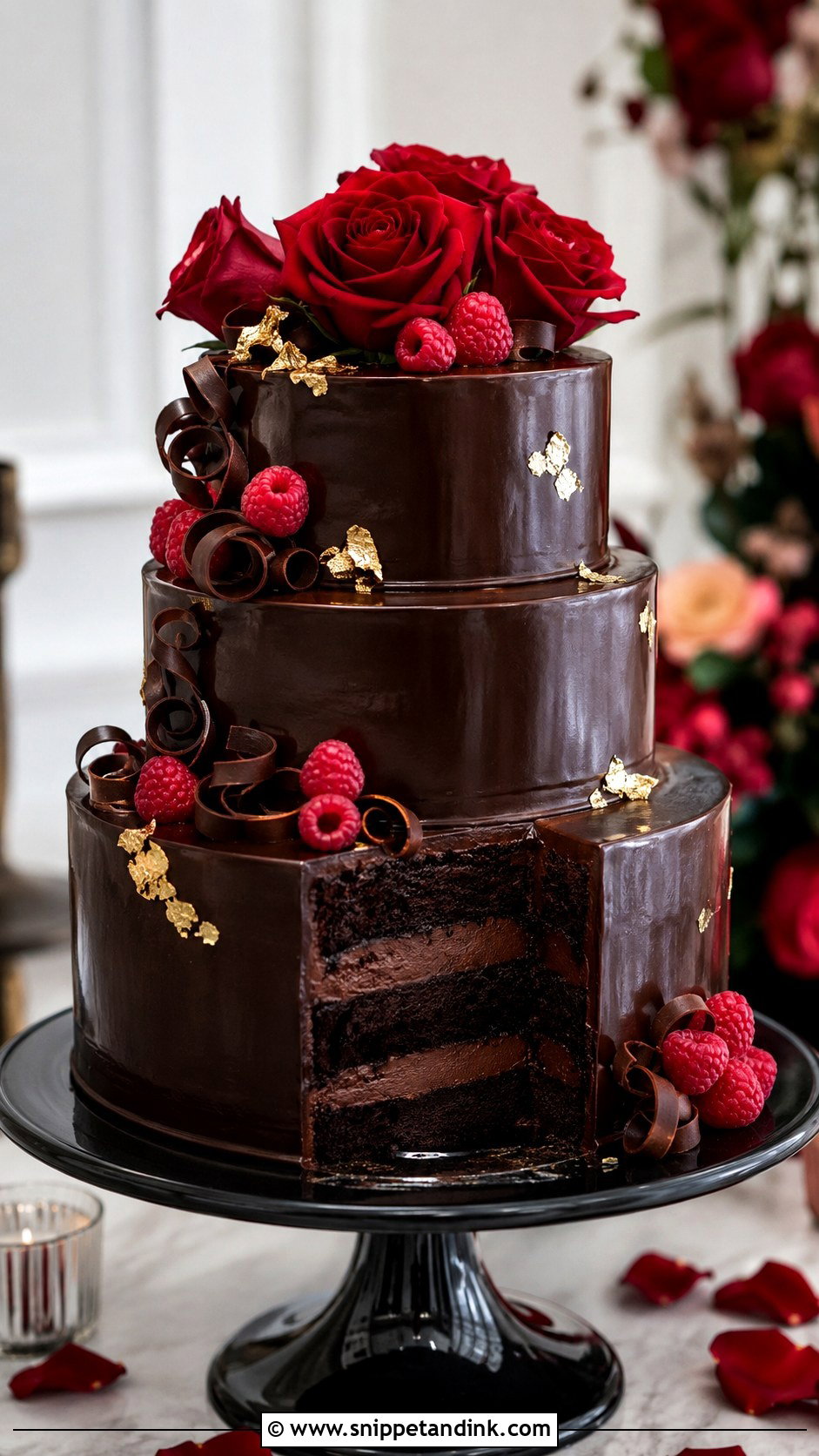
A chocolate wedding cake can be formal with glossy dark ganache and gold accents, or softer with chocolate buttercream and berries. Ganache is my favorite finish for summer: it sets firm and keeps sharp edges in warmer rooms better than most buttercreams. Raspberry, salted caramel, espresso and cherry fillings all suit chocolate. Clean tiers and fresh flowers keep it as bridal as a white cake.
19. Lemon Wedding Cake
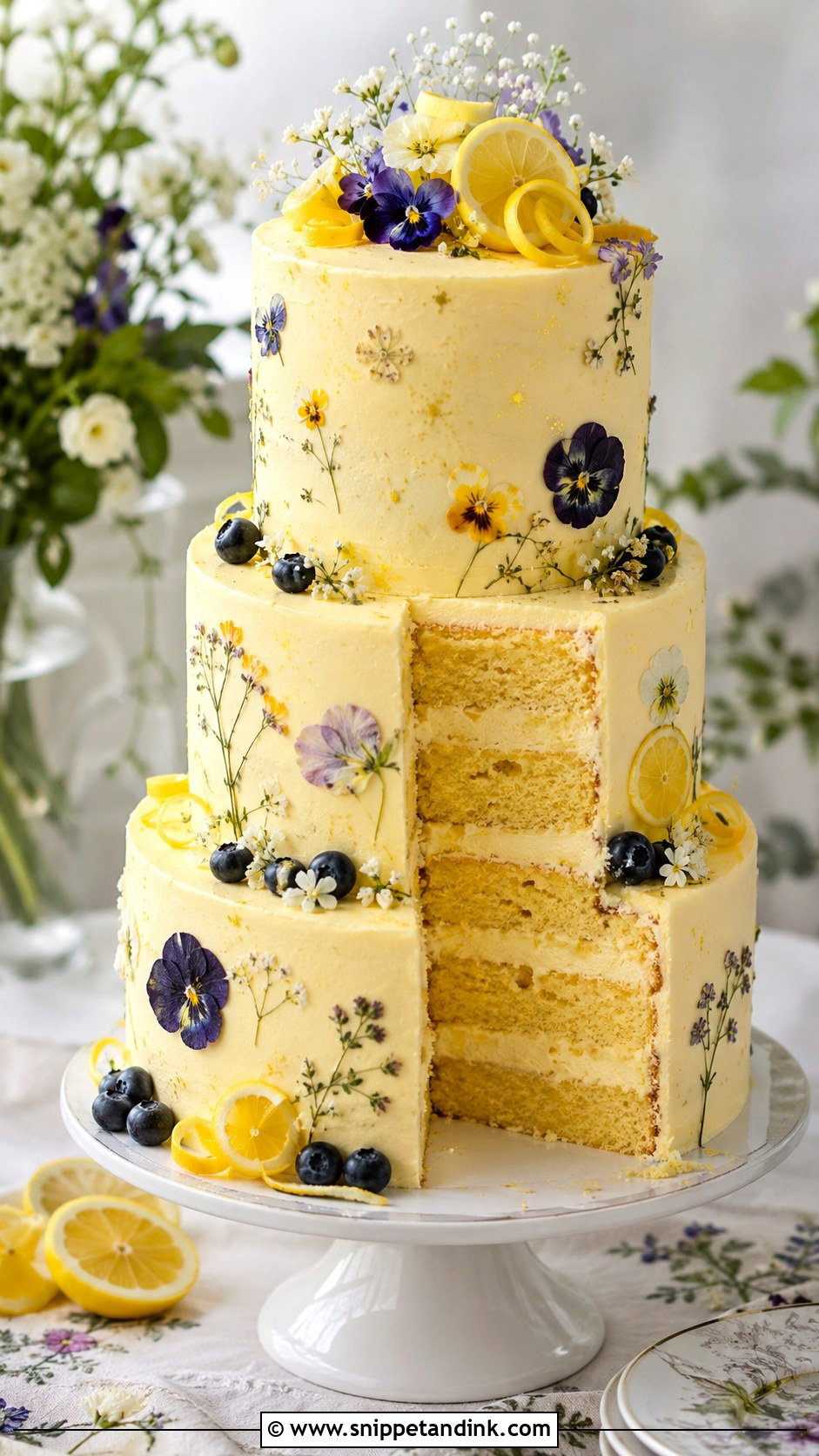
Lemon is the flavor I recommend most for daytime and summer weddings, because it tastes fresh after a heavy meal. Lemon sponge pairs with elderflower, blueberry, raspberry or lavender. Lemon curd fillings are soft, so I use a firmer buttercream dam around them to stop them bulging out between layers. Outside, smooth white buttercream or pressed flowers look clean; real lemon slices should be used sparingly because they weep and stain frosting.
20. Red Velvet Wedding Cake
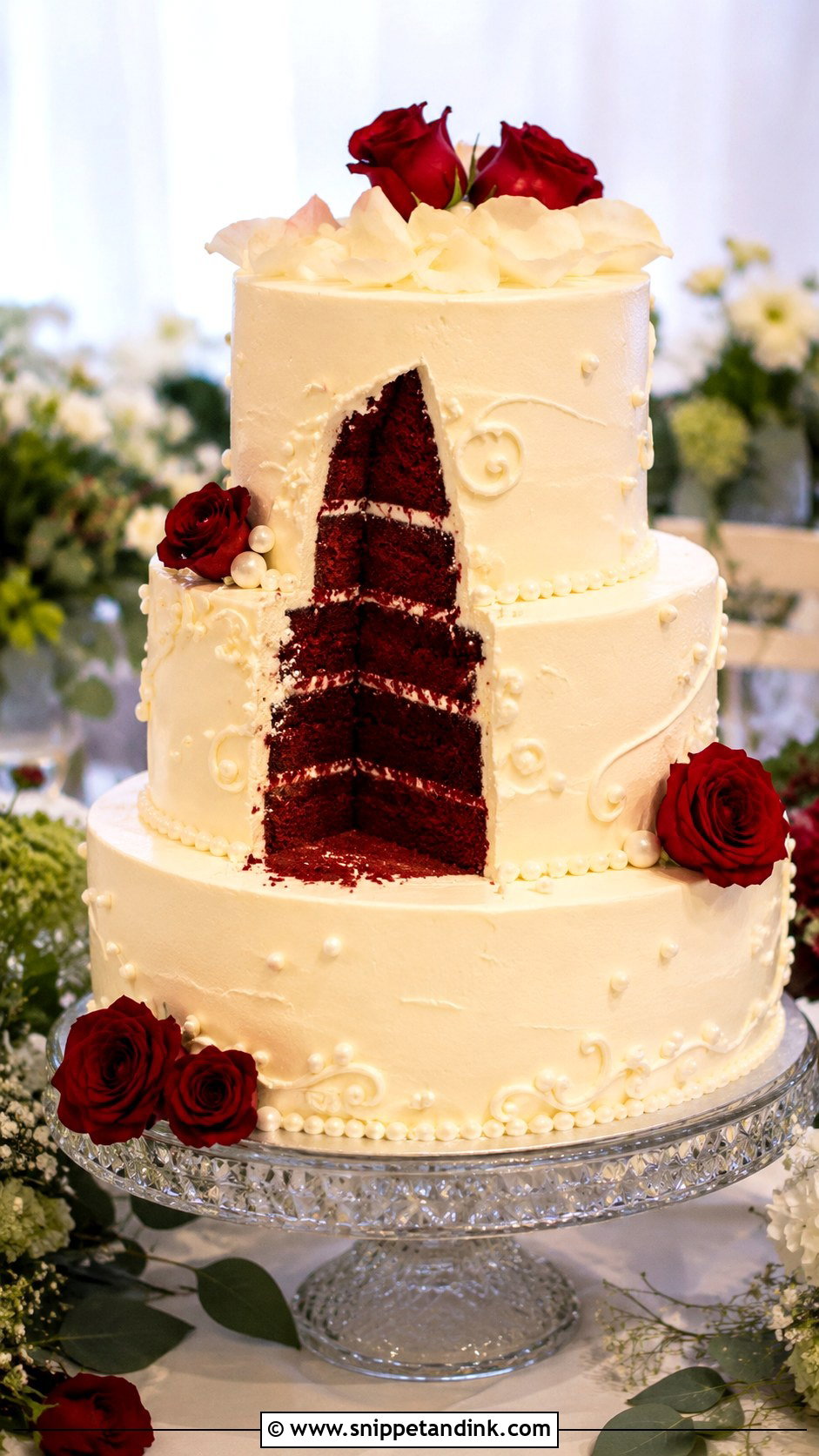
Red velvet keeps the surprise inside. The outside can stay smooth and ivory, and the deep red crumb shows only when the cake is cut. Cream cheese frosting is the classic partner, but it is soft and must be kept cool, so for a long display I often use vanilla buttercream outside and keep cream cheese as the filling. Red velvet is rich without being as heavy as dark chocolate, and it reads especially well at evening receptions.
Which of These Cakes Can Handle a Hot Afternoon?
Heat is the factor that ruins more wedding cakes than anything else, and the styles above react to it very differently. Here is roughly how I rank them for a warm day.
Hold up well
Ganache-covered cakes, with or without fondant on top, keep their shape best. Fondant over ganache is the sturdiest of all, which is why it suits tall and square designs in summer.
Need shade and a cool room
Swiss and Italian meringue buttercreams soften and can slide in direct sun. Lambeth piping can droop if the base layer warms up. Keep these cakes indoors or under cover, away from windows and the dance floor lights.
Cut them early
Naked cakes dry out, cream cheese frosting must stay chilled, and fresh flowers wilt and drop pollen. If your reception is outdoors in summer, move the cake cutting earlier in the evening rather than leaving it to the end. And ask the venue where the cake will wait between delivery and display; a cool back room for those hours makes a bigger difference than any frosting choice.
Start With the Flavor You’d Order Twice
Style gets you on the shortlist, but flavor is what guests talk about afterwards. Think about the season, how long the cake will sit out, how it will reach the venue and how many people it has to feed, and let that narrow the list. Then taste, and order the flavor you’d happily eat a second slice of.
You'll Like These Ideas:


Leave a Reply