
Ganpati mehndi carries a deity, not just a pattern, so people are rightly particular about it. It turns up at Ganesh Chaturthi pujas, at weddings that fall in the festive season and at family functions where the elders will look closely at how Bappa has been drawn. A design can be a single clean Ganesha outline on the palm or a full bridal layout with mandalas, paisleys, lotus flowers, bells and jaali. Some women want his face clearly drawn; others prefer symbols like the Om, the modak and temple borders. Below are twenty layouts, with notes on hand size, sitting time and how each one stains.
Briefing Your Artist on the Face of Ganesha
Before the cone touches skin, decide how Bappa should look, because the face is the one part that can’t be corrected once the paste is down. Bring one reference image, not five, and point out what you like about it: the crown, the size of the ears, a seated figure or only the face.
Which way the trunk turns
Most household idols show the trunk curving to Ganesha’s left. A trunk turned to his right is traditionally linked with stricter observance, and some families feel strongly about it, so if it matters at home, say so at the start. It takes a second to draw either way and can’t be changed afterward.
How small is too small
Paste lines have a thickness of their own, and a face drawn smaller than a coin tends to lose its eyes, tusk and the curl of the trunk once the stain darkens. If your palm is small or you want something delicate, go for a simple outline or a symbolic Ganesha built from curves and an Om, rather than a miniature copy of a detailed face.
1. Ganpati Bappa Front Hand Mehndi Design
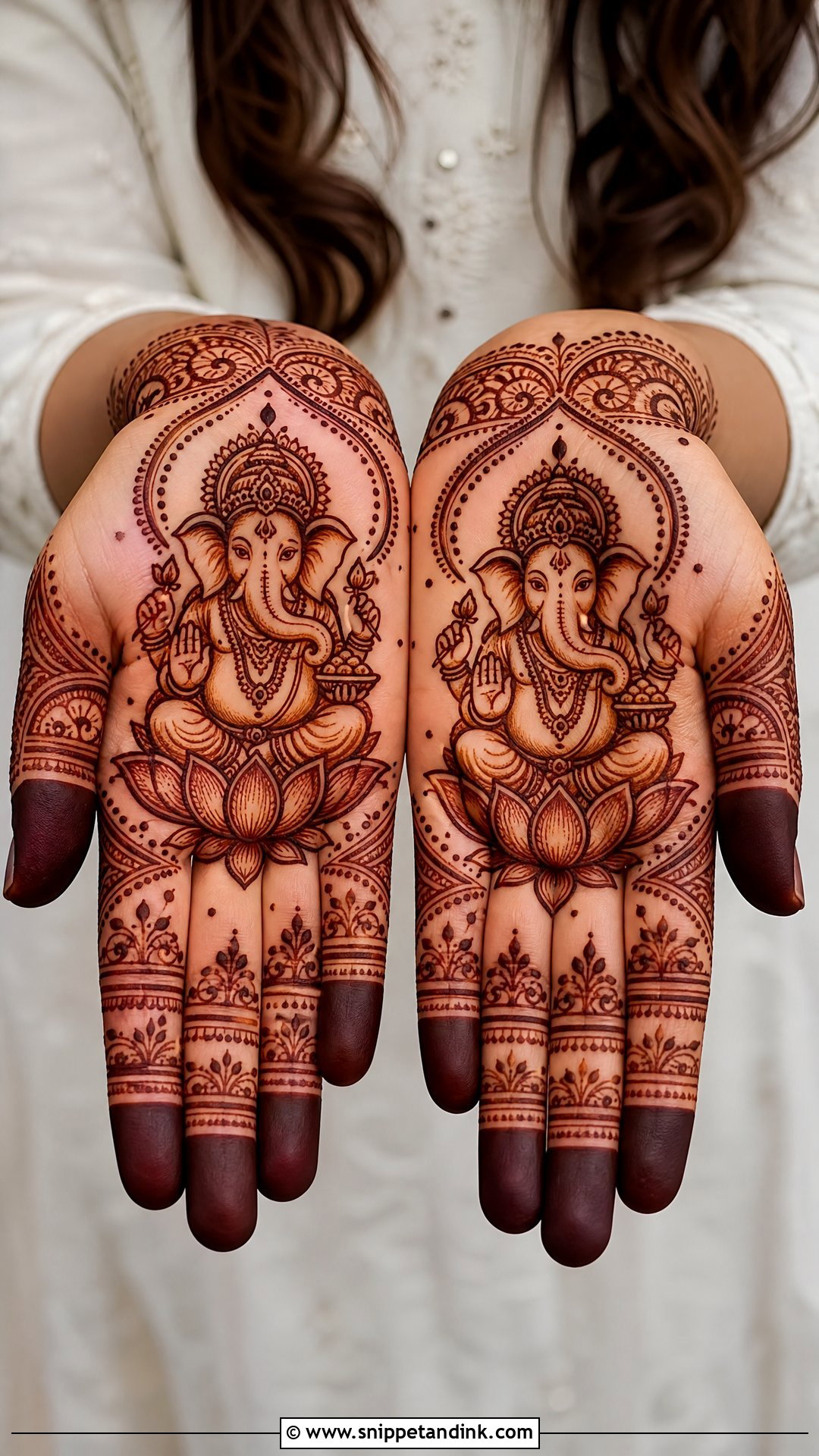
The palm is where Bappa is seen best, so a front hand design puts a clear Ganesha face or a seated figure in the center, framed with lotus petals, curved paisleys and small dotted borders. I draw the face first, before any filler, because once the surrounding work is in there’s no room left to correct the trunk or the ears. Fingers get neat bands, leafy vines and filled tips to balance the palm, and a bracelet strip at the wrist finishes it. On a small palm, choose a simpler outline with breathing space around it. A crowded Ganesha on a small hand loses his features once the paste comes off.
2. Ganpati Bappa Full Hand Mehndi Design
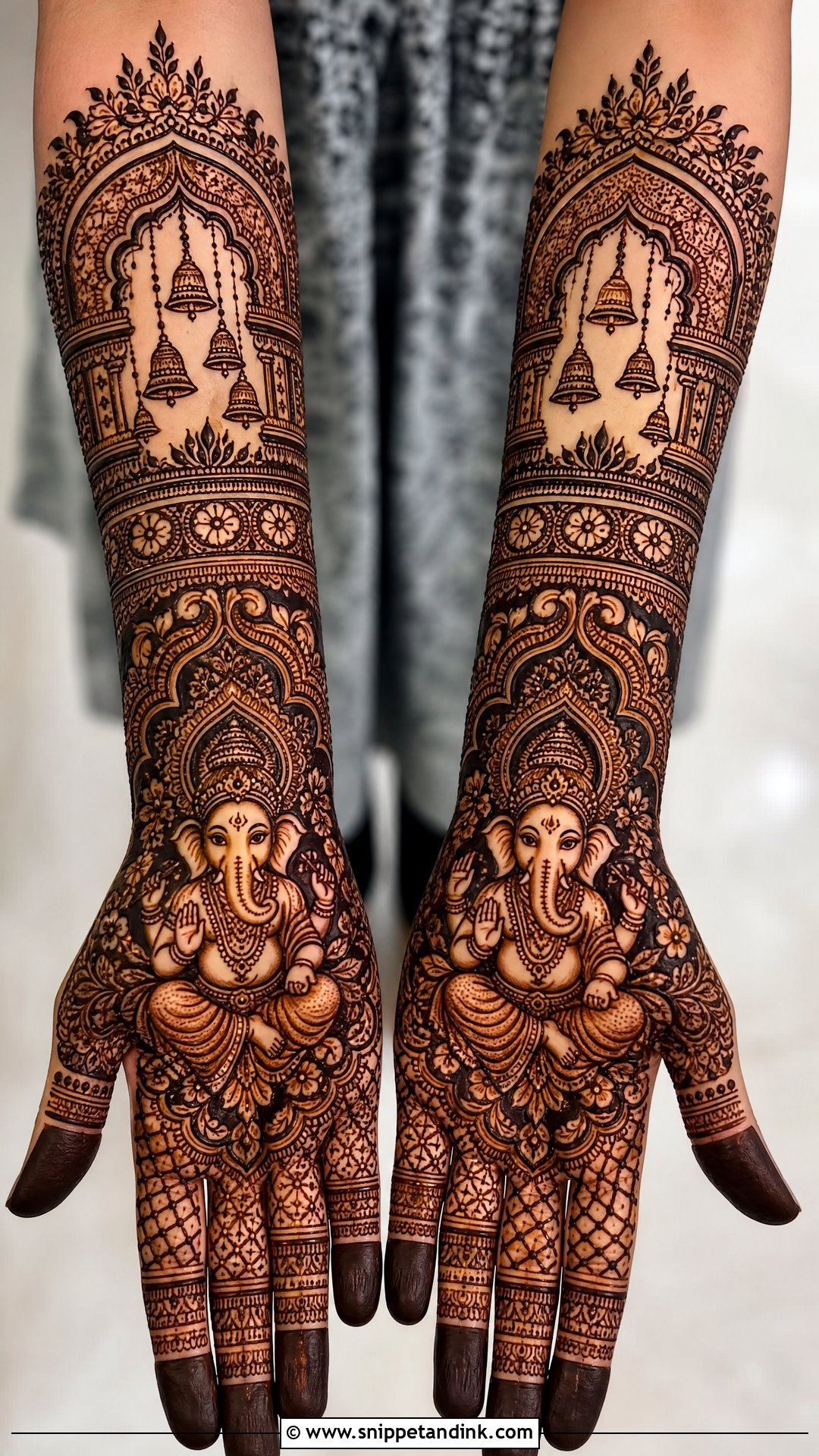
Full coverage starts with the Ganpati motif on the palm and runs to the wrist and forearm with temple arches, floral vines, paisleys, bells and jaali. It looks grand without needing bridal portraits. The one rule I hold to is keeping the deity clean. Tiny fillers packed around his face make it unreadable once the stain darkens, so I give Bappa a bold outline and keep finer lines for everything behind him. Budget the time, too: both hands to the forearm is a long sitting, and the paste then needs hours to stay on.
3. Simple Ganpati Bappa Mehndi Design
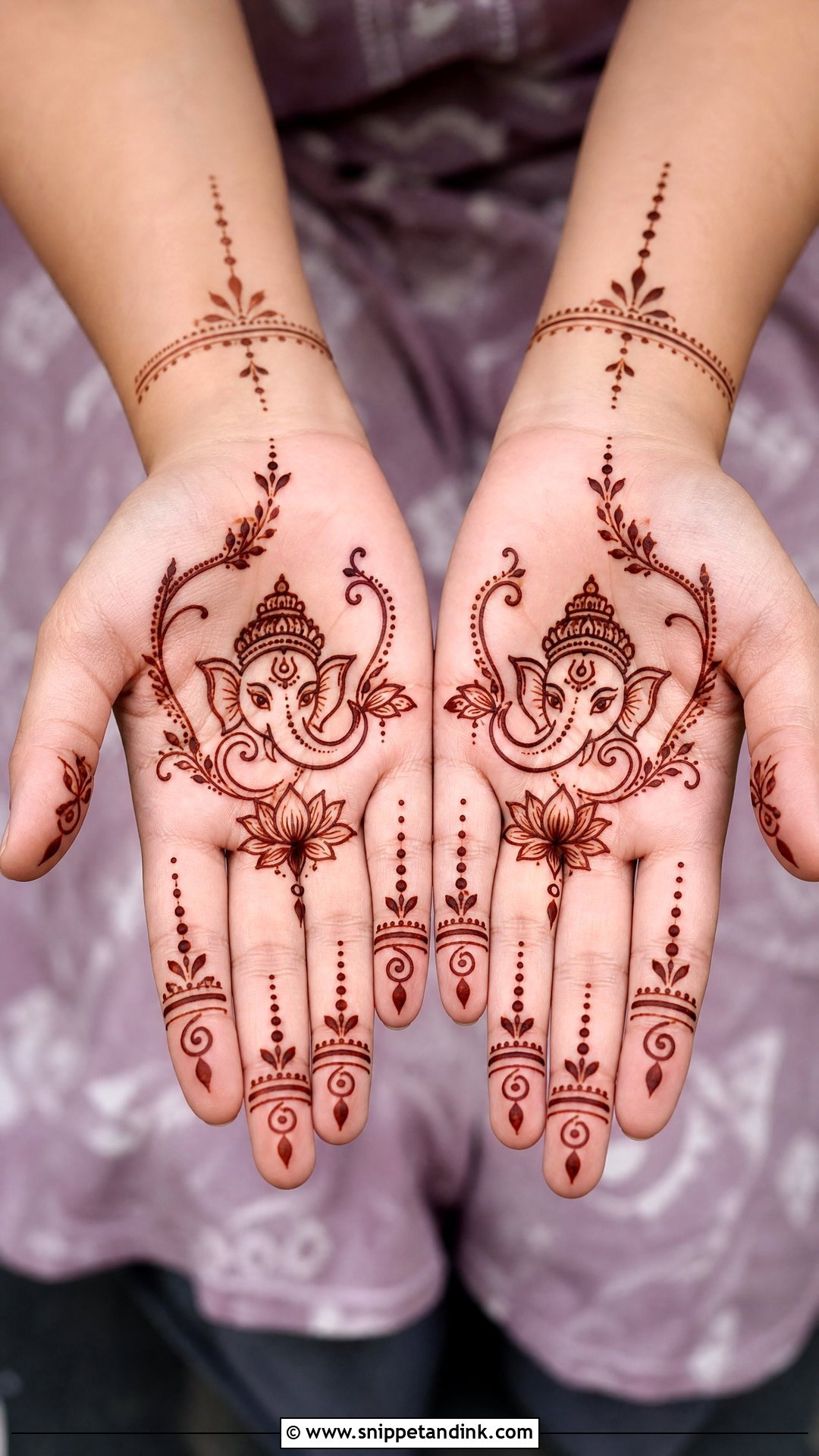
Soft, open spacing is what makes a simple design graceful. A minimal Ganesha outline sits in the middle of the palm with a few lotus petals, dots and curved lines around it, while the fingers carry tiny leaf trails or ring bands. It’s quick enough for a morning puja and quiet enough for school or the office. Simple designs show every wobble, though, so the outline needs a steady, even line from the cone. I’d rather draw it slightly larger and clean than small and shaky.
4. Ganpati Bappa Back Hand Mehndi Design
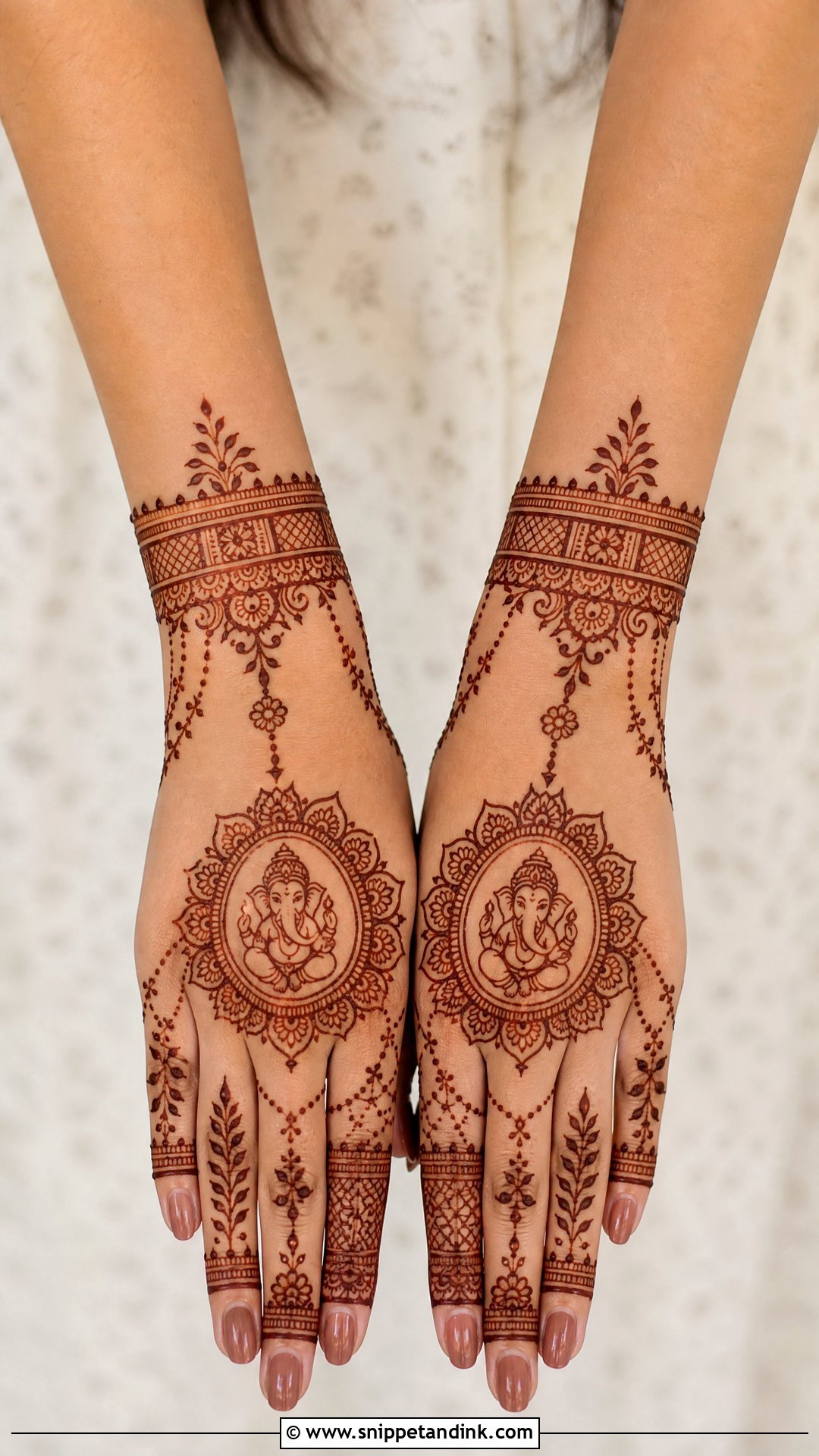
The back of the hand is what people see when you fold your hands, pass prasad or hold a diya, so a back hand look keeps Bappa visible without covering the palm. Place a small Ganpati motif near the center or just above the wrist and build upward with mandala rings, floral chains and finger details, with a bracelet band of bells or temple edging. Keep the knuckles light, since the skin creases there and breaks up detailed work. Expect a lighter stain than on the palm, because skin on the back of the hand takes the color less deeply.
5. Ganpati Bappa Bridal Mehndi Design
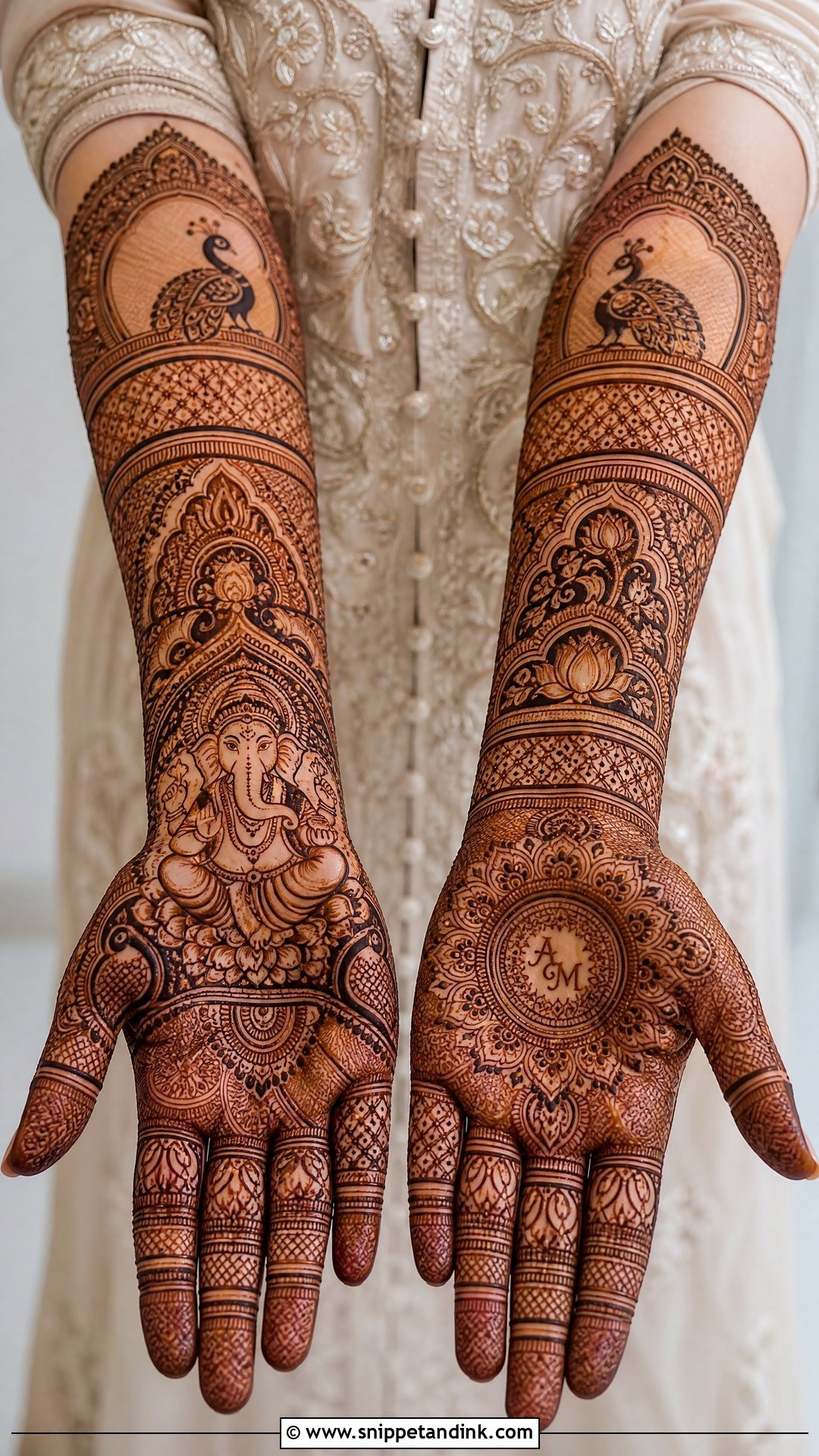
Ganesha is worshipped first before any new beginning, which is why so many brides want him in their mehndi. This works best as a full palm-to-forearm design: Ganpati on one palm, and a complementary mandala, bride and groom scene or wedding kalash on the other. The arms fill with paisleys, peacocks, lotus flowers, jaali and the couple’s initials, wedding date or small baraat elements. However dense it gets, Bappa must stay visible. I outline him with a slightly thicker line than everything around him so he holds his place in photos.
6. Ganpati Bappa Mandala Mehndi Design
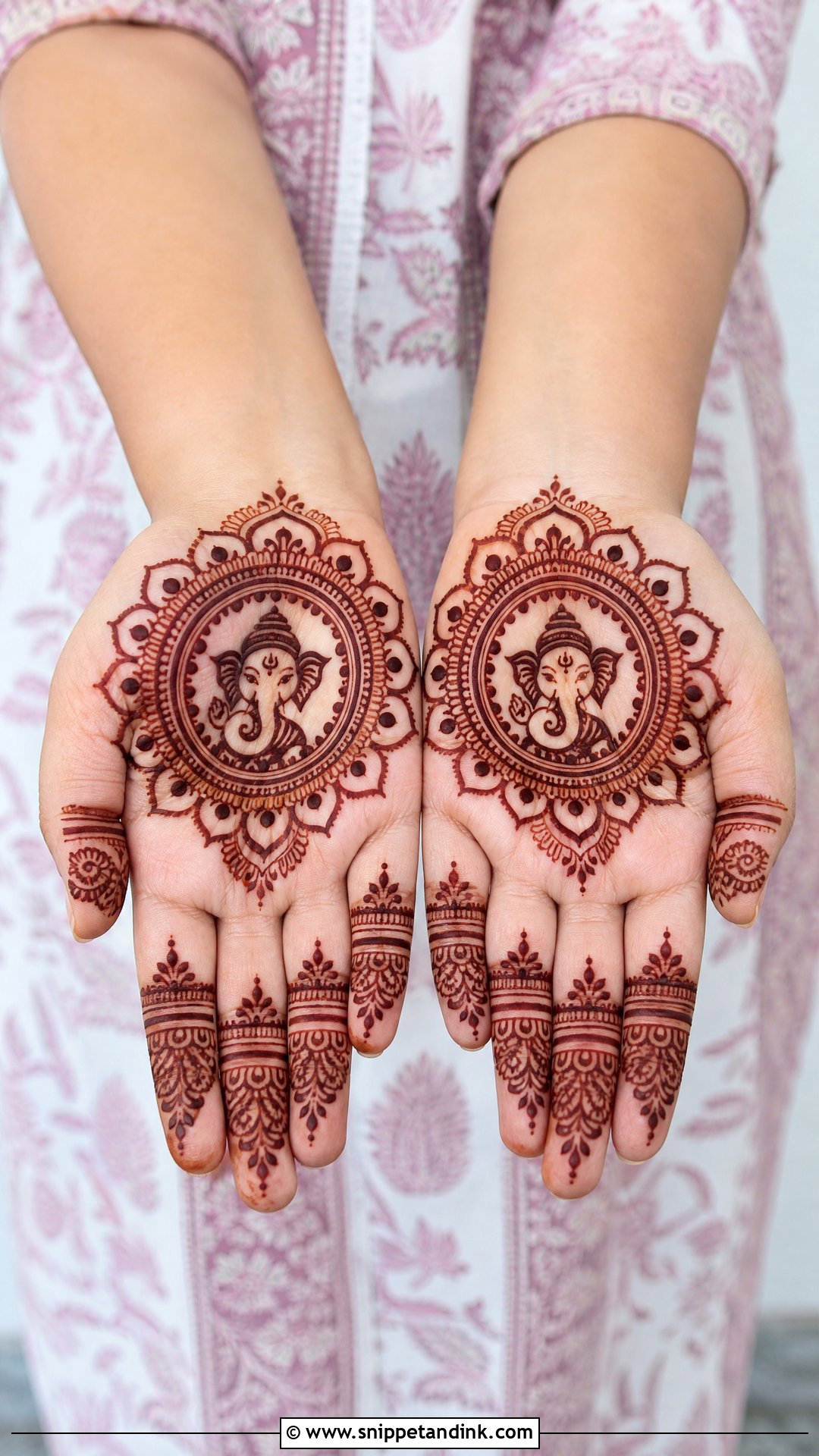
Mandalas pull the eye to the center of the hand, which is exactly where you want Ganesha. A circular mandala holds a small Ganpati face or seated silhouette, ringed with petals, dotted circles, scalloped borders and small paisleys. Symmetry is unforgiving. I mark the center point and the first ring lightly before committing, because a ring that drifts off-center is obvious once stained. Keep the fingers to repeated leafy bands or simple vertical lines so they don’t compete. It sits well on the palm or the back of the hand.
7. Ganpati Bappa Arabic Mehndi Design
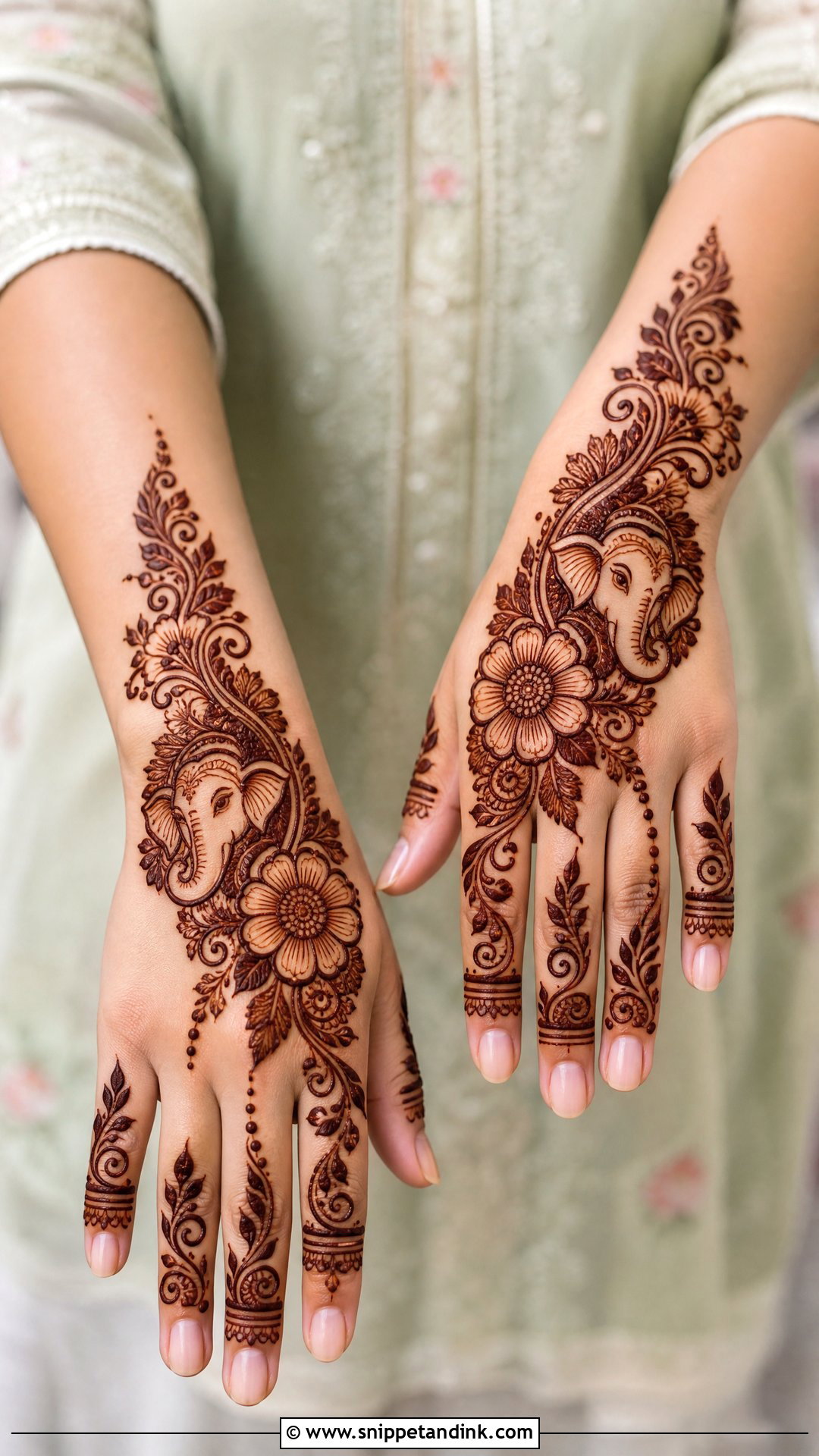
Prefer airy space and bold flow? A Ganpati Bappa Arabic mehndi design runs diagonally across the hand, with the motif on the palm or near the wrist, large flowers, shaded leaves and paisley curves around it, and plenty of open skin. It reads clearly from across a room and goes on faster than dense Indian work, which helps if you’re fitting mehndi around a working day. The shading comes from a thinner layer of paste, so it stains as a soft gradient. Fingers get matching floral tips or slanted leaf trails.
8. Ganpati Bappa Indo-Arabic Mehndi Design
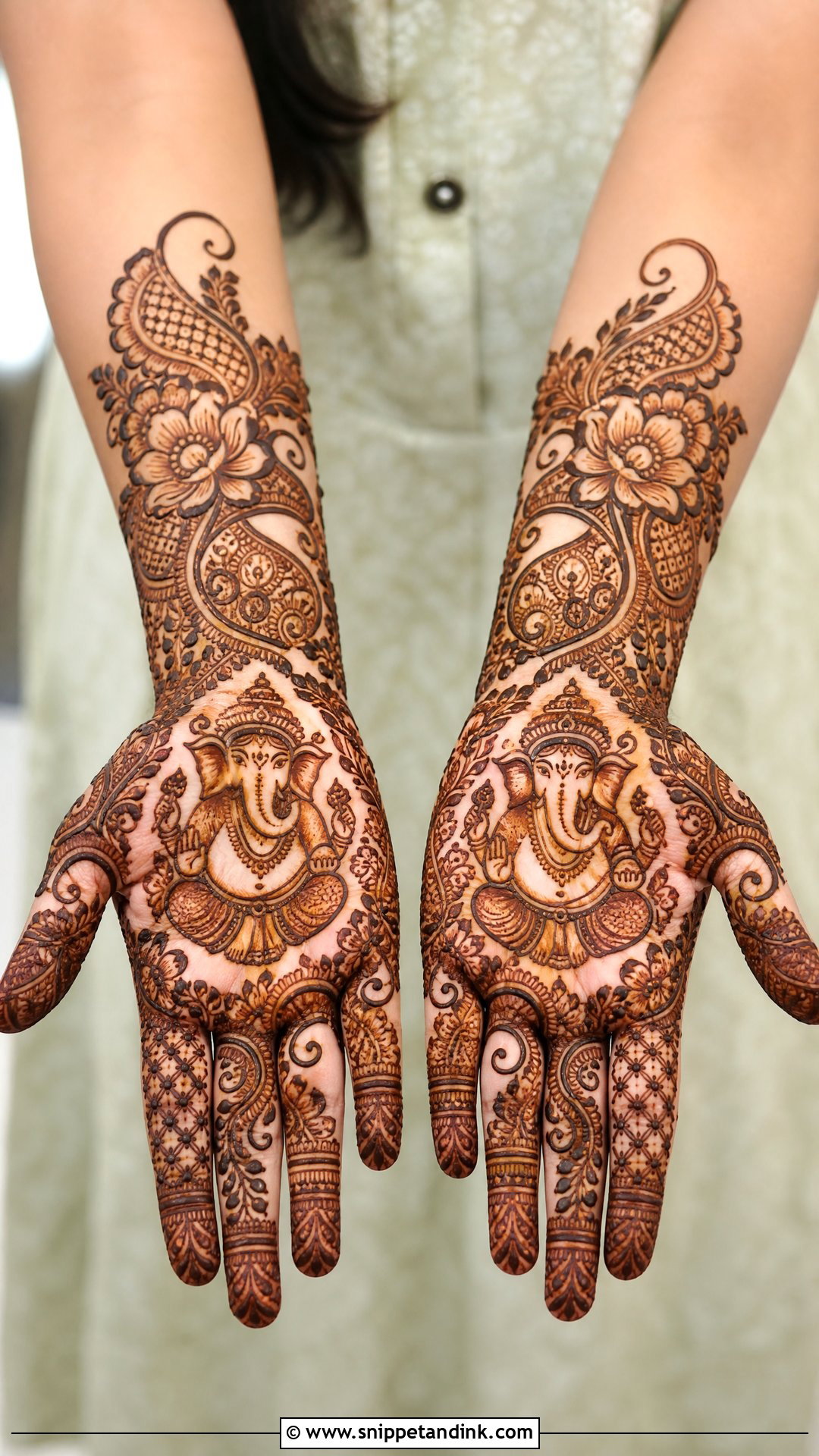
Indo-Arabic takes the richness of Indian motifs and the open flow of Arabic patterns, so the hand looks detailed without being packed. Start with Ganpati on the palm, then extend with bold flowers, paisleys, shaded leaves and netted panels, leaving one side of the hand more open for contrast. It takes noticeably less time than a full bridal pattern and stains in a way that photographs clearly. The pull between bold outlines and fine detail is what keeps Bappa the focal point.
9. Ganpati Bappa Lotus Mehndi Design
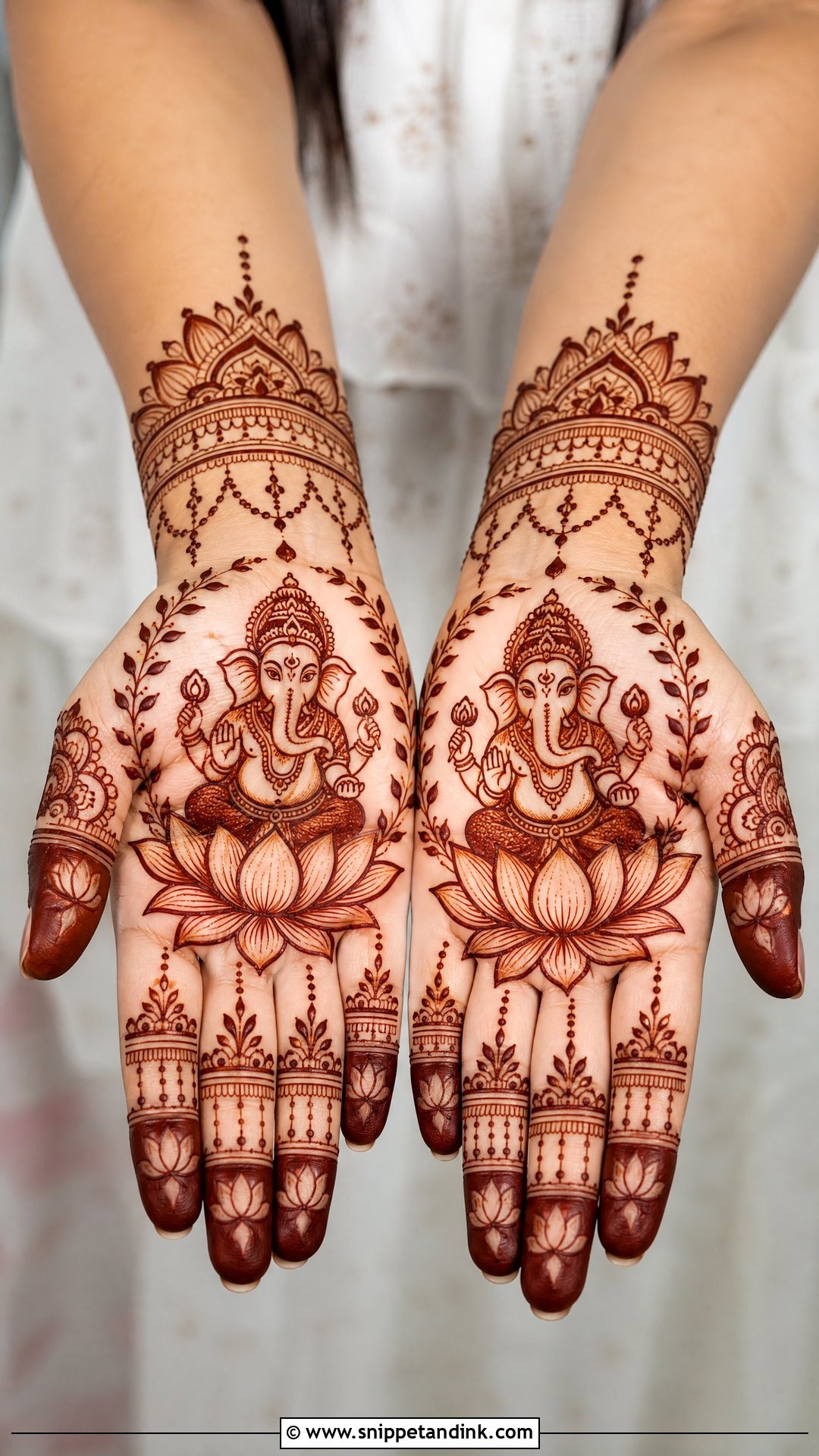
Ganesha seated on a lotus is a traditional image, and the flower gives the design a natural base. Layered petals, curved vines and small dotted chains build outward from him, with a lotus bracelet at the wrist and petal tips or fine leafy lines on the fingers. Medium and large palms let the petals open properly. On a small palm I reduce the number of petal layers rather than shrinking each petal, which keeps the shapes clear. Bold outlines on the lotus, delicate fillers inside each petal.
10. Ganpati Bappa Peacock Mehndi Design
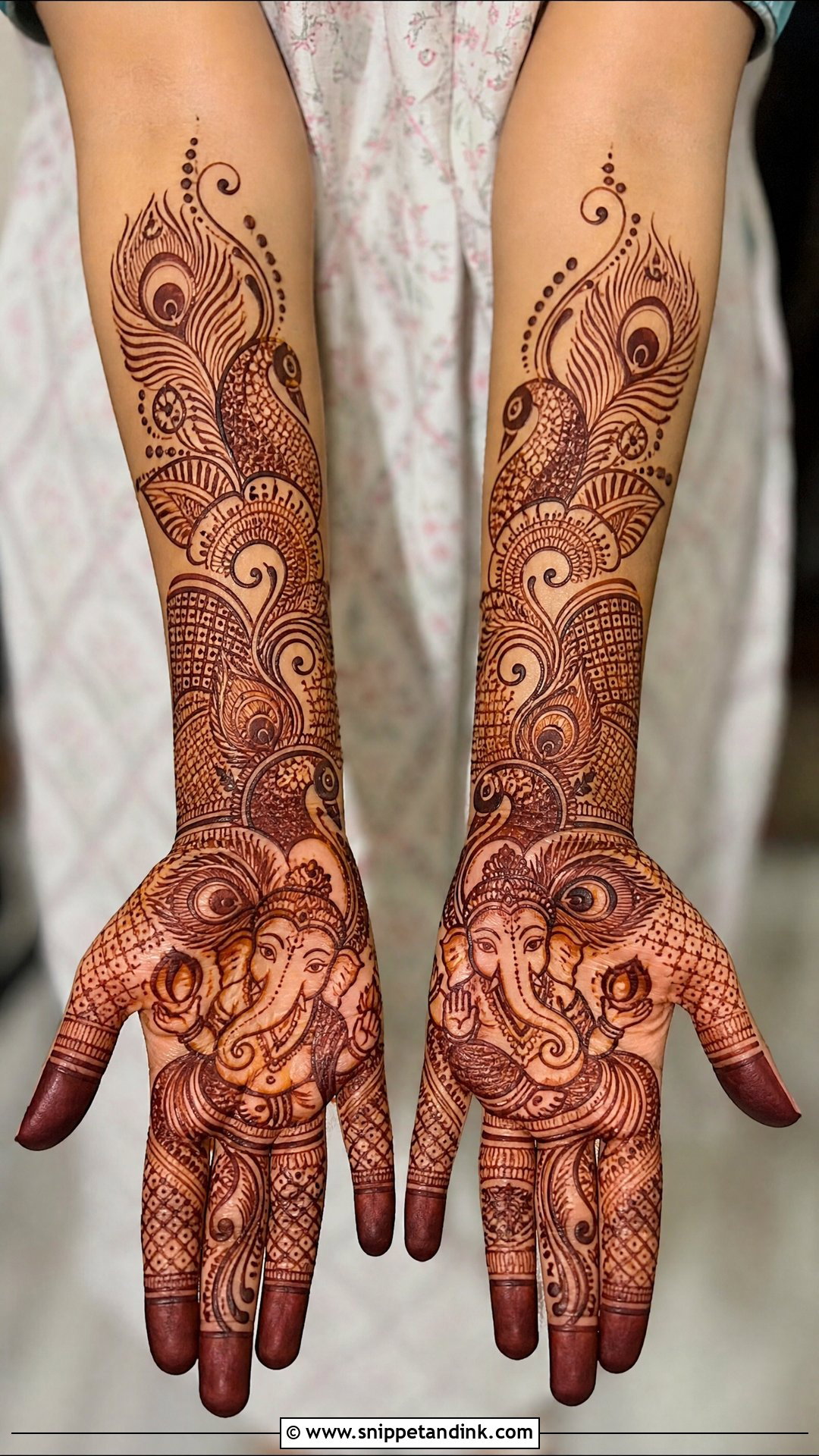
Peacocks bring movement. With Ganpati on the palm, a peacock body and sweeping feathers can travel up the wrist and forearm; a compact version rings a Ganpati mandala with feathers instead. It’s grand enough for weddings and engagements. The mistake I’d warn you about is two heroes on one hand, a detailed Bappa and a giant peacock fighting for attention. Let one lead and the other support. Fine feather lines, dots and shaded curves finish the supporting element.
11. Ganpati Bappa Modak Mehndi Design
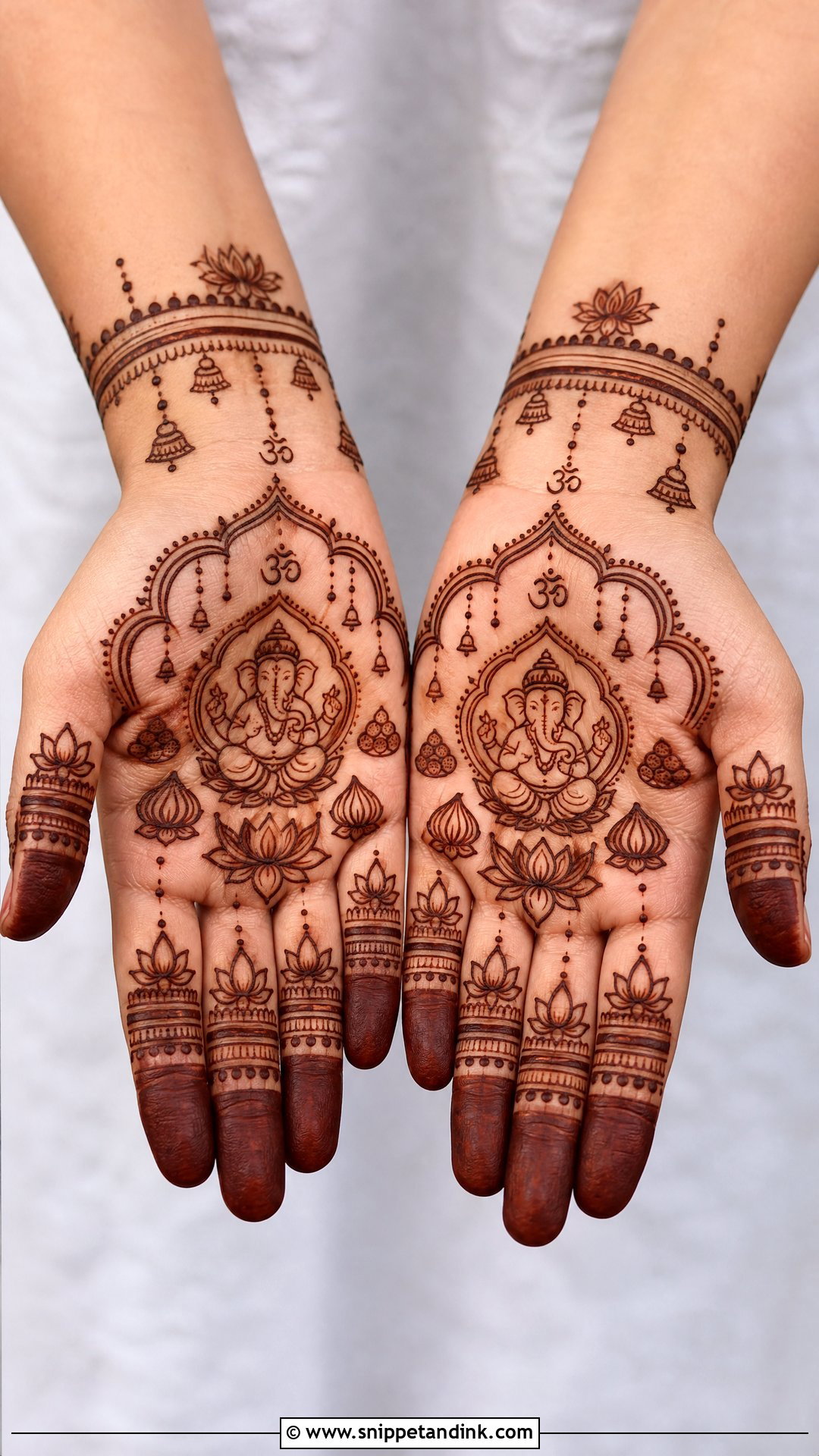
Modak is Bappa’s favorite sweet, so this is the most festive choice for Ganesh Chaturthi itself. A small Ganpati motif on the palm is ringed with modak shapes like a border, along with lotus petals, tiny bells, an Om and dotted chains. Children love spotting the modaks. For adults, I pair them with elegant paisley vines so the hand doesn’t look like a cartoon. The pleated top of each modak is drawn with short curved strokes, and three or four pleats is plenty; any more on a small modak blurs into a blob once stained.
12. Ganpati Bappa Om Mehndi Design
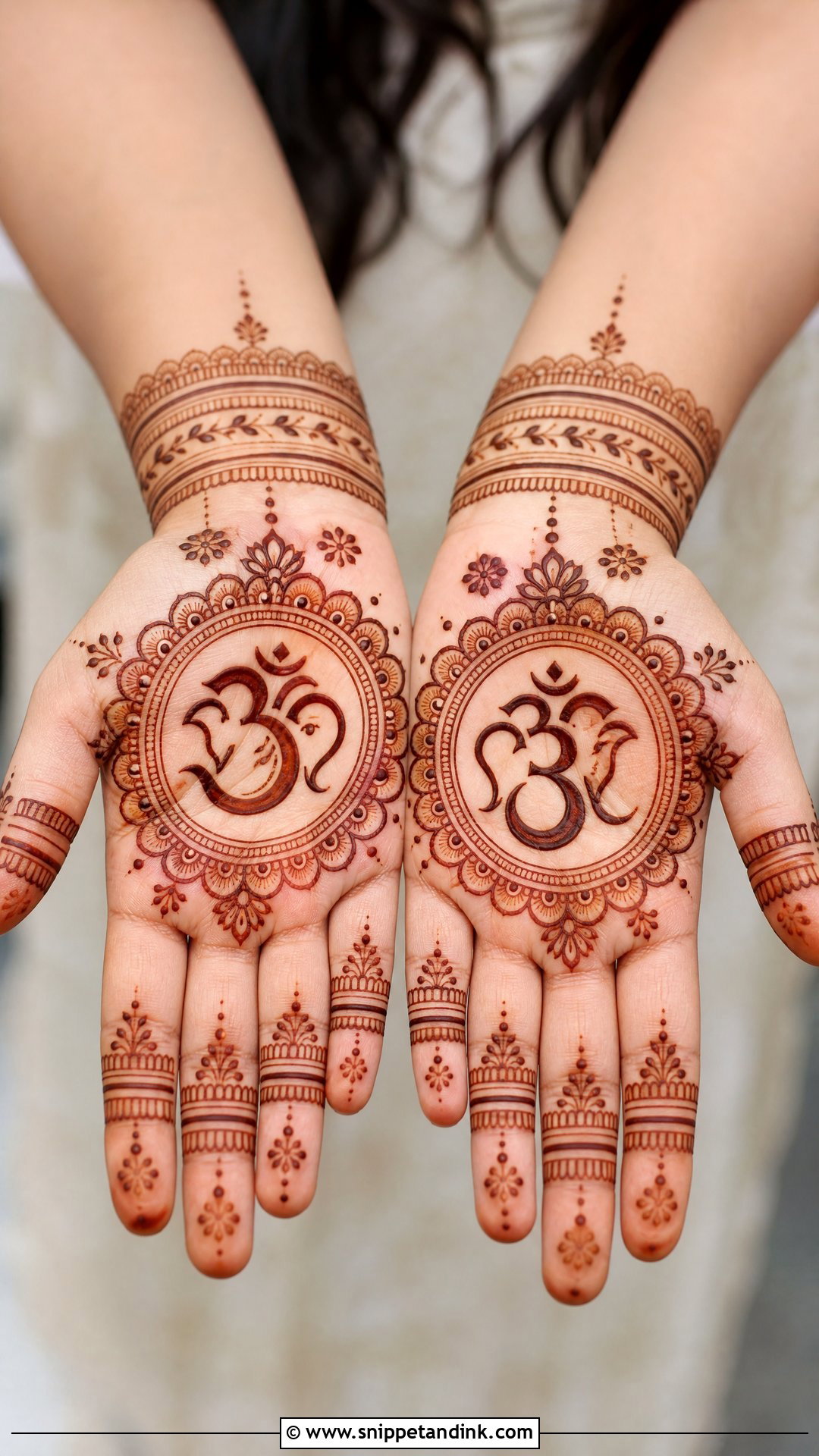
Om is easy to outline and instantly recognizable, which makes it a strong start for anyone new to mehndi. Put a bold Om on one palm with a subtle Ganesha outline formed around it, or Ganpati in the center with the Om above the wrist, and surround it with mandala circles, small florals and clean fingertips. Spacing matters more than detail here. Draw the curves of the Om with an even line and leave clear skin around it, so the symbol stays readable at the temple as much as at home.
13. Ganpati Bappa Minimal Mehndi Design
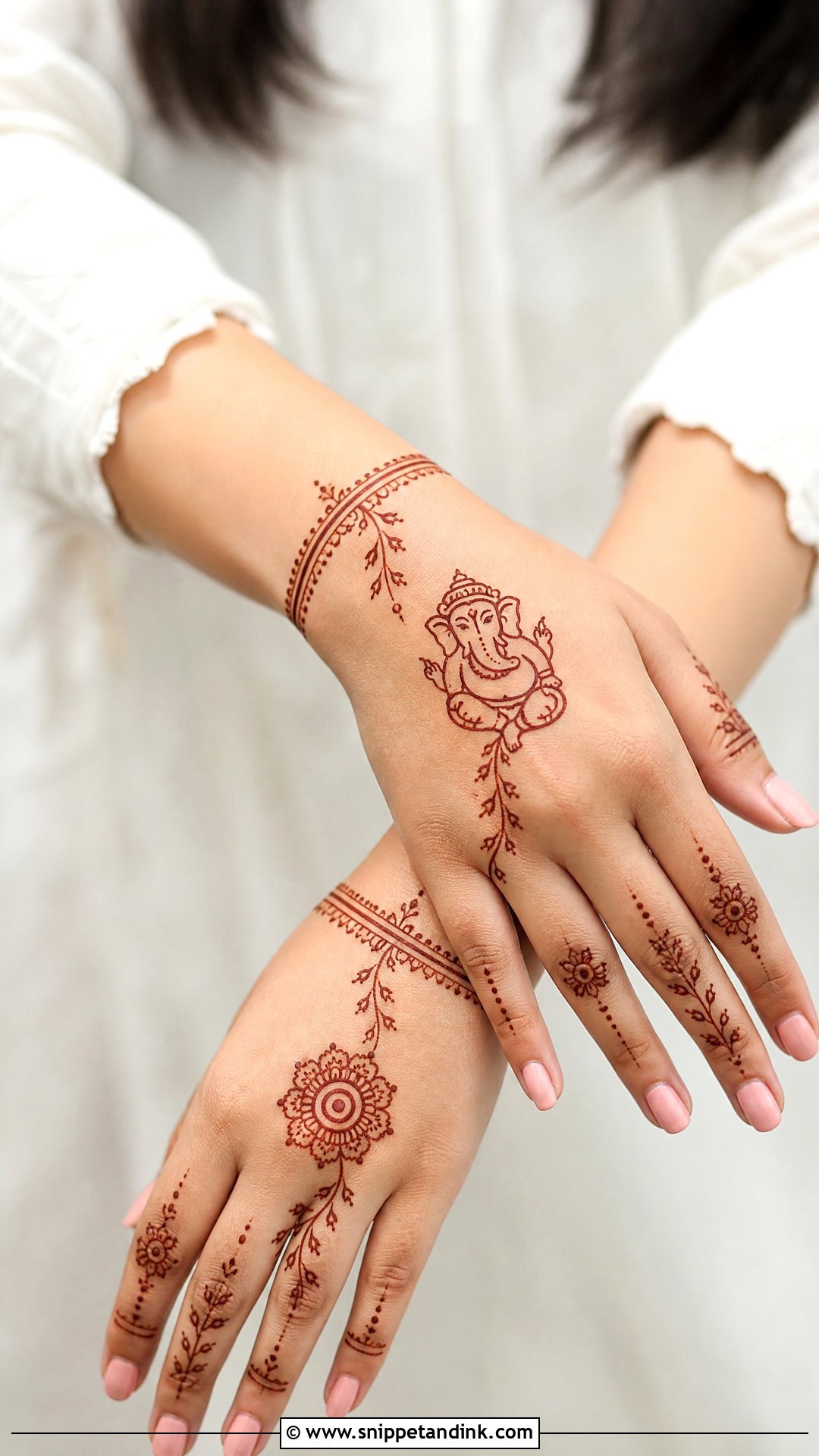
Not every festive design needs to be heavy. A fine Ganesha outline, a small mandala and a few finger accents are enough, placed slightly off-center on the palm or back of the hand for a modern feel, with thin leafy vines, tiny dots and one bracelet line at the wrist. It suits students and anyone heading to work the next morning. Less paste also means it dries sooner and is easier to protect. Clean line work is everything here: when the empty spaces look intentional, even a light design feels special.
14. Ganpati Bappa Kids Mehndi Design
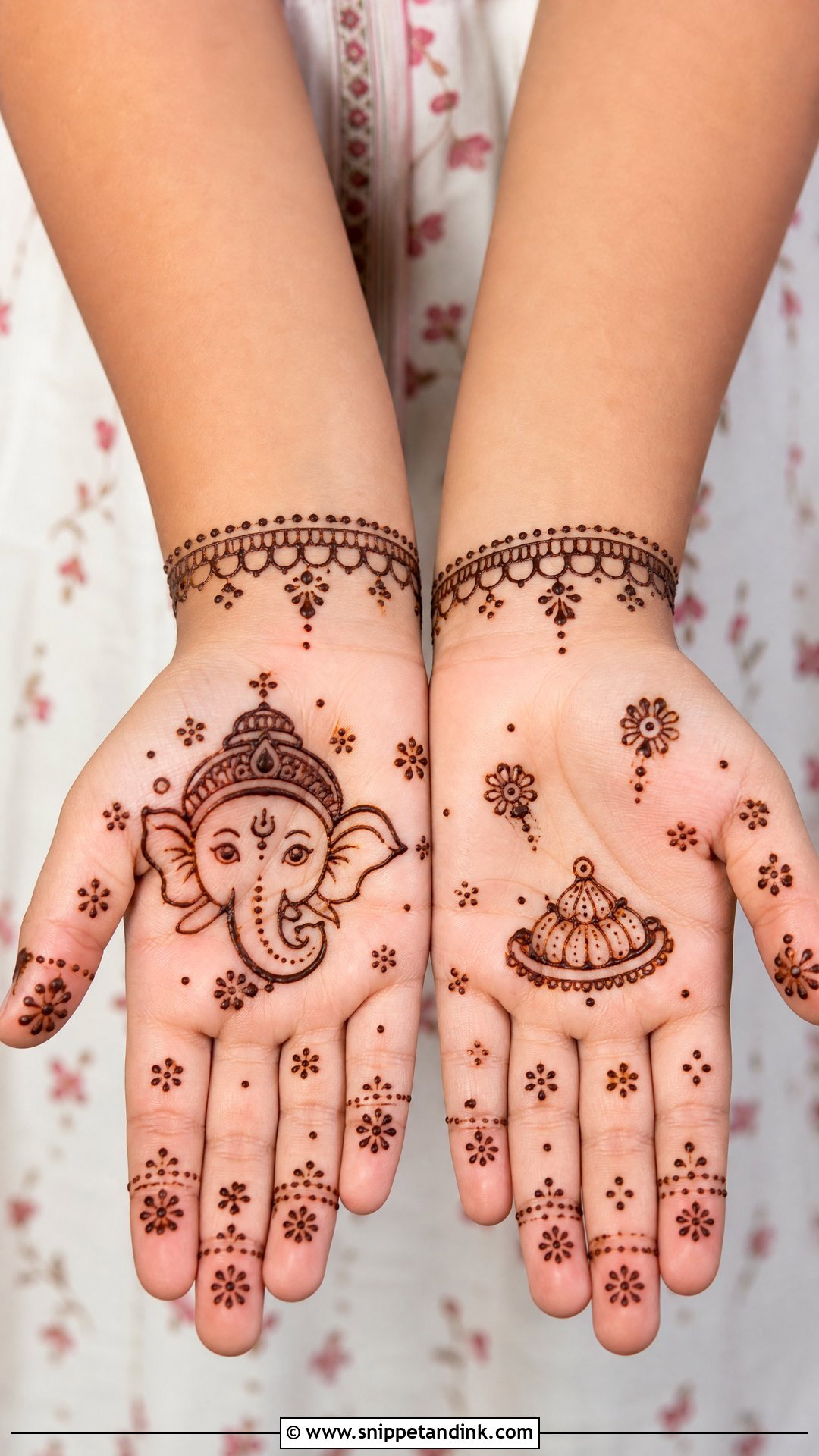
A kids Ganpati Bappa mehndi design has to be finished before the child’s patience runs out, which is usually sooner than you think. A small palm design with a simple Ganesha face, a modak, tiny flowers and dotted borders is enough; skip dense fingers and long wrist extensions. Rounded, clear shapes stain cheerfully. With very small hands, I draw just the Ganpati outline and two or three tiny motifs around it. Use only natural henna on children, and do a small patch test first if they’ve never worn mehndi.

15. Ganpati Bappa Finger Mehndi Design
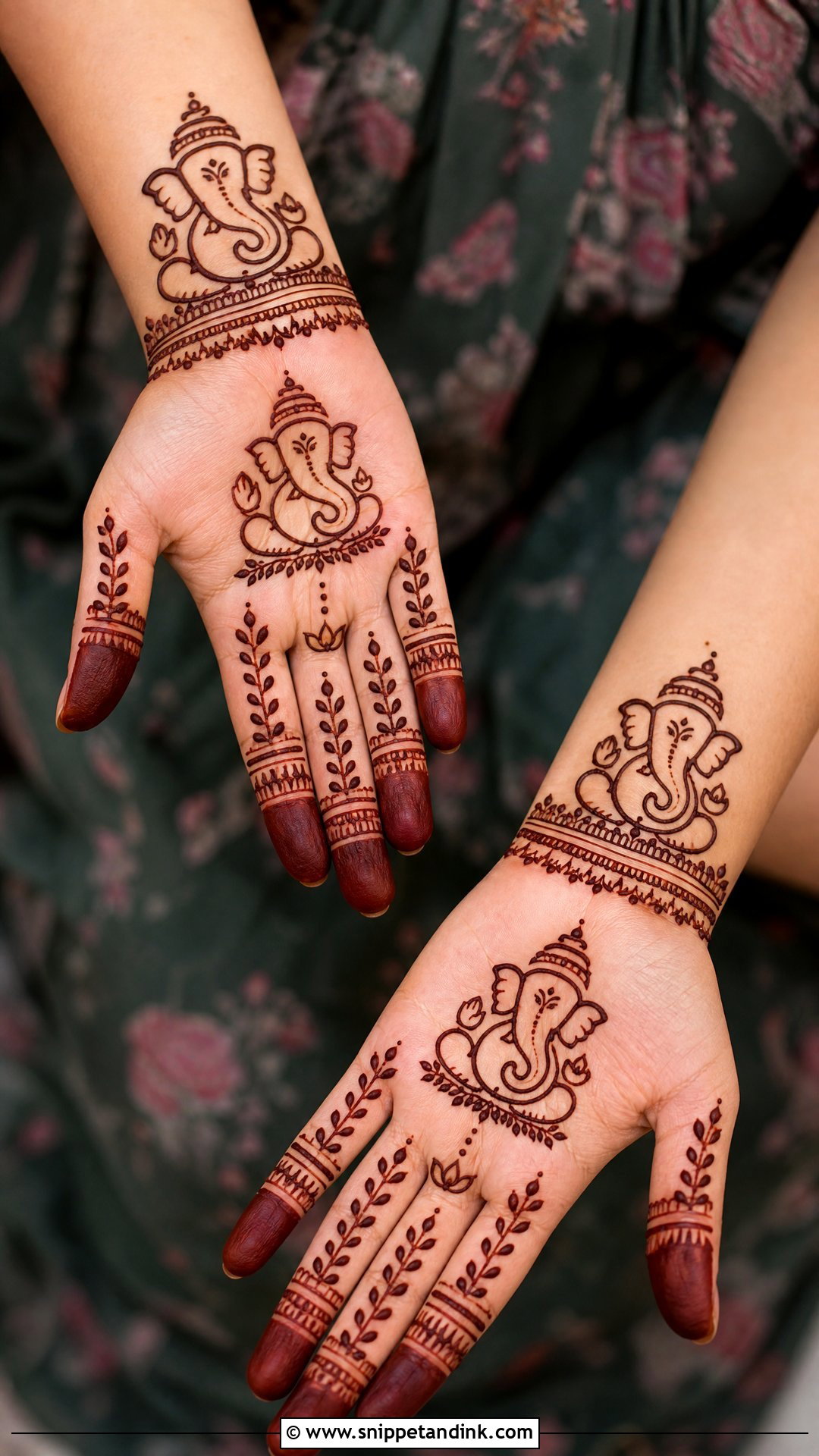
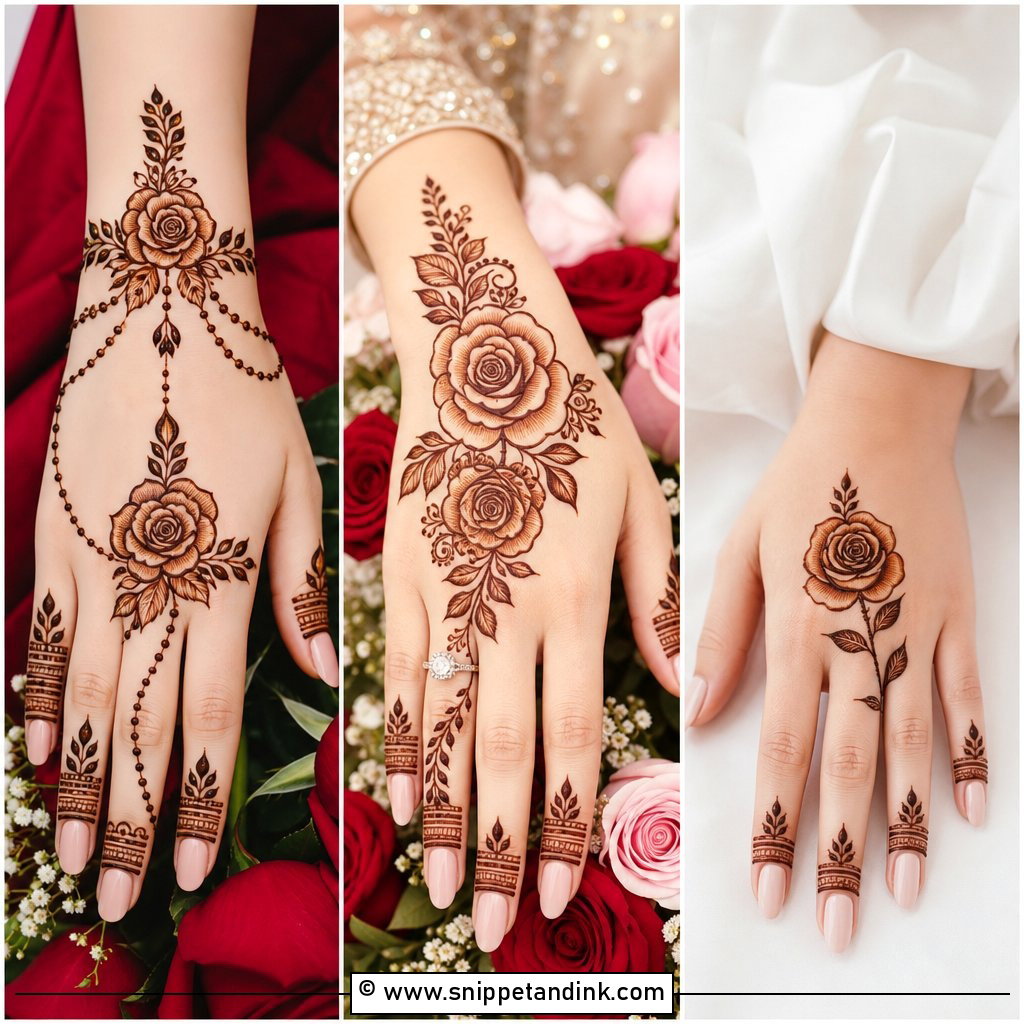
Here the fingers do the decorating and Bappa stays small: a little Ganpati or Om on the upper palm or near the wrist, with ring bands, leafy lines, dots, mini lotus petals and filled fingertip caps carrying most of the design. It looks like jewelry and sits nicely beside real rings. Fingertips take some of the deepest color on the hand, so filled caps come out rich even when the rest of the design is light. It’s a good pick for puja or a casual festive outing when you don’t want the palm covered.
16. Ganpati Bappa Wrist Mehndi Design
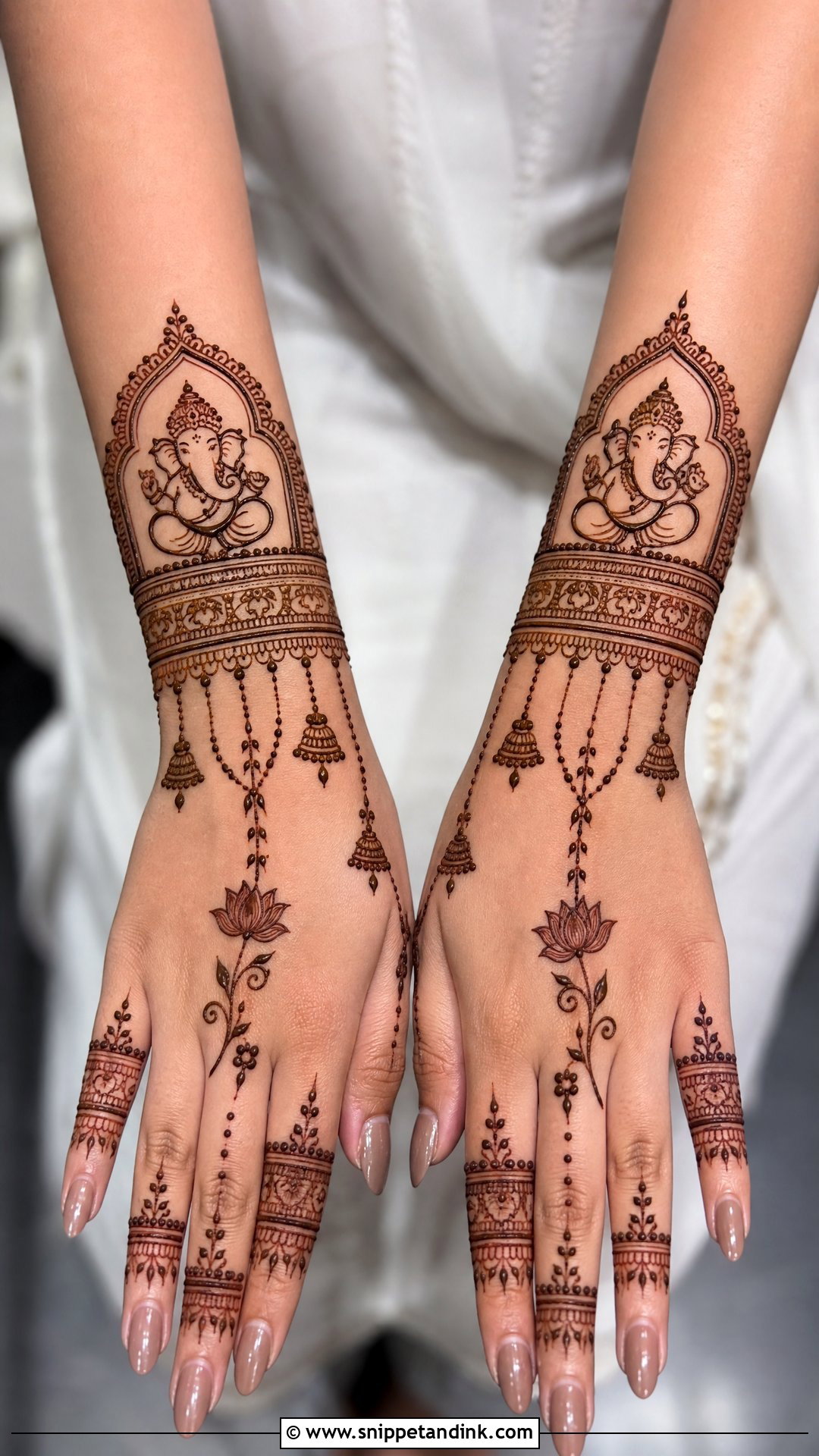
Worn just above the wrist, a Ganpati motif with temple borders, bells, beads and lotus vines wrapping around looks like a sacred kada. A few delicate trails toward the back of the hand or fingers complete it. Bangles make it look like part of your jewelry, but they also rub, and friction while the paste is still on can lift it and leave a patchy stain, so wait until the paste is off before you stack them. Even spacing around the band is what separates neat work from messy work.
17. Ganpati Bappa Palm Mehndi Design
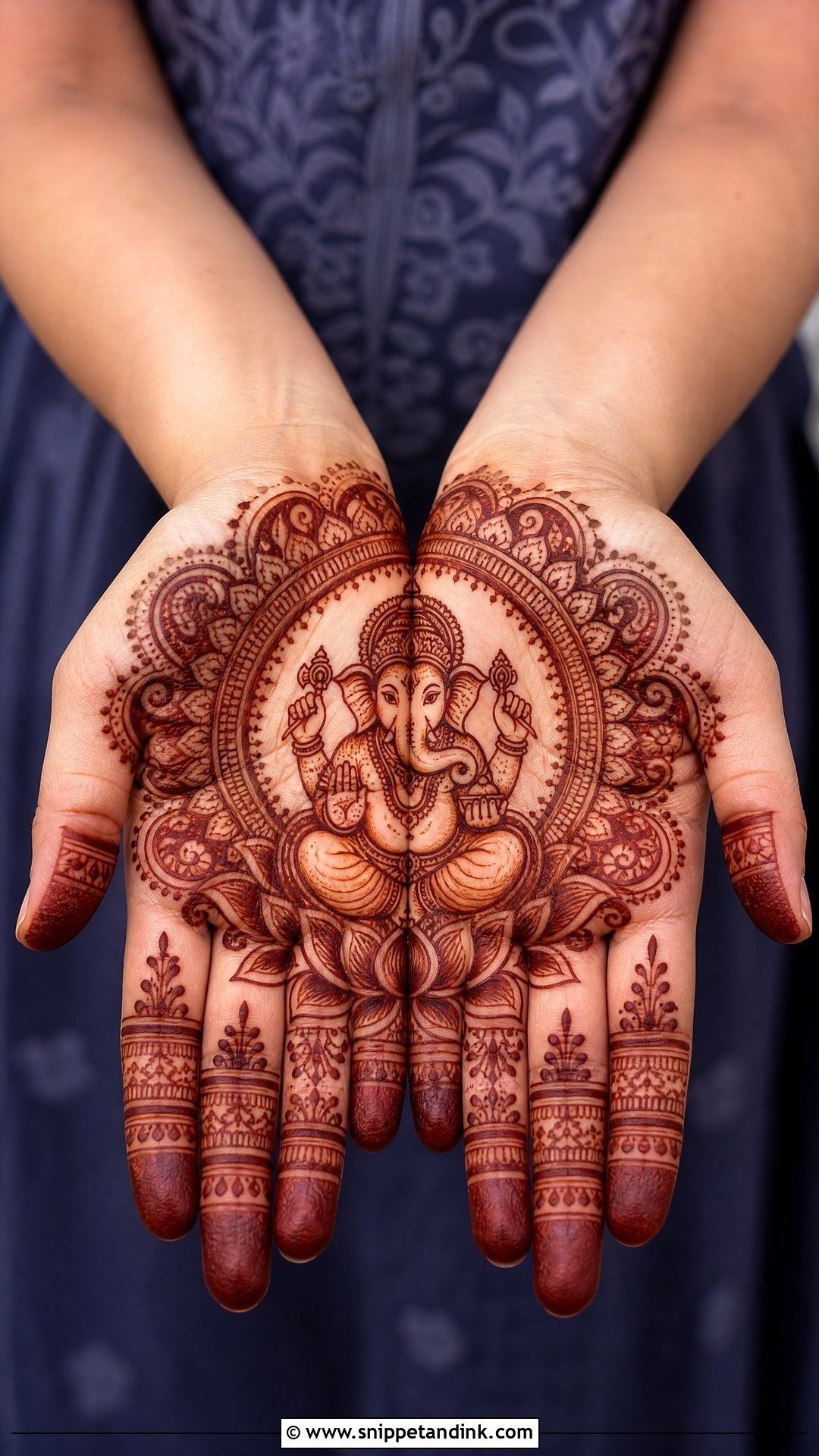
The palm gives Ganpati the clearest central space and, with hands joined in prayer, puts him right where the prayer happens. A seated Ganpati, a simple face outline or a symbolic Ganesha formed from curves and an Om all work, surrounded by lotus petals, paisleys and small mandala rings, with medium-light fingers so the palm stays the focus. Palms stain darker than most of the hand, which helps, but very small motifs lose detail as the lines fill in. Larger, clean shapes look better once the henna has fully darkened.
18. Ganpati Bappa Forearm Mehndi Design
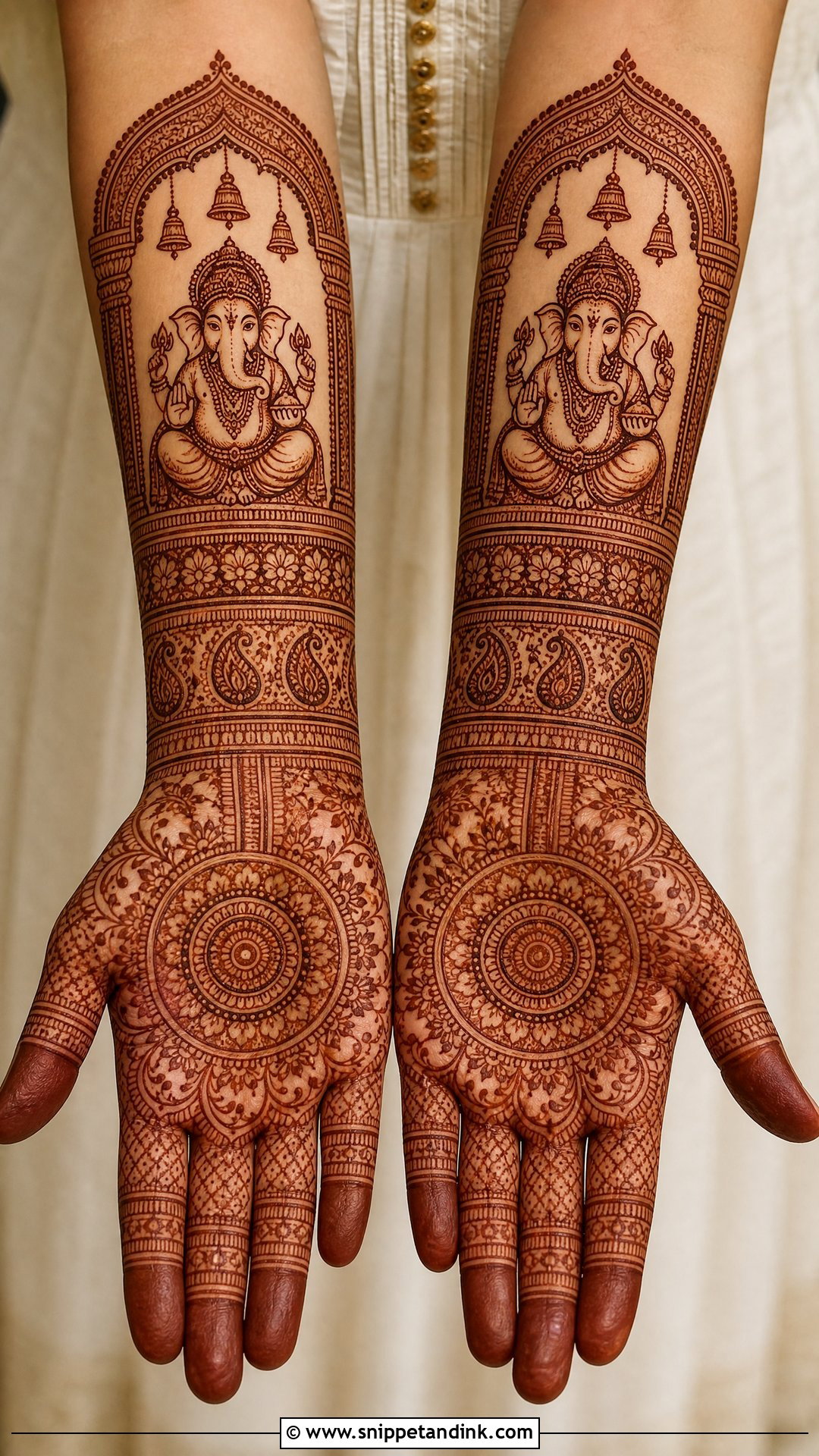
A forearm Ganpati Bappa mehndi design gives a dramatic look without full bridal coverage. Start on the palm with a small mandala or lotus, then move the Ganpati artwork onto the forearm, joined up with temple arches, hanging bells, paisley rows and floral panels. The forearm gives me room for detailed deity work, so it suits larger hands and big events. Expect a softer, more orange-brown stain there than on the palm. Keeping the palm lighter when the forearm is heavy lets the whole design breathe.
19. Ganpati Bappa Jaali Mehndi Design
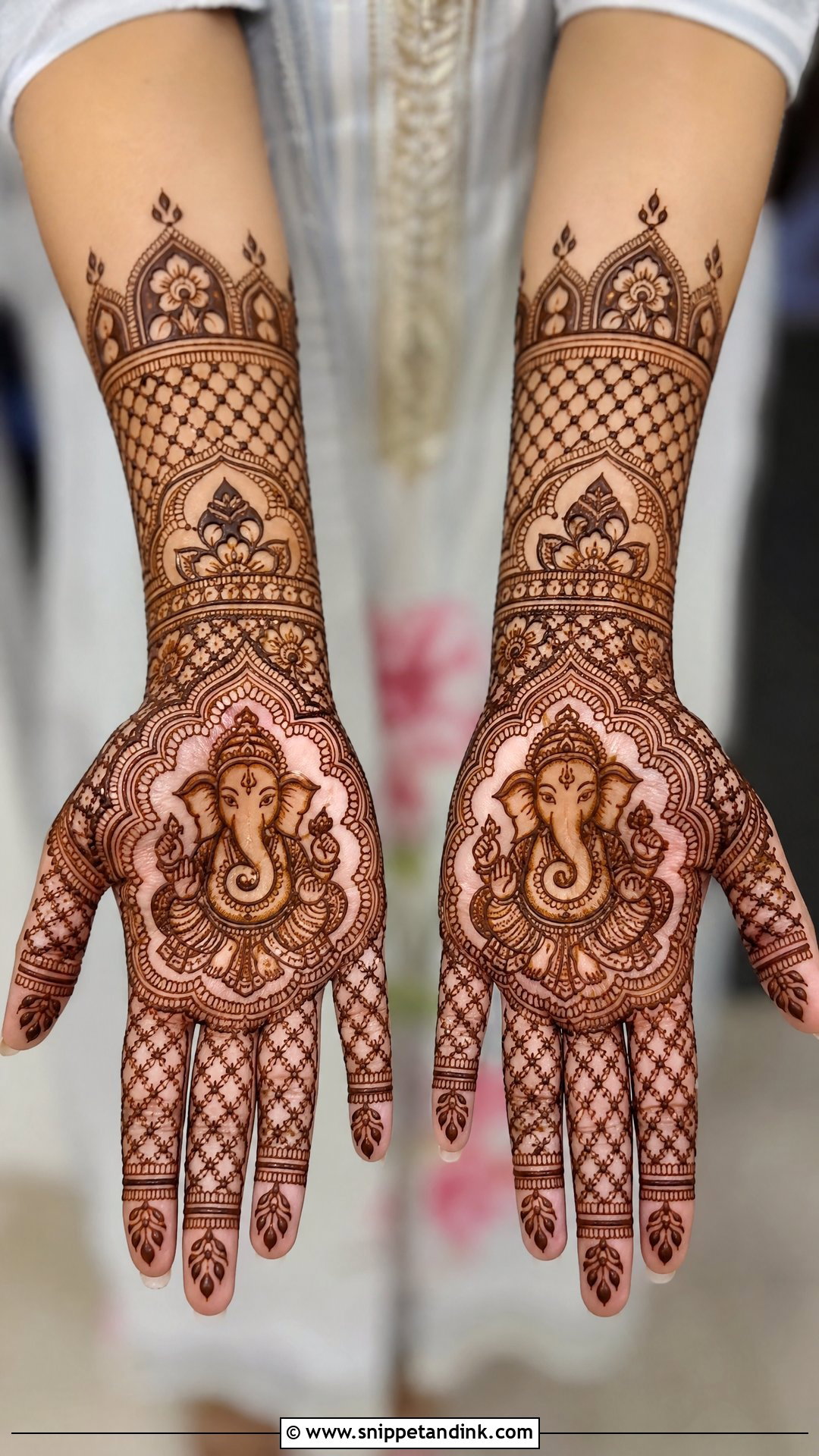
Jaali, the fine net, fills space without darkening the whole hand, which is why it’s so useful around a detailed deity. Place Ganpati on the palm or the back of the hand and surround him with netted panels, tiny dots, floral corners and bordered paisleys. The net lines have to be even. I draw one direction across the whole panel first and then cross it, rather than finishing small squares one at a time. It fits Indian and Indo-Arabic layouts alike. Keep the net away from his face so Bappa stays bold.
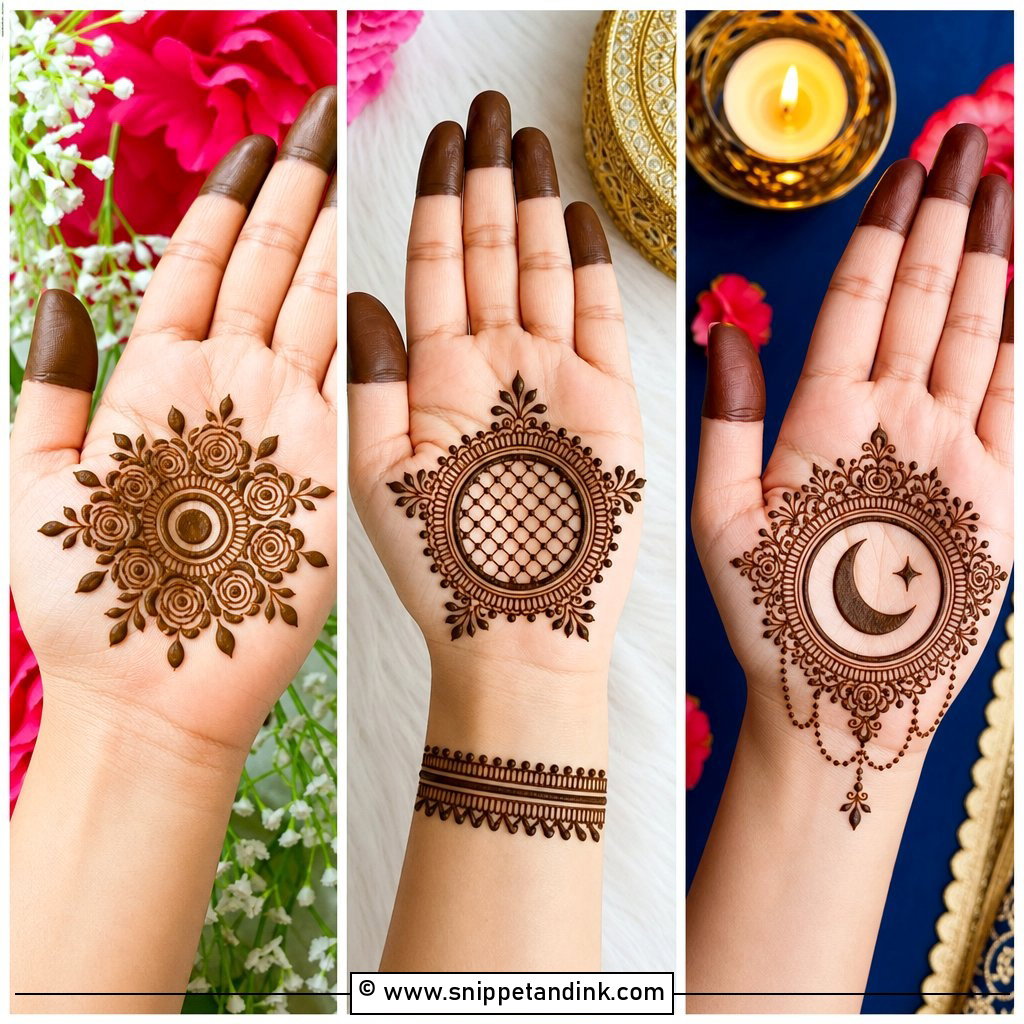

20. Ganpati Bappa Feet Mehndi Design
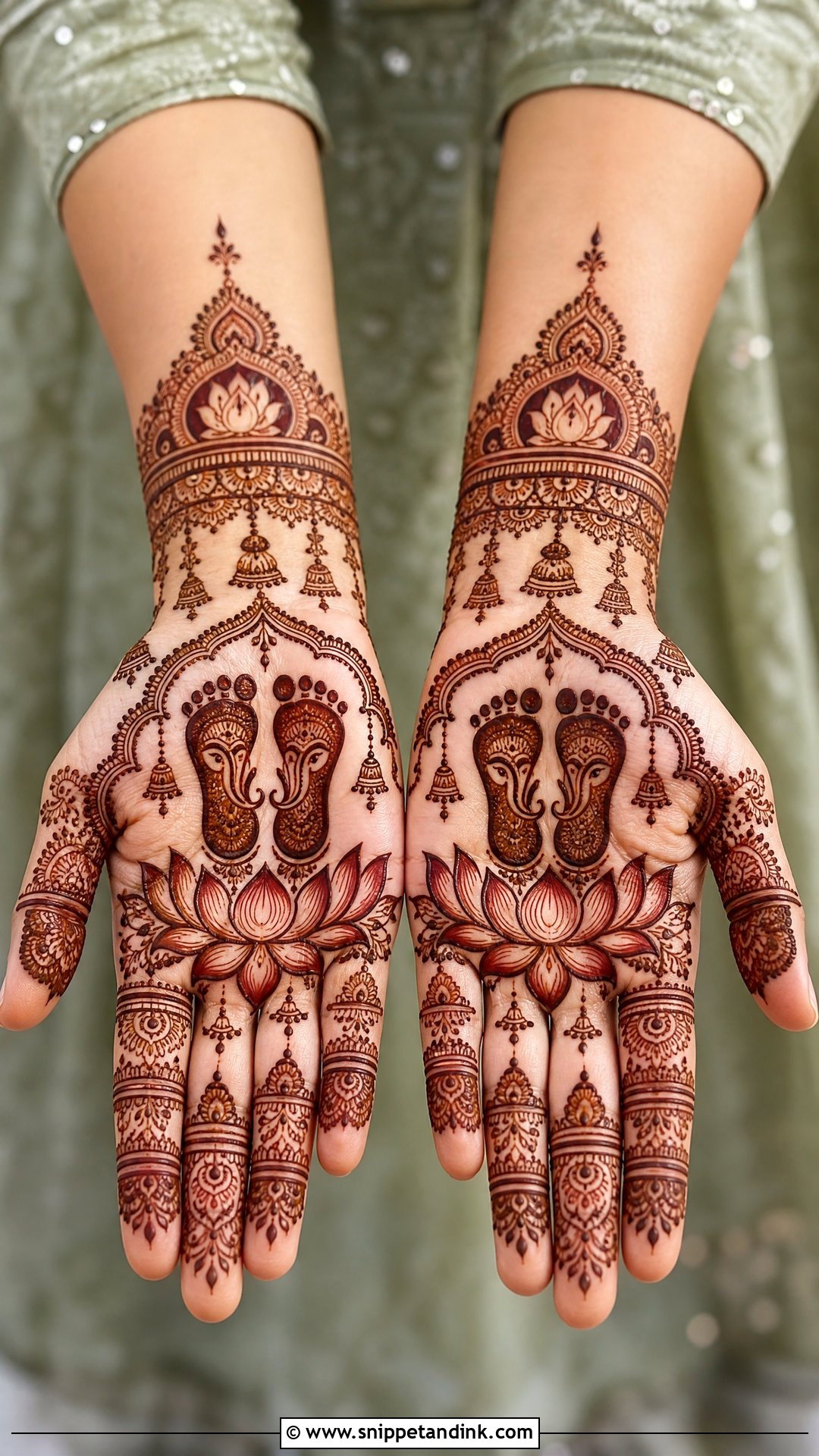
Feet mehndi completes a bridal or dancer’s look, and the broad top of the foot gives the main motif room, with lotus petals, anklet borders, bells and paisley trails around it and small dots and rings on the toes. Before drawing Ganesha on the feet, though, talk to your family. Many households avoid placing a deity image on the feet out of respect, and when that’s the case I put a lotus, a kalash or temple bells there instead. For weddings, the pattern can extend toward the ankles with mandalas and temple borders, balanced across both feet. Feet stain very dark, so keep the paste on and the feet warm.
Getting the Darkest Stain by Puja Morning
Henna doesn’t show its true color when the paste comes off. It starts bright orange and deepens to a red-brown over the next day or two, so book your appointment one or two days before the puja, not on the morning itself.
- Leave the paste on for at least six hours, or overnight if you can sleep with your hands loosely wrapped.
- Dab on a little lemon and sugar once the design is touch-dry, so the paste stays stuck to the skin.
- Scrape the dry paste off instead of washing it, then keep water away for the next twelve hours or so.
- Keep your hands warm. The stain develops better on warm skin than on cold.
Use natural henna only. So-called black henna gets its color from chemical dye that can cause severe skin reactions, and a genuine henna stain is never jet black. If a cone promises a black result within an hour, keep it off your skin, and never use it on a child.
When the Design Starts to Fade
A palm stain usually lasts one to two weeks, fading as the skin renews, and faster with frequent hand-washing and kitchen work. Some people feel uneasy watching Ganesha wear away during the festival days. One way to see it: like the idol taken for visarjan at the end of the festival, the design was always meant to be temporary. If that still sits uncomfortably with you, an Om or modak design carries the same blessing with less worry.
Bappa First, Everything Else Around Him
Ganpati mehndi carries faith as well as decoration, and that changes how it should be drawn. Whatever the coverage, from simple palm art to full bridal hands, back hand patterns, wrist bands or feet, give Bappa bold, clean outlines and let lighter fillers like lotus, jaali, dots and paisleys sit around him. Use natural henna only, apply it a day or two ahead and let it rest well. A Ganesha you can still recognize on the third day is the sign the design was right for your hand.
You'll Like These Ideas:











Leave a Reply