
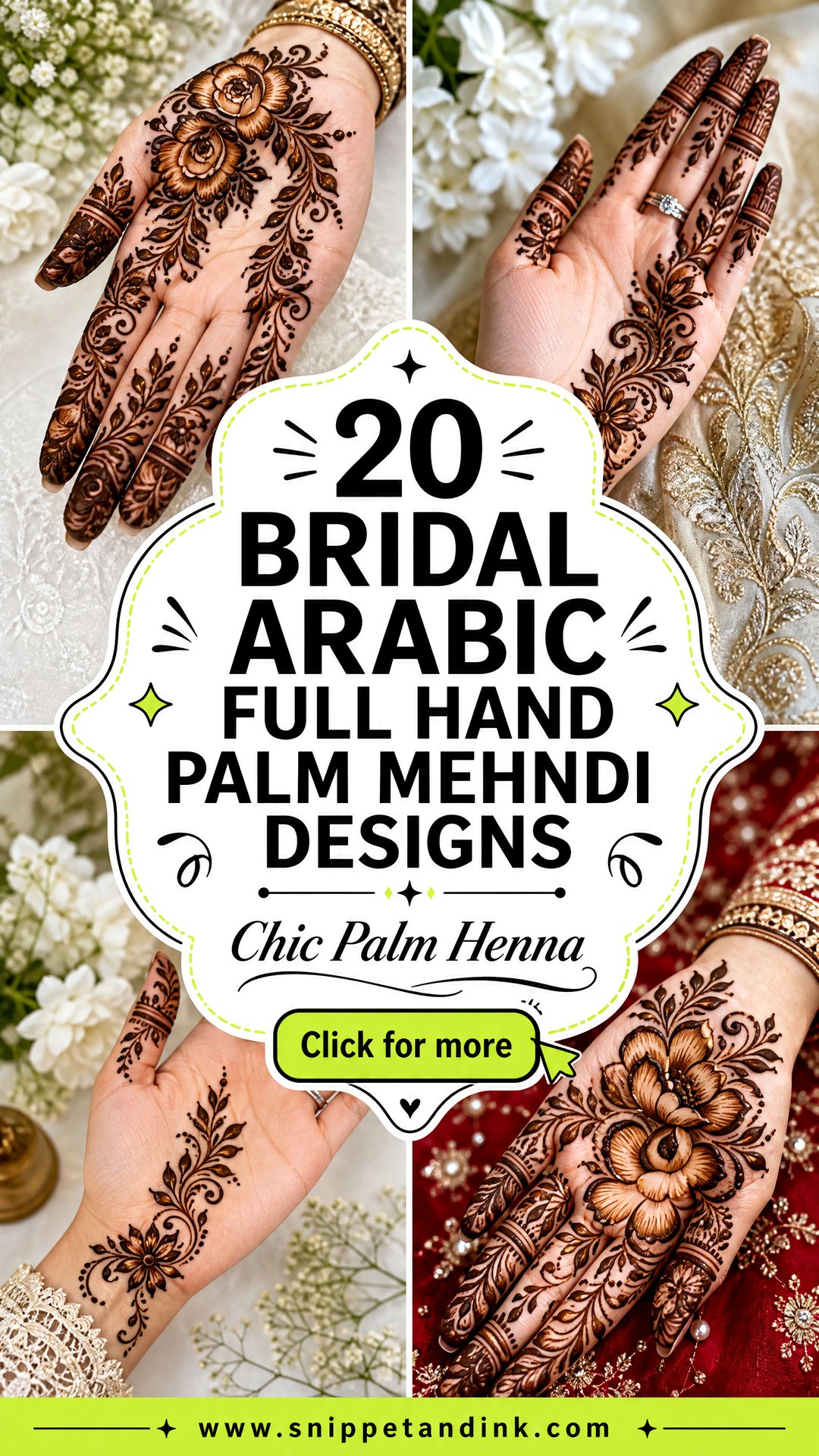
A full Arabic palm is what I suggest when a bride wants plenty of henna on their hands without losing the open, flowing look that makes Arabic work recognisable. Bridal Arabic full hand palm mehndi designs usually combine bold floral trails, shaded leaves, paisley vines, wrist bands and finger detail, with deliberate bare skin left between them. When I plan one, I’m thinking about three things: both hands balancing when you hold them together, the stain reading clearly from a few feet away, and the design sitting comfortably beside your outfit and jewellery. Some brides want the palm densely filled, others prefer open trails and one strong motif. Here are twenty layouts I’d happily put on a bride, with notes on how each one stains and wears.
What to Bring to the Design Chat With Your Henna Artist
I always ask a bride to show me her outfit sleeves, her bangles and how far up her arms she wants the design to go before I suggest anything. Sleeve length decides where the forearm work stops. A lehenga blouse with elbow sleeves hides most of the forearm, so there’s little point in a detailed band there.
- Two or three photos you like, plus one you don’t. The one you dislike tells me more than the rest.
- Whether you want the groom’s initials hidden somewhere in the palm, so I can leave room.
- Any allergies, and whether you’ve had henna before and how dark it went.
- Your date and the time of the mehndi night, so I can plan when the paste needs to come off.
Only ever use natural henna for a wedding. Dark “black henna” pastes often contain a hair dye chemical that can cause serious skin reactions. Real henna paste is green-brown, smells earthy, and stains orange at first, never black.
1. Bridal Arabic Floral Palm Mehndi Design
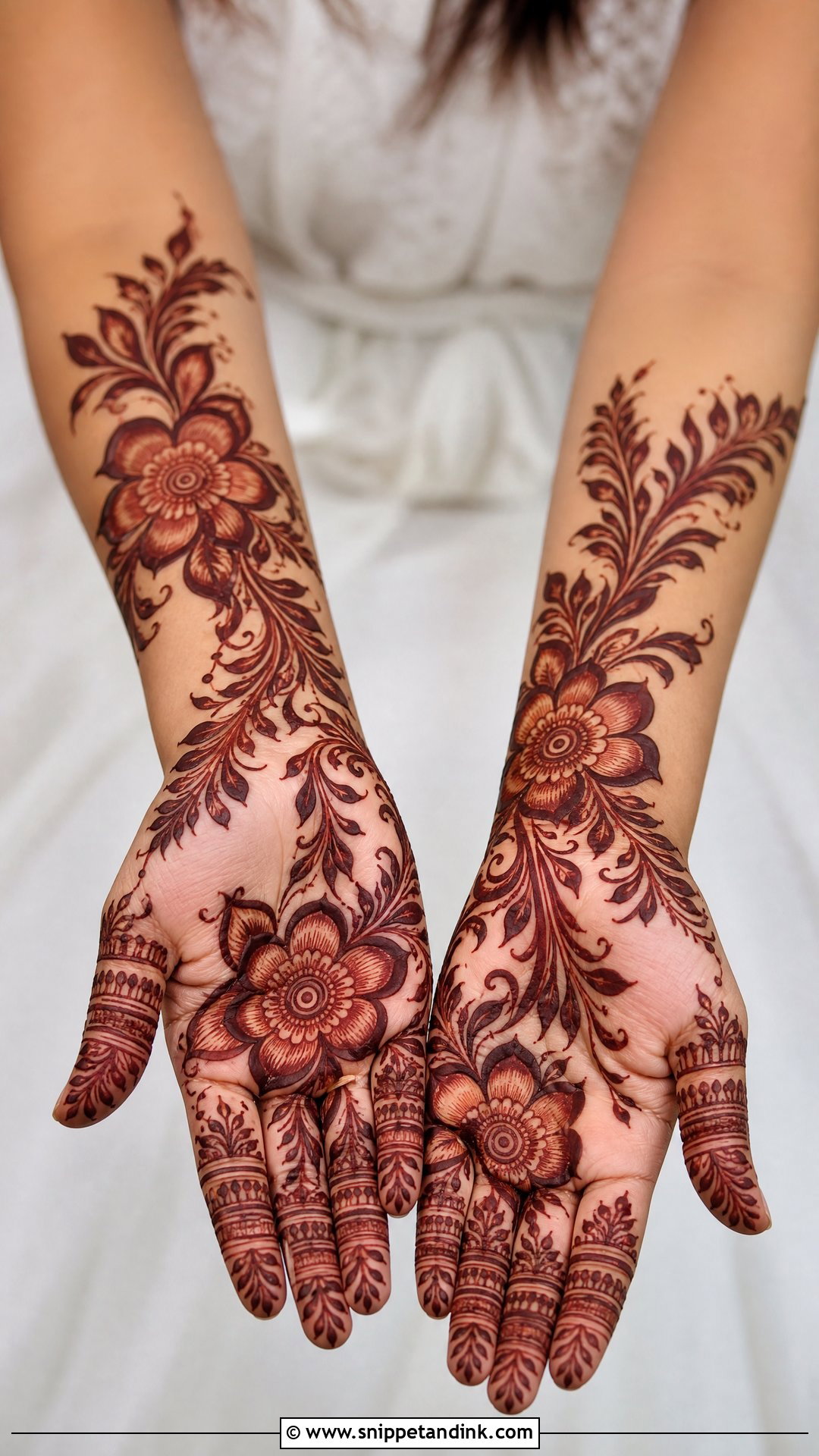
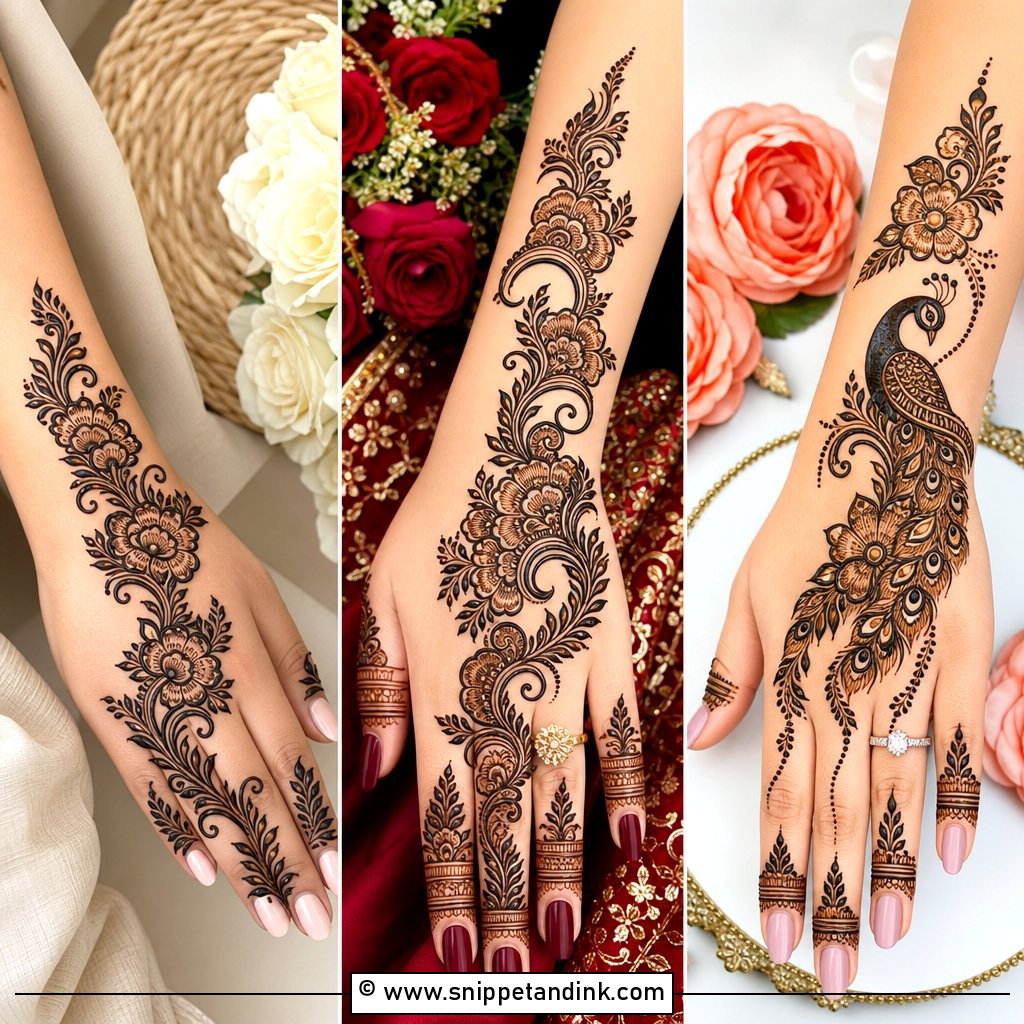
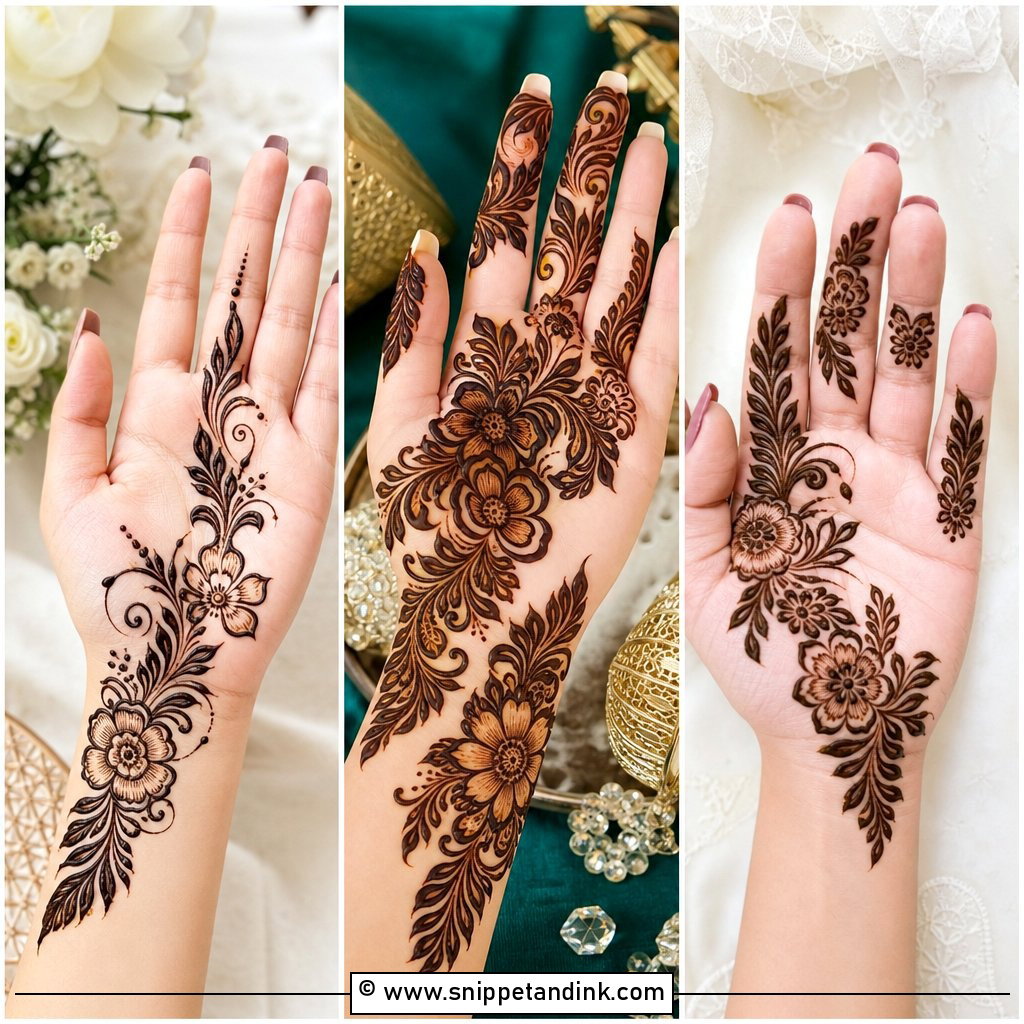
This floral layout starts with large Arabic flowers set diagonally across the palm and lets leafy trails carry the line over the wrist and up the forearm. Fingers get small petals, dots and slim bands so the hand looks finished without getting crowded. The diagonal is what keeps it Arabic; if the flowers sit straight across, it starts to look like a filler pattern. I outline the main blooms in a thicker cone line and shade inside the petals, which gives depth once the stain develops. It sits nicely with floral jewellery and pastel outfits.
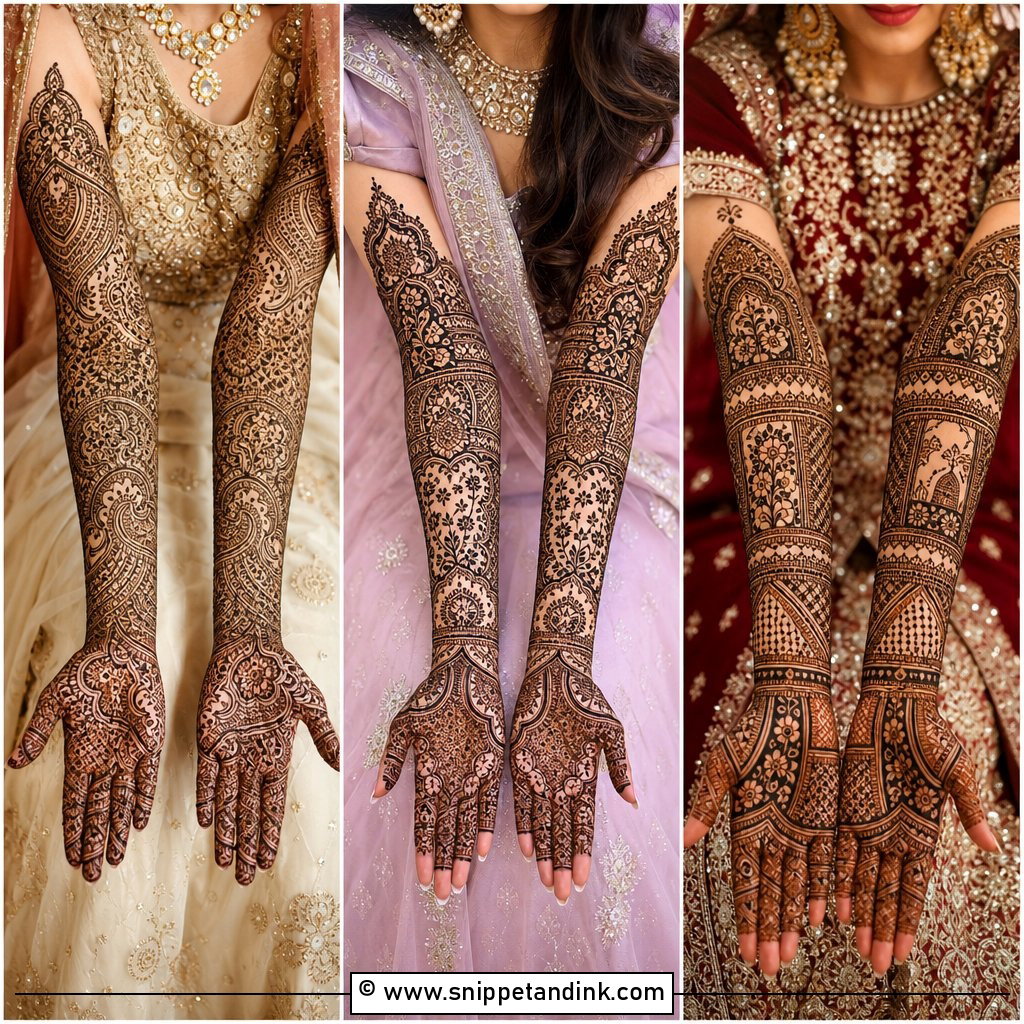
2. Bridal Arabic Paisley Palm Mehndi Design
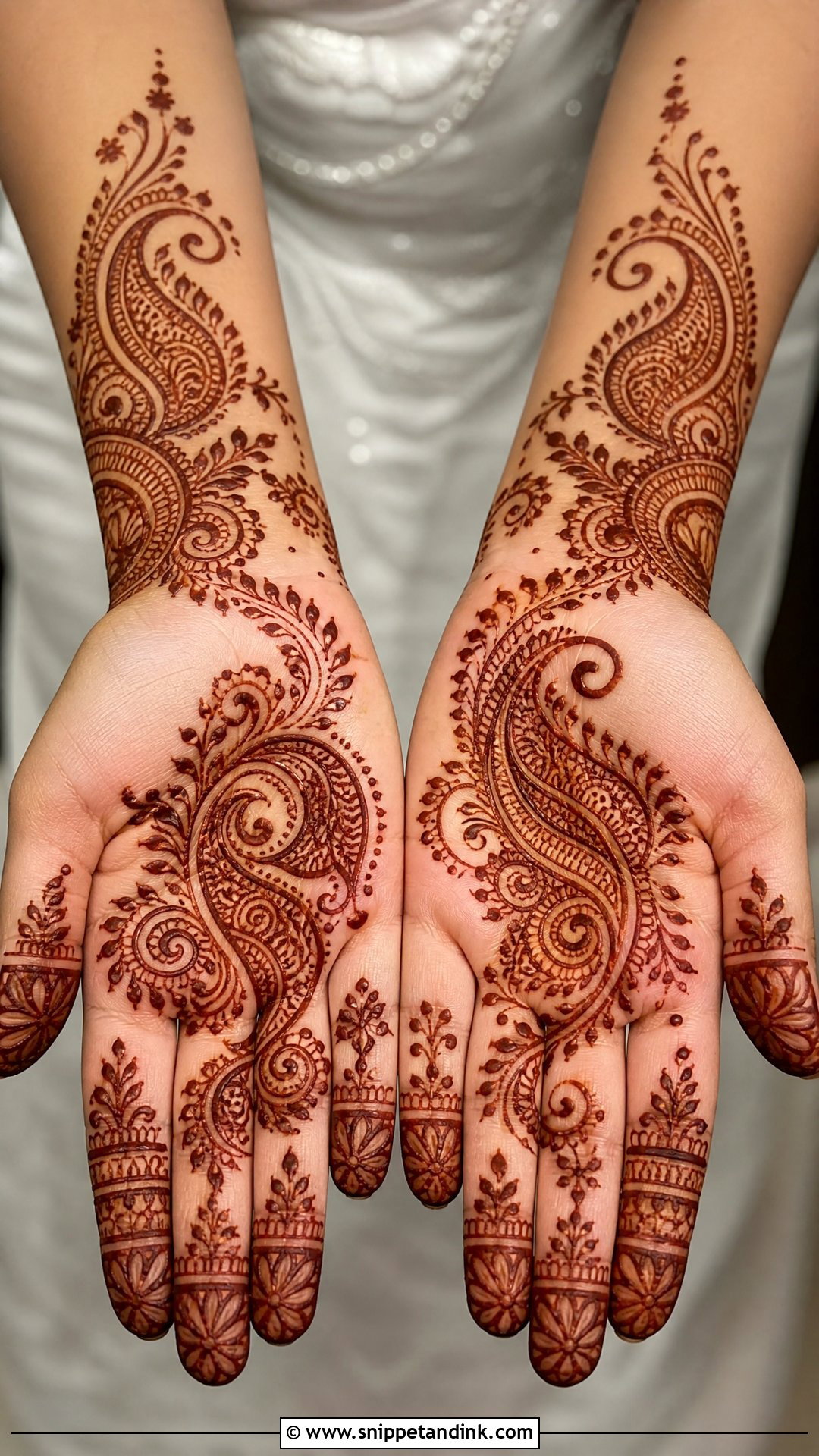
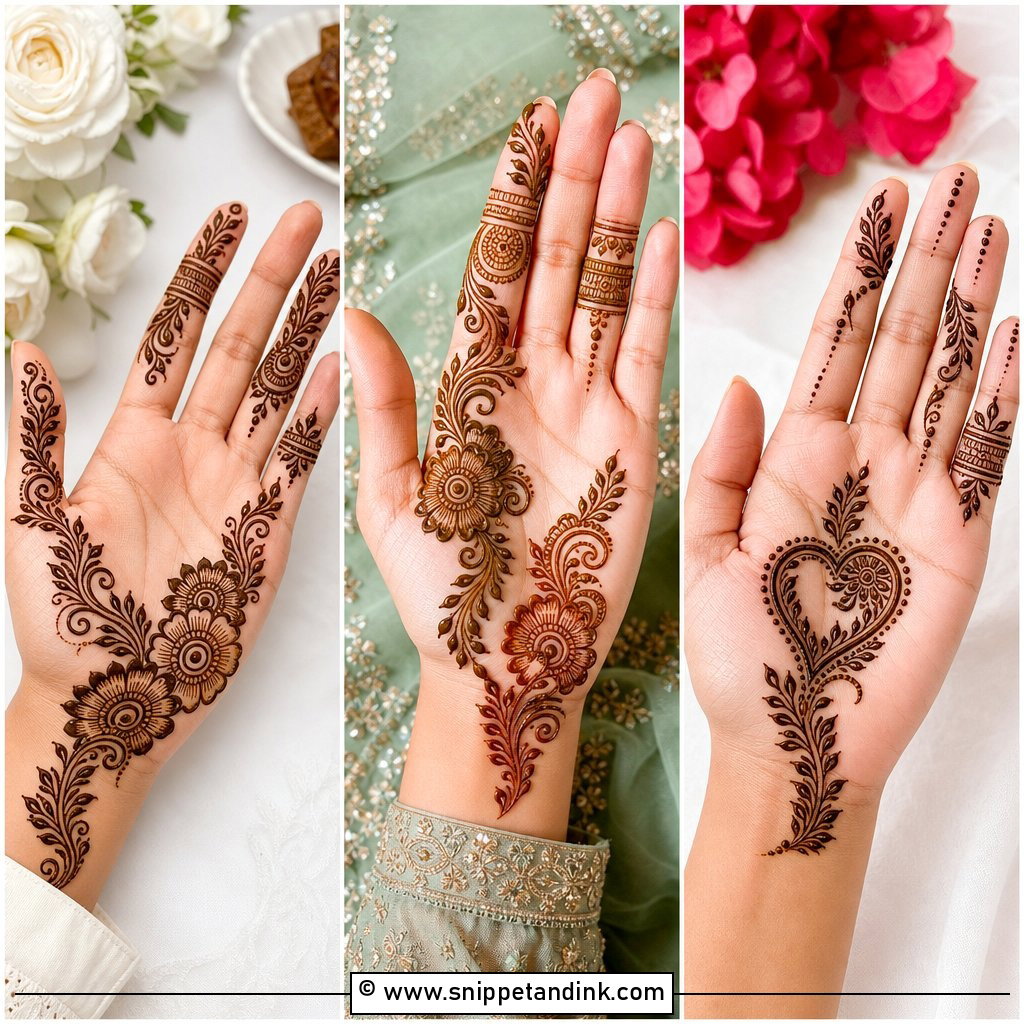
Paisley gives a traditional richness while the flow stays Arabic. I usually place one large paisley in the centre of the palm, filled with curls, petals and fine mesh, then let smaller paisleys trail toward the wrist. Fingers carry matching paisley tips, thin bands and leaf chains. It suits a bride who wants a detailed palm but not a fully packed Indian layout. The thick paisley outline is important; fine outlines on big shapes look faint once the stain settles. Red, maroon, emerald and antique gold outfits suit it.
3. Bridal Arabic Mandala Palm Mehndi Design
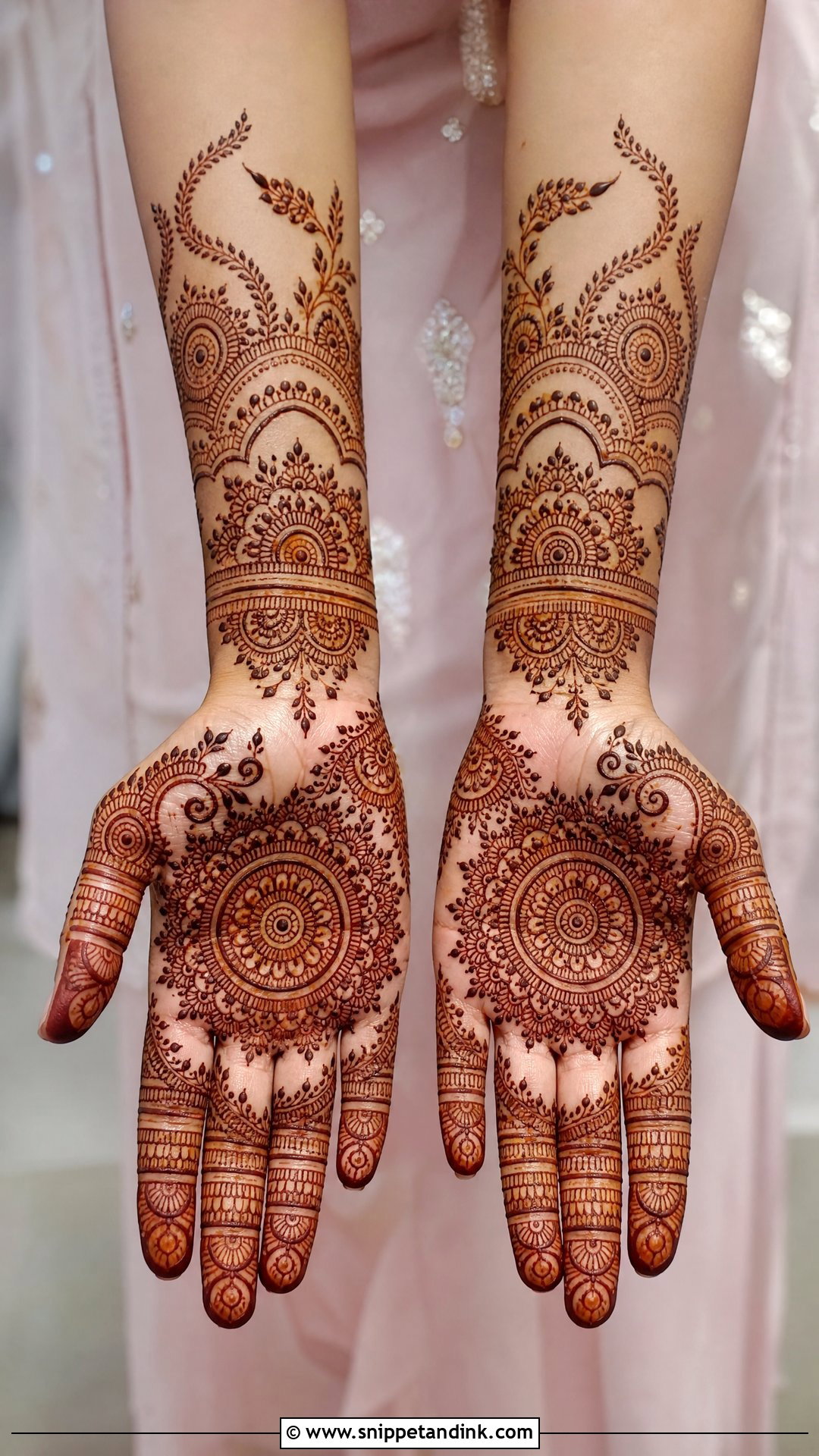
A round mandala gives the palm a symmetrical centre, and Arabic vines growing out of it keep the rest of the hand light. The mandala is filled with petals, dots, fine circles and small leaves. I keep the mandala to the middle of the palm, not edge to edge, because the palm creases fold through a large circle and distort it whenever the hand closes. Fingers can alternate filled and open sections for a more modern feel. The circle reads very clearly when you open your palms for photos, which is why it’s often chosen for nikah and engagement portraits.
4. Bridal Arabic Rose Palm Mehndi Design
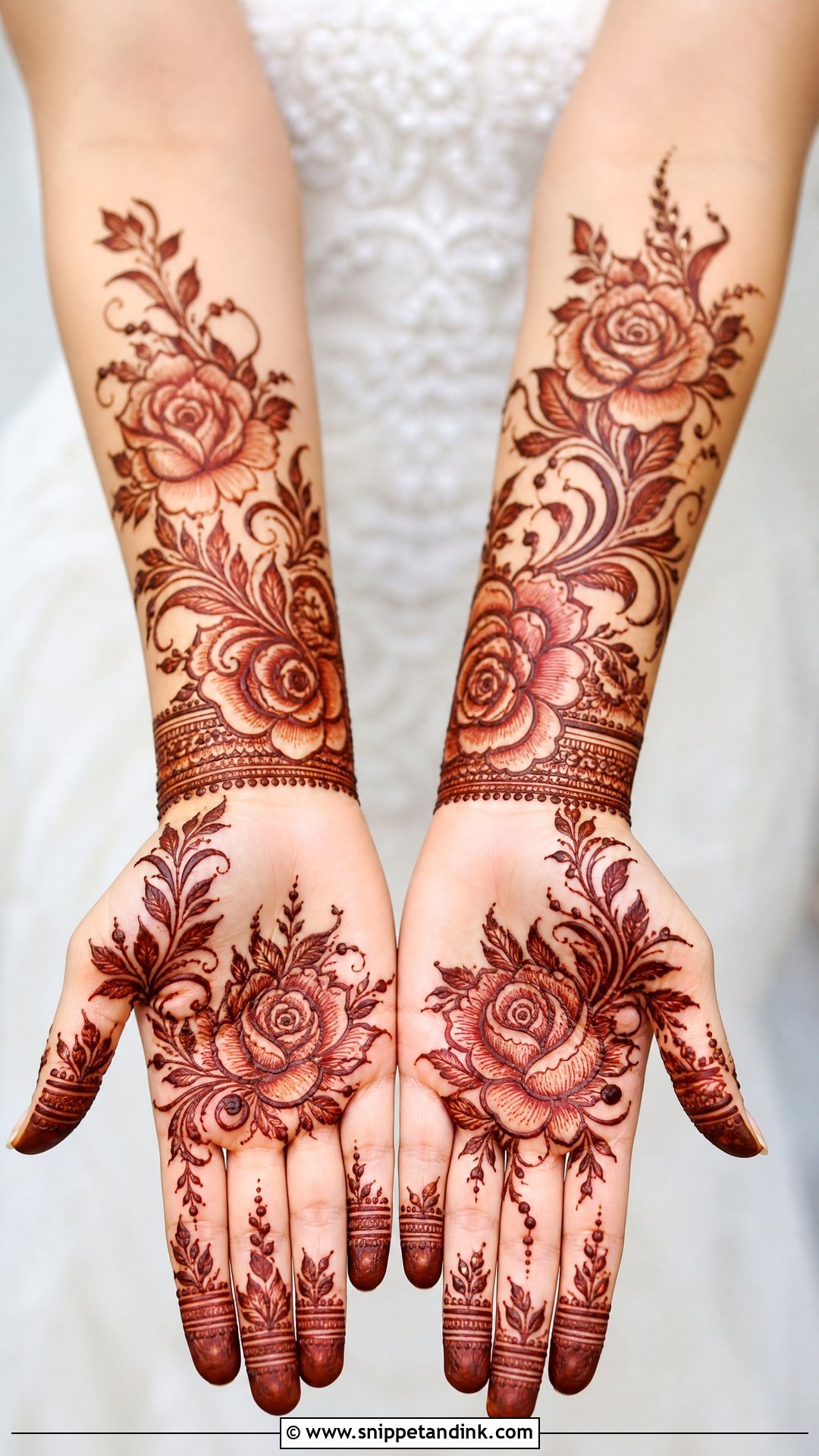
Roses are softer than paisleys and very feminine. The palm carries layered roses with shaded petals, and vines, leaves and bracelet bands take the pattern to the wrist. Arabic roses depend on a bold outline and smooth shading inside; when I rush the shading, the rose turns into a blob once it stains. Fingers can carry rosebud trails, curved leaves and dot lines. It pairs well with pearl jewellery, softer makeup and modern bridal outfits.
5. Bridal Arabic Peacock Palm Mehndi Design
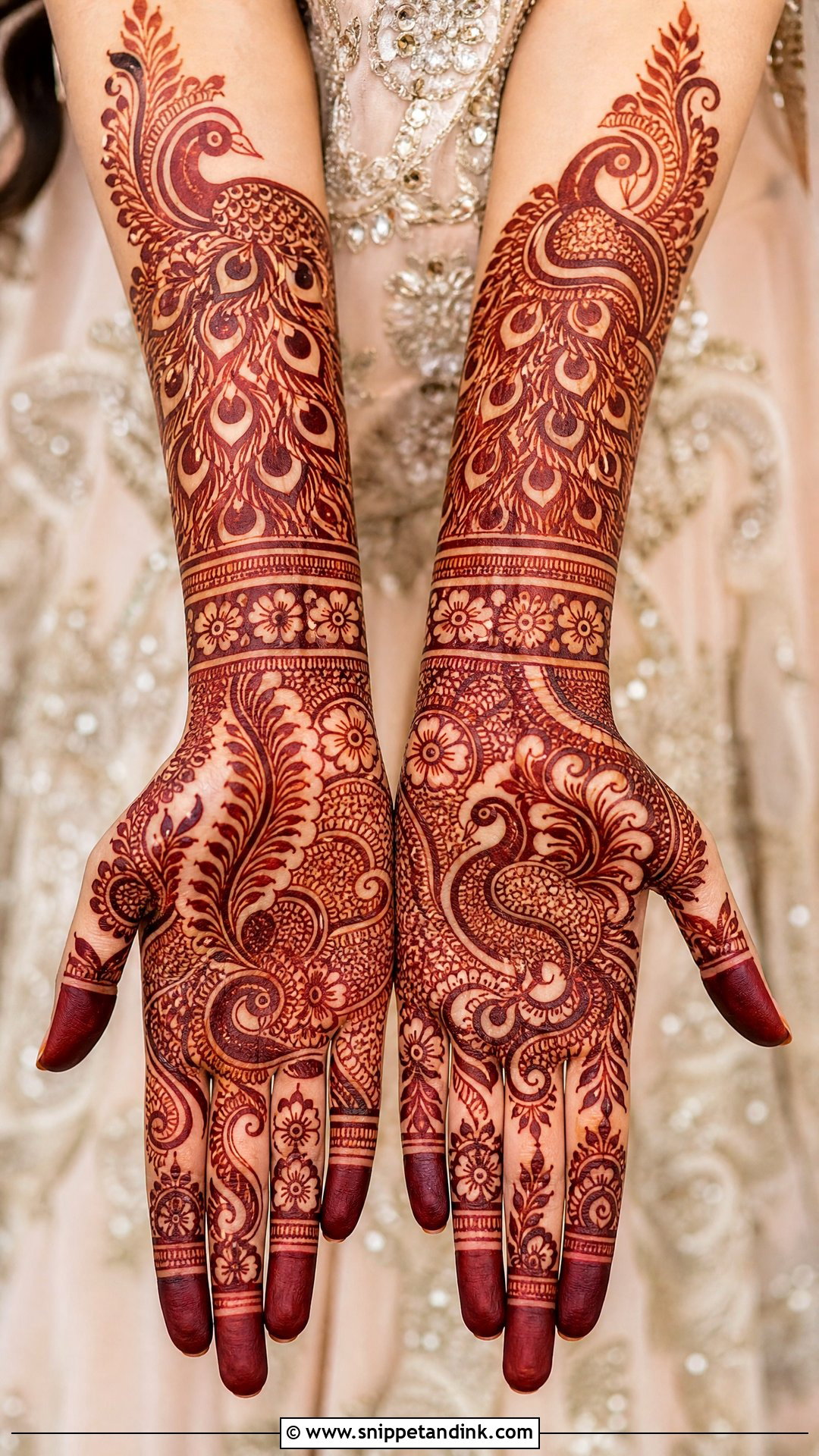
A peacock brings a festive feel. On the palm, I draw the body with a curved neck and let the feathers open into floral vines and paisleys. To keep it Arabic rather than a dense traditional peacock, the design needs open spaces, bold outlines and flowing trails rather than filler everywhere. Feather curves, leafy borders and floral bands continue on the wrist and forearm. One honest warning: the peacock’s beak and eye are tiny, and on a palm that sweats a lot during application those fine lines can spread, so I keep them a touch bolder than you’d expect.
6. Bridal Arabic Jaali Palm Mehndi Design
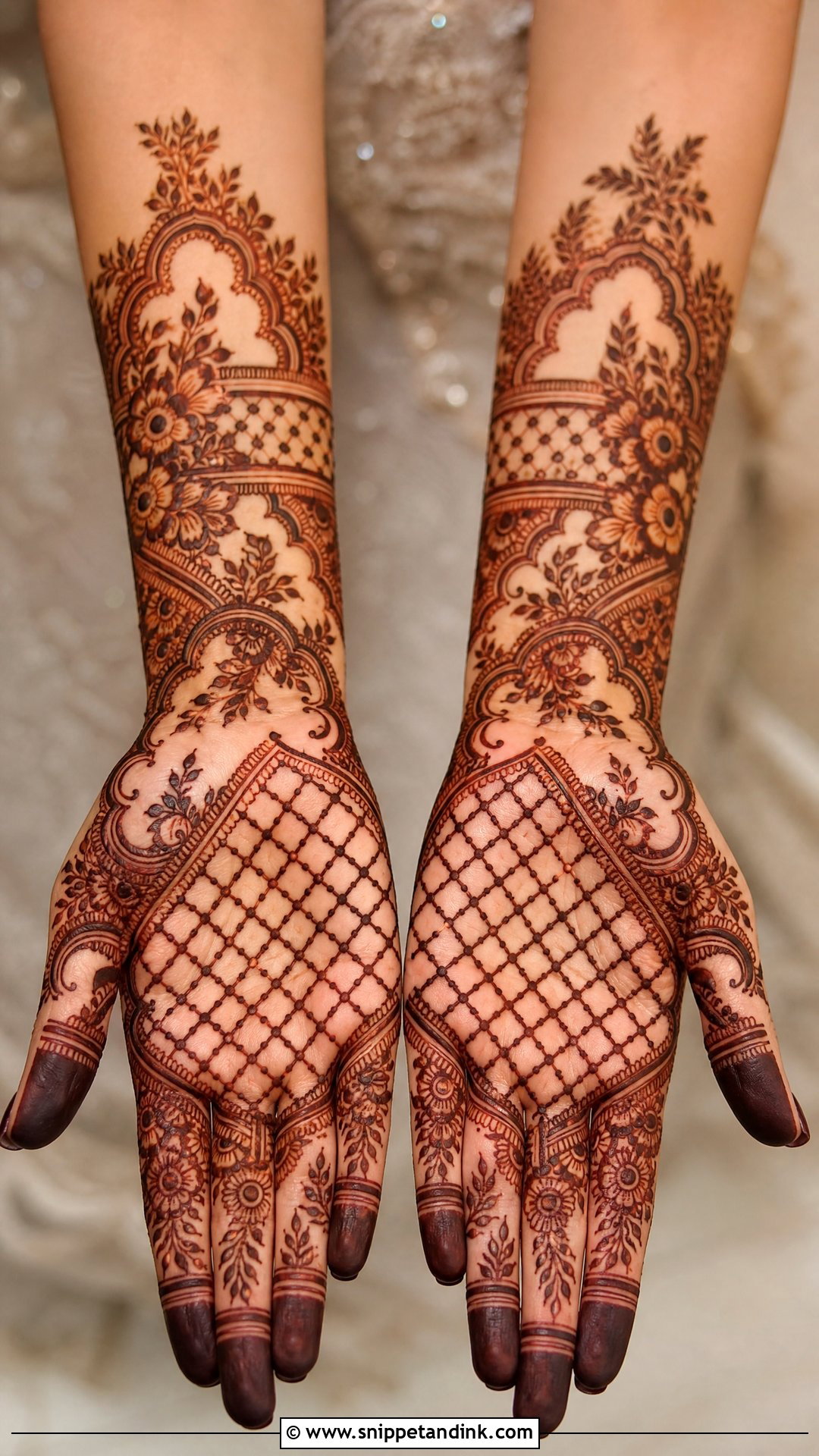
Jaali, the mesh pattern, adds texture. I frame it with Arabic flowers, paisleys and leafy borders rather than running it across the whole hand. It looks best in chosen sections: the centre of the palm, a wrist cuff or panels on the fingers, with open skin around it. Mesh is the part that most often smudges while it’s wet, since the lines are close together, so I ask brides to keep their hands open and still for the first twenty minutes or so. It suits heavy bangles and embroidered sleeves well.
7. Bridal Arabic Bel Palm Mehndi Design
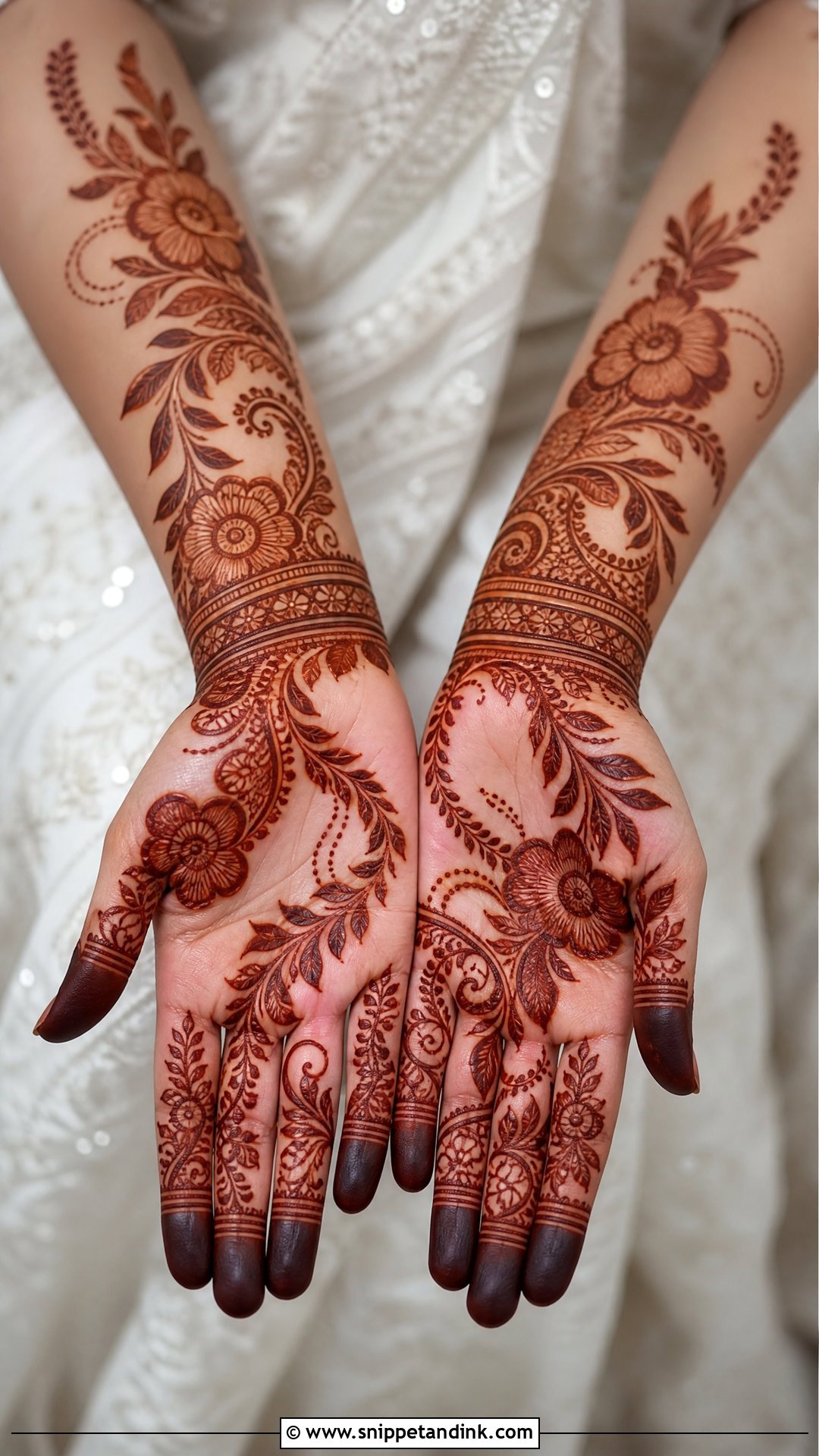
A bel pattern is the vine that Arabic mehndi is best known for. In a bridal version, it starts on the palm, sweeps diagonally across the wrist and keeps growing up the forearm with larger flowers and fuller leaves. A bold floral cluster sits on the palm, and the fingers carry smaller vines. It’s very easy to adjust: shaded petals make it heavier, more bare skin makes it lighter. I follow the natural angle of the bride’s hand when I start the bel, which is why it looks right in ring and bangle close-ups.
8. Bridal Arabic Finger Palm Mehndi Design
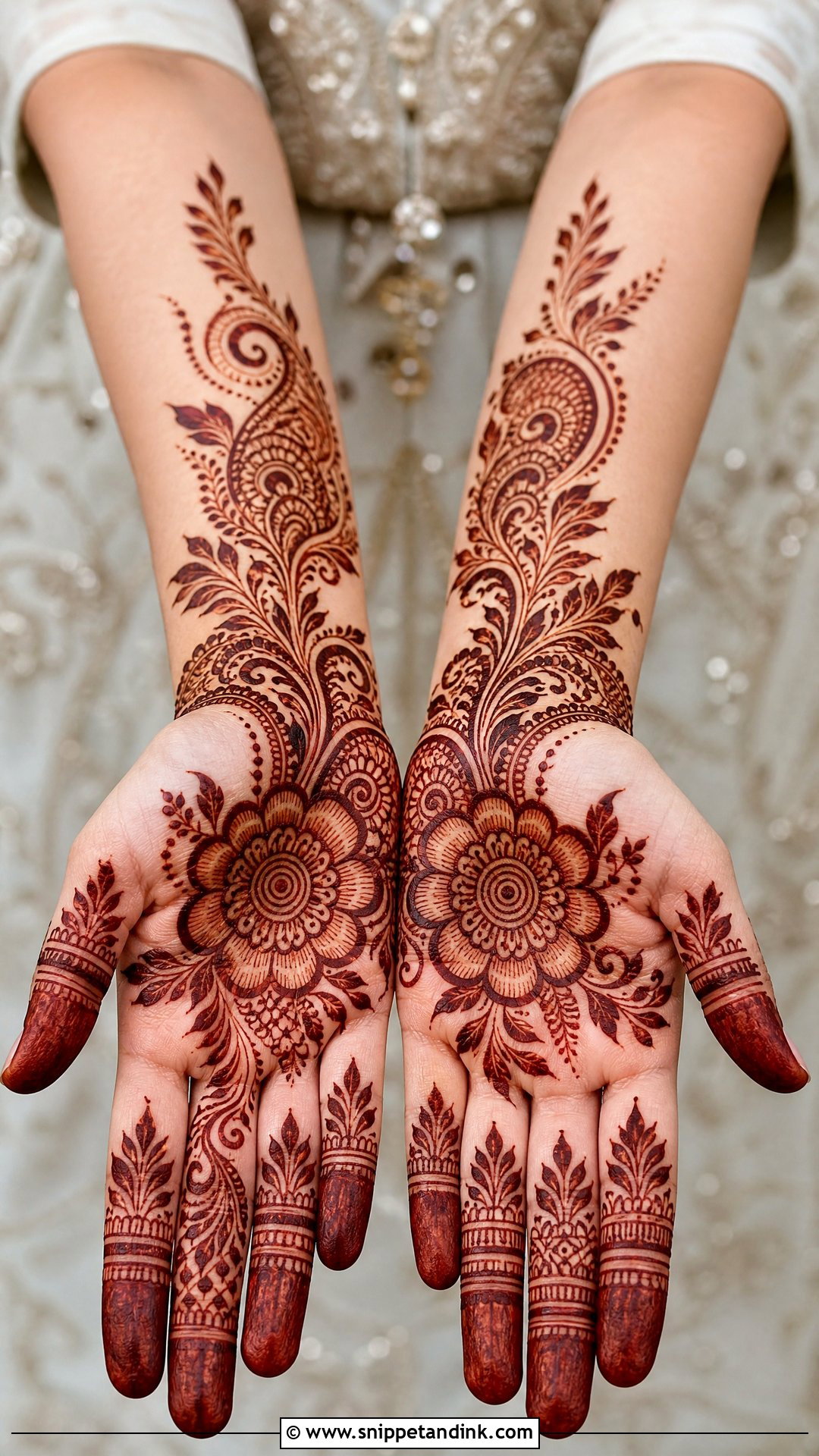
Fingers are what the camera sees most in ring shots, so this layout puts the detail there. The palm stays centred on flowers, paisleys or a mandala, while each finger gets a different but coordinated pattern: leafy tips, fine rings, shaded petals or tiny mesh panels. The wrist and forearm still carry Arabic bands and trails so it reads as bridal. Fingertips stain darkest of anywhere on the hand, so I keep the tip designs simple enough that they don’t turn into solid dark caps. It balances well with rings and nail colour.
9. Bridal Arabic Bracelet Palm Mehndi Design
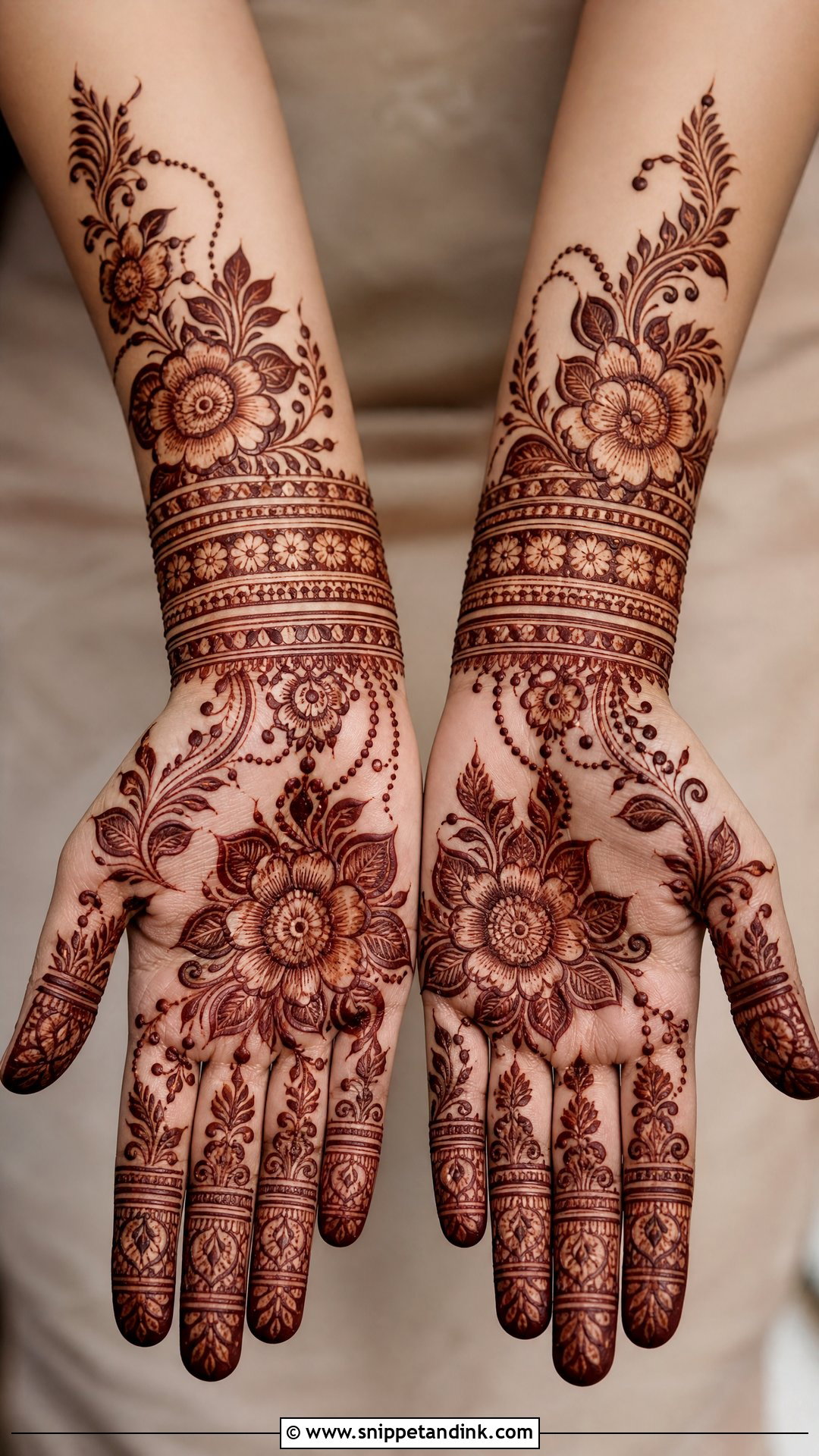
Wrist bands that look like stacked bracelets dress the wrist even before bangles go on. A floral or paisley centre sits on the palm, then henna bands wrap the wrist, and vines, dots and curved borders carry on toward the forearm. It gives a clean transition from palm to arm and stays visible with sleeveless, half-sleeve or sheer outfits. The spacing between bands is what makes it look professional, so I mark them out lightly before filling. The inner wrist skin is thinner, so the stain there tends to come up lighter than the palm.
10. Bridal Arabic Heavy Palm Mehndi Design
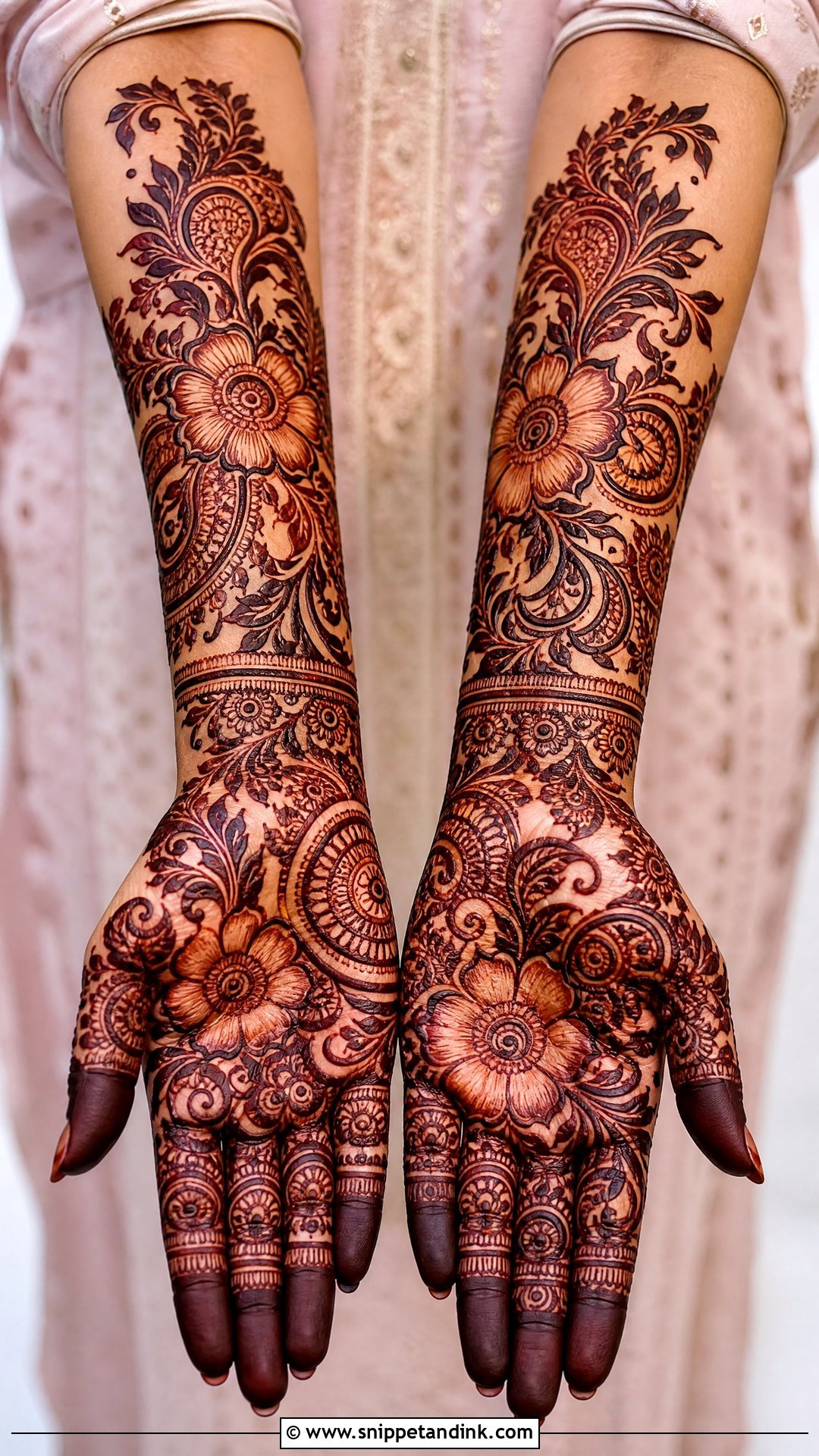
A heavy Arabic palm suits a bride who wants a rich, traditional look for the main wedding day. Large flowers, paisleys, vines, leaf sprays and shaded areas fill the palm, but placement still flows and outlines stay bold. Fingers are fully covered with tips, bands and small fillers, and the wrist and forearm get layered cuffs and trailing motifs. Even here, I leave a few small gaps; a palm with no bare skin at all stains into one dark mass and the design disappears. Deep red, maroon and gold outfits sit well with it. It’s a long sitting, so plan for it.
11. Bridal Arabic Minimal Palm Mehndi Design
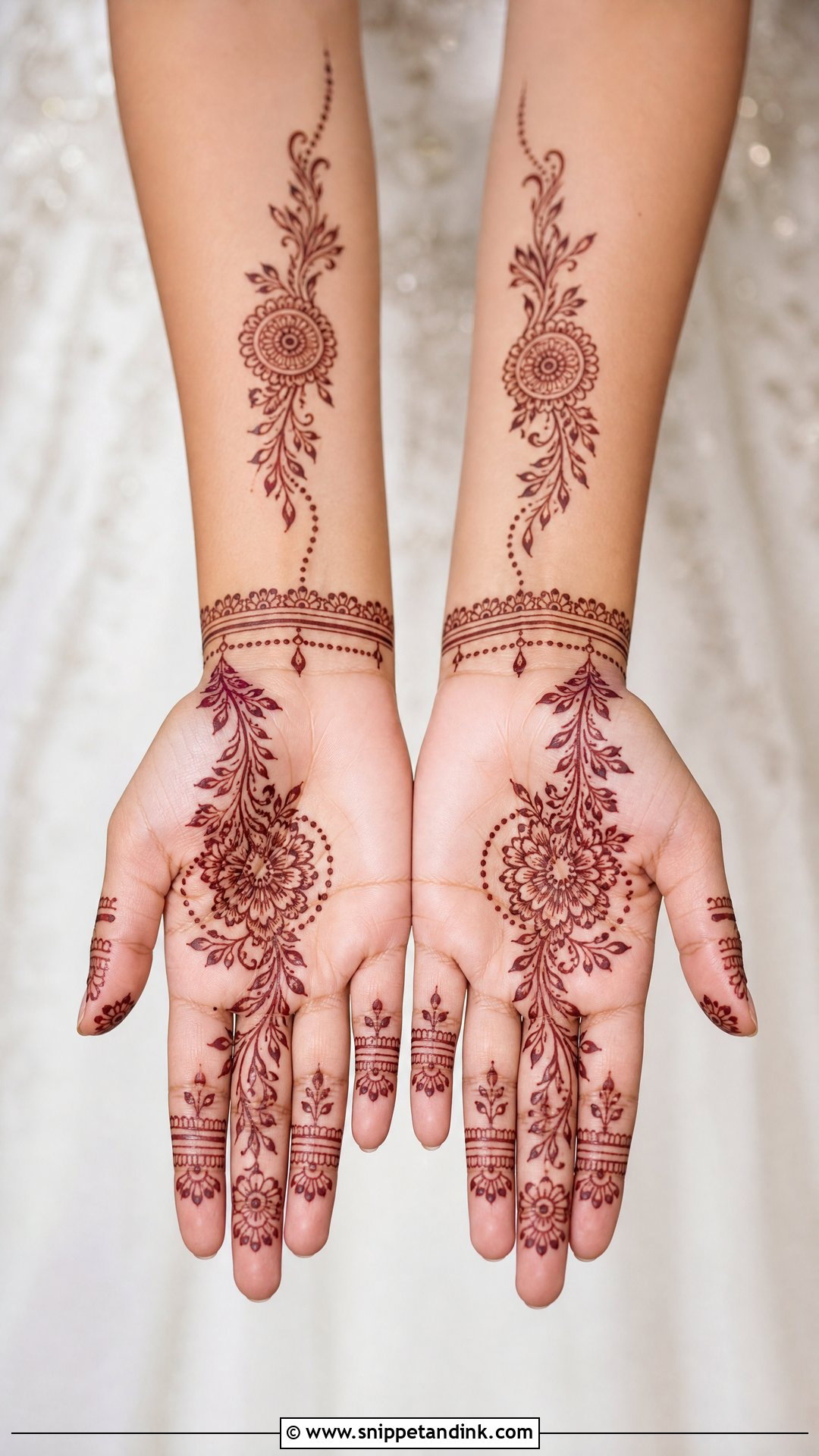
Plenty of brides don’t want dense mehndi, and a lighter full-hand design still reads as bridal. One strong floral trail or a mandala with soft vine extensions carries the palm. Fingers get slim bands, delicate leaves and tip detail, and the wrist and forearm hold light bracelet lines. It suits modern outfits and smaller ceremonies. The difficulty with minimal work is that every line is on show, so spacing has to be planned. I sketch the main trail with a very thin line first, then commit.
12. Bridal Arabic Gulf Palm Mehndi Design
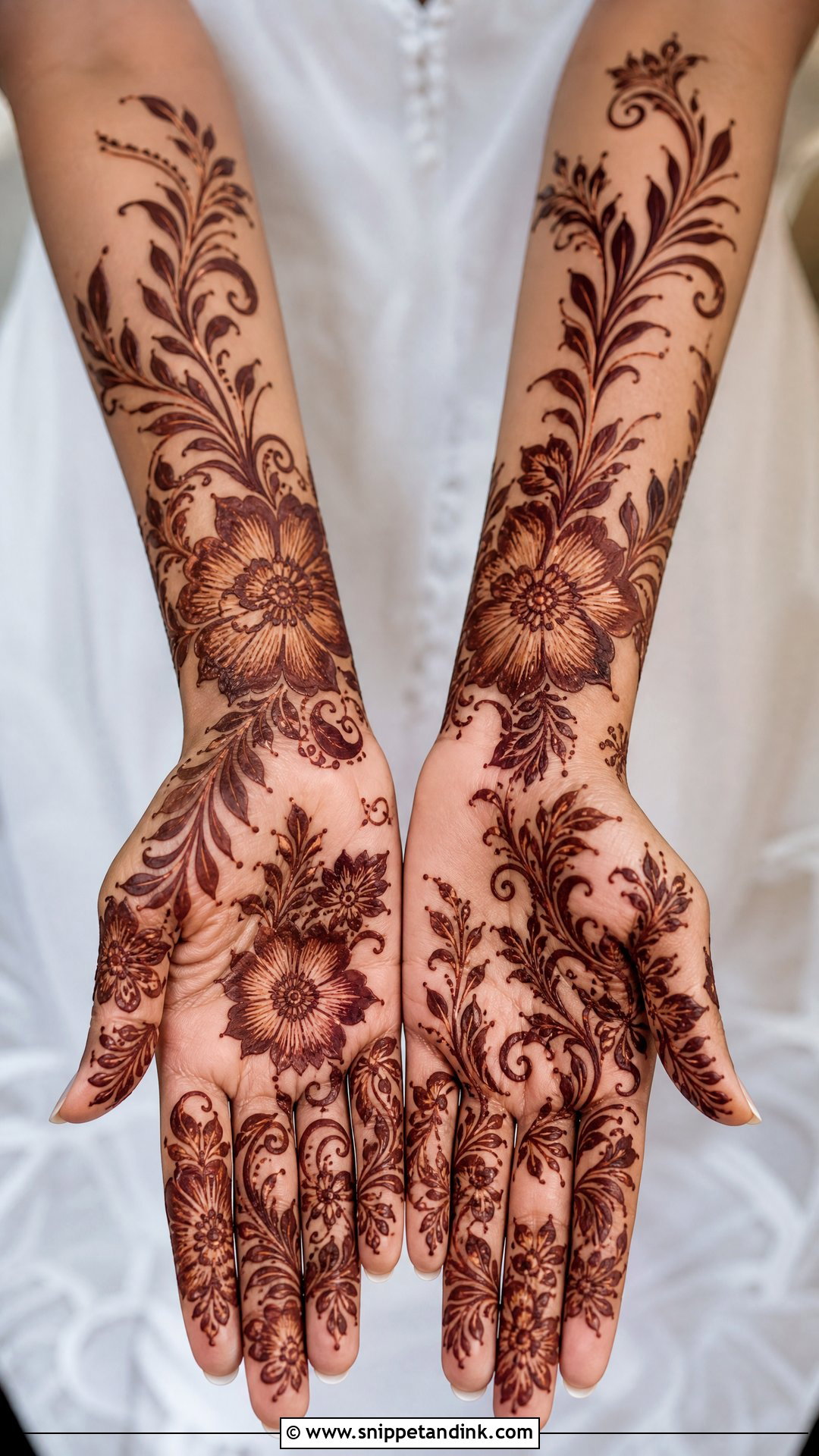
Gulf-style work uses bold strokes, larger motifs and generous open skin. On a bridal full hand, the palm carries oversized flowers, thick leafy vines and curved sections moving toward the wrist. Fingers have bold tips with clean bands and dot chains, and parts of the forearm stay deliberately open. Because the shapes are large, this style survives a weaker stain better than fine detail does, which makes it a sensible choice if your henna doesn’t usually go very dark. Gold jewellery and embellished sleeves sit well with it.
13. Bridal Arabic Moroccan Palm Mehndi Design
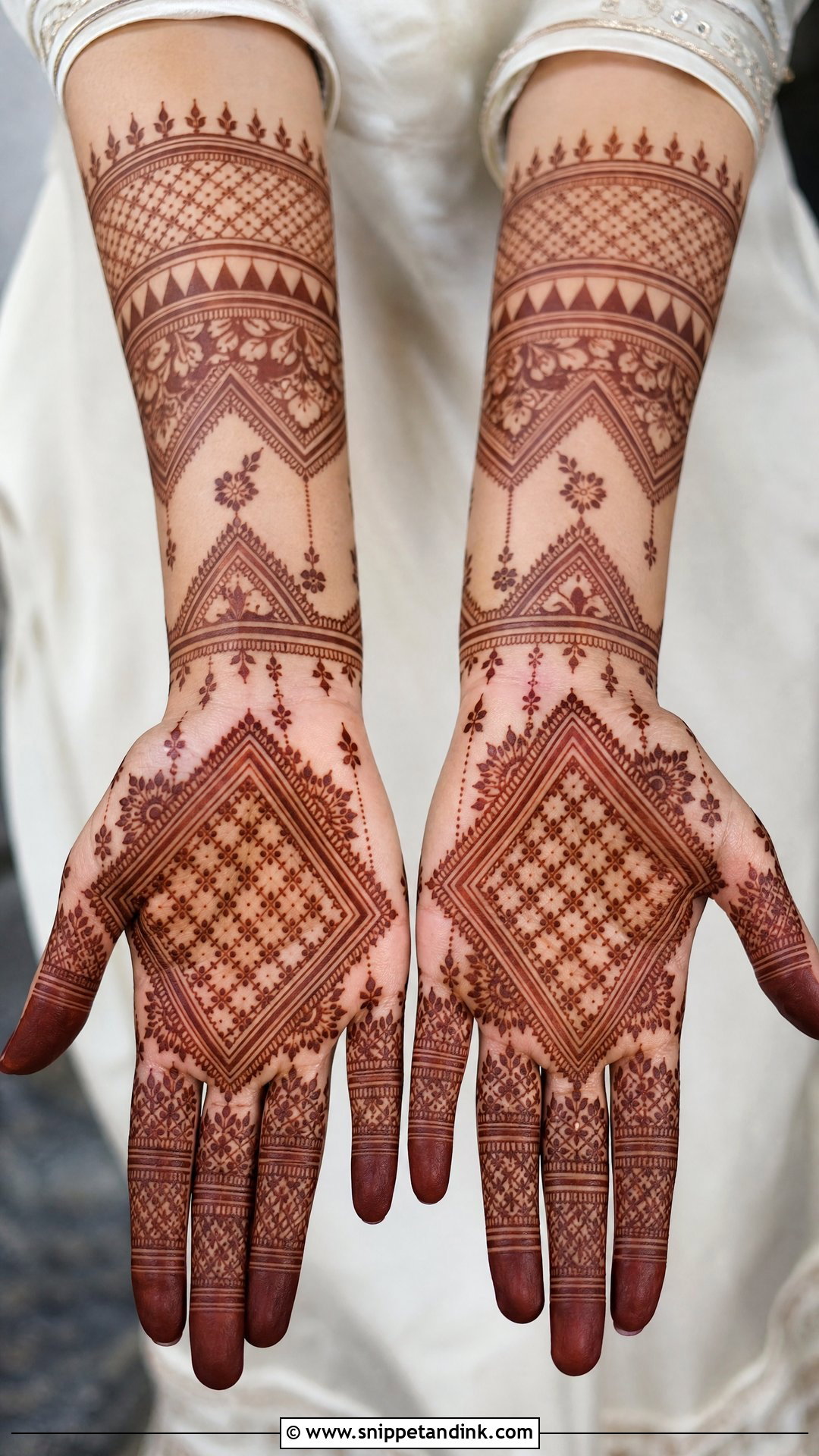
Moroccan-inspired work brings geometry onto the palm: diamonds, triangles, grid lines and structured bands alongside softer Arabic leaves. A central geometric panel is framed by leaves or floral borders, and cuff-like patterns continue on the wrist and forearm, with matching linework on the fingers. Straight lines are less forgiving than curves, and the palm isn’t flat, so I place the main grid where the hand is most even and let the curved parts absorb the creases. Crisp lines and even spacing keep it modern while still rooted in henna tradition.
14. Bridal Arabic Shaded Palm Mehndi Design
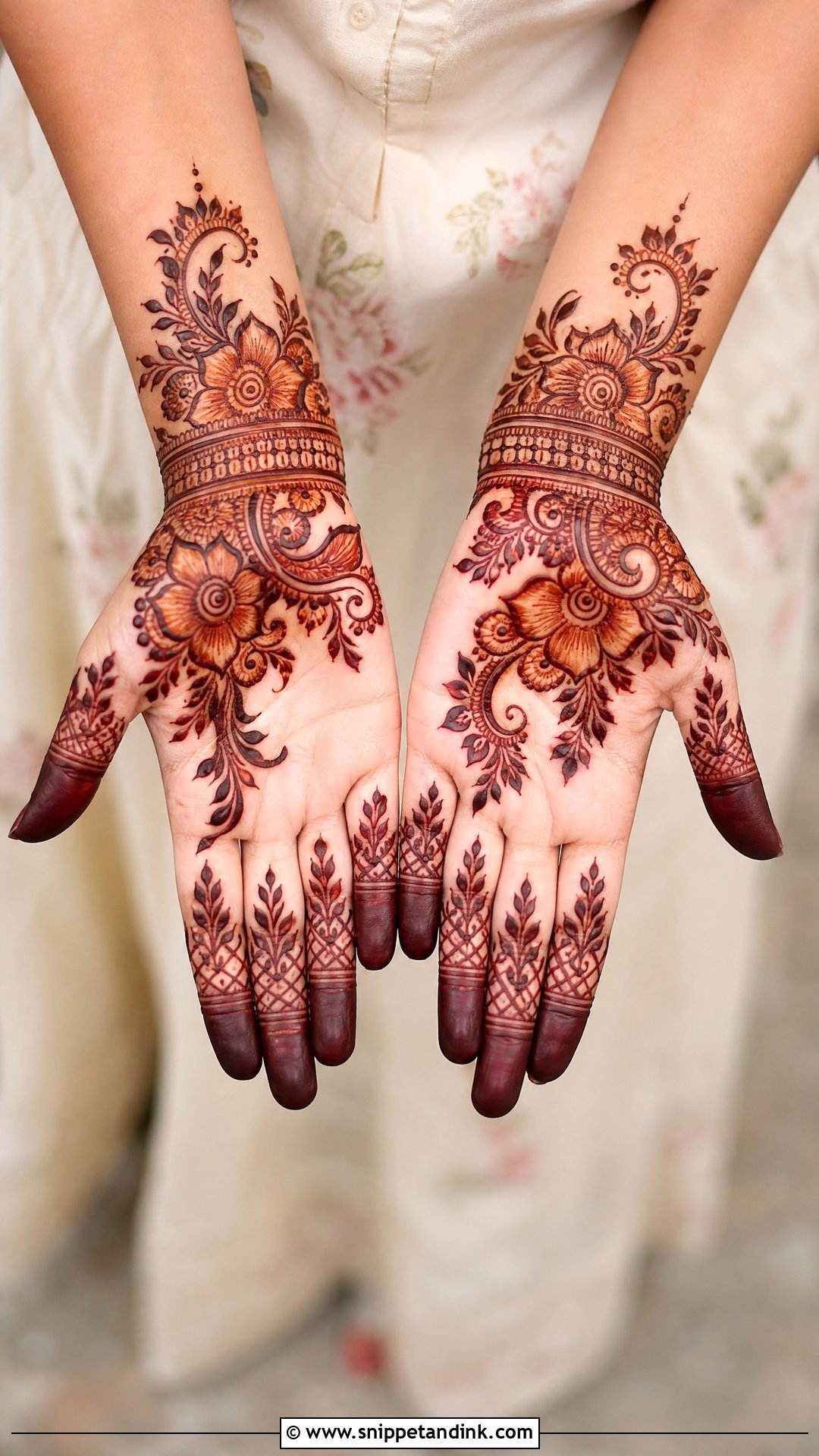
Shading gives the palm depth without filling it with tiny fillers. Large flowers, leaves and paisleys get gentle shading inside the petals and borders. The palm carries the heaviest shaded motifs, while lighter vines and bracelet bands continue up the wrist and forearm, and fingers mix filled tips with fine leaves. Shading is done with a thin, quick stroke or a light smear of paste; too thick, and it stains as solid as the outline. Once developed, the shaded areas settle into a softer reddish-brown next to the darker outlines, which is what makes it look three-dimensional.
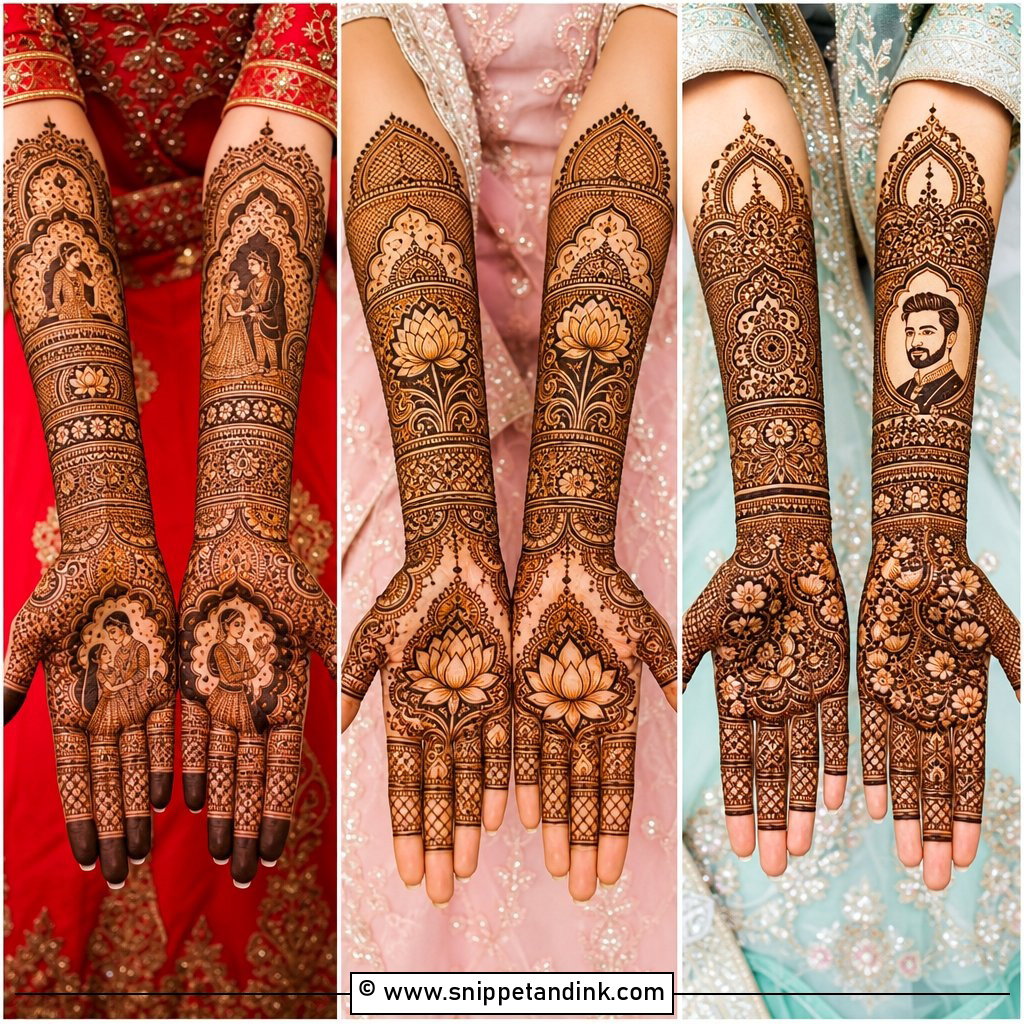
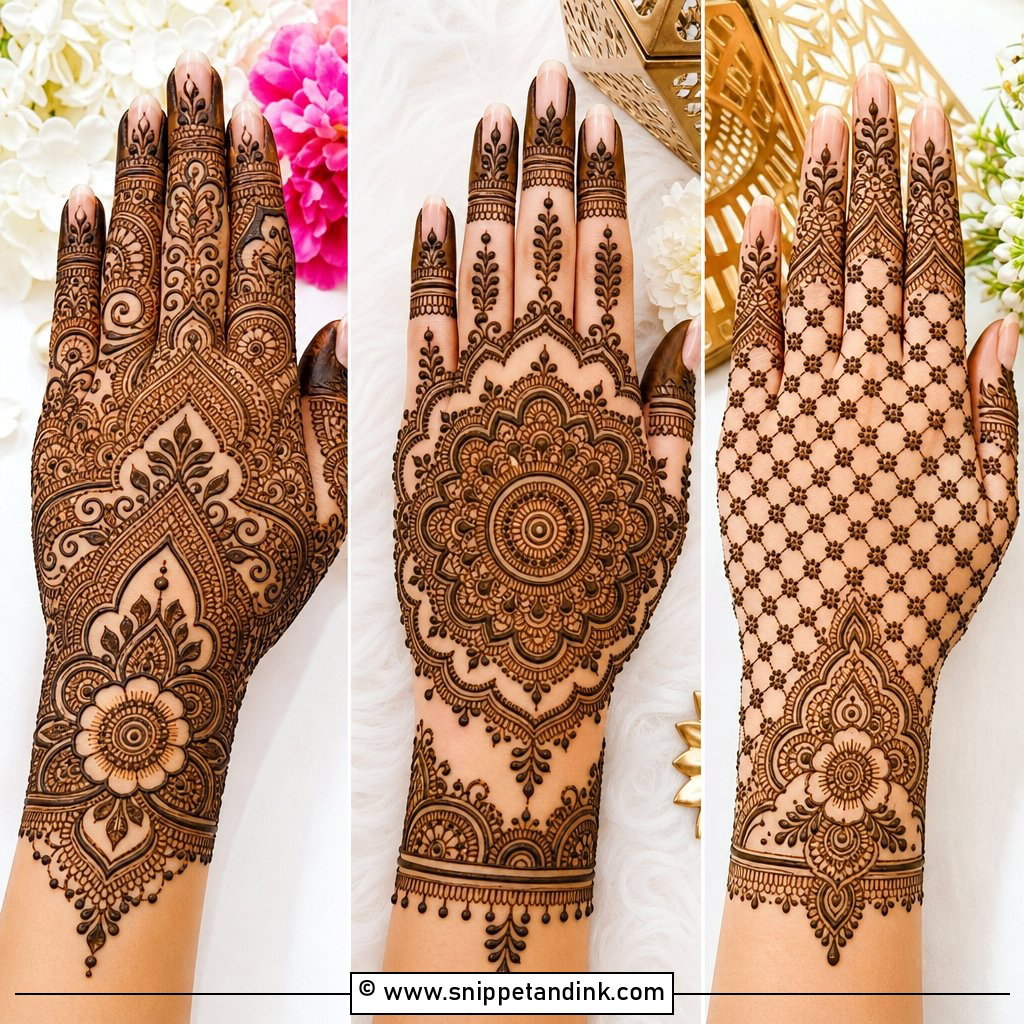
15. Bridal Arabic Lotus Palm Mehndi Design
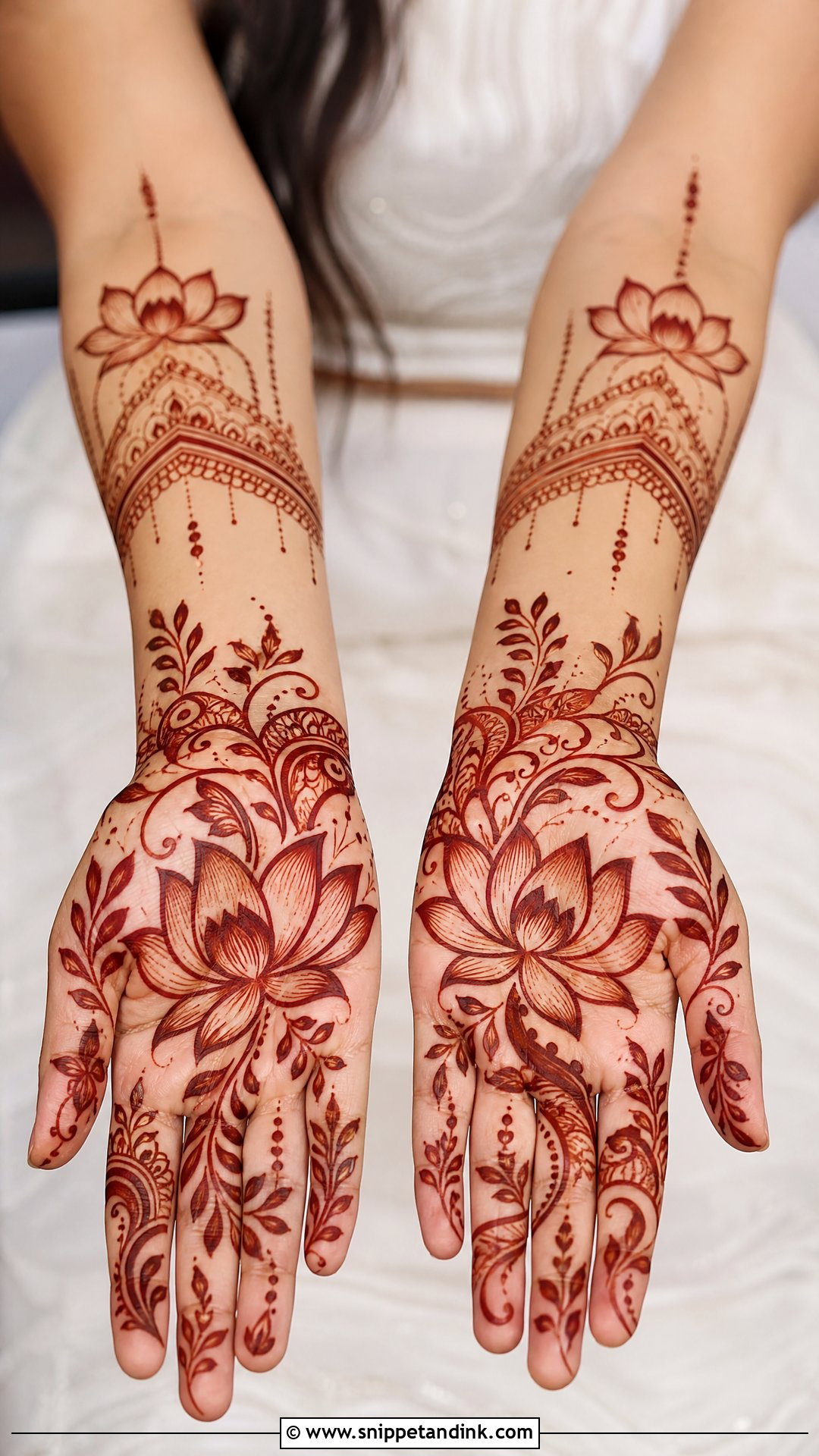
Lotus motifs feel calm compared with peacocks or heavy paisleys. A large lotus sits in the centre or along a diagonal trail, with leaves, dots and curved vines around it. The wrist can have lotus-inspired bands, and the forearm continues with open florals. Pastel lehengas, ivory outfits and temple jewellery suit it. I layer the petals clearly and outline them boldly, because when the stain deepens over the next day or two, soft outlines merge and the lotus loses its shape.
16. Bridal Arabic Lace Palm Mehndi Design
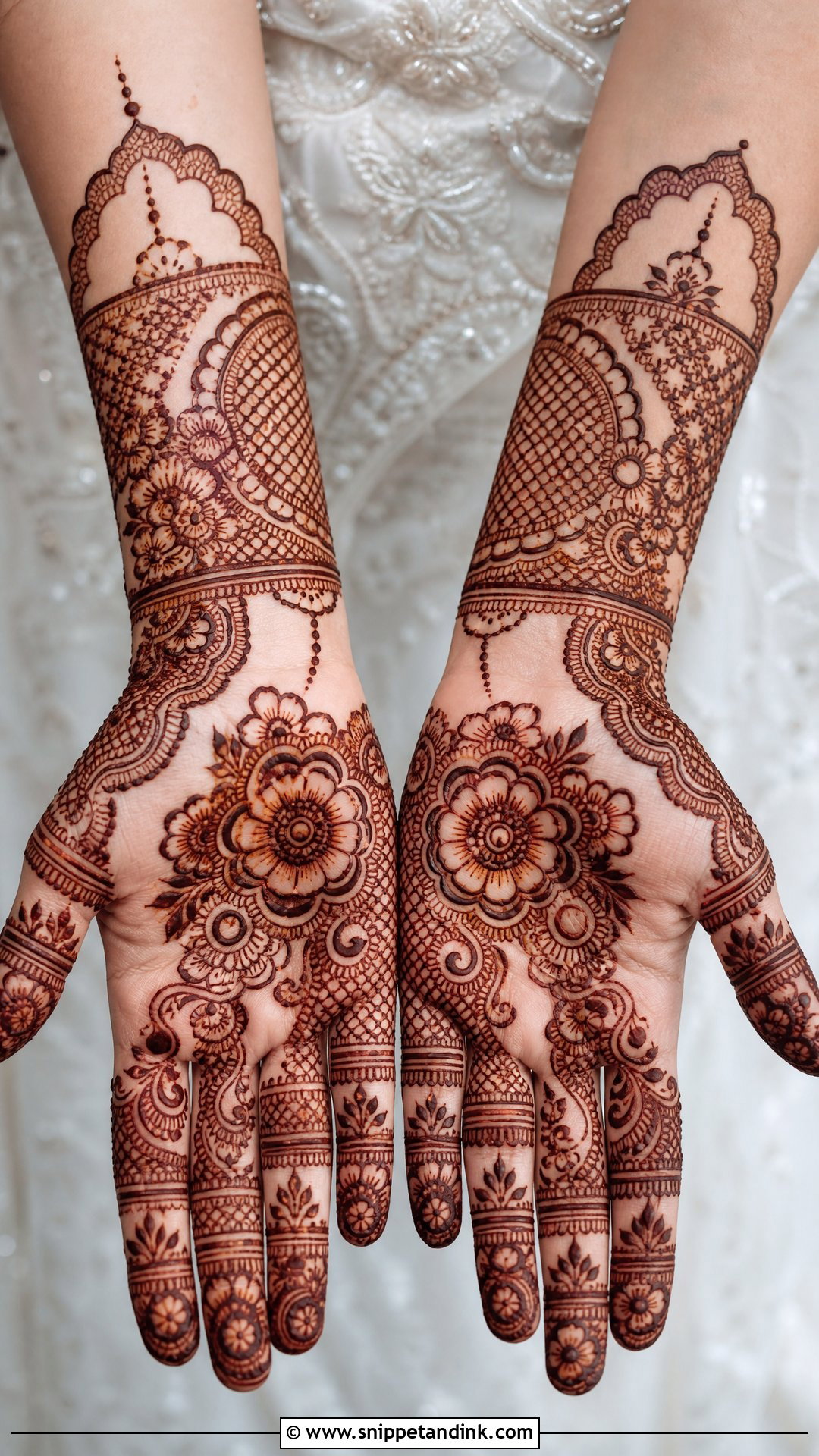
Lace-style work is fine and precise: floral lace panels, scalloped borders, mesh and tiny dot trails, running from palm to wrist like a henna glove and then lighter up the forearm. Fingers get lace bands, leaf tips and ring-like lines. It suits net sleeves, embroidered dupattas and pearls. This style needs a very fine cone tip and well-sifted paste, since any grit in the henna breaks a thin line. If your stain usually comes out light, I’d steer you toward something bolder, as delicate lace can fade to almost nothing on the forearm.
17. Bridal Arabic Symmetrical Palm Mehndi Design
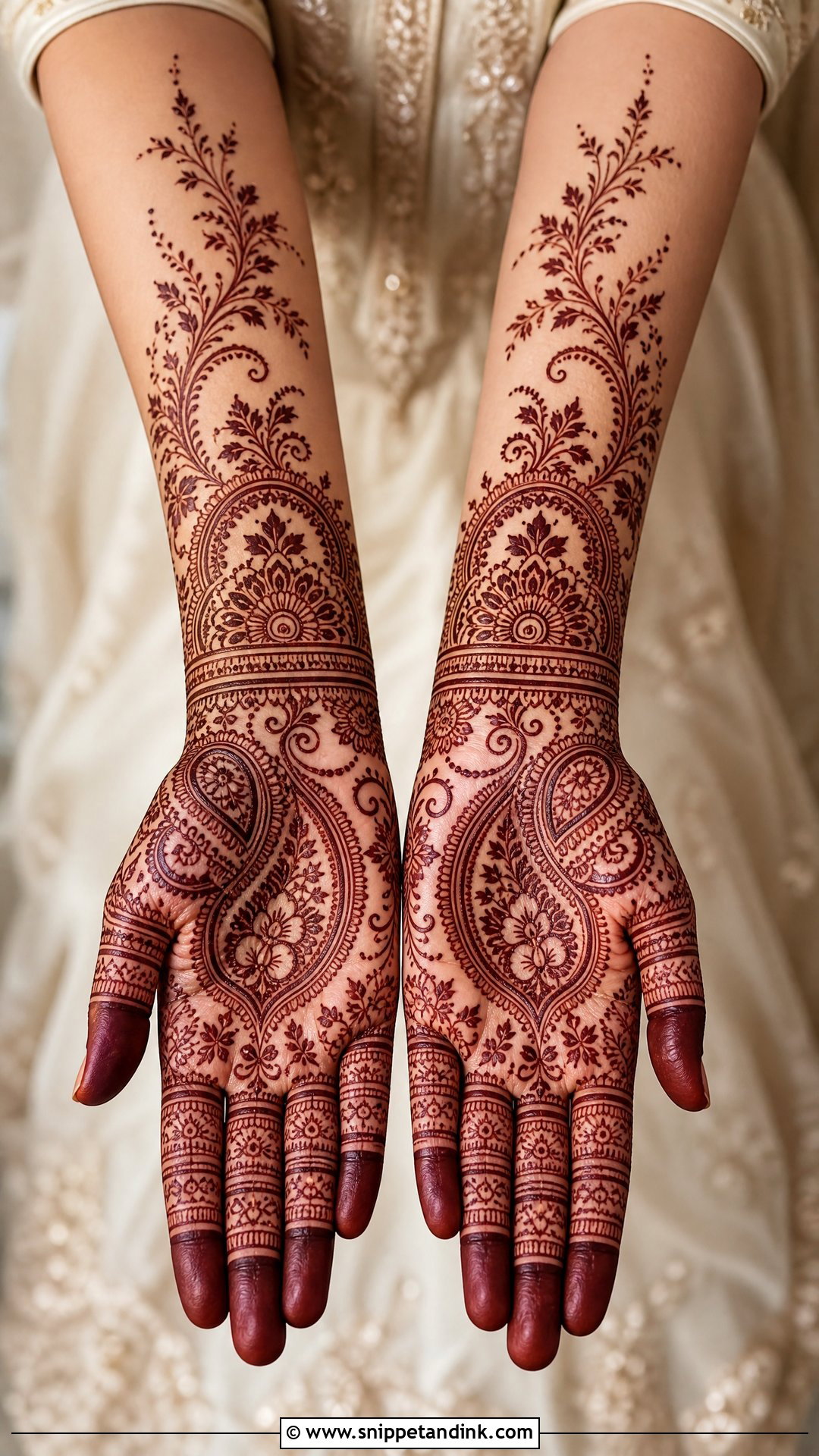
Symmetrical palm mehndi mirrors the two hands so they look coordinated when you hold them side by side. Matching flowers, paisleys or mandalas sit in the same position on each palm, with identical wrist bands and mirrored vines up the forearms. It’s the layout for traditional shots where the bride holds both hands together. I work both hands in alternation rather than finishing one and then the other, which keeps the sizes matched. Arabic curves and leafy movement inside the symmetry keep it from looking stiff.
18. Bridal Arabic Negative Space Palm Mehndi Design
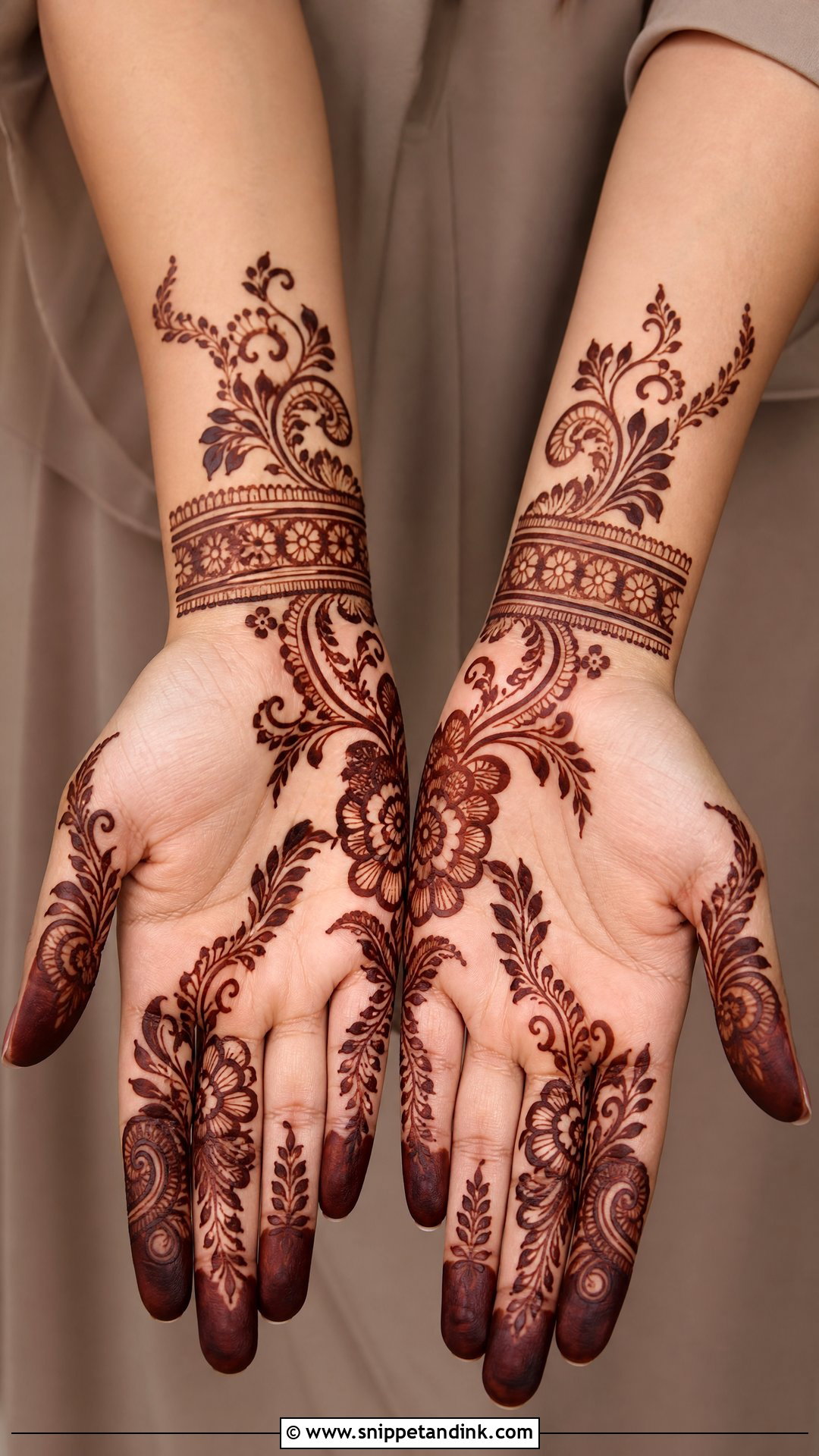
Negative space keeps Arabic work fresh and very legible in photos. Bold floral trails, paisley curves or leafy patterns sit on the palm with open skin left between them. Fingers can be more detailed to keep it bridal, and the wrist and forearm use spaced bands and flowing vines. Darker stains look especially good here because of the contrast. The gaps must be planned, though. Random gaps look unfinished; I decide where the bare skin goes before I put down the first line.
19. Bridal Arabic Royal Palm Mehndi Design
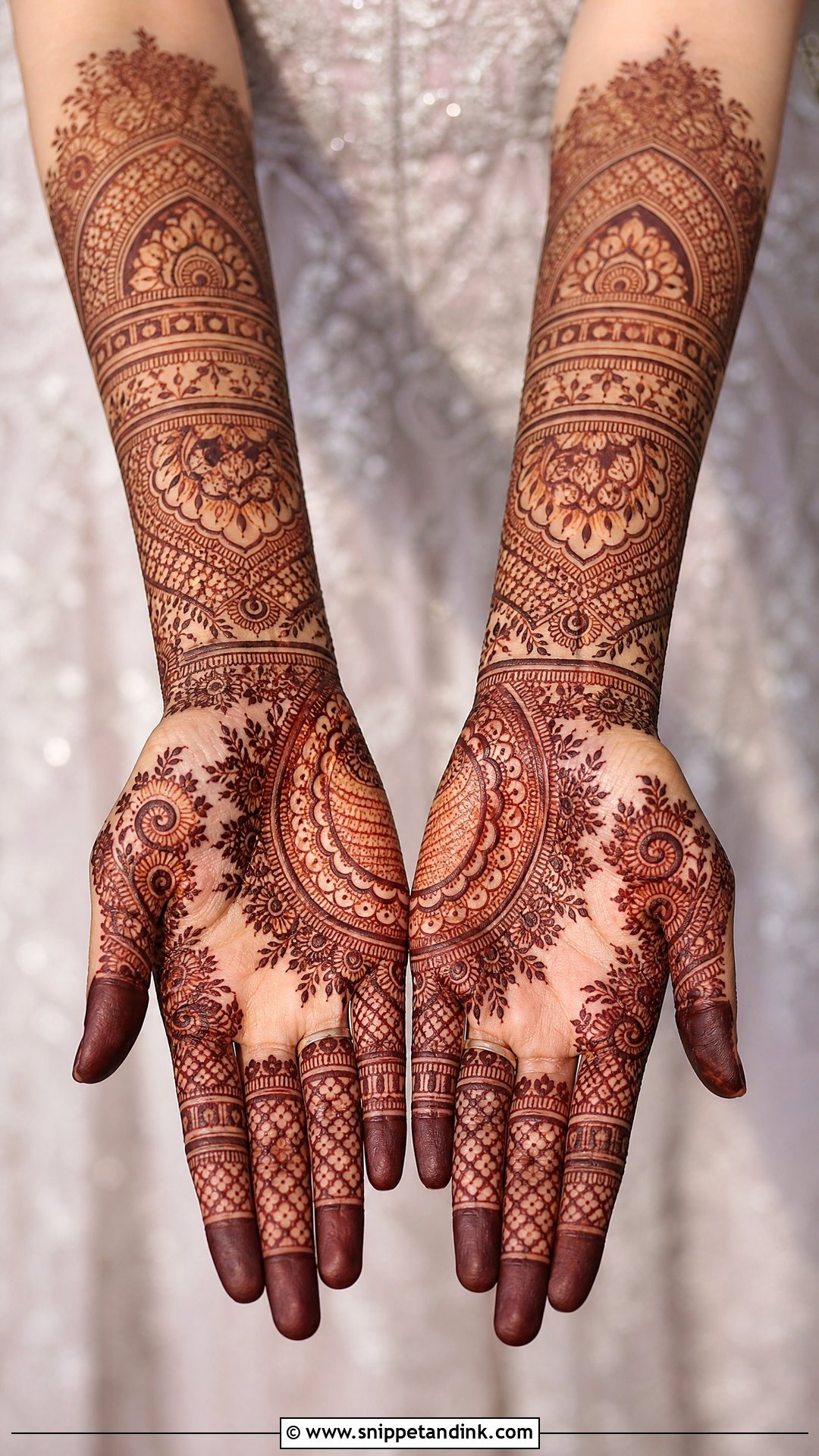
A royal Arabic palm is the fullest version here while still keeping movement. Large paisleys, floral clusters, small mandala accents and shaded leaves fill the palm; the wrist reads like a jewelled cuff; the forearm carries layered vines and ornamental panels. Curved placement and bold outlines are what stop it from feeling stiff. Heavy lehengas, rich silks and traditional jewellery suit it. Ask for clean finger detail and balanced wrist bands, because those are the first places people’s eyes go when your hands are in your lap.




20. Bridal Arabic Modern Palm Mehndi Design
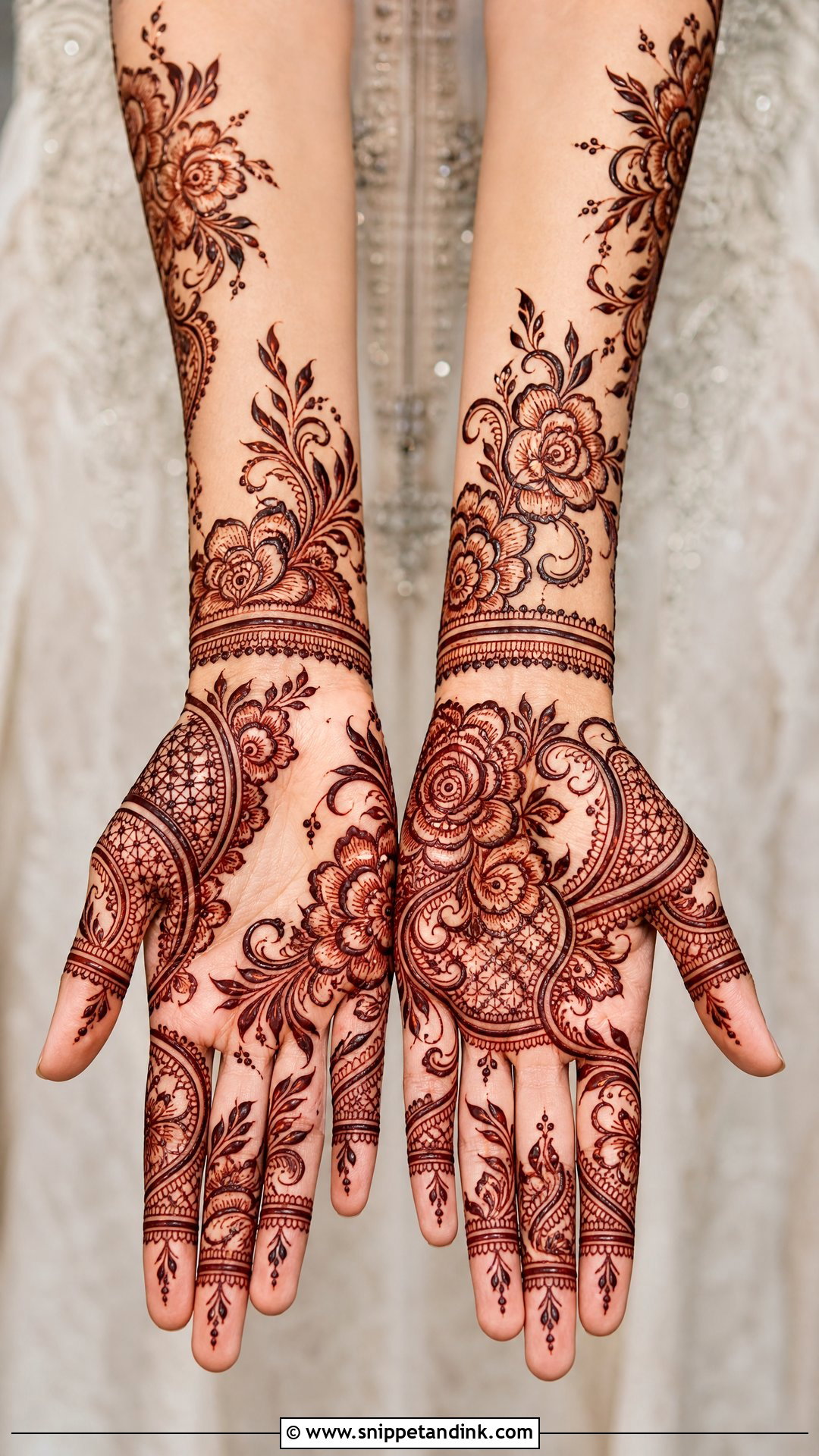
A modern Arabic palm mixes florals, clean curves, slim jaali sections and open space. The wrist has bracelet bands, while the forearm stays lighter with flowing vines. Fingers carry ring patterns, leafy lines and neat tip coverage. It suits contemporary and fusion weddings and simpler jewellery. It’s also one of the quicker full-hand designs to apply, which helps if your mehndi night is busy with guests waiting their turn. I’d keep this for brides who are happy with a lighter look rather than ones secretly hoping for a heavy hand.
Why It Looks Orange the First Morning, and How to Darken It
When the paste comes off, the stain is bright orange. That’s normal. Henna keeps oxidising for a day or two, and the colour deepens to red, brown or maroon over roughly forty-eight hours. That’s why I suggest applying it one or two days before the wedding, not on the morning.
- Keep the paste on for at least six hours, ideally overnight. I seal it with a light lemon and sugar dab so it stays moist and stuck to the skin.
- Scrape the dried paste off with a blunt edge or rub it off with a little oil. Don’t wash it off with water.
- Avoid water on your hands for the first twelve to twenty-four hours where you can.
- Keep your hands warm. Warmth helps the stain develop; cold air conditioning slows it.
- Skip scrubs, bleach-based cleaners and hand sanitiser on the stain during the wedding days.
Palms and fingertips always stain darker than the back of the hand or the forearm, because the skin there is thicker. If the forearm comes up lighter than the palm, that isn’t a fault in the paste, it’s just how skin takes henna.
Matching the Henna to the Bangles and the Outfit
Arabic full-hand designs give a bride a great deal of range, from heavy and traditional to light and geometric. The ones that look best in photos nearly always balance filled areas with bare skin, so the pattern stays readable as it darkens. Pick the motif that suits your outfit and jewellery, and let your artist adjust the density to how dark your skin usually takes henna. Start with clean, lotion-free hands and leave the paste on as long as you can. Roses, paisleys, mandalas, jaali or royal vines, any of these Palm Mehndi Designs can give you a wedding stain you’ll love seeing in the photos.
You'll Like These Ideas:









Leave a Reply