
At every Eid or Diwali counter I work, there’s a point in the evening when the children take over the queue, and the request I hear most from them is a panda. It’s a fun motif to draw, but it’s tricky too, because a panda is a black-and-white animal and traditional henna gives you only one color. Done well, it reads as a panda from across the room; done carelessly, it becomes a brown blob by the next day. Below are thirty panda layouts I’ve drawn for birthdays, baby showers, school events and festivals, with notes on which ones suit wriggly kids, which suit teens and adults, and how to keep the face clear once the stain darkens.
Drawing a Black-and-White Animal With Brown Paste
A panda is recognized by contrast: dark ears, dark eye patches, a white face. Henna can only give you one tone, so I reverse the thinking. The dark parts are solid fills of paste, and the white parts are bare skin. Everything else is outline.
- Draw the face outline first, then the ears, and fill the ears solidly.
- Fill the eye patches, leaving a small bare dot inside each one for the eye shine. Without it, the face looks blank.
- Add the nose as a small solid triangle or oval and keep the mouth to one thin line.
- Leave the muzzle and cheeks completely clear; detail there muddies the face.
Solid fills dry more slowly and crack as they dry, so I apply them a little thicker and dab on a sugar and lemon mix once they start drying to keep the paste in contact with the skin. Make the face at least the size of a large coin. Below that, the eye patches and ears merge as the stain darkens, and the panda turns into a smudge.
1. Panda Mehndi Design For Kids
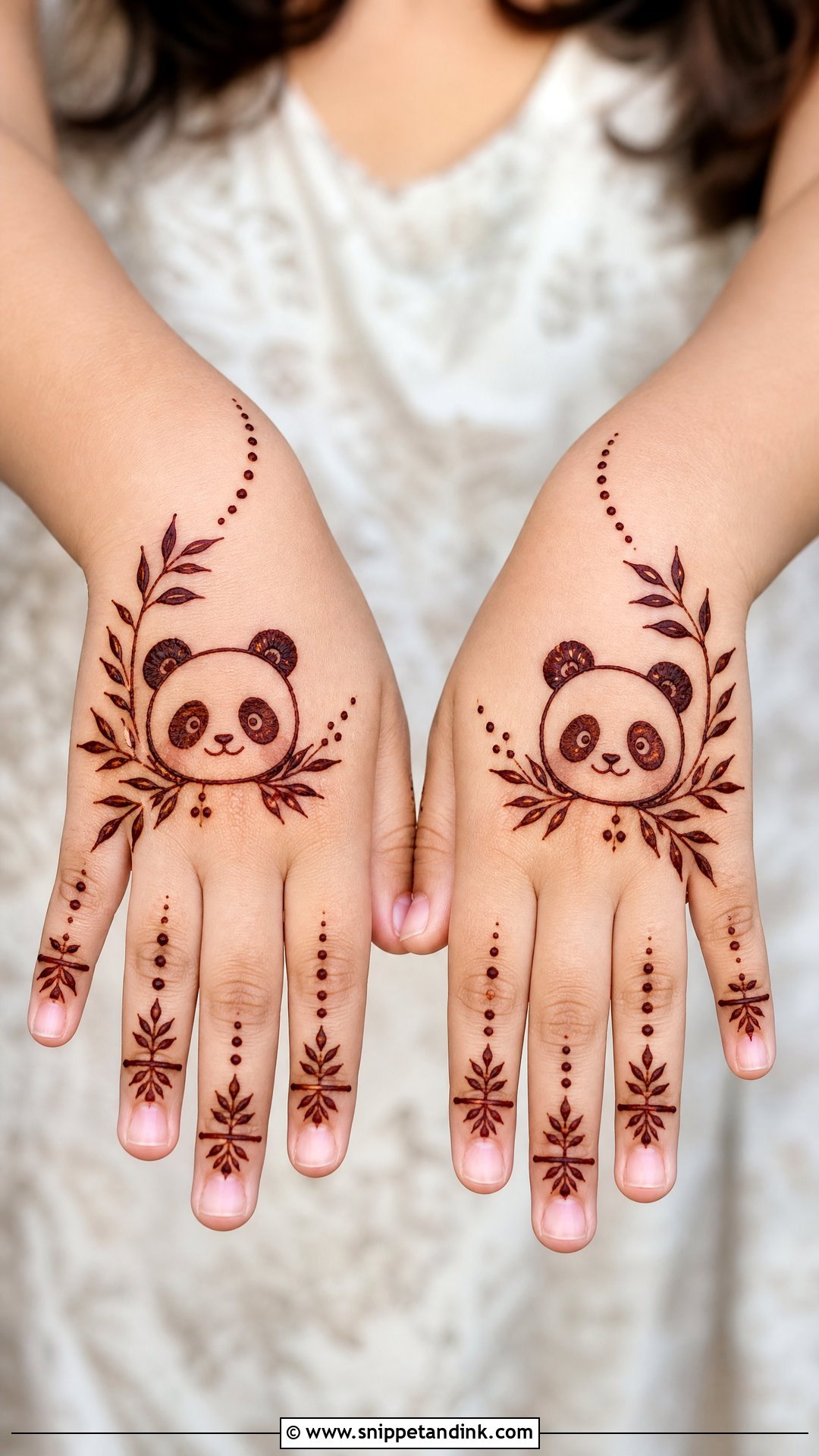
For small children, speed is everything. I draw a rounded face on the back of the hand with tiny ears, two eye patches and a little smile, then keep the fingers to dots or short curved lines. The whole thing takes a few minutes, which is about as long as most young kids will sit. A short bamboo stem near the wrist rounds it off. Use natural henna only on children, never black or instant cones. The stain will be orange at first and turn a warm brown, which suits a cartoon face.
2. Simple Panda Mehndi Design
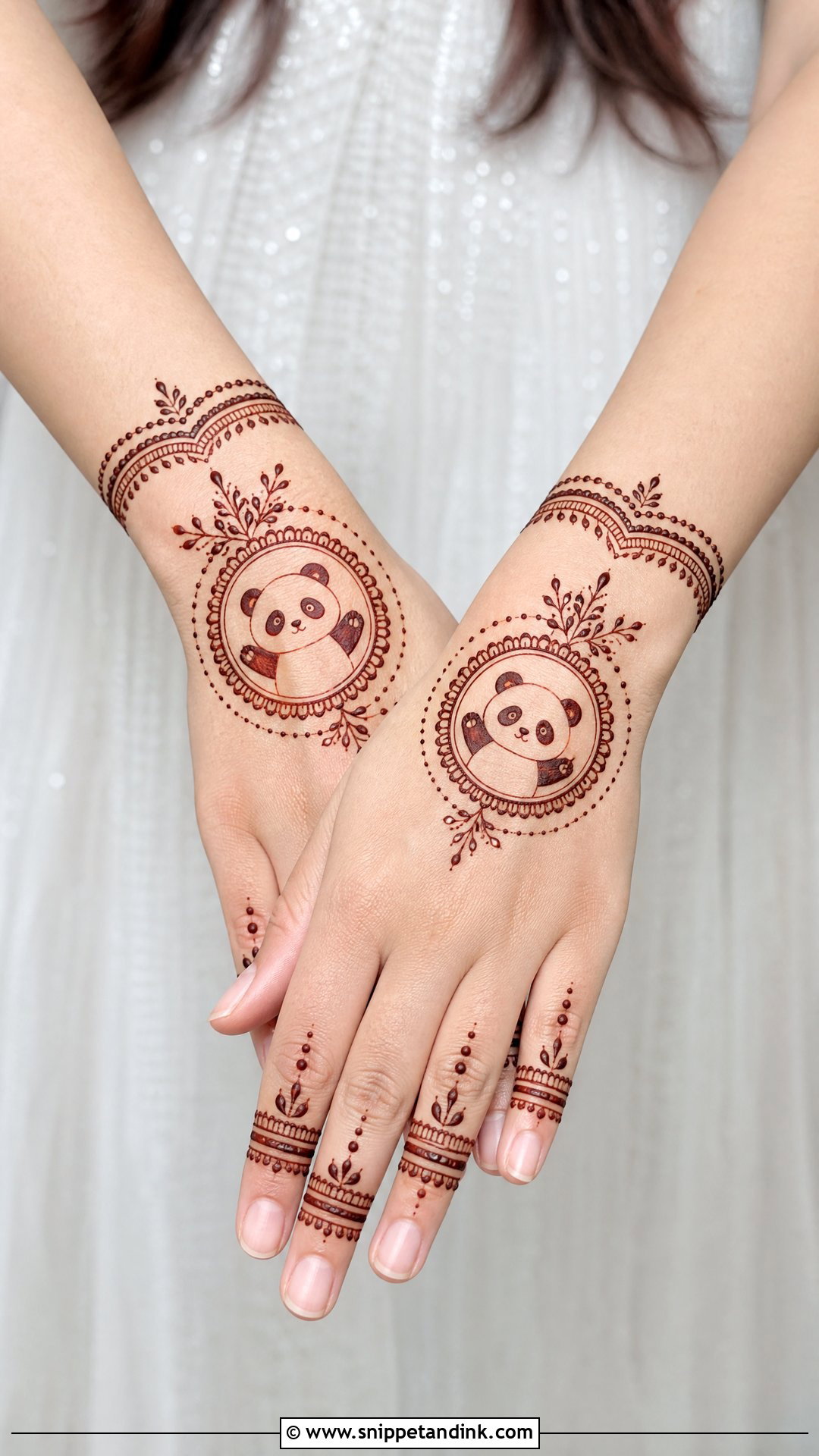
If you’re new to drawing with a cone, start here. A panda face is only circles and curves: one big circle, two small ones for ears, two ovals for the eye patches. I put it in the center of the palm or back of the hand and frame it with a thin ring, dots and small leaves. Fingers stay mostly bare, with fingertip caps or dotted rings. The thing that ruins simple designs is uneven line thickness, so keep the cone pressure steady and leave plenty of bare skin around the face.
3. Cute Panda Mehndi Design
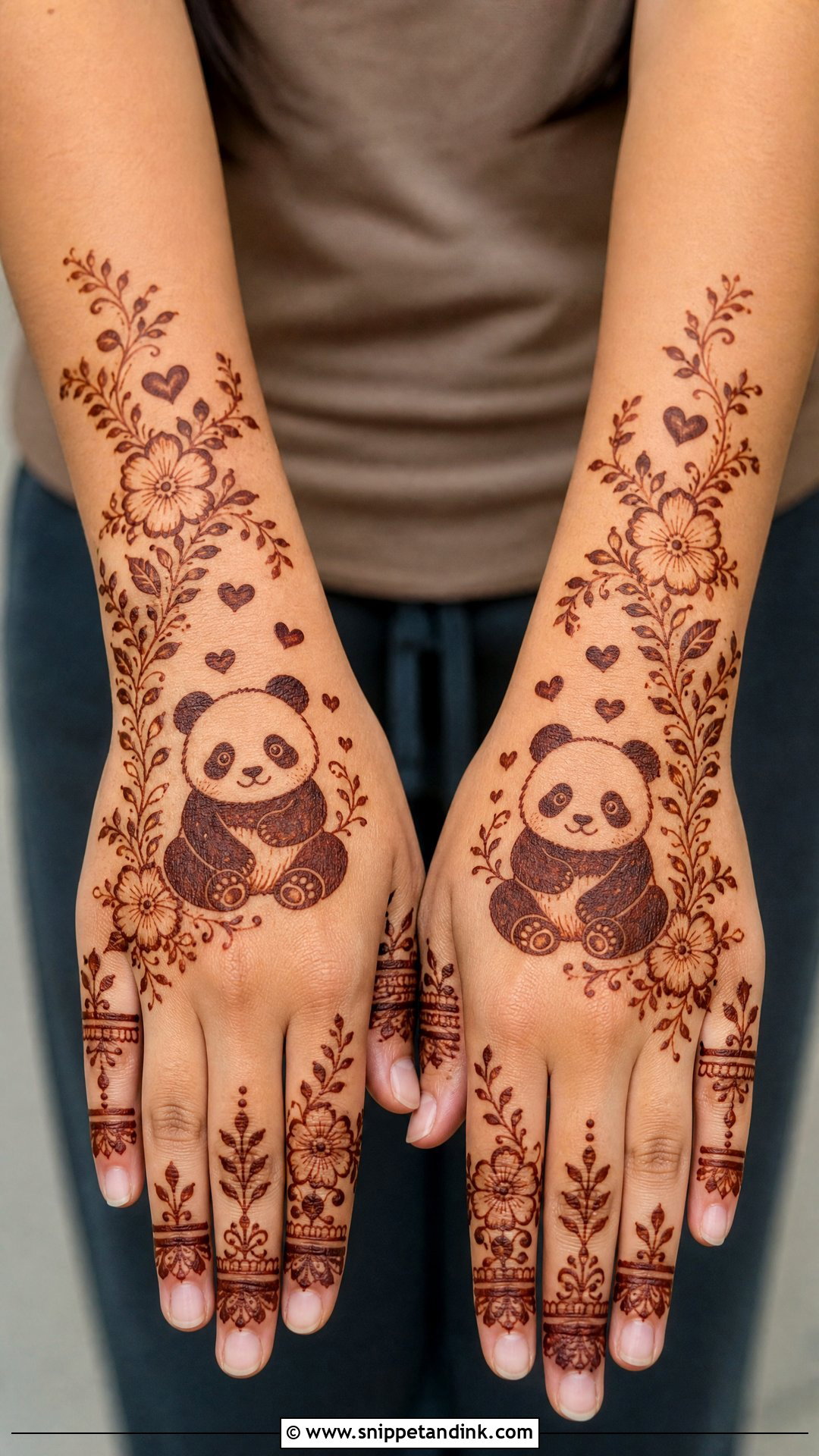
What makes a panda look cute rather than spooky? The eye patches. Tilt them slightly downward toward the nose and the expression goes soft; draw them straight and the panda looks cross. I place a sitting panda in the middle of the back of the hand, add small hearts around it and run floral vines toward the wrist. Hearts and dots on the fingers match. For shading on the body, I use thin parallel lines instead of solid fill, which keeps the stain from going muddy. Teens like this version because it doesn’t look babyish.
4. Panda Face Mehndi Design
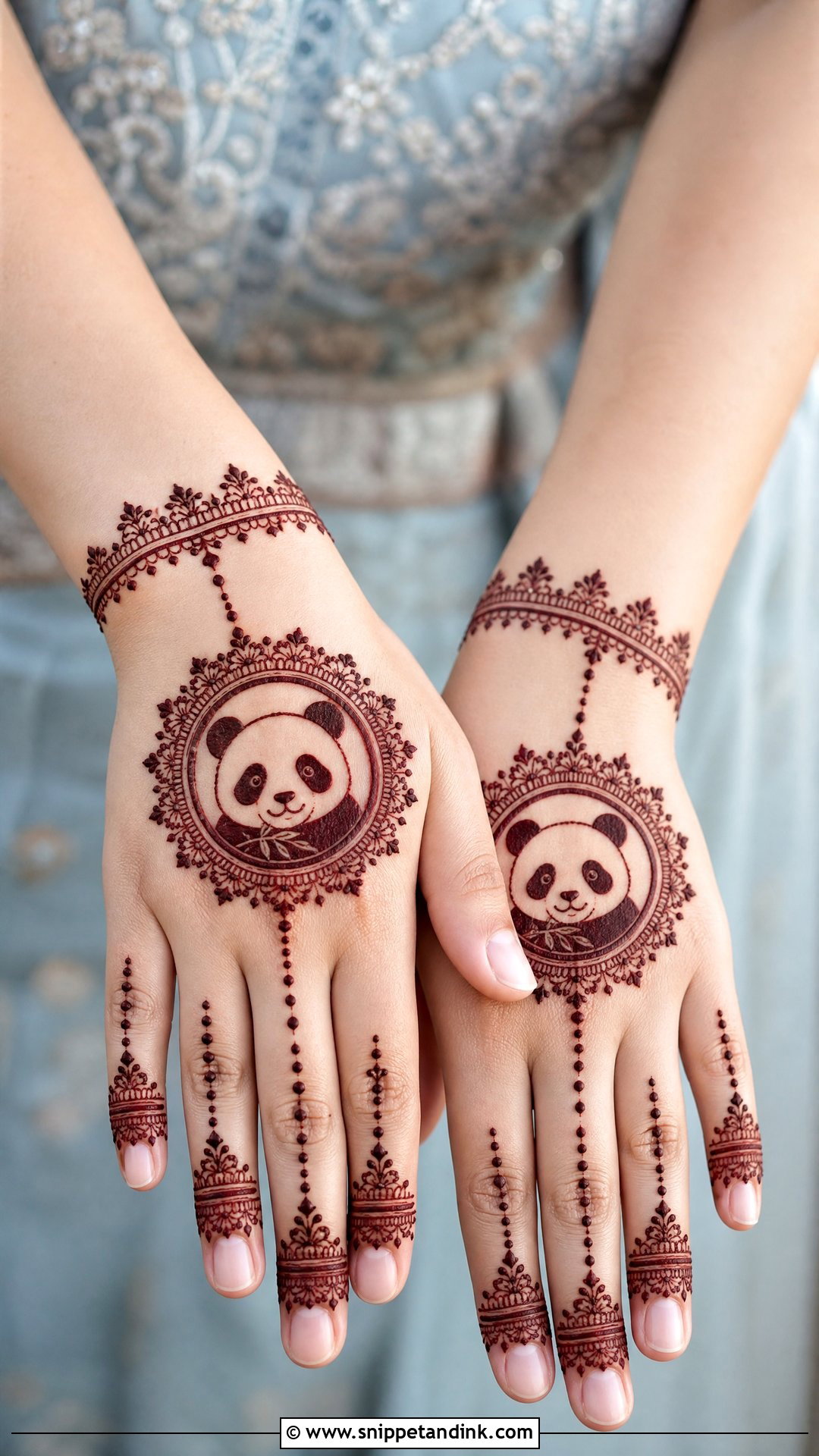
One bold motif, one frame. I draw the face on the back of the hand and set it inside a mandala ring, letting the ears just touch the edge of the circle so they look attached rather than floating. Eyes, nose and mouth stay simple. A narrow bracelet at the wrist and tiny dot chains on the fingers finish it. It’s my standard quick design at a kids’ counter: low coverage, very recognizable, and done before the next child has finished choosing.
5. Baby Panda Mehndi Design
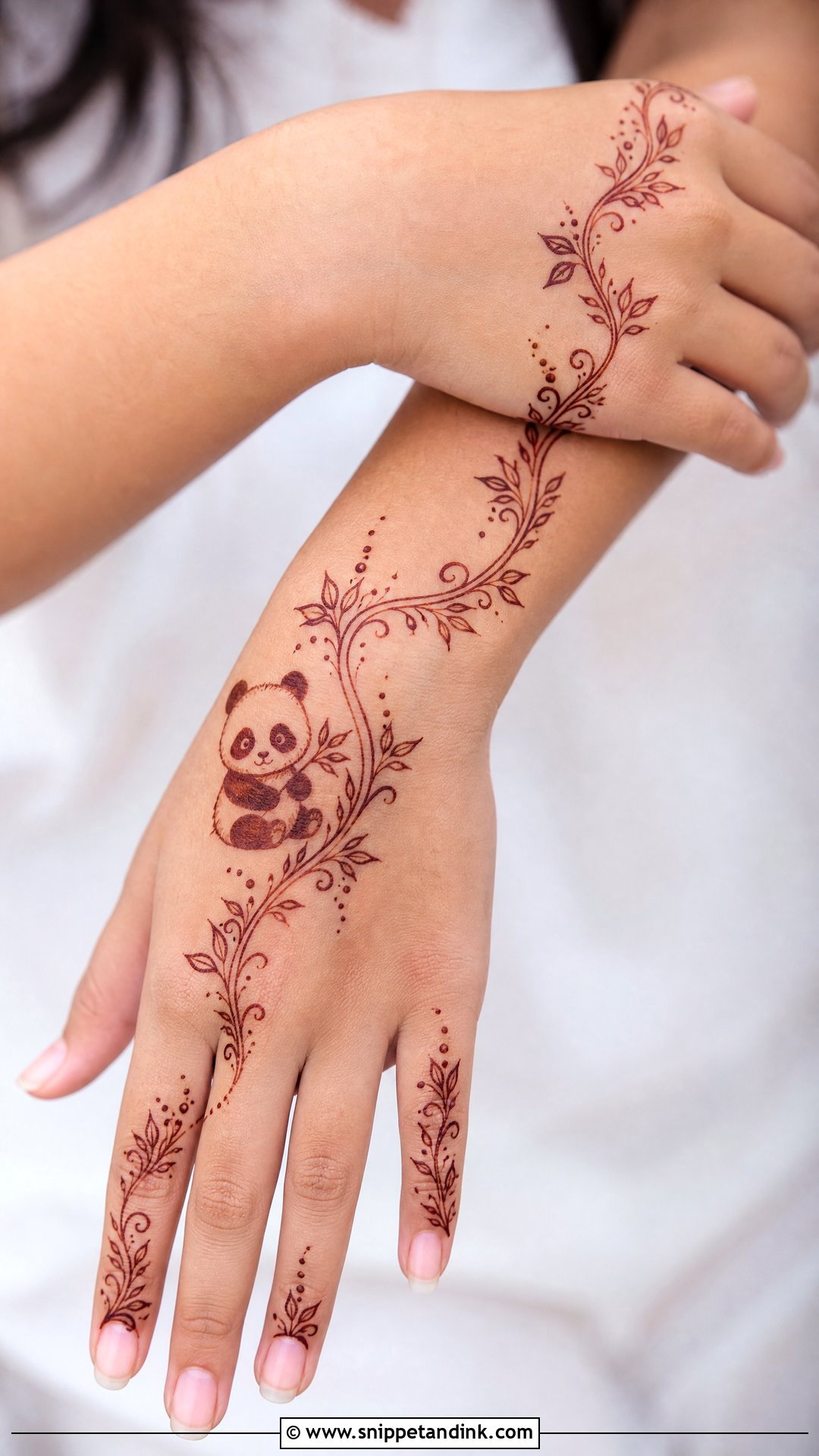
A baby panda is drawn smaller and rounder, with a bigger head relative to the body, which is what makes it read as young. I sit it near the wrist with a few bamboo leaves behind, then run a curved vine up to the index finger and finish the other fingers with dots and leaf caps. Thin outlines keep it soft. Baby shower guests love it, and it suits younger children because it is quick. Keep the body outline closed; gaps in a small figure make it look unfinished.
6. Panda Cartoon Mehndi Design
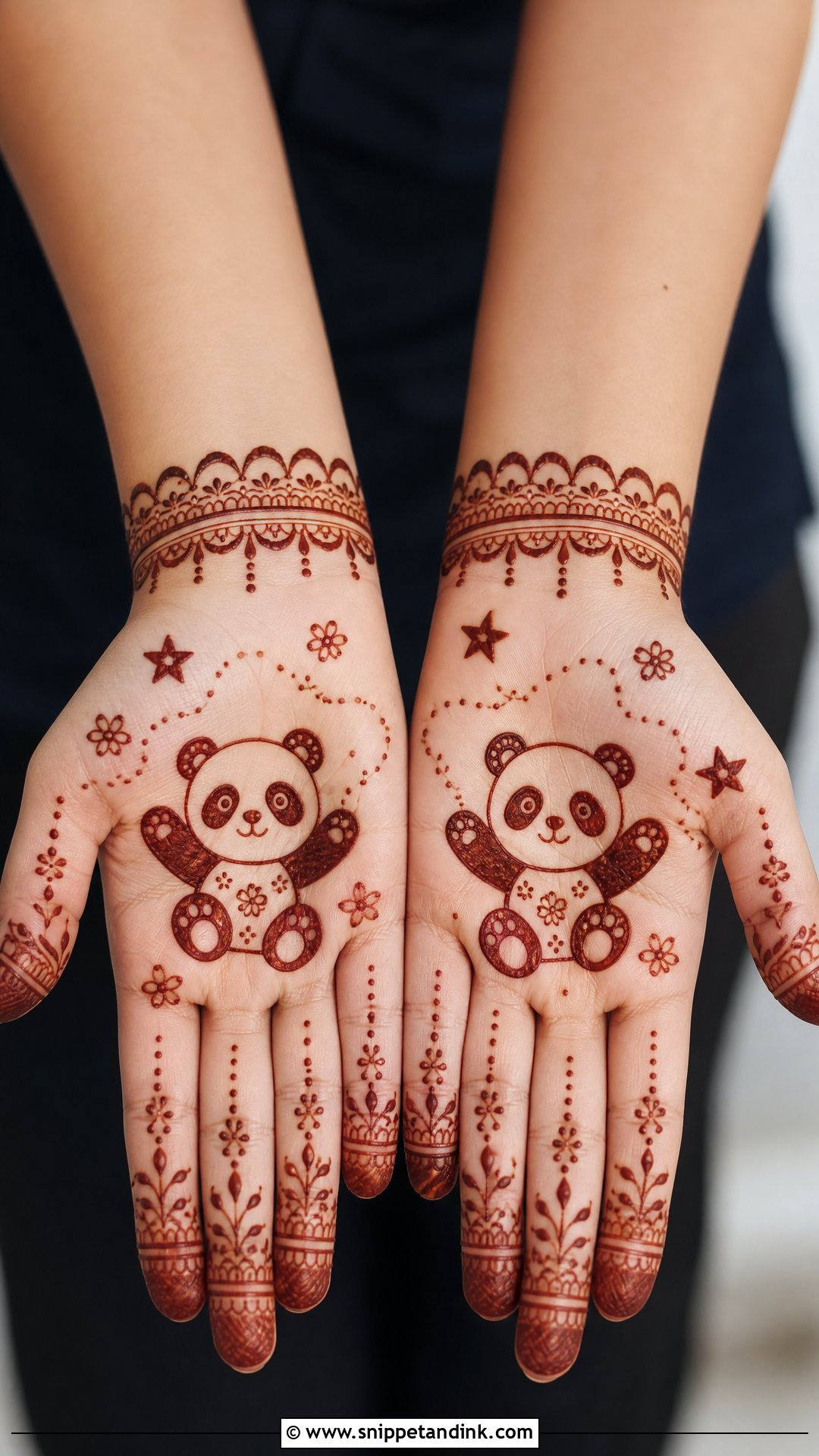
Cartoon pandas need room. I place a cheerful one with open arms in the center of the palm and keep the decoration around it loose: stars, small flowers and curved dotted trails. A scalloped border sits at the wrist, and each finger gets something different, such as leaves, dots or tiny paw prints. Packing the space tightly kills the expression, so I leave at least a finger’s width of bare skin around the figure. It suits themed parties and kids who find florals boring.
7. Panda Back Hand Mehndi Design
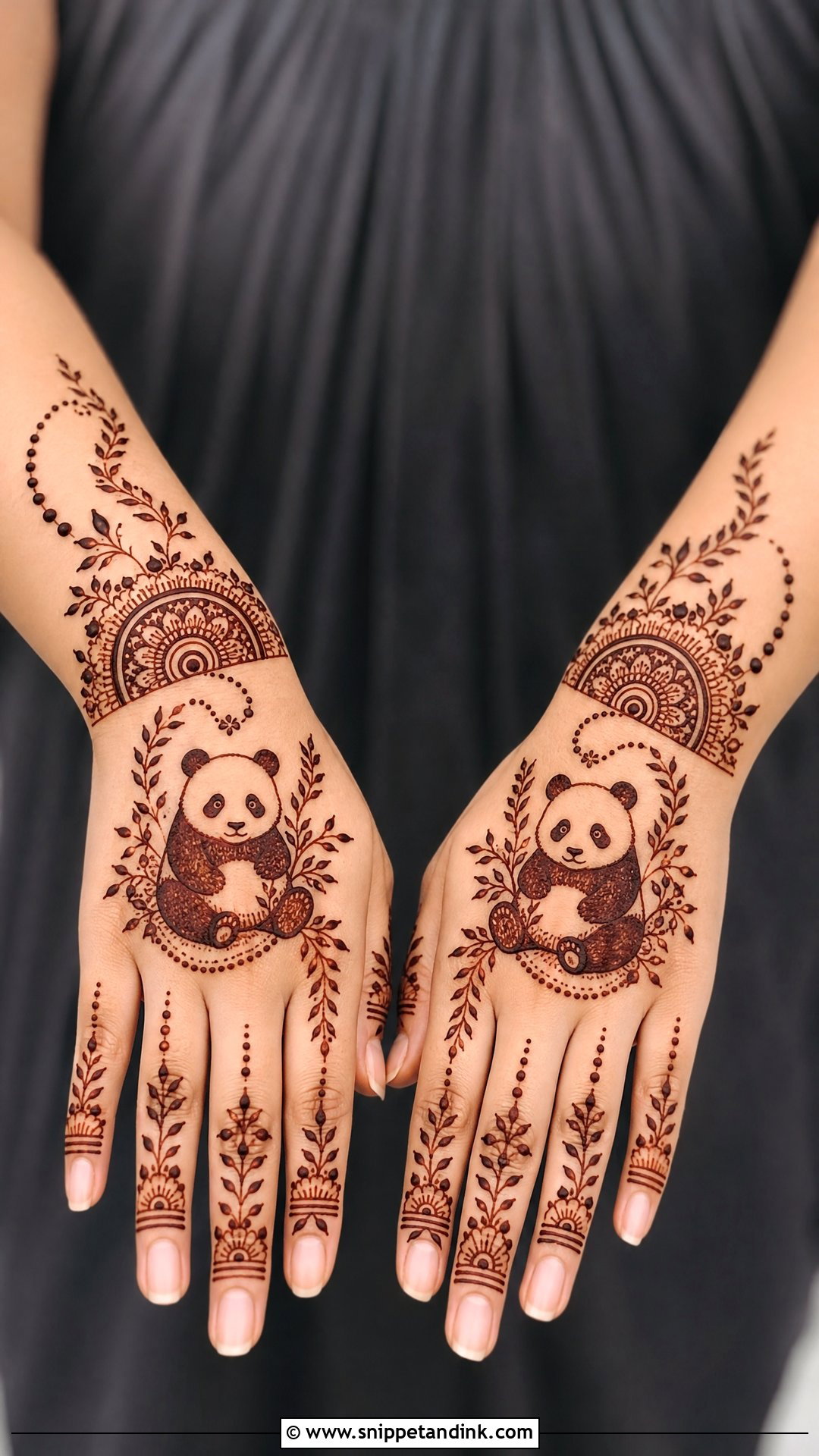
Ask which panda placement is most requested, and the answer is the back of the hand. Panda back hand mehndi design is visible all day and doesn’t get rubbed off by eating or washing the way palm henna does at the start. I sit the panda in the middle, put a half-mandala and floral vines around it, add a small bracelet band at the wrist and decorate the fingers with leafy trails and dots. The back of the hand stains lighter than the palm, so I make the panda outline bolder there than I would on a palm.
8. Panda Palm Mehndi Design
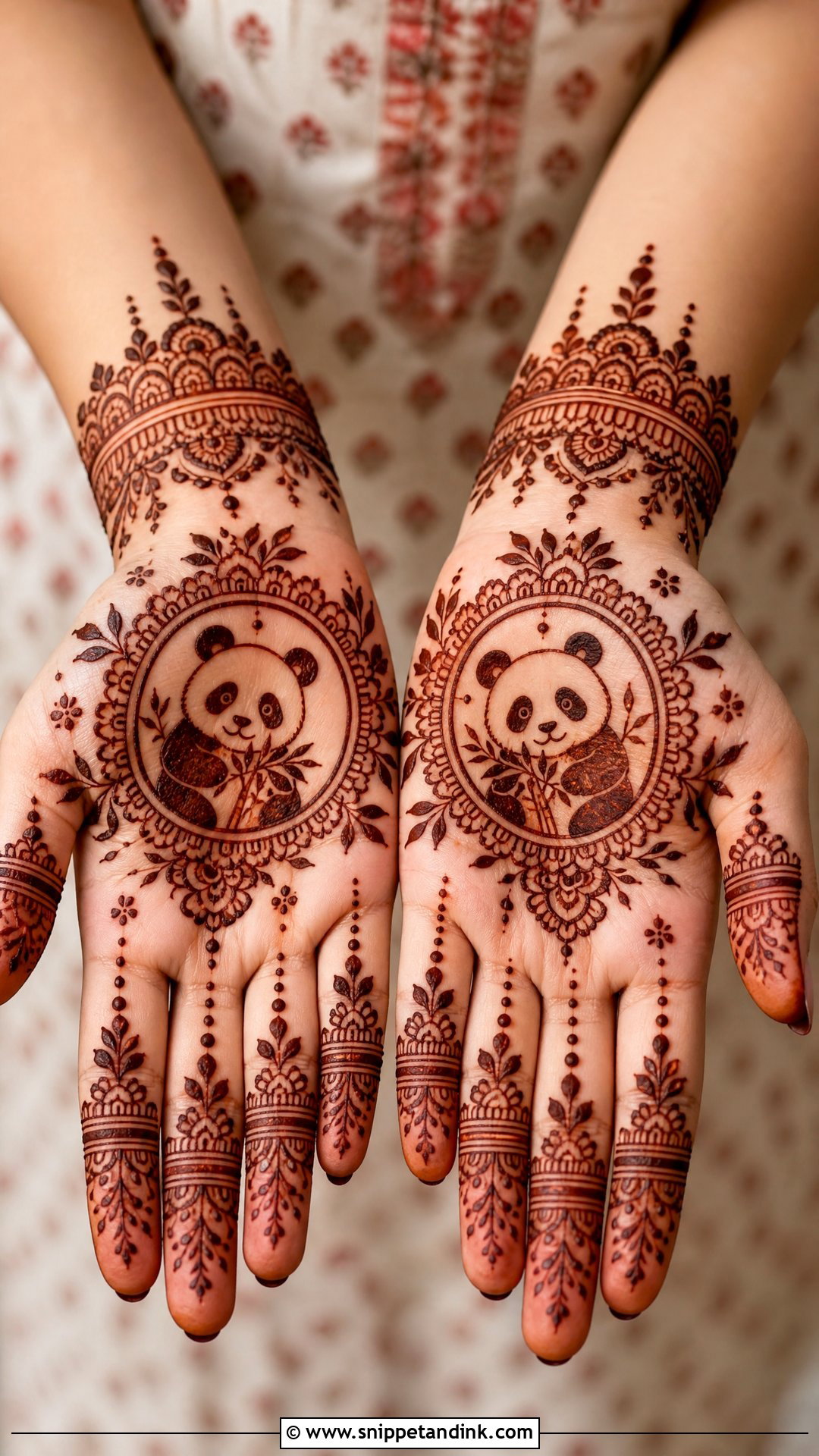
On the palm, the panda appears when the hand opens, which children find delightful. A round face in the center sits inside a mandala border with tiny bamboo leaves and dot clusters around the edge. Fingers get vertical vines, and the thumb a small paw print or heart. Palms stain the darkest of anywhere on the hand, so fine detail inside the face can fill in. I leave the eye shines and the muzzle area as clear bare skin to keep the face bright.
9. Panda Finger Mehndi Design
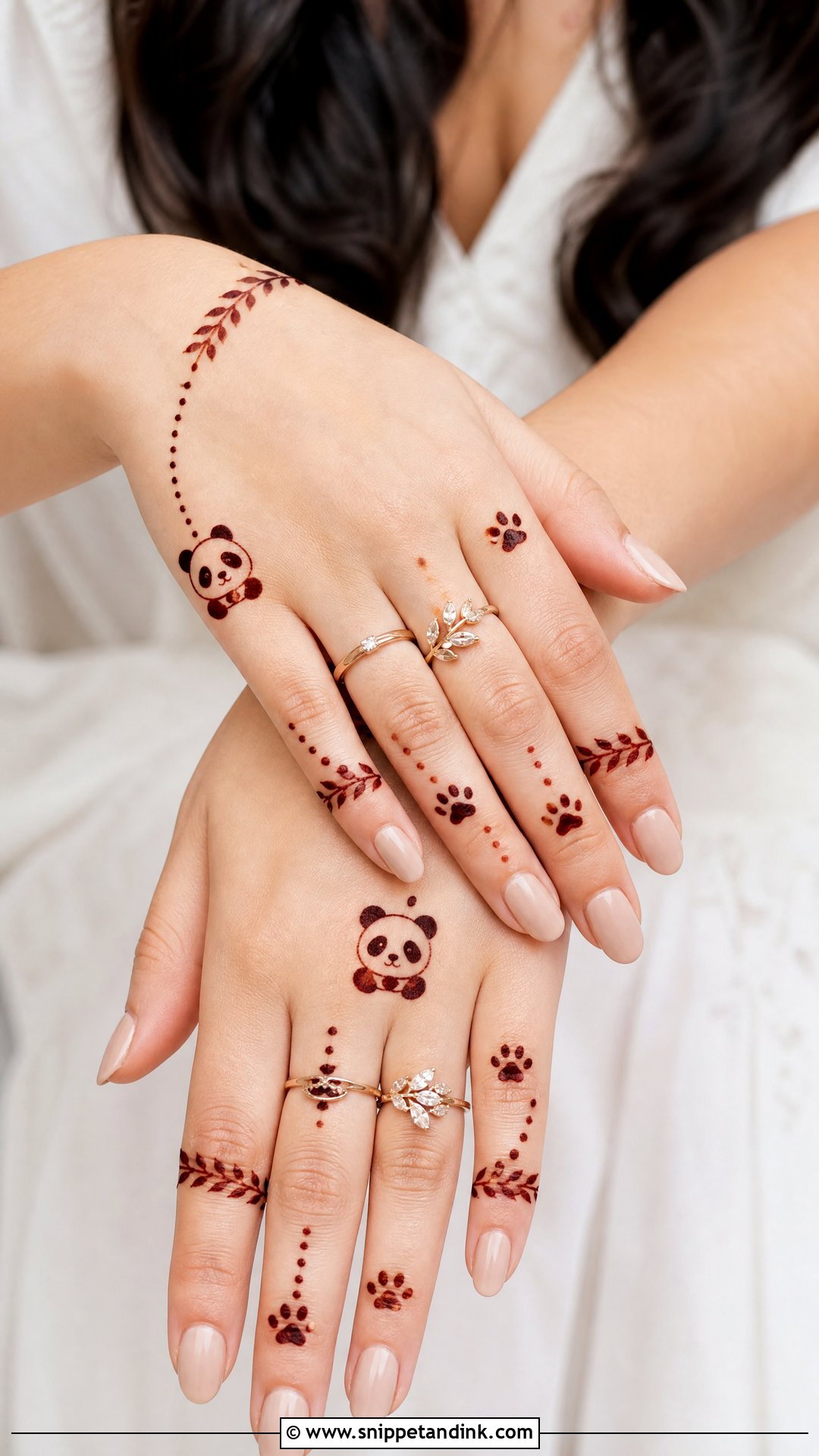
A finger-only panda is a good choice for school days or anyone who wants something very small. I put a little face near the base of the index or middle finger and link it to rings, dots and leafy bands across the other fingers. A slim wrist bracelet and a couple of paw prints on the back of the hand tie it together. Small doesn’t mean thin: the panda itself must be bold, or it disappears among the finger patterns.
10. Panda Bracelet Mehndi Design
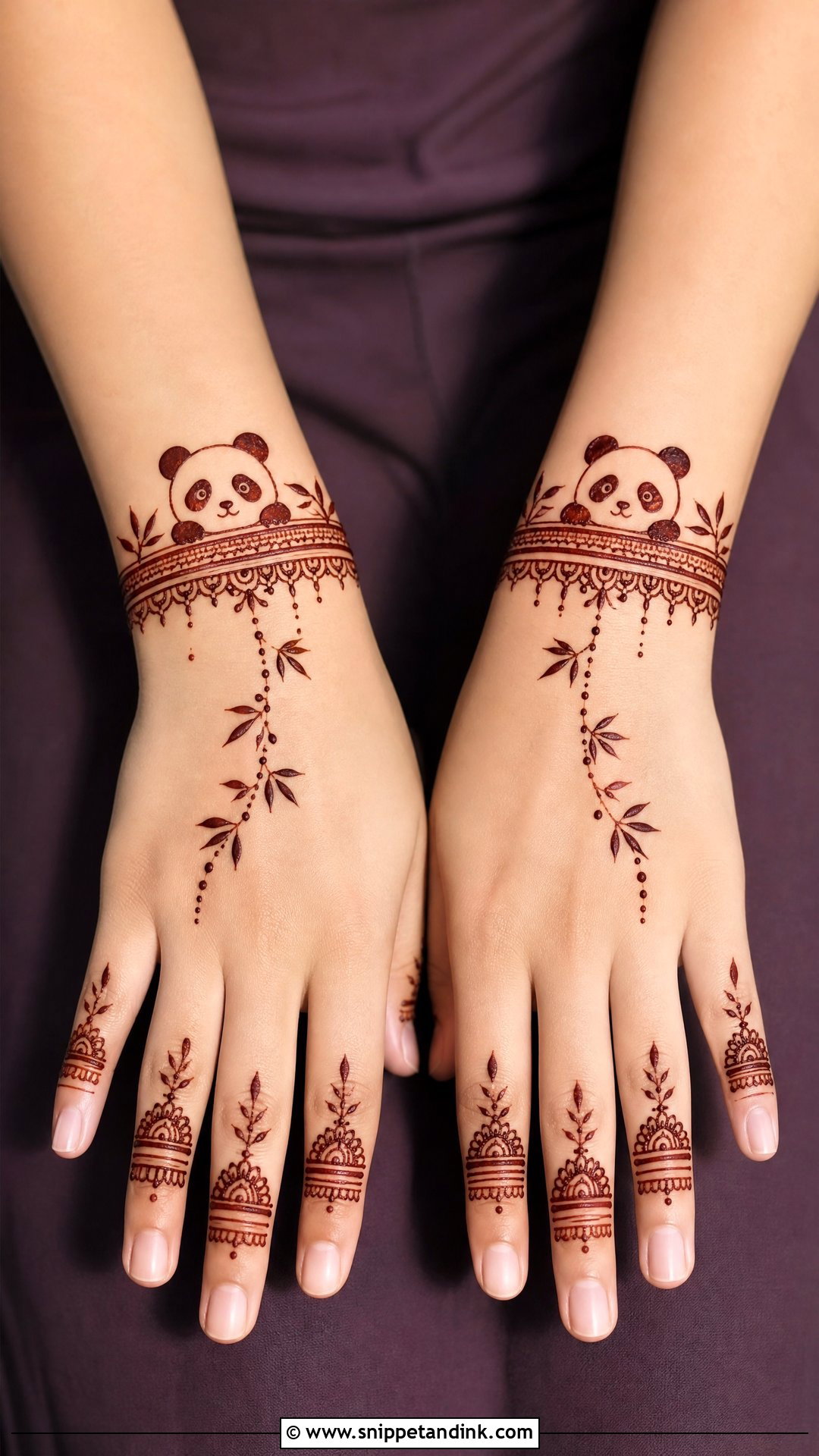
The wrist becomes the center here. I draw a face or a baby panda sitting right in the middle, then extend a bracelet around it with dots, vines, scallops and bamboo leaves. A few light trails onto the back of the hand and fingertip dots complete it. Children are comfortable with this one because their palms stay free for snacks. Make sure the band is balanced on both sides of the wrist; it is seen from every angle.
11. Panda Mandala Mehndi Design
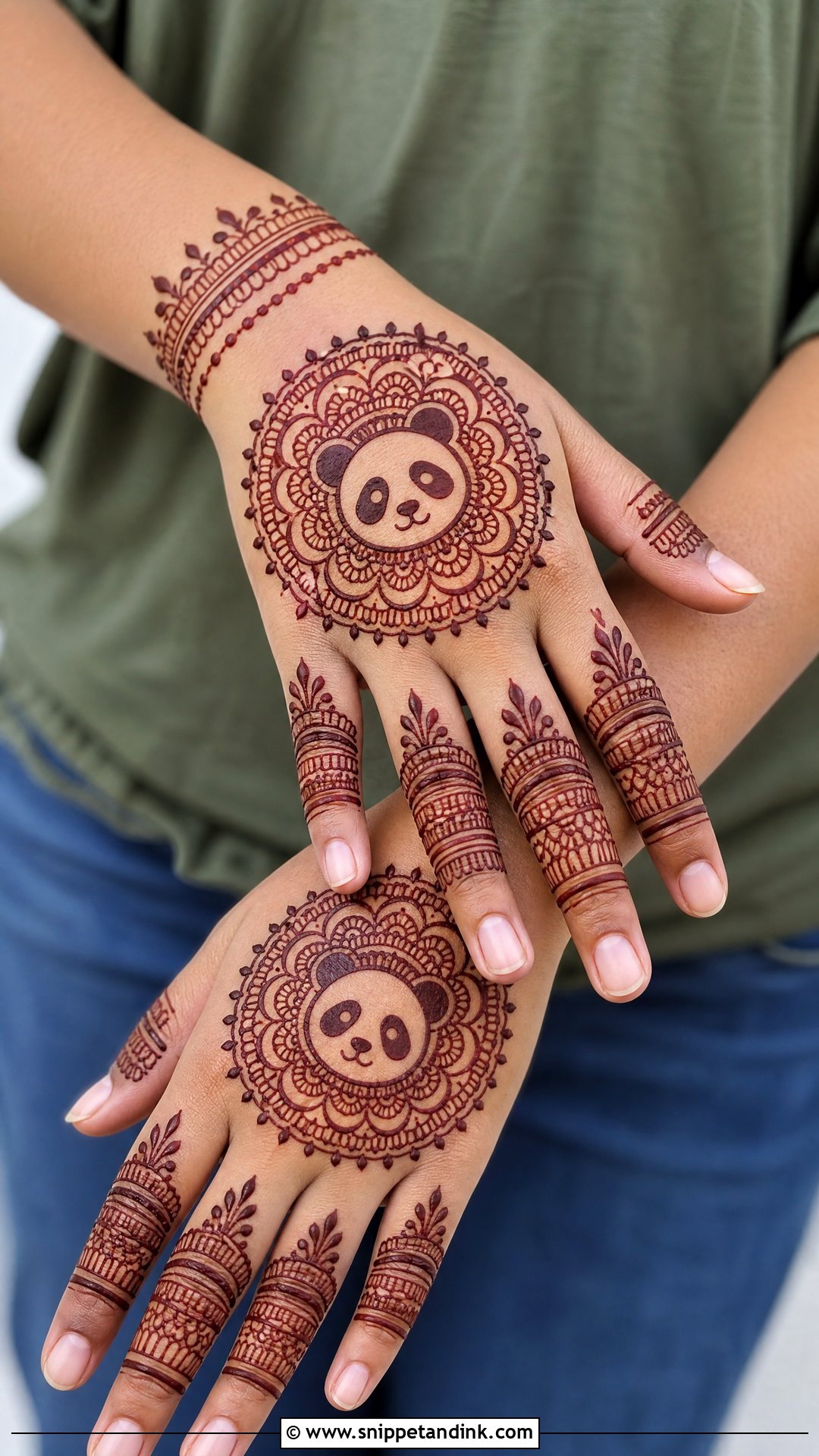
Putting the panda inside a mandala brings it closer to traditional henna. I draw the face in the middle of a round mandala on the back of the hand or palm, then build petals, dots, scalloped rings and leaves outward. Finger bands echo the mandala, and a narrow floral border sits at the wrist. Keep the panda simple; if both the face and the mandala are detailed, neither reads clearly.
12. Panda Floral Mehndi Design
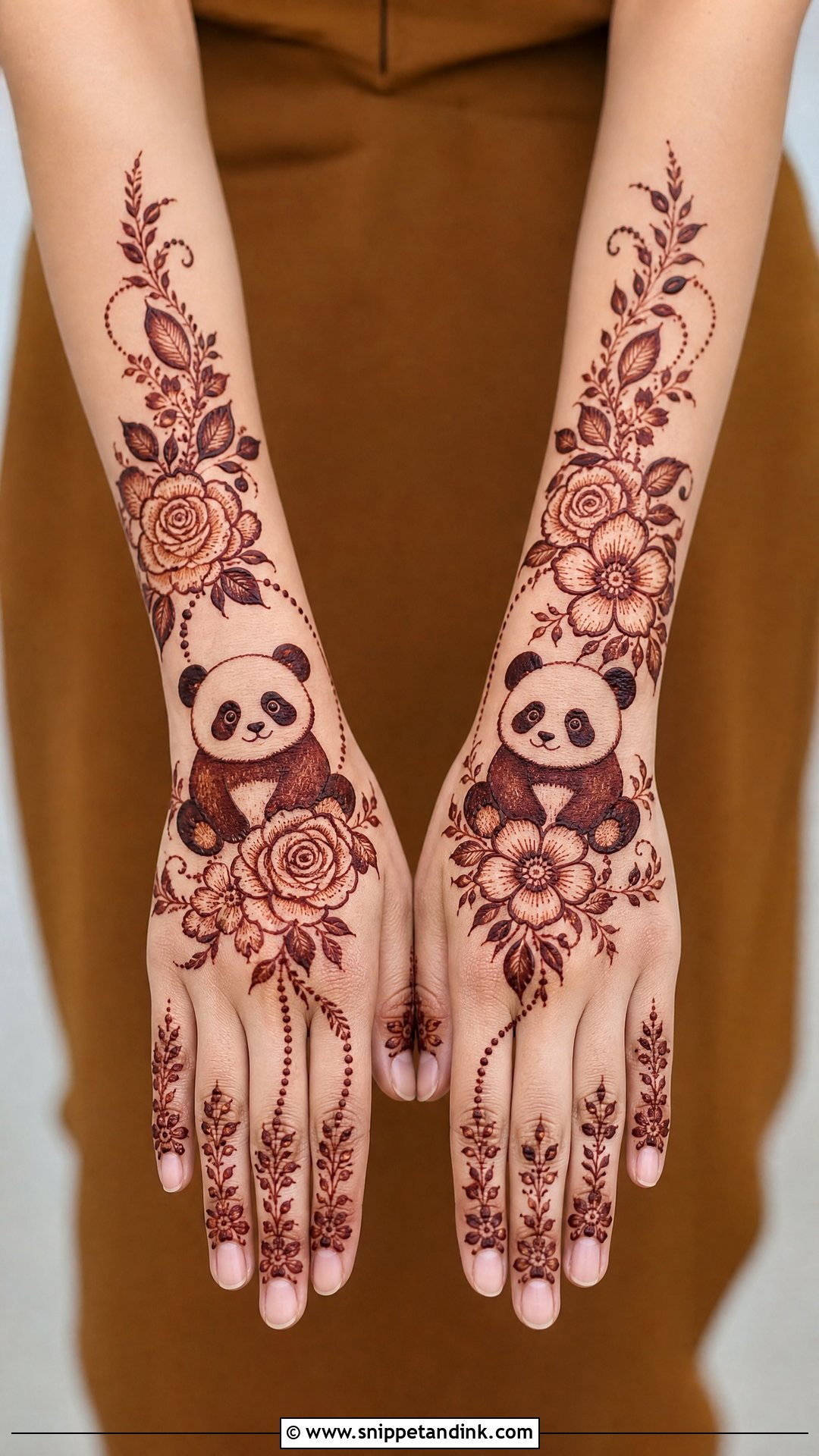
Flowers help a panda settle into mehndi art rather than looking like a sticker. I sit the panda on the back of the hand among small roses, five-petal flowers, vines and dotted curves, with one trail going to the wrist and another to the middle finger. Adults and teens tend to choose this one. Don’t fill the body; a few shaded lines and open space are enough, and the flowers carry the detail.
13. Panda Heart Mehndi Design
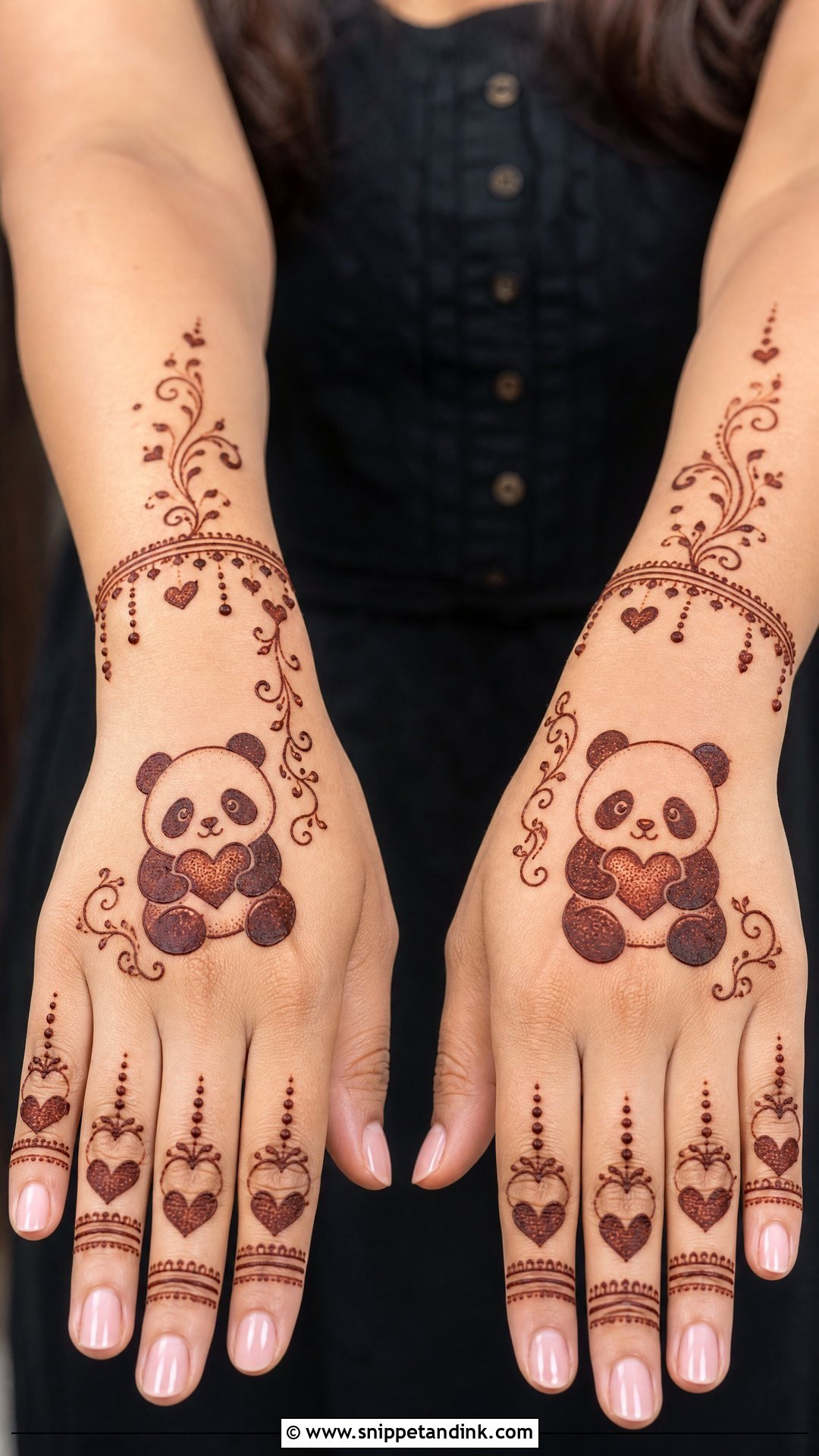
A panda hugging a heart is the one best friends ask for together. The heart should be small and clearly drawn, held against the chest so the arms wrap around it. Around it go tiny hearts, dots and soft vines, with heart bands on the fingers and a thin leafy border at the wrist. Avoid large solid-filled hearts close together; when henna is applied thickly in big blocks, it can spread slightly and the shapes merge.
14. Panda Bamboo Mehndi Design
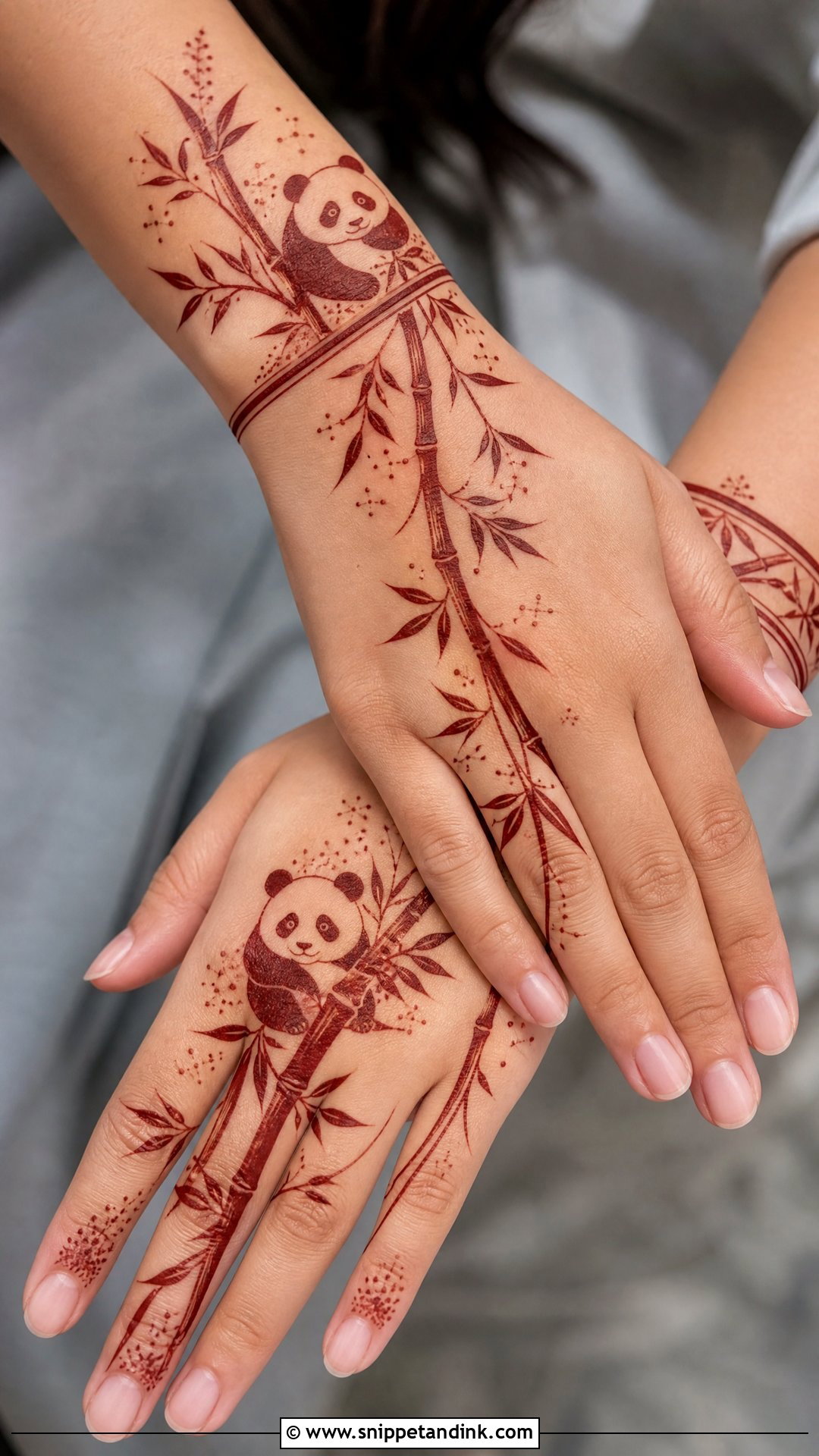
Bamboo turns the panda into a little scene. I place a relaxed panda low on the back of the hand and draw bamboo stems rising diagonally toward the fingers, with slim leaves, dots and small curved fillers. The wrist gets a bamboo-style band and the fingertips small leaf caps. It looks more grown-up than the cartoon designs, so older kids and teens like it. Draw the stems straight but with slight joints, and let a leaf or two overlap the panda so it sits inside the scene.
15. Panda Paw Mehndi Design
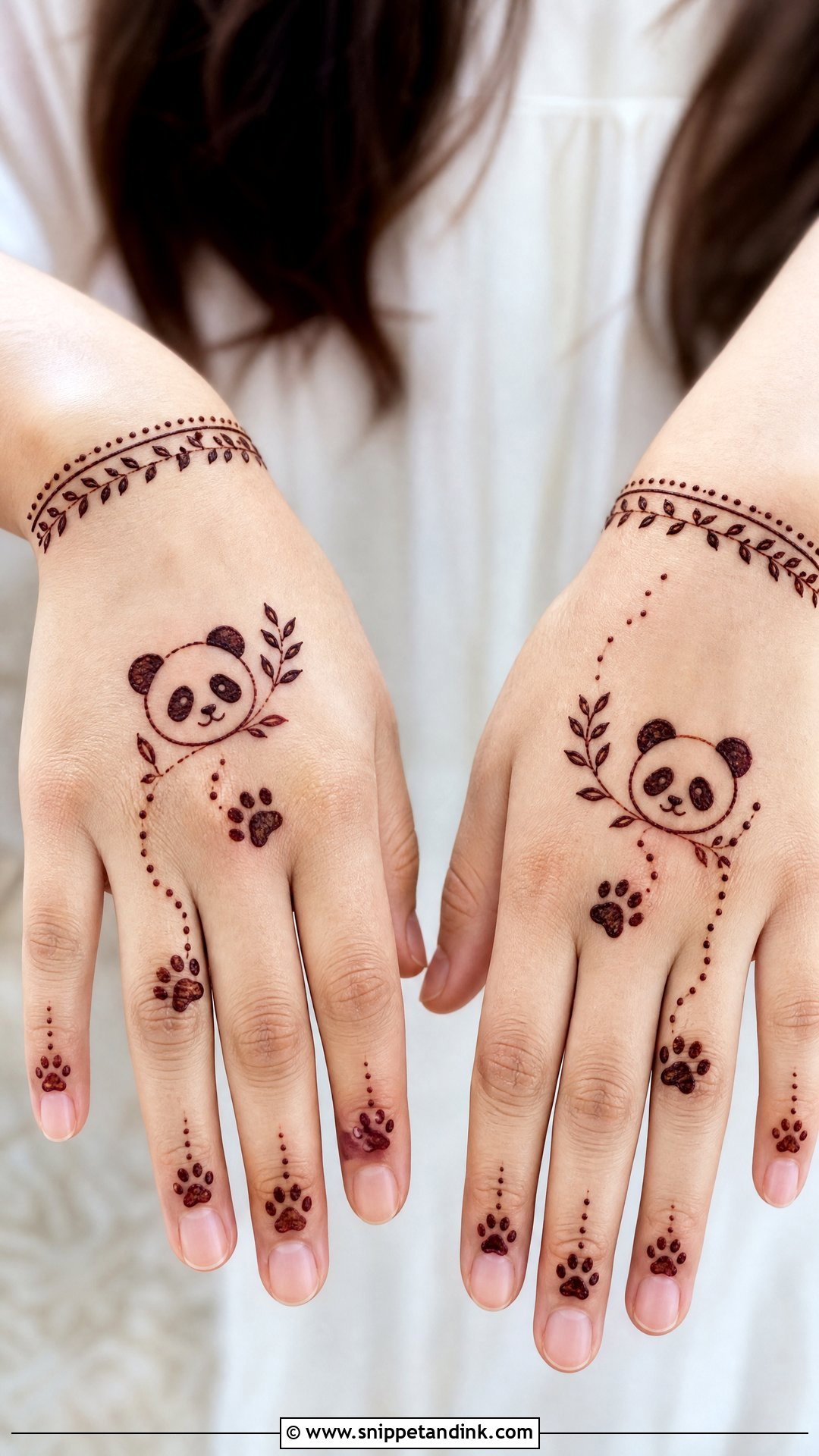
Paw prints are the easiest motif in this list: one oval pad and four small dots. I draw a small panda face on the back of the hand and scatter a curved trail of paws toward the fingers and wrist, connected by dotted lines and leaves. The fingers get mini paw marks between simple bands. Because it isn’t dense, it’s fine for children who can’t keep still. Space the paws evenly and keep each one rounded.
16. Panda Name Mehndi Design
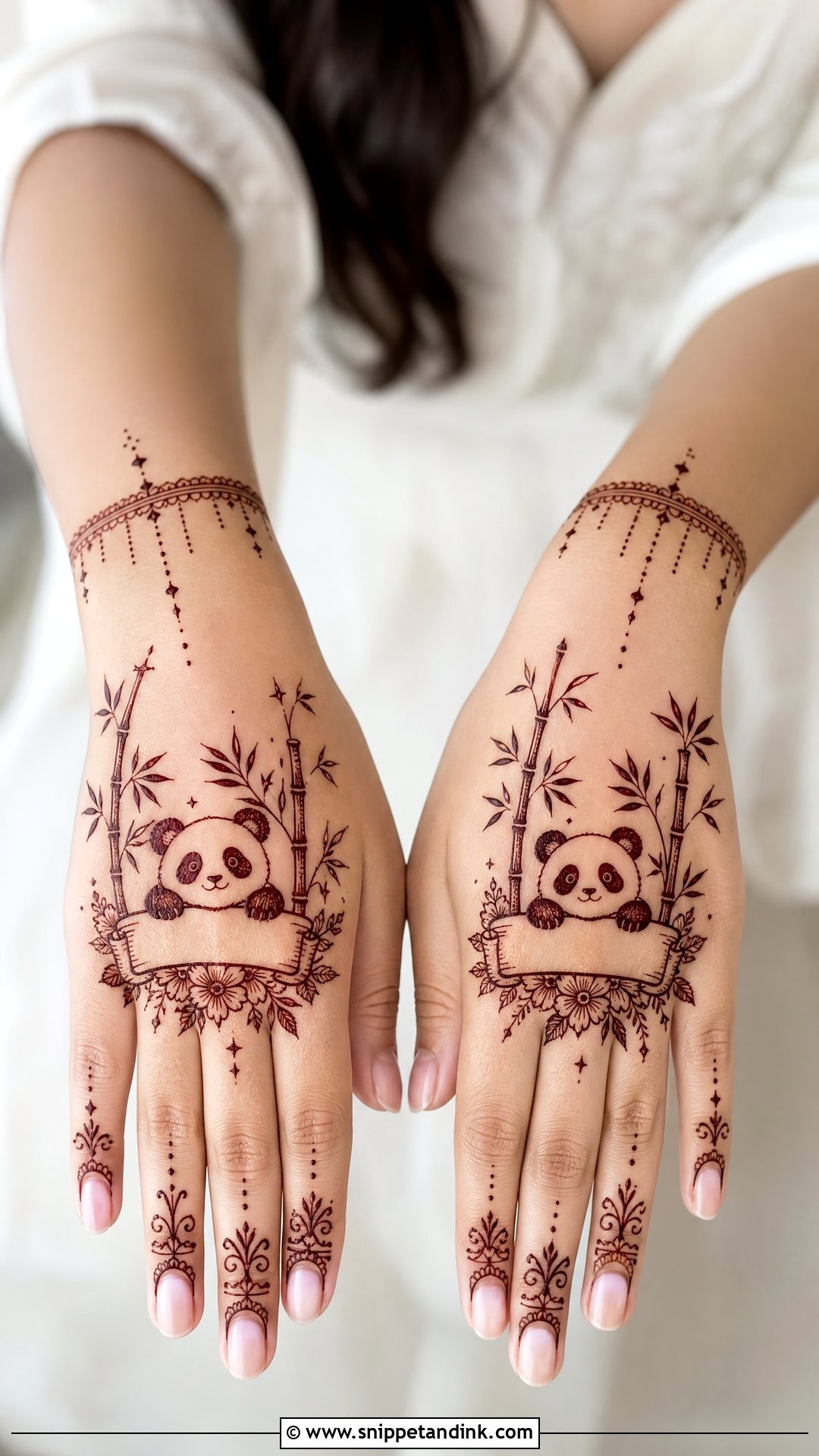
Adding a name makes it personal, and that’s why it’s popular at birthdays. I draw a panda on the back of the hand and place the child’s name or initials beside it on a little banner, vine or heart frame, then add flowers, dots, bamboo leaves and finger trails. Lettering in henna needs to be larger than you think: the lines spread slightly as the paste sits, and small letters close up. Keep the name next to the panda so they read together.
17. Panda Arabic Mehndi Design
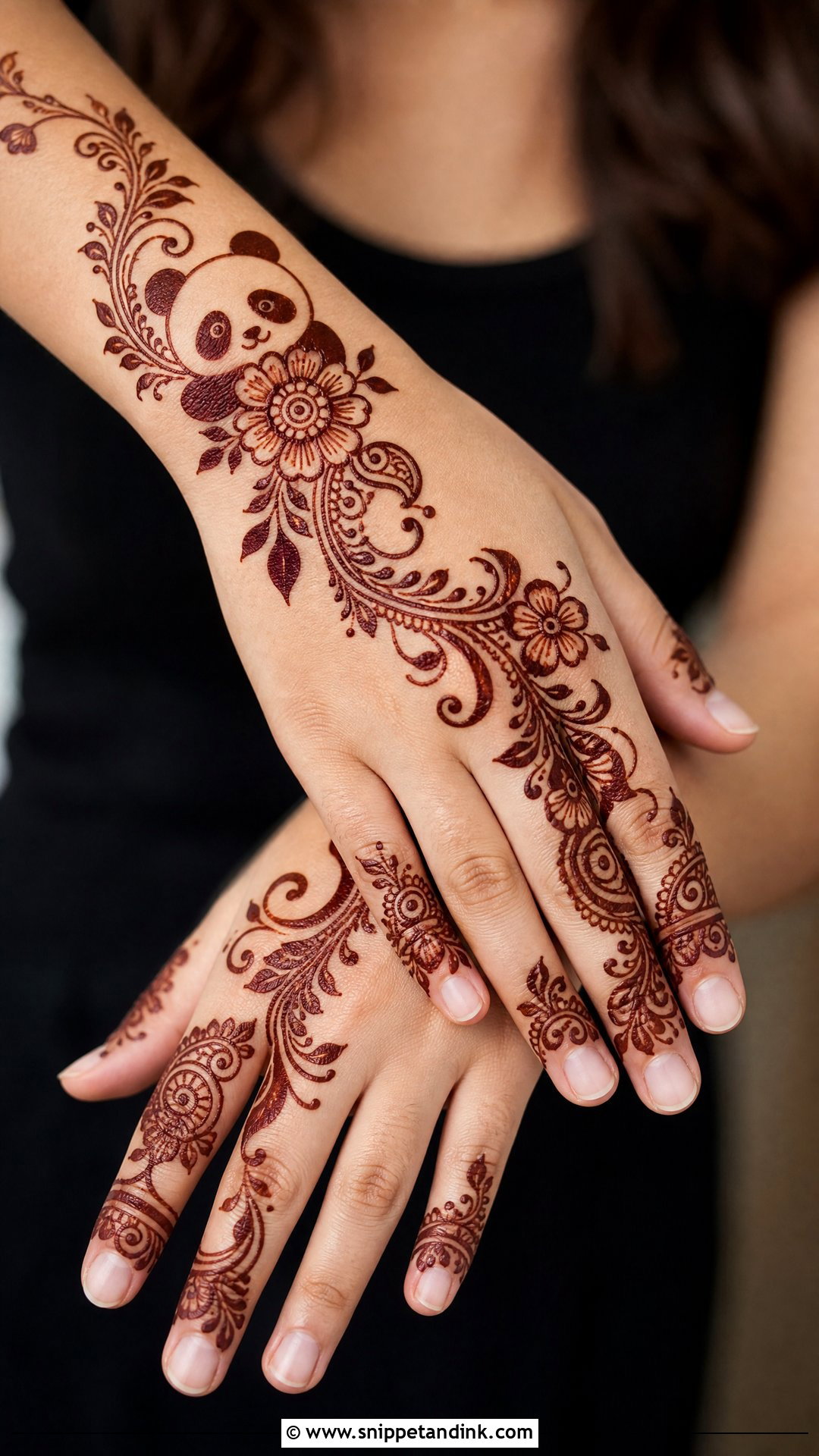
Arabic layouts leave half the hand bare, which gives a panda more space than any other style. I place the face near the wrist or the side of the back of the hand, then build a diagonal Arabic-style vine of flowers, leaves, dots and paisleys toward the index finger. One side stays open. I use thin lines for the florals and a heavier outline for the panda, so the animal stands out from the trail. Teens and adults who want something stylish tend to pick this.
18. Panda Indian Mehndi Design
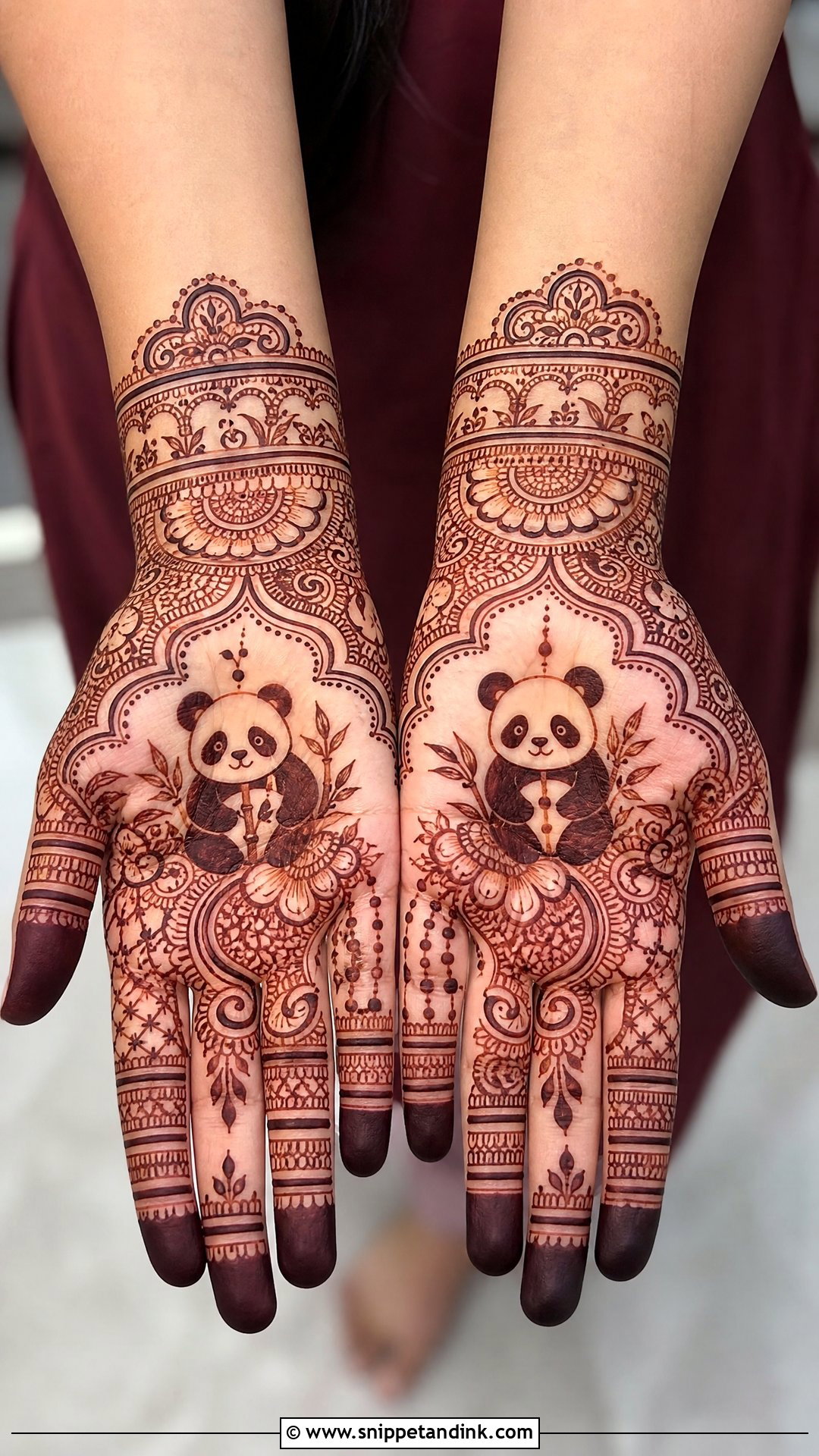
This is the most detailed panda layout here. A panda in the center of the palm or back of the hand, surrounded by paisleys, small flowers, dotted arches and fine mesh. The fingers alternate bands, leaves and tiny mandalas, and the wrist gets a decorative cuff. It takes longer, so it suits festivals and family celebrations rather than a quick counter. The panda’s face must stay plain and bold; fine detail inside it blurs once the stain deepens.
19. Panda Indo Arabic Mehndi Design
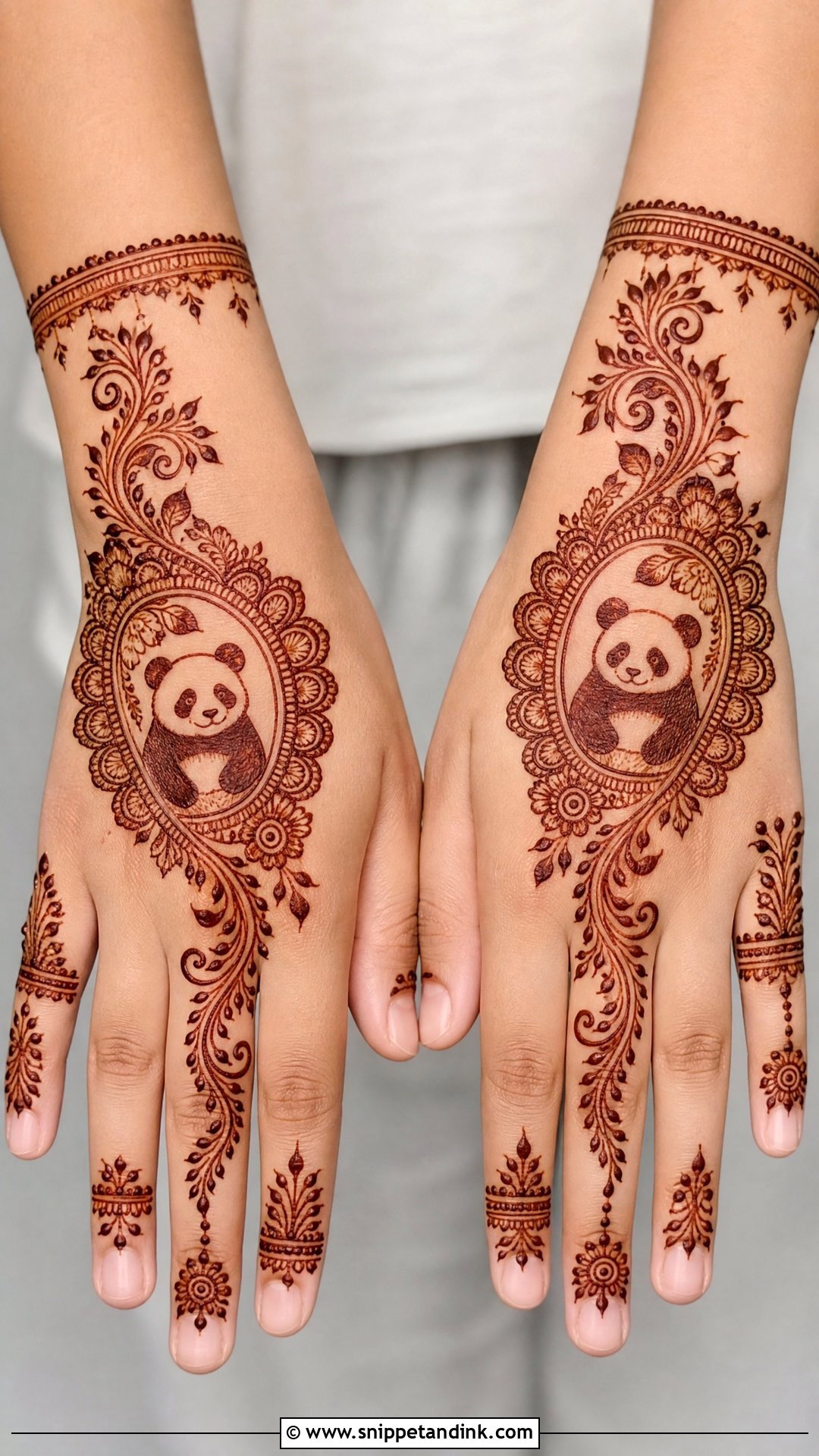
Indo-Arabic sits between dense and open. I set a panda inside a floral paisley frame on the back of the hand with one strong vine flowing diagonally across. Mandala dots, leaf clusters and finger bands bring in the Indian side, and open spaces keep the Arabic feel. It’s quicker than full Indian filling. Cousins and bridesmaids who want something fun but polished choose it. Keep the panda near the center so the curves lead the eye to it.
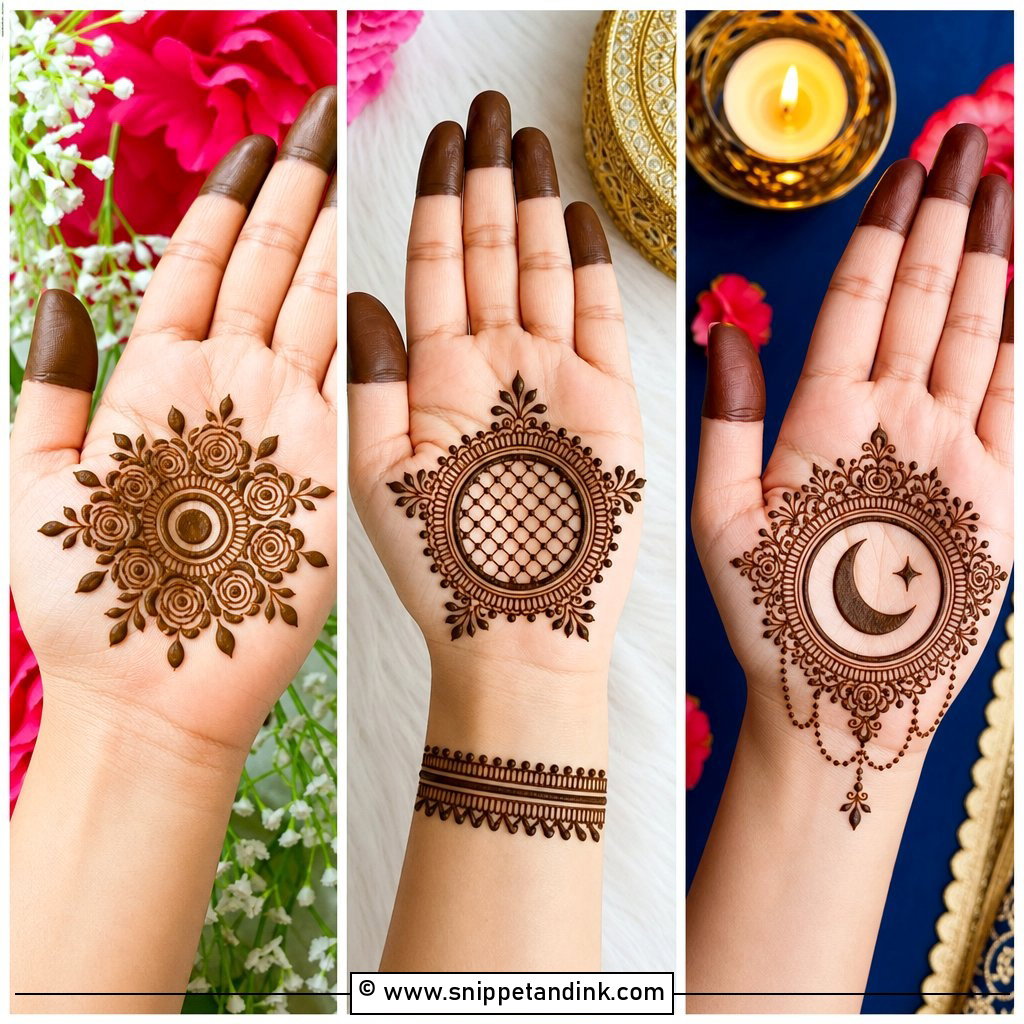
20. Panda Minimal Mehndi Design
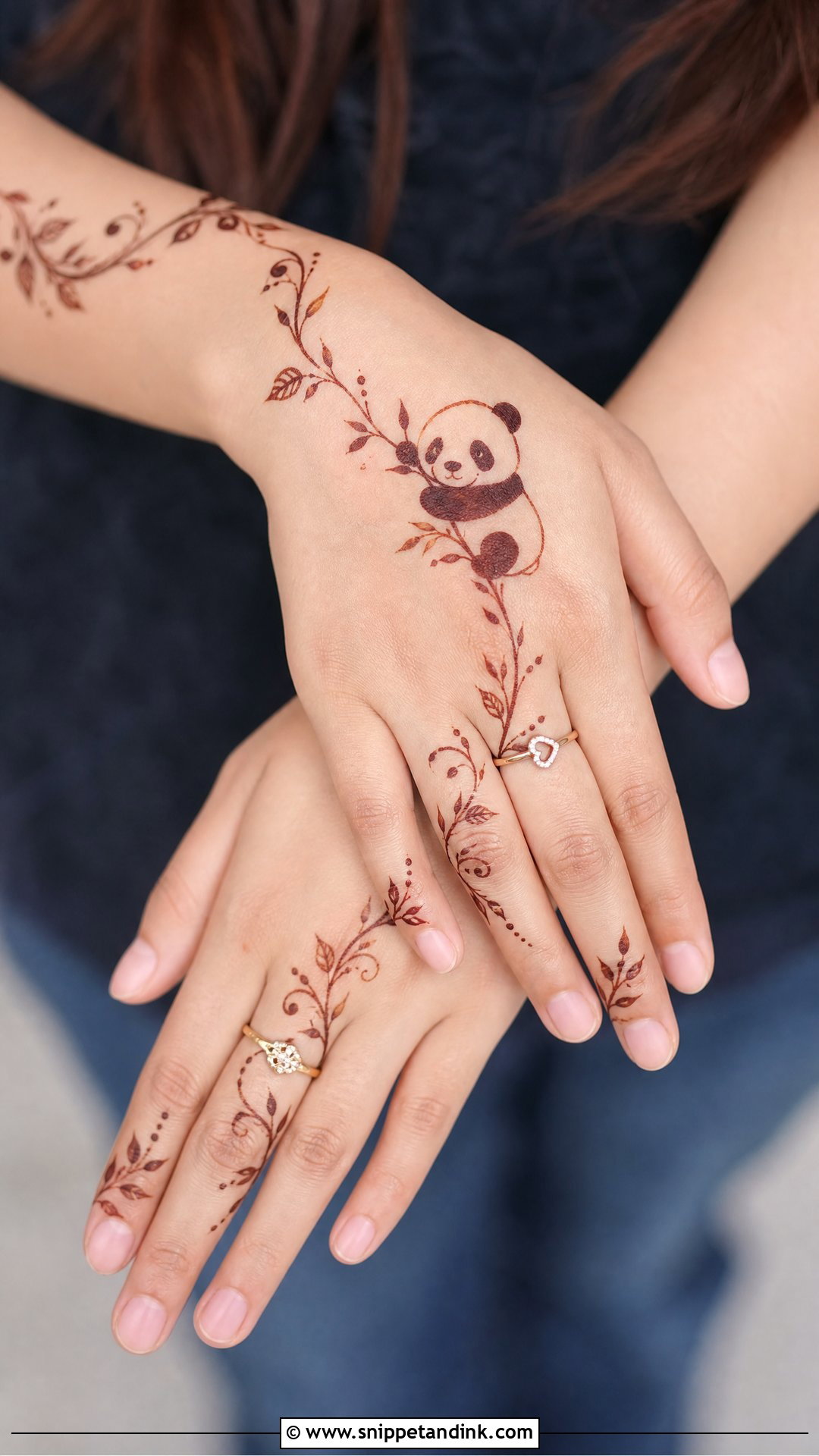
Minimal panda designs only work with neat lines. I draw a tiny face or a simple outline near the wrist, on the thumb side or in the middle of the back of the hand, then add a few dots, one slim vine and fine finger rings. Leave out extra fillers; they make a minimal design look random. A small wrist band or one connected finger trail gives it purpose. It’s ideal when you need something done in two minutes.
21. Panda Full Hand Mehndi Design
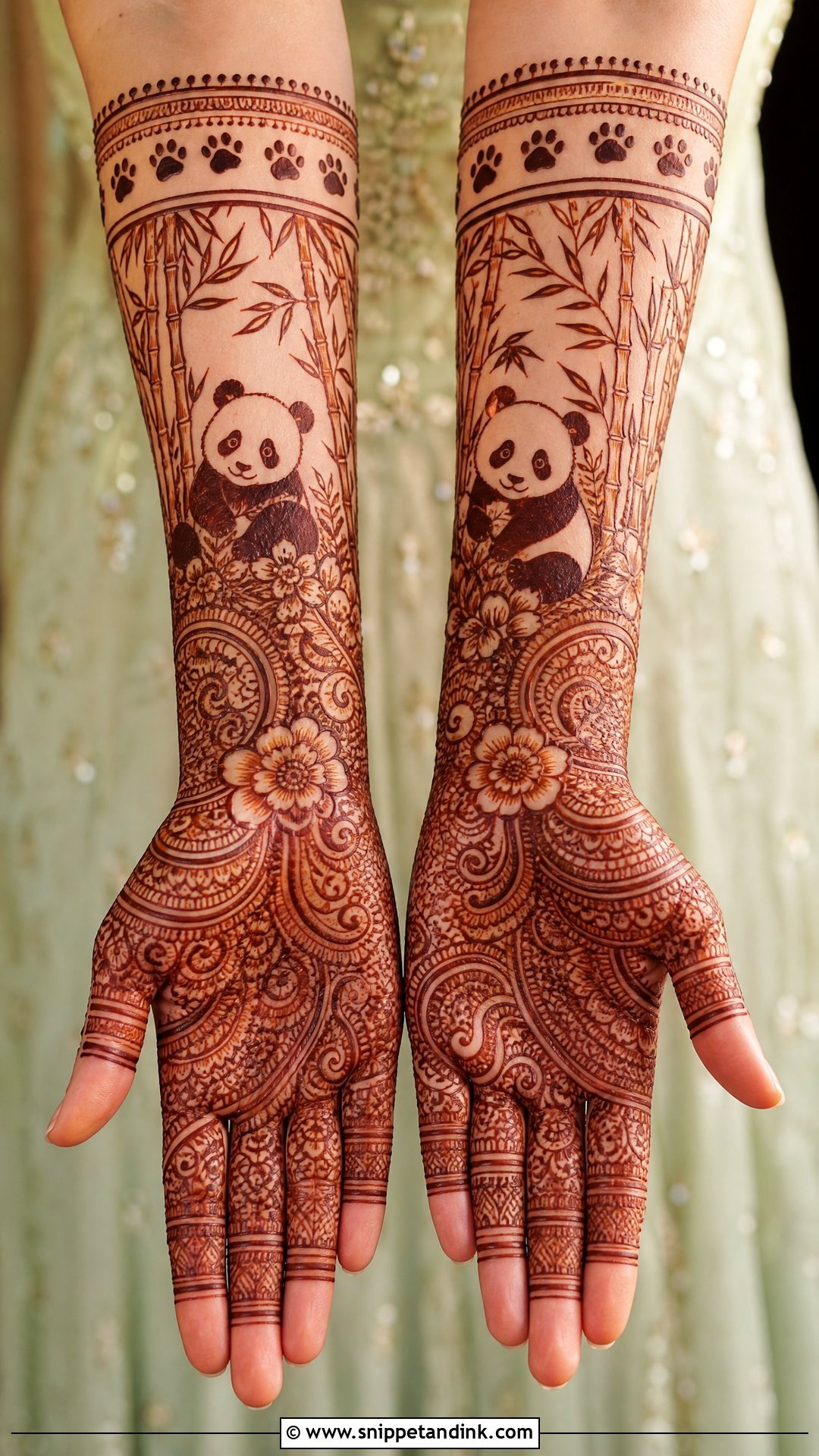
Full hand with a panda is a statement, and it takes time. A large panda scene goes on the palm or back of the hand, then bamboo leaves, flowers, paisleys, mandalas, dots and finger patterns fill around it, with a decorative cuff running up the forearm that includes small paw prints and leafy borders. I set the panda inside an open circle or oval and keep that frame clear, so the detailed patterns fill the outer areas without crowding it. This suits festivals and themed parties where you have time to sit.
22. Panda Half Hand Mehndi Design
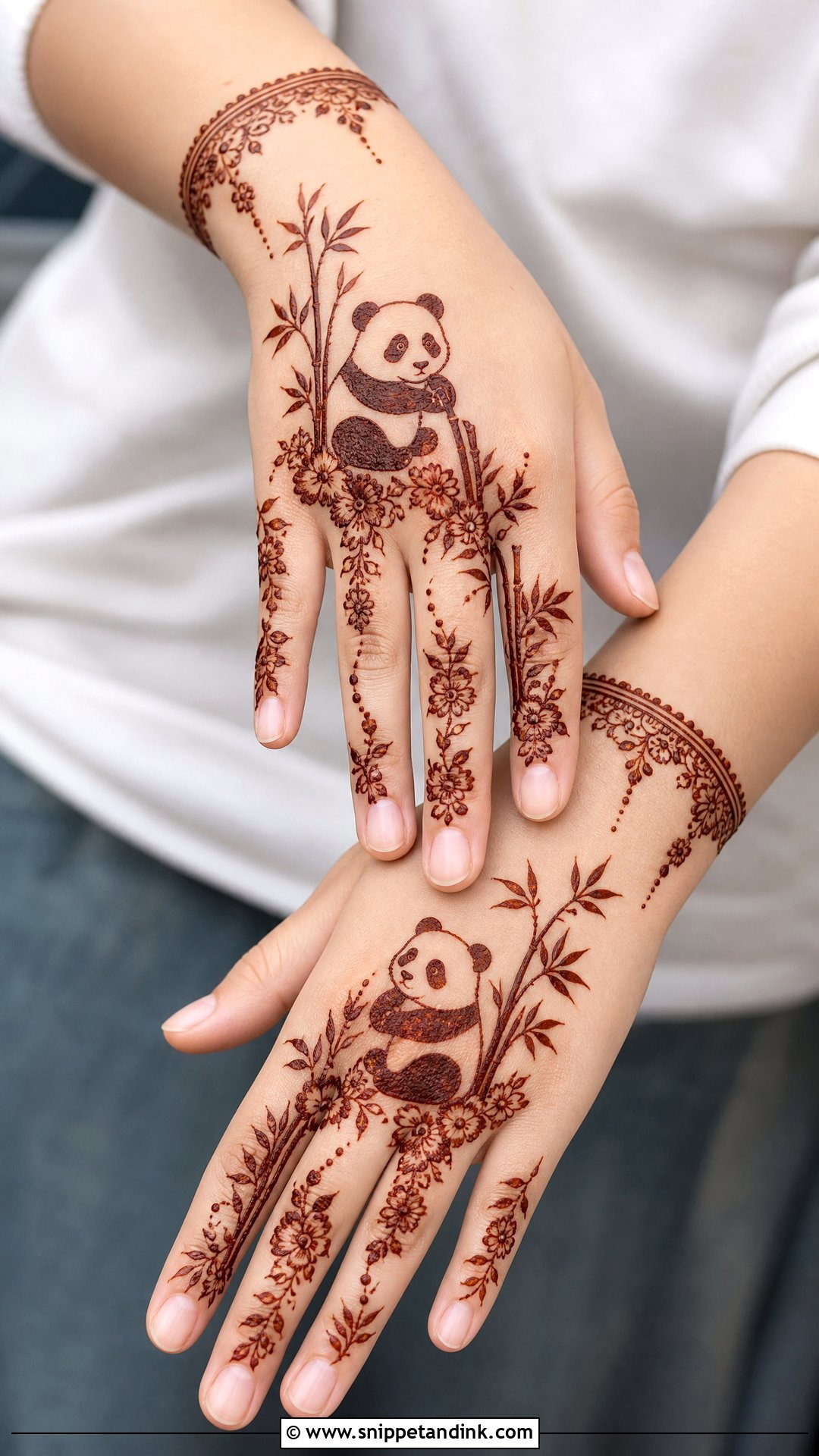
Half hand covers enough to feel festive without a long sitting. A cute panda sits on the lower back of the hand with a floral trail rising toward two or three fingers. The other fingers get light detail. Dots, leaves and small bamboo accents connect it all. Kids who want something noticeable but can’t sit for long like it, and teens who prefer negative space. Finish the edge of the design deliberately, so it looks planned and not like a full hand abandoned halfway.
23. Panda Front Hand Mehndi Design
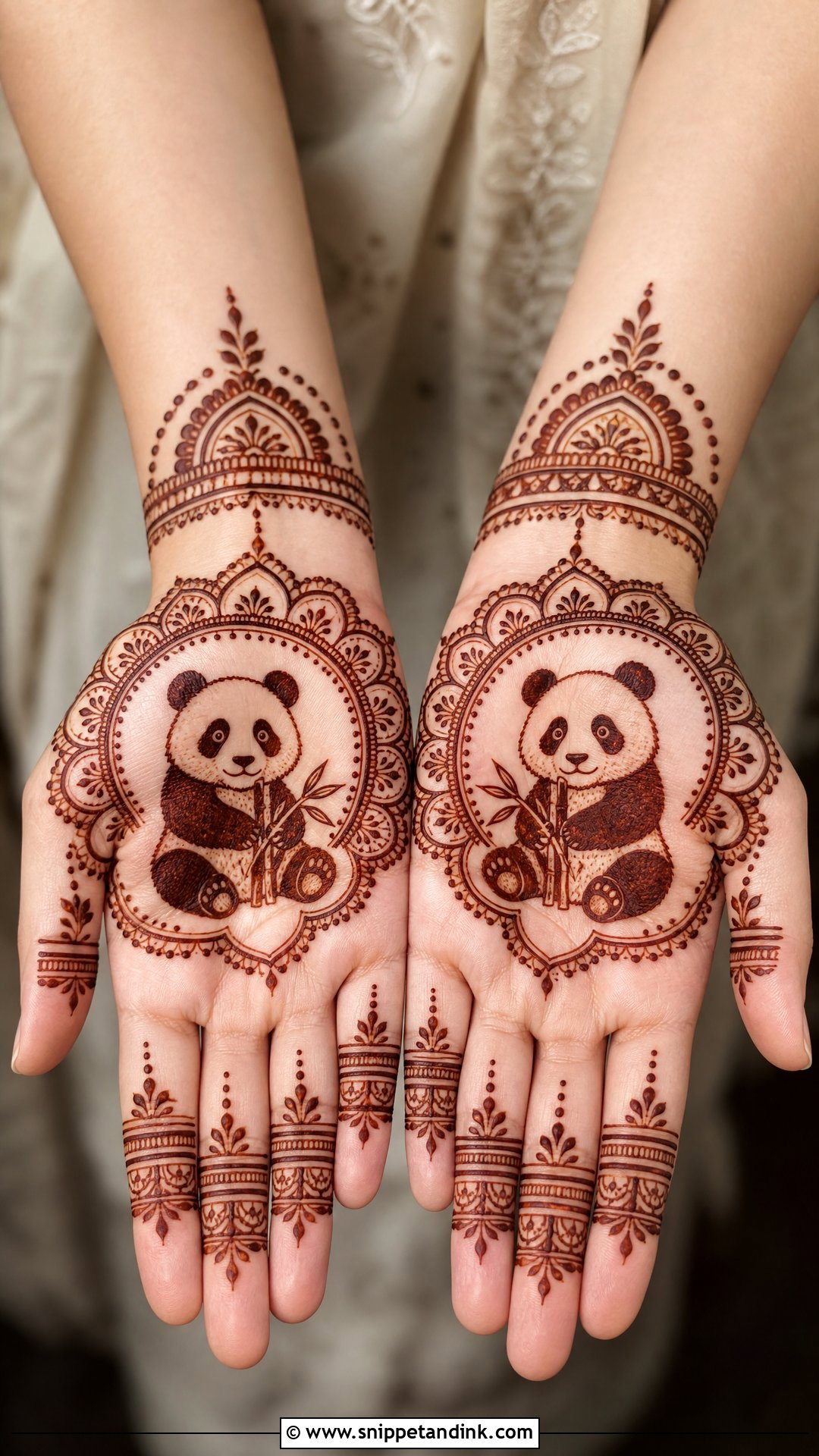
Palms hold a panda well because the center is a natural flat space. I draw a panda holding bamboo or a little heart, frame it with rounded mandala petals and dotted borders, and decorate each finger with slim vertical lines or leaf caps. A wrist cuff completes it. Palms stain deeply, so I keep the facial features open with clear bare skin between the eye patches and nose. This suits children at family celebrations; it looks cheerful and is easy to recognize.
24. Panda Side Hand Mehndi Design
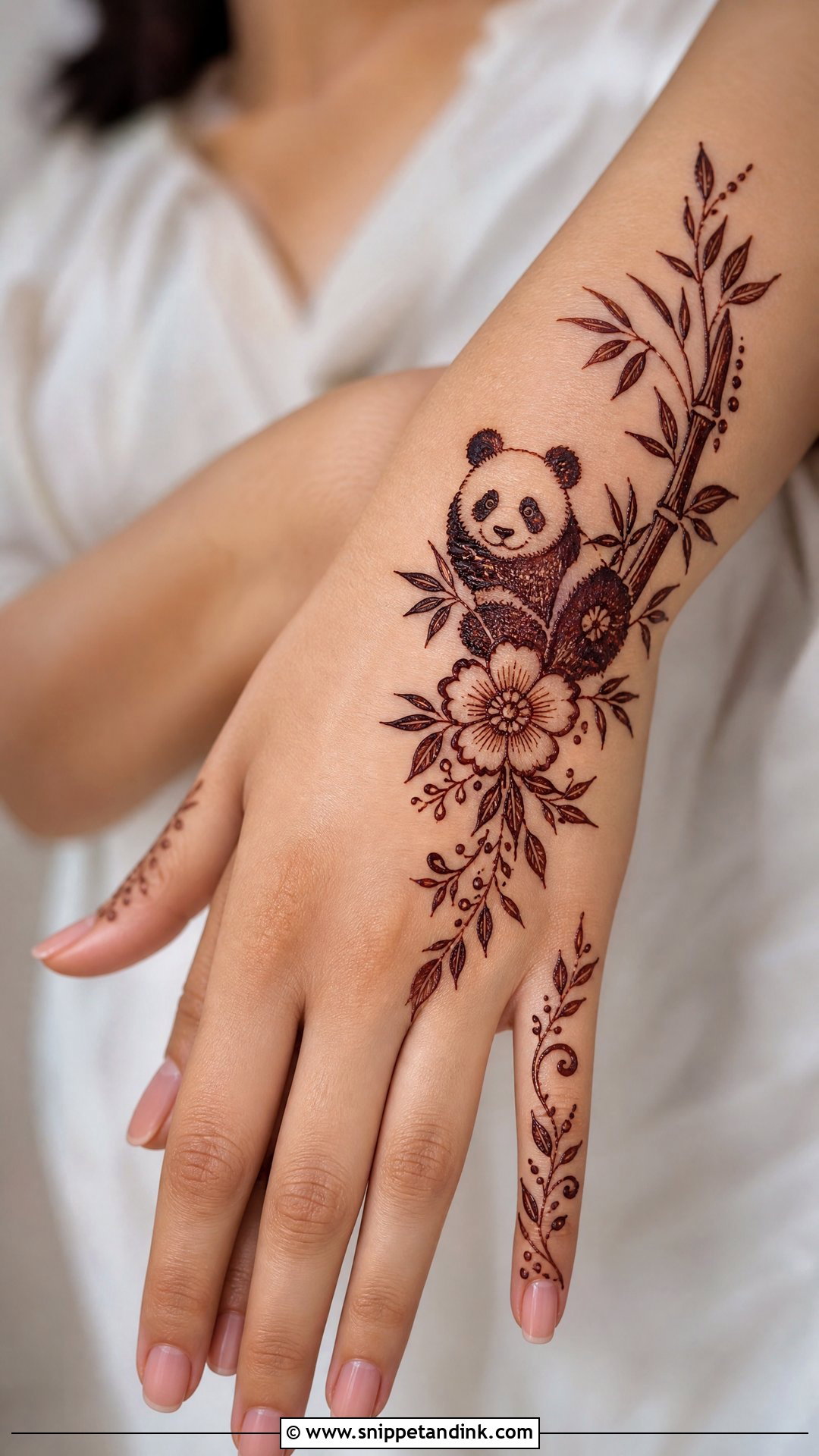
Side placements look modern. I put a small panda along the outer edge of the back of the hand and curve bamboo leaves, dots and flowers along the side toward the little finger and wrist. The center stays mostly bare. Fingers get thin side trails. It looks good in angled photos. Don’t draw the panda right on the edge, though: when the hand flexes, the skin there folds and the shape distorts.
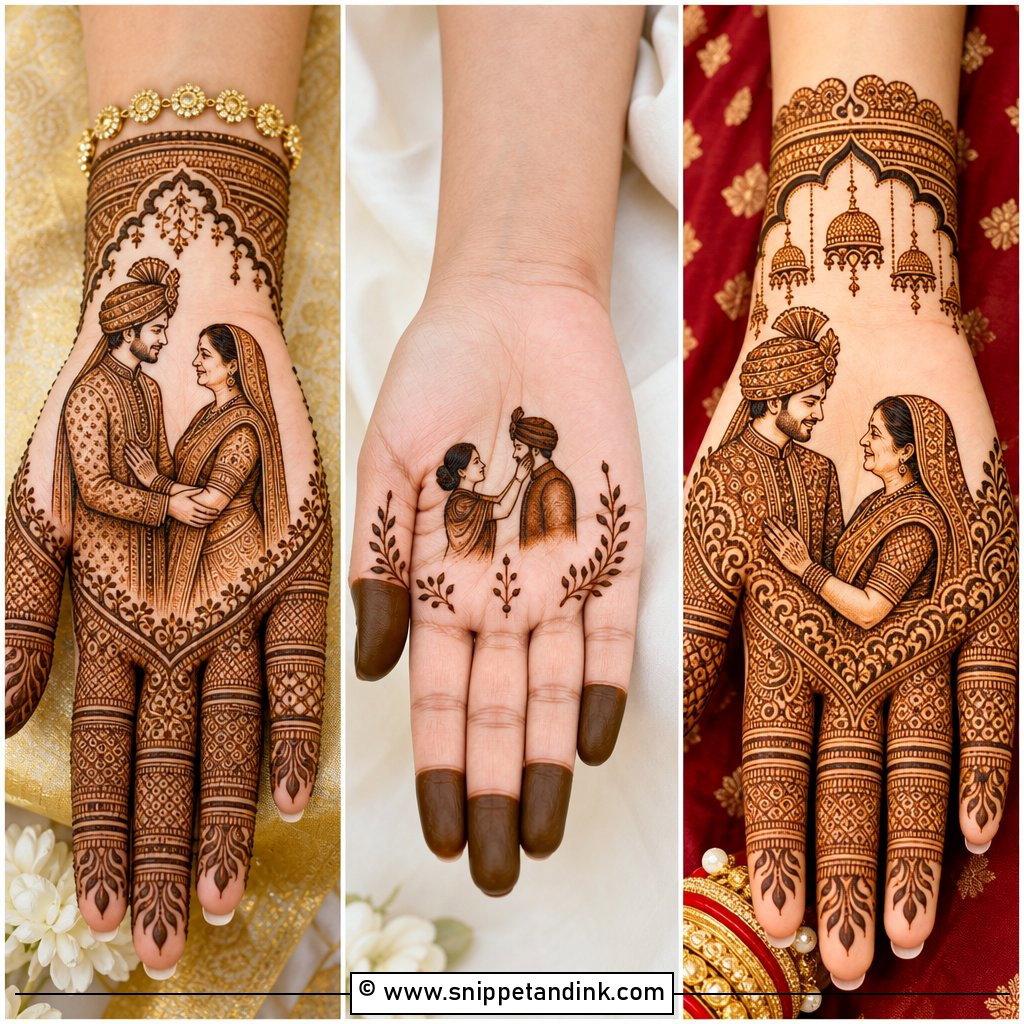
25. Panda Wrist Mehndi Design
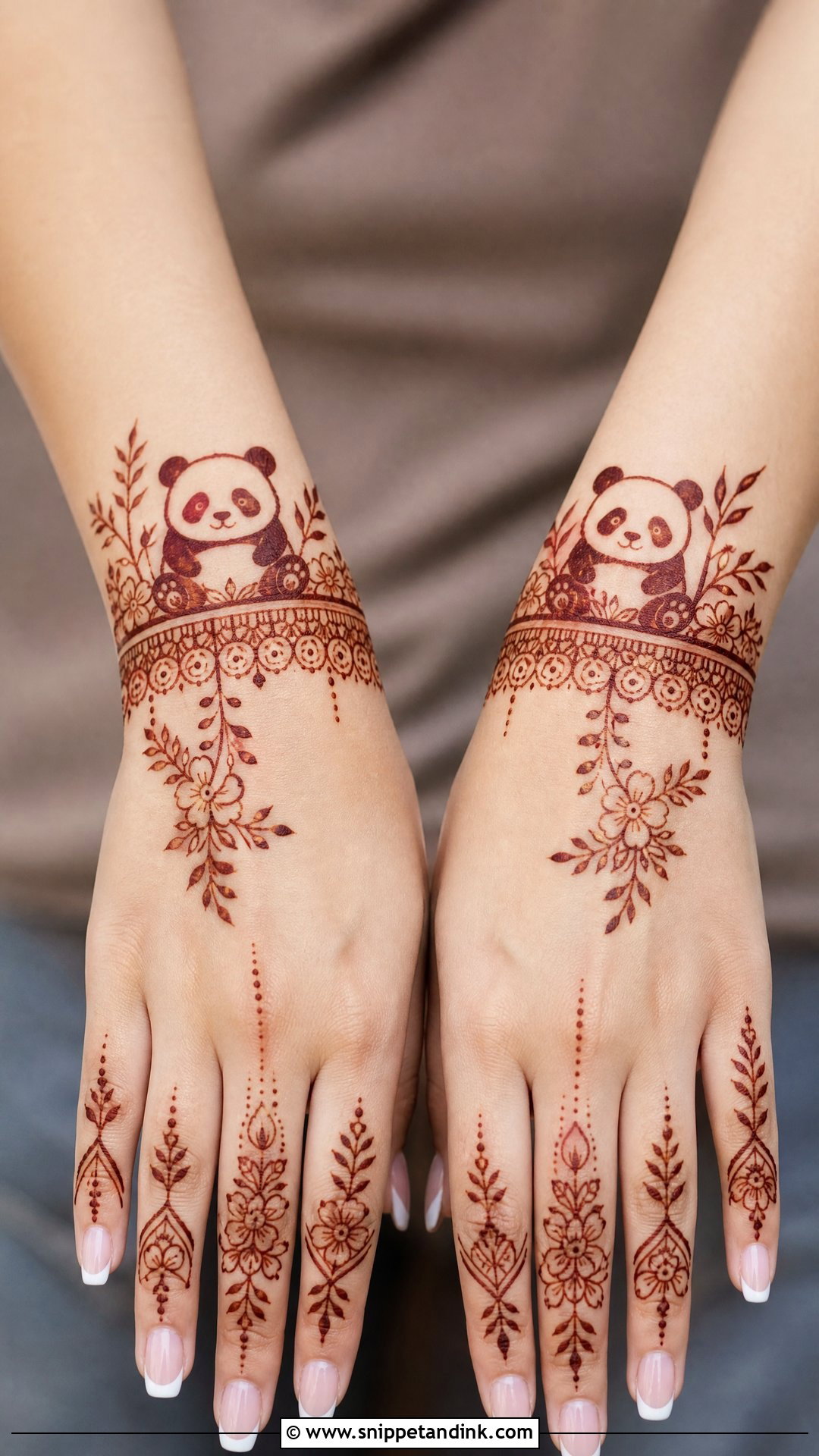
Wrist designs are compact and keep the palms free. I draw a panda face or tiny sitting panda in the center of the wrist and build a soft cuff around it with dots, florals, bamboo leaves and scalloped edges, with a few fine trails moving onto the back of the hand so it doesn’t look isolated. Avoid heavy filling over the wrist creases; henna in skin folds cracks and smudges as the hand moves. A light cuff stays neat.
26. Panda Forearm Mehndi Design
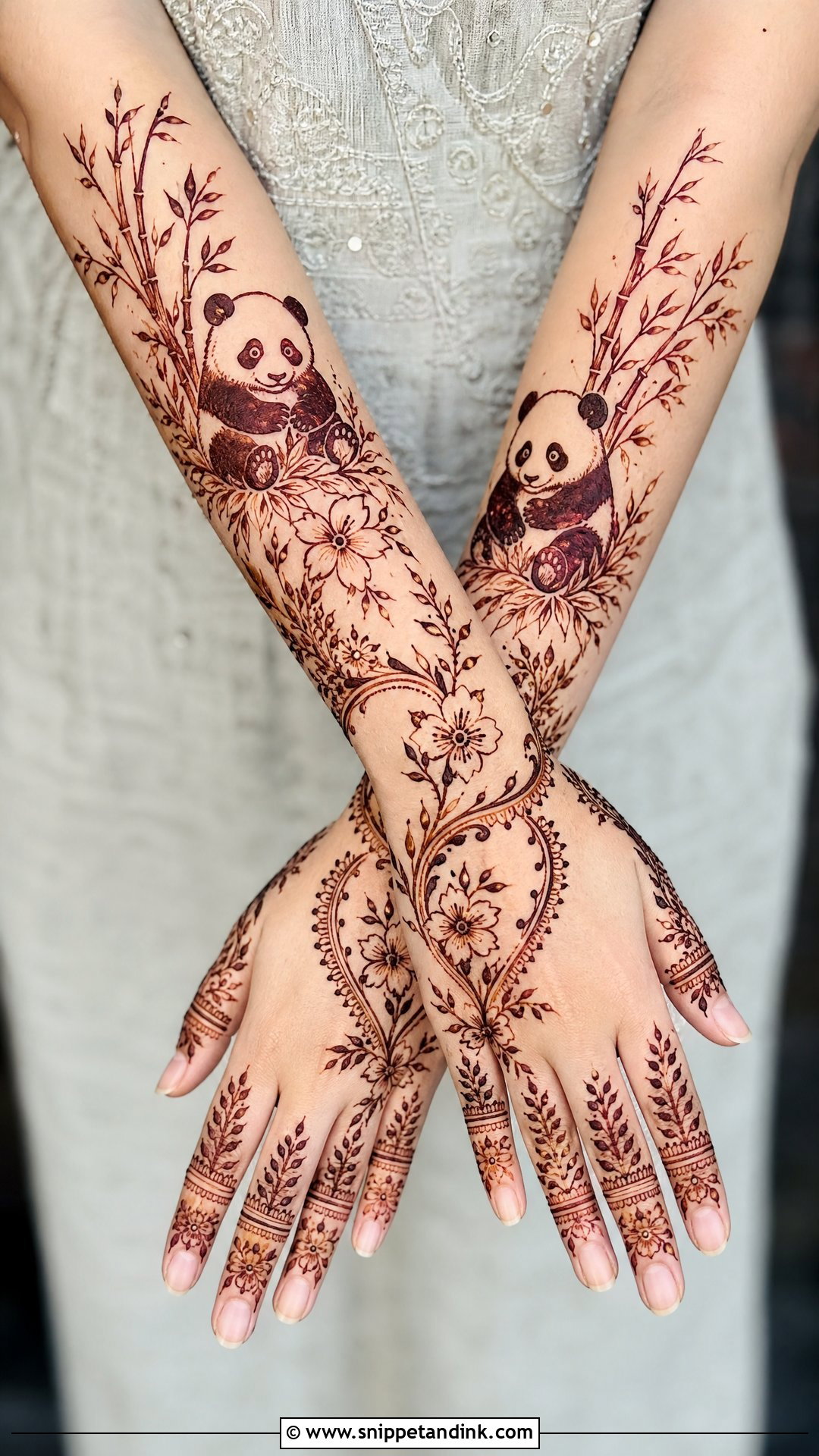
The forearm gives the most room, which means a panda with better proportions and expression. I start a small panda sitting under bamboo near the wrist and run leafy stems, flowers, dots and curved borders up the arm, with a matching trail on the back of the hand. Keep the layout vertical so it follows the arm. Forearm skin stains lighter than the hand, so I use slightly thicker lines there. Older kids, teens and adults who want something visible but not bridal choose it.
27. Panda Couple Mehndi Design
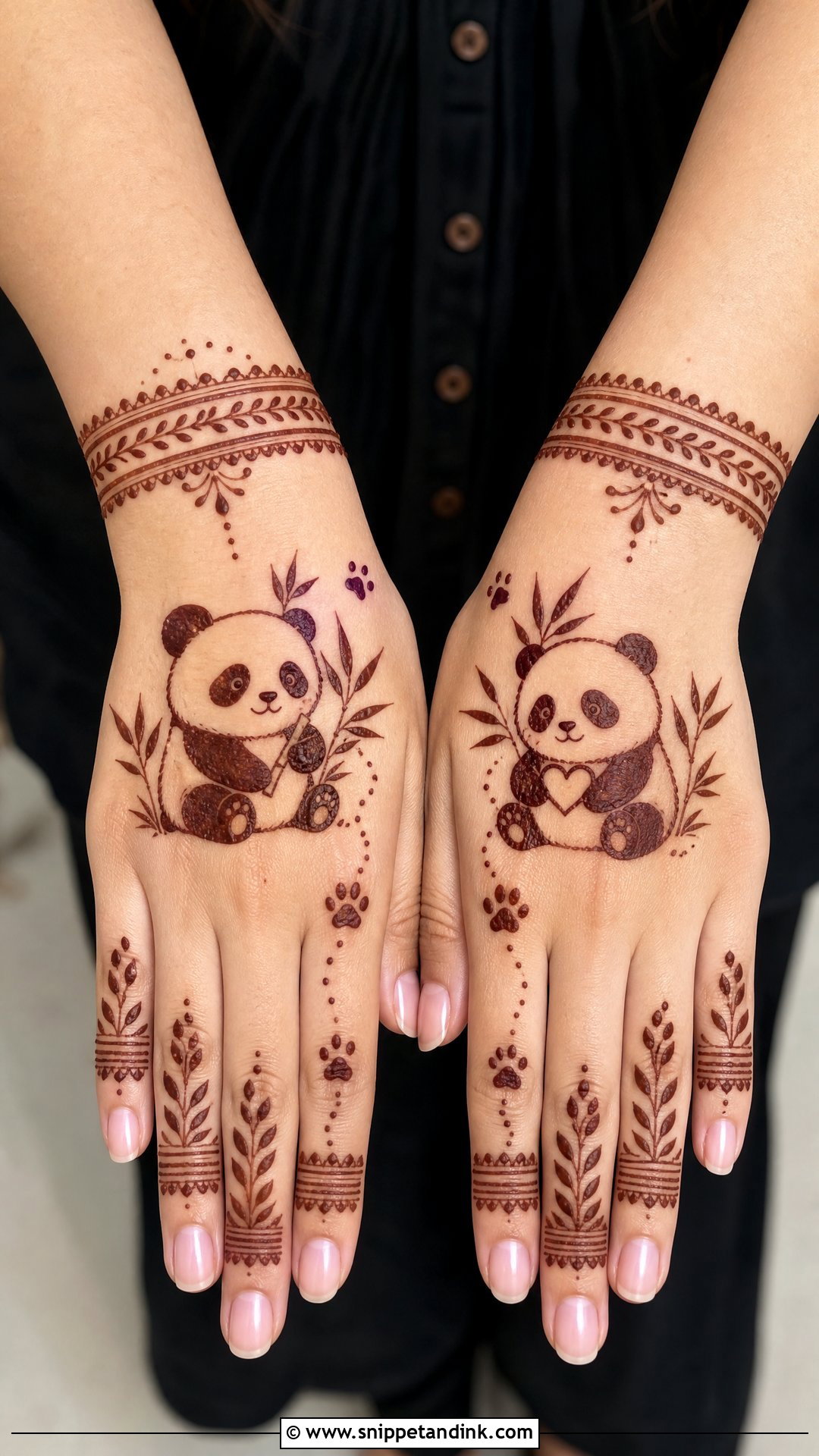
Matching pandas are a favorite for sisters, cousins, friends or a parent and child. One hand shows a panda holding a heart; the other, a second panda with bamboo or flowers, so the two connect when the hands come together. Matching wrist bands, dotted trails and small paw prints finish the pair. Draw both pandas the same size or the pair looks lopsided. Initials or tiny matching symbols can be added, kept simple.
28. Panda Bridal Mehndi Design
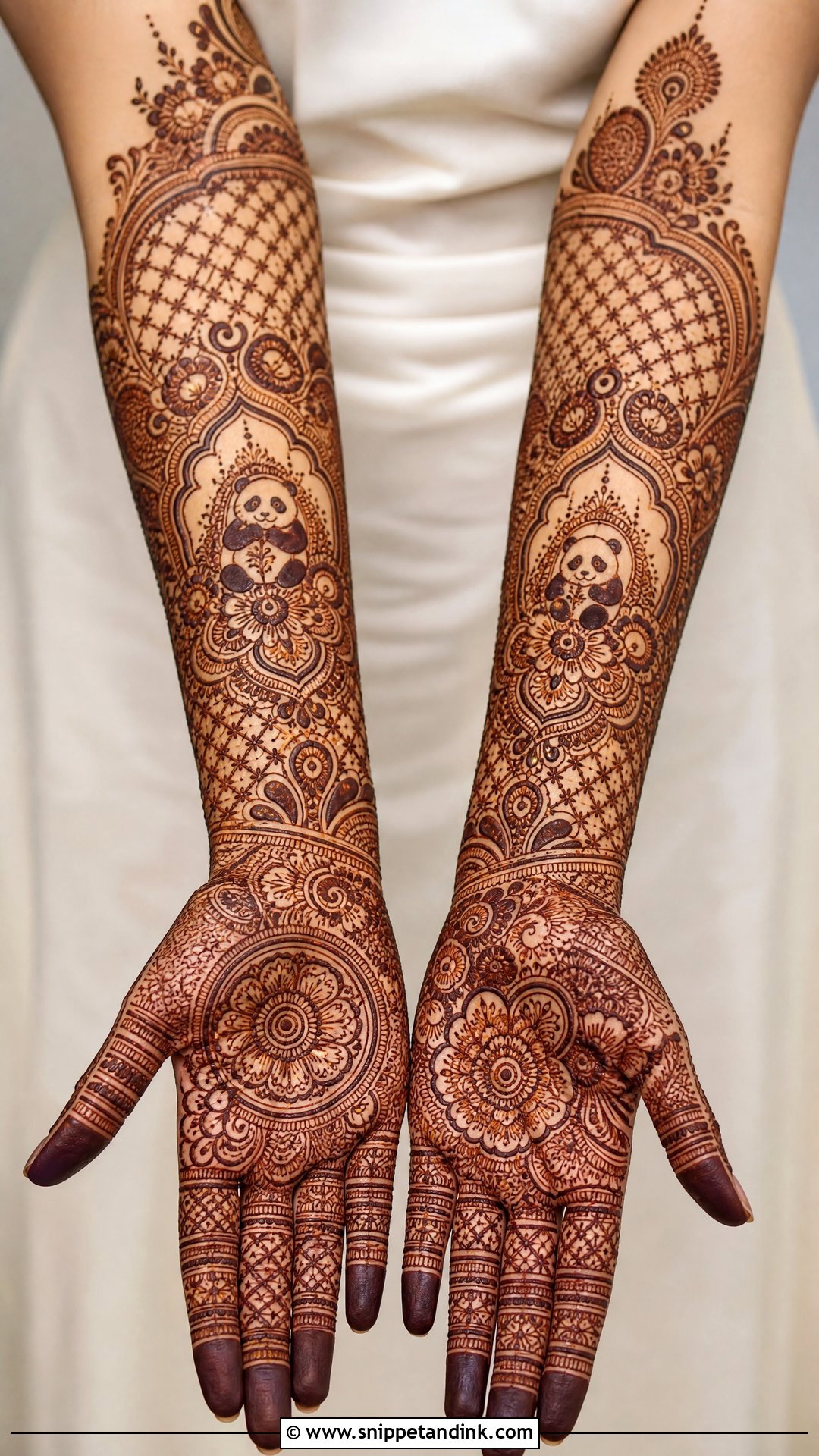
A panda in bridal mehndi is unusual, and I’d only suggest it as a hidden detail. The base is a traditional full bridal design with paisleys, florals, jaali, mandalas and forearm patterns. The panda hides inside a circular frame, near the wrist or in a small story panel, the way some brides hide the groom’s initials. It shouldn’t replace the bridal structure. Mehndi nights, engagements and bridal showers are a lighter setting where a playful panda feels at home.
29. Panda Festival Mehndi Design
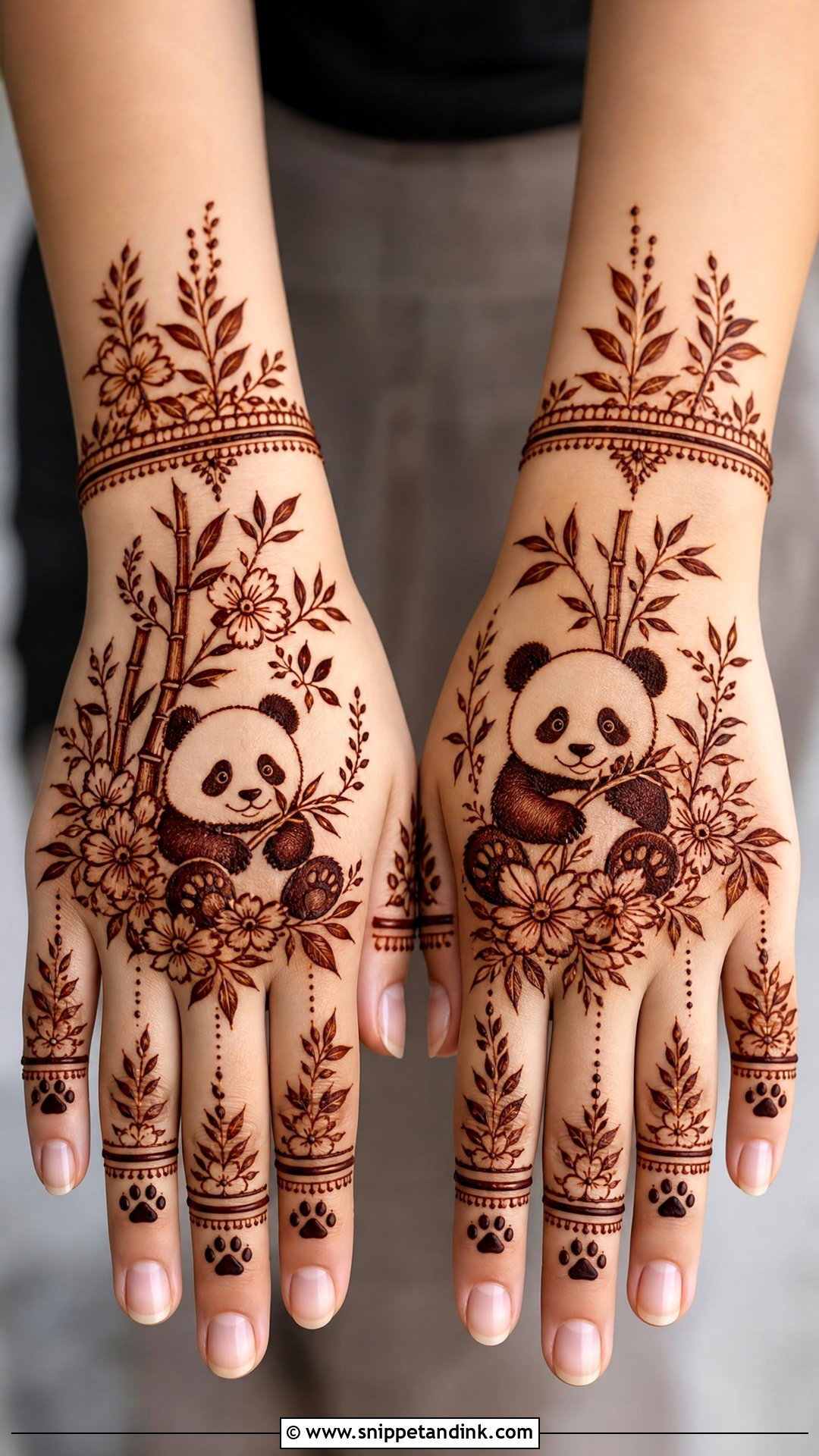
Festival henna is worn through cooking, prayers, visits and sweets. Panda festival mehndi design for Eid, Diwali, Raksha Bandhan or a school celebration should be festive but comfortable: a panda in the center of the back of the hand with flowers, dots, leafy vines and a light wrist cuff, and finger bands with tiny paw prints or bamboo leaves. Natural henna gives a warm reddish-brown that suits the occasion. Kids who are bored of florals usually love it.
30. Panda Easy Mehndi Design
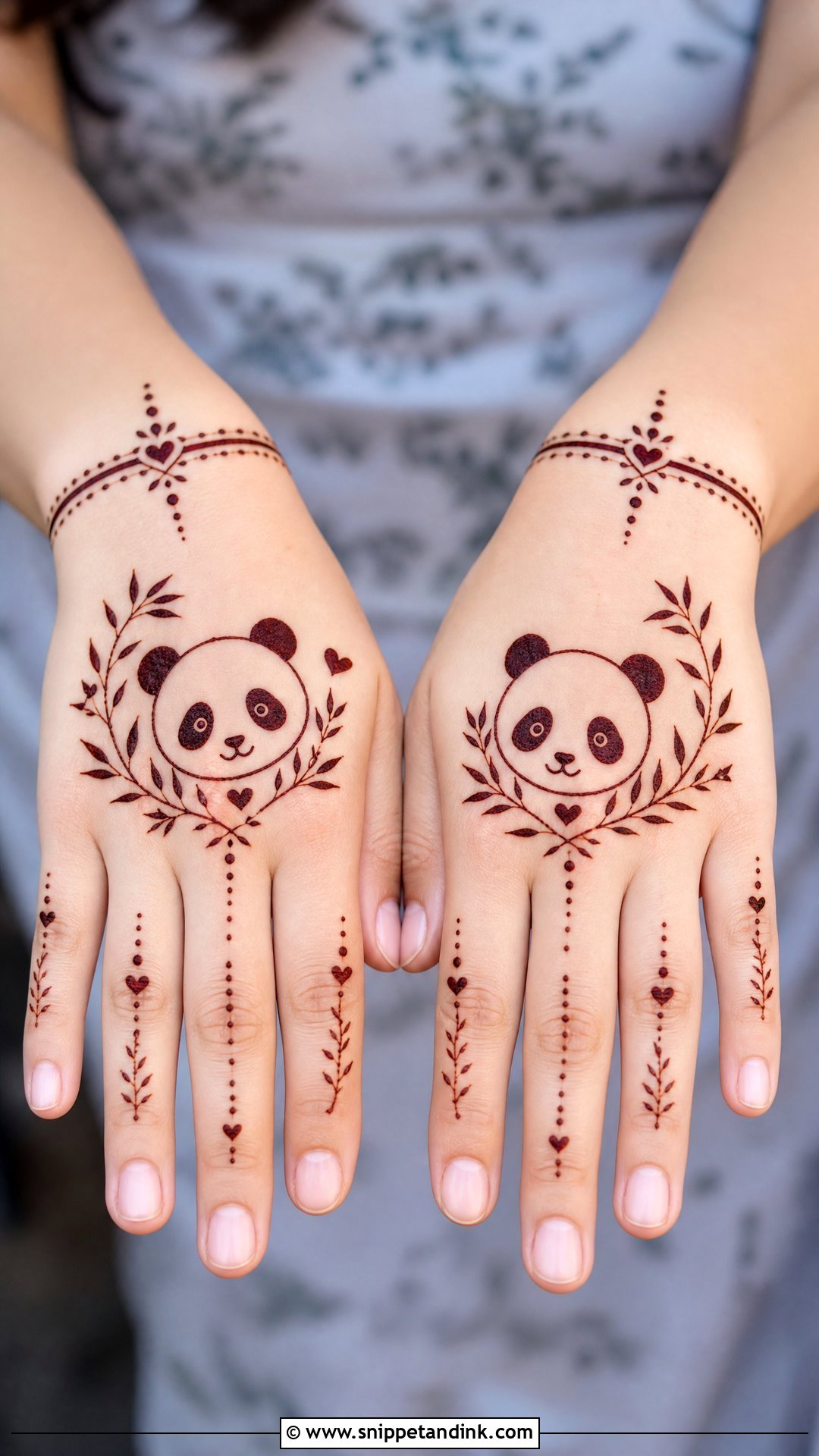
For beginners practicing at home, start here. Circles for the face, ears and eye patches, a small nose and smile, and two bamboo leaves to one side. Finish with dotted finger trails, a small wrist line and a few tiny hearts or flowers. Practice on paper first; a panda’s face is easier to judge on paper than on a moving hand. Don’t overwork it. Clean outlines and open space are what make it look polished.
Keeping a Six-Year-Old Still Long Enough for a Panda
Most panda designs end up on children, and with children the challenge isn’t the drawing. It’s the half hour after it.
Before you sit them down
- Wash and dry their hands, with no lotion. Henna stains poorly over cream.
- Feed them first. Wet palms and a plate of food never end well.
- Choose the back of the hand or wrist for very young children, so they can still hold things.
- Do a small dot on the arm a day or two before if they’ve never had henna.
The drying stretch
Natural henna paste needs time to work, and the longer it stays, the deeper the stain. For kids, an hour or two is realistic. A cartoon on a tablet buys more stillness than any request. If it’s bedtime, wrap the hand loosely in tissue and slip on a cotton sock rather than washing. In the morning, scrape the dry paste off rather than scrubbing it. A darker stain will appear over the next day or two.
One firm rule: I never use black or instant henna on children, and henna in any form is best skipped for babies and toddlers. If a cone promises a black panda in minutes, it isn’t henna.
Give the Panda Room to Breathe
A panda offers something different from paisleys and florals, and it works at every scale, from a tiny face on a finger to a full themed hand. What makes any panda design work is the same: a clear motif with bold eye patches, open skin around the face, and supporting details like bamboo, dots, hearts, mandalas or a wrist cuff that frame rather than crowd it. Use natural henna, keep the layout clean, and for children, pick a design that can be finished before they lose patience.
You'll Like These Ideas:


Leave a Reply