
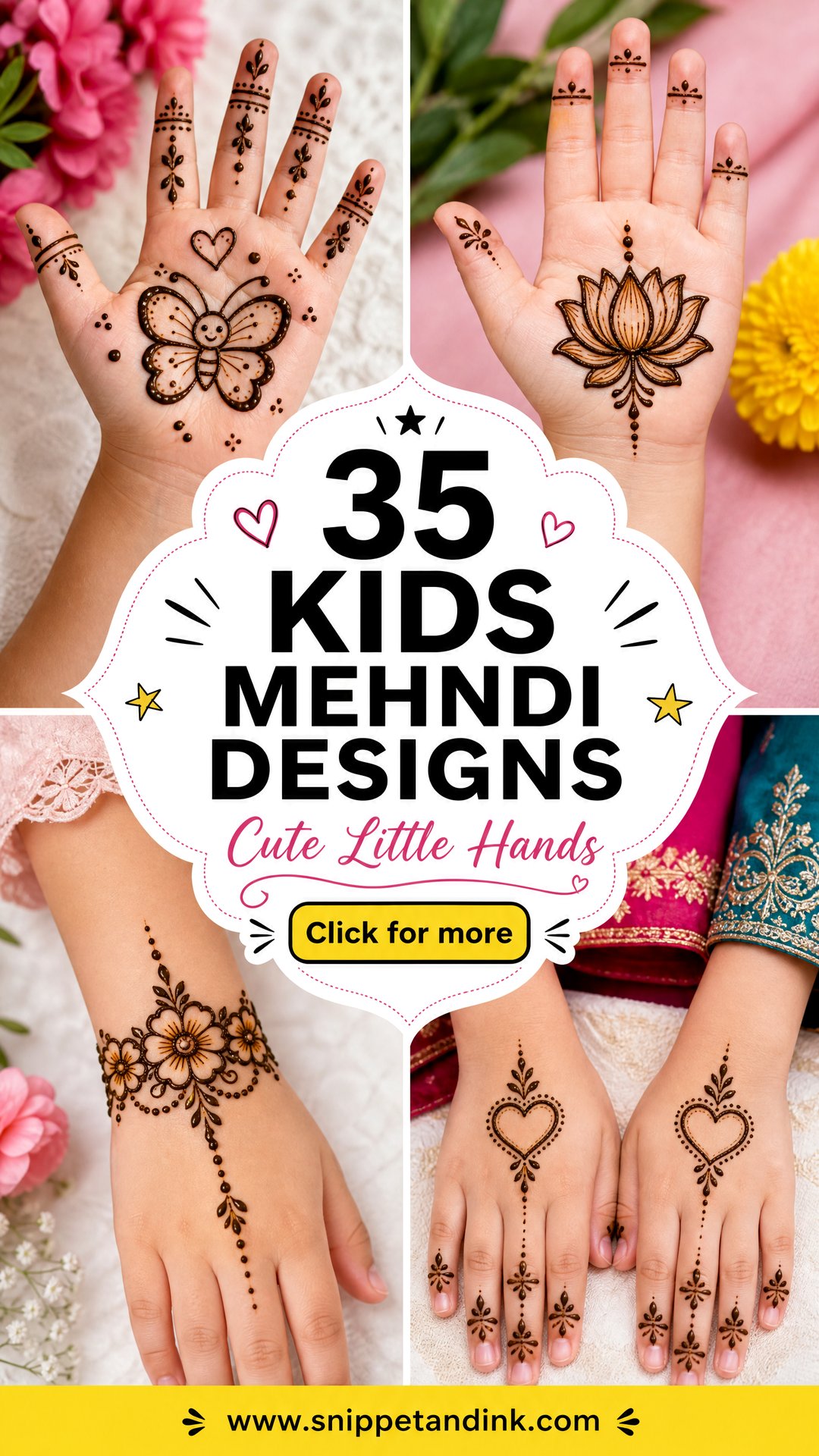
Drawing henna for children is a different job from bridal work. The design has to be finished before the child’s patience runs out, the shapes have to survive a hand that moves halfway through a line, and the paste has to be something I would happily put on my own skin. Good Kids mehndi designs lean on shapes children recognise, butterflies, hearts, stars, smiley faces, with open spacing that forgives a wobble. Below are 35 I draw at Eid, Diwali, weddings and birthday parties, with notes on which ages each one suits and what tends to go wrong.
Is Henna Safe for Young Children?
Natural henna on a healthy child’s hands is a long-standing tradition and generally safe. The risk comes from what gets sold as henna. Before I put paste on any child, I want to be sure of three things.
It is real henna, not black henna
Natural paste is made from henna powder, a liquid like lemon juice or water, sugar and an essential oil. It stains orange first and darkens to reddish brown. So-called black henna, or any cone that stains black or very dark within an hour, often contains PPD, a hair-dye chemical that can cause painful blisters and a lasting allergy. Never use it on a child.
The child has no G6PD deficiency
Children with G6PD deficiency, a common inherited enzyme condition, can react seriously to henna, especially babies and toddlers. If your child has been diagnosed with it, skip henna altogether. If you are unsure, ask your doctor before applying it to a very young child.
A small test comes first
For a first-timer or a child with sensitive skin, I dab a tiny spot on the inner arm and wait. Redness, itching or swelling means no henna this time. Many artists also skip essential oils entirely in paste for small children, and it is fair to ask yours to do the same.
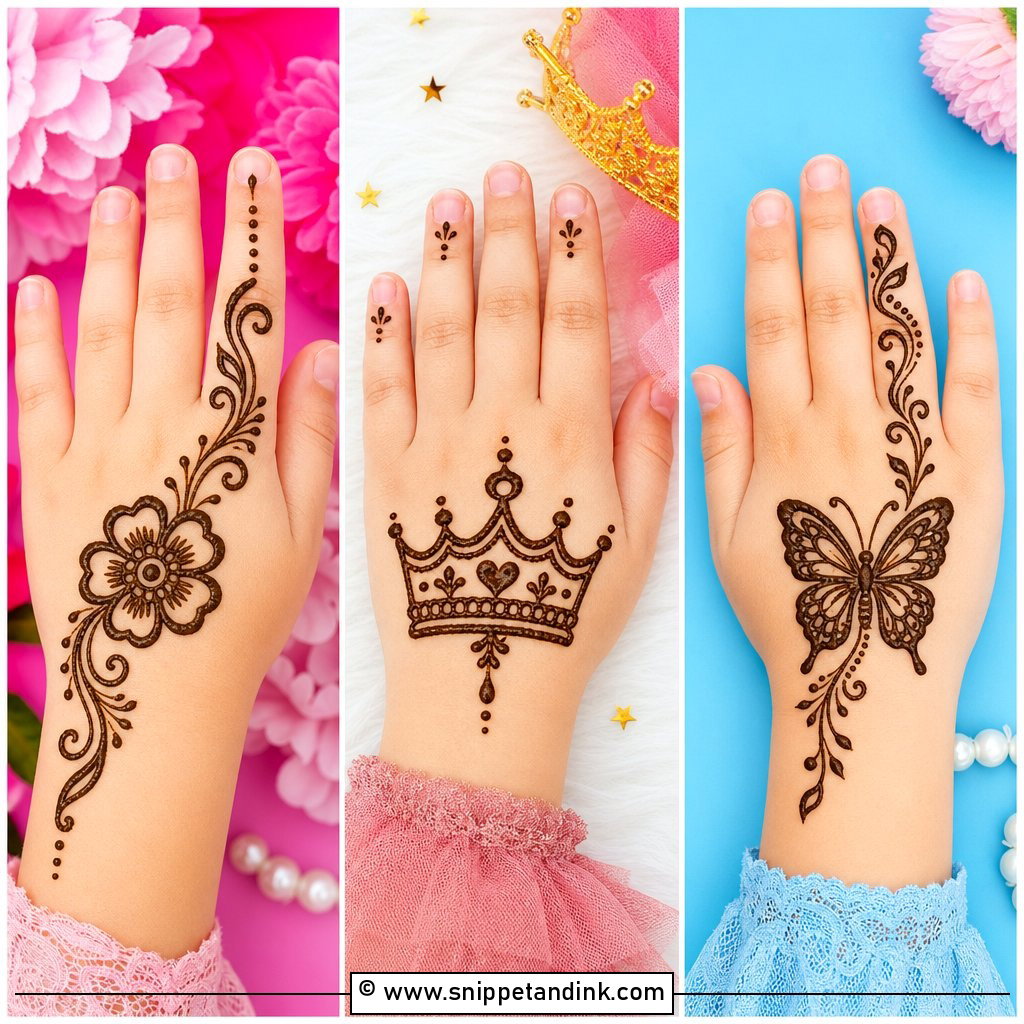
1. Kids Butterfly Mehndi Design
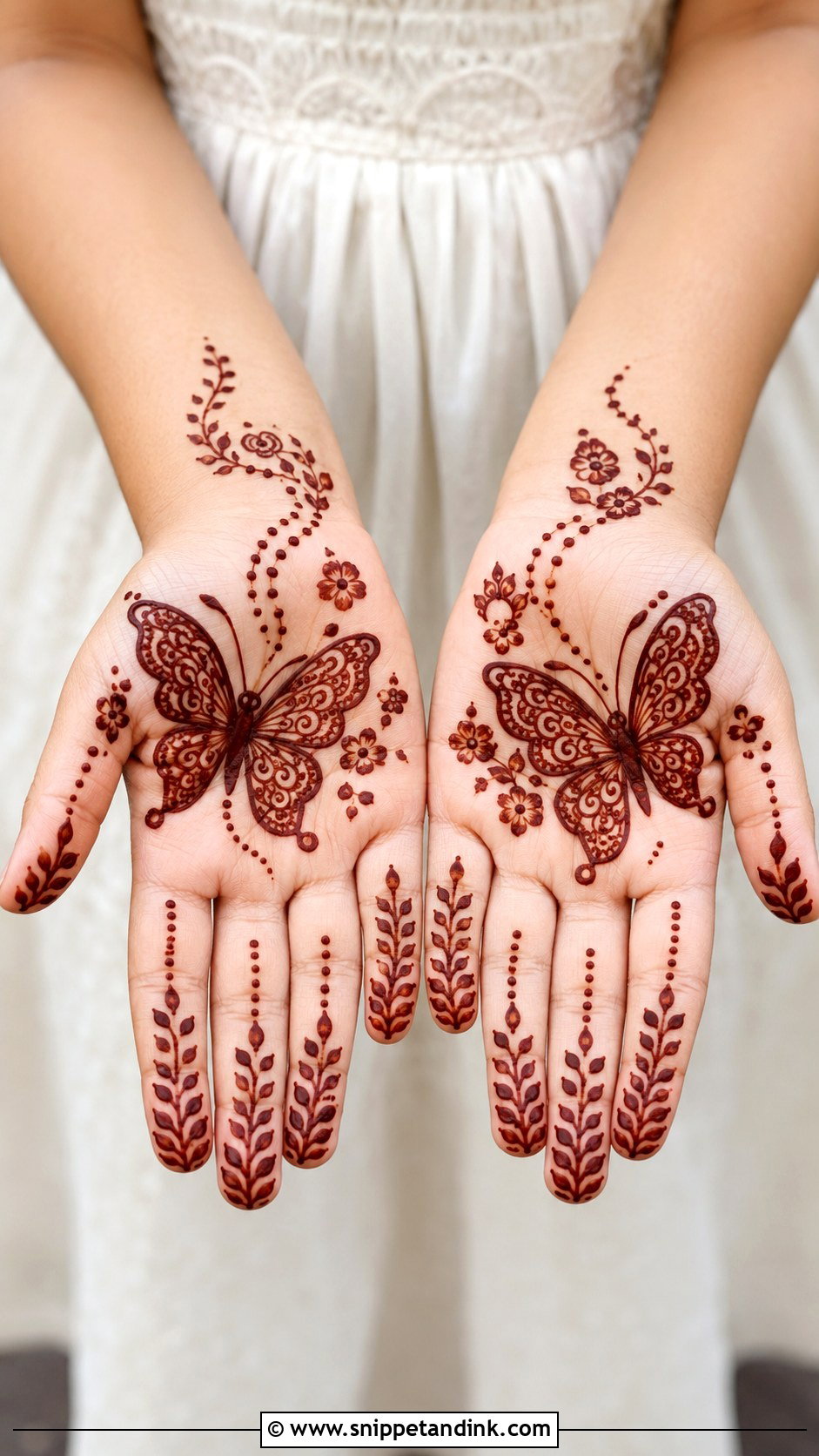
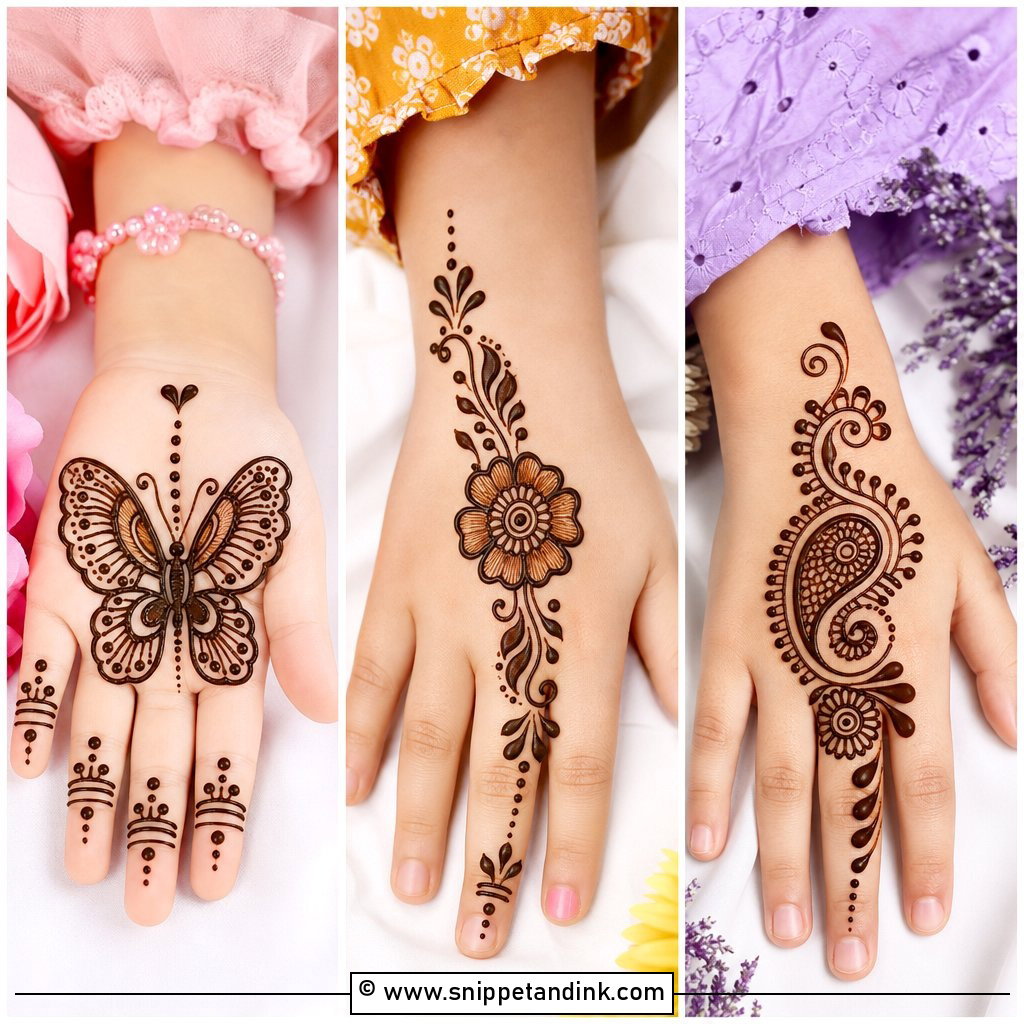
Butterflies are the design I’m asked for most by children under ten. I put one in the centre of the palm or on the back of the hand, keep the wings round and fat so they read clearly, and fill them with a few dots and tiny flowers. A short dotted trail toward the fingers finishes it. Narrow, pointed wings look elegant on paper but lose their shape on a small palm once the stain darkens, so I avoid them.
2. Kids Flower Mehndi Design
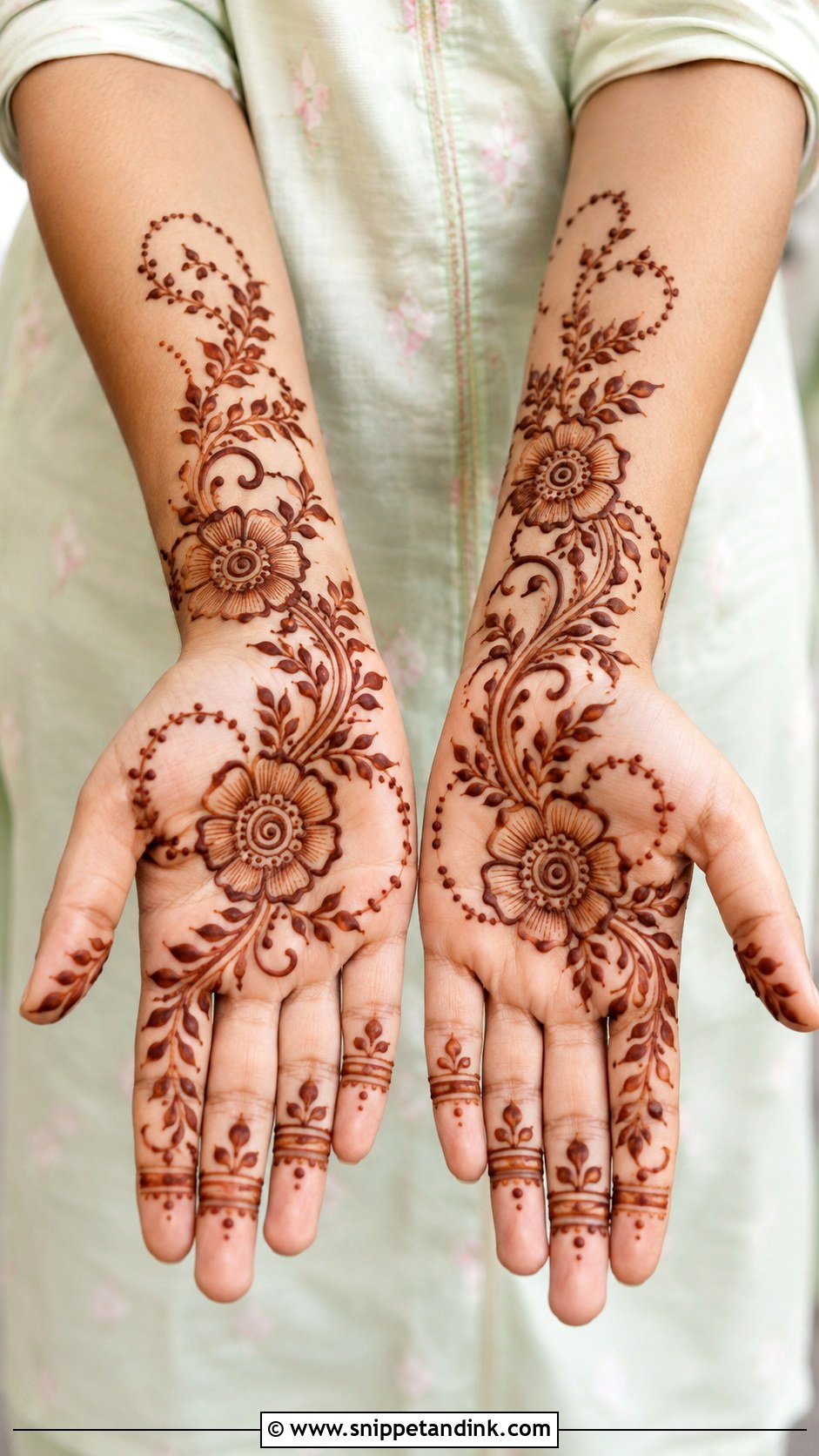
One flower with a light vine to the wrist is my fallback when a child has no idea what she wants. On the palm, the vine runs straight down; on the back of the hand, it angles toward the index finger. Children recognise a flower instantly, which matters more than you would think, because a design they can name is a design they are proud of. A ring of dots around the petals makes it look complete. This one takes only a few minutes per hand.
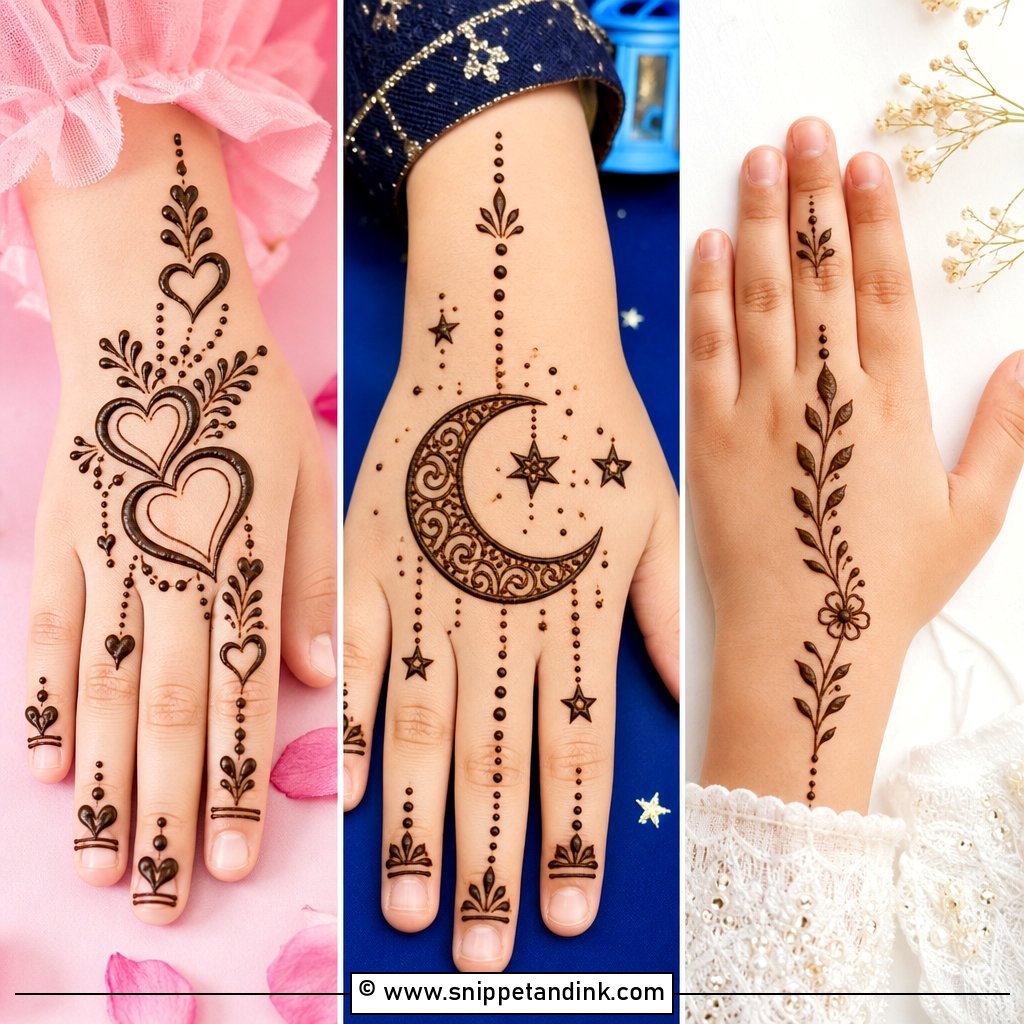
3. Kids Heart Mehndi Design
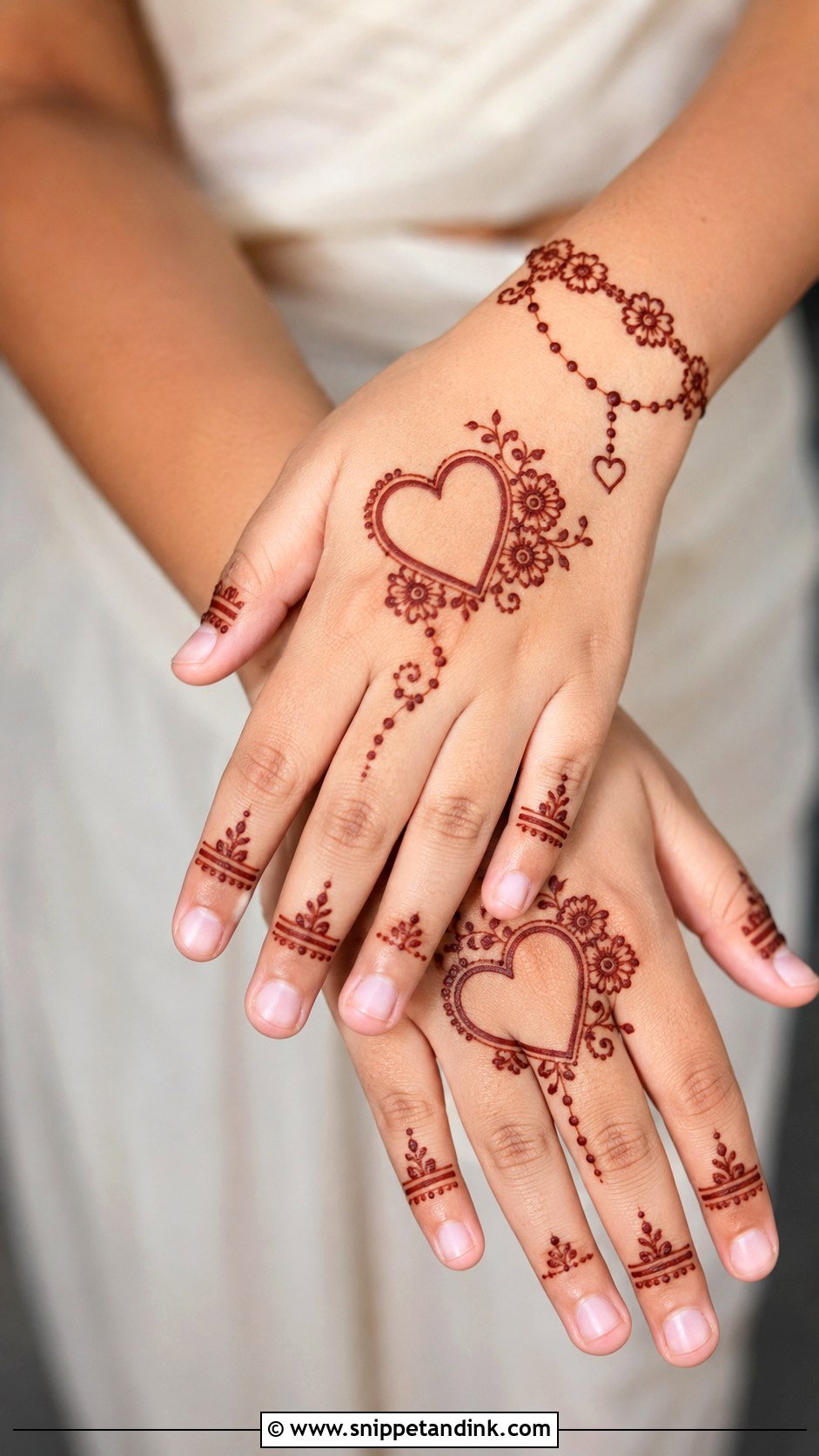
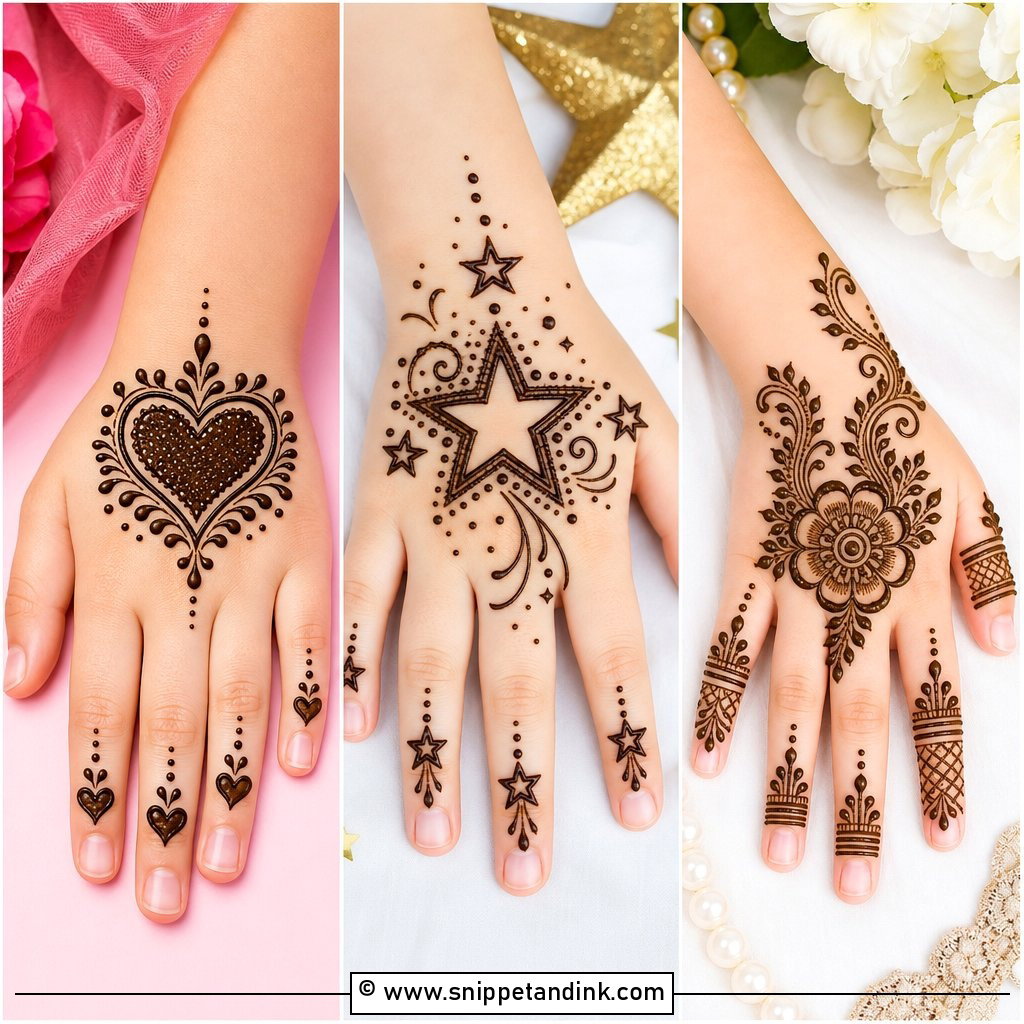
Hearts are easy to draw and easy to love. I put one in the middle of the palm with dots, mini flowers and curved vines around it, or wrap a row of small hearts around the wrist with a thin chain to one finger. Draw the outline bold and fill it lightly. A solidly filled heart stains very dark on a child’s palm and can look like a blot rather than a shape. Sisters and cousins often want matching hearts, which is quick to repeat.
4. Kids Star Mehndi Design
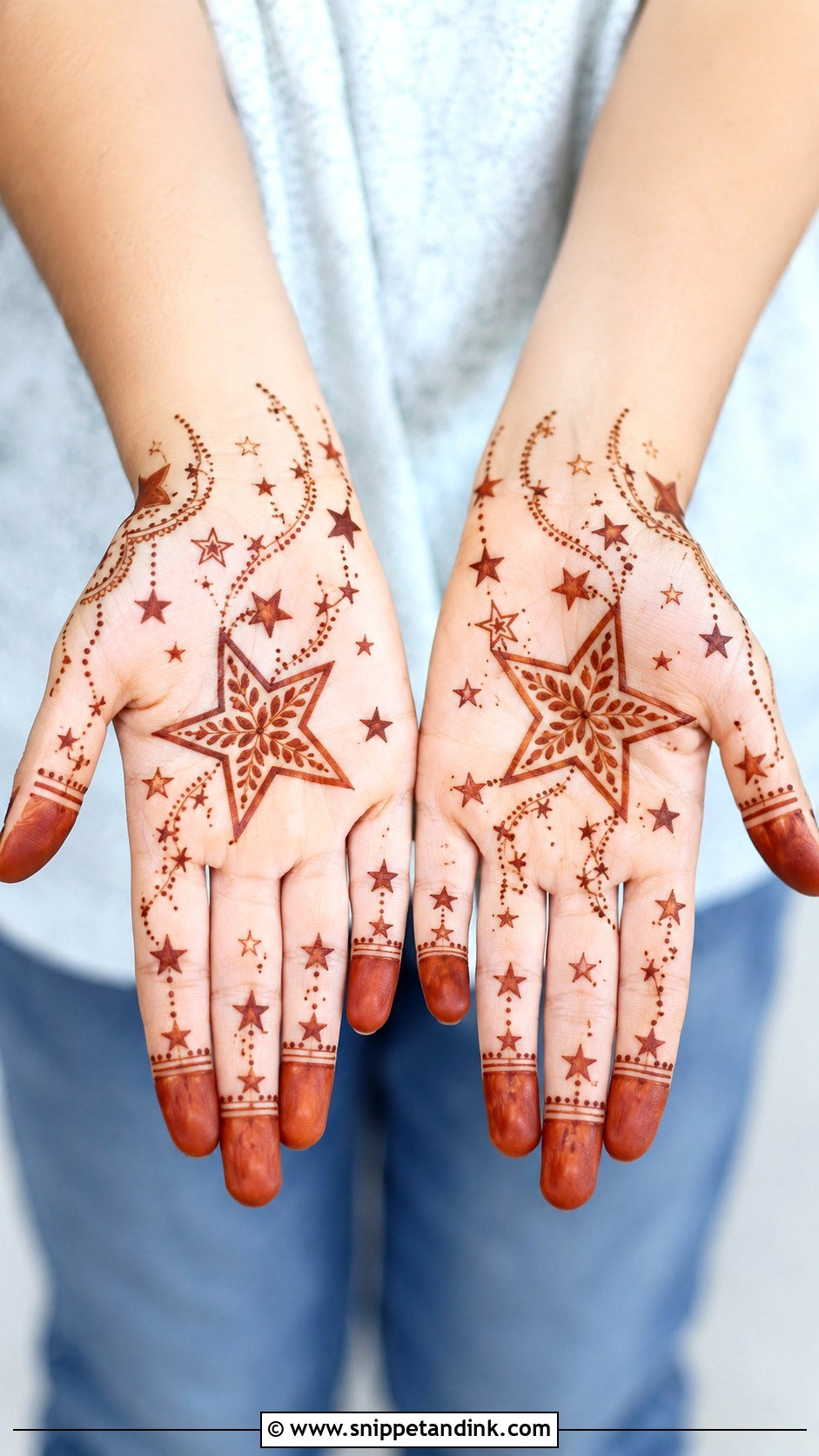
Stars scatter well across the back of a hand, joined by tiny dots and curved trails, and a larger one in the palm can sit inside a circle with small spark lines. Five-pointed stars are harder to draw neatly than people expect, especially on a hand that moves. I draw them slightly chunky with rounded points, which hides small slips. Finish the fingertips with dots or tiny star tips.
5. Kids Smiley Face Mehndi Design
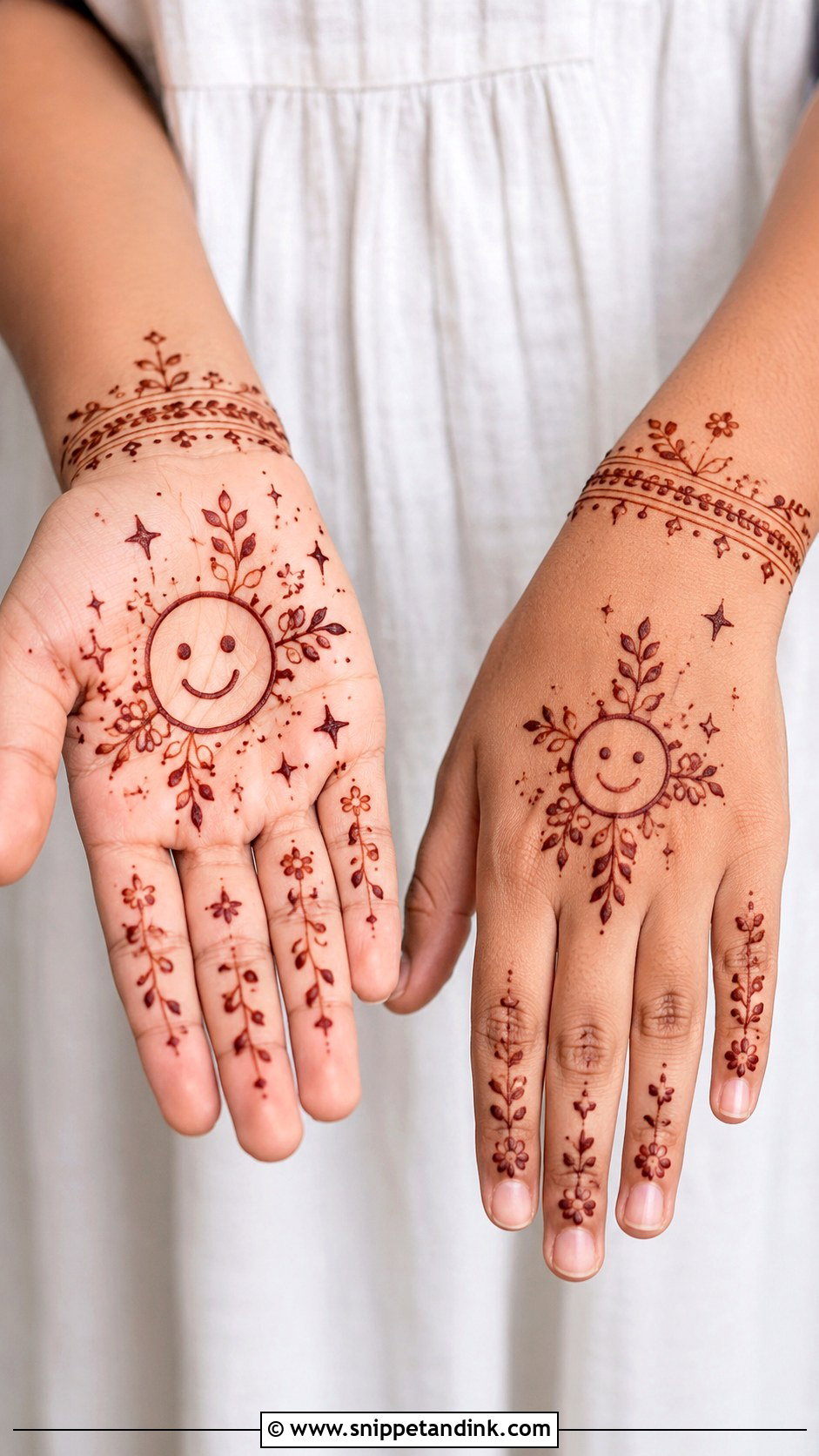
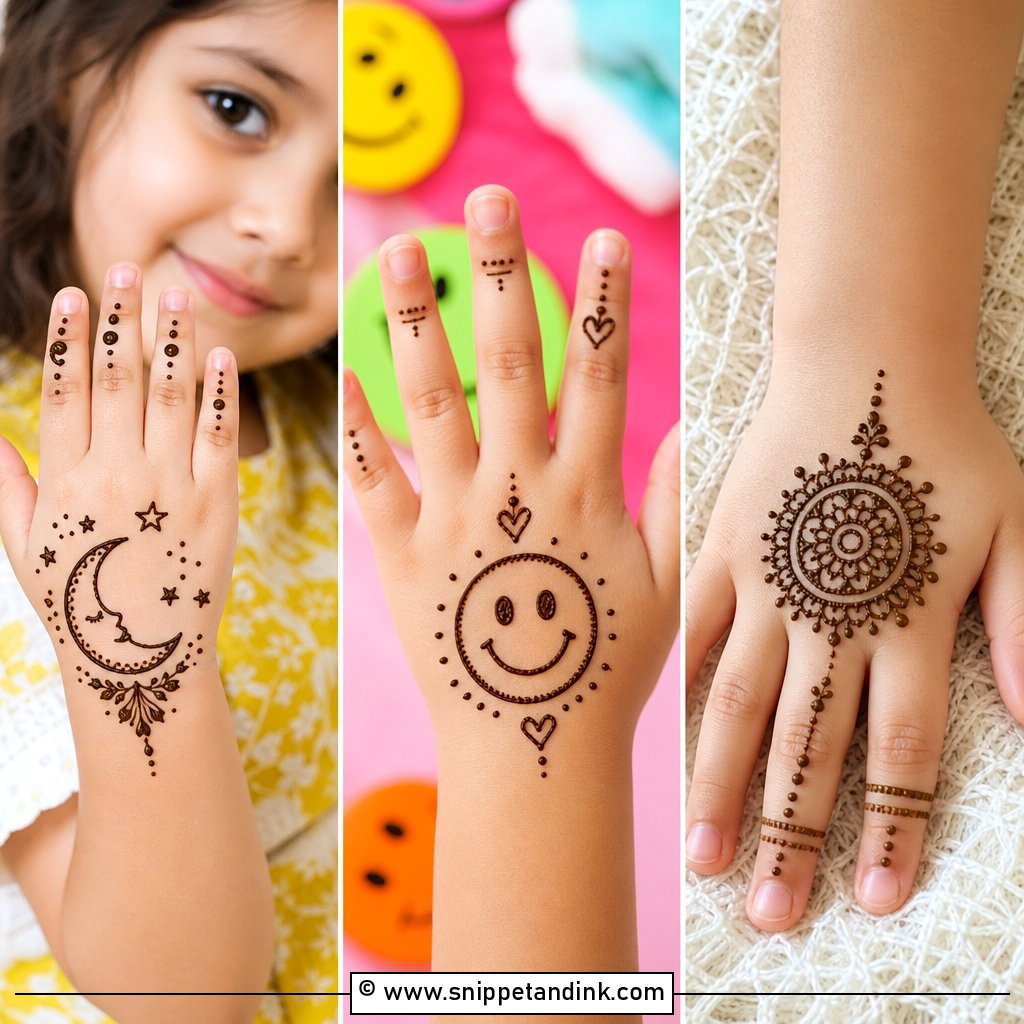
A smiley face is instant joy for the under-sevens. I draw one in the middle of the palm with flowers, stars and dots around it, or two or three small ones along a curving trail on the back of the hand. The expression is the whole design, so the eyes and mouth need clean, rounded lines with space between them. If the eyes are too close to the mouth, the stain spreads them together and the smile disappears.
6. Kids Arabic Mehndi Design
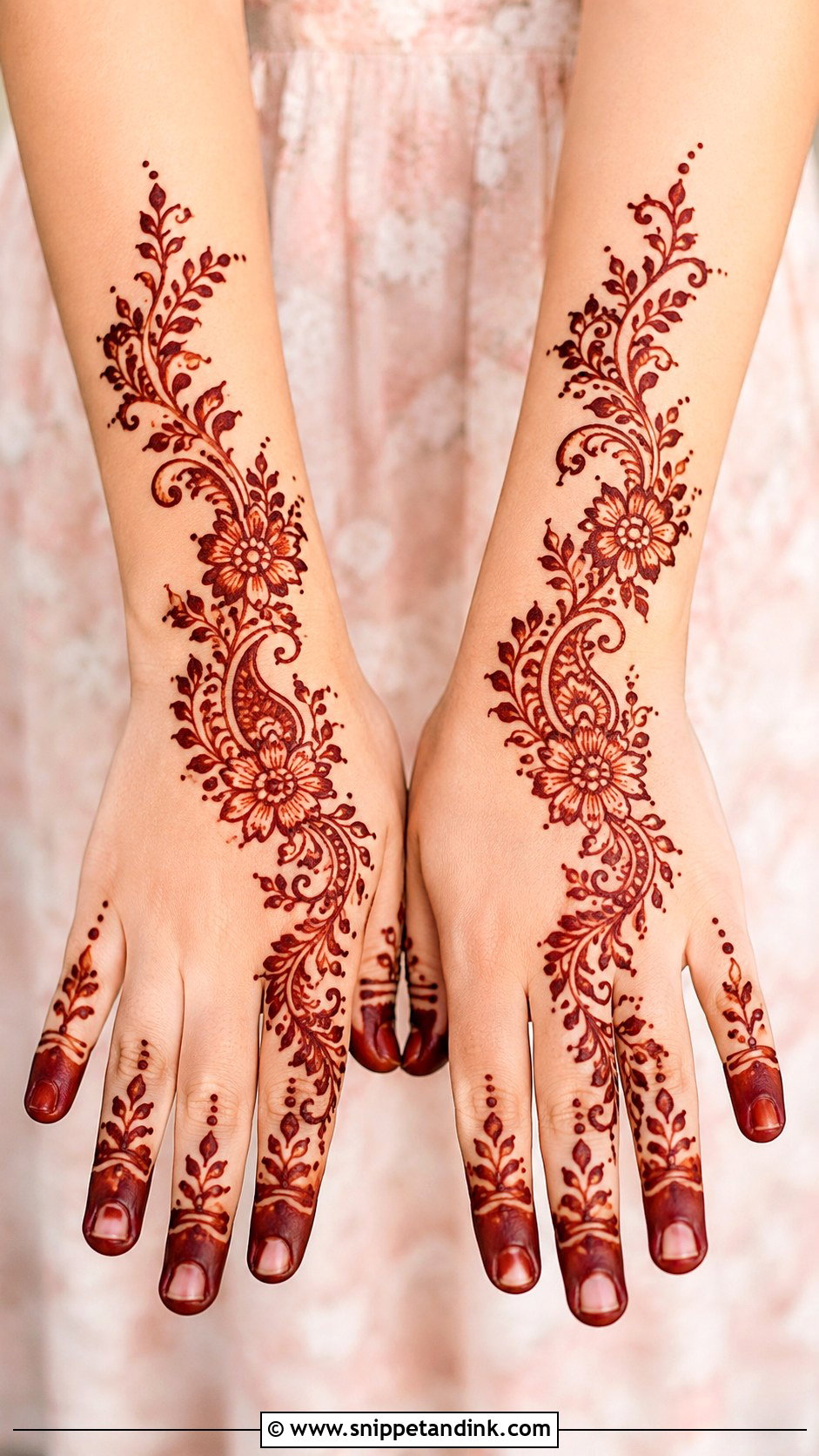
For an older girl who wants to look like the women at the wedding, I draw an Arabic trail scaled down: one flowing vine from wrist to index finger with small flowers, leaves, dots and soft paisleys along it. The open skin around it keeps the sitting short. I make the motifs larger than I would for an adult, since fine adult detail on a small hand turns into mush. Light fingertips balance it.
7. Kids Front Hand Mehndi Design
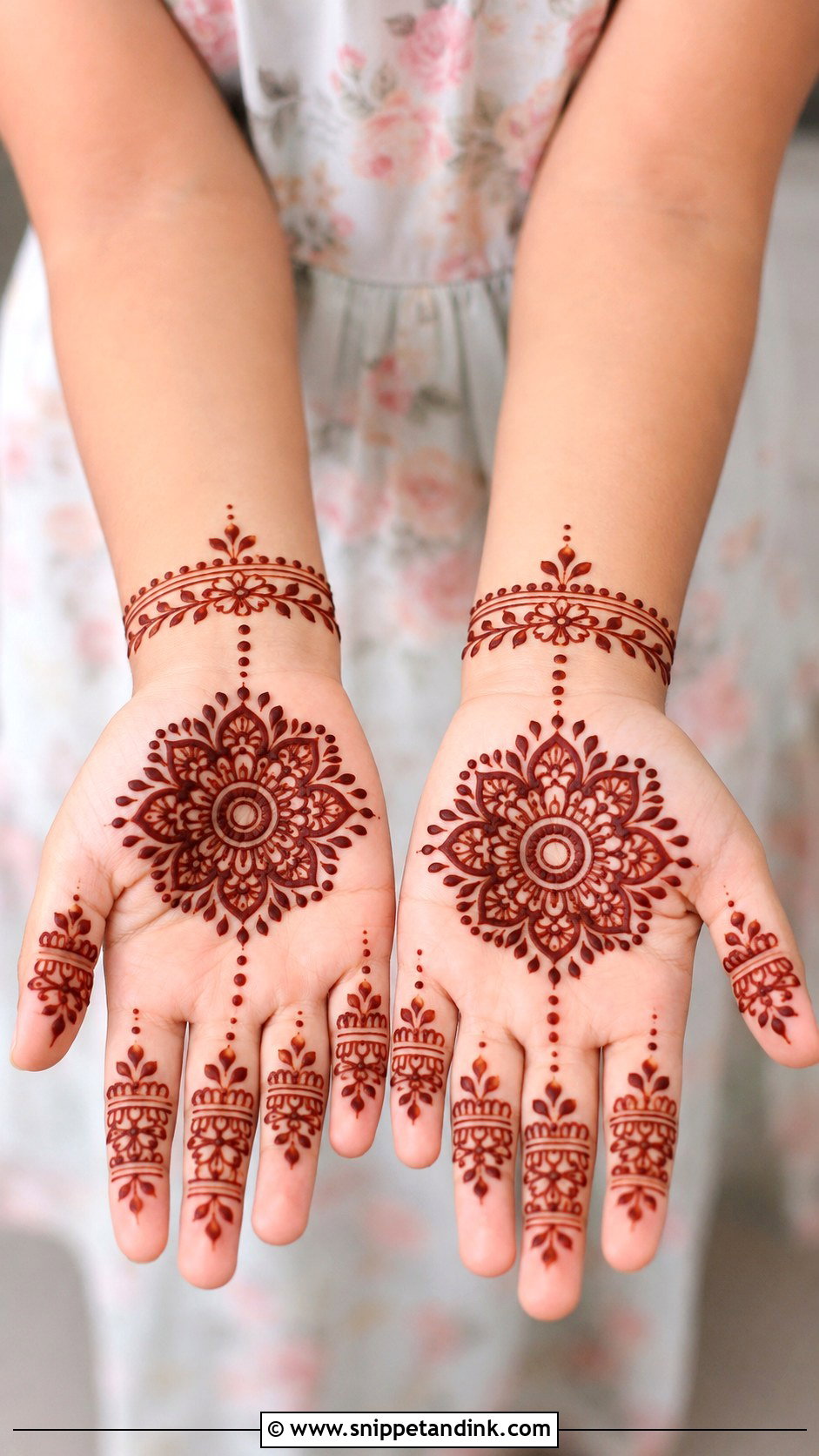
Palm designs let children watch the henna dry, which keeps some of them still. I start with a small mandala, flower or butterfly in the centre and add short trails toward the fingers and wrist. Dense filling is a bad idea here: children open and close their hands before the paste sets, and a packed palm smudges into a smear. Dots, small leaves or tiny rings on the fingers are enough. The coverage scales easily up or down for different ages.
8. Kids Back Hand Mehndi Design
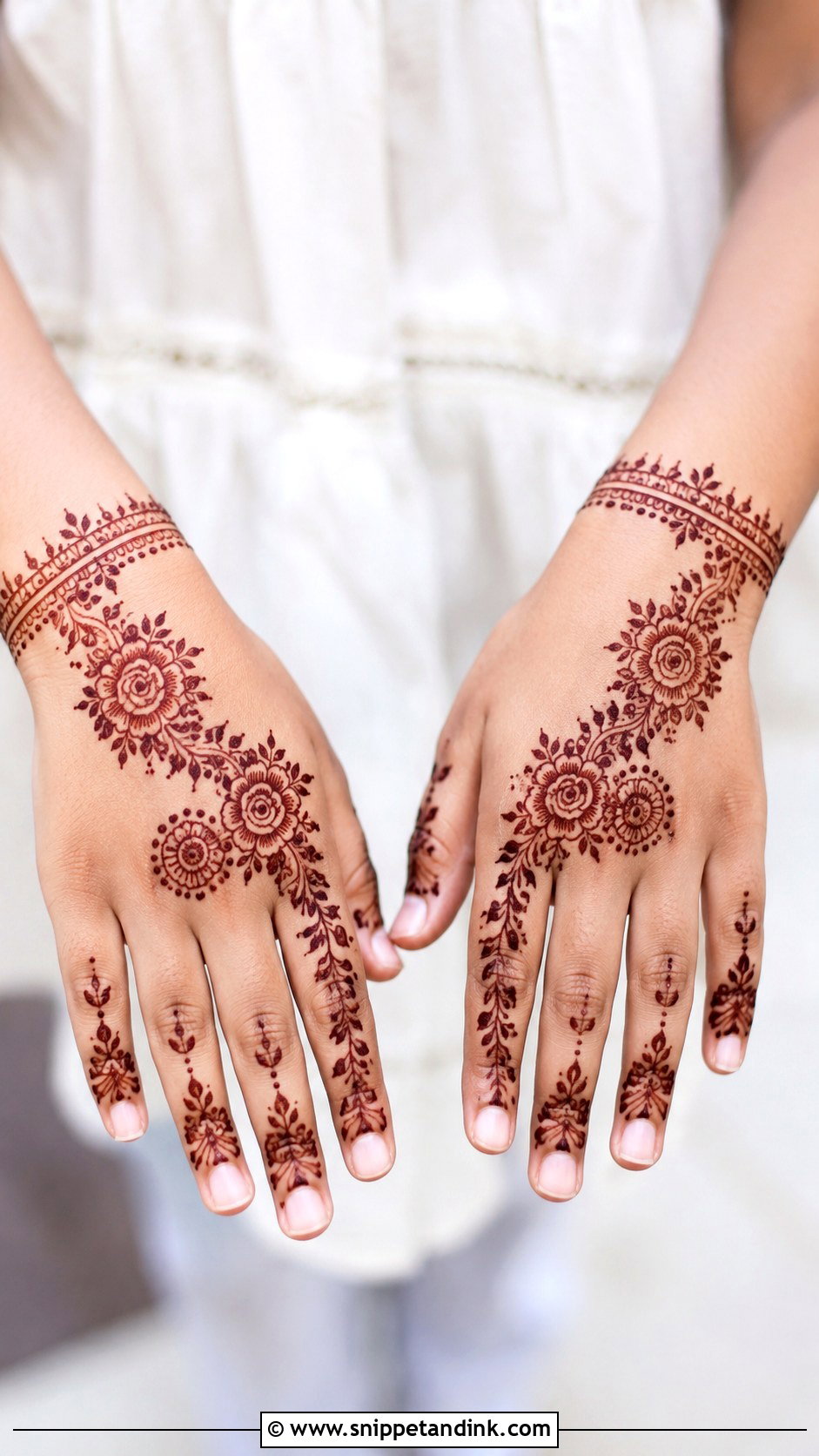
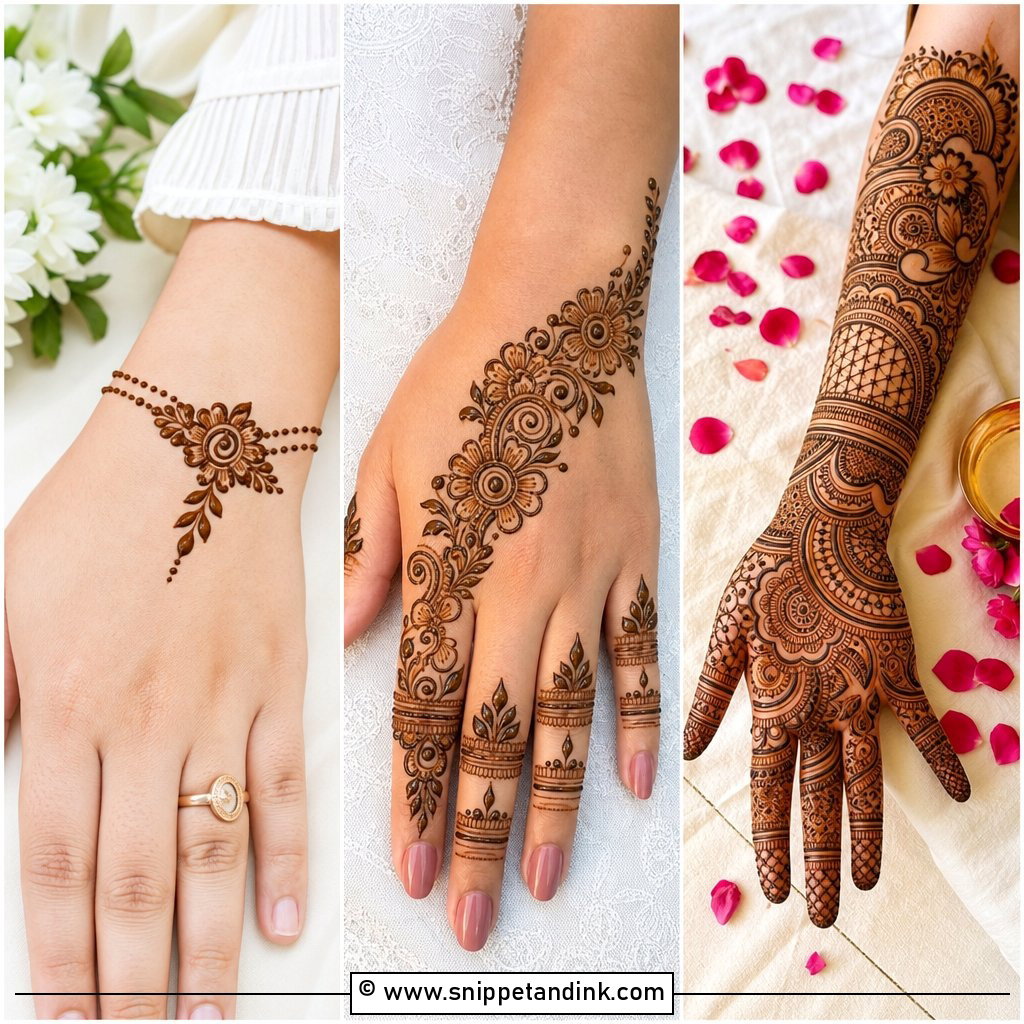
The back of the hand is often the more practical choice. A child can still hold a cup or a toy with the palm side once the paste is dry, and the design shows in photos. A diagonal floral trail, a bracelet band or a small mandala in the centre, plus finger rings and dotted chains, gives a jewellery effect. It stains a little lighter than the palm, so I draw slightly bolder lines. Leave plenty of bare skin.
9. Kids Full Hand Mehndi Design
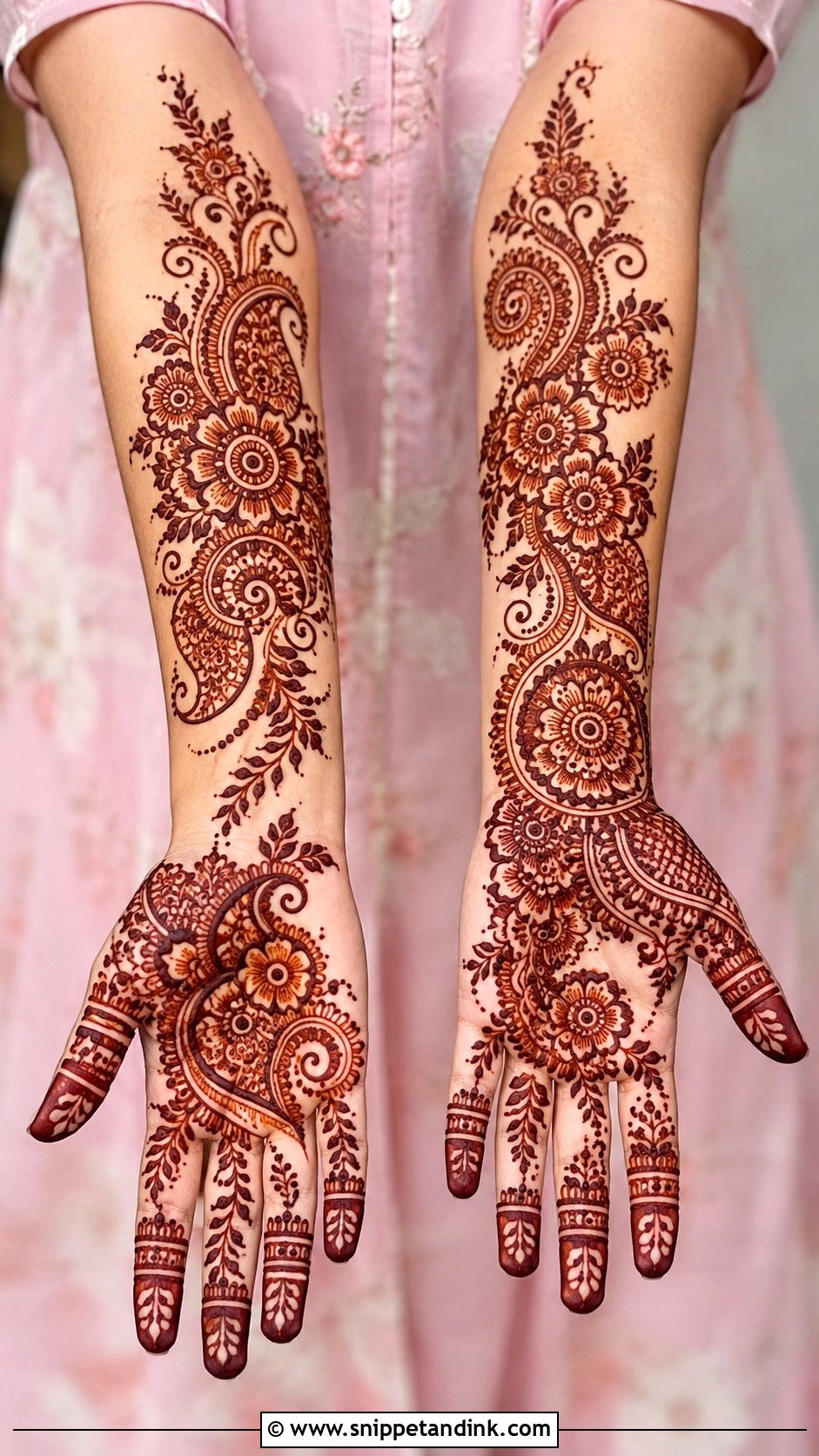
Full hands are for older children who actually enjoy sitting for henna, usually nine or ten and up. I swap bridal detail for bold flowers, simple paisleys, mandalas, leaves and dotted borders from fingertips to wrist, and repeat the finger pattern so it moves quickly. Be honest about the time: even a simplified full hand takes a while for two hands, and a bored child halfway through is worse than a finished half hand. Save it for a close family wedding or Eid night.

10. Kids Half Hand Mehndi Design
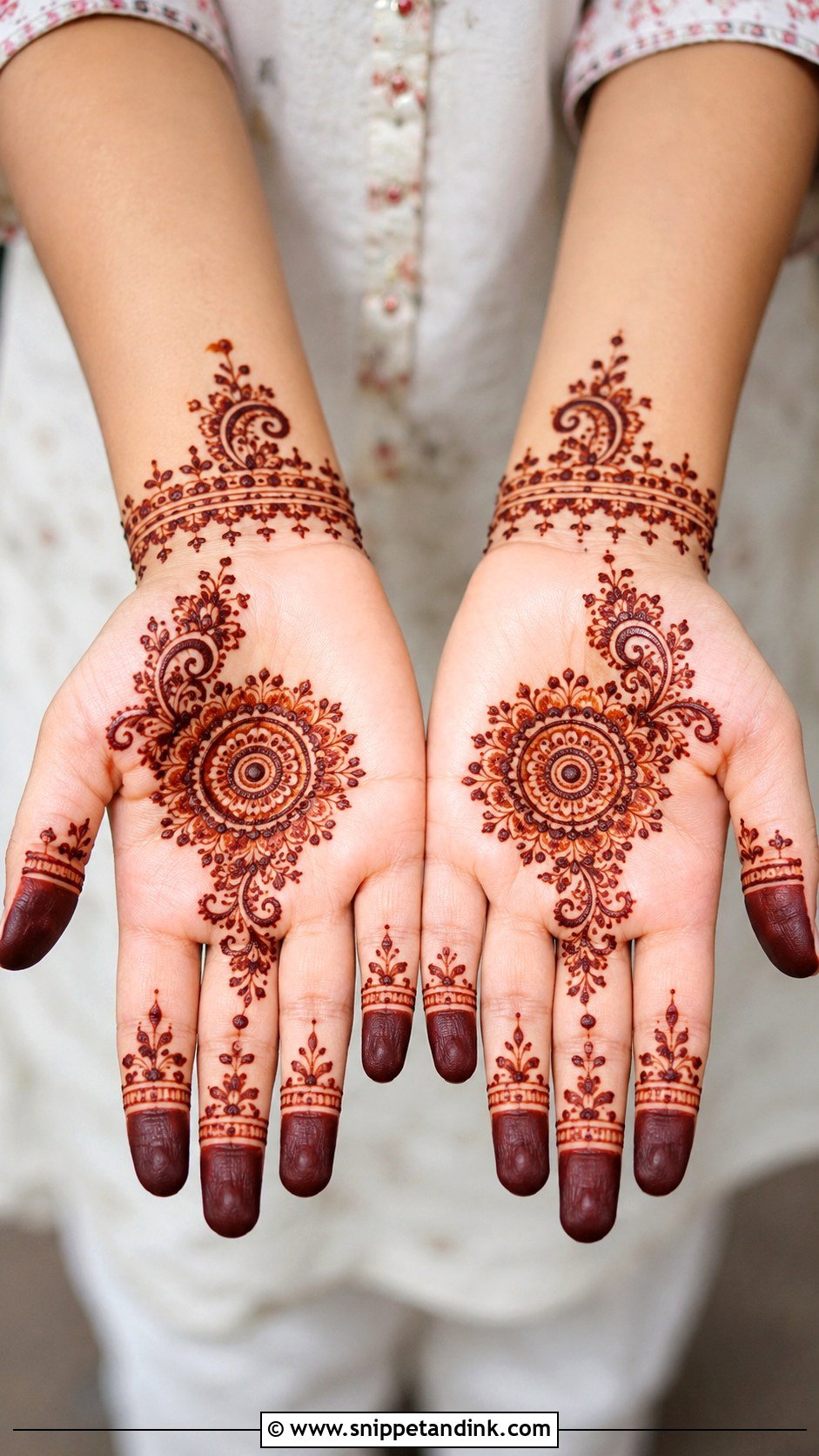
A half hand stops at the wrist and leaves room to breathe. On the palm, a round mandala with flower vines and simple fingertips; on the back, a short Arabic trail. It dries faster than a full hand and gets an active child back to playing sooner. This is the coverage I recommend most often for children between six and ten.
11. Kids Mandala Mehndi Design
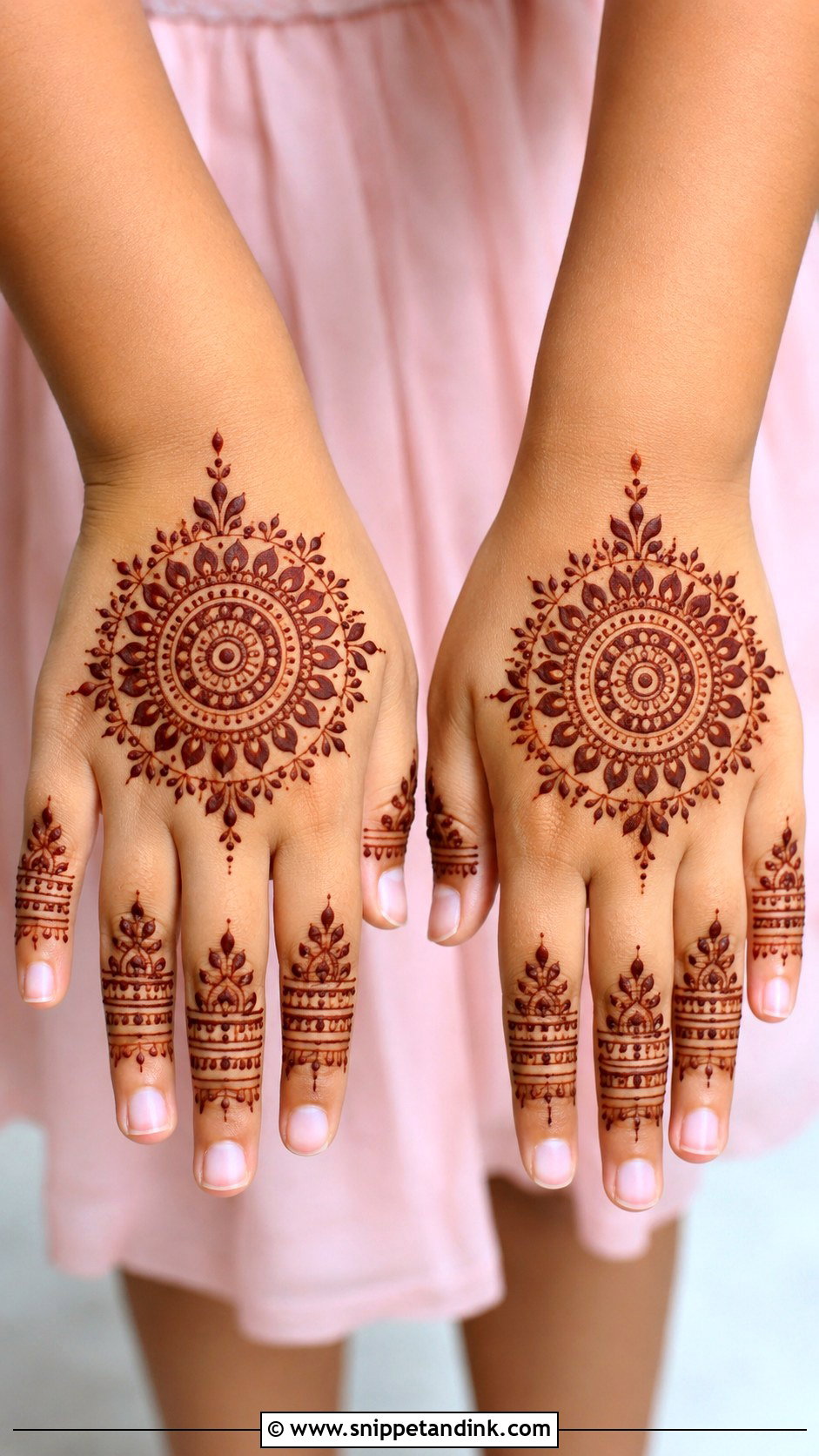
Mandalas pack a complete design into a small space, which suits small hands. A round mandala in the centre of the palm or back hand with dots and petals around it, and matching dots and tiny leaves on the fingers, looks finished at any size. For younger children, I keep it to two rings; older children can have more. A circle drawn freehand on a moving hand is tricky, so I mark four points first and connect them.
12. Kids Bracelet Mehndi Design
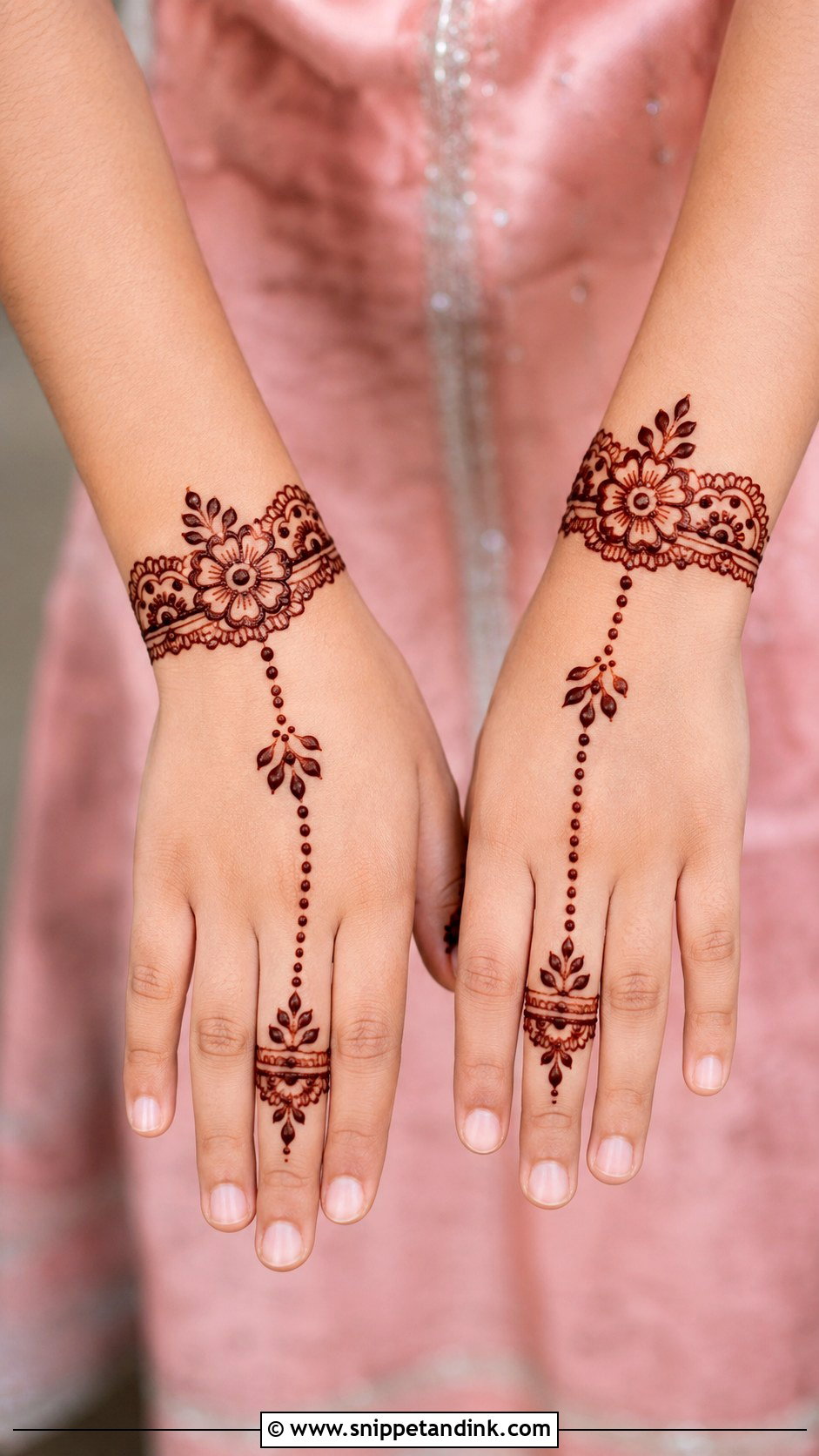
Children love a henna bracelet because it feels like wearing bangles. The band wraps the wrist with tiny flowers, dots, leaves or scallops, and a small chain runs to a finger ring or a cute motif on the back of the hand. Most of the design sits away from the palm, so the child can still use her hands, and it dries quickly. Thin lines and open spacing keep it light.
13. Kids Finger Mehndi Design
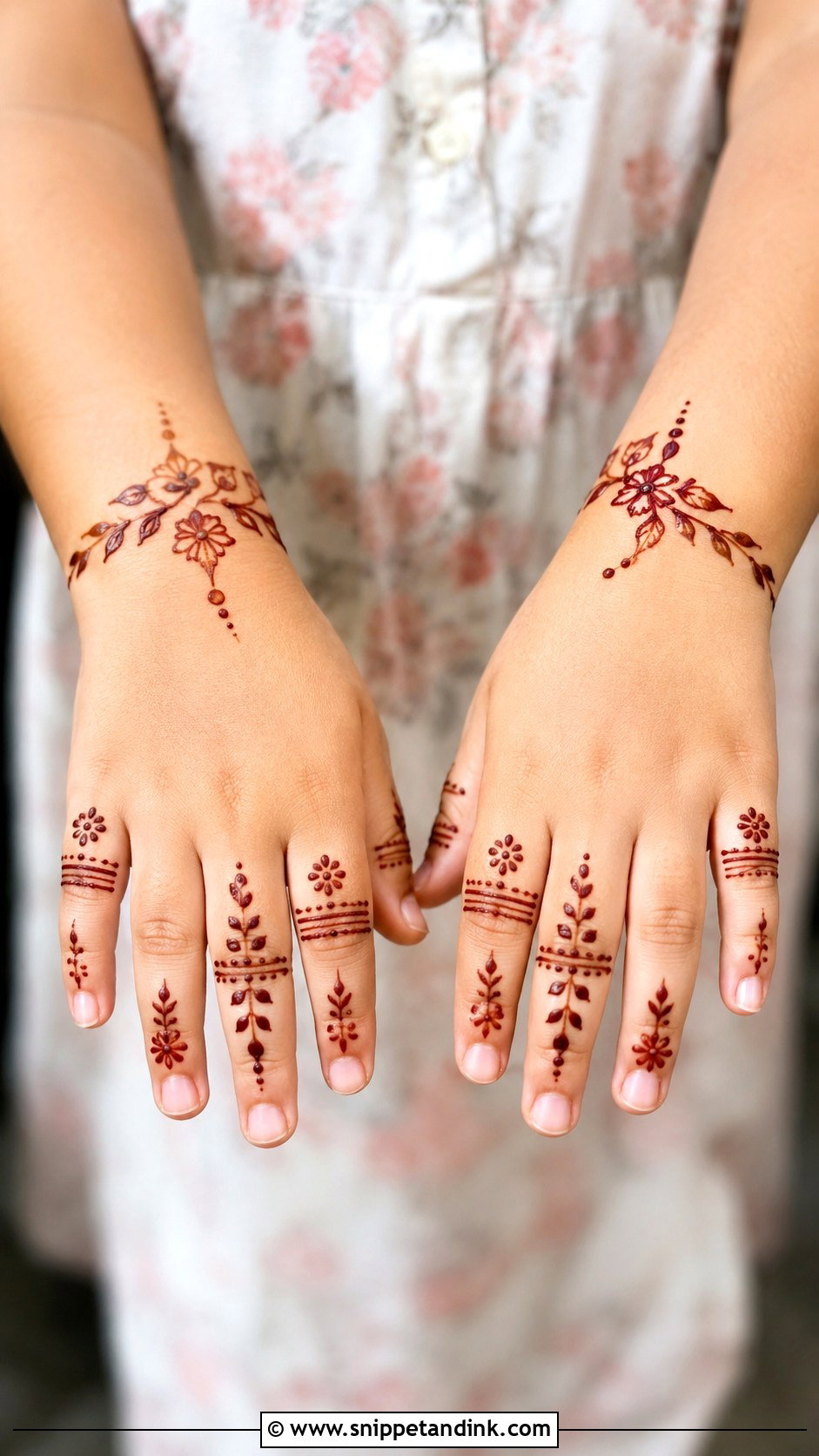
Finger-only henna is my choice for toddlers. Each finger gets a tiny flower, a few dots or a simple band, the palm stays open, and maybe one small motif sits at the wrist. It is over in a couple of minutes per hand, which is about as long as a small child will hold still. Matching both hands looks neat, but do not insist on it if the child has had enough after one.
14. Kids Palm Mehndi Design
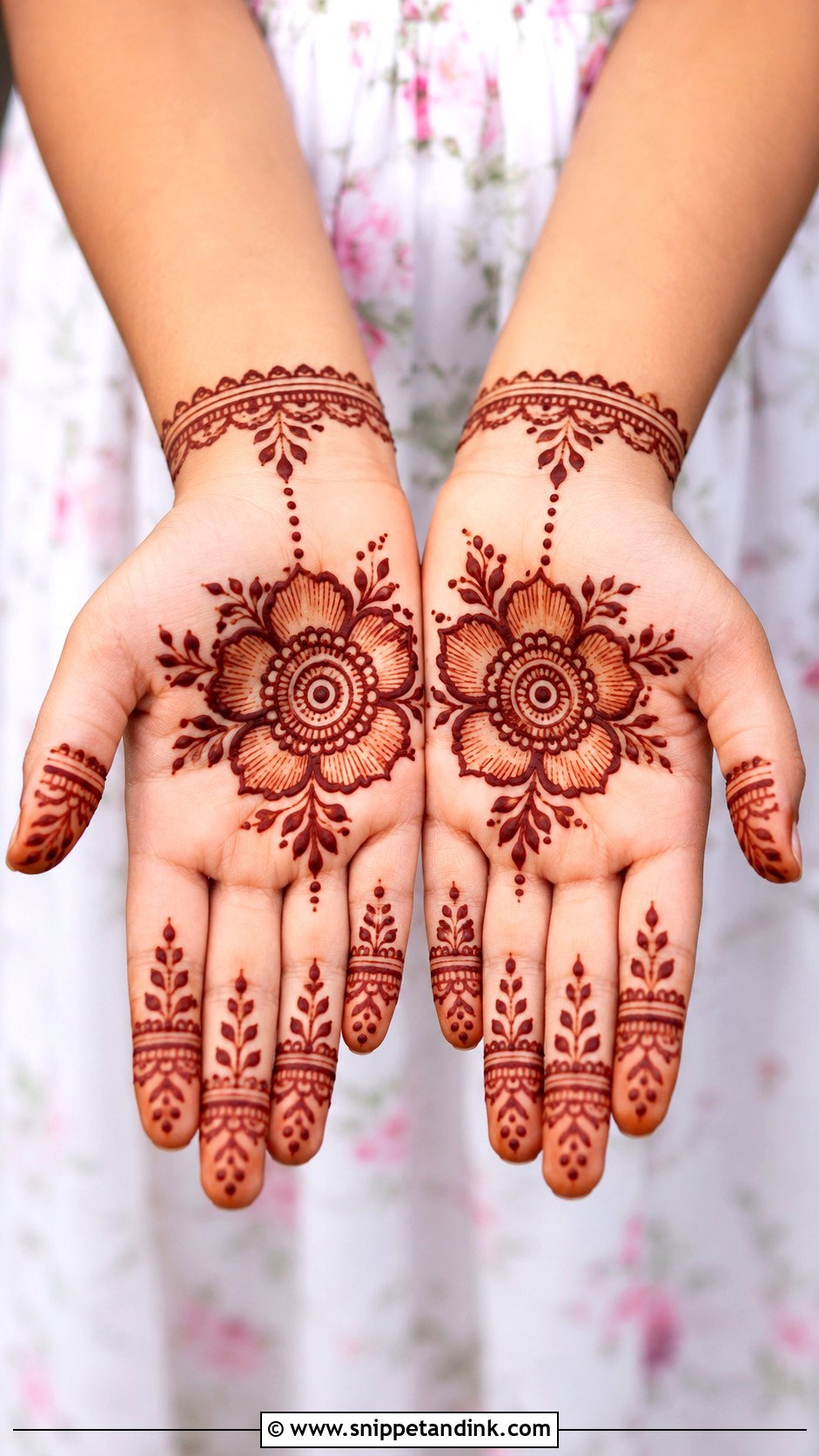
For a palm that is bold enough to show and simple enough to sit through, place one shape in the centre: a flower, butterfly, heart, moon, star or mandala, with short dotted lines toward the fingers and a tiny border at the wrist. That is the whole idea behind a good kids palm mehndi design. Palms stain darkest, so I leave generous gaps between elements to keep the final pattern readable.

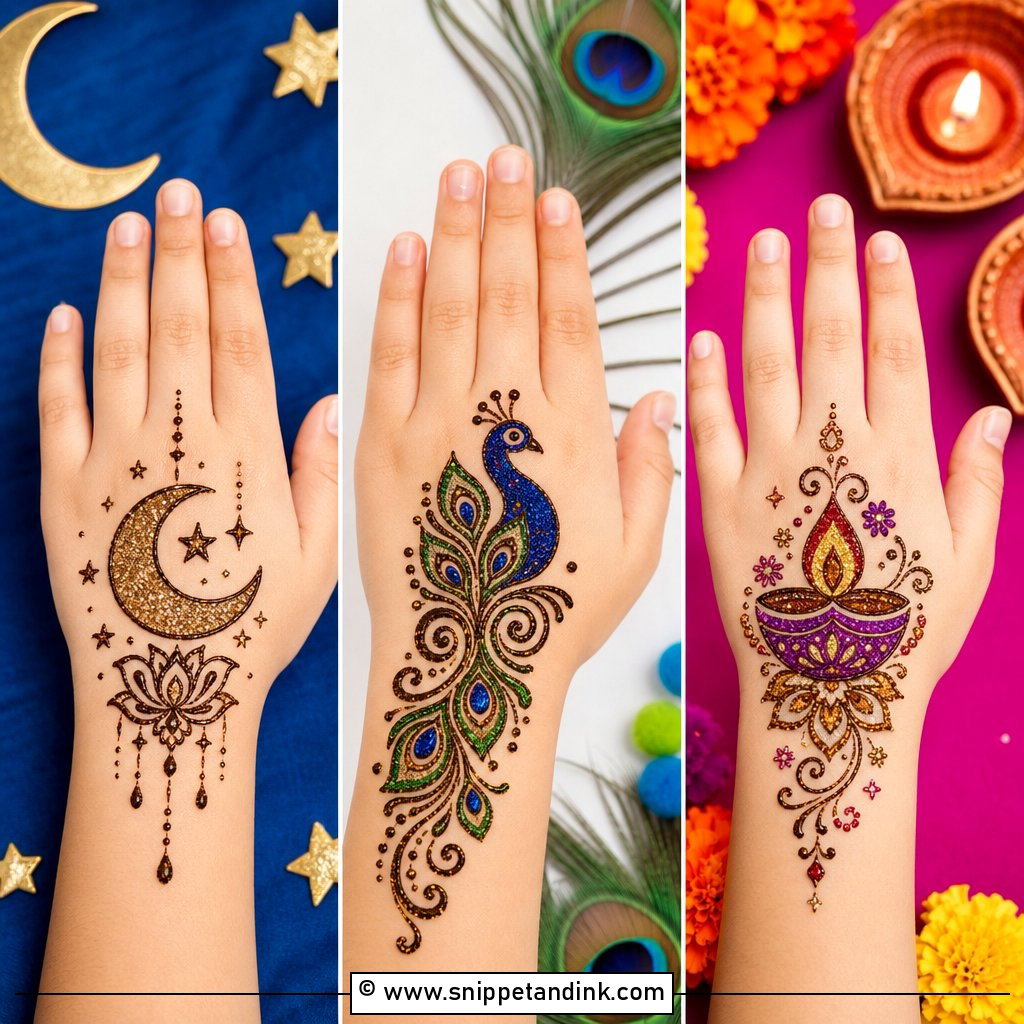
15. Kids Eid Mehndi Design
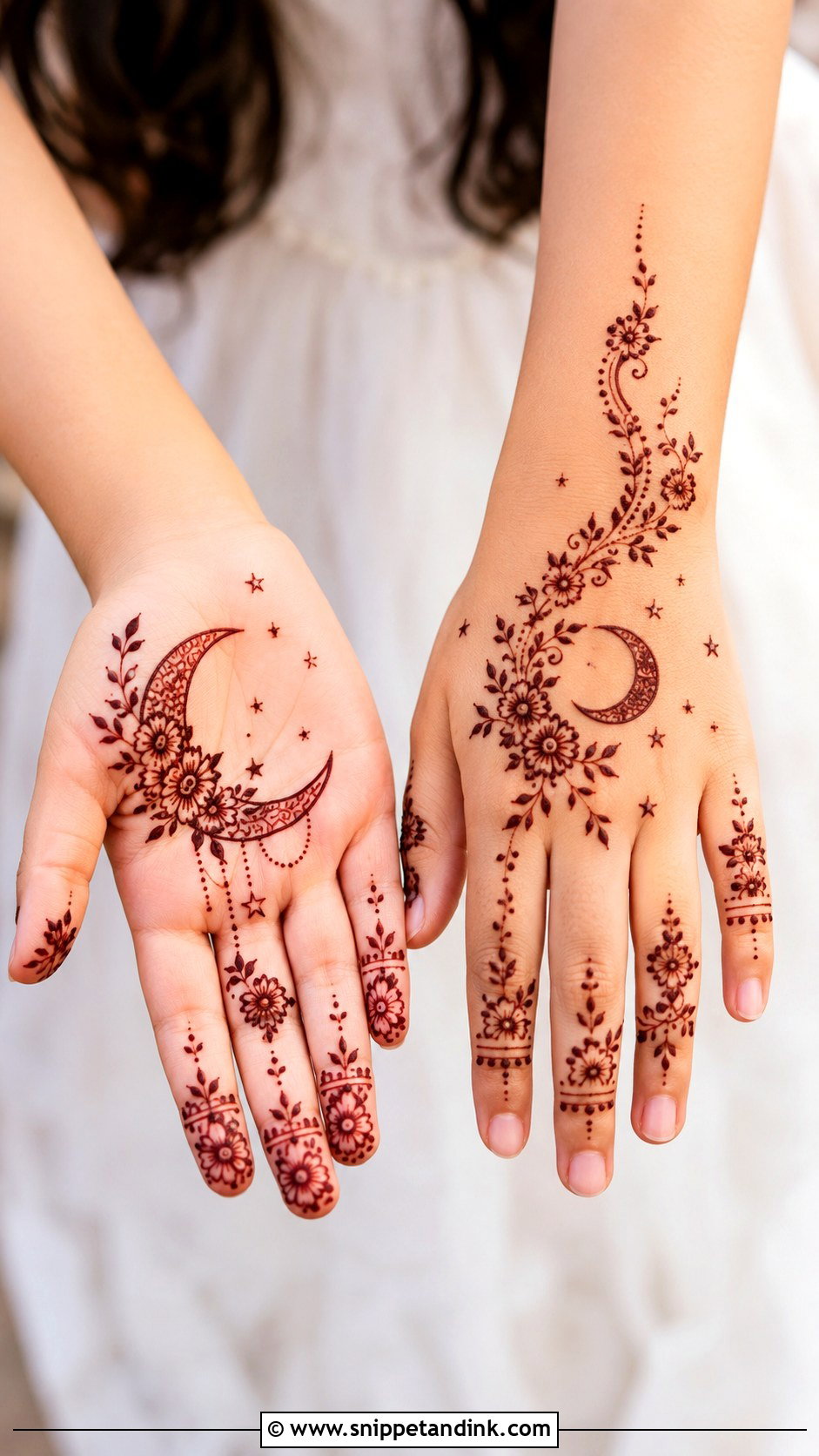
For Eid, a crescent moon on the palm with tiny stars around it is the theme children ask for by name, and it is what I’d suggest for a festive kids Eid mehndi design. Dots and leafy tips on the fingers complete it; on the back of the hand, a diagonal vine with small flowers looks elegant with traditional clothes. Apply it the night before if your child will sleep with the paste on, or early in the evening if not, so it has time to dry before bed.
16. Kids Diwali Mehndi Design
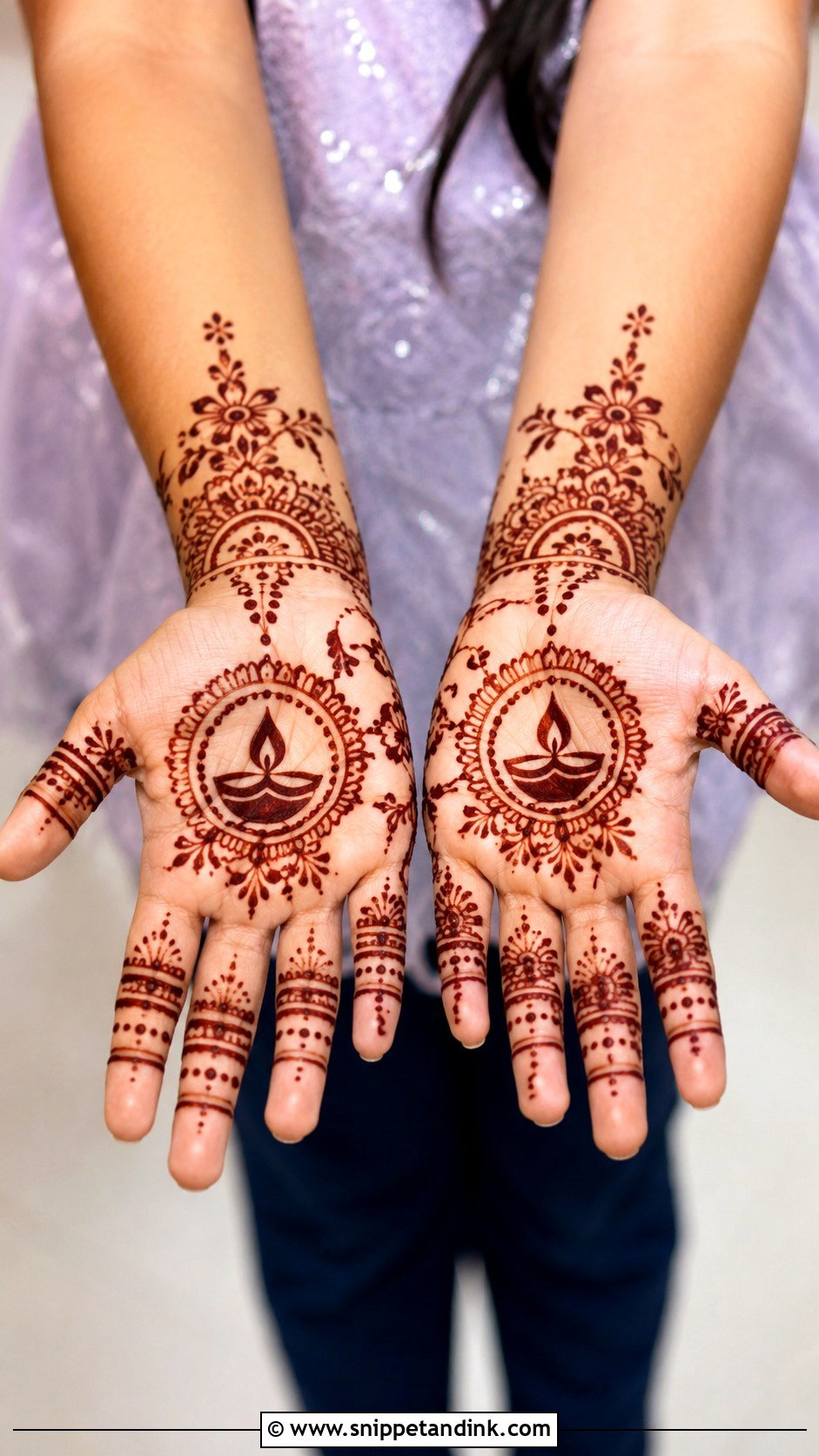
A small diya shape in the palm, ringed with dots, flowers and curved lines, gives Diwali henna its theme without heavy work. On the back of the hand, a floral bracelet and small mandala look neat with festive outfits. Keep the filling light for little ones. With all the sweets and sparklers around, Diwali hands get busy fast, and dense paste will not survive the evening.
17. Kids Wedding Mehndi Design
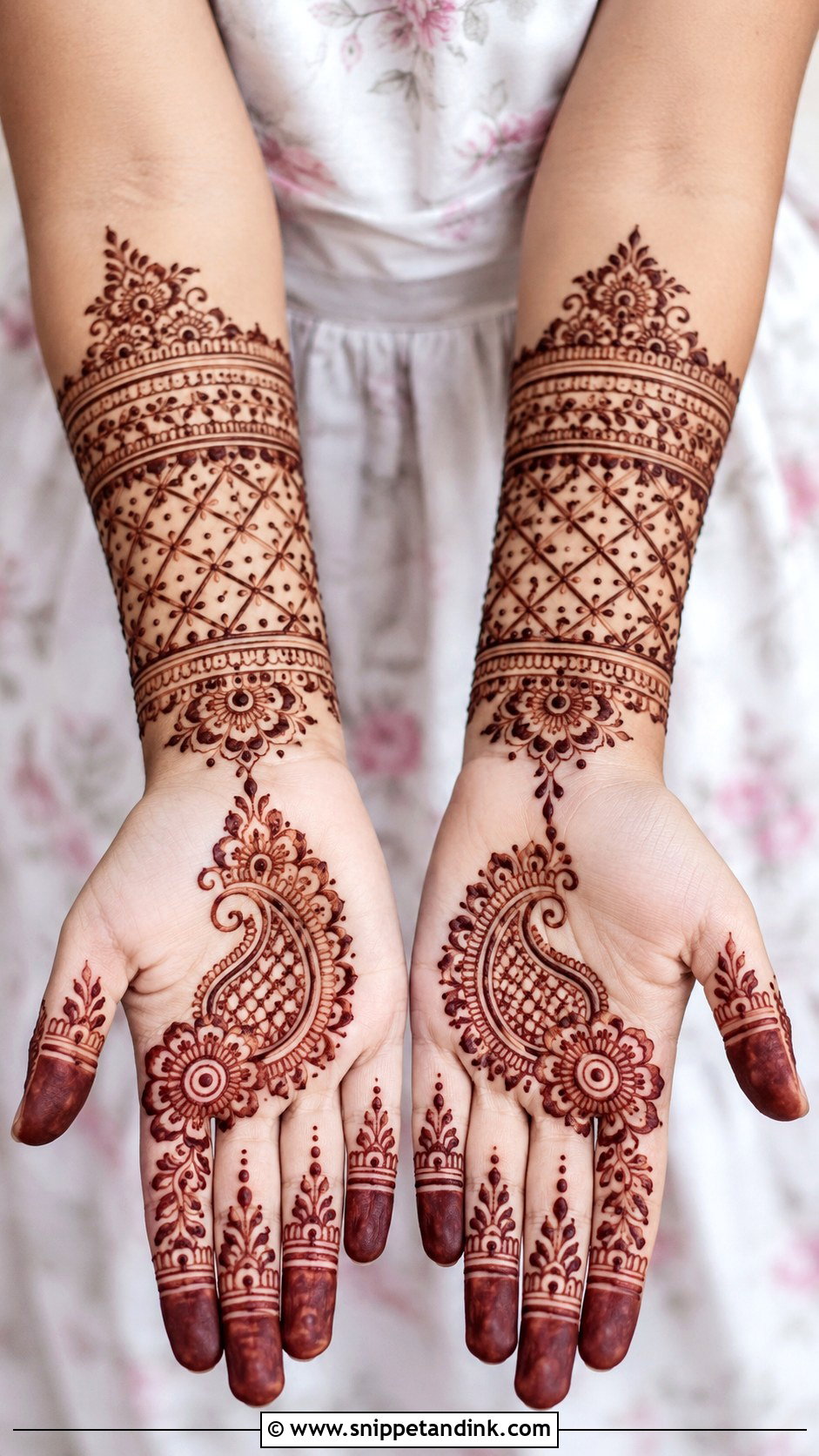
Flower girls and young cousins want to feel part of the wedding, not like miniature brides. I draw a small full-hand layout with flowers, paisleys, dots and soft bracelet details, adding a little jaali or a mini mandala for older girls and sticking to one side of the hand for younger ones. Book children for early in the henna evening, before the bride, when they are fresher and more patient.
18. Kids Birthday Mehndi Design
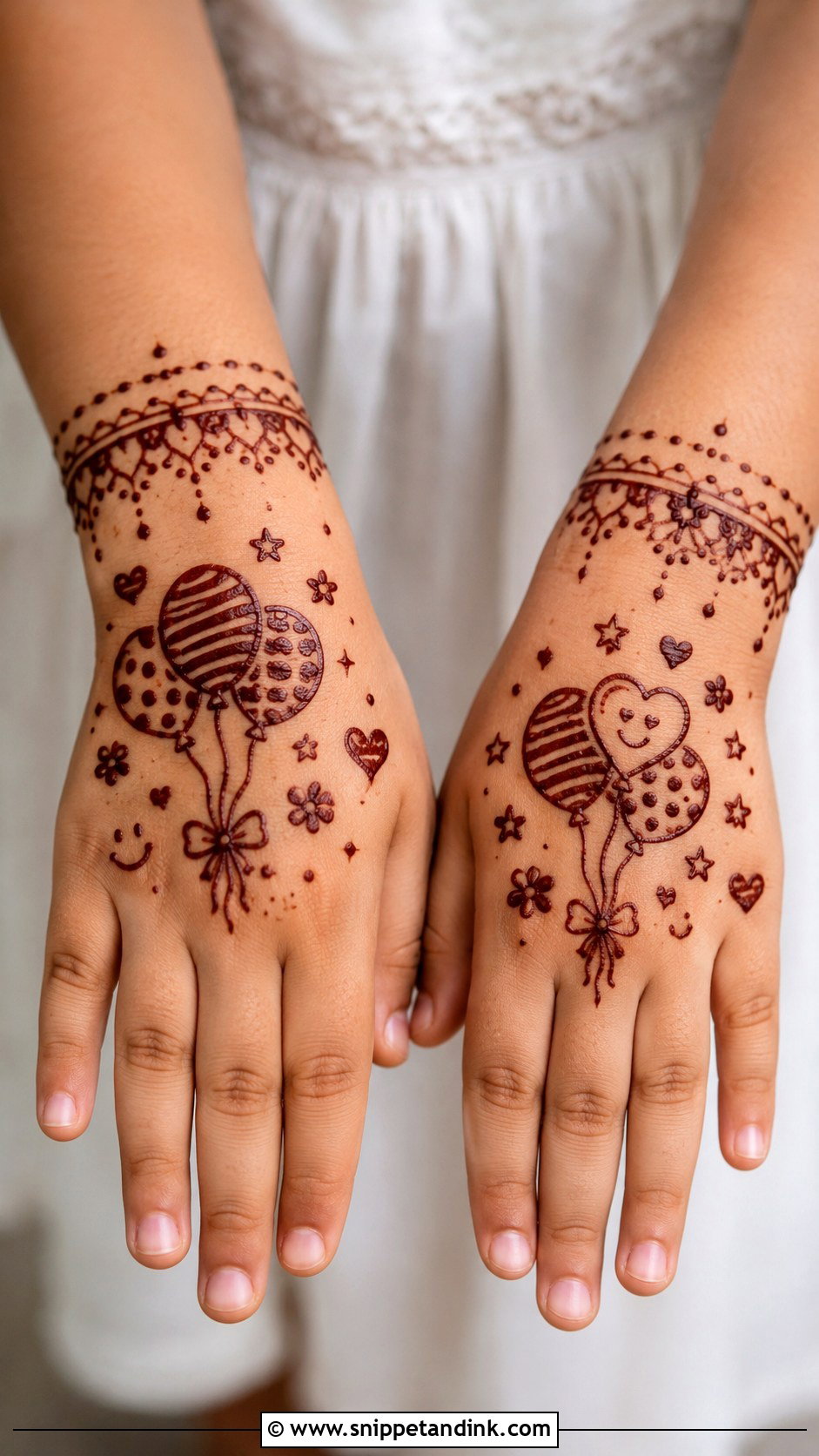
Birthday henna can be personal: hearts, stars, flowers, balloons, smiley faces or the child’s initial, on the back of the hand with a small wrist band or in the palm for easy admiring. Parties mean games and snacks, so smaller is better. A minimal design is dry in a short time, and matching designs among friends make a nice party activity if you set up a table and take turns.
19. Kids Peacock Mehndi Design
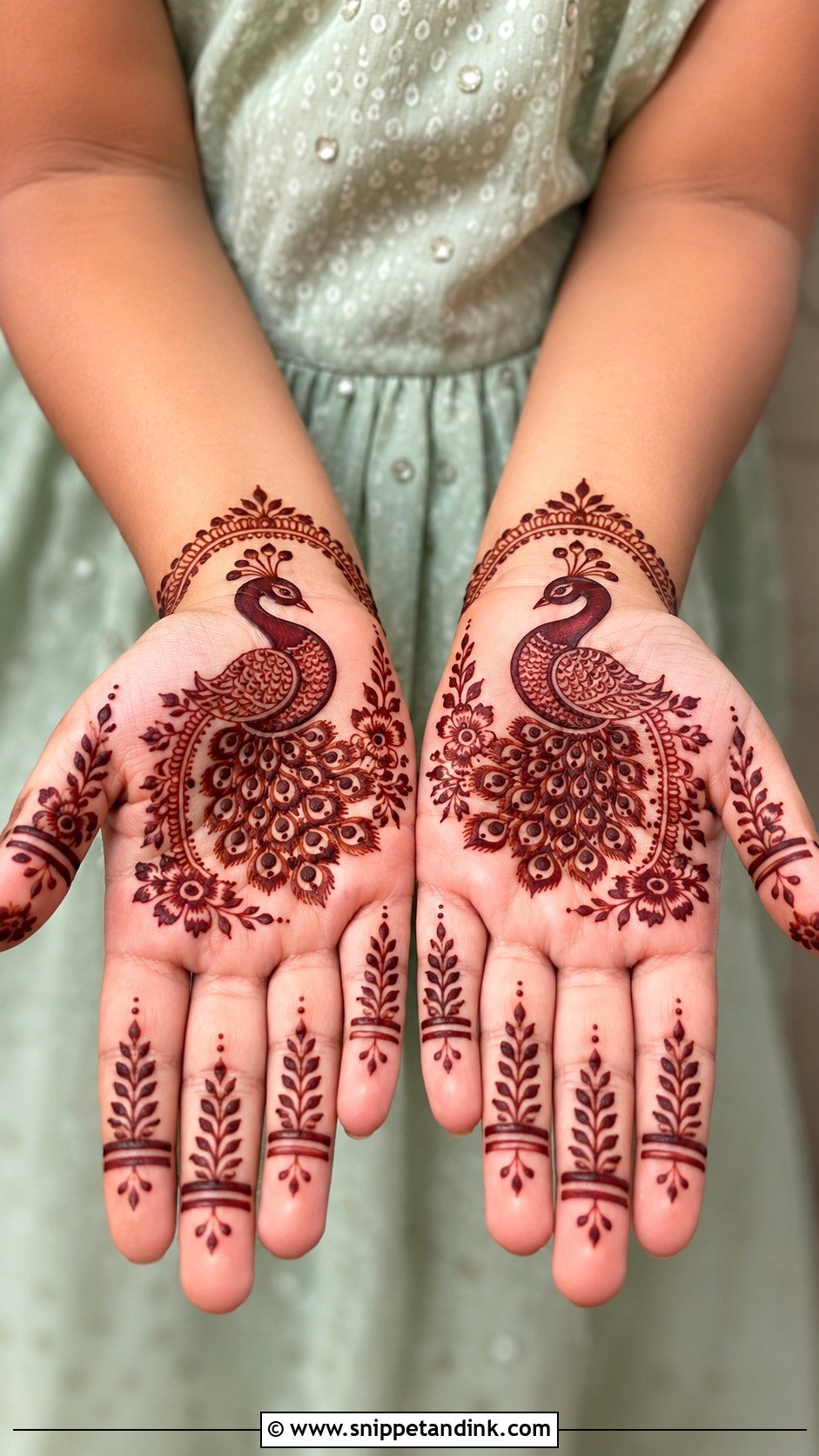
For children, the peacock shrinks to a curved neck, a round body and a fan of dotted feathers, on the palm or back of the hand with flowers and leaves around it. Fingers get tiny feather strokes or dots. I draw the neck as one smooth curve; if it is broken into bits, the bird stops looking like a bird. Simple outlines read far better than shading on small hands.


20. Kids Paisley Mehndi Design
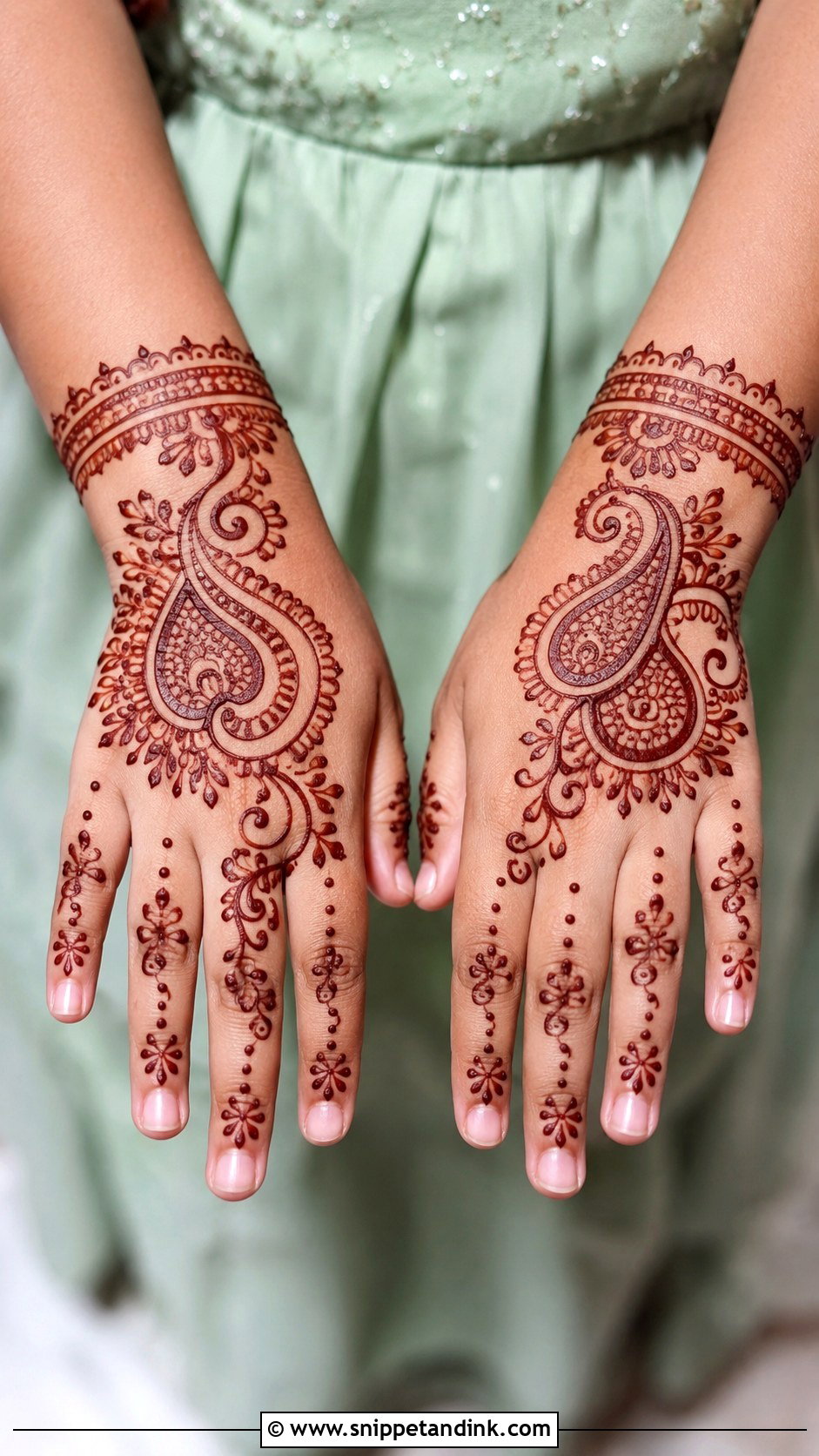
One or two big paisleys work better on a child’s hand than a cluster of small ones. I fill them with dots, small petals and curves, link a palm paisley to a wrist border, or set a back-hand paisley along a short diagonal trail. Bold outer lines keep the mango shape recognisable after the stain spreads slightly. It gives older girls a grown-up, traditional look without adult density.
21. Kids Lotus Mehndi Design
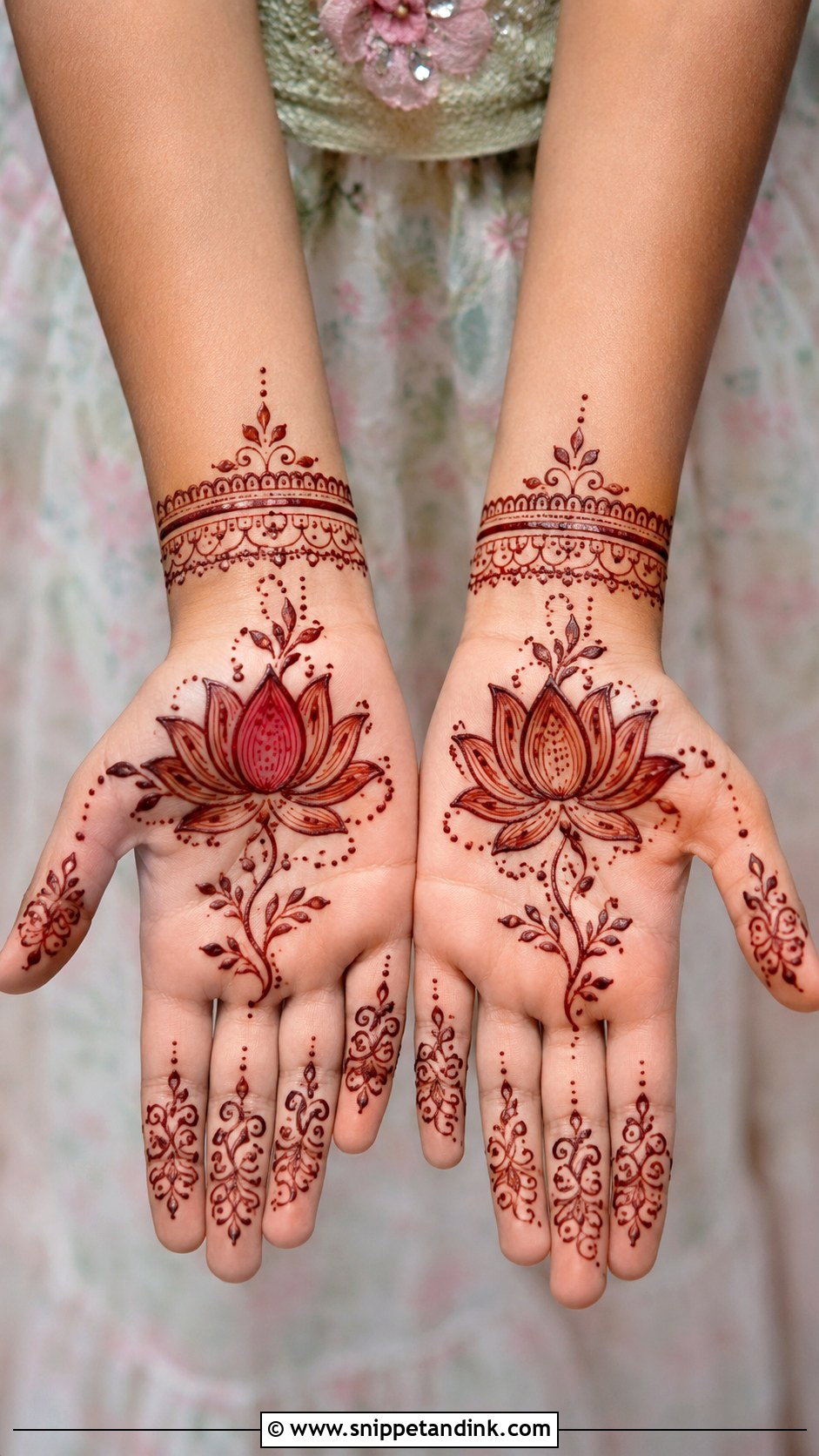
A lotus with rounded petals and a few leaves beneath it sits calmly in the palm, finished with dots, small vines and a light wrist border. On the back of the hand, I put it near the wrist with a trail toward one finger. For children, I cut the petal count to five or seven and widen the spacing; many thin petals close up on a small palm. It suits pujas and family functions.
22. Kids Leaf Trail Mehndi Design
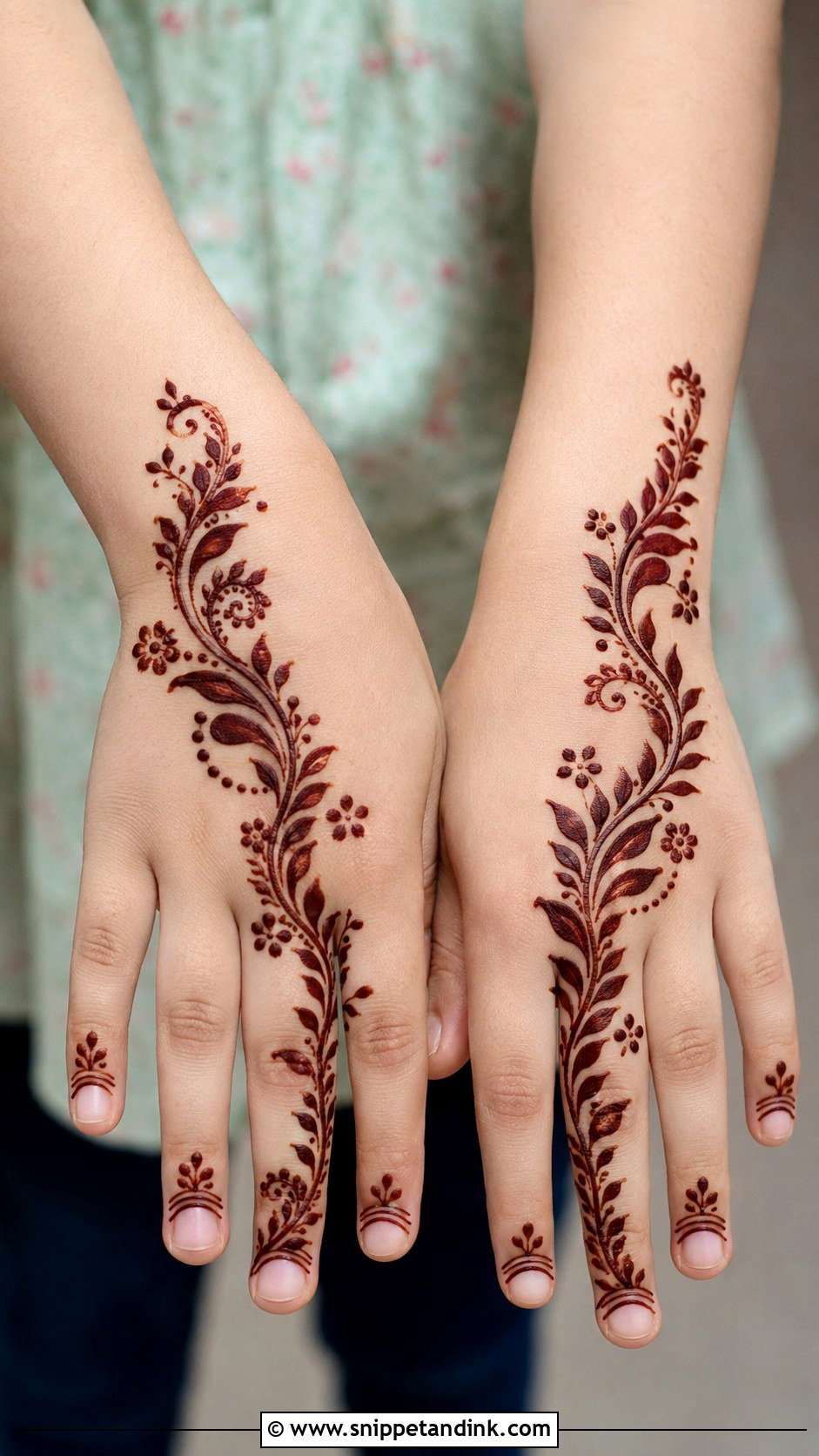
Some children are past cartoons and want something that looks like their mother’s henna. A leaf trail is my answer: it starts at the wrist and curves toward the middle or index finger, with small leaves on both sides, dots and a couple of tiny flowers. On the back of the hand, the diagonal makes a small hand look longer. It is fast, grown-up and dries quickly.
23. Kids Simple Round Tikki Mehndi Design
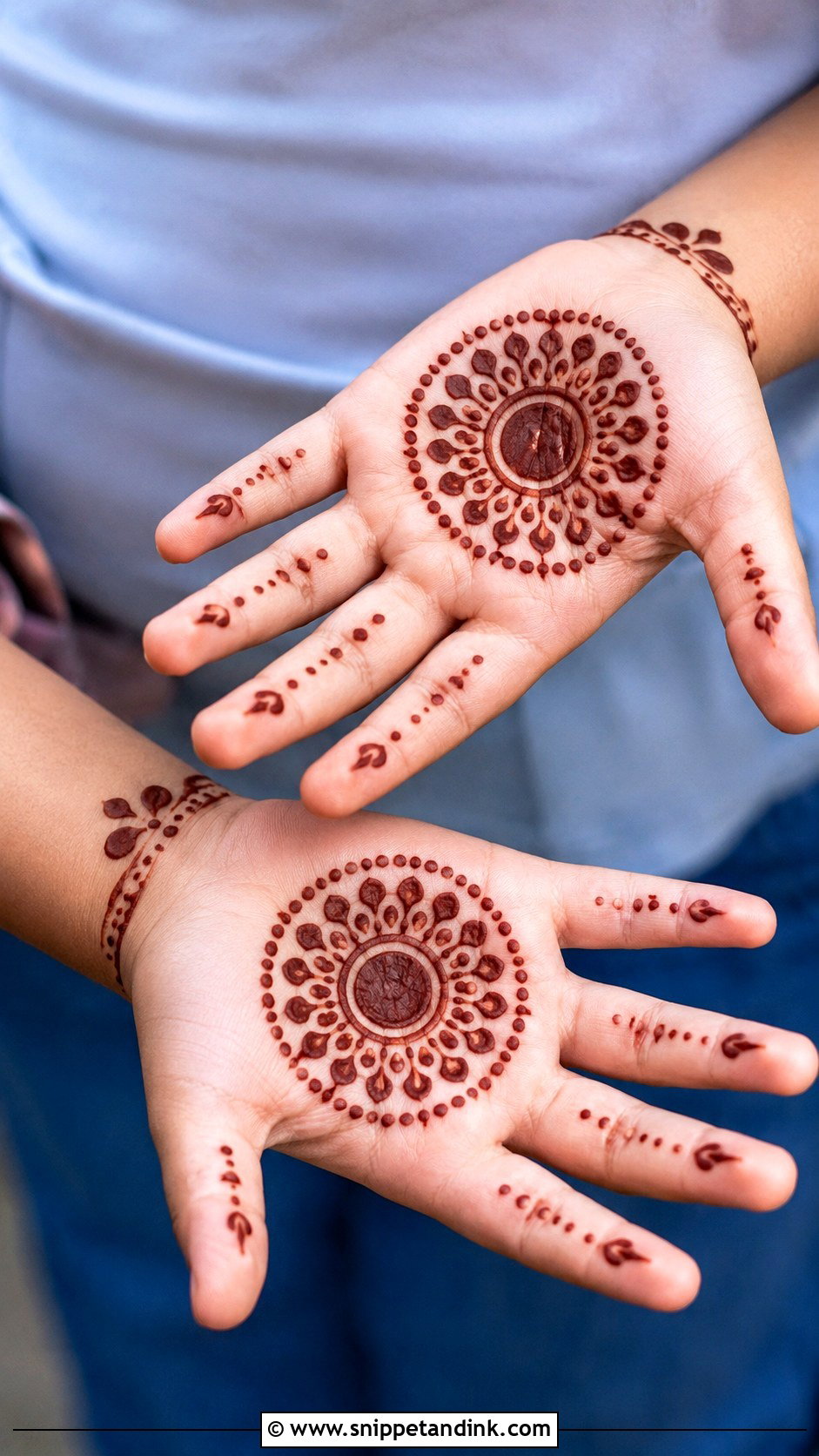
The round tikki, a neat circle in the centre of the palm, is about as traditional and quick as henna gets. Dots, petals and small curved lines go around it, the fingers get matching dots or bands, and the wrist can stay plain. A filled circle stains very deeply on a child’s palm, so I keep it small, about the size of a coin, and sometimes leave the centre open. It matches easily across both hands.
24. Kids Cute Animal Mehndi Design
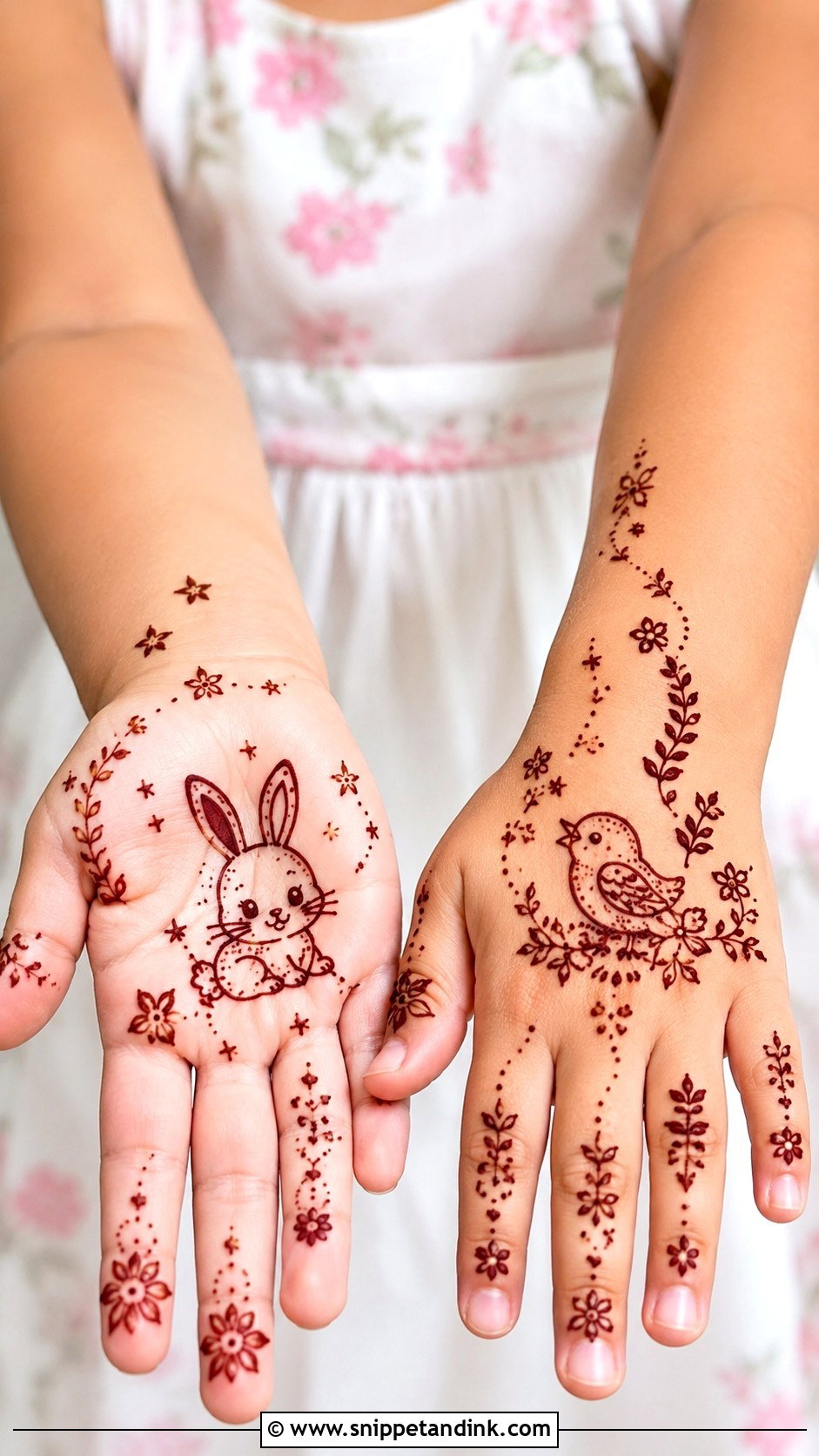
Bunny ears, a small cat face, a little bird or a teddy outline turn henna into a story. I place the animal in the palm or on the back of the hand and add flowers, stars and dots so it looks like a design and not a single doodle. Keep the shape basic: a round head, two ears and simple features. Whiskers and fine fur lines blur away once the stain develops. Younger children adore it.

25. Kids Cartoon Mehndi Design
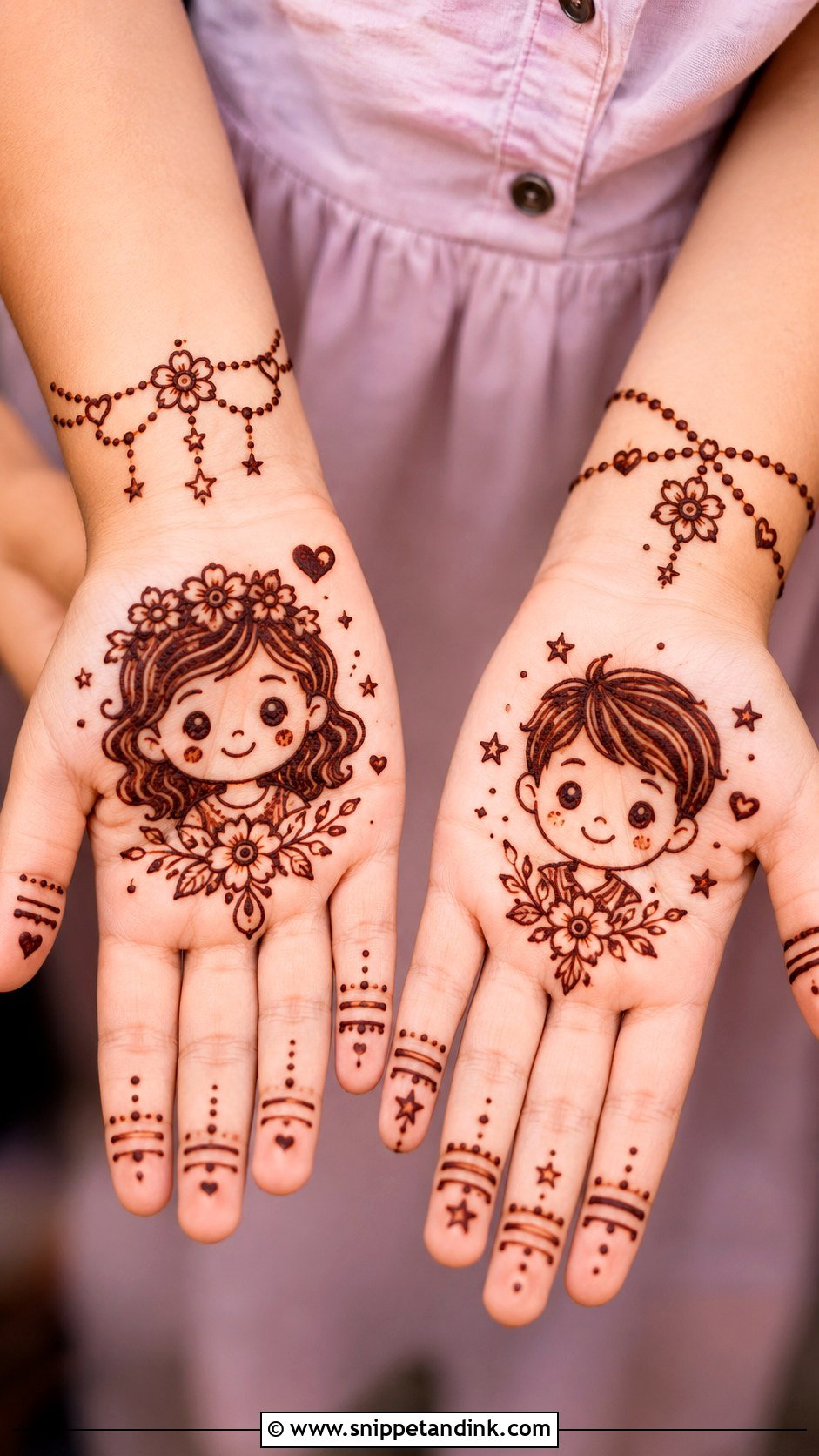
Characters need simplifying to work in henna. For a kids cartoon mehndi design, I draw a rounded, generic face or a character-inspired shape on the palm, then decorate around it with stars, hearts, dots and flowers, sometimes linking it to a bracelet on the back of the hand. I avoid copying a specific character line for line; a cone cannot reproduce fine cartoon detail, and a near miss disappoints a child more than a cute original.
26. Kids Minimal Mehndi Design
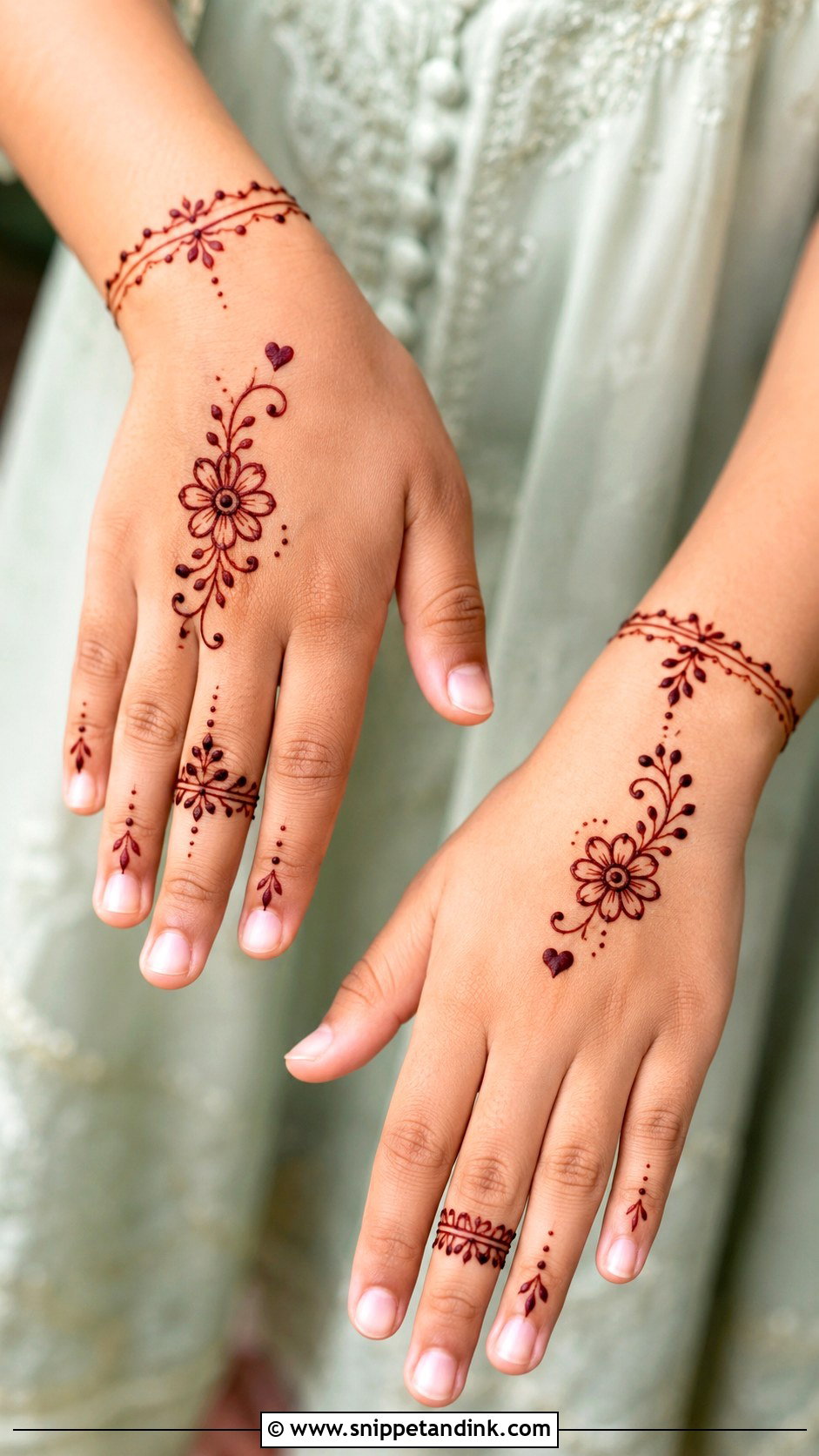
For toddlers and impatient children, minimal means one small motif, a flower, heart, star or tiny mandala, with a few dots and a small finger detail. It can go on the palm, back of the hand or wrist. It takes about as long as a short song, dries fast and is the gentlest introduction to henna for a first-timer. If a toddler wants more after that, you can always add a second motif.
27. Kids Indo Arabic Mehndi Design
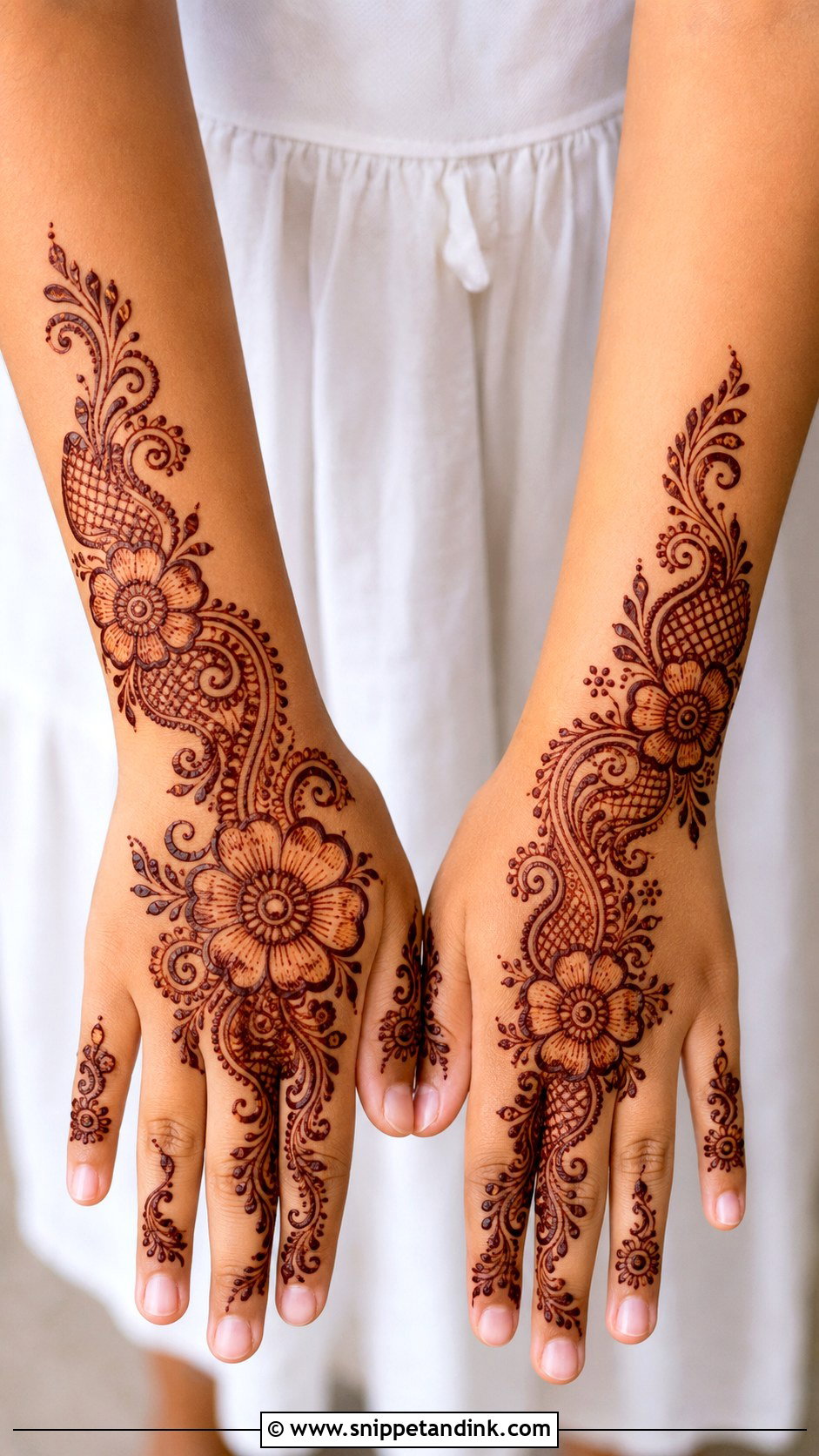
Older children who want more than a single motif but less than adult henna suit Indo-Arabic: a diagonal trail across the back of the hand with flowers, paisleys and leaves, plus a few mandala dots or a tiny jaali patch. I keep the spacing wide to stop it looking mature and to keep the sitting short. It fits well at Eid, weddings and family festivals.
28. Kids Moroccan Mehndi Design
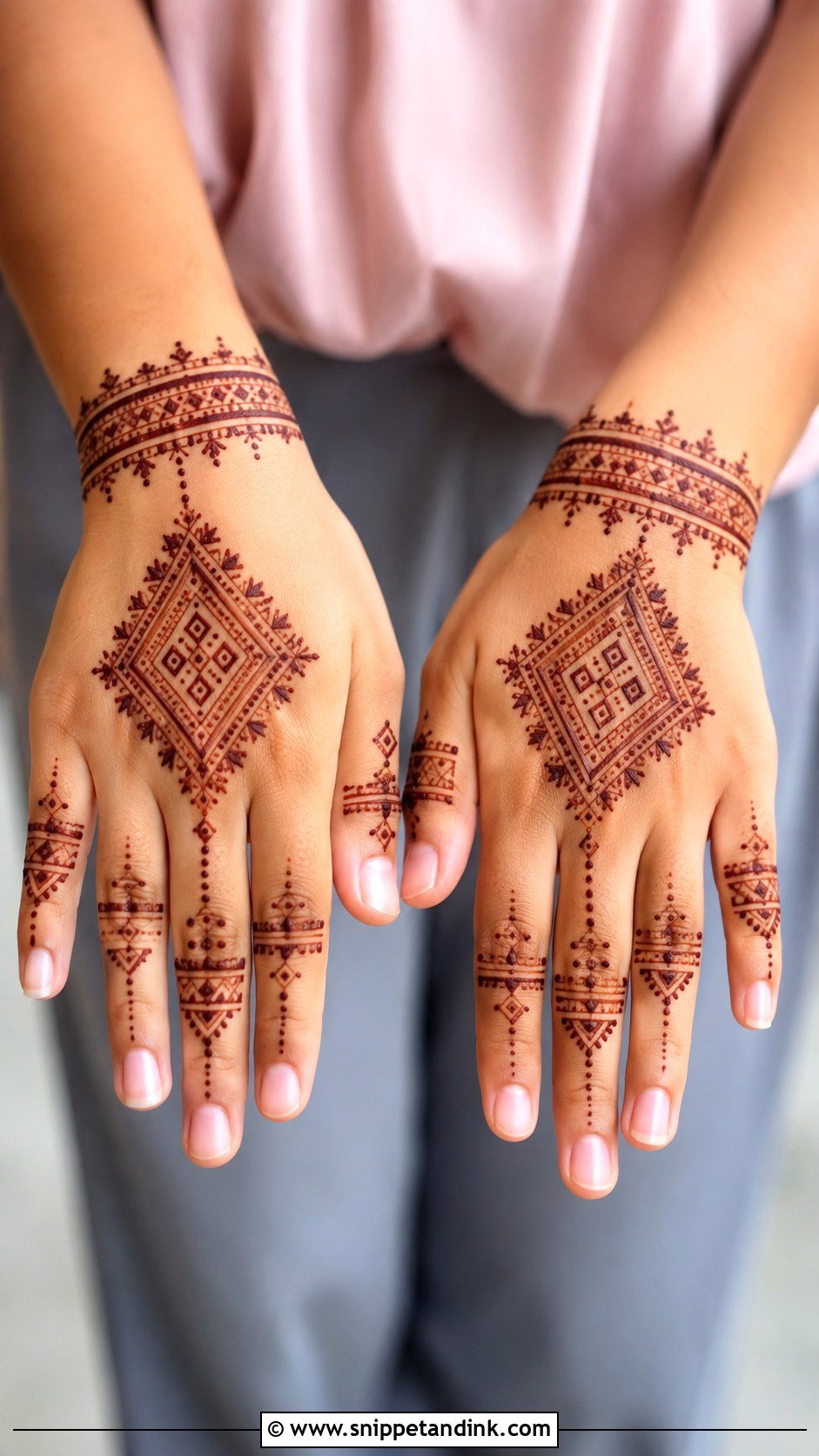
Geometry suits children who like tidy patterns: small diamonds, triangles, dots and straight lines on the back of the hand or wrist, with one central diamond and simple finger bands. Repeated shapes go quickly. I round the corners slightly for children, which looks softer and is easier to draw on a hand that is not perfectly still. It makes a nice change from flowers for older kids.
29. Kids Gulf Mehndi Design
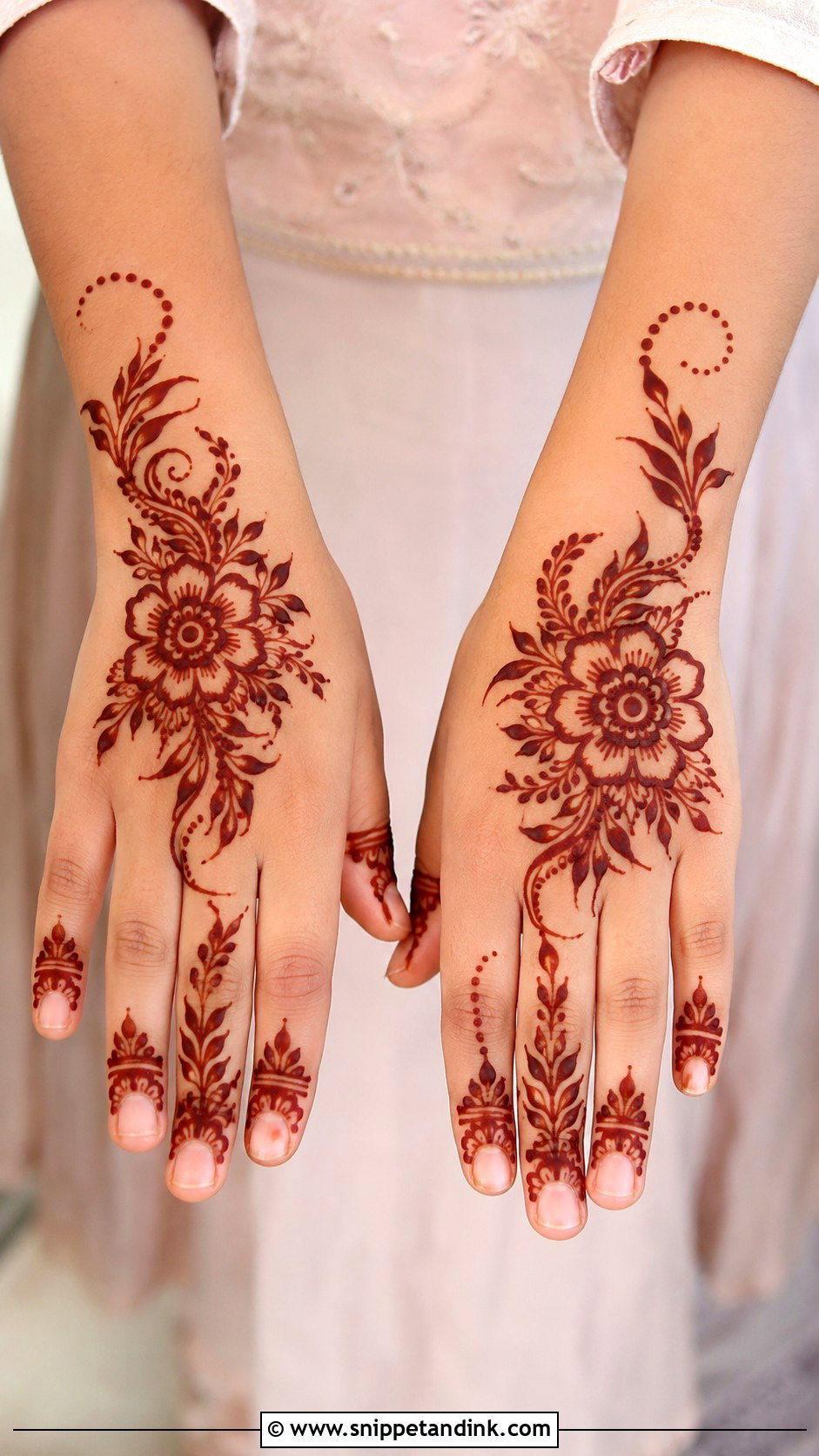
Gulf-style henna is naturally open, so it adapts well to children: one large flower near the wrist or on the back of the hand, flowing leaves and dots toward the fingers, and lots of bare skin. I skip the thick shading adult Gulf designs use and keep the fingertips light. The big flower is clear from across a room, which suits a festive dress at a family wedding.
30. Kids Finger Ring Mehndi Design
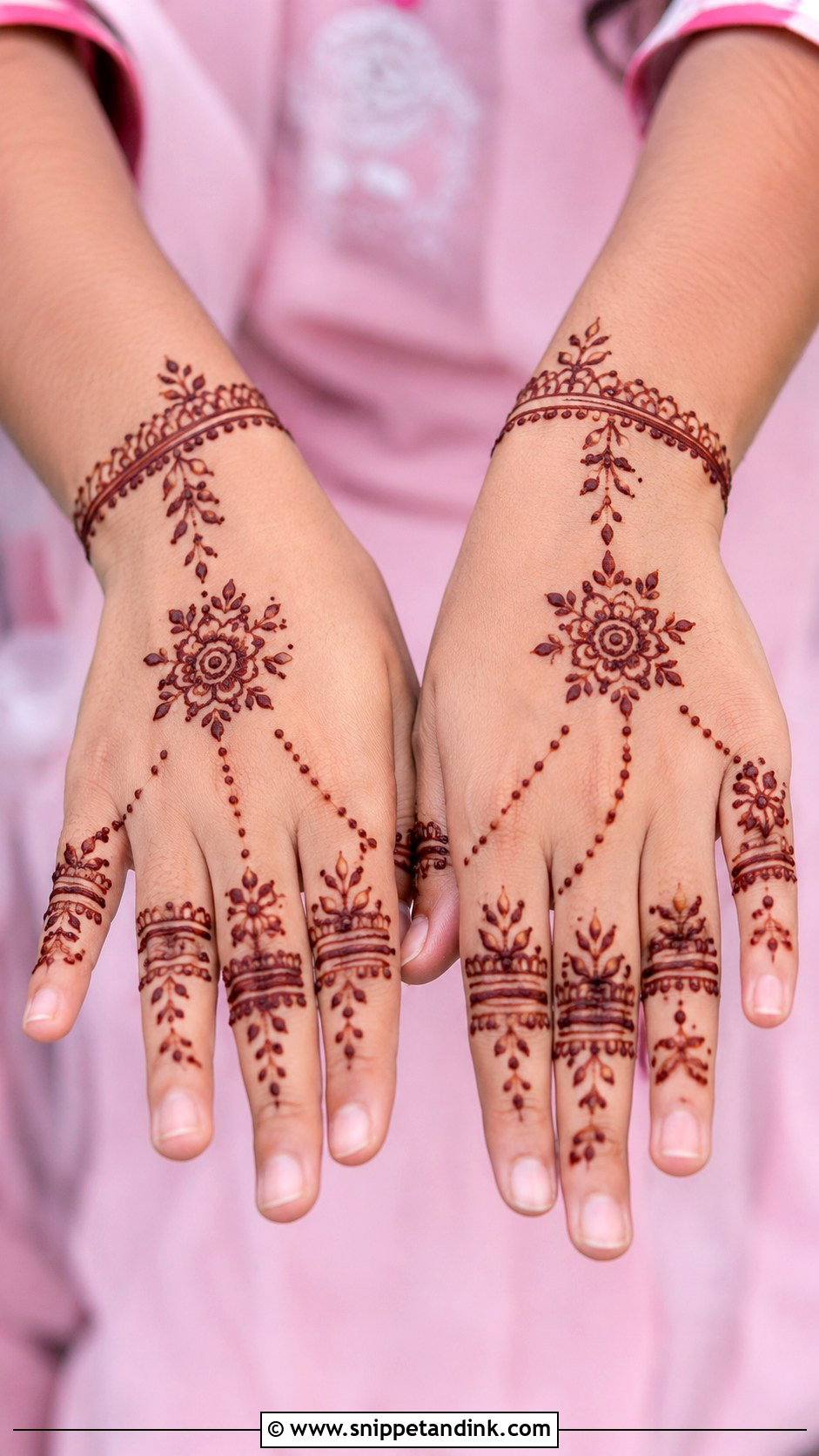
Tiny rings around one or two fingers, linked by dotted chains to a wrist bracelet or small back-hand motif, give a jewellery look with almost no paste. That is the appeal of a kids finger ring mehndi design. A few small flowers or leaves near the knuckles add charm. It dries fast and lets an active child carry on playing, and it is easy to repeat for a row of cousins.
31. Kids Wrist Mehndi Design
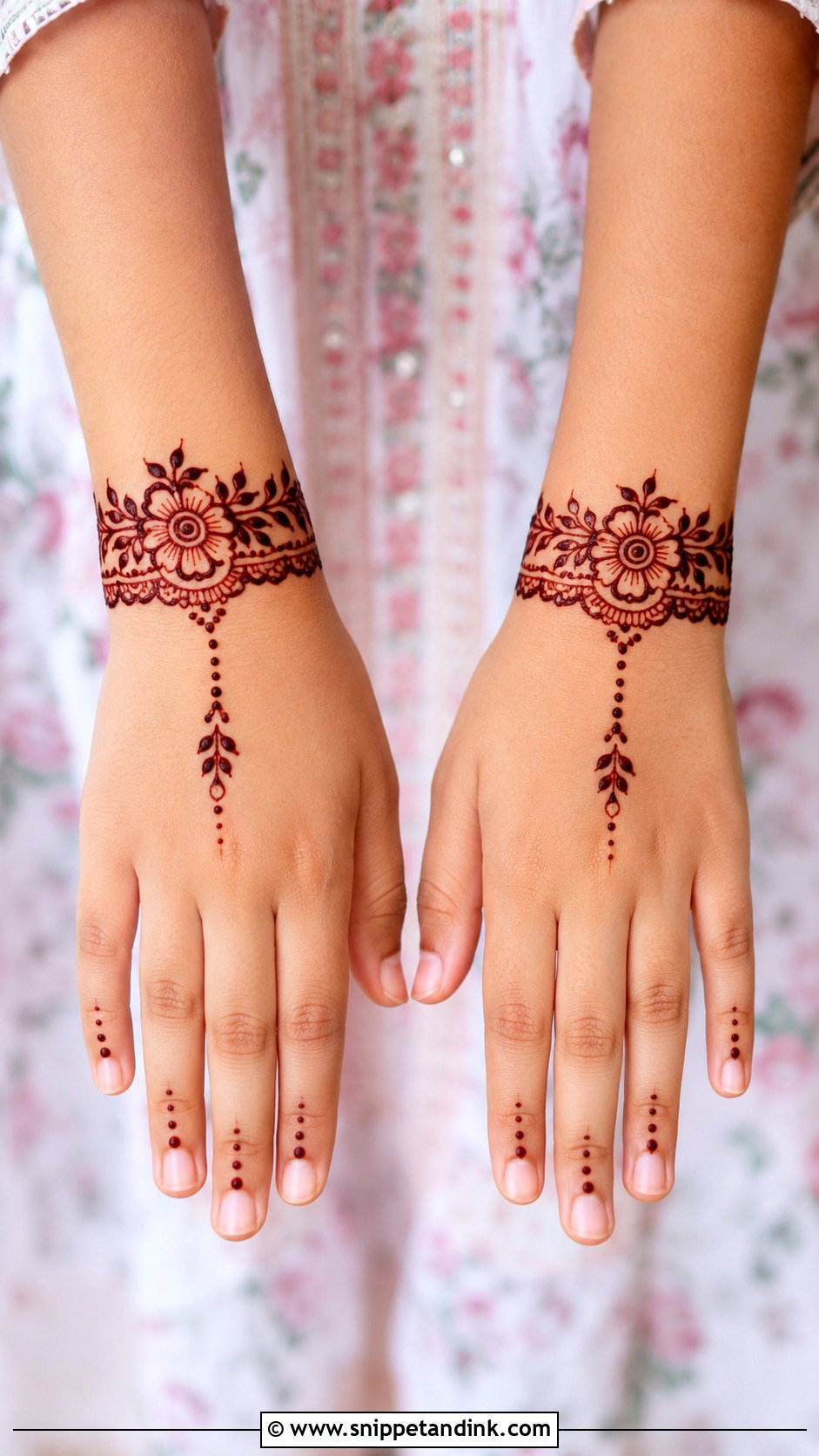
Wrist henna keeps the design away from the palm entirely, which parents of messy eaters appreciate. I use flowers, dots, scalloped borders or small leafy bands around the wrist, with a short trail onto the back of the hand. The fingers can stay plain. Because the child can still use her hands, it smudges less than almost anything else here. A good pick for toddlers and quick sessions.
32. Kids Jaali Mehndi Design
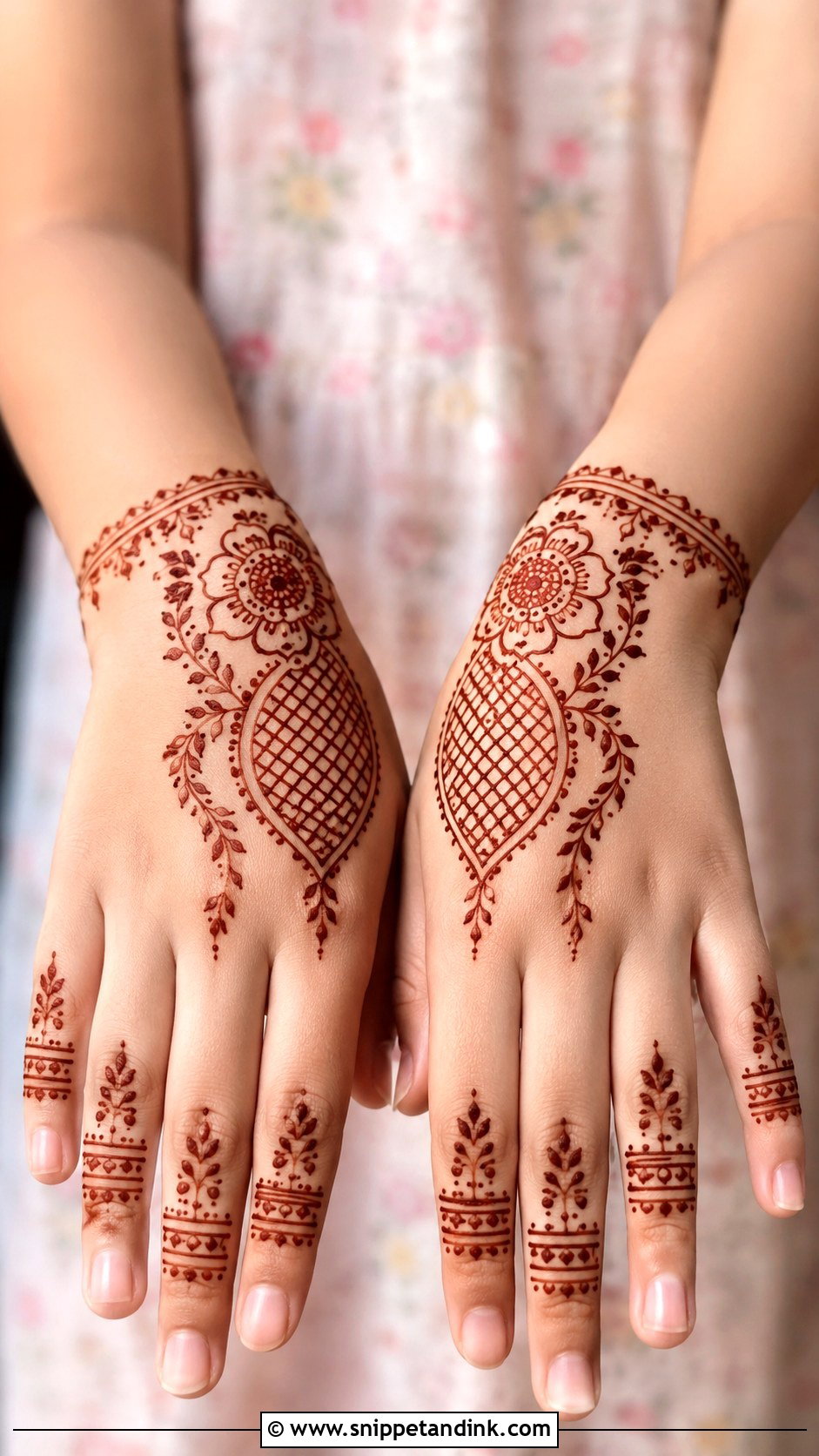
Jaali works for children only in small doses: a tiny patch of mesh on the back of the hand next to flowers or a mandala, with dots inside the grid and a leafy trail or bracelet linking it. Older girls like it because it looks grown-up. I keep the mesh wider than for adults. Fine netting on a small hand closes up into a solid patch as the stain deepens.
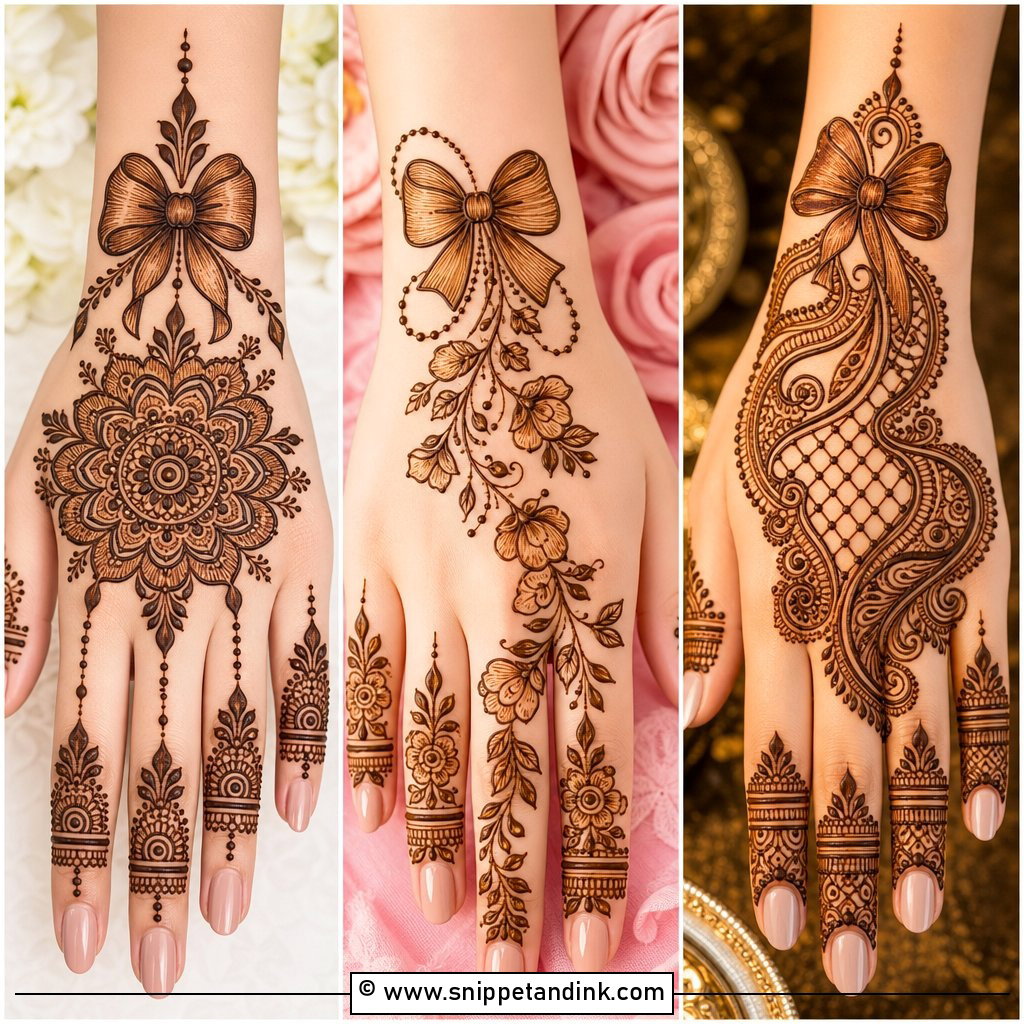
33. Kids Floral Bracelet Mehndi Design
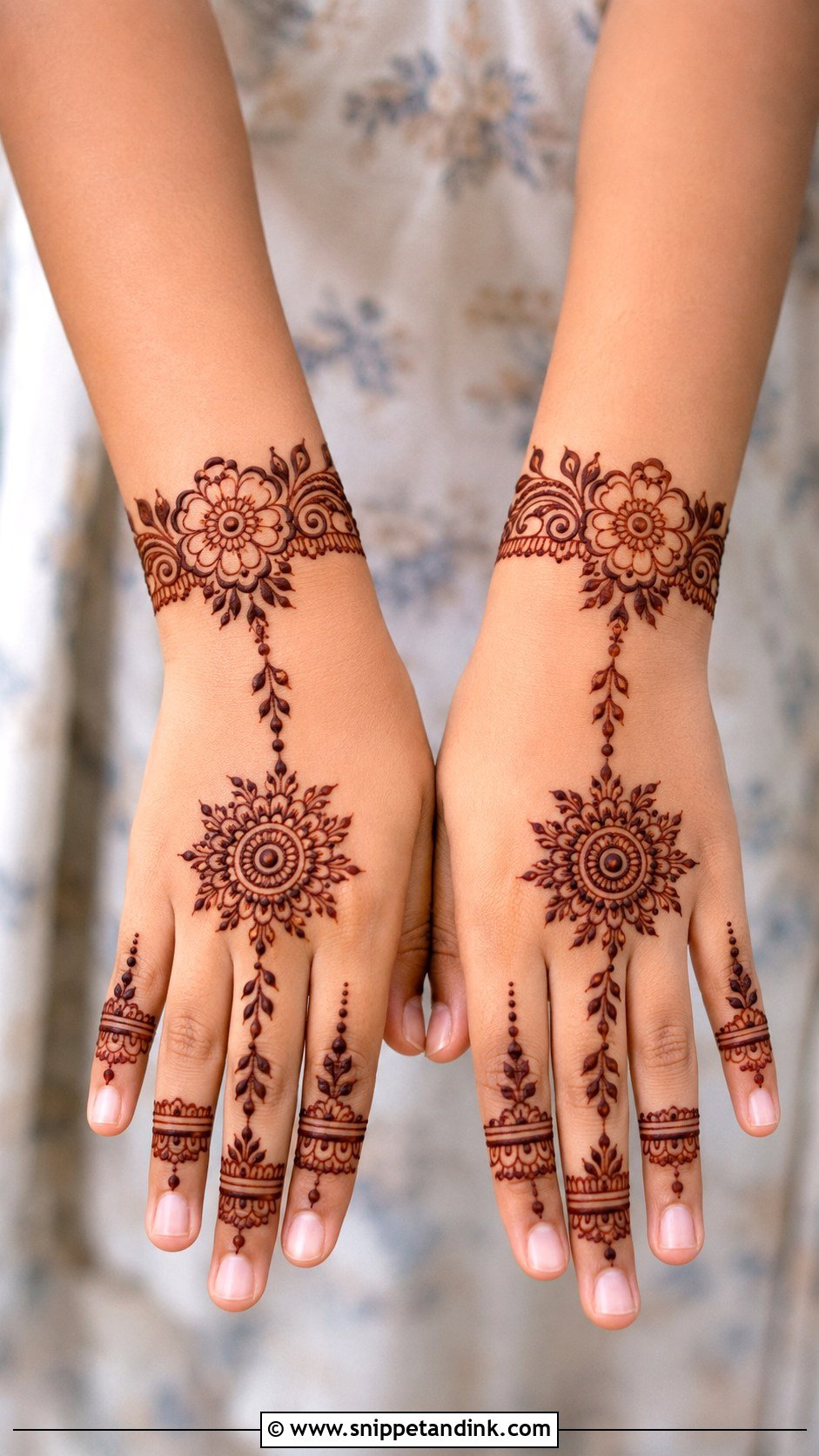
A floral bracelet around the wrist that drifts onto the back of the hand, with a small mandala, heart or flower in the centre and little rings or dotted bands on the fingers, looks like a bracelet and hand chain in one. The palm stays free, which keeps it comfortable and practical for a child who wants to keep playing. It is one of the most requested designs at family weddings.
34. Kids Matching Mehndi Design
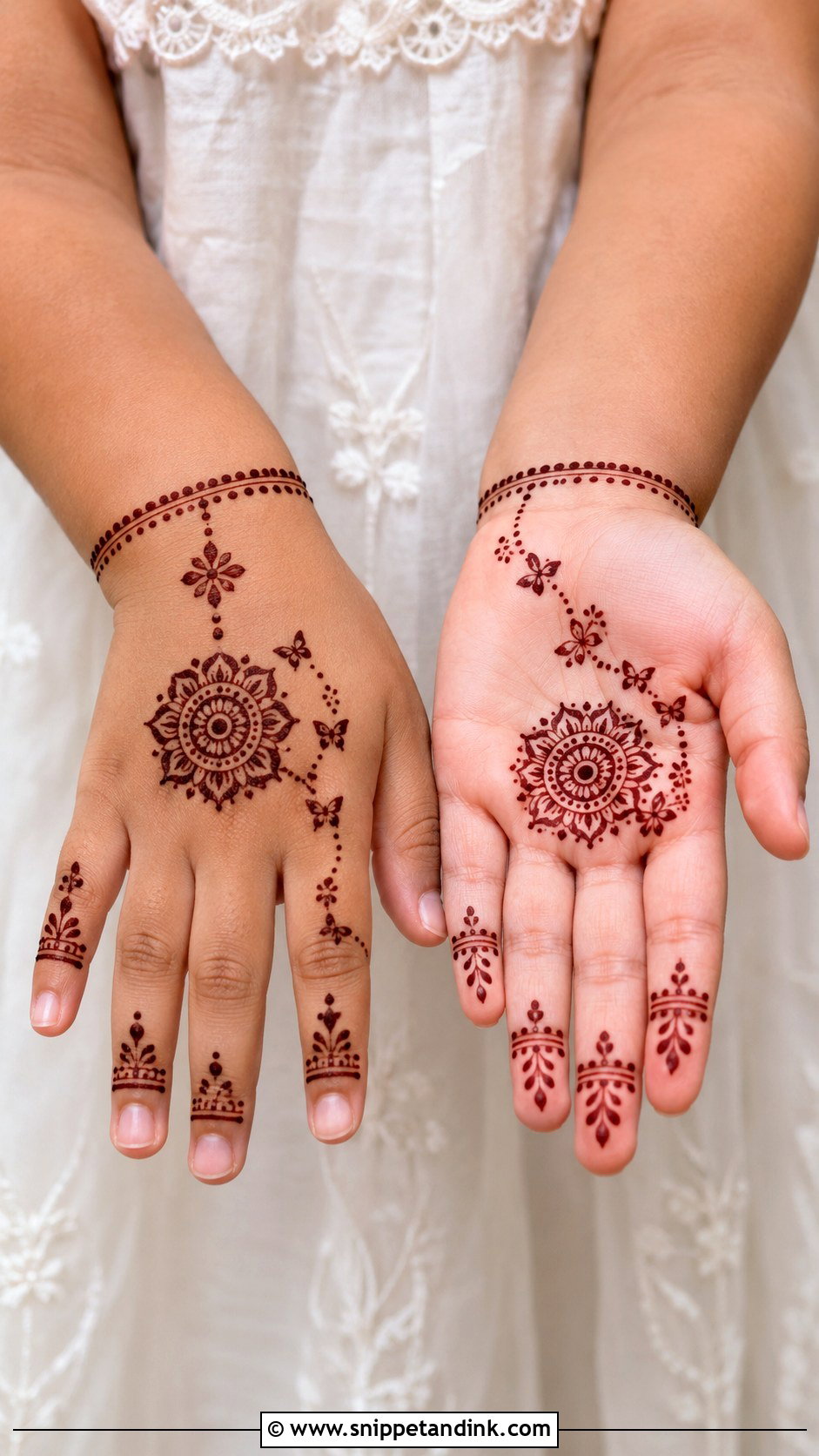
Matching henna is lovely for sisters, cousins, friends or a mother and daughter. Choose something that repeats easily, matching flowers, small mandalas, a butterfly trail or a bracelet band, and keep it simple if several children are waiting in line. Matching designs help younger children feel included, and they make my job faster because I can repeat the same layout. Do the youngest first while their patience lasts.
35. Kids Easy Mehndi Design
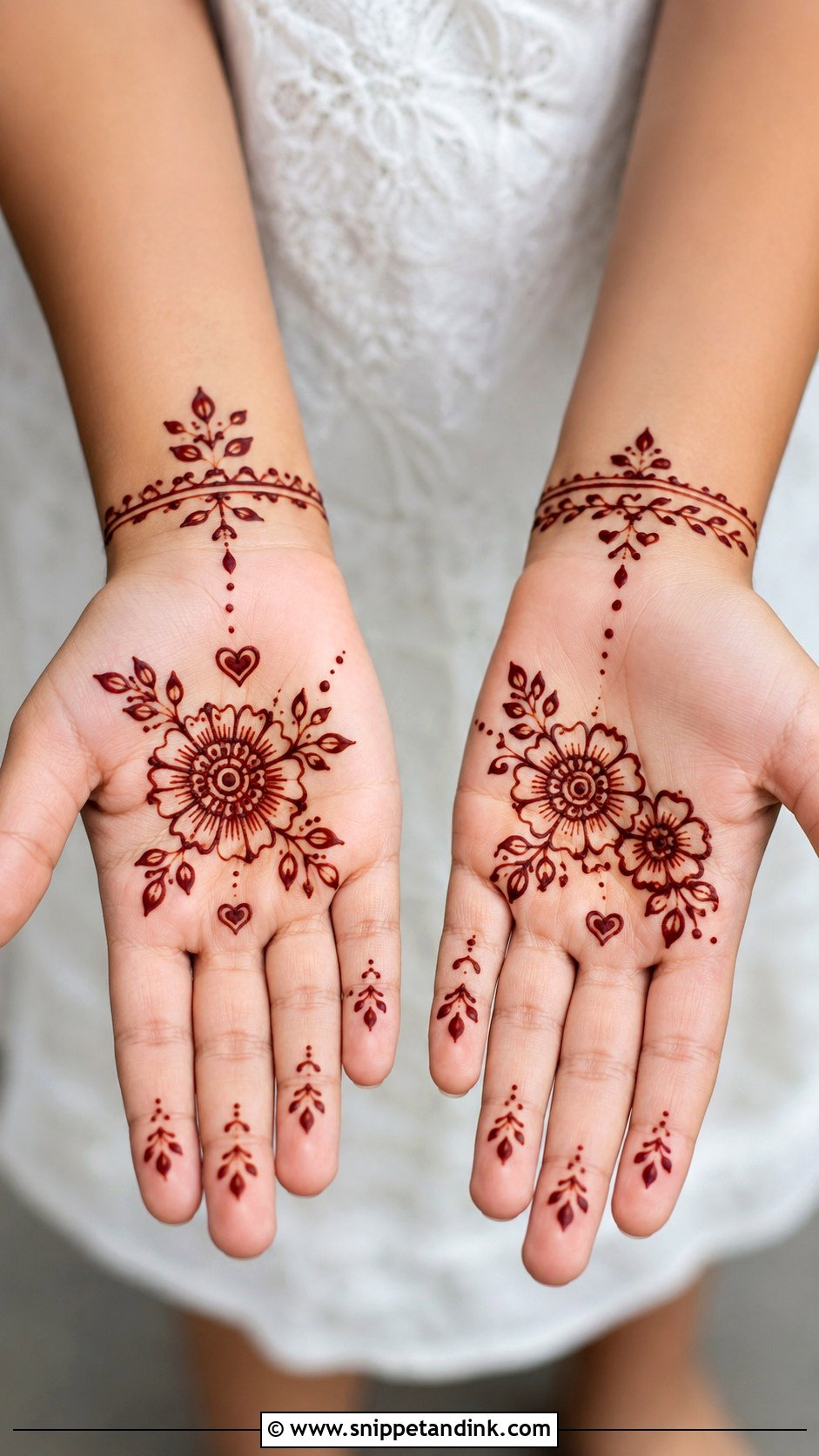
The most forgiving option is one main shape, a flower, butterfly, heart or tikki, with dots, leaves and tiny finger accents. That is what I mean by a kids easy mehndi design: it looks complete in a few minutes and tolerates a little wriggling. Avoid very thin lines and crowded filling, which smudge easily. Parents drawing at home for the first time should start here, ideally with a practice run on paper.
Getting Paste on a Child Who Won’t Sit Still
Most of the skill in kids’ henna is managing the fifteen minutes around the drawing. These habits make the biggest difference:
- Toilet trip, snack and drink first. Once both hands are wet, nobody wants to stop.
- Do one hand, let it dry, then do the other. The child always has a free hand.
- Put on a favourite cartoon or story. A still, absorbed child is worth more than a perfect design.
- Rest the hand flat on a small cushion or folded towel at a comfortable height.
- Once the paste is dry to the touch, slip a loose cotton sock over the hand so it survives play and sleep.
- Scrape the dried paste off with a blunt spoon edge rather than washing it, and keep the area away from water for a few hours.
If a child gets upset partway through, stop. A finished flower on one hand is fine. The second hand can wait for another day, and the memory of henna should be a happy one.
Small Hands, Short Sittings
Children’s henna is not about detail. Clear shapes, open spacing, recognisable motifs and quick application matter far more than how much of the hand is covered. Butterflies and smiley faces suit the youngest, bracelets and finger rings suit busy hands, and leaf trails or Indo-Arabic layouts give older girls a grown-up feel. Use only natural henna, keep the area small for little ones, and stop when the child has had enough. A happy child with one small flower will enjoy her henna more than a tired one with a full hand.
You'll Like These Ideas:







Leave a Reply