
Balochi-style henna borrows its language from Balochi needlework: dense geometric borders, stepped diamonds, small repeating blocks and panels that look like the embroidered front of a dress, sometimes with a nod to mirror work or woven rug patterns. When it’s drawn well you can recognise it from across a room. I love it because the structure gives a design a backbone, and the same pattern language scales from a full bridal hand down to a few finger bands for Eid. Below are the versions I draw most, with notes on how each one stains, how long it takes, and where it goes wrong.
Turning a Stitch Pattern Into Henna
The best Balochi henna I draw starts from the bride’s own outfit. If your dress or dupatta has Balochi-style embroidery, photograph the borders and the front panel and bring those pictures to your appointment. They give me a pattern vocabulary that belongs to you, not to a screenshot.
Embroidery doesn’t copy straight onto skin, though. Here’s how I adapt it:
- Scale it up. Stitches are tiny, and a henna line has a minimum width. I enlarge each motif so the gaps survive once the stain darkens and spreads slightly.
- Pick a few units. A dress panel might hold a dozen motifs. I choose two or three, usually a stepped diamond, a small triangle and a border band, and repeat them.
- Swap color for density. Embroidery uses many thread colors, and henna has one. I show contrast by filling some sections solid and leaving others as outline.
- Follow the hand. Straight embroidery borders become curved bands at the wrist and fingers, so the pattern wraps instead of cutting across the hand.
Expect geometric designs to take a little longer than florals of the same size. Every line has to meet, and I’d rather go slowly than hand you a grid that drifts.
1. Balochi Full Hand Mehndi Design
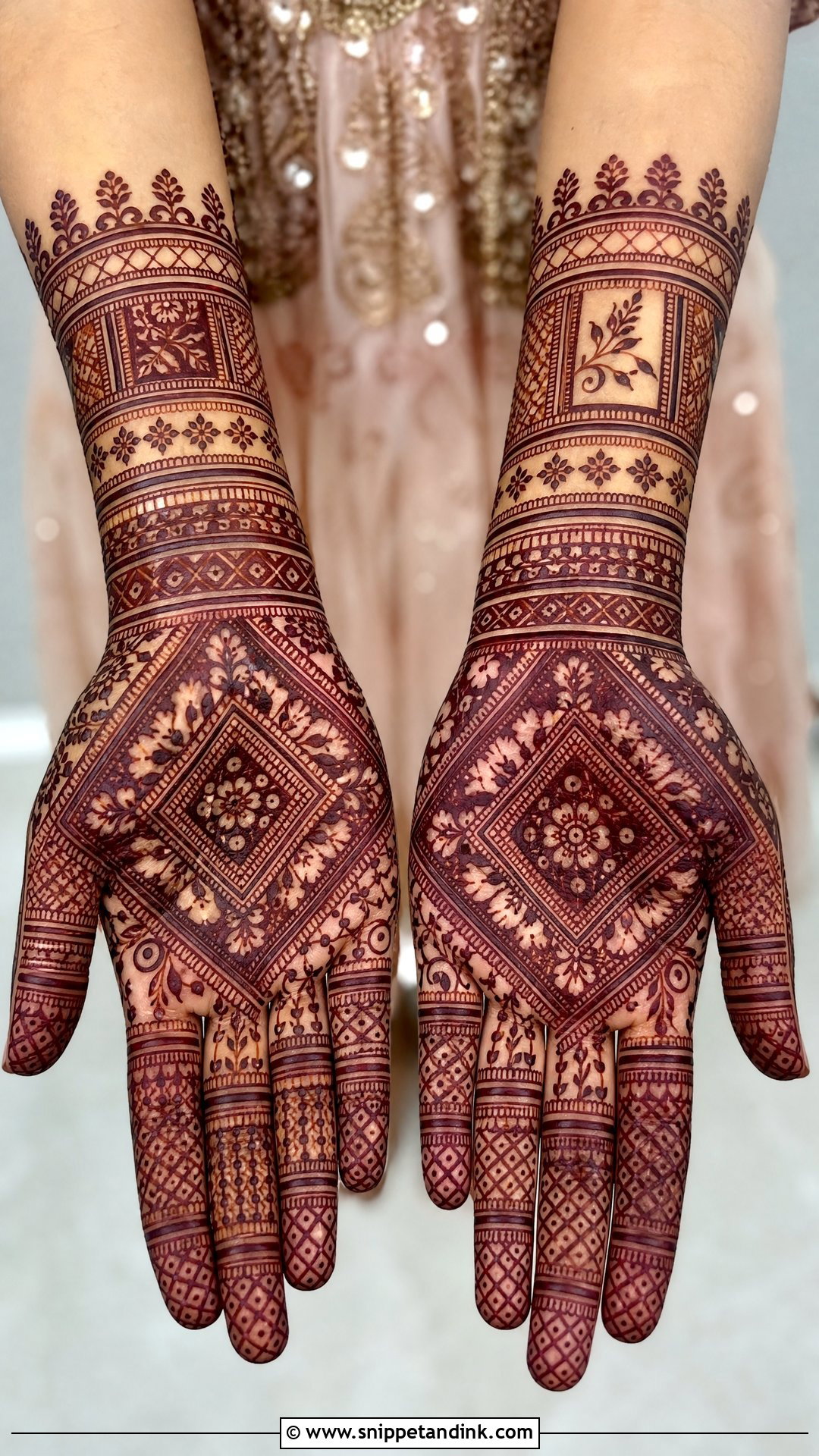
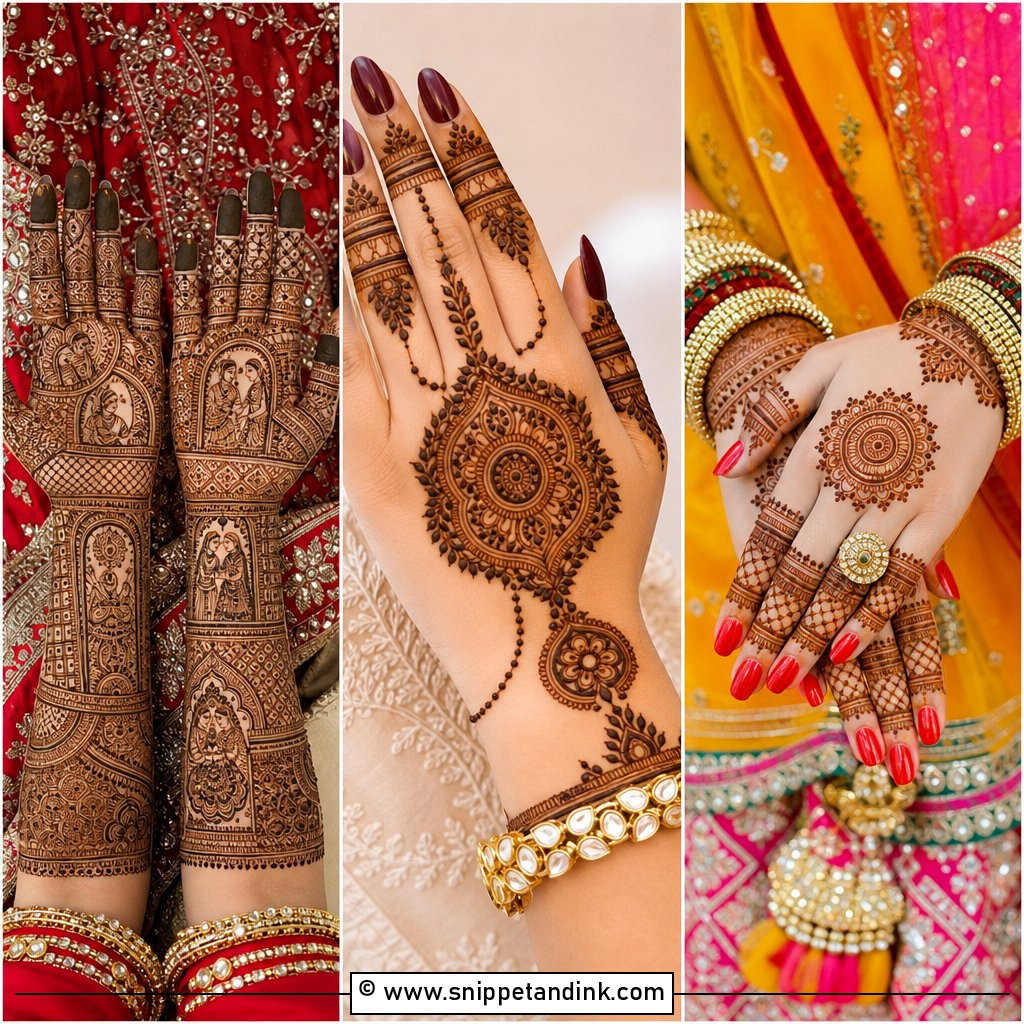
Full-hand Balochi work covers the palm, fingers, wrist and sometimes the lower forearm. Its character comes from small geometric boxes, crisscross lines, floral fillers and bold borders drawn like embroidered bands. I make the palm slightly denser and use bracelet bands at the wrist to give it structure, with repeated diamonds or leafy trails on the fingers. Tiny boxes on the palm are the risk, because palms stain darkest and small squares can fill in. I draw them a touch larger there than I would on the back of the hand.
2. Balochi Bridal Mehndi Design
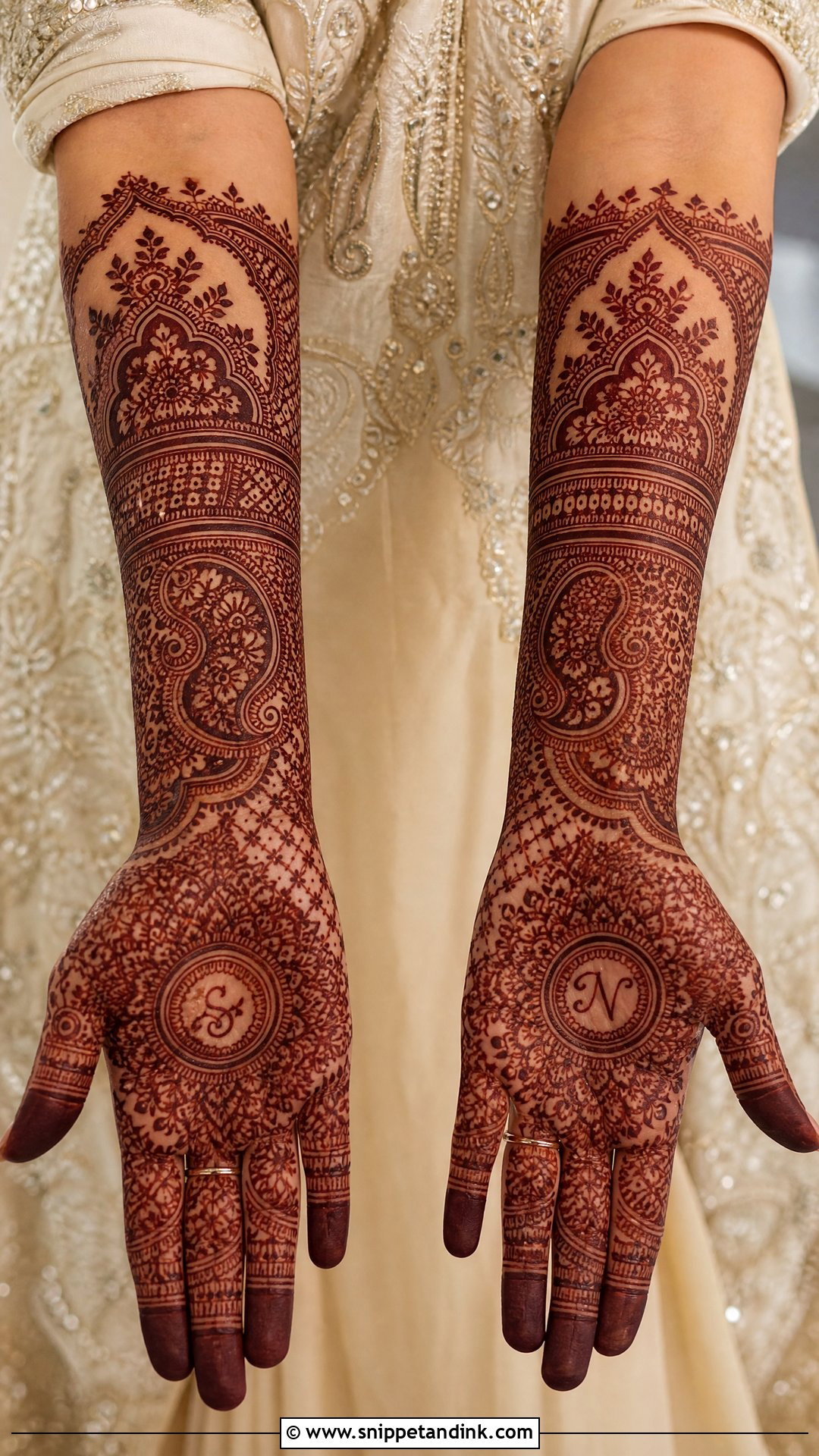
A Balochi bridal design runs from fingertips to forearms on both hands, with paisley clusters, floral blocks, jaali sections, dotted borders and panels that read like needlework. I often center the palm on a large mandala ringed by small geometric shapes, then add cuff bands and layered vines on the forearm. A deep maroon henna stain suits it, since the darker color picks out every fine line. Initials or a small wedding symbol can hide inside a panel. Plan for a long sitting. The geometry can’t be rushed.
3. Balochi Front Hand Mehndi Design
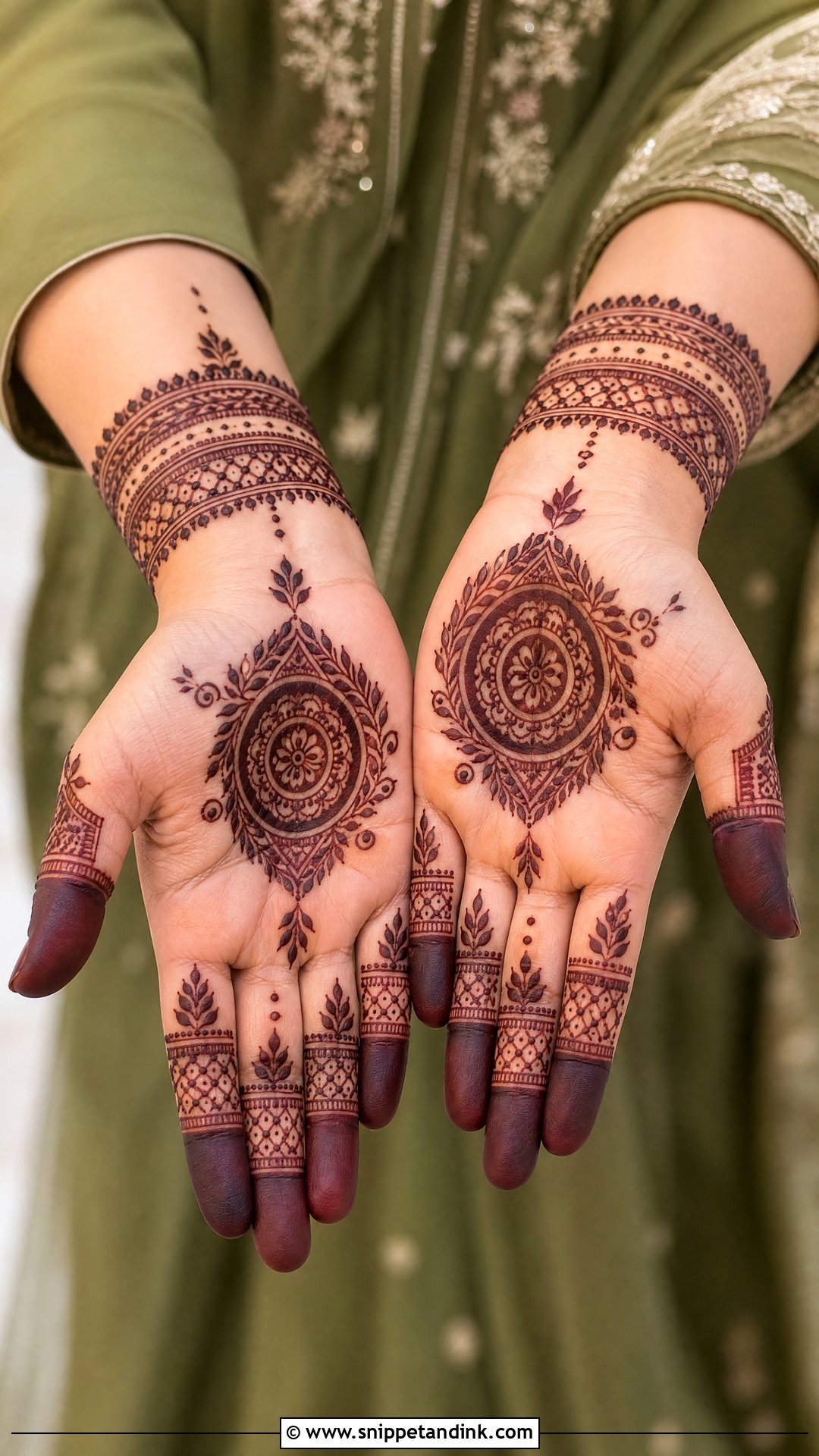
The palm side is what people see during greetings, rituals and the moment someone takes your hand. A Balochi front hand mehndi design usually starts from a center circle, a floral medallion or a diamond in the palm, surrounded by rows of dots, mesh squares, small paisleys and leafy curves. I never leave the fingers bare in this style, because the repeated finger bands are what make it read as Balochi. A layered bracelet border finishes the wrist. It looks complete without any forearm coverage.
4. Balochi Back Hand Mehndi Design
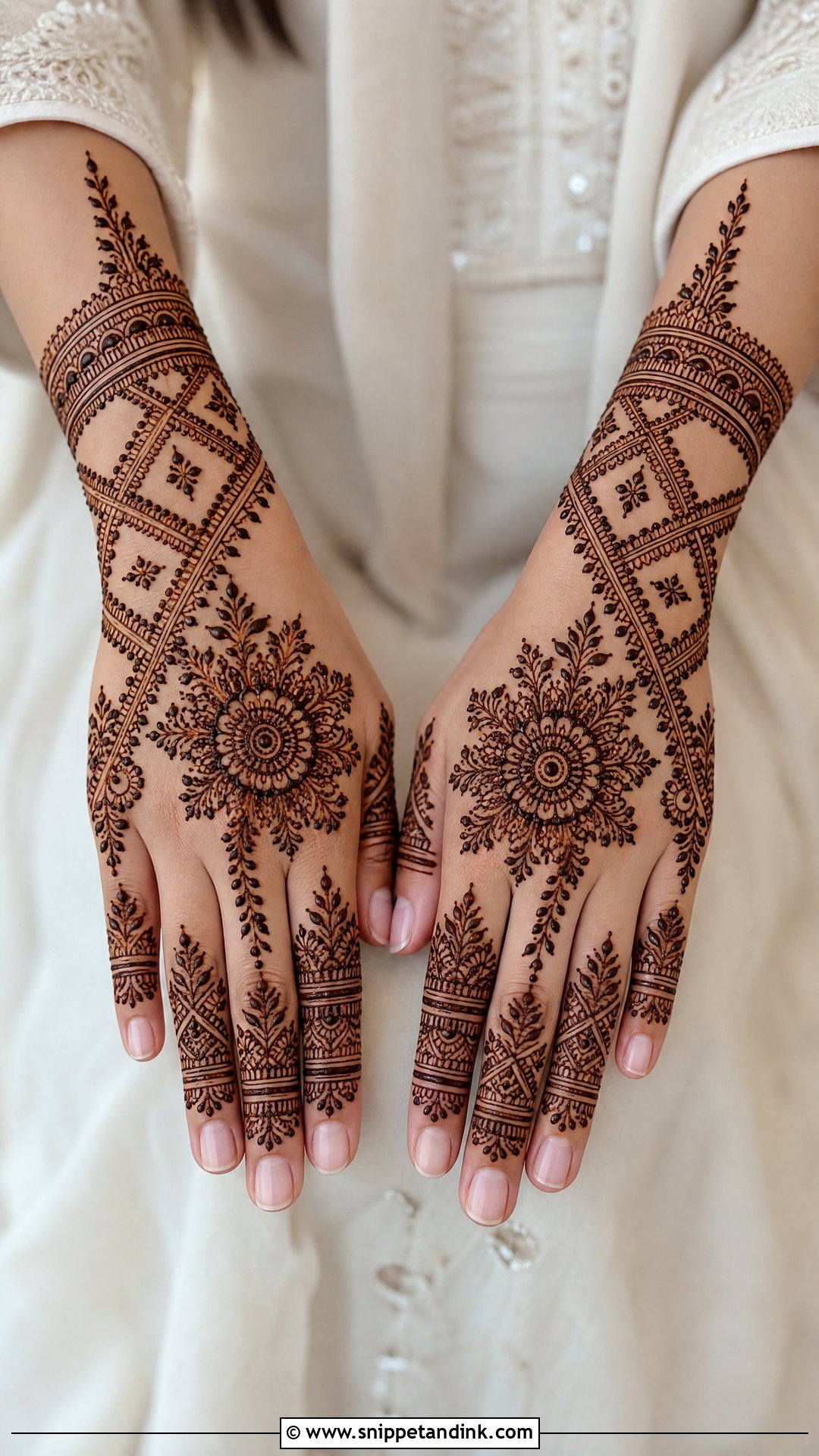
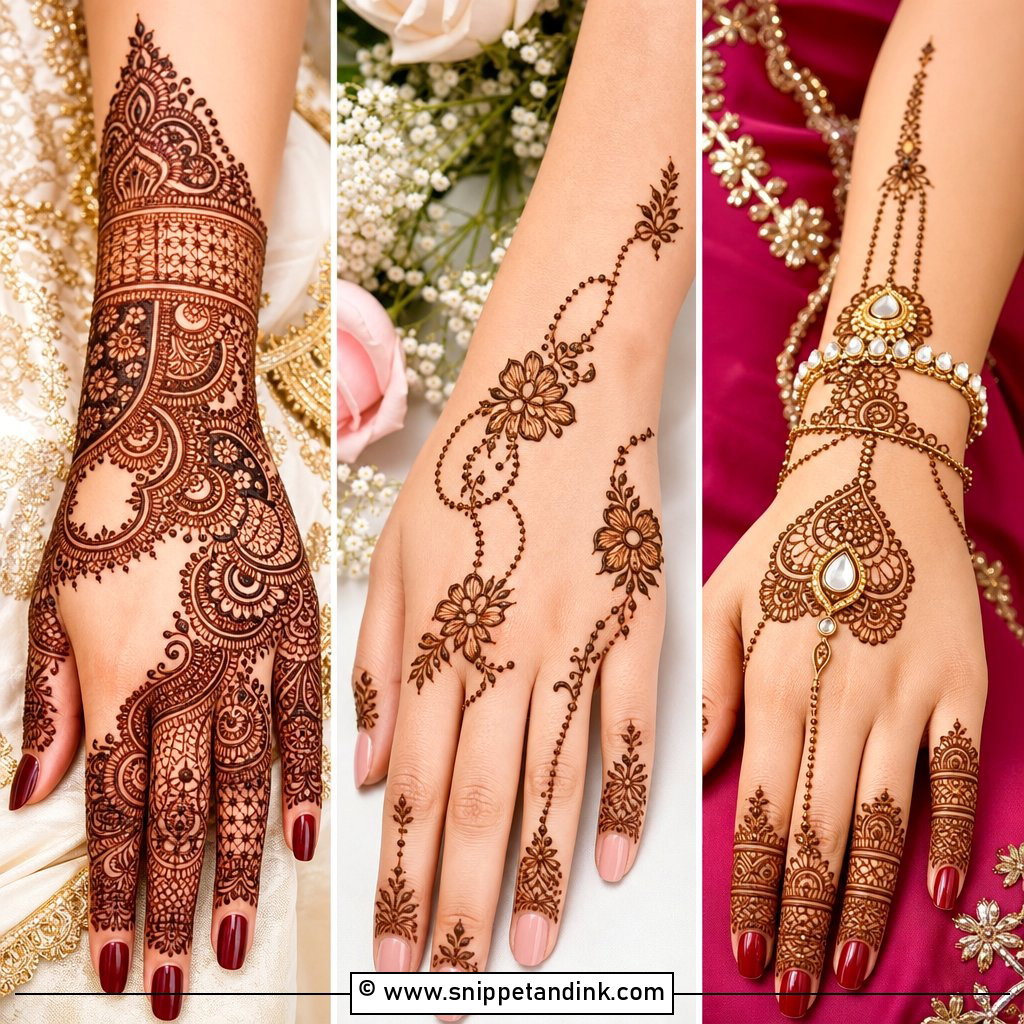
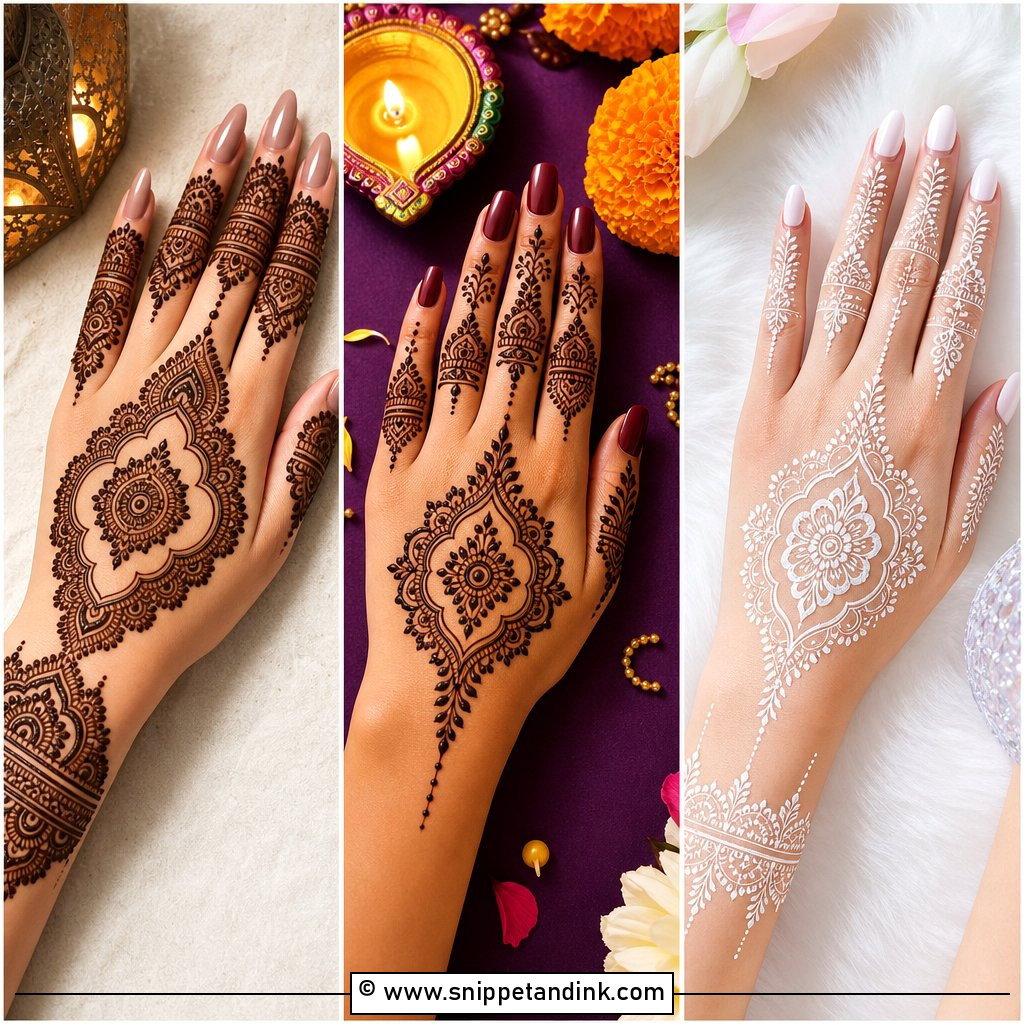
On the back of the hand, I build Balochi work from the wrist toward the fingers in a structured layout. One option is a central floral mandala surrounded by diamond grids, small leaves and fine dot chains. Another is a diagonal trail drawn like a strip of embroidered fabric laid across the hand. The back of the hand stains lighter than the palm, so I can afford finer detail here without it filling in. Matching finger bands complete it, and the wrist doubles as a henna bracelet next to real bangles.
5. Balochi Simple Mehndi Design
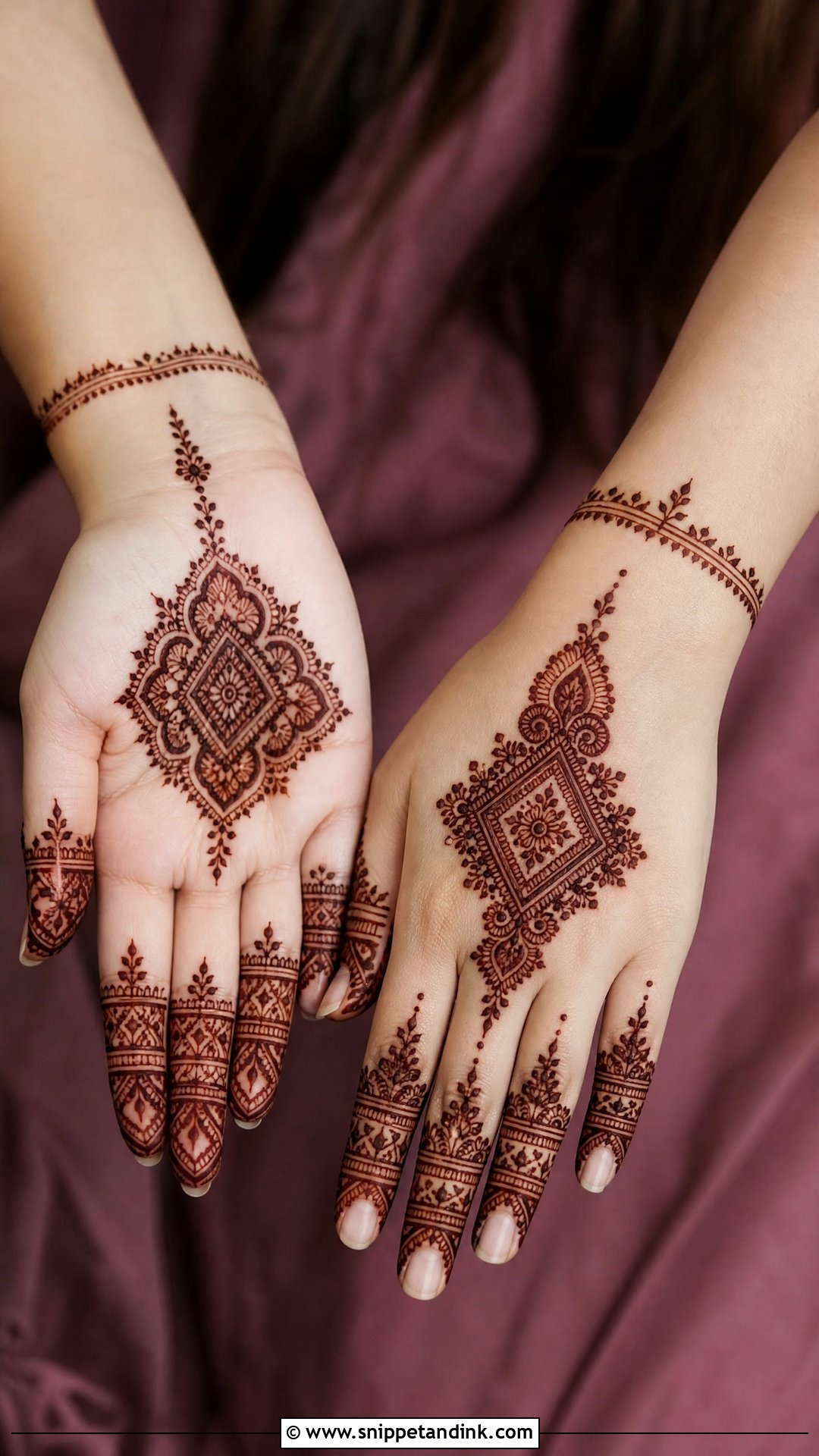
A light Balochi design still needs the right pattern language, otherwise it’s just a generic simple henna. I pick one motif, a small mandala, a diamond flower or a paisley cluster, then build around it with open skin between shapes. Fine lines, dots and small triangle borders go on the fingers, and a slim wrist band closes it off. It’s quick, which makes it a good choice for younger girls, casual events and festive evenings with a queue of family waiting.
6. Balochi Arabic Mehndi Design
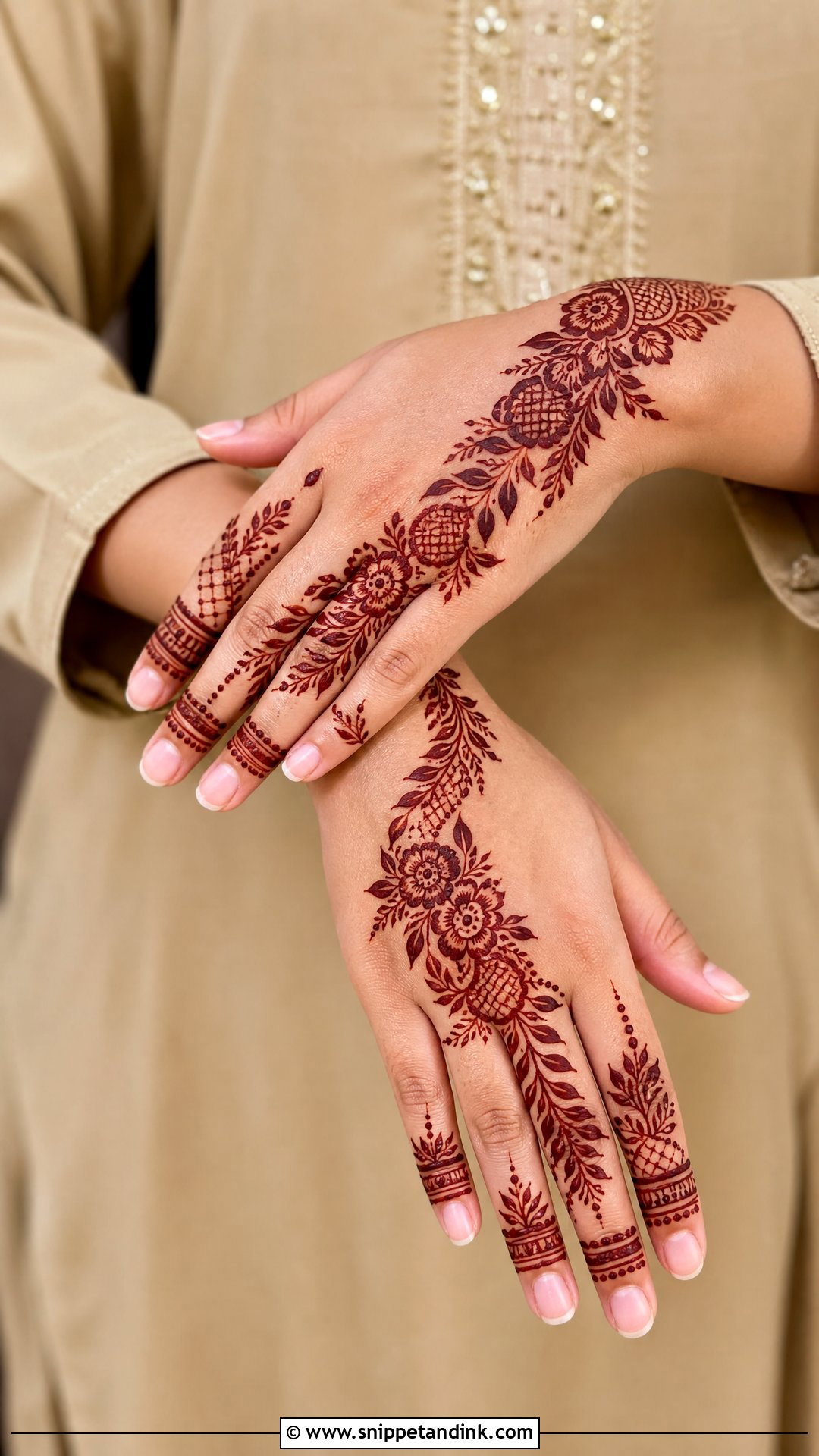
A Balochi Arabic mehndi design keeps the open diagonal trail of Arabic henna, from the wrist to the index or middle finger, and fills the flowers and leaves with tiny geometric fillers and embroidery-style lines. The open skin makes the stain stand out. Mixing two styles can go wrong if the fillers are too busy, so I keep the Balochi detail inside the motifs and leave the spaces between them clean. Thin finger bands and leaf tips finish it. It’s faster to apply than dense full-hand work.
7. Balochi Indo Arabic Mehndi Design
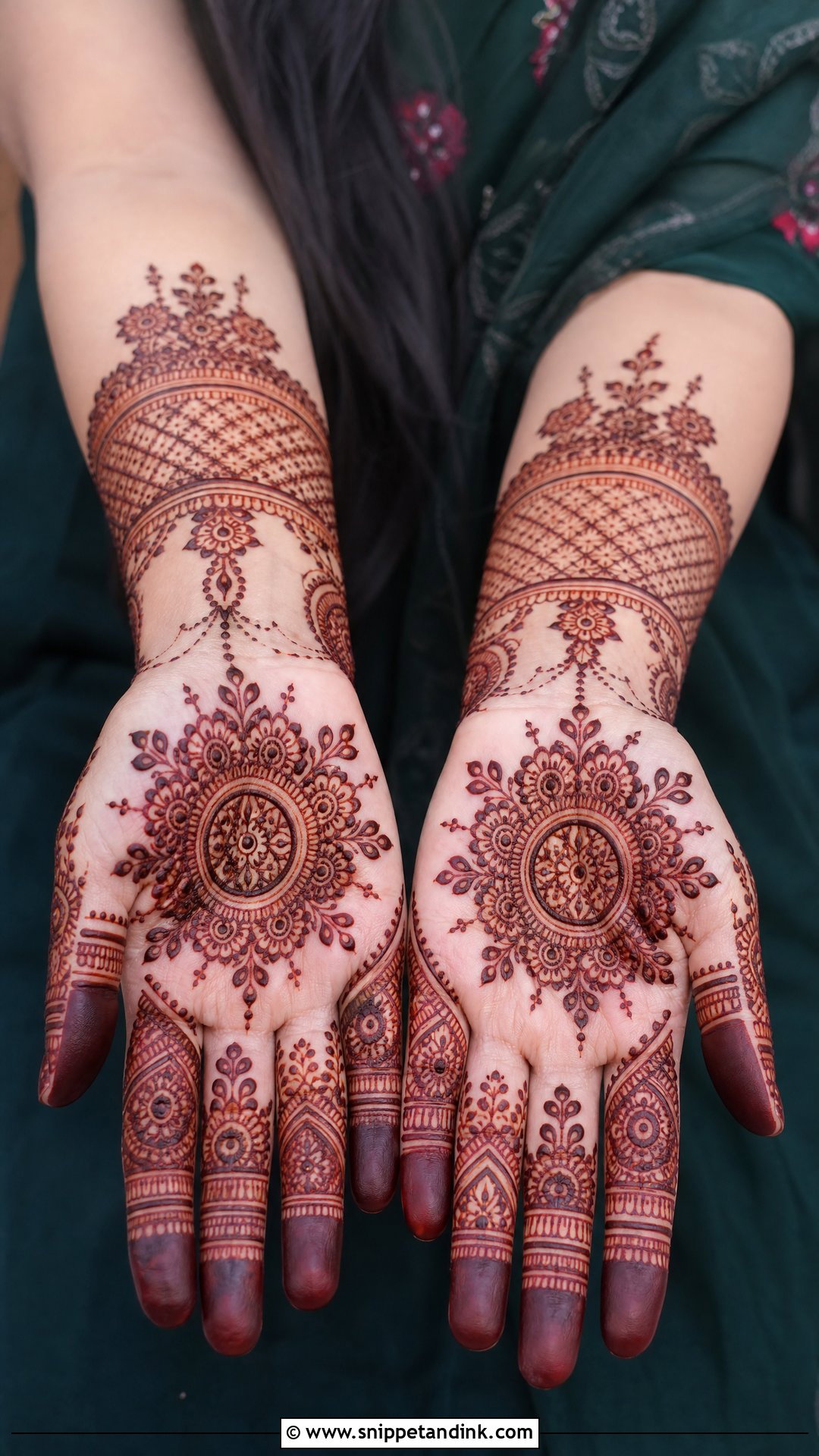
Indo-Arabic with Balochi borders sits between Arabic and full bridal density. The palm takes a mandala or paisley cluster, the outer edge of the hand carries floral trails, and diamond grids, dotted chains and fine curves bring in the Balochi feel. I like to finish the wrist with a cuff drawn like an embroidered sleeve border, which ties the whole hand to a traditional outfit. It suits engagements, family weddings and Eid.
8. Balochi Geometric Mehndi Design
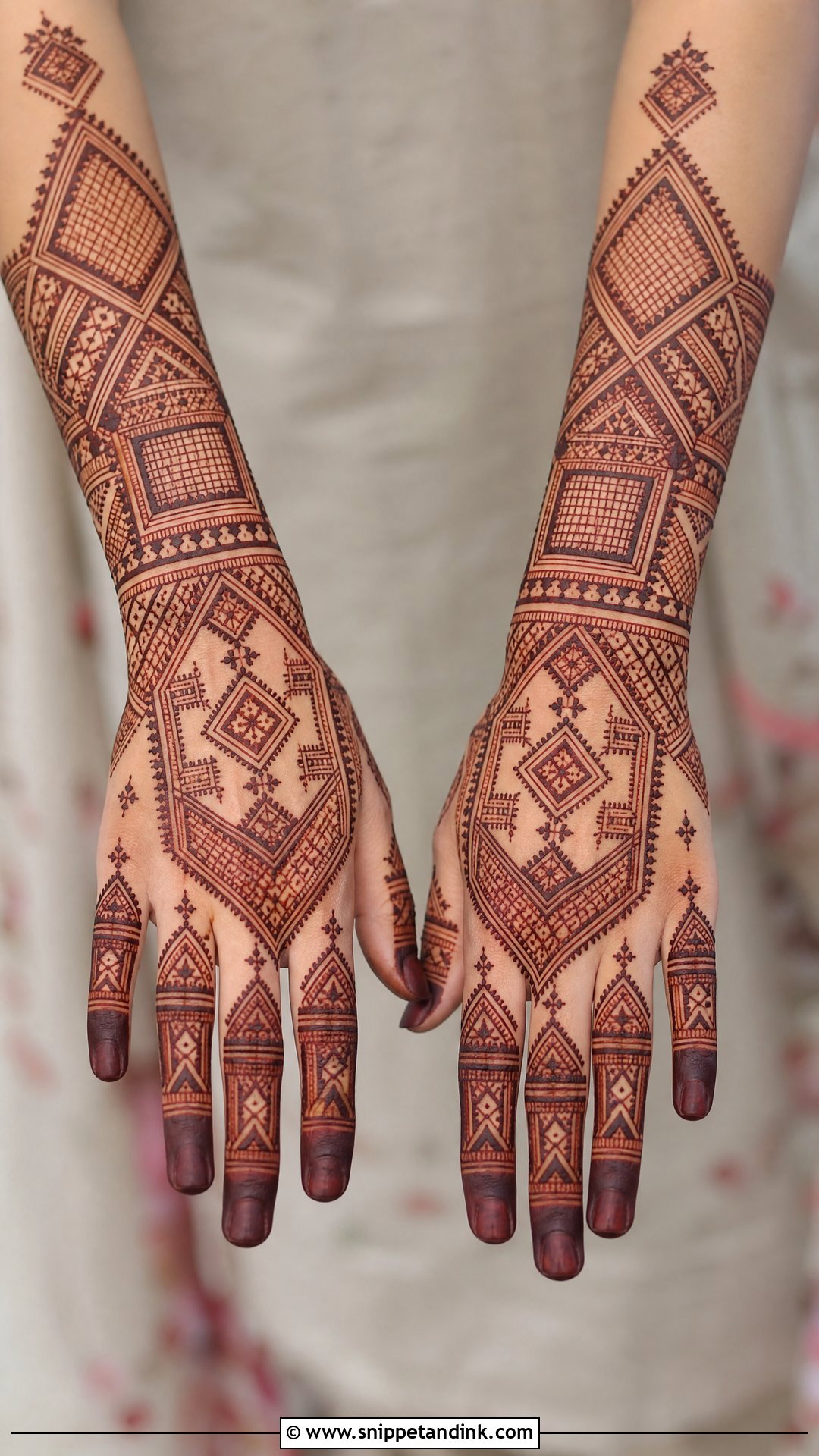
Geometric Balochi work divides the hand into sections with bands, diamonds, triangles, squares and mesh panels, much like the blocks of a needlework panel. A center mandala can soften it, and the fingers carry matching strips. Symmetry is everything, so I place guide dots for the main lines before filling anything in. A wobble that would vanish in a floral design is obvious in a grid. It works front or back, and a dark stain makes the structure pop.
9. Balochi Mandala Mehndi Design
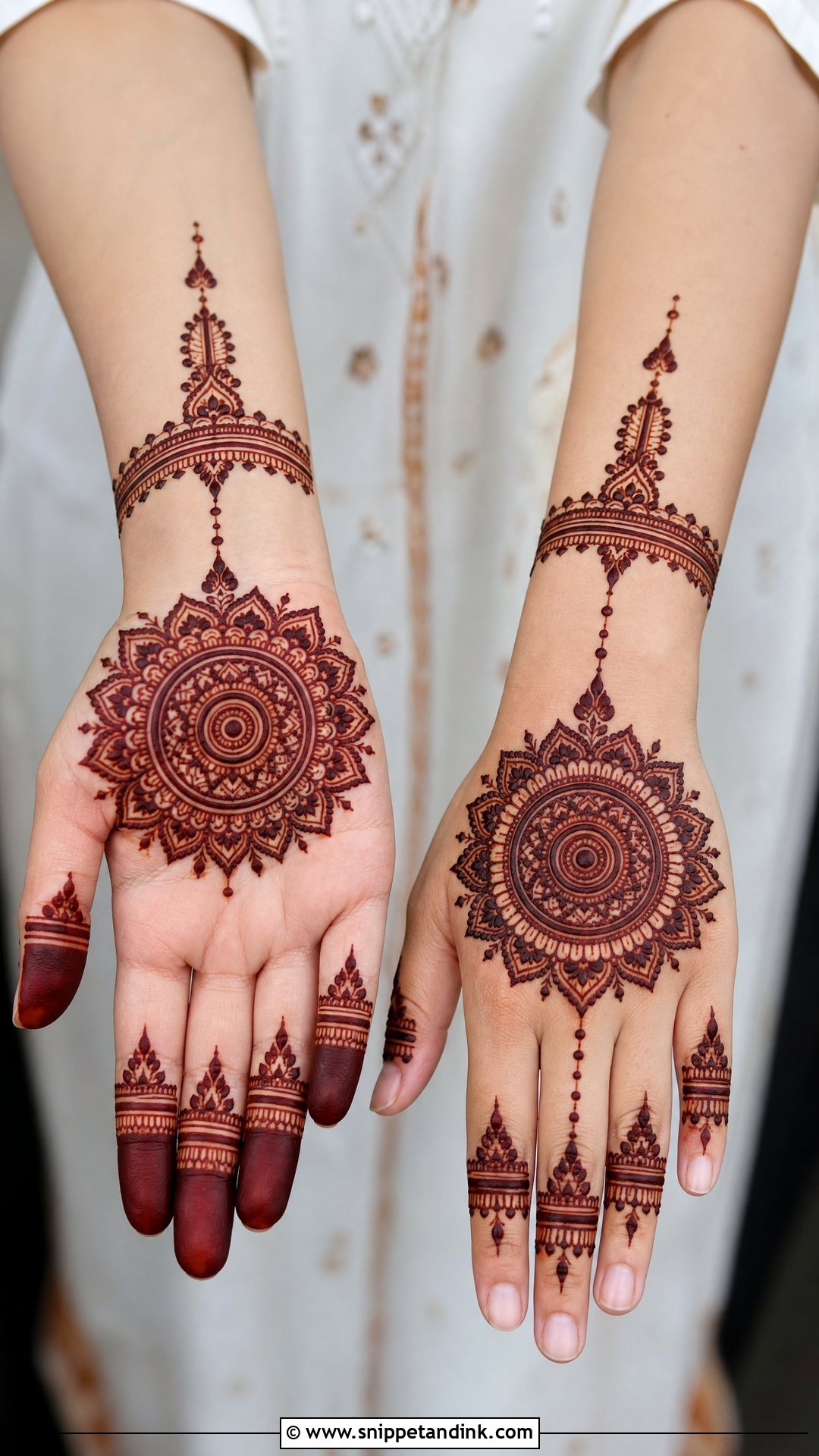
A round motif in the center of the palm or back of the hand is easy to recognise and suits any hand shape. The Balochi touch comes from what surrounds it: diamond-shaped petals, dot clusters, triangle edges and fine border rings. I repeat a band from the mandala on each finger so the hand reads as one design. For a fuller version I extend a bracelet pattern to the wrist. For a lighter one I leave clear space around the circle.
10. Balochi Paisley Mehndi Design
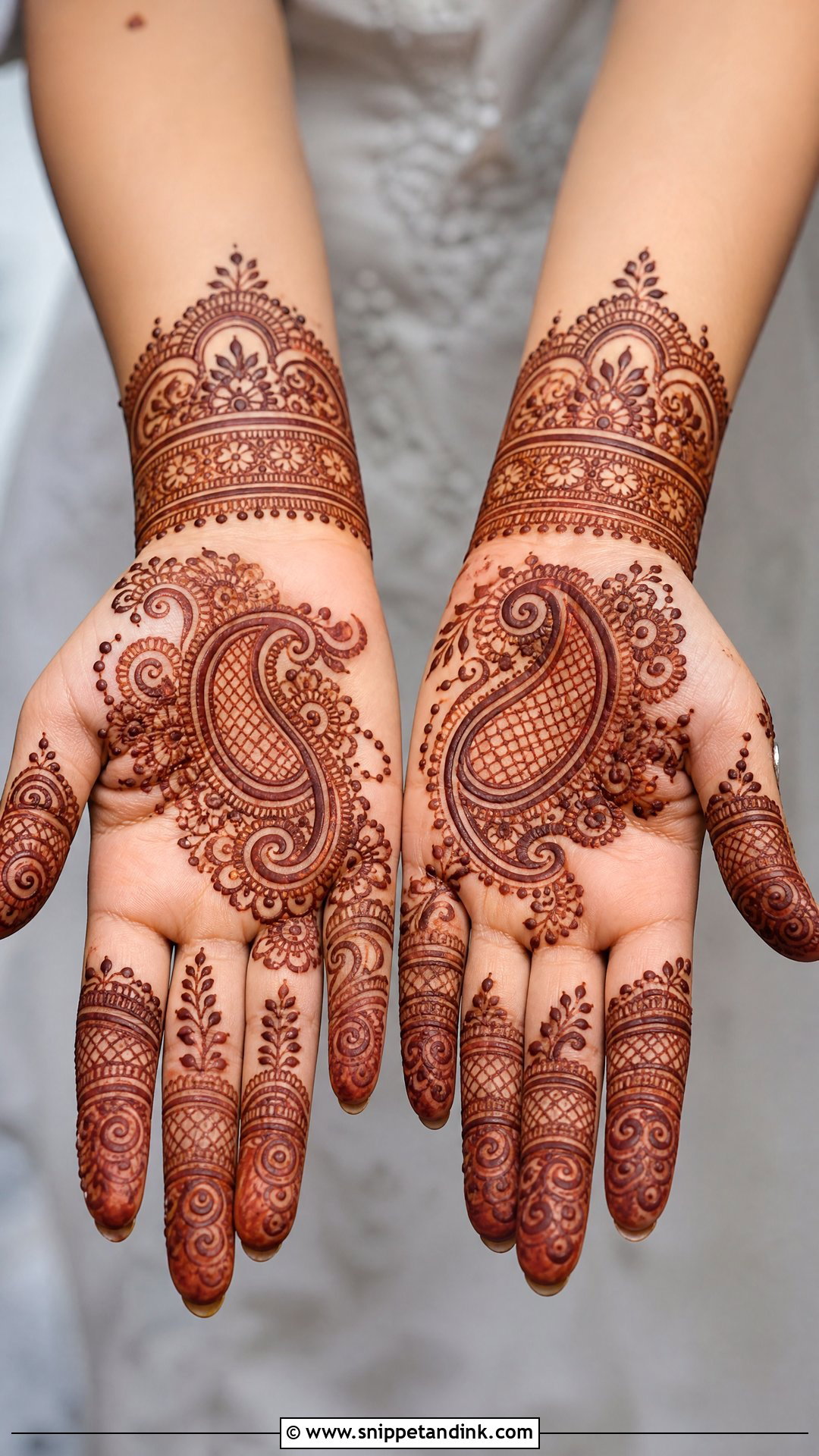
Paisleys hold Balochi detail well because their wide body leaves room to fill. I place one large paisley on the palm with smaller ones around it, floral fillers and dotted outlines, then fill each one with fine lines, small squares, leaf veins or mesh. That inside work is what gives the handmade, stitched look. Curved lines and mini paisley tips go on the fingers, with a bold cuff at the wrist. It holds its character at weddings, Eid and cultural events.
11. Balochi Floral Mehndi Design
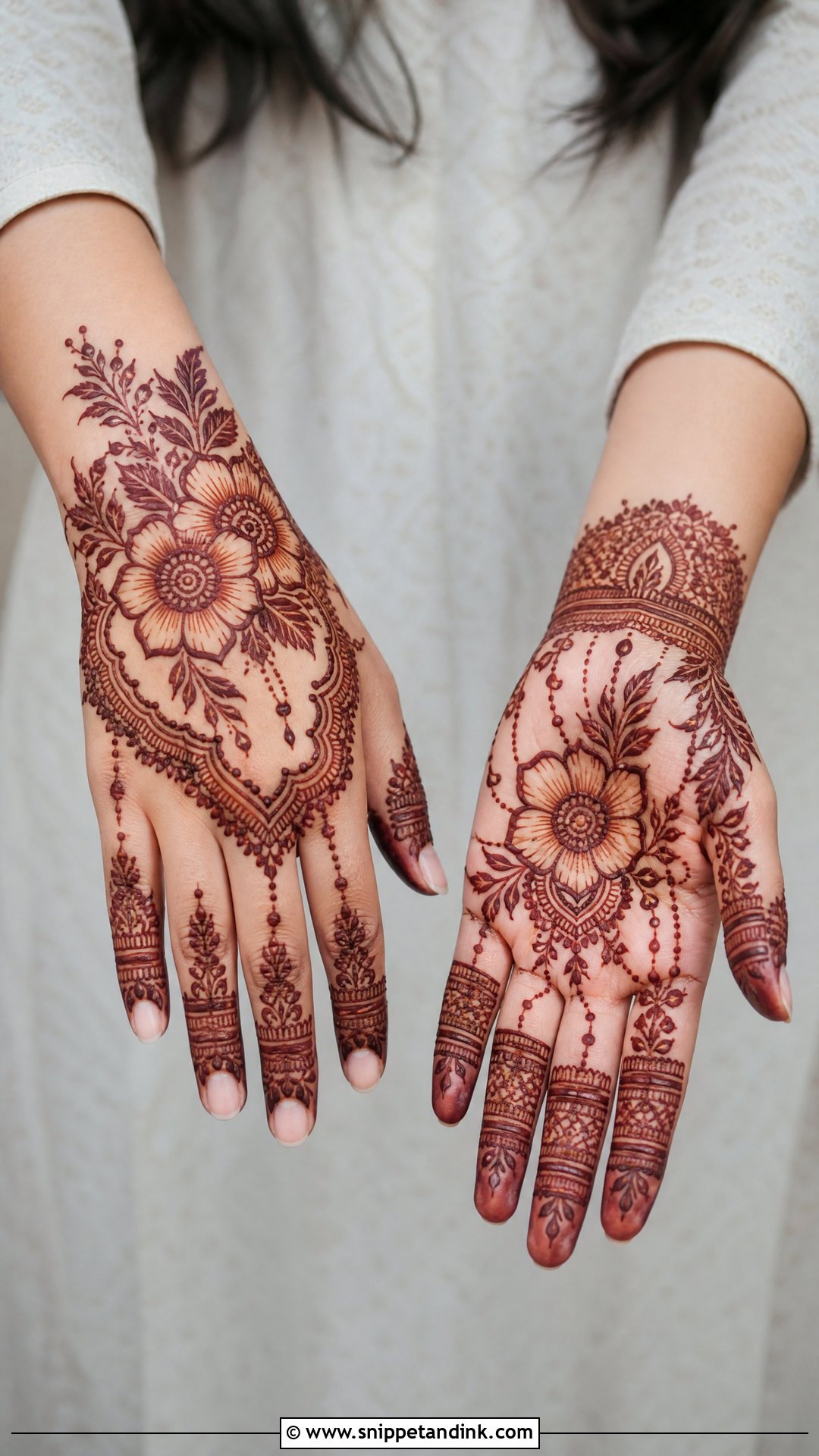
Flowers soften the strict Balochi structure, but they can’t be scattered. Large blooms on the palm or back of the hand need a planned layout, a trail, a circle or a half cuff, with geometric panels, dot chains and leafy vines filling the spaces between. I give the petals a diamond shape and fine line shading, which keeps them in the same visual family as the borders. Slim floral bands with tiny leaves finish the fingers. It’s a gentler take for bridesmaids and engagement photos.
12. Balochi Eid Mehndi Design
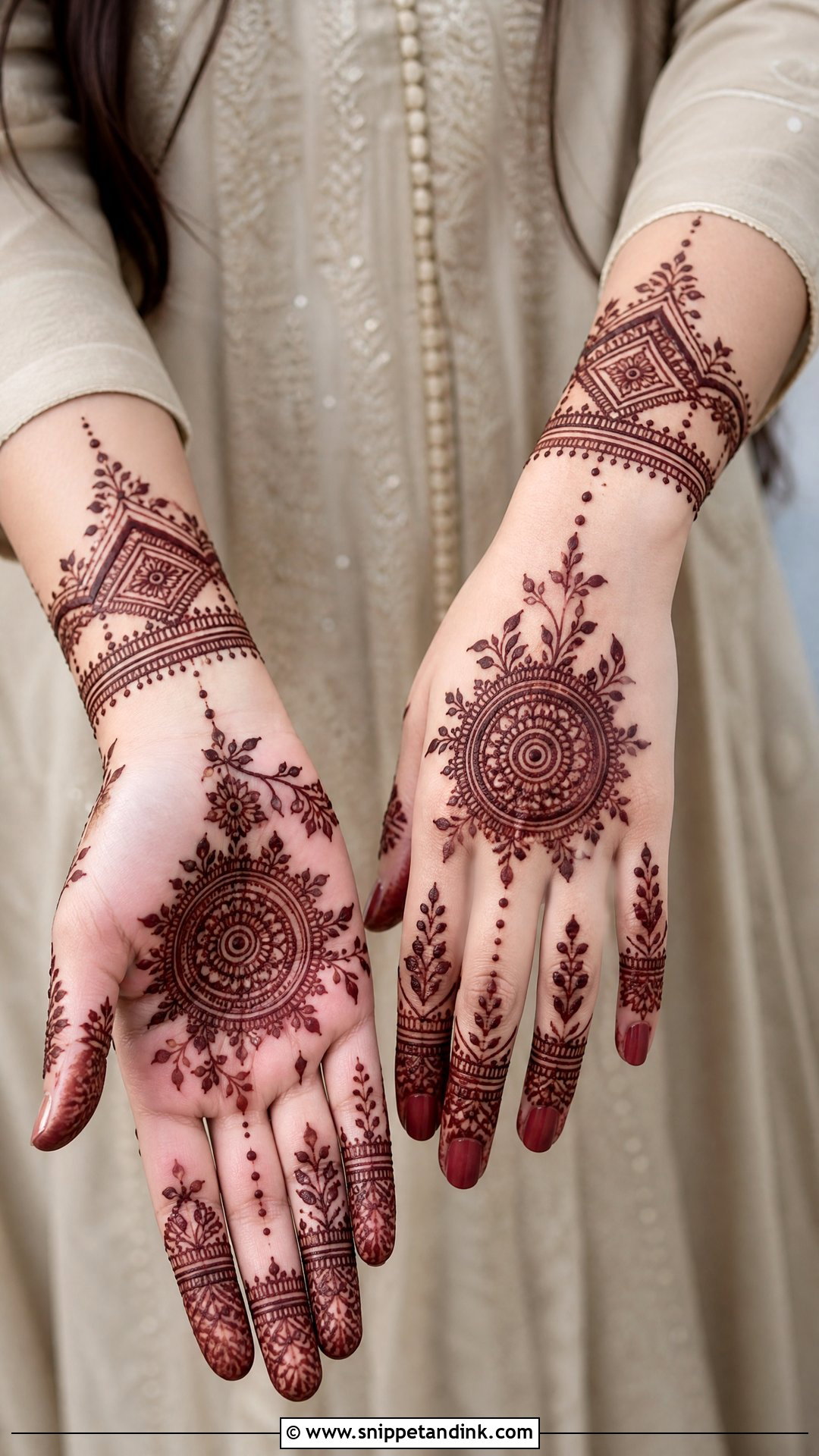
For Eid I aim for medium coverage: a decorated palm, detailed fingers and a wrist band, often with a mandala in the center, vines on the sides and small diamond borders at the wrist. Some open space keeps it fresh for a daytime gathering. A diagonal back-hand trail with finger bands also works. The timing matters most here. Chaand raat appointments fill quickly, and henna applied the night before shows a bright orange on Eid morning that deepens through the day.
13. Balochi Wedding Mehndi Design
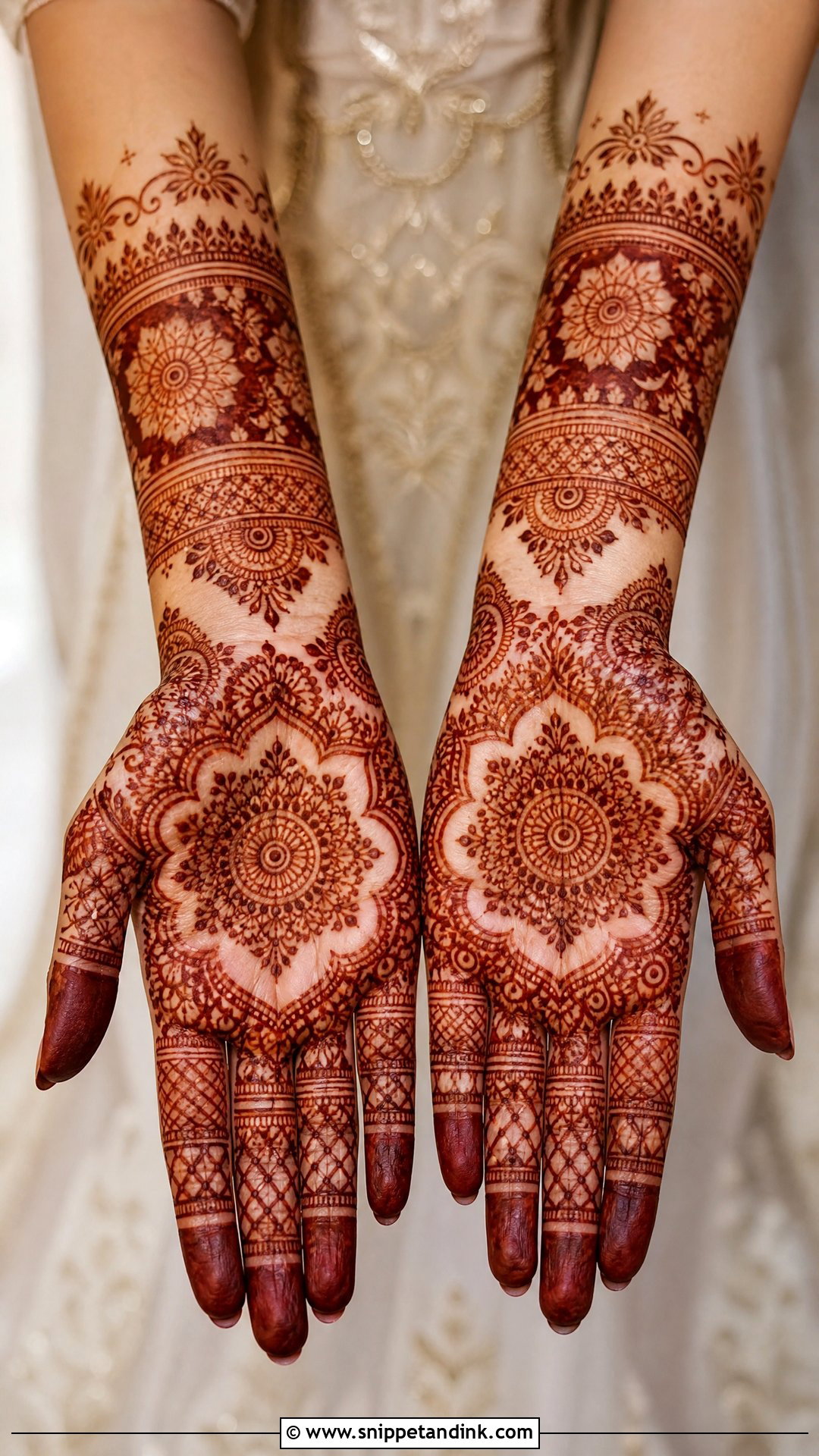
A wedding-guest or family version sits between casual and full bridal: a palm mandala, paisley corners, floral borders and a wrist cuff with geometric fillers, with small repeated patterns over every finger. For a formal event I take it slightly past the wrist. For guests, I keep it to the hand and wrist so it doesn’t compete with the bride. Sisters and cousins often ask to match each other, and a shared border pattern is an easy way to do it.
14. Balochi Engagement Mehndi Design
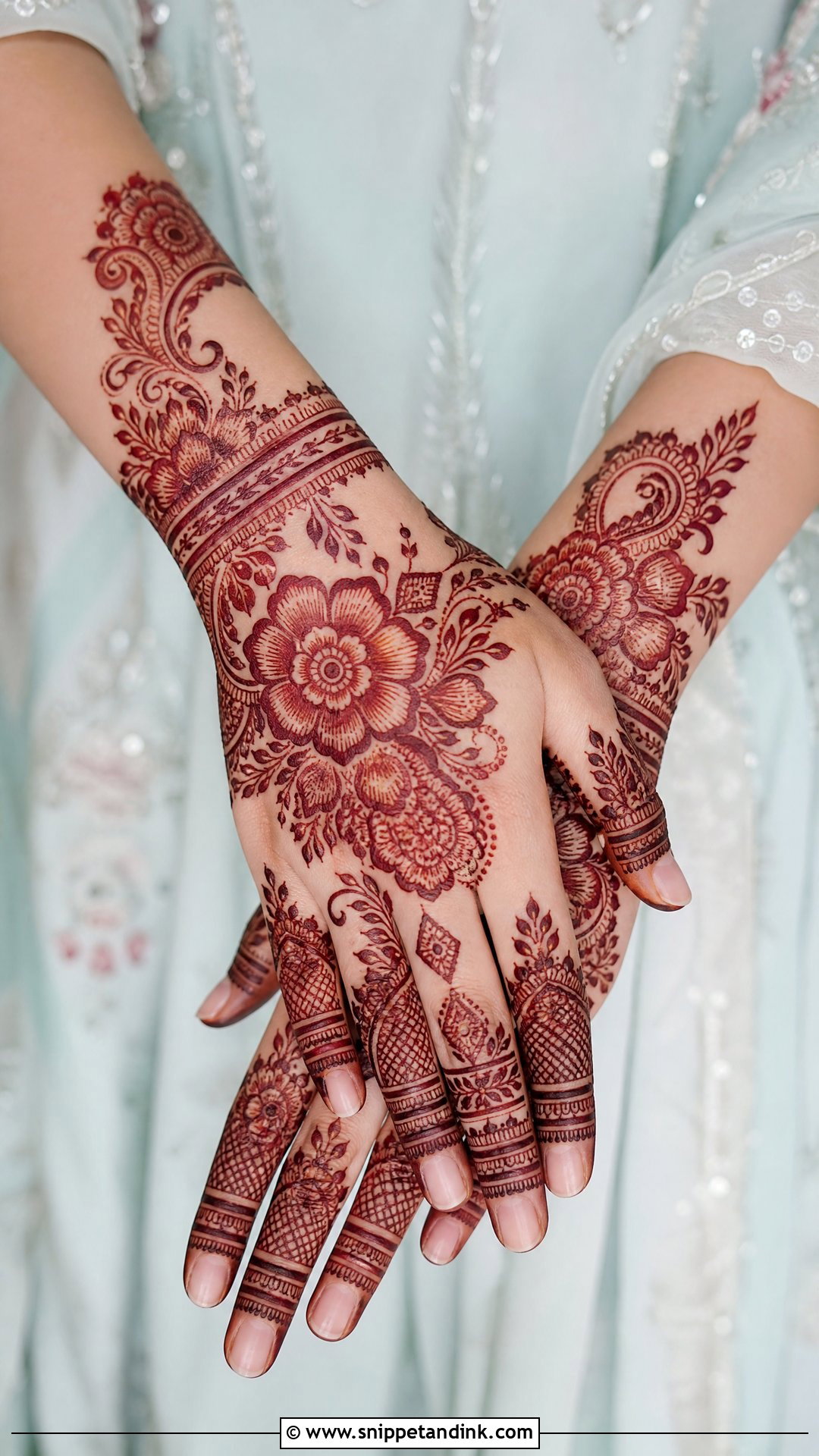
For an engagement I keep Balochi work polished and medium in detail, front or back of the hand: a central flower or mandala, curved paisley lines, small diamond grids and fine finger work. A bracelet-style wrist band gives it a jewelry effect in ring photos. I leave the ring finger a little lighter so the band sits on clean skin and the paste isn’t smudged when the ring goes on. Fingertips can stay half-filled for a softer, modern look.
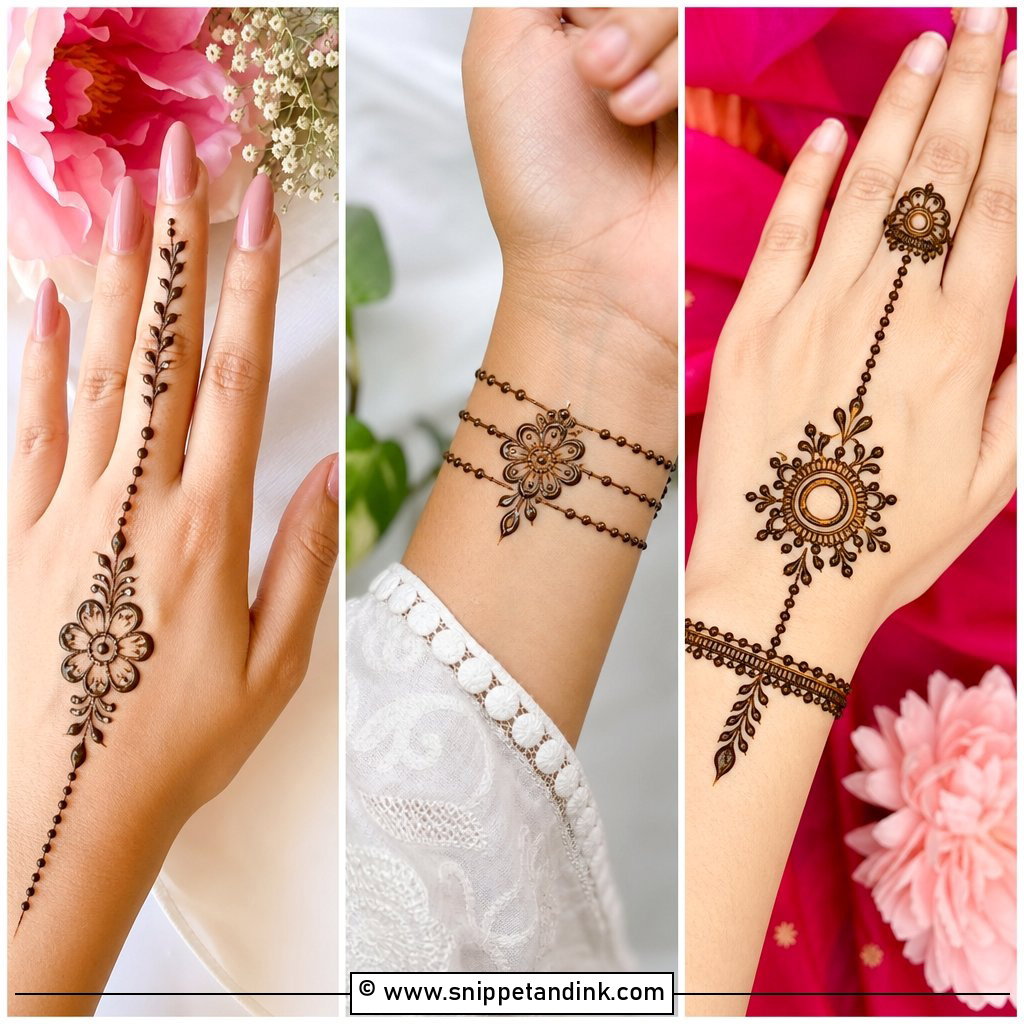
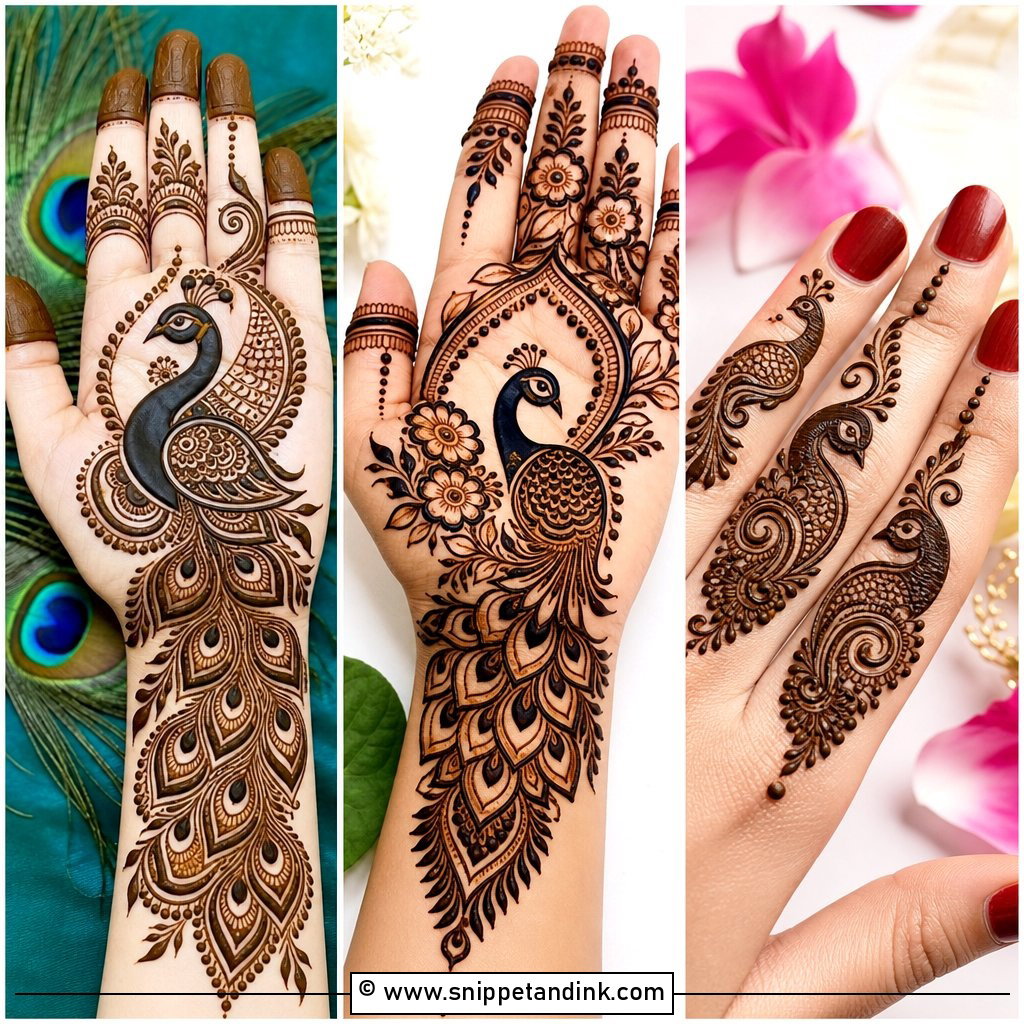
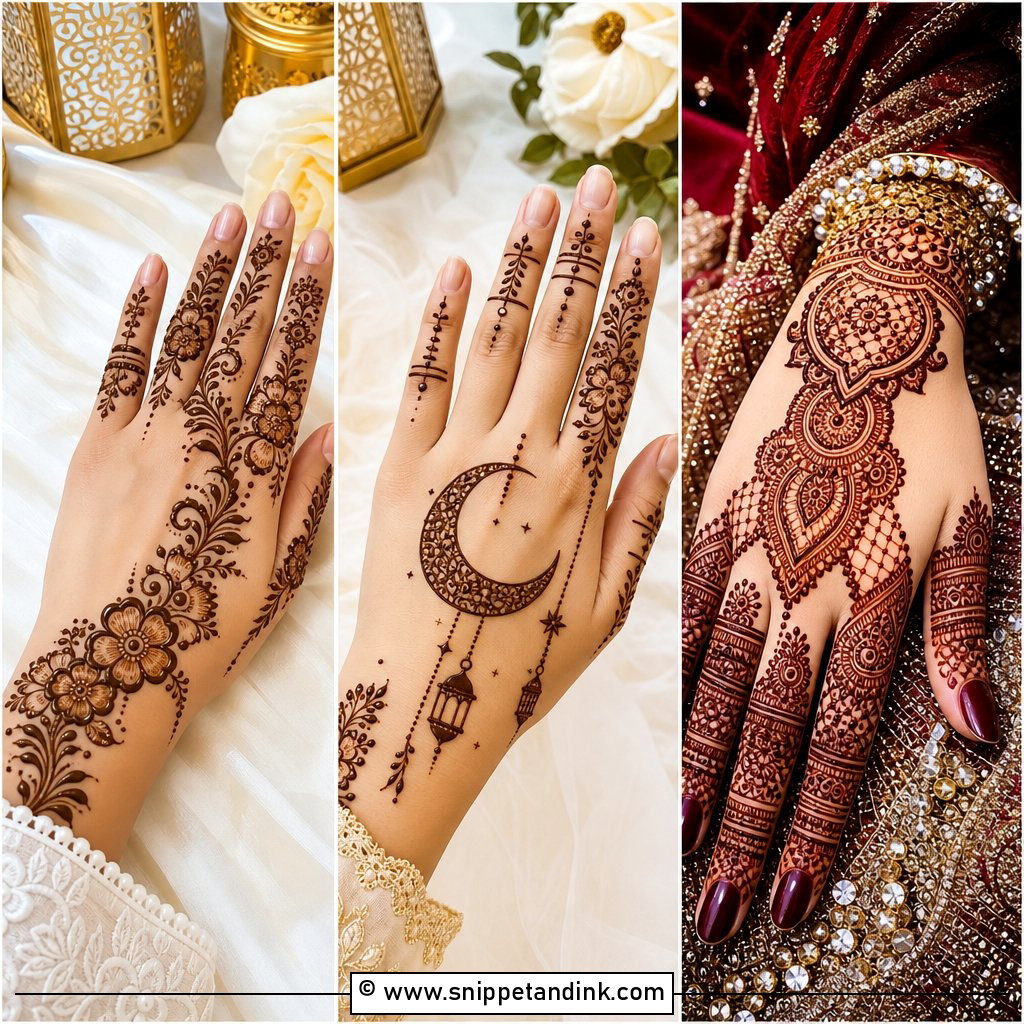
15. Balochi Finger Mehndi Design
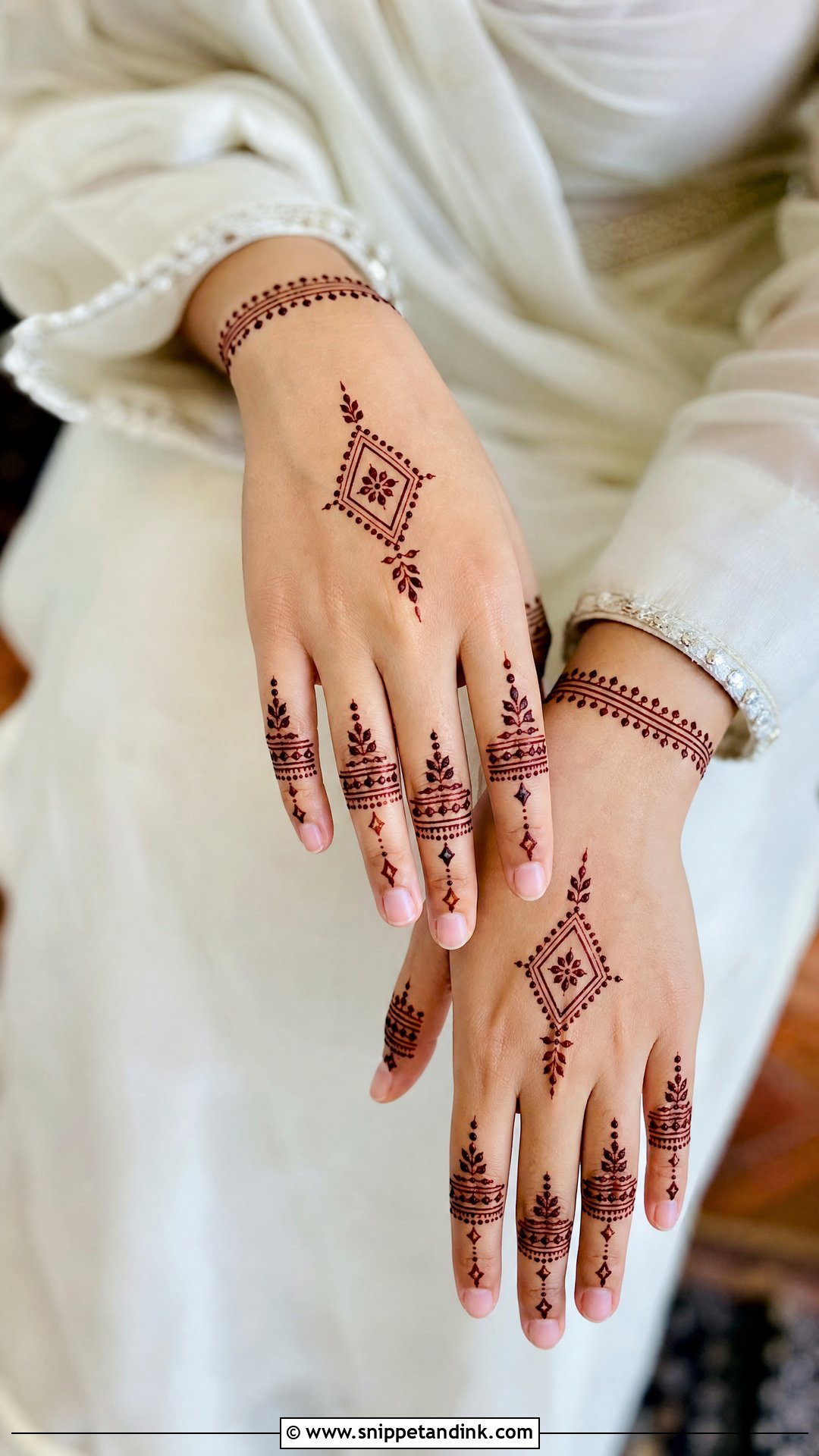
A finger-led Balochi design decorates every finger with repeated bands, dots, diamonds and tiny leaves, then connects them with a small motif on the back of the hand or palm and a slim wrist line. Without that connecting motif, it looks like separate rings rather than one design. Fingertips and fingers stain dark, so these bands come up rich even when the rest of the hand is light. It’s quick, which makes it useful for a last-minute festive appointment.
16. Balochi Wrist Mehndi Design
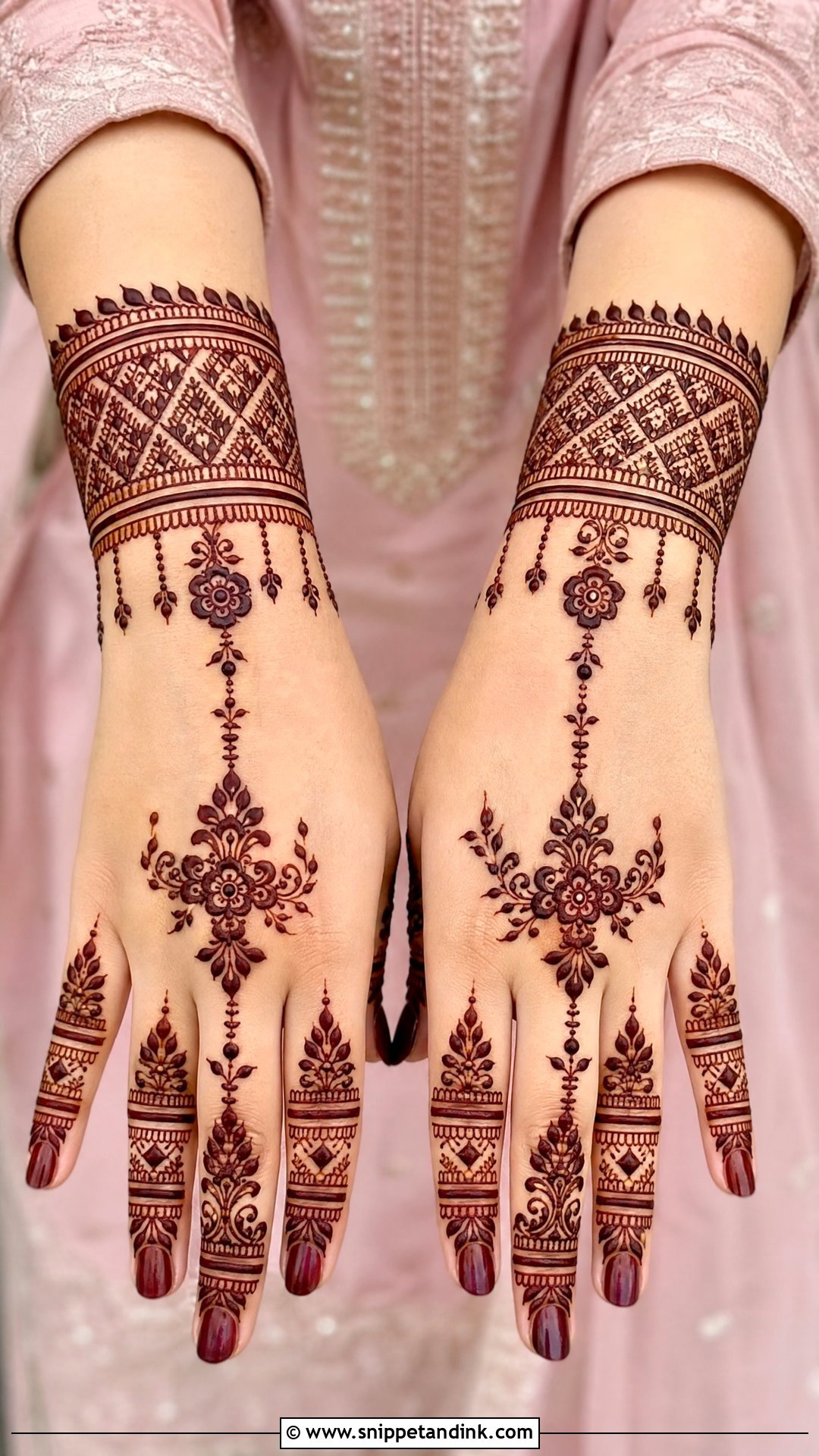
Balochi wrist work turns the wrist into a henna bracelet or cuff, layered bands of triangles, dots, leaf chains and small squares, connected to the fingers with a thin floral trail or a hand motif so it doesn’t look unfinished. The wrist bends constantly, so paste there cracks first. I ask people to keep it still for the first stretch of drying. One cuff is simple, and two or three stacked bands look richer on the back of the hand.
17. Balochi Jaali Mehndi Design
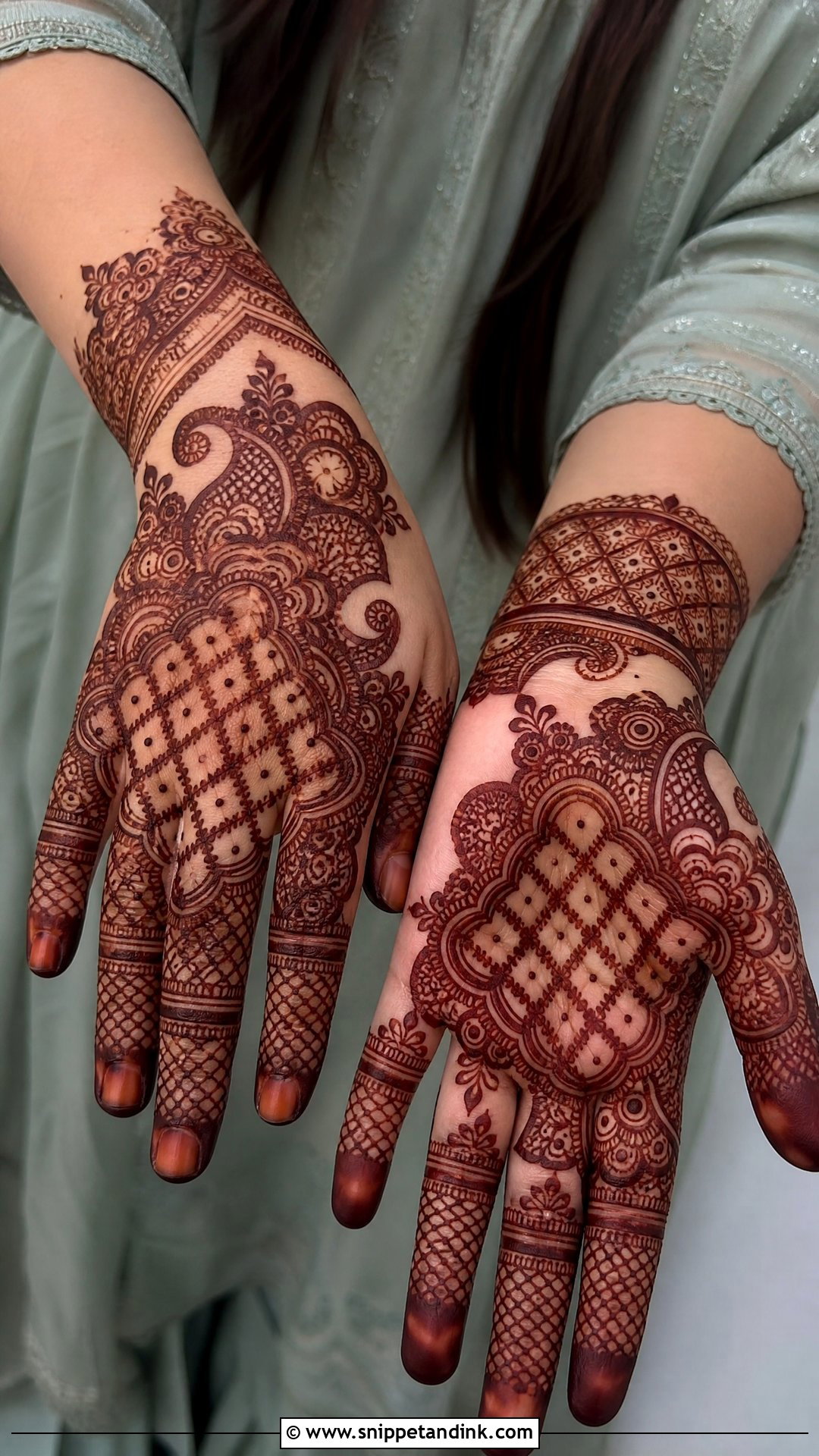
Jaali mesh can cover part of the palm, the back of the hand or the wrist, and in Balochi work I frame it with diamond borders, dot centers and outlines drawn like stitching. A floral or paisley motif breaks up the grid. I keep the mesh slightly more open on the palm than on the back, since a dense grid on the palm stains into a solid patch. The fingers get matching net sections or small bands. It reads clean from a distance and detailed up close.
18. Balochi Khafif Mehndi Design
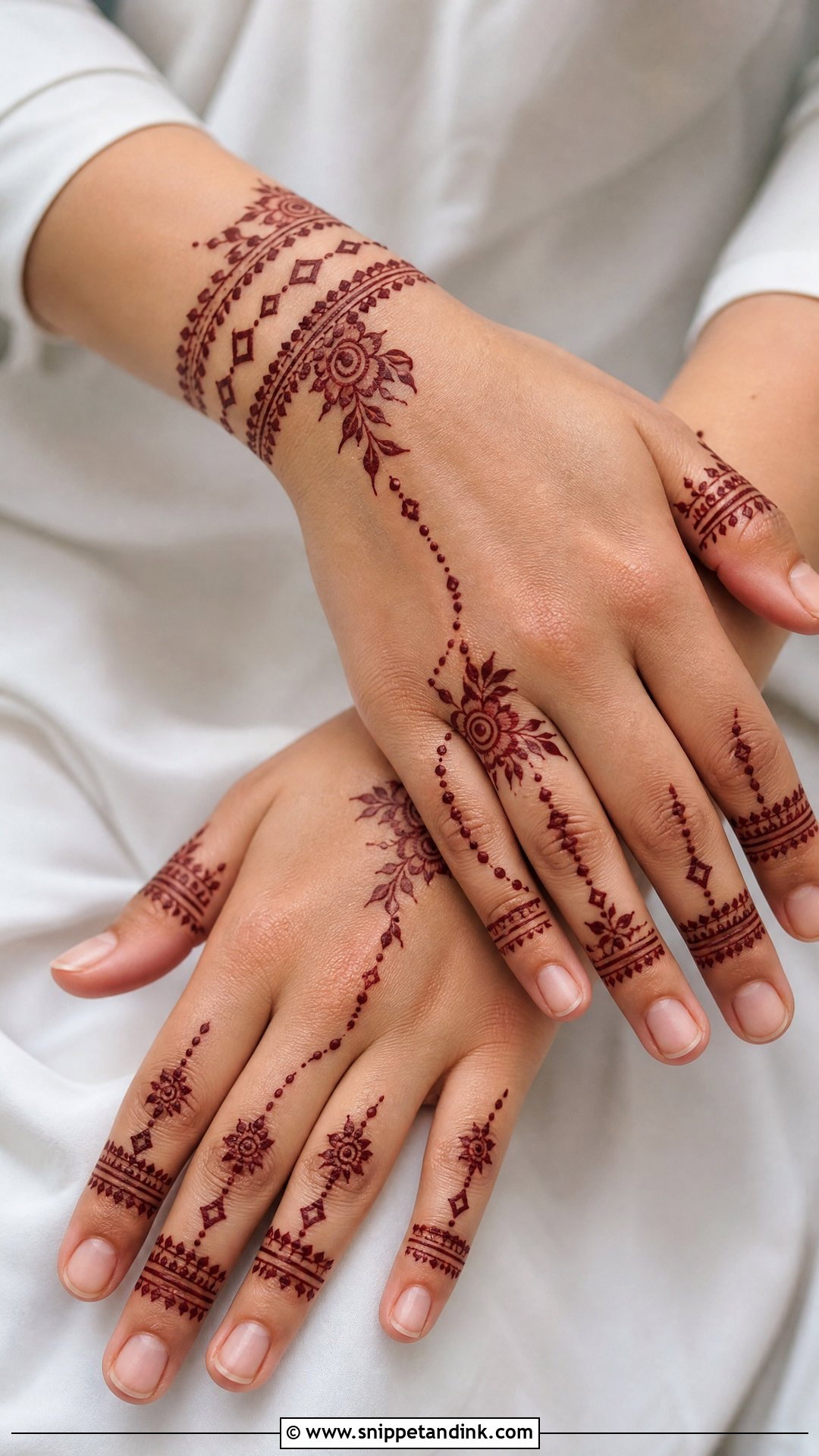
Khafif means light, and this style uses thin lines, soft shading and open space. I add Balochi influence with tiny diamond chains, fine geometric borders and small stitch-like fillers inside the flowers and leaves, flowing diagonally across the back of the hand or sitting on the palm with slim finger bands. It needs a fine cone tip and a steady pace. It suits bridesmaids, young brides and anyone who finds heavy henna uncomfortable.
19. Balochi Minimal Mehndi Design
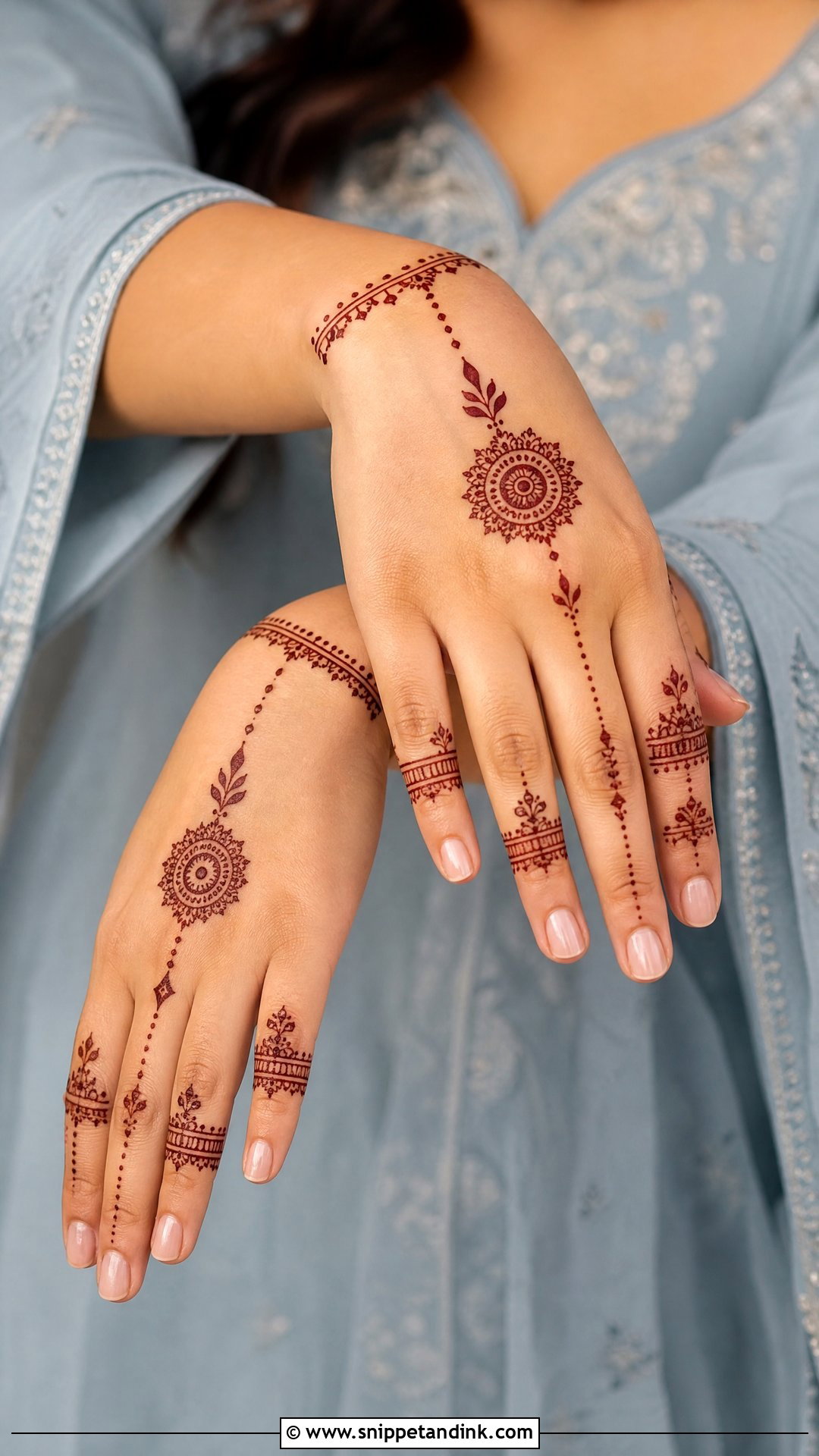
Minimal Balochi henna keeps the cultural feel through shape and placement rather than quantity: a small mandala on the back of the hand, slim finger bands and a tiny wrist border, or a diagonal trail of dots, diamonds and mini leaves. Generous skin space keeps it crisp. I’d suggest it for work-friendly celebrations, casual Eid visits, small family functions, or a first try at the style. It’s fast to apply.

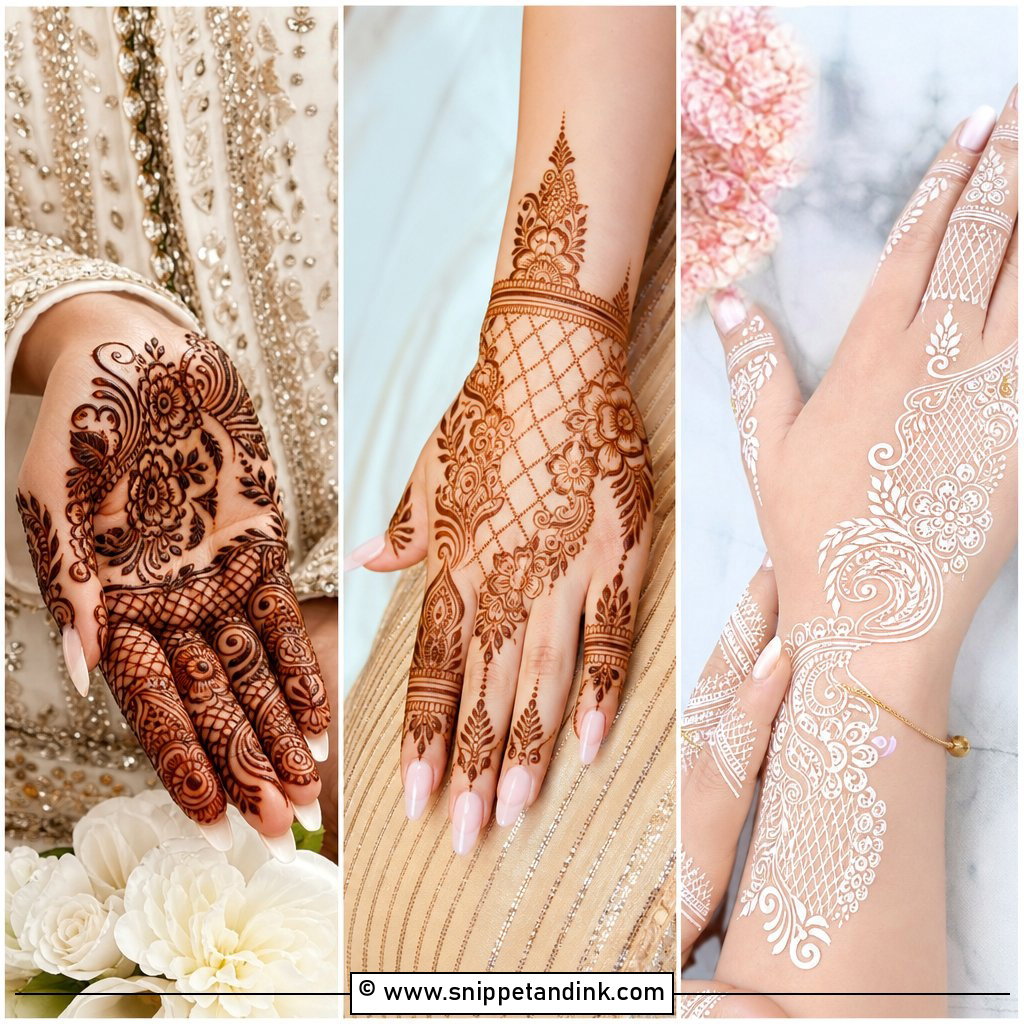

20. Balochi Foot Mehndi Design
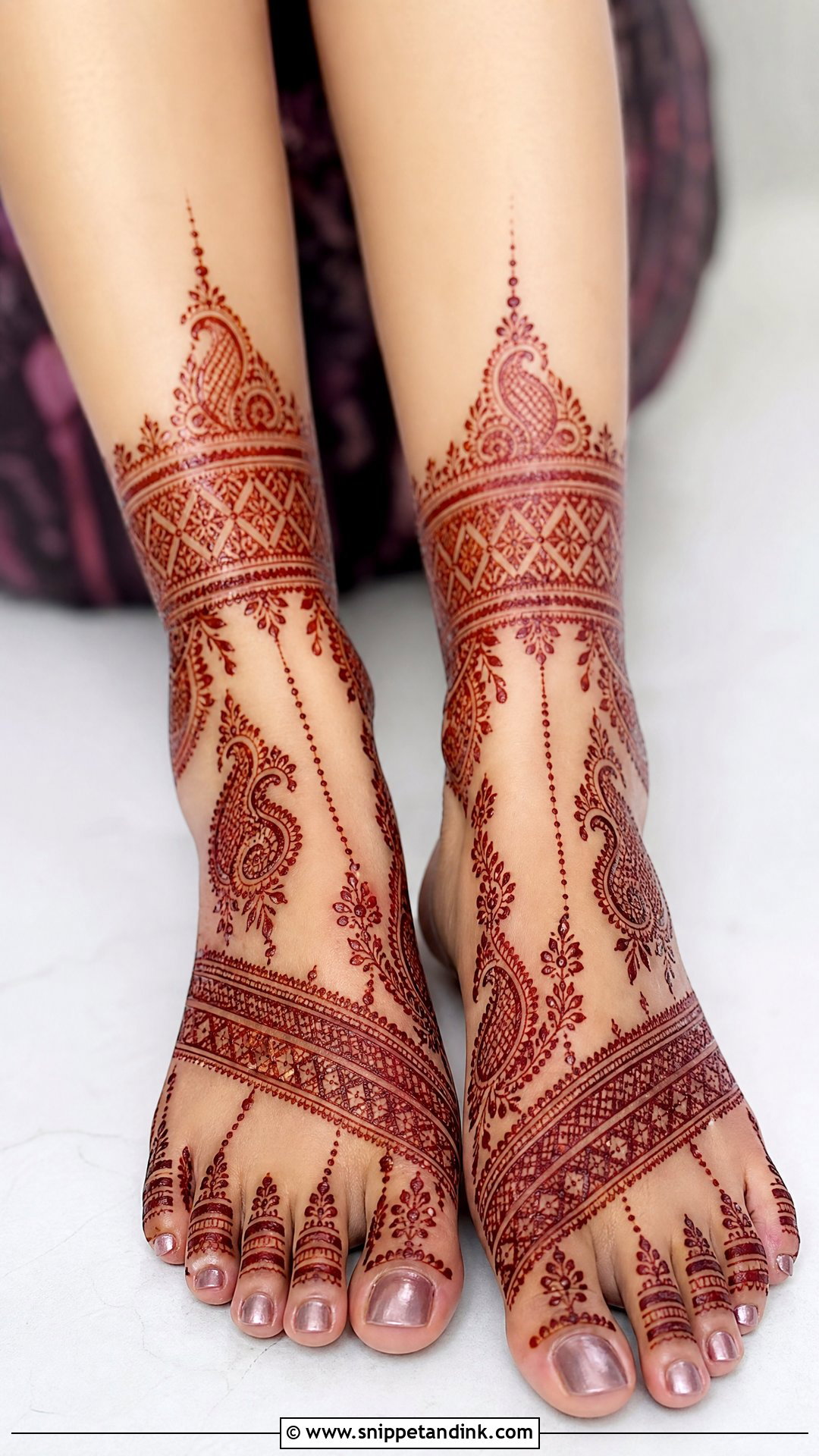
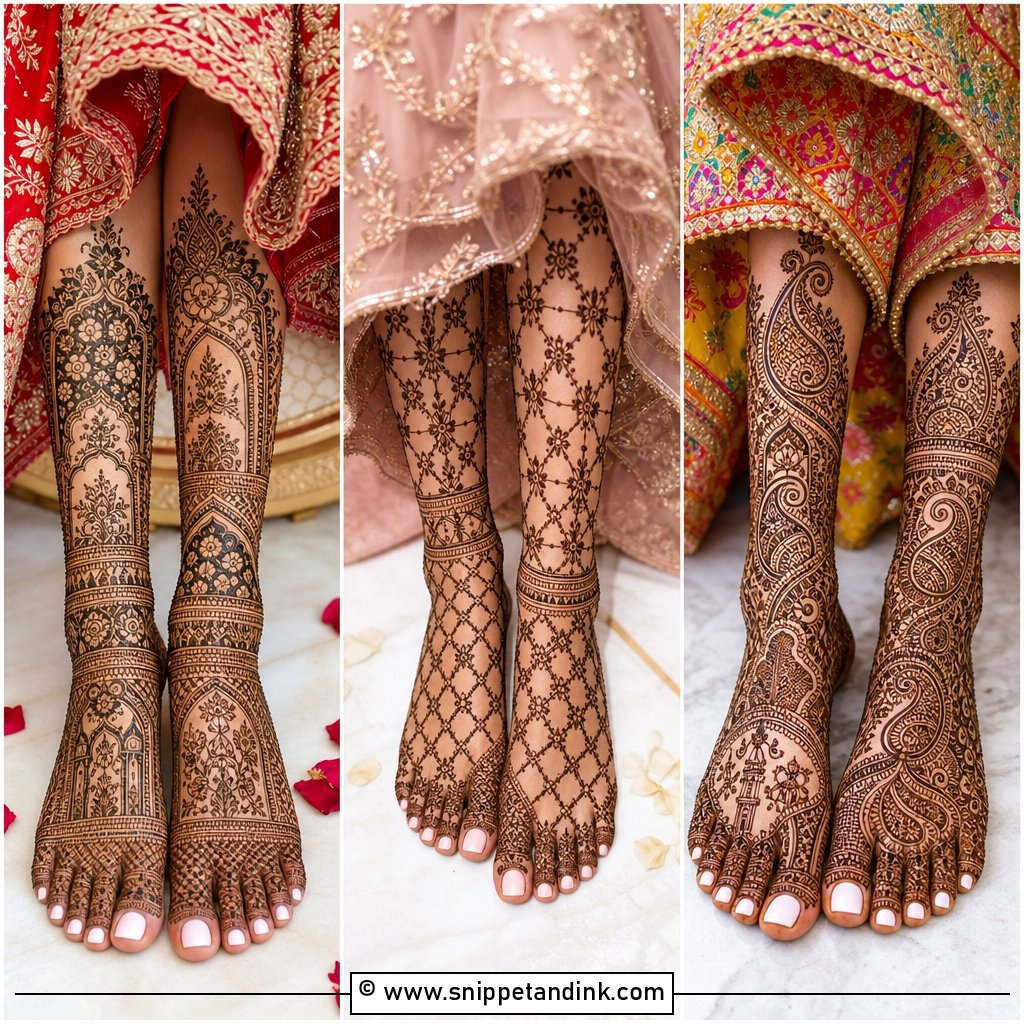
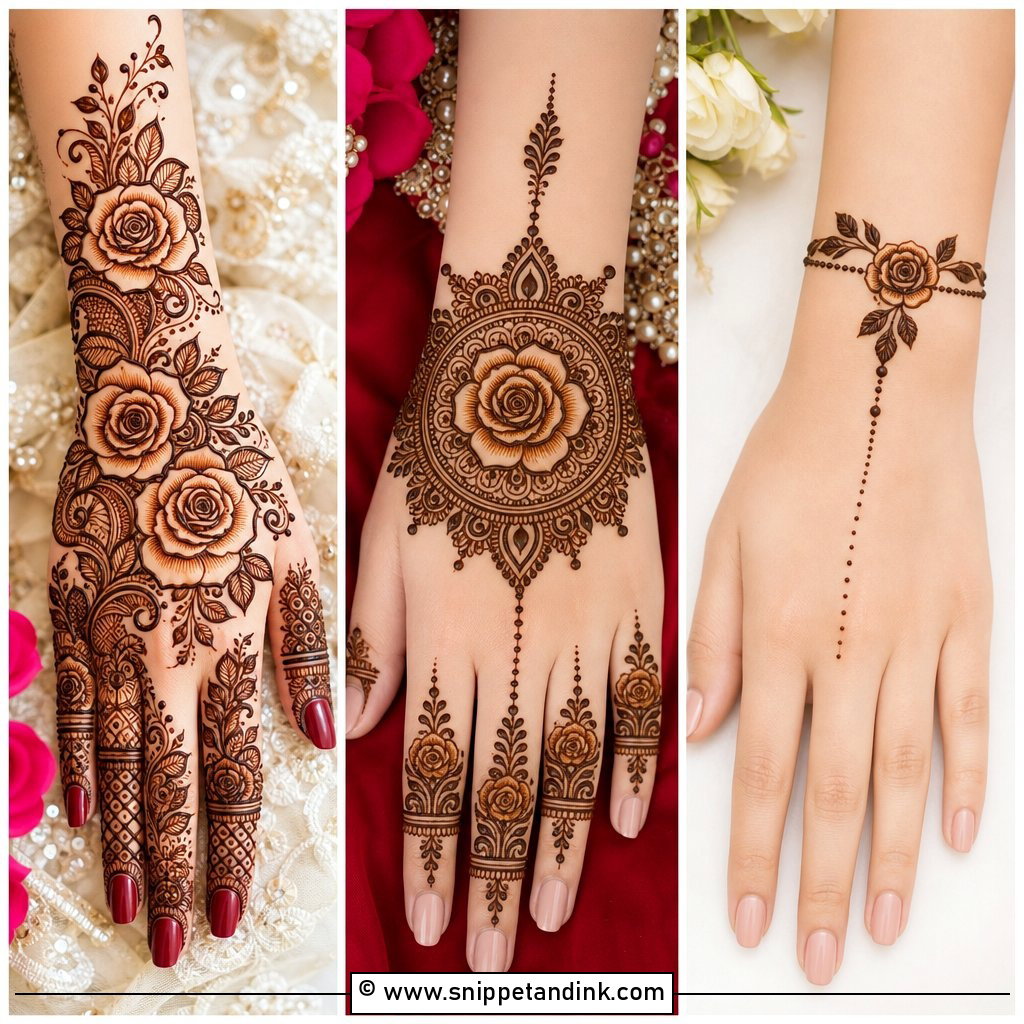
A Balochi foot mehndi design starts with small bands and dots at the toes, crosses the top of the foot with paisleys, flowers and diamond borders, and finishes with an ankle cuff drawn like a traditional anklet. For a bride, I extend layered borders slightly above the ankle. For a simpler version, I keep it to the toes, the top of the foot and the ankle. Feet take a deep maroon stain well, and the geometry shows clearly against it.
Palms, Soles and the Back of the Hand Don’t Stain the Same
One design can look like three different designs once the stain develops, because henna colors skin unevenly. The palms and soles stain darkest, the fingers close behind, and the back of the hand and the top of the foot lighter. For geometric work this matters more than for florals.
On the palm
Keep boxes and mesh a little more open than you think. Fine lines close together can merge into a solid block on the palm as the color deepens over the first two days.
On the back of the hand
This is where the finest Balochi detail survives best, since the stain is softer and the lines stay separate. If you want delicate diamond chains, put them here.
On the feet
Feet stain beautifully but are the hardest to protect. Have them done while you can sit with your feet up, and don’t walk until the paste is dry. Loose socks over a light wrap protect them overnight. Because brides often need their hands free after the feet are done, I usually do feet first and hands last.
What Makes a Balochi Hand Read as Balochi
It’s the borders and the structure: geometric bands, embroidery-style panels, paisleys, floral trails, jaali and bracelet-like wrists. The same language works heavy for a bride, softer for an engagement, simple for Eid and minimal for everyday wear, on the hands, the fingers, the wrists or the feet. Keep the pattern balanced, leave the paste on long enough, and give the stain a day or two to deepen before the event.
You'll Like These Ideas:



Leave a Reply