
Most people pick a henna design from a photo and only later find out how long it takes, how dark it stains and whether it survives a day of hugging relatives. I’d rather you choose with that knowledge up front. Below are the designs I’m asked for most right now, from Arabic trails and palm mandalas to full bridal arms, with notes on how each one behaves on real skin: where it stains deepest, who it suits, and what I adjust when a client has small hands, little time or a pale-staining palm.
Matching Coverage to the Hours You Actually Have
The question I ask before anyone shows me a photo is how much time they have, both in my chair and afterward. Henna paste needs to stay on the skin for several hours to stain properly, and overnight is better for anything bridal. A design that looks quick on a screen can mean sitting with your hands up for most of an evening.
- Finger bands, a small cuff or a single trail: roughly ten to twenty minutes a hand, and you can leave the paste on while you get on with a quiet evening.
- Arabic or Indo-Arabic on both sides of the hand: plan for about an hour for the pair, plus drying time before you can touch anything.
- Full bridal hands and forearms: often several hours of application, so schedule it one to two days before the wedding, never the morning of, so the stain has time to darken.
Skin matters too. Palms and fingertips stain deepest, the back of the hand a little lighter and the forearm lighter still. If you know you stain pale, put the detail you care about on the palm. Wash with soap and skip lotion on the day of application, because oils and creams sit between the paste and the skin and weaken the result.
1. Arabic Floral Mehndi Design
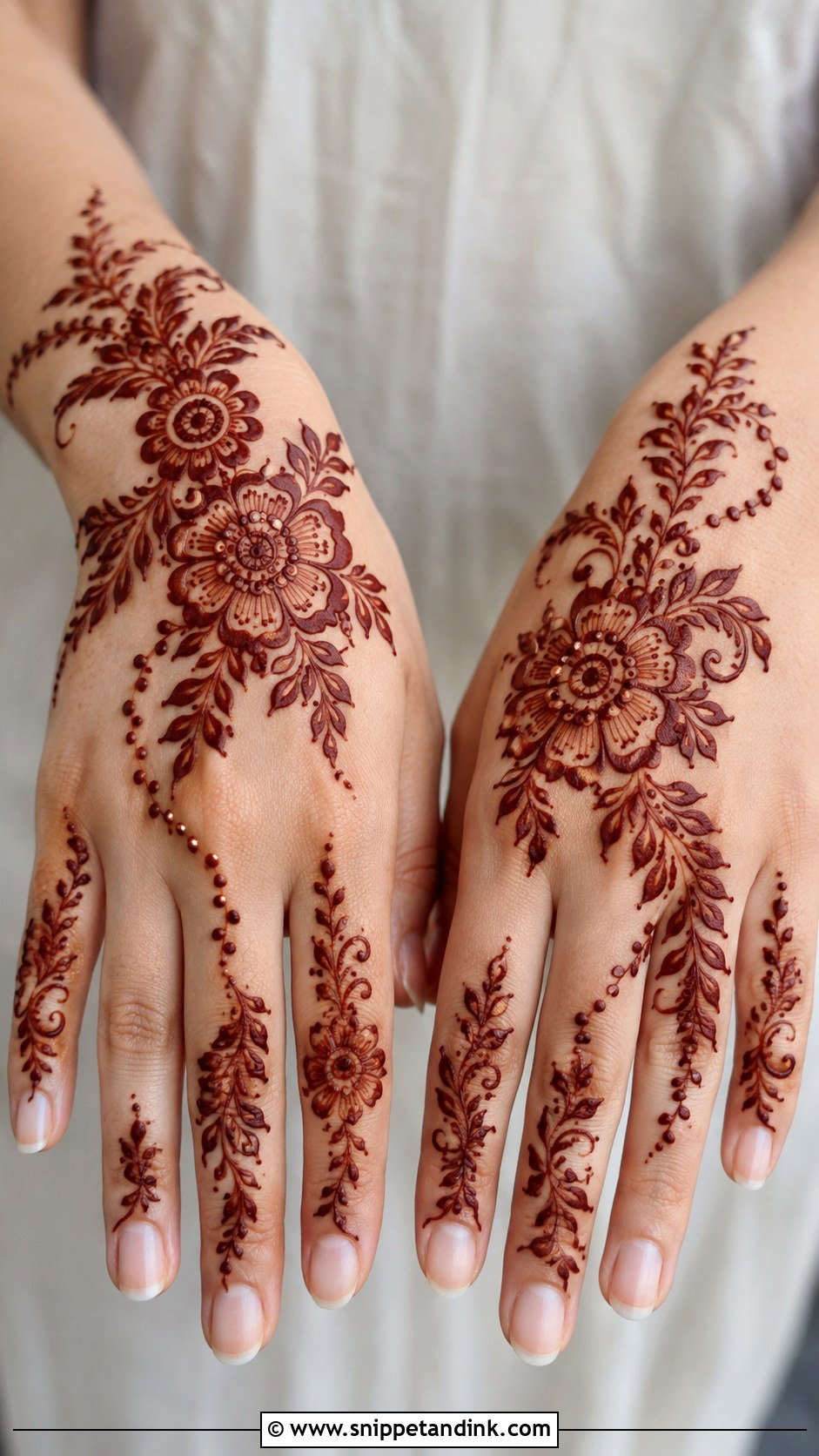
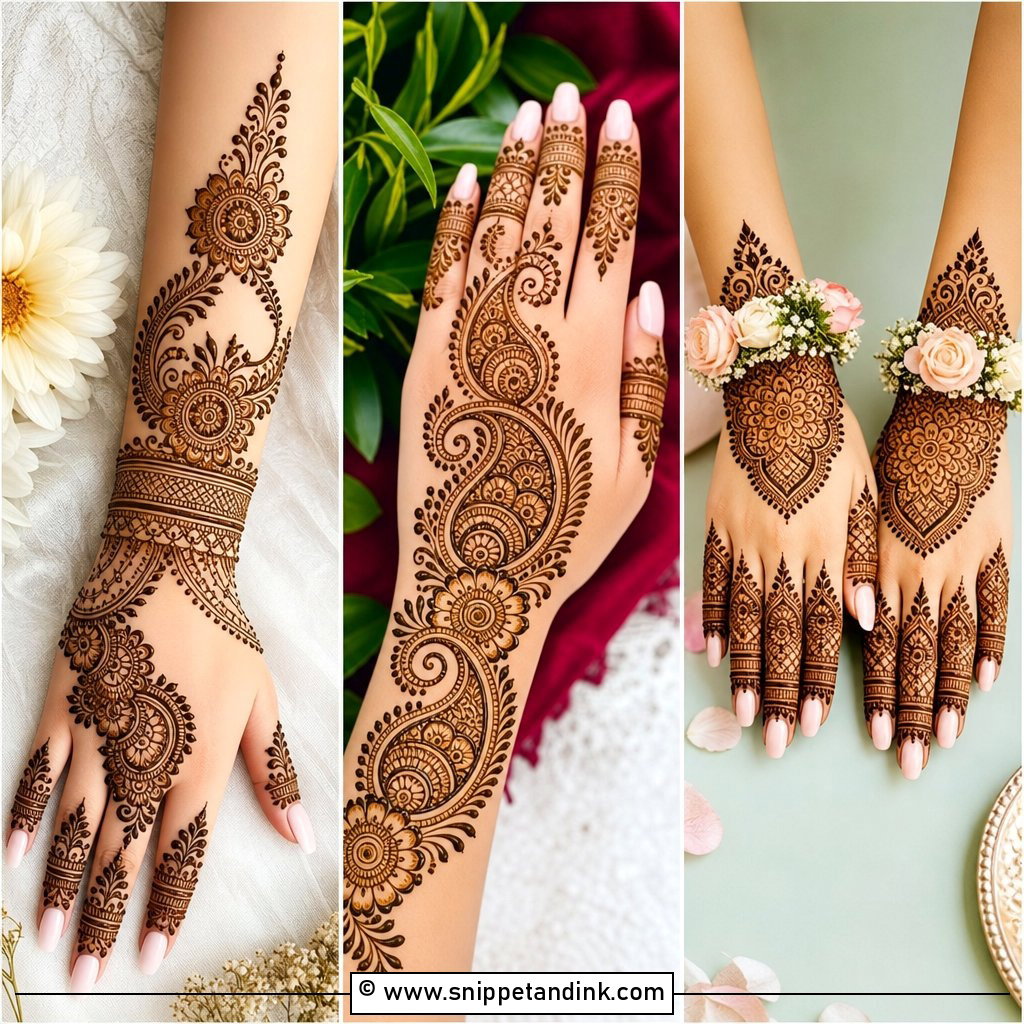
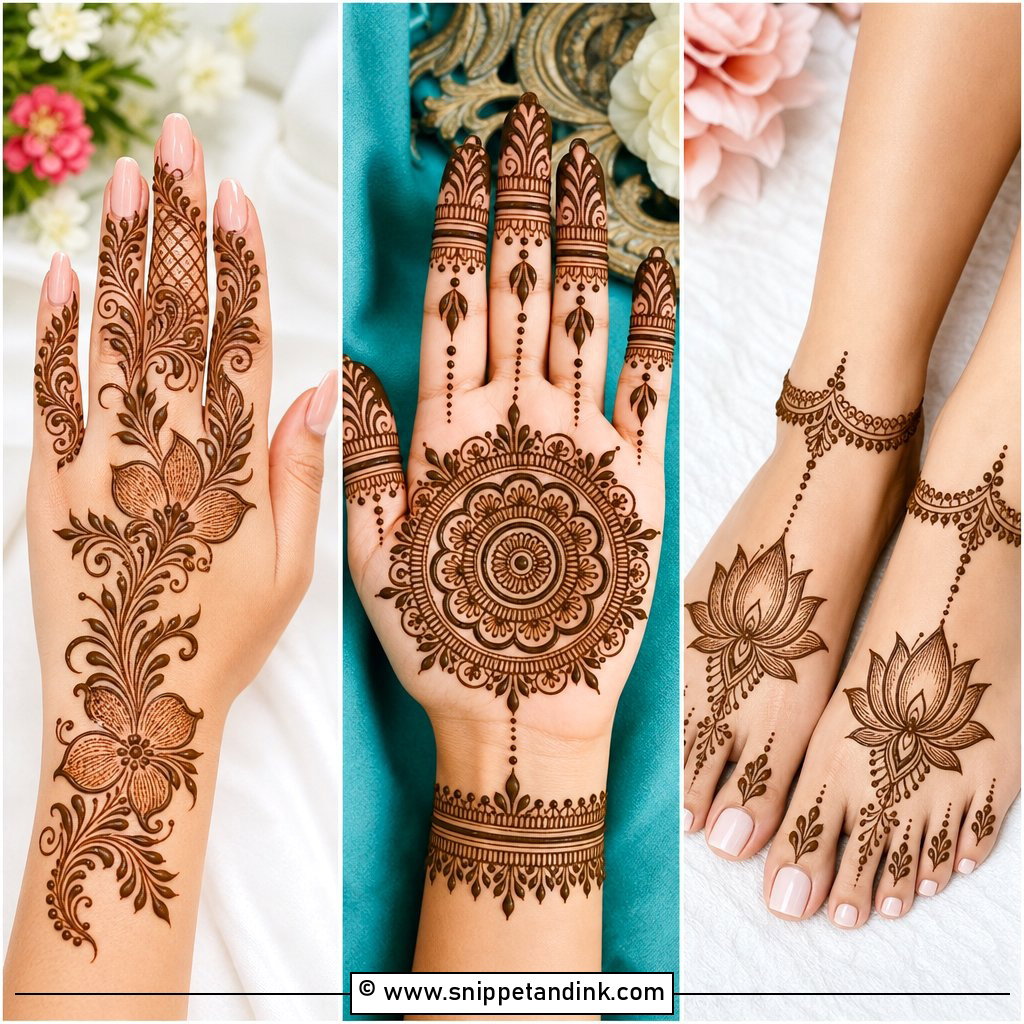
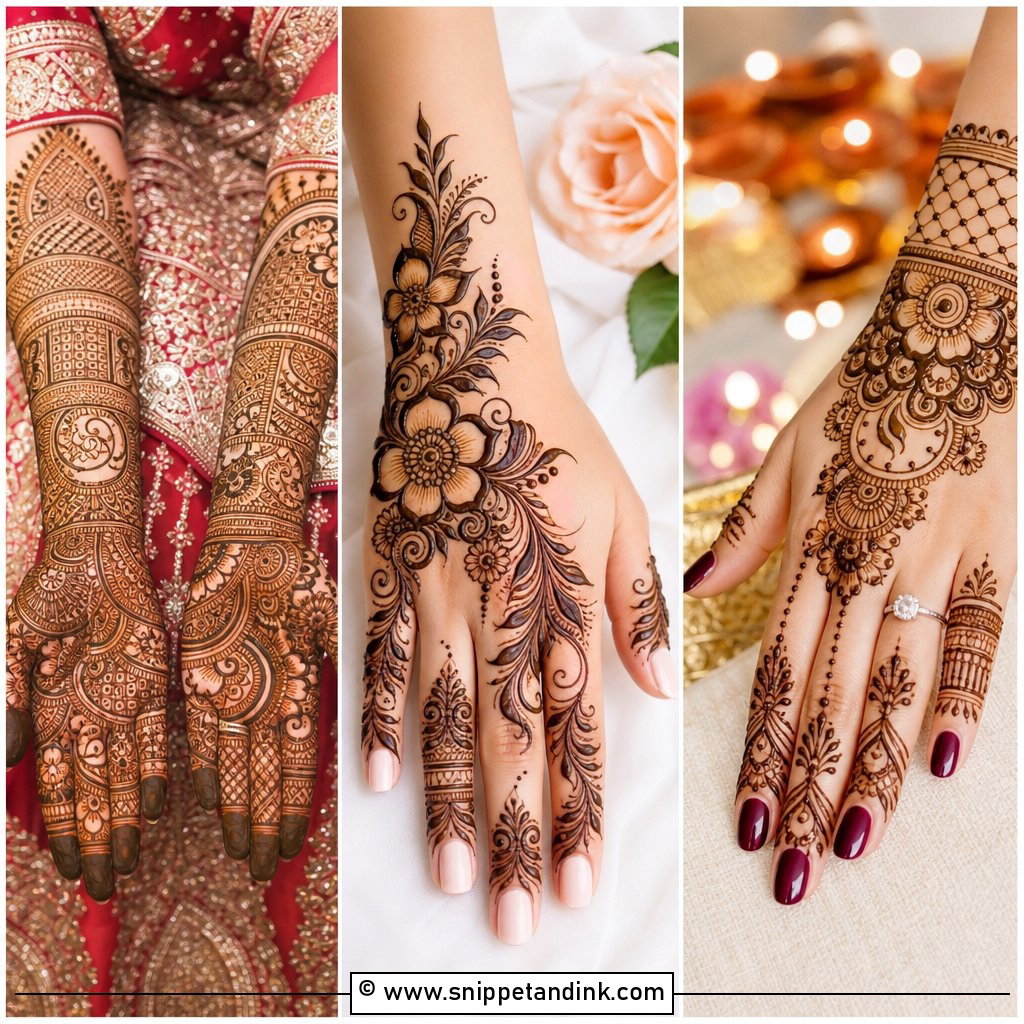
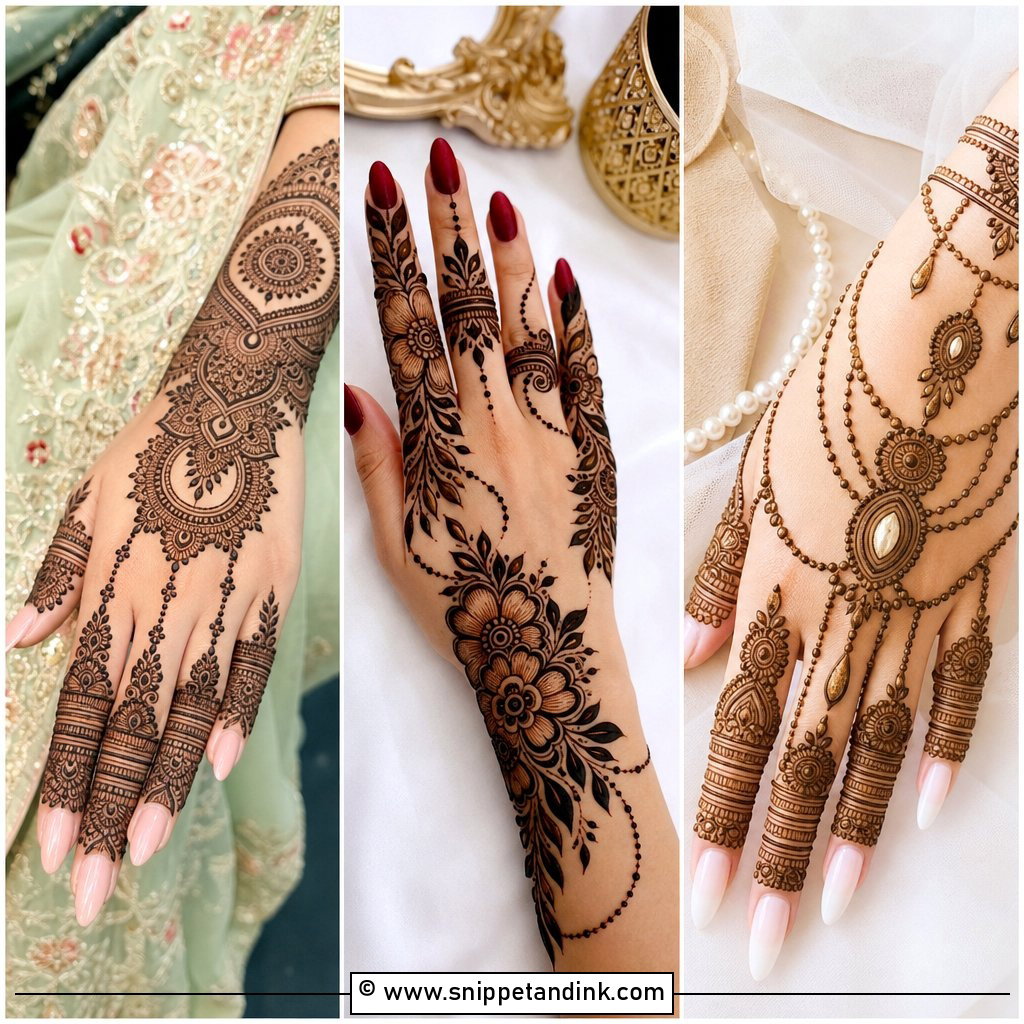
This is one of the easiest trending looks to spot across a room: big flowers near the wrist or side of the palm, then a diagonal trail of leaves, vines and shaded petals running up toward the fingers. The open skin is doing half the work. When I draw it, I make the main flower at least the width of two fingers, because tiny blooms in an Arabic layout blur once the stain darkens. It usually takes me fifteen to twenty minutes a hand, and on the back hand it leaves room for rings and bangles to show.
2. Simple Back Hand Mehndi Design
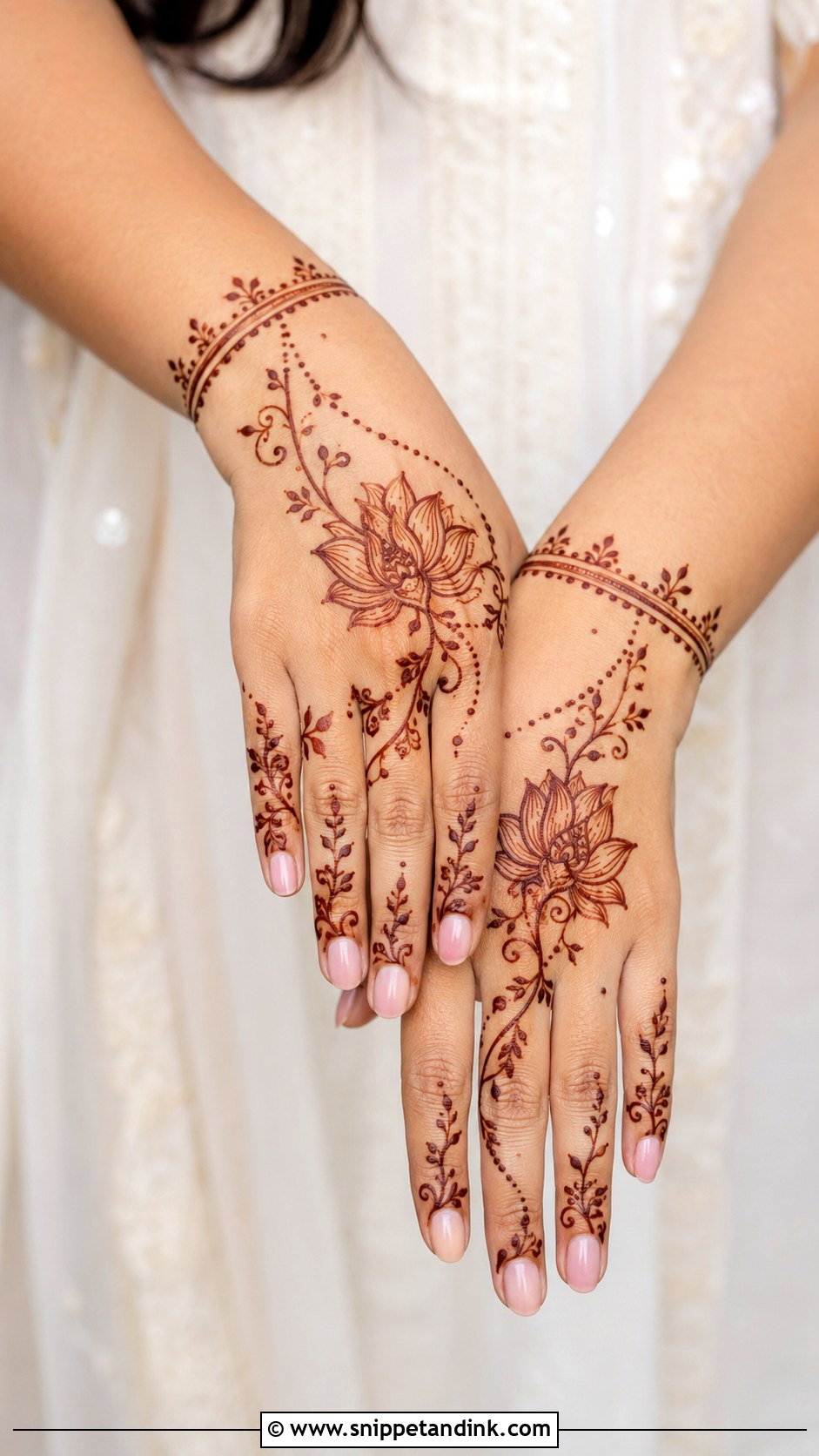
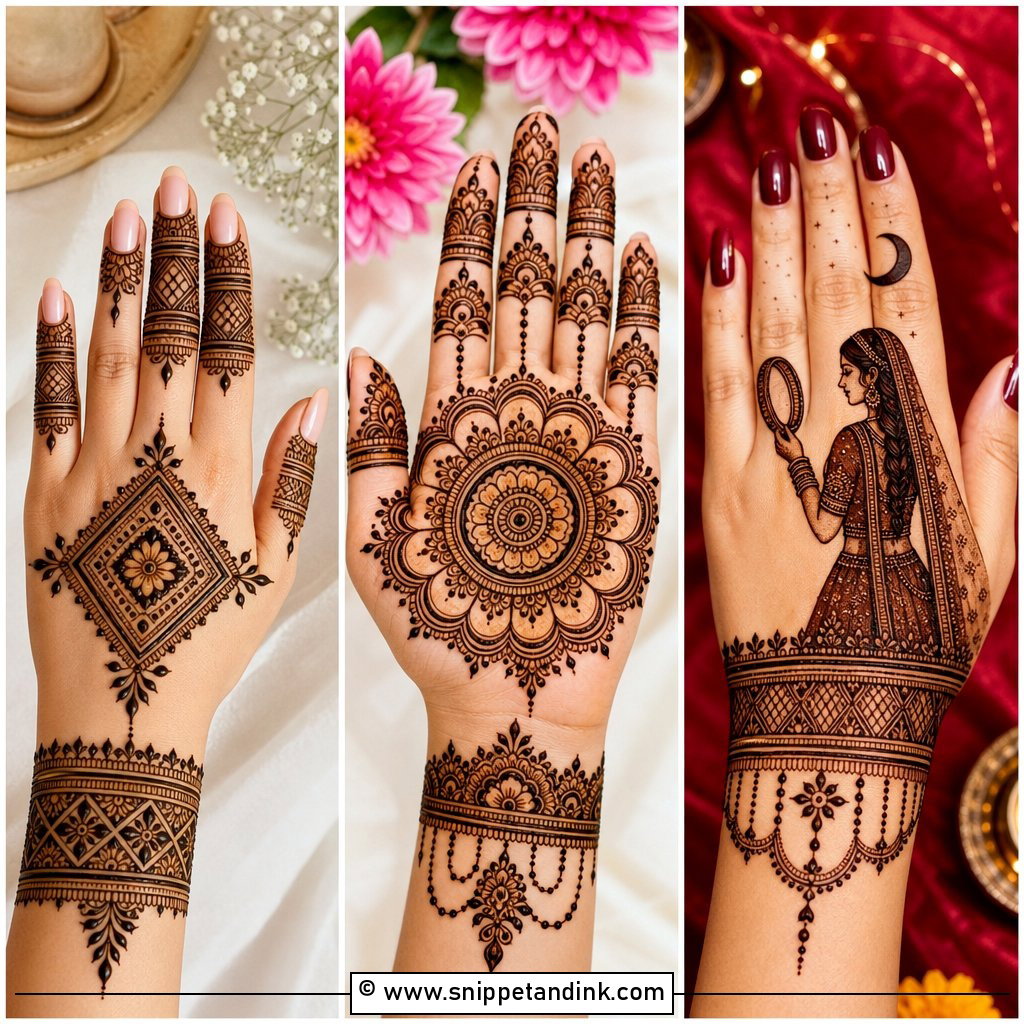
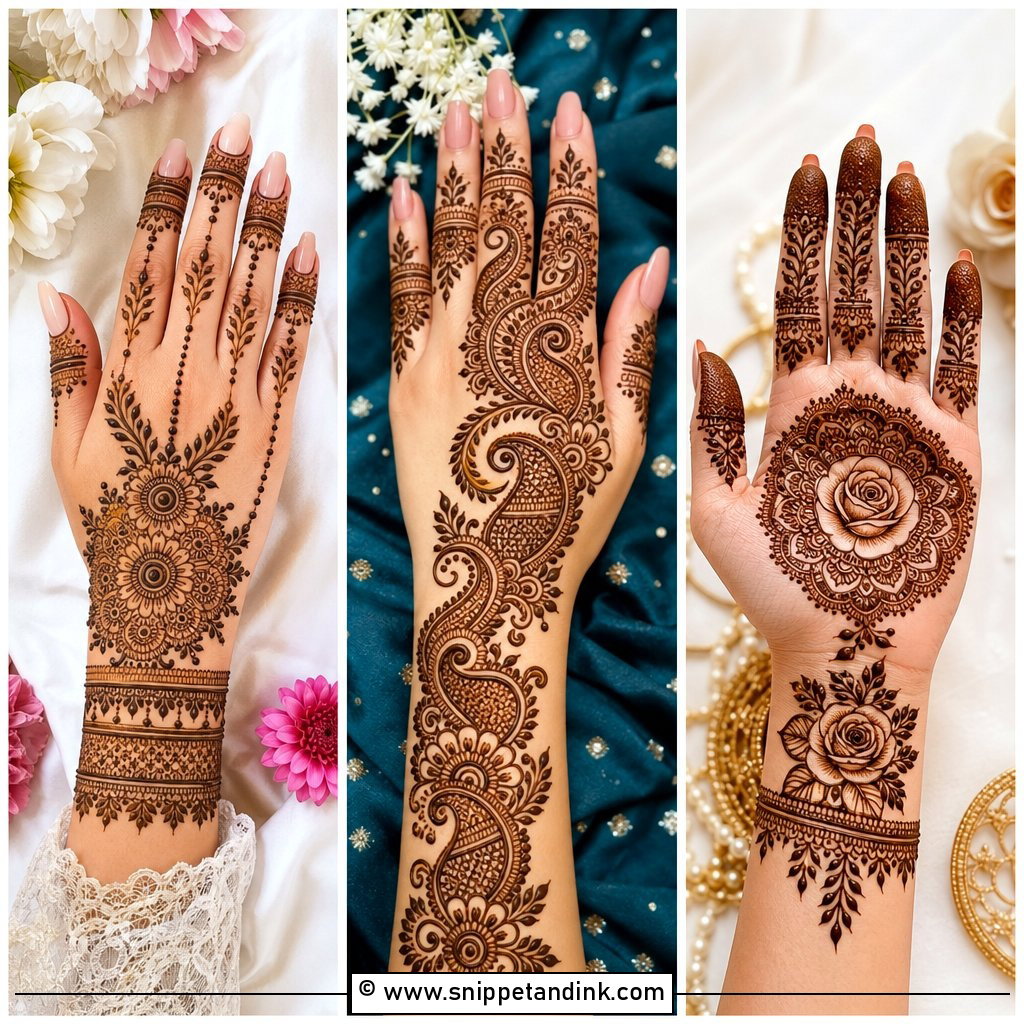
A clean back hand mehndi design covers the fingers, a central motif and a narrow strip of wrist. Back-hand skin is thinner and drier than the palm, so it stains a shade or two lighter; I keep the lines slightly bolder here so they don’t fade into a faint orange. If your stain usually comes out very dark, this layout reads crisp. If it’s light, the spacing still keeps every line visible.
3. Full Hand Bridal Mehndi Design
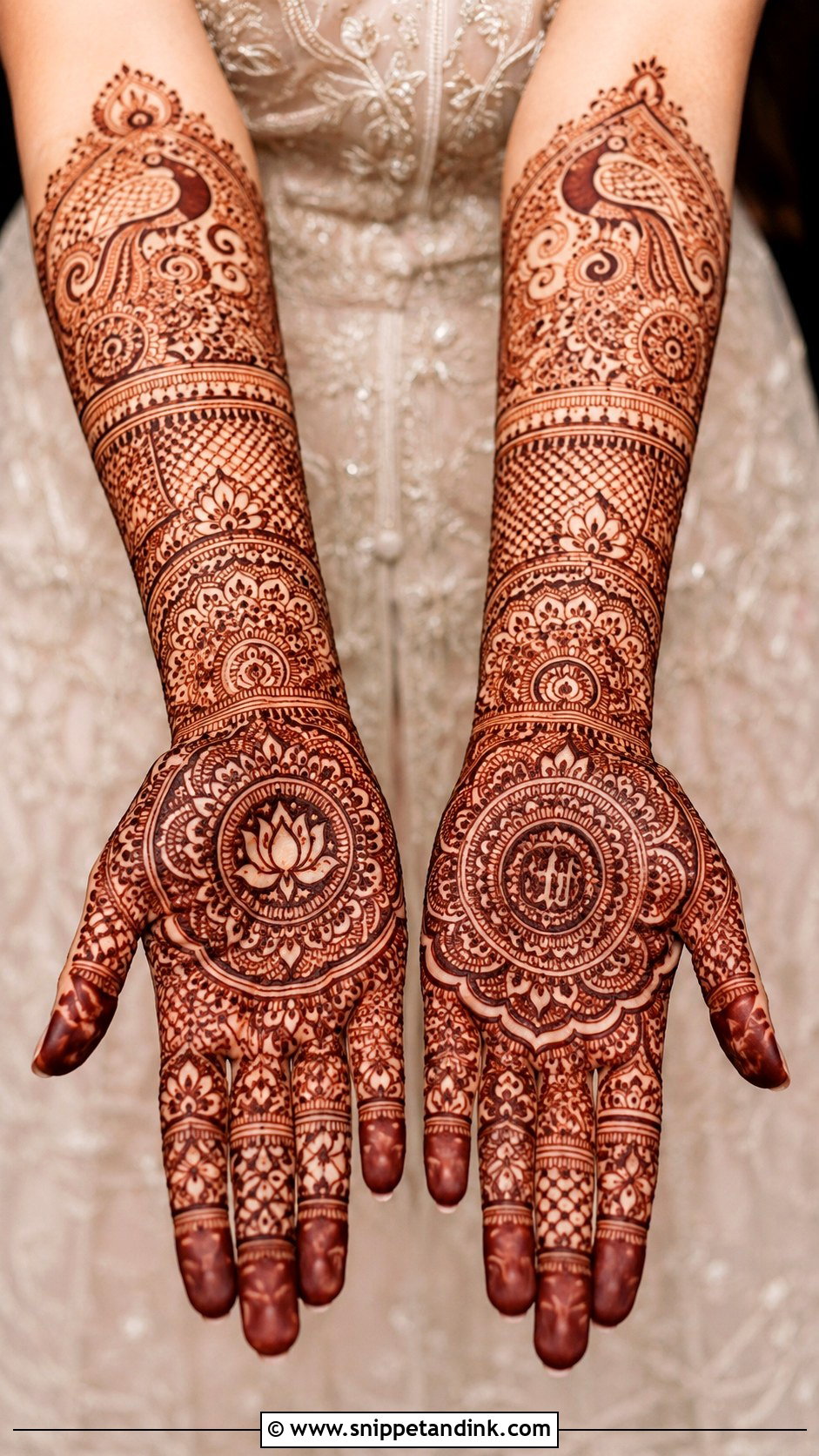
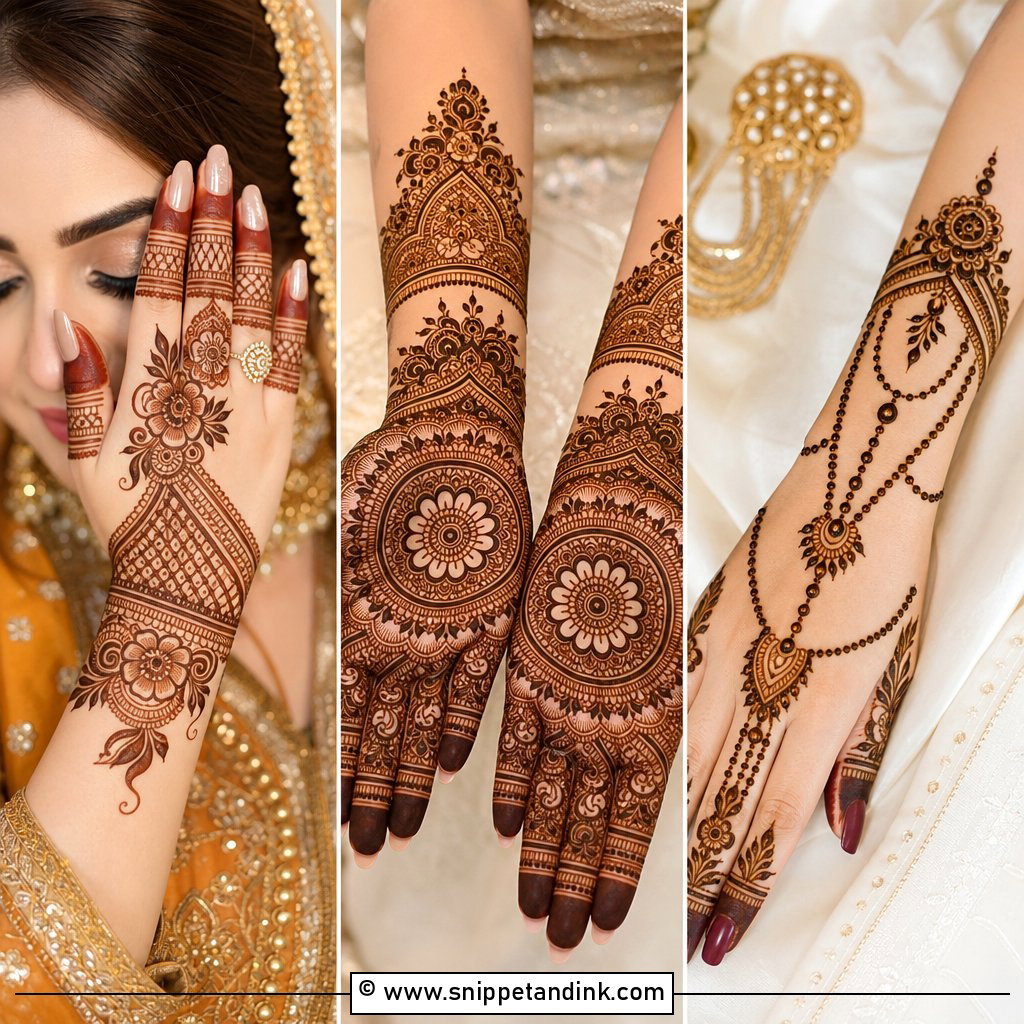
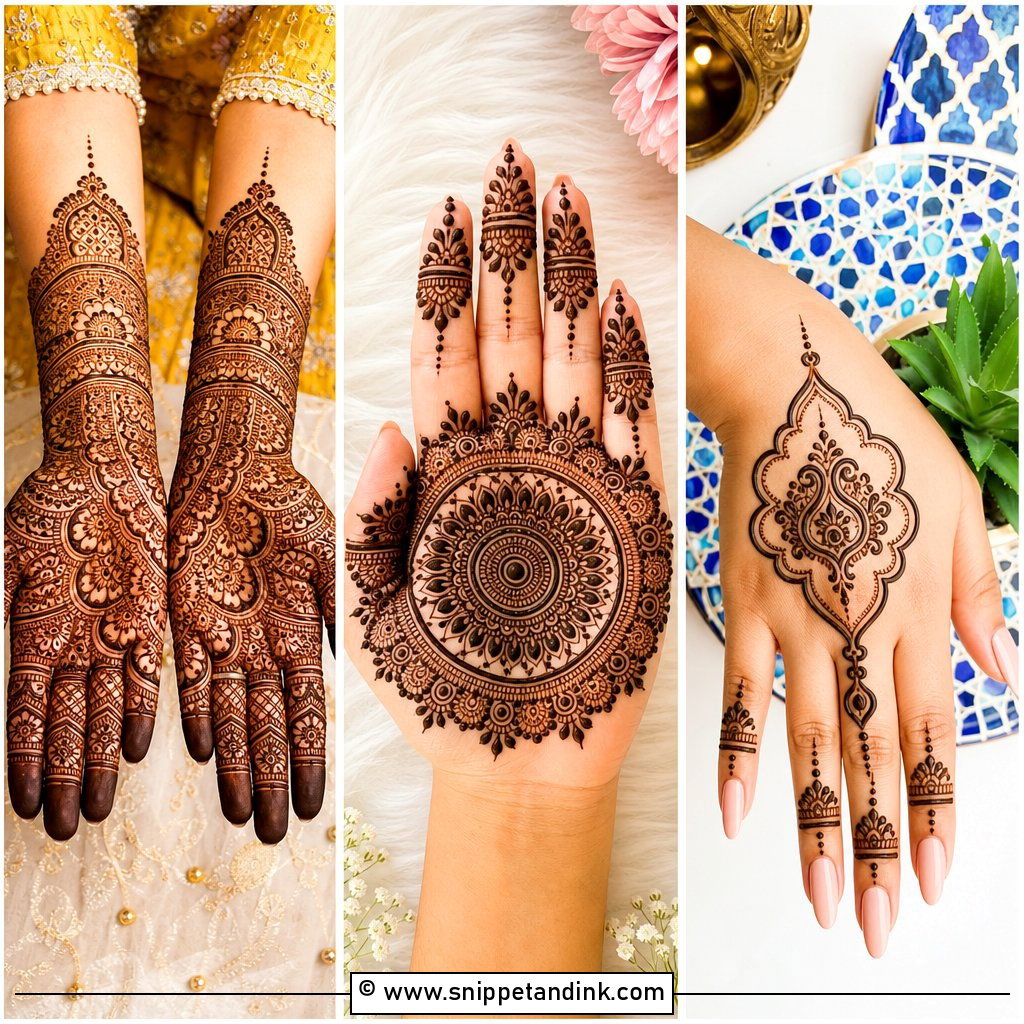
Bridal coverage from fingertips to forearm is where the paisleys, peacocks, lotus motifs and jaali mesh all come together, with the densest work on the palm and bracelet bands and finger detail on the back. Plan honestly for the sitting: a full pair takes many hours, and the bride can’t use her hands while it dries. I always ask early if she wants hidden initials or a date, because those need to be placed before I fill around them. If you love Full hand bridal mehndi design but hate sitting still, book a longer slot and bring someone to feed you.
4. Minimal Bridal Mehndi Design
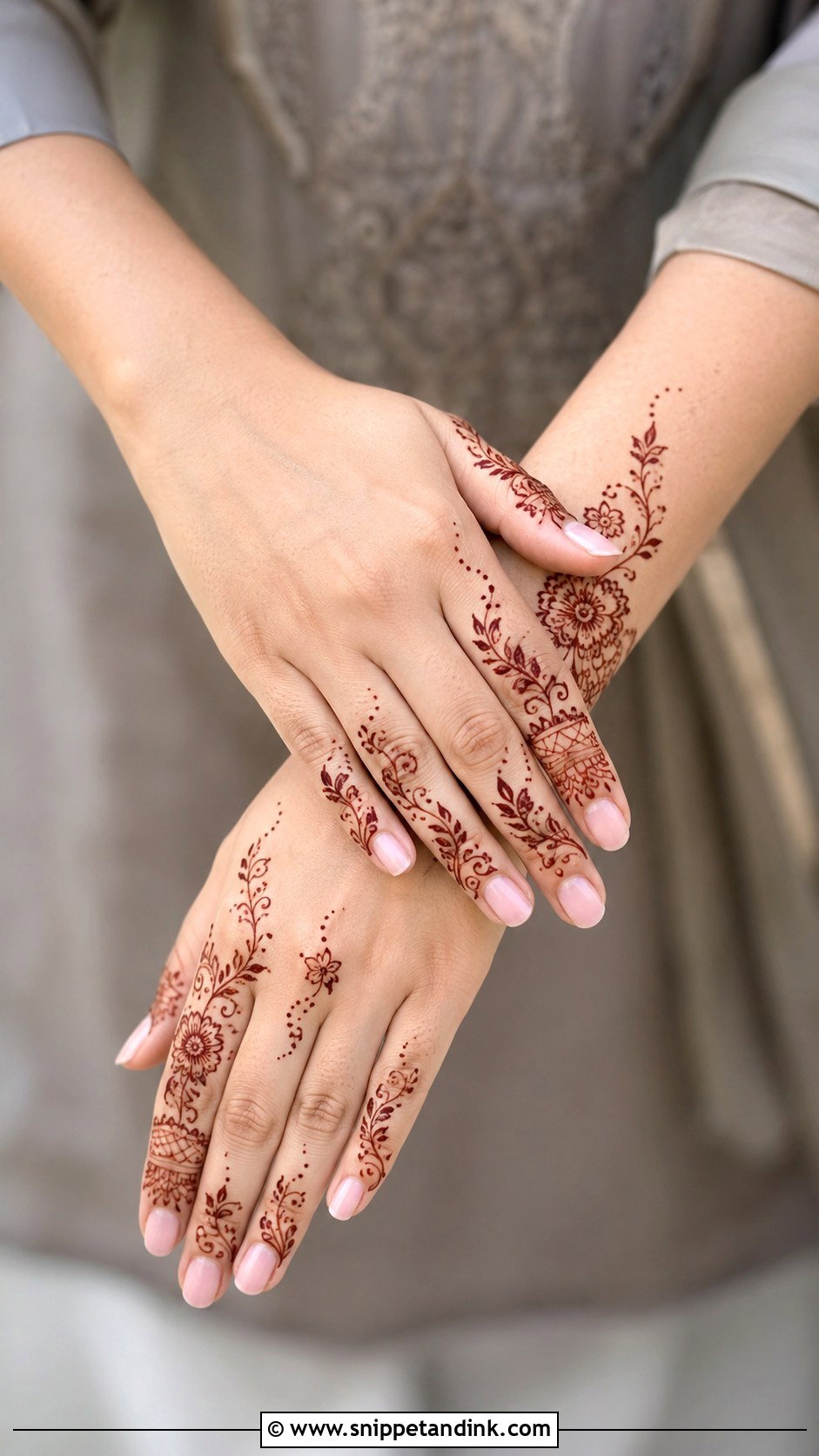
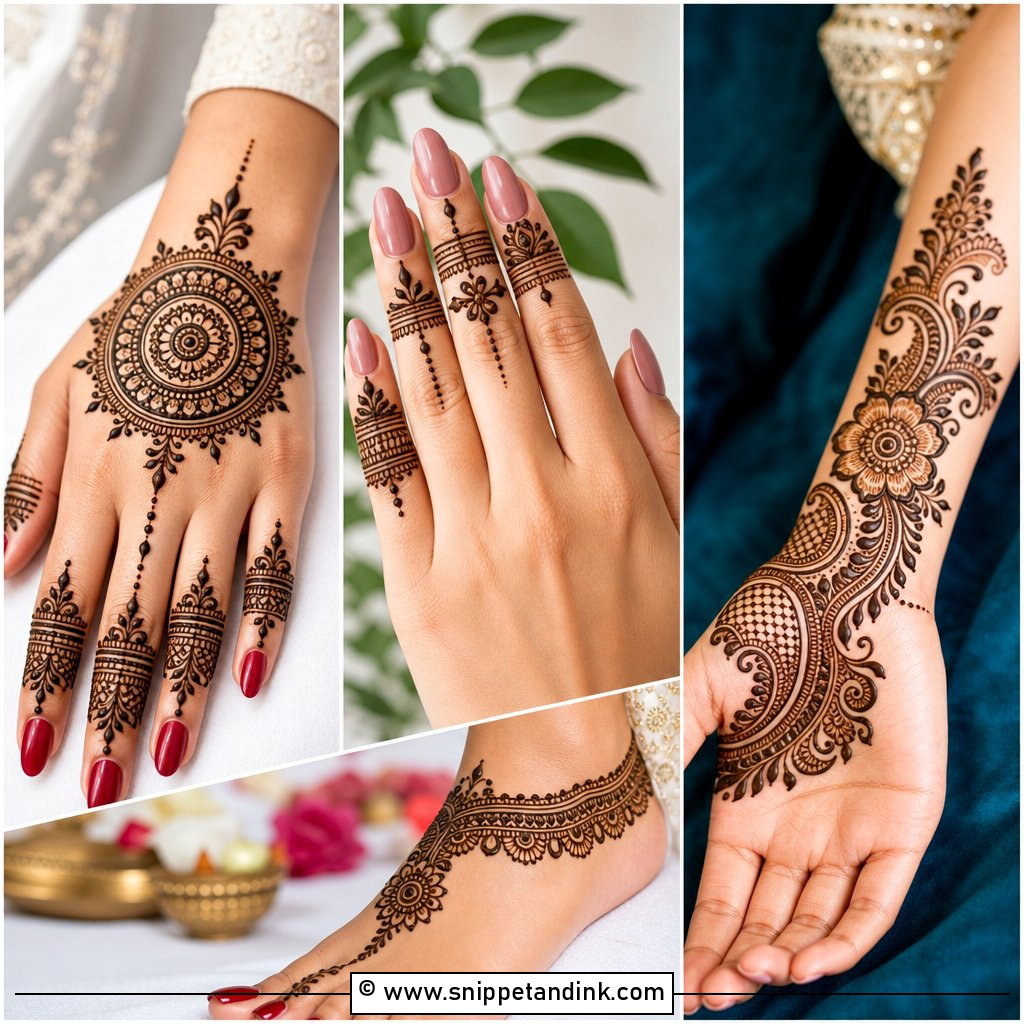
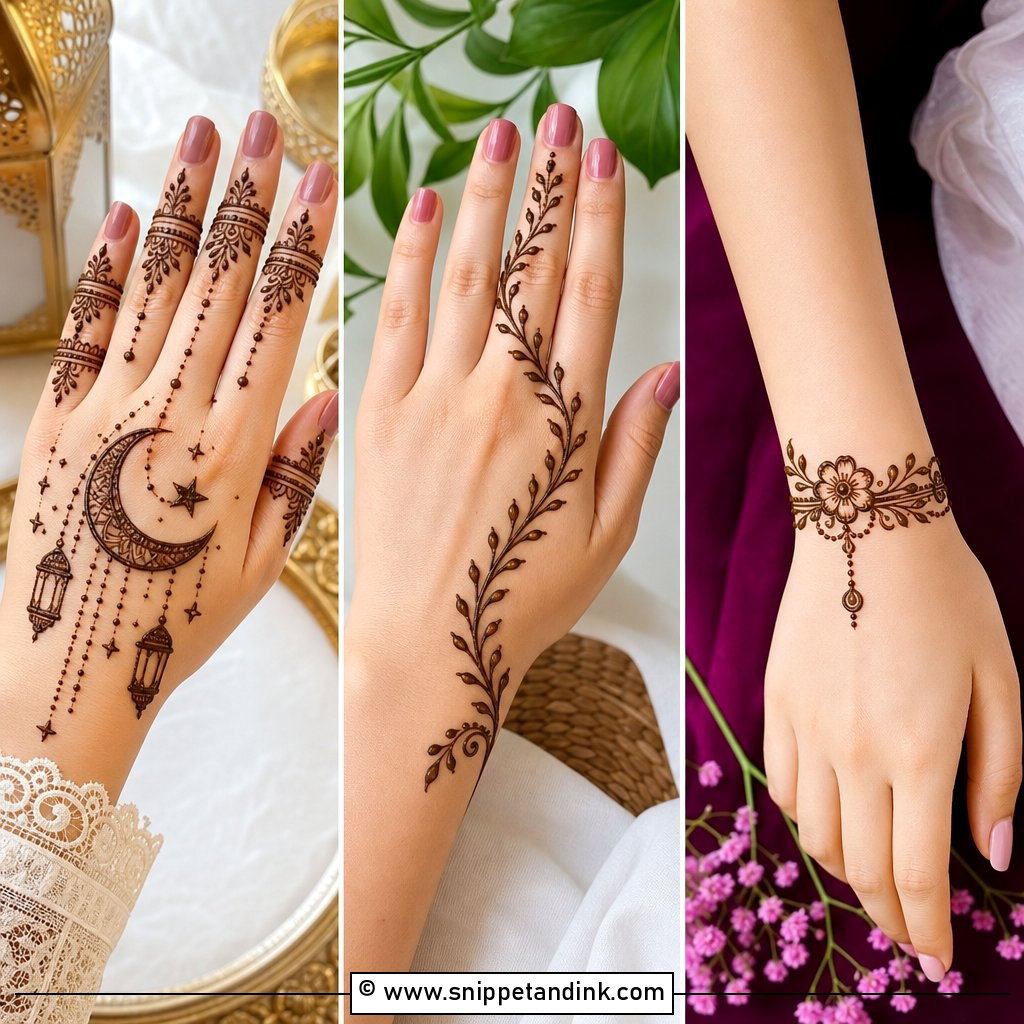
Minimal bridal work keeps the ceremony feeling through placement rather than fill: decorated fingers, one palm mandala, a fine wrist cuff and a light trail toward the forearm. The back hand can stay mostly open. What people underestimate is how exposed fine lines are. Any wobble shows, so I use a thinner cone tip and slow down. It pairs well with pastel lehengas and nikah outfits, and it dries in a fraction of the time.
5. Indo Arabic Mehndi Design
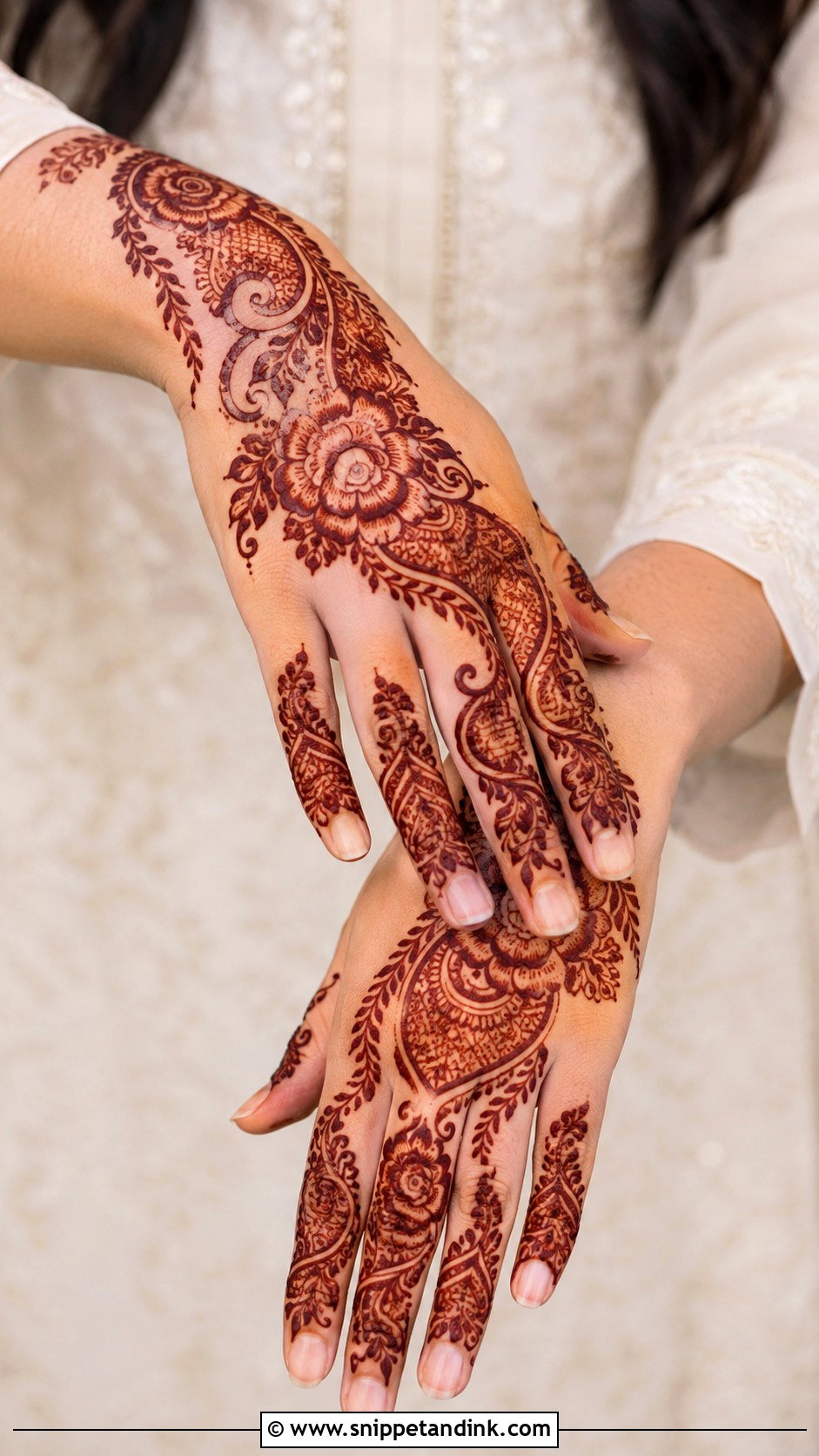
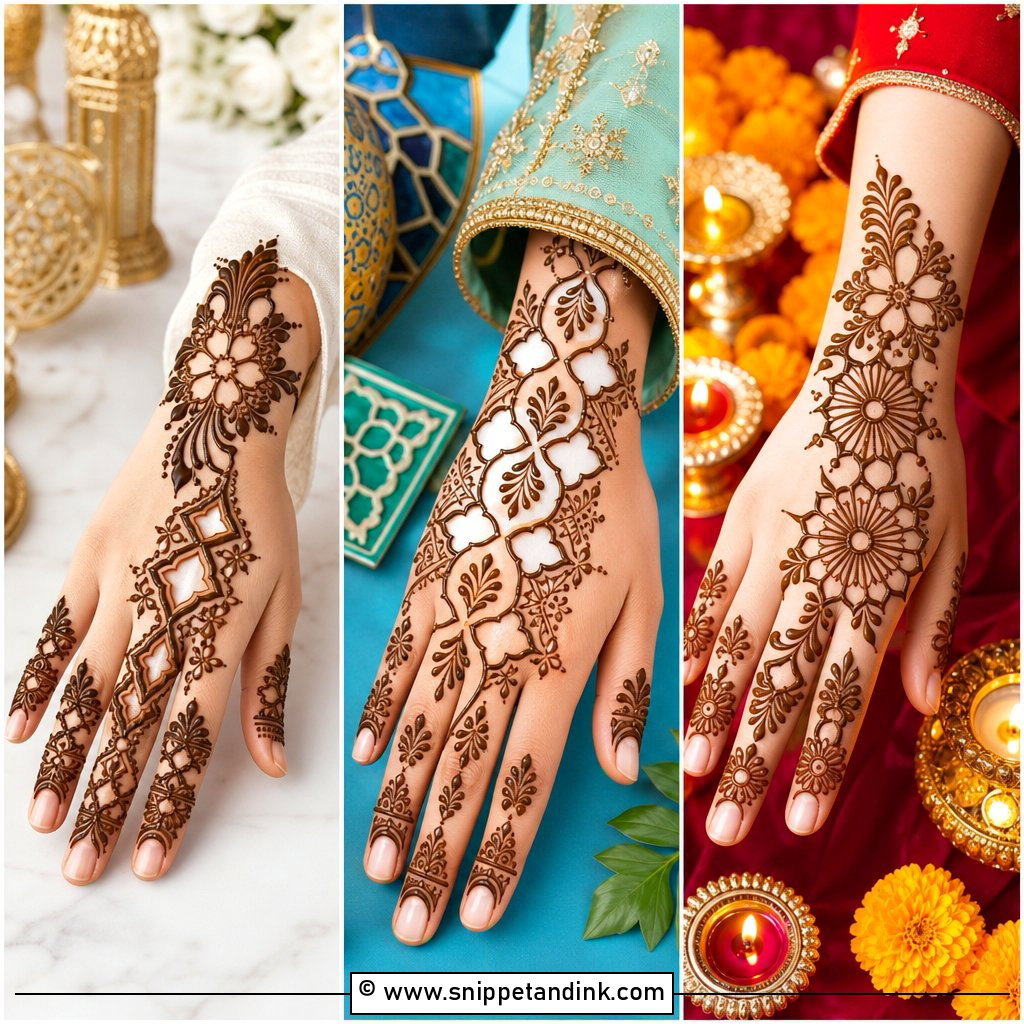
Indo-Arabic takes the bold diagonal flow of Arabic henna and fills it with the fine lines, checks and dots of Indian work. I lay out the big flowers and paisleys first in one pass, then go back for the filler, which stops the design drifting off-balance. It looks rich on palms and long on back hands. Bridesmaids and sisters of the bride ask for this one constantly because it reads festive in photos without the bridal sitting time.
6. Mandala Palm Mehndi Design
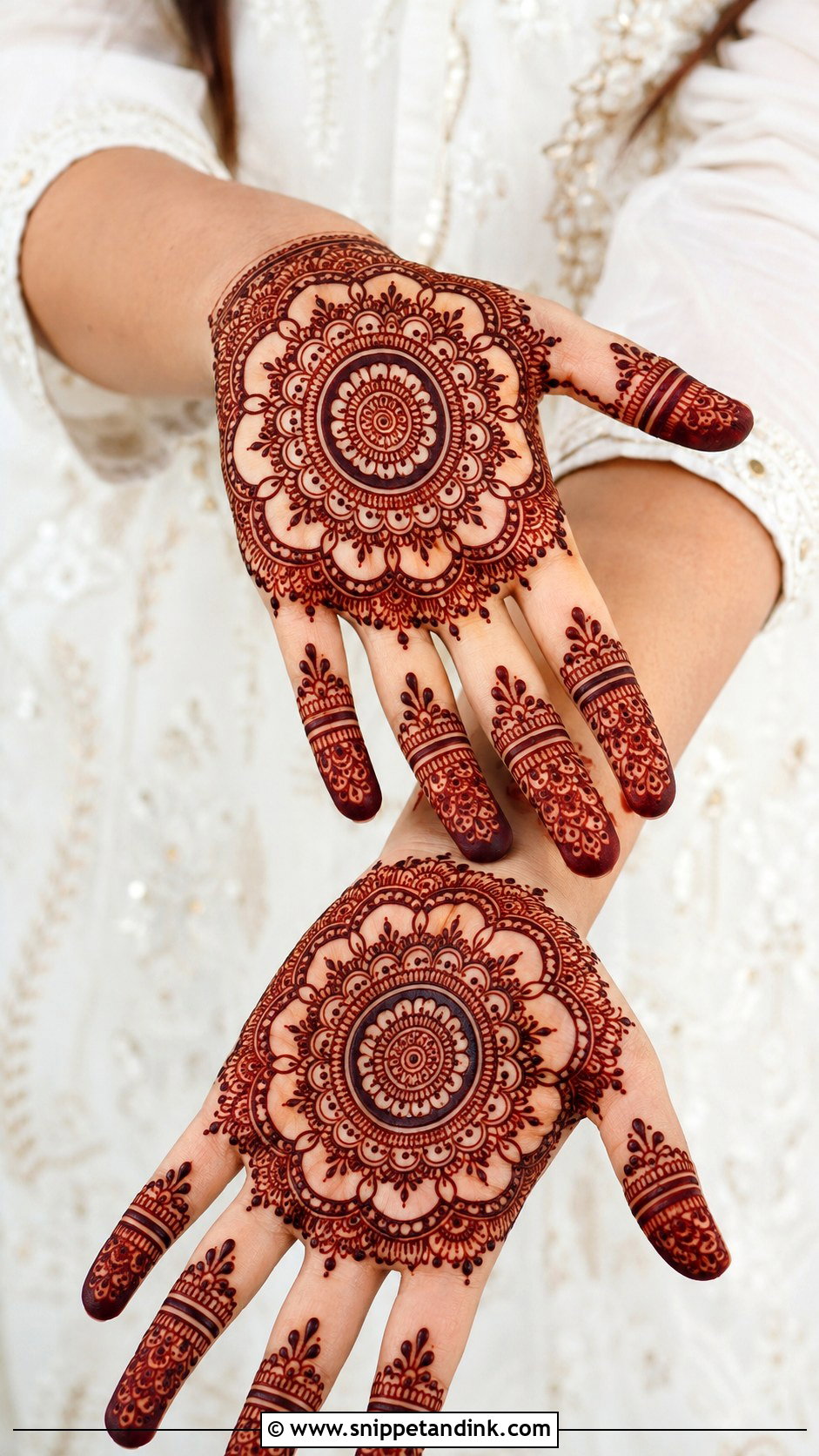
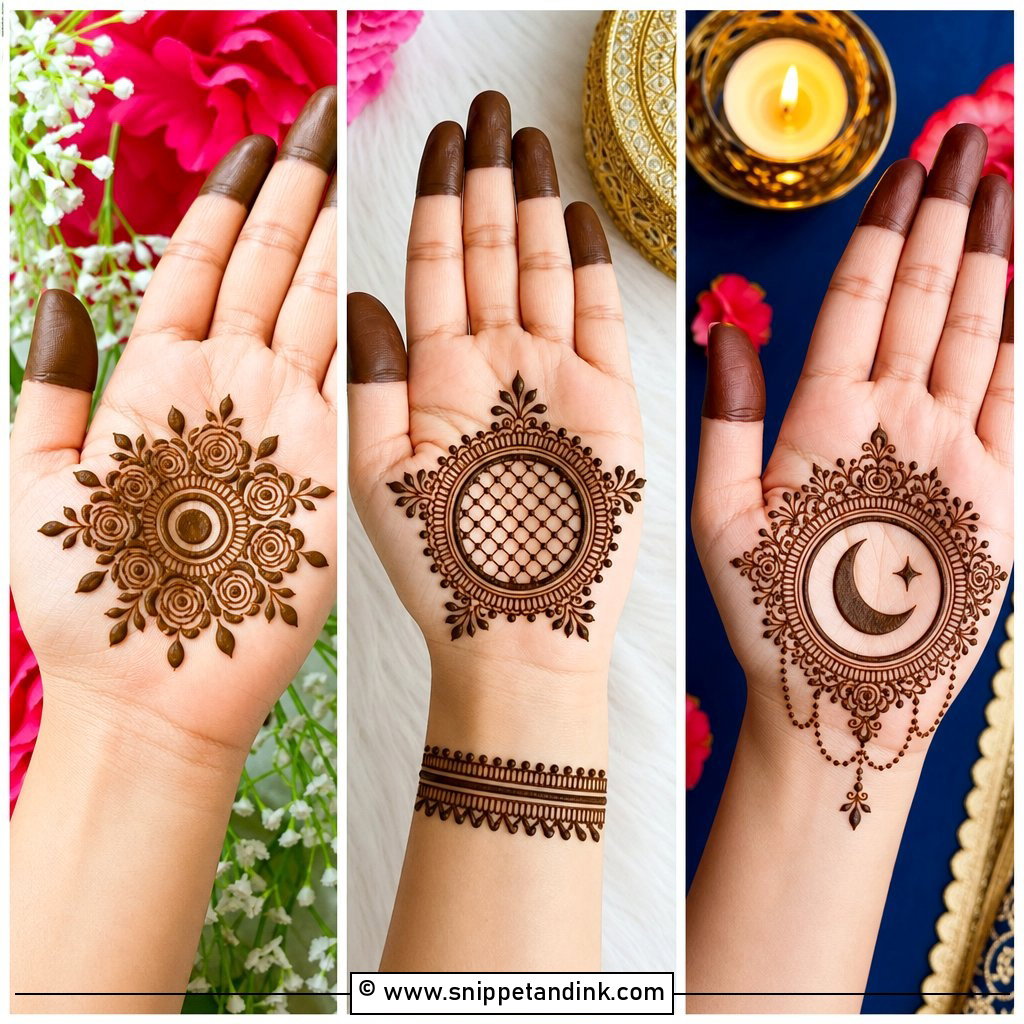
A palm mandala starts from one point. I mark the center first, slightly toward the heel of the hand rather than dead middle, because the fingers pull the eye upward and a true-center circle looks low once the hand is open. Petals, dots and scallop rings build outward from there, and the fingers get lines, leaf chains or fingertip caps. Shrink the mandala for kids and teens; enlarge it to make a palm look fuller.
7. Jaali Mehndi Design
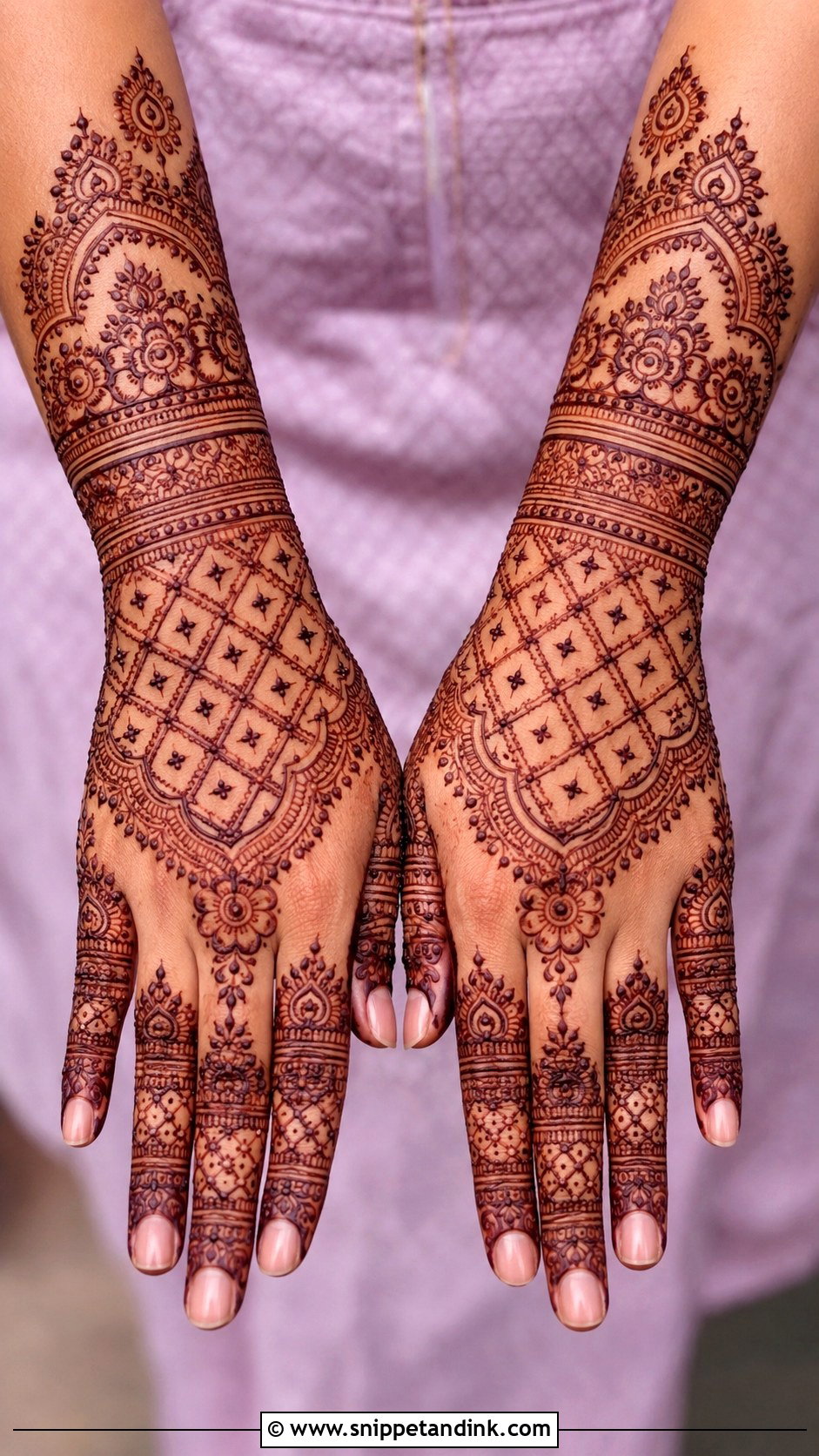
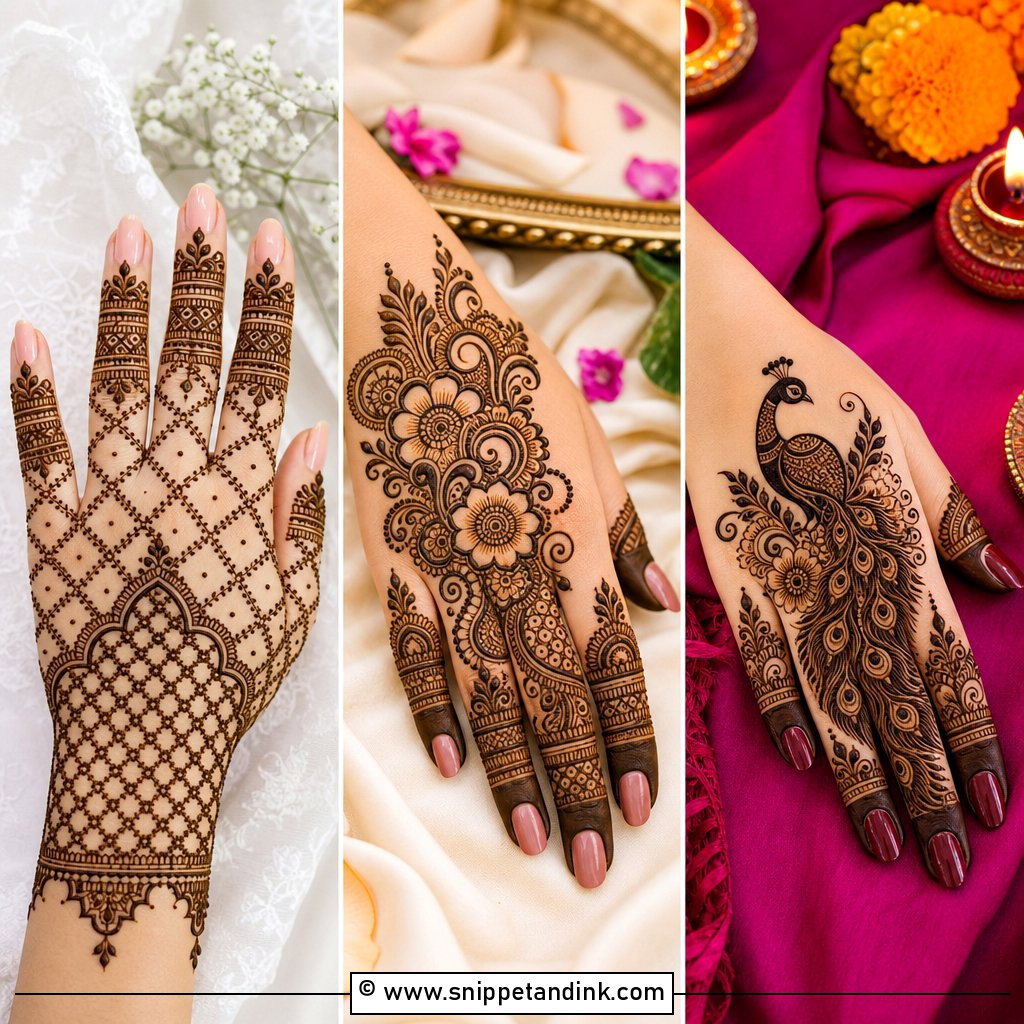
Jaali gives that lace effect with diamond, square or crisscross mesh across the palm, back hand or forearm. Mesh on its own can look flat, so I border it with flowers, paisleys and a shaded edge. The thing to know: if the cone line is uneven, mesh shows it instantly, and if the paste is too wet the gaps can close up. On the back hand it reads like a lace glove.
8. Peacock Mehndi Design
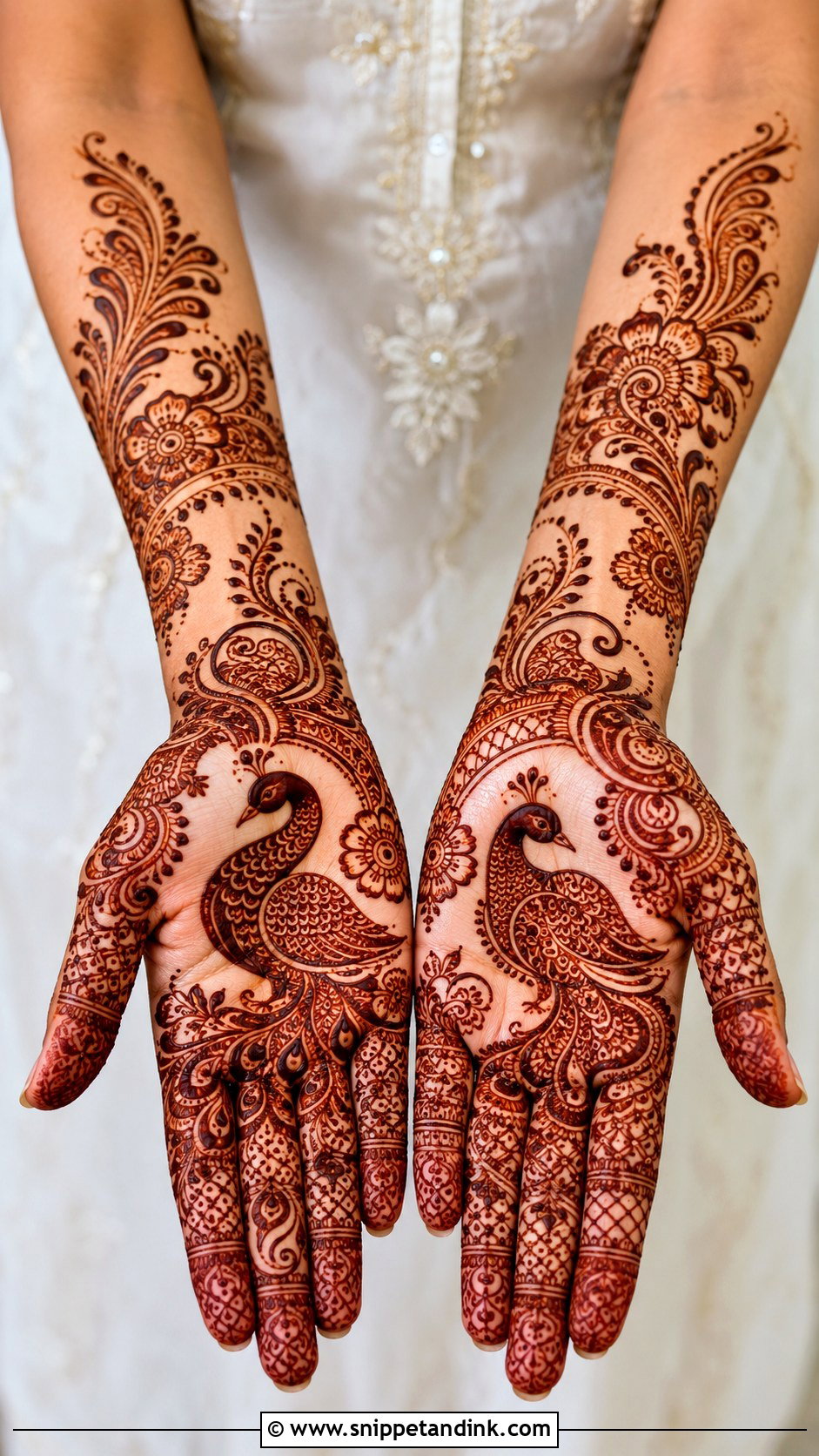
Peacocks look their best on a deep stain, because the eye-shaped feather motifs need contrast to read. I place one on the palm, back hand or forearm and let the feathers spread into paisleys and leaves. Two mirrored birds framing a mandala or couple detail works for brides. For a lighter version, one peacock with floral fingers and a slim wrist band is plenty.
9. Lotus Mehndi Design
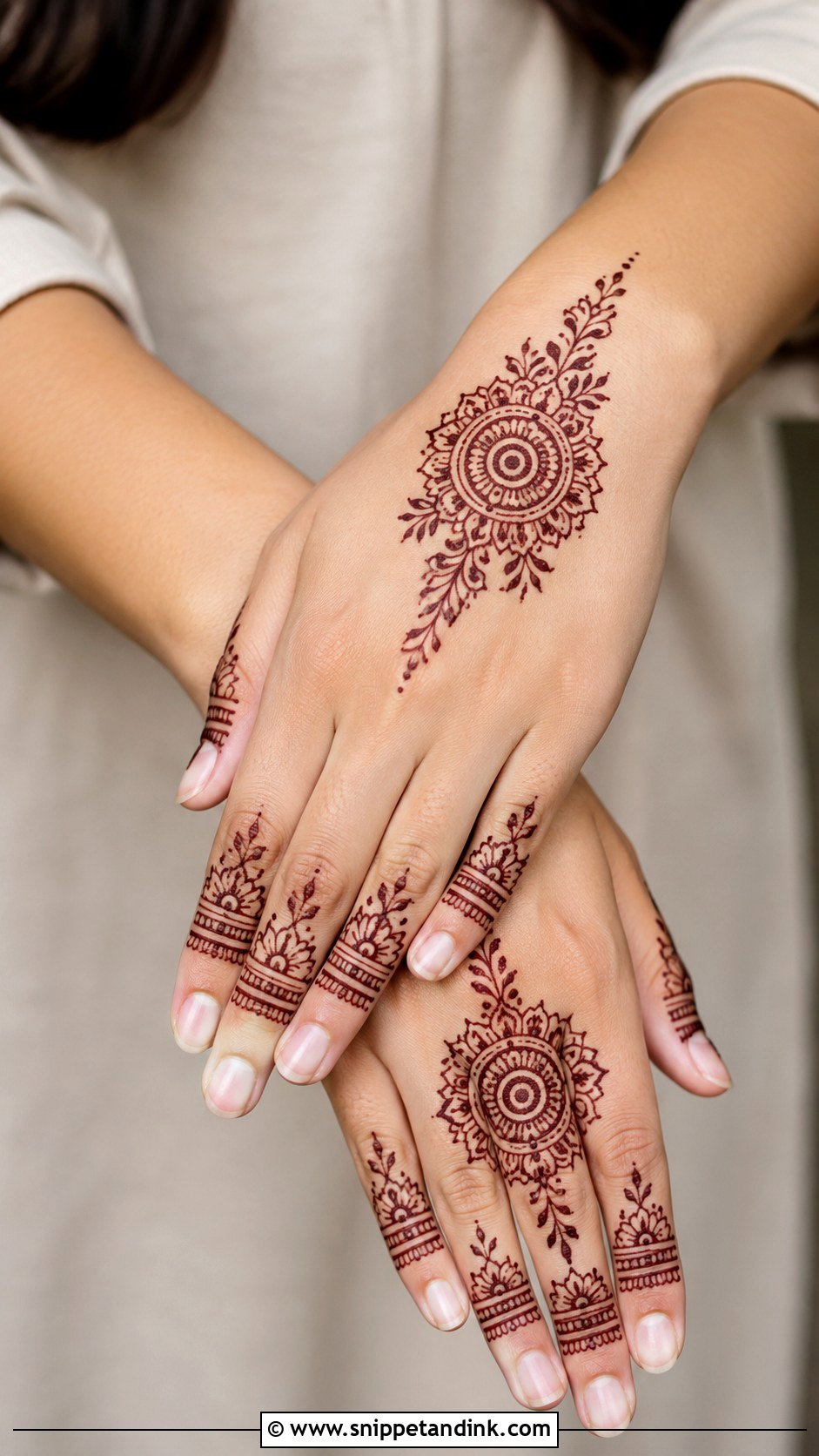
Lotus flowers hold their shape far better than heavy paisley fill, which is why they suit minimal bridal work and back-hand trails for guests. I draw the petals with clear gaps between them; crowd them and they merge into a blob as the stain darkens over the next two days. Add decorated fingers and a bracelet-style cuff so the hand looks finished from every side. Pastel outfits and floral jewelry sit well with it.
10. Khafif Mehndi Design
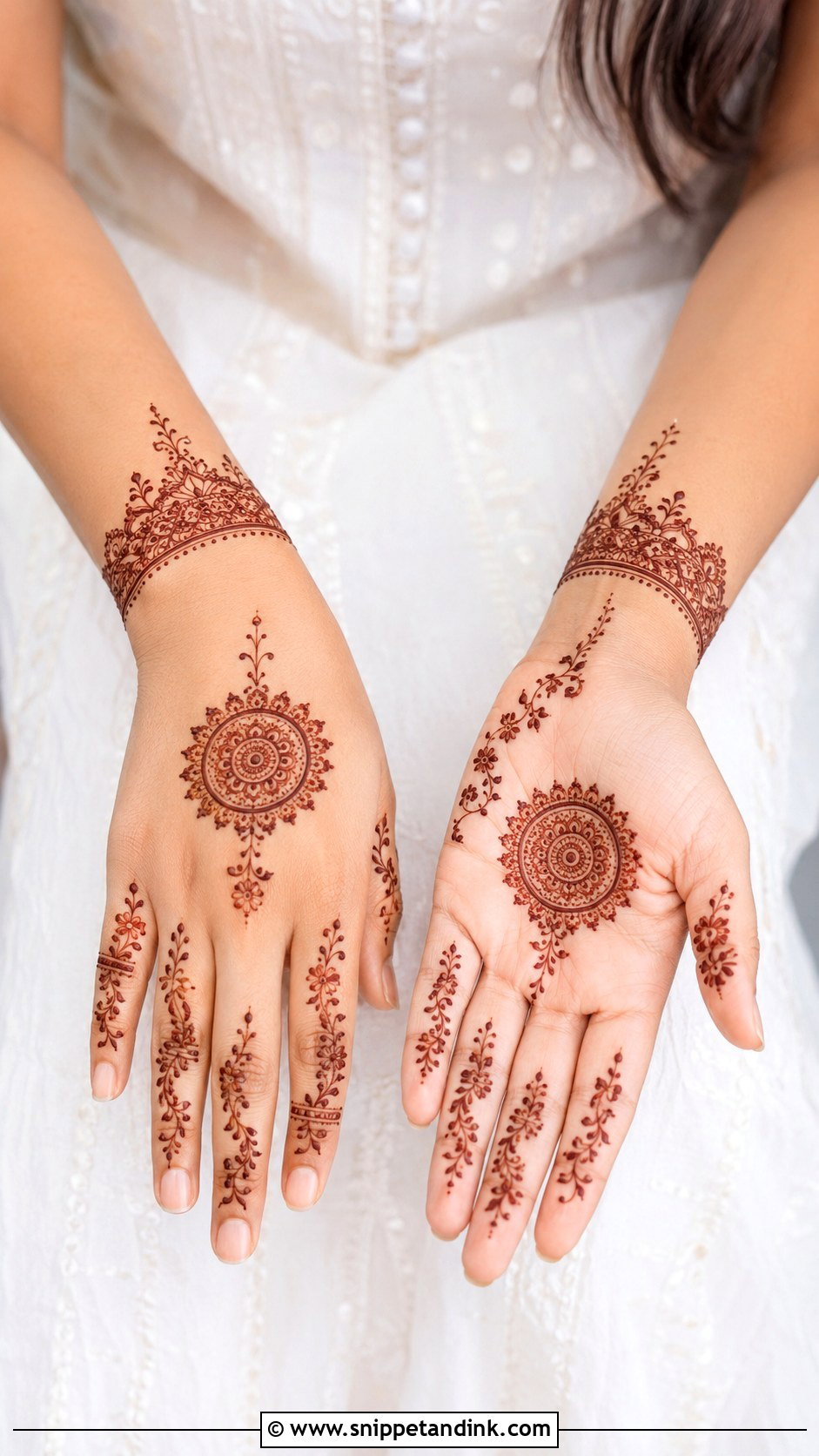
Khafif is fine and airy: tiny florals, thin vines, dots and leaves with plenty of skin between them, usually from wrist to fingers on the back hand. It lives or dies on cone control. The paste needs to be smooth, with no lumps of sugar or leaf fiber, or the line breaks. It’s lighter than bridal work and suits Eid, nikah ceremonies and receptions where the outfit is already busy.
11. Moroccan Mehndi Design
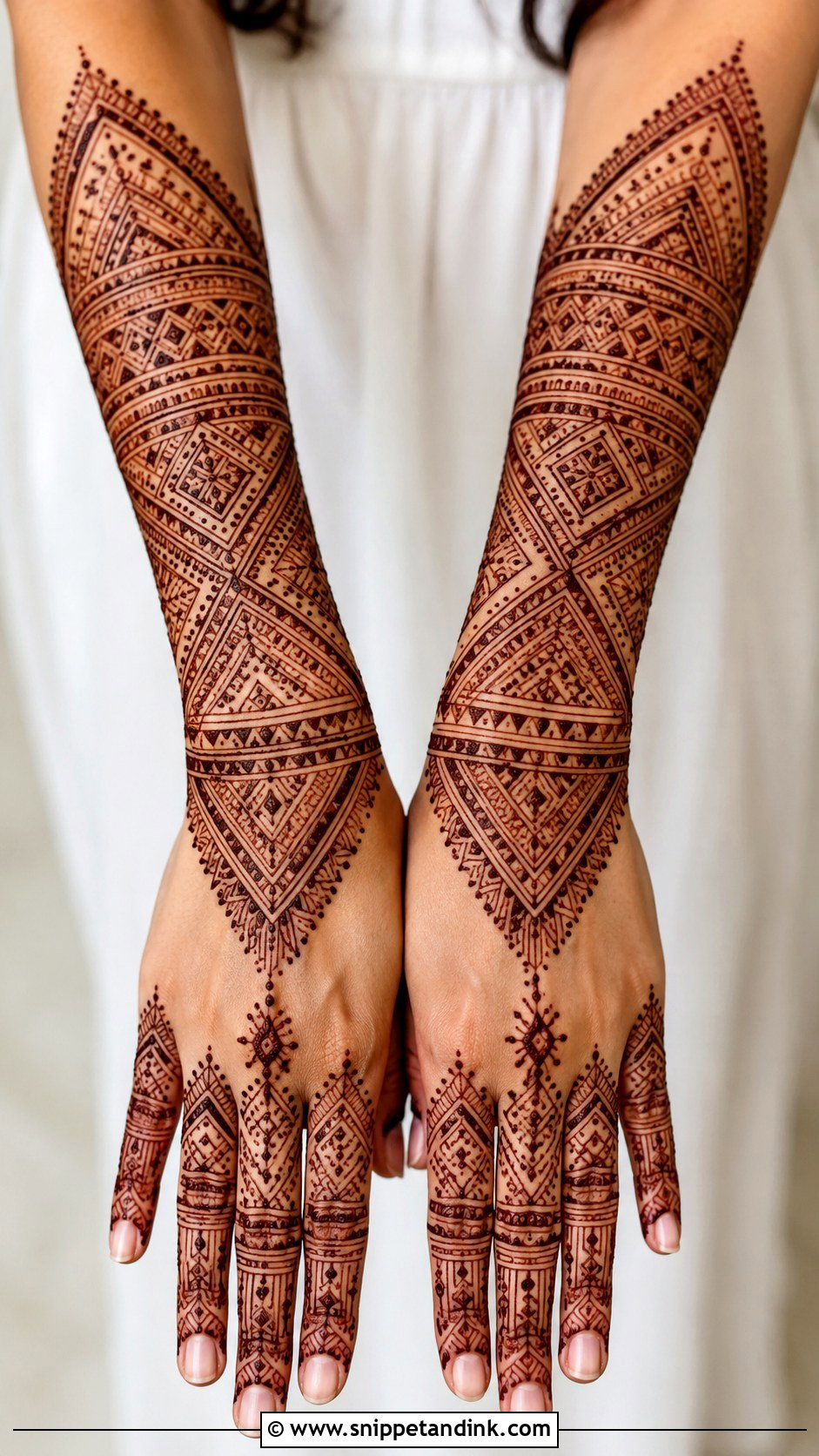
Moroccan work swaps florals for diamonds, triangles, chevrons and grids in a strong symmetrical layout. I lightly map the main bands with a few guide dots before committing, since one slanted line throws off the whole grid. It mirrors easily across both hands and suits plain outfits. If a client finds it too severe, I tuck small dots and leaves along the edges without losing the crisp structure.
12. Gulf Khaleeji Mehndi Design
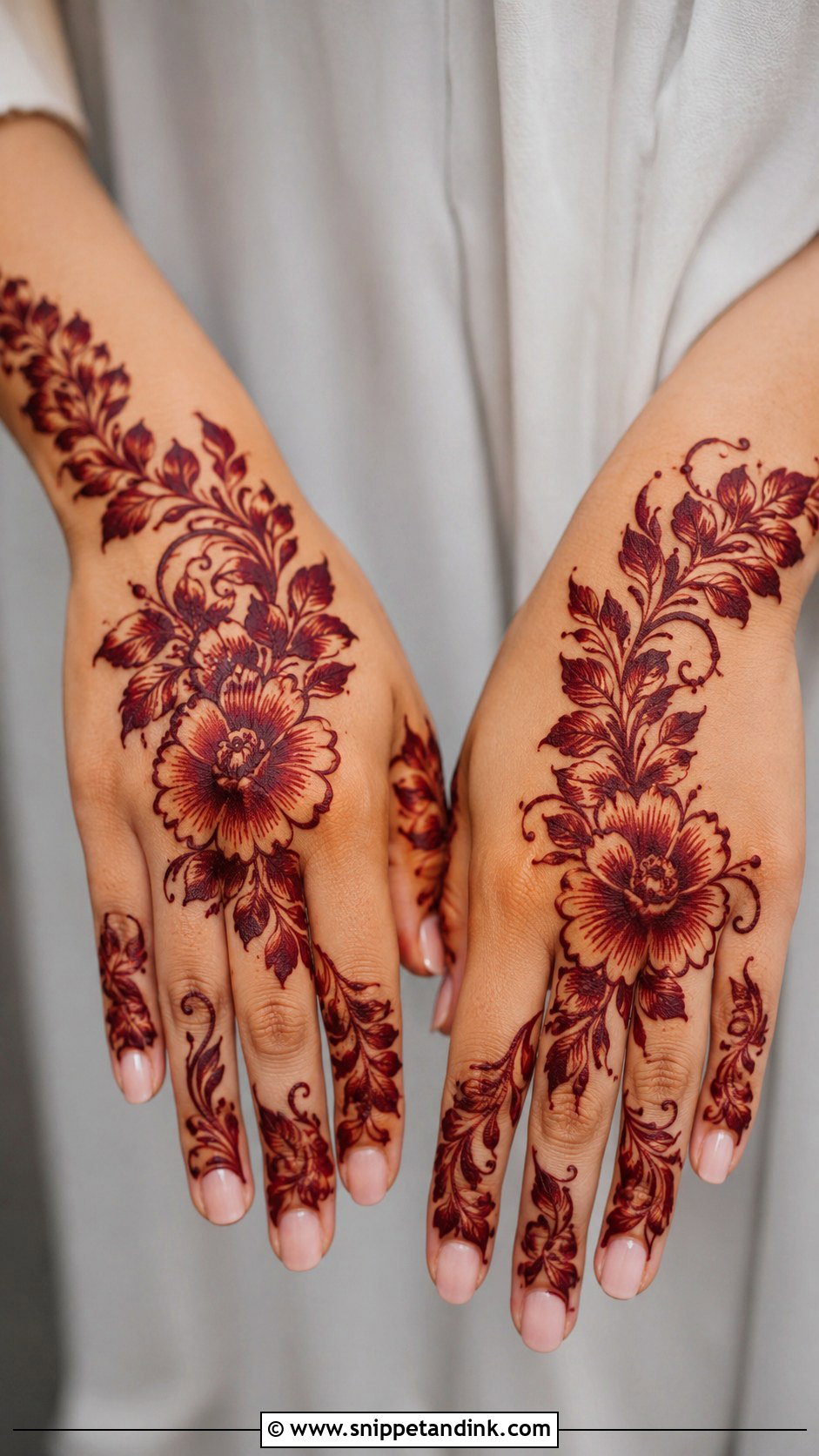
A Gulf Khaleeji mehndi design uses large flowers, leafy vines, thick outlines and shaded petals with generous open skin, from wrist to fingers or across the palm. Compared with Indian work it’s spacious and dramatic, and it reads from across a hall. Those thick outlines need a slightly wider cone opening than I’d use for fine fill. Give me a client who stains dark, and this style shows it off with very little filler.
13. Front Hand Mehndi Design
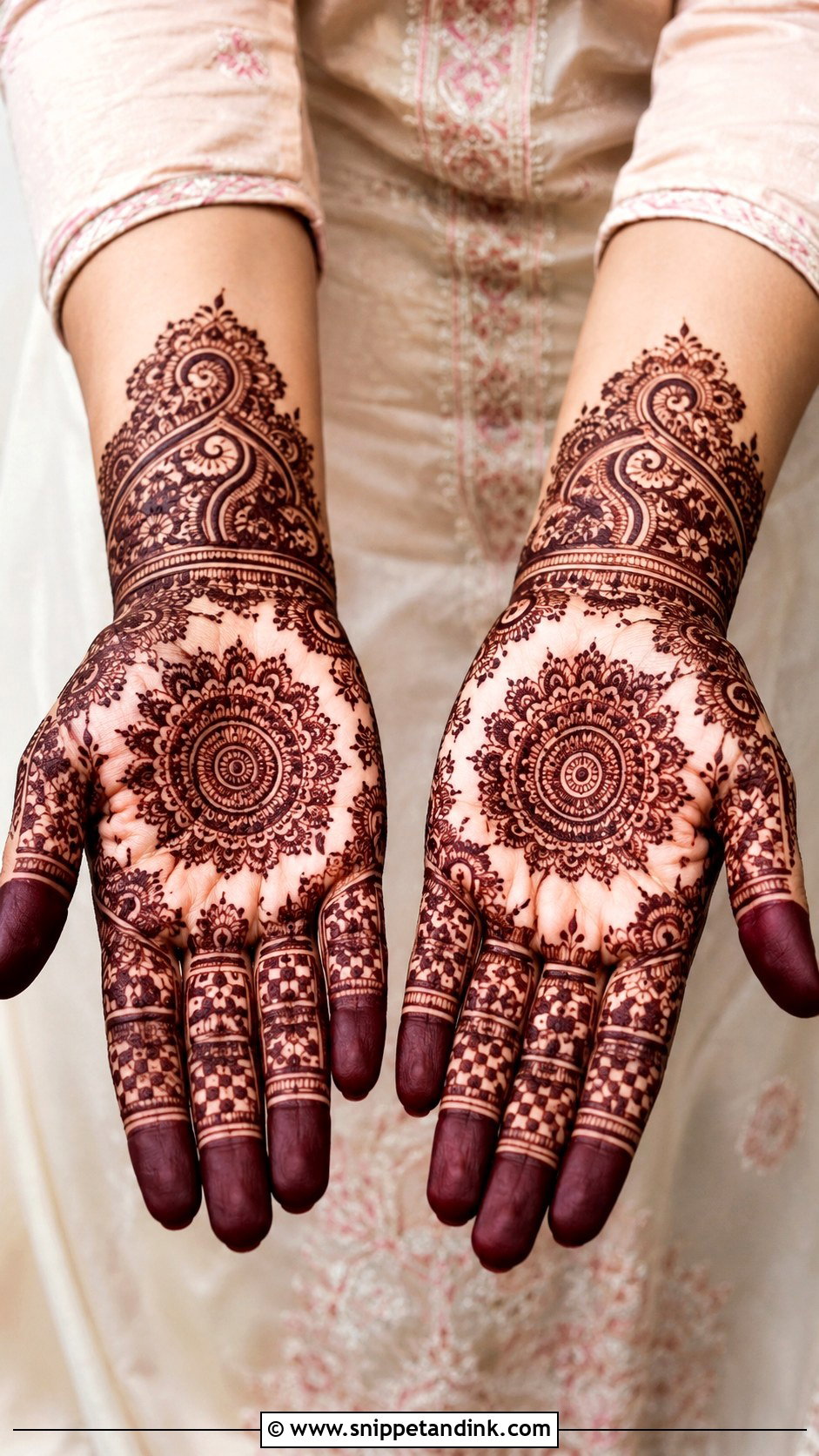
Palm work stains the darkest because the skin there is thicker and holds the dye well, so front-hand designs are the safest bet if you’re worried about a pale result. A central mandala with paisley corners, floral borders and patterned fingers is the classic layout. Keep it open around one motif for a simple version, or fill with dots, checks and curls for a heavier one. The trade-off is practical: you can’t use your palms while the paste is on.
14. Back Hand Bracelet Mehndi Design
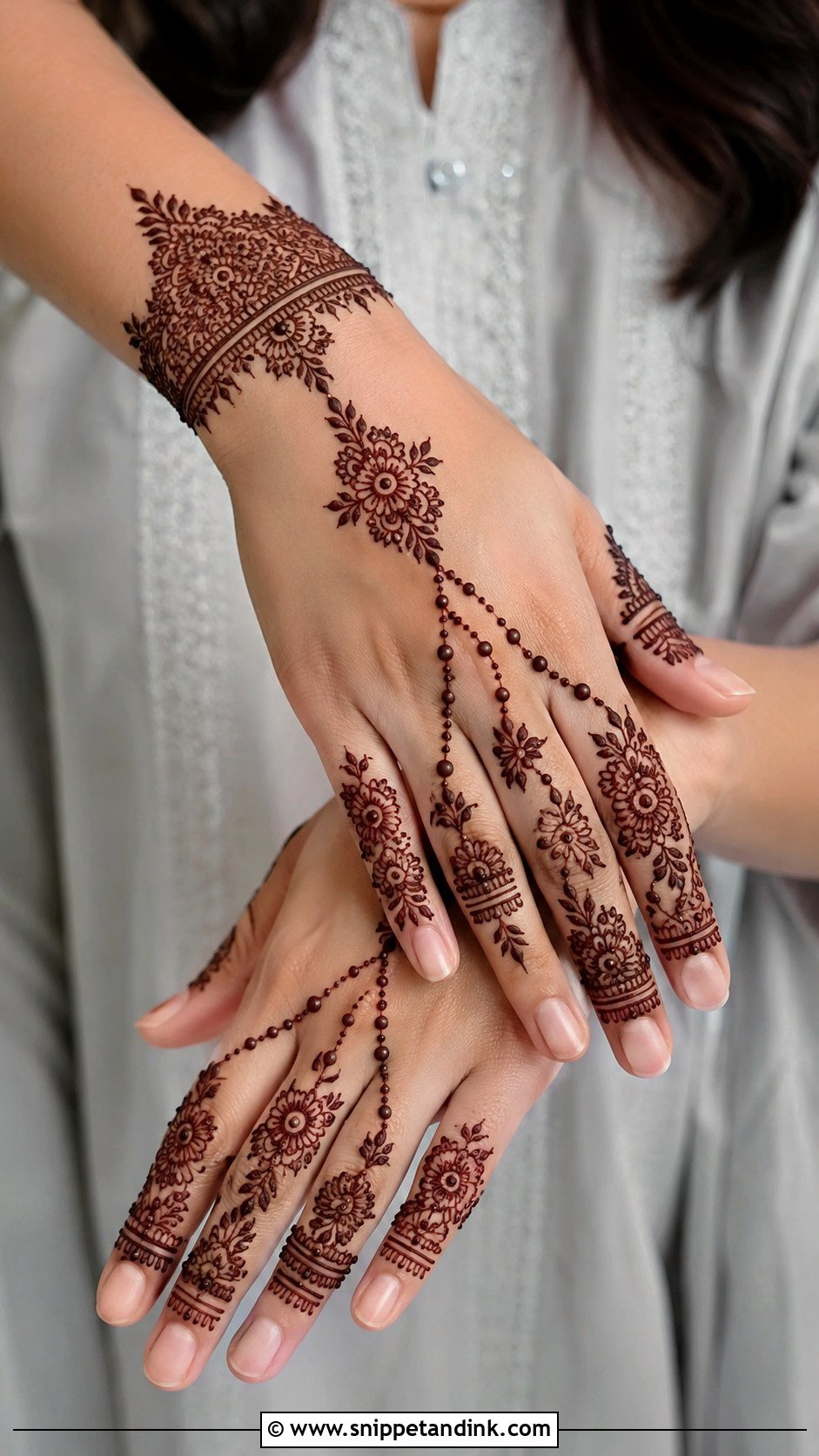
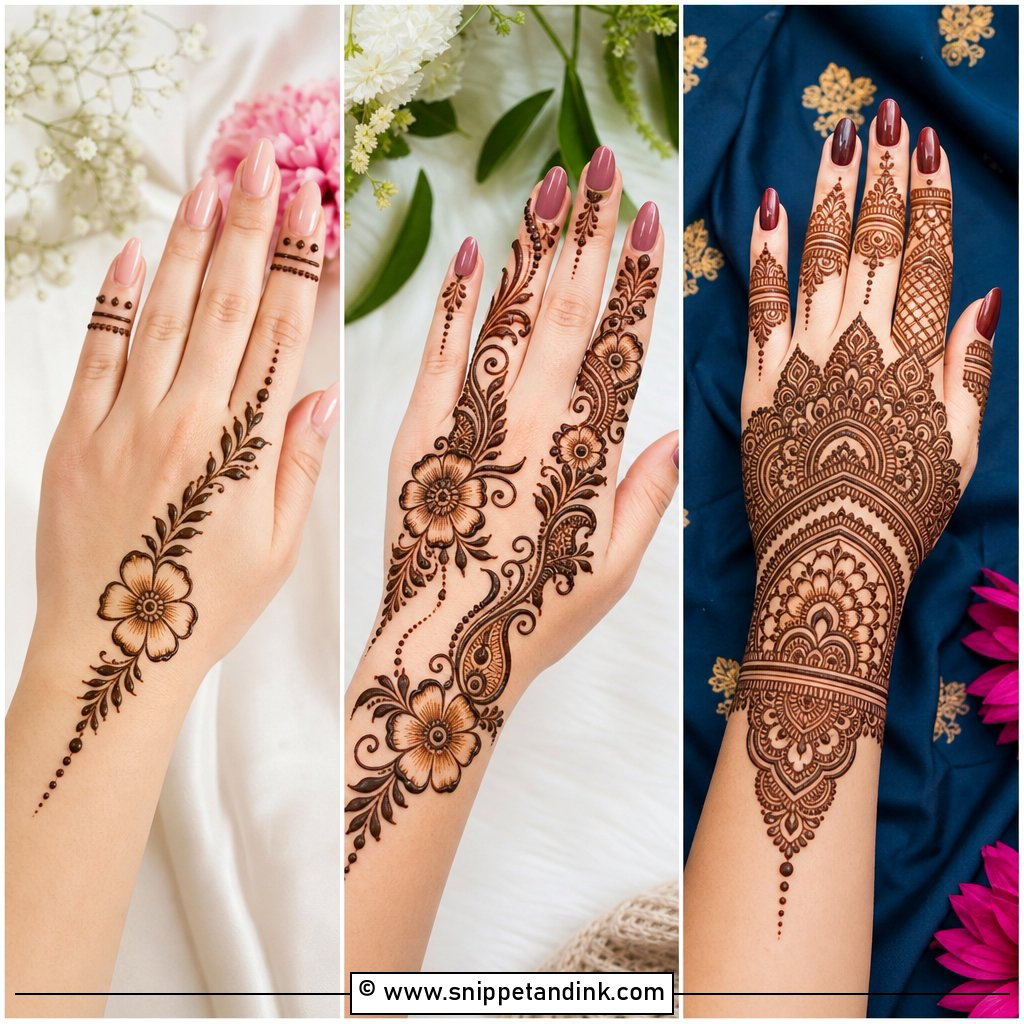
Henna jewelry on the back hand: a wrist cuff, chains or vines running to the fingers, sometimes linked to a ring pattern so it looks like a hand harness. I make the chain lines thin but not so thin they break when the hand flexes while drying. The cuff can be floral, jaali, scalloped or geometric. With real bangles on top, it looks layered and deliberate.
15. Finger Mehndi Design
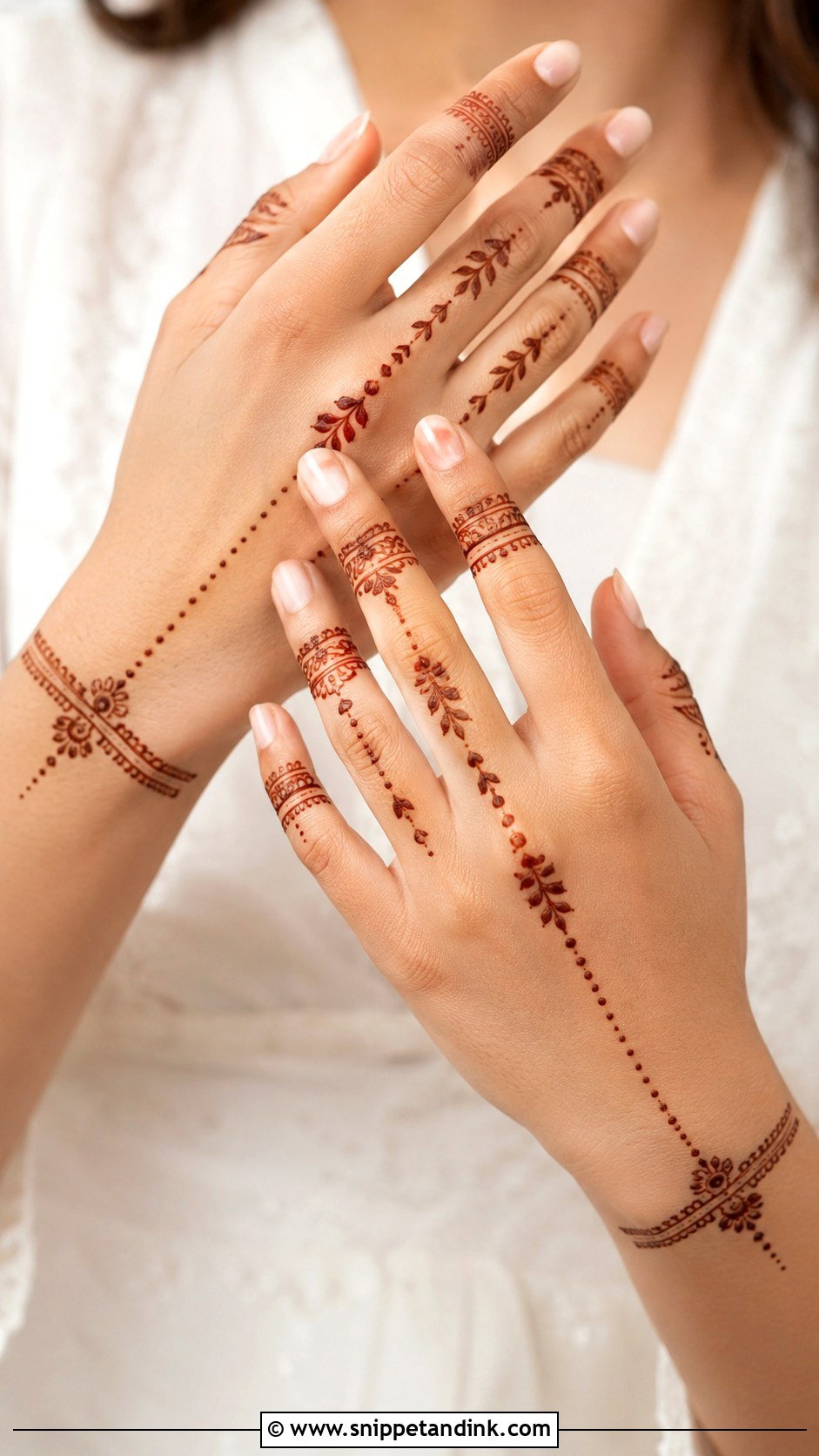
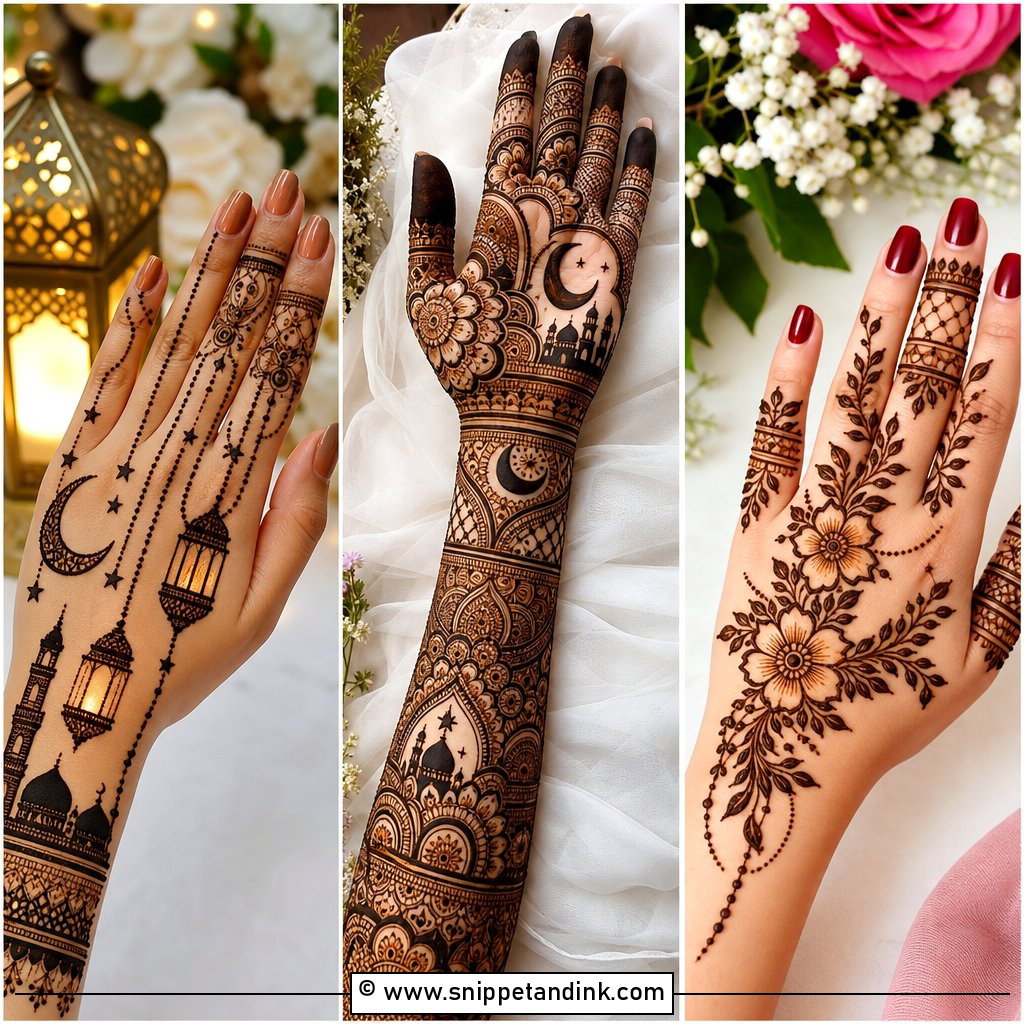
Finger-only designs need planning across both hands. Coordinated lines, small leaves, mini florals and dotted bands on each finger, with the palm or back hand mostly open, sometimes a tiny wrist cuff to anchor it. Fingertips stain very dark, which helps a minimal design read clearly. The key is symmetry; when each finger has a related pattern, the hand looks intentional rather than unfinished.
16. Paisley Mehndi Design
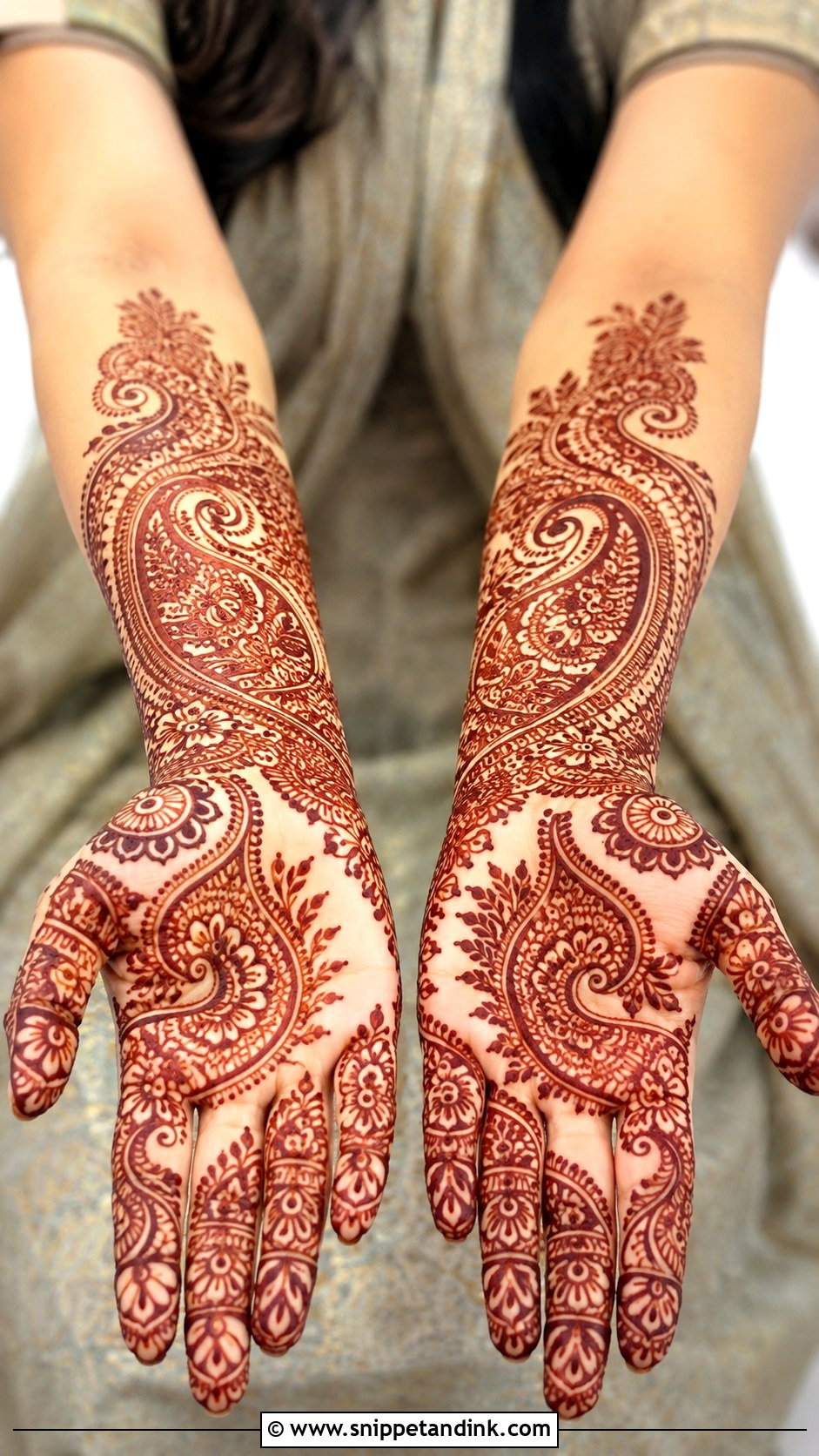
Paisley is the most flexible motif in my kit. It works on a palm, a back hand or a full bridal arm, filled with flowers, lines, dots or leaves. Large paisleys read bold; small clustered ones build dense bridal texture. It sits happily next to mandalas, peacocks and jaali, so when a client can’t decide, I often start with a paisley and build around it.
17. Rose Mehndi Design
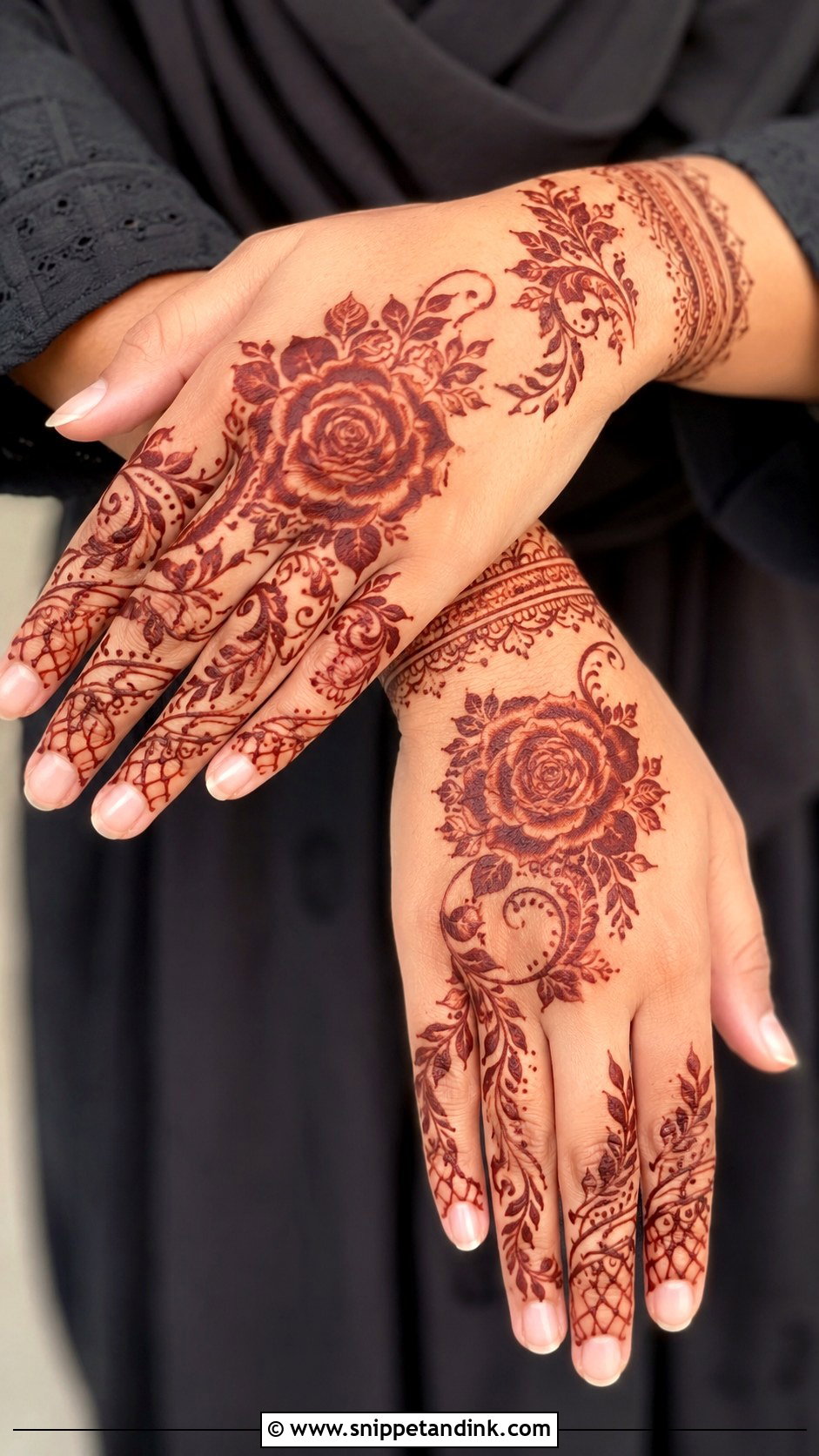
Roses need shading to look round, so I draw dark outlines and then lighter inner strokes in each petal. Large blooms on the back hand or palm connect through leaves, vines and spirals to decorated fingers. Because roses can be drawn big, they fit Arabic and Indo-Arabic layouts easily. Finish with a slim wrist band or a leafy trail so the flower doesn’t float alone.
18. Diagonal Trail Mehndi Design
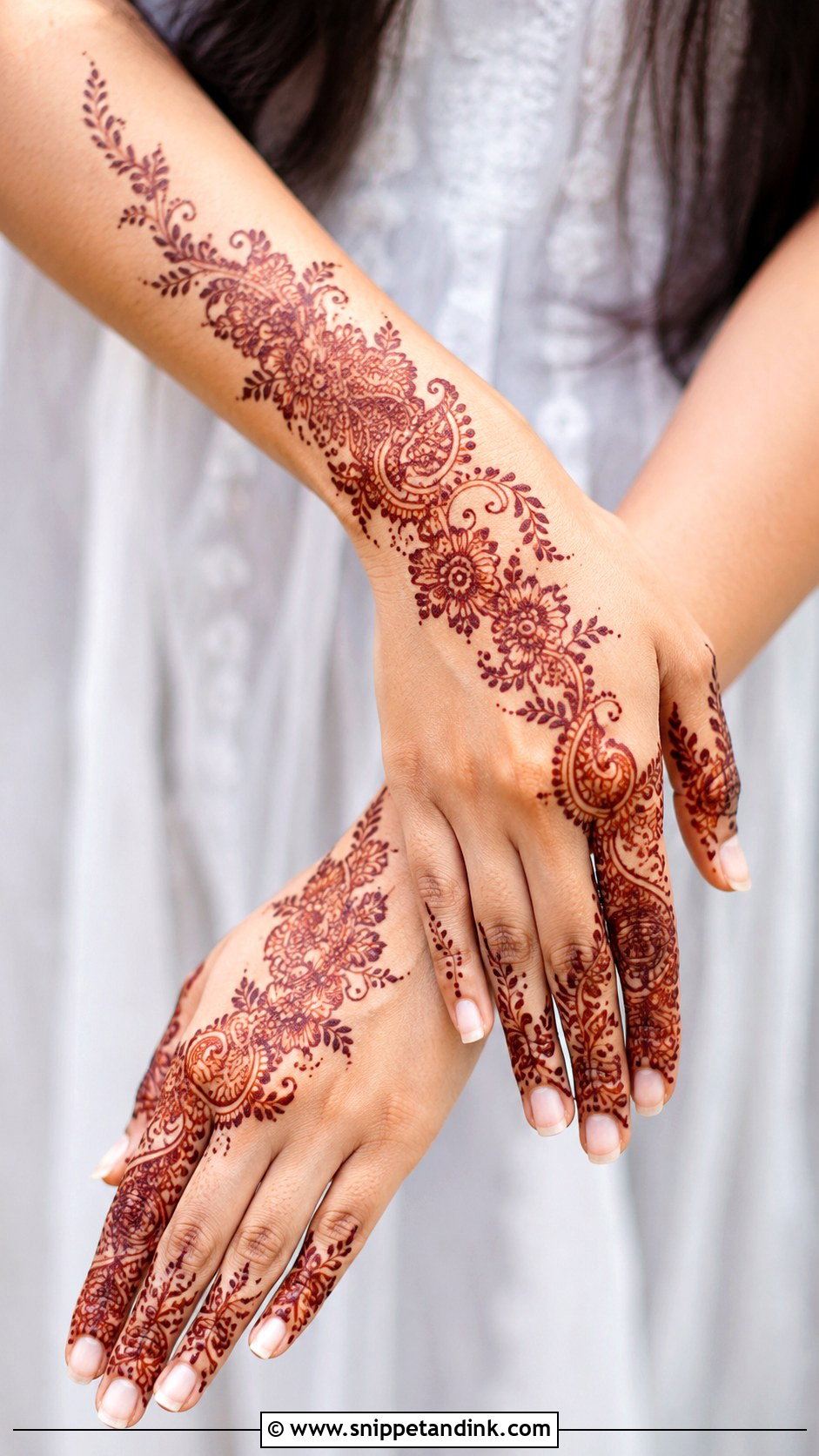
The diagonal trail is quick and flattering: it starts on one side of the wrist, crosses the hand and ends near the index or middle finger, which visually lengthens fingers and wrist. I check the angle against the client’s hand before drawing, because a trail that ends on the wrong finger looks lopsided once rings go on. Fill it with fine lines and shading for more weight, or keep the motifs larger for a minimal version. It suits sangeet, Eid and bridesmaids.
19. Geometric Mehndi Design
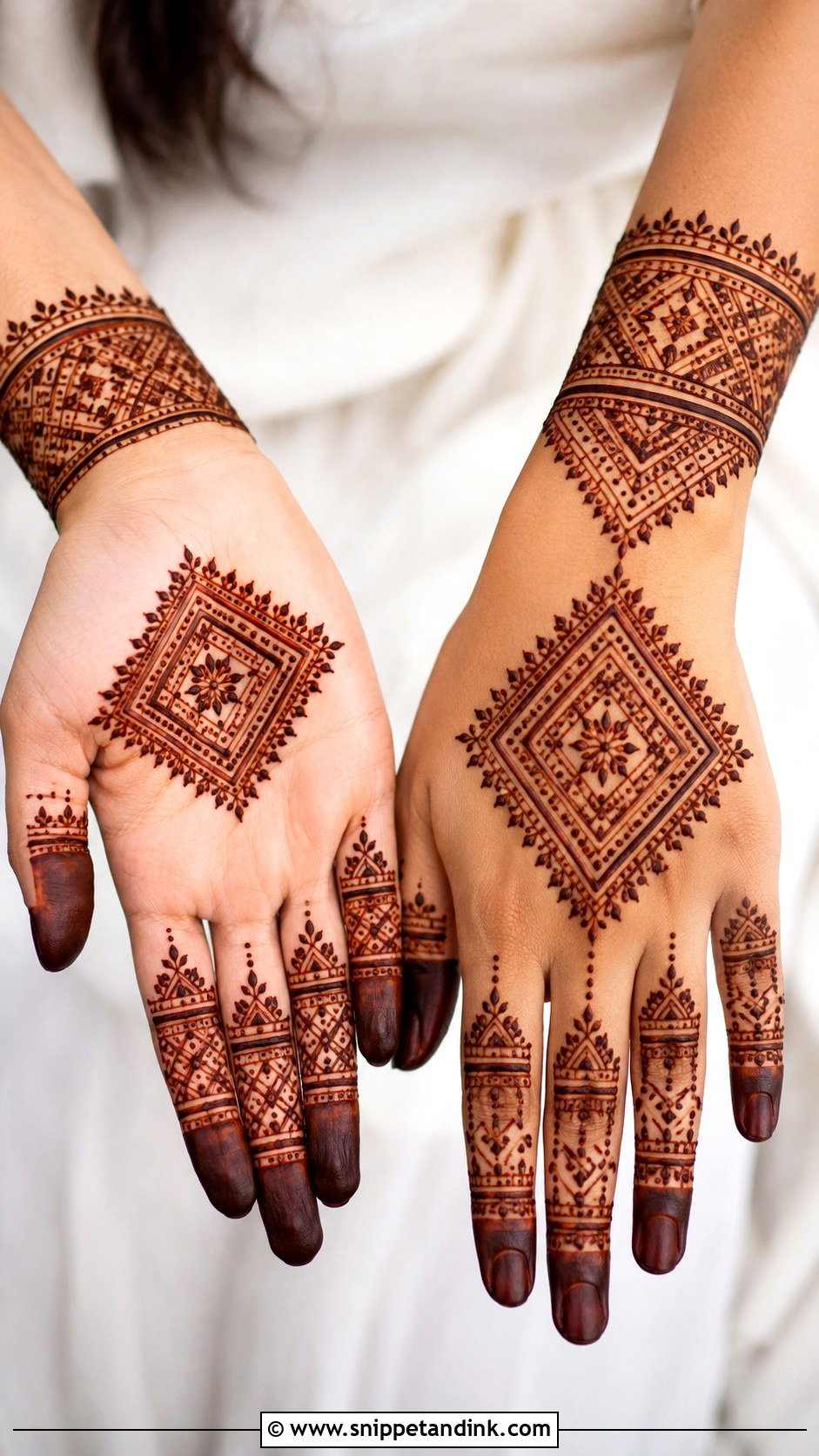
Geometric designs use diamond grids, triangle bands, straight lines and square mandalas across the palm or back hand, with matching bands on the fingers and a cuff at the wrist. Vertical lines lengthen long fingers nicely. On shorter, wider hands I’d keep the bands thinner and add a few curves, or the grid can make the hand look boxy. It’s a good fit for fusion outfits and anyone tired of floral trails.
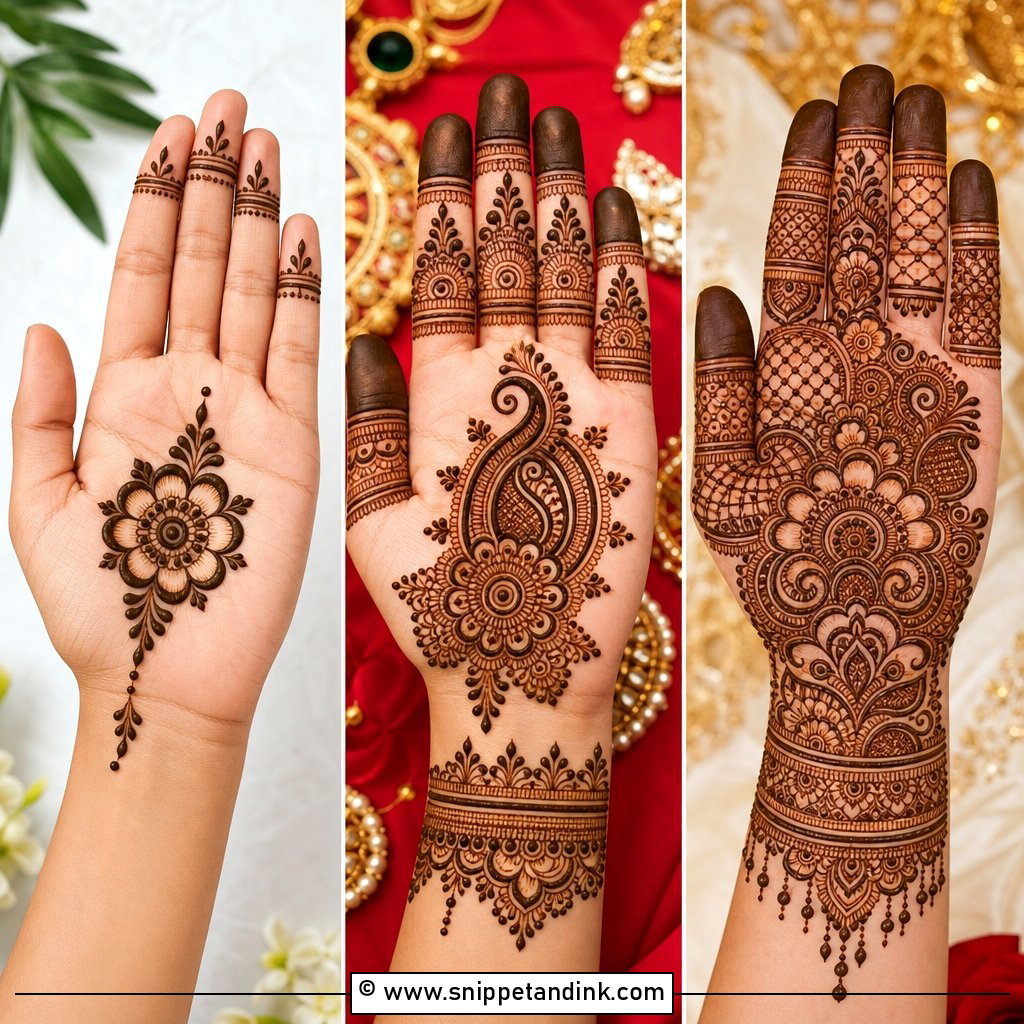
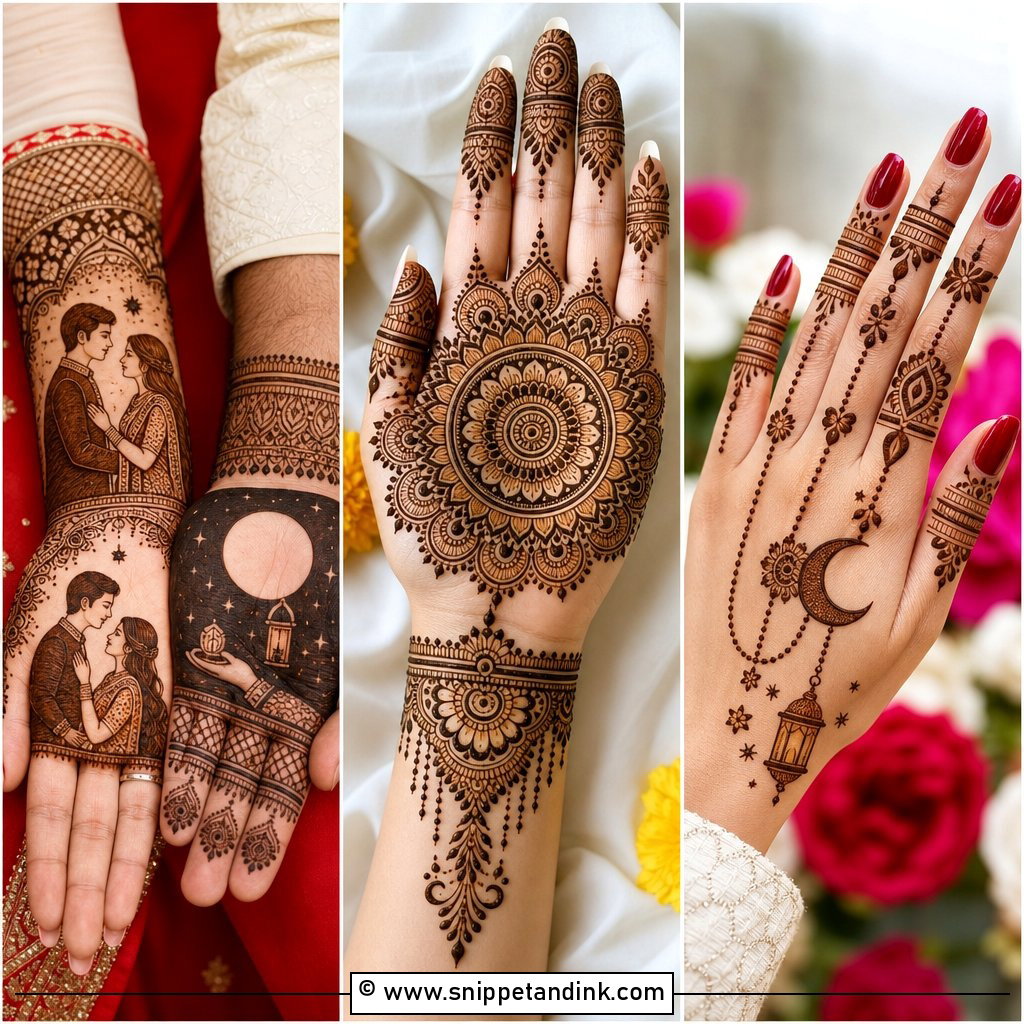
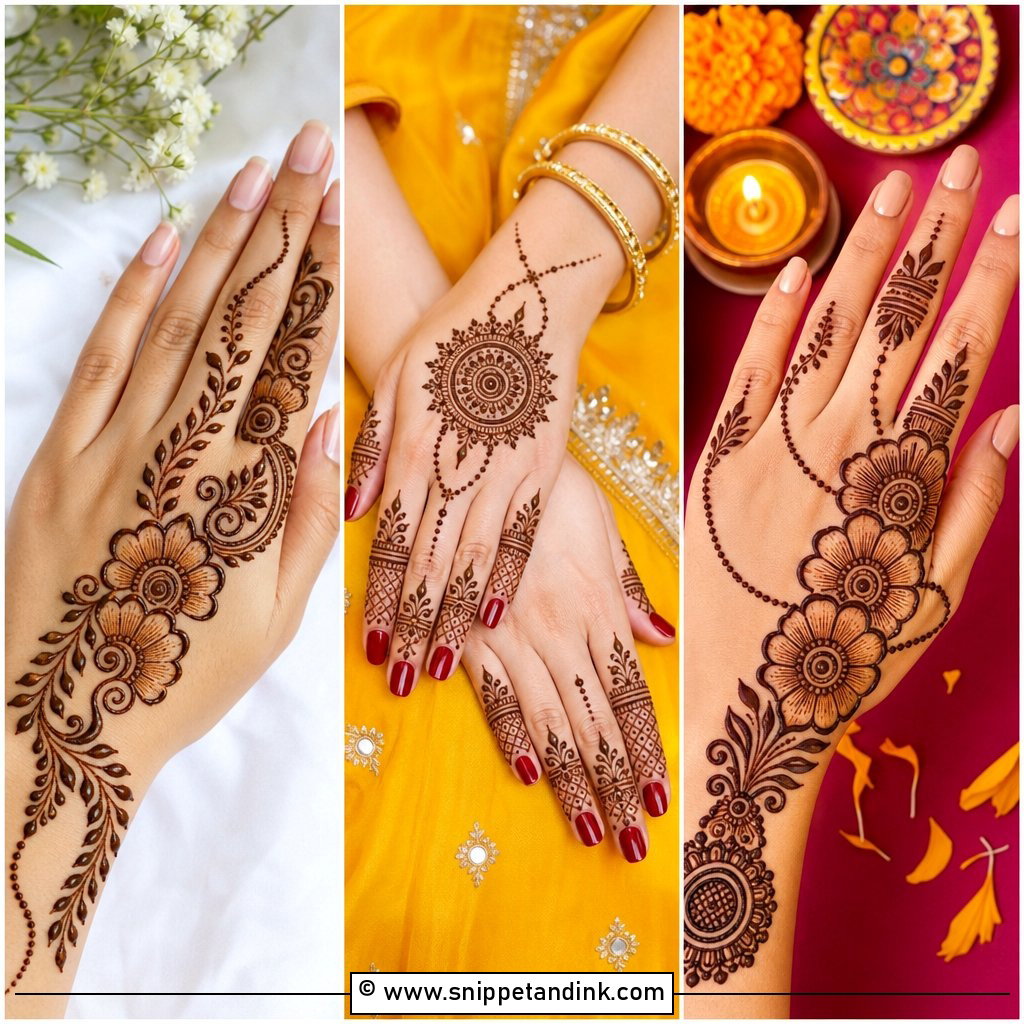
20. Half Hand Mehndi Design
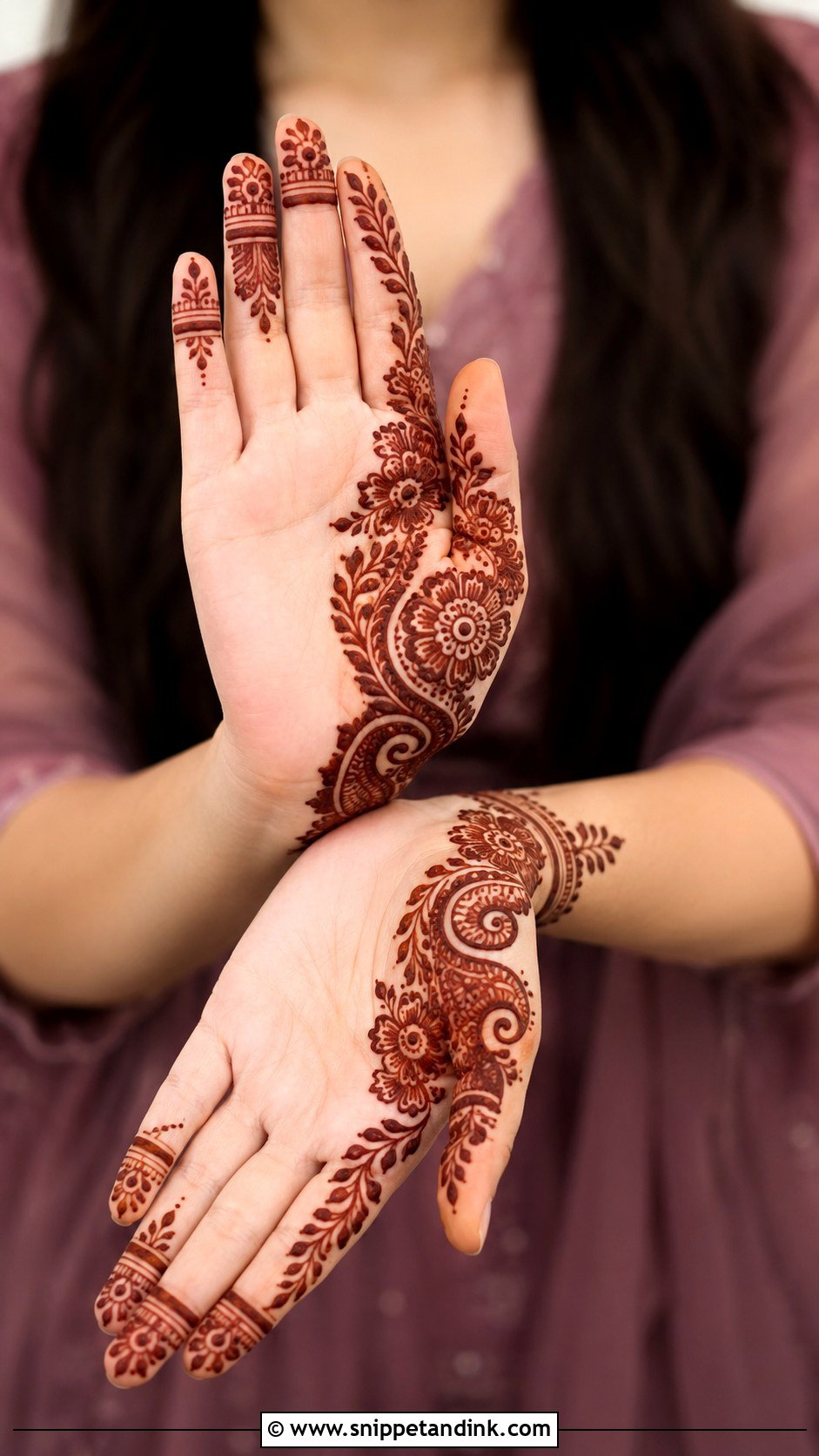
Half-hand coverage gives a finished look without committing the whole palm or arm: fingers and one side of the palm, or wrist to knuckles on the back with space left open. The edge is where it goes wrong. A ragged boundary looks abandoned, so I close it with a deliberate border or a fading row of dots. It’s quick, comfortable, and a good first design for anyone new to henna.
21. Full Arm Bridal Mehndi Design
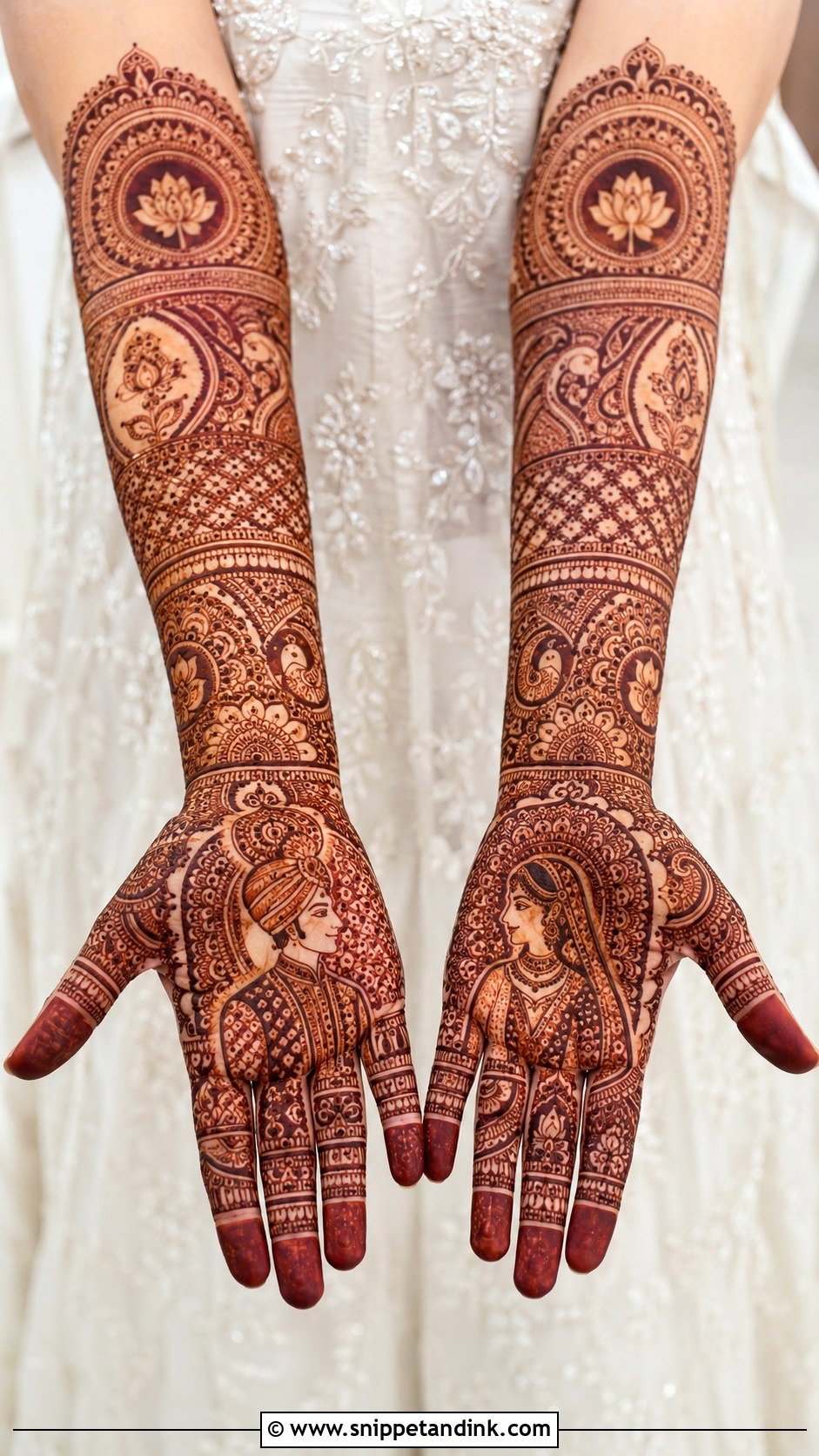
Full-arm bridal coverage runs from fingertips to elbow or beyond, dense on both sides, with mandalas, bride-and-groom figures, paisleys, peacocks, lotus and jharokha frames. The forearm carries the storytelling; the palms hold the personal details. Expect the forearm to stain lighter than the hand, since arm skin is thinner, so I keep the darkest symbolic elements on the palms. It belongs with heavily embroidered lehengas and sarees.
22. Engagement Mehndi Design
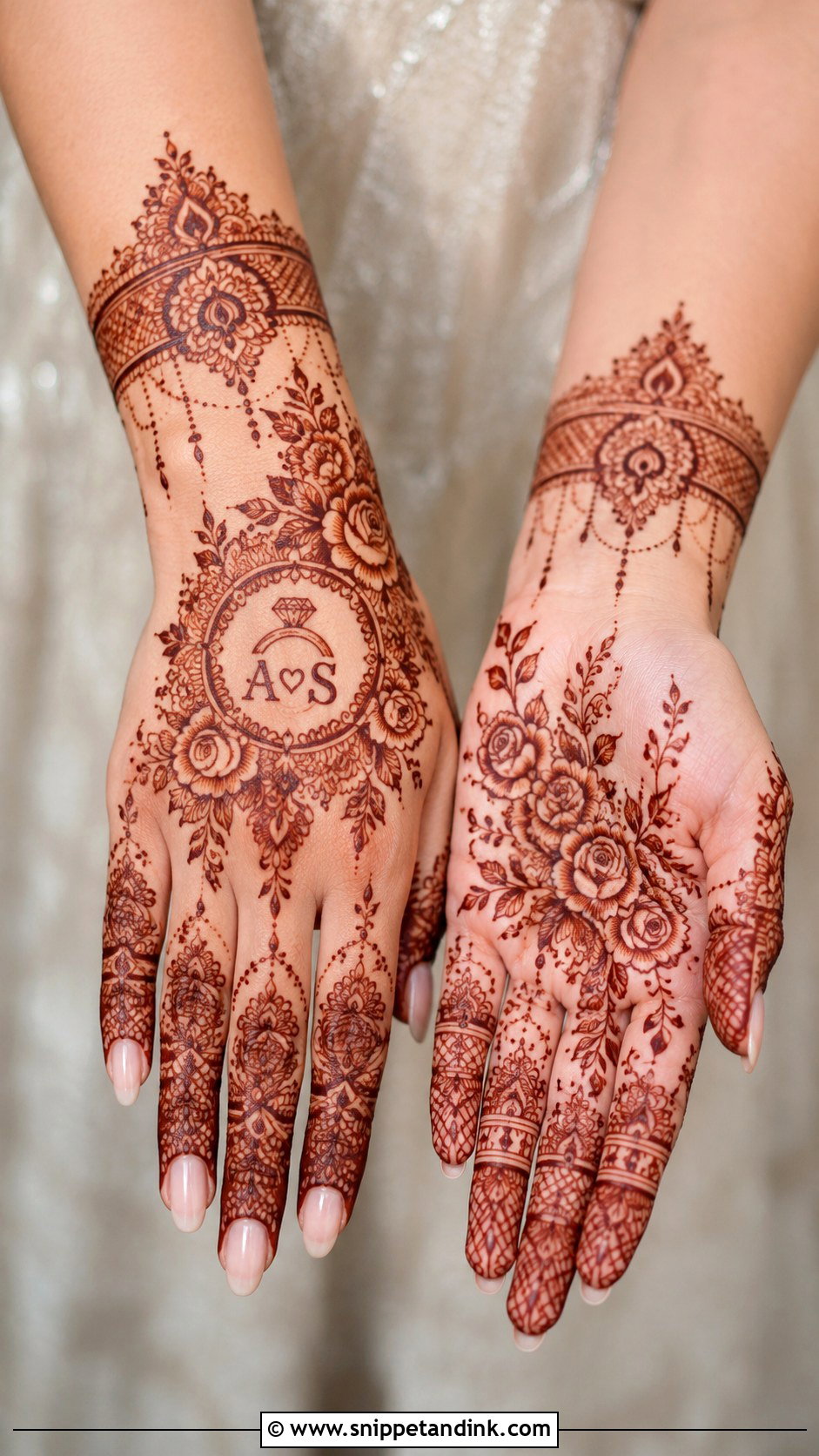
For an engagement, I keep the palm lighter so the ring stays the focus in close-ups. Back hands get the detail: neat fingers, soft florals, slim cuffs and maybe initials or a small ring motif. Engagement days involve a lot of handshakes and outfit changes, so a balanced Arabic or Indo-Arabic pattern that dries fast is the practical pick. Apply it a day or two ahead so the stain has time to deepen.
23. Eid Mehndi Design
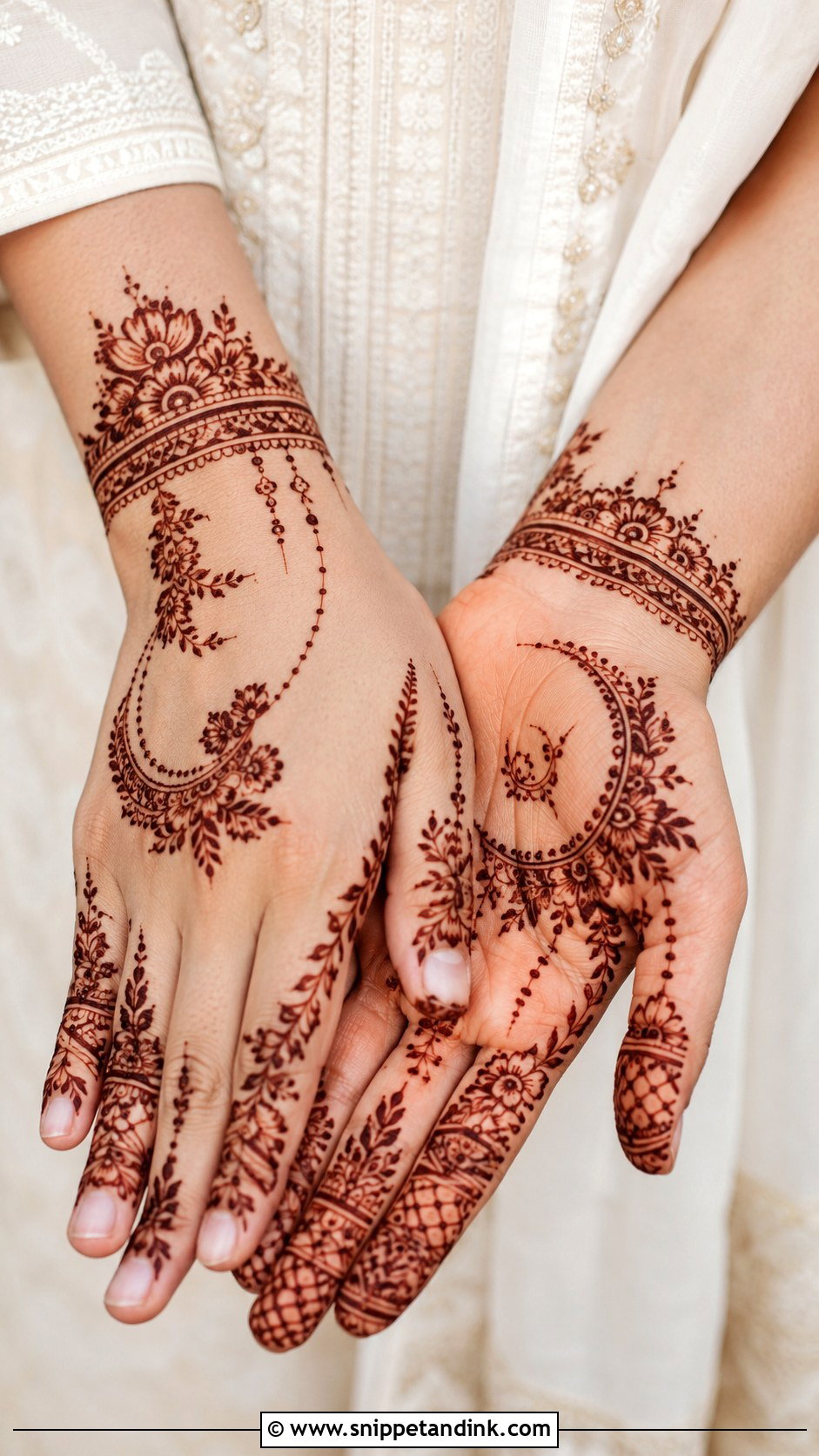
Most Eid mehndi design requests come on chaand raat, when queues are long and everyone wants it done fast. Arabic florals on the back hand, a palm mandala, bracelet cuffs or finger patterns all fit that window. Crescent curves, vines and dots are the common motifs. Leave enough spacing that the stain looks clean, and make the hands similar rather than identical so they look natural together.
24. Wedding Guest Mehndi Design
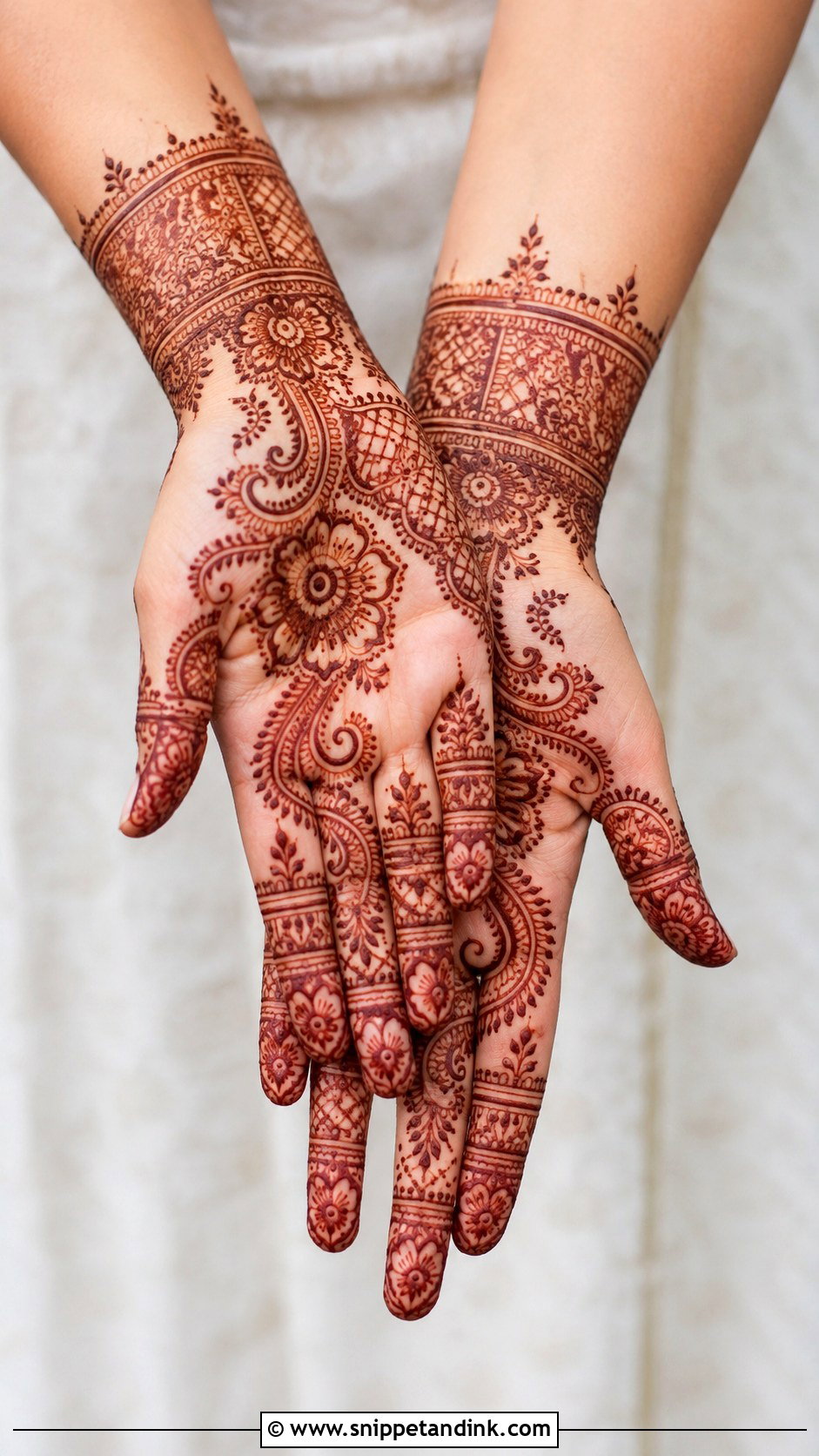
As a guest, you want festive without being mistaken for the bride. Back hand and fingers with Arabic florals, jaali patches, a paisley trail or a neat cuff, and a simple palm with a small mandala or corner, strike that line. Medium coverage shows in photos and still lets you carry a plate at dinner. Cousins attending several functions often have it done once early in the week and let it carry through.
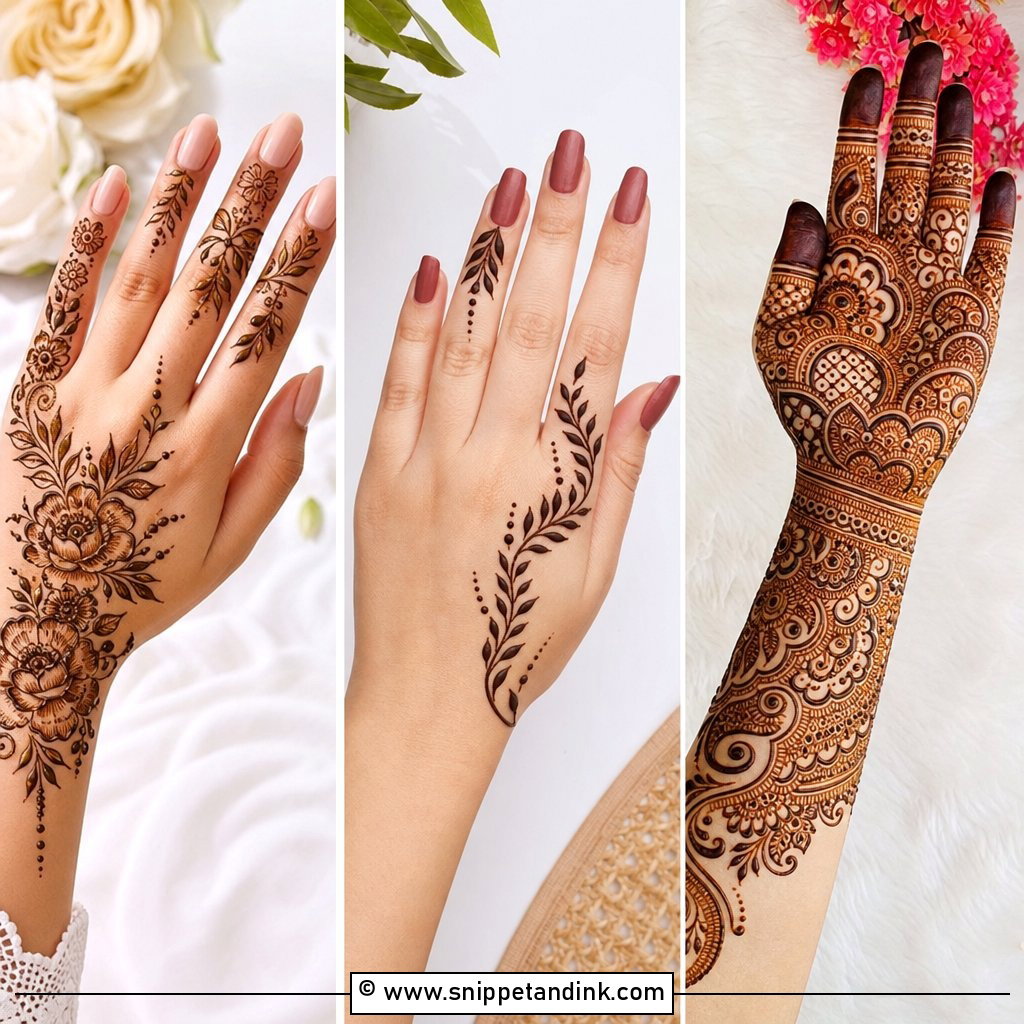
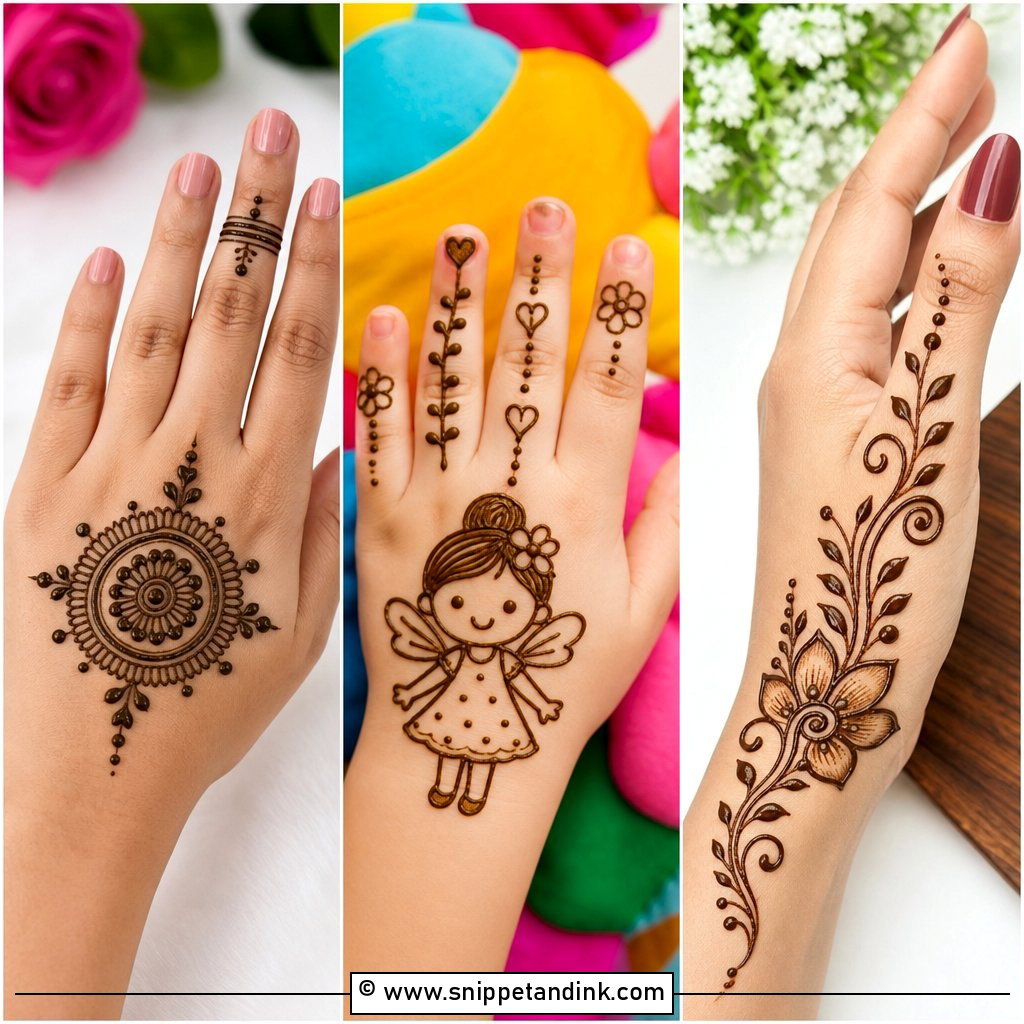
25. Kids Mehndi Design
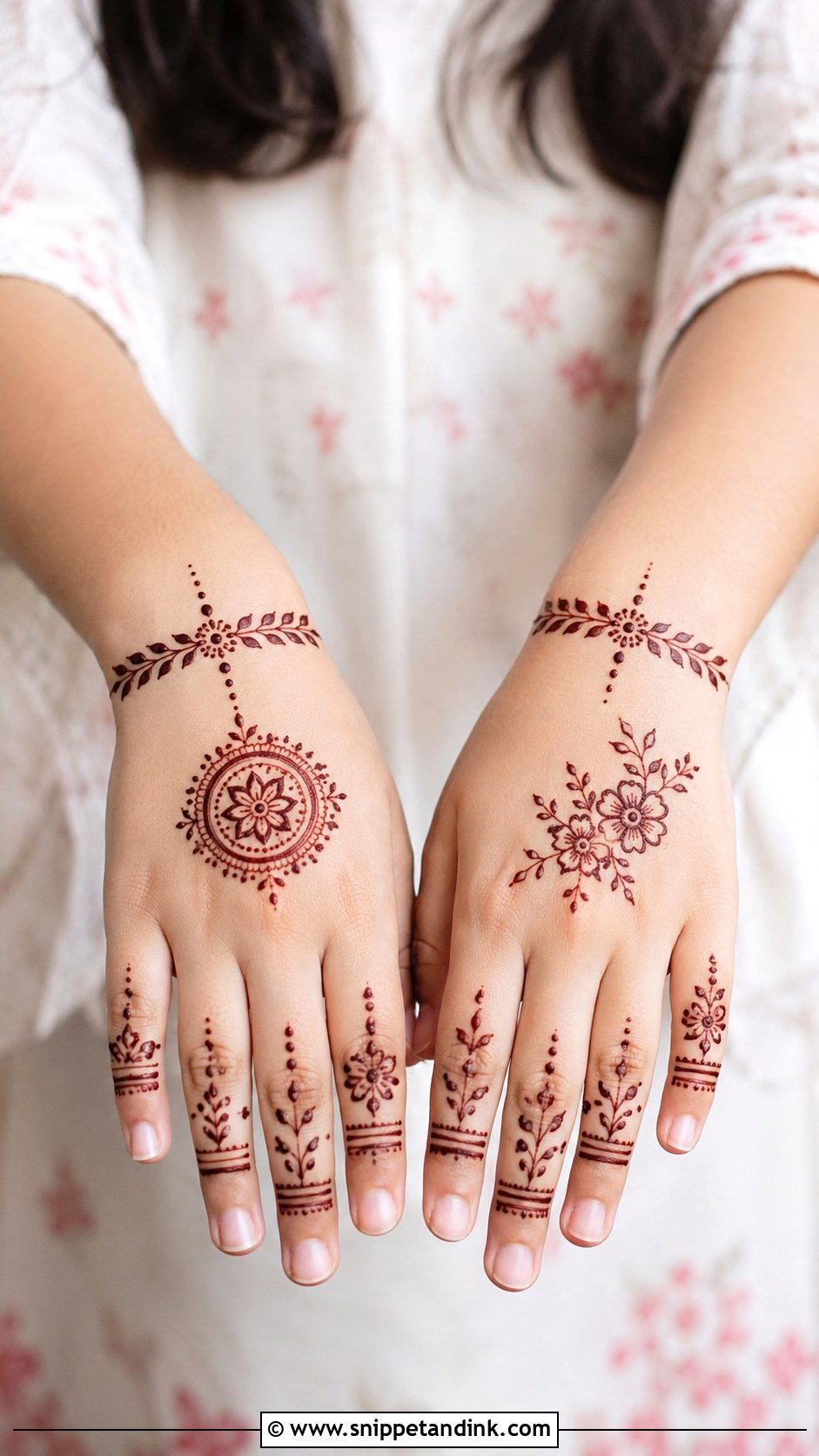
Children won’t sit still for long, so for Kids mehndi design I keep it to a small flower, a mini mandala, a butterfly shape or a leafy bracelet with dotted fingertips. The back hand is easier than the palm because small kids grab things while it dries. Bold lines and minimal detail stay readable after staining. Only ever use natural henna on children; dark black “henna” cones can contain chemical dyes that cause skin reactions.
26. Modern Minimal Mehndi Design
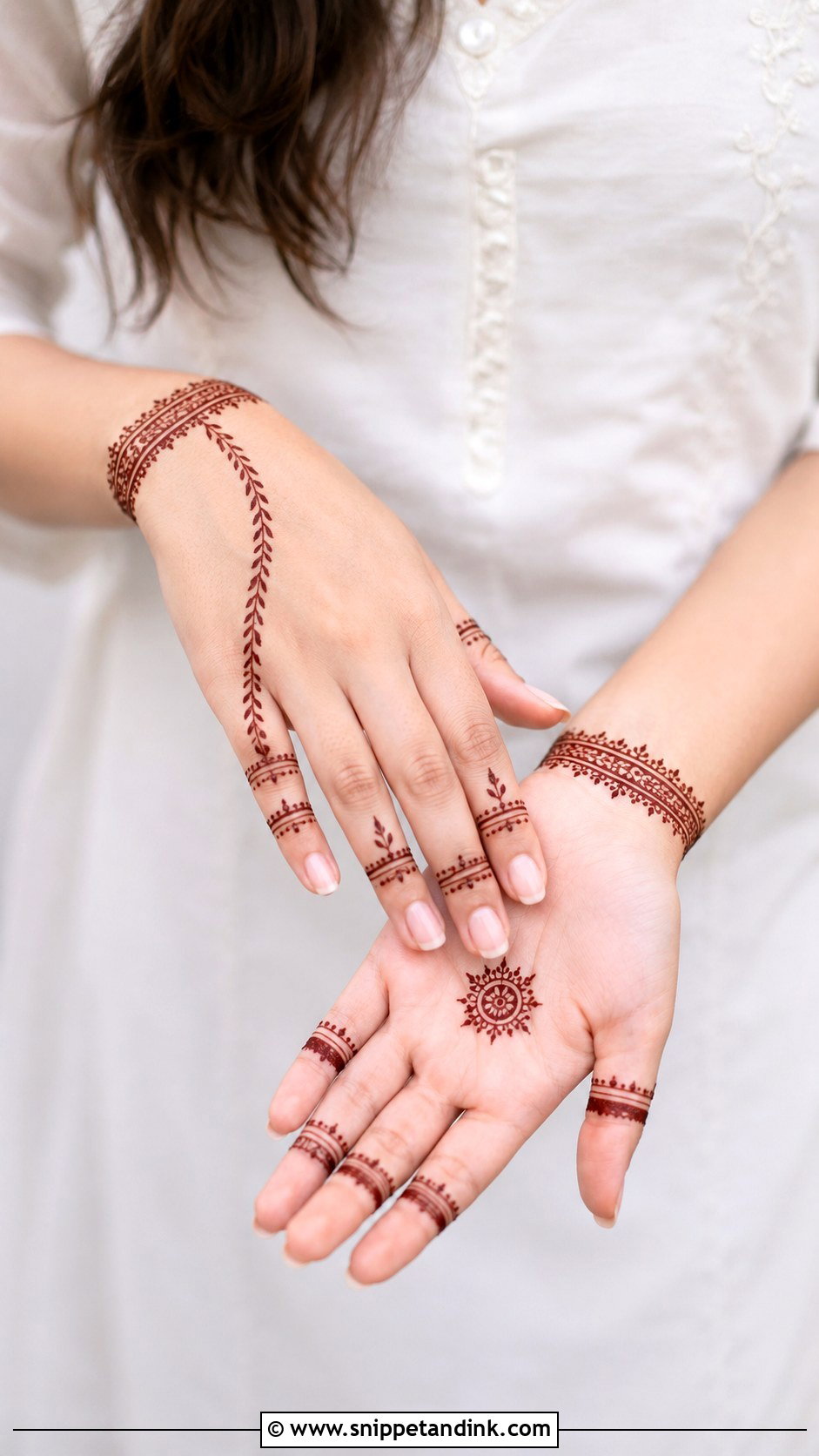
Modern minimal work is slim finger bands, a tiny palm motif, a fine cuff and a light leafy trail, with real breathing space between elements. It dries quickly and suits western or Indo-western outfits and simple jewelry. Because there’s so little of it, placement matters more than detail; I’ll often move a motif a few millimeters to line up with a knuckle before drawing.
27. Shaded Mehndi Design
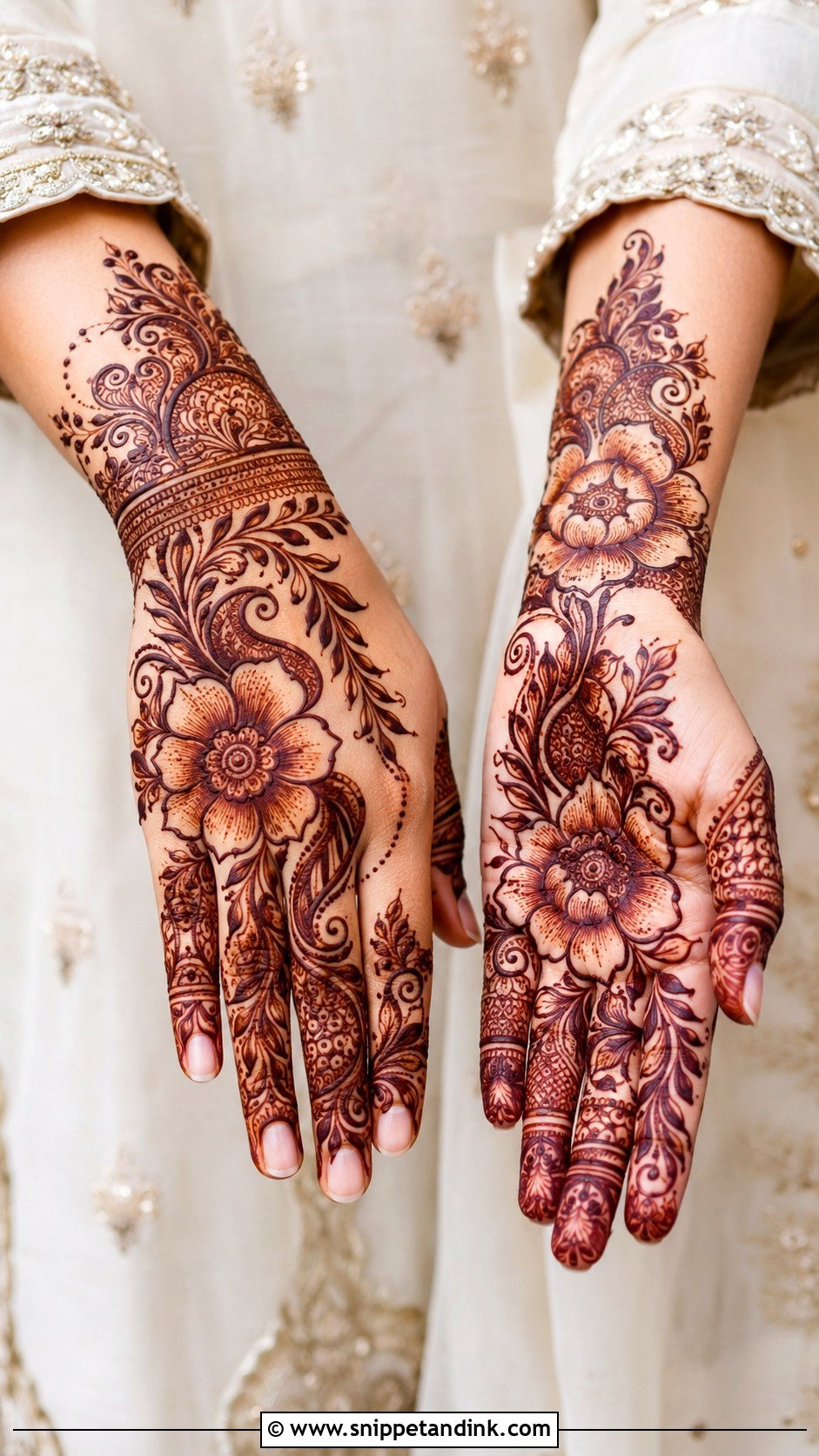
Shading means filling petals, leaves and paisleys with graded strokes: dark outlines, lighter interiors, parallel lines in the leaves. It needs room, so it pairs with Arabic or Indo-Arabic layouts with large motifs. I build the shade with closely spaced thin lines rather than a thick smear, which can crack and flake off before it stains. It gives fullness without cramming the hand.
28. Jewelry Mehndi Design
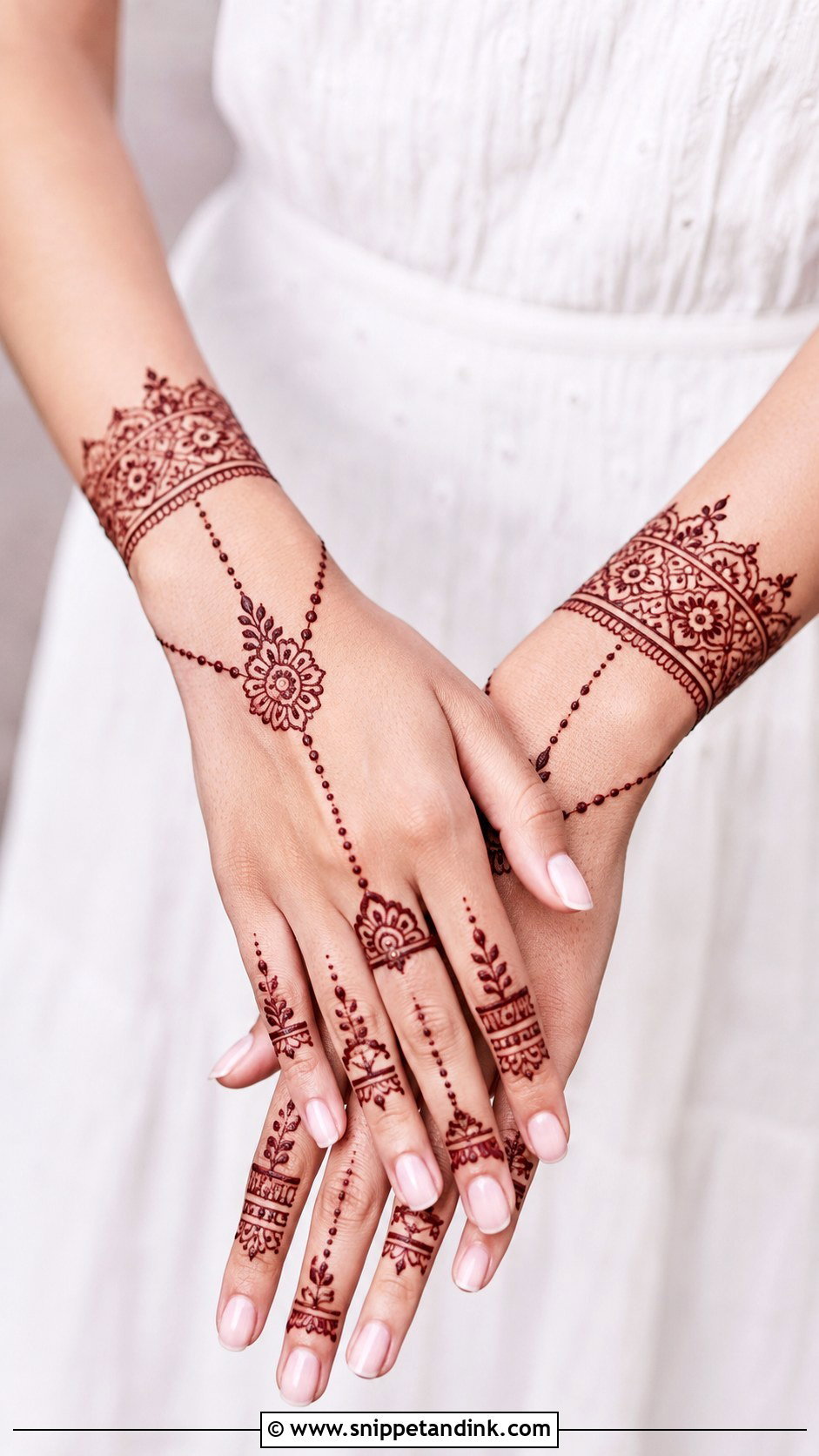
Jewelry-style henna draws rings, bracelets, chains and hand ornaments directly on the skin: a wrist cuff, chain vines, finger rings and small motifs placed like charms on the back hand. It leaves enough bare skin that real jewelry sits with it rather than fighting it. Keep the connecting chains thin and the cuff even on both wrists. Floral, geometric or Arabic, it adapts to whatever you’re wearing.
29. Rajasthani Bridal Mehndi Design
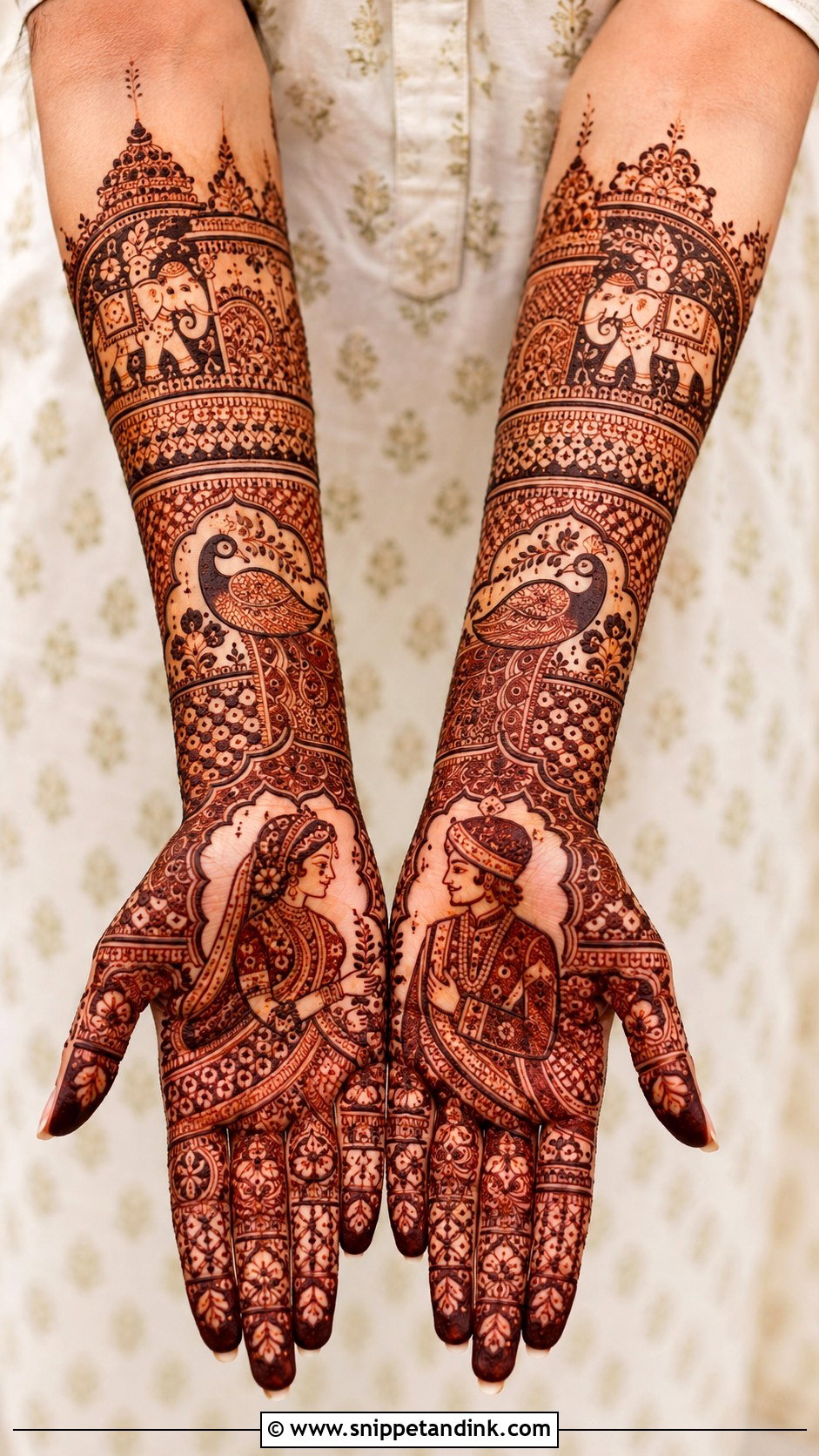
Rajasthani bridal work is dense and narrative: peacocks, elephants, paisleys, bride-and-groom figures, mandalas and ornamental borders, with every gap filled with checks, dots and curves from hand to forearm. It is slow work, and fatigue shows as uneven filler, so I build in short breaks for both of us. The heavy palm coverage stains very deep. It suits a traditional outfit and a bride who wants craft she can study for weeks.
30. Dulha Dulhan Mehndi Design
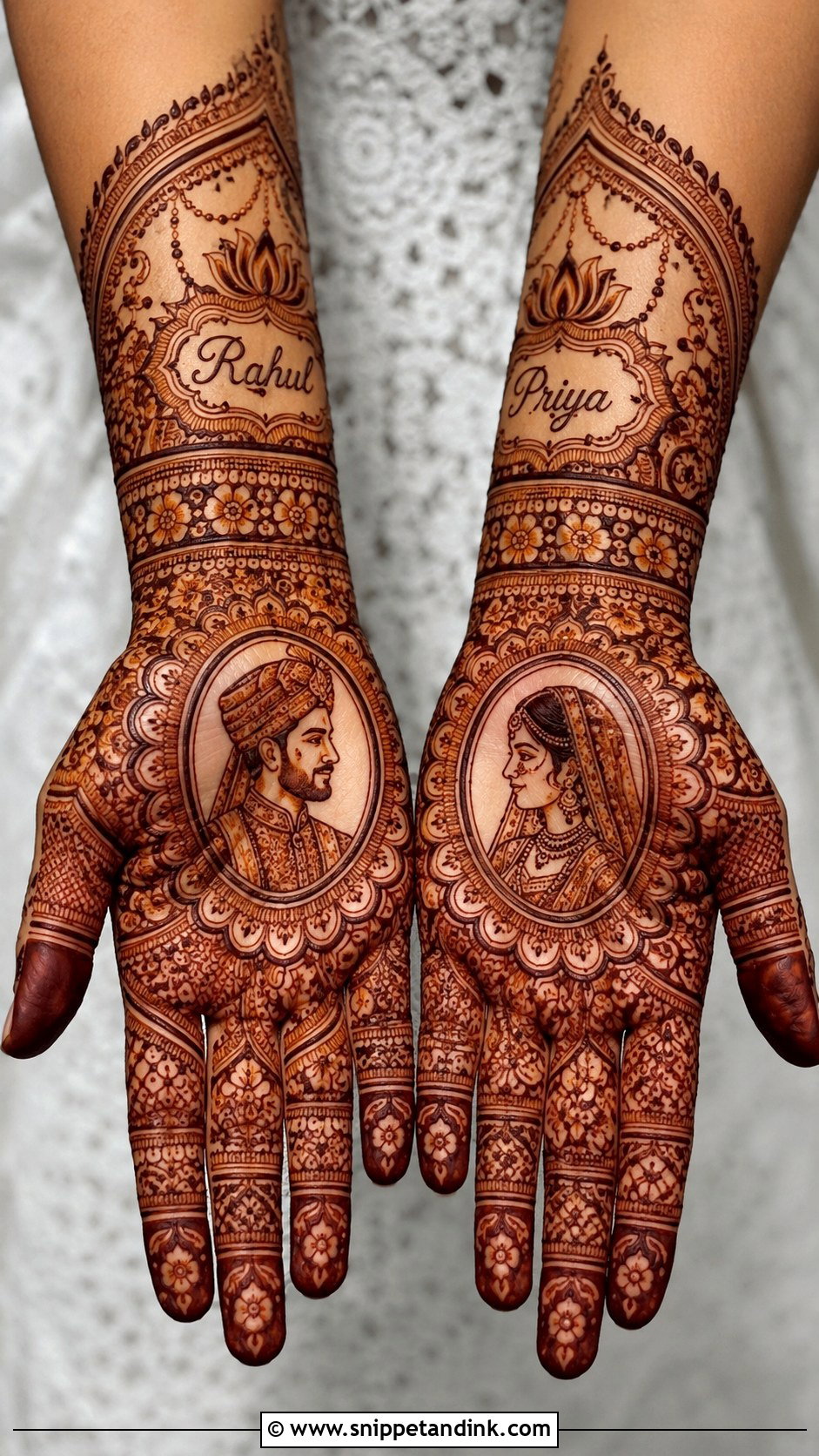
Bride and groom figures usually sit on the palms or forearms, framed with mandalas, paisleys, jaali and wedding motifs, and some brides add names, dates or initials. I draw the faces first and keep them a fair size; tiny figures lose their features when the stain darkens and the lines thicken slightly. It can be heavy or open around the figures. Clear placement and a balanced frame are what make it hold up in close-ups.
31. Jharokha Mehndi Design
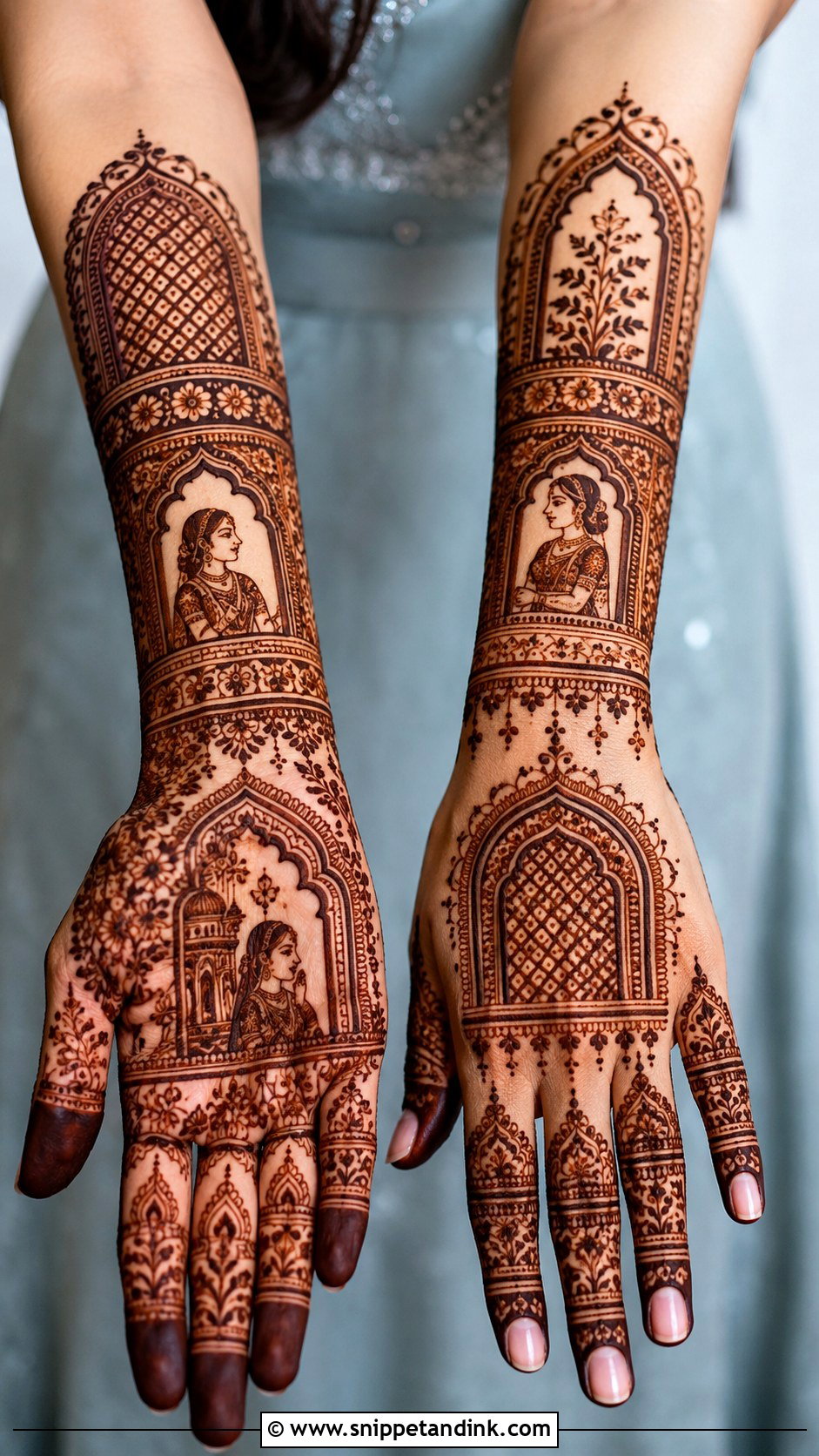
Jharokha borrows the arched window frames of Indian architecture, set on the palm, back hand or forearm and filled with florals, figures, lattice or small ornaments. Brides use the arches to hold couple portraits, initials or sacred motifs. The arch needs to be symmetrical, so I sketch both sides of the curve with dots before outlining. For guests, a single small arch on the back hand with decorated fingers is enough.
32. Lace Mehndi Design
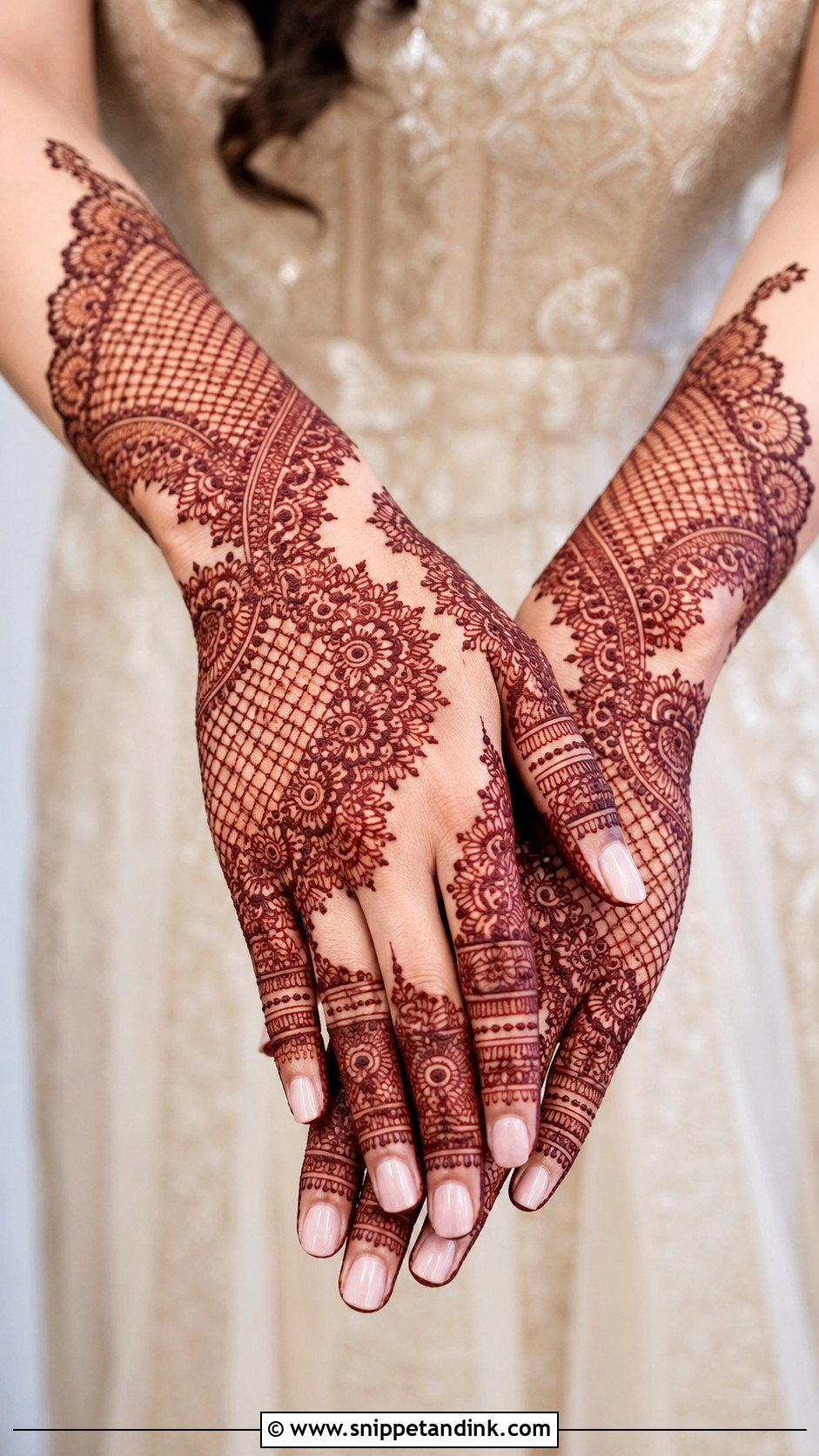
Lace henna uses scalloped borders, netted panels, fine dots and floral edges to imitate a lace glove on the back hand, either full wrist to fingers or as a half hand with a bracelet finish. It’s detail without bold traditional motifs. The line work must be thin, neat and evenly spaced, and that’s a matter of paste consistency as much as skill. Rings sit nicely inside the scallops.
33. Western Henna Mehndi Design
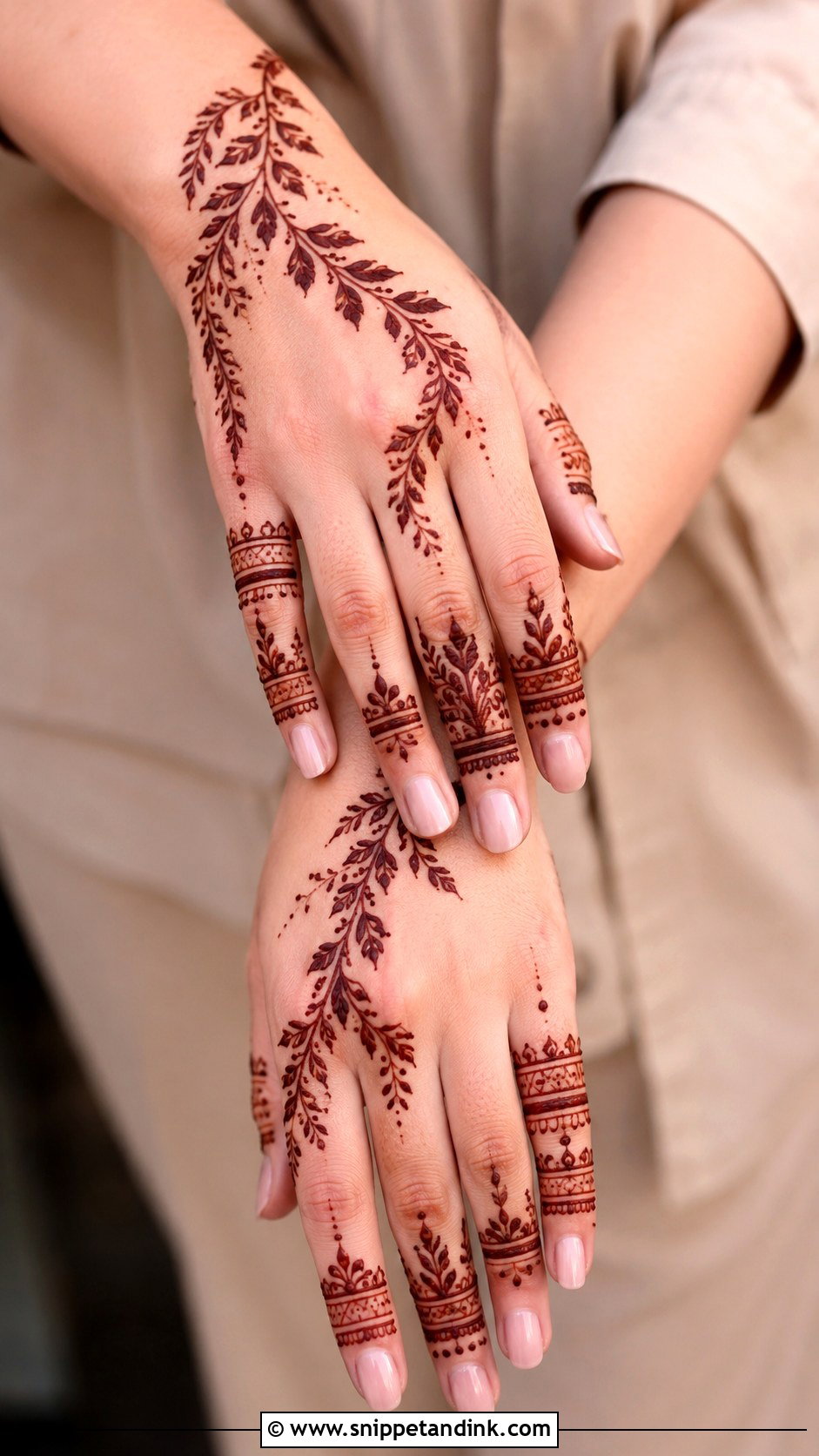
What people call western henna is a clean fusion: leafy vines, minimal florals, moon curves, geometric bands and open fingers, with no dense traditional fill. I usually place it on the back hand so it reads as hand art. It’s a gentle first experience for someone new to mehndi, and it fits multicultural weddings and relaxed functions where full ceremonial work would feel out of place.
34. Glitter Mehndi Design
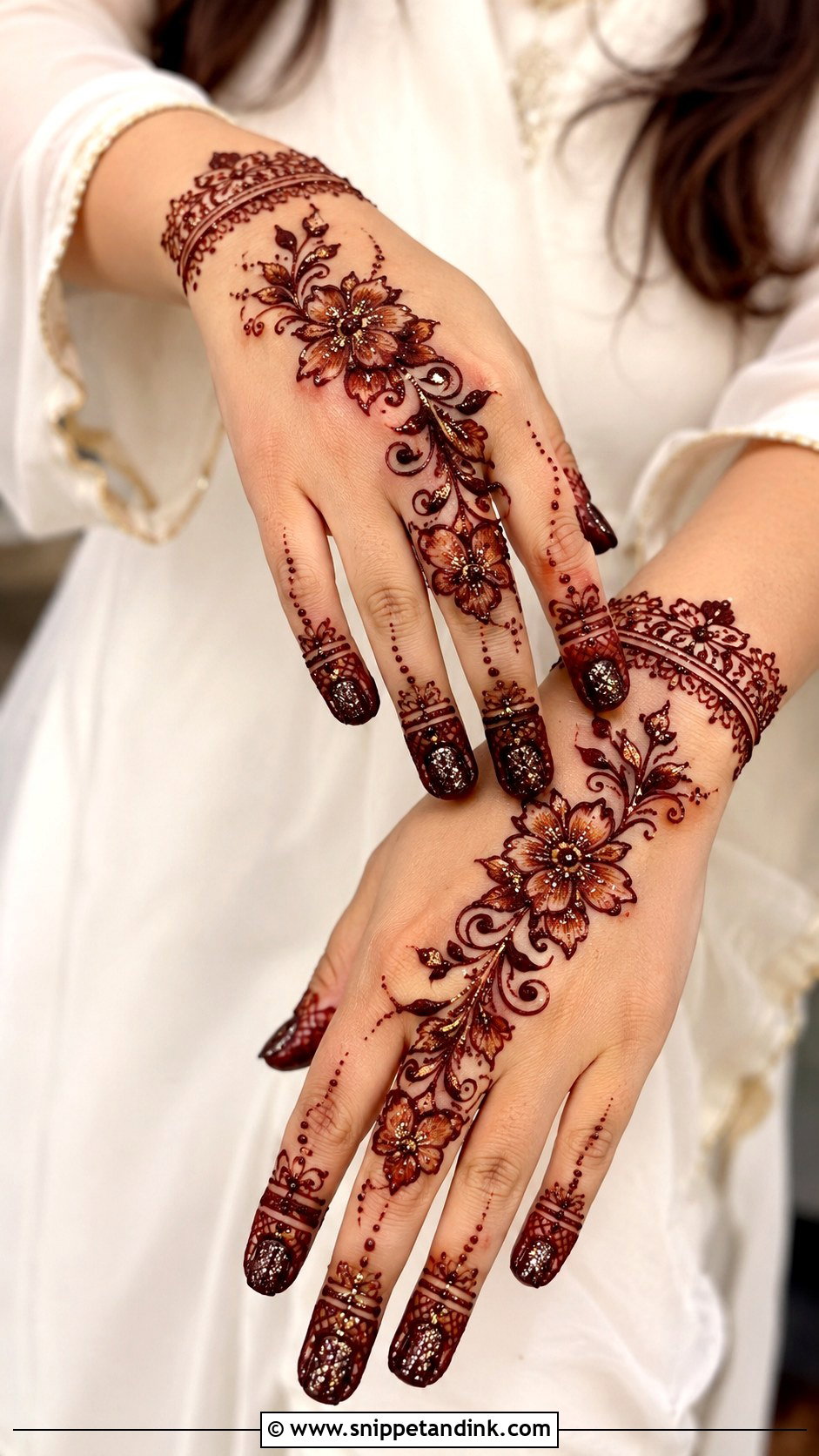
Glitter is styling, not staining. I draw a normal floral, Arabic or bracelet pattern, then add cosmetic-grade glitter to a few petals, borders or the wrist band, usually set with a skin-safe adhesive once the henna is off. It suits sangeet nights, stage looks and kids’ parties. Restraint matters; too much glitter hides the actual henna. Pick one or two colors from your outfit and stop there.
35. White Mehndi Design
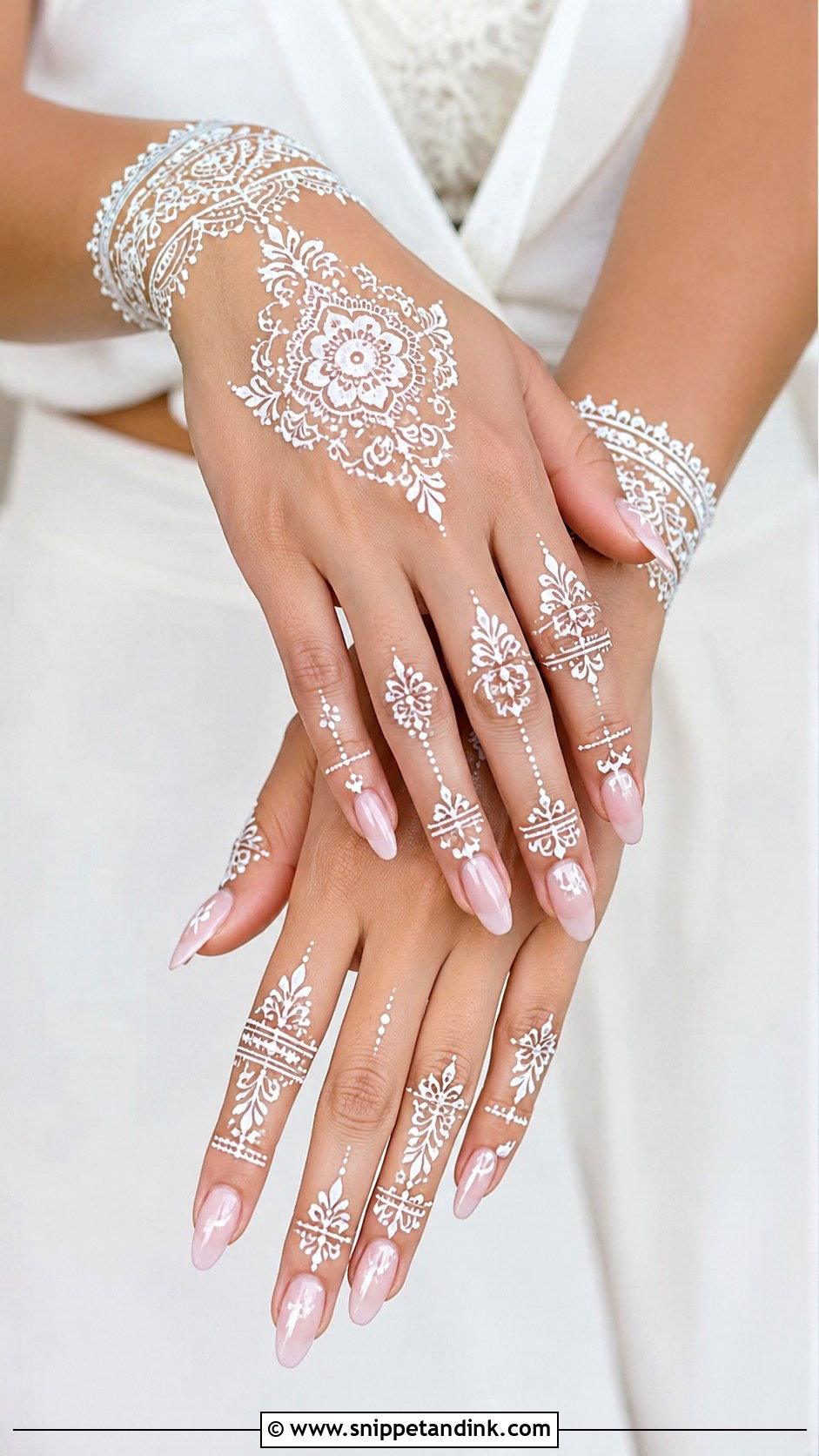
White mehndi isn’t henna at all. It’s a body paint or adhesive-based product that sits on top of the skin and leaves no stain, so it lasts a day or two at most and rubs off with friction. Lace patterns, florals, cuffs and finger bands work best because they read clearly in white. It’s striking on deeper skin tones and with pastels. Do a small patch test the day before if you have sensitive skin.
The First 48 Hours After the Paste Comes Off
Natural henna always comes off bright orange. That’s normal, and it isn’t the final color. The stain oxidizes and deepens over the next day or two, peaking at around the 48 hour mark, which is exactly why brides should never book mehndi the night before the ceremony.
What I tell every client as she leaves
- Leave the dried paste on as long as you can manage. Overnight, with the hands wrapped loosely in tissue or cotton, gives the darkest result.
- Scrape the paste off with a blunt edge or rub it away with your fingers. Don’t wash it off.
- Keep water away for the first twelve hours or so, and longer if you can. Chlorinated pool water and harsh soap fade it fastest.
- Warmth helps the stain develop, so stay somewhere comfortable rather than cold. A dab of mustard or coconut oil before showering protects it.
When the color comes out paler than expected
A pale stain usually comes down to paste removed too early, lotion on the skin, early washing, or simply thinner skin on the back of the hand. It can’t be fixed by layering more paste on the same day. What does work is planning: next time, apply earlier, keep the paste on longer and stay warm. And if a cone promises a jet-black stain within an hour, don’t use it. Natural henna never does that, and those products can carry chemical dyes that burn or scar.
Plan the Design Around the Stain, Not the Photo
These 35 Trending Mehndi Designs range from a ten-minute finger pattern to a full day of bridal work, and the best one for you isn’t necessarily the heaviest. Think about how much time you can sit, how dark your skin tends to stain, what the outfit sleeves will cover and how much you’ll need your hands that week. Bring a reference photo, then let your artist adjust the coverage and spacing to your actual hands.
You'll Like These Ideas:


Leave a Reply