
For me, Chaand Raat is the busiest night of the year: new outfits hanging up, family arriving, and a queue of hands waiting for mehndi before the moon is even confirmed. The design has to suit the night. Some people want a quick back-hand trail they can sit for in minutes; others want a full Indian hand with dense festive detail. Crescent moons, stars, Arabic florals, mandalas, bracelet bands, jaali and minimal fingers are what I’m asked for most, partly because they suit every age at the table. Below are 35 complete Eid looks, from simple to dressy, with my notes on time, placement and how each one stains.
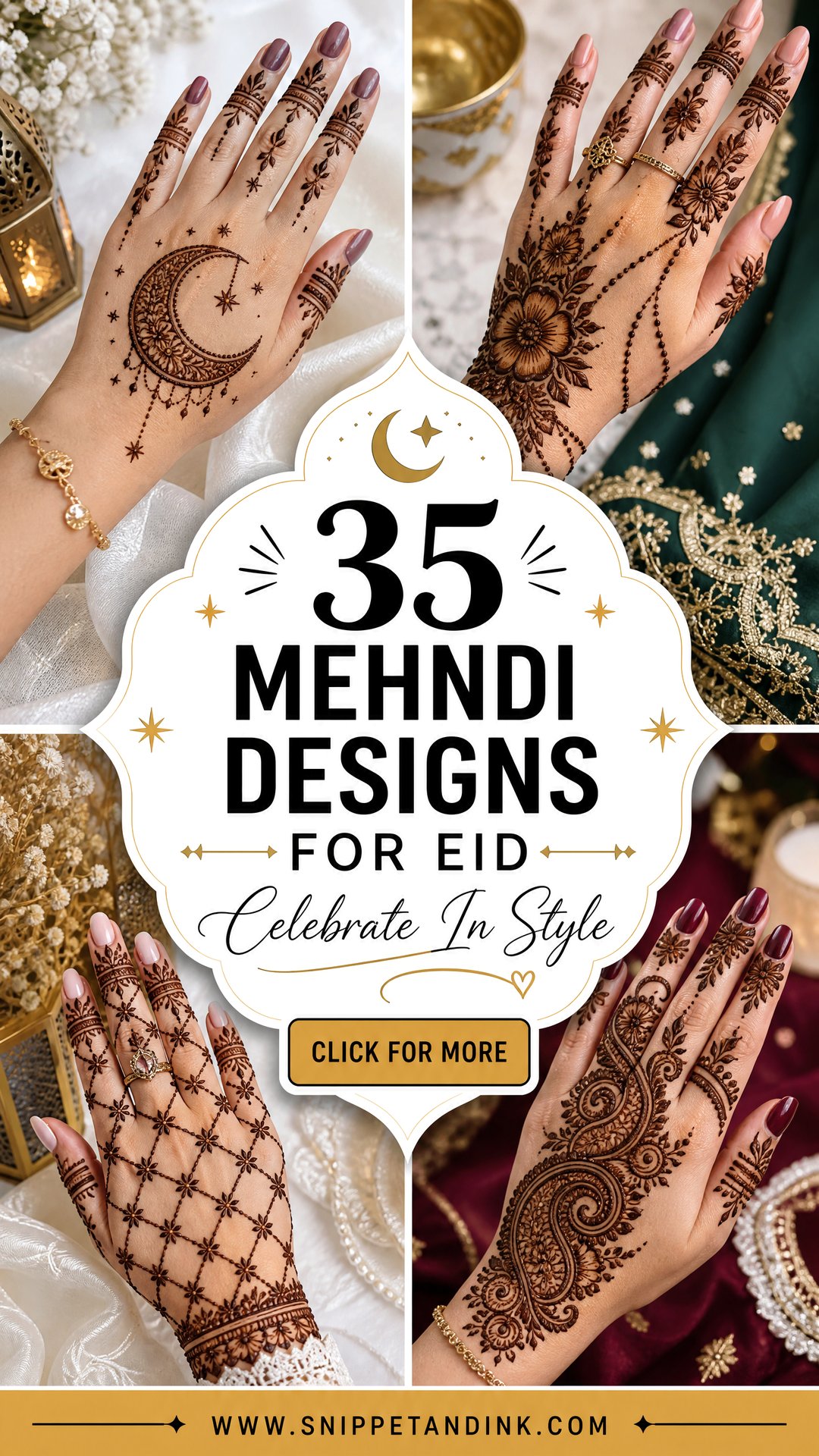
Chaand Raat Depends on the Moon, So Plan Mehndi Around It
For Eid al-Fitr, nobody knows for certain which night is Chaand Raat until the moon is sighted, and that uncertainty causes most of the last-minute mehndi stress I see.
- Book the earlier of the two possible nights if you can. A stain applied a day early simply has more time to darken before Eid.
- Sit for it after iftar. You’ll be far more patient with food in you, and the paste can then stay on overnight.
- Save the heaviest designs for Eid al-Adha if you like. Its date is known well in advance, so a full hand can be booked days ahead without guessing.
- If the moon is announced late, choose a quicker design instead of rushing a complicated one. A clean Arabic back hand at eleven at night beats a smudged full hand at two in the morning.
When the color actually arrives
Natural henna comes off orange and deepens over the following day or two. Mehndi put on the evening before Eid will still be bright orange-red when you scrape it off in the morning, then darken steadily through the day. If you want the deepest color for Eid morning itself, have it applied two nights before.
1. Simple Eid Mehndi Design
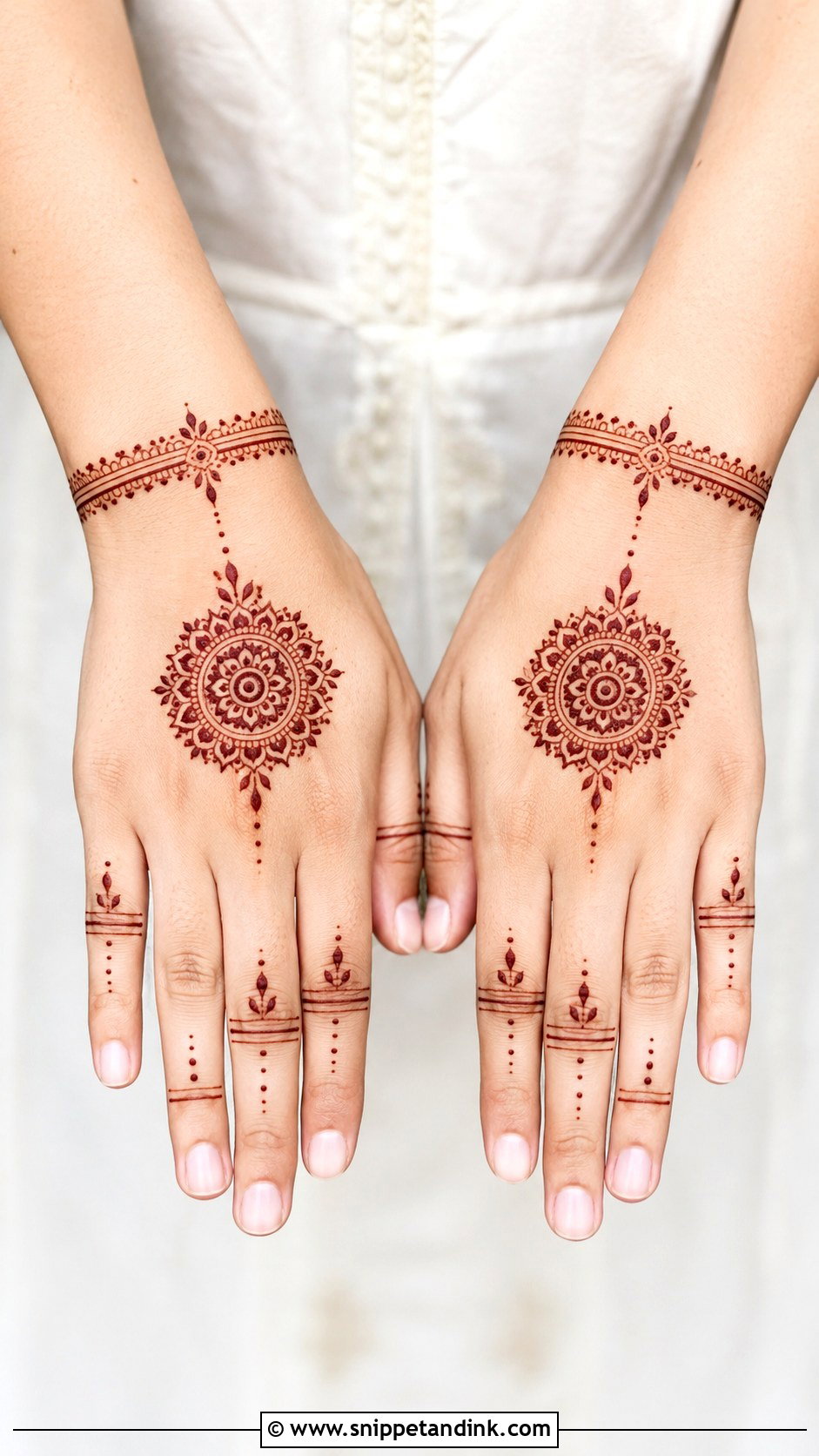
When the house is busy, this is the design I reach for: a neat palm mandala, light finger detail and a small wrist border. Students, mothers juggling the cooking and anyone doing henna at home on Chaand Raat can sit for it without losing the evening. Open isn’t the same as empty, though. Dots, tiny leaves and thin curved lines need to link the palm to the fingers, with one main motif as the focus. The reddish-brown stain sits well with any Eid outfit.
2. Arabic Eid Mehndi Design
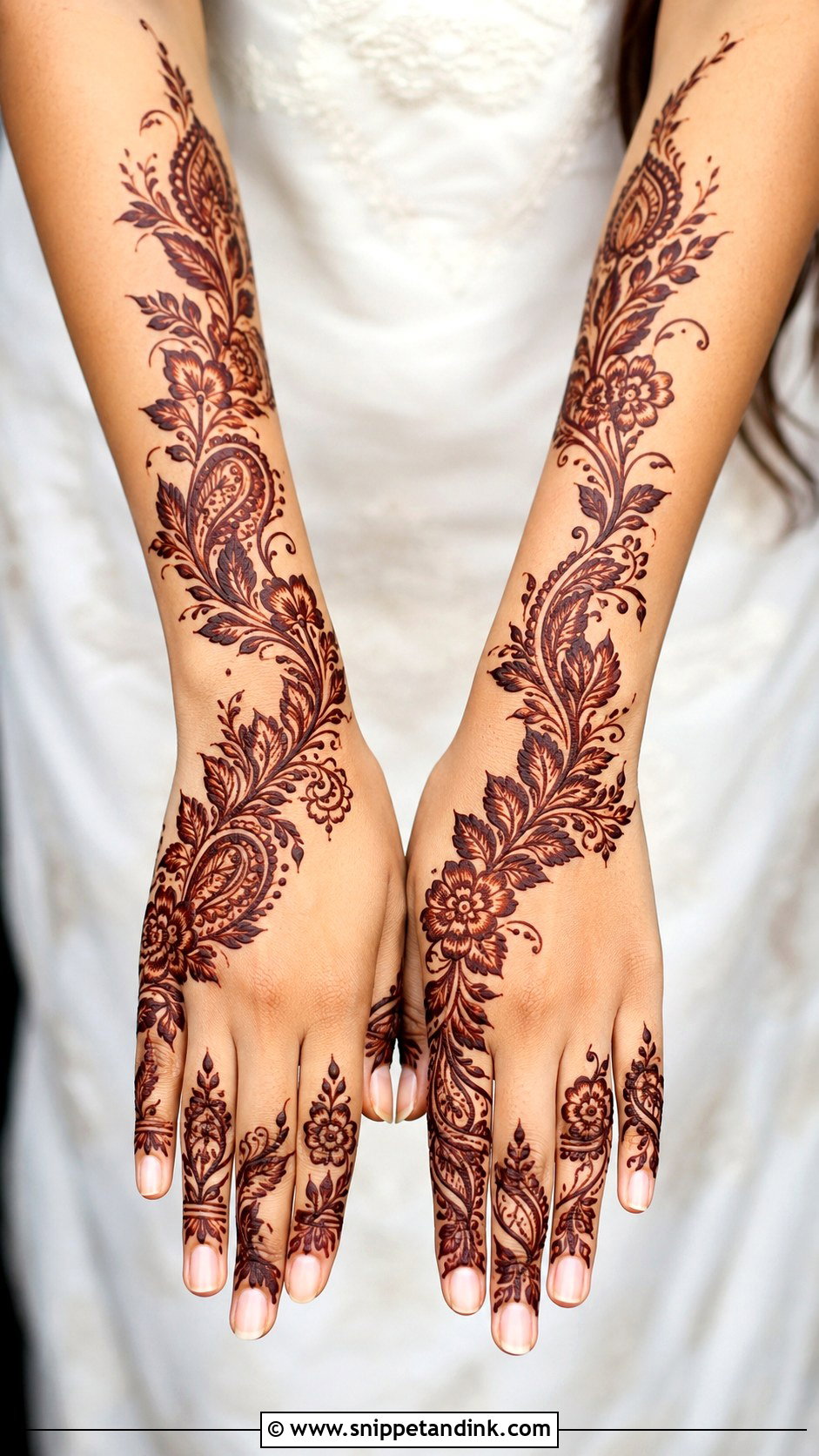
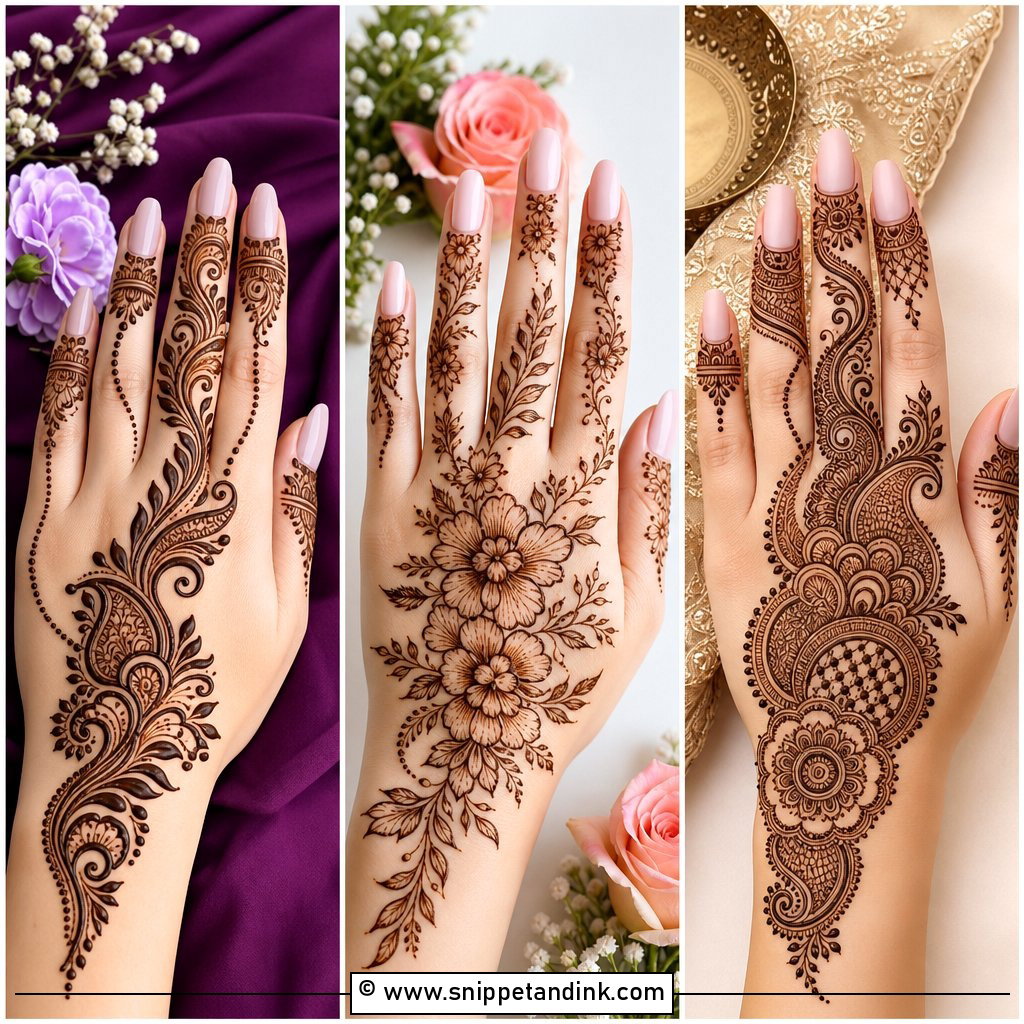
Strong impact, light coverage. The trail runs diagonally from the wrist to the index or middle finger, with bold flowers and leaves surrounded by clean skin, so it’s quick to apply and readable from across a room. For Eid I steer people toward large floral clusters, leafy vines, soft paisleys and dotted fillers rather than tiny detail, because fine work done in a hurry tends to smudge as people get up and move around. It suits Eid al-Fitr and Eid al-Adha alike, and the open spacing lets the stain show on every skin tone.
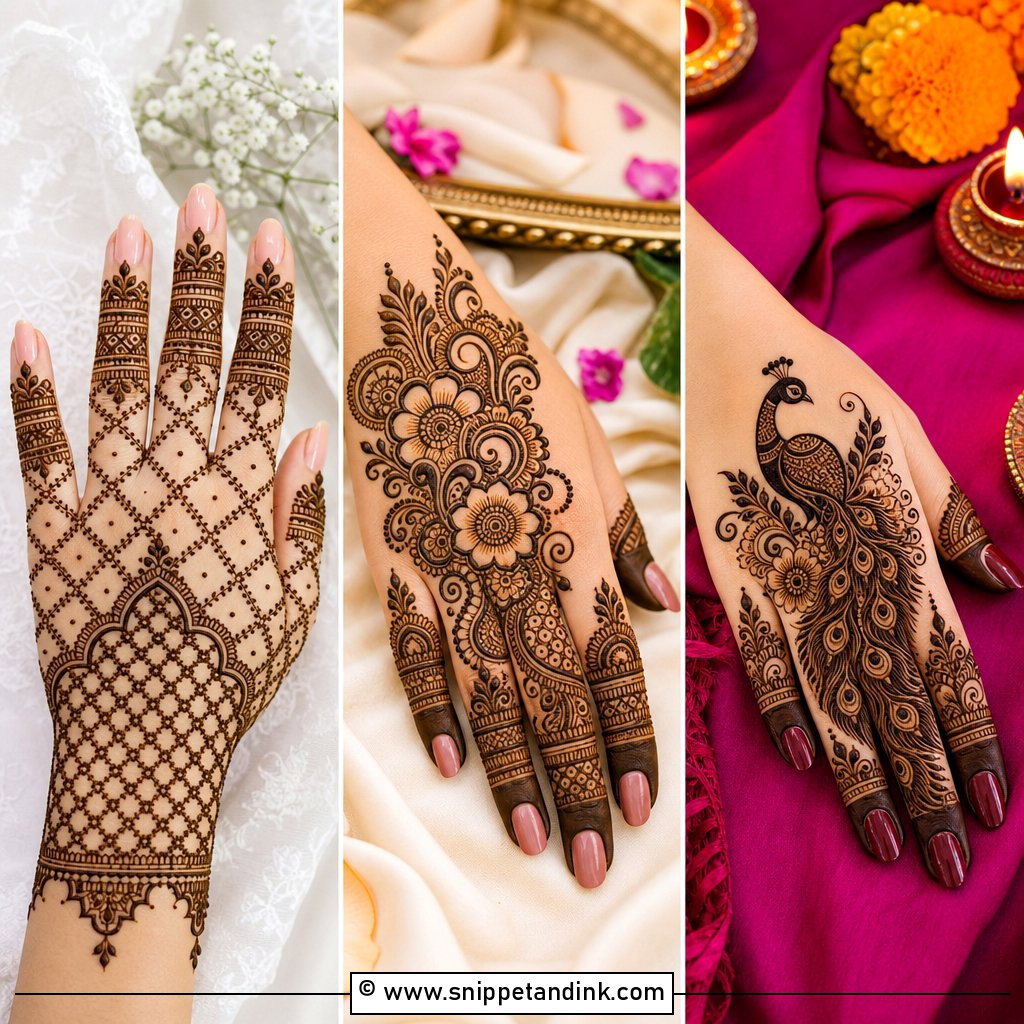
3. Back Hand Eid Mehndi Design
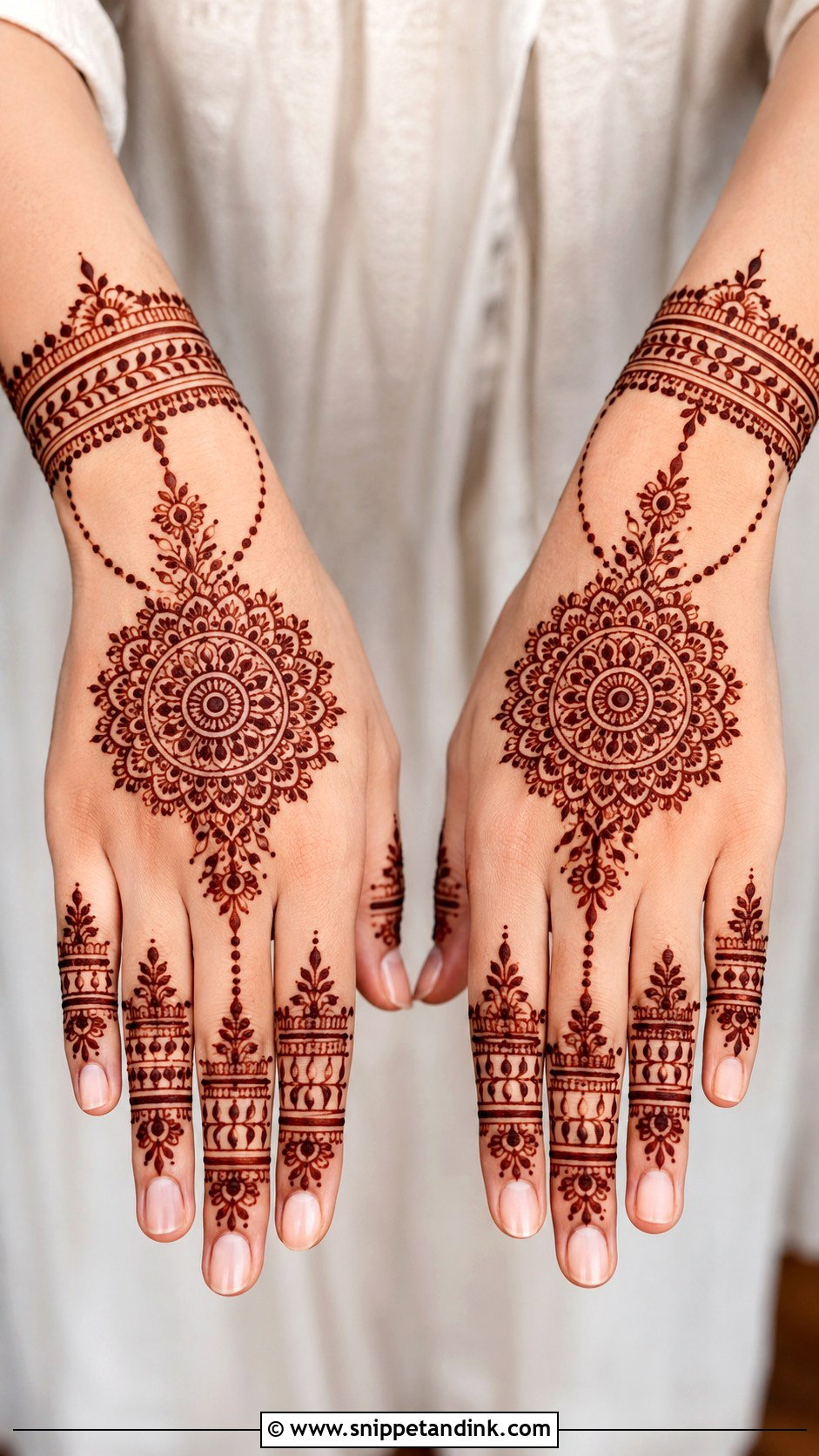
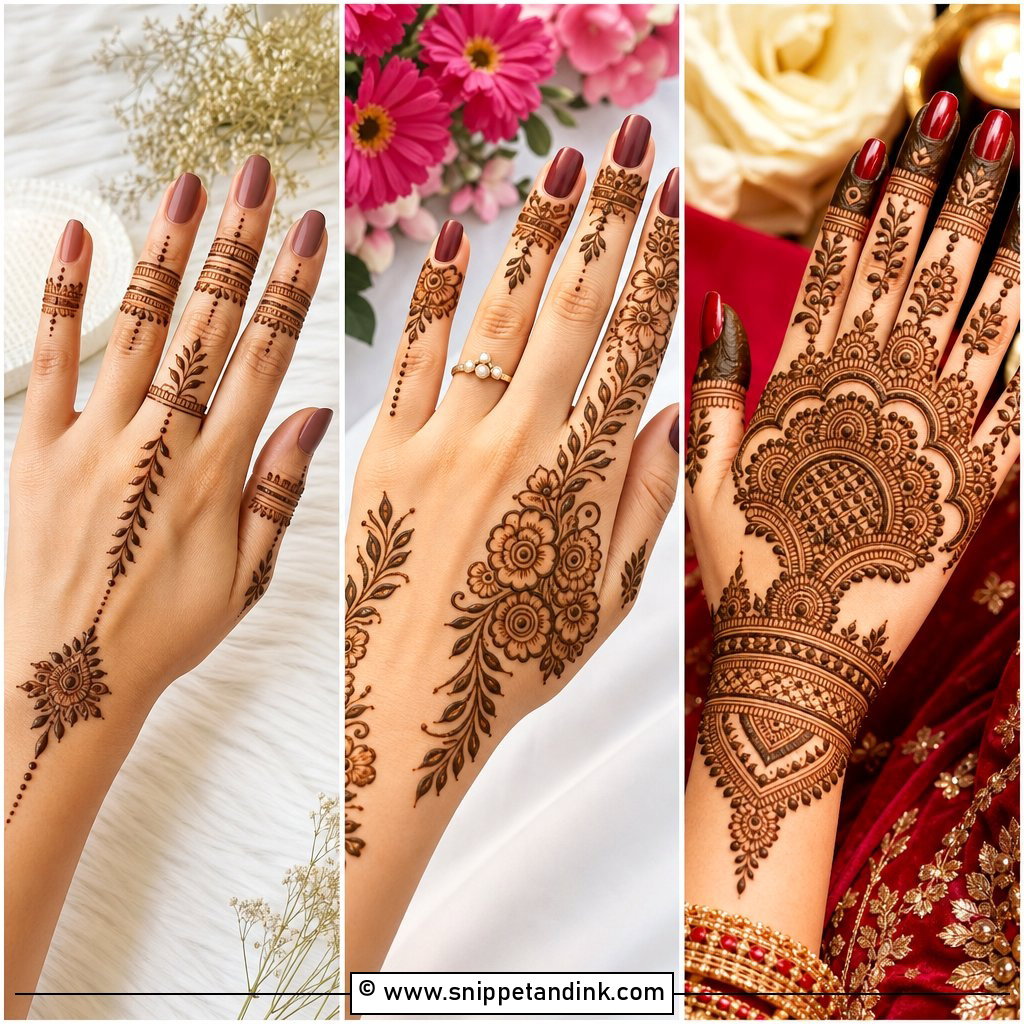
Back hand Eid mehndi is the side people actually see while you’re greeting relatives, holding a clutch or posing for family photos. The usual build is a wrist bracelet, a central floral or mandala pattern and decorated fingers. It’s lighter than palm coverage, so it stays comfortable through a long day, and ring-style finger bands give it a jewelry effect. If your sleeves are embroidered at the cuff, I keep the bracelet narrow so the design and the embroidery don’t overlap.
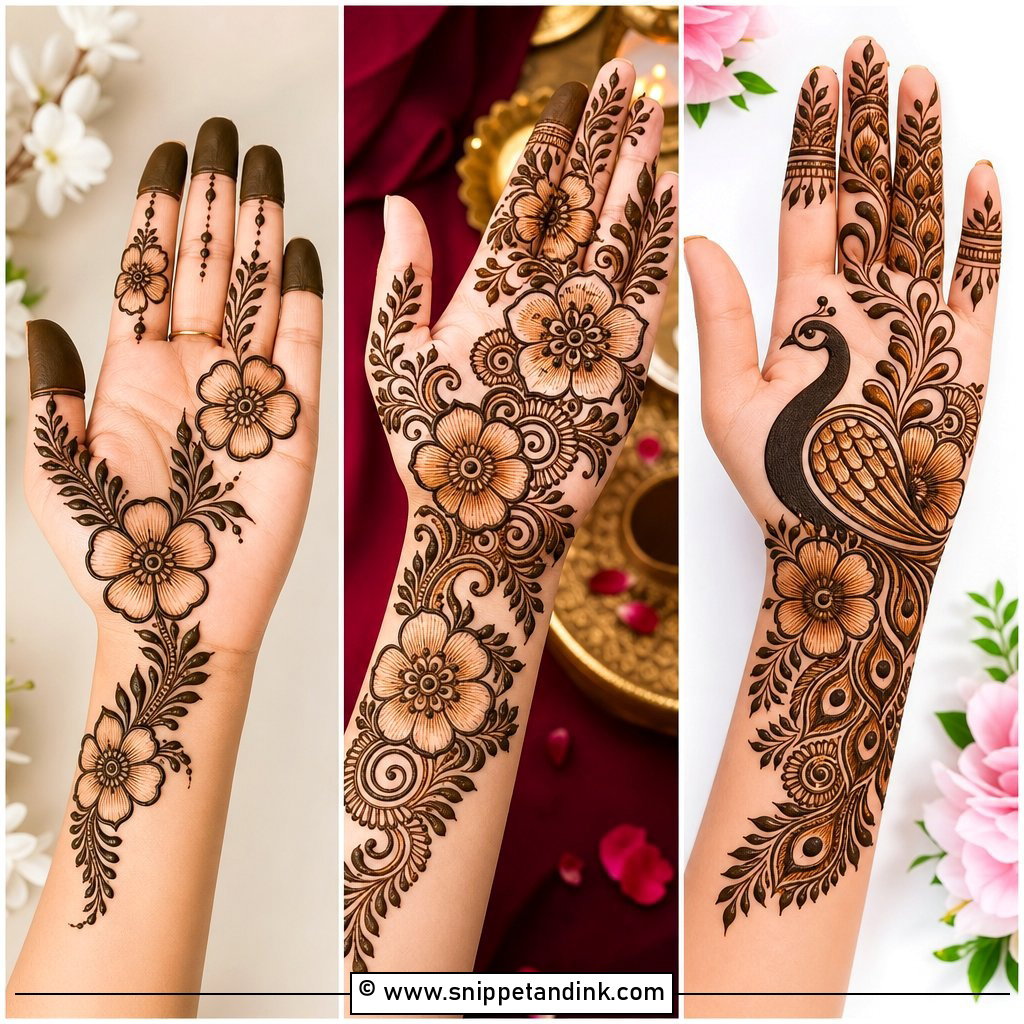
4. Front Hand Eid Mehndi Design
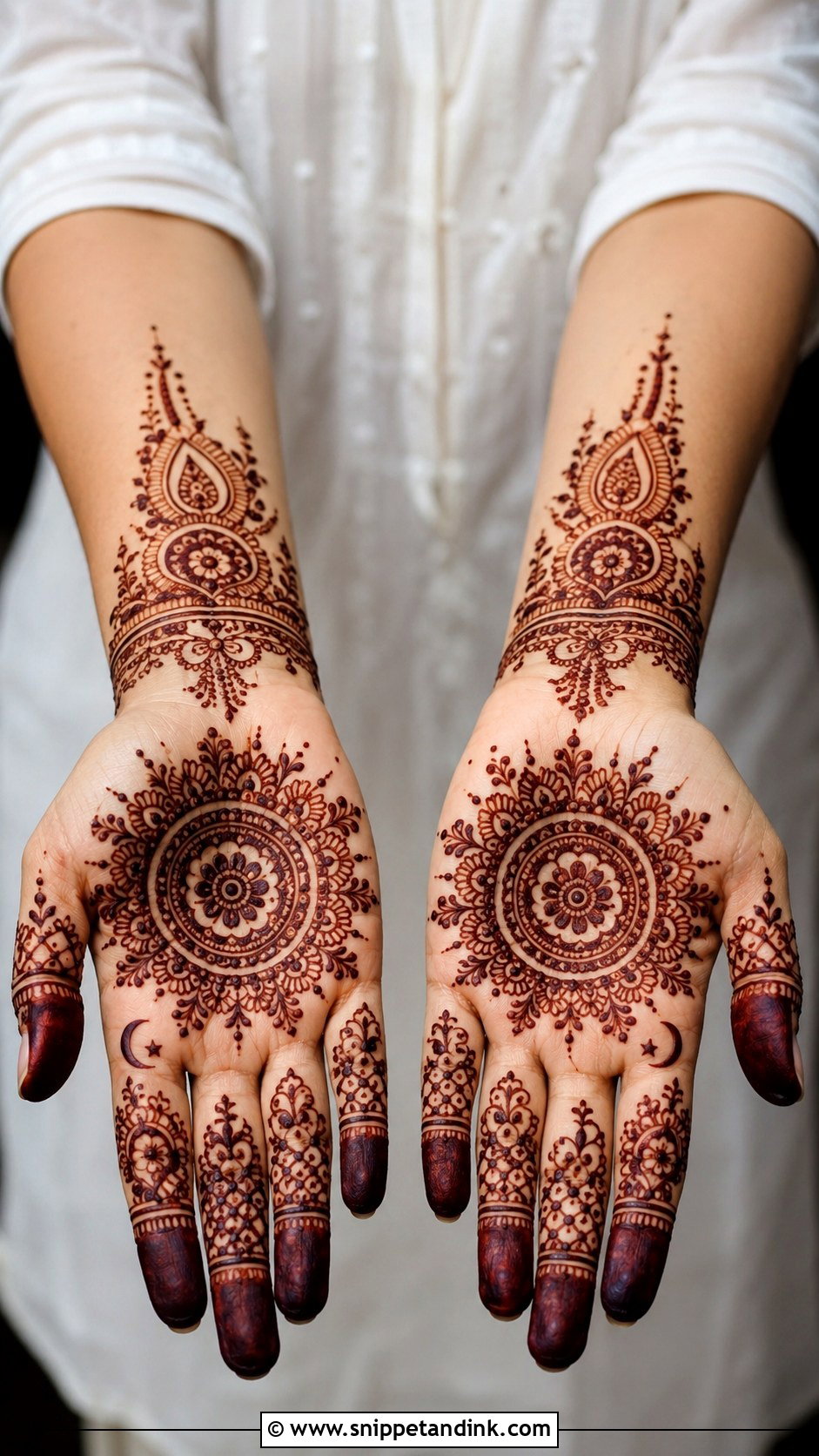
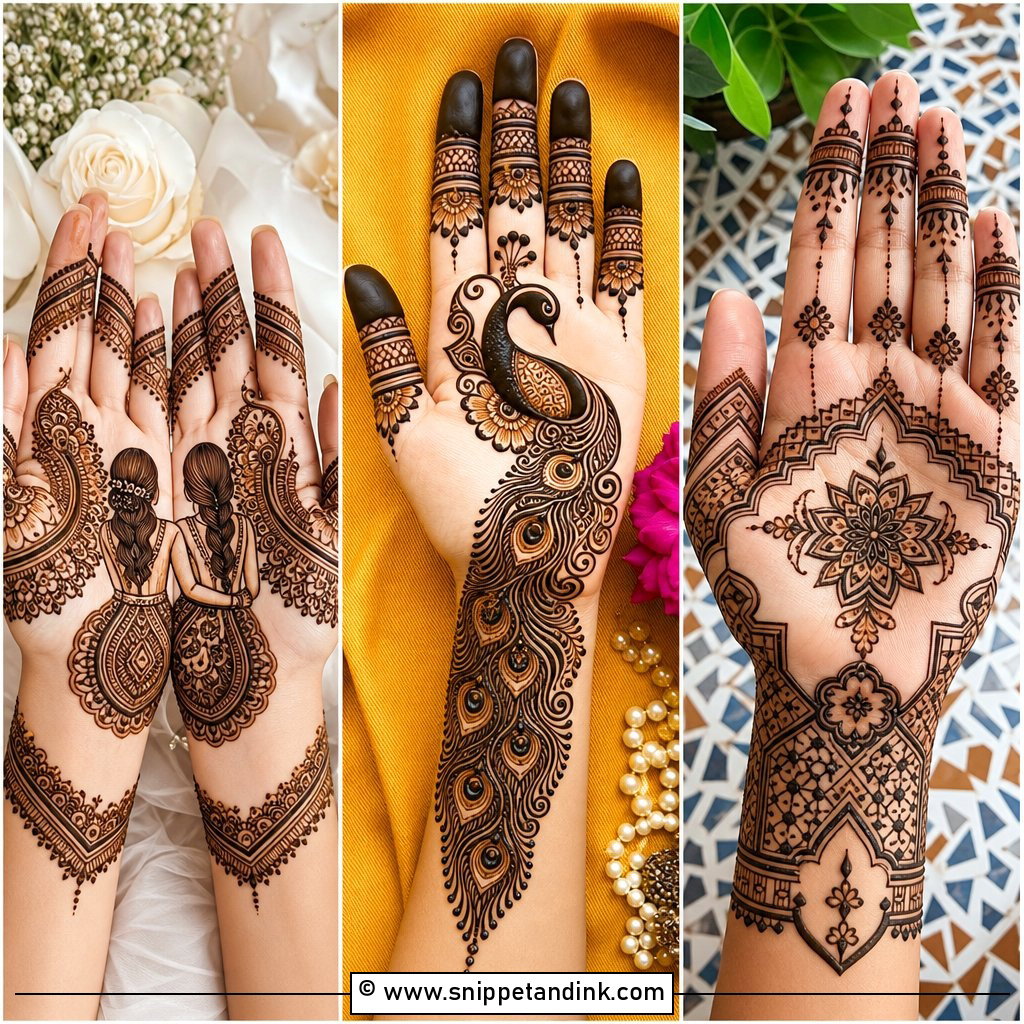
The palm gives the most room and the darkest stain, which is why front-hand Eid designs feel so traditional. A round mandala in the center, paisley borders near the wrist and neat henna caps on the fingertips form the classic layout, and crescent accents, tiny stars or floral vines make it specifically Eid. Each finger should connect back to the palm design, even if the finger details differ. Expect a deep maroon on the palm by the second day.
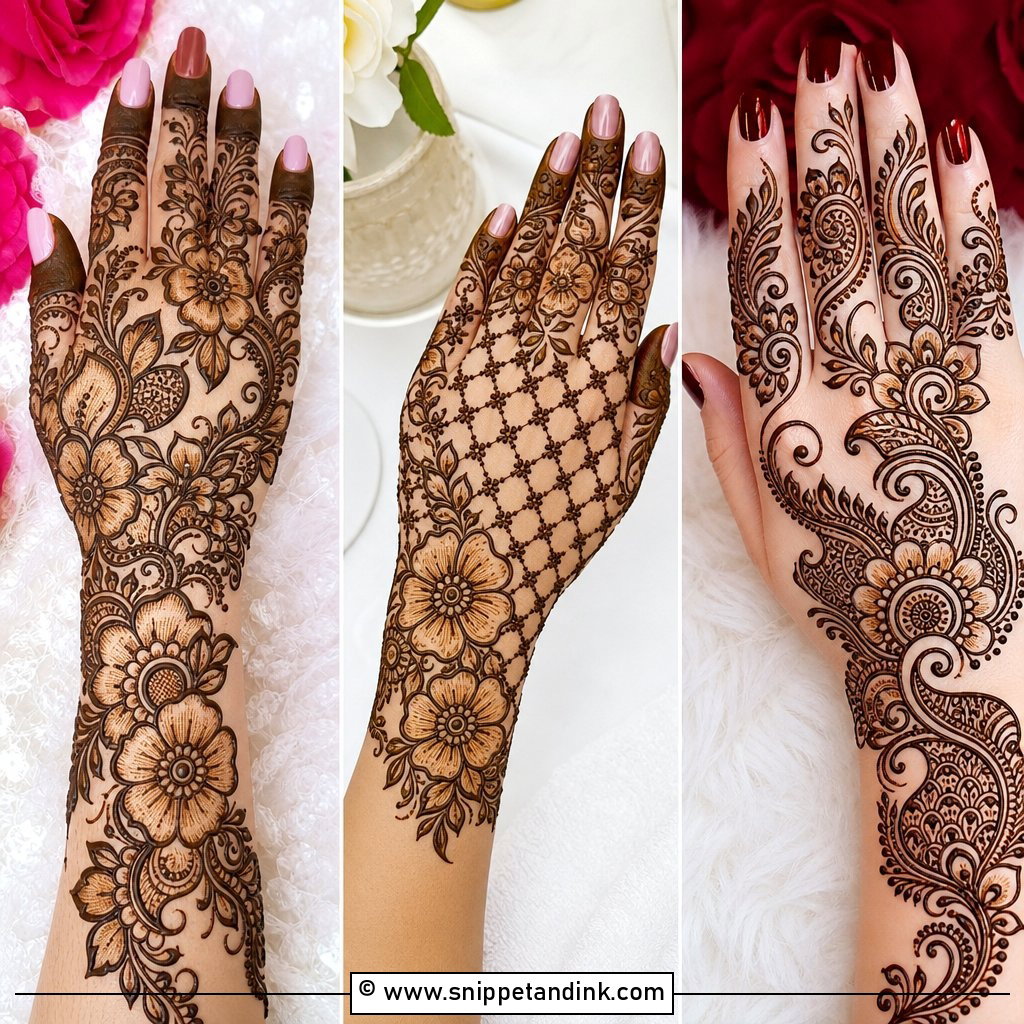
5. Full Hand Eid Mehndi Design
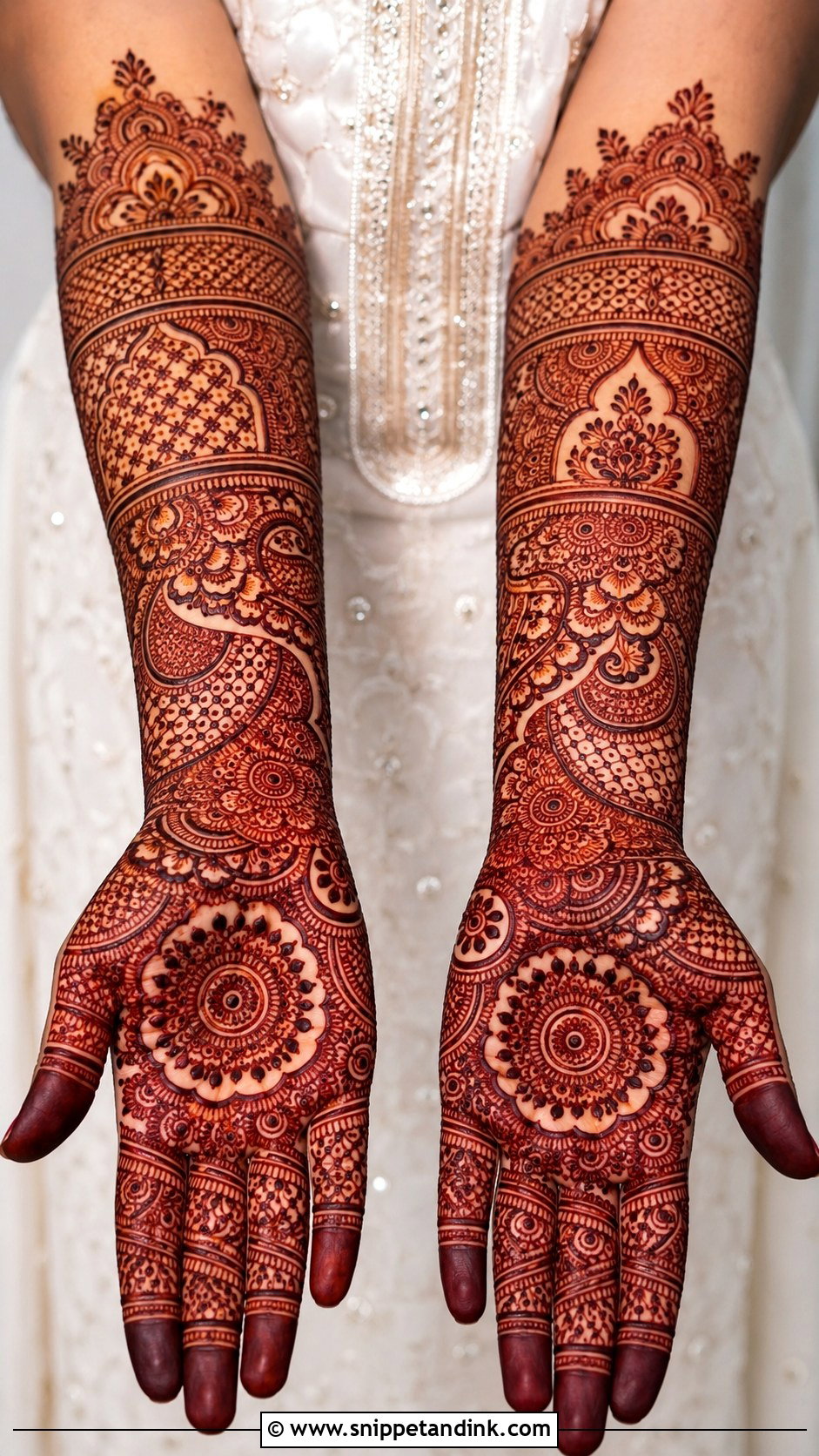
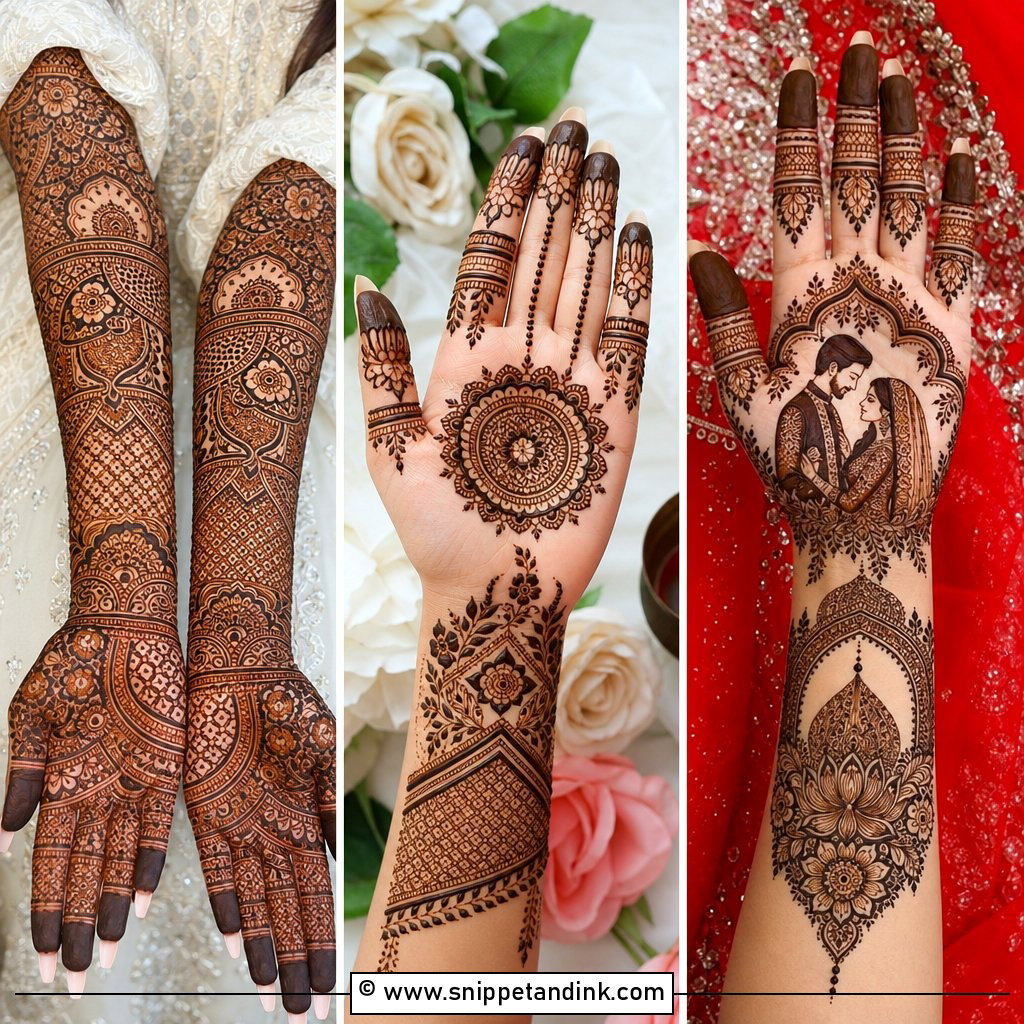
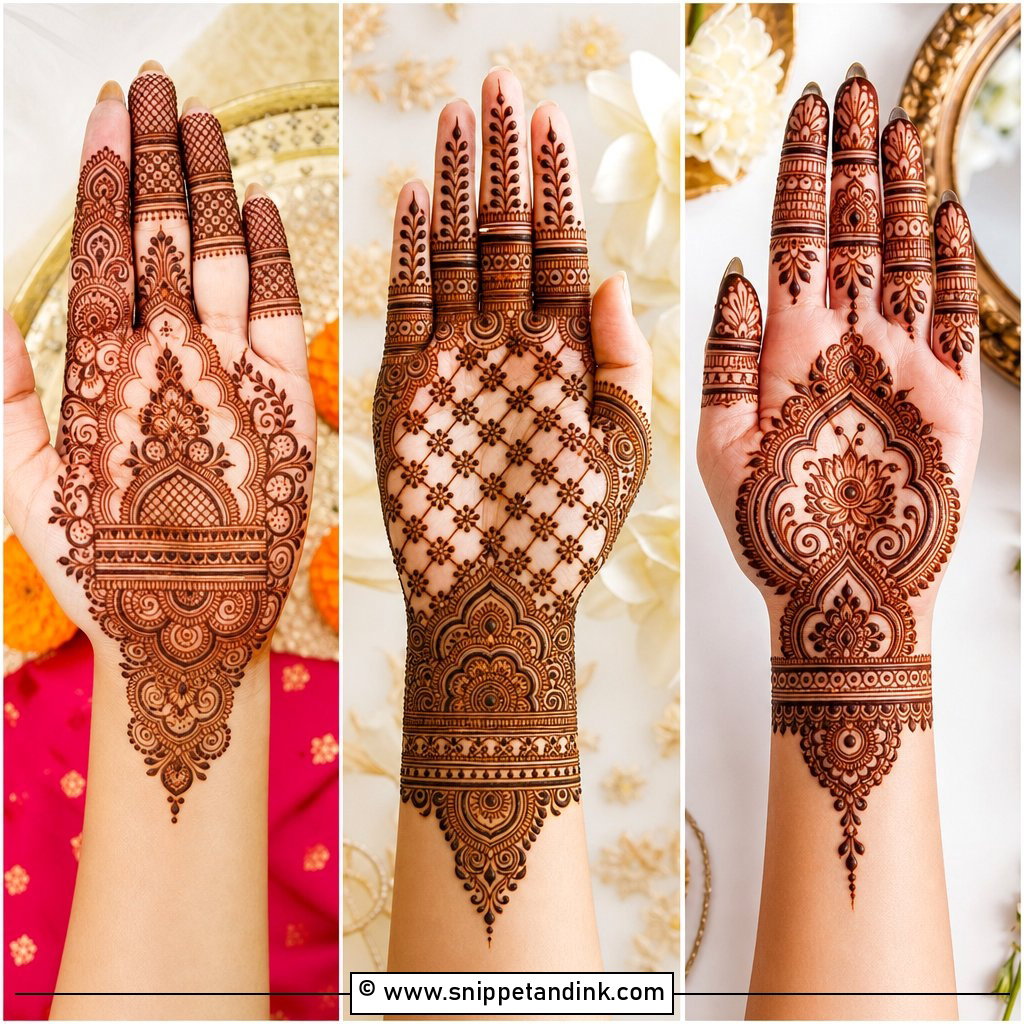
Full coverage, from palm and fingers to wrist and a little forearm, is for an evening when you can genuinely sit still. Indian detail and Arabic flow mix well here: mandalas, paisleys, florals, jaali and leafy borders. I organise it around one main shape in the palm and build outward with bands and trails, which keeps a dense hand from looking messy. Book it early on Chaand Raat rather than at midnight, because a full hand needs drying time before you sleep. It pairs naturally with embroidered sleeves and bangles.
6. Crescent Moon Eid Mehndi Design
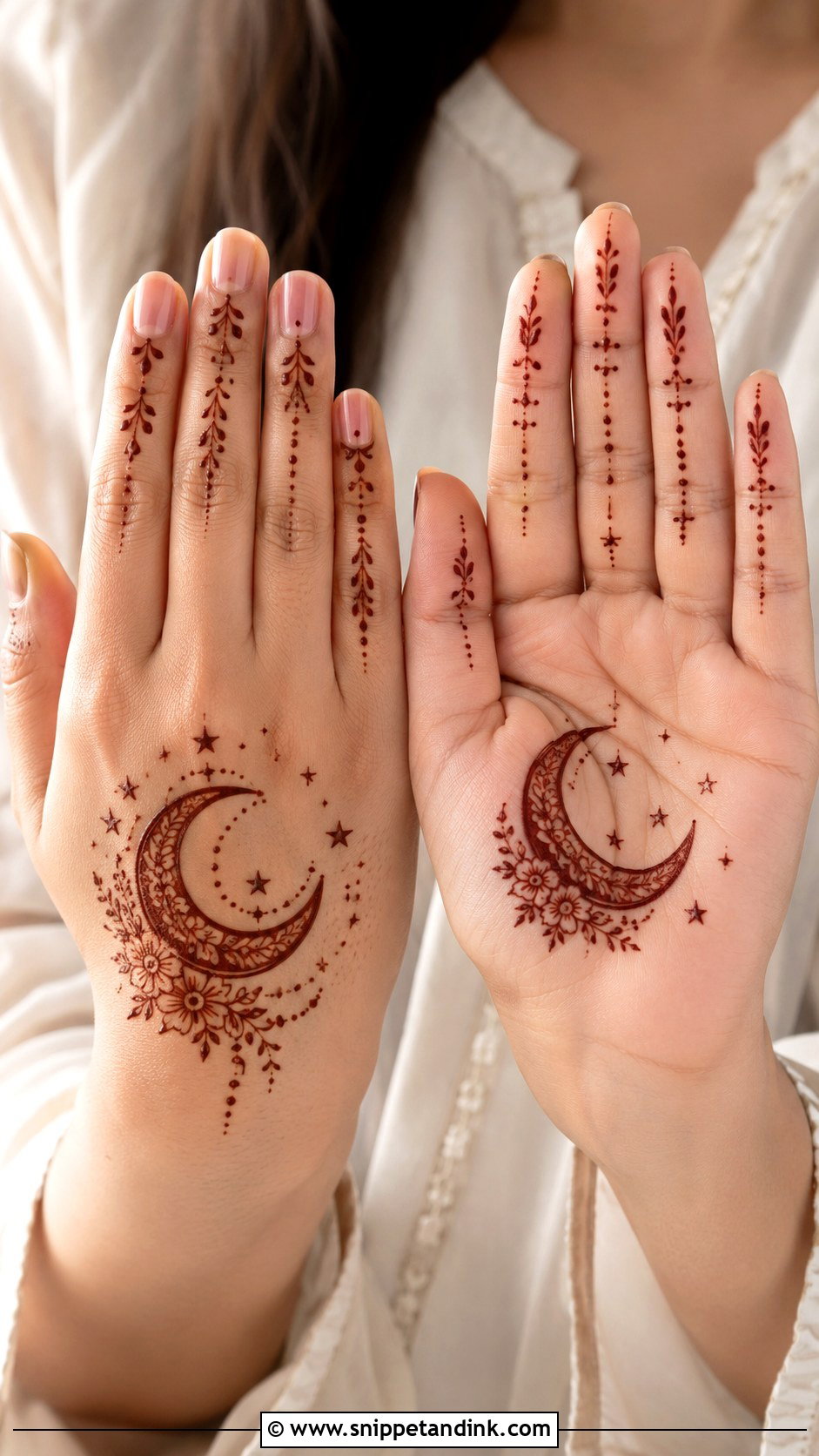
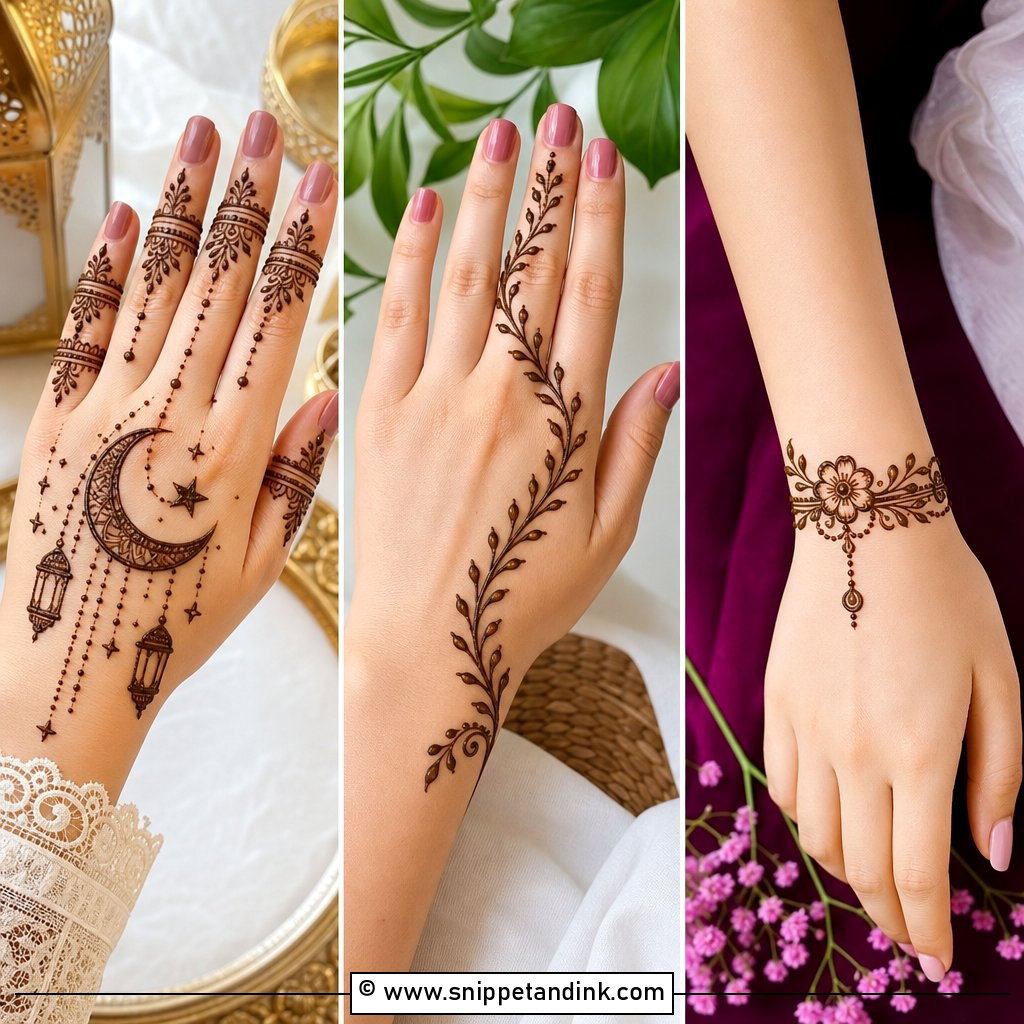
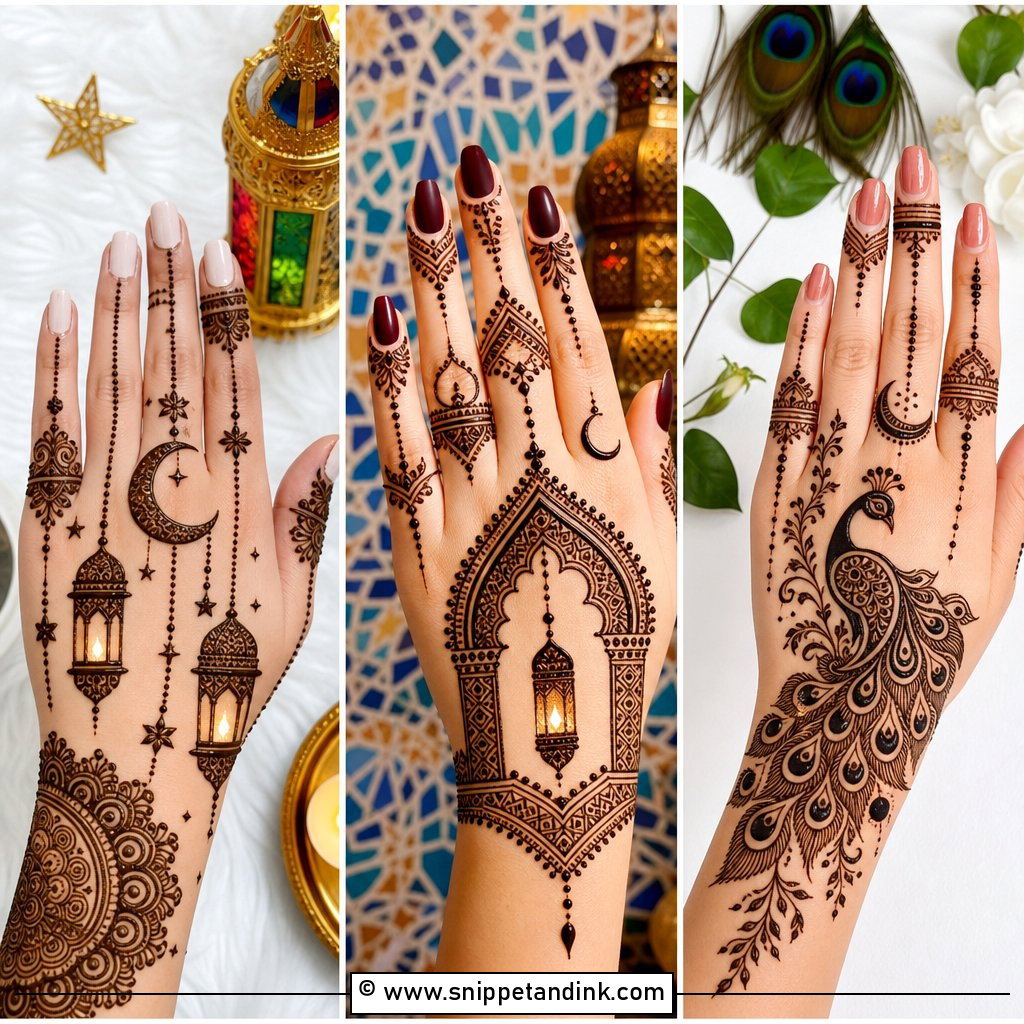
A crescent moon Eid mehndi design says Eid without a word. The crescent sits on the palm or the back of the hand, with tiny stars, dots, florals or fine circular details around it. Kept simple, it’s a bold moon with light finger vines; fuller versions frame the crescent inside a mandala or hang it from a wrist bracelet. I draw the inner curve first and then the outer one, which keeps the points sharp. Blunt tips make a crescent look more like a banana than a moon.
7. Chand Raat Mehndi Design
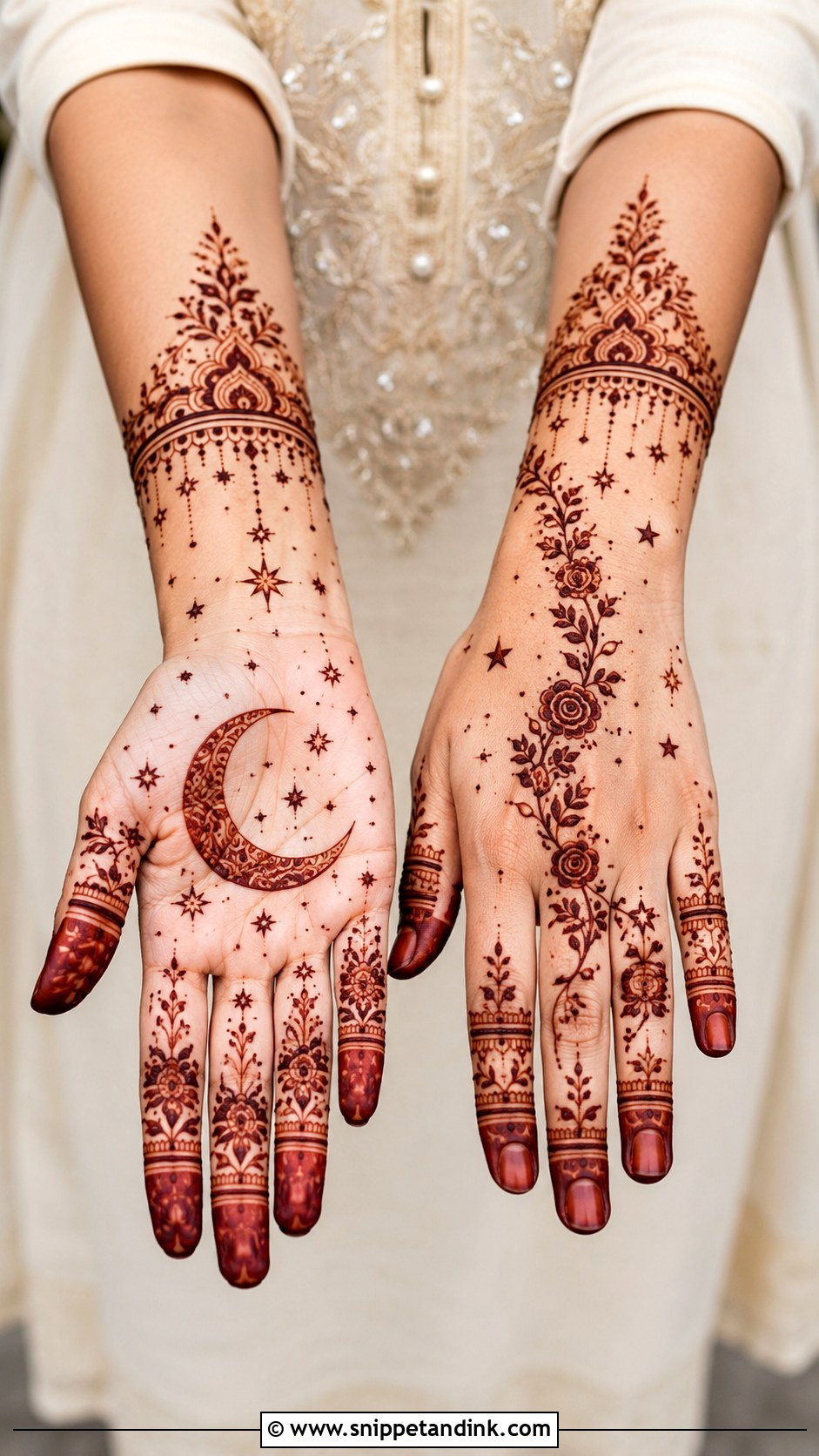
Mehndi on the night before Eid has to be quick and cheerful. One idea I like is a crescent moon on one hand and a floral trail on the other, with matching finger details tying them together. It feels special without bridal-level hours. Keep the lines confident and fill gaps with dots, small stars and leafy branches rather than heavy fill. Applied in the evening and left on overnight, the stain is warm by the time you scrape it off and keeps deepening through Eid day.
8. Eid Mehndi Design For Girls
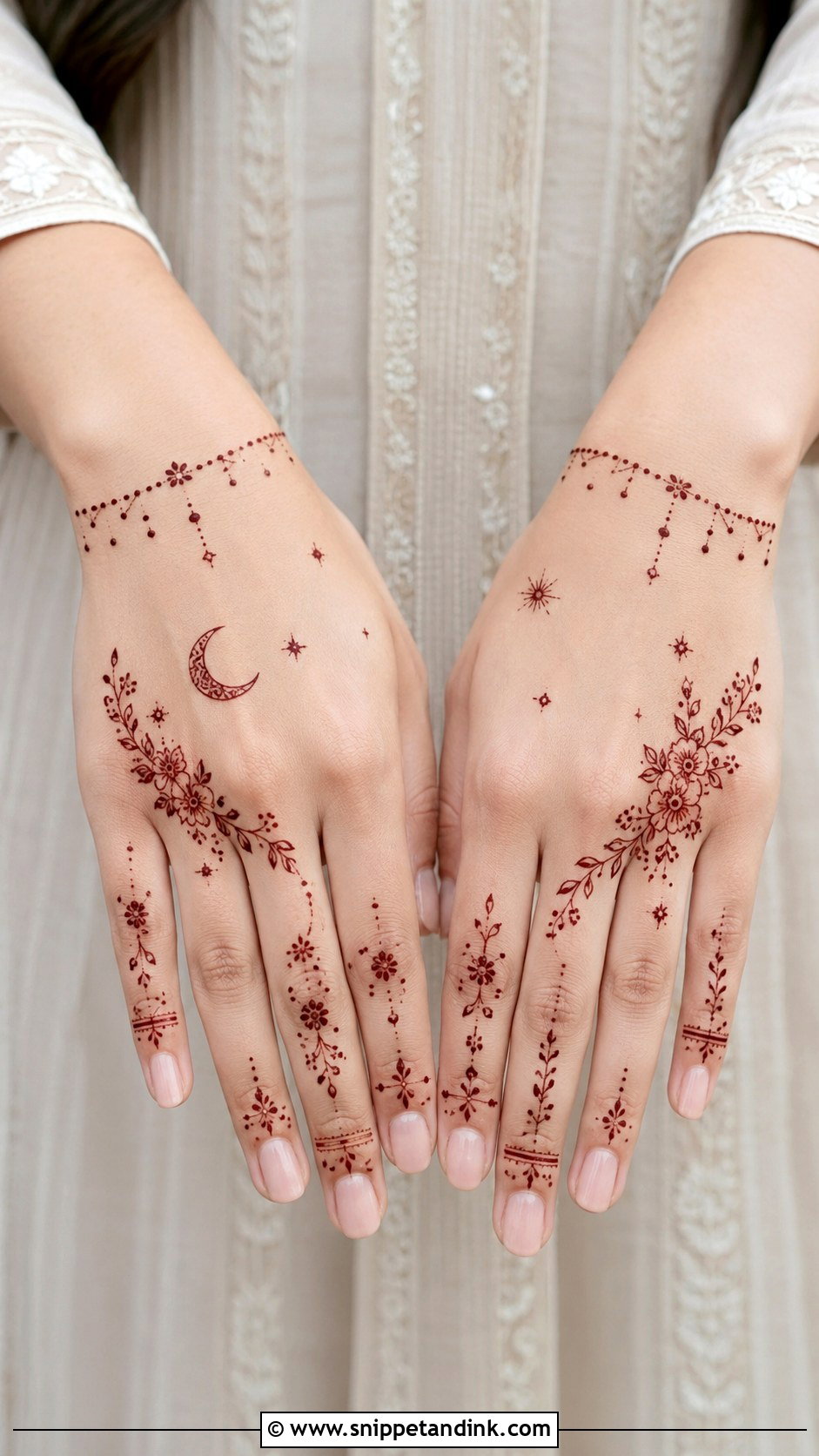
Younger girls need bold shapes with space between the lines, because dense patterns smudge long before they dry. A small flower on the back hand, a tiny crescent near the wrist and simple dotted finger trails make a complete look, and florals, moons, stars and little leaves keep it feeling like Eid. I can do both hands for a school-age girl quickly with this layout, which matters when she’s one of several cousins waiting. The finished stain looks sweet and age-appropriate.
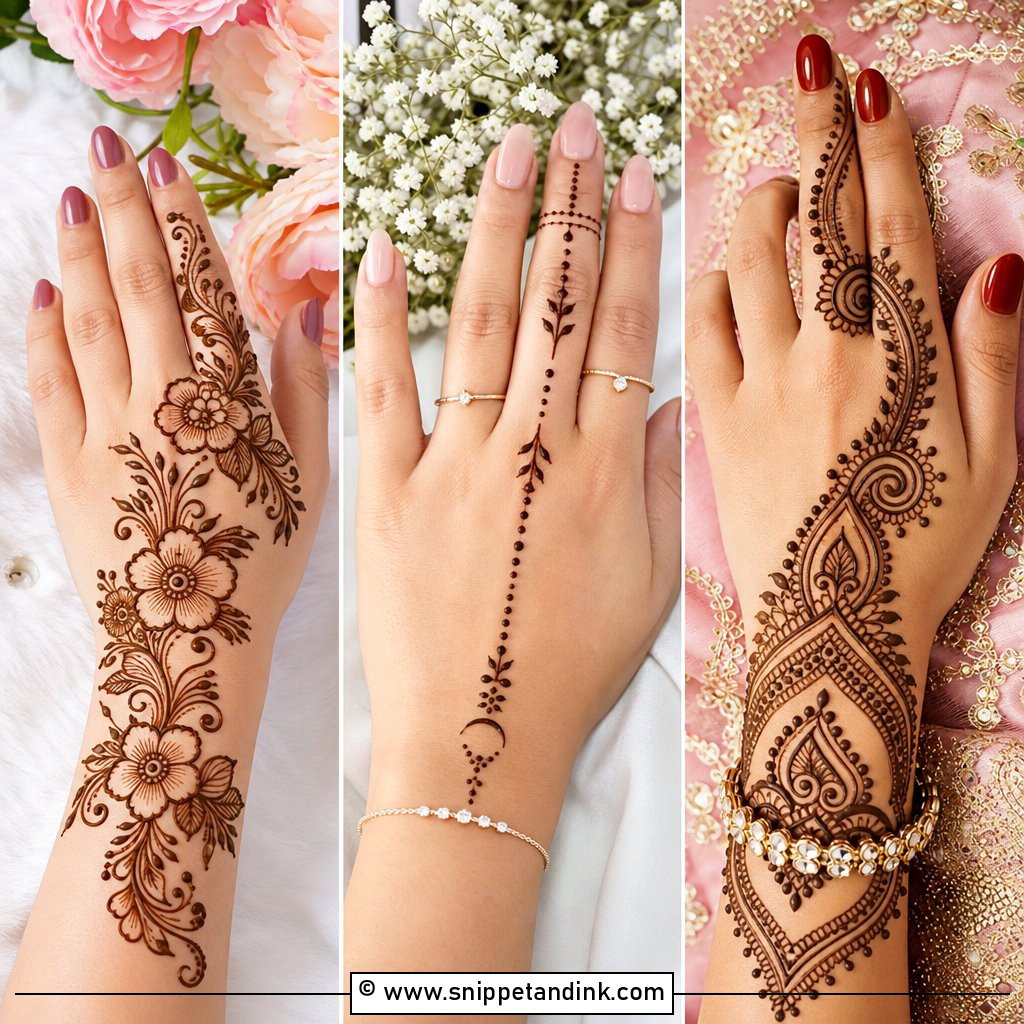
9. Minimal Eid Mehndi Design
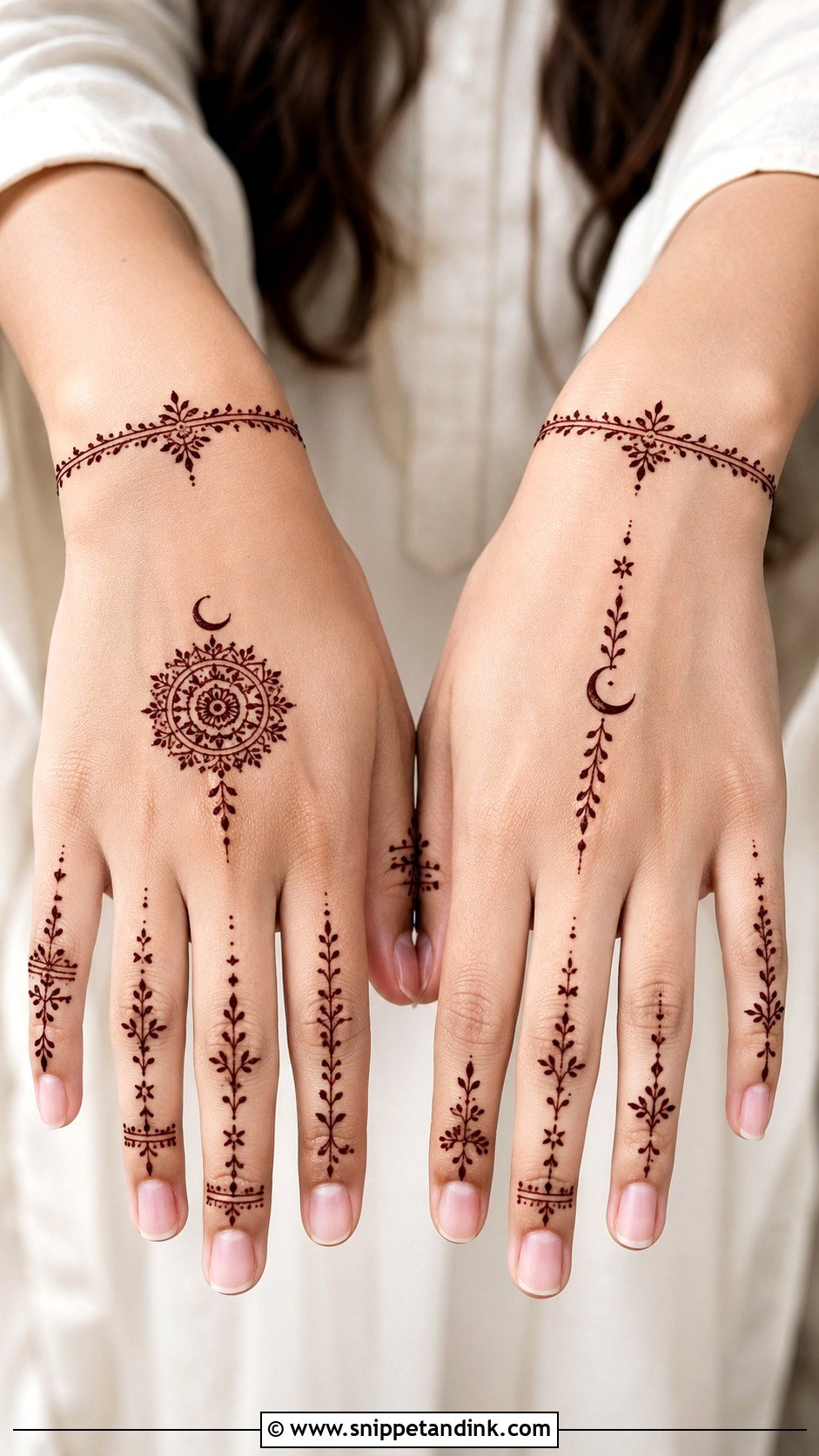
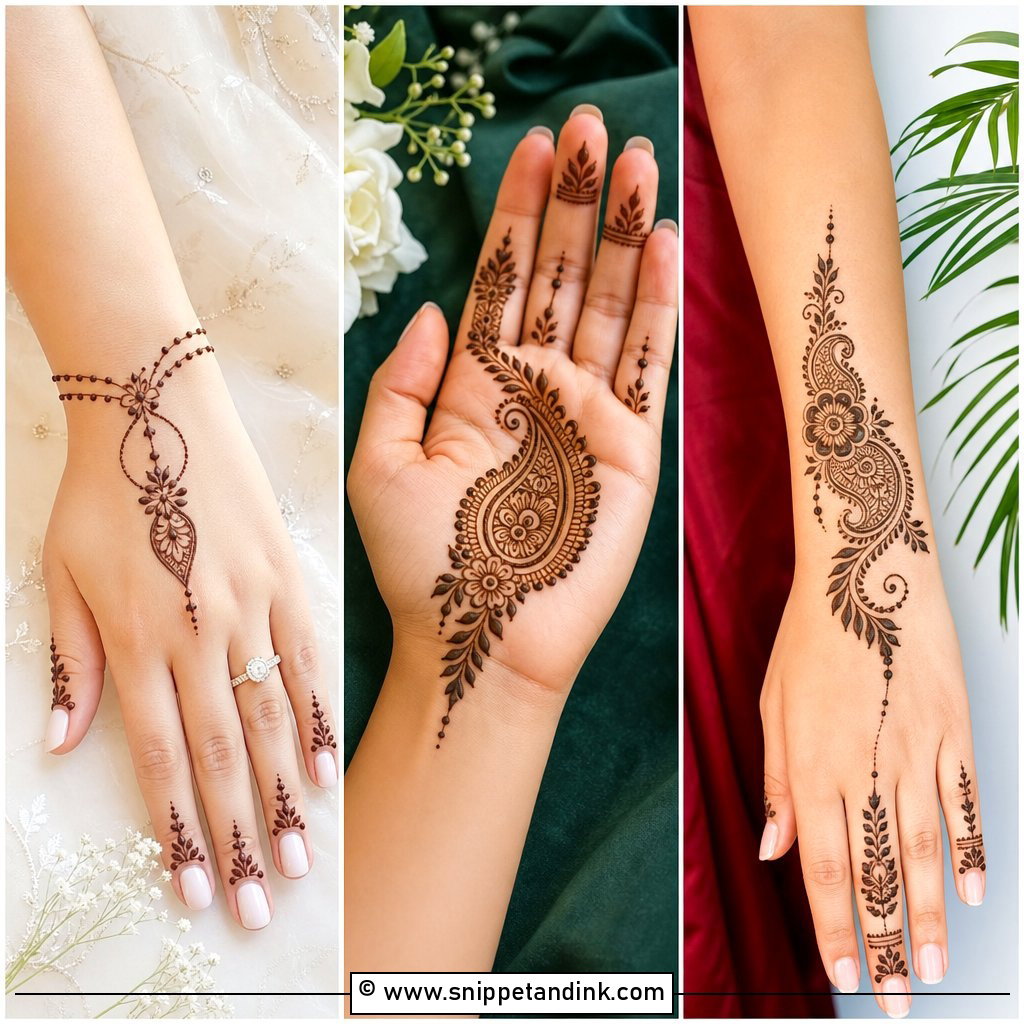
Fingers, wrist and one small area of the back hand or palm: that’s all minimal Eid mehndi covers. A fine bracelet band with thin finger vines, plus a tiny mandala, crescent or single flower as the focus. It sits well with pastel outfits and soft makeup, and it’s practical if Eid means cooking, work or travel. Precision is the whole job. With so little on the hand, a single uneven dot is visible, so I slow down on minimal designs rather than speeding up.
10. Easy Eid Mehndi Design
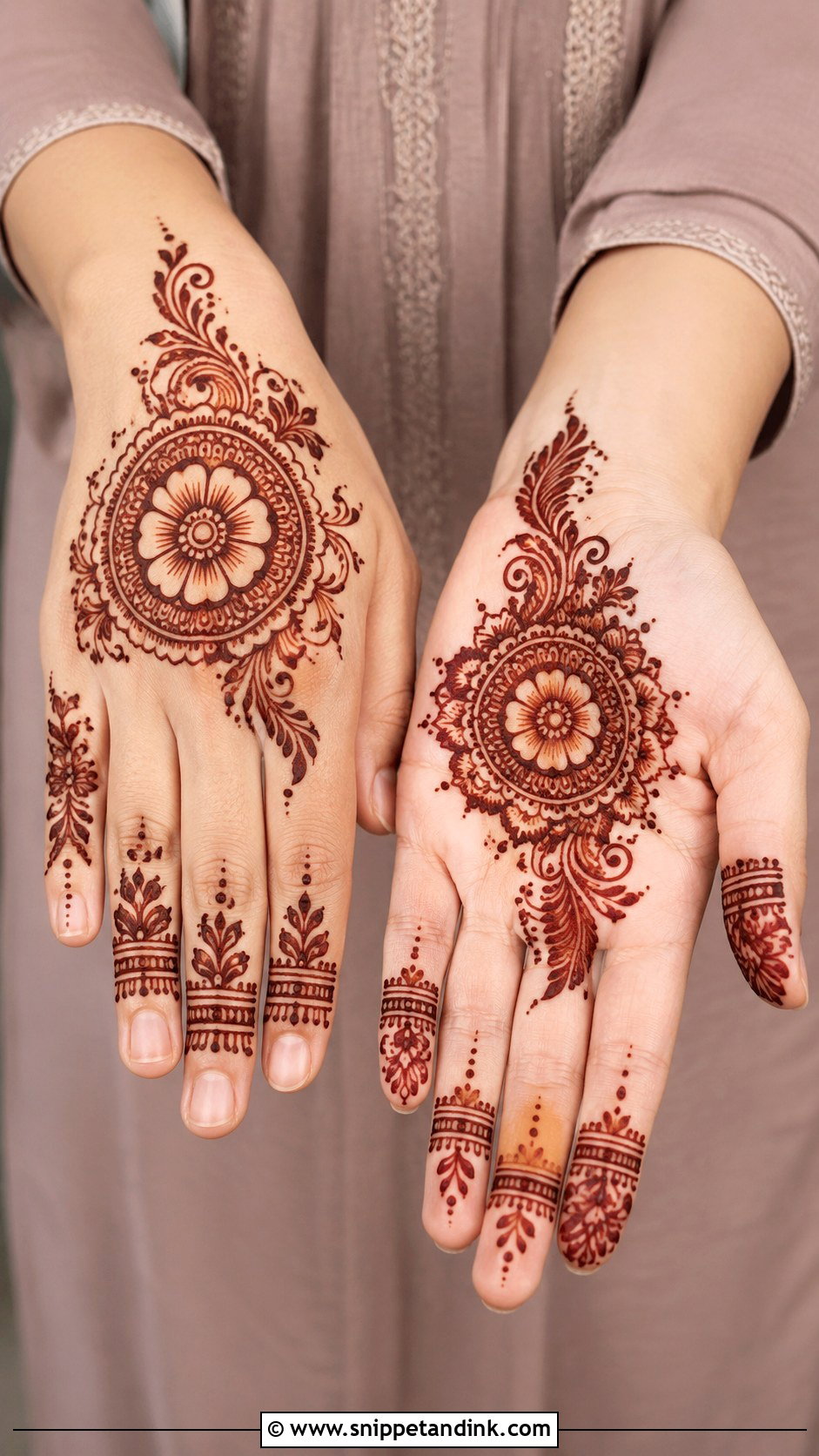
Salons fill up fast before Eid, so plenty of people end up doing their own hands. Start with a central palm flower or mandala, then simple finger lines, dots and leafy curves. On the back hand, a diagonal vine from wrist to one finger is forgiving and naturally graceful. Skip net work if your hand is unsteady, since larger petals, bold leaves and clean paisleys are easier to control. A cone that flows smoothly matters more than skill, so get your paste a day early and test it on paper.
11. Indian Eid Mehndi Design
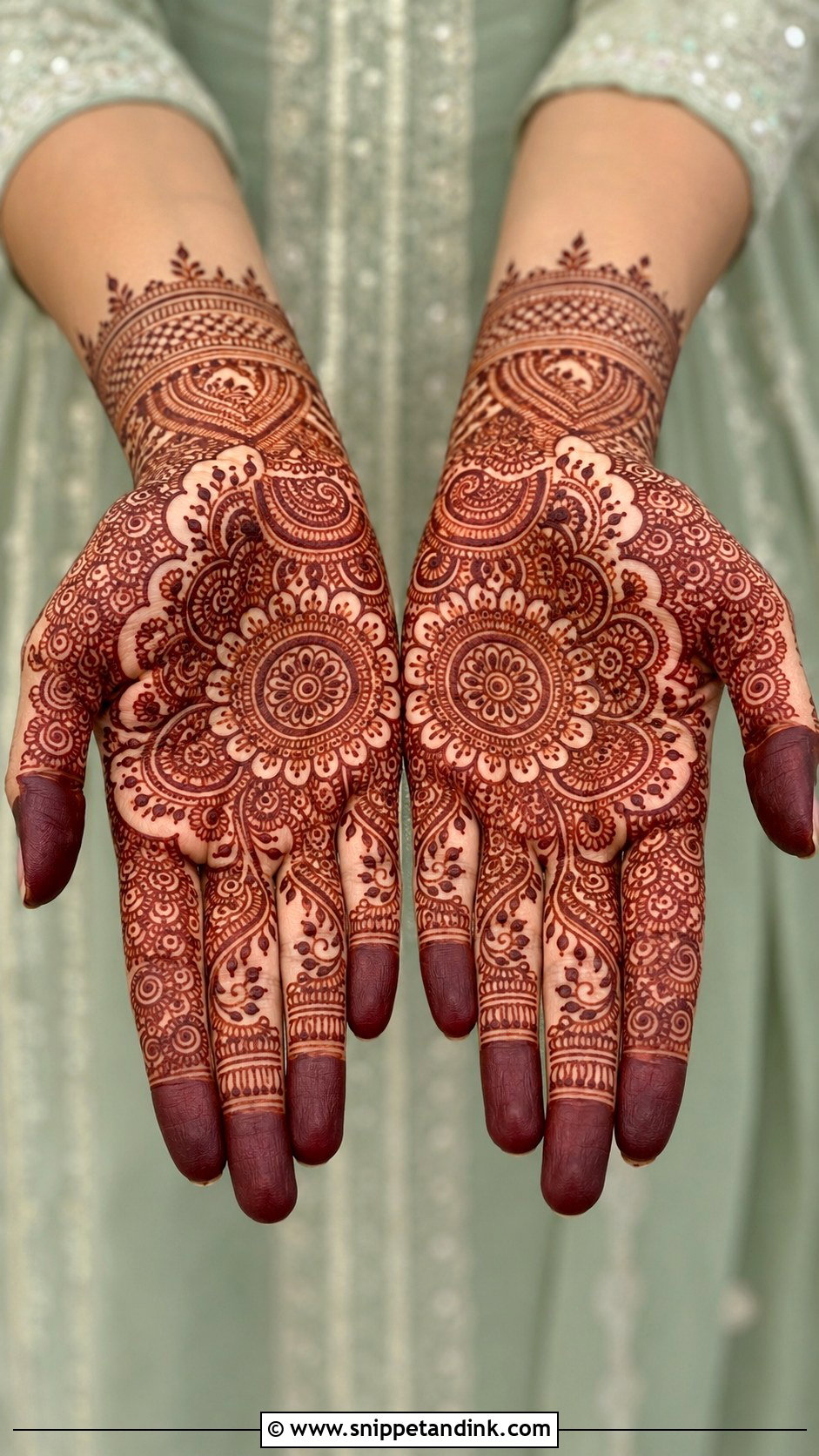
Indian Eid mehndi is symmetrical and detailed: a central mandala, paisley vines, floral bands, filled fingertips and fine lines across much of the palm. For Eid it can be lighter than bridal and still rich enough for a formal outfit. I build it on repeated borders first, which gives structure, and only then fill the spaces with dots, small leaves and curves. Choose it if you want the darkest palms at the family gathering.
12. Indo Arabic Eid Mehndi Design
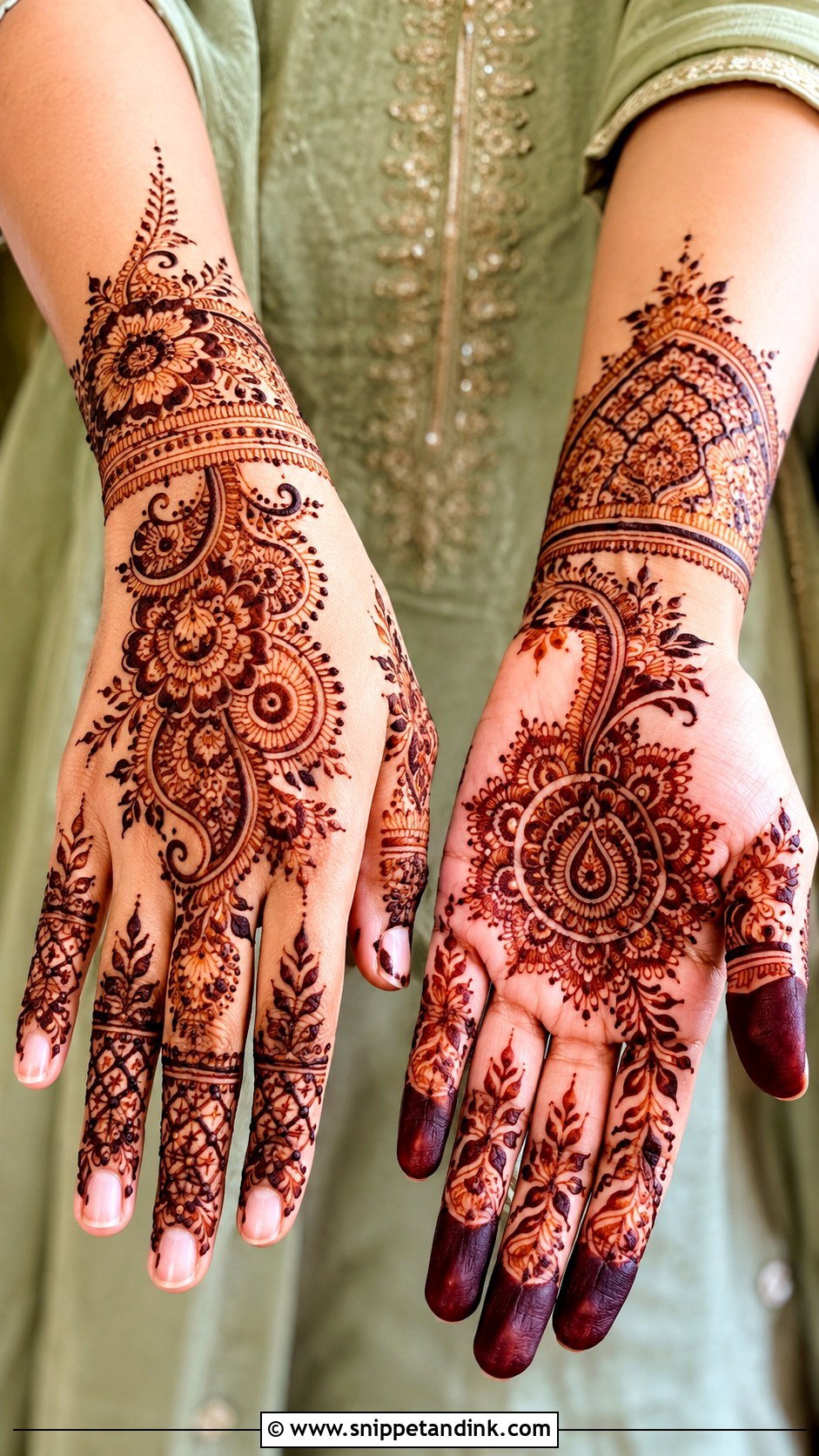
The Arabic spacing gives the hand breathing room and the Indian detail gives it richness. Large flowers run diagonally across the hand, with mandala fillers, paisley centers and neat finger patterns. For Eid, a back-hand trail from the wrist to the ring finger works well, as does a palm with bold paisleys and delicate shading. It’s my usual answer when someone asks for something not too heavy and not too plain.
13. Gulf Eid Mehndi Design
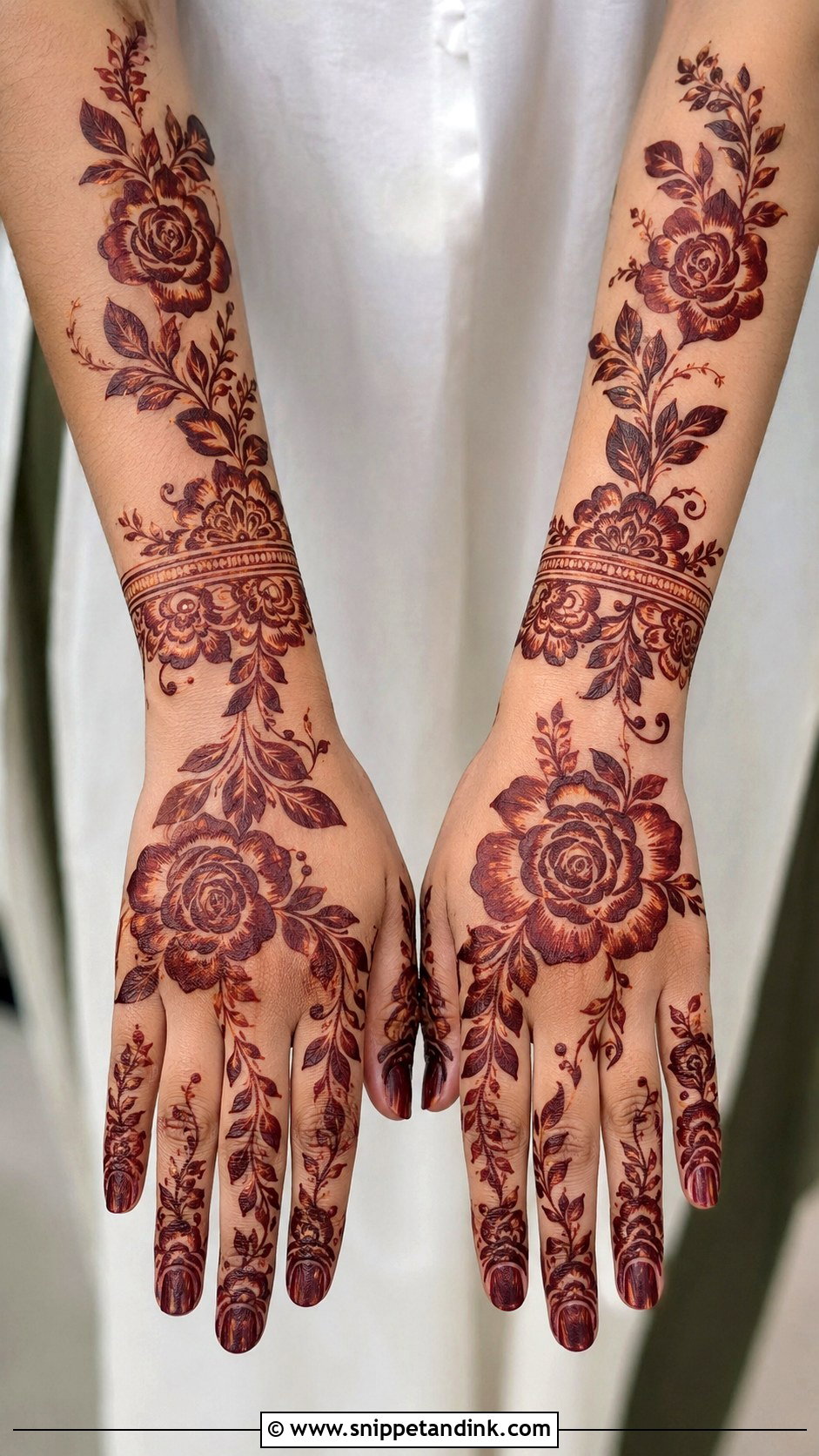
Khaleeji-inspired henna means bold florals, dramatic spacing and confident strokes. It usually covers the fingers and one side of the hand, leaving open areas that let large roses, leafy clusters and curved vines stand out, with a soft floral cuff at the wrist. It looks luxurious without full coverage, so it’s fast on a busy night. Thick outlines carry this style: they hold more paste, stain deeper, and keep their shape on the back of the hand, where the stain is naturally lighter.
14. Moroccan Eid Mehndi Design
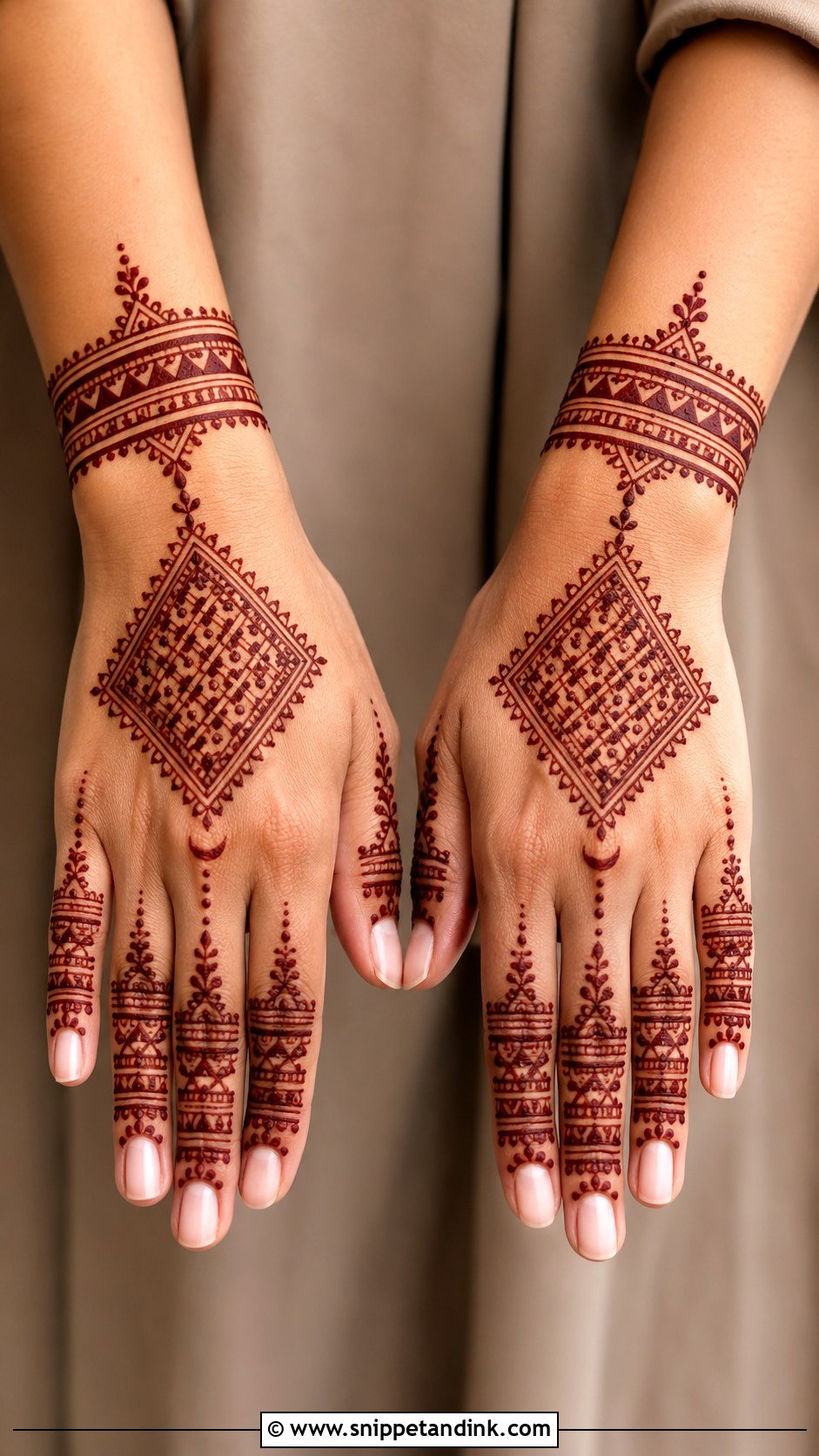
Diamond grids, straight-line bands, triangles and neat wrist-to-finger symmetry give Moroccan Eid mehndi a modern, artistic feel, and a small crescent near the wrist or a few dots soften the geometry. It looks sharpest on the back of the hand, where the lines can follow the hand’s shape. Even spacing and crisp borders are non-negotiable, so I wouldn’t book this as a rushed late-night slot. It suits anyone who wants to stand apart from the usual florals.
15. Floral Eid Mehndi Design
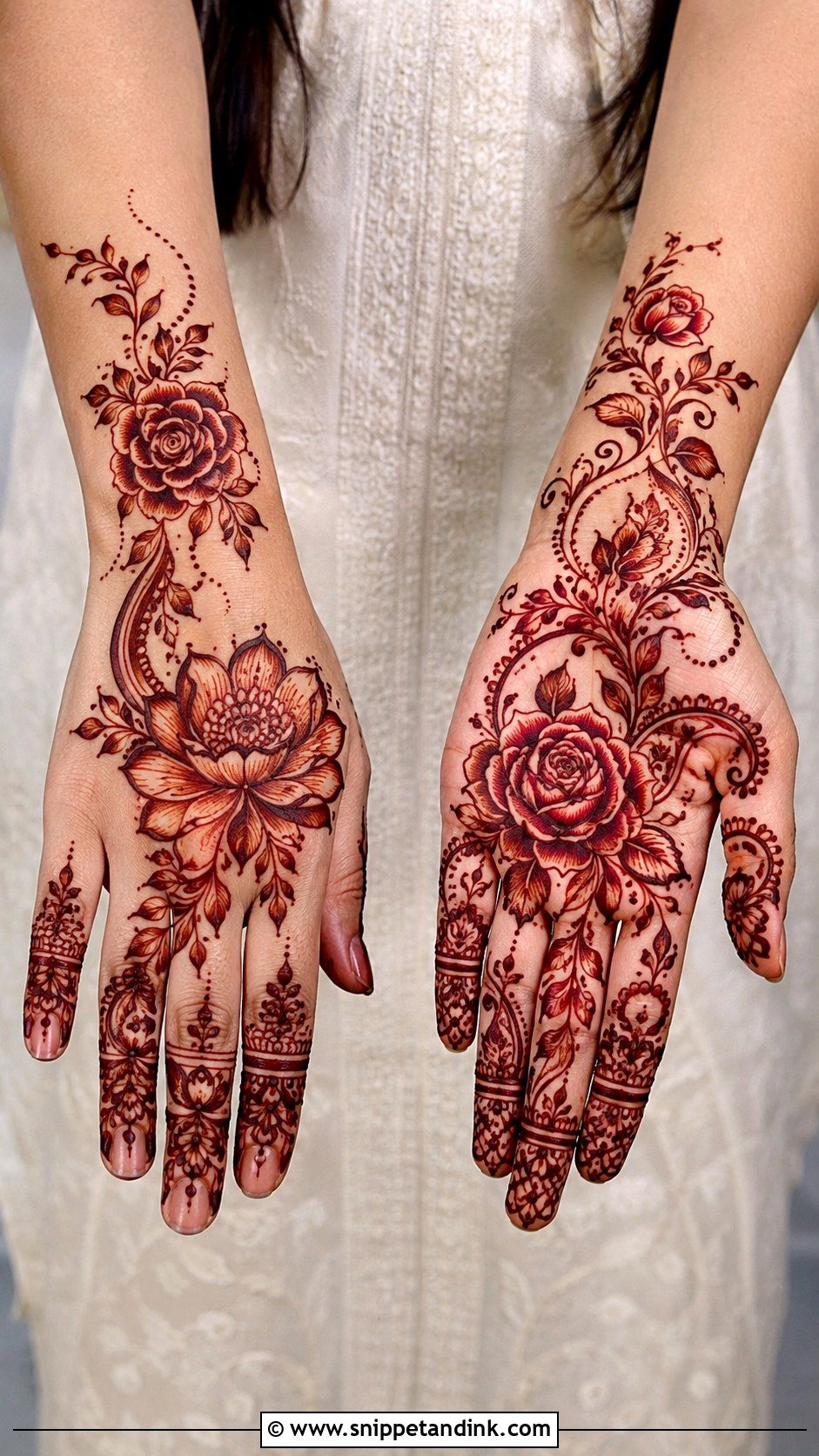
Flowers suit every hand, which is why floral Eid designs never fall out of rotation. A large rose or lotus on the palm, smaller blossoms near the wrist and leafy vines up the fingers make a complete look; on the back hand the flowers can run diagonally for an Arabic feel. For more fullness, shade the petals and add dotted outlines and thin curls. For less, use fewer flowers and more space. Florals work with bright and pastel outfits alike.
16. Mandala Eid Mehndi Design
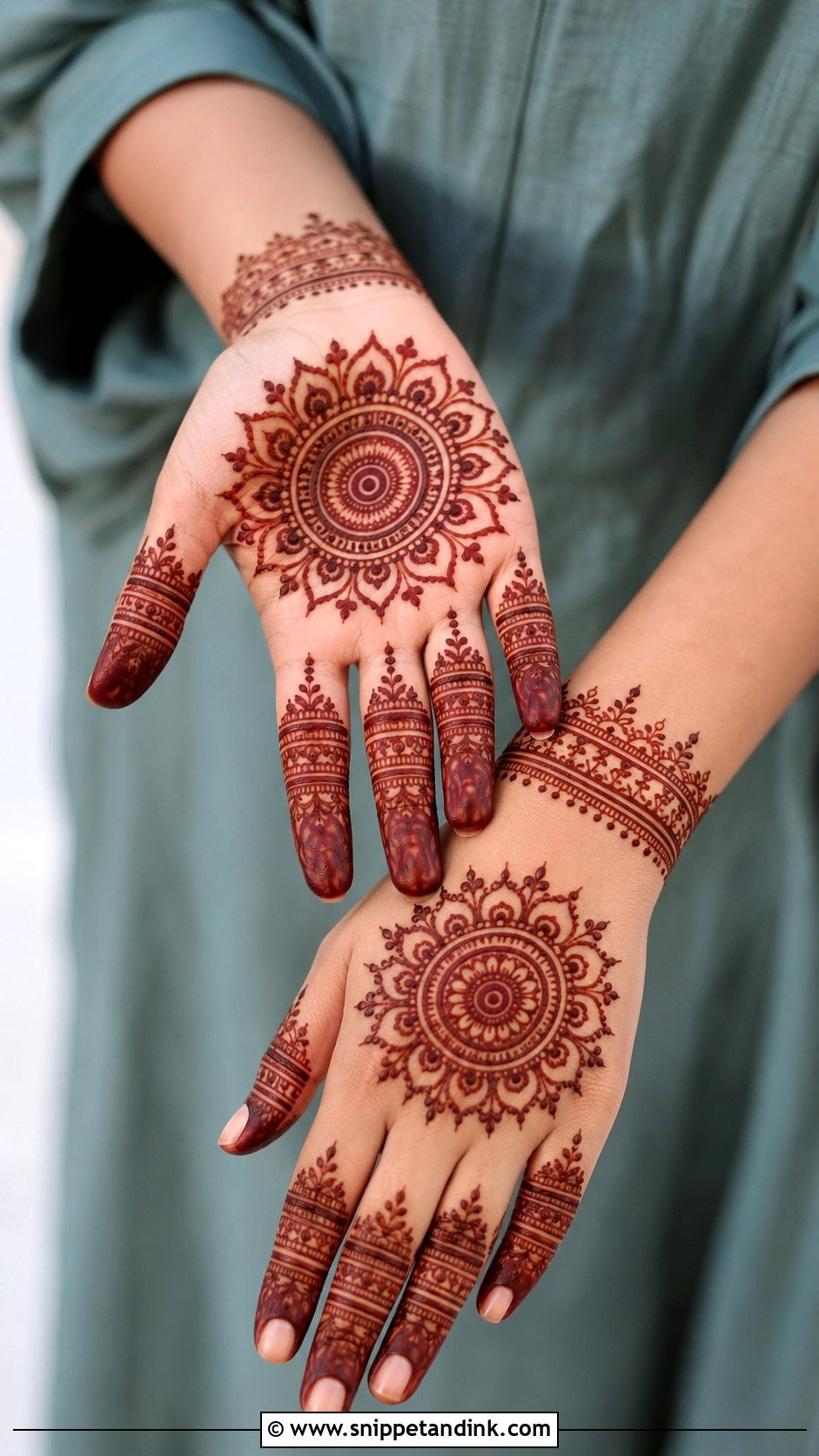
One round mandala in the center of the palm or back hand, finger patterns and a light wrist border. A palm mandala stains deeply and looks traditional, while on the back hand it feels more current. For Eid, I add tiny crescents, petals, dots or leafy rings around the circle. The outer lines must stay even, so I step back and check the circle halfway through, before adding more rings. One strong center makes a whole hand feel finished, which makes it a kind choice for beginners too.
17. Bracelet Eid Mehndi Design
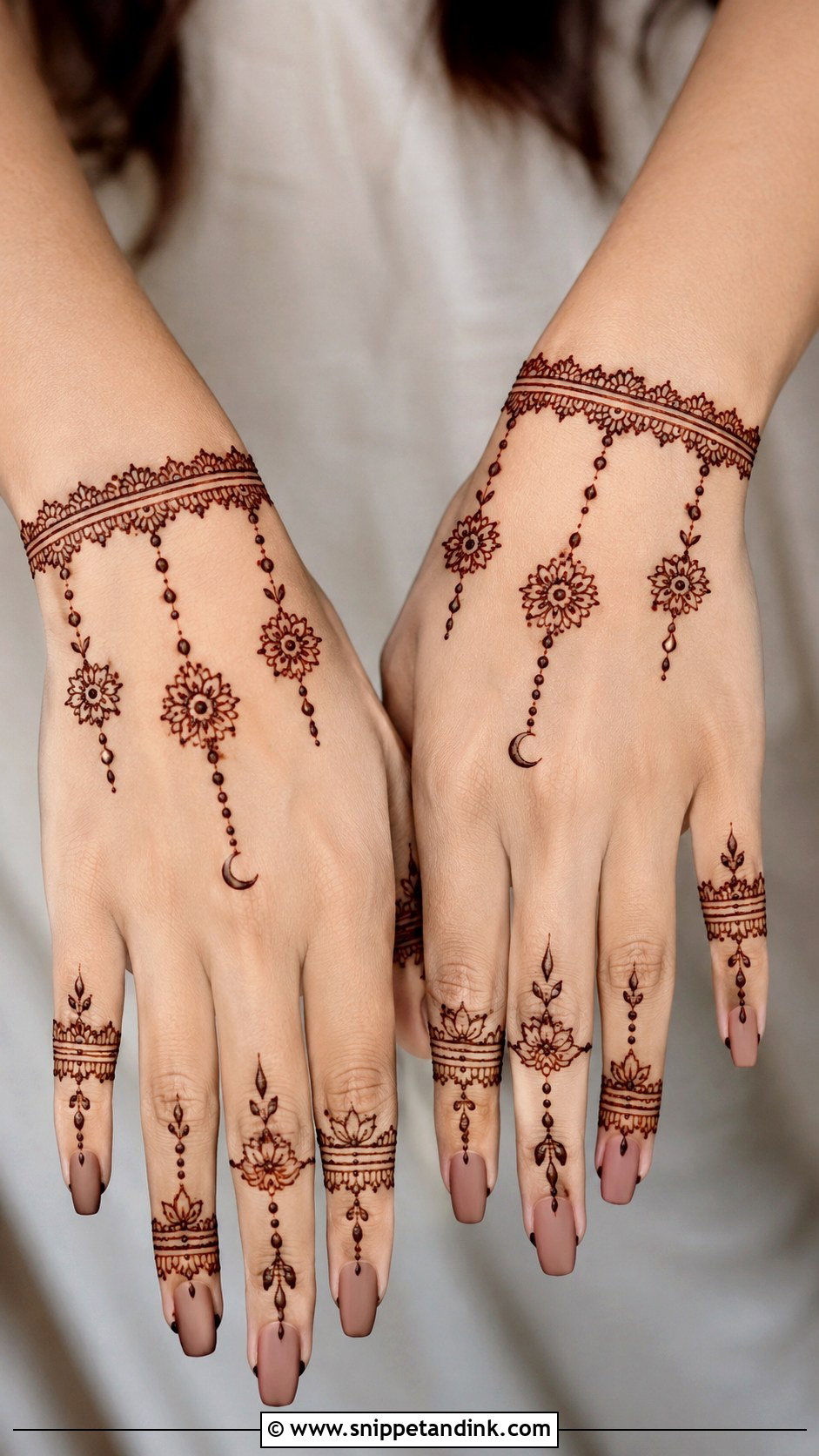
Bracelet Eid mehndi imitates jewelry: a wrist band, chains or dotted strings across the back hand, and ring-style finger details. The band can be floral, geometric, Arabic or minimal to suit the outfit. For Eid, I like to hang a small crescent charm shape or tiny leaf drops from the band. It leaves most of the palm free, which is comfortable for a day of eating and greeting. Under real bangles, the henna and metal layer nicely, as long as the drawn band sits just above where the bangles rest.
18. Finger Eid Mehndi Design
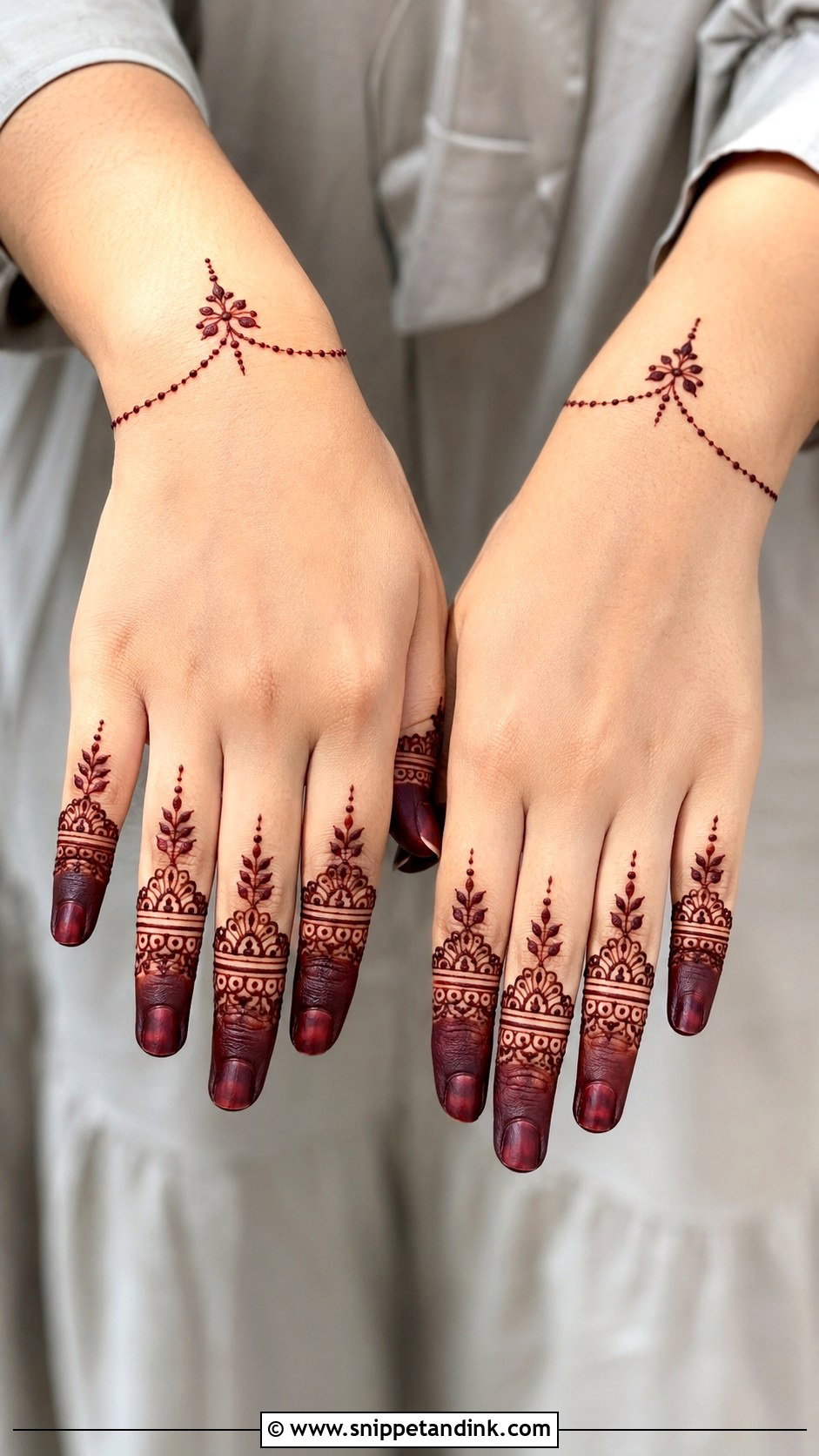
Finger mehndi only reads as a full design when it’s balanced: coordinated bands, leaves, dots and fine curves on each finger, anchored by a small motif near the knuckles or wrist. It’s a modern look with minimal coverage and a clean palm. For Eid, fingertip caps, ring bands and a tiny crescent on one finger work well. Keep the pattern consistent across both hands. Fingertips take a very dark stain, so the caps will be the boldest part of the design.
19. Palm Eid Mehndi Design
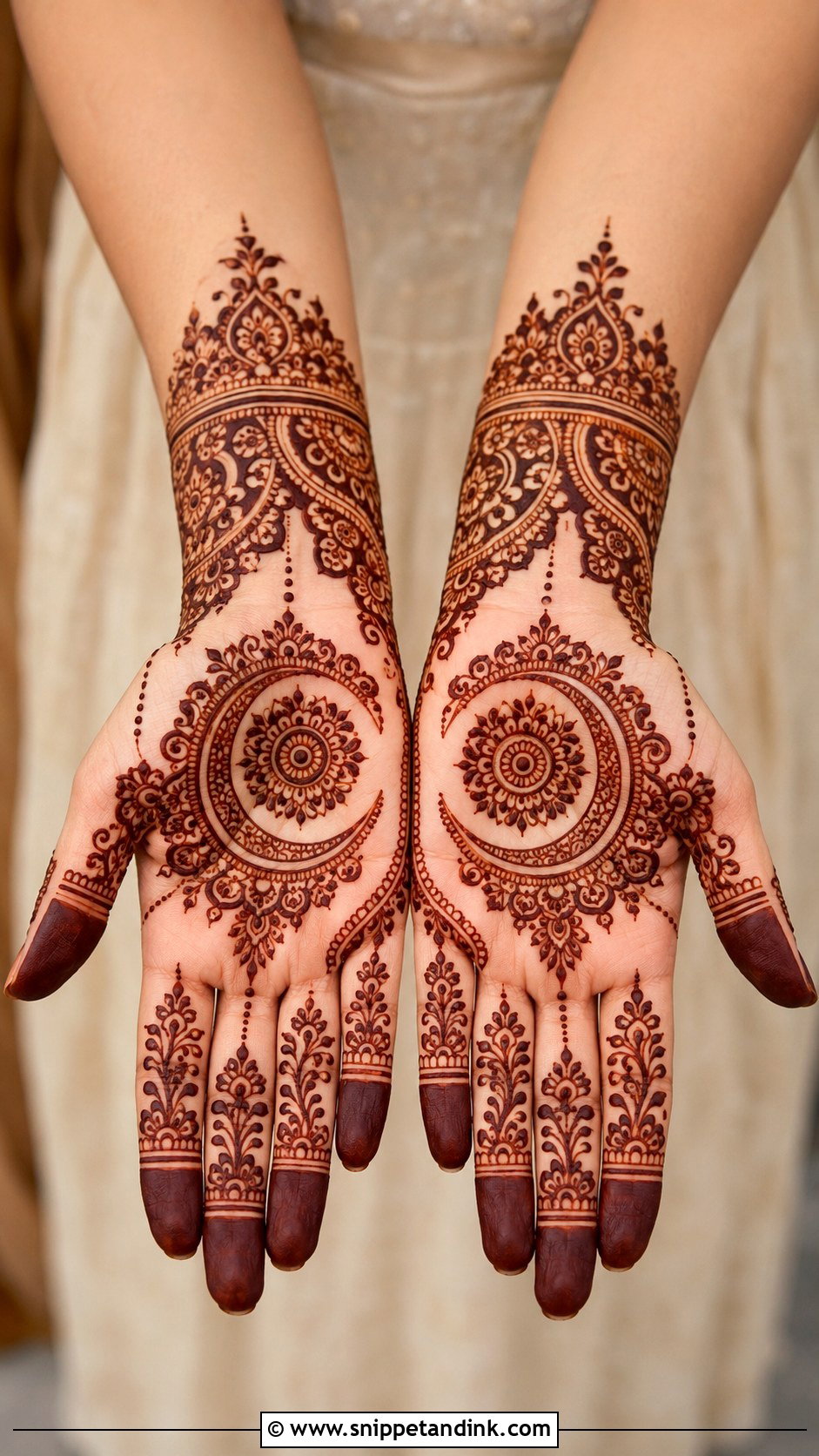
The palm takes henna more deeply than anywhere else on the hand, so palm designs carry the most color. A large central mandala, a crescent frame, a paisley border or a floral circle can anchor it, with vines, bands or dotted lines linking each finger to the palm so nothing floats on its own. Filled fingertips are the classic Eid finish because they contrast with the detailed center. For a lighter version, leave small open spaces around the main motif.

20. Jaali Eid Mehndi Design
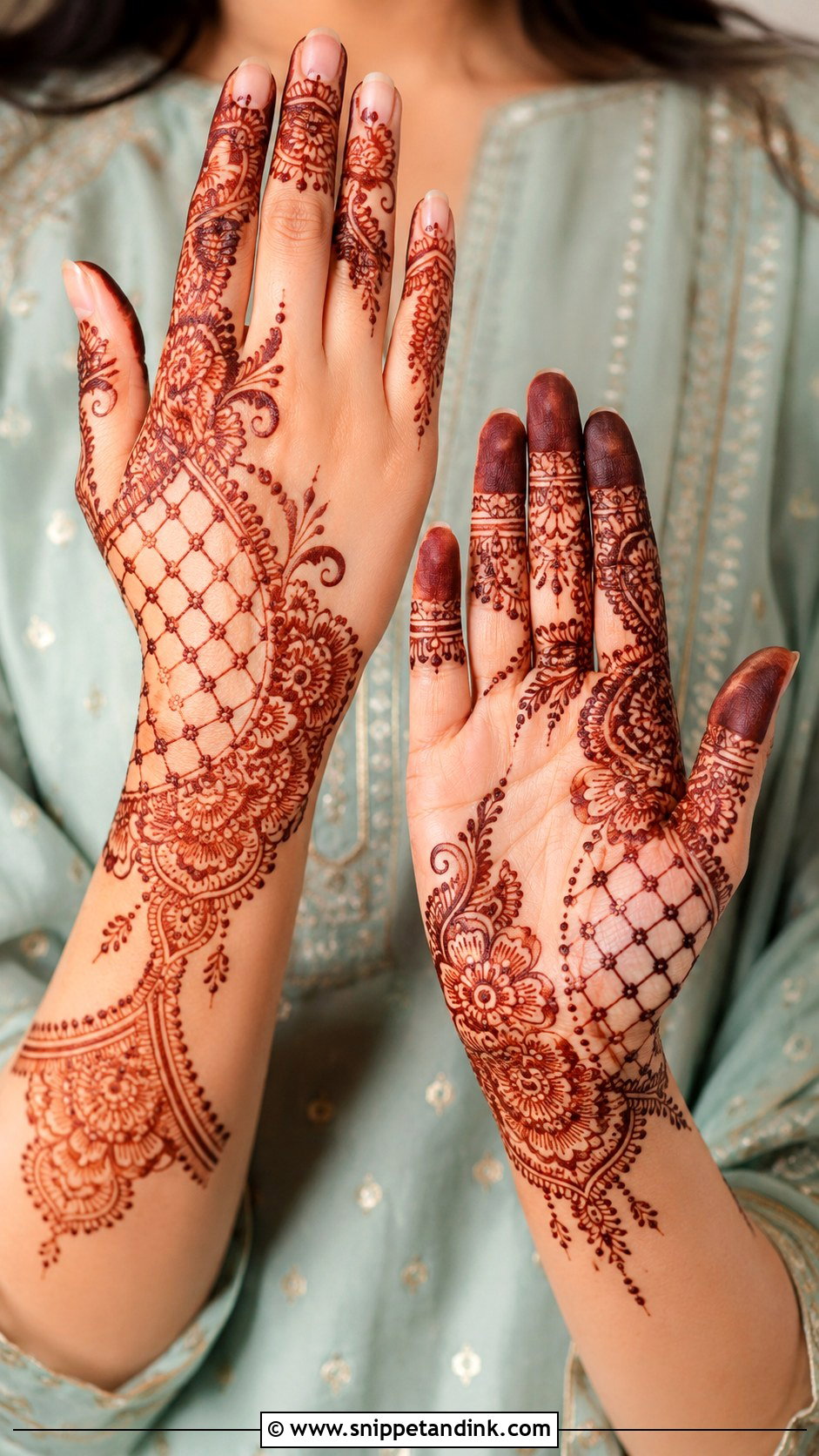
Jaali gives a lace effect: neat mesh squares on part of the back hand, wrist or palm, combined with flowers, paisleys or mandala borders. Spacing decides everything. Too tight and it looks crowded, too wide and it looks unfinished. For Eid, I pair jaali with Arabic floral trails so the hand stays airy. It suits anyone who likes detail but doesn’t want full coverage, and the mesh looks refined once it deepens to maroon.
21. Paisley Eid Mehndi Design
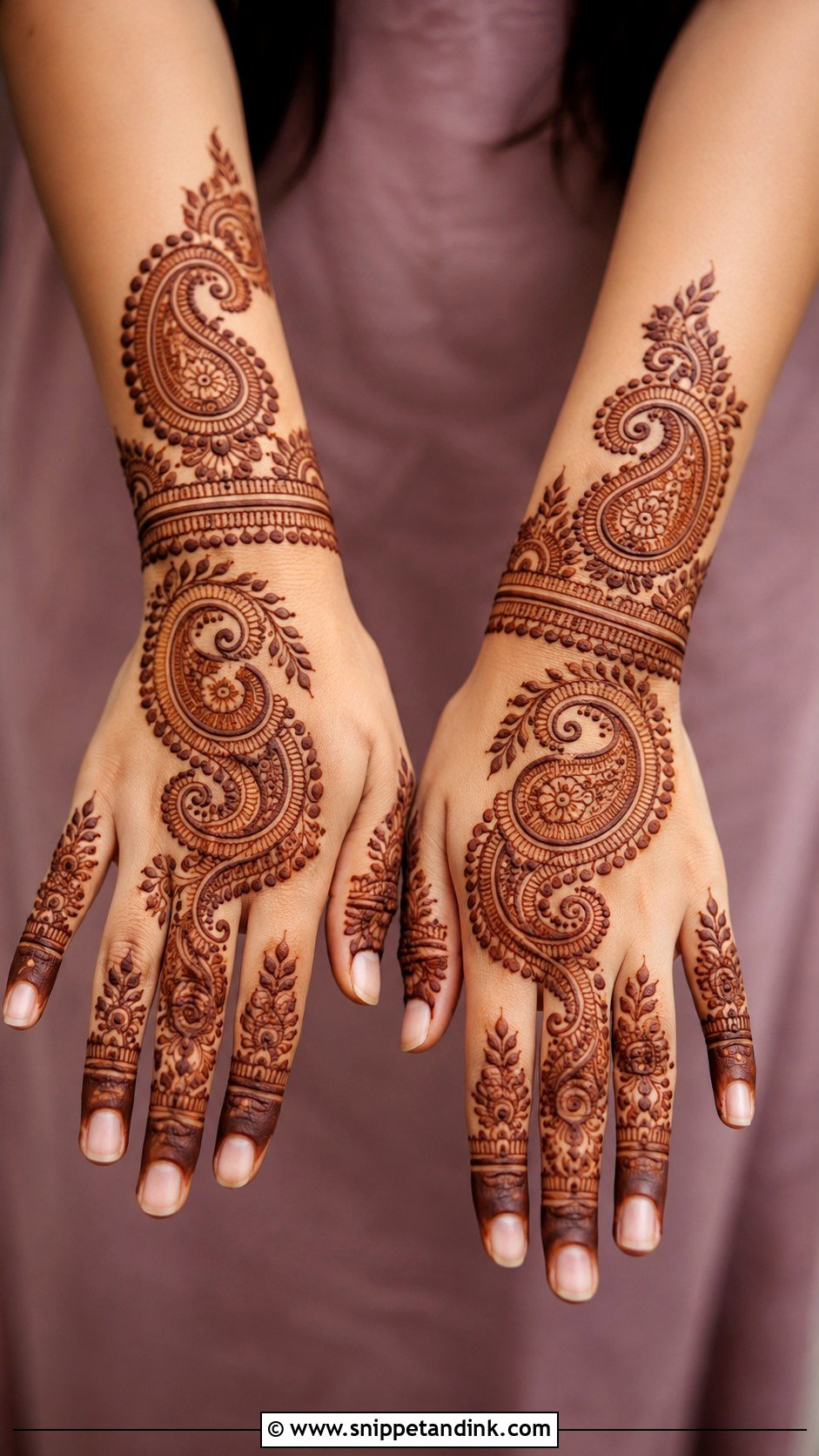
One large paisley on the palm, with smaller paisleys, leaves, dots and curved borders around it, makes a complete classic Eid hand. On the back hand, paisleys can flow diagonally with flowers for an Indo-Arabic look. For a cleaner design, keep the main paisley bold with open space around it; for a richer one, fill it with tiny lines, petals and net. The teardrop shape is forgiving, which helps when you’re drawing fast with a queue waiting.
22. Peacock Eid Mehndi Design
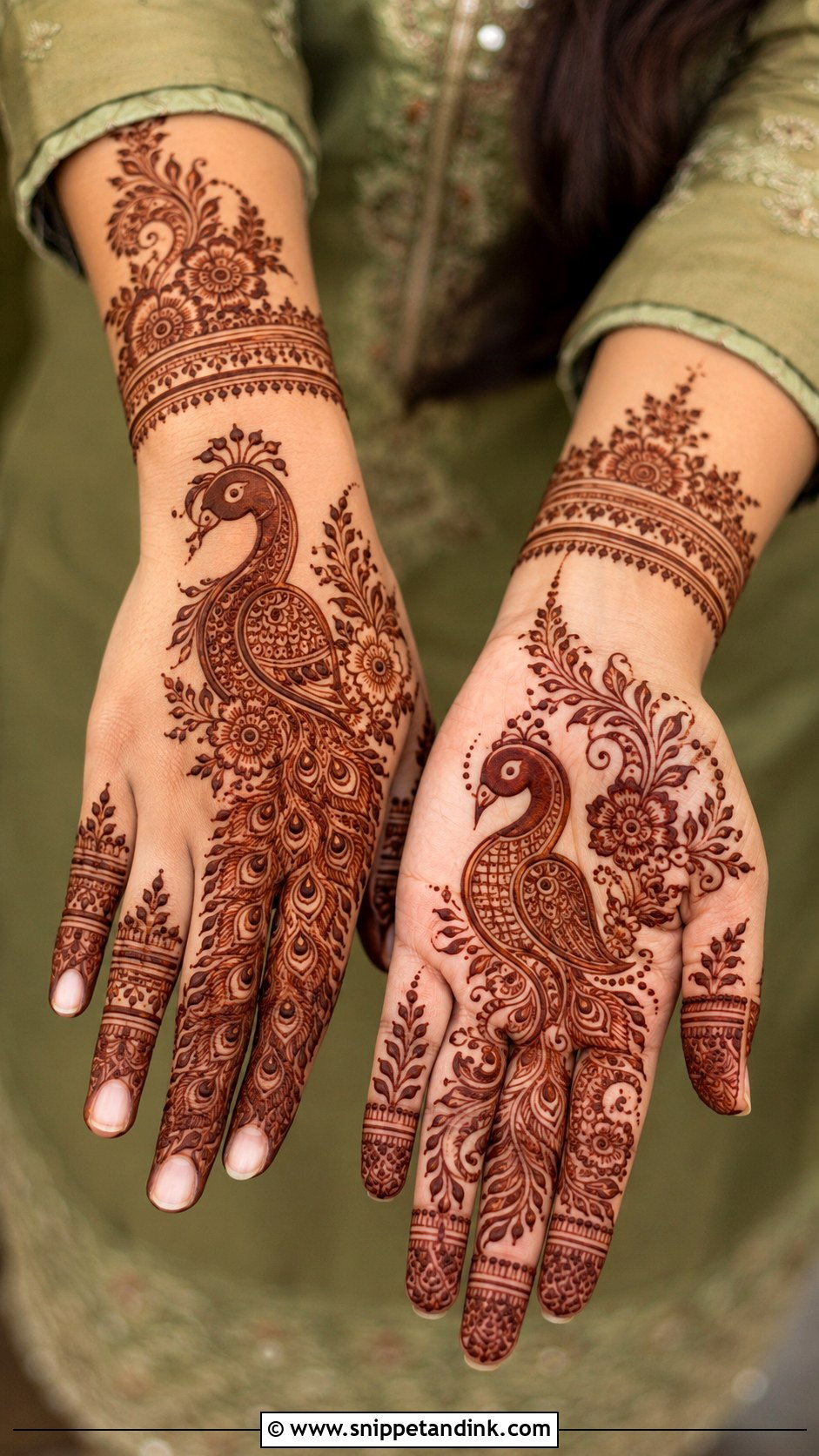
A peacock can sit on the palm with its feathers spreading toward the wrist, or on the back hand with floral trails heading to the fingers. Keep the neck, eye and feather curves clear, because those are what make it read as a bird. For Eid I use one main peacock rather than filling both hands, so it feels festive rather than bridal. Paisleys, petals and dots complete the layout. It suits formal Eid gatherings and anyone who loves Indian-inspired work.
23. Rose Eid Mehndi Design
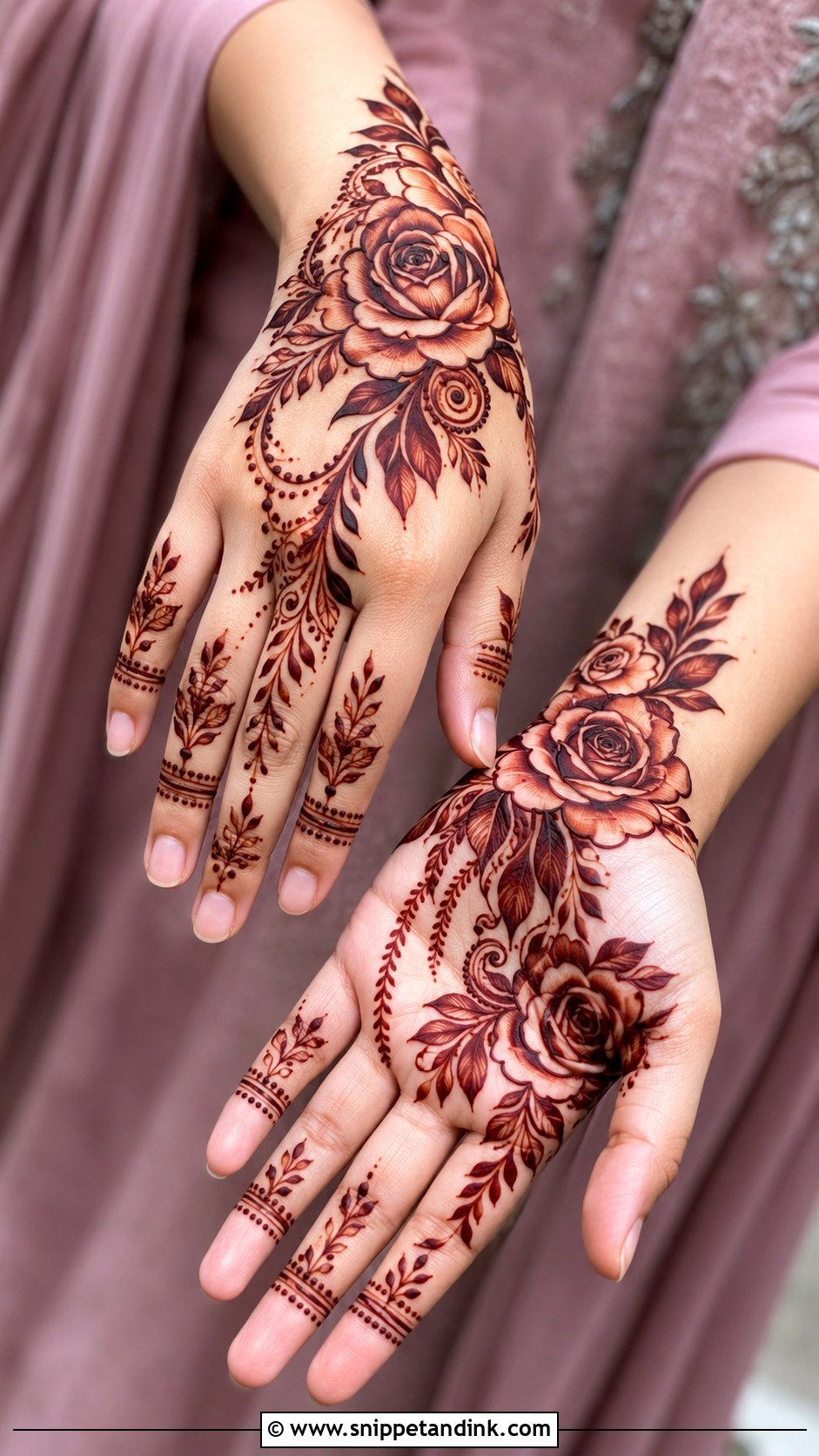
One large rose on the back hand, smaller roses near the wrist and leafy vines across the fingers make a complete rose layout. In Arabic-style placements, open space lets each petal stand out, and on the palm a rose can stand in for the usual mandala. I outline petals boldly and add fine inner lines for depth, never solid shading, which hides the petal shapes once the stain darkens. It works with simple and dressy Eid clothes alike.
24. Lotus Eid Mehndi Design
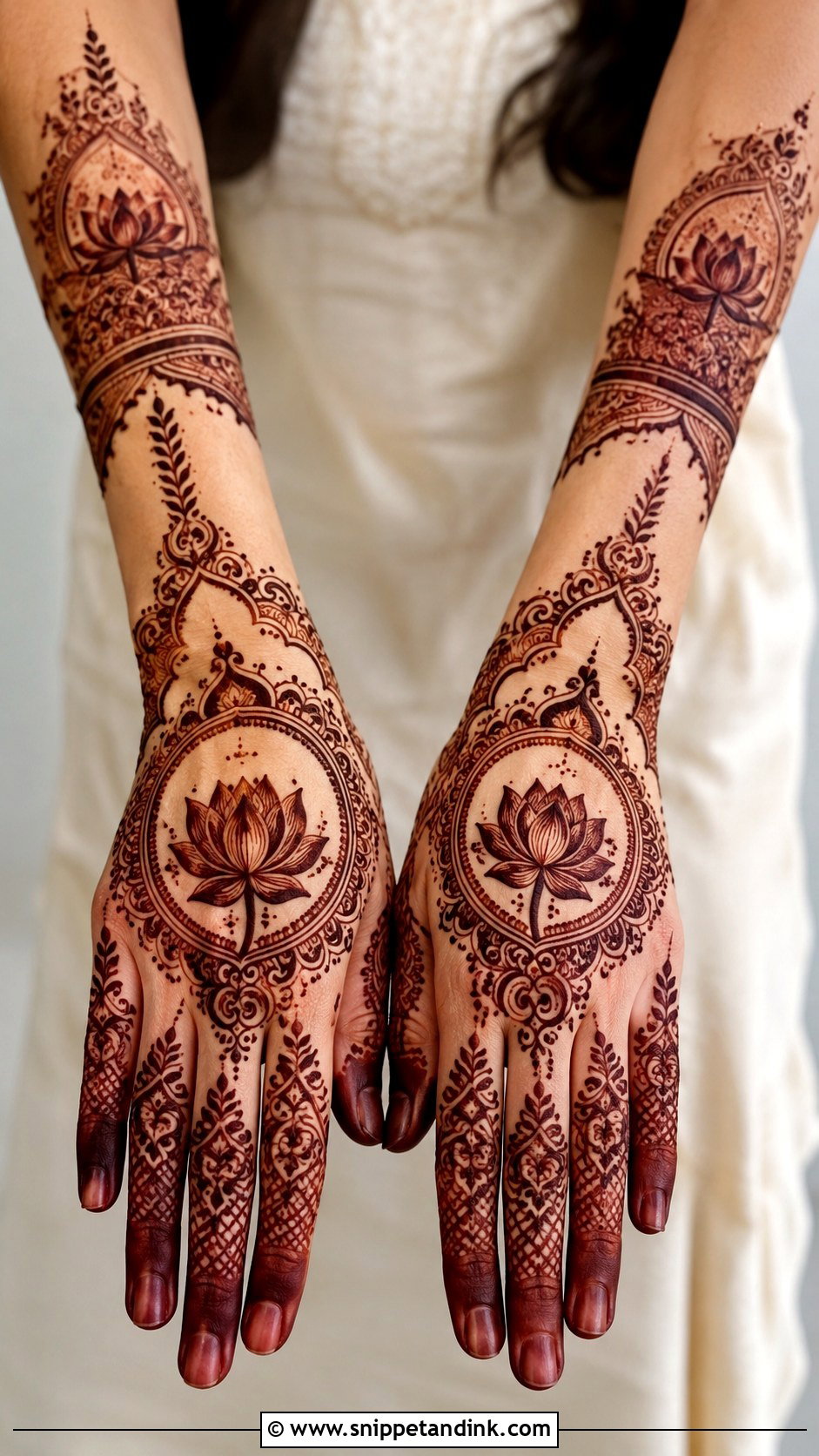
A blooming lotus in the palm center, framed with circular petals and leafy finger patterns, or a lotus near the wrist opening into vines toward the fingers. It’s festive without weight, and dots, fine arches and small paisleys complete the hand. Keep the lotus clean so it doesn’t blur into neighbouring florals; I leave a hairline of bare skin around its outer petals for exactly that reason.
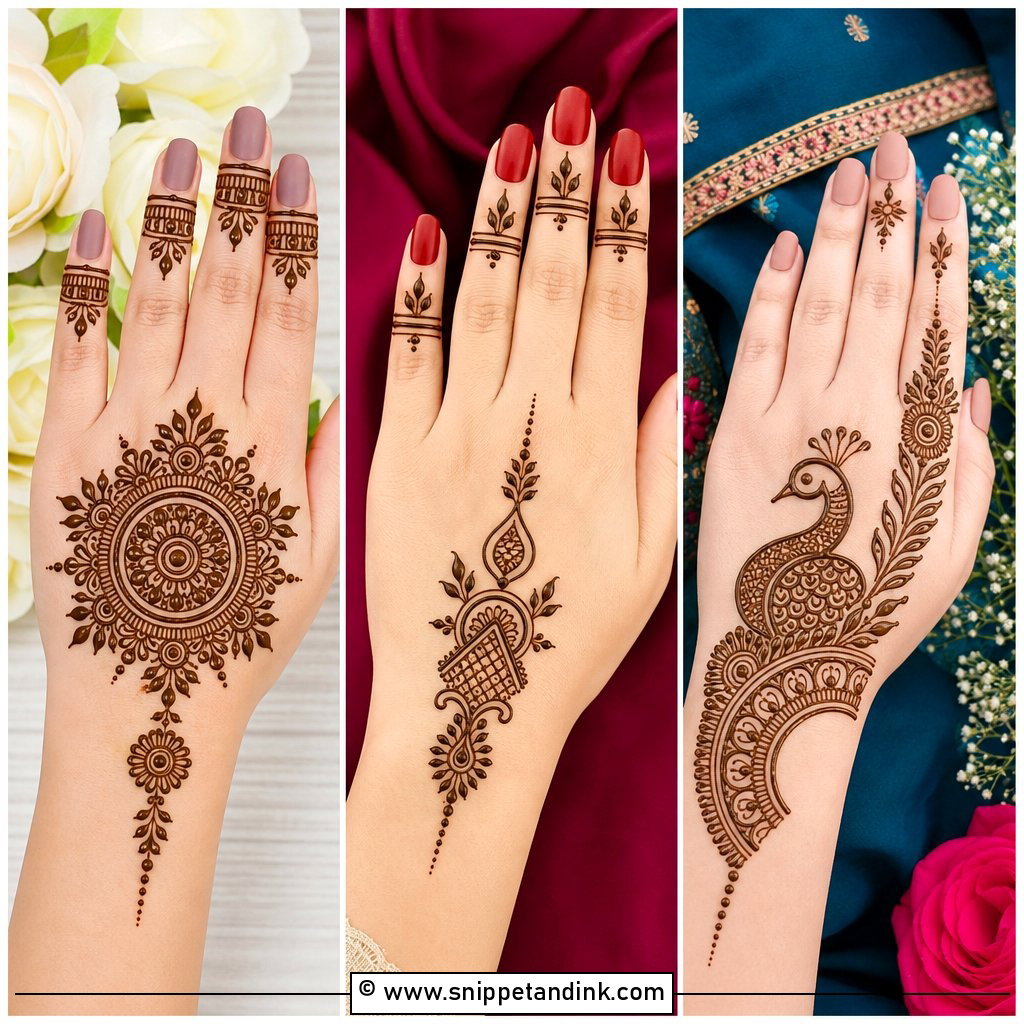
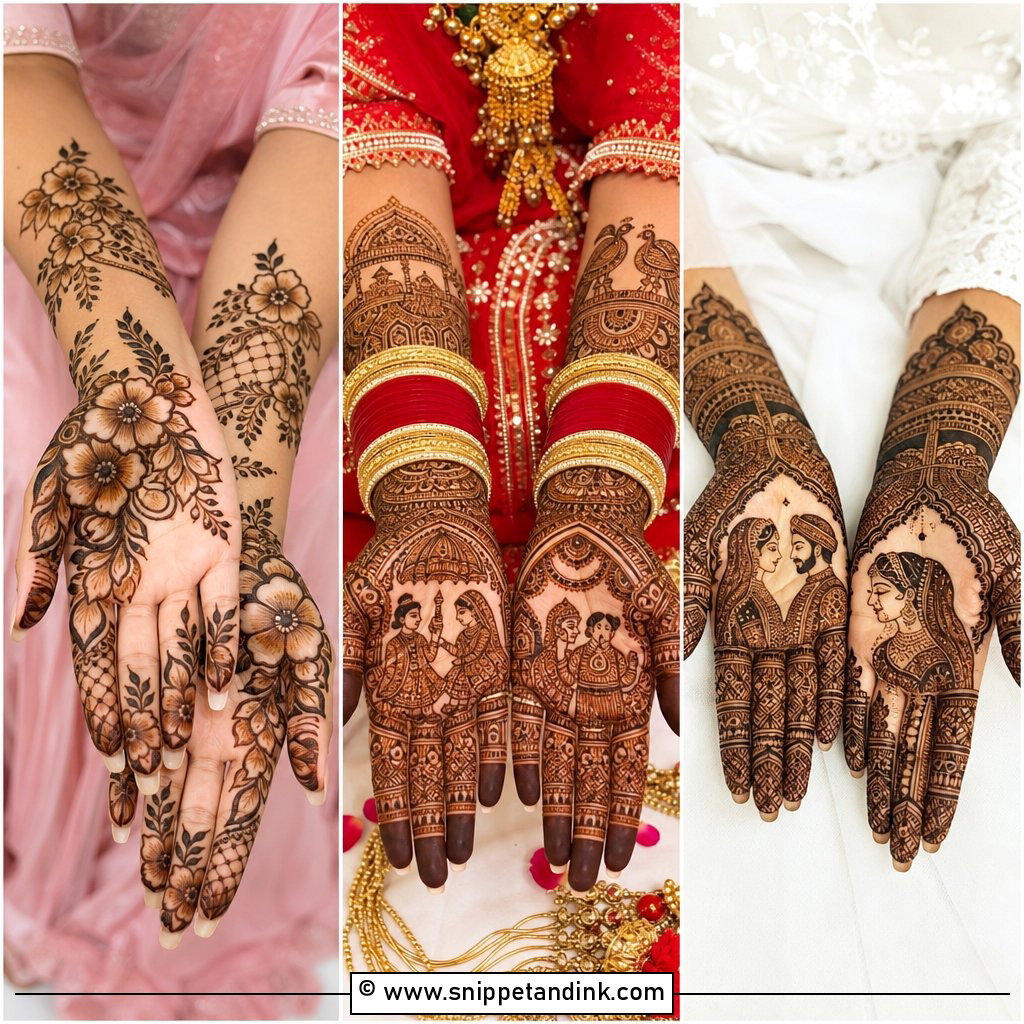
25. Net Eid Mehndi Design
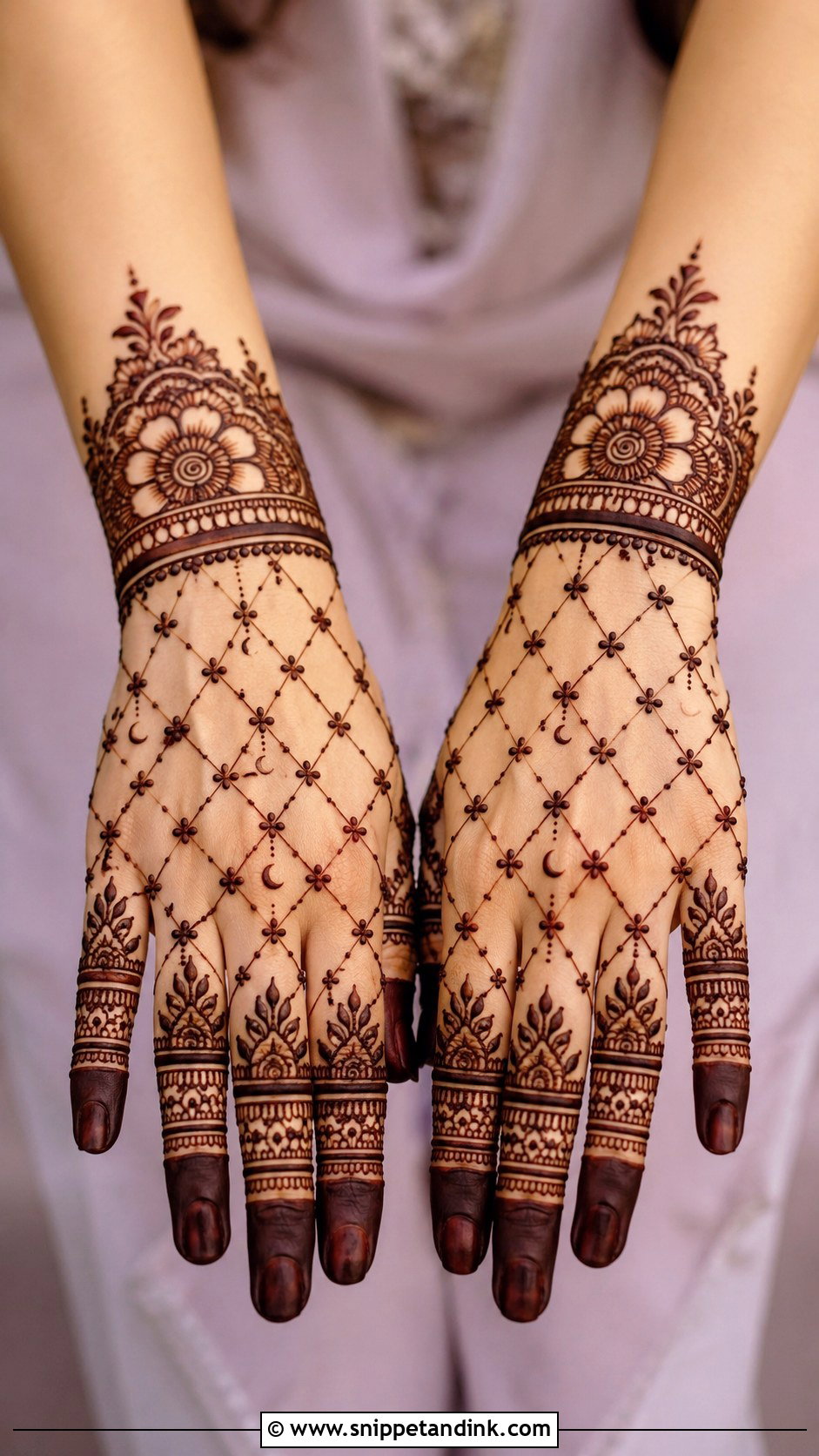
A net pattern across the back hand, filled finger bands and a floral wrist cuff make the dressy, lace-glove option. The net can be diamonds, squares or curved arches, modern or traditional, and small flowers or crescent dots worked into it make it feel like Eid. Don’t run the same mesh across the entire hand, which looks flat; break it with bold borders and open spaces. It sits nicely alongside rings and bangles.
26. Half Hand Eid Mehndi Design
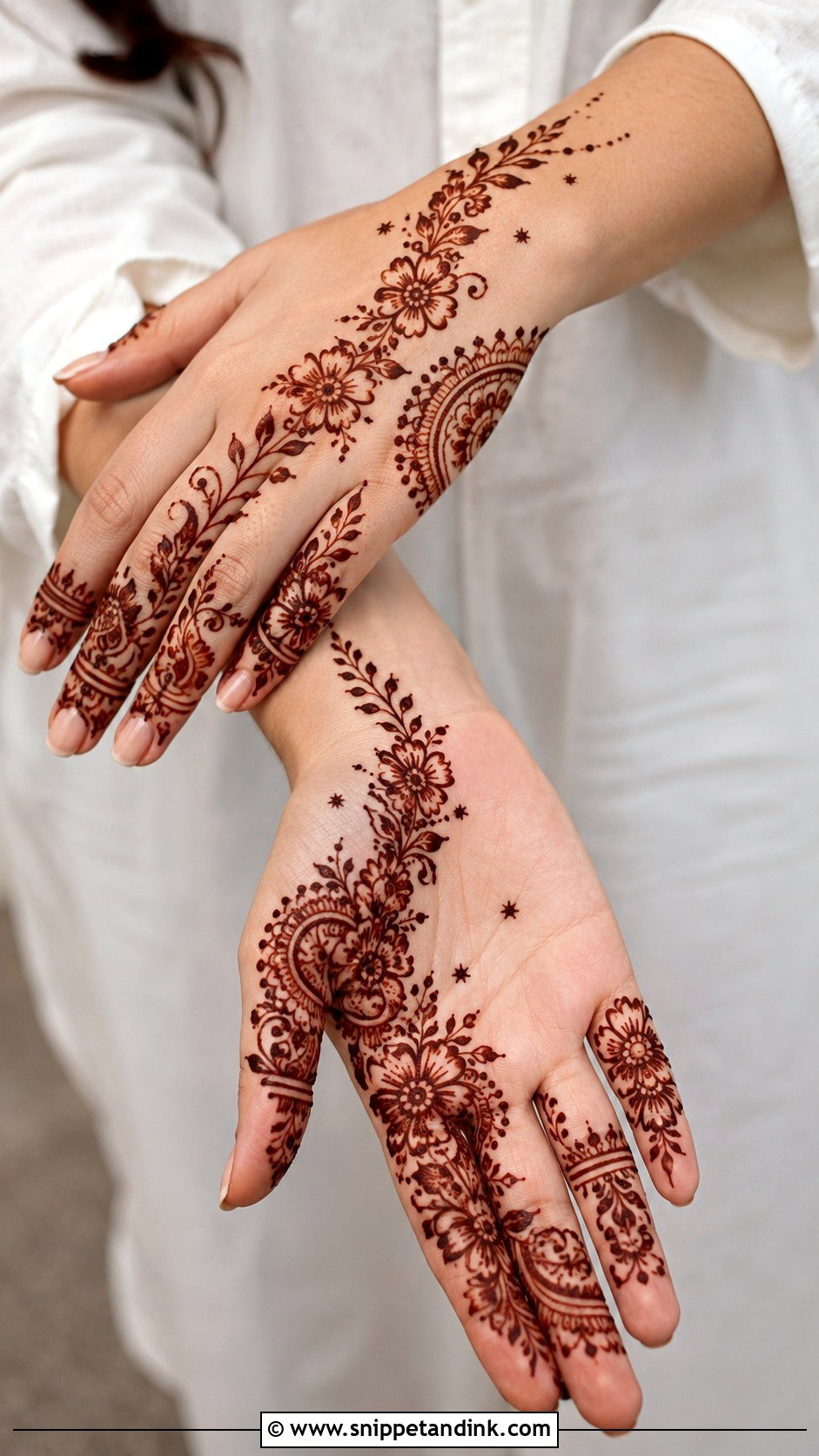
Half-hand Eid mehndi covers the fingers and part of the palm or back hand, stopping before the wrist or touching it only lightly. You get visible henna with a clean, comfortable finish. A diagonal Arabic floral trail, a half-mandala near the thumb or a side paisley pattern all work, with tiny stars, dots and leaf chains to round it off. Teens and working women like it because it looks festive at the gathering and still appropriate at the office afterwards.
27. Side Hand Eid Mehndi Design
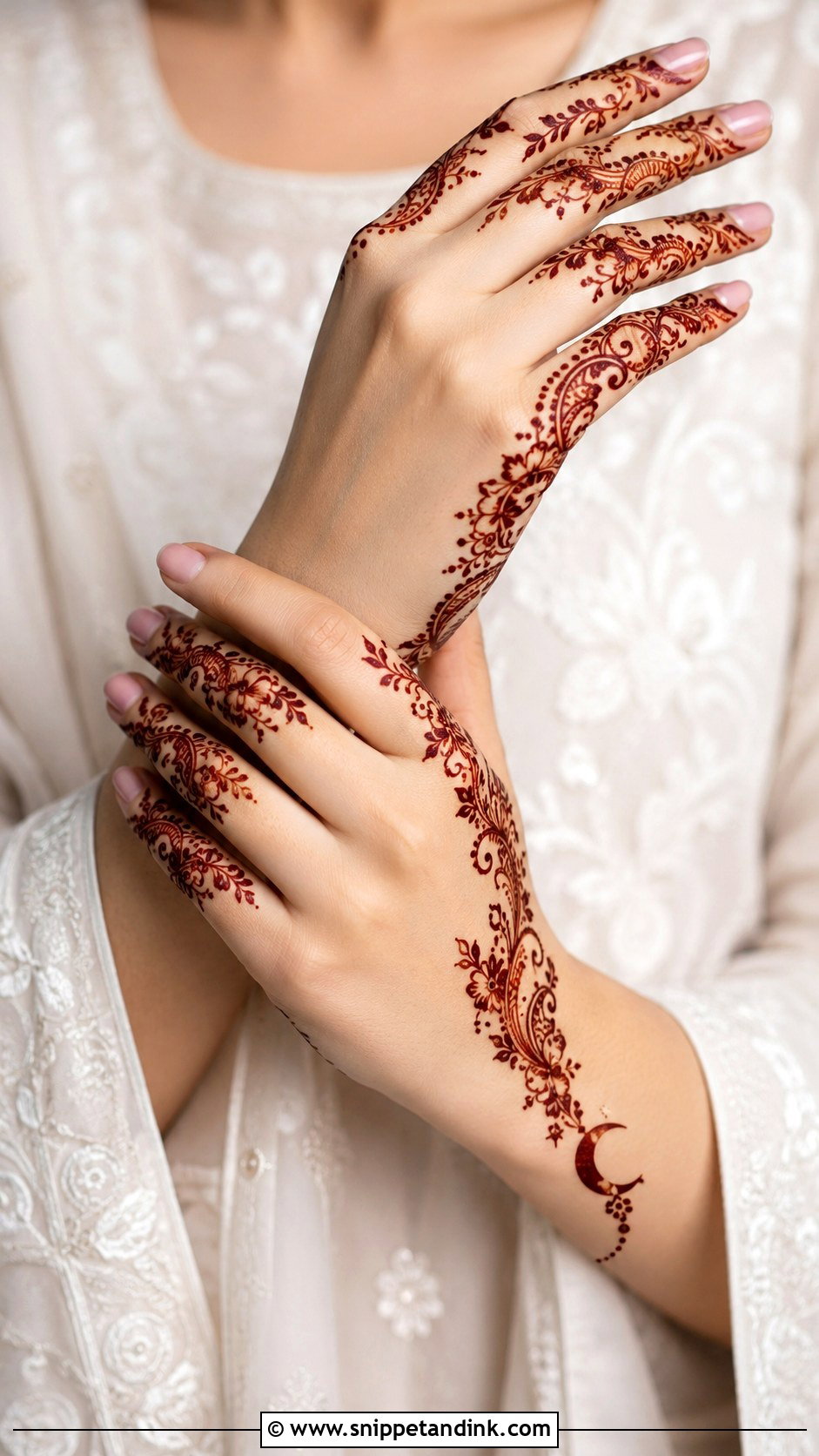
A side design follows one edge of the hand, starting near the wrist, running along the outer palm or back hand and finishing on the little or index finger. Flowers, leaves, paisleys and dotted trails make up the line, with plenty of bare skin, and a crescent or small mandala near the wrist makes it read as Eid. Placed along the edge, it makes the fingers look longer. Check it with the hand hanging naturally at your side, since that’s the angle most people will see.
28. Modern Eid Mehndi Design
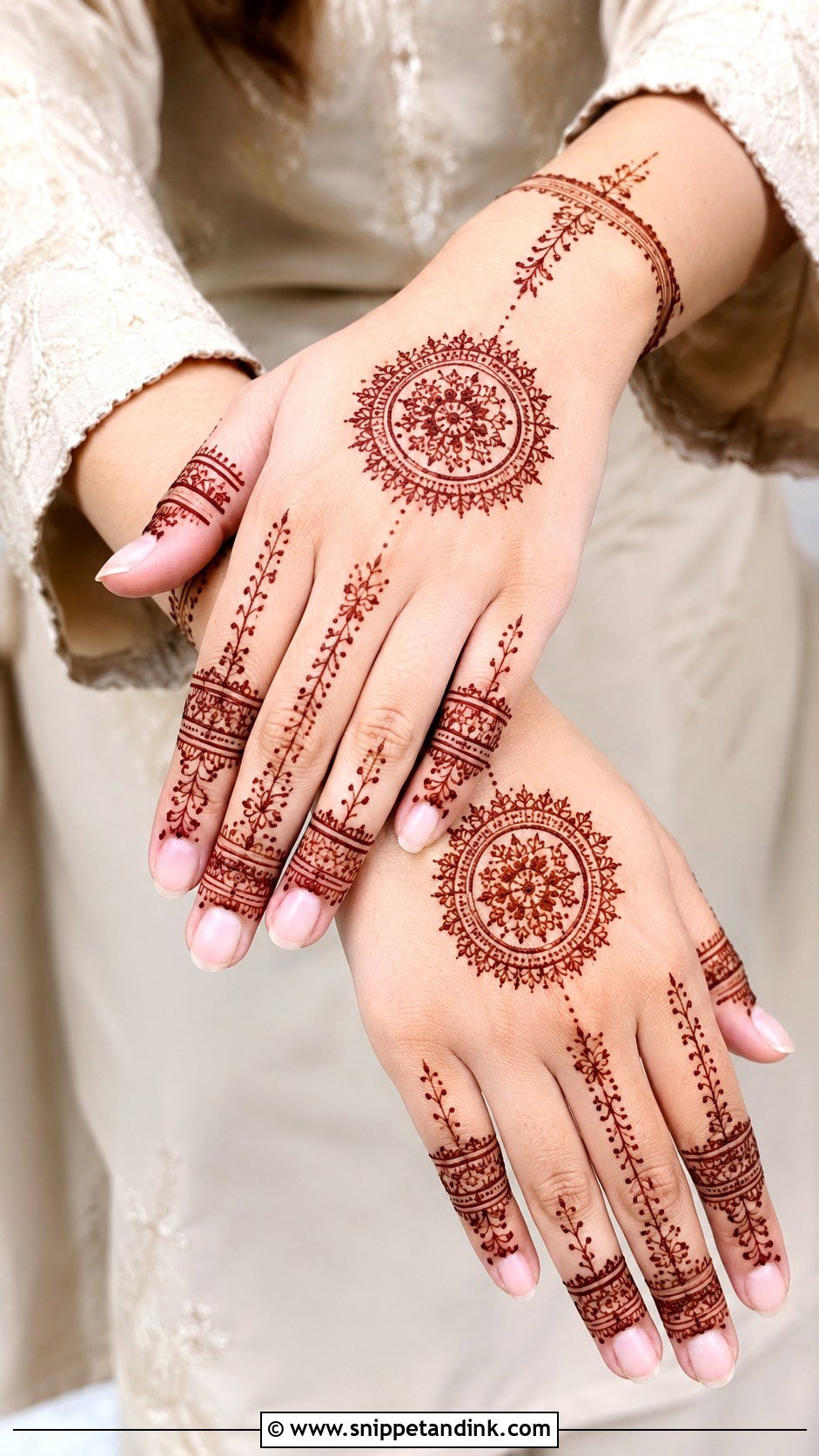
Modern Eid mehndi is about placement and space: finger bands, a small back-hand mandala, a slim wrist bracelet and a few fine vines, with skin showing through. Geometric lines mixed with florals give it a current edge. I coordinate both hands without making them identical, so they look related in photos rather than stamped. It’s my suggestion for contemporary Eid outfits and for anyone who wants tradition in a lighter form.
29. Bridal Eid Mehndi Design
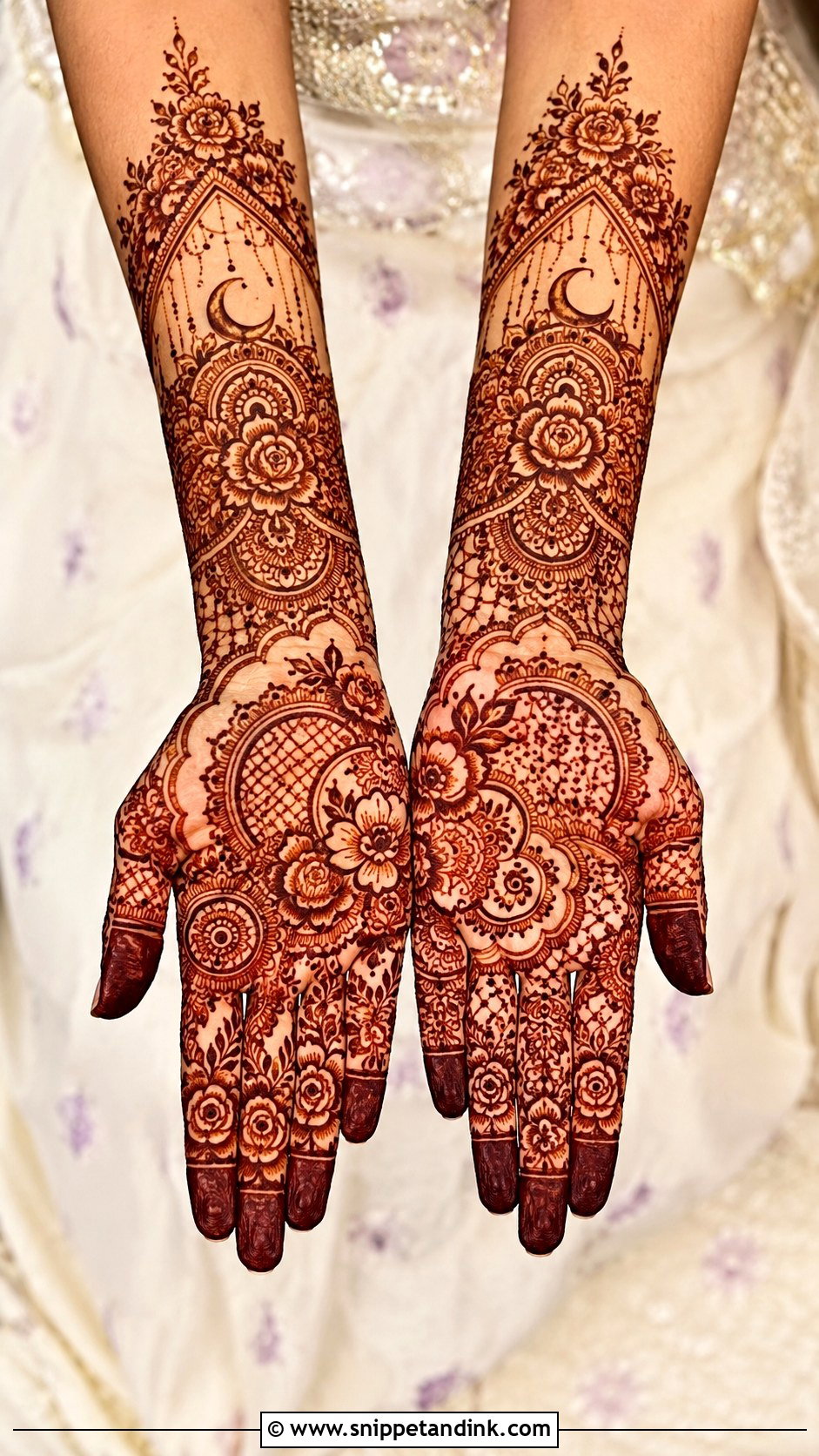
A new bride’s first Eid is a common reason for this one, though anyone wanting a richer look can wear it. Palms, backs of hands, wrists and forearms carry detailed florals, paisleys, mandalas and jaali, a step lighter than wedding mehndi but still luxurious. Crescent moons, initials or matching motifs on both hands personalise it, and clear borders with repeated patterns keep it structured. It takes hours, so book a slot well before Chaand Raat rather than hoping to squeeze in that night.
30. Simple Back Hand Eid Mehndi Design
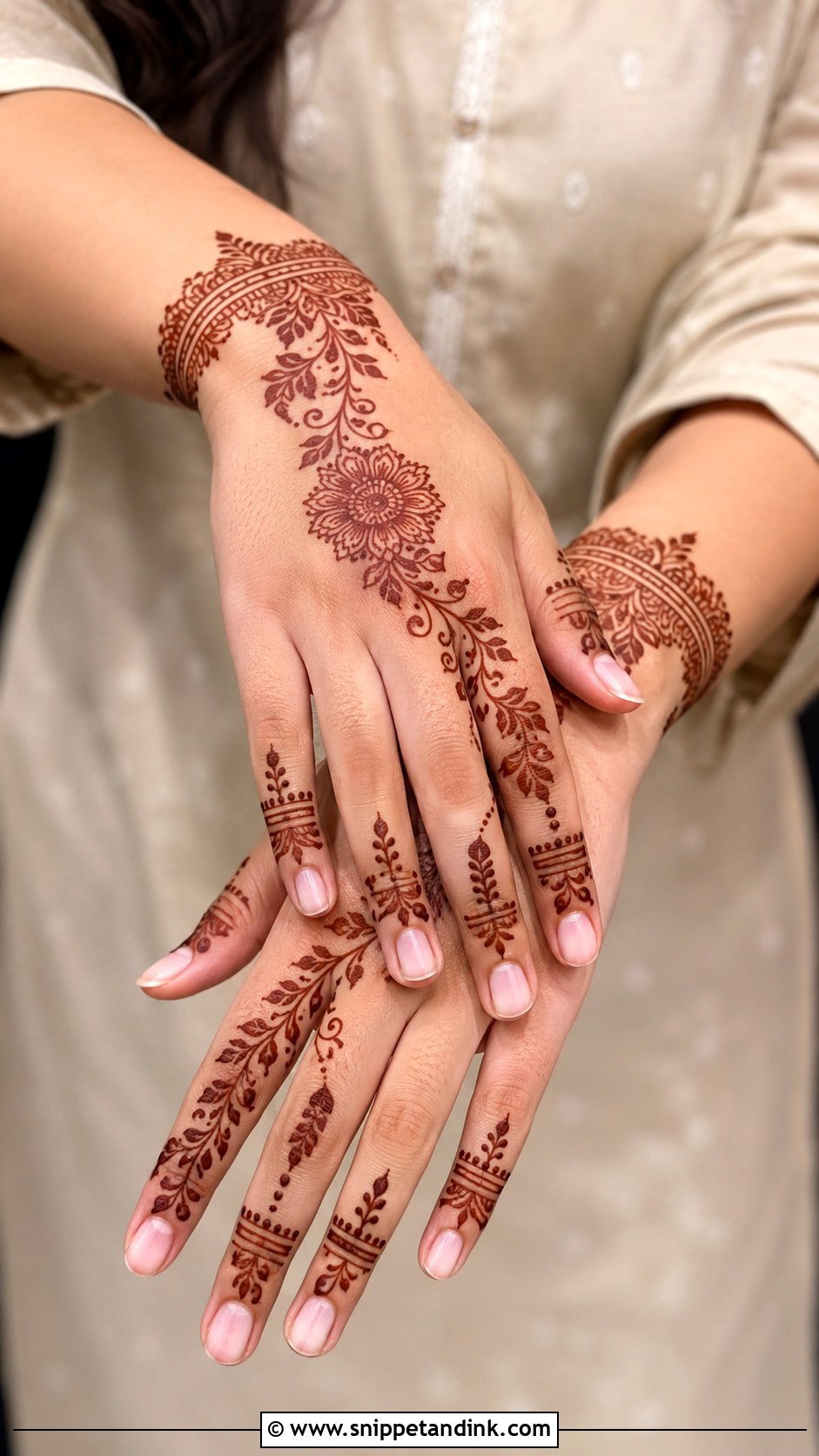
A single flower in the center, a few leaves extending toward the fingers and a light wrist band: about as quick as Eid mehndi gets. For an Arabic feel, place the flower off to one side and let the vine run diagonally. Dotted finger bands or small fingertip details finish it. Because it’s sparse, it dries fast, which helps when everyone is heading to bed at once. It’s my fallback for whoever arrives at the very end of the night.
31. Simple Front Hand Eid Mehndi Design
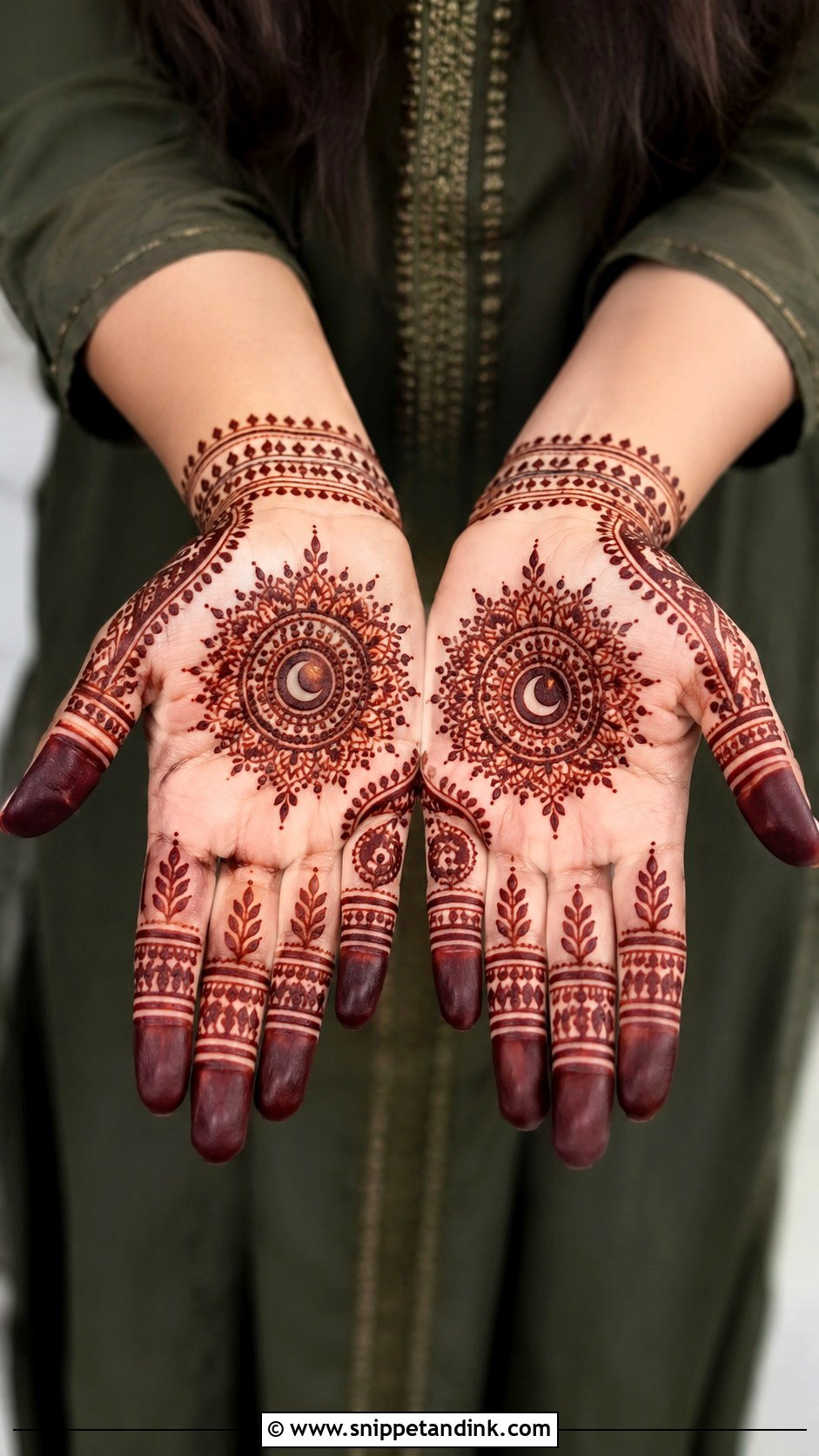
A round mandala, small paisleys around it and clean finger lines make a festive palm without much detail. Filled fingertips feel traditional; open ones feel modern. For Eid, a tiny crescent above the mandala or a dotted star border near the wrist marks the occasion. The flat palm makes steady lines easy, and with the paste left on overnight and kept away from water in the morning, the palm will reach the deepest color of anything on this list.
32. Eid Mehndi Design For Kids
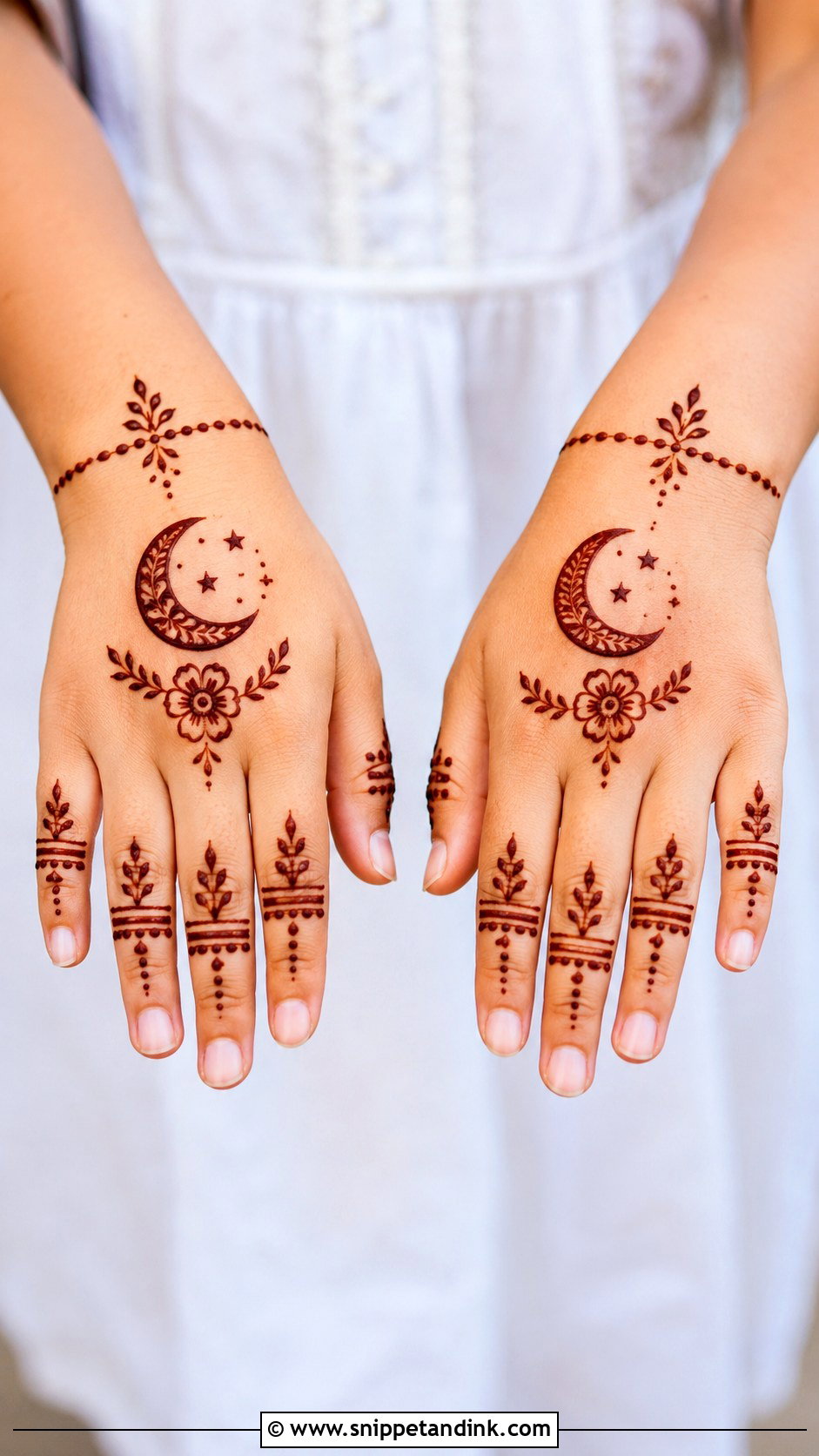
Children’s Eid mehndi has to survive fidgeting: a small flower, a crescent moon, stars and a dotted bracelet on the back hand, with bold lines and open space so it dries quickly. Skip detailed finger work, because kids move their hands before henna sets. One hand is often enough for little ones, or a tiny matching pattern on both. Use natural henna only, which gives a warm stain and avoids the harsh dyes found in black henna. Including them in the ritual matters more than the design.
33. Eid Mehndi Design With Stars
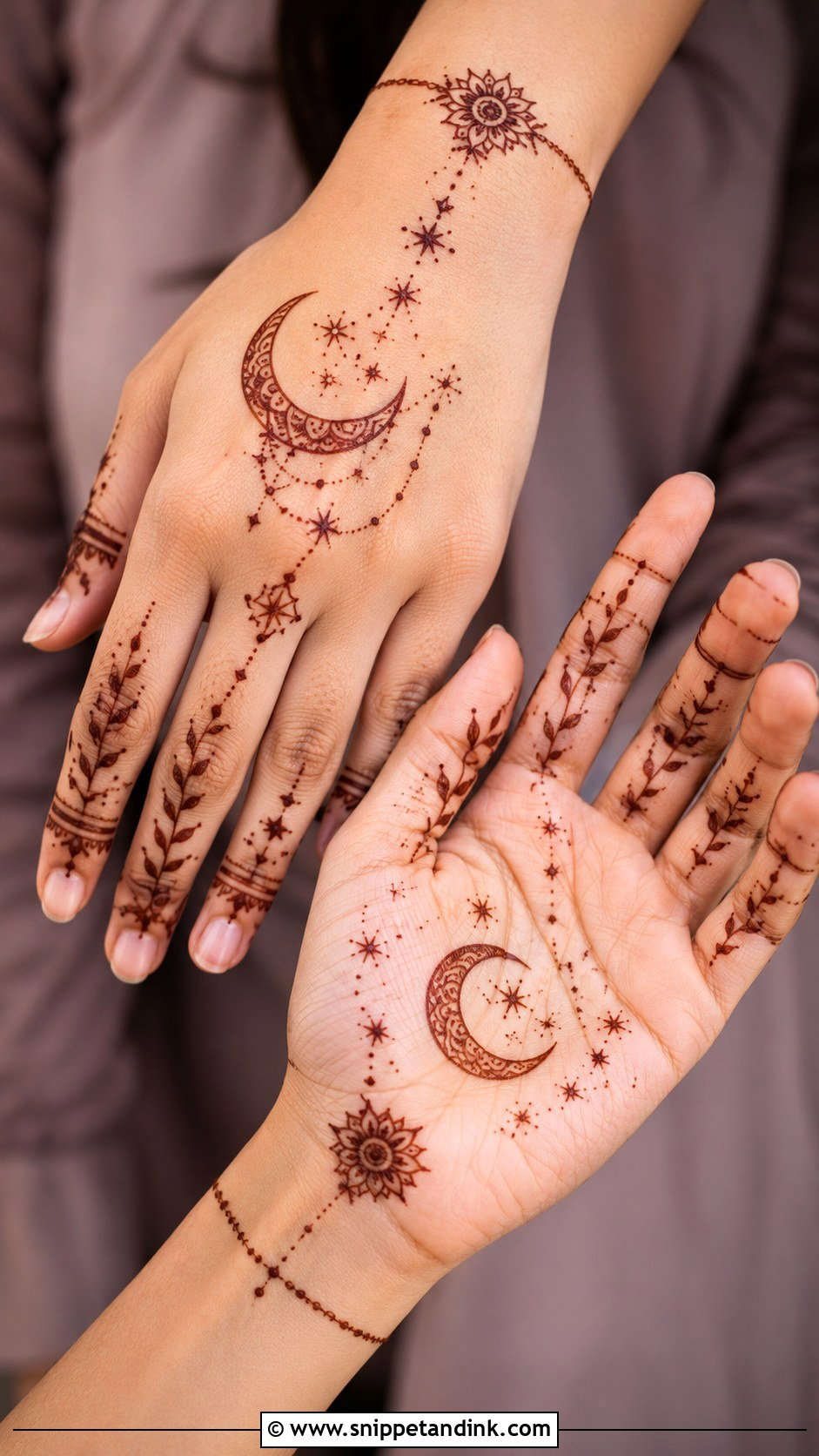
Stars feel playful, especially clustered around a crescent. A moon-and-star cluster on the back hand, linked to a wrist bracelet with dotted trails across the fingers, makes a complete look; on the palm, stars can circle a mandala or fill space around a flower. Keep them small and neat. I draw tiny stars as short strokes radiating from a dot rather than tracing a five-point outline, and they stay crisp even at a very small size.
34. Eid Mehndi Design For Short Fingers
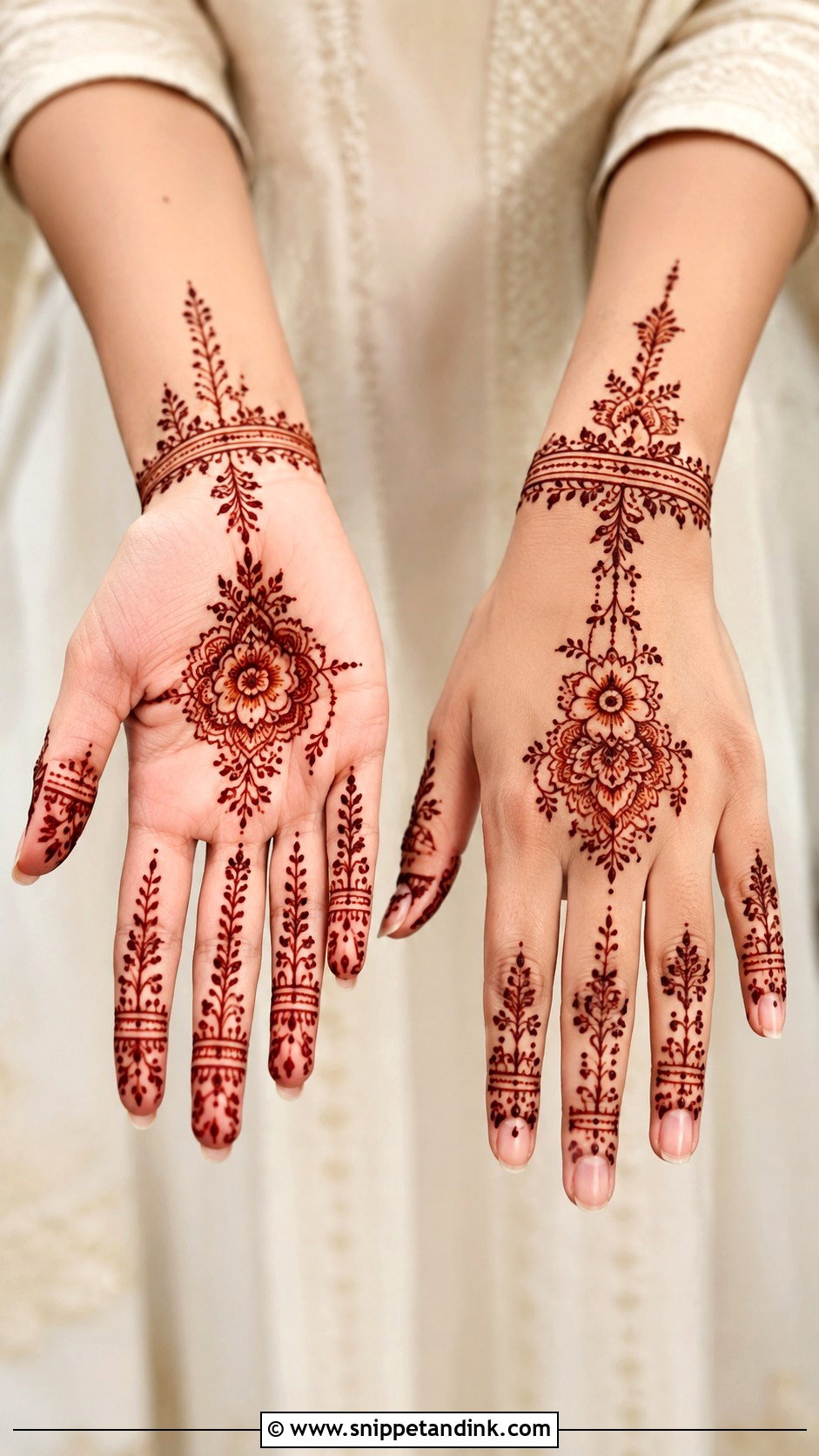
Short fingers look longer with vertical movement and less weight at the tips. Vertical vines, slim finger bands and a central back-hand or palm motif draw the eye upward. Filling every finger solid shortens them visually, so I decorate the middle section of each finger with fine lines, leaves and dots and keep the tips lighter. On the palm, choose a mandala or floral trail that flows smoothly into the fingers. Direction and spacing do more for hand shape than any single motif.
35. Eid Mehndi Design For Dark Skin
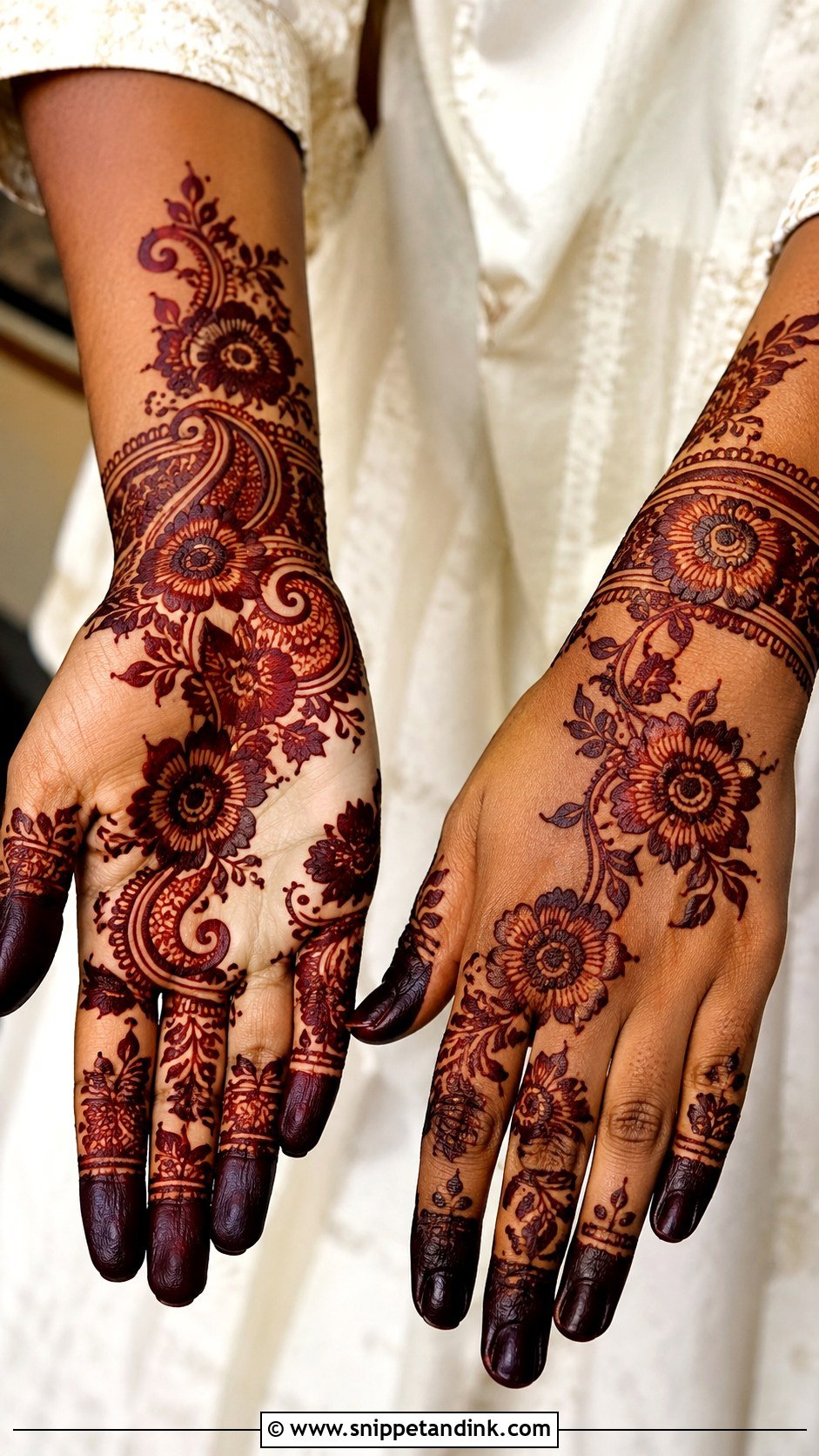
On deeper skin tones, henna shows best with strong shapes, clean spacing and a fully developed stain. Bold florals, clear paisleys, filled fingertips and wide Arabic vines read clearly; fine details still work but need open space around them. Palms usually show the deepest color, while back-hand designs need thicker outlines. Good paste and patient aftercare matter more here than anywhere, because a pale, half-developed stain is what disappears against darker skin. Done well, the contrast is warm and very defined.
Sleeves, Bangles and Rings Decide Where the Design Should Sit
Before I start an Eid design, I ask what the person is wearing, because the outfit decides which parts of the hand will actually be seen.
- Long or embroidered sleeves hide the wrist and forearm, so I put the detail on the back of the hand and fingers instead.
- A stack of bangles covers the band of a bracelet design. Draw the band slightly higher, or let the bangles take its place.
- Statement rings sit at the base of the fingers. Keep that area lighter so the ring isn’t lost against dark lines.
- Three-quarter sleeves leave the forearm on show, which suits a trail that carries on past the wrist.
When Eid means a day in the kitchen
For many families, especially at Eid al-Adha, the day involves hours of cooking and washing up. Water, soap and scrubbing fade a fresh stain quickly, so wear rubber gloves for dishes and meat preparation, and rub a little balm or oil into your hands before you start. Keeping the palm lighter and putting the main design on the back of the hand also helps, since palms take the most wear in a busy kitchen.
One Design, Two Hands, a Whole Day of Visiting
Eid mehndi is far easier when you’ve settled on a look before Chaand Raat begins. Simple mandalas, Arabic trails, crescent moons, bracelets, jaali, florals and full-hand layouts all have their place. What matters is how much time you have, what you’re wearing and how comfortable you want to be through a long day. For something quick, pick a minimal back-hand or finger design. For something richer, go for Indian, Indo-Arabic or bridal-inspired coverage. Clean lines, natural henna and careful placement will do the rest.
You'll Like These Ideas:


Leave a Reply