
More of my brides now ask for less henna, not more. Some are having a courthouse ceremony, some want their rings and bangles to be the jewelry, and some simply don’t want to sit for six hours. Minimal mehndi answers all of them: fine lines, a single mandala or flower, a finger pattern, a bracelet, an open Arabic trail. The same layouts work for roka, Eid, an engagement or a cousin’s sangeet, and they scale up or down easily for different ages and hand sizes. If you like simple henna but want it to look deliberate in photographs, the thirty designs below are the ones I’d put on the table at a consultation, with what I’ve learned about each from actually drawing it.
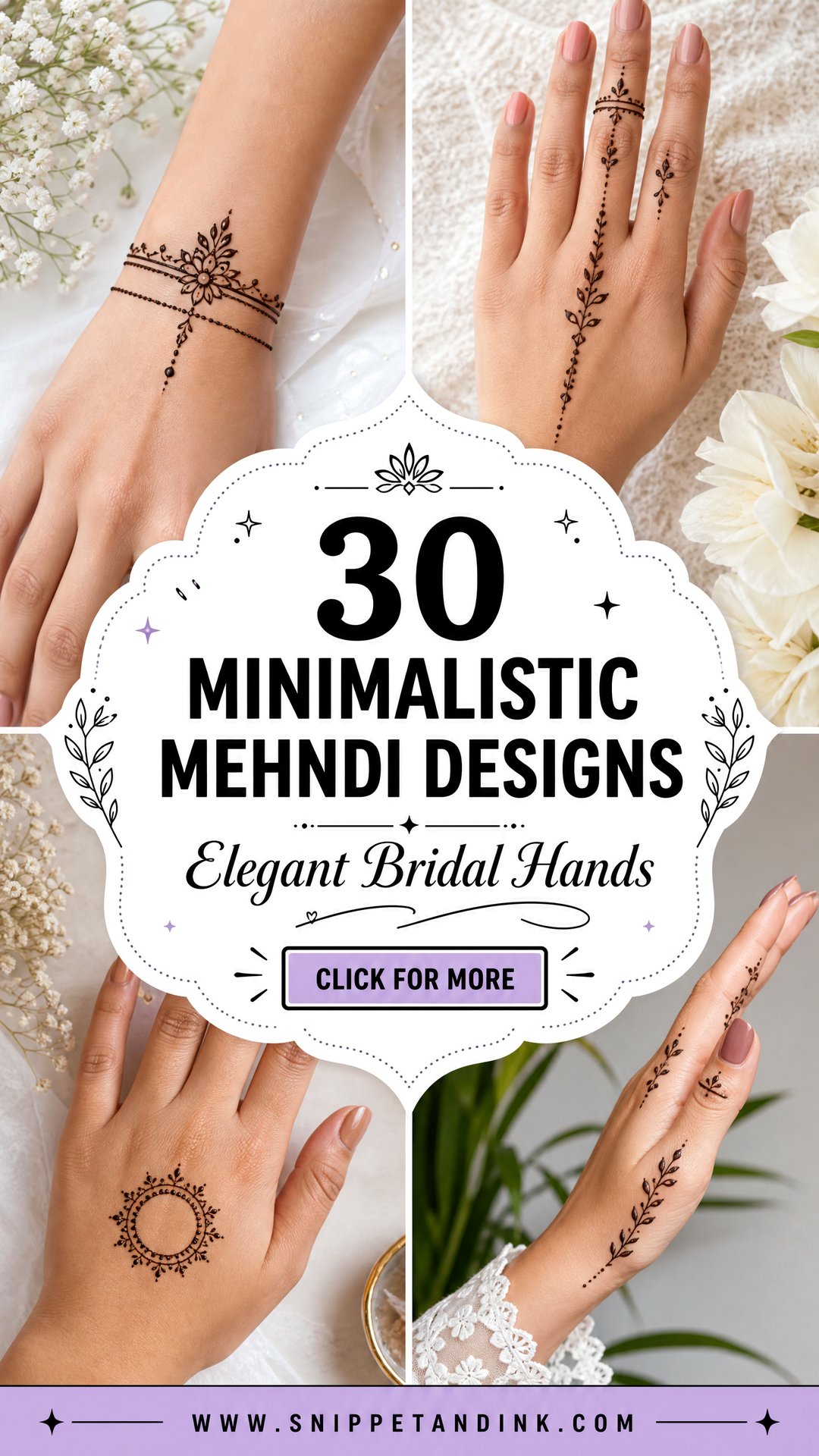
Fitting Minimal Bridal Henna Into the Wedding Week
Minimal designs take a fraction of the time of a full bridal hand, but the timing around them still matters. Henna stains darker for a day or two after the paste comes off, so I schedule a bride one or two days before the ceremony, never the same morning. The rest of your beauty prep has to fit around it.
- Waxing, scrubs and any hand treatments first. Exfoliating after henna lifts the stain along with the dead skin.
- A manicure before the henna appointment, not after; soaking and cuticle work fade the fingertips fastest.
- Henna next, with a free evening afterward so the paste can stay on for six hours or more.
- Nail polish last, if you want it, applied carefully over stained fingertips the day before the wedding.
Bring a photo of your outfit, especially the sleeve and cuff. A three-quarter sleeve or a heavy kada changes where I stop the design, and it’s much easier to plan that at the start than to work around it afterward.
1. Minimal Mandala Back Hand Mehndi
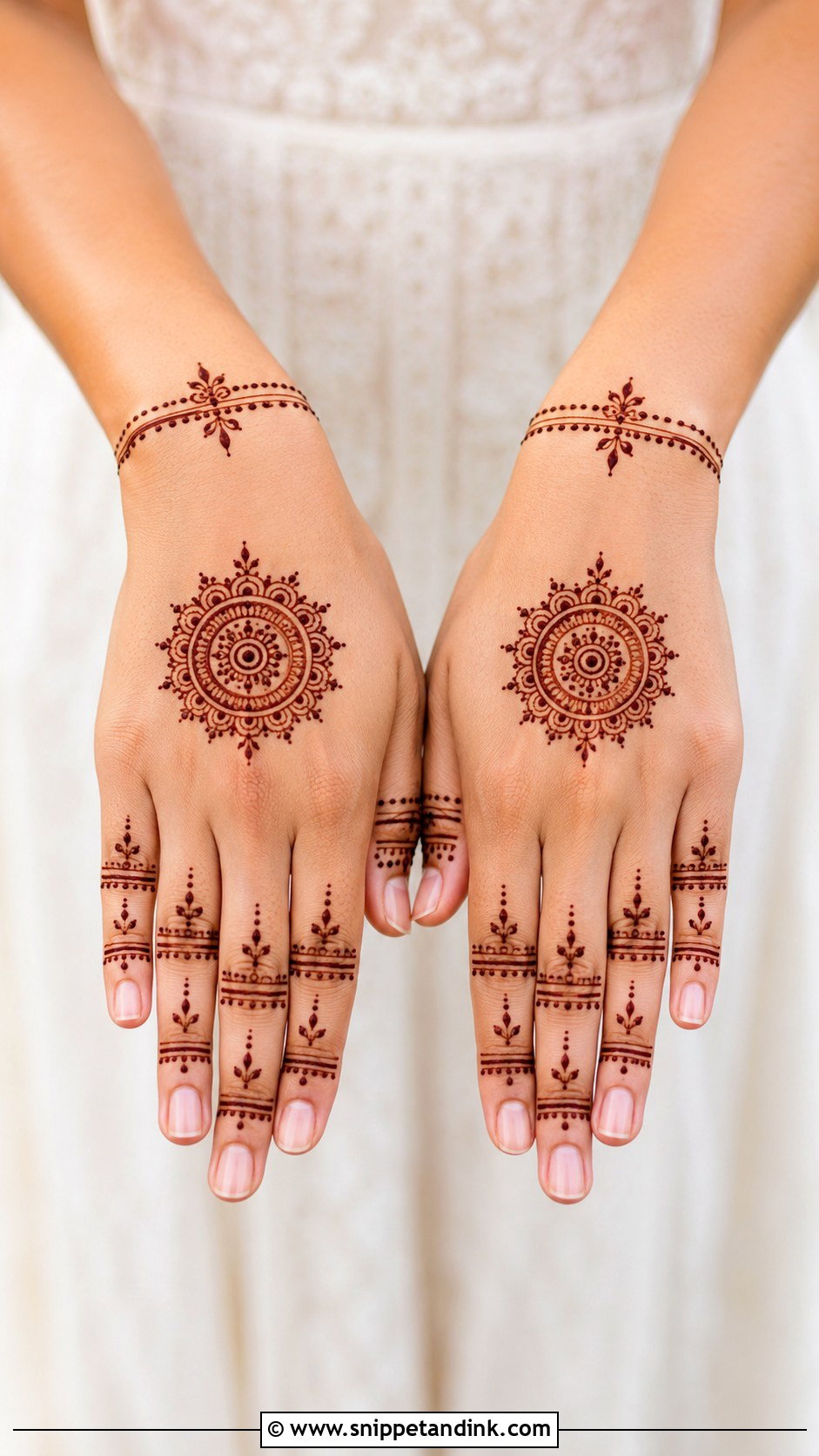
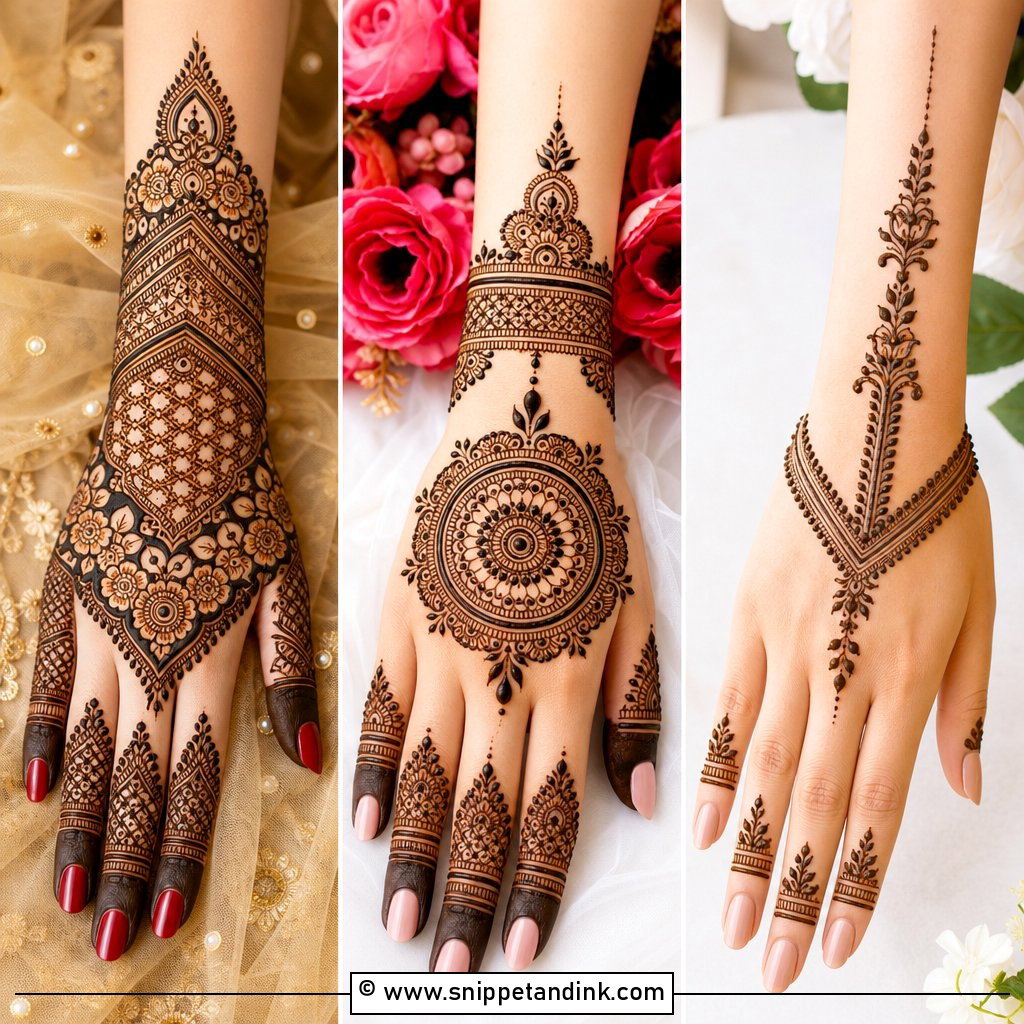
One central circle on the back hand, with the fingers kept light in dots, short lines or slim leaves, is the design I’d hand to a nervous first-timer. Everything balances around a single shape, so there’s very little to get wrong. I draw the outer ring of the mandala before the inner detail; if the outer ring is round, small wobbles inside it go unnoticed. Leave the wrist bare or add one thin bracelet line, and keep the skin around the circle open so it stays crisp once it stains.
2. Simple Finger Mehndi Design
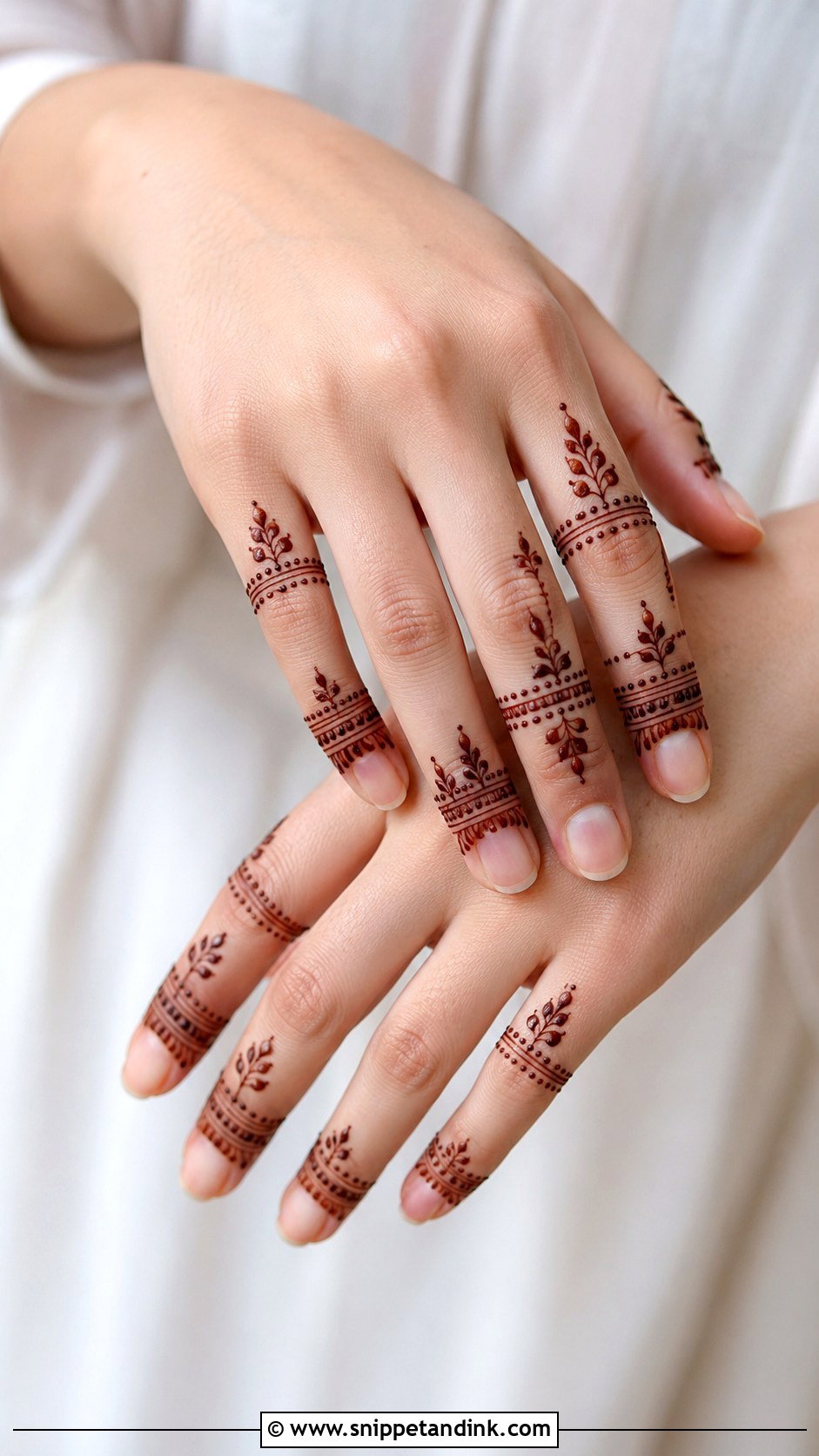
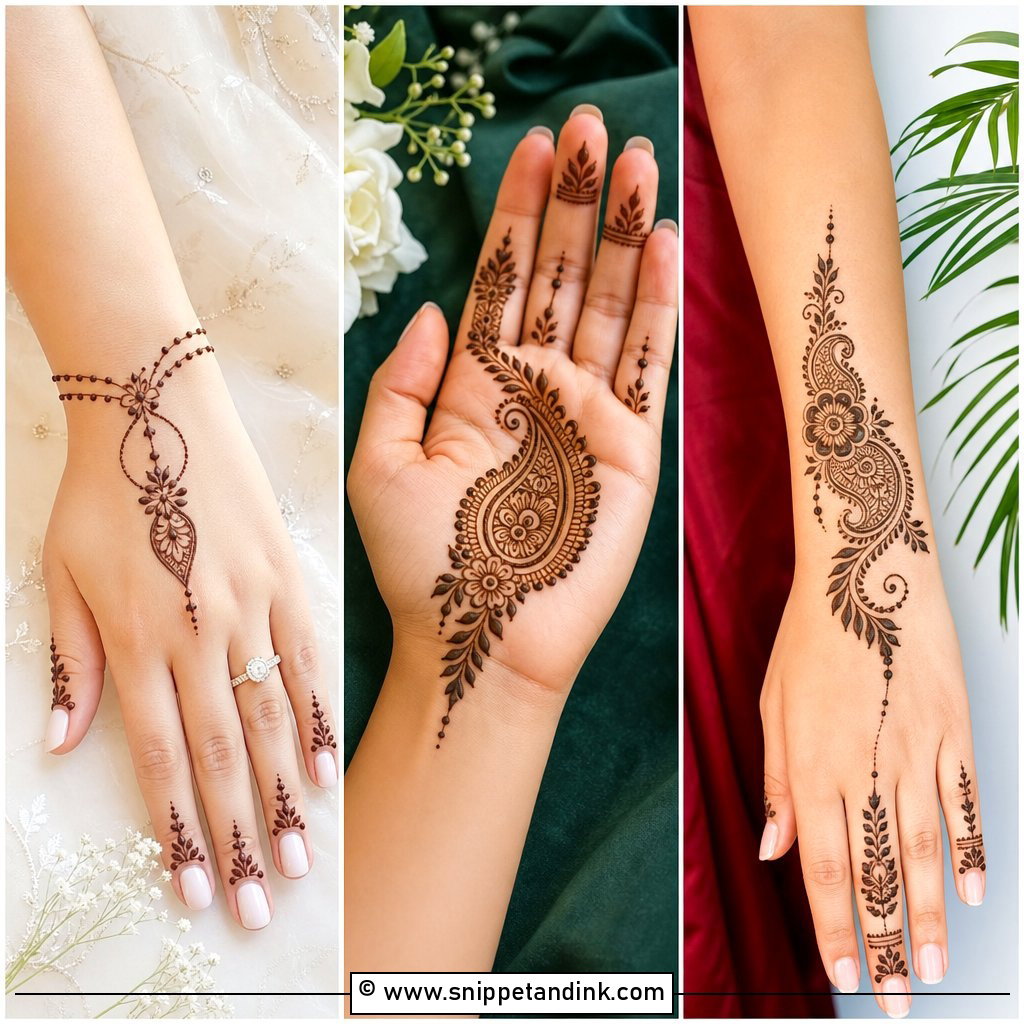
Fingers only, with the palm and back hand left completely bare: slim bands, a few tiny leaves, dotted lines and small floral tips. It’s the fastest design I do, and the fingertips stain dark, so it looks richer than its size suggests. Thin lines with small gaps between each band read cleanest. The trade-off is wear. Fingers are washed and used constantly, so expect the band edges to soften within a few days, sooner for anyone who cooks.
3. Minimal Arabic Mehndi Design
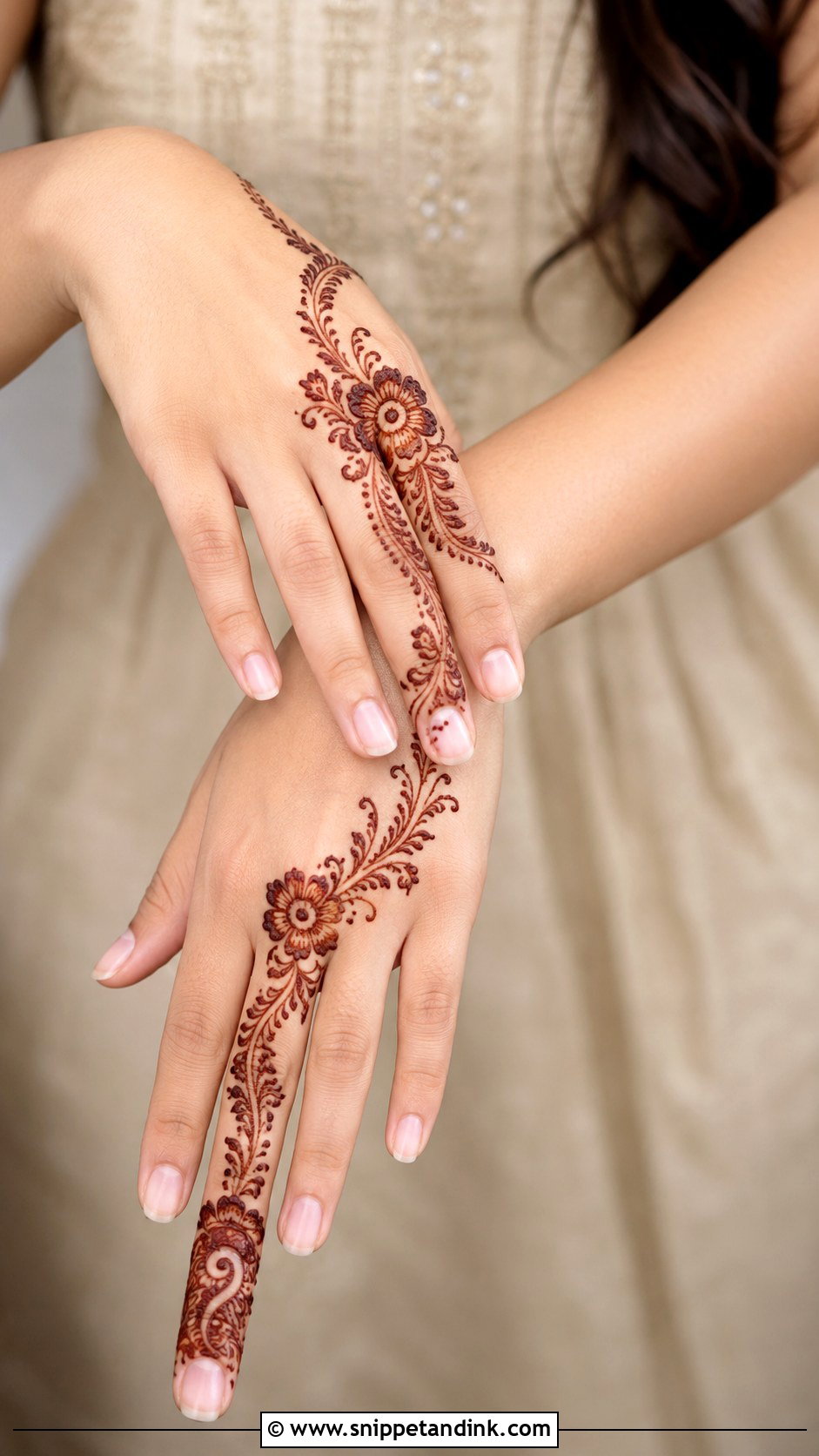
Minimal Arabic henna gives you a graceful trail that runs diagonally from the wrist to one finger, built from flowers, leaves, a paisley or two and dotted accents. The gaps are as important as the lines; I plan where the bare skin will be before I place the first flower. Bold flowers give a clearer Arabic feel, and fine leaves soften it. It’s quick enough for Eid morning and holds up through a small wedding or party.
4. Small Floral Back Hand Mehndi
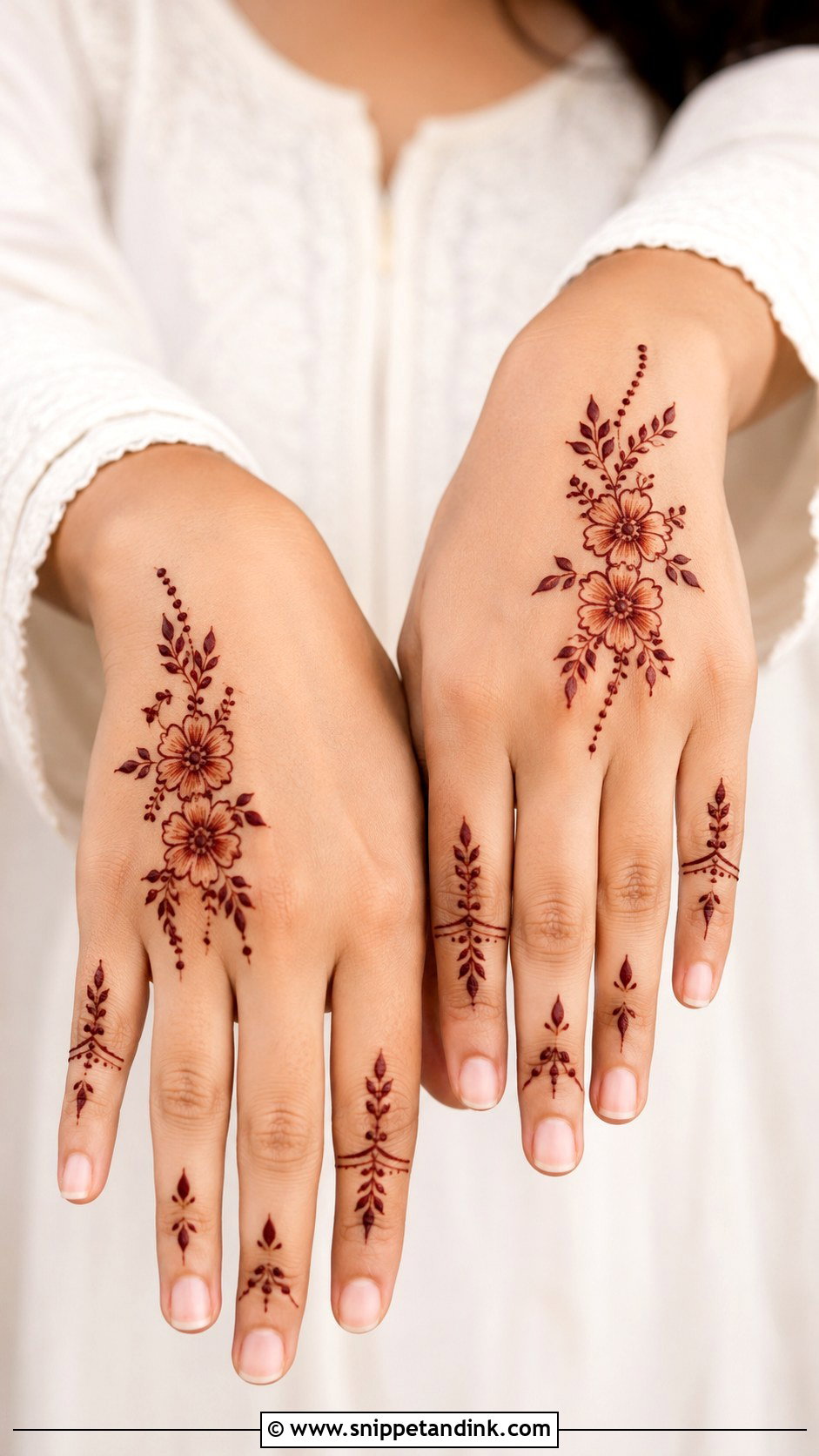
One or two small flowers near the center or side of the back hand, linked by tiny leaves or a dotted trail, with matching mini petals on the fingers. I’d pick rounded petals for a softer, younger look and pointed ones for something sharper. The thing I watch with small florals is the petal tips: if they touch each other, the stain fills the gap and the flower turns into a dot. Spaced properly, the deep maroon stain shows every petal. Teens and bridesmaids ask for this one often.
5. Minimal Palm Mehndi Design
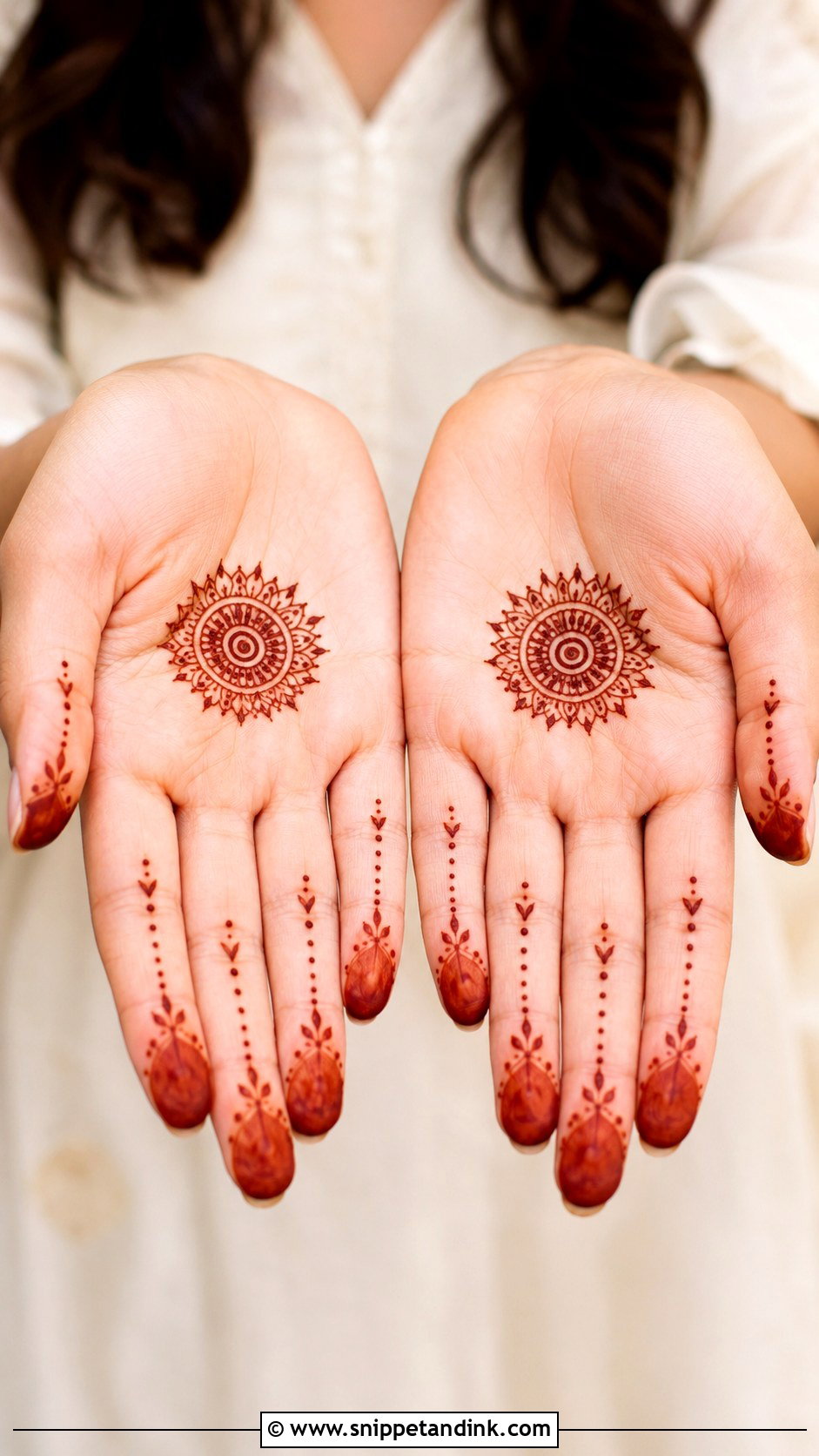
The palm is flat, warm and takes the deepest color on the hand, so a small mandala, lotus or leafy circle there looks finished without much else. I decorate the center, leave the outer palm open, and fill the fingers lightly with dots, tips or narrow rings. You still get that moment of opening your hand to a dark stain, without the heaviness of a fully covered palm. It suits pooja, Eid and small bridal ceremonies. Plan to keep your hands out of water for the rest of the day, since palms lose paste fastest.
6. Bracelet Mehndi Design
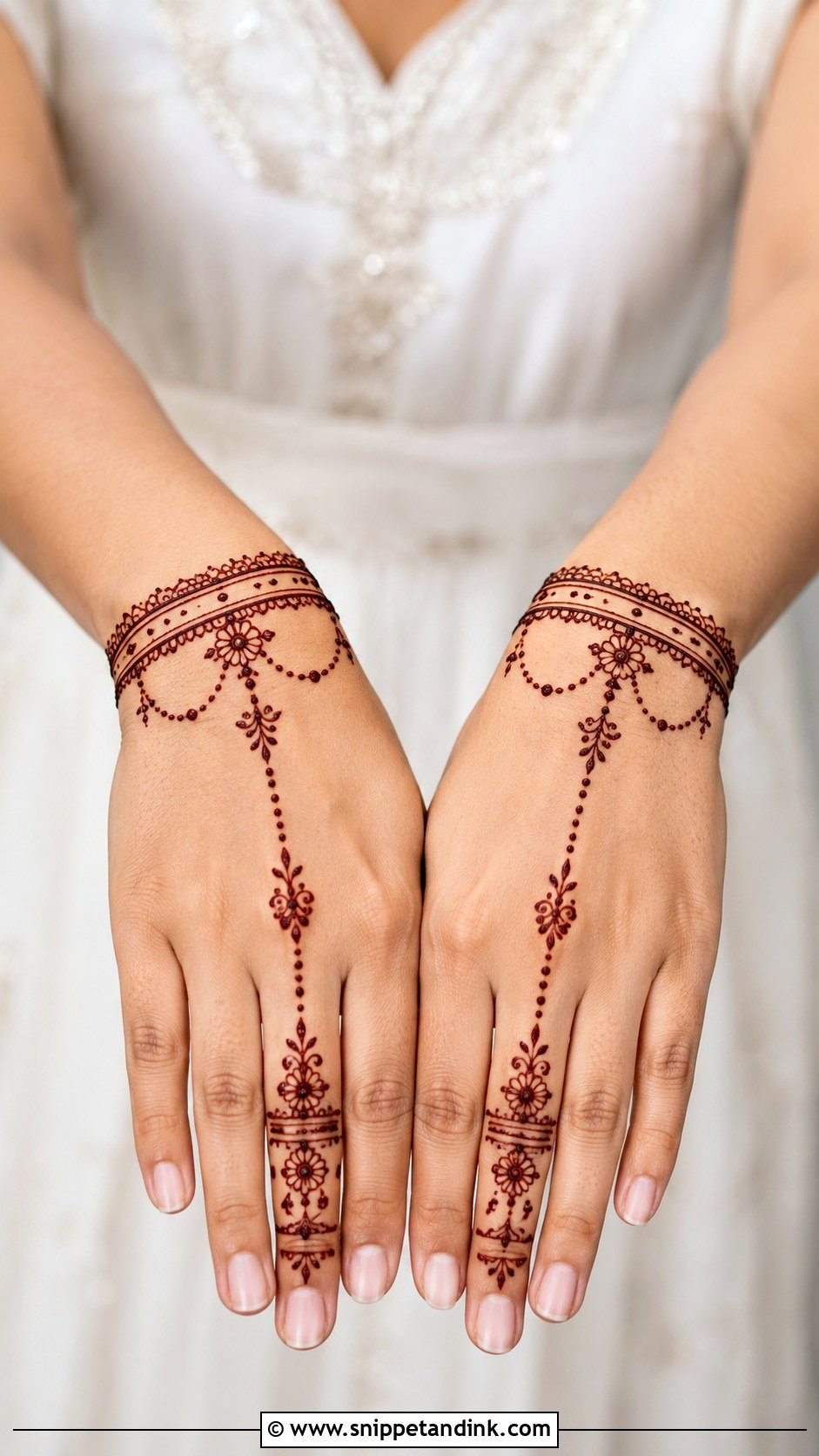
Drawn around the wrist like a cuff, sometimes with a thin line running up to one finger for a hand-harness effect. I make the chains finer for office-friendly henna and bolder for festive outfits. Even spacing is what makes it read as jewelry; uneven gaps look like a smudge from across the room. One thing to know: the wrist stains lighter than the hand and real bangles rub it all day, so I’d skip stacking bangles until the next morning.
7. One Finger Mehndi Design
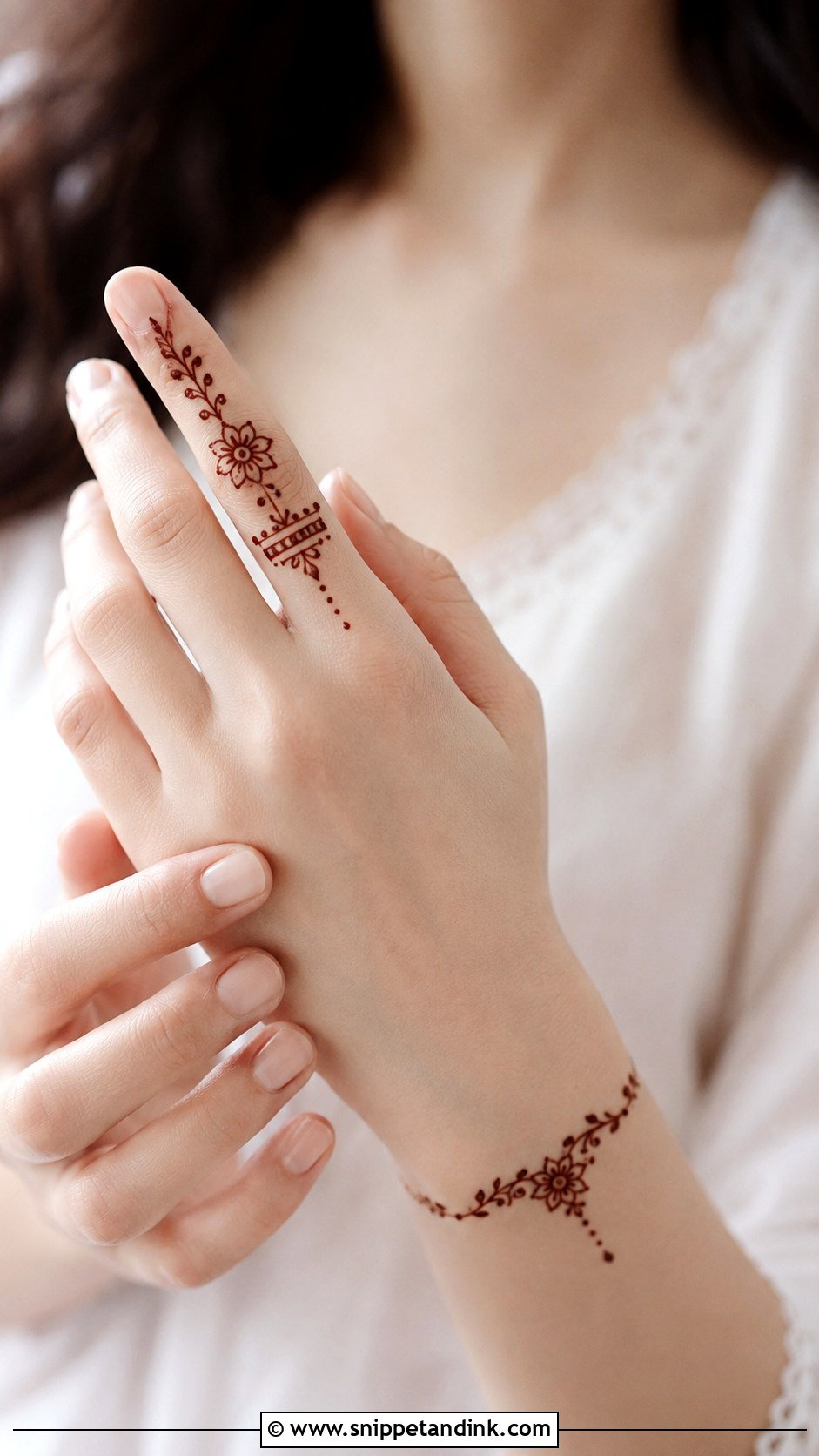
Here only one finger is decorated, usually the index or middle, with tiny florals, a vine, dots or rings, plus a small accent at its base or near the wrist so it doesn’t look like a stray mark. It takes minutes. I find it reads best when the decorated finger isn’t the ring finger, so the henna and the ring aren’t fighting for attention in photos. It’s fashionable, fast and very easy to hide if you need to.
8. Minimal Front Hand Mehndi
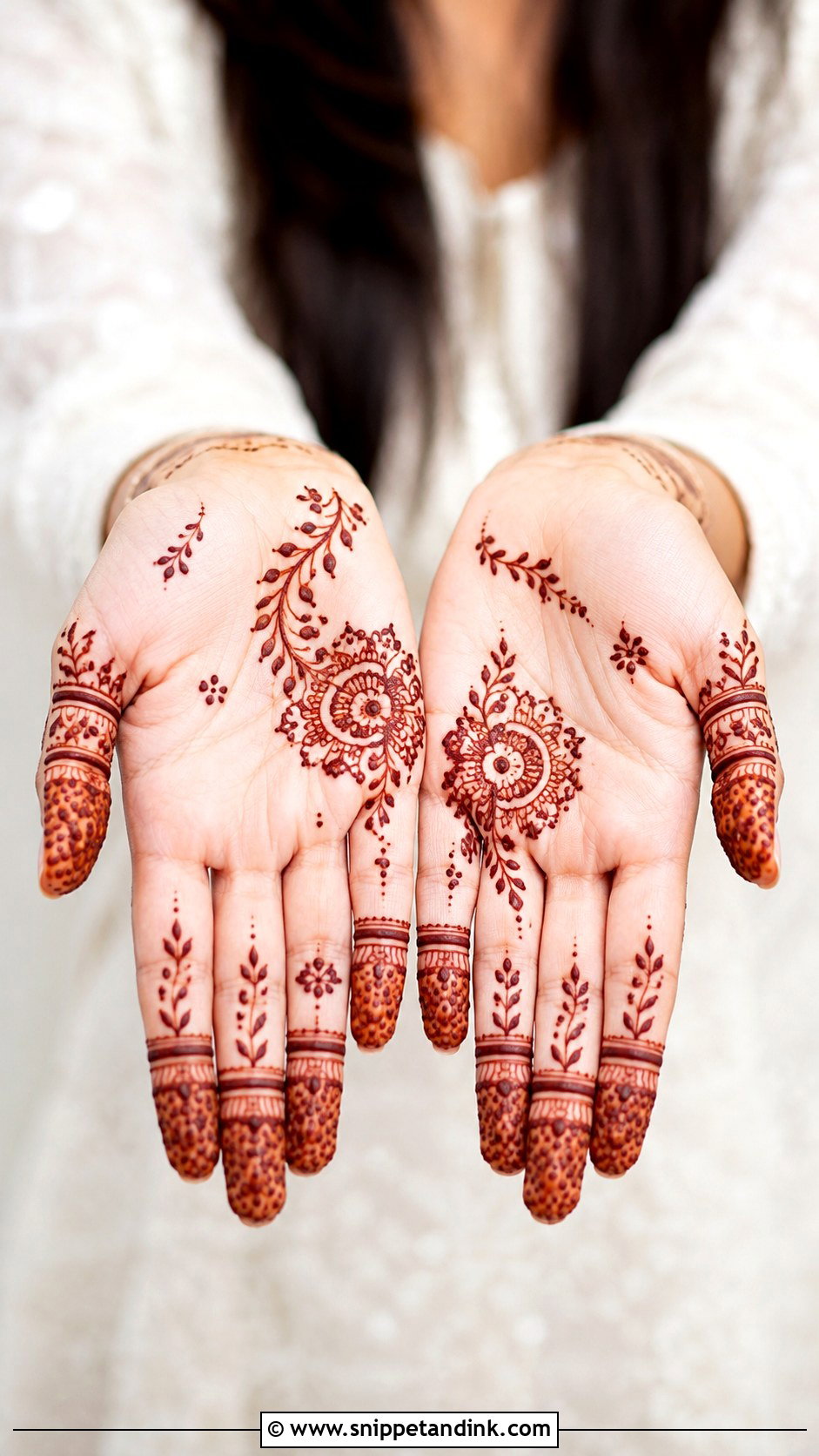
If dense henna on the inner hand bothers you, this keeps the palm spacious: a small mandala, a leafy vine or a floral corner on the palm, with thin lines and dots on the fingers. Placing the main motif slightly off-center makes it feel more modern. Because the palm stains so deeply, those few motifs end up the darkest part of the design, which is why I’d keep them small. It sits comfortably with ethnic wear and casual clothes alike.
9. Leaf Trail Mehndi Design
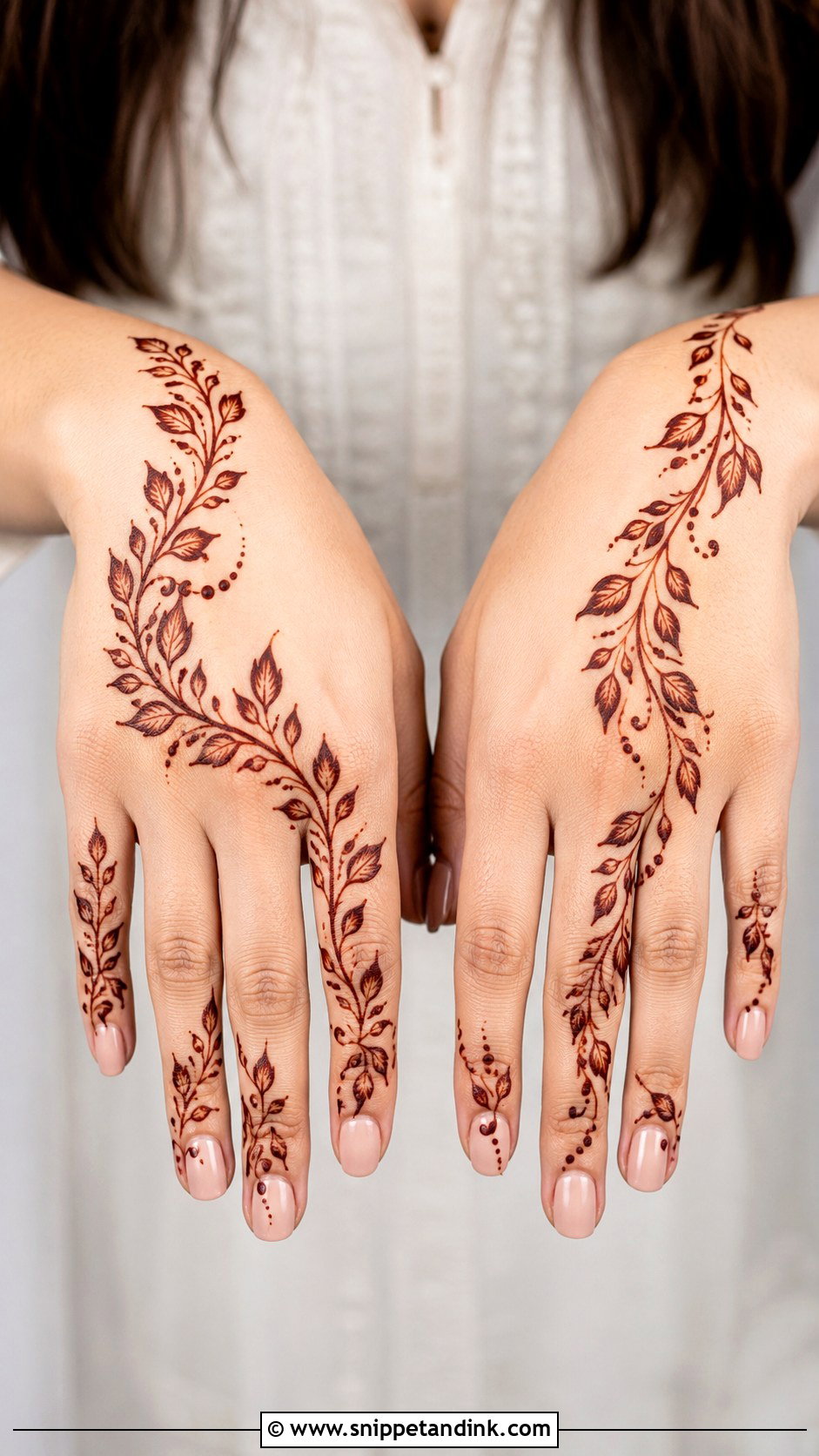
A trail of small leaves and curved stems that starts at the wrist, crosses the back hand and finishes near the index or middle finger. On long fingers I let the trail continue upward; on small hands I shrink the leaves and space them further apart, otherwise the trail looks cramped. Diagonal gives it an Arabic feel, straight gives it a cleaner modern one. It needs no filling at all, which also makes it one of the quickest designs to dry.
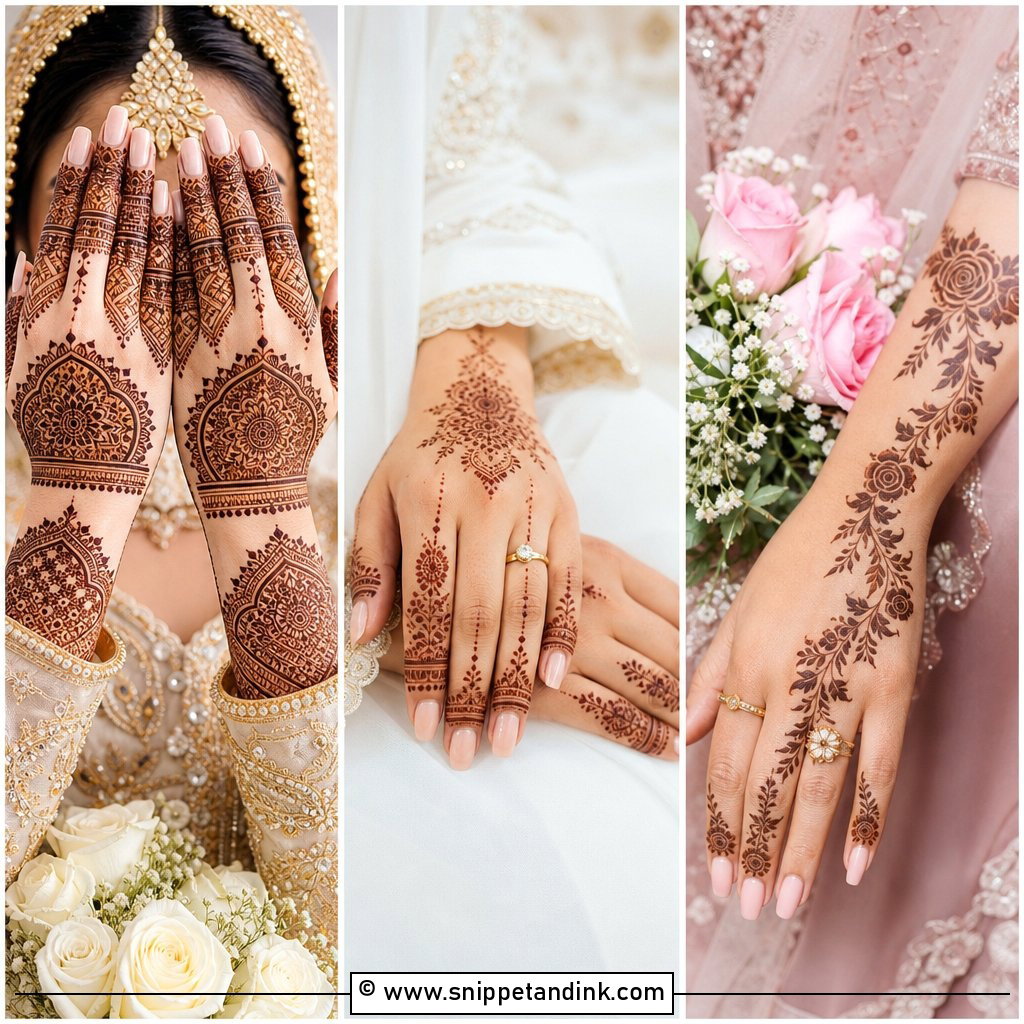
10. Minimal Bridal Mehndi Design
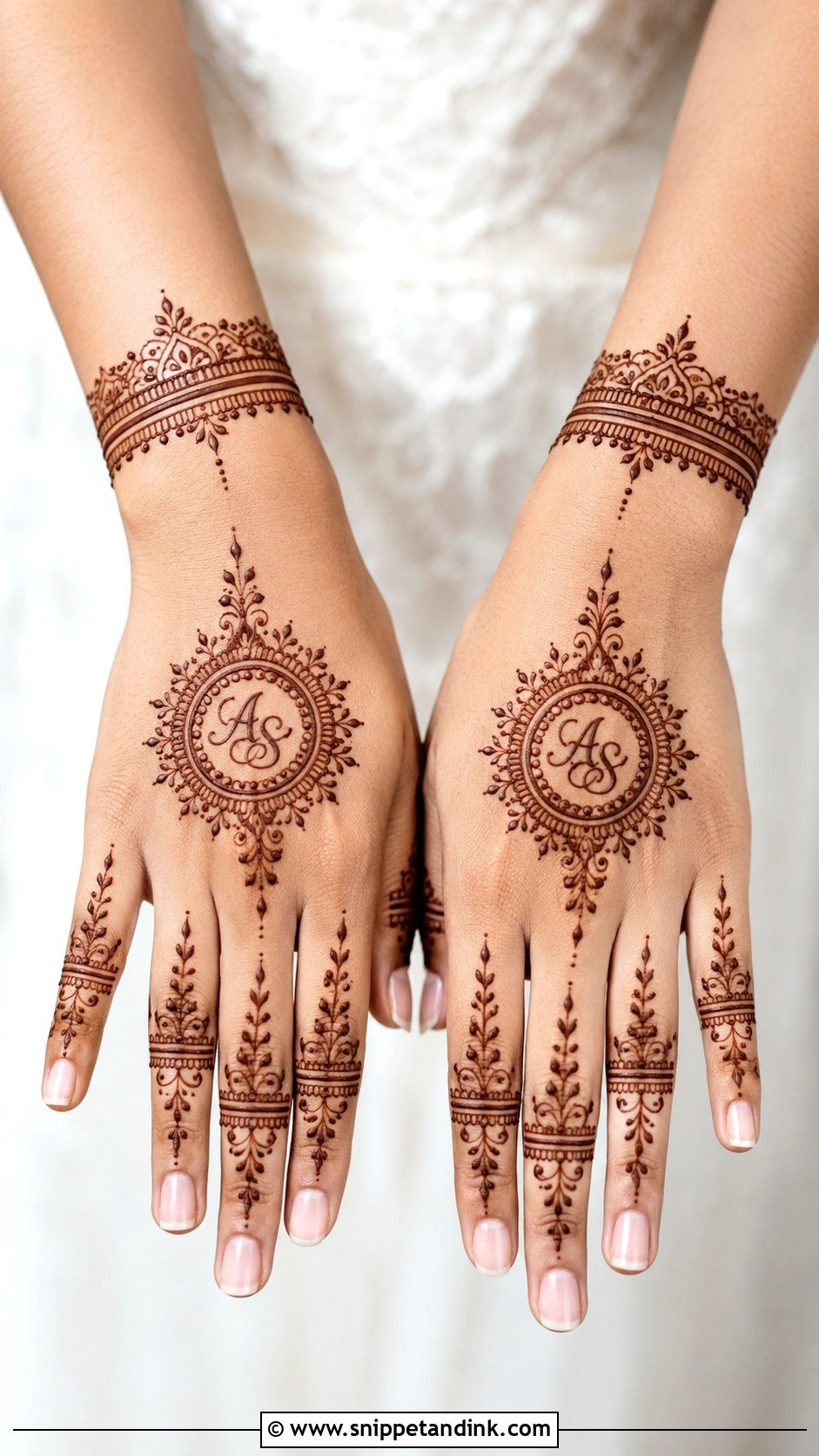
Not every bride wants dense mehndi from fingertip to elbow. A minimal bridal design keeps the meaning but uses lighter coverage: a central mandala, small paisleys, slim wrist cuffs, delicate finger work, perhaps the couple’s initials hidden in a petal. I always draw both hands as a matched pair for a bride, because in ceremony photos the hands are held together and a mismatch shows immediately. Modern brides, courthouse weddings and engagement ceremonies suit it best, along with anyone who wants henna they can sit through comfortably.
11. Minimal Eid Mehndi Design
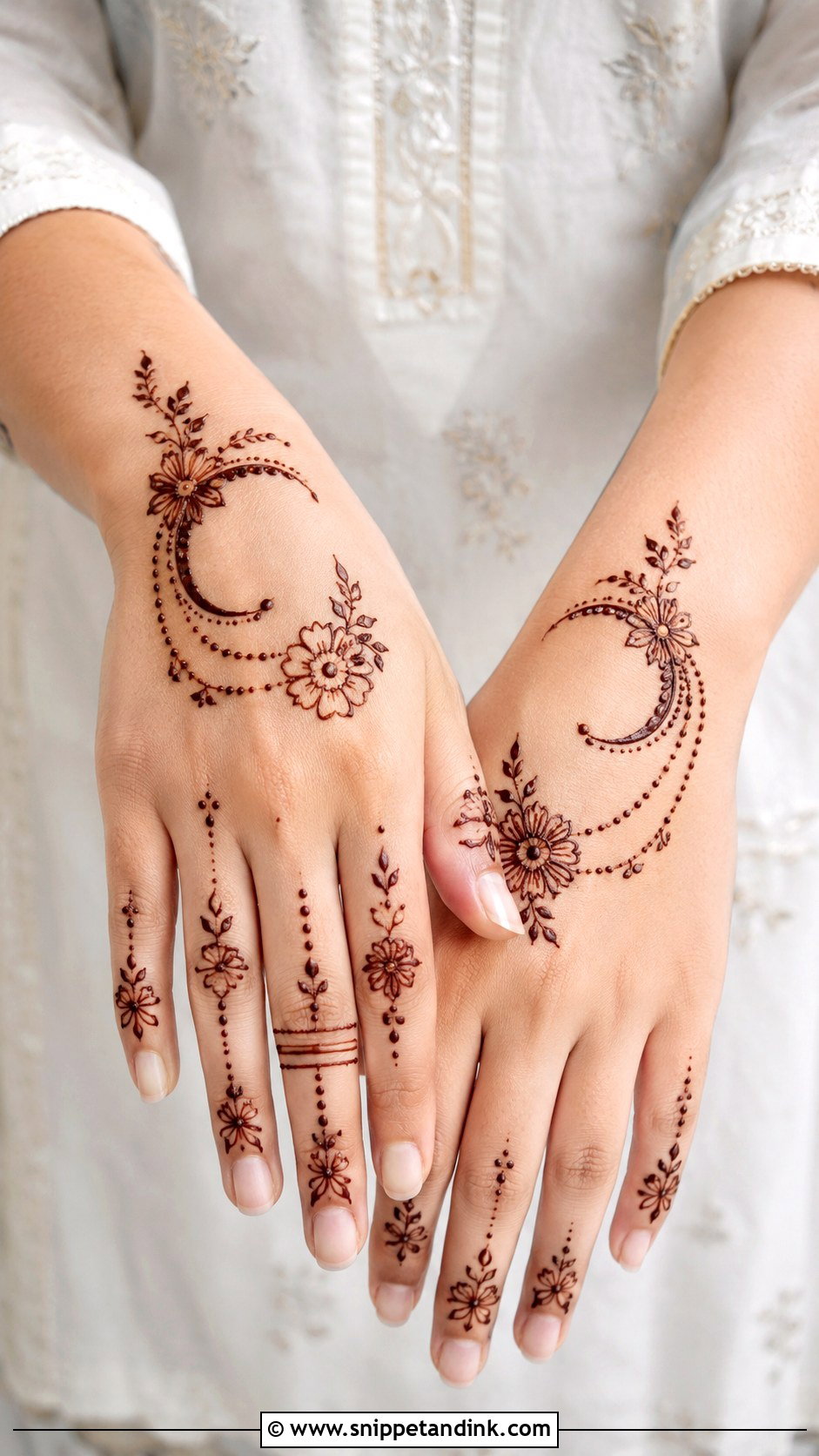
Eid mornings are busy, so Minimal Eid mehndi design requests usually come the night before, and they have to dry fast. A back-hand trail, a finger pattern or a palm mandala with florals, crescent-like curves, dots and leaves all work. I’d pick one statement area, the fingers or the wrist, and keep everything else open. That way it looks neat with bangles and festive outfits, and kids and adults alike can sit for it without fidgeting.
12. Minimal Engagement Mehndi Design
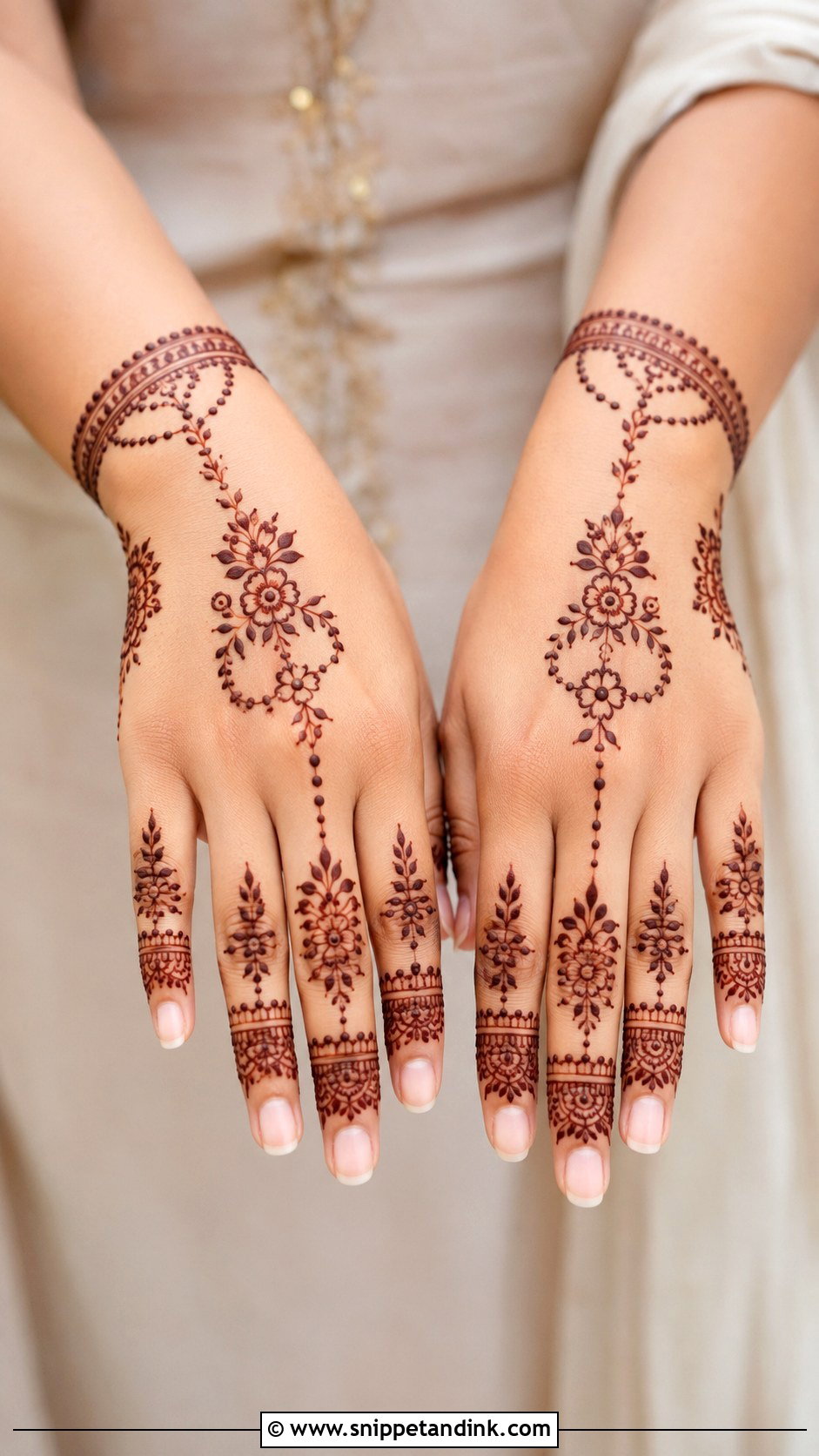
The rule I follow for engagement henna is simple: never cover the spot where the ring will sit. Back-hand layouts frame the fingers well in close-ups, whether that’s a bracelet pattern, a diagonal floral trail or a small mandala with fine finger accents. I keep the ring finger lighter than the others so the ring, not the henna, is what the photographer focuses on. It works with pastel outfits, modern lehengas, sarees and gowns.
13. Minimal Indo Arabic Mehndi Design
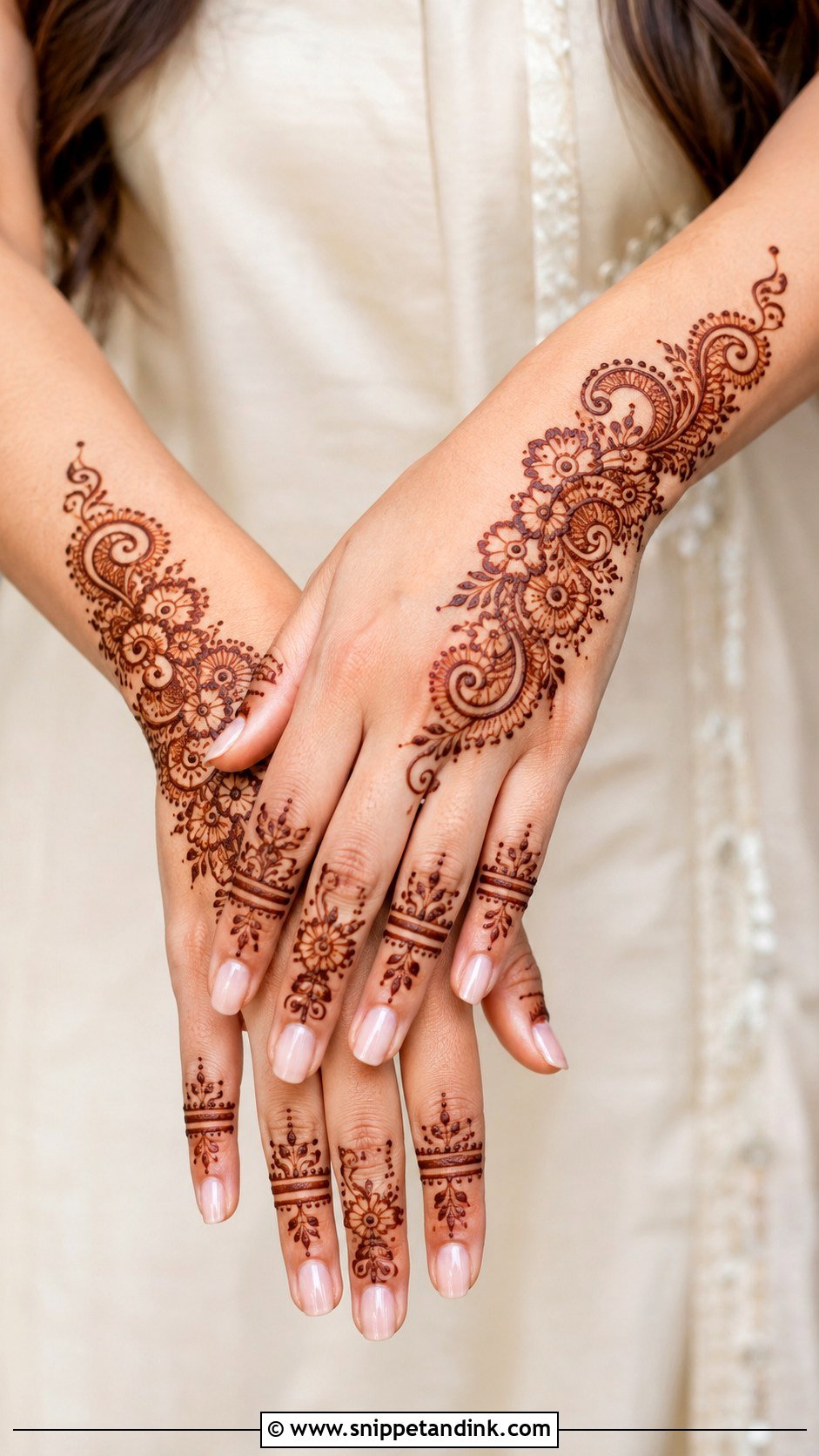
Minimal Indo Arabic mehndi design mixes the open spacing of Arabic henna with the traditional detail of Indian work: a diagonal floral trail, a couple of small paisleys, dotted borders and lightly decorated fingers. It feels fuller than plain minimal henna without covering the hand. I keep the paisleys outlined rather than shaded, because heavy shading in this style tips it back into a full traditional look. A good middle ground for weddings and family events.
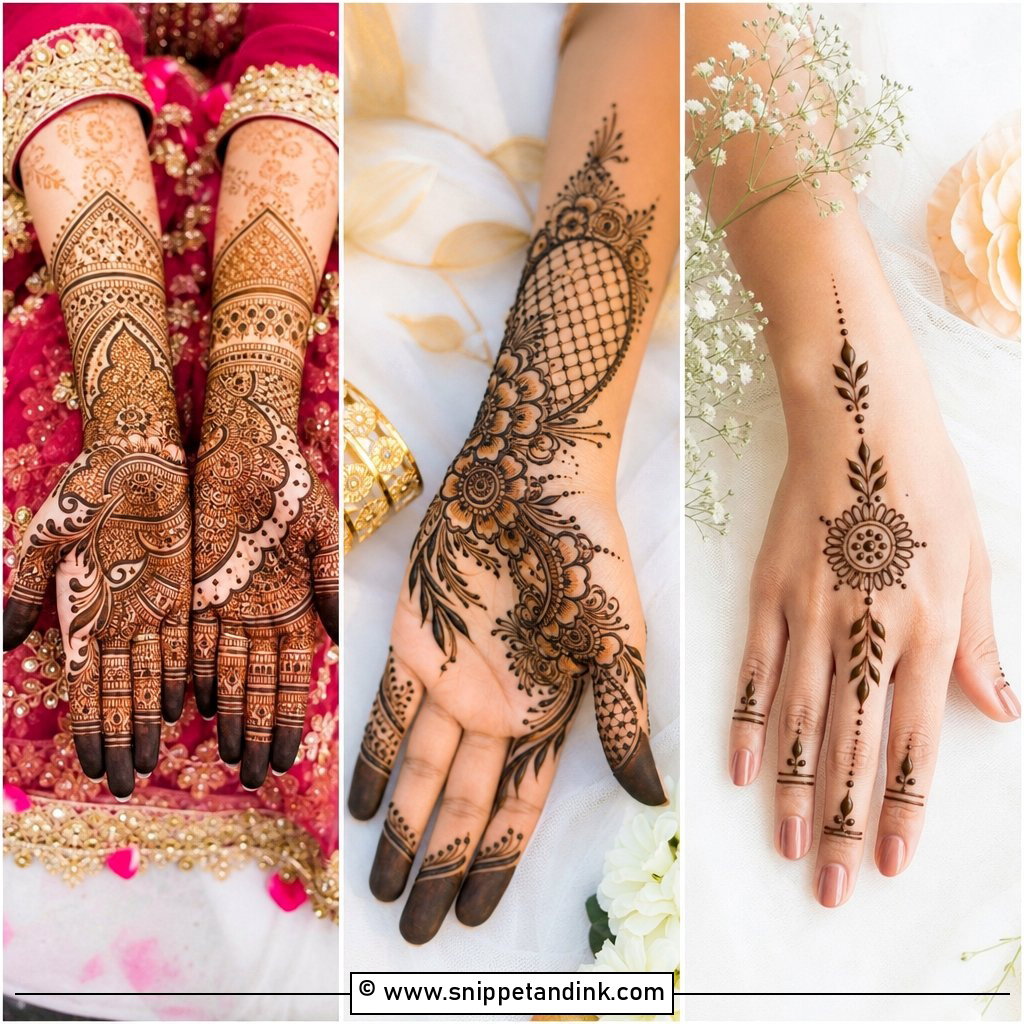
14. Minimal Jaali Mehndi Design
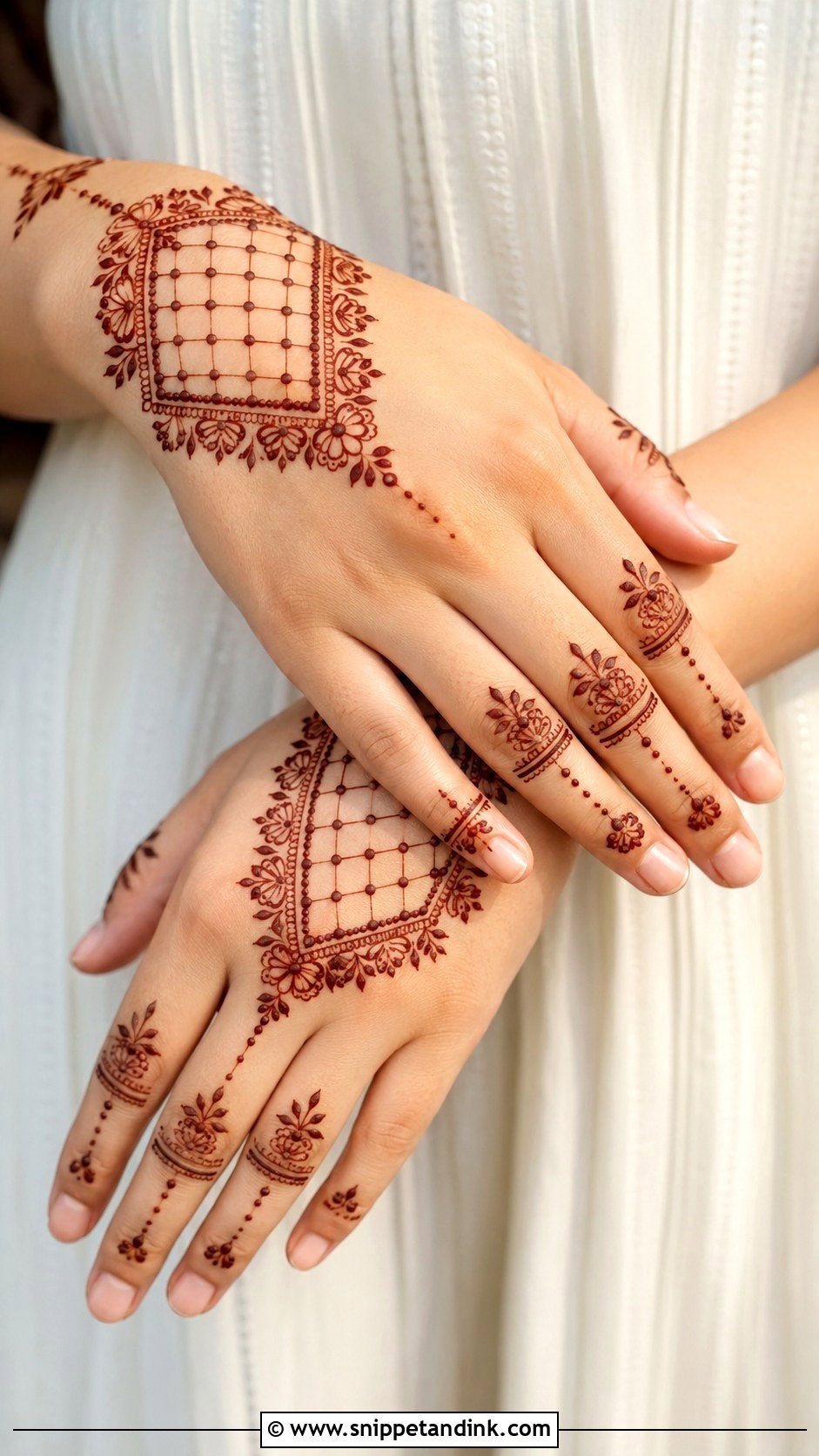
Jaali is a fine mesh, and it’s the most paste-sensitive element in this list. Grainy or thick paste makes the crossing lines bleed together, so the mesh stains as a solid patch. I use small sections only: one side of the back hand, inside a bracelet cuff, or a finger panel, paired with simple flowers, dots or a slim border. More than two jaali areas and the hand starts to look heavy. Done finely, it’s refined enough for elegant traditional outfits and festive dinners.

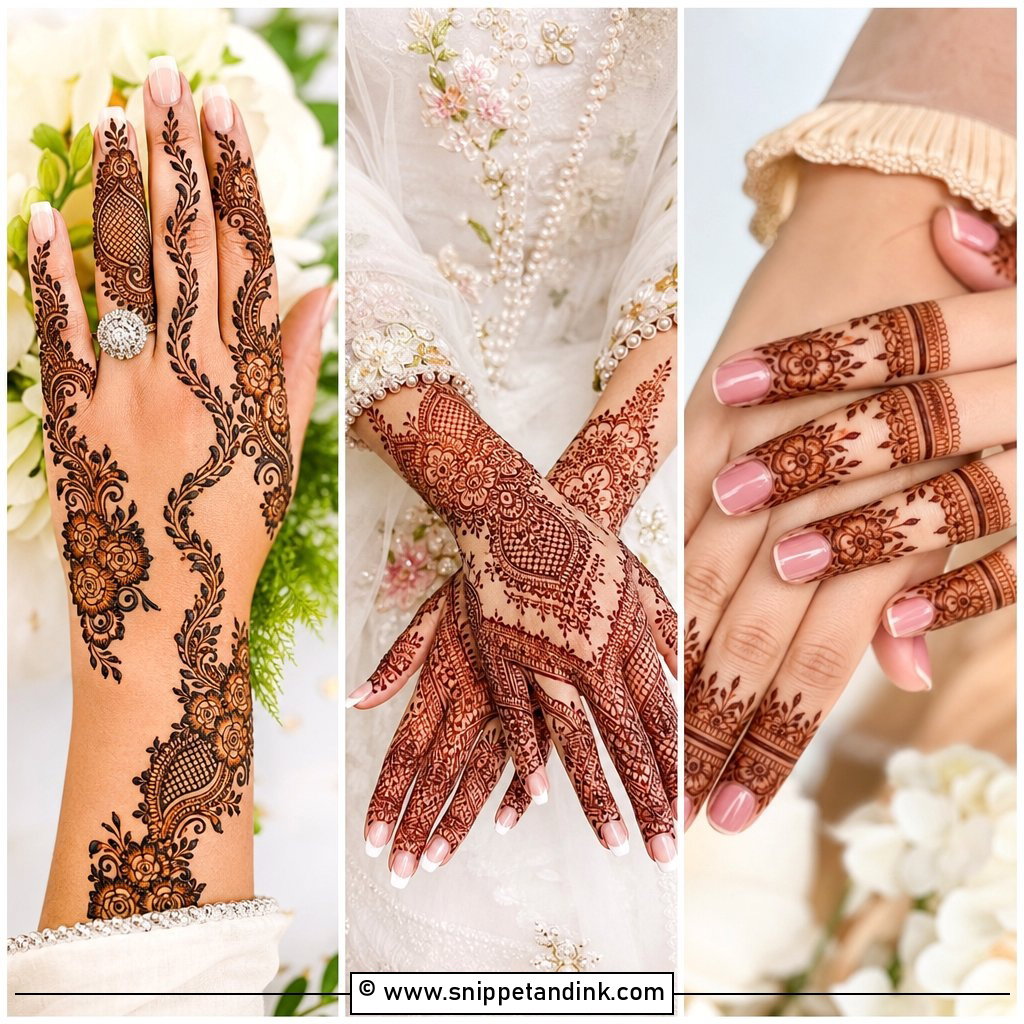
15. Minimal Paisley Mehndi Design
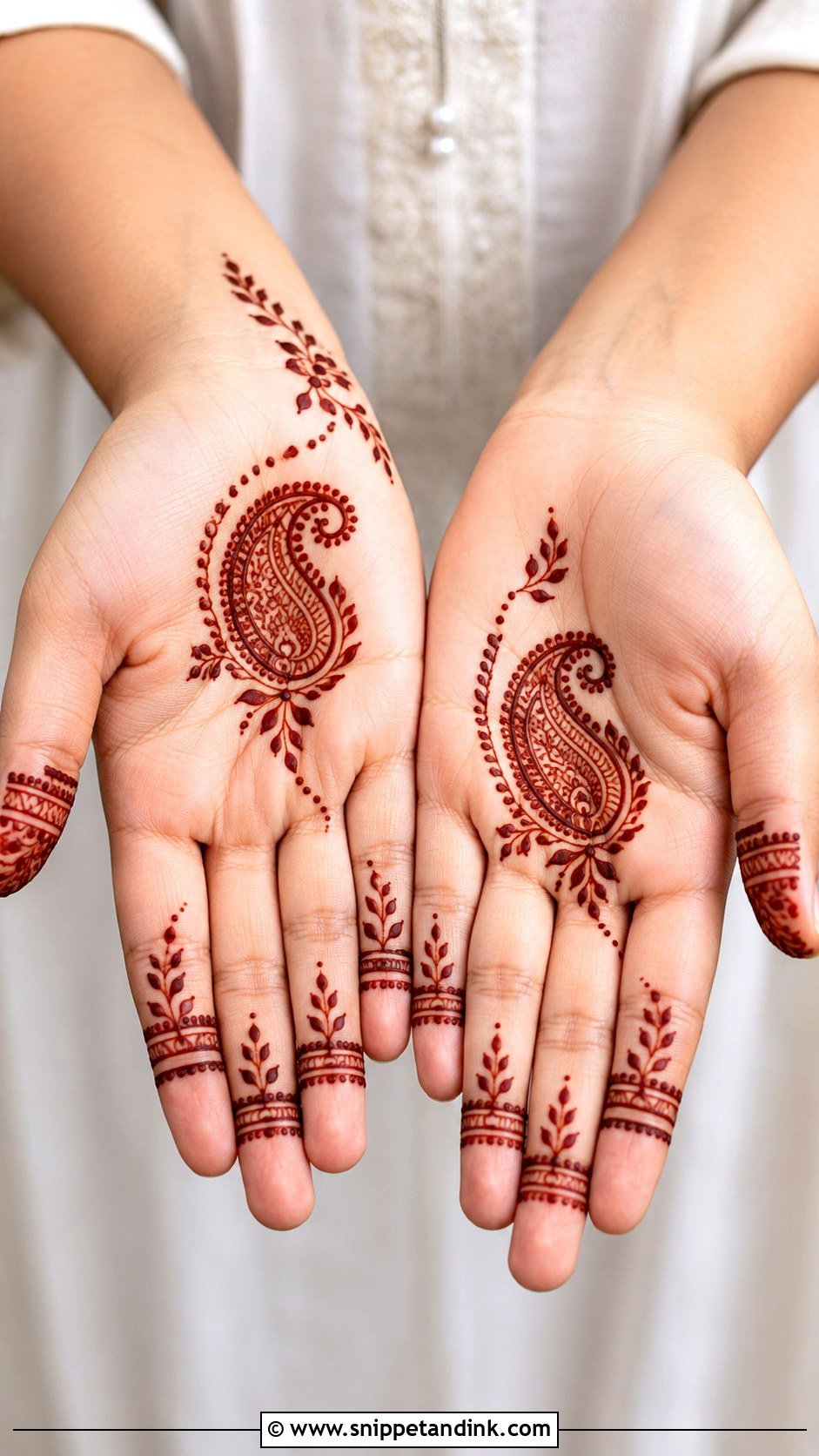
Paisley is the most traditional motif here, and used once it looks surprisingly modern. One medium paisley on the palm or back hand, surrounded by tiny leaves, dots and curved lines, with small bands or fingertip details. I resist filling the inside of the paisley; a few fine strokes are enough, and an open paisley stains much cleaner than a shaded one. Good for anyone who wants a nod to tradition without full coverage.
16. Minimal Wrist Mehndi Design
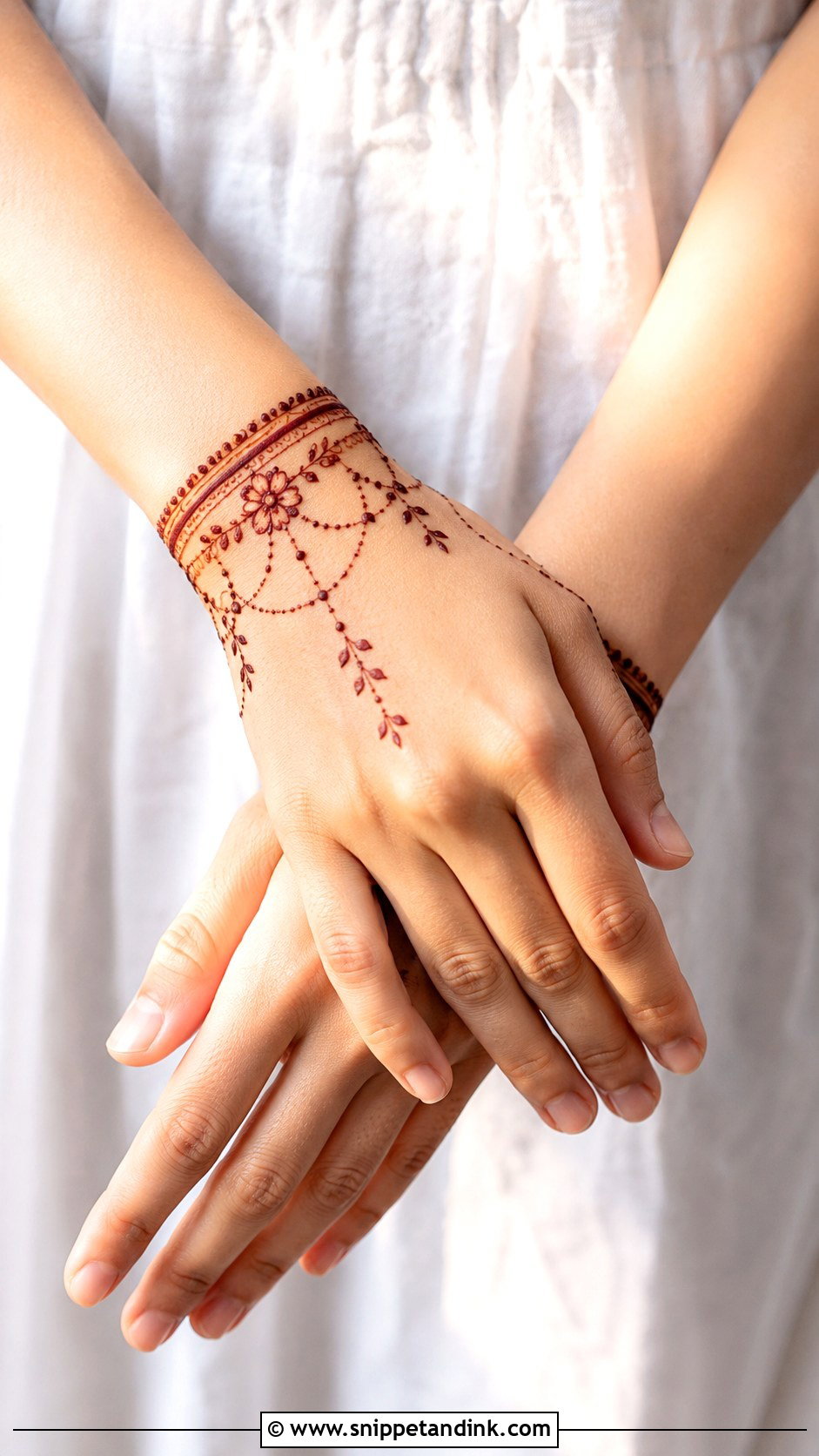
Henna that stays at the wrist, in thin bands, small flowers, leaves, dots or chain-like lines, with perhaps one slim vine toward a finger. I recommend it most to people who work with their hands, nurses, cooks, anyone washing constantly, because the wrist gets less friction than the palm and fingers. Symmetrical looks more like jewelry, a slight curve looks more organic. The stain will be lighter than on the hand, so ask for slightly bolder lines.
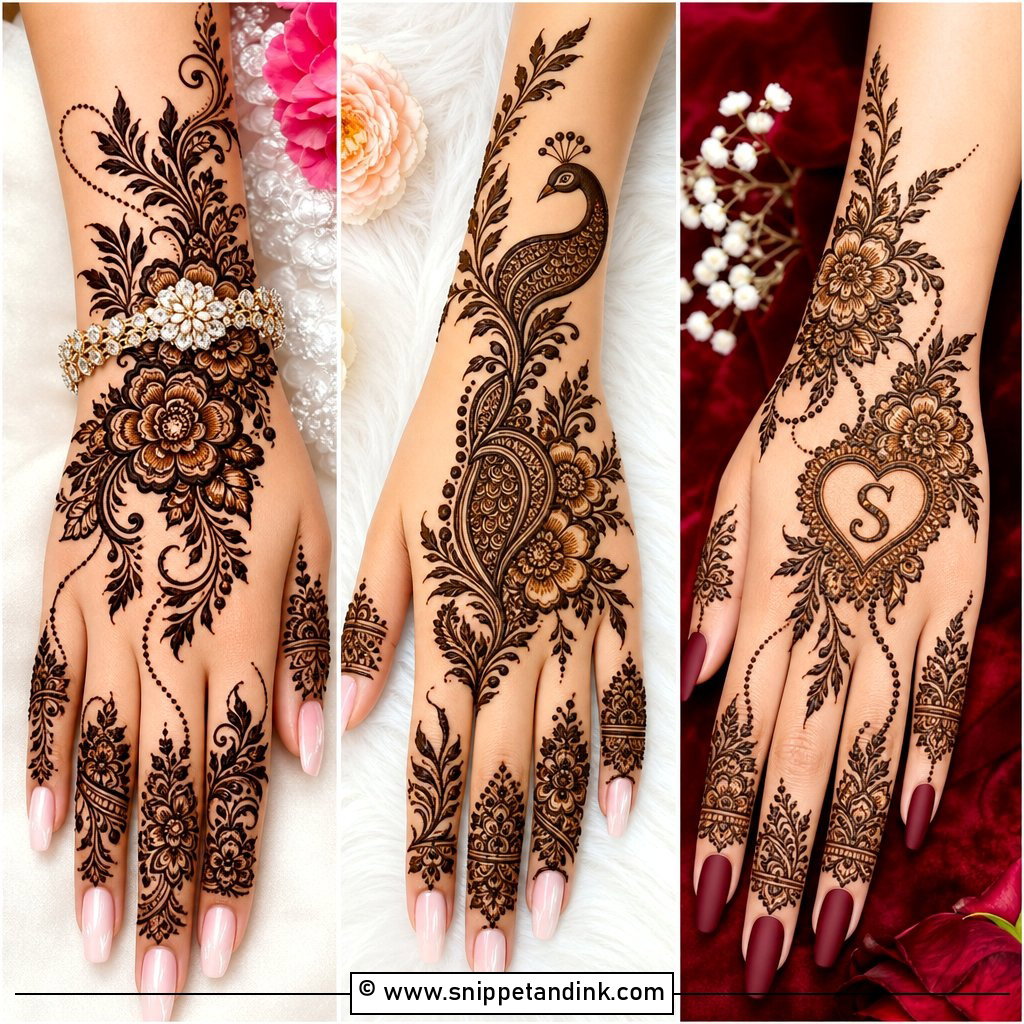
17. Minimal Rose Mehndi Design
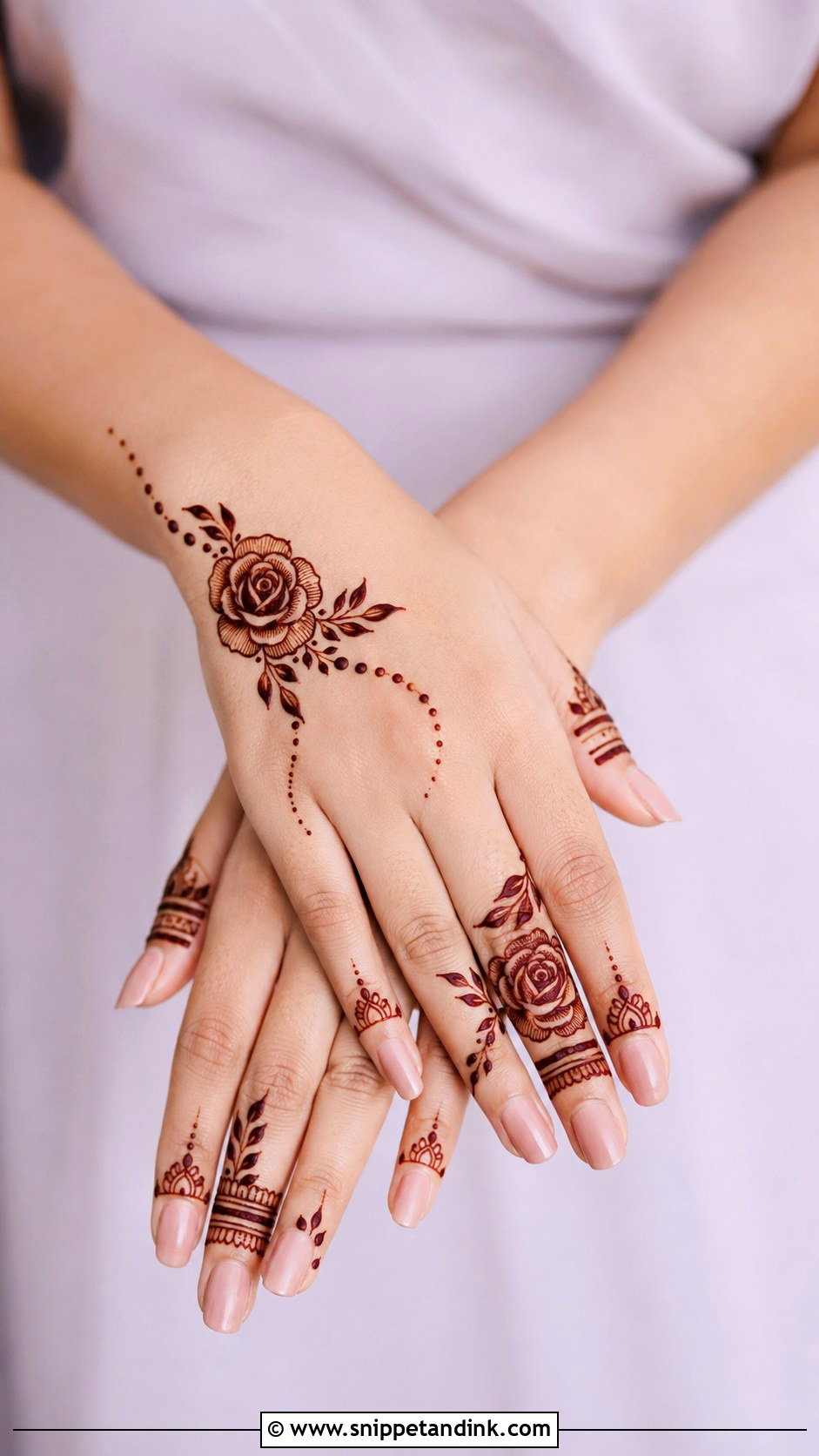
One rose on the back hand, at a palm corner or near the wrist, connected by small leaves and dotted lines. The difficulty with roses is the spiral of petals: drawn too tightly, they merge as the paste spreads, and the rose stains as a dark blob. I leave a visible gap between each petal layer. Keep it to one rose; adding more turns it into a standard floral. Slim finger patterns or tiny leaf tips finish it for engagements, anniversaries and bridesmaids.
18. Minimal Geometric Mehndi Design
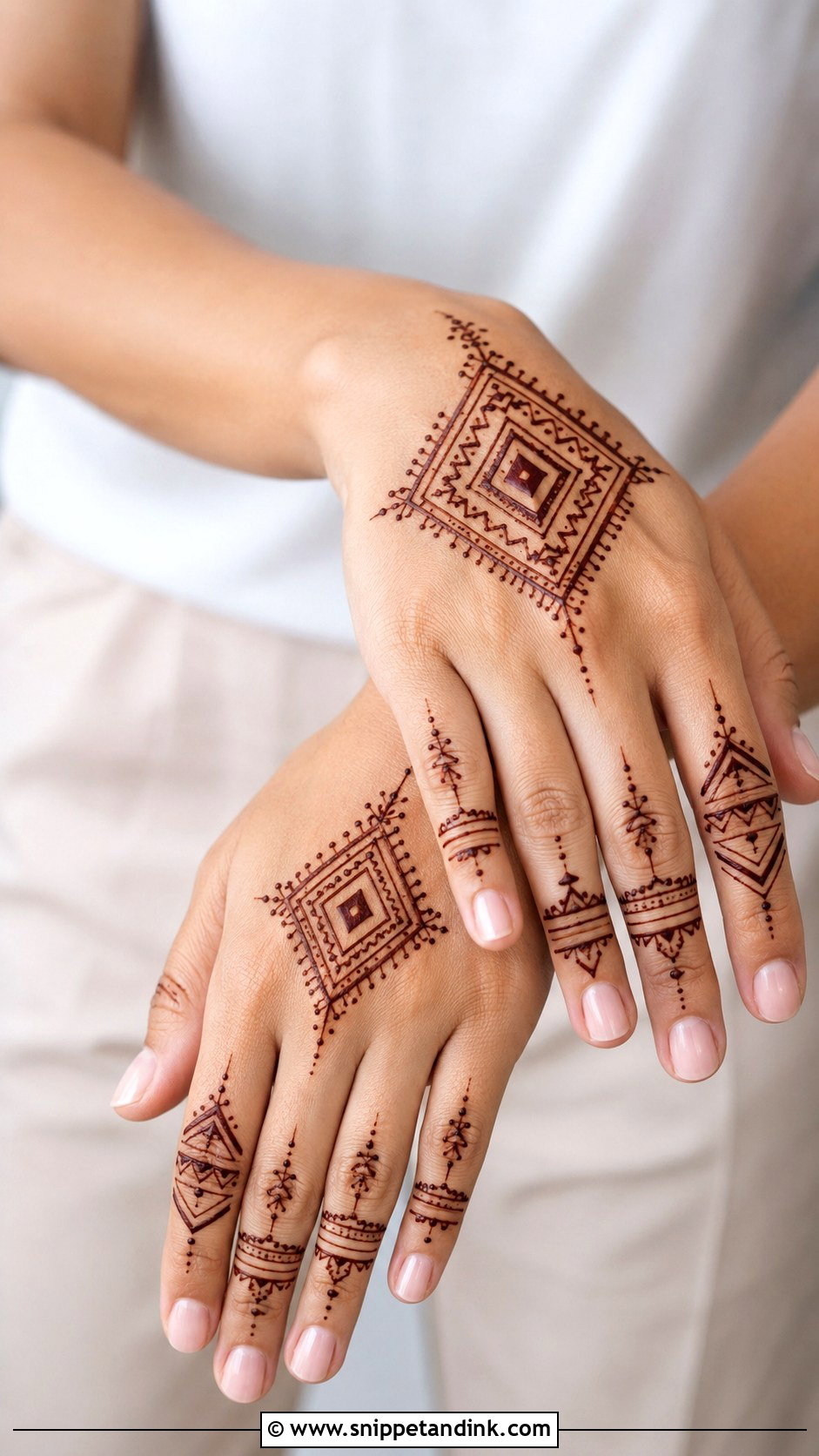
Triangles, squares, diamonds, chevrons and straight bands instead of floral trails, often inspired by Moroccan henna. These show best on the back hand and fingers, where the line work is clearly visible. Straight lines are harder than curves to draw evenly with a cone, so I’d hold off on this one if you’re practicing on yourself. Tiny dots soften the edges without losing the structure, and generous spacing keeps it from looking like a grid.
19. Minimal Moroccan Mehndi Design
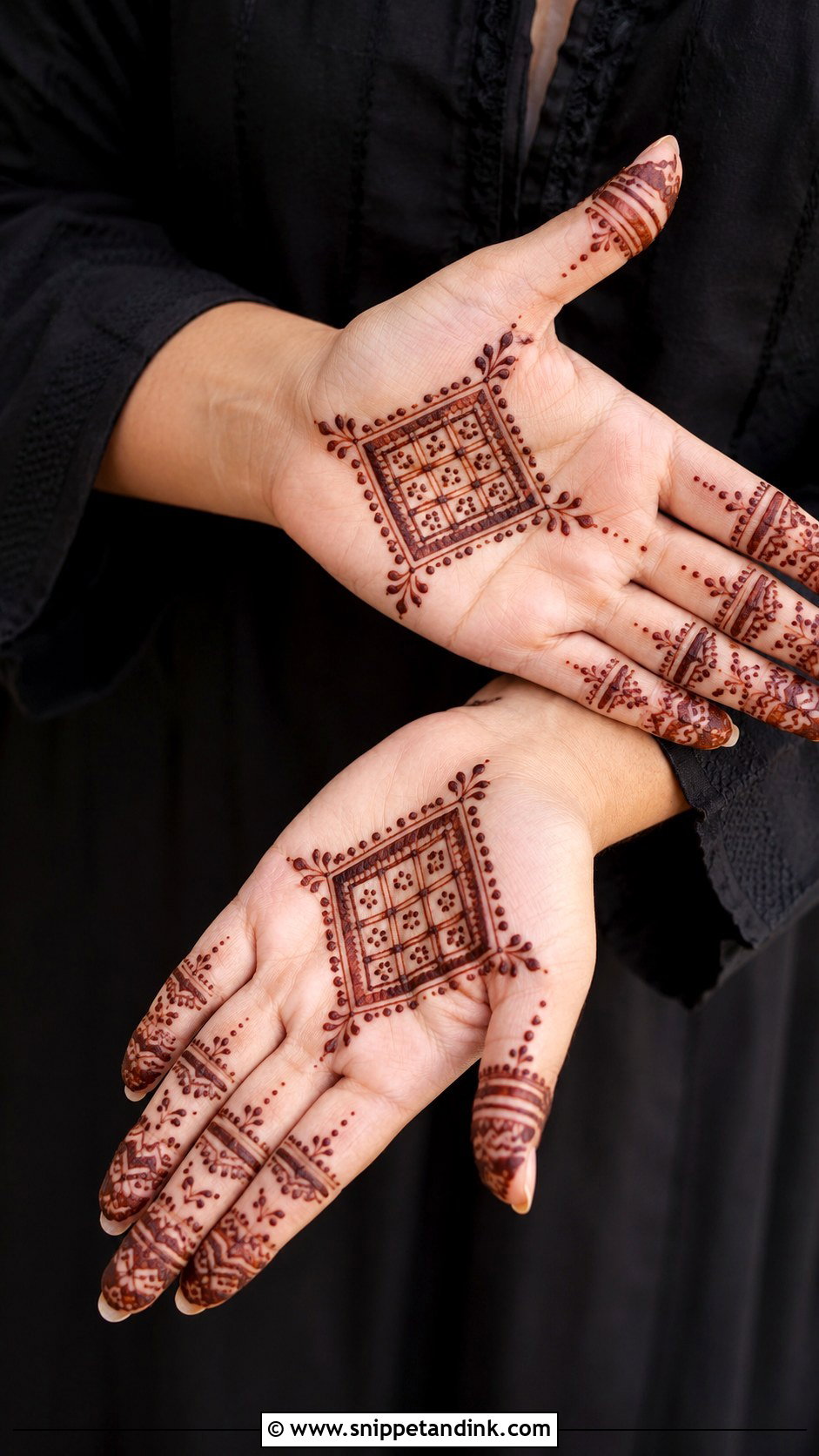
Moroccan henna feels architectural: diamonds, grids, dots, zigzags and clean borders. For a minimal version I use one geometric panel on the back hand or a few matching bands on the fingers, or a simple diamond centerpiece on the palm with open space around it. Even line weight is what makes it look intentional, so I keep the cone pressure steady and don’t go back over lines. It’s my suggestion for fusion outfits and anyone tired of florals.
20. Minimal Gulf Mehndi Design
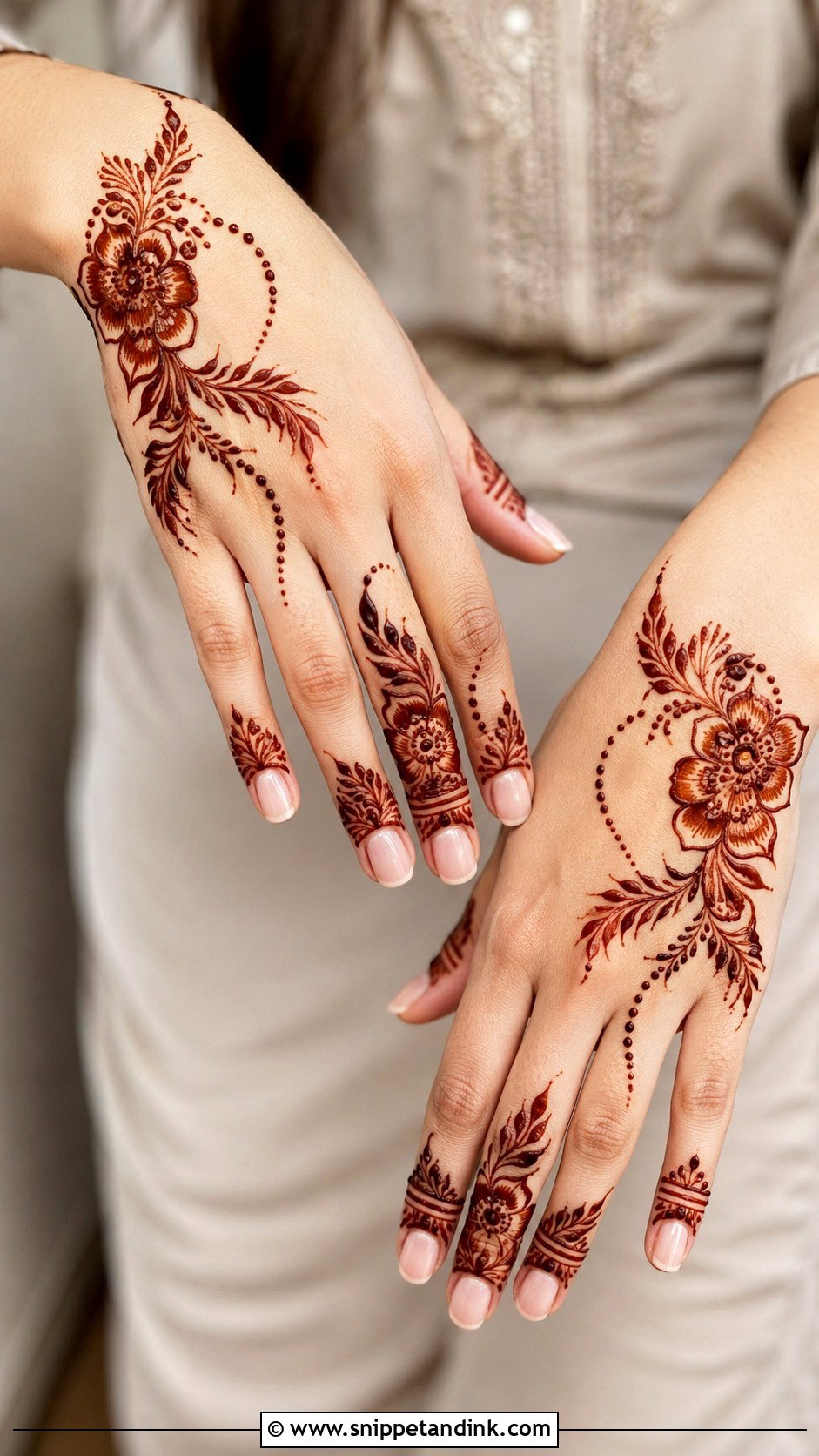
Gulf henna uses larger flowers than Indian work, spaced widely, with flowing leaves and a lot of negative space. In a light version the pattern sits along one side of the hand and the rest stays bare. Bold lines need good paste to stain evenly; any thin spot shows as a pale patch inside a big flower. Keep the fingers to leaf trails or dotted tips. It looks rich for Eid, weddings and evening functions with less coverage than you’d expect.
21. Minimal Khafif Mehndi Design
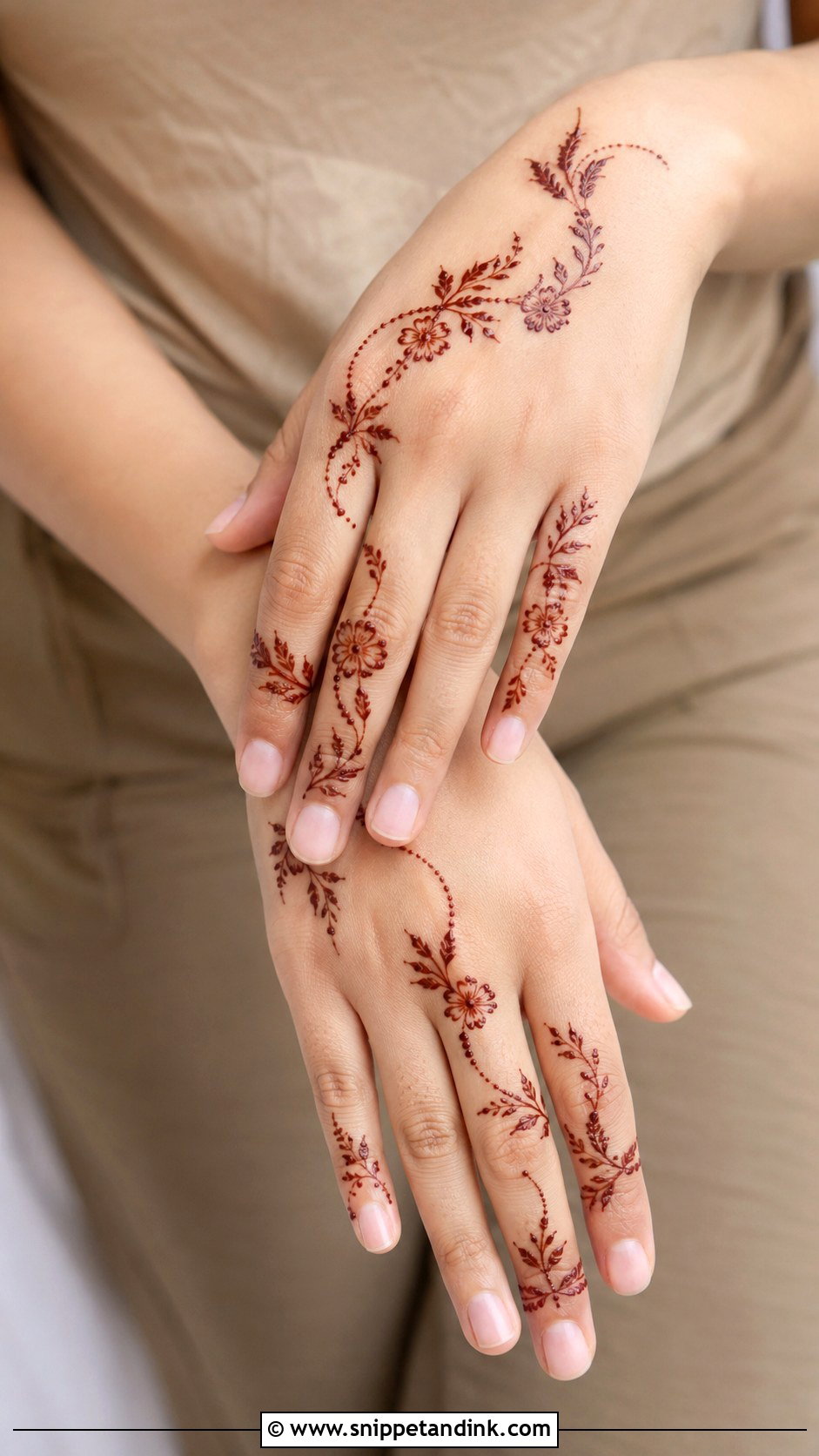
Khafif means light, and the style is all fine vines, tiny flowers, small dots and soft shading spread gently from wrist to fingers on the back hand. I use my finest cone tip here. The honest drawback is that very fine lines stain lighter and fade sooner than bold ones, so this is better for a single evening than for henna you want to last two weeks. Balance matters more than detail; don’t overfill the gaps.
22. Minimal Circle Mehndi Design
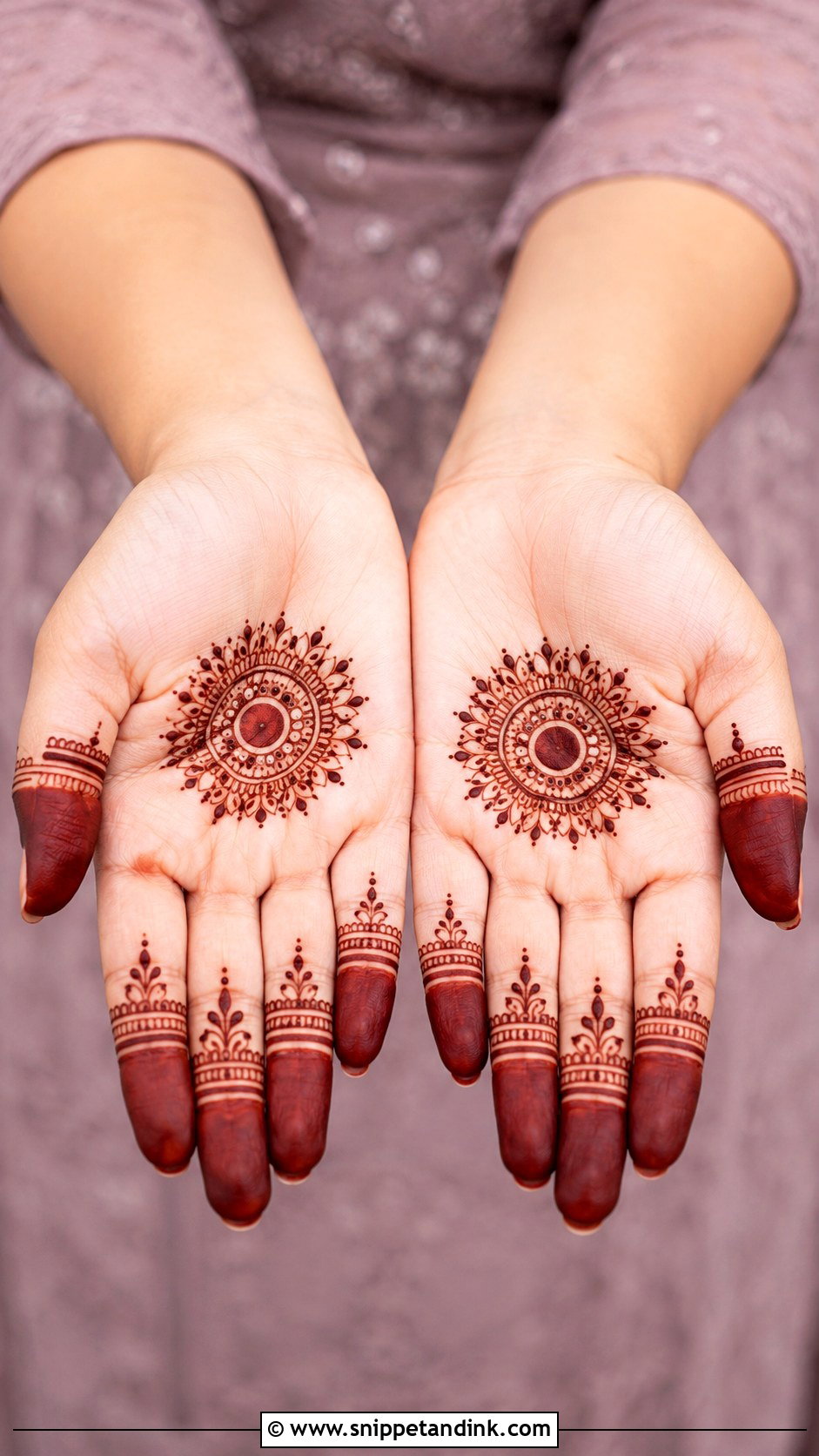
A circle in the center of the palm or back hand, decorated with small petals, dots or fine rings, with the space around it left empty. It’s the easiest shape to build, which makes it a good starting point for beginners. A bold circle stains stronger, a thin one looks more delicate. I’d add light finger lines if you want the hand to feel complete rather than stamped.
23. Minimal Lotus Mehndi Design
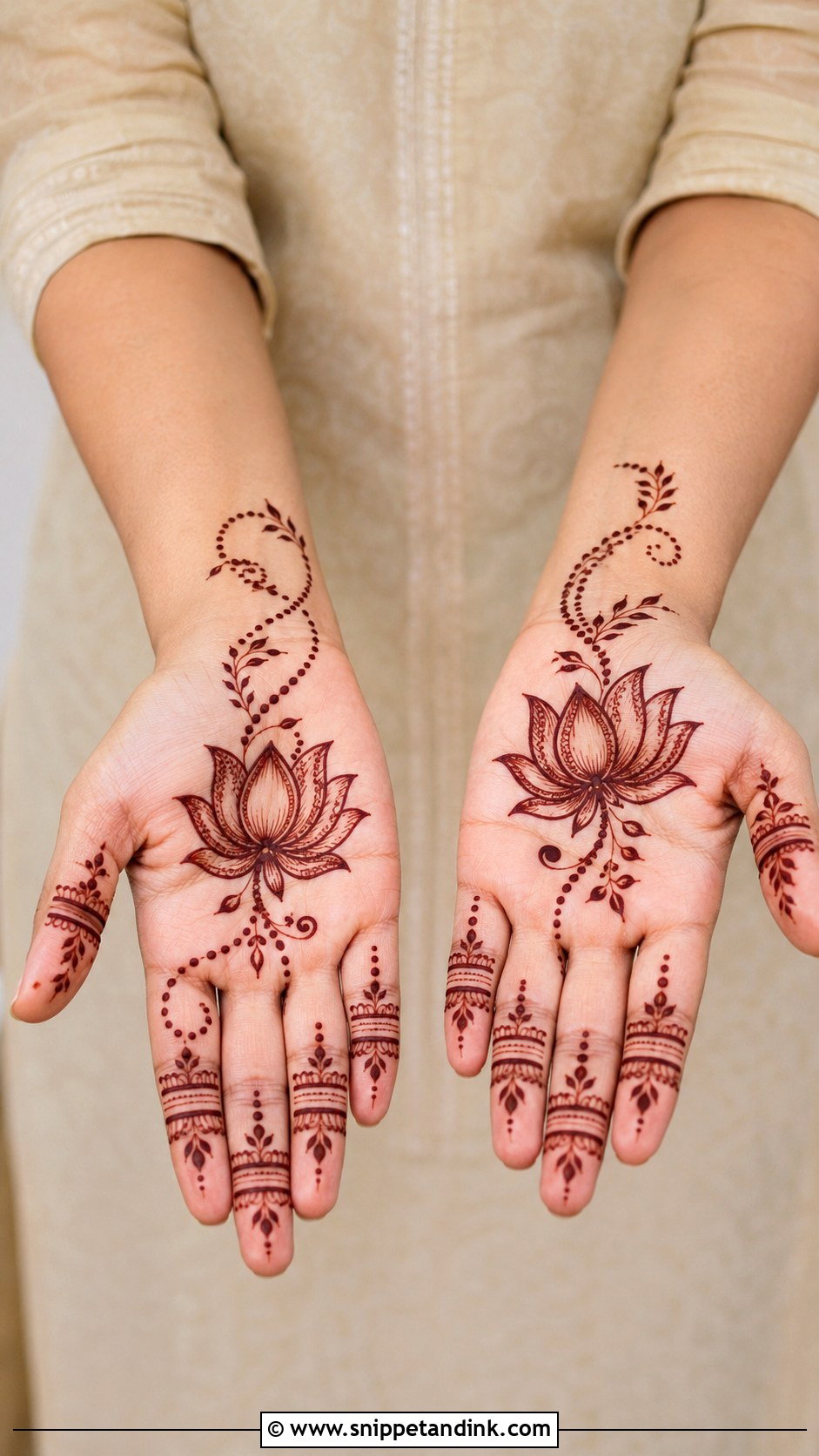
A lotus on the palm, back hand or wrist with petals opening outward and a few thin vines, dots and small leaves around it. I’m careful not to crowd it, since a lotus is recognizable by its open petals and loses that once filled. Placing it slightly off-center with a fine trail toward one finger gives a more modern look. It’s a natural choice for puja, weddings and smaller bridal functions.
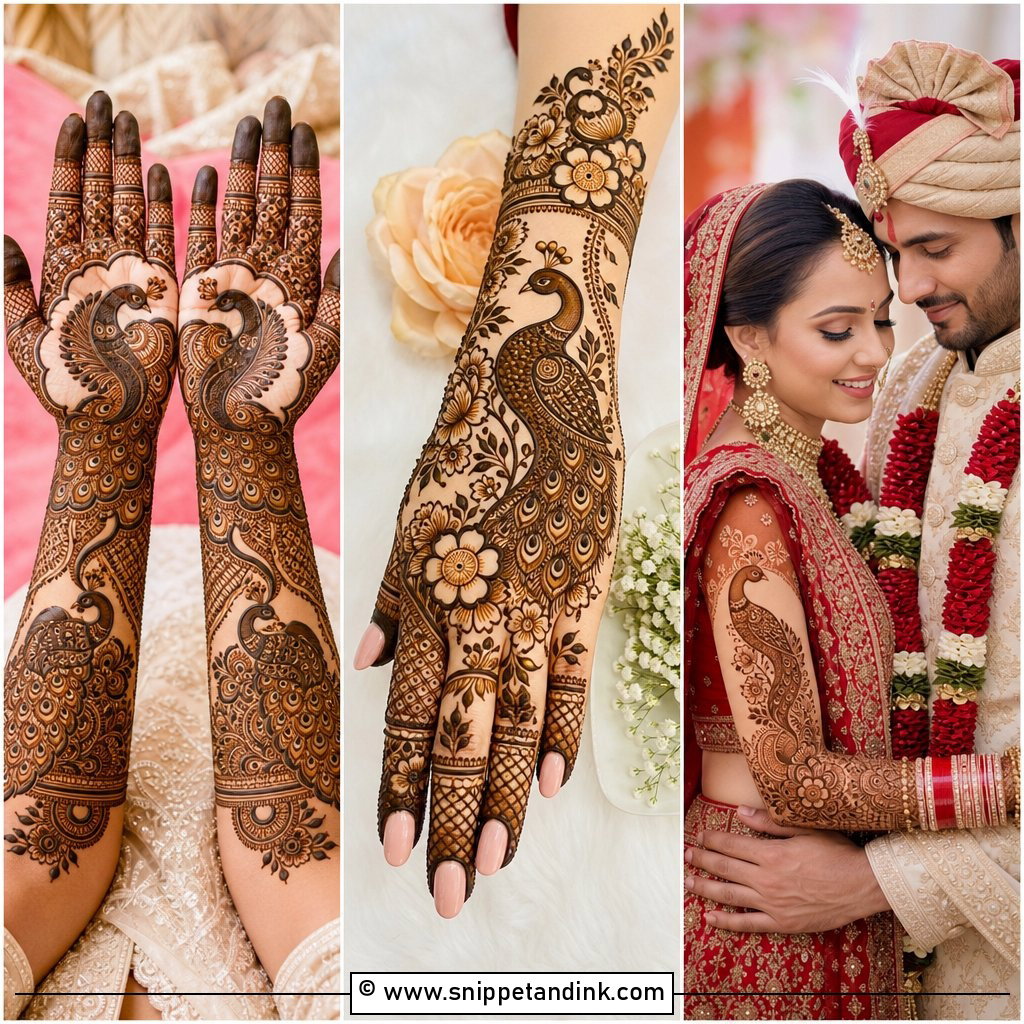
24. Minimal Peacock Mehndi Design
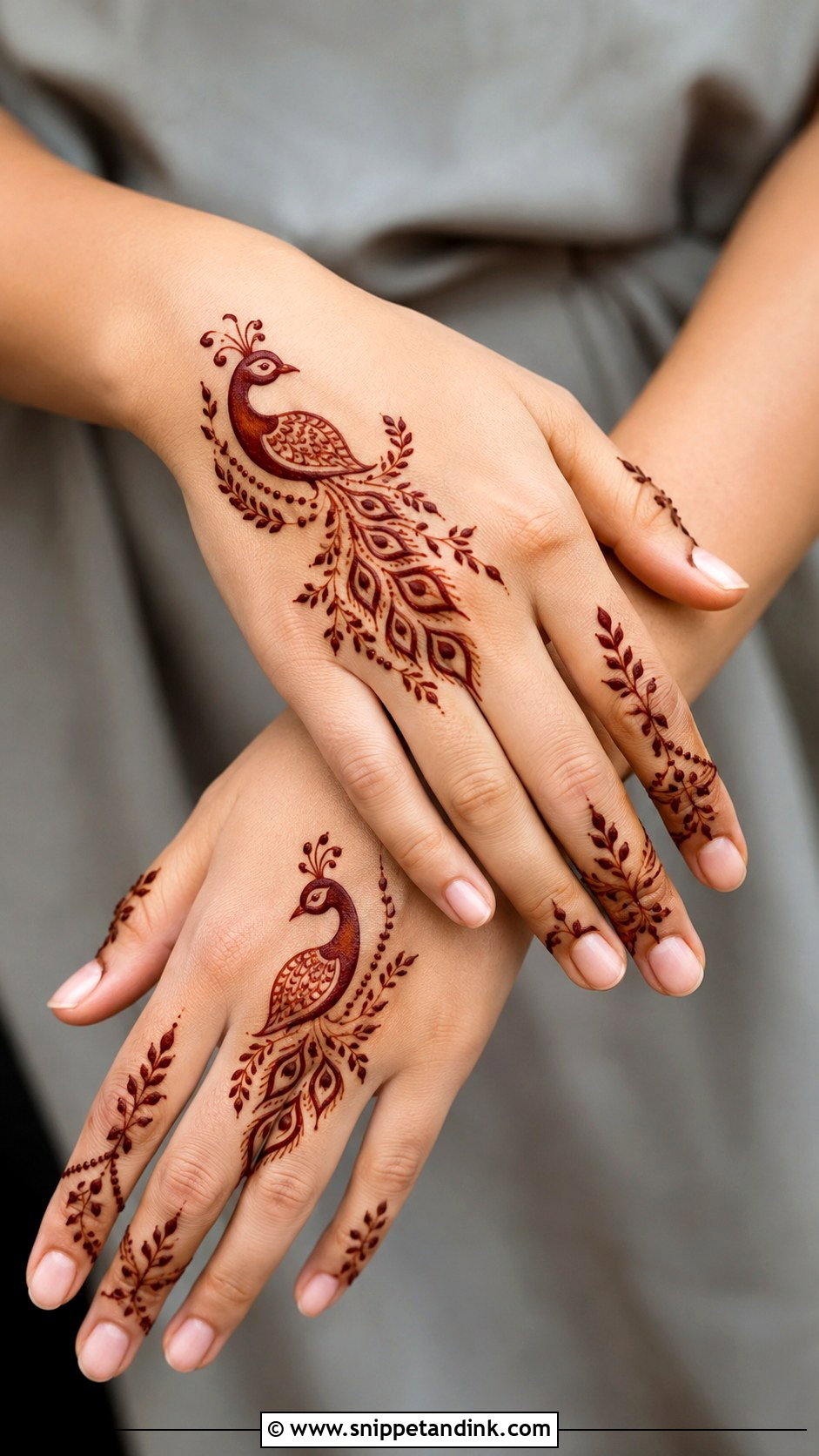
Peacocks are usually the most detailed motif in bridal henna, so the minimal version keeps only what makes it recognizable: the curved neck, a simple body and a few open feather lines on the back hand or palm. A few dots, leaves or a slim border are enough around it. I leave the feathers unfilled; filled feathers are exactly where peacocks lose definition once the stain darkens. It suits traditional events when you want something cultural without density.

25. Minimal Side Hand Mehndi Design
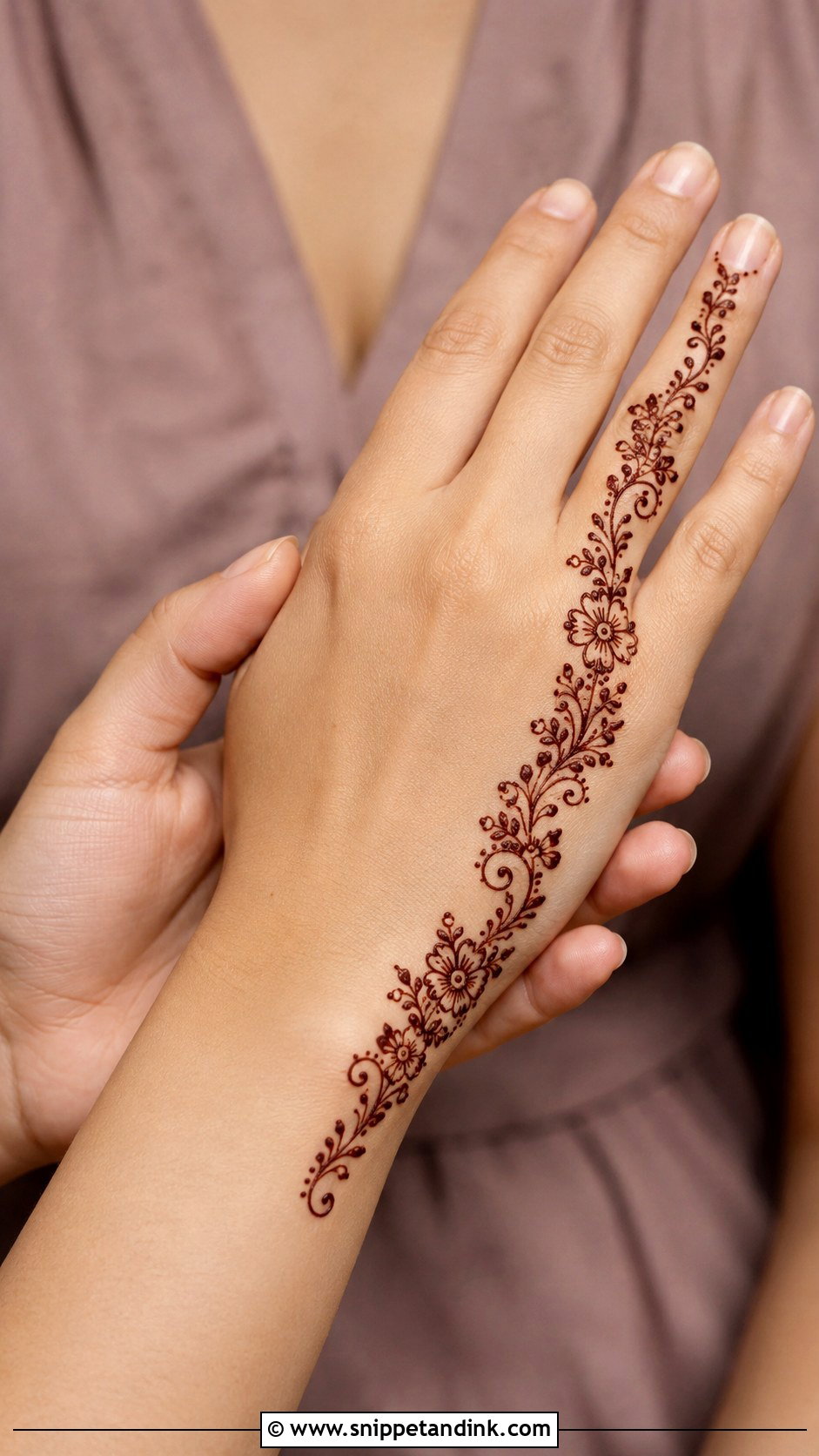
Running the pattern down one edge, usually from the wrist toward the little-finger side, gives an asymmetrical look that makes the hand appear longer and slimmer. Small flowers, leaves, dots or a slim Arabic trail work; the center of the hand stays mostly bare. Keep the trail narrow. On the palm side, this edge also rubs against desks and paper, so I’d place it on the back hand if you’ll be writing a lot.
26. Minimal Ring Mehndi Design
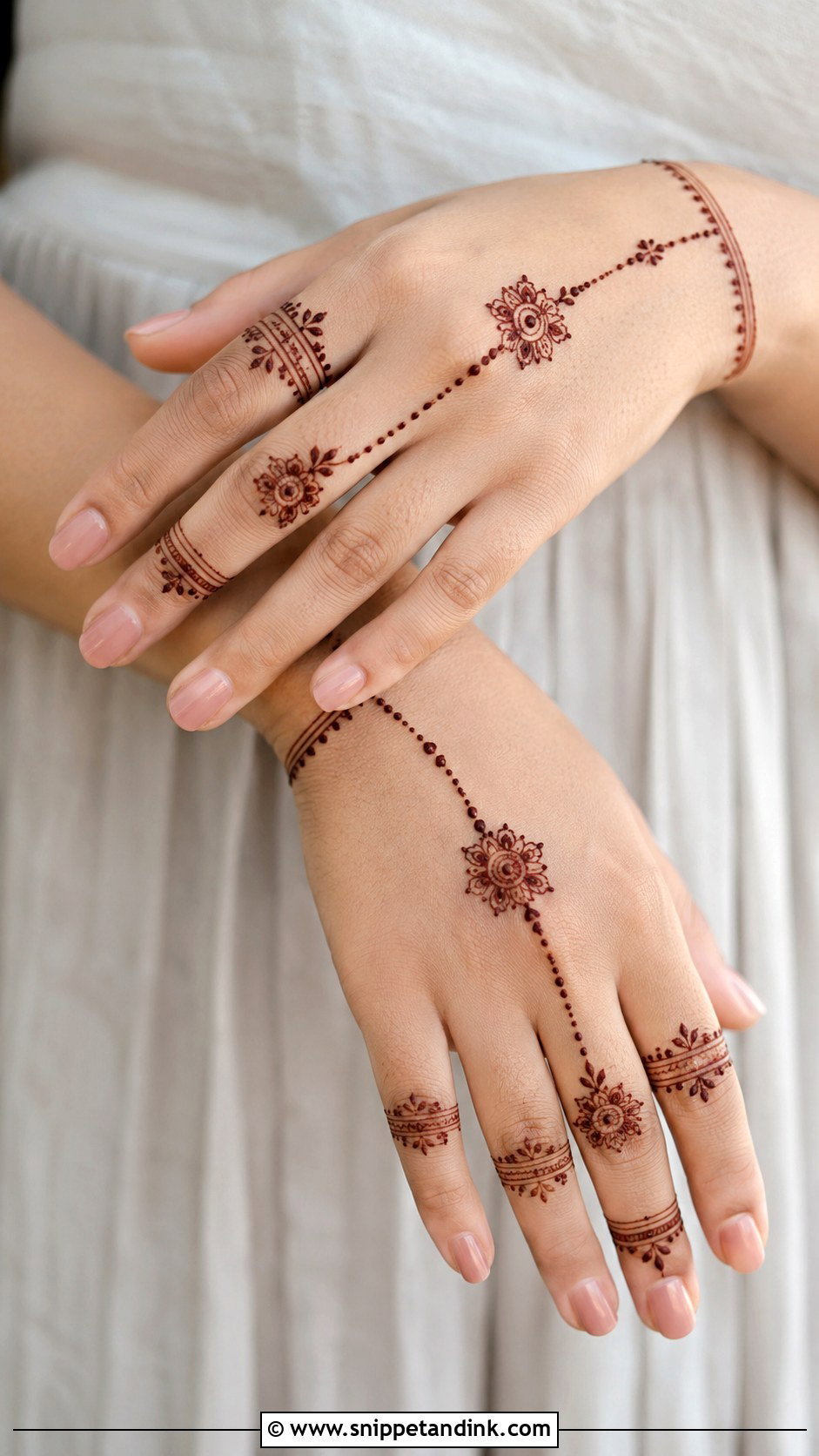
A minimal ring mehndi design decorates the fingers like jewelry: small bands around one or more fingers, a tiny floral ring, or a chain line connecting a finger to the wrist, with the back hand left open. For engagements I make one ring finger slightly more detailed but stop the pattern short of where the ring sits. Wear the real ring on the other hand until the stain has set, or it will rub the band unevenly.
27. Minimal Half Hand Mehndi Design
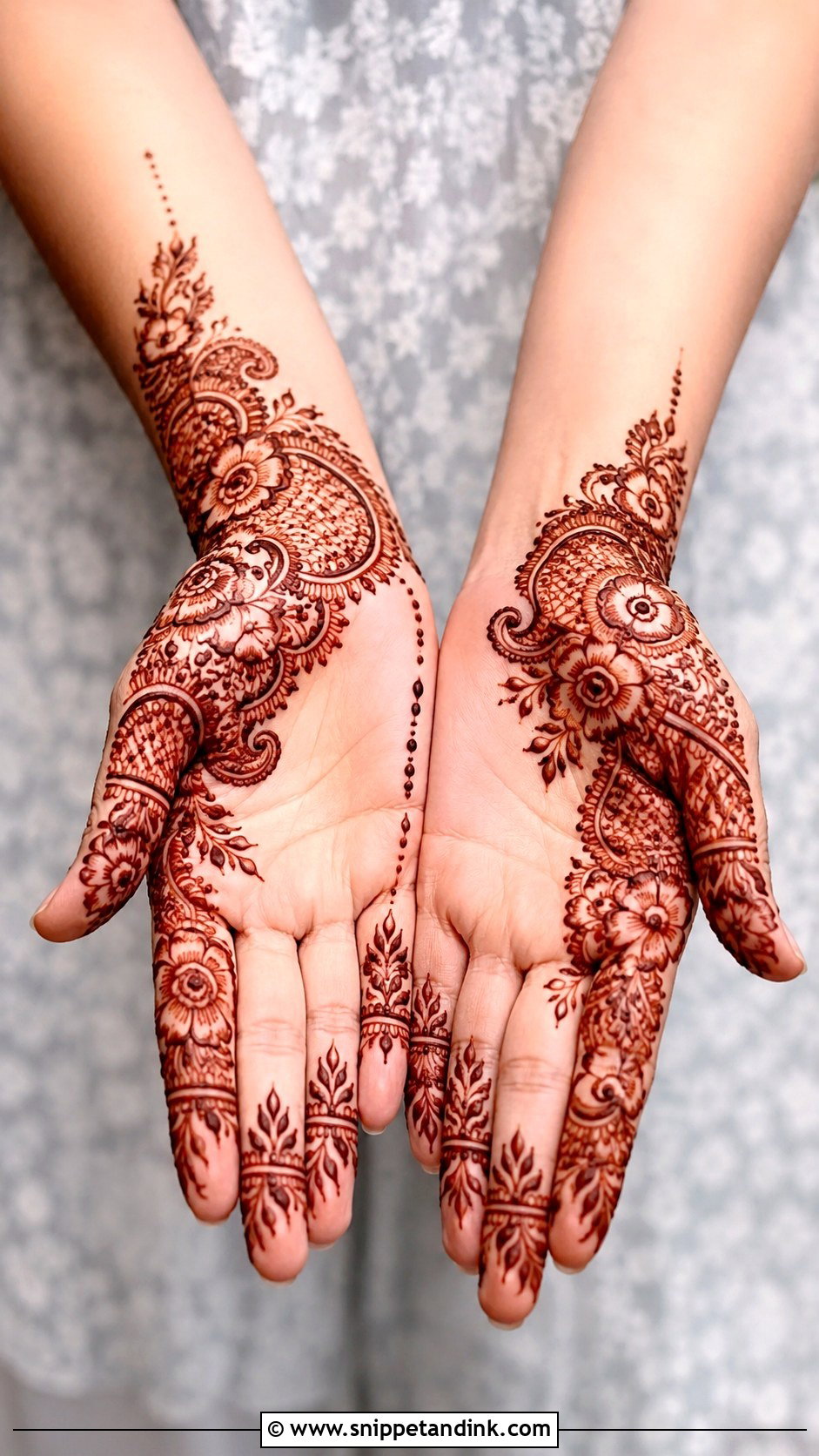
Half-hand henna covers only part of the hand, the lower palm, one side of the back hand, or the wrist and fingers, and leaves the rest open. It’s my answer when someone wants more than finger henna but less than a traditional full hand. Florals, paisleys, jaali and leafy trails all suit it. The trick is one clear focal area and a clean edge where the design stops, so the bare half looks planned.
28. Minimal Kids Mehndi Design
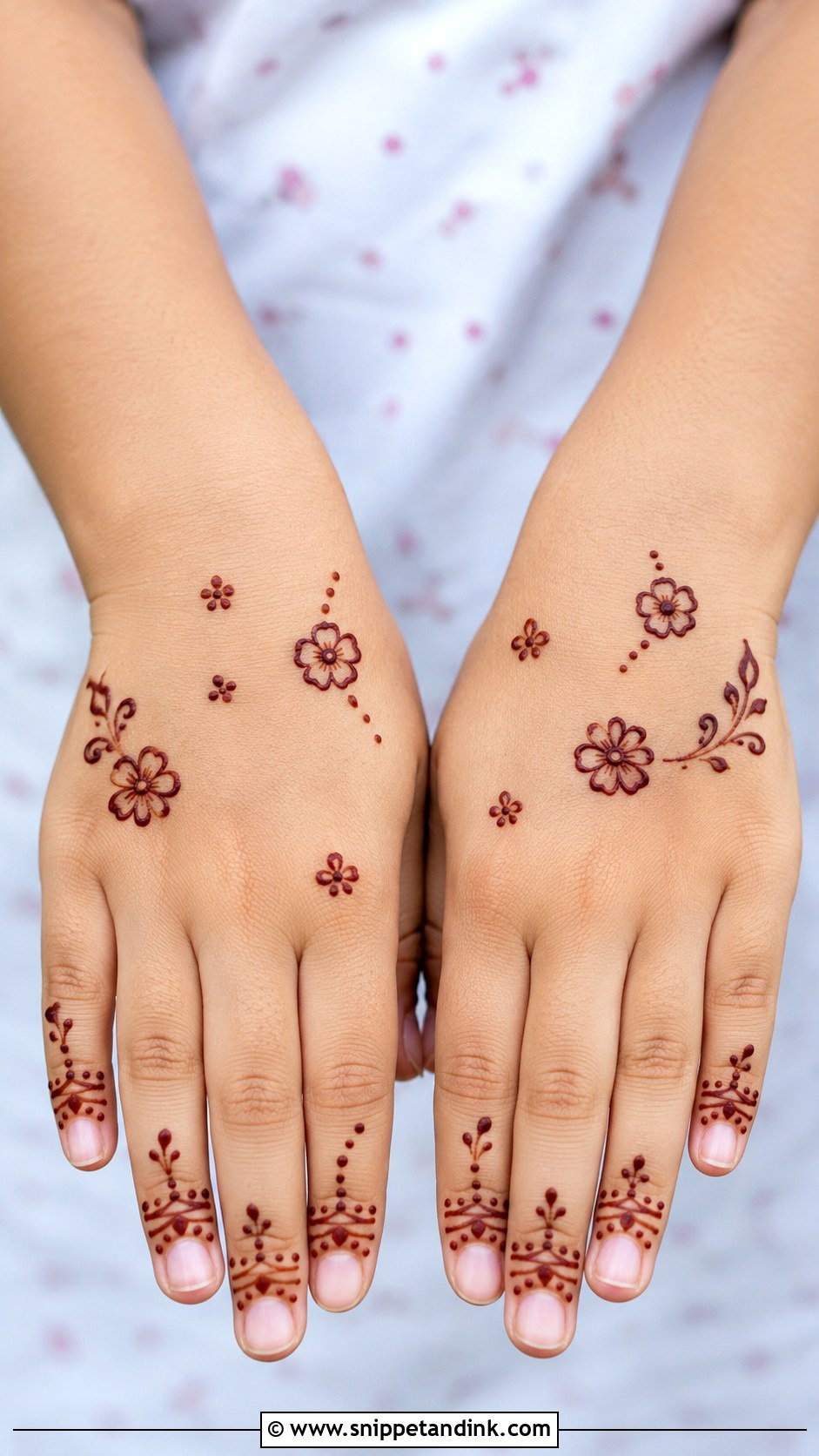
Children don’t sit still, so I keep it to small flowers, hearts, stars, dots, a tiny mandala or simple finger tips on the back hand or palm. Overly fine patterns take longer and smudge before they dry. I only use natural henna on children; dark “black henna” can contain PPD, which can burn and sensitize skin, and that’s not a risk worth taking for a festive afternoon. A small flower with dotted fingers is enough to make most kids happy.
29. Minimal Office Mehndi Design
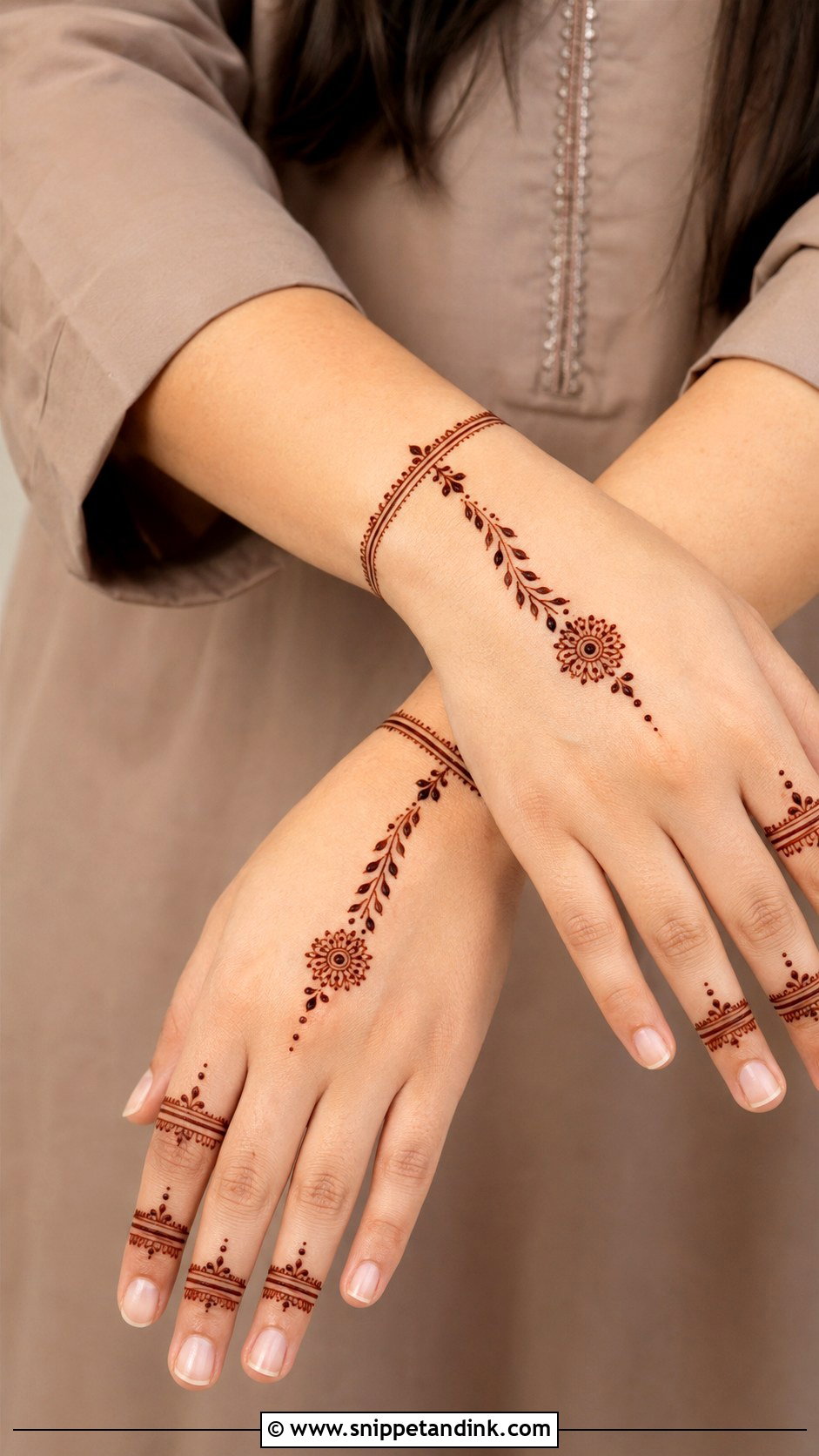
Office henna needs to look neat at a desk: tiny finger bands, a small wrist pattern, one back-hand motif or a very fine leafy trail. I keep it small and symmetrical and skip bold lines, which read as more distracting than fine ones. Open space keeps it clean. It’s the design I do most in the week before Diwali or Eid, when people still have meetings to attend.
30. Minimal Modern Mehndi Design
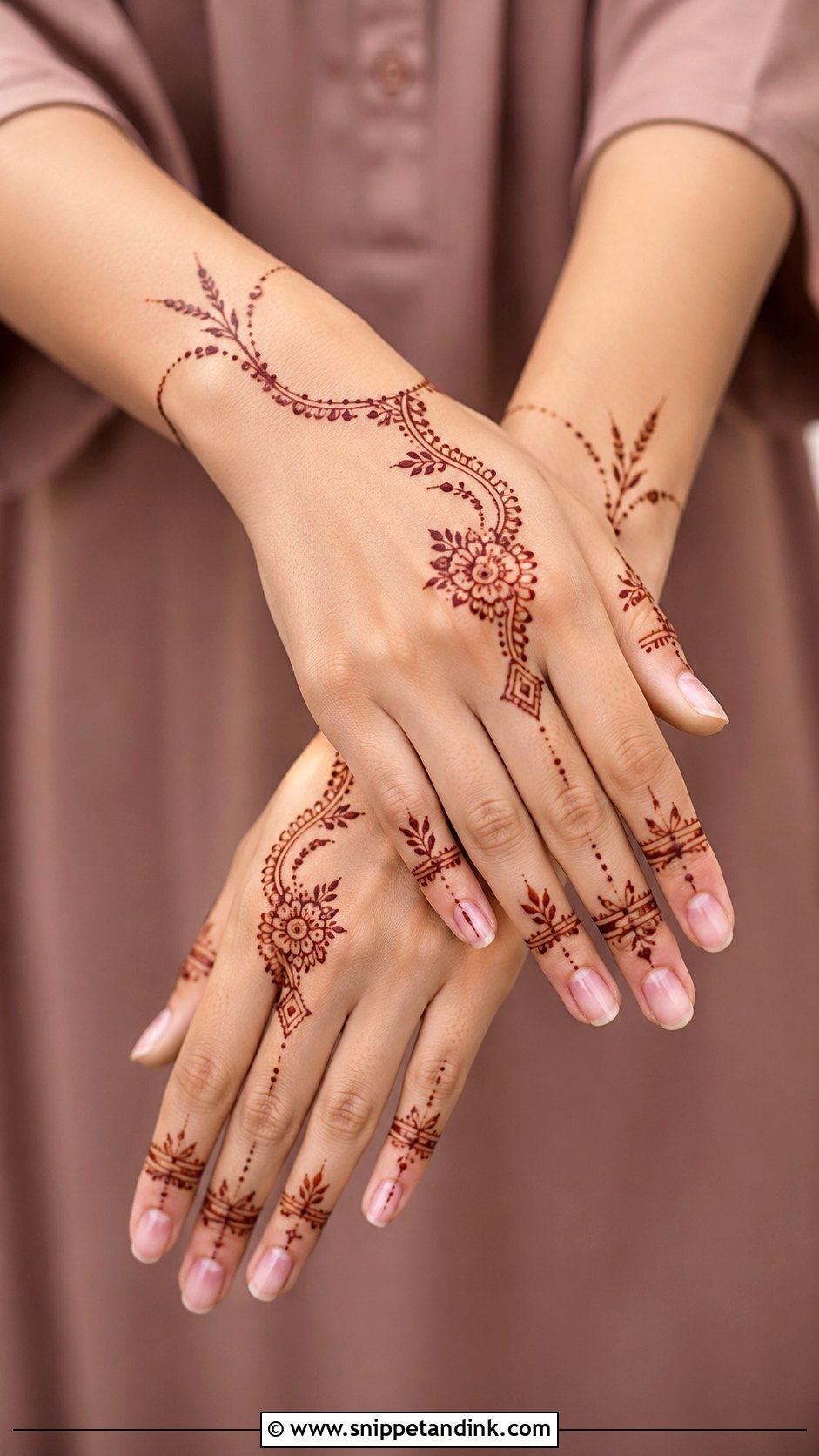
Modern minimal henna leaves large areas bare on purpose: abstract curves, tiny florals, finger bands, dotted chains or small geometric details on the back hand, palm, wrist or fingers. It looks spontaneous, but it isn’t. I plan the placement on the hand before the cone touches skin, because with so few lines, one off-angle stroke changes the whole balance. Good for anyone who wants henna that feels current while still respecting the craft.
Smudges, Gaps and Uneven Hands: Fixing Minimal Henna
With a full design, a smudge disappears into the pattern. With minimal henna, it’s the first thing anyone notices. Most problems can be fixed if you catch them while the paste is wet.
While it’s still wet
A smudge can be lifted with the tip of a toothpick or a cotton bud, wiping away from the design, not across it. Act within a minute or two, before the paste has started to stain. Any faint mark left behind usually fades with the first wash.
After it stains
A pale gap or broken line can be touched up with a second small application over that spot, though it will rarely match the rest exactly. Your dominant hand will almost always stain a little lighter, because it’s used more while the paste is on. I sometimes let a bride keep the paste on that hand a little longer to even them out.
If the whole stain comes out pale orange, don’t panic on day one. Keep it away from water and warm your hands; most stains deepen noticeably overnight.
Less Henna, Still Unmistakably Bridal
Henna doesn’t need to be heavy to look bridal. A small mandala, a fine floral trail, a slim bracelet or one decorated finger all look finished with very little coverage, and they dry faster and feel lighter through a long day. Indian, Arabic, Indo-Arabic, Moroccan, Gulf and modern styles each have a pared-back version. Clean spacing, steady lines and one strong focal point are what they share, so start from the placement you like and let the style follow.
You'll Like These Ideas:




Leave a Reply