
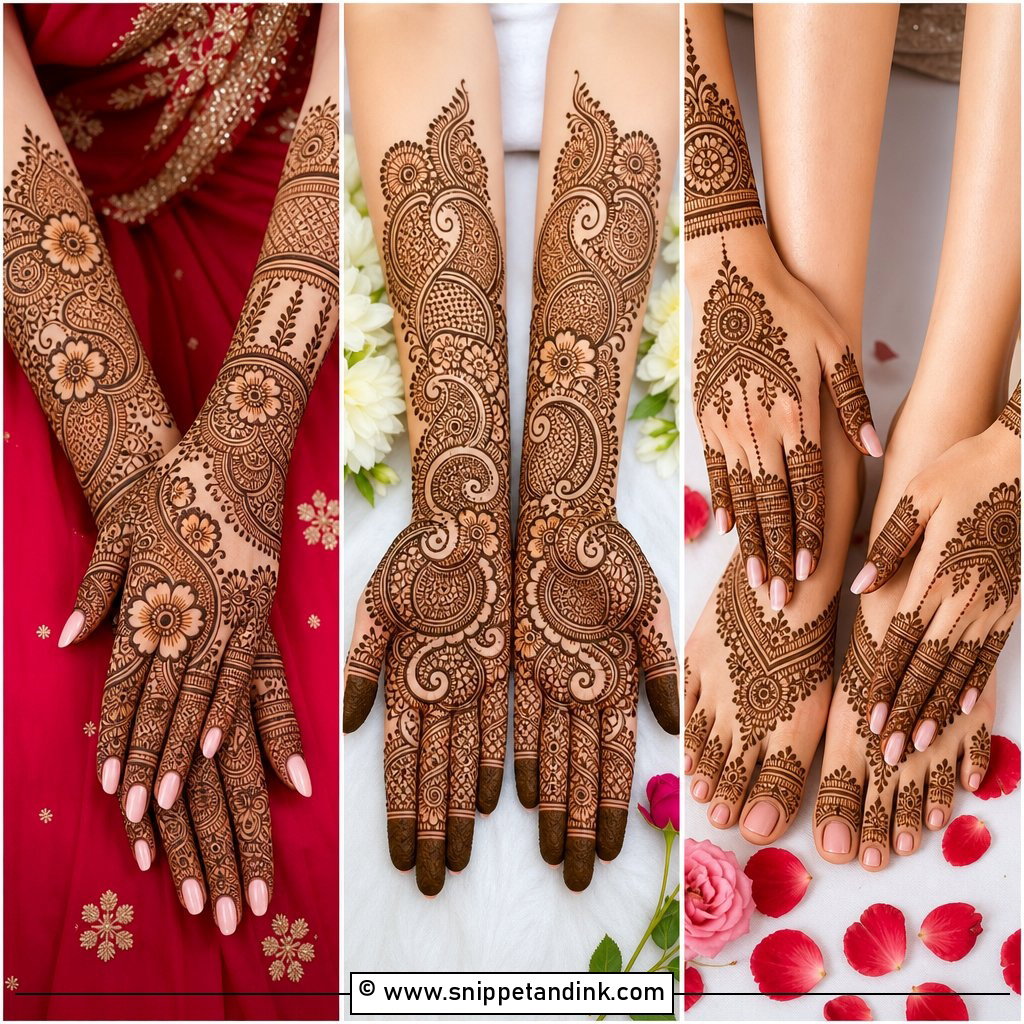
People assume minimal henna is the easy option. From my side of the cone it is the opposite: with so little on the hand, every wobble, every uneven gap and every off-center motif is on display. Done well, though, a few fine lines look more considered than a full hand of filling, and they suit everything from Eid and roka ceremonies to baby showers and a Sunday family lunch. Minimal layouts also flatter almost every hand shape because nothing crowds the skin. A palm motif, a back-hand trail, a wrist bracelet or a finger-only pattern can all count. Here are the designs I draw most, with what each one needs to look right.
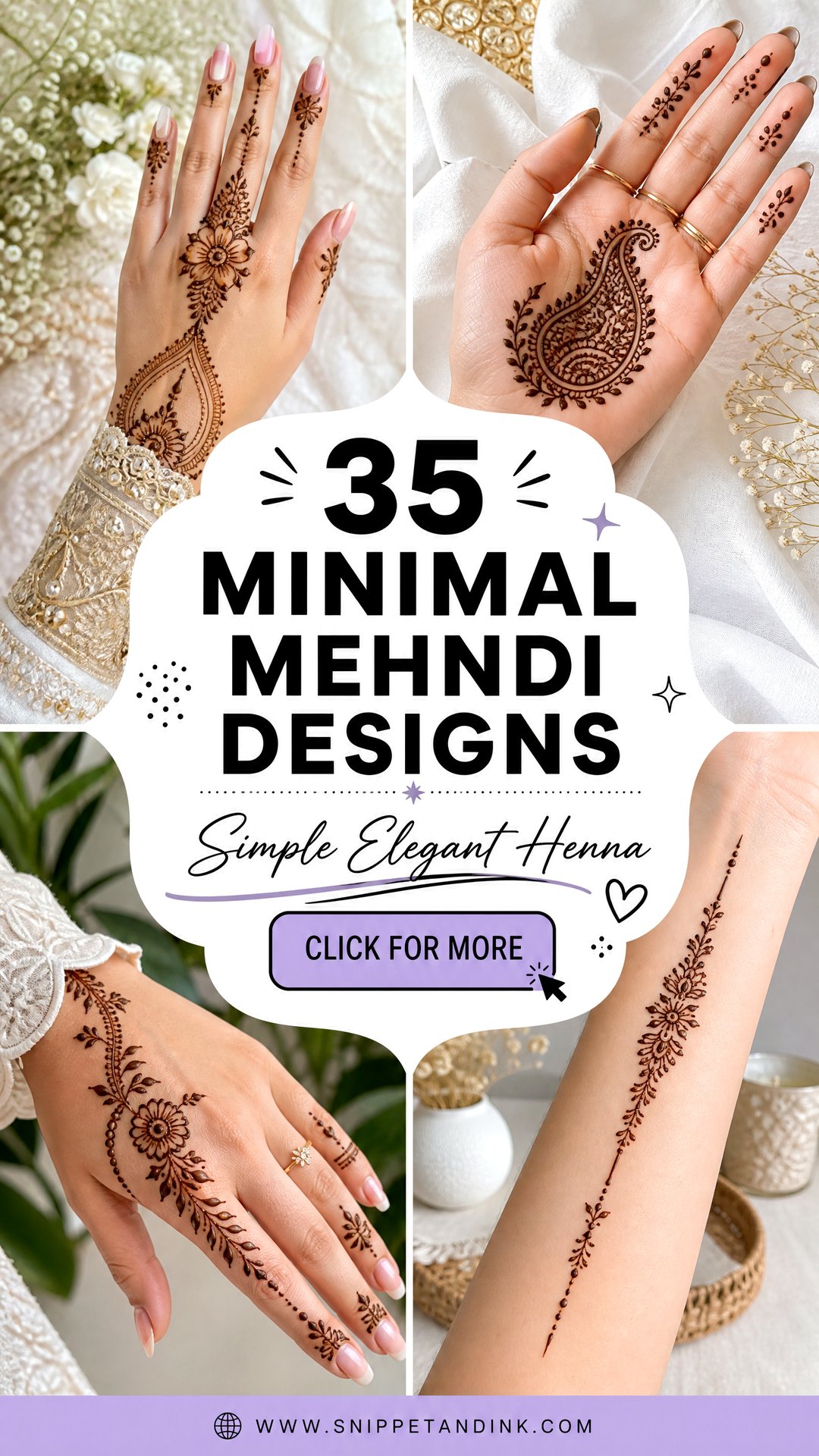
Thin Lines Depend on the Paste More Than the Hand
A minimal design lives or dies on line quality, and line quality starts in the cone. Fine lines carry less paste than bold strokes, so they stain lighter. If the paste is weak or lumpy, a delicate design ends up faint and broken. That is why I am fussier about my paste for minimal clients than for heavy bridal work.
- The henna powder is sifted very fine, so nothing catches in a narrow cone tip and breaks the line.
- The paste is left to release its dye for several hours before use, until it darkens slightly on top.
- The consistency is like soft toothpaste. Too runny and fine lines spread; too stiff and they snap.
- I cut the cone tip as small as I can control, and test a line on my own hand before starting.
When you book, ask your artist whether she mixes her own paste and whether it is chemical-free. Ready-made cones that promise instant dark color are often not plain henna, and the lines they give tend to look flat and uniform rather than crisp.
1. Minimal Back Hand Mehndi Design
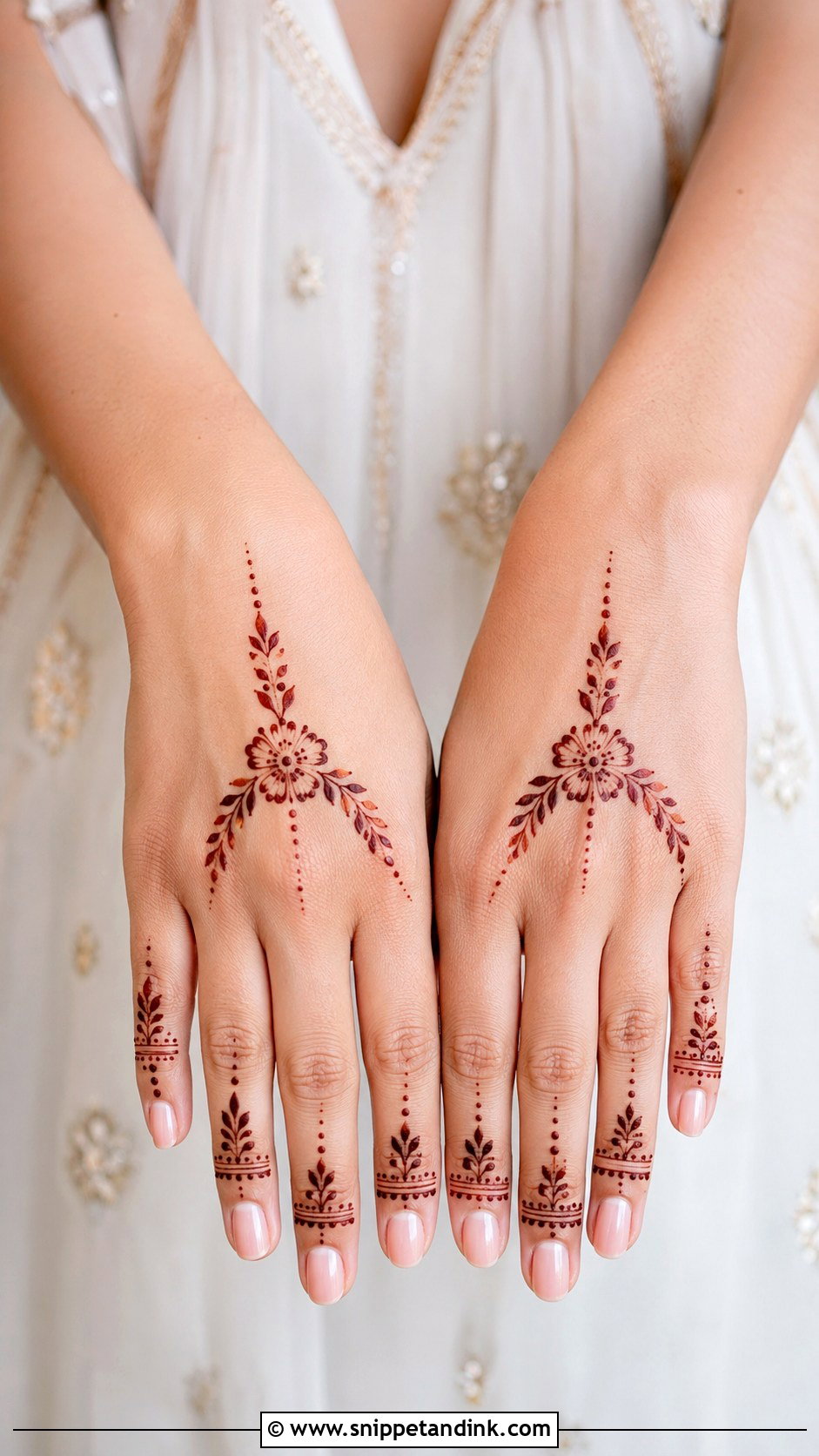
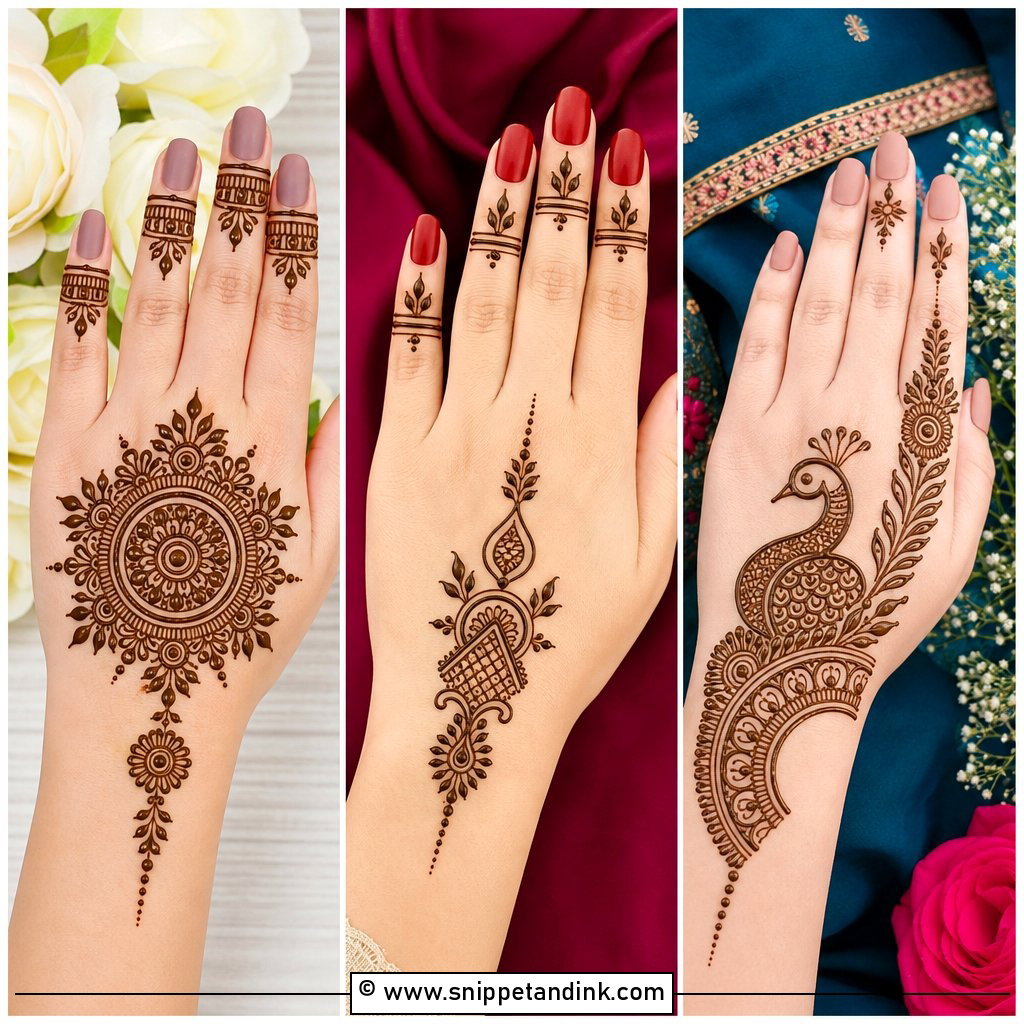
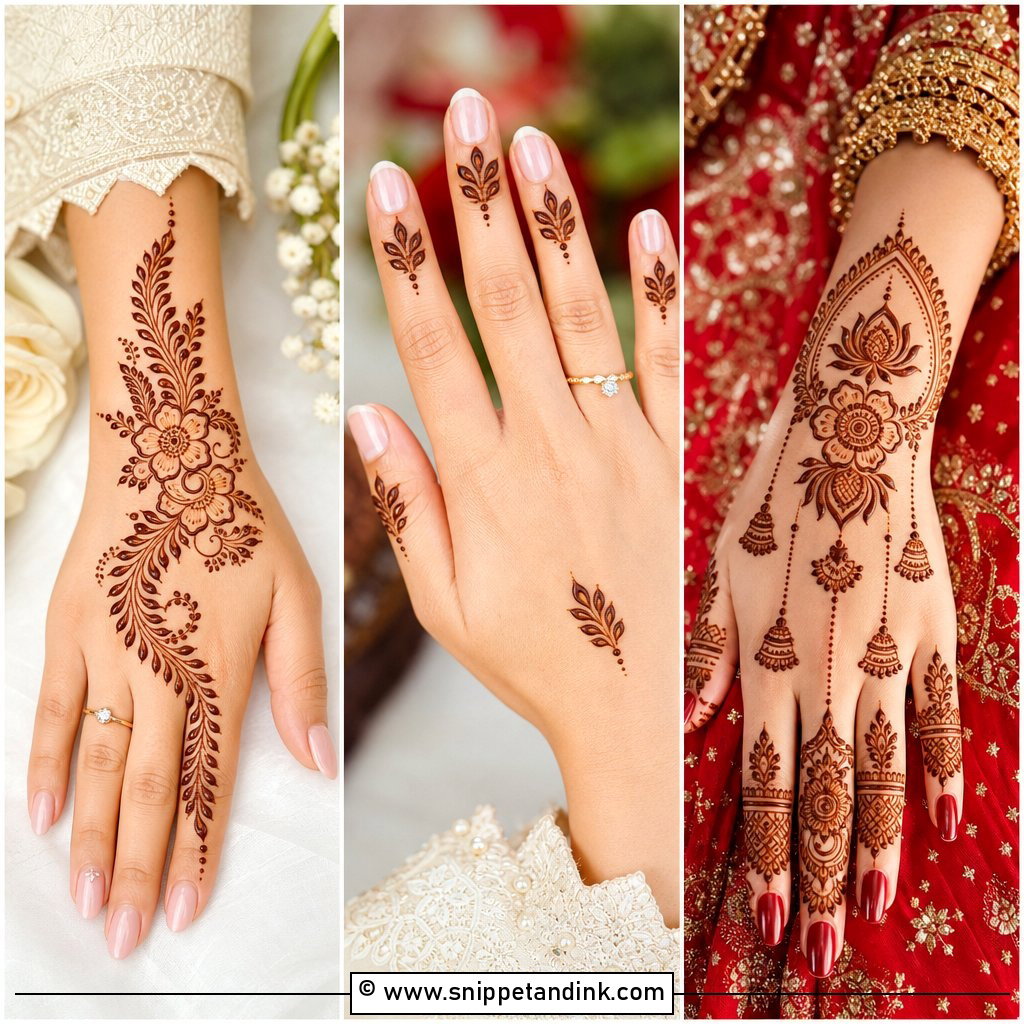
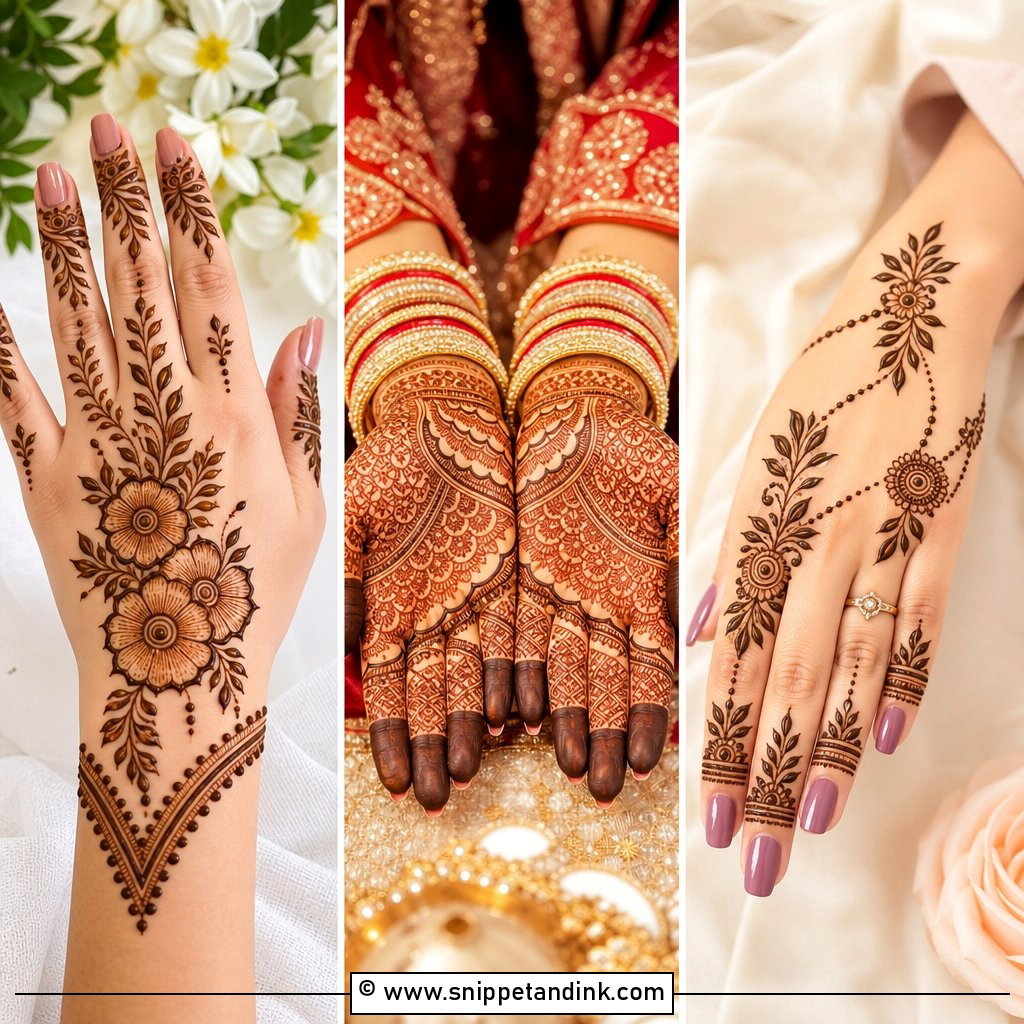
On the back of the hand, I usually start with a small flower, leafy trail or mandala near the middle, then let fine lines travel up one or two fingers and leave plenty of bare skin around it. Placement is the whole design here. I set the motif slightly toward the thumb side rather than dead center, because when the hand rests naturally it angles that way, and the design then sits square to the camera. Leave the wrist bare or add one thin bracelet line.
2. Minimal Front Hand Mehndi Design
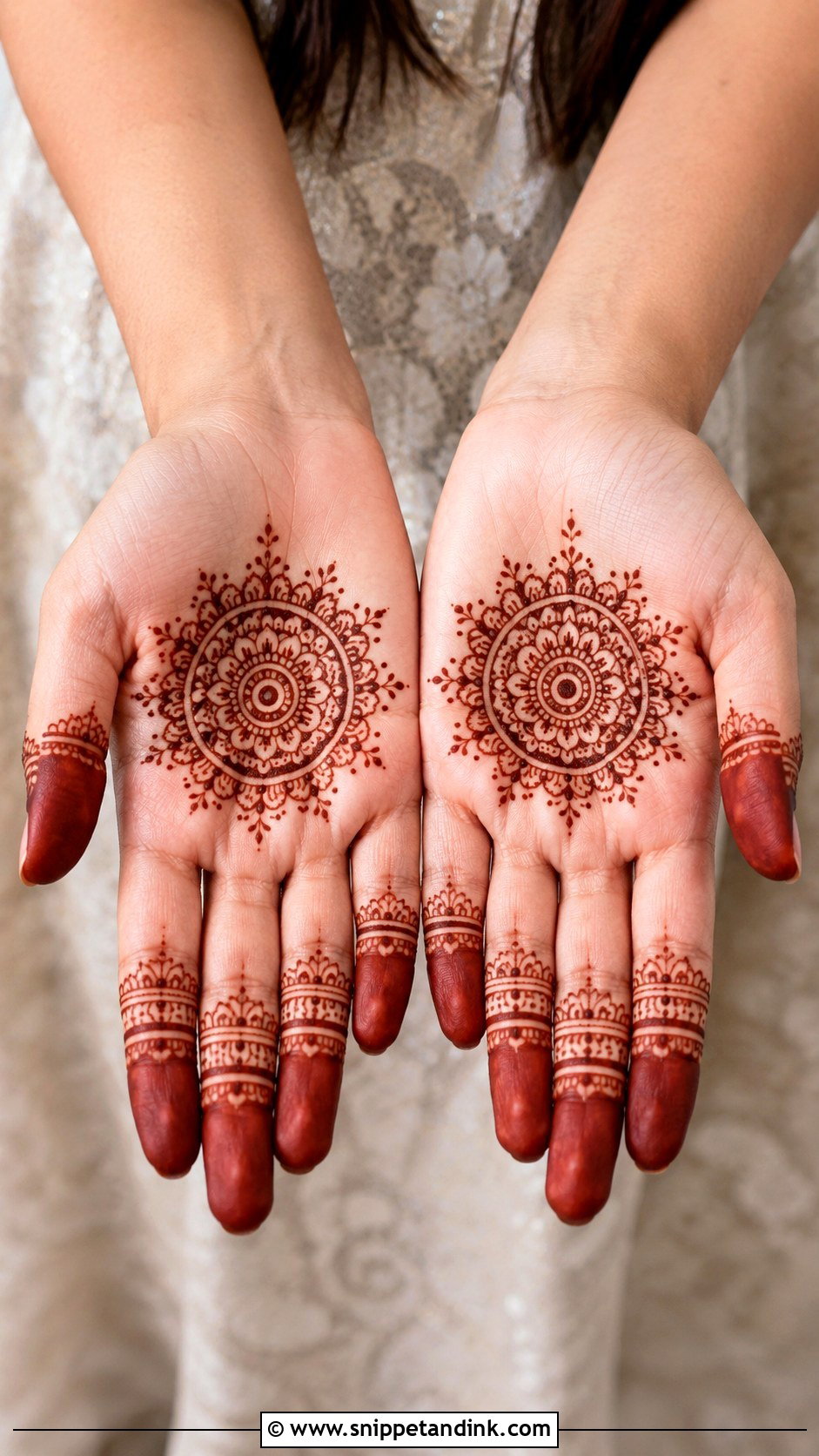
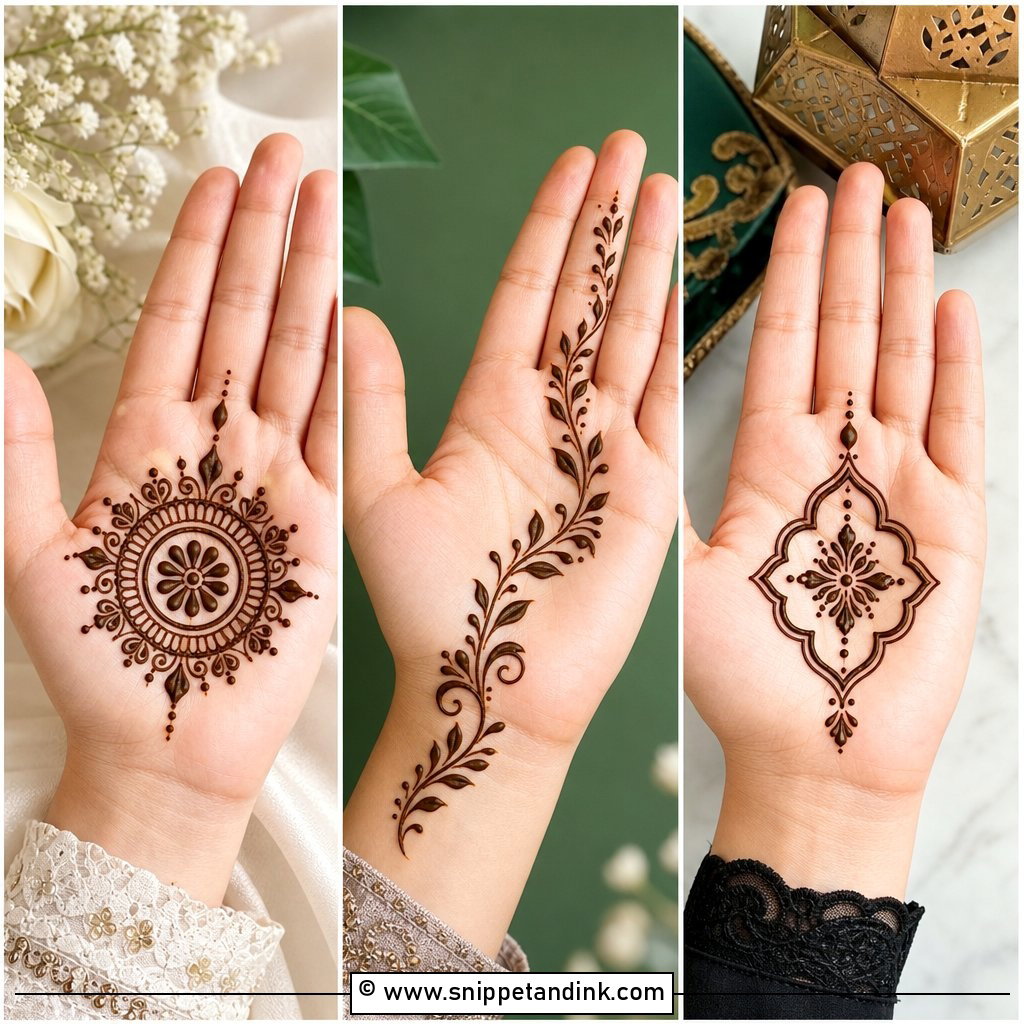
A small mandala in the middle of the palm with tiny dots, leaves or curves around it, then simple rings, tip caps or short leafy bands on the fingers. That is the most common minimal palm design, and it stains darker than anything on the back of the hand, since palm skin takes color best. The palm focal point gives photos somewhere to land. I keep the mandala out of the deep crease across the palm, where the paste cracks off as you flex your hand while it dries.
3. Minimal Arabic Mehndi Design
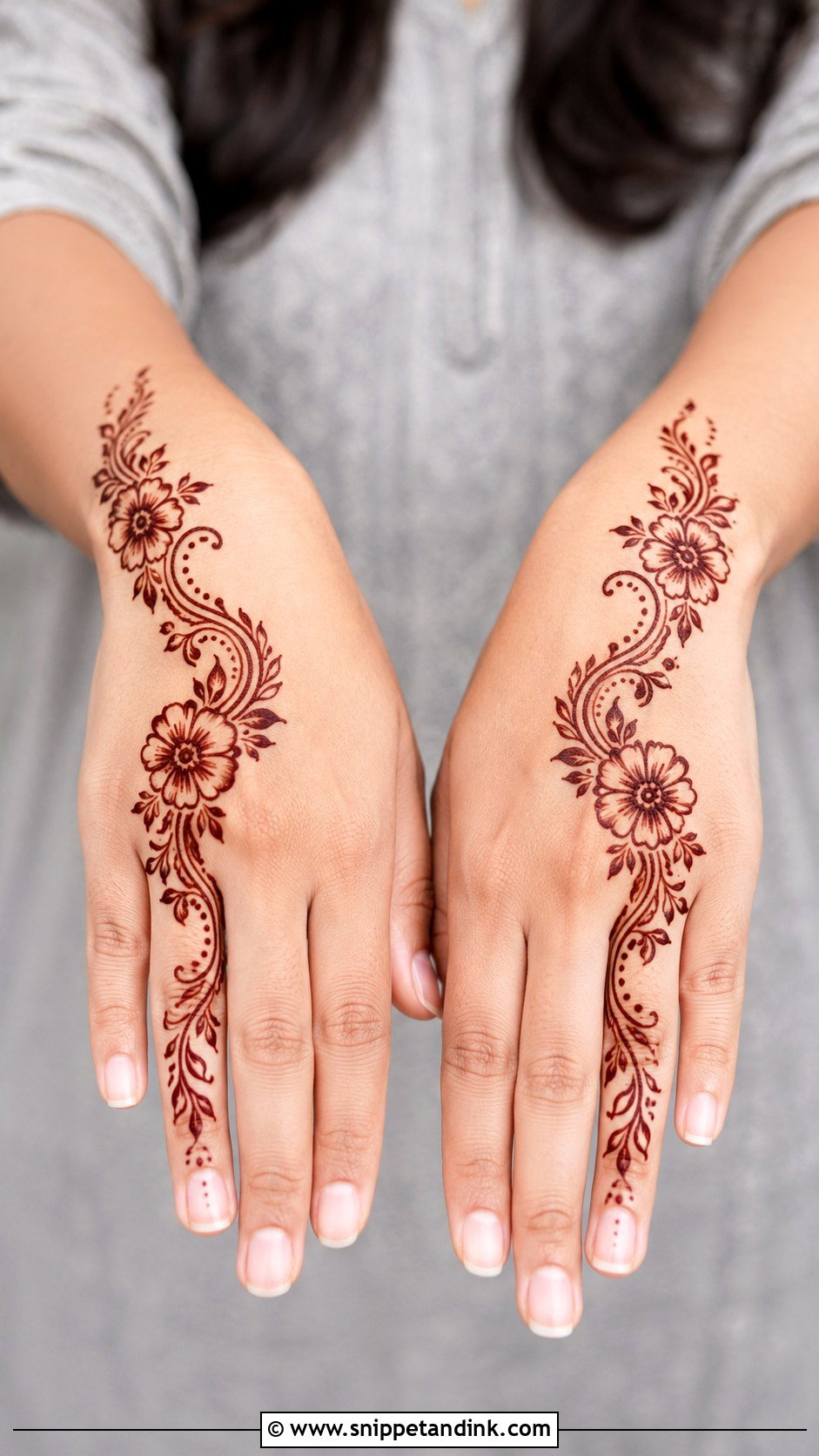
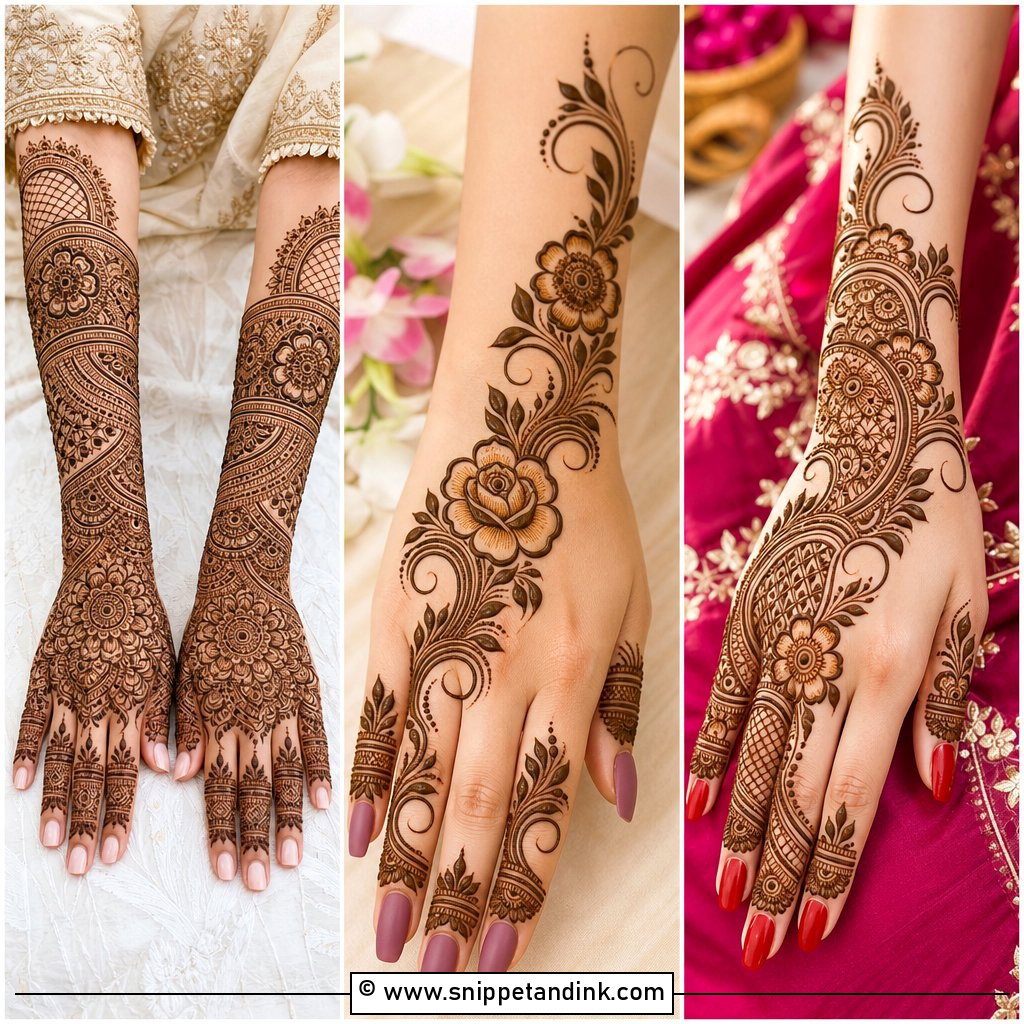
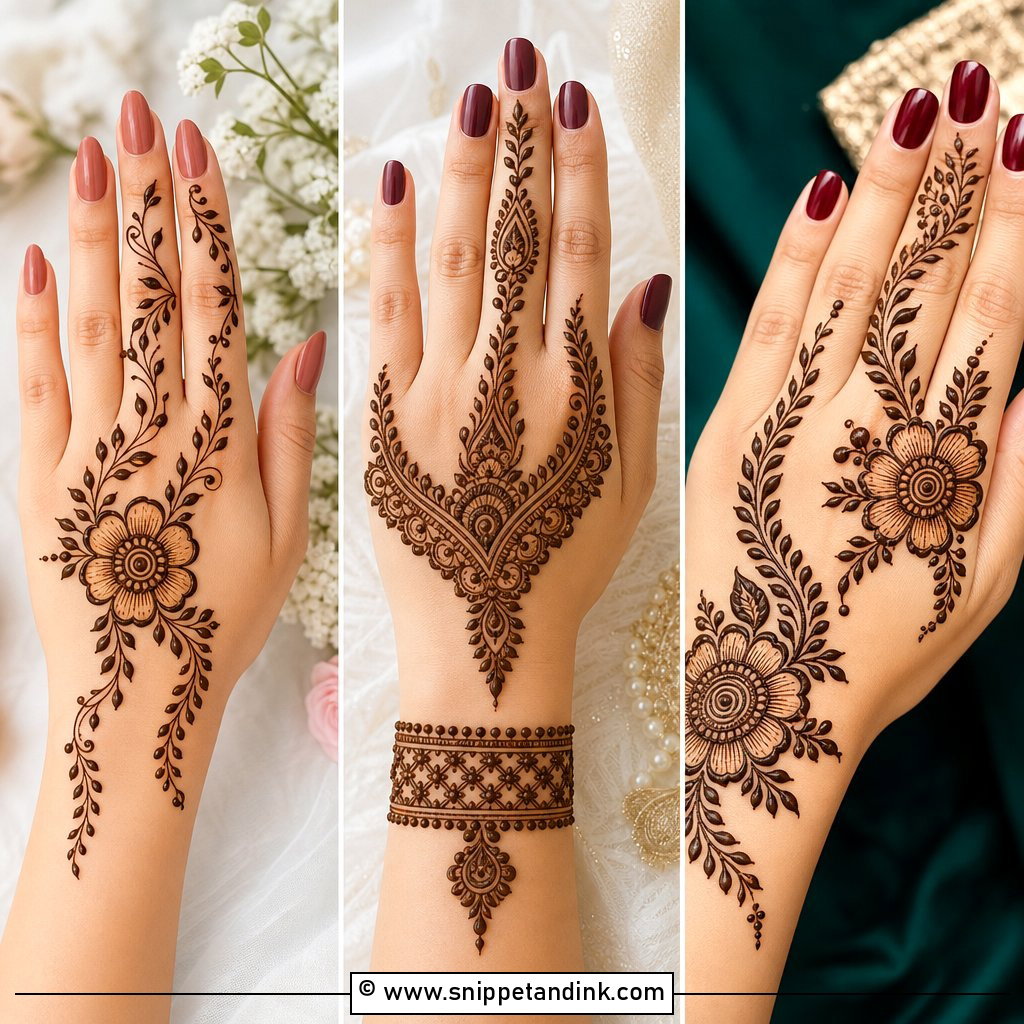
Minimal Arabic work is a single diagonal path from wrist to one finger: a few bold flowers, soft leaves, maybe a small paisley, with clean gaps between them. It forgives a beginner because it does not need perfect symmetry; an asymmetric trail is meant to look free. What it does need is a confident stroke. Hesitant lines in Arabic work show up as little kinks once stained. Keep the fingers lightly detailed so the trail stays the main event.
4. Minimal Finger Mehndi Design
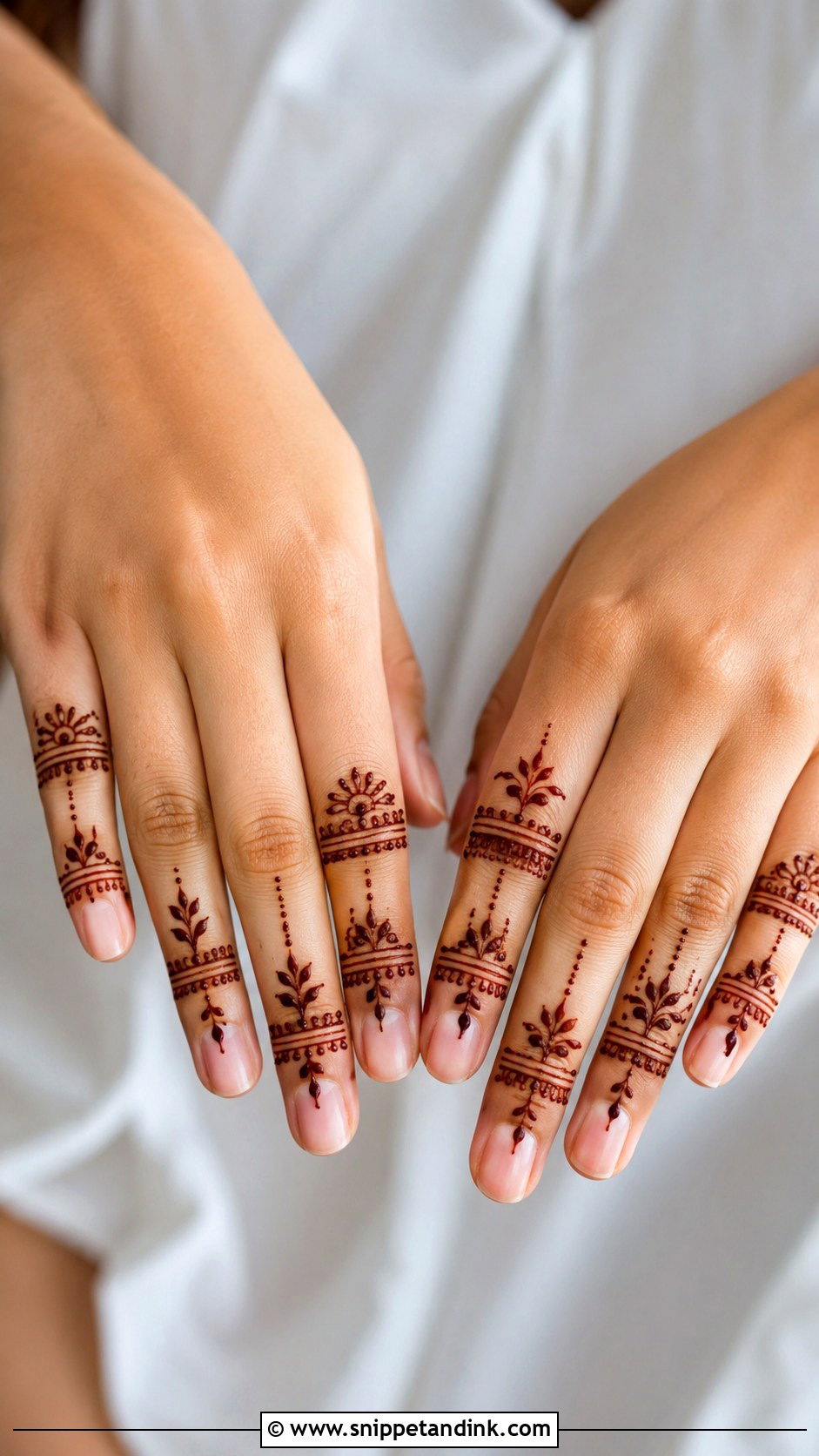
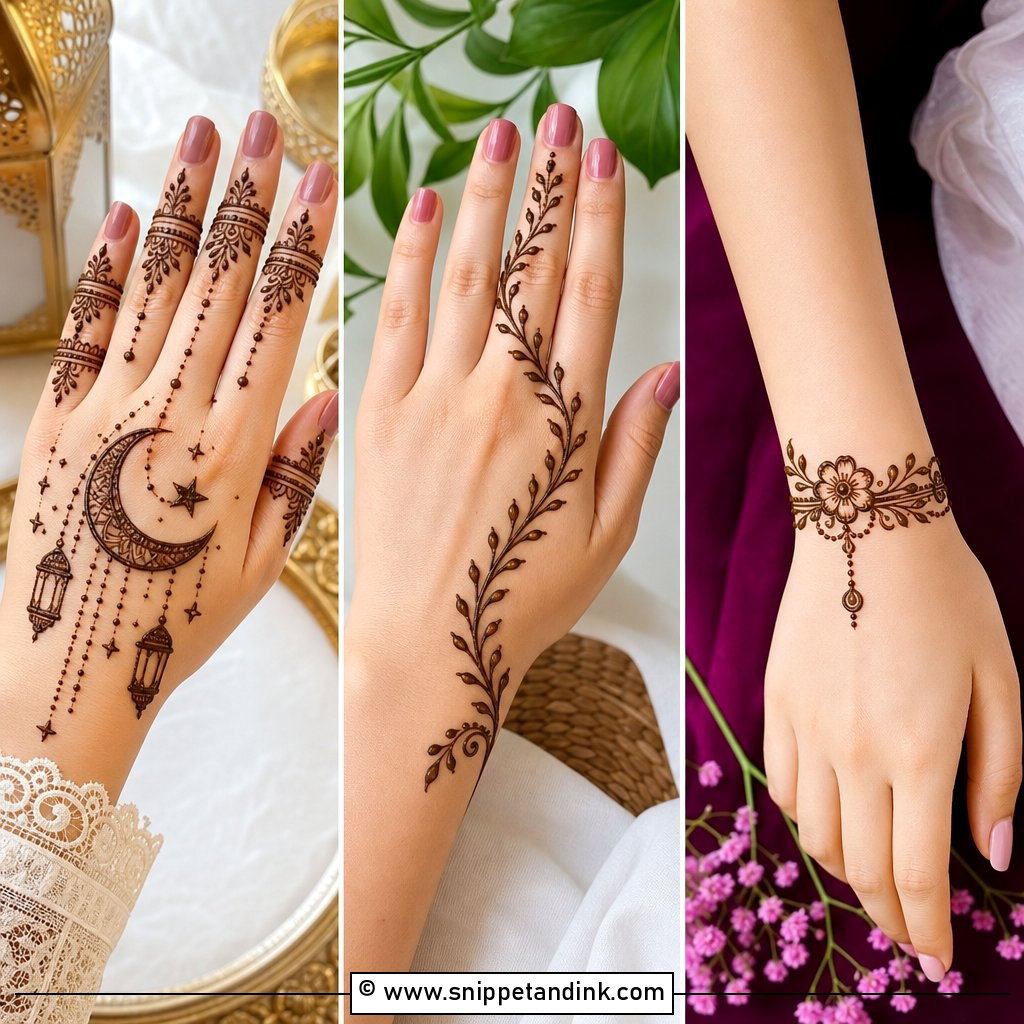
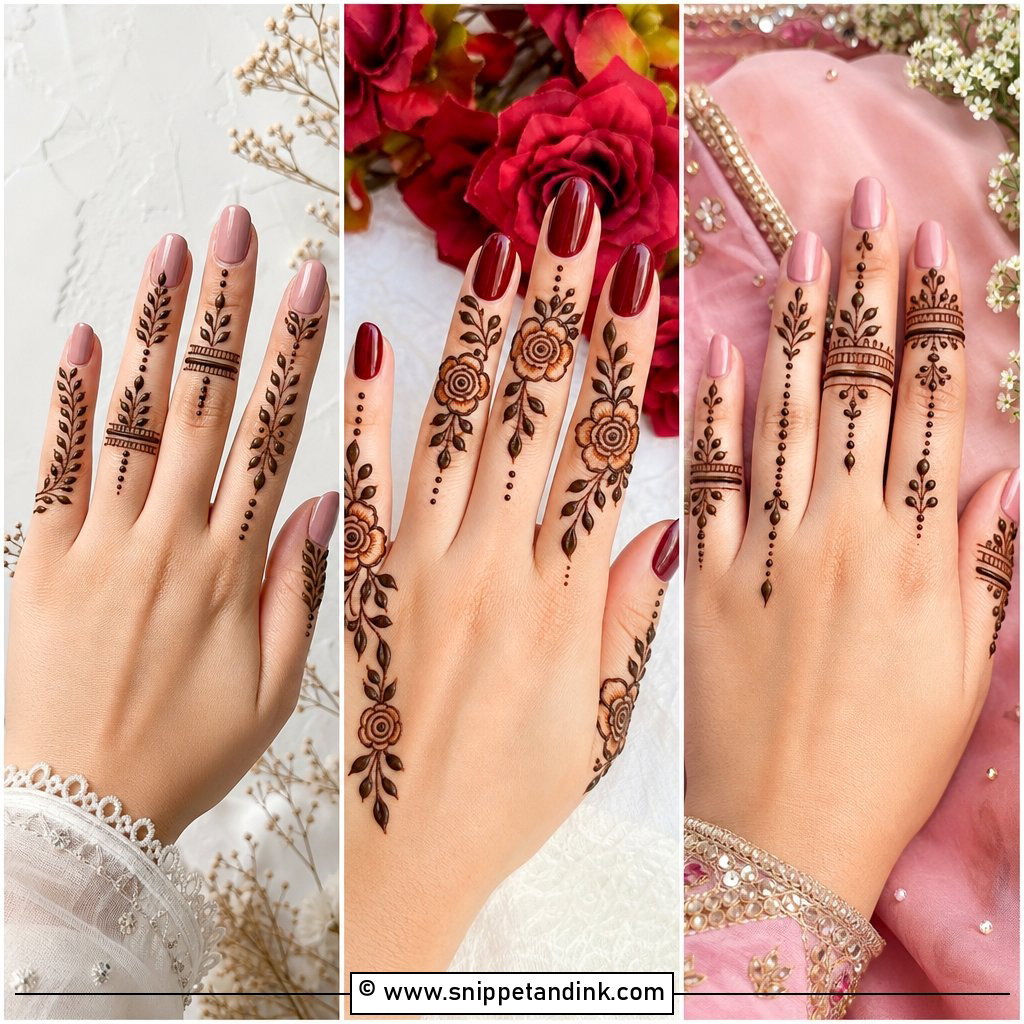
Finger-only designs leave the palm or back of the hand mostly empty and put the detail into ring bands, dotted chains, leafy lines, tiny flowers or thin geometric strokes. It is quick and suits both casual and festive outfits. Fingers stain surprisingly dark, so a little goes a long way. I either decorate all five evenly or pick two fingers for a cleaner look; three is the awkward number that always looks like I ran out of time.
5. Minimal Mandala Mehndi Design
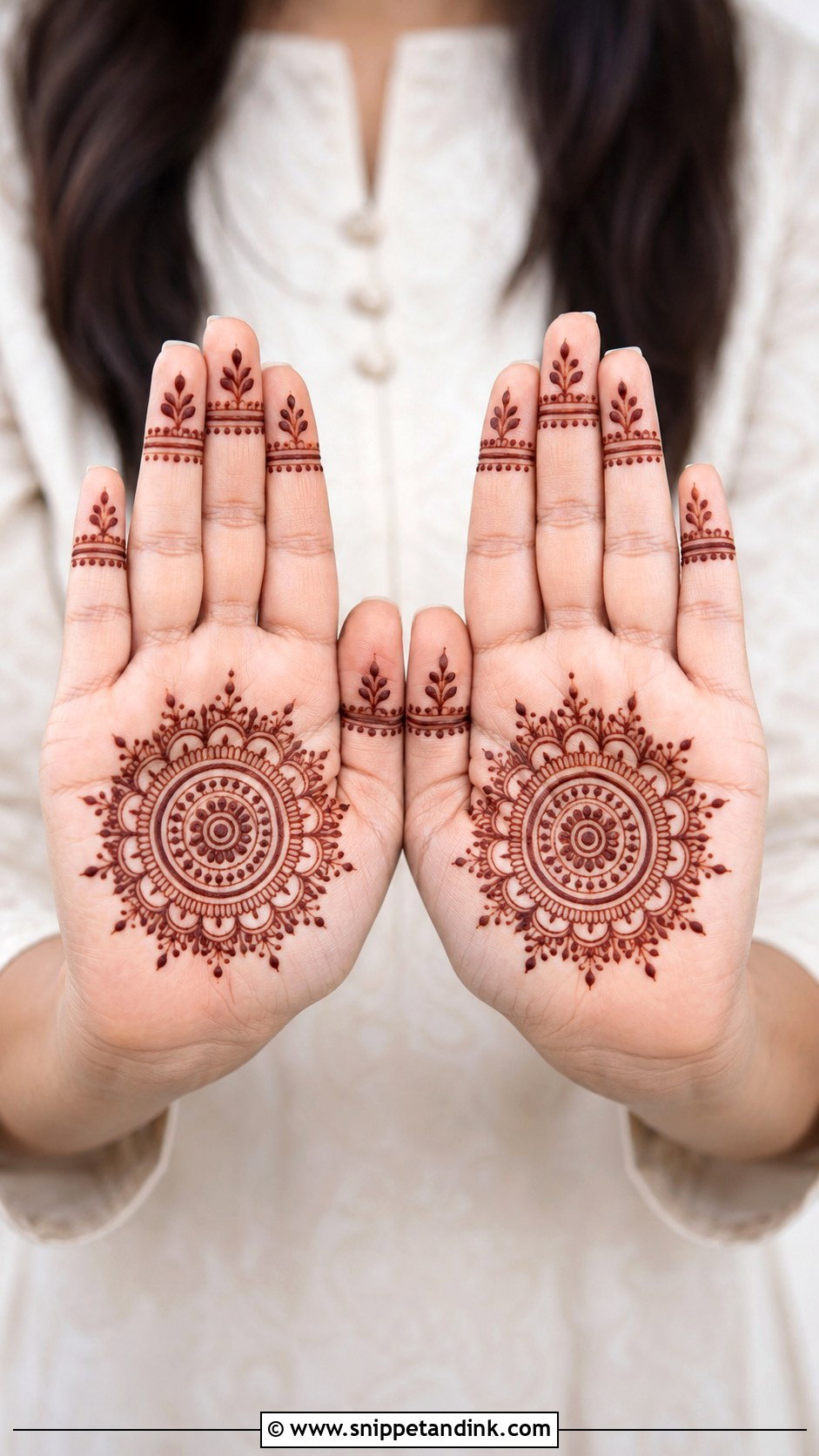
One neat circle on the palm or the back of the hand, with dots, small petals, thin rings or light finger detailing around it. The whole design depends on symmetry. Before I outline, I place four tiny dots at the north, south, east and west points of the circle, so I have guides to draw toward. For a modern version, leave the wrist plain and decorate only the fingertips. For something more festive, add one delicate bracelet line and keep everything else airy.
6. Minimal Floral Mehndi Design
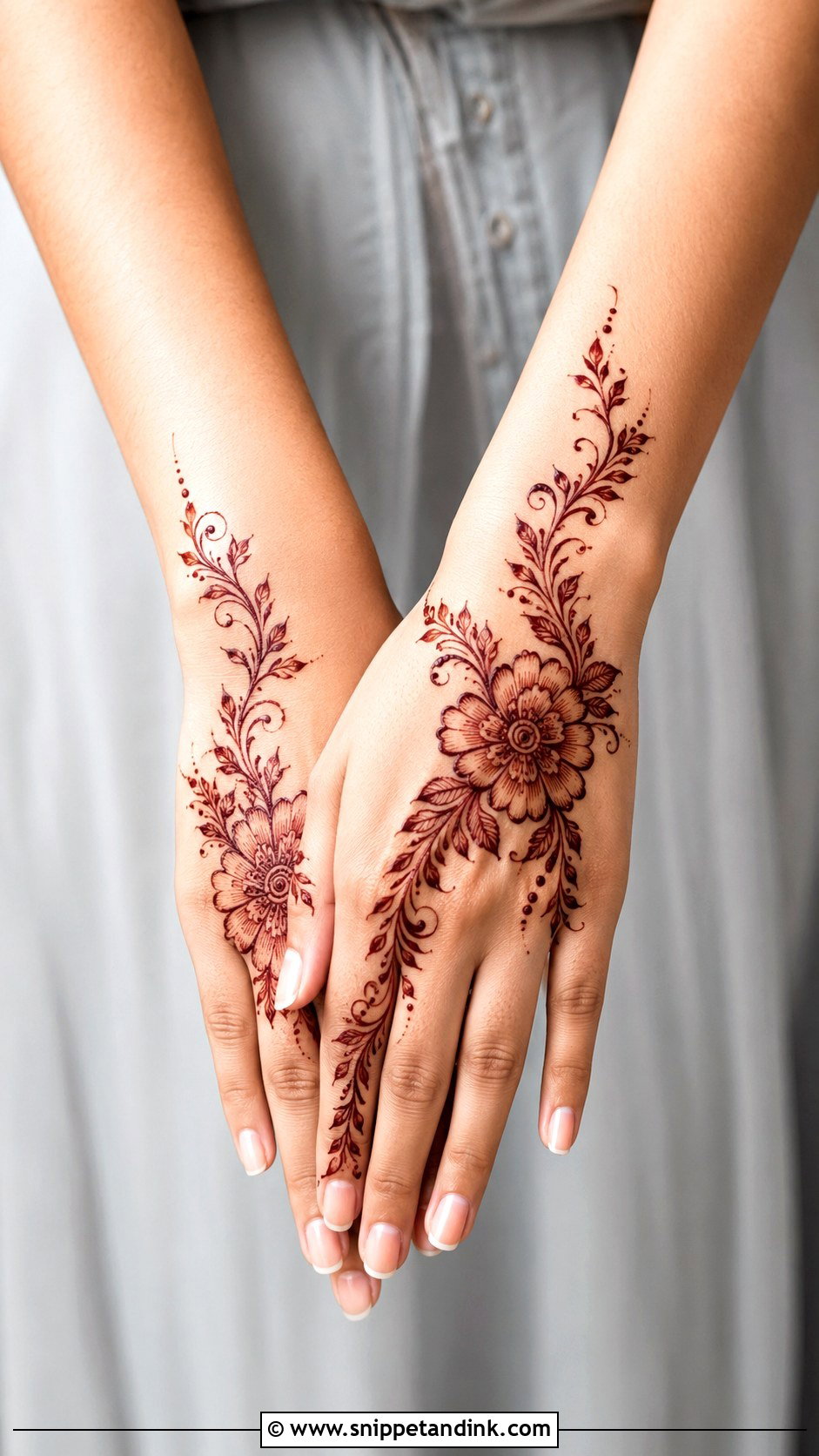
A single large flower or a small cluster of blossoms on the back of the hand, the palm or the wrist, linked with thin leaves, dots and curved stems. It suits spring events, Eid gatherings and bridesmaids. The key is breathing space around each flower. Rounded petals look sweet; long pointed petals make the hand look more slender, which I’d suggest for shorter or wider hands. I keep the petals as outlines rather than filling them, because filled petals in a minimal design look heavy once they stain.
7. Minimal Leaf Mehndi Design
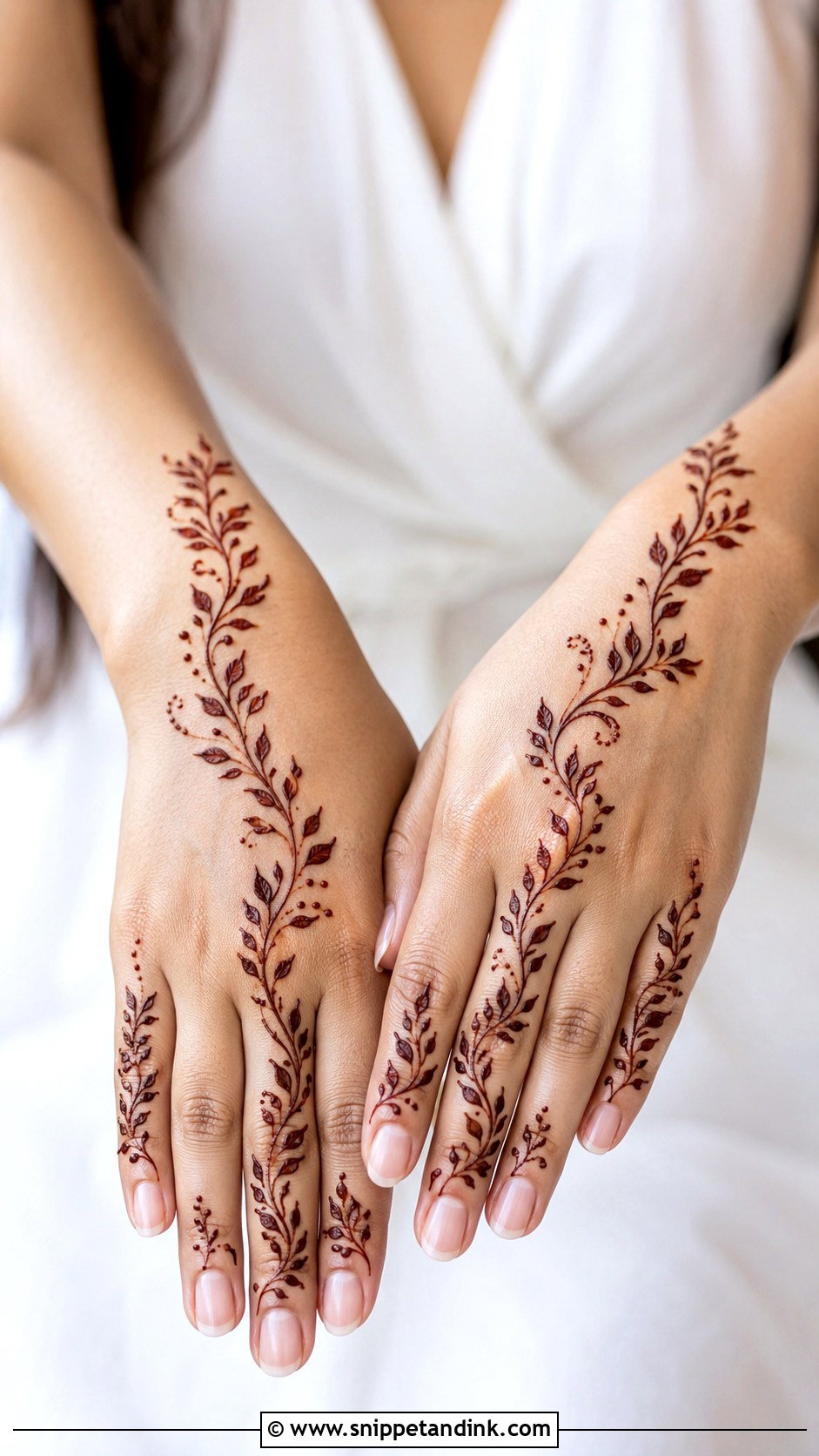
A thin vine moves across the back of the hand, the palm, the wrist or the fingers, with small leaves set along it and a few dots for softness. On a narrow hand, a vertical leafy trail makes the fingers look longer. Leaves are also the most forgiving shape I draw; if a line goes slightly wrong, I can usually turn it into an extra leaf. Keep the spacing even and resist adding more vines than the one.
8. Minimal Bracelet Mehndi Design
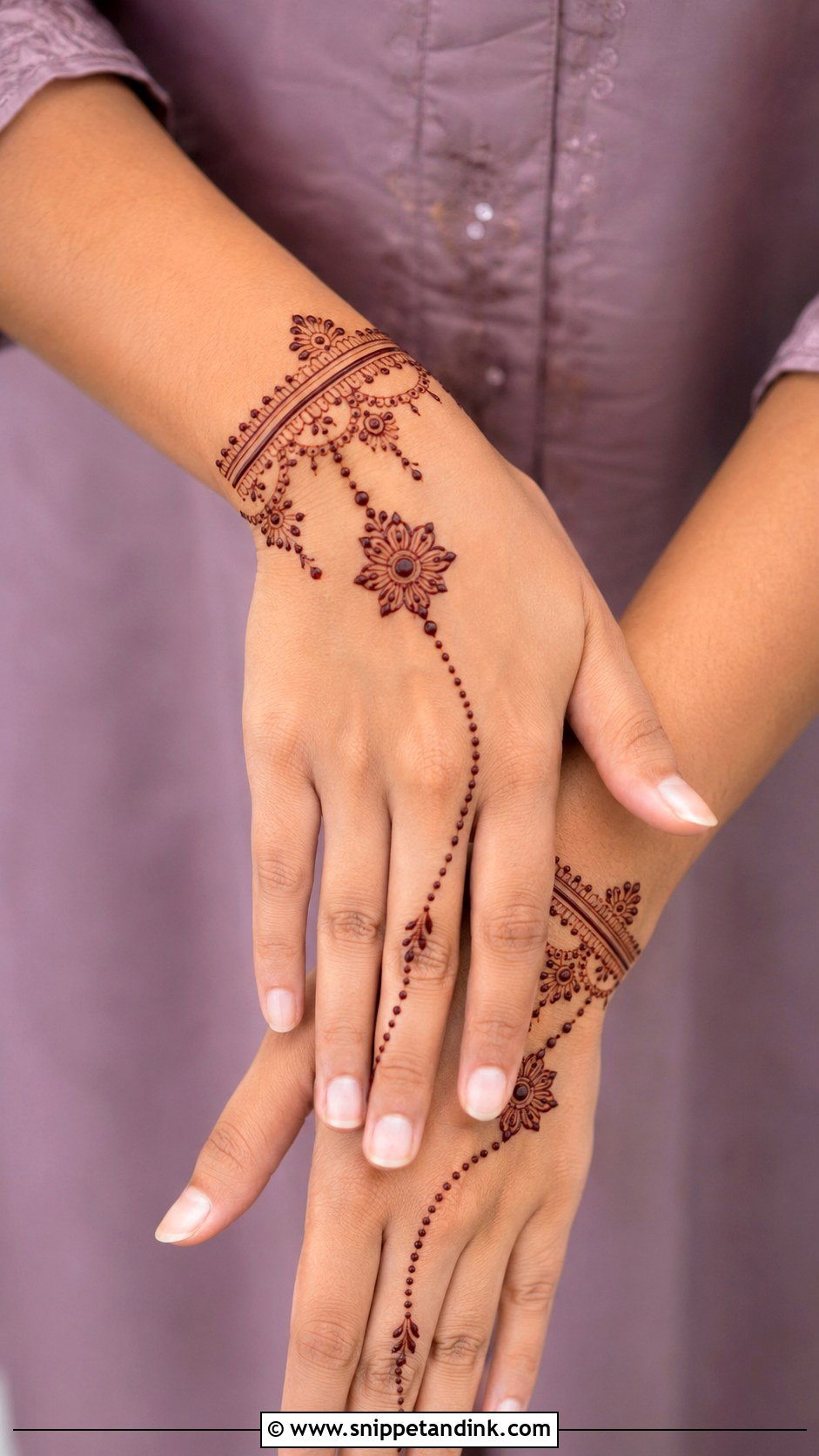
One or two thin bands around the wrist with small dots, tiny flowers, leafy chains or a single charm in the middle. The hand can stay empty, or a slim line can run up to one finger for a haath phool effect. It is the design I suggest for office-friendly festive looks. Drawing a band all the way round evenly is harder than it looks; I ask clients to rotate their wrist slowly while I hold the cone steady, rather than me reaching around.
9. Minimal Haath Phool Mehndi Design
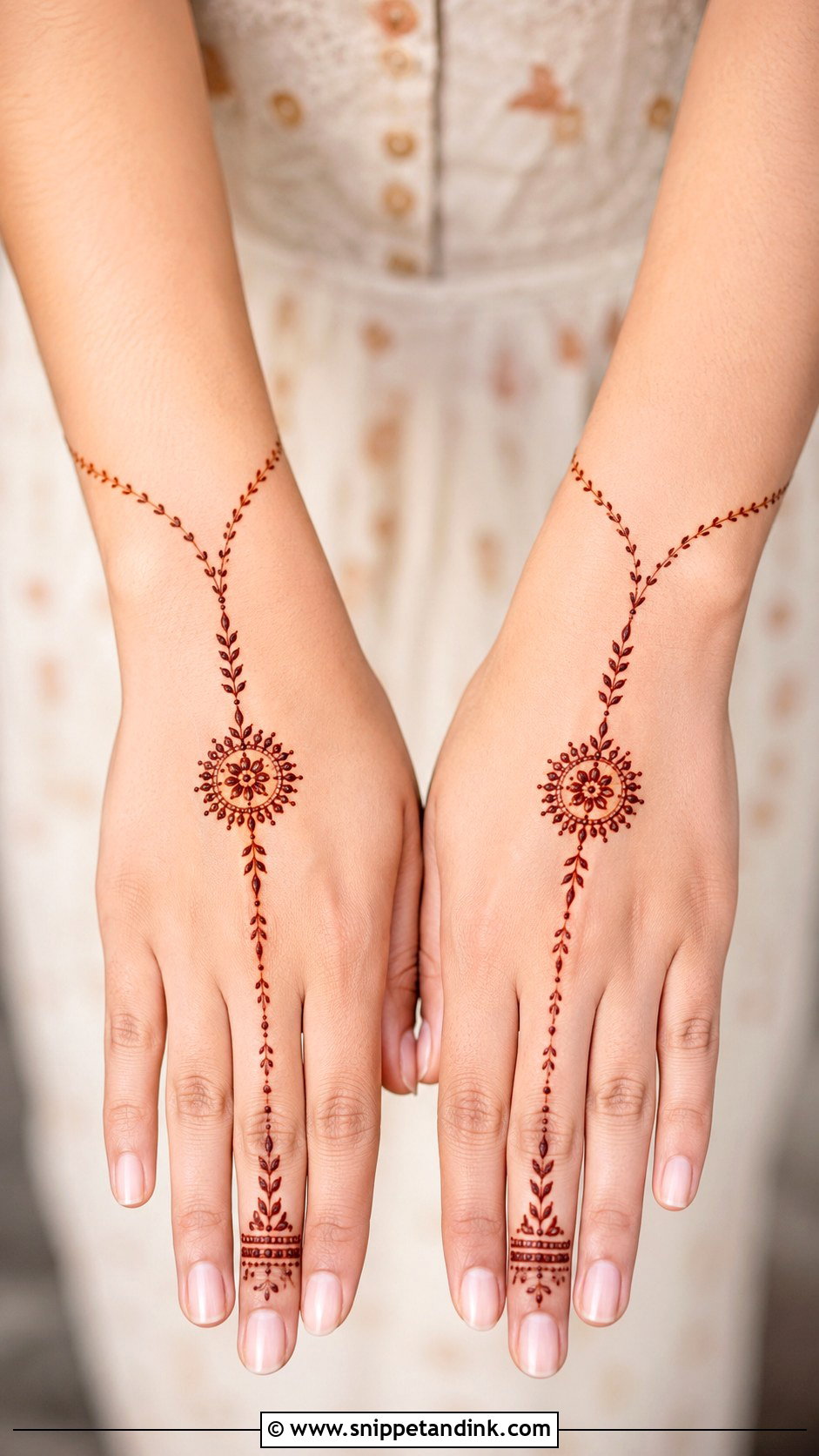
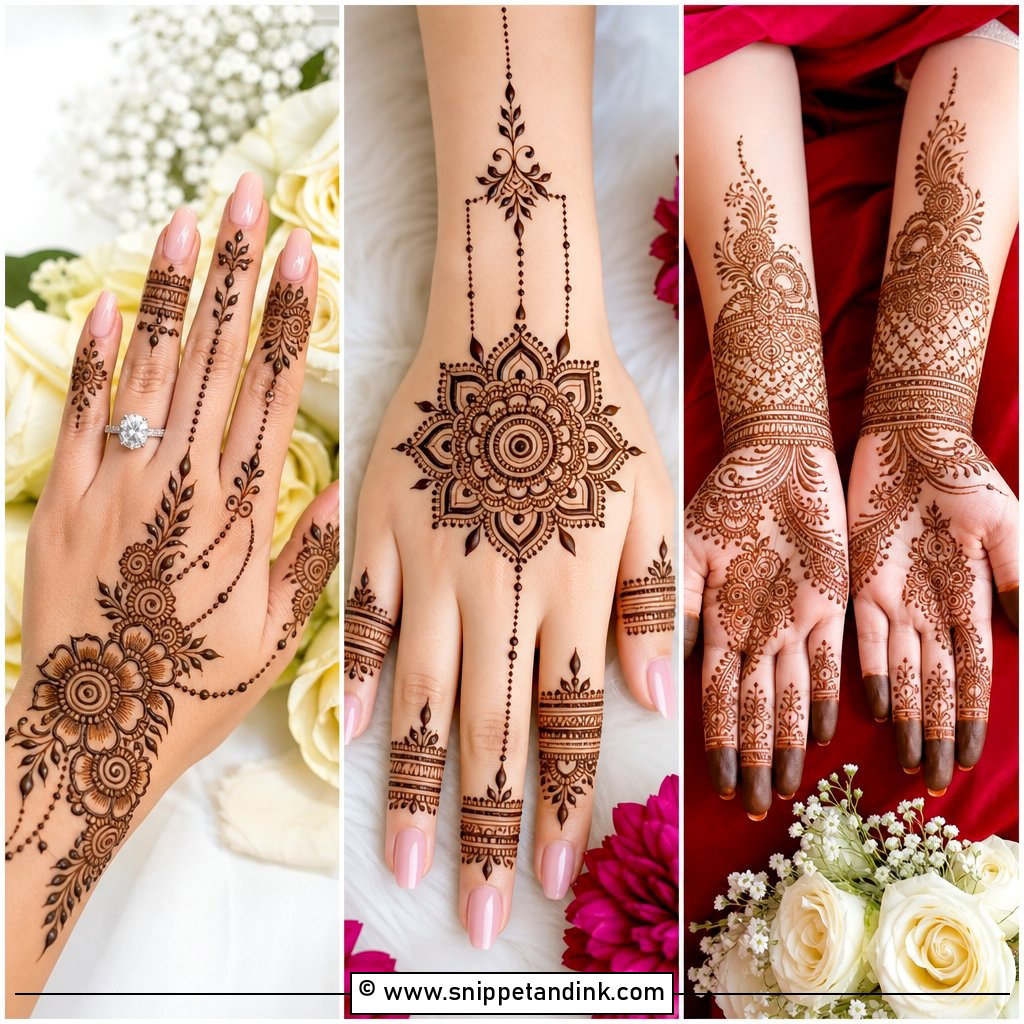
This copies hand jewelry: a small central motif on the back of the hand, a fine chain to the wrist, and one or more lines running to the fingers, finished with tiny dots, leaves and rings. Engagement parties, bridesmaids and Eid photos all suit it. The chains need to follow the actual tendons and knuckles of the hand, or they look like they are floating. I keep the center motif small and the connecting lines very thin.
10. Minimal Bridal Mehndi Design
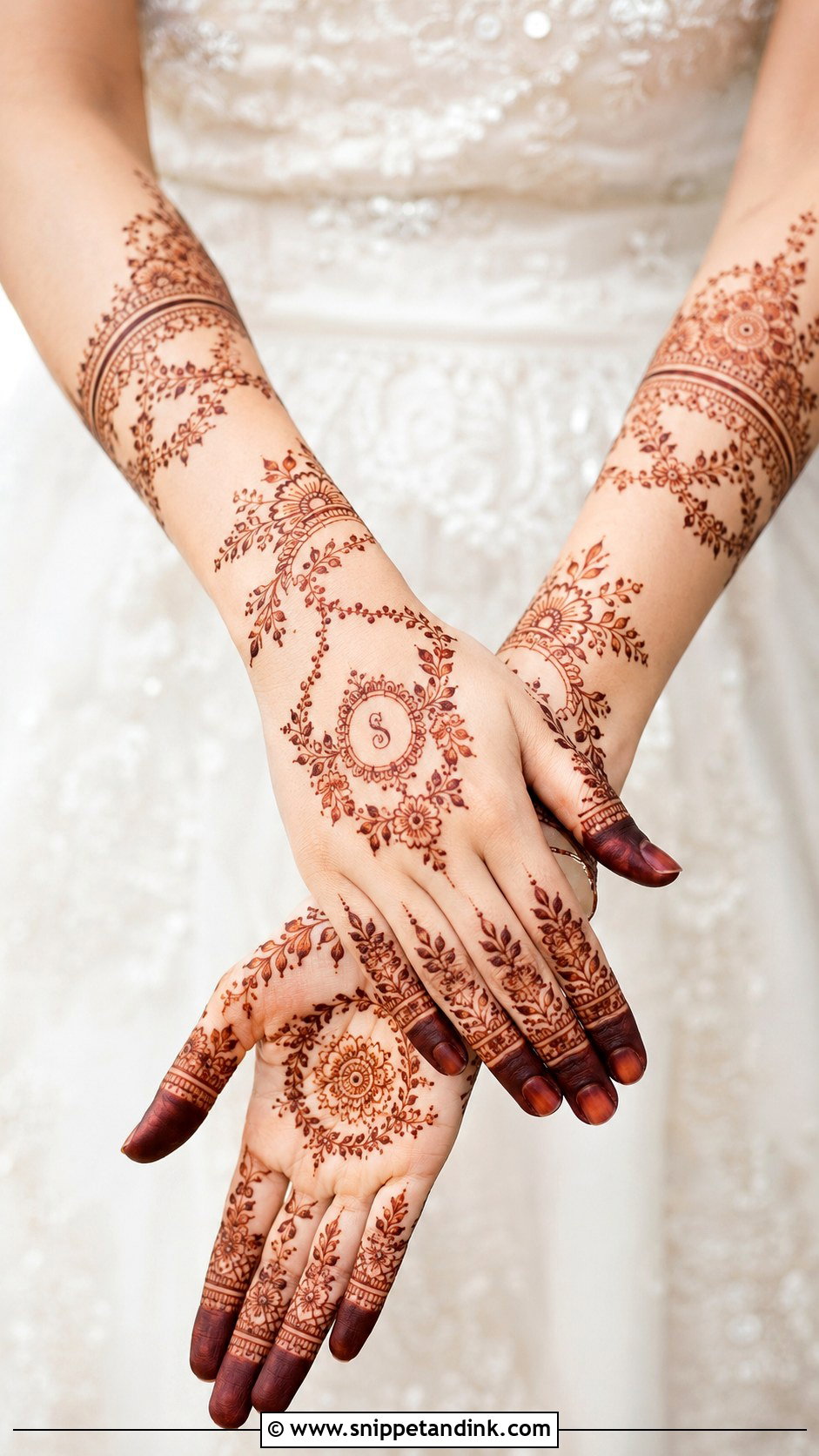
Minimal bridal henna focuses on chosen areas, like the fingers, the wrist, the palm center or a back-hand trail, instead of filling everything. Small florals, initials, mandalas, leafy bracelets or simple paisleys bring the bridal feeling. It suits intimate weddings, courthouse ceremonies and engagement shoots, and it cuts the sitting time a lot. My advice to a minimal bride is to choose one meaningful motif and give it room, then mirror the coverage on both hands so they read as a pair in photos.
11. Minimal Indian Mehndi Design
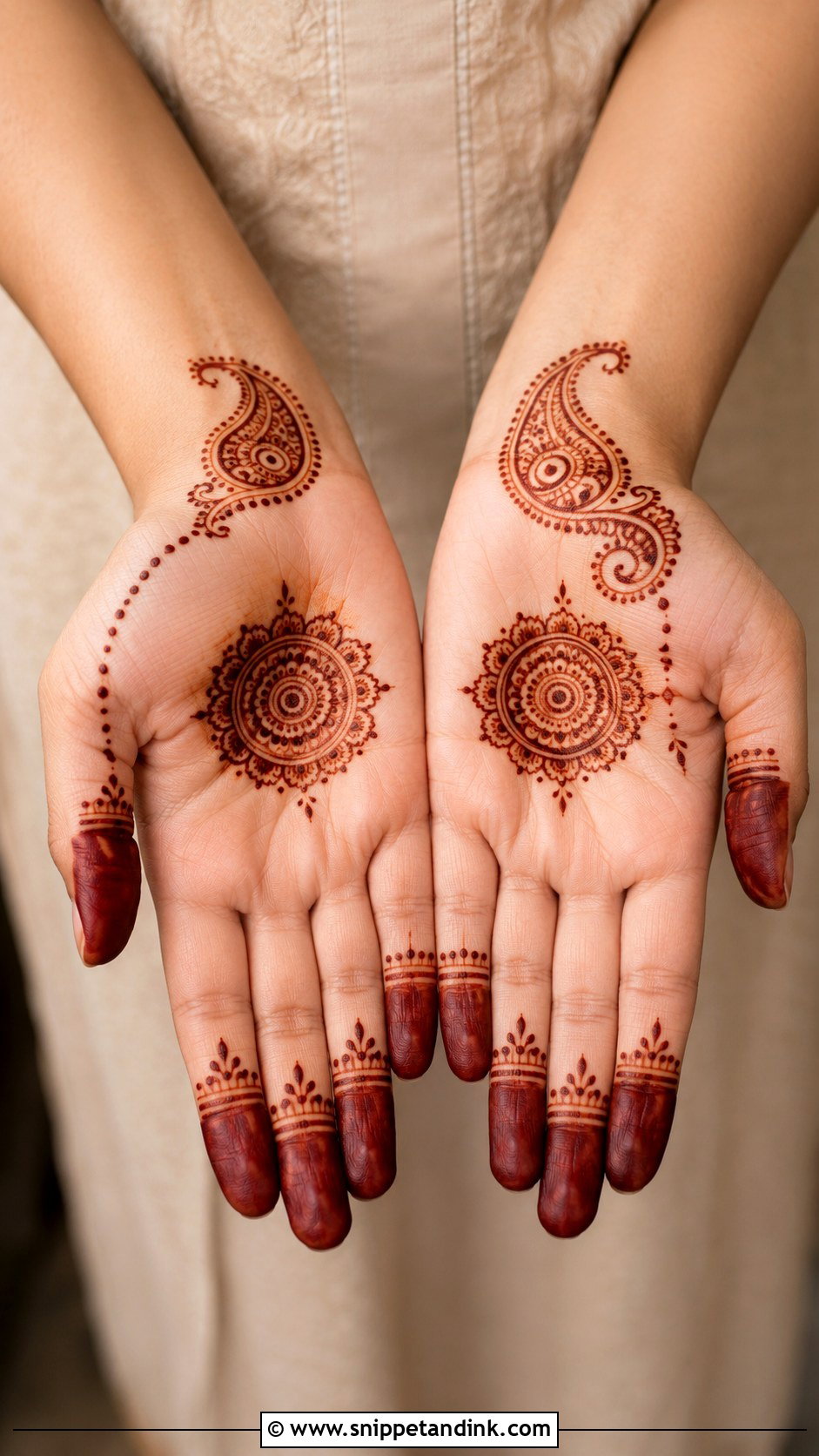
Minimal Indian work keeps the traditional motifs and drops the dense filling. A small mandala, paisley, lotus, peacock curve or dotted border sits on the palm or back of the hand, and the fingers get light bands, half-filled tips or slim leafy lines. It still feels right at pujas, festivals and family occasions. Pick one classic motif and let it stand out. The open skin around it is what makes it minimal; fill the gaps and it turns into a normal Indian design.
12. Minimal Indo Arabic Mehndi Design
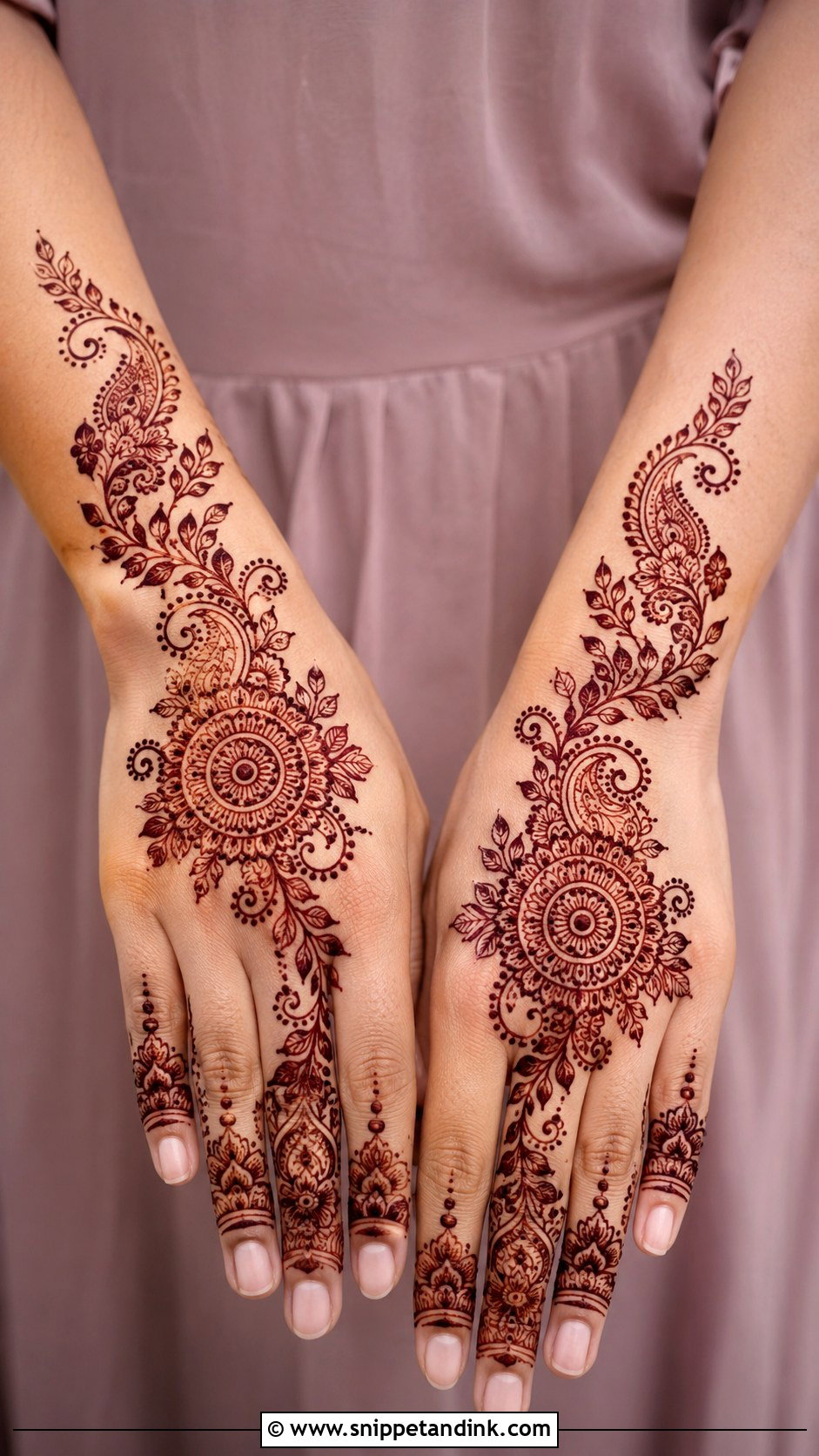
A minimal Indo Arabic mehndi design pairs a mandala or paisley with a diagonal floral trail or a few bold petals, usually on one side of the hand while the other side stays bare. It is more decorative than a tiny motif and much lighter than a full hand. I keep the outlines clean and limit fine filler to two or three spots. Too much filler is the most common way this style tips from minimal into busy.
13. Minimal Gulf Mehndi Design
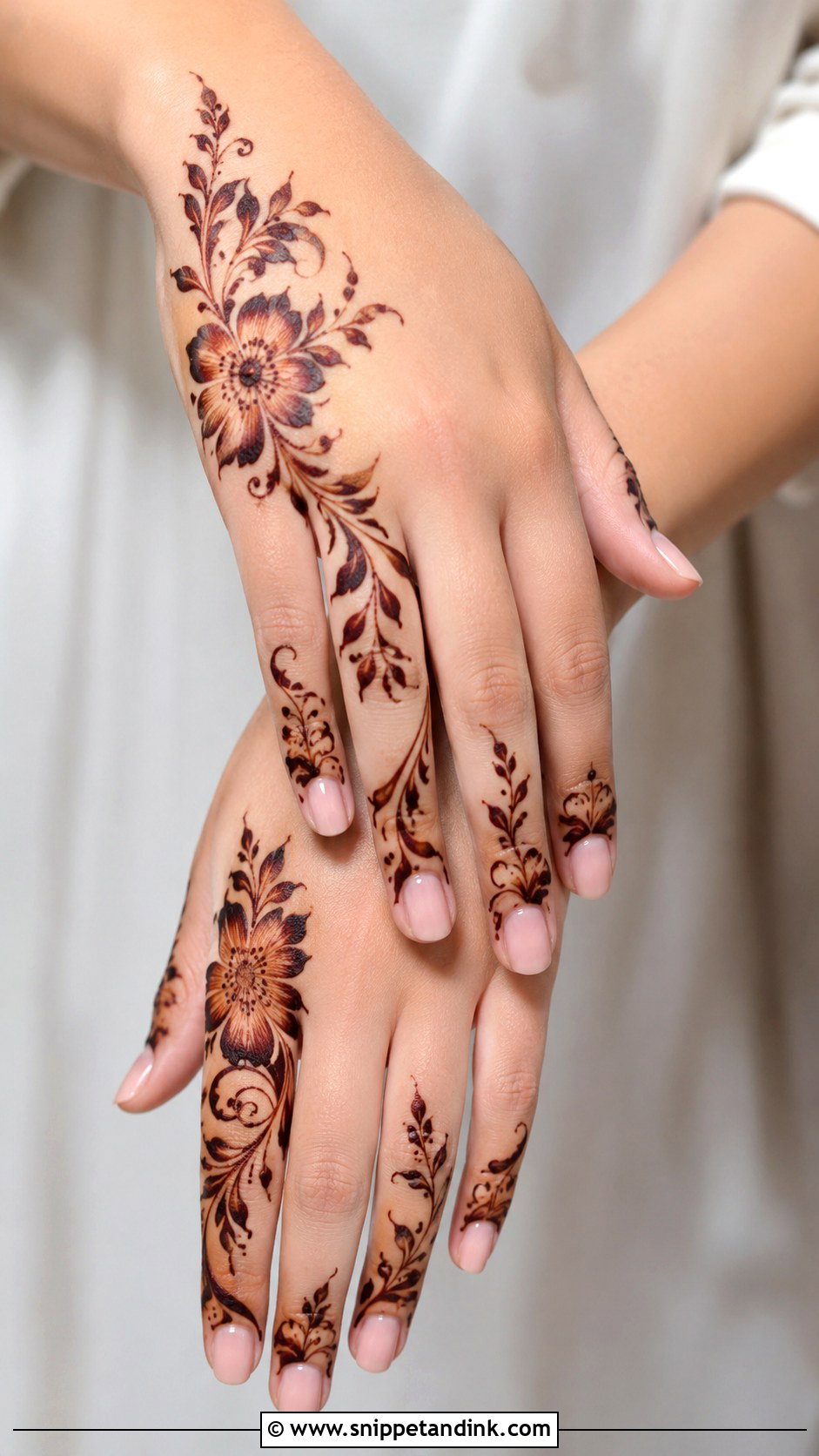
Gulf-style minimal work uses larger flowers, curving vines and flowing finger patterns with clear empty space between them, so each shape stands on its own. On the back of the hand, that open layout makes the hand look long. Shaded petals and dotted accents are fine in moderation. Shading is done by thinning the paste line to a light wash, and on a minimal design I keep it to one or two petals, since heavy shading pulls attention from the outlines that carry the style.
14. Minimal Moroccan Mehndi Design
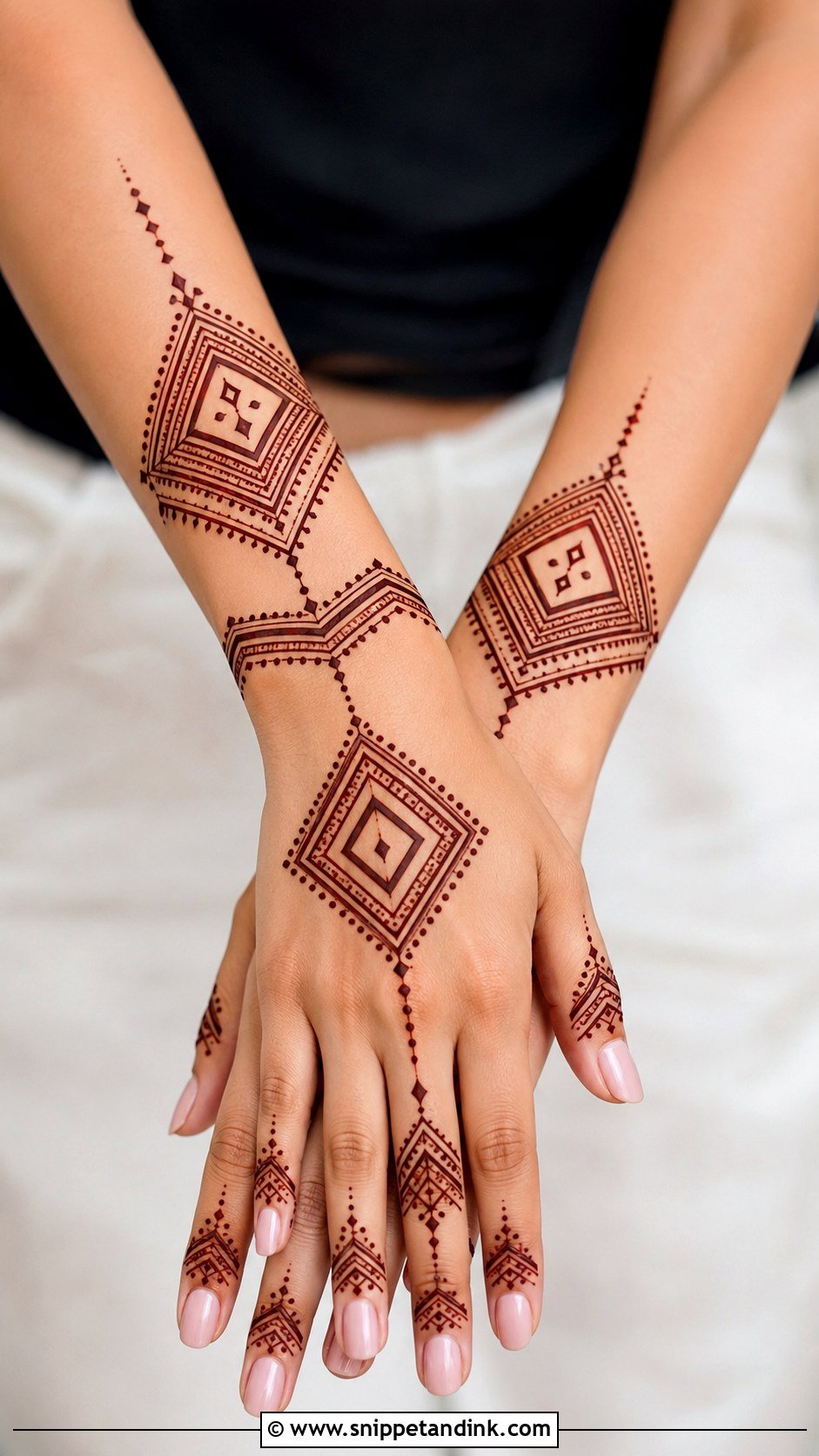
Diamonds, triangles, straight bands, chevrons, dots and simple geometric frames on the fingers, back of the hand, wrist or palm. Geometric minimal designs look structured and pair well with simple jewelry. Straight lines demand more control than curves; I draw them in short connected pulls rather than one long drag, which keeps them steady. Keep the lines fine and leave small gaps between shapes so the pattern looks light.
15. Minimal Palm Mehndi Design
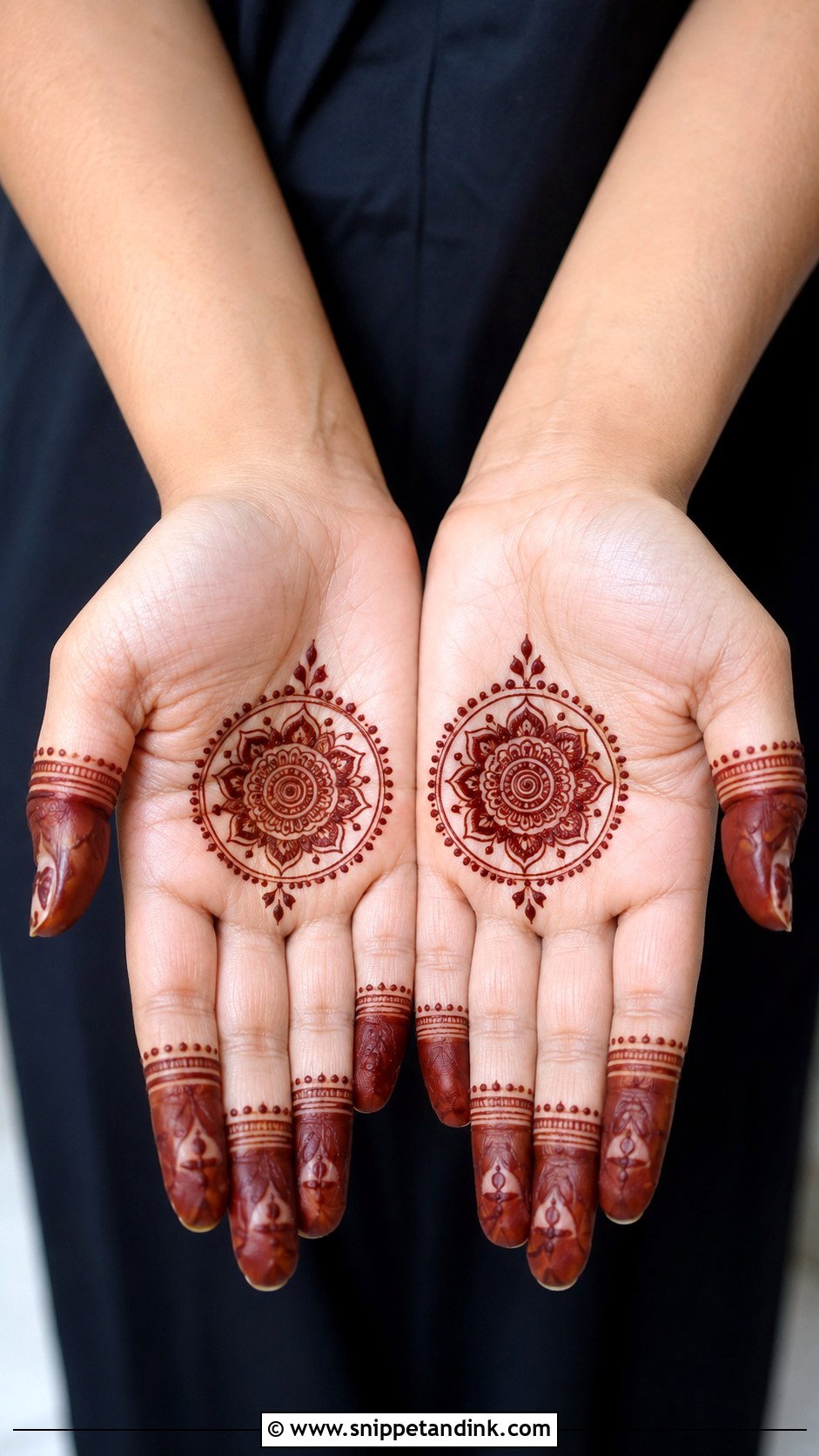
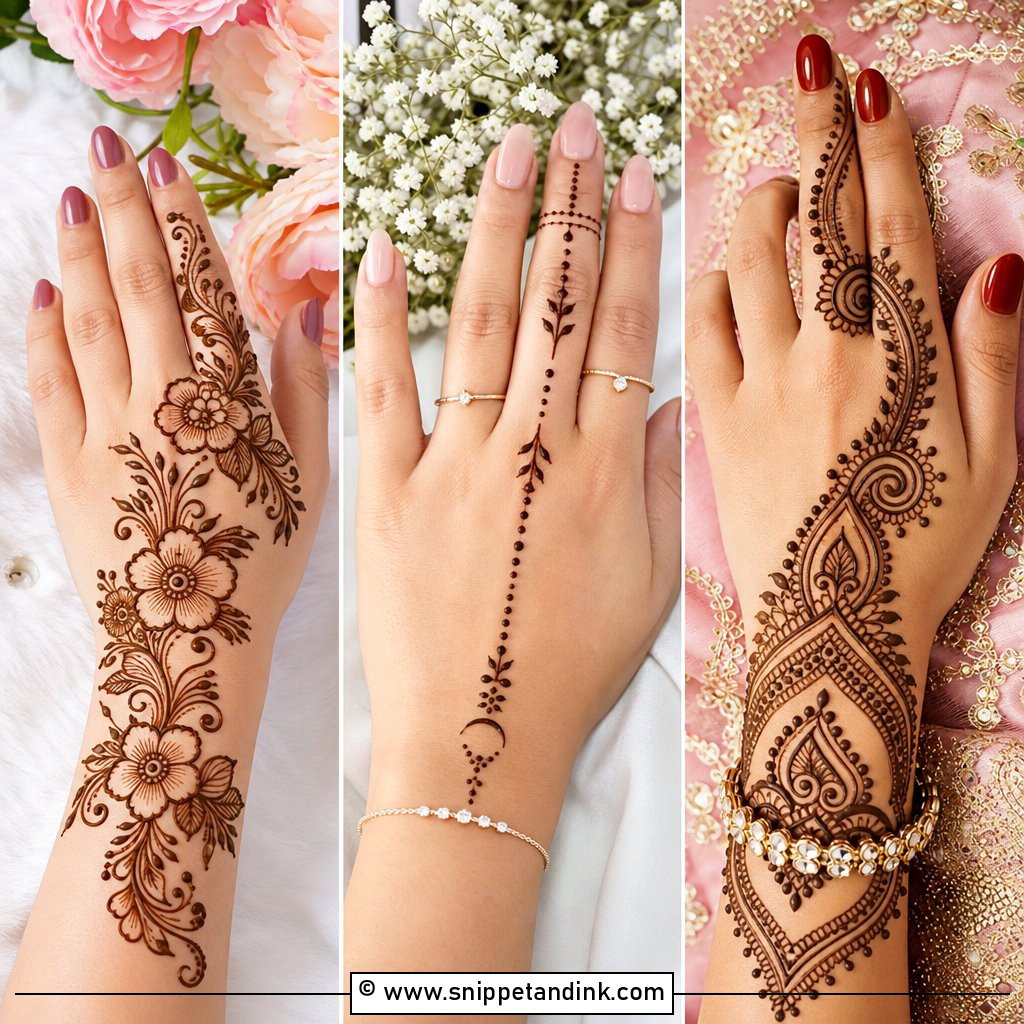
One focal point in the center of the palm: a mandala, a flower, a tiny paisley cluster or a simple circular pattern. Fingers stay bare or get light rings and dots. It takes very little time and stains richly. On a small palm, I choose one clear motif instead of several small details. On a larger palm, a soft dotted border keeps the center from looking lost in empty space.
16. Minimal Wrist Mehndi Design
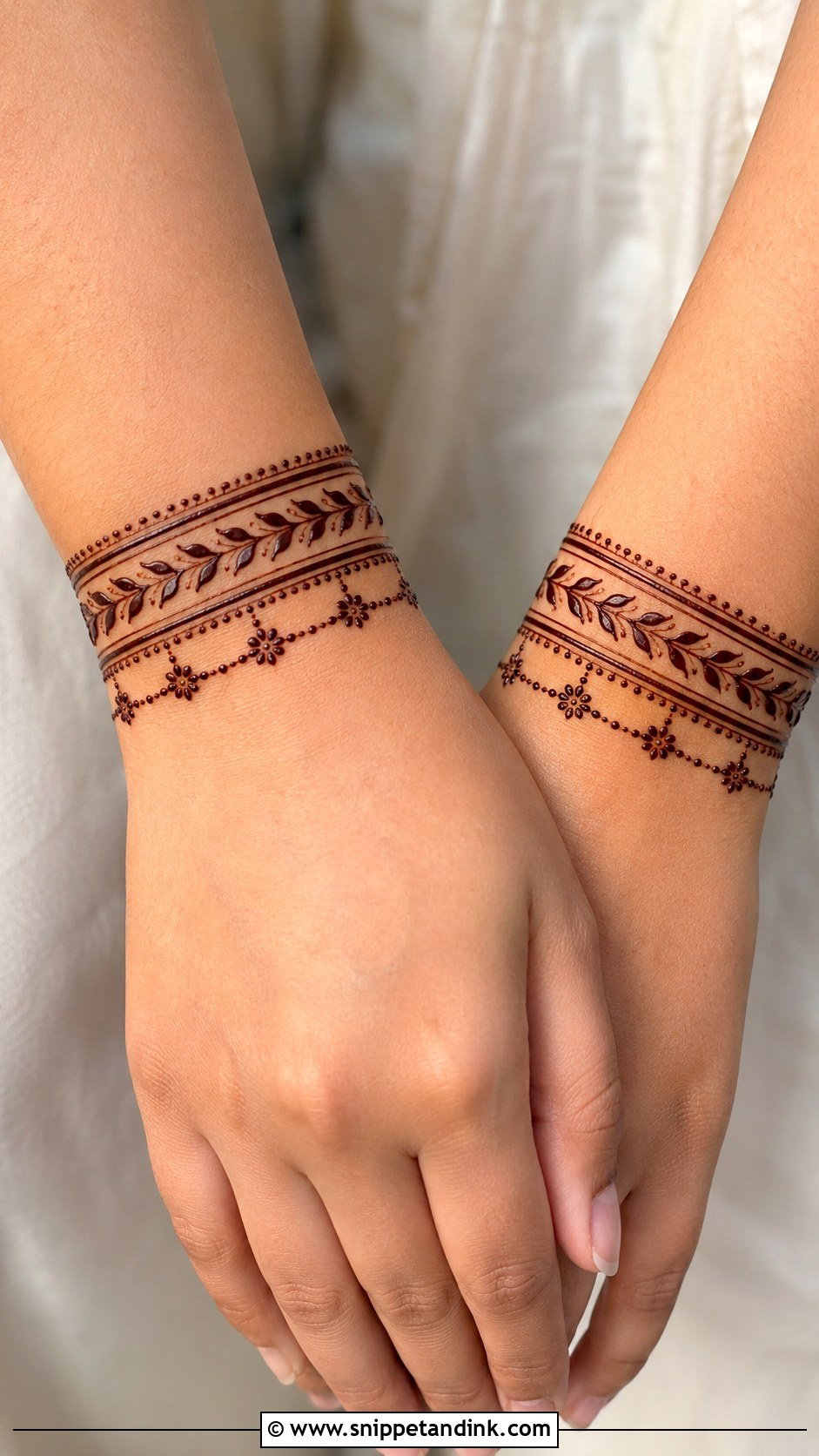
A wrist design gives the bracelet look without touching the hand: thin bands, a leafy cuff, a small floral chain or a geometric border. Some versions creep a little up the forearm; others stay tight to the wrist. It is easy to hide under a sleeve or watch for work, which is why I suggest it to anyone with a strict dress code. Wrist skin stains lighter than the palm and fades a little sooner, so I make these lines slightly bolder than finger lines.
17. Minimal Side Hand Mehndi Design
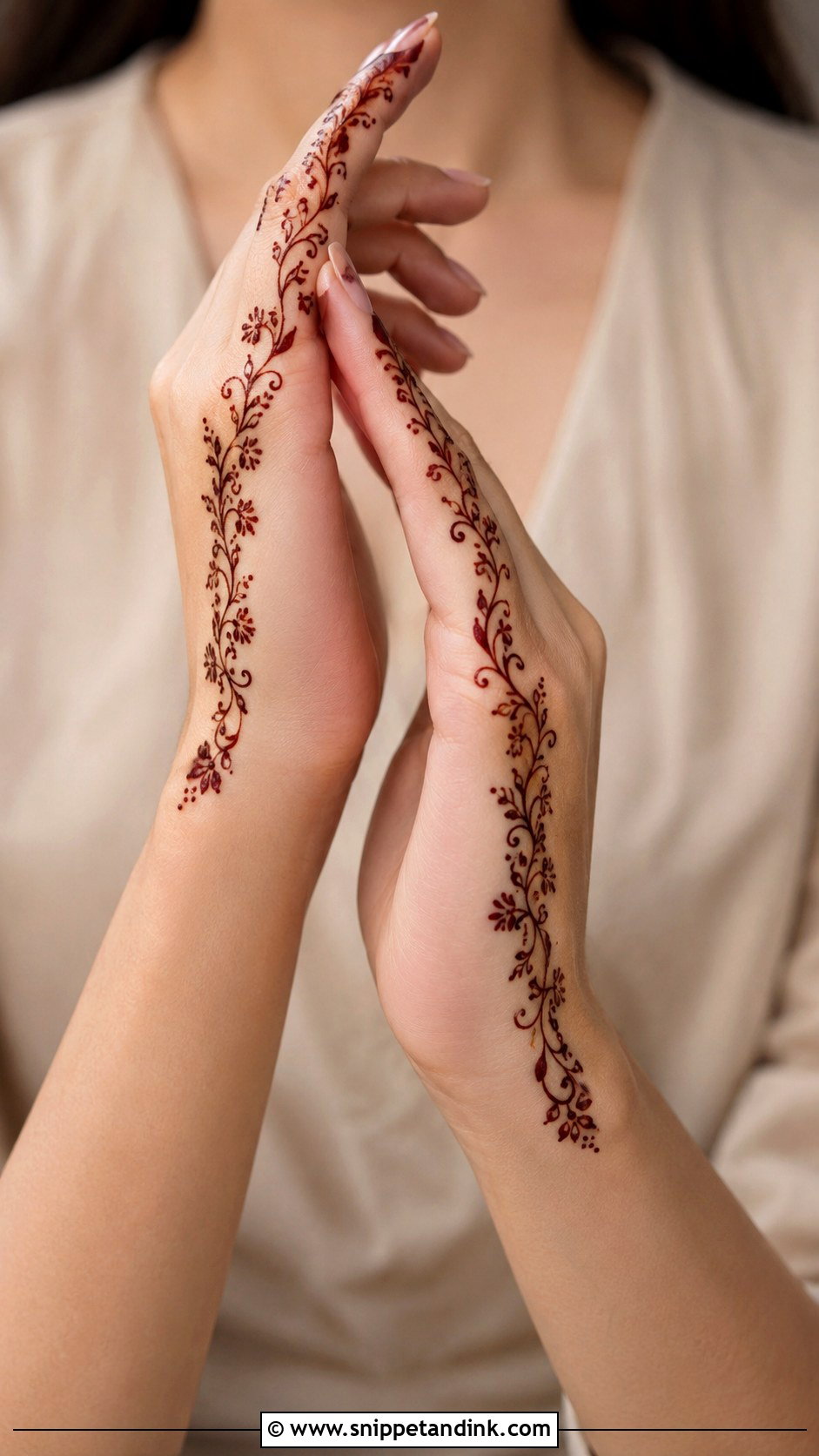
Instead of the center, the design follows the outer edge of the hand, running from the wrist along the little-finger side with leaves, dots, slim florals or curved vines. It looks unexpected and shows best when the hand is turned slightly in photos. The palm and back of the hand stay clear. I start with one thin flowing line as the spine and only then add small details around it. The outer edge rubs on tables and surfaces, so keep that hand still until the paste is dry.
18. Minimal One Finger Mehndi Design
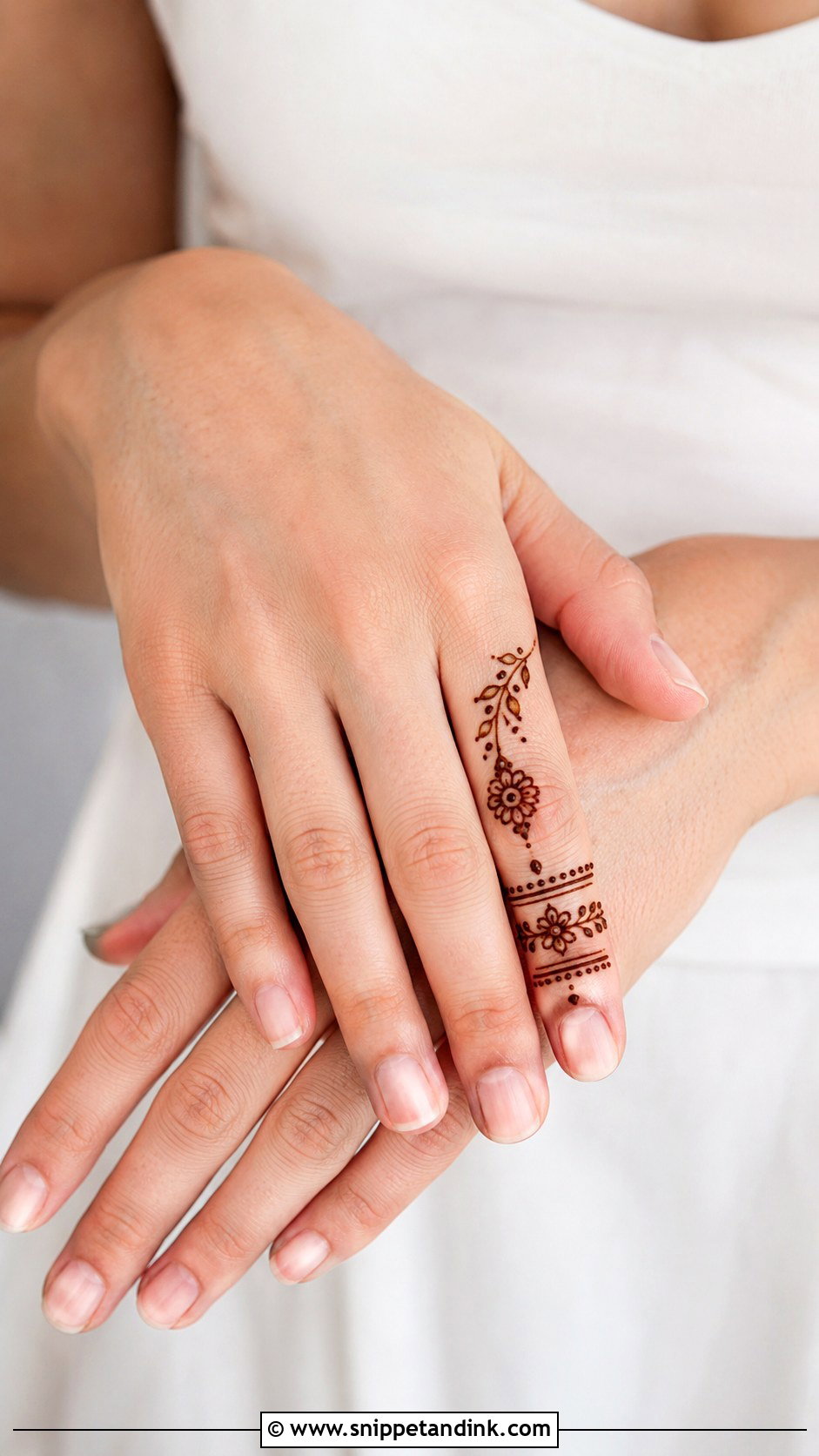
One finger carries the design, sometimes spilling slightly onto the back of the hand or palm: rings, small flowers, leafy chains, dots or fine geometric lines. It is about as small as henna gets and works well for everyday wear. The index or middle finger usually looks most balanced. I’d keep the skin on either side completely empty so the decorated finger reads as deliberate.
19. Minimal Ring Mehndi Design
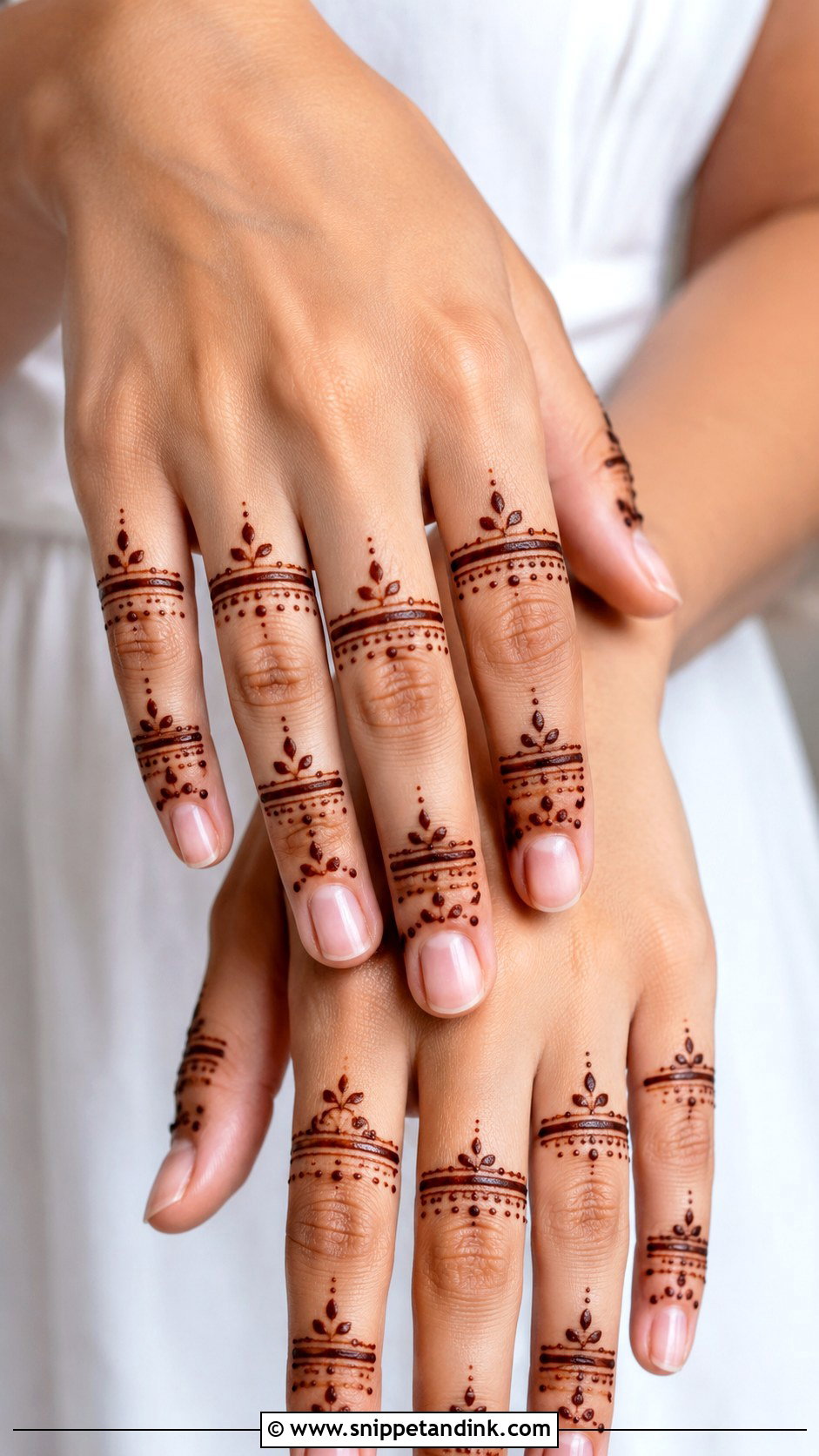
One or two fine bands per finger, with dots, leaves or tiny shapes around the knuckles, mimic delicate rings. All fingers can match, or each can vary slightly. I line the bands up with the natural finger creases, because a band drawn between creases looks like it has slipped. It suits anyone who wants no palm coverage. Add a wrist or back-hand detail only if you want the design to feel more complete.
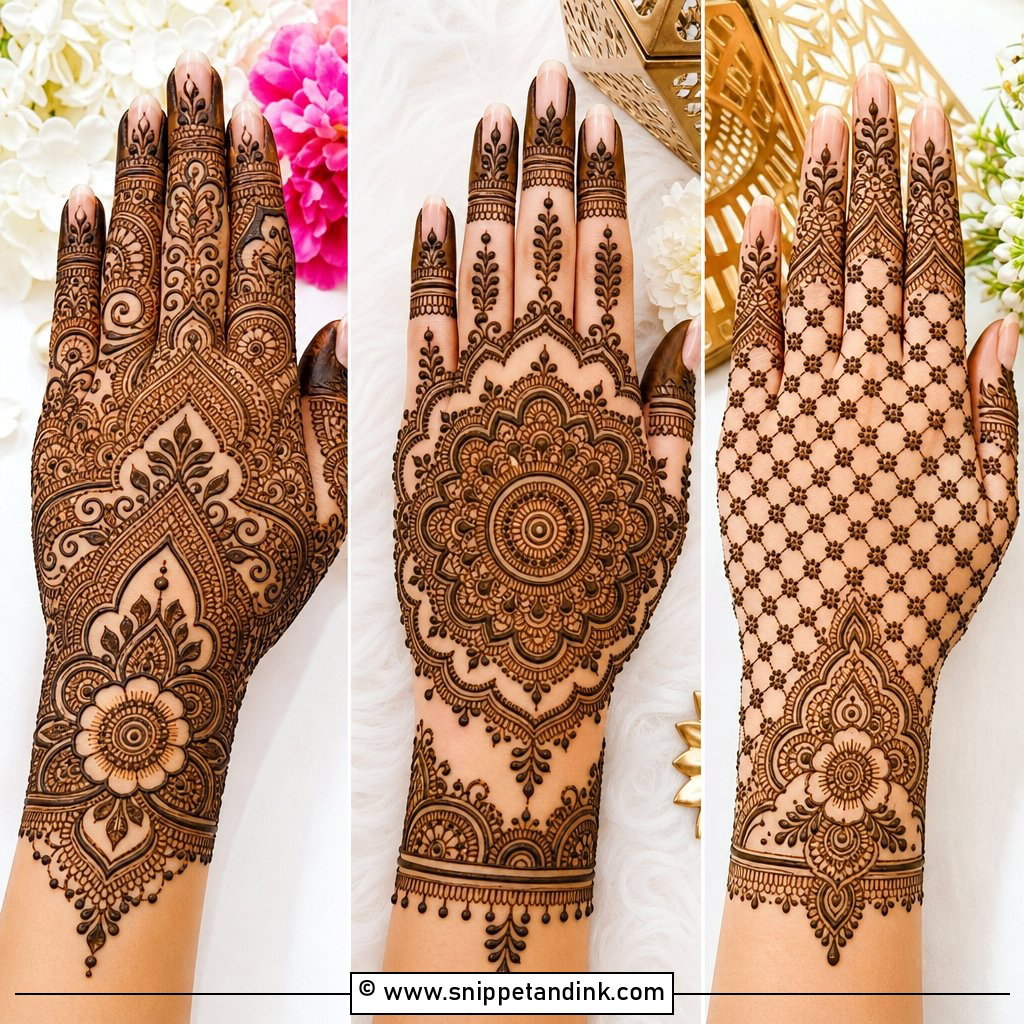
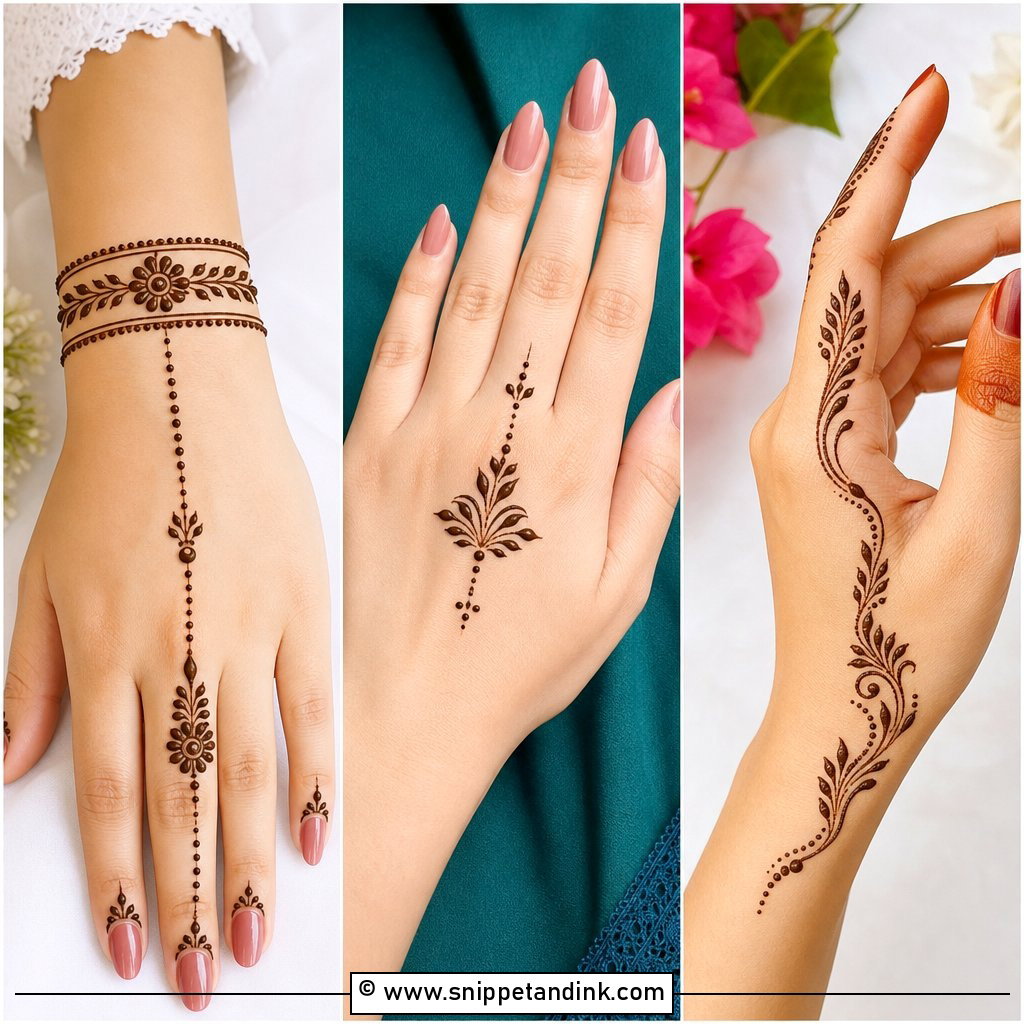
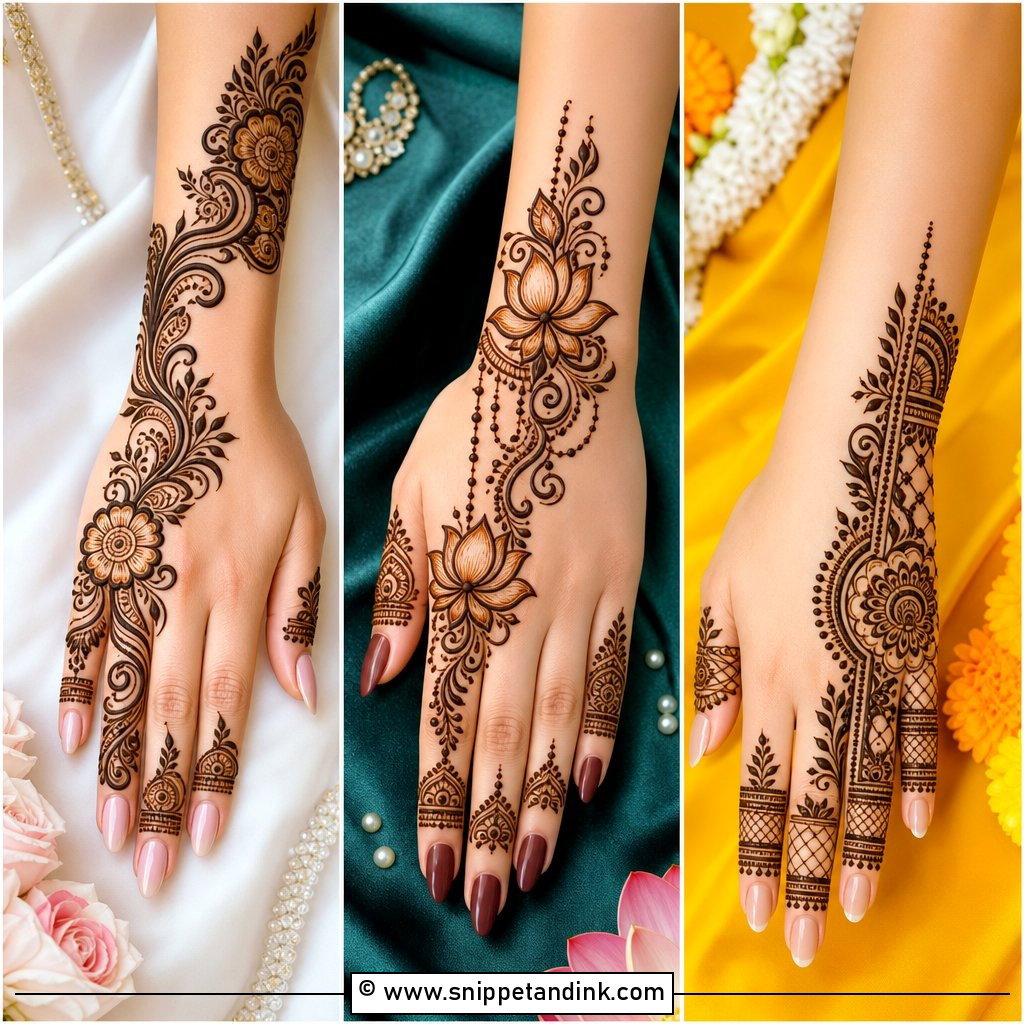
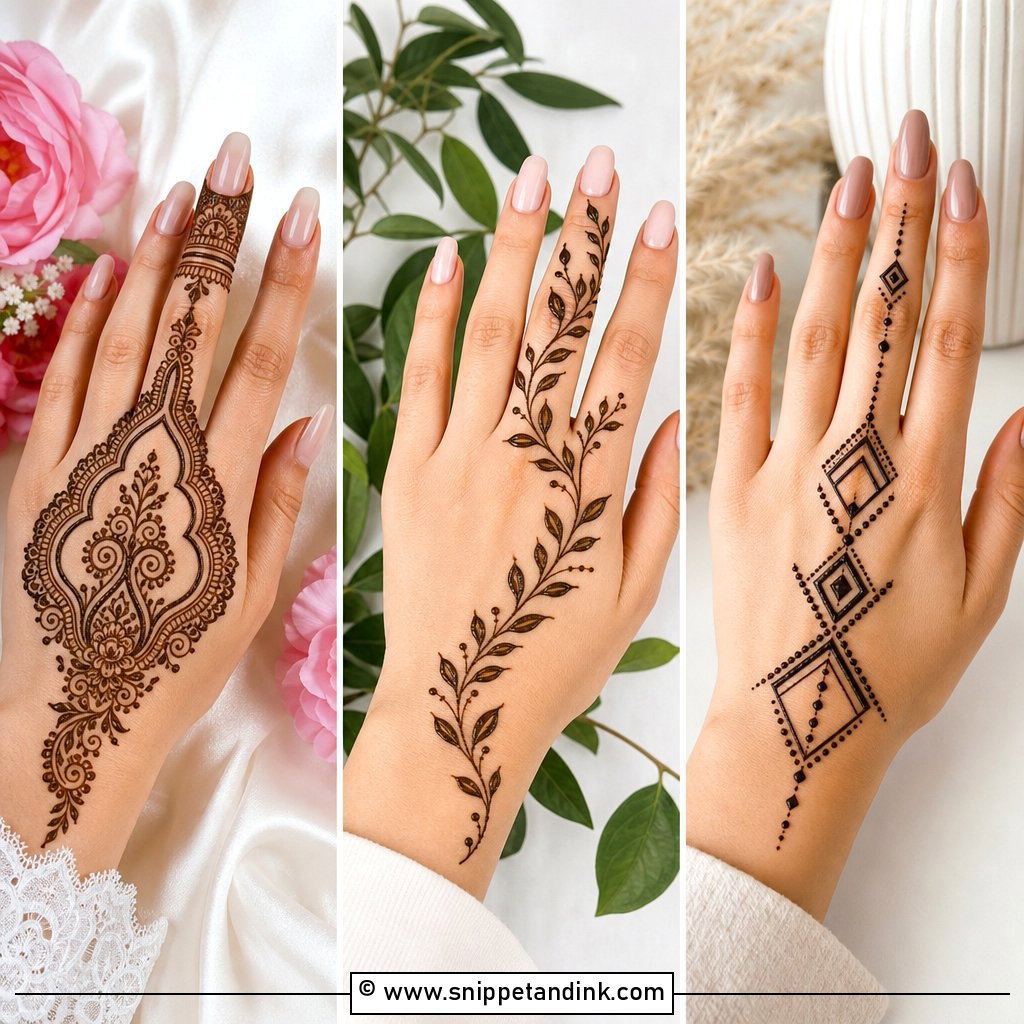
20. Minimal Tikki Mehndi Design
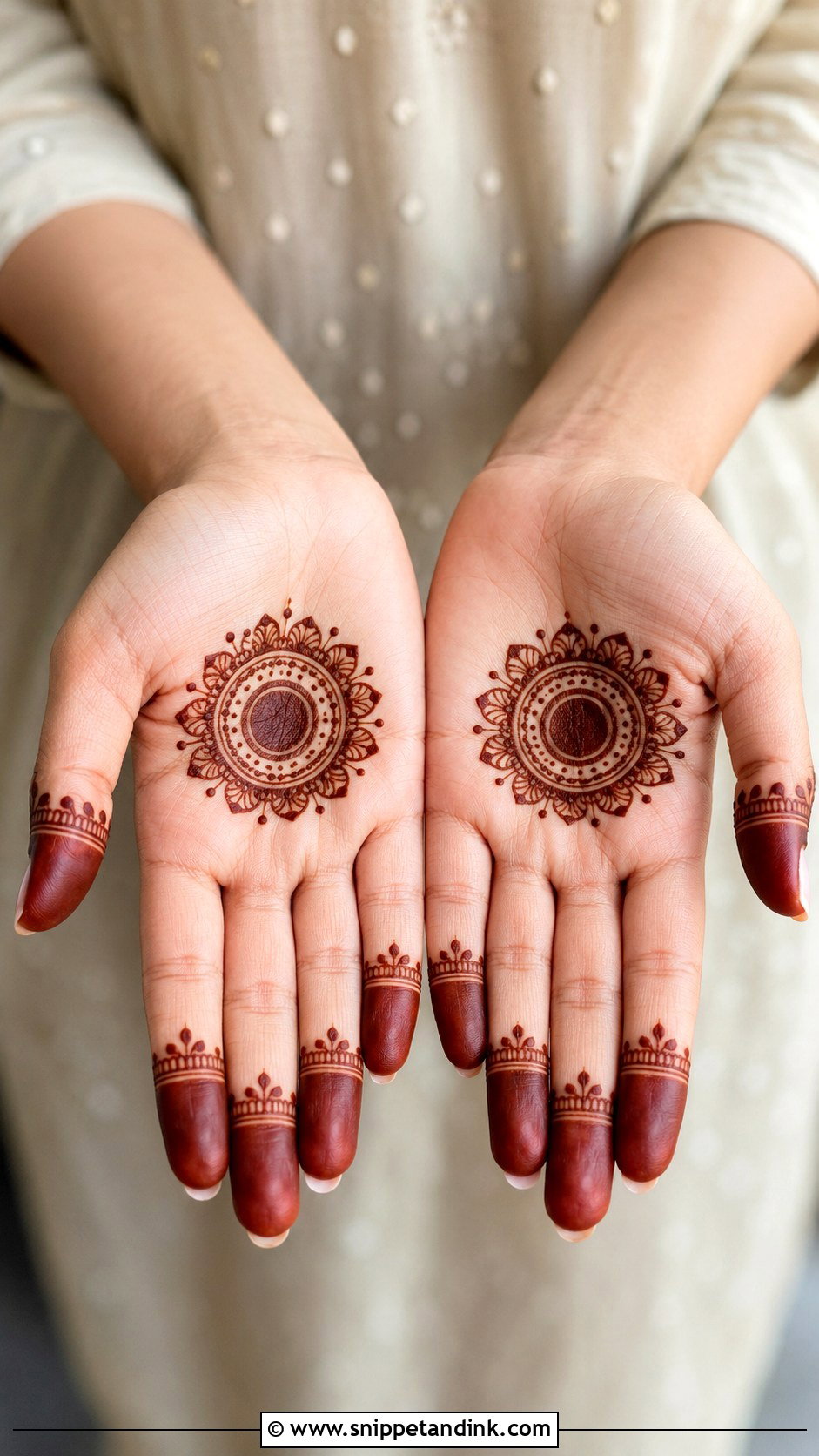
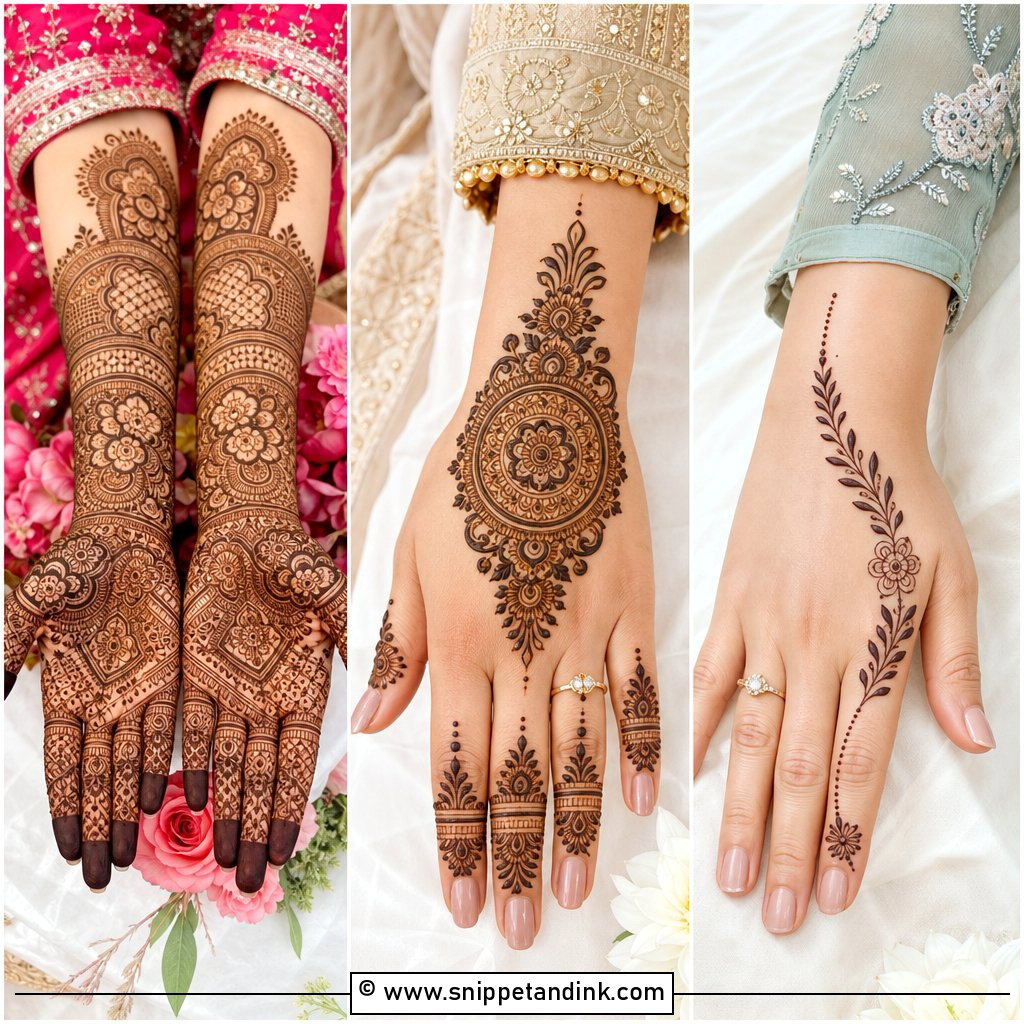
A round tikki in the middle of the palm or back of the hand, with dots, petals or a thin circular border around it instead of heavy filling. Fingertips can be capped lightly or banded. It is simple enough for beginners and still festive for Eid, Karwa Chauth, Diwali or a family function. Tikkis are often filled solid, and a solid circle on a minimal design can look like a stamp, so I fill only the center and leave a fine ring of skin before the border.
21. Minimal Paisley Mehndi Design
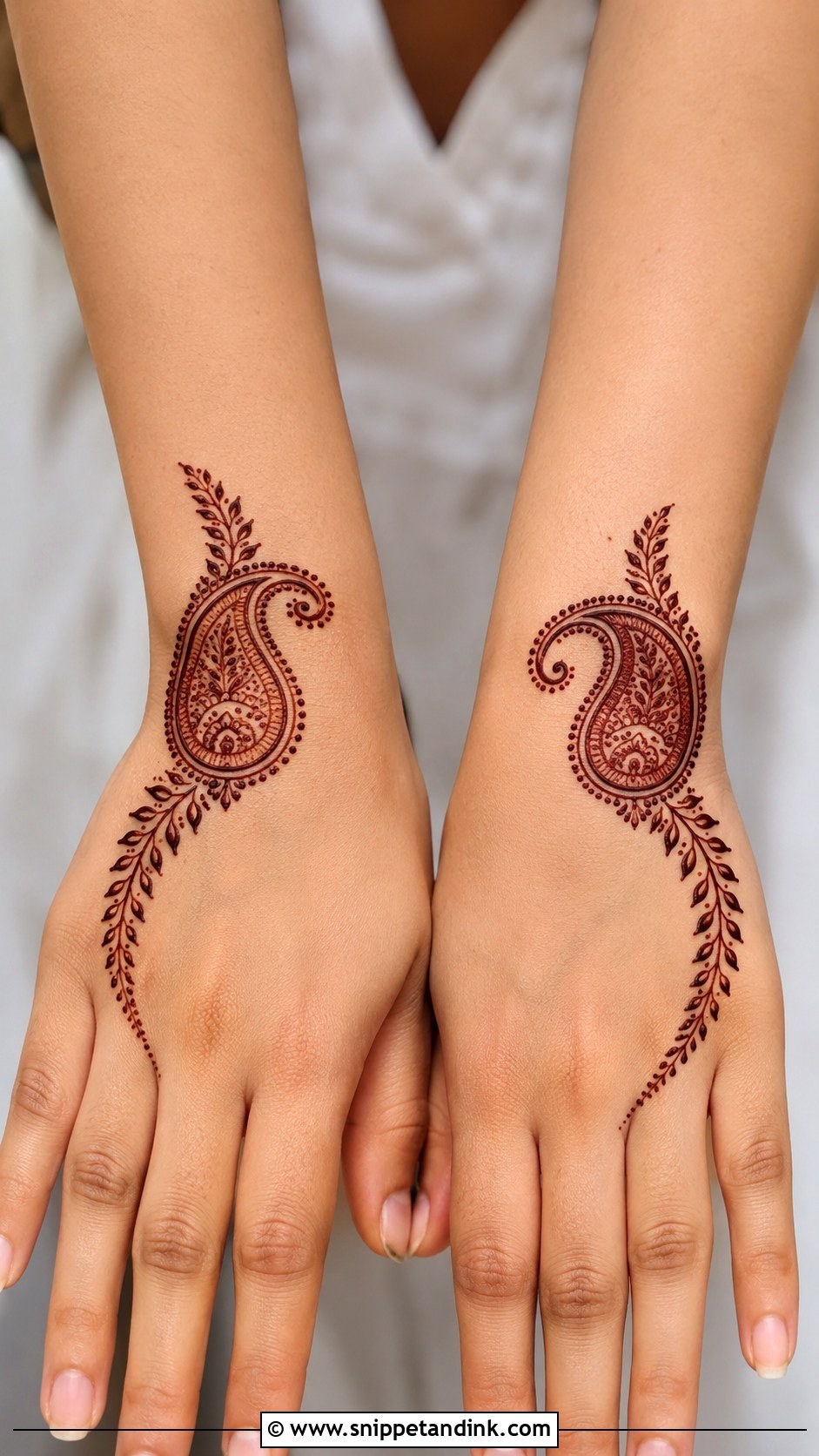
One or two paisleys as the main focus, on the palm, wrist or back of the hand, with small leaves and dots around them, and none of the dense filling or thick borders of traditional paisley work. It is the middle ground for someone who wants a classic motif without coverage. Keep the outline smooth, since the curve of the paisley’s tail is where the eye goes first. A few inner lines are enough.
22. Minimal Lotus Mehndi Design
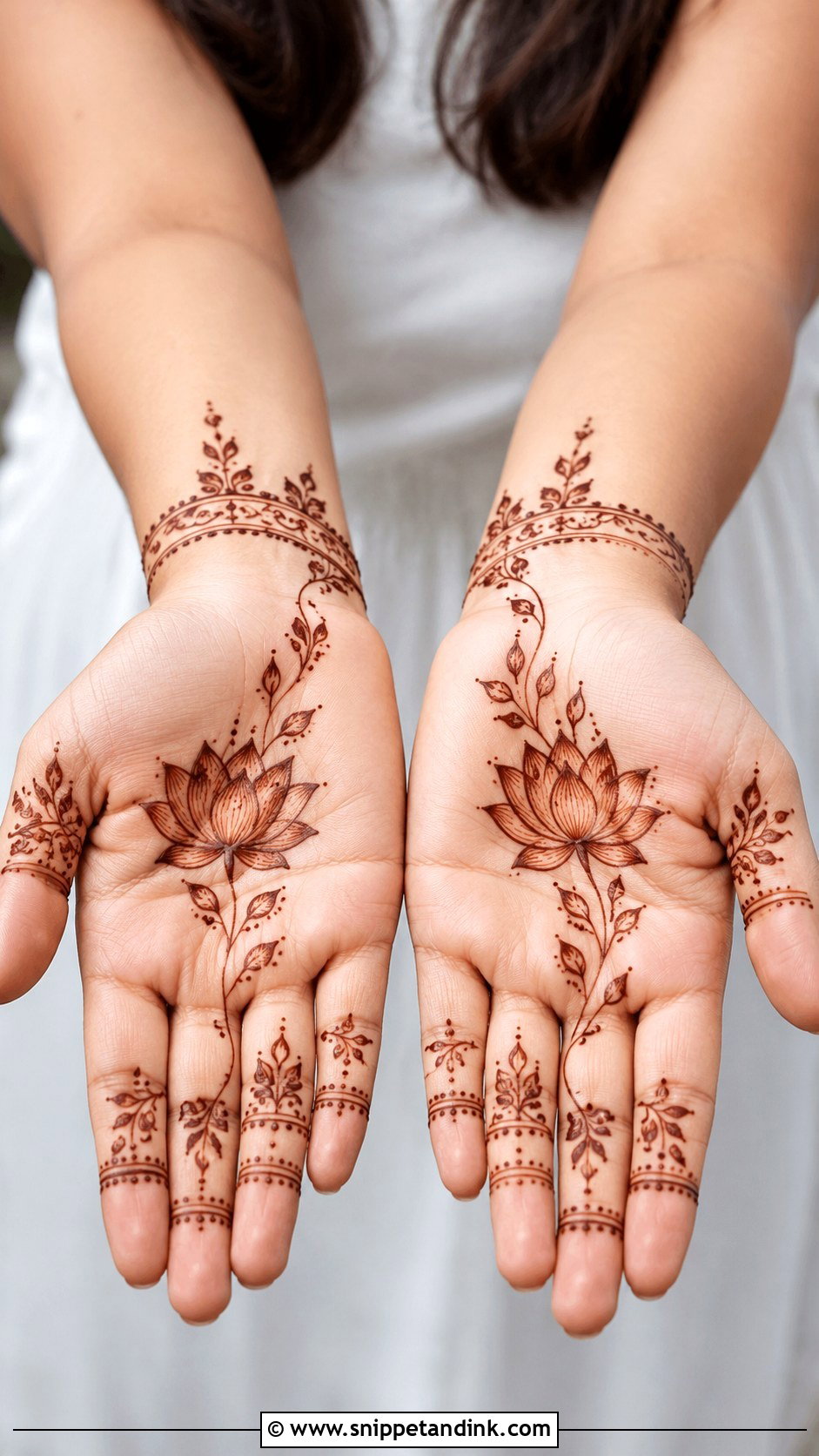
A single lotus on the palm center, the back of the hand, the wrist or near the fingers, completed with thin stems, small dots and simple leaves. It feels calm and has spiritual meaning for many families, which makes it popular at religious occasions. To keep it minimal, I draw fewer petals and skip heavy shading. One lotus with a light vine looks more refined than three crowded ones.
23. Minimal Peacock Mehndi Design
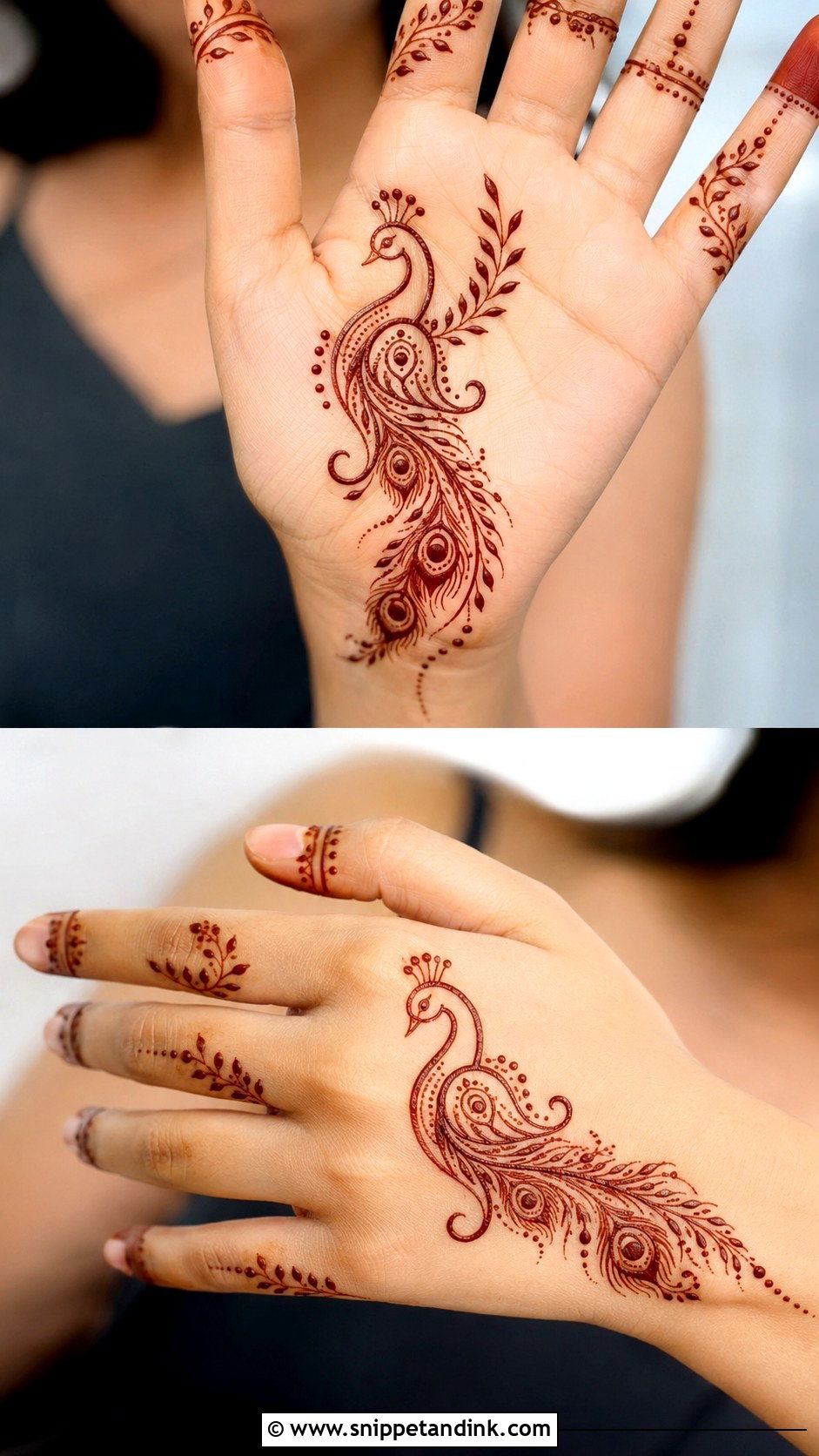
A small peacock outline with a simple feather curve, dots and fine leaves, sitting on the palm, the back of the hand or the wrist. It keeps the traditional motif but in a much lighter form, which suits wedding guests. The bird has to be readable, so I keep the head and neck clean with no inner filling. One or two feather curves give it movement without needing the full tail.
24. Minimal Jaali Mehndi Design
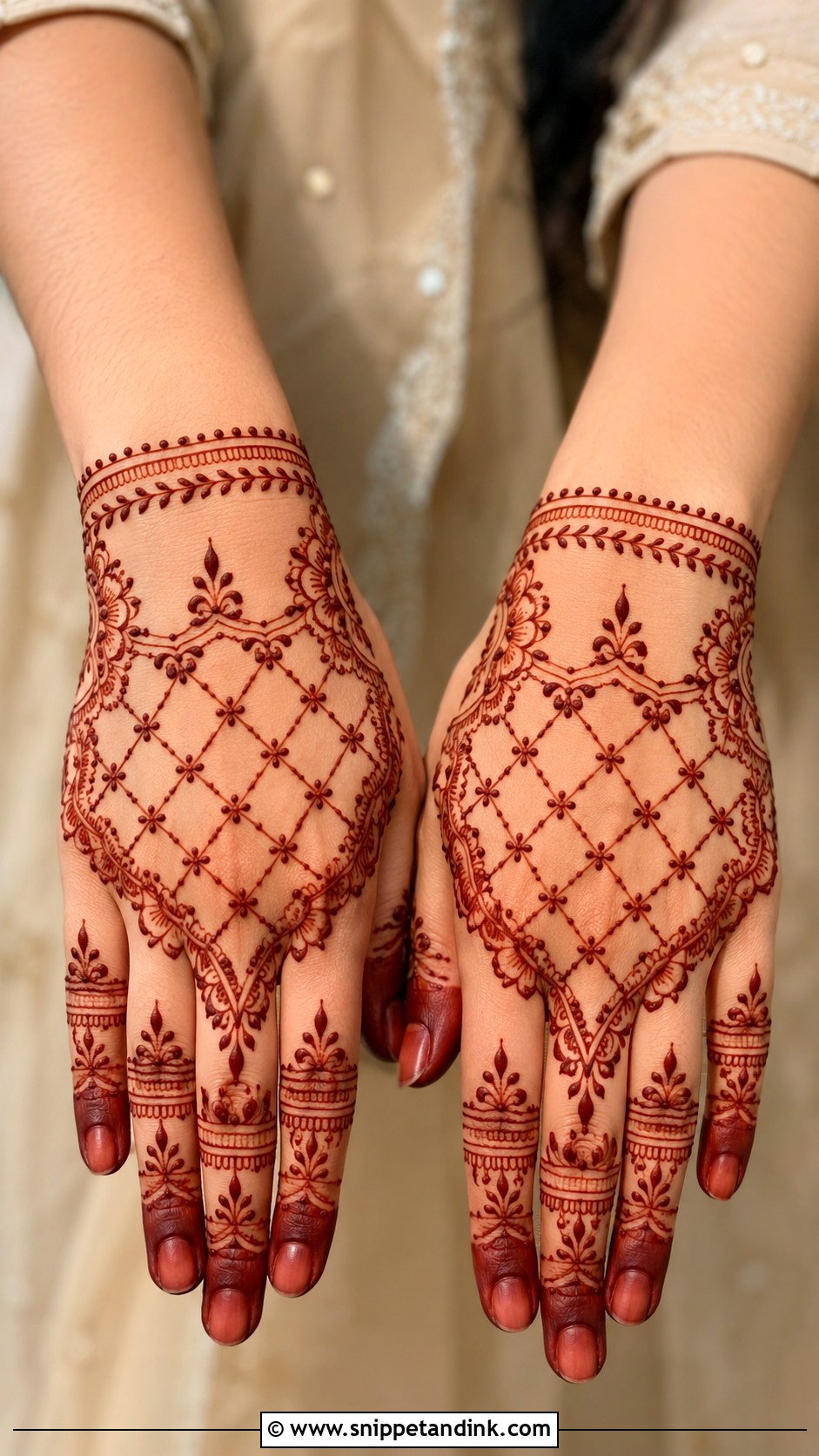
A minimal jaali mehndi design uses a light mesh on one small area: the fingers, the wrist, the back of the hand or inside a simple frame. Tiny dots at the crossings or small flowers around the edge finish it. Jaali adds texture without full coverage, but only if the squares are big enough. Paste swells slightly as it sits, so I space the mesh wider than it looks right when wet; tight mesh closes up into a solid patch.
25. Minimal Half Hand Mehndi Design
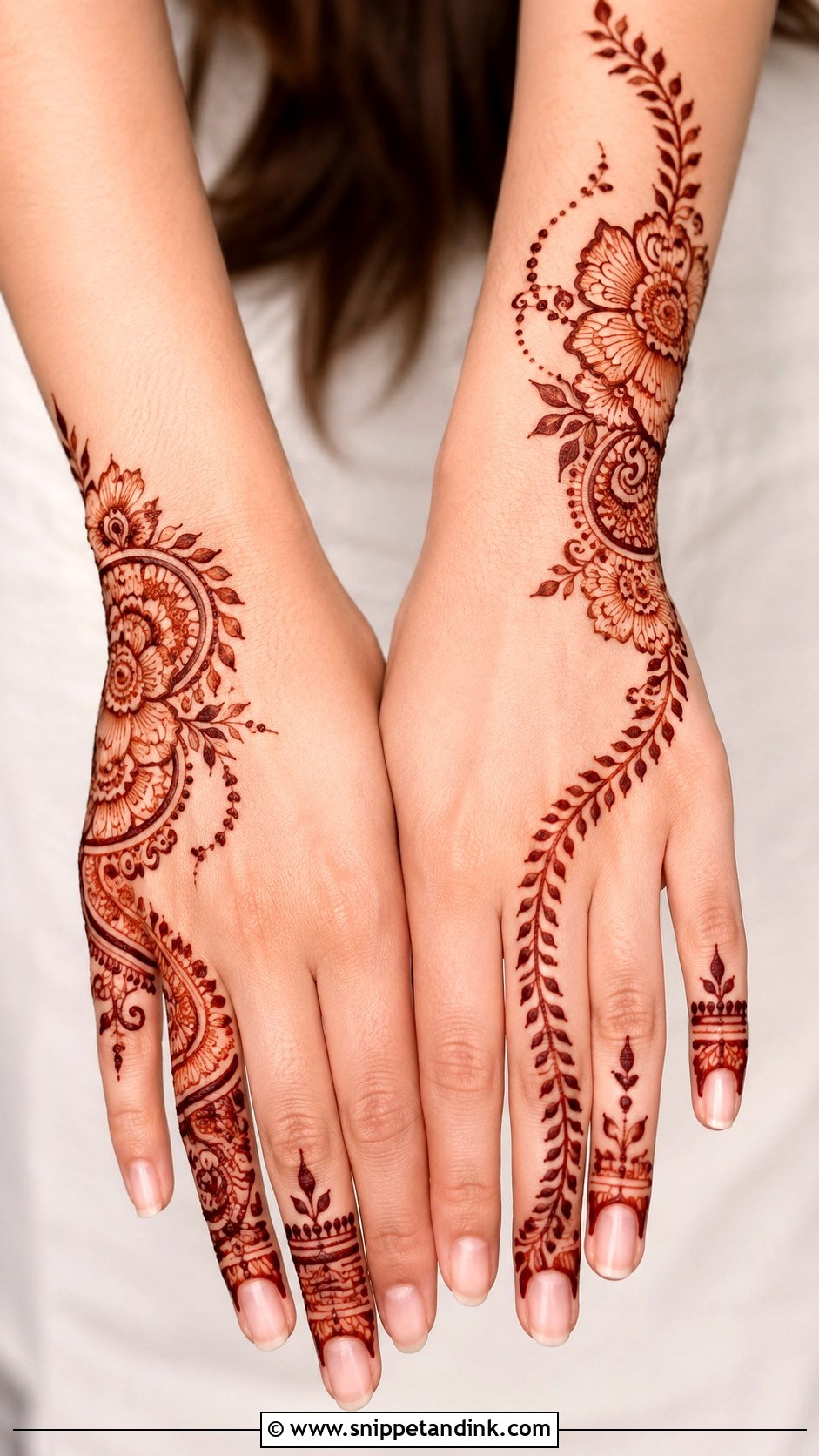
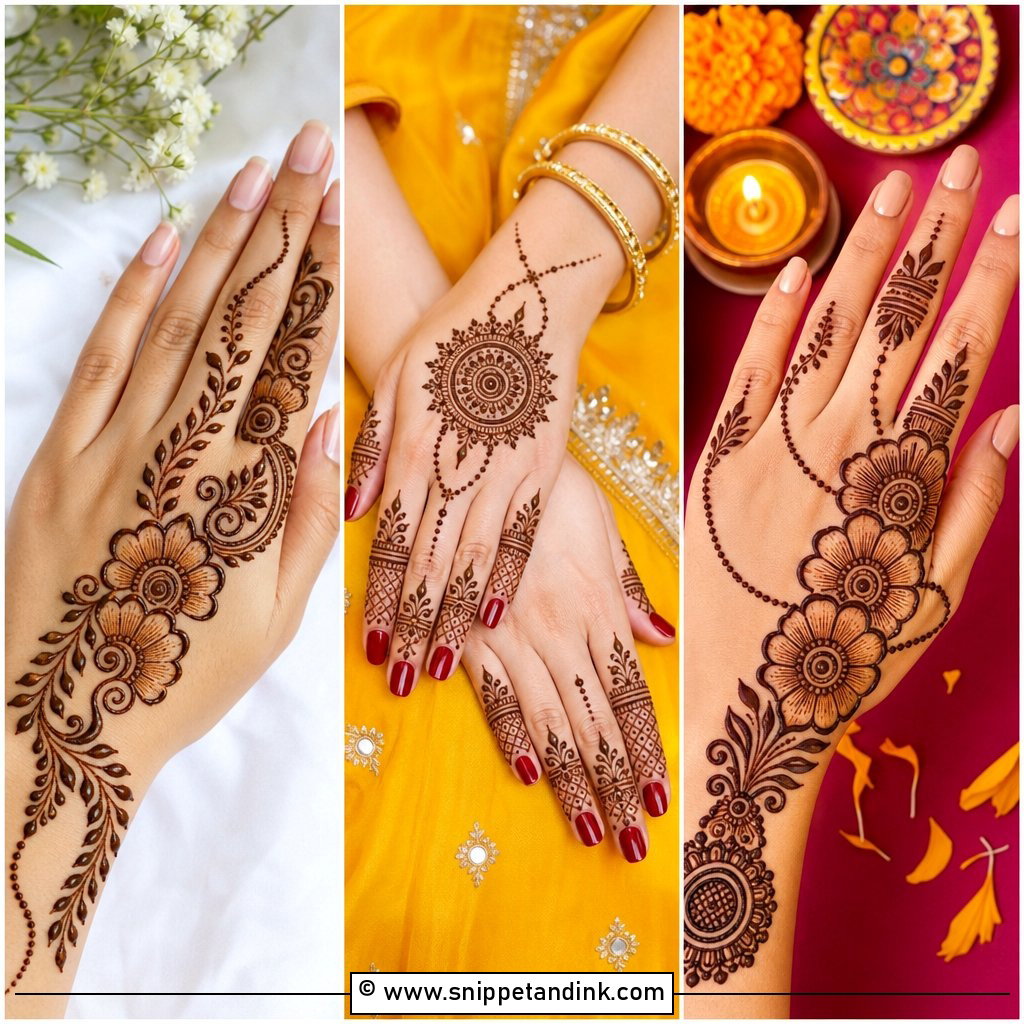
Half-hand minimal covers the fingers and one side of the palm or back of the hand, with a diagonal floral trail, a leafy border, a mandala corner or a bracelet connection, and leaves the other side mostly bare. It shows up clearly in photos without hours of sitting. I make sure the flow runs clearly from wrist to finger; a half design that stops randomly looks unfinished rather than minimal.
26. Minimal Full Hand Mehndi Design
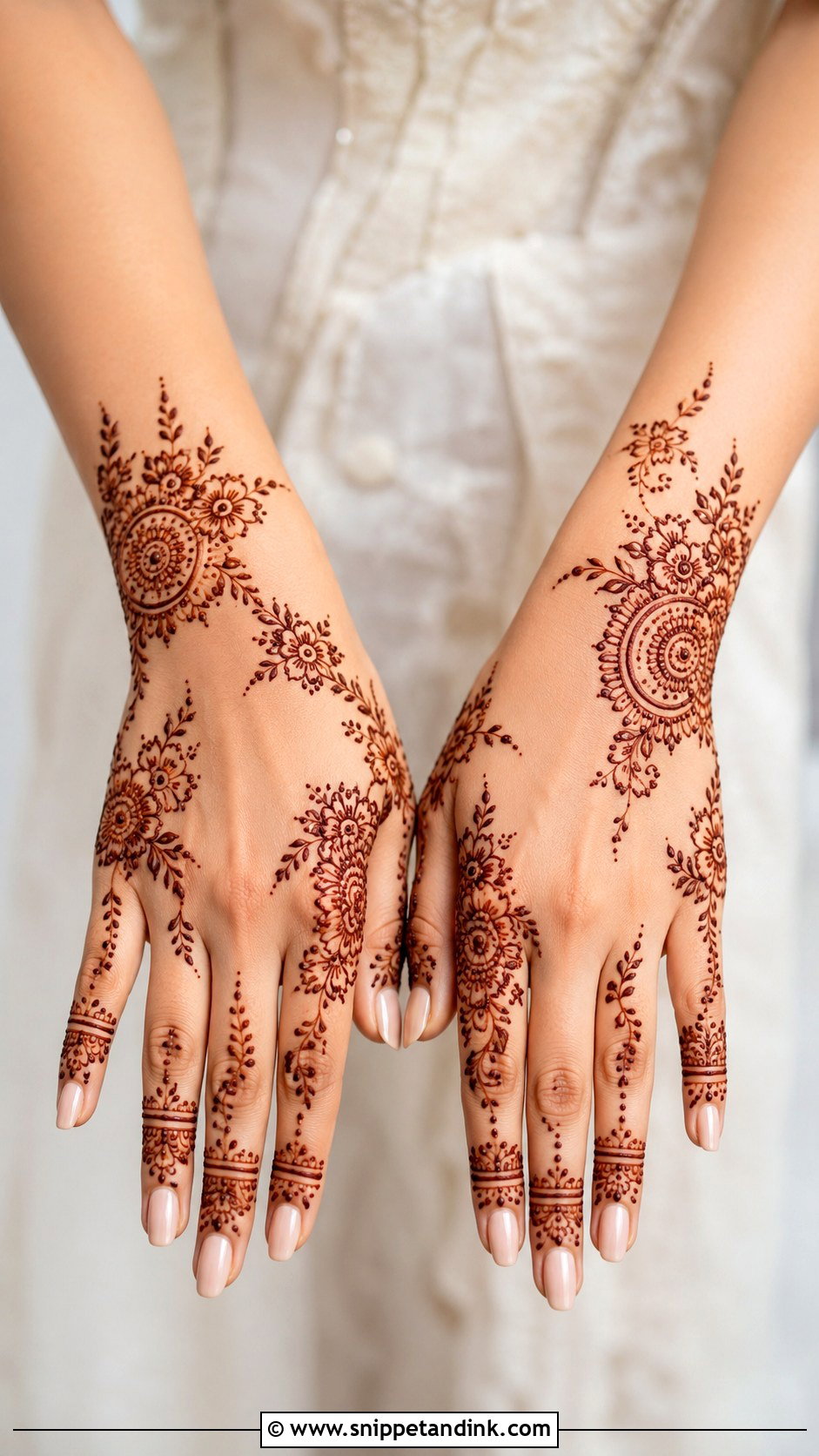
Full-hand minimal covers the whole hand lightly with slim vines, small flowers, dotted lines, finger bands and open mandalas, from fingers to wrist, with plenty of skin still showing. It suits bridesmaids and simple wedding functions. Balance is the hard part. I avoid placing large motifs close together and check from arm’s length as I go, since a design that looks spacious up close can still read busy across a room.
27. Minimal Forearm Mehndi Design
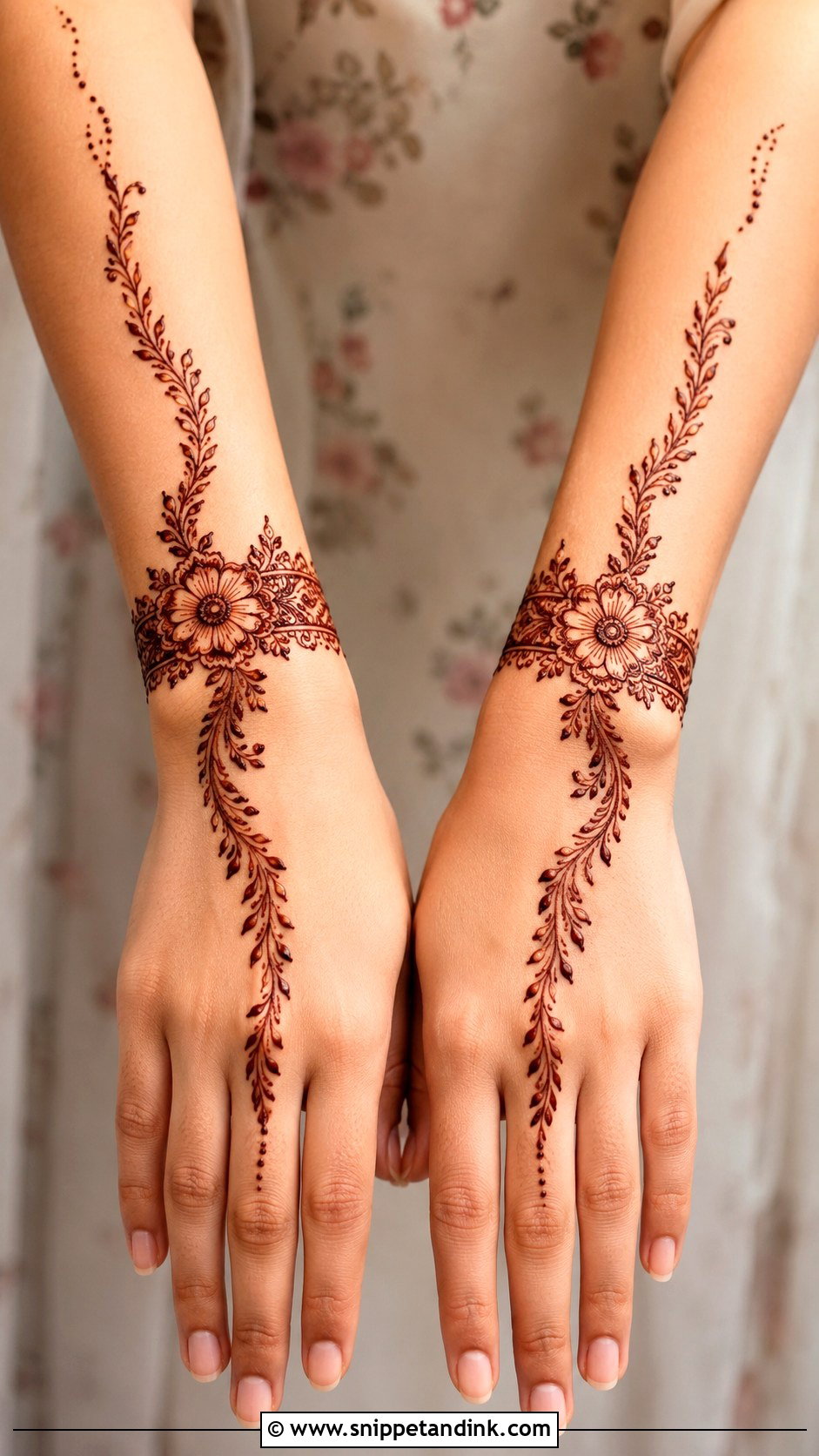
Forearm minimal extends past the wrist as a leafy cuff, a slim floral trail, a stack of bracelet lines or a long vine up the arm. It feels more dressed up than a wrist design without the weight of traditional full-arm work. Keep the extension narrow; a wide forearm panel makes the arm look broader. Forearm skin stains lighter than the hand, so I’d use slightly bolder lines there to keep the tone even from hand to arm.
28. Minimal Eid Mehndi Design
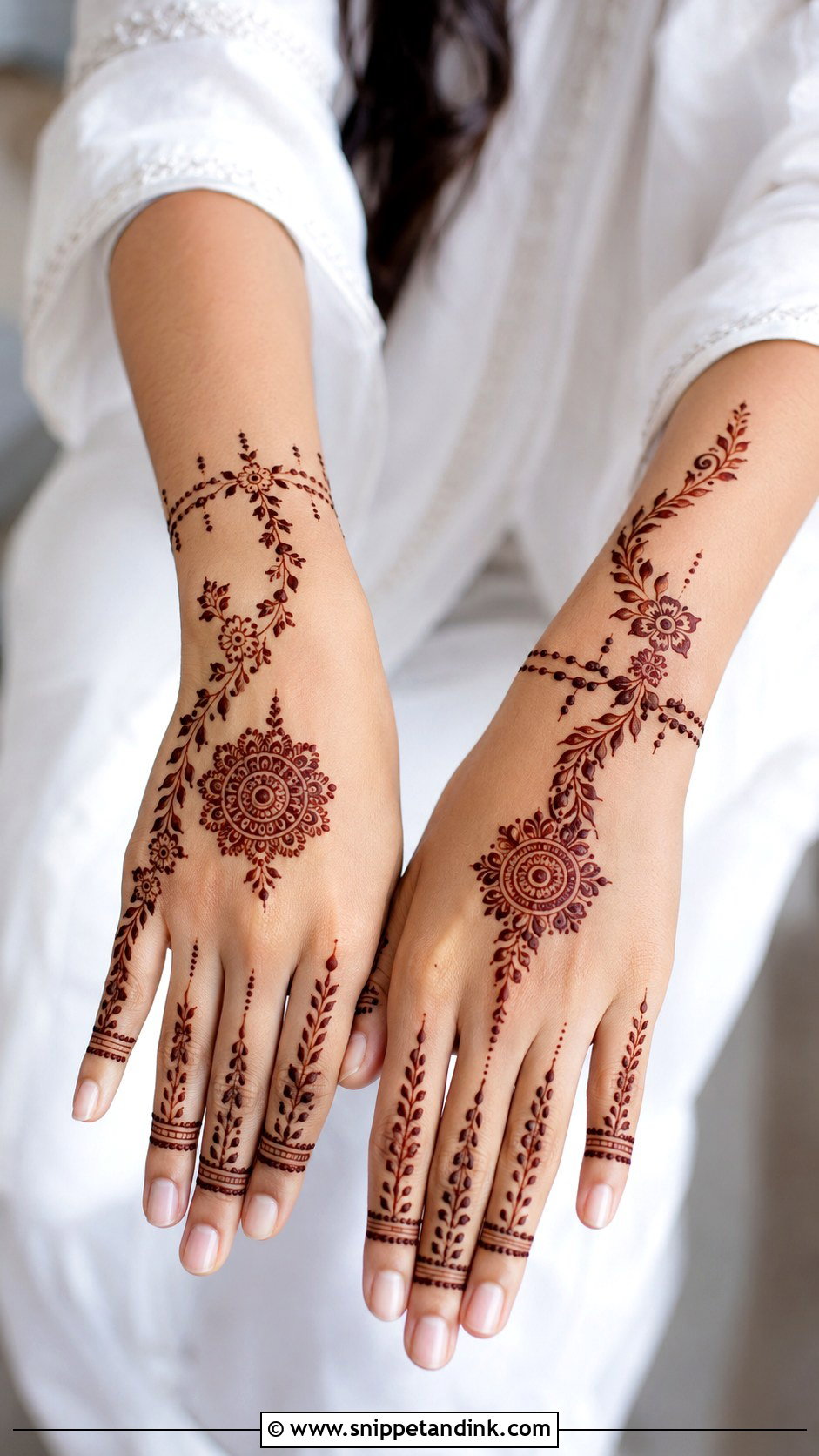
For Eid, back-hand florals, finger bands, small mandalas, bracelets and Arabic trails all work, and they are quick enough to do for the whole family on Chaand Raat. A balanced version decorates the fingers and adds one central motif to the back of the hand or palm. Open space keeps it from looking rushed. A minimal design also survives Eid day better than heavy palm work, since you will be cooking, serving and greeting with those hands.
29. Minimal Wedding Guest Mehndi Design
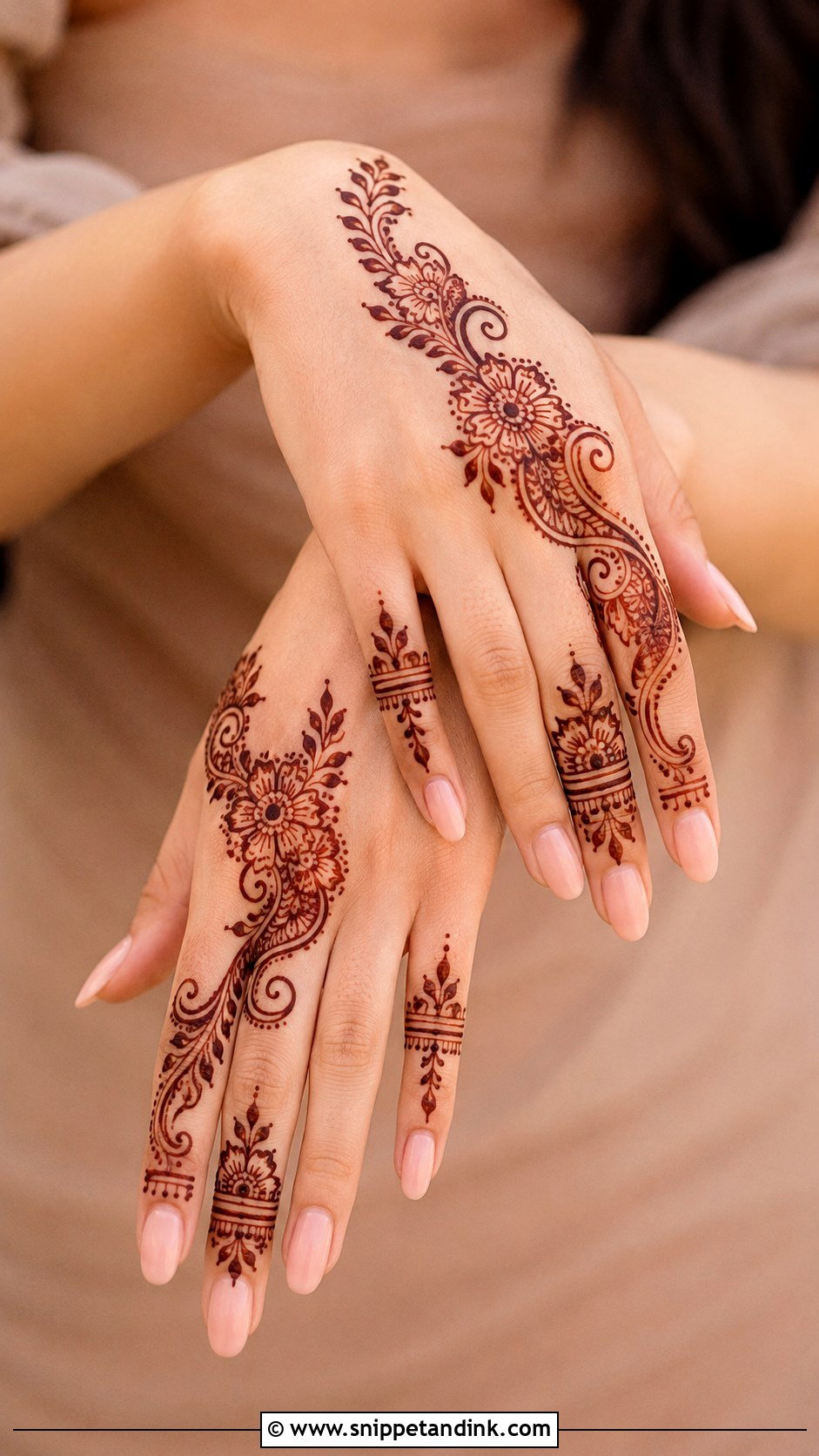
As a guest, minimal should still look festive without borrowing from the bride. A soft back-hand trail, a wrist bracelet, a floral palm motif or delicate finger work are all suitable. I’d skip hidden names and heavy bridal elements. A diagonal Arabic flower trail is the simplest option, and it goes with sarees, lehengas, anarkalis and fusion outfits alike. A few dots and leaves add enough detail.
30. Minimal Engagement Mehndi Design
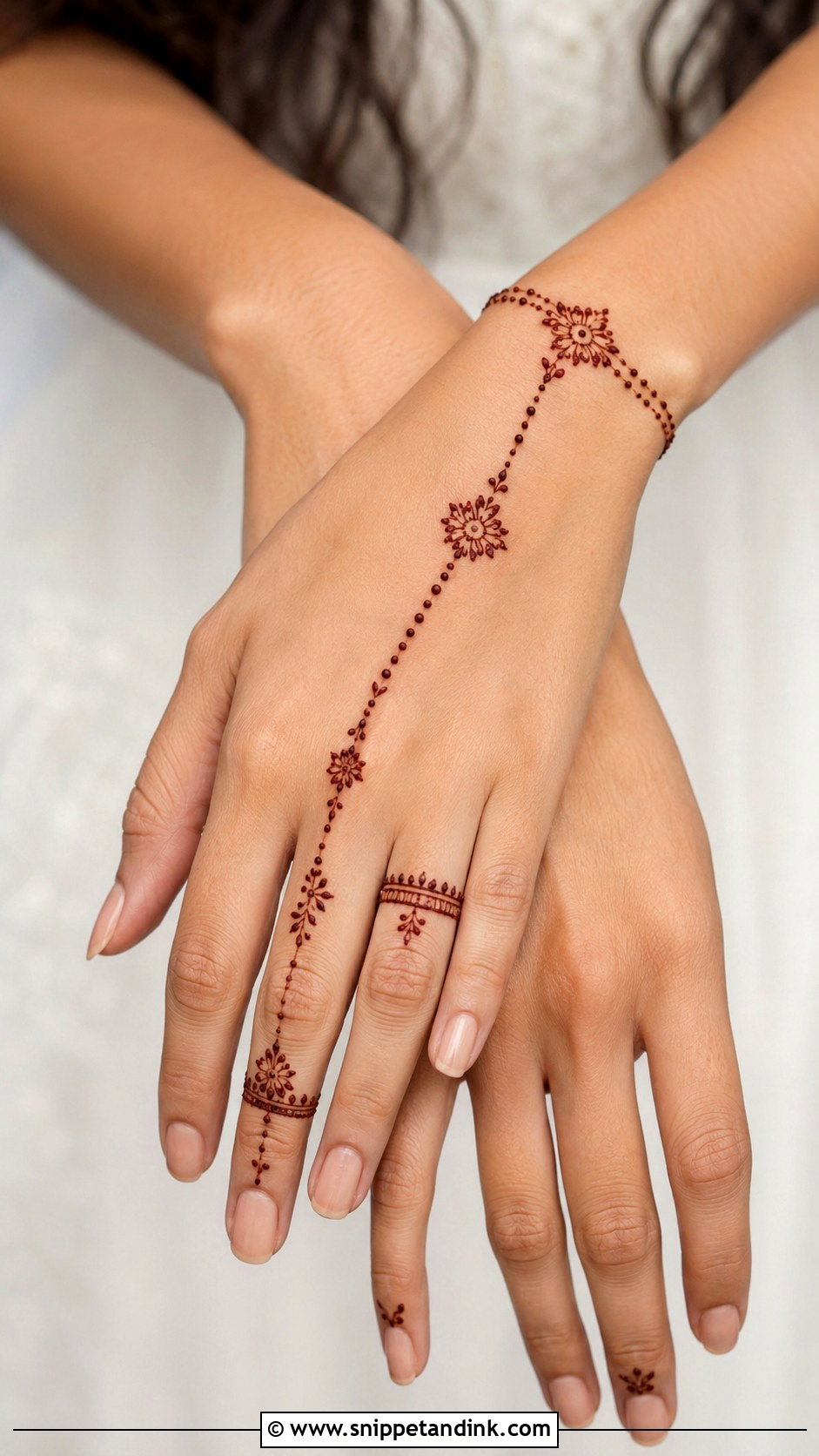
For an engagement, the hands are photographed around the ring, so the design should frame the fingers without competing with it. A delicate haath phool, finger bands, tiny florals or a slim bracelet connection all work. I leave the base of the ring finger clear, since that is where the band sits and a henna line under it just looks smudged. Initials or a small heart-shaped flower can be tucked in if you like, but keep them subtle.
31. Minimal Roka Mehndi Design
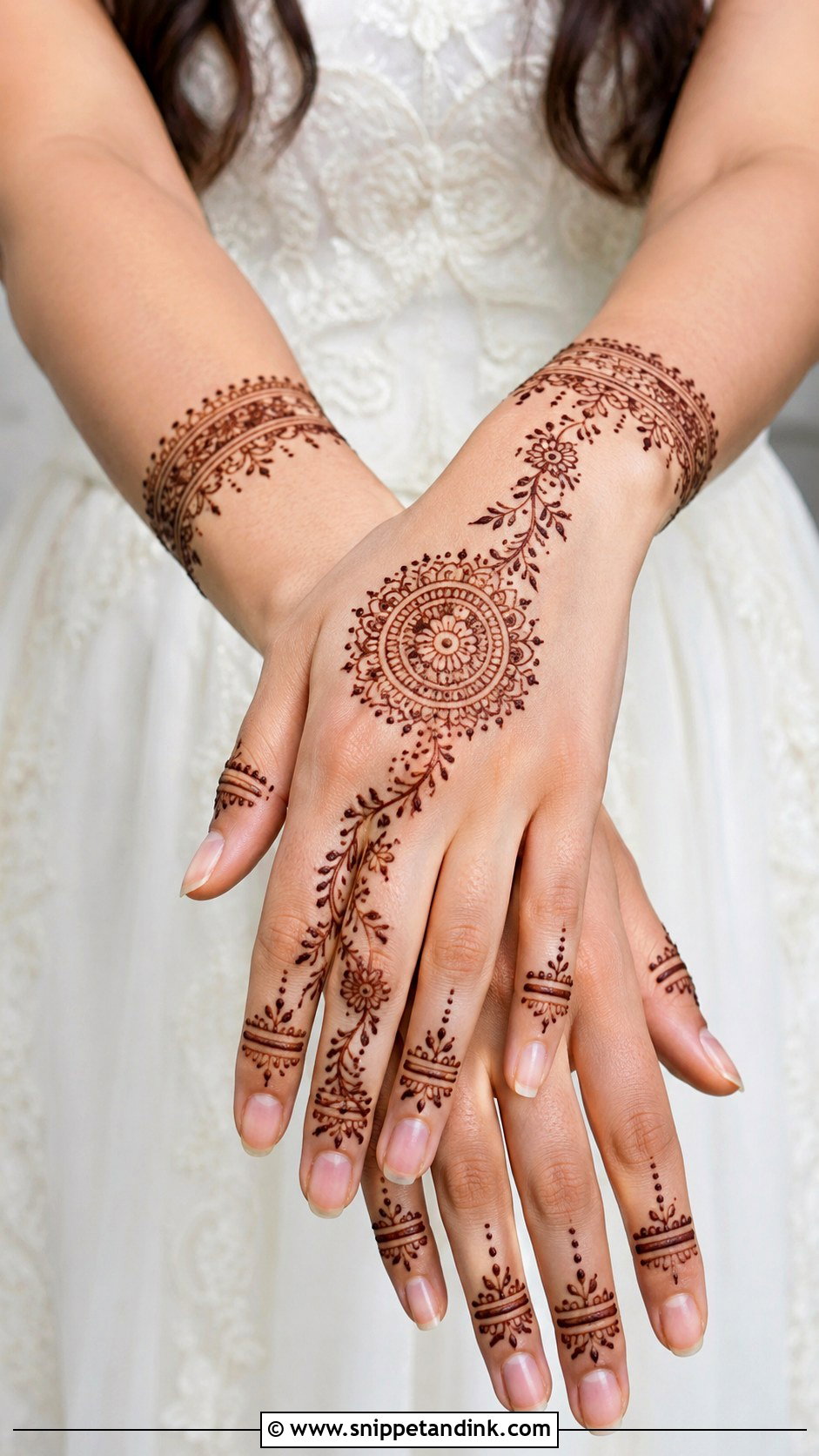
A roka is usually small and close-family, and the henna should feel special without looking like full bridal work. A tiny mandala, a floral back-hand trail, a wrist cuff or a finger-focused design all suit it. Both hands can match, or vary slightly for a modern touch. Because roka photos are mostly close family shots at close range, clean lines and open space matter more than coverage. Ask your artist to slow down on the finger details.
32. Minimal Kids Mehndi Design
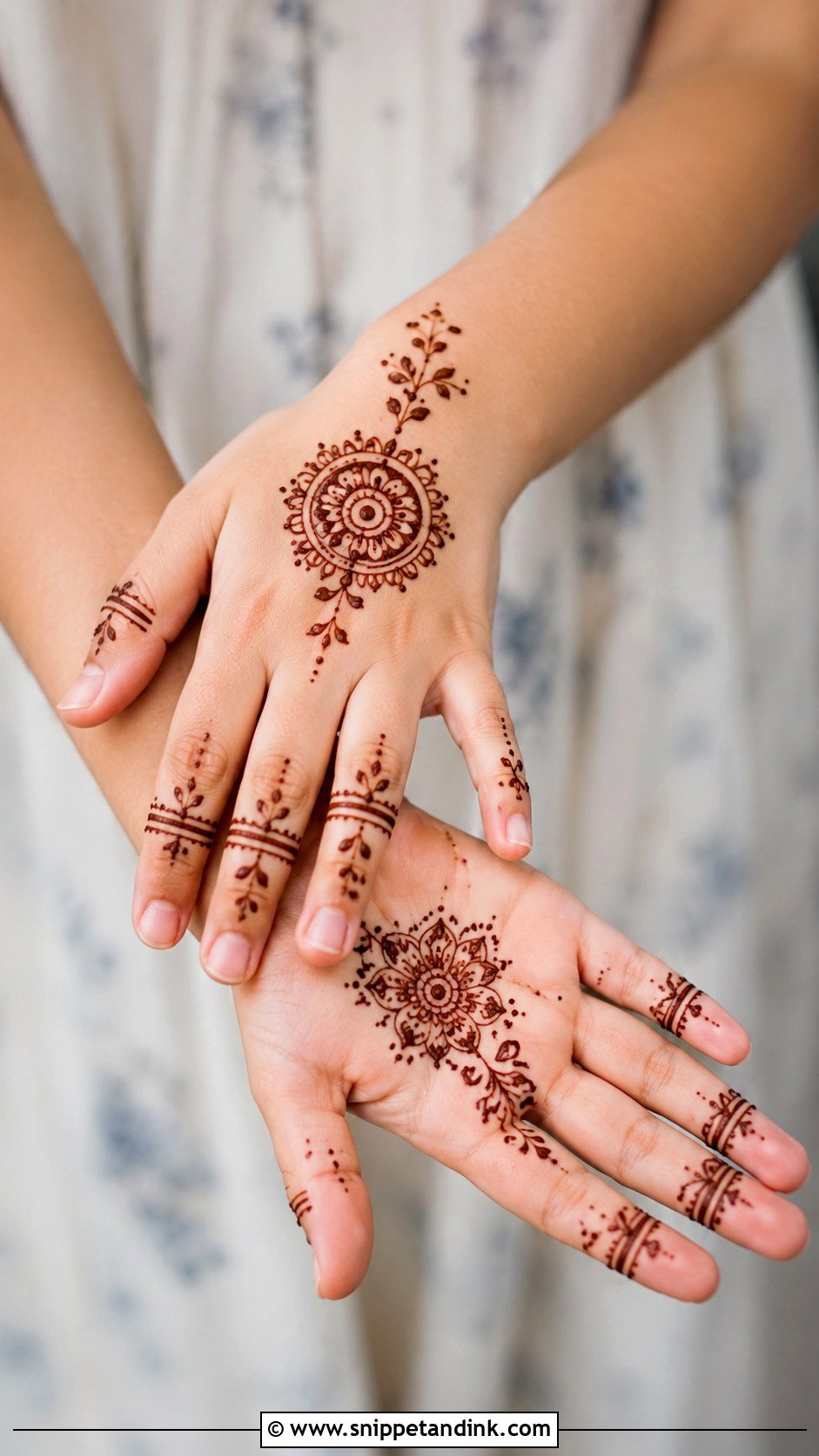
Children want something they recognize and a sitting that is over fast: small flowers, tiny mandalas, simple hearts, leafy vines, dots and finger rings. Avoid detailed patterns, since kids will move before the henna dries. A small design on the back of the hand is usually enough, and it smudges less than a palm. Use only natural henna on children, never anything labelled black henna.
33. Minimal Mehndi Design For Short Fingers
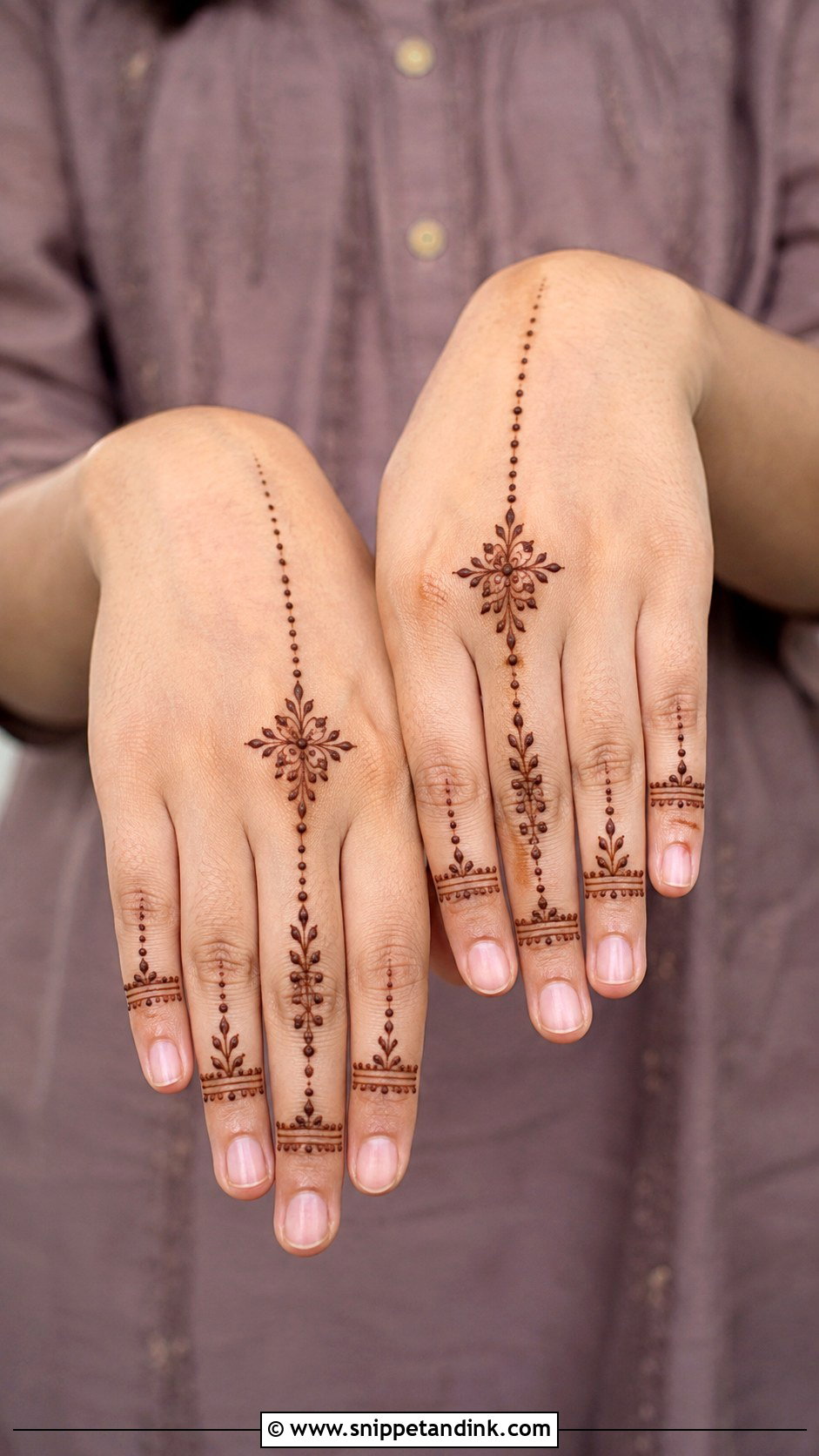
For short fingers, the goal is to add length without clutter. Vertical lines, slim leafy trails, fine dots and narrow bands work better than thick blocks. I place the main motif a little higher on the hand to pull the eye upward. Heavily filled fingertips shorten fingers visually, so I keep tips light or bare. A single vine from the wrist to the middle finger is the most flattering option I know.
34. Minimal Mehndi Design For Long Fingers
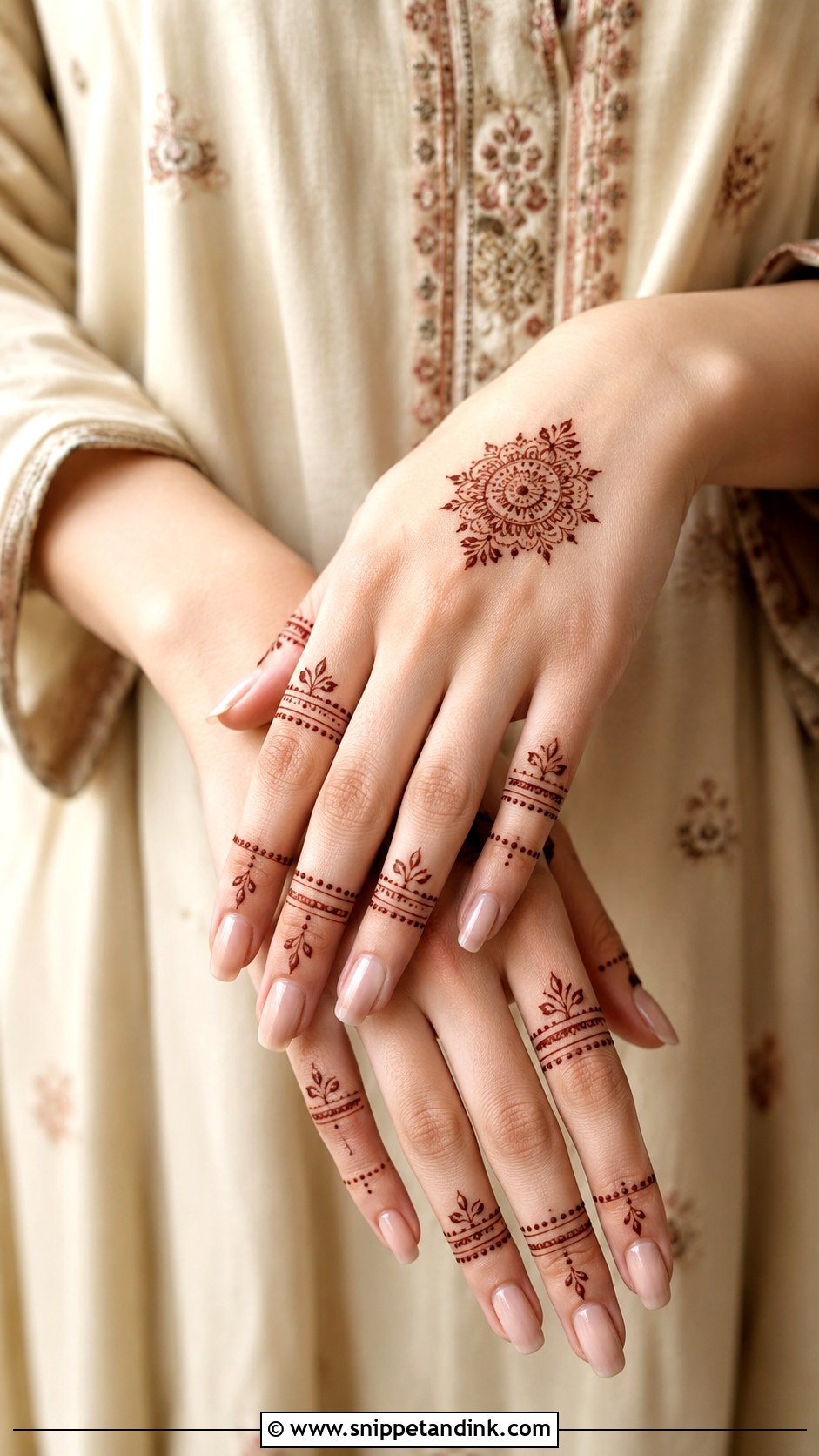
Long fingers give me room for clean bands, rings, dots and leafy details, and a finger-focused design shows off the length without needing palm coverage. Thin horizontal bands across each finger break up the length nicely if you feel your fingers look too long. Do not leave the fingers completely bare if the palm has a motif; the design will look unfinished. Fine finger lines plus one small central element is the balance that works.
35. Minimal Modern Mehndi Design
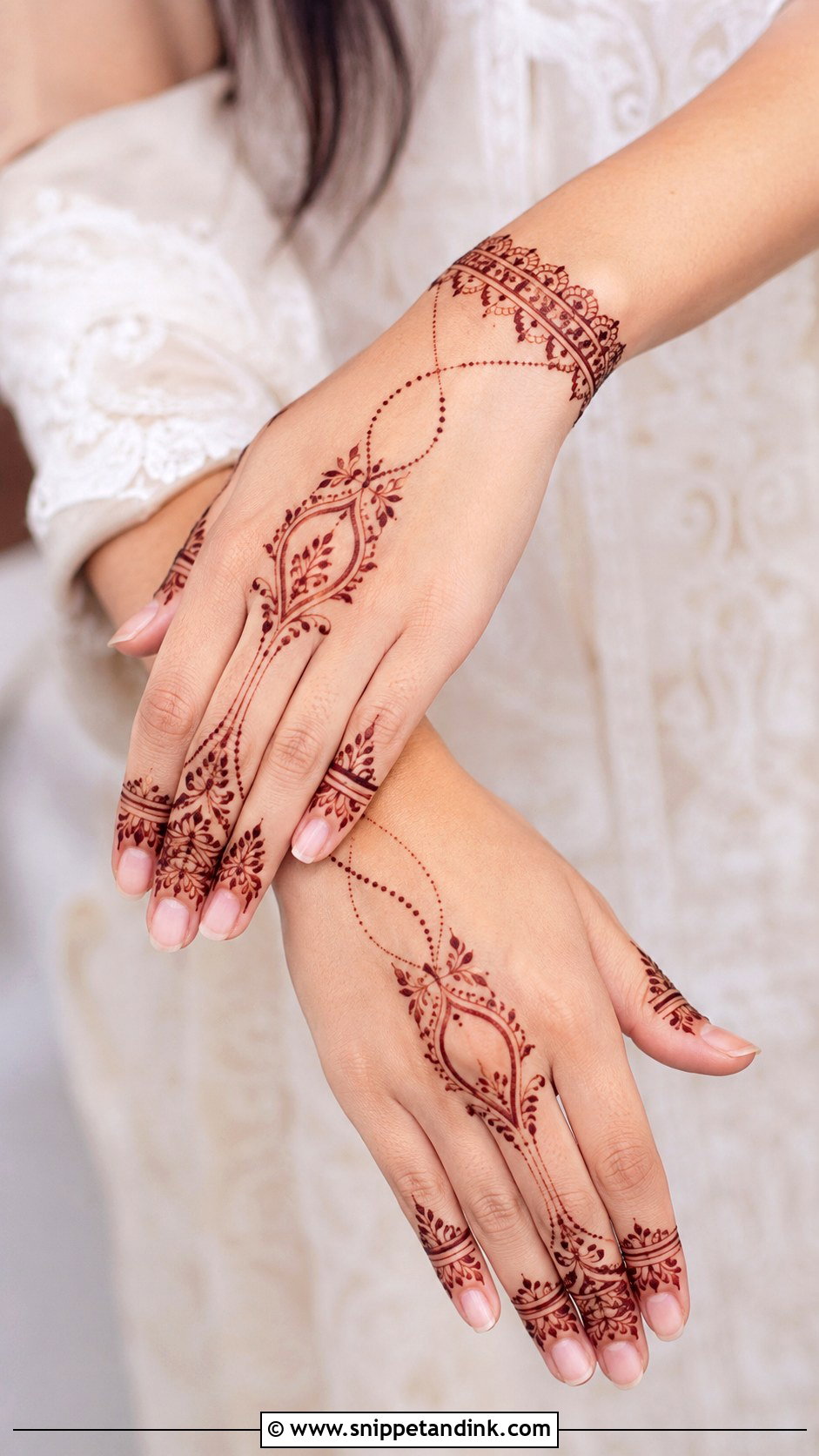
Modern minimal design is about placement more than tradition: negative space, abstract curves, fine finger lines, geometric bands, tiny florals or jewelry-style chains, arranged with intention. It suits modern outfits, office events and casual celebrations. A natural stain develops to reddish brown or deep maroon depending on your skin and the paste. I plan modern designs on paper first, since abstract shapes with no traditional structure are easy to get wrong freehand.
Drawing a Minimal Design on Your Own Hand
Minimal henna is where most people try it themselves, and the open layouts here are achievable with practice. The difficulty is doing it on your own hand, often with your non-dominant hand. A few habits make it far easier.
- Practice the design on paper first, then on a plastic sheet with the actual cone, until the pressure feels even.
- Hold the cone like a pen and let the paste sit on the skin rather than dragging the tip across it.
- Rest the elbow of your drawing arm on a table so your hand is steady.
- Keep a damp cotton bud next to you. A wrong line wiped within seconds leaves almost no mark.
- Start with the largest shape and build smaller details around it.
Do your dominant hand last, or ask someone else to do it. Simple shapes drawn steadily look better than an ambitious design with wobbles.
What fades first on a light design
Fine lines and anything on the back of the hand or wrist fade first, usually within the first week, while fingertips and palms hold color longest. With minimal designs the fading shows sooner because there is less paste to begin with. If you have an event a week or so after application, plan for a design with slightly bolder main lines, and avoid scrubbing or harsh soaps in the meantime.
Less Henna, More Skin, Cleaner Results
Henna does not need to be heavy to look festive. A small mandala, a fine bracelet, a leafy vine, an Arabic trail or a few finger bands can make the hands look dressed up in a clean way, and they take less time, dry faster and feel more comfortable over a long day. Indian, Arabic, Indo-Arabic, Gulf, Moroccan, floral and modern styles all have minimal versions. Choose the one that suits your hand shape and your event, and ask for good paste and steady lines, because in minimal work those are what everyone sees.
You'll Like These Ideas:


Leave a Reply