
More and more of the hands I draw now ask for less henna, not more. Thin lines, open skin, a floral trail or a bracelet, sometimes nothing but the fingers. Modern mehndi still borrows from tradition (mandalas, Indo-Arabic trails, jaali) but it uses those pieces sparingly and lets the gaps do half the work. It suits Eid, Diwali, weddings, engagement parties and plain family dinners, and it is kind to beginners because it repeats a few shapes: dots, leaves, curves, vines and borders. You can keep it to the back of the hand or stretch it from wrist to forearm. Here are 35 layouts to save, adjust and try.
What I Need to Hear Before Drawing Fine-Line Henna
Light, modern designs leave nowhere to hide, so the conversation before the cone comes out matters more than it does with heavy bridal work. A few minutes of questions saves redrawing later.
- Which hand will show most. Right-handed people usually want the busier design on the left so the right is free while it dries.
- What jewelry you’ll wear. A wide bangle or a statement ring should sit on bare skin, not on top of a pattern.
- Your nail color. Red or deep nails pair well with a dark stain; pale nude nails can make heavy henna look unfinished at the fingertips.
- Whether you need it to fade quickly for work. That shifts me toward the back of the hand and the fingers, which fade faster than the palm.
- How long you can keep the paste on. Fine lines carry less paste, so they need more time on the skin, not less.
For fine-line work I cut the cone tip smaller and keep the paste slightly looser so it flows without breaking. If you are doing it yourself, practice the thinnest line you can manage on paper first. It is harder to keep thin lines consistent than thick ones.
1. Simple Modern Back Hand Mehndi Design
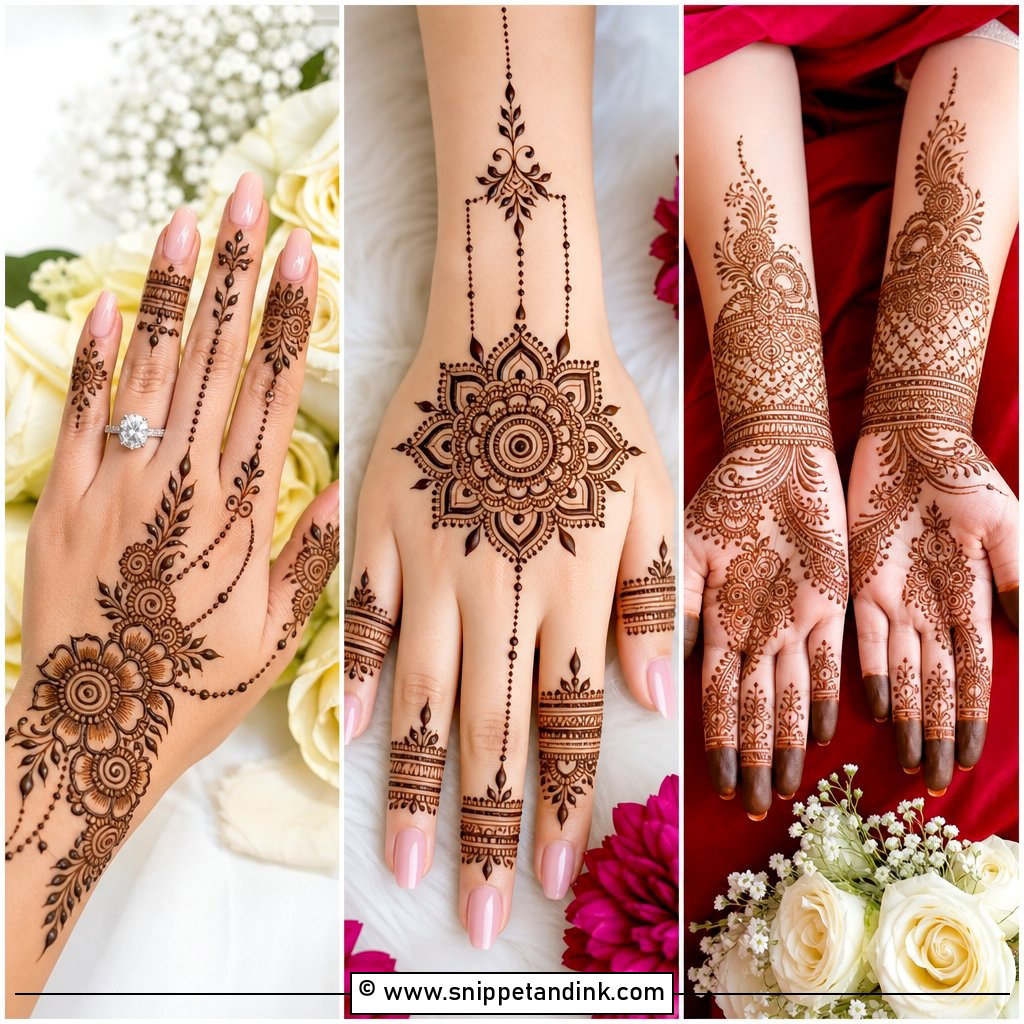
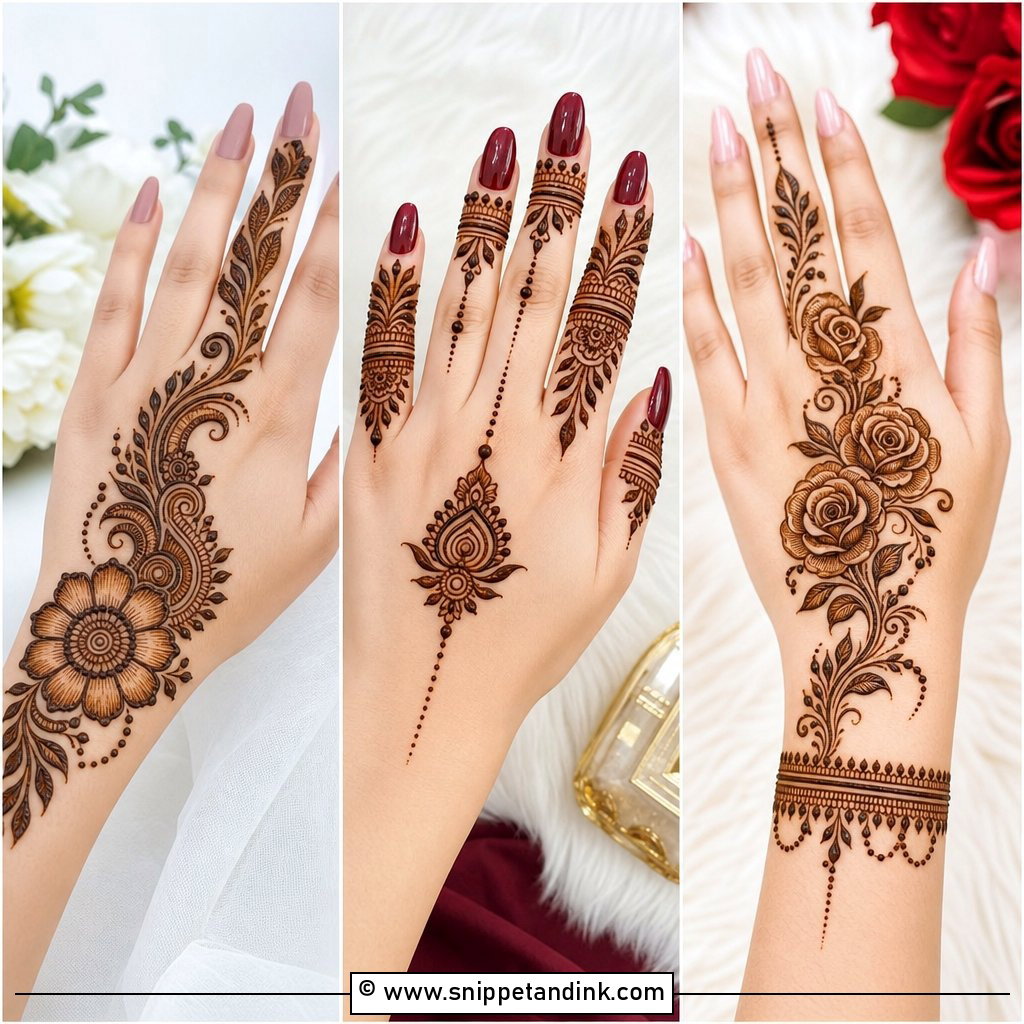
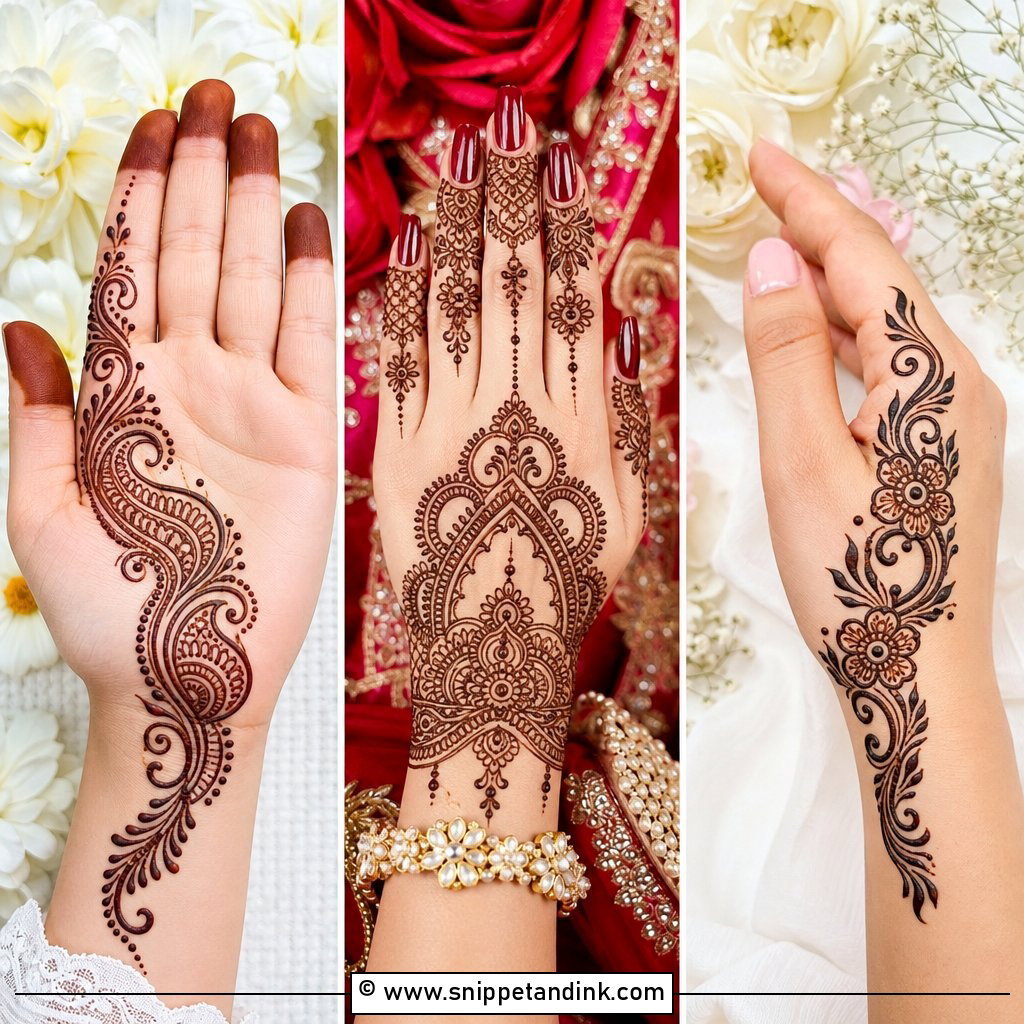
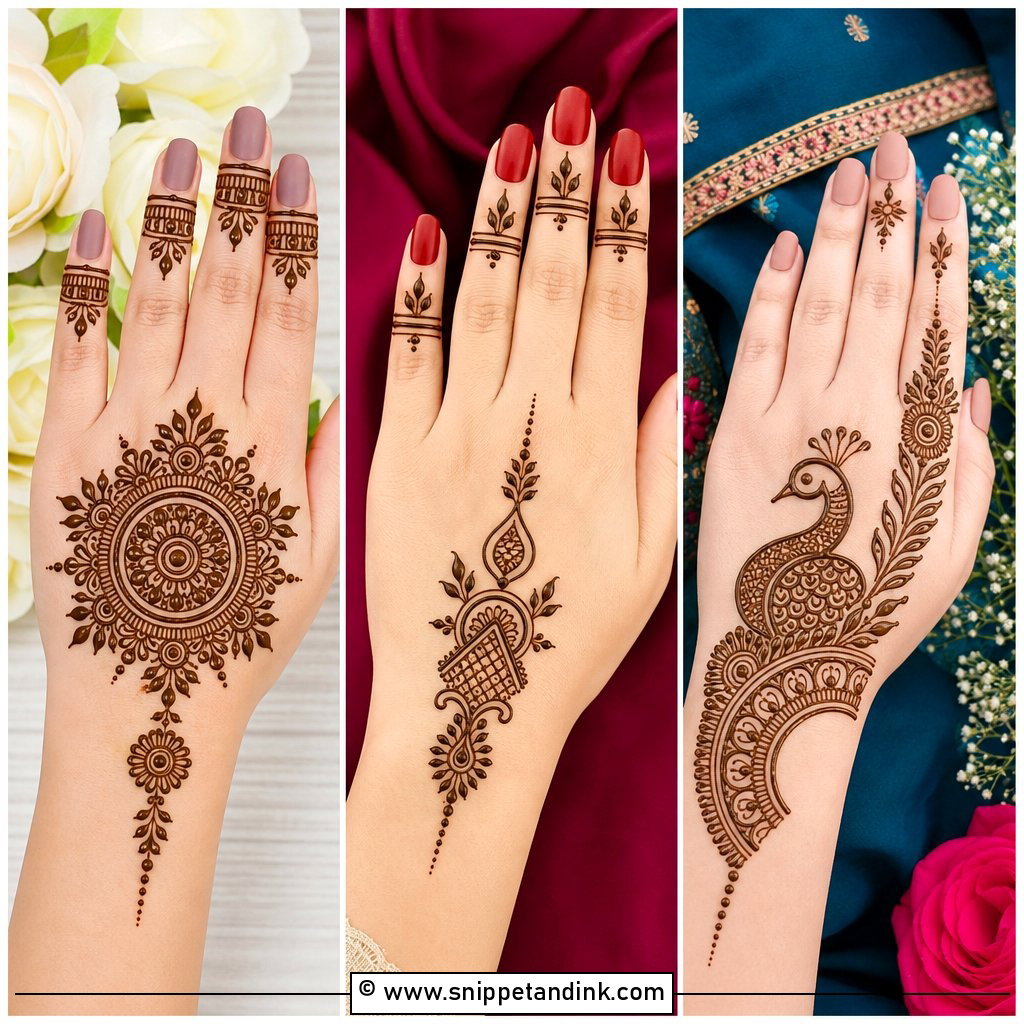
On the back of the hand, I start with a small floral or mandala center placed just below the knuckles, then send thin leafy lines up toward the fingers. The wrist either stays clean or gets one bracelet band. What makes it read as modern is how much skin I leave between the center and the fingers; close that gap and it suddenly looks old-fashioned. This one holds up well in photos even though it is light. Eid, Diwali and family gatherings all work.
2. Simple Modern Front Hand Mehndi Design
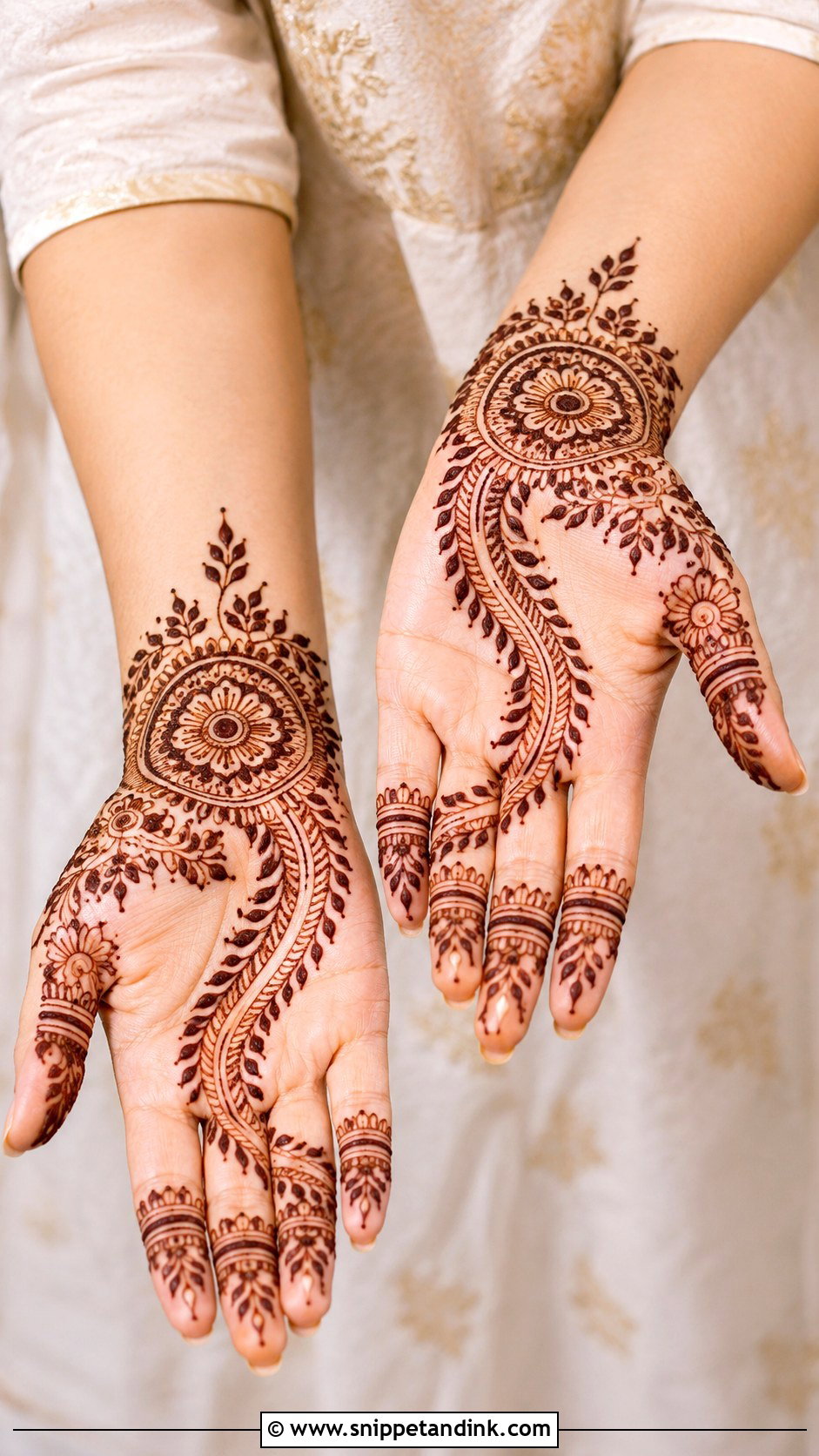
A palm needs one clear focal point, and for most people a round mandala is the easiest to get right. I surround it with dots, curved vines and small petals, then stop well before the edges of the palm so there’s a frame of skin around the design. The wrist gets one slim cuff or a short floral trail. Palms take color deeper than the back of the hand, so a modest design here still ends up rich. It’s my usual starting layout for someone doing her own henna for the first time.
3. Simple Modern Finger Mehndi Design
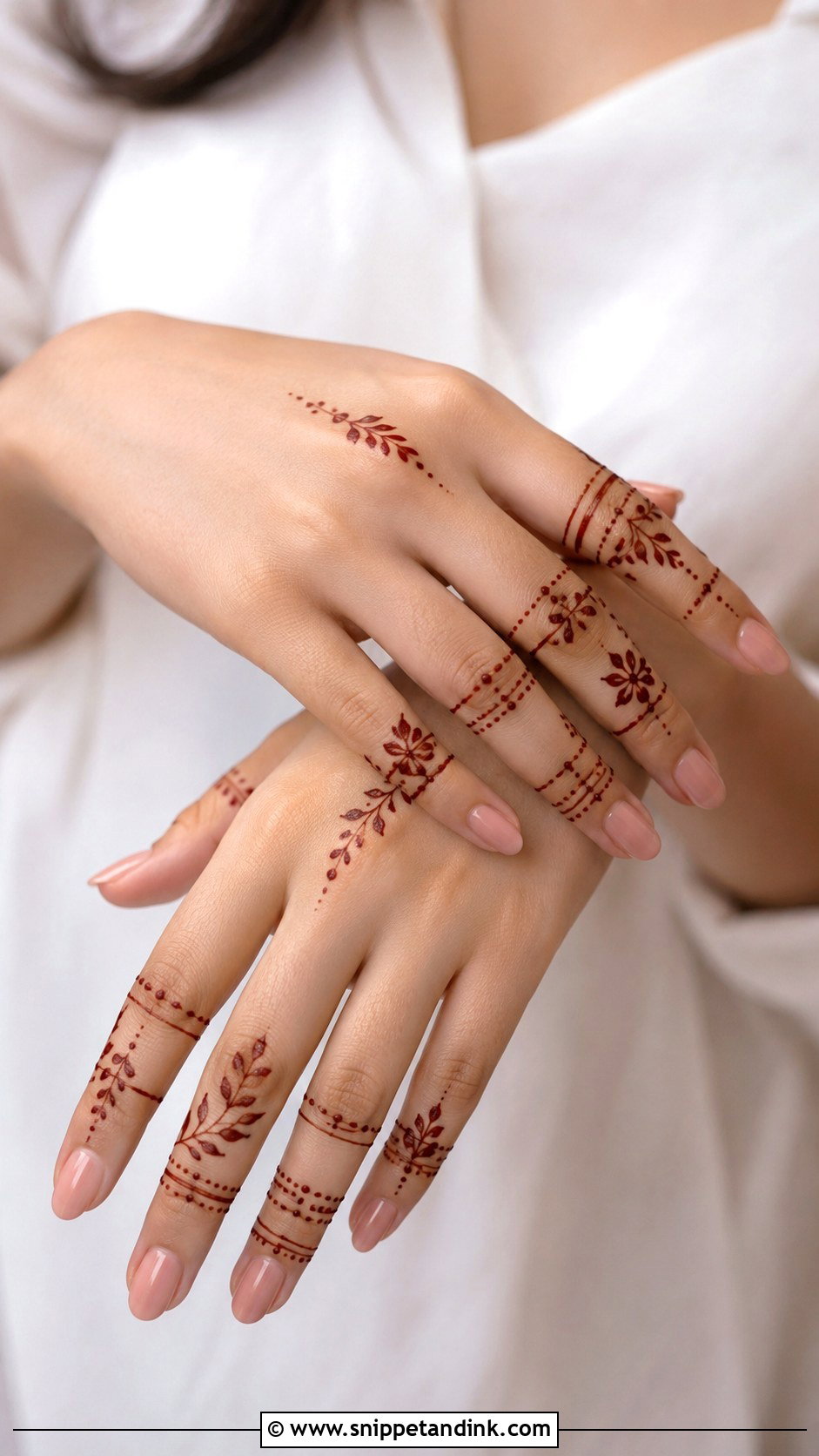
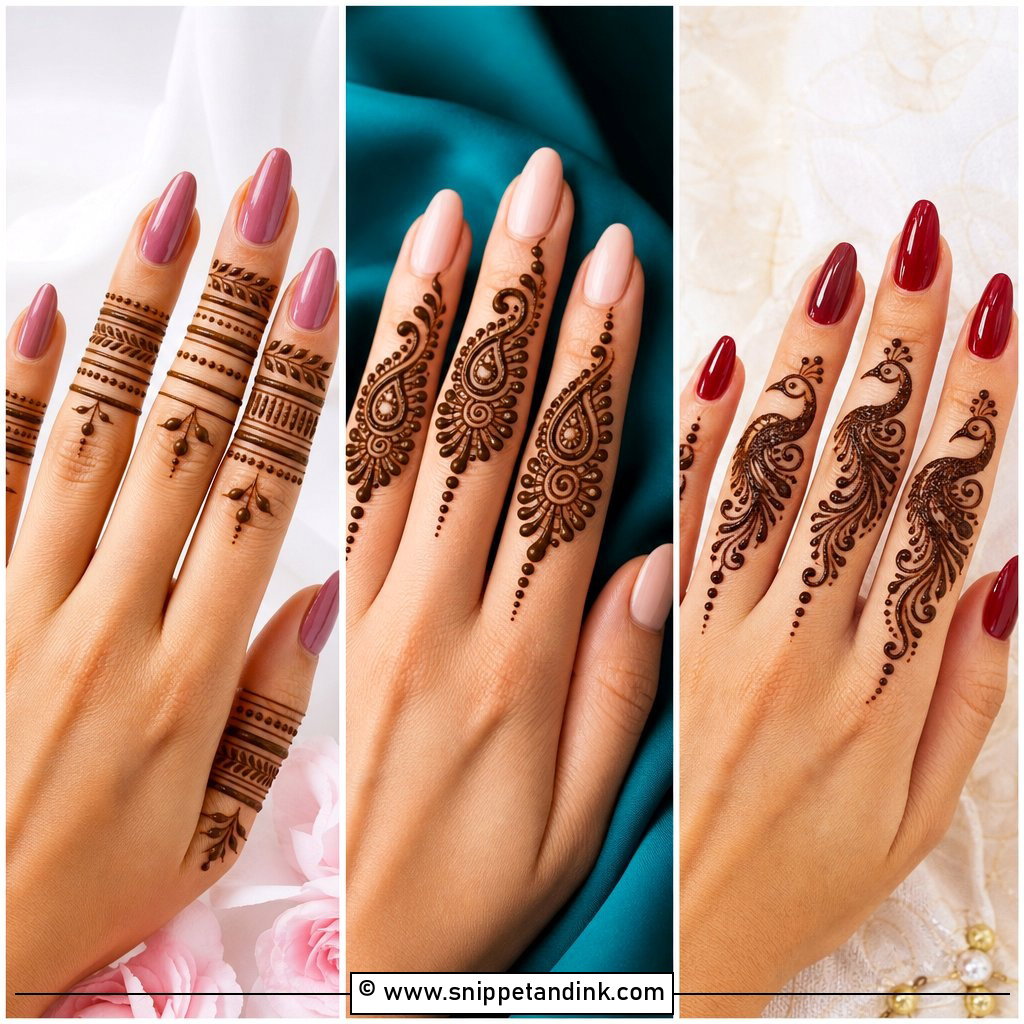
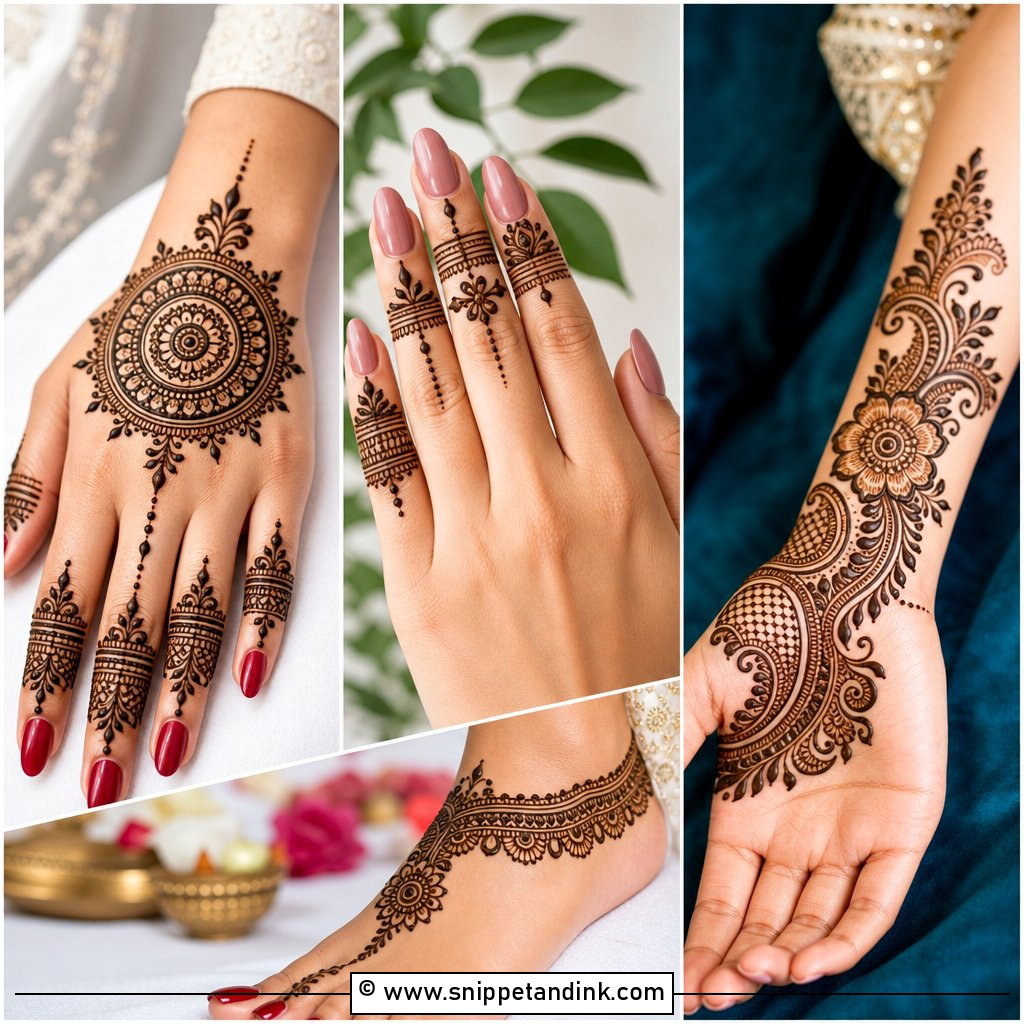
Finger-only henna is the lightest thing I draw that still reads as mehndi. Each finger gets slim bands, tiny leaves, dots or ring-like details, and the back of the hand stays almost bare, maybe with a tiny motif near the knuckles. Repeat one or two elements across all ten fingers or it looks random. The weak point is the knuckle crease: lines laid across it break up within a day as you bend your fingers, so I place bands just above or below the crease, never on it. It sits happily alongside real rings.
4. Simple Modern Arabic Mehndi Design
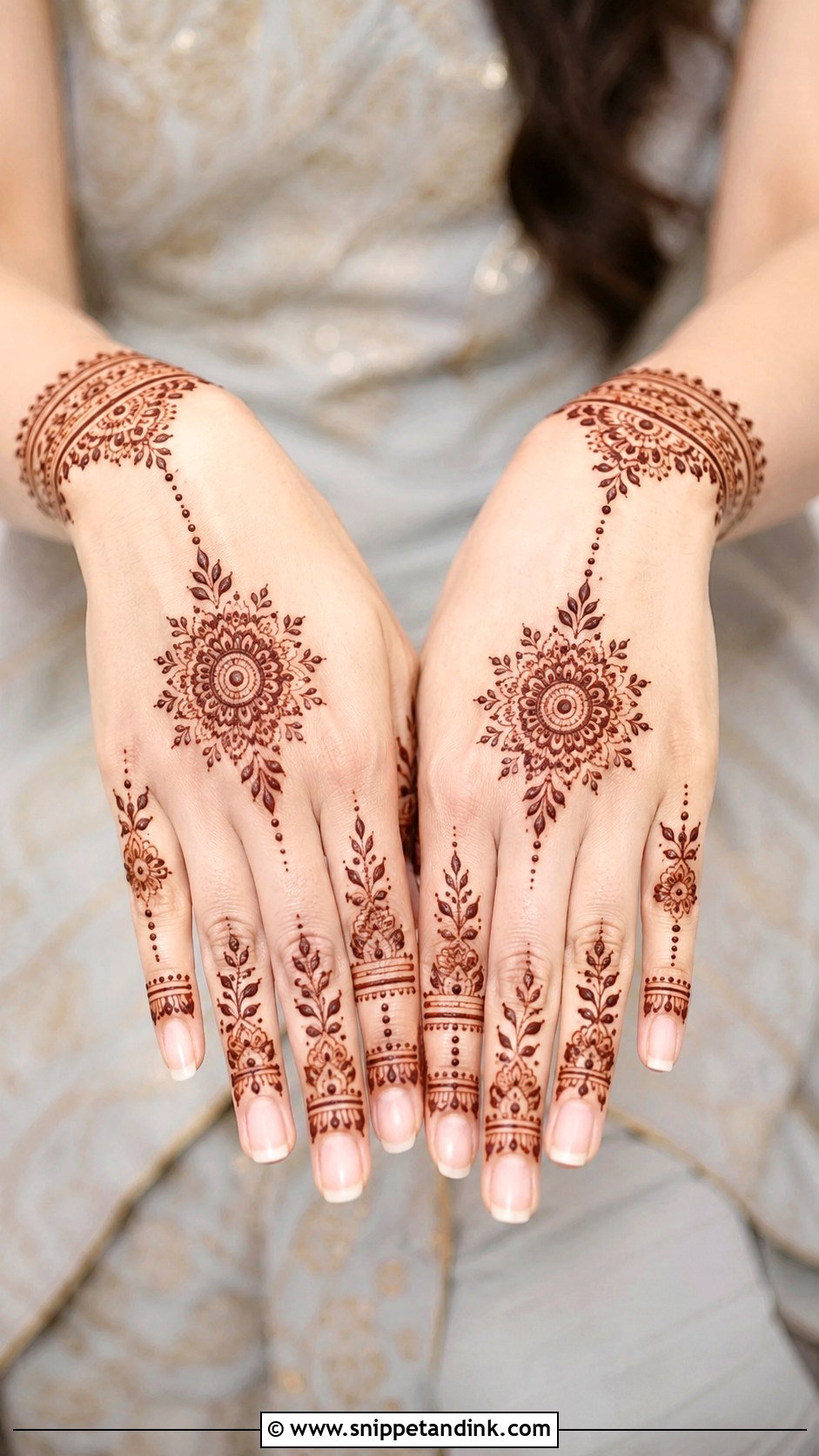
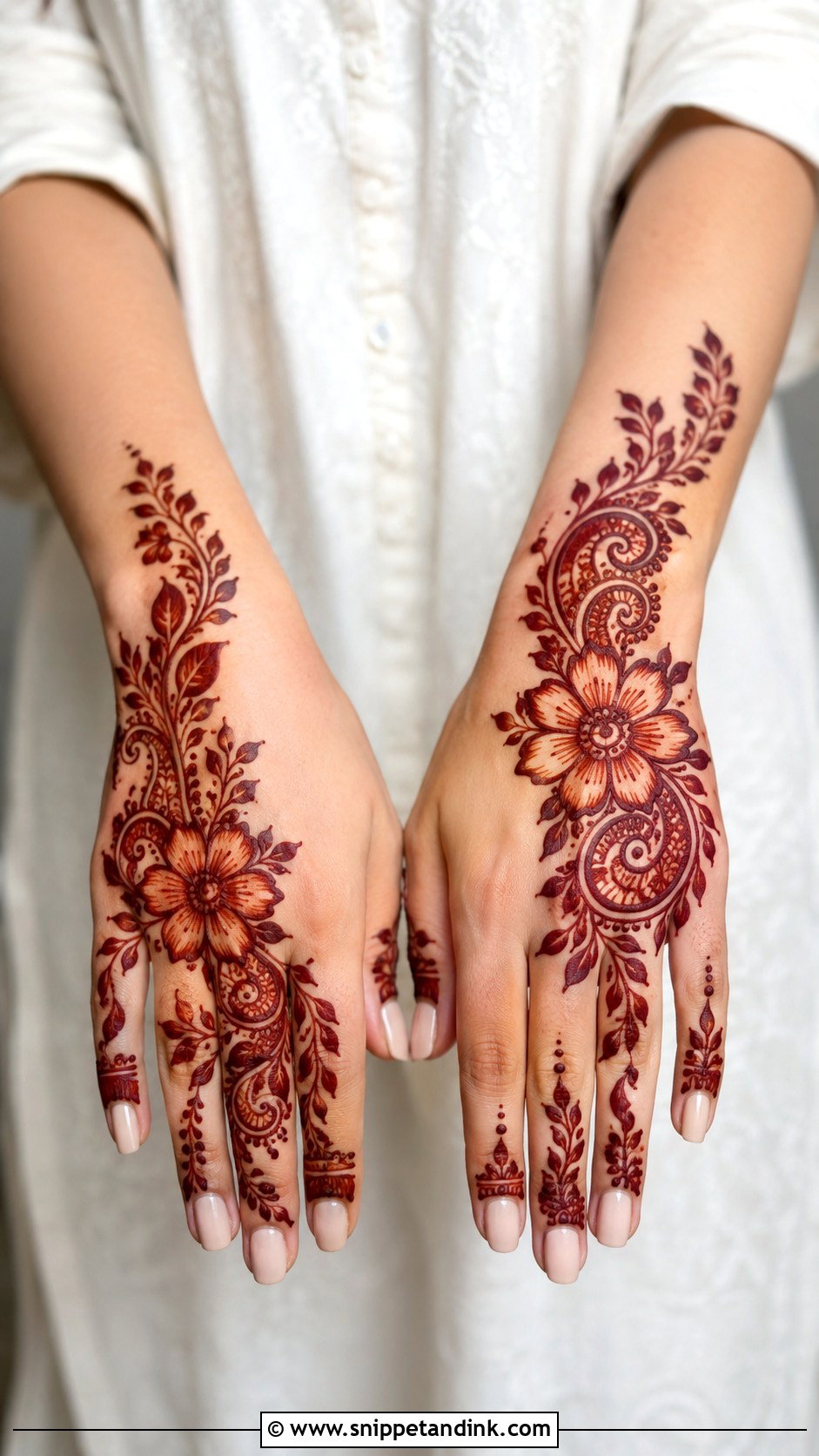
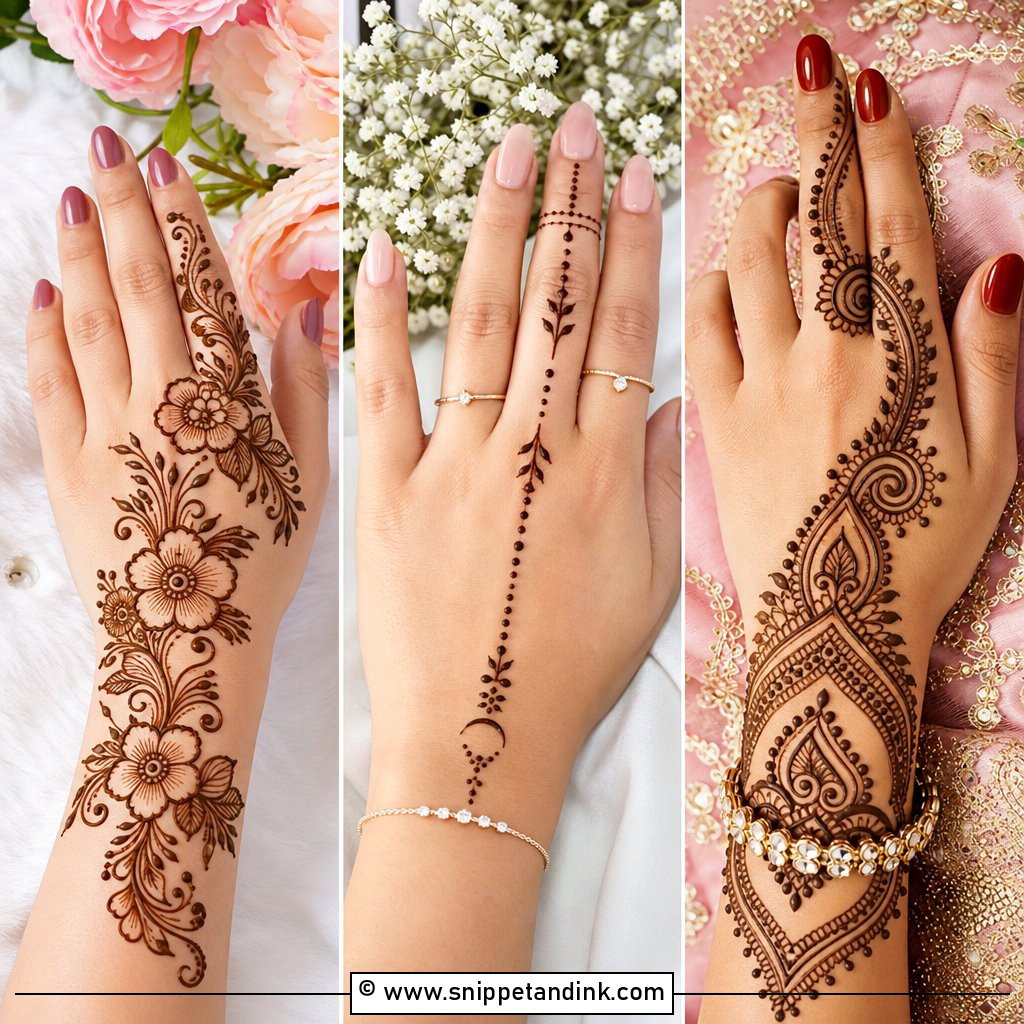
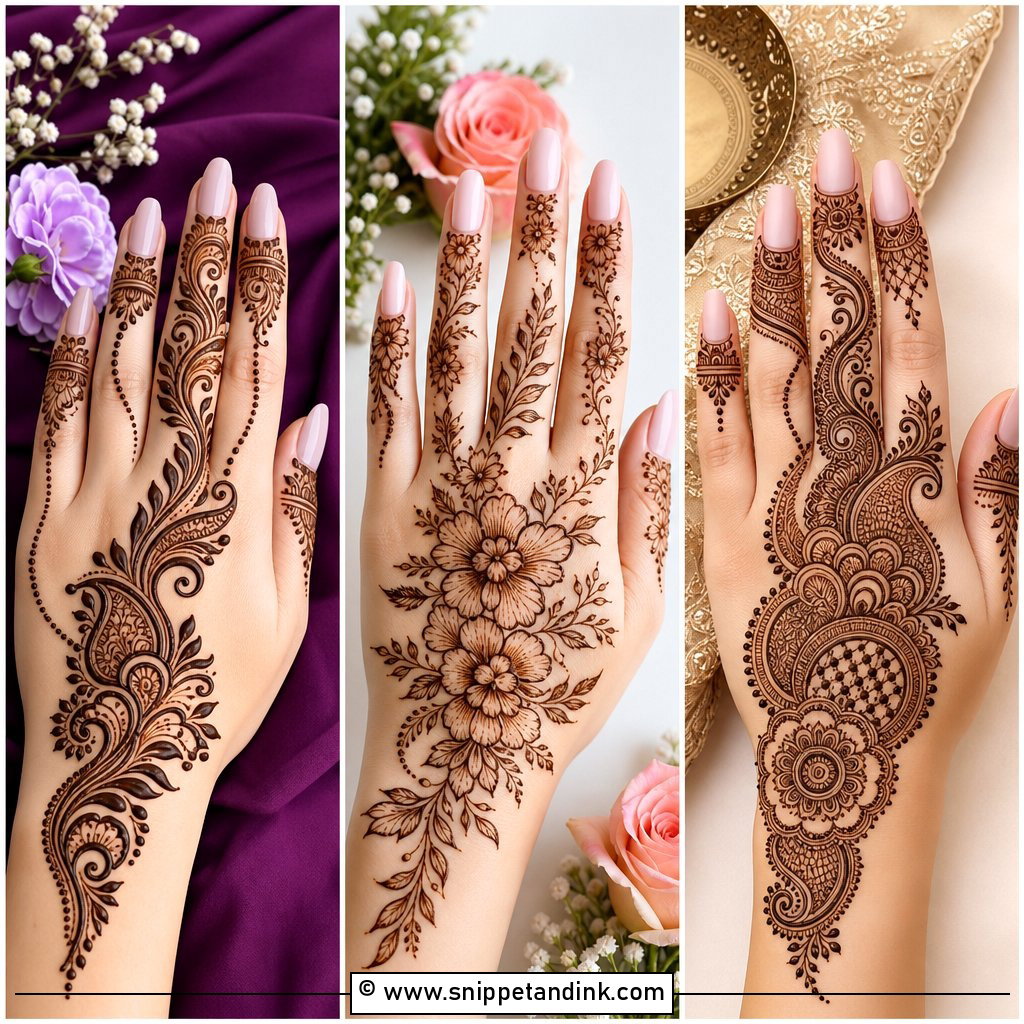
Arabic layouts flow diagonally from the wrist to one finger, and that diagonal is why they look full without being heavy. I build the trail from bold flowers, leafy vines and paisleys, add a touch of shading, and leave real space around each piece. It doesn’t need perfect symmetry, which is a relief for beginners. Put the main vine on the back hand or the palm, whichever you’ll show more. I see it most at Eid, roka ceremonies and weddings, worn with both traditional and fusion outfits.
5. Simple Modern Mandala Mehndi Design
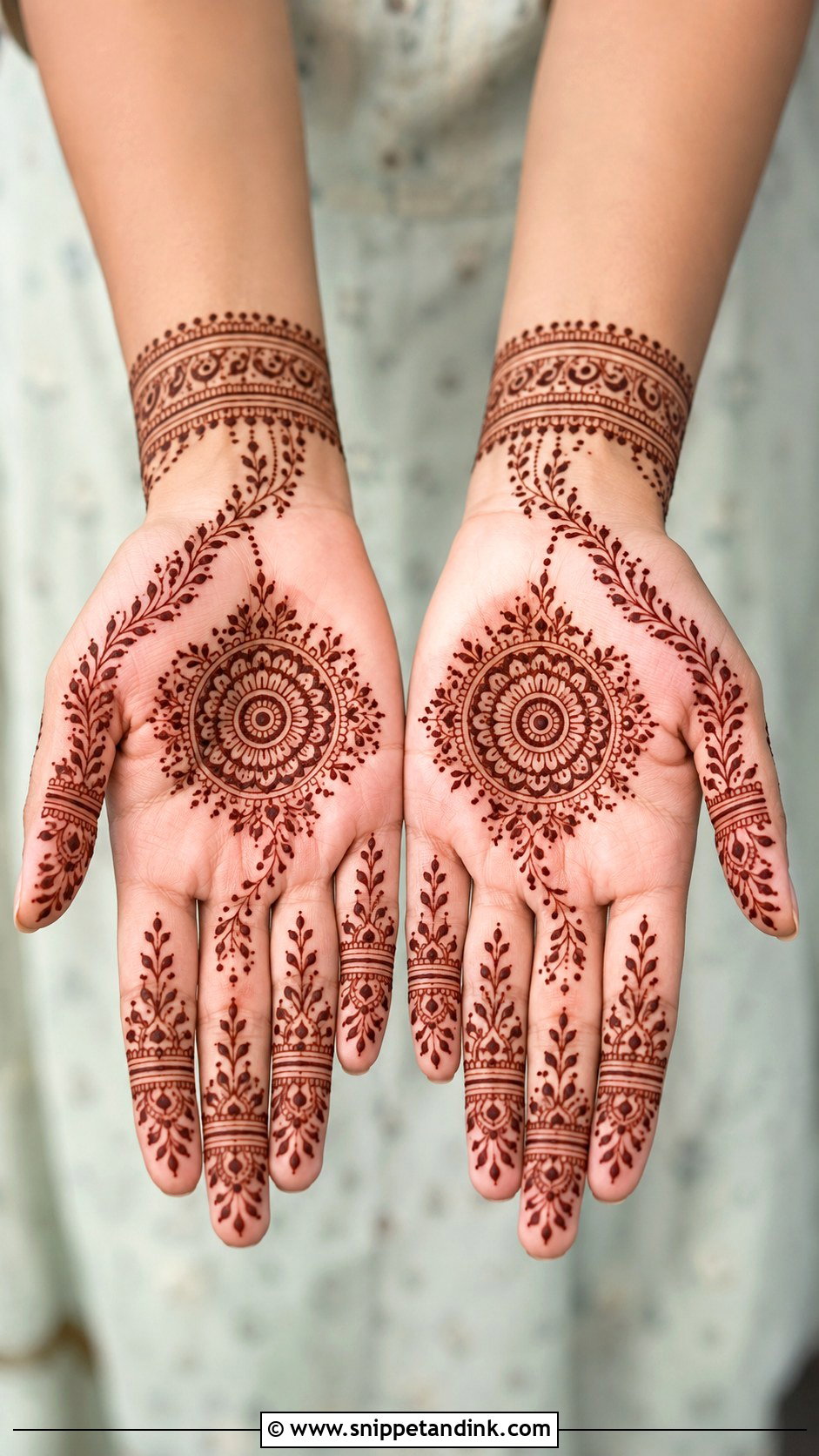
I draw a modern mandala smaller than a traditional one and leave a wide ring of blank skin around it. Petals, dots and small curved lines build it outward from one clean circle; the fingers get bands, leafy tips or dotted chains and little else. Symmetry carries this design, so I rotate the client’s hand as I work rather than twisting my own wrist, which keeps the petal angles consistent. Bridesmaids often pick it because it matches easily across several hands.
6. Simple Modern Floral Mehndi Design
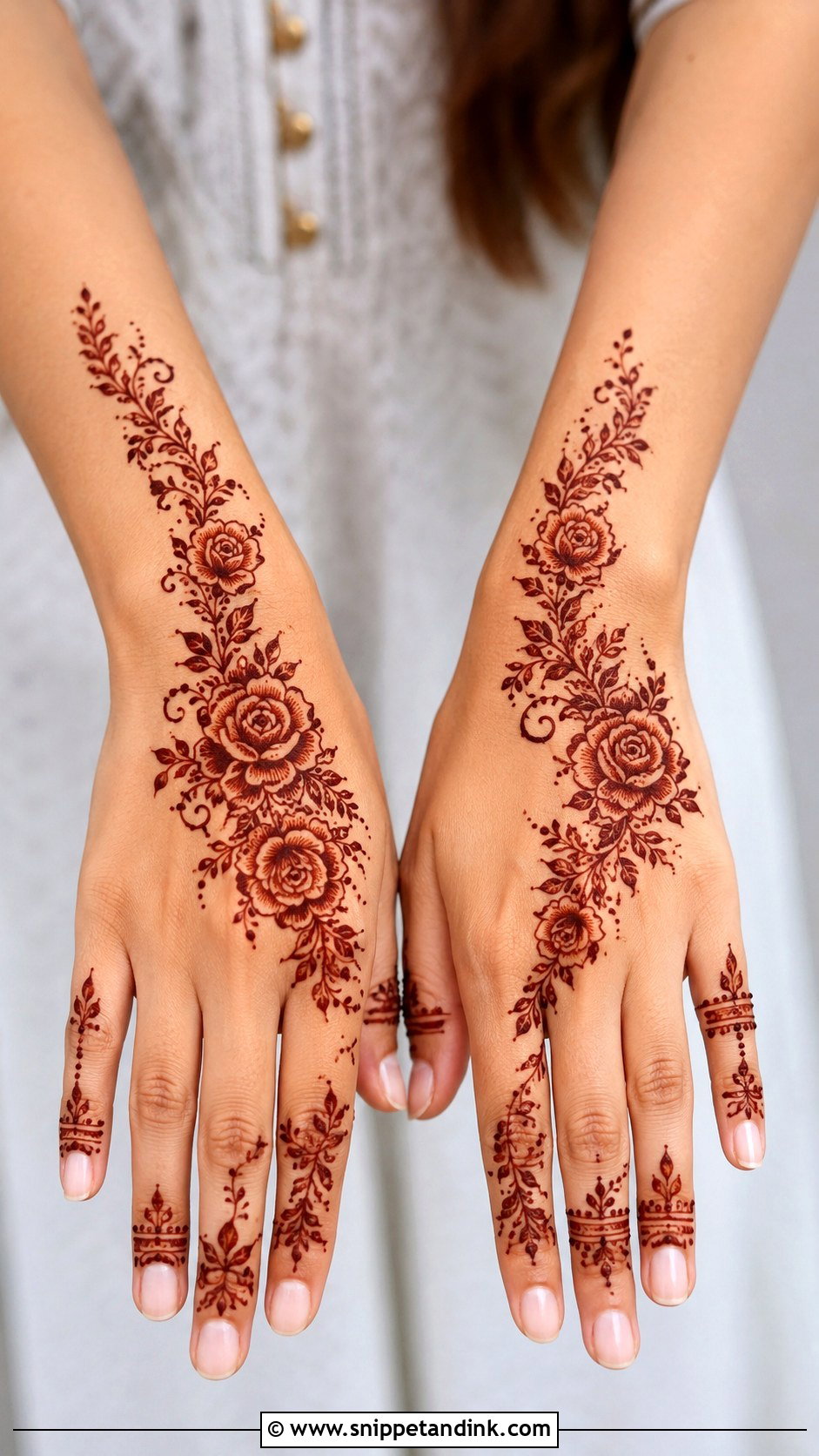
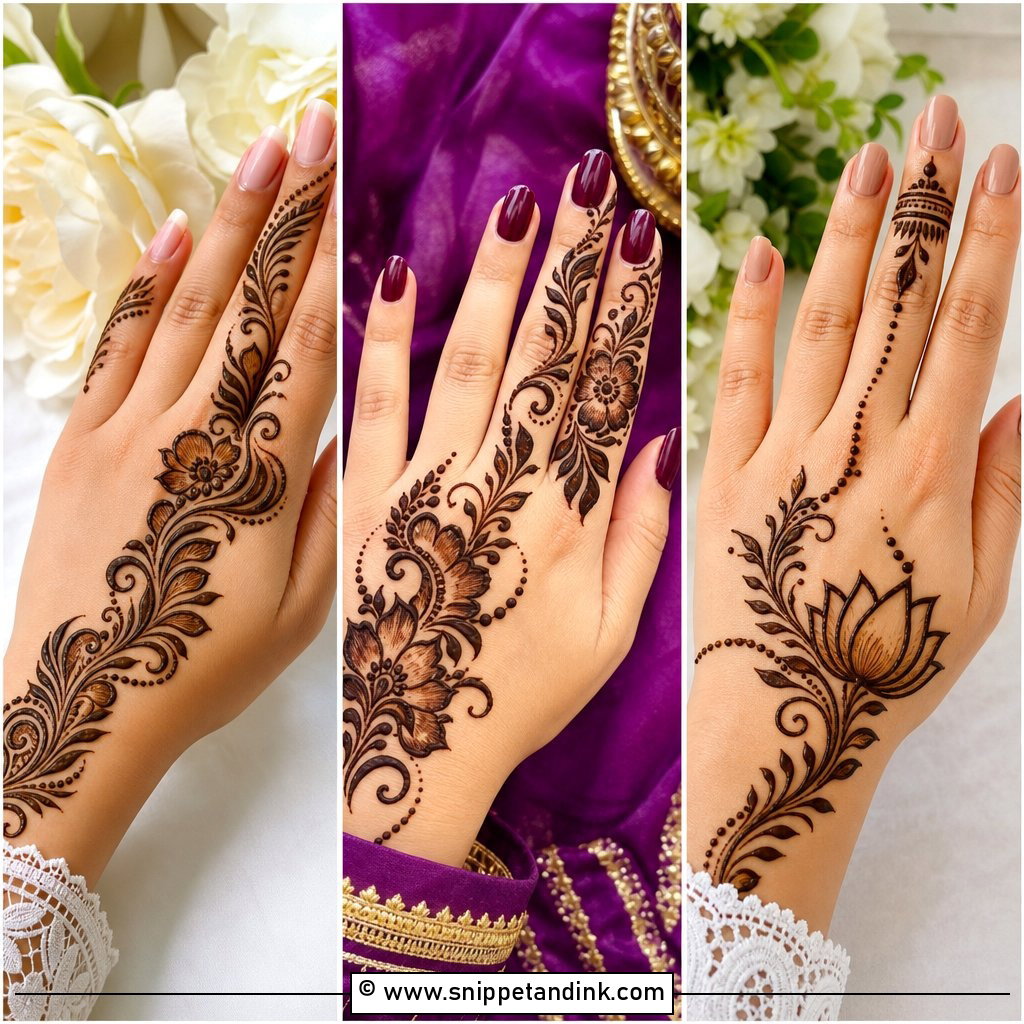
Floral trails follow the hand’s natural shape, which is why they sit so comfortably on the back of the hand. I start at the wrist with one large flower and move upward with leaves and smaller blooms, keeping it flowing instead of dense. Which flower you draw depends on your hand: round petals are the easiest, five-petal blossoms come next, and rose spirals take practice. Dots around each flower make it look finished. Engagement functions, casual parties and festive dinners all suit this one.
7. Simple Modern Bracelet Mehndi Design
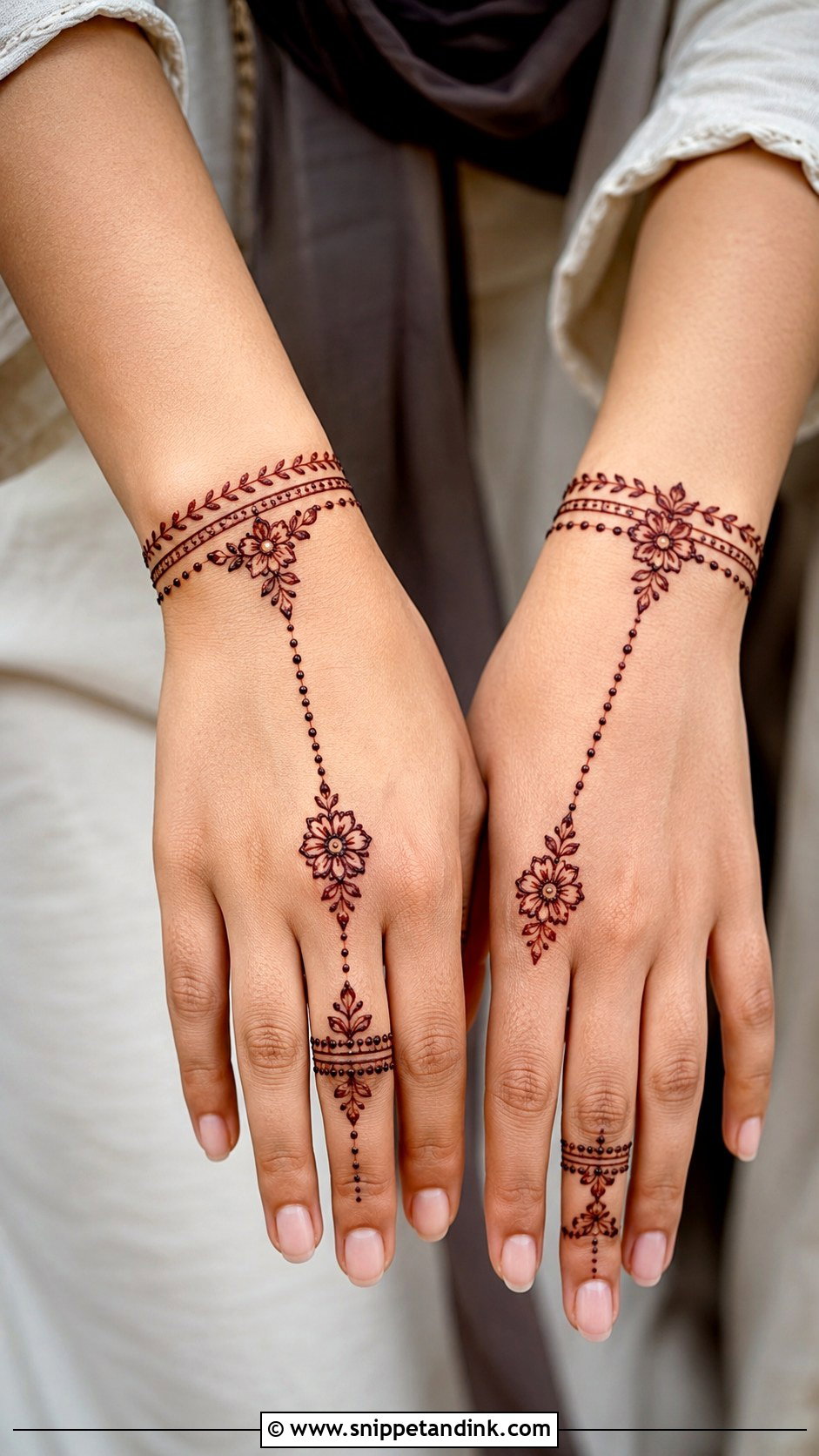
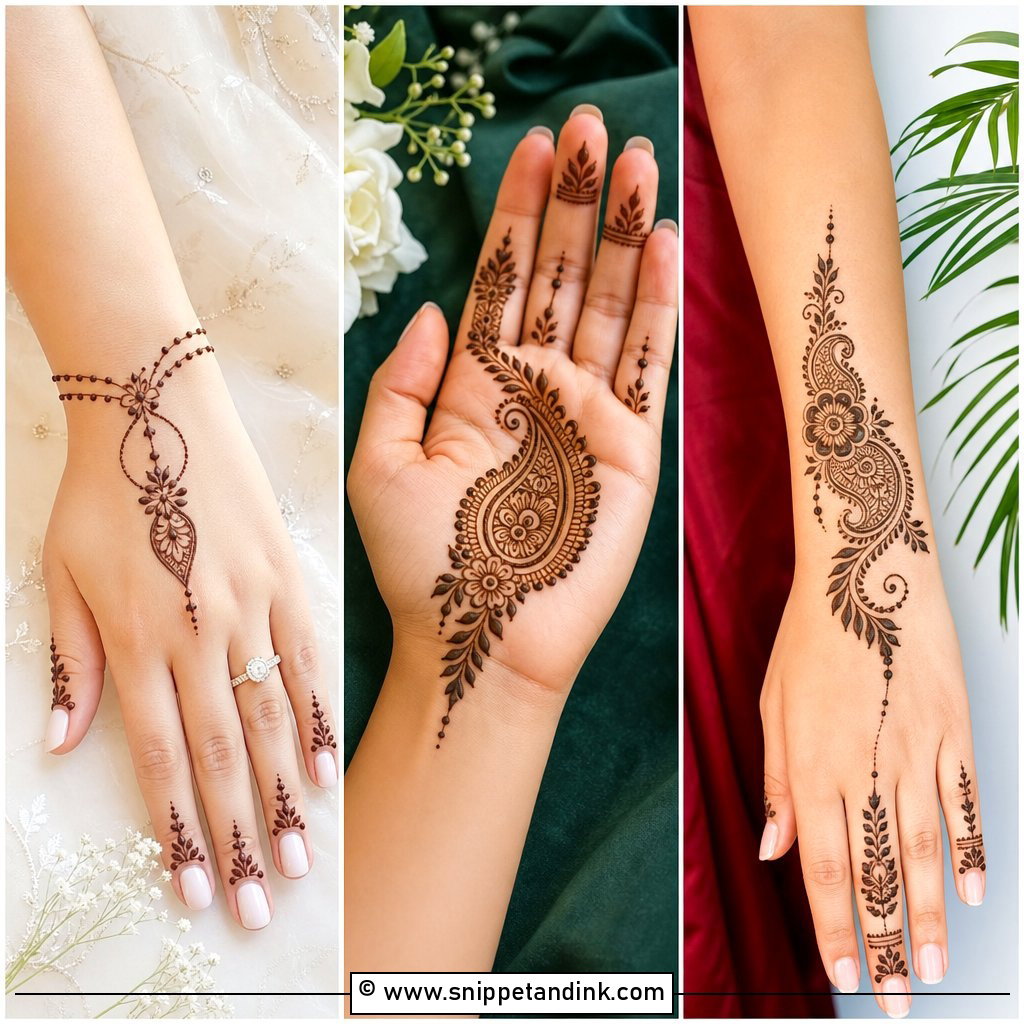
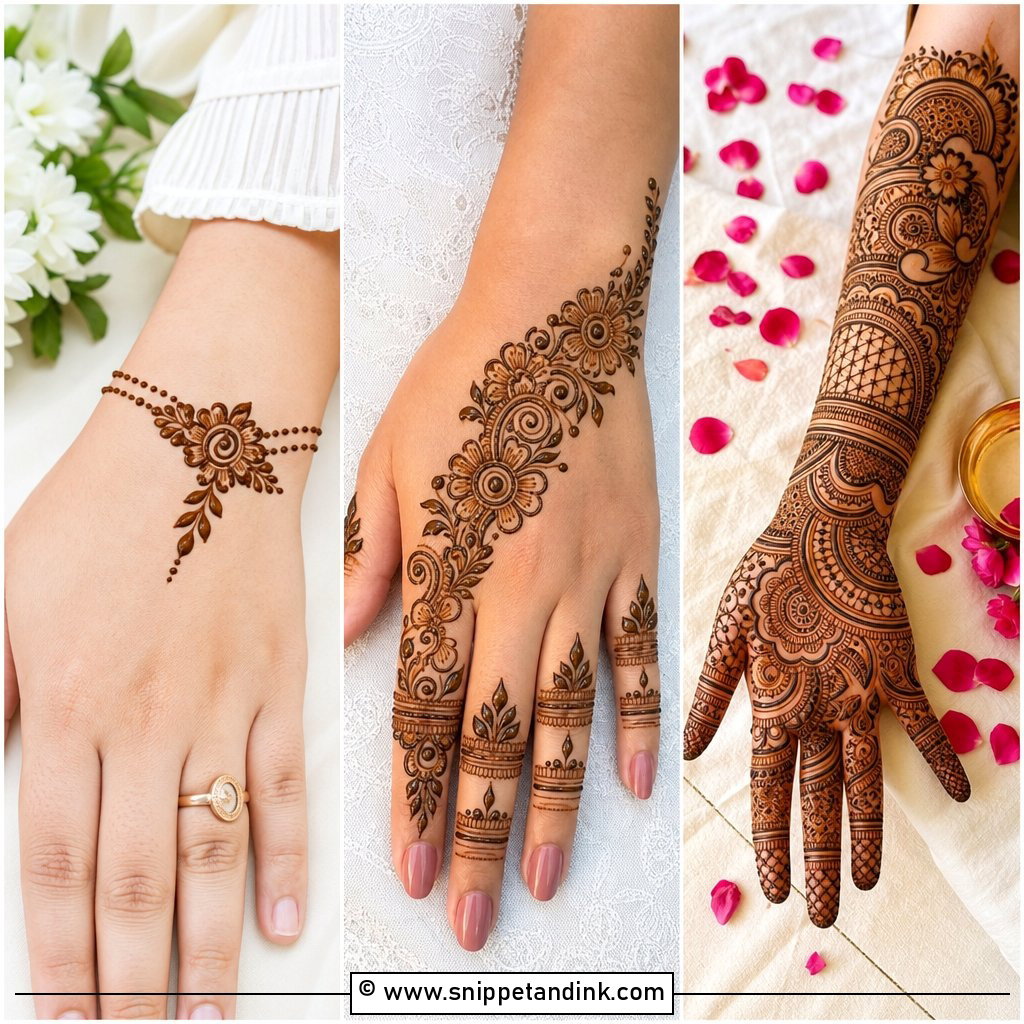
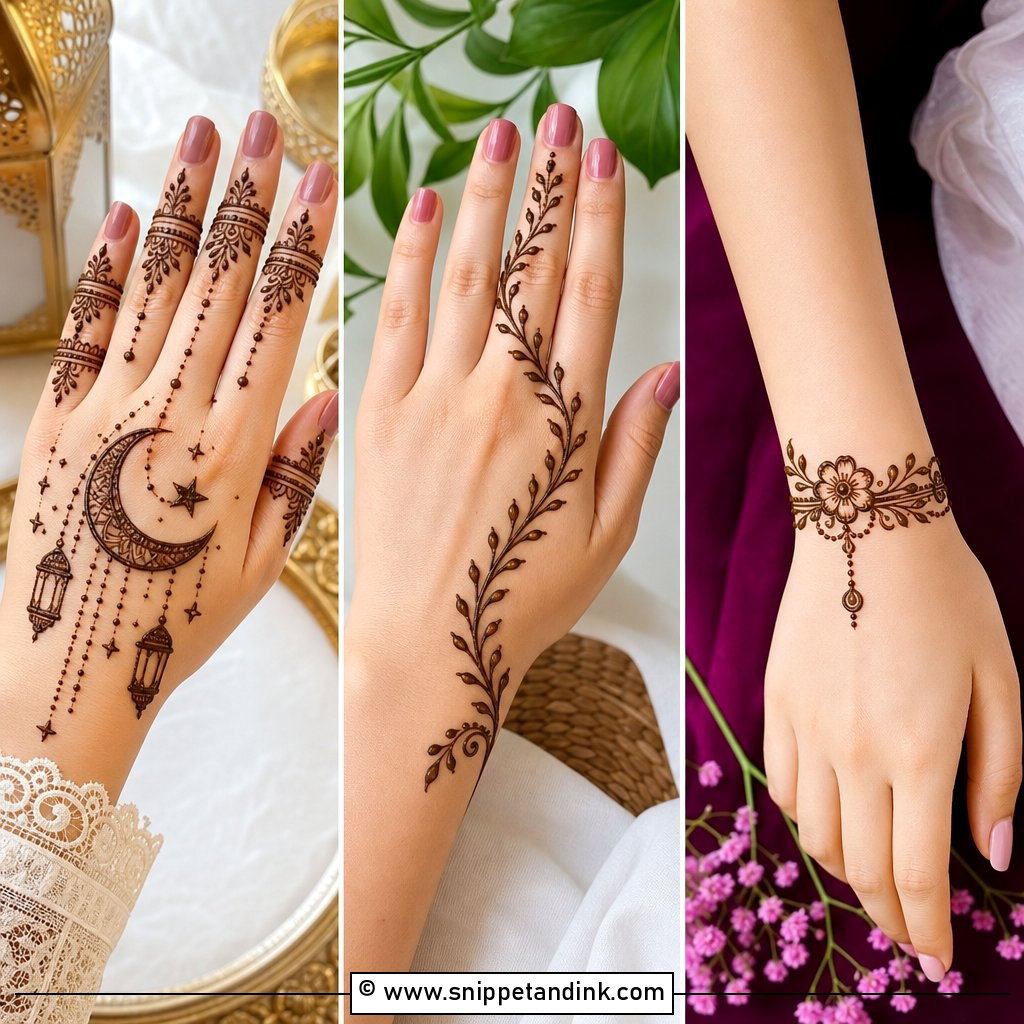
A bracelet design does what jewelry does, frames the wrist. One or two slim bands go around it, connected to a small flower, mandala or leafy trail on the back of the hand, and the fingers pick up matching ring patterns or dotted lines. Keep the bands thin. Thick bands look heavy against bangles, and the inner wrist doesn’t stain as dark as the hand, so a thick band can end up patchy. It’s the design I suggest for anyone who won’t have henna on the palm.
8. Simple Modern Half Hand Mehndi Design
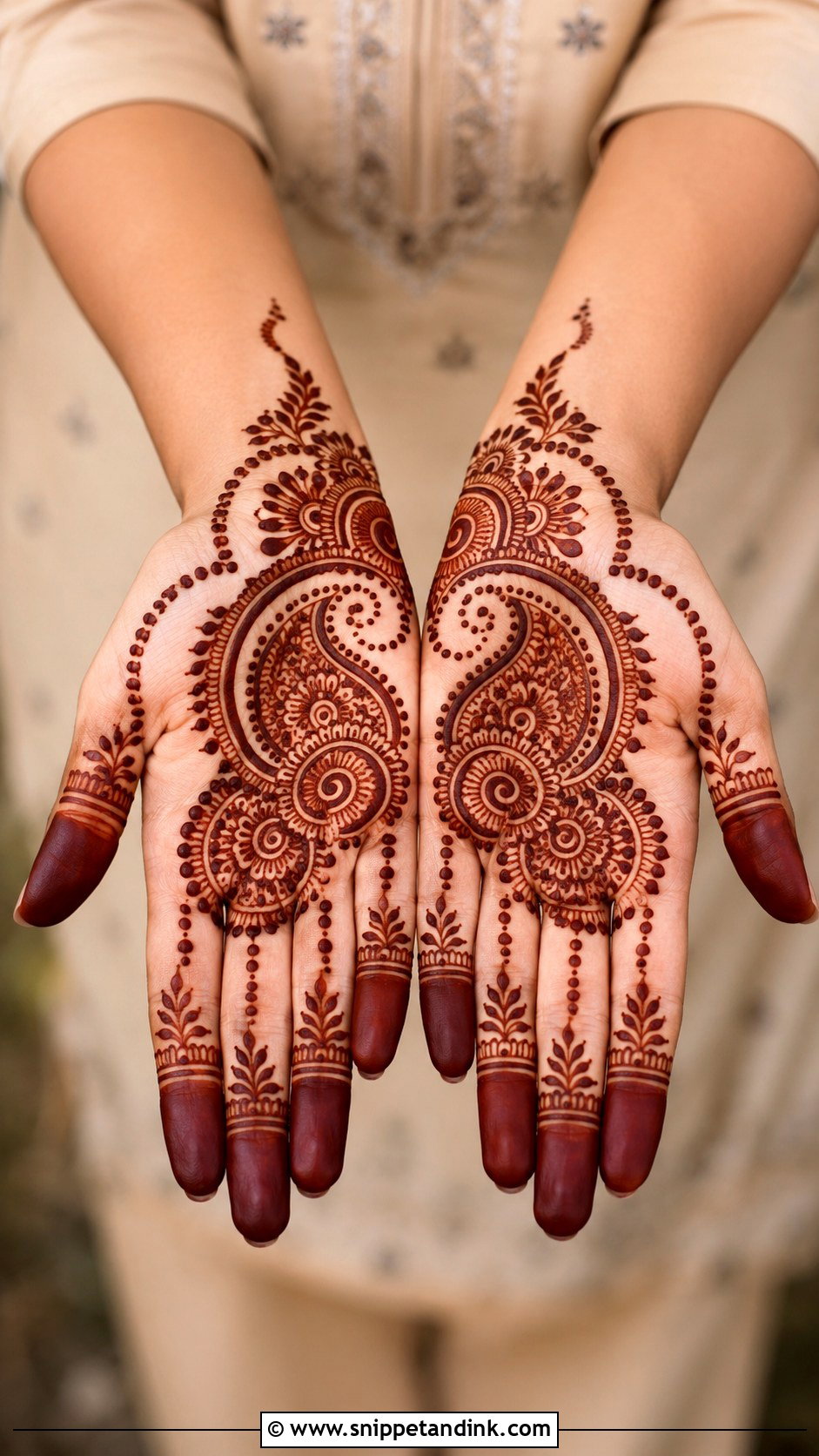
Half hand coverage stops around the middle of the palm or back hand, which is enough for a festive look without a long sit. The main layout can be a floral trail, a mandala base or an Arabic curve, with finger patterns to tie it together. Fewer sections means less filling, so this is where beginners get comfortable with spacing. It’s also more practical for daily life: you can wash dishes or type without staring at a full hand of drying paste. Small events and family dinners are its natural home.
9. Simple Modern Palm Mehndi Design
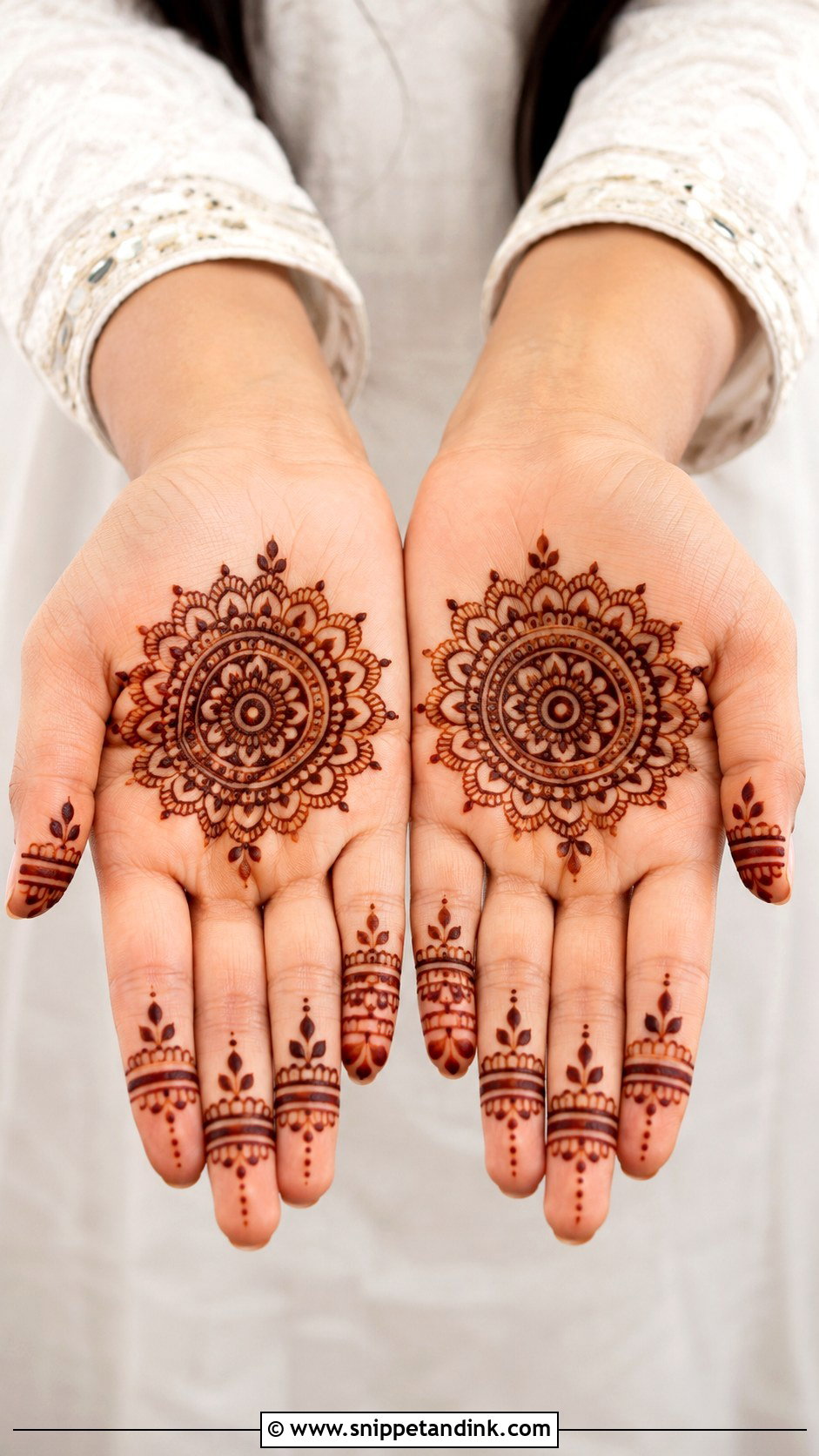
Palm designs look modern when they’re centered and edited. I place a bold mandala, flower or paisley in the middle, add soft curves, dotted chains and leafy details, then deliberately leave the corners empty. Small bands and fingertip accents balance the fingers. Because the palm stains so deeply, I’d warn anyone with a job interview or a formal office day coming up that this placement is the hardest to hide. For a puja, Eid gathering or a smaller wedding event it’s easy and pretty.
10. Simple Modern Wrist Mehndi Design
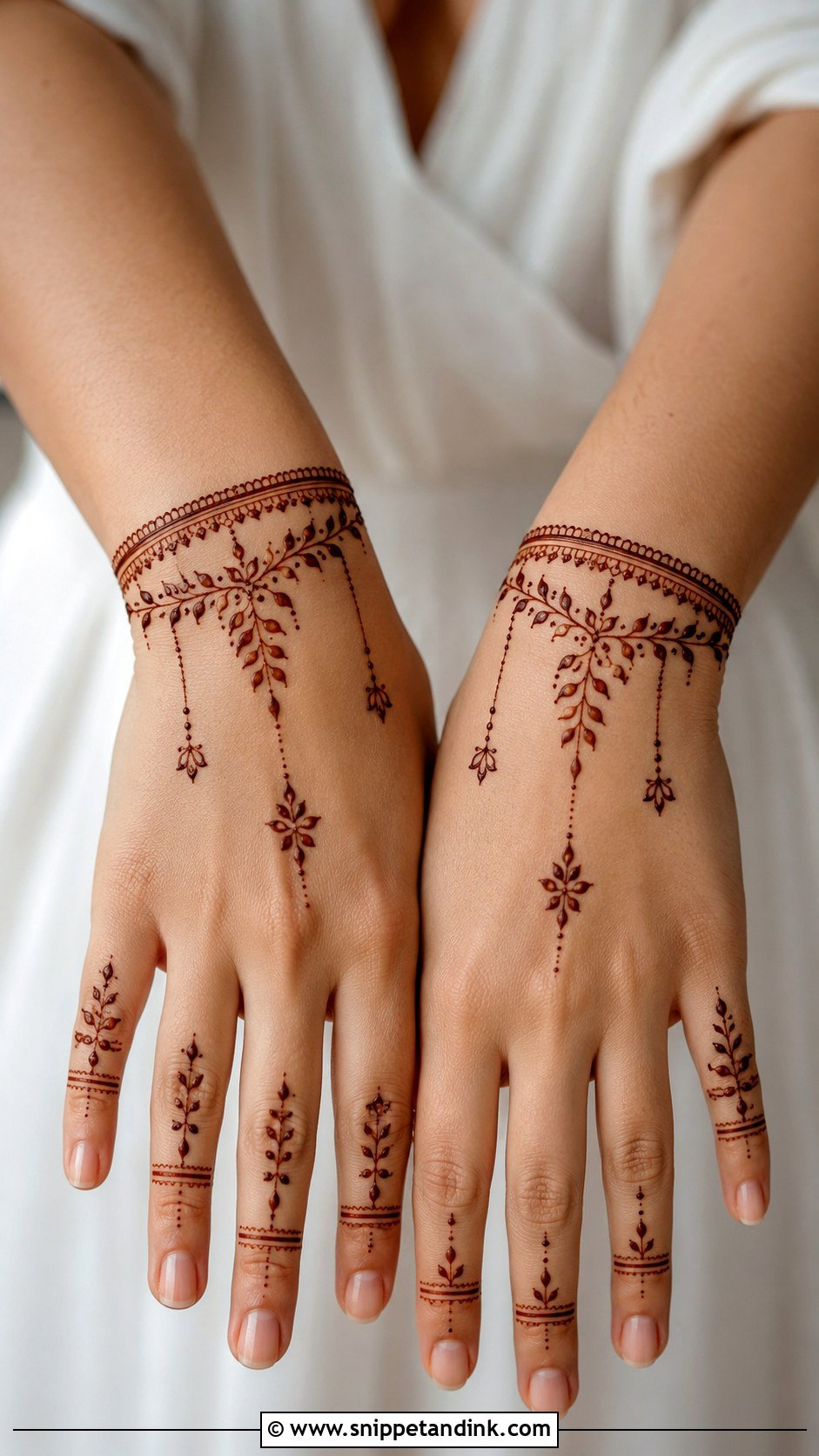
Wrist-focused henna behaves like a delicate accessory. I draw a slim cuff of small leaves, dots and tiny flowers, then extend one fine chain toward the middle finger. Most of the hand stays empty, so it’s comfortable and quick, and it suits college, work and casual celebrations. For a bit more festivity, hang a small charm shape just below the band. Fine lines are essential, but fine lines on the wrist also fade fastest, so leave the paste on as long as you can bear.
11. Simple Modern Indo Arabic Mehndi Design
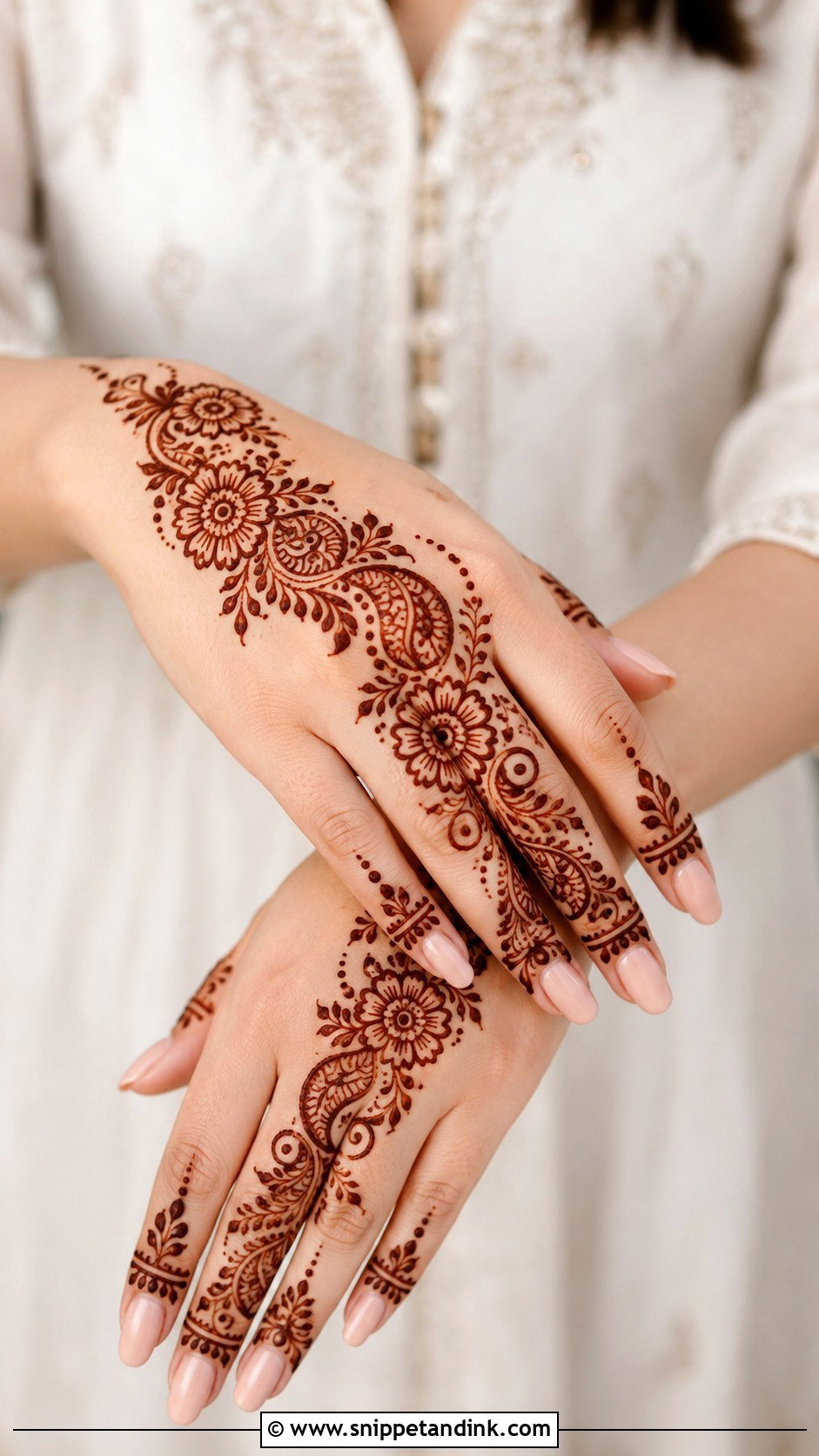
Indo-Arabic combines the flow of an Arabic trail with Indian detail. A diagonal floral trail forms the structure, then small paisleys, dots and fine inner lines fill the main shapes, while the background stays open. It works on either side of the hand. I’d put it between minimal and bridal: more detailed than a vine, much lighter than full coverage. The thing I watch is line spacing inside the flowers; fine lines drawn too close will merge as the paste settles. Weddings, Eid, Diwali and engagements all suit it.
12. Simple Modern Jaali Mehndi Design
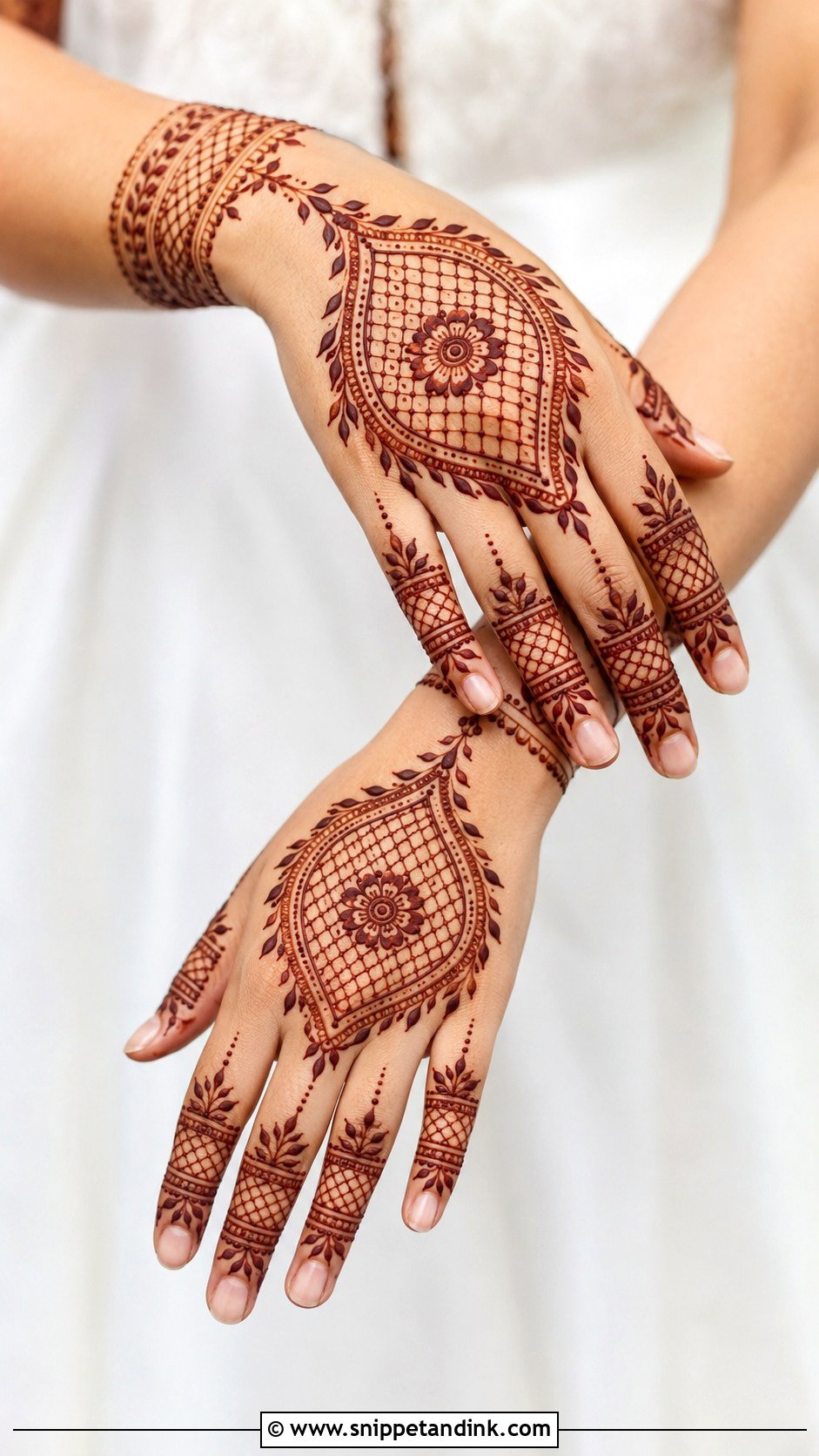
Jaali, the net pattern, looks crisp and modern when it covers one section only, say the fingers, the wrist or one side of the back hand. Pair it with a small flower, mandala or leafy border so the eye has somewhere to land. Mesh everywhere quickly looks crowded and, on a moving hand, the grid distorts. The squares should be roughly even, so I mark the outer edges of the panel with a few dots first and draw the lines between them. The contrast between grid and skin is strong in photos, which bridesmaids appreciate.
13. Simple Modern Leaf Mehndi Design
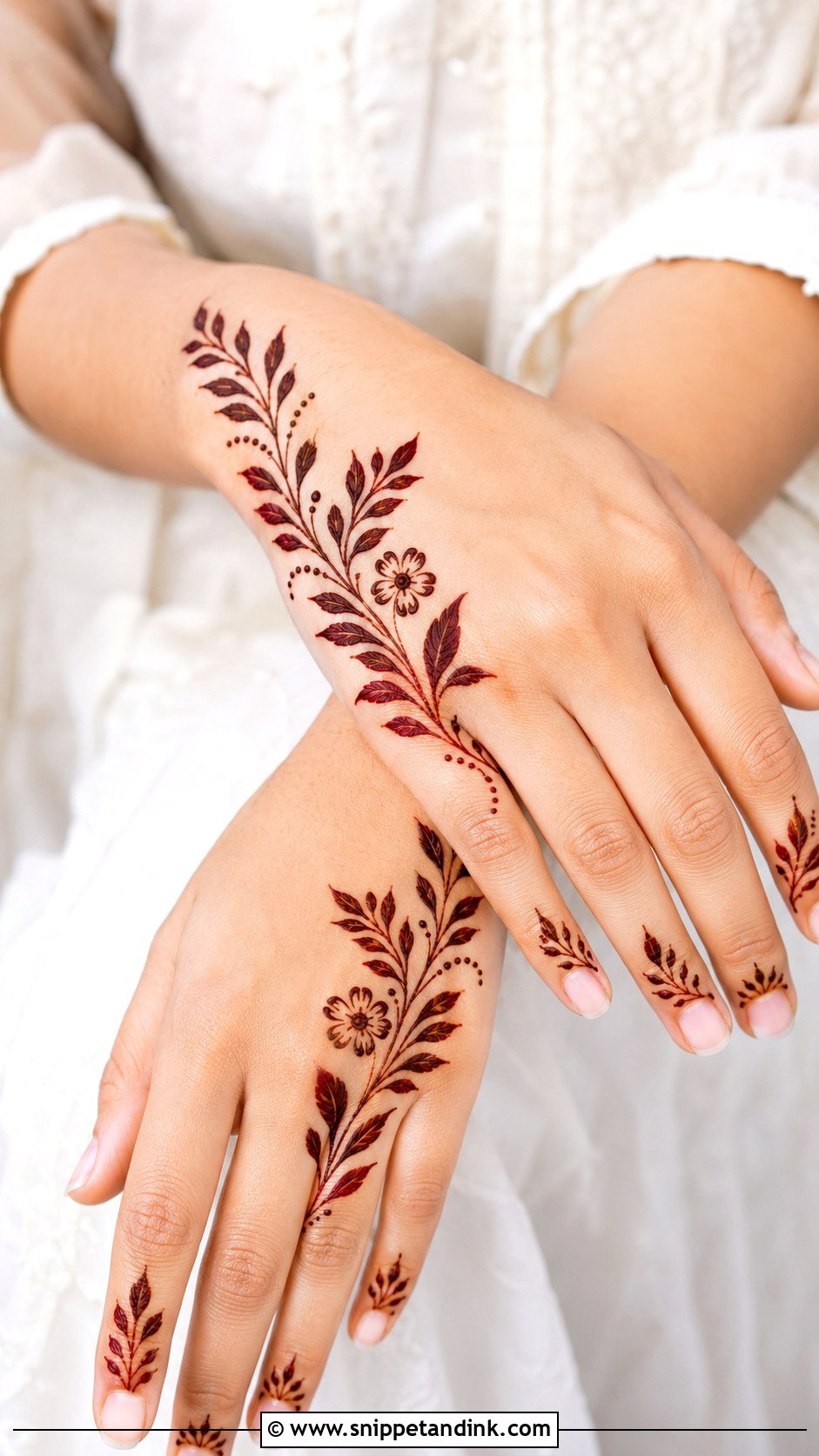
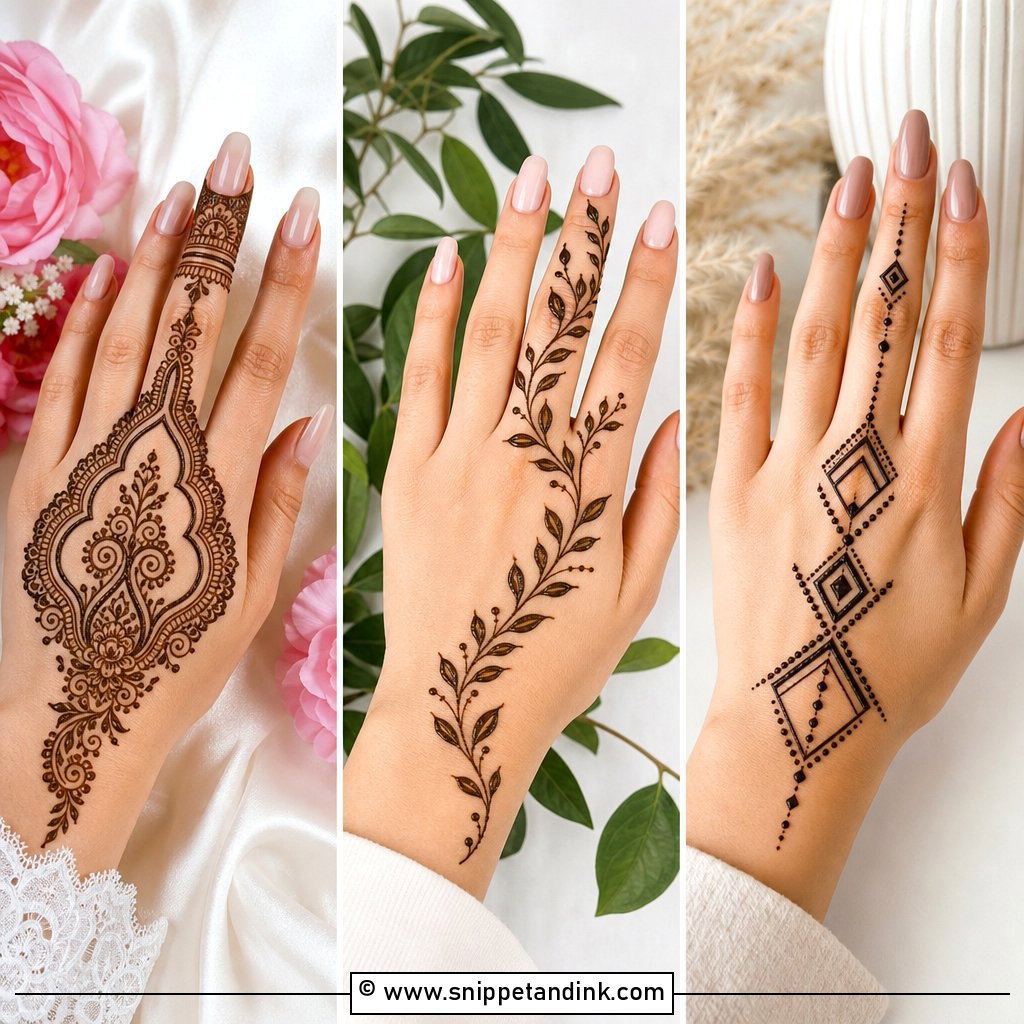
Leaves are the most forgiving element in henna; nobody notices if one is a little wider than the next. I run a vine from the wrist to the index finger, or from one side of the palm to the other, mixing leaf sizes so it looks grown rather than stamped. The center can stay empty or carry one small flower. Since the vine length is adjustable, it fits any hand. This is the design I’d do on the way to a function if we only had a few minutes.
14. Simple Modern Paisley Mehndi Design
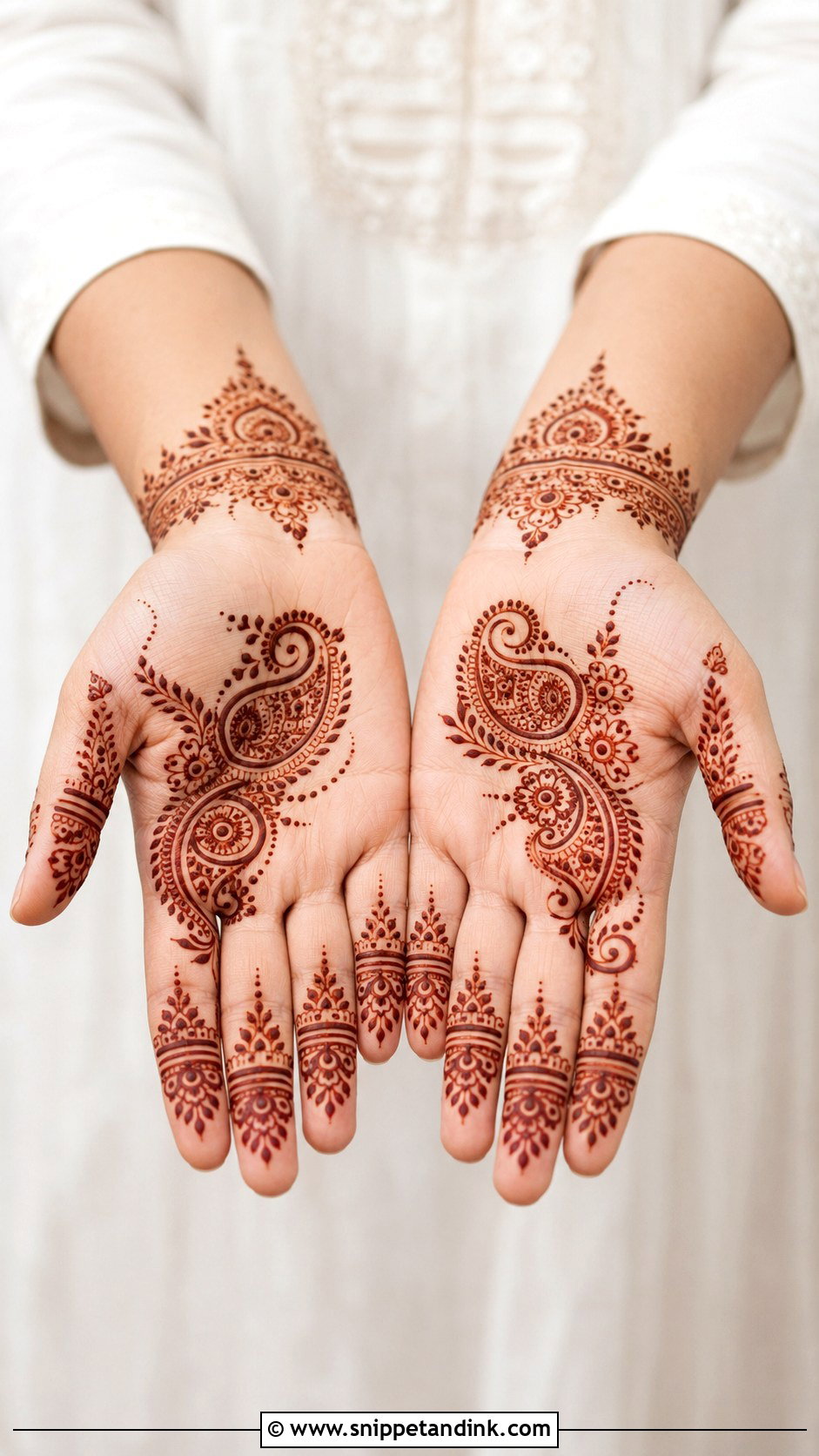
Paisley is traditional, but clean spacing makes it look current. One or two paisleys go near the palm, wrist or back hand, surrounded by leaves, dots and small flowers, with the rest of the hand kept simple. For a lighter feel, I draw a thin outline and leave the inside mostly open rather than packing it with fill. Simple finger bands finish it. Pre-wedding events and family functions are where people usually ask for it, especially those who like tradition but not bridal density.
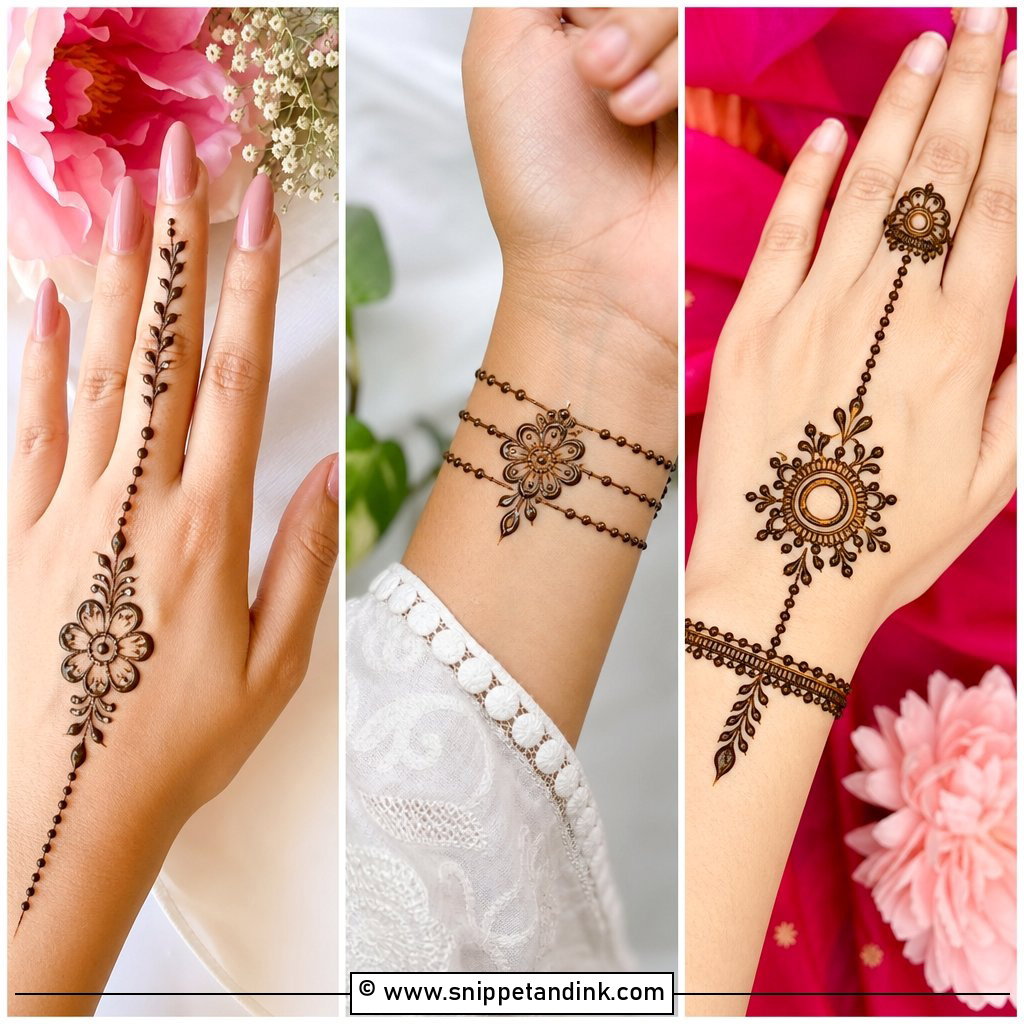
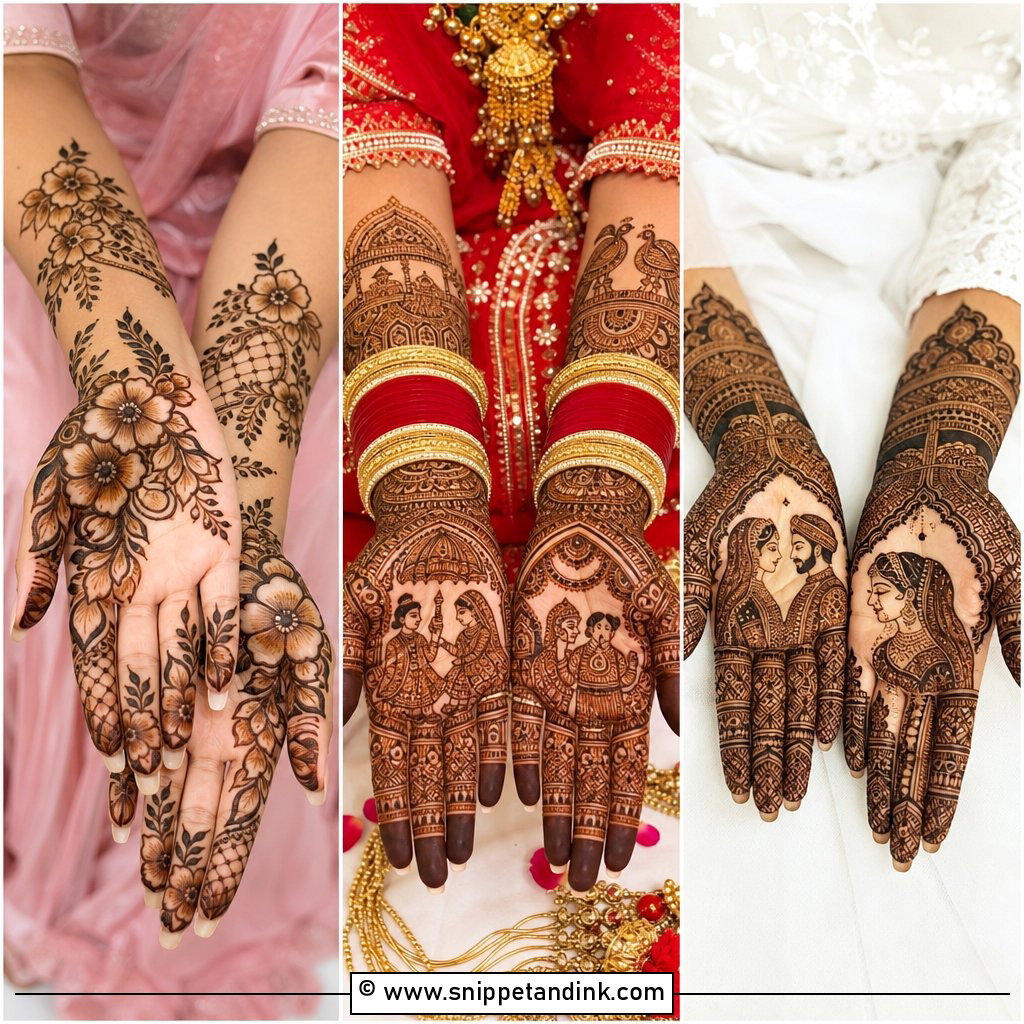

15. Simple Modern Rose Mehndi Design
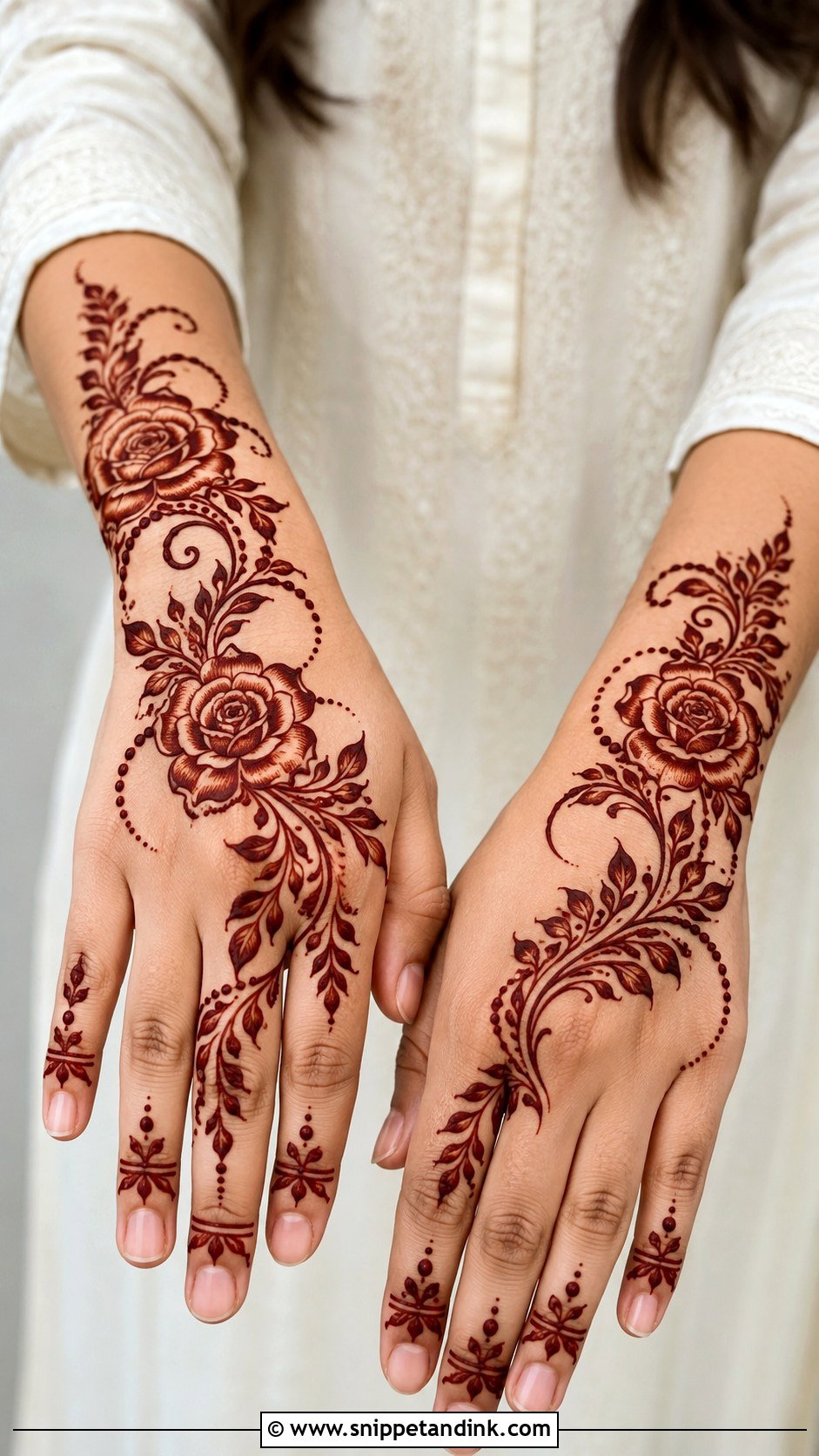
Roses work best here as a trail on the back of the hand. I start with one rose near the wrist or center, then add leaves and curved vines around it, with dots or slim bands on the fingers. The rose looks modern when the petals are open, with small gaps of skin between them; a tightly packed rose turns into a dark circle once the stain develops. It translates well to a side-hand placement too. Engagement parties and bridesmaids are the usual takers.
16. Simple Modern Minimal Mehndi Design
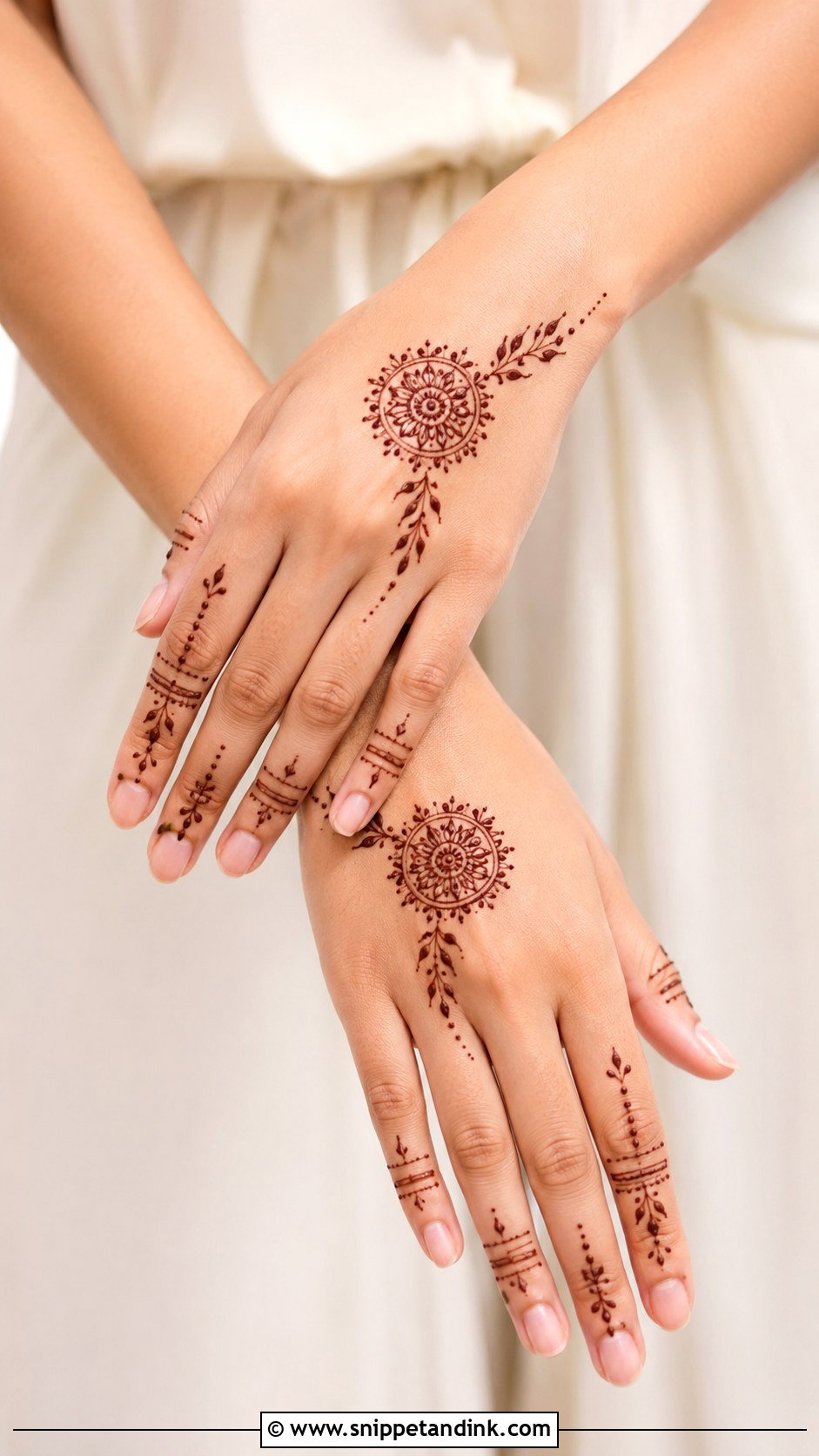
Minimal henna is mostly a placement decision. Pick one small motif, a mandala, a flower, a crescent or a leafy branch, and put it where your hand naturally draws the eye, often just off-center on the back of the hand. Matching finger accents complete it. The design should look intentional, not unfinished, and the difference is usually alignment: I line the motif up with the middle finger before I start. It’s quick to apply and works with everyday clothes, office celebrations and casual Eid visits.
17. Simple Modern Full Hand Mehndi Design
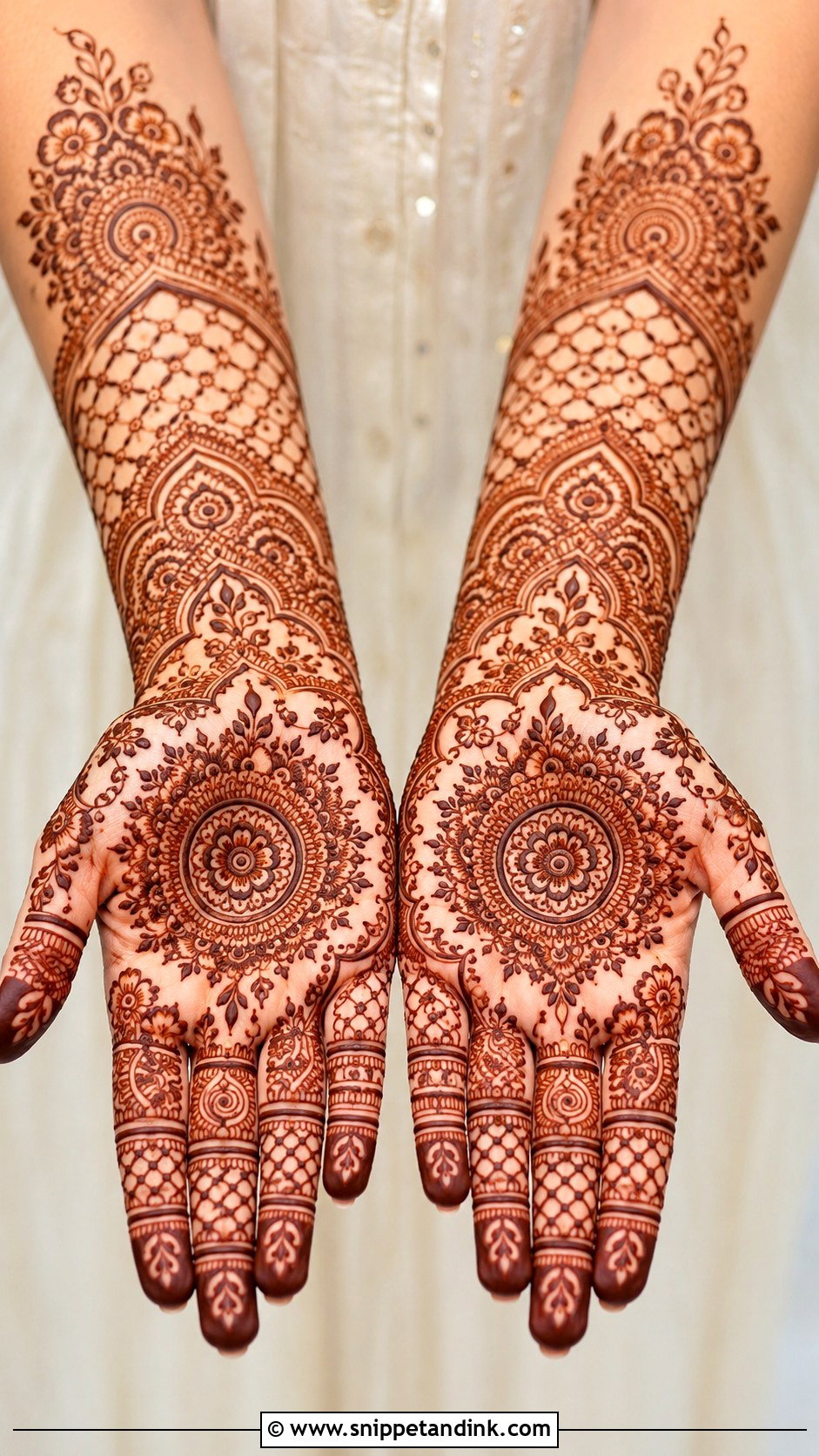
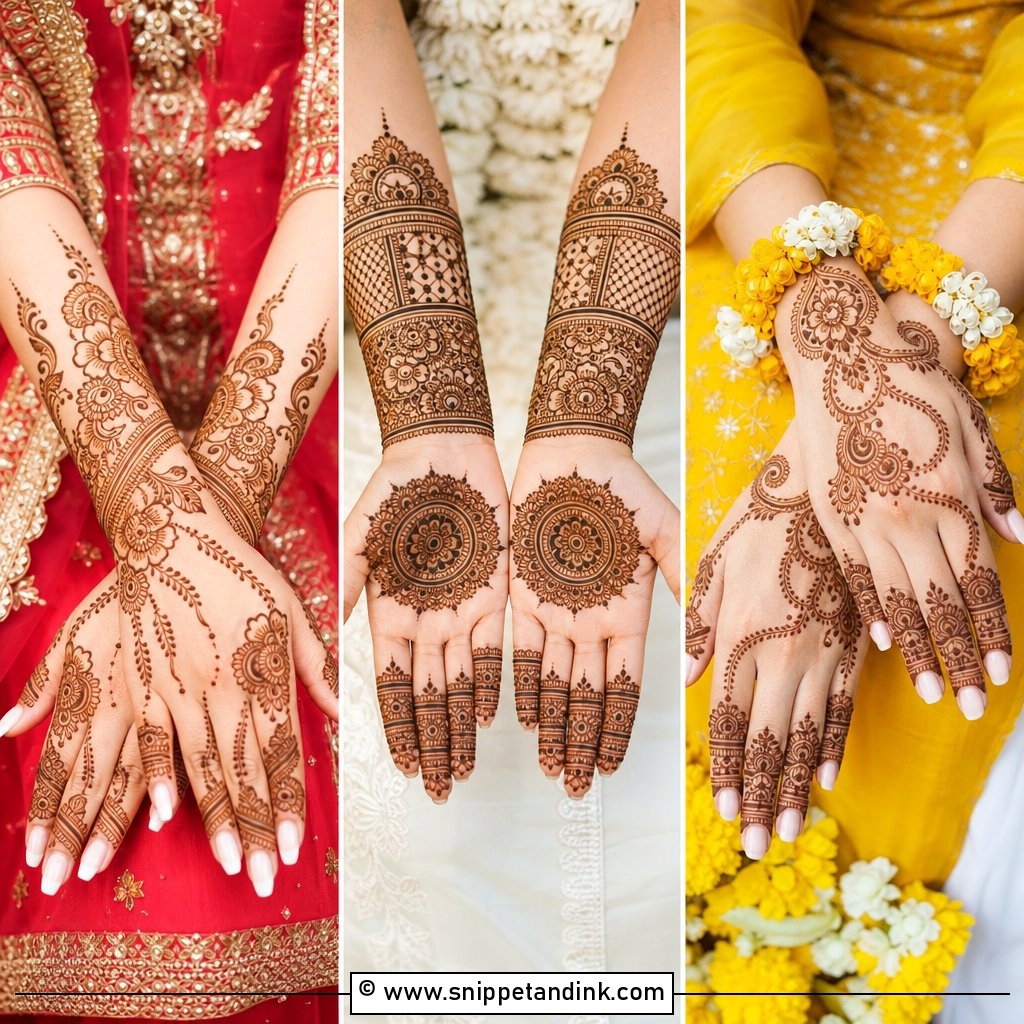
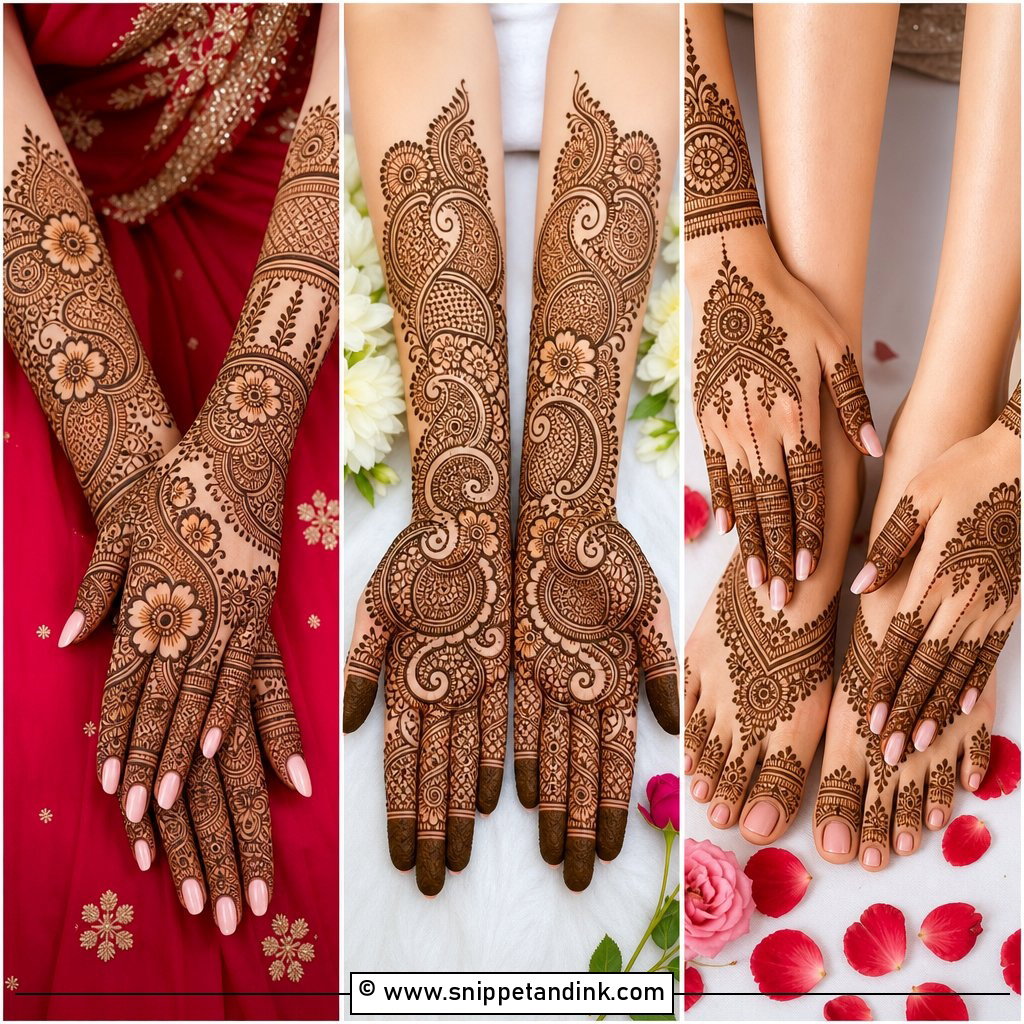
A full hand can still feel light if you divide it into clear sections. I block out florals, paisleys, mandalas and thin borders, and leave some areas completely open instead of filling every gap with tiny details. Fingers get repeated bands, leaves and small geometric patterns. Readable sections also stain more evenly, since paste laid in thick overlapping fill tends to crack and flake. This suits weddings and engagements when you want a fuller look without the weight of traditional bridal work.
18. Simple Modern Side Hand Mehndi Design
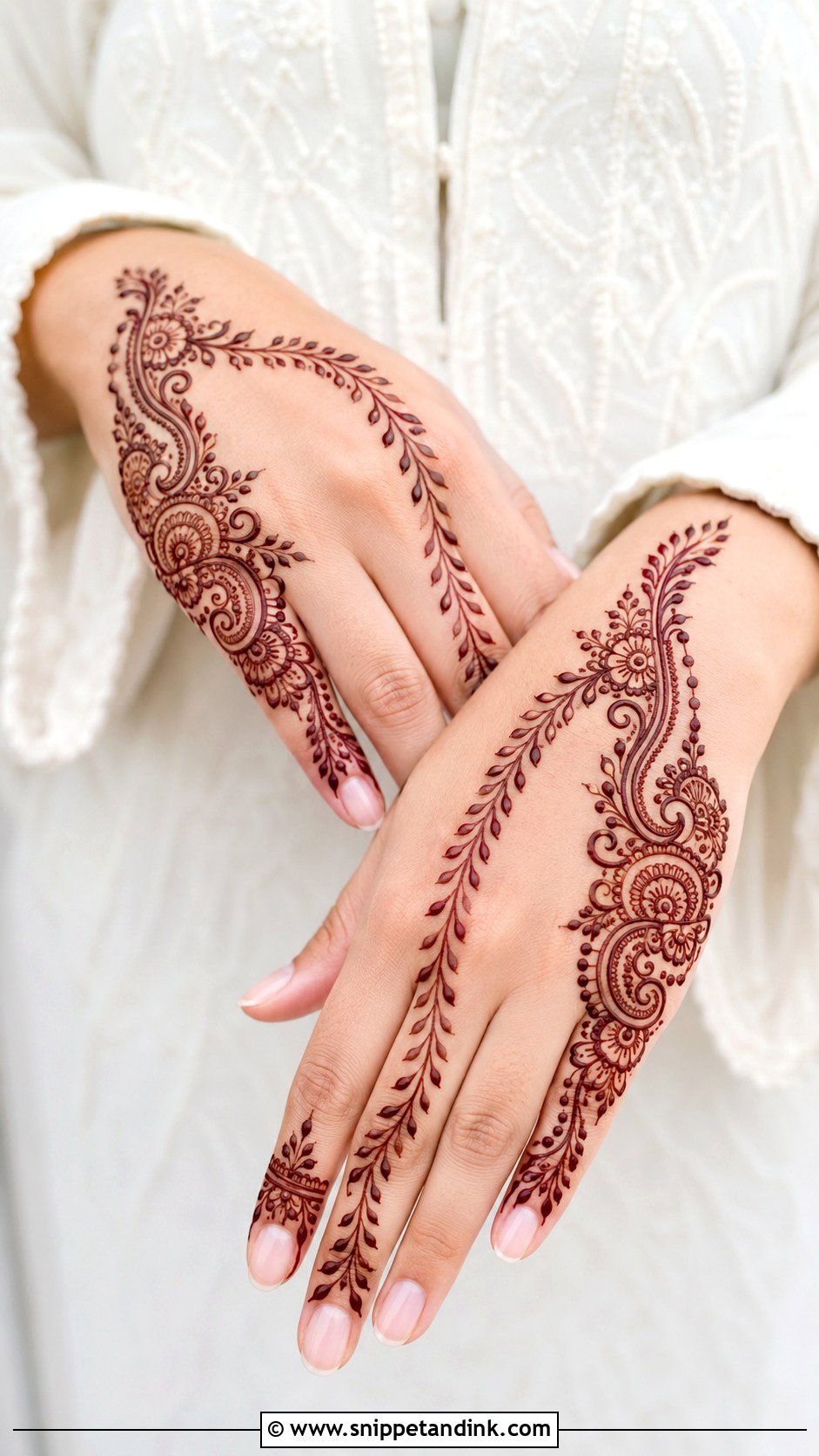
Side hand mehndi runs along one edge of the palm or back hand and leaves the center open. A curved floral vine, a paisley chain or a leafy trail travels down the side, with light finger details to connect it. The movement along the edge lengthens the hand. It’s practical too: the center of the palm stays free for holding plates, phones and children. Keep the outer border smooth, because a jagged edge is very visible on this layout. Parties and festive dinners are where I see it most.
19. Simple Modern Ring Mehndi Design
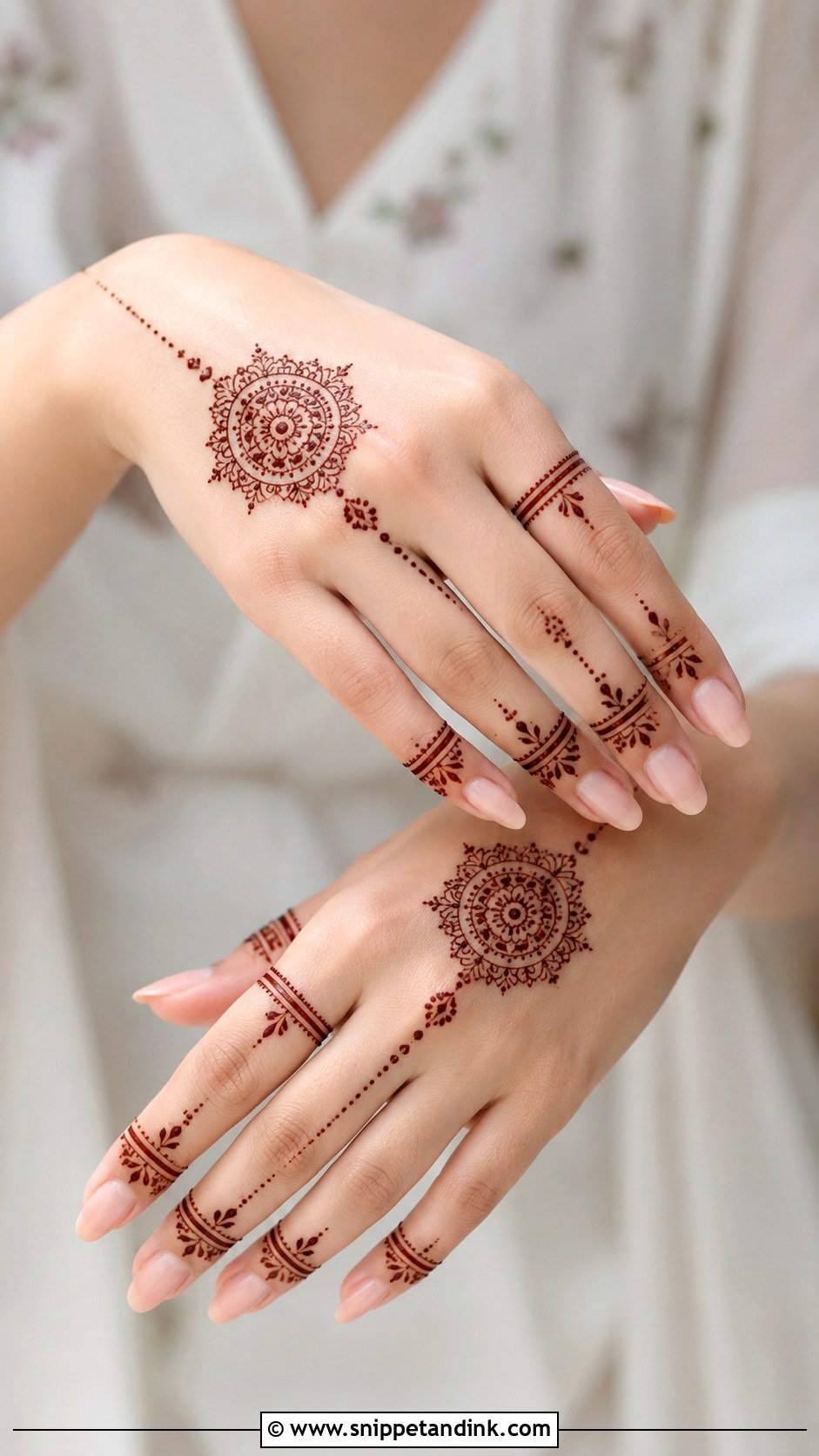
Ring mehndi designs decorate the fingers like jewelry. I draw ring bands around one or more fingers, then link them with fine chains to a small motif on the back hand: a flower, a dot cluster or a mini mandala. The wrist stays empty or gets one very thin line. If you’ll wear real rings, tell your artist which fingers first, so the henna rings can sit beside them rather than underneath. It’s quick and clean for small functions and college events.
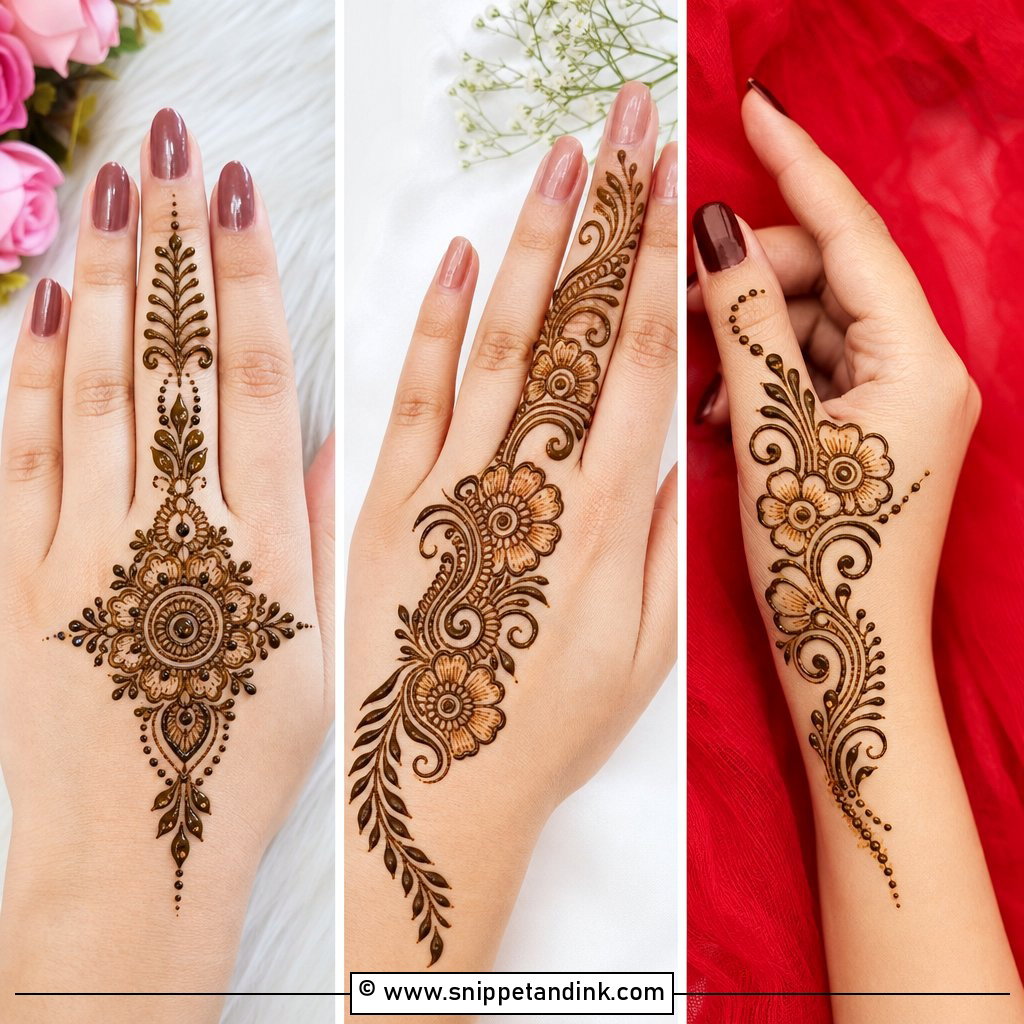
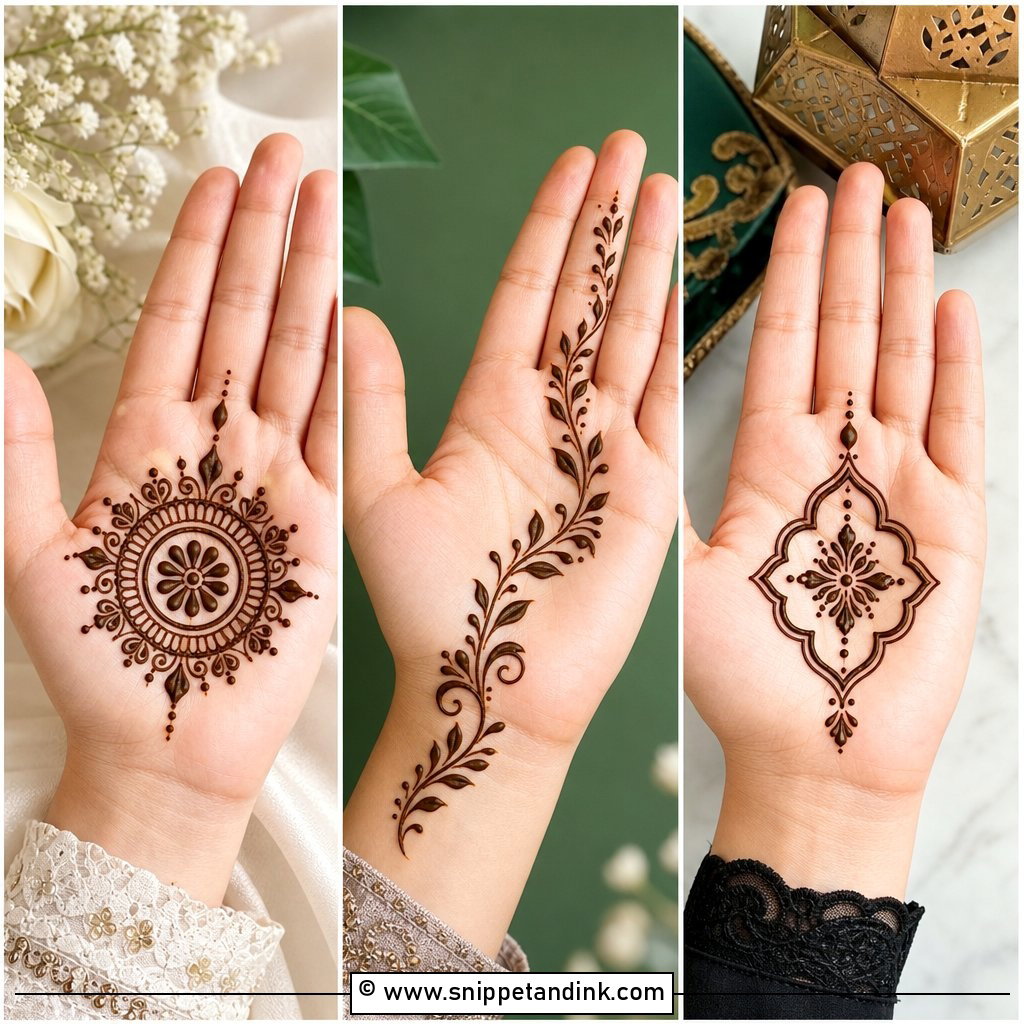
20. Simple Modern Geometric Mehndi Design
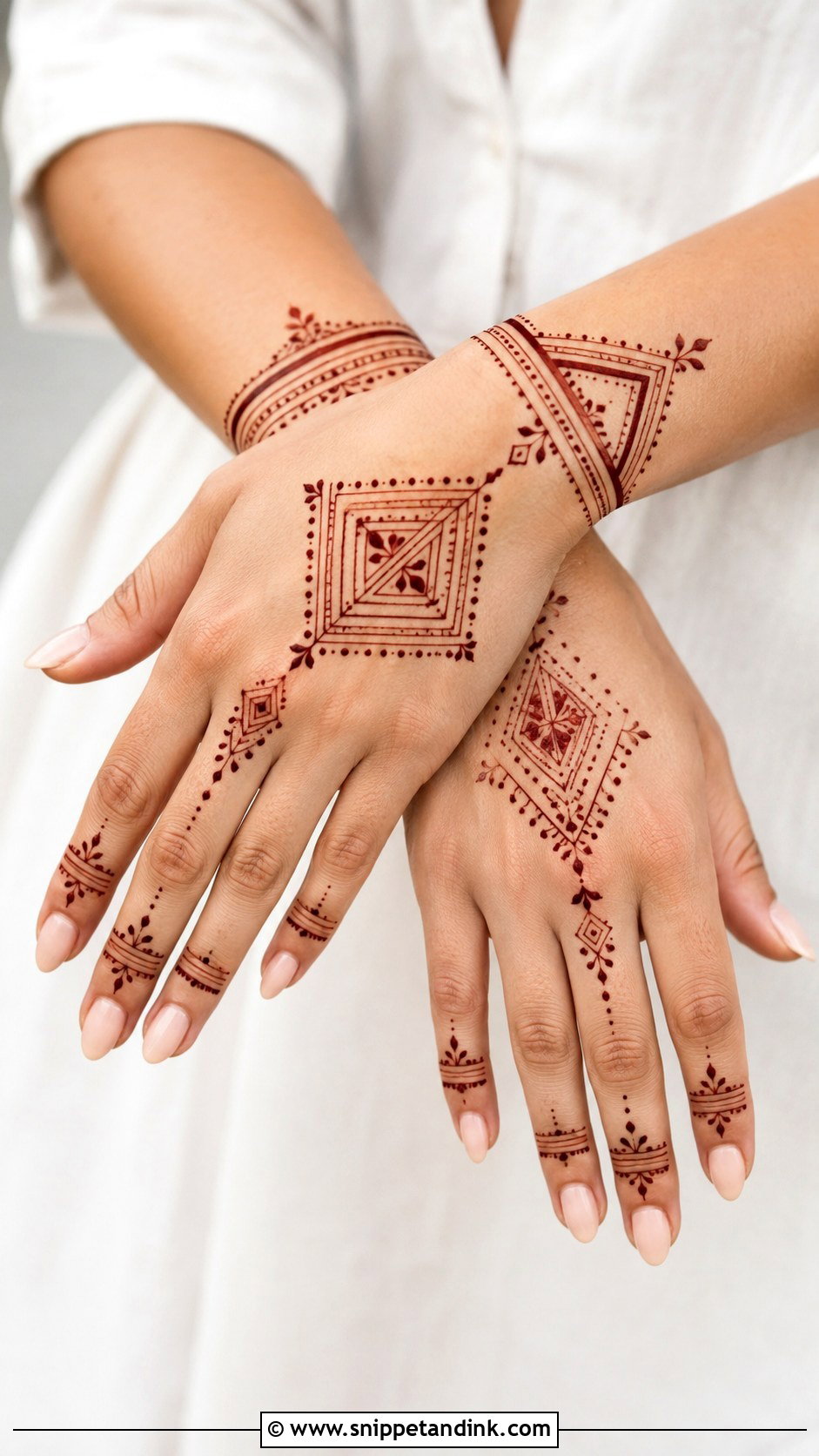
Geometric henna relies on clean shapes and even spacing: triangles, diamonds, lines, dots and small grids on the palm or back hand. A few leaves or tiny flowers soften it. A geometric wrist band with matching finger details is the easiest version to start with. Straight lines are actually easier to pipe than curves, but any unevenness shows immediately, so I work slowly and check spacing every few strokes. It suits fusion wear and contemporary outfits better than heavy traditional ones.
21. Simple Modern Moroccan Mehndi Design
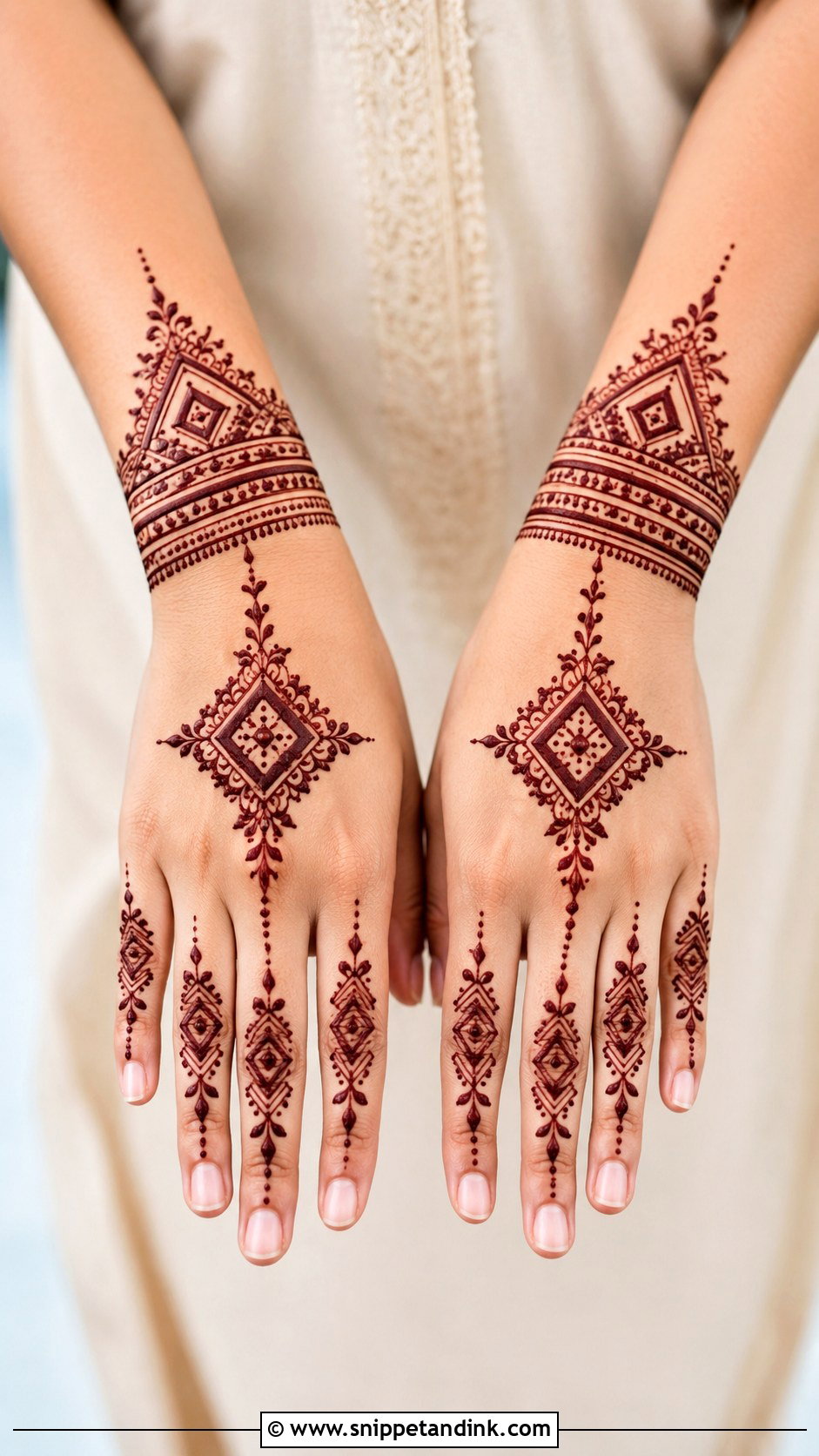
Moroccan henna is graphic: bold lines, angular vines, diamonds, dots and small cuff patterns, usually on the back hand or wrist. It feels more structured than floral work, and it’s surprisingly approachable to draw. Keep coverage medium and leave open gaps between shapes so it doesn’t feel heavy. I use a steady, slightly thicker line for this style than for floral fine-line work, because the bold geometry is the look. Casual functions and festive events both suit it.
22. Simple Modern Gulf Mehndi Design
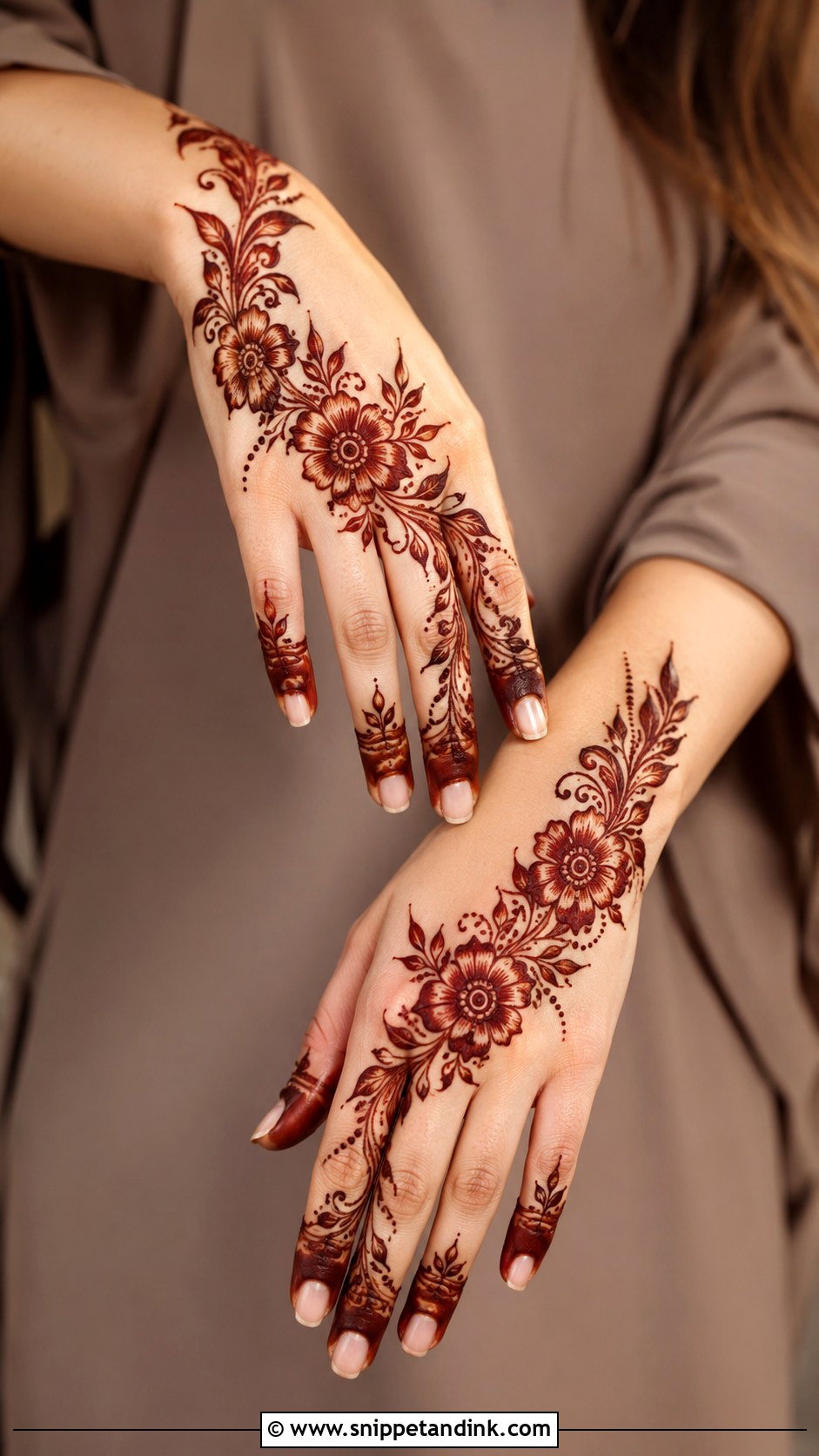
Gulf-style henna uses bold flowers, flowing leaves and open spacing, and it reads best placed diagonally across the back of the hand. Larger motifs instead of tiny packed details make it visible from across a room. Finger tips get soft leafy accents or small floral bands. For a stronger stain, I lay the main flowers slightly thicker and keep the connecting lines fine, so the design has a clear hierarchy. Eid, weddings and evening events all suit it.
23. Simple Modern Eid Mehndi Design
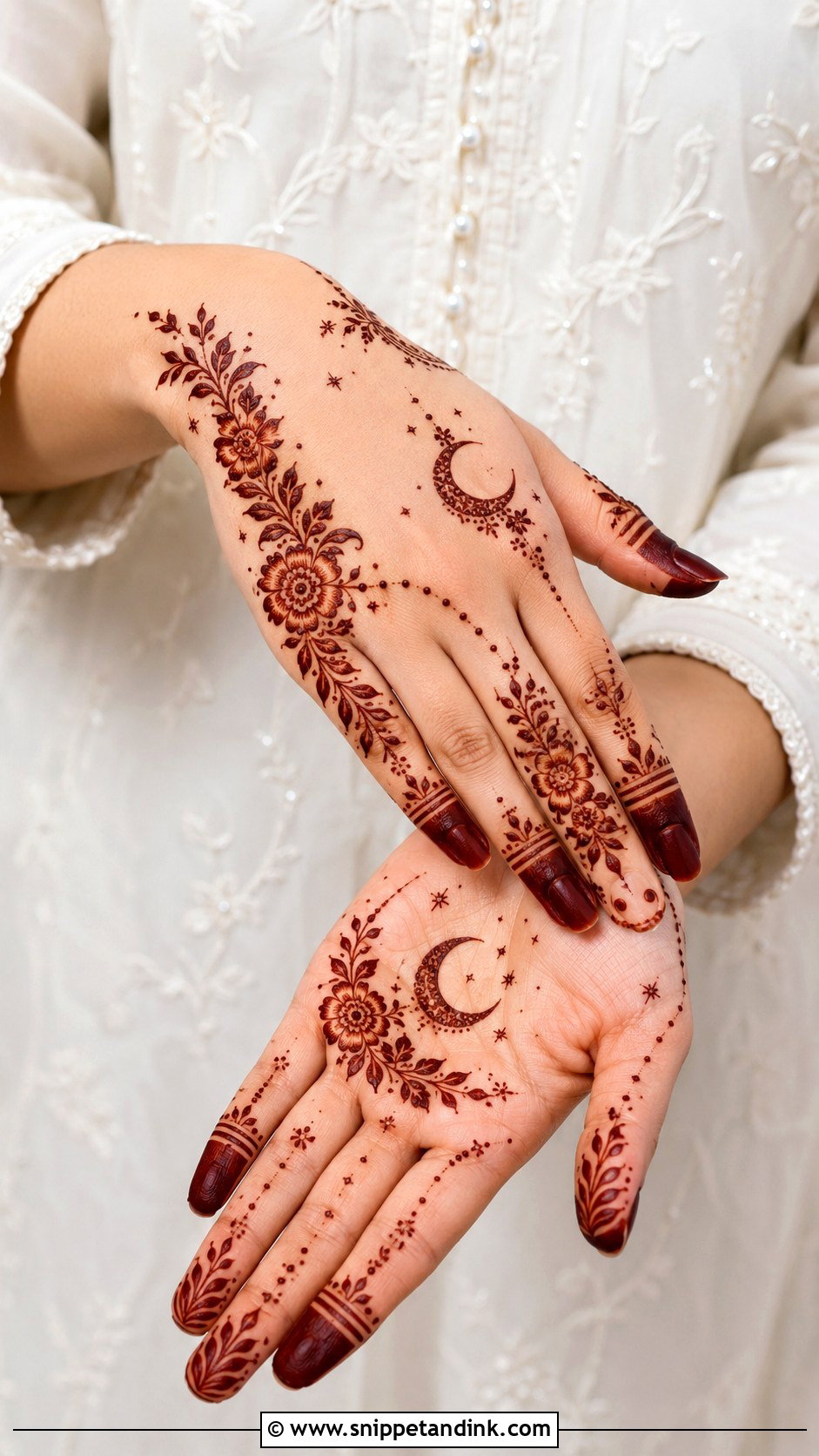
Eid henna should feel festive without slowing down a busy day. I offer a floral Arabic trail, a crescent-inspired motif or a neat mandala with finger details, with tiny dots, stars or leafy curves added sparingly. An open pattern looks fresh with festive clothes and jewelry. It’s realistic to apply the night before, and the next morning you can cook, greet guests and pose for photos without worrying about it. Use fresh natural henna for the deepest color.
24. Simple Modern Bridal Mehndi Design
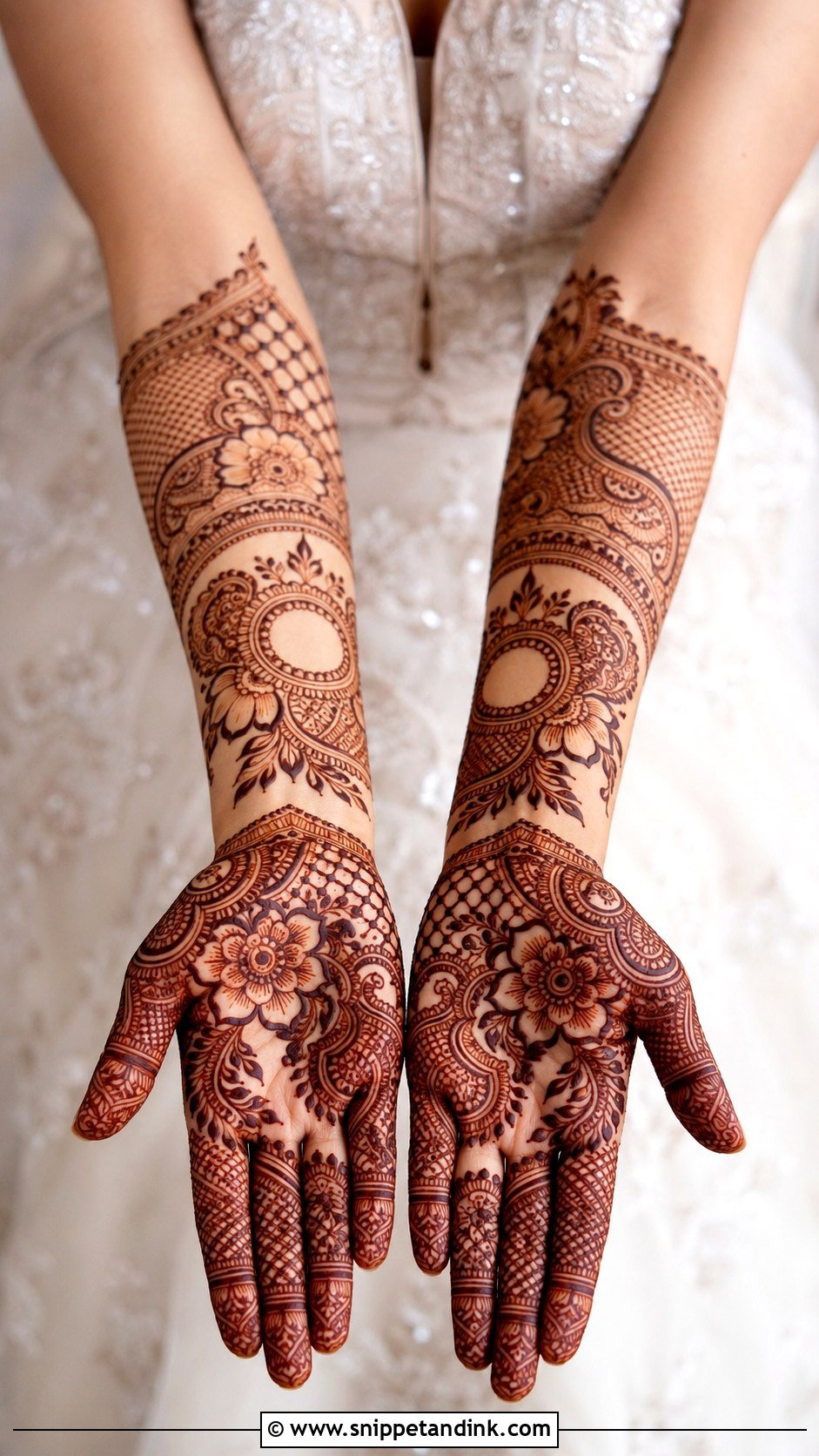
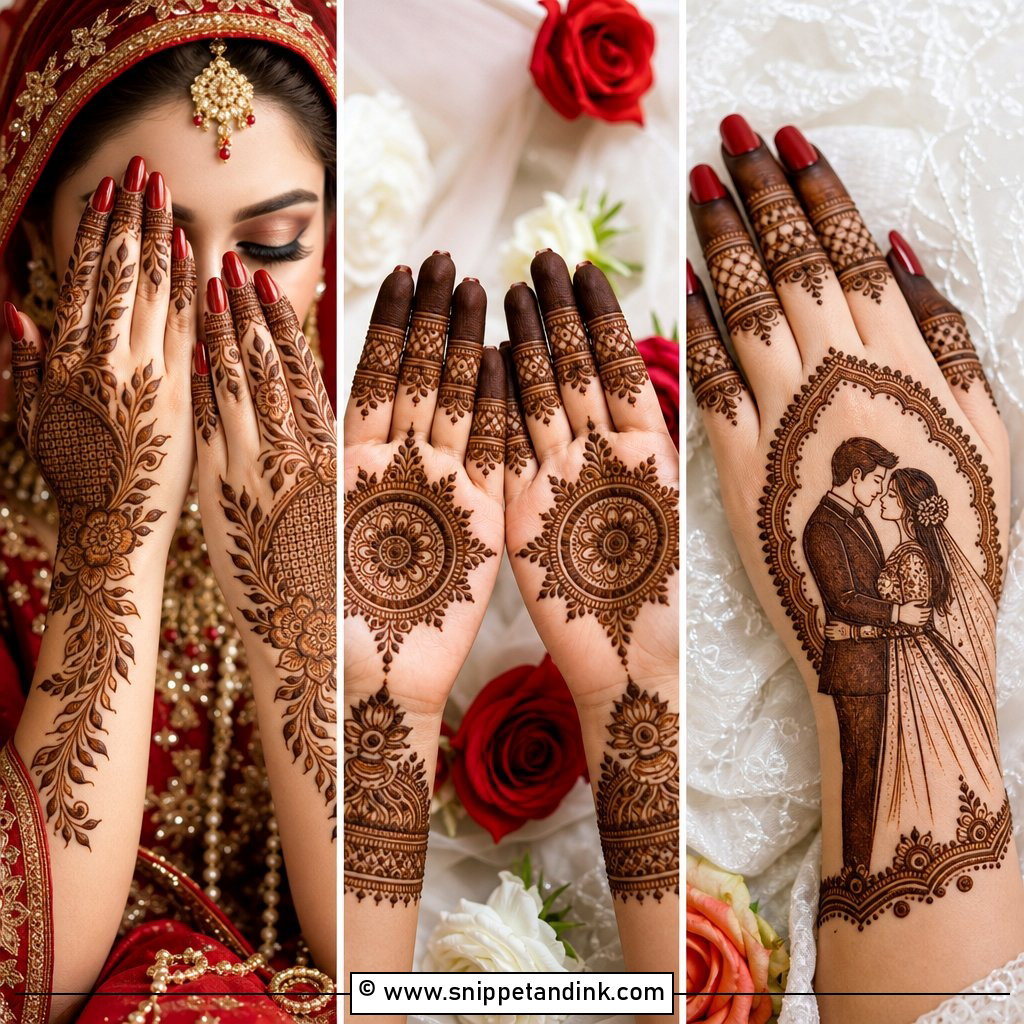
Some brides want their hands to feel like part of the outfit rather than a separate event. For them I use a balanced full-hand layout of mandalas, florals, paisleys, small jaali sections and soft wrist-to-forearm details, with negative space kept around the main motifs so it reads clearly in photos. Initials, small hearts or wedding symbols can be hidden in subtly. It suits intimate weddings, courthouse ceremonies, nikkah events and modern bridal styling. Even light bridal work needs the paste on for many hours, so plan the evening around it.


25. Simple Modern Engagement Mehndi Design
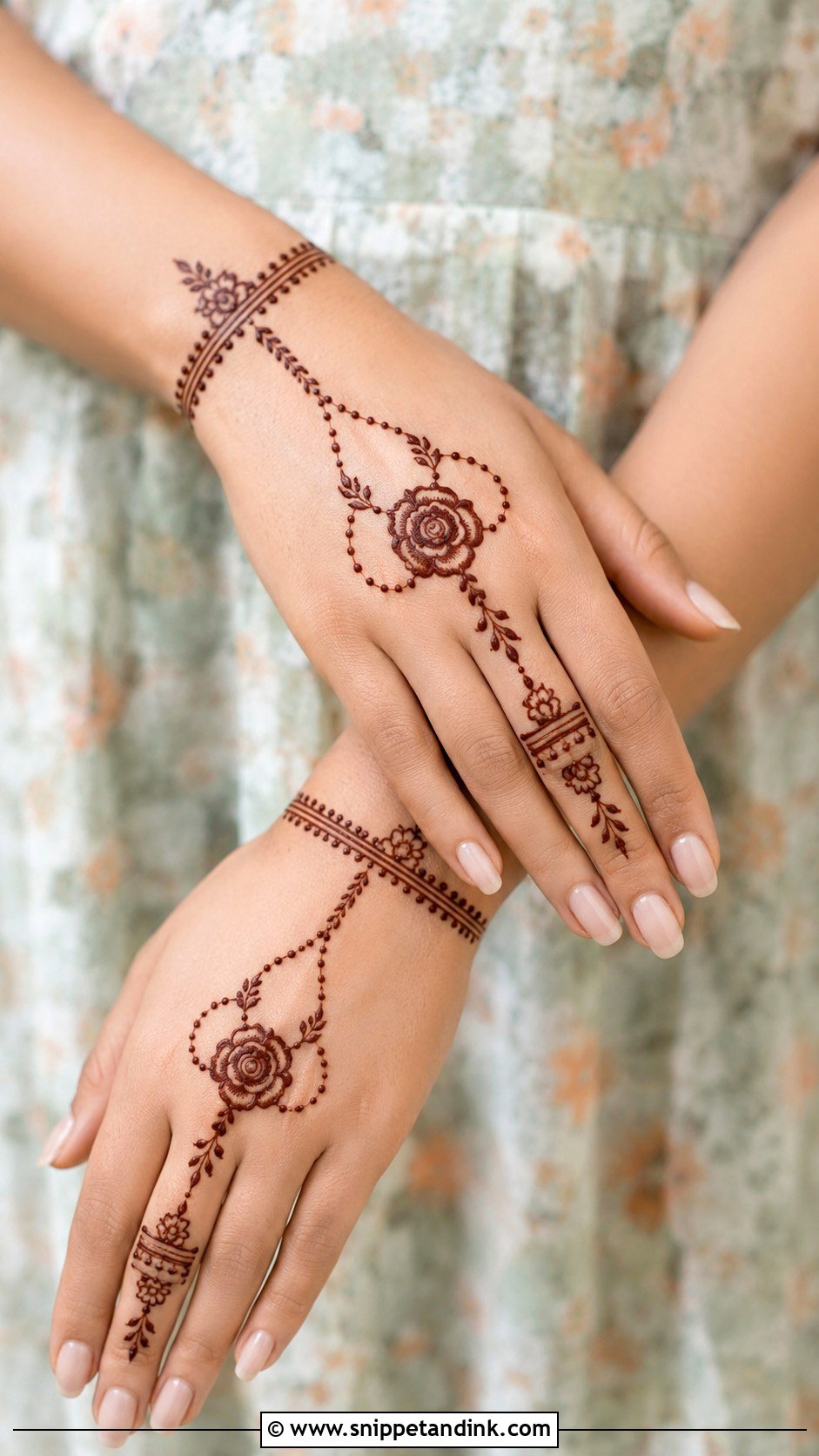
Engagement henna is photographed at close range, so neatness counts for more than coverage. I focus on the back of the hand: a ring-style pattern, a floral trail and a delicate wrist band, with a small mandala or rose near the center. The palm stays light so the ring ceremony shots are clean. If you want a dressier look, extend the pattern slightly toward the forearm. Dots and slim lines keep the result tidy against an engagement outfit.
26. Simple Modern Diwali Mehndi Design
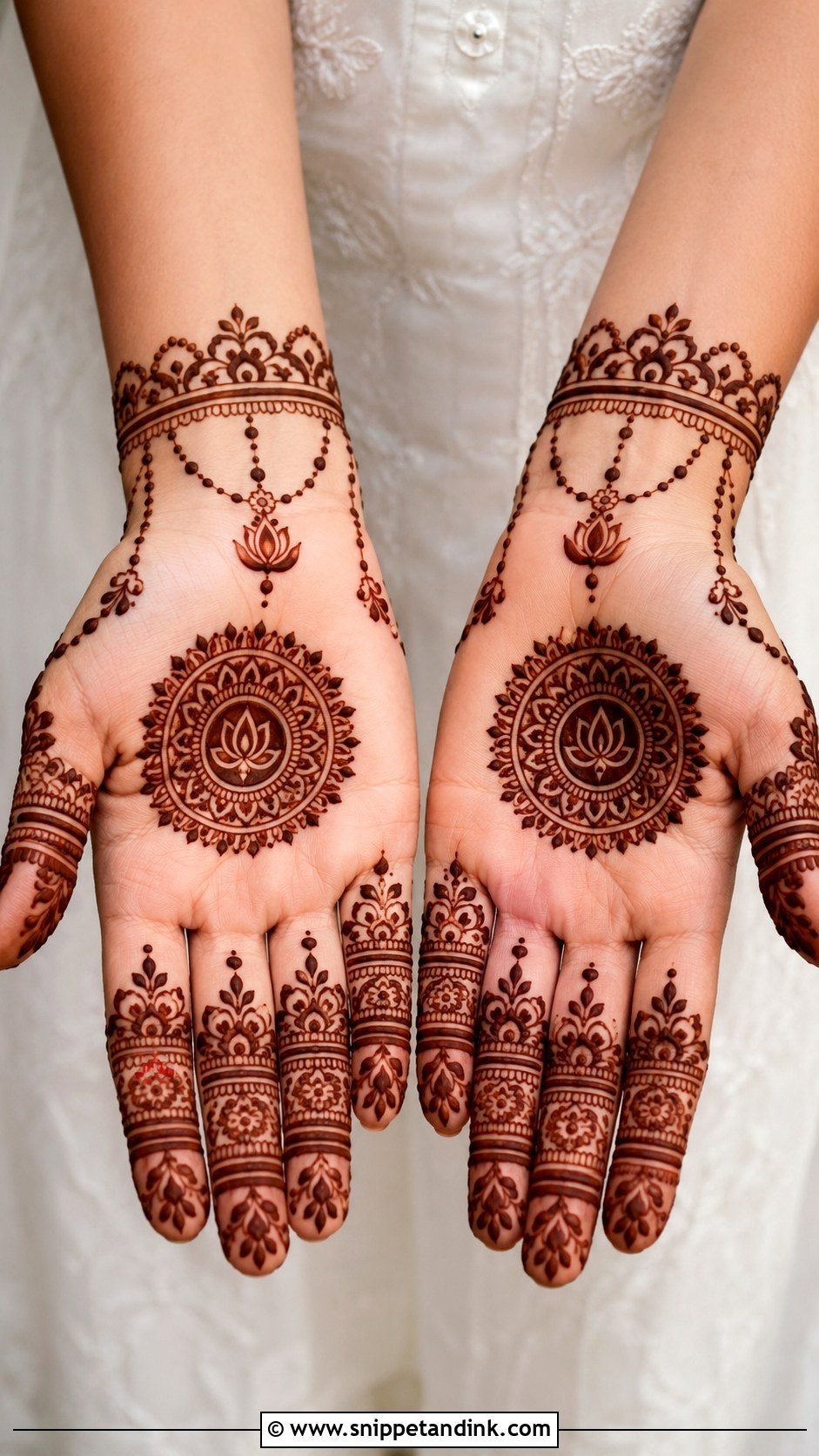
Diwali henna should feel festive but stay clean. A mandala center, floral borders and finger patterns form the base, and small diya shapes can be tucked in if they’re kept subtle. A palm placement suits puja, since your palms are on show when you hold the thali. For a modern twist, leave space around the main motif and add thin dotted chains near the wrist. Apply it a day or two ahead so the stain has deepened in time for the evening of Lakshmi puja.
27. Simple Modern Karva Chauth Mehndi Design
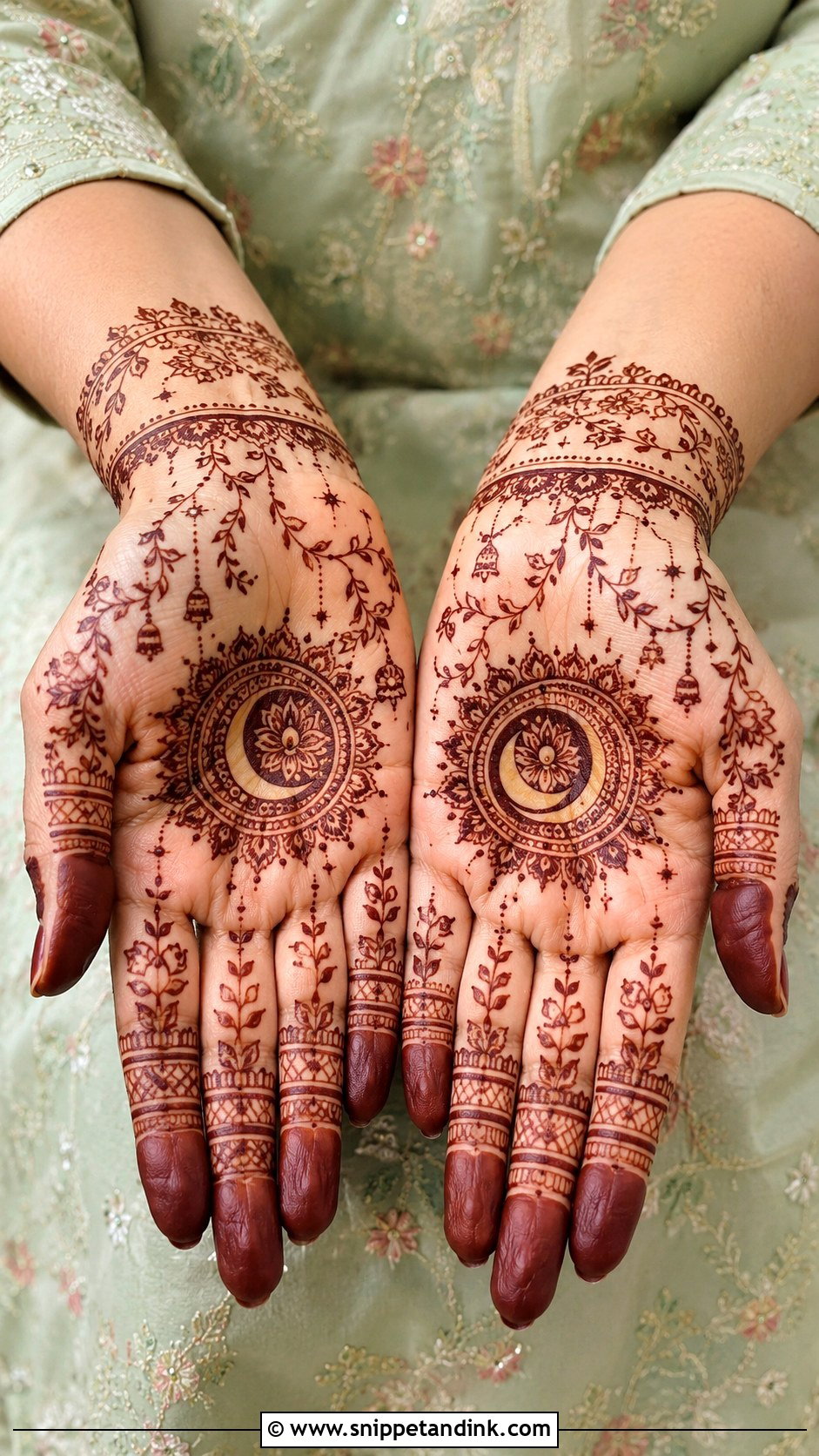
Karva Chauth henna can be meaningful without being heavy. A mandala, floral vines, moon-inspired curves and soft wrist detailing make up the design, with open space keeping it balanced on the palm or back hand. A small decorative circle or symbolic motif in the center adds a traditional touch. Because many women apply this the day before and then fast, I suggest getting it done early the previous day so the paste can stay on for hours without rushing. Fine outlines and a deep stain carry it.
28. Simple Modern Kids Mehndi Design
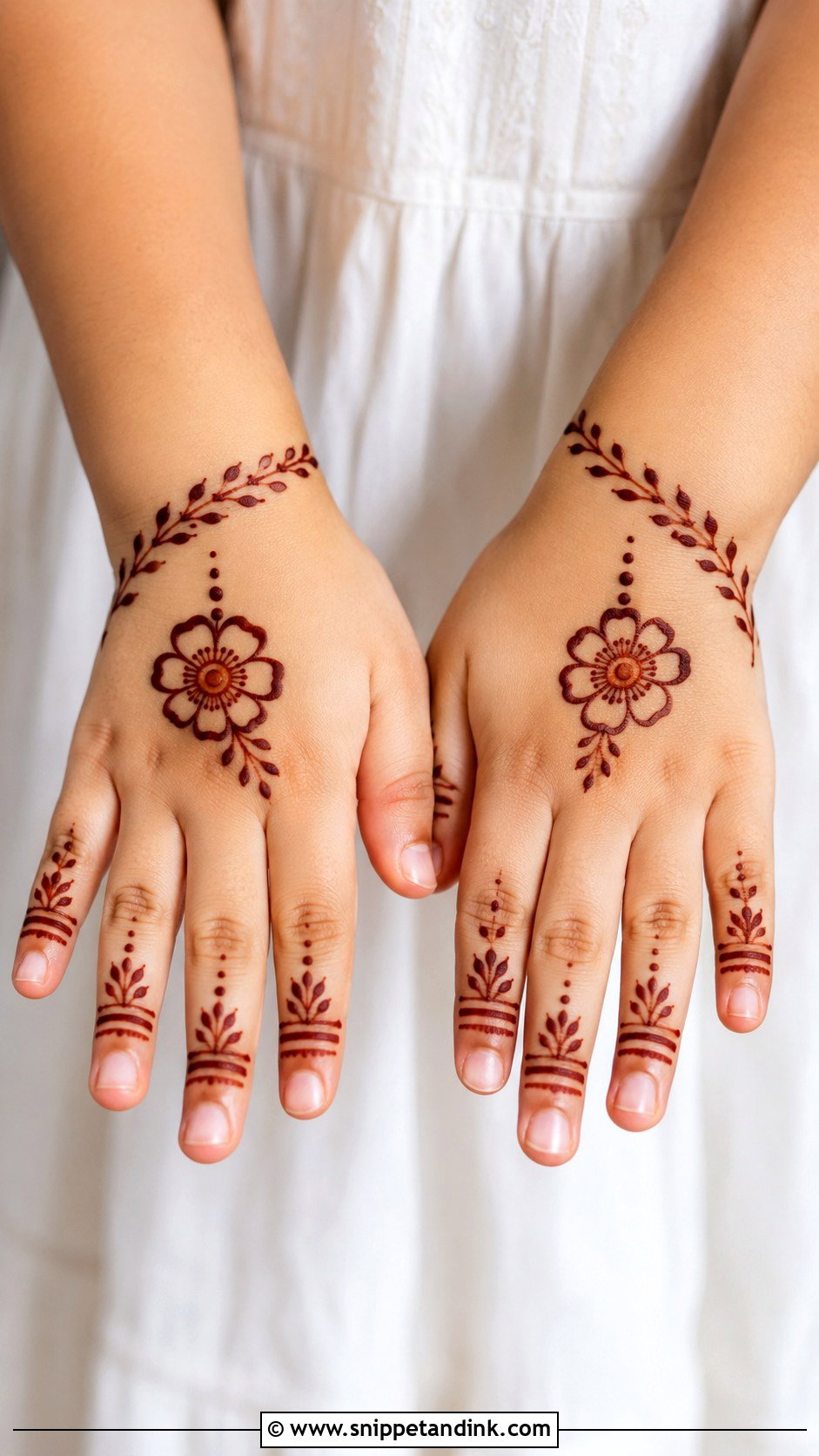
Children’s mehndi has to be quick and comfortable. A small flower, tiny mandala, butterfly-like motif or leafy bracelet on the back of the hand is enough. Keep it small so they don’t have to sit still for long, and skip dense finger work; little hands touch everything and smudge it. Bold outlines and rounded shapes dry faster and stay clear. Only natural henna goes on children, applied gently, and never anything labelled black henna. A small neat design looks better on a little hand than a heavy one.
29. Simple Modern Beginner Mehndi Design
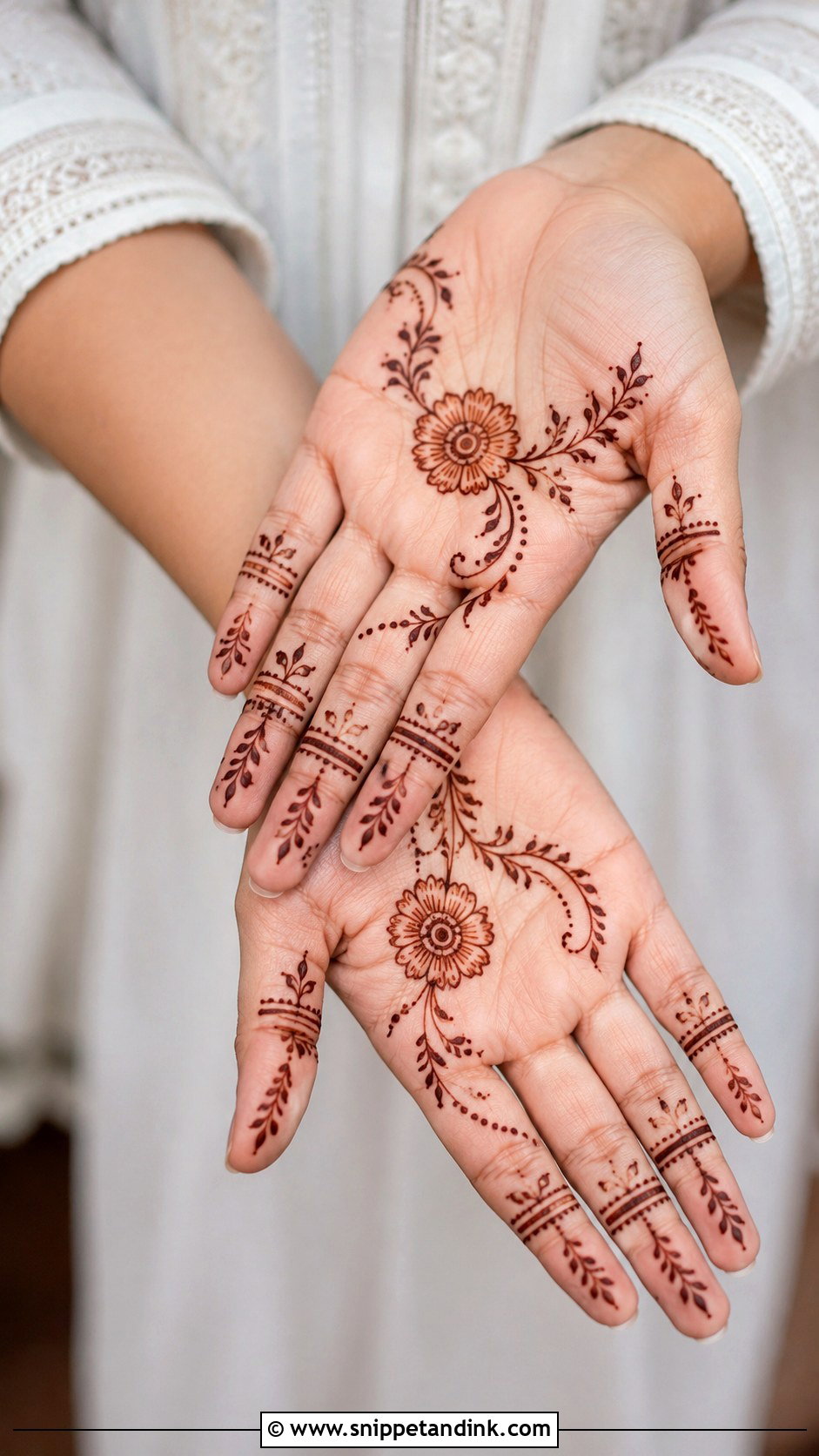
If you’re learning, pick a layout built from shapes you can repeat: one main flower or mandala, with simple leaves, dots and curved lines around it and easy bands or leafy tips on the fingers. Leave shading out until your lines are steady. Even this basic version looks complete. Choose the palm or back hand depending on which is easier for you to reach, since doing your own dominant hand is awkward. Draw slowly and let each section breathe, and the spacing alone will make it look professional.
30. Simple Modern Party Mehndi Design
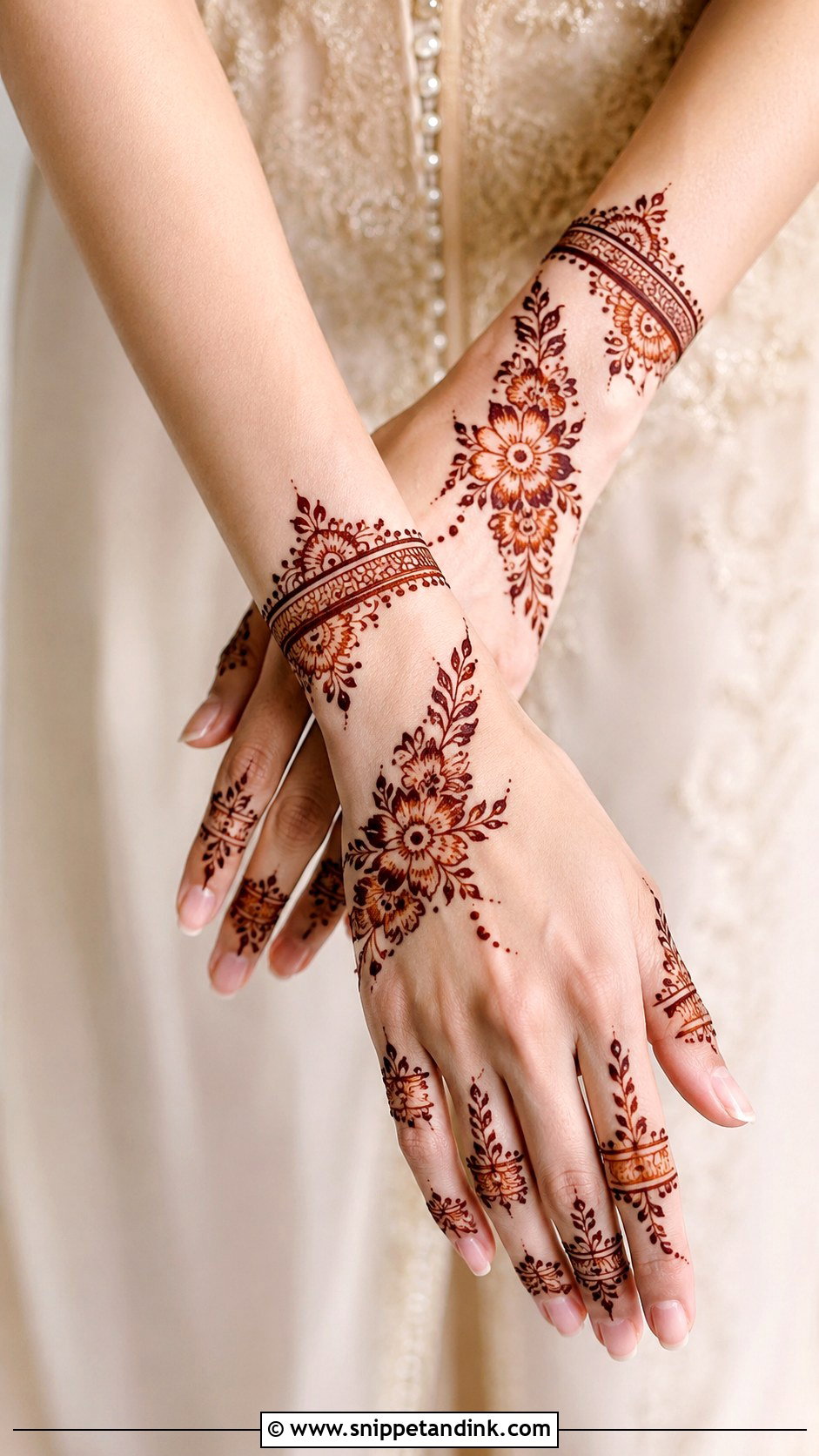
Party henna has to look sharp quickly. I put a floral trail, ring details and a slim wrist cuff on the back of the hand and keep the palm mostly empty. Bolder flowers and clean leaf patterns add impact if the party is in the evening. It pairs well with dresses and fusion outfits because it doesn’t look too traditional. If you’re short on time, remember that fresh paste needs a few hours on the skin to give a decent stain, so apply it the day before rather than an hour ahead.
31. Simple Modern Round Mehndi Design
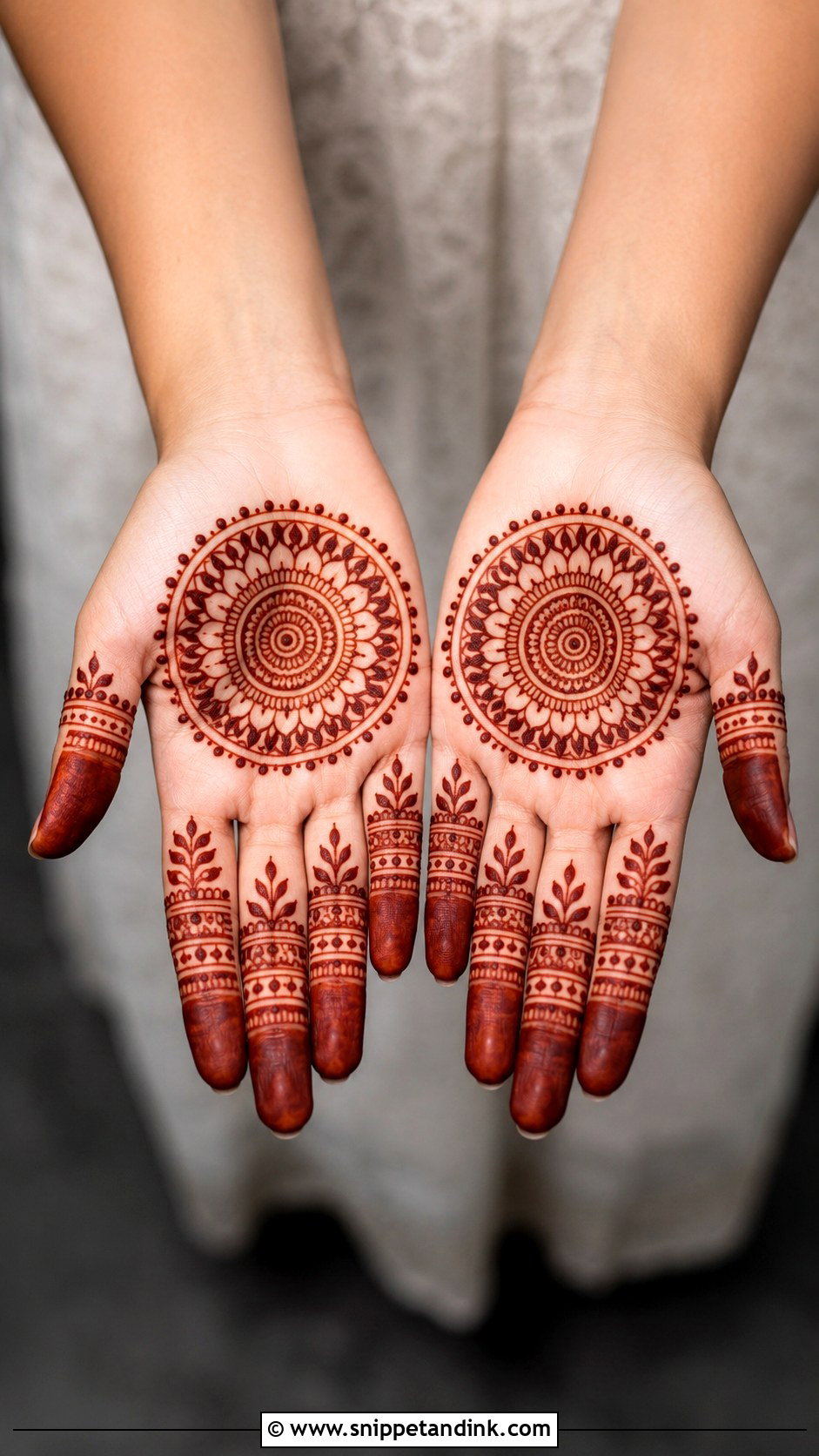
A round design is the easiest motif to recognize at a glance. Put a clean circle in the center of the palm or back hand, surround it with petals, dots and small curved borders, and keep the fingers light. It suits beginners since it relies on symmetry and repetition, and you can scale the circle to any hand. The modern touch is distance: leave a clear gap between the center and the finger details. If the outer ring wobbles, a row of dots just outside it hides the flaw.
32. Simple Modern Peacock Mehndi Design
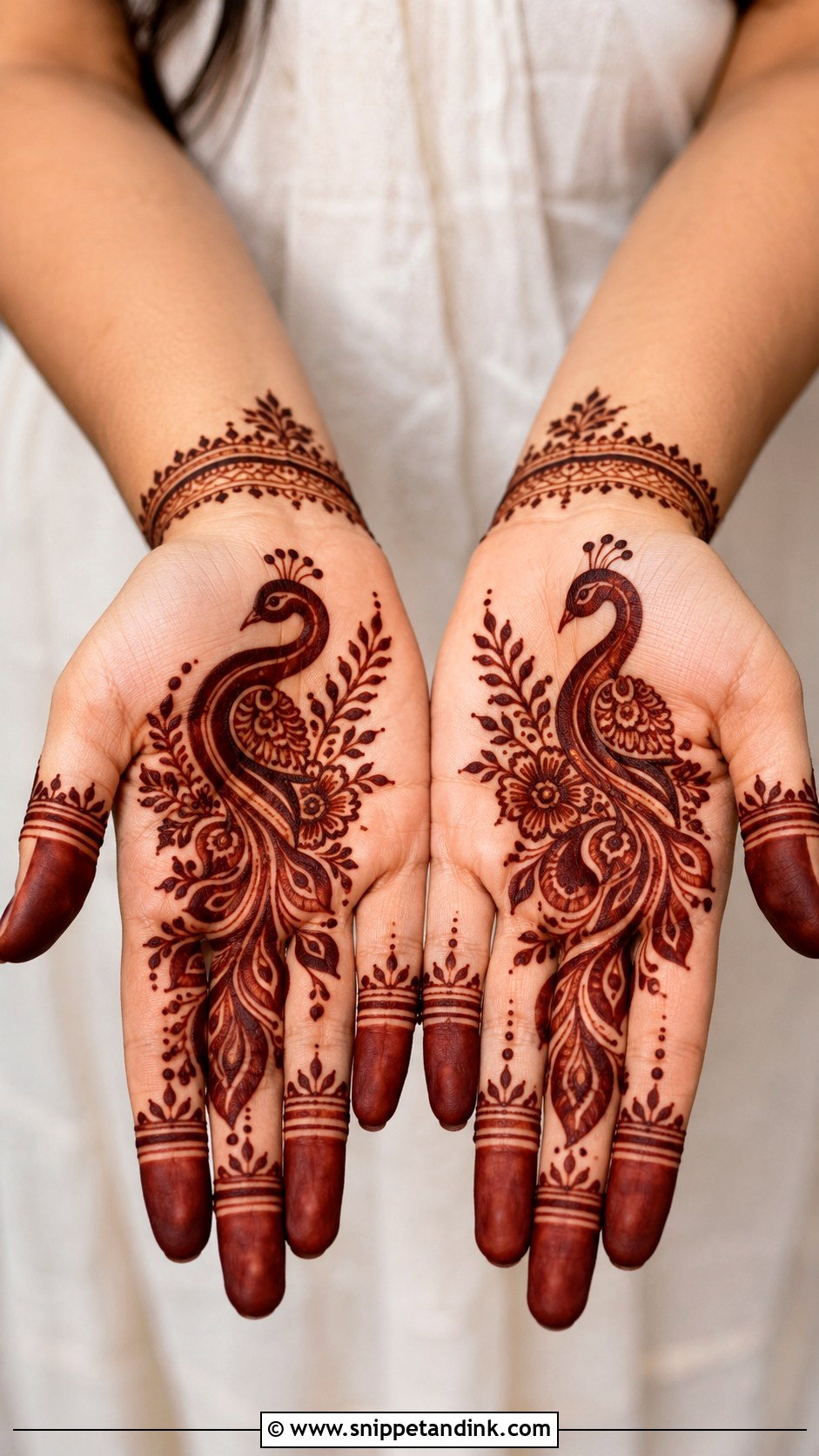
A simplified peacock is one of my favorite ways to bring tradition into a light design. Instead of a large, detailed bird, I draw a small body with a curved neck, feather-like leaves and soft floral accents on the palm, wrist or back hand. The area around it stays light so the bird stands out. The neck curve is everything; I draw it in one smooth stroke and redo it if it hesitates. Finger bands or leafy tips complete the hand. Festivals, weddings and family functions all suit it.
33. Simple Modern Tikki Mehndi Design
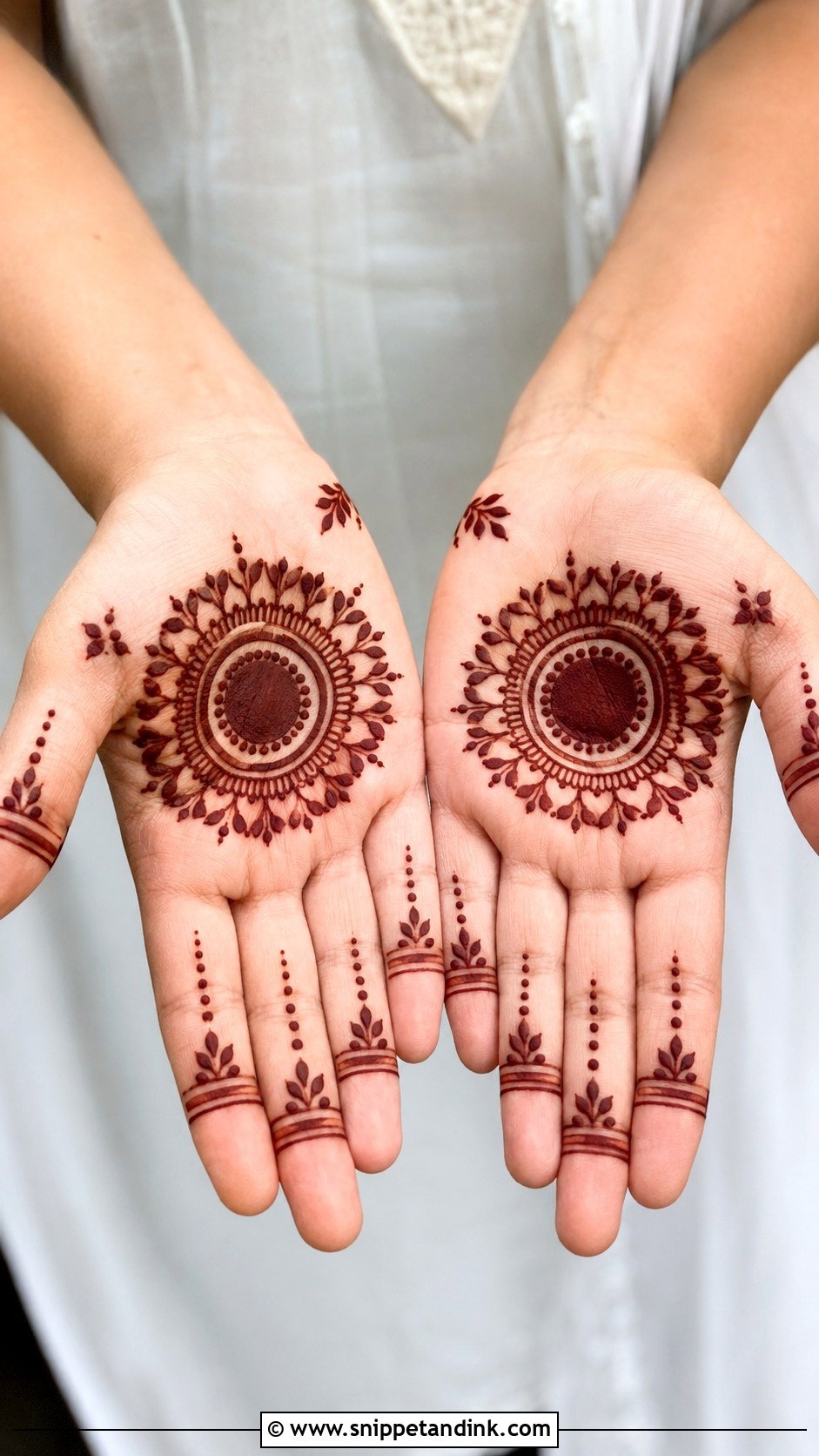
Tikki is the classic circular palm design, and the modern version is mainly about cleaner spacing and lighter fingers. Start with a bold round center, add petals, dots and thin rings, and leave the rest of the palm open or add small corner accents. Fingers get simple bands, leaves or dotted lines. Because the tikki is often filled solid, I lay that paste a little thicker than the surrounding lines, since a thin fill stains patchy. Make the circle sharp and every detail around it neat.
34. Simple Modern Vine Mehndi Design
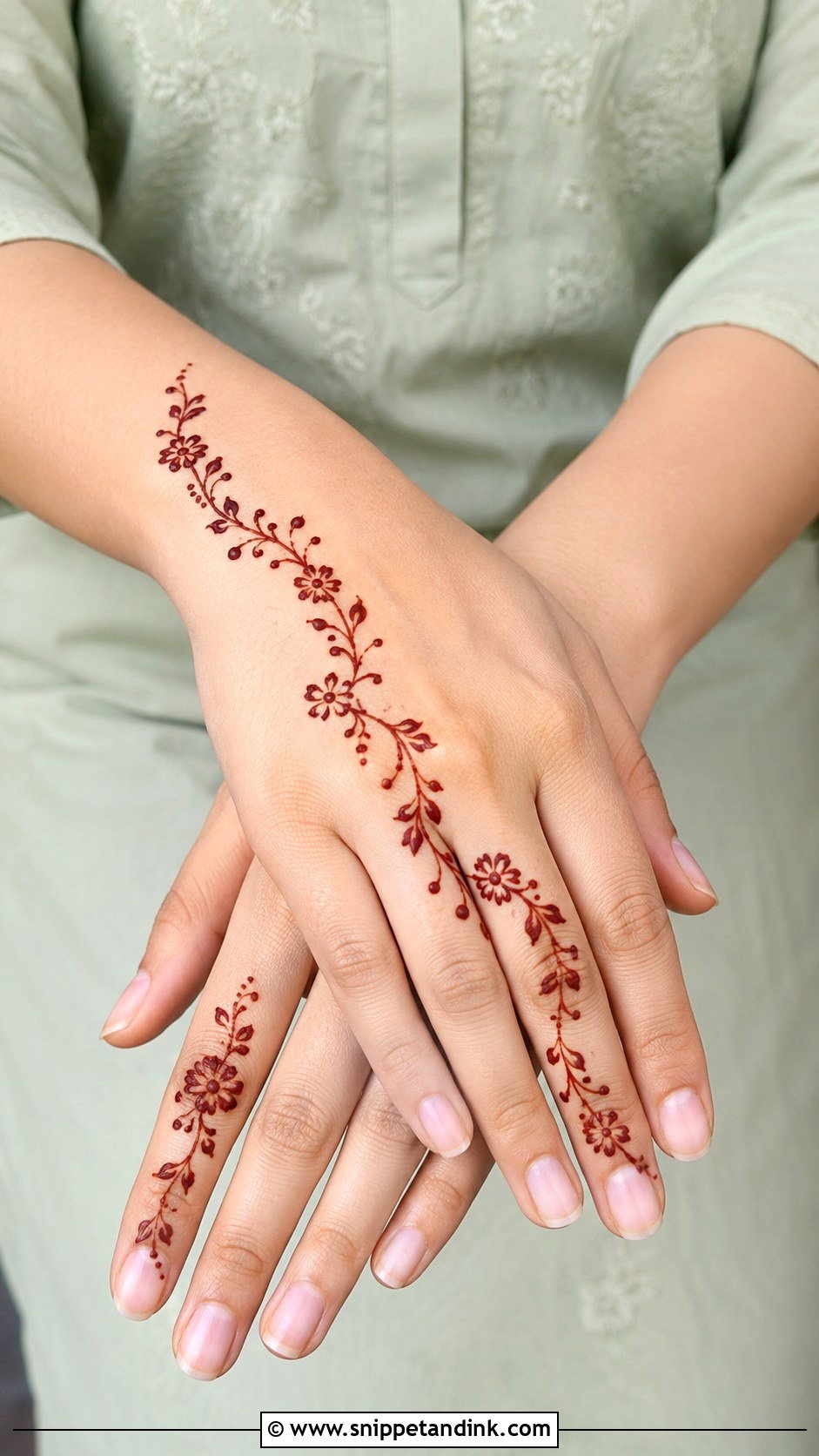
A vine follows the hand naturally, which is why it rarely looks wrong. It can run from the wrist to the middle finger or curve across the palm, decorated with small leaves, dots and tiny flowers. Keep the vine thin for a delicate effect, or enlarge the leaves for visibility. On long fingers and narrow hands it lengthens beautifully; on a broad hand I’d angle it more steeply so it doesn’t stretch the width. Leave open space around it so it looks clean.
35. Simple Modern Forearm Mehndi Design
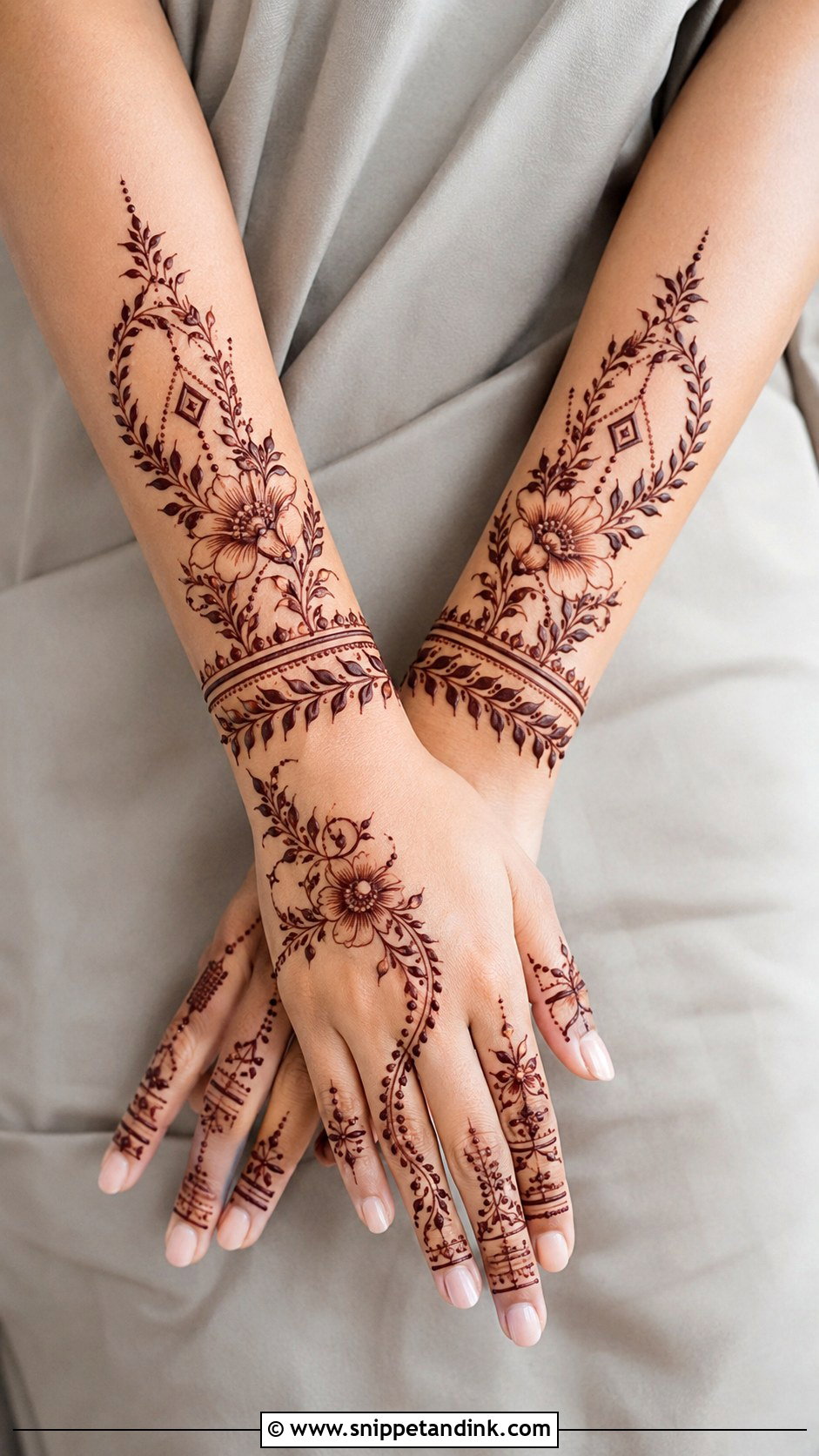
Forearm henna adds drama without heavy palm coverage. I start with a wrist band, then send a floral, leafy or geometric pattern up the forearm, keeping the hand itself simple so the arm detail leads. It looks lovely with short sleeves or bangles. Expect the forearm to stain lighter than the hand; skin there is thinner and has fewer of the thick outer layers that hold the dye. Open spacing keeps it modern, and a clean wrist-to-forearm flow makes it comfortable for weddings, engagement parties and festivals.
How Thin Lines Wear Over Two Weeks
A minimal design ages differently from a dense one. Right after scraping, the stain is bright orange; by the next evening it has turned reddish brown, and it usually peaks around the second day. From then on the skin slowly sheds, and fine lines go first. Expect a light design to look crisp for about a week and to fade unevenly after that, with the palms and fingertips holding color longest.
Making it last a few more days
Oil the area before every wash, wear gloves for dishes and cleaning, and skip scrubs, hot baths and swimming pools. Hand sanitizer is harder on henna than most people realize, so use soap and water when you can.
Fading it faster when the event is over
If a patchy stain has outstayed its welcome, soak the hand in warm water, then rub gently with a paste of oil and salt or sugar. Repeat daily rather than scrubbing hard once; henna sits in the outer skin layers, and nothing will remove it instantly without irritating the skin underneath. Within a few days, a thin design is barely visible.
Leave the Bare Skin Where You Planned It
These designs fit almost every occasion and comfort level, from a small finger pattern or a clean mandala to a floral Arabic trail, a bracelet, or a fuller modern bridal layout. What makes any of them work is neat lines, balanced spacing and motifs sized to your hand. If you’re new to the cone, start with flowers, leaves, dots and round patterns before attempting jaali or a full hand. Indian, Arabic, Indo-Arabic, Moroccan or Gulf, the same rule holds: decide where the skin stays bare before you draw the first line.
You'll Like These Ideas:



Leave a Reply