
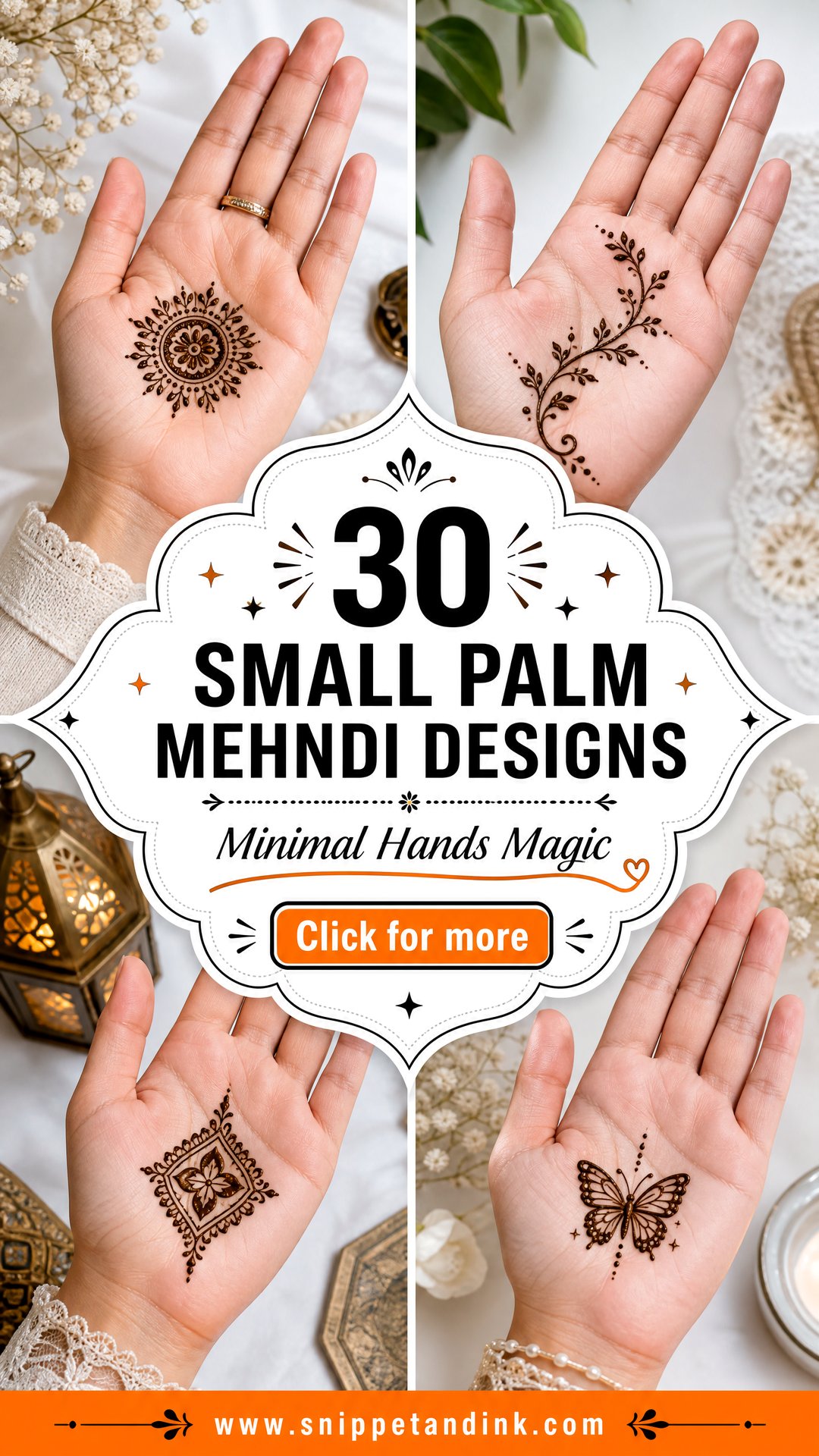
A small palm design keeps the henna to the center of the hand, the inner fingers and perhaps a thin line at the wrist, which makes it quick to sit for and easy to live with afterward. The layouts I’m asked for most are mandalas, floral circles, Arabic trails, open negative space, fine dot work and simple geometry, and they suit Eid, a mehndi night, a family function or a school event equally. What makes a small piece look finished rather than abandoned halfway is balance: the spacing, the fingertip details and the borders have to answer each other. Below are the layouts I’d draw, with what each one needs to work on a real hand.
Where on the Palm a Small Design Should Sit
Small designs live or die by placement, and the first thing I do is ask you to make a loose fist and open it again. That shows me the main creases. Lines drawn straight across a deep crease break up as the hand moves, and the stain there can look patchy, so I set the main motif in the flatter hollow of the palm and let the creases fall between elements.
The center of the palm is also where henna stains darkest, because the skin there is thick and holds the dye well. Fingertips stain dark too, while the back of the hand and the wrist come out lighter. So if you want a deep result from very little henna, a palm-centered layout is the right instinct.
One hand or both
Plenty of people only want their non-dominant hand done for a small event. That’s fine, but tell me if you’ll be eating with your right hand, cooking or praying soon afterward, because a freshly hennaed palm needs hours of not being used. When both hands get the same design, I mirror it rather than copy it, so the motifs point the same way when you hold your palms up together for a photo.
1. Small Palm Mandala Mehndi Design
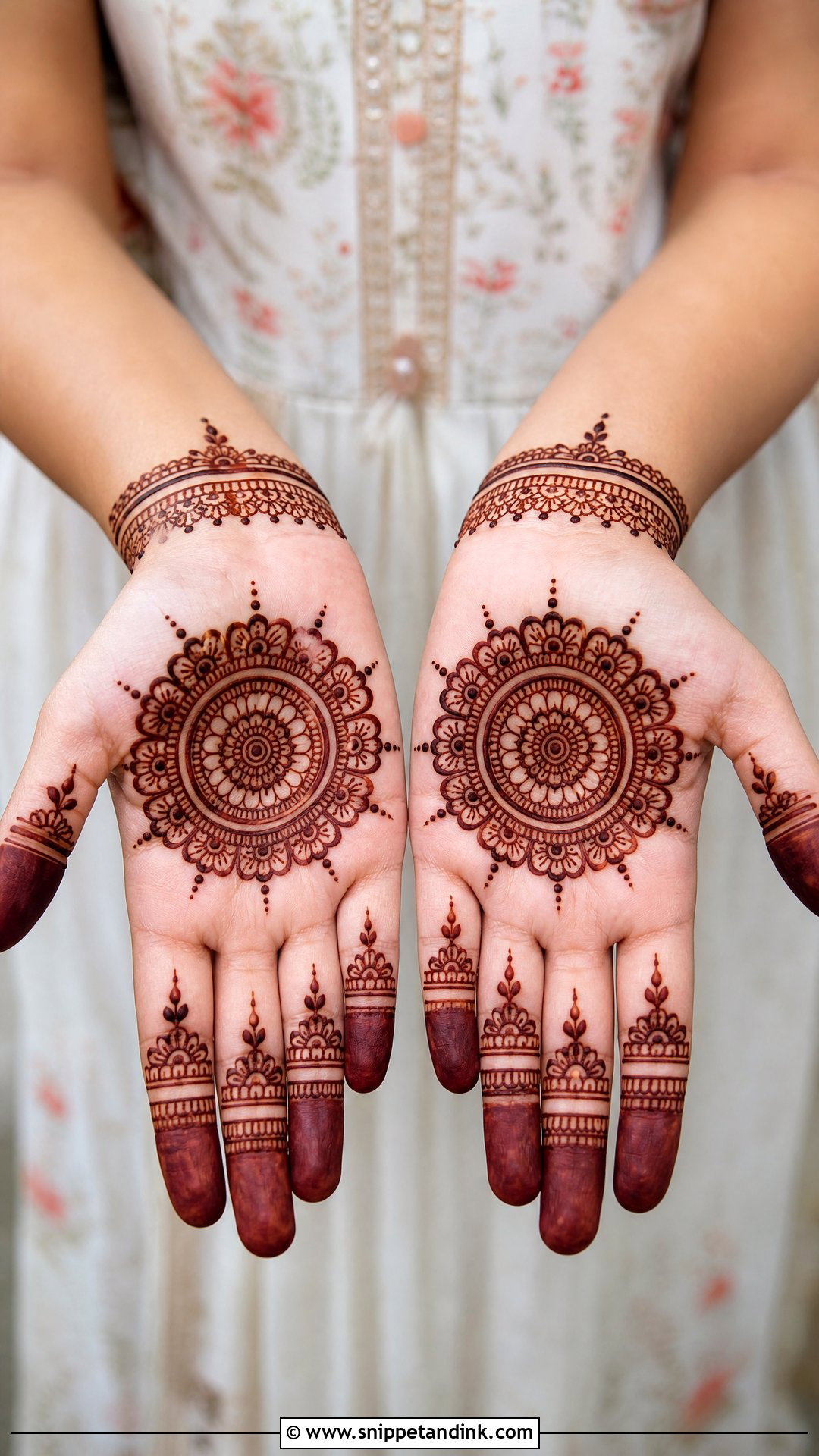
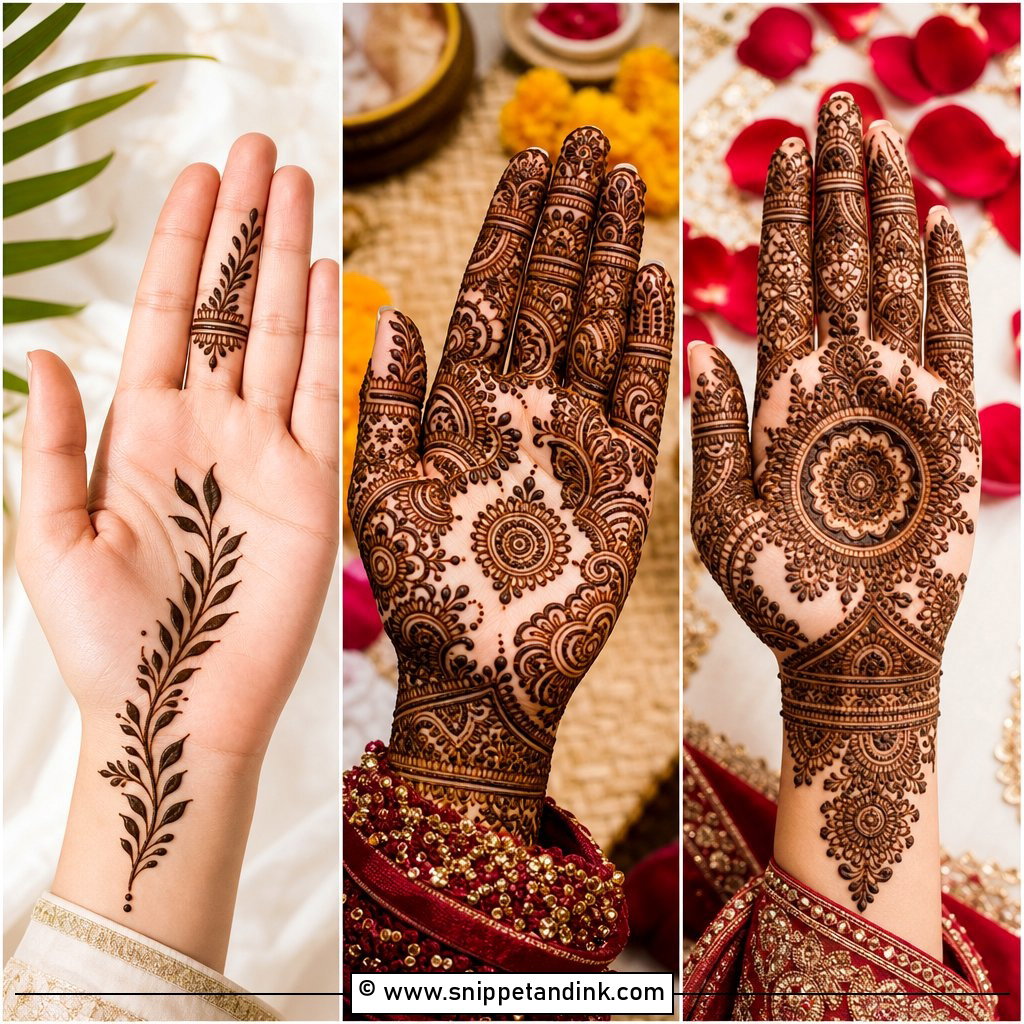
Most people who sit down with me for a quick design end up with a small palm mandala mehndi design, and for good reason. I start with a clean circle in the hollow of the palm and grow it outward with petals, dots, small scallops and fine rings, so the piece stays centered and needs little on the wrist or fingers. A dotted chain toward the fingers and a slim bracelet line tie it together, while the fingertips just get small leafy caps or half-circles. The middle of the palm takes stain more deeply than almost anywhere else, so this is where you will see the darkest maroon.
2. Small Palm Flower Mehndi Design
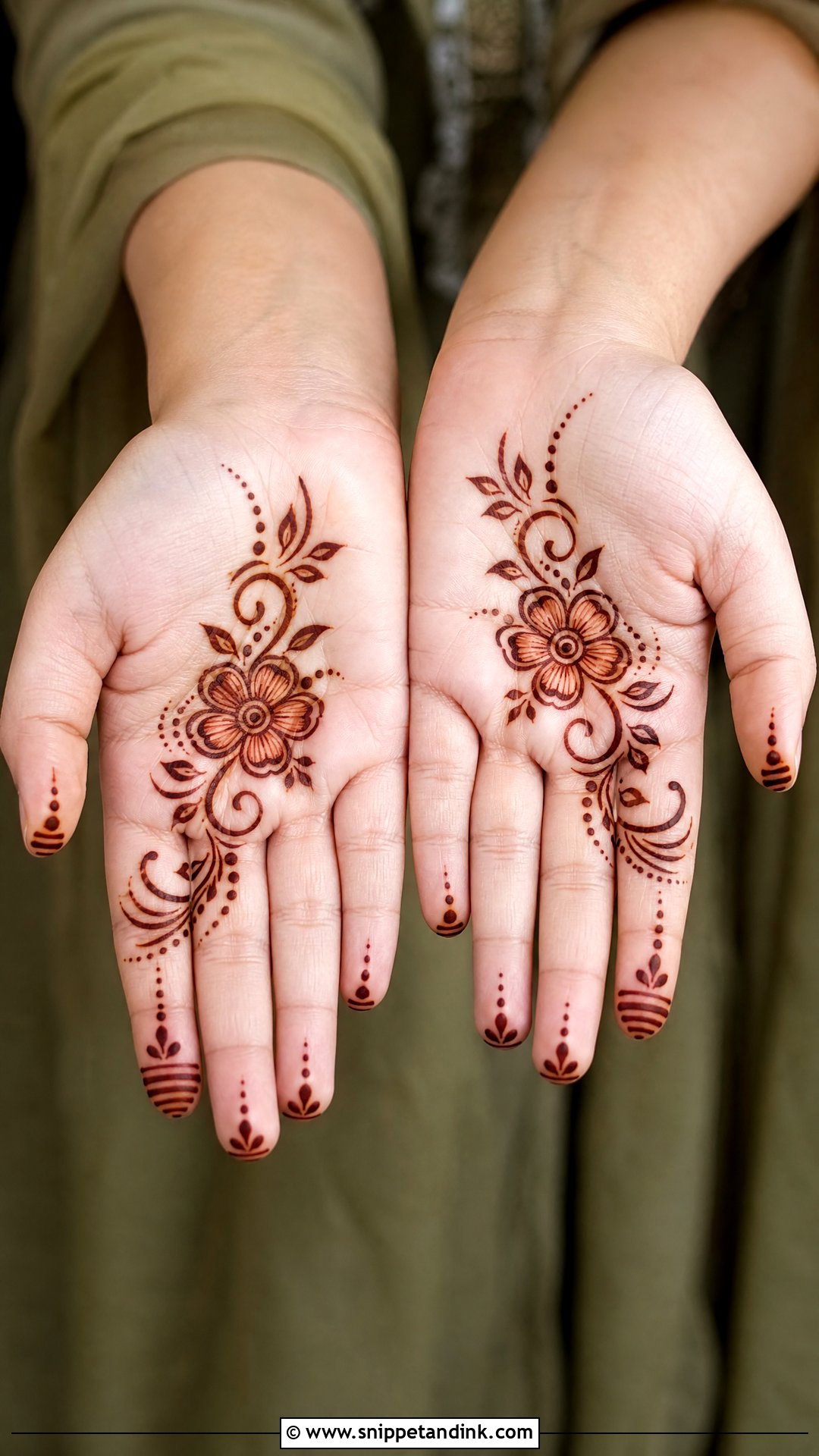
One open bloom in the middle of the palm, with leaves, dots and curved stems around it, is about as fresh as henna gets. It can be a round rose, an open lotus or a simple daisy. My rule is to leave clear skin around the flower; once fillers creep in, it stops reading from a distance. I usually run thin vines up two fingers and give the rest small dot clusters, which suits festive mornings and girls who prefer something sweet to something detailed.
3. Small Palm Arabic Mehndi Design
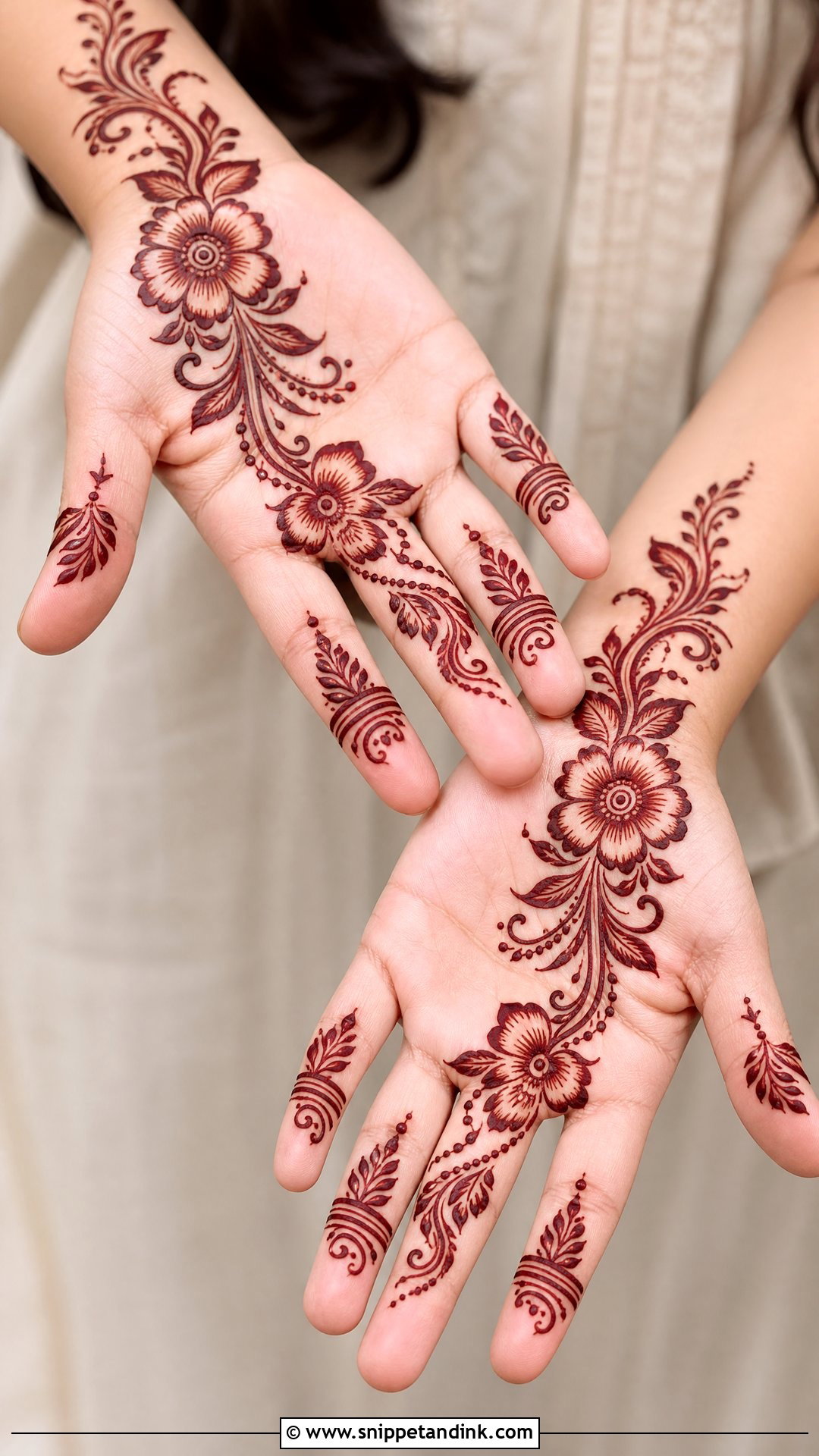
Arabic work is about bold flowers, leaves and curved trails with plenty of skin showing. On a small palm I run a single diagonal trail from the lower palm toward the index or middle finger, with heavier outlines on the flowers and neat dots and shading lines inside. It’s one of the faster layouts I draw, and it reads clearly in photos. If dense traditional coverage feels like too much, this is the front-hand style I’d steer you toward.
4. Small Palm Tikki Mehndi Design
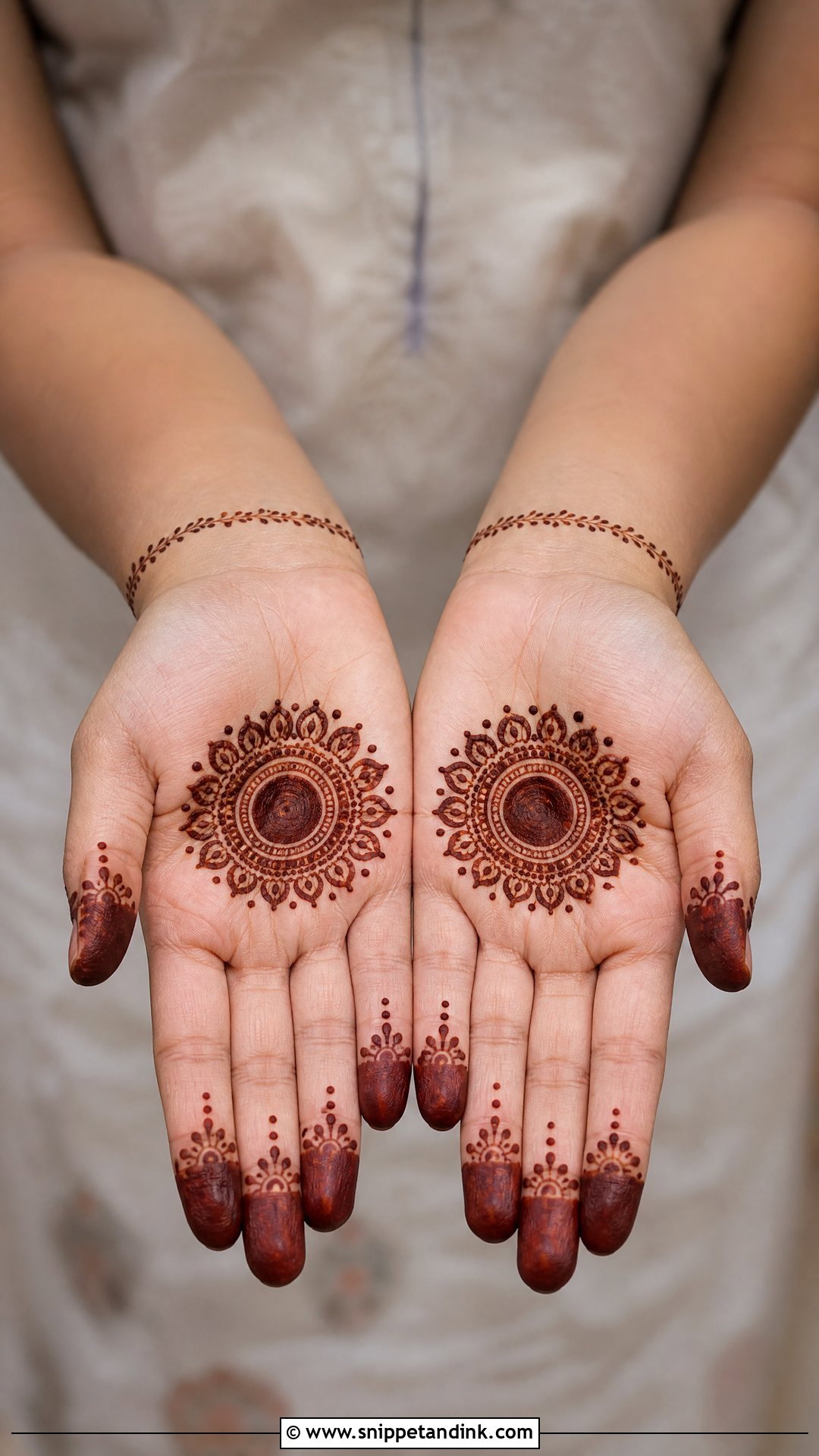
The tikki is the simplest traditional layout: a filled or outlined circle in the middle of the palm, ringed with dots, mini petals and thin borders. Because the structure is so clear, it’s what I suggest to anyone practicing at home. Keep it to fingertip dots, or dress it up with small wrist bands and leafy finger trails. A filled tikki stains as one solid dark disc, which some people love and others find heavy; if you’re unsure, ask for an outlined one with a dotted center.
5. Small Palm Lotus Mehndi Design
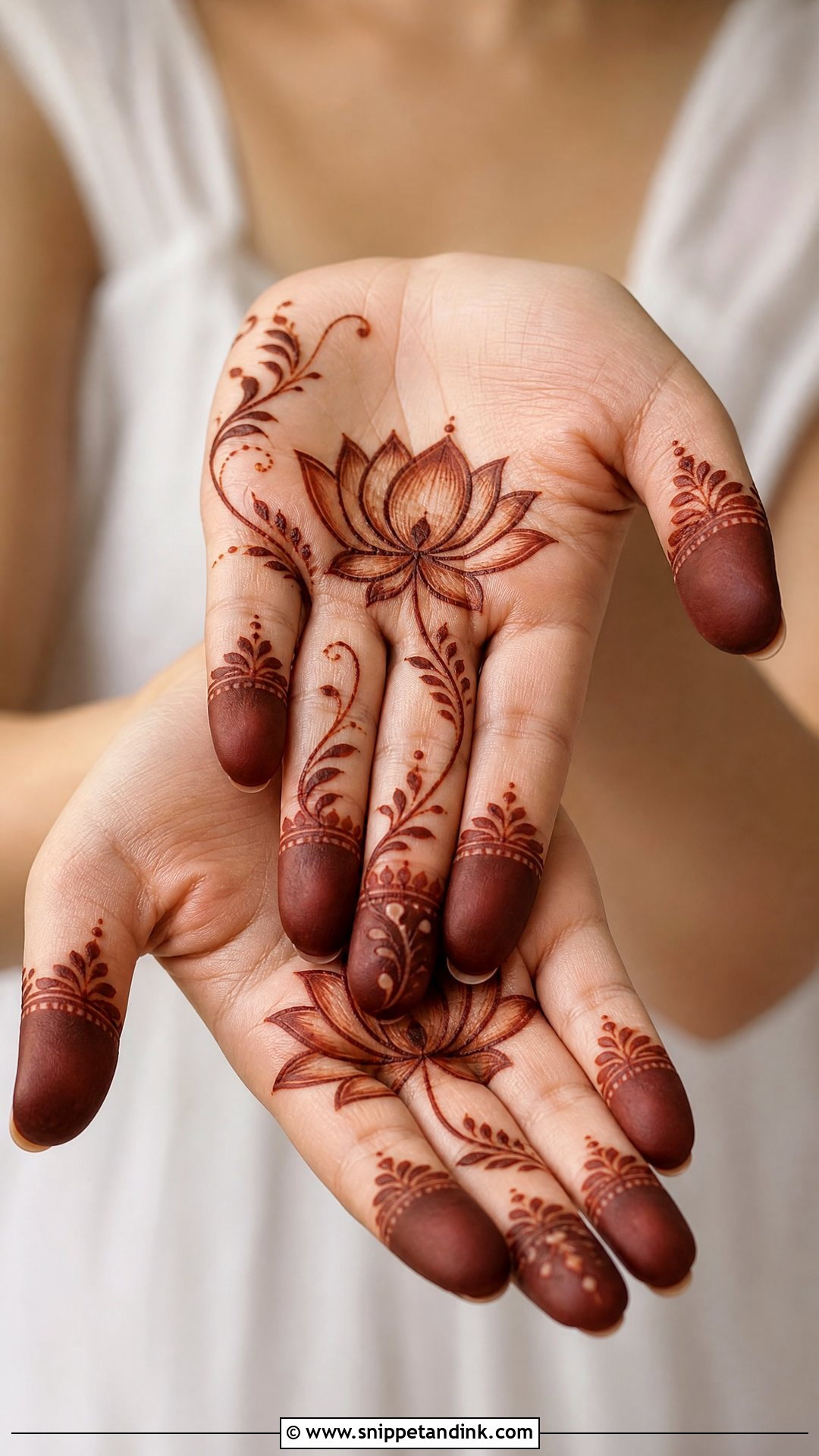
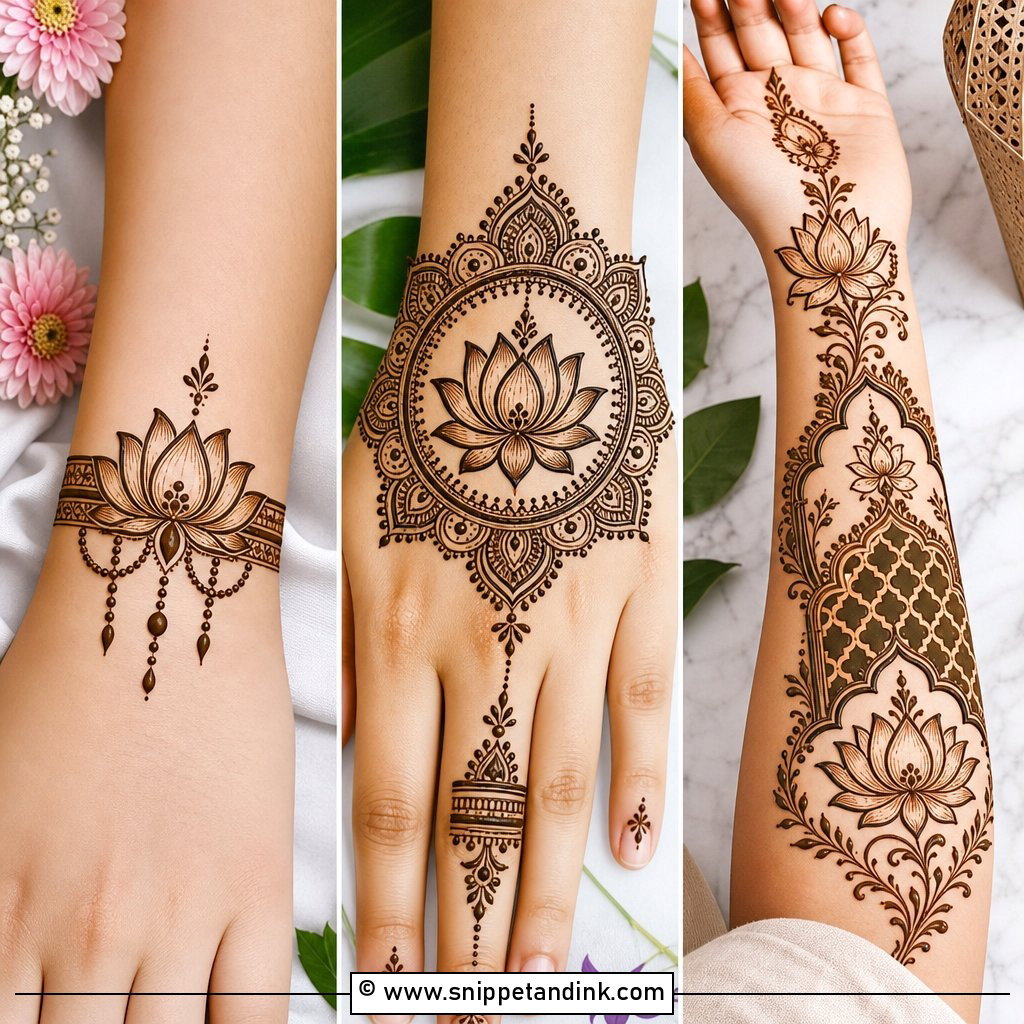
I place the lotus in the middle of the palm or slightly lower, with layered petals opening toward the fingers, so the flower grows in the same direction the hand points. Fine dots, small leaves and a curved stem or two frame it. It carries meaning at pujas, weddings and Eid gatherings without being heavy. Resist filling every gap. The lotus needs air around it, and simple petal caps or one narrow line on each finger finish the hand.
6. Small Palm Paisley Mehndi Design
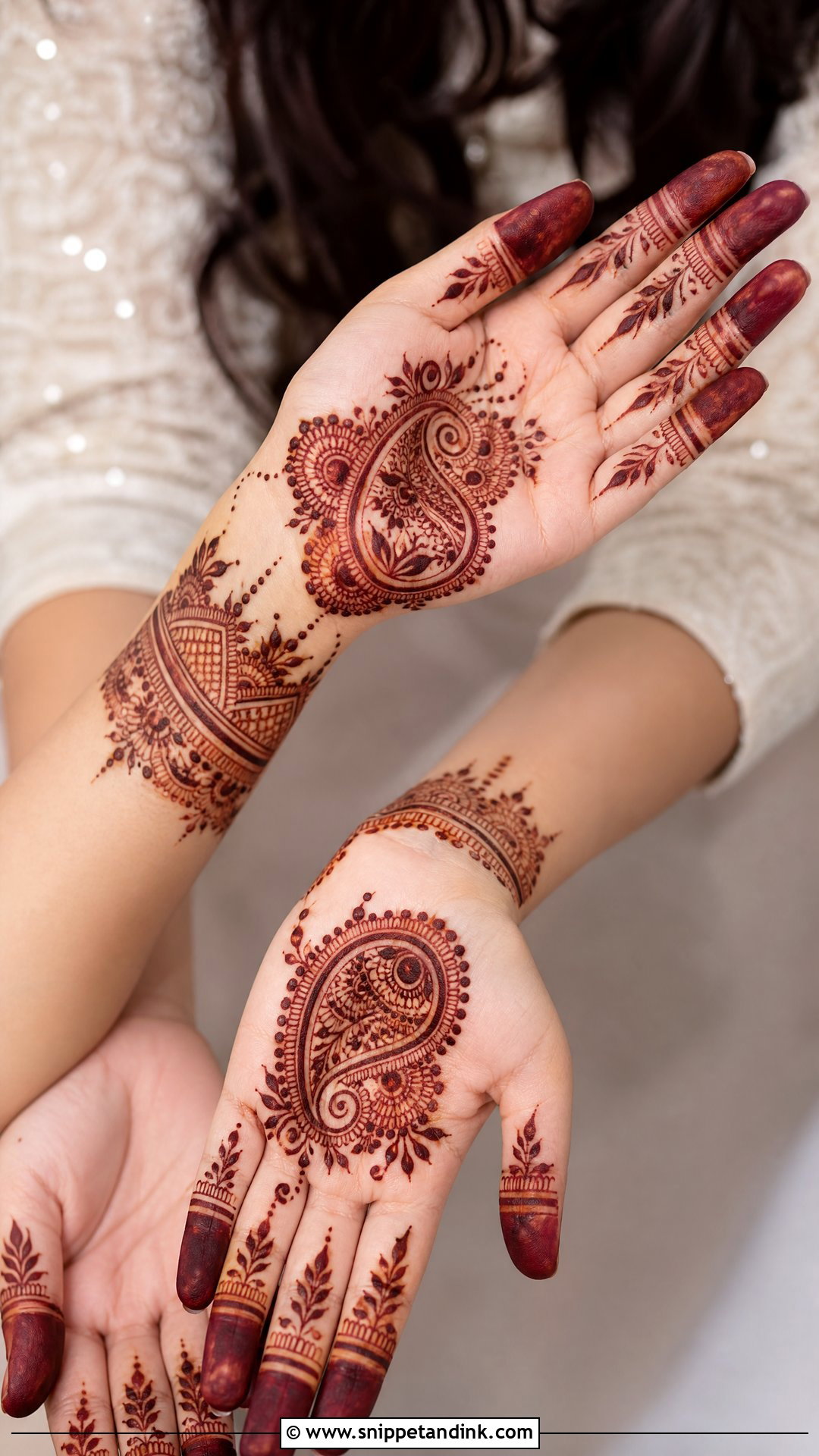
A paisley follows the curve of the hand naturally, which is why one or two of them look rich even with limited coverage. I fill them with mini leaves, dots, spirals and fine curved lines, then point the shape from the wrist side toward the thumb, or angle it toward the middle finger for an Arabic feel. In detail it sits between a tikki and full front-hand coverage, so the fingers should stay light with dotted lines or small leaf trails.
7. Small Palm Vine Mehndi Design
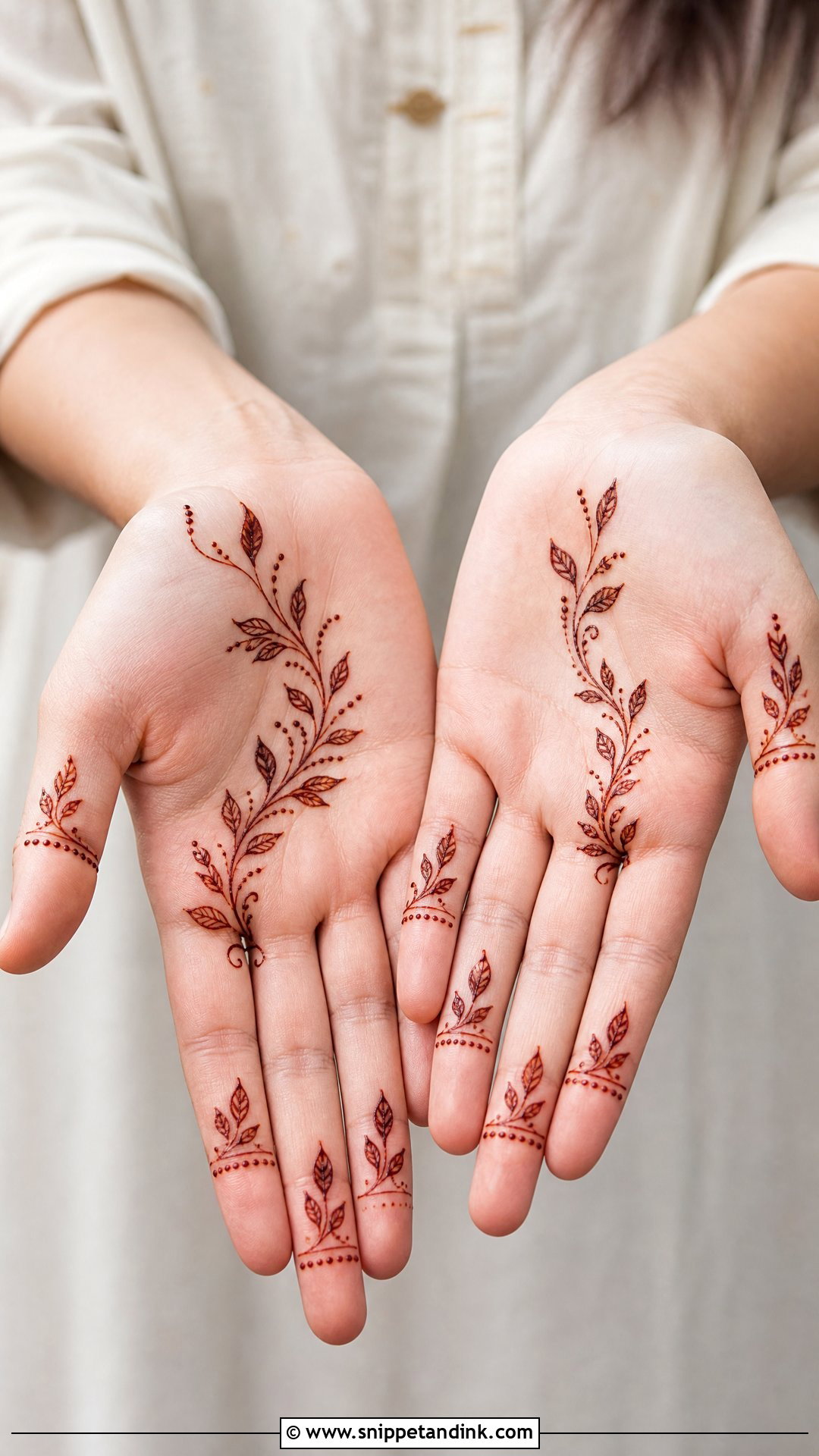
A vine has no central motif, so the flow does all the work. It starts near the wrist or lower palm and curves upward with small leaves, buds and dots. If the curve hesitates, the whole design looks hesitant, which is why I only recommend this to beginners who can already pull a long line from the cone without stopping. Leave open skin around the trail and echo a leaf or two on one or two fingers.
8. Small Palm Heart Mehndi Design
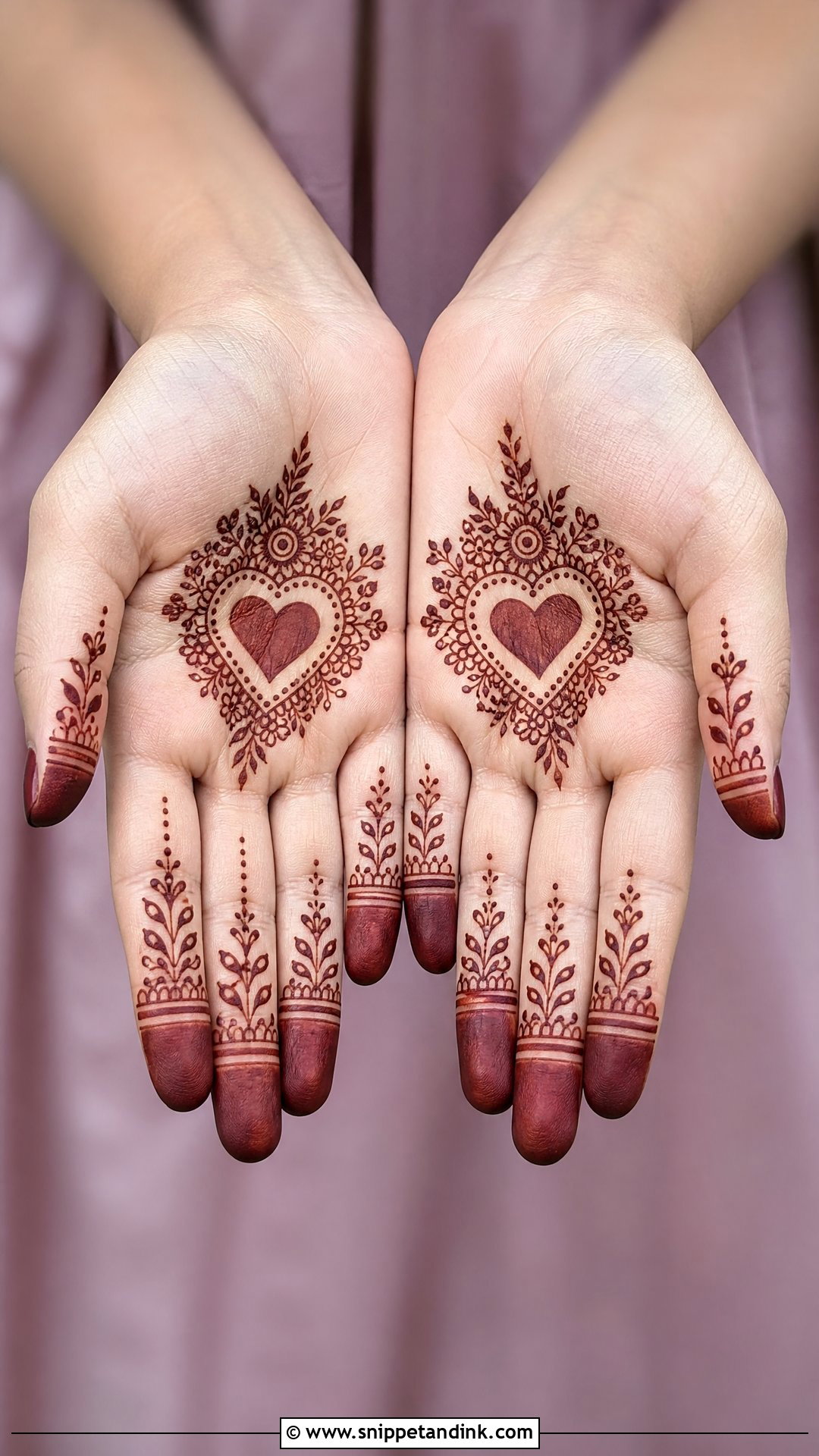
Hearts are popular with younger hands, and they scale down without losing clarity. Put one at the center, inside a floral frame, or at the end of a tiny vine. On its own a heart can look plain, so I add dots, mini petals, a leafy border or a small mandala ring around it while keeping the inside mostly open. Friends and sisters often get matching ones at the same sitting.
9. Small Palm Peacock Mehndi Design
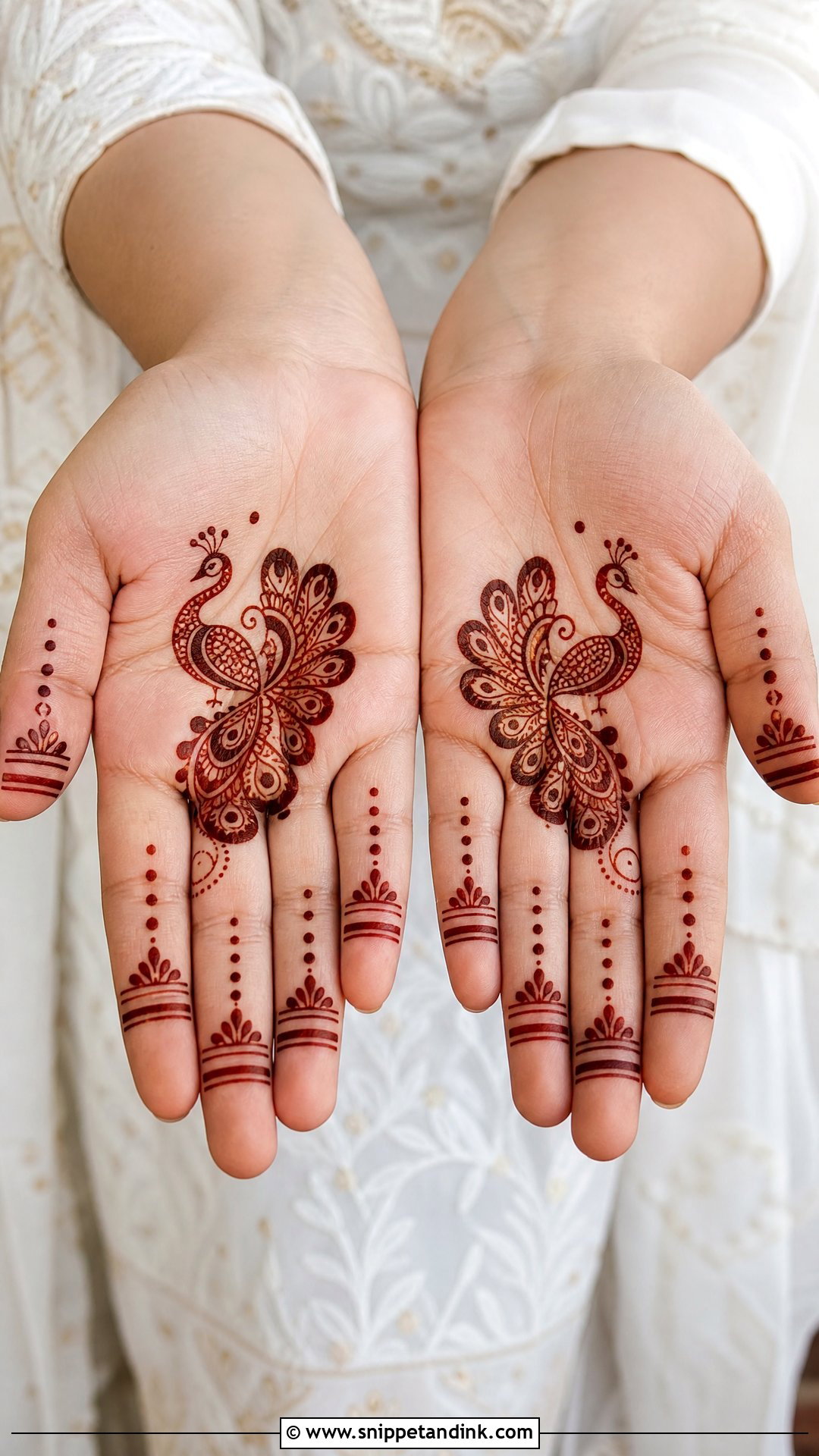
The challenge with a peacock on a small palm is keeping it readable. I draw a compact body on one side and let the tail sweep across the center with fine feather lines, dots and tiny paisleys, using one bold outline and much lighter inner work. Give every feather full detail and it turns into a blur once the stain darkens. Simple fingers keep the bird as the focus, which is why wedding guests who want a traditional motif without bridal coverage often choose it.

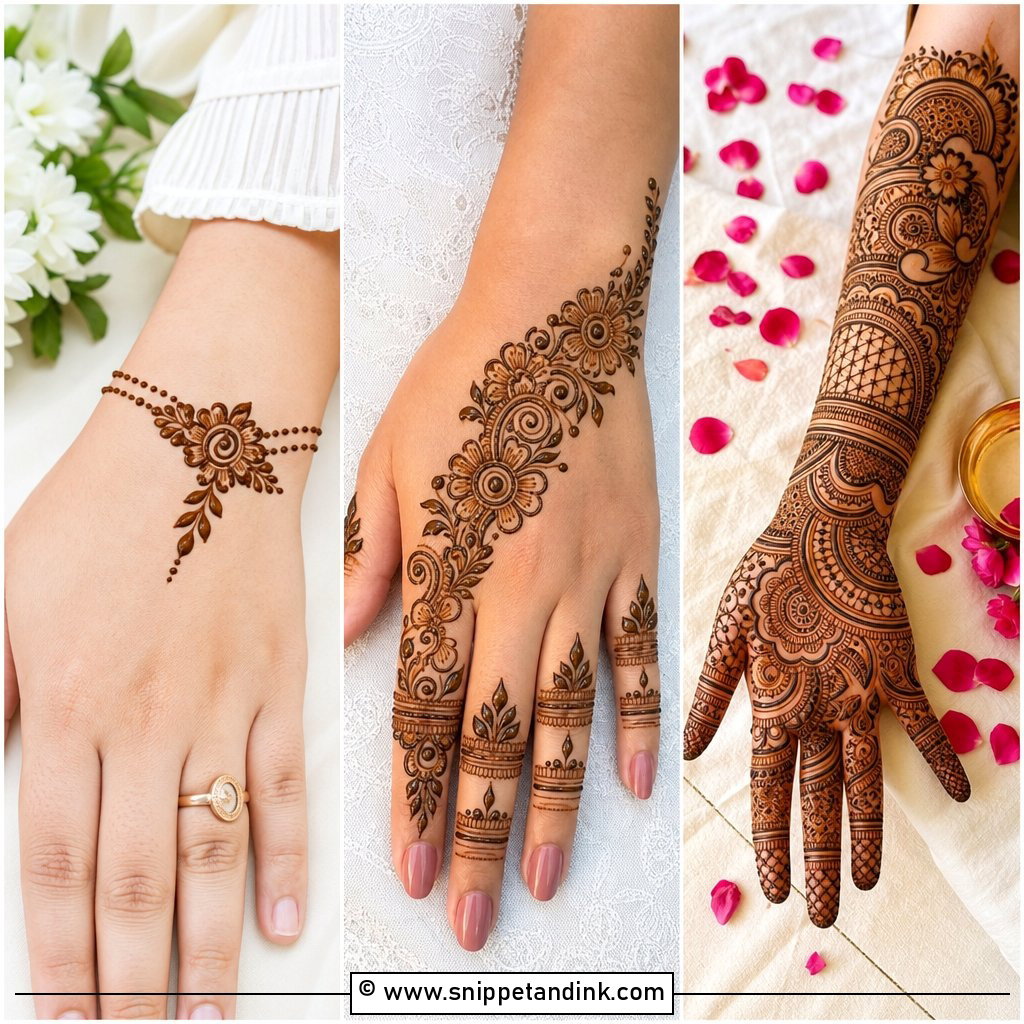
10. Small Palm Bracelet Mehndi Design
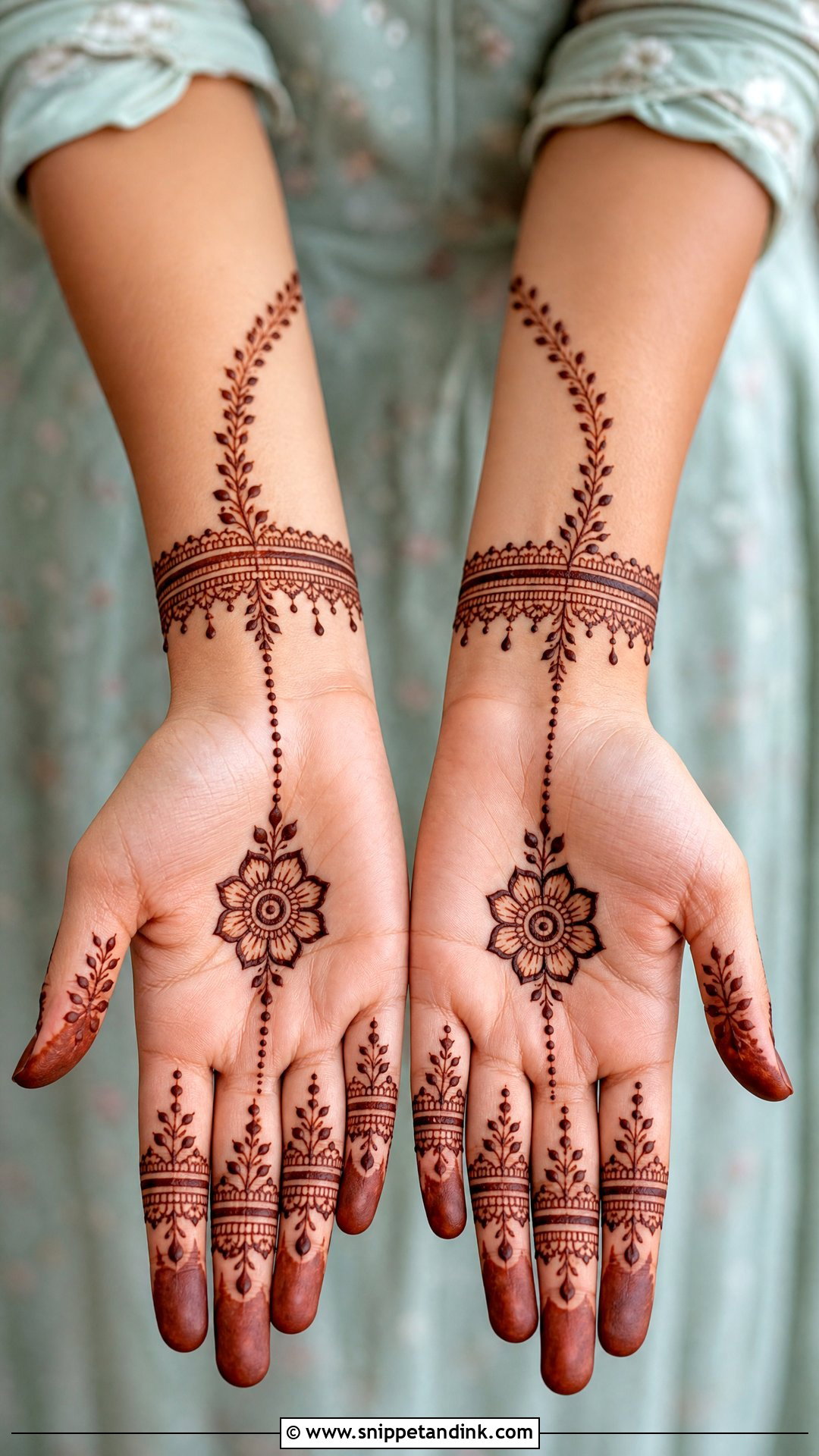
The palm gets a small flower, tikki or paisley, and a thin band wraps the wrist like a bangle, joined to it by dotted chains, leafy links or tiny hanging drops. That link is what makes a light design look complete. I keep the band slim for a modern look, or double the line for something more festive. The wrist bends constantly, so I draw the band just above the crease; otherwise it smudges the moment you move.
11. Small Palm Finger Mehndi Design
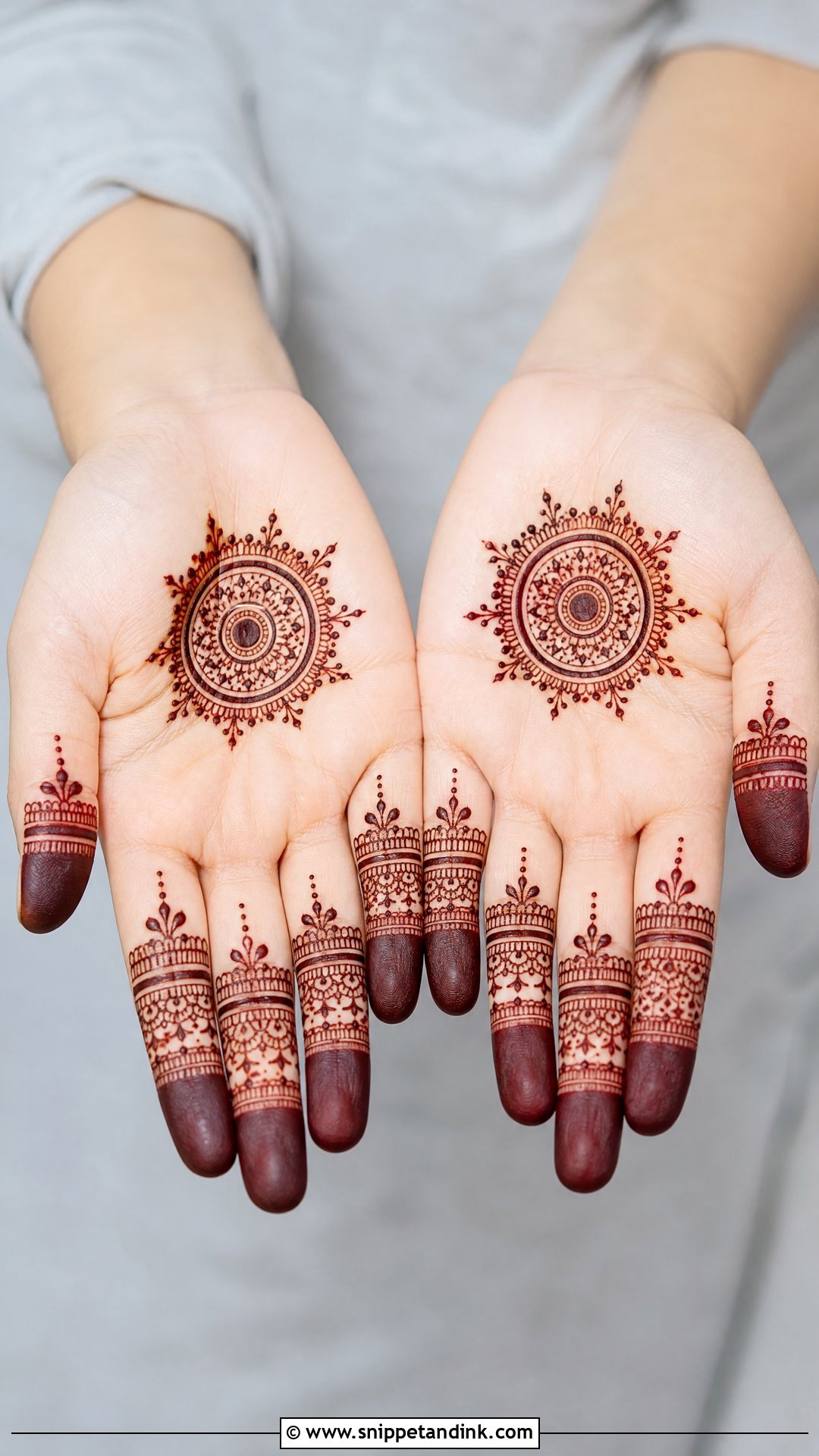
Here the palm motif stays tiny, a small mandala, flower or dot cluster, and the inner fingers get the attention with rings, dots, leaf chains or fingertip caps. Fingers are always moving, so this is the layout people actually notice while you talk, write or hold a cup. The catch is drying time. Finger work smudges easily, so sit with your fingers spread until the paste turns matte.
12. Small Palm Jaali Mehndi Design
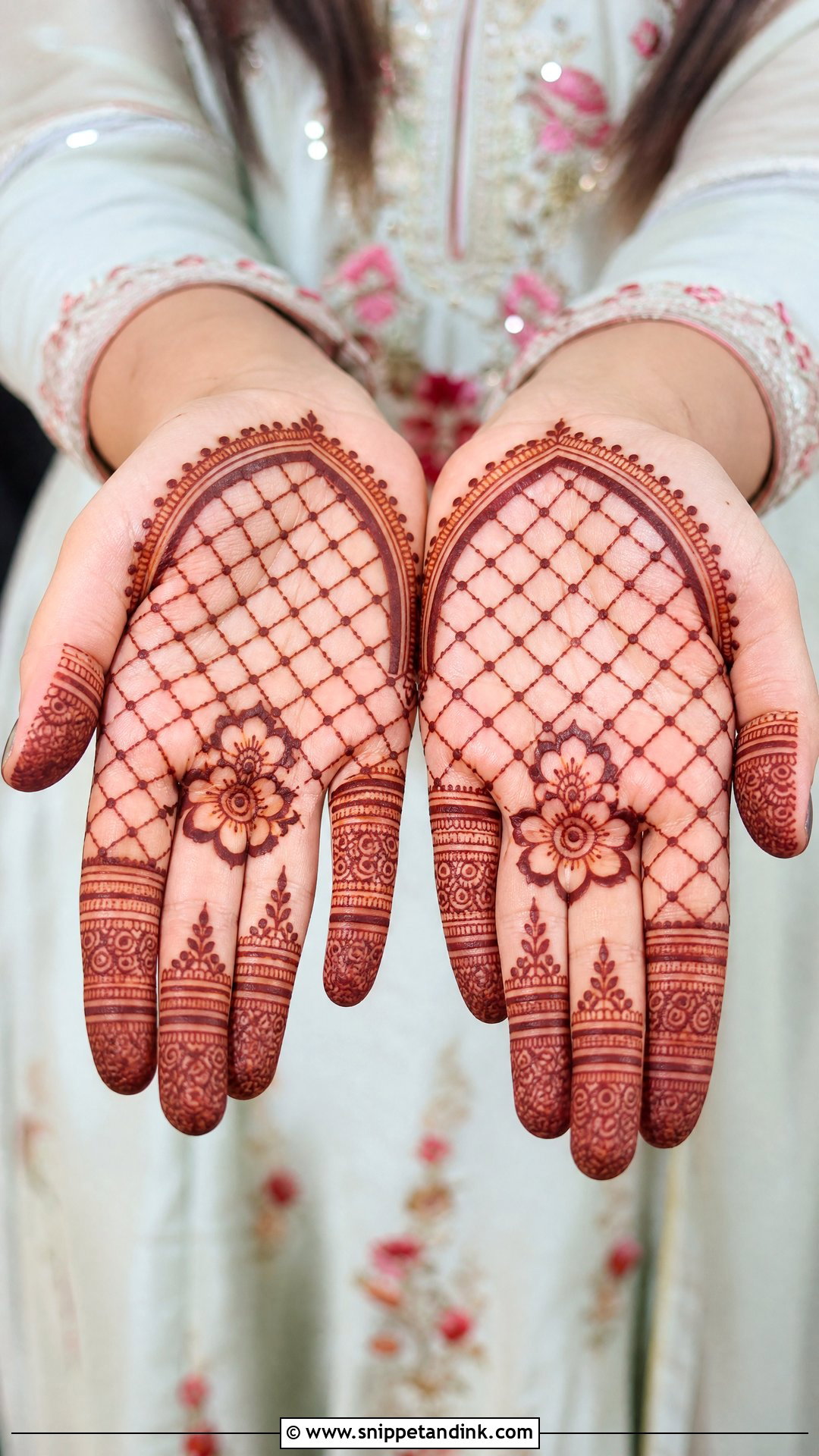
Jaali is a mesh of thin crossing lines with a tiny dot at each intersection, set inside a circle, diamond or curved frame on one section of the palm. It needs a fine cone tip and even pressure; if the paste is too thick, the lines merge and the grid fills in. I balance it with a flower, a paisley or a simple border elsewhere. On older hands it looks refined, on young ones festive, and it adds detail without adding much coverage.
13. Small Palm Moroccan Mehndi Design
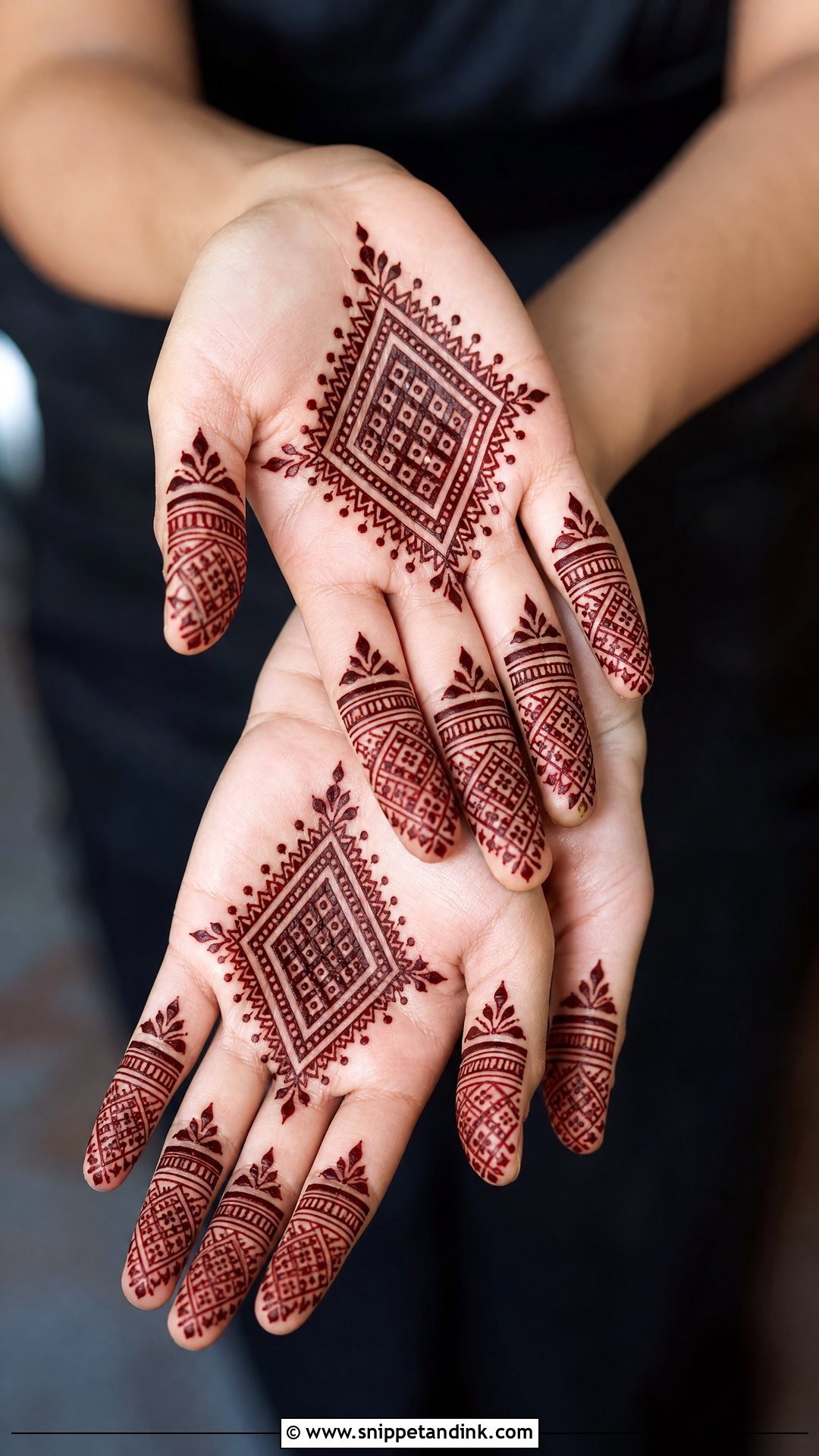
Moroccan-inspired work trades florals for geometry: diamonds, triangles, small grids, straight borders and dots arranged at the center of the palm. Symmetry is everything, so I find the center line of the palm by eye before the first stroke and use very few fillers. A slim line to the wrist or a single finger band completes it. It’s bold and modern, and quicker than it looks, provided the hand holding the cone is steady.
14. Small Palm Indo Arabic Mehndi Design
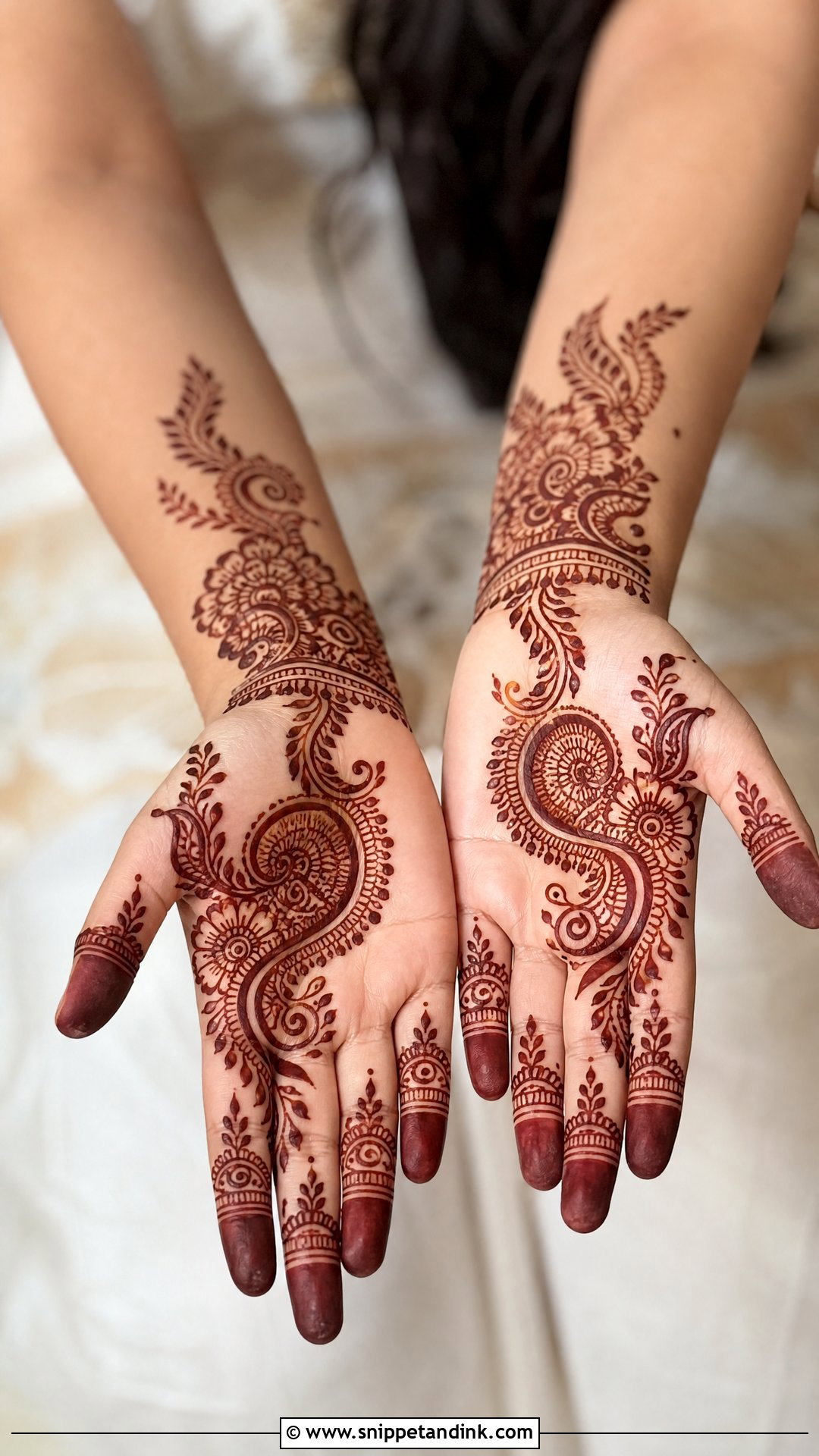
An Indo-Arabic small palm mehndi design takes the bold spacing and floral flow of Arabic work and adds the dots, curves and small fillers of Indian patterns. On a small palm I put a flower or paisley in the center, pull a curved trail toward one finger, then add thin Indian-style lines inside the petals and dotted borders around the open spaces. It feels festive without becoming dense, so it sits comfortably at weddings, Eid, Diwali and family gatherings.

15. Small Palm Minimal Mehndi Design
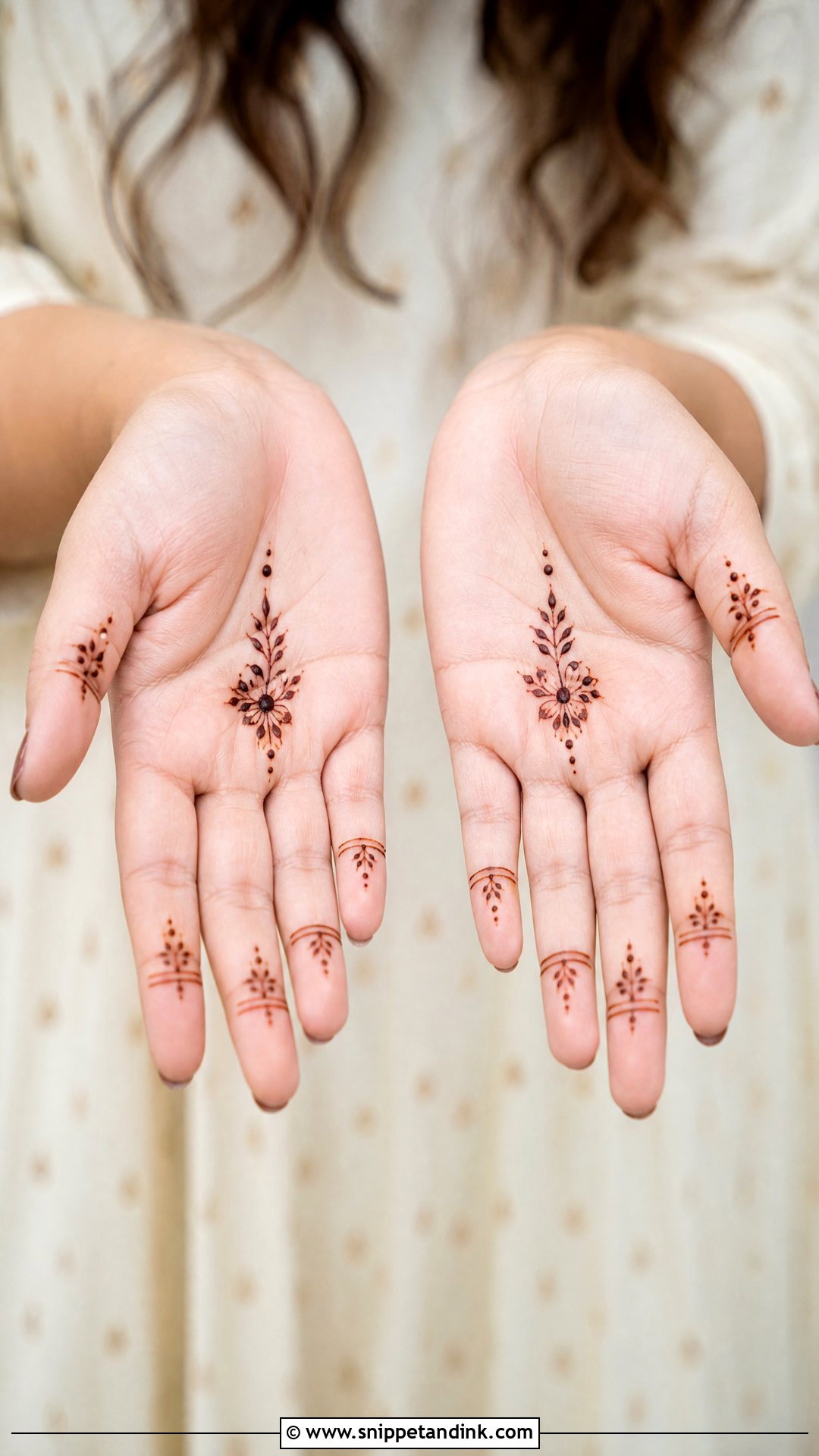
One tiny motif, a flower, a dot circle, a moon, a leaf sprig or a mini mandala, plus one or two finger accents, and then I stop. Stopping is the hard part. Minimal henna has nothing to hide behind, so placement decides it: I center the motif in the palm’s hollow rather than over a crease, where a line breaks every time the hand closes. It makes a good first henna and suits small hands.
16. Small Palm Round Mehndi Design
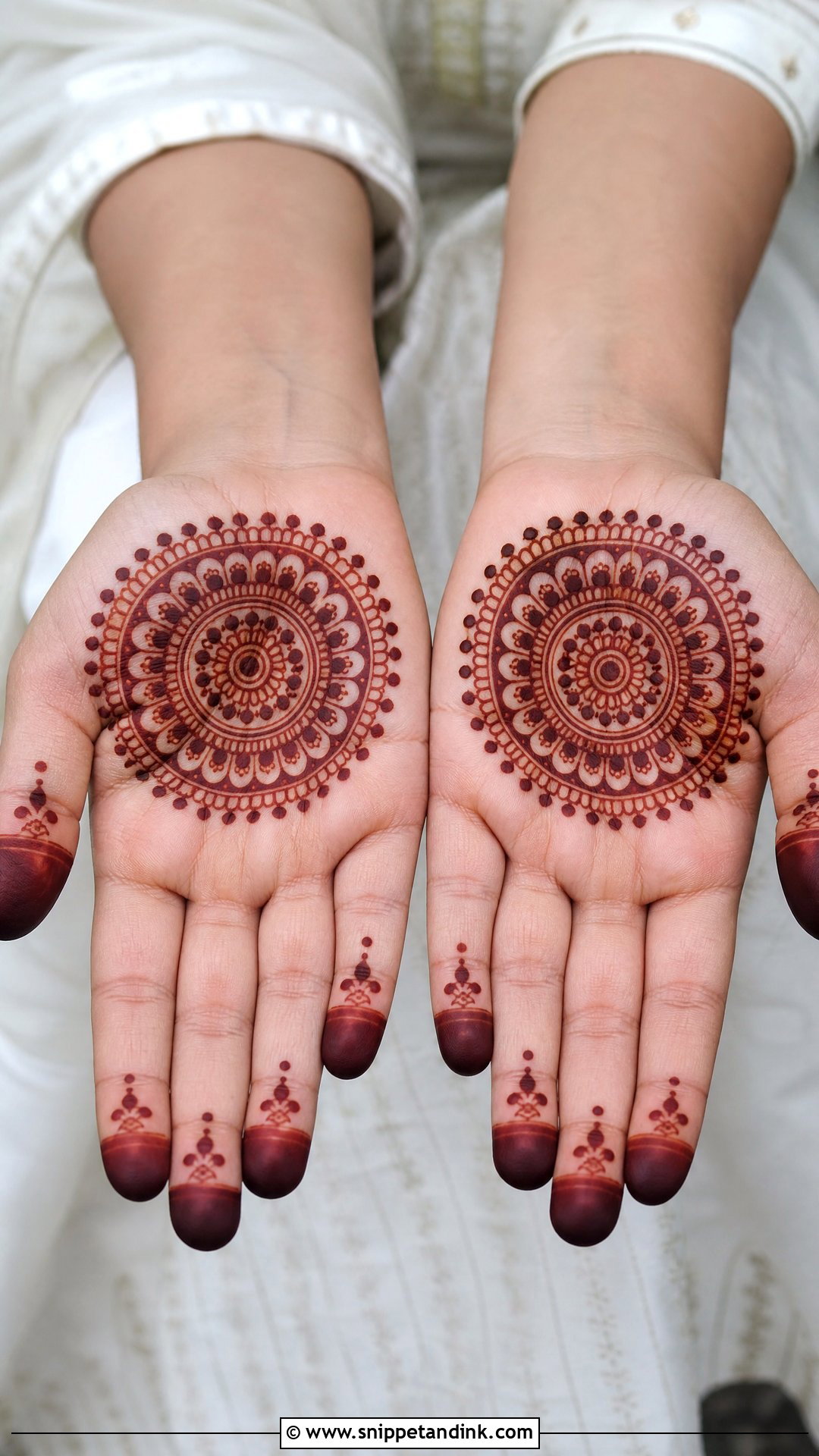
Think of a round design as a smaller, less detailed cousin of the mandala: a circular center with rings of petals, dots, scallops and curves. It’s quick, and it centers itself on almost any palm size. Pair it with fingertip dots or tiny ring bands. I leave a hairline of bare skin between each layer, because rings drawn touching each other tend to merge into one dark band once the stain develops.
17. Small Palm Leaf Mehndi Design
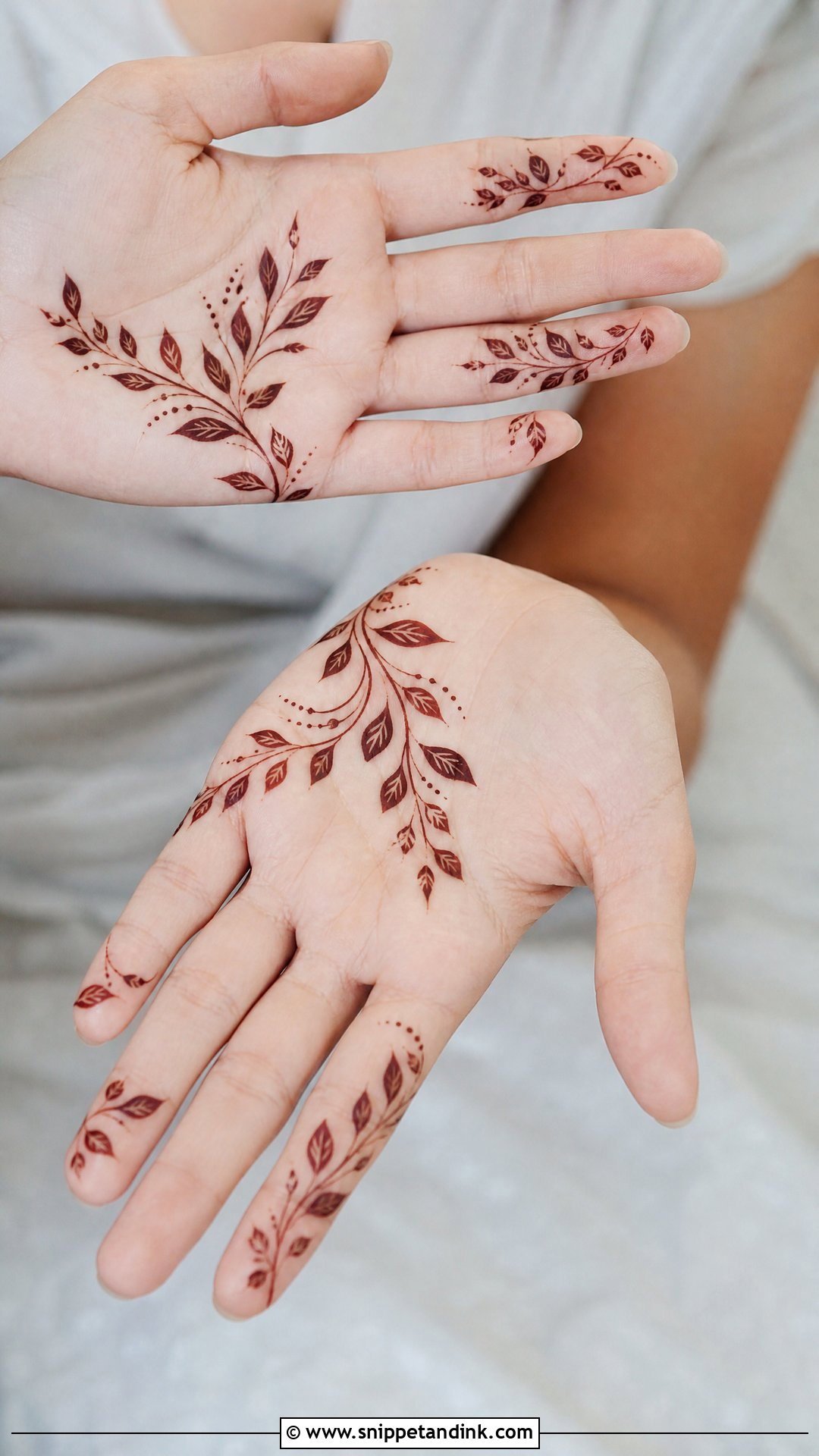
Leaves are easier to draw than flowers or peacocks, so a single curved branch with small paired leaves is my usual suggestion for a first attempt at home. Run it diagonally, horizontally or from the wrist toward the middle finger, and add one tiny flower if you like. Keep the leaf sizes even. Leaves that grow and shrink at random look like a mistake rather than a choice. It’s decorative but quiet enough for the office the next day.
18. Small Palm Half Moon Mehndi Design
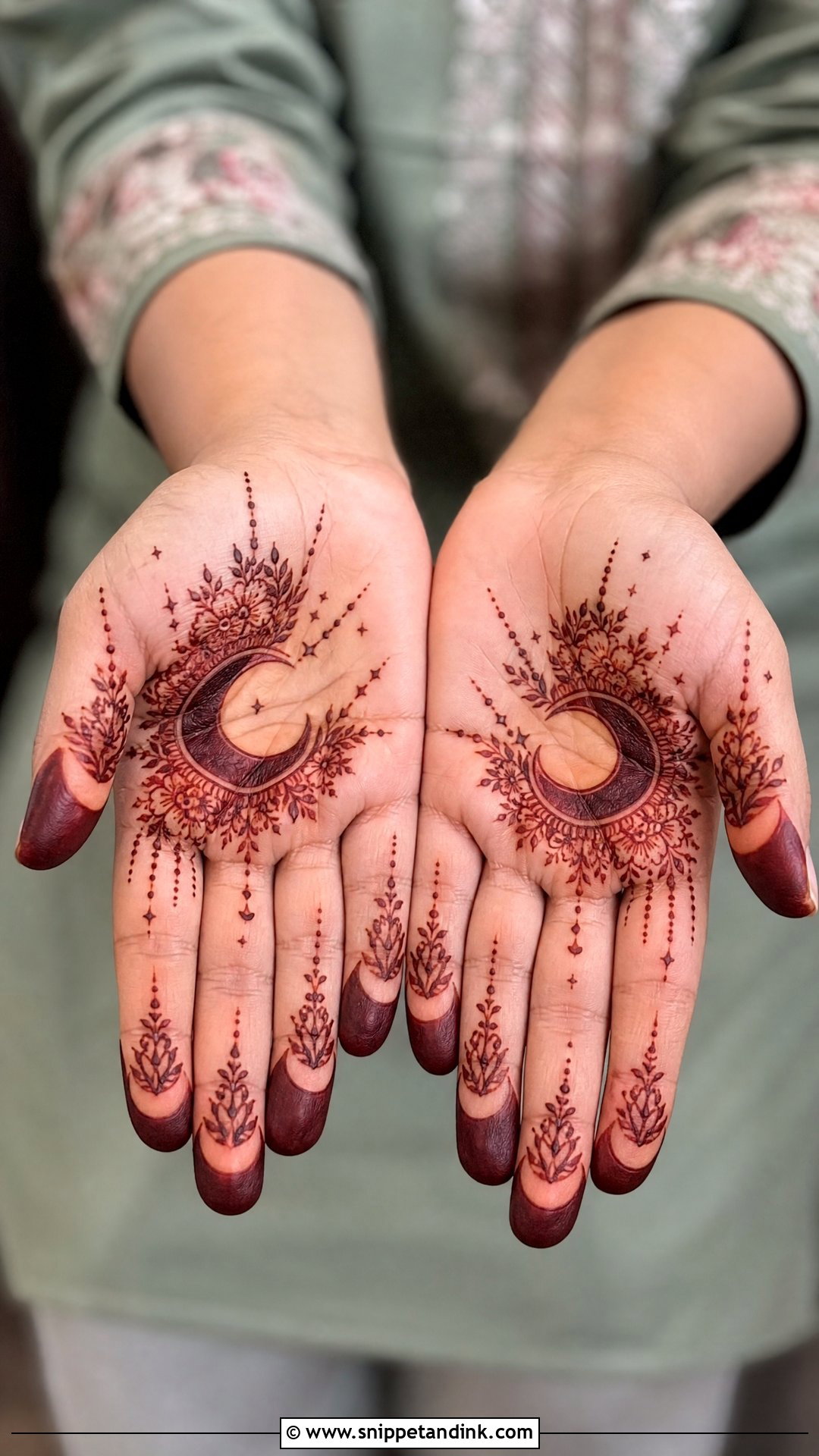
A crescent near the center or lower palm, dressed with dots, small flowers and fine curves, can stay open and airy or take a light jaali fill. Dotted rays around it give it a dreamy quality, and it suits Eid nights in particular. Tiny moon-shaped fingertip caps or a slim dotted chain to the wrist finish the hand.
19. Small Palm Kids Mehndi Design
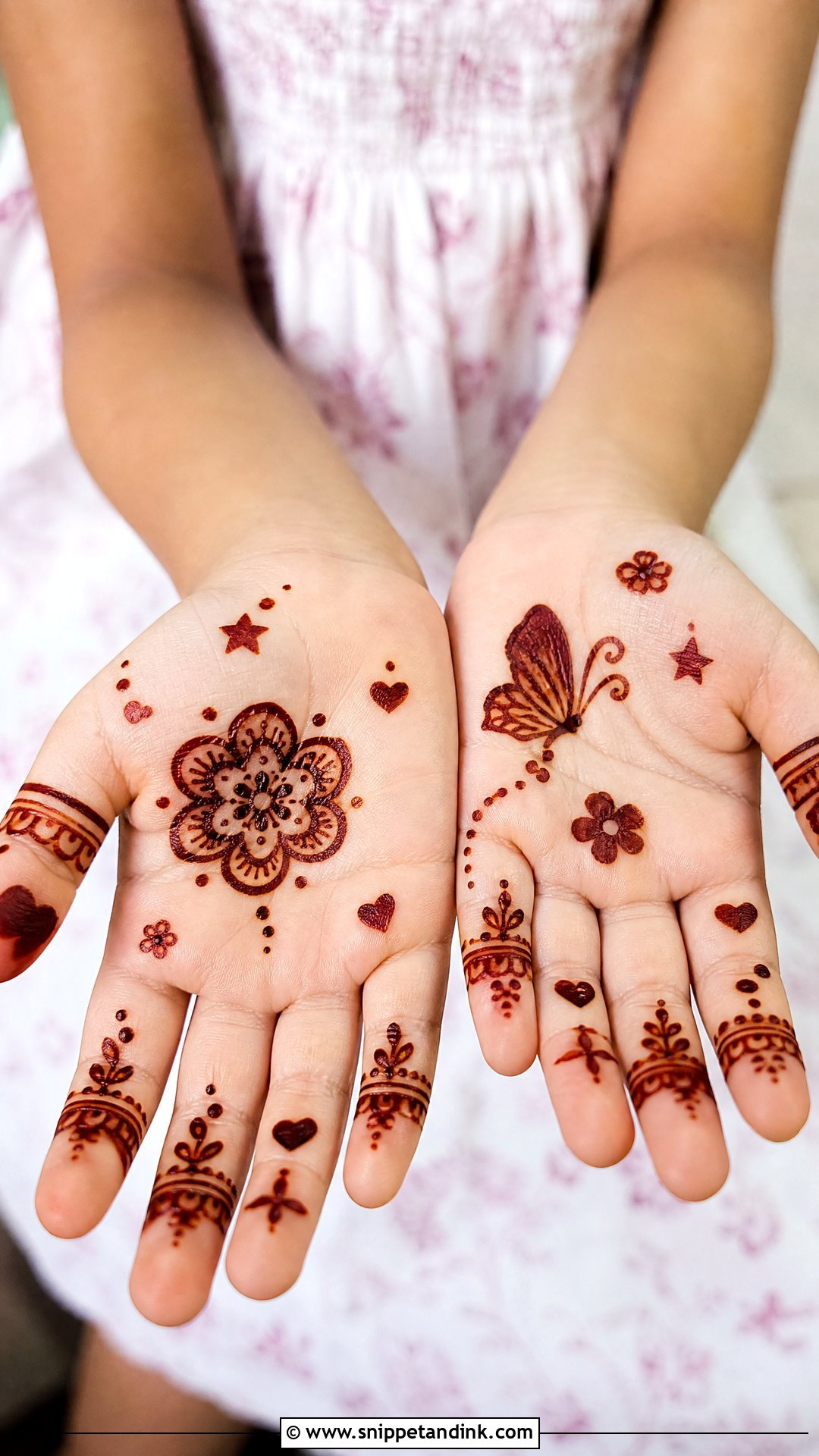
With children, speed matters more than detail, because they move long before the paste has dried. I choose shapes I can finish in a few minutes, a flower, heart, star, butterfly, leaf or tiny tikki, then add a few dots on the fingers. Use natural henna only, never anything sold as black henna. The design should simply fade on its own over the following week or two, with no scrubbing needed.

20. Small Palm Eid Mehndi Design
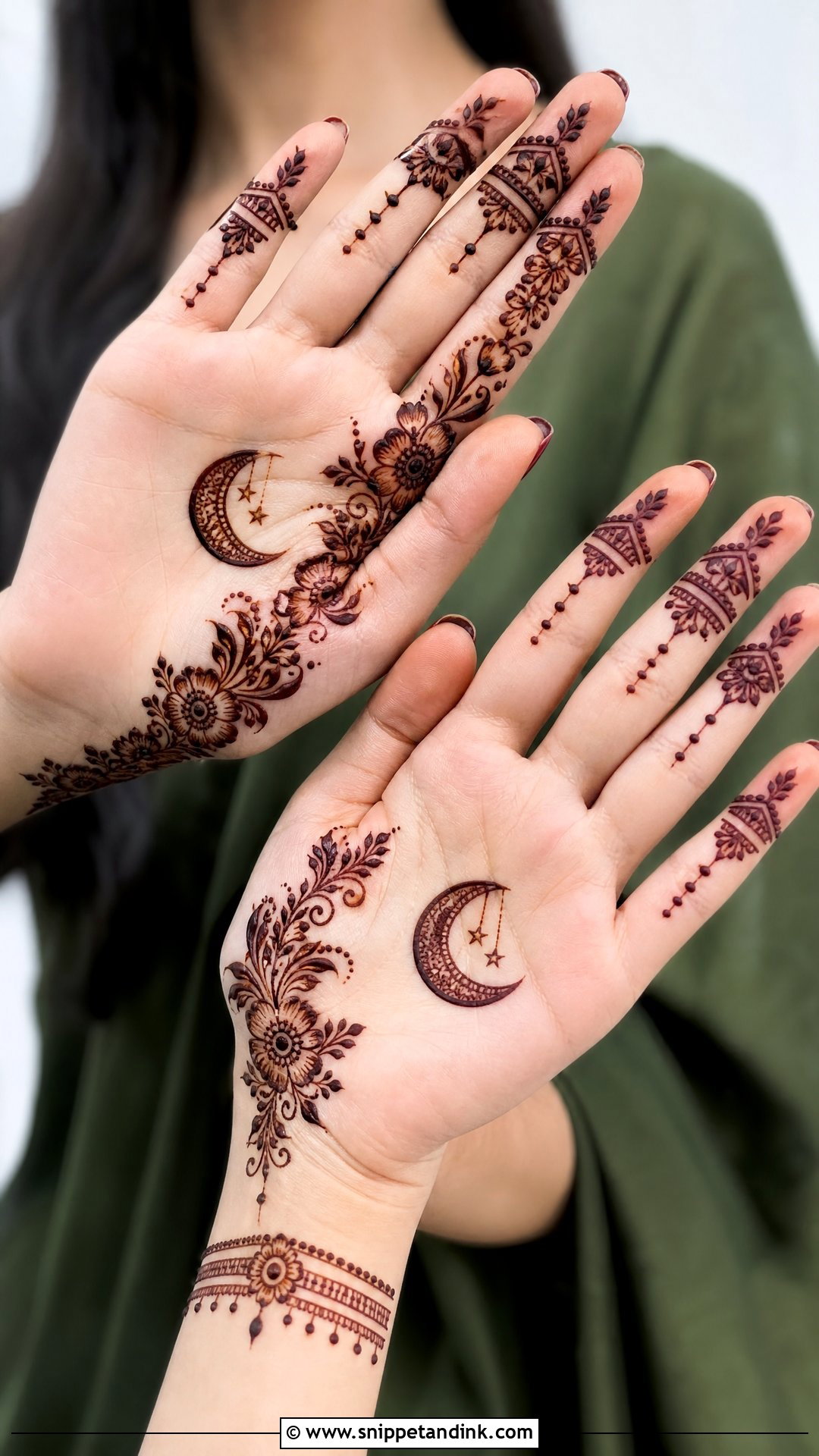
A small palm Eid mehndi design has to be quick to apply on a busy night and comfortable through a day of greeting guests and eating with your hands. A central mandala, a crescent, an Arabic floral trail or a small paisley with dotted finger accents all fit. Eid outfits usually come with bangles and rings, so a compact palm leaves room for the jewelry, and a slim wrist band dresses it up. Keep the main motif bold enough to show in photos, with clean space around it.
21. Small Palm Bridal Mehndi Design
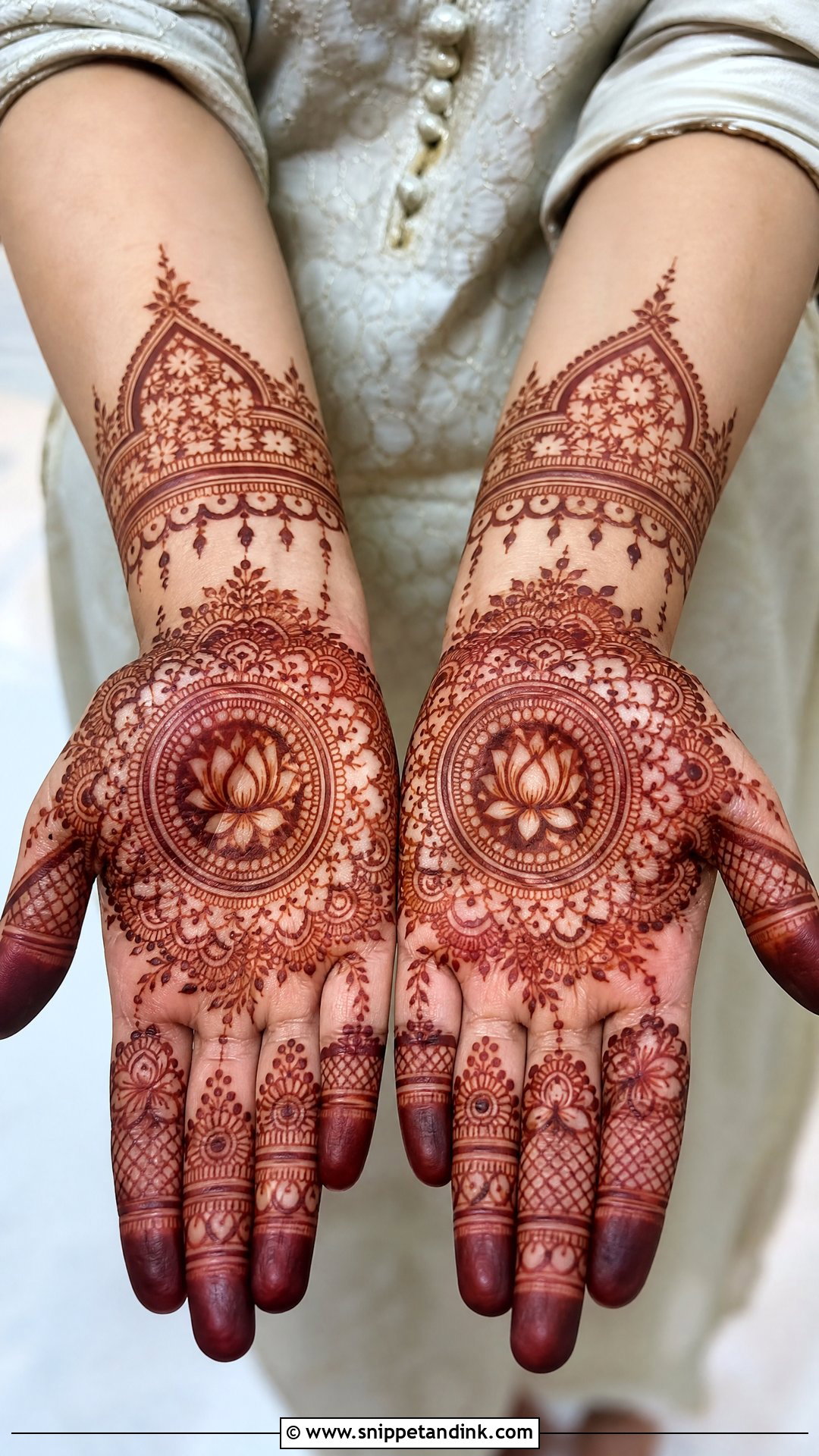
A small palm bridal mehndi design suits a bride who wants a lighter, modern look, or anyone dressing for the engagement, haldi, roka or a bridal shower rather than the wedding itself. The palm carries a detailed lotus, paisley, mandala or bride-and-groom motif, with fine dots, curved borders and refined finger and wrist accents. If you’d like it richer, I add small jaali sections or shaded petals rather than more coverage. For a bride, I still apply it about two days before the main event so the stain has peaked by then.
22. Small Palm Shaded Mehndi Design
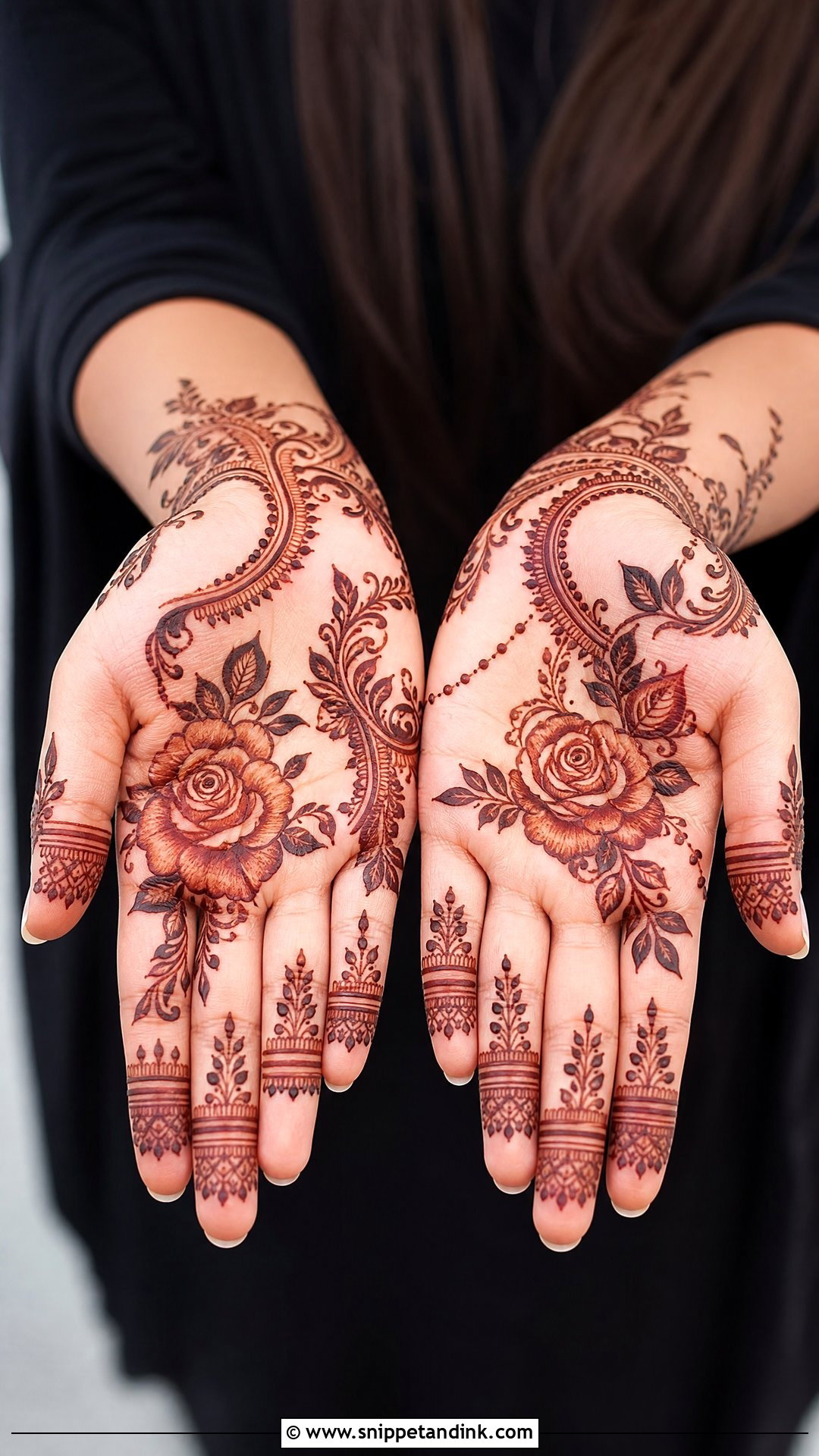
Shading is a light fill inside flowers, leaves, paisleys or borders, laid down with thinner paste or quick, light strokes so it stains paler than the outlines. A shaded rose in the center of the palm with small leaves around it shows the effect well. Don’t fill anything solid; on a small palm that just reads as a dark blotch. The payoff comes as the stain develops, when the outlines go deep and the shading stays softer, giving the design real depth.
23. Small Palm Geometric Mehndi Design
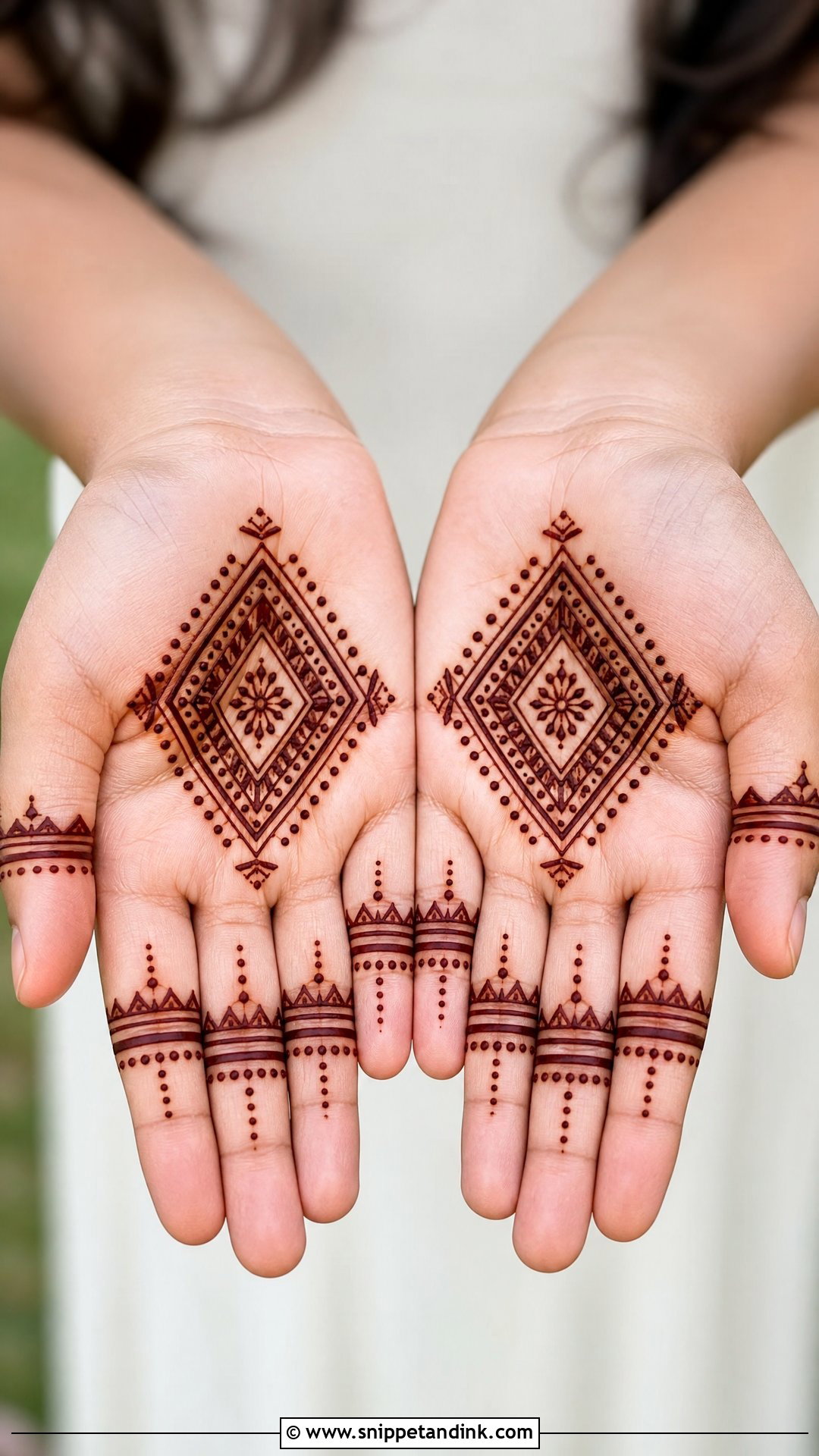
Diamonds, grids and straight lines suit anyone who finds floral henna too sweet. I start with a small diamond or square in the center, then build borders, dots and tiny triangles around it, symmetrical so it looks intentional. A thin line to the middle finger or wrist extends it. The cone needs steady, even pressure here, because a wobble shows far more in geometry than it ever would in a flower.
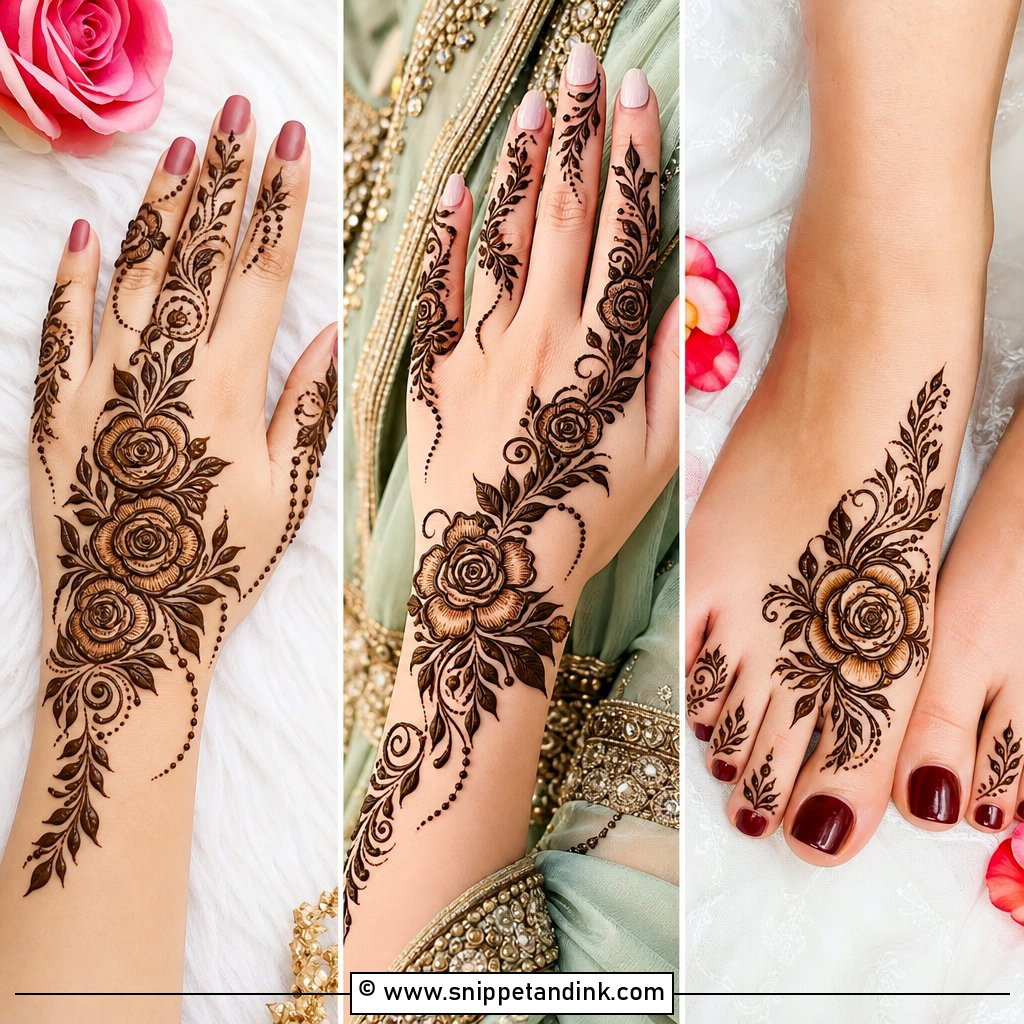
24. Small Palm Rose Mehndi Design
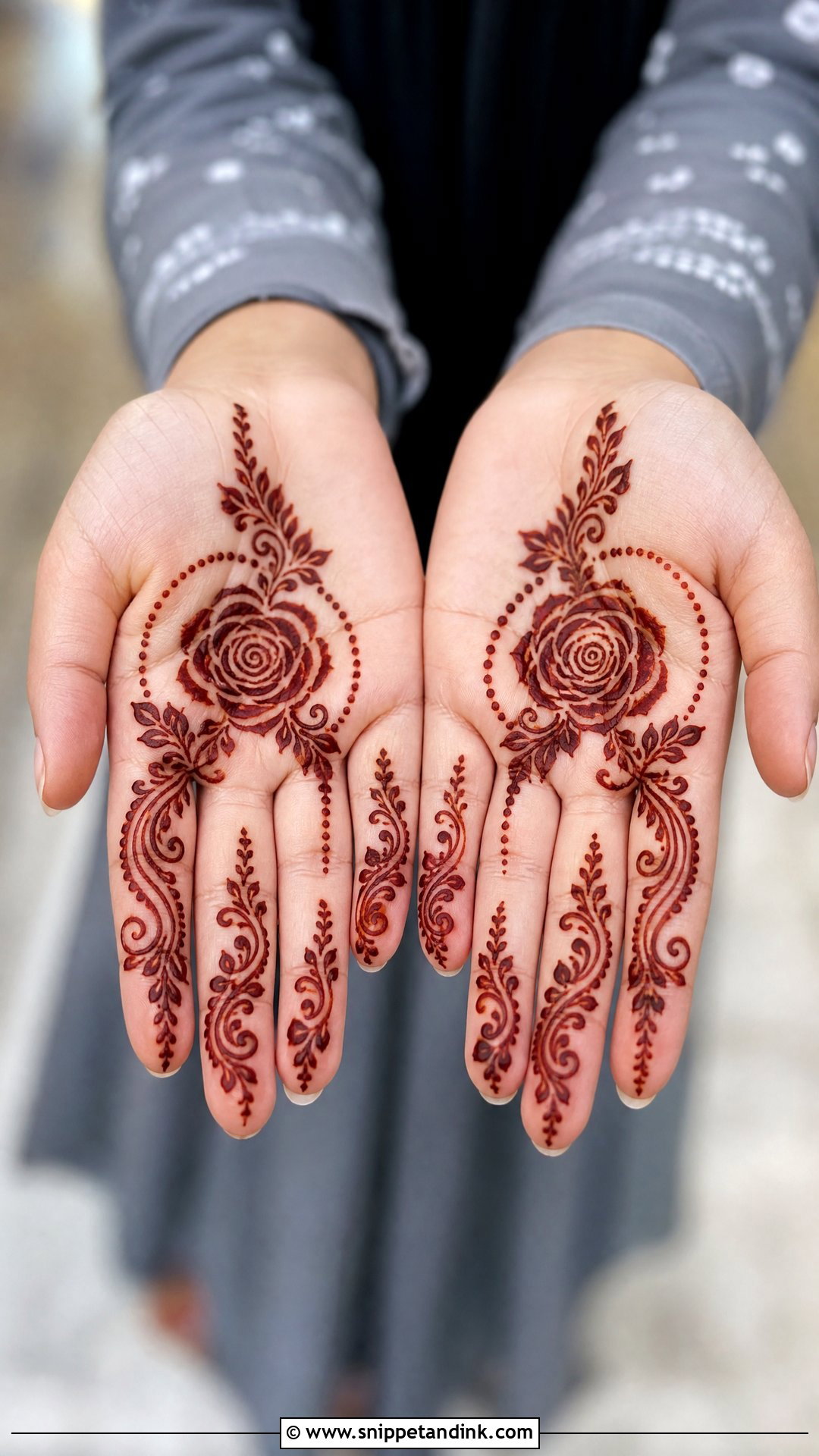
A spiral at the center, layered petals around it, simple leaves and a curved vine toward the fingers: that is the whole rose, and it looks detailed even at a small size. I keep the leaves plain so the bloom stays the focus and frame it with tiny dots. The spiral is where I slow down. Press too hard and the center lines touch, staining as one dark dot instead of a rose.

25. Small Palm Butterfly Mehndi Design
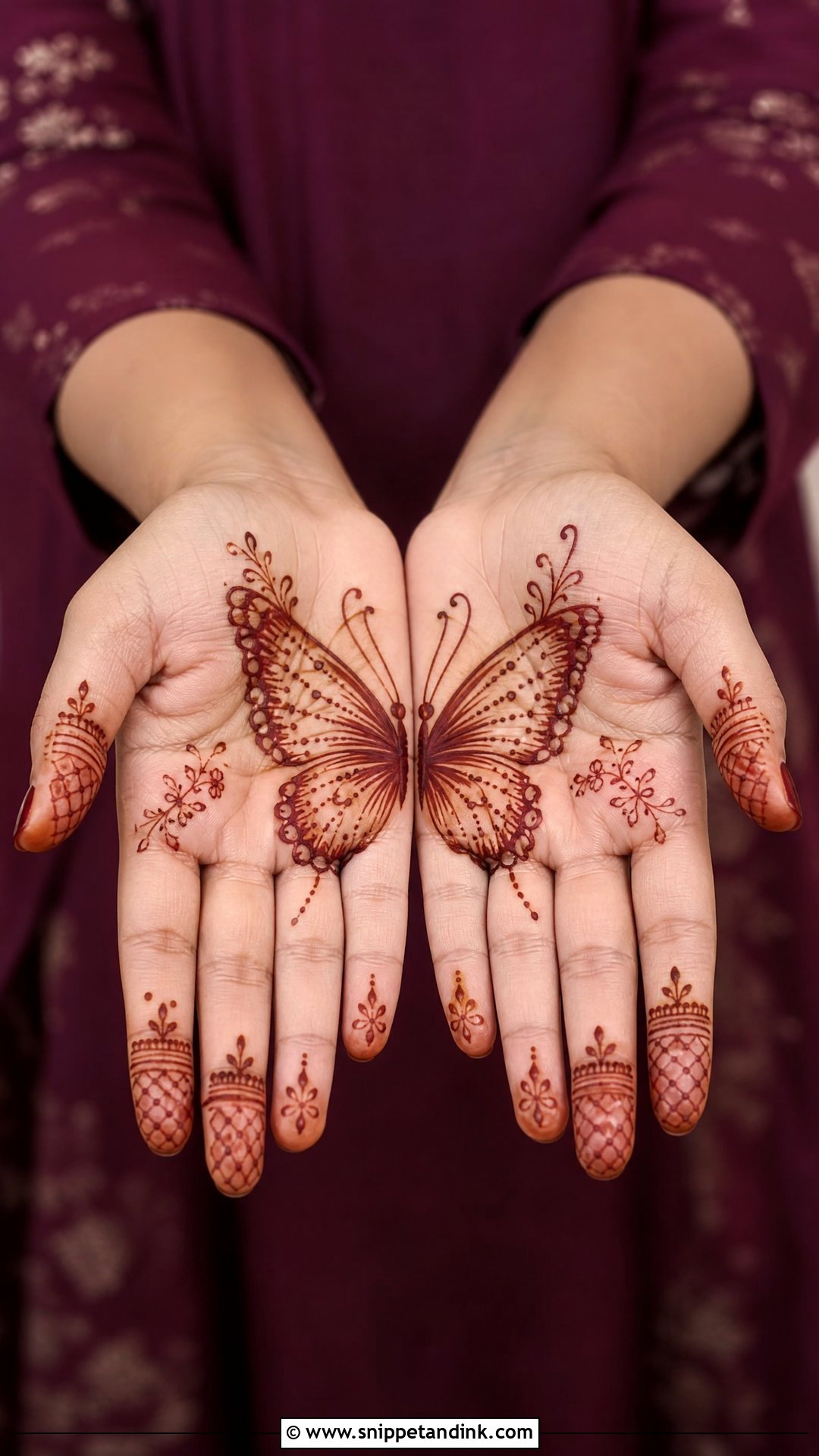
Butterflies go lopsided more easily than almost anything else, so I outline both wings before adding any detail and check them against each other. The body sits in the middle of the palm with the wings spreading toward the thumb and fingers, filled with dots, thin curves and small florals, and the body itself stays simple. Teens and kids ask for these most, though fine lines make it grown-up enough for anyone. A dotted trail off one wing adds movement.
26. Small Palm Gulf Mehndi Design
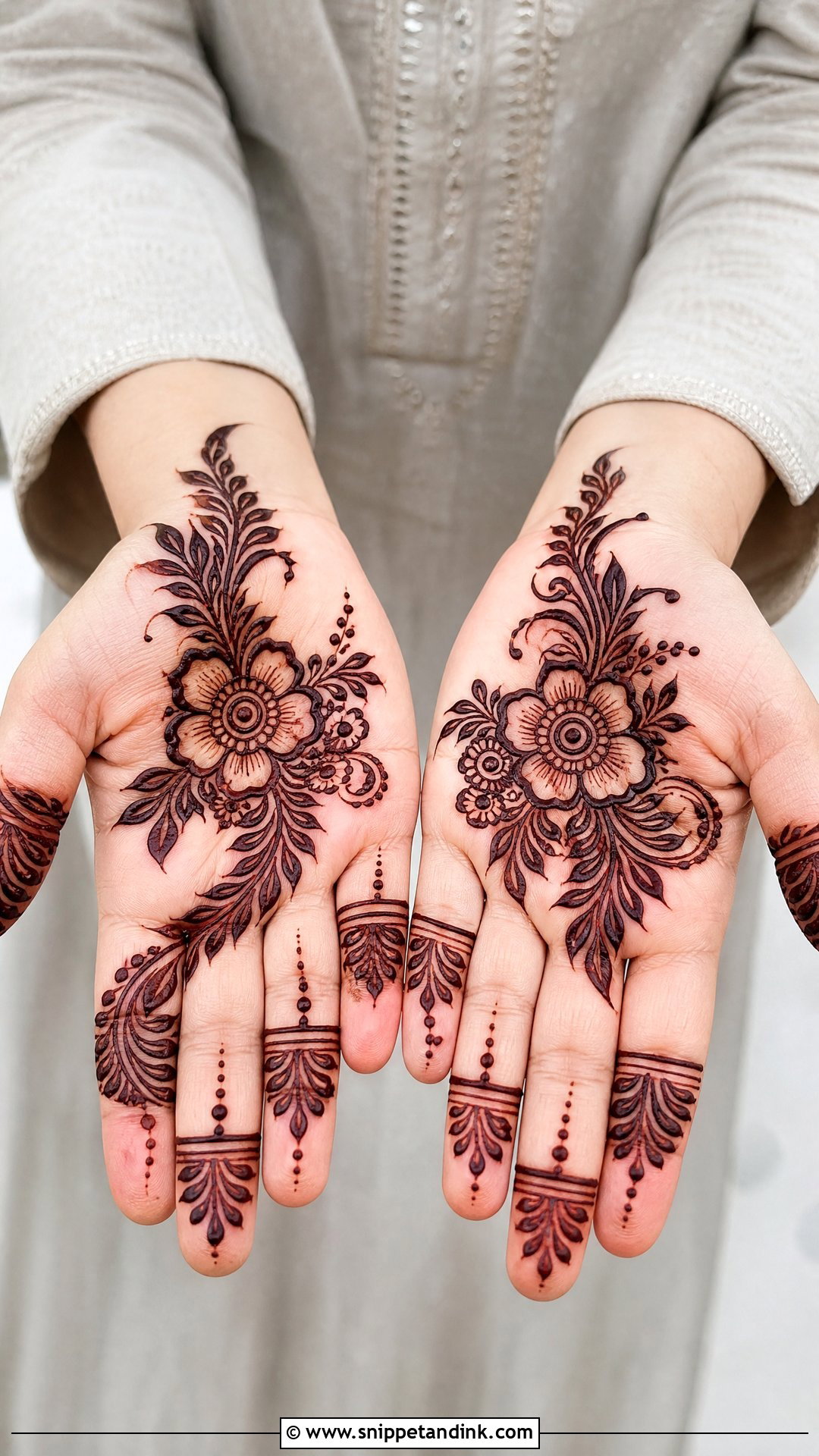
Gulf-style henna uses bold flowers and leafy clusters with generous empty spaces. It’s related to Arabic work but fuller and more dramatic in chosen areas. On a small palm I put a heavy floral cluster on one side, send leaves toward the fingers and leave the other side mostly open. The thick outlines come from a wider cone opening, which gives them that confident weight, and the result holds its own at evening gatherings, Eid and weddings.
27. Small Palm Simple Front Hand Mehndi Design
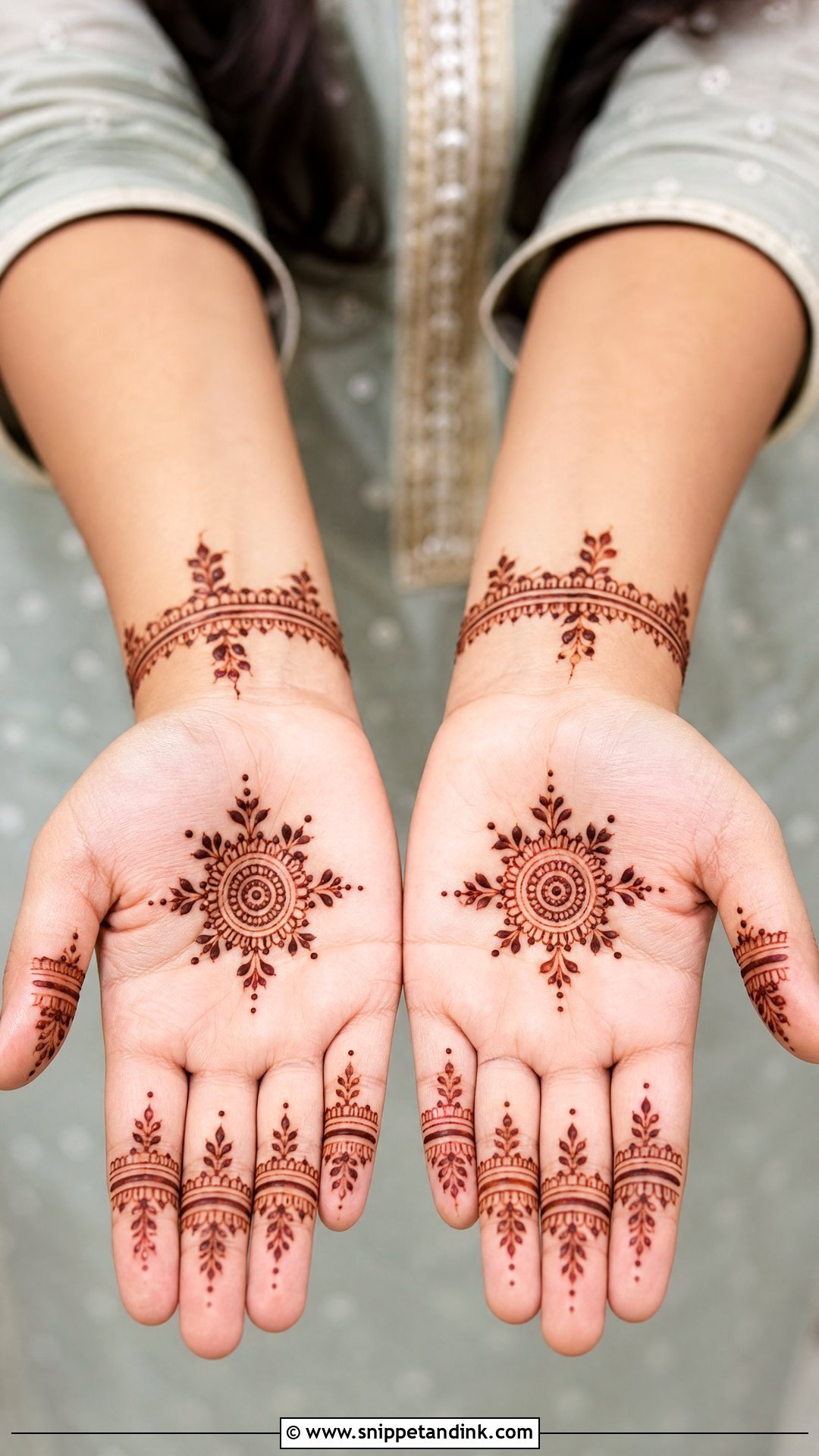
Some days you need henna that’s done in minutes. A tiny mandala, a few leaves, light finger lines and a slim wrist detail give a complete front-hand look without any complex filling, which is exactly what I draw at the end of a long queue or before a last-minute event. The danger is fidgeting, adding one more small element after another until it looks cluttered. A few well-placed dots finish it. Then put the cone down.
28. Small Palm Negative Space Mehndi Design
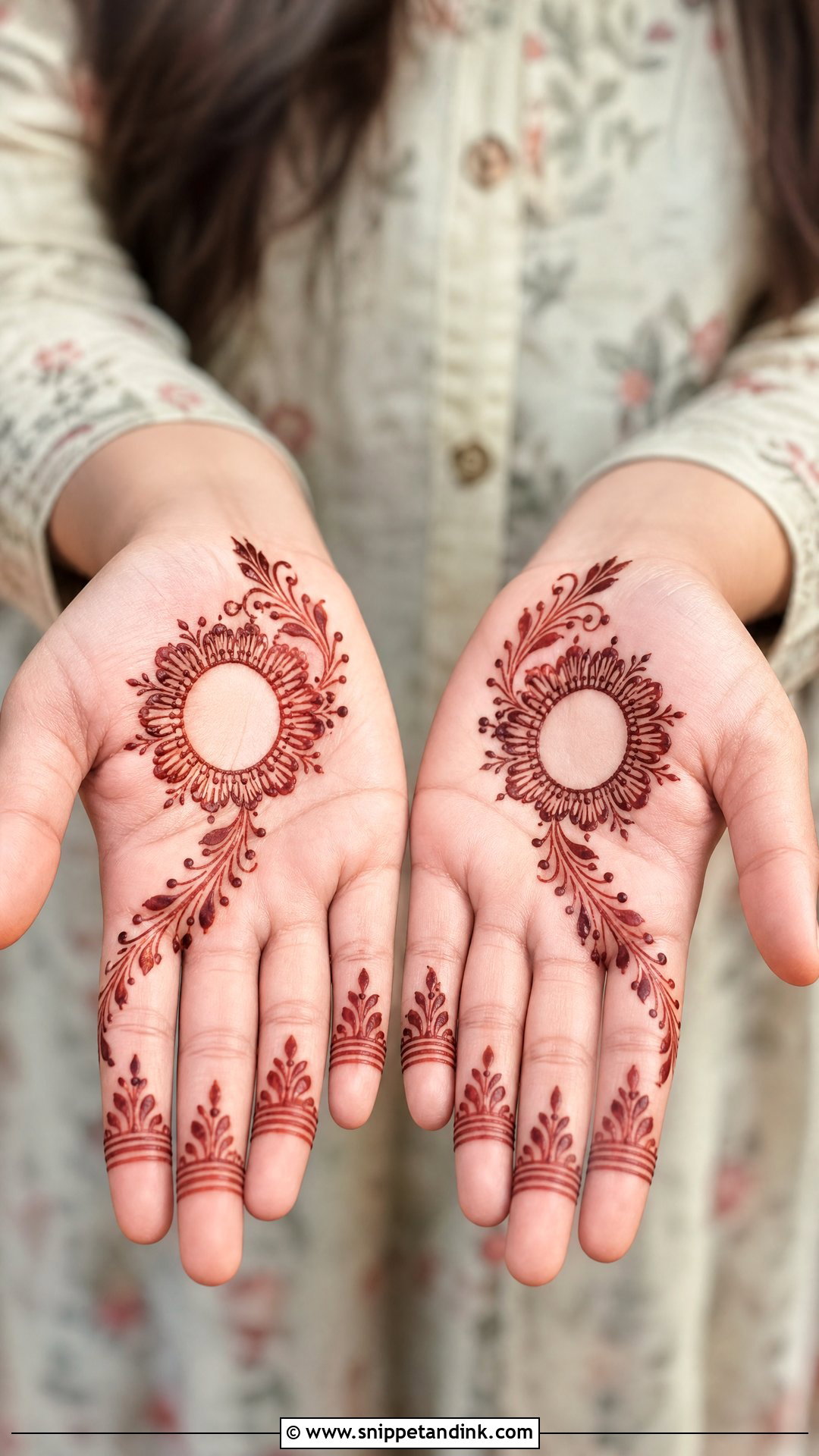
Clean gaps between flowers, lines and borders let each element stand out, especially once the henna darkens. A small circular frame with open petals, or a diagonal Arabic trail with bare skin around it, shows the idea well. Negative space only works if it looks planned, so I repeat small dots or leaves in a few places to tie it together and keep the fingers to a single line-and-dot pattern, leaving the open palm as the focus.
29. Small Palm Full Finger Mehndi Design
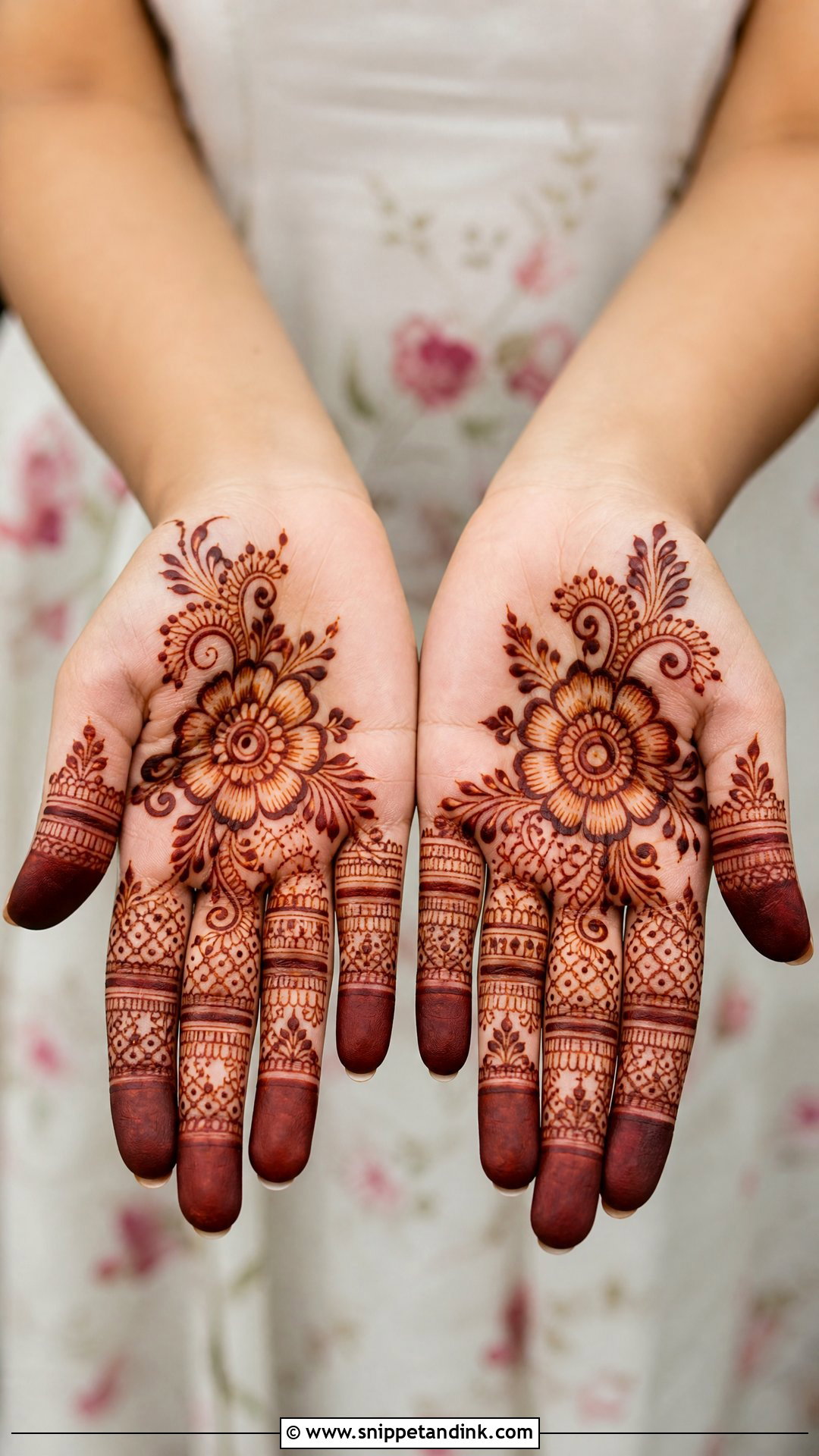
This flips the usual balance: a small flower, mandala or paisley in the palm, and detailed patterns on every finger with ring bands, fingertip caps, dots, small leaves and tiny jaali. You get visible henna with less on the palm itself. The fingers must be coordinated, though. I repeat the same dot or leaf shape across all of them, because a different pattern on each finger looks amateur even when each one is neatly drawn.
30. Small Palm Festival Mehndi Design
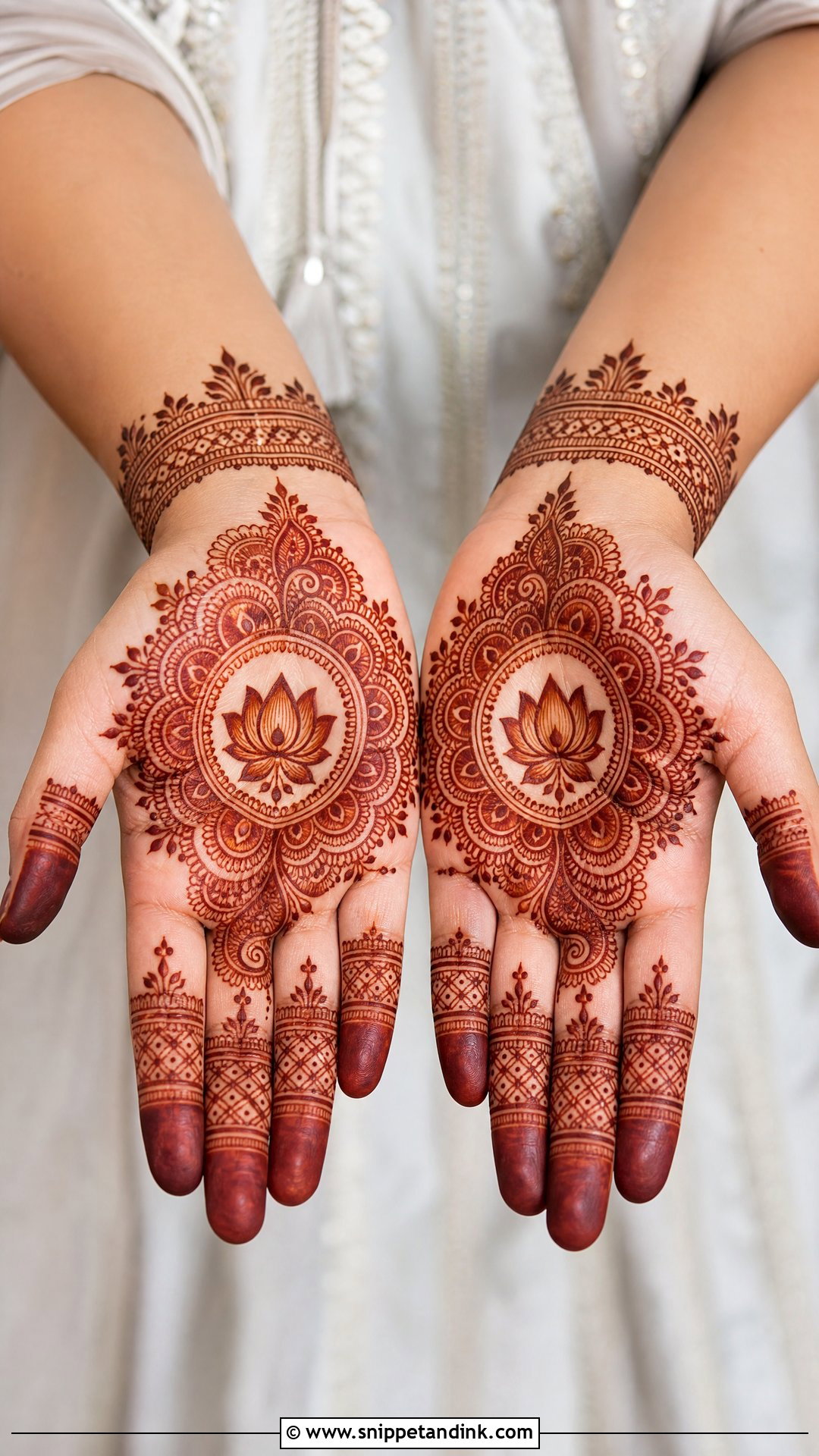
A small palm festival mehndi design has to look dressed up and still survive a long celebration. I’d pick one festive center motif, a mandala, lotus, paisley, crescent or floral circle, then add light finger details and a small wrist band, which covers Diwali, Eid, weddings and family gatherings alike. For a richer version, add tiny dots, shaded petals or a narrow jaali patch, but keep the overall shape compact so it stays a true small palm design.
The Day After the Paste Comes Off
A fresh stain is bright orange, and that surprises people every time. It deepens to reddish brown or maroon over the next day or two as it oxidizes, so judge the color two days after application, not the moment you scrape the paste away.
- Leave the paste on as long as you can manage, ideally six to eight hours or overnight. Most of the stain forms during that time.
- Once it’s dry, dab on a little lemon and sugar mix to keep the paste stuck to the skin. A light glaze is enough; don’t soak it.
- Scrape the paste off with a blunt edge or rub it off dry. Rinsing it off with water cuts the stain short.
- Keep your palms away from water for as long as you can, at least several hours and ideally the rest of the day. Warmth helps, and a cold hand stains paler.
- From then on, rub in a little balm or oil before washing up, and go easy on sanitizer, dishwashing and swimming pools. Palm skin renews quickly, so a small palm design usually lasts one to two weeks before fading.
Black Henna Is Not Henna
Real henna paste is greenish brown and never stains black. Anything sold as instant black henna, or that leaves a black mark within an hour, usually contains a hair-dye chemical called PPD, which can cause blistering burns and a lifelong allergy. I won’t use it, and I’d urge you to say no to it too, especially for children.
Natural paste can still irritate sensitive skin, usually because of the essential oils mixed in to help the stain. If you or your child react easily, ask which oils are in the cone and test a small dot on the inner arm a day or two before the event. I’d also be wary of ready-made cones that sit on a shop shelf for months at room temperature; fresh henna paste is perishable and is normally kept frozen until use.
Dots and a Circle Are Enough to Begin
A design doesn’t have to be large to feel finished; it has to be balanced. Mandalas, tikkis, florals, Arabic trails, paisleys, vines, geometric shapes and negative space all fit a small palm when the spacing, finger details and lines are clean. Match the layout to the occasion, your hand size and how long you can sit still. If you’re learning, practice round motifs and dots first; shading and jaali can wait until your cone control is steady.
You'll Like These Ideas:









Leave a Reply