
The bride’s sister is in a tricky spot with henna. You want hands that look like part of the wedding, but you’re also the one dancing, greeting relatives, carrying trays and standing beside the bride in nearly every family photo. And whatever you wear shouldn’t compete with her. When sisters sit down with me, I plan their design around their duties as much as their outfit. Below are 25 options, from full florals to modern back hands, with notes on how each one fits that in-between role from haldi to reception.
How Much Coverage Is Too Much for the Bride’s Sister?
This is the question sisters ask me most, and there’s no fixed answer, because it depends on what the bride is wearing. So the first step is simple: find out what her artist is drawing. Then scale yours to sit just below it.
- If the bride goes to the elbow, stop yours somewhere around mid-forearm.
- If she has a dense Indian design, choose one with clear open skin between motifs.
- If her henna is minimal, keep yours minimal too. A sister with heavier hands than the bride is the one thing families notice.
- If she has portraits or dulha-dulhan figures, leave those out of yours.
Some brides want their sisters to have almost matching designs, and that’s lovely. It should be her decision, though, so ask before you book.
1. Full Hand Mehndi Design for Sister Wedding
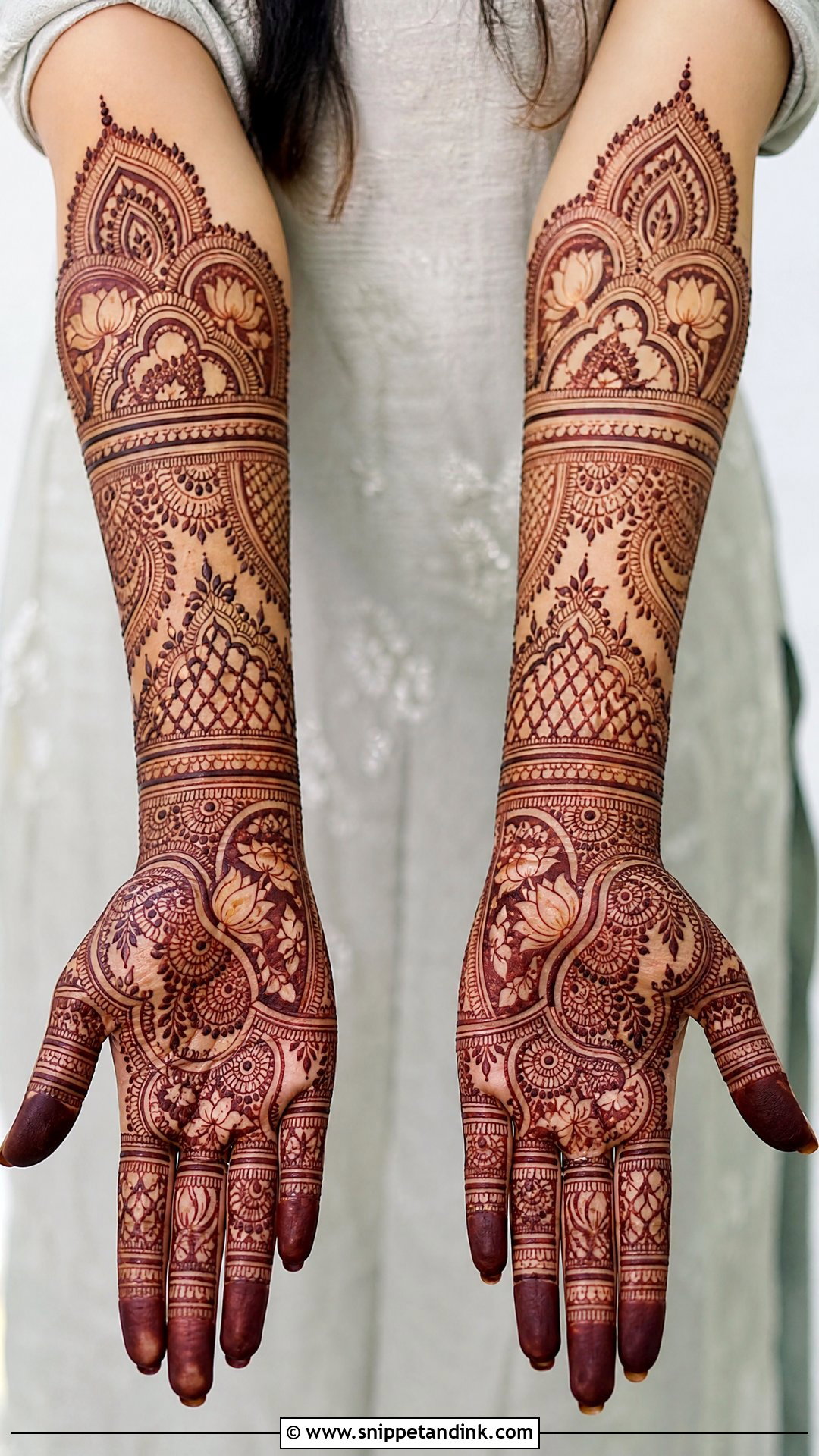
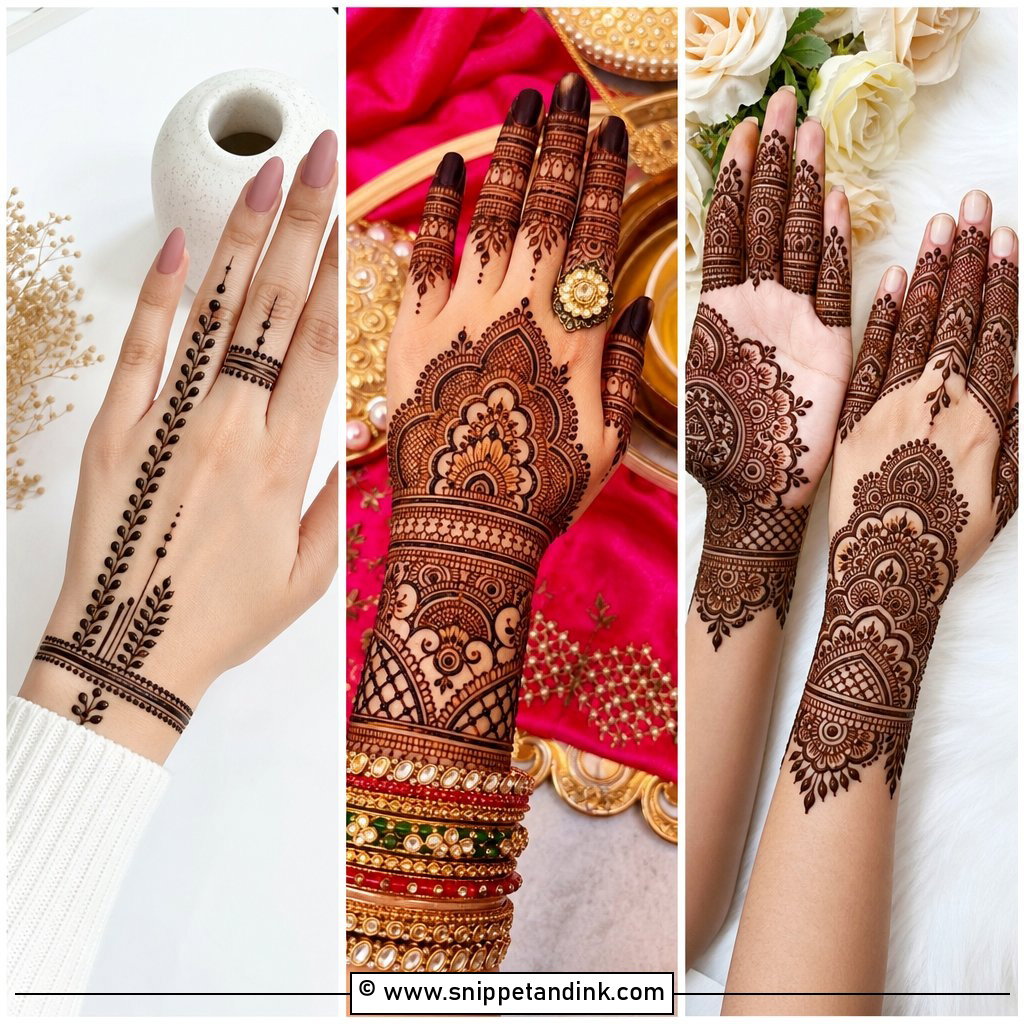
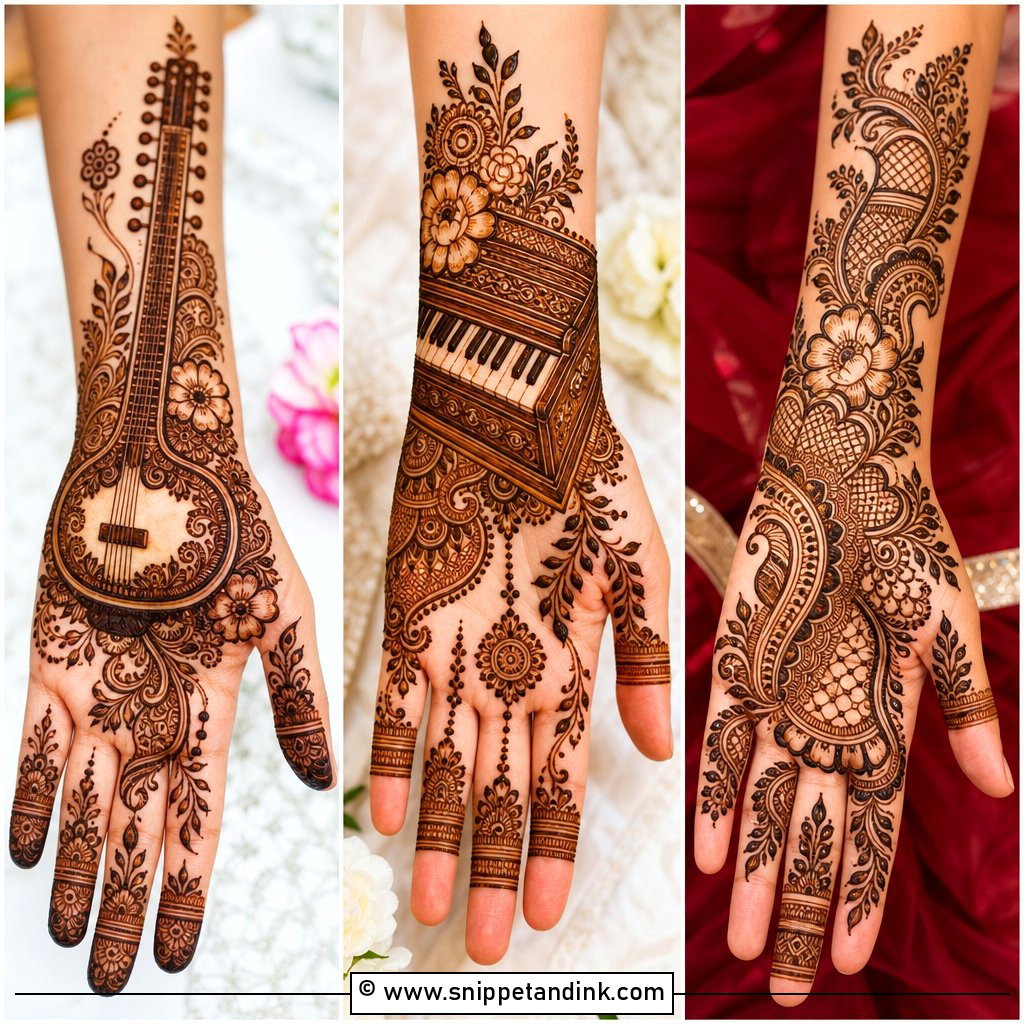
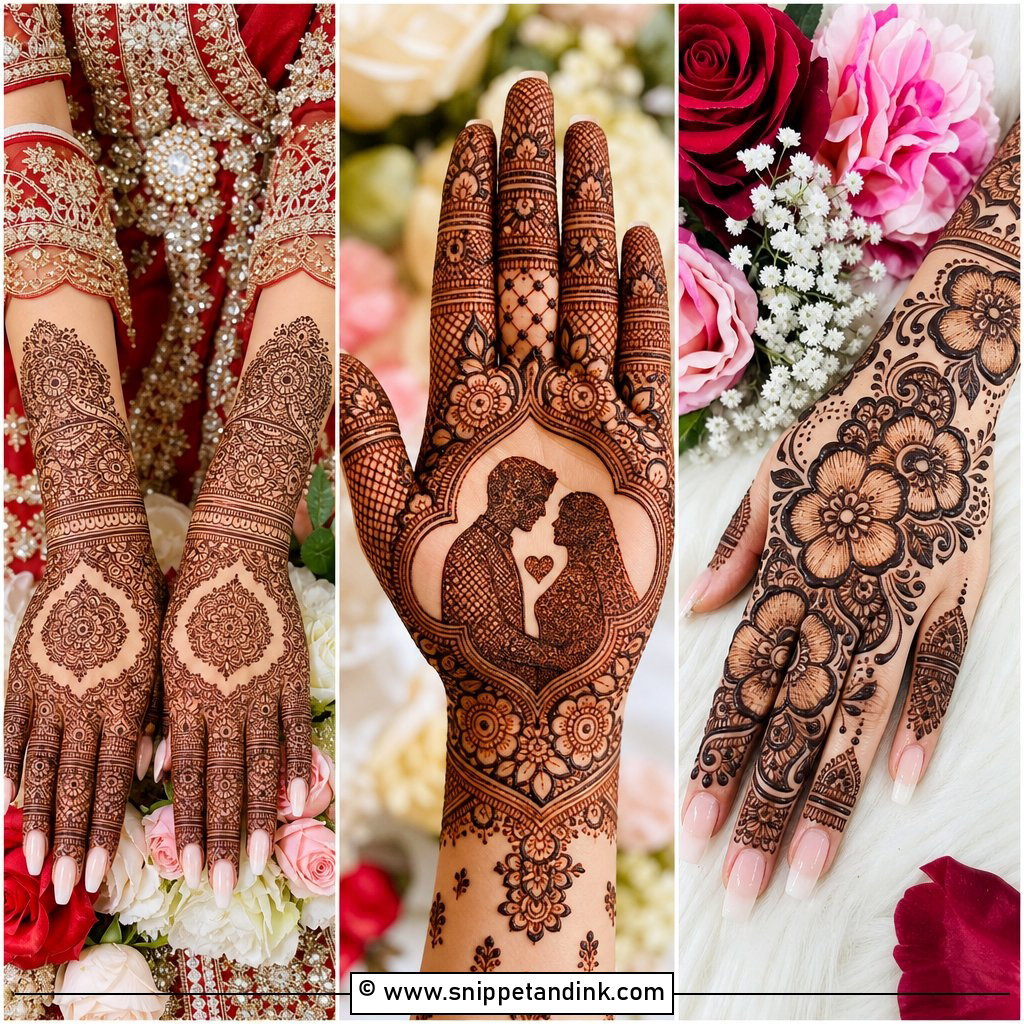
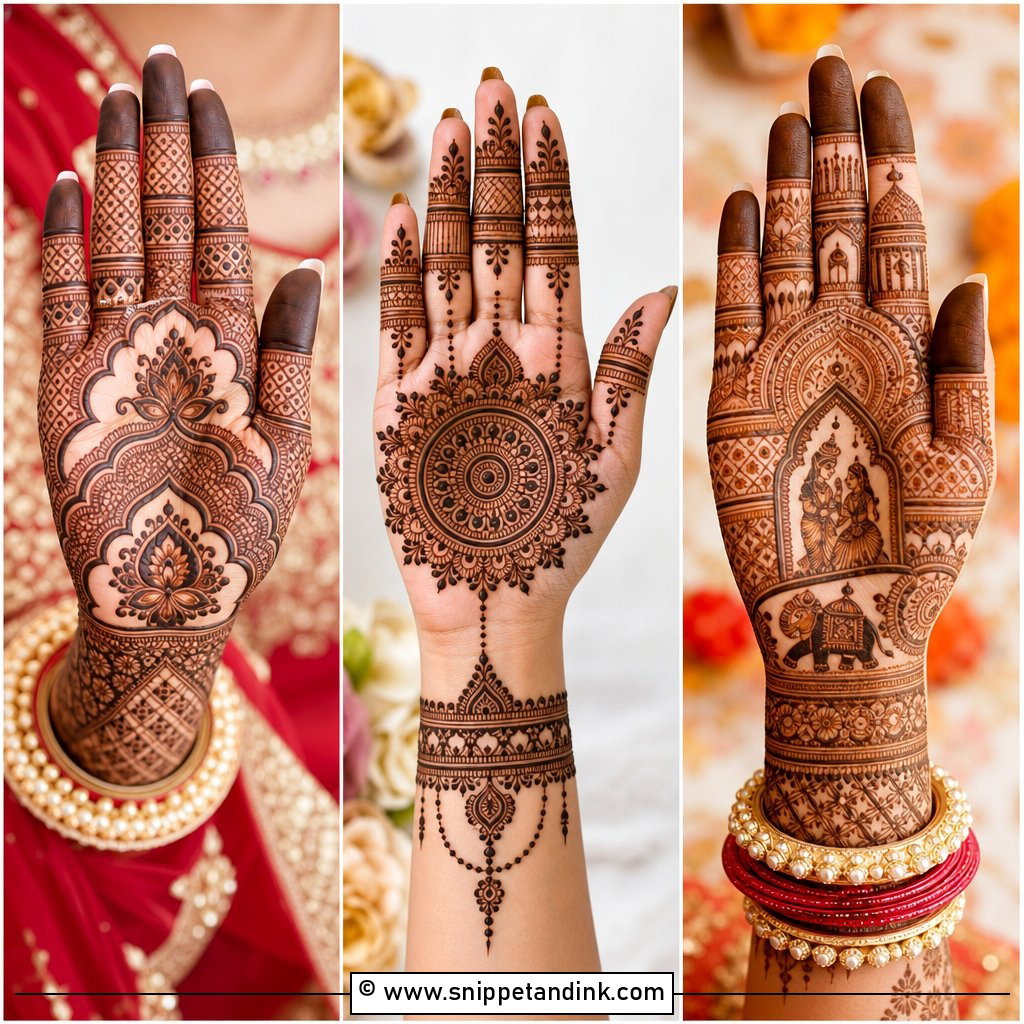
A full hand mehndi design gets you close to bridal while staying a step behind it. Palm, fingers, wrist and part of the forearm carry florals, paisleys, jaali and neat filling. For a sister, I keep the center a little open, partly so it reads lighter than the bride’s hands and partly so the palm stain doesn’t fade into a blotch as you wash your hands through the week. A tiny doli, bells or initials near the wrist add something personal. When both sisters hold their hands out together for the camera, this pairs well with a fuller bridal design.
2. Arabic Mehndi Design for Sister Wedding
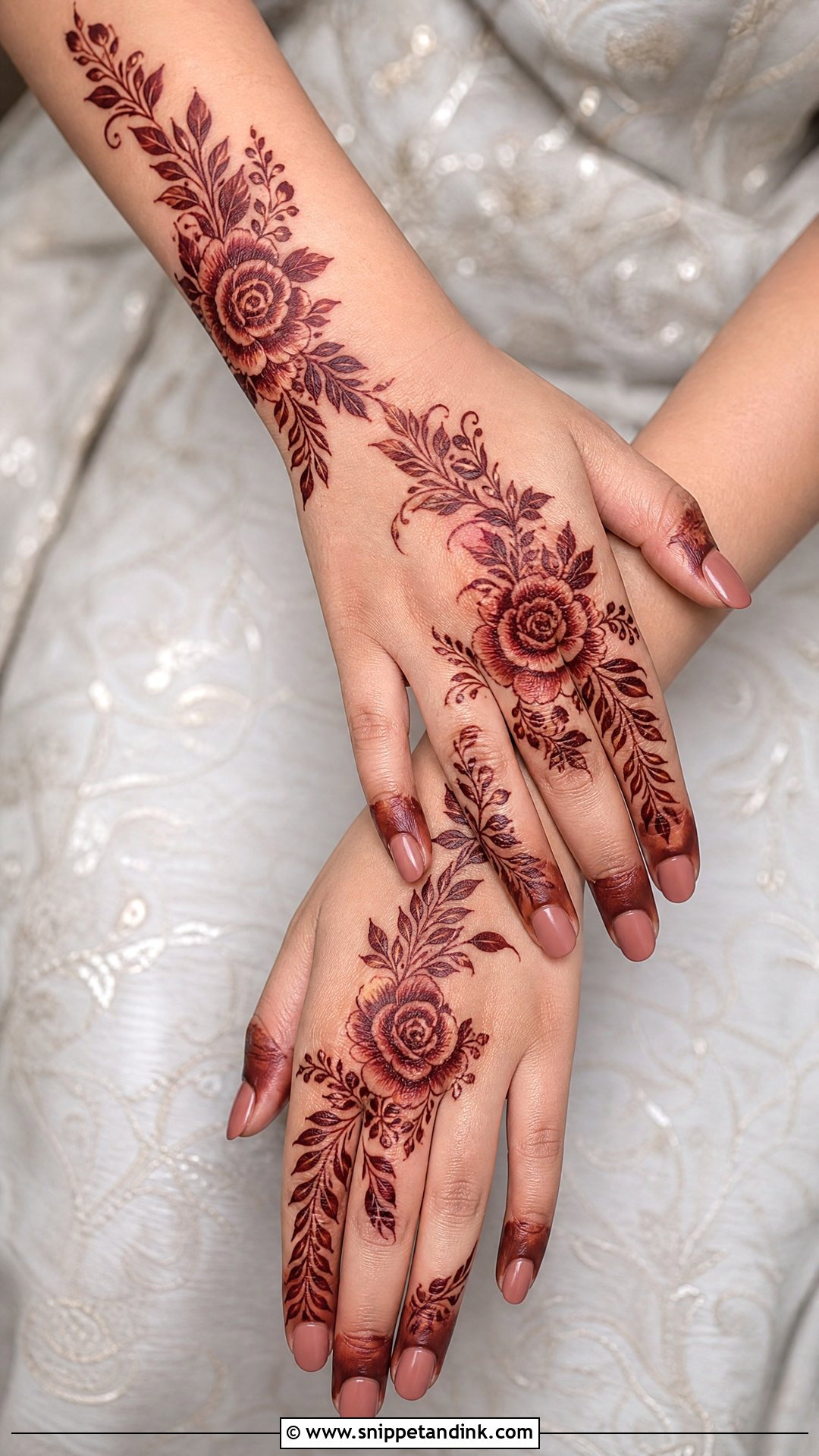
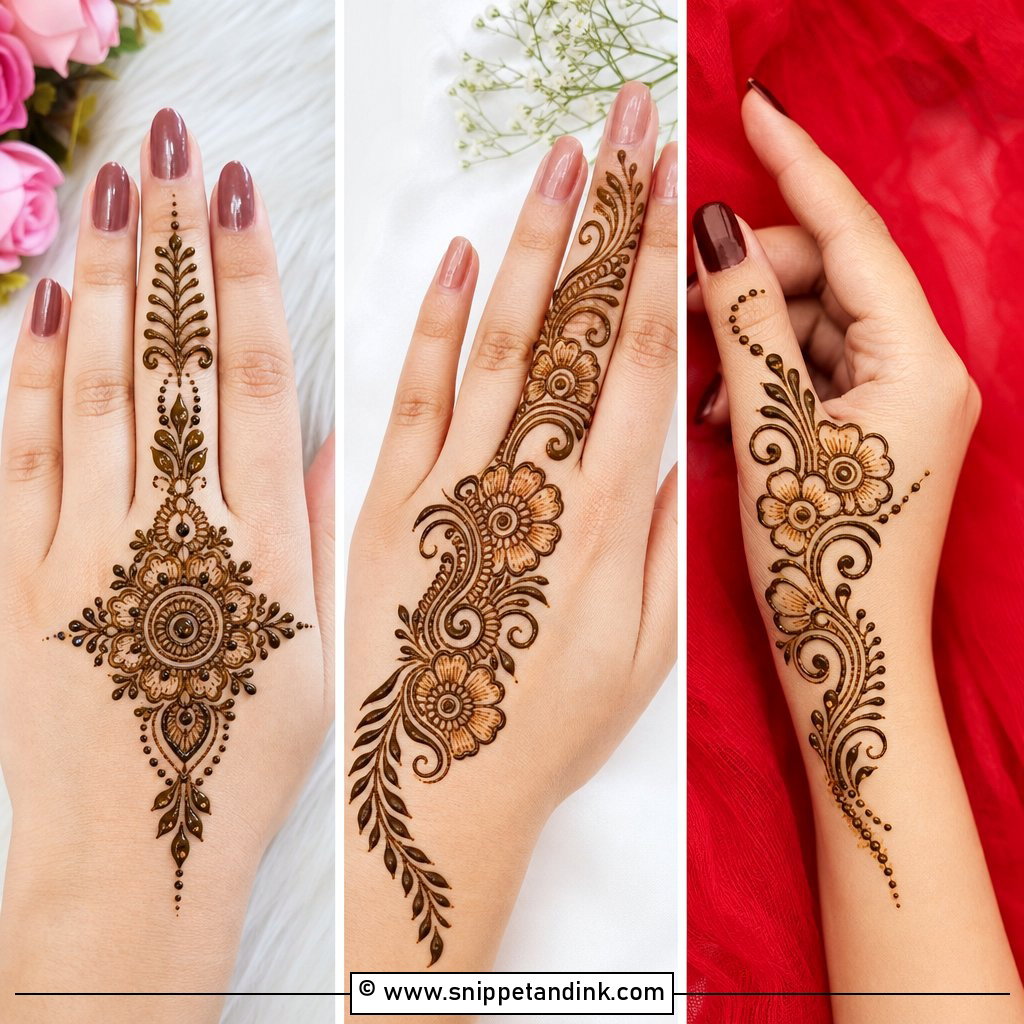
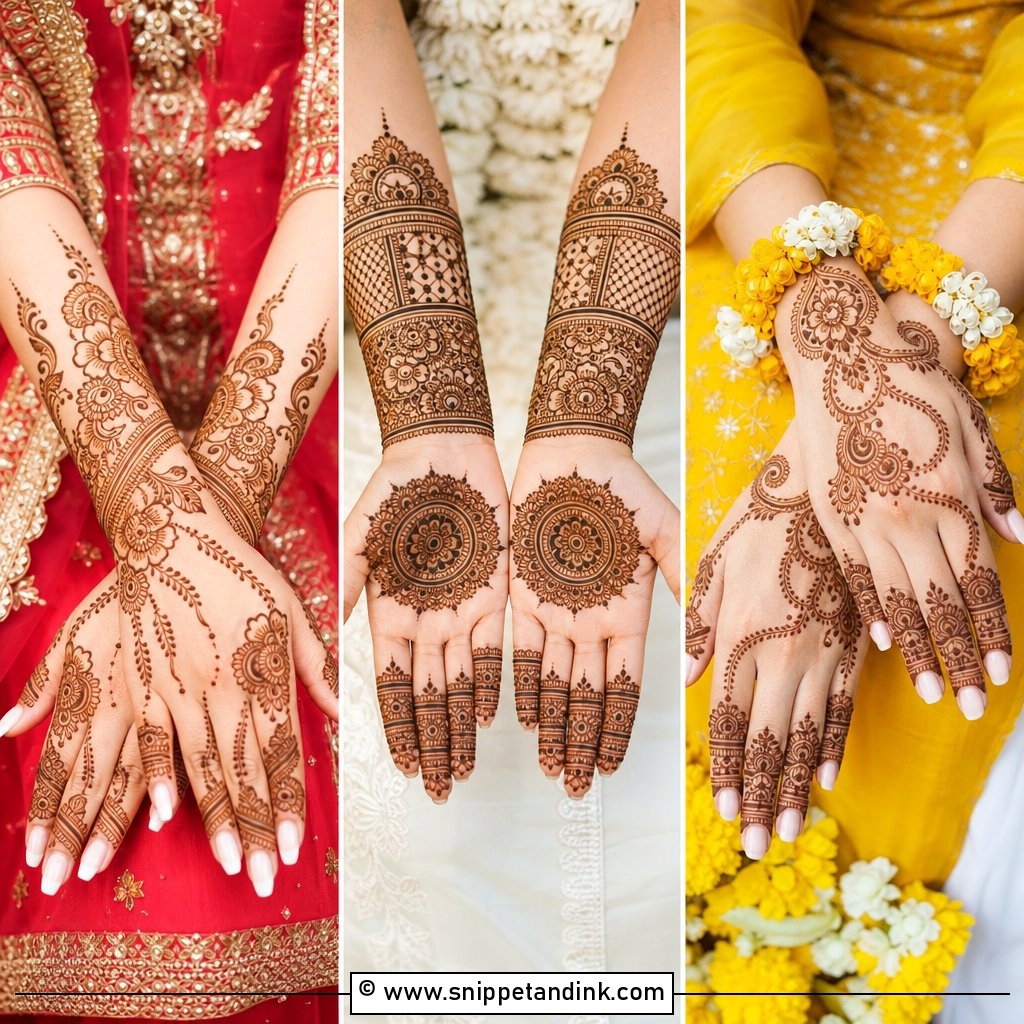
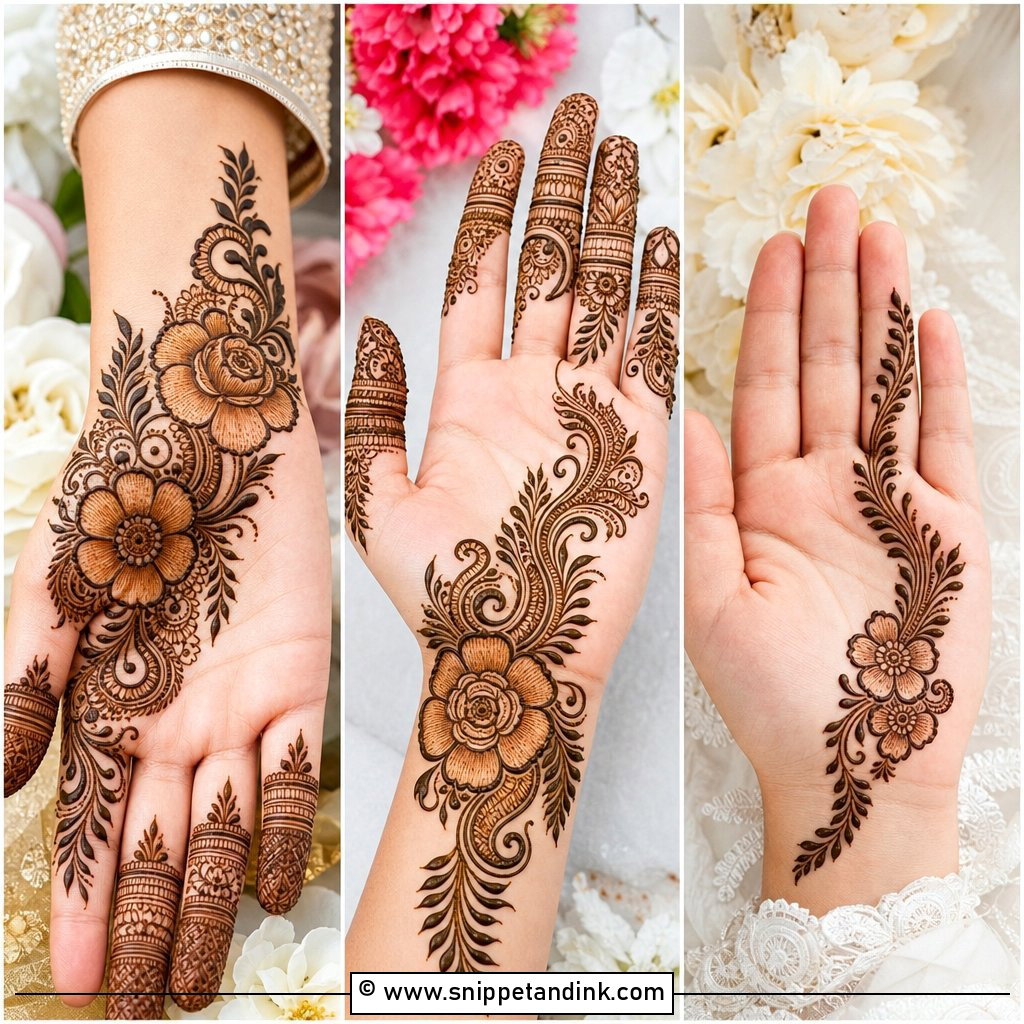
Arabic henna flows diagonally across the palm or back hand with bold flowers, leafy vines and open skin, so it looks rich without crowding. It’s quick to apply, which matters when you have duties all day and can’t sit for four hours. Heavy embroidery on your outfit is balanced nicely by its cleaner lines. I draw the outlines thick and keep the inner shading delicate, because thin Arabic lines can look pale once the paste comes off.
3. Back Hand Mehndi Design for Sister Wedding
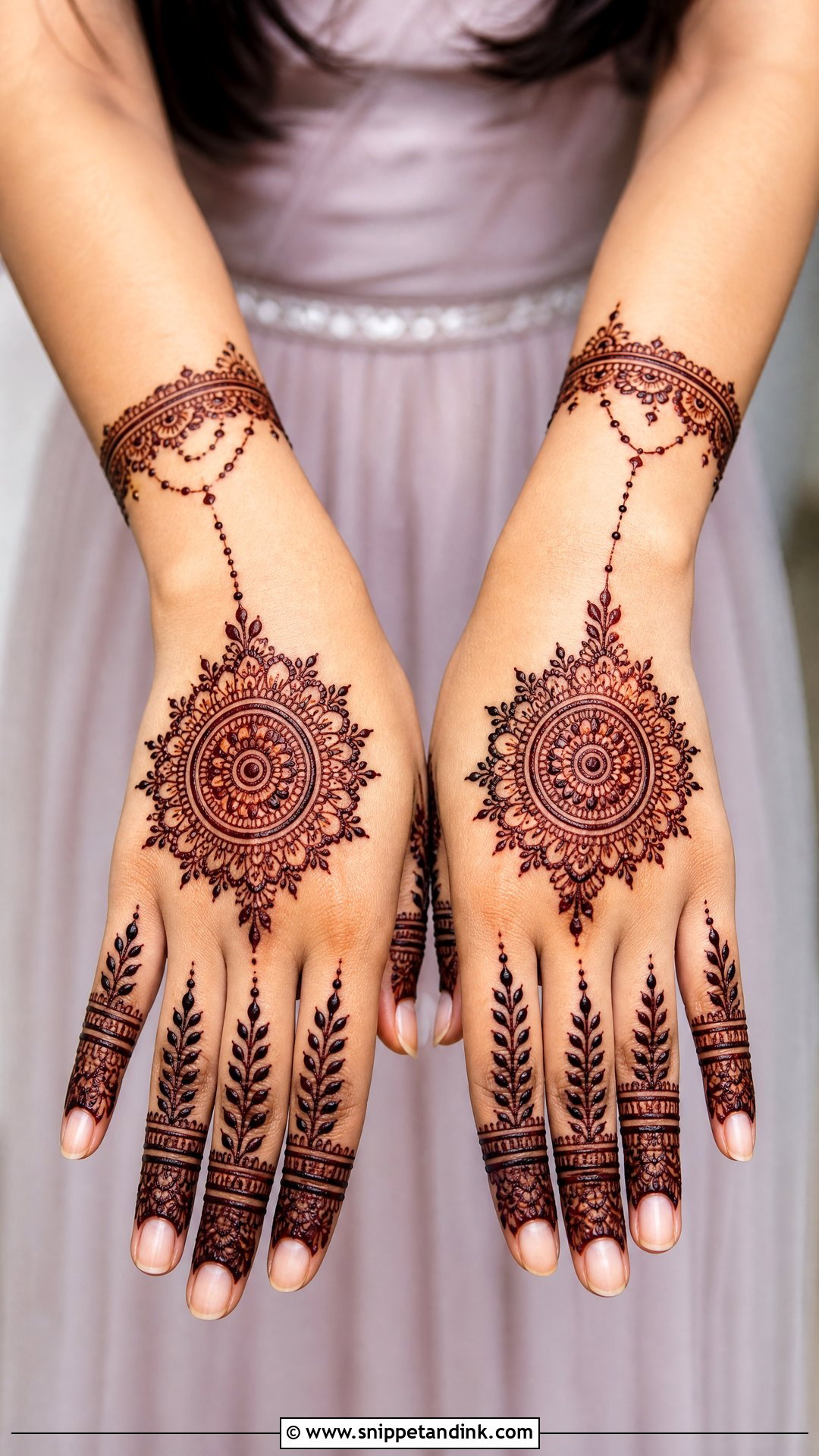
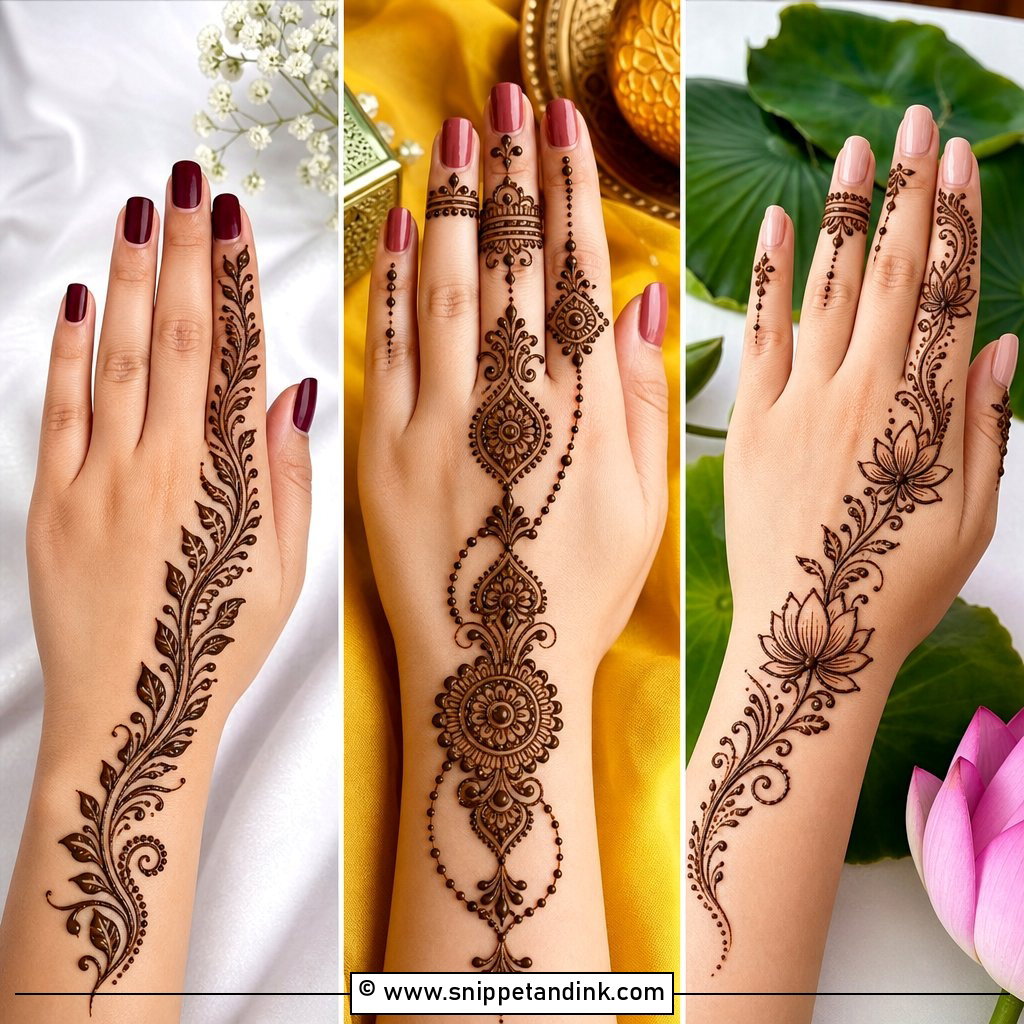
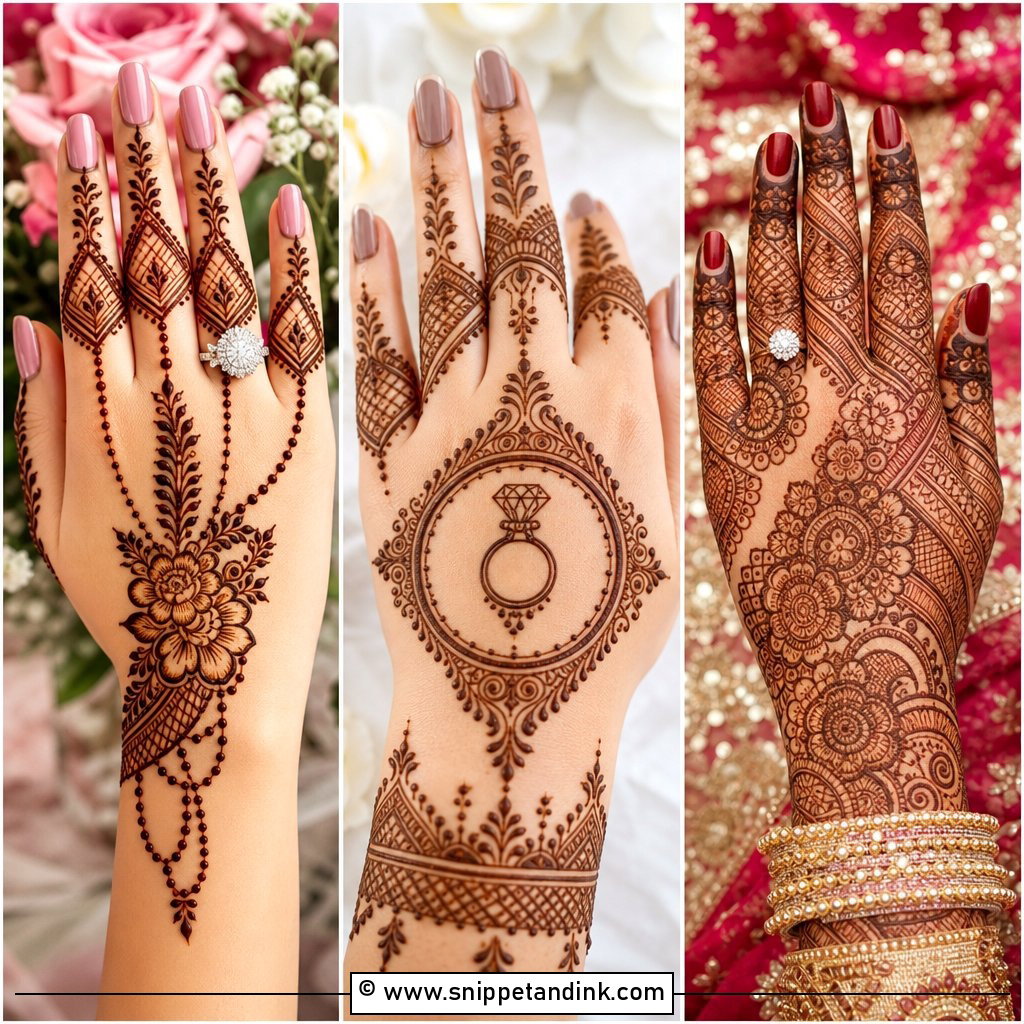
Holding the bride’s dupatta, her flowers or tying her kalire puts your back hand in a lot of photos. I usually give sisters a central mandala, a bracelet band, detailed fingers and a few connecting chains there, structured rather than fully packed. There’s a practical bonus too. Keeping the palm lighter means you can eat, shake hands and help in the kitchen without worrying about smudging or wearing down the stain quite so fast.
4. Front Hand Mehndi Design for Sister Wedding
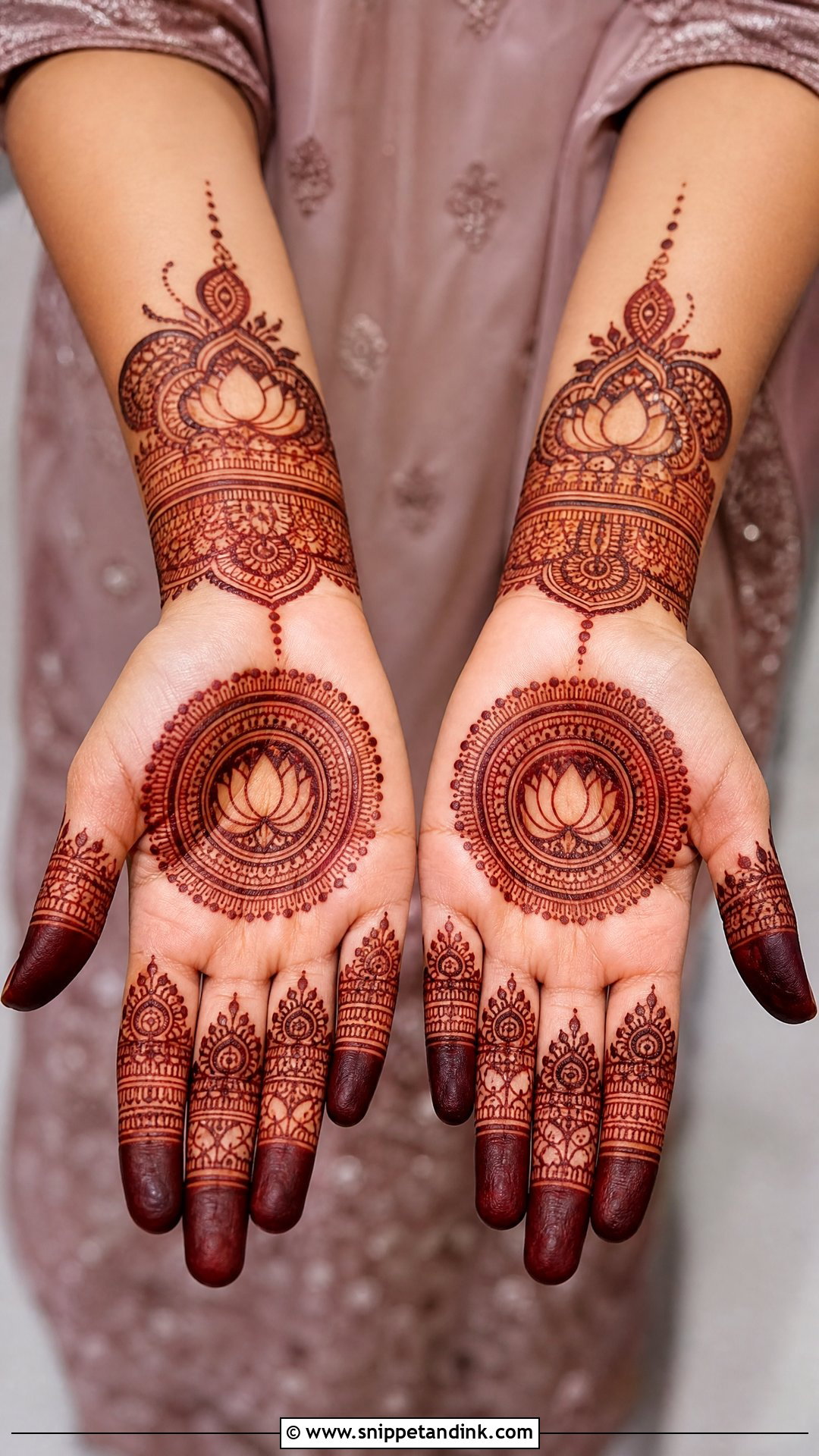
Palm designs feel classic and festive, and they suit traditional family ceremonies. I cover the palm with a mandala, lotus, paisley or floral cluster and let it extend gently toward the wrist and fingers. The skill is in the density. Too much filling looks bridal; too little looks like a guest’s design. A medium-coverage front hand mehndi lands in the right place. You can echo your outfit too, with a lotus for a silk saree or roses for a pastel lehenga.
5. Simple Mehndi Design for Sister Wedding
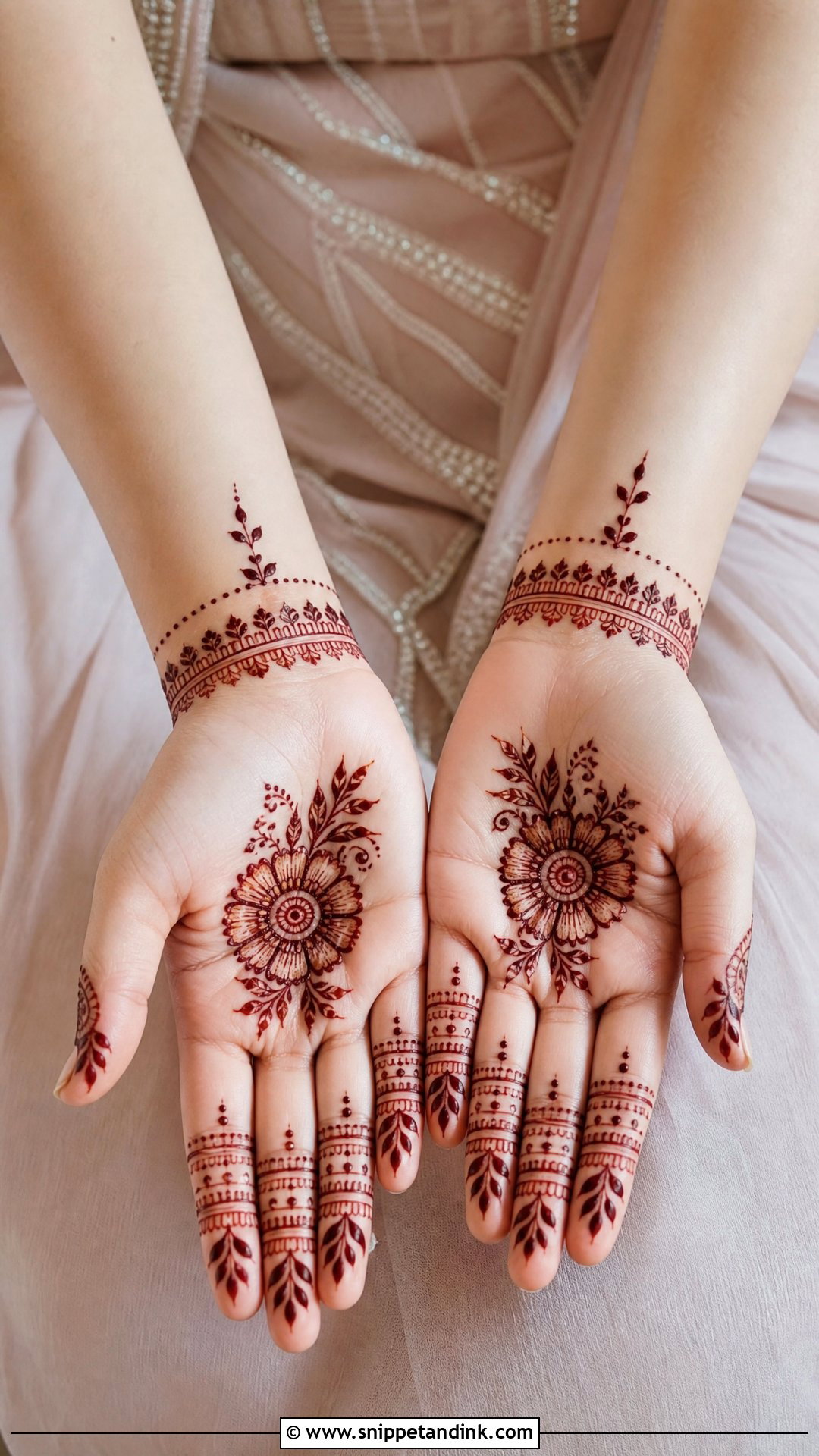
Not every sister wants heavy henna, especially with a packed schedule. A neat palm motif, decorated fingers, a slim wrist band and light floral trails to join them make a complete design that’s quick and comfortable. Younger sisters and cousins often prefer this. Its strength is the spacing and a few bold motifs, so I take extra care that every line is smooth. Haldi, mehndi night and smaller pre-wedding functions all suit it.
6. Indo Arabic Mehndi Design for Sister Wedding
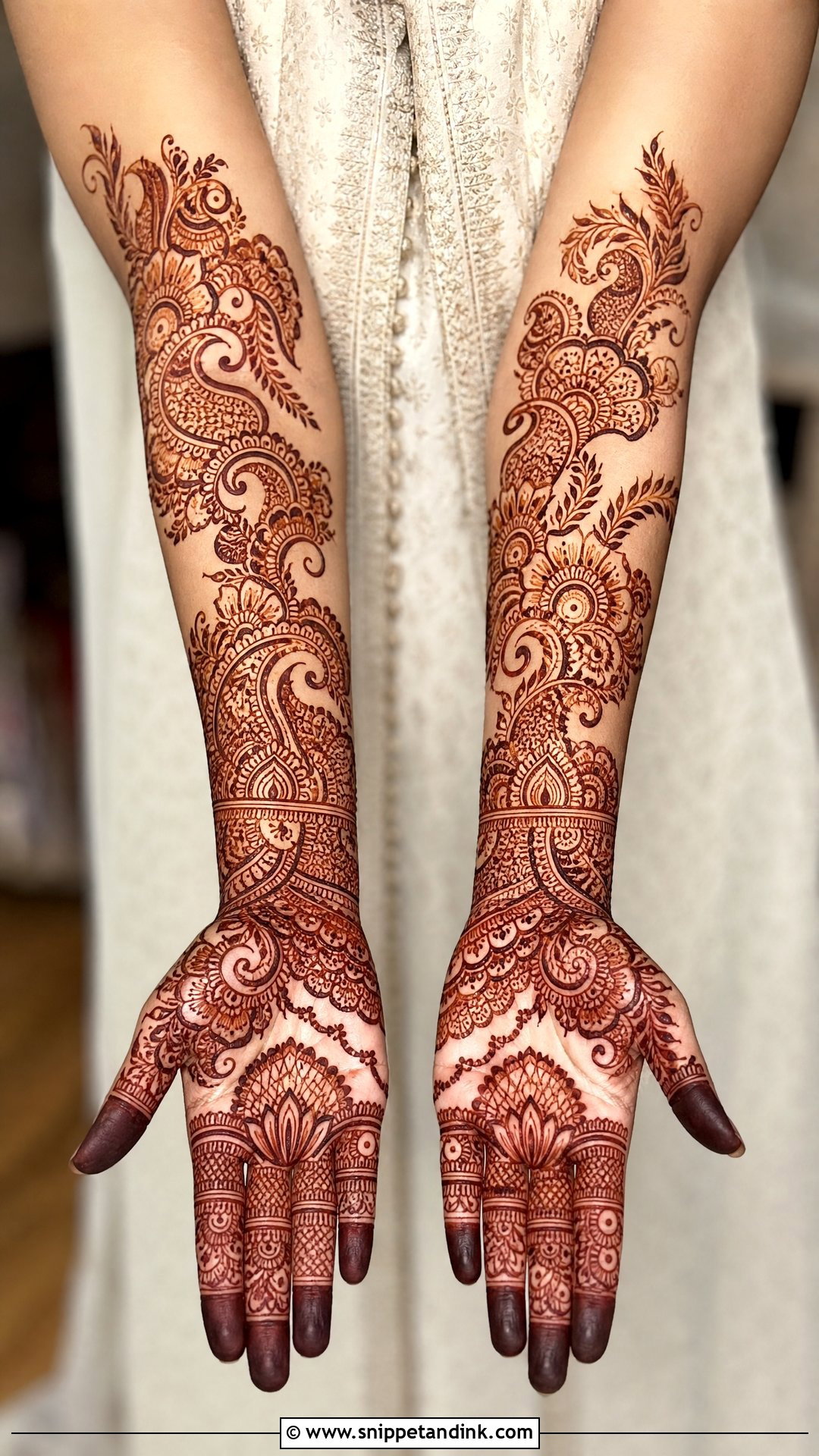
Indo-Arabic designs put Indian paisleys, florals and mandalas on the palm and let Arabic vines and leaves carry the pattern upward. For a sister’s role, I think it’s one of the most balanced choices: festive, but with enough open space between motifs that it never feels as dense as the bride’s work. Half-hand or full-hand coverage both work, and it sits happily with modern or traditional clothes. The gaps also help the stain stay clear rather than merging.
7. Bridal Sister Mehndi Design
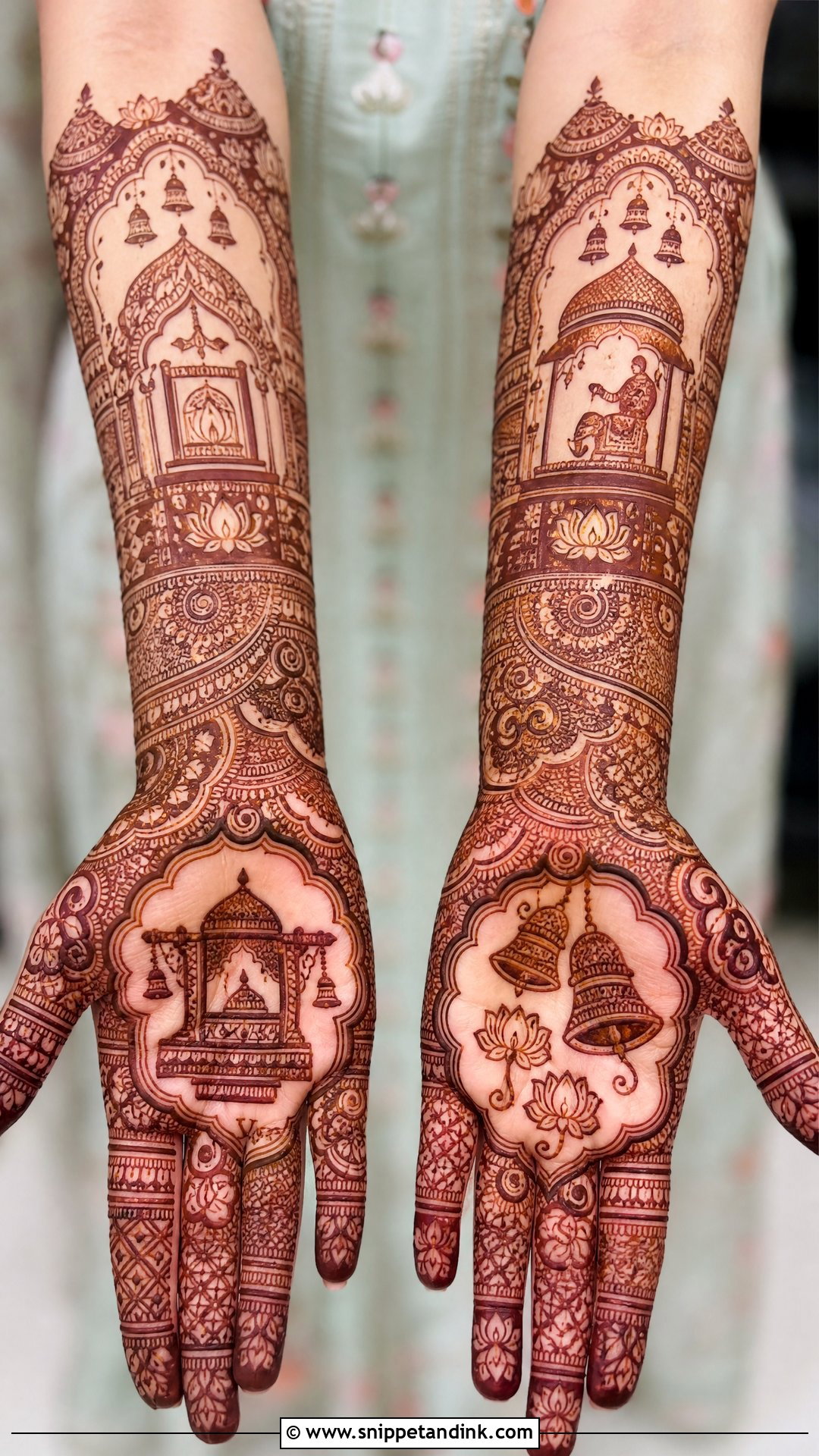
A bridal sister mehndi design can carry wedding elements like kalash, doli, bride-groom silhouettes, lotus, bells and family initials. My rule is simple: one level lighter than the bride. If her henna reaches the elbow, yours stops around mid-forearm; if hers is dense, yours leaves visible gaps. I’ll happily draw wrist-to-forearm coverage with detailed palms and fingers, but I won’t match a bride’s elaborate design on her sister. Hide one small symbol for your sister in there and it becomes personal.
8. Half Hand Mehndi Design for Sister Wedding
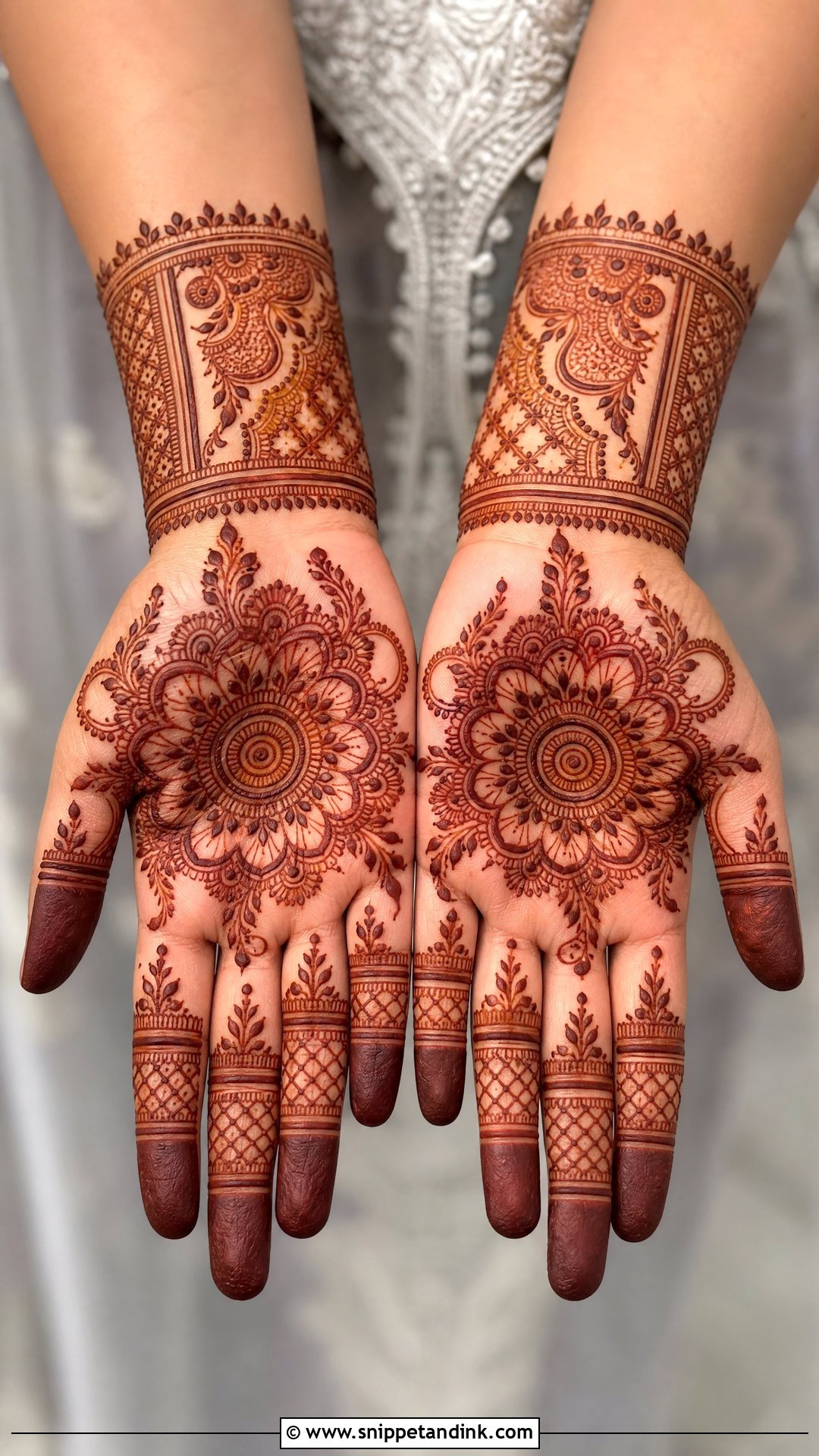
Half hand designs cover the palm, fingers and wrist and stop before the forearm, which saves a lot of sitting time. Traditional, Arabic or Indo-Arabic all work. I give it a clear center motif, filled fingertips and a small cuff so it reads as complete. It’s easy to manage during the ceremonies and still looks full in photos. If you have henna booked for several events, this is the coverage I’d repeat.
9. Minimal Mehndi Design for Sister Wedding
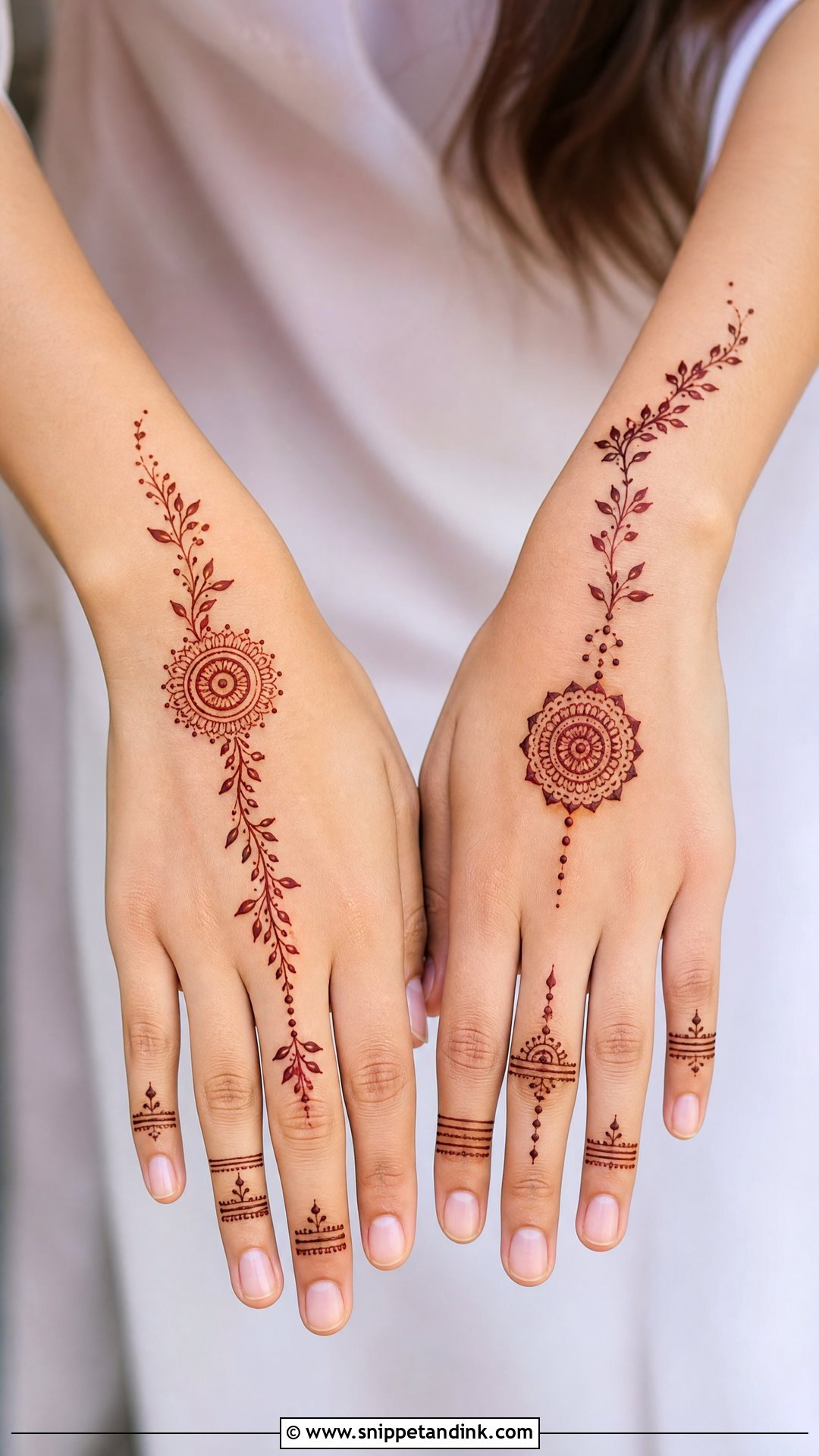
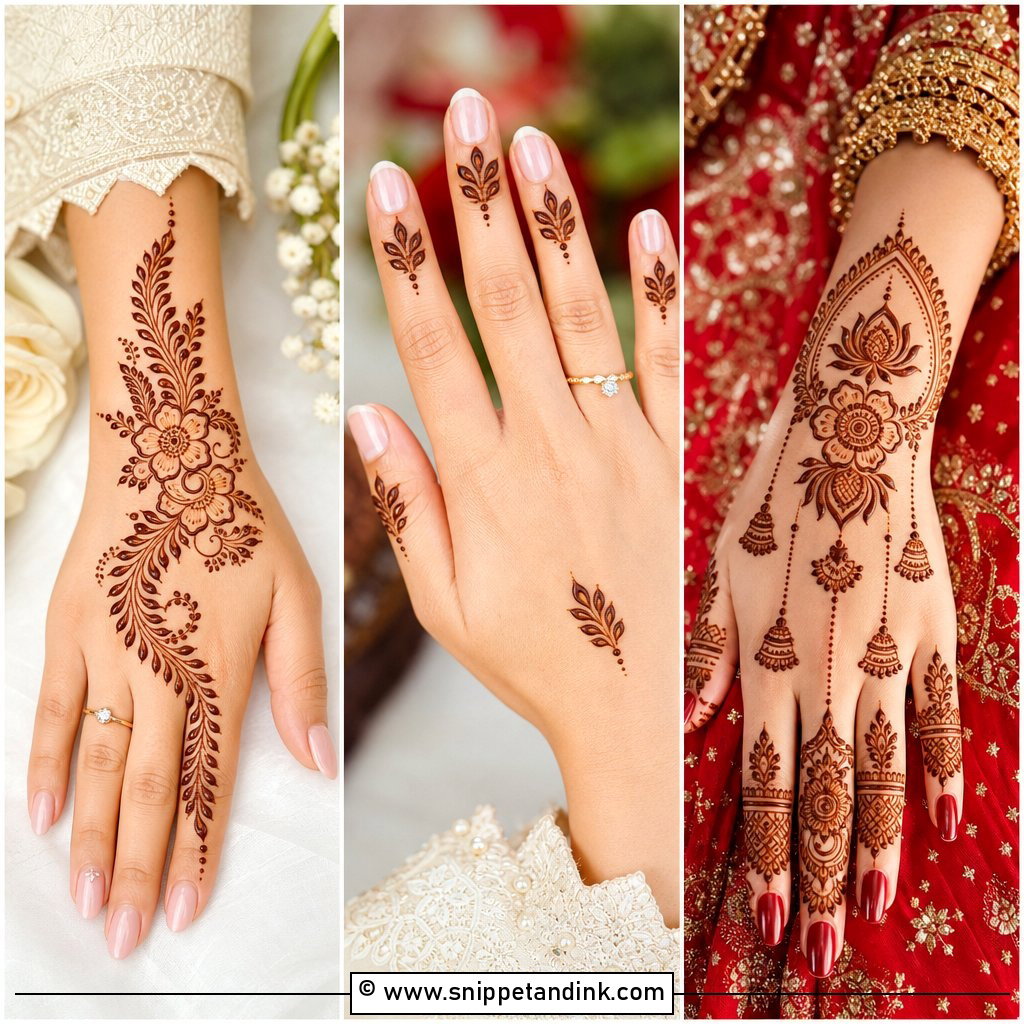
Fine-line florals on the back hand, lightly decorated fingers, a small wrist detail and plenty of empty skin: minimal work looks modern when it’s planned as a whole hand. Pastel outfits, simple jewelry, cocktail-style family evenings and destination weddings suit it. Give it one standout motif such as a mandala, lotus or rose trail, or it can slide into looking unfinished. Precise lines matter more here than in any dense design.
10. Floral Mehndi Design for Sister Wedding
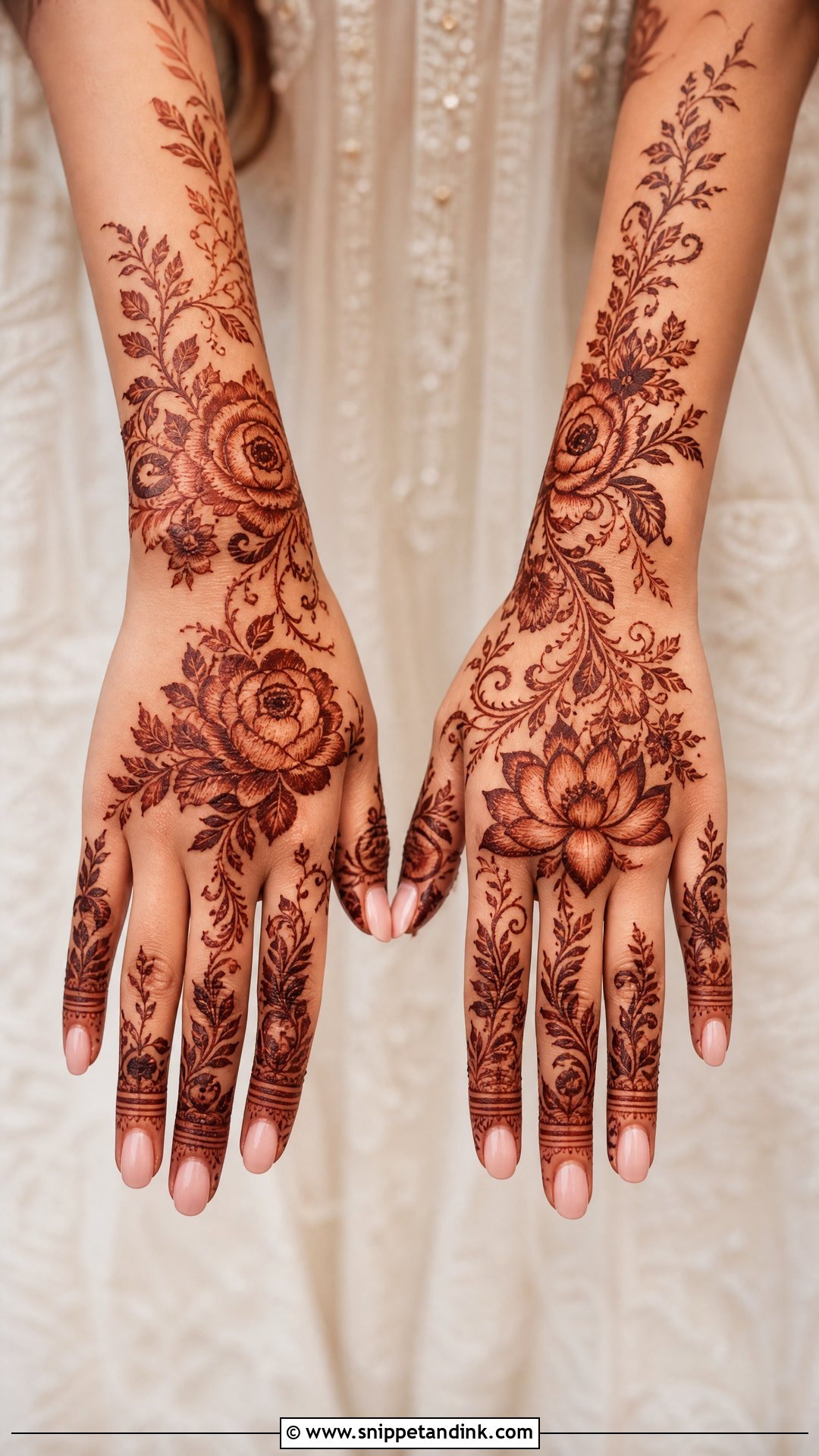
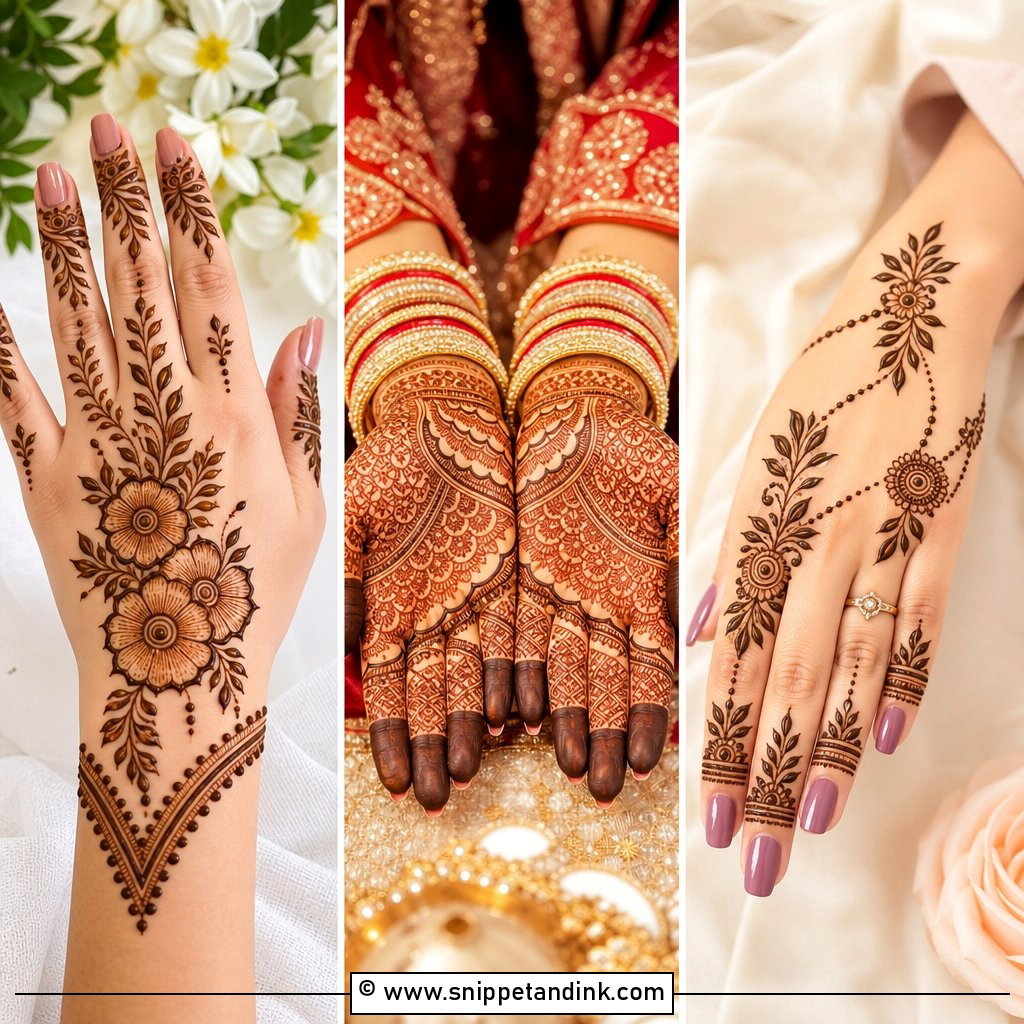
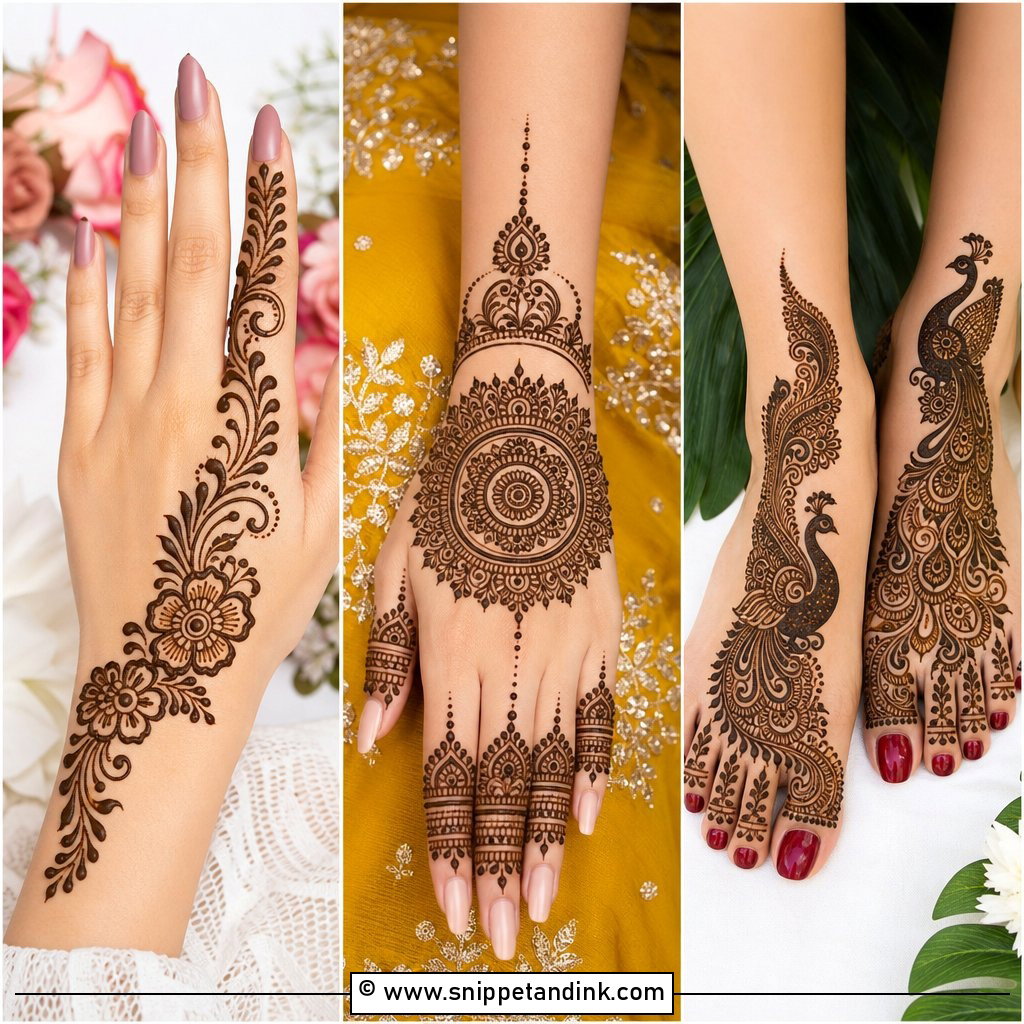
Roses, lotus blooms, leafy vines and shaded petals across the palm and back hand make florals easy to scale up or down for a sister’s role. Large flowers look bold; small ones look delicate. I keep the outlines clean and the shading soft, so the flowers stay readable once the stain darkens rather than turning into brown circles. Floral jewelry at the haldi or a pastel outfit at mehndi night both work with it, and it suits sisters of any age.
11. Mandala Mehndi Design for Sister Wedding
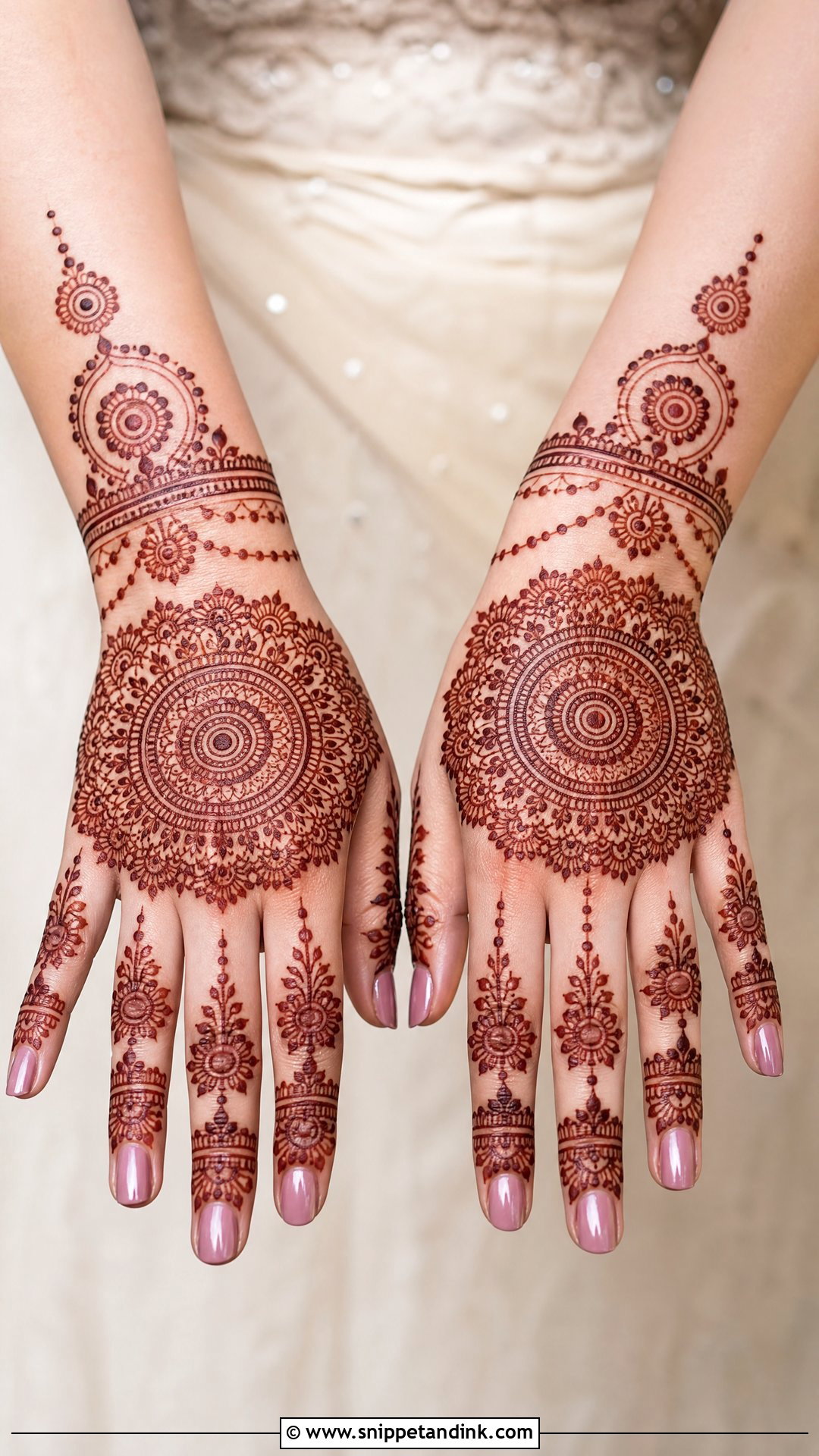
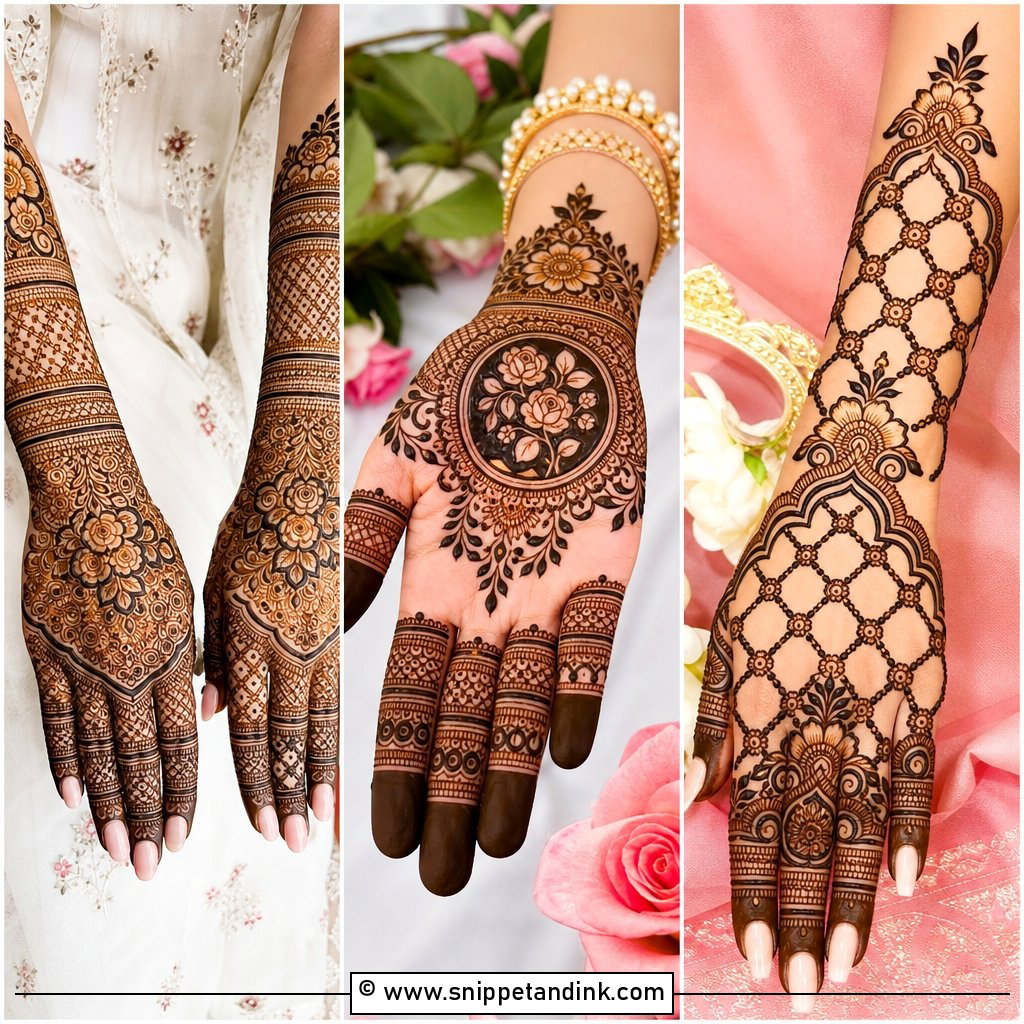
A round mandala on the palm, fingers carrying leafy lines, dots, checks or tiny florals, and on the back hand a mandala linked to a wrist band by chains. It’s classic and quick to apply. For a wedding rather than a casual function, I add layered borders to the mandala so it looks richer. Bangles frame the circle well, which is why sisters with stacked glass bangles often pick it.
12. Peacock Mehndi Design for Sister Wedding
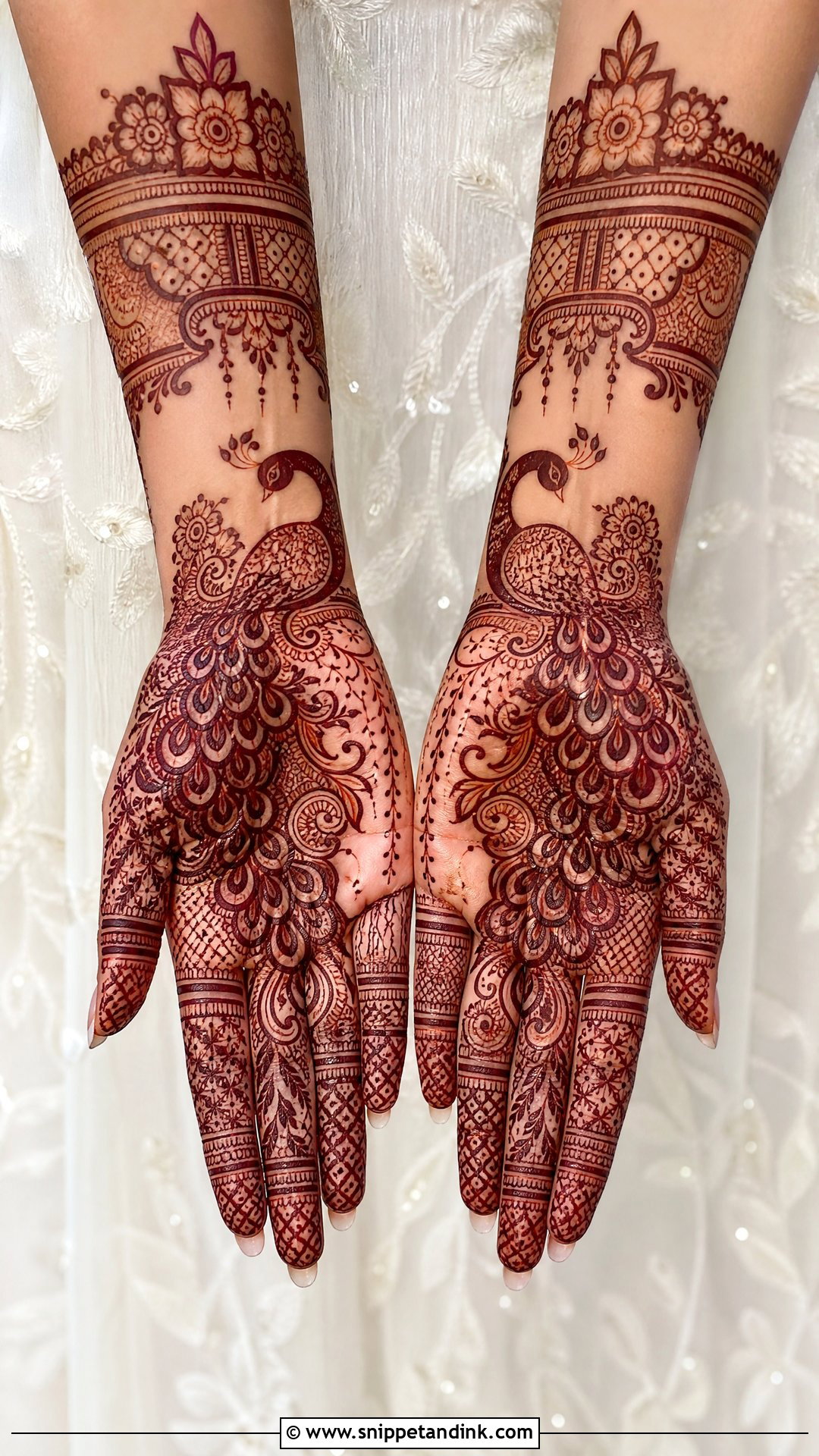
A bold peacock on the palm or back hand, with feathers flowing into paisleys, leaves and wrist details, brings a festive Indian feel without a bridal layout. For a sister, I keep the bird detailed but leave space around it, letting the feathers create movement instead of filling every gap. Small dots, mesh and floral borders refine it. Silk sarees, lehengas and colorful bangles all suit it.
13. Paisley Mehndi Design for Sister Wedding
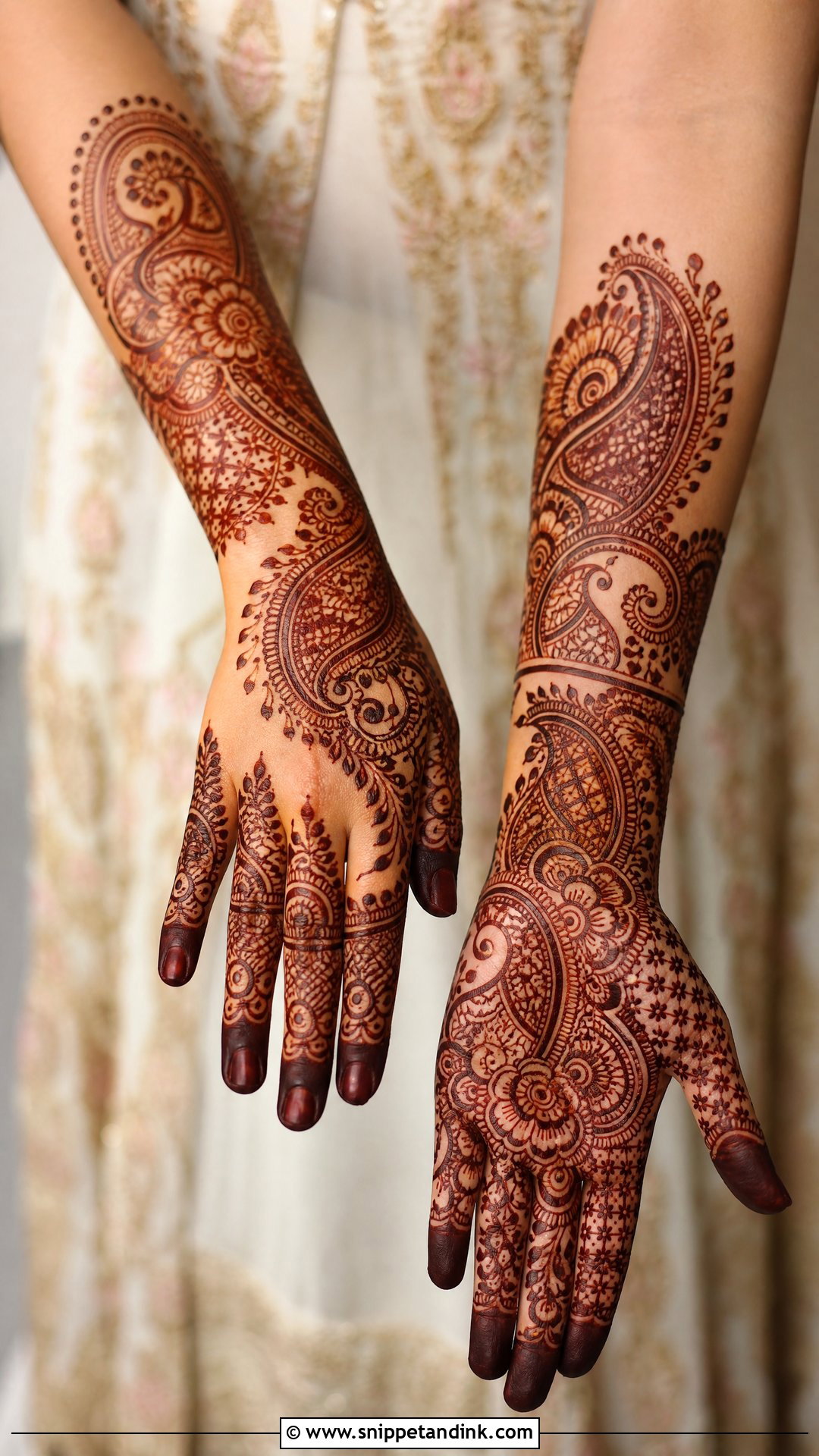
Layered paisleys on the palm that run into floral vines and patterned fingers are a safe, traditional choice. On the back hand I set them diagonally for an Arabic-inspired flow. Paisleys take so many fillings (dots, lines, mesh, petals, swirls) that it’s easy to overdo; for a sister I stop at medium coverage. Outfits with zari, mirror work or traditional embroidery match it naturally.
14. Jaali Mehndi Design for Sister Wedding
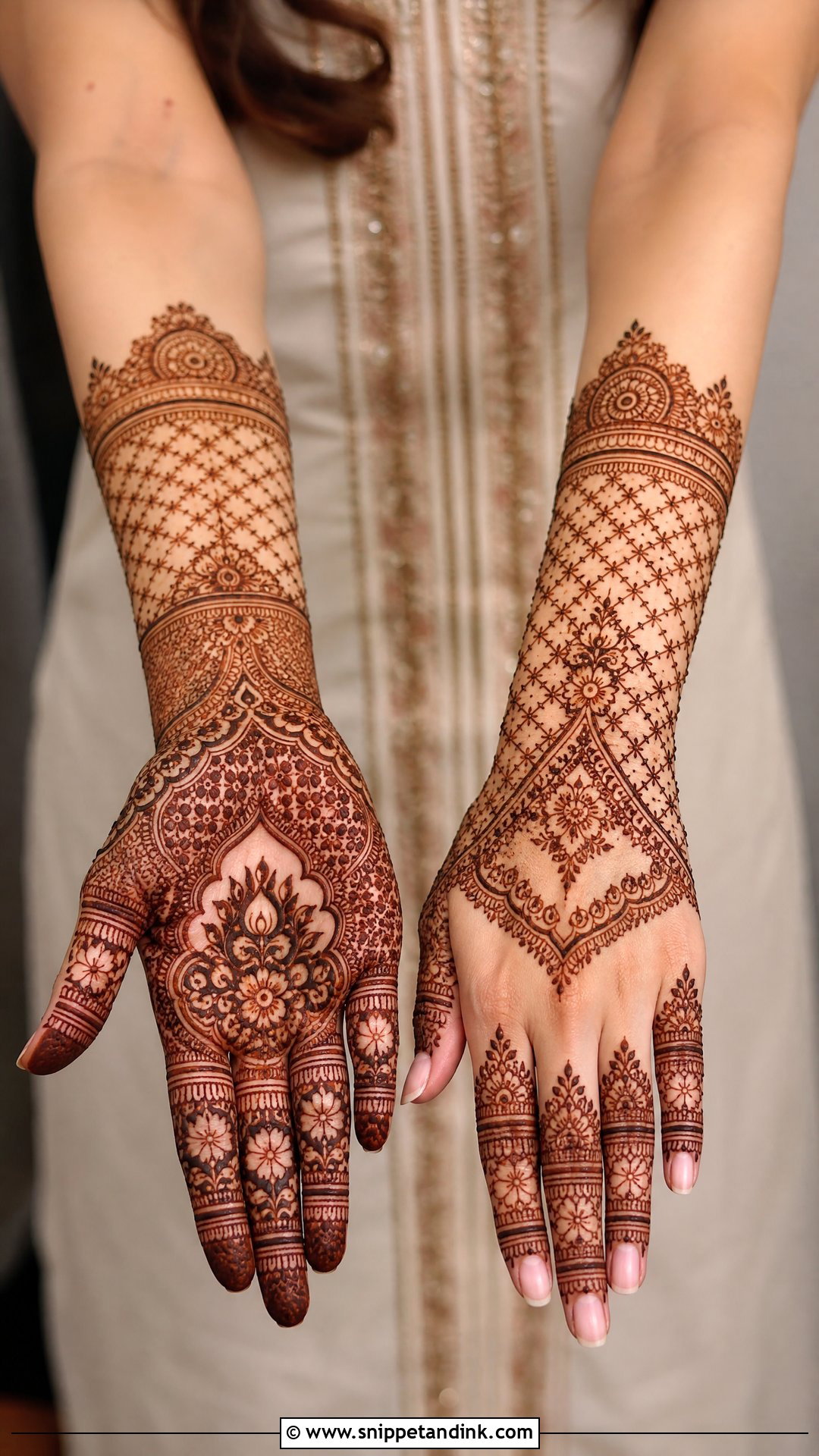
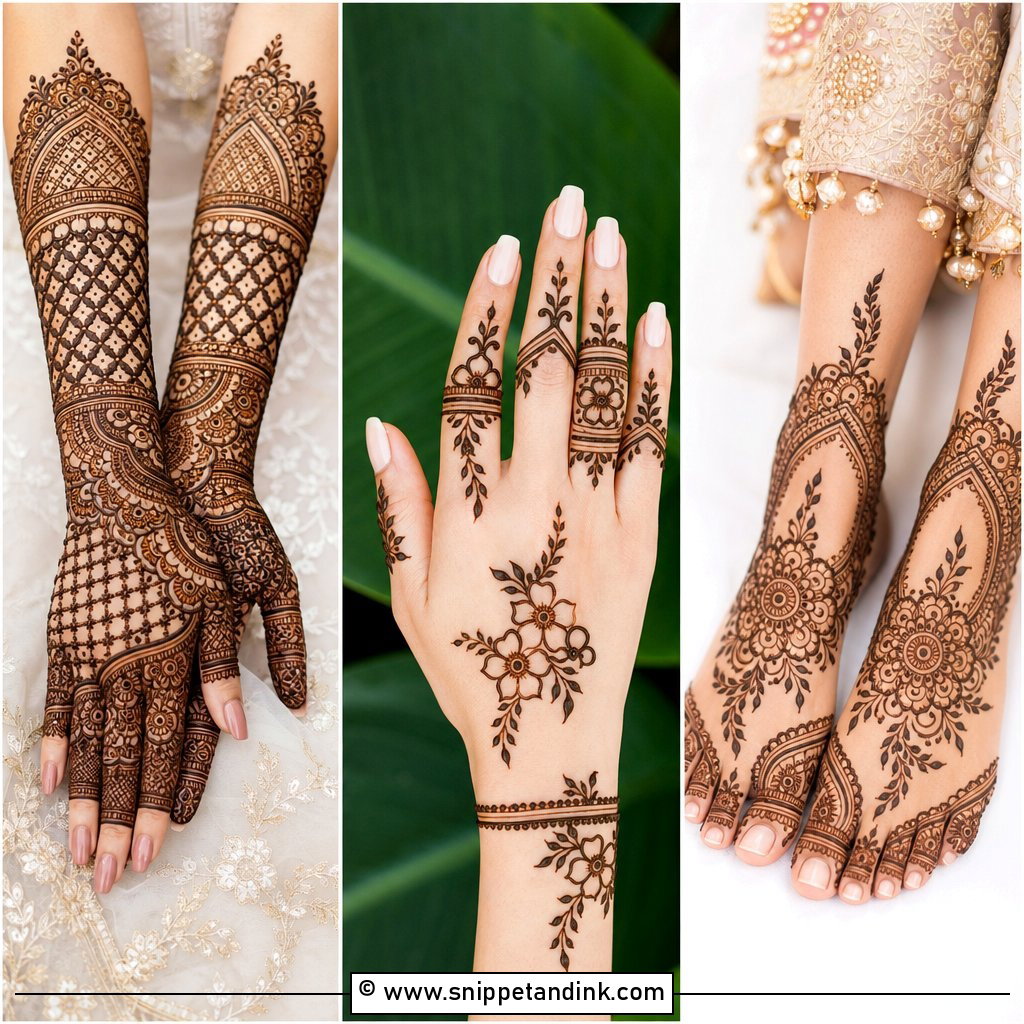
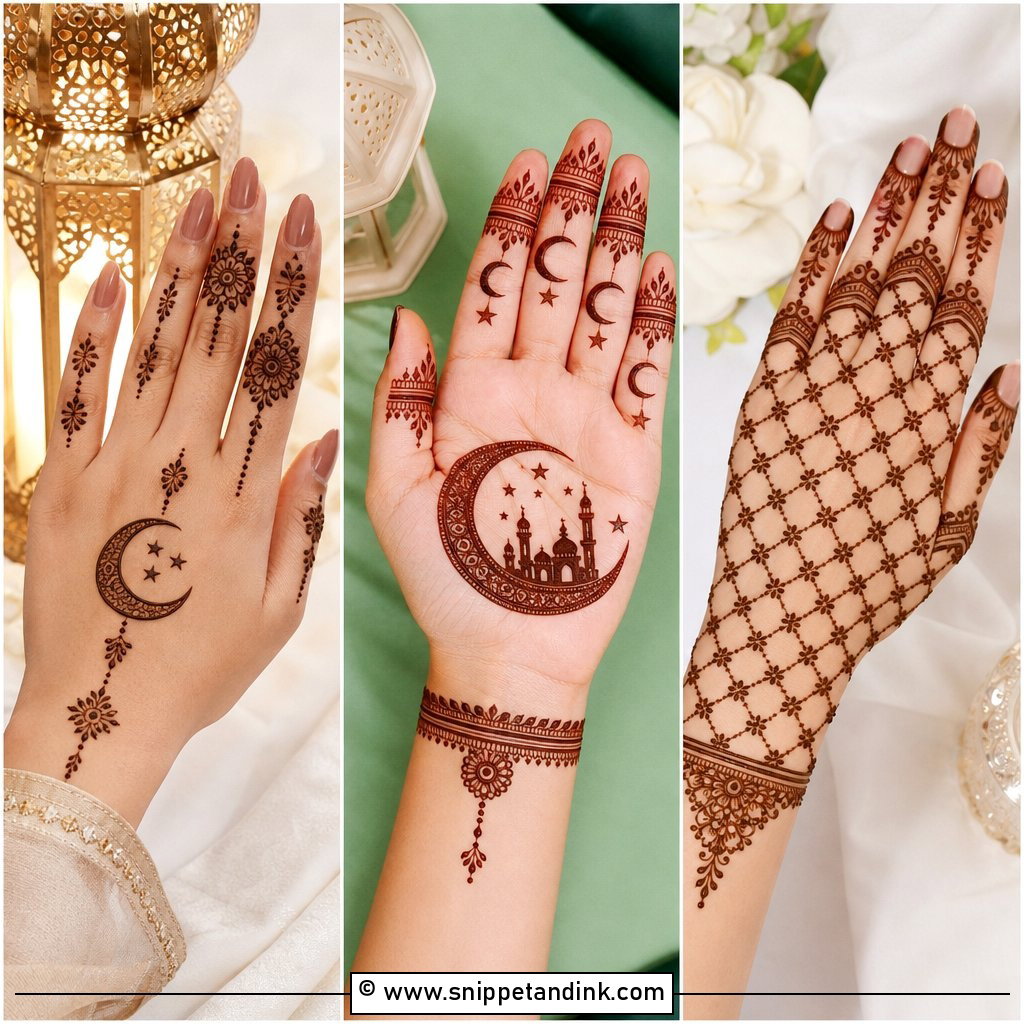
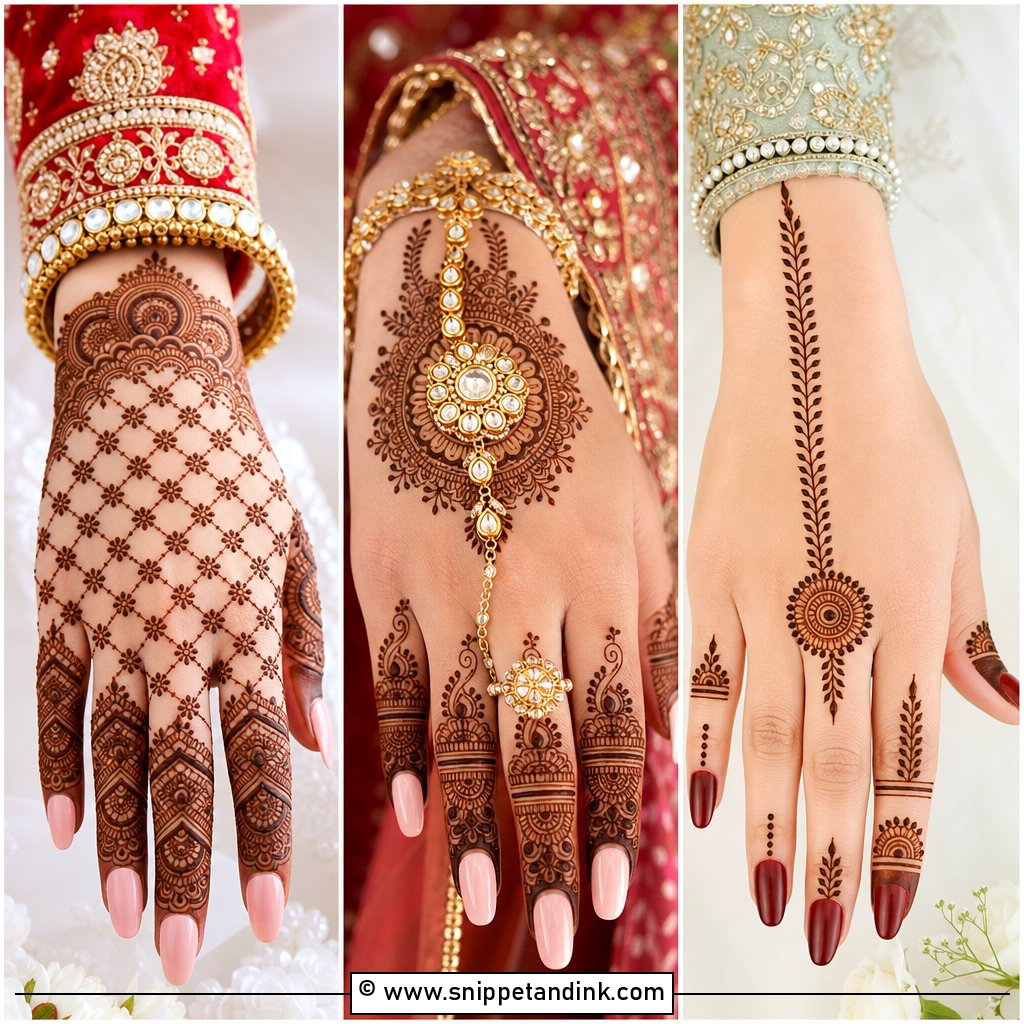
Jaali gives a lace-like texture, and a full version can cover the back hand with mesh, floral borders, decorated fingers and a bracelet cuff. On the palm, I use smaller jaali panels mixed with paisleys or mandalas. A hand made only of mesh looks flat, so I always soften it with flowers and leaves. The open squares create strong contrast in photos, but only if every line is even, which makes it a good test of how steady your artist really is.
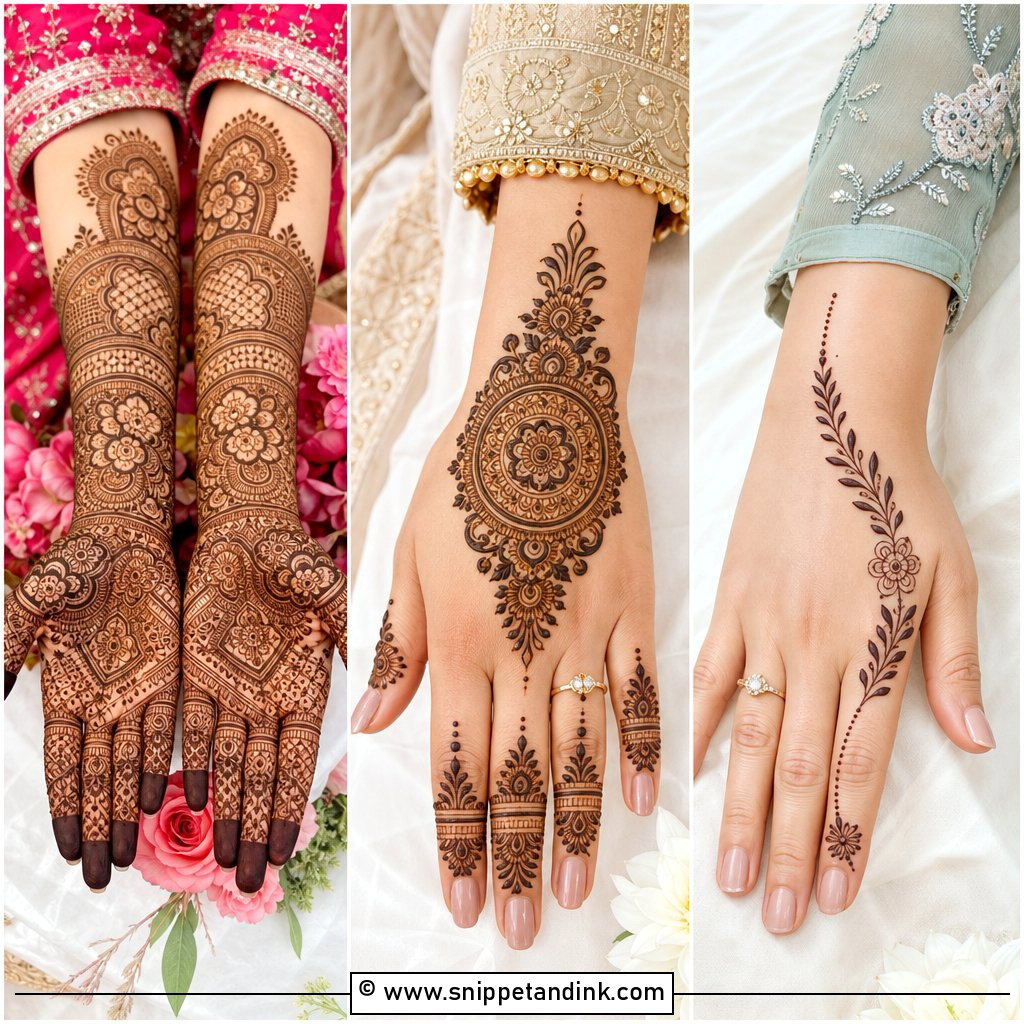
15. Modern Mehndi Design for Sister Wedding
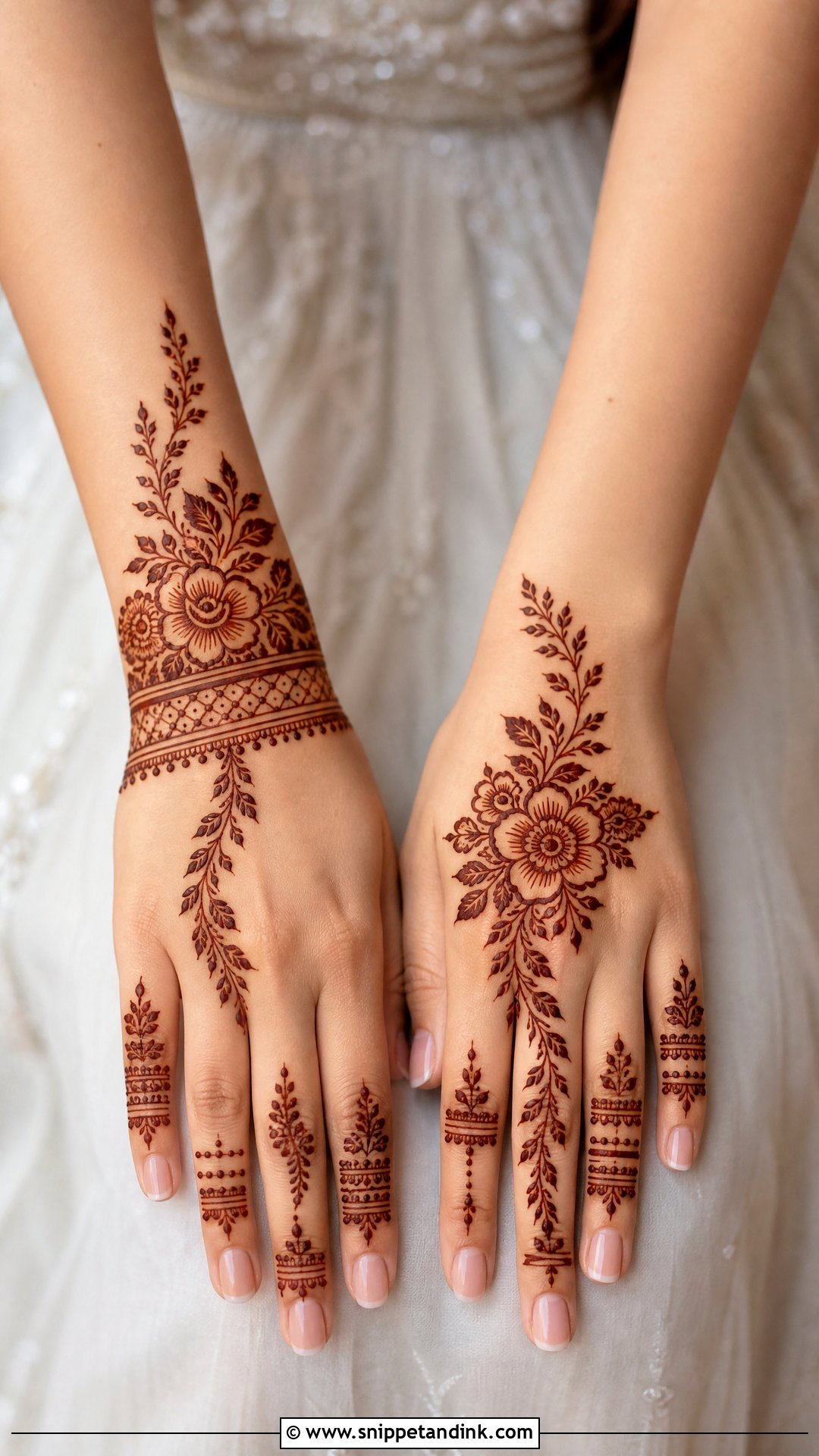
Modern designs work best when one feature leads: a large flower on the back hand or a sleek mandala on the palm, with slim trails, finger details and maybe a geometric wrist band around it. The design should feel intentional, not empty. Designer lehengas, fusion outfits and lighter jewelry suit it, and at destination weddings it moves easily between several outfit changes.
16. Traditional Indian Mehndi Design for Sister Wedding
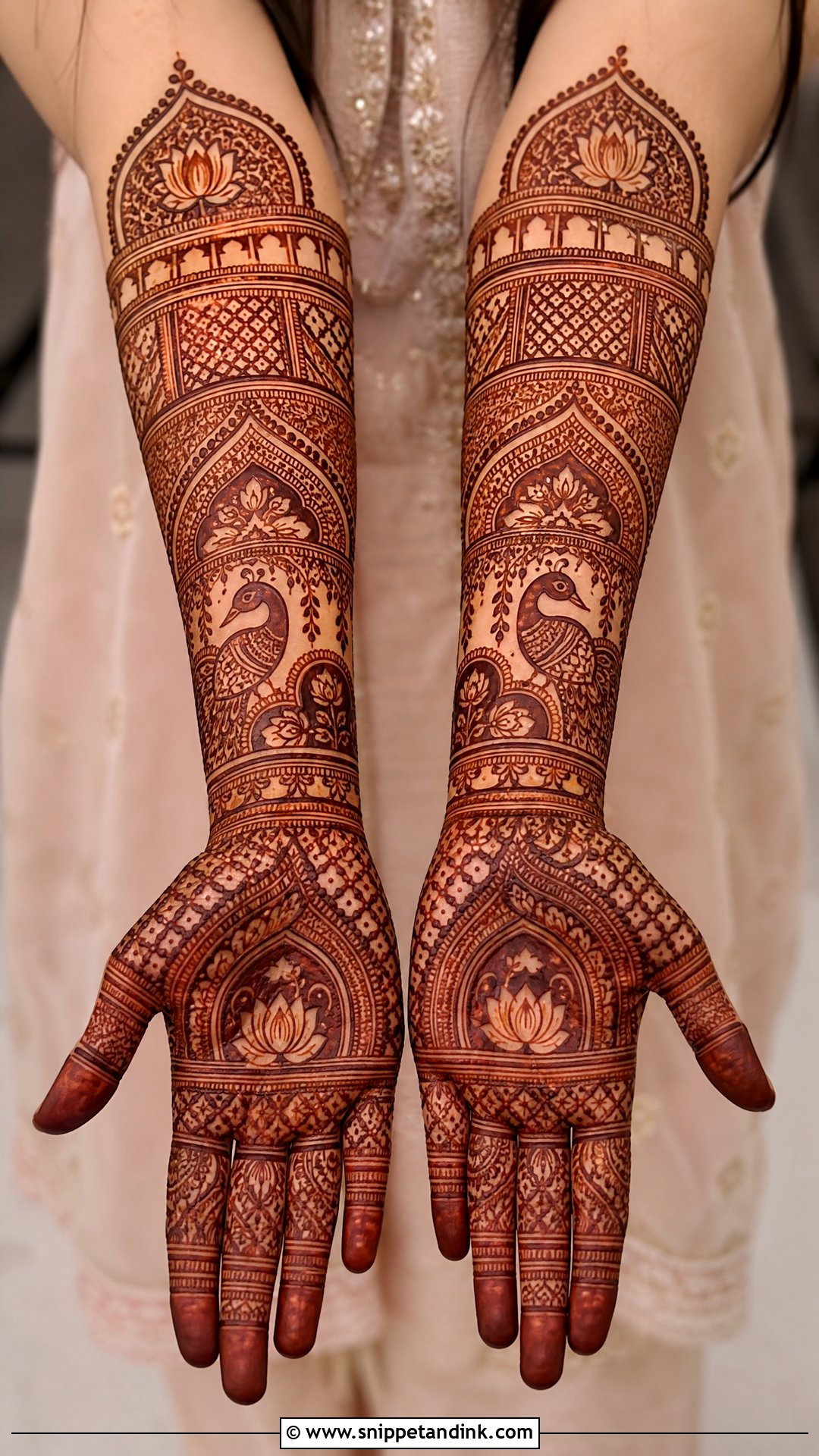
Paisleys, lotus motifs, peacocks, domes, leaves and patterned panels from palm to forearm give traditional Indian henna its rich feel, especially on the main wedding day. To keep it right for a sister, I choose medium density and leave small negative spaces around each motif so it stays readable. Red, green, gold and jewel-toned outfits suit it. In family photos, the detailing looks grand without needing much jewelry on the hands.
17. Rose Mehndi Design for Sister Wedding
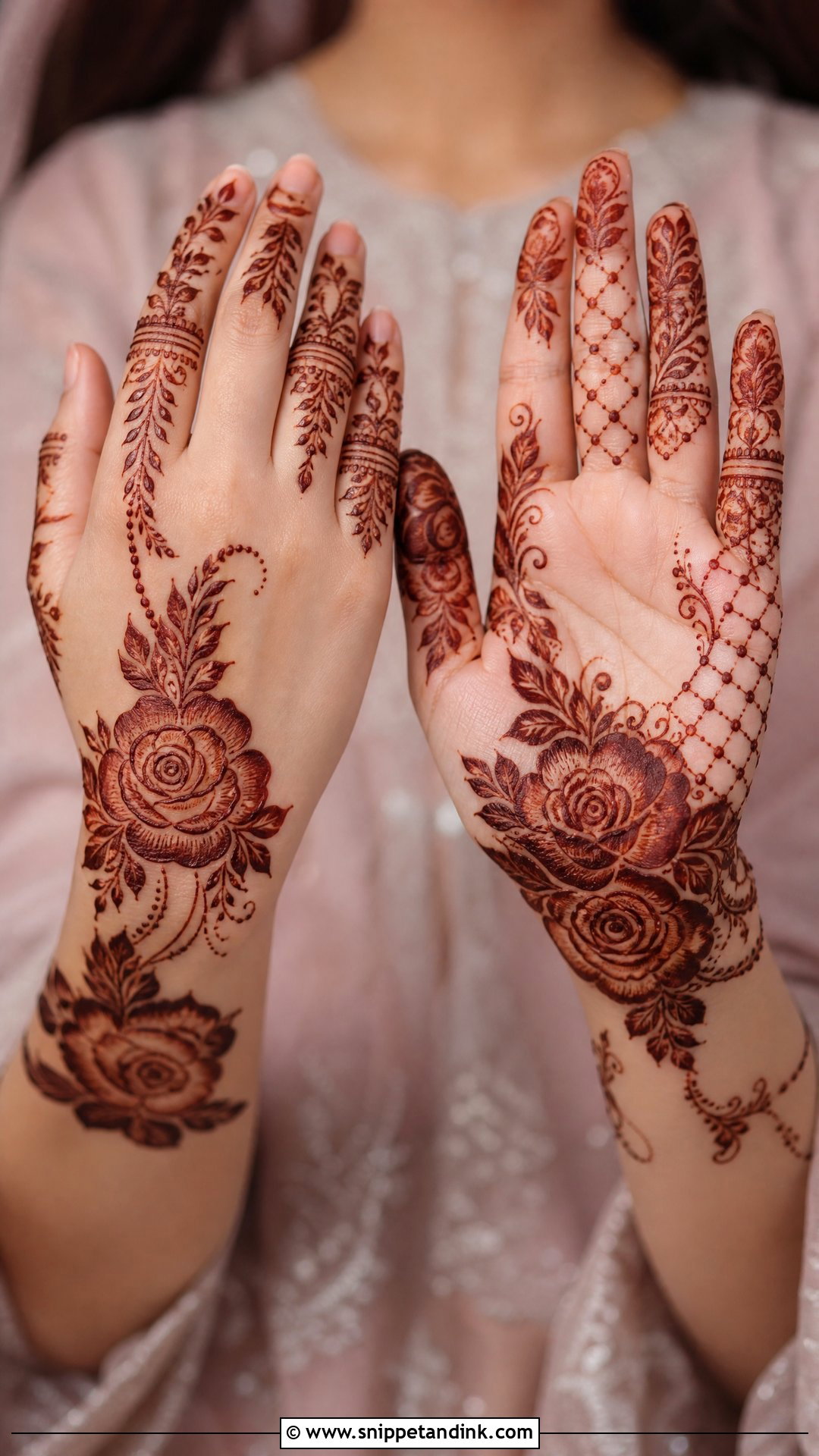
Large roses with shaded petals, leafy vines and open spaces can flow from wrist to fingers on the back hand, or gather into a central cluster on the palm. Rose petals are where I see stains disappoint most, because thin petal lines fade fast. I draw them bolder than they look on paper. Pastel lehengas, net dupattas and floral jewelry all go with it, and fine leaves and dot trails finish the hand without crowding.
18. Bracelet Mehndi Design for Sister Wedding
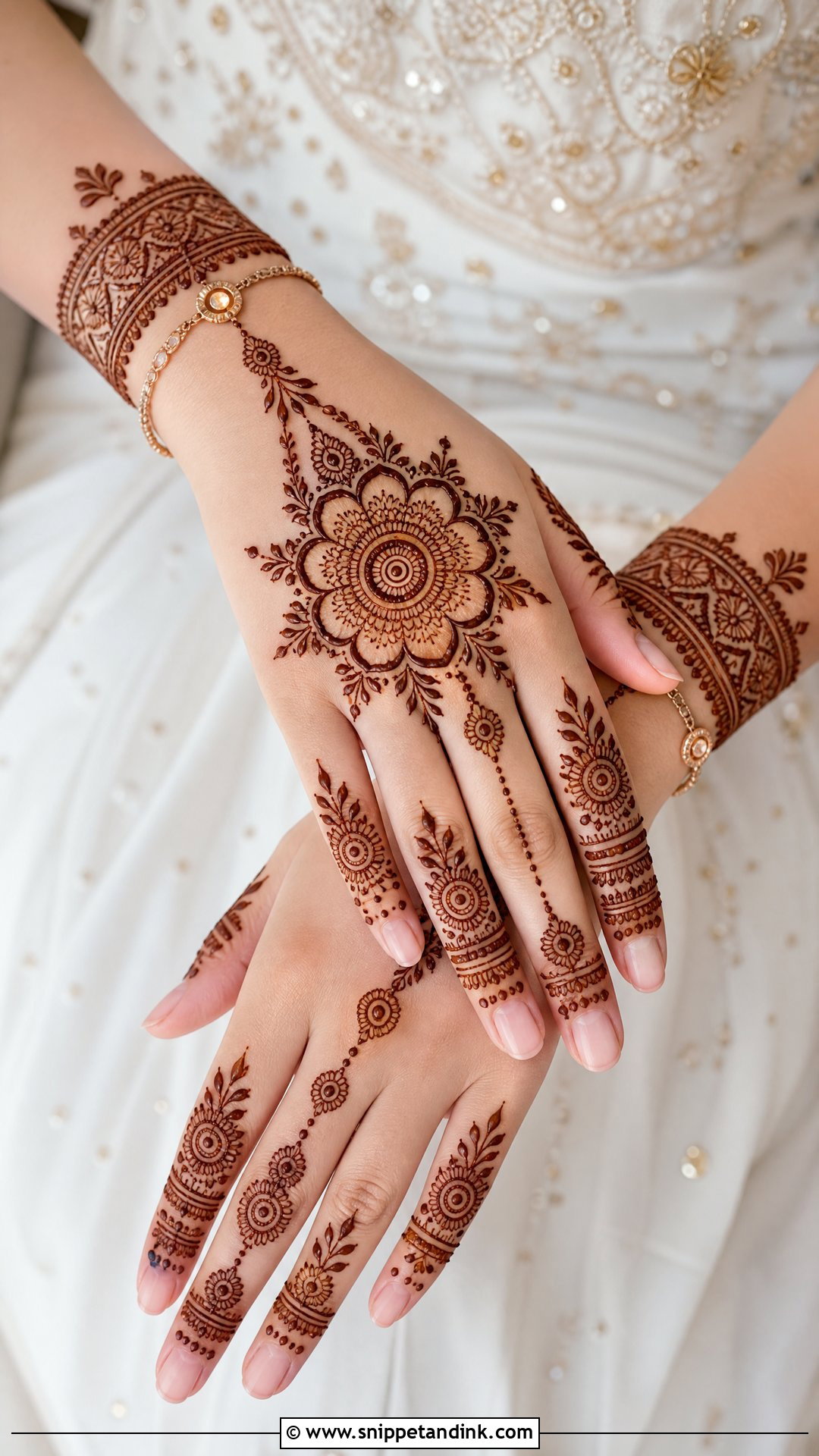
A wrist cuff, chain links, ring-style finger details and a central back-hand motif turn the hand into henna jewelry. For a wedding, I fill it out with floral borders, mini mandalas and neat finger patterns. It looks good alongside bangles but also stands in for jewelry if you’d rather wear little. Leave the paste on long, ideally overnight, to get the deep maroon that makes the linework look sharp in back-hand photos.
19. Finger Mehndi Design for Sister Wedding
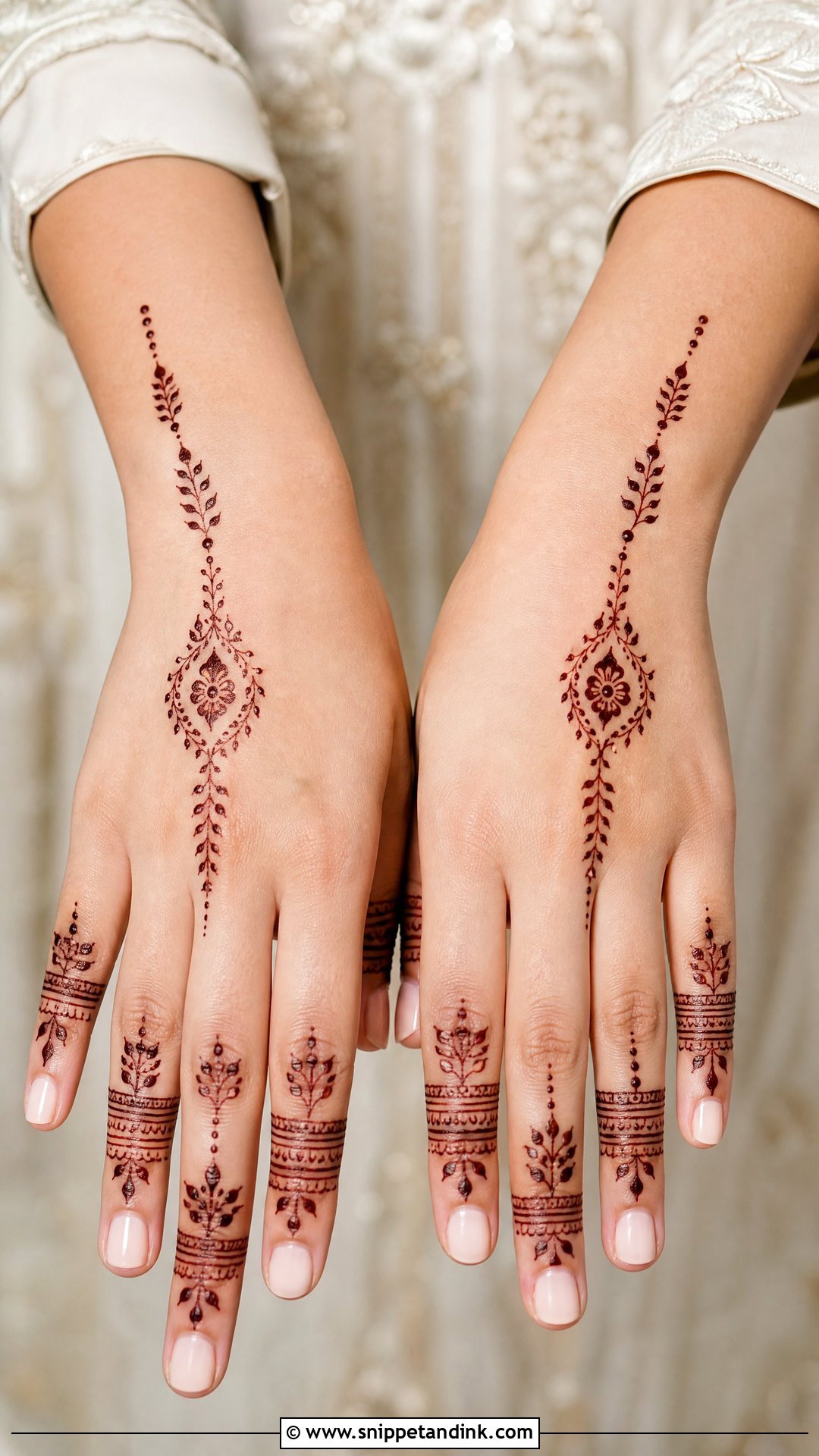
Decorating only the fingertips rarely looks finished at a wedding. I connect the fingers to a back-hand motif, wrist detail or slim floral trail, so the hand stays airy but complete. Finger mehndi works especially well when you’re wearing statement rings. Leafy bands, tiny florals, dots, checks or fine geometric lines can wrap each finger; just keep the spacing even. It’s a good fit for the reception and lighter outfits.
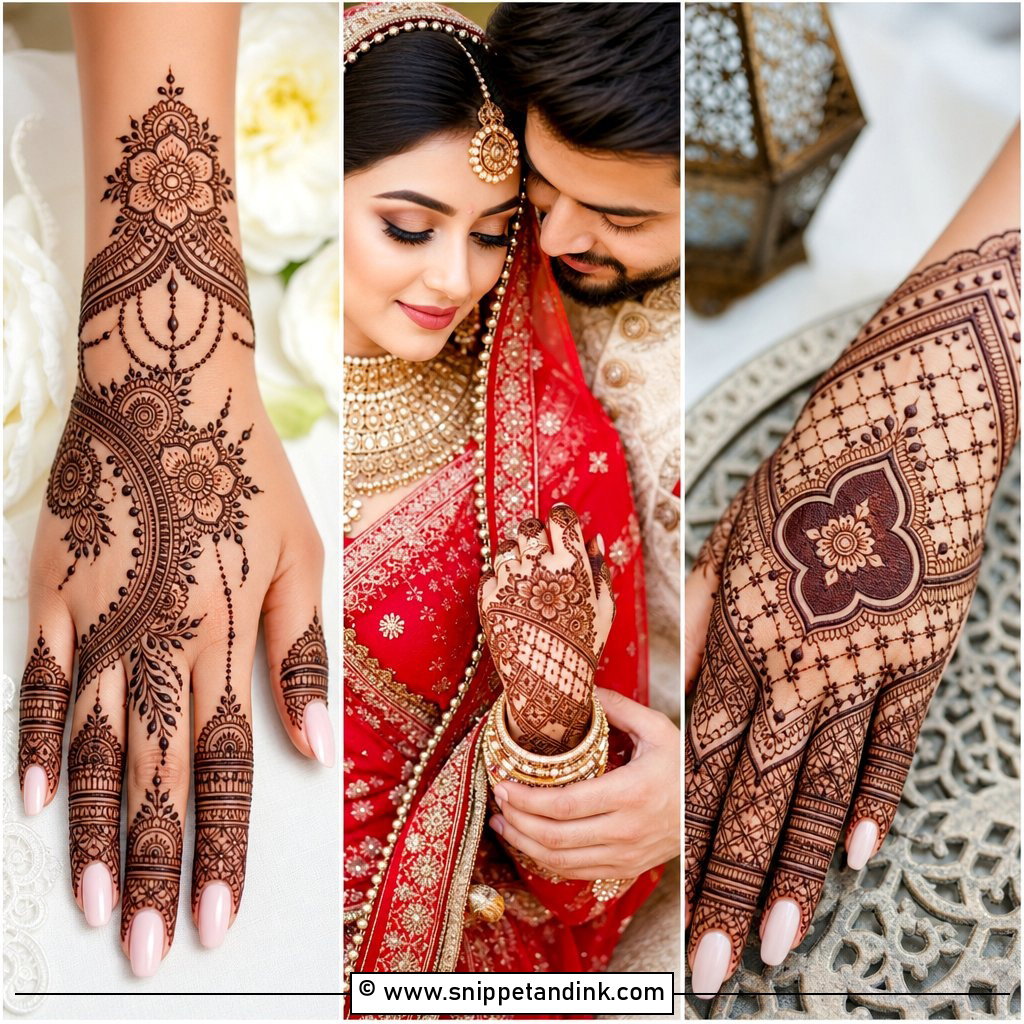
20. Palm Mehndi Design for Sister Wedding
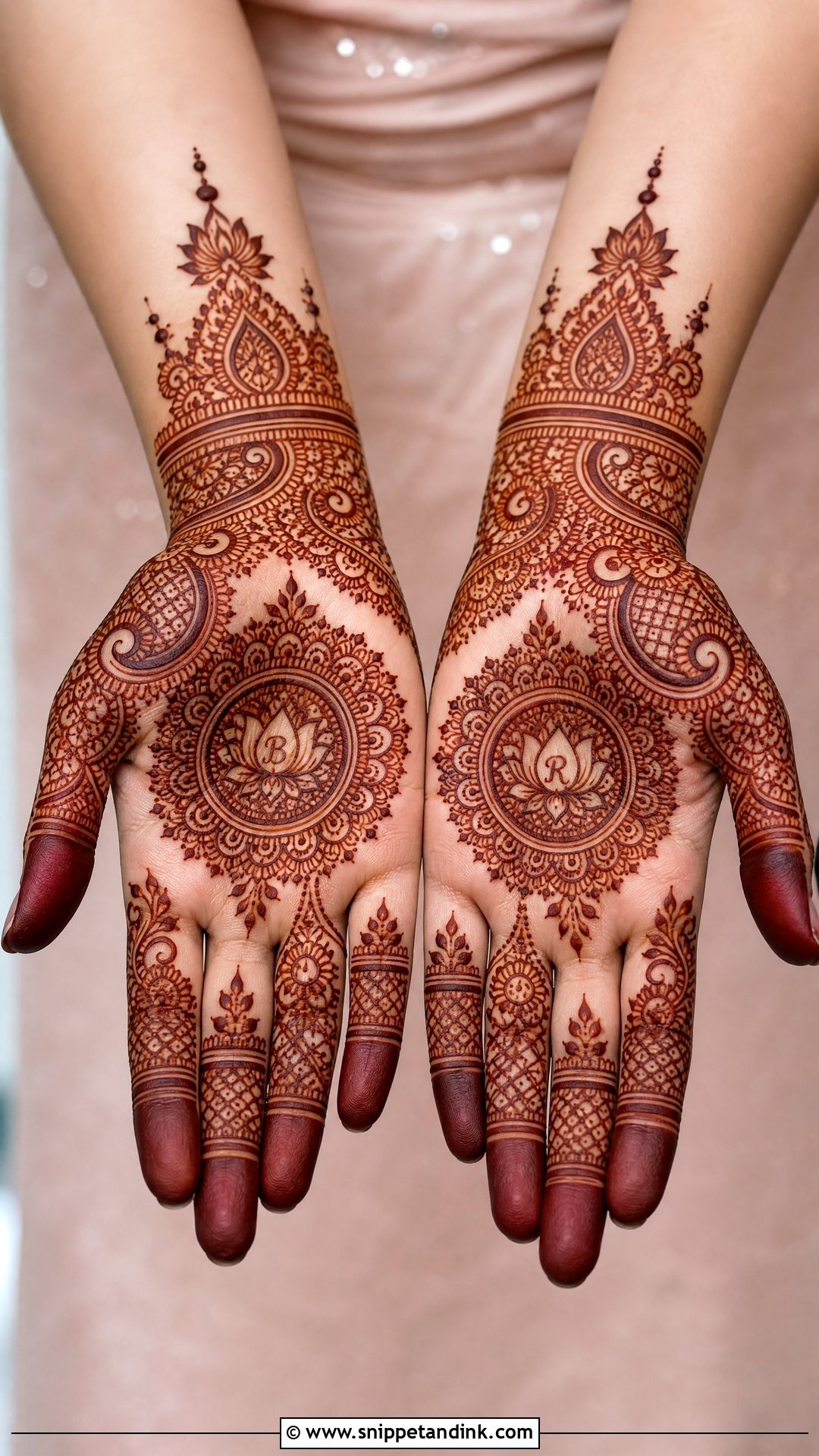
A palm design with a mandala, lotus, paisley cluster or wedding motif, decorated fingers and a small wrist extension feels traditional without covering the forearm. Sisters often ask me to add tiny initials, a heart or a small symbol for the bride hidden inside the pattern. Since palms appear in so many family mehndi photos, I keep the lines clean and the fillings balanced. Overfilled palms are the ones that blur when the stain develops.
21. Forearm Mehndi Design for Sister Wedding
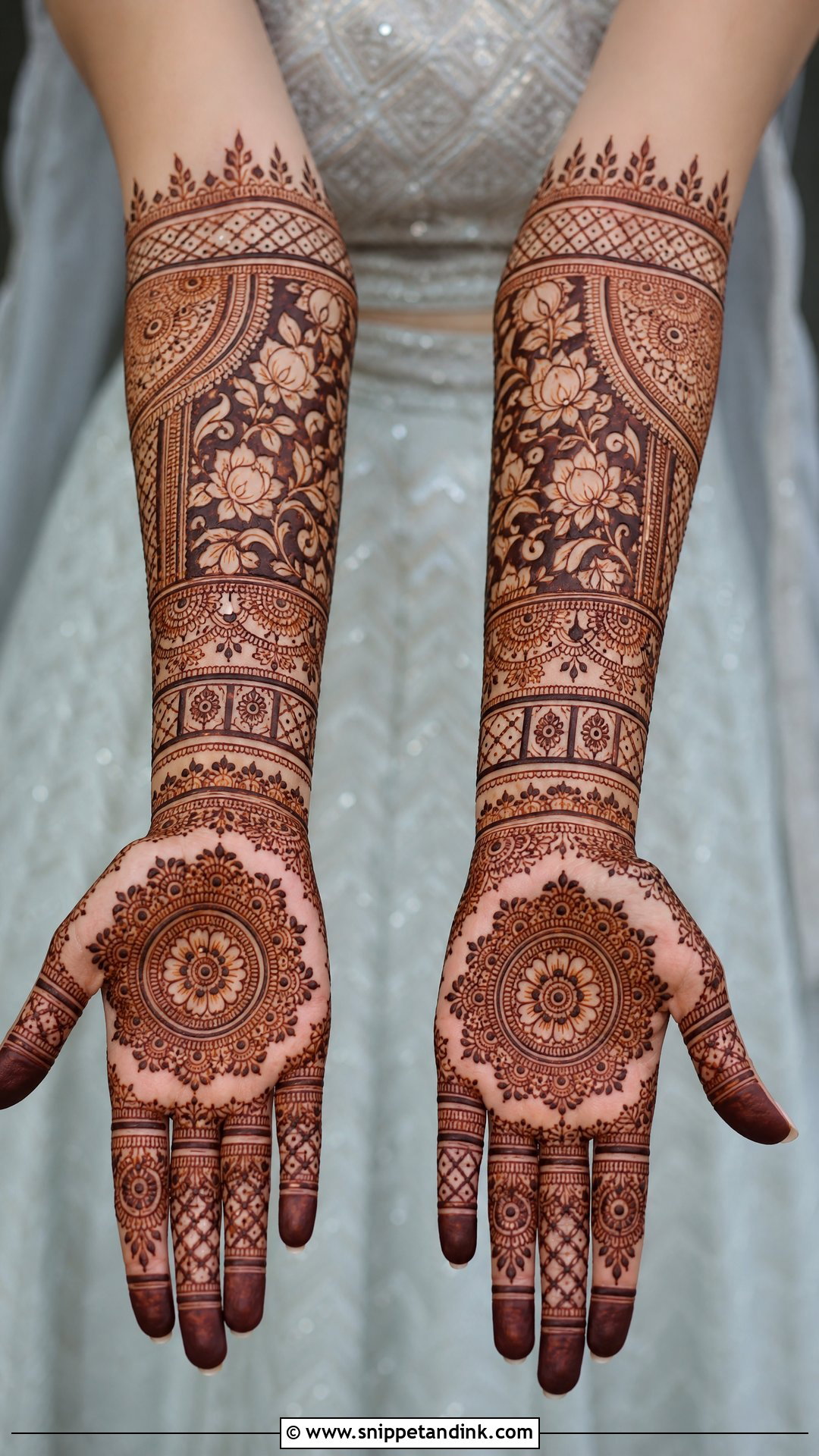
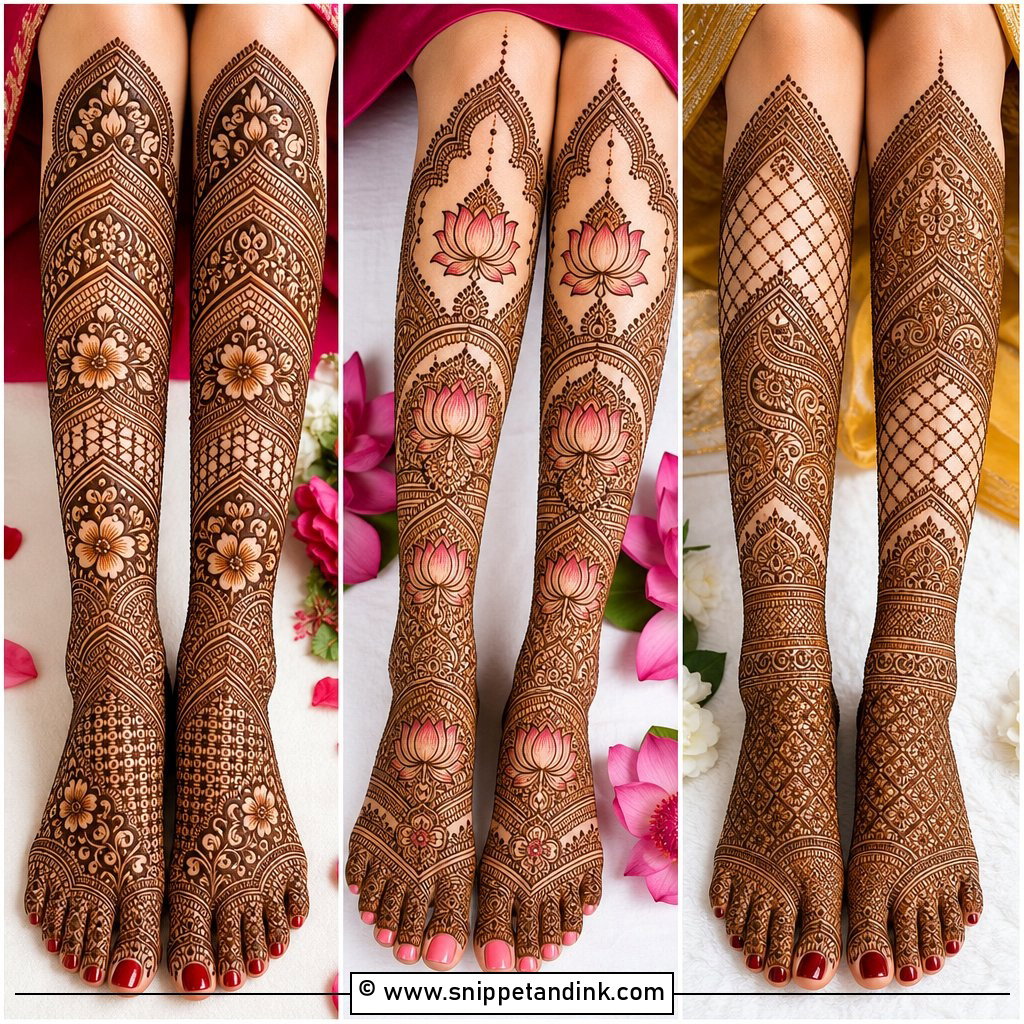
Forearm henna is the grander option for the main wedding day. It starts at the fingers, covers the palm, wraps the wrist and continues upward with paisleys, florals, mandalas or jaali panels. Sleeveless, short or sheer sleeves show it off. I use spaced motifs and clean borders so it reads graceful rather than bridal, and the arm looks long in dance shots. If the bride’s henna also stops at the forearm, talk to her first; this is where a sister can accidentally match her.
22. Moroccan Mehndi Design for Sister Wedding
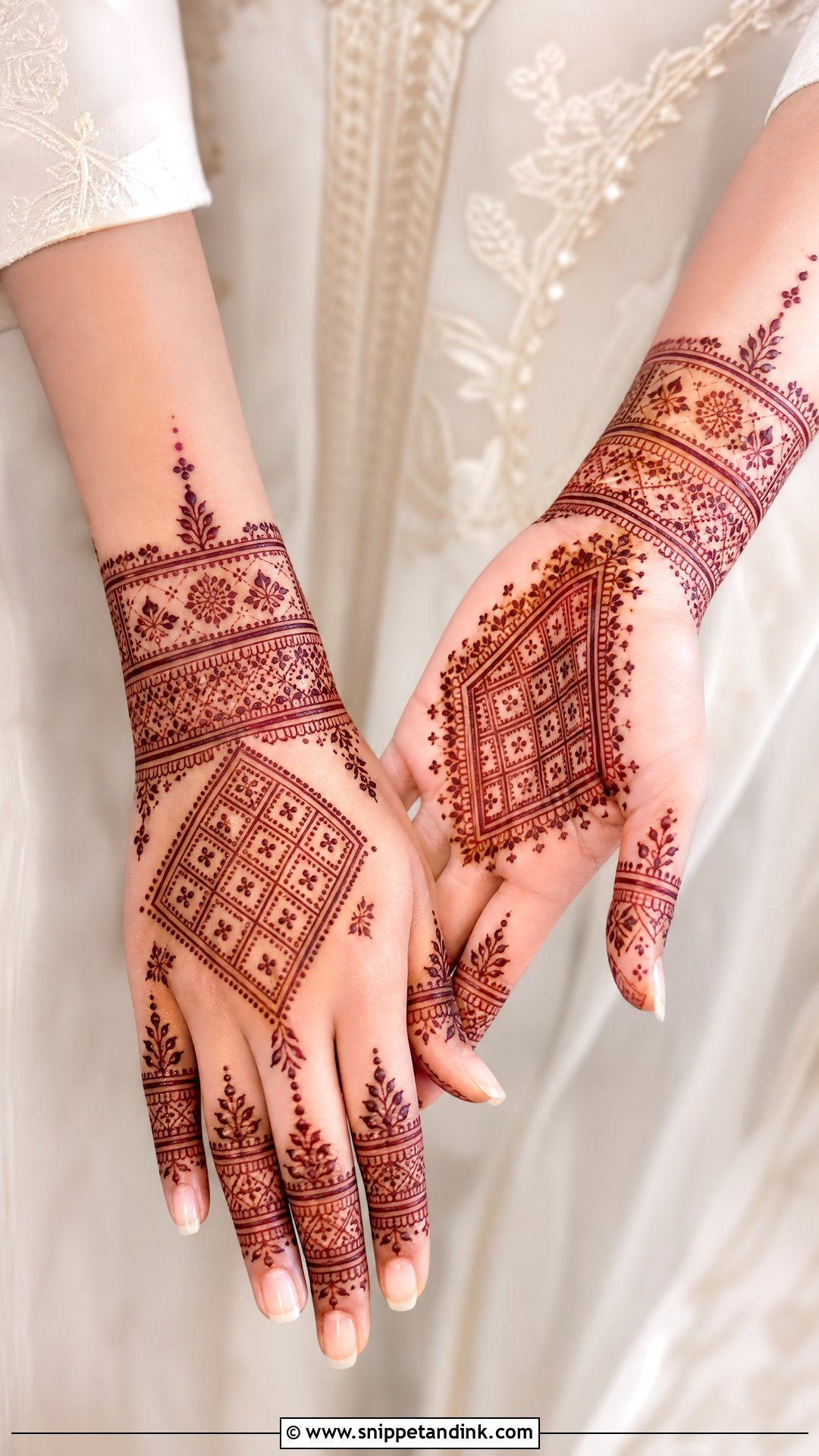
Diamonds, lines, dots, grids and angular shapes arranged across the palm or back hand give Moroccan-style henna a sharp, modern look. For a wedding, I soften it with a few floral accents or a bracelet-style wrist. It pairs well with fusion outfits, mirror-work lehengas and contemporary jewelry, and it stands out in family photos full of florals. Symmetry is everything, so the hand must rest flat while the lines go on.
23. Gulf Mehndi Design for Sister Wedding
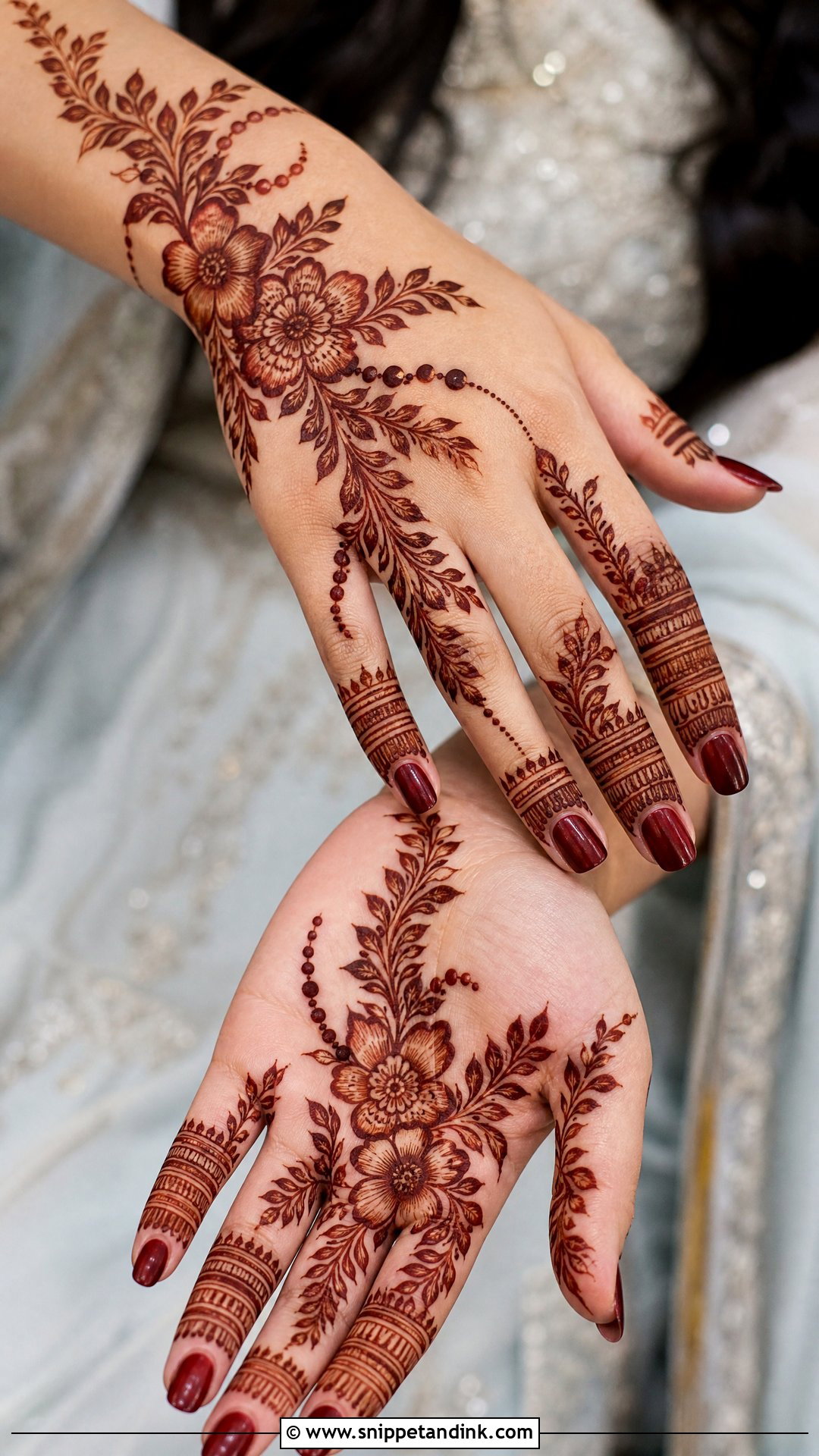
Gulf or Khaleeji-style henna uses bold florals, leafy trails and open spacing, and it can flow from the wrist across the back hand and fingers or diagonally across the palm. Large flowers and shaded leaves create real contrast once the stain darkens. It feels lighter to wear than dense traditional work, which helps on long event days. Gold jewelry or embroidered sleeves suit it well.
24. Matching Sisters Mehndi Design
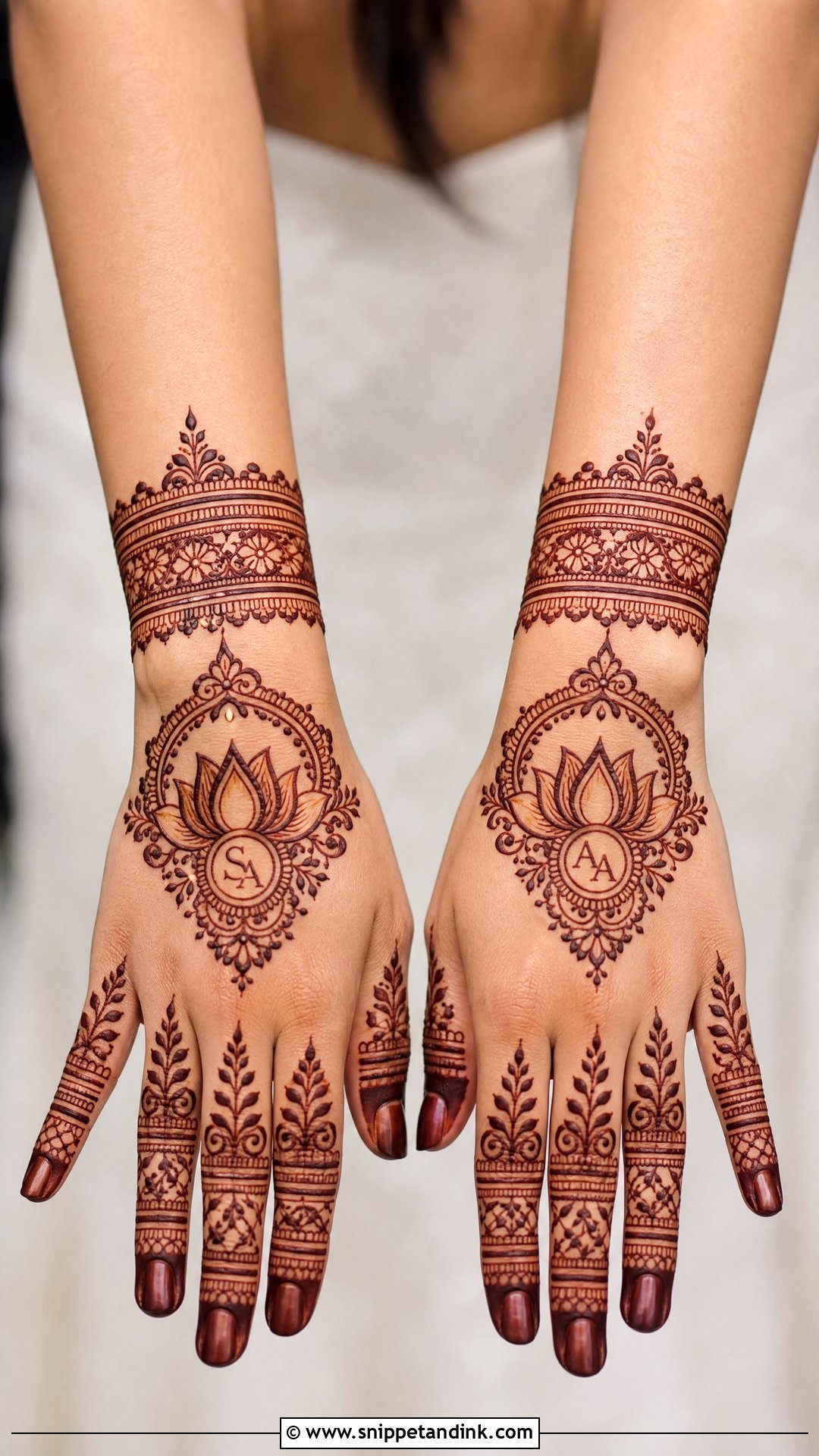
Matching sisters mehndi links you to the bride without copying her. She wears the fuller version; you wear a lighter one that repeats a single motif, such as a lotus, peacock, mandala or tiny initials. Your version might be a back-hand centerpiece, decorated fingers and a wrist band. When I draw this, I sketch the shared motif the same size on both of you, so it’s recognisable when your hands sit side by side. It’s an emotional moment at the mehndi ceremony.
25. Wedding Guest Mehndi Design for Sister
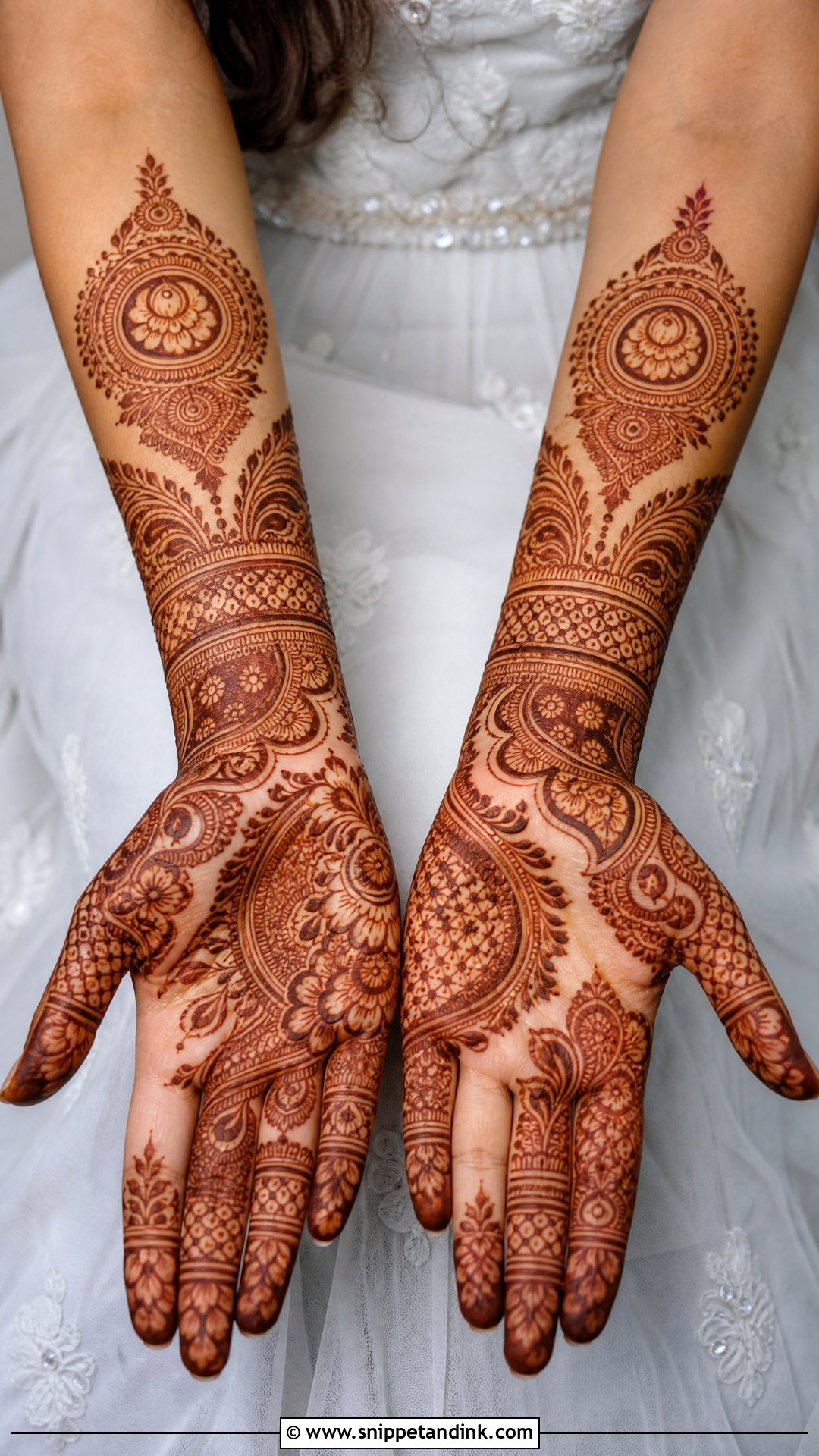
A sister isn’t a regular guest, so her design should sit between guest henna and bridal henna. Medium coverage works: a filled palm, decorated fingers, a wrist cuff and a light forearm extension, using florals, paisleys, jaali or mandalas. Match it to your outfit and to how busy you’ll be. If you’re dancing, greeting and helping the bride all day, lighter patterns are kinder to you, and they keep the attention exactly where it belongs: on your sister.
Serving, Hugging and Tying Kalire With Fresh Henna
Sisters do a huge amount with their hands over a wedding week, and that shapes both when you should have your henna done and where it goes.
Get it done before the bride’s night, not during it
On the bride’s mehndi night, you’ll probably be hosting, serving and dancing. If your hands are drying under paste, you can’t help. Many sisters book a slot a day earlier, or first thing in the morning, so the paste is off before guests arrive. An earlier slot also means the color has deepened by the main ceremony.
Protect the palms
Constant hand washing, kitchen work and sanitiser fade palm stains fastest. Rub a little coconut or mustard oil over your henna before washing your hands, and wear gloves if you end up washing dishes. If you know you’ll be in the kitchen, put more of your design on the back of the hand, where it lasts longer under daily use.
Hold the bangles until the paste is off
It’s tempting to slide your glass bangles on as soon as the paste feels dry so you can join the photos. Don’t. Dry paste cracks and flakes under metal and glass, and anything rubbing the wrist in the first few hours leaves a lighter band in the stain. Wait until the paste has come off and the skin has had a little time, then put them on. Ten minutes of patience keeps the cuff design intact for the whole week.
Show the Bride Your Design Before the Cone Comes Out
Festive but comfortable is the balance to aim for: a design that looks special in photos, suits your outfit and still lets the bride stand out. Full hand, Arabic, Indo-Arabic, floral, mandala, jaali and minimal patterns all work when they’re planned as complete looks. Think about your jewelry, sleeves, event schedule and how much coverage you actually enjoy wearing. Then show your sister the reference before your appointment. Most brides love being asked, and it avoids any surprise when you both hold out your hands for the photographer.
You'll Like These Ideas:


Leave a Reply